A Holiday Crackers Challenge!

Have you noticed that a box of crackers is costing a whole lot more these days than it used to?–especially if you’re wanting specialized grains or herbed flavors? Why not “save” and make my own? Right! I’ve had a hankering for cracker flavors you just can’t find at the grocery, a lust for crackers made with our super-nutritious Southwest flours and herbs. So…fortified with locally-sourced materials, I searched cracker recipes to guide me, but I batted almost zero–so few recipes are out there. I took this dearth as a challenge. Tia Marta here to share some of my cracker experiments–and to challenge YOU to invent your own holiday crackers!

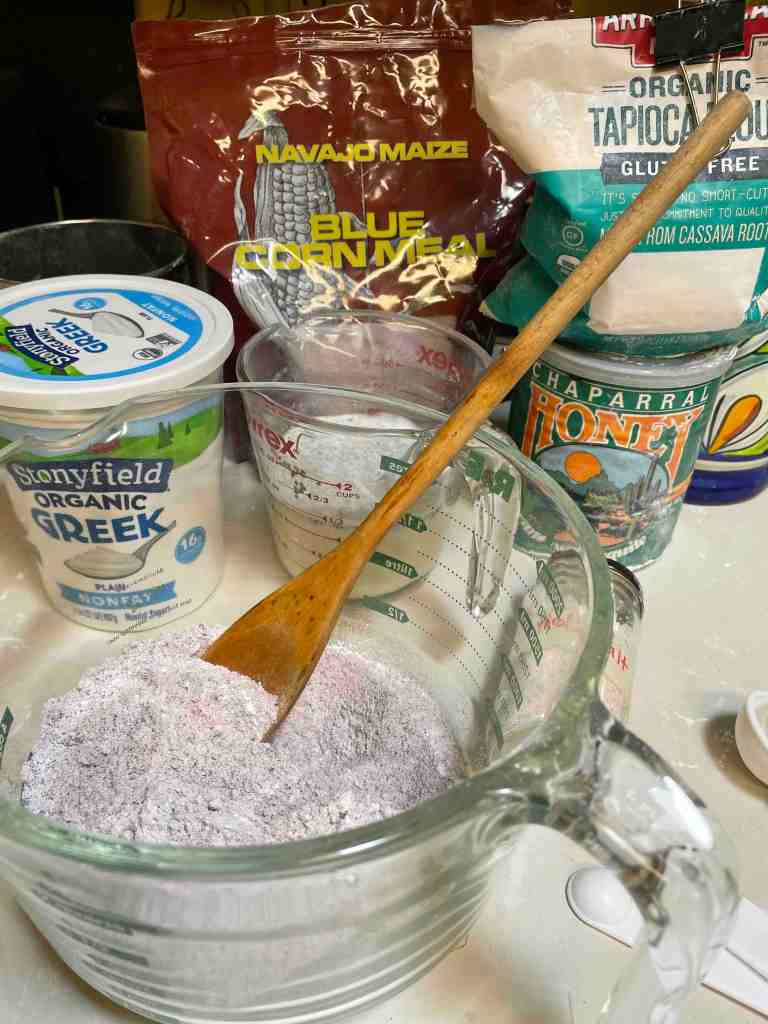
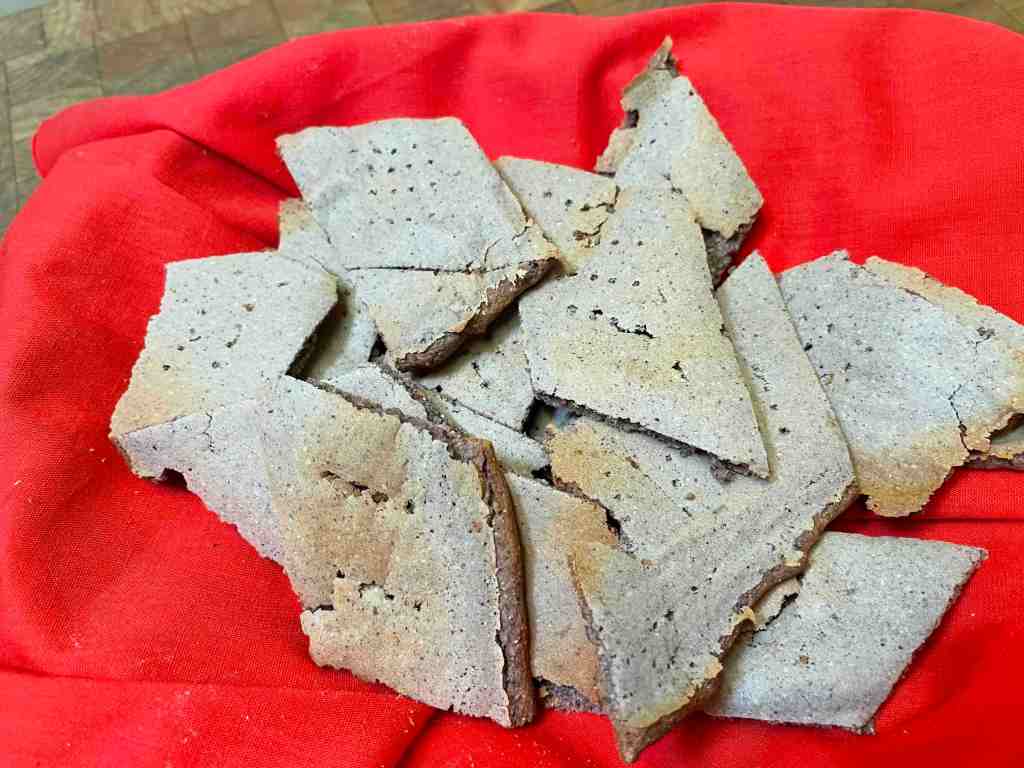
This is fun new territory. First with the goal of a gluten-free Southwest cracker, I took on Native blue cornmeal as the major delicious ingredient, with tapioca flour and chia seed as “binders”.

Recipe for Gluten-free BlueCorn-Amaranth-Chia Crackers:

Ingredients:

3/4 Cup blue corn meal (available from NativeSeedsSEARCH)

3/4 Cup tapioca flour

1/2 Cup amaranth flour 

1/2 tsp baking soda

1/2 tsp sea salt (I used salt from Baja California)

2 Tbsp non-fat plain yogurt (Greek yogurt can be a no-fat substitute for butter)

3/4 Cup lowfat buttermilk

1 Tbsp. chia seed

1 Tbsp mesquite honey (optional, amaranth flour can be a little bitter) (or a generous glob of honey on a teaspoon)

You’ll need a greased pizza pan and a greased rolling pin.

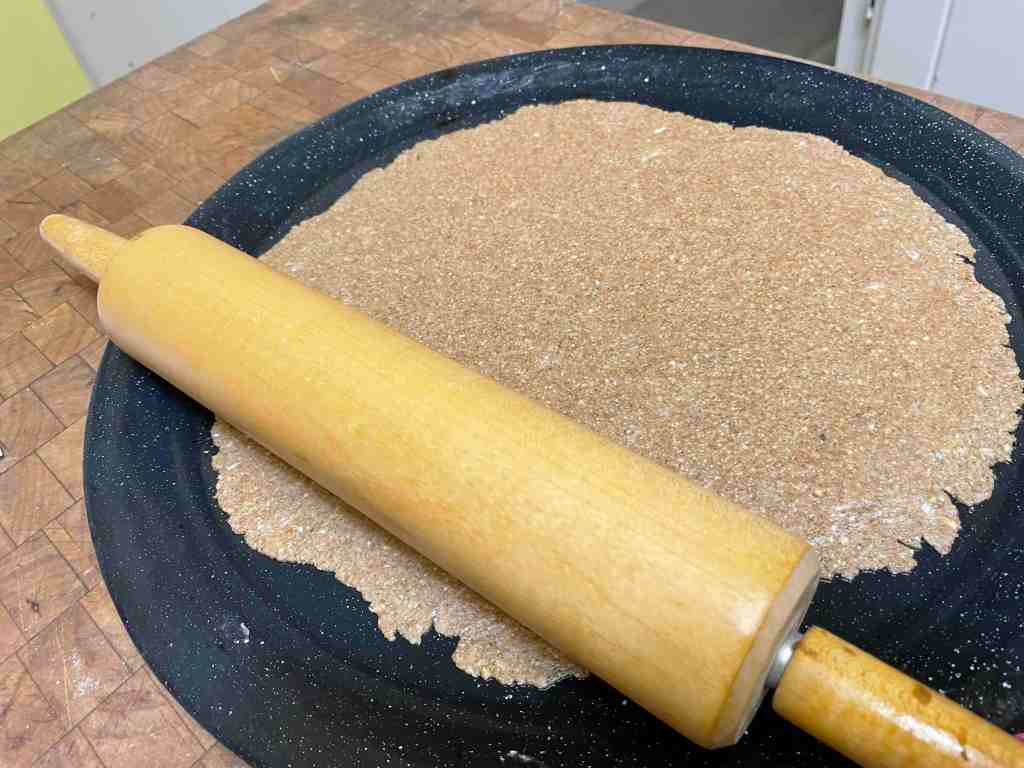
Place half the dough in center of a greased pizza pan. With your fingers press the dough down and outward. Your goal is to create a thin 1/8″ layer of dough on the pan. Using a greased rolling pin, flatten the dough out from the center. Use fingers to push the the thinnest edges back to a uniform thickness, or edges will scorch in the baking. Carefully cut the thinned dough with a sharp knife into squares, and make holes with a fork to even the heat. Bake 8-10 minutes or until you see a toastiness. With a metal spatula, lift the hot crackers off the pan right away to cool.

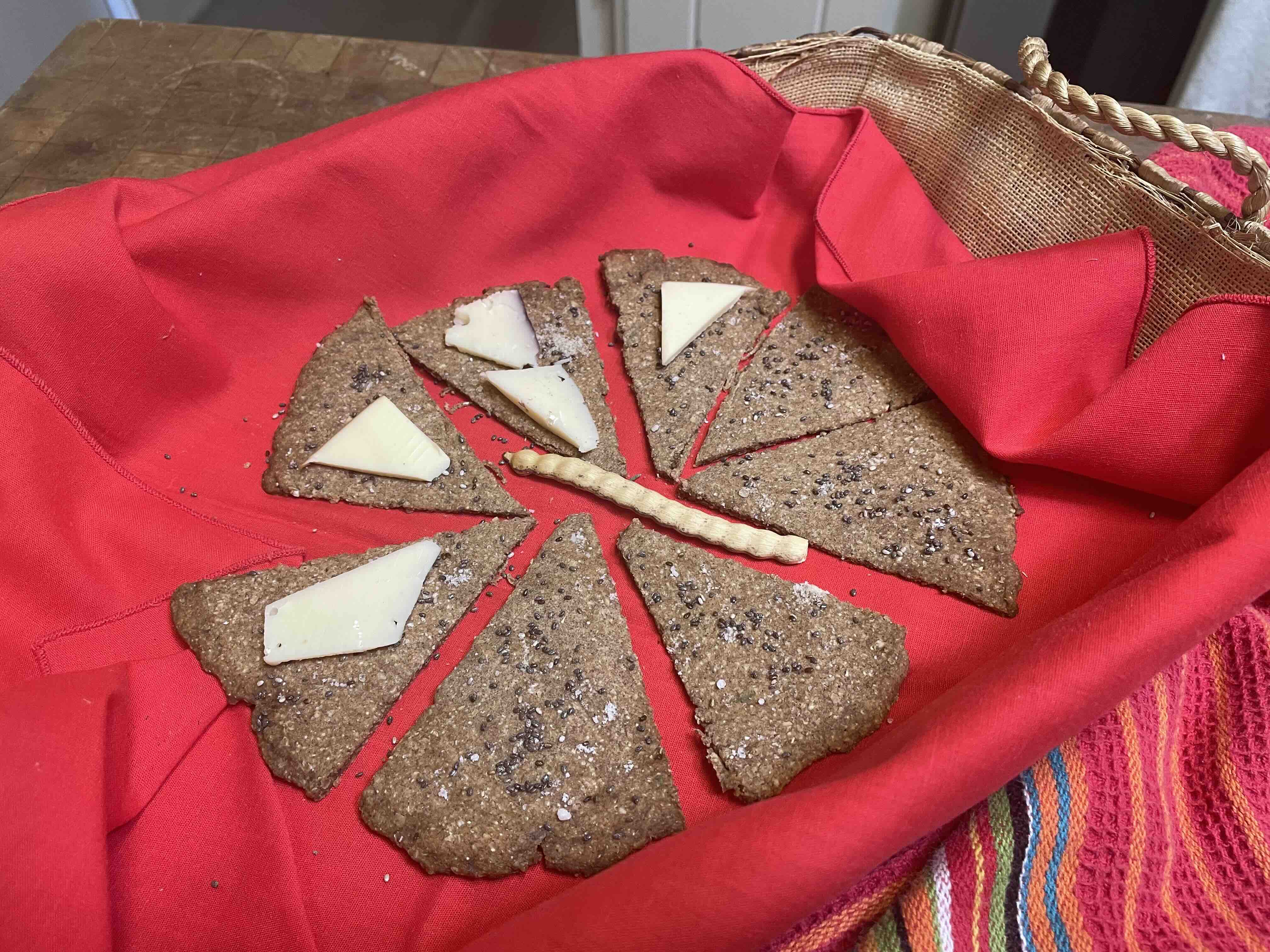
Enjoy nutritious gluten-free BlueCorn-Amaranth crackers with thin slices of membrillo, or with a creamy cheese–a new taste treat with a hint of sweetness.

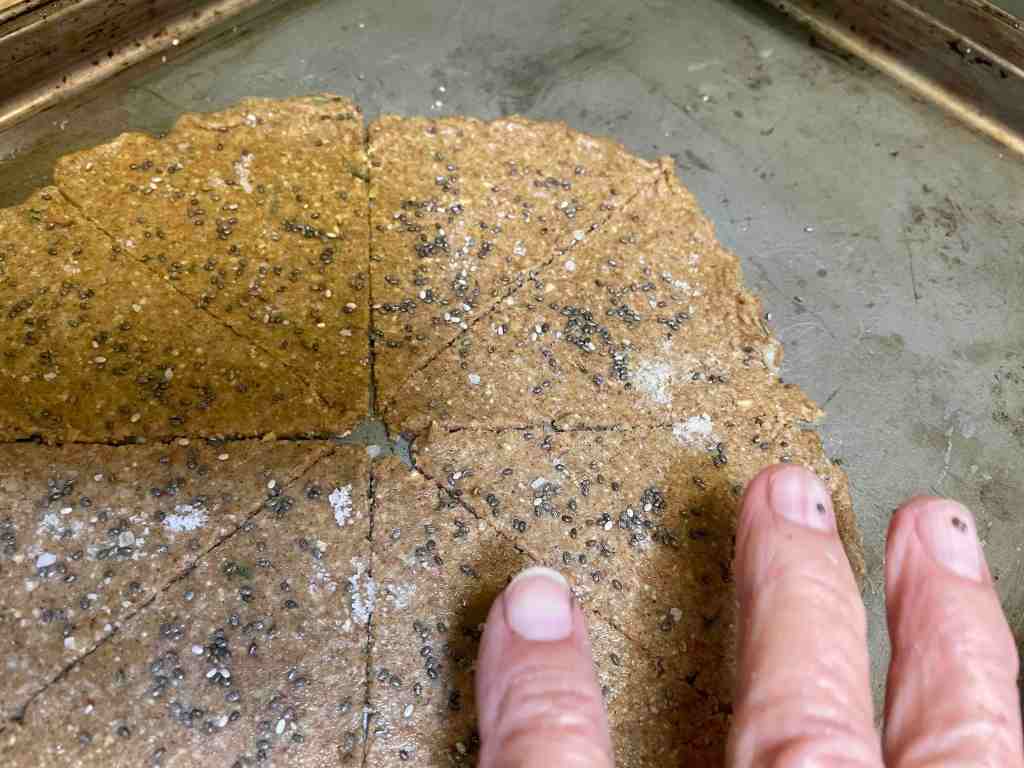
You’ll see more pictures of the cracker dough prep-process below.

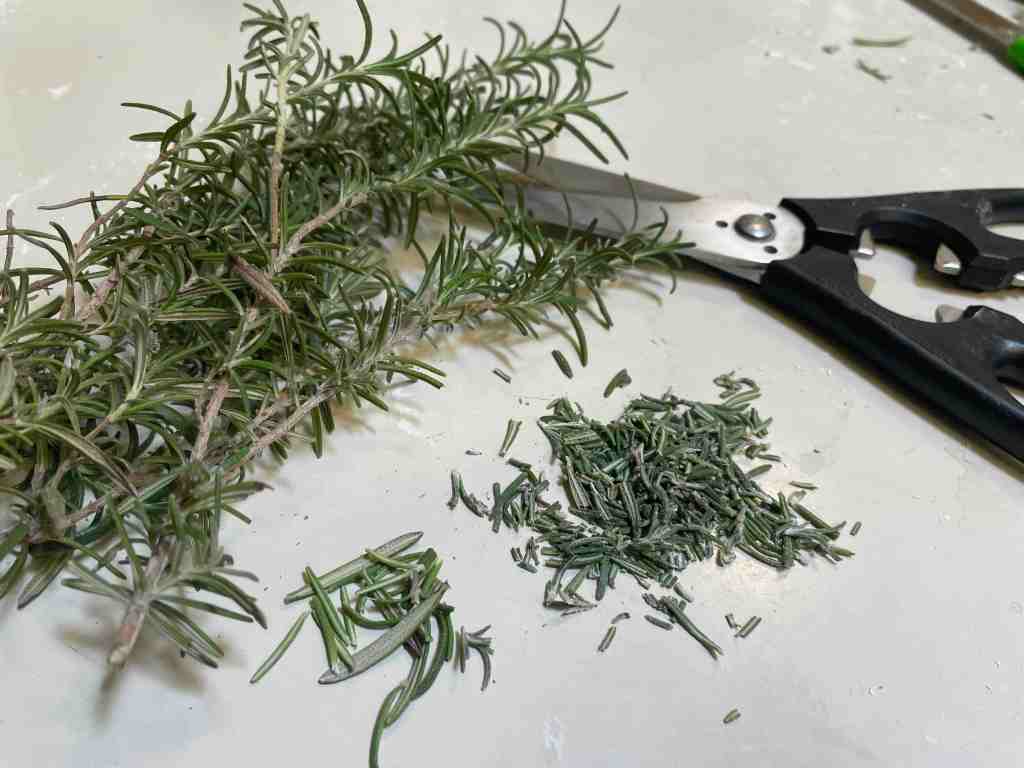
Inspired by rosemary-flavored flatbreads, I decided to try making a rosemary mesquite cracker with local heirloom wheat. Our garden supplied the fresh rosemary to cut into edible bits…. This local combination came out great:

Recipe: ROSEMARY-MESQUITE-PIMACLUB WHEAT Crackers

Ingredients:

3/4 Cup barley flour

1/2 Cup Pima Club wheat flour (from Ramona Farms, Sacaton, AZ)

1/4 Cup mesquite pod flour (any more than this will become too strong a flavor)

1/2 tsp baking soda

1/2 tsp fine sea salt (I used Sea of Cortez pilgrimage salt crystals collected by a friend)

1/4 Cup oat bran

2 Tbsp non-fat plain yogurt

1/2 to 1 Cup low-fat buttermilk

1/2 tsp glob of mesquite honey (optional)

Optional “topping” suggestions: 1/8 tsp additional, dry, finely chopped rosemary leaf; 1/8 tsp crystallized sea salt; 1/2 tsp barrel cactus seed or saguaro seed; 1/2 tsp popped amaranth seed; 1 Tbsp grated aged cheddar

You’ll need a greased pizza pan or baking sheet, and a greased rolling pin.

Directions (similar to previous recipe):

Preheat oven to 350F.  Pre-soak rosemary bits in buttermilk to enhance flavor.  Sift together all dry ingredients except the oat bran.  Add oat bran separately as it will not pass thru sifter easily.  Cut yogurt into dry ingredient mixture.  Add buttermilk mixture gradually until dough is firm–not liquidy.

Place half the dough in center of greased pan and roll outwards until very thin and even (approx 1/8″ thickness). Be sure to tuck edges back to be equal thickness as center.

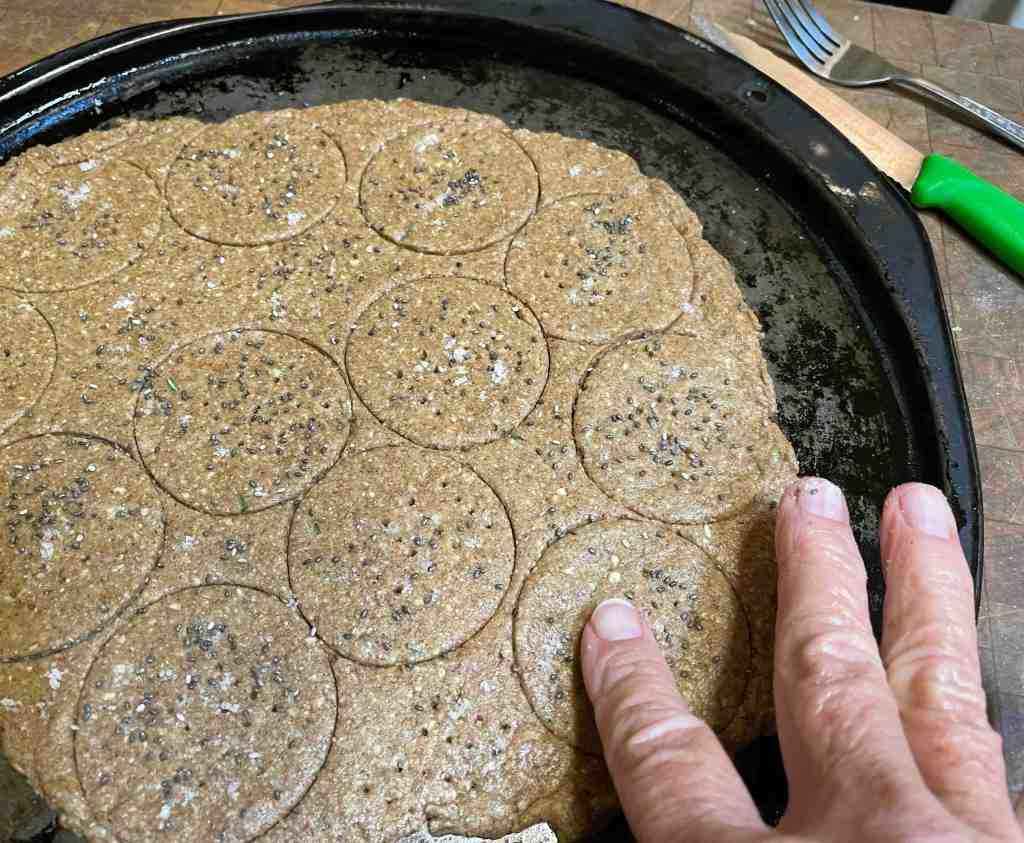
Sprinkle top of thinned dough with your desired topping. Here I’ve used rosemary bits, crystals of sea salt, and a sprinkle of chia. Pat the “topping” into the dough with your fingers so it will stick when baked. For this batch I used a cookie cutter through the rolled dough to make round crackers.

With the other half of the dough I used a greased rectangular pan which confined the rolling pin action to only two directions. Here I formed the dough into a thin circle to make “pie” wedge crackers.

Bake 8-10 minutes and check to see that the crackers have crisped. With metal spatula lift them from pan immediately to cool.

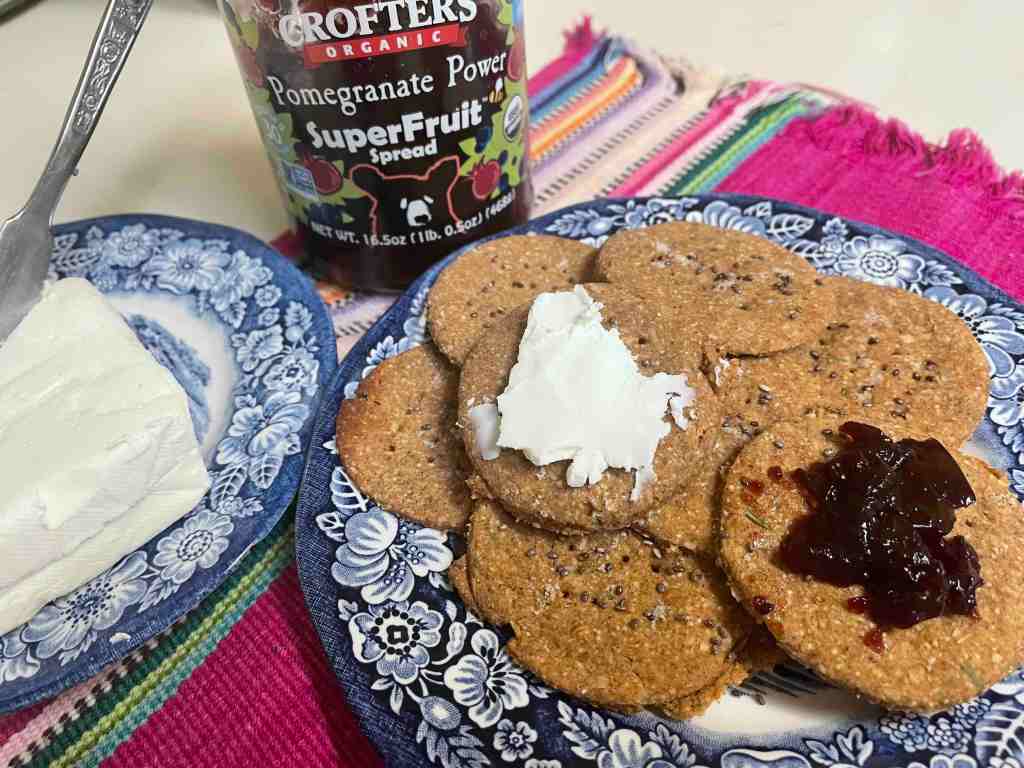
These Rosemary-Mesquite-PimaClub Wheat crackers are savory and pair well with cream cheese and jam, or as a foundation for colorful holiday canapes.

Lots of work goes into making crackers! But if our wonderful local desert grains aren’t available as crackers commercially, this is the only way to go. I challenge you to give them a try–to experiment with your own local grain combos!

Crackers are best made in greater quantity–not piecemeal. I’ve had this vision of an Indigenous-owned and -operated enterprise, with ingredients sourced sustainably from the desert, someday filling this “cracker niche,” making good revenues and providing us all with nutritious, appropriate Southwest-flavored crackers….

Pods to Meal to Cookies at home, TODAY!

Hello friends, Amy here with a baked good I made last week. I wanted to bring treats to share with my friends, something we could nibble while we passed the break table. And if no one had to wash plates, forks or spoons, that was a bonus. My people truly delight in cooking, hadn’t had anything mesquite in ages, and I wanted to impress. After considering my options for a month, I suddenly realized… that’s this afternoon!!!

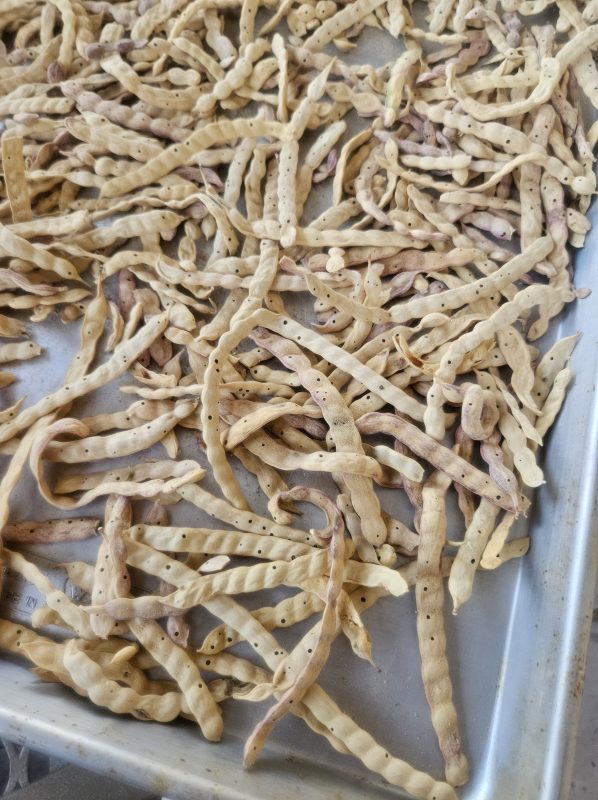
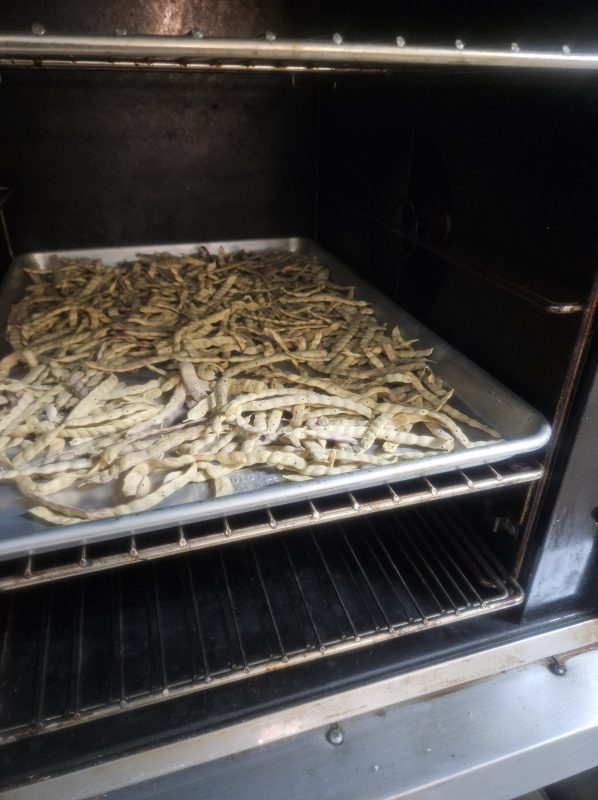
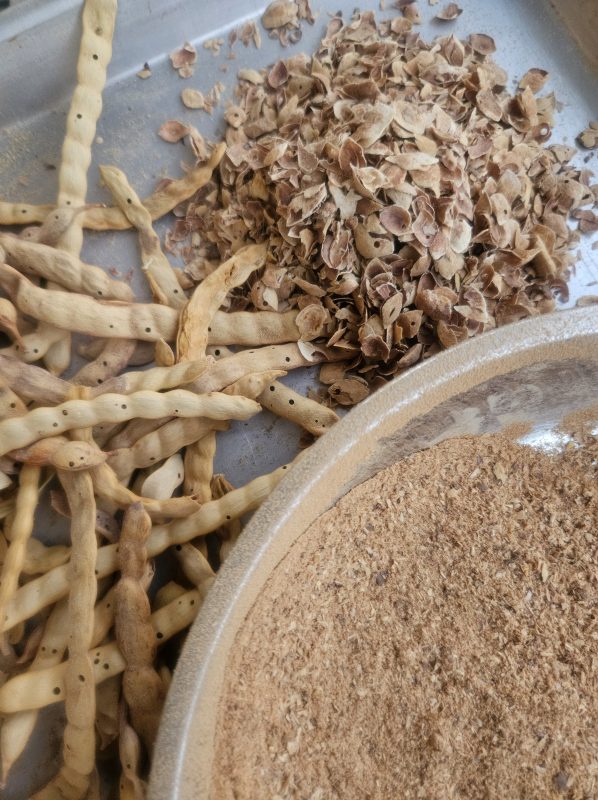
Drought makes for patchy harvesting, but I had a stash of pods. The trick to making HOME grinding work, especially in humid weather, is to toast the pods RIGHT before grinding. No community mesquite pod milling event near you? Need that mesquite meal TODAY? No problem!

I baked in a thin layer at about 275 degrees F with convection for maybe 5 minutes. Try longer if you don’t use or have a fan. It should smell sweeeeet. I opted to not develop any golden color, but that’s an option!

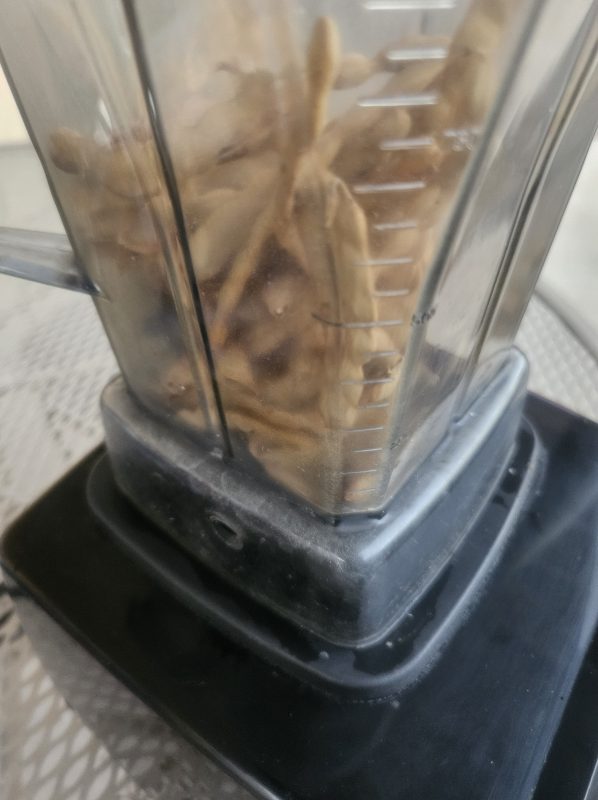
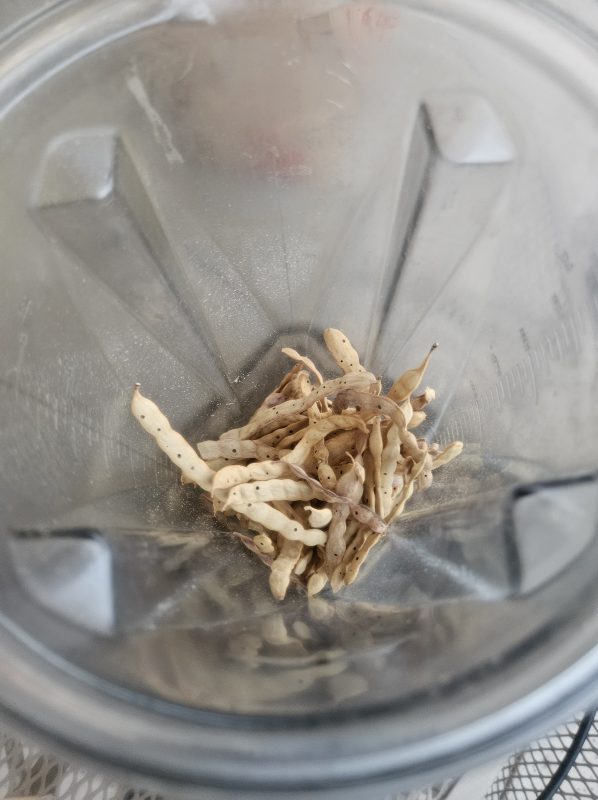
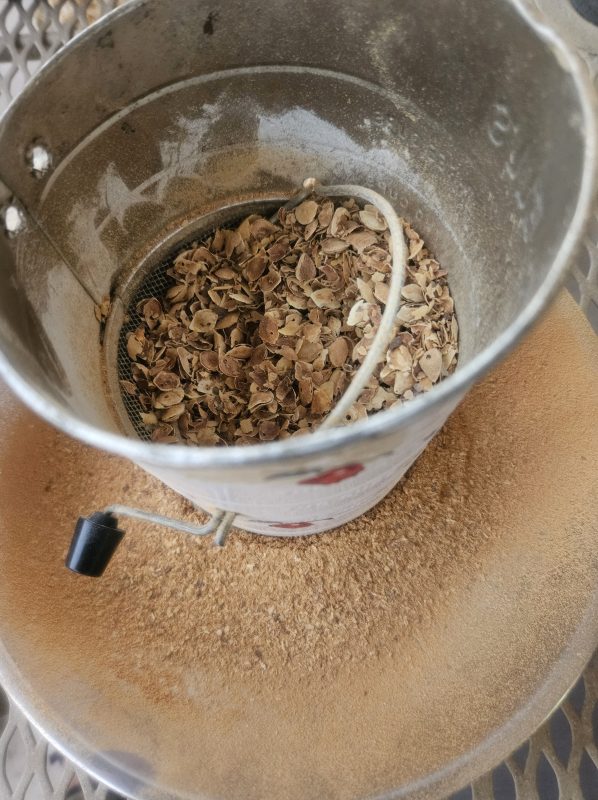
After cooling JUST enough to handle easily, I tossed the pods into a high powered blender. A regular blender or food process does not suffice. Without the last minute toasting, grinding makes a paste in there. This of course is an issue with any mesquite meal grinding method, but expecially for the blender or stone tools.

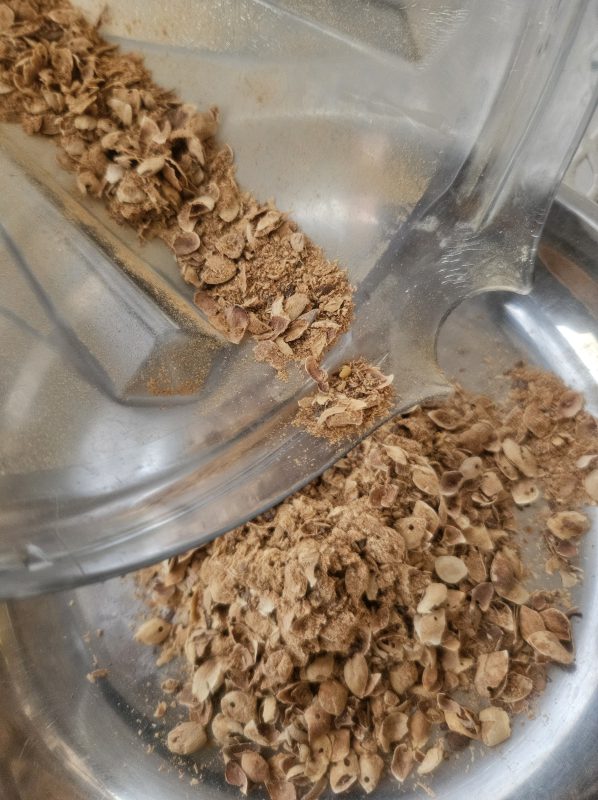
Unbelievablly, it only takes a few pulses.

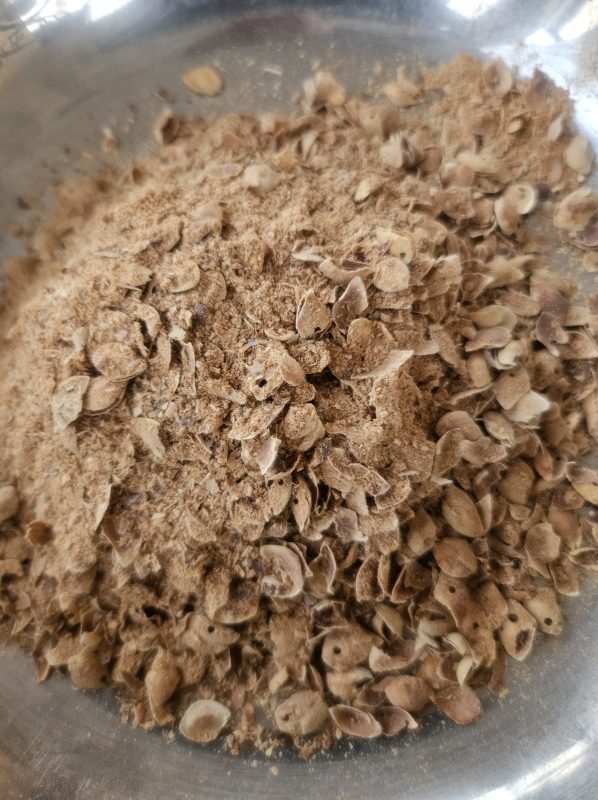
Any fine sieve or a flour sifter can remove the meal form the hard bits of unground pod and seed. Any grinding method will require this step, even hammer mills.

Sifting is even faster than grinding, depending on the size of the holes and quanity of mesquite meal needed.

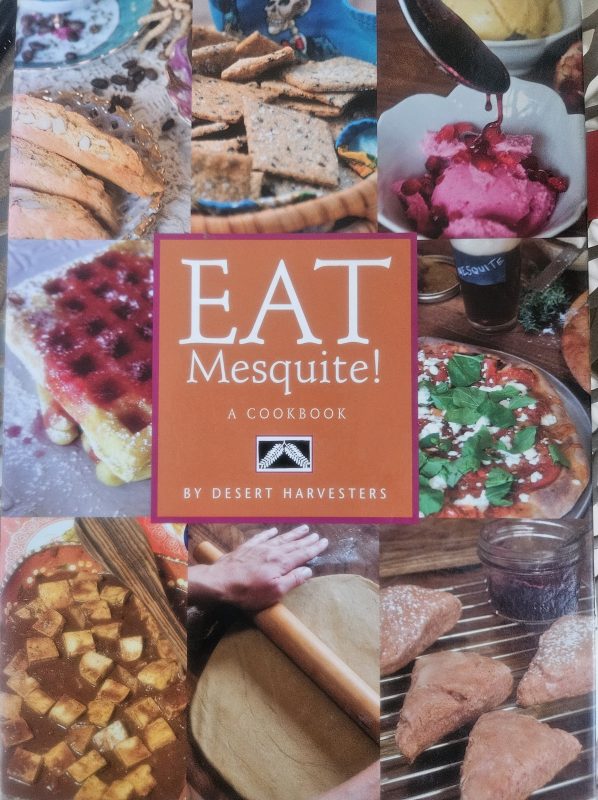
To show off this flour, I impulsively chose a simple recipe from this small out of print book. However, you can purchase the huge current edition!

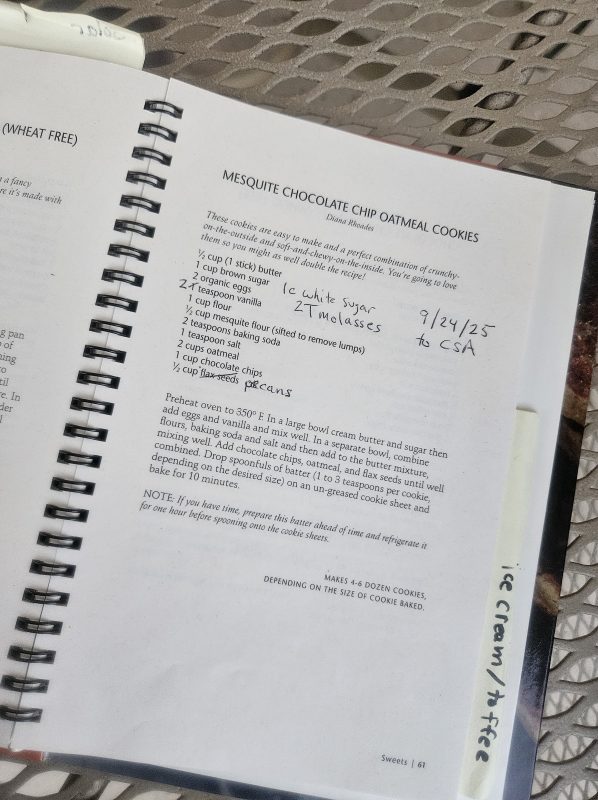
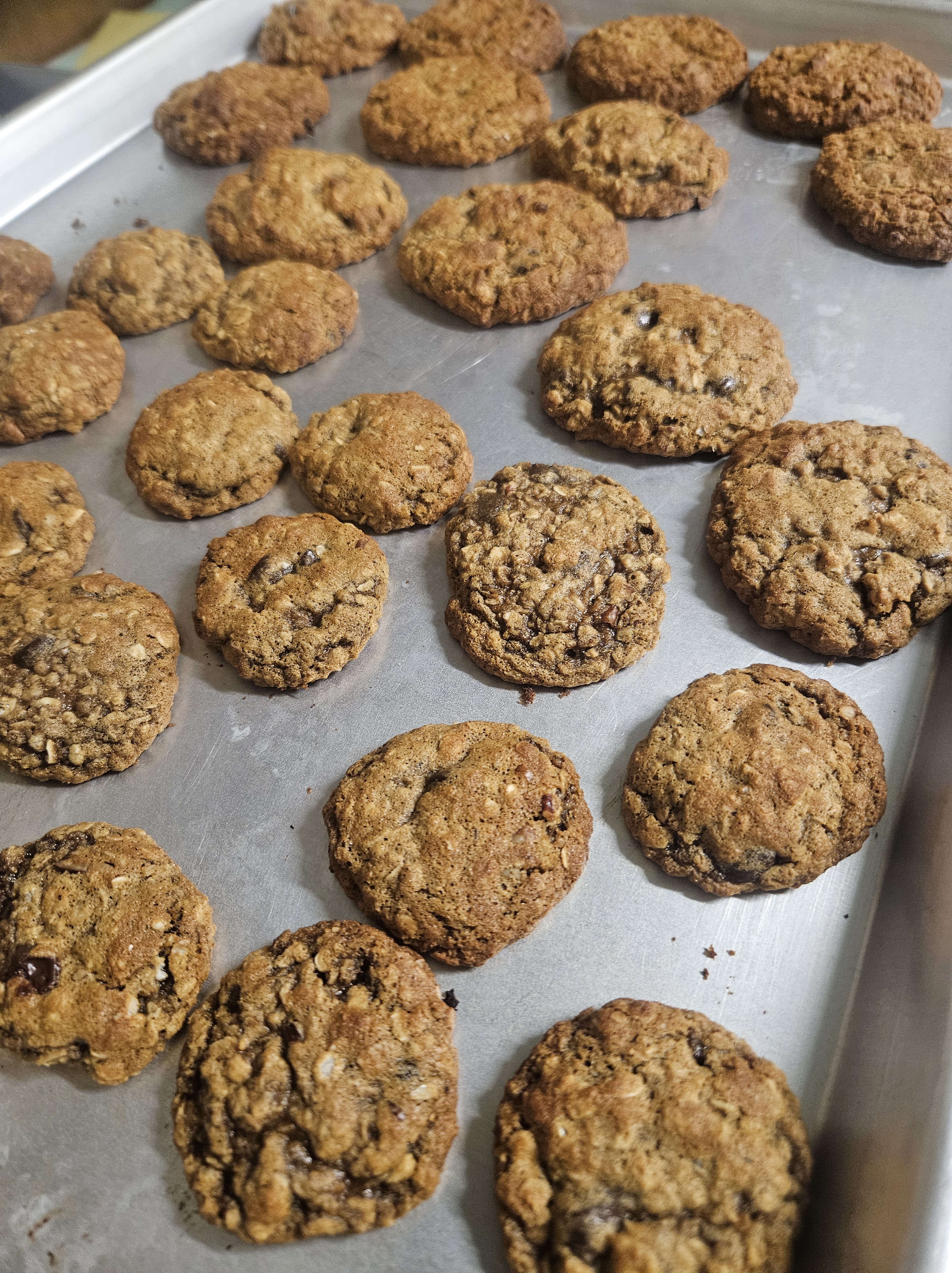
Chocolate chip cookies! I had a half bag of chocolate chips and pecans on hand, and chocolate with mesquite is classic. In case my butter spent too much time in the freezer, I doubled the vanilla. No brown sugar in sight, but a gallon of mollassas to use up.

I love making my notes in hard copy cookbooks, and reading the kitchen culture from long gone relatives in their books. And the bookmarks that are labels from my friends’ gifted food creations are my kind of treasures.

I baked these chocolate chip oatmeal mesquite pecan cookies until just barely set, let them finish cooling in transit, and served them chewy with the chocolate still melted. I’m sure they would not tolerate stacking. Some were full sized, the others bit sized. None were leftover.

Happy autumn!

A Foraging Consciousness for Famine Times

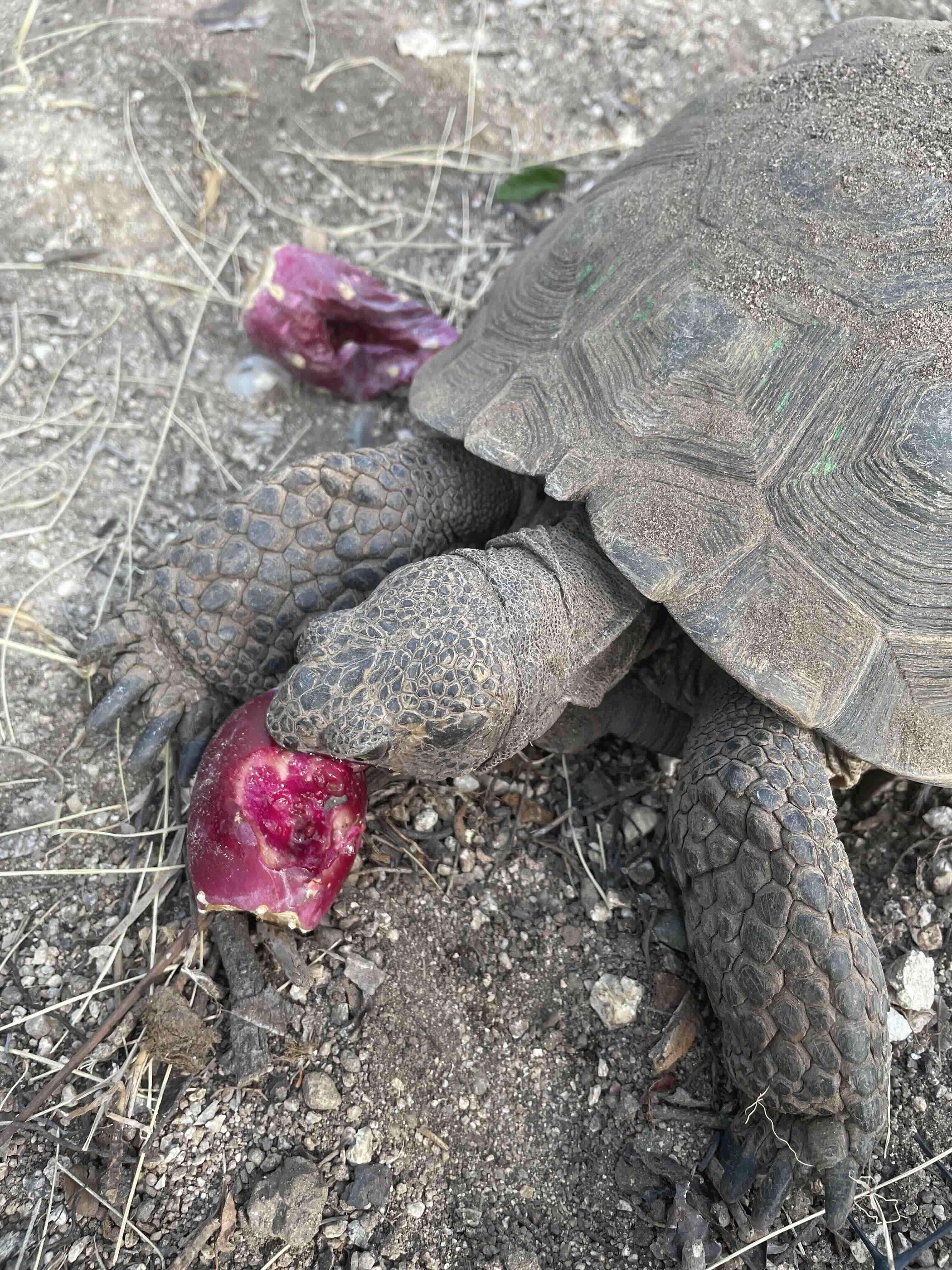
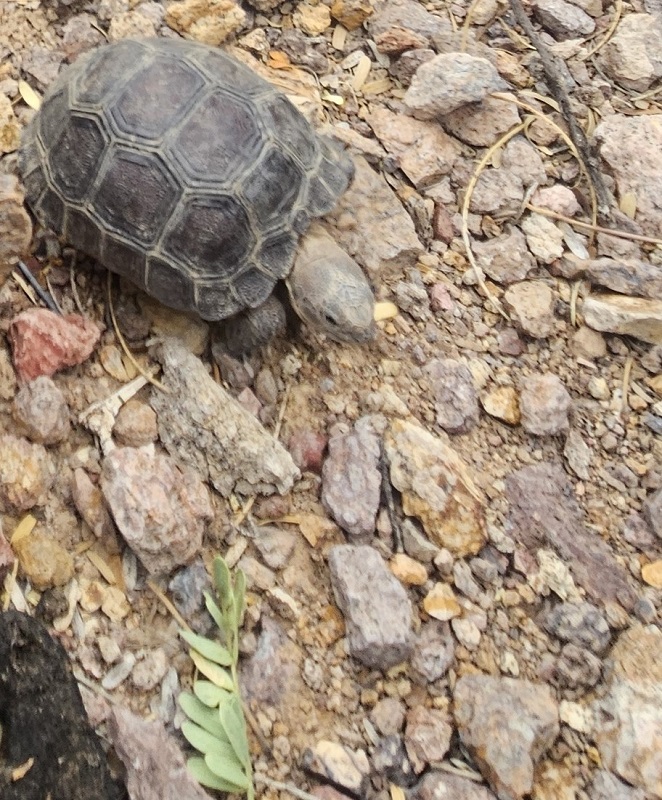
We aren’t alone. Living through this extended drought and awesome heat in the Sonoran Desert is a major feat for any creature out there–plant or animal–no matter how desert-adapted it may be! We are all feeling it. Difficult to imagine how creatures, like the long-lived desert tortoise, manage through the kind of intense drought we are experiencing.

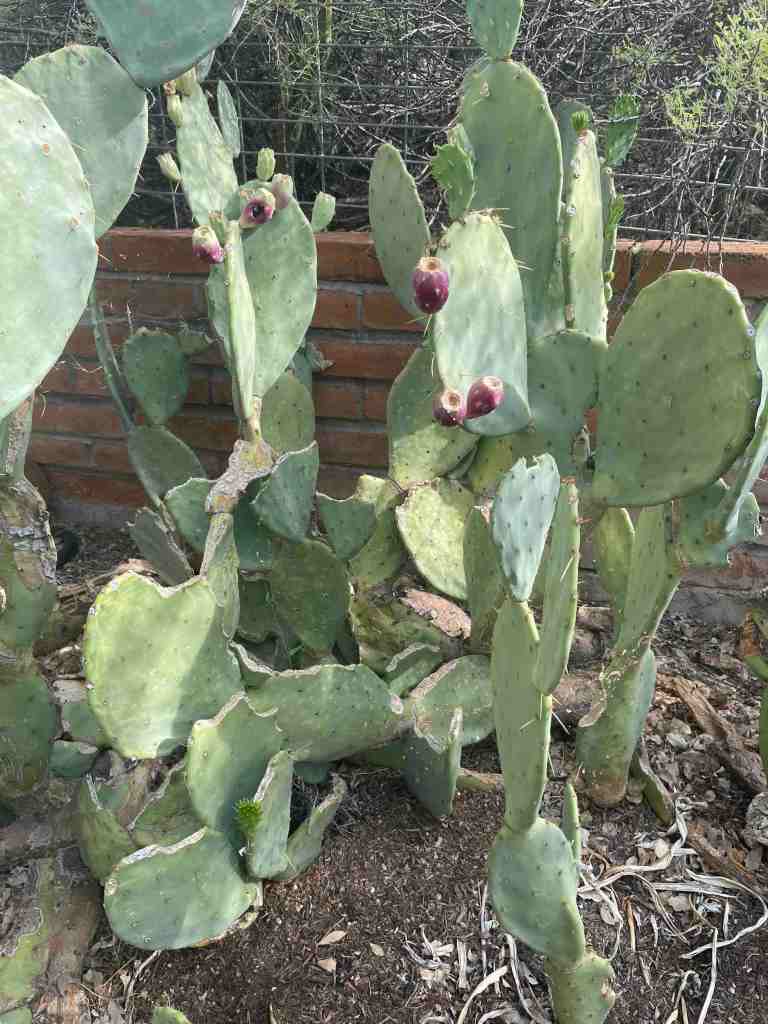
Even in my back yard, my tended prickly pear, covered in buds and tender nopales last April, is ending this summer with tunas dropping before mature or devoured by cactus wrens, and pads chomped by packrats or ground squirrels.

Tia Marta here to share some thoughts about us humans harvesting from the wild. As I learned from my Tohono O’odham mentor, in earlier times Indigenous people had to suffer through lean times using the desert foods they’d stored from times of plenty. They knew sporatic seasonal productivity is the name of the game in the desert. Wise cultural tradition dictates that you harvest abundance when it happens, share your plenty, and store as much as possible against the expected lean times.

Very few native prickly pears have produced fruit this year in the Sonoran Desert, so as human desert harvesters I feel we must refrain this year, and consider the needs of our wild neighbors, the deer, javalina, cottontails, rodents, birds, etc who need what forage remains– far more than we do.

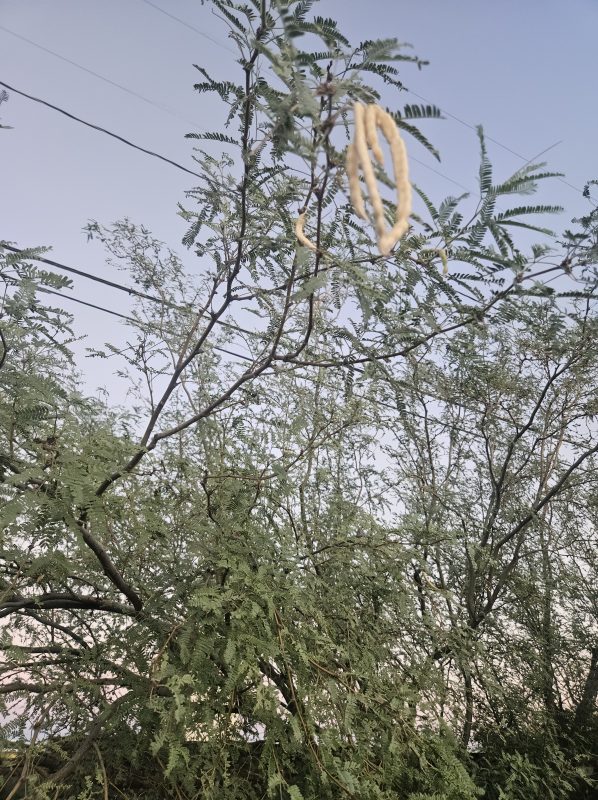
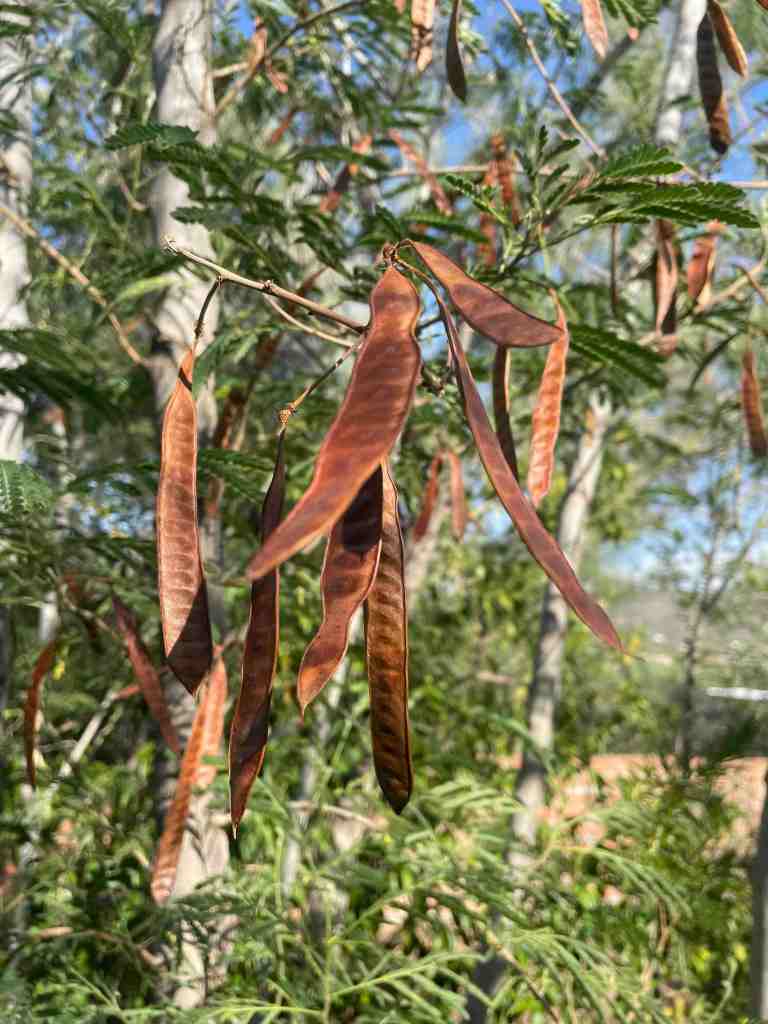
Instead, I suggest we go for an invasive! How about eating from the white lead tree, known as guaje in Mexico, huaxin by the Aztec in its region of origin? Its presence as an invader into the Sonoran Desert generates interesting controversy. The seeds contain an amino acid mimocine toxic for us mammals who have no rumen for digestion. However Guaje‘s young pods, when green, can be cooked in soups or in tacos, as cooking removes the toxicity. This small fast-growing tree has other positive attributes: It is used as great cattle fodder, provides stovewood fuel, erosion remediation, herbal medicine, and it adds soil nitrogen. Its profuse and often continued flowering makes it a good pollinator support. Caution: it IS an invasive species and, if let loose in our desert, could compromise our precious natives..

Guajes (Leucaena leucocephala) have been known and appreciated in Sonora, Mexico, for decades if not centuries. It is planted on the University of Arizona campus (see UA Arboretum) and is being researched as a potential future food plant for climate change by horticulturists at Mission Garden. I’m glad guaje volunteered in our yard from soil in a potted plant. It created a little grove of blessed shade for us, and bees have been abuzz over its puffs of cream-white flowers every spring.

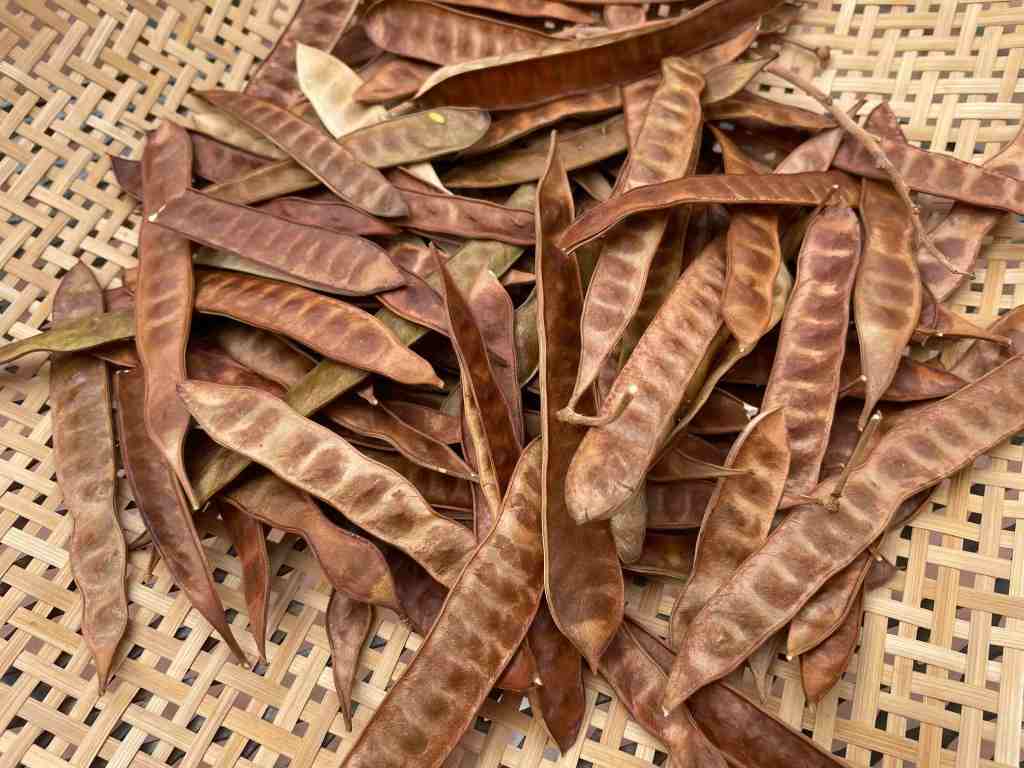
I recently gathered a gallon bag of dry pods which yielded only 1/8 cup of small seed. They resemble flax seed. I soaked them to see if any were viable. About 1/3 of them swelled. When cooked for 15 minutes to remove mimosine, and drained, they proved nut-like and tasty. I’m adding them to my home-made bean dip. As a legume they will provide good protein in addition to texture and new flavor.

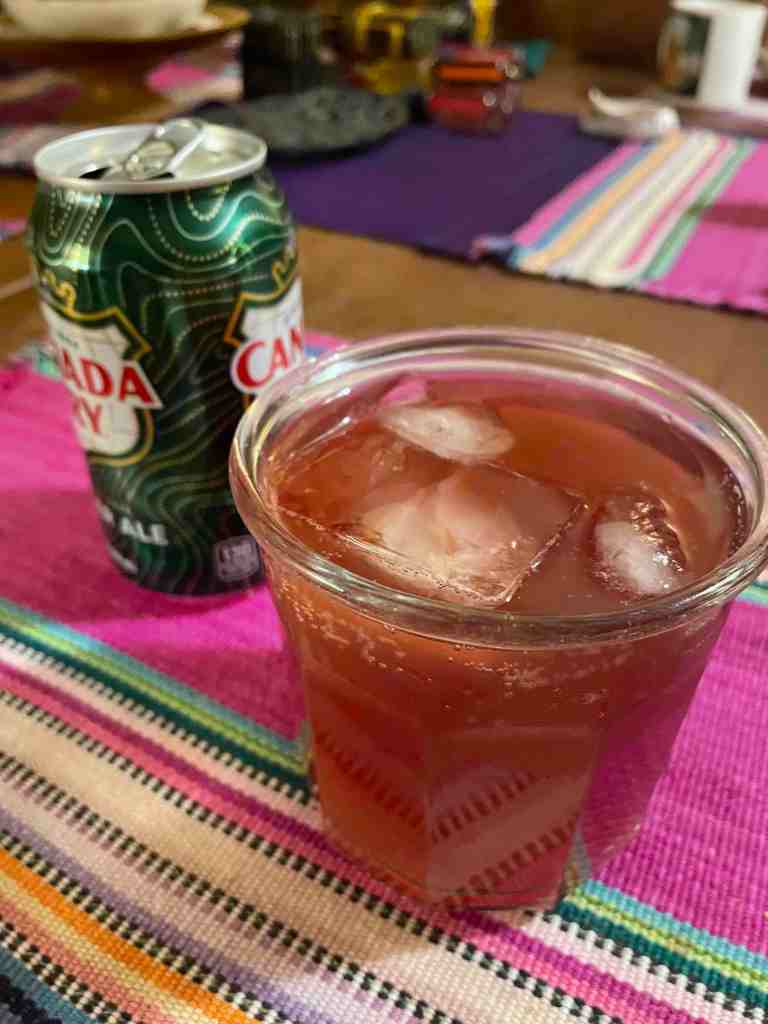
To go with the dip, I’m using a scant amount (a tablespoon per 8oz) of my conserved prickly pear juice, harvested and frozen August last year, with flavored fizzy, gingerale and a splash of mescal. With this dressed up punch, we’re sending a toast to all desert creatures out there! We hope they are benefitting from any prickly pear tunas that may be ripening in our hot, dry desert!

May we be conscious of all the plants and animals around us during these weather-stress times! For more ideas on local “famine foods” see SavorSister Carolyn’s post and Tia Marta’s post. For ideas of what we can grow in prep for more climate extremes, check out Ethnobotanist Gary Paul Nabhan’s inspirational book Growing Food in a Hotter, Drier Land: Lessons from Desert Farmers on Adapting to Climate Uncertainty.

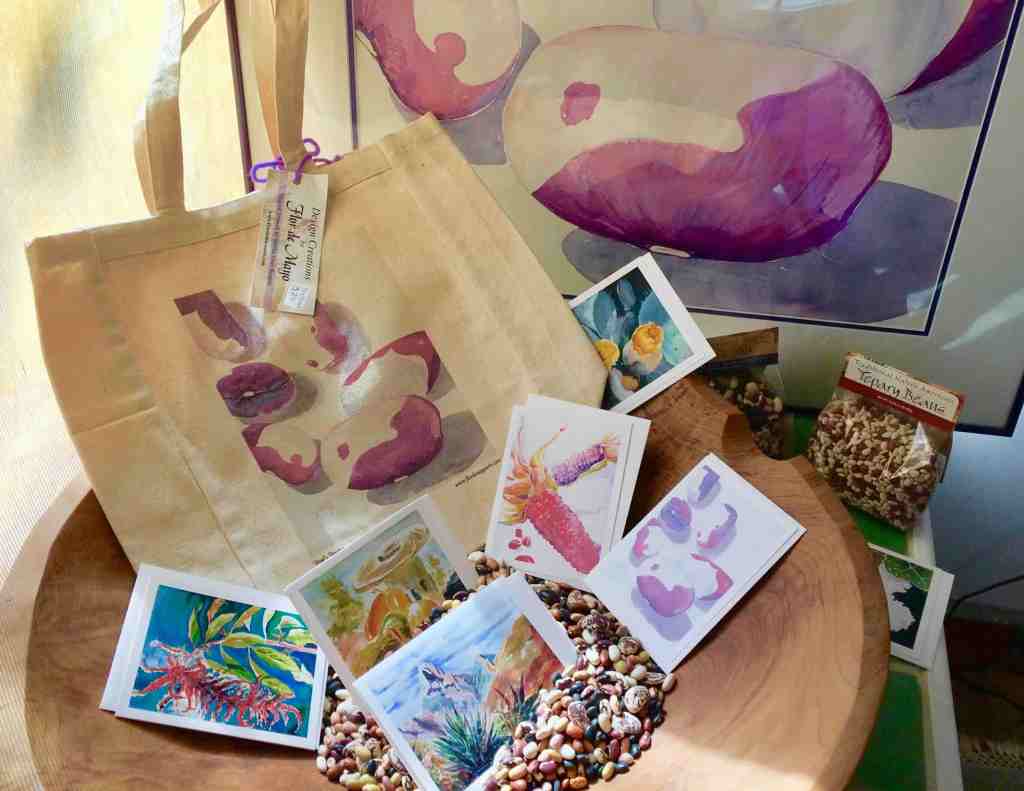
A colorful assortment of Tia Marta’s watercolor art-notecards depicting Southwest Native American heirloom foods can be found at the Mission Garden shop, or online at NativeSeeds/SEARCH.

Sonoran Summer Tacos with Nopales and Verdolagas

It’s Carolyn today and I’m out in my garden to pick some delicious and healthy vegetables to bring you a season-spanning recipe. If your Ficus Indica prickly pear (the Mexican tall kind) sent out its leaves a little late this spring, you probably have a few smaller pads that are still tender enough to cook. Combine those with the purslane in your summer garden for a delicious vegetable side dish or taco filling.  If you don’t have your own cactus. you can always pick up some nopal pads at any Mexican grocery store. If you buy the kind already cleaned, you’ll need to use them right away as once they are scraped, they go bad quickly. We have previously discussed how to clean prickly pear pads here. 

We’ve also discussed purslane previously in this blog here, but I’ll copy the nutritional information because it is so important:

It’s sad but true that right now people are out in their yards pulling these plants out and tossing them in the garbage (or compost for the more enlightened). They should be tossing them in the wok  or frying pan (see recipe below.) Purslane provides six times more vitamin E than spinach and seven times more beta carotene than carrots. It’s also rich in vitamin C, magnesium, riboflavin, potassium and phosphorus. One cup of cooked purslane has 25 milligrams (20 percent of the recommended daily intake) of vitamin C.

Especially important to those of us eating a modern diet, purslane is very high in an essential omega-3 fatty acid called alpha-linolenic acid (ALA). Omega-3s are a class of polyunsaturated essential fatty acids. Your body cannot manufacture essential fatty acids, so you must get them from food. Certain fibers also help in controlling blood sugar.

If your aren’t familiar with purslane or verdolagas, here’s a closeup photo:

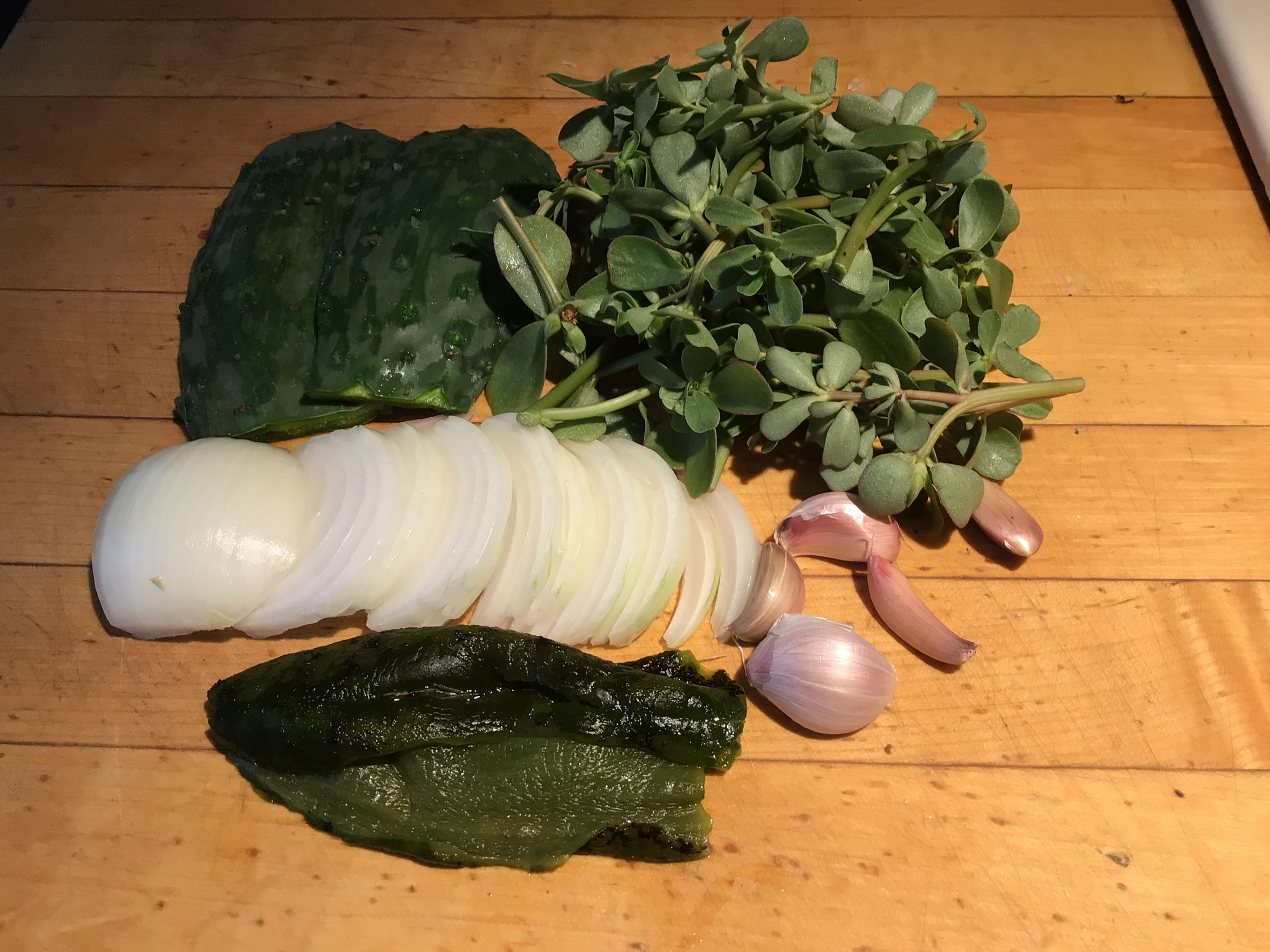
Here are all your ingredients for the tacos: (top) prickly pear leaves and purslane, (bottom) onion slices, garlic and poblano chile.


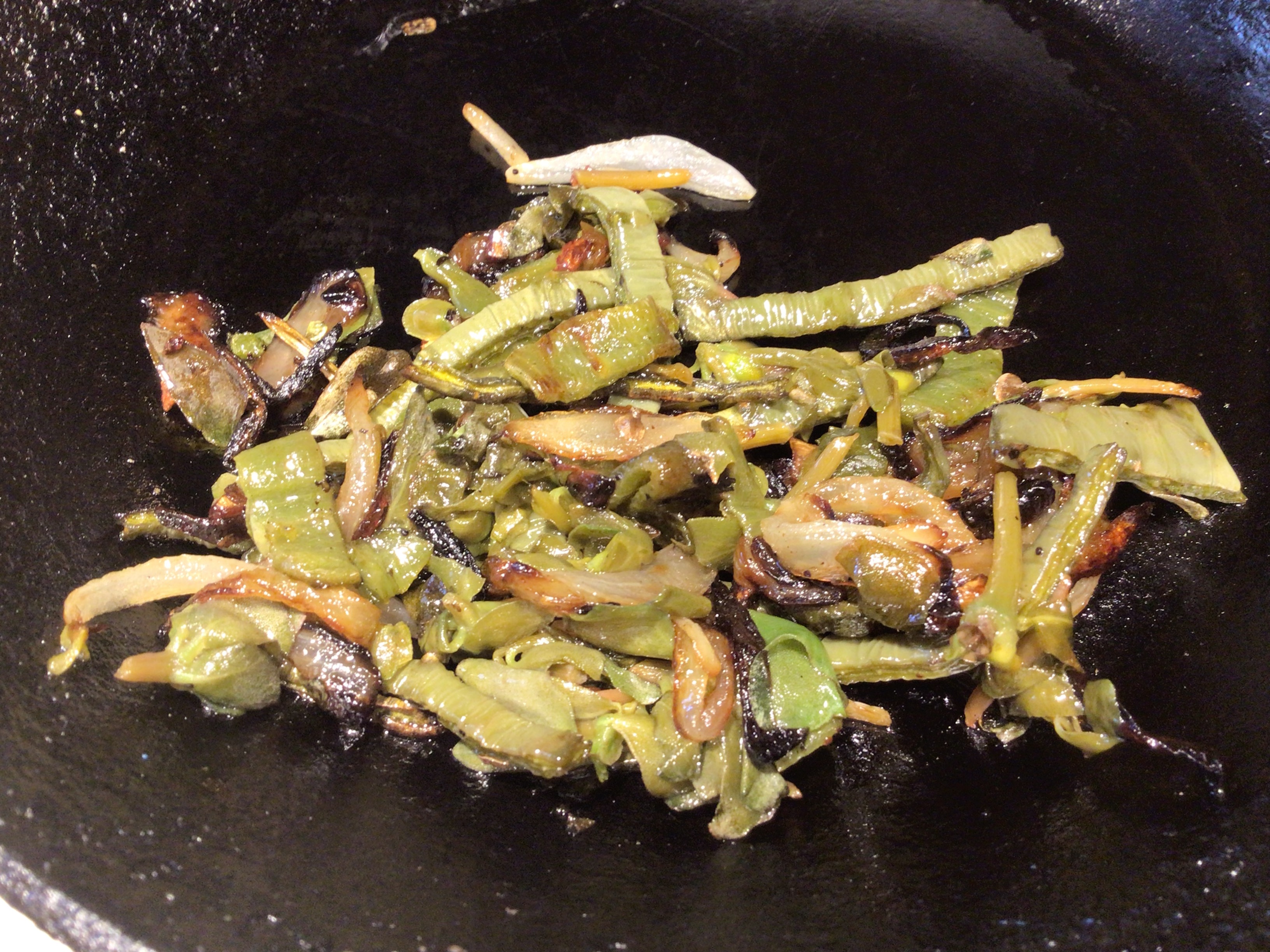
This is what the ingredients will look like cooked.

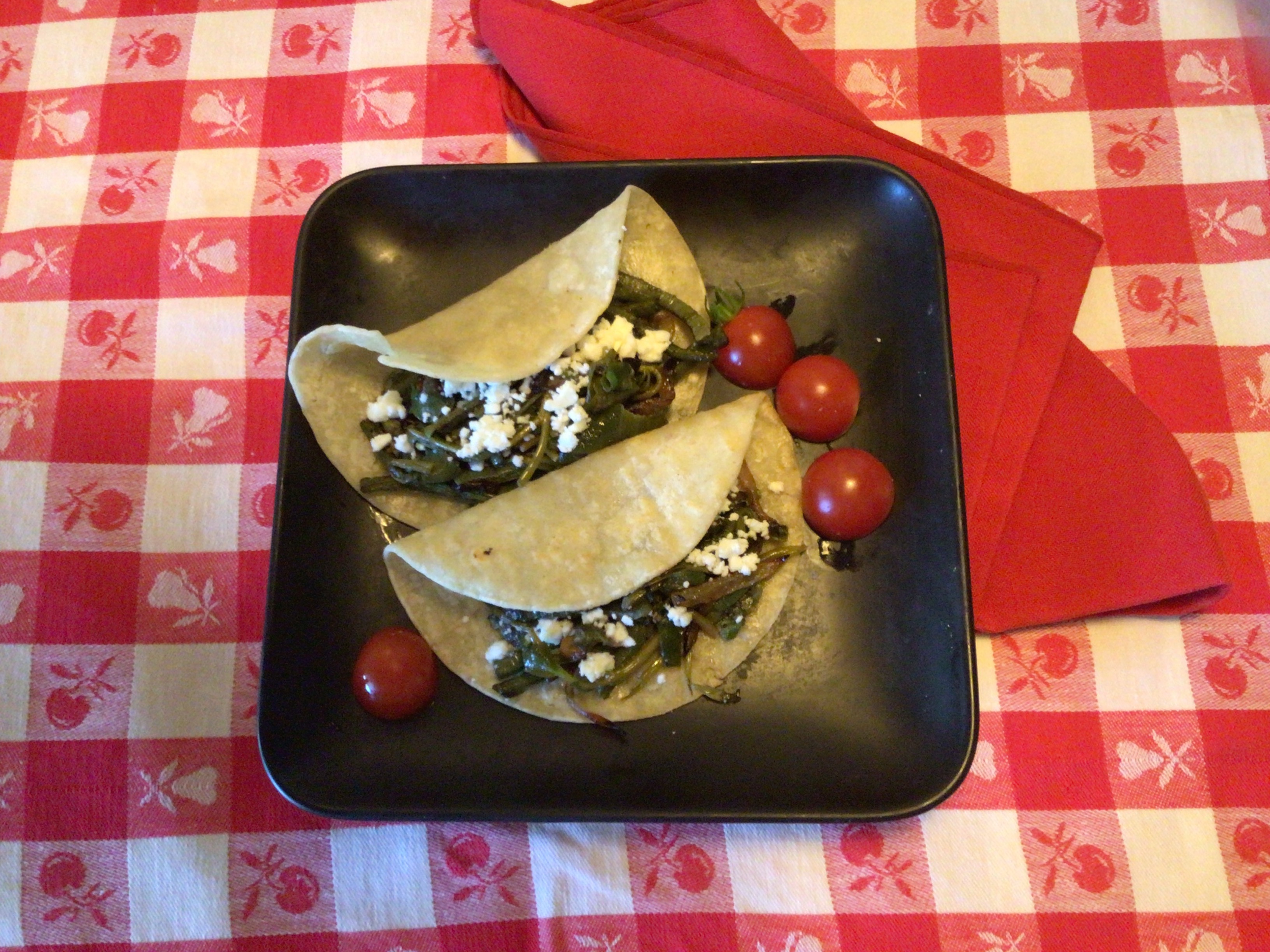
Sonoran Summer Tacos

2  2×4-inch prickly pear pads or equivalent

½ white or yellow onion

2 cloves garlic, minced (1 teaspoon)

2 tablespoons neutral vegetable oil

1 cup verdolaga (purslane), packed

1 roasted, peeled, cleaned Anaheim or poblano chile, cut into pieces

      (or 2 tablespoons chopped canned green chiles)

4 corn tortillas or small flour tortillas

2-4 tablespoons crumbled cotija cheese or cheese of choice

Using rubber gloves, clean the stickers from the prickly pear pads. Rinse and cut into pieces 2 inches by 1/8 inch (roughly the size of a wood matchstick.) Set aside.

Cut the onion into thin strands by cutting from the root to the stem (not crosswise). Add the oil to a heavy frying pan and begin sautéing the onion over low medium heat. You want it to cook slowly until soft and light brown. After about 10 minutes, add the garlic. While that is happening, you can prep the rest of the ingredients.

Cut the fresh chile into pieces about 1 inch by 1/8 inch. Chop the verdolagas (purslane) roughly. After 10-15 minutes when the onions are ready, stir in the greens and chile and continue to cook.

Coat a heavy frying pan with a light spray of oil and soften the tortillas. Divide the vegetables among the tortillas. Sprinkle with cheese and fold over.

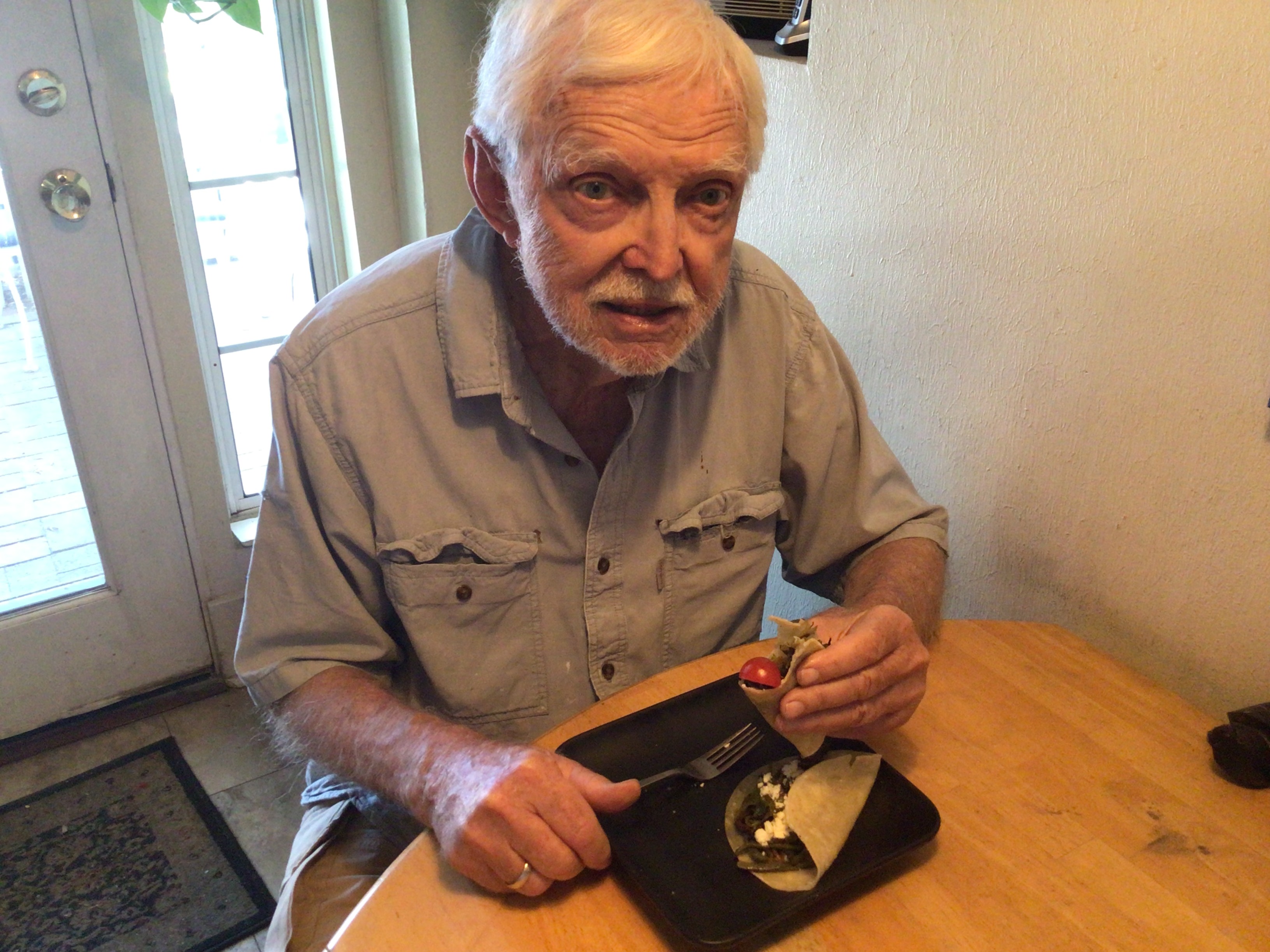
Every recipe writer whether for a blog or cookbook, needs a taste tester. Is it good? Would you eat it again? Here is my taste tester who has eaten his way through five cookbooks and dozens of these blog posts over forty years.

Chief taste tester Ford Burkhart works his way through the Sonoran Summer Tacos for lunch. He gave them the thumbs up. 

____________________________________

You can learn more about the history of food in Southern Arizona in my latest book A Desert Feast, the story of the last 4,000 years of food in the Sonoran Desert. Want more recipes using  foods of the Southwest? You’d find ideas for collecting and using 23 easily recognized and gathered desert foods in Cooking the Wild Southwest: Delicious Recipes for Desert Foods.  . Recipes from top Southwest chefs are collected in The New Southwest Cookbook. Just click on the titles for more information. You can learn more about me on my website.
Lean Times for Desert Foods Foraging

My mentor and guide Juanita-baḍ warned us there will be times like this. Now awesome drought is upon us! She said if we need food from the desert, we must know famine-food-plants for the dry times. Tia Marta here to share some of her advice for desert harvesters in a drought.

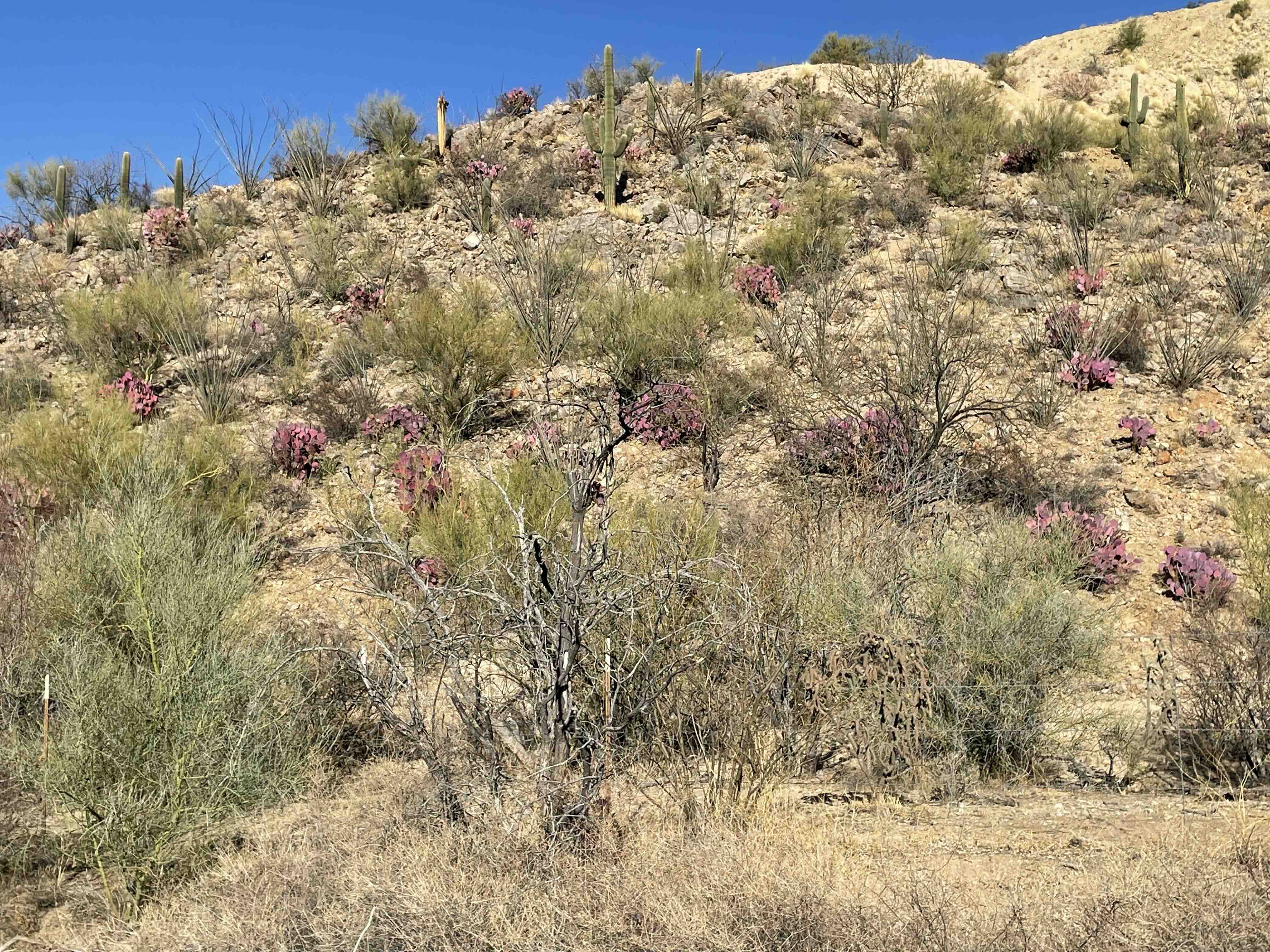
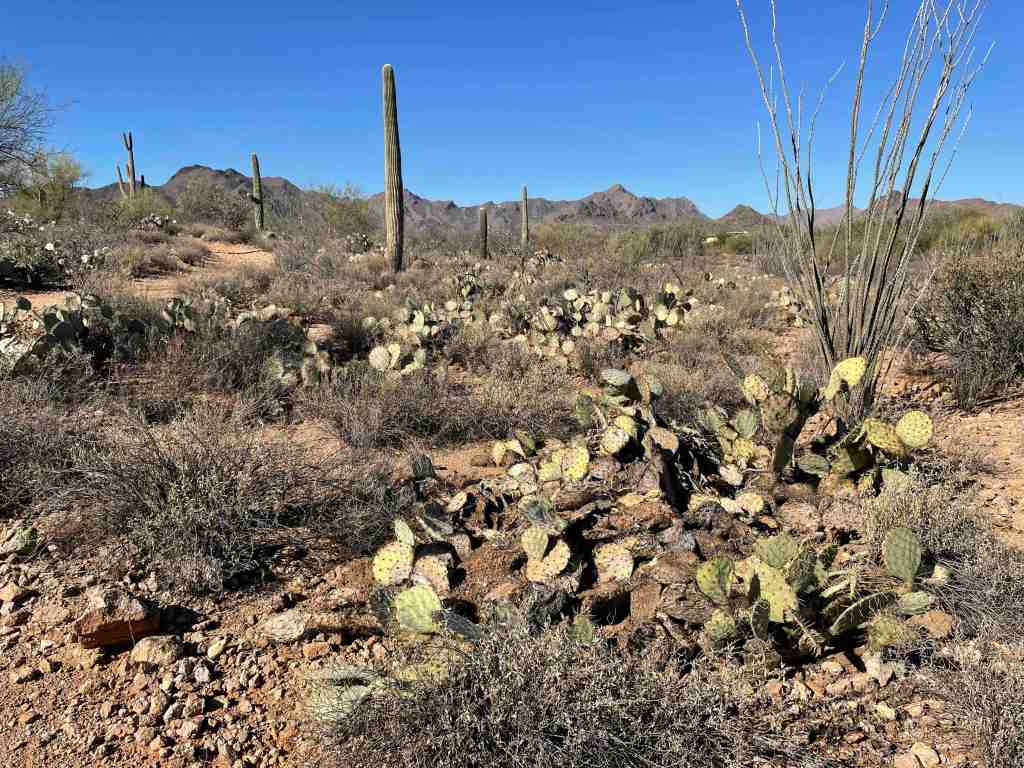
When the beautiful Santa Rita prickly pear around town turns a wild purple or lavender, it’s vividly screeming “thirsty“–a visual pop-out in the dry landscape, as in this photo taken along the old Helmet Peak road south of Tucson. According to Watershed Management Group, the last 6 months have been the driest on record for Tucson, Arizona. We’re in the midst of the acid test for what’s to come.

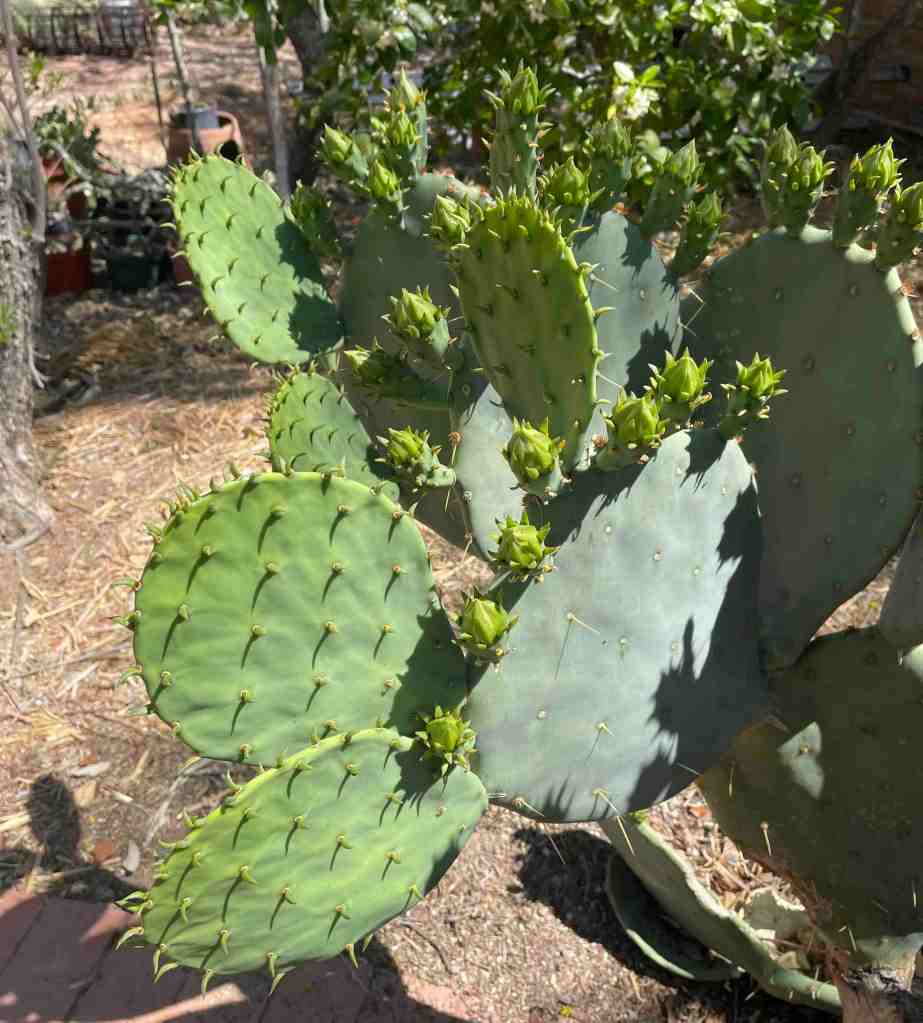
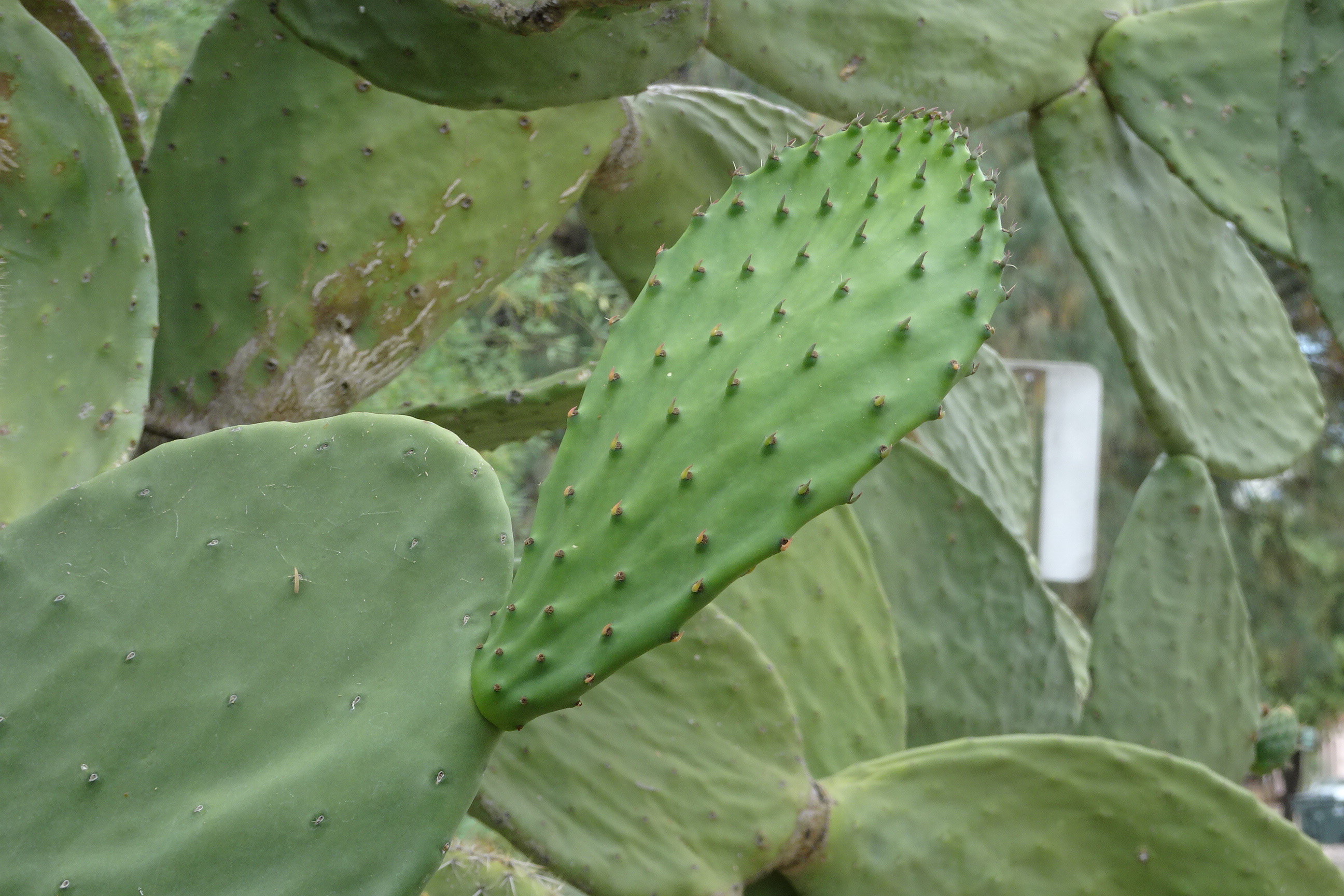
In a well-watered garden this drought year, a prickly pear will be full of new-growth pads and flower buds. Find SavorSisterCarri’s ideas for making nopalitos with the young pads on her recent post.

April is known as Oam Maṣaḍ (Yellow Moon), but there won’t be many yellow prickly pear flowers this year out in the des, with no rain since October’s minimal drops. In this photo at Feliz Paseos Park, prickly pears are sadly damaged with drought. Over my 50 years of harvesting ciolim (cholla cactus flower buds), I’ve never known them to be “on hold” as they are this spring (2025), saving their resources for a better-bet year. Juanita-baḍ said there are always a few, but ciolim may now be telling us of a new phase….

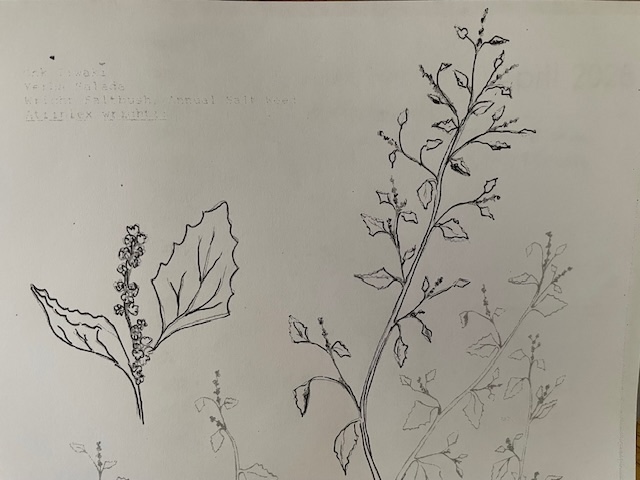
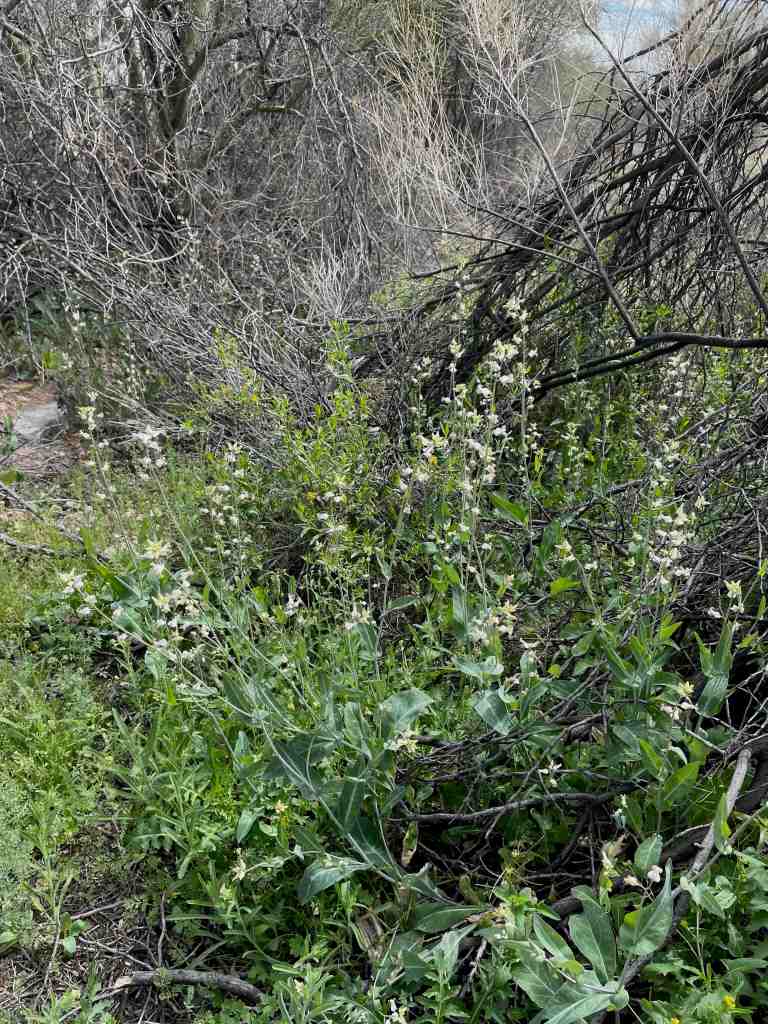
According to Juanita-baḍ, we should know where to look for onk i:wagĭ (Wright’s saltbush Atriplex wrightii pictured above) in poor, salty soils. (The O’odham name is also used for A. polycarpa & A.elegans). It grows as an annual and can provide satisfactory “greens” over the warm and hot seasons when nothing else is available.

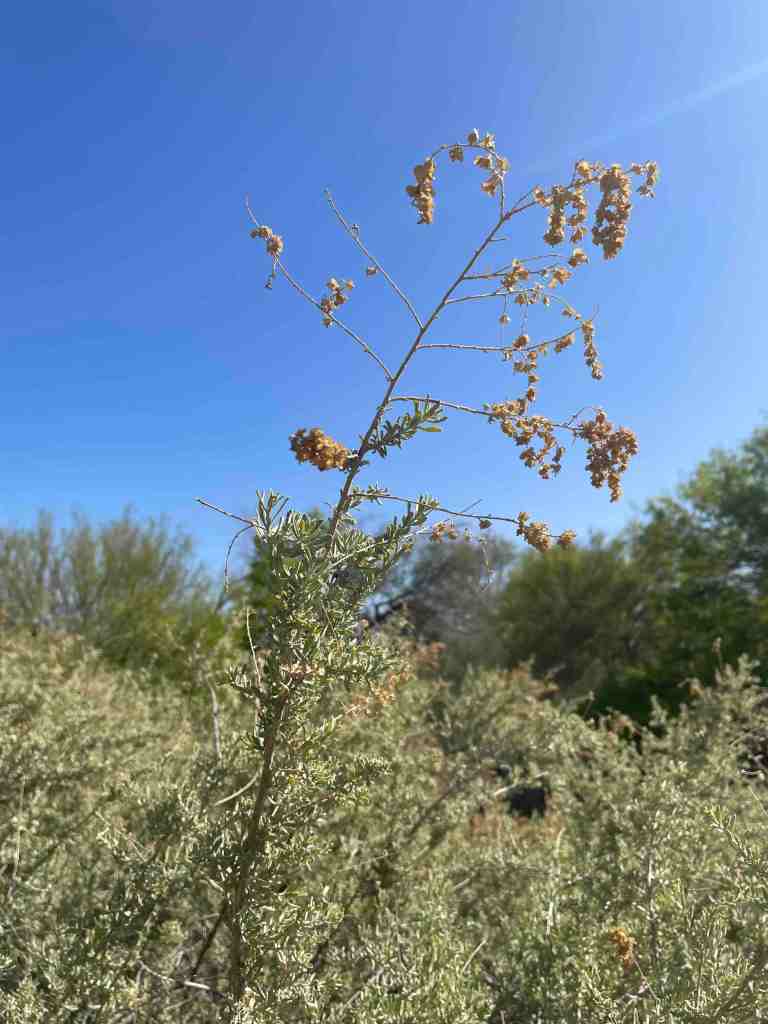
There are several “salt bushes” in the Sonoran Desert. Don’t be fooled by 2 different types of “seedheads” especially on our perennial four-wing saltbush (Atriplex canescens)! It is dioecious. Pictured here is the dried male flower. The (female) seed has “wings.” Foliage on both sexes is high in calcium, iron and potassium, high in salt, good for animals, but there isn’t a record of Indigenous people using it for food.

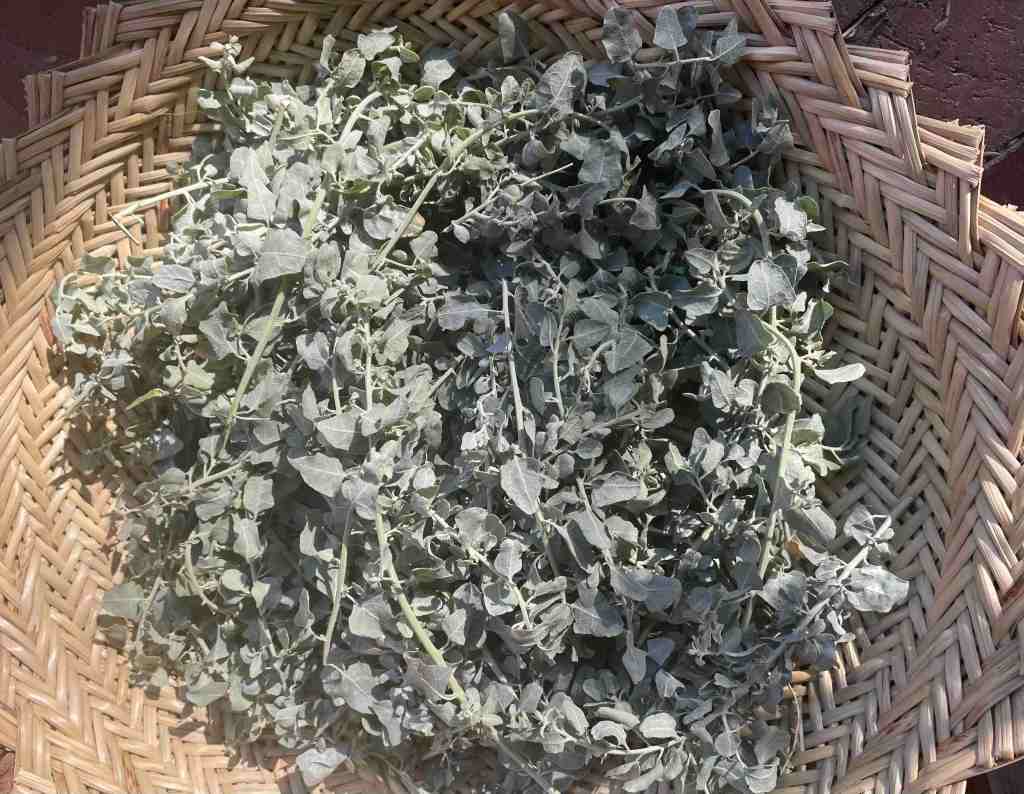
A perennial cousin of Onk I:wagĭ is Oedam or quailbush (Atriplex lentiformis) whose edible seeds are harvestable even in dry years. Many different Southwest Indigenous peoples have used its nutritious seeds to roast for flour and bread. Quailbush is a good landscape addition as a water-hardy hedge screen and bird habitat, as well as emergency food. See Food Plants of the Sonoran Desert by Wendy Hodgson, UA Press, 2001.

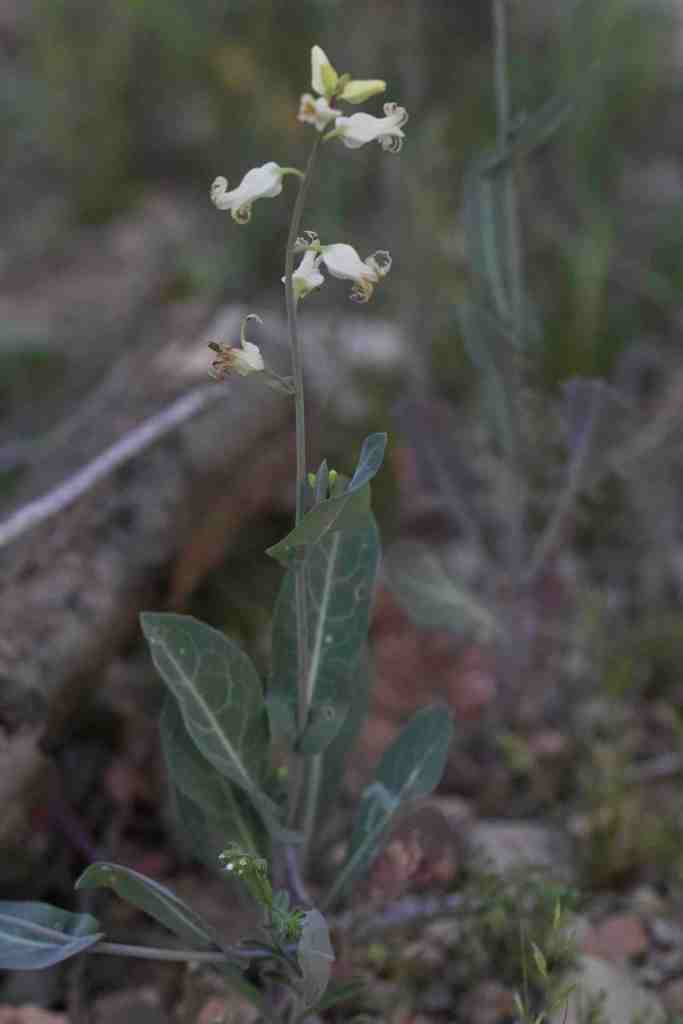
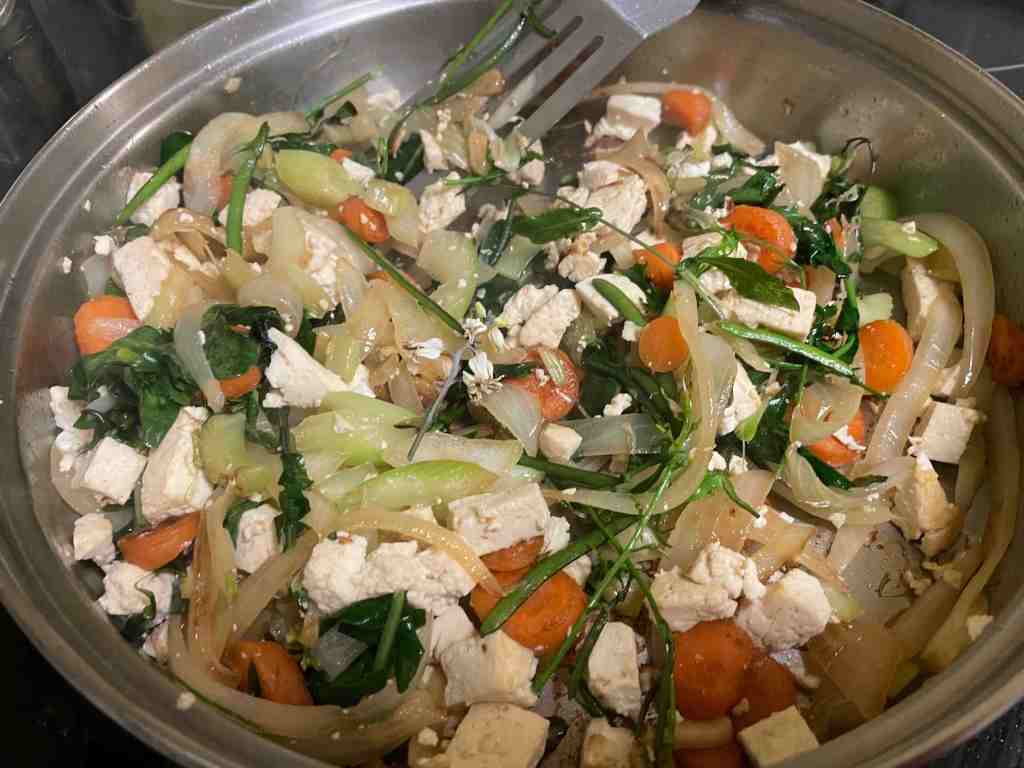
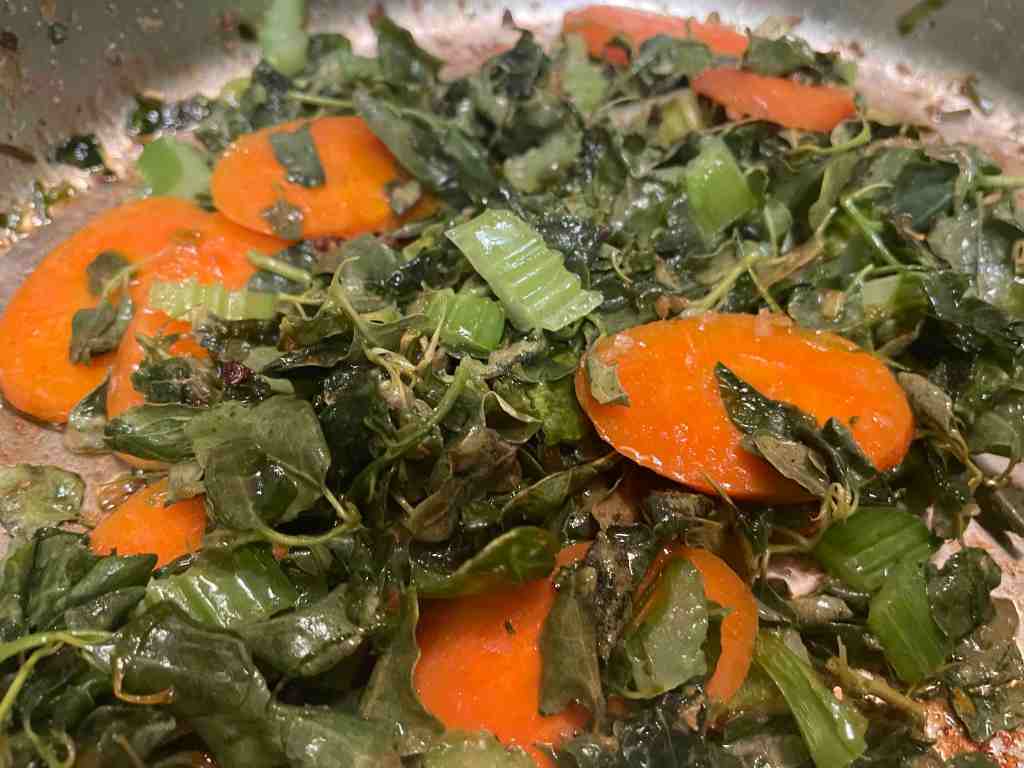
I tried stir-frying Oedam foliage with I’itoi’s onions, London rocket weed, carrots & celery, but –alert–I don’t recommend this! Tasty at first, the very salty greens became tough and bitter. I’ll stick to eating its seeds–and using its foliage in a dye bath.

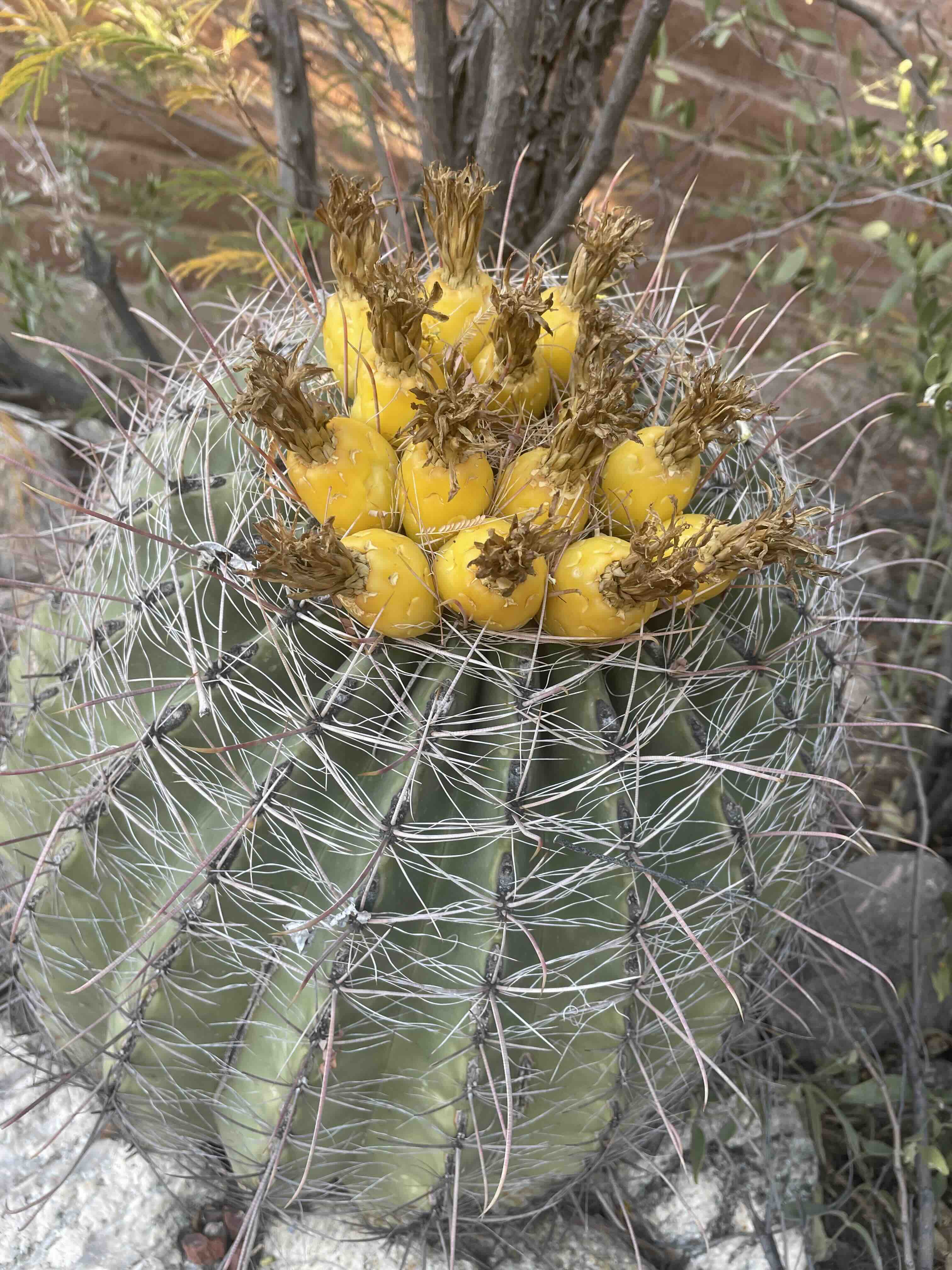
Advice from Juanita-baḍ about barrel cactus was to wait patiently to harvest their fruit until you have nothing left to eat–that is, let it stay on the plant all winter until you have used up all your other stored food. As a yellow crown atop the barrel, its fruit is right there waiting when you need–unless a hungry roundtail ground squirrel beats you to it. She knew their tangy vitamins and crunchy protein would be a nutritional lift for famine times.

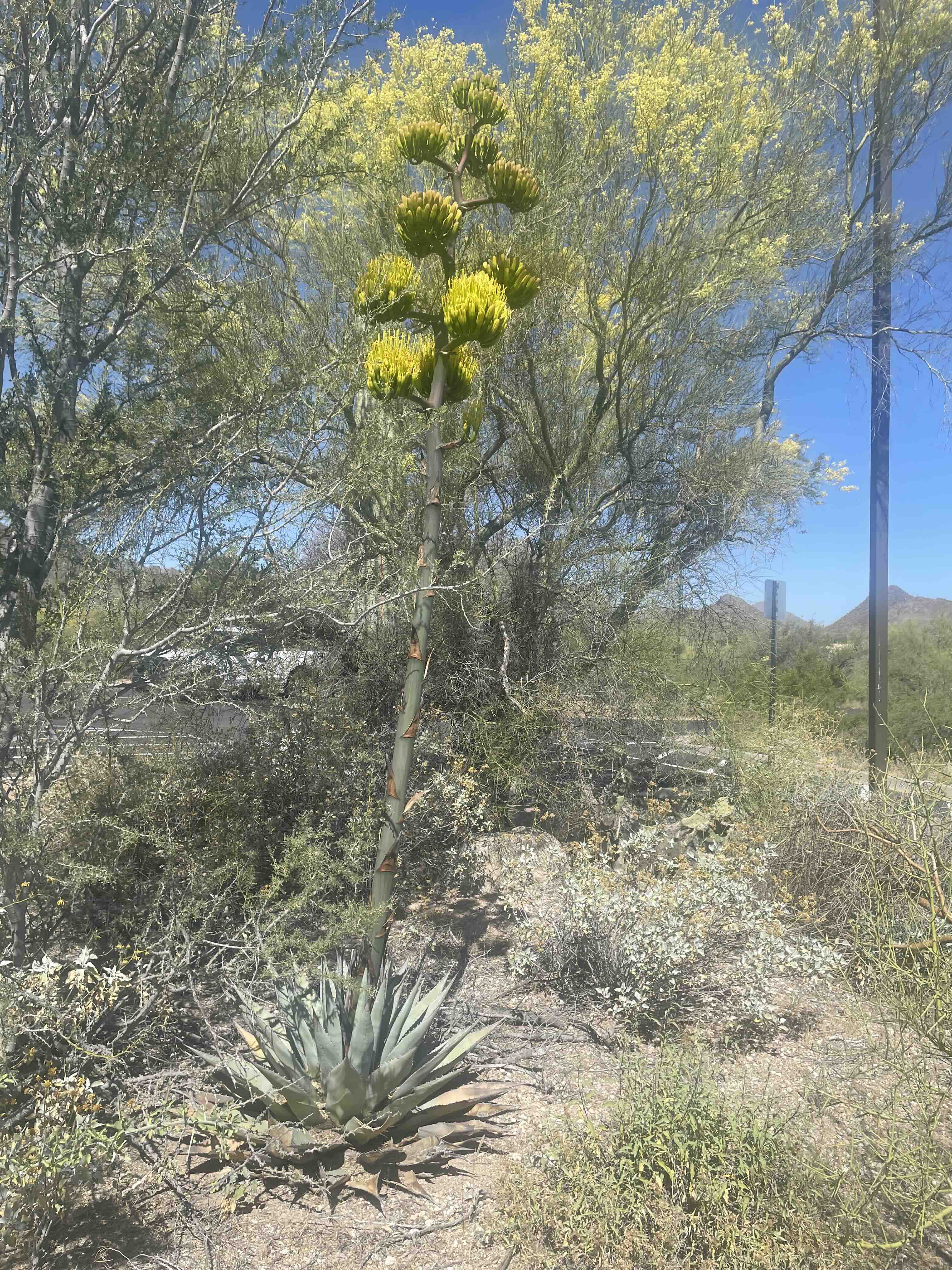
One of the few reliable desert spring foods–and one of her favorites, drought or not–is the sweet heart of a’ut from several species of Agave in the Sonoran Desert. Come celebrate this important, nutritious food at Tucson’s Agave Heritage Festival happening right now (April 10-13, 2025) all over town, with special events at Mission Garden! Hope to see you there!

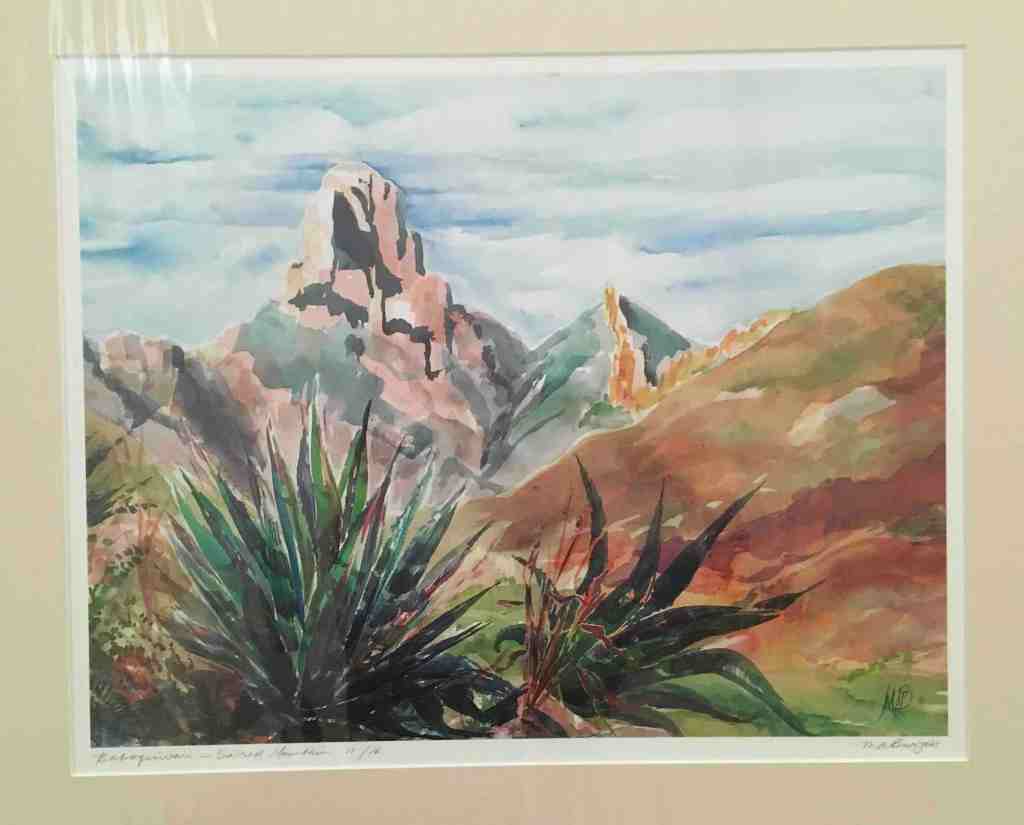
At Mission Garden’s gift shop and at the Coyote Kitchen & Gift Shop at San Xavier Plaza, you can find Tia Marta’s Southwest Native Foods artwork and notecards, including this image of sacred Waw Giwulk (Baboquivari Peak) and its resident Agaves!

For more good info on stress-time foods, check out SavorSisterCarolyn’s post from an earlier year in this unprecedented drought, and find the book Famine Foods: Plants we Eat to Survive by Paul Minnis, UArizona Press, 2021, which she reviews so timely. It will be a good reference to use as these conditions become the “new normal.”

Prickly Pear Borscht: A Novel Way to Mix Cultures

(The Savor the Southwest guest poster today is Barbara Rose. She has lived and worked at Bean Tree Farm since 1985. She is an enthusiastic expert in all things Sonoran Desert and has taught hundreds of students how to live in and appreciate this fragile and glorious ecosystem. We thank her for her knowledge and years of inspiration.)

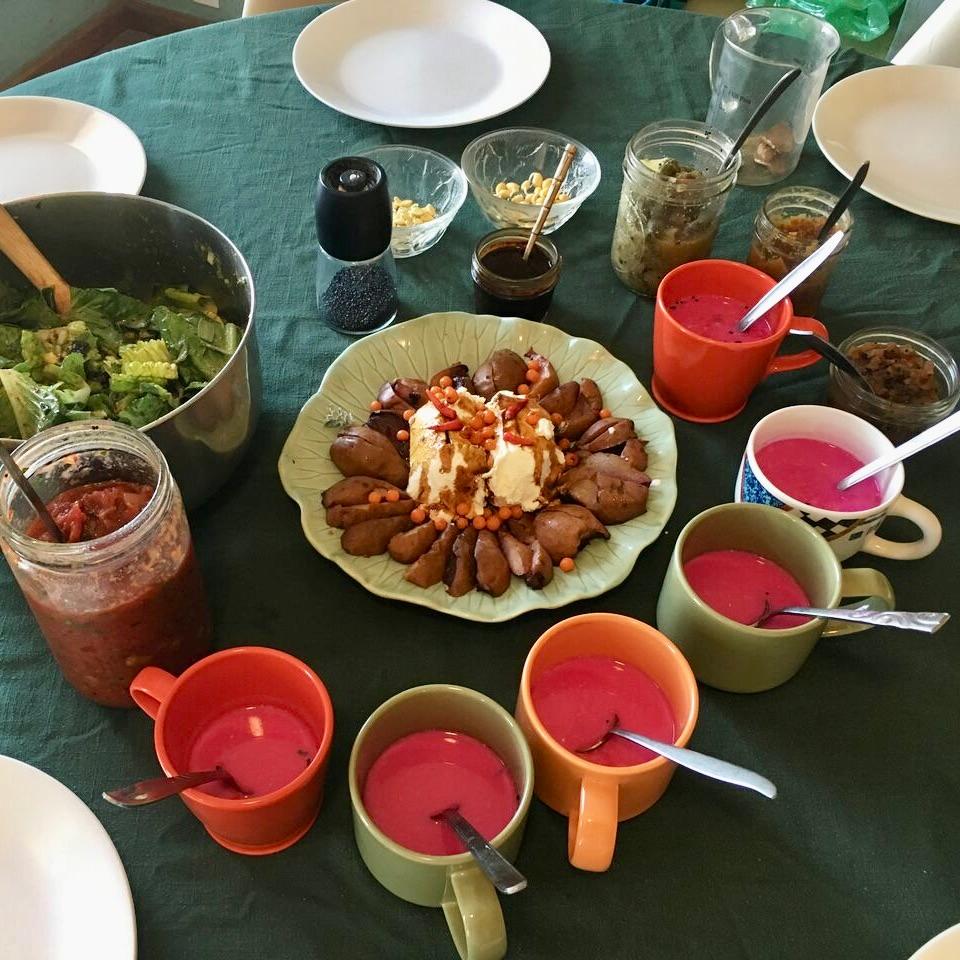
My grandma Evie was born in Brooklyn in 1900 to Ukrainian immigrants, and she moved to southwest Florida in the 1920s. Her back yard was a forest of avocado and citrus trees, and her kitchen was fragrant with crocks of garlicky green tomatoes, cucumber pickles and pots of simmering chicken soup “with the feet” (her way of saying the whole chicken). She smeared onion-infused chicken fat on slices of dense black pumpernickel, and served up bowls of cold, sweet-sour beet borscht, with a hot boiled potato and big dollop of sour cream. I am so grateful that she shared with me a treasure of food and family stories.

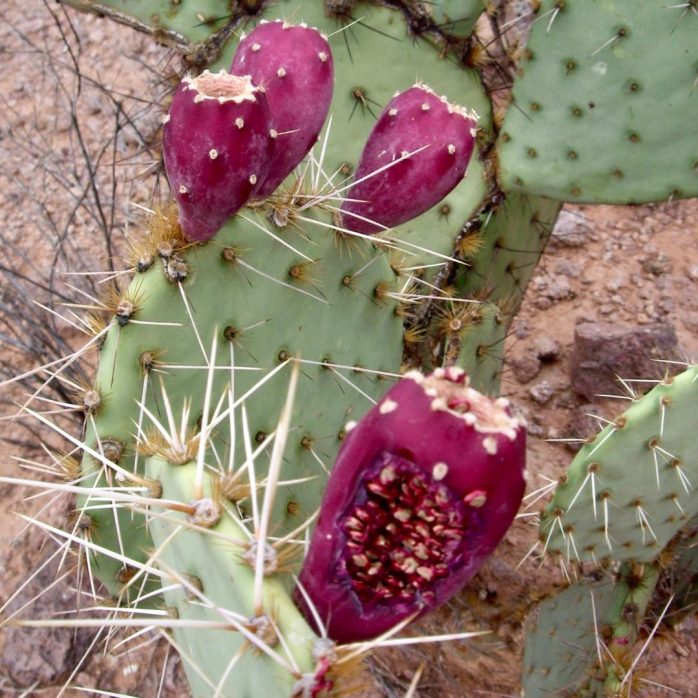
Beets have been pickled and soured by lactic acid fermentation for ages. I love beets, but I’m not so good at growing them. Prickly pear cactus thrive, and the ripe fruits are delicious, nutritious, and a gorgeous color.

The animals know when prickly pears are ripe. If they have been nibbling, it is time to pick.


I’ve developed a way to make borscht with fermented prickly pears- red desert fruits that sour nicely, have a sweet earthy flavor, and carry far away family food traditions into the desert food forest I love and care for!

I hope you enjoy the recipe, expand on it, and make it your own.


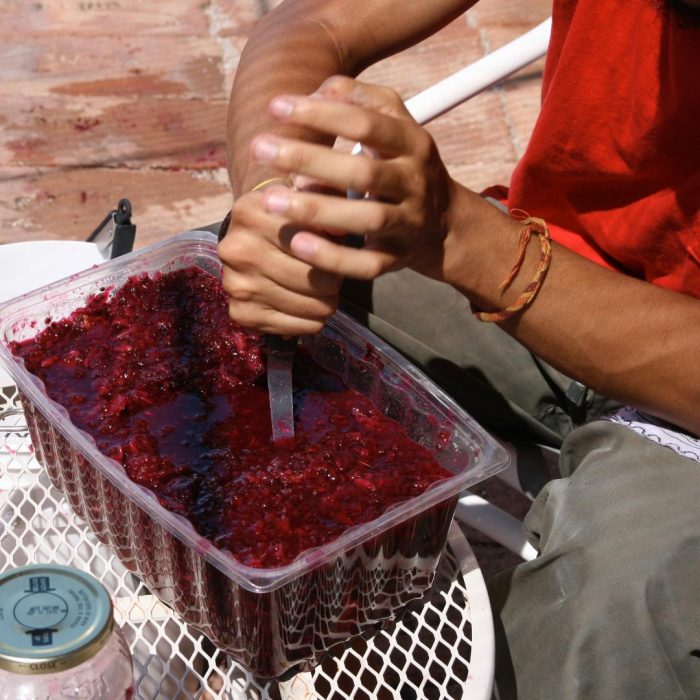
Mash the fruit. It is easier if you freeze first as this helps break down the cell walls.


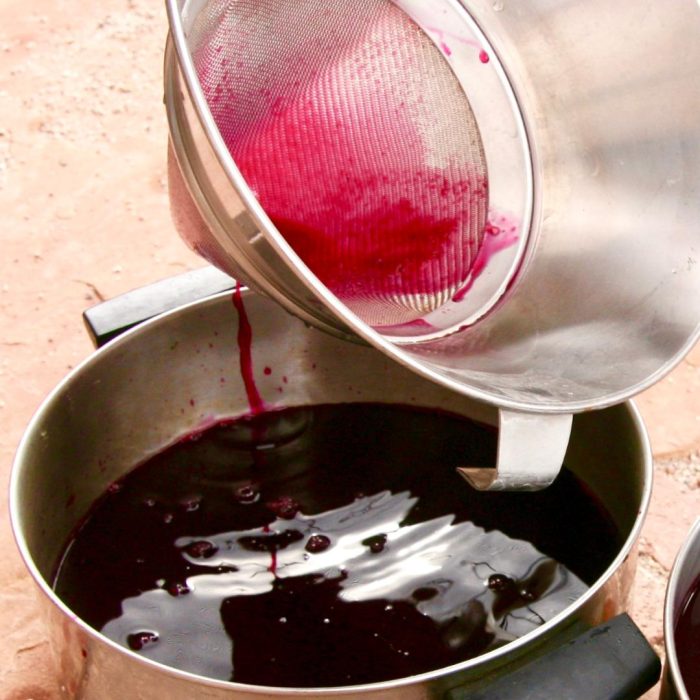
Be sure to strain the liquid through a fine mesh strainer to catch every last glochid (those are the tiny thorns).


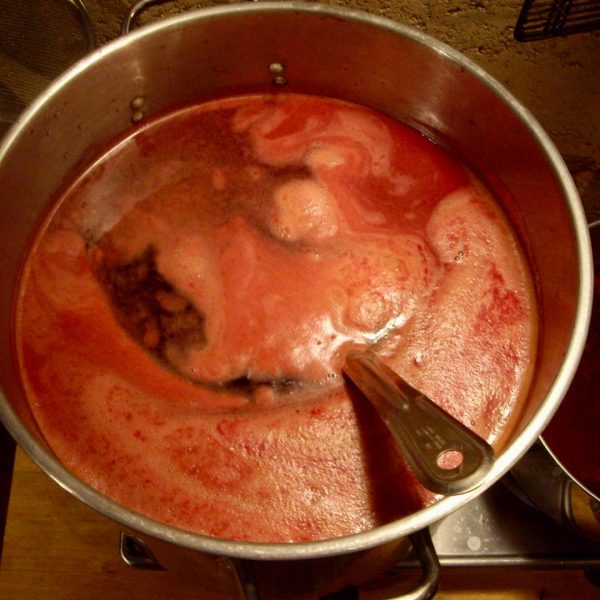
Simmering the juice and broth helps meld the flavors.

SONORAN DESERT BORSCHT

Makes 2 quarts

1 quart fermented, sweet-sour prickly pear fruit juice (see method below)

1 quart broth, strained and chilled (chicken, vegetable, bone, mesquite, or combo, flavored with herbs, alliums, chiles, or whatever you have.)

1 hot boiled potato per serving

Sour cream, crema, yogurt

Combine prickly pear mixture and broth. Simmer with salt, pepper, chile, and your choice of herbs to taste to blend flavors. Chill if serving cold.

To each bowl of borscht add a boiled potato. Garnish with sour cream, and serve with sides of hard-boiled eggs, green onion, and sliced cucumbers.. Borscht turns a gorgeous magenta-pink when the cream is stirred in. Enjoy!

How to ferment prickly pear juice:

Add 1/2 cup of kombucha or whey (liquid strained from yogurt or cheese-making) to 1 quart of prickly pear juice a day or so ahead of making your borscht. Cover with a cloth and taste on occasion. It will develop a sweet-sour flavor as it ferments. When it has that “tang” but still retains some sweetness, it’s ready to use. Sometimes I combine citrus juice with the prickly pear and ferment both. This juice will store in your  fridge for some time, becoming more sour from fermentation. It can also be frozen.

Final step: Serve for lunch. Goes well with other desert delicacies. Find recipes in the Desert Harvesters’ cookbook  Eat Mesquite, a Cookbook for Sonoran Desert Foods.

_______________________________________

You can find more recipes for prickly pear and other wild desert foods  in Eat Mesquite and More: a Cookbook for Sonoran Desert Foods and Living, available at Food Conspiracy Co-op, EXO, Crisol, Mission Garden, Desert Museum, and online at desertharvesters.org. More recipes can be found in Cooking the Wild Southwest: Delicious Recipes for Desert Plants. 

No roll crackers

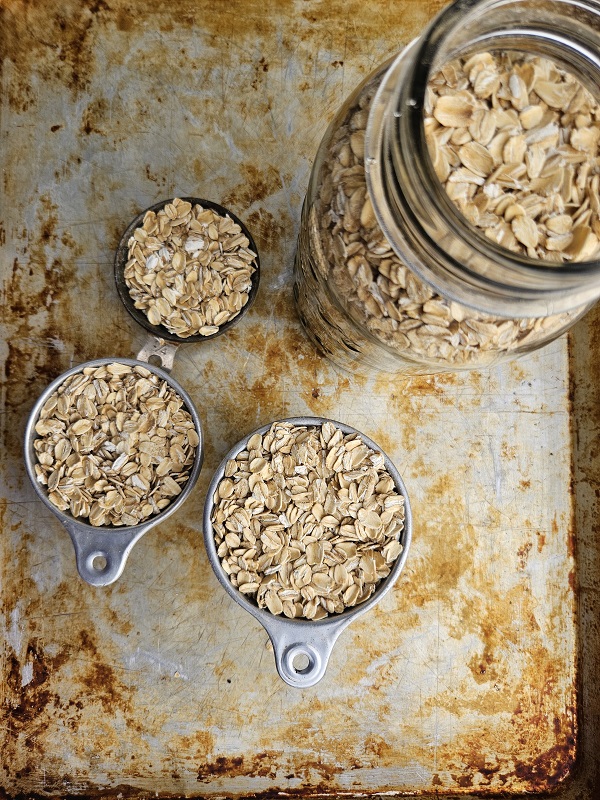
Hi friends, it’s true, crackers without the rolling. Amy here sharing this week’s iteration of this miracle recipe I found online. It all started with an abundance of oats…

A friend gifted me many pounds of organic rolled oats. Searching for inspiration to use them, I found Camilla’s Easy No-Roll Oat Crackers ( vegan, oil free, GF). It is a brilliant recipe that I’ve been making often these last few weeks since I discovered it. Besides oats, they contain seeds or mix of seeds. Sunflower makes particularly good crackers but branching out, I remembered Carolyn’s Black Beauty Wafers using saguaro seed. The seeds are strained out when making a syrup so those are a brilliant way to use the seed.

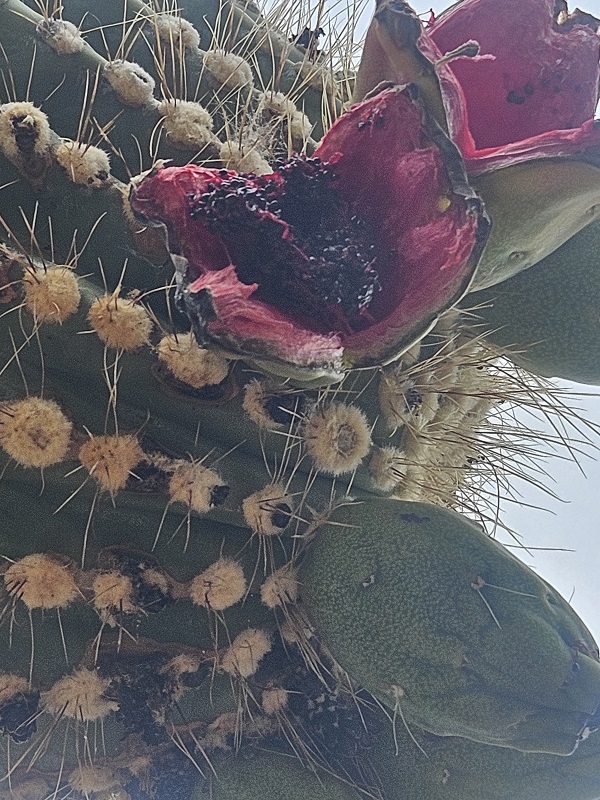
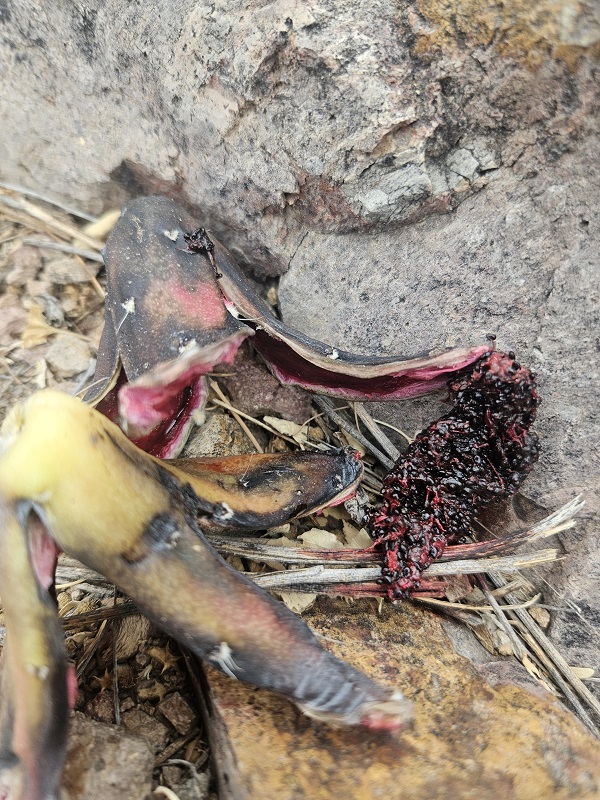
In June, the birds get the first feast of saguaro fruit. If there is more ripening fruit than the birds eat, it falls the ground, often sun dried and intensely concentrated, where I can easily harvest it without poking the plant. No need for a pole!

The ground animals get to feast first before the humans, of course, so we waited. But ripe fruit spoils in the rain, and I would never complain about glorious rain! So this year wasn’t the best saguaro fruit harvest for humans. (below, note the mesquite leaflets for scale)

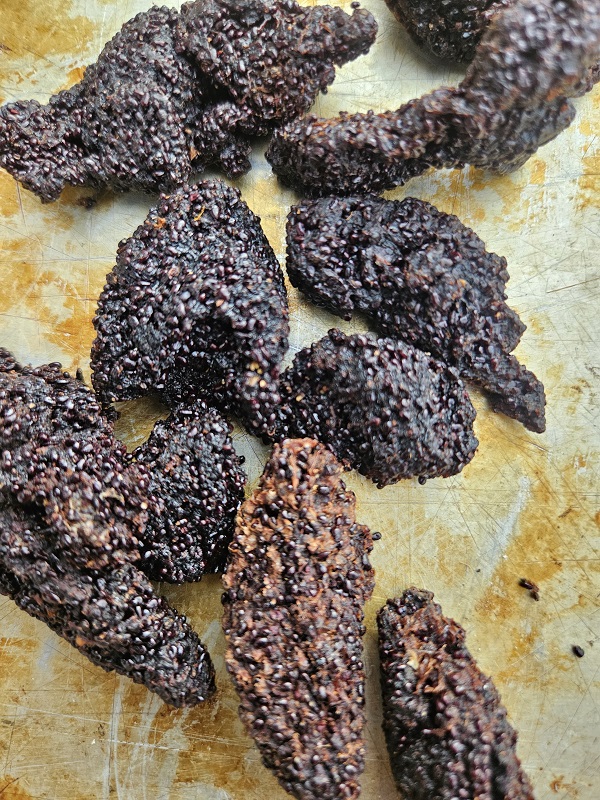
I had some oooold fruit stored in the pantry so I decided to use the whole fruit instead of just the seeds.

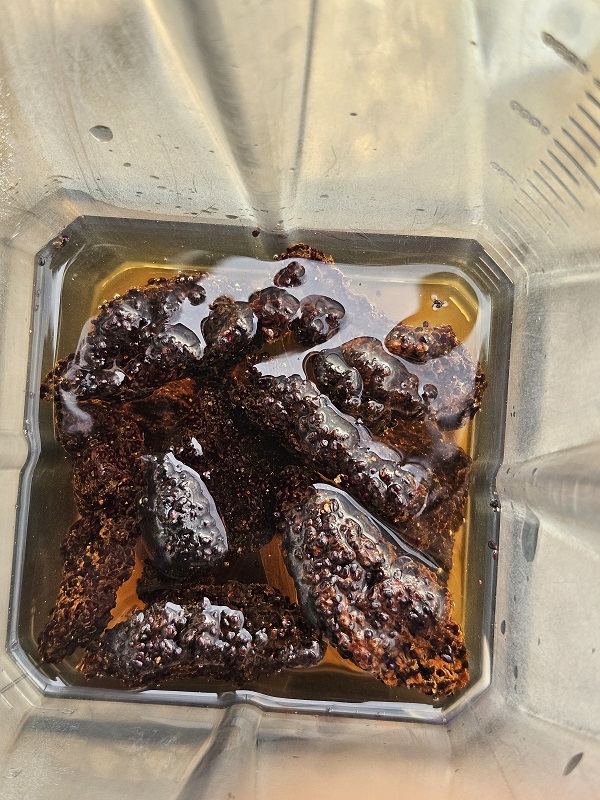
I soaked it in water to soften it.

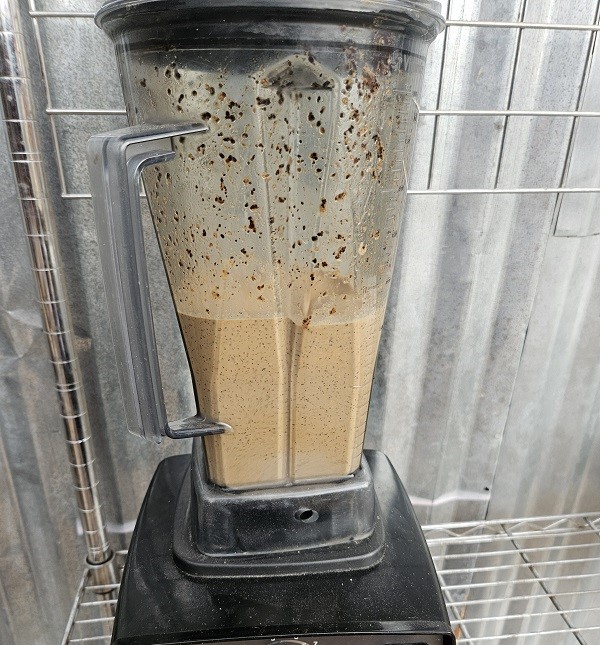
And blended it enough to grind the seeds. Then I added the oats, salt, baking powder and oil.

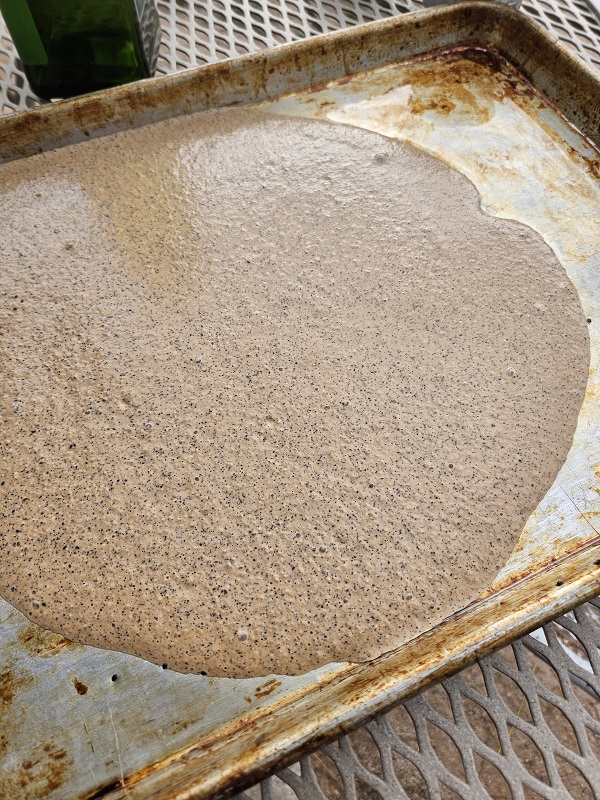
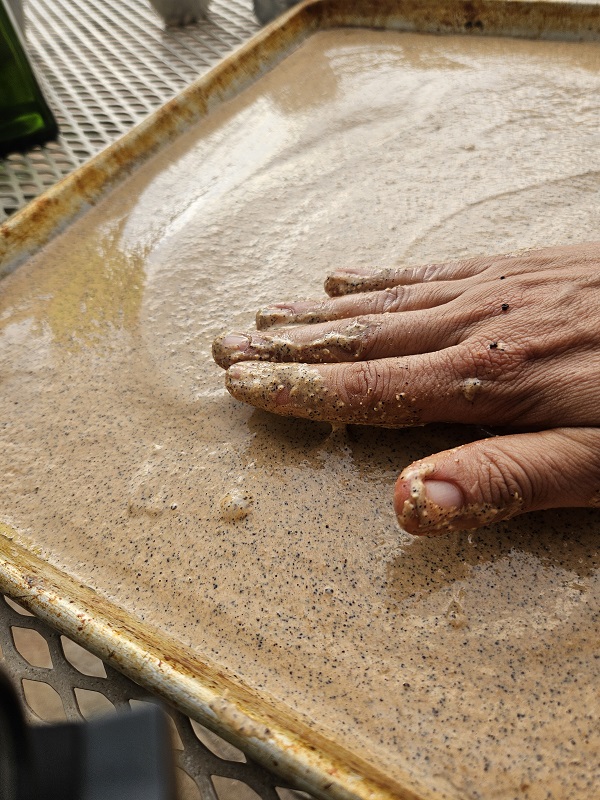
The batter is poured onto a greased half sheet pan (or even a bit larger pan to make crackers just a bit thinner).

Instead of rolling the dough, it just needs to be smooth!

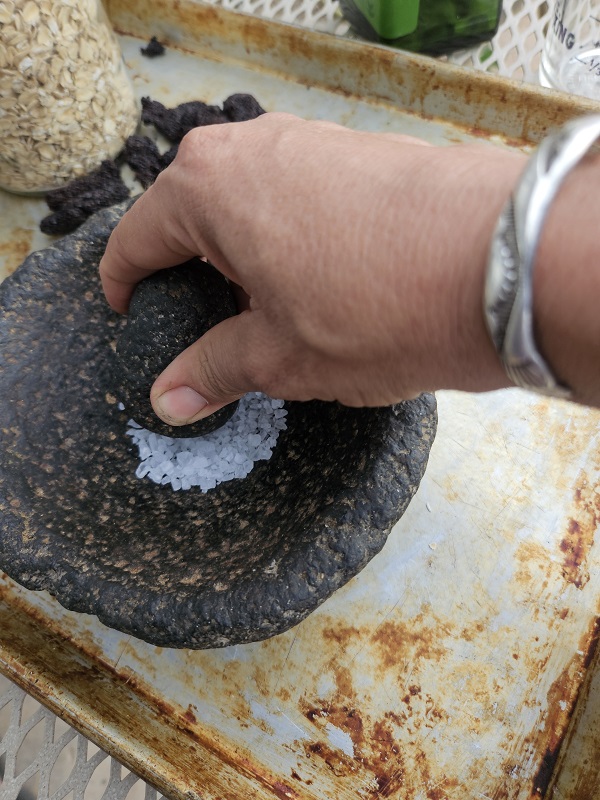
I prefer to add just a touch of salt to the batter so I can sprinkle a decent amount on top. I ground my best Mexican sea salt for this.

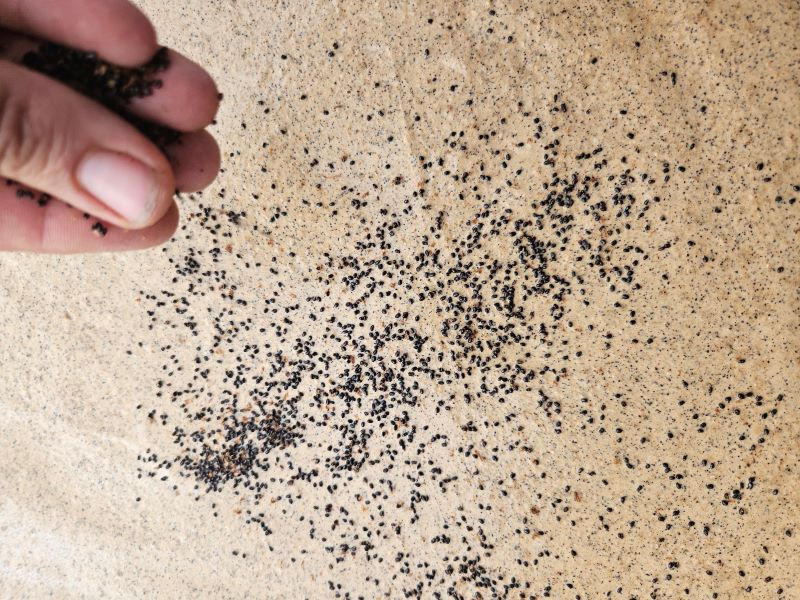
Then I sprinkled with saguaro seed.

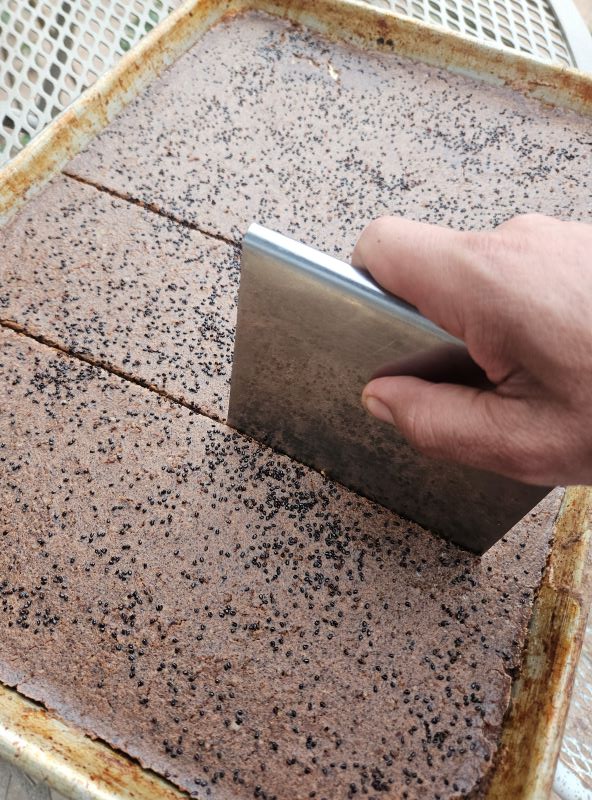
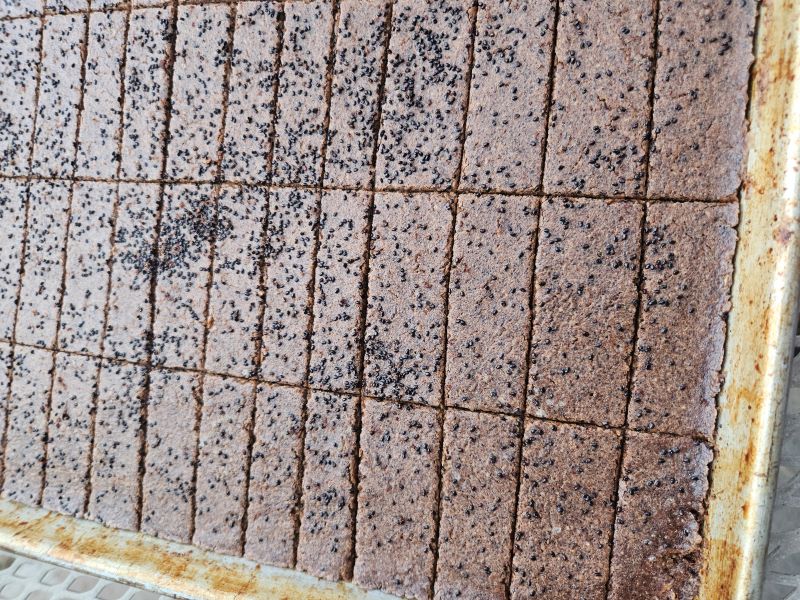
After baking for ten minutes, the crackers can be scored before returning to the oven to finish.

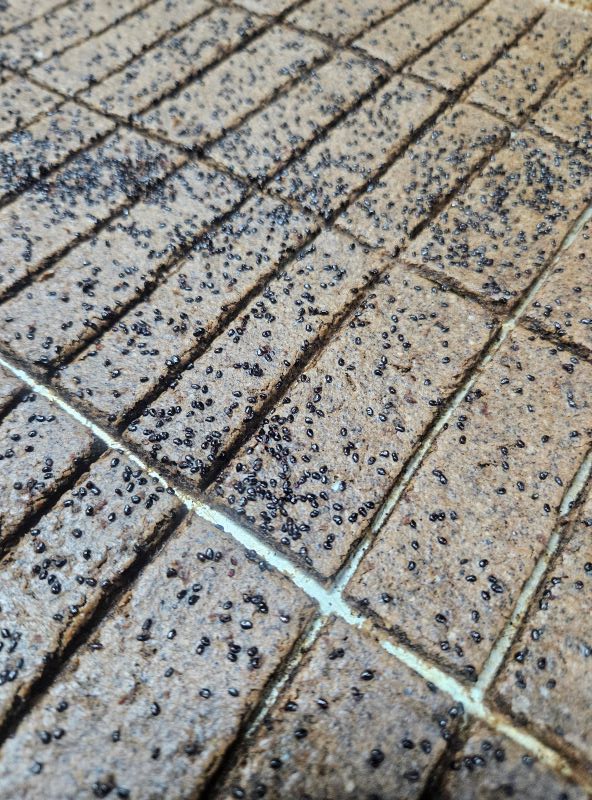
After baking with careful supervision, this batch got darker from the sugar in the saguaro fruit than other batches. A hit of sweetness and delicious! Next time I’ll use a slightly larger yet pan so they are a little thinner. The thinner ones are crispier and more delicate. But think or thin, they are easy to enjoy with spreads, alongside a salad or on their own as a trail snack. Enjoy!
For the recipe, see Camilla’s post on her blog powerhungry.com

Instead of seeds, I added the equivalent weight of dry saguaro fruit. I added a quarter cup of olive oil and reduced the water by that amount. I used approximately 1 teaspoon of coarse sea salt divided between the batter and sprinkled on top with the saguaro seeds. Experiment and have fun!

Marvelous Mulberries–garden dessert in a desert garden

Yummmmm. If you have never tasted a mulberry–or maybe you remember browsing them as a kid back east or in the Midwest–you will be blown away by the glorious mulberry harvest happening right now at Mission Garden!

Tia Marta here tempting your tastebuds for a gentle, natural sweet treat–but…you have to take action SOON. If you’re in southern Arizona, find a hole in your schedule, and a way to get to the base of Tucson’s A-Mountain this week for a mulberry taste-thrill. It will inspire a new planting in your desert home landscape. Three different mulberries await you in Mission Garden’s beautiful and diverse orchards. Come early–summer hours are Wednesday thru Saturday, 8am-noon.
A sumptuous harvest after this wet winter! Look for trees on the Mission Garden grounds that have a big white fabric tarp underneath, and voila! Shake a branch and dive in for a dark, delicious, delicate mulberry, fresh from the tree. The elongated fruit shown here is Pakistani mulberry (Morus alba x rubra), producing like mad even in Tucson’s heat.

Female trees produce fruit. Male, pollen-producing, trees are controversial in Tucson due to allergenic affects. Somewhere out there, there must be male mulberries; none are growing at Mission Garden, yet we have no dearth of fruit.

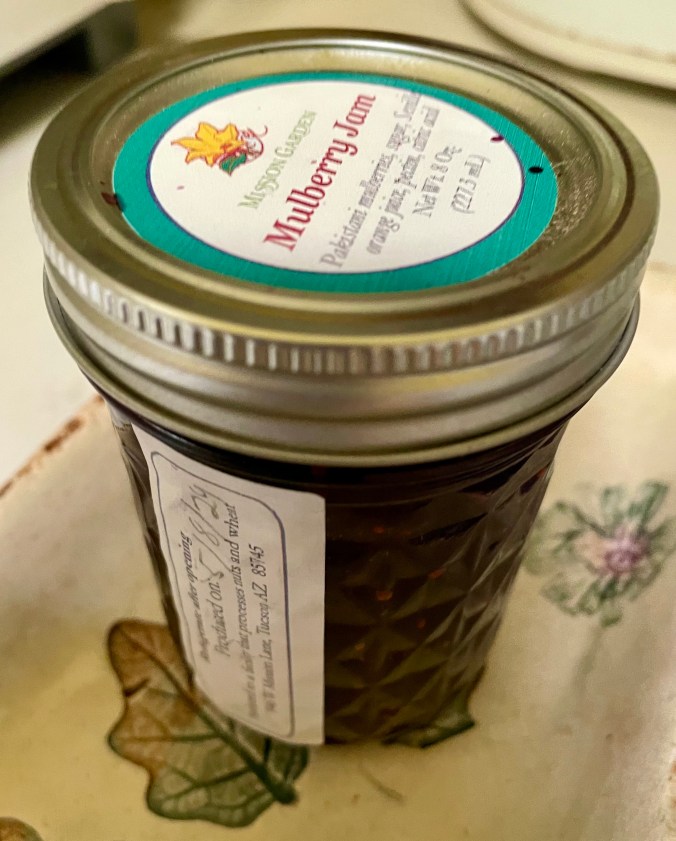
Handmade mulberry jams are going fast at the Mission Garden entrance shop! It’s the best jam you ever tasted, made with love by Mission Garden volunteers in their health-department-certified kitchen. You can’t find local gourmet delicacies like this commercially. The closest thing (like frozen raspberries at a grocer’s freezer?) can’t hold a candle to Mission Garden mulberry jam or sauce! ($8 for the 8oz. jar)

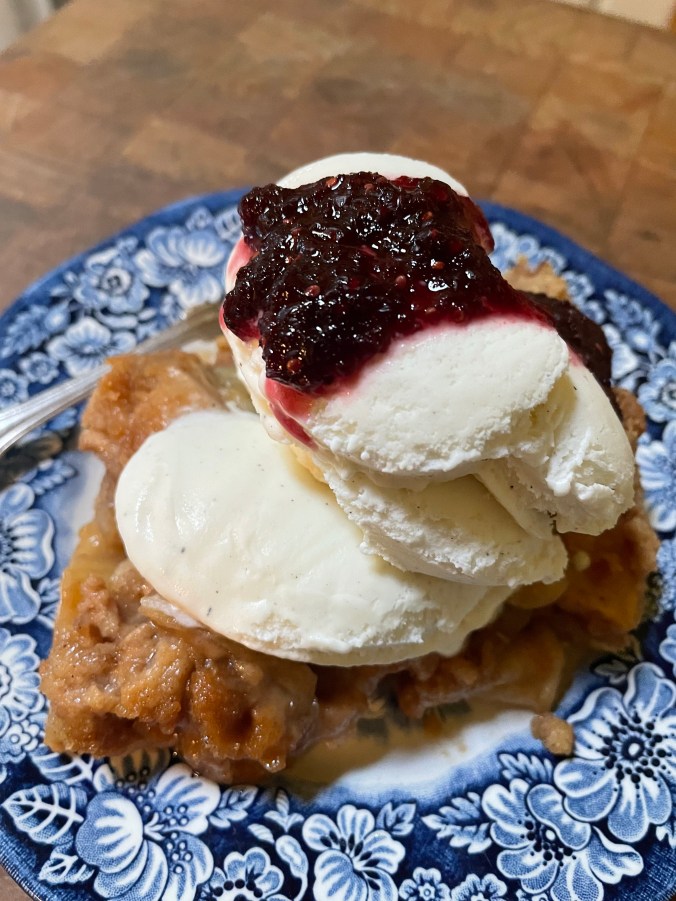
Mulberry jam doubles as a gourmet sauce. My pedestrian apple-brown-betty morphed into a fancy dessert with ala mode topped by a dollup o’ Mission Garden’s mulberry jam. (Mulberry seeds in the sauce are minimal and add a tiny crunch texture.)

As you explore further through the Mission Period huerta (orchard) you’ll find yet another gorgeous green mulberry tree with a totally different color and shape of fruit. (Above, looking up into the foliage, and ripe fruit adjacent) This is white mulberry (Morus alba) with a pale pink or lavender color, and a flavor some people describe as “watermelon” or “lingonberry” or “cloud berry.” So juicy you can’t stop….

A big surprise is to learn that we have a NATIVE mulberry “bush” in the arid Southwest–the wild, small-leafed mulberry tree (Morus microphylla). It’s inspiring to know it is adapted to our Sonoran Desert, only needing a little extra water; it grows close to arroyos out in Nature. This may be one of those amazing plants that may help provide food for us in a hotter, drier future…

Each little wild mulberry is a zap of sweet nutrition, packed with healthy complex sugars, dietary fiber, beta carotines, vitamin C and iron.

I can hardly wait until Mission Garden is propagating cuttings of all these several amazing mulberry species. Already I’m figuring where I can plant them in my yard. Whatever we can’t harvest each season will be a gift for the birds!

This coming SATURDAY, MAY 18, is SAN YSIDRO FIESTA, Mission Garden’s celebration of the traditional pilkan harvest (heirloom wheat harvest). I’ve been playing with recipes using these heirloom grains pairing them with mulberries, but I HAD to relay this timely mulberry story for you ASAP, so you could get to Mission Garden this week to jump through this narrow “mulberry window” of opportunity.

Tia Marta hoping to see you at San Ysidro Fiesta Saturday–or sooner, browsing a mulberry tree this week!

Savory Wolfberry Amaranth Balls

Hello friends, Amy here enjoying another great year for the wolfberry bush (Lycium fremontii …I think) in my yard. Tucson’s native species of the Chinese goji berry, they are similarly packed with antioxidants and health benefits. In the tomato family, it’s called tomatillo in Spanish, not to be confused in size, shape, color or taste to the garden variety of husked ground cherries that go by that name. Wolfberries taste somewhat like tomatoes and work well in sweet and savory dishes, when I manage to harvest more than I eat raw from the bush. Thriving on only rainwater, one huge plant produces plenty of fruit for me and the resident phainopeplas.

Inspired by this recipe for millet balls, I used fresh wolfberries in place of dried Turkish barberries.

It was delicious! It reminded me of falafel, crispy on the outside and grainy on the inside. A simple cilantro, garlic, lemon juice, olive oil chutney complimented them perfectly.

So the next time, I decided to use amaranth seeds. I bought this from the store, but you can harvest your own from wild or cultivated plants in the late summer if you’re ambitious.

I toasted them in oil until they became a shade darker and a few of them popped open.

I added water, three times the volume of amaranth seed, and cooked in the solar oven until it was creamy. Then I mixed in fresh wolfberries and enough flour to make a soft dough.

The dough was muuuuch stickier, so I added significantly more flour than for the millet balls and still they looked shaggy. (I used all purpose wheat flour but next time will try amaranth flour).

The toasted flavor came though and I’m glad the only seasoning I used was salt and wolfberries. The dough certainly didn’t need any egg or flax egg to hold together! They baked up just as well as the millet version, but with the texture of a cookie. Next I’ll try them sweetened!

I served them with a lemon pickle but that tomatillo salsa would be good. I took the rest to a picnic among the wildflowers. Happy spring!

processed by AtomJPEG 1.5.0n

50 Years Exploring Wild Foods of the Southwest

It’s Carolyn here today with a walk down memory lane. This year celebrates 50 years since the first publication of my first book American Indian Food and Lore, now republished as American Indian Cooking: Recipes from the Southwest. In 1970, I was a young out-of-work journalist and through an unlikely set of circumstances ended up with a contract for a book on Indian cooking with Macmillan, a major New York publisher. Preliminary research showed that traditional Native American food revolved around edible wild plants and corn, beans, and squash.

My college science was zoology so I had a lot to learn about edible plants. I began by reading every ethnobotany written about Southwestern plants. I found mentors to take me on plant walks, including the late renowned botanist Richard Felger. When I knew enough to ask intelligent questions, I headed out to talk to the experts, Native American women. My first teachers were two lovely Tohono O’odham women on the San Xavier section of the reservation who spent an afternoon teaching me to cook mesquite the way their mothers had. I put the leftovers in the backseat of my car and had a head-on collision on a narrow dirt road on the way home. Woke up in the hospital with mesquite mush in my hair.

Here I am in 1971 trying to learn to distinguish one little green plant from another.

Perhaps that was some sort of christening, so for $150 I bought a Chevy wagon and the summer of 1971, I headed to remote areas on the Hopi, Navajo, Zuni, Havasupai, and Pueblo reservations. Many very generous middle-aged Native women taught me about plants they had gathered with their grandmothers. I worked in an office that winter to gather some money and headed out again the summer of 1972.

Finding a communal grinding stone at Hawikuh (founded c. 1400) near the Zuni Reservation. Imagine the women sitting around the stone doing food preparation.

Then it was time to test the recipes when I had them and develop recipes when necessary. A friend lent me an electric typewriter (such a luxury), and I wrote up what I had learned. A small grant allowed me to pay Jenean Thomson to do the gorgeous and accurate line drawings of the plants.

Jenean Thomson’s ocotillo illustration.

The book was “in press” for two years and was released by MacMillan in 1974. Euell Gibbons had published several well-known books on edible wild plants, but they were all Eastern species. American Indian Food and Lore joined a very few popular books on edible Western plants. Sunset Magazine even came and did an article on my wild food gathering class. Writer and ethnobotanist Gary Nabhan joined me, and one year we did a class we privately called Gary and Carri’s Thorny Foods Review.

After two decades, with changes in ownership, Macmillan decided the book didn’t fit their line, but the University of Nebraska Press liked it. In 1999, they republished the book under their Bison Books line as American Indian Cooking: Recipes from the Southwest with a lovely new cover.

I have followed this title with four more books on Southwestern food, but my first foray into cookbooks with the all the memories I have doing the research remains a high point of my life.

Here is one of the original recipes taught to me by a Navajo cook.

Navajo Griddle Cakes

(Makes 14 4-inch cakes)

Although this calls for lamb’s-quarter seeds, you can substitute amaranth, quinoa, chia, or sunflower seeds.

¾ cup ground lamb’s-quarter seeds

¾ cup whole wheat flour

2 tablespoons sugar or honey

½ teaspoon salt

1 teaspoon baking powder

1 egg

2 cups milk

2 tablespoons oil or bacon drippings.

Combine dry ingredients in a bowl. In another bowl beat together egg, milk, and fat and add to dry ingredients. Heat the griddle and add a small amount of oil. Test the griddle by letting a few drops of cold water fall on it. If the water bounces and sputters, the griddle is ready to use. Bake the pancakes.

__________________________________

Note from SavorSisterTiaMarta:  If you want to find other fascinating, flavorful, and from-the-earth Indigenous recipes that were gifted to Carolyn 50 years ago and which she published in American Indian Food and Lore, you can chase down used book copies via Thriftbooks, Amazonbooks and other sites.  This first book is a treasure trove of totally useful, current ideas!