Prickly Pear Peach Sherbet

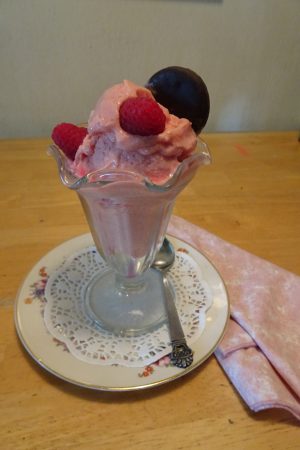
Combine prickly pear, peaches, and honey for a delicious and healthy homemade sherbet.

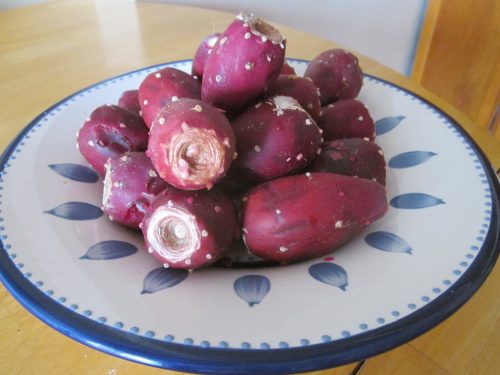
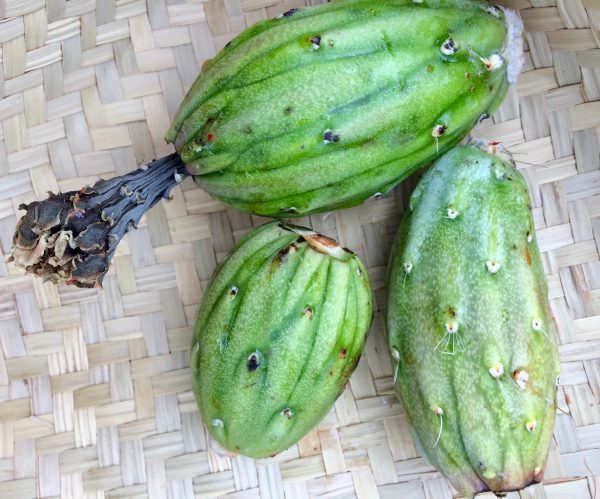
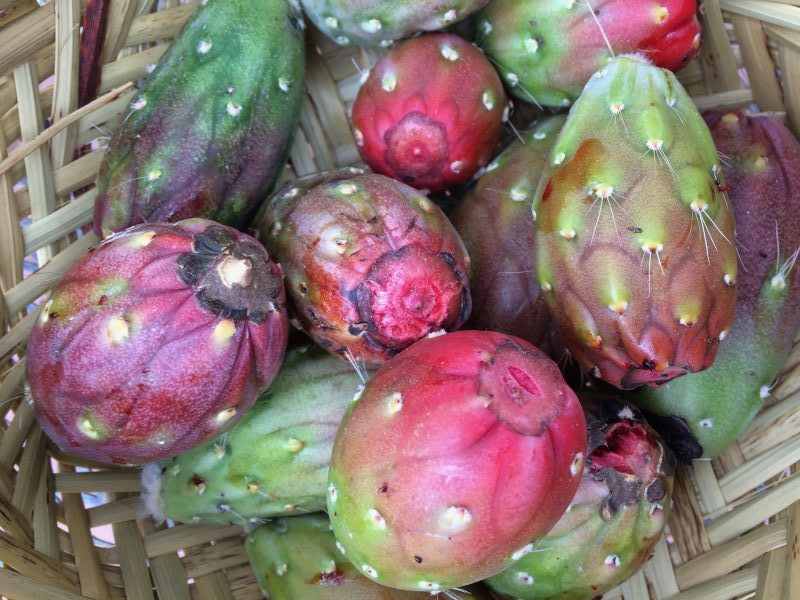
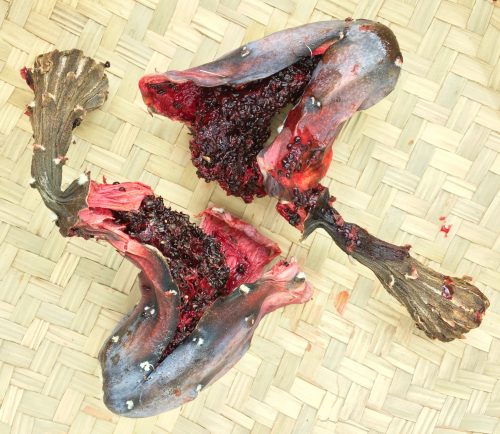
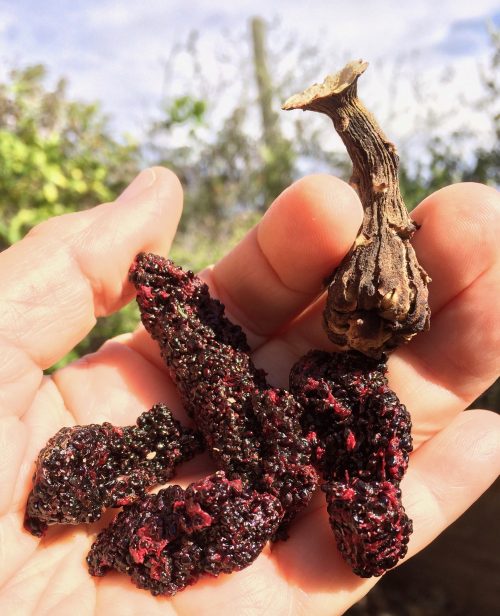
It was a relatively wet spring in the Southwest this year, at least in the Sonoran Desert. This has made for a bounty of prickly pears. Once you’ve picked and juiced them, then what? There’s always prickly pear margaritas, prickly pear lemonade, and prickly pear jelly. But why not expand? Since it is still pretty warm throughout the fall, frozen desserts are a good place to start. Combining prickly pear juice with the luscious ripe stone fruits of the season is a good way to combine flavors.

Making your own frozen desserts is easy and healthy-nothing but fruit, honey, and cream. No weird emulsifiers or gums.

No need to peel or dethorn the prickly pear fruits. Make your juice with this easy recipe, then on to the sherbet.


Easy Prickly Pear Juice

Using tongs, collect 18-24 prickly pears. Wearing rubber gloves, rinse fruit and quarter. Working in batches, puree fruit in a blender. You’ll need to add a little water to get the first batch started. Strain through a fine mesh strainer and discard solids. The thorns will get caught in the strainer.

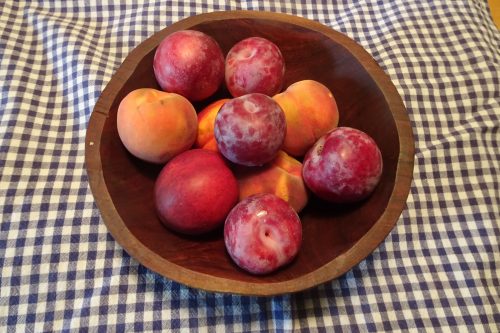
Although this recipe calls for peaches, any ripe stone fruits will do. Plums and apricots combine deliciously with prickly pear.

Prickly Pear Honey Sherbet

3 medium very ripe peaches, peeled

2 ½ cups prickly pear juice

½ cup honey

3 tablespoons lemon juice

½ cup whipping cream or half and half

Slice peaches. Combine with 1 cup of the prickly pear juice in a medium saucepan. Simmer over low heat for 5 minutes. Add honey and cook gently, stirring until honey is dissolved.  Transfer the mixture with the remaining 1 ½  cups prickly pear juice to a blender. If you have an ice cream maker, also add the whipping cream. Refrigerate until chilled and then transfer to an ice cream maker.

If you don’t have an ice cream maker, transfer to a bowl and freeze until nearly hard. Break up and beat with an electric mixer. Beat whipping cream until stiff and fold into the fruit mixture. Refreeze until hard.

We Savor Sisters love to write about prickly pear. Find more posts here where Amy writes about an upside down cake and where I write about a cocktail made with prickly pear juice.

Need more prickly pear recipes? You’ll find them in my Prickly Pear Cookbook in the Native Seeds/SEARCH store, in National Parks stores, or on Amazon. It includes 60 recipes for cocktails, salads, barbecue sauces, main dishes, and desserts including not just the fruit but the cactus pads (nopales) as well. Even more recipes in Cooking the Wild Southwest, Delicious Recipes for Desert Plants.

Magical Cereal-ism this Week in Baja Arizona

An important conference focused on ancient heirloom grains is about to happen this week at University of Arizona.  All cerealists are invited!–and that means any of us who love baking and cooking with our local white Sonora wheat, Pima Club wheat, quinoa, kamut, and other heritage grains.

It’s the Heritage Grain Forum — Tuesday and Wednesday, September 3 and 4, 2019.  In the words of organizer Dr. Gary Paul Nabhan, it will “celebrate grain-shed advances in the Santa Cruz river valley & the rest of the West.”

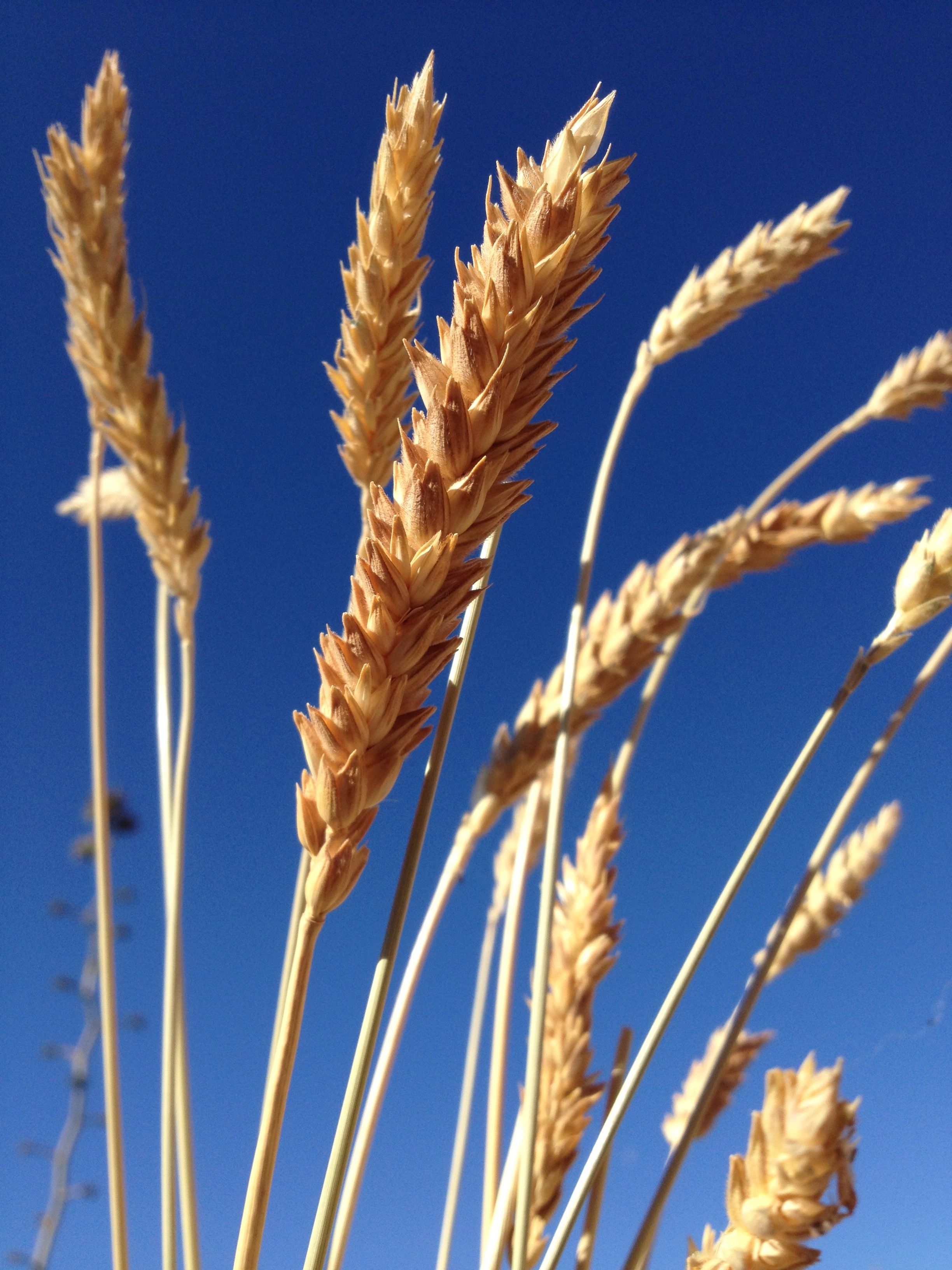
Padre Kino’s White Sonora Wheat, grown organically by BKWFarms, Marana.  Wheatberries available at NativeSeedsSEARCH store.  A new crop will be grown again and viewable at MissionGarden, Tucson, this winter and harvested at their San Isidro Feast in May. (photo MABurgess)

The upcoming conference meets at UA Building ENR2 (1064 E Lowell Street on UA campus just north of 6th Street) in the Haury Auditorium.   For anyone interested in hearing some of the mover-shaker-foodies who helped make the UNESCO City of Gastronomy designation happen for Tucson, come meet them:

Tuesday Sept 3, 4:00-5:30 pm for a lecture on their book Grain by Grain by authors Bob Quinn & Liz Carlisle, with bread + cracker tastings.

Then on Wednesday Sept 4: 8:30am-12:00 noon you can participate in talks + roundtables led by Vanessa Bechtol (SCVNHA), Joy Hought (NSS), Don Guerra (BarrioBread),Jeff Zimmerman (HaydenFlourMills), Ramona & Terry Button (Ramona Farms), Gary Nabhan (author, UA SW Center),  & others, with commentaries by Quinn & Carlisle + more tastings!

I’m excited to meet these amazing Cerealists!

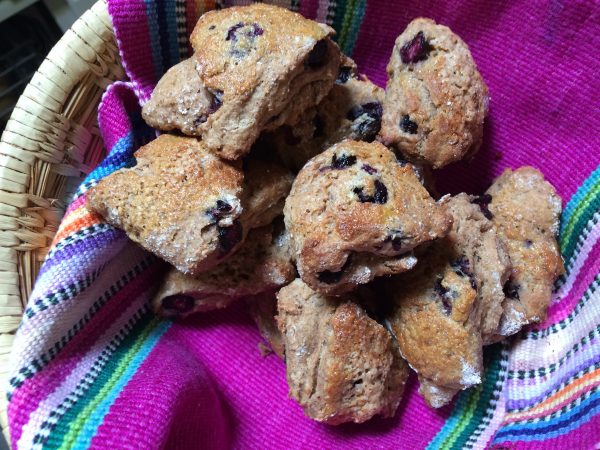
Muff’s heirloom grain scones made with white Sonora wheat, Ramona Farms roasted O’las Pilkan Chui (Pima Club wheat), and wild blueberries.  These are really rich and nutritious, made with eggs and cream in addition to our local heirloom flours and fruits.

Getting in the heirloom grain mood–and fortified with fruits picked up on recent travels–I dived into baking scones using local flours.  Here are my recipe variations on scones in honor of the event:

Muff’s Date Scones (or Wild Berry Scones) Recipe:

Preheat oven to 450 degreesF (A solar oven might work on a very clear day at noon hours, but not today).

In large bowl, sift together:   1 1/2 cups fresh-milled white Sonora wheat flour (or kamut flour, or einkorn)

1/4 cup Ramona Farms Pilkan Haak Chu’i (roasted Pima Club O’las Pilkan) flour

2 1/4 tsp baking powder

1 Tbsp sugar

1 tsp sea salt

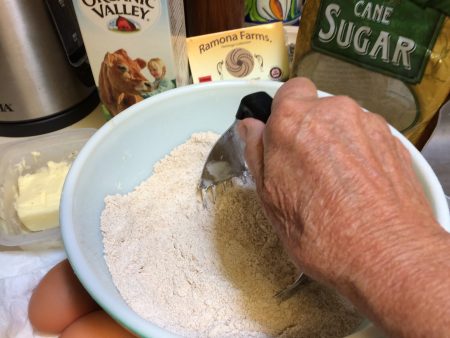
Organic eggs, organic mild, Ramona’s roasted heirloom wheat, and raw organic sugar assembled for scone-making. Cut in cold butter into golden white Sonora Wheat mixture.

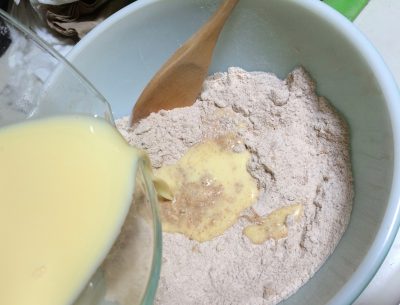
Make a well in the dry ingredients then pour in wet ingredient mixture. Stir minimally to make dough with few strokes.

Cut into dry ingredients with 2 knives or pastry cutter:   1/4 Cup cold butter

In a separate bowl, beat, and reserve 2 tablespoons for glaze:    2 eggs  

Add to beaten eggs:    1/2 cup cream (or milk)

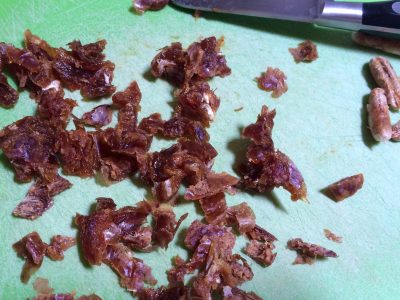
Chop (optional) fruit– (suggestions:  local dry dates, wild hackberries, wild blueberries)

I chose a dry date (Khadrawy, but Medjool is perfect too) because it is easy to chop into discrete pieces which stay visible and taste-able in your scone!

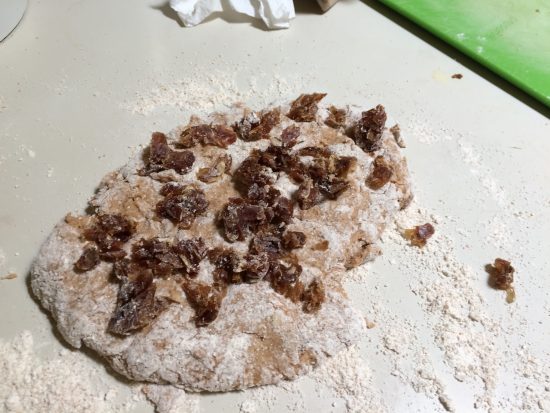
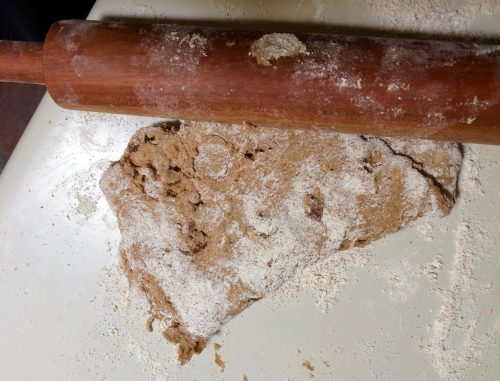
Pat out dough on floured board, then place chopped fruit or berries on the dough layer, ready to be folded over.

Make a dry-ingredient “well” and pour in liquid ingredients.  Mix with short, quick strokes.  Less handling the better.  Place dough on floured board.  Pat dough to 3/4 inch thick.

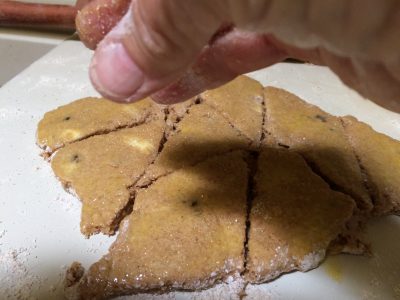
Place optional fruit on 1/2 dough then fold dough over once or more.  Lightly roll over each fold with rolling pin.  Cut into diamond shapes and fold if desired.

Fold dough over chopped fruit or berries a few times, rolling very lightly over each fold. (A Light touch is key! Don’t overdo.)

Brush with reserved beaten egg.  Sprinkle with raw sugar grains.

Onto pressed scone dough brush egg “glaze” and sprinkle with raw sugar (or mesquite meal if you are a desert-purist).

Bake about 15 minutes.

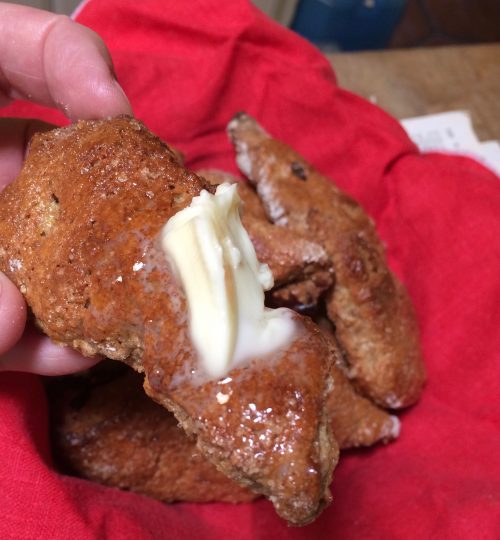
Piping hot with butter–Muff’s date scones made with Ramona Farms roasted O’las Pilkan Chui (Pima Club wheat flour roasted), kamut flour, and chopped Dateland dates.  Who needs clotted cream or lemon curd when it tastes so good already?

Most of these heirloom ingredients–grown in Arizona–may be purchased ready to use at the NativeSeedsSEARCH store (3061 N Campbell Ave, Tucson).  Small trial size packets of heirloom grain with informative labels are available there provided by Flor de Mayo.

Enjoy the rich flavor and nutrition of our heirloom grains– and their stories!  Maybe see you at the conference?…

[Search with keyword “white Sonora” or “wheat” in the search-box at top of this blog page for many other fabulous heirloom grain recipes!]


Chad’s Sky Island Spice Company

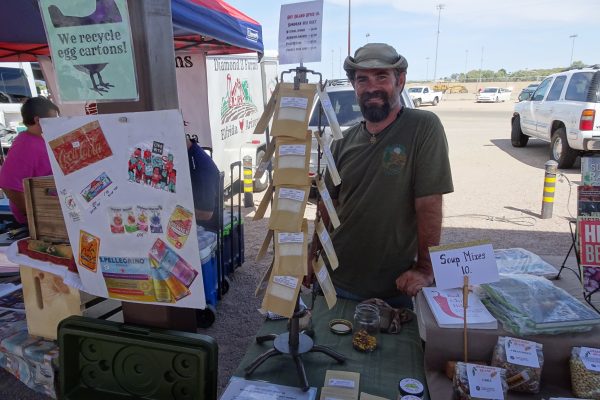
Chad Borseth sells his wild-crafted products from his website and at farmers’ markets.

Chad Borseth grew up in rural Southern Arizona, roaming the hills, learning about the plants, picking up clues to what was edible, such as mesquite and Emory acorns. This past January, he started Sky Island Spice Company to introduce others to some of the flavors unique to the Sonoran Desert.  It’s Carolyn here today to introduce you to another of the small entrepreneurs who are sharing their knowledge and enthusiasm for local desert products.

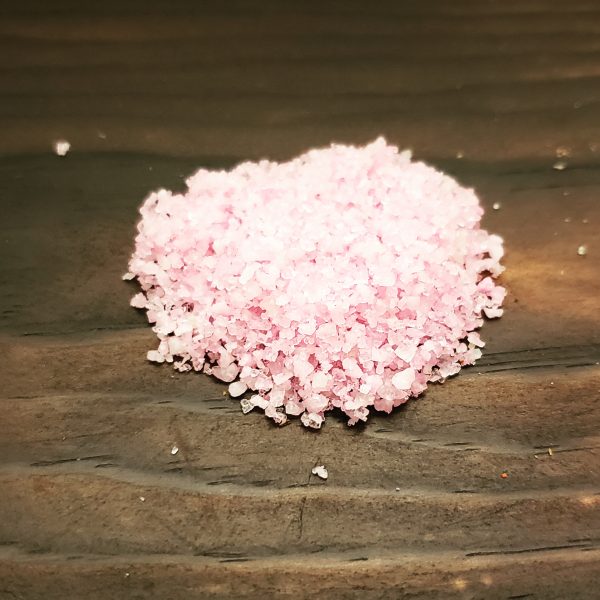
One of Chad’s products is solar-evaporated Sonoran Sea Salt. “It’s got a unique blend of minerals,” he says, “and lower sodium. But it’s high in magnesium and potassium. It also has a different mouthfeel.”  People who like to rim their margarita glasses with salt, will go for his  prickly pear and lime salt.

The solar-evaporated salt from the Sea of Cortez is infused with prickly pear juice and lime juice.

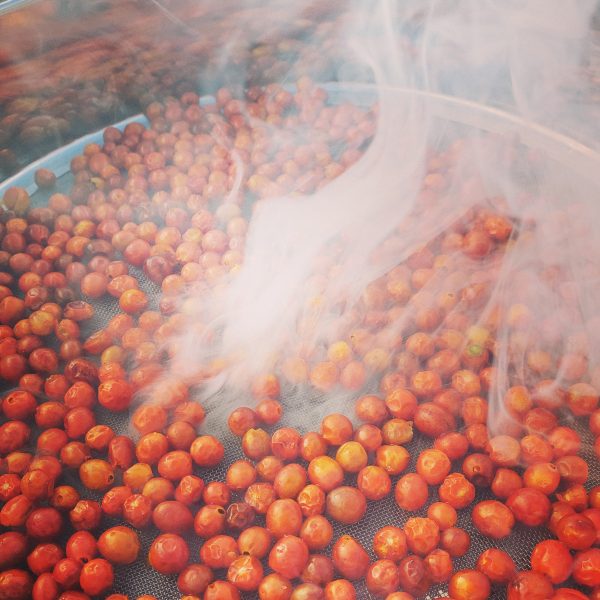
Because of the nature of wild supplies (that would be Mother Nature), Chad’s stock varies with the season. Through the year he will have granola made with acorns and mesquite, hot cocoa mix made with cacao and powdered mushrooms, and something he calls “nopaliditos,” salt-cured nopal or prickly pear pads. They are reminiscent of the saladitos beloved of Tucson kids. He adds flavor to our native chiltepines by smoking them over mesquite. Chad doesn’t confine himself to the desert; summer finds him in the pine forests looking for mushrooms and plants that grow in the higher altitudes. (No worries about the mushrooms–they are for his own use. The mushrooms in his products come from reliable commercial sources.)

Fiery hot chiltepines picking up flavor over mesquite coals.

Those with adventurous palates who are willing to be surprised (pleasantly), can sign up for the Sky Island Spice Company subscription box. At this point, Chad is limiting the subscriptions to just fifteen customers. Every month they will receive a box of three special items not in the regular stock. That might include such items as cookies or wildflower tea. The July box included syrup made from manzanita blossoms.

You can find Chad’s products on the web at Sky Island Spice Company or on Facebook.

Here’s an easy recipe to use Chad’s smoked chiltepins. It is from my cookbook Cooking the Wild Southwest: Delicious Recipes for Desert Plants. The combination of chile and chocolate is a favorite of mine and adding the smokiness of both the smoked chiltepins and the chipotle chiles adds a sophisticated taste. Of course, you can add the chiles to your own homemade ice cream, but if time is short, a good quality commercial ice cream works fine.

Easy Chocolate-Chile Ice Cream

1/2 gallon commercial chocolate ice cream

1/4 to 1/2 teaspoon dried and crushed chiltepins, seeds removed

1/2 teaspoon ground chipotle chiles

Transfer the ice cream from the carton in large clumps and transfer to a flat baking pan to soften evenly. (If you try to soften it in the carton, the outside will get too soft while the inside stays hard.)

Meanwhile, crush the chiltepins in a small mortar, removing the seeds. Sprinkle the crushed chiltepins and the ground chipotle chiles over the ice cream and stir to combine. Repack into the carton or transfer into a bowl and refreeze.

__________________________________

Carolyn Niethammer writes about the foods and people of the Southwest. She has just completed a book on why Tucson was named a UNESCO City of Gastronomy. It will be published by the University of Arizona Press in the fall of 2020. Find her books on her website.

Beat the Heat with Mesquite Treats!

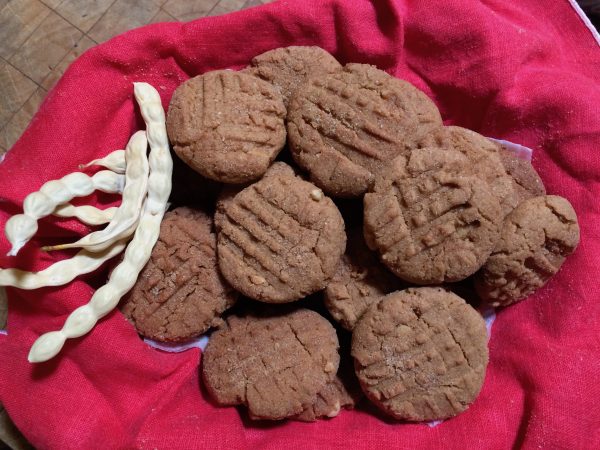
Naturally sweet solar-oven baked mesquite peanut butter cookies are easy and fun! (MABurgess photo)

It’s blasting HOT outside!  Dry mesquite pods are rattling and falling off the trees!  It’s mesquite harvest time–so gather them quick before they take on any monsoon moisture.

Even in this heat my sweetie wants a dessert and can’t stand store-bought stuff.  OK, I got the solar oven out preheating in the sun.  I’ll bake some old time peanut butter cookies this time with a Southwestern twist–with mesquite!  (And, we’ll keep the heat out of the kitchen.)

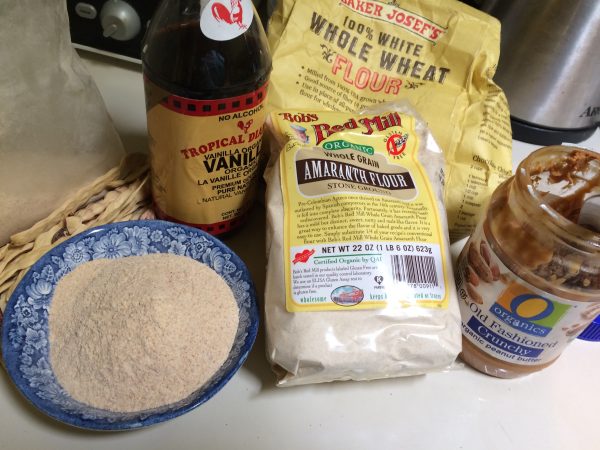
For mesquite peanut butter cookies, in addition to mesquite meal you’ll need:  butter, brown sugar, vanilla, flour, baking soda, chunky peanut butter, and honey. Amaranth flour is a great option available at Safeway, Sprouts, WholeFoods, and NaturalGrocers.

Add crunchy peanut butter to creamed butter/honey/brown sugar, beat in egg and vanilla….Then stir in sifted flour mixture to make cookie dough….

Tia Marta here to share a quick and easy mesquite cookie recipe.  No problem–If you don’t mill your own mesquite pods you can find fresh LOCAL mesquite meal at the NativeSeedsSEARCH store .


MUFF’S MESQUITE PEANUT BUTTER COOKIE RECIPE:

Preheat solar oven (or indoor oven) to 375 degreesF.

Beat until creamy:  1/2 cup butter, 1/3 cup local honey, and 1/2 cup brown sugar.

Beat in:  1 egg, 1/2 – 3/4 cup chunky organic peanut butter,1 tsp vanilla

Sift together:  1 cup whole wheat flour and 1/4-1/2 cup mesquite meal (optional–substitute 1/4 cup amaranth flour for 1/4 cup of other flour), 1/2 tsp sea salt, 1/2 tsp baking soda

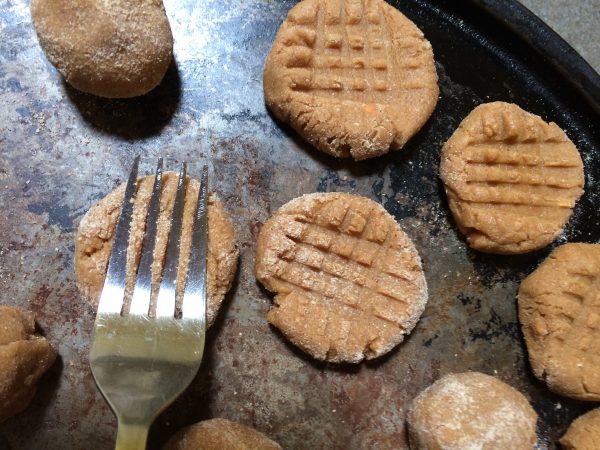
Stir dry ingredients into moist ingredients for dough.  Roll dough into 1″ balls.  Put on cookie sheet and press with fork. (see photo–Who knows where these traditional patterns come from?  Different cultures have different patterns for peanut butter.  Rombauer’s Joy of Cooking shows a linear pattern from her German tradition.)

Bake:  about 12minutes in conventional oven OR about 20 minutes in solar oven–until done.

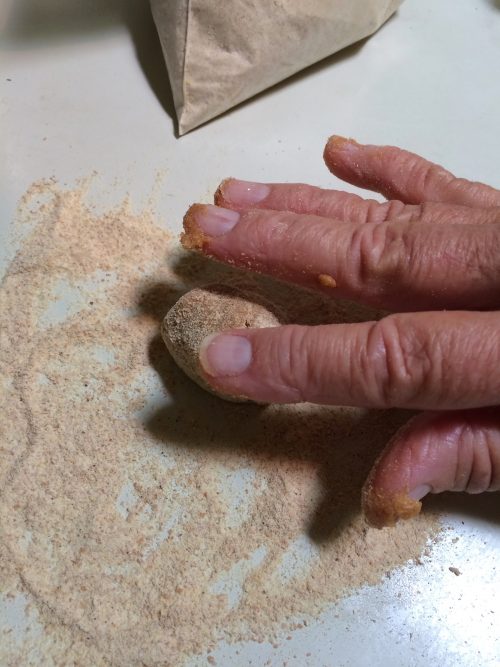
Make small balls of cookie dough and roll each in mesquite meal….

On cookie sheet, press each ball of dusted cookie dough with fork in criss-cross pattern….ready to bake….

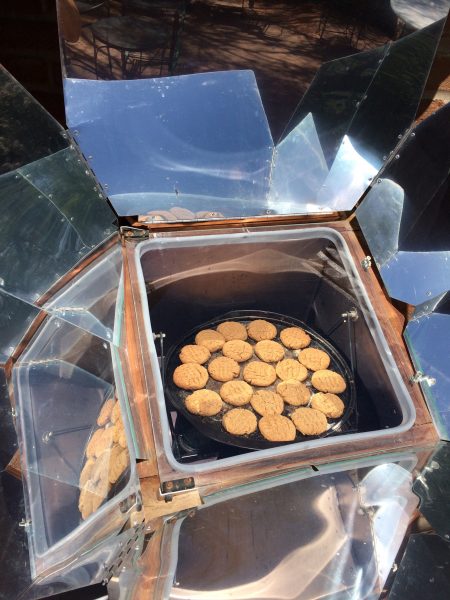
Preheat solar oven to around 350-375 degrees, then bake about 20 minutes (depending on the sun’s intensity) or until done. The sweet bouquet of cookie-bliss will let you know they are ready! (MABurgess photo)

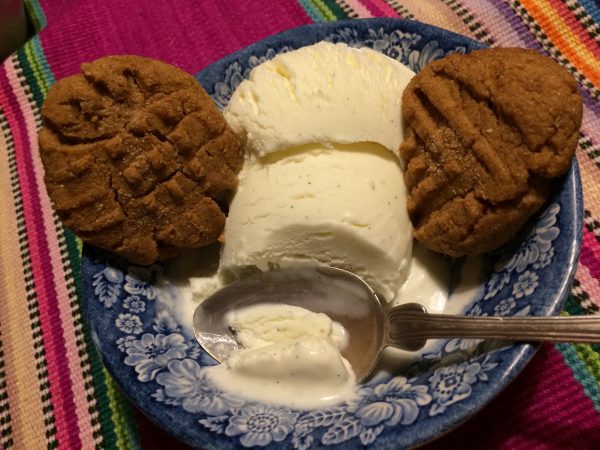
My “serving suggestion” is to enjoy mesquite peanut butter cookies any time–especially with GOV (good old vanilla) ice cream or an ice-cold glass of tea on a hot day! (MABurgess)

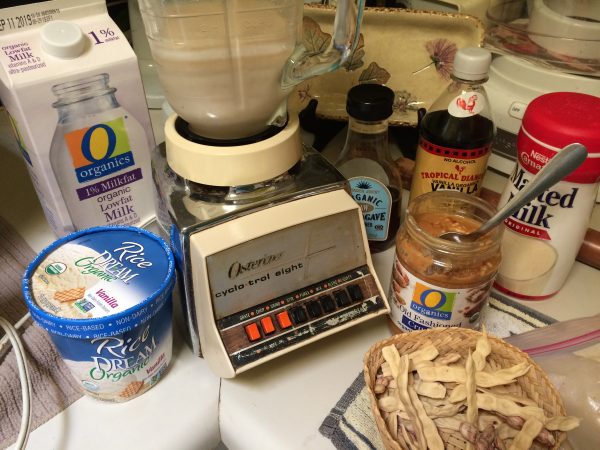
Now here’s another quickie cool and refreshing mesquite treat, if you don’t have time to bake, but using similar ingredients.  It’s a Mesquite Peanut Butter Malted Milkshake— ready in a jiffy:

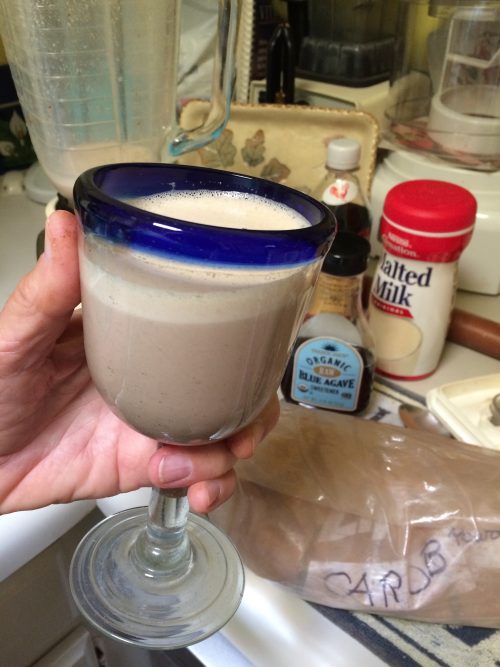
For a fast cool-down treat, blender up a mesquite peanut butter malted milkshake! You’ll have a meal-in-a-glass in no time–full of complex carbs, calcium, protein, and renewal! (MABurgess photo)

Muff’s Mesquite Peanut Butter Milkshake RECIPE:

In blender mix:

2 cups 1% organic milk (or optional rice, almond or soy milk OR frozen RiceDream)

1 Tbsp. mesquite meal

1/4 cup organic agave “nectar” or syrup

1/2 cup organic chunky peanut butter

2 tsp vanilla extract (or 1 Tbsp Mexican vanilla)

1 Tbsp Carnation dry malted milk (optional)

a few chunks of ice

Blender the mix until frothy and serve in chilled glass.  Enjoy the rich nutrition and sweet refreshment of this mesquite meal-in-a-glass!

Carob powder is ground from the pods of a Near-Eastern bean tree, like an Eastern “sister” of mesquite with many similar nutritional components.  For a super-tasty cool shake that satisfies all the food groups (except chocolate!) and helps chill a summer day, add 1/4 cup carob powder to your blender mix.

Add carob as you blender your mesquite peanut butter shake and voila you’re transported into the gourmet snack dimension! (MABurgess photo)

Check out the Iskashitaa Refugee Network to see if they have carob available currently.  And find wonderful local mesquite flour ready for cooking at NativeSeedsSEARCH, (3061 N. Campbell Avenue, Tucson; 520-622-5561), along with great mesquite recipe books by DesertHarvesters.org.   Find Freddie Terry, the Singing Beekeeper, with superior local honey at the Rillito Park Farmers Market Sundays.  To order your own Solar Oven, check out www.flordemayoarts.com or contact 520-907-9471 to locate good used solar ovens.

Let’s adapt to heat with these low-tech tools, desert foods, and recipes.  Enjoy the monsoons and happy eating with local mesquite!


Raspados-A Sonoran Summer Treat

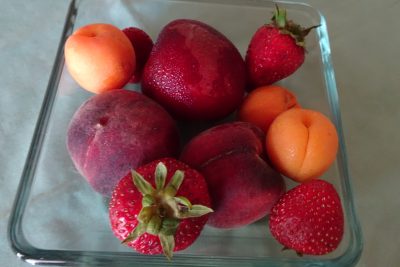
                  Summer fruit perfect for a raspado.

We’re heading into deep summer here in Southern Arizona. Days typically top 100 degrees. It’s perfect time for a raspado.  Raspados are sweet, creamy, fruity, sometimes a little salty, and always very cold. They are a cross between a Snow Cone, a slushie, and a fruit sundae. Perfect to cool you down from the inside out on a Tucson summer day. Since there is usually plenty of fruit, you could call it lunch.

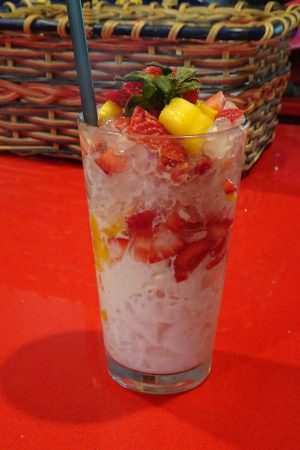
A raspado from a shop that puts the ice cream on top with fruit layered between crushed ice.

The raspados that hail from Sonora are found throughout Southern Arizona and other spots where Mexican culture florishes. Similar treats appear throughout the tropical world, differing in detail from country to country.

The typical prep steps of the Sonoran style raspados are simple,  but they vary from shop to shop. In general, it is a layer of shaved or finely crushed ice, then fruit in syrup,  then the layers are repeated. A topping of  sweetened condensed milk trickles down. Canned Mexican crema can be used instead of the condensed milk. Sometimes vanilla ice cream is the final layer. Or the ice cream could be added halfway up. Typical fruits are fresh strawberries or peaches. Go tropical with mango, coconut, or pineapple. Then there can be nuts or chile in some form. If you followed Tia Marta’s suggestion for gathering saguaro fruit, you could add some of that for a special regional flavor.

My raspado with the ice cream in the middle, and more fruit on top.

The fancier raspados called Macedonias include several fruits and more creaminess.  Obviously, you’ll have to explore for yourself! Be bold with the flavors. There’s no way you can go wrong.

____________________________________

Carolyn Niethammer has been writing about ancient and modern foods of the Southwest for forty years. You can see her books at her website. She has a new book coming out (Fall 2020) on the 10,000 years of food history of the Santa Cruz Valley that is the basis for why Tucson was named the UNESCO World City of Gastronomy.


Sonoran Desert New Year Greetings!

Saguaro fruit is ripe and ready to harvest by many desert creatures. The traditional Tohono O’odham Bahidaj–the saguaro harvest and the rain ceremonies that are an integral part–herald our true New Year in Baja Arizona! (MABurgess photo)

It has been a scorching few days since San Juan’s Day in the Sonoran Desert.  But even in the heat and blistering sun there is such productivity, such life in hopes of rain.  Tia Marta here relishing our beautiful Bahidaj-time–saguaro harvest time–with coyotes, white-wing doves, ant people and a zillion other desert creatures!  So many depend on the delectable, nutritious fruits of our admired Giant Saguaro Cactus.  The Tohono O’odham– original Desert People of the Arizona-Sonora borderlands–traditionally depended upon the Giant Saguaro, hasañ, for more than food.  The Hasañ Bahidaj helps bring the rain!  A spiritual leader recently shared with us that one community still carries on their tradition of using saguaro “wine” in the ceremony to pray for monsoon rains to bless us.  Our thanks go out to those keepers of tradition–May our prayers join with yours!

Saguaro fruits as yet unopened and still green may not be ready to collect. Wait a few more days until they develop the “blush.” (MABurgess photo)

Ripe saguaro fruits perfect for collecting are still closed with a luscious rosy color or “blush” to them! (MABurgess photo)

He told us the new year begins when the rains come and “wash away our old footprints.”

So…Happy New Year greetings to all of you fellow desert residents….when the rains come!….

Meanwhile until then, may we enjoy the bounty of Bahidaj fruit that is provided!  Head out in the coolth of early morning with a long kuipaD (collecting pole) and bucket.  Know your fruit and be choosy so not to waste any of its goodness.  Here are some vivid photographic hints.

Saguaro fruit open showing the glorious inner fruit and rind.  At this stage fruit can still be harvestable for making syrup. (MABurgess photo)

Use your thumb to scoop out the mass of sweet pulp and seeds.  (MABurgess photo)

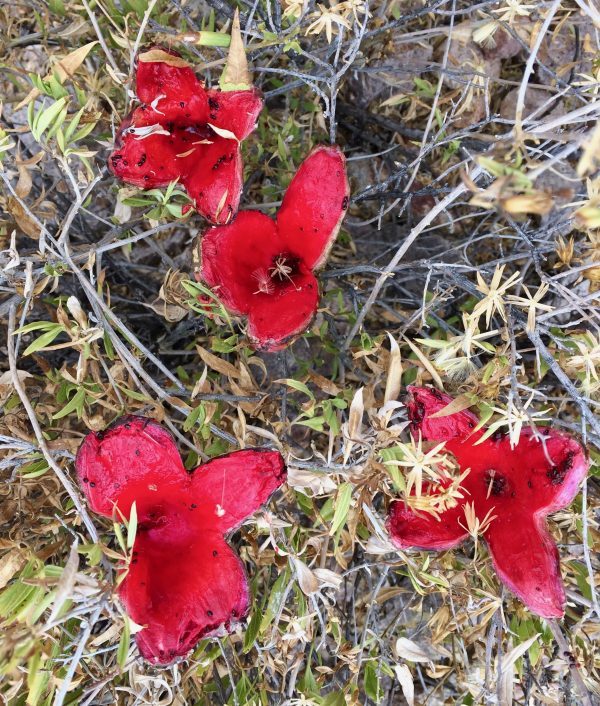
The Desert Museum often would get calls from newcomers asking about the “red flowers” on the giant cactus at this time of year.  If they looked closer they would see that it is the husk being the siren of color inviting birds who might assist spreading seed.

At your fingertips in this SavortheSouthwest blog, you can find clear instructions how to prepare saguaro syrup, how to dry Chuñ in a solar oven, and other delicious recipe ideas in our previous posts about Saguaro Season.  Blog sister Carolyn Niethammer’s book Cooking the Wild Southwest is also a great source.   Go for it, enjoy the sweet taste of summer and keep up this long and important tradition of Bahidaj–and add your prayers of thanksgiving.


Count yourself lucky if you find totally dried fruit still in the husk! This is Chuñ, the dried sweet fruit, storable or immediately edible, and better than any energy bar. (MABurgess photo)

Bahidaj Chuñ–dry saguaro fruit–is like candy, one of the finest of desert treats! (MABurgess photo)

With this post I would like to celebrate and acknowledge the life of an amazing traditional harvester, Stella Tucker, who passed in January of this year.  Her lovely daughter Tenisha now is “carrying the baton” or shall we say “carrying the kuipaD” for the family and their community traditions at the Bahidaj camp.  Tenisha is great grand niece of my dear friend and mentor Juanita Ahil, prima desert harvester, who taught us all so much about wild desert foods.

Juanita, and Stella after her, always instructed young harvesters to place the empty husks on the ground near the generous saguaro, facing up to the sky, asking for rain…. I hope they are watching. (MABurgess photo)

You can read more about Stella Tucker in the Edible Baja Arizona magazine archive www.ediblebajaarizona.com July/August 2017 issue.  There is a beautiful tribute to Stella by Kimi Eisele in the AZ Daily Star.

Our own noted Tucson photographer Peter Kresan, was a good friend of Juanita Ahil and documented her harvesting saguaro fruit in beautiful images which he has donated to the Himdag Ki Tohono O’odham Cultural Center in Topawa, AZ.

When harvesting may we always be conscious of the creatures who depend on them for survival and limit our “take”!  It is comforting to know that many of the fruits atop saguaros are well beyond human reach, up there for our feathered and many-legged neighbors.  Be sure always to get permission from any landowner before you harvest.  The Arizona Native Plant Law protects all parts of cacti and succulents except fruit.  Many public lands provide permission for harvesting for personal use–not for commercial purposes–but it is up to the gatherer to know what land you are on and to obtain the right permits.  National Parks and Monuments are off-limits to harvesting by the public; we had to jump through countless government hoops to obtain permits for Juanita’s family to harvest on her own traditional grounds after it became Saguaro National Monument!

My little pot of luscious fruit is cooking at this very moment in my solar oven.  I look forward to hearing from you through my website and send a New Year’s wish from Flor de Mayo–May your harvest be bountiful and may it help bring on good monsoon moisture to the desert!

“Yellow Moon” leads to…..Sweet Pea Harvest-Time!

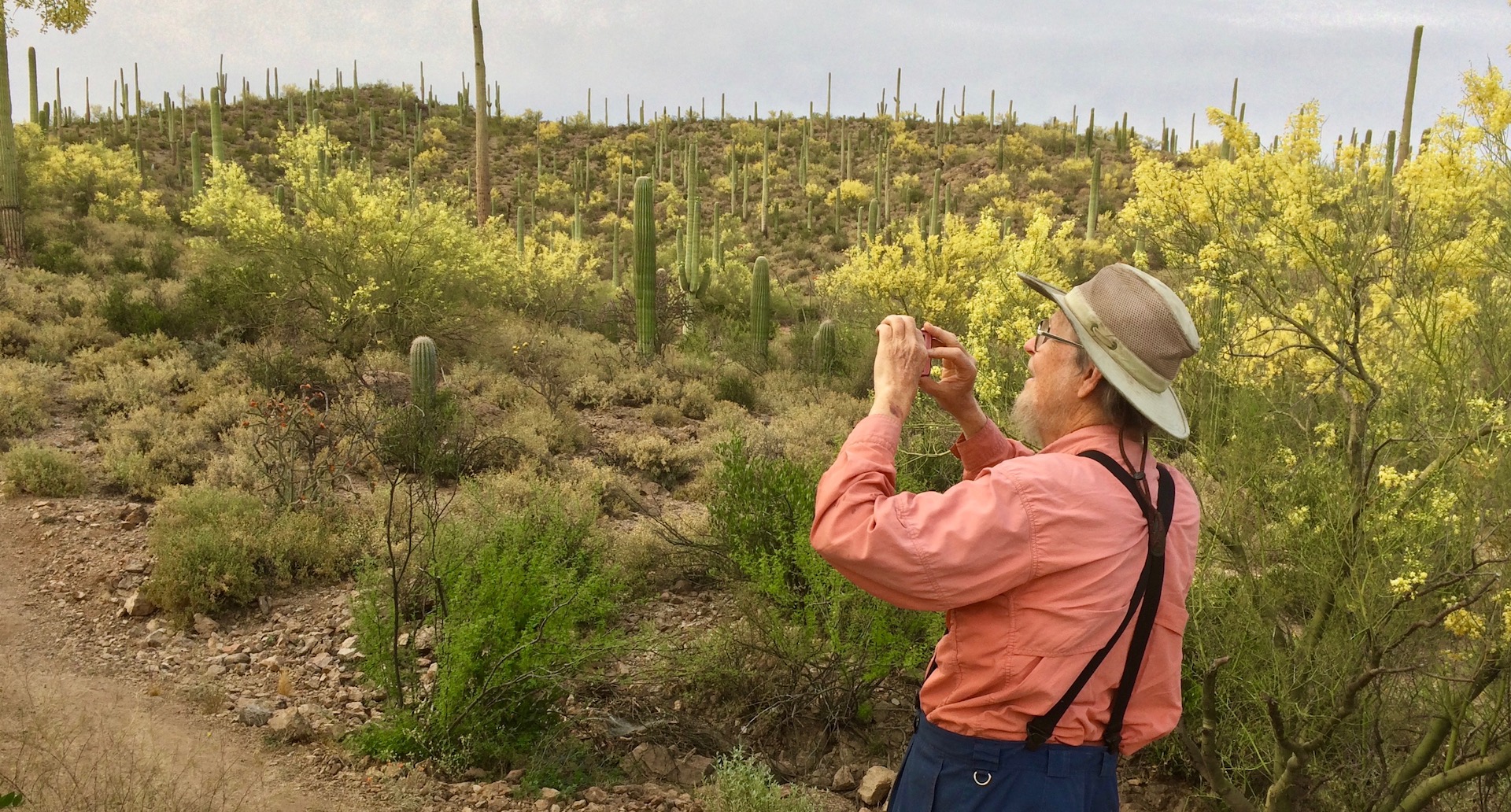
Desert ecologist Dr. Tony Burgess enjoying the glow of Oam Mashad — “Yellow Moon” in Tohono O’odham is the lunar cycle or “month” when so many desert plants are blooming yellow.

illustration palo verde post June7,2019

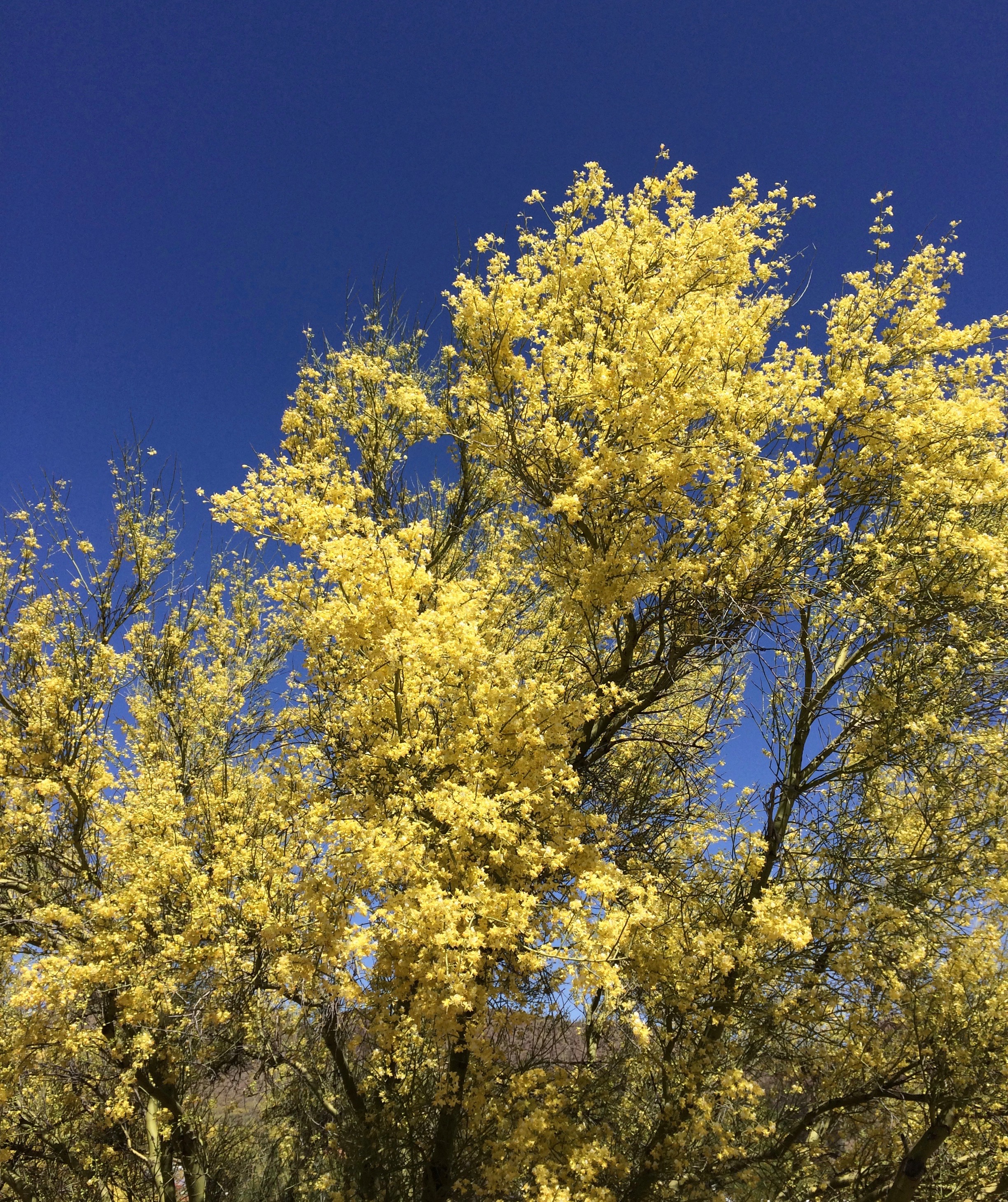
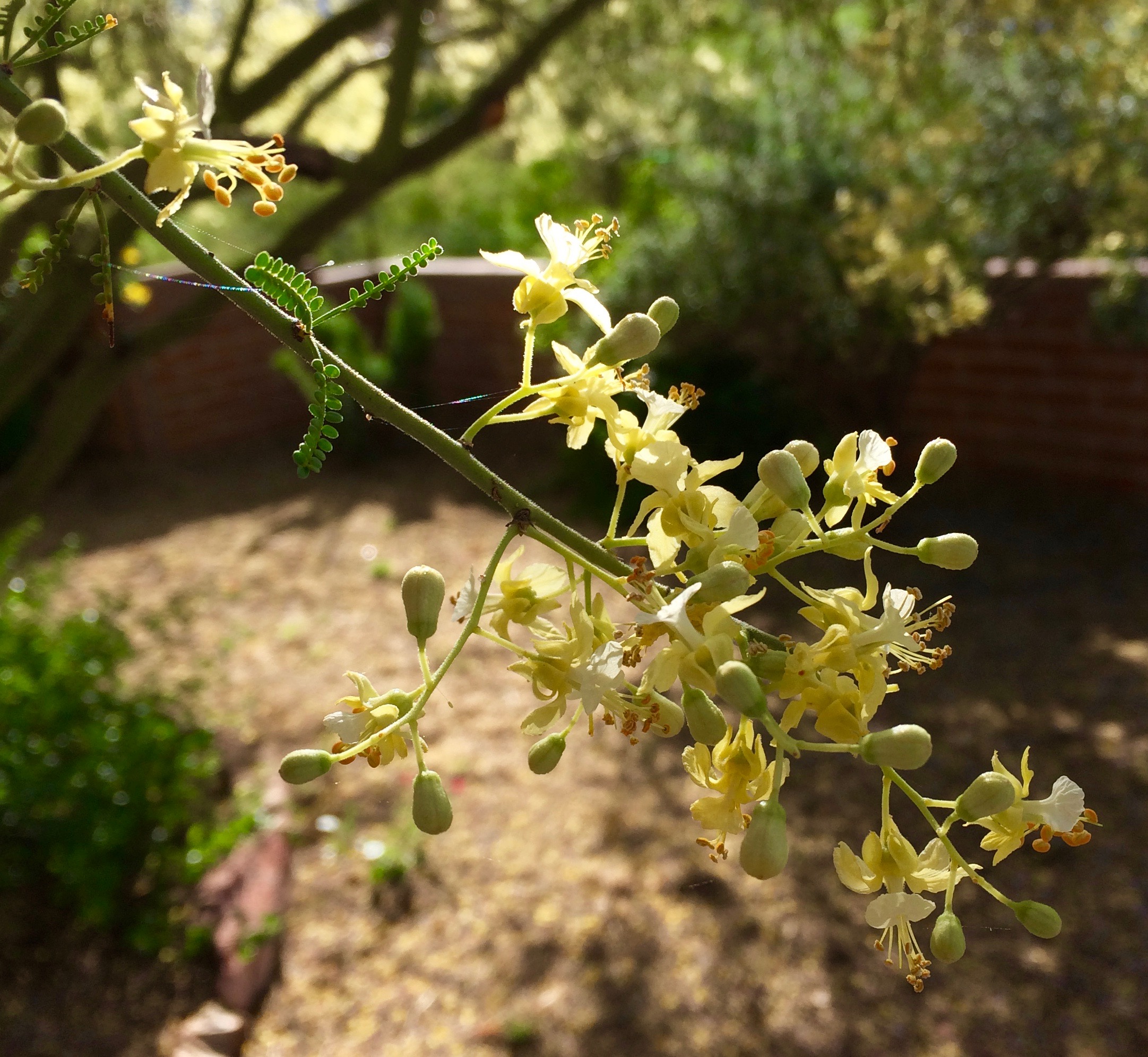
Massive bloom of foothills palo verde (Parkinsonia microphylla), in spring 2019, extended beyond the normal Oam Mashad, making it the longest lasting and dense-est flowering in botanical memory! (MABurgess photo)

THIS WEEK in early June is a narrow window of opportunity–one of those Manna-from-Heaven moments we are blessed with in our colorful and productive Sonoran Desert.  Tia Marta here, encouraging you to get out into the desert right away to enjoy this pulse of plenty!  What an experience it is, eating fresh sweet peas right off a tree! No fuss. No kitchen cooking.  It’s an easy outdoor treat that grandparents, little kids, even overactive entrepreneurs can all enjoy, along with our feathered and four-legged neighbors.

To ID our most directly-edible and flavorful bean-tree–the foothills, one of many palo verde species–note close-up that the top petal of its butterfly-shaped pea flower is WHITE, and its pinnate leaflets are teensy. (MABurgess photo)

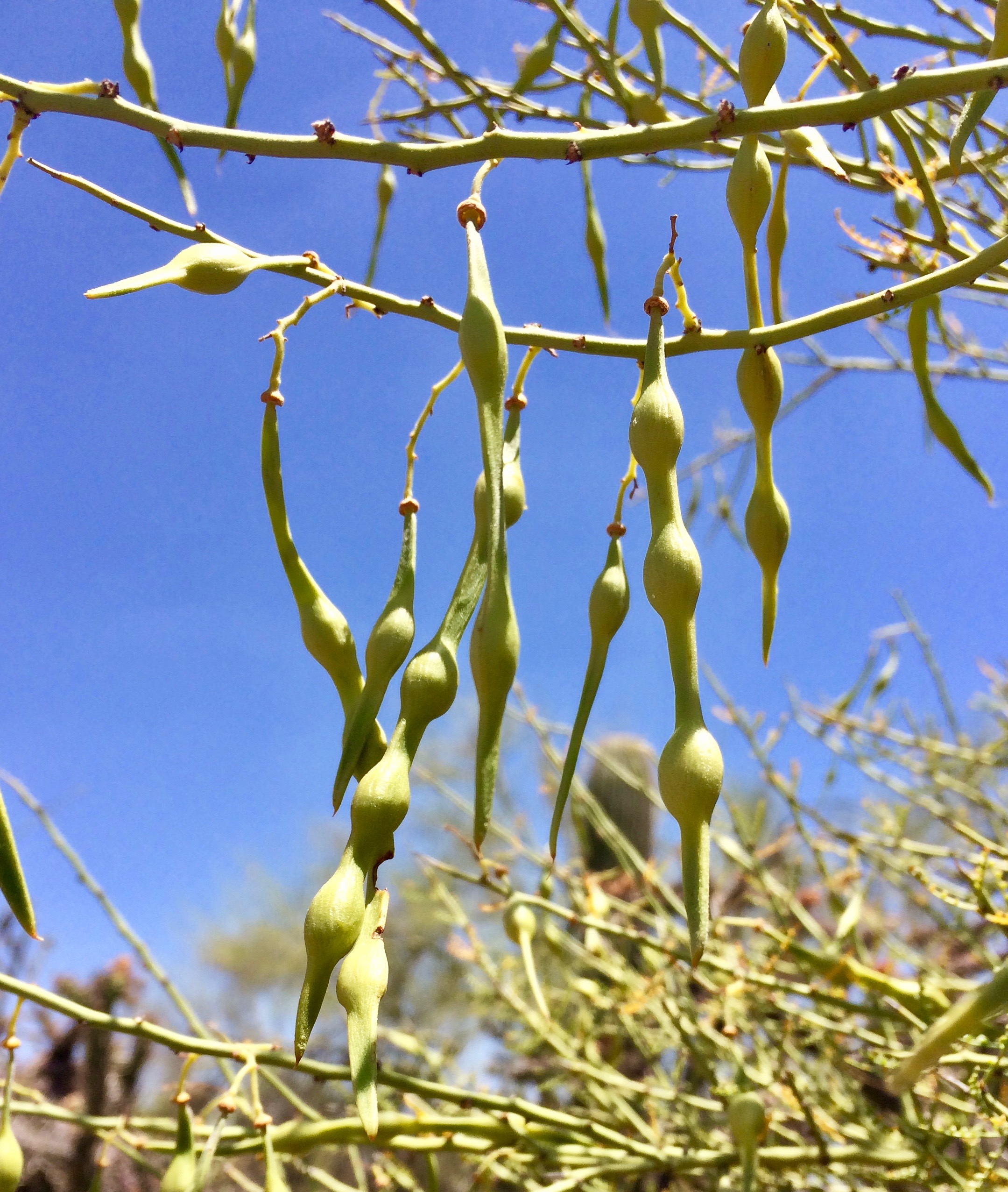
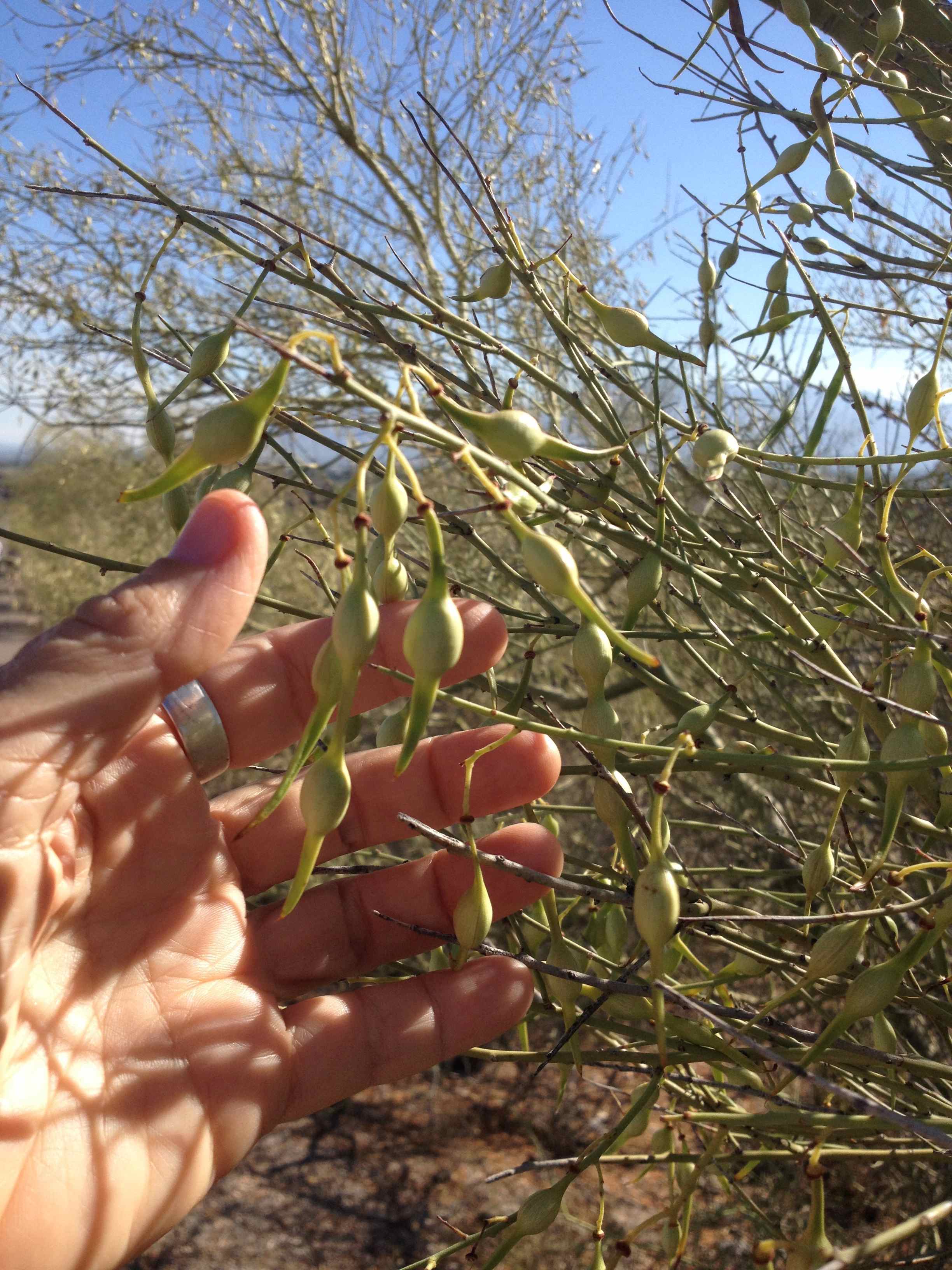
Palo verde flowers, once pollinated by buzzing helpers, shed their petals and morph in May into clusters of bright green seed pods.  Foothills paloverde pods are not flat–check these photos.  Rather, they look like beads on a short string.

Not to be confused with foothills palo verde, the flat pods of blue palo verde (Parkinsonia florida) have no constriction between seeds, and a bitter taste to my palate–not nearly as flavorful as foothills. [Avoid Mexican palo verde (Parkinsonia aculeata) with its orange petal and potentially toxic seed.]
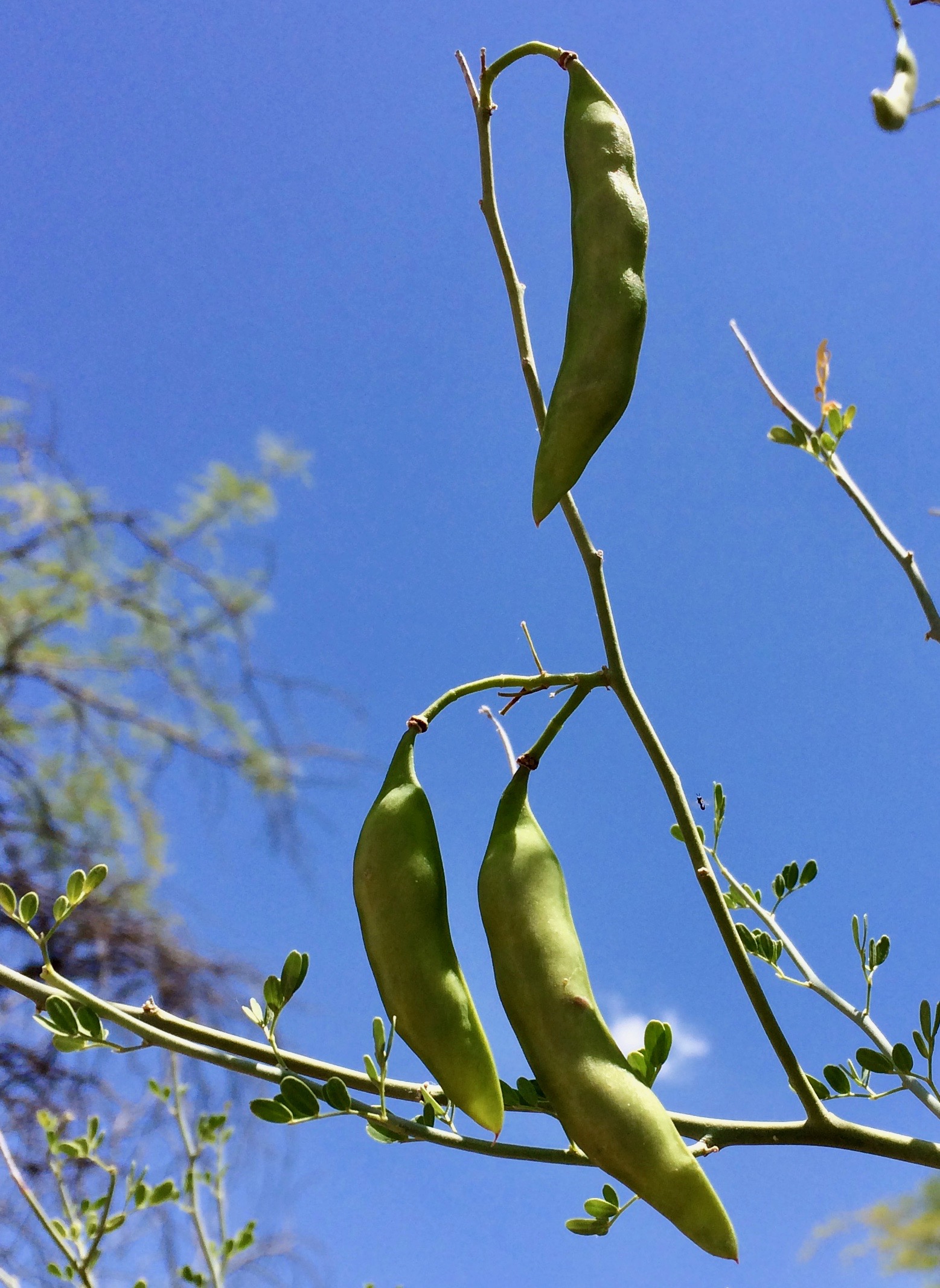
Imagine each seed of a foothills palo verde (Kuk Chu’hu-dahk) pod inside a long green sheath, a constriction between each like beads on a necklace. (MABurgess photo)

My Tohono O’odham harvesting teacher and mentor, Juanita Ahil, taught me that Kuk Chu’hu-dahk kai is its best when eaten in the green stage, as the pea-size seeds are just swelling.  She told me, “Don’t wait til they are real fat, or the seeds will get a little tough and lose some sweetness.”   These sweet green peas are chucky-jam-full of legume protein, complex carbs and sugars, and phytonutrients in active mode.

In a short few days when temperatures soar, the soft green seeds shrink into hard little brown “stones,” which can be used in a totally different way, as a protein-rich flour (but that’s another story!)

With the gift of our cool wet spring of 2019, there is a good chance our sweet pea harvest season may extend into June beyond the “normal” first week.  But don’t hesitate!  Go browse with a basket or canvas bag to bring some home to share or prep into salad or snacks.  Long sleeves, gloves and sunglasses are suggested, as branches of foothills palo verde are sharp-tipped.  [A voice of experience:  In your enthusiasm to look up and reach for handfuls, don’t forget to look down for rocks or rattlers in your shared space.]

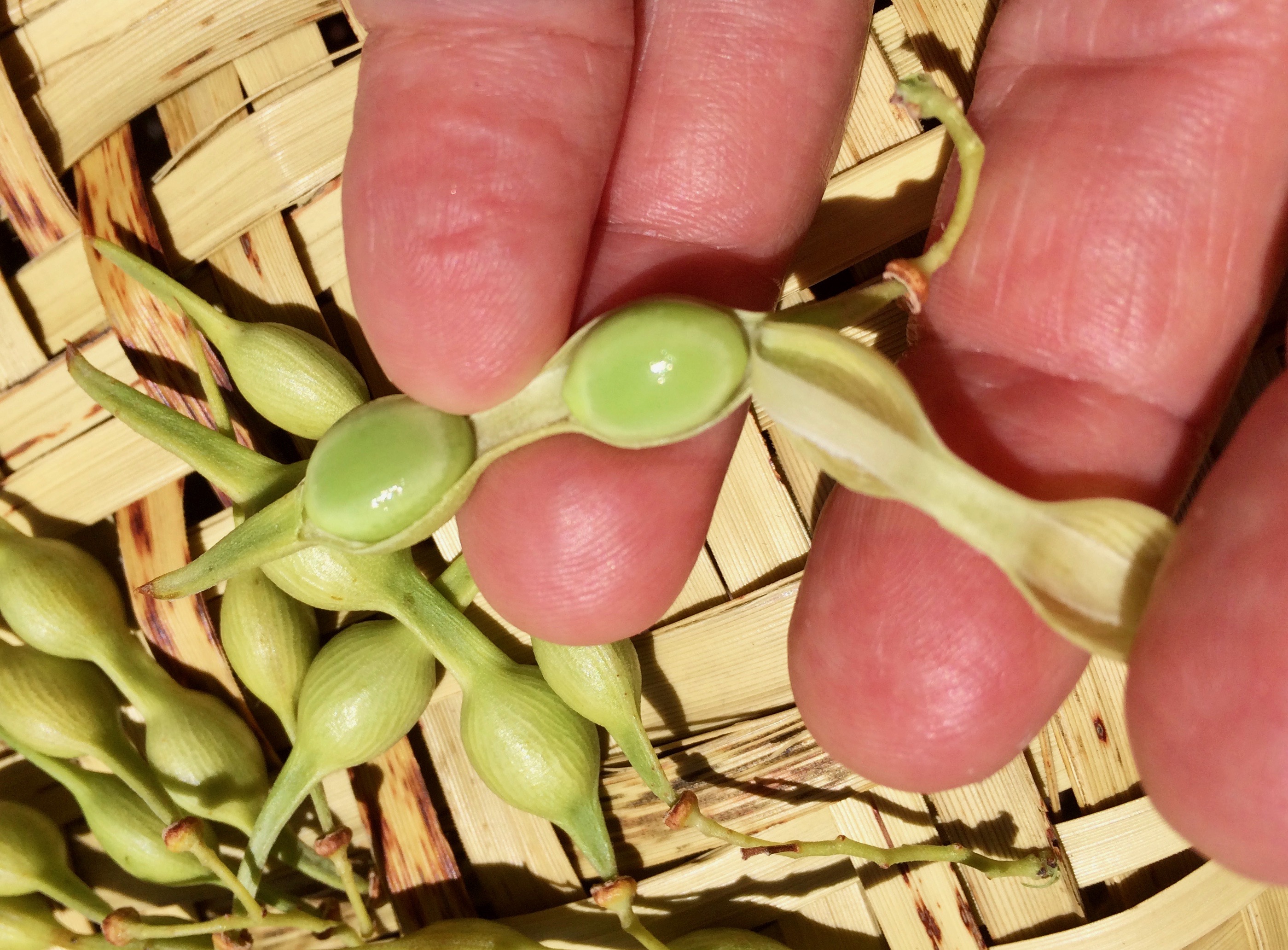
Note the structural similarity of a peeled foothills-palo-verde pod to edamame at your favorite sushi bar. They do look like botanical sisters. For a great “desert edamame” recipe go to my June13,2019, savorthesouthwest post (link below).

Beyond the simple pleasure of eating directly from the tree, you can also make “desert edamame” with palo verde pods.  They make a wonderfully unexpected hors d’oeuvre or potluck finger-food. Click on my June 13, 2015 post Lovely and Luscious Legume Trees for fabulous recipe ideas and helpful photos. More sources are at Bean Tree Farm’s website,  and desertharvesters.org.

To peruse and purchase my traditional Southwest foods and watercolor artwork, visit my website www.flordemayoarts.com or several special shops in Tucson:   NativeSeedsSEARCH, the Tucson Presidio, Old Town Artisans, and Tohono Chul Park Museum Shop.  Next fall-winter season, sign up to learn more about traditional Baja Arizona foods in our City of Gastronomy downtown tours at Tucson Presidio Museum.  I also teach timely hands-on wild foods harvesting workshops through Tucson’s Mission Garden.

Foothills palo verde pods plump and ready to pick for a sweet desert treat

Now…grab a pal and go ye into desert foothills to browse palo verde pea-pods –mindfully, joyfully, gratefully!

Delectable Cholla bud and Nopalito Recipe Ideas


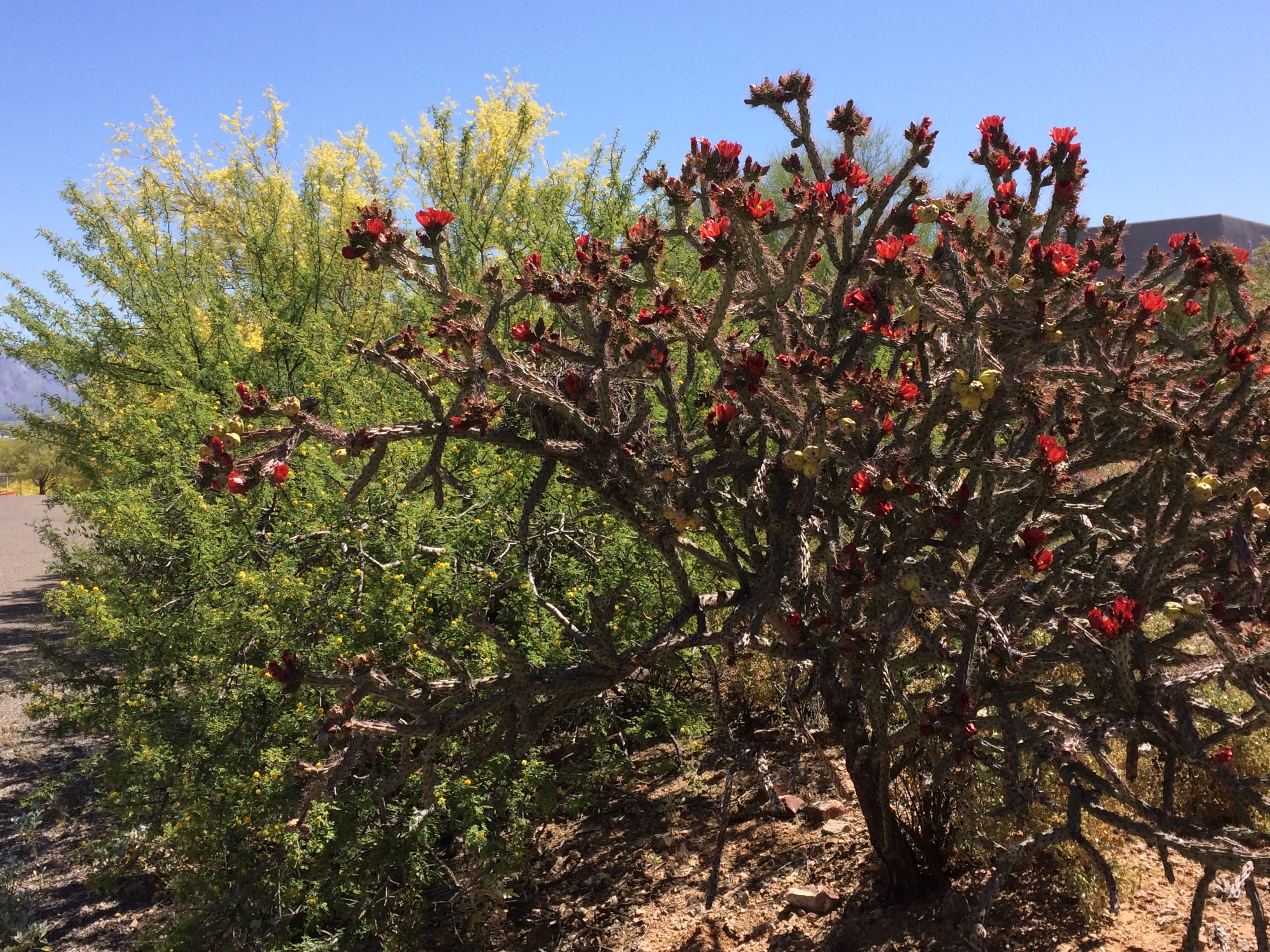
Blooming staghorn cholla and foothills palo verde bathe the Sonoran Desert in color. Surprisingly, this 2019 spring season has been so cool and moist that we are still harvesting cholla buds and fresh nopales in May. (MABurgess photo)

“Act now while this offer lasts!”–so says Mother Nature in the Sonoran Desert.  She only offers her bounty in certain pulses or moments, and we must harvest while her “window of opportunity” is open. Tia Marta here to share some delectable ideas for serving your own desert harvest from our glorious bloomin’ cholla and prickly pears.

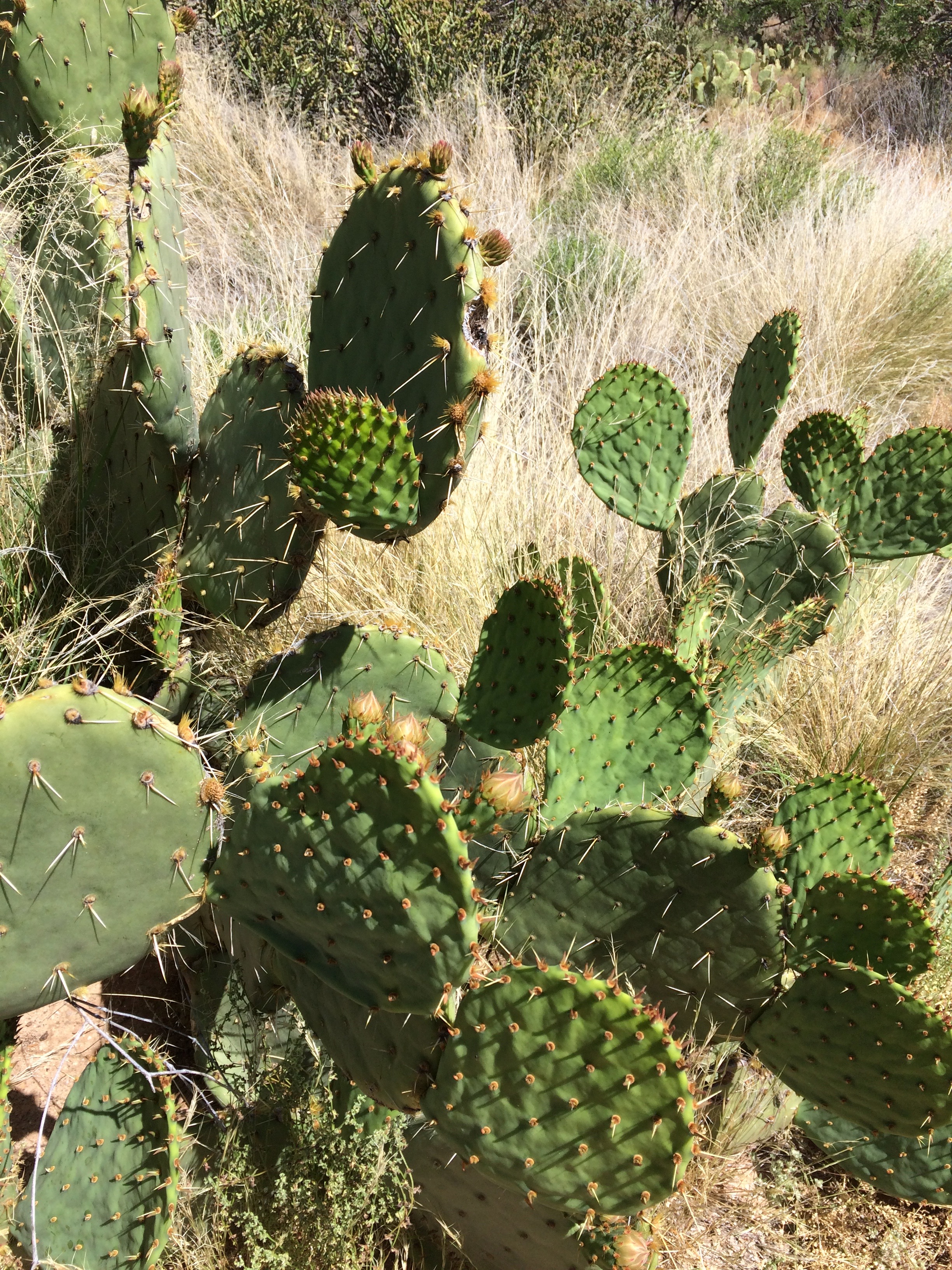
The YOUNGEST pads of new growth on prickly pear are the ones with tiny leaves at the areoles (where spines will later grow). (MABurgess photo)

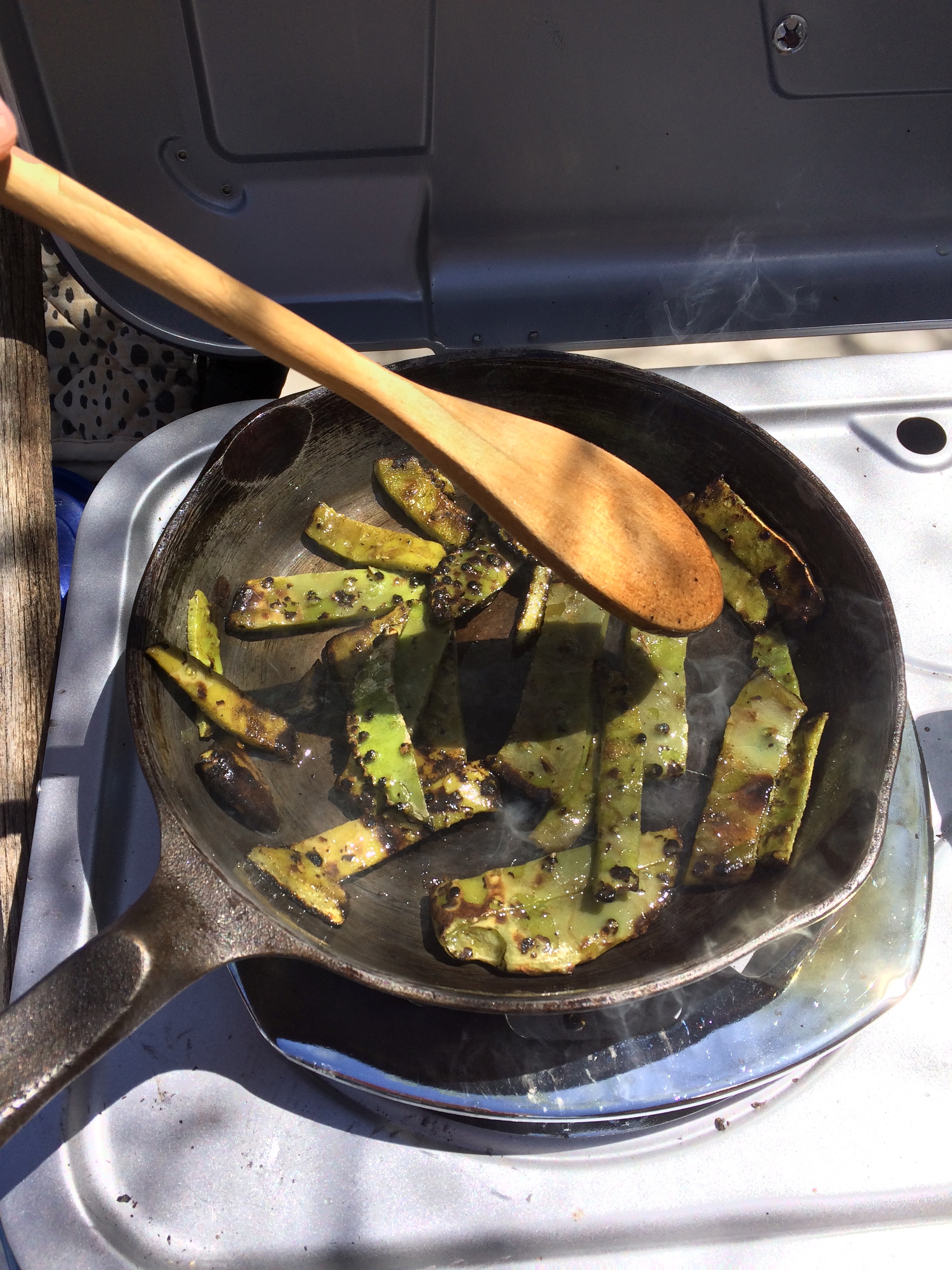
After singe-ing off the tiny leaves and spiny glochids using tongs over a flame (either campfire or gas stove), slice and saute young prickly pear pads in olive oil. Now they are ready to use in lots of great recipes…(MABurgess photo)

Young prickly pear pads (many species in Baja Arizona) have no woody tissue yet developed inside. In their youthful stage (see photo) they are not only edible but also super-nutritious! The photo is our native Engelmann’s prickly pear (Opuntia engelmannii) with flower buds forming. Traditional Tohono O’odham call the edible young pads nawi.

After spines and areoles are singed off you can chop and scramble nopalitos with eggs, bake them into a quiche, pickle them, OR simmer them in a delicious mole sauce….The fastest and easiest way to prep a gourmet nopalito meal is to use Mano y Metate’s Mole Mixes.  Savor blog writer Amy Valdes Schwemm has created several different sabores of mole–many without chocolate.  My sweetie loves Amy’s Mole Adobe as its savory spice binder is pumpkin seeds with no tree nuts.

Nopalitos in Mano y Metate Mole Adobo sauce–here served with a mesquite tortilla (from Tortilleria Arevalo available at farmers’ markets in Tucson.) Nopalitos en Mole over brown rice is delicious too.

Get out your tongs and whisk brooms to harvest the last of the cholla buds this season!

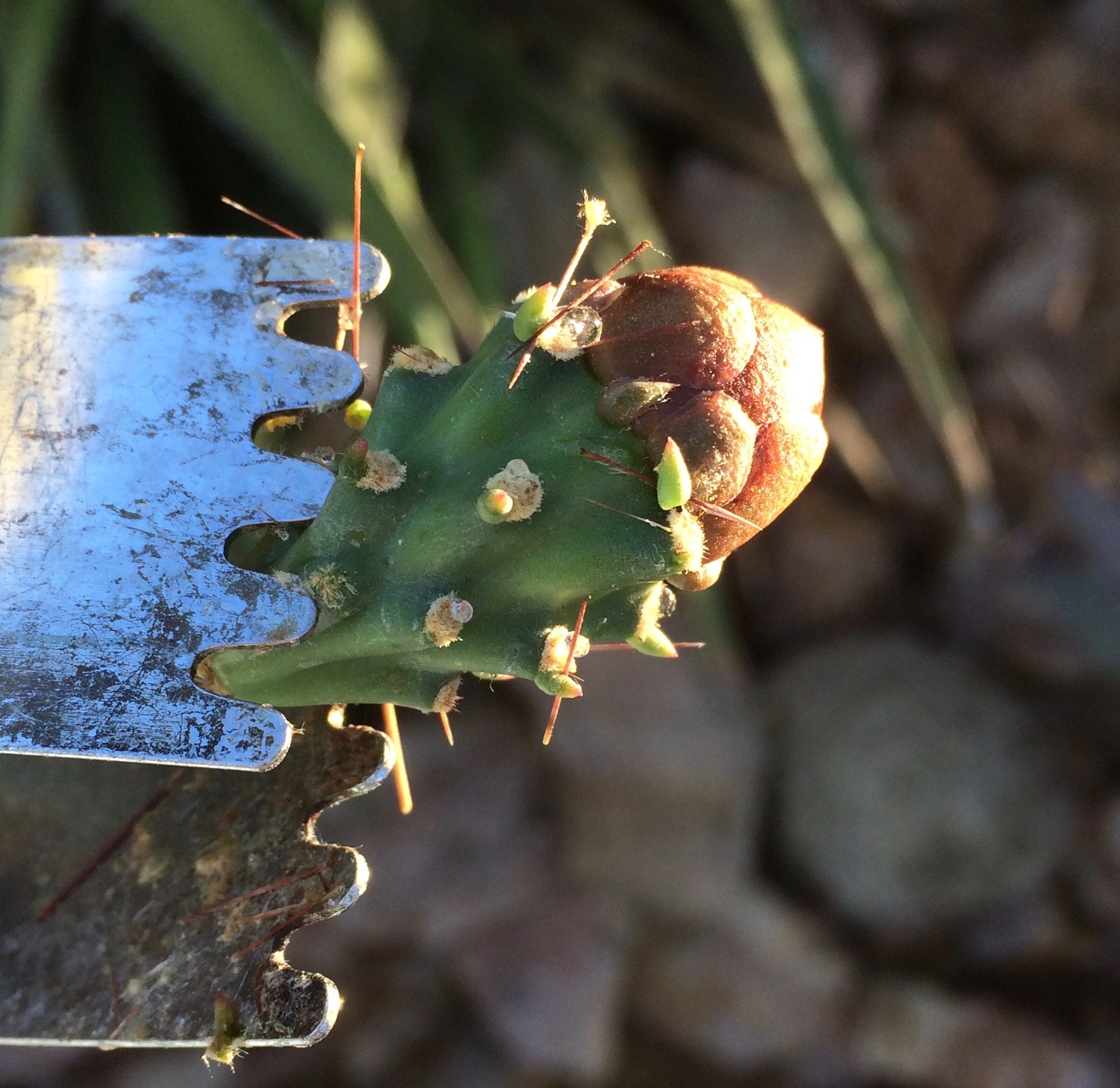
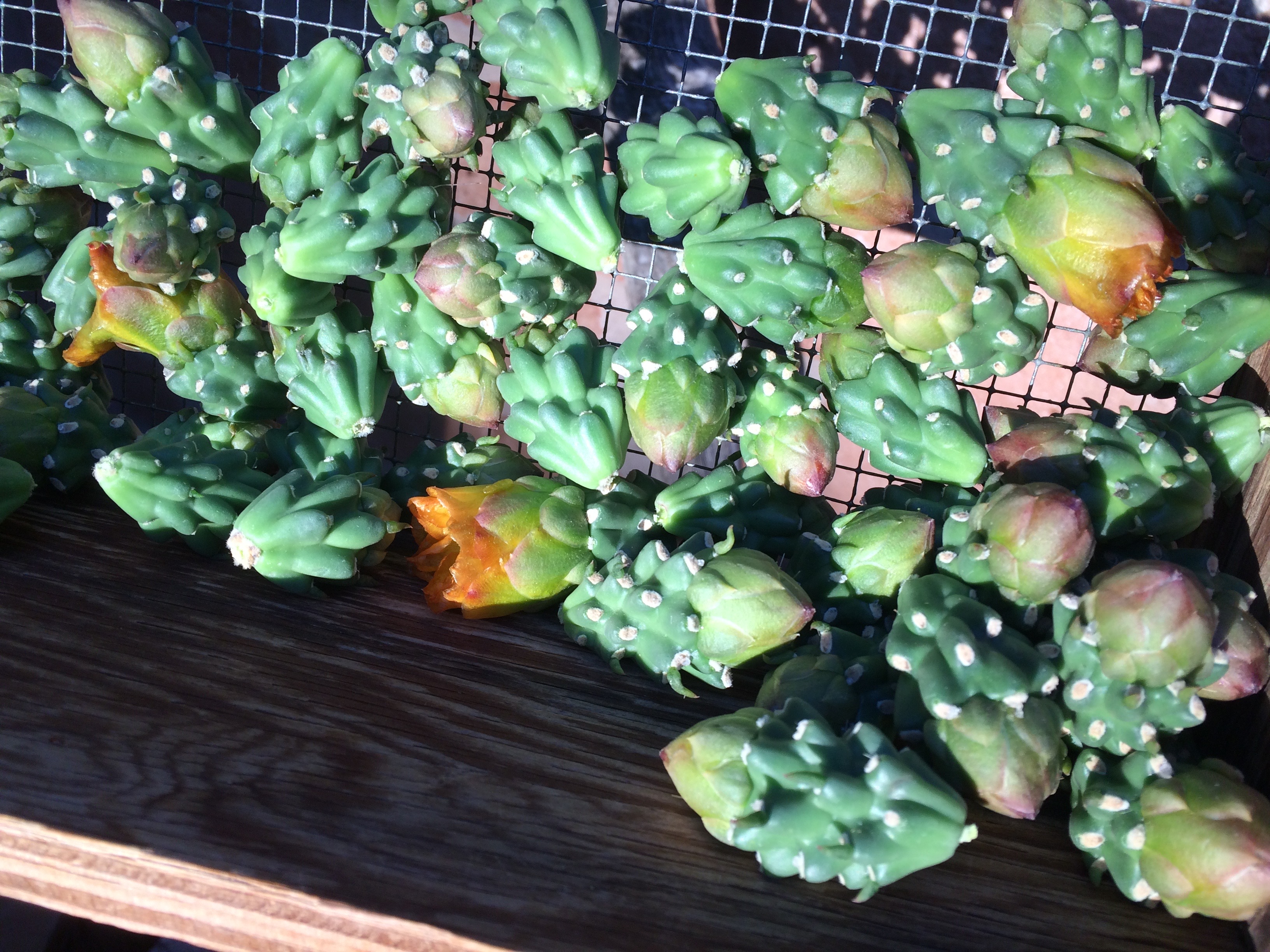
A staghorn cholla cactus flower bud (Cylindropuntia versicolor) still with spines in need of cleaning. Buds with petals not yet open are the ones to pick–carefully.(MABurgess)

A harvest of staghorn cholla buds in screen box to remove spines from areoles (MABurgess photo)

Tohono O’odham harvesters know this cholla species as ciolim–pronounce it chee’o-lim.

Once de-spined, cholla buds must be boiled or roasted to denature its protective oxalic acid. Then, tah-dah!, cholla buds lend themselves to wonderful recipes similar to nopalitos in omelettes, quiches, stir-fries… They are flavorfully exotic, tangy, definitely nutritious containing gobs of available calcium and energy-sustaining complex carbs!

Pickled cholla buds (MABurgess photo)

I love to pickle my fresh cholla buds to enjoy later as garnish for wintertime dishes. For the salad recipe below, I’d canned them with pickling spices, but an easier alternative is to marinate them short-term for 24-48 hours in your favorite dressing for a quick fix.


Muff’s Easy Marinated Cholla Bud and Sonoran Wheat-berry Salad Recipe:

First–prep ahead–heirloom White Sonoran Wheat-berries:   boil 1 cup dry wheat-berries in 4 cups drinking water for 1 hour 15 minutes, or until water is fully absorbed and grains are puffed up, then chill.

Also prep ahead— marinate fresh boiled cholla buds in pickle juice, or your favorite marinade or salad dressing for 24-48 hours in refrigerator.

Then–Chop any combination of your favorite fresh veggies–sweet peppers, tomatoes, summer squash, celery, carrots, artichoke hearts, etc….

Toss veggies with cooked chilled wheat-berries and marinated cholla buds.  Add spices and pinyones if desired.  Dress with remaining cholla marinade.  Allow to chill before serving, neat or on a bed of fresh salad greens.


The yummiest cholla bud and wheat-berry marinated salad ever! (MABurgess photo)

Let’s honor, tend, and enjoy these desert foods that have fed generations of desert people for hundreds–thousands–of years, keeping them healthy and strong!  Thanks to traditional harvesters, newcomers can more deeply appreciate and take good care of this beautiful desert.

An energy-saving idea:   You can save energy and keep the heat out of the kitchen this summer by cooking your cholla buds or your wheat-berries in a solar oven!  Check out a light-weight streamlined model solar oven at www.flordemayoarts.com.

[White Sonora Wheat-berries are available at NativeSeedsSEARCH store, 3061 N.Campbell Avenue, Tucson.  Not to fret if cholla and prickly pear harvests are done for this spring in your neighborhood!  During the rest of the year, you can find dried cholla buds at NativeSeedsSEARCH, at San Xavier Coop, OldTown Artisans, and at Flor de Mayo and fresh nopales in the Mexican foods section at groceries like Food City.]

Agave Fest!

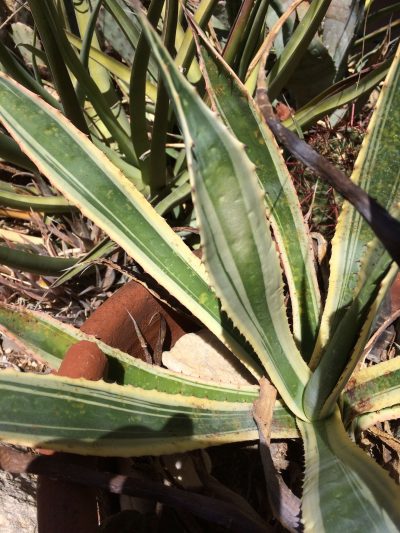
Every year in late April and early May, Tucson residents and visitors celebrate the agave plant in all its glory with dinners, cocktail demos, mescal and bacanora tastings, demonstrations and fiestas. It’s Carolyn today and for the third year, I’ve taken part in the agave roasting at Mission Garden.  The agave plant is a succulent that thrives in arid conditions and when roasted becomes very sweet. It is the defining ingredient in mescal and tequila. It has also been used for thousands of years by the Native Americans as food. The Hohokam even planted agave fields stretching over 1,200  acres in the north end of the Santa Cruz basin. It was a crop that needed little tending and propagated on it’s own by sending out pups. Anthroplogist Suzanne Fish estimates that the Hohokam in the area could have harvested up to 10,000 agave plants annually.

There are many species of agave. We’re not sure how many kinds were used by the Native Americans. (MABurgess photo)

Historically, the stiff and thorny leaves were cut from the agave and the hearts are baked in an earth oven. The people just chewed the pulp from the fibers. Then there was a step up in technology when the hearts were steamed and roasted, crushed and used to make tequila, mescal and bacanora. Here is a link to a demonstration of a old-fashioned bacanora “factory” in Mexico. Of course, today the big commercial mescal and tequila makers use industrial ovens.

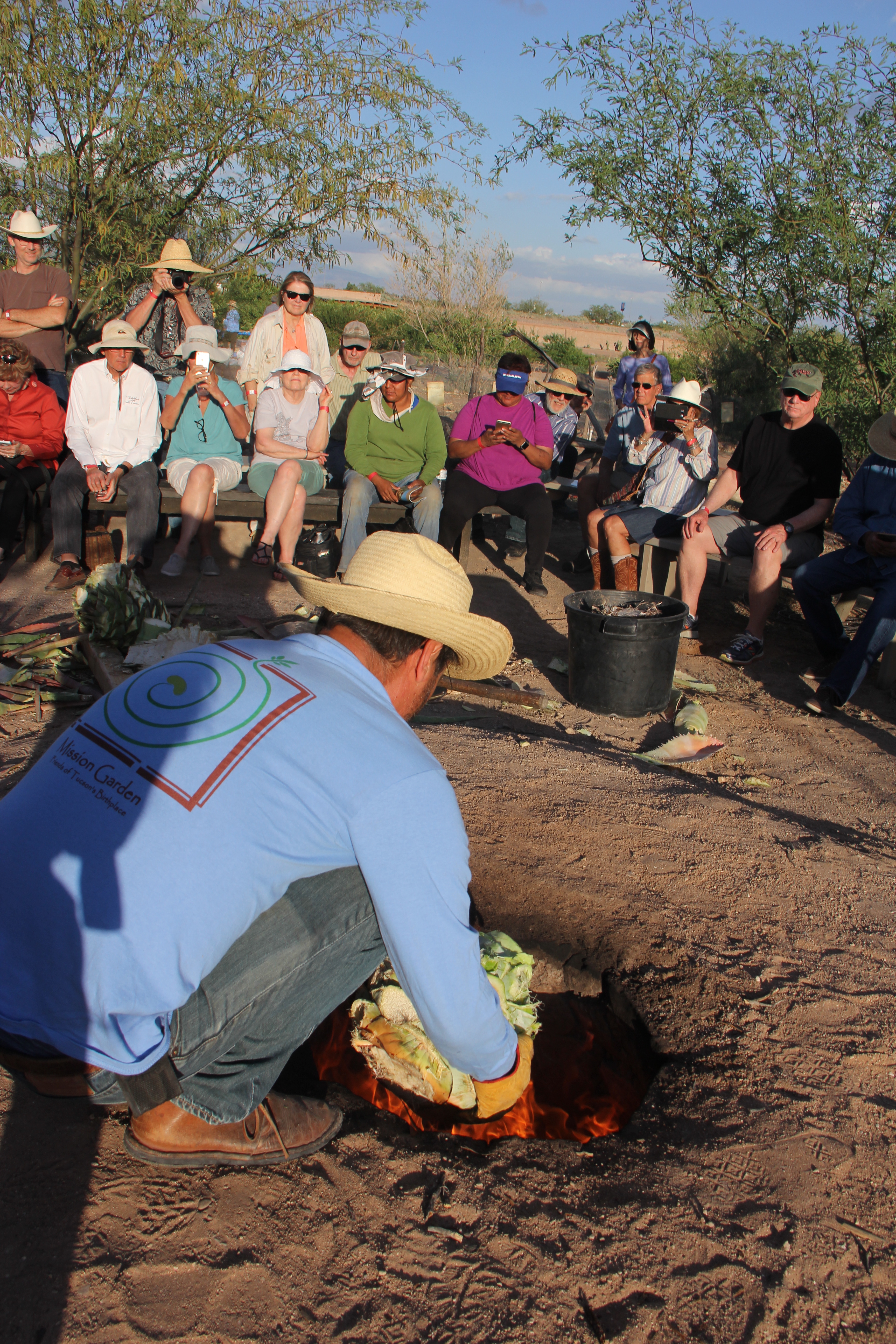
But during Agave Fest, we like to celebrate the oldest traditions, so Jesus Garcia demonstrates baking agave in an earth oven.

Jesus Garcia placing an agave heart in an earth oven on the grounds of Mission Garden. (CNiethammer photo)

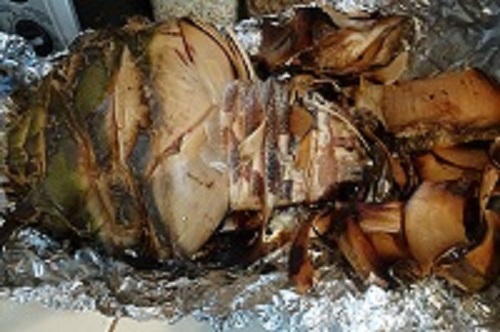
Because we don’t all have earth ovens, I am in charge of the home-baking demonstration. I wrap the hearts securely in heavy foil and bake them for about 10 hours at 350 degrees F. (If you try this, be sure to put a foil-lined pan under the agaves because even the most securely wrapped hearts leak sugary juice.)

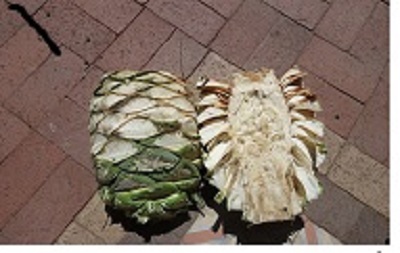
Agave heart split in two so it could fit in my home oven.

This is what the roasted heart looked like after 10 hours. The core on the right is where I removed some of the leaves.

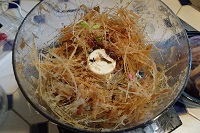
The next challenge is to get enough pulp from the fibers to actually make something. The Native Americans just chewed on the baked leaves and discarded the fibers. Distillers and people who make agave syrup crush the juice from the fibers. To further soften the leaves, I tried boiling them for a while. I also put them in my food processor which did a good job of separating fiber from pulp.

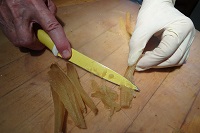
You can also tease out the pulp with a knife.

(We are all constantly experimenting to try to find what works best. A woman who attended my presentation said she has cut up a small agave heart and cooked it in her large slow cooker for three days.)

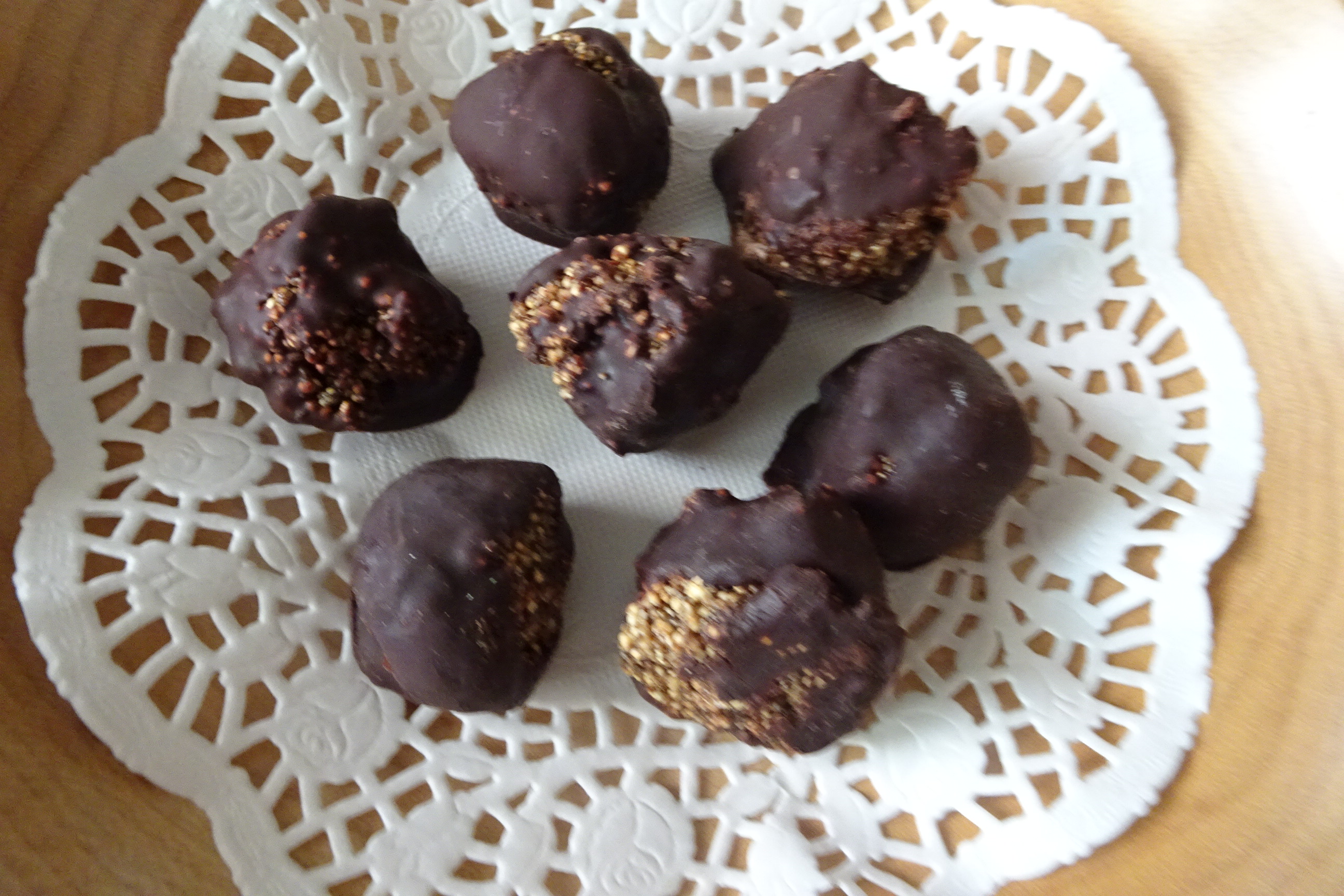
So once you’ve gone to the trouble of getting pulp, what do you do with it? Here’s where the experimenting comes in. I’ve combined it with water to make a murky homemade agave syrup. You can use it to season anything you want to sweeten a little. For the Agave Fest demonstrations, I’ve made a mixed squash, nopalito, and onion saute and added some of the agave pulp. It adds a subtle sweetness and everybody loves it. I also used the pulp to mix with some ground popped amaranth and ground chia. Added a little commercial agave syrup. Formed little balls, firmed up in the fridge, then dipped in melted chocolate. Yum!

Amaranth, chia, agave balls with chocolate coating.

Of course, by the time I served the food, it was nearing 7:30 or 8 p.m. and everybody was starved so it all tasted especially good!

_____________________________________

Want to learn more about wild desert foods and how to prepare them? My book American Indian Cooking: Recipes from the Southwest tells how the Native Americans used the wild plants for food. Cooking the Wild Southwest gives modern recipes for 23 delicious Sonoran Desert plants. There are all available at Native Seeds/SEARCH, online or in the retail store.


Wild Rhubarb Upside-down Cake!

Wild desert rhubarb–canagria–is up from its hiding place deep in sandy desert soil triggered by our wonderful winter 2019 rains– ready to harvest for upside-down cake! (MABurgess photo)

Known as hiwidchuls by traditional Tohono O’odham harvesters, canagria (literally “sour cane”) by Spanish-speaking amigos, Rumex hymenosepalus by science nerds, Arizona dock by herbalists, and wild rhubarb by those who might know its relatives in northern climes, this rarely-seen tuberous perennial has responded gloriously to our winter rainfall.  It is currently bedecking the riverbanks along the Pantano, Rillito and Santa Cruz where Native People have gathered it probably for millennia.  But it won’t be there for long–so act now if you want a tangy-sweet treat!

Tia Marta here to share a fun recipe that celebrates this short-lived desert food:  Wild Rhubarb Upside-down Cake.  (If you seek a rationalization to counter sugars and fat, check out its available Calcium, plus helpful soluble and insoluble fiber.)

Wild rhubarb stalks look like celery with a pink tinge. Peel off any tough fibers, then chop into 1/2 inch pieces to use as the lemony flavor in the “bottom” of your cake–which becomes the top when turned upside-down. (MABurgess photo)

Put chopped canaigria into the butter-and-brown-sugar melt in the iron skillet, and dredge them til all coated with sweetness. It helps to have your skillet warm, as a head-start before baking. (MABurgess photo)

Wild rhubarb leaves can be boiled twice to eat as greens.  The plant also has many important uses other than food–tannins for medicine, dye from its root, and food for a native butterfly.  Read more about hiwidchuls in my February 2017 savor-post using rhubarb as the keyword in the SearchBox above.


I’ve used other ingredients in this recipe from our Baja Arizona palette of delicious heirlooms to make it super-local.

RECIPE FOR WILD ARIZONA RHUBARB UPSIDE-DOWN CAKE (“Skillet Cake”):

Preheat oven to 350F.

Into an iron skillet, melt 1/4 – 1/2 cup butter.

Stir in and stir until dissolved 1/2 – 1 cup brown sugar. (I use 1 cup to balance the rhubarb’s lemony sourness.)

Place diced wild rhubarb on top of butter/sugar mixture (as in photos above).

Pour batter right over the wild rhubarb/butter/brown sugar mix in bottom of skillet. (MABurgess photo)

When done, the cake will pull away from sides of skillet. At this point you can keep it in pan to cool down and heat again later, or turn it over immediately. (MABurgess)

To make batter, sift together: 3/4 cup White Sonora Wheat flour

1/4 cup amaranth flour (e.g.Bob’s Red Mill)

1/4 cup mesquite meal

1 tsp baking powder

pinch of sea salt.

Separate 4 eggs, yokes from whites to beat separately. Beat egg whites gradually with 1 cup sugar and whip until stiff.

Add  1 Tbsp melted butter and 1 tsp vanilla to beaten egg yokes.  Fold egg yoke and whites mixture together then gradually add sifted flour mixture.  Pour batter over the still warm or hot rhubarb in skillet.  Bake about 30 minutes or until it tests done.  To serve right away, place a pizza pan or plate on top of the skillet bottom side up, then carefully turn the paired pans over.  Your warm cake will drop easily onto the inverted (now right-side-up) plate.  Remove the skillet carefully.  To gild the lily, you can garnish your cake top with whipped cream.  Enjoy the zippy tang and good nutrition of a wild rhubarb upside-down-cake made with our special heirloom wheat, mesquite, and amaranth!


We took our cake out on a camping trip, quick re-heated it in the skillet over the campfire, and turned it over to serve on a pizza pan for a fabulous and nutritious breakfast pastry. (MABurgess photo)

For access to heirloom products and artwork of heirlooms from Flor de Mayo, check out NativeSeeds/SEARCH store and catalog,  and museum shops at Tucson Presidio, Old Town Artisans, and Tohono Chul Park.  And visit my website http://www.flordemayoarts.com.  (Enter your favorite native food word and find great recipes at this very blog–search box at top right.)  Enjoy every bite of flavor with gifts from our beloved Sonoran Desert!