Cheering with Agave Spirits!

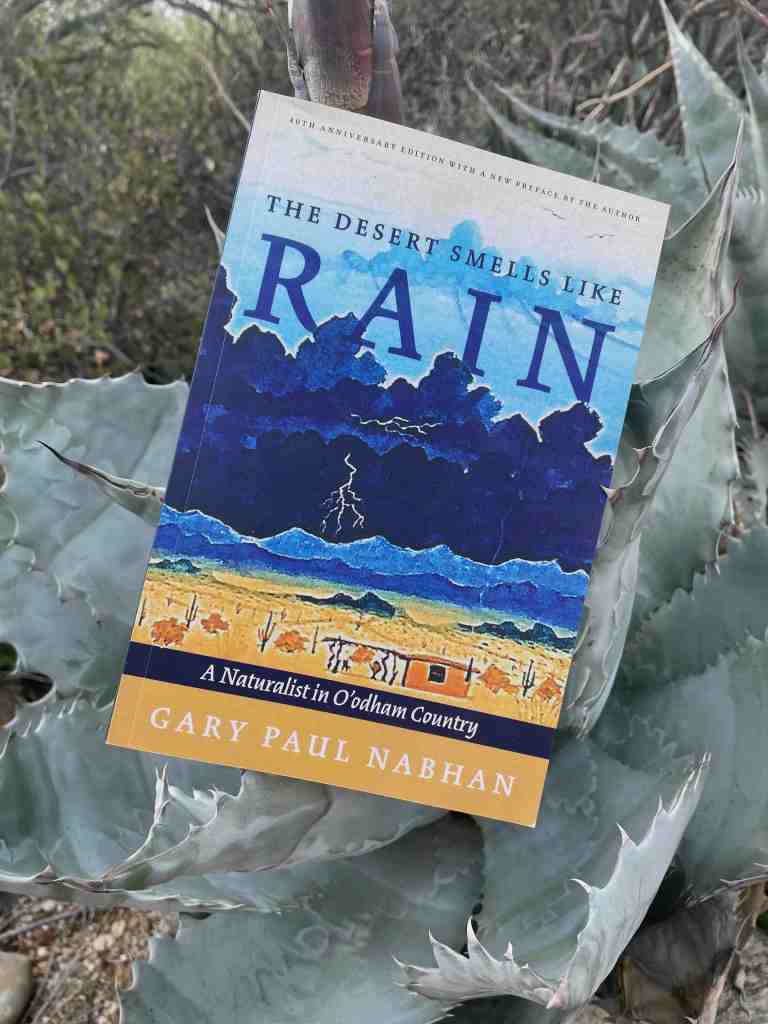
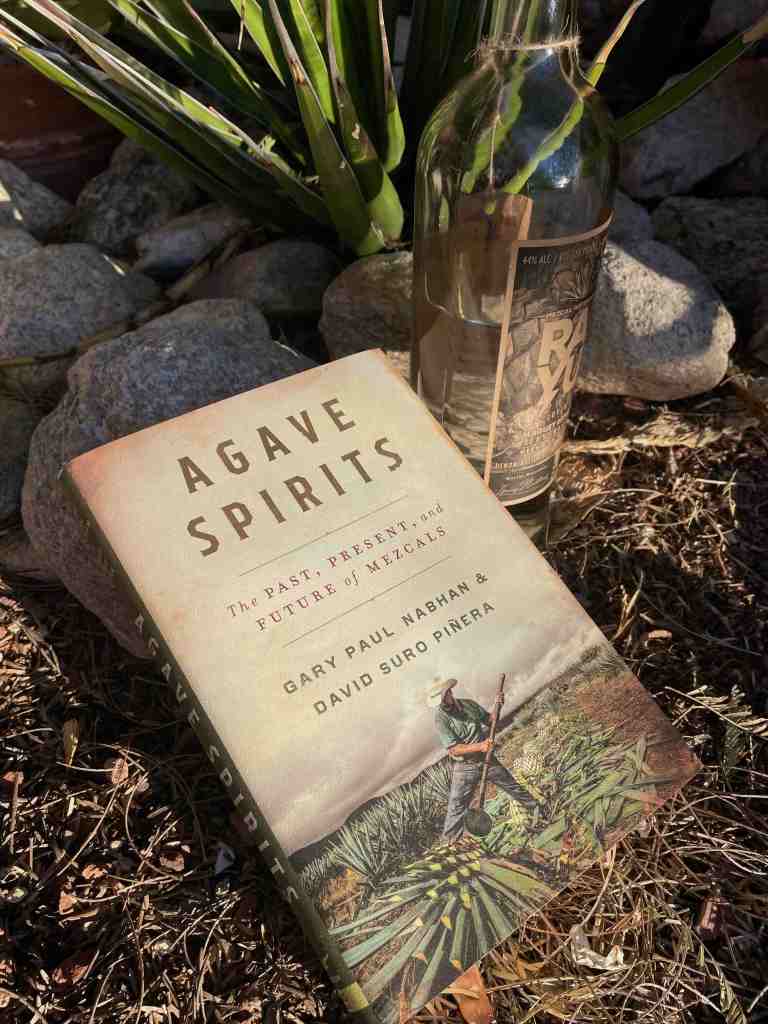
Tia Marta here, tipping a glass to Mayahuel, Goddess of the Agave, for her many gifts–and, in addition, I’m toasting the current voice of Agave: Southwest native foods author/philosopher Gary Paul Nabhan. Heads-up for a not-to-be-missed event SOON!! — Make plans for Saturday, October 21 to meet Nabhan at a totally celebratory book-signing in downtown Tucson for his latest book, AGAVE SPIRITS!

More than just literary, this event will be laced with enlivening tastes of small-batch mezcales! So take note: NOON til 3pm THIS SATURDAY at PETROGLYPHS EMPORIUM at 160 S.AVENIDA DEL CONVENTO just north of El Mercado along the trolley route west loop.

I just got a copy and can hardly wait to dive into Gary’s special way of weaving us into a sensual and spiritual world of amazing culture, botany, cuisine, all with such humor and human sensitivity. Yay another gift from the Guru! There will be plenty of copies of the book for sale at the event, but just in case, you can also find it available at Antigone Books on 4th Ave. Tucson..

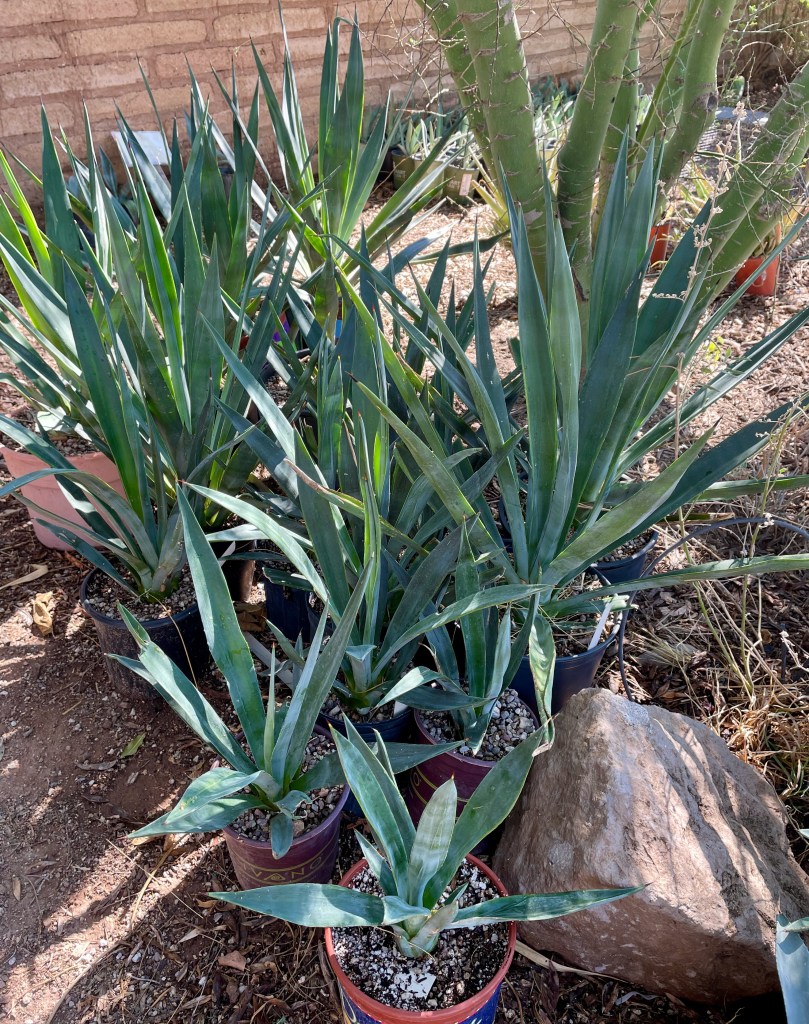
Many native species of agave–known as A’ut to Tohono O’odham ancestors who cultivated them long before European colonists arrived in the Sonoran Desert–were and can still be used for food, fiber, drink, and landscaping. To grow your own, check out the agaves for sale at Mission Garden (such as this Agave murpheyi).

For celebrating–yea honoring–mezcal and other agave spirits in their many forms, here is my very local idea for a Century Plant toasting:

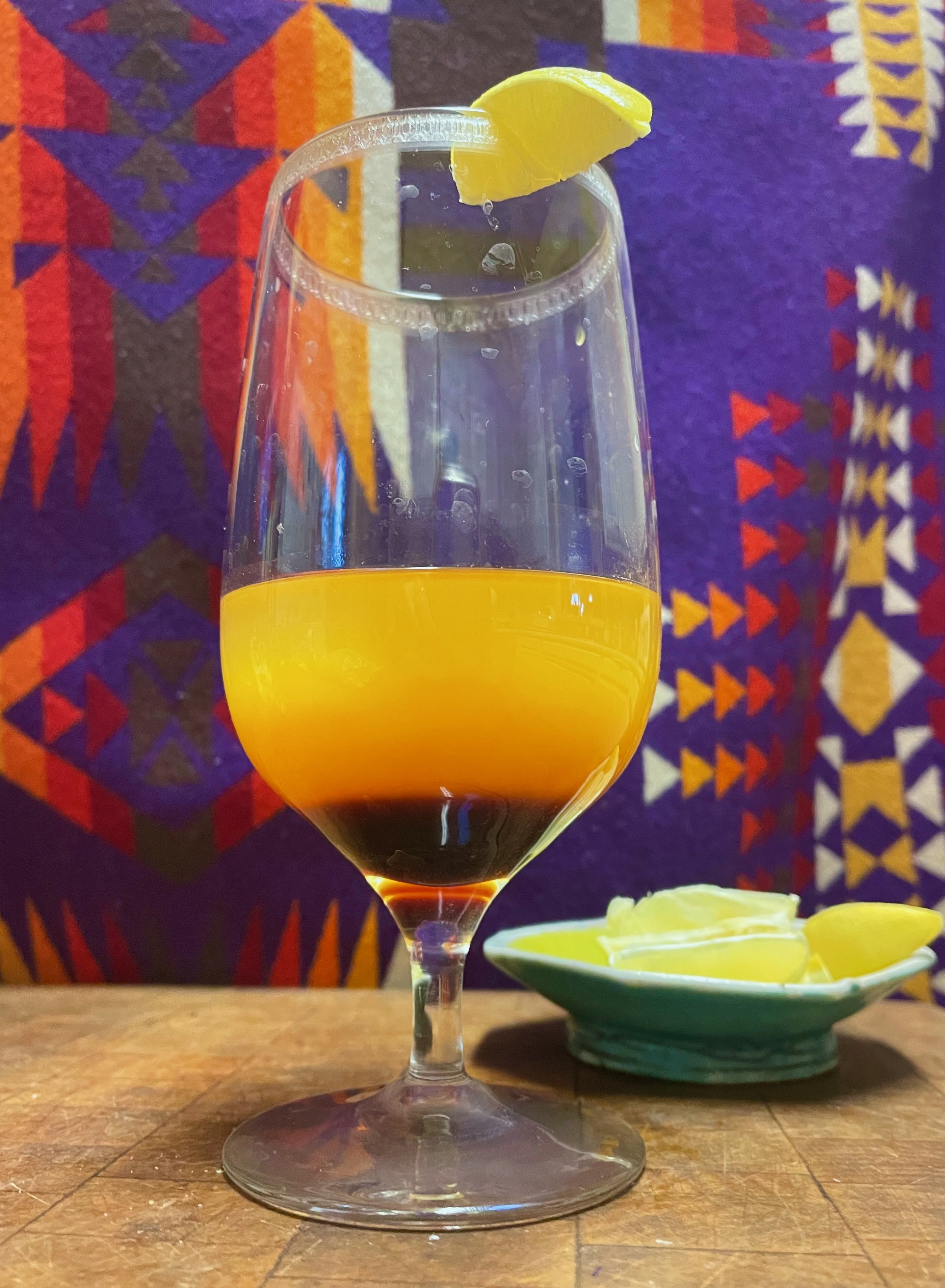
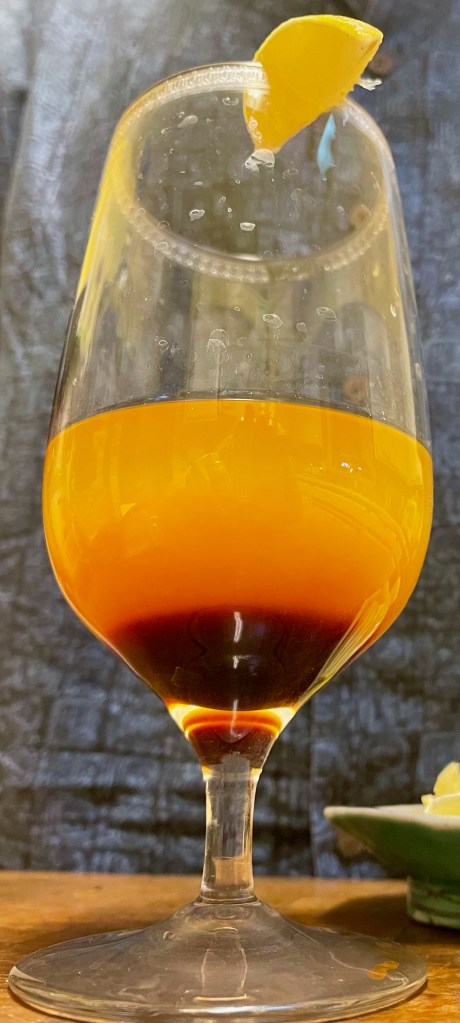
The Torch-bearer Mezcal-Saguaro Sunrise–Tia Marta’s recipe

1–In the bottom of a lovely glass, pour 1 TBSP precious thick saguaro syrup (if you have been so lucky to have bought some from a traditional saguaro harvester, or to have made your own syrup last June).

2–Reserve a jigger of small-batch-mezcal (bought or smuggled from a grower, fermenter, or trader.)

3–Dilute 1 jigger mango juice (available TJ’s, Natural Grocers) with 1/2 jigger drinking water to thin its density.

4–To garnish rim, slice a lime harvested from your own tree or a neighbor’s…

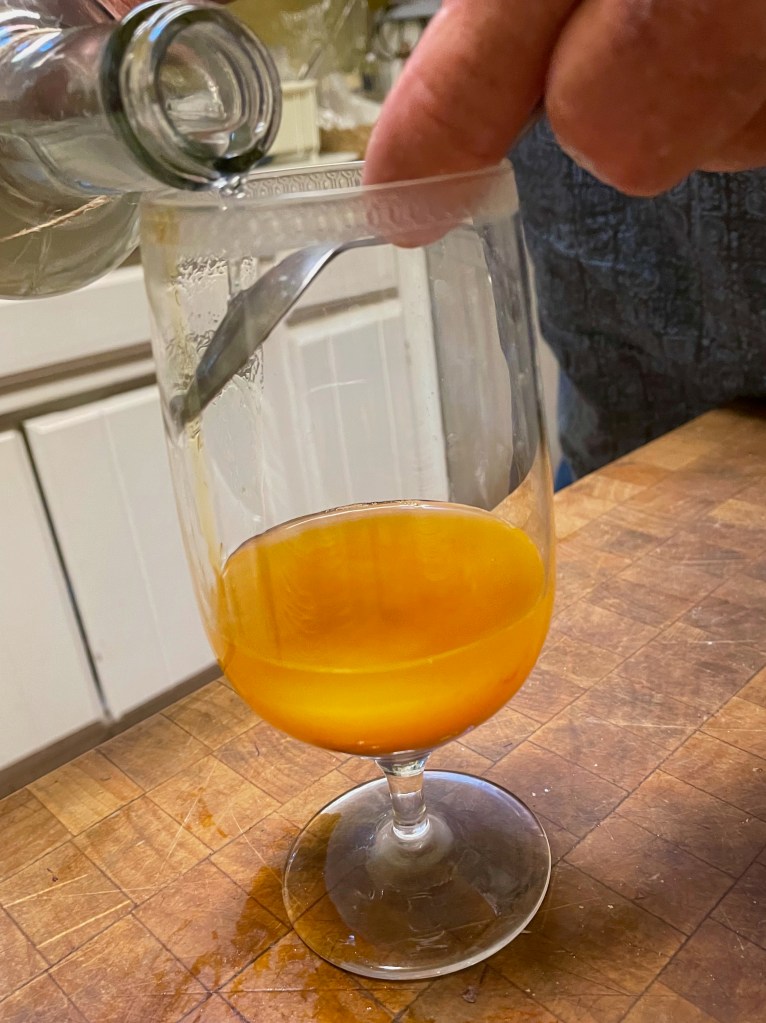
5–(a secret from my formerly-bartender partner): Gently pour the diluted mango juice atop the saguaro syrup layer by placing a spoon upside down to slow the flow against the glass interior, thus preserving the horizonal layers of different densities.

6–Similarly as illustrated over clean inverted spoon, gently pour jigger of mezcal for the top “layer.”

7–Salud! a toast to Agave and its Spirit

A step above and beyond the traditional “tequila sunrise,” this glorious libation is named for the Torch-bearer, who, I was taught by O’odham mentors, lights up and brightens the eastern horizon every dawn with the glowing red, orange, yellow of his solar torch…. This drink helps us rejoice in our local saguaro fruit and spirit of Sonoran agave with its colors, flavors–even nutrition.

Celebrate agaves also with notecards of my painting “Sacred peak with Agaves,” available at Buenos Aires National Wildlife Refuge visitor center and at Mission Garden. For 11″x17″ matted prints, call Flor de Mayo, 520-907-9471.

More mezcal ideas await…. Check out SavorSister Carolyn Niethammer’s post about the yearly Agave Heritage Festival in Tucson– with agave roasting at Mission Garden– late April. For specialized mezcal tastings locally, visit ExoBarTucson for Thursday evening samplings–It’s an “educational experience.” And stay tuned for more Agave Spirit posts as the holidays approach. Cheers to Mayahuel, to Nabhan’s new book, and indeed to the patient and giving A-ut plant!

See you at Petroglyphs Emporium this Saturday!

Easy Tricks for Pomegranates and a Recipe

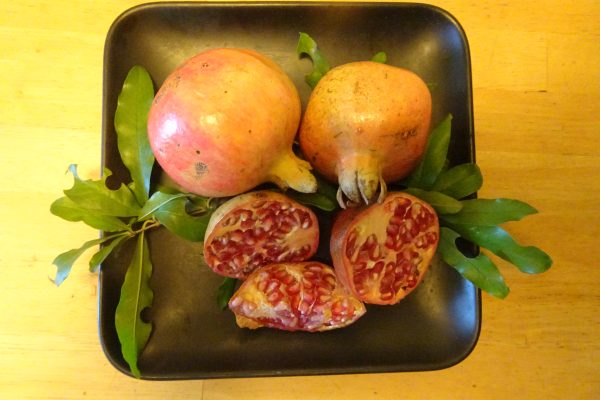
The pomegranate tree in my backyard produced five fruits this year.. The blemish on the top of the closest fruit was made by a leaf-footed bug. A small part of the interior will be bad, but the majority of the fruit will be usable.

I wrote about pomegranates at this time last year, but I’ve learned some new tricks to prepare them so it’s worth another post, especially since so many people find themselve intimidated by these gorgeous red fruits with the hard outer shell. It’s Carolyn today, and I learned these tricks at a teaching and tasting experience at Mission Garden in Tucson given by Emily Rockey, the plant whisperer responsible for the health of all the plants at the garden. Mission Garden is a living agricultural museum of Sonoran Desert-adapted heritage fruit trees, traditional local heirloom crops and edible native plants in the same location as the original garden of the San Augustin Mission in 1770s. Before that this land was farmed for a thousand years by Native American agriculturalists. Among its many varieties of fruit trees, Mission Garden grows eleven different cultivars of pomegranates, all sourced through cuttings from spots around Southern Arizona and Northern Sonora Mexico. 

Pomegranate trees like the heat and sun and are drought tolerant,  and although they love the desert climate, they are not native to the Sonoran Desert. The trees were brought to the New World by the Spanish. They originated in Persia and much of early Persian art features pomegranates. When it comes to eating pomegranates, the challenge is getting through the thick skin to access the seeds with their lovely juice. 

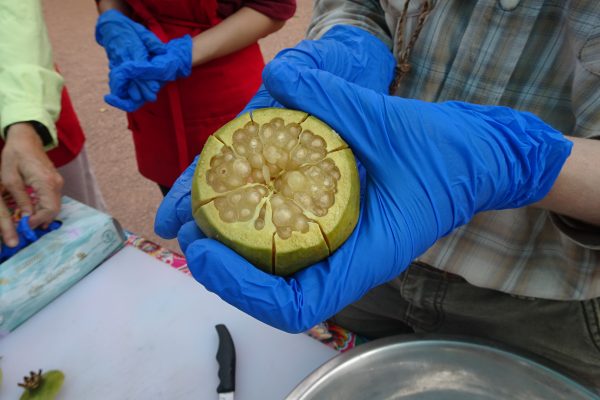
Cut along the sections.

Here’s an easy way to get into the sweet arils (the little flesh-covered seeds). First, cut a slice off the blossom end of the pomegranate. Inside you will see some definite sections. Cut on these sections and pull apart. This pomegranate in the photo is the White Sonoran Heritage pomegranate that has developed in the Sonoran Desert. Botanists aren’t sure why it’s lighter than the red or pink varieties. But it is sweet and the seeds are softer. We just chew them up. Then you can just carefully pry the fruit open and there will be wedges that are easy to eat.

Sections ready for eating or separating.

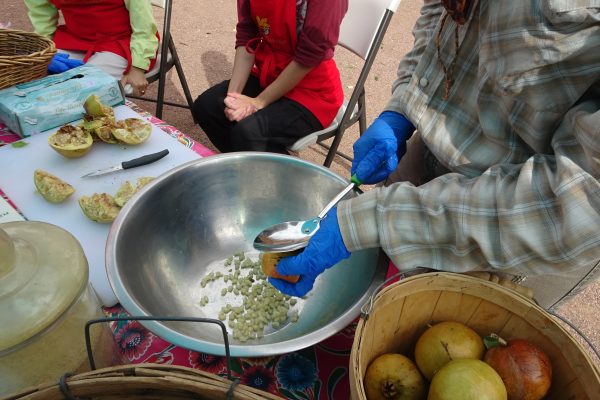
Another way to get the seeds is to cut the pomegranate from blossom end to stem end and twist the halves apart. Hold the half in your hand seed side down and pound hard with the back of a spoon. The seeds should drop out.

Just whack that pomegranate half with the spoon so the seeds release

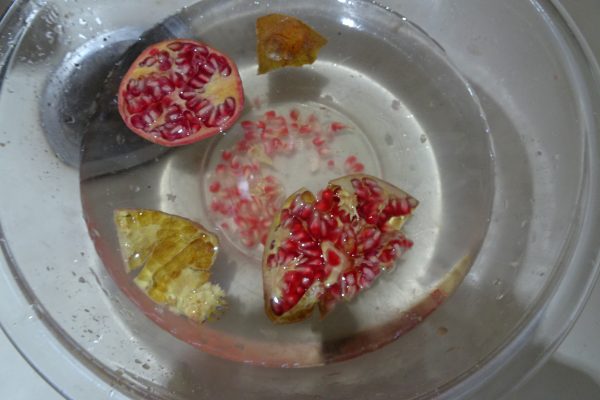
You’ll still have some of the inedible material surrounding the seeds. An easy way to get rid of it is to  submerge the seeds in a small bowl of water and the connecting material will float to the top where you can skim it off.

Submerge the arils in water and the seeds will sink and the inedible fiber will float to the top.

You can munch the seeds or add them to a salad or entree where their sweet flavor is welcome. To make juice, process in a food processor or blender in short pulses. You just want to break the seeds to release the juice, not pulverize them. Then strain. If you are using a blender, you might have to add a little water to get the process started. 

The recipe below is a great way to use your pomegranate juice. The late caterer Sue Scheff was renowned for providing regional dishes for the parties she served. She offered Autumn Chicken as an entree using something like this Pomegranate Sauce.   Saute your chicken parts until brown, spread in a oven-proof dish, then cover with this sauce and bake until chicken is done, about 25 minutes. Garnish with pomegranate seeds and fresh cilantro. Good for family but fancy enough for company.  Sue’s complete recipe is in my book The New Southwest Cookbook which includes recipes from dozens of top professional chefs throughout the Southwest. 

This sauce is very close to grenadine syrup, which is reduced pomegranate juice and sugar. If you ever had a Shirley Temple as a child or ordered one for your kids, grenadine syrup is what makes the drink pink. 

Pomegranate Sauce

2 cups pomegranate juice

2 cups sugar

2 tablespoons lemon juice

1 tablespoon balsalmic vinegar

Combine all ingredients in a saucepan and bring to a simmer, stirring to make sure sugar is dissolved. Reduce by about a third to concentrate the flavors. Spread over the browned chicken parts. Or store in a jar and use to flavor drinks.

________________________________________

You can learn more about the history of food in Southern Arizona in my latest book A Desert Feast, the story of the last 4,000 years of food in the Sonoran Desert. Want more recipes using  foods of the Southwest? You’d find ideas for collecting and using 23 easily recognized and gathered desert foods in Cooking the Wild Southwest: Delicious Recipes for Desert Foods.  . Recipes from top Southwest chefs are collected in The New Southwest Cookbook. Just click on the titles for more information. You can learn more about me on my website.

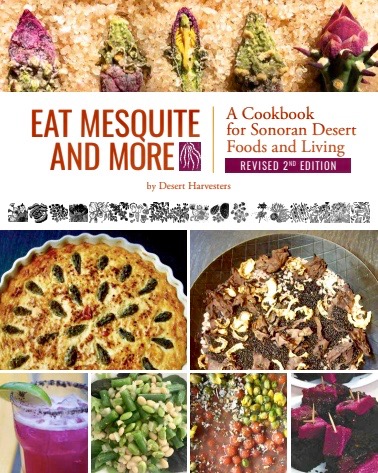
Eat Mesquite and More: a Cookbook for Sonoran Desert Living

Happy Summer, friends!

Amy here, on a hot, hot morning, sitting the shade. Have you seen Desert Harvester’s new edition of the cookbook??? It is 400 pages! with lots of color photographs and original art. It really is worth getting the book for the art alone.

But today I want to highlight the ethics in book. It starts with a poem by Ofelia Zepeda, followed by a land acknowledgement, and a Desert Harvesters ManiFEASTO in English and Spanish. There is a recipe for Abundance and a detailed primer on Reciprocity, elaborating on “Get to Know vs Grab and Go” and “Rewild vs Defiled” and a whole other section on living and eating in place. So yes, even if you don’t live in the desert where these plants grow, and even if you never plan to cook, this is still a tremendous resource and inspiration.

As the title declares, Desert Harvesters has morphed from mesquite milling focused to offering intimate portraits and recipes of over 20 desert ingredients. Have you harvested: mesquite, ironwood, saguaro, acorn, devil’s claw, wolfberry, hackberry, mushrooms, chiltepin, barrel cactus, prickly pear pads and fruit, cholla, chia, agave, palo verde, yucca, ocotillo, globe mallow, purslane, packrats, grasshoppers or cicadas? With detailed harvesting instructions, seasonal timing and expert tips, a novice harvesters can actually get out there and try! Many desert plants offer multiple delicacies, such as ironwood tree as green seeds, mature seeds, flowers and seed sprouts.

There are a LOT of recipes, some easy and some taking days or longer to make. I didn’t count how many recipes are in the book, but it says only 80 of them are bilingual, English and Spanish and 65 are new to this edition. There are a few medicine recipes, too. This book really does have something new for even the most seasoned harvester. The recipes are contributed and tested by community members far and wide, encompassing ancient wisdom and modern innovation from many cultures. It also includes many recipes from us Savor Sisters, Carolyn, Tia Marta and I.

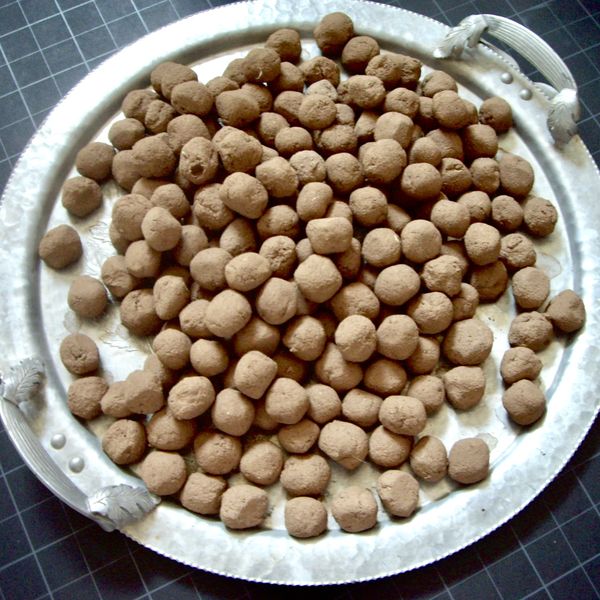
If you still aren’t convinced to buy this book or find it in the library, go to Desert Harvesters Facebook page. There you will see recipes for Seed Balls for planting and Saguaro Fruit Truffles for eating. Don’t mix them up!

A Traditional Recipe for Nopales (Prickly Pear Pads)

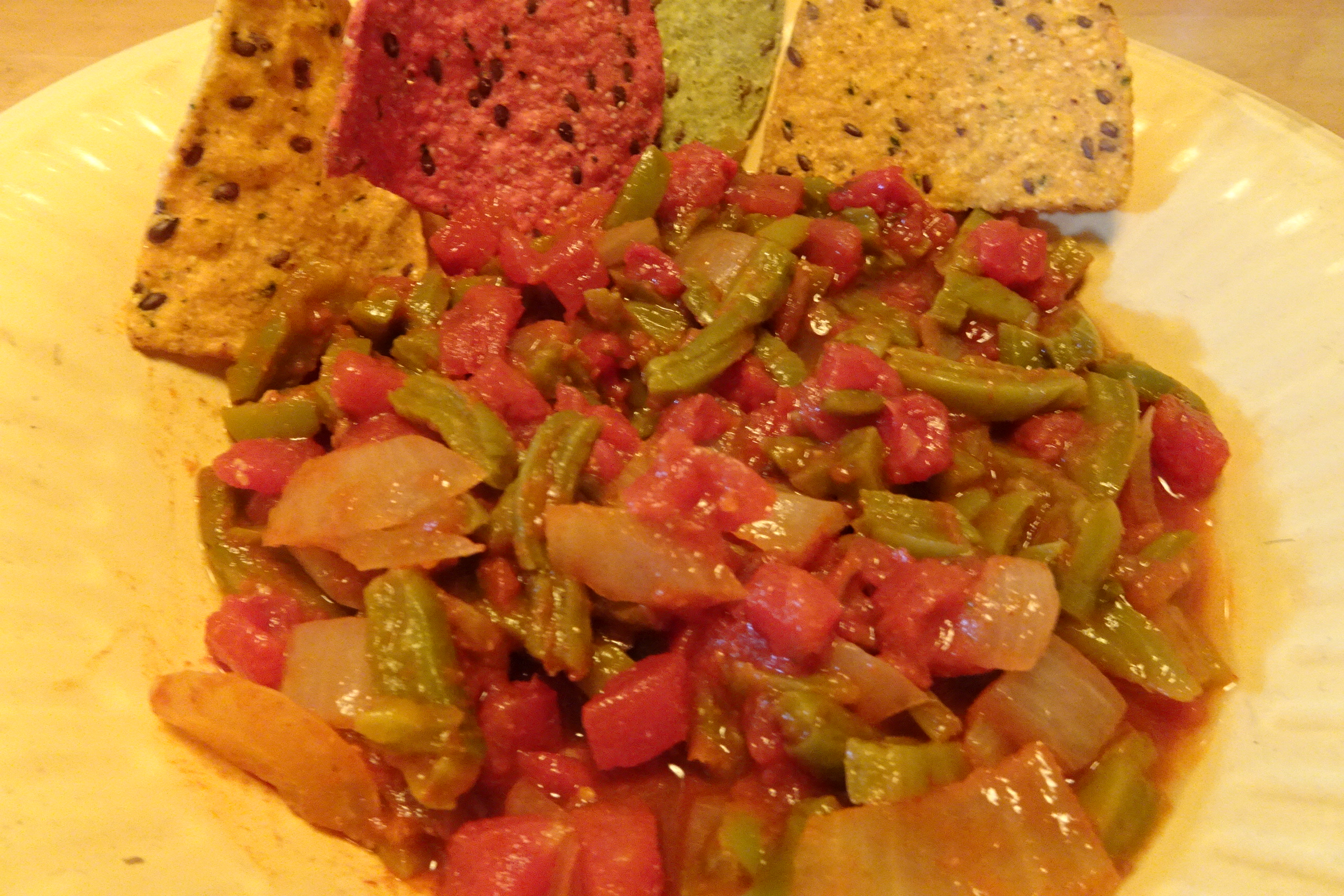
Delicious combination of nopales, onions, tomatoes, and chile paste.

Last weekend I gathered with a few friends to reminisce about a time decades ago when we were all just starting out in the world of learning about the food and animals and lifeways of the Southwest. At that time many of the members were working on graduate degrees and others of us had already launched our careers. We  formed an informal group called The Tepary Burrito Society to share our experiences in occasional “seminars” which involved a potluck and sitting cross-legged on somebody’s floor with a plate on our lap. The name Tepary Burrito Society came from the local tepary bean that had almost been lost. We were all most excited about learning how to cultivate teparies and cook with them. ( Tia Marta discussed teparies at length in this post).

Back in our “seminars,” someone would be chosen to present what subject they were working on. By the time of those meetings, I had already published my first cookbook, then called American Indian Food and Lore, now republished as American Indian Cooking: Recipes from the Southwest. I had done the research by traveling around the Southwest talking to Native American women and gathering recipes from them. At this weekend’s potluck, my friend Nancy Ferguson surprised us by bringing a recipe from that first cookbook, Beavertail Stew. No beavers are in this dish! The name comes from a nickname for prickly pears because the big flat leaves resemble a beaver’s tail. I haven’t heard that nickname recently, but this book was researched fifty years ago. 

I have always made this dish with fresh nopalitos that I have gathered and cleaned myself or from already cleaned and chopped nopalitos from a Mexican grocery store. Nancy said that she makes them with jarred nopalitos which she rinses before frying them. If you want to use fresh, I give instructions on how to do it in this previous blog post here. 

This spicy dish can be a side dish or a dip for tortilla chips.

Beavertail Stew

(Warning: this dish is spicy. Reduce the hotness by using much less chile paste. Start with a little)

1 cup nopalitos, fresh or jarred

1/4-1/2 cup chopped onion

3 tablespoons vegetable oil

2 cloves garlic, minced

3/4 cup chopped fresh tomato or canned 

1 to 2 tablespoons chile paste (I use Santa Cruz chile paste)

2 shakes cumin

1/4 cup shredded chicken or pork (optional)

Heat the oil in a frying pan over medium heat. Fry the nopalitos and onions until they are slightly crisp. Add the garlic, tomato sauce, chile paste, cumin, and salt. Stir and cook a few minutes until well combined. Add a little water or tomato juice so the mixture can simmer without burning. Stir in the meat if using. Serve with toasted tortillas.

___________________________________

Interested in learning how to gather and prepare edible wild plants of the Southwest? Two cookbooks can guide you. American Indian Cooking: Recipes from the Southwest has traditional Native American recipes, some of them very old. These recipes are usually simple. Cooking the Wild Southwest includes more modern recipes for 23 edible wild plants that are easy to gather, easy to recognize and taste good, especially in these recipes. 

Seville Whole Orange Cupcakes

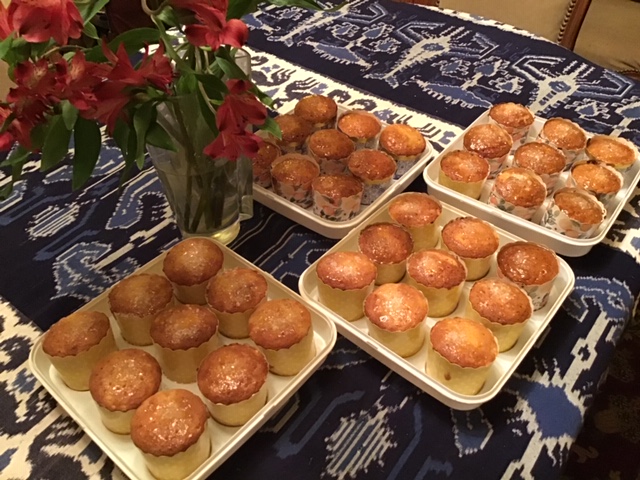
Five dozen Seville orange cupcakes ready for transport to the Mission Garden Citrus Fest.

This is citrus season in the desert Southwest. All varieties of citrus can be found on trees in backyards, orchards, public gardens, 
college campuses and even street sides. It is a wonderful abundance.  It’s Carolyn today and previously on Savor the Southwest, we’ve given you recipes for grapefruits, oranges and lemons (try this fabulous lemon pie or limoncello) . But one abundant fruit that is underused  is the Seville orange. Sometimes it is called the sour orange. These oranges have bumpy skin, lots and lots of seeds, and a very tart flavor. Seville oranges make terrific marmalade, the kind with a bitter under flavor that is traditional in British orange marmalade.

The history of all citrus is a little murky, but botanists agree that it originated in parts of Asia where gardeners were growing citrus 4,000 years ago. According to plant expert Dena Cowan of Mission Garden in Tucson, as the various varieties of citrus arose, they interbred to produce even more varieties. Eventually, through human migration and trade, citrus made its way to the Middle East and Southern Europe where the various varieties found a home in the Mediterranean climate. One thing is clear though, the sour orange, the ones we call Seville, predated the varieties of sweet oranges we enjoy. Citrus was brought to the New World by the Spanish explorers and Catholic missionaries. Again, the climate was perfect. 

During this season I make many jars of marmalade (recipe here) and store it for use during the year. But I’ve got enough now and was looking for other recipes, specifically something I could sell at the Citrus Fest at Mission Garden. I found a recipe on-line and was able to adapt it to use with the Seville oranges which grow in great abundance at Mission Garden. The five dozen Whole Orange Cupcakes I made sold out and people found them so delicious they wanted the recipe. So here it is along with some tips:

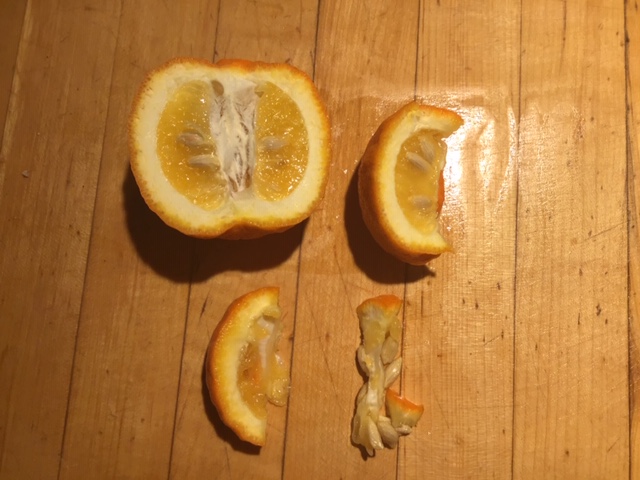
Cut the Seville orange into wedges and trim out the center with seeds and fiber. Discard what you have trimmed and grind the cleaned wedges.

Seville Whole Orange Cupcakes

Continue reading

Simple Posole for Winter Suppers

Every Mexican nana anywhere in the US or Mexico has a special, probably complicated, and delicious posole recipe. But you shouldn’t feel intimidated. You can make a delicious posole, basically a pork and hominy stew, for a family dinner or a dinner with friends without much fuss. You can have the basic stew or fancy it up with condiment add ins.

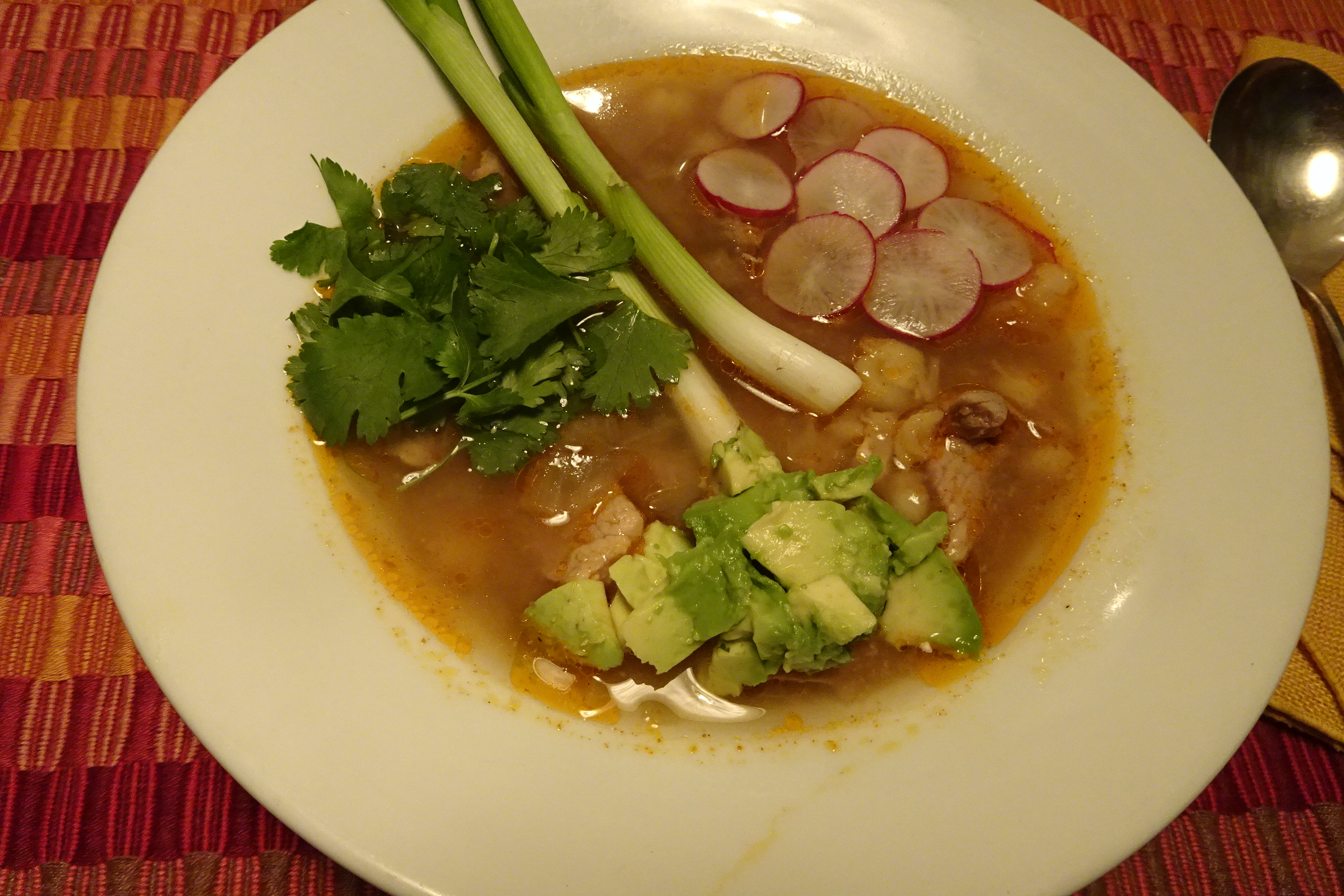
Simply constructed posole all dressed up for dinner.

The thing that differentiates posole from ordinary beef stew is the hominy. My friend Michele Schulz wrote about hominy in a recent blog:

“Nixtamalization is the hominy making process and has been fundamental to Mesoamerican cuisine since ancient times. Among the Lacandon Maya who inhabited the tropical lowland regions of eastern Chiapas, the caustic lime powder was obtained by toasting freshwater shells over a fire for several hours. In the highland areas of Chiapas and throughout much of the Yucatán Peninsula, Belize Valley and Petén Basin, limestone was used to make slaked lime for steeping the shelled kernels. The Maya used nixtamal to produce beers and when bacteria were introduced to nixtamal, a type of sourdough was created.

“Alkalinity helps dissolve hemicellulose, the major adhesive component of the cell walls, loosening hulls from the kernels and softening them. Soaking kills the seed’s germ, keeping it from sprouting while in storage. In addition to providing a source of dietary calcium, the lye or lime reacts with the corn so the nutrient niacin can be assimilated by the digestive tract.”

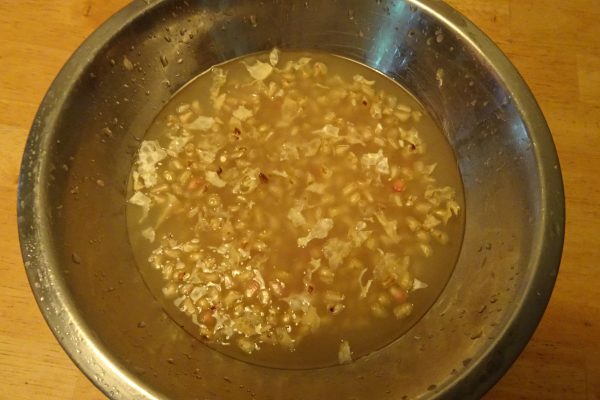
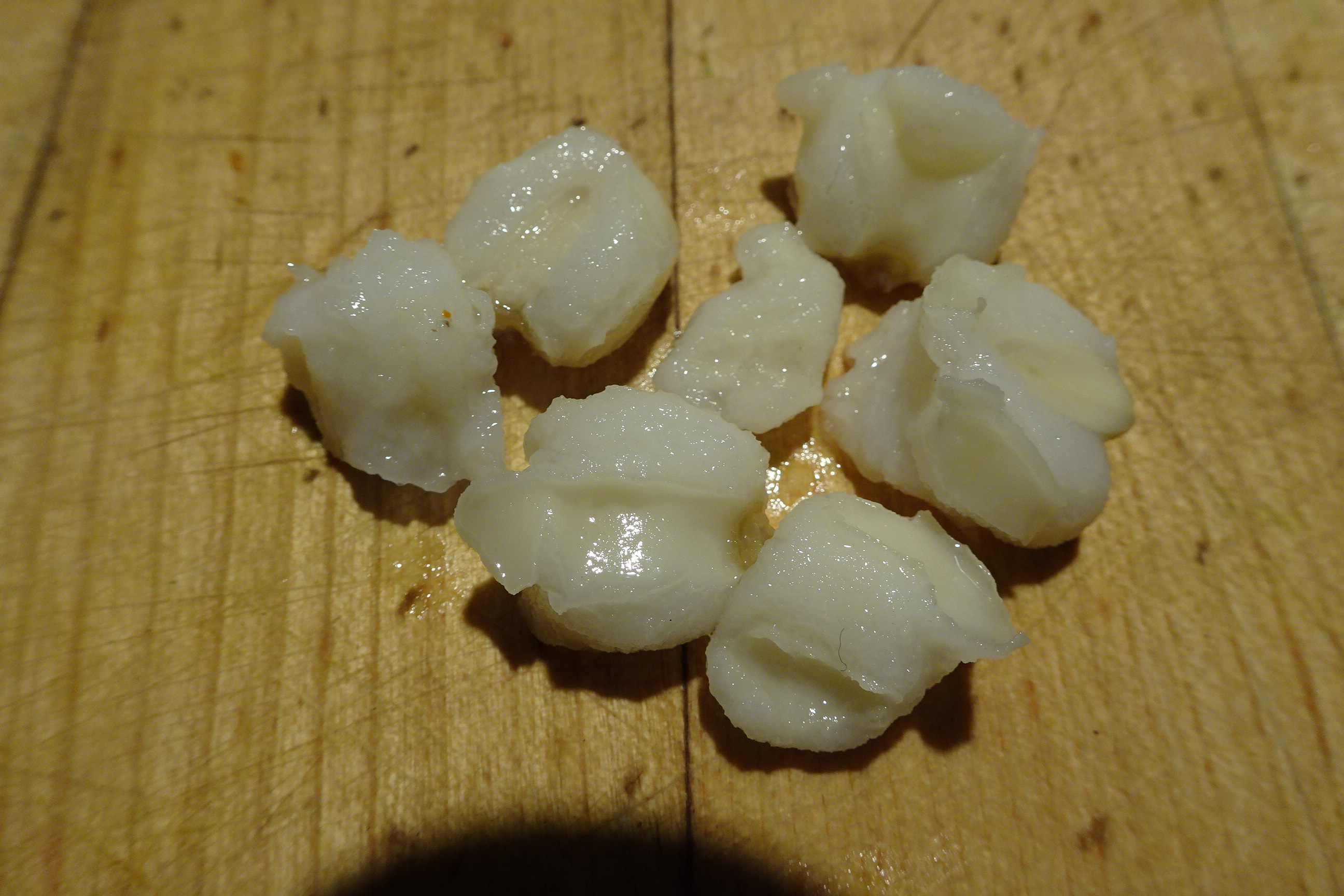
Here is a picture of the way corn kernels puff up to become hominy.

Unlike the ancient Mayans, you won’t have to grind seashells to make your posole. This simple recipe today uses canned hominy which is widely available in grocery stores in the West. Or if you are ready for some culinary fun, you can do what Savor Sister Amy did and make your own hominy from corn. Or maybe you just want to read about it!

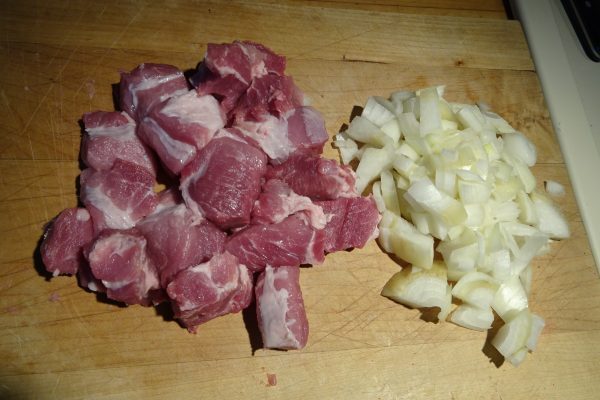
To make our easy version of posole, start with some pork roast (not the loin , too lean) cut in chunks and some chopped onion. If you have a slow cooker, this makes things easy because you don’t have to keep an eye on it. Or you can use a heavy pot on your stove. You’ll cook it until the pork is tender, about 2 hours.

Start with pork cubes and onion.

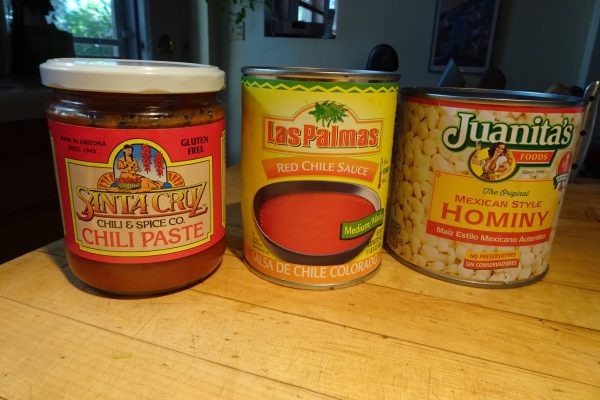
Once the pork is tender, add the hominy and the chile sauce. The bouillion  adds a little umami and savoriness and lifts the flavor. Don’t forget the salt. The dish will taste flat without it. How much chile sauce you add depends on the spiciness of the sauce and your taste. It should have a little kick but not burn your tongue. 

Here are the canned products that simplify the process. If you can find the Santa Cruz chile paste, it is great. If not, a canned chile paste works. 

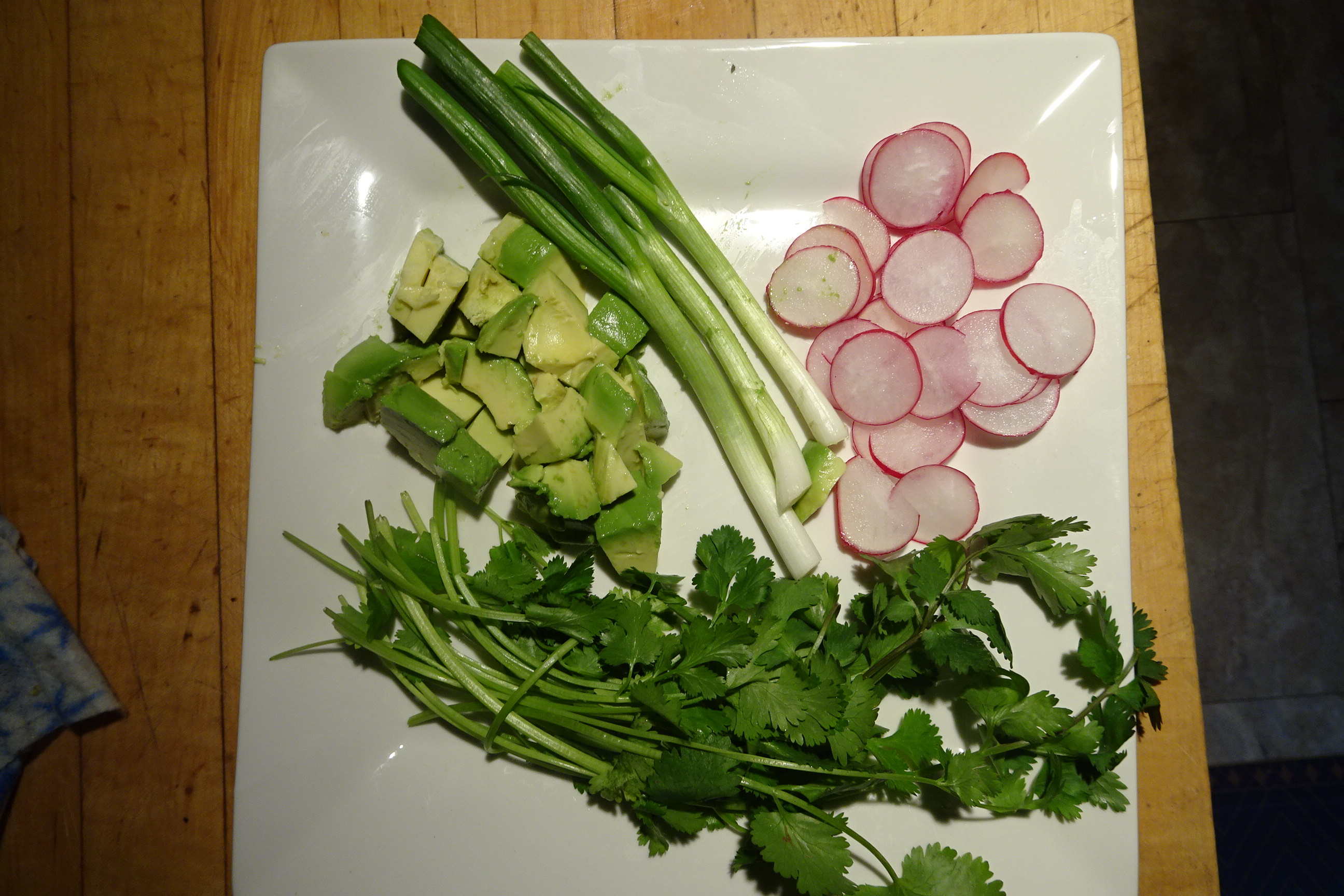
While the posole is cooking, assemble the condiments which can include green onions, radishes, cilantro, avocado and lime wedges. 

A nice selections of condiments.

Easy Posole

2-2 1/2 pounds pork stew meat

1 onion

1 teaspoon chopped garlic

1 cup water

1 teaspoon Better than Bouillon or a bouillon cube

1 25-ounce can posole

1/4-1/2 cup chile sauce

Salt and pepper to taste

Condiments:

Sliced radishes

Finely shredded cabbage

Avocado chunks

Cilantro sprigs

Green onions

Lime wedges

Combine the pork chunks, the onion, garlic, and water in a slow cooker or heavy pan (like a Dutch oven), and simmer until the pork is very tender, about two hours. Flavor with salt and pepper.  Add the hominy and the red chile sauce and heat. It should be a little soupy. Ladle into bowls and pass the condiments.

________________________________________________

Carolyn Niethammer has been writing about Southwest food for decades and had published five cookbooks. You can find recipes from renown Southwest chefs in  the New Southwest Cookbook, recipes for edible wild plants in Cooking the Wild Southwest, and the history of food in the Santa Cruz basin and the arrival of agriculture in what is now the United States in her latest book A Desert Feast.  

Her website is www.cniethammer.com. 

Delicious Beverages to Make from Pomegranate and Hibiscus

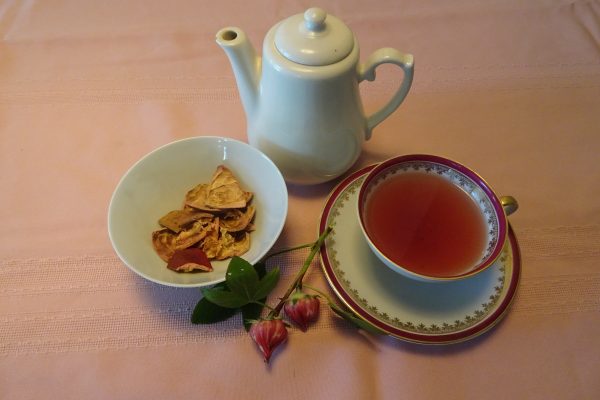
A lovely hot drink made from pomegranate rind and hibiscus flowers.

Hello! It’s Carolyn today and after nine years of Savor the Southwest, we have an updated look. All the old posts for wild food and Southwest specialties are still in the archives, although they all have the new look.

Today I’m going to talk about tea–well actually “infusions,” since tea must refer to the leaves of the Camellia sinensis plant. Fall is pomegranate season in Tucson and many people in the warm Southwest have the trees in their yards. Pomegranates are one of the Old World Mediterranean crops brought to the area by Father Eusebio Kino in the early 1700’s. 

Many people let their precious pomegranates go to waste because they don’t know how to get out the seeds and then how to eat them. An easy way to do this is to quarter the fruit and then submerge the pieces in a bowl of cold water. Pick the seeds out with your fingers. The seeds will sink to the bottom of the bowl and the fiber will float. 

Pomegranate being cleaned in a bowl of water. 

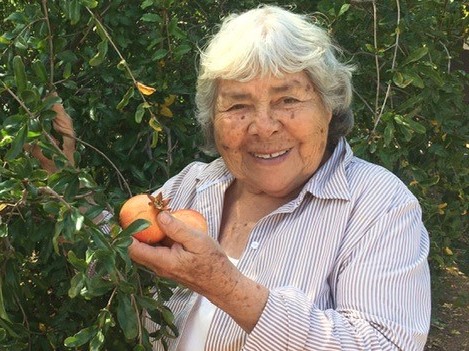
The cleaned seeds can be sprinkled on fruit salads or squeezed for juice. But what of the peels? I was amazed to learn recently that the dried pomegranate rinds can make a great tea–whoops, infusion. The imparter of this old-fashioned knowledge was Josefina Lizárraga, who comes often to Mission Garden to share her tips for dealing with local fruit. She is affectionately called La Madrina del Jardín. According to Josefina, the drink is also good to soothe colds or flu.

Josefina with pomegranate at the Mission Garden. (photo by Emily Rockey) 

Another delicious drink can be made from hibiscus flowers from the variety Hibiscus sabdariffa, easily grown in the summer and dried for year round use.  Mexicans use it to make a drink called jamaica (Ha-my-ca). In Cairo the juice is heavily sugared for a popular drink called karkadai.

While either the pomegranate or hibiscus teas are good alone, try combining them for a fruity, herby treat. If you have mint in your garden, you could even add a few sprigs of that. 

Hibiscus sabdariffa, also called Jamaica.

Té de Granada (Pomegranate Tea)

Recipe by Josephina Lizarraga (as told to Emily Rockey)

Bring 2-3 cups of water to a boil. Put 1.5-2 teaspoons of ground pomegranate rind in a pan or teapot.

When water boils, pour over ground pomegranate skin. Allow to steep 10-15 minutes. The pomegranate will settle to the bottom. Alternately, if you don’t grind the skins, you can leave them in 1-2 inch pieces and boil them for 15-20 minutes.

Enjoy simply as it is, or add sugar or honey.

Drink anytime, or for soothing colds or flu, add honey and lemon.

Jamaica (Hibiscus) Tea

1 quart water

1/2 cup dried hibiscus flowers

1/4-1/2 cup sugar

Ginger slices, cinnamon stick, lime juice (optional)

Bring the water to a boil and pour over the hibiscus flowers and other flavorings you choose. Add sugar and stir until dissolved. Steep about 20 minutes or until desired strength. You can also mix half and half with club soda for something a little fancier.

_______________________________________

Want more recipes for prickly pear and other wild foods? You’ll find delicious ways to bring these healthy plants to your table in my cookbook Cooking the Wild Southwest: Delicious Recipes for Wild Plants and The New Southwest Cookbook. The links take you on-line, but consider ordering from your local bookstore. They will love you for it. Interested in the history of food in the Southwest? A Desert Feast: Celebrating Tucson’s Culinary Heritage takes you through the last five thousand years, from prehistory through the challenges faced by today’s farmers.

Brown Figs and Black Plums: Savor the Lush Sweet Dark Fruits of Summer

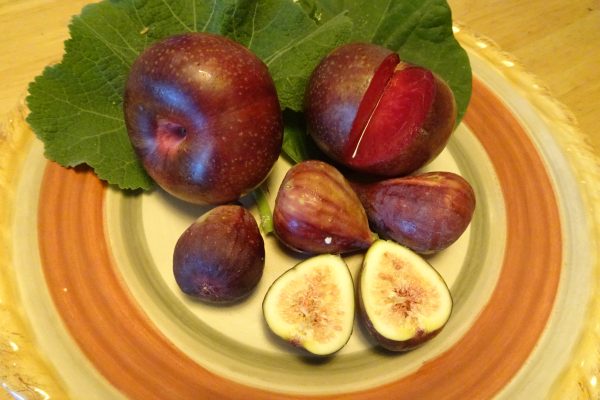
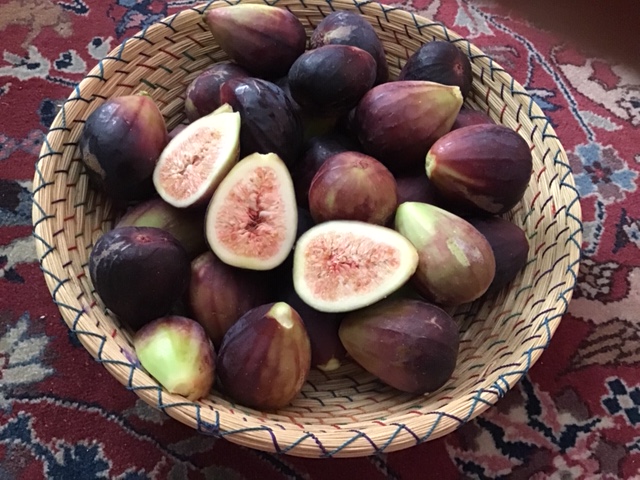
Dark plums and brown figs aren’t brilliantly colored but they bring deep sweetness to summer jam.

When we think of summer fruits, we usually think of jewel tones: the glowing amber of peaches, deep garnet of cherries and raspberries, the sapphire of blueberries, and bright gold of pineapple. But reddish brown figs and dark (sometimes called “black”) plums are also summer fruits with deep flavor and sweetness that combine in an easy jam.

It’s Carolyn with you today and I just love to make jam. When I saw that the fig tree where I glean had some ripening figs, I got up at 6 a.m. and headed out on a seven-block walk to fill a basket. 

Decades ago my friend Suzy had a big fig tree, and I learned to protect my arms when harvesting because of rubbing something off of the fuzzy leaves. But my memory of the problem faded over thirty years, and this morning I harvested with bare arms, reaching deep into the interior of the old fig tree to grab the earliest ripening fruit. On the walk home, my forearms were on fire. Tip: wear long sleeves when harvesting figs. The irritation abated after I got home and washed off whatever was causing the problem, but don’t make my mistake. 

A lovely basket of figs.

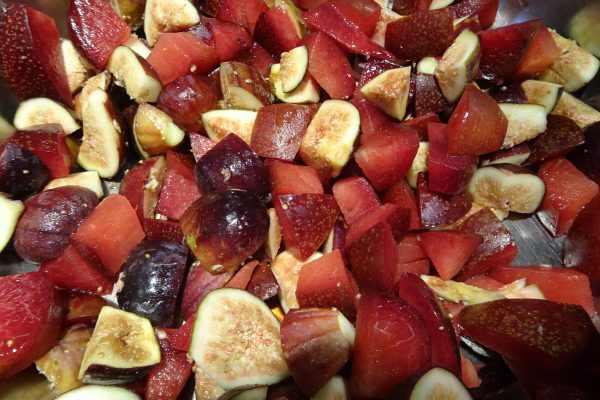
Making the jam  couldn’t be easier. Cut the plums and figs into half-inch chunks and combine with the sugar and lemon juice. Bring to a low simmer. Stir occasionally, making sure it doesn’t scorch. Cook until a thermometer registers 220 degrees F. If it seems plenty thick at 218 degrees, you can stop there. Ladle into clean, boiled jars. This makes less than a pint so you probably don’t need to seal the jars; you’ll eat it up quickly.

Cut the figs and plums into half-inch chunks.

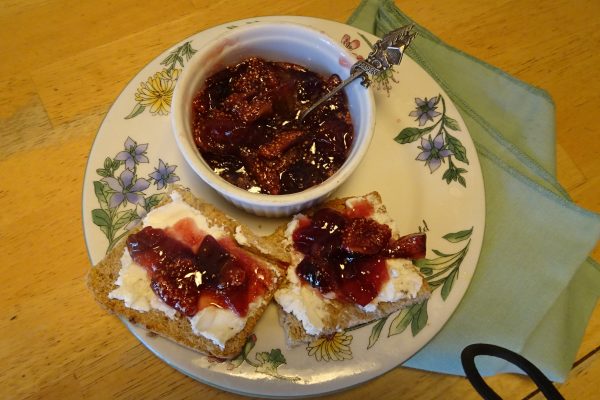
Your homemade jam will be delicious on toast, especially if you also add some goat or ricotta cheese. The picture shows some whole wheat toast made by my husband Ford. 

Fig and Plum Jam is delicious on toast. Add goat or ricotta cheese for added richness.

Easy Fig and Plum Jam

1 cup chopped ripe figs

1 cup chopped black plums (about 2)

1 cup sugar

3 tablespoons lemon juice

Combine all ingredients in a medium saucepan and stir to combine. Cook over medium heat, stirring frequently until thermometer registers 218-220 degrees F. Since you are cooking such a small amount, this won’t take too long. Ladle into sterile jars and refrigerate until use. The recipe can be doubled. In that case, for unrefrigerated storage, be sure to use jars with two-section lids that seal. For long-term storage process in a boiling water bath for 10 minutes.

______________________________________________________________________

For more great recipes using Southwest foods, check out my cookbooks. The New Southwest Cookbook has recipes from some of the Southwest’s top chefs. Cooking the Wild Southwest includes recipes for foods you can gather in the wild.   The  Prickly  Pear  Cookbook  teaches you how to gather and prepare prickly pear pads and fruit.  Recipes in these books will get you started. Soon you’ll be coming up with great recipes on your own. 

Nopalitos for a Healthy Side Dish

The Savor Sisters, Amy, Carolyn, and Tia Marta, are good friends, but busy lives mean we rarely get together. Recently we gathered for a memorial service.

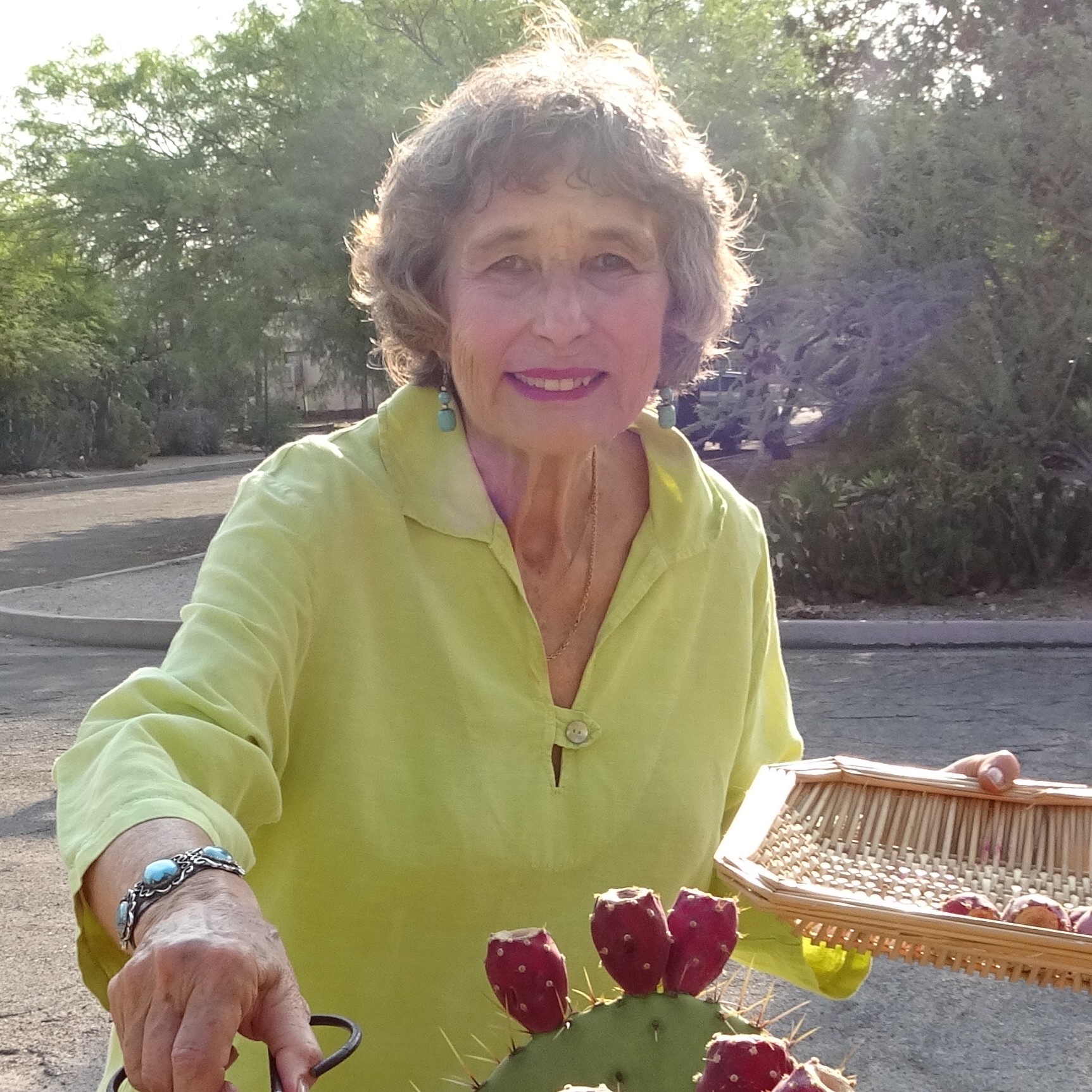
For nine years now, we Savor Sisters have regularly brought you interesting and unusual recipes for both wild and heritage foods of the Southwest.  If there is a delicious Southwest food, we’ve probably written about it. We concentrate on the food, not ourselves. But recently we found ourselves at the same event, celebrating the life of ecologist Tony Burgess.  Thought you might be interested in the faces behind the recipes.

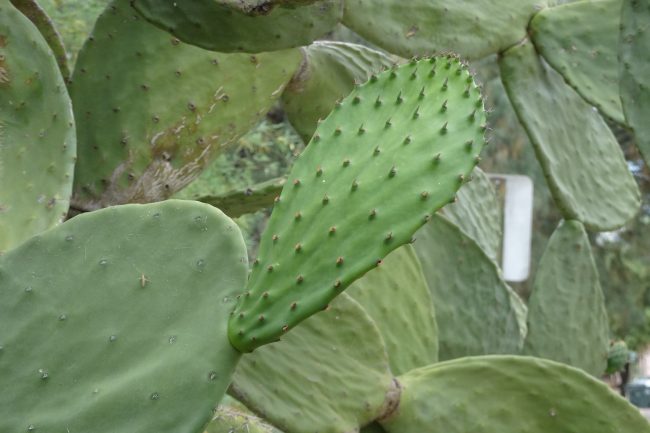
Gather prickly pear pads when they are young and tender.

In the spring, I like to remind people that it’s time to gather and cook fresh nopales or prickly pear pads. Although all prickly pear pads are edible, you want to look for the Ficus indica,  the kind imported from Mexico with fewer spines.  (The native Engelmann Opuntia produce better fruit.) Gather the pads in your or a neighbor’s yard (ask!) using tongs or buy them from a Mexican grocery store.

Although this variety of prickly pear lacks the big spines of the native variety, they still have very small spines that need to be removed before cooking. In this column we’ve discussed many times how to clean them.  Here are the instructions with photos. Wild food enthusiast, Chad Borseth, has put together a helpful video on cleaning freshly harvested nopal pads. You can watch it here. Chad doesn’t have gloves on and is courting disaster. I suggest you wear rubber gloves, just the kind you get at the grocery for washing dishes are adequate.  Also, keep a tweezers handy. If you get a sticker in your finger, just take it out. Don’t make a big deal out of it.

Once you have cleaned the prickly pear pads, you can cut them into small pieces (nopalitos) or strips, coat them with a little oil, and either fry or grill or bake in the oven. When they turn olive green, they are done. 

Nopales are delicious and also really healthy. Medical studies have confirmed the folk wisdom that they are great at reducing blood sugar and cholesterol. In fact one study showed that just two small pads eaten daily can control non-insulin dependent diabetes and prevent it from worsening.

Today, I want to give you some easy ideas what to do with the nopales once you’ve cooked them. Whenever you are introducing a new unusual food to people who might be a little skeptical (or maybe it is you who is skeptical!), it is good to include them in something familiar. So here are some of my favorites. Be creative and include nopales in your family favorites.

Tomato Nopalito Salsa: In a bowl combine 1/2 cup tomato salsa (homemade or commercial), 1/2 cup cooked black beans, 1/2 cup cooked nopalitos, 1 tablespoon chopped fresh cilantro, 1 tablespoon lime juice. Serve with chips and watch it disappear. 

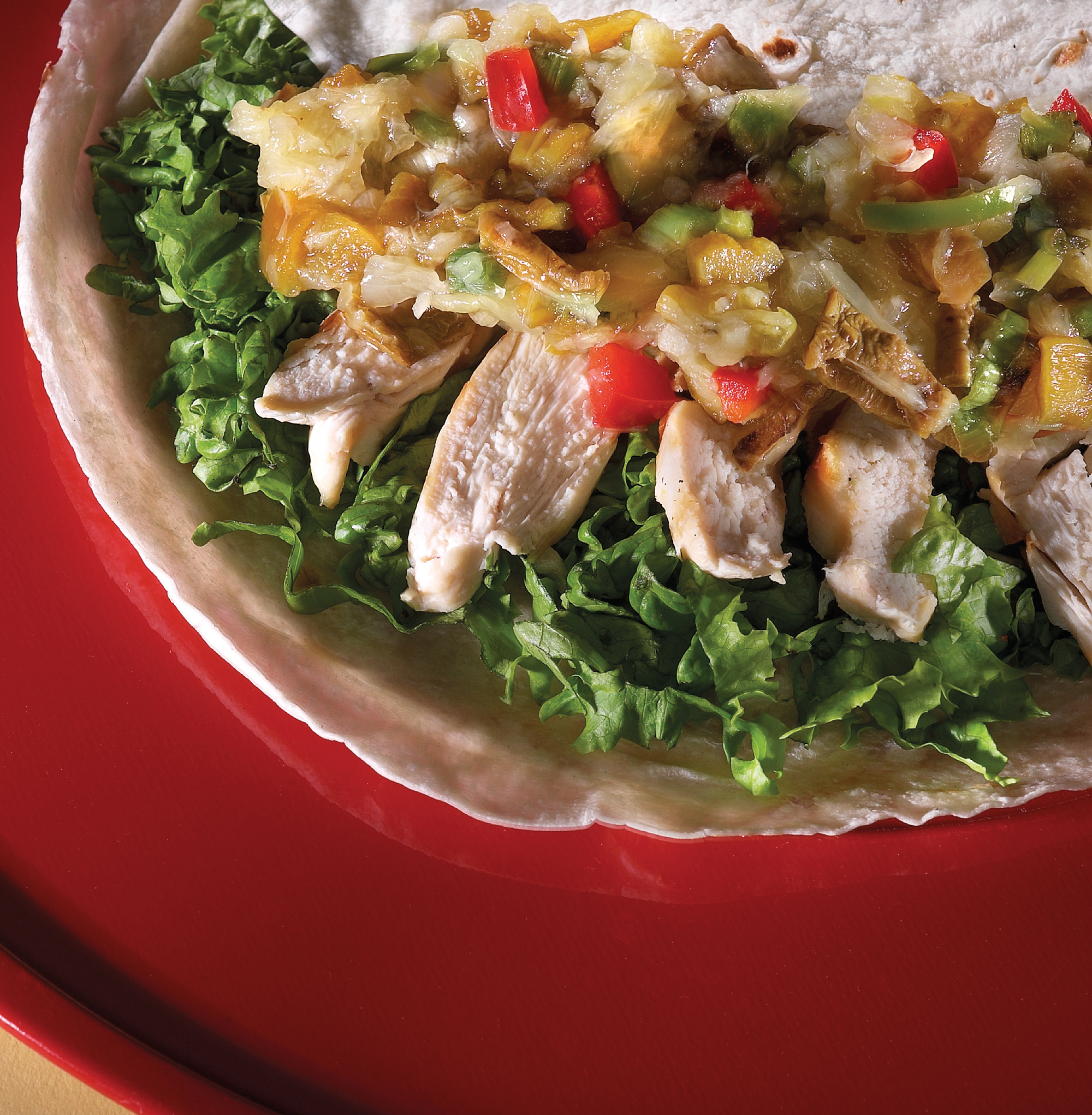
Grilled Chicken with Nopalito and Pineapple Salsa

Pineapple Salsa:  Combine cooked nopalitos with crushed pineapple, red pepper, onion, garlic and other flavorings. Terrific as a topping for grilled chicken.  See complete recipe in previous post here.

Fundido de Nopalito: In a small black iron frying pan, brown 1/4 cup chorizo until cooked. Add 1/4 cup cooked nopalitos, and top with 1/4 cup shredded Mexican or Monterrey jack cheese. Heat in 400 degree oven until cheese melts. Serve with soft tortillas or chips. This recipe makes a small amount so be prepared to make more right away.

Nopalito tacos: Cooked nopales have the texture and bite of meat so they make great vegetarian tacos. Use nice soft flour tortillas (the small ones). For tacos, cut your nopales in strips. Top with salsa and cheese. Add chicken or fish if you like. 

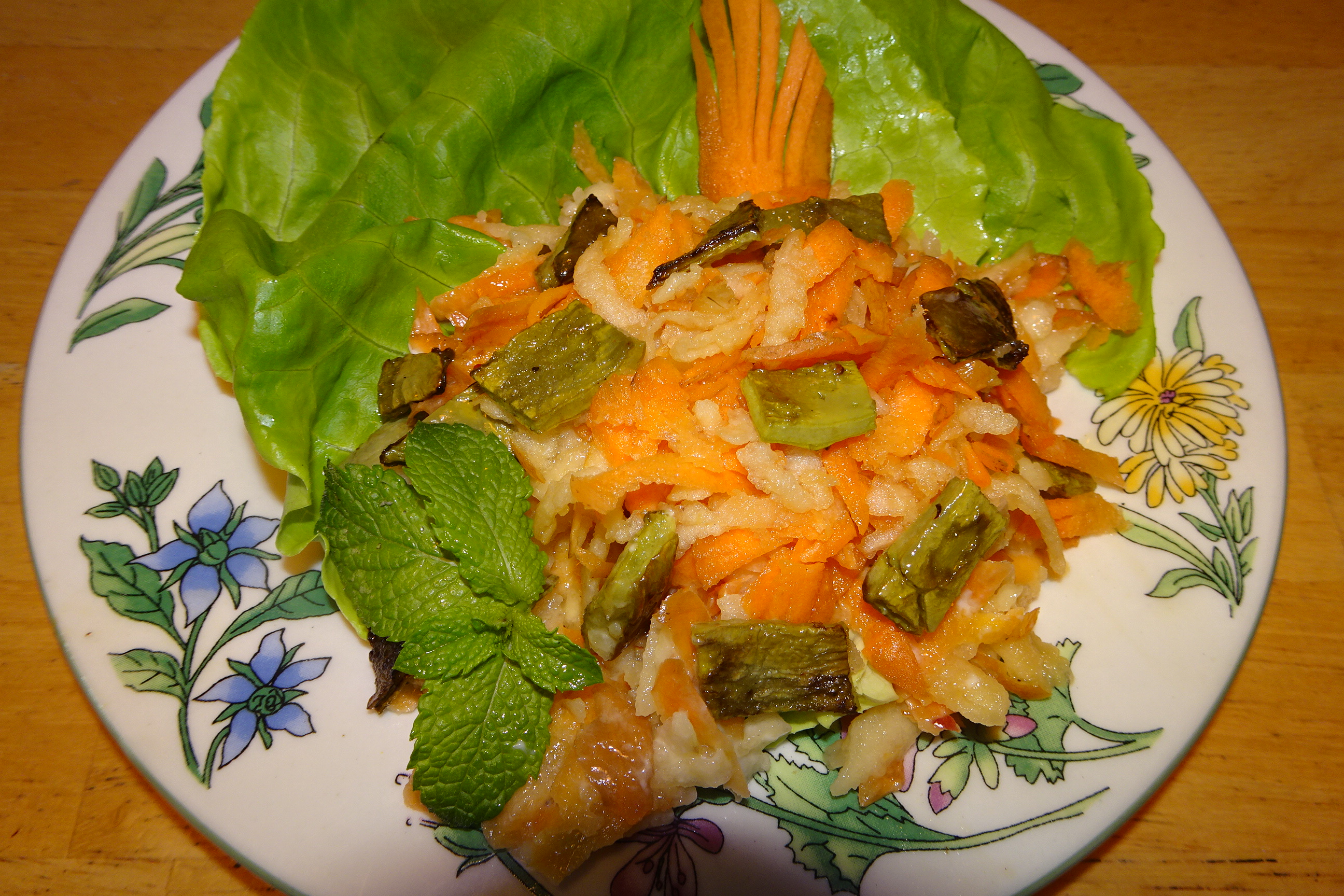
Use your own recipe for Apple and Carrot Salad and add nopalitos in small dice.

Apple, Carrot and Nopalito Salad:  This is a Southwest twist on an American classic. Use your own recipe or follow the directions here. 

__________________________________________

Want more recipes for prickly pear and other wild foods? You’ll find delicious ways to bring these healthy plants to your table in my cookbooks Cooking the Wild Southwest: Delicious Recipes for Wild Plants and The Prickly Pear Cookbook. The links take you on-line, but consider ordering from your local bookstore. They will love you for it. 

Barrel Cactus Fruit and Lemon Combine for Tangy Winter Treat

Barrel cactus fruit and lemons are tasty winter companions.

When I look back at the many blog posts we Savor Sisters have written over the years, frequently there are recipes including barrel cactus at this time of year. In a season where most other plants are resting and waiting out the cold desert nights, barrel cactus are providing glowing yellow fruit in abundance. January is also the season for citrus in the Southwest and there is no shortage of delicious baking recipes using lemon.

It’s Carolyn today and I’m going to modify a lemon recipe I’ve made a couple of times during the pandemic, a time many of us were amusing ourselves with baked goods. The original recipe starts with lemon, but I’m adding poached lemon-y barrel cactus fruit along with the crunchy seeds to make more of a good thing. However, you can making this recipe the super-easy way by just using the barrel cactus seeds and skipping the poached fruit topping. Suit yourself. In any case, you’ll end up with something delicious.  The recipe includes turmeric, a spice that has healthful properties. I’m not sure I can taste it, but it adds a bright yellow color that psychologically enhances the lemon flavors as we taste with our eyes as well as our mouth.

Preparing the Barrel Cactus Seeds and Slices

It is easiest to get the seeds by gathering your cactus fruit in advance. Halve the fruit and put it out in the sun. Once the fruit is dry, the seeds release more easily.  Now for the fruit topping. (You can skip this if you wish.) Choose four of the best barrel cactus fruit halves. Scoop out the seeds as well as you can and add to the others that are drying. Using your sharpest knife, slice the fruit as thinly as possible. Try to get about 36 slices. Put the slices in a small frying pan, cover with water, and simmer for a couple of minutes. Drain, return to the pan, add two tablespoons of water and two tablespoons of sugar. Simmer for about a minute, remove slices and dry on a sheet of waxed paper. 

Slice the fruit thinly and rinse off the seeds, catching them in a sieve. Don’t clog your drain!

Some time during the 2000s, I began to learn about lining baking pans with parchment paper to help release cakes and breads. It takes extra time but does help with sticking. 

Consider lining your baking pan with parchment paper. When positioning your candied cactus fruit, lay the pieces crosswise to help in slicing.

Lemon Barrel Cactus Cake

Nonstick cooking spray or oil for greasing pan

1½ cups all-purpose flour

2 teaspoons baking powder

1 teaspoon salt

2-3 tablespoons barrel cactus seeds

¾ teaspoon ground turmeric

2 lemons

1 cup granulated sugar, plus 2 tablespoons for sprinkling

¾ cup  Greek yogurt

2 large eggs, beaten

½ cup (1 stick), melted

36 (or so) candied barrel cactus slices

  1. Heat the oven to 350 degrees. Lightly grease a 4-by-9-inch loaf pan with nonstick cooking spray or butter, and line it with parchment, leaving some overhang on both of the longer sides so you’re able to easily lift the cake out after baking.
  2. Whisk the flour, baking powder, salt and turmeric in a large bowl.
  3. Grate 2 tablespoons zest from 2 lemons into a medium bowl. Halve the zested lemons and squeeze 2 tablespoons juice into a small bowl.  You’ll have extra juice, so save the remainder for another use.
  4. Add 1 cup sugar to the lemon zest in the medium bowl; rub together with your fingertips until the sugar is fragrant and tinted yellow. Whisk in the Greek yogurt, beaten eggs and the 2 tablespoons lemon juice until well blended.
  5. Using a spatula, add the wet mixture to the flour mixture, stirring just to blend. Fold in the melted butter. Stir in the barrel cactus seeds. Scrape the batter into the prepared pan, smoothing the top. Arrange barrel cactus slices on top if using and sprinkle with 2 tablespoons sugar.
  6. Bake until the top of the cake is golden brown, the edges pull away from the sides of the pan, and a tester inserted into the center comes out clean, 50 to 60 minutes. (If the loaf is getting too dark, lay a piece of foil on top to prevent burning.) Let cool before slicing.

___________________________________________________________

Want more recipes using wild foods of the Southwest? You’d find ideas for collecting and using 23 easily recognized and gathered desert foods in Cooking the Wild Southwest: Delicious Recipes for Desert Foods. If you are interested in prickly pear, The Prickly Pear Cookbook will teach you how to gather pads and fruits and turn them into tasty treats. Just click on the titles for more information. You can learn more about me on my website.