Indeed we’ve been blessed this cool season by some good rains in the Sonoran Desert–and everywhere there is greenery popping up. Weeds, you say? Let’s take a closer look! As our SavorSister Amy shared earlier this month in her tasty “rocket post”, what may LOOK like weeds are actually the gift of wild greens! Tia Marta here to share more ideas for wondrous weed-collecting.
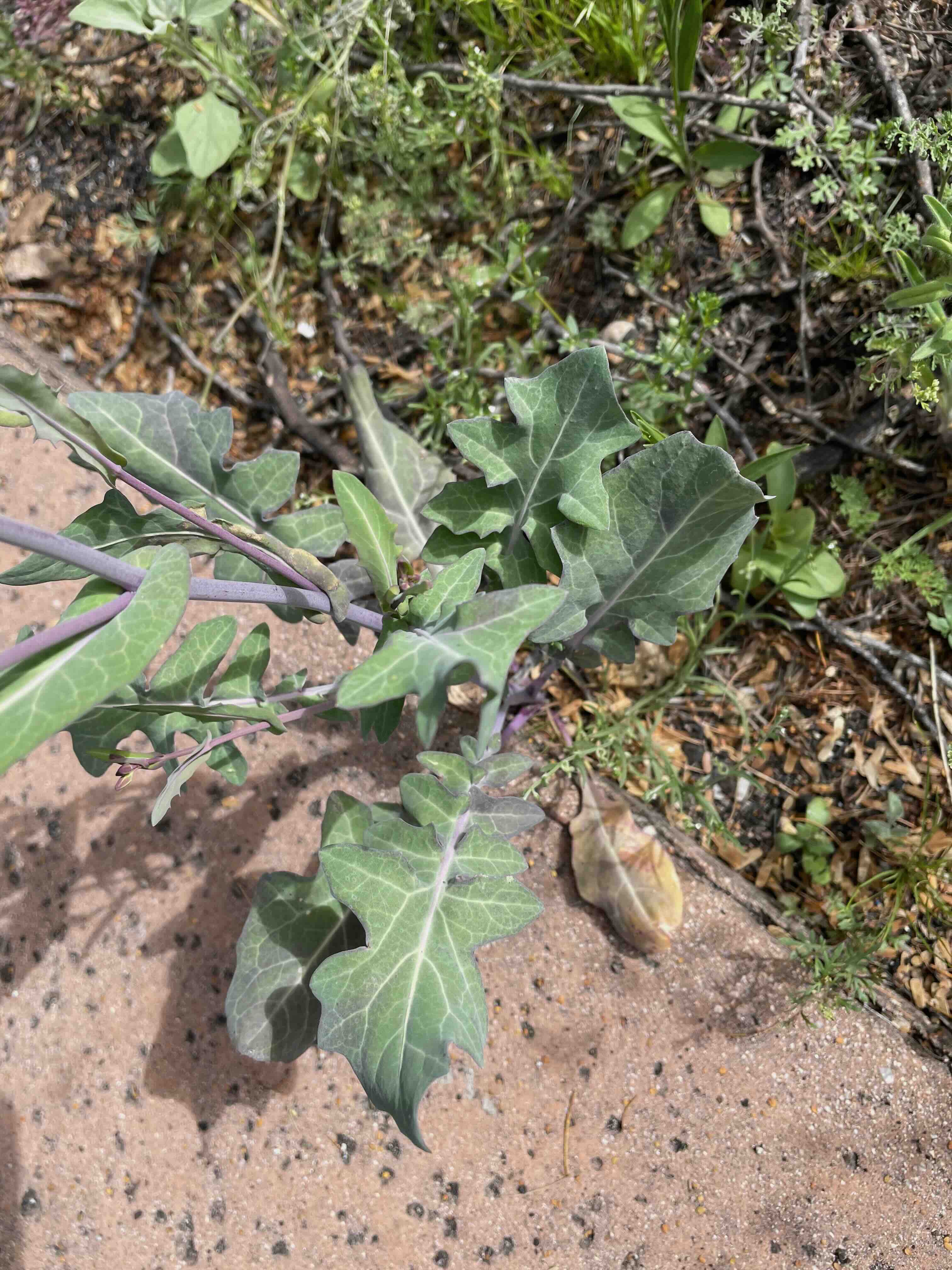
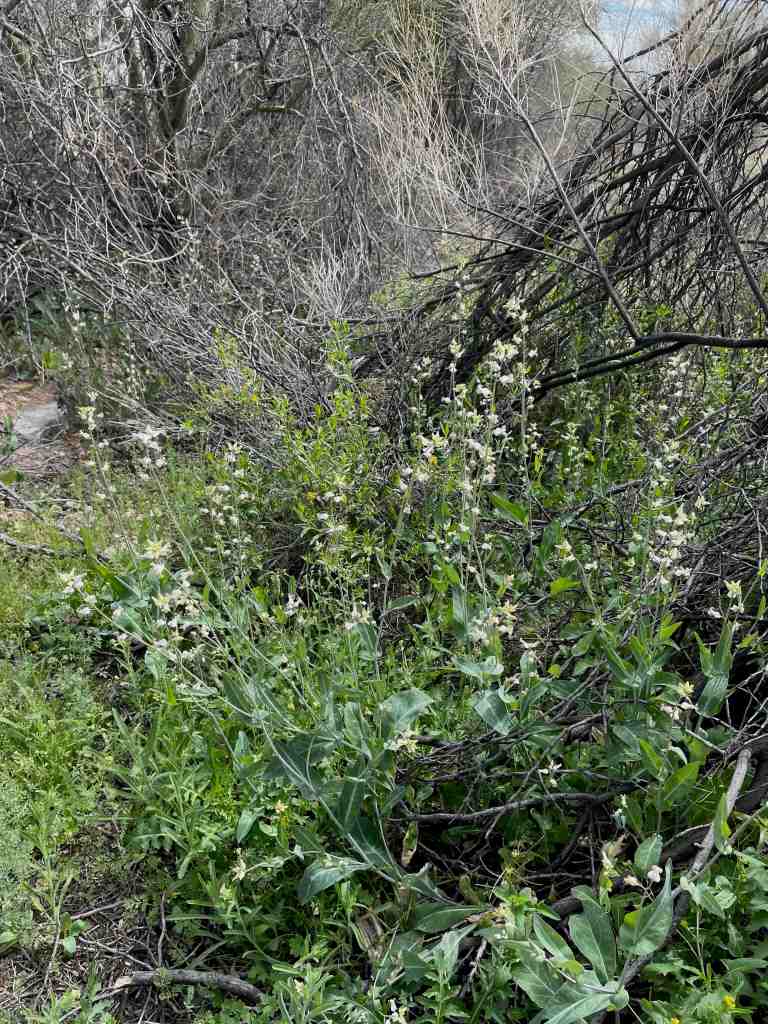
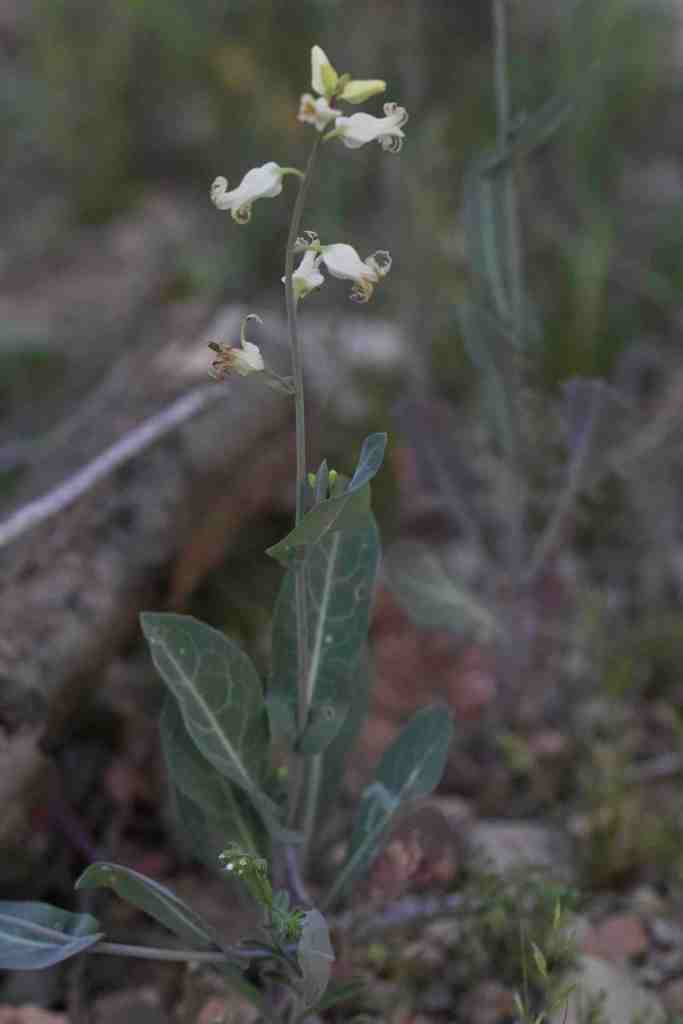
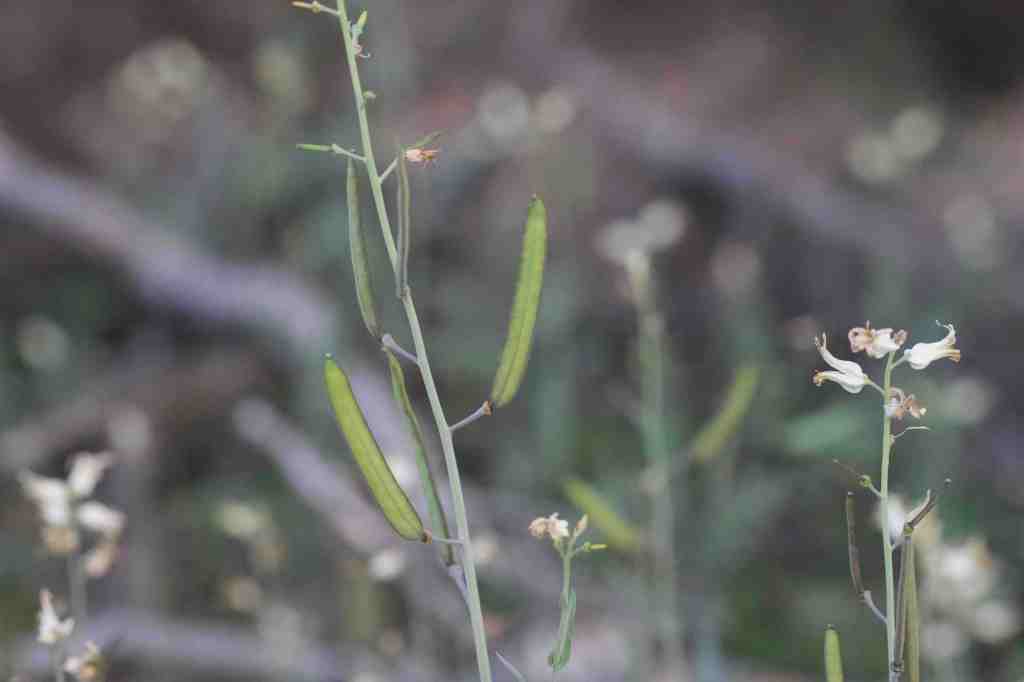
This sweet 4-petaled “Arizona jewel plant” also known as “silverbells” (Streptanthus carinatus), is an endearing wild native mustard with delightfully good taste and nutrition. Planting silverbells seeds can also make a delicate addition to your own edible landscaping.
Out in the desert and in town you can find great patches of silverbells right now, especially in the shade of other desert shrubs. At times like these when there is such plenty (with thanks on our lips for these edibles), we can feel some assurance that harvesting a little for our family will still leave lots for other desert creatures and seeds for a future winter.
Silverbells isn’t spicy–no picante bite like the introduced London rocket or mature arugala–…and every above-ground part is flavorful —fresh right off the plant!
To my palate, its symmetrical little urn-shaped flowers even have a slight sweetness.,..
A taste of its flower can be like a communion.
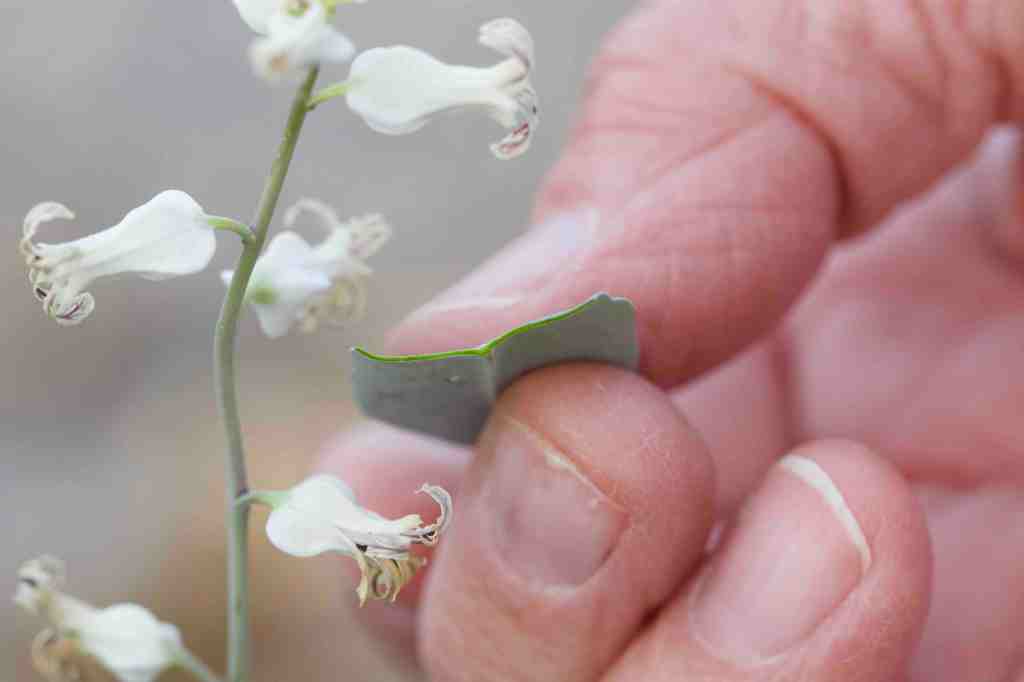
Silverbells’ near-succulent leaf is a perfect addition tossed fresh in a salad. You can see the thickness of the juicy leaf in this cross-section view.
….And silverbells’ young green pods are delectably, “vegetally sweet.” Enjoy them fresh and raw, because, (alert!), with stir-frying the pods suddenly become bitter. They’re best used fresh to bedeck a salad.
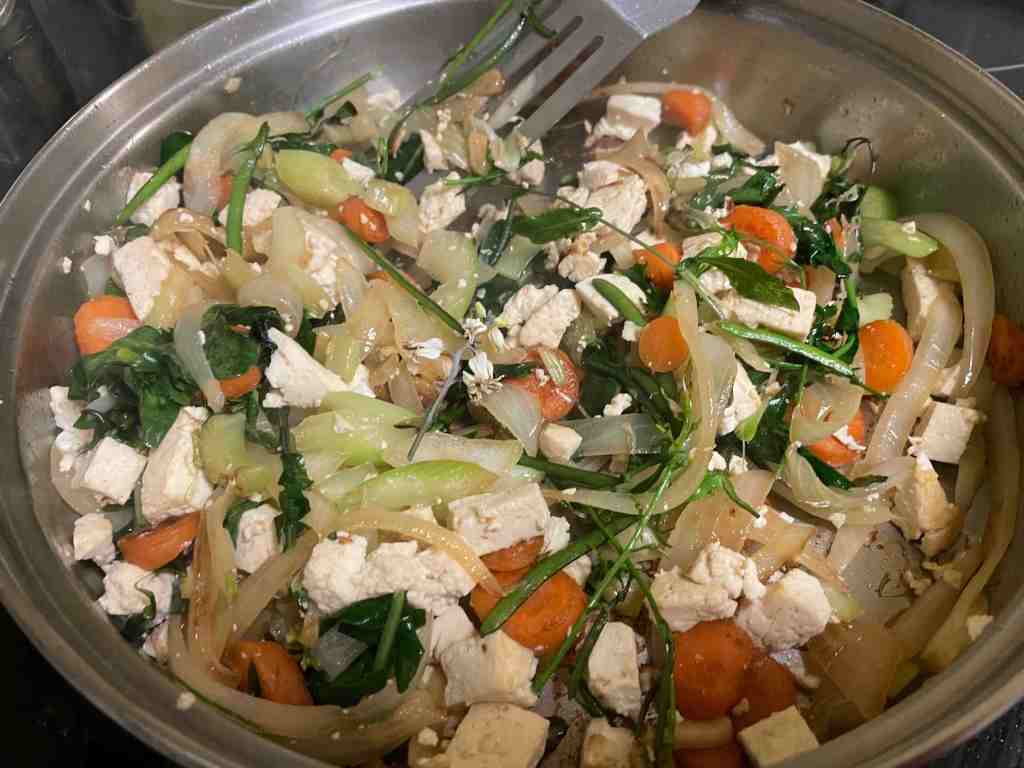
Silverbells is a Brassica, that is, in the cole-family of highly nutritious vegetables. Besides in a fresh mixed salad, my favorite way to enjoy their nutrition (high Ca, vit.A and C, folates) is in a veggie stir-fry. I have added the greens last in this tofu stir-fry. Can you spot the silverbell flowers I topped this dish with?
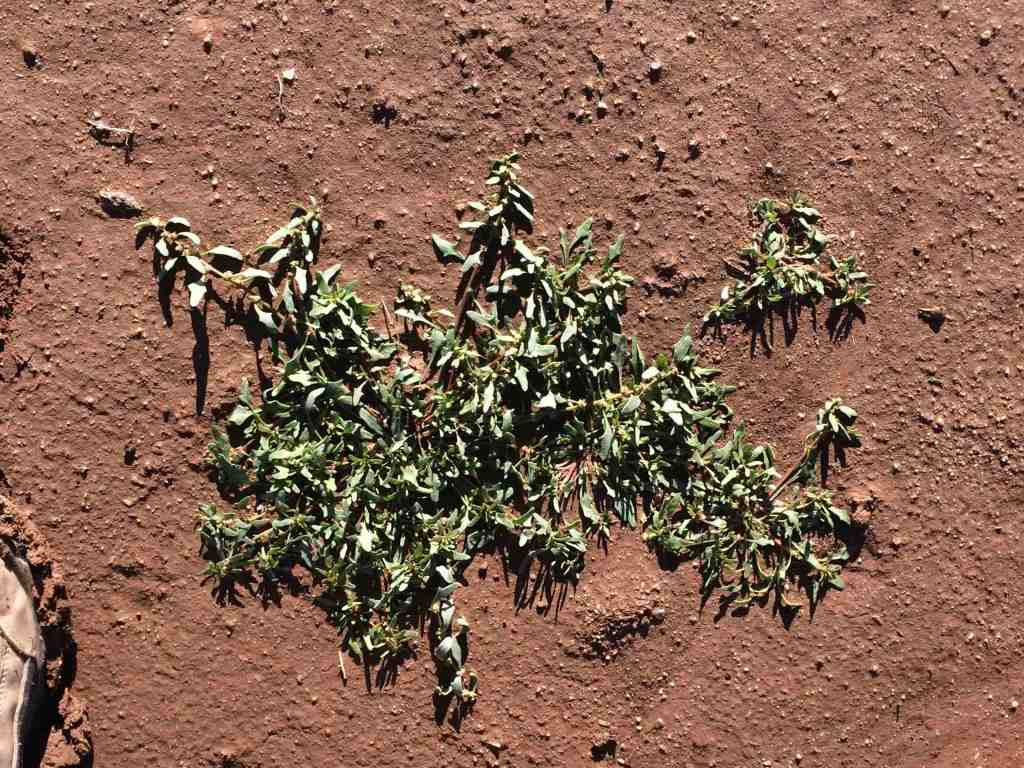
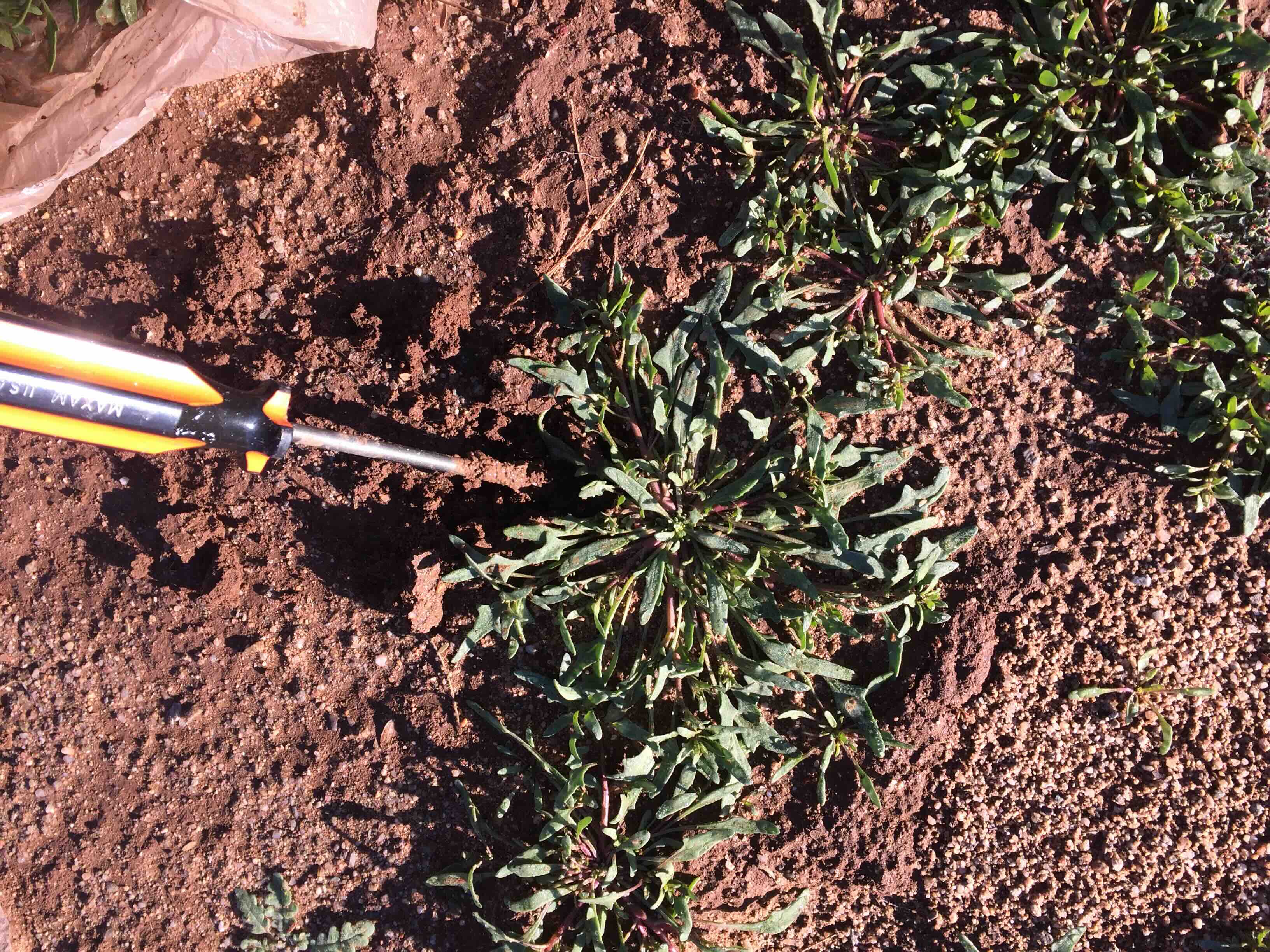
Here’s another “weed”–my very favorite, but very rare–which my O’odham mentor showed me years ago–opon i:wagĭ. Known in Spanish as patota, and in English by the truly misleading term “poverty weed,” it only comes up in certain years with winter rains at just the right times and in right amounts. She led me to harvest in corrals and roadsides on the poorest soils, and there appeared these patches of flat-lying rosettes of small thick leaves, so unassuming. Not very noticeable but worth noticing!
This season, see if you can find some opon i:wagĭ out there in degraded sandy soils! It is easy to dig up the whole plant. Cut off its tap root and steam the little green spinach-like leaves. The best dish my teacher ever cooked for us was opon i:wagĭ fried with i’itoi’s onions in a little bacon drippings. I thank her in my heart for sharing her desert knowledge, to alert us to keep looking and watching for the next surprising desert rain-gifts.
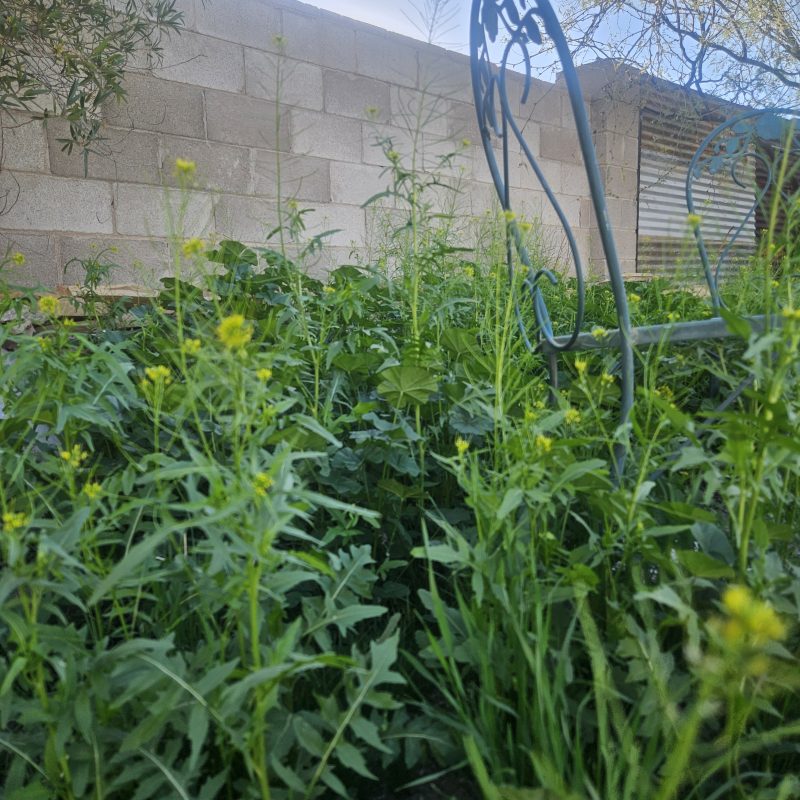
Wonderful! Amy here, celebrating the yellow flowered wild mustards growing my yard and in the desert. Sisymbrium irio grows in dry, disturbed soil around the world but is orginally from the Middle East, southern Europe and northen Africa. One of its names, London Rocket, supposedly refers to how it uncharacteristically took over there after the Great Fire of 1666. (It loves disturbed soil, in my garden or elsewhere!) Arugula, another mustard family plant also known as rocket, has big white flowers and is actually classified as different genius.
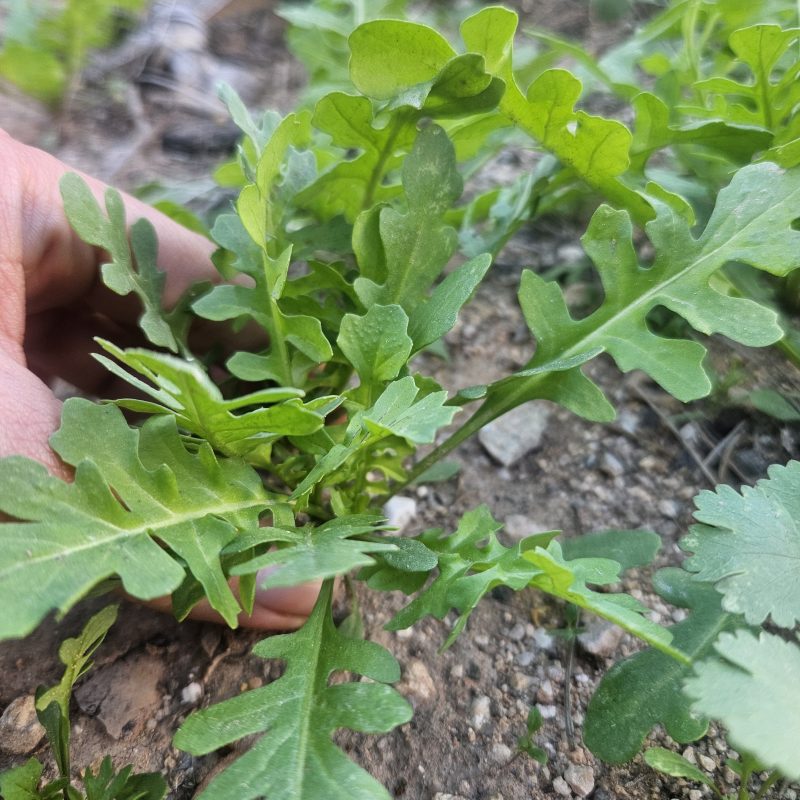
Of course the leaves are edible and tender on the short, young basal rosettes. But the small leaves on the tall, flowering plants are suprisingly tender. The flavor of the leaves from mature plants is spicier, but I think it has more to do with the warming weather of the season as the plants mature. The seeds are edible too but are much smaller than commercial mustard seeds and are difficult to harvest.
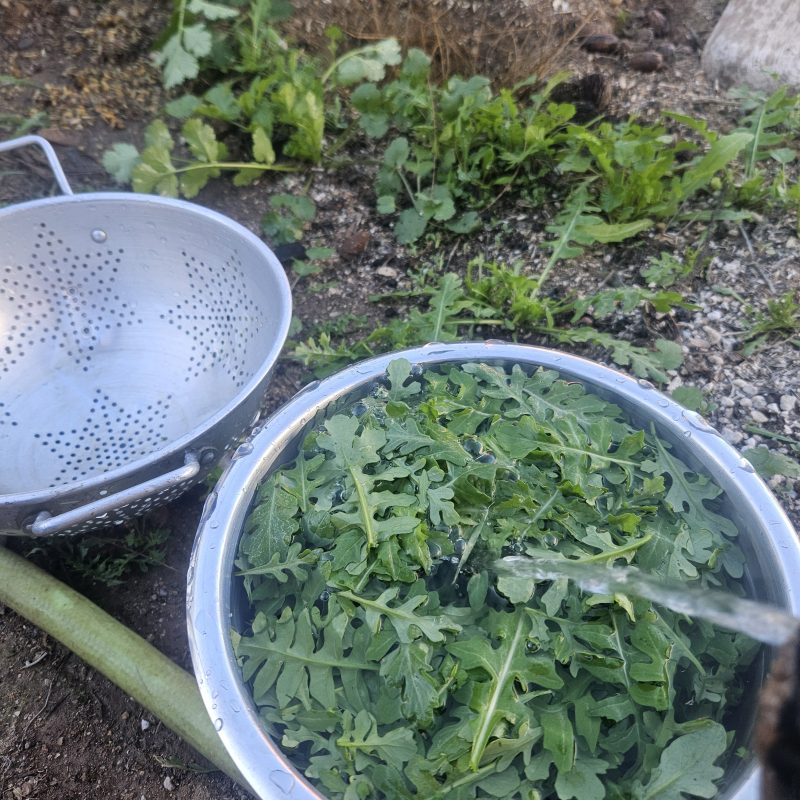
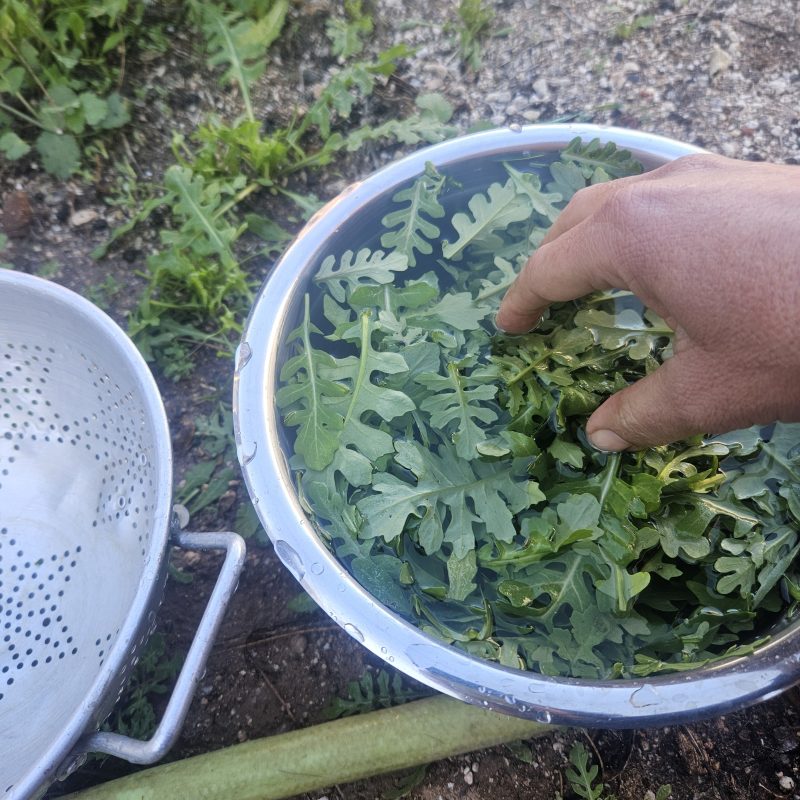
Instead of triple washing, I like to wash once really well, where the wash water going to the garden. After swirling in plenty of water, I lift the leaves out of the water by hand and drain.
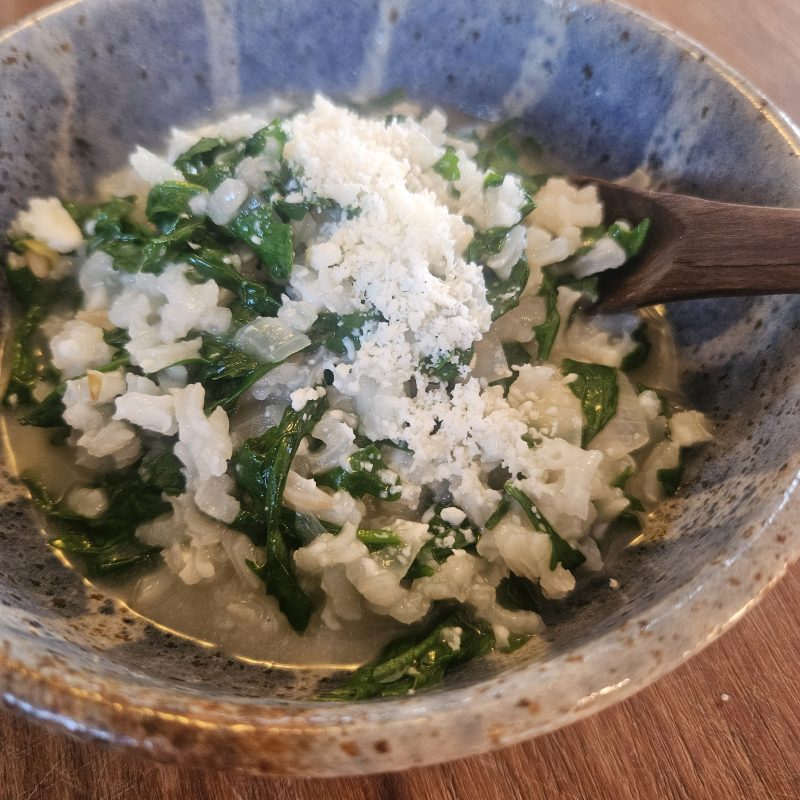
Wild rocket has countless possibilities in the kitchen. The leaves make a spicy salad or garnish on a sandwich, like arugula. My favorite way to enjoy it is wilted into a risotto. Homemade chicken broth (from the freezer) and a splash of wine make it special.
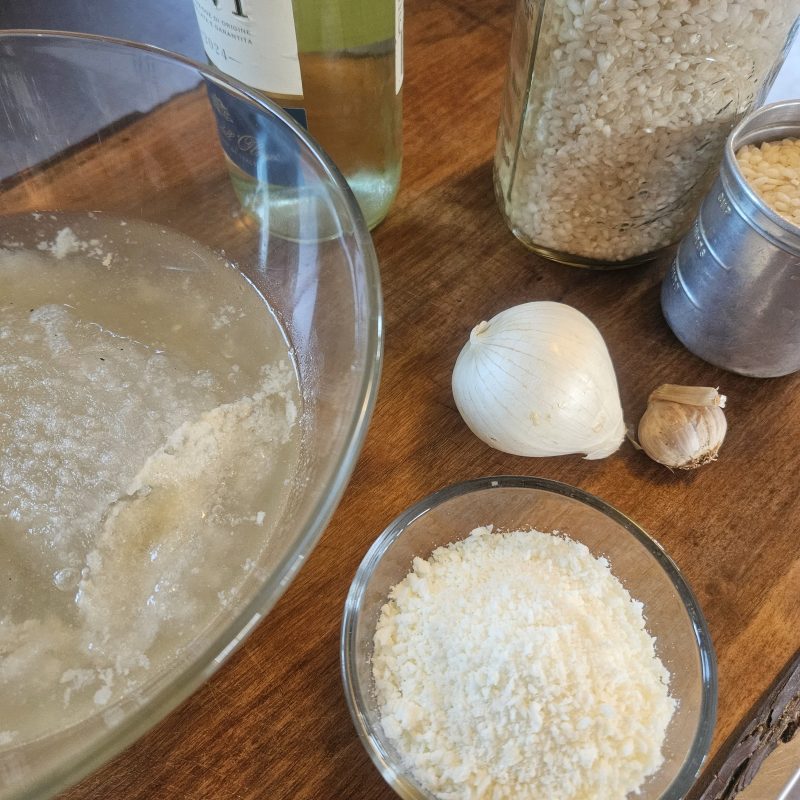
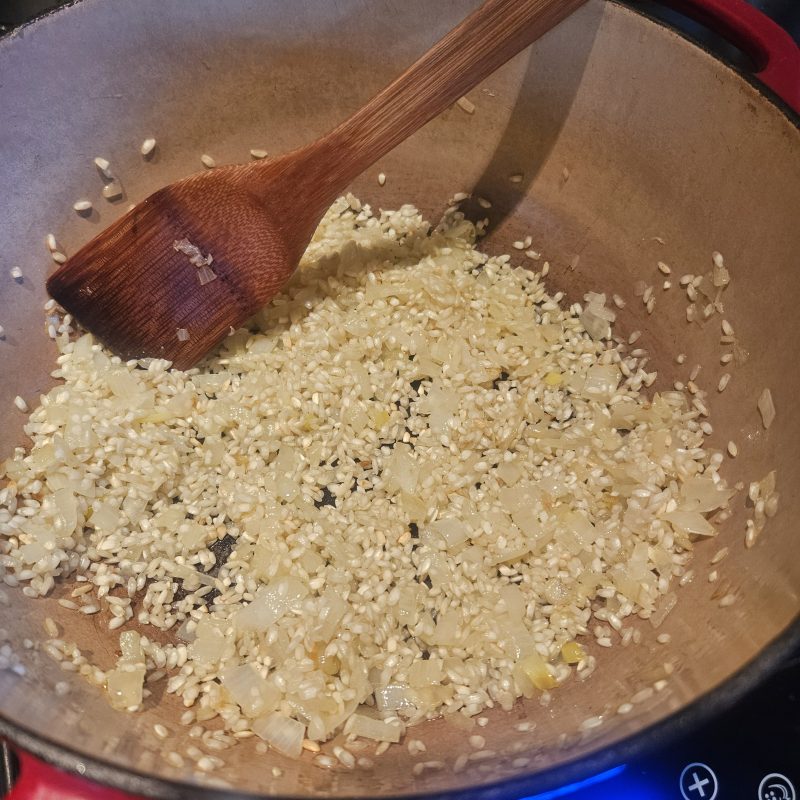
I start by browning rinsed aborio rice, onion and garlic in olive oil.
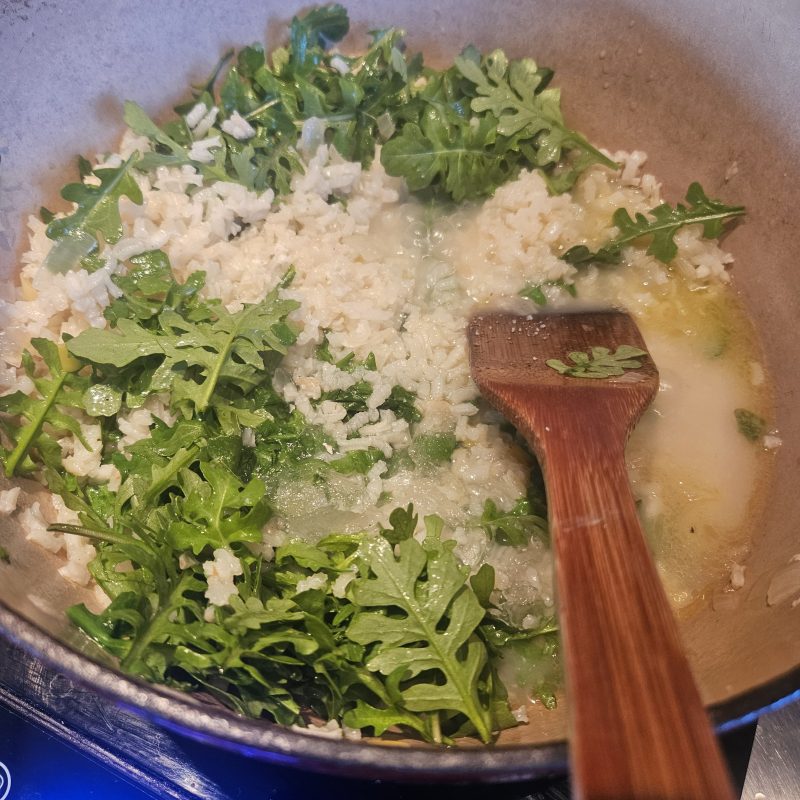
For traditional risotto with the creamiest texture, add hot broth a little at a time and stir constantly. For the easiest risotto, I just add plenty of broth and simmer slowly in a heavy pot with a lid. Three times the volume of liquid to rice is usually where I start.
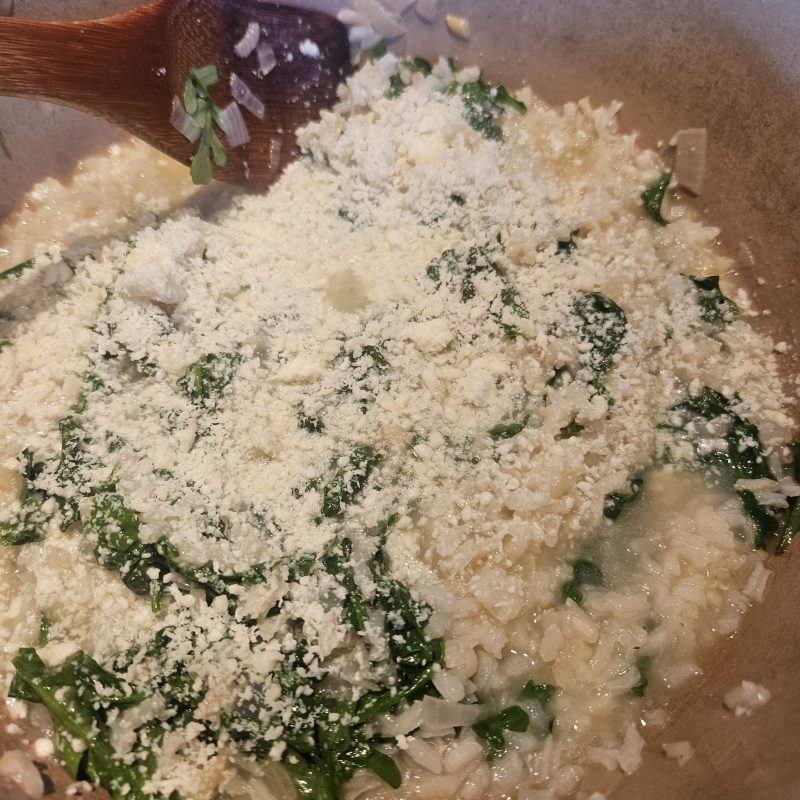
When the rice is tender, I remove the pot from the heat and fold in the whole little leaves. Sprinkle with any cheese, in this case a dry and salty fresh goat cheese. Enjoy right away or at room temperature on a picnic.
Depending on temperature and moisture, we might be eating wild rocket for a couple more months into the spring. What other dishes do you like to make with wild rocket?
Hello friends, Amy here with a baked good I made last week. I wanted to bring treats to share with my friends, something we could nibble while we passed the break table. And if no one had to wash plates, forks or spoons, that was a bonus. My people truly delight in cooking, hadn’t had anything mesquite in ages, and I wanted to impress. After considering my options for a month, I suddenly realized… that’s this afternoon!!!
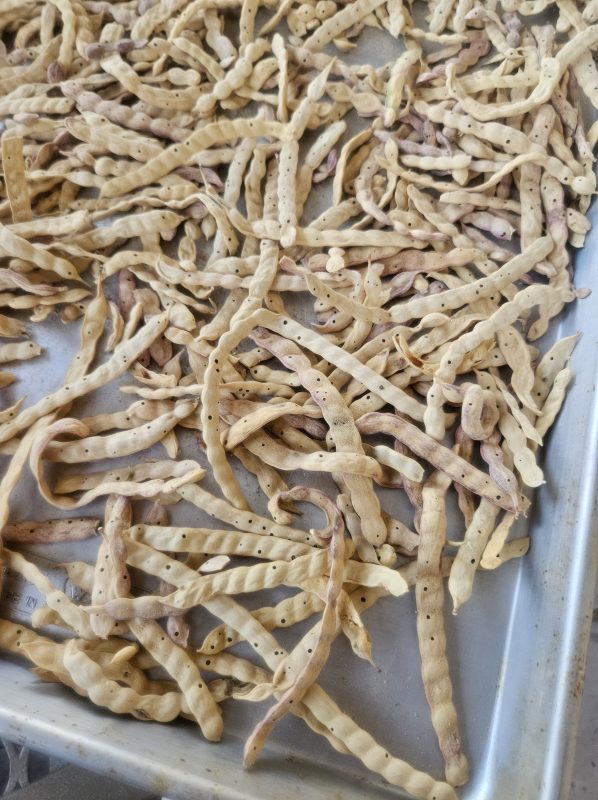
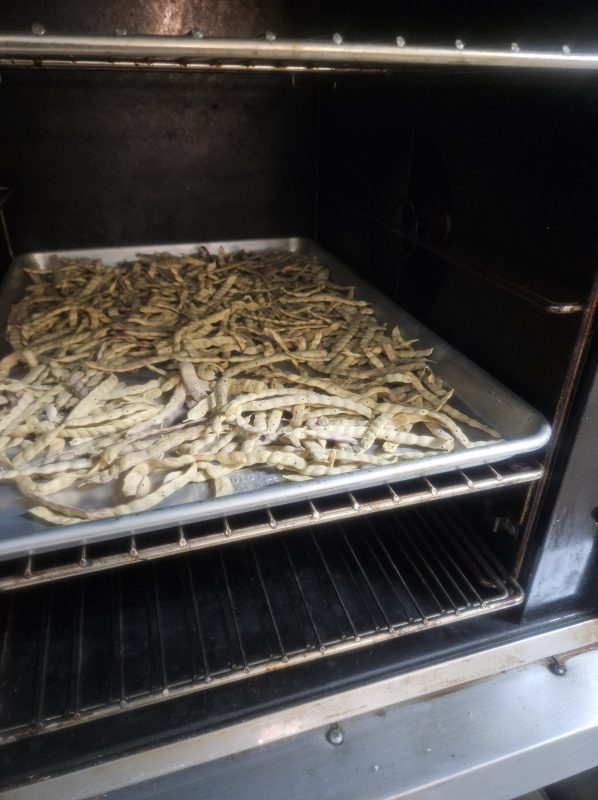
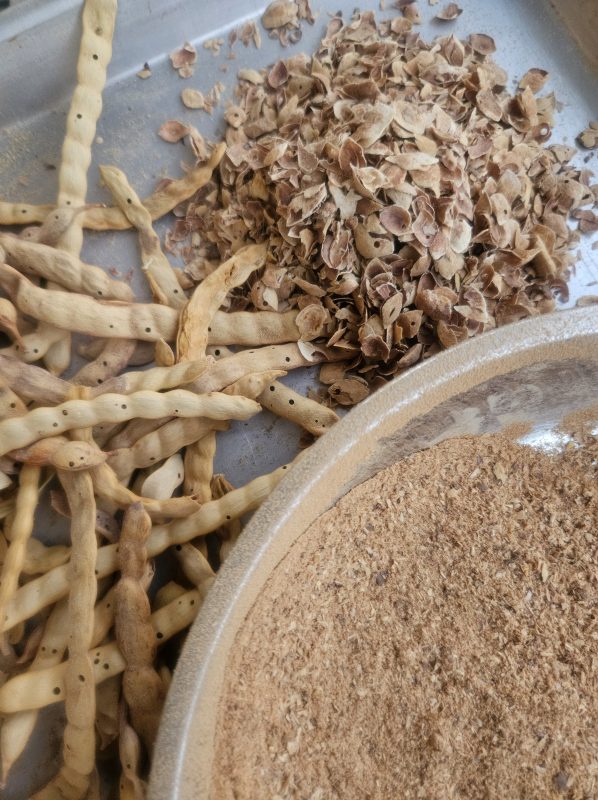
Drought makes for patchy harvesting, but I had a stash of pods. The trick to making HOME grinding work, especially in humid weather, is to toast the pods RIGHT before grinding. No community mesquite pod milling event near you? Need that mesquite meal TODAY? No problem!
I baked in a thin layer at about 275 degrees F with convection for maybe 5 minutes. Try longer if you don’t use or have a fan. It should smell sweeeeet. I opted to not develop any golden color, but that’s an option!
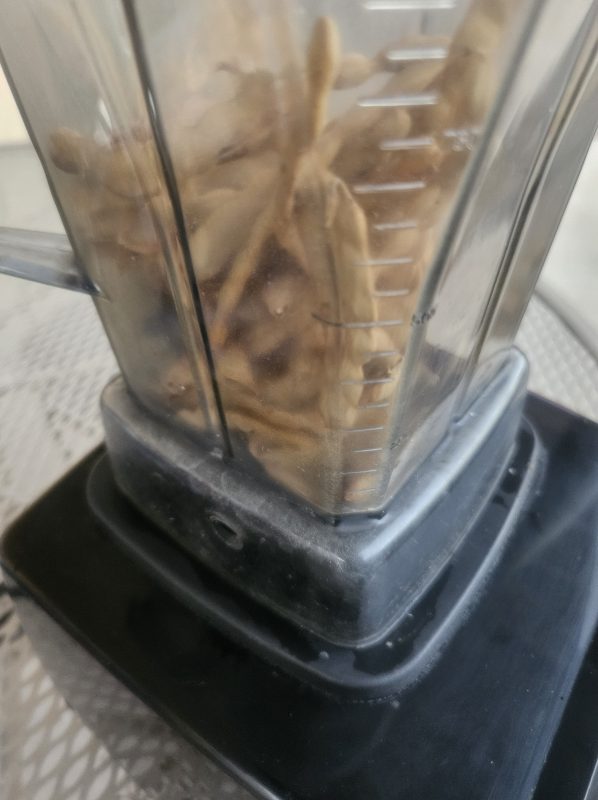
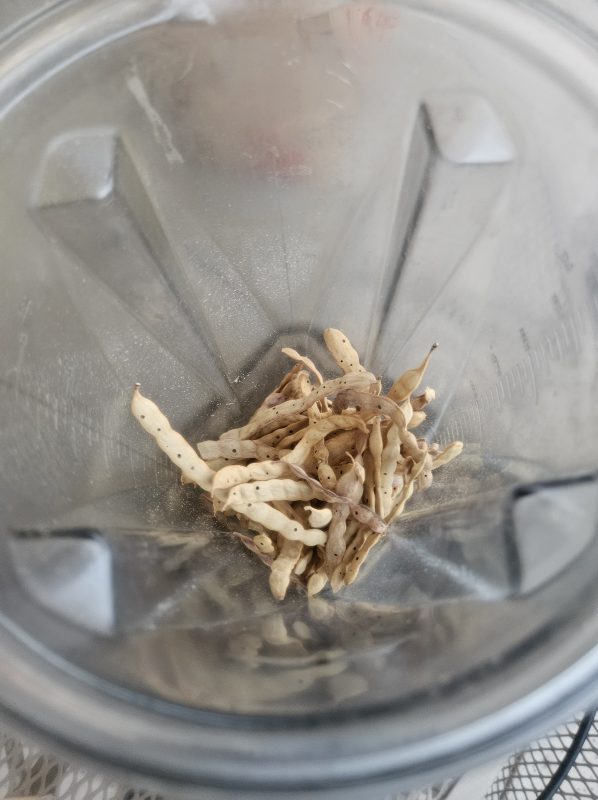
After cooling JUST enough to handle easily, I tossed the pods into a high powered blender. A regular blender or food process does not suffice. Without the last minute toasting, grinding makes a paste in there. This of course is an issue with any mesquite meal grinding method, but expecially for the blender or stone tools.
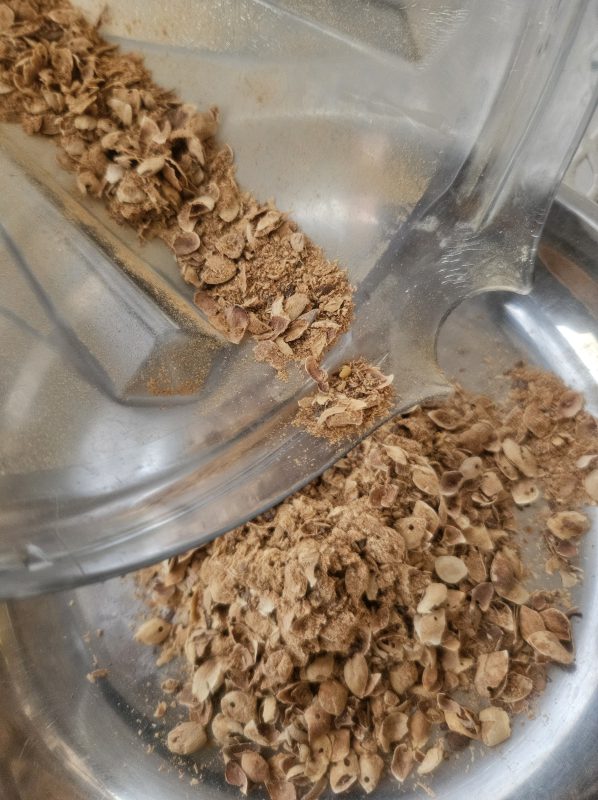
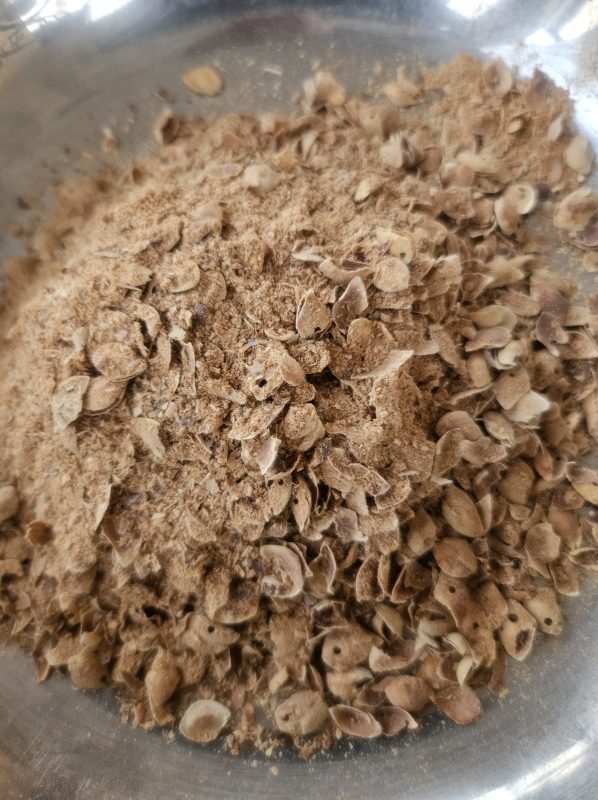
Unbelievablly, it only takes a few pulses.
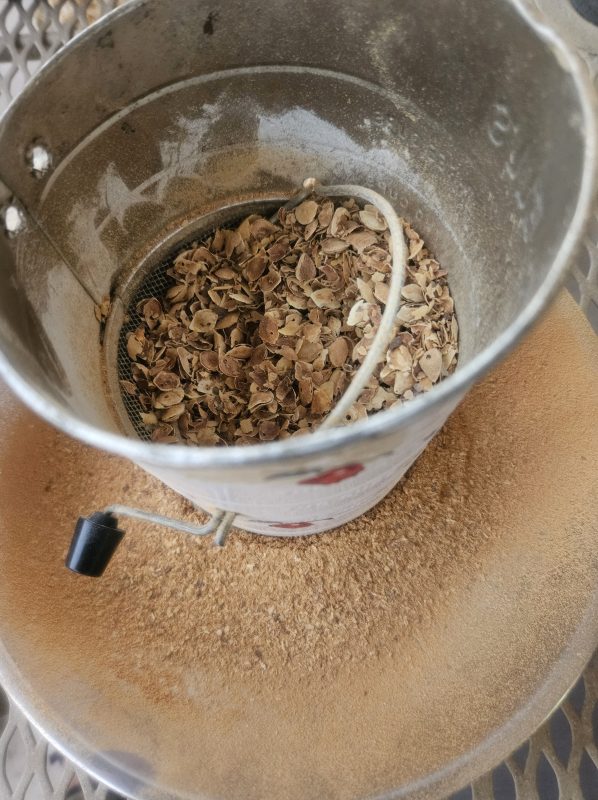
Any fine sieve or a flour sifter can remove the meal form the hard bits of unground pod and seed. Any grinding method will require this step, even hammer mills.
Sifting is even faster than grinding, depending on the size of the holes and quanity of mesquite meal needed.
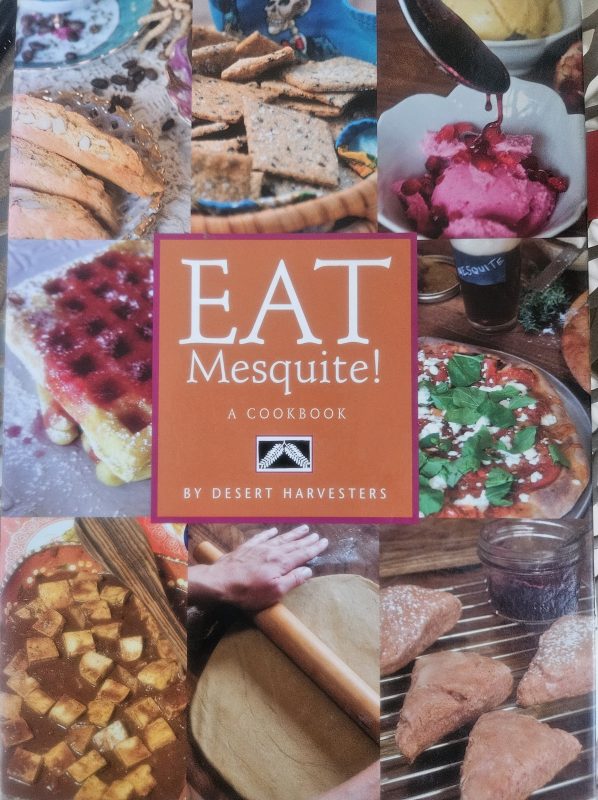
To show off this flour, I impulsively chose a simple recipe from this small out of print book. However, you can purchase the huge current edition!
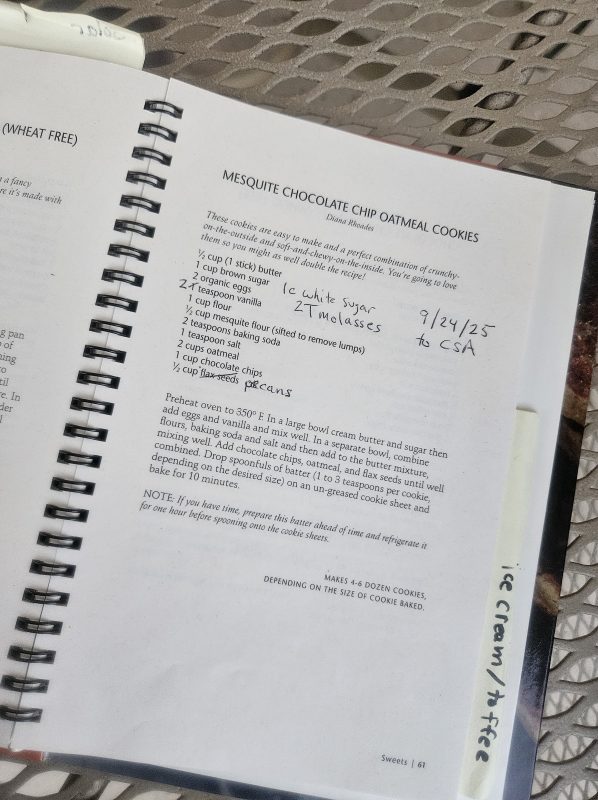
Chocolate chip cookies! I had a half bag of chocolate chips and pecans on hand, and chocolate with mesquite is classic. In case my butter spent too much time in the freezer, I doubled the vanilla. No brown sugar in sight, but a gallon of mollassas to use up.
I love making my notes in hard copy cookbooks, and reading the kitchen culture from long gone relatives in their books. And the bookmarks that are labels from my friends’ gifted food creations are my kind of treasures.
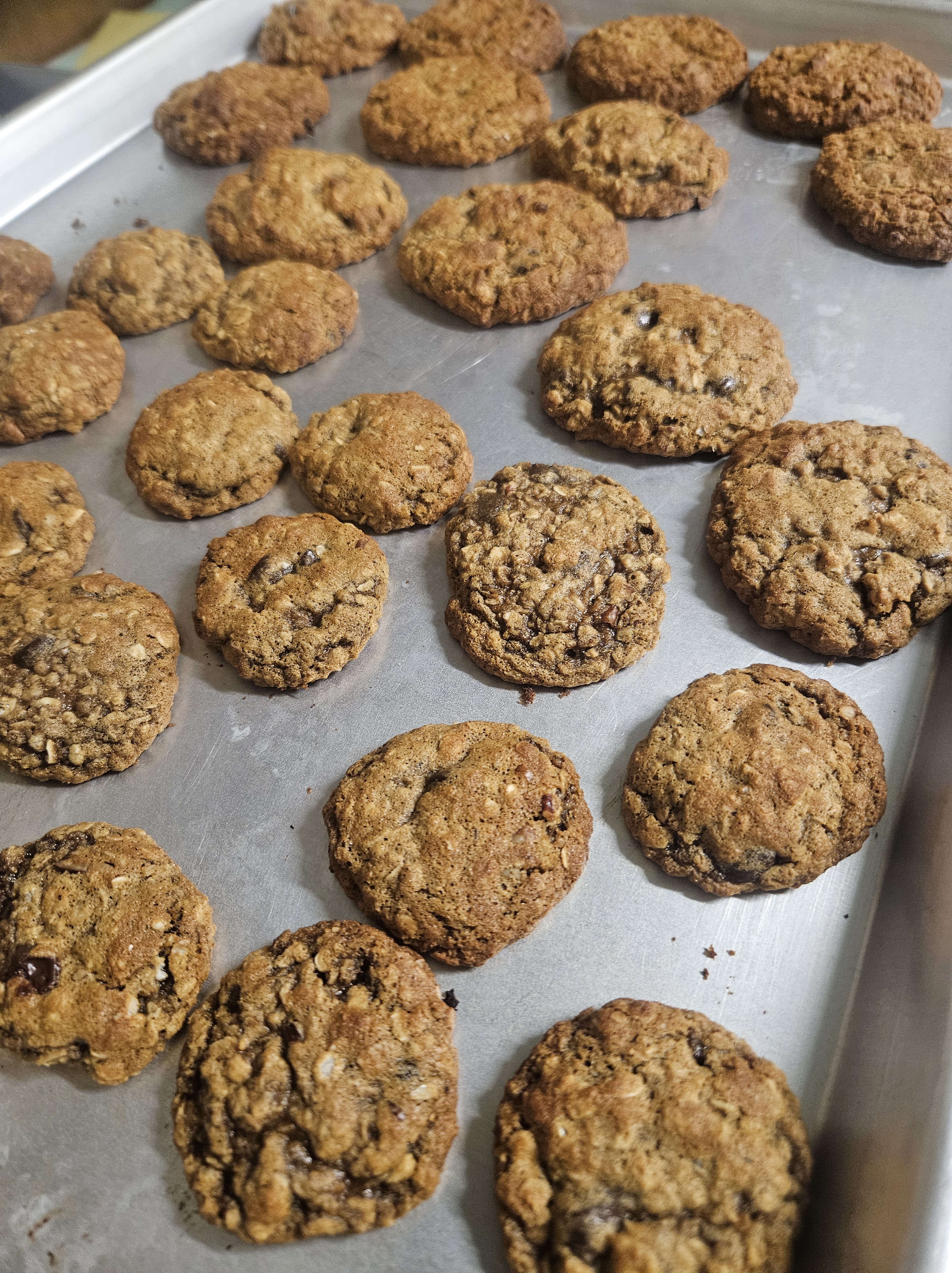
I baked these chocolate chip oatmeal mesquite pecan cookies until just barely set, let them finish cooling in transit, and served them chewy with the chocolate still melted. I’m sure they would not tolerate stacking. Some were full sized, the others bit sized. None were leftover.
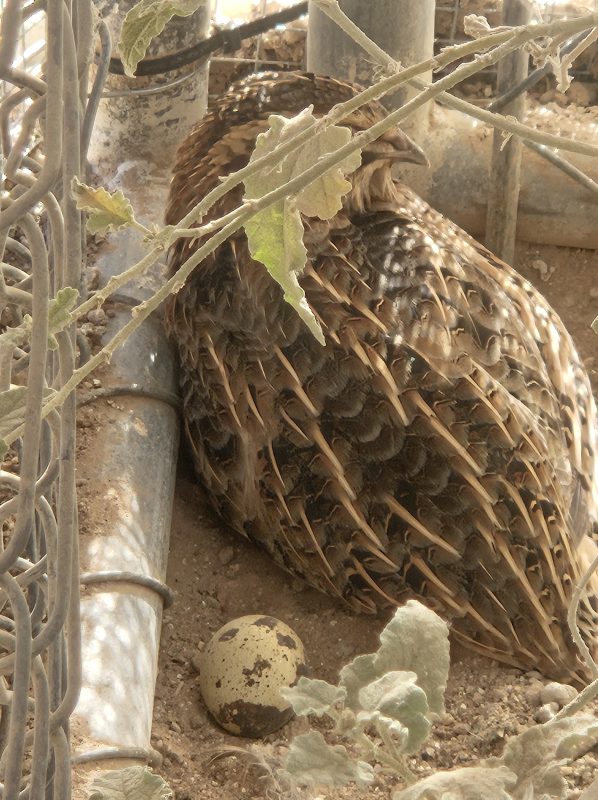
Hi friends, Amy here. Years ago, chickens free ranged my entire backyard and roosted in the trees. However, my current neighborhood has red tailed hawks and striped skunks so I knew any domesticated birds here would need a fortress. Instead of making an enormous chicken enclosure, I opted to try smaller birds that wouldn’t feel so cramped in an aviary. Coturnix quail, Eurasian domesticated birds, are often raised for eggs and meat in tiny cages like rabbit hutches. So in my 100 square foot and six foot tall enclosure, a dozen of them scurry under plants, bathe in the dust and fly as well as they can. Also, since the rooster’s crow is not very loud, they don’t bother sleeping human neighbors. City dwelling roosters!
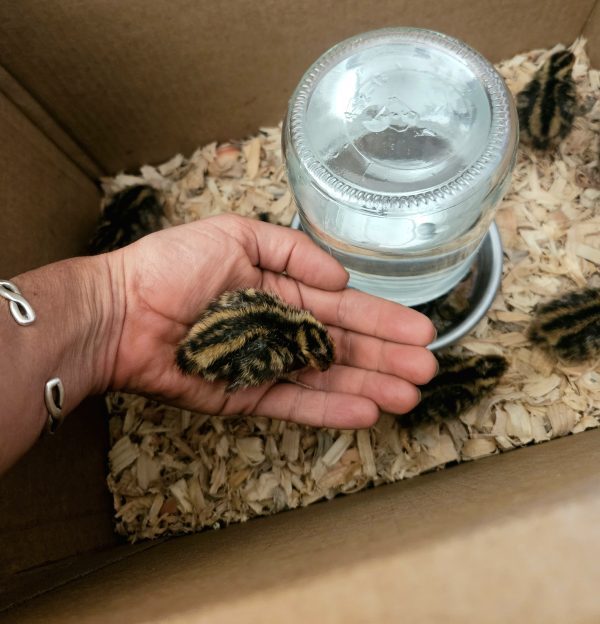
I started in late winter/early spring with two week old chicks raised locally. When the days grew long enough (almost 14 hours) at 11 weeks old, they stated laying.
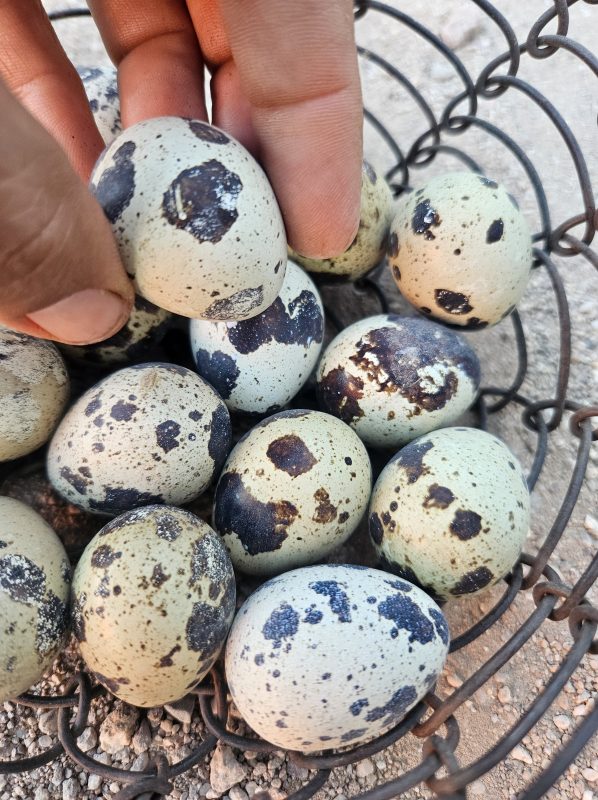
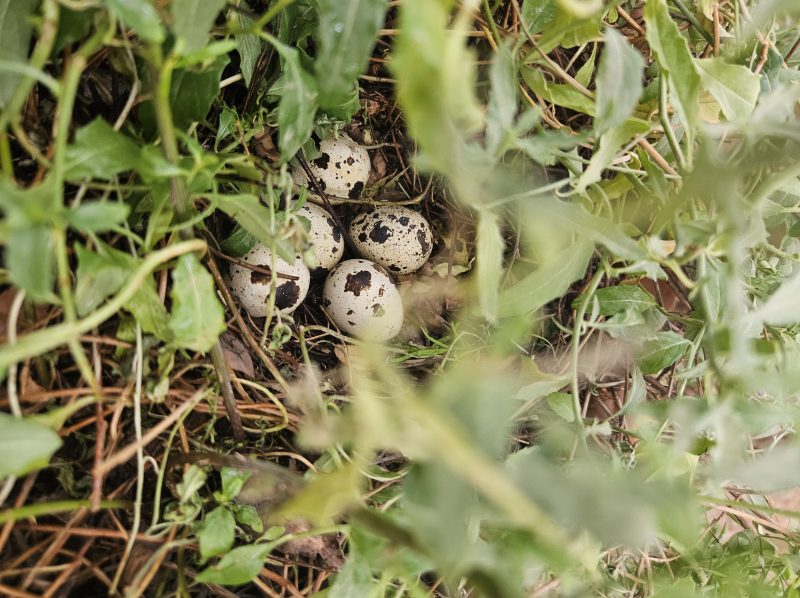
Just like with free range chickens, every day is an egg hunt.
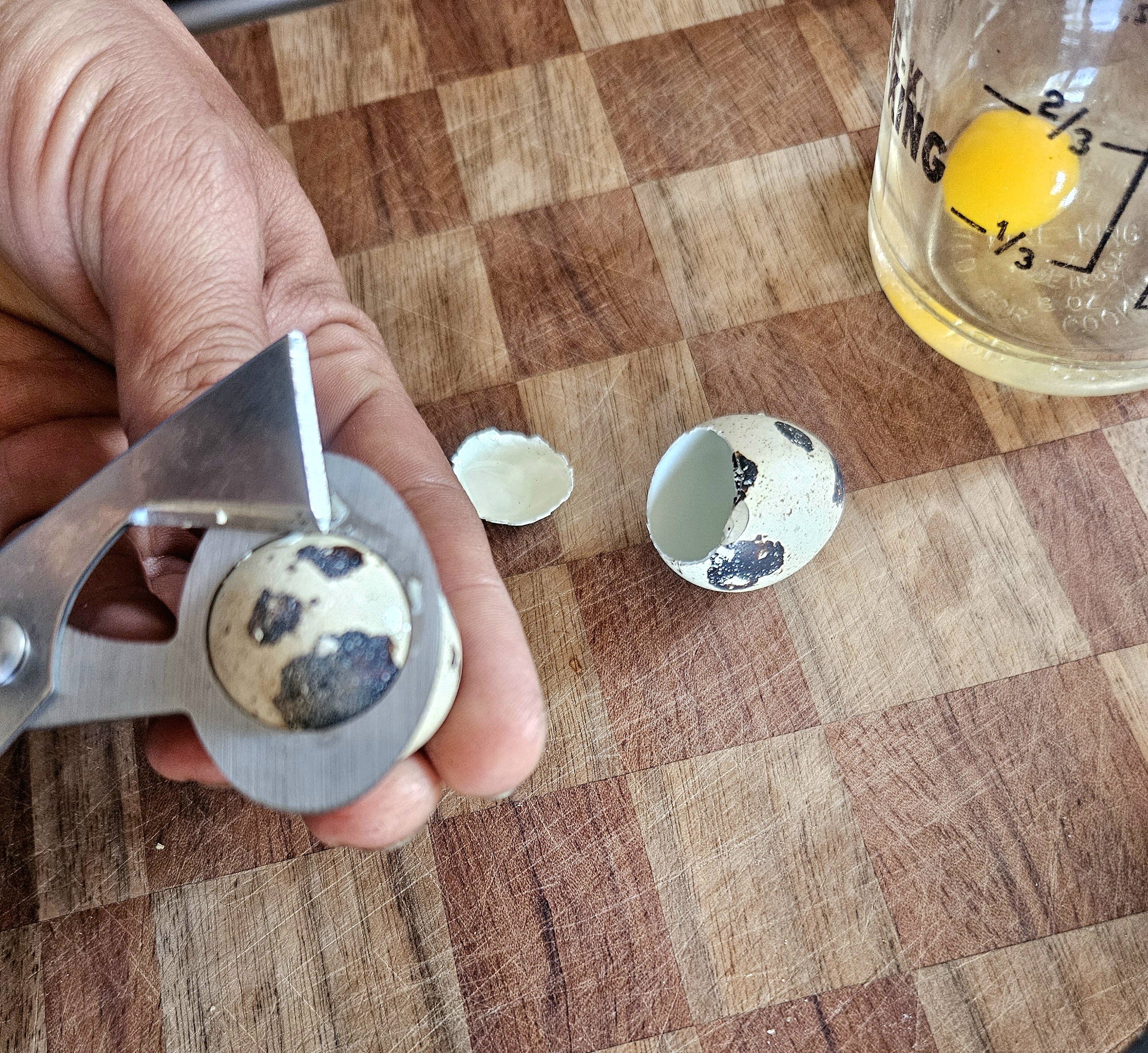
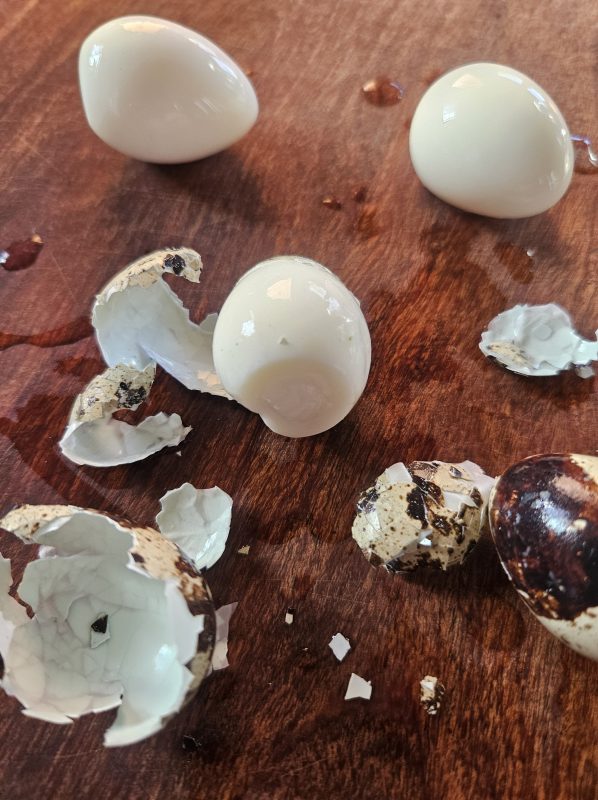
The shells are brittle but the membrane below is very tough. Quail egg scissors help make a clean break and keep frustrating fragments out of the dish.
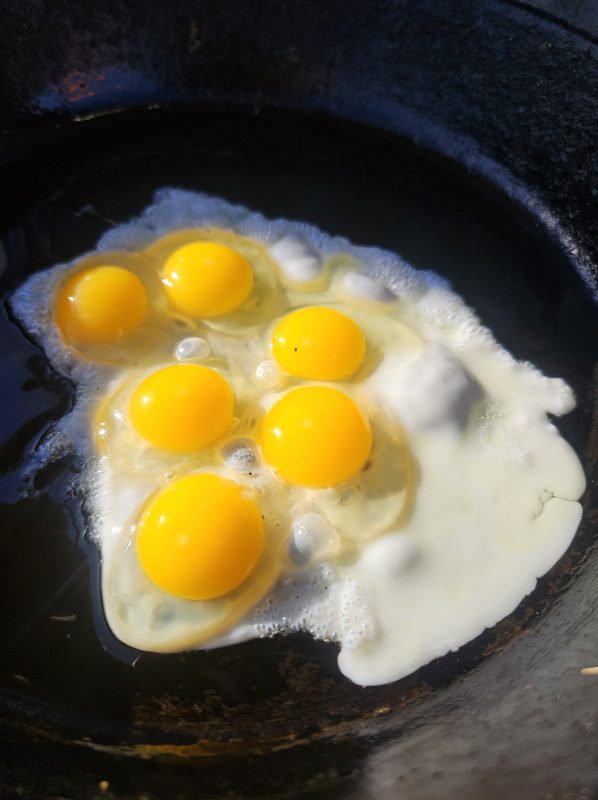
About 4 quail eggs equal a large chicken egg.
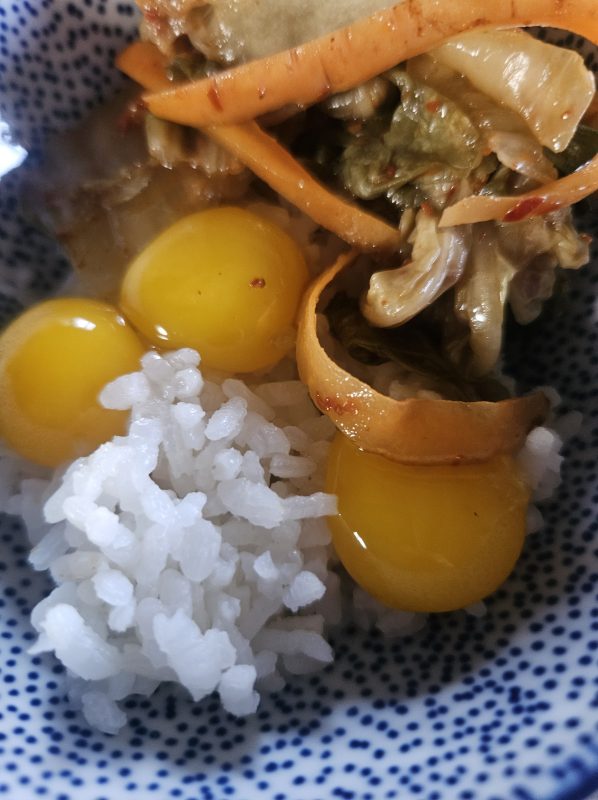
They taste the same but definitely have more yolk to white than a chicken egg. Sometimes I enjoy the raw yolks with homemade kimchi and rice.
Hard boiling only takes 4 minutes!
That tough membrane under the shell makes them easy to peel.
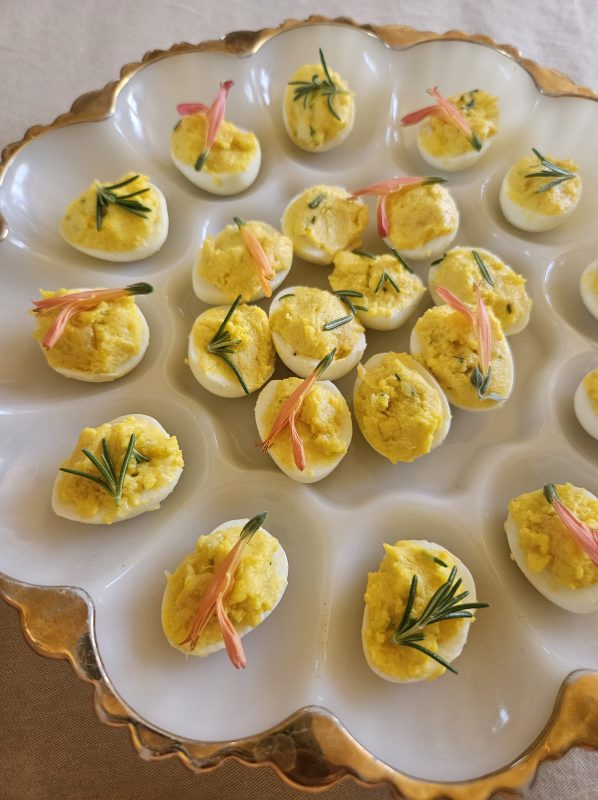
These deviled eggs are topped with rosemary leaves and chuparosa (Justicia californica) flowers. I don’t bother to make mayonnaise, I just mix the yolks with olive oil, Dijon mustard, and salty preserved lemon.
Raising these birds was a long time coming for me. Here’s hoping some of your dreams come true!
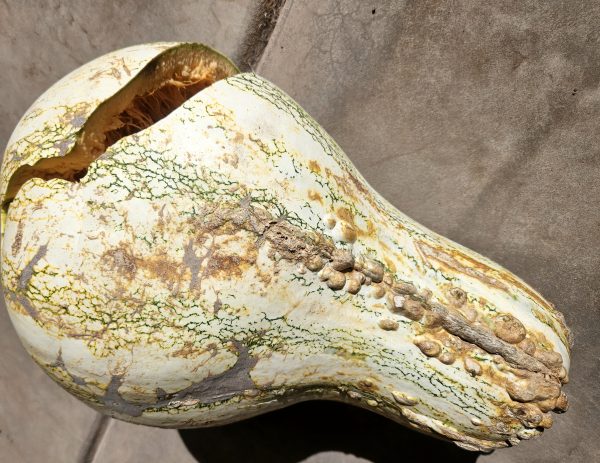
Hello friends, Amy here, with a BIG cushaw winter squash. For starters, it’s beautiful. Farmer Frank of Crooked Sky Farms has been sending Tucson CSA huge and tiny pumpkins and winter squashes for 20 years. People often ask us what to do with them. Well, twelve months a year I always have frozen winter squash in the freezer, ready for soup, pie, pumpkin bread and now ravioli.
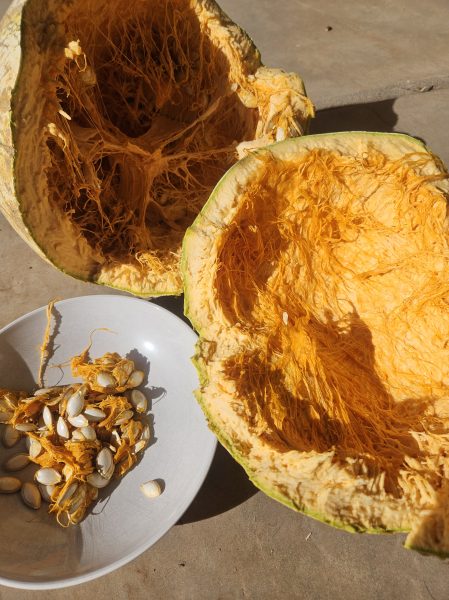
Start by dropping on the patio until it cracks open. Big ones break more easily but sometimes little ones need to be slammed. This is much safer and easier than taking a cleaver to it.
Then I pry it open with my hands and scoop out the seeds, saving them for planting or eating.
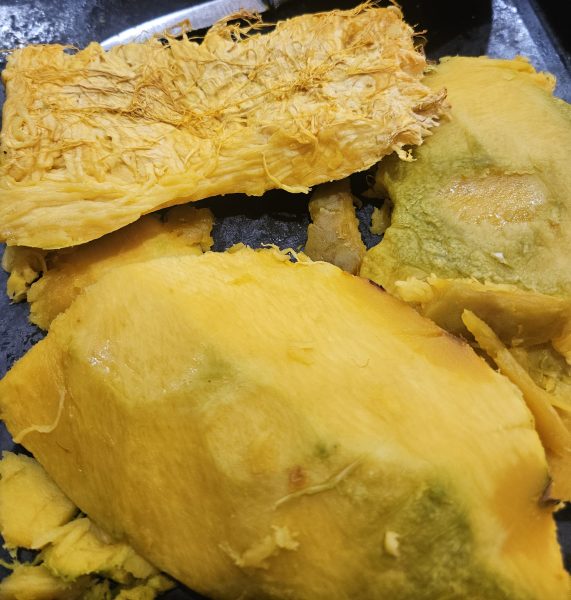
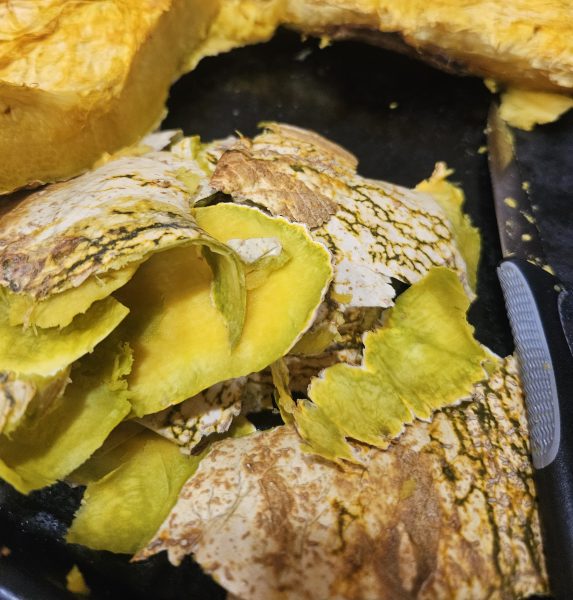
Place the pieces on a cookie sheet and bake uncovered at 350 F until a fork pierces the flesh easily and some of the moisture in the fruit evaporates. The flesh can be scooped out of the hard skin varieties with a big spoon or the skin can sometimes be trimmed off with a knife.
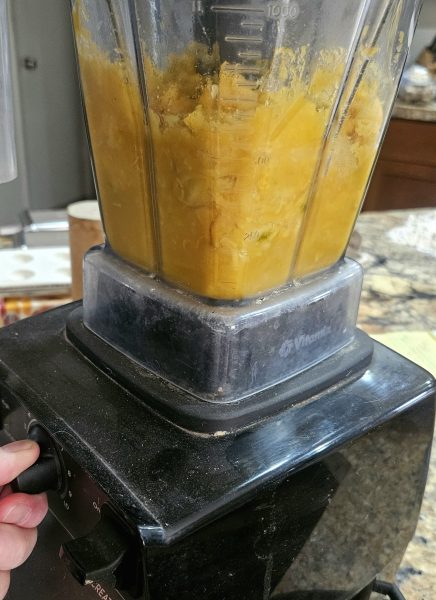
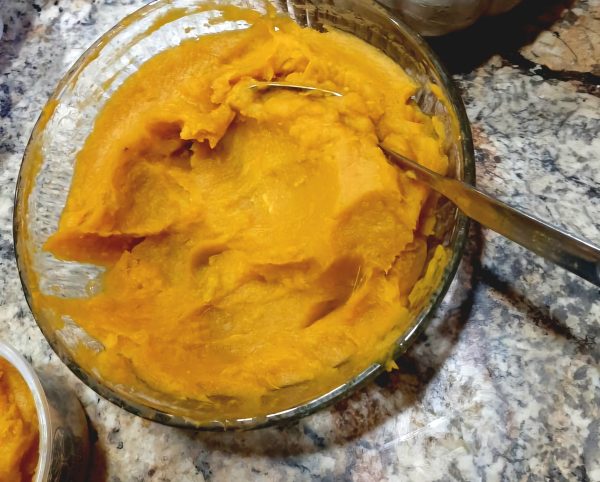
The flesh whizzed in a food processor or blender is pleasantly smooth. If I want texture, I add nuts to sweet creations or sautéed onion to savory concoctions. Stringy mashed squash turns many people away from the “mushy” vegetable entirely.
This cushaw squash was SO sweet and flavorful! If it wasn’t, I’d add a bit of sugar and salt to taste. This squash puree was thicker than normal, so I did not need to drain it. (It is critical to drain squash destined for pie or empanadas. Squash is very perishable, so I place the colander full of puree and bowl catching the liquid in the refrigerator. Don’t toss the liquid! It’s so good in a squash or vegetable soup.)
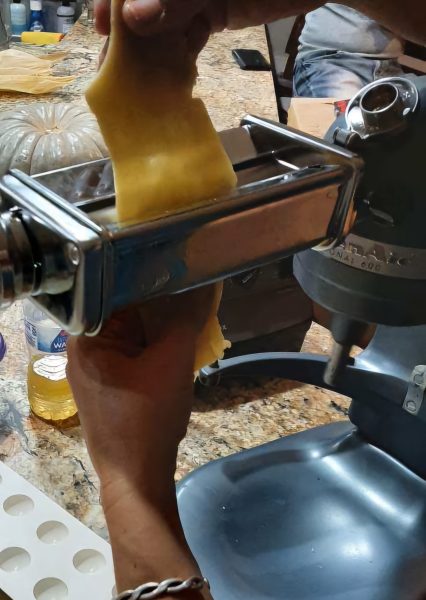
My uncle recently gave me a pasta roller attachment for the stand mixer and a ravioli press. I already own a hand crank roller that requires 3 hands to operate, and hasn’t been used in years. But inspired by the new toys, I wanted to put sweet, plentiful winter squash puree in ravioli.
Plus, I love food cooked in tiny edible parcels, like empanadas, stuffed grape leaves, cabbage rolls, spring rolls, pot stickers, samosas and floutas (taquitos)… What are your favorites?
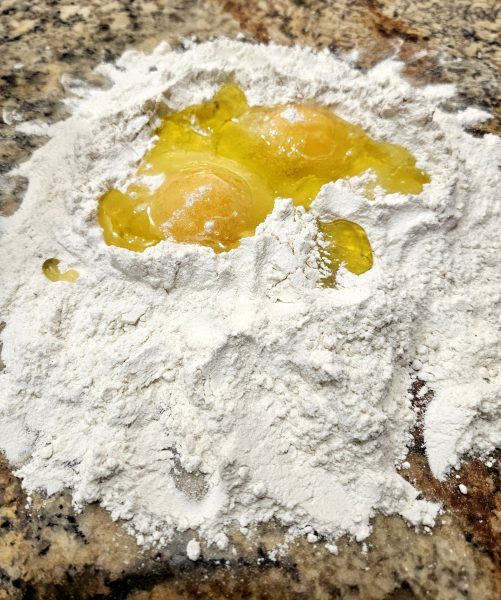
I tried different ravioli dough recipes with varying amounts of egg, water and olive oil, and everything I tried worked. It’s forgiving! But I liked the logic in this one, using a cup of all purpose flour, half a teaspoon salt, and egg and two yolks. I worked it on the countertop by hand and after an hour rest, I started to roll.
Apparently some home cooks use a machine to knead the dough, and some roll it out by hand. It’s forgiving! Basically, start the thickest roller setting and roll the dough through a few times before adjusting the setting a notch thinner.
This is easy but not fast!
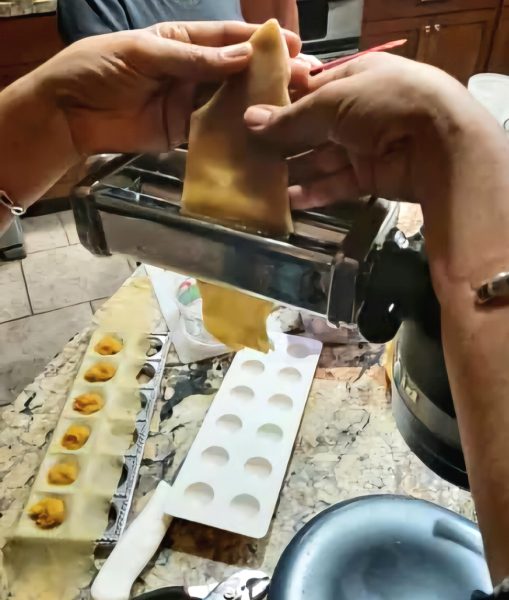
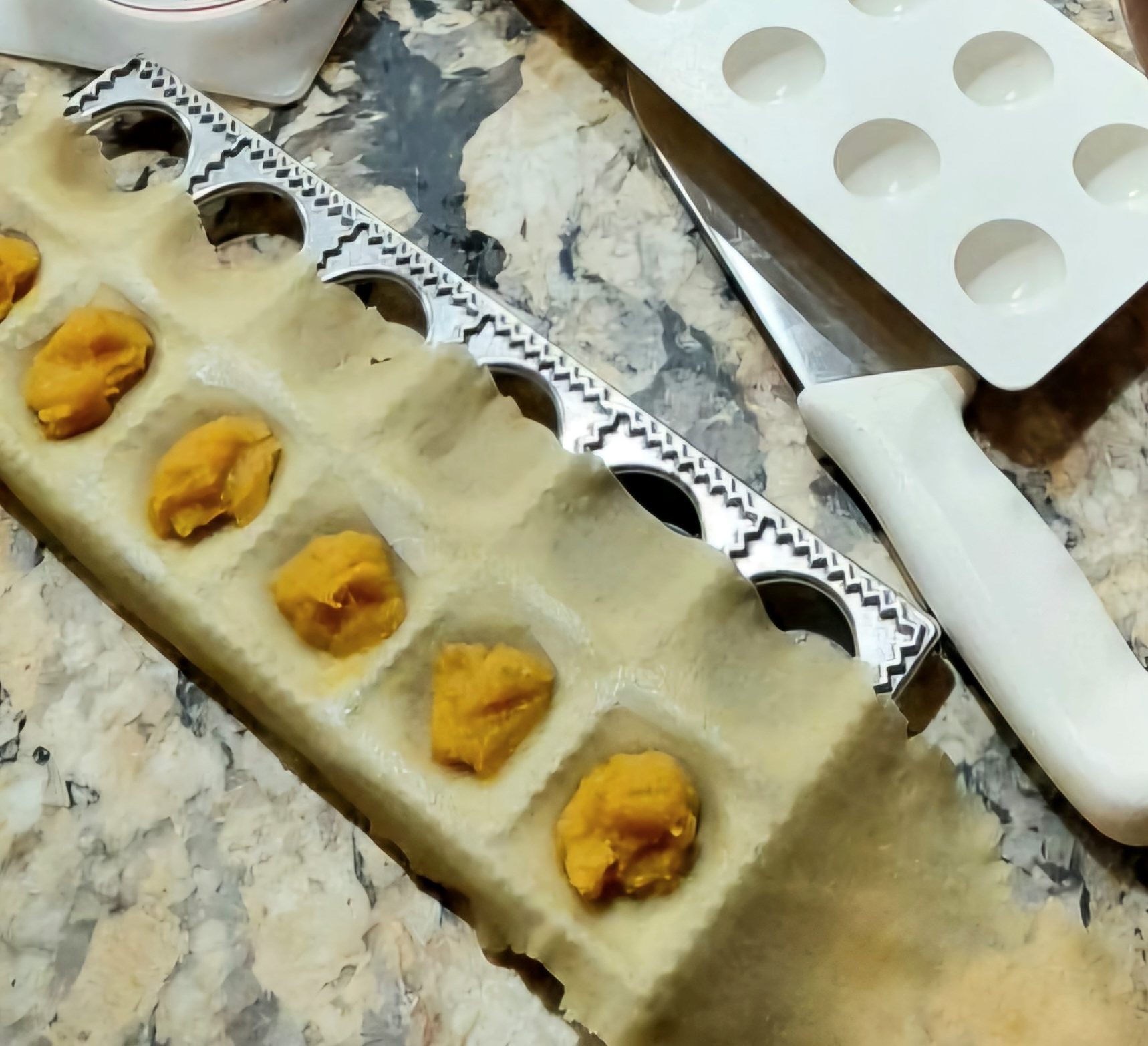
The form presses the thin dough into wells to hold a tablespoon of filling. I dabbed water along the seams to encourage better sealing, just in case. With the top sheet of dough covering the filling, it was easy to seal and perforate by using a rolling pin over the top.
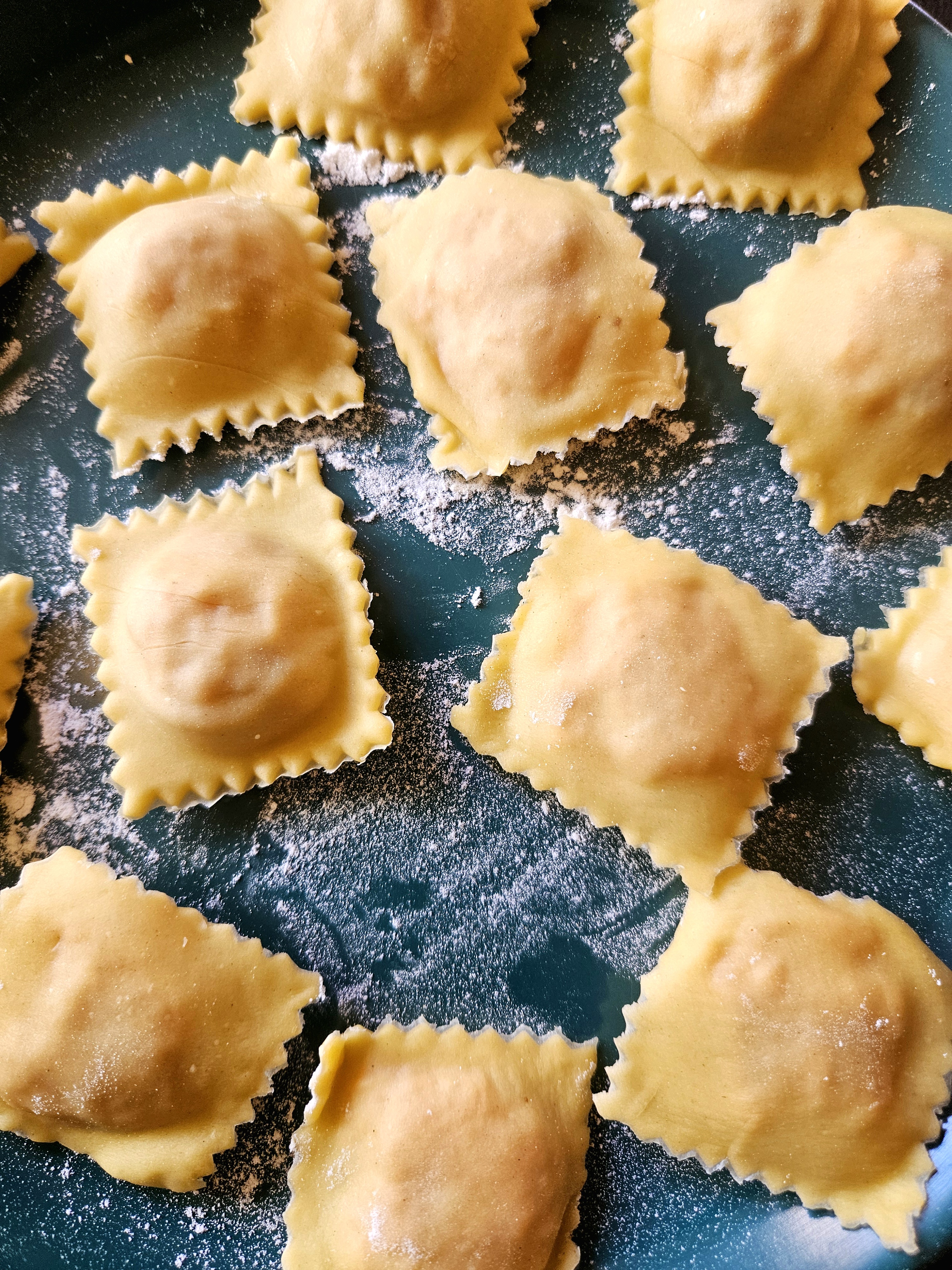
This gimmicky looking tool is efficient! Dusted with flour and resting in a single layer, they are tidy, symmetrical and well sealed.
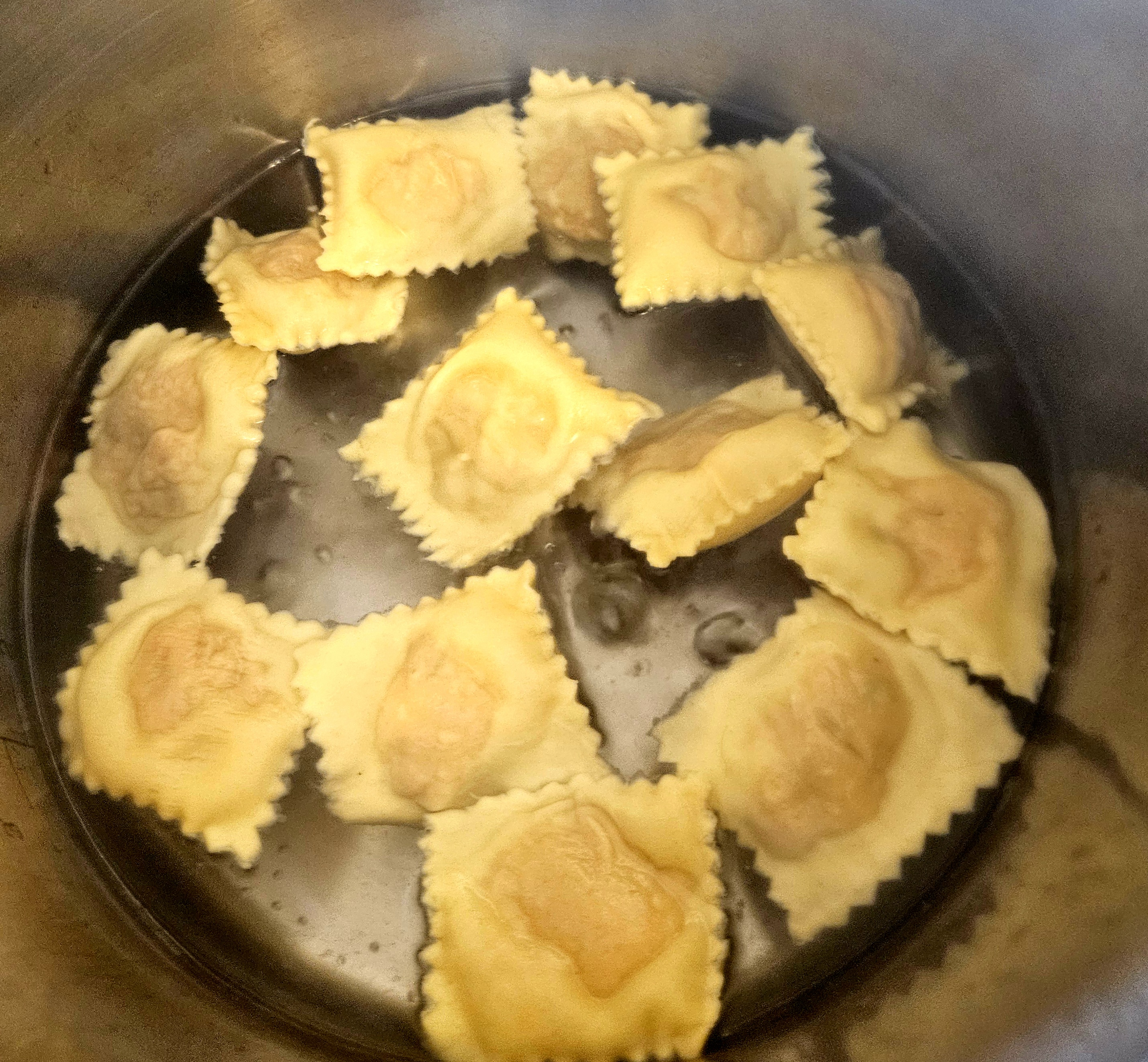
Cooking for three minutes in gently boiling water, it’s amazing they stay sealed.
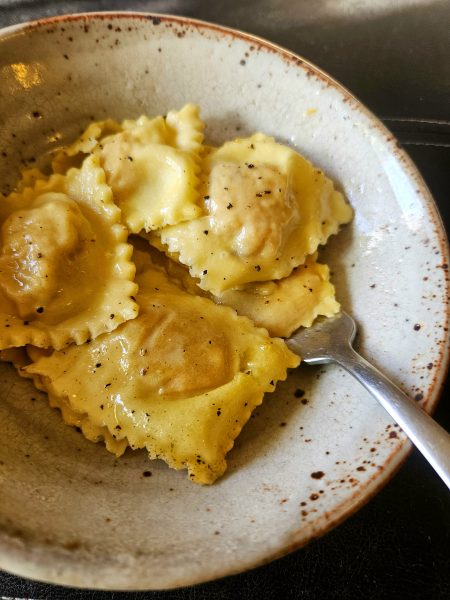
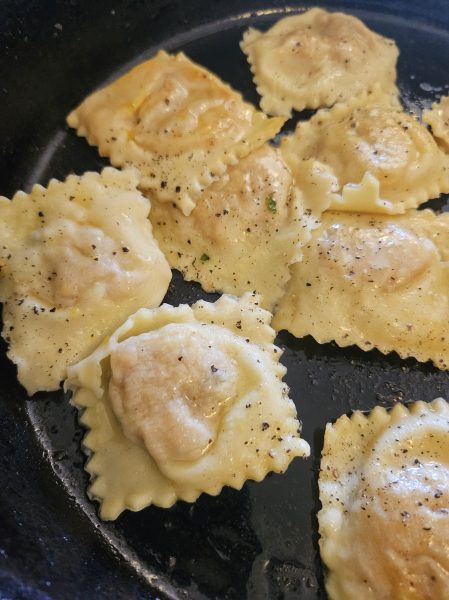
With the filling of unadorned sweet cushaw squash, dressing the finished product in various combinations of butter, olive oil, garlic, thyme, black pepper and hard cheese was delicious. My aunt fried some with tons of garlic until browned… oh my.
But my favorite way was just butter, salt and pepper, letting the sweet cushaw shine.
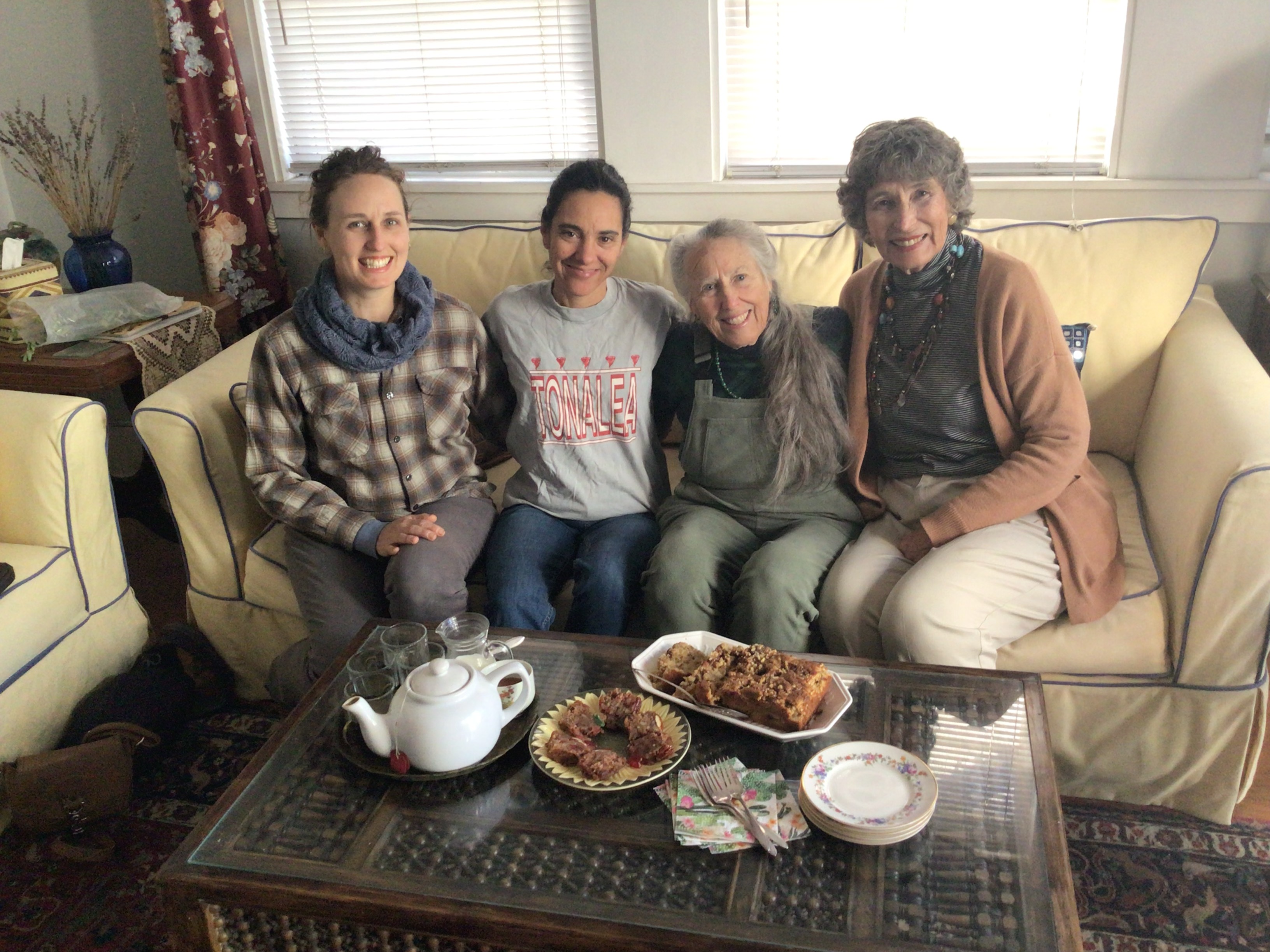
Savor Sisters (from left) Emily Rockey, Amy Valdes Schwemm, Martha Burgess, and Carolyn Niethammer gather to plan out the Savor year. We sampled a mesquite apple cake that may show up in a post.
As the Savor the Southwest blog enters its 13th year, we are so grateful to you, our readers, for following along and indulging us as we share our love of the flavors of the Southwest using both wild and cultivated plants. During those years we have entered 370 posts sharing recipes for everything from Christmas cookies (mesquite gingerfolk, anyone?) to how to cook quince. Our readers hail from nine foreign countries as well as the United States.
This year, we are thrilled to welcome a new Savor Sister, Emily Rockey. Emily has worked as a professional gardener for public gardens including most recently Tucson’s historic Mission Garden. Now as she returns to the university to learn even more about the soil that supports both wild and cultivated plants, she has time to share with us her expertise and creativity. Read her full bio on the Authors page. She has already shared her method for making prickly pear wine in a guest post last year. From now on she will be a regular and we are thrilled to welcome her.
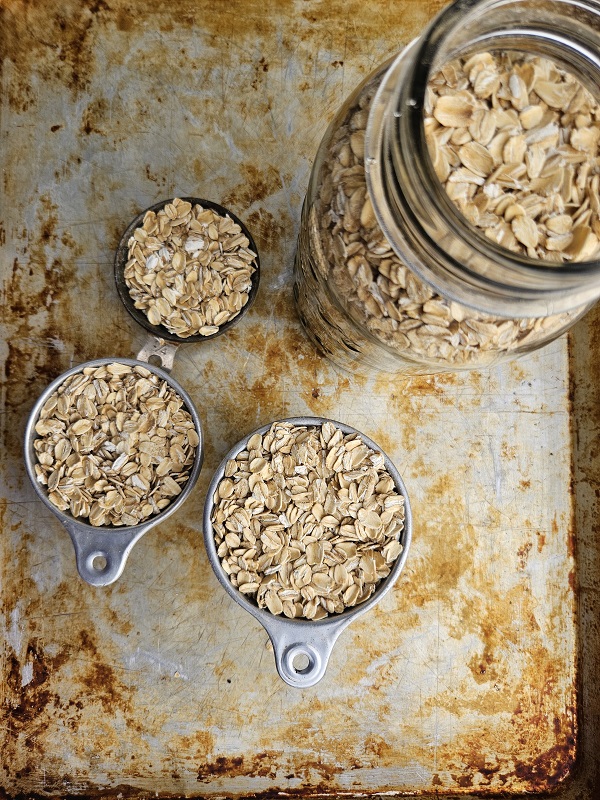
Hi friends, it’s true, crackers without the rolling. Amy here sharing this week’s iteration of this miracle recipe I found online. It all started with an abundance of oats…
A friend gifted me many pounds of organic rolled oats. Searching for inspiration to use them, I found Camilla’s Easy No-Roll Oat Crackers ( vegan, oil free, GF). It is a brilliant recipe that I’ve been making often these last few weeks since I discovered it. Besides oats, they contain seeds or mix of seeds. Sunflower makes particularly good crackers but branching out, I remembered Carolyn’s Black Beauty Wafers using saguaro seed. The seeds are strained out when making a syrup so those are a brilliant way to use the seed.
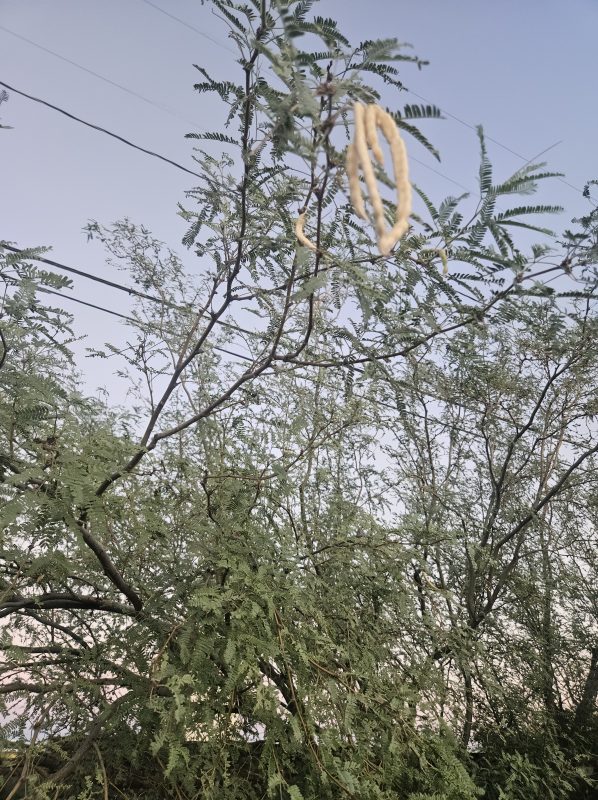
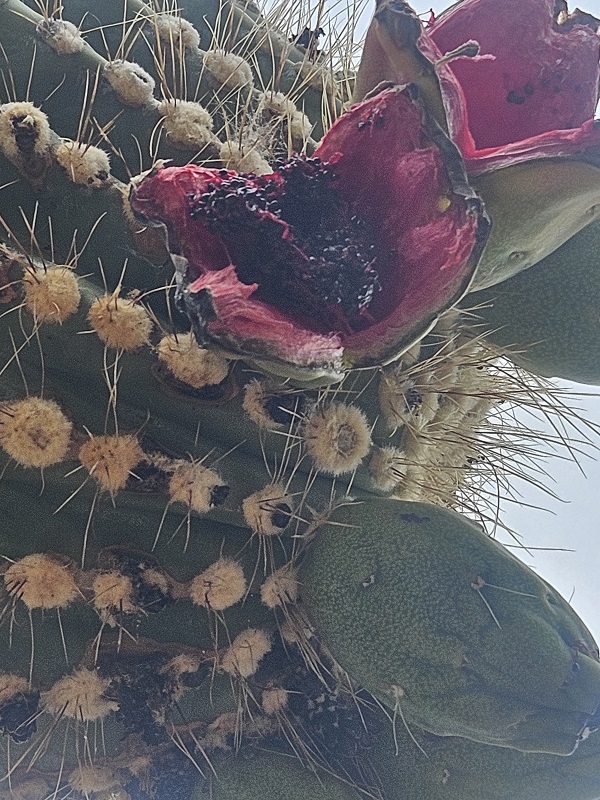
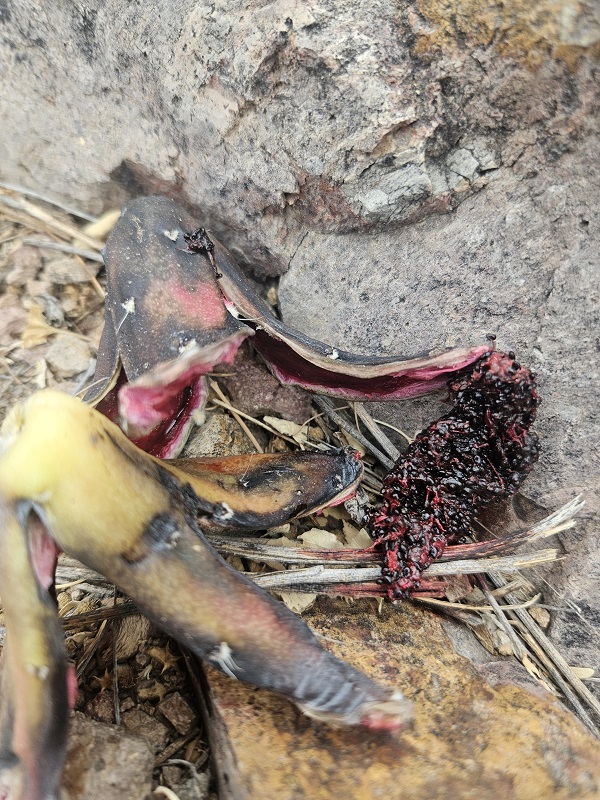
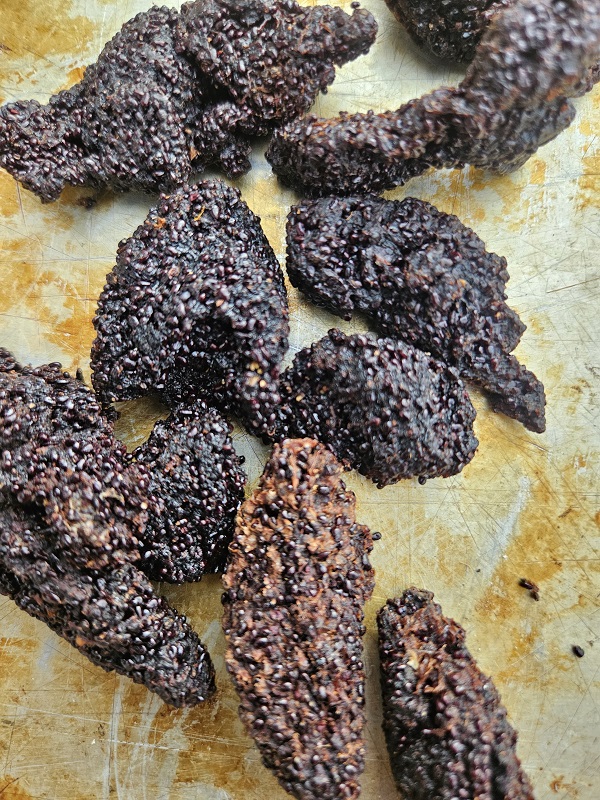
In June, the birds get the first feast of saguaro fruit. If there is more ripening fruit than the birds eat, it falls the ground, often sun dried and intensely concentrated, where I can easily harvest it without poking the plant. No need for a pole!
The ground animals get to feast first before the humans, of course, so we waited. But ripe fruit spoils in the rain, and I would never complain about glorious rain! So this year wasn’t the best saguaro fruit harvest for humans. (below, note the mesquite leaflets for scale)
I had some oooold fruit stored in the pantry so I decided to use the whole fruit instead of just the seeds.
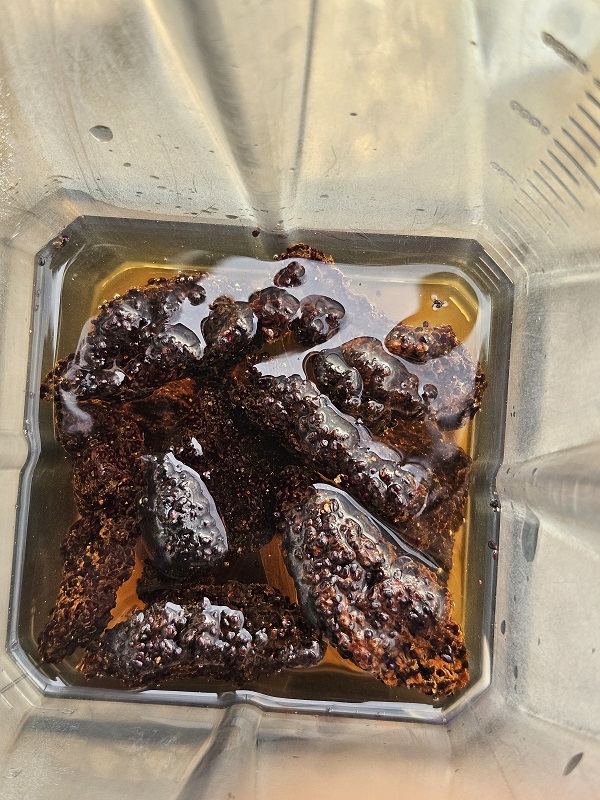
I soaked it in water to soften it.
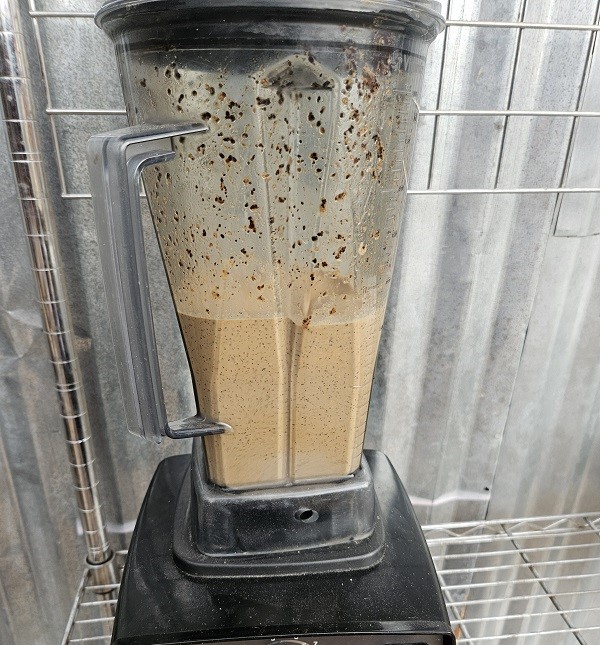
And blended it enough to grind the seeds. Then I added the oats, salt, baking powder and oil.
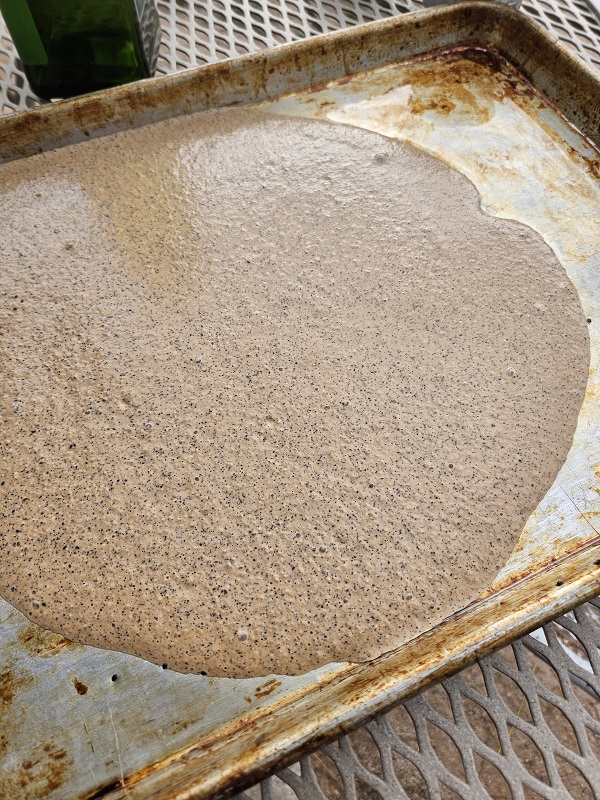
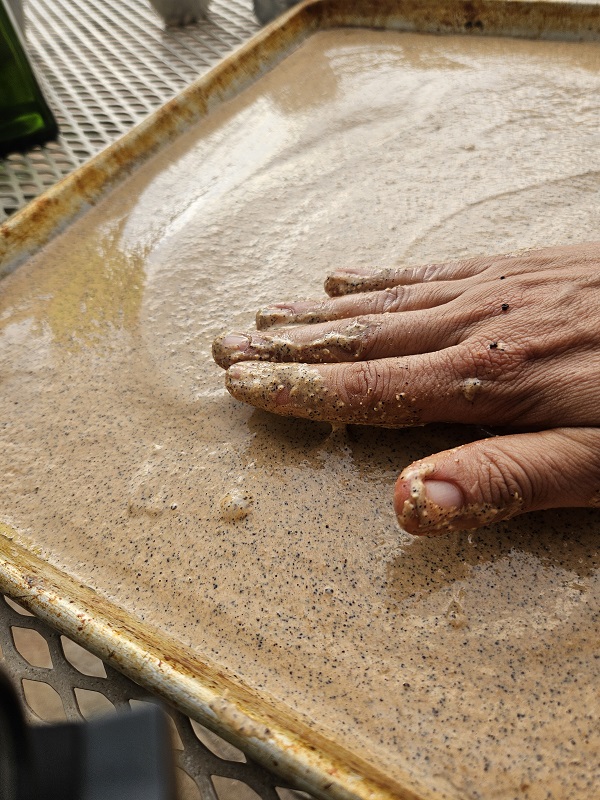
The batter is poured onto a greased half sheet pan (or even a bit larger pan to make crackers just a bit thinner).
Instead of rolling the dough, it just needs to be smooth!
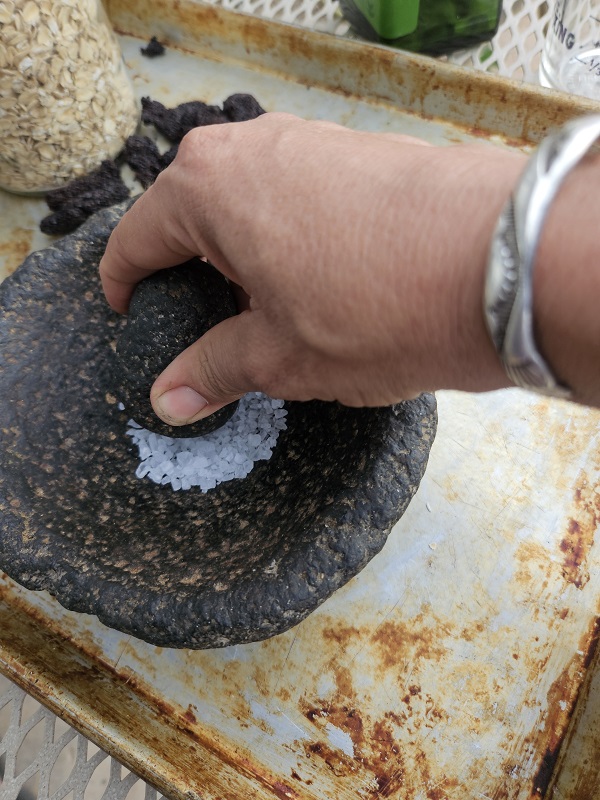
I prefer to add just a touch of salt to the batter so I can sprinkle a decent amount on top. I ground my best Mexican sea salt for this.
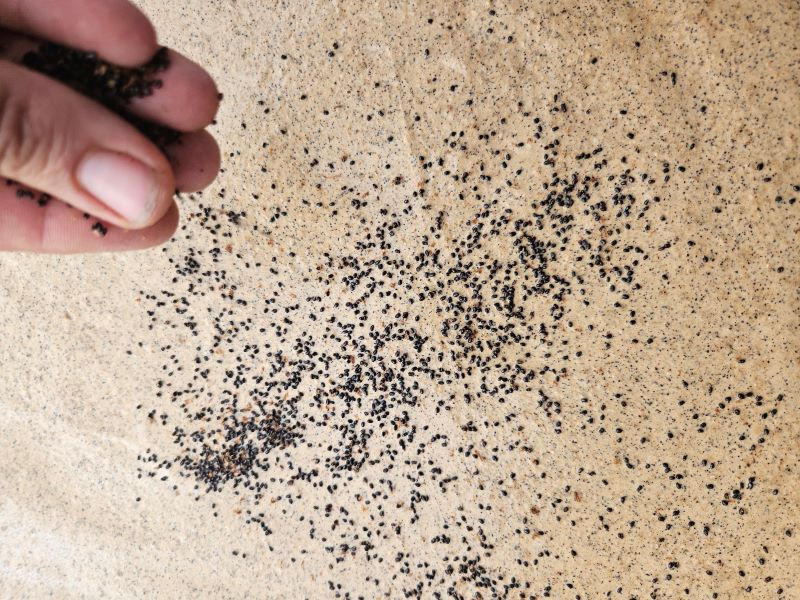
Then I sprinkled with saguaro seed.
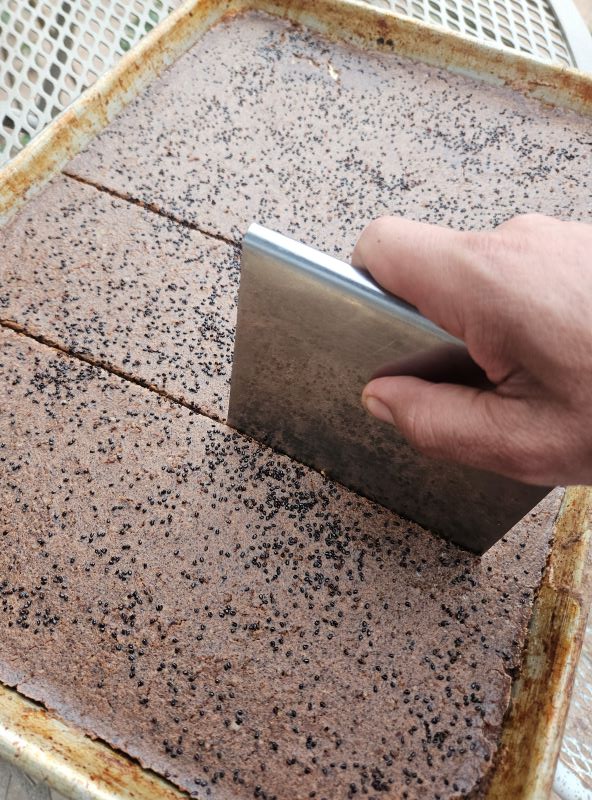
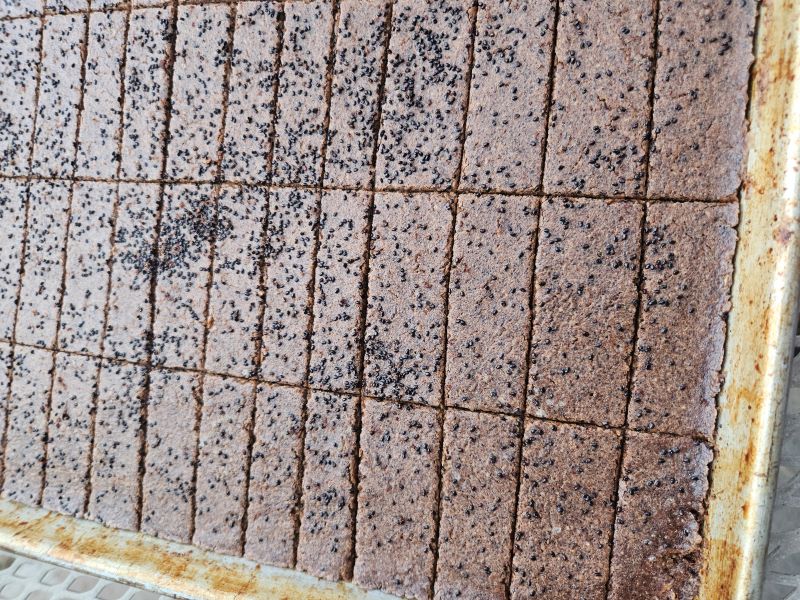
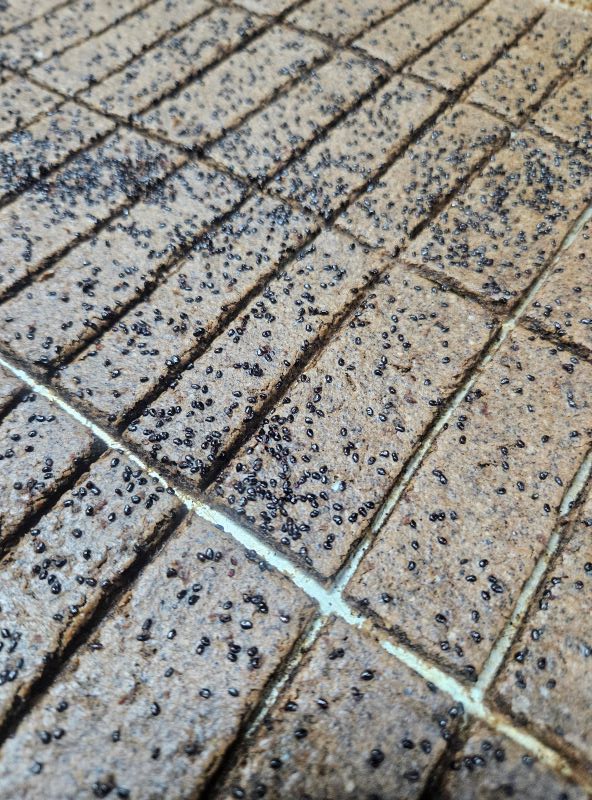
After baking for ten minutes, the crackers can be scored before returning to the oven to finish.
After baking with careful supervision, this batch got darker from the sugar in the saguaro fruit than other batches. A hit of sweetness and delicious! Next time I’ll use a slightly larger yet pan so they are a little thinner. The thinner ones are crispier and more delicate. But think or thin, they are easy to enjoy with spreads, alongside a salad or on their own as a trail snack. Enjoy!
For the recipe, see Camilla’s post on her blog powerhungry.com
Instead of seeds, I added the equivalent weight of dry saguaro fruit. I added a quarter cup of olive oil and reduced the water by that amount. I used approximately 1 teaspoon of coarse sea salt divided between the batter and sprinkled on top with the saguaro seeds. Experiment and have fun!
Hello friends, Amy here enjoying another great year for the wolfberry bush (Lycium fremontii …I think) in my yard. Tucson’s native species of the Chinese goji berry, they are similarly packed with antioxidants and health benefits. In the tomato family, it’s called tomatillo in Spanish, not to be confused in size, shape, color or taste to the garden variety of husked ground cherries that go by that name. Wolfberries taste somewhat like tomatoes and work well in sweet and savory dishes, when I manage to harvest more than I eat raw from the bush. Thriving on only rainwater, one huge plant produces plenty of fruit for me and the resident phainopeplas.
Inspired by this recipe for millet balls, I used fresh wolfberries in place of dried Turkish barberries.
It was delicious! It reminded me of falafel, crispy on the outside and grainy on the inside. A simple cilantro, garlic, lemon juice, olive oil chutney complimented them perfectly.
So the next time, I decided to use amaranth seeds. I bought this from the store, but you can harvest your own from wild or cultivated plants in the late summer if you’re ambitious.
I toasted them in oil until they became a shade darker and a few of them popped open.
I added water, three times the volume of amaranth seed, and cooked in the solar oven until it was creamy. Then I mixed in fresh wolfberries and enough flour to make a soft dough.
The dough was muuuuch stickier, so I added significantly more flour than for the millet balls and still they looked shaggy. (I used all purpose wheat flour but next time will try amaranth flour).
The toasted flavor came though and I’m glad the only seasoning I used was salt and wolfberries. The dough certainly didn’t need any egg or flax egg to hold together! They baked up just as well as the millet version, but with the texture of a cookie. Next I’ll try them sweetened!
I served them with a lemon pickle but that tomatillo salsa would be good. I took the rest to a picnic among the wildflowers. Happy spring!
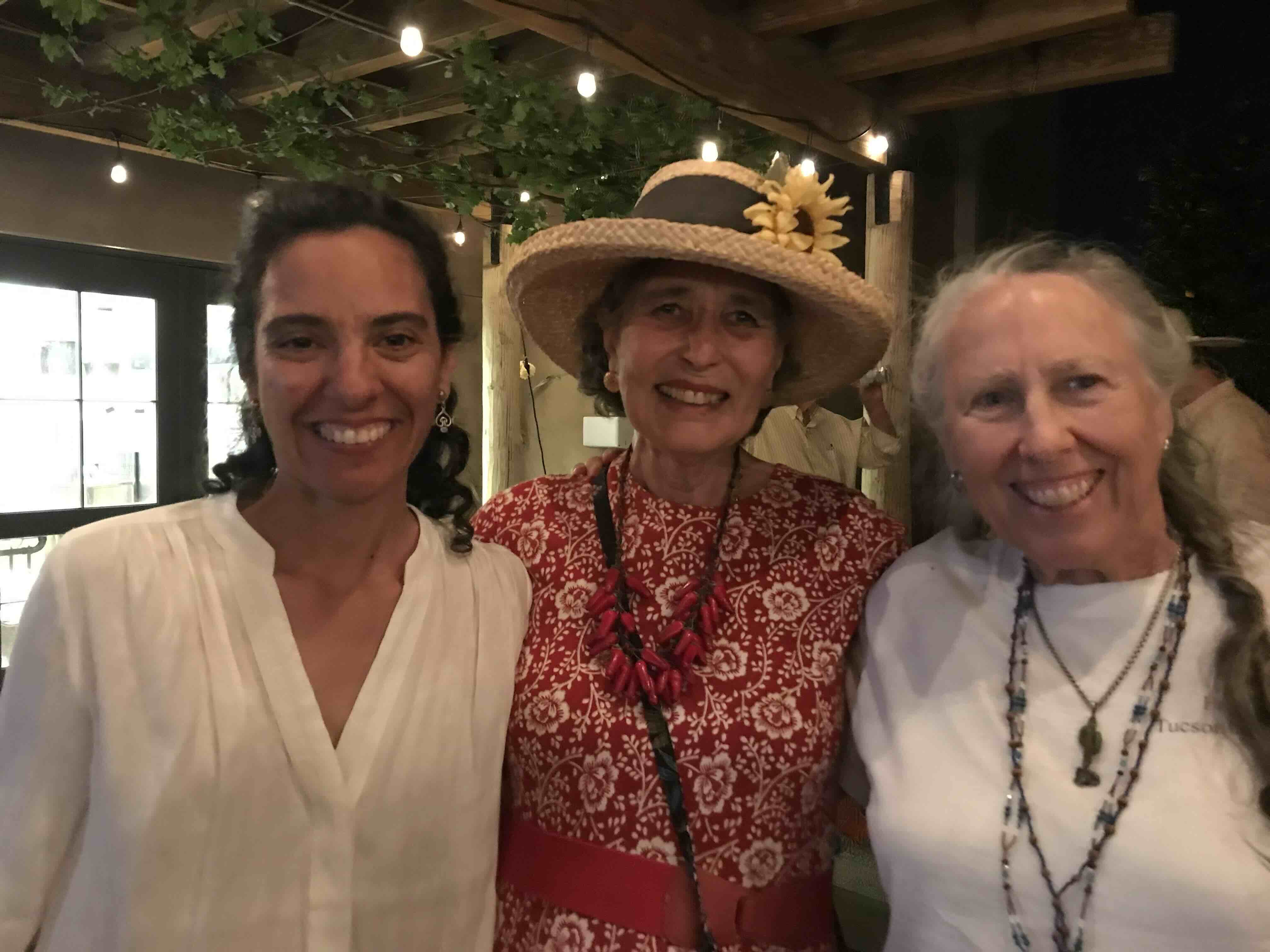
Caption: Faces behind the blog–the SavorSisters left to right: Mano y Metate Molera Amy Valdes Schwemm, Author/Culinary Artist/Hostess Extraordinaire Carolyn Niethammer, and Flor de Mayo Prickly Harvester/Frijol Aficionada Martha Ames Burgess
[Esteemed SavortheSouthwest Blog Readers: Our friend, colleague, desert foods philosopher, orchardist, inspirational instigator of culinary action, and author Gary Paul Nabhan asked to be interviewed. We were super-honored to learn he is such a fan of our blog! Here are his shared off-the-cuff remarks.]
Author Gary Paul Nabhan, with local beef and lamb grower Dennis Moroney, owner/founder of Sky Island Brand Meats (enjoying a concert by musician- grasslands botanist-author Jim Koweek in Sonoita, AZ)
INTERVIEW FOLLOWS
Question from a SavortheSouthwest.blog Fan: So Gary, why are you eager to celebrate these Southwest foodies’ lifework, that of Carolyn Niethammer, Martha Ames Burgess, and Amy Valdés Schwemm?
Gary: Aside from the fact that they have had enormous influence, not just on me but our whole community, each of them has been a remarkable pioneer or innovator with Southwest foods. I value their friendships –but also their brightness.
Question: When and how did you get to know each of them?
Gary: When I moved to Tucson in 1975 or so, both Kit Schweitzer and Lloyd Finley heard of my interest in food ethnobotany and said I had to meet Carri. She was probably working on her book American Indian Food and Lore by then, which was one of the first regional books on Indigenous cuisine in the Southwest. We did some field harvesting workshops together on seasonal wild foods in the Tucson area, calling it “Gary and Carri’s Thorny Food Review.” Next we worked together on Pima County Public Library’s amazingly innovative live-talk series, the Sonoran Heritage Program.
With Muffin, in the 1970s we were both engaged with the Arizona-Sonora Desert Museum and with Tumamoc Hill’s Mescal,Marching,&Menudo Society. As fellow grad-students, we’d practice our research findings on each other with presentations and potlucks. Later, we were conserving seeds and traditional planting know-how with NativeSeedsSEARCH [the organization Gary co-founded] and shared by Indigenous farmer friends. To this day, no single educator of nature and culture has eclipsed Muffin’s capacity to bring Tucsonans out for hands-on experiential programs. I recall an event that she organized, a Desert Museum program with Tucson explorer Tad Nichols showing his 1943-44 film of flying over the newly-exploding Paricutin volcano. Over 600 people were attracted to Tad’s presentation thanks to Muffin’s enthusiasm. We both had friendships with Tohono O’odham Elder women on the Nation, so traveled out there together a lot, learning from them. She actually was a model for one of the characters in my first book.
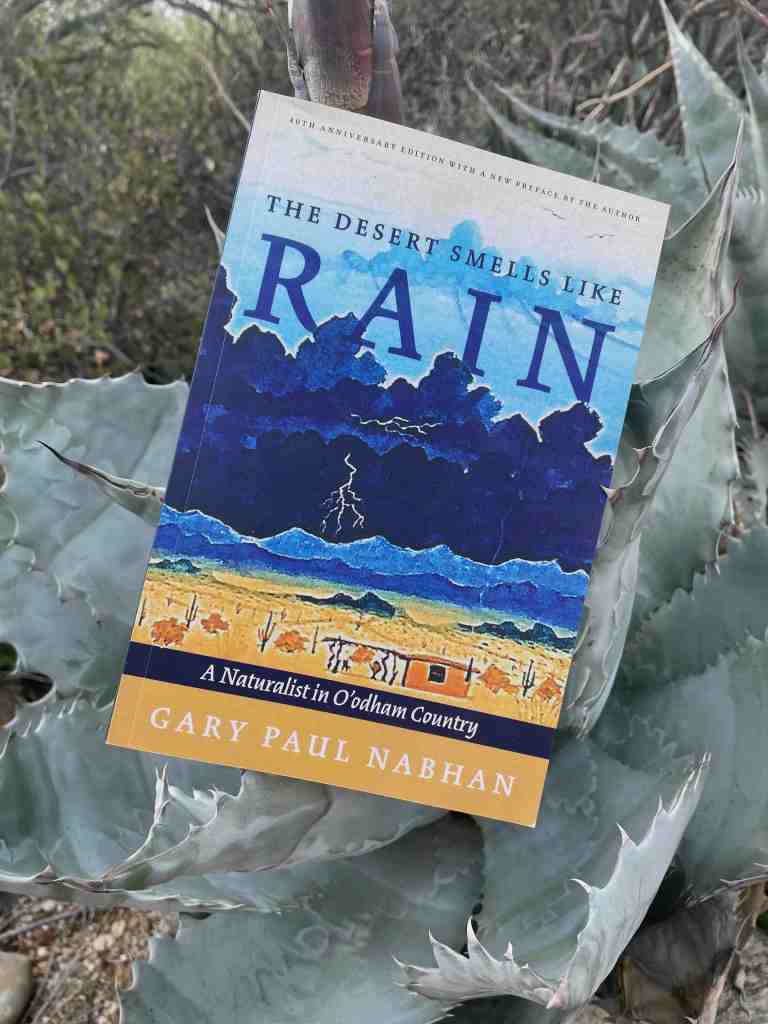
[Nabhan’s book The Desert Smells like Rain, a Naturalist in O’odham Country, first published in 1982, has been reprinted recently by University of Arizona Press!]
I got to know Amy later through her work with Mano y Metate and Desert Harvesters. Her Mano y Metate moles—which she re-created from scratch when NativeSeedsSEARCH’s Mexican mole source vanished–have always been extraordinary in both honoring tradition–and in kicking fragrances up a notch. Amy agreed to cater one of the first dinners we had in Patagonia when I founded the national network on rare food conservation called Renewing America’s Food Traditions. Our guests from all over–Deborah Madison from Santa Fe, leaders in Chefs Collaborative, and Slow Food USA–loved her creativity as much as I did.
[Amy’s Mole mixes make being a gourmet cook almost instantly possible!]
Question: What do you think these three Savor-Sisters have in common, in terms of values and strategies for promoting Southwestern foods?
Gary: That’s easy to respond to: They all have deeply listened to Indigenous and traditional home cooks, rather than –excuse my Espanglish—simply sitting on their nalgas in front of their desks to make up mierda without any tangible ties to historic traditions. Carolyn’s first book was really a food ethnography acknowledging dozens of Southwest Native women and their traditional foodways. Muffin has done the same with Tohono O’odham women–listening and participating in food harvesting and preparation with elders. And Amy has continued the traditions of her own grandmothers. Not every writer or chef takes that time: each of these three Tucsonans stands in the tradition of Paula Wolfert, Diana Kennedy and Lois Ellen Frank.
Question: Any other thoughts you dare share about these Three Mesquiteers?
Gary: Actually yes–one more thing: One of the aspirations that Jonathan Mabry, head of Tucson’s City of Gastronomy program, and I had when we were submitting the proposal to make Tucson the first UNESCO City of Gastronomy in the U.S. was this: to continue the elaboration and celebration of the unique gastronomy of this place and its many cultures. Shortly after getting that designation, I knocked on Carri’s door and said, “Tag, you’re it! No one else can offer the detailed overview of Tucson’s complex culinary legacy in print better than you. What still needs to happen is to create or articulate a collective identity for a Sonoran Desert cuisine that is identifiable, unique—as it is in New Orleans, Charleston, Boston, or Santa Fe. So, it’s up to you to express what a distinctive regional cuisine means for us, and illustrate it with great sample dishes, sample menus.”
That’s really a huge task—larger than what one book can ever do—but she started that process. She had Tucson’s home cooks, chefs, growers–young, veteran, Indigenous—even brewers and distillers all understand what they, as a community, have to build on– that no one in Phoenix, El Paso or Albuquerque can touch. The result was her latest book A Desert Feast: Celebrating Tucson’s Culinary Traditions.
Each of Carolyn’s books is a treasure trove of local food delights, ideas and info.
Question: Okay, so what are you up to these days as Extinguished Professor Nabhan? We’ve heard a rumor that you sometimes write books in the middle of the night.
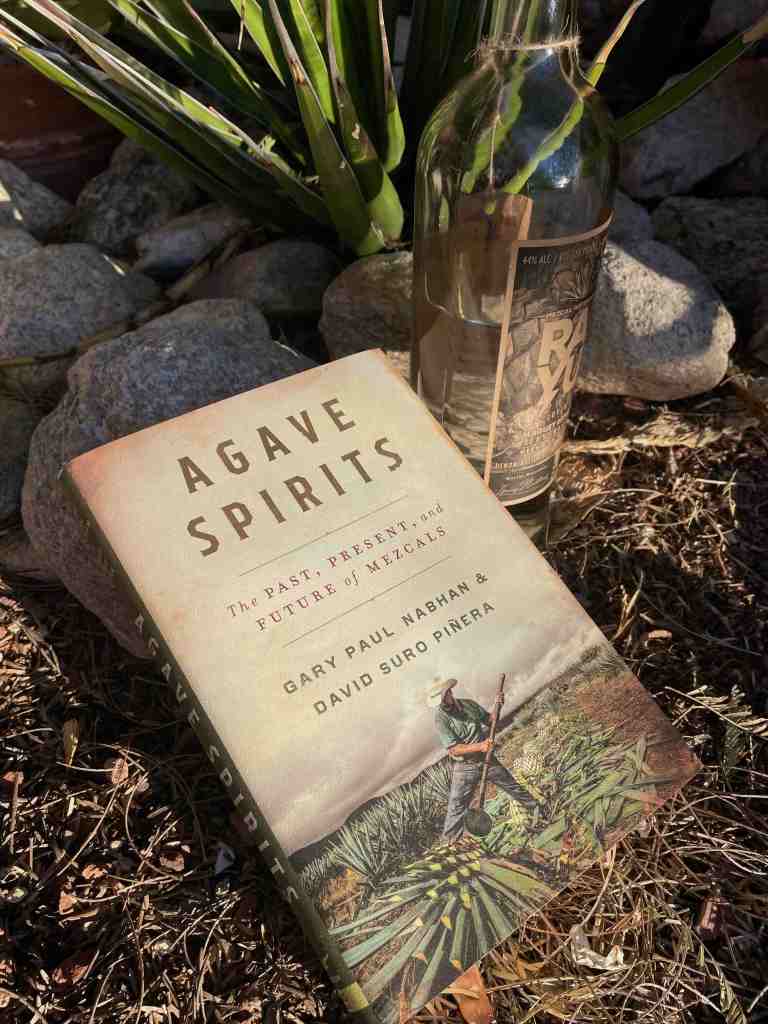
Gary: Yeah, sleeplessness is my only real asset. Of course, I’m still rambling around festivals promoting Agave Spirits, my latest book coauthored with David Suro. But I’m also at work on a book with James Beard-award-winning chef and food writer Beth Dooley on the links between and benefits of desert cuisines from around the world in this time of rapid climate change. We’re showing a commonality between what people grow and how they prepare foods from the deserts of India and Persia, through the Middle East and North African “Maghreb”, to the Canaries, Caribbean, northern Mexico and the U.S. Southwest. These will be recipes so aromatic and full of healthful antioxidants that no one will ever say again that living well and eating sustainably in a hot dry world is difficult–if not impossible. And most hopeful, these deserts’ foods can even buffer us from heat stress, dehydration and damaging solar radiation… So stay tuned!
[The Savor-Sisters thank you, Gary, for your candid thoughts and perspectives about us and our mission in sharing what we do via this blog. Indeed all of us, dear blog readers included, are anticipating Gary’s next book. (We can hardly keep up with his blistering writing rate.) Bravo to him for continuing to share his significant desert stories, and to inspire us resiliently into hotter, drier times! With appreciation, Carri, Amy, and Muff]
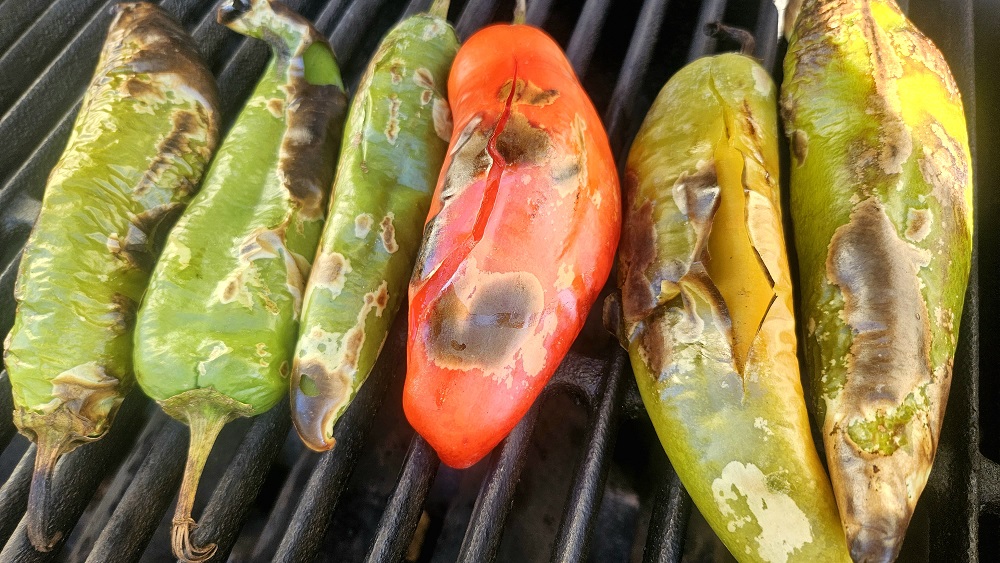
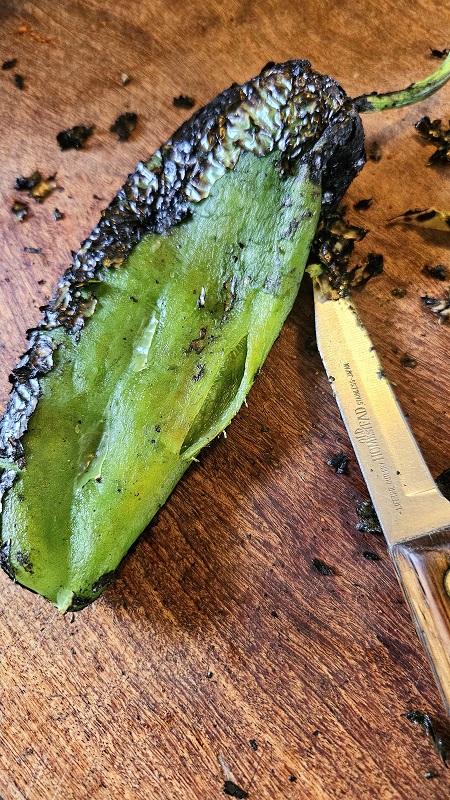
Hello friends, Amy here celebrating the harvest. At Tucson CSA this fall we had several batches of gorgeous, fleshy, green chiles! Farmer Frank of Crooked Sky Farm has been supplying us for years and years. The smell of charring them at home reminds me of doing it with my grandfather.
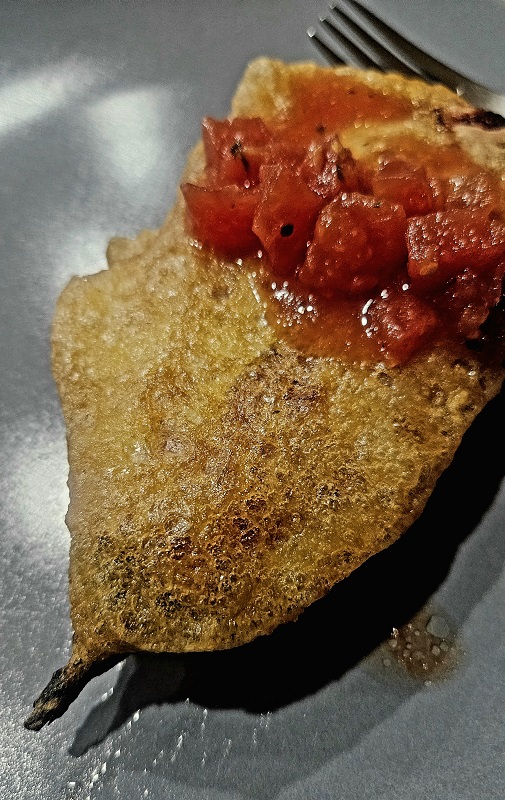
First things first, I made my great grandmother’s chiles rellenos with my family. Stuffed with cumin spiced beef, fried with a light egg batter and toped with a mild tomato sauce, these must be eaten immediately after they’re done. Yes, at the beginning only one person is eating a relleno at a time.
We also made chiles en nogada, filled with a complex pork and raisin filing, topped with walnut and almond sauce.
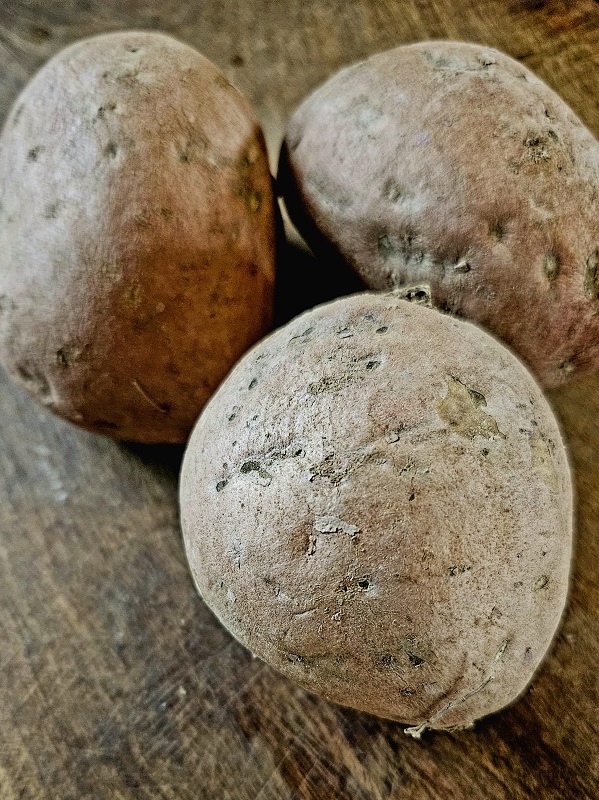
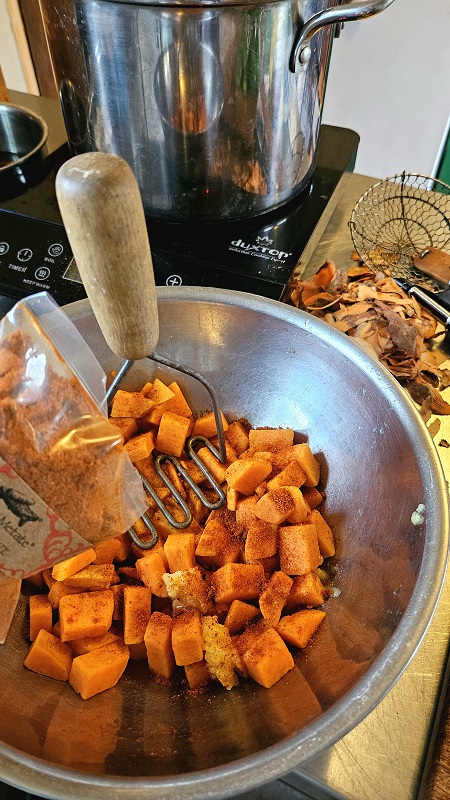
Next I wanted to try something new… I started with sweet potatoes from my CSA.
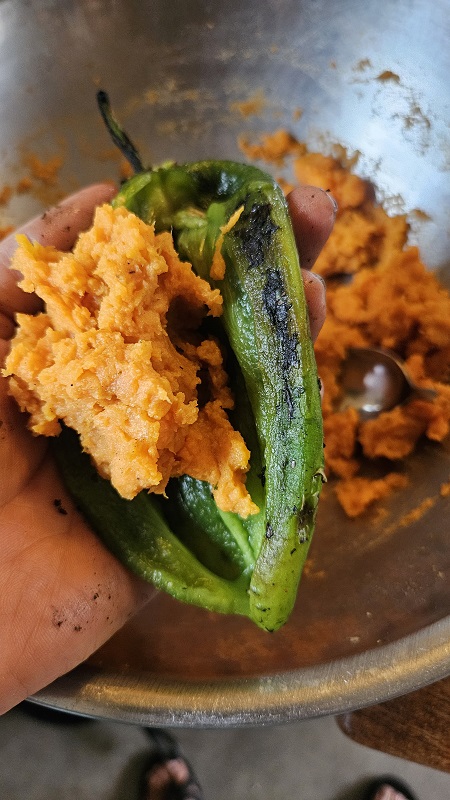
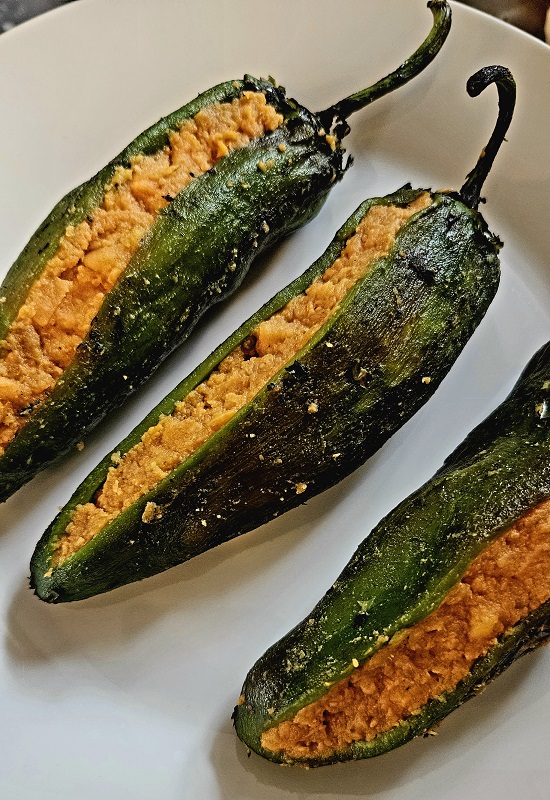
I loved how the mixture didn’t fall out of the chiles like the other fillings did!
Also, I loved the color combination of orange and green so I overstuffed them to let it show.
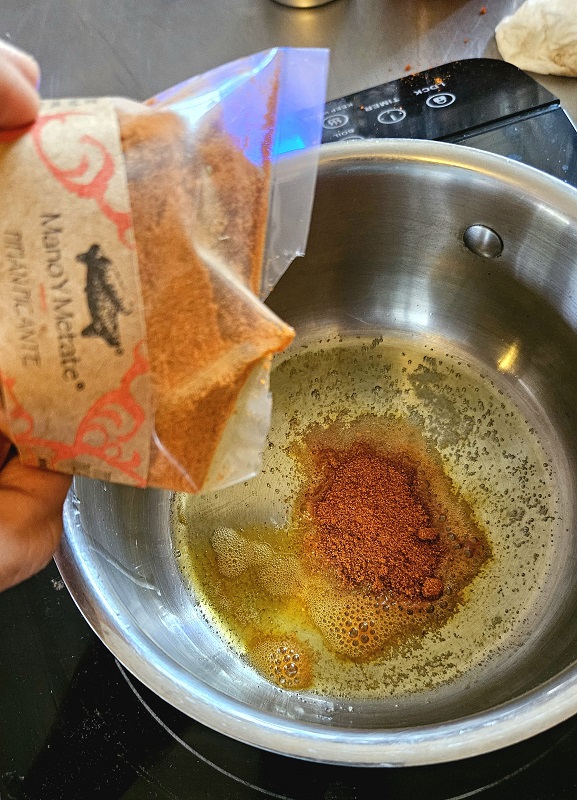
To finish, I gently heated ghee and more Pipian Picante powder.
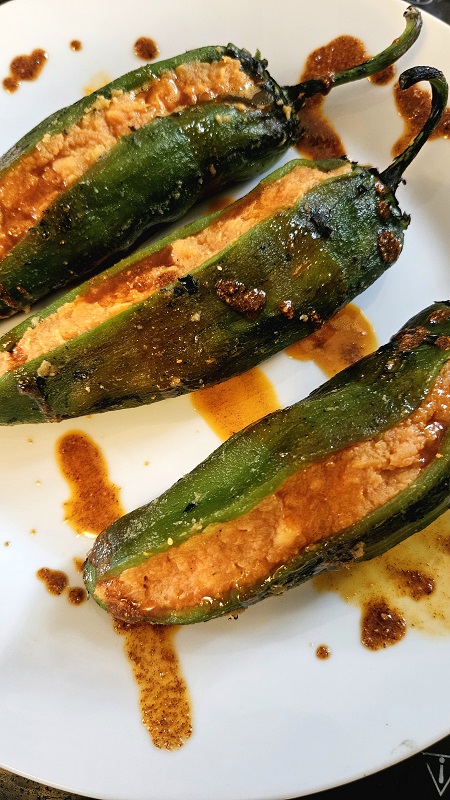
Then drizzled it over the still warm chiles. Since these chiles were so mild, I really welcomed extra spice. (Pipian Picante is medium spicy). If my chiles were hotter, I would have chosen the milder Pipian Rojo powder.
The filling and topping were so good I can imagine eating it without the chile if they were not on hand. Or chopping the chile and mixing it in to the sweet potatoes. Enjoy the chile until the frost!
We’ll be selling mole powders at Holiday Nights, so come visit with us at Tohono Chul in Tucson, Friday and Saturdays Dec 8, 9, 15, 16 from 530-830pm.









 Savor the Southwest: