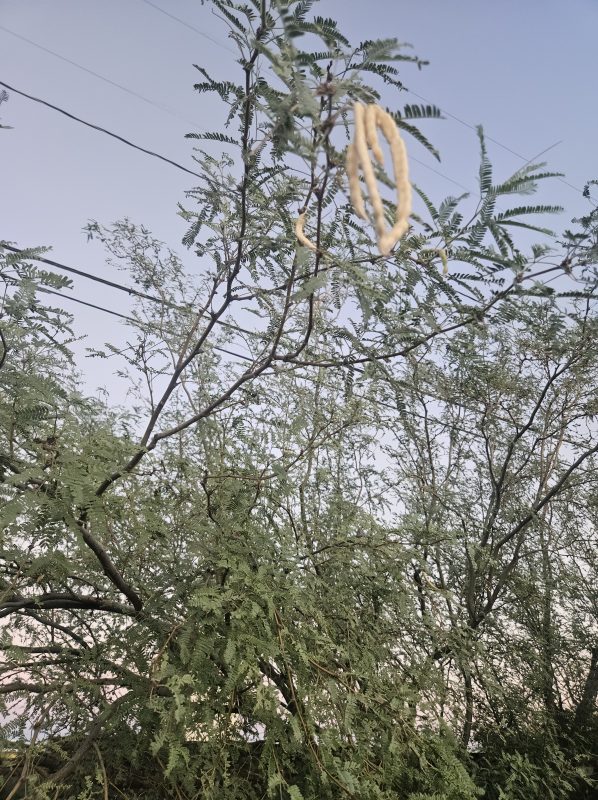
Pods to Meal to Cookies at home, TODAY!

Hello friends, Amy here with a baked good I made last week. I wanted to bring treats to share with my friends, something we could nibble while we passed the break table. And if no one had to wash plates, forks or spoons, that was a bonus. My people truly delight in cooking, hadn’t had anything mesquite in ages, and I wanted to impress. After considering my options for a month, I suddenly realized… that’s this afternoon!!!

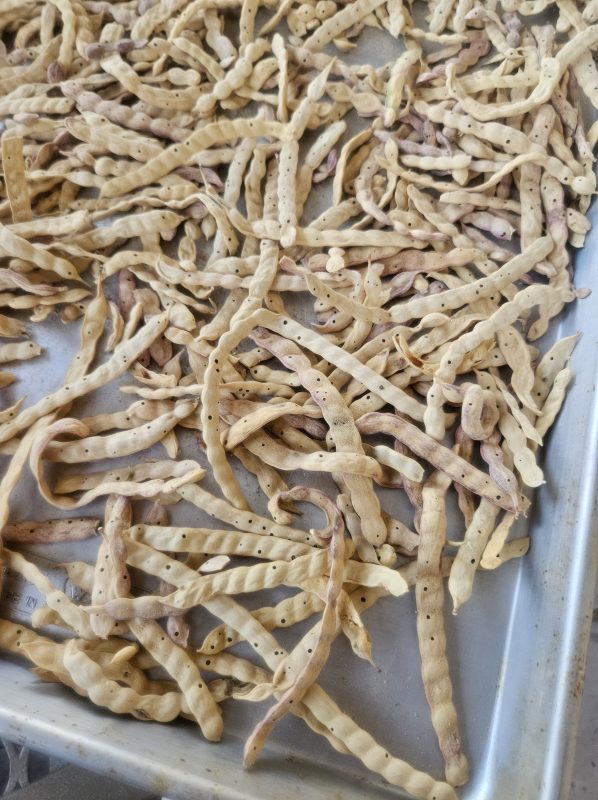
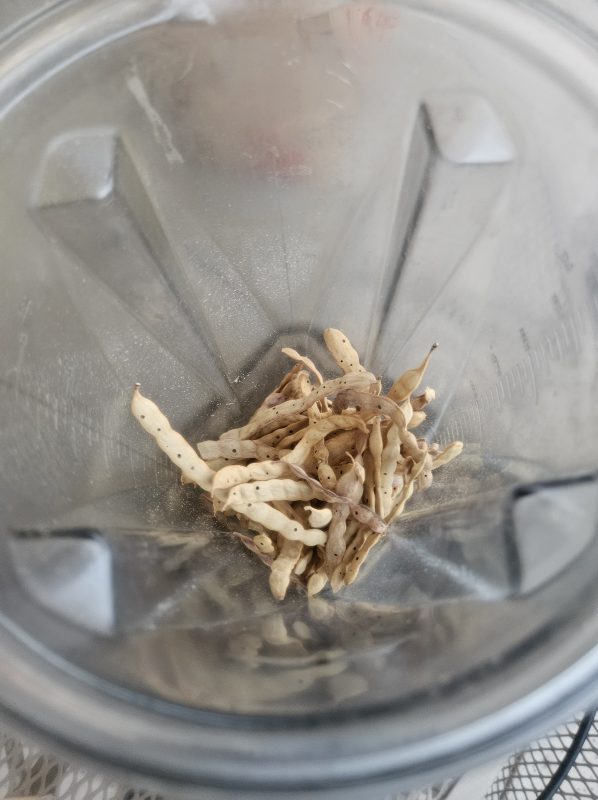
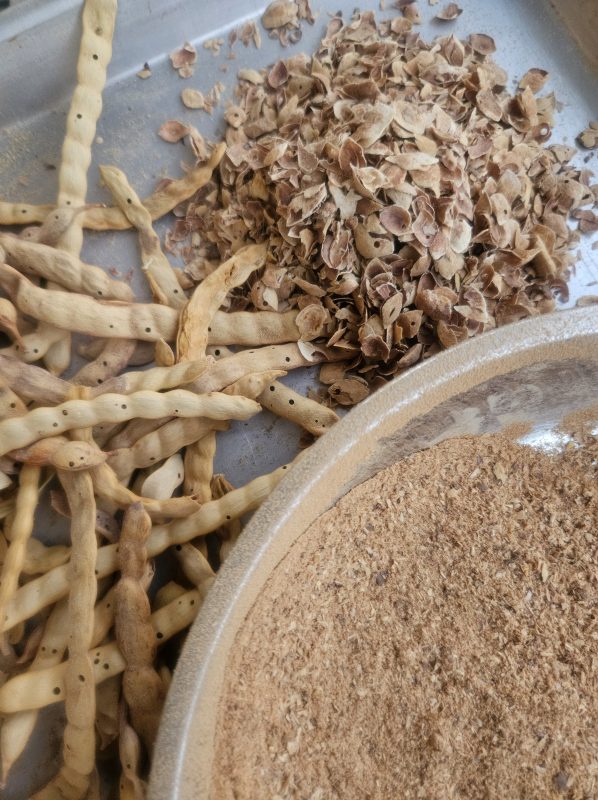
Drought makes for patchy harvesting, but I had a stash of pods. The trick to making HOME grinding work, especially in humid weather, is to toast the pods RIGHT before grinding. No community mesquite pod milling event near you? Need that mesquite meal TODAY? No problem!
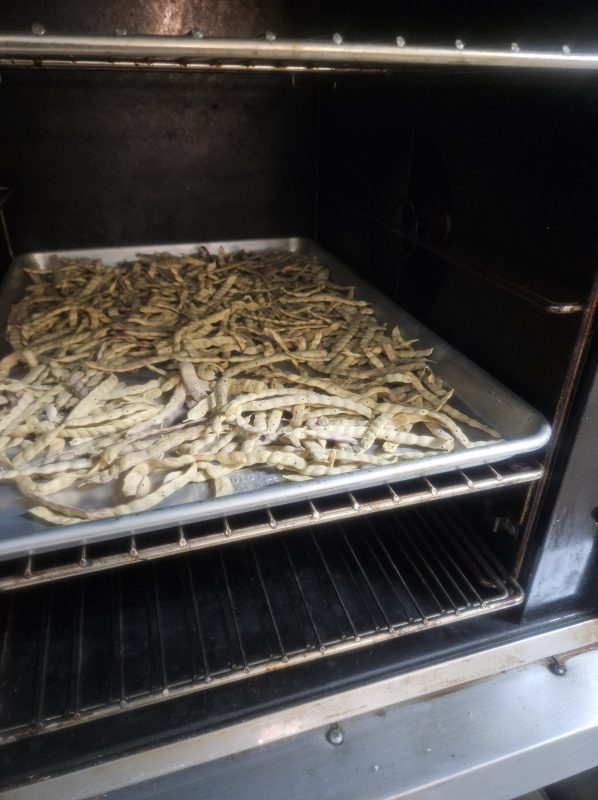
I baked in a thin layer at about 275 degrees F with convection for maybe 5 minutes. Try longer if you don’t use or have a fan. It should smell sweeeeet. I opted to not develop any golden color, but that’s an option!

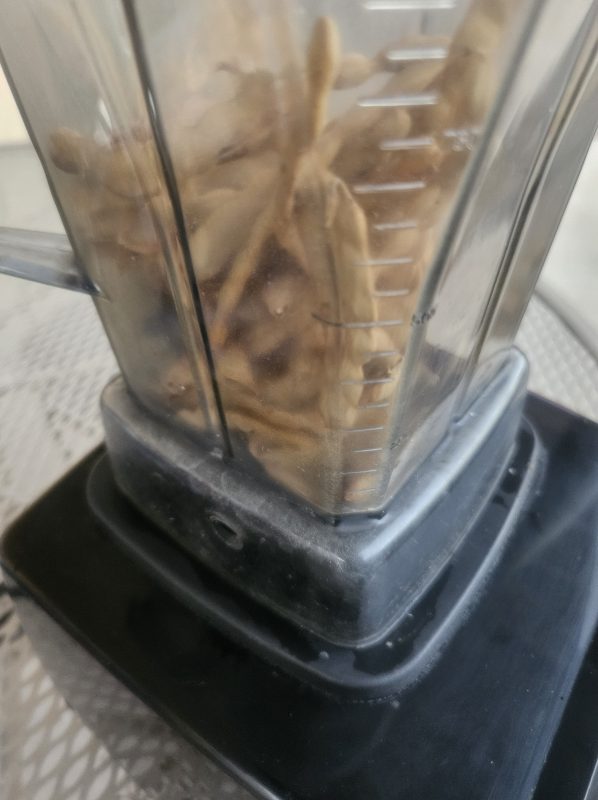
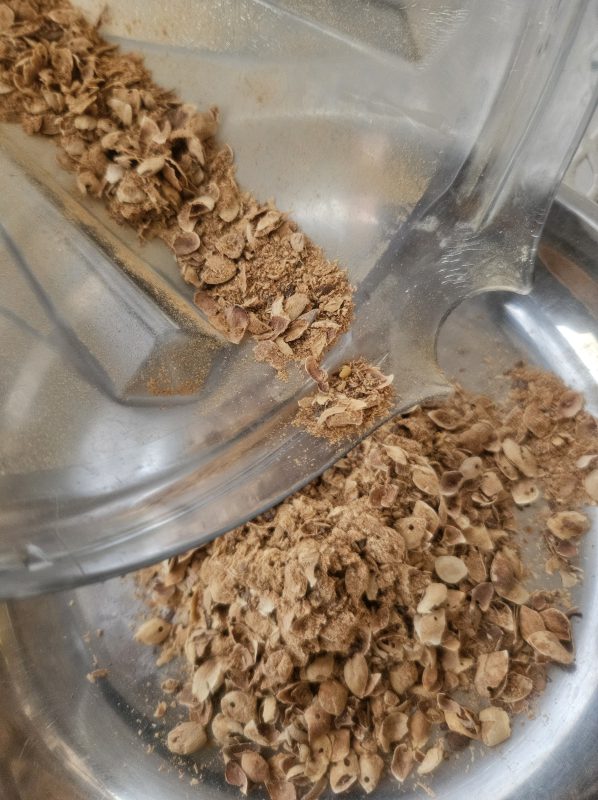
After cooling JUST enough to handle easily, I tossed the pods into a high powered blender. A regular blender or food process does not suffice. Without the last minute toasting, grinding makes a paste in there. This of course is an issue with any mesquite meal grinding method, but expecially for the blender or stone tools.

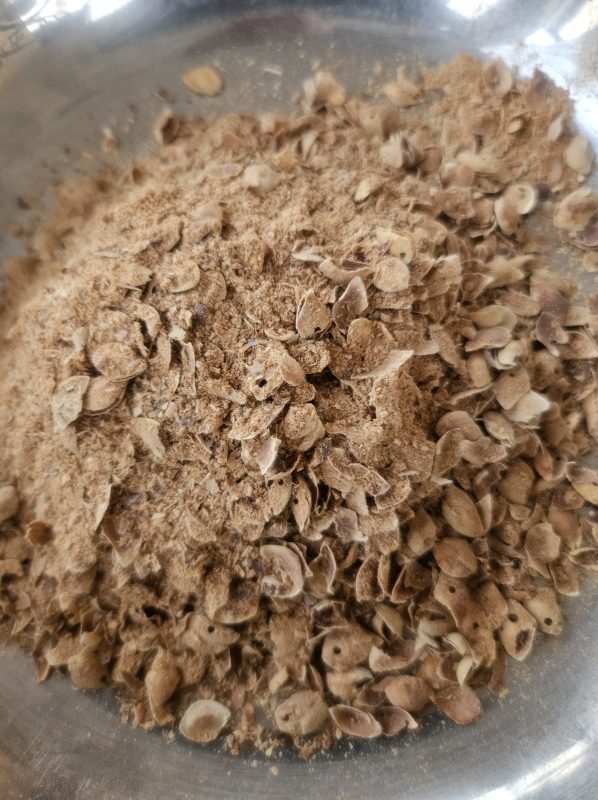
Unbelievablly, it only takes a few pulses.

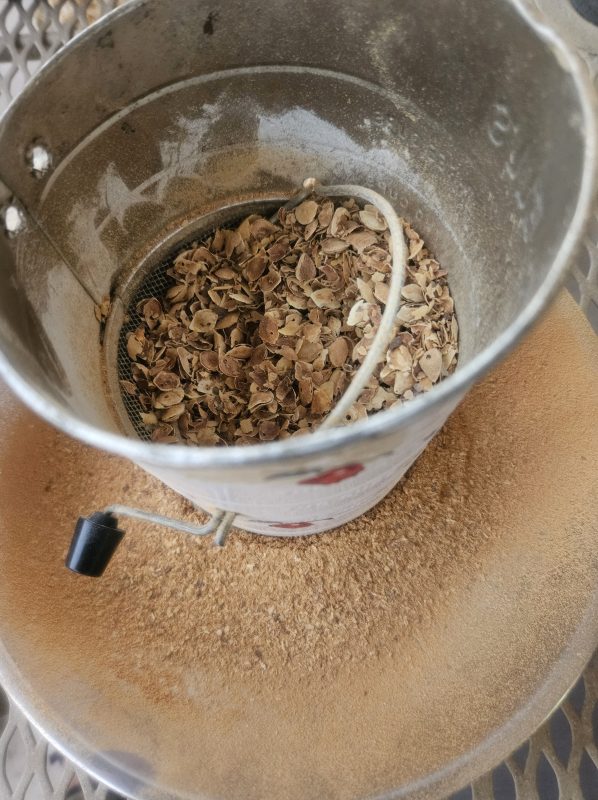
Any fine sieve or a flour sifter can remove the meal form the hard bits of unground pod and seed. Any grinding method will require this step, even hammer mills.

Sifting is even faster than grinding, depending on the size of the holes and quanity of mesquite meal needed.

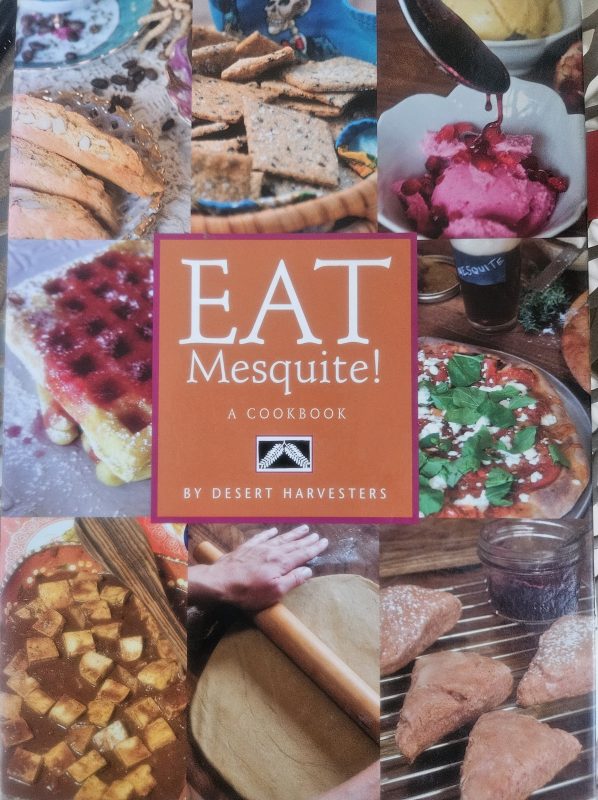
To show off this flour, I impulsively chose a simple recipe from this small out of print book. However, you can purchase the huge current edition!

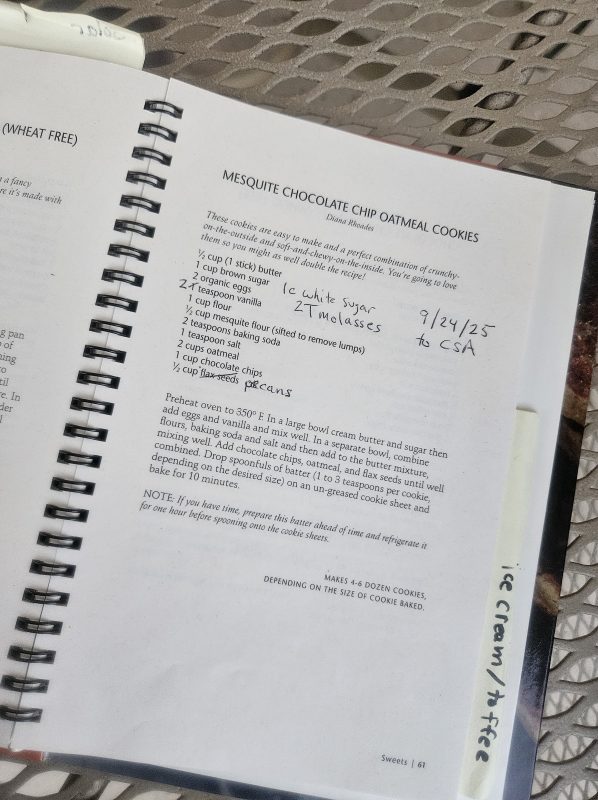
Chocolate chip cookies! I had a half bag of chocolate chips and pecans on hand, and chocolate with mesquite is classic. In case my butter spent too much time in the freezer, I doubled the vanilla. No brown sugar in sight, but a gallon of mollassas to use up.

I love making my notes in hard copy cookbooks, and reading the kitchen culture from long gone relatives in their books. And the bookmarks that are labels from my friends’ gifted food creations are my kind of treasures.

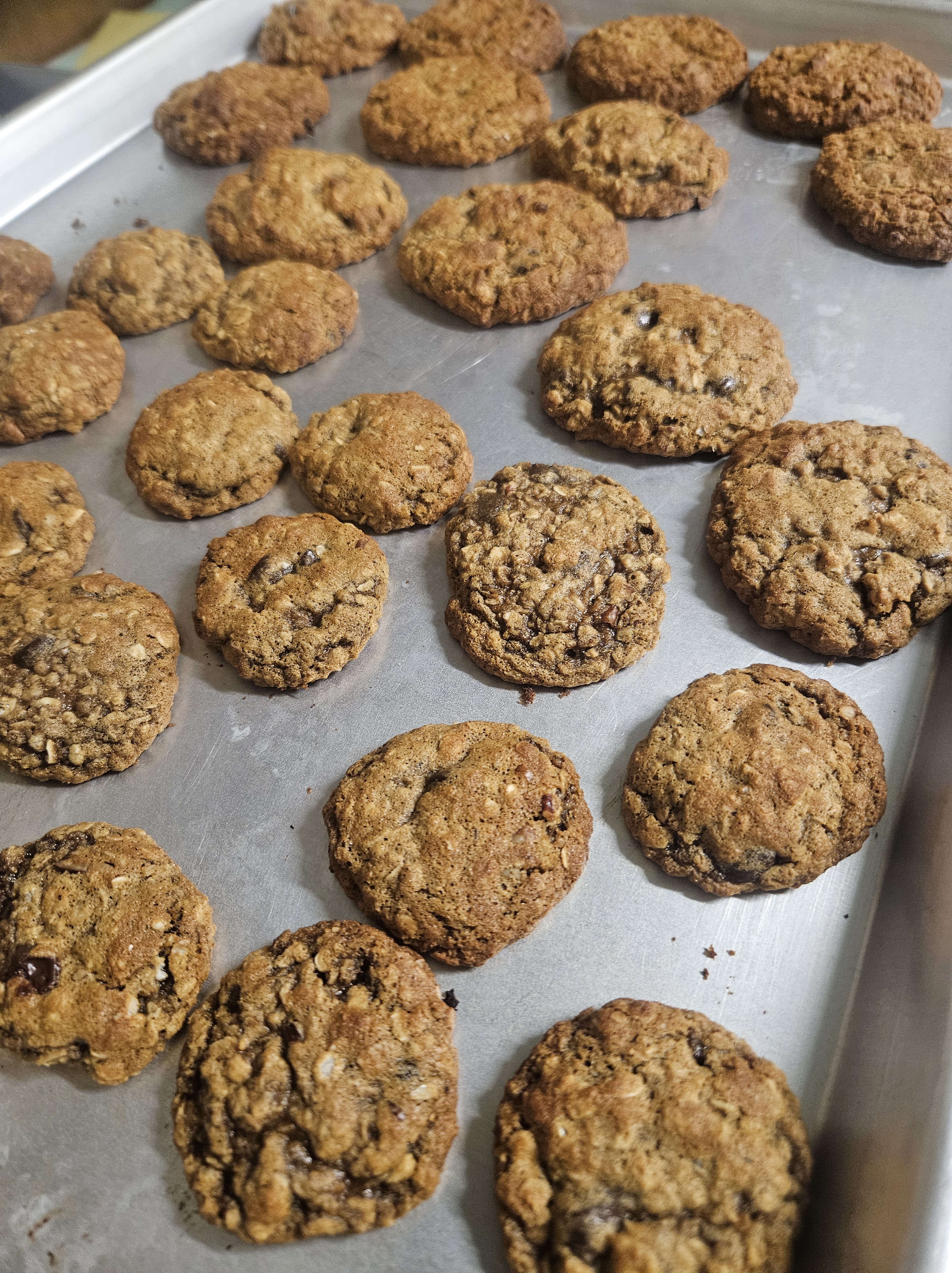
I baked these chocolate chip oatmeal mesquite pecan cookies until just barely set, let them finish cooling in transit, and served them chewy with the chocolate still melted. I’m sure they would not tolerate stacking. Some were full sized, the others bit sized. None were leftover.

Happy autumn!

Little Backyard Eggs

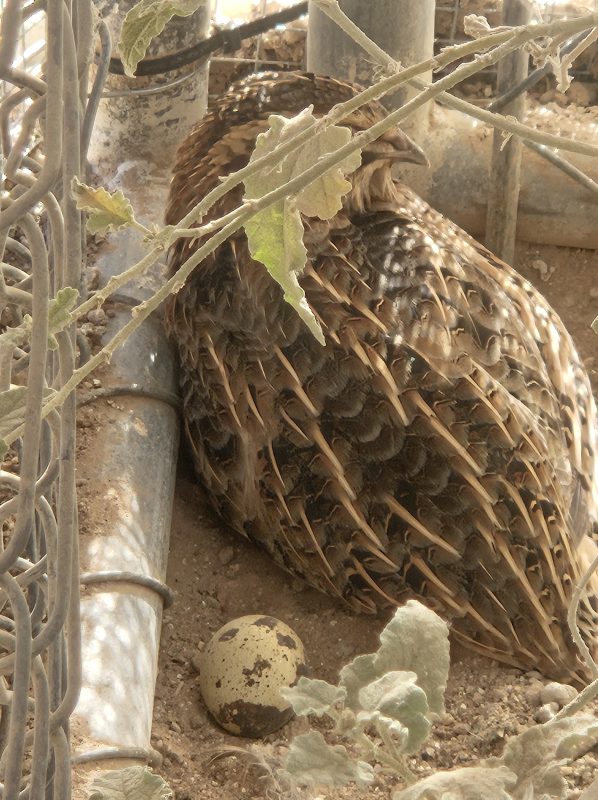
Hi friends, Amy here. Years ago, chickens free ranged my entire backyard and roosted in the trees. However, my current neighborhood has red tailed hawks and striped skunks so I knew any domesticated birds here would need a fortress. Instead of making an enormous chicken enclosure, I opted to try smaller birds that wouldn’t feel so cramped in an aviary. Coturnix quail, Eurasian domesticated birds, are often raised for eggs and meat in tiny cages like rabbit hutches. So in my 100 square foot and six foot tall enclosure, a dozen of them scurry under plants, bathe in the dust and fly as well as they can. Also, since the rooster’s crow is not very loud, they don’t bother sleeping human neighbors. City dwelling roosters!

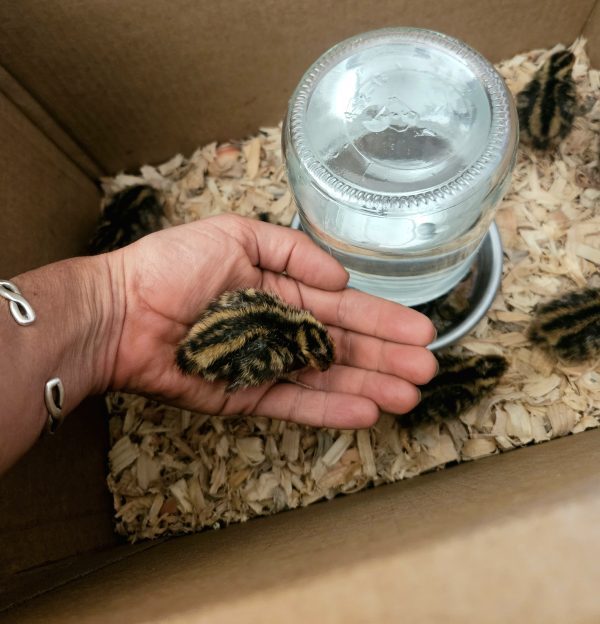
I started in late winter/early spring with two week old chicks raised locally. When the days grew long enough (almost 14 hours) at 11 weeks old, they stated laying.

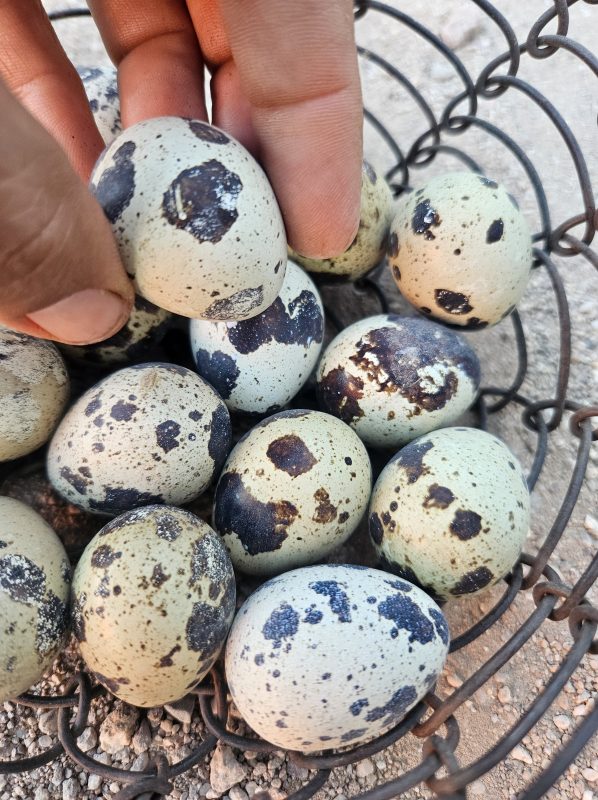
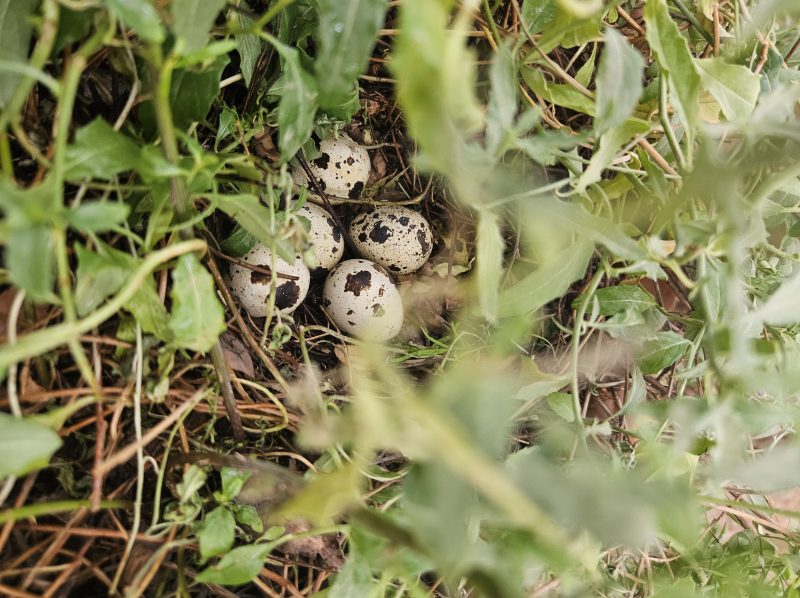
Just like with free range chickens, every day is an egg hunt.

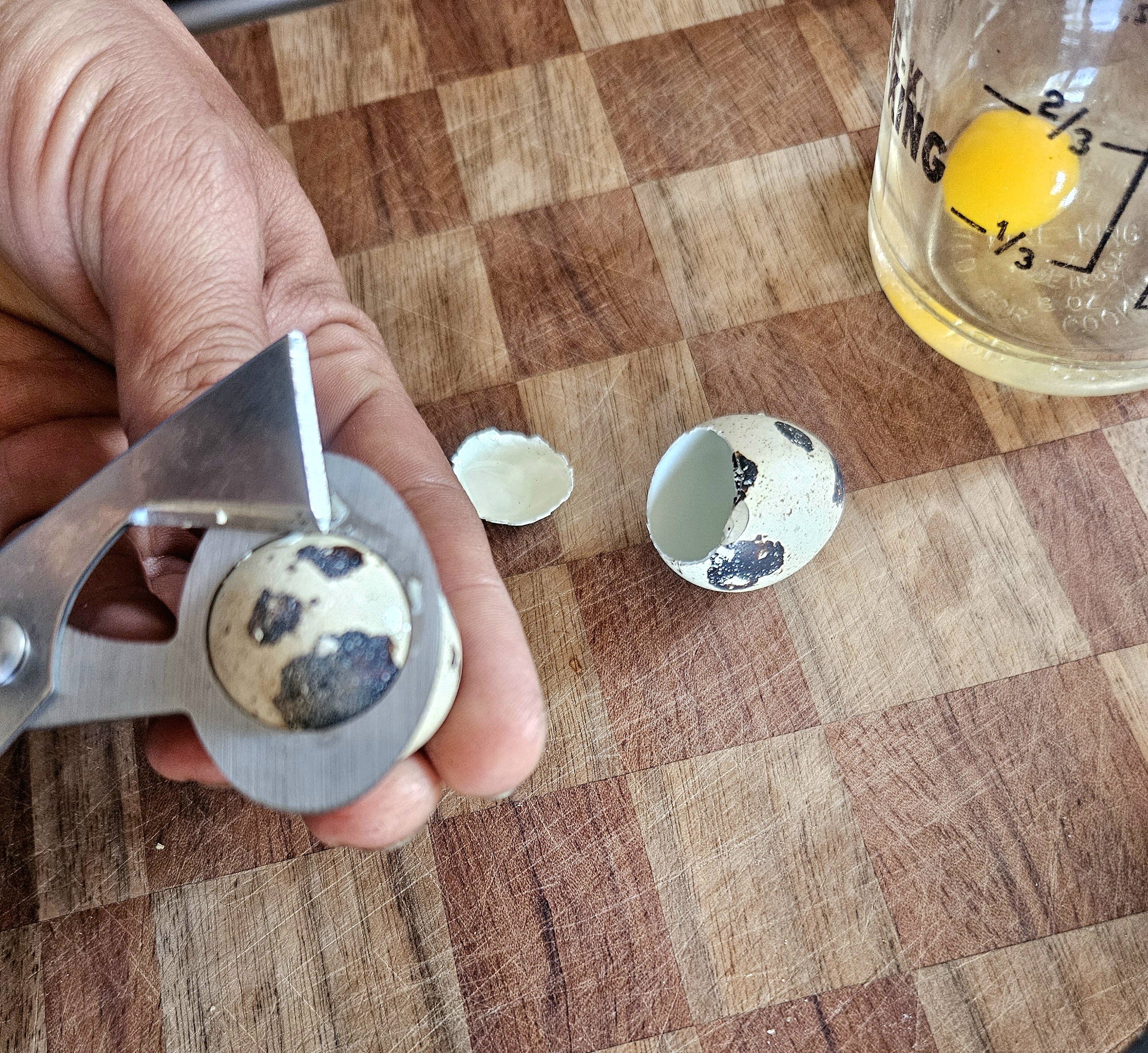
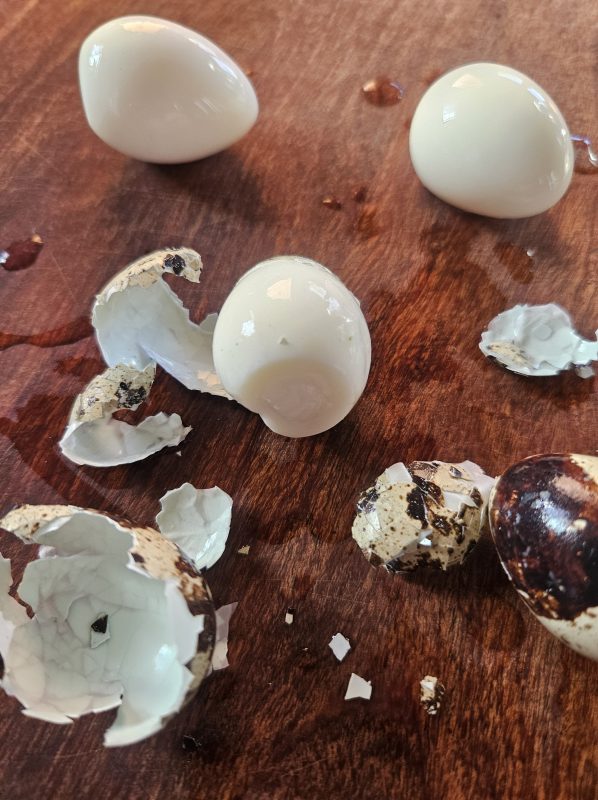
The shells are brittle but the membrane below is very tough. Quail egg scissors help make a clean break and keep frustrating fragments out of the dish.

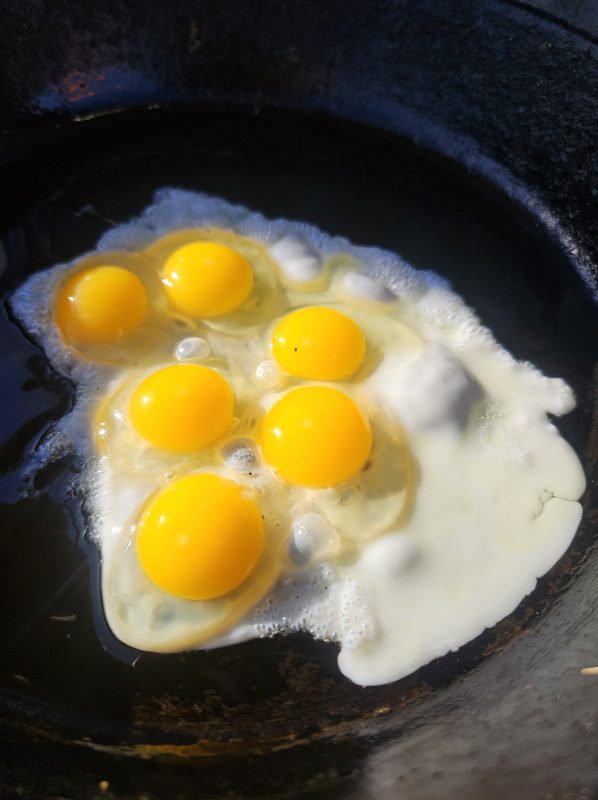
About 4 quail eggs equal a large chicken egg.

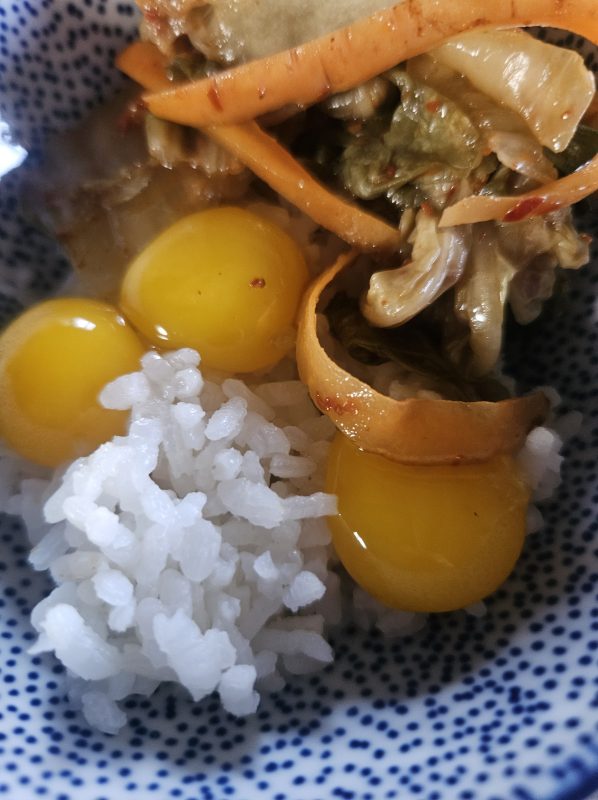
They taste the same but definitely have more yolk to white than a chicken egg. Sometimes I enjoy the raw yolks with homemade kimchi and rice.

Hard boiling only takes 4 minutes!

That tough membrane under the shell makes them easy to peel.

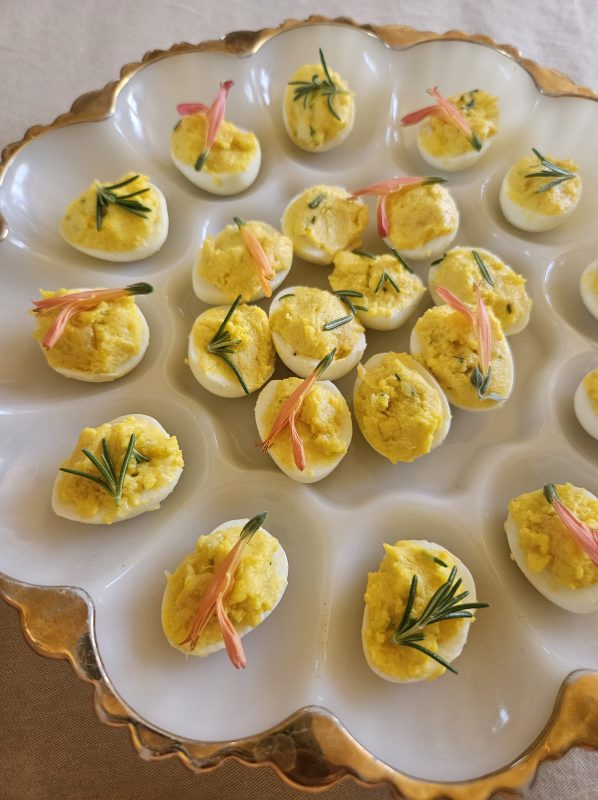
These deviled eggs are topped with rosemary leaves and chuparosa (Justicia californica) flowers. I don’t bother to make mayonnaise, I just mix the yolks with olive oil, Dijon mustard, and salty preserved lemon.

Raising these birds was a long time coming for me. Here’s hoping some of your dreams come true!

Cushaw Ravioli

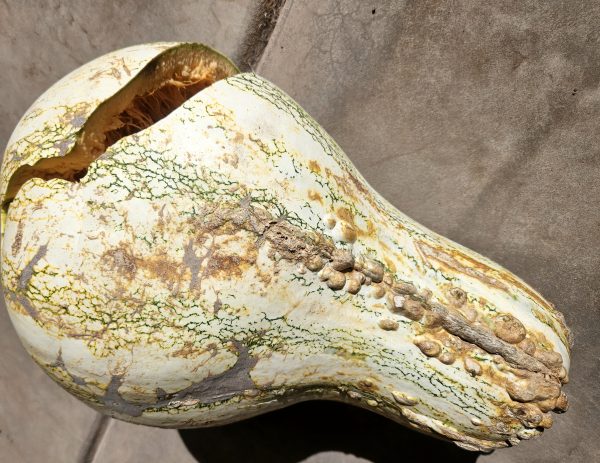
Hello friends, Amy here, with a BIG cushaw winter squash. For starters, it’s beautiful. Farmer Frank of Crooked Sky Farms has been sending Tucson CSA huge and tiny pumpkins and winter squashes for 20 years. People often ask us what to do with them. Well, twelve months a year I always have frozen winter squash in the freezer, ready for soup, pie, pumpkin bread and now ravioli.

Start by dropping on the patio until it cracks open. Big ones break more easily but sometimes little ones need to be slammed. This is much safer and easier than taking a cleaver to it.

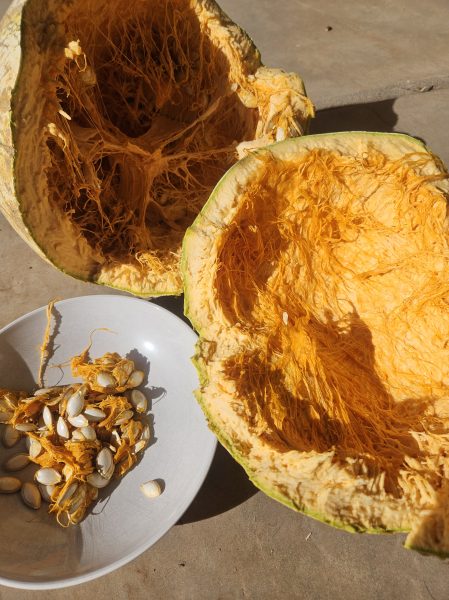
Then I pry it open with my hands and scoop out the seeds, saving them for planting or eating.

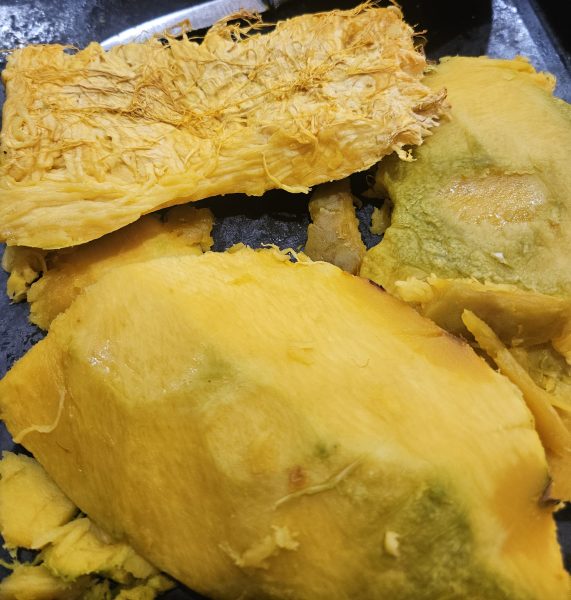
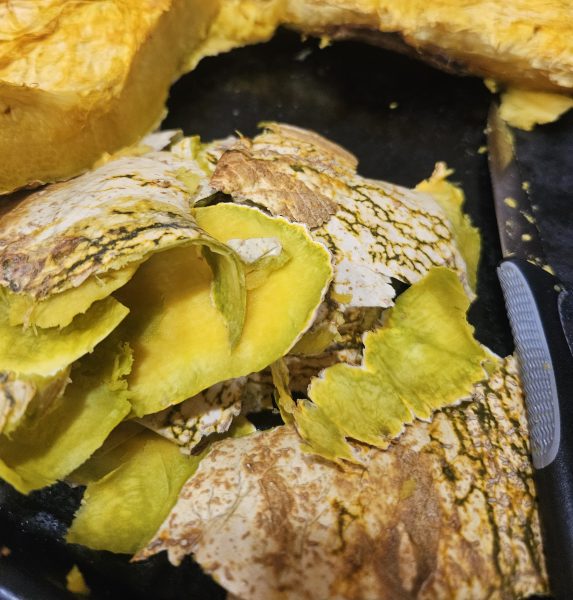
Place the pieces on a cookie sheet and bake uncovered at 350 F until a fork pierces the flesh easily and some of the moisture in the fruit evaporates. The flesh can be scooped out of the hard skin varieties with a big spoon or the skin can sometimes be trimmed off with a knife.

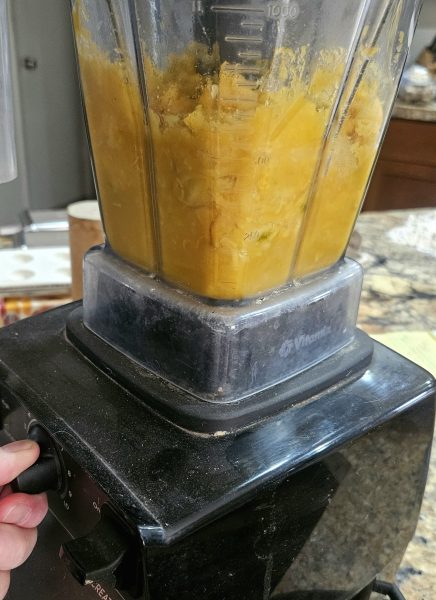
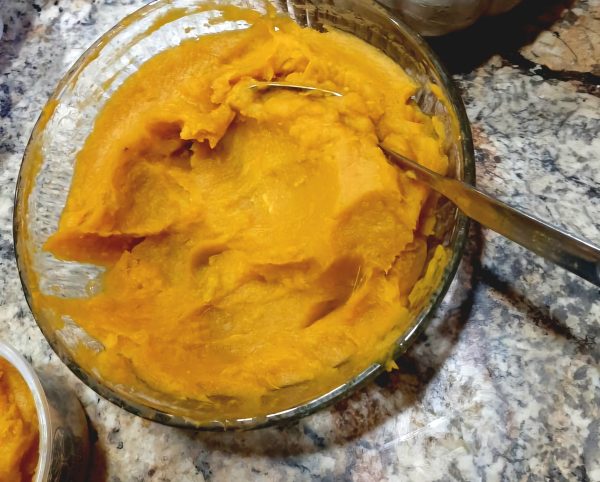
The flesh whizzed in a food processor or blender is pleasantly smooth. If I want texture, I add nuts to sweet creations or sautéed onion to savory concoctions. Stringy mashed squash turns many people away from the “mushy” vegetable entirely.

This cushaw squash was SO sweet and flavorful! If it wasn’t, I’d add a bit of sugar and salt to taste. This squash puree was thicker than normal, so I did not need to drain it. (It is critical to drain squash destined for pie or empanadas. Squash is very perishable, so I place the colander full of puree and bowl catching the liquid in the refrigerator. Don’t toss the liquid! It’s so good in a squash or vegetable soup.)

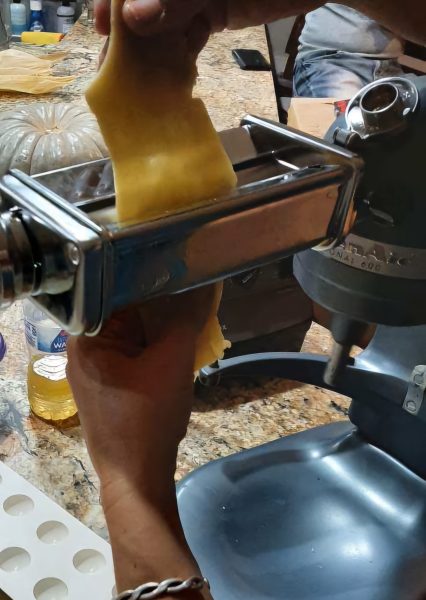
My uncle recently gave me a pasta roller attachment for the stand mixer and a ravioli press. I already own a hand crank roller that requires 3 hands to operate, and hasn’t been used in years. But inspired by the new toys, I wanted to put sweet, plentiful winter squash puree in ravioli.

Plus, I love food cooked in tiny edible parcels, like empanadas, stuffed grape leaves, cabbage rolls, spring rolls, pot stickers, samosas and floutas (taquitos)… What are your favorites?

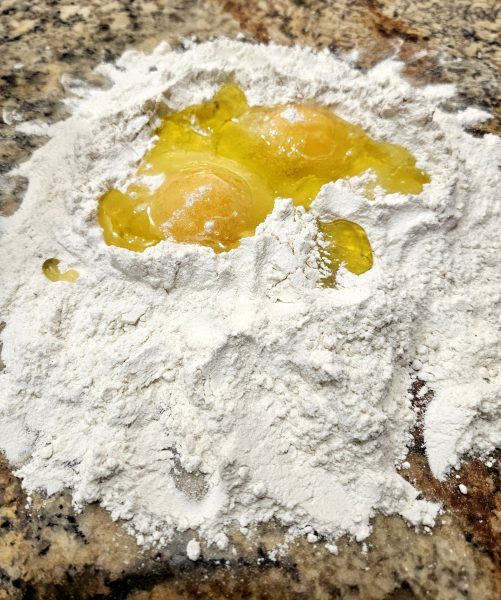
I tried different ravioli dough recipes with varying amounts of egg, water and olive oil, and everything I tried worked. It’s forgiving! But I liked the logic in this one, using a cup of all purpose flour, half a teaspoon salt, and egg and two yolks. I worked it on the countertop by hand and after an hour rest, I started to roll.

Apparently some home cooks use a machine to knead the dough, and some roll it out by hand. It’s forgiving! Basically, start the thickest roller setting and roll the dough through a few times before adjusting the setting a notch thinner.

This is easy but not fast!

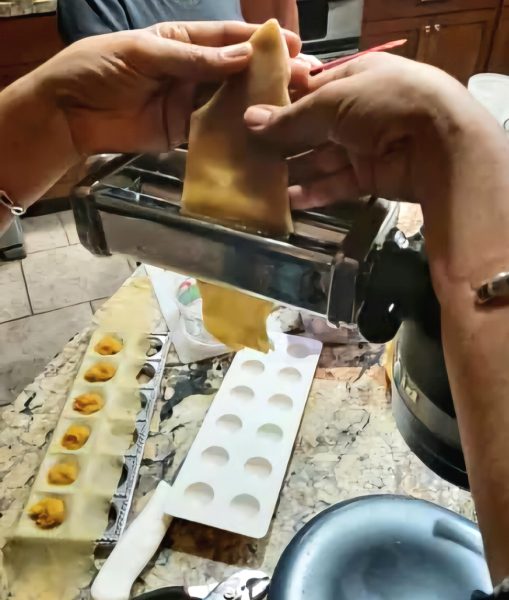
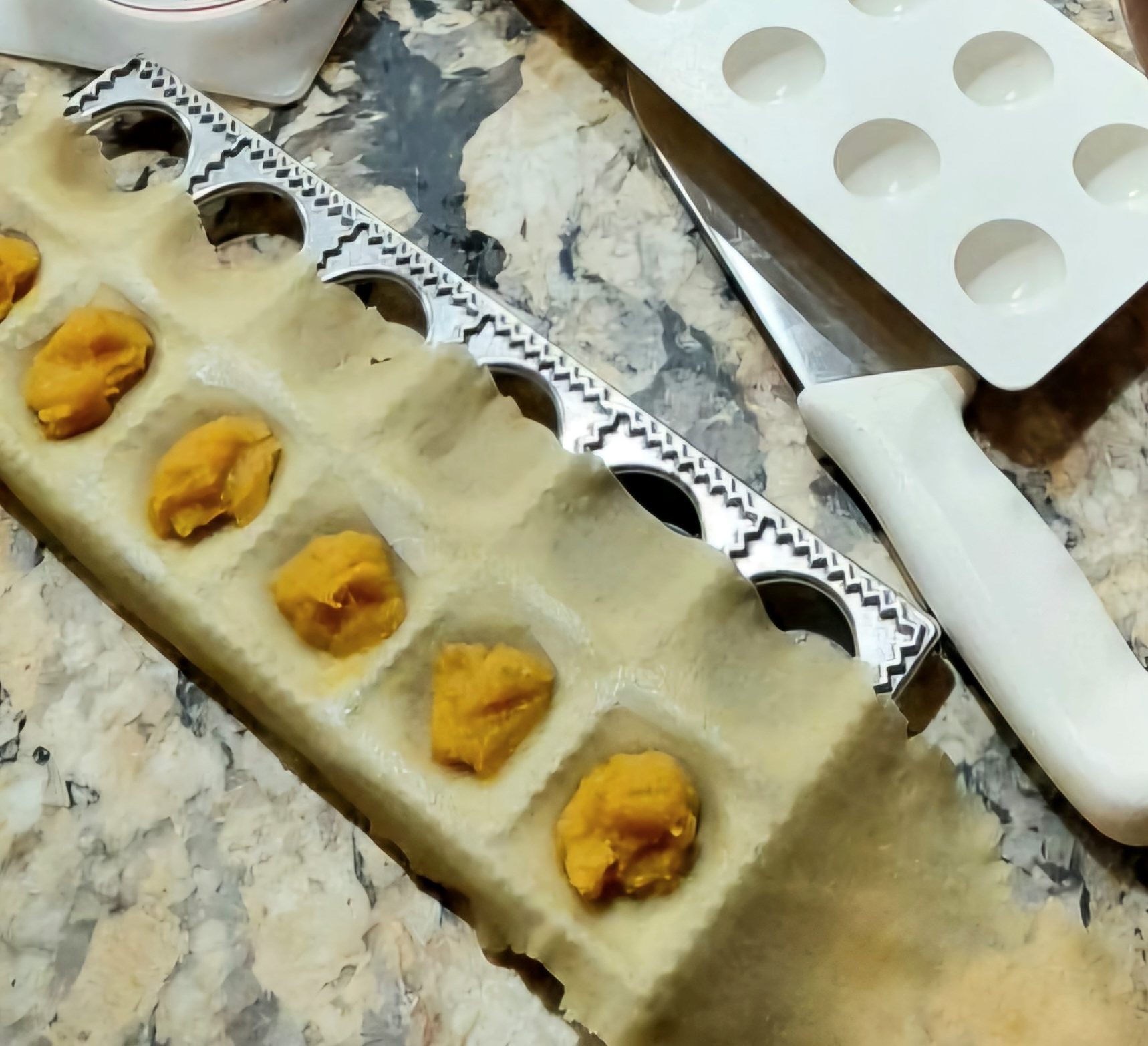
The form presses the thin dough into wells to hold a tablespoon of filling. I dabbed water along the seams to encourage better sealing, just in case. With the top sheet of dough covering the filling, it was easy to seal and perforate by using a rolling pin over the top.

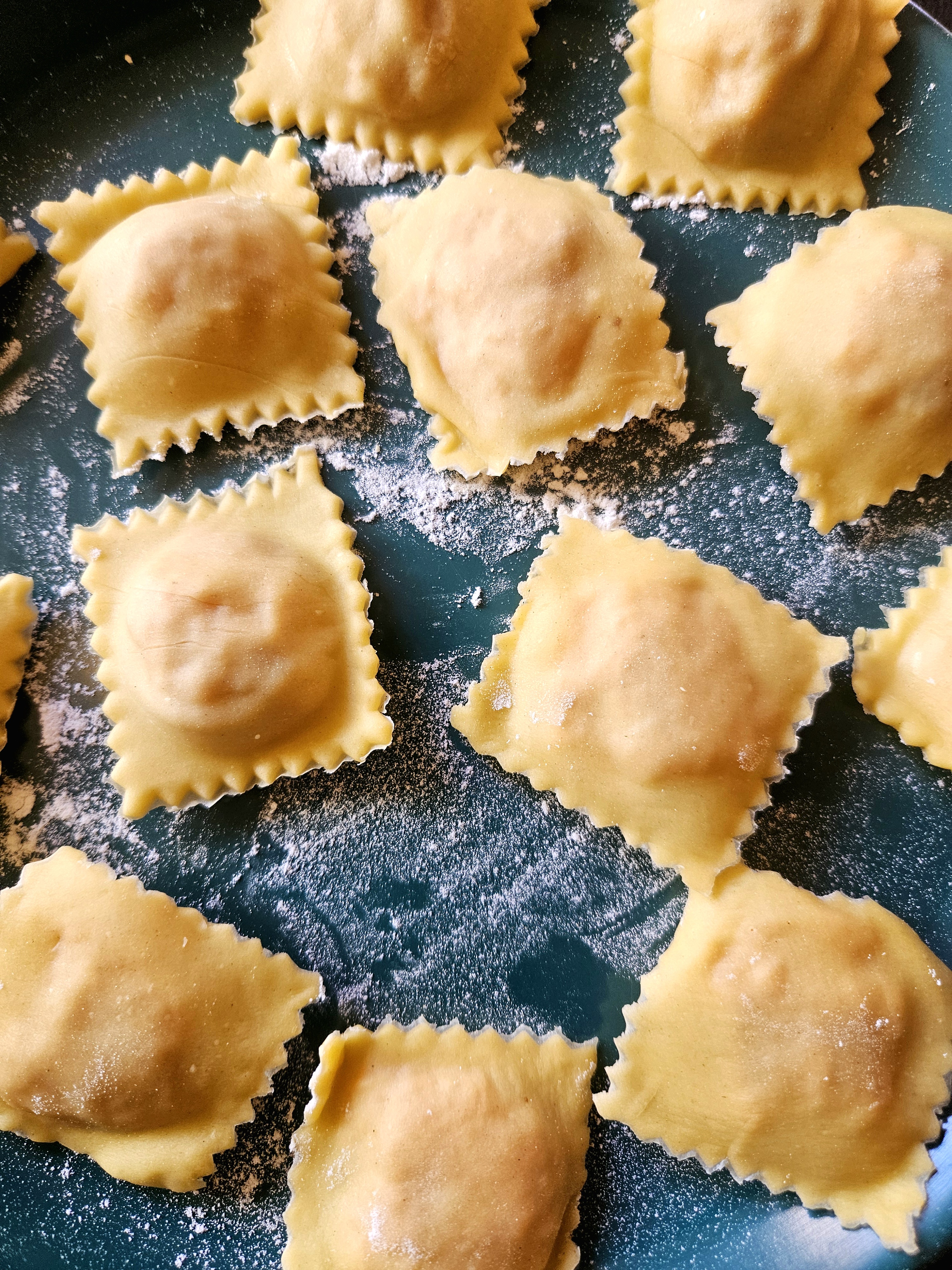
This gimmicky looking tool is efficient! Dusted with flour and resting in a single layer, they are tidy, symmetrical and well sealed.

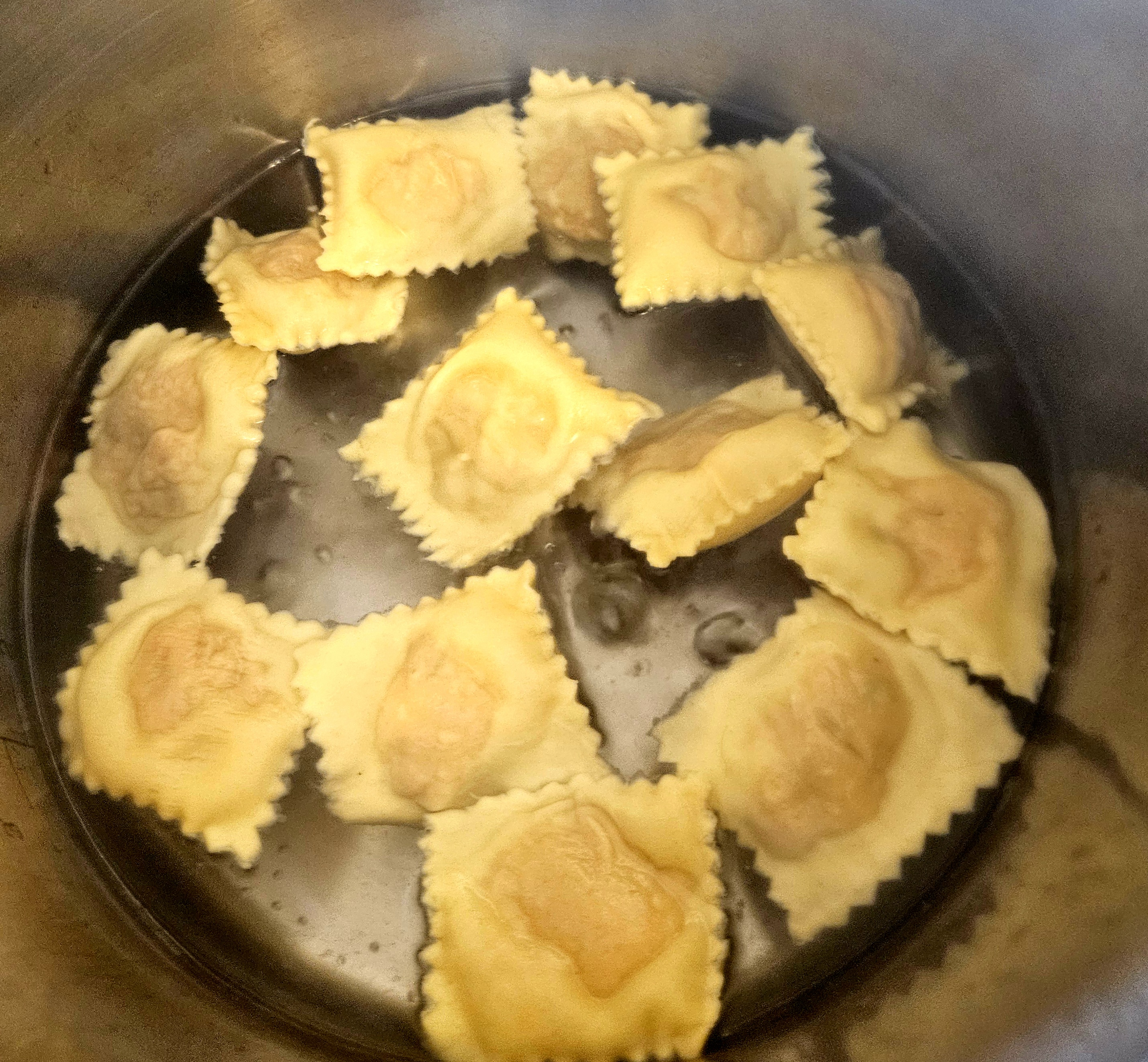
Cooking for three minutes in gently boiling water, it’s amazing they stay sealed.

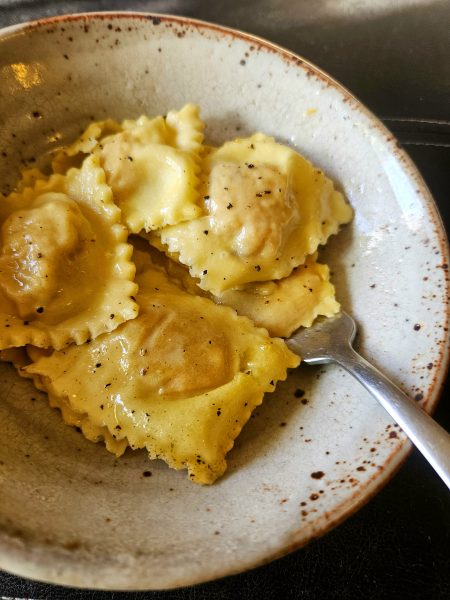
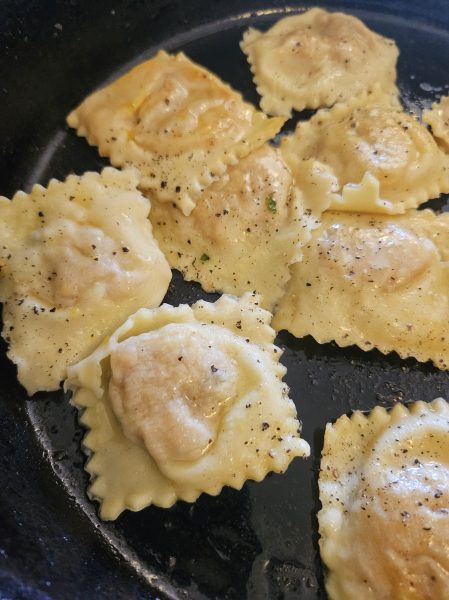
With the filling of unadorned sweet cushaw squash, dressing the finished product in various combinations of butter, olive oil, garlic, thyme, black pepper and hard cheese was delicious. My aunt fried some with tons of garlic until browned… oh my.

But my favorite way was just butter, salt and pepper, letting the sweet cushaw shine.

No roll crackers

Hi friends, it’s true, crackers without the rolling. Amy here sharing this week’s iteration of this miracle recipe I found online. It all started with an abundance of oats…

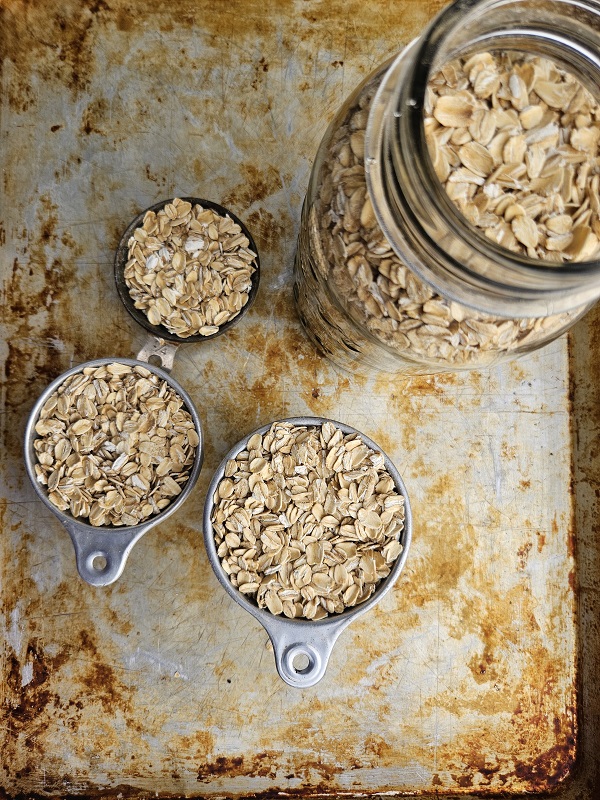
A friend gifted me many pounds of organic rolled oats. Searching for inspiration to use them, I found Camilla’s Easy No-Roll Oat Crackers ( vegan, oil free, GF). It is a brilliant recipe that I’ve been making often these last few weeks since I discovered it. Besides oats, they contain seeds or mix of seeds. Sunflower makes particularly good crackers but branching out, I remembered Carolyn’s Black Beauty Wafers using saguaro seed. The seeds are strained out when making a syrup so those are a brilliant way to use the seed.

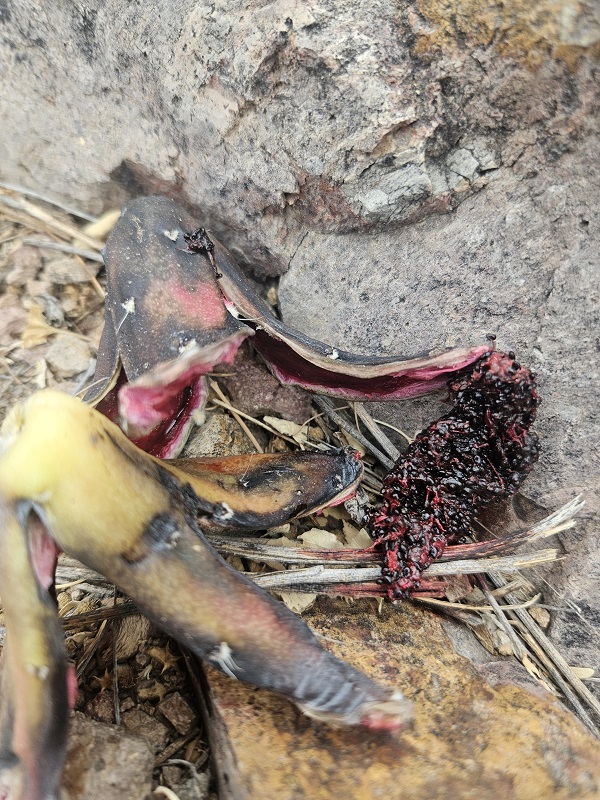
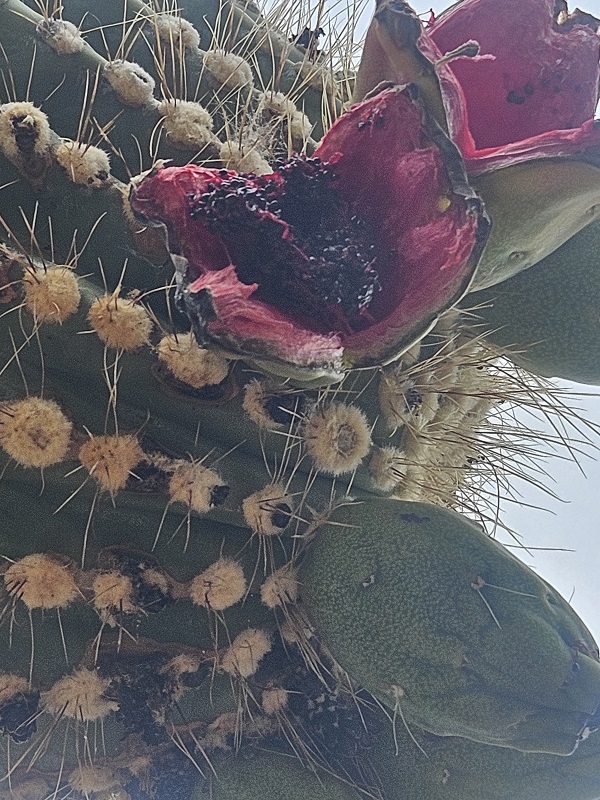
In June, the birds get the first feast of saguaro fruit. If there is more ripening fruit than the birds eat, it falls the ground, often sun dried and intensely concentrated, where I can easily harvest it without poking the plant. No need for a pole!

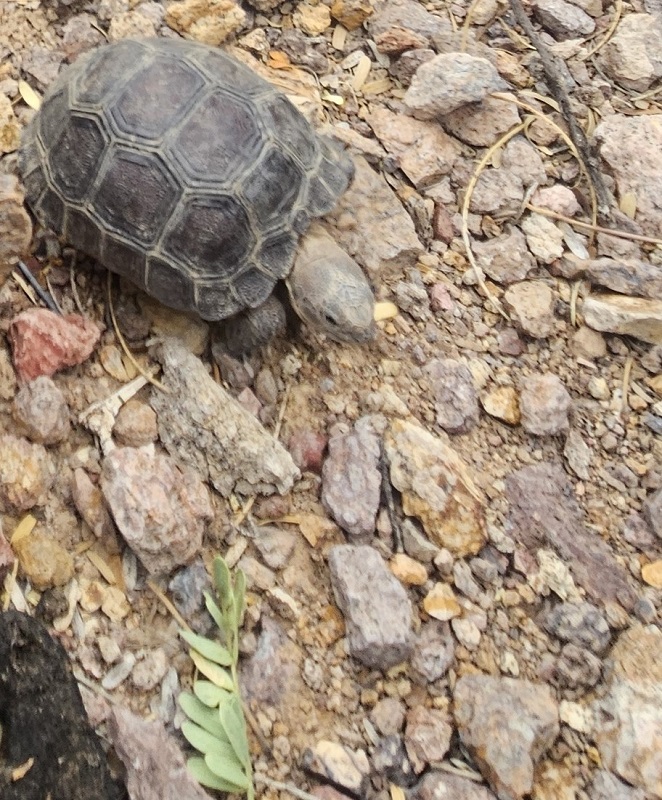
The ground animals get to feast first before the humans, of course, so we waited. But ripe fruit spoils in the rain, and I would never complain about glorious rain! So this year wasn’t the best saguaro fruit harvest for humans. (below, note the mesquite leaflets for scale)

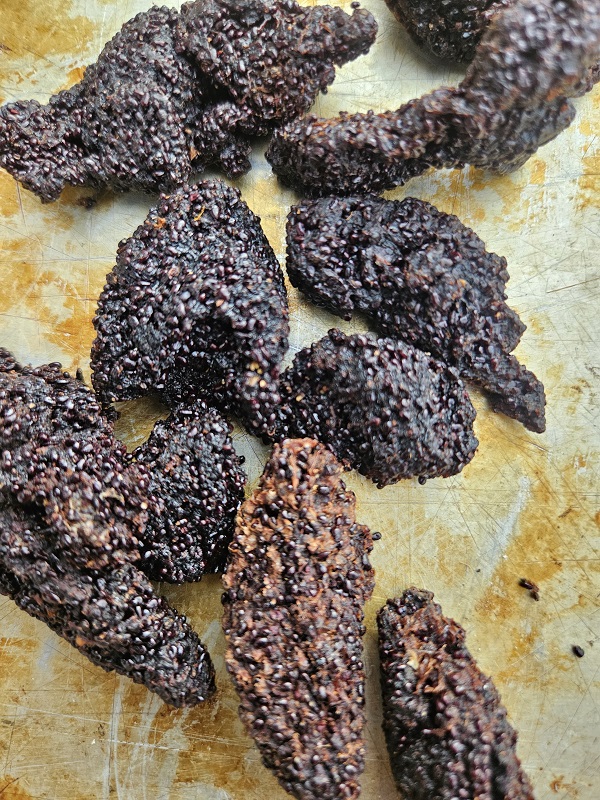
I had some oooold fruit stored in the pantry so I decided to use the whole fruit instead of just the seeds.

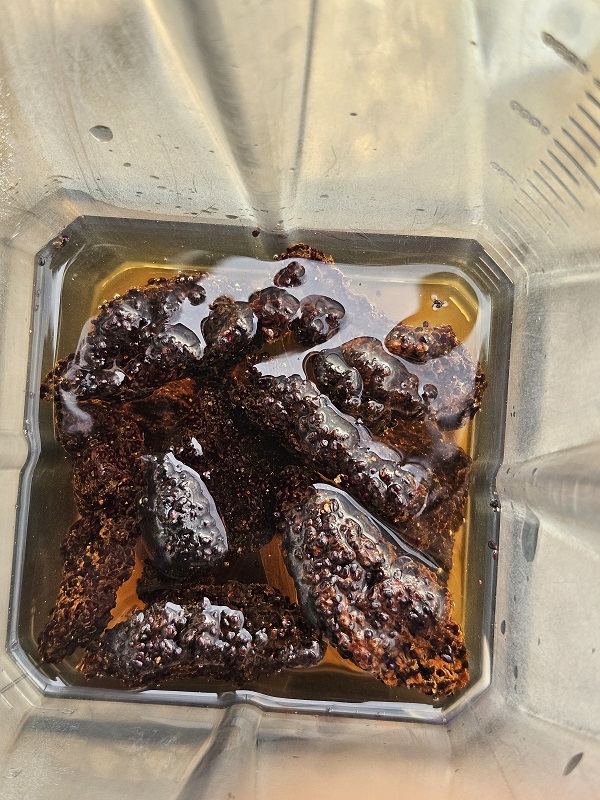
I soaked it in water to soften it.

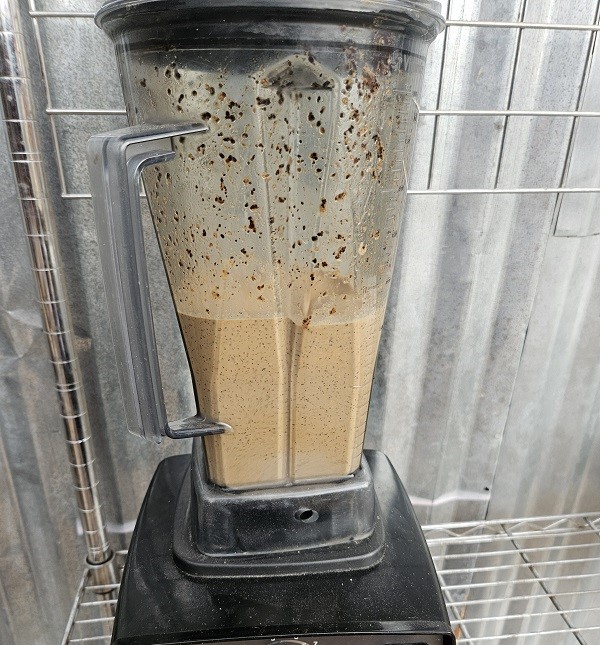
And blended it enough to grind the seeds. Then I added the oats, salt, baking powder and oil.

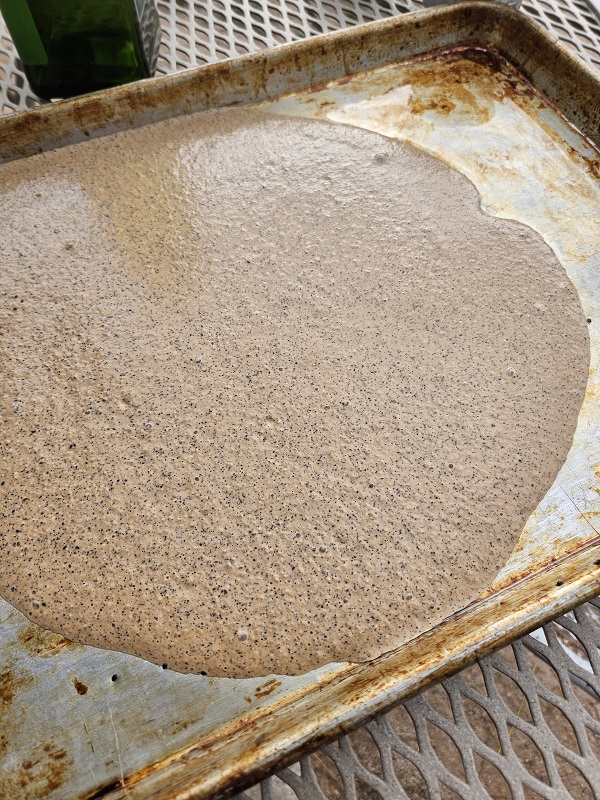
The batter is poured onto a greased half sheet pan (or even a bit larger pan to make crackers just a bit thinner).

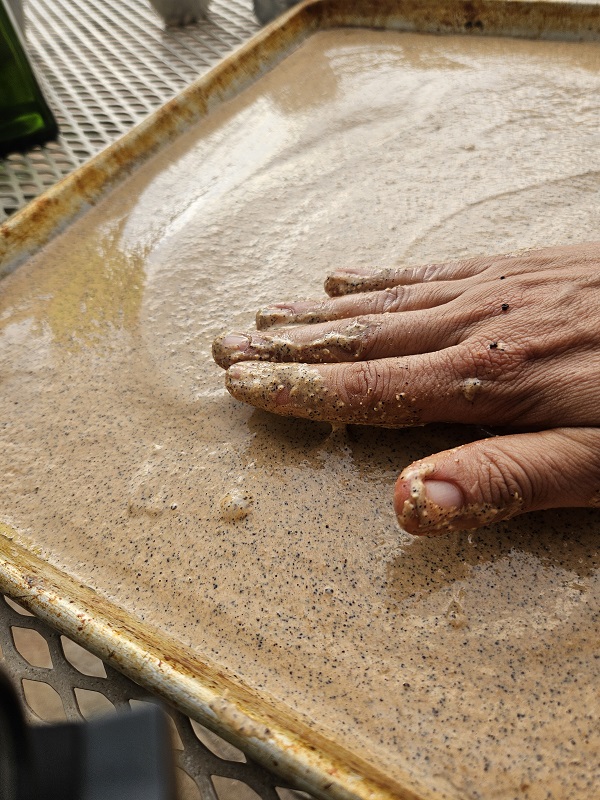
Instead of rolling the dough, it just needs to be smooth!

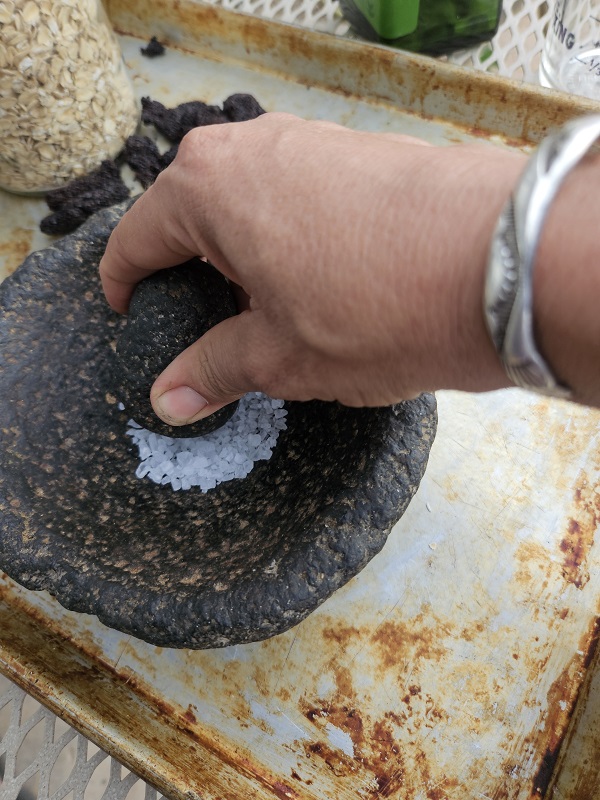
I prefer to add just a touch of salt to the batter so I can sprinkle a decent amount on top. I ground my best Mexican sea salt for this.

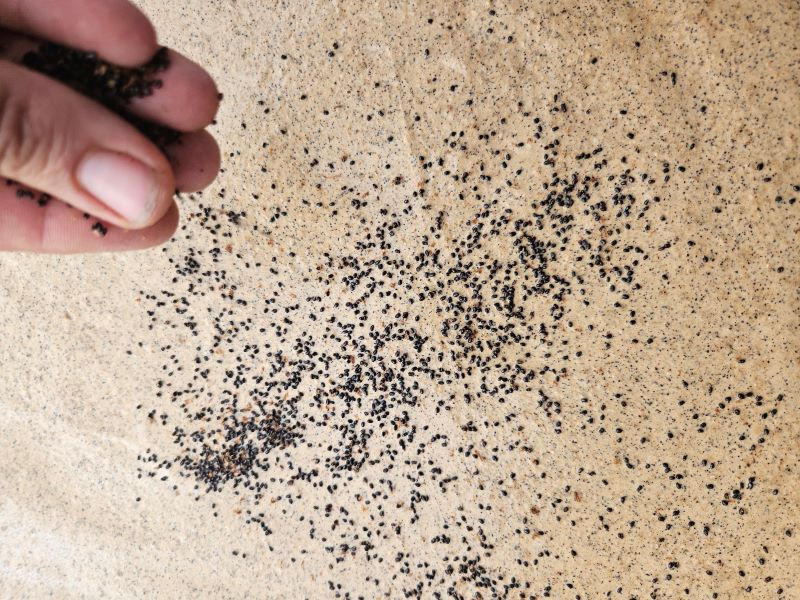
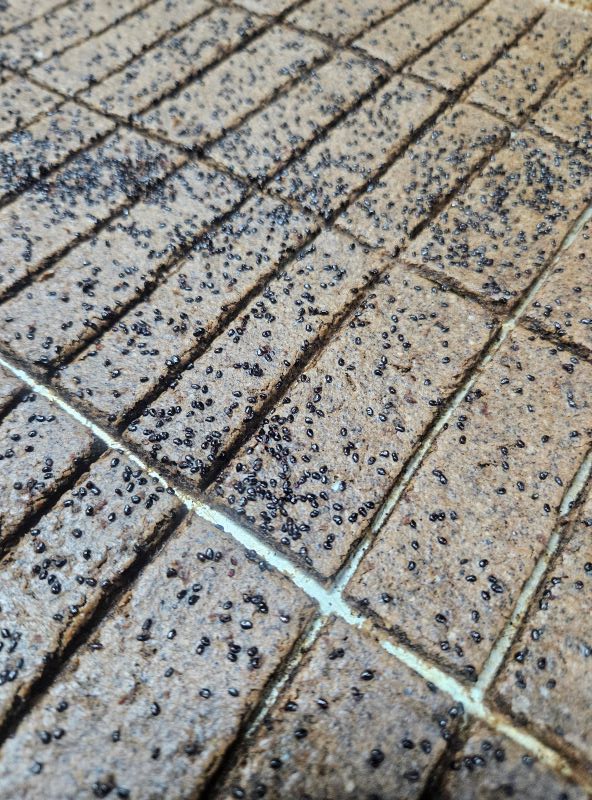
Then I sprinkled with saguaro seed.

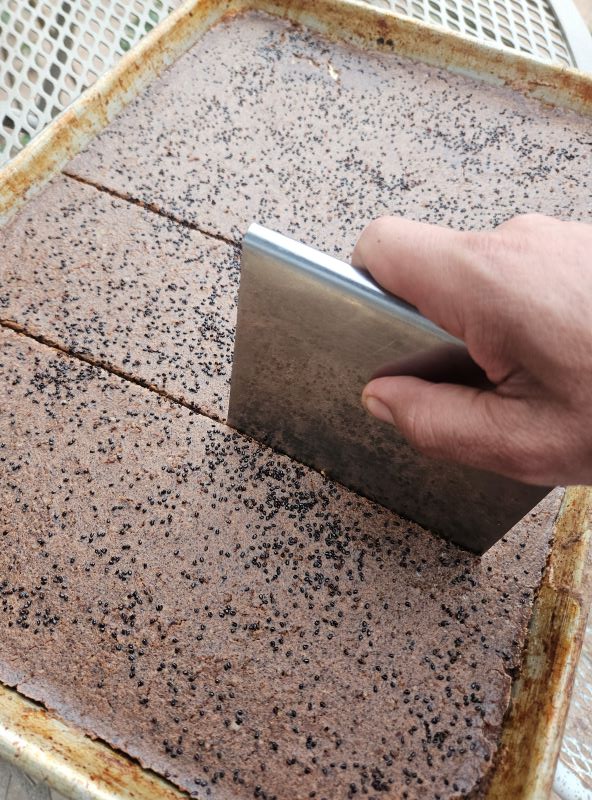
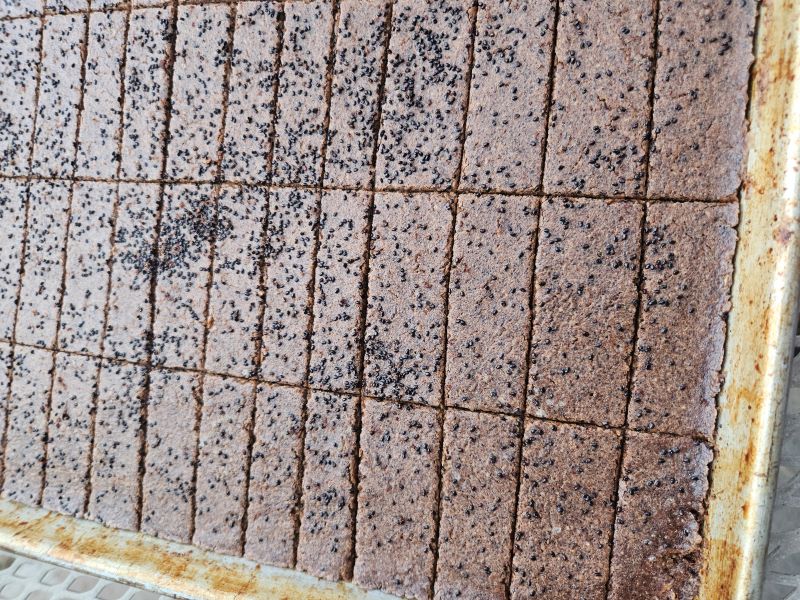
After baking for ten minutes, the crackers can be scored before returning to the oven to finish.

After baking with careful supervision, this batch got darker from the sugar in the saguaro fruit than other batches. A hit of sweetness and delicious! Next time I’ll use a slightly larger yet pan so they are a little thinner. The thinner ones are crispier and more delicate. But think or thin, they are easy to enjoy with spreads, alongside a salad or on their own as a trail snack. Enjoy!

For the recipe, see Camilla’s post on her blog powerhungry.com

Instead of seeds, I added the equivalent weight of dry saguaro fruit. I added a quarter cup of olive oil and reduced the water by that amount. I used approximately 1 teaspoon of coarse sea salt divided between the batter and sprinkled on top with the saguaro seeds. Experiment and have fun!

Savory Wolfberry Amaranth Balls

Hello friends, Amy here enjoying another great year for the wolfberry bush (Lycium fremontii …I think) in my yard. Tucson’s native species of the Chinese goji berry, they are similarly packed with antioxidants and health benefits. In the tomato family, it’s called tomatillo in Spanish, not to be confused in size, shape, color or taste to the garden variety of husked ground cherries that go by that name. Wolfberries taste somewhat like tomatoes and work well in sweet and savory dishes, when I manage to harvest more than I eat raw from the bush. Thriving on only rainwater, one huge plant produces plenty of fruit for me and the resident phainopeplas.

Inspired by this recipe for millet balls, I used fresh wolfberries in place of dried Turkish barberries.

It was delicious! It reminded me of falafel, crispy on the outside and grainy on the inside. A simple cilantro, garlic, lemon juice, olive oil chutney complimented them perfectly.

So the next time, I decided to use amaranth seeds. I bought this from the store, but you can harvest your own from wild or cultivated plants in the late summer if you’re ambitious.

I toasted them in oil until they became a shade darker and a few of them popped open.

I added water, three times the volume of amaranth seed, and cooked in the solar oven until it was creamy. Then I mixed in fresh wolfberries and enough flour to make a soft dough.

The dough was muuuuch stickier, so I added significantly more flour than for the millet balls and still they looked shaggy. (I used all purpose wheat flour but next time will try amaranth flour).

The toasted flavor came though and I’m glad the only seasoning I used was salt and wolfberries. The dough certainly didn’t need any egg or flax egg to hold together! They baked up just as well as the millet version, but with the texture of a cookie. Next I’ll try them sweetened!

I served them with a lemon pickle but that tomatillo salsa would be good. I took the rest to a picnic among the wildflowers. Happy spring!

processed by AtomJPEG 1.5.0n

Rellenos Nuevos

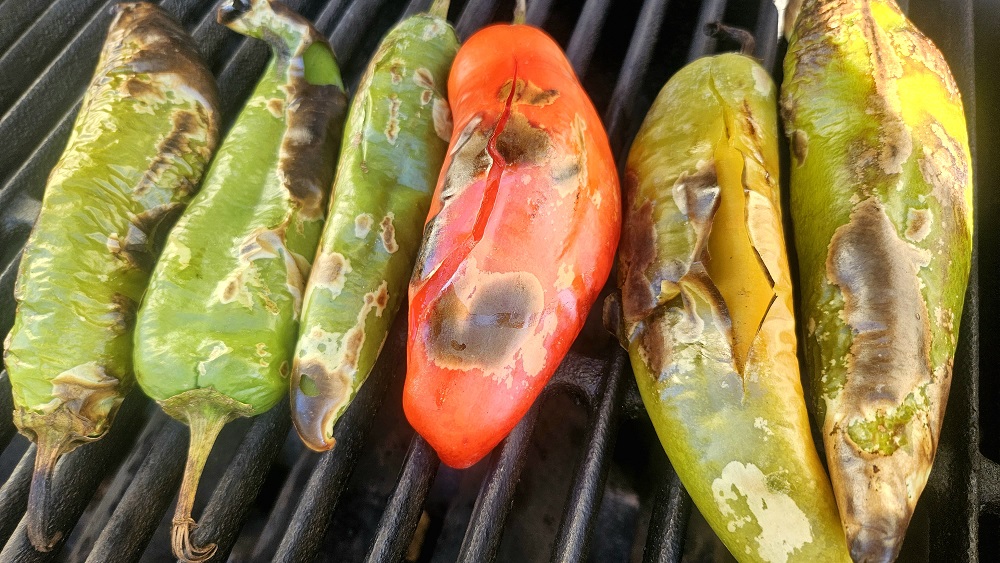
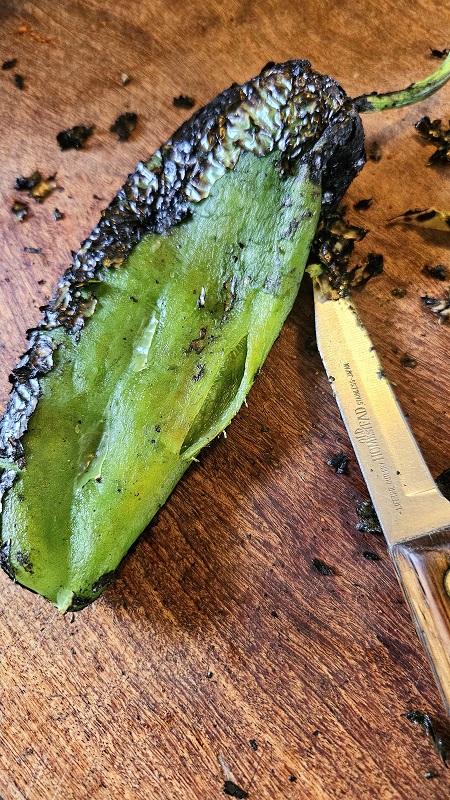
Hello friends, Amy here celebrating the harvest. At Tucson CSA this fall we had several batches of gorgeous, fleshy, green chiles! Farmer Frank of Crooked Sky Farm has been supplying us for years and years. The smell of charring them at home reminds me of doing it with my grandfather.

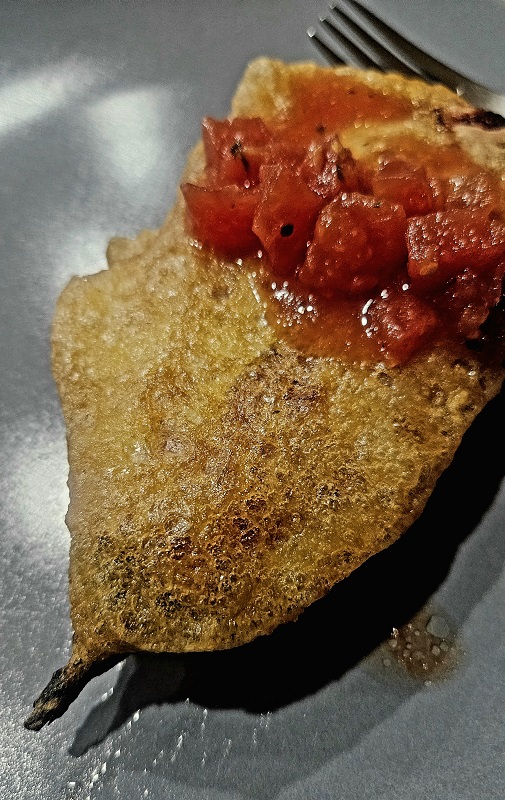
First things first, I made my great grandmother’s chiles rellenos with my family. Stuffed with cumin spiced beef, fried with a light egg batter and toped with a mild tomato sauce, these must be eaten immediately after they’re done. Yes, at the beginning only one person is eating a relleno at a time.

We also made chiles en nogada, filled with a complex pork and raisin filing, topped with walnut and almond sauce.

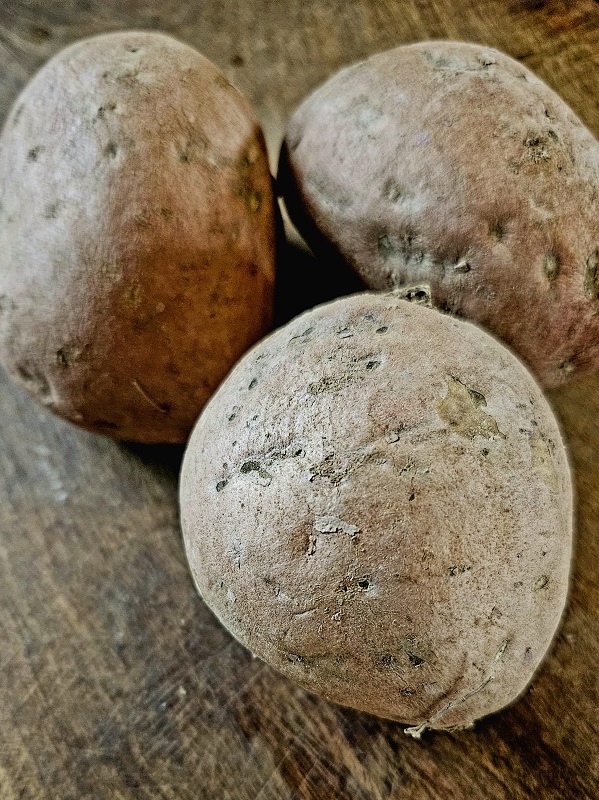
Next I wanted to try something new… I started with sweet potatoes from my CSA.

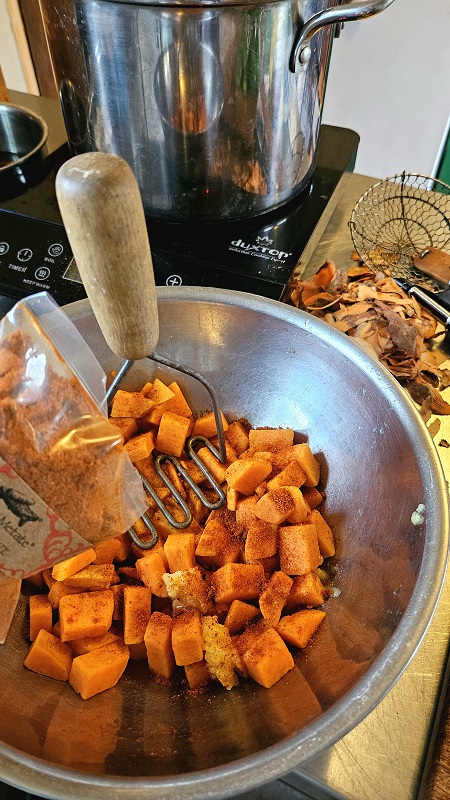
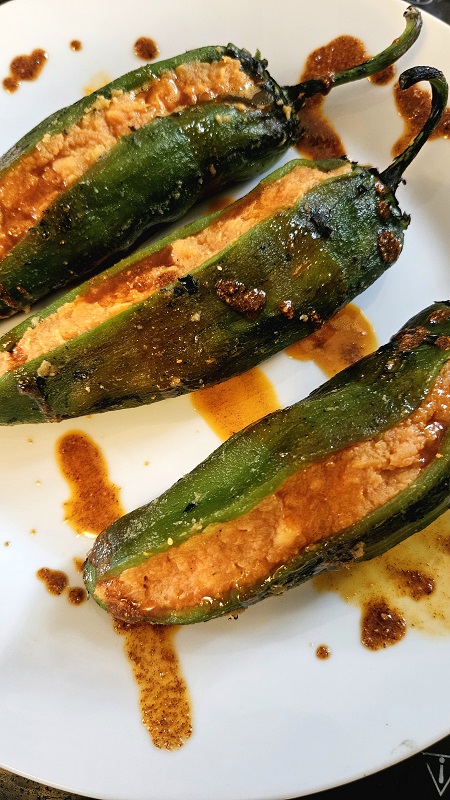
After peeling and cooking, I mashed them with some Mano Y Metate Pipian Picante powder, butter and salt.

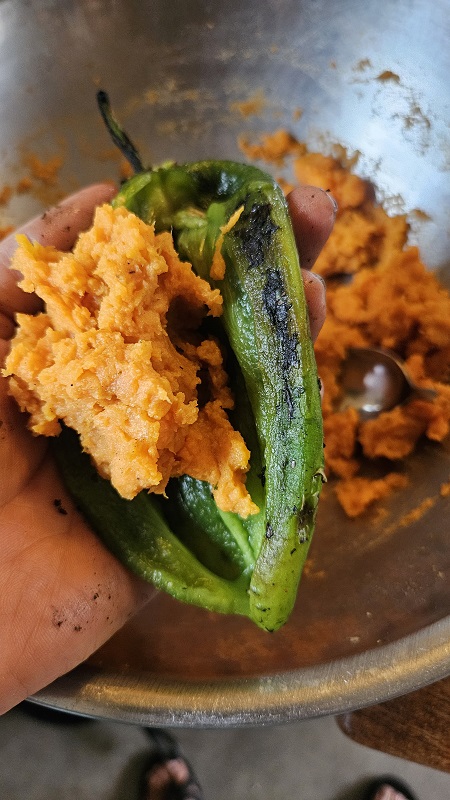
I loved how the mixture didn’t fall out of the chiles like the other fillings did!

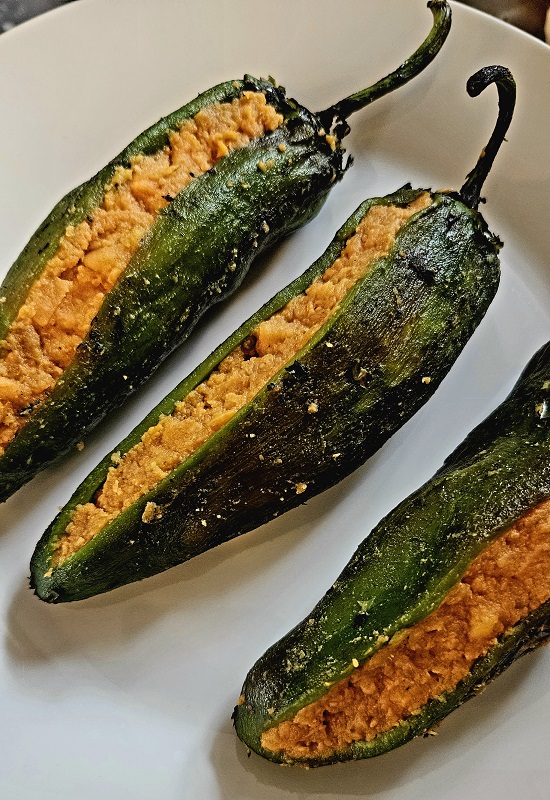
Also, I loved the color combination of orange and green so I overstuffed them to let it show.

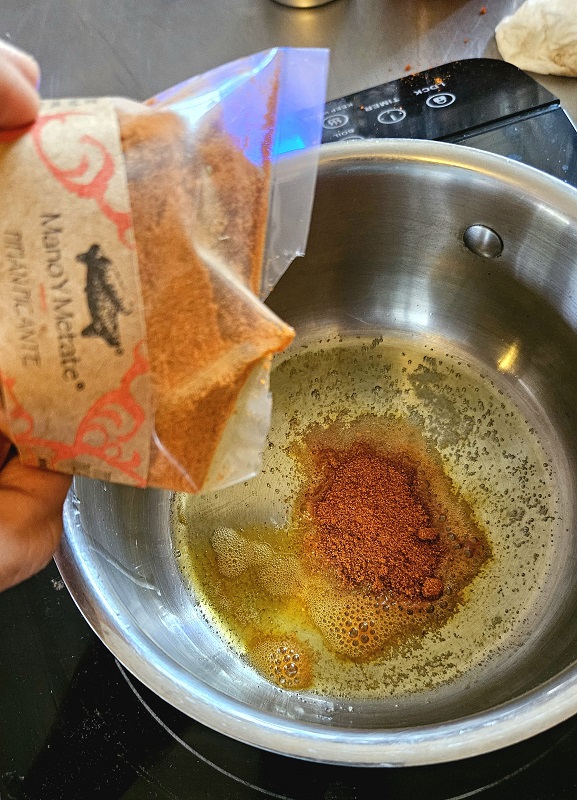
To finish, I gently heated ghee and more Pipian Picante powder.

Then drizzled it over the still warm chiles. Since these chiles were so mild, I really welcomed extra spice. (Pipian Picante is medium spicy). If my chiles were hotter, I would have chosen the milder Pipian Rojo powder.

The filling and topping were so good I can imagine eating it without the chile if they were not on hand. Or chopping the chile and mixing it in to the sweet potatoes. Enjoy the chile until the frost!

We’ll be selling mole powders at Holiday Nights, so come visit with us at Tohono Chul in Tucson, Friday and Saturdays Dec 8, 9, 15, 16 from 530-830pm.

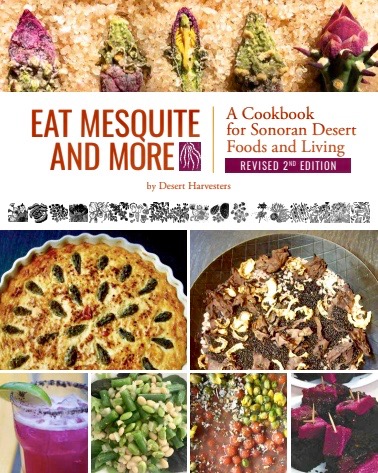
Eat Mesquite and More: a Cookbook for Sonoran Desert Living

Happy Summer, friends!

Amy here, on a hot, hot morning, sitting the shade. Have you seen Desert Harvester’s new edition of the cookbook??? It is 400 pages! with lots of color photographs and original art. It really is worth getting the book for the art alone.

But today I want to highlight the ethics in book. It starts with a poem by Ofelia Zepeda, followed by a land acknowledgement, and a Desert Harvesters ManiFEASTO in English and Spanish. There is a recipe for Abundance and a detailed primer on Reciprocity, elaborating on “Get to Know vs Grab and Go” and “Rewild vs Defiled” and a whole other section on living and eating in place. So yes, even if you don’t live in the desert where these plants grow, and even if you never plan to cook, this is still a tremendous resource and inspiration.

As the title declares, Desert Harvesters has morphed from mesquite milling focused to offering intimate portraits and recipes of over 20 desert ingredients. Have you harvested: mesquite, ironwood, saguaro, acorn, devil’s claw, wolfberry, hackberry, mushrooms, chiltepin, barrel cactus, prickly pear pads and fruit, cholla, chia, agave, palo verde, yucca, ocotillo, globe mallow, purslane, packrats, grasshoppers or cicadas? With detailed harvesting instructions, seasonal timing and expert tips, a novice harvesters can actually get out there and try! Many desert plants offer multiple delicacies, such as ironwood tree as green seeds, mature seeds, flowers and seed sprouts.

There are a LOT of recipes, some easy and some taking days or longer to make. I didn’t count how many recipes are in the book, but it says only 80 of them are bilingual, English and Spanish and 65 are new to this edition. There are a few medicine recipes, too. This book really does have something new for even the most seasoned harvester. The recipes are contributed and tested by community members far and wide, encompassing ancient wisdom and modern innovation from many cultures. It also includes many recipes from us Savor Sisters, Carolyn, Tia Marta and I.

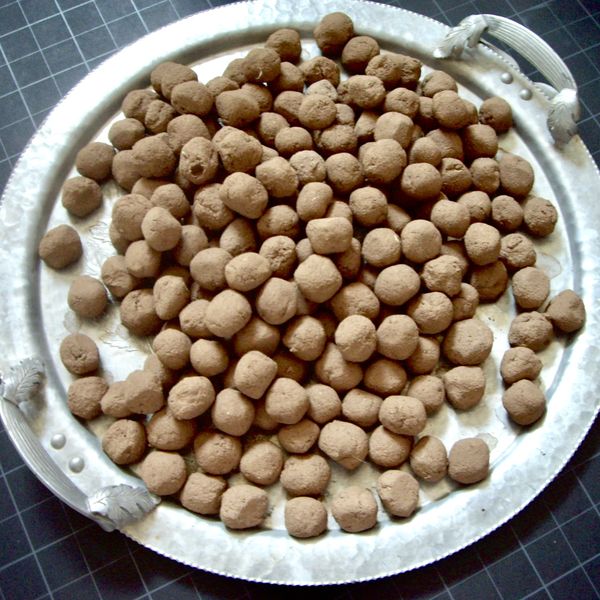
If you still aren’t convinced to buy this book or find it in the library, go to Desert Harvesters Facebook page. There you will see recipes for Seed Balls for planting and Saguaro Fruit Truffles for eating. Don’t mix them up!

Spring Grapefruit Salsa

In Tucson the mesquite trees have fresh new leaves and bags of grapefruits are looking for homes. Happy Spring! Amy here using grapefruits a way I learned from my friend and mentor Barbara Rose of Beantree Farm. You can find the original recipe as well as so much other inspiration in a new edition of the Desert Harvesters Cookbook available to preorder now.

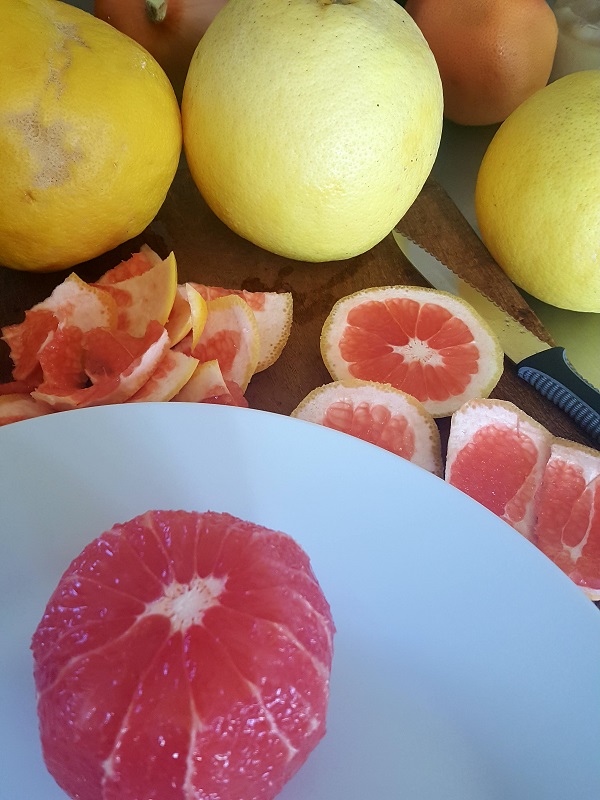
Salsa is commonly made with tomatoes or tomatillos, but when fresh tomatoes are months away, grapefruit are plentiful, juicy, sour and pulpy with a hint of sweet. Yum! Start by cutting the stem end and blossom ends of the fruit.

Then cut down the sides to remove the peel, including the pith. Candy the rinds if you like!

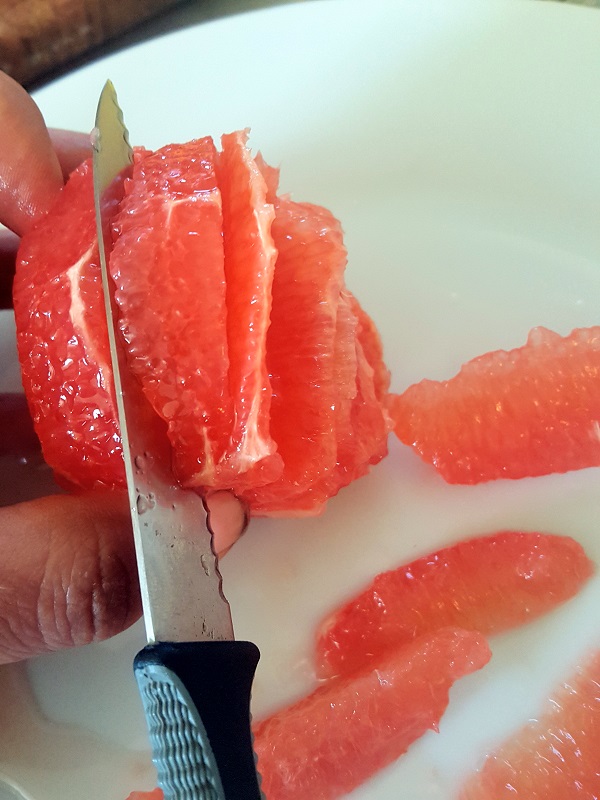
With a paring knife, cut along both sides of each segment to release the pulp in wedges. This goes more quickly than it sounds.

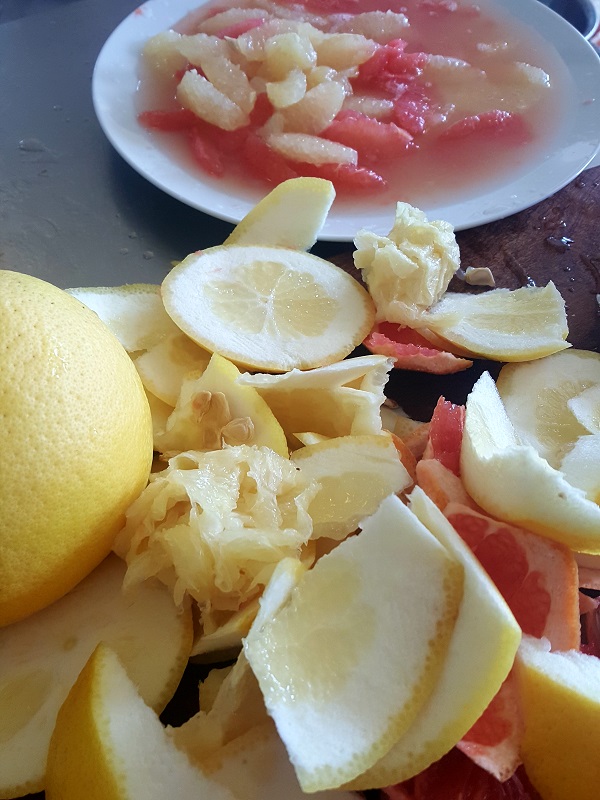
I don’t worry about getting every little piece of pulp since I squeeze the juice out of the membranes left behind.

Remove the seeds and drink some of the excess juice. A mix of different colored grapefruit or even oranges is fun. Use what you have!

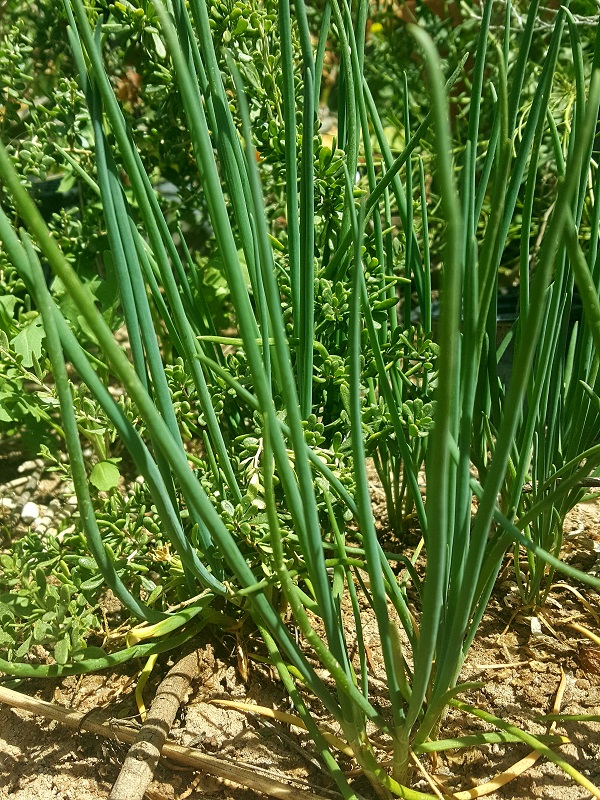
I’itois bunching onion tops have a unique onion flavor but any color onion will work: bulbous white, red or yellow, green spring onion tops, shallots… whatever you have.

Besides a smashed clove of garlic, a splash of cooking oil (any kind), a pinch of salt, and rubbed Mexican oregano, the not so secret ingredient is crushed chiltepin! Use as few or many as you like. Allow the salsa flavors of blend and the chiltepin and oregano to rehydrate.

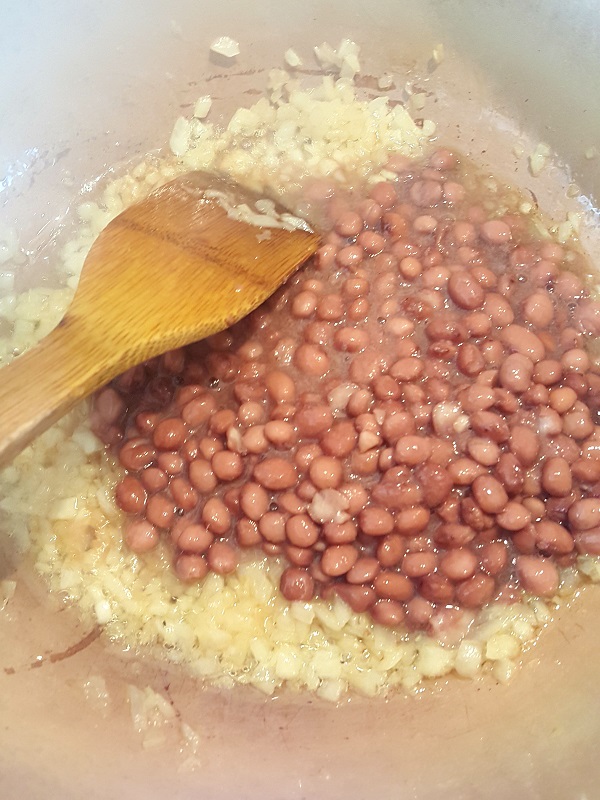
Wanting something to go with the salsa, I made tostadas. Sautéed onion and cooked pink beans are a great base.

Mashed beans stick to tostadas better.

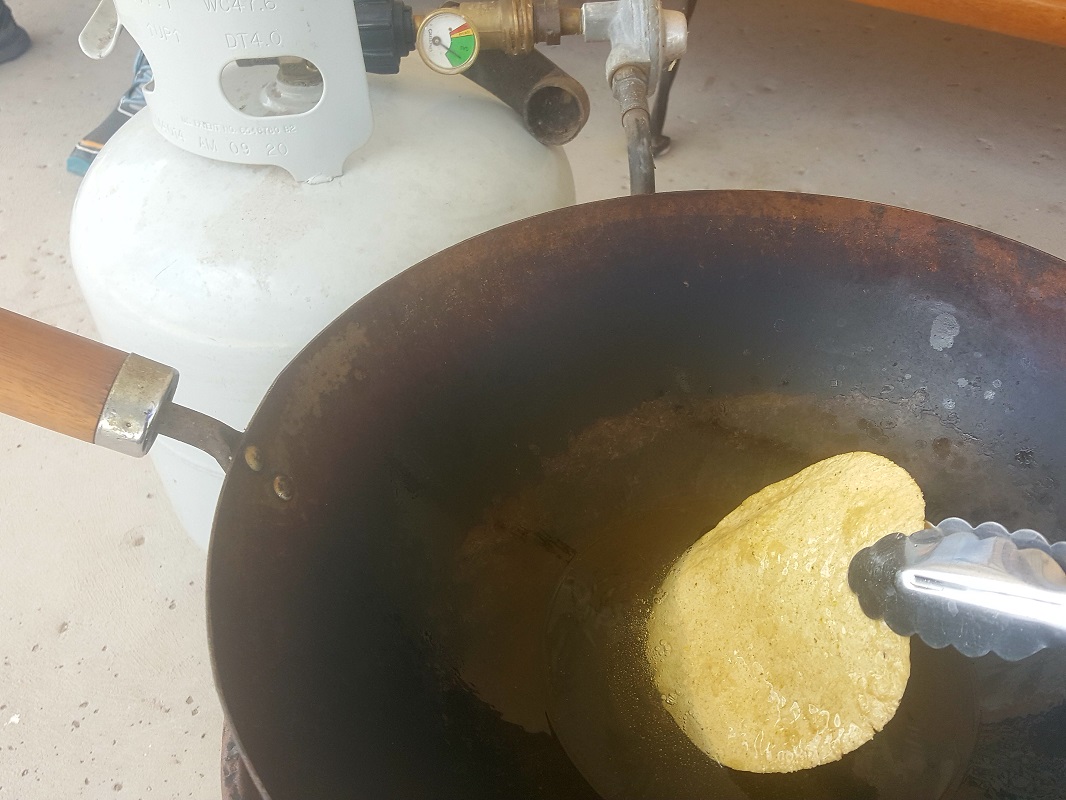
Fry corn tortillas in oil until crispy. In order to not set off the smoke detector, frying outside is the best, especially in beautiful spring weather.

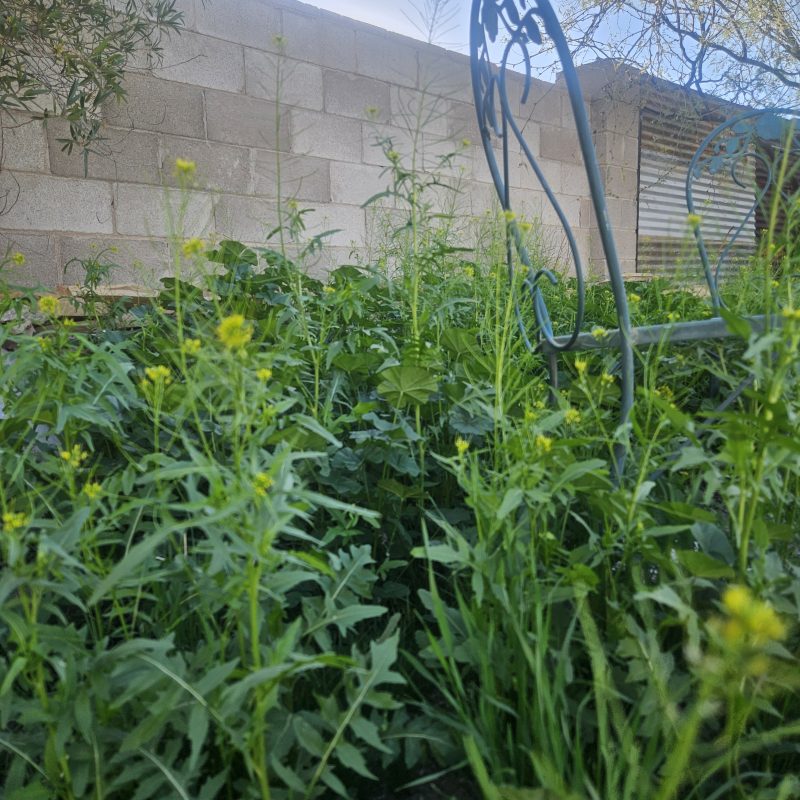
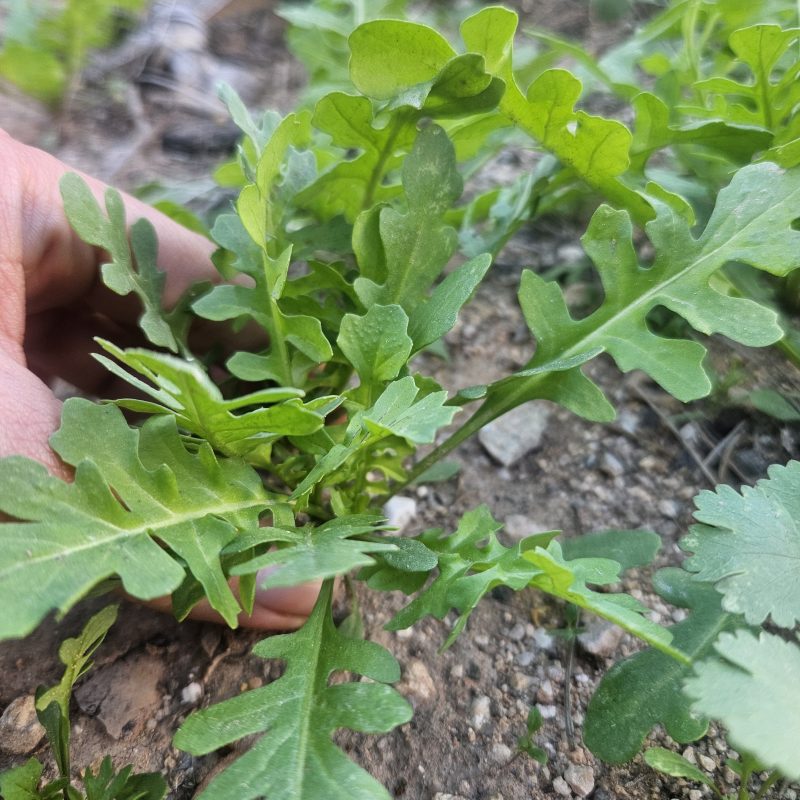
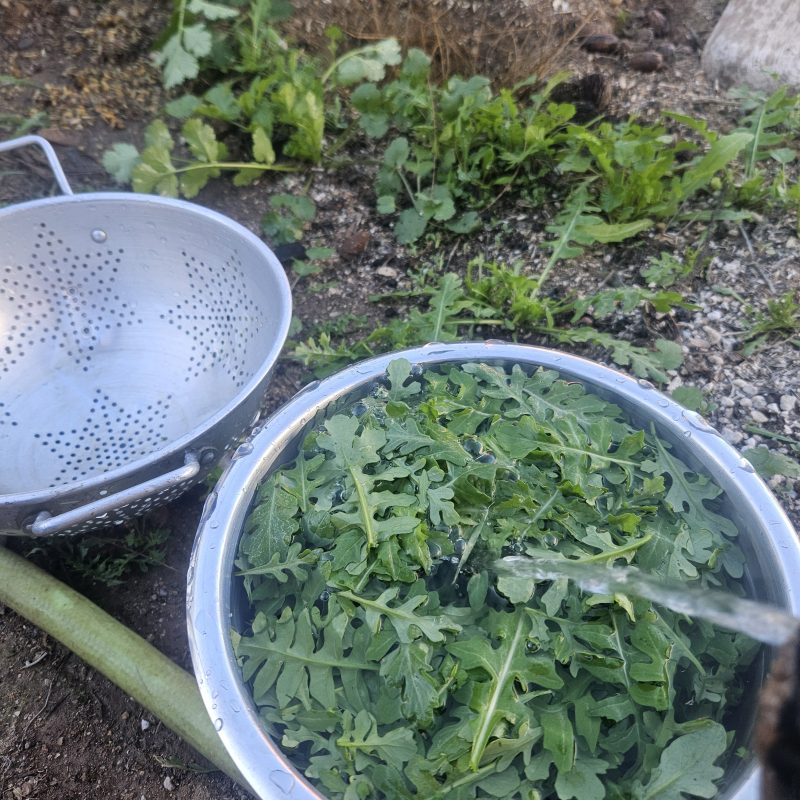
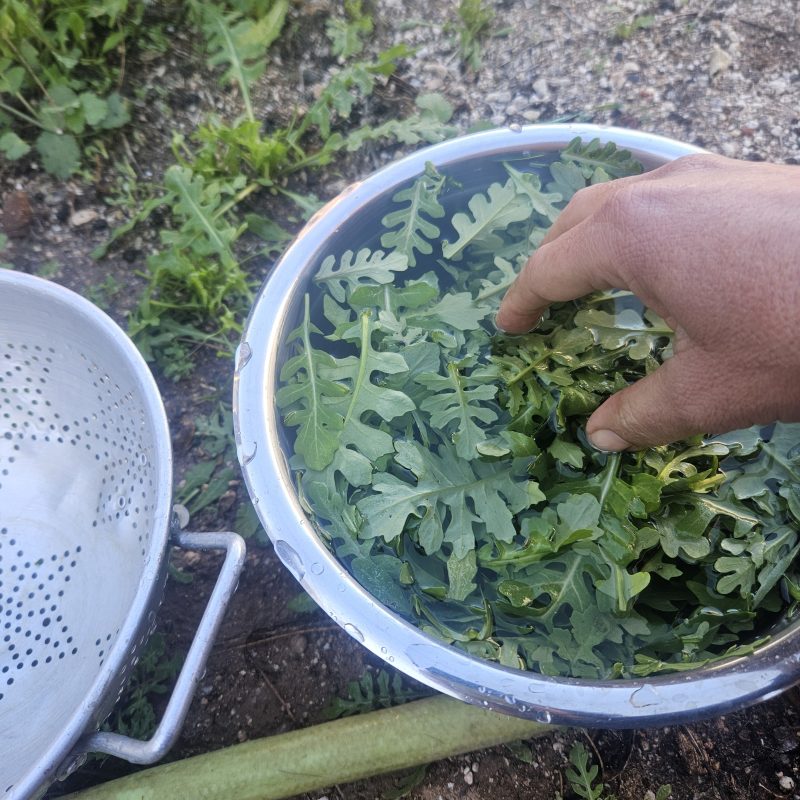
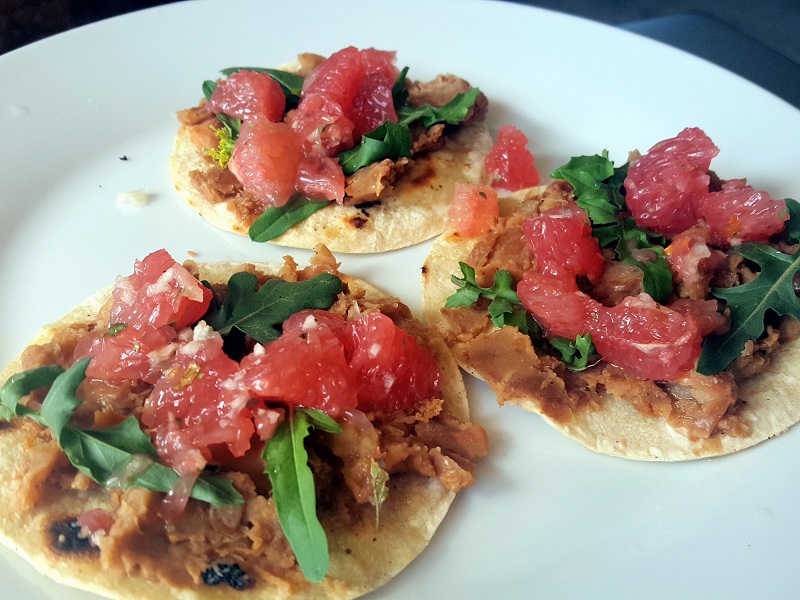
Lettuce or most any green or sprout can all liven up tostadas. Wild mustard greens, like arugula, add a peppery bite.

Assemble and enjoy outside!

Easy Summer Corn Treat: Coctel de Elote

Hello friends! Amy here celebrating the harvest on the Autumn Equinox.

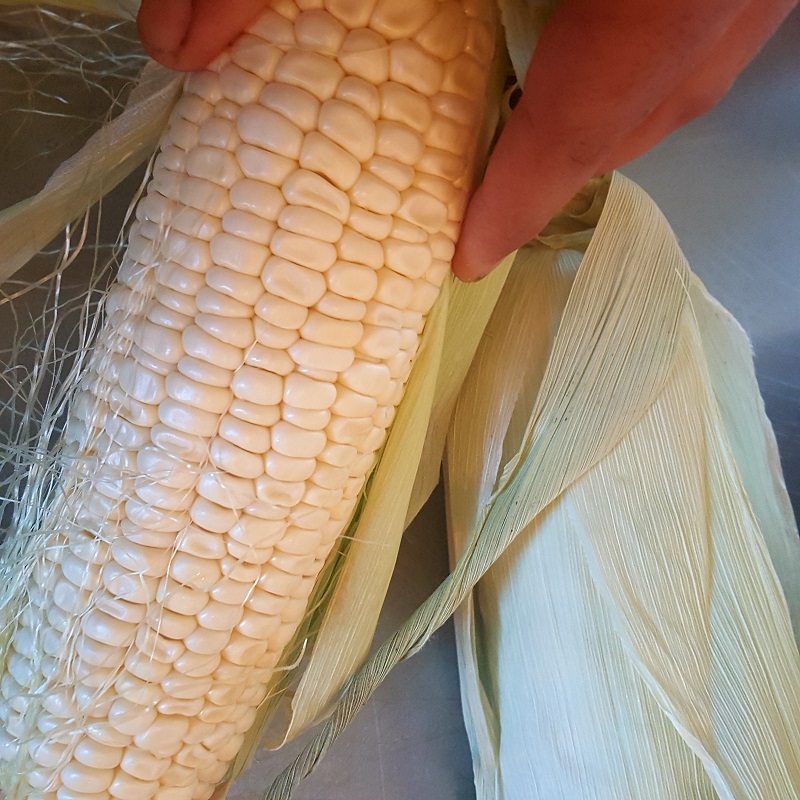
At Mexican Raspado places, I never order the shaved ice with sweet syrup, fruit, ice cream, etc. I always get Coctel de Elote, a corn soup served hot and it is DELICIOUS even in hot weather. It can be made with very immature flour or dent corn varieties also known as starchy “field corn” varieties. These are the same corn varieties that are allowed to mature dry on the plant and made into tortillas, tamales and countless other creations. But elote for coctel de elote can also be sweet corn and that’s what I had from my share at Tucson Community Supported Agriculture.

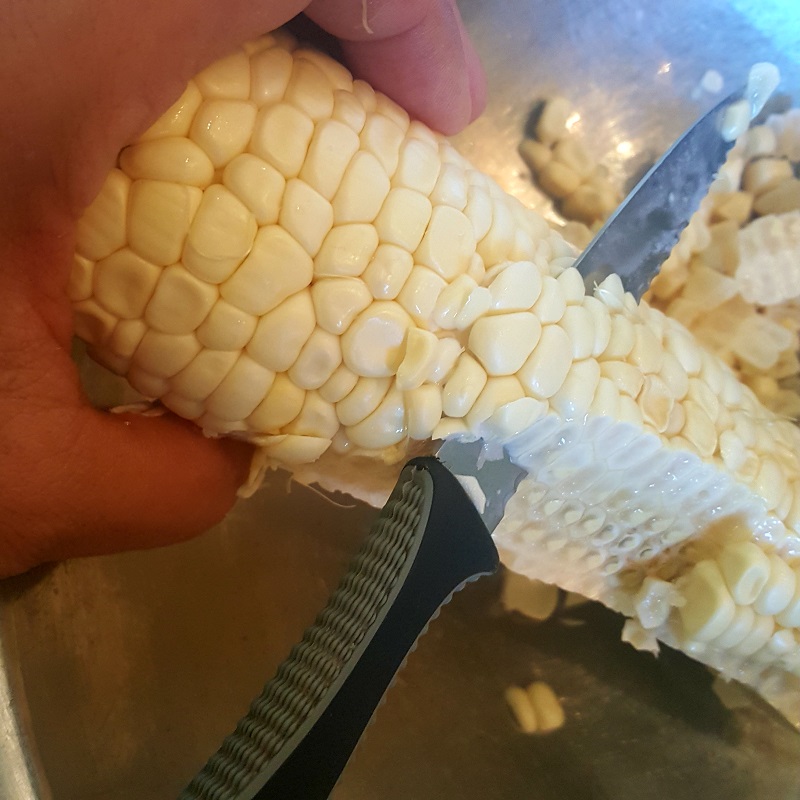
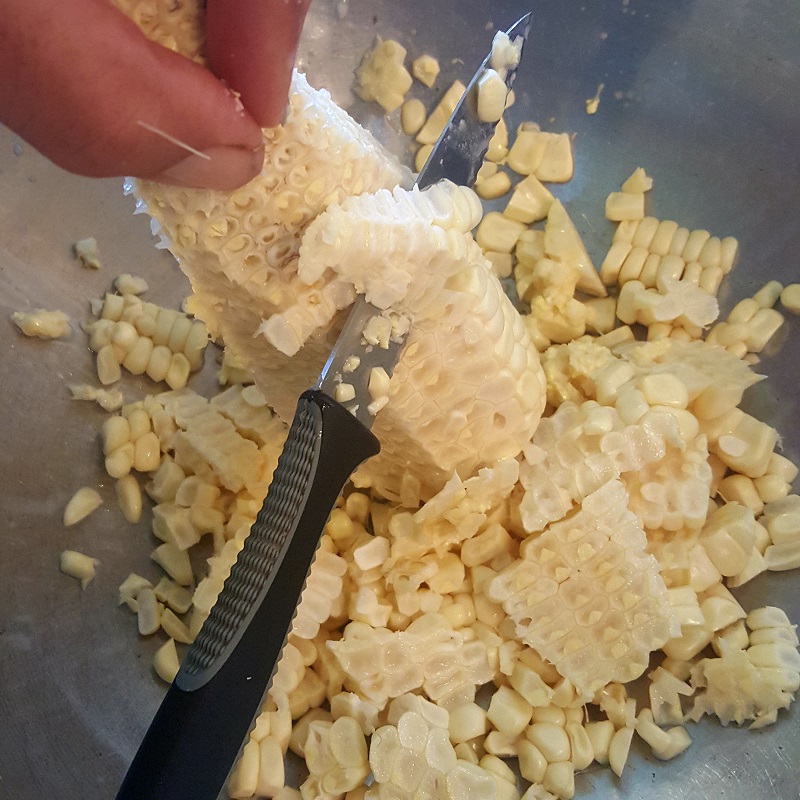
I started by cutting the kernels off the cob, with a sharp little knife within a big bowl.

The kernels can be cut pretty deeply, and the juicy insides scraped into the bowl with the rest.

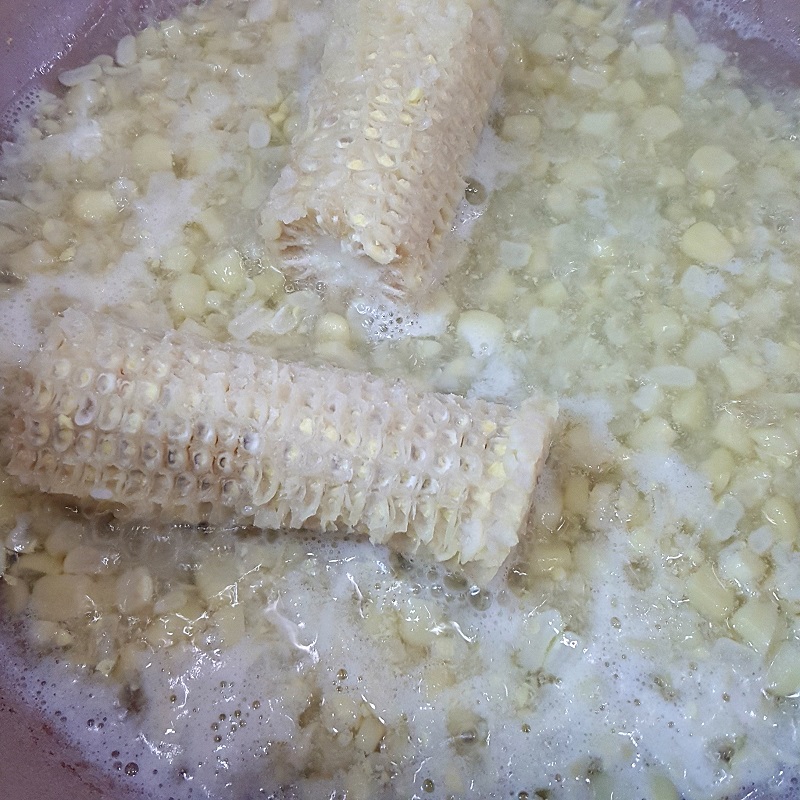
Then the kernels are boiled in just enough water to cover, with a dash of salt. The cobs go in to extract every bit of their goodness to the soup and to add their own distinctive flavor to the broth.

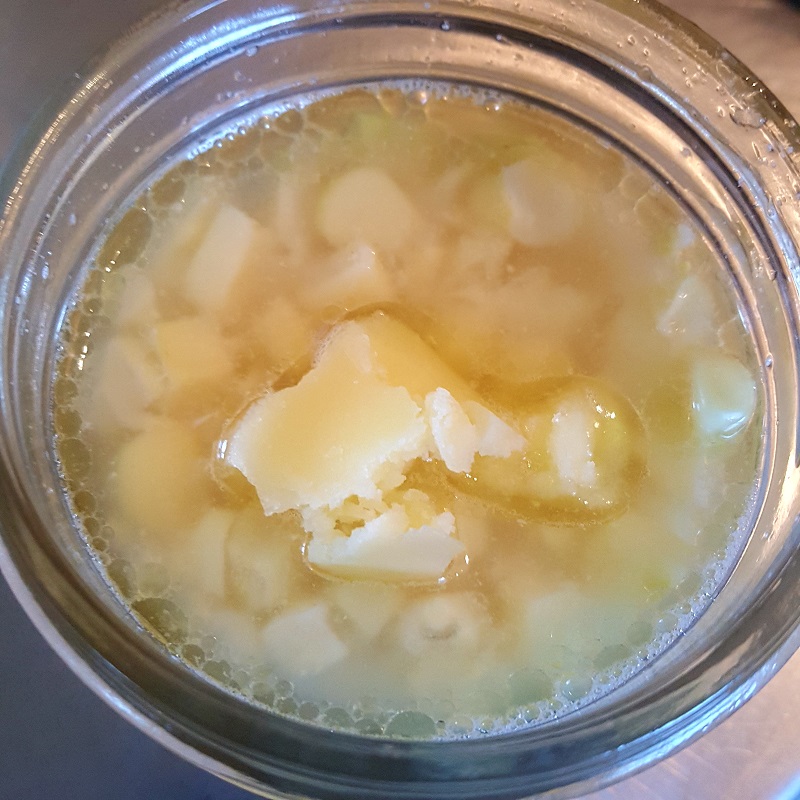
After simmering for a few minutes, the corn was tender. I poured my soup for one into a small jar to serve, leaving the cobs behind. Then, butter!

At the raspado place, they will ask what toppings would you like, but the only answer is everything, the works!

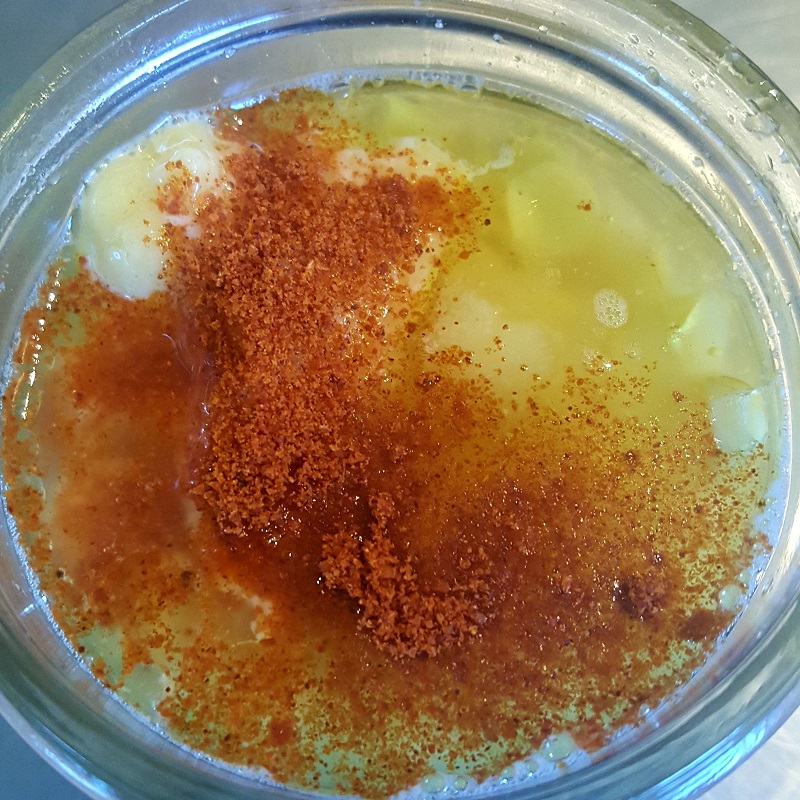
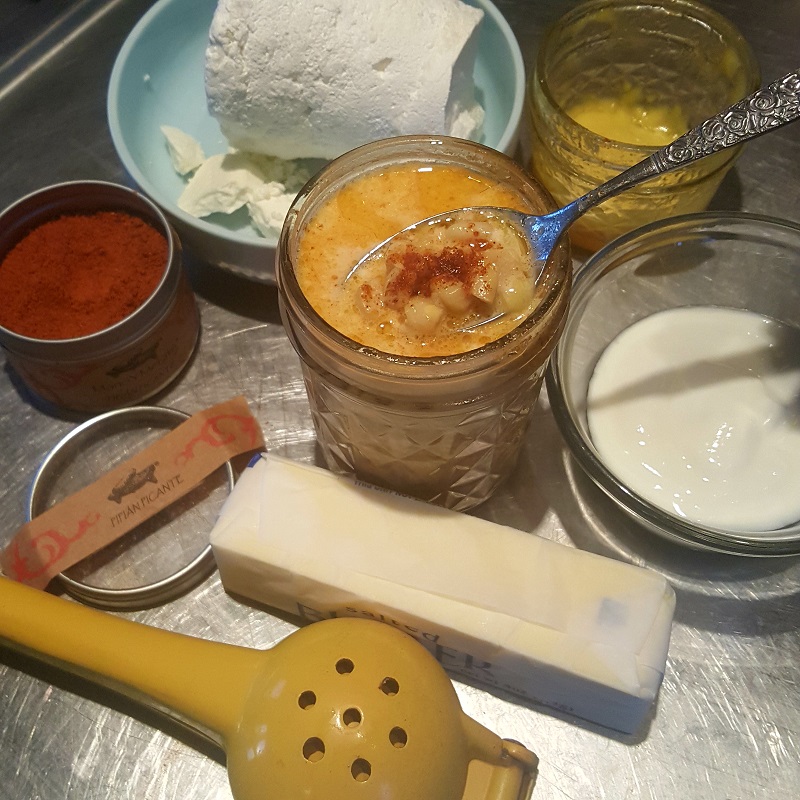
I started with some Mano Y Metate Mole Powder, Pipian Picante. I think any mole powder would be great here, and the traditional would be plain chile powder or a dash of hot sauce.

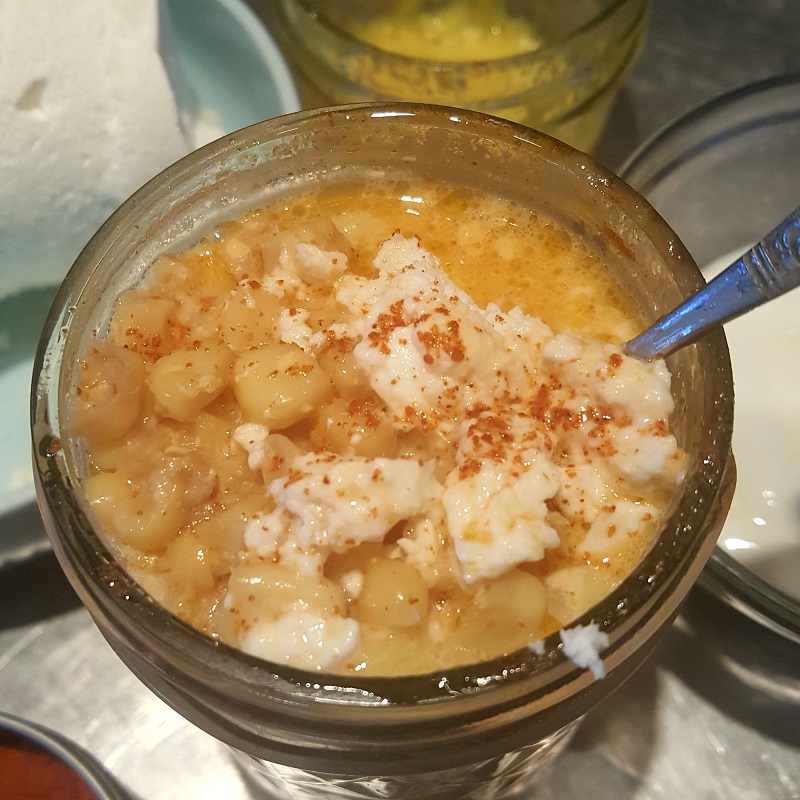
I then juiced a lime into the glass. But this wasn’t enough and I resorted to lemon juice I had frozen in quantity from the spring. Also, homemade mayonnaise (just an egg yolk with mild oil whisked into it until it is thick), store bought creama (Mexican sour cream). Basically, just keep adding and tasting until it is irresistible. Then a final sprinkling of fresh cheese (in this case, homemade goat cheese) sprinkled on top.

Enjoy with a long spoon in the short, hot afternoon.

Treat yourself day: Scallops with Mole Verde

Hello Friends, I’ve always wanted to try mole with scallops since I saw saw it in a book. It paired a very modern white chocolate mole with scallops. Wanting to treat myself to a special meal today, I thought I would give it a go with my own mole.

I started with Mano Y Metate Mole Verde powder, sautéed in mild oil and thinned with chicken broth.

I broke out a stash of wild rice that a friend had given me as a gift. It was collected on lakes in northern Minnesota and parched over a wood fire.

For a wild salad, I harvested some sorrel, parsley and garlic chives from the garden.

For bite I added some volunteer mustard greens aka “wild arugula” and for creaminess some avacado.

The scallops only needed a rinse, a pat dry and a sprinkle of salt.

I seared in part oil and part butter on a hot skillet

Which went FAST!!!!

I hope you take the time for self care and make yourself a treat today, too. Love, Amy