Savor the Seeds

Savor Sister Jacqueline Soule here this week to discuss seeds.  Seeds to eat and seeds to plant.

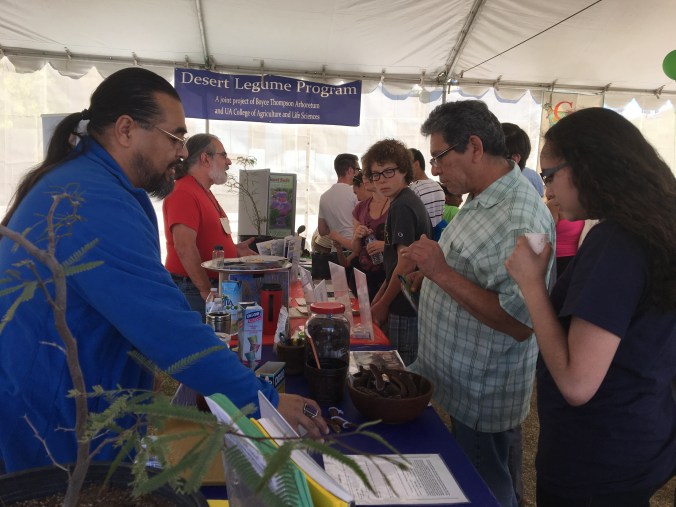
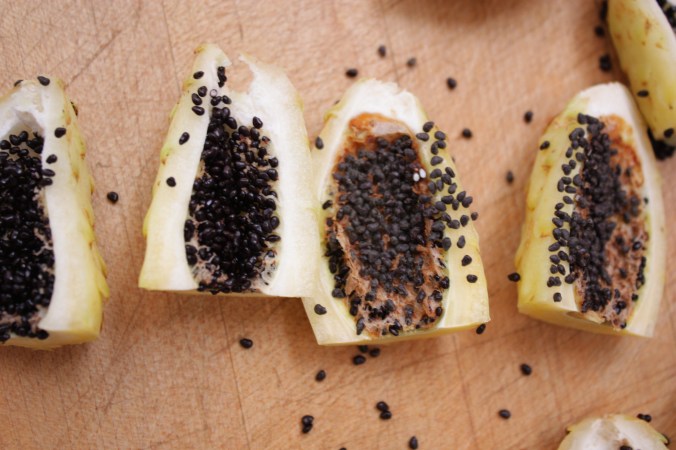
March has been a month of seeds for me.  I got out my boxes of seed for spring planting, All American Selections sent me some seed to try, I harvested bags of barrel cactus fruit for the seed, and I spent 2 long days at the Tucson Festival of Books, in the Science of Food tent, handing out samples of gluten-free mesquite muffins, and talking about the Desert Legume Program (DELEP).

IMG_0255.JPG

Mesquite pods are easy to harvest and grind (with the seeds inside) to make a flour or meal that is a good source of protein.  (recipe below) We were handing out samples to spread the word about DELEP’s mission, which is to acquire and preserve seed of legumes native to the arid and semiarid lands of the world; to learn more about the nature and utility of these unique species; to share legume germplasm; and to aid in the preservation and conservation of desert legume biodiversity.  Volunteers meet once a month, September through May on every 2nd Wednesday from 9 to noon.  The cadre of volunteers assists with seed processing and storage, and we welcome new volunteers!

ferocactus fruit 1107

Barrel cactus seed processing and use were discussed in earlier Savor the Southwest blogs.

seed library

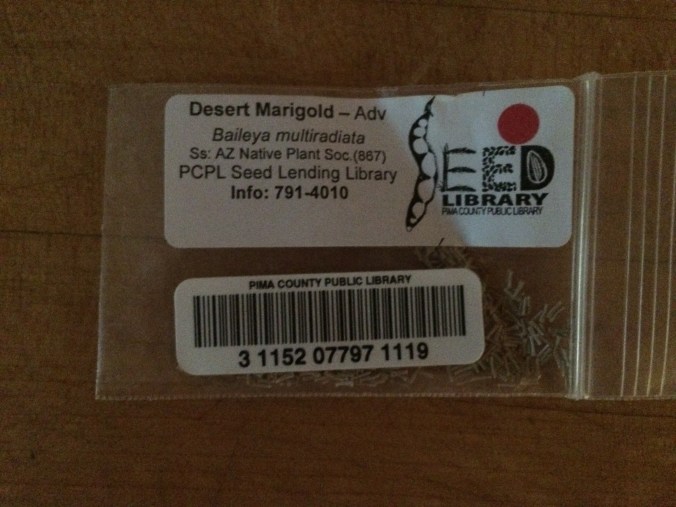
Did you know that there is a Seed Library in the Pima County Public Library?  The Seed Library is a collection of open-pollinated and heirloom seeds that you can borrow from the Library and grow at home (or in a community garden!).  All you do is check the seeds out of the library using your library card.  They would appreciate if you would later share the seed of what you grew, but it isn’t a requirement.  The idea behind this seed bank is that the best seed to grow in our area is the offspring of whatever grew and thrived in our area.

04 seed harvesting 1508572 (c) JASoule one time use only to CSP

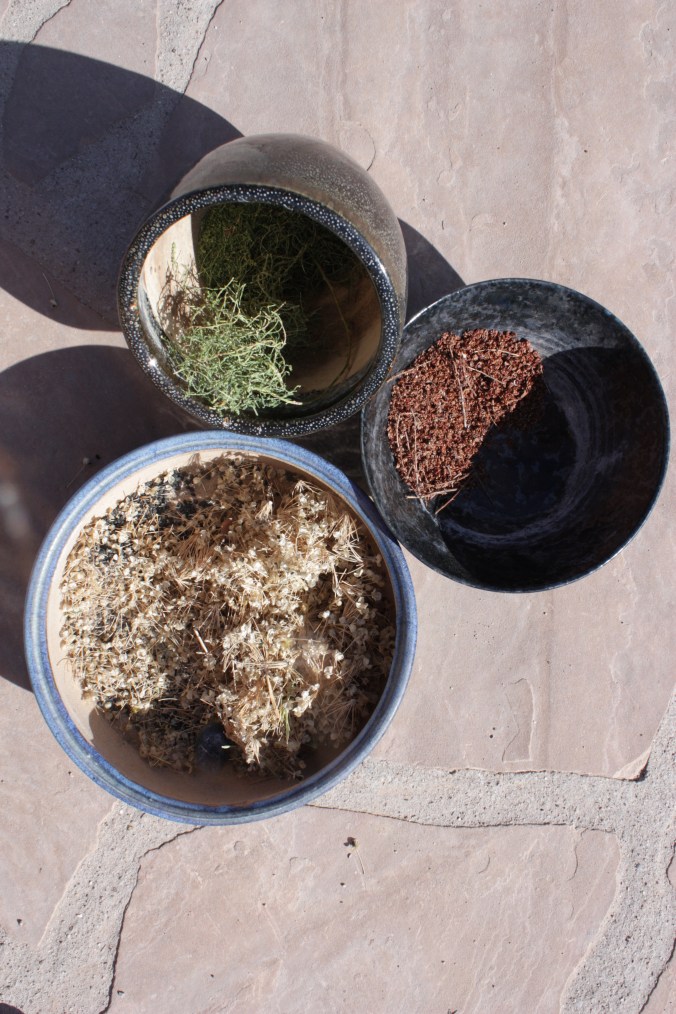
Seed of epazote, canagria, and garlic chives.

Save Seed
It is easy to save seed of annuals, wildflower, vegetables, and herbs. The key is to  collect the seed just as it matures and before it starts to drop. You especially want to keep an eye on seed in pods that dry and shatter to disperse seed.

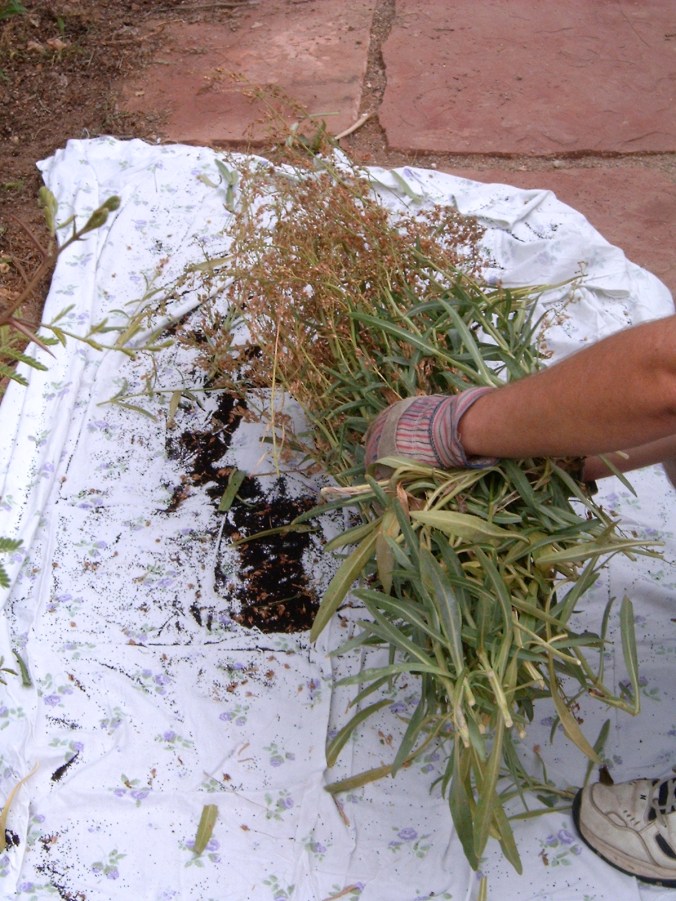
Stalks of Pods – snip off the stalks and invert them into large paper bags. Fold the bags shut. Now when seedpods shatter, the seeds are trapped in the bag for next year’s sowing.

Seedheads – often these seedheads simply break off in your hand. Hold a container below them as you break them off.

For future sowing, you don’t need to clean the seed, although purists like to.  At DELEP we clean seed for long-term storage.  For seeds you use as a herb (like coriander or dill seed), you will need to clean the seed. Kitchen colanders and sieves are useful.

Label your seeds!  Penstemon seed and poppy seed look remarkably similar in a paper bag 2 years later.

04 seed save of penstemon 0800451 (c) JASoule one time use only to CSP

Looking Ahead
In my book Month-by-Month Garden Guide for Arizona, Nevada, and New Mexico I mention that now is the time for USDA zones 10, 9 and 8 gardeners to sow seed of hot-season greens like amaranth, New Zealand spinach, purslane, and Malabar spinach (a perennial vine).  Don’t forget the heat-loving herbs basil, epazote, and perilla. For Zones 7 and 6 gardeners, this is the time to plant cool-season vegetables from seed, like radish, arugula, and European spinach. Plant slow-growing members of carrot family, including parsnip, carrot, fennel, parsley, and dill. In zones 5 and 4, you will plant these in May.

Bailyea multiradiata_4341

Gluten-free Mesquite Muffin
1/8 cup mesquite flour
1/8 cup flax seed meal
1/2 teaspoon alum-free baking powder
pinch of salt
1 tablespoon sweetening – to taste (stevia, honey, molasses, sugar)
1 teaspoon oil – choice (olive oil, butter, coconut)
1 egg

Use a microwave safe mug or pyrex measuring cup, sprayed with cooking spray.
Mix the dry ingredients.
Add the wet ones, stir well.
Microwave for 1 minute.
Remove from the cooking dish right away.
Note: You can quadruple this recipe and cook it in a loaf pan for a loaf cake (but cook for 3½ minutes).

JAS avatarIf you live in Southeastern Arizona, please come to one of my lectures. Look for me at your local Pima County Library branch, Steam Pump Ranch, Tubac Presidio, Tucson Festival of Books and other venues. After each event I will be signing copies of my books, including the latest, Month-by-Month Garden Guide for Arizona, Nevada, and New Mexico (Cool Springs Press, $26).

© Article copyright by Jacqueline A. Soule.  All rights reserved.  Republishing an entire blog post or article is prohibited without permission.  I receive many requests to reprint my work.  My policy is that you may use a short excerpt but you must give proper credit to the author, and must include a link back to the original post on our site.  Photos © Jacqueline A. Soule and they may not be used.

Workshops, walks and events celebrate growing, harvesting and preparing desert foods this spring

Happy Spring, Tucson! Amy here to tell you about opportunities to learn about growing and harvesting desert foods in our neighborhoods. Urban desert explorations allow us to track the seasons and harvests…will it be a fruitful year for barrel cactus? An early or late harvest? What desert edible plants are the neighbors using in the landscape? How are the birds and squirrels faring?

Check Desert Haresters or other sponsoring organizations for further dates and topics in each of these series!

Desert Harvesters La Cocina Walks

Tuesdays March 21, April 11, May 23 and June 20, 2017.  201 N Court, north entrance. $5 donation to support Desert Harvesters education programs.
jill crop

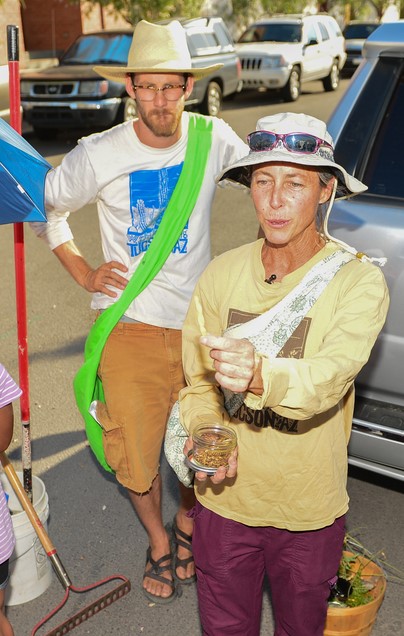
Desert Harvesters will lead casual walks from La Cocina through historic El Presidio Neighborhood to identify native perennial food-bearing plants and other edibles. Walks start in spring, and continue monthly thereafter, into the oncoming heat of summer. Desert Harvesters is partnering with LaCo to incorporate native food ingredients into the menu during our Tuesdays-for-Tucson fundraiser nights, including prickly pear, cholla buds, nopalitos, desert herbs, mesquite, and more.

Desert Harvesters is interested in seeing what wild ingredients might be in the LaCo neighborhood that could be sampled, harvested, and potentially used at LaCo. LaCo Walks are scheduled on Tuesday evenings so that after the walk, folks can support both LaCo and the organization that Tuesdays-for-Tucson benefits that evening; a percentage of LaCo’s night is donated to the organization. Desert Harvesters’ Tuesdays-for-Tucson fundraiser at LaCo is May 16—save the date!
Prickly-Pear-Margarita-w-Mesquite-Bean-Stirstick-br-150x150

photo:Barbara Rose

BRING: Drinking water, sun protection, camera, notebook, and anything else to make you comfortable.

For further information and to sign up, please contact: workshops@desertharvesters.org or jaelle@lorenziniworks.com


Desert Harvesters and Community Food Bank Series at the Santa Cruz River Farmers’ Market

Mercado San Agustín, 100 S. Avenido del Convento
20150402_082609

Cholla Buds
with Desert Harvesters’/Mano Y Metate‘s Amy Valdés Schwemm
Thursday, March 23, 3-6 pm (Saturday hands-on workshop on March 25)
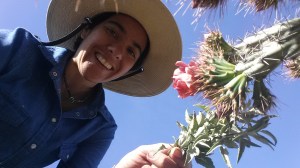
Celebrate one of the first native foods of Spring: cholla-cactus flower buds! Learn how to safely harvest and cook with these calcium-rich, tasty buds. Sample cholla buds with spicy-savory mole sauces.

Spring Bounty! NEW
with Desert Harvesters’/Bean Tree Farm‘s Barbara Rose
Thursday, April 6, 3-6 pm
The desert is abloom at this time, and many plants offer edible flowers and foliage to use in teas, garnish, and as flavoring. See what can be made from these and other desert ingredients like Spring greens and herbs, green palo-verde beans, cholla buds, stored foods, and other seasonal surprises.
20160429_110049

Nopalitos
with Desert Harvesters’/Mano Y Metate‘s Amy Valdes-Schwemm
Thursday, May 11, 3-6 pm
(Saturday hands-on workshop on May 13)

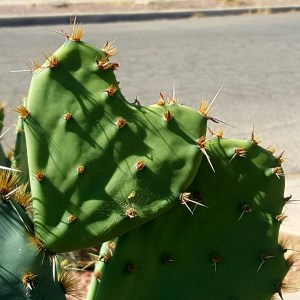
Learn how easy it is to collect these nutritious cactus pads from your own yard or neighborhood, and how to prepare them in tasty recipes everyone will love.

All THURSDAY DEMOS are free and open to the public, and are sponsored by the Community Food Bank of Southern Arizona. For more information, contact the Food Bank at (520) 882-3313.

*For further INFORMATION about follow-up HANDS-ON SATURDAY WORKSHOPS, please contact: Barbara beantreefarm@gmail.com or Jill jaelle@lorenziniworks.com To REGISTER for HANDS-ON SATURDAY WORKSHOPS, please contact workshops@desertharvesters.org


Sonoran Desert Series at the Food Conspiracy Coop, facilitated by Desert Harvesters’ Jill Lorenzini and friends.

REGISTER via THIS LINK. All classes will be held in the Hoff building on the NE corner of 7th St & Hoff Ave, behind the Food Conspiracy Co-op. Class fee $10. Desert Harvesters volunteer, member, and partner discounts offered. FOR FURTHER INFORMATION, please contact: jaelle@lorenziniworks.com.
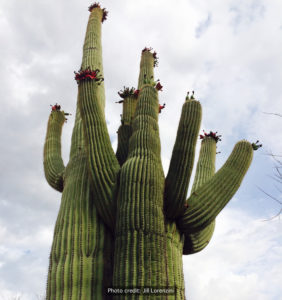
Fruiting-saguaro-JL-rwm-282x300

YOU ARE HERE: SONORAN DESERT 101

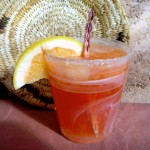
Monday, MARCH 27, 6–8 pm Interactive exercises about where we are and where we come from using maps, info, and stories to build place-based awareness. We’ll explore from macro to micro, from global to regional to local, from the Southwest to the Sonoran Desert, and to the Uplands Arizona subdivision of the Sonoran Desert we experience here in Tucson. This is one of the most unique ecosystems on the planet! Welcome to the desert and the amazing plant life here! Sample prickly-pear lemonade.
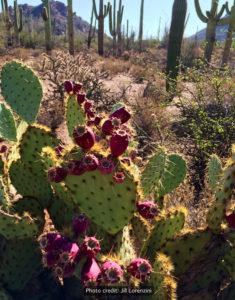
Prickly-pear-cactus-ripe-tunas-JL-rwm-235x300

YOU ARE HERE: UPLANDS-ARIZONA-SUBDIVISION NATIVE FOODS

Monday, APRIL 24, 6–8 pm Use the Sonoran Desert Foods Calendar, Wild Foods Calendar, and Native Seeds/SEARCH‘s 5-seasons calendar wheel to understand seasonal cycles and to see the wealth of delicious native perennial plant foods available throughout the year. These nutritious foods—and the many other benefits they provide—will be discussed in detail in subsequent classes. Get familiar with the dynamics of winter and summer monsoon seasons; meet Sky Island mountain ranges, river and riparian areas; explore long-term climate change and ongoing drought cycles. Sample desert-flowers iced tea.
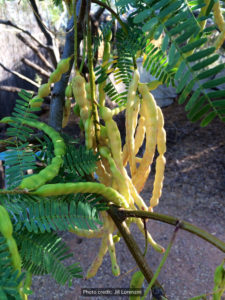
Velvet-mesquite-pods-ripening-JL-rwm-225x300

BEAUTIFUL BENEFICIAL BEAN TREES

Monday, MAY 22, 6–8 pm Meet the native mesquite, ironwood, and palo verde trees that anchor the Uplands Arizona plant palette. These trees act as nurse plants for other desert flora, and create rich environments under their canopies where both plants and animals survive and thrive. Desert legume trees provide bountiful harvests of protein-packed beans and tasty pods year after year. The “Be Like a Bean Tree” poster encapsulates many of their attributes. Taste mesquite flour and pods, and shell and taste green palo verde beans.

Dunbar/Spring Walks Sponsored by Desert Harvesters and Partners
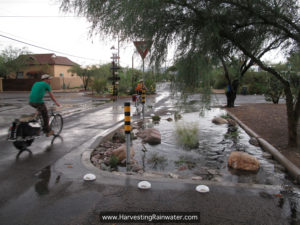
5.23-chicane-and-circle-IMG_2744-ps-rwm-300x225

The Dunbar/Spring Neighborhood has a long history of community action, most recently through the work of Brad Lancaster and a network of like-minded neighbors and friends of the Dunbar/Spring Neighborhood who’ve planted native perennial food-bearing trees there, established rainwater- and greywater-harvesting earthworks, pioneered curb cuts and cores, thereby bringing multiple benefits to the neighborhood, including shade and cooler temperatures, more native animals and pollinators, enhanced beauty, tree-planting and -pruning workshops, mulching services, interaction with neighbors, less stormwater lost to storm drains, community art and services, and more.

Monthly weekend walks through the Dunbar/Spring Neighborhood are a fantastic opportunity to see these green-infrastructure strategies in action, as well as to become acquainted with and impressed by common but amazing native (and other) food plants in the area, as they change and grow, flower and bear fruit, shed leaves, and endure seasonal extremes, throughout the year. Learn about native desert foods by watching, harvesting, touching, listening, tasting, smelling, feeling. Additional opportunities include foodshed mapping and return photography. See walk schedule below. See also www.dunbarspring.org.

Saturday MARCH 4, 10–11:30 am (optional: meet early, at 9:30, to get food/drink and socialize) Meet at EXO Roast Coffee, NW corner of 7th St & 6th Ave

Saturday, APRIL 15, 2–3:30 pm Meet at Dunbar/Spring Community Garden, NW corner of University Blvd & 11th Ave

Gila-Monster-and-Brad-300x200

Hands-on Homesteading

Santa Cruz River Farmers Market
100 South Avenida del Convento

RAINWATER HARVESTING CONCEPTS & DESIGN with Desert Harvesters’ Jill Lorenzini and friends

Thursday, April 20, 3–6 pm (Saturday workshop* April 22)

Food security depends on water security. Learn the basic concepts and the many benefits of rainwater-harvesting design, so you can begin implementing simple strategies at home. Based on award-winning books by Brad Lancaster, local author of the Rainwater Harvesting for Drylands and Beyond series.

SOLAR OVENS with Desert Harvesters’ Jill Lorenzini

Thursday, May 25, 4–7 pm

In ultra-sunny Arizona, it makes a lot of sense to cook with the sun. Learn basic solar-oven concepts and design principles, then watch various solar ovens in action and sample delicious solar-cooked foods. Place-based cooking.

All THURSDAY DEMOS are free and open to the public, and are sponsored by the Community Food Bank of Southern Arizona. For more information, contact the Food Bank at (520) 882-3313.

*For further INFORMATION about follow-up HANDS-ON SATURDAY WORKSHOPS, please contact: Barbara beantreefarm@gmail.com or Jill jaelle@lorenziniworks.com To REGISTER for HANDS-ON SATURDAY WORKSHOPS, please contact workshops@desertharvesters.org


Watershed Management Group’s Edible Shade Mesquite Pancake Breakfast

edible-shade-ad-small

Sunday, March 26, 9am – noon
1137 N Dodge Blvd

It’s that time again! Come join us for a fun-filled morning as we celebrate the delicious shade of mesquite, pomegranate, olive and other edible native and desert-adapted trees. Enjoy an artisan market and hands-on learning activities as you explore sustainability practices in action at WMG’s Living Lab and Learning Center. And come hungry—we’ll be serving up local mesquite pancakes, fresh off the griddle!

Only 500 tickets are available, so purchase early or risk missing out. Notice: Unlike previous years, tickets will NOT be available at the door if we sell out in advance!

For tickets and information, contact WMG.


EDIBLE TREE CELEBRATION

Edible Tree Celebration in Honor of the UA Campus Arboretum’s 15th Anniversary

April 1, 11am-2pm

In front of the State Museum Building at the UA, NE corner of Park Avenue and University Blvd

Co-Sponsored by the UA Campus Arboretum (arboretum.arizona.edu/)

and the LEAF Network (Linking Edible Arizona Forests) (leafnetworkaz.org/)

Please join us to celebrate the 15th anniversary of the wonderful UA Campus Arboretum and highlight the value of “edible trees” in the campus and urban environment. (LEAF Network uses the term edible trees to refer to those native and nonnative trees that produce edible fruits, nuts, seeds and pods.)

Activities will include:

11:30 presentation to mark the 15th Anniversary of the UA Campus Arboretum

12:00 commence 30-minute tours of edible trees at the UA Campus Arboretum leaving every half hour

Potted edible trees on display including native and nonnative trees

Free raffle every 15 minutes for potted edible trees, arboretum materials, tree related t-shirts, and other items

Entertaining table displays about the UA Campus Arboretum, edible trees, the LEAF Network and other NGO and educational groups (and more activities to come…)

Collaborators include the Arizona Department of Forestry and Fire Management, Arizona Community Tree Council, Iskashitaa, Trees for Tucson, Friends of Tucson’s Birthplace, Bean Tree Farm, Desert Harvesters and more.

For more information about the event and to reserve a table, contact Ann Audrey ann.audrey.1@gmail.com
Fermented Citrus: Marmalade, Indian Pickle, Mole Pickle

20170122_133637_001Hello friends, Amy here with more fermentation experiments.

It’s a good year for citrus, and I’ve come across a few mystery specimens lately, all very tart. Lemons that look like sour oranges with a lumpy, thick zest. Kumquats that were maybe calamondins. Some called calamondins, but biger, with skin and pith as thick as an orange. Something labeled meyers that were orange and more sour than a regular lemon. Rather than attempt to decipher the cultivars, I’ve just been enjoying them!

Indian Lemon Pickle

A friend’s mom from India fed me some lemon pickle. Wow!!!! Sour!!!! Salty!!!! Spicy, too! It looked as if it was going to be killer spicy, but it was only medium heat. It can be served as a condiment on the table, like with rice and cooked greens. It’s good in a vinaigrette. Any leftover soup or stew suddenly becomes new and exciting! I’m going to try marinating some chicken in it before grilling.

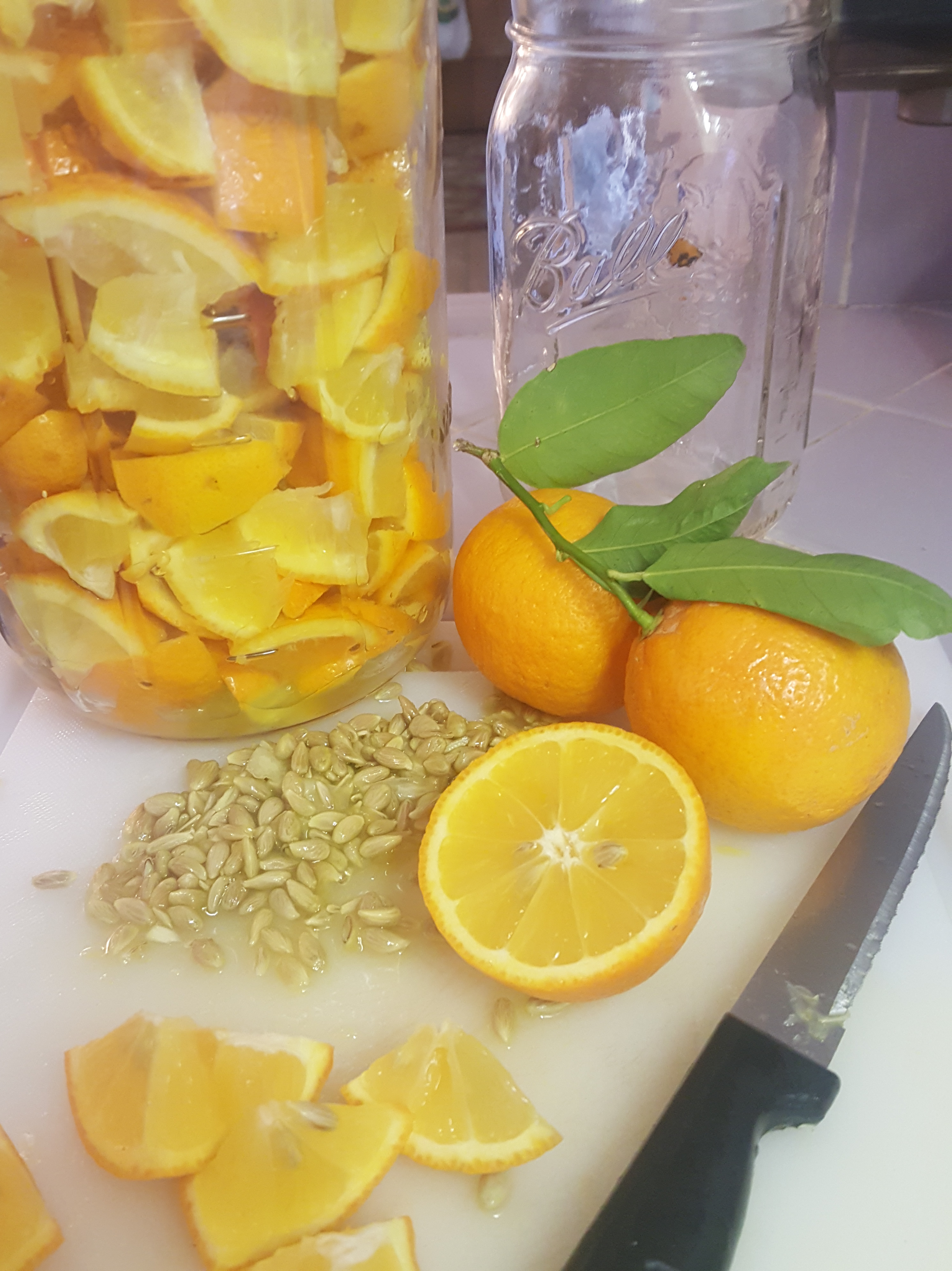
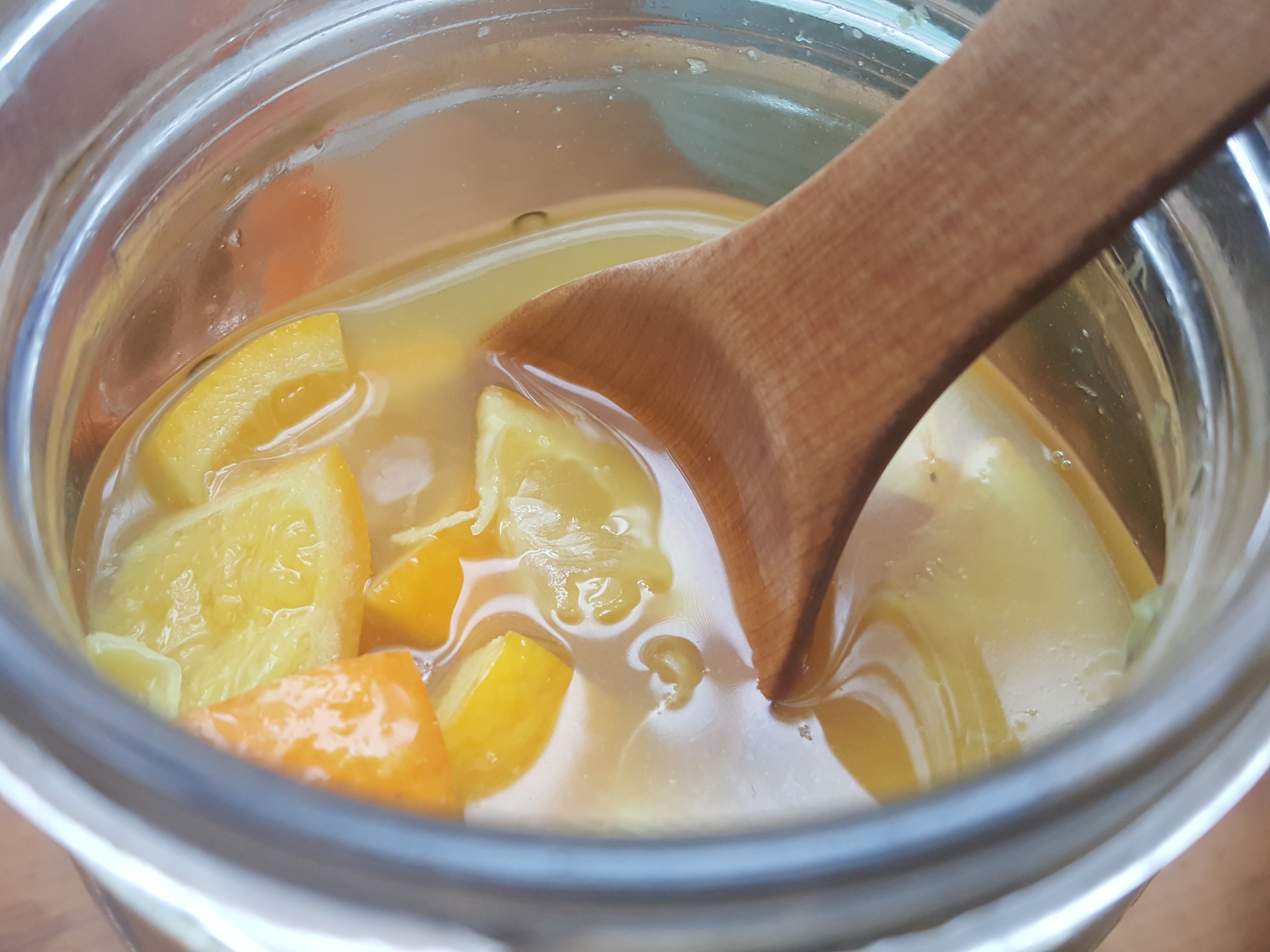
To make Indian lemon pickle, cut sour citrus into small pieces (about 2 cups) and remove the seeds. Add juice to nearly cover the fruit.

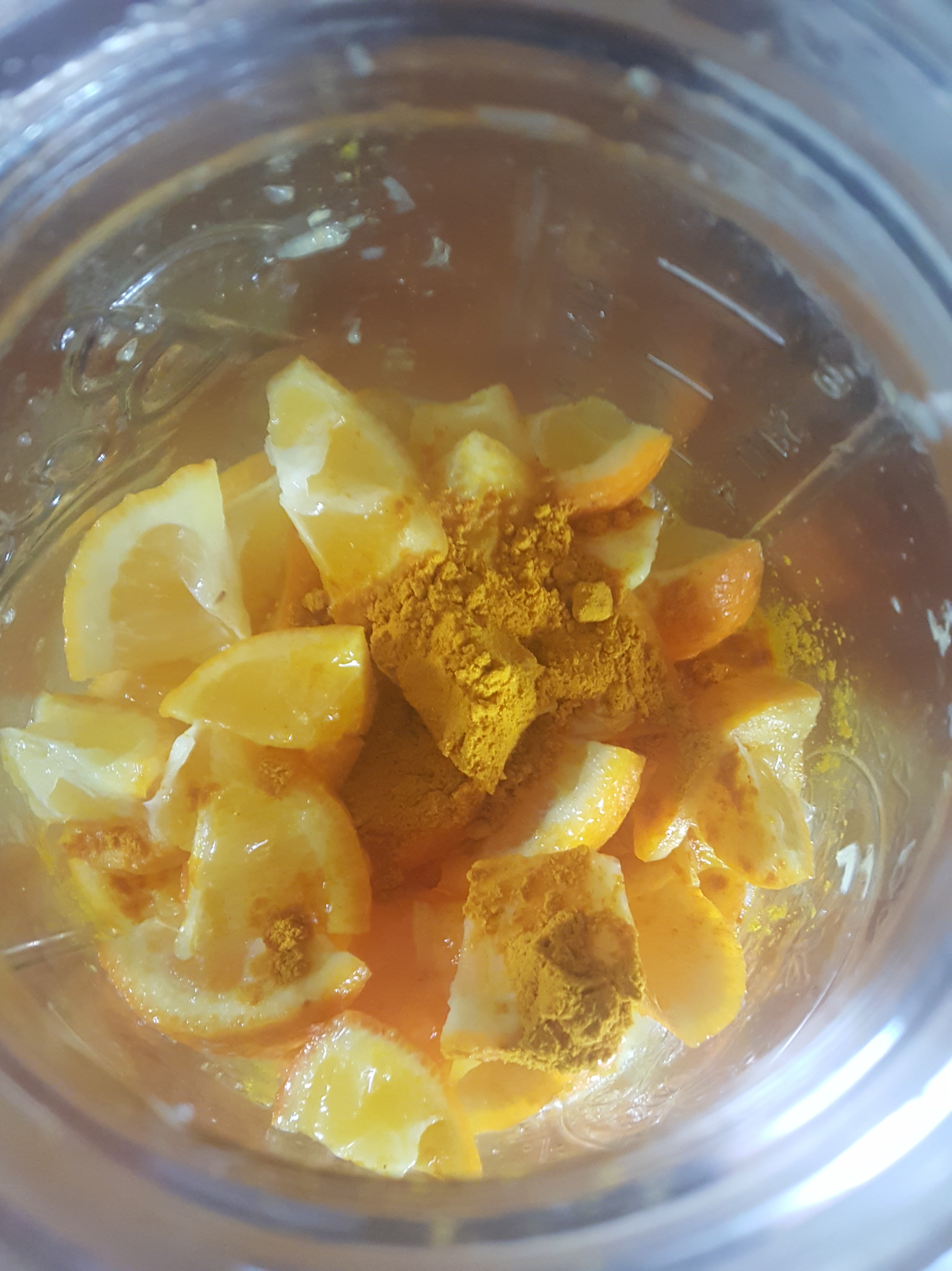
20170124_13340720170124_133453Add salt (2 tablespoons) and turmeric (1/2 teaspoon). The spices can be omitted if desired, like classic Moroccan preserved lemons used in cooking or Vietnamese lemons used in lemonade. I’m sure many other cuisines ferment citrus also.

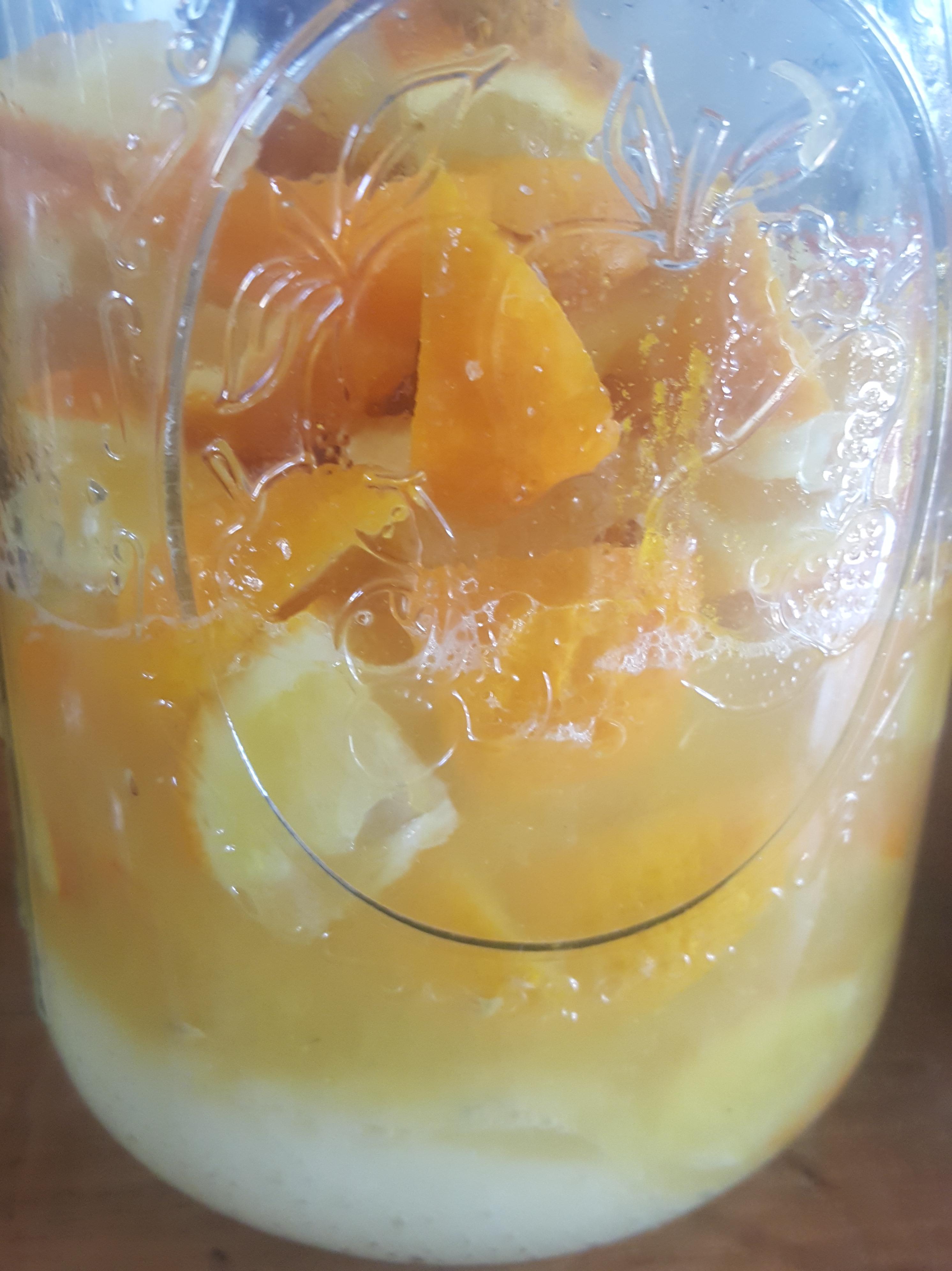
Cover and let ferment at room temperature for a week or two, stirring daily. When the fruit is soft, it is ready to enjoy or spice further.

20170216_135441

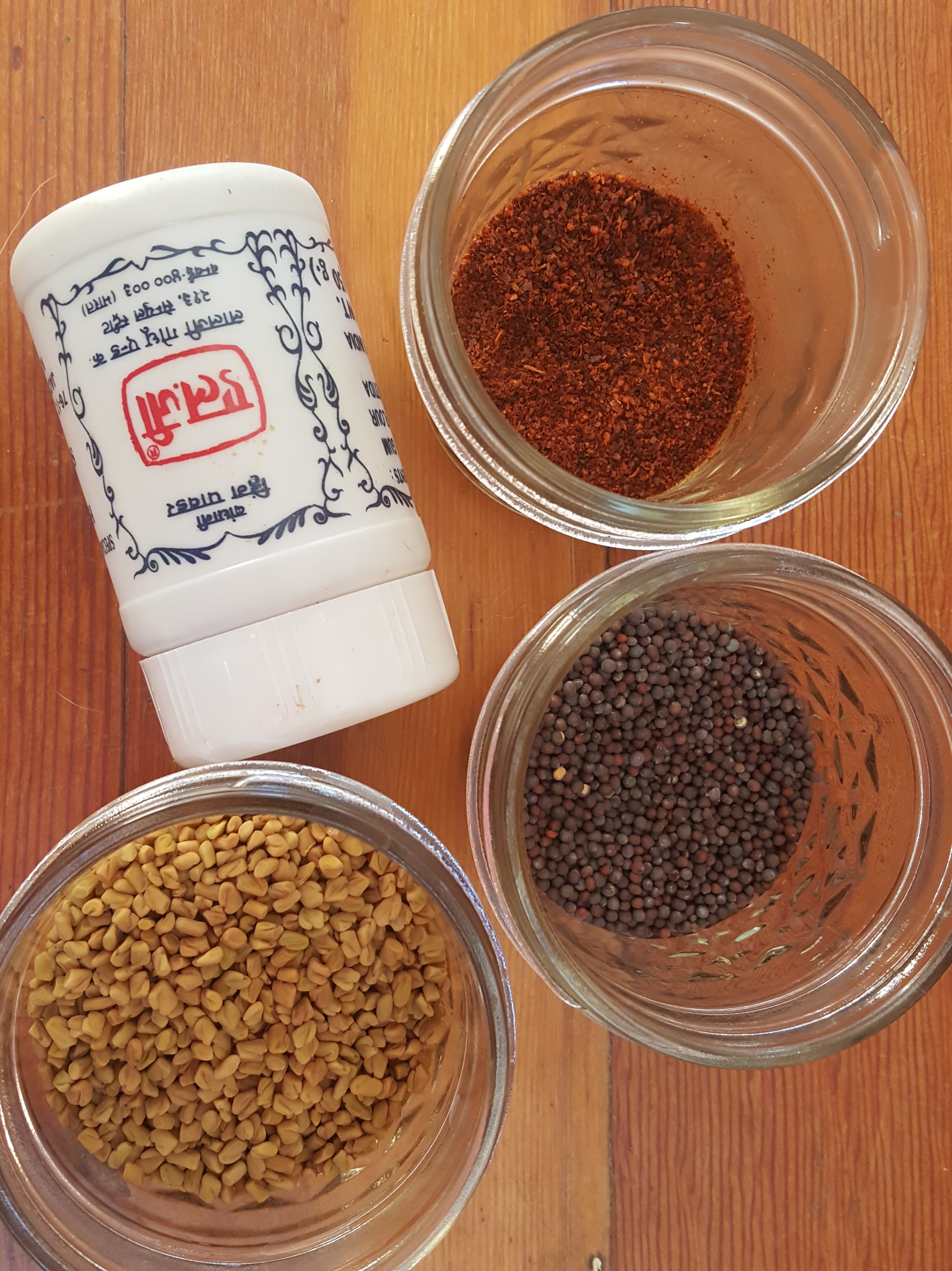
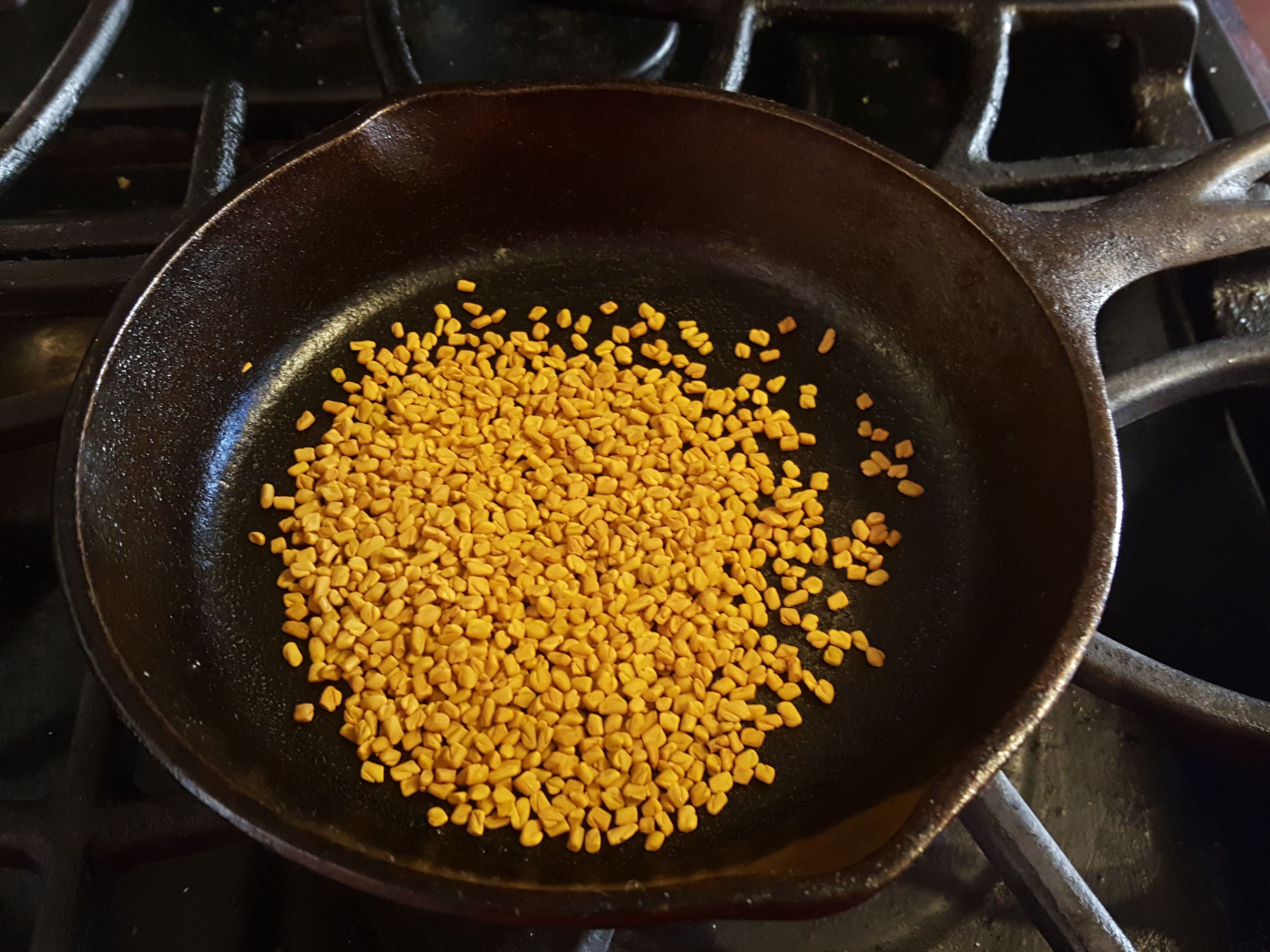
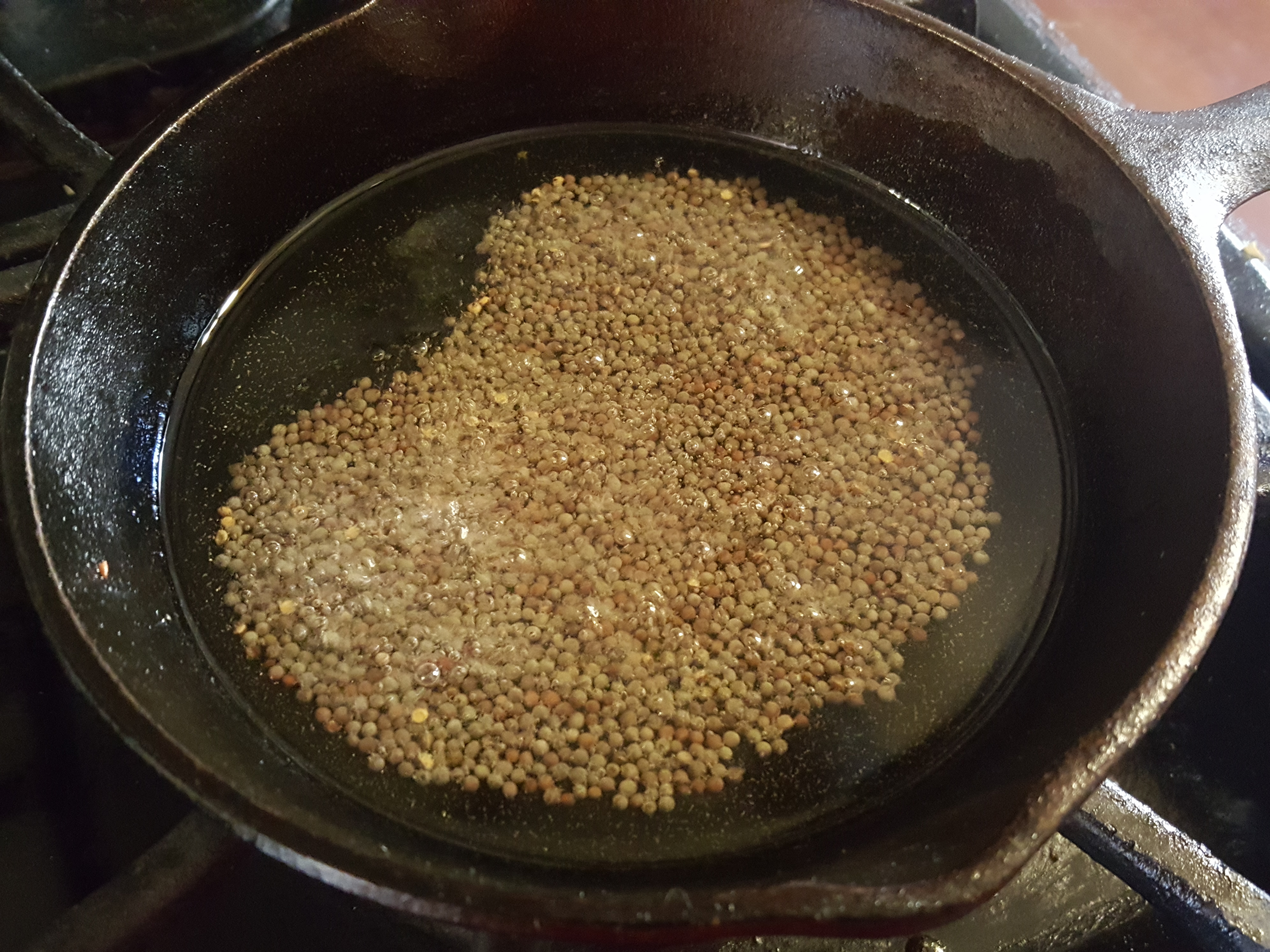
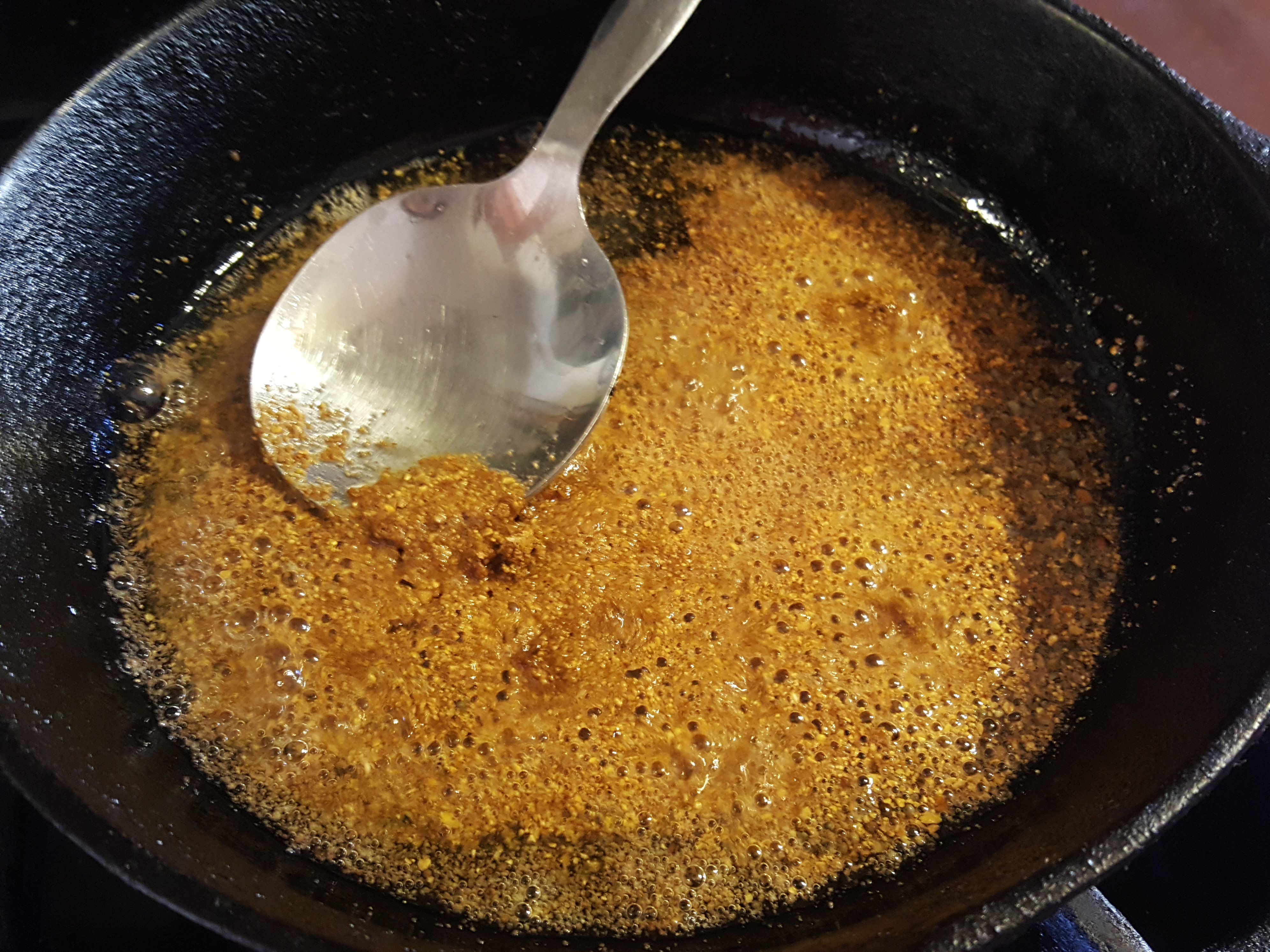
Dry toast fenugreek seed (1 tablespoon), cool and grind. Gently heat oil (3 tablespoons) and cook black mustard seeds (half teaspoon) until they sputter! Turn down the heat and add asafoetida powder (1 teaspoon) and the prepared fenugreek. Cook briefly while stirring.


20170216_140512120170216_14104220170216_141617


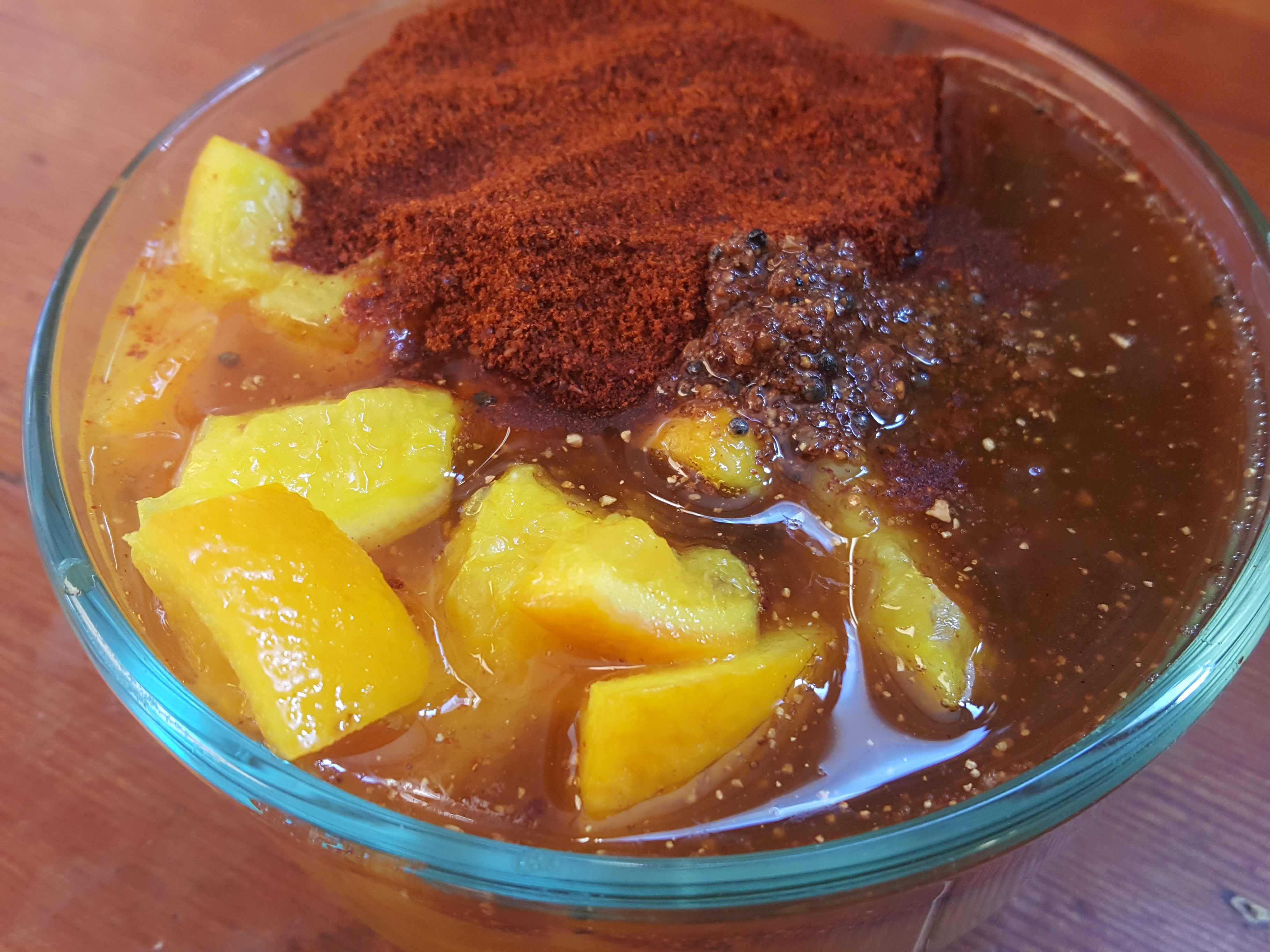
Add the cooled spicy oil mixture and the chile to the lemon and taste! It stores beautifully in the refrigerator for a long time, thanks to high salt content. Keep the citrus pieces submerged in the brine. The salt can be reduced, but it may not keep as well.

20170216_14375420170216_144044


Mole Pickle

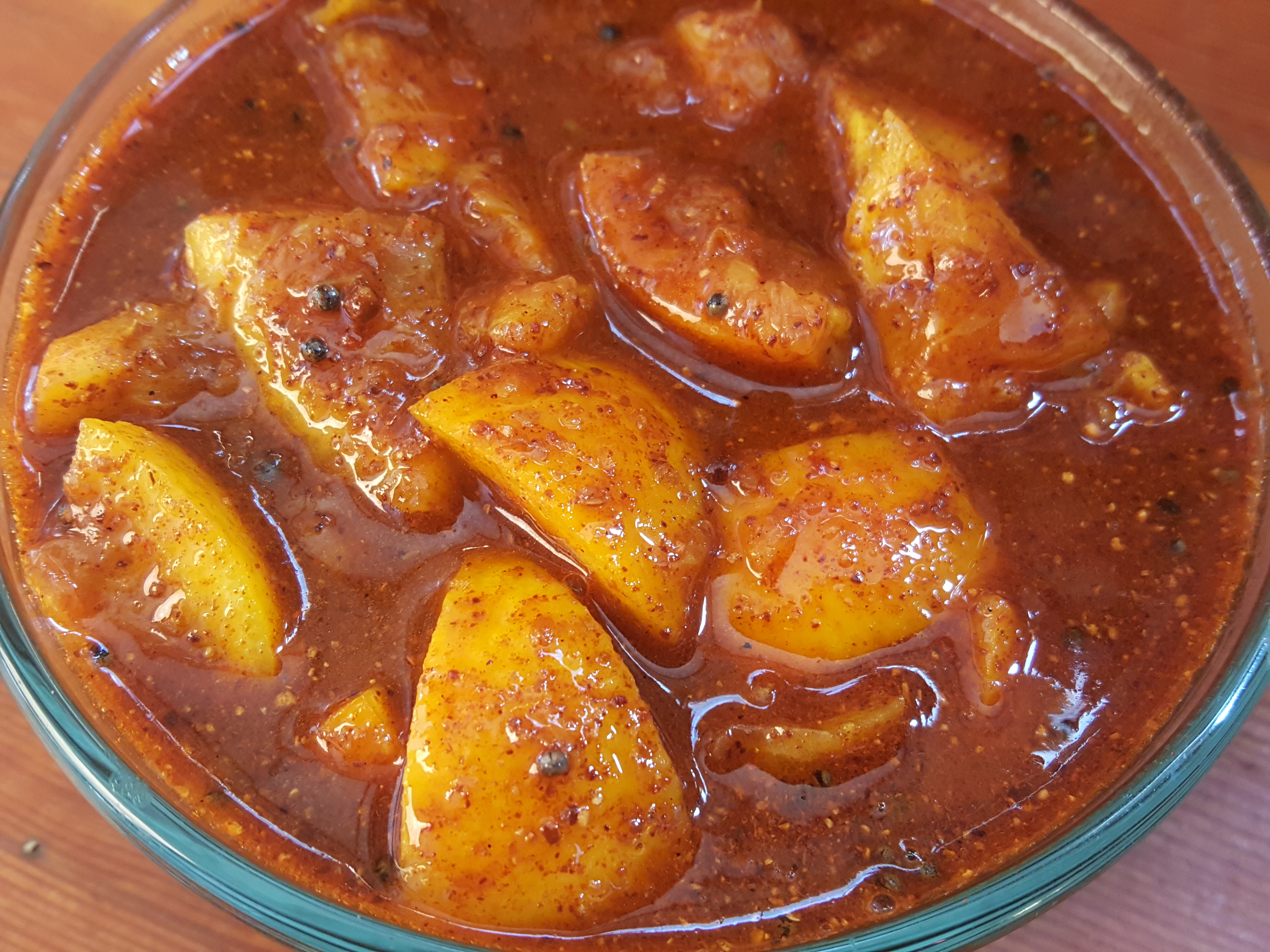
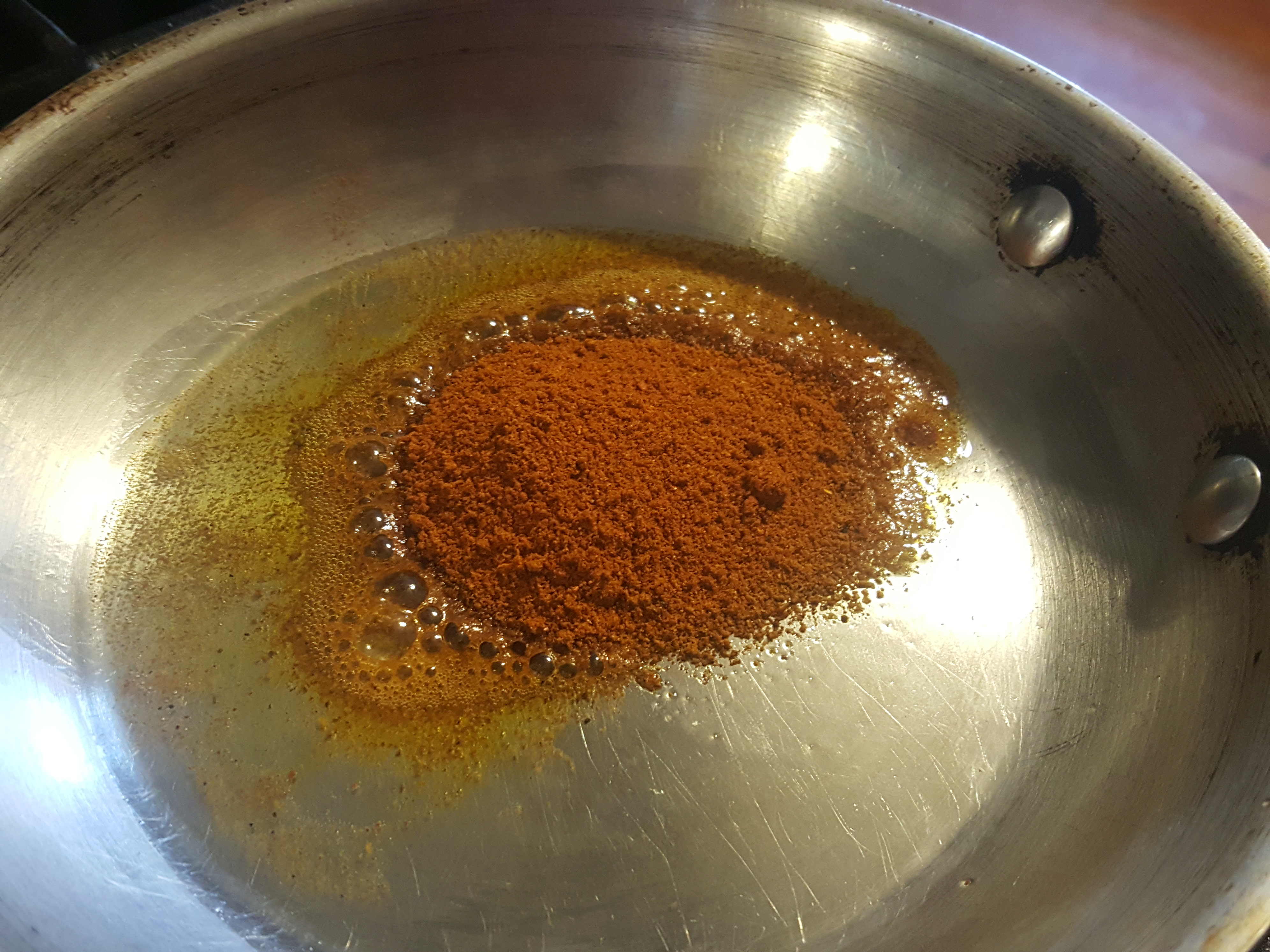
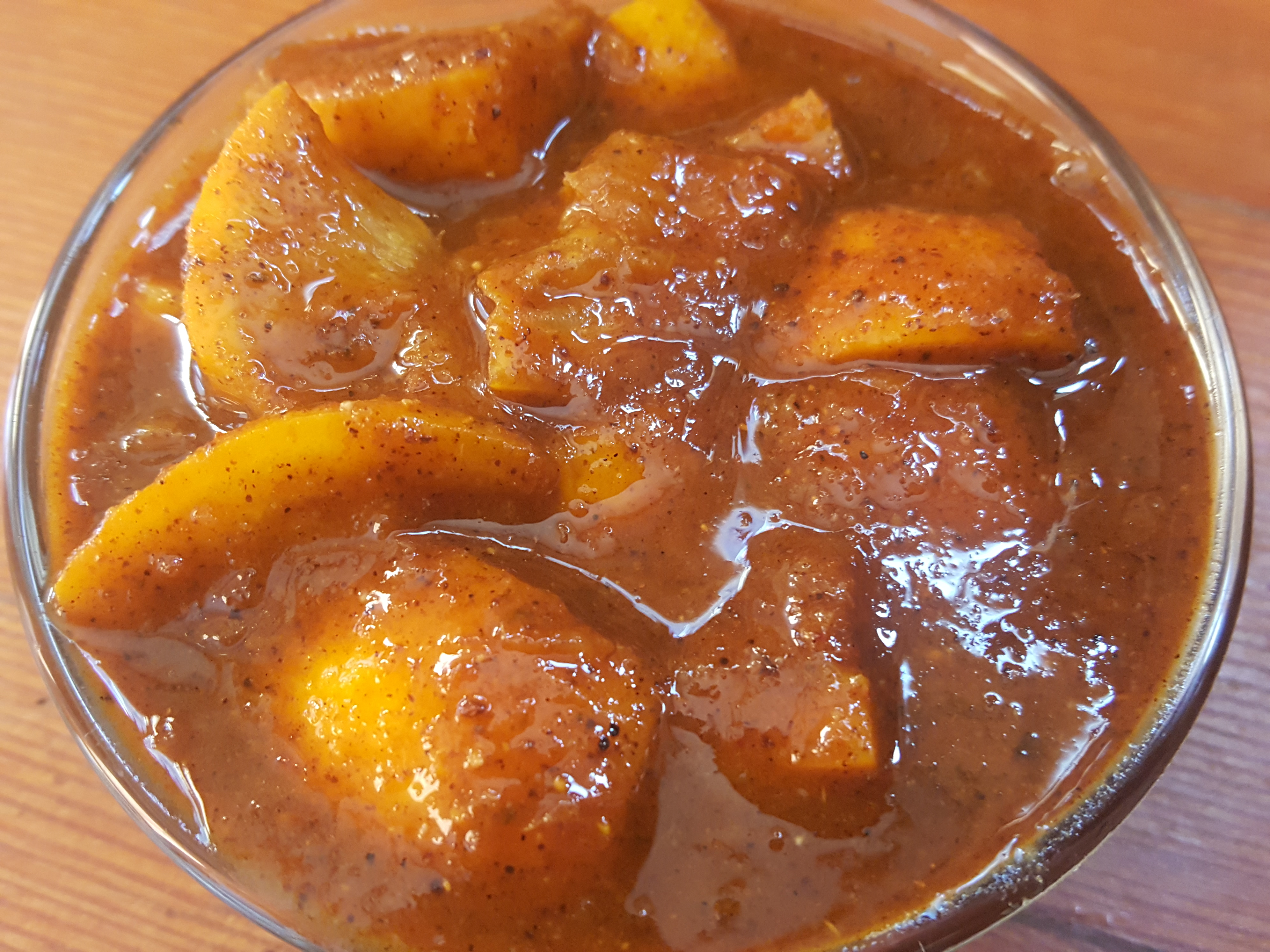
On a creative streak, I decided to use Mano Y Metate Adobo powder in place of the other spices. tin4I cooked Adobo powder (half a tin) in oil (3 tablespoons, cooled and added to the same fermented lemons. Yummy! The fenugreek seed in the other batch has a slight bitter edge that the Adobo version did not have. The richness of the sesame tempered the sharpness of the lemon, but it is still very potent. Perfect for tacos!!!!


20170216_151809 20170216_153025


Fermented Marmalade

Nourishing Traditions by Sally Fallon has a recipe for a fermented Orange or Kumquat Marmalade, so I had to try.

20170216_171139


I chopped three heaping cups of sour citrus and added one tablespoon salt, half a cup filtered water, a quarter cup evaporated cane juice (granulated sugar would be fine) and one quarter cup whey (drained from yogurt) as a starter culture. Fruit normally has enough beneficial Lactobacillus cultures and the salt favors their growth over the harmful microorganisms. However, I followed the recipe since this jar had lower salt concentration and added sugar. (The sugar favors different beneficial cultures to grow.) After sitting for a couple weeks and stirring daily, it was slightly fizzy and delicious!

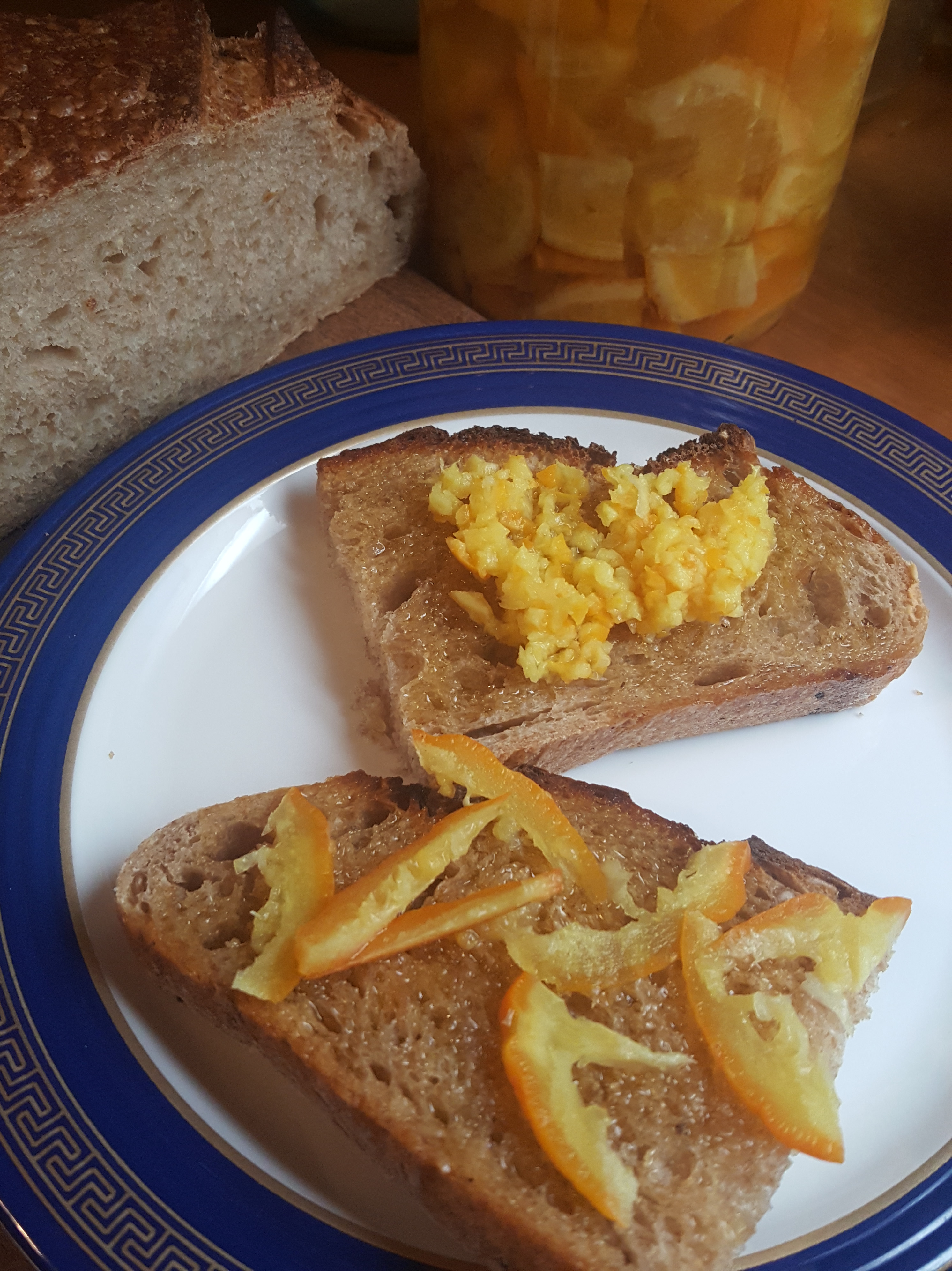
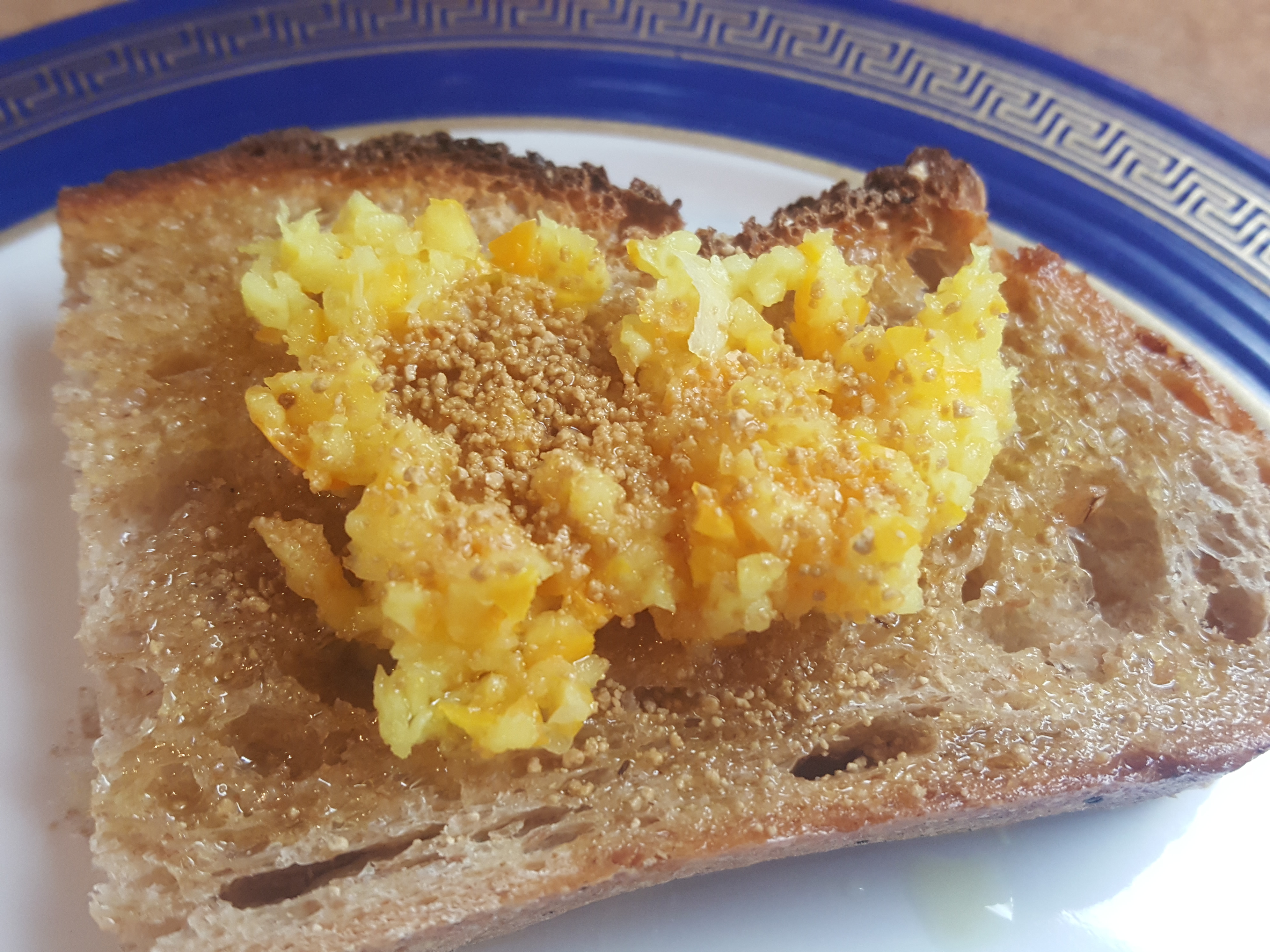
I made some with sliced fruit and some with fruit chopped in the food processor. The barely salty “brine” was less sour than the ferments in sour juice, slightly sweet, and tasty to sip! We ate the softened fruit on buttered toast, with or without additional evaporated cane juice sprinkled on top. Honey would be good, too.

20170216_170703 20170216_171044


Enjoy, and happy experimenting!


Wild Rhubarb Rises Again!

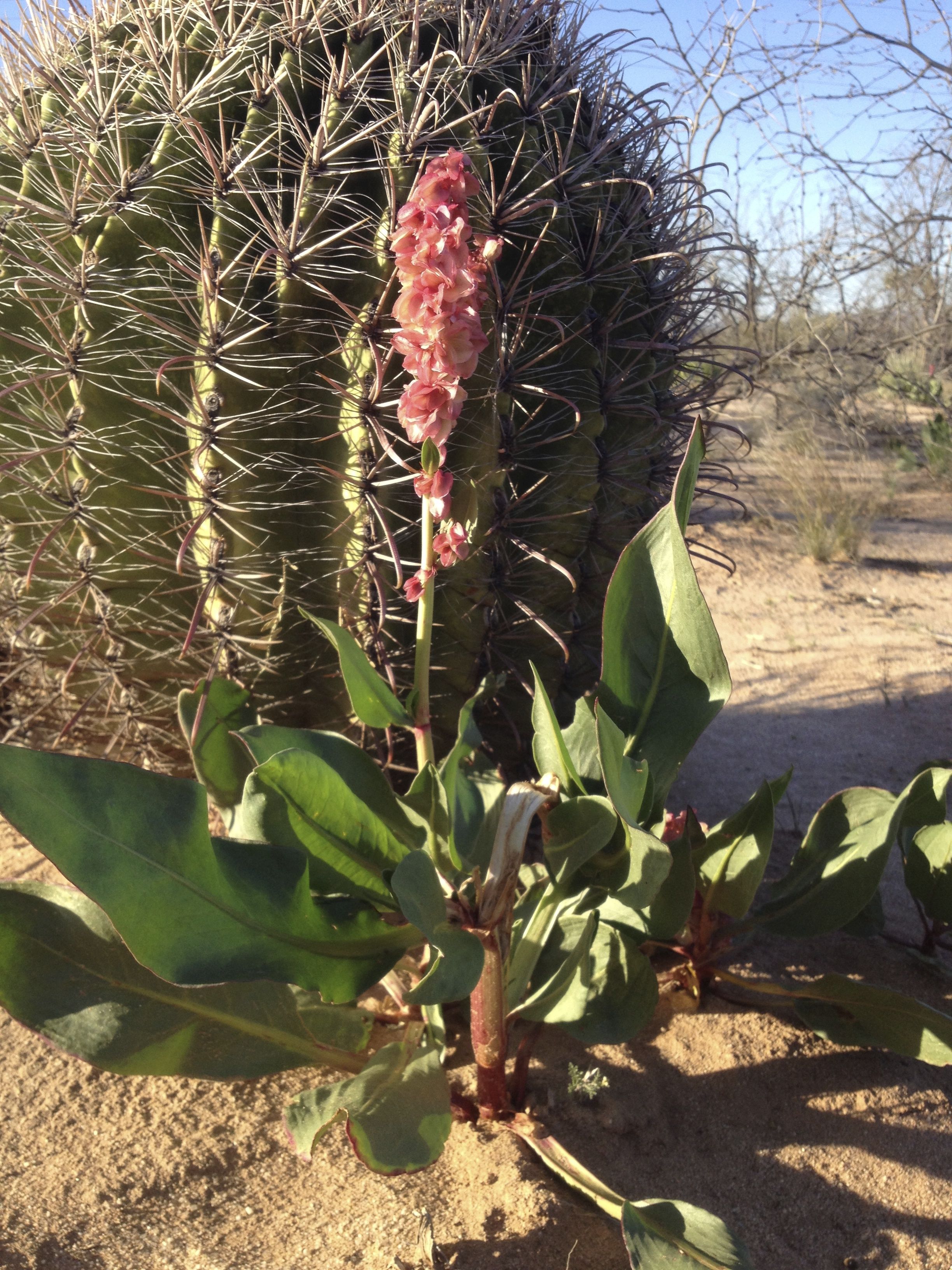
Wild rhubarb is emerging again this month from its hidden storage roots, dotting arroyo-banks and sandy places with green rosettes of leaves and colorful raspberry-pink stalks (MABurgess photo)

Wild rhubarb is emerging again this month from its hidden storage roots, dotting arroyo-banks and sandy places with green rosettes of leaves and colorful raspberry-pink stalks (MABurgess photo)

It’s an unusual winter season when Canaigre (also known by many other names:  Wild Rhubarb, Desert Dock,  Hiwidchuls in O’odham language, Latin name Rumex hymenosepalus) creeps up out of its sandy hiding places to bloom and seed before spring weather gets too warm.  When conditions are right, it can dot the desert floor in early spring with its floppy leathery leaves and pink stalks similar to domestic rhubarb.  This recent cool season Nov.2016-Jan.2017, with its period of penetrating rains, has been the right trigger for awakening canaigre.  Right now it’s time to attune our vision to finding it!  If the weather heats up rapidly, as happened in the last couple of springs, its tender leaf rosettes will dry and crinkle leaving a brown organic “shadow” of itself on the sand, its stored life safely underground in fat roots.  Tia Marta here to share some experiences with canaigre or wild rhubarb.

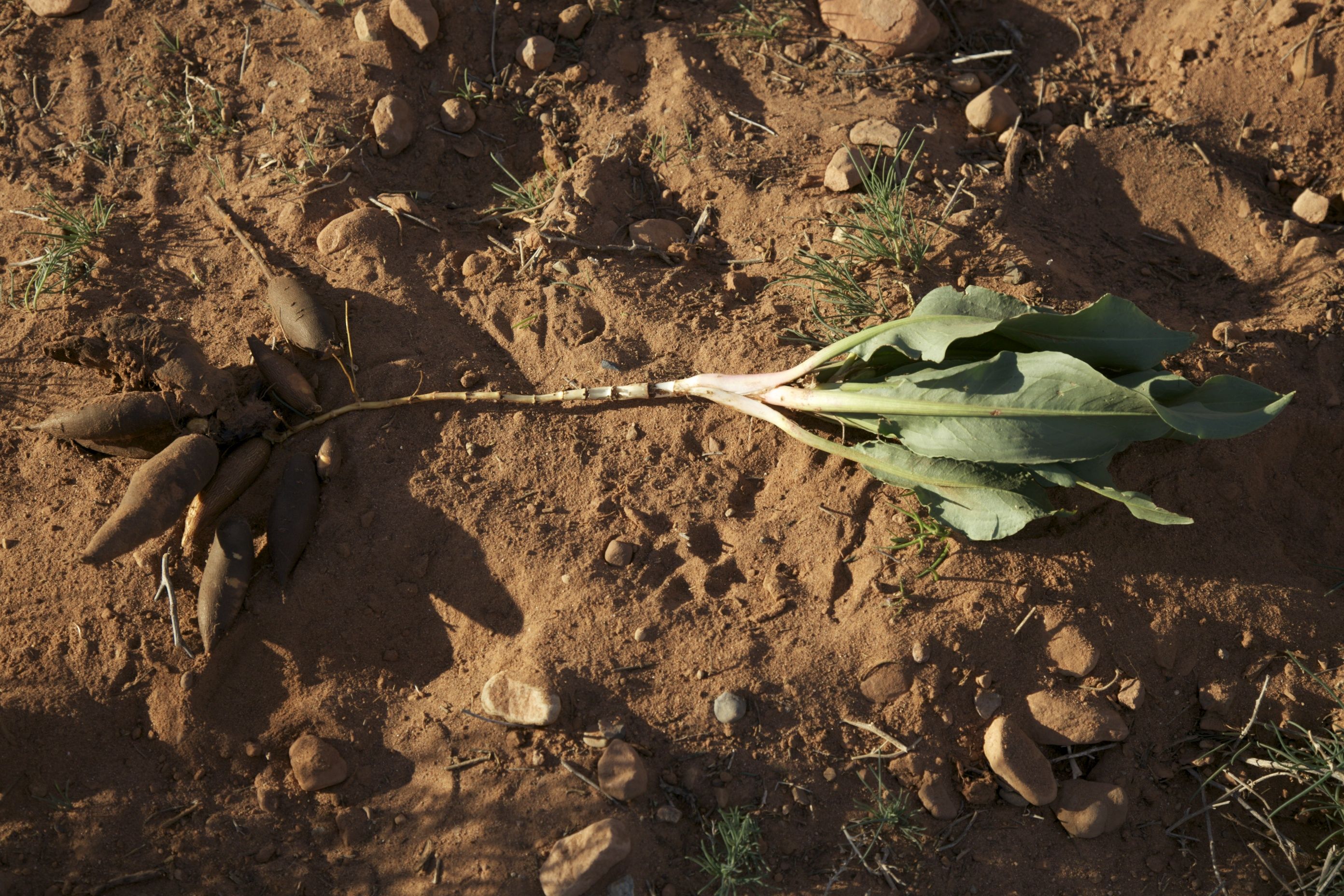
Wild rhubarb dug out of sandy soil showing multiple tuberous roots and young leaves (MABurgess photo)

Wild rhubarb dug out of sandy soil showing multiple tuberous roots and young leaves (JRMondt photo)

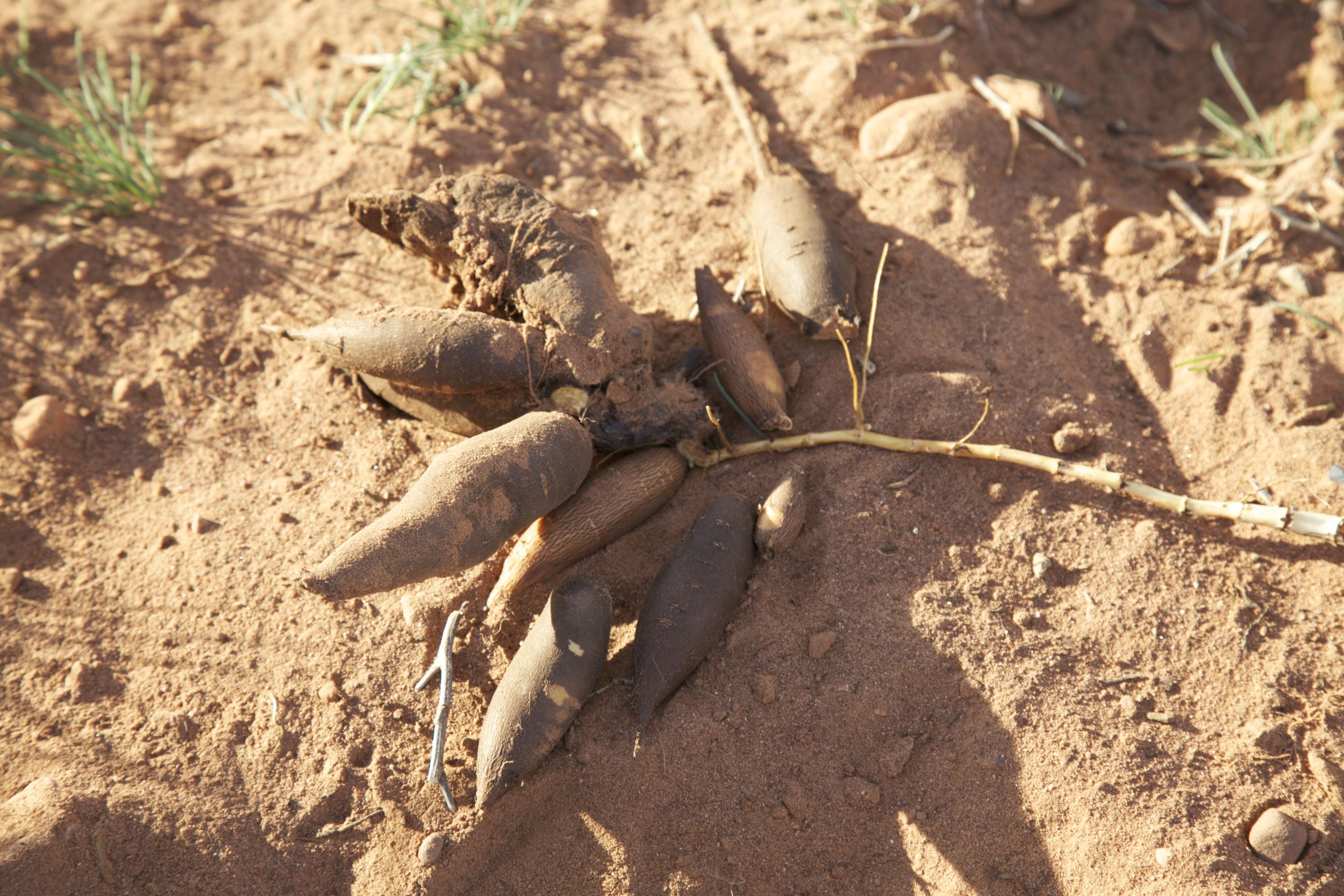
Close-up of wild rhubarb storage roots (JRMondt photo)

Close-up of wild rhubarb storage roots (JRMondt photo)

Canaigre isn’t just everywhere in the desert.  It’s elusive.  It usually likes sandy loose soil, like the flood plains of our desert rivers in Baja Arizona and Sonora, along major arroyo banks, and on pockets of ancient sand dunes.  Where you see one you usually see many.

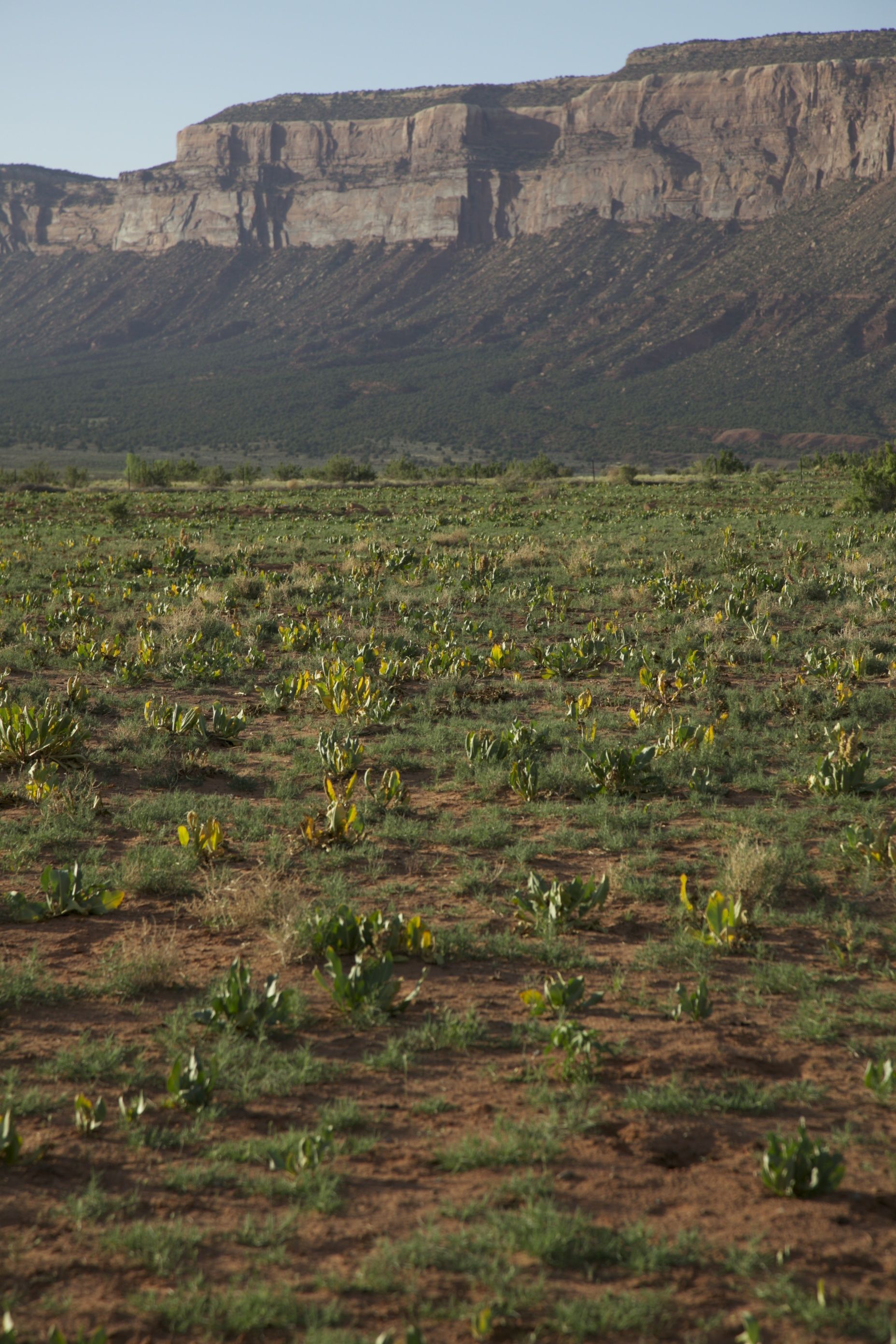
Wild rhubarb on sandy soil in Paradox Valley, western CO (JRMondt photo)

Wild rhubarb on sandy soil in Paradox Valley, western CO (JRMondt photo)

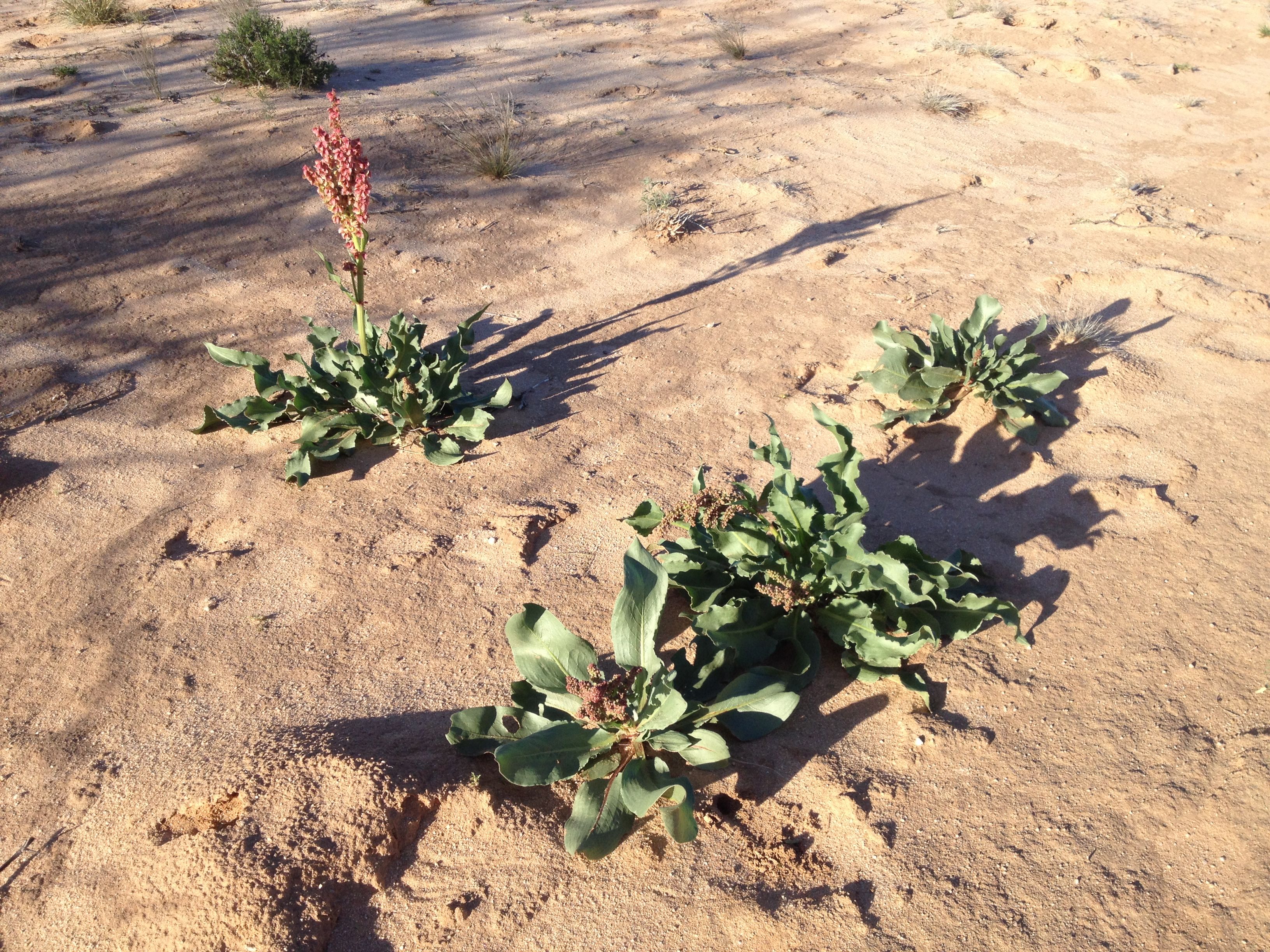
Wild rhubarb emerging in ancient dune soil, Avra Valley , southern AZ (MABurgess photo)

Wild rhubarb emerging in ancient dune soil, Avra Valley , southern AZ (MABurgess photo)

My late friend and mentor, Tohono O’odham Elder Juanita Ahil, would take me to her favorite harvesting grounds at the right time each February and March to collect the rosy stalks–if they had emerged.  Over the last 40 years, with deep regret, frustration and anguish, I’ve seen her special “harvesting gardens” go under the blade as development turned wild rhubarb habitat into apartments, golf courses, and strip malls.  Hopefully our Arizona Native Plant Society (www.AZNPS.com) will be able to advocate for setting aside some remaining sites on public lands, similar to the BLM Chiltepin Reserve at Rock Corral Canyon in the Atascosa Mountains.  Where wild rhubarb was once super-plentiful, they and their habitats are now greatly diminished, even threatened.

Wild rhubarb stalk ready to harvest (MABurgess photo)

Wild rhubarb stalk ready to harvest (MABurgess photo)

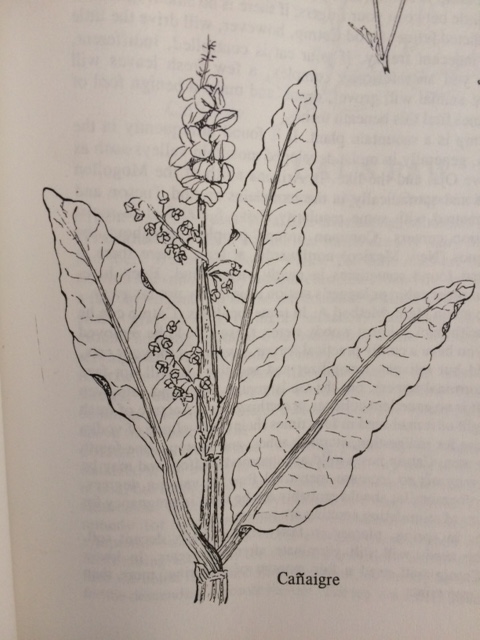
Botanical illustration of wild rhubarb from Medicinal Plants of the Mountain West by Michael Moore, U.NewMexico Press (drawing by Mimi Kamp)

Botanical illustration of wild rhubarb from Medicinal Plants of the Mountain West by Michael Moore, U.NewMexico Press (drawing by Mimi Kamp)

Details of the parts of the plant that Juanita traditionally harvested are shown in Mimi Kamp’s sketch.  Contrary to some ethnographic reports, Juanita did not use the leaf petioles for food; she harvested the flower stalks, i.e. the stems, leaving the leaves to make more food for the plants to store for the next season.  Traditional knowledge is so attuned to Nature.  Hers was an awareness of the plant’s needs balanced with her own appetite.  Other reports of traditional use of wild rhubarb mention cooking the leaves after leaching/steaming out the oxalic acid from them which is not healthy to eat.

Juanita would also dig deeply into the sandy soil directly under an unusually large, robust hiwidchuls to harvest one or more (up to maybe 1/4 of the tubers) to use as medicine.  I recall her digging a big purplish tuber the size of an oblong sweet potato at a depth of 2 1/2 feet on the floodplain of the Rio Santa Cruz where ball parks now prevent any hiwidchuls growth at all.  She would dry it and powder it to use later on scrapes to staunch bleeding.  Her hiwidchuls harvesting dress was dotted with rosy brown patches of color dyed from the juice splashed on the cloth when she cut the tubers into slices for drying. (See Jacqueline Soule’s post on this blog from 2014, also Michael Moore’s Medicinal Plants books, for alternate uses.)

Wild rhubarb flower stalk close-up (MABurgess photo)

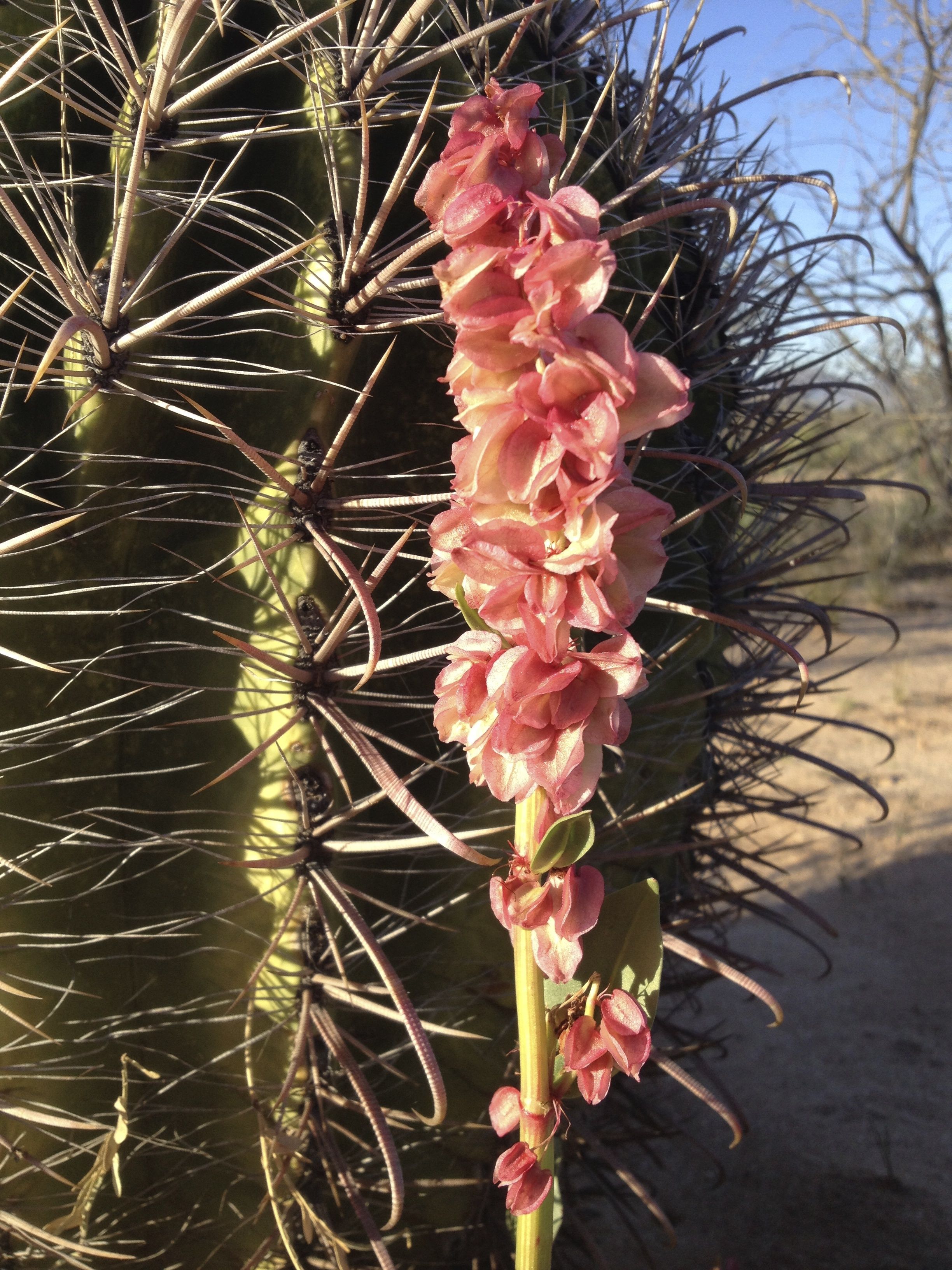
Wild rhubarb flower stalk close-up  with buds and flowers  typical of buckwheats (MABurgess photo)

Canaigre/wild rhubarb is in the buckwheat family sporting clusters of little flowers that produce winged seeds.  Their papery membranes help catch the wind for flying to new planting grounds.  The green celery-like flower stalk or stem turns pink or raspberry-tinted as it matures.  That was when Juanita would cut the stem at its base to use for her hiwidchuls pas-tild, wild rhubarb pie!

Wild rhubarb stalk with colorful immature seeds forming (MABurgess photo)

Wild rhubarb stalk with colorful immature seeds forming (MABurgess photo)

Close-up of wild rhubarb's membranous seeds (MABurgess photo)

Close-up of wild rhubarb’s membranous seeds (MABurgess photo)

In a good year, Juanita would harvest literally bundles of hiwidchuls stalks and we would set to work baking.  Her pies were sweet and tangy.  Here is what she would roughly put together in her off the cuff recipe.  But almost any rhubarb pie recipe should work with the wild rhubarb.  You can find great info on Southwest Native uses of canaigre in Blog-Sister Carolyn Niethammer’s book American Indian Food and Lore.

Juanita’s approximate Hiwidchuls Pas-tird RECIPE

Ingredients:

ca 4-6 cups chopped young wild rhubarb stems

1/4-1/2 cup white Sonora wheat flour

2-3 Tbsp butter

ca 2 cups sugar

pie crust–2 layers for top and bottom, or bottom crust and top lattice crust (A good variation is mesquite flour added to your crusts)

Directions:  Prep stems ahead.  Preheat oven to 450 F.  Chop young rhubarb stems in 1/2 inch cuts.  Stems are full of vascular bundles and can become very fibrous as stems become fully mature, so youthful stems are best.  (Be warned:  One year we harvested a little too late and our pies were so “chewy” with fiber that we had to eat our pies outside in order to be able to easily “spit out the quids.”)  Cook hiwidchuls chopped pieces in a small amount of water until tender.  Add in sugar, butter and flour and cook until mixture is thickening.  Pour mixture into your pie crust.  Cover with top pie crust and pierce for steam escape, or cover with lattice crust.  Begin baking in hot oven (at 450F) then reduce heat to medium oven (350F) for 45-50 minutes or until crust is golden brown and juice is bubbling through lattice or steam holes.  Enjoy it hot or cold!


Wild rhubarb stalk ready to harvest (MABurgess photo)

Wild rhubarb stalk ready to harvest (MABurgess photo)

Now let’s head out into the desert washes to see if there are more stands of hiwidchuls popping up out of the ground, making solar food to keep themselves and other creatures alive and well!   Let’s get ready to be collecting their seeds (which also were used traditionally by Native People as food) in order to propagate and multiply them, adding them to our gardens for future late winter shows of color, good food and good medicine.  Happy gardening and eating from Tia Marta and traditional knowledge shared!


Wake Up Make Chorizo

IMG_5582.jpg

Linda here celebrating a springlike day here in the Old Pueblo. I am sitting near an open window as I write;  warm springtime air feels great on my skin  – the sounds of birdsongs flood me with Spring Fever.

It is the Year of the Fire Rooster in Chinese Astrology.  Roosters have many characteristics; they strut about;  they are prone to power struggles; they are excellent sentinels. And they crow.  They actually crow throughout the day (and sometimes night) and for different reasons, but their signature trait is their morning crow. I am going to take artistic license here and say that Fire Rooster 2017 is crowing: “Time to Wake Up”.

Wake up?  To what? Ah, well I could get political … what with all the “waking up” going on, and not going on, in the US  right now. For our purposes here, however, let’ Wake Up to the fact that we are all “eaters.   Let’s “get” that as Eaters we both influence and are influenced by our  food Systems/Sources.

As a country and increasingly as a globe, we eat standardized, high yield hybrid crops for a variety of reasons. The cultivation of just a handful of crops is a subject that impacts our lives on a multiple of level – and for more in depth reading I HIGHLY recommend  Michael Pollan’s intelligent research and writings as well as investigative journalist Simran Sethi’s  Bread Wine Chocolate: The Slow Loss of Foods We Love.

Today, lets adventure into a cross border food to highlight how fun food diversity is. Remember Biology 101:  we learned that biodiversity is the crucial strategy nature uses to ensure survival – whether it be plant, insect, animal, or human-animal.  Biodiversity also happens to taste good on the tongue and might as good for the planet as it is for your health. (And may even be good for your pocketbook)

Chorizo is really sausage.  It is a hearty, spice-filled food that is easy to make and  versatile.  Traditionally it was made with pork, but can be made with ground turkey, wild game, even tofu. You can vary the spices to your liking.

img_4946

We made this chorizo with Javelina meat just the other day.


Today we will explore two chorizo recipes from the same region in Sonora, Mexico.

Liby’s  Y  Carlos’s Chorizo Receta 

Liby was born in 1910 and was a fantastic “cocinera” (cook) all her life.  Her son Carlos learned her recipes and relayed her Chorizo Receta to me just today. Liby made it with ground pork. He has made it both pork, and also with ground turkey. I am going to start with this recipe as it is more user friendly for the modern Eater; the meats are readily available in stores and can be obtained already ground.

A few notes from Carlos:

  • Except for the garlic, which should be mashed (if you are not grinding the meat yourself) all the other spices should be dried; in chorizo the dried spices make it more flavorful.  Carlos uses the flat side of a knife to really mash the garlic cloves until they are “almost pasty”.  Then add it to the ground meat; “you really cannot add enough garlic”.
  • Add the spices one at a time to the ground meat. (versus mixing all the spices together and then adding them to the meat)
  • If you are using Turkey you might want to add more spices than the recipe amounts below to make sure it has a strong enough flavor.
  • Finding a good quality chile powder is fundamental to making great tasting chorizo. Ideally, he said,  the red chile powder is made from chile from the red chile ristras (wreaths) here in the southwest. If that is not an option, look for the best quality of red chile powder you can find.  “Quality chile is “Precious”!
  • Do not be afraid to make the chorizo a few times to really perfect it to YOUR liking.

INGREDIENTS:

2-3 lbs of ground pork or turkey

20 garlic cloves – (mashed) “Garlic makes it

2 Tablespoons white vinegar

one handful of dried mint

one handful of “cilantro de bole” (coriander seed) Crush it in a blender or molcajete

Salt and Pepper to taste

At least one handful of Red chile powder – added at the end- it will add a fantastic flavor as well as add a beautiful red color to the chorizo

Mix in each ingredient one at a time and then let it sit in the fridge over night.

Chorizo is great with eggs, potatoes, beans – and for the more urban or modern pallet put on top of pizzas, in quiches …. use your imagination!

Gracias Carlos!!! Y Gracias a Liby tambien!

Chorizo de Rancho: Chorizo de Javelina 

The recipe below is made essentially the same way – except that the Javelina meat was from the Campo (countryside) and we ground it ourselves. We used a hand grinder and added the garlic directly to the meat. No mint nor vinegar was used, but dried Mexican oregano and cilanto (crushed) were used.

Our ancestors were not squeamish. They new intimately where their food came from. Food was not taken for granted, and large amounts energy went into thinking about food and survival. They were actively engaged in hunting, foraging, planting, harvesting, preparing, and storing food. They knew exactly where their food came from as they were not just Eaters, but food producers  (or finders/foragers). You do not need to hunt your food or ingredients (although if you so I highly recommend Jesse Griffiths book Afield: A Chef’s Guide to Preparing and Cooking Wild Game and Fish. 

img_5441

Add the meat little by little to the molino and grind.

img_5459-1

add the garlic one clove at a time and grind

img_5450

this gives you an idea of the texture

img_5465-1

once ground, add the handfuls of dried herbs: this is Mexican Oregano

img_5470-1

we grew this cilantro, which when it goes to seed is Coriander (Cilantro de Bola)

img_5472

the light is poor in the photo – but red chile was added here.


More ideas: Rooster Chorizo.

Backyard chicken keepers and poultry farmers alike know that in a typical batch of chicks will yield 50% males and 50% females – give or take. If you have too many roosters in one area and you will quickly find power struggles as well as a lot of crowing, so city ordinances do not allow them in most city limits. (Barking dogs are more socially acceptable). So “what to do” with roosters is a something backyard chicken keepers, who live in the city limits, have to deal with. I can’t tell you how many calls I have gotten from new chicken keepers about What to Do with their roosters. My answer: there is no Right Answer. You can find them new homes,  you can respectfully eat them. I don’t espouse one way over another way. I have done both and for differing reasons, as the years have progressed. If you decide to cull your birds, do it respectfully and skillfully (find someone to teach you if you don’t know) and consider making Rooster Chorizo – with the recipes above as your springboard.

A Few More Regional Foods:

img_2520

Fresh caught fish and “mountain oysters” being prepared for lunch

img_3984

Another version of ‘mountain oysters” cooked with lots of garlic.


Above I mentioned that eating in diverse ways may be good for your pocket book – it takes time and skill to catch the Fish or Javelina in the photos above (or to “gather” the mountain oysters!) but not much money.  It is also empowering to provide for oneself.

This idea of Waking Up to our food sources requires some real courage and honesty. Often because we have a lot tied up in food-lifestyle ideologies and identities. I know that my food choices have changes and evolved as I have lived and learned. I try to read and study broadly on the subject – and I fully expect some more editing in my choices as I Wake Up.


Mole Tasting Saturday, January 21

15621766_10154632246971900_8966691242679411883_n

photo: Lani Roundy Axman

Come Saturday, January 21 at 1pm for a taste! Amy here, inviting you to Alfonso Gourmet Olive Oil Store at Oracle and Magee in Tucson for a little discussion about mole and to purchase fresh Mano Y Metate Mole Powders. Plus attendees take home a 60ml bottle of olive oil!

This photo was from Galeana 39, my friend Curtis Parhams’ gift shop in Phoenix where you can also purchase my mole powders.

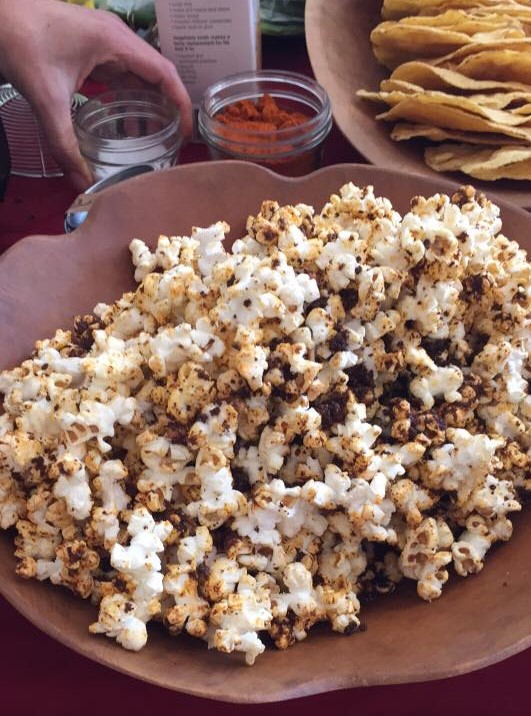
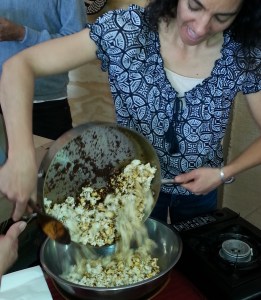
In the foreground you see Mole Dulce Popcorn, my mom’s favorite recipe with her favorite variety of mole. Yes, you can just sprinkle mole powder on the buttered popcorn, but this method is better.

15541989_1198579546916916_1603876568704811100_n

photo: Curtis Parhams

20161217_131604

Take a tin of Mole Dulce powder and cook in a few tablespoons oil in a very large skillet. You can use more oil than if you were making mole sauce because it is standing in for butter on the popcorn. I prefer a mild tasting olive from Alfonso, but any cooking oil will work. After the paste is fragrant, bubbly and a shade darker, toss air-popped corn into the paste and mix until all the kernels are seasoned. Salt to taste and enjoy the sweet, salty, spicy treat while it’s still warm!

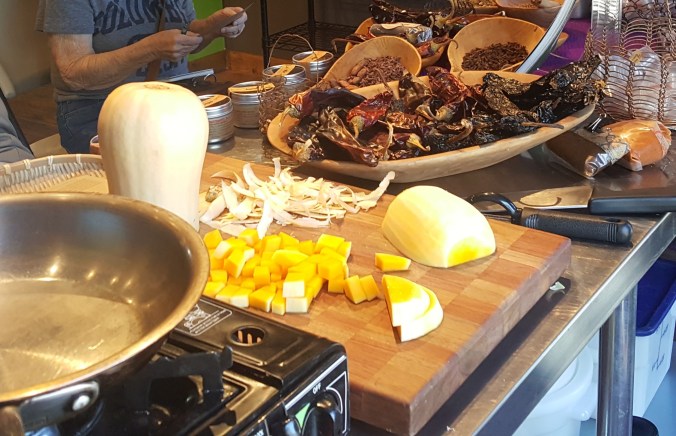
After talking about the basic components that build mole sauces, the varieties of mole and a little about Mano Y Metate, I’ll prepare Mole Dulce with butternut squash cubes.

20161119_105535

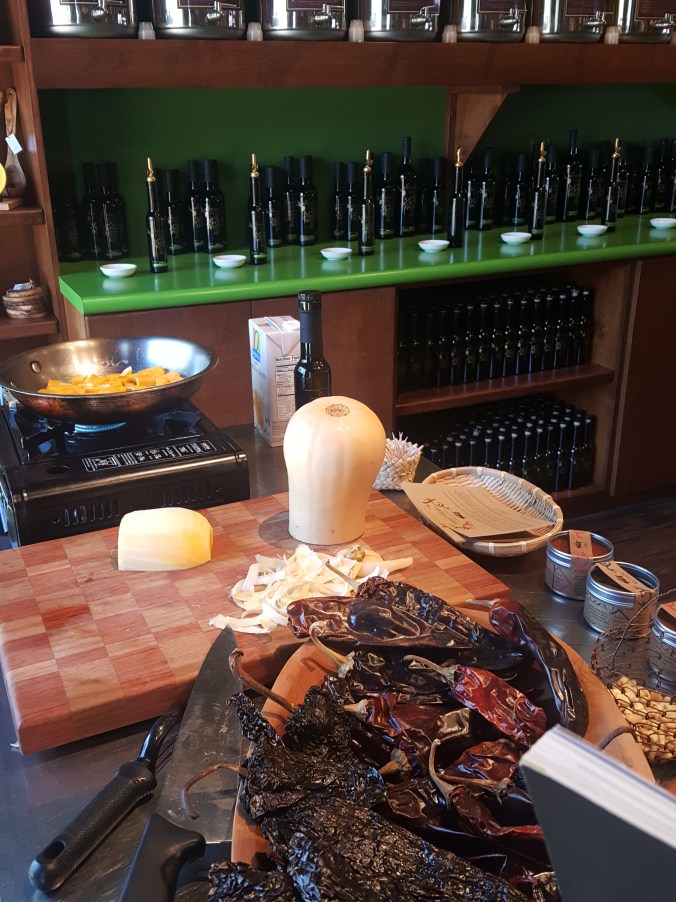
I start with a butternut squash, peeling and cutting into bite sized pieces. Then cook a tin of Mole Dulce powder in 2 tablespoons oil on medium heat. Nancy Alfonso said they had new fresh oil varieties since I was there last, so I’m excited to try them Saturday. Anyway, cook the paste and then add veggie or chicken broth. In a few minutes, the sauce comes together and the cubes of squash go in the pot. Simmer until tender. Alternately, you can precook the squash cubes until barely tender before adding to the sauce. We’ll enjoy these bites on toothpicks, but at home you could put on a tostada or fresh tortilla and garnish with cilantro or green onion. Serve with beans, rice and a salad for a vegetarian meal or as a side dish with another meal.

So if you’re in Tucson and want to stay dry, come taste a wild diversity of high quality extra virgin olive oils, some mild, others pleasantly bitter, some peppery.  Many infused with herbs or other ingredients. Last time I took home Blood Orange infused olive oil, perfect for cilantro chutneys! Yes some perfect for salads, but also for cooking. They also have butternut squash seed oil, oil expressed from squash seeds. Amazing! Alfonso Gourmet Olive Oils and Balsamics 7854 N.Oracle Road- Southeast corner of Oracle and Magee. They also have a River and Campbell store.20161119_105930

EVERYTHING-LOCAL PIZZA from Baja Arizona!

Totally local veggie pizza with cholla buds, nopalitos, acelgas, mushrooms, goat cheese and home-grown cherry tomatoes--ready to bake

Totally local veggie pizza with cholla buds, nopalitos, acelgas, mushrooms, goat cheese and home-grown cherry tomatoes–ready to bake

If you love pizza–and I’m picky about good pizza–here are some ways to celebrate local foods, to eat super-healthily, get creative in the kitchen, AND have new excuses to eat pizza!  Tia Marta here to share ideas for a delicious pizza party, incorporating the fabulous gifts that our local desert foods offer.

It will take a little fore-thought and assembly time (…like, all year harvesting at the right seasons for DIYers, or trips to the farmers market, NativeSeeds/SEARCH store, or San Xavier Farm Coop).

Locally-harvested buckhorn and staghorn cholla buds, reconstituted and ready to cut as toppings for pizza

Locally-harvested buckhorn and staghorn cholla buds, reconstituted and ready to cut as toppings for pizza

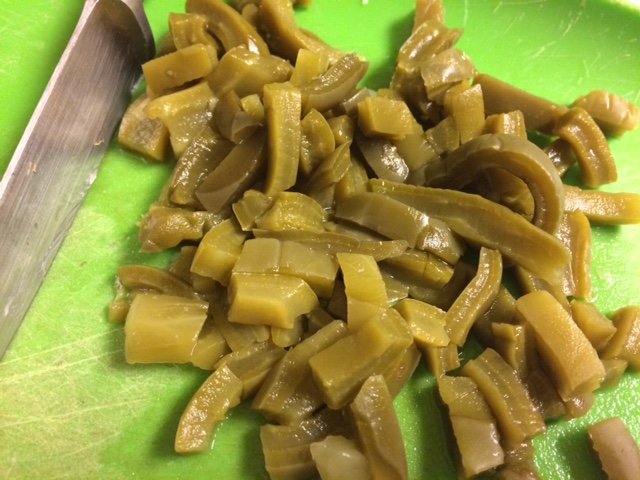
Pickled prickly pear cactus pads--better known as nopalitos in Spanish and nowi in Tohono O'odham

Pickled prickly pear cactus pads–better known as nopalitos in Spanish and nowi in Tohono O’odham

Cholla buds dried from last April’s harvest, soaked and simmered until soft through, make a tangy taste surprise– a super-nutritious calcium-packed pizza topping.  In the photo, the larger buds are from Buckhorn cholla (Cylindropuntia acanthacarpa) and the smaller buds are from Staghorn (C. versicolor), both plentiful for harvesting in low desert.  Dried cholla buds are available at San Xavier Coop Association’s farm outlet, at NativeSeeds/SEARCH store, and at http://www.flordemayoarts.com.

Another perfect topping is nopalitos, simmered or pickled and diced young pads of our ubiquitous prickly pears (Opuntia engelmannii, O.ficus-indica to name a couple).  Collecting from the desert is a spring activity, but you can easily find whole or diced nopales anytime at Food City.  The other cheater’s method is to find canned pickled cactus in the Mexican food section of any local grocery.  Nopalitos are a taste thrill on a pizza, and you can enjoy their blood-sugar balancing benefits to boot.

Starting the dough sponge--with local, organic hard red wheat flour--ready to rise

Starting the dough sponge–with local, organic hard red wheat flour–ready to rise

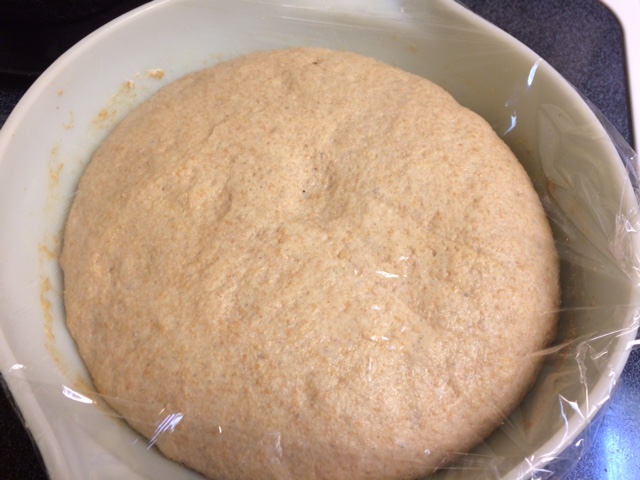
Risen pizza dough after a couple of hours--note the rich whole grain flour of local BKWFarms hard red wheat

Risen pizza dough after a couple of hours–note the rich whole grain flour of local BKWFarms hard red wheat

As for making the crust, we have the perfect source of the freshest whole grain organic flours right here from BKWFarms’ fresh-milled heirloom white Sonora & hard red wheat.

My suggestions for a Baja Arizona Pizza Crust:

Ingredients:

3 ½ to 4 cups bread flour mix  (consisting of 2- 2  1/2 cups organic hard red wheat flour from BKWFarms Marana, 1 cup pastry-milled organic heirloom white Sonora wheat flour also from BKWFarms, ½ cup organic all purpose flour from a good grocery)

2 tsp local raw honey (see Freddie the Singing Beekeeper at Sunday Rillito farmers market)

1-2 envelopes instant dry yeast (or your own sourdough starter)

2 tsp Utah ancient sea salt or commercial sea salt

1 ½ cups drinking water, heated in pyrex to between 105 degrees F and 115 degrees F

2 Tbsp organic olive oil for the dough

PLUS 2 tsp more olive oil for spreading on dough as it proofs

Pizza dough risen and kneaded then stretched and patted out on pizza pan ready for toppings

Pizza dough risen and kneaded then stretched and patted out on pizza pan ready for toppings

Directions for making Crust:

[Note–you can find several pizza dough recipes for bread mixers online.  Just substitute the above ingredients.]

Heat water and pour into a large mixing bowl.  Test for temperature then dissolve dry yeast.  Add honey and sea salt and dissolve both.  Add oil to wet mixture.  Sift flours. Gradually mix flours into wet ingredients until a mass of dough is formed and begins to pull away from sides of bowl.  Knead into a ball.  Let stand covered in a warm place until ball of dough has at least doubled in size (approx 2 hours).  Knead the ball again, divide into 2 equal parts, cover thinly with the additional olive oil, and roll out or hand-flatten the 2 dough balls out onto 2 oiled pizza pans.  Pat dough to approximately 1/4″-3/8″ thickness to the edges of pan.  At this point you are ready to add any number of good toppings.  Here are ideas for a local veggie and a local meatie pizza.

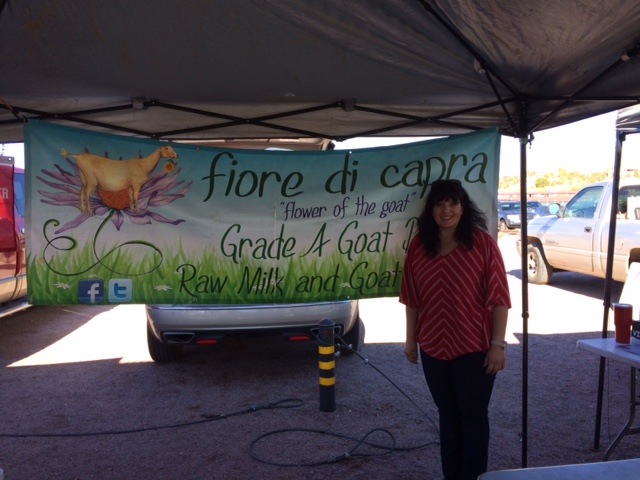
For the finest plain local carefully created goat cheese, find Fiore di Capra at Rillito Farmers Market, Sundays in Tucson

For the finest plain local carefully created goat cheese, find Fiore di Capra at Rillito Farmers Market, Sundays in Tucson

Baja Arizona Pizza Toppings

Ingredients for local Veggie Pizza toppings:

1/2 pt. spreadable goat cheese (I use Fiore di Capra’s plain)

local chard or acelgas (from Mission Garden) torn in pieces

local tomatoes, sliced

I’itoi’s Onions, chopped

heirloom garlic, minced

1/2 cup reconstituted cholla buds, sliced in half or quarters

1/2 cup diced nopalitos 

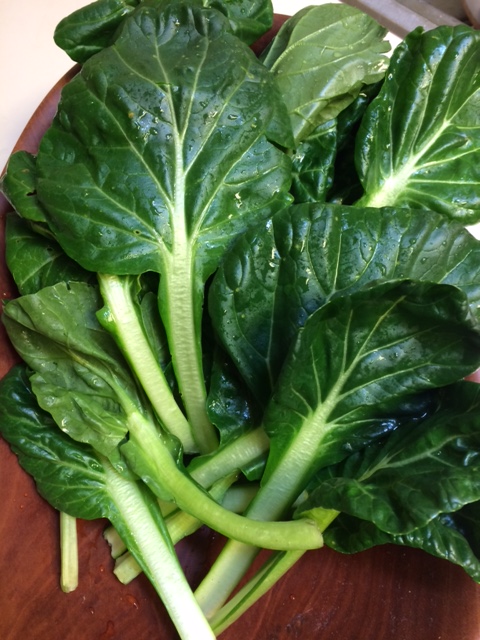
Fresh Chard (acelgas) from a refugee friend's garden--a great substitute for spinach in a pizza!

Fresh Chard (acelgas) from a refugee friend’s garden–a great substitute for spinach in a pizza!

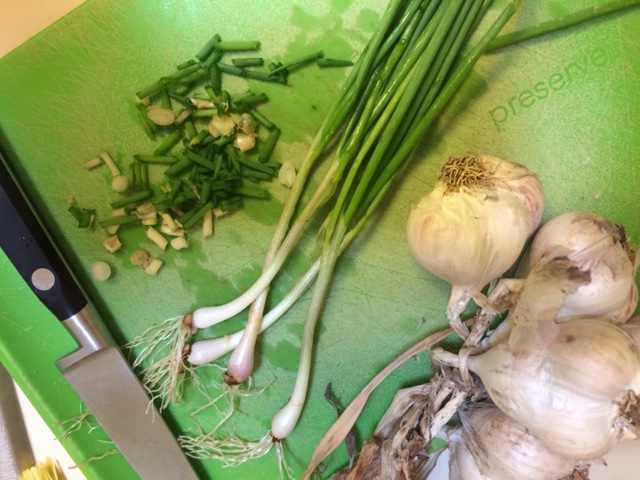
Native I'itoi's Onions and local heirloom garlic from my garden for pizza topping

Native I’itoi’s Onions and local heirloom garlic from my garden for pizza topping

1/2 cup local oyster mushrooms, sliced

1/4-1/2 cup salsa, optional

Luscious oyster mushrooms from Maggie's Farm (Rillito Farmers Market) to cut in strips for pizza

Luscious oyster mushrooms from Maggie’s Farm (Rillito Farmers Market) to cut in strips for pizza

[You probably by now have some ideas of your own to add!]

Ingredients for Meatie Baja Arizona Pizza toppings:

1/2 pt goat cheese

1/2 lb local chorizo sausage, loosely fried

or, 1/2 lb local grass-fed beef hamburger, loosely fried and spiced with I’itoi onions, garlic, salt

1/2 cup tomato&pepper salsa of choice (mild, chilpotle, etc)

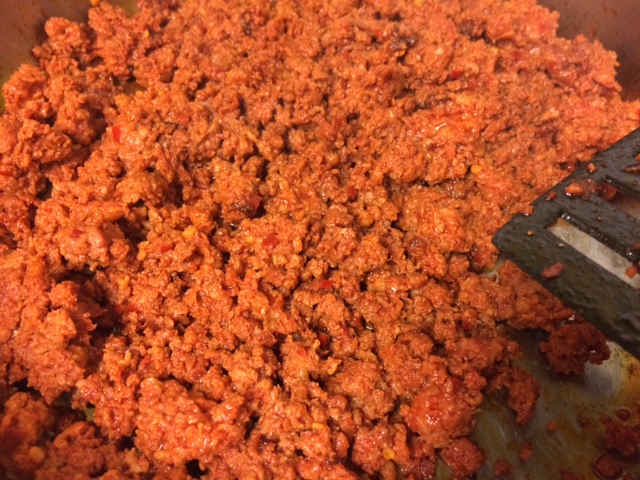
Fresh local pork chorizo to render before putting on pizza dough

Fresh local pork chorizo to render before putting it on the pizza dough

Directions for Toppings:

Layer your toppings artfully, beginning by spreading the goat cheese evenly over the patted-out crust dough.  For a local Veggie Pizza, scatter minced garlic and chopped I’itoi’s onions evenly atop the goat cheese layer.  Place torn leaves of fresh acelgas over the onion/garlic layer.  Add sliced tomatoes, sliced mushrooms, sliced cholla buds, diced nopalitos.  Top with optional salsa.  For a Cholla&Chorizo Meatie Pizza, do a similar layering beginning with goat cheese spread over the crust dough, then scattered I’itoi’s onions and garlic, then a full layer of cooked chorizo, and topped by lots of sliced cholla buds.  Adding salsa over all is optional for making a juicier pizza.

Preheat oven to high 425 degrees F.  Bake both pizzas 20-24 minutes or until the crust begins to turn more golden.  You won’t believe the flavor of the crust alone on this local pizza–and the delicious toppings grown right here in Baja Arizona are better than “icing on the cake”!  You can add more spice and zing by crushing our native wild chiltepin peppers on your pizza–but be forewarned–they might blow your socks off.

Home-grown chiltepin peppers crushed and ready to spice up a local pizza--Look out for a wave of picante heat even with a small pinch!

Home-grown chiltepin peppers from my garden, dried, crushed and ready to spice up a local pizza–Look out for a wave of picante heat even with a small pinch!

Here’s wishing you a great local pizza party!

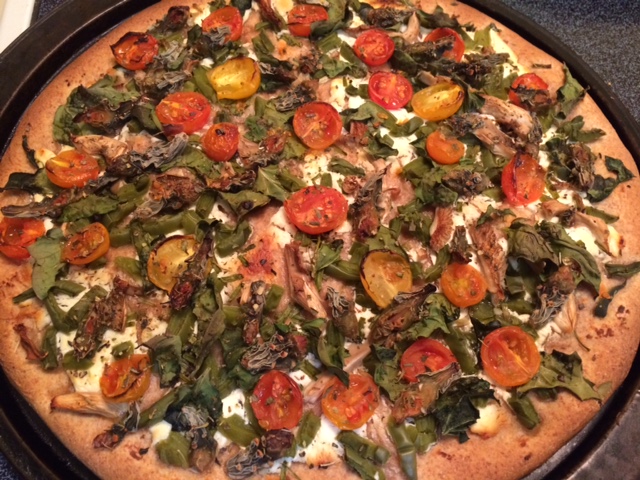
How could you top this Baja Arizona Pizza?!!! Our locally grown and wild desert-harvested ingredients can't be beat by any other veggie pizza!

How could you top this Baja Arizona Pizza?!!! Our locally grown and wild desert-harvested ingredients can’t be beat by any other veggie pizza!

What a great combination--wild-harvested cholla buds, local chorizo, Fiore di Capra goat cheese, and truly flavorful organic wheat flour crust!

What a great combination–wild-harvested cholla buds, local chorizo, Fiore di Capra goat cheese, and truly flavorful organic wheat flour crust!

Buen provecho from Tia Marta!  See you when you visit http://www.flordemayoarts.com.


Chile Rellenos, Reimagined

To make this dish, start with some nice roasted chiles.

To make this dish, start with some nice roasted chiles.

Carolyn here today, feeling a little nostalgic. My mother taught me how to cook,  beginning with stirring Jello when I was five years old. Then later there was junior high home ec and a Girl Scout cooking badge.  Mom would be 102 next week if she were alive and she would have been a more adventurous cook if her kids had been more adventurous at the table.   I wouldn’t say my brother and I were picky eaters, but we didn’t want anything too unusual. It wasn’t until I spent the summer in Europe between my junior and senior year in college that I began to broaden my palate and did a complete change. For the next decade, I wasn’t interested in any food that wasn’t authentically ethnic.

So when Mom told me she had this new recipe called Chile Cheese Puff, I couldn’t have been less interested. The name alone sounded so Family Circle or Good Housekeeping, absolutely everything my friends and I were not in the early 1970s. (Remember, much of what we call The Sixties happened in the early Seventies). But at some point I came around, tried the recipe and liked it. And when I needed some chile recipes for my second cookbook The Tumbleweed Gourmet, I included Chile Cheese Puff. For some reason I didn’t think to rename it.

This book went out of print long ago, but there are still used copies on Amazon.

This book went out of print long ago, but there are still used copies on Amazon.

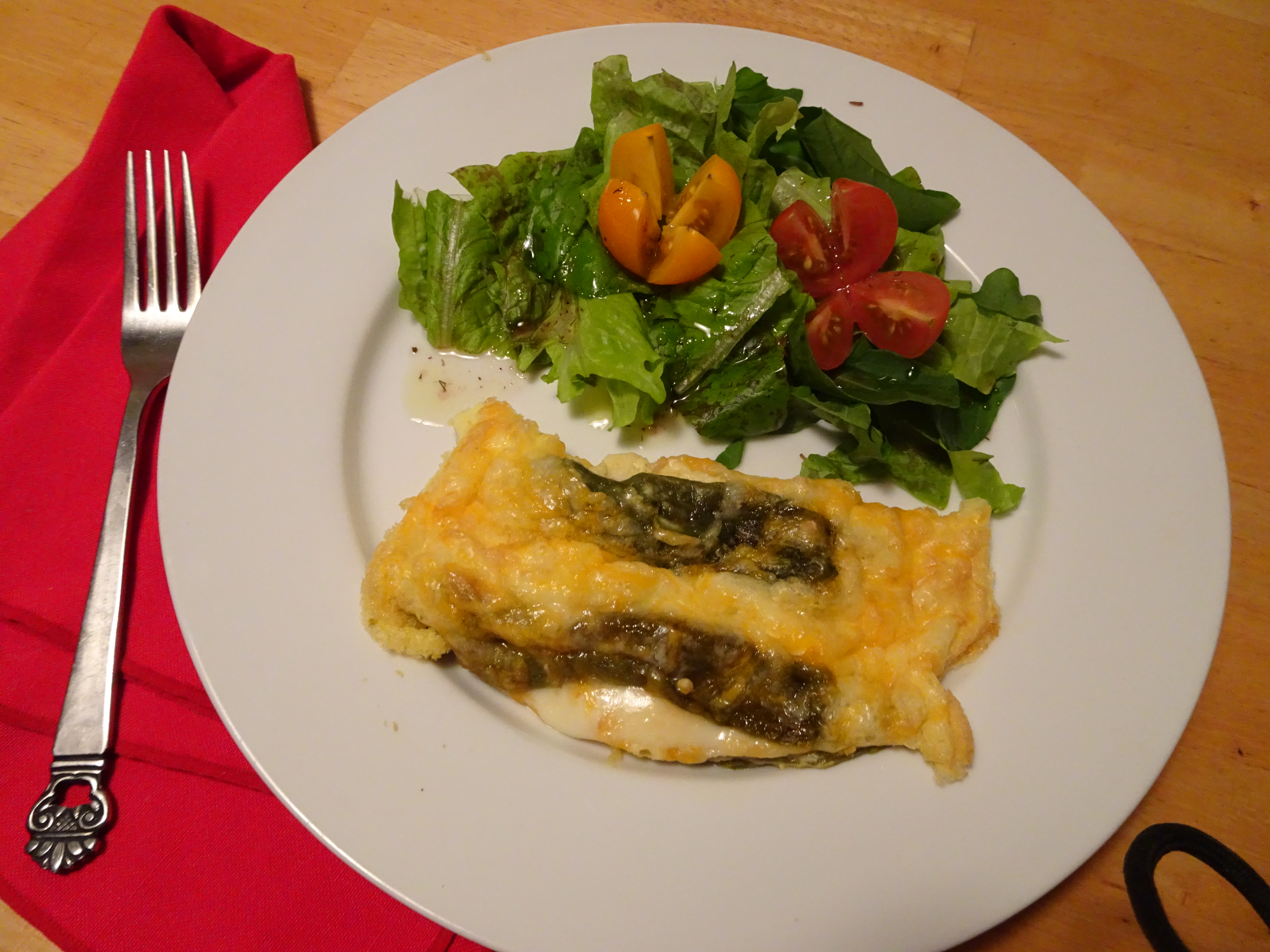
Basically this is a baked chile relleno. Without the deep frying, it is much healthier, but almost as delicious. It’s a great dish to make for a light dinner when you need inspiration. If you live in the Southwest, you probably already have all the ingredients on hand. This recipe calls for stuffing the chiles with jack cheese, but you could use beans or mashed squash as well.  You can roast and peel your own chiles, usually Anaheims but poblanos are delicious. Or get the ones in a can.

Chile Cheese Puff

2 cans (4 oz each) whole green chiles

or

6 to 7 fresh peeled chiles

1/4 pound jack cheese (or beans, squash or tofu)

2 cups milk

4 eggs

1/3 cup instant flour (Wondra)

1/2 teaspoon salt

Dash pepper

1/2 pound gated longhorn or cheddar cheese

Grease a 6 inch by 9 inch baking dish. Preheat oven to 350 degrees F. Clean seeds and ribs from chiles, trying not to tear them. Cut jack cheese in strips and stuff chiles. Alternately, stuff with mashed beans, squash or tofu.

dsc00040

dsc00041

These chiles had very thin walls and shredded when I peeled them. For this dish, it doesn’t matter. Just reassemble them, with half on the bottom and half covering your filling.

Arrange chiles flat in a row in prepared baking dish.

Divide eggs. In a medium bowl, whip whites until frothy, whip in yolks. Add flour, milk, salt, pepper and gently combine.

dsc00048


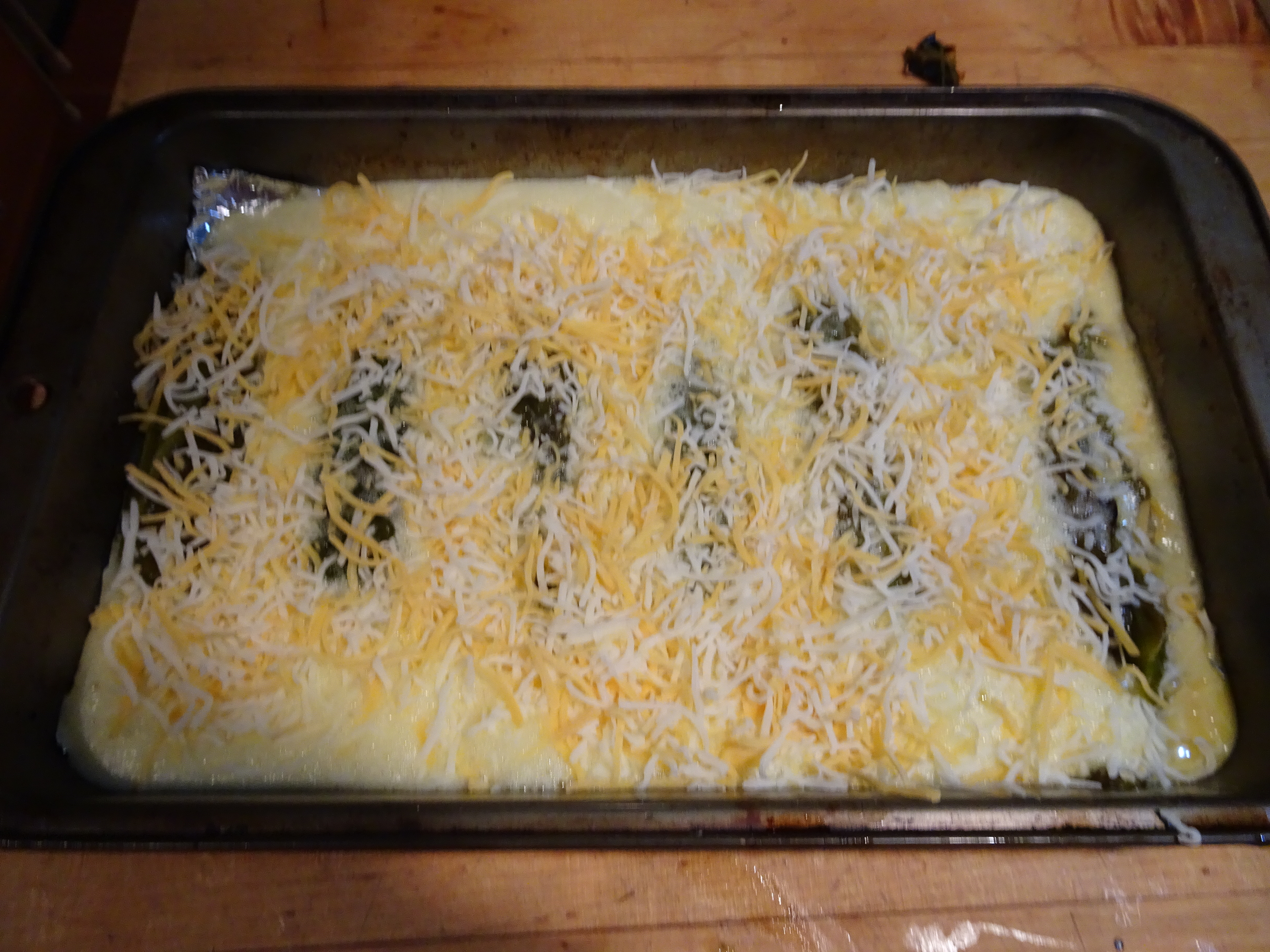
Pour over chiles. Sprinkle with gated cheese. Bake in preheated oven for 35 to 45 minutes until puffed and golden.

dsc00049

Add a salad and you have a great light meal.

Add a salad and you have a great light meal.

__________________________________________

Carolyn Niethammer’s five cookbooks cover wild foods of the southwest deserts and other southwest cuisine. Find her books at the Native Seeds/SEARCH retail store, on Amazon or order from your favorite independent bookstore.

For a Spicy Solstice….

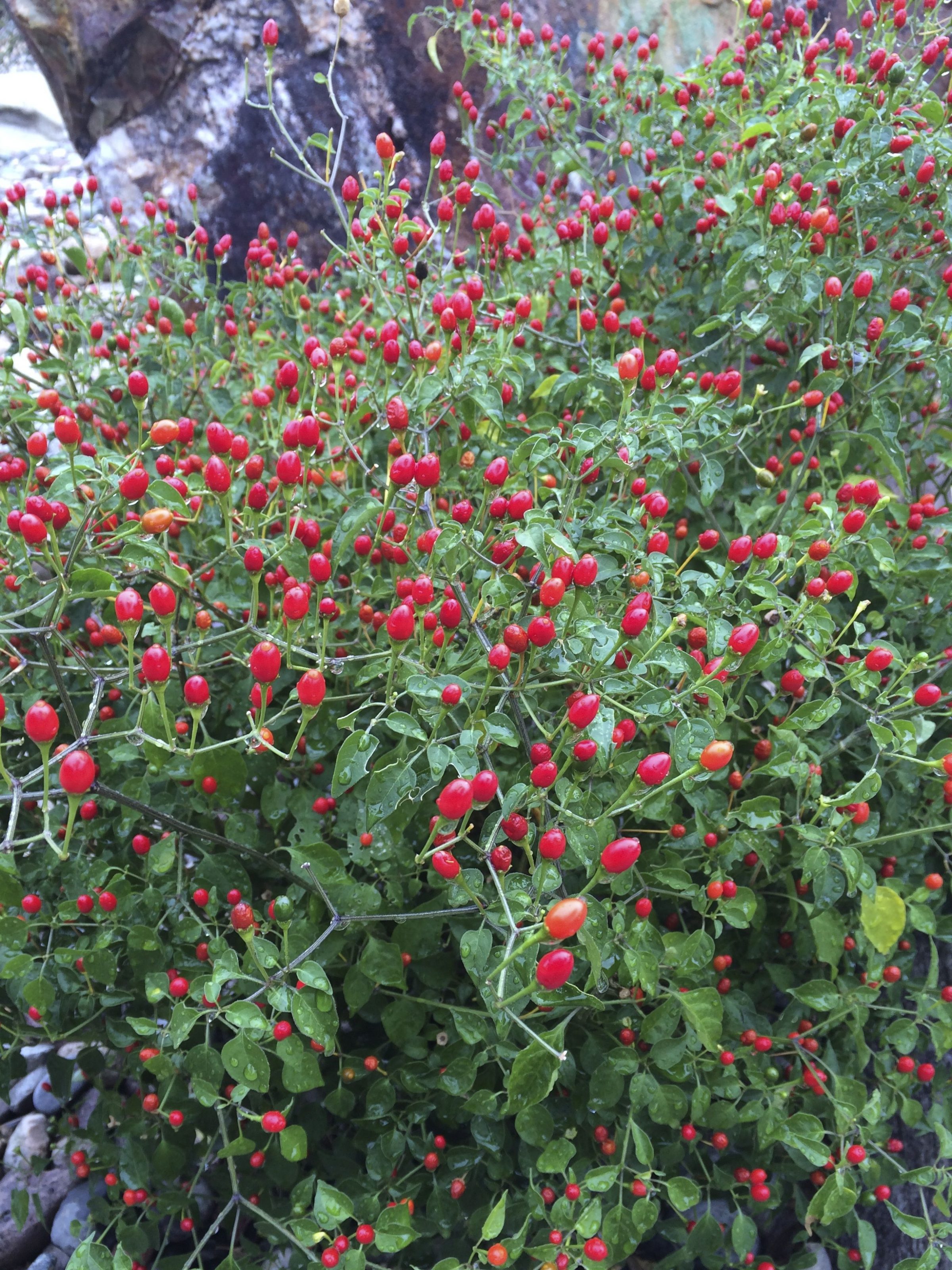
Chiltepin pepper from the wild, growing at Tohono Chul Park (Burgess photo)

Chiltepin pepper plant, originally from the wild, growing in the Tohono Chul Park landscape (Burgess photo)

It’s chile time in Baja Arizona!  The local goodness of our Sonoran Desert foods can assert itself tastefully—yea, vehemently!—into other imported cuisines. Tia Marta here to share a wonderful new wrinkle to celebrate this holiday season, by wedding the local “vehemence” of our chiltepin pepper with an imported tradition.

In decades since the 1940s, industrial ag and interstate grocery service have tried to make Baja Arizona into a food colony (but we are tastefully fighting back). Fossil fuels transport outside traditions to us that we do cherish and that help keep families together, like the many food traditions we celebrate at Tucson Meet Yourself in October each year.  At the top of the import list for Yuletide is one borrowed from East-coast First Nations. (See Renewing America’s Food Traditions by Gary Paul Nabhan, UA Press, for more.) This imported gift from Native People of Southern New England and coastal New Jersey bogs that I’m referring to for holiday feasts is naturally the cranberry. Thank Goodness for trade routes!

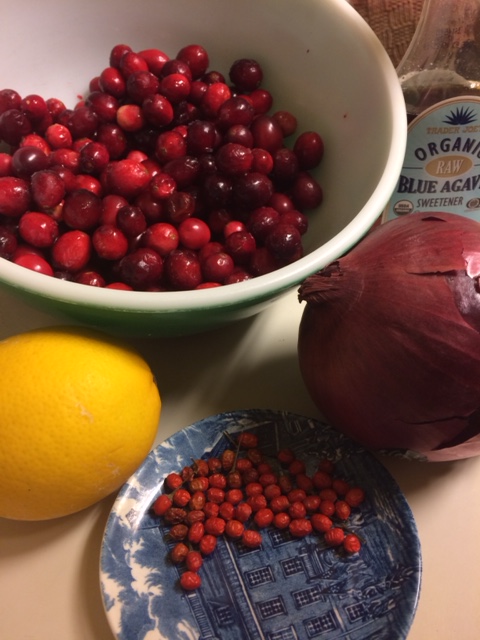
Ingredients for Chiltepin-Cranberry Relish--some local, some transported

Ingredients for Chiltepin-Cranberry Relish–my own Meyer lemon and chiltepines, plus transported cranberries, agave nectar, and red onion

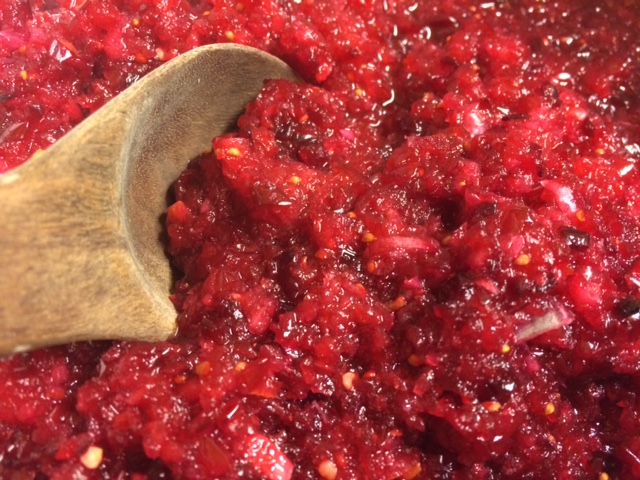
Local and import come together sensationally in my recipe for a raw, vegan Chiltepin-Craberry Relish.
Yes, it is picante, sweet and tangy—and delicious! It was inspired by amazing cook and baker Cindy Burson of Country Harvest who won People’s Choice at a fair with her version. (Cindy’s Southwest treats can be enjoyed at Sunday’s Rillito Farmers Market and Wednesday’s Green Valley Farmers Market.)

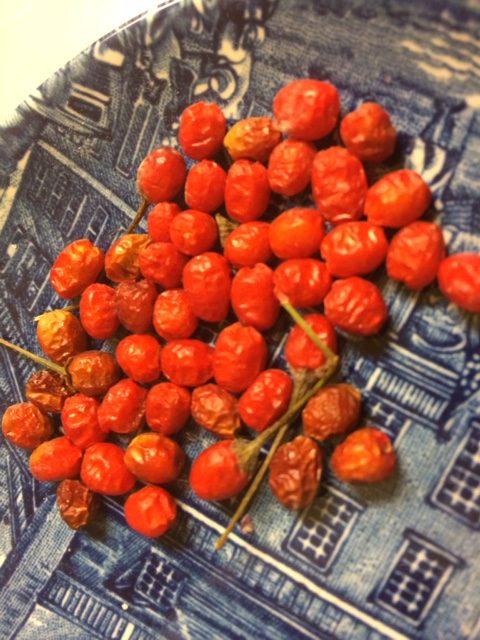
Dried chiltepines for the relish--They make a great snack, great flavoring for Tom's Mix SW Heirloom Beans, and super in any salsa

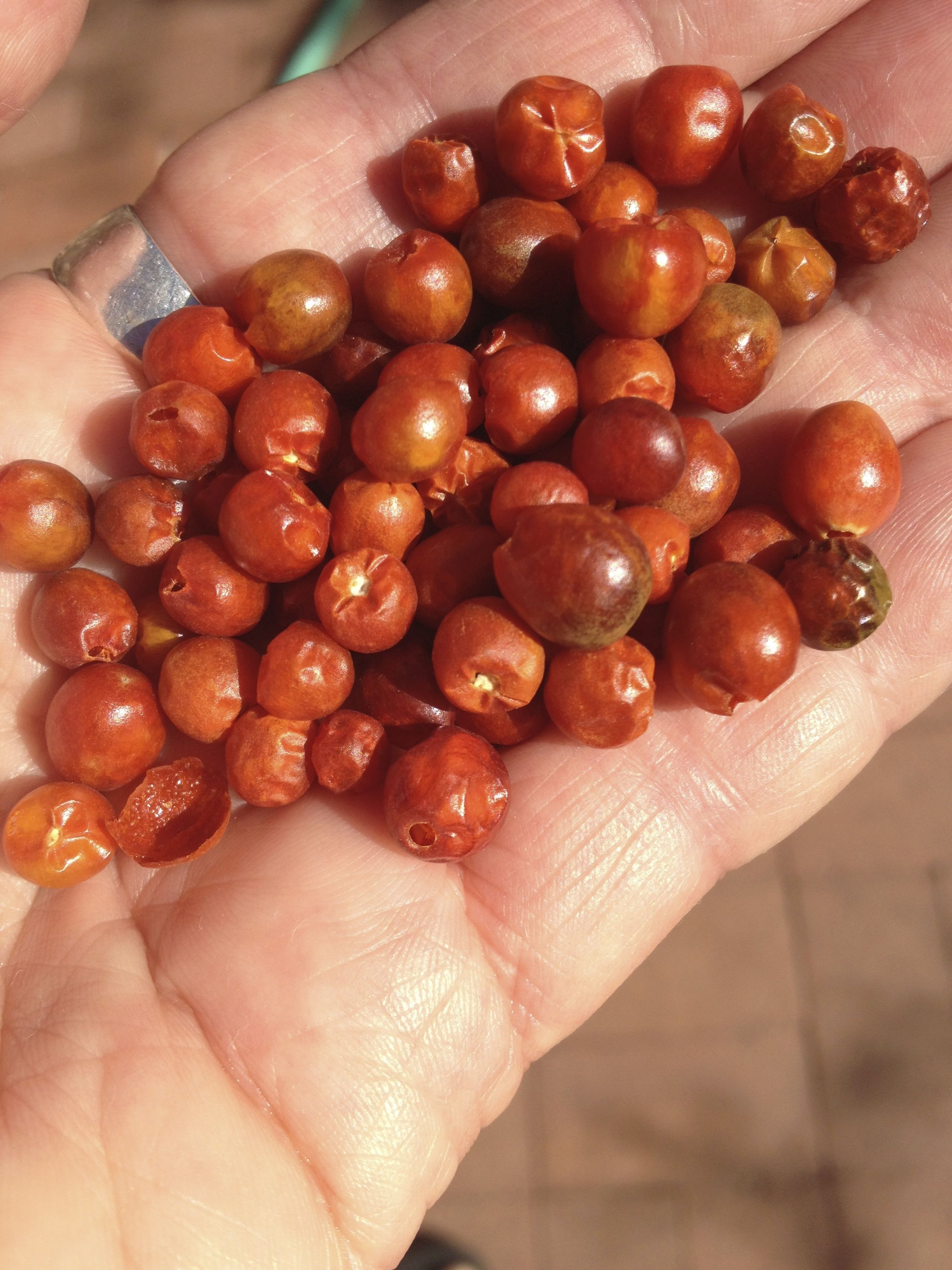
Dried chiltepines to use in the cranberry relish–They also make a great snack, great flavoring for Tom’s Mix SW Heirloom Beans, and super in any salsa.

Muff’s Fresh and Easy CHILTEPIN-CRANBERRY RELISH RECIPE

Ingredients:

3 cups fresh organic cranberries, washed

1/2 medium red onion, diced

8-12 dry chiltepin peppers for picante palettes, depending on “heat” desired (4-6 chiltepines for less picante).  Start with less, then add more later if higher “vehemence” is needed.

1/2 cup local raw honey or agave nectar

2 Tbsps lemon or lime juice

1-2 Tbsps tangerine rind or Meyer lemon rind, chopped

1/4 cup fresh cilantro, chopped (optional ingredient)

Directions:

In a food processor, pulse all the fresh ingredients and juice at least 6 to 8 times, keeping the texture coarse.

Chill in a covered bowl in refrigerator overnight or at least 8 hours, for time to meld the flavors.

Stir the mixture;  do a taste test.  Add more honey or agave nectar, or chiltepines as needed for the sweet toote or picante palette.

Spicy Chiltepin-Cranberry Relish can keep its freshness, flavor, and color in the frig for at least a week.

Note texture of fresh relish--not too fine. (Tarahumara and Mayo spoons like this for serving can be found at the NativeSeeds/SEARCH store)

Note texture of fresh relish–not too fine. (Tarahumara and Mayo spoons like this for serving can be found at the NativeSeeds/SEARCH store)

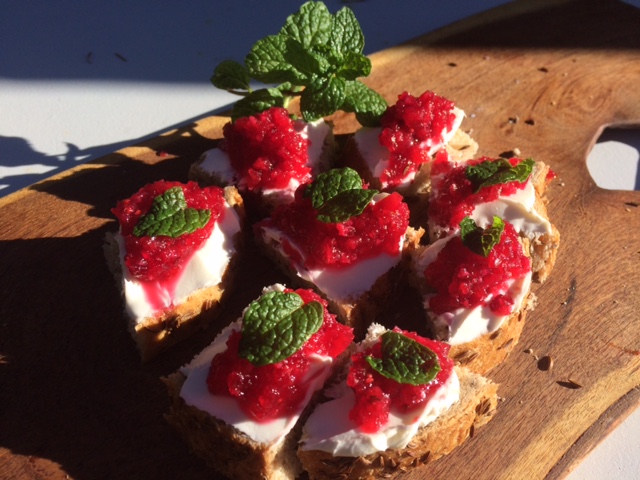
Even the conservative palette will relish this holiday condiment—perfect for Christmas dinner or festive smorgasbords. Chiltepin adds a glorious kick to the sweet tart of cranberries, with a non-lingering wave of excitement to the tastebuds! You will find Chiltepin-Cranberry Relish as a fine complement not only to turkey or ham. Try it with bagels and cream cheese. Use it as a savory side, or with a salad, on any holiday platter. It’s a celebration of East meeting Southwest—Enjoy!

Here I've used Chiltepin-Cranberry Relish served with creamcheese-on-rye canapés

Here I’ve used Spicy Chiltepin-Cranberry Relish served as creamcheese-on-rye canapés

We harvest chiltepines one by one as we need them, from our own chiltepin plants. Birds appreciate our chiltepin bushes as much as we do! Some of our plants I propagated from wild chiltepines in Arispe, Sonora, and Baboquivari. Some, purchased at Tohono Chul Park’s Chiles and Chocolate event, were propagated by experts Charles DiConcini and blog sister Linda McKittrick from Sierra Madrean plants. To buy healthy, productive plants for your own garden, be sure to put the NativeSeeds/SEARCH Valentine’s Plant Sale on your calendar for February.

Fresh-picked mature chiltepin peppers--Caution: do not rub eyes after picking chiltepines!

Fresh-picked mature chiltepin peppers–Caution: do not rub eyes after picking chiltepines!

To source fresh dried chiltepin peppers for cooking and eating, visit the NativeSeeds/SEARCH store (3061 N Campbell Ave, Tucson or http://www.nativeseeds.org) or stop by Cindy’s Country Harvest booth at Rillito Farmers Market Sunday.  You can see live chiltepin plants in fruit at Tohono Chul Park and at Mission Garden in Tucson.

Chiltepin-filled Heart Ornaments available at NativeSeeds/SEARCH Store for holiday decor and spice into the New Year!

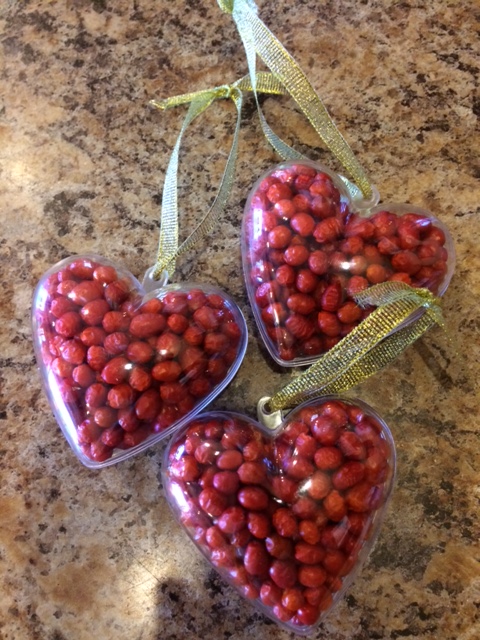
Chiltepin-filled Heart Ornaments are available at NativeSeeds/SEARCH Store for holiday decor and spice into the New Year!

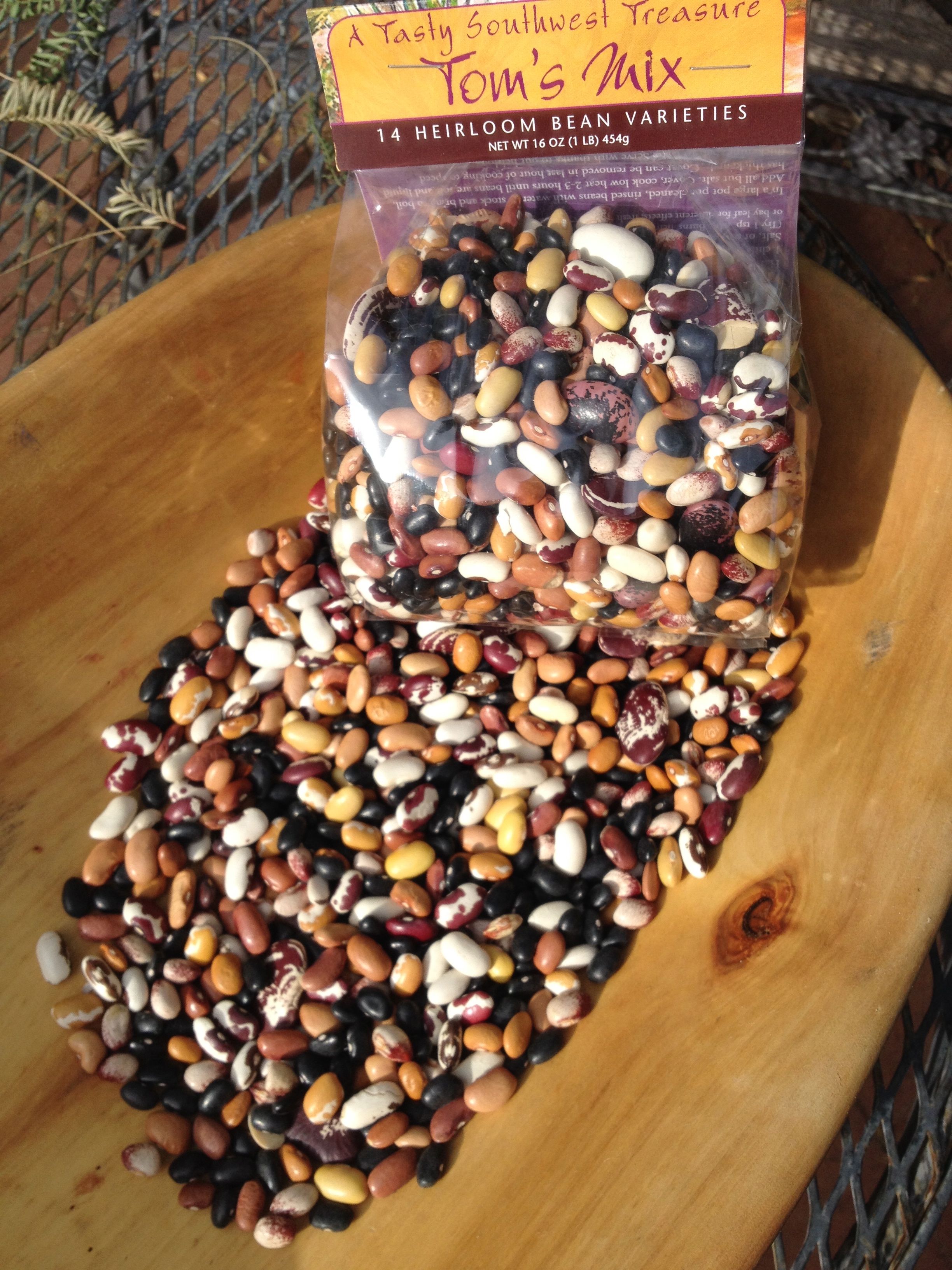
Another great idea:  A couple of chiltepines added to Southwest Heirloom Bean Tom’s Mix makes it a perfect potluck crowd-pleaser. You can find SW Heirloom Bean Tom’s Mix at NativeSeeds/SEARCH, or for online gifts at http://www.flordemayoarts.com.

Tom's Mix 14-Heirloom Bean Mix makes a perfect gift from the Southwest--made spicy with chiltepines! Find them at NativeSeeds/SEARCH store, Tohono Chul Museum Shop, Wiwpul Du'ag at San Xavier Plaza, and the UNICEF Store in Monterrey Village, Tucson; or online www.flordemayoarts.com

Tom’s Mix 14-Heirloom Bean Mix makes a perfect gift from the Southwest–made spicy with chiltepines! Find them at Rillito Sunday Farmers Market, NativeSeeds/SEARCH store, Tohono Chul Museum Shop, Wiwpul Du’ag at San Xavier Plaza, and the UNICEF Store in Monterrey Village, Tucson; or online http://www.flordemayoarts.com

Corn to posole

20161120_153431

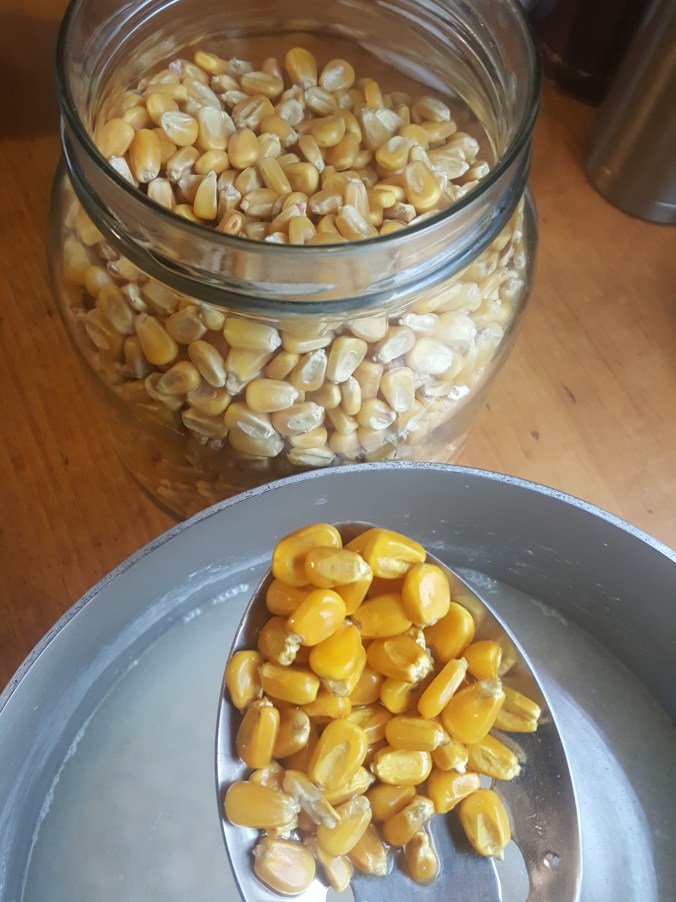
Do you love posole? Amy here today making posole from dry, untreated corn. What corn to use for posole? Flour corn varieties are good, as they have a large starch content. Also dent corn varieties, which contain some starch, dry unevenly on the cob and form an indentation in the top of the kernel. The dent corn I’m using today is sometimes called field corn, and it may have been grown to feed to livestock. I sometimes get dry corn, purple or white, from the bulk bins at the Mexican store. Use what you can find or grow and see what happens! This corn was a gift of completely unknown origin from my friend Lori.

20161120_154052

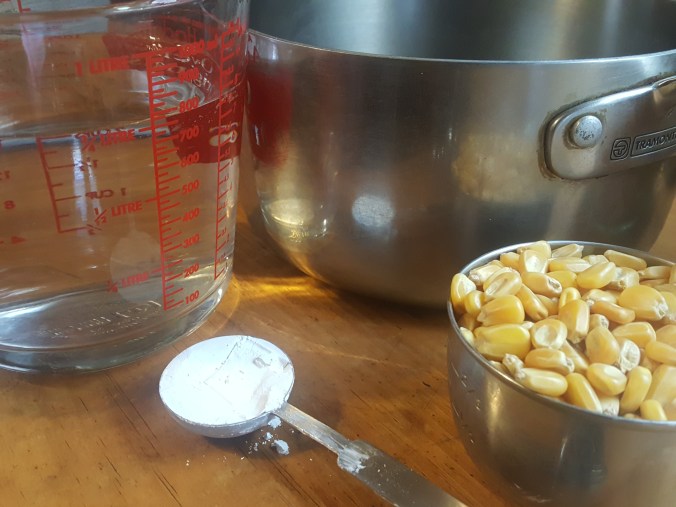
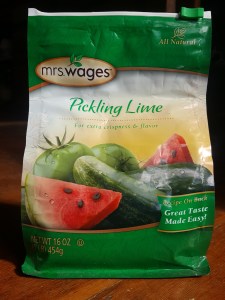
The ratio is 1 cup dry corn, 3 cups water and 1 tablespoon lime. Not lime, the citrus fruit, it is specially treated limestone. The best source for culinary calcium hydroxide is called cal sold with Mexican spices, or called pickling lime sold with canning supplies to keep pickles crisp. It is becoming rare since modern pickle recipes are more cautious of botulism growing in the less acidic environment. If necessary, type S (slaked) construction lime for concrete and mortar works, but you have to add more of it.

20161121_105421

20161120_154253


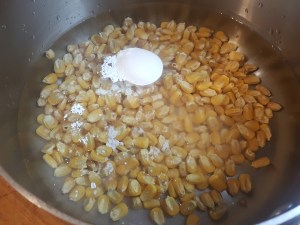
Place all in a non reactive pan, simmer for a few minutes and then remove from the heat. If you are making posole, it is not critical if the corn starts to cook a bit. If the corn will be ground into tamales or tortillas, it will be gummy and not stick together well if cooked.

As soon as the corn is in the lime water, it turns bright yellow!

20161120_154644

Then let it soak overnight. I decided to boil some corn in plain water to compare the results.

20161121_080957

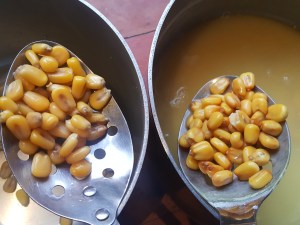
The next morning: On the right, the limed corn is much darker yellow color than the corn boiled and soaked overnight in fresh water, on the left. On the right the lime water, formerly white, is now yellow from the seed coats of the corn. The water in the pot on the left remains clear.

Drain the lime water and send to the sewer, not your plants! It is very alkaline and will harm the soil and plants.

20161121_082053

The lime turns the seed coats into slime. Now rinse, rub, rinse, rub, rinse.

20161121_082941

Now the rinsed, limed treated corn in the colander is a lighter yellow than the plain water boiled corn in my hand.

This is called nixtamal, and can be ground into masa for tamales or tortillas, or cooked into posole. I will make masa in another post.

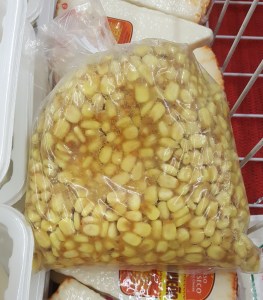
You can purchase nixtamal ready to rinse at most grocery stores. After rinsing, it freezes beautifully. I have purchased it dry, whole or ground, but never dried it myself. I use it dry in the Mano Y Metate Mole powders to give body to the sauce.

20160918_120010

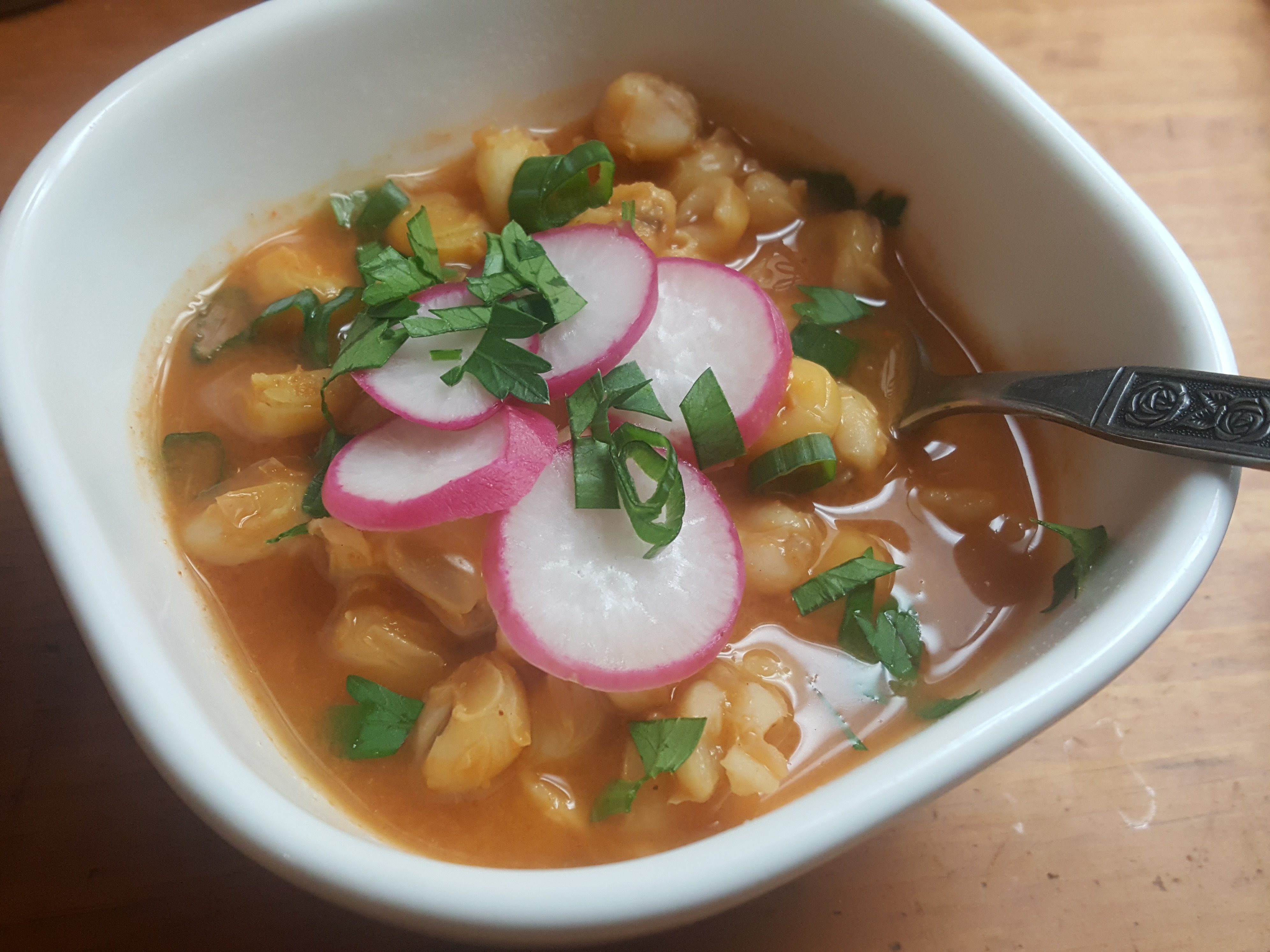
When the corn rinsing water is clear, boil in fresh salted water. Add chopped onion and a few cloves of garlic. Cooking times vary wildly depending on the batch, but at least an hour, until tender and the kernels burst open.

20161121_083914

The same corn after identical soaking and cooking times: the treated corn on the right blossomed to toothsome tenderness and has the characteristic posole aroma. I see some residual seed coat, but I do not notice when eating. On the left, the fresh water soaked and cooked corn has a few kernels that blossomed some, but is overall texture is hard with seed coats remaining in my mouth after chewing. It does not smell like posole.

20161121_115028

This reason alone would justify the nixtamal-ization process, but it also makes it more nutritious. The niacin present in corn becomes more available, the amino acid balance improves and the lime adds a digestible source of calcium.

To the pot you can add little red chile, green chile, cubes of pork, beef tripe, pinto beans, or sliced carrots. I added Mano Y Metate Pipian Picante Powder. Garnish with shredded cabbage, sliced radishes, cilantro, white or green onion or lime wedges.

20161121_170748_001