Pumpkin Time in Baja Arizona!

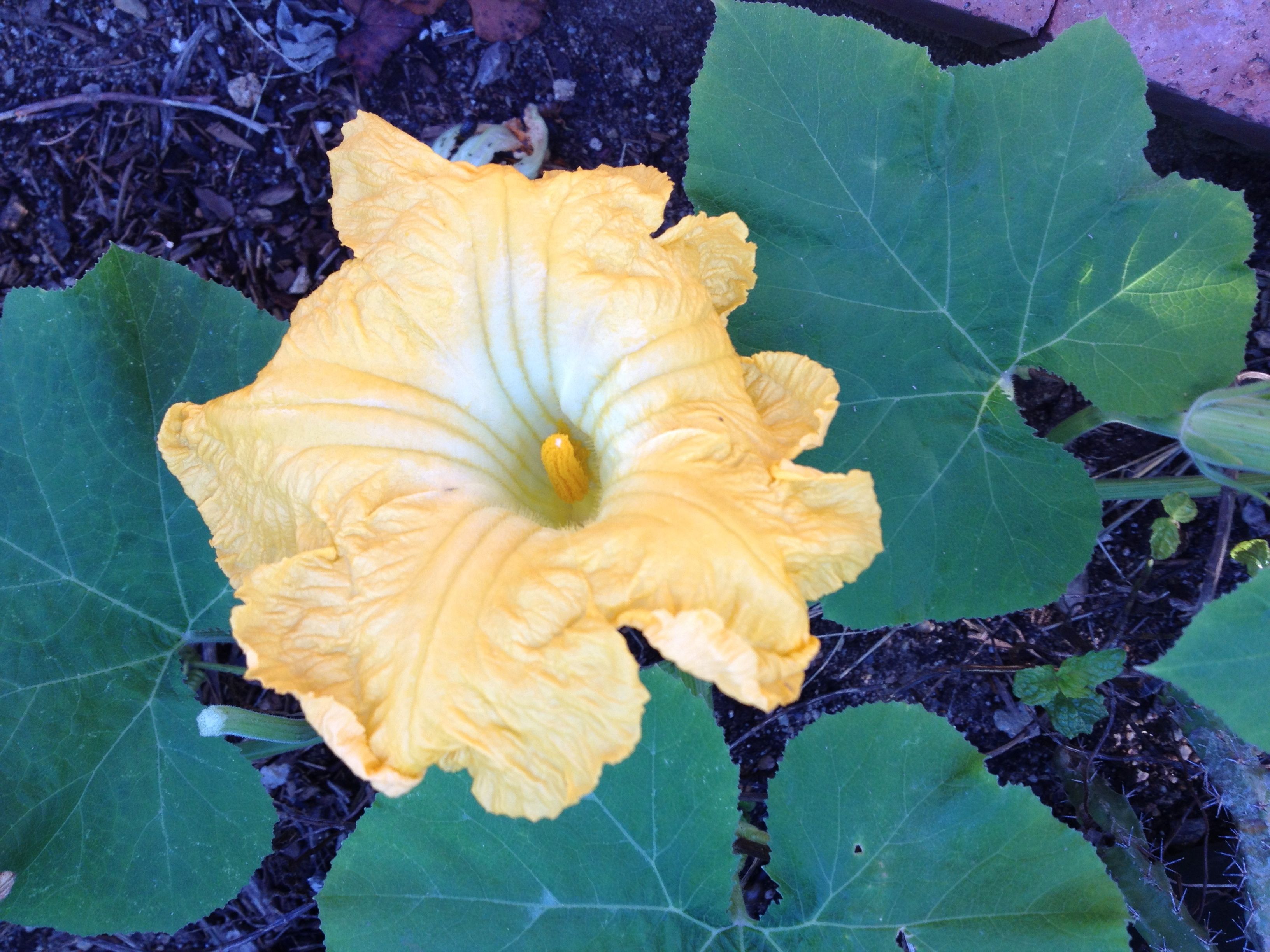
Male flower Magdalena Big Cheese squash (MAB photo)

Male flower Magdalena Big Cheese squash (MAB photo)

Tia Marta here to celebrate the pumpkins and squashes that are now plumping up in every garden and popping up in farmers markets. These sculptural fruits of the vine are our visual signal of autumn and herald cool weather cuisine. So many people ask, “What’s the difference between pumpkins and squashes?” Really there is not much difference, except that, to some ears, “pumpkin” sounds fun but is never eaten, while squash sounds like something your mother made you eat and you didn’t discover how good they are until you discovered Mexican food! (Yum, calabacitas.) Often pumpkins refer to the jack-o-lantern type squash—a Cucurbita pepo—but many squashes of other Cucurbita species are also called “pumpkin” so the term is not cut and dried.
While chubasco rains keep sprinkling our desert, my squash vines have continued to elongate and to flower into the fall. I’m hoping to have winter squashes coming on until the frost hits. Meanwhile, I can go out each morning to assist in pollinating any female flowers with the hefty stamens of the male flowers. Then, what a treat it is to take the plucked, spent male flower and sauté it with eggs for breakfast!
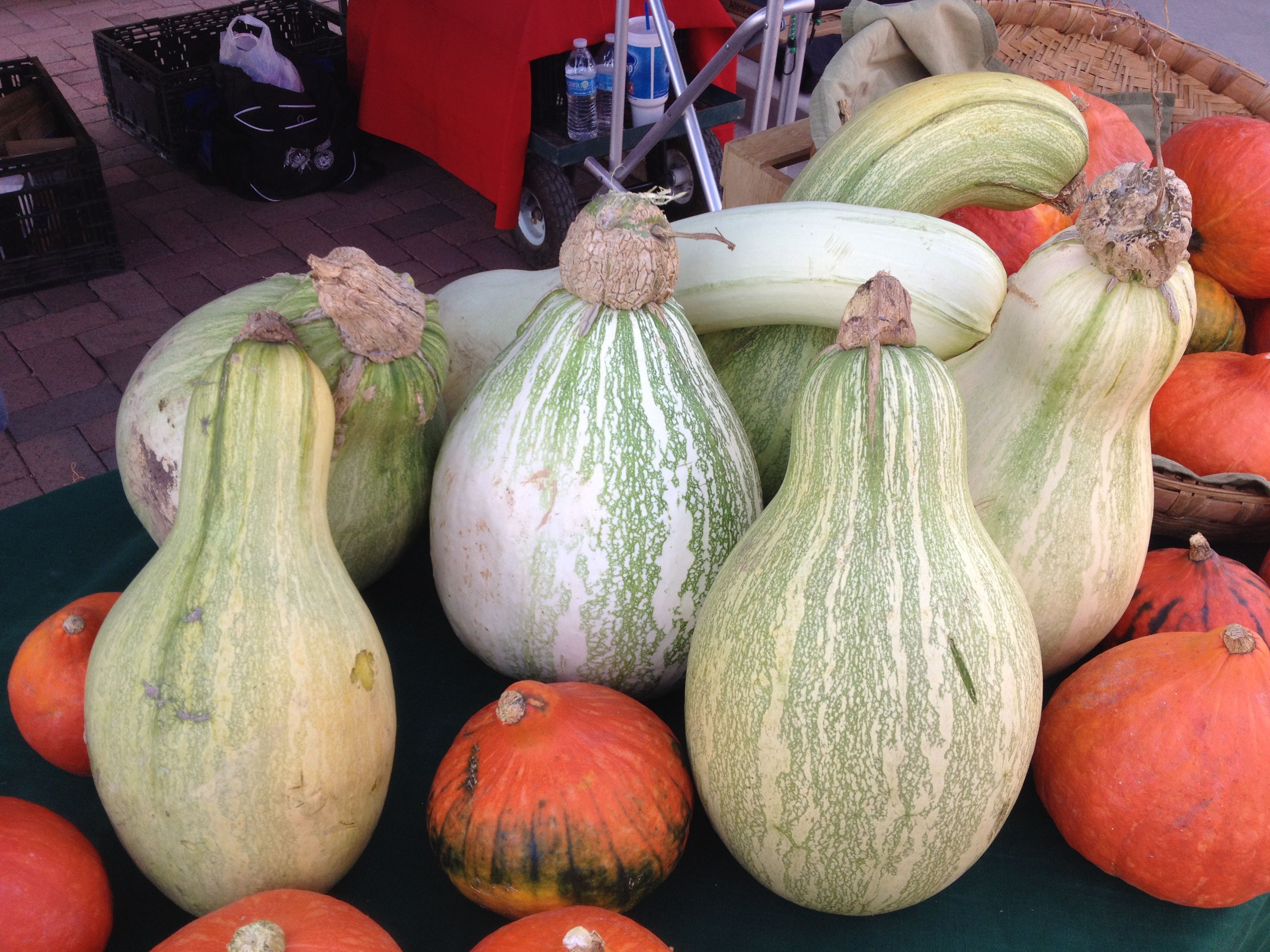
Tohono O'odham Ha:l and curry pumpkins at SanXavierCoop booth, SantaCruz Farmers Market (MABphoto)

Tohono O’odham Ha:l and curry pumpkins at SanXavierCoop booth, SantaCruz Farmers Market (MABphoto)

Native People domesticated several varieties of squash or pumpkin centuries before Europeans invaded North America. We all know the Pilgrims’ Thanksgiving story, but here in the Baja Arizona borderlands we should be giving a lot of thanks to the Tohono O’odham, the Yoreme, the Guarijio, and the Raramuri for the gifts of fabulous squashes they have given to all desert gardeners and farmers. From the Tohono O’odham comes the giant cushaw winter squash, known as Tohono O’odham Ha:l or “Papago Pumpkin,” (Cucurbita argyrosperma) with its bulbous pear shape and thick corky peduncle (its vine attachment.)
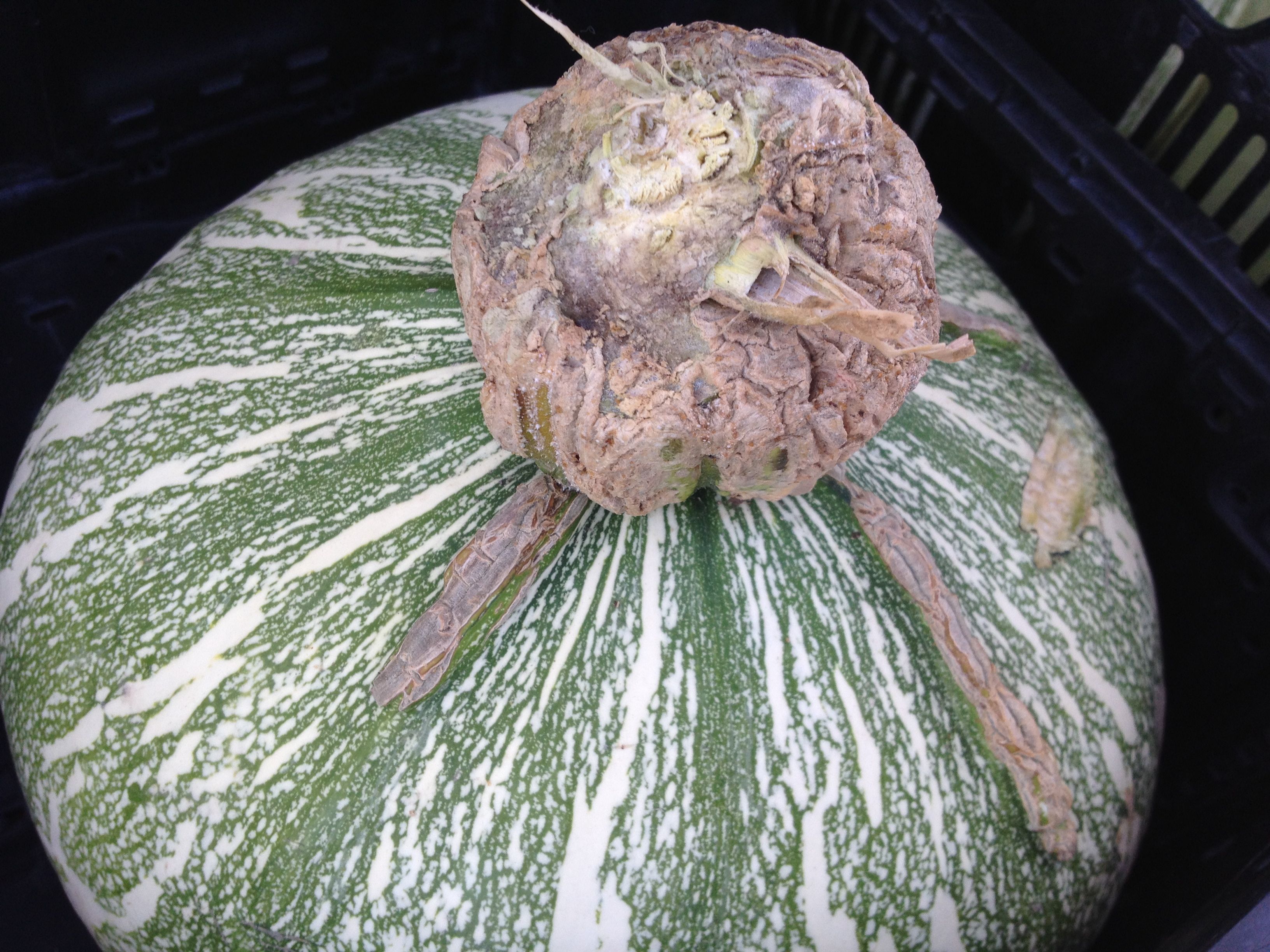
Tohono O'odham Ha:l "Papago Pumpkin" showing characteristic corky attachment and colorful stripes (MABphoto)

Tohono O’odham Ha:l “Papago Pumpkin” showing characteristic corky attachment and colorful stripes (MABphoto)

From the Yoreme or Mayo comes the round, oranged-fleshed Mayo blusher (Cucurbita maxima). From the Guarijio comes a grand segualca (Cucurbita moschata). And from the Raramuri or Tarahumara, comes the striped mini-pumpkin with sweet orange flesh (Cucurbita pepo). This last one is the pumpkin Native Seeds/SEARCH grew in plenty last year and returned to drought-stressed Tarahumara farmers in a cross-the-border sharing. Check out http://www.nativeseeds.org for images of each of these lovely squashes, or visit the Mission Garden at the base of A-Mountain to see maturing fruits from the monsoon planting. Then plan ahead for next year to plant some of each in your own monsoon garden for great winter cookery and for sharing with neighbors.

All of these Native pumpkins/squashes are the ultimate in desert adaptation. They grow well in the heat with monsoon rains, AND, they keep for long periods of time without refrigeration over the winter. Talk about an easy, low-tech way to preserve food! I have kept the hard-shelled Tohono O’odham Ha:l outside in the shade of my back porch from October’s harvest into May of the following year when temperatures soared. That’s what you call a keeper.
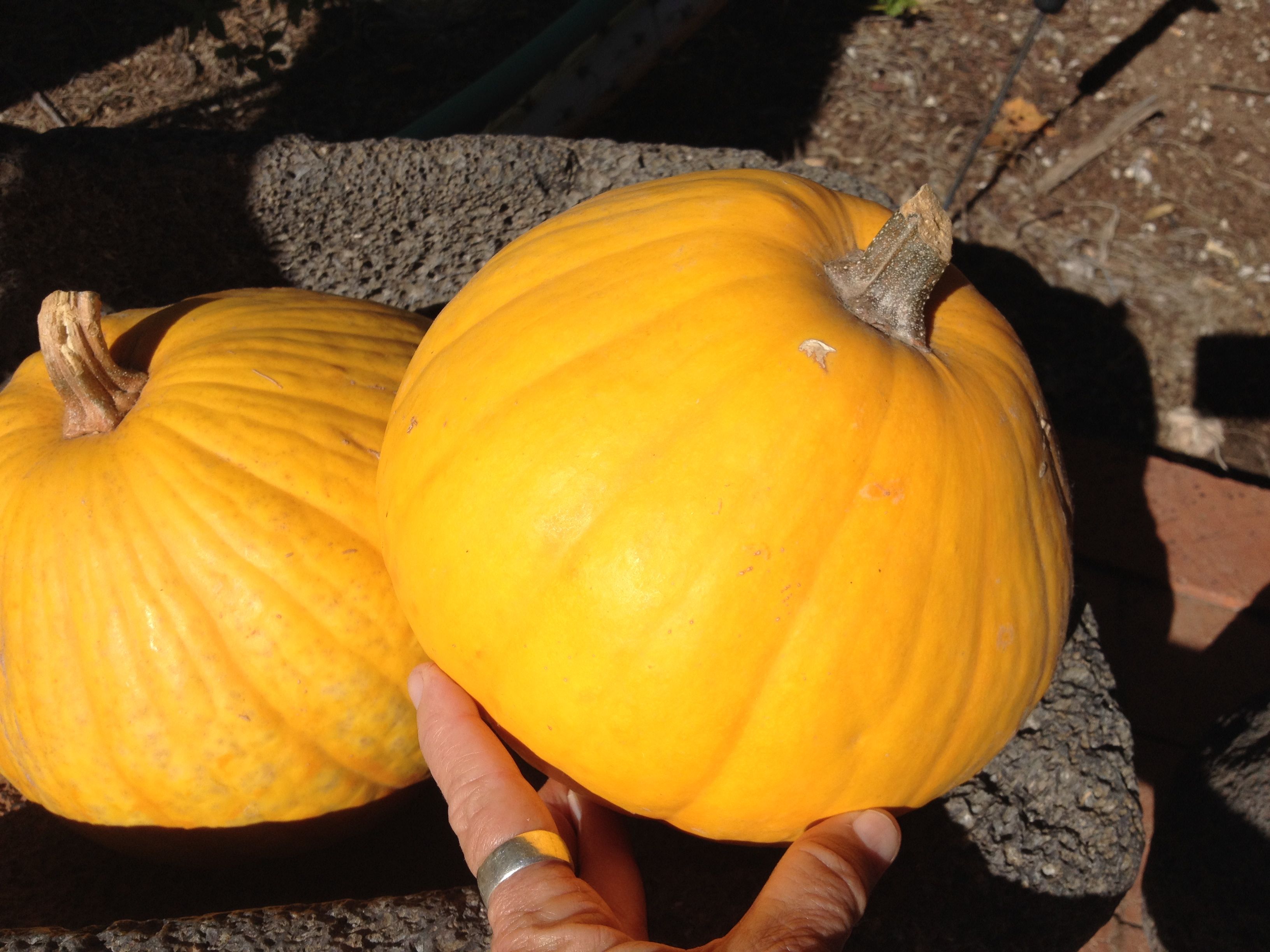
Tarahumara pumpkins Oct2014 from 2013 harvest (MABphoto)

Tarahumara pumpkins Oct2014 from 2013 harvest (MABphoto)

With last fall’s harvest of Tarahumara pumpkins, I started another experiment in non-refrigerated storage. I kept 2 medium-sized pumpkins inside on a tile floor out of direct sun. Over the summer they turned from green striped to bright yellow-orange on the outside. I had no idea this week what they would be like inside when I opened them at last for cooking. To my surprise and gladness the flesh was still firm and gorgeous—bright with beta-carotenes—and the seeds were plump and not-yet-sprouted.
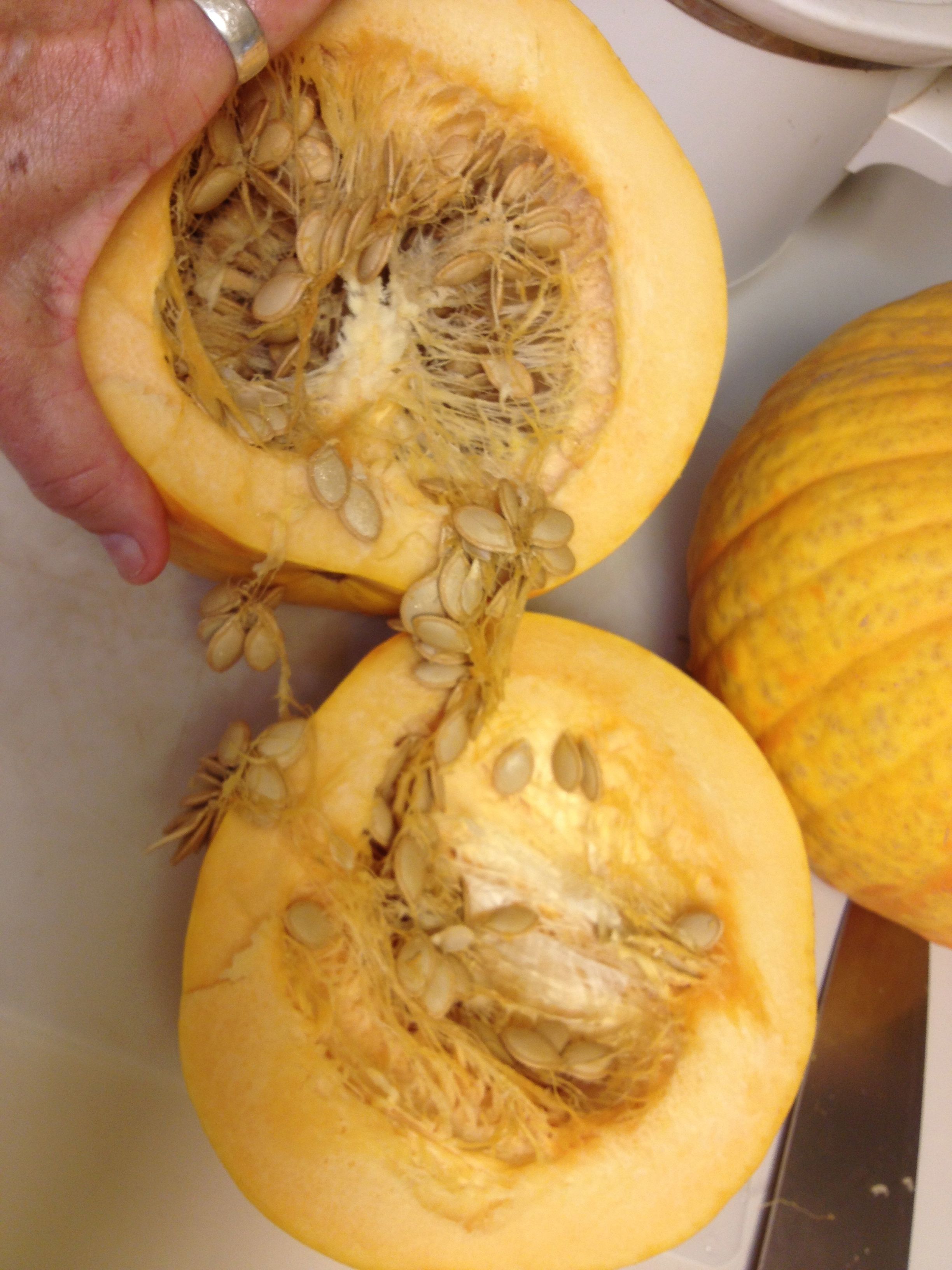
Rich flesh and seed of Tarahumara pumpkin (MABphoto)
Rich flesh and seed of Tarahumara pumpkin (MABphoto)

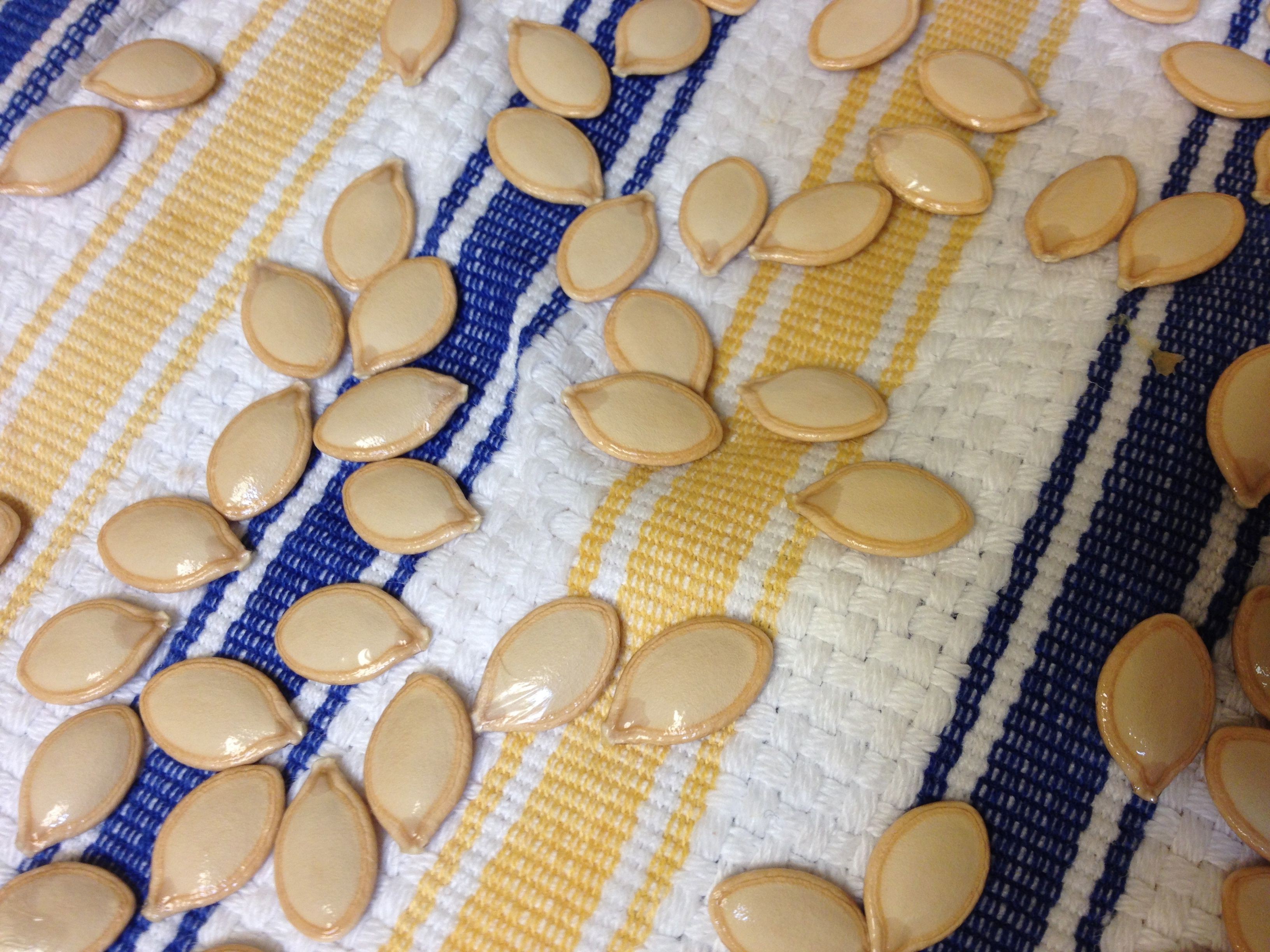
Pumpkin seeds cleaned to dry and save for next year's planting (MABphoto)

Pumpkin seeds cleaned to dry and save for next year’s planting (MABphoto)

With such luscious pumpkin seeds, some had to be saved for next summer’s garden and some had to become snacks. Here is what I did to them. Give it a try with your next opened pumpkin:

Spicy Sweet Pumpkin Seed Snacks
(Makes 1 cup)
1 cup of pumpkin seeds, cleaned
1/2 tablespoon of olive oil
1/2 tablespoon of honey
1/2 teaspoon of sea salt
¼ tsp of chile powder (choose mild, medium, or hot, depending on your palette)
Preheat oven to 375 degrees
(Some recipes call for boiling seeds first, for 10 minutes in 4 cups of water then draining before the next step. It helps to soften the hulls but may remove some nutrients. This step is optional–I don’t bother.) Transfer seeds to a bowl, toss with the honey, oil, and spice ingredients until fully covered, then spread them out evenly onto a baking sheet that has been coated lightly with cooking oil or non-stick spray.
Bake for about 12-15 minutes, tossing once, or until the seeds are crispy and lightly golden brown. Let them cool before serving — they will get even crispier. Pumpkin seeds contain zinc which is great for fall-weather immune fortifying. They also contain L-arginine which is especially good for guys. Enjoy this tasty Southwest snack!
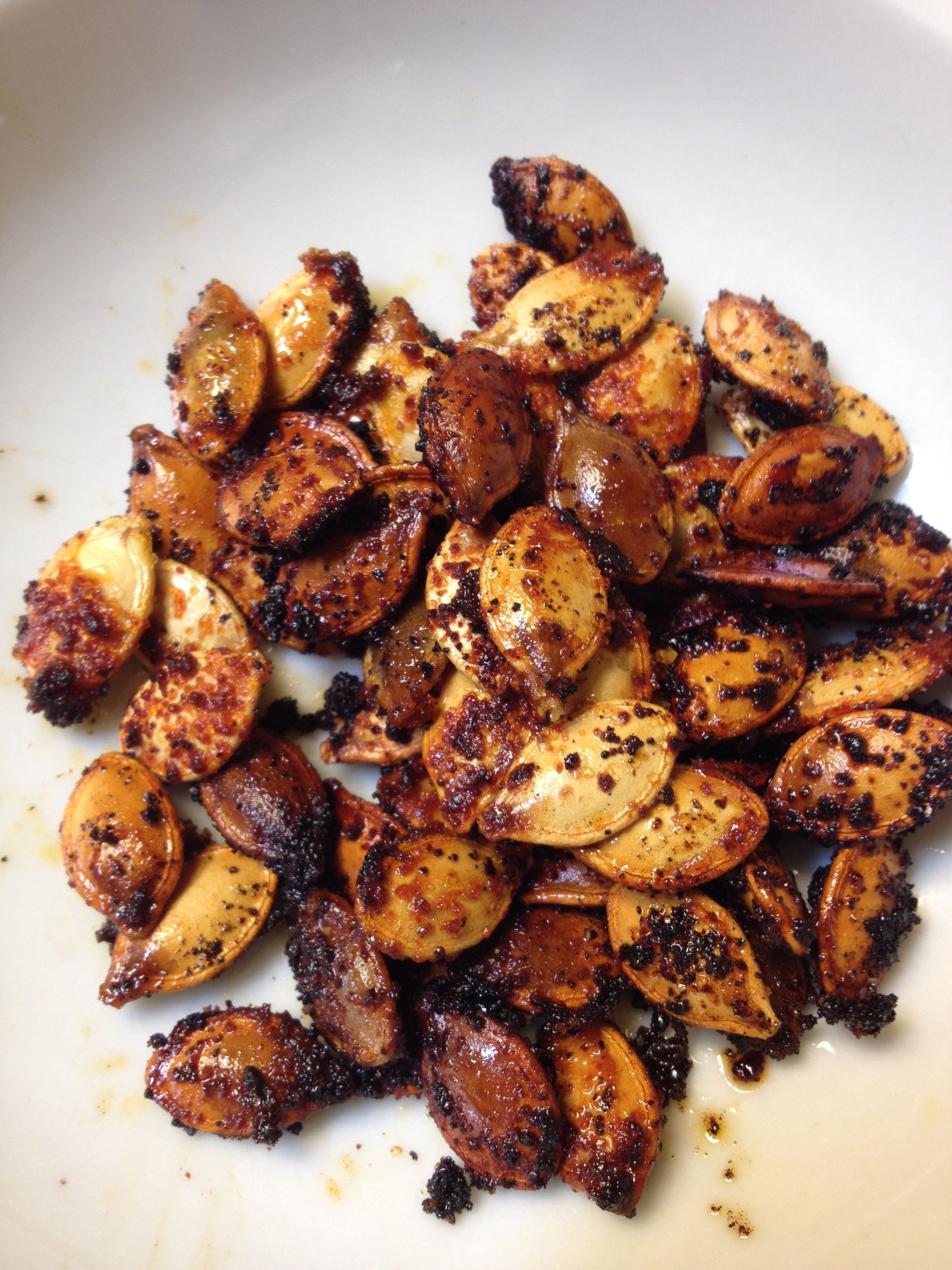
Chile-and-honey-roasted pumpkin seed snacks (MABphoto)

Chile-and-honey-roasted pumpkin seed snacks (MABphoto)

Next I prepared the Tarahumara pumpkin itself for a truly local autumn dessert. It takes a cleaver to carefully open a winter squash and to chunk it into segments small enough to fit into the saucepan. After you scoop out the seeds and fiber, you can boil, steam or bake the pumpkin chunks with skin or shell on. When softened and cooled, scoop out the pulp. Don’t hesitate–serve it with butter and sea salt as a hot vegetable right away. With the remainder, mash or puree it, storing it in freezer for later using in pies, empanaditas, or—as you’ll see below—in a fabulous Sonoran Pumpkin Cake!
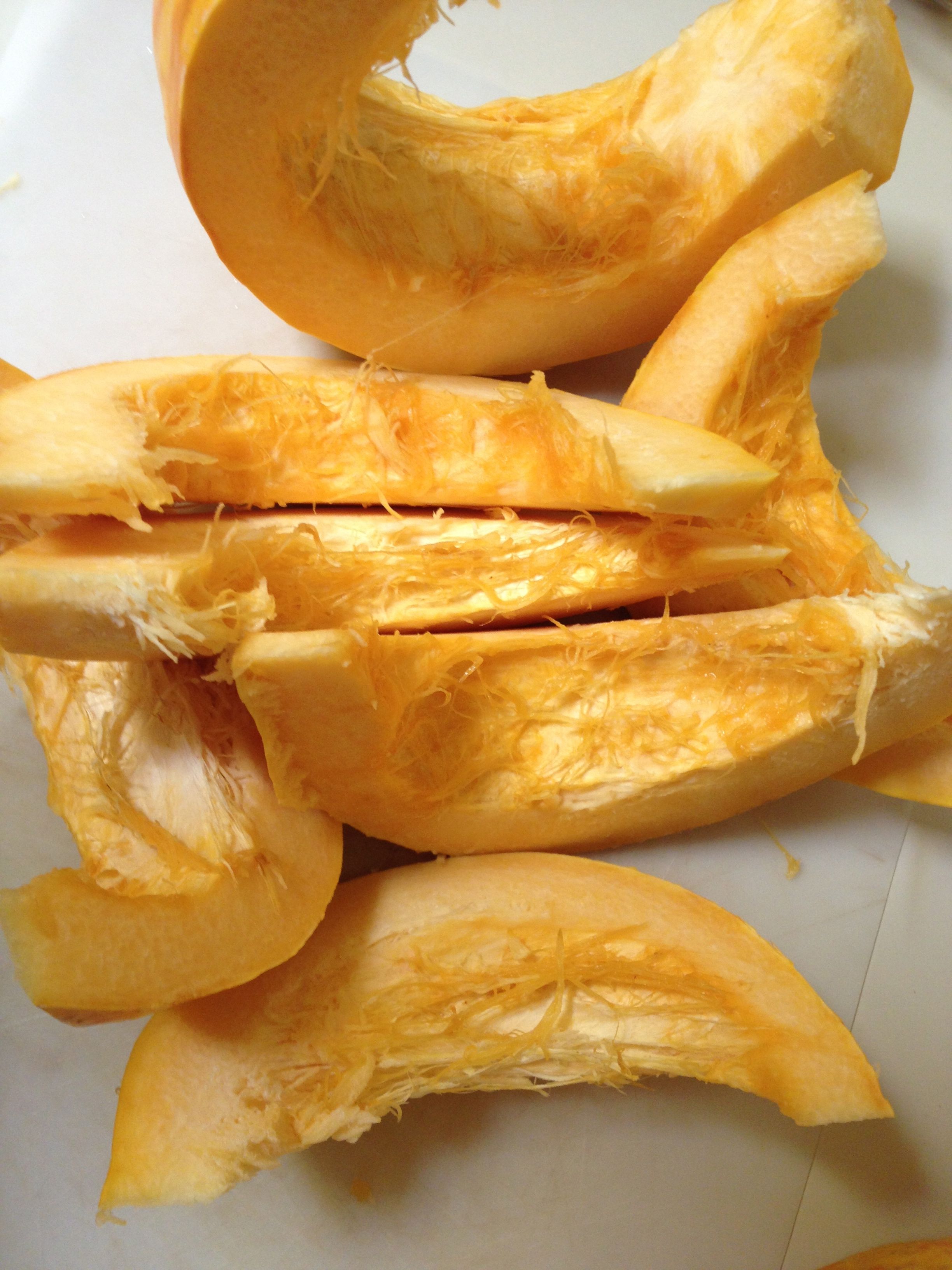
 

Tarahumara pumpkin cleaned and chunked for cooking (MABphoto)

Tarahumara pumpkin cleaned and chunked for cooking (MABphoto)

SONORAN PUMPKIN CAKE with White Sonora Wheat and Mesquite
(inspired by NativeSeeds/SEARCH pot-luck favorite volunteer Ed Hackskyalo)
Recommended for Halloween, Thanksgiving, and other autumn occasions.

INGREDIENTS
Preheat oven to 350.
2 cups sugar (or alternative sweetener such as agave nectar or honey)
1 cup vegetable oil or softened butter (adjust less with liquid sweeteners)
4 large eggs
1 teaspoon vanilla extract
2 – 2 ½ cups heirloom White Sonora Wheat pastry flour (fresh-milled flour needs adjusting)**
¼ – 1/2 cup mesquite pod meal**
2 teaspoons baking soda
1 teaspoon baking powder
2 teaspoons ground cinnamon
1 teaspoon ground ginger
1/2 teaspoon sea salt
2 cups “Papago Pumpkin” or other native squash, cooked and pureed (or pumpkin puree)

Combine sugar, vegetable oil, and eggs in a large mixing bowl; mix well. Sift dry
ingredients into a separate bowl; stir into liquid mixture, beating well. Stir in pumpkin puree.
Pour batter into two greased and floured 9 inch cake pans. Bake at 350 degrees for
35 to 40 minutes. Turn out onto racks to cool.

CREAM CHEESE FROSTING and FILLING
l package (8 ounces) reduced fat cream cheese, room temperature
2 cups confectioners’ sugar, measure then sift (use less to taste, as less sweet is nice contrast to cake)
½ – 1 teaspoons vanilla extract (as needed for smoothing)
Combine all ingredients in a large mixing bowl; beat well until smooth. Makes enough
for a 2-layer pumpkin cake. Frost pumpkin cake with cream-cheese frosting and sprinkle with chopped pecans or pine nuts for extra decor.

**Organic heirloom White Sonora Wheat-berries and flour, and local mesquite pod meal ,are available from Flor de Mayo at St Phillips farmers market on Sundays, or http://www.flordemayoarts.com or 520-907-9471. Whole grain organic White Sonora Wheat-berries for home-milling and mesquite meal are also available at NativeSeeds/SEARCH, 3061 N Campbell Ave, Tucson, or online http://www.nativeseeds.org.
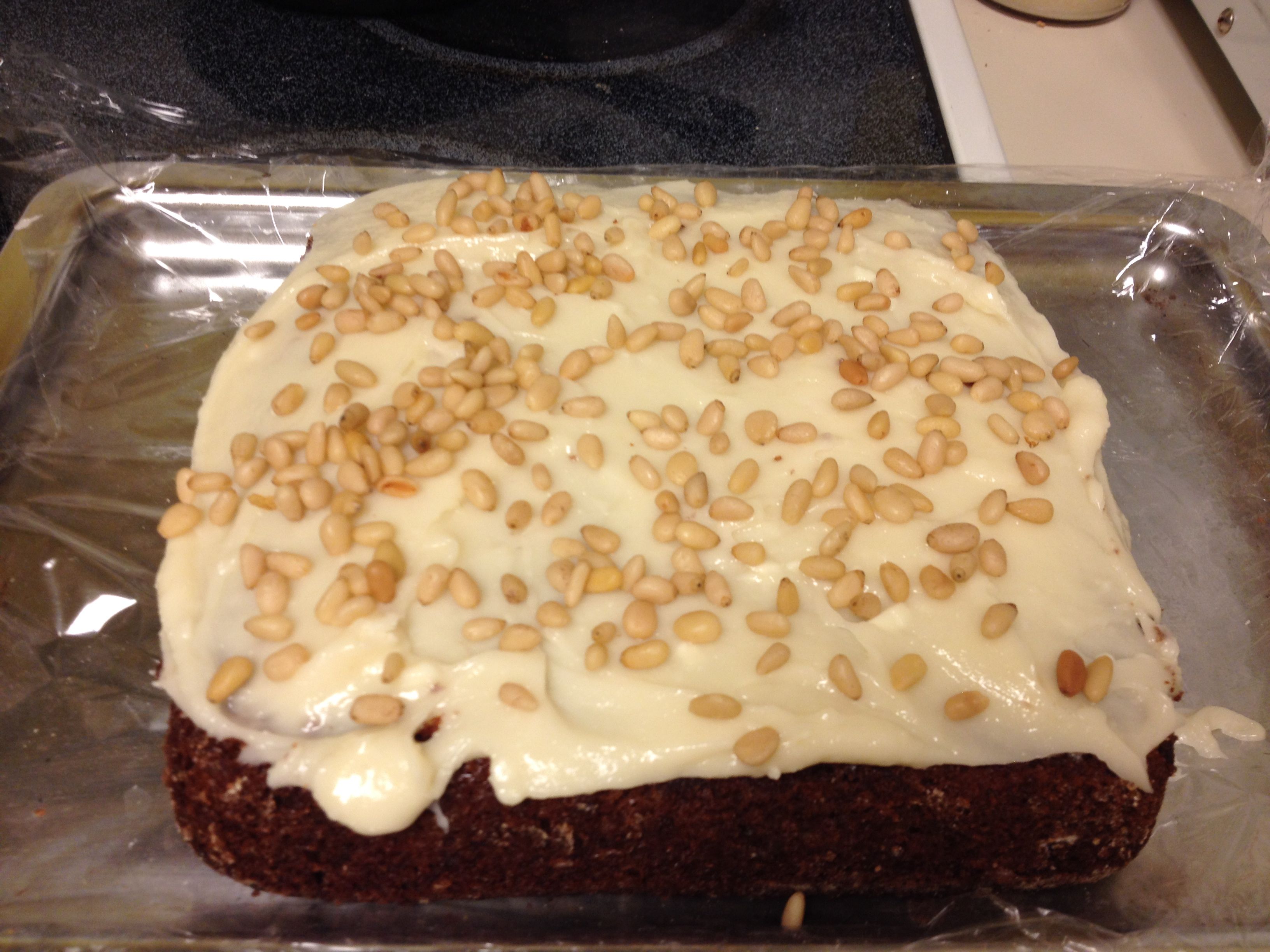
Sonoran Pumpkin Cake made with organic heirloom White Sonora Wheat and mesquite  (MABphoto)
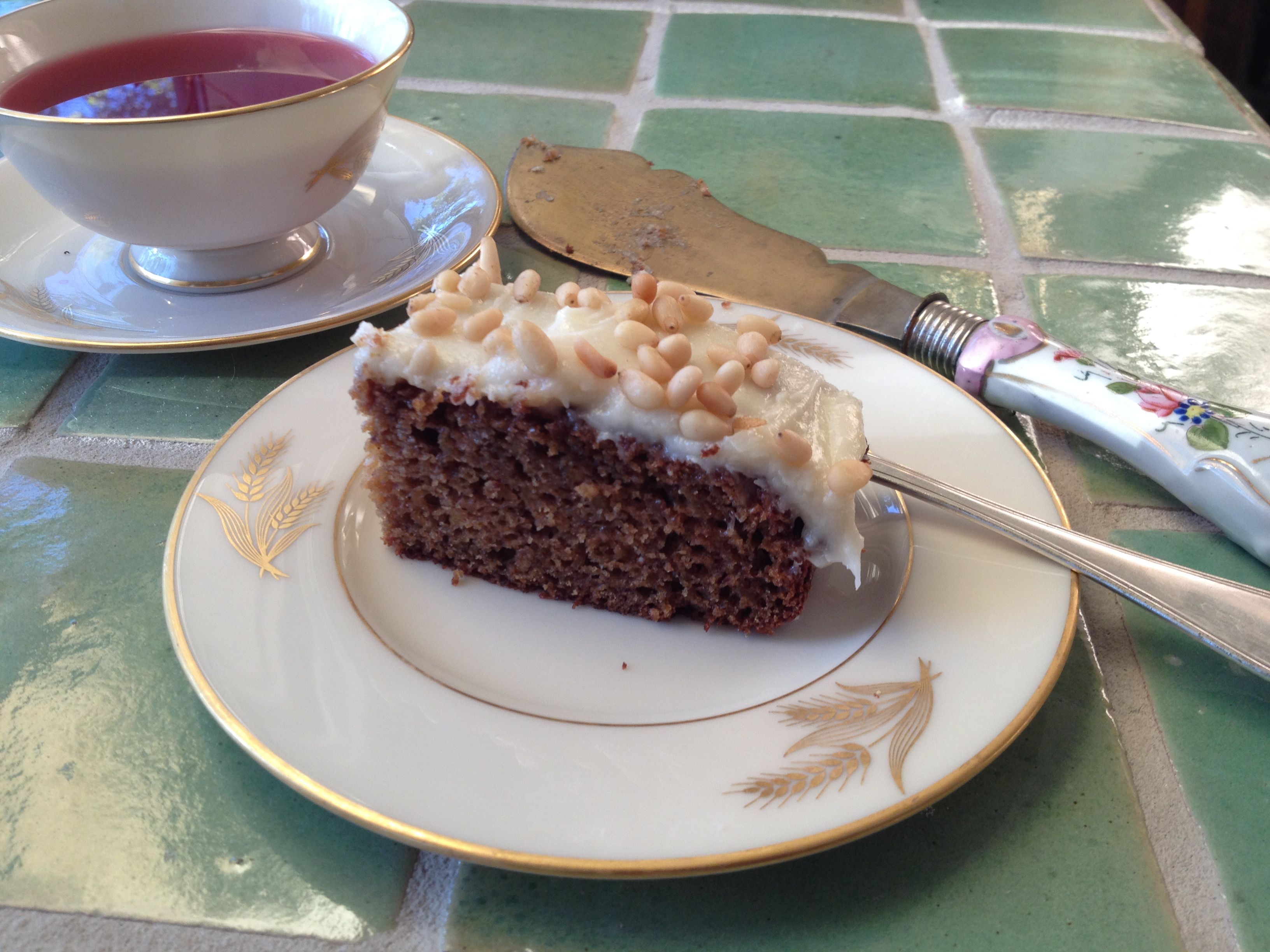
Sonoran Pumpkin Cake made with organic heirloom White Sonora Wheat and mesquite (MABphoto)

Sonoran Pumpkin Cake tea time on wheat china to honor the Wong Family farmers who are helping to save the ancient white Sonora wheat (MABphoto)

Sonoran Pumpkin Cake tea time on wheat china to honor the Wong Family farmers who are helping to save the ancient white Sonora wheat (MABphoto)

Now in their fifth generation of farming, the Wong Family of BKWFarms in Marana, have taken a rare heirloom wheat–the White Sonora Wheat that Padre Kino introduced into the Sonoran Desert over 300 years ago and “saved” by Native Seeds/SEARCH seed conservationists–and have made it a certified organic and sustainable crop again for the Southwest.  Bravo to the Wongs for making this low-gluten food treasure available to us!

Organic Wheat Farmer Ron Wong, Big Jim Griffith, and Karen Dotson of BKWFarms at Tucson Meet Yourself 2014 (MABphoto)

Organic Wheat Farmer Ron Wong, Big Jim Griffith, and Karen Dotson of BKWFarms at Tucson Meet Yourself 2014 (MABphoto)

BKWFarms and Flor de Mayo gave out samples of White Sonora Wheat-berry sprouts and a fabulous Sonoran Shortbread made with the White Sonora Wheat flour at the recent Tucson Meet Yourself festivities.  Coming up….Come try samples at the Flor de Mayo table this next weekend at the Chiles Chocolate and Salsa Event, Tohono Chul Park, Oct 25-26.   Every Sunday at St Phillips Farmers Market you can find taste surprises made with White Sonora Wheat-berries or mesquite at the Flor de Mayo booth–Stop by and visit Tia Marta and Rod!  And tell your friends in Phoenix not to miss our Flor de Mayo display at the Dia de los Muertos celebration, Desert Botanical Garden Nov 1-2.
Savoring Our First Anniversary (and Mesquite Cake)

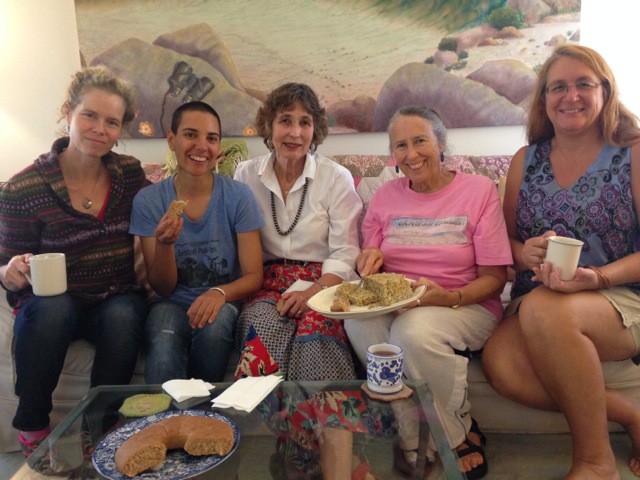
(From left) Aunt Linda, Amy Valdez Schwem, Carolyn Niethammer,  Tia Marta, and Jacqueline Soule.

The Savor sisters: (From left) Aunt Linda, Amy Valdes Schwemm, Carolyn Niethammer, Tia Marta, and Jacqueline Soule.

Carolyn Niethammer here today with this celebratory post. The Savor Sisters, the five writers who bring you Savor the Southwest, got together this week to celebrate the first anniversary of our wide ranging blog about the glories of Southwest food traditions –  traditional, modern, wild and cultivated. The Savor the Southwest month always starts out with Aunt Linda who frequently writes about her bees, recipes with honey, and even making cheese from milk from cows on her ranch. Her posts are lyrical and sometimes spirtual. On the second Friday, you hear from Tia Marta (Muffin Burgess), our ethnobotanist who keeps an eye on what the desert is producing, traditional Native American agricultural products, and ingredients she sometimes uses in her Flor de Mayo products.  I take the third Friday and write about edible desert plants, Southwest specialties and interview other interesting folks in the food world.  On the fourth Friday we hear from Jacqueline Soule who has been taking us through her book Father Kino’s Herbs among other subjects. That’s her gluten-free barrel cactus seed cake Muffin is slicing in the photo. You’ll get the recipe later this month. So far we have only heard from Amy Valdes Schwemm, producer of fabulous spices, on the occasional fifth Friday, but she will be writing more frequently in the coming year.

We are grateful to all of you readers who join us each week as we explore and celebrate the culinary delights of this fabulous area here on the Sonoran desert where we are so privileged to live. Every celebration needs something sweet, so today I’m going to give you a recipe for an easy and delicious mesquite cake that uses whatever fruits are in season. I used peaches and grapes, but plums, pears, apples or even prickly pear would be great additions. This is good for brunch or a not-too-sweet dessert.

Golden Mesquite Fruit Cake

3/4 cup all-purpose flour

1/4 cup mesquite meal

2 teaspoons baking powder

1/2 teaspoon ginger or cinnamon

1/4 teaspoon salt

1 stick soft butter

3/4 cup sugar

2 large egs

1 teaspoon vanilla extract

1 cup chopped fresh fruit

For topping

1 tablespoon mesquite meal

1 tablespoon sugar

1/2 teaspoon ginger or cinnamon

Method:

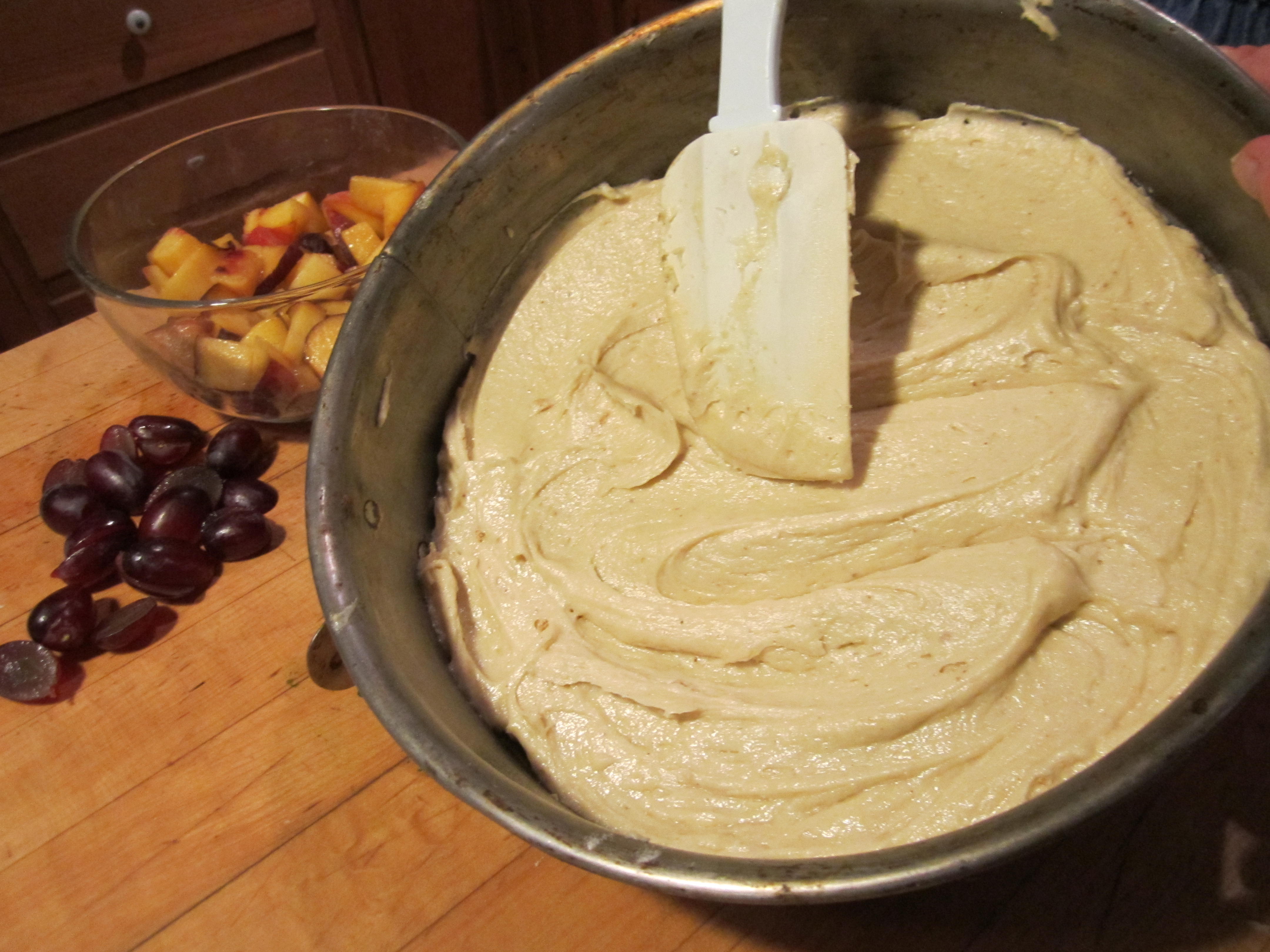
Preheat oven to 350 degrees F with rack in middle. Chop fruit. Lightly butter a springform pan. In a small bowl, whisk together flour, baking powder, salt and spice of choice. In medium bowl, beat butter and sugar with an electic mixer until pale and fluffy. Add eggs one at a time, beating well after each addiotn, then beat in vanilla. At low speed,  add flour mixture until ljust combined. Spread batter evenly in pan.

Spread batter evenly in springform pan.

Spread batter evenly in springform pan.

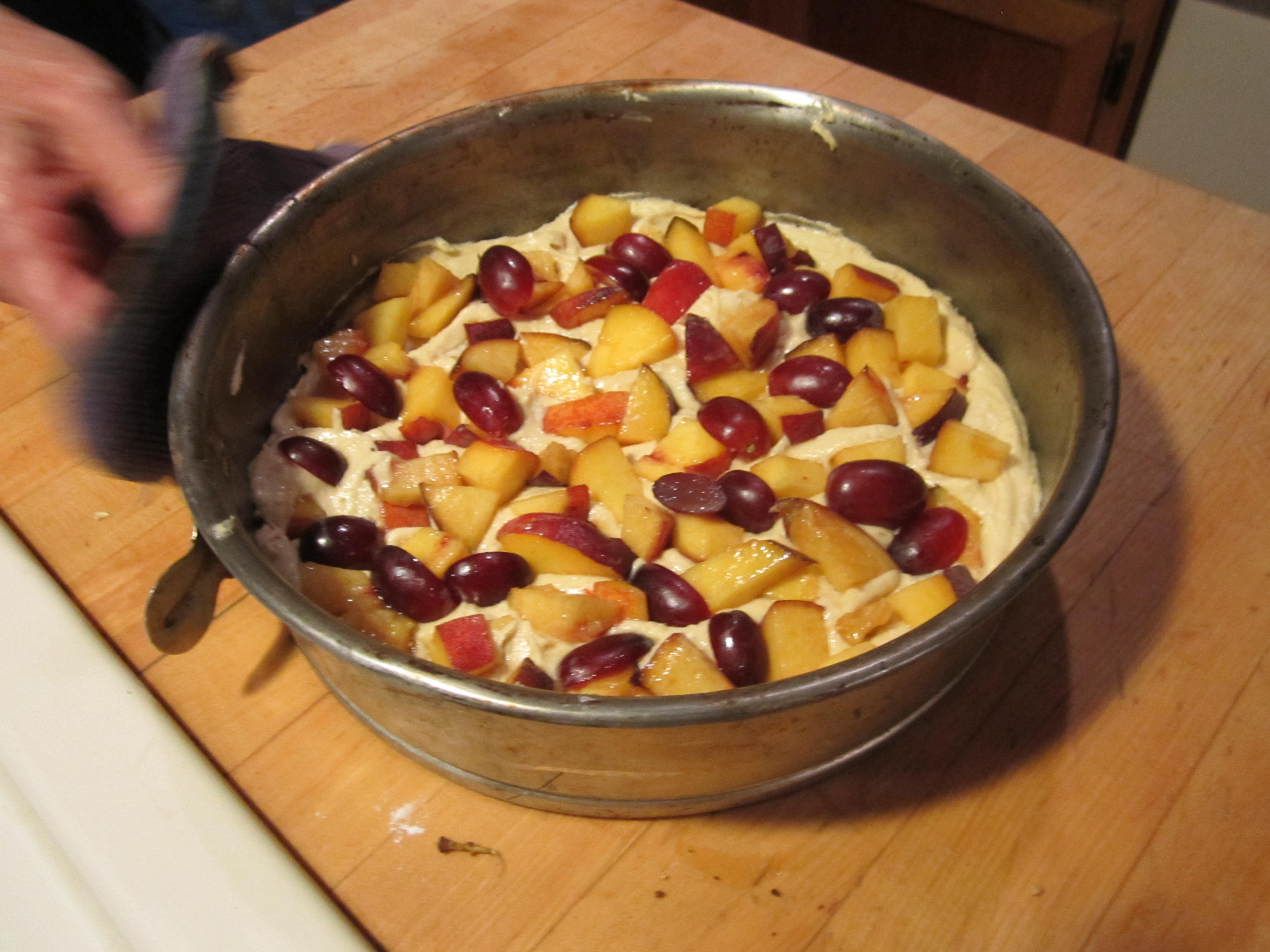
Scatter chopped fruit over top of batter.

Scatter chopped fruit over top of batter.

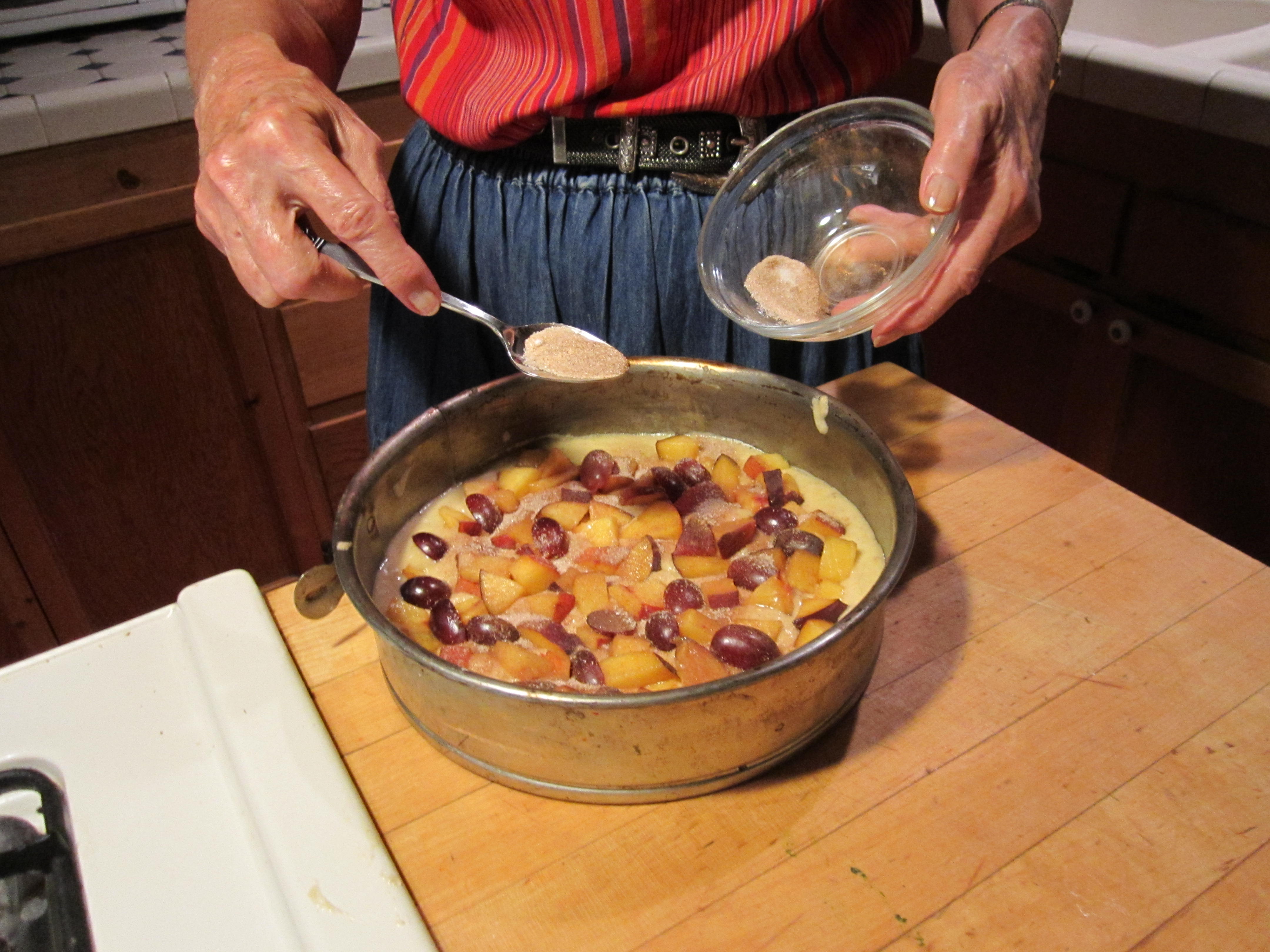
In a small bowl, stir together the topping mixture and sprinkle evenly over the cake.

Sprinkle sugar mixture evenly over cake.

Sprinkle sugar mixture evenly over cake.

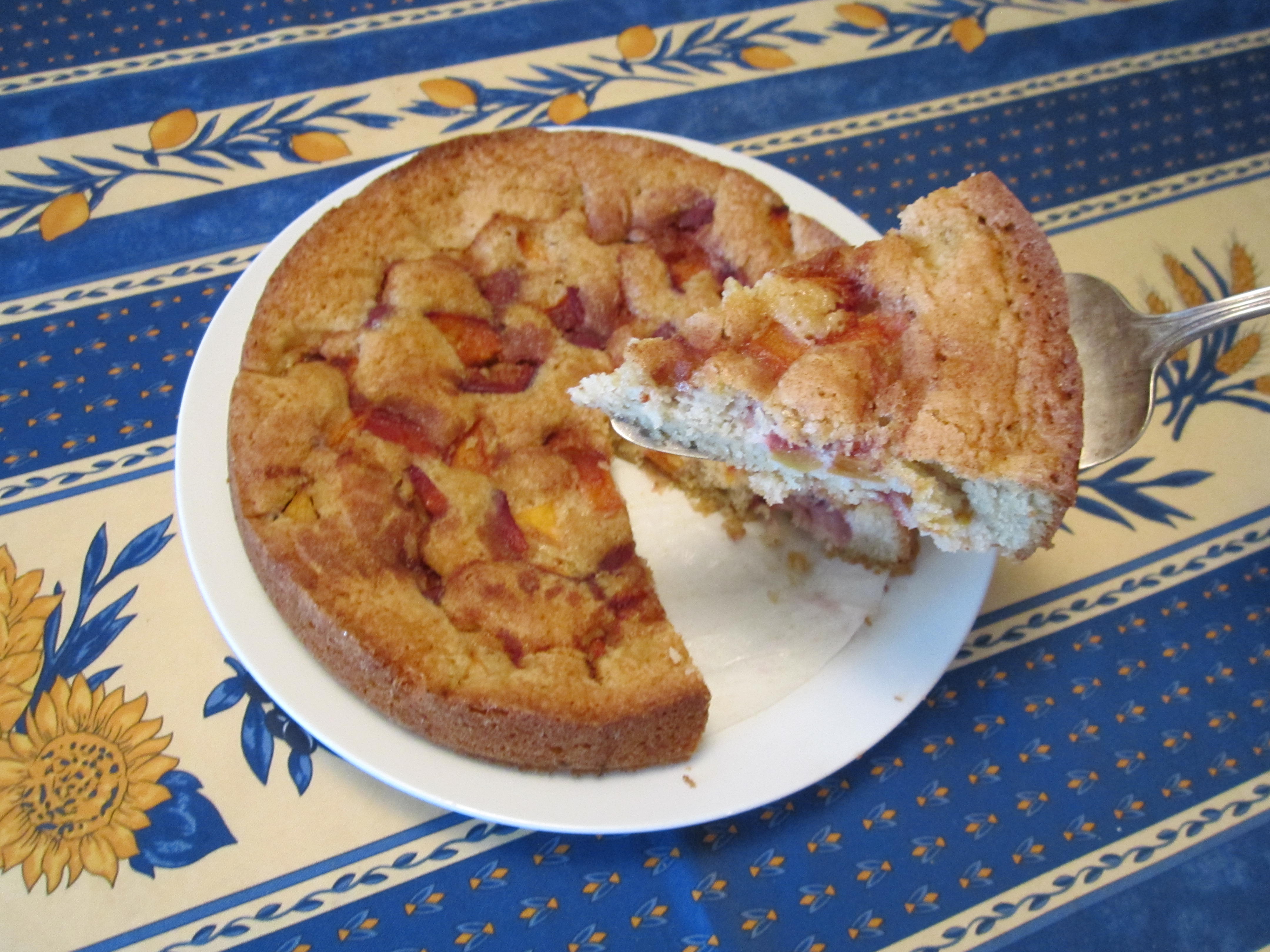
Put in preheated oven for 45 to 50 minutes. As the cake bakes it will rise over the fruit. Cake is done when it is golden brown and top is firm but tender when lightly touched. Cool in the pan for around 10 minutes and then remove the sides of the pan. Serve warm or at room temperature. A little whipped cream never hurt anything.

Yummm, warm and fragrant from the oven.

Yummm, warm and fragrant from the oven.

________________________________

Want more delicious recipes using ingredients from the Southwest?  I have lots of ideas for you. In Cooking the Wild Southwest, I introduce you to 23 easily identified and delicious wild plants of the arid Southwest. The Prickly Pear Cookbook is all about the fruits and leaves of the nopal plant. In The New Southwest Cookbook, you’ll meet some of the most innovative professional chefs in the Southwest and get to try the recipes they serve in their restaurants.


Drunken & Spicy Cerveza Camarones – or (spicy-beer shrimp)

IMG_7147


Aunt Linda here wishing you a very Happy October 3rd Morning to you.

Sleeping is sweet here in the Old Pueblo this time of year, with doors and windows opened to October air. Of course, when we open to one thing,  we open to others as well, and the smell that wafted in the bedroom door just now, as a band of Javelina meandered past was so potent it awakened me early this am.  I never saw nor heard them. Unable to return to sleep, I walked outside – the constellation Orion is twinkling as he arises in the eastern sky, as I write

Yesterday, at the front door, a a small crew of hardworking men appeared,  in want of a quick meal. Not exactly prepared for this,  I rooted around for whatever was on hand to work/cook with.  A bottle of beer had strayed from it’s pack and offered itself up.  The fridge held a bag of shrimp that were in need of cooking, or of perishing a second time. Red Chiltepin drying on the table called out to be used. An idea began to bubble up, and form froth on top.  I love  feeling in the midst of a new  invention; even if it is new only to me.  It is highly likely this recipe has been made a a hundred times in a hundred variations before it ever occured to me. I had some red quinoa on hand, as well as some early spicy arucola from the garden on hand, so I decided to cook the shrimp in a beer-chile and make a hearty salad. Consider adding some pomegranate seeds for a tart-sweet crunch.

IMG_7111


Recipe Ingredients:

I bottle of beer

One dozed shrimp – peeled and de-veined

Half a small onion, chopped to your liking.

2 Tablespoons Chopped garlic

12 chiltepin, or cayenne to taste.

2 Tablespoons or more of fresh herbs, one for cooking and one for flavoring once cooked.

Serve over Quinoa, or wild rice.

Add Fresh greens to make a salad. Pomegranate seeds. Fresh herbs.

How:

I chopped up some onion and garlic and cooked it in olive oil, along with the red chiltepin ( you could use cayenne), adding some basil from the garden (or any fresh herb of your choosing!) for a bit of flavor. It is probably wisest to add the herbs and chilies at the end as well, so the flavors don’t ” cook out”,  but I wanted to create a bubbling brew of multiple flavors so I added it all in.

IMG_7095

IMG_7098

Once the onion looks translucent, and begin to brown, add the cerveza, and let it begin to simmer, and softly boil.  Then add the shrimp.

IMG_7102

As the shrimp cook in the bubbling mixture they transform from a grey color with a straight posture, to pink and curled. Make sure it is cooked through before serving.I added a bit of salt at the end, along with fresher chile and herbs.

While the shrimp where transforming in their beer-brew in front of me, the aroma invited a question:  Where did the word “cerveza”originate?  I quickly looked up the word origin for Cerveza and found this:

“The Romans called their brew “cerevisia,” from Ceres, the goddess of agriculture, and vis, Latin for “strength.”

images

Ceres.   Goddess of Agriculture.  It is amazing “who” you can meet hiding quietly inside a word.


Note: I had enough of the spicy beer-shrimp BROTH left over (and did not want to add to my shrimp-quinoa-salad), so I added it to a pot of tomato soup and it was DELICIOUS. Have it with sandwiches ( grilled cheese and shrimp sandwiches!)

One more Note: I HIGHLY encourage you to read Paul Greenberg’s book  American Catch: The Fight for Our Local Seafood. There have been several great interviews with him on NPR if you prefer to listen. The Mother Goddess would, I feel, encourage us to empower ourselves with such knowledge. Then we can more skillfully impact our food systems.

A Southwest Twist on Mac ‘n Cheese

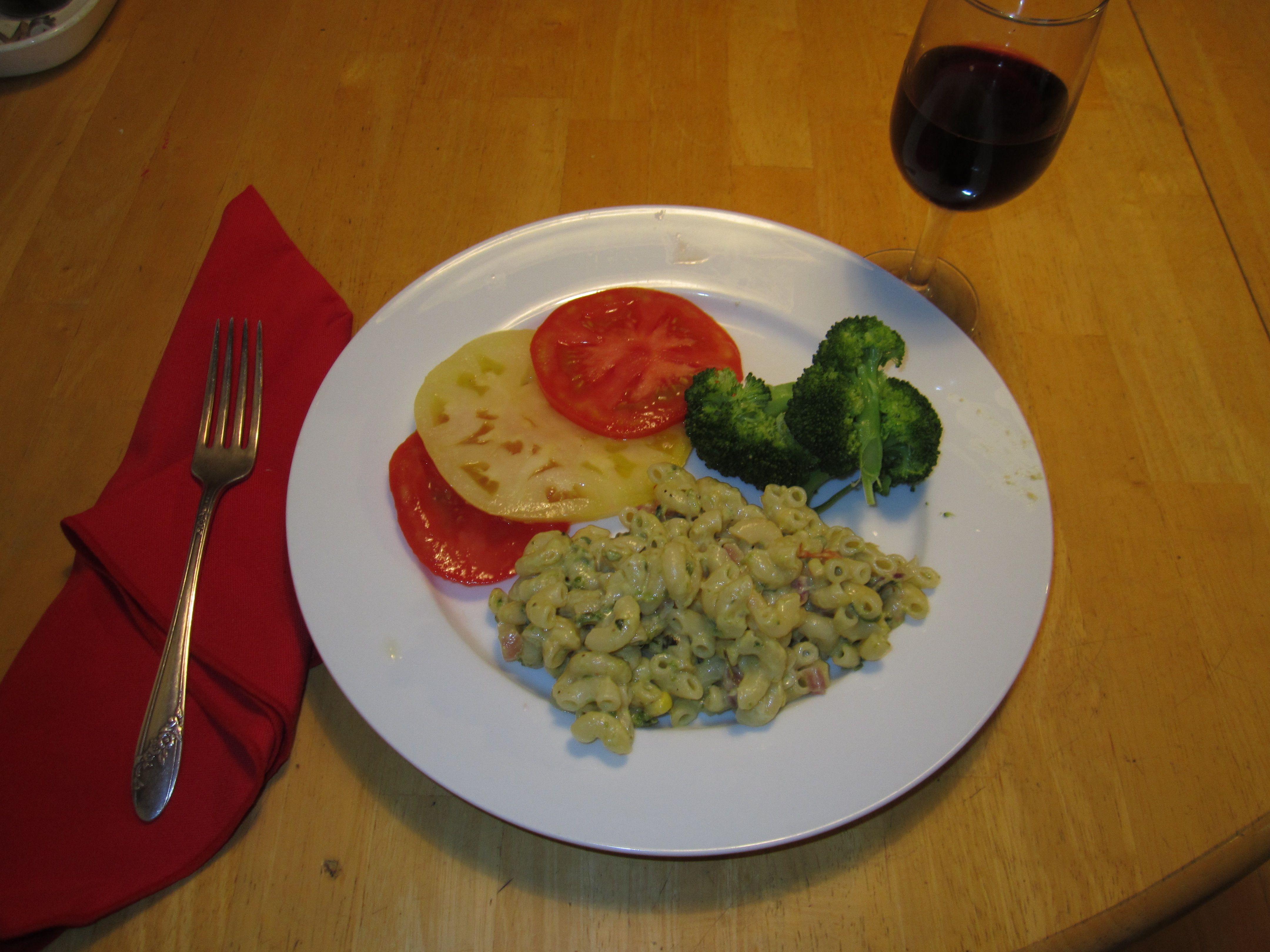
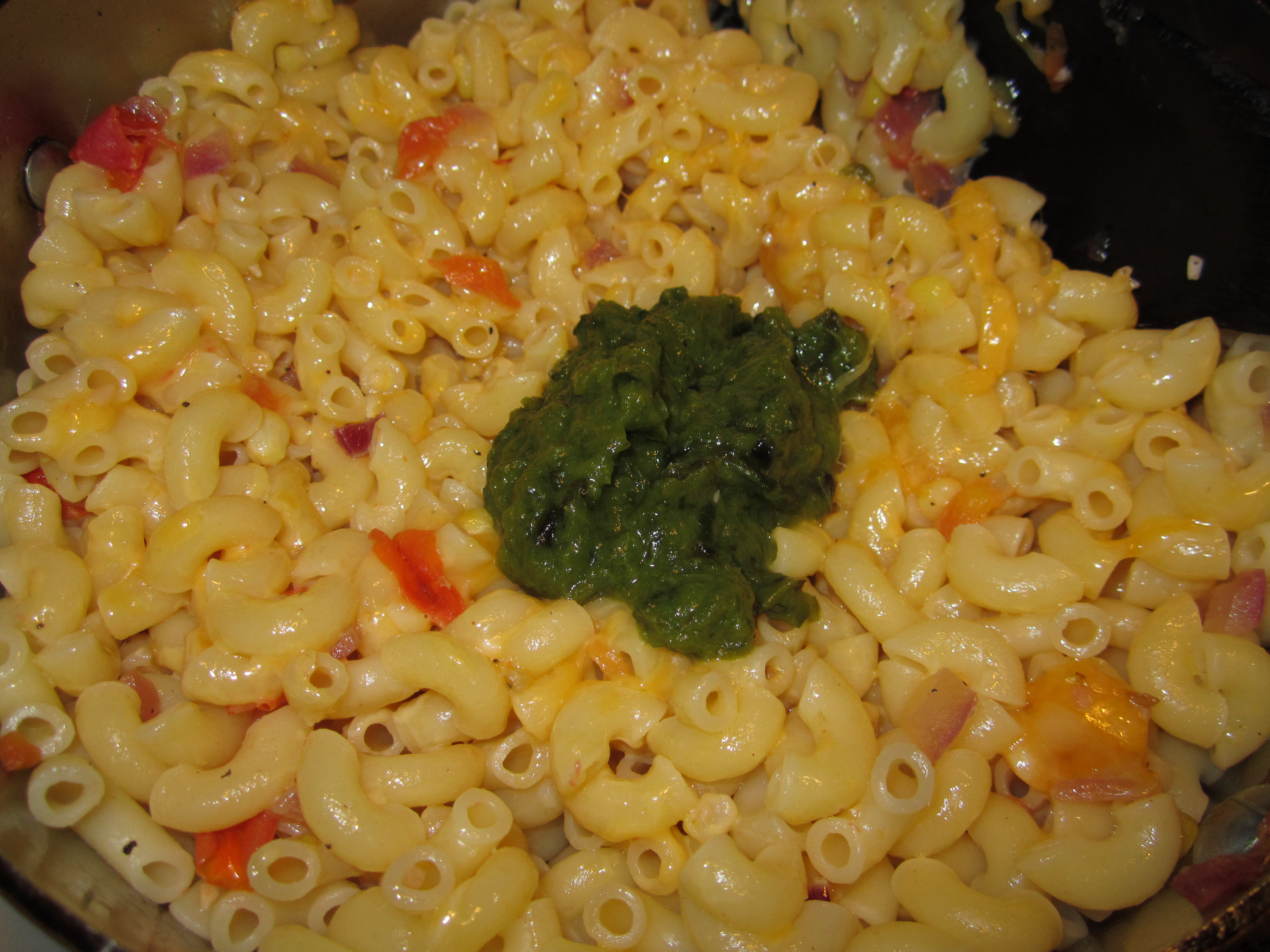
Green Chile Macaroni gives a Southwest twist to everybody's comfort food.

Green Chile Macaroni gives a Southwest twist to everybody’s comfort food.

My husband is good at making breakfast — coffee, fruit, toast. And he can put together a salad if I have plenty of veggies in my garden or the fridge. But recently he decided he should learn how to actually cook something, and we decided on macaroni and cheese. From scratch, not out of a box. I looked in all my old standard cookbooks: The Joy of Cooking (both the 1964 and 1997  versions); How to Cook Everything, by Mark Bittman, and The New Basics by Rosso and Lukins. Ultimately, I decided the best recipe was in my own New Southwest Cookbook. I didn’t devise the recipe; it came from Chef Robert McGrath at the Roaring Forks Restaurant in Scottsdale.

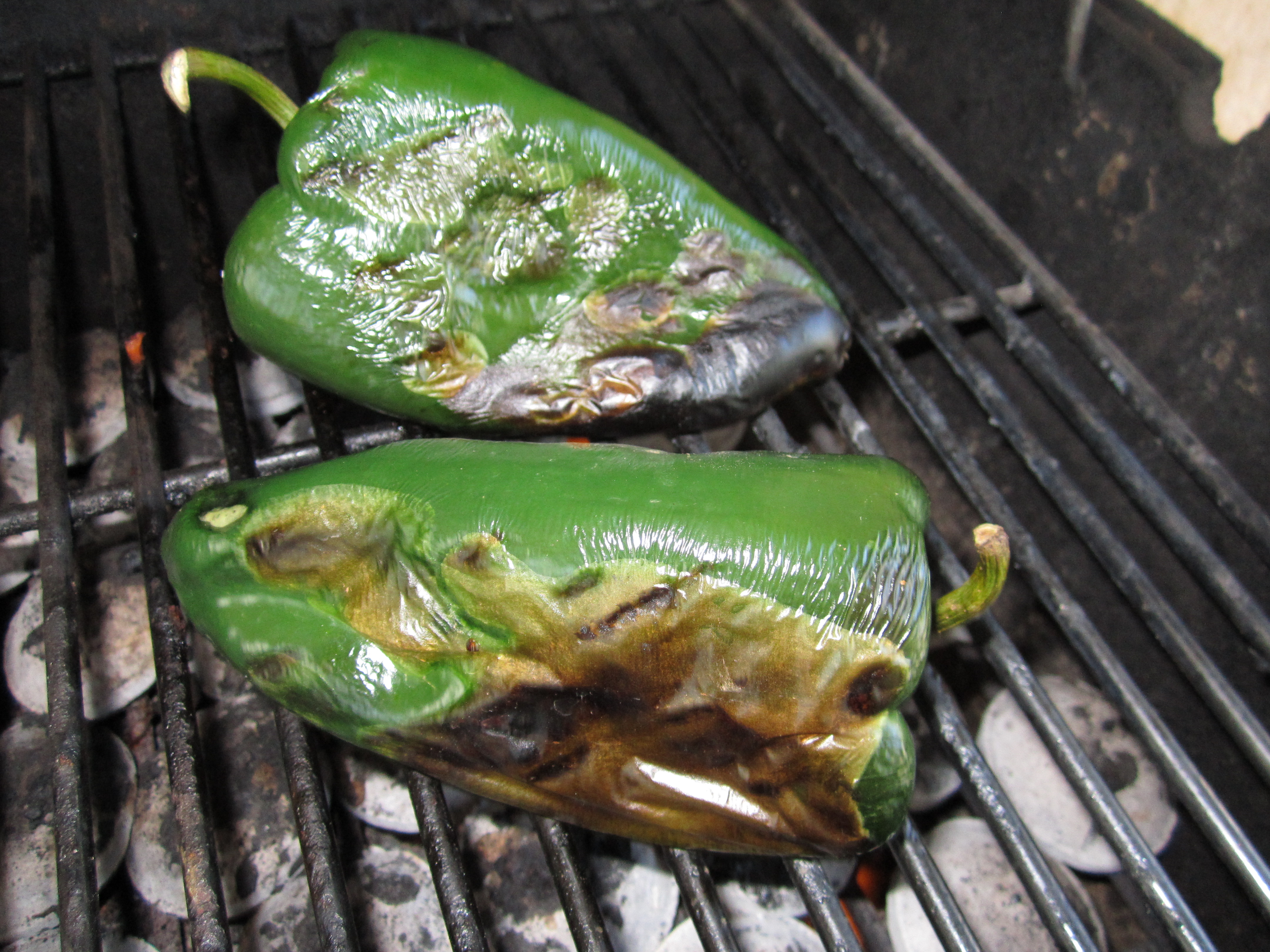
To me the special flavor comes from the poblano chiles. I think they have a better flavor than the typical Anaheims. Frequently, but not always, they are less hot while still giving a great chile flavor. You must roast and puree them first. If you have a grill, roast them there. Otherwise, the broiler on your oven will do. The trick is to the get the skin nicely charred but not to burn the thick juicy chile walls.

These chiles are charred on one side. I have turned them to blacken another side.

These chiles are charred on one side. I have turned them to blacken another side.

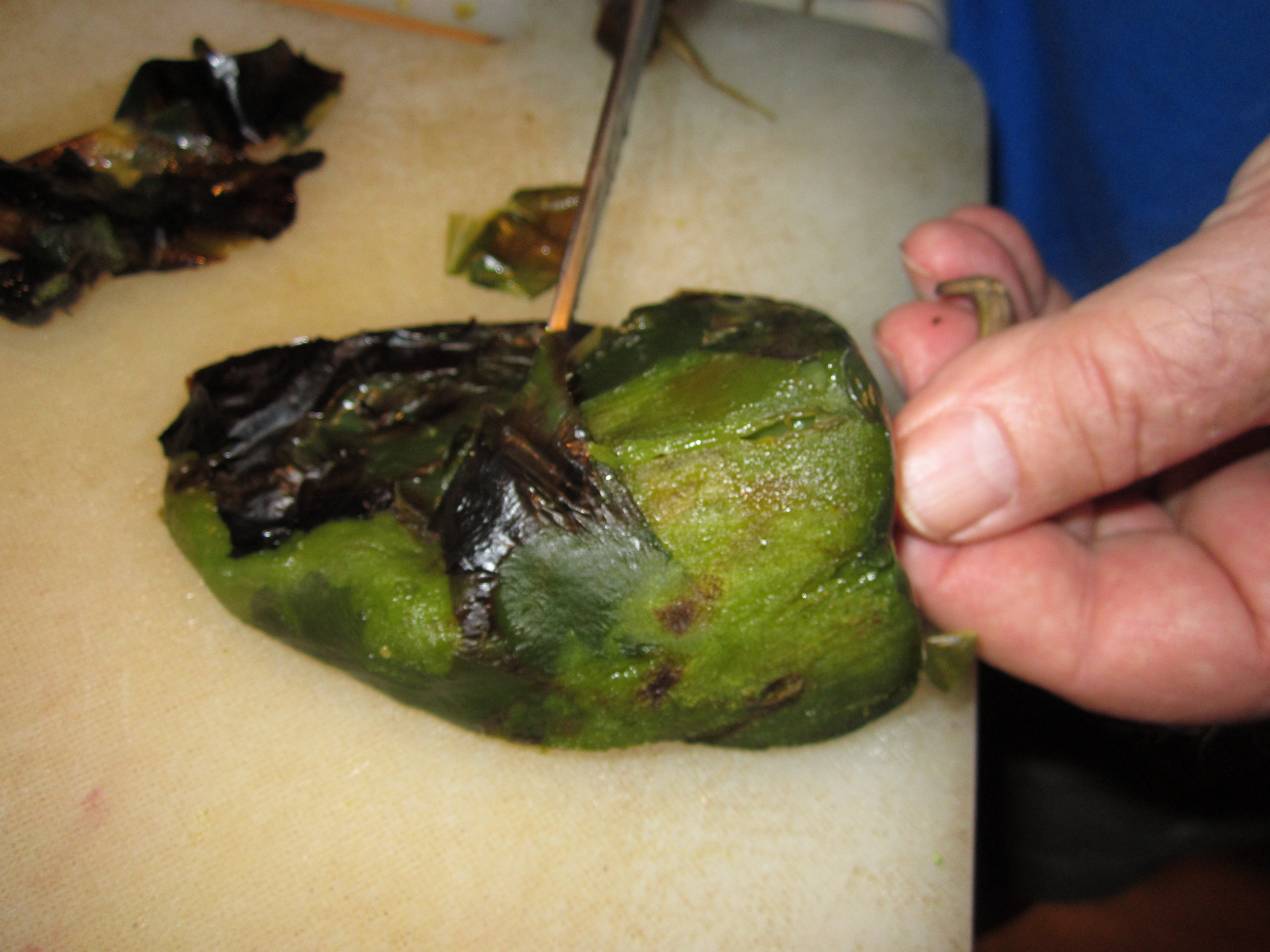
Skin is easily removed after steaming.

Skin is easily removed after steaming.

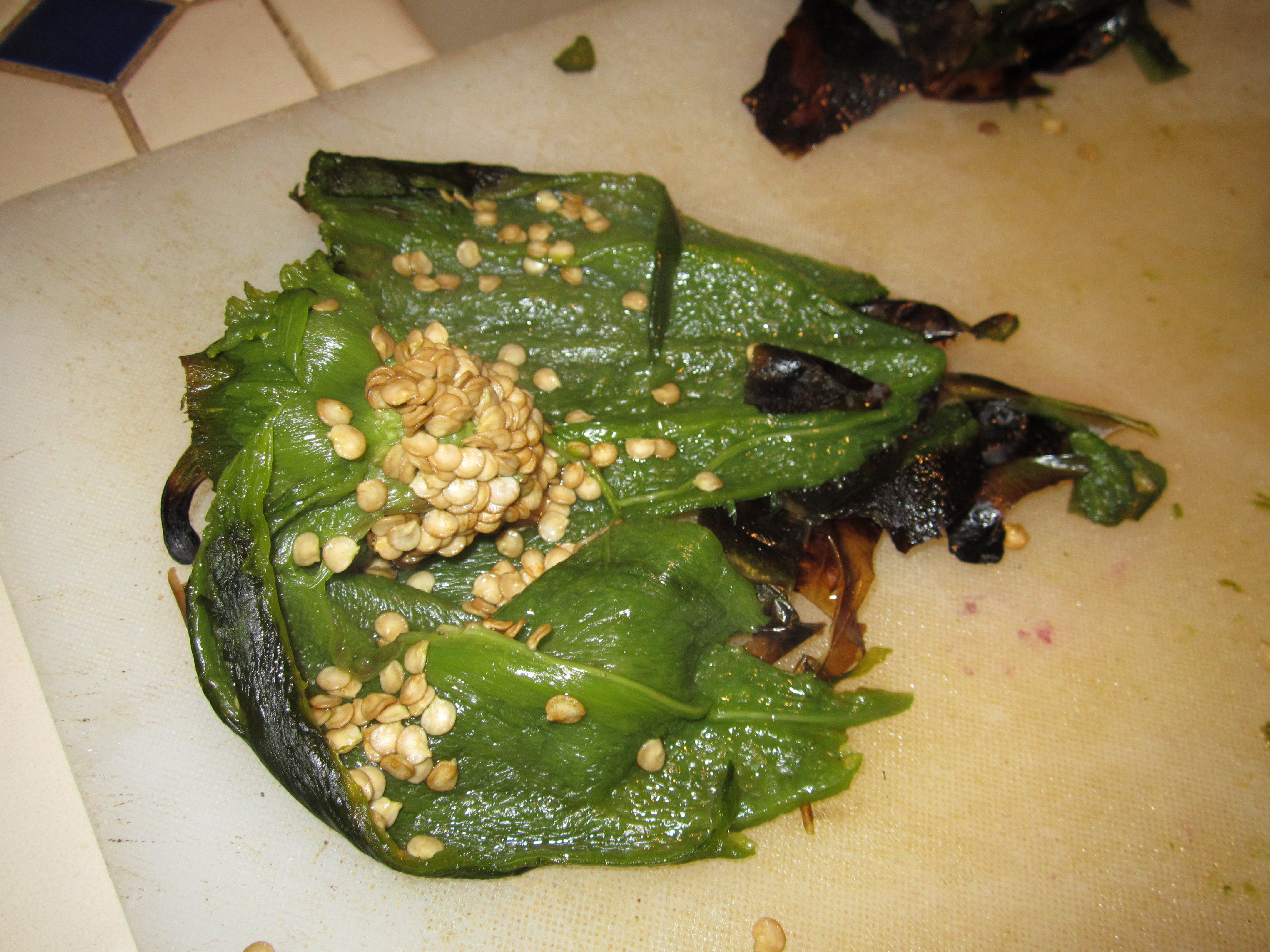
Open chiles and remove seeds.

Open chiles and remove seeds.

Once the seeds are removed, puree the poblanos in a blender or food processor and set them aside.

Put some water to boil for the macaroni. Any shape will do, but I used the classic elbow-shaped. While the water is boiling and then the macaroni is cooking, you will have time to grate the cheese, and chop and saute the red pepper, onion, garlic  and corn. Use can use fresh corn cut from the cob or just canned works also.

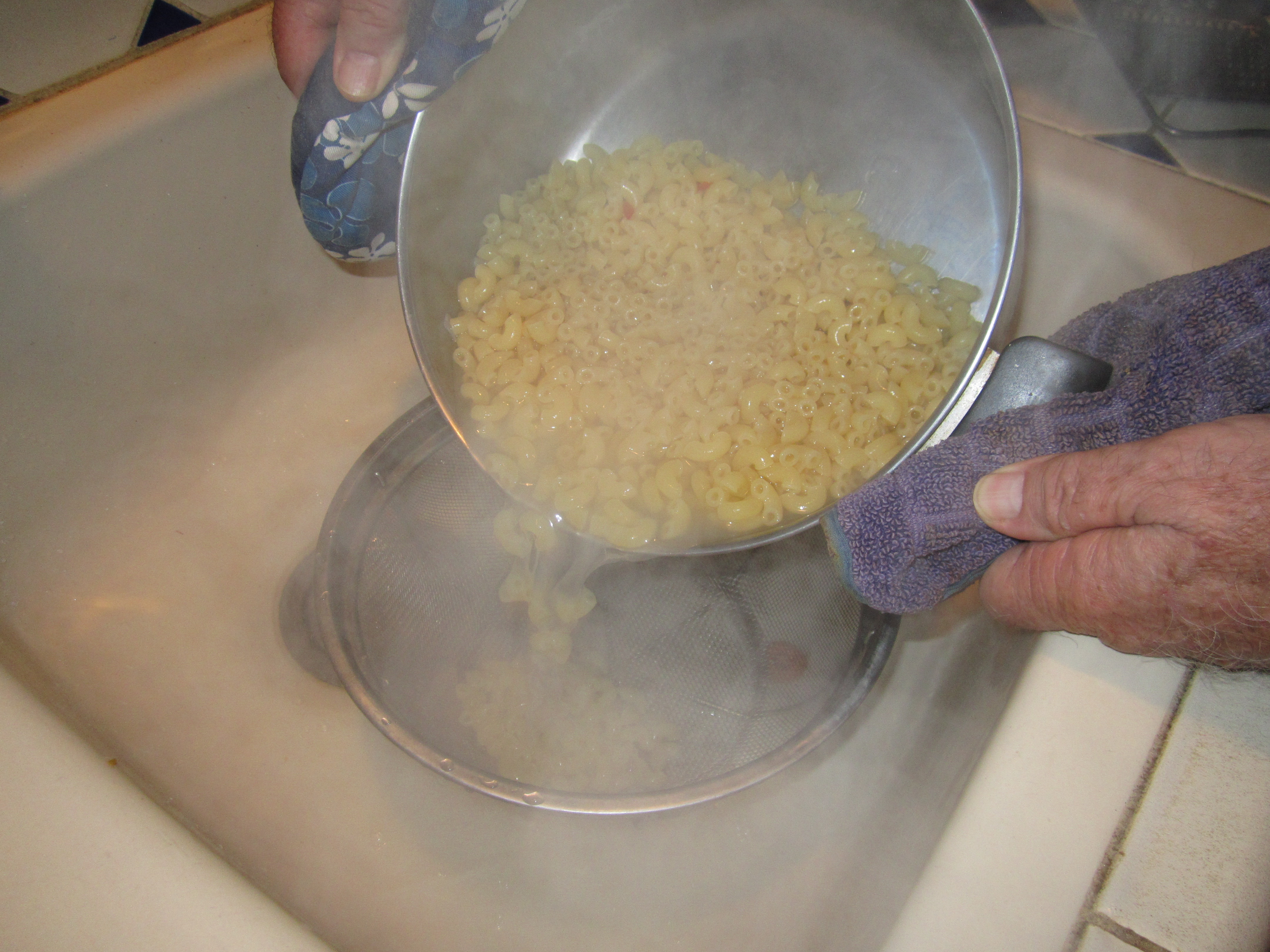
Drain the macaroni.

Drain the macaroni.

When the macaroni is tender, return it to the pot and stir in all the ingredients. Last will be the cream. The recipe calls for heavy cream, but I used half-and-half. When I was collecting recipes for The New Southwest Cookbook, I discovered that lots of butter and cream are the professional chefs’ secret ingredients. THAT is why everything they make tastes so good.

Stir in the chile and other vegetables.

Stir in the chile and other vegetables.

Ford tastes for seasoning. It might need salt.

Ford tastes for seasoning. It might need salt.

Here’s the recipe.  It is supposed to be four servings, and it is. But everybody usually wants seconds so doubling the recipe makes sense.

Green Chile Macaroni  (Makes 4 servings)

1/4 cup diced red bell pepper

1/2 cup sweet corn kernels

1/4 cup  diced red onion

2 teaspoons chopped garlic

1 teaspoon corn oil

2 cups  cooked macaroni

1/2  to 3/4 cup puree of roasted, peeled poblano chile

2/3 cup  grated cheese (hot pepper jack, cheddar or mixture)

1/4 cup heavy cream

Kosher salt and cracked black pepper to taste


Sauté the red bell pepper, corn, red onion, and garlic in the oil in a heavy pan.  Add the macaroni, poblano puree, and  cheese and stir until cheese is melted. Fold in the heavy cream.  Season with salt and pepper to taste.

_____________________________________

Find more great recipes with a Southwest flair in The New Southwest Cookbook, The Prickly Pear Cookbook, and Cooking the Wild Southwest

Gifts from September Gardens–intentional and otherwise

Tia Marta here to share some culinary ideas happening now in Baja Arizona herb gardens, and to extend an invitation to visit el jardinito de hierbas at Tucson’s Mission Garden to experience the herbs in action!

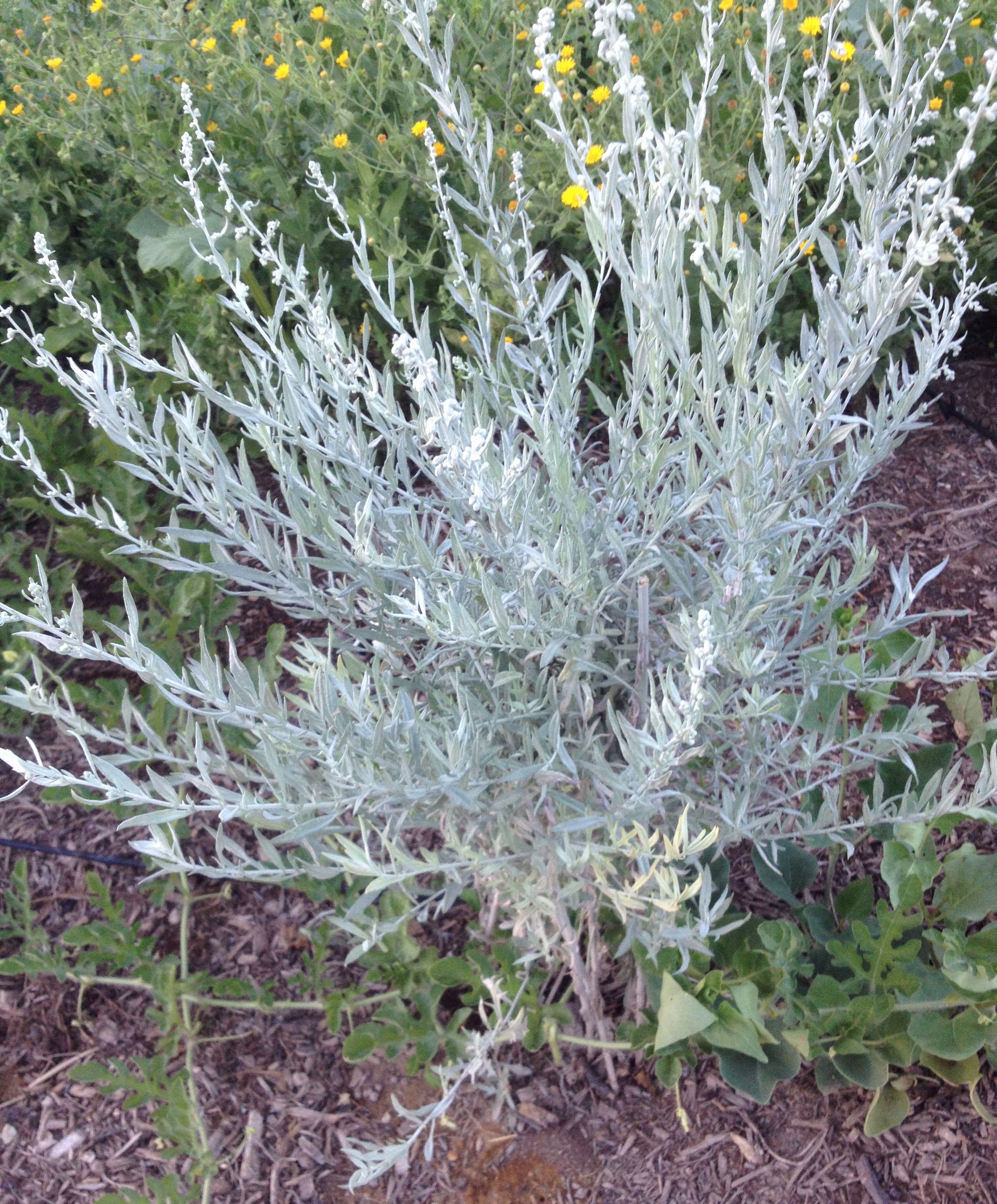
Estafiate--all purpose Artemisia ludoviciana--in the herb plot, Mission Garden (MABurgess photo)

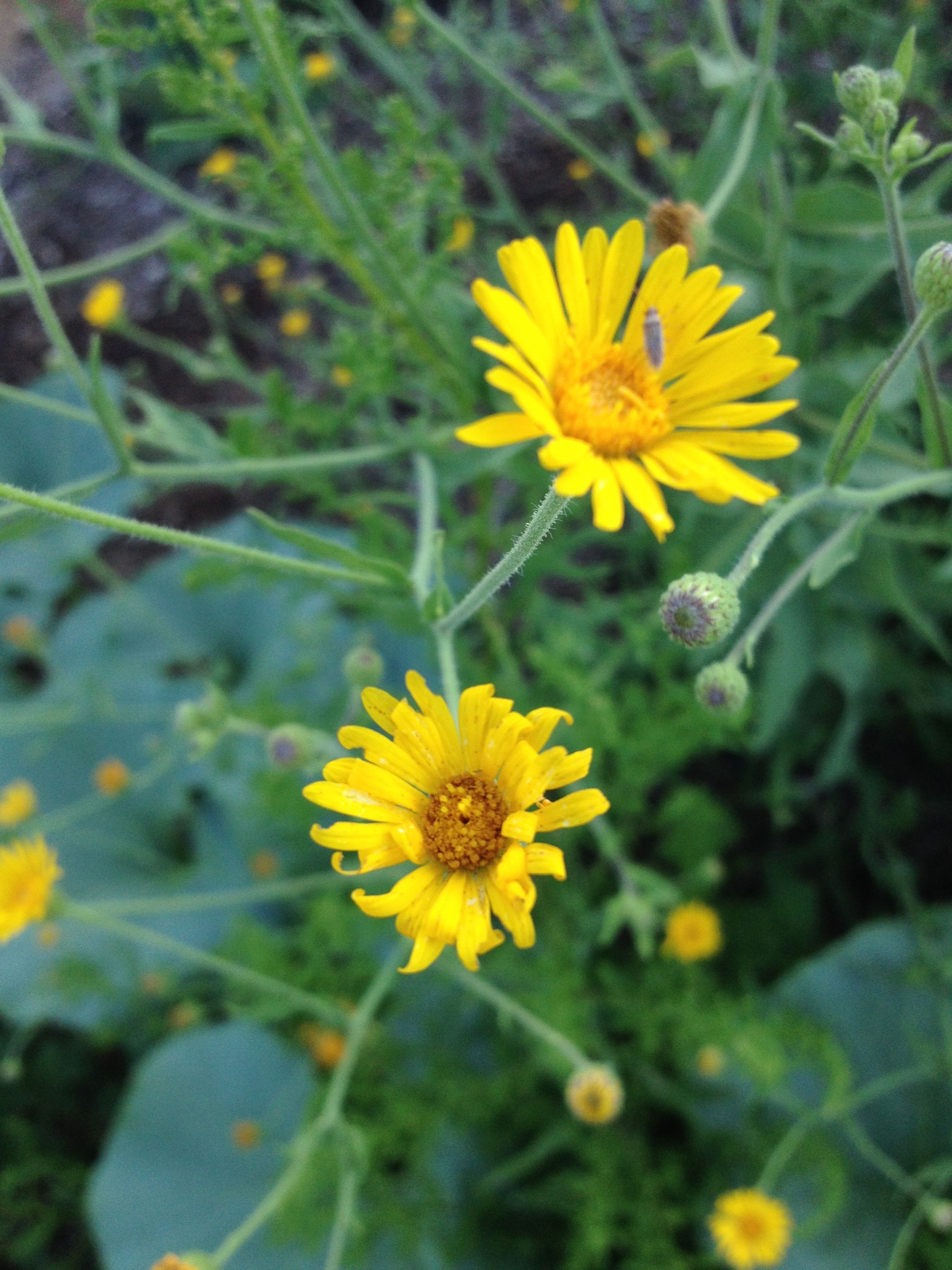
Estafiate–all purpose Artemisia ludoviciana–and Mexican arnica beyond (close-up of flower below), in the herb plot, Mission Garden (MABurgess photos)

Heterotheca--Mexican arnica flower (MABurgess photo)

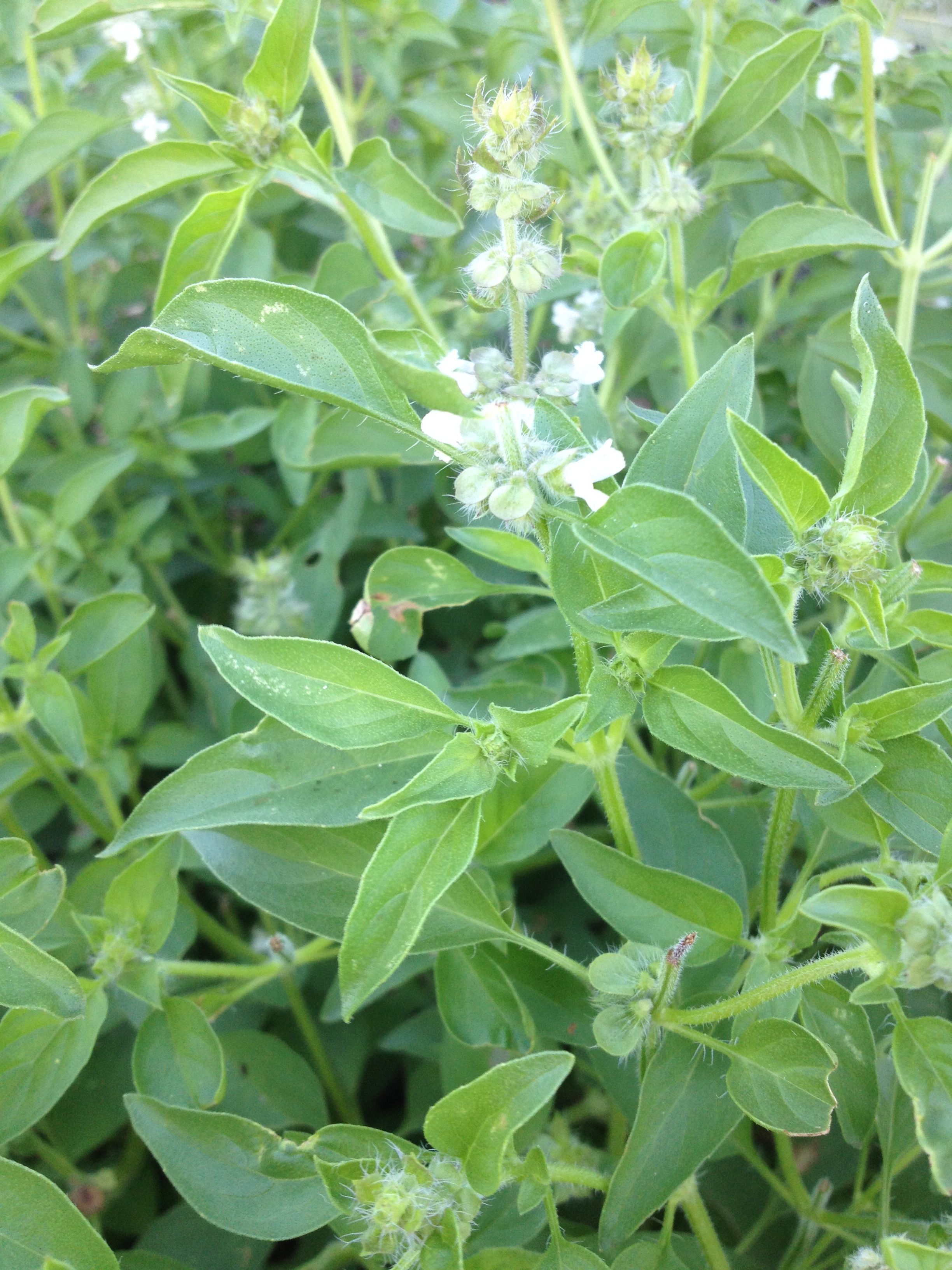
Of all the herbs in our Southwest summer gardens—presently rejoicing in monsoon humidity and in the soppy tail of Hurricane Norbert—I think the most exuberant has gotta be Mrs Burns’ Famous Lemon Basil……..

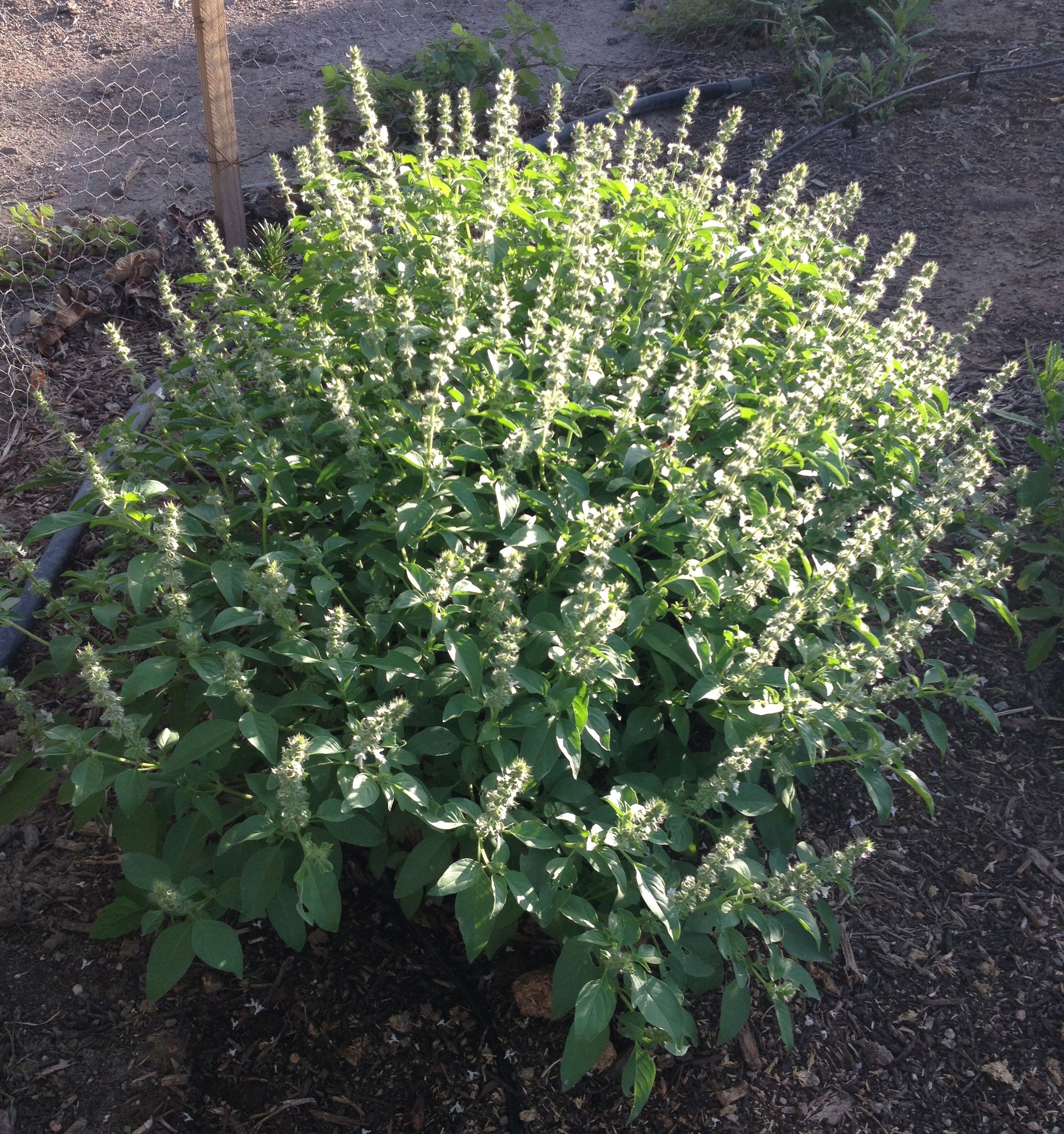
Mrs Burns' Famous Lemon Basil, at Mission Garden (MABurgess photo)

Mrs Burns’ Famous Lemon Basil, at Mission Garden (MABurgess photo)

In its versatility, Mrs Burns’ lemon basil provides many possibilities for the kitchen and the cosmetic chest, the first being olfactory delight. Brush its foliage lightly with your hands and you get an instant rush of enlivening yet calming lemon bouquet. Like Monarda or lavender, this lemon basil is definitely one to plant in a “moon garden” for nighttime enjoyment, or along a narrow walkway where you have to pleasantly brush up against it, getting a hit en route, always a reminder that life is good.

I wish this blog could be “scratch-and-sniff” so you could sense the sweet lemony aroma of this heirloom right now. Maybe technology can do that for us someday, but meanwhile, find a Native Seeds/SEARCH aficionado who has planted it and get yourself a sprig to sniff.   On any Saturday morning, come visit and whiff this desert-adapted basil at Mission Garden (the living history exhibit at the base of “A”-Mountain created by Friends of Tucson’s Birthplace). There, among Padre Kino’s heirloom fruit trees, in the monsoon Huerta vegetable plot, a group of herbalists known as Tucson Herbalist Collective (usually referred to as THC—like far out, righteous herbs, man, whatever) has planted a patch of traditional Mission-period medicinal and culinary herbs within reach of the fence. Lean over and touch Mrs Burns’ lemon basil for a real treat. At present (mid-September) “her” basil is a mound of dense smallish leaves and is sending up a zillion flower stalks sporting tiny white flowers. High time to snip the tops to encourage more foliage. Snippings can be used to zest a salad, to bedeck a platter of lamb chops, or to dry for a long-lasting potpourri.

Close-up view of Mrs Burns' Famous Lemon Basil flowers and foliage (MAB)

Close-up view of Mrs Burns’ Famous Lemon Basil flowers and foliage (MAB)

Mrs Burns’ lemon basil—not your typical, soft, floppy-leafed basil—is bred for desert living, with smaller, sturdier foliage. Yes, it does need water, but it can take the desert’s heat and sun. This heirloom’s history is worthy of note and relating it honors the Burns family. The person who put “Famous” into the name Mrs Burns’ Famous Lemon Basil was Dr. Barney T. Burns, one of the founders of the seed conservation organization NativeSeeds/SEARCH and an amazing seed-saver himself, whose recent passing we mourn and whose life we gratefully rejoice in. It was his mother, Janet Burns, transplanted from Canada to Carlsbad, NM, who, with a neighbor over several decades, continued to grow and select surviving, desert-hardy seed in Southwestern heat. Barney contributed her basil seed as one of the first arid heirlooms to become part of the NSS collection. Interestingly, these tiny seeds have since traveled around the globe. One year Johnny’s Seeds picked it up, grew it out for their catalog, and sent NSS a check for $600 in royalties, having profited considerably from its sale.

You can use Mrs Burns’ Famous Lemon Basil leaf in many marvelous dishes. Layer fresh leaves with slices of farmers’ market tomatoes and thin slices of feta or fontina cheese and droozle with flavored olive oil. (I like Queen Creek Olive Mill blood-orange.) And OMG—this basil makes phenomenal pesto. Include this lemon basil with roast chicken for the best lemon-chicken ever. Dry it and put it in stuffing. Add a few fresh leaves to salad for a taste surprise. Or, add a sprig to soups to add a tang. You can even bedeck a glass of V-8 or your Bloody Mary with a lemon basil sprig to fancy up your presentation.


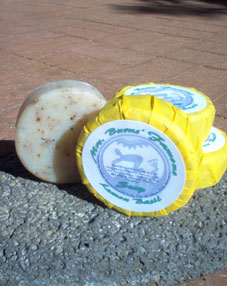
Handmade soap with Mrs Burns' Lemon Basil-infused jojoba oil (MABurgess photo)

Handmade soap with Mrs Burns’ Lemon Basil-infused jojoba oil (MABurgess photo)

Once when I enthusiastically grew a 50-foot row of Mrs Burns’ basil, it produced for me bags of dried herb, inspiring some fragrant projects. I distilled the aroma-rich herb to make a gentle hydrosol spray which, I feel, carries medicinal/psychological qualities of soothing, pacifying refreshment. By first infusing this marvelous herb in jojoba oil, I create beauty bars—with Mrs Burns’ Famous Lemon Basil as the exfoliant in the soap—available at the NativeSeeds/SEARCH store, the Flor de Mayo booth at St Phillips Farmers Market, or at http://www.flordemayoarts.com.

In my mass planting of lemon basil, I observed bees going totally ecstatic over the profuse flowers and so wished that I had had bee boxes close-by. If any desert bee-keepers want to try a new gift to their bees and to us consumers of honey, I recommend they plant this one. Can’t think of anything finer than Mrs Burns’ Famous Lemon Basil honey!

Brush leaves of devilsclaw for a cooling sensation (MABurgess)

Brush leaves of devilsclaw for a cooling sensation (MABurgess)

Here in culinarily-exciting Baja Arizona, as we promote the uniqueness of Tucson as an International City of Gastronomy, it is fun to consider another of our unique local food plants, a wild and unlikely weed which pops up with monsoon rains in low places, including at Mission Garden and is respectfully spared there. Known as i:hug by the Tohono O’odham (pronounced eee’hook), devilsclaw or unicorn-plant by Anglos, and Proboscidea spp by taxonomists, ours is not to be confused with the herb devilsclaw of commerce, Harpagophytum procumbens native to South Africa. Our native i:hug (of which there are a few species, some yellow-flowered, some pink) is a weed of many uses.

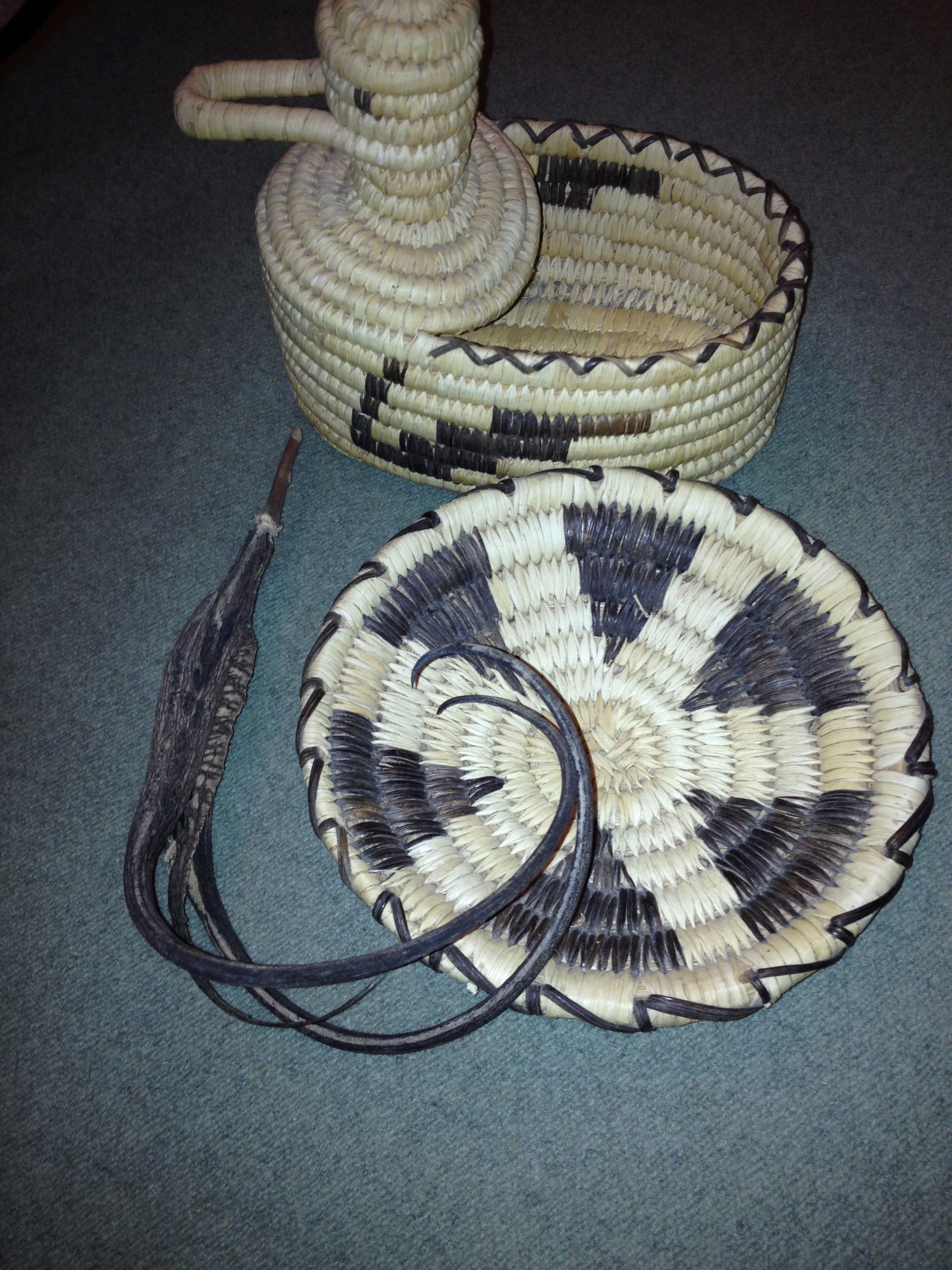
Tohono O'odham coiled basket by Juanita Ahil with domestic long-clawed i:hug (MABurgess photo)

Tohono O’odham coiled basket by Juanita Ahil with domestic long-clawed i:hug (MABurgess photo)

It is primarily known as the fiber used by Tohono O’odham, Akimel O’odham, and N’de weavers to create the striking black designs in their coiled basketry. Otis Tufton Mason’s tome Aboriginal American Indian Basketry, first published by Smithsonian Institution in 1904, shows beautiful specimens of unicorn-plant weaving, and mentions its use by many desert people including Panamint basket-makers of Death Valley.

I have a feeling that the devilsclaws that are volunteering now at Mission Garden are the children of plants that have been grown by Native People in that very place along the Santa Cruz for many centuries.

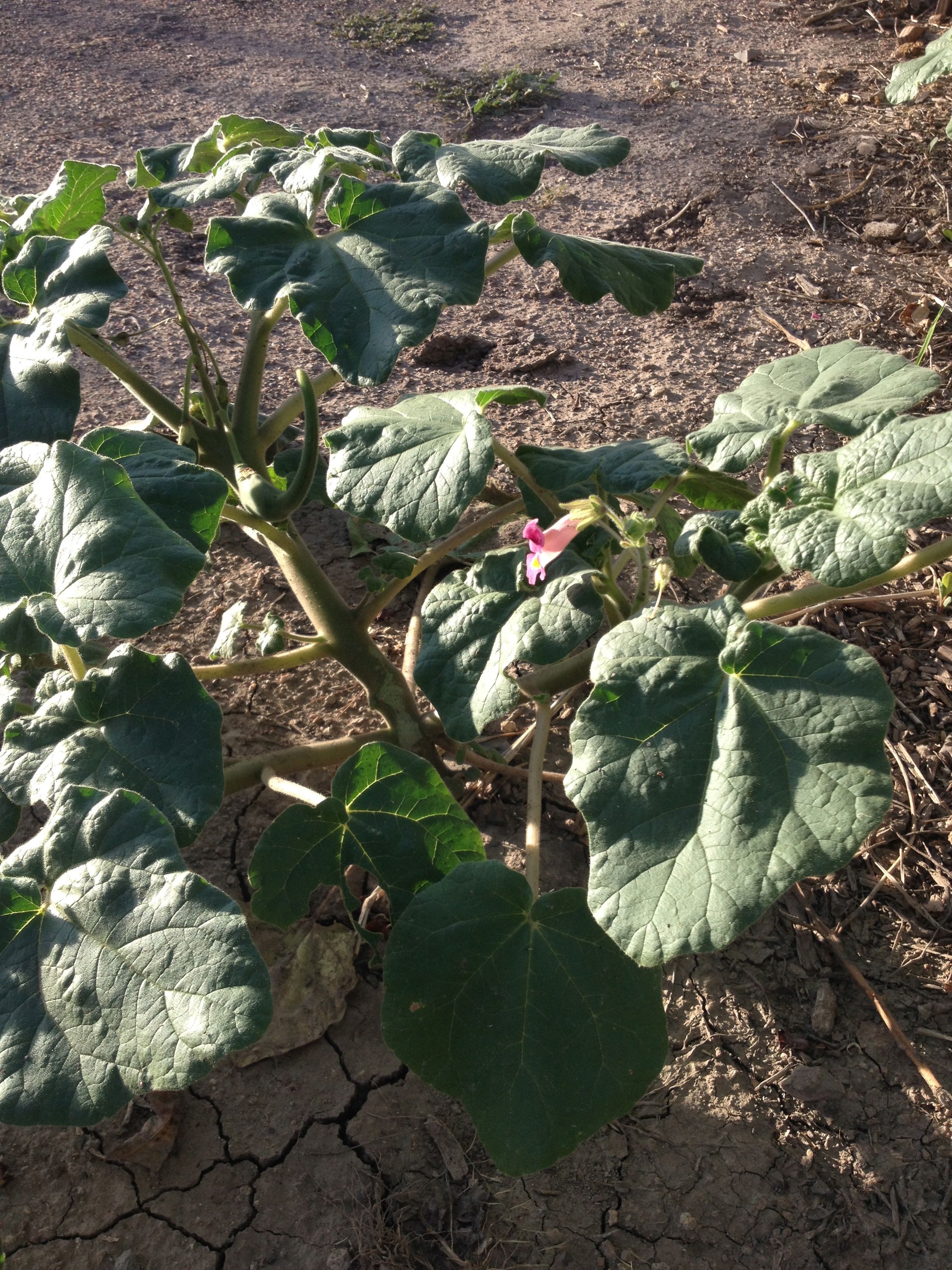
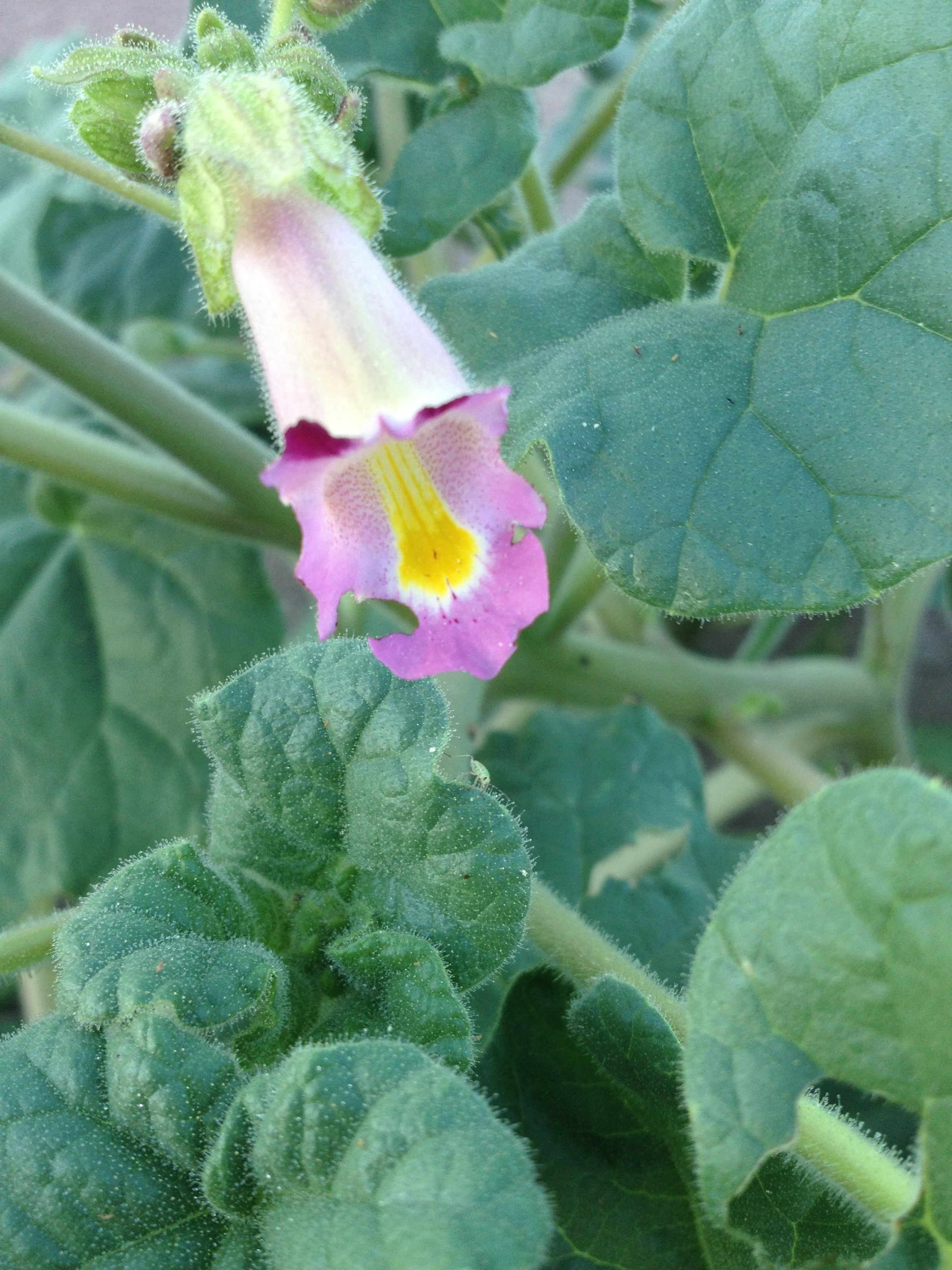
Devilsclaw (Proboscidea) flower close-up (MABurgess photo)

Devilsclaw (Proboscidea) flower close-up (MABurgess photo)

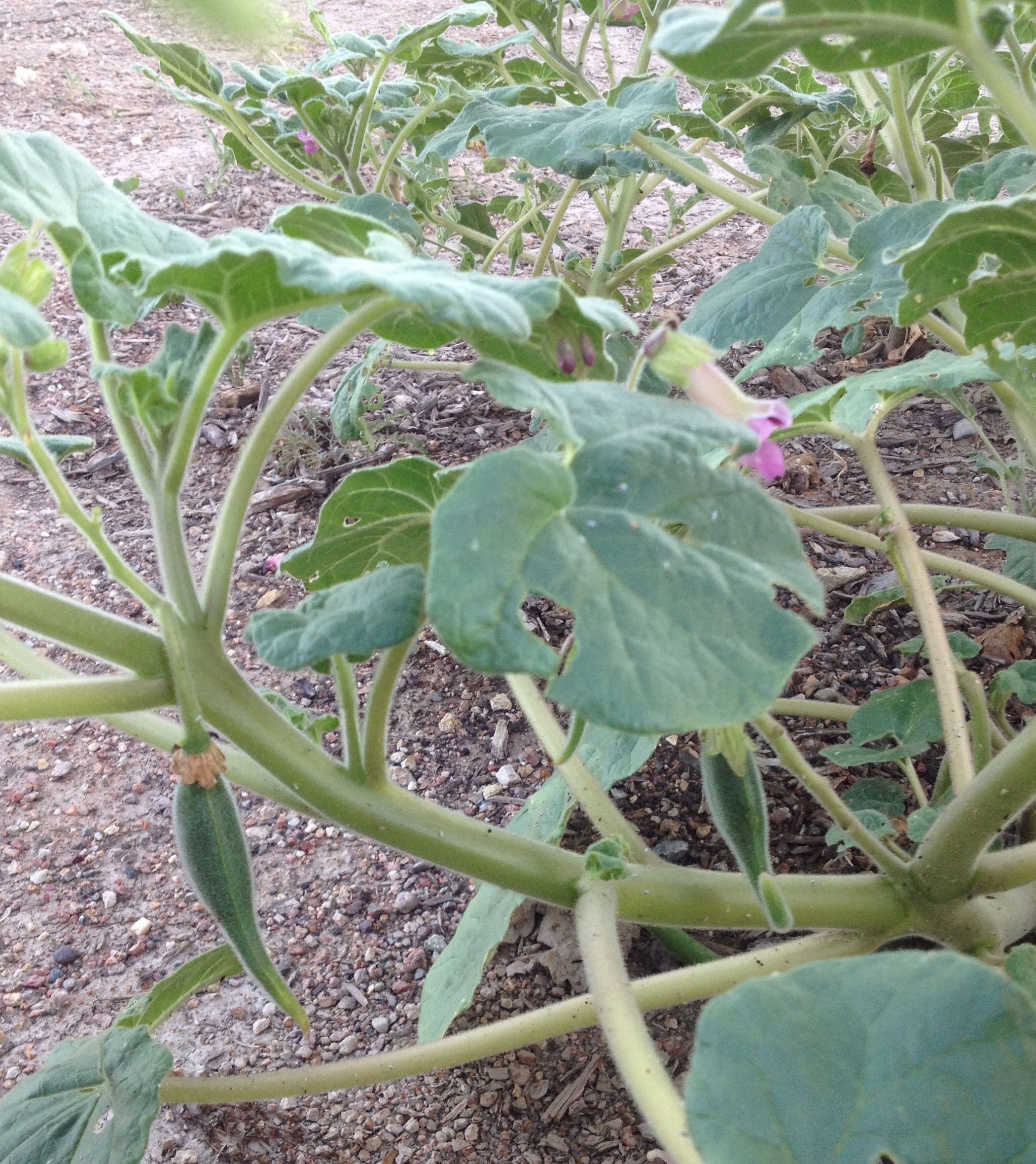
As an ornamental, unicorn-plant or devilsclaw can be a welcome surprise of greenery in late summer into fall, making a mound of large leaves sometimes 2’ high and 3’ wide. Tucked among its spreading fuzzy branches, under velvety maple-leaf-shaped foliage, will appear tubular flowers edged in pink. Should you need a cooling touch on a hot day, just lightly brush one of its big leaves and you are instantly refreshed. The velvety look of devilsclaw foliage is actually one of the plant’s defenses against water-loss. Each leaf is covered with fine hairs. At each hair tip is a gland containing a microscopic bead of moisture. Hair causes wind-drag, slowing evaporation from the leaf surface. What evaporates from the glands acts to cools the leaf—what remains can also cool our skin, should we touch it.

Young, harvestable devilsclaw pods (MABurgess photo)

Young, harvestable devilsclaw pods (MABurgess photo)

Most interesting of all are the foods that our native devilsclaw can provide. After pollination of the flower, a small green curved pod emerges like a curled, fuzzy okra. When young, that is, under about 2 ½” long, and before the pod develops woody tissue inside, these small green unicorns can be steamed as a hot vegetable, stir-fried with onion, green chile or nopalitos, or pickled for a Baja Arizona snack.

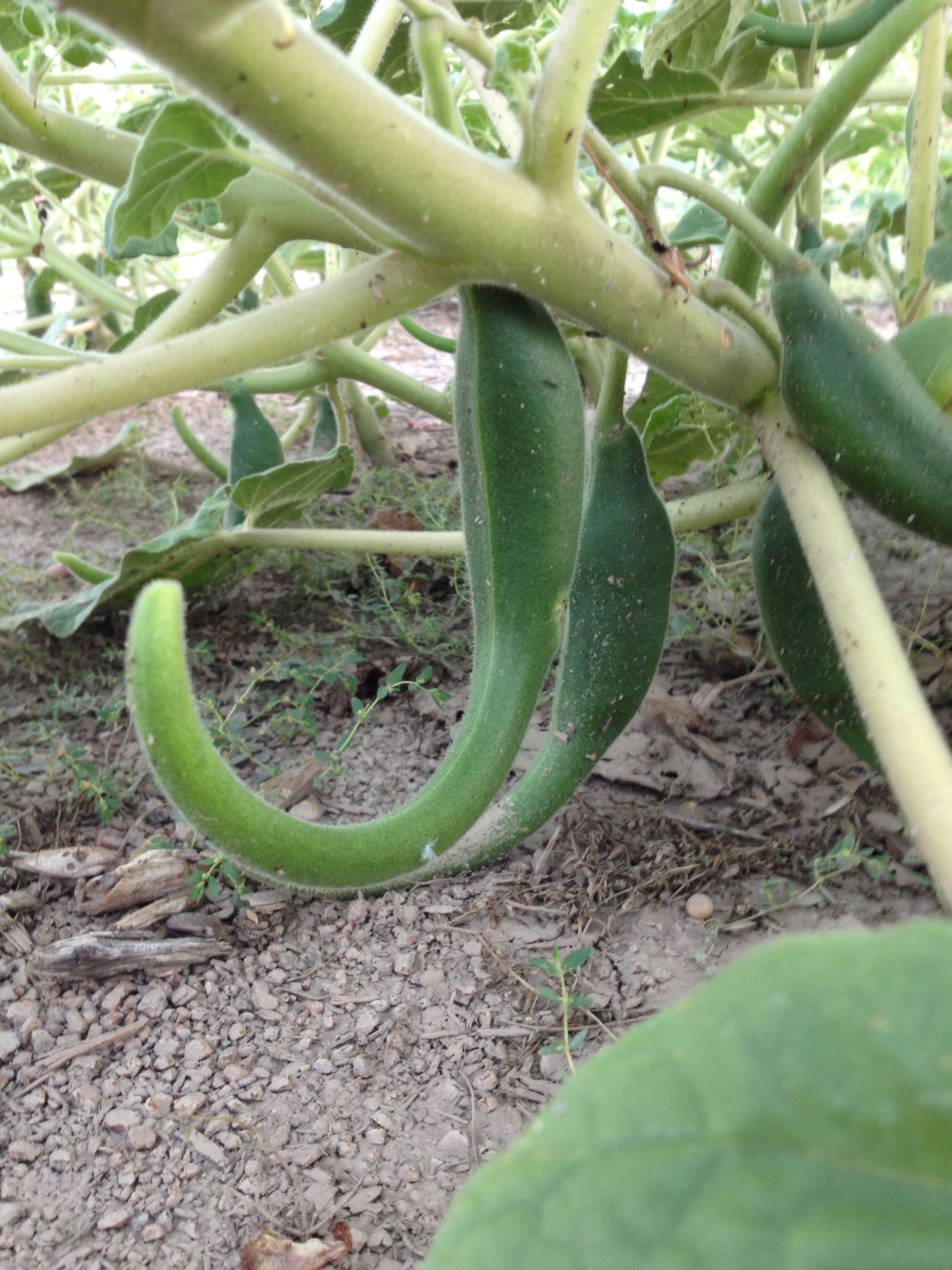
Maturing green devilsclaw pods beyond the food stage (MABurgess)

Maturing green devilsclaw pods beyond the food stage (MABurgess)

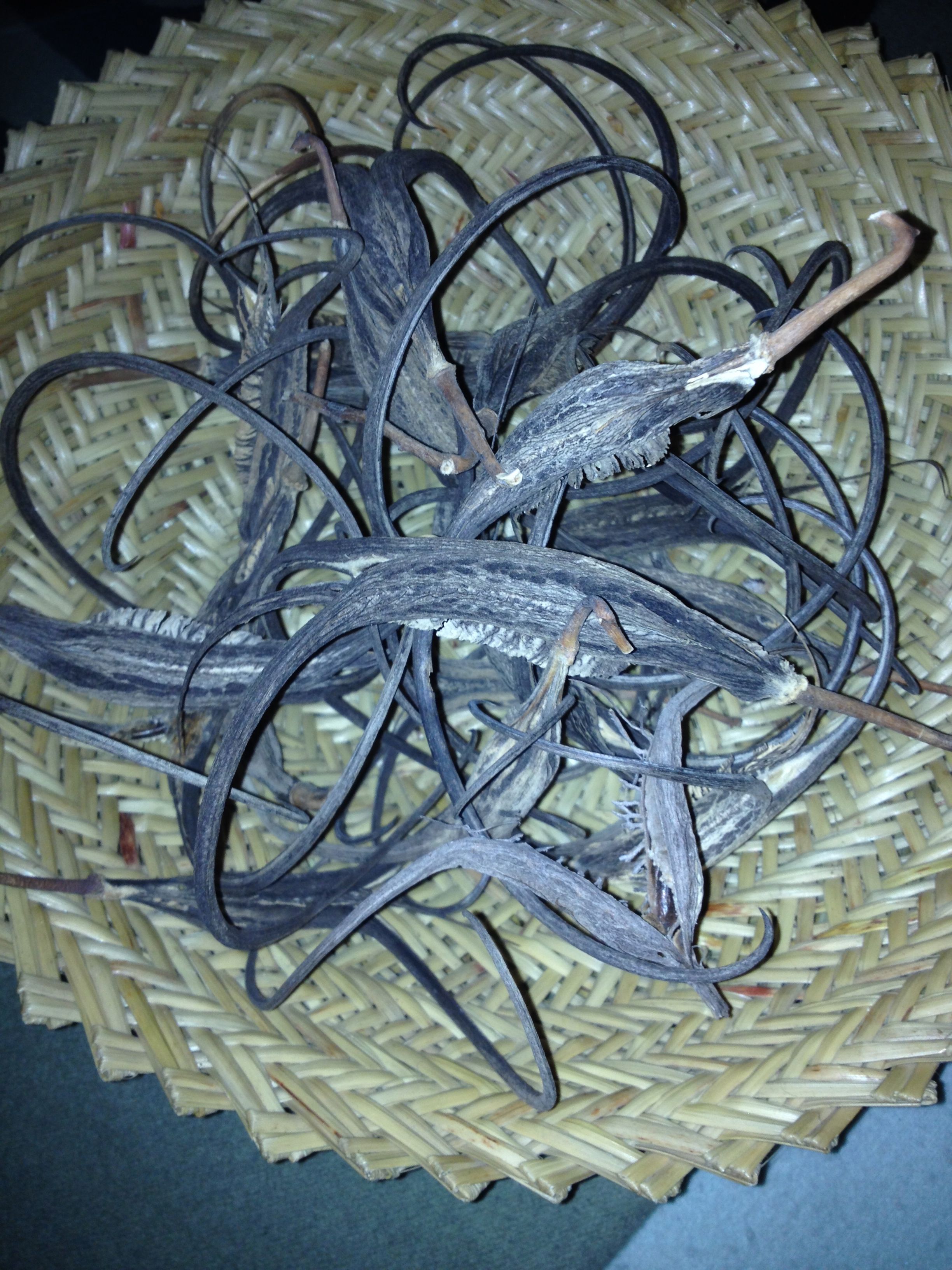
Tangled wild devilsclaw dry pods ready to split for basketry and seed harvesting (MABurgess)

Tangled wild devilsclaw dry pods ready to split for basketry and seed harvesting (MABurgess)

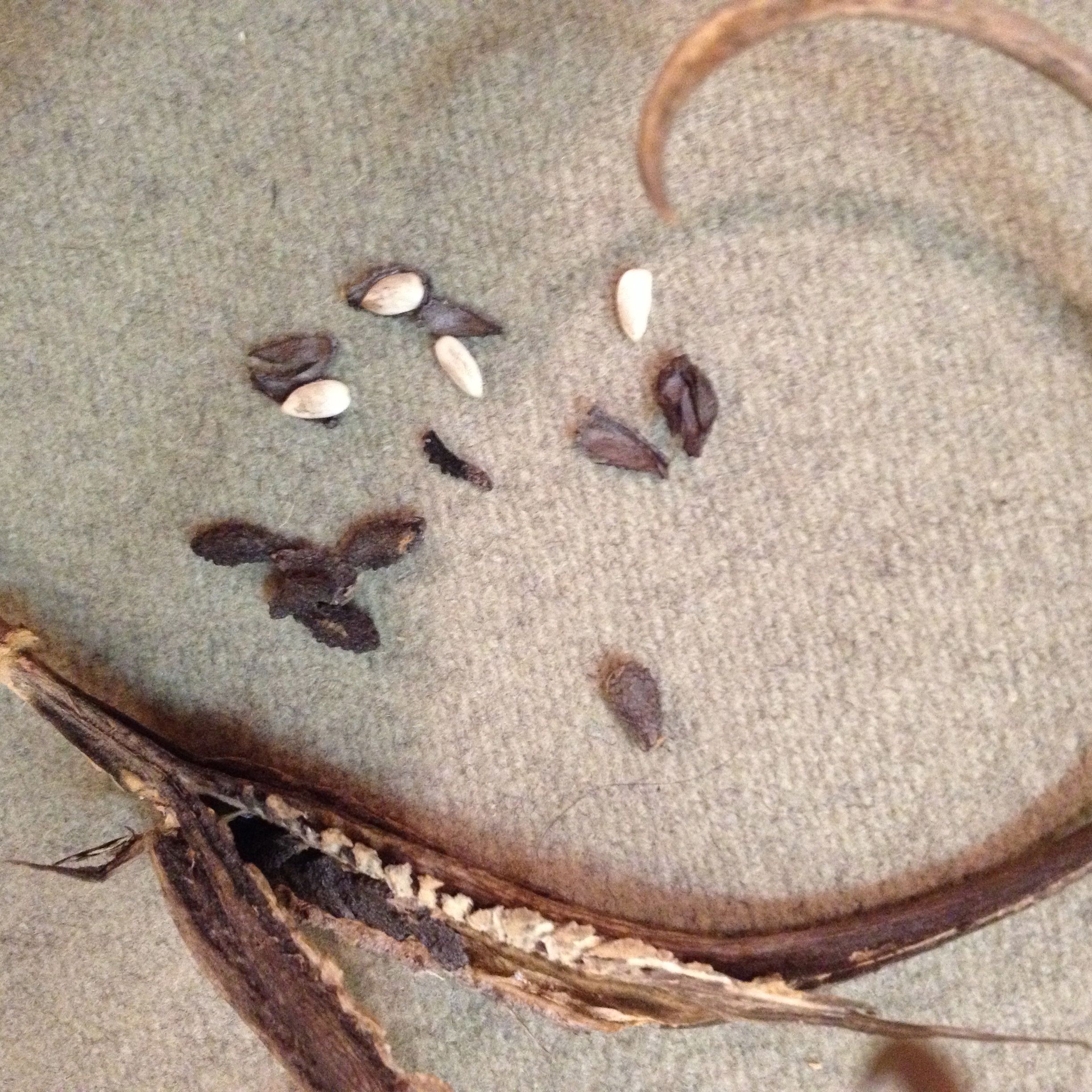
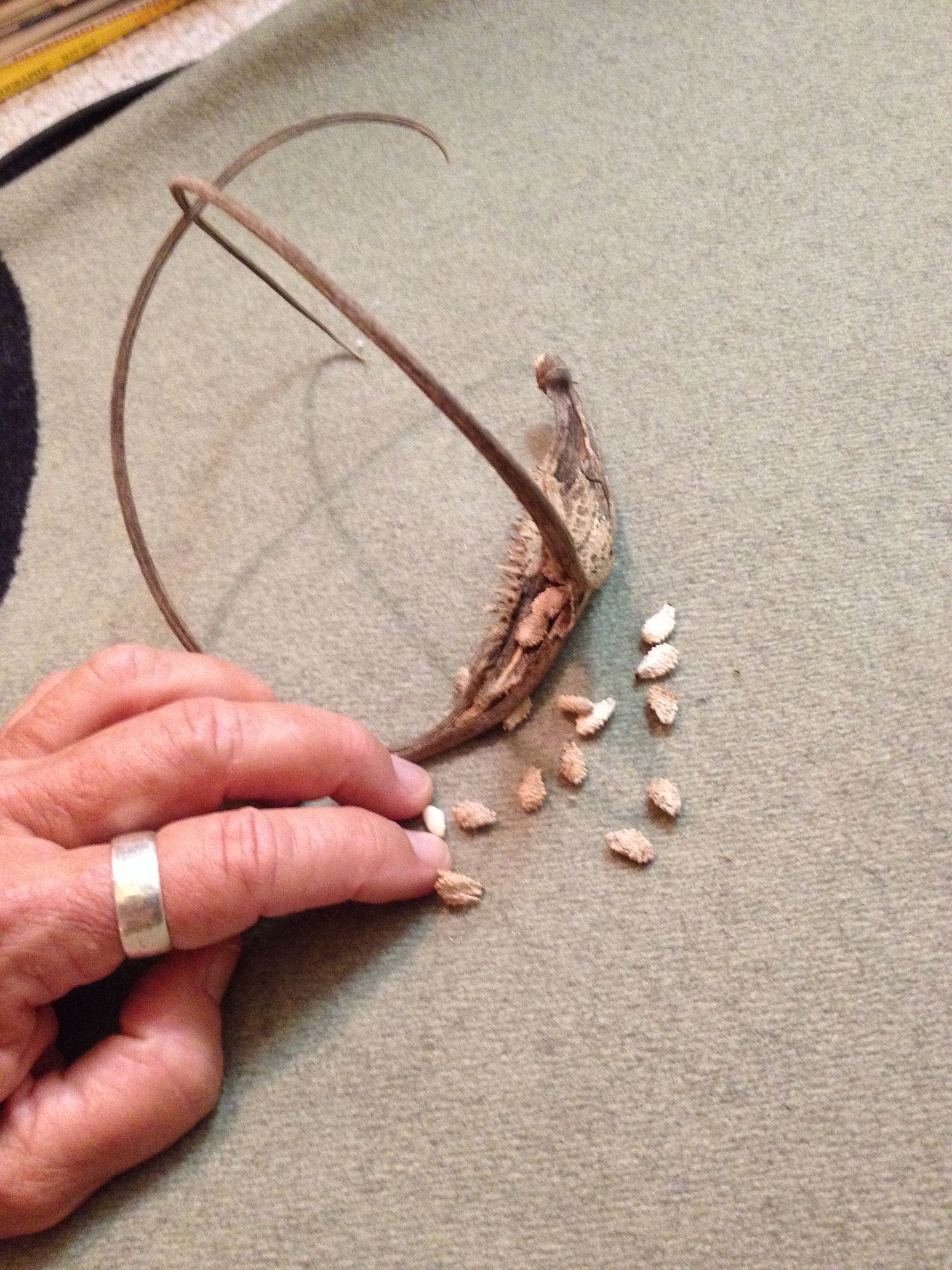
When the long green pods of devilsclaw ripen, the skin will dry and slough off leaving a tough, black, woody seed-pod that splits with very sharp tips. (Beware how they can grab—they were “designed” to hitch a ride on a desert critter’s hoof or fur and thus spread the seed.) With care, and sometimes the need for pliers, open the pod and out will come little rough-surfaced seeds. If your incisors are accurate, and if you have lots of time to get into meditations on i:hug, you can peel off the rough outer seed skin. Inside is a yummy, oil-rich and fiber-rich seed that looks like an overgrown sesame seed. (In fact, scientists at one point had classified Proboscidea in the same taxonomic family as sesame but it now stands in its own.)

Black seeds of wild devilsclaw from split pod.  White inner seeds delish after peeling (MABurgess photo)

Black seeds of wild devilsclaw from split pod. White inner seeds are delish after peeling. (MABurgess photo)

White-seeded domestic devilsclaw has slightly larger seeds like giant sesames (MABurgess photo)

White-seeded domestic devilsclaw has slightly larger seeds like giant sesames.  Peeled inner seed between fingers is ready to eat. (MABurgess photo)

When I see cutesy figurines of roadrunners or Christmas ornaments made with devilsclaw pods, my first thought is, wow, what a waste of a good treat, but then gladly, I realize that this unique plant produces more than enough fresh pods and mature pods to satisfy all the purposes of Nature or hungry and/or creative humans. Give i:hug a try!

Tomato Hornworms, Sphinx Moths, and Tiny Fried Tomatoes (with honey)

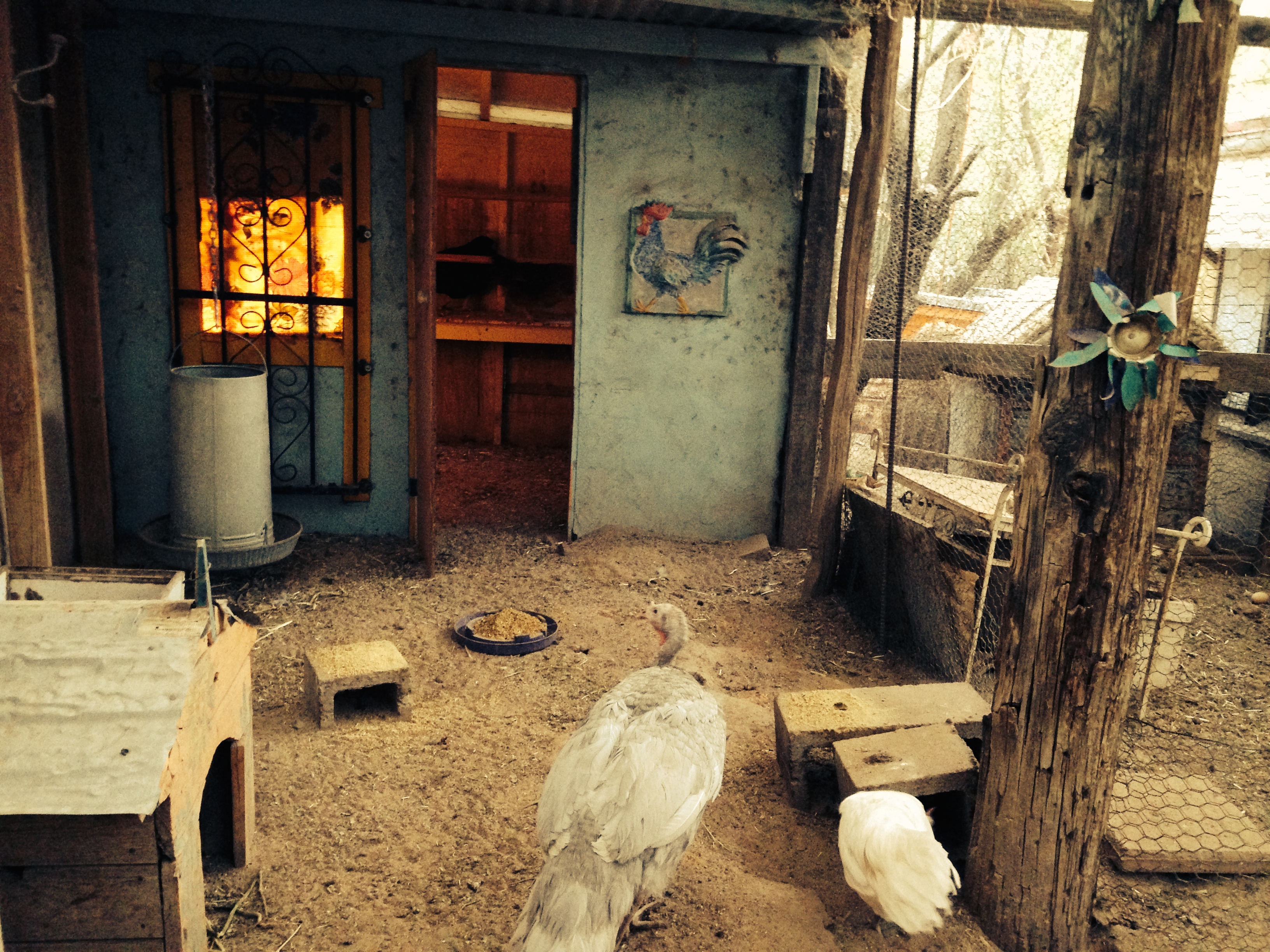
IMG_5407                                                                                         Horizontal sunlight at sunrise; the turkey appears to notice the light.

Aunt Linda Here:

It feels fresh here this morning here, after a substantial (and substantially needed) rainfall last evening.  The nearly horizontal sunrise early this morning lit the red comb of my roosters/hens making them appear to glow. And the turkeys’s feel magical, in and of themselves, especially in the “betwixt and between” light,  when it is not quite dawn and not quite day. Season-wise, we are also betwixt and between, it being not quite summer and not quite fall.  There are changes in the garden as well. One change is the type of insects that abound this time of year.


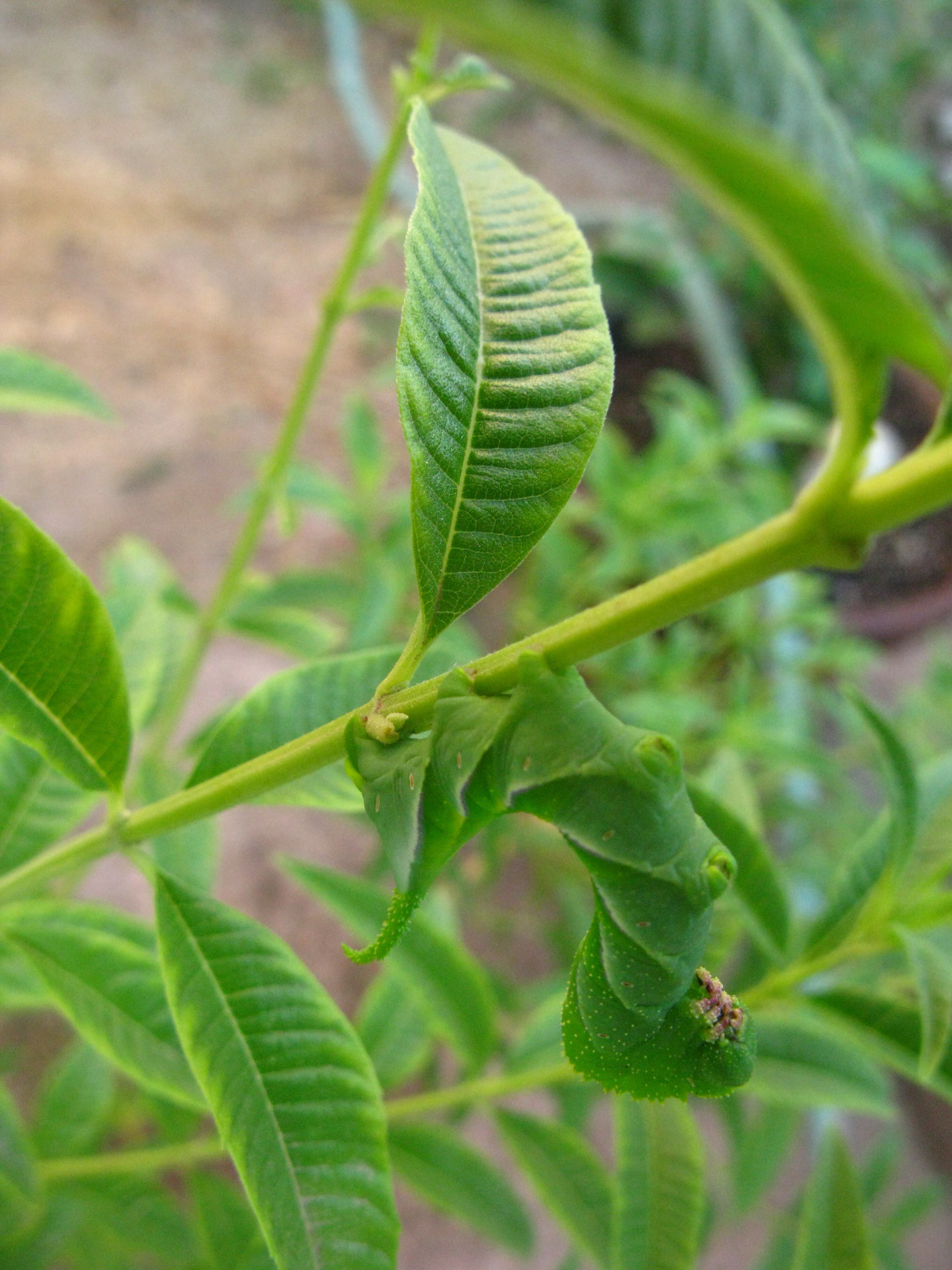
In the photo above, you can see that Tomato Hornworms are quite nimble; this one could challenge the most skilled yoga master, as it eats away at my lemon verbena.

Our gardens, in addition to offering the freshest food available,  also function as mystical playgrounds for the many intricate plant-insect interactions that (most often) occur beyond human view.  Here in the desert southwest, some of our most beloved plants and insects have maintained their  mystical names: Queen-of-the-Night Cactus Flower,  Sacred Datura, and the Sphinx Moth are just a few.

Before the The Sphinx moth transforms into the wide-winged (up to 4 inches), long- tongued (there are different varieties; some have tongues up to 14 inches!) moth that pollinates the Queen of the Night Cactus Flower and the Sacred Datura,  it needs to feast.  This feasting occurs so often on our tomato plants, that this “hornworm” is commonly referred to as “The Tomato Hornworm”.  It’s scientific name is Manduca quinquemaculata, and it is is this larva of the Spinx Moth (also commonly referred to as Hawk Moths, or Hummingbird Moths; they fly with such strength and agility that they remind us of birds!) that you find on your tomato plants this time of year.  These hornworms can grow to the surprising size, of about 4 inches in length. When they are large enough, they form into the dark brown pupa we sometimes find hidden in the soil. It is during this stage that the larvae are transforming into the large-winged, long-tongued moth that you may have seen hovering over cactus, and other, flowers as night falls.


IMG_0760


Because of the of  the sacrifices a tomato plant makes, suffering through the feasting of voracious tomato hornworm, I hate to let  any of the the end of summer green or harder red  fruit go to waste.  Because I love to love to grow smaller “cherry” style tomatoes, it is those that I most eat and cook with.   Here in the desert it just makes sense to follow Nature’s lead, and plants with smaller leaves and fruit  tend to thrive.  This is a survival strategy for a harsh desert environment. Each time a plant opens its pores, which it does in transpiration, it looses water. Replacing the water is critical, so the smaller the surface area the less water is lost and more.   “Cherry” tomatoes, like the Punta Banda, Chiapas, or wild Texas varieties (you can get seed at Native Seeds SEARCH) are prolific!  Cherry-tomato plants, in my experience, require less water. And they produce and produce and produce; I have enjoyed the fruit of the Chiapas Tomatoes (some years) throughout  Nov/and even December!

So this recipe honors these little humble tomato-heroes, who grow despite desert heat and the voracious chomping of hornworms. I used Punta Banda tomatoes, but the standard cherry tomatoes that grow in your garden, or that you get at the market will work as well.

Recipe: (for 3  people/servings)

-1 large egg

-1/2 cup milk (buttermilk for a richer result; almond milk works is you are vegan)

-1/2 organic cornmeal (I used medium grade)

-2 tablespoons Mesquite flour

-1/2 teaspoon salt

-1/2 teaspoon pepper

– crushed chiltepin (optional)

– 1/2 all-purpose flour OR  try coconut flour. So many folks today opt for a gluten-free option, so I used this flour (for the first time) in the recipe.

– 3 cups cherry tomatoes – or three large tomatoes.

– coconut or vegetable oil

How to:

Whisk together the egg and milk. Combine the cornmeal, salt, pepper, chiltpen flakes, and 1/4 cup flour on a shallow dish or plate.

“Dredge” the tomatoes first in remaining 1/4 flour, second in the egg/milk mixture, lastly in the cornmeal/mesquite/chiltepin mix.  It is a messier affair with the coconut flour, but fried tomatoes are hardly “neat”  to begin with.  And that is exactly what I like about them. So much of life has to be so tidy, and precise. This food, like the end of summer, and change of seasons, can be messy —  but oh so tasty!

In a think bottomed pan, pour coconut oil to about 1/2 inch depth, and heat to medium-high heat. Use whatever vegetable oil you prefer – I I like coconut oil for this as it has a lower smoke point, and it goes with the sweetness of the coconut and mesquite flours.  Carefully drop the tomatoes into the poil, and cook until golden. Drain them on paper towels.

IMG_6478


IMG_6466


Try with all purpose – and if you, like so many, today are opting for a more gluten-free option, try coconut flour. It is a messier affair with the cocnut flour, but fried tomatoes are hardly a neat affair. And that is exactly what I like about it. So much of life has to be so tidy, and precise. This food, like the end of summer and change of seasons can ne messy in its expression. Added mostly new world ingredients


IMG_6486

Perhaps it was the sweetness of the cornmeal, mesquite flour, plus coconut flour, but these fried tomatoes had a flavor reminiscent of corn bread. Between that and the Picante of the chiltepin, these little freid tomatoes LITERALLY called our for honey. I ate them sweet and spicy, as you can see below – and with a cup of non-sweetened coco. I loved how many New World ingredients this recipe offers:  Corn, Mesquite, tomatoes, chile, — and chocolate!


IMG_6496


IMG_6331


Fermented salsas

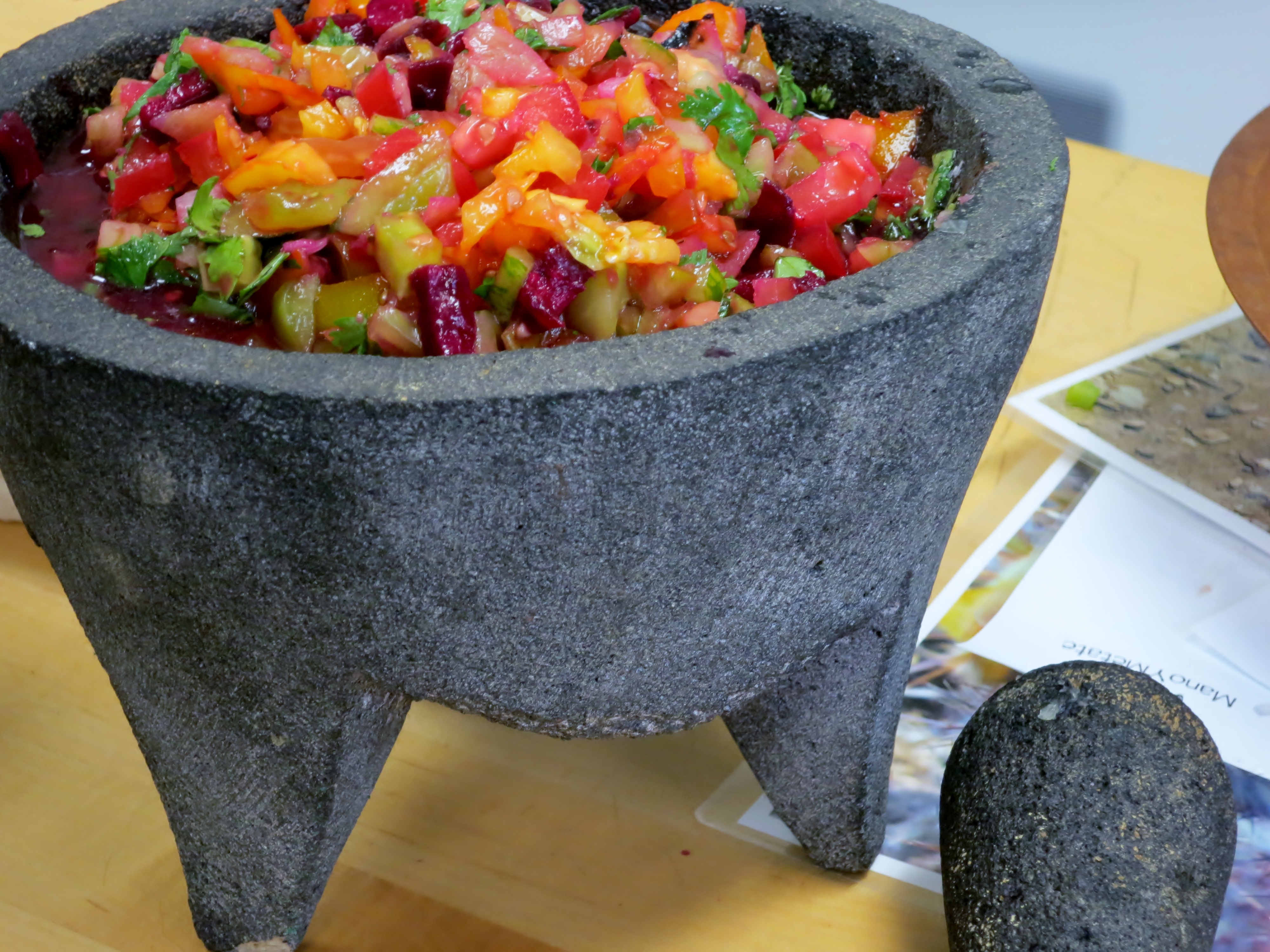
molcajete

fermented salsa,with fresh cilantro and tunas (prickly pear fruit) added before serving

Amy Valdés Schwemm

Amy Valdés Schwemm

Naturally fermenting salsa makes a richer and more complex flavor than simply adding vinegar or lime juice, but it does take a little patience. I love tart salsas and sour foods with a bite. Grandma and Grandpa Schwemm on my dad’s side passed on a tradition of sauerkraut, and my mom’s family loves chile. How could chiles fermented like kraut not be my favorite food?

Fermented salsa is a source of pro-biotic microorganisms, recently rediscovered as essential for the digestive system. Home fermented foods probably provide more active and diverse cultures than what comes in a capsule at great expense.

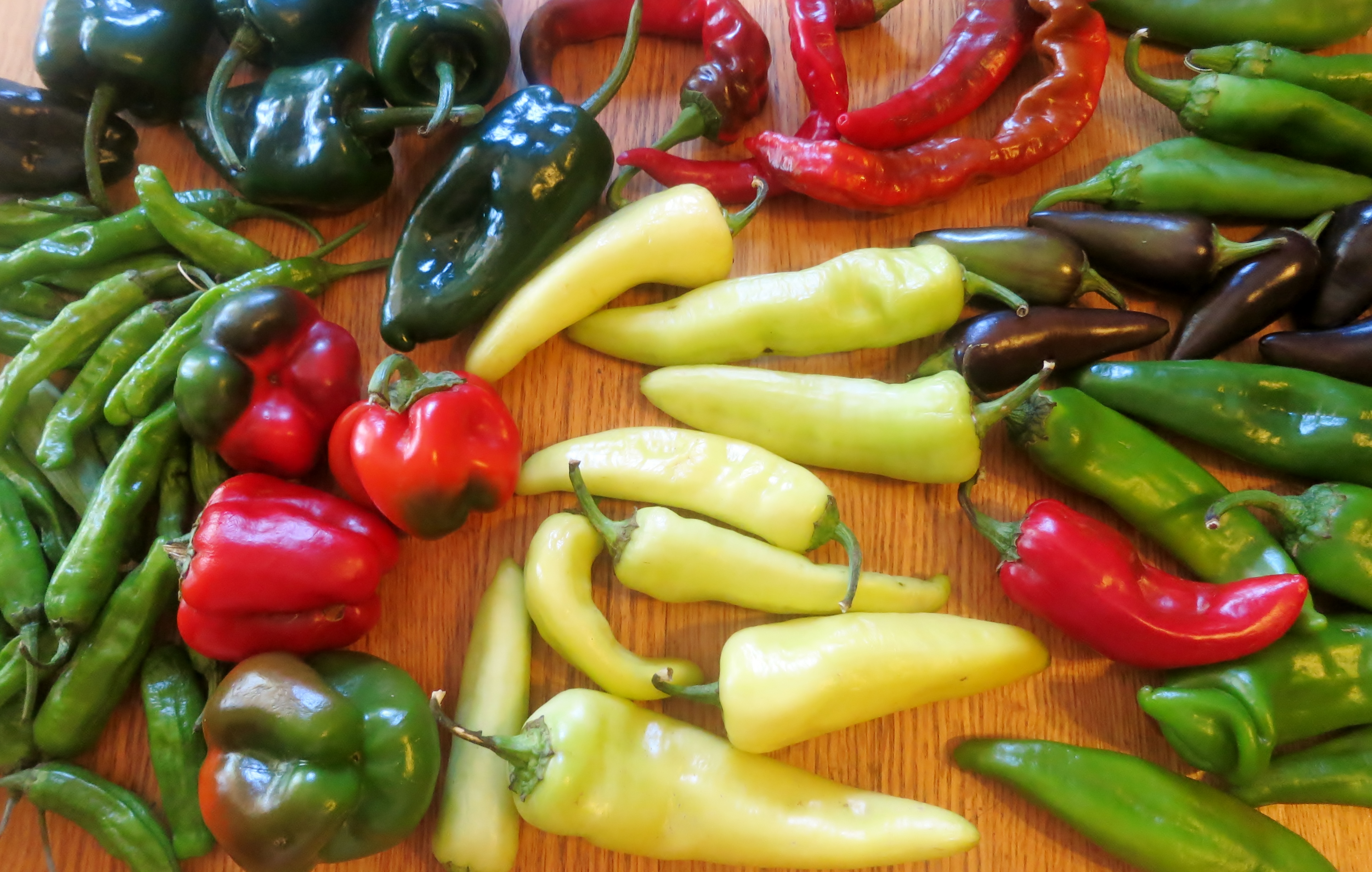
late summer is chile season at Tucson CSA, Walking J, Santa Cruz Farmers' Market Consignment

late summer is chile season at Tucson CSA, Walking J, Santa Cruz Farmers’ Market Consignment

Chiles for this preparation can be fresh or roasted or even dried. I’ve used everything from dried chiltepines to fresh Big Jims and sweet peppers. Hot, fleshy chiles like Jalapeño, Serrano, Guero, Wenks Yellow Hot, and Sinahuisa are ideal.

deseeding chiles

deseeding chiles

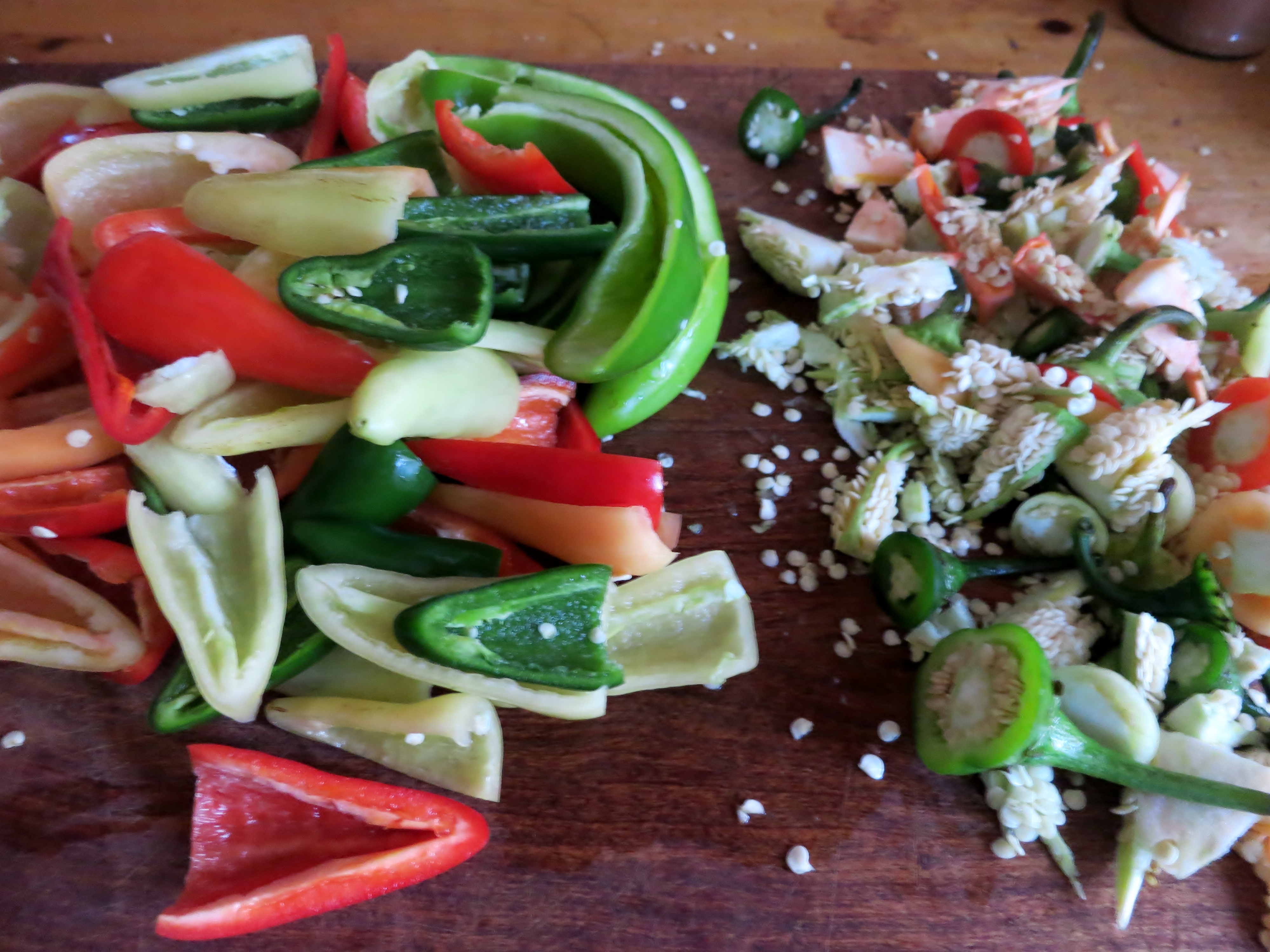
Sometimes I meticulously seed and dice the chiles, sometimes I only cut off the stems and coarsely chop in the food processor.

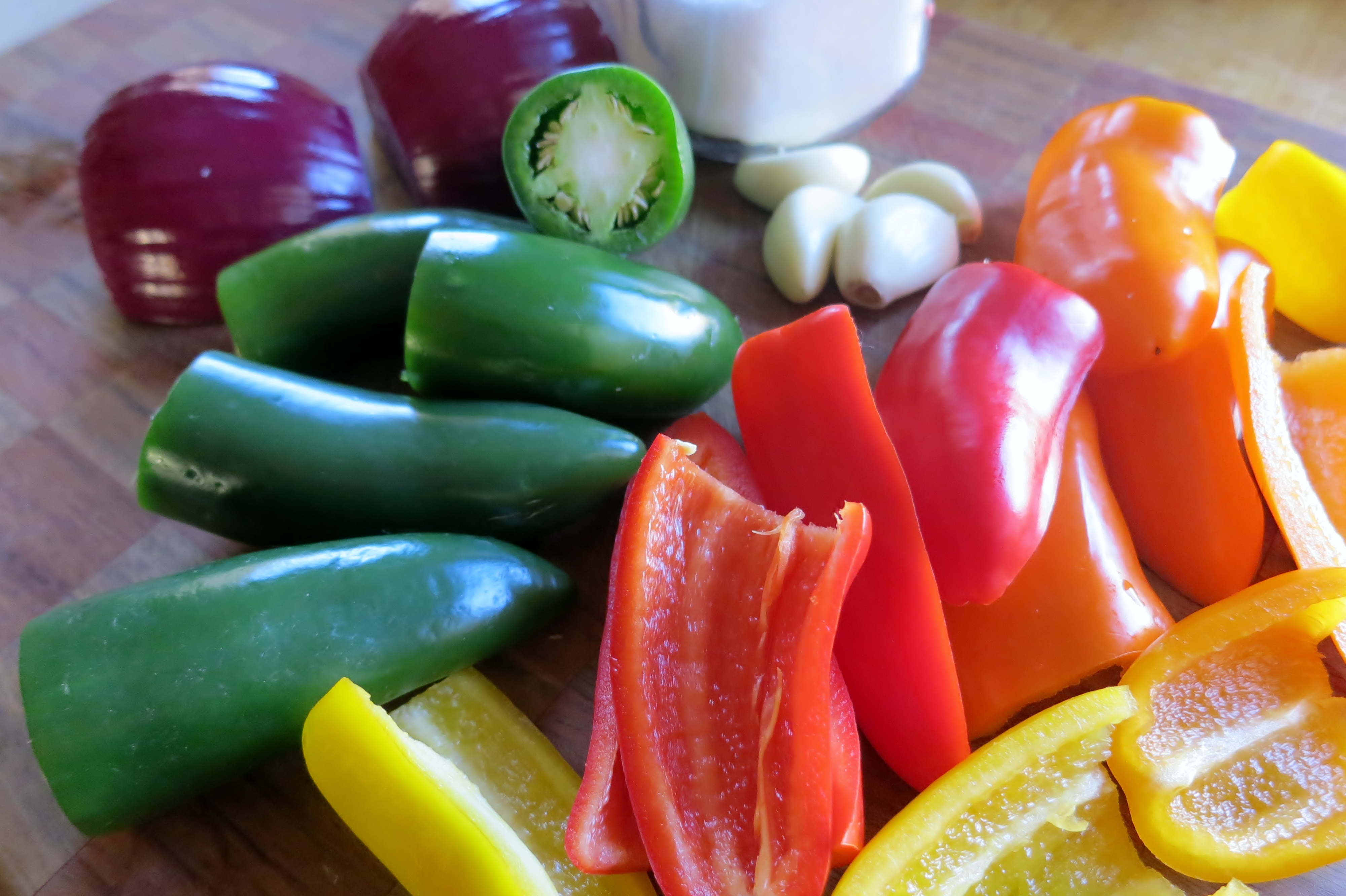
chiles, onion, garlic and salt

chiles, onion, garlic and salt

I usually add onion, garlic and herbs, as the season and whim direct.

chopping chiles reminds me of Uncle Bob and cousin Doug

chopping chiles reminds me of Uncle Bob and cousin Doug

Add salt to the salsa, 2% of vegetables’ weight. This is roughly 1 teaspoon non-iodized salt per cup of diced vegetables, more or less. Salt slows and directs biological activity to make the food more delicious. Lactobacilli thrive in salty environments where other organisms cannot, and the lactic acid they make further inhibit harmful bacteria. Since this is a condiment, I don’t mind it a little salty. There are enough beneficial bacteria on the fresh produce and in the air, so no starter culture is necessary.

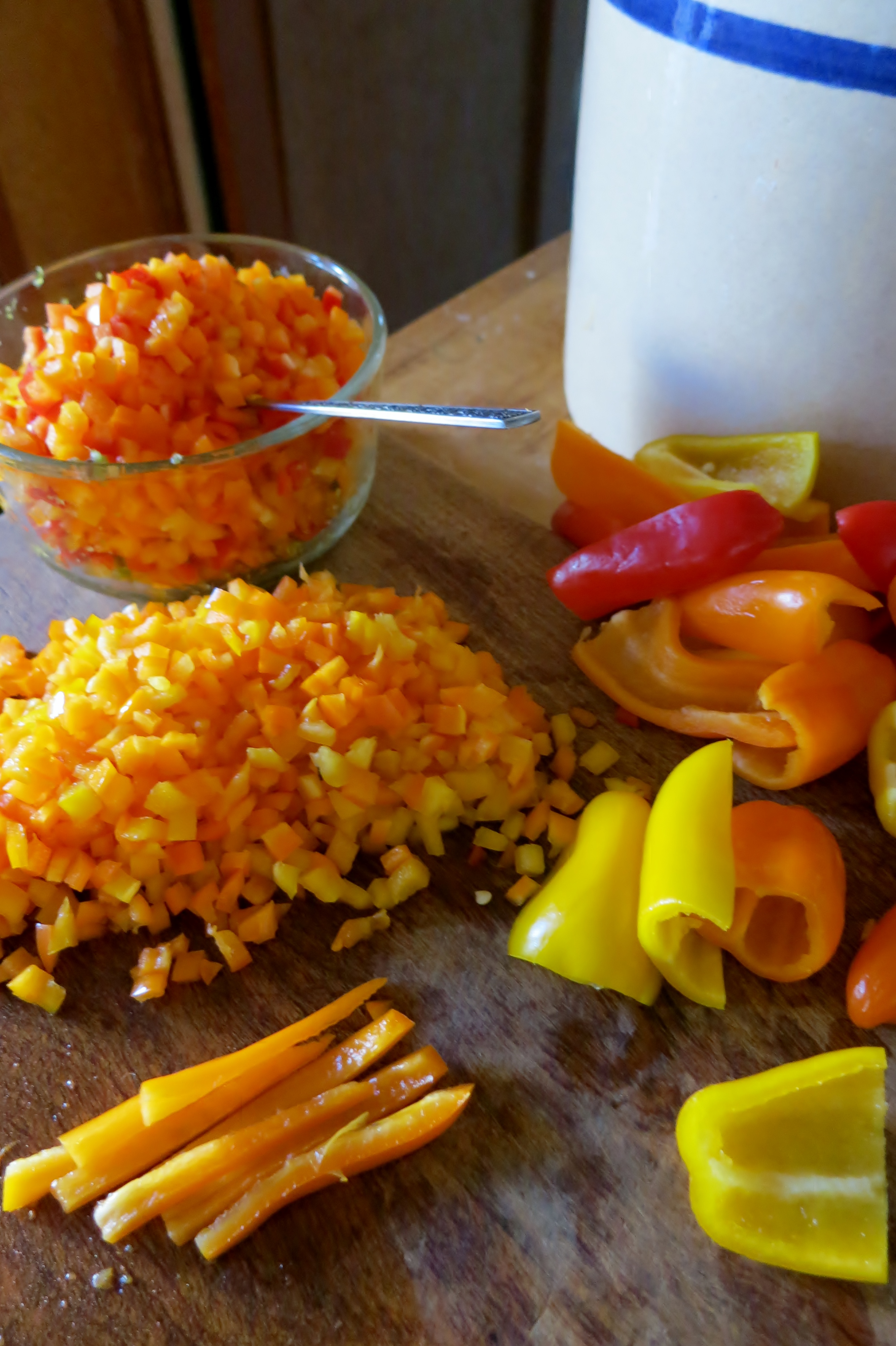
diced chiles

diced chiles

If the chiles are not very fleshy or I want a thinner sauce, I add a little brine made with 2 teaspoons salt per cup of water. Thinning the sauce is a good idea when the chiles are very hot!
Put the salsa in a jar with a weight on top, keeping the pieces of chile submerged in exuded juice or brine. I use a smaller jar as a weight.

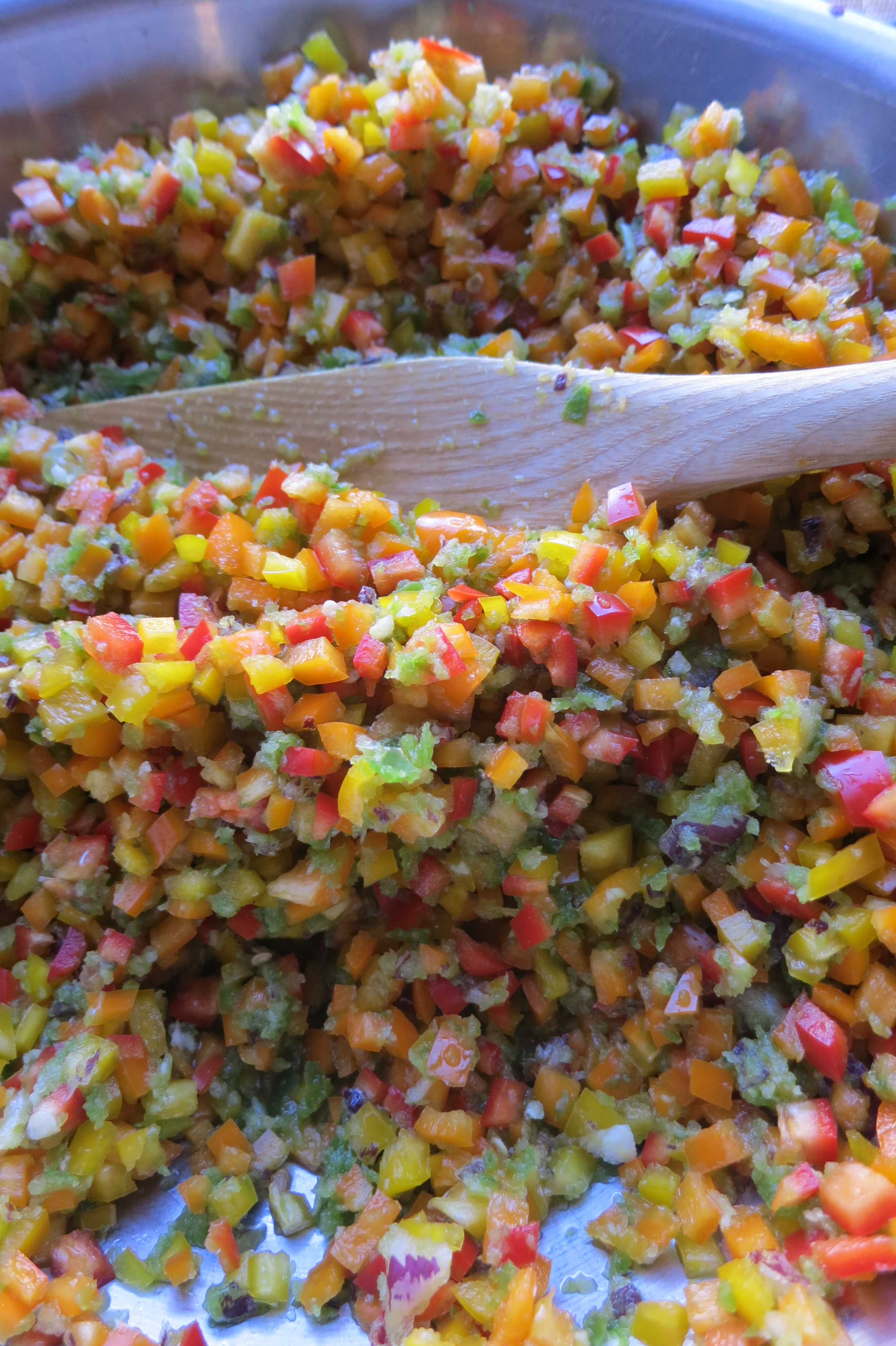
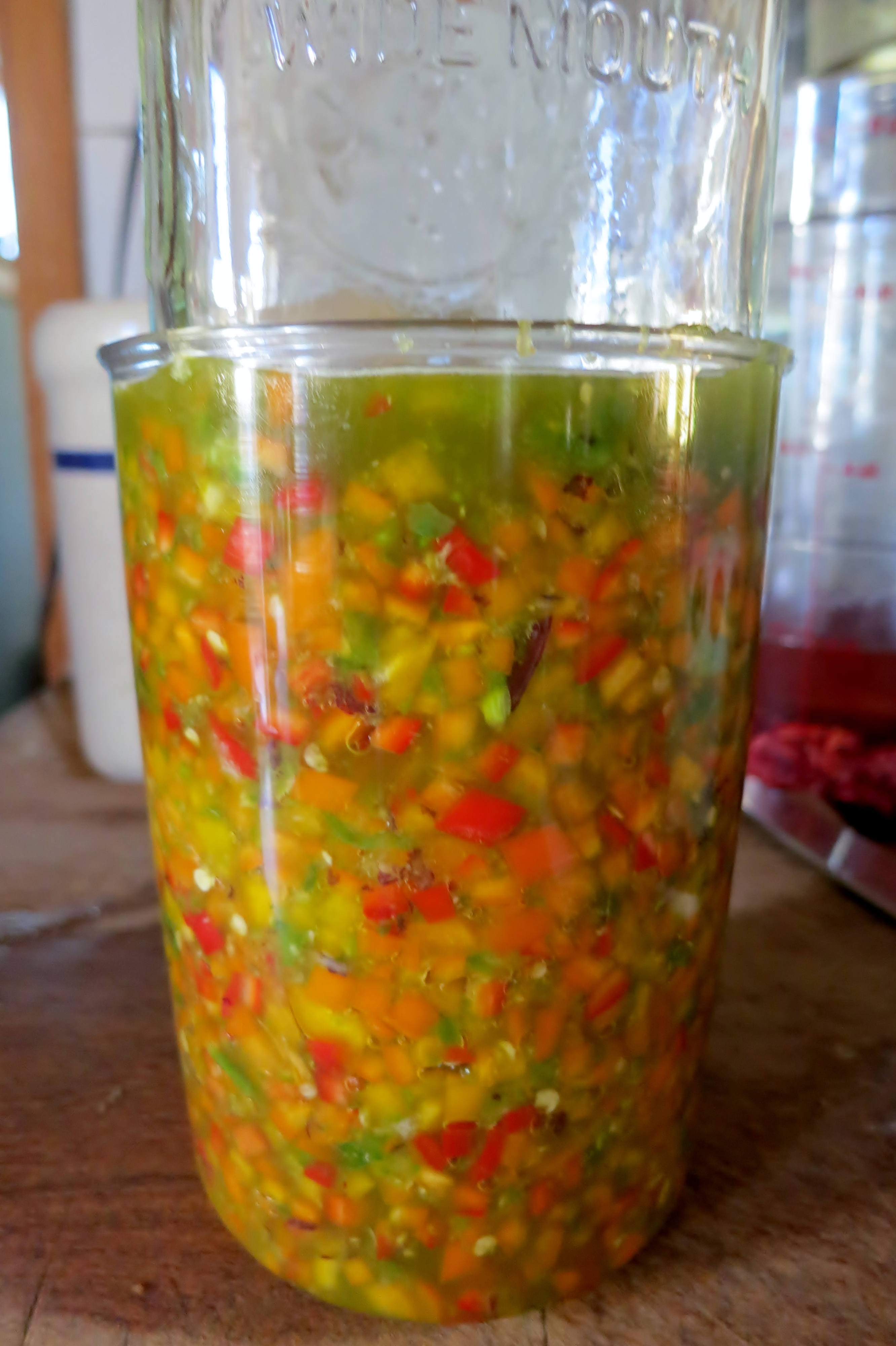
pureed jalapenos with  diced multicolor sweet peppers

pureed jalapenos with diced multicolor sweet peppers

Cover the tower with a tea towel to keep out dust and insects, and keep at room temperature.

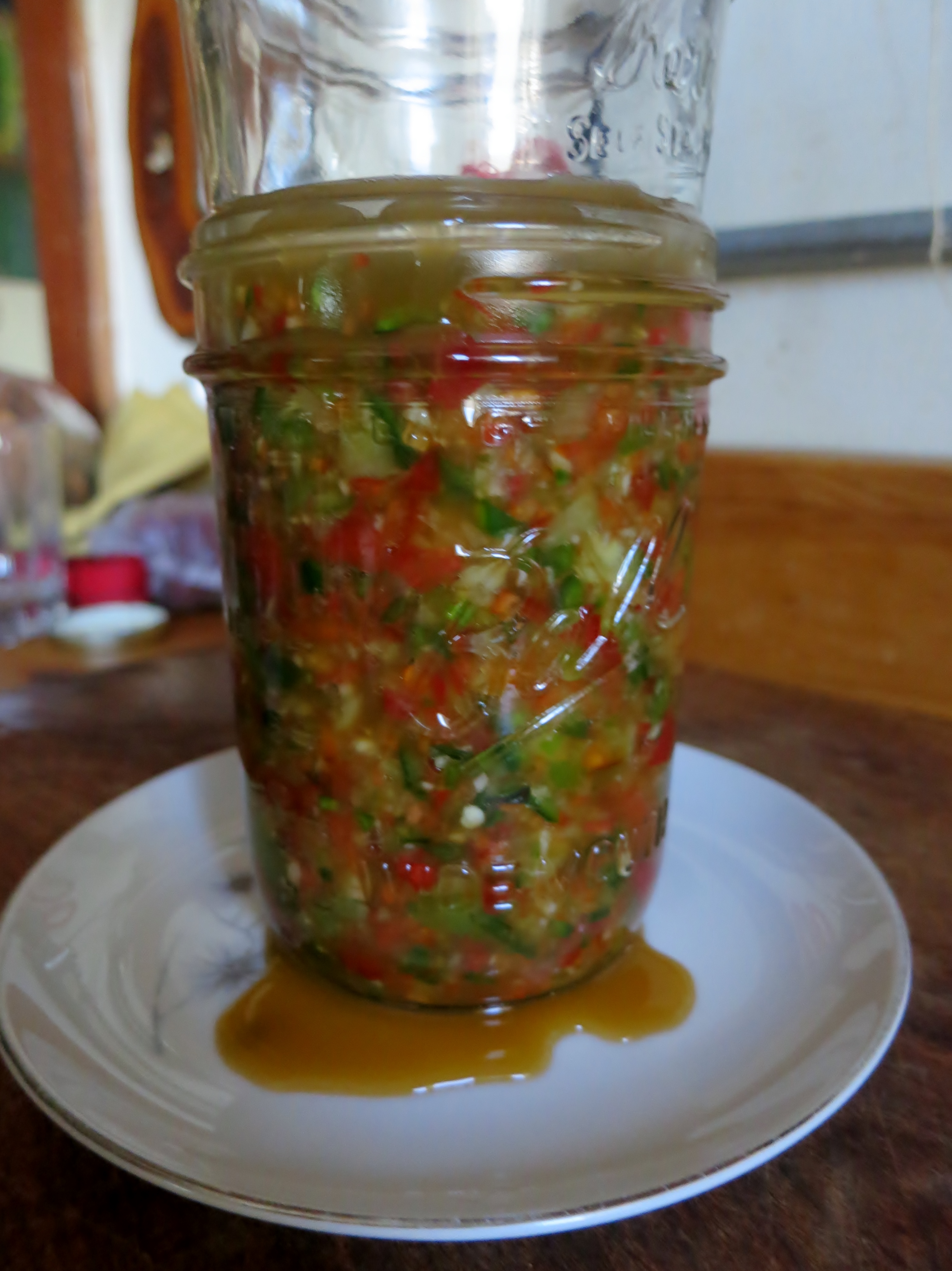
fermenting chiles can be messy

fermenting chiles can be messy

How long before it’s ready? Test daily in warm weather to see if it is sour enough for your taste. In winter, the process is slower, taking up to a couple weeks. If white mold forms on the surface, skim off the top. It is harmless. If the mold is any color other than white, or below the surface of the liquid, discard the whole batch. Better safe than sorry.
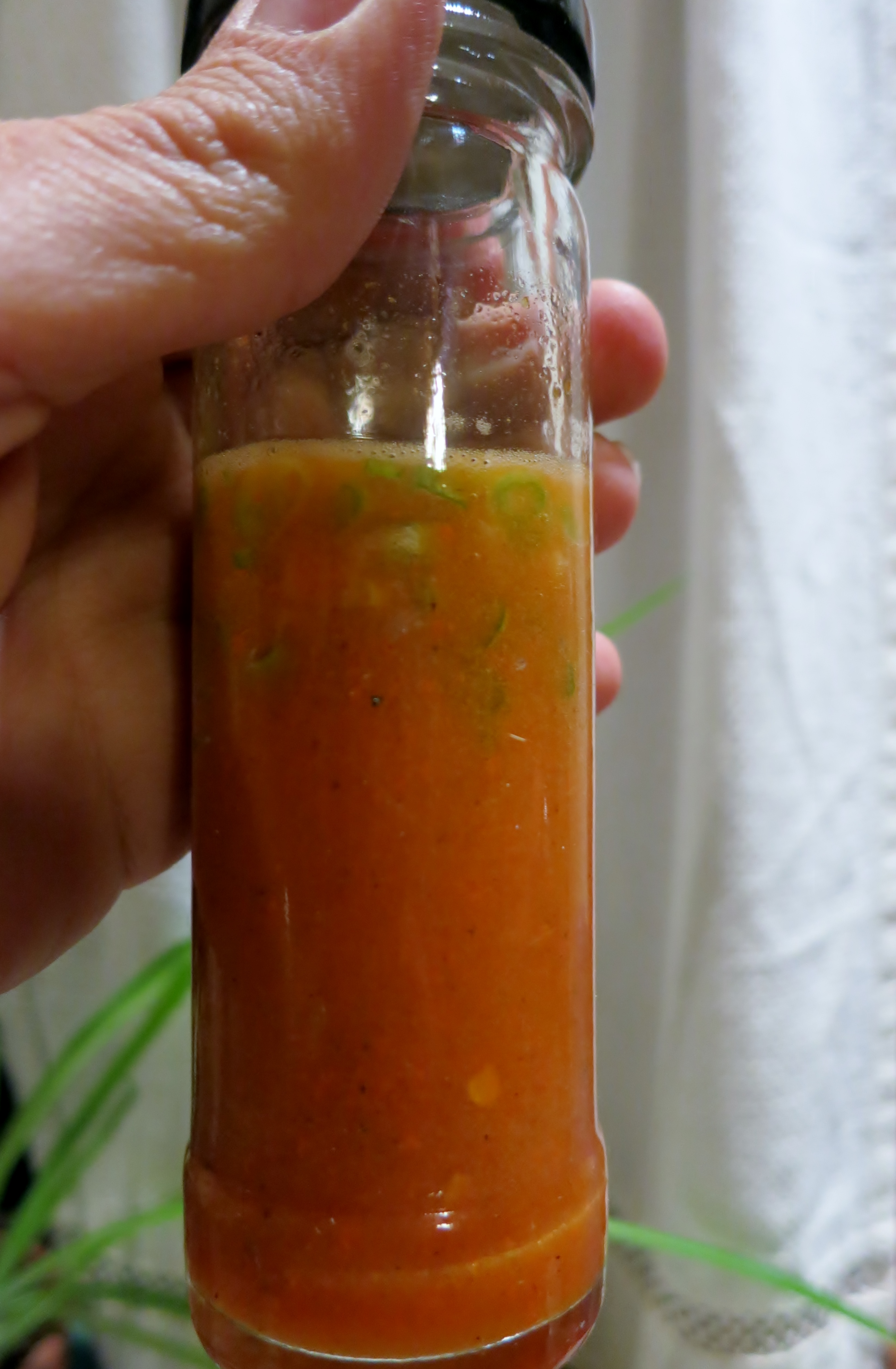
When the salsa is tart and delicious, it can be eaten as is or pureed. For a smooth salsa, it can be strained. Sometimes I add fresh herbs or minced I’itoi onion tops.

pureed salsa with diced I'itoi onion tops

pureed salsa with diced I’itoi onion tops

Store fermented salsa in the refrigerator with an airtight lid.
Chef Molly Beverly from Prescott, Arizona suggested fermenting a sauce from Mano Y Metate Pipian Rojo, so I have some of that going now. I can’t wait to taste it!
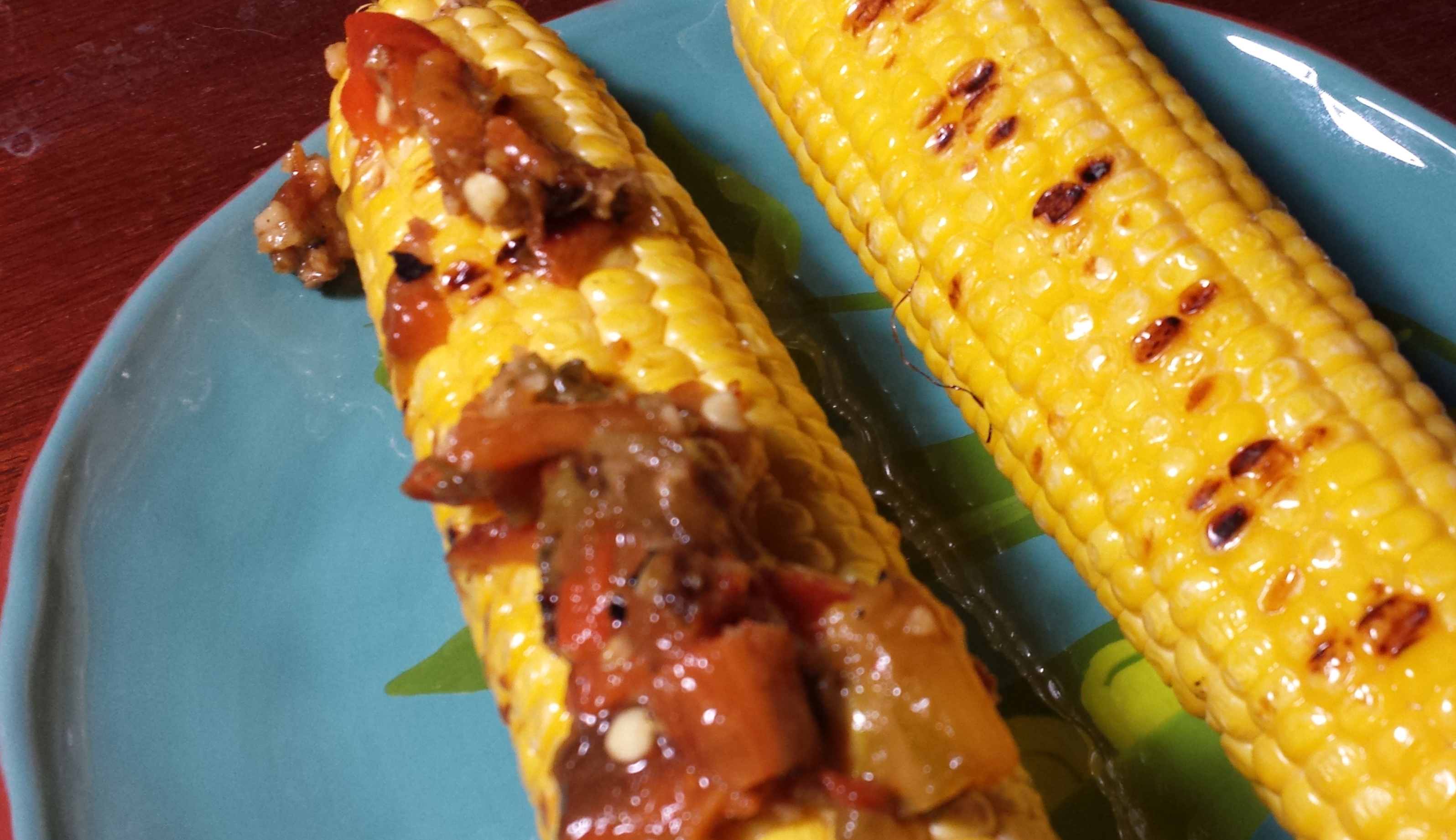
elote salsa
For more details about fermenting food, see Sandor Katz’s The Art of Fermentation. For an encouraging primer on safely fermenting food, find Wild Fermentation also by Katz. This is one of my all time favorite cookbooks.

Hearty Jojoba

jojoba green fruit

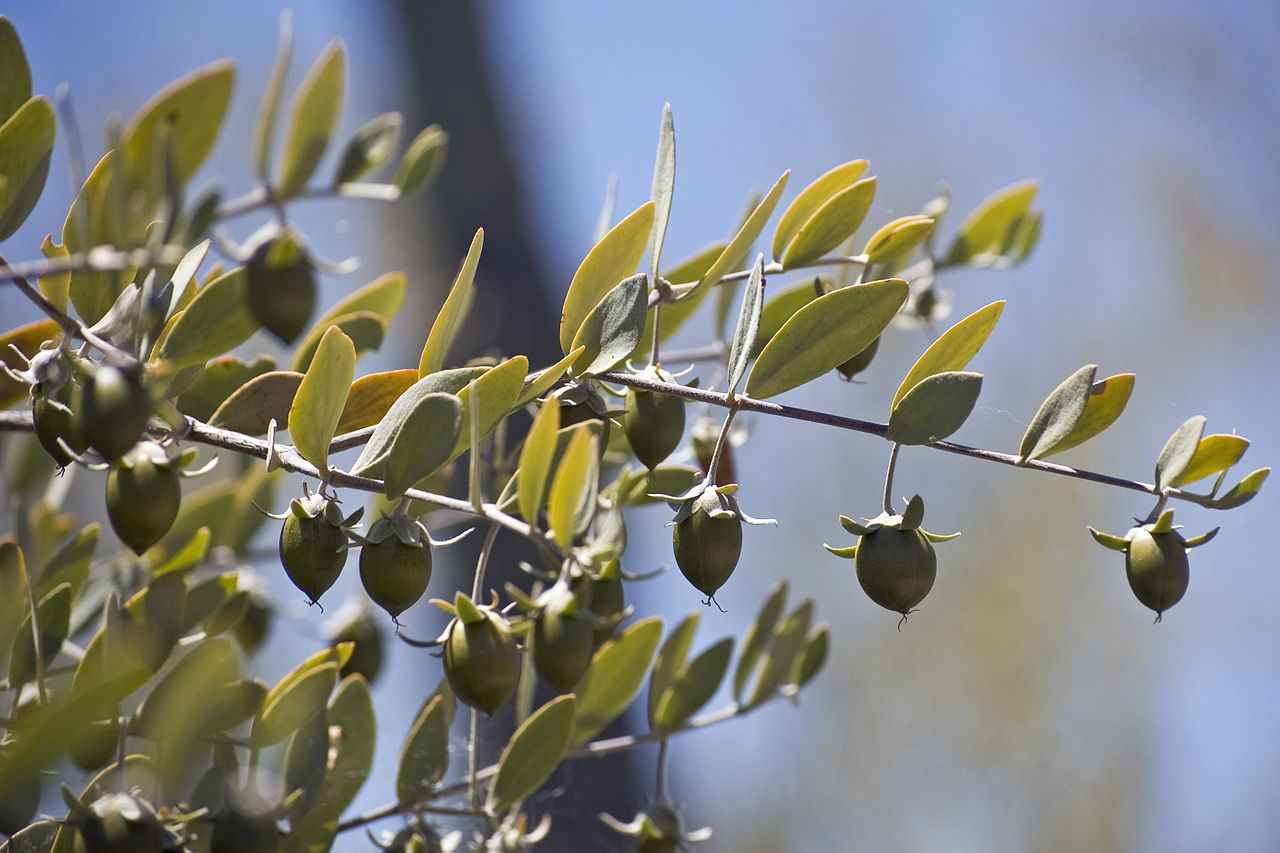
Green jojoba fruit dangle below the branches, slowly ripening in the desert sun.

posted by Jacqueline A. Soule

If you know how I title most of my blogs, you now have a hint on how to pronounce jojoba – it’s pronounced ho-ho-ba. (The “j” is an “h” sound in Spanish. Which reminds me of the time at the busy health clinic when “Hakalina” did not recognize her name called out by the nurse – but that’s another story.)

Jojoba is the O’odham name for the plant (Simmondsia chinensis) and it came into Spanish via the work of Father Kino. Indeed, Father Kino wrote in his journals about the plant. In Bolton’s 1919 translation of Kino’s journals, Kino writes of a visit with “Pima Indians” (pg. 93) and states that, among other items “. . . they also have bezoar, the medicinal fruit called jojoba, blankets, cotton fabrics, curious and very showy baskets or pitchers, macaws . . . and other conveniences.” Later, Kino describes the fruit as “. . . like the almond, and with a very salutary and effective remedy for different kinds of sickness.”

Simmondsia_chinensis_male_flower

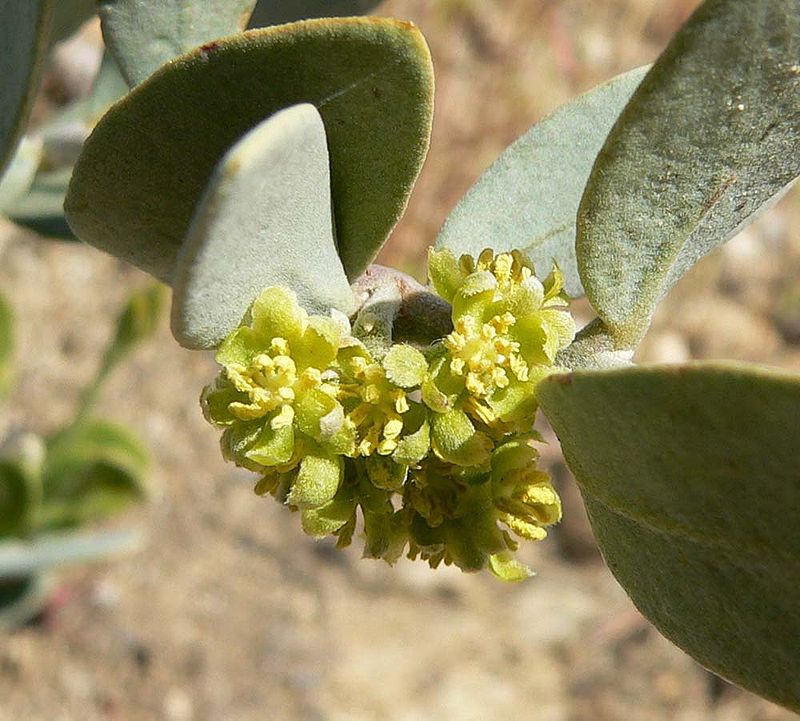
Jojoba shrubs are either male or female. Here a male shrub offers it’s pollen filled flowers to passing pollinators.

Other common names for the plant include goat nut, deer nut, pignut, wild hazel, quinine nut, coffeeberry, and gray box bush. Although there are references to jojoba as nuts, they are, botanically speaking, a seed.

Jojoba was used in most areas where it is native. The uses varied with tribe. O’odham would crush the seeds to yield an oily paste useful for dry cracked skin, chapped lips, cuts, scrapes, and burns. Seeds were ground and pressed into cakes, and small portions were eaten in moderation as food. Too much jojoba has a laxative action. Seri used seeds as an emergency food, but more commonly as part of a shampoo process. Seeds can also be made into necklaces.

Jojoba-oil

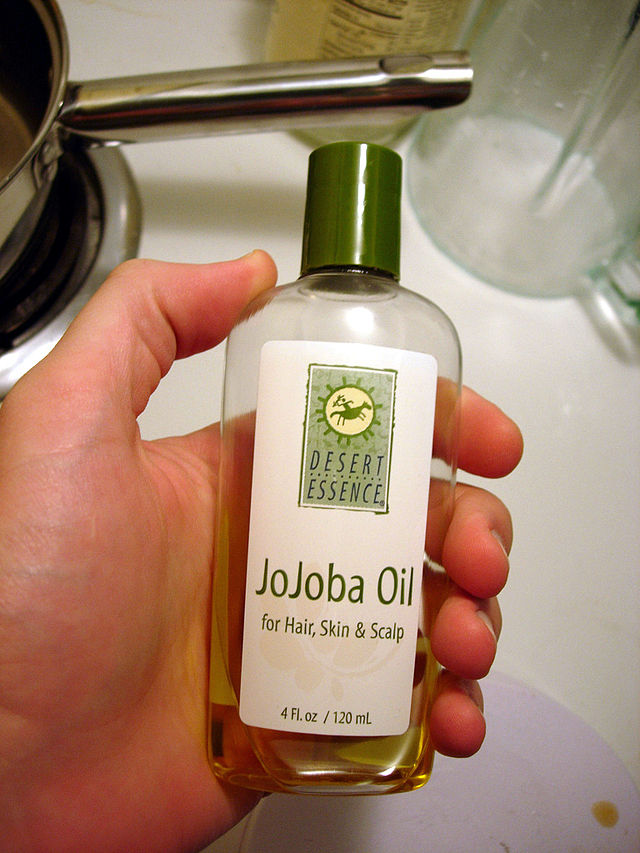
You can purchase pressed jojoba “oil” in many stores. I use the oil in making lotion.


Currently, jojoba is grown commercially for its “oil,” in reality a liquid wax ester, expressed from the seed. This oil is rare in nature. Technically it is an extremely long straight-chain wax ester and not a triglyceride, making jojoba and its derivative jojoba esters more similar to human sebum (body oil) and sperm whale oil than to vegetable oils. Jojoba oil is easily refined to be odorless, colorless and oxidatively stable, and is often used in cosmetics as a moisturizer and as a carrier oil for specialty fragrances. It also has potential use as both a biodiesel fuel for cars and trucks, as well as a biodegradable lubricant. Plantations of jojoba have been established in a number of desert and semi-desert areas.


jojoba plantation in India

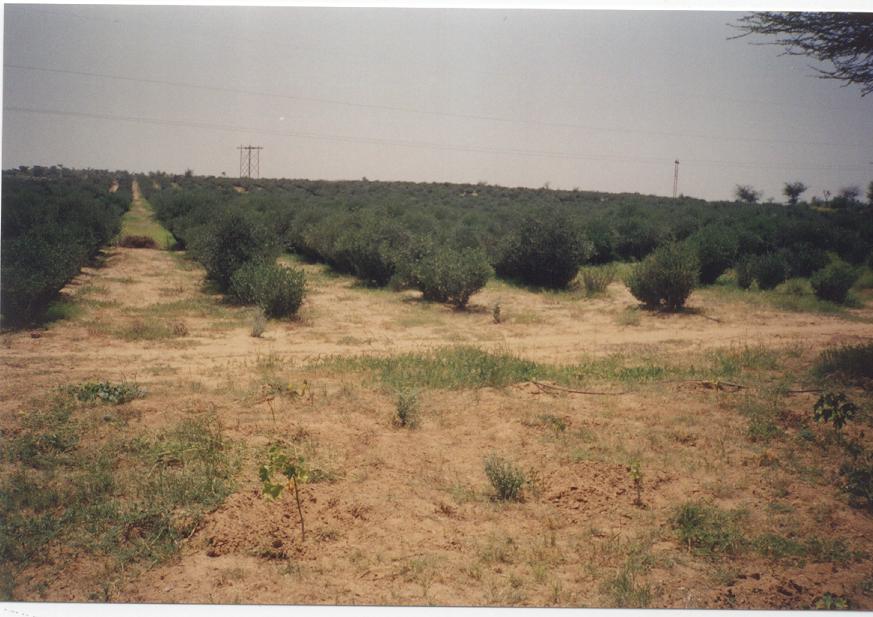
Jojoba plantation in one of the semi-arid areas of India.

Jojoba is currently the Sonoran Desert’s second most economically valuable native plant (overshadowed only by the Washingtonia palms used in ornamental horticulture). Plant breeders are doing selective breeding to develop plants that produce more seeds, seeds with higher oil content, and characteristics that will facilitate mechanical harvesting.

A few interesting taxonomic notes. Jojoba is the only species in its plant family, making it quite unique among flowering plants. While there are around 400 monotypic genera, this is the only monotypic flowering plant family. The scientific name, Simmondsia chinensis, is an example of the need for good penmanship. Jojoba does not originate in China! Johann Link, the botanist naming the species, misread Nuttall’s collection label “Calif” as “China.”

Jojoba habit

Jojoba shrubs live well in the desert.

Harvesting and Use.
Jojoba seed on a single bush will ripen slowly over several months. This is one of the traits breeders are seeking to change. Seed is ready to be harvested when the hulls easily fall off and a slight tug releases it into your hand. If it resists, it isn’t ripe.

Store harvested seed in jars or even in the freezer. Grind jojoba seeds in a mortar and pestle for topical use. Alternatively toast the seeds and munch as an occasional snack.

If you have the technology, you can harvest seeds and press them for the oil. Or simply plant them in your native landscape and let the native wildlife use the seed.

Planting and Care will be covered in a future blog.


To learn more about jojoba and other native plants used as herbs, please come to my free presentation “Father Kino’s Native Herbs” at the Main Library on Saturday Sept 13 at 1:30. More at http://www.library.pima.gov/calendar/?ID=26635

Some of the information in this article is excerpted from my book “Father Kino’s Herbs: Growing and Using Them Today” (2011, Tierra del Sol Press, $15). I hope you will consider purchasing a copy locally at Antigone Books, Arizona Experience Store, Magic Garden, Mostly Books, or Rillito Nursery.

© 2014, Jacqueline Soule.  All rights reserved. I have received many requests to reprint my work. My policy is that you are free to use a very short excerpt which must give proper credit to the author, and must include a link back to the original post on our site. Please use the contact me if you have any questions. JAS avatar

Cool Summer Bean Dishes….with Heirlooms

Sonoran Caviar in Mayo mesquite bowl (MABurgess photo)

Sonoran Caviar in Mayo mesquite bowl (MABurgess photo)

For picnics, barbeques or simple pick-me-ups, here are some fun ideas to bring a variety of heirloom beans into your summer fare.  We usually think of beans as winter food, but in the heat of August these tasty bean treats will help chill you out with gusto.

Tia Marta here to share ways of bringing the original “fast food” into your summertime menus.  Fast–that is, cook ’em first and have them “at the ready” for dressing them to suit any mood or occasion.  I am a founding member of the Heirloom Bean Fan Club, always amazed by the array of bean possibilities we have in the Southwest available to us.  Here in Baja Arizona we are blessed with inherited gifts of delectable, nutritious, desert-adapted beans from Native farmers, traditional Hispanic families, Black, Chinese, Anglo and other newcomers.  They grow well in our backyard gardens, bedecking our tables with colorful goodness.

All American sun oven set up on patio table-available thru Flor de Mayo (MABurgess photo)

All American sun oven set up on patio table-available thru Flor de Mayo (MABurgess photo)

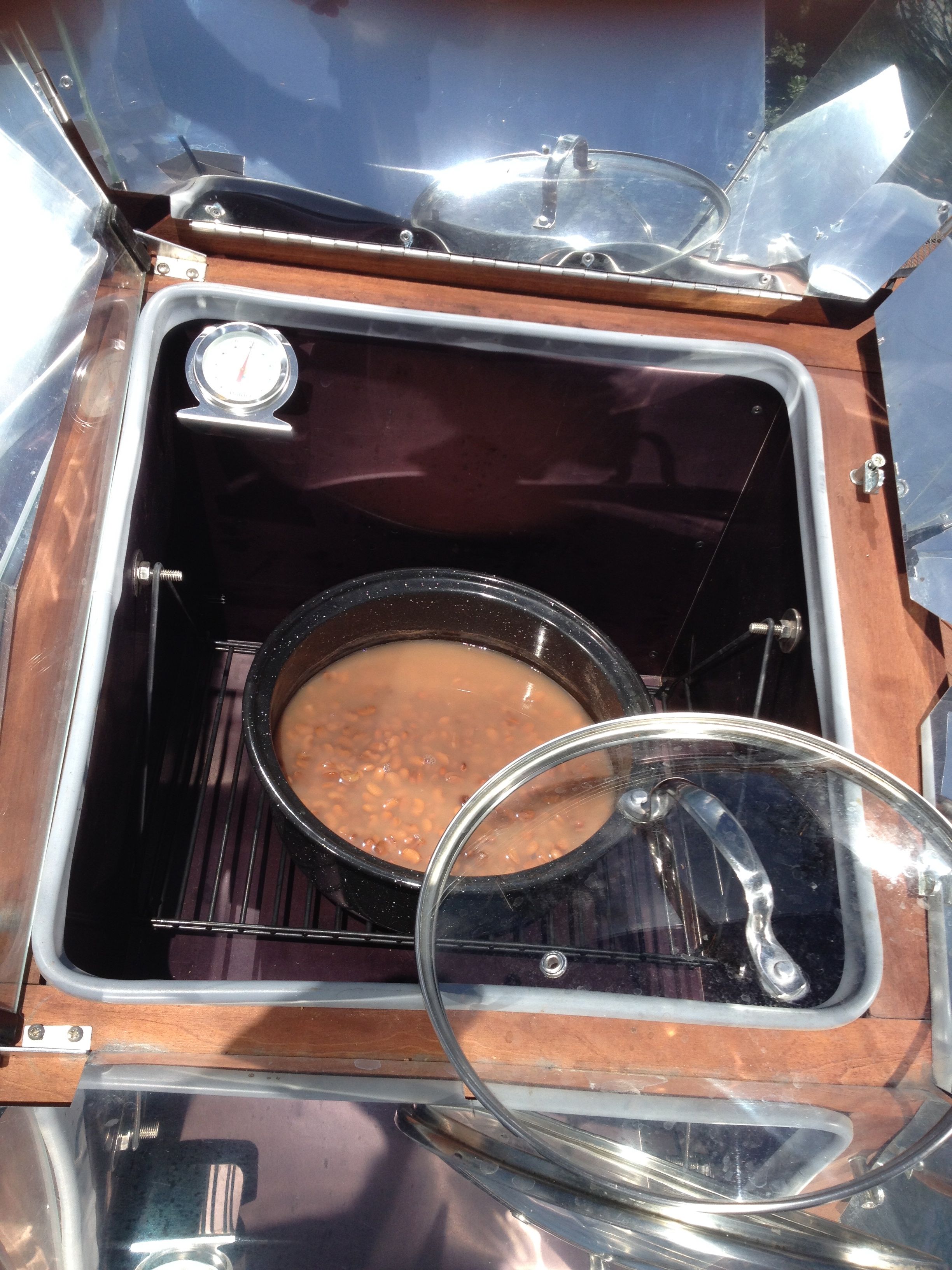
When the summer sun fully hits our porch about 10am, out comes our sun-oven to help us pull the heat of preparation out of the kitchen.  Unfolding its reflector “wings,” I place a saucepan of pre-soaked Native tepary beans–the ones the Tohono O’odham call s-wepegi ba:wi or red tepary–covered by plenty of drinking water, nothing else necessary.  About every half hour or hour (you don’t have to be too regimented if you don’t feel like it), I go out and re-adjust the orientation of the sun-oven, vertically and horizontally, to keep it as close to perpendicular to the sun as possible.  The teps will be smelling good and testing done about 2pm if the sky has remained relatively bright.

Tepary beans, done by 2pm in solar oven, temp 300 (MABurgess photo)

Tepary beans, done by 2pm in solar oven, temp 300 (MABurgess photo)

Now, with my well-cooked teparies, if I’m not ready for kitchen cookery action I let them cool down then store them labeled in the frig or freezer.  If I am in cook mode, I drain them, reserving the liquid for soup, and let them cool while I chop veggies.  My plan–“Sonoran Caviar”–the best salad ever invented for desert rats in need of a pinch of picante.  This is the culinary creation of desert survival instructor, raconteur, and one-of-a-kind character George Price, and my thanks go to him for bringing even more excitement out of teparies!  Give it a try.

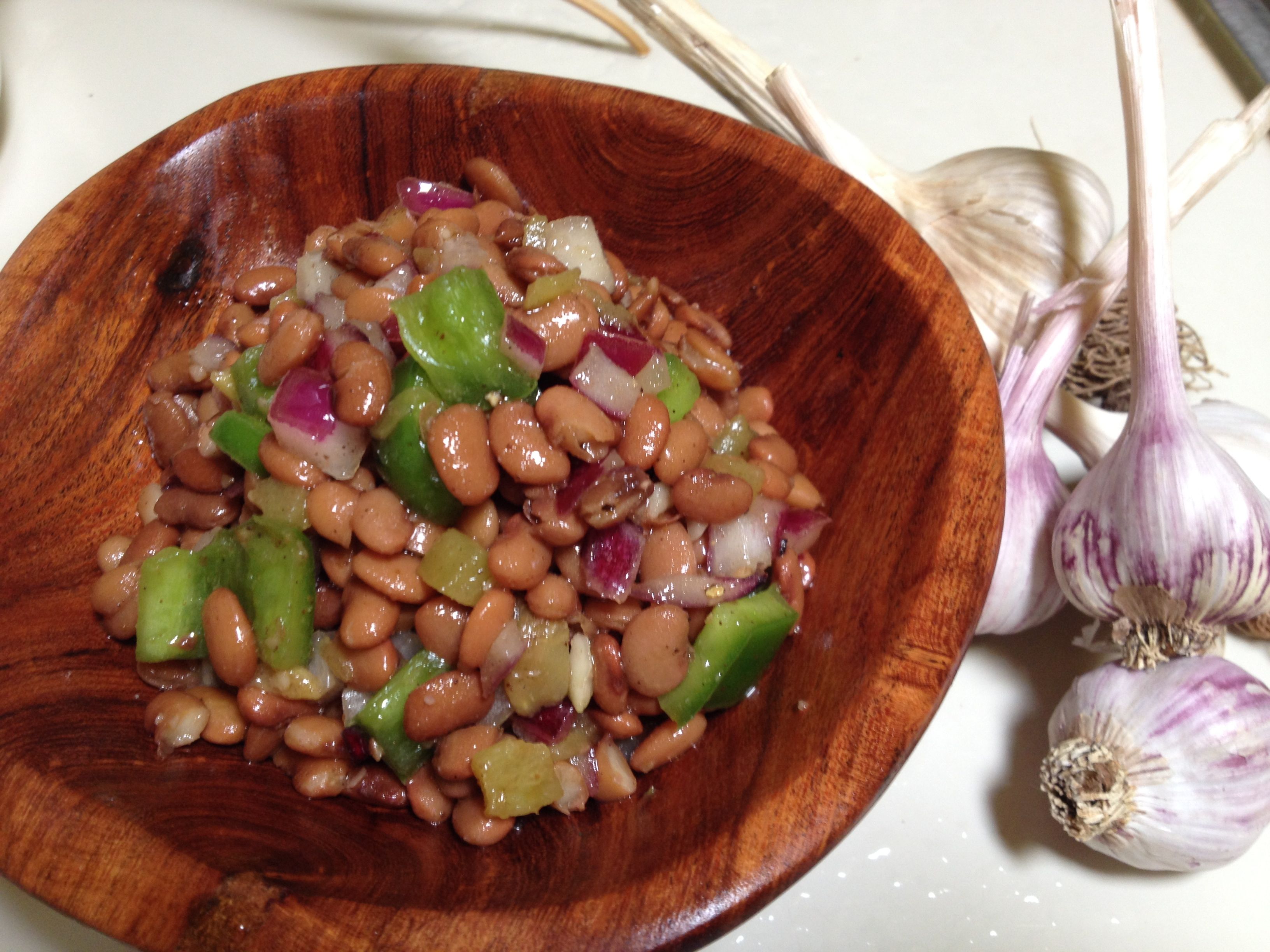
George's Sonoran Caviar--teparies with NSS heirloom garlic (both available at St Phillips Sunday farmers market)

George’s Sonoran Caviar–teparies with NSS heirloom garlic (both available at St Phillips Sunday farmers market)

Sonoran Caviar recipe:

Ingredients:

4 cups cooked brown tepary beans, drained and cooled (from less than 1 lb dry beans)

1 cup diced red onion

1 red bell pepper, diced

2 crisp Anaheim Chiles, diced, skinned, and de-seeded

1 Tbsp crushed garlic

1 Tbsp Tony Chacere’s Original Creole Seasoning (to taste)

1/3 cup olive oil

1/3 cup red wine vinegar

1 tsp black pepper ground

Mix all ingredients thoroughly in a large bowl.  Chill in refrigerator for 24 hours, stirring occasionally.  Stir again before serving.  Buen provecho, George (Be advised that this one serves 6 hungry folks including teenage boys.)

[His Sonoran Caviar will get rave reviews at any pot luck or picnic.]

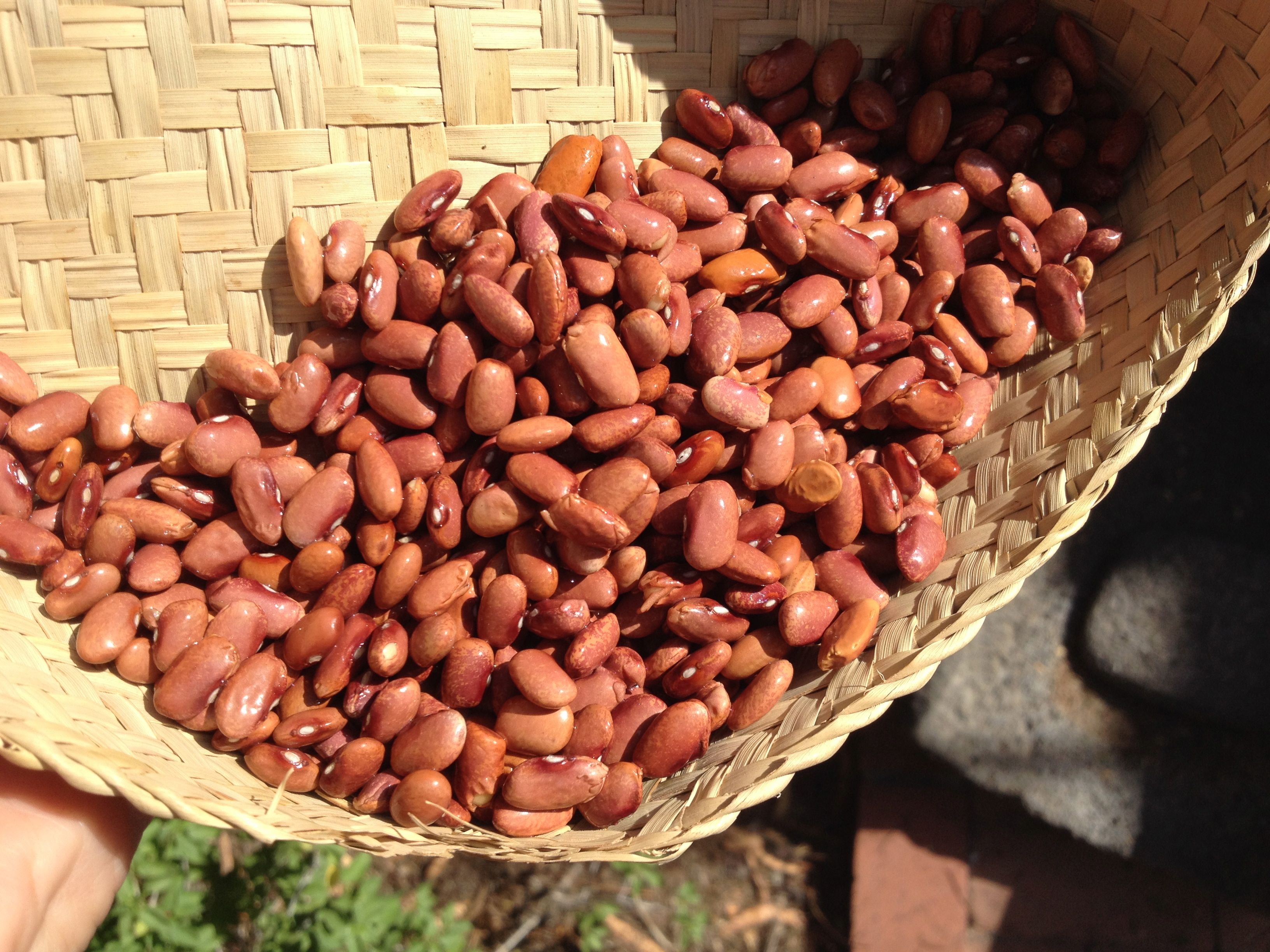
Flor de Mayo beans in Mayo palm basket (beans and baskets from Sunday St Phillips market)

Flor de Mayo beans in Mayo palm basket (beans and baskets from Sunday St Phillips market)

In the realm of cool summer dishes, I can always count on Heirloom Flor de Mayo Mixed Bean Salad (my namesake!).  When I was in college, Mother sent me a little book by Barbara Goodfellow, Make it Now Bake it Later from the ’60s.  It has inspired my hostessing ever since, especially my adaptation for this sweet recipe which delights in everything from your garden:

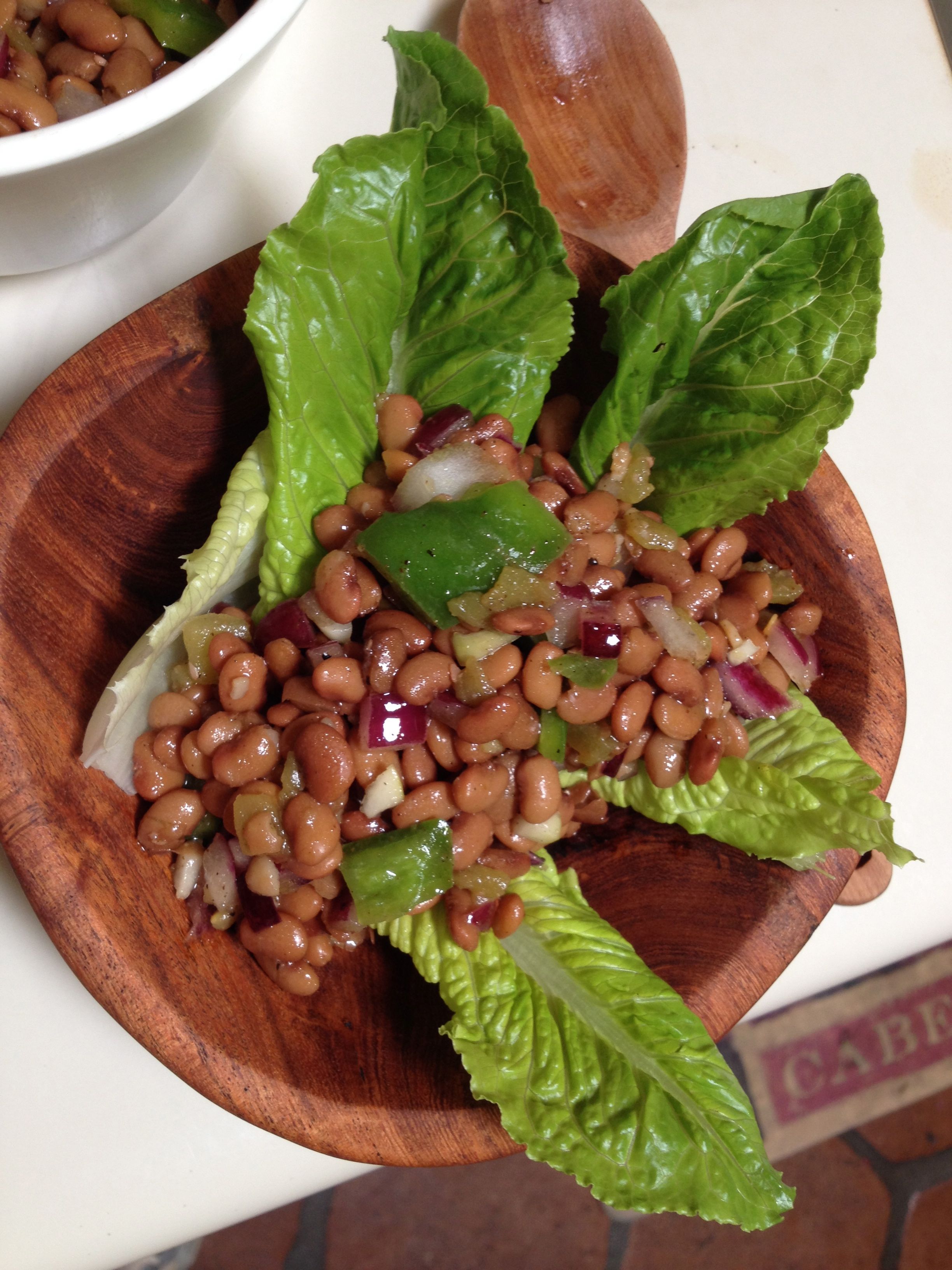
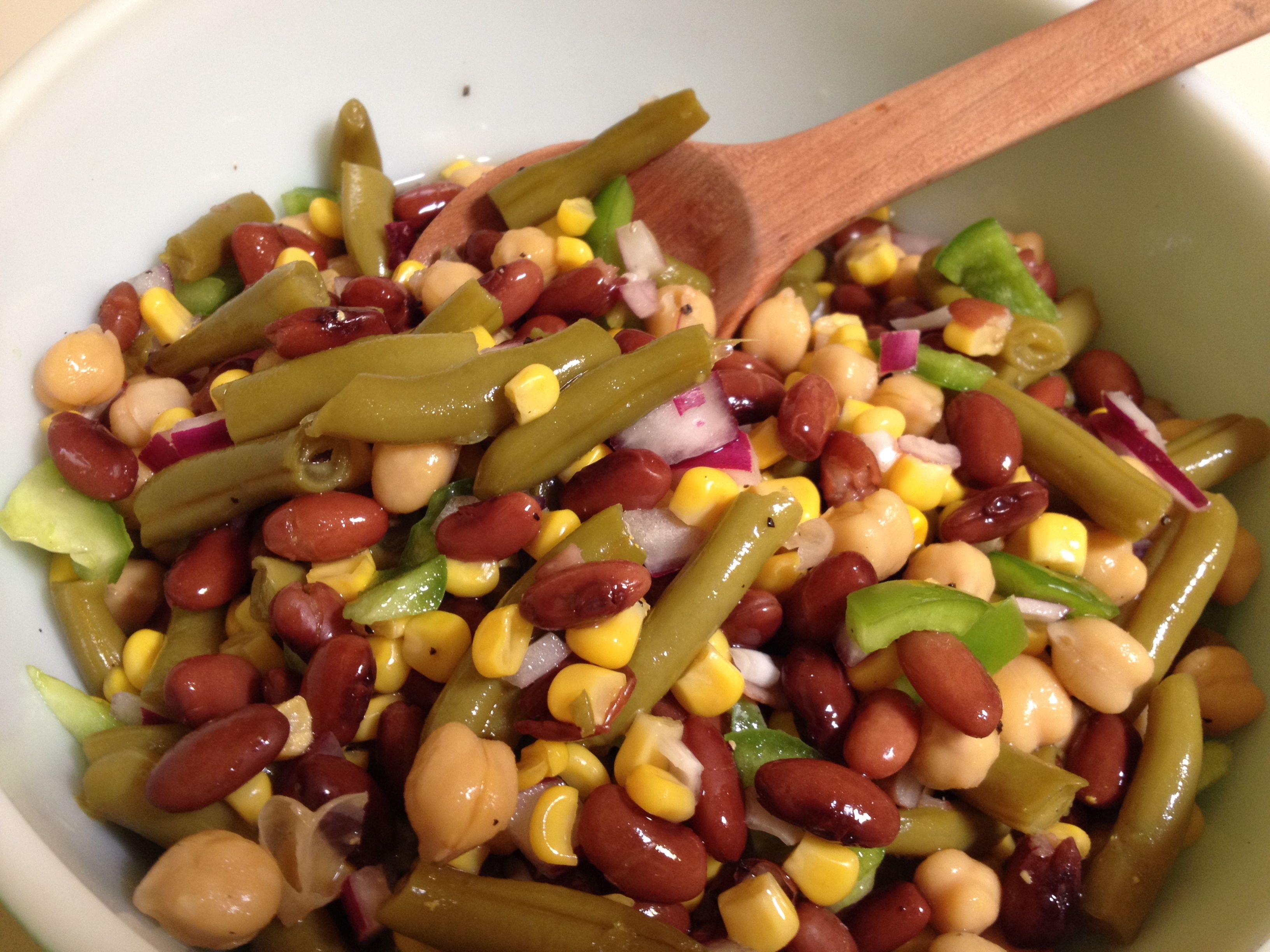
Marinated Mixed Bean Salad with Flor de Mayo heirlooms (MABurgess photo)

Marinated Mixed Bean Salad with Flor de Mayo heirlooms (MABurgess photo)

Heirloom Flor de Mayo Mixed Bean Salad Recipe:

(Fool-proof for picnics and barbeques–and it keeps well for days in the frig)

1 cup (or more) cooked heirloom Flor de Mayo beans for bright color (or another SW heirloom such as Ojo de Cabra, Rio Zape, Bolita, Cannellini–all taste wonderful in this marinated salad)

1 cup cooked green beans or snap beans from your garden (or organic canned)

1 cup cooked garbanzo beans (organic canned garbanzos/chickpeas) from your winter garden

1 cup cooked GMO-free corn kernels (off the cob or canned)

1/2 cup chopped green pepper

1 Tbsp chopped shallots, chives,  sweet onion, or I’itoi’s onion from the garden

1/2 cup organic sugar or agave nectar

1 cup organic cider vinegar

1/2 cup extra virgin olive oil

1 tsp sea salt

Drain cooked beans.  In mixing bowl dissolve sweetener and spices in liquid.  Add beans, chopped green pepper and onion, then mix.  Let stand in refrigerator overnight, mix again.  When serving, reserve liquid for other marinades.  Serves 6 generously.

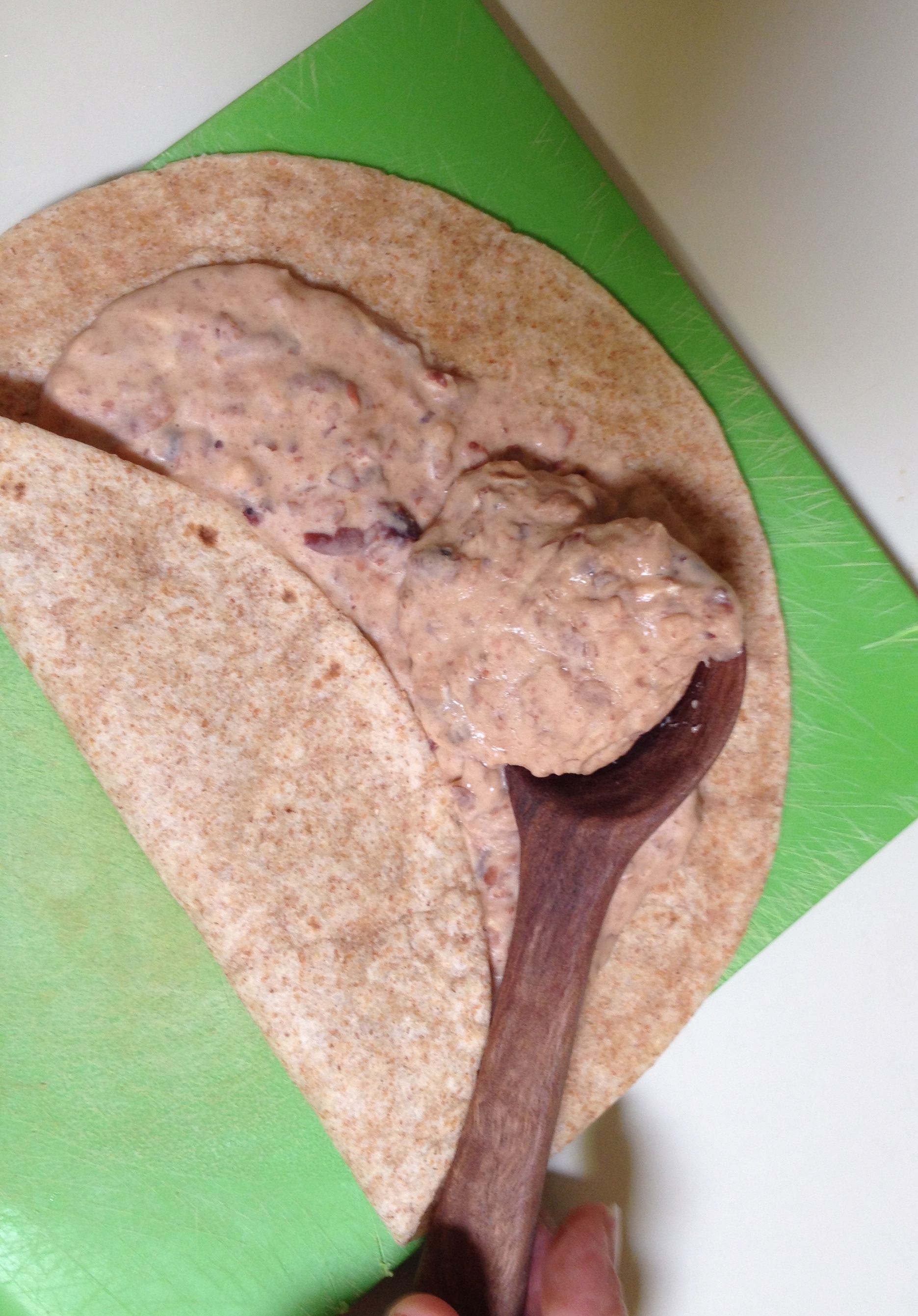
Mortgage Lifter burrito in whole wheat tortilla--first step for making heirloom bean roll-up appetizers

Anasazi Bean burrito in whole wheat tortilla–preliminary for making heirloom bean roll-up appetizers

Another fun way to get your complex carbs and vegetable protein is to make heirloom bean dips– then to get fancier using the dip, the next step is Easy Heirloom Bean Roll-ups.  For the fastest, most crowd-pleasing bean-spread, I use either Mortgage Lifter beans or Anasazi beans–both great.  Mortgage Lifter is a giant white runner bean, also known as Aztec white runner or Bordal.  Grown in your garden, it will vine over itself and its neighbor plants with big white flowers that attract hummingbirds.

Easy Heirloom Bean Roll-up Appetizers Recipe:

Ingredients:

2 cups cooked Mortgage Lifter beans, or purple & white Anasazi beans

4 oz low-fat cream cheese (1/2 block of neuchatel)

1 Tbsp Red Devil hot sauce

1 tsp ground cumin seed

pinches of sea salt, to taste

3 or 4 medium whole wheat tortillas

Drain cooked beans (reserving liquid if you need to make a thinner texture after mashing).  Mash beans and cream cheese together with pastry cutter or bean masher.  Mash in all other ingredients. [You can sometimes find traditional Tarahumara madrone-wood bean mashers at NativeSeeds/SEARCH or at Flor de Mayo.]  At this point you have the best dip ever, and also the filling for instant burritos ready to feed to drop-in visitors.  Read on for further Roll-up directions…..

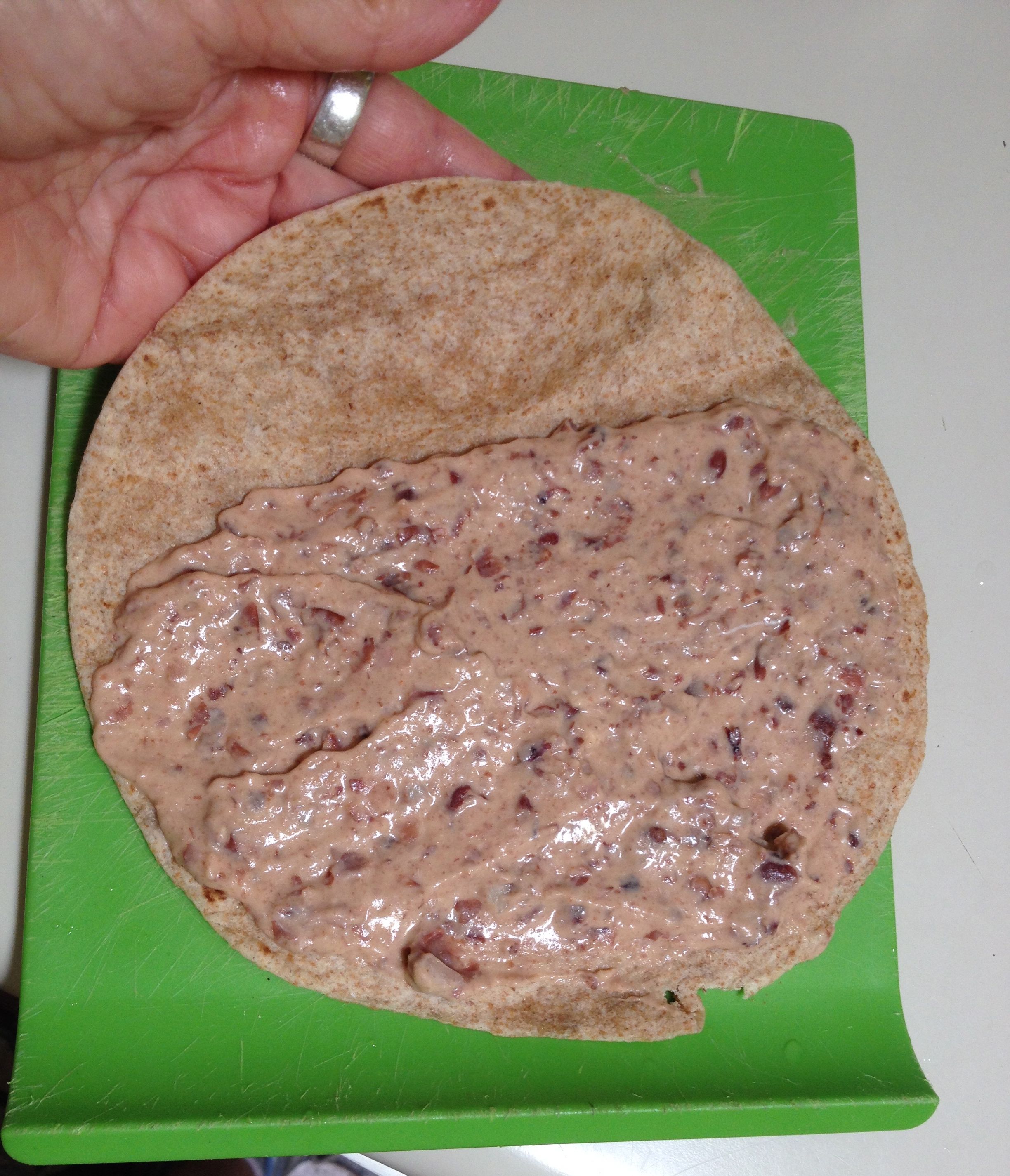
Heirloom bean "roll-ups" Step 1--with Anasazi beans

Heirloom bean “roll-ups” Step 1–with Anasazi beans

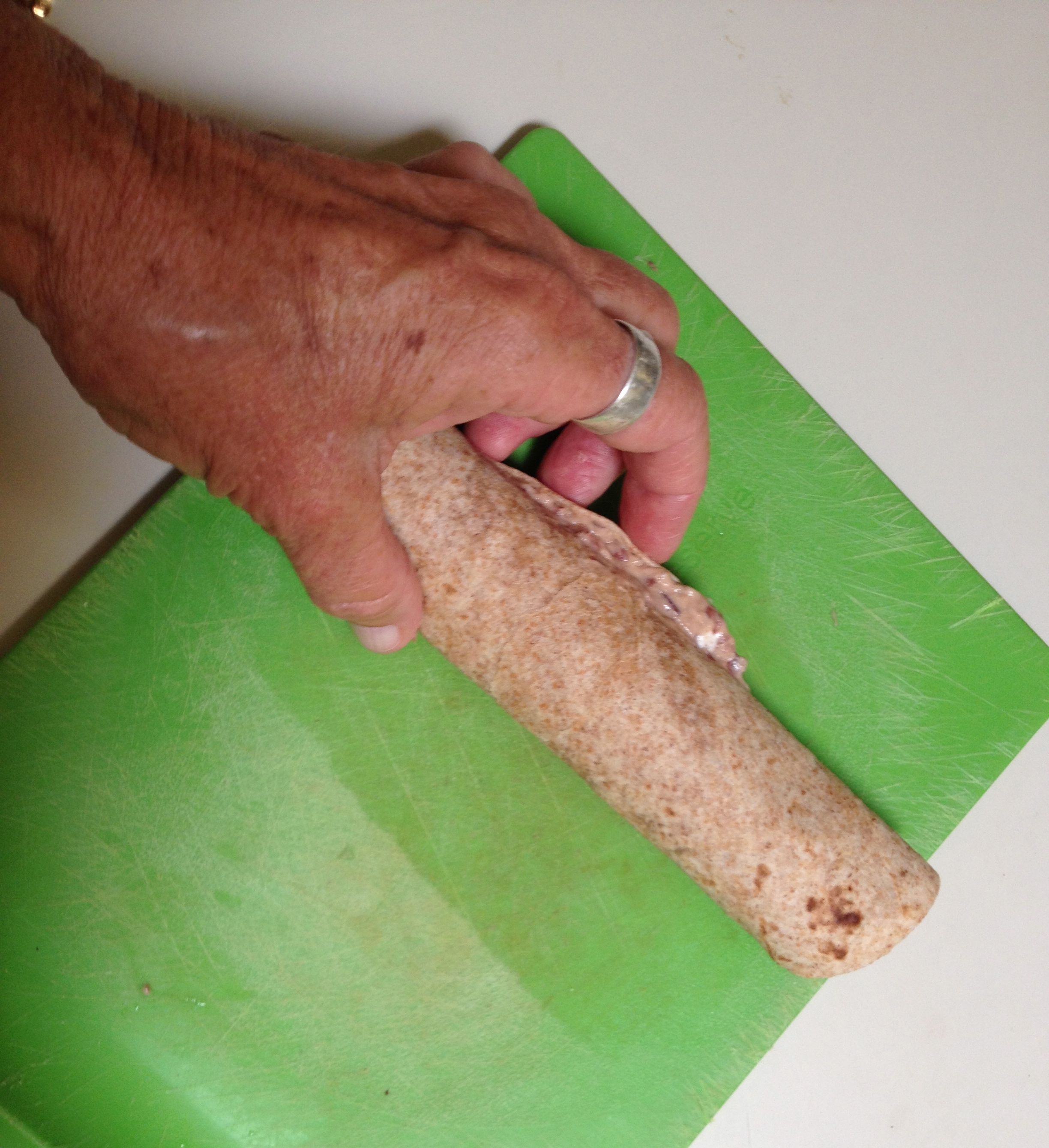
Rolling up heirloom bean hors d'oeuvres--Step 2 before cutting

Rolling up heirloom bean hors d’oeuvres–Step 2 before cutting

To finish these festive heirloom bean appetizers…spread the bean mixture onto 3/4 of one tortilla leaving a chord of the circle uncovered.  You will see why when you roll it up.  Begin rolling the tortilla tightly from the bean-covered edge and continue to roll snugly.  The bean spread will squeeze toward the unrolled edge, filling it.  The rolled tortilla will be held together by the bean spread.  Repeat with remaining tortillas and dip.

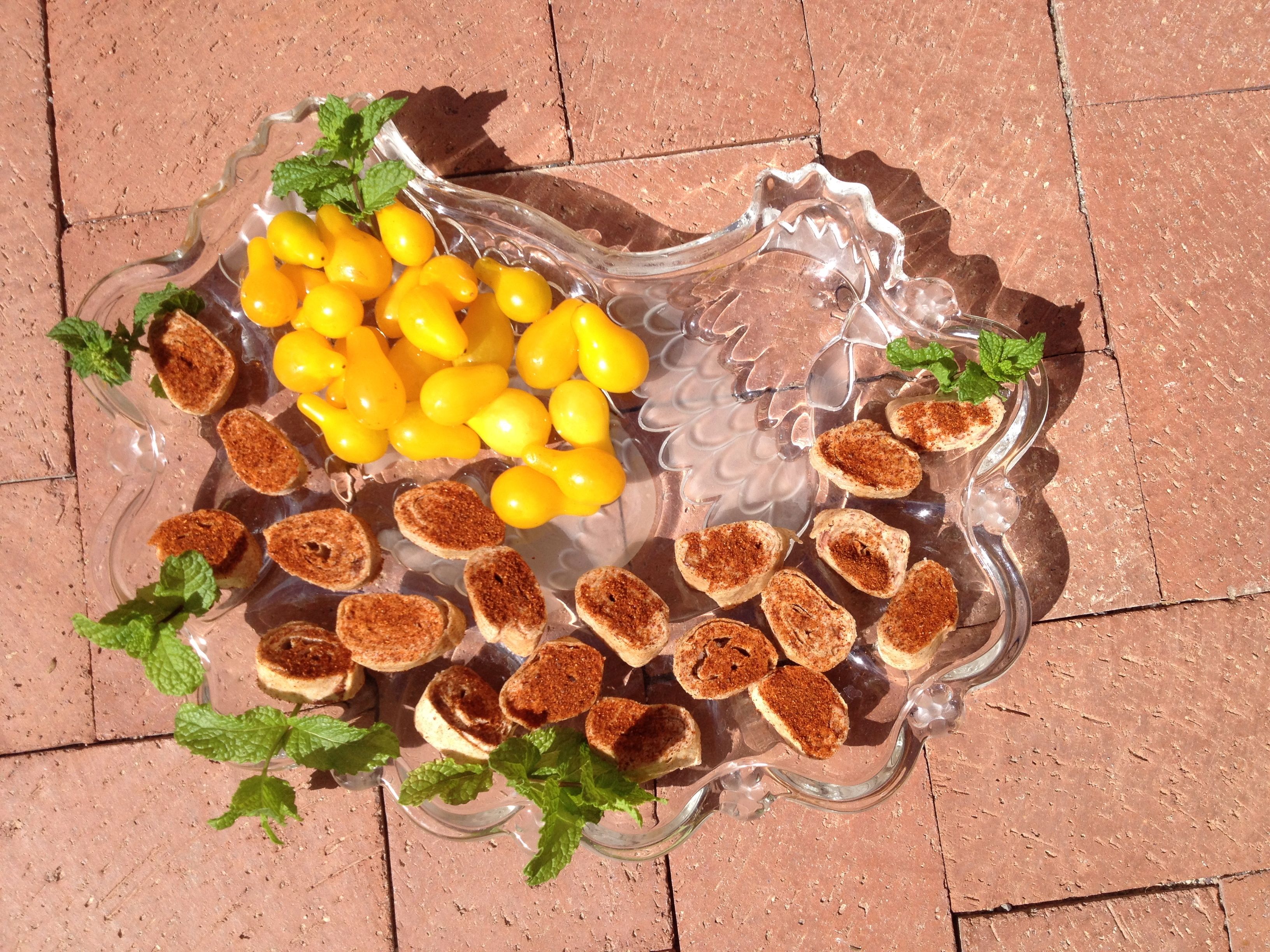
Place tortilla rolls on wax paper and chill in freezer or frig long enough to become firm for cutting.  Place chilled rolled tortillas on cutting board one at a time.  Slice in 1/2-inch rounds and place the disc-shaped spirals on a serving tray.  Chill until served.  Bedeck each Heirloom Bean Roll-up with a sprinkle of paprika or a cilantro leaf.  Each tortilla should produce about 6-8 roll-ups.  (With any leftover bean mixture, enjoy it as dip or in a burrito.)  These appetizers are a tasty celebration–and a tacit bow to Southwestern farming traditions.

Heirloom Bean Roll-up Appetizers and yellow pear tomatoes in chicken hors d'oeuvre tray (MABurgess photo)

Heirloom Bean Roll-up Appetizers and yellow pear tomatoes in chicken hors d’oeuvre tray (MABurgess photo)

By the way, you can find all of the wonderful Southwest heirloom beans to use in these recipes either at the NativeSeeds/SEARCH store, 3061 N Campbell Ave, Tucson, or at our Flor de Mayo booth at the charming St Phillips farmers market on Sundays in the shade of spreading sycamores and mesquites.

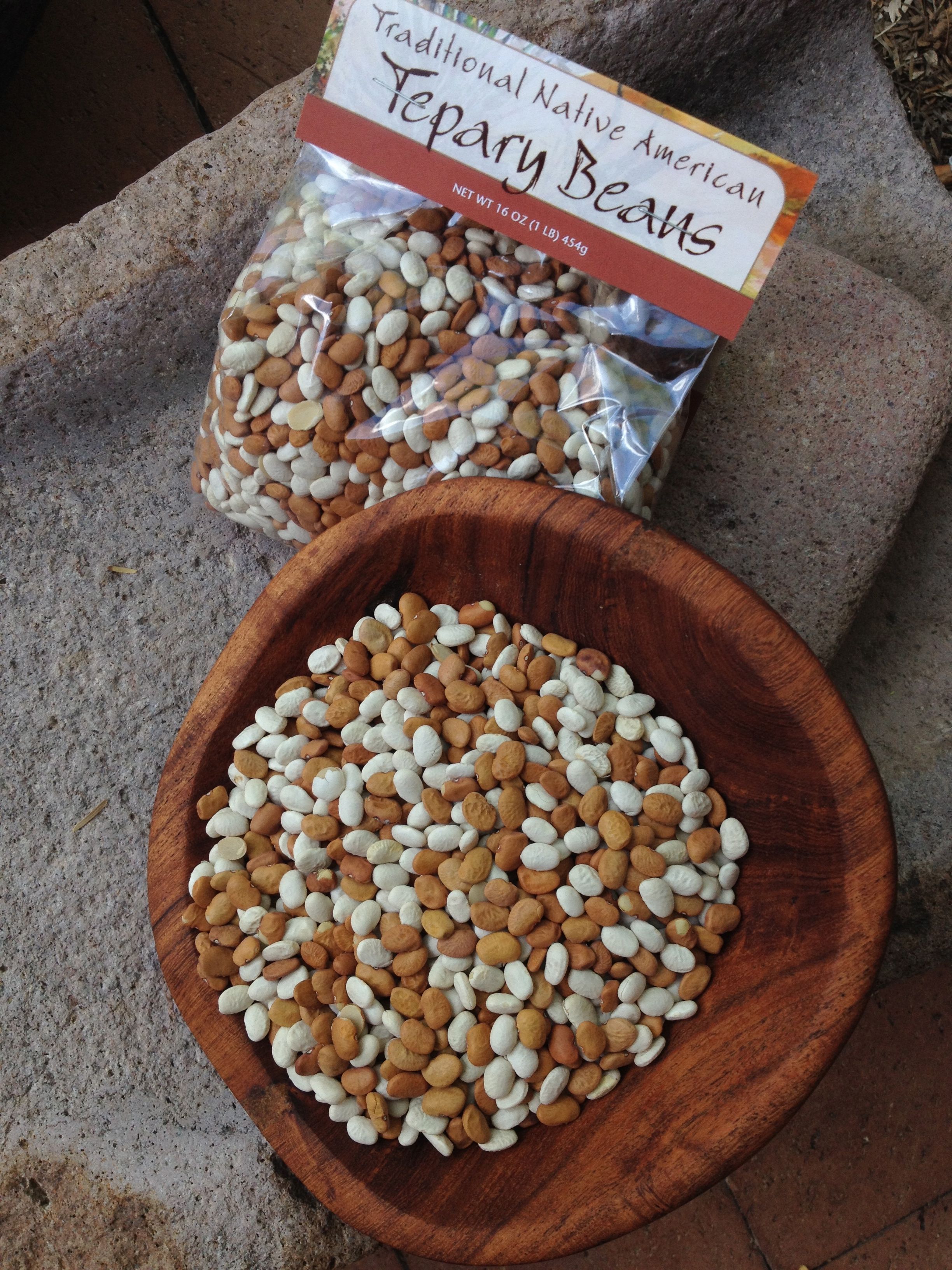
Traditional Native tepary beans--colorful mix available at Tohono Chul Park gift shop, NativeSeeds/SEARCH and Flor de Mayo booth at farmers market

Traditional Native tepary beans–colorful mix available at Tohono Chul Park gift shop, NativeSeeds/SEARCH and Flor de Mayo booth at farmers market

For the experienced or the novice desert gardener, now is the time to do the last planting in your monsoon garden.  One of my Tohono O’odham mentors taught me that the second week in August is really the last opportunity to put bean, corn, melon, or squash seed in the ground.  Even better to give your garden a jump-start by planting starts!  Right now at the NativeSeeds/SEARCH store you will find a variety of healthy seedlings hungry to be in the soil–and on sale.  Come give them a future–and a delectable future for your palette in the months to come….

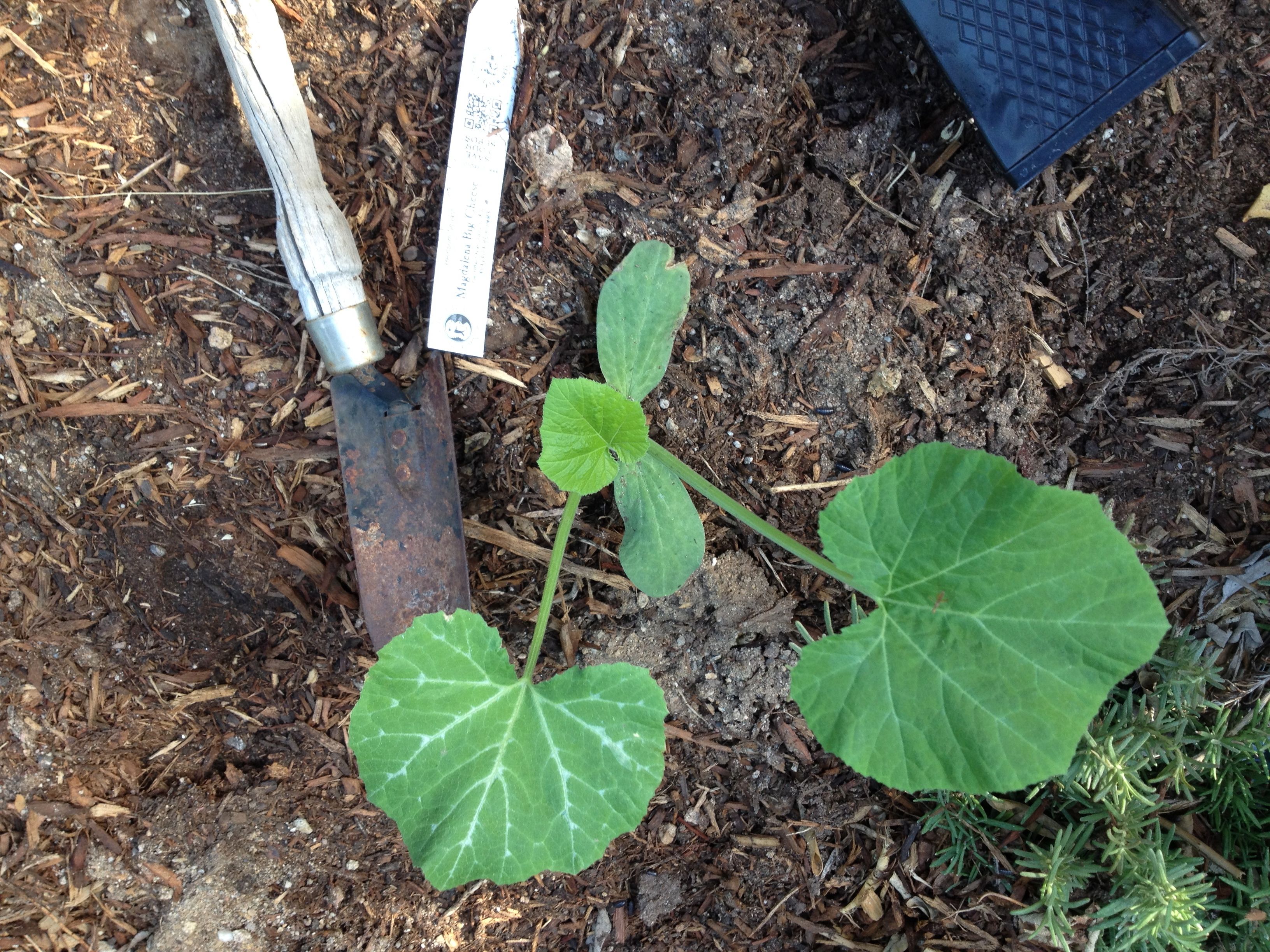
Happily planted--seedling Magdalena Big Cheese Squash seedling from NativeSeeds/SEARCH monsoon plant sale still on!

Happily planted–Magdalena Big Cheese Squash seedling from NativeSeeds/SEARCH monsoon plant sale (still going)

Happy gardening–and healthy eating to you from Tia Marta!

Foes or Friends ? and Foes as Friends Fudge !

Aunt Linda here:

Walking home this humid evening, and exactly as I was gazing up at the gorgeous, dark grey, monsoon clouds, a tiny insect flew right into my eye. Ironically, I had been admiring the bats just above me, swooping and eating insects with both efficiency and drama.  The tiny bug now in my eye, had somehow escaped their skill, yet flew right into my moist eye, where it became stuck, wriggled a bit, and then met its end in involuntary blinking of eyelids.

Which got me thinking about life and death in the worlds of insects.

IMG_5842

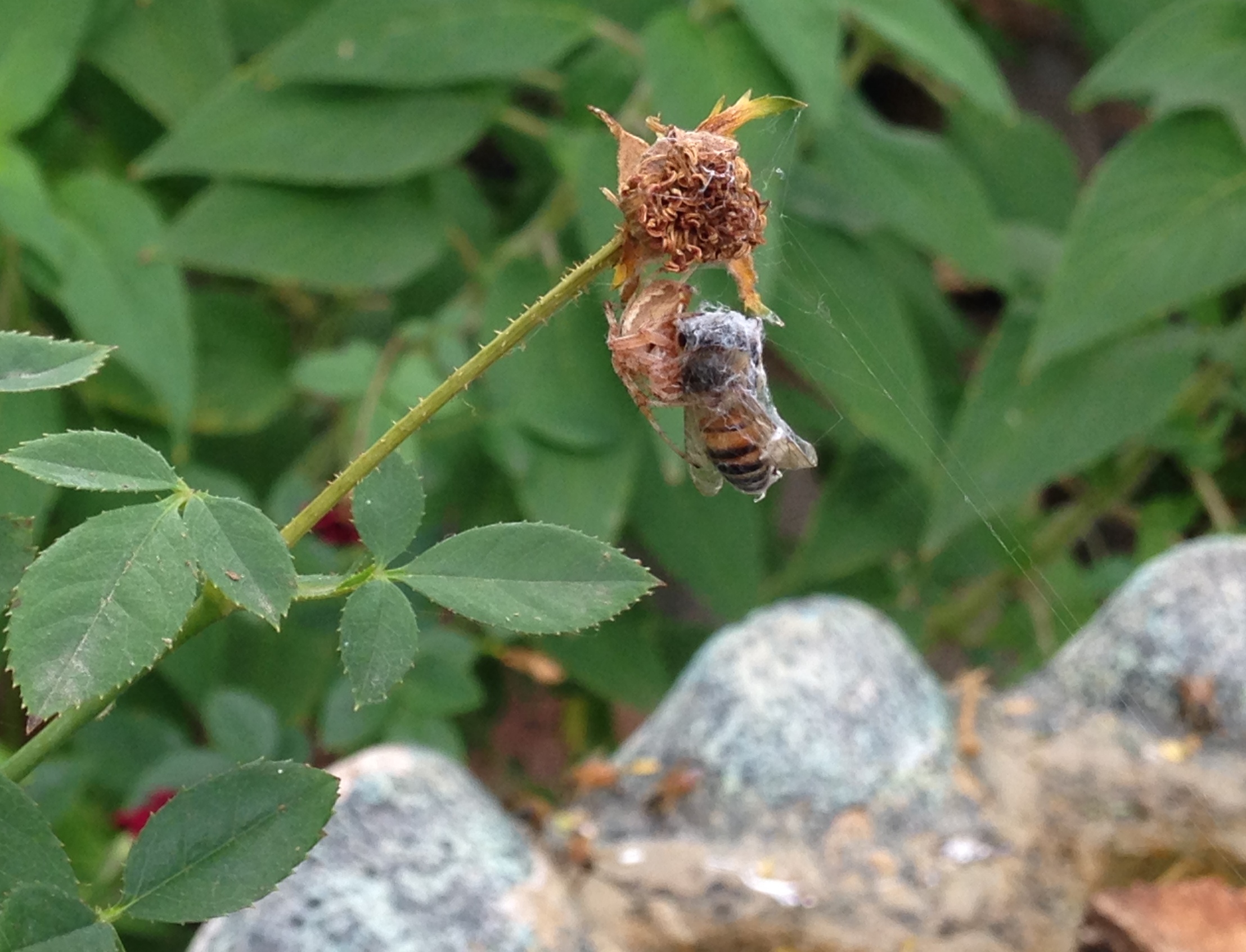
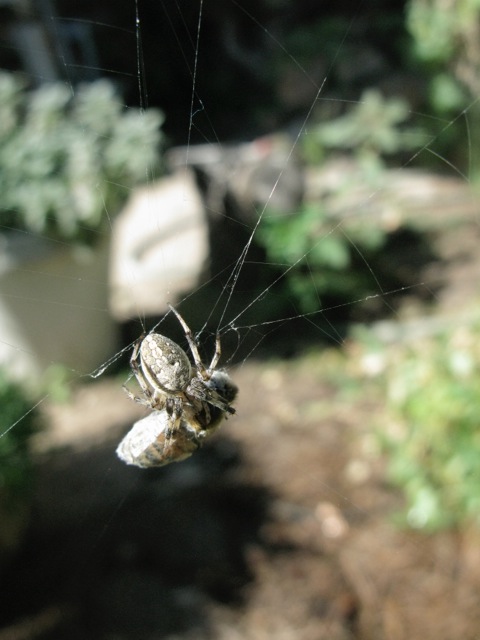
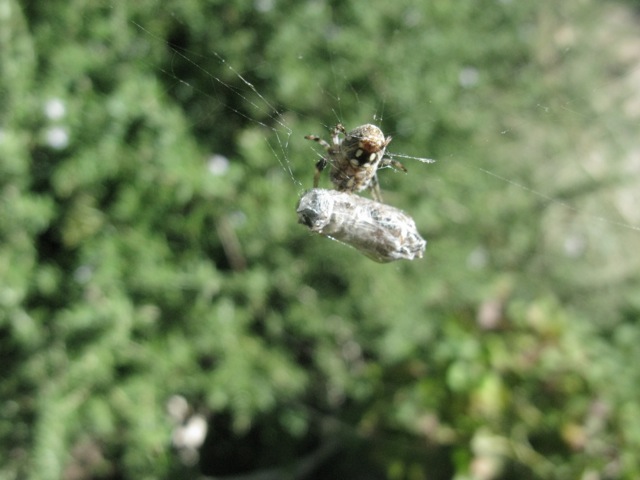
Over the past few days I have been watching one particular spider. Hiding itself under a similarly colored part of the plant, it is quite the hunter.  Strategically situated above the birdbath designated as a primary water sources for honeybees, it has cast its web, and quite efficiently catches and eat bees.

Now, if you find that you are a bit squeamish about these photos you are not alone.

Many in this culture have lives and palates and plates, very much disassociated from their food sources.   Much of our food had become de-animalized and is often unrecognizable from its original source. Insects have no distance between themselves and their sources of nourishment. This is perhaps one reason that we wince a bit when we see such raw feasting before us.

IMG_1246

I suspect that there may be more going on for us than that, however.  It is possible that we are rooting for the sweet bee. After all, it is a HONEY bee. It is fuzzy, and cute, and provides it’s own species (as well as ours)  with delicious honey!  It may be the one insect on the planet  — , (but I am not an entomologist, so please chime in with corrections or tweaks if you are one)  —   that actually enhances the flowers/plants from which it “takes” its food. It does not take a life as some insects do.  It does not harm one leaf or petal. It leaves plants “stronger” than they were before it’s visit to gather pollen and nectar.

So, perhaps, when we wince at scenes like the ones in this post, some part of us feels a metaphorical, or archetypal, pinging somewhere inside us. That of the Monster. Eating the Hero, or in this case, the Heroine.  Myths, children’s stories, and movies, are full of Monsters. And here, right in our own back yards, we find this multi-legged, relatively ugly (to all but the most arachnida-loving predator or human), weird eyed monster eating our Sweet Honey Bee.

IMG_1245

Ah.  But things in Life, and in stories/movies, are not always what they seem. The sweet honey bee has a sting and powerful venom that is not subtle. And spiders are amazing allies, weird appearances aside, as their diets keep overpopulation, and therefore disease, in check.  Even inside our homes, where we generally do not welcome spiders nor monsters, they are powerful allies for humans.  For several years now, I have allowed spiders to live and hunt in the corners and crannies of our old adobe home. (Being selective is obviously important; I don’t welcome black widows for example.)   Co-habitation with them is mutually beneficial. Our home provides them with a happy hunting ground with few predators, while they rid the house of SIGNIFICANT numbers of mosquitoes and flies. Getting a good night sleep without that incessant mosquito whine, is but one benefit.  For me, they are the equivalent of having a cat that is a skilled “mouser”.  Home spiders also eat fleas and flies and cockroaches.; some even eat black widows.

photo

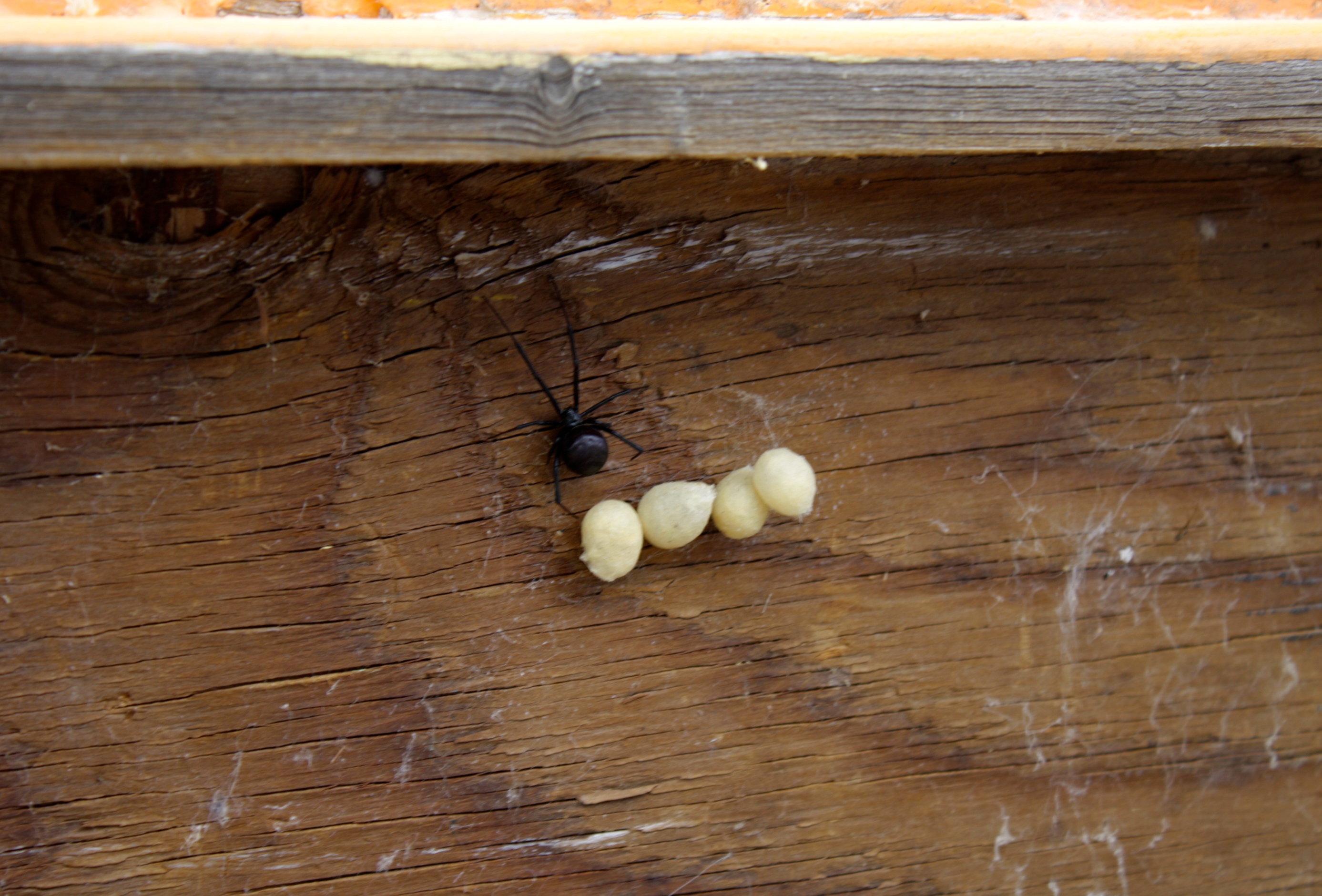
I wish I had a black widow-eating -spider in one of my hives.   In nearly 20 years of being in and out of hives, this is the only one in which I have a problem. (see photo above).  But for two consecutive years,  beginning about this time of year, when I open up the hives there they are. Black bodies, egg sacks, and bees all tied up in webs.  I admit to smooshing these red-8 abdominal spiders and their egg sacs with my hive tool. Yuck. Having a spider to do Black Widow Patrol for me would be so much nicer.

So, sometimes foes are foes; and friends are friends.  Othertimes, who/what we think of as foes are actually friends. When we can adjust our focus to include that possibility, now that is when the world can open up.

IMG_5998

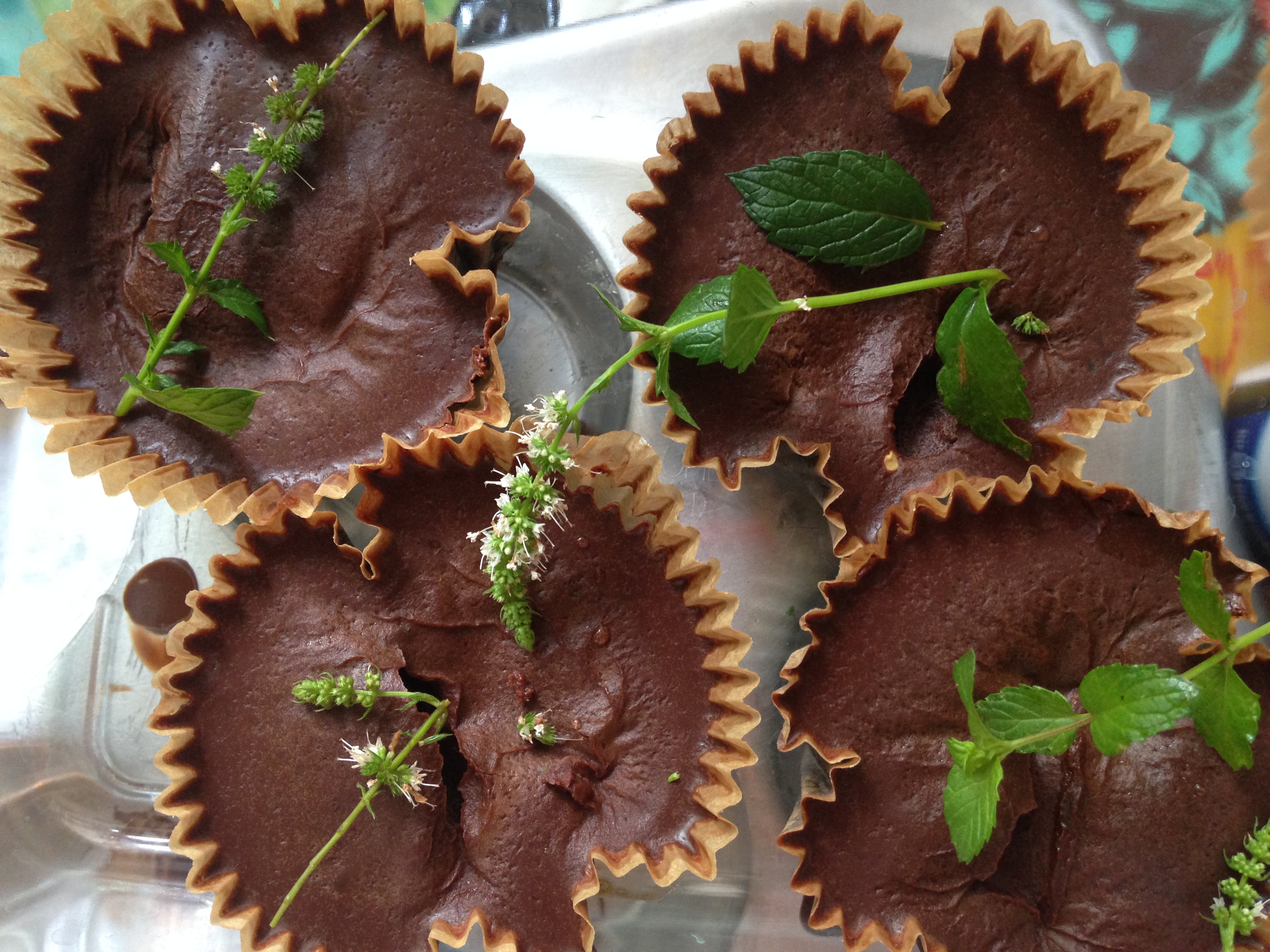
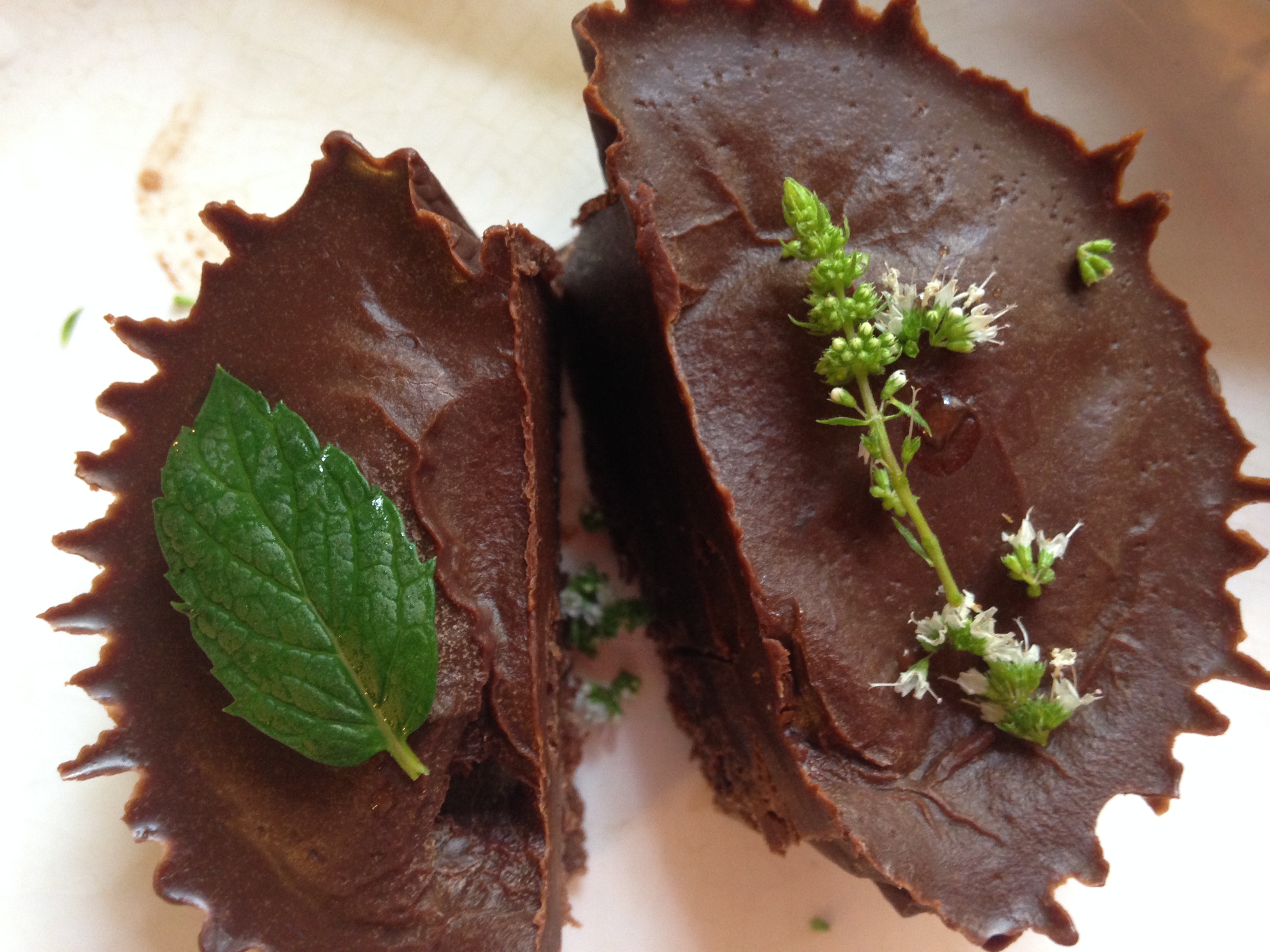
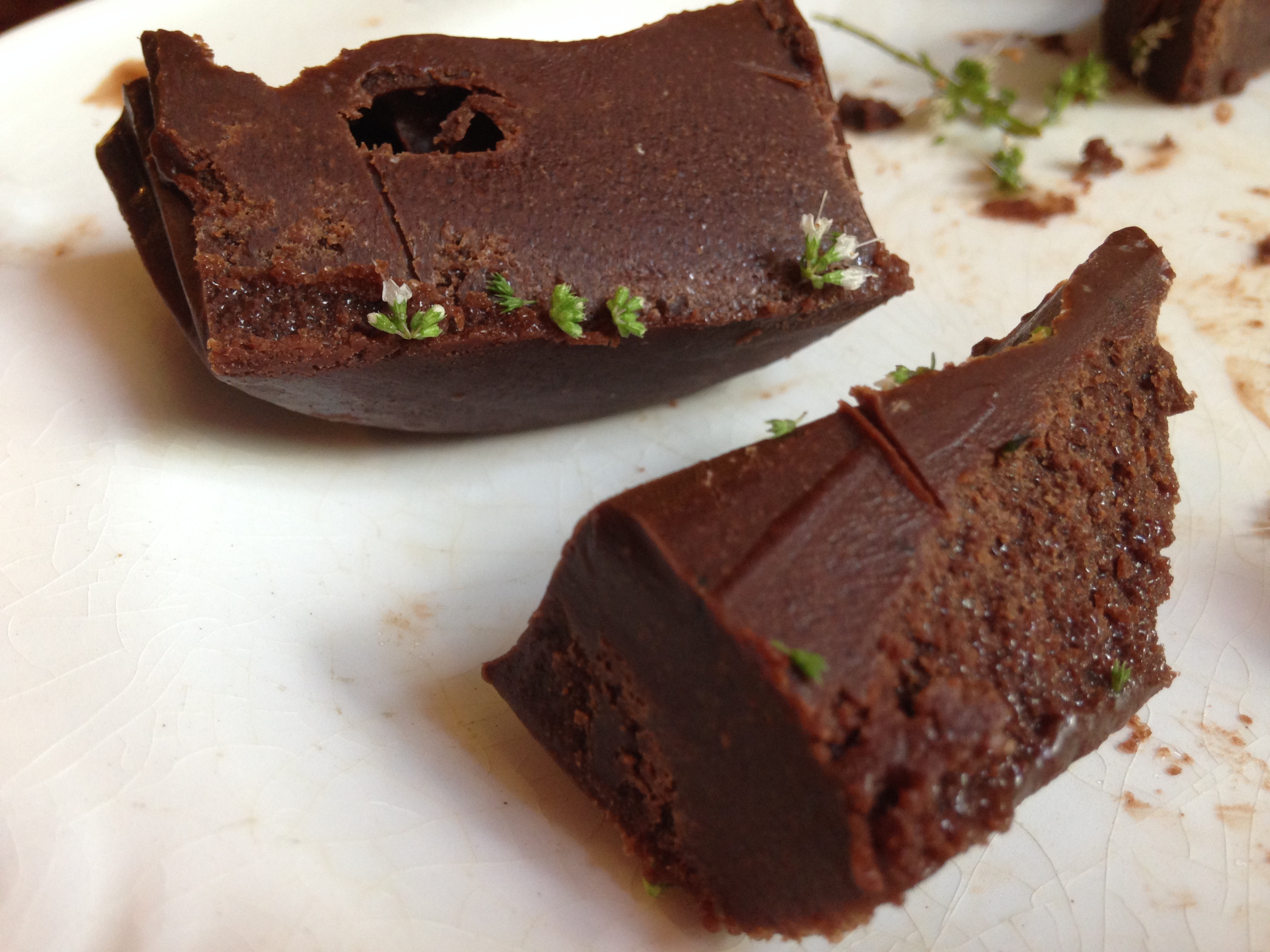
Foes as Friends Fudge: 

(makes five thick fudge rounds or 9 thin ones)

This fudge, I have to say, may be a Super Food.  It’s ingredients that are so healthy, that this fudge might even be considered medicinal.

Ingredients:

The Must Have ingredients

– 1/2  cup refined coconut oil, melted

– 1/3 cup of (local) honey (healthier than sugar; and honors insects)

– 1/2 cup cacao (unsweetened)

– 2 tablespoons almond butter (play around with this; try peanut butter)

–  a few tablespoons of fresh mint and a few mint flower (leave the lion share of flowers on the plant for bees)

Optional Ingredients:

– 3 Tablespoons Goji berry powder or berries (Goji Berries are also Wolf Berries, which grow right here in the South West and are considered a power food)

– 3 Tablespoons Cacao nibs

How to:

– Put all the ingredients (except the nibs) in an electric mixer (I used as Cuisinart but am sure you could use one of those submersible mixers and mix it al right together in a bowl) and blend.

– Place parchment paper in a cupcake or muffin pan; or if you want squares, place parchment in a pan. Pour mixture into the parchment/pan and freeze for 15 minutes for thinner rounds and 20 for thicker.

– Refrigerate.  Left at room temperature these will melt a bit.

IMG_5983

IMG_5997