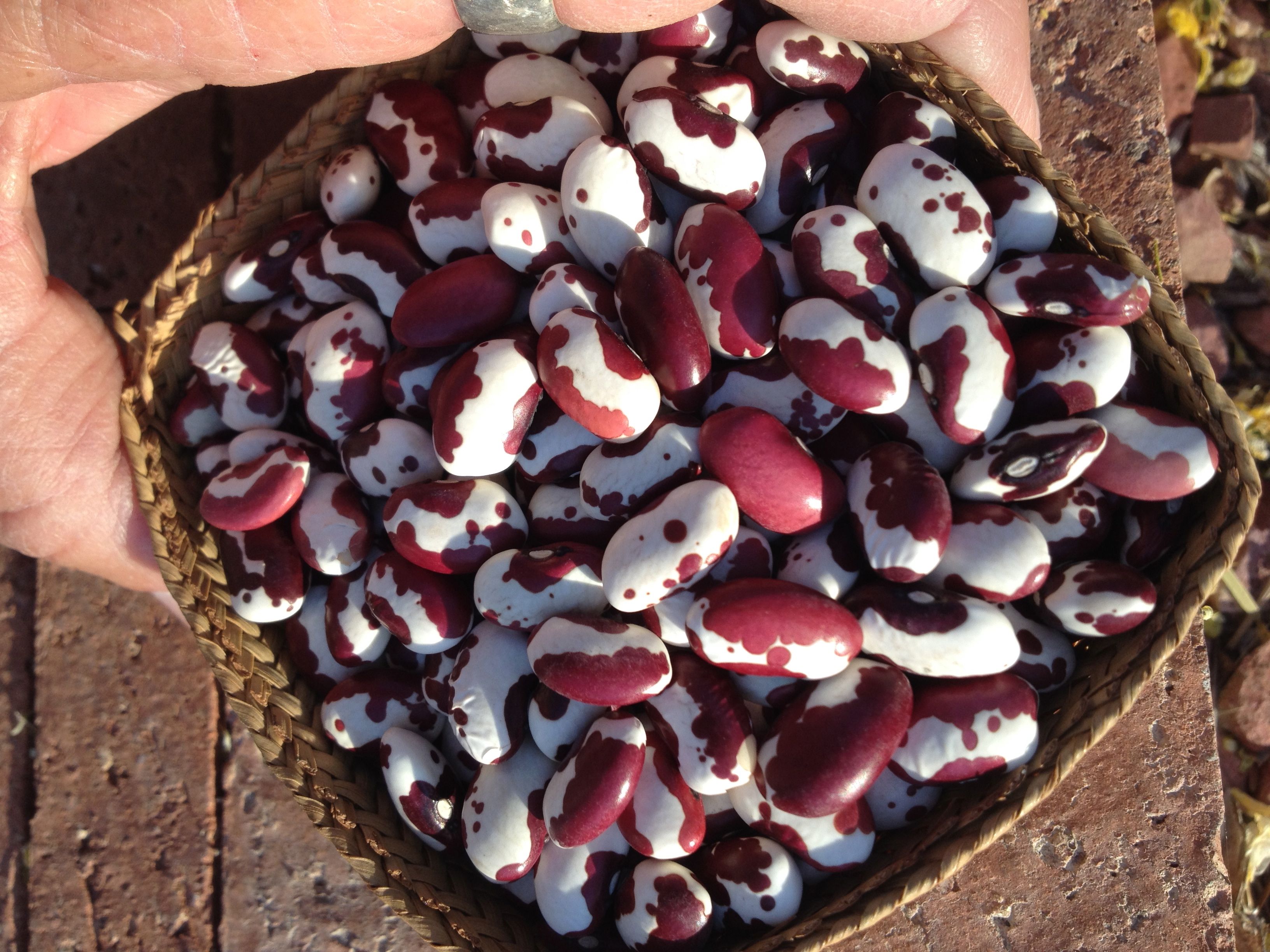
Glorious Diversity–A Palette of Heirloom Legumes

The desert this spring is exploding with color, its rainbow shades reminding us of the amazing diversity of life, of species, of varieties of plants in this rich Sonoran Desert! Cholla flowers themselves are a veritable palette of genetic diversity within a species and between species.

Tia Marta here to talk about the rich diversity of beans selected and cultivated over the centuries by smart Native farmers in what is now the southwest borderlands…..

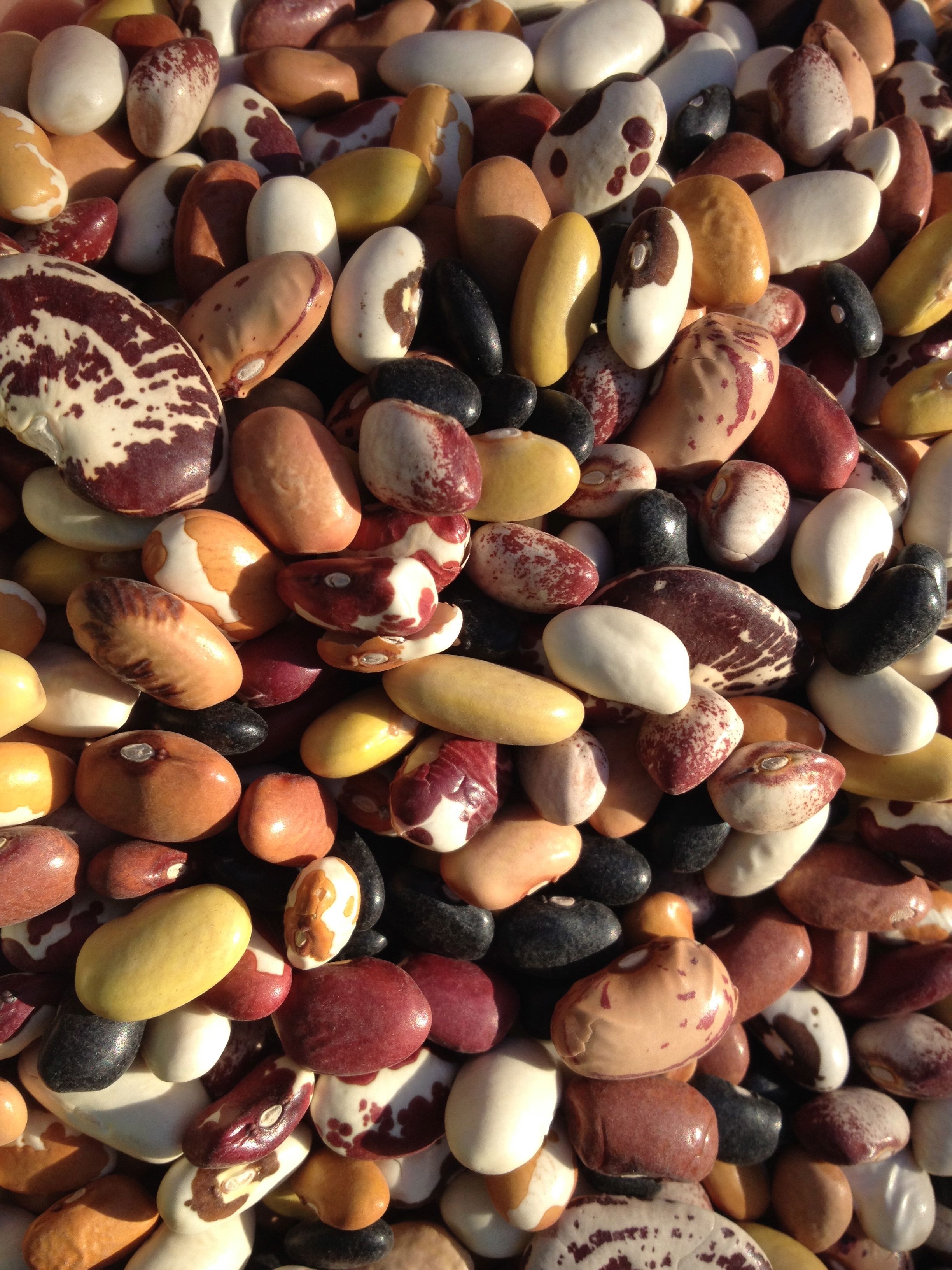
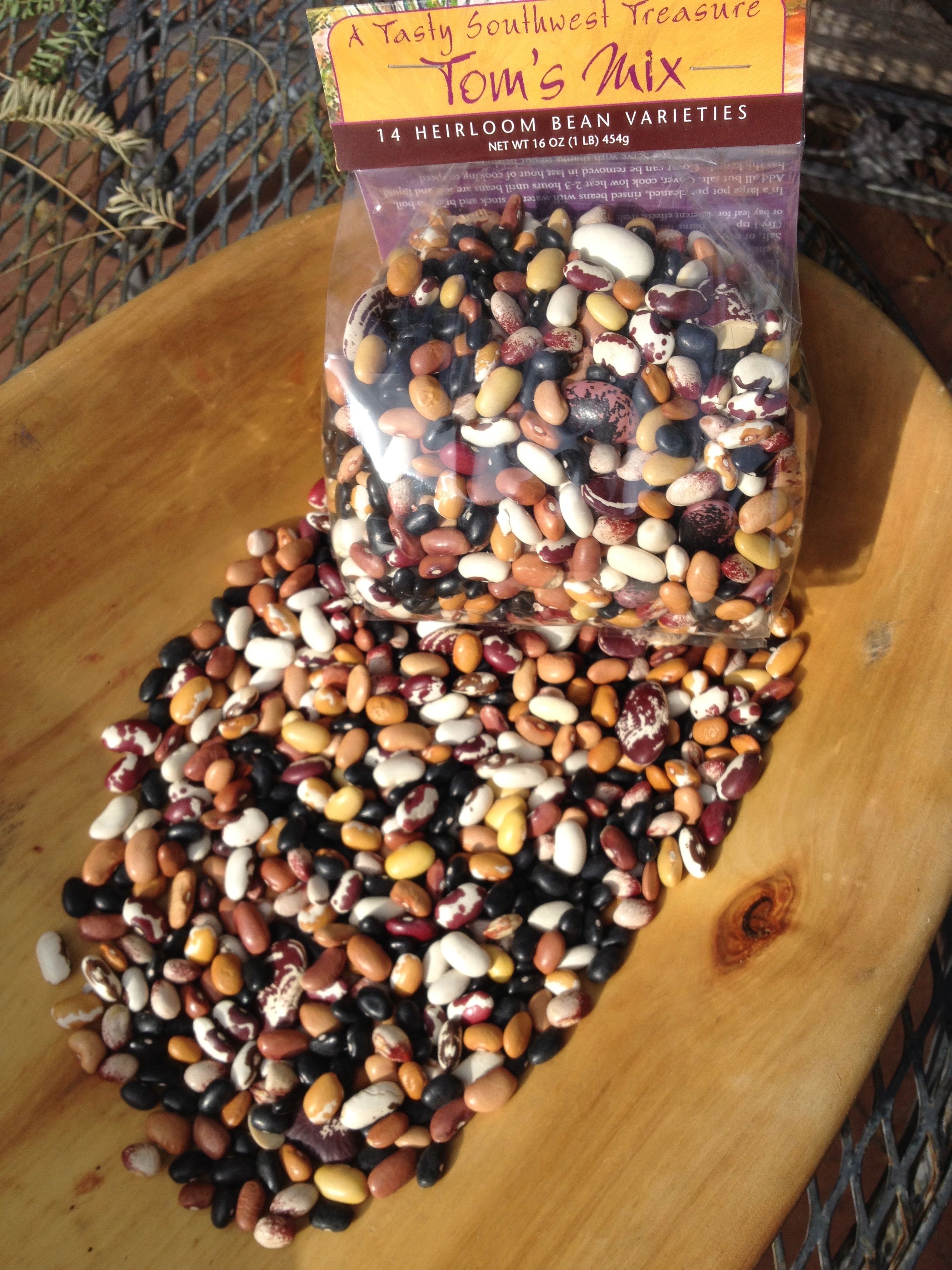
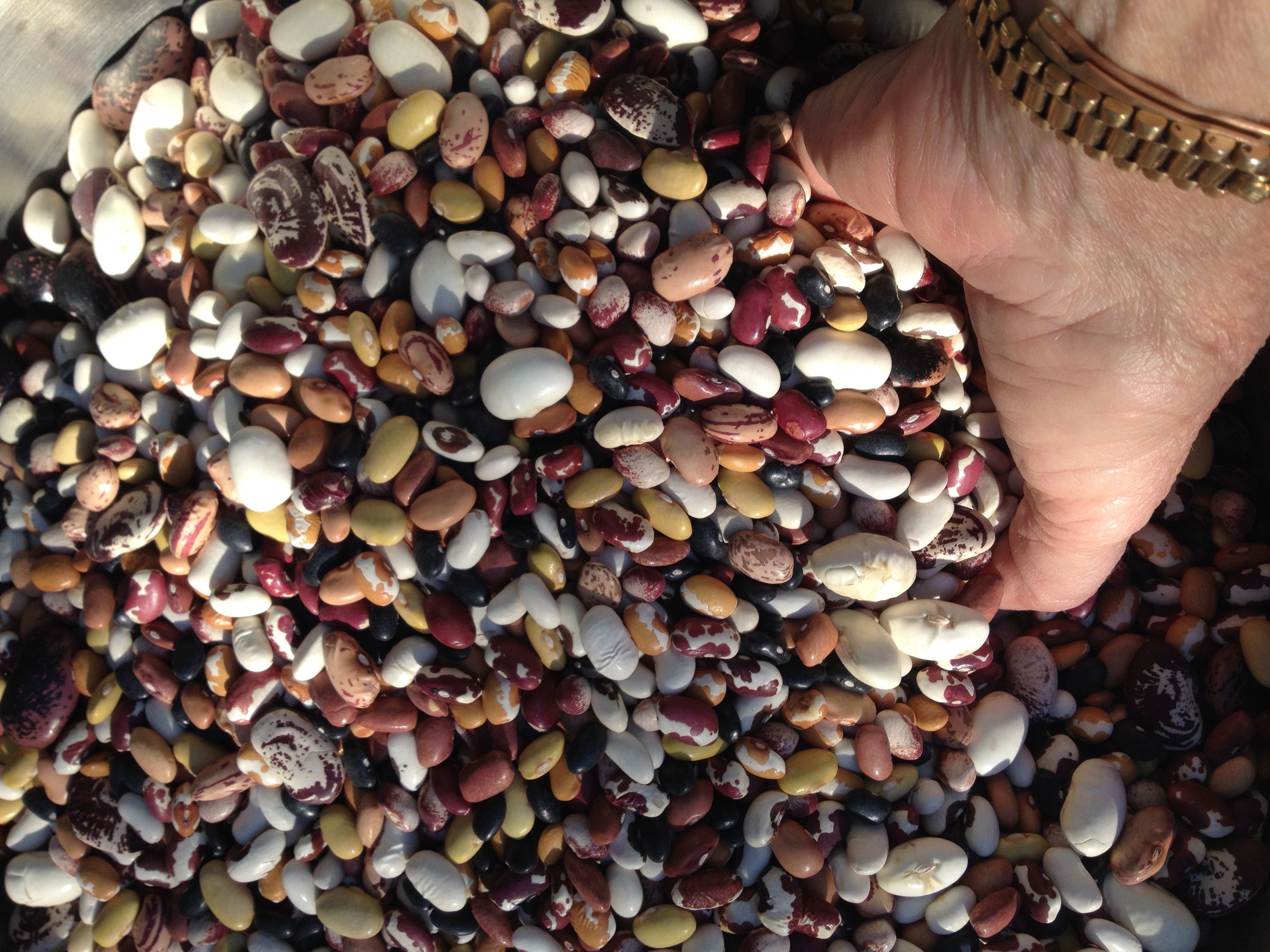
Tom's Mix is a rainbow of color, flavor, nutrition, and genetic adaptations to the desert Southwest! (MABurgess photo)

Tom’s Mix is a rainbow of color, flavor, nutrition, and genetic adaptations to the desert Southwest! (MABurgess photo)

In the genetic treasure trove of the NativeSeeds/SEARCH Seed Bank, there are hundreds of varieties and landraces of common bean, runner bean, and limas that can dazzle both our eyes, tastebuds–and our souls. Their colors, theirs shapes, sizes, sculpture are miniature works of art. And inside each little bean, each variety carries a complex of genes shaped over time to fit a specific local rainfall regime, soil, daylength, temperature range, and human habits. Their genetic potential may provide us some nutritional lifeboats into the uncharted waters of climate change.  (We are in this together.)

Delectable Tom's Mix available online at NativeSeeds.org and FlordeMayoArts.com.

Delectable Tom’s Mix available online at NativeSeeds.org and FlordeMayoArts.com.

Long ago, my gardening pal and mentor Tom Swain “invented” a mix of 14 different beautiful Southwestern heirloom beans garnered from the NativeSeeds/SEARCH collection. Of course we had to call it “Tom’s Mix” (ok–“oldsters” get it). It is the most beautiful set of genetic as well as flavor jewels—truly a treasure to behold and to eat.

Many people at our Flor de Mayo booth at Sunday St Phillips Farmers Market have asked how to identify each bean in the mix. To sort them, ID each variety, and come to know them is a fun challenge.  I’d like to create a game for kids (and adults) to teach taxonomy in a cool way using them.


So, head for the NativeSeeds store or Sunday’s St Phillips market, pick up a bag of Tom’s Mix, and take the BEAN CHALLENGE!

Herewith is your KEY to unlocking some the of mystery beans of our beautiful desert region.  (They each carry stories with them–come learn more from Tia Marta at the Sunday market… see, buy, taste each beautiful bean, see which one is cooking in the solar oven, and press her to finish her bean book!)  Until then, you can feast on these gorgeous visual hints—first a feast for the eye, later for the palette–with this photographic key to the makings of Tom’s Mix:

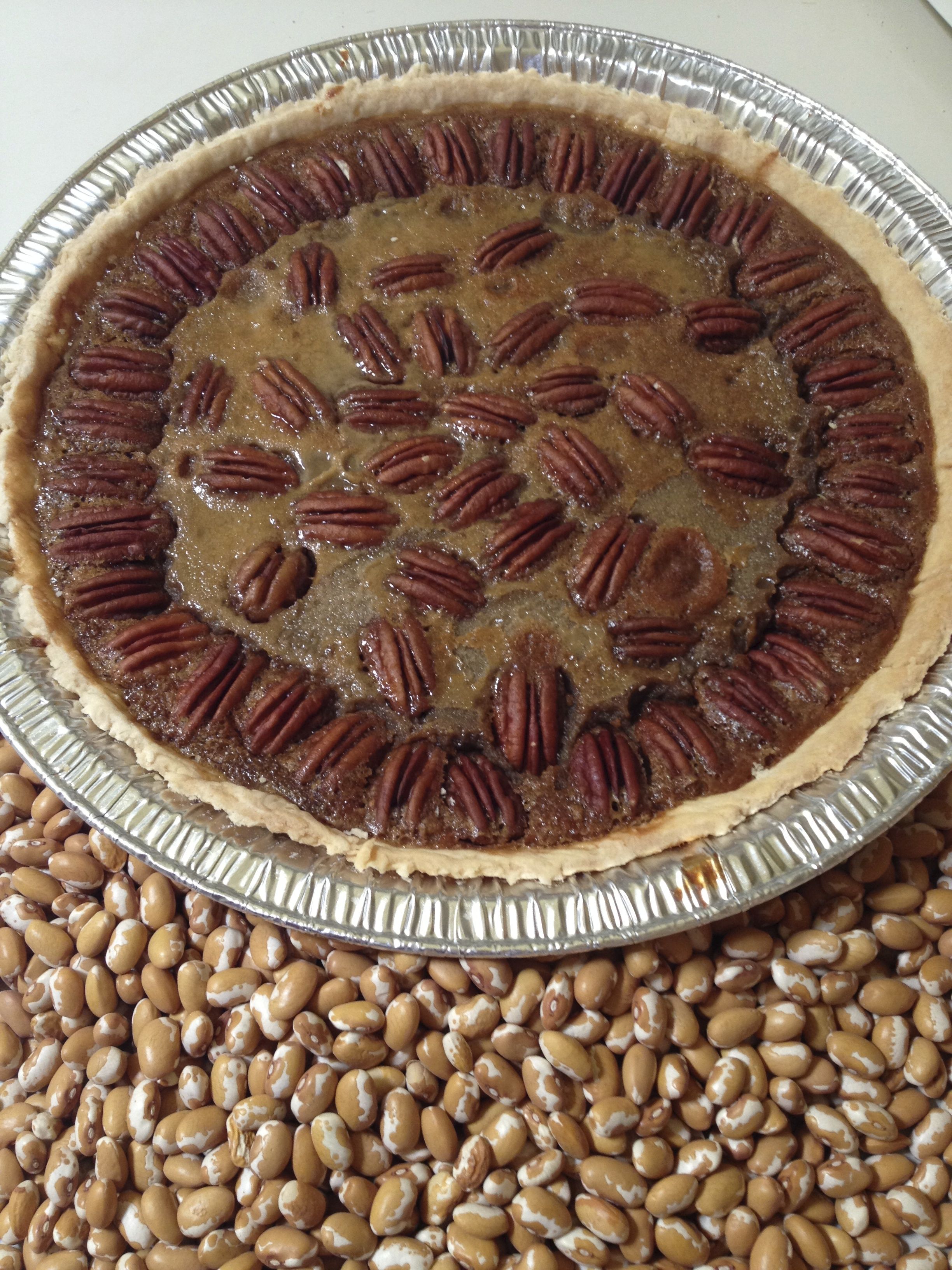
Ed's perfect pecan pie made with Zuni beans--a healthy dessert!.

Ed’s perfect pecan pie made with Zuni beans–a healthy dessert!.

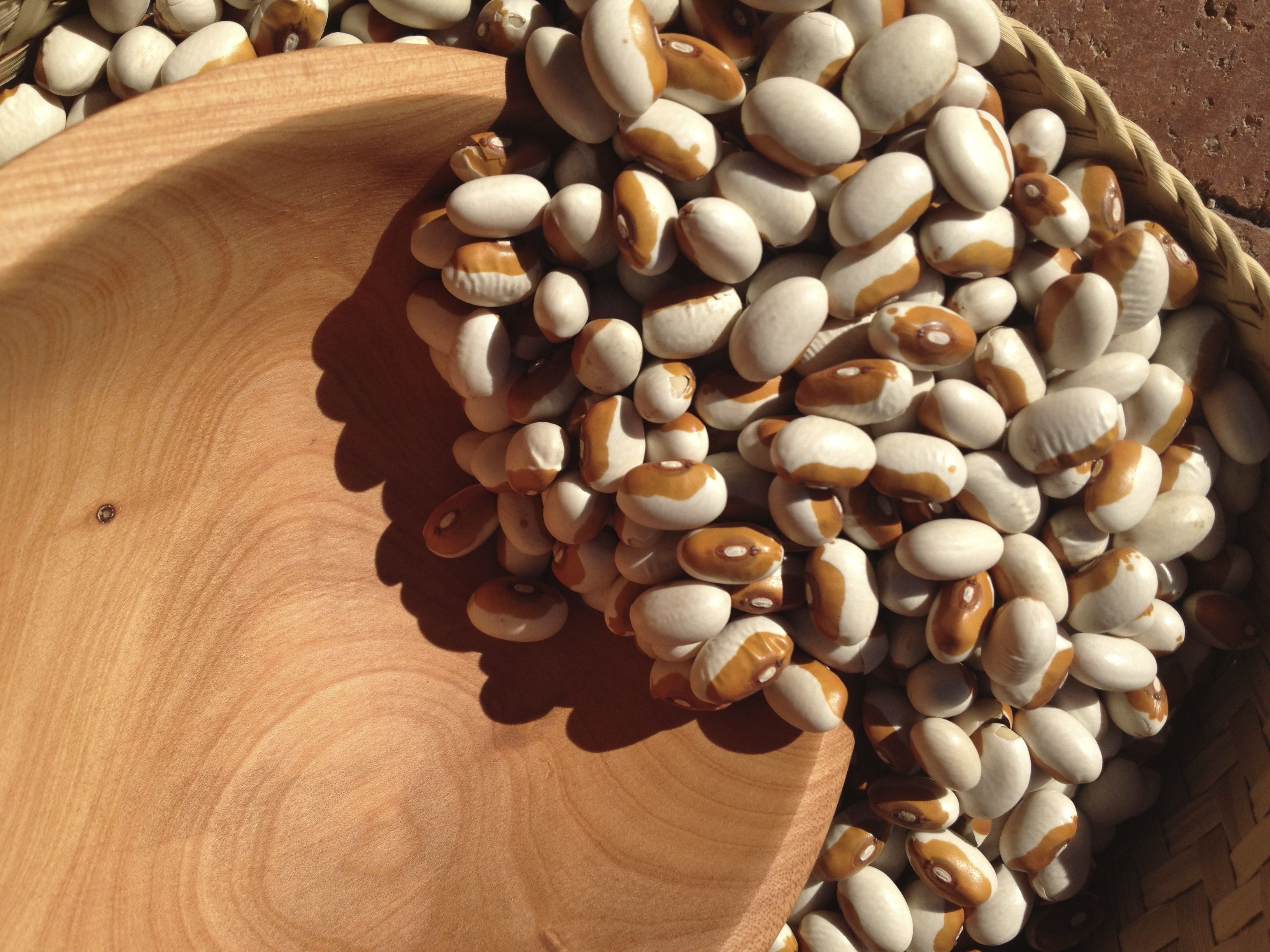
“Zuni Gold” (aka “Four Corners Gold”) was originally from the Native Zuni people of NW New Mexico, a flavor gift to the world.

“Zuni Gold” (aka “Four Corners Gold”) was originally from the Native Zuni people of NW New Mexico, a flavor gift to the world.


"Yellow-eye bean" (not related to black-eye pea) similar to Zuni Gold but with a distinctively different flavor.  It was the original Boston baked bean before coming west.  So rare it is not often used in the mix.

“Yellow-eye bean” (not related to black-eye pea) similar to Zuni Gold but with a distinctively different flavor. It was the original Boston baked bean before coming west. So rare it is not often used in the mix.


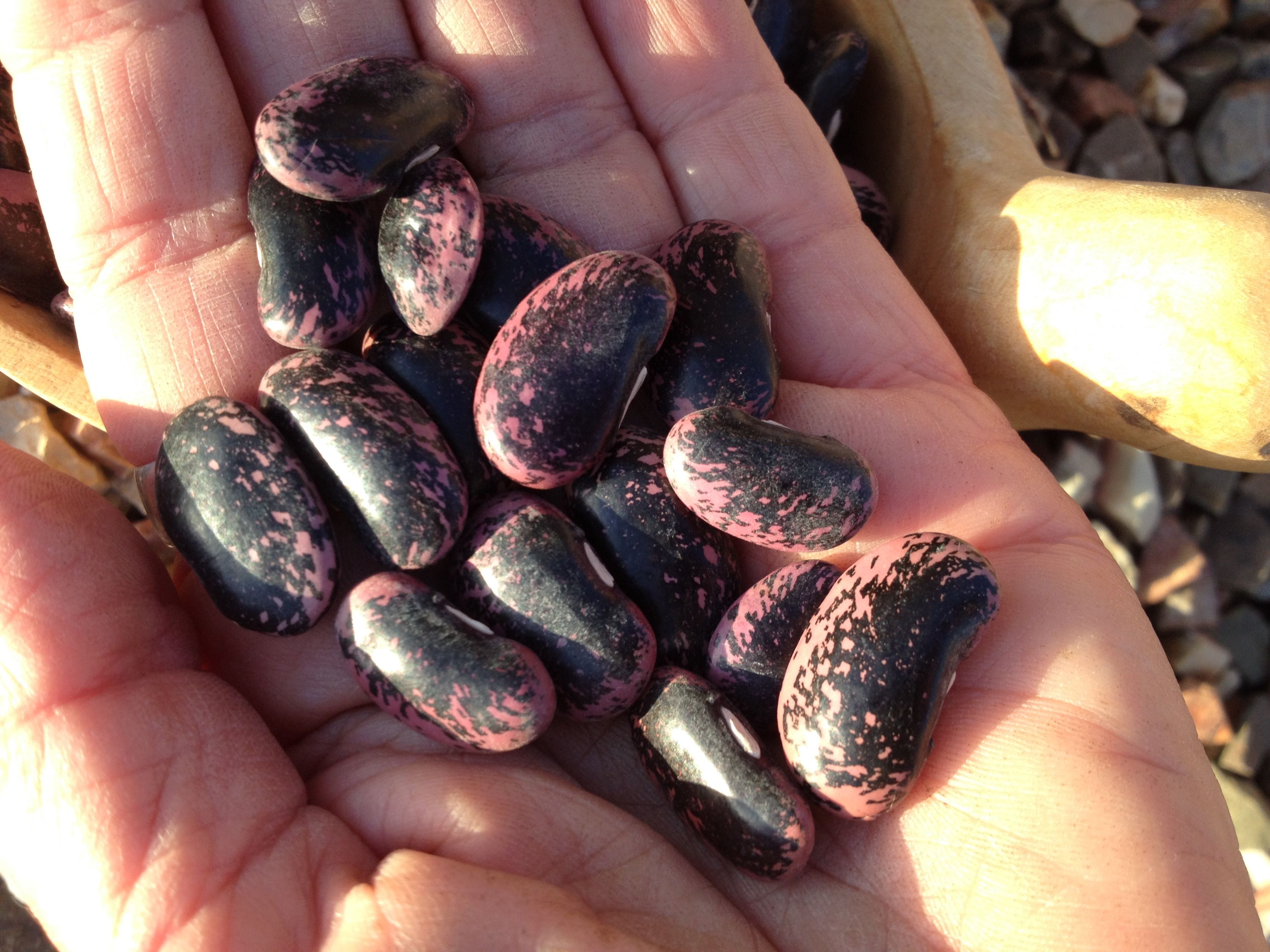
“Scarlet Runner” is a vining bean with brilliant red flowers that attract hummingbirds.  It is a large purplish speckled bean not to be confused with lima.

“Scarlet Runner” is a vining bean with brilliant red flowers that attract hummingbirds. It is a large purplish speckled bean not to be confused with lima. (MABurgess photo)

Runner beans (Phaseolus coccineus) are larger than so-called “common” beans (Phaseolus vulgaris–an insulting name for such wonderful food plants!)  Runner beans, as the name implies, are climbers as compared with bush-beans.  Their flowers are bigger and they bear huge pods.  Runner beans make a great addition to soups and stews.

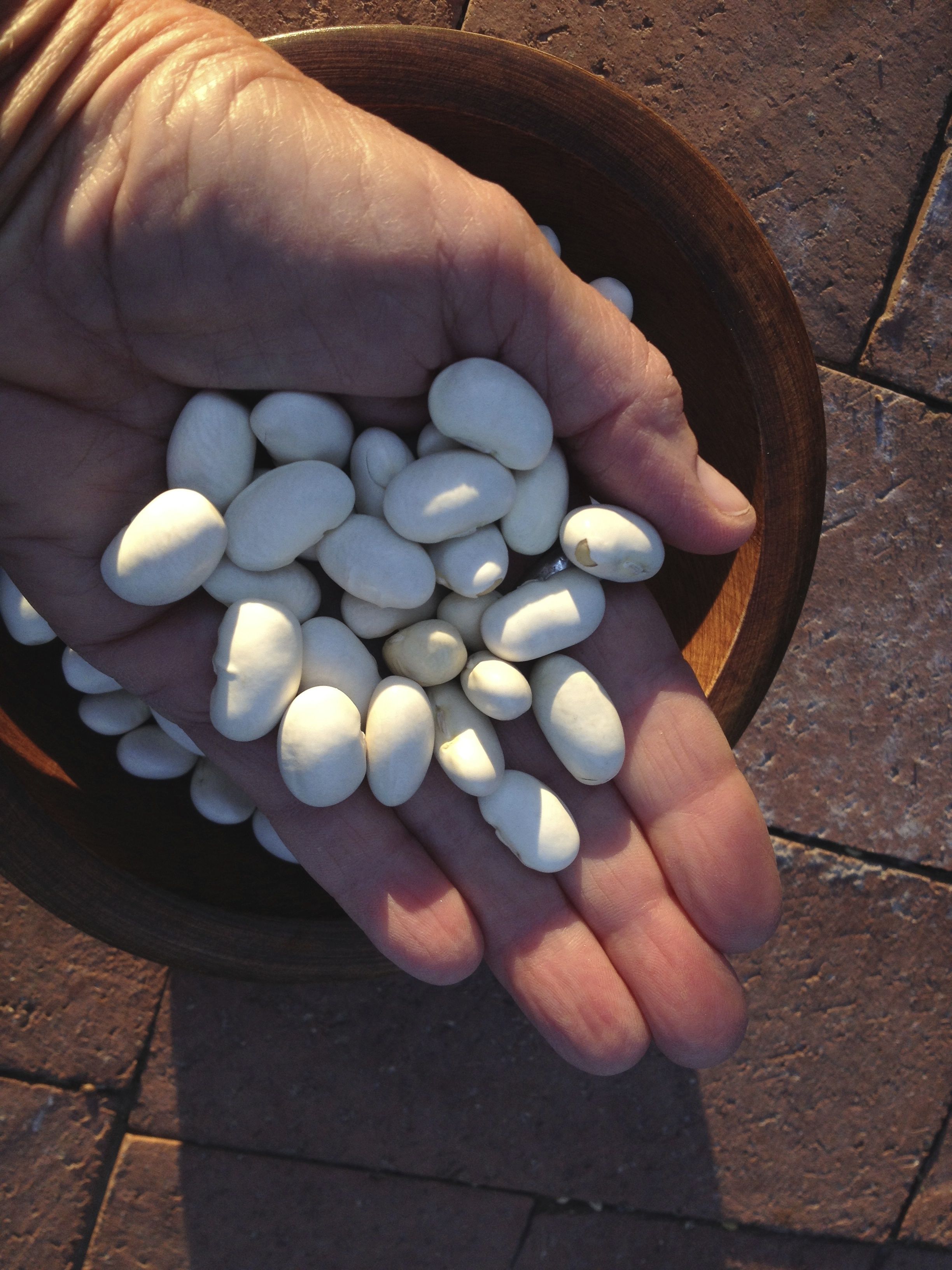
Related to scarlet runner is “Aztec White Runner” or “Bordal” (aka “Mortgage Lifter”) is another vining bean with a big white flower.  It is large, plump and a little sweet.

Related to scarlet runner is “Aztec White Runner” or “Bordal” (aka “Mortgage Lifter”) is another vining bean with a big white flower. It is large, plump and a little sweet.  (MABurgess photo)


“Yellow Indian Woman” is the only bean in the mix not from the SW.  As legend has it, Swedes brought this bean to Native people of the northern plains.

“Yellow Indian Woman” is the only bean in the mix not from the SW. As legend has it, Swedes brought this bean to Native people of the northern plains.

“Flor de Mayo”  (Mayflower) is a favorite of traditional people from Chihuahua and Texas to southern Sonora.

“Flor de Mayo” (Mayflower) is a favorite of traditional people from Chihuahua and Texas to southern Sonora.

“Bolita” or “little bullet” is a champion of flavor and makes a delish burrito or refried bean.

“Bolita” or “little bullet” is a champion of flavor and makes a delish burrito or refried bean.


These three beans are of similar shape and color–though different in flavors.  It is neat to try them separately, to enjoy their individual attributes.  Watch for announcements when Native Seeds/SEARCH sponsors its Great Bean Tasting Events.


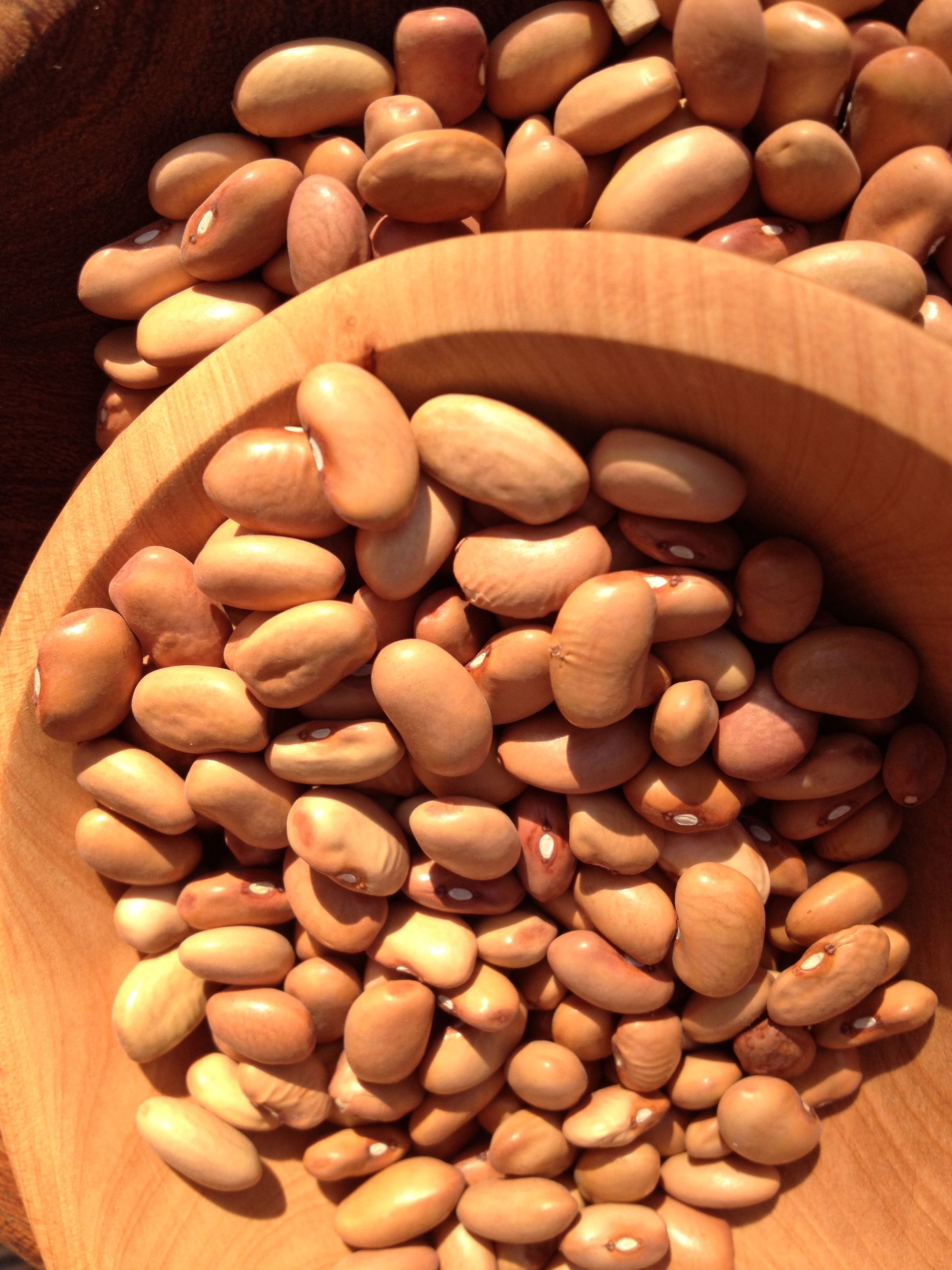
“Moon Bean” (also known in Colorado as “pinkeye bean”)  is a mild, tasty, versatile bean.

“Moon Bean” (also known in Colorado as “pinkeye bean”) is a mild, tasty, versatile bean.

In Tucson our culinary hero Chef Janos Wilder of the Downtown Kitchen has created the most delectable casserole using Moon Beans, chicken, and other surprise veggies.  Try this one out also in marinated salads with white Sonora wheat berries.

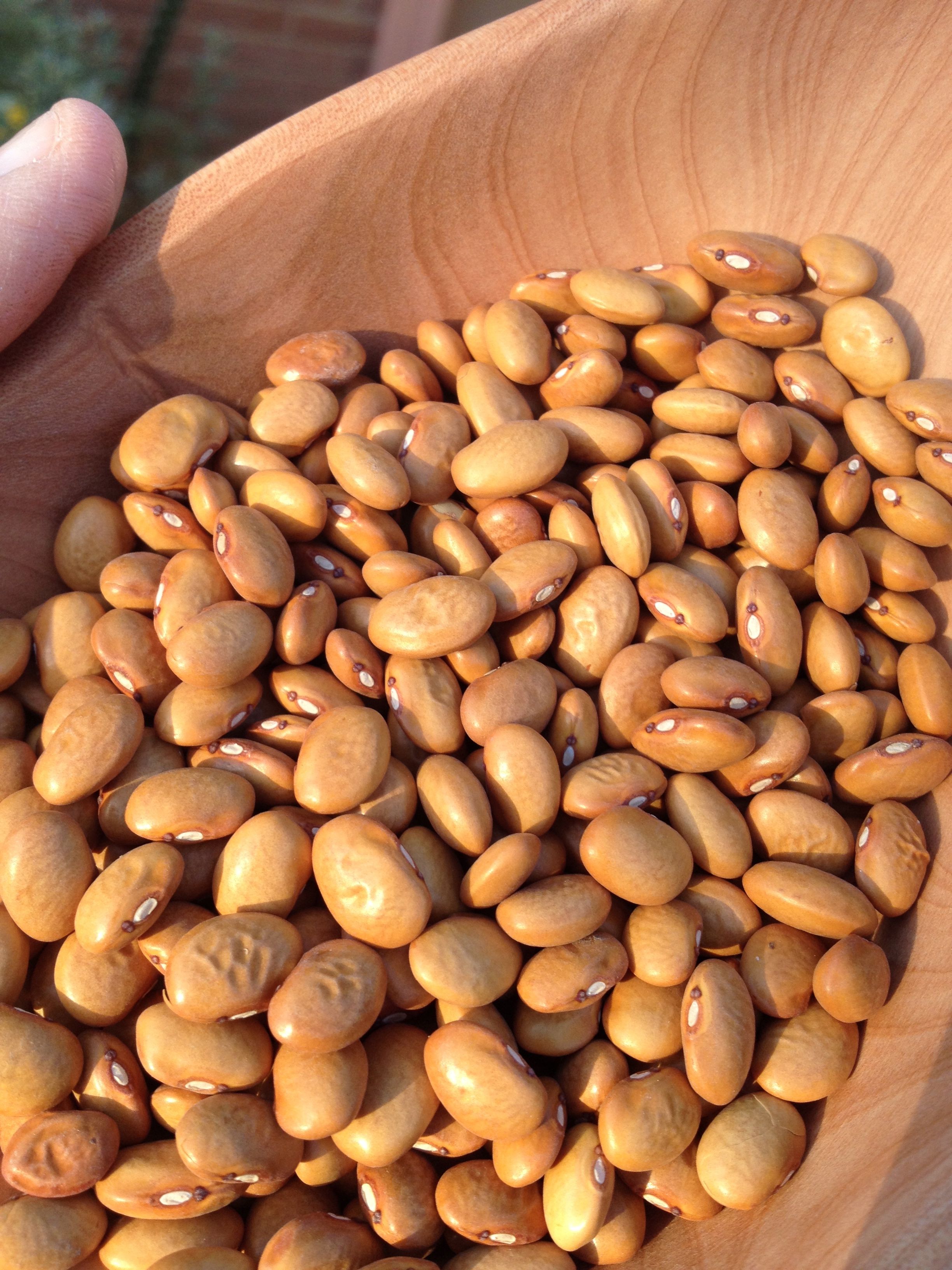
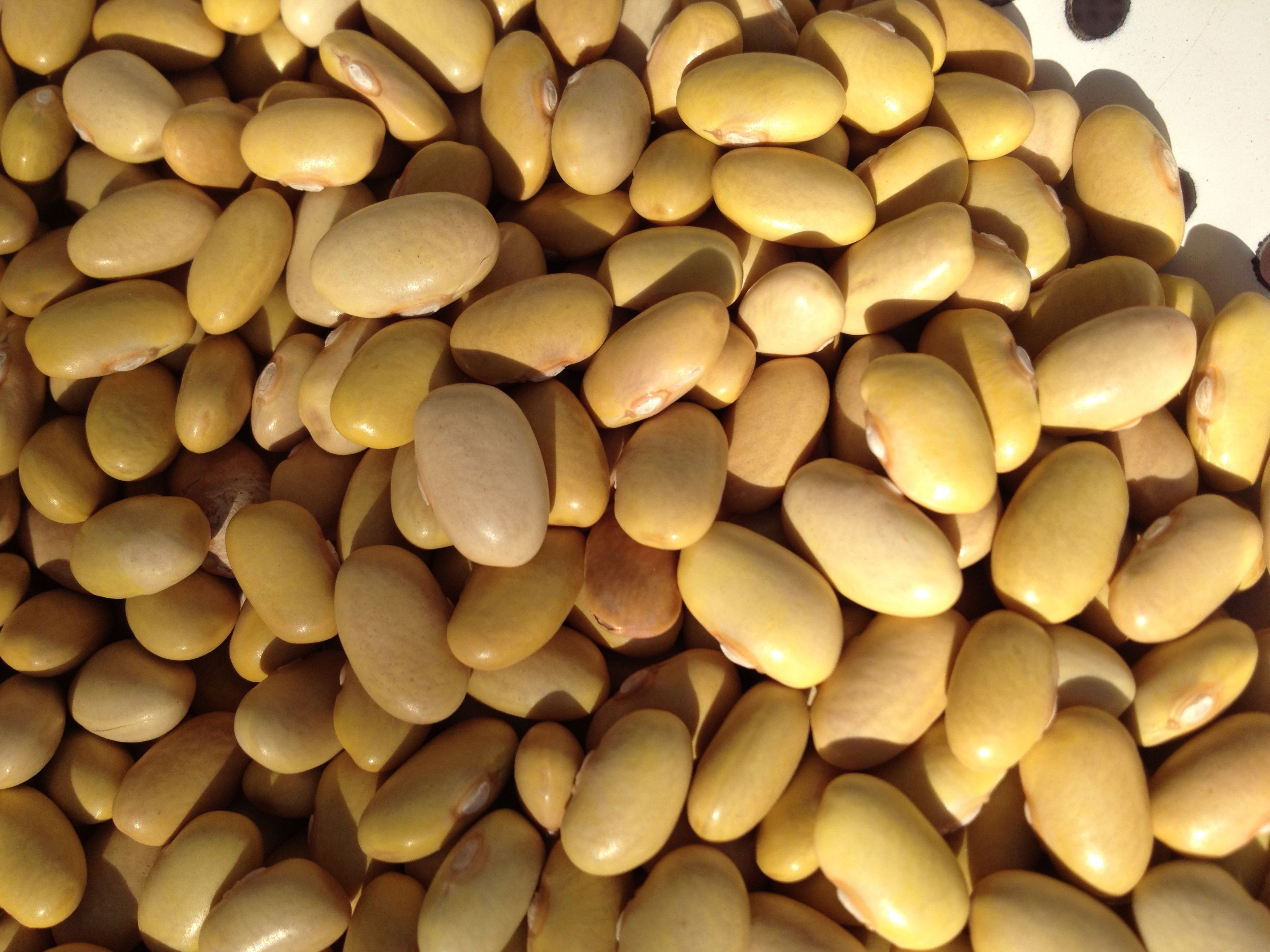
“Maicoba”  is named for the Pima Bajo village in Sonora where it originated.  This yellow bean goes by many monikers—sulfur bean, azufrado, canario, peruano.
“Maicoba” is named for the Pima Bajo village in Sonora where it originated. This yellow bean goes by many monikers—sulfur bean, azufrado, canario, peruano.
The versatile Maicoba makes a fabulous refried bean, a great dip, or burrito.

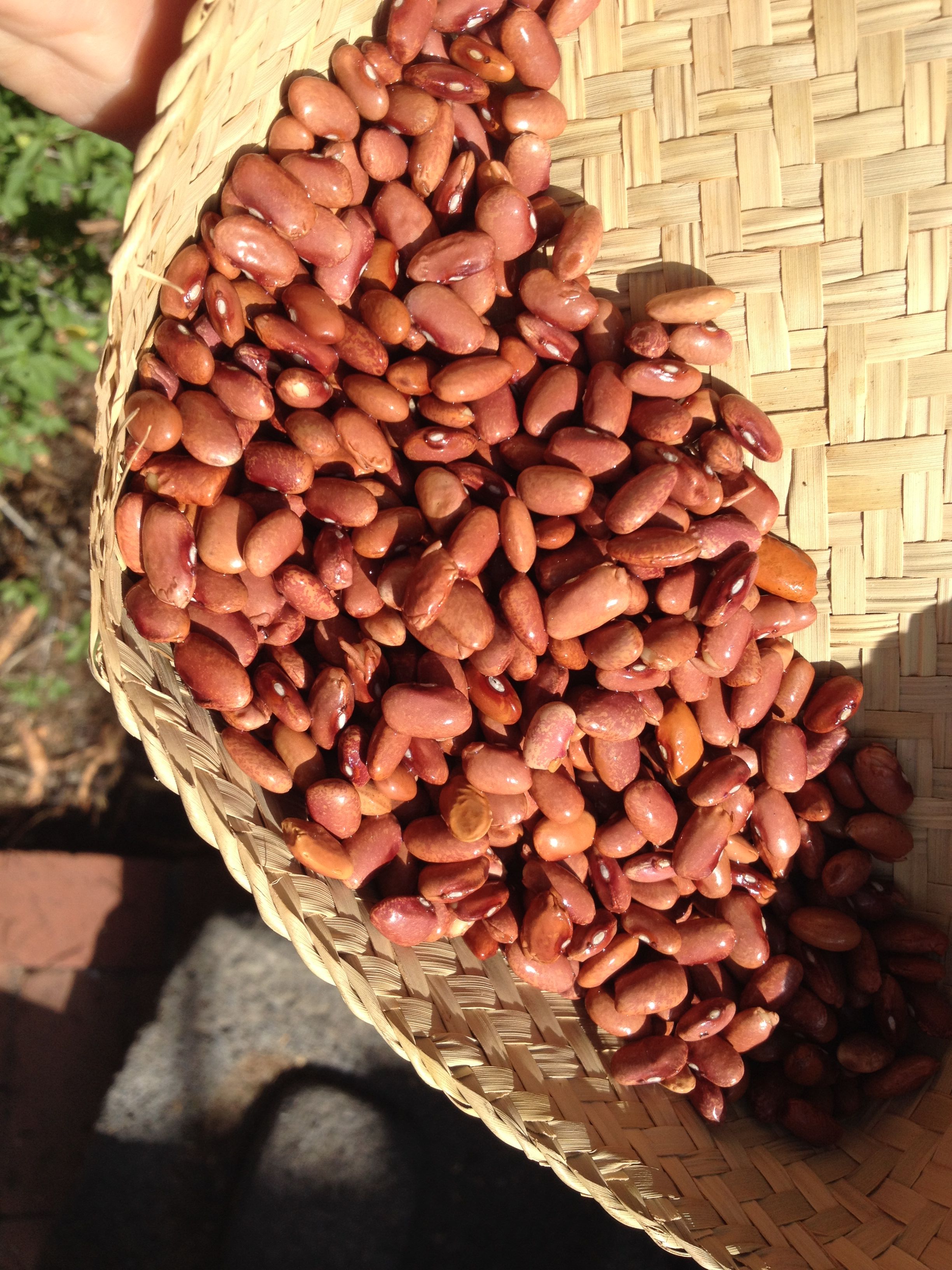
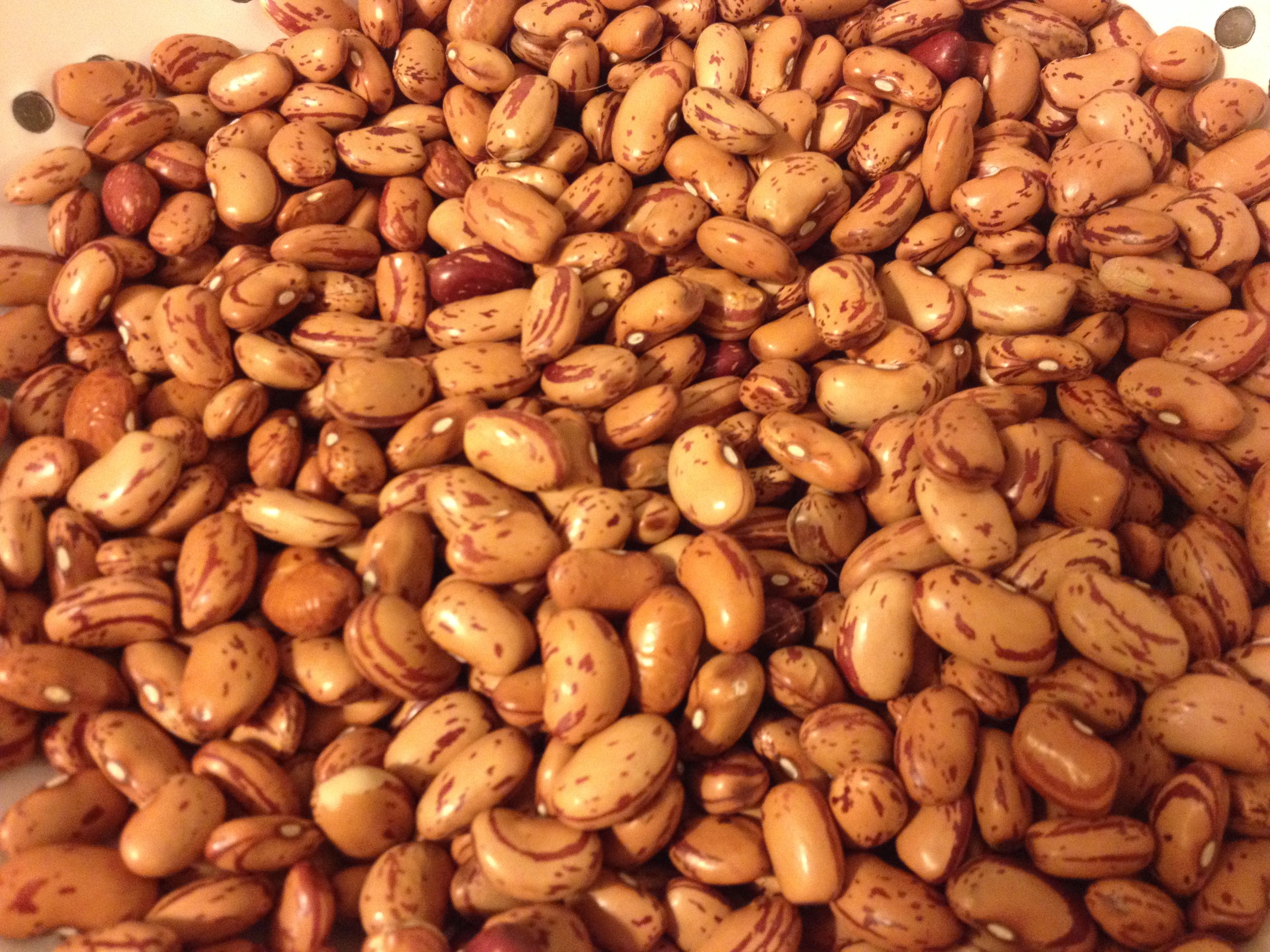
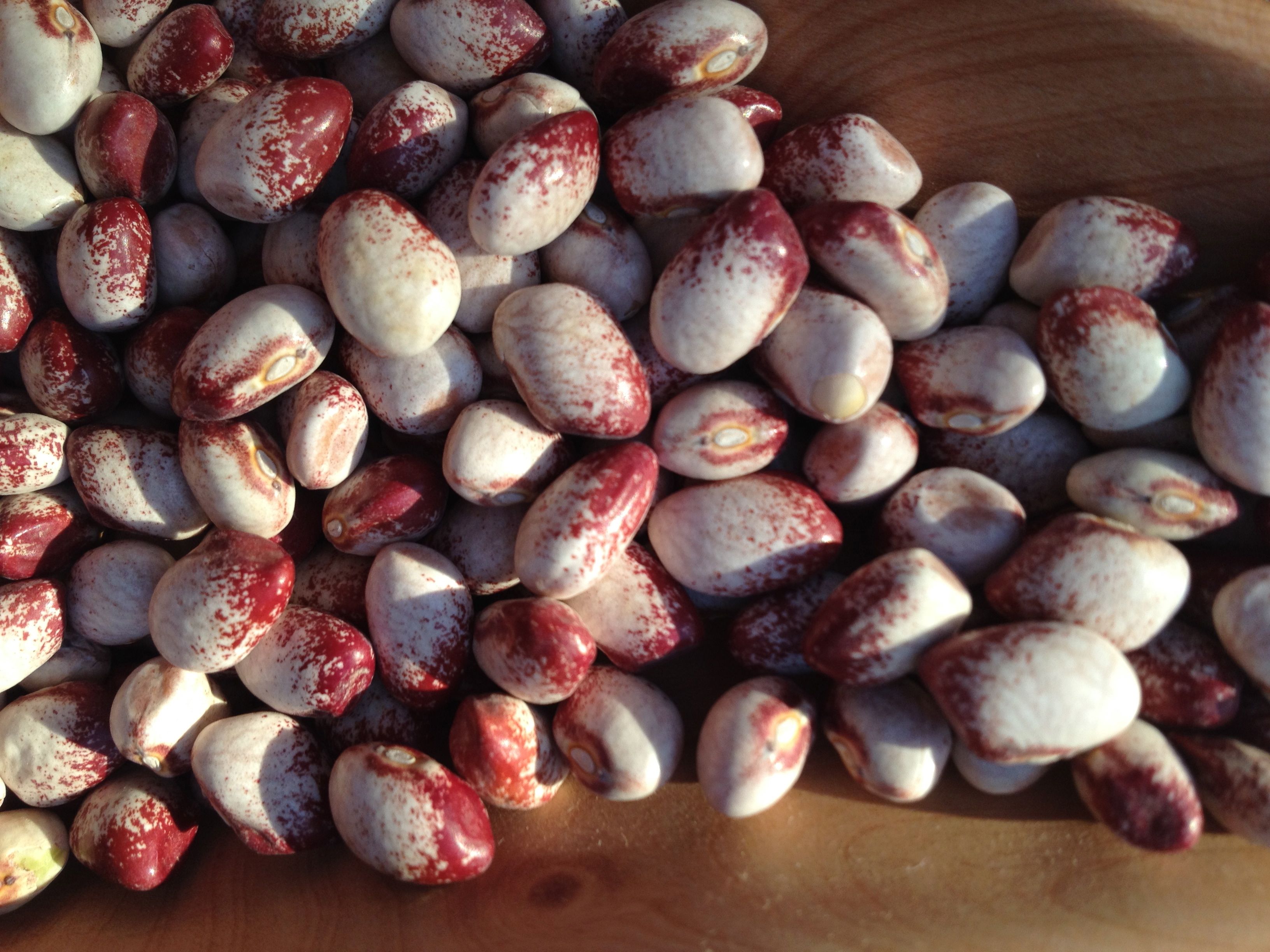
“Cranberry bean” refers to the flecks and strips of dark maroon or cranberry coloration on beige, not to its flavor.

“Cranberry bean” refers to the flecks and strips of dark maroon or cranberry coloration on beige, not to its flavor.

You will often see Italian recipes calling for cranberry bean.  This year’s crop of cranberry was for some weather reason a bust; let’s hope that next year it comes back strong again.  To participate, plant some locally.

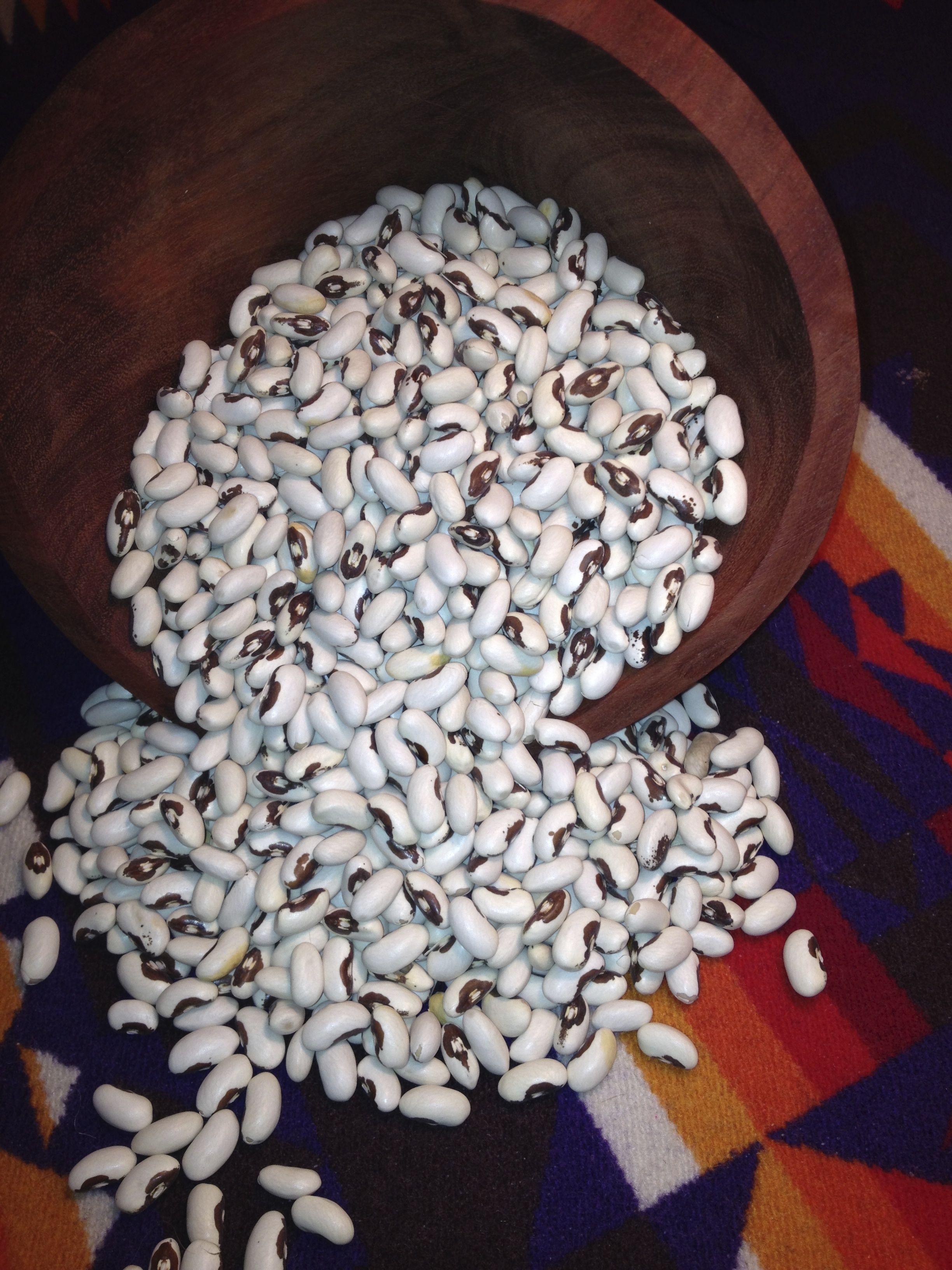
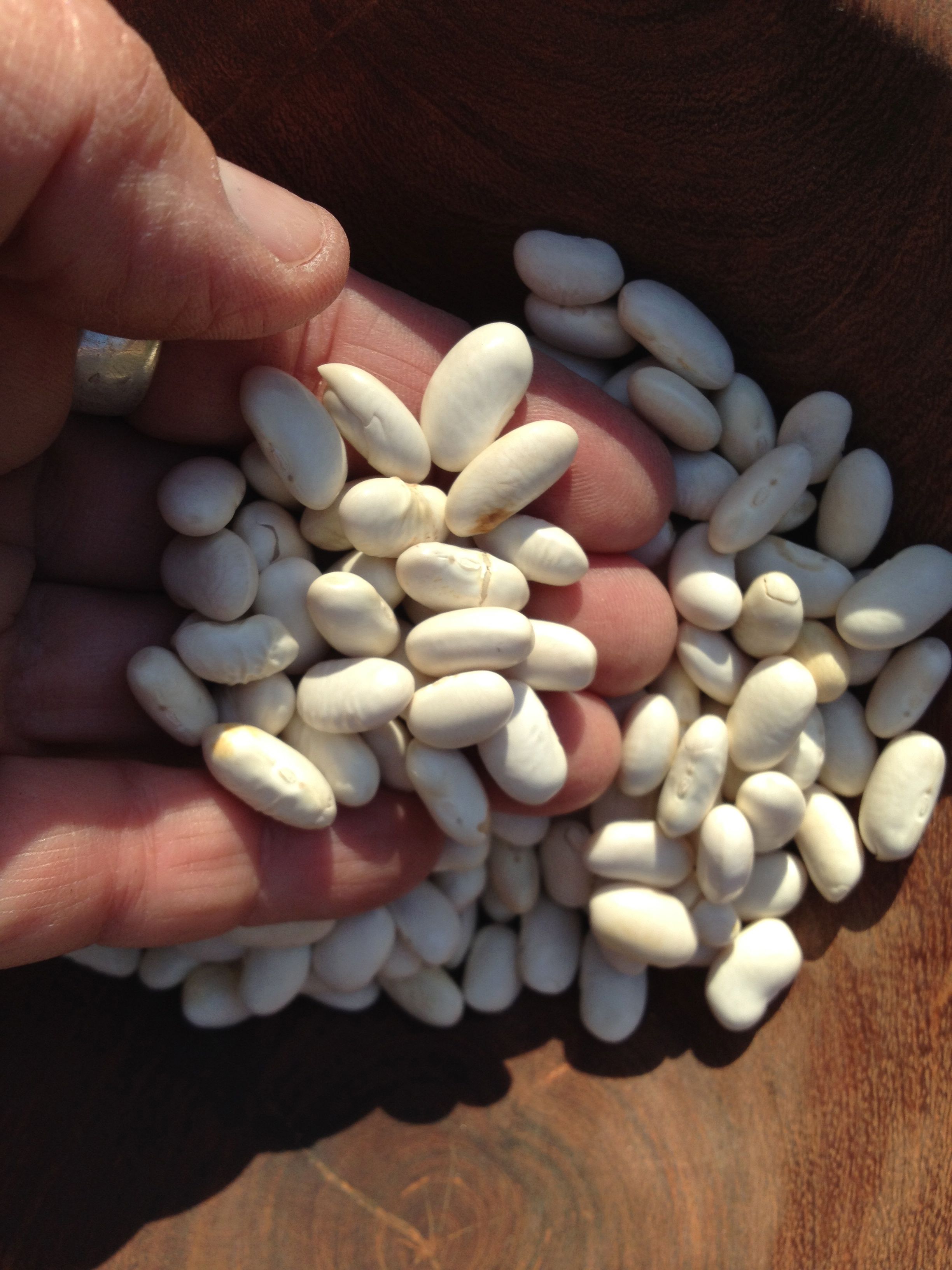
“Cannellini” is an elongated white bean grown in the Four Corners for years, brought there by immigrants.

“Cannellini” is an elongated white bean grown in the Four Corners for years, brought there by immigrants.

Cannellini makes a fabulous addition to minestrone, or becomes the center of a yummy Mediterranean marinated bean salad.  A smaller, creamier bean is the “Colorado River Bean” which resembles the Mayflower bean from SeedSavers catalog.

“Colorado River bean” takes its name from the Colorado Plateau where it is grown.  This small speckled bean makes a wonderfully creamy soup.

“Colorado River bean” takes its name from the Colorado Plateau where it is grown. This small speckled bean makes a wonderfully creamy soup.

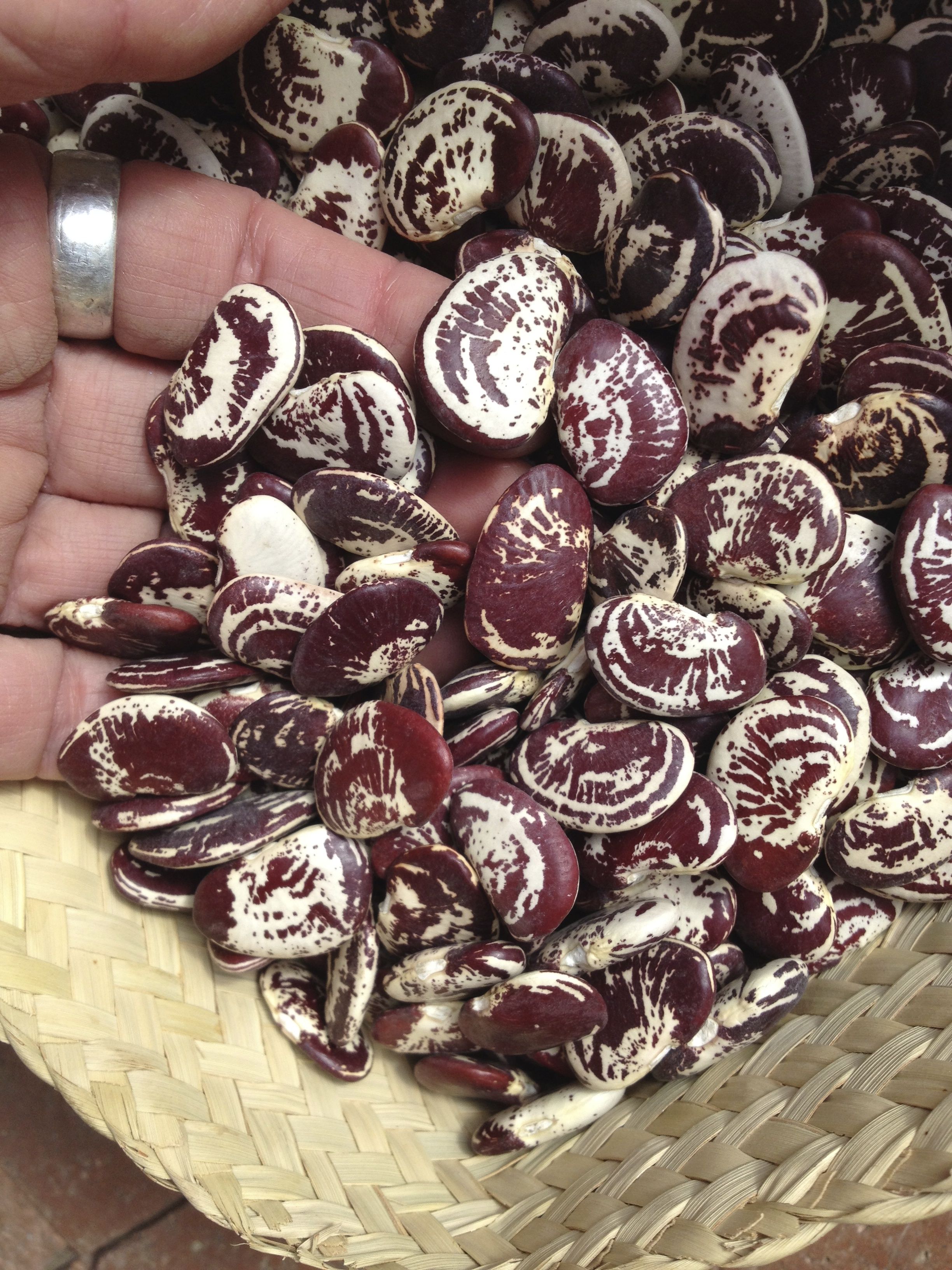
Worlds apart in flavor and size is the Christmas lima–a true lima bean (Phaseolus lunatus–like a moon).  This one is not like your average butter bean.  It is massive as beans go, rich and almost meaty–great for a vegetarian centerpiece dish.

“Christmas lima” or “Chestnut lima” is a true lima bean Phaseolus lunatus, large, flat, purple mottled, and hearty flavored.
“Christmas lima” or “Chestnut lima” is a true lima bean, large, flat, purple mottled, and hearty flavored.


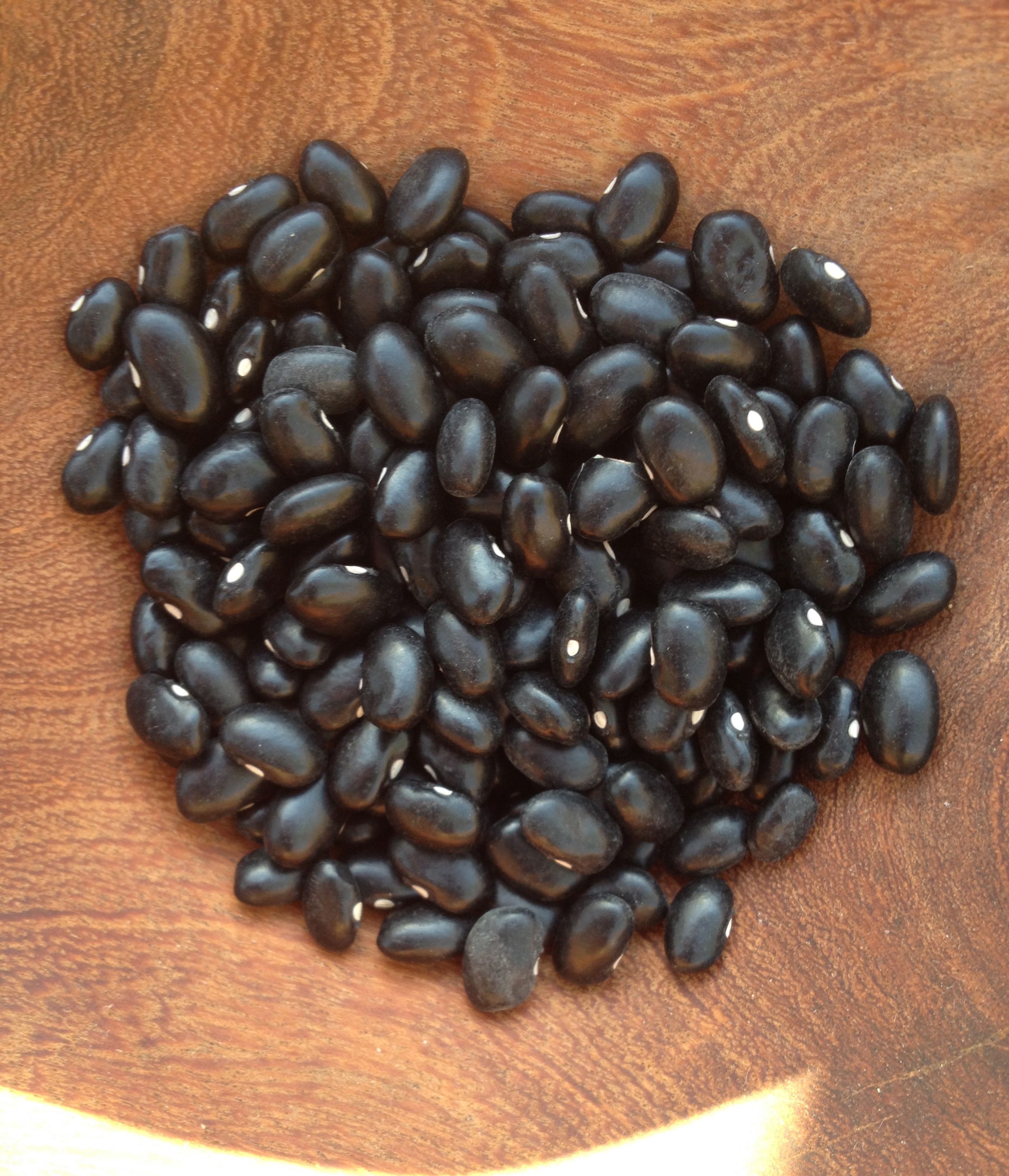
“Aztec Black Bean” or “Black Turtle” is the traditional bean of the Nahuatl or central Mexico.
“Aztec Black Bean” or “Black Turtle” is the traditional bean of the Nahuatl or central Mexico.


“Anasazi Bean” is the only trademarked bean in the mix.  Original seeds of this fast-cooking bean were actually found in an ancestral Puebloan ruin in the Four Corners.

“Anasazi Bean” is the only trademarked bean in the mix. Original seeds of this fast-cooking bean were actually found in an ancestral Puebloan ruin in the Four Corners.

These two beautiful beans, Black Turtle and “Anasazi bean,” bind up the full complement of flavors in Tom’s Mix.  As individual beans, each is hard to beat flavor-wise and texture-wise.  Together, combined in our Tom’s Mix, they are a culinary delight.

Black beans are the staple of many traditional diets, from Meso-America to northern New Mexico.

The “Anasazi” is the fastest cooking and least distressing to digestion of any bean I know of.

So now are you feeling enriched by these visual legume wonders?  I hope so!  Now to come try your hand at identifying them firsthand, and to treating your taste-buds at our Flor de Mayo tent at Sunday farmers market.

Identified or not, these precious heirloom beans in Tom’s Mix make a fabulous soup that our market and online customers rave about. You can ship out this Southwest gift to all corners of the globe via paypal at http://www.flordemayoarts.com.

Tom’s Mix is so versatile—try them as a dip or as a most colorful marinated bean salad when the weather heats up. If you are inspired to assist the bean genes into the future, try your hand at growing some of the Tom’s Mix varieties this summer in your own garden.  You can learn lots more at our Seed Libraries (Pima County Public Library) and at the upcoming International Seed Library Conference to be held in Tucson in early May.

Diversity of Southwestern heirlooms in Tom's Mix

Diversity of Southwestern heirlooms in Tom’s Mix

See you Sunday at St Phillips Plaza or at the NSS Store, 3061 N Campbell. We look forward to talking heirloom beans with you!

[As for the diversity of those cholla flowers mentioned at the start….. Tia Marta will be exploring our diverse cholla flora at upcoming cholla bud harvesting workshops: Sat April 11 sponsored by NativeSeeds/SEARCH and Sat April 18 sponsored by Tohono Chul Park. Contact each for more info: http://www.nativeseeds.org and http://www.tohonochulpark.org, or call Flor de Mayo at 520-907-9471.]

Tiny Hummingbirds, Spider Silk, and Web of Life Eggs – Part Two

Aunt Linda here:  The full moon is setting in the West early this morning,  and  I am lucky enough to be able to see the moon beaming from this desk. As if that weren’t enough beauty, the morning offers the sound of a male dove beginning his mating song. Soon more will join in.  As moon beams make their horizontal way into the yard, the silvery spider webs in the foliage around my door shimmer silvery white.

IMG_5285

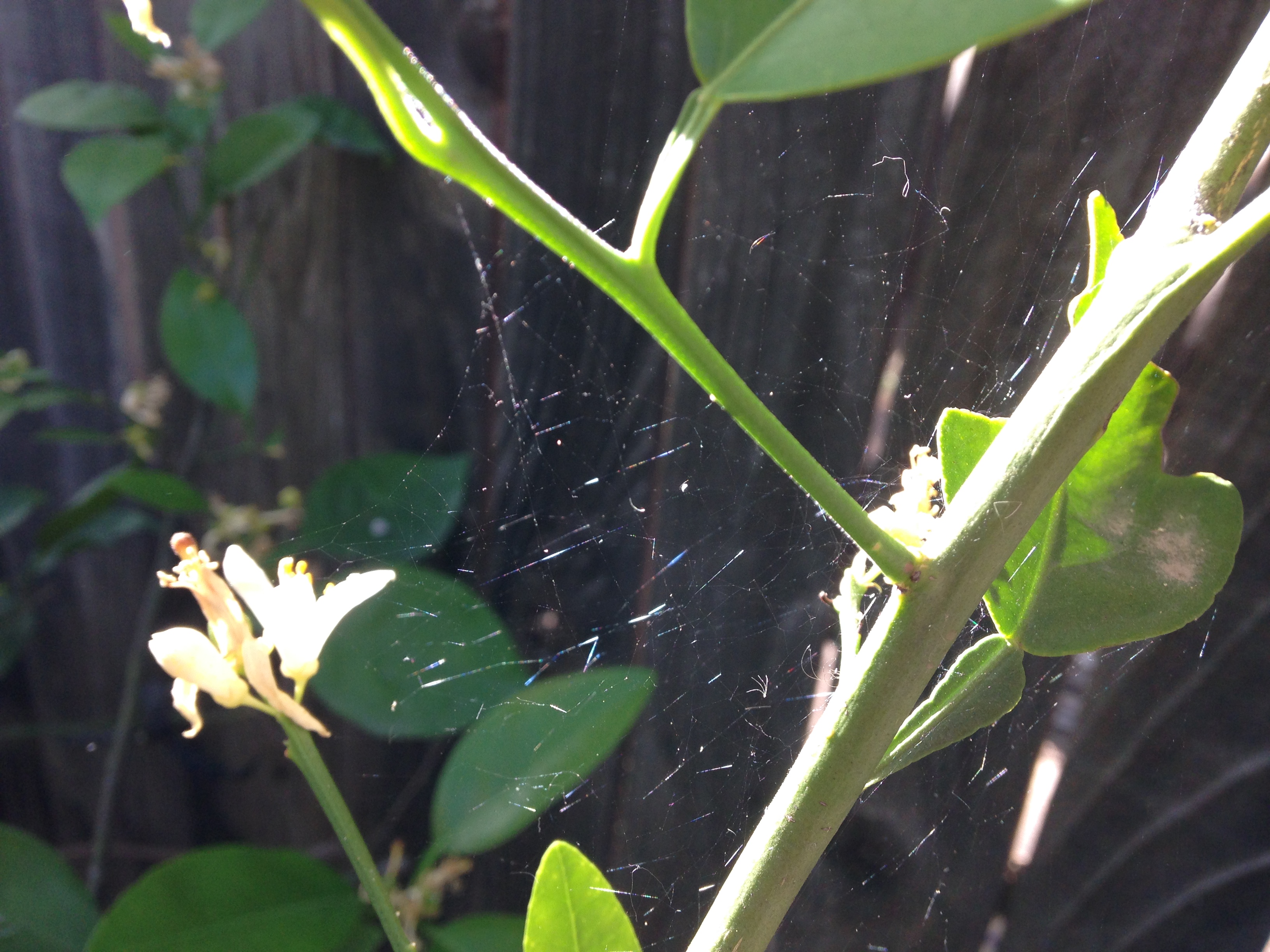
It is Spider Silk like in the above photo that females hummingbirds use to build secure, strong, and flexible nests.

SPIDER SILK:  Spiders use silk for a variety of reasons, web weaving, cocoon construction, and even in a kind of sperm delivery system.  All spiders have silk glands, which are located in their abdomen, and which emerge from tiny tubes in their spinnerets, known as spigots. Spiders, while not the only animals to produce silk, (caterpillars and weaver ants do), do produce the strongest silk, often compared to the strength of steel.  It also has a remarkable capacity to expand.  One example of this is referred to as “capture spiral silk” , and is used in web construction, allowing for prey to impact or collide with the web with minimal breakage.   Spider webbing is also relatively weatherproof, meaning that it has an ability to endure, sometime past the life span of it’s weaver.  This web longevity may be tied to its purported   antimicrobial/antiseptic properties.

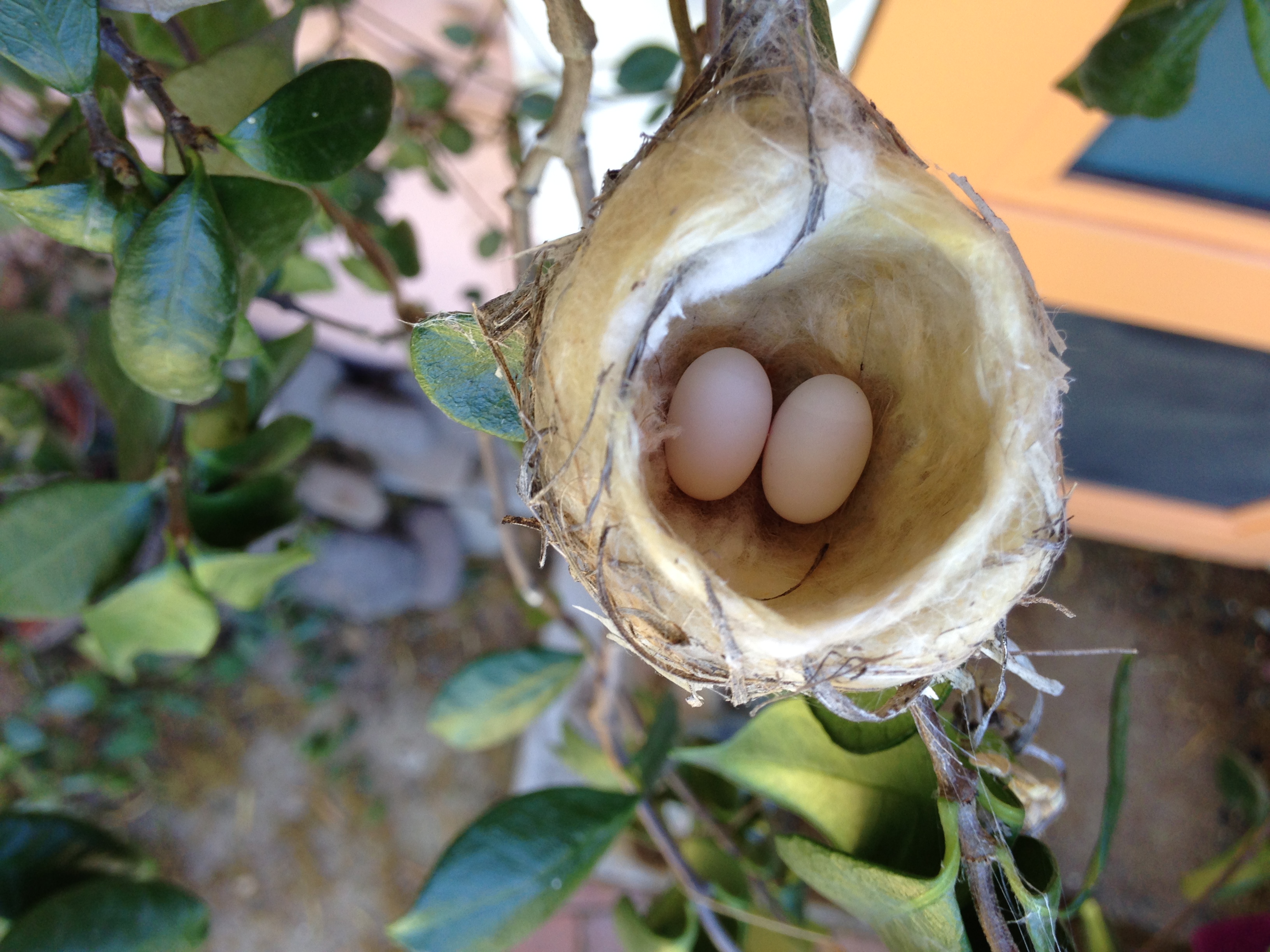
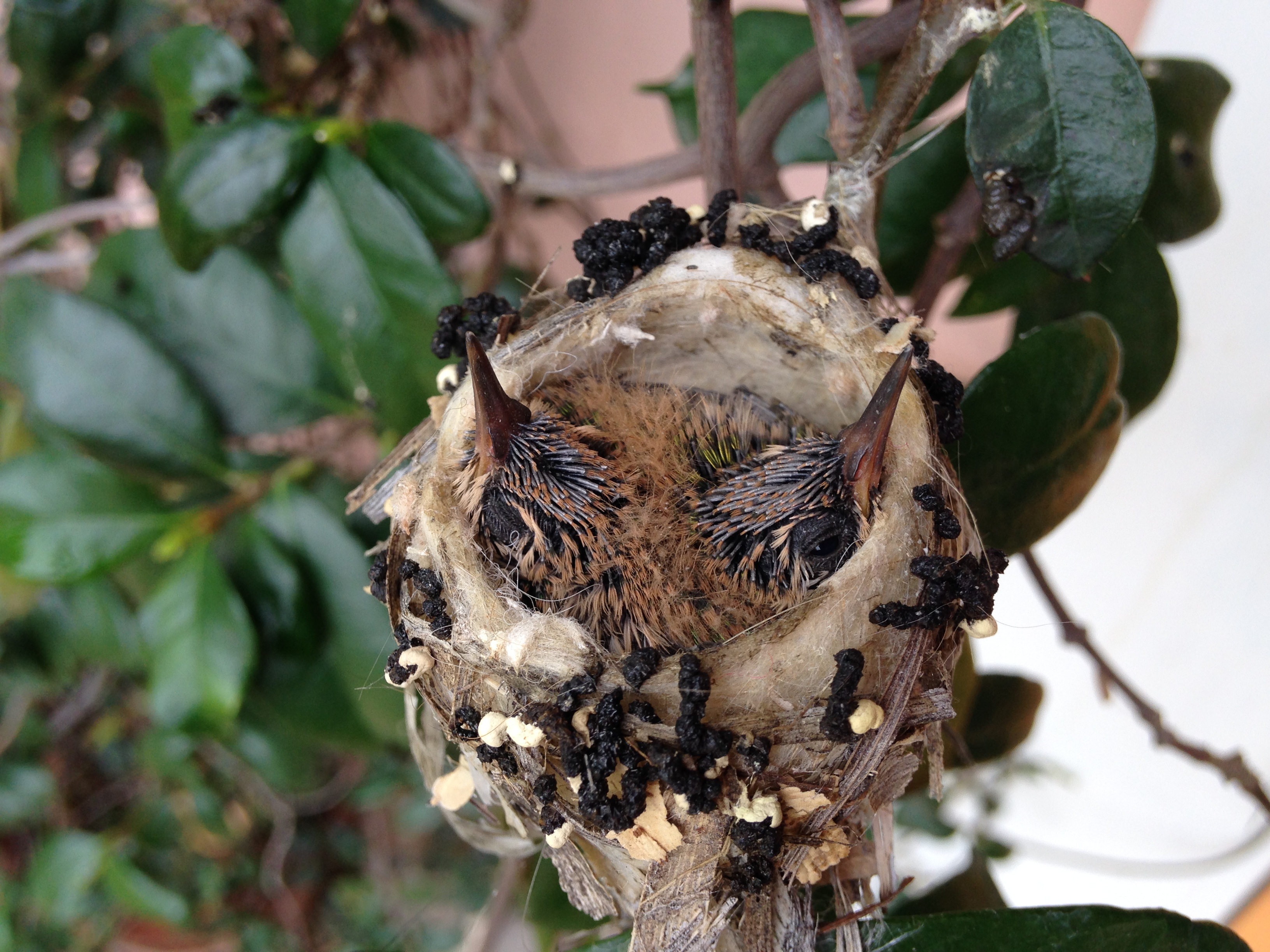
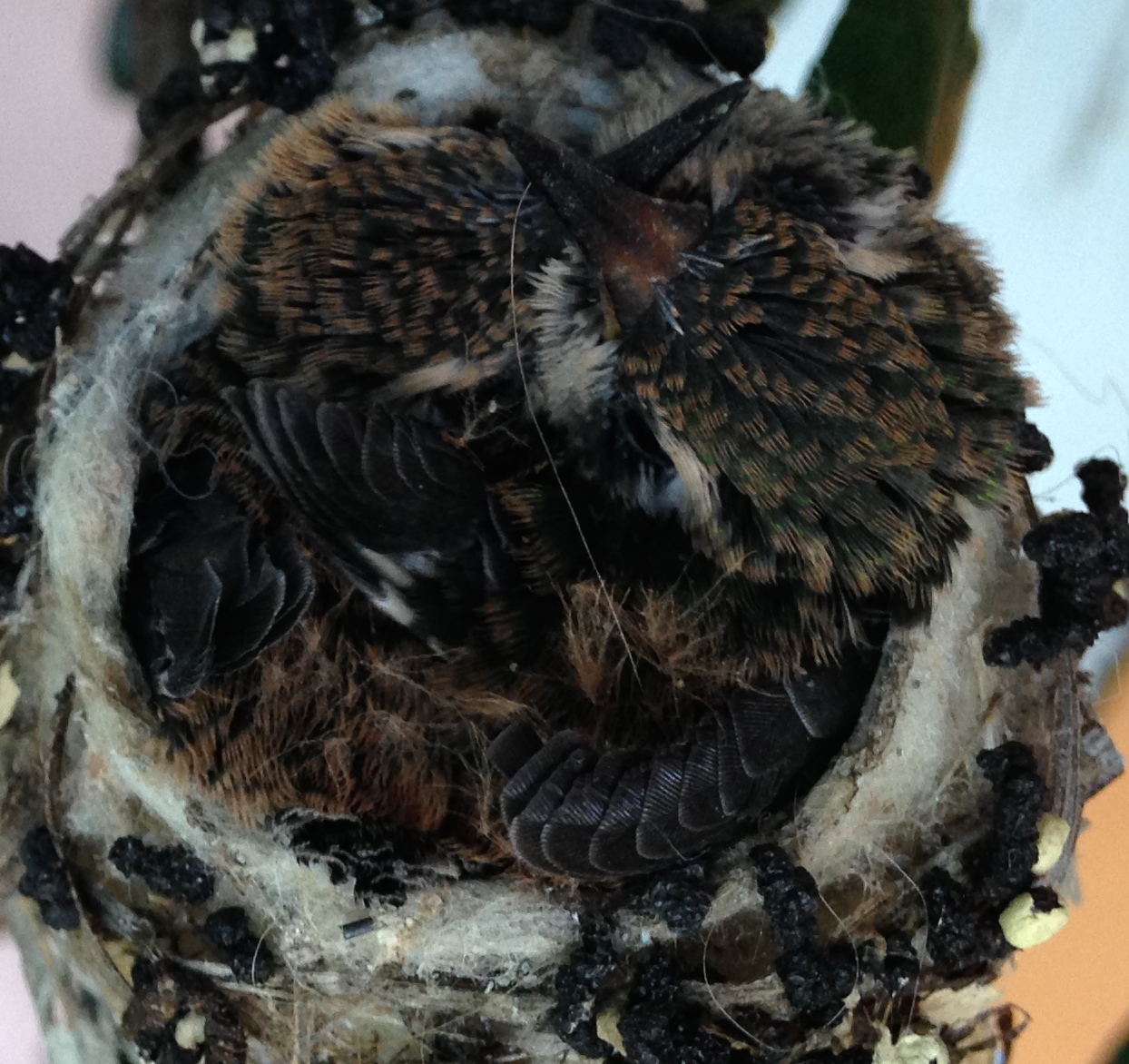
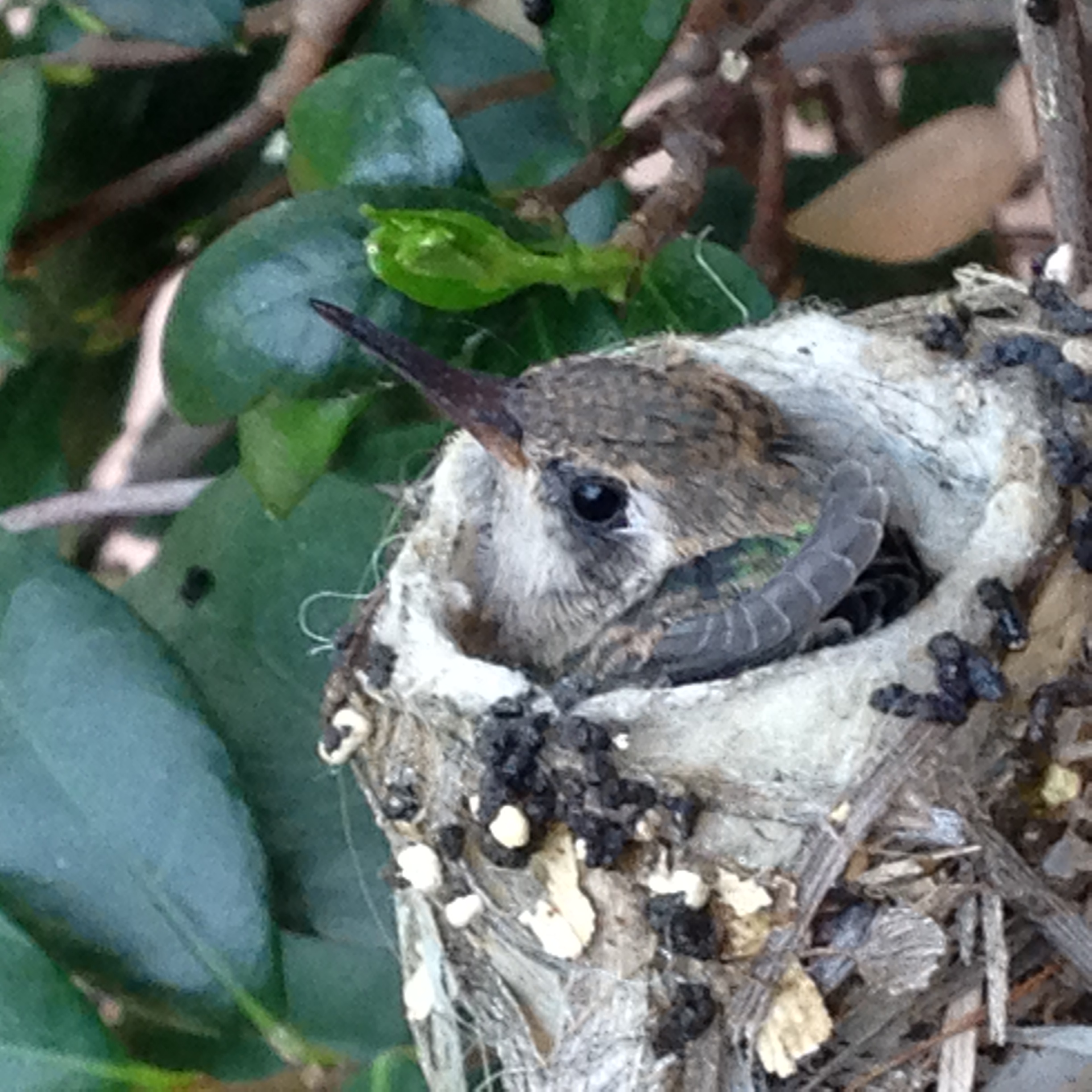
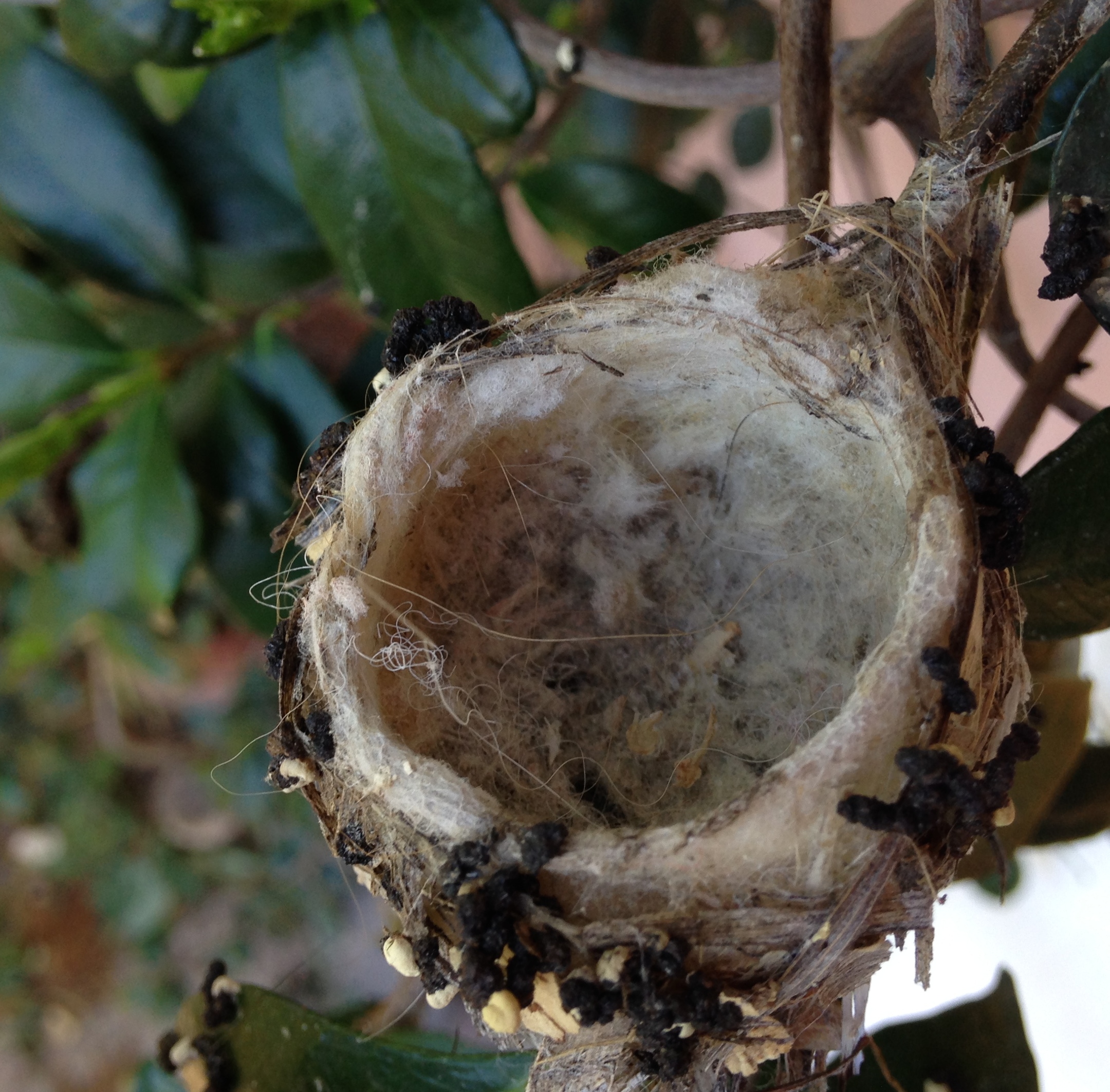
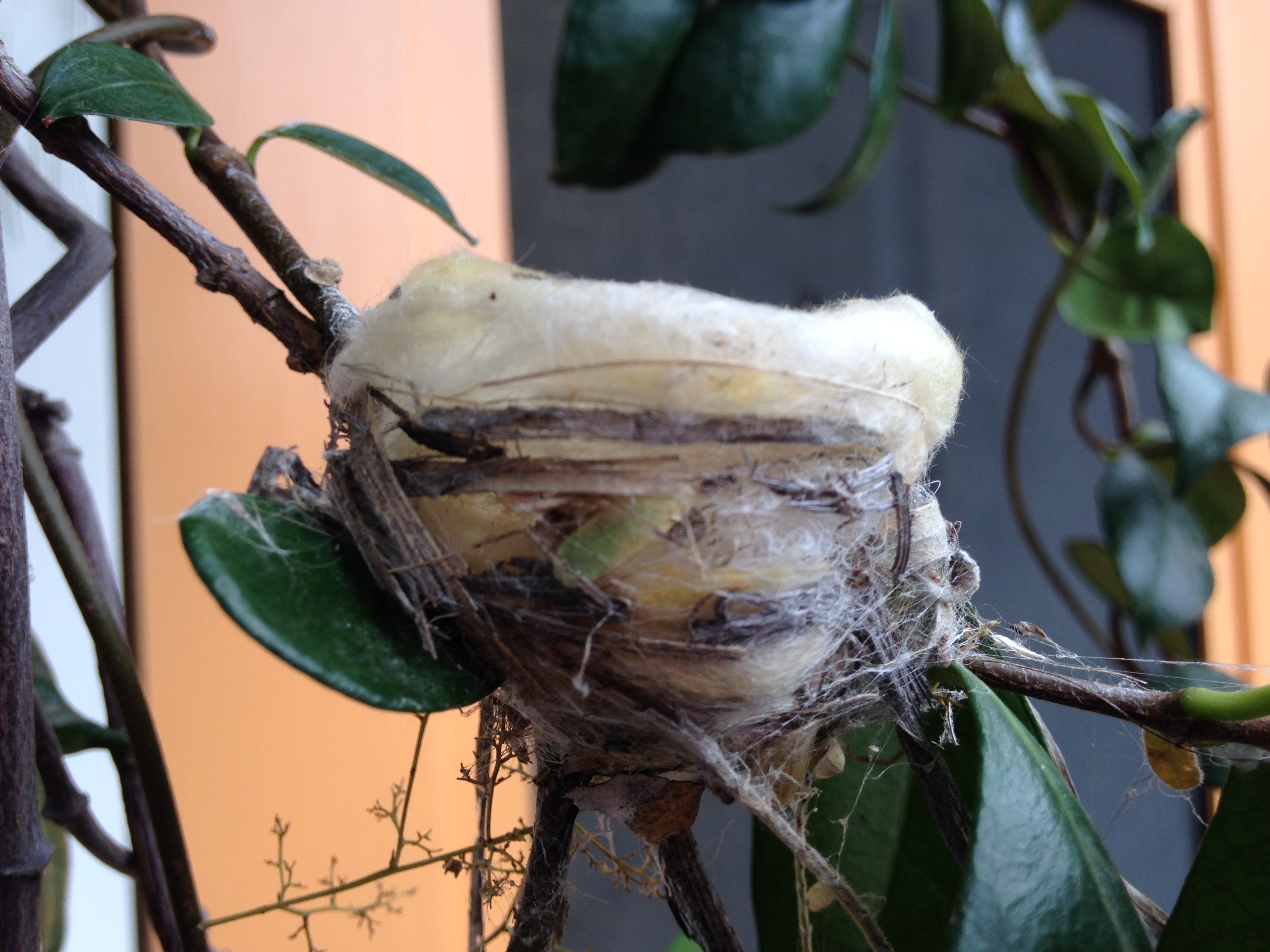
I am going to share with you a few  photos of the young hummers growing; the nest accommodates all that Spring and young birds challenge it with. I am reverberating with the “Ah Hah” of how much of their success in fledging was due to the superior spider-silk building material that their mother used to build a strong, flexible nest.  They rode out significant winds, their little nest bobbing like a tiny boat in a stormy sea, because the nest was nest securely anchored to base of branches with spider web. The rapid growth of the two babies was easily accommodated as well as the spider web allowed it to expanded in size,  without breaking apart, as the babies grew. Much of the success of these little birds’  hatching, growing, and fledging  rested, literally,  on spider silk.

IMG_9314                                                                                                          The First and Second eggs were laid a day apart ….

IMG_9368

IMG_9420                                                                                                             … they then hatched a day apart

IMG_9422

IMG_9463                                                                                         Note: what a difference of just one day makes with their beak size!

IMG_9577

IMG_9602

IMG_9616

When it came time for fledging, they flew off one day apart, as well. I was lucky enough to see this; they flew like “professionals” right off the rim of the nest!IMG_9617

I read this week that little Miss Muffet , (the girl scared away from her tuffet, by a spider, scattering curds and whey; too bad as they are so nutritious) had a father who revered spiders.  The Australian Museum website has a nice little piece on this should you want to find out more. It was from this source that I learned Reverend Dr. Thomas Mouffet (1553-1606) had a deep love of spiders. He wrote of the common house spider that “she doth beautifie with her tapestry and hangings.”. More interestingly, it appears that he liked to treat ailments with the use of spiders. The museum quotes him as writing, ‘The running of eyes is stopped with the dung and urine of a House Spider dropt with Oyl of Roses, or laid in along with Wooll’.

And back to modern day: scientists are exploring what spider silk may have to offer in terms of ligament healing in the human body.  Also interesting, the antimicrobial/antiseptic properties of spider silk that humans have long reported using to bandage and heal wounds, are being explored in scientific labs. This  moves the conversation forward, from anecdotal observation to preliminarily results of effectiveness in the lab as well.  I love a good opportunity to  come to terms with Life on Life’s terms.  The so often feared spider, who frightens so many Miss Muffets in the world, has so very much to offer. The spider contributes to new generations of pollinators, such as hummingbirds.  Yes, it is true that some spider bites do real harm. I know this first hand; a black widow bite is painful and in some can be dangerous. Yet it’s silk may have significant healing properties and scientific utility,  offering varied gifts to humans, as touched on above.

Which brings me to the concept of the Web of Life, which is an all encompassing view of  life where all of nature, including us humans, is seen as connected to all things, as if we were all connected by an enormous, invisible, yet dynamic web. Inspired by this idea, I thought we would revisit a recipe from the past and give it a new twist.

IMG_9291

IMG_9299

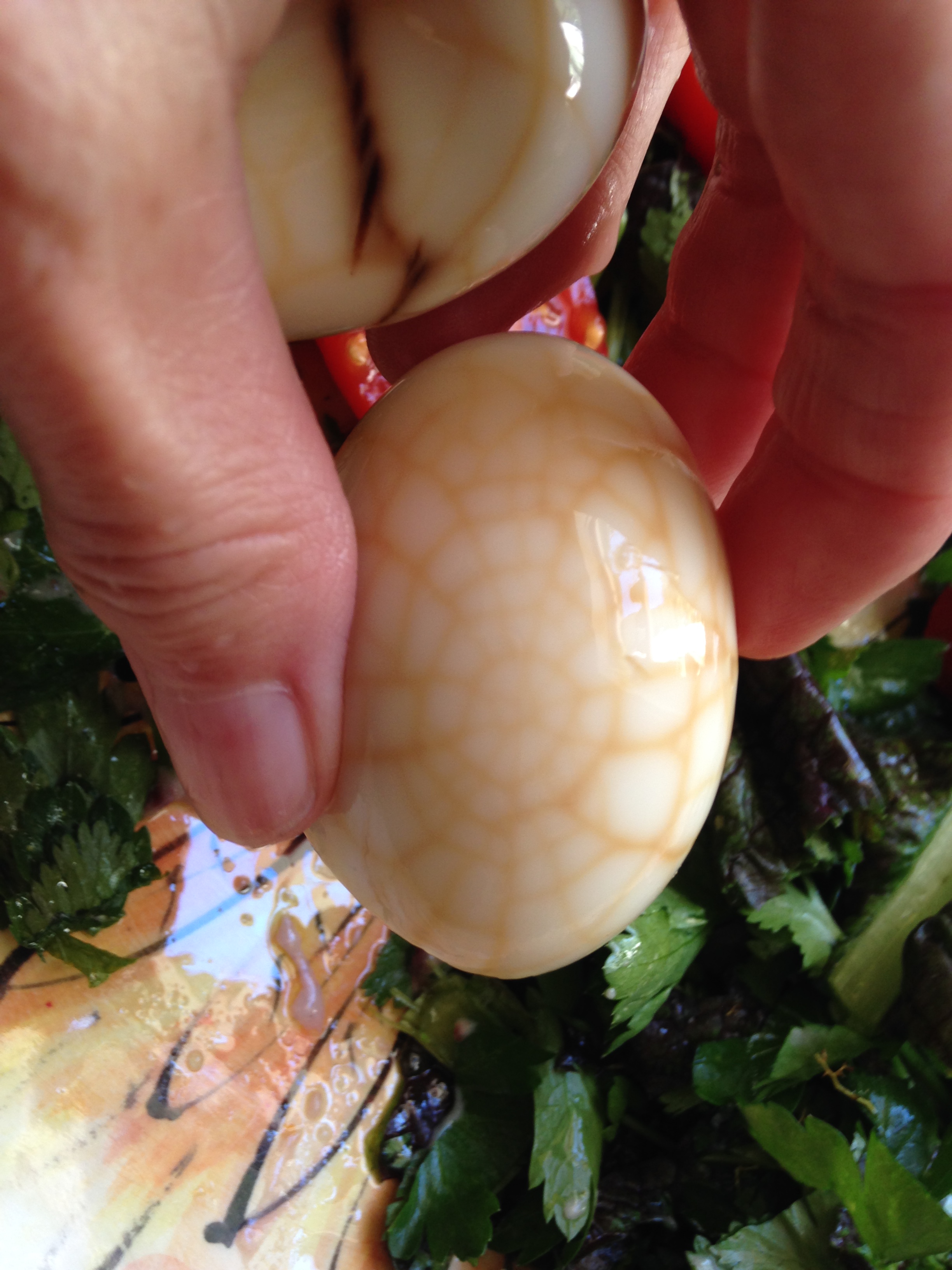
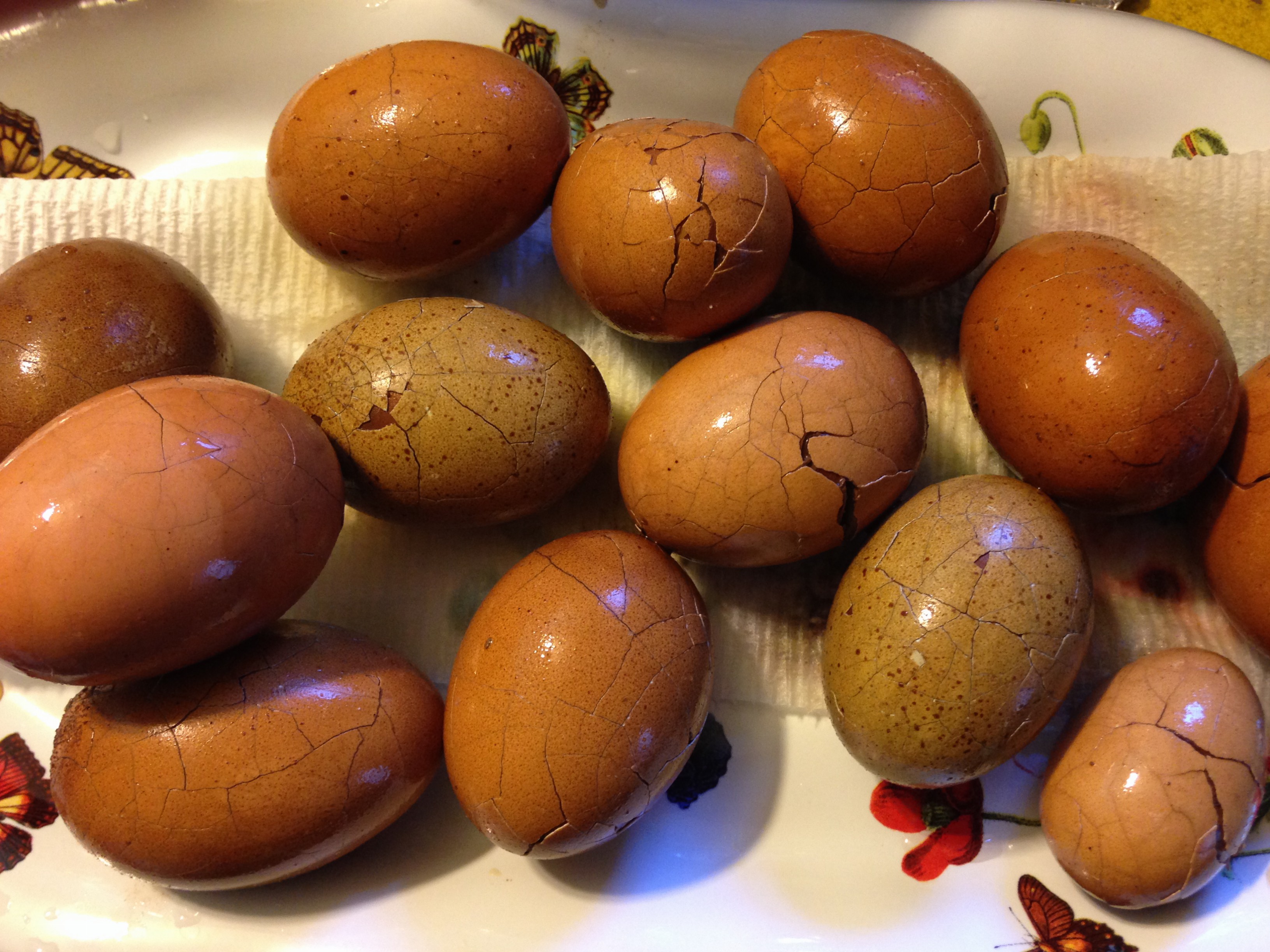
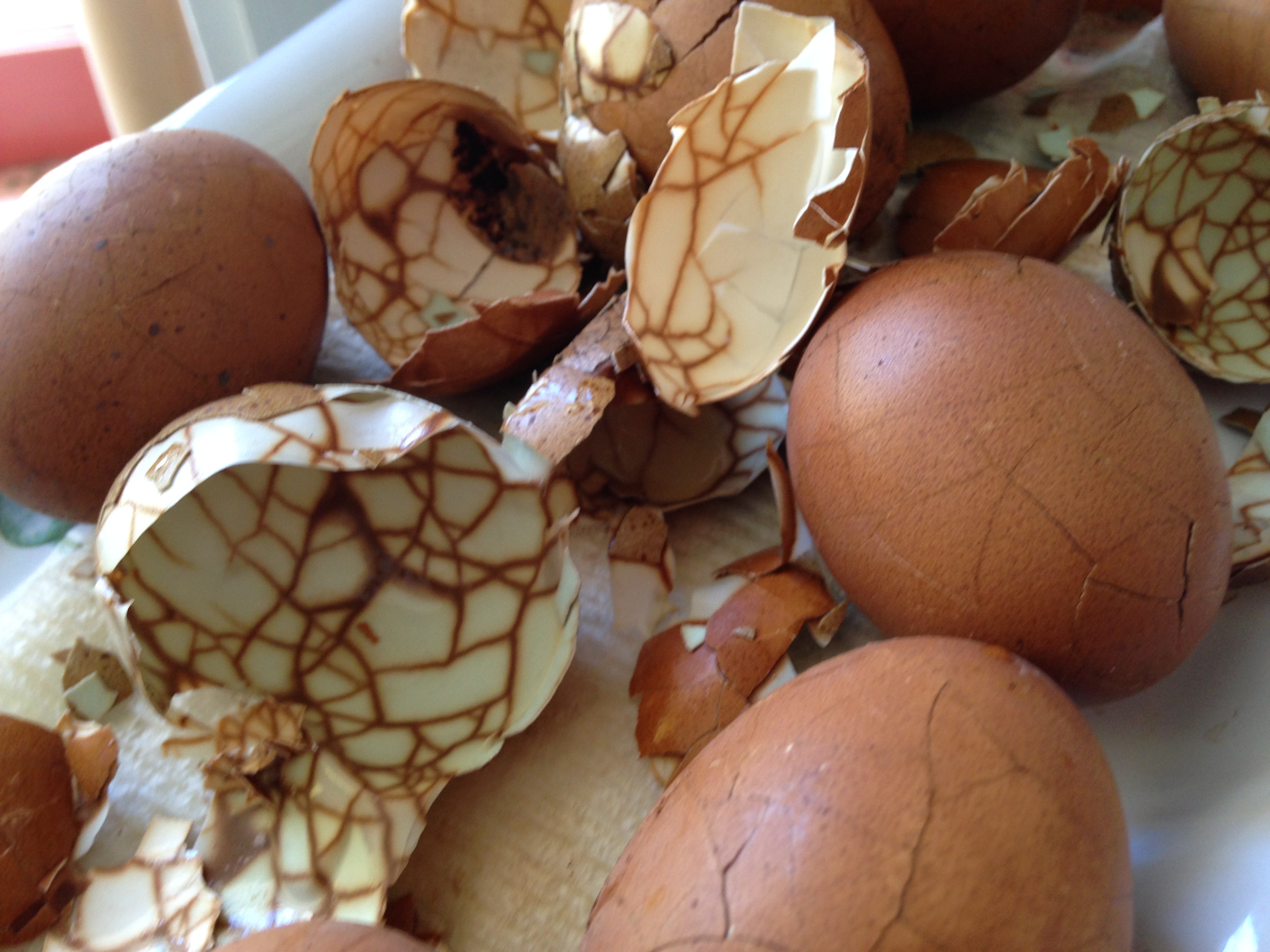
Web of Life Tea Eggs – Chinese Tea Eggs are often described as “marbled”. In the spirit of  todays theme, lets playfully re-interpret them as having a spider Web pattern. We featured this recipe in Feb 2014, but I like the recipe so much that I made a fresh batch and photographed all the steps, so that you will have real success! These Tea eggs are a Portable,  Aromatic, Healthy,  Flavorful and Beautiful savory snack. They can be eaten just as they are,  or can be used as a jumping off point for great deviled eggs or even a flavorful egg salad.

This being Holy Week/Easter you could try these in lieu of dying eggs with food coloring. Eggs are a powerful symbol of regeneration and new life.

Basic Recipe:

Ingredients:

*8-10 eggs

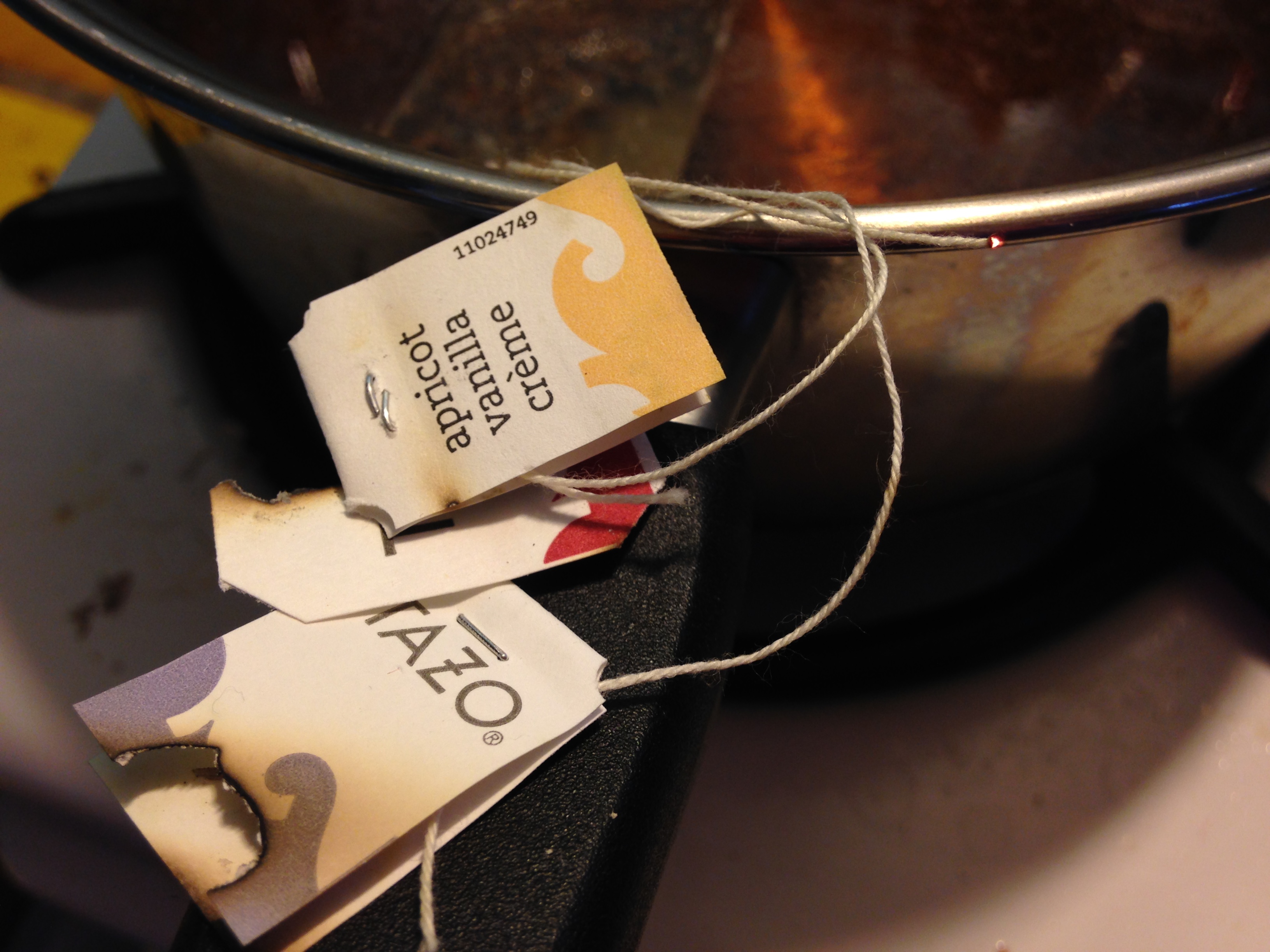
* 3 tablespoons of tea or three tea bags (black tea is most often used in Chinese tea * egg recipes, but any tea will do really – and it is fun to experiment. In the several years I have been making them I have used mostly loose leaf tea – this time I used some very old tea bags that I found in the back of a drawer). I did not give their flavor a second thought; but you could if you would like. Try it with green or oolong tea ….

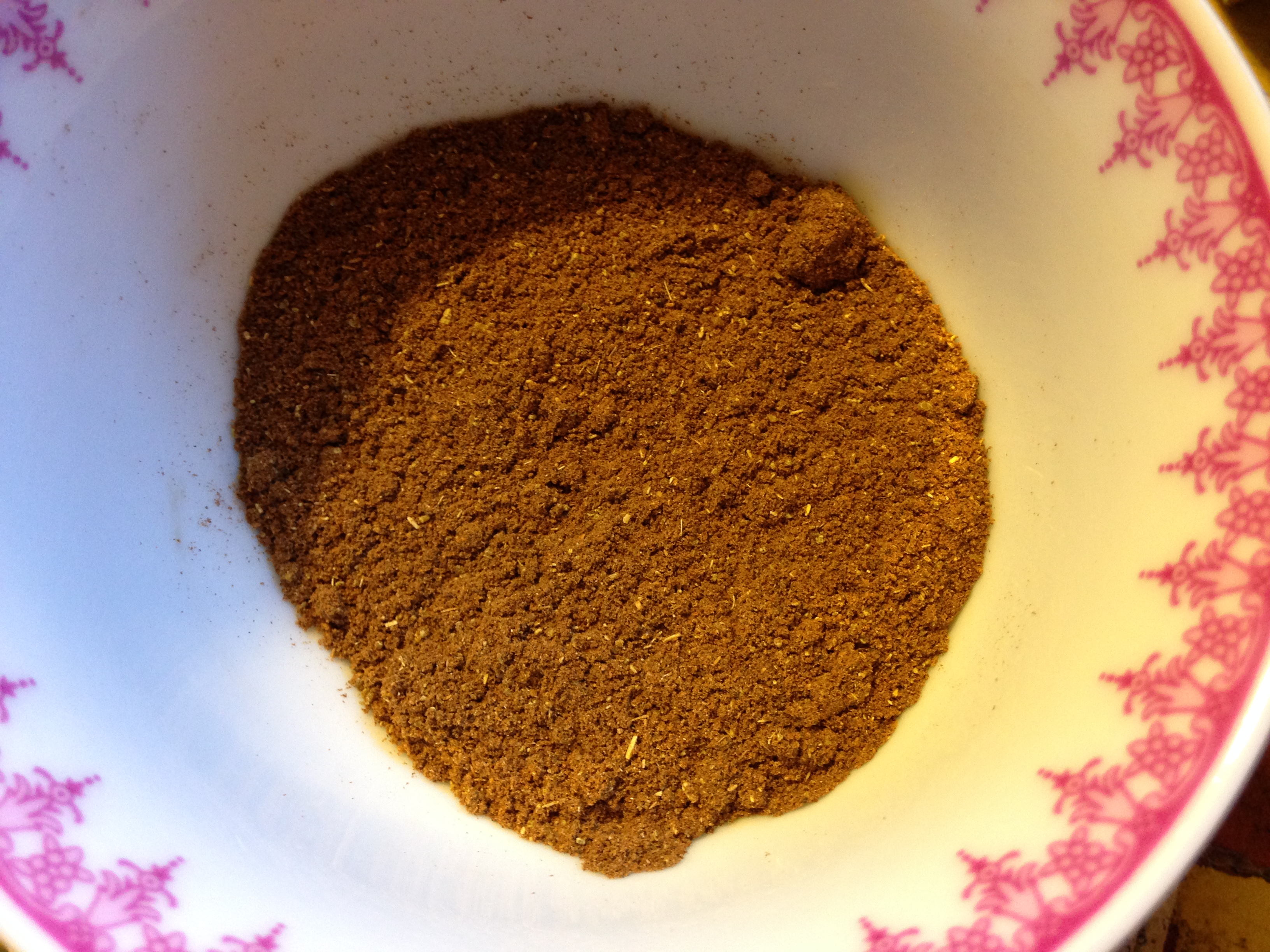
* 3 tablespoons of Chinese Five Spice

The trick here is two baths.

1) In the first, you boil the eggs just like you do normally. Just the eggs and hot/boiling water. Boil until done.

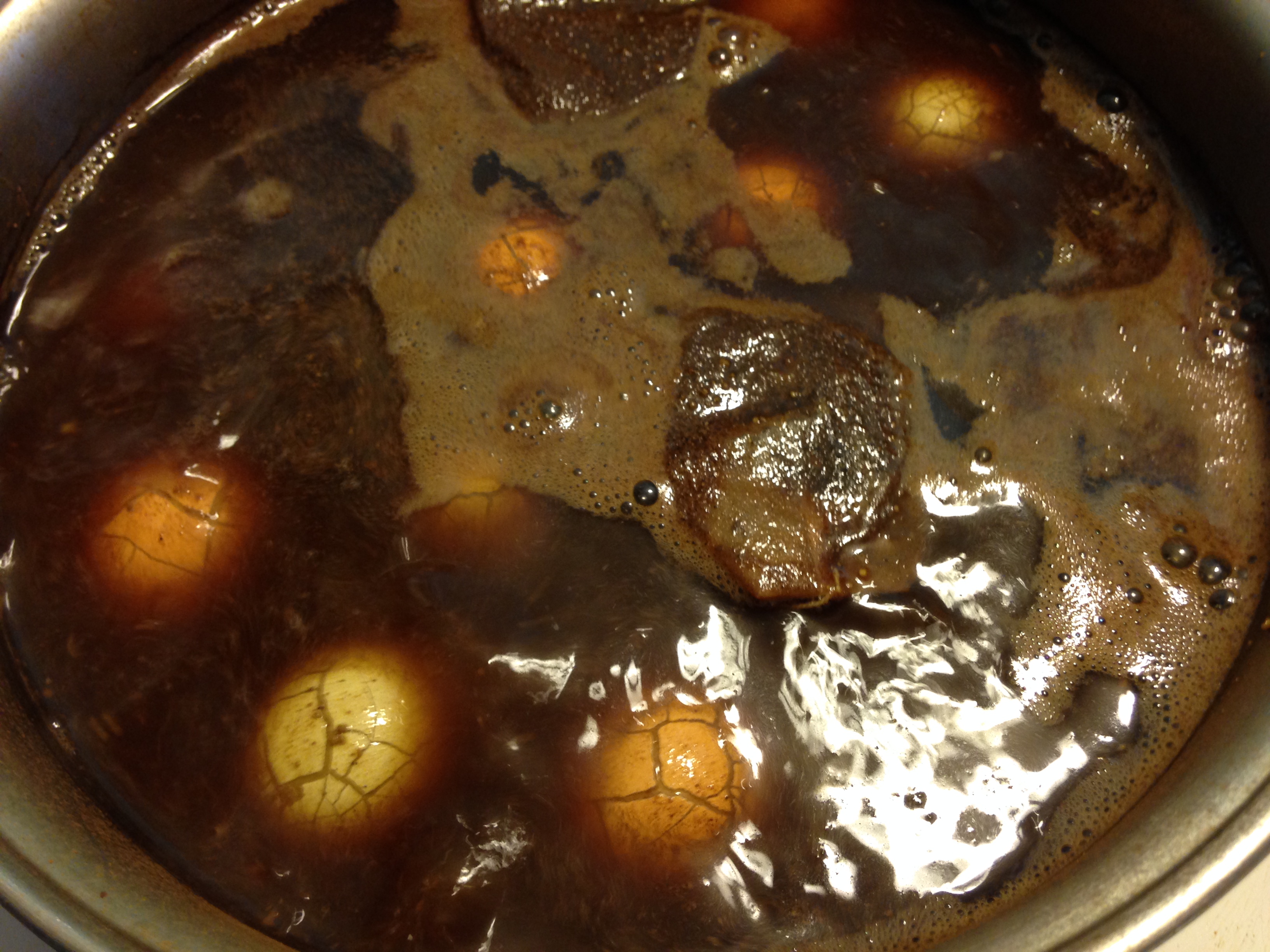
2) In the second bath,  you mix up a bath of the tea and spices. This is the bath that you will simmer the eggs above, for the marbled/webbed flavor and color.

So:  When the eggs are hard boiled, you let them cool a bit for handling,  and then crack them, creating the beautiful web pattern. You can smash one side of an egg against the kitchen counter, and them play around with cracking them with your fingers and hands, for finer details. These cracks allow the flavor and color into the egg white. Simmer the eggs for as long as you would like – I simmered mine on low heat for over an hour.  Then I covered the pot and let them steep in the tea/spice bath for several hours. The peels are gorgeous as well.

IMG_9255IMG_9232IMG_9228IMG_9263

I

IMG_9241 IMG_9254

Here’s to the Budding Desert!

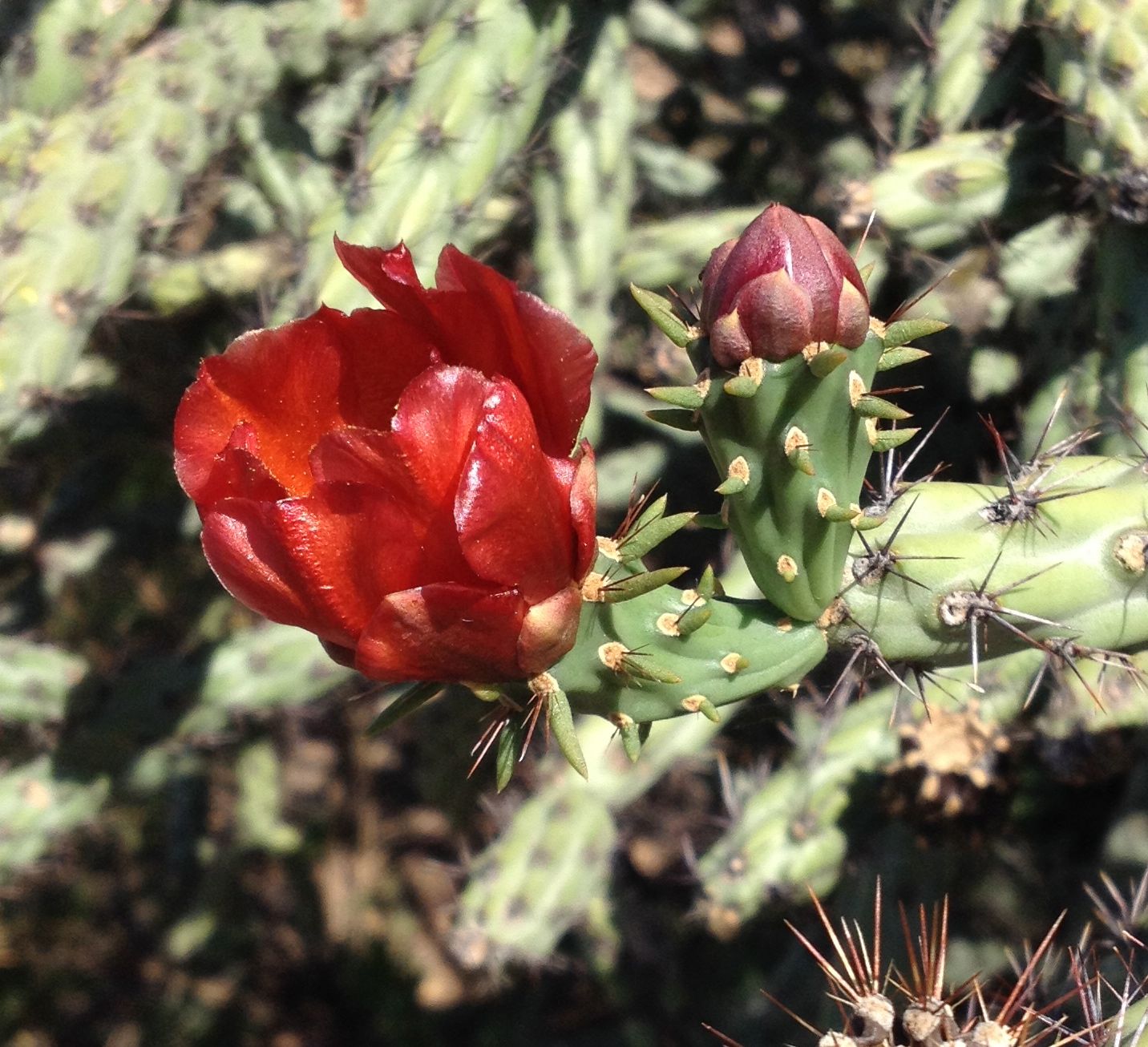
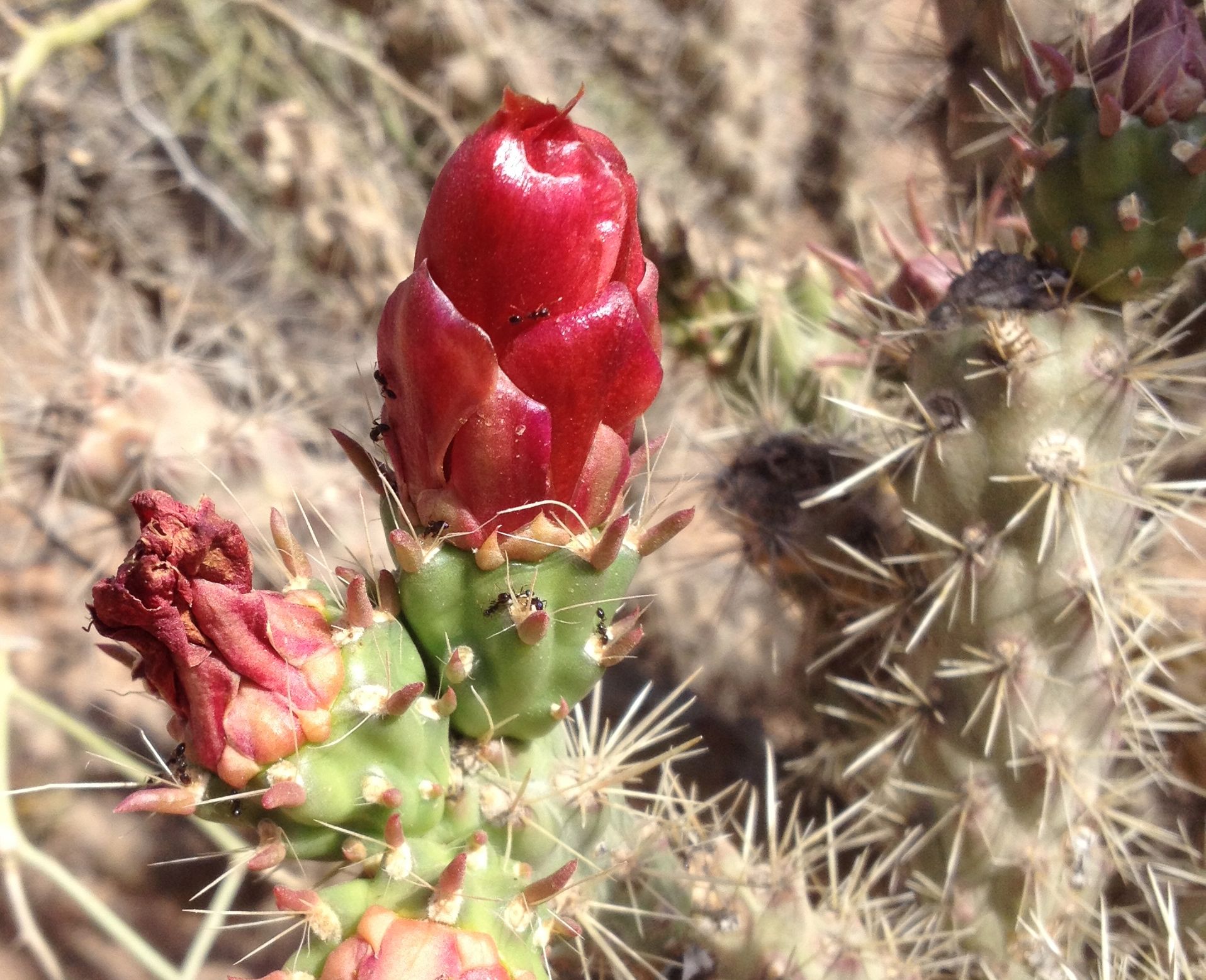
red staghorn cholla flower and bud (MABurgess photo)

red staghorn cholla flower and bud (MABurgess photo)

Can you almost hear them?  I mean the sound of buds swelling and bursting with life out there is the rain-soaked desert?  This spring the wildflowers are a joy, for sure, but the perennials this season will really be in their glory.  Tia Marta here with some wonderful ideas about how we can share in the coming cornucopia of cholla.

Cholla cactus flower buds emerging, covered with spines--brimming with goodness for all desert creatures….

Cholla cactus flower buds emerging, covered with spines–brimming with goodness for all desert herbivores….(MABurgess)

It should be a bountiful bloom this year–the buds are off and running already.  Every branch on our Sonoran Desert chollas is loaded with little buds, and they seem to double in size every day.  It looks the same in the western part of Arizona, the Mojave….a zillion buds on the golden branches of Cylindropuntia echinocarpa.

While the chollas are preparing for their yearly reproductive ritual–a wildly colorful show for attracting pollinators–many desert creatures will be benefitting from this flamboyant event, including Native Desert People who have always shared in the bounty.

cholla feeds many desert creatures (MABurgess photo)

cholla feeds many desert creatures (MABurgess photo)

You can learn traditional and modern ways of harvesting, preparing and cooking cholla buds in one of several classes coming up soon in April.  With the guidance of ethnobotanist of Tia Marta (yo,) we will get out in the bloomin’ stickery desert, get up close and personal with chollas, get to know their lore, their anatomy, their culture, learn to carefully de-spine them, cook, dry, pickle, and prep them into the most unusual and fun recipes.  Their health benefits are off the charts–we’ll learn about those too.

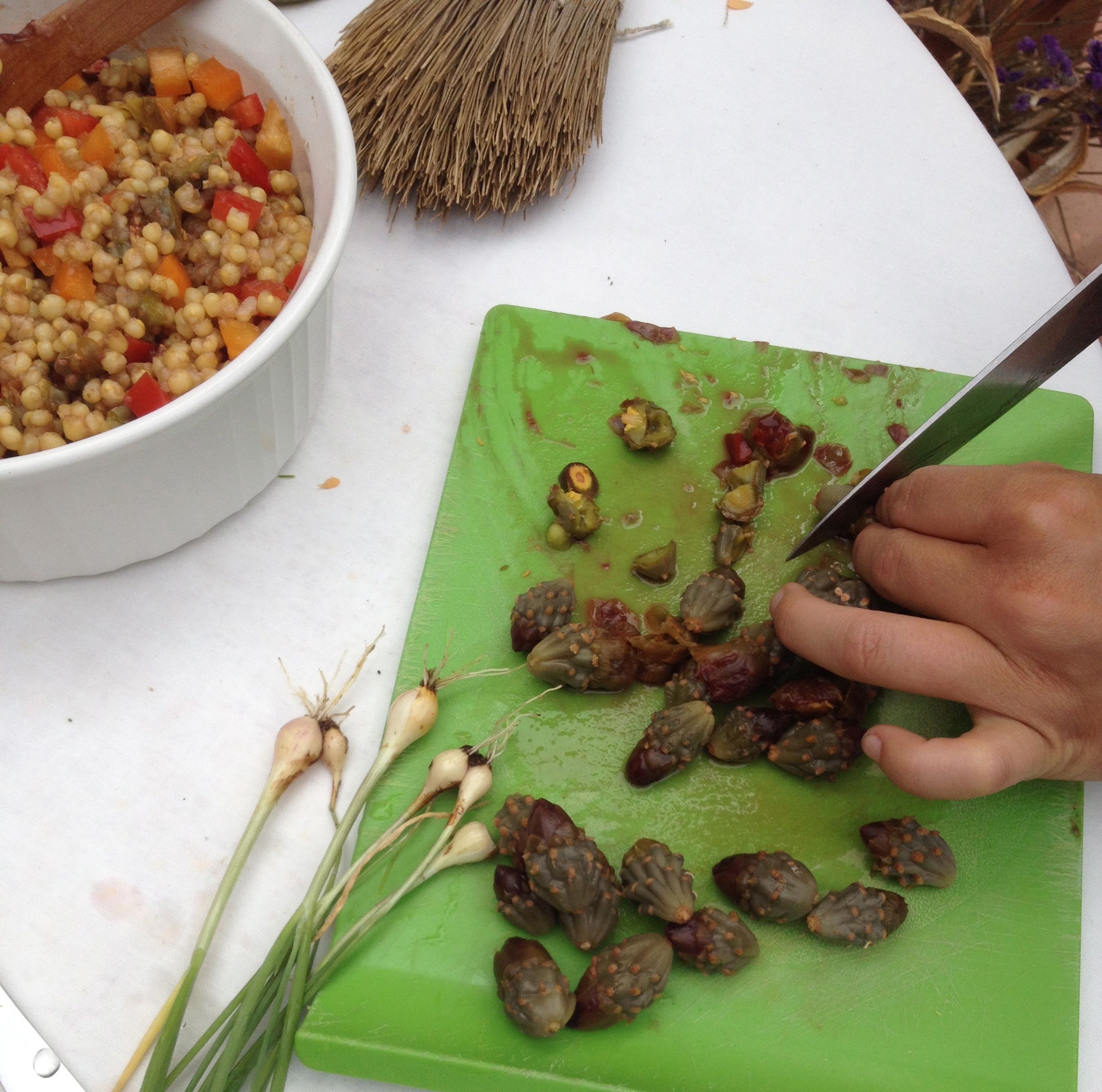
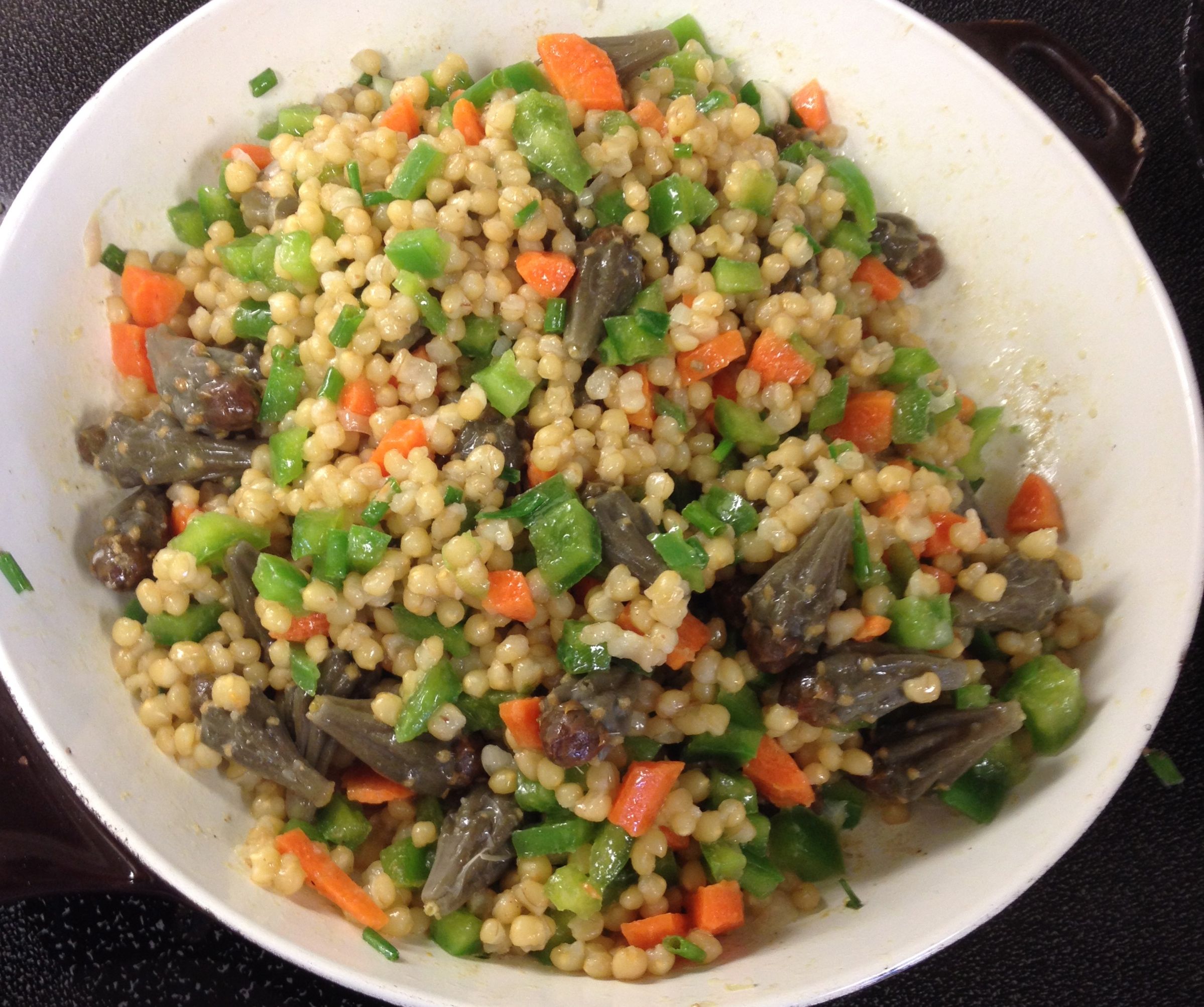
prepping cooked cholla buds with I'itoi's onions for White Sonoran Wheatberry salad

prepping cooked cholla buds with I’itoi’s onions for White Sonoran Wheatberry salad (MABurgess photo)

The biggest kick will be impressing your family and friends with off-the-wall gourmet recipes that no one else makes (other than some wild and wonderfully creative foodies like Janos Wilder, Chef of the Downtown Kitchen, not to mention NativeSeeds/SEARCH staff cooks!)


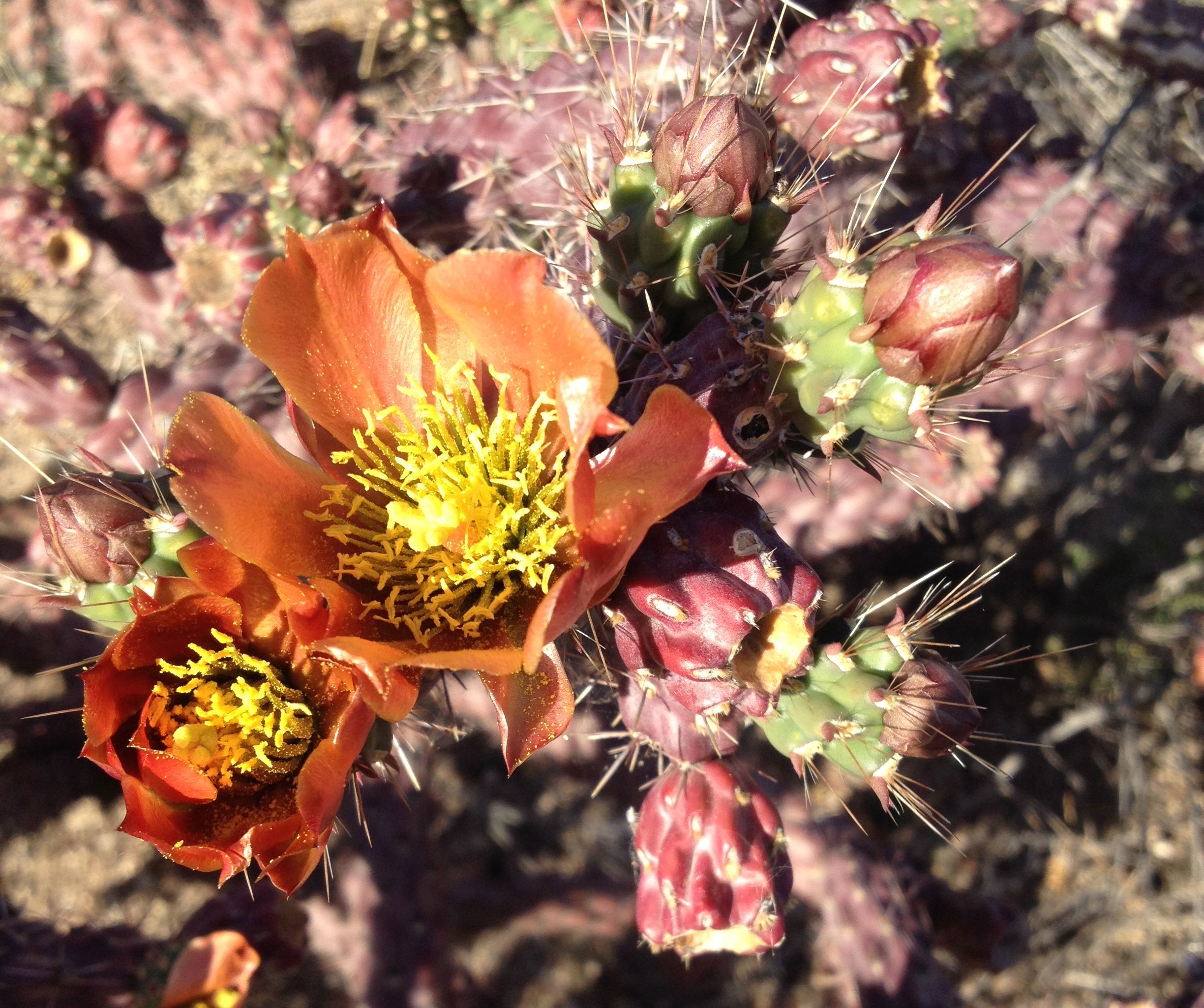
rusty orange flower of the various-colored staghorn chollas

Rusty orange flower of the various-colored staghorn cholla, Cylindropuntia versicolor (MABurgess photo)

We have many cholla varieties in the Sonoran Desert—each with its own distinct characters and timing of flowering. The cane cholla (Cylindropuntia spinosior) is found in a few places in low desert but is more typical of higher desert and desert grassland. It’s the one with the persistent round yellow fruits, and gorgeous magenta flowers. The jumping cholla (C. fulgida) always has long clusters of green persisting green fruits hanging like bunches of grapes. It typically blooms with the monsoon rains of summer with a lovely deep rose flower. If you can find the buds of either of these chollas in their season, their buds are great tasting too.  The buds of both are spiny, but the first-mentioned staghorn cholla (C.versicolor) bears easily-removable spines, so that’s the one my Tohono O’odham “grandmother” and mentor Juanita preferred to pick. I will be demonstrating her teaching at our upcoming workshops in April.

cane cholla in bud with last year's persistent yellow fruits

Cane cholla (C.spinosior) in bud with last year’s persistent yellow fruits

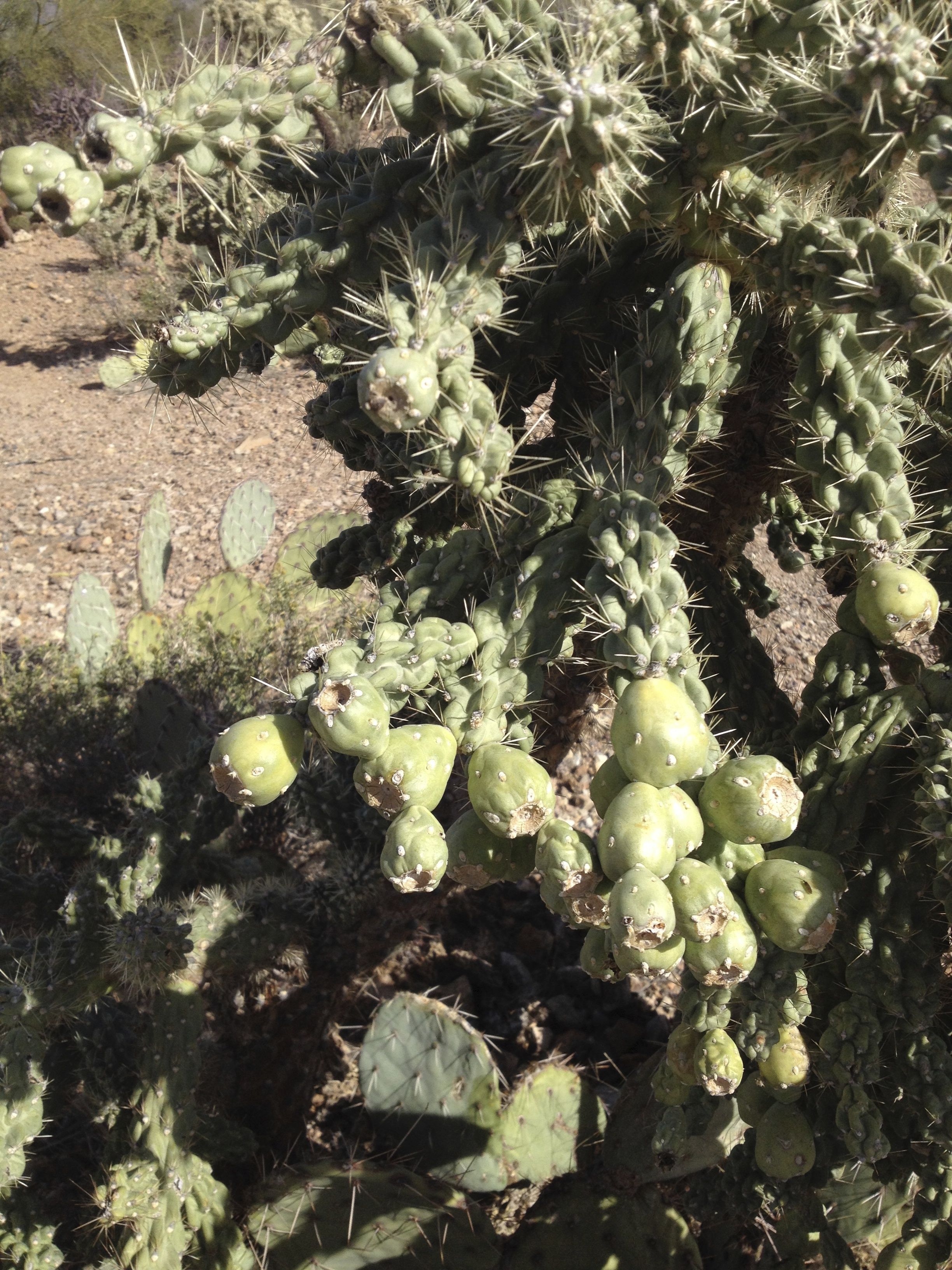
fruits of jumping cholla clinging to former years' fruits

Fruits of jumping cholla (C.fulgida) clinging to former years’ fruits


tongs specially designed for harvesting cholla buds and prickly pear--available at Flor de Mayo tent Sunday St Phillips farmers' market

Tongs specially designed for harvesting cholla buds and prickly pear–available at Flor de Mayo tent Sunday St Phillips farmers’ market

The best instrument for safely harvesting buds is simply a pair of tongs. Long barbeque tongs can help you maneuver through hazardous cactus branches at a safe distance. We commissioned a young woodworker from Sedona to fabricate the right size tongs for us out of fire-killed ponderosa pine—available at the NativeSeeds/SEARCH store and in our selection of handmade wooden utensils at our Flor de Mayo booth at the Sunday St Phillips market.

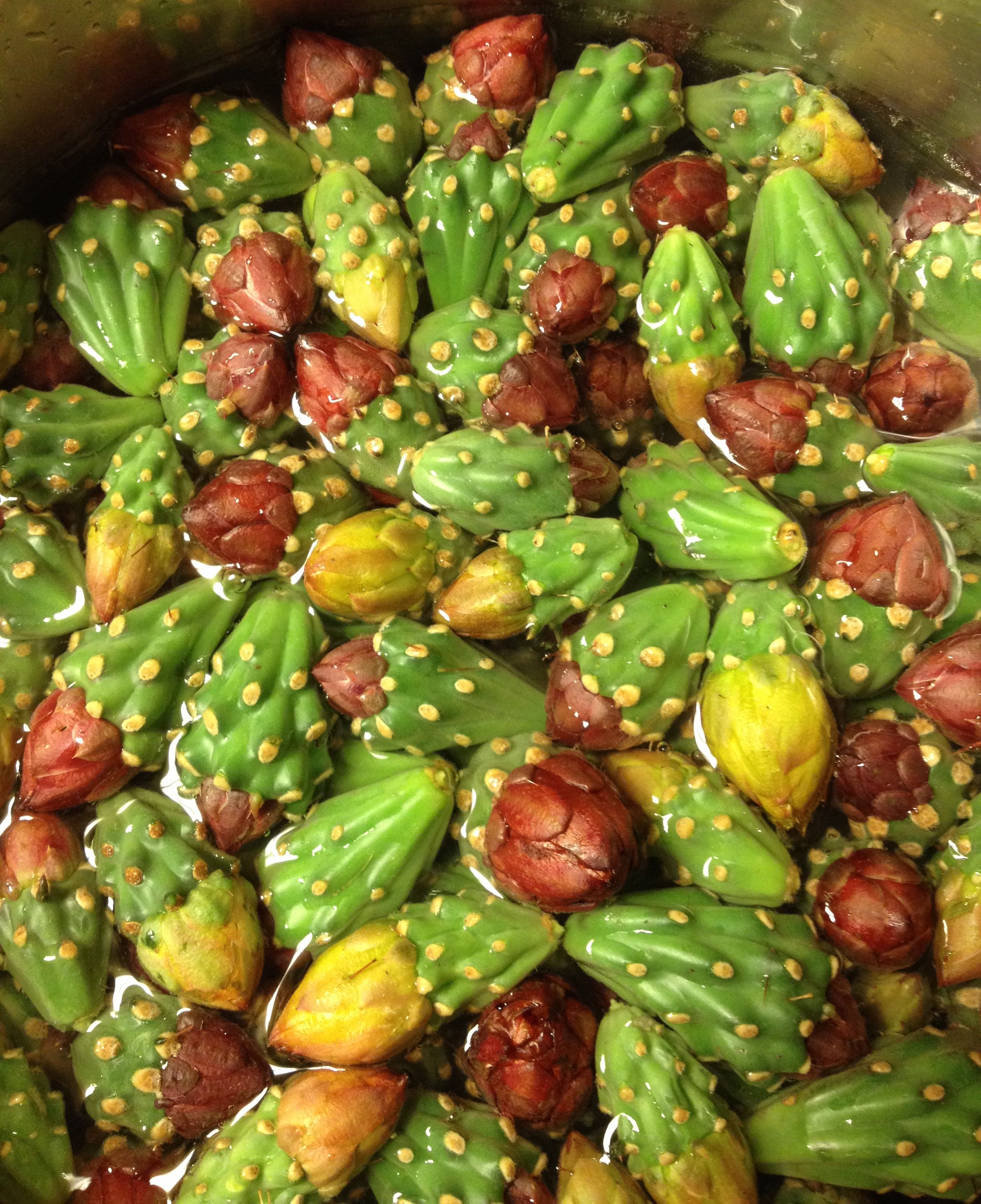
Cholla buds from yellow and red flowers--de-spined and ready to cook

Cholla buds from yellow and red flowers–de-spined and ready to cook (MABurgess)

After de-spining, the buds must be further prepared by roasting or boiling before eating them either plain as a tasty vegetable or fixing into other delectable dishes.


Here’s an easy sure-fire winner for pot lucks……

delectable cholla bud and white Sonora wheat-berry salad

Delectable cholla bud and white Sonora wheat-berry salad


Marinated Wheat-berry Salad with Cholla Buds!                                                                                         

Ingredients:                                                                                                                                                                                                                    2 cups cooked and cooled White Sonora Wheat-berries**                                                                                                                                1/4 -1/2 cup of your favorite Italian vinagrette dressing

¼ cup chopped celery
¼-1/2 cup chopped colorful sweet peppers
¼ cup minced I’itoi’s Onion bulbs and tops, or minced red onion
1/2 cup cherry tomatoes cut in half (optional)
½ cup cooked and cooled cholla buds.                                                                                                                                                                                                                     Romaine lettuce leaves as bed

Instructions: Marinate cooked white Sonora wheat-berries in the dressing overnight in frig, stir once or twice.
Mix in all fresh chopped veggies and cholla buds.
Serve on a fresh romaine leaf.   Makes 6 generous servings.

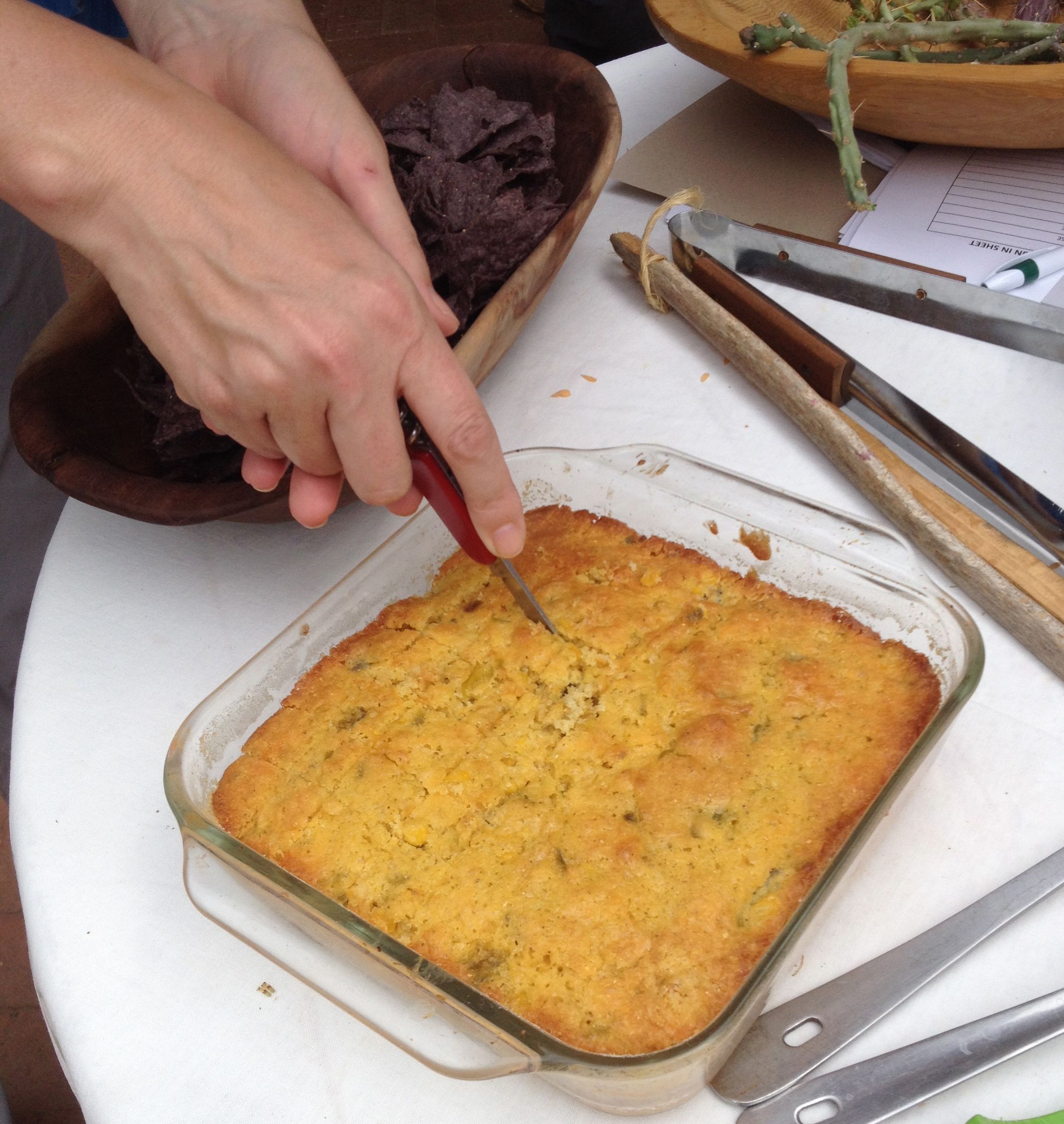
first cut into cholla bud cornbread--yum!

first cut into cholla bud cornbread–yum!

At our up-coming Cholla Bud Harvesting Workshops you will joyously taste cholla in a variety of gourmet recipes. You will a;sp learn how to preserve them, dry them for storage, learn their survival strategies and how those natural “tricks” can help us. Come “internalize” a deeper appreciation of these desert treasures!

For more photos and interesting details, please check out my Edible Baja Arizona article from April 2014 online at http://www.ediblebajaarizona.com. You can view a neat short clip about cholla harvesting created by videographer Vanda Pollard through a link on my website http://www.flordemayoarts.com.  Best of all, you can attend one of our scheduled Cholla Bud Harvesting Workshops to learn the process first-hand!  From there you can harvest your own–and bring these nutritious and off-the-wall taste treats into your home and party menus.


Workshop Dates (find a downloadable flyer on the website http://www.flordemayoarts.com):
Saturday April 4, 2015, 7:30-9:30am—register at 520-907-9471
Wednesday, April 8, 8-11am, Pima Co Parks & Rec 520-615-7855 x 6
Saturday, April 11, 8-11am, Westside, sponsored by NativeSeeds/SEARCH, call 520-622-0830×100                   Saturday, April 18, 8:30-11:30am, Tohono Chul Park, 520-742-6455 x 228

Hoping to see you at one of these fun classes!  Happy harvesting–to all budding harvesters and cholla aficionados!

**Certified organic heirloom White Sonora Wheat-berries from BKWFarms are available at the Flor de Mayo booth at FoodInRoot’s Sunday St Phillips Farmers Market, St Phillips Plaza, N Campbell Avenue, or online from http://www.flordemayoarts.com in ½ lb, full pound, kilo bags, and greater quantities for chefs. Also available from the NativeSeeds/SEARCH Store, 3061 N Campbell Ave, Tucson.

Dry cholla buds for reconstituting to cook are available at San Xavier Coop Association booth at Thursday Santa Cruz Market and at NativeSeeds/SEARCH.

To Build A Nest: Hummingbirds and Elasticity (In honor of spider strands and tiny birds)

                                         “There is another World, but it is in this one.”  W.B. Yeats

IMG_6262

(The photo above is of a young hummer from a nest about three years ago, again here in the yard. At the end of this post is a “recipe” to invite hummer friendly nests into your world.)

Aunt Linda here on a very gusty March morning. Good thing that spiders provide their silky webs to the world, or the tiny nest right outside our door and it’s contents, might have been catapulted into oblivion.  The full moon is setting in the West, the direction I am facing as I write.  It’s white light is being thrown about as it passes through mesquite branches in a still beautifully dark sky

We can practically taste Spring on our tongues here in the Old Pueblo.  The ancient call of regeneration is in the air. Plants and Pollinators alike are in full swing. Native and non native bees are at the stone fruit trees, Birds are wooing one another with their lyrical mating songs.  It is easy to forget the function some birds play in pollination.

Pollination by birds has its own name: “ornithophily”.  Hummingbirds, Orioles, and nectar seeking birds are but a few types of birds that pollinate native plants, trees, and crops and that animals (including humans) eat.

IMG_9331

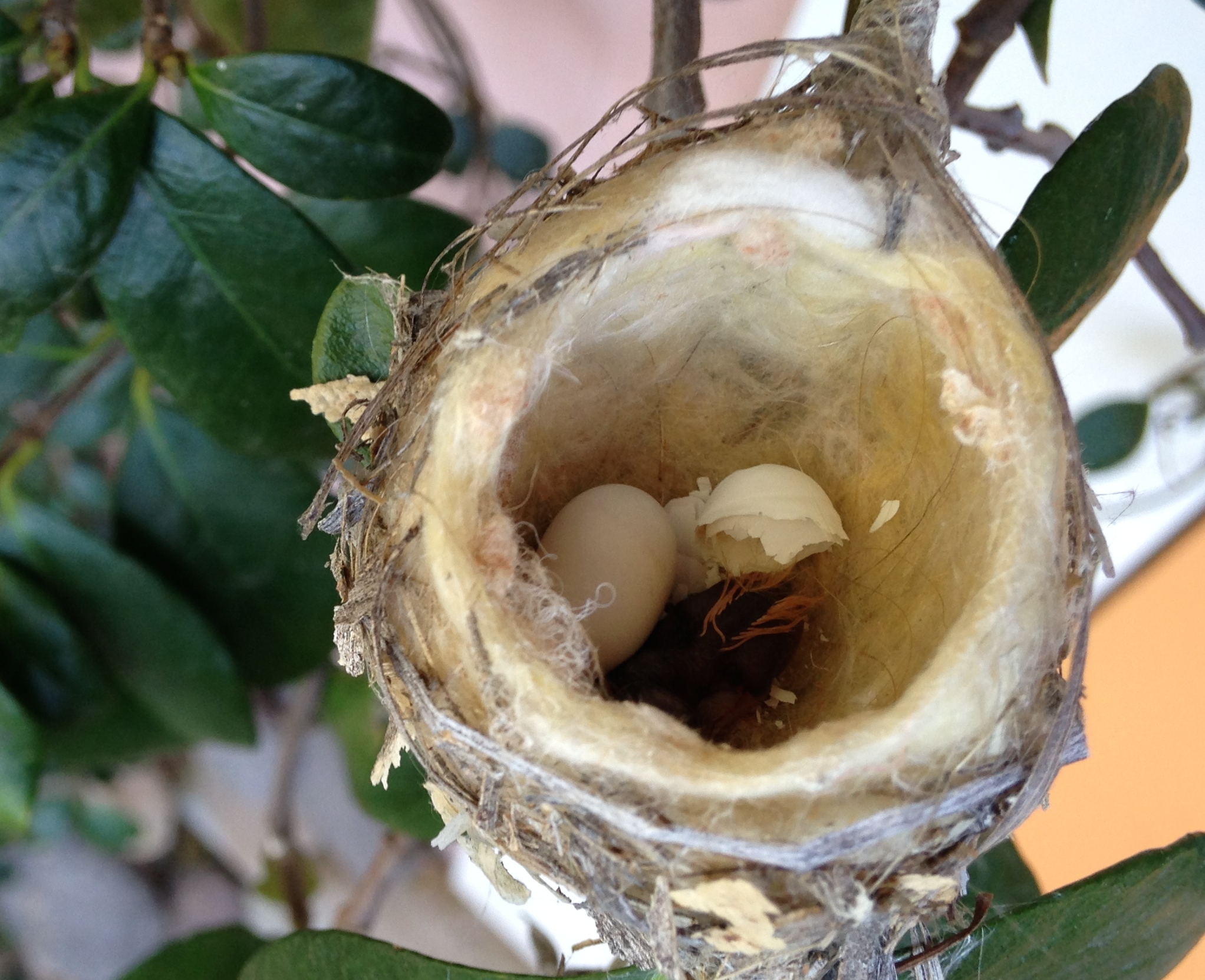
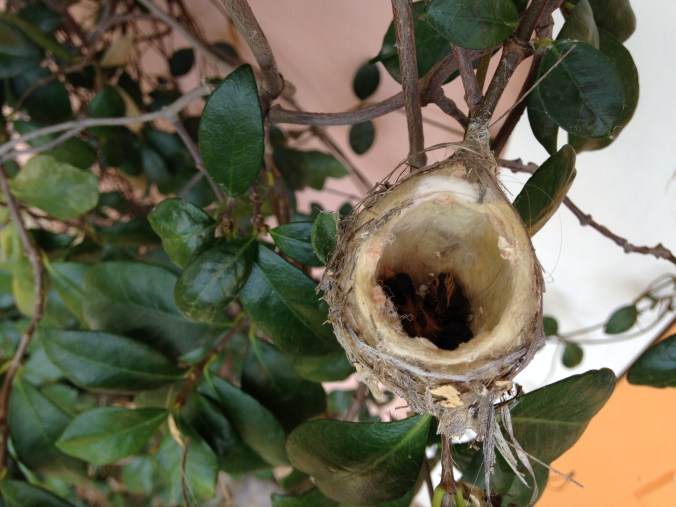
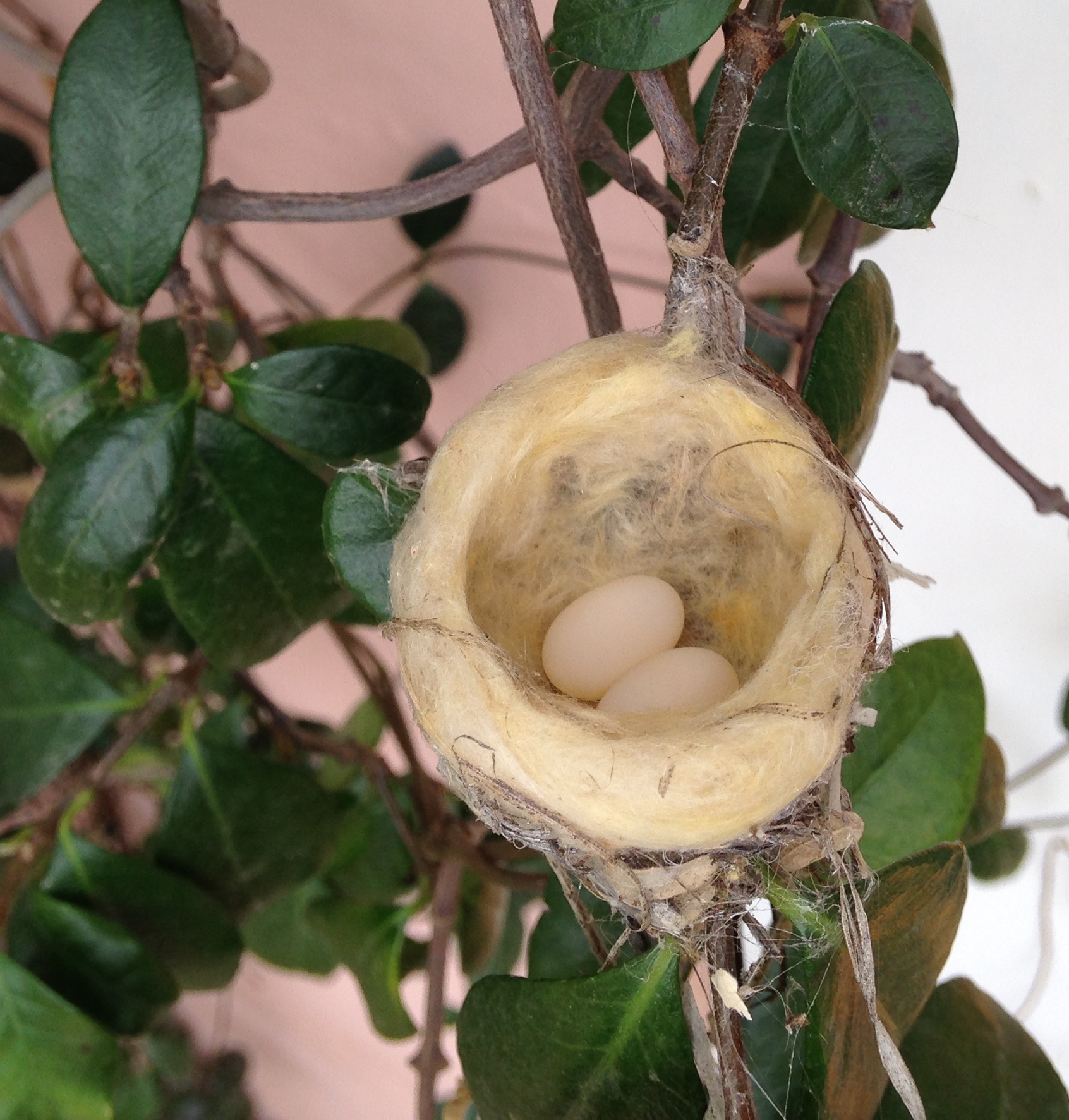
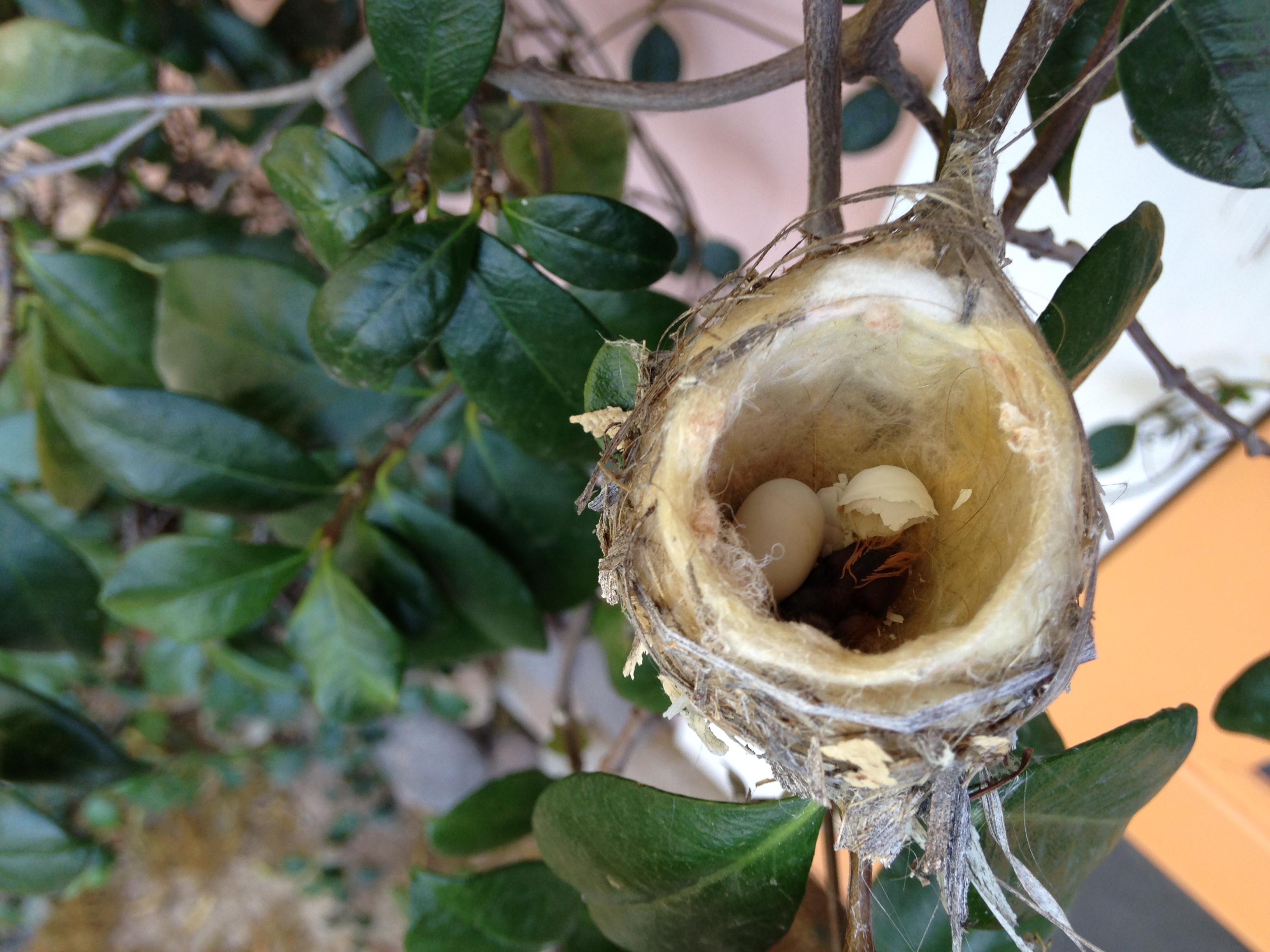
What re-focused me on ornithophily – was the humming bird nest, (right outside the front door), that a female hummer built about 19-20 days ago. Watching her secure the nest was fascinating. For about 5 days, she brought gathered materials, using beak, chin, wings and her little bird rump to form and secure the nest inside and out.  When she was ready,  she laid her first egg. The second was the laid the very next day. Throughout this process, I watched her bring materials, such as spider webs, to the nest.  Intermittently, she would feast on the offerings of tubular flowers as well as upon tiny insects (that move in small, but visible, insect-clouds) high in the air;. Her graceful, skillful, movements  allowed her to move easily among the flowers and to pick insects out of mid air.

This whole episode opened my eyes and interest WIDE OPEN. I began researching the hatching time for baby hummers, which is approximately 15 to 16 days.  I stayed well away from the nest.  Until yesterday; which was day 16.  When she left to forage I carefully approached the nest, (skillfully built higher than many a predator can reach) and higher than my eye level.   Careful not to touch the nest (or any leaves around it)  I held my camera higher than the nest, and saw via photo that the first baby bird had hatched. (note: it is not the birds “sense of smell” that I am careful not to touch around the nest and leave a scent, but that of predators !)

Anatomy of a Nest:

I have been studying up on humming birds nests. The bottom and the wind side of the nest is often thicker than the downwind side. The thinner sides allow for breezes to pass though on warmer days, when cooling is needed. Interestingly, hummingbird nests built in the earlier and cooler springtime are thicker and deeper than those built in the warmer summer months. She camouflages the outside of the nest with materials from the immediate environment. Here in Tucson many hummingbird nests have tiny mesquite leaves and strips of bark from native trees. The insides are made soft with gathered materials – over the years I have seen (in this yard alone), nests made from cotton swiped from cotton plants that we had hung on the porch from the winter, wool from a mask made of sheep hair, stuffing gathered from outdoor furniture that had seen better days. You can clearly see in the photos in this post, the innovative use of spider webs in nest construction. She uses them to secure the base, as well as to build in the capacity for elasticity into the nest – so it remains in tact even as the babies grow.

The photo below is of the nest as it is being constructed – about day three or four.

IMG_9217

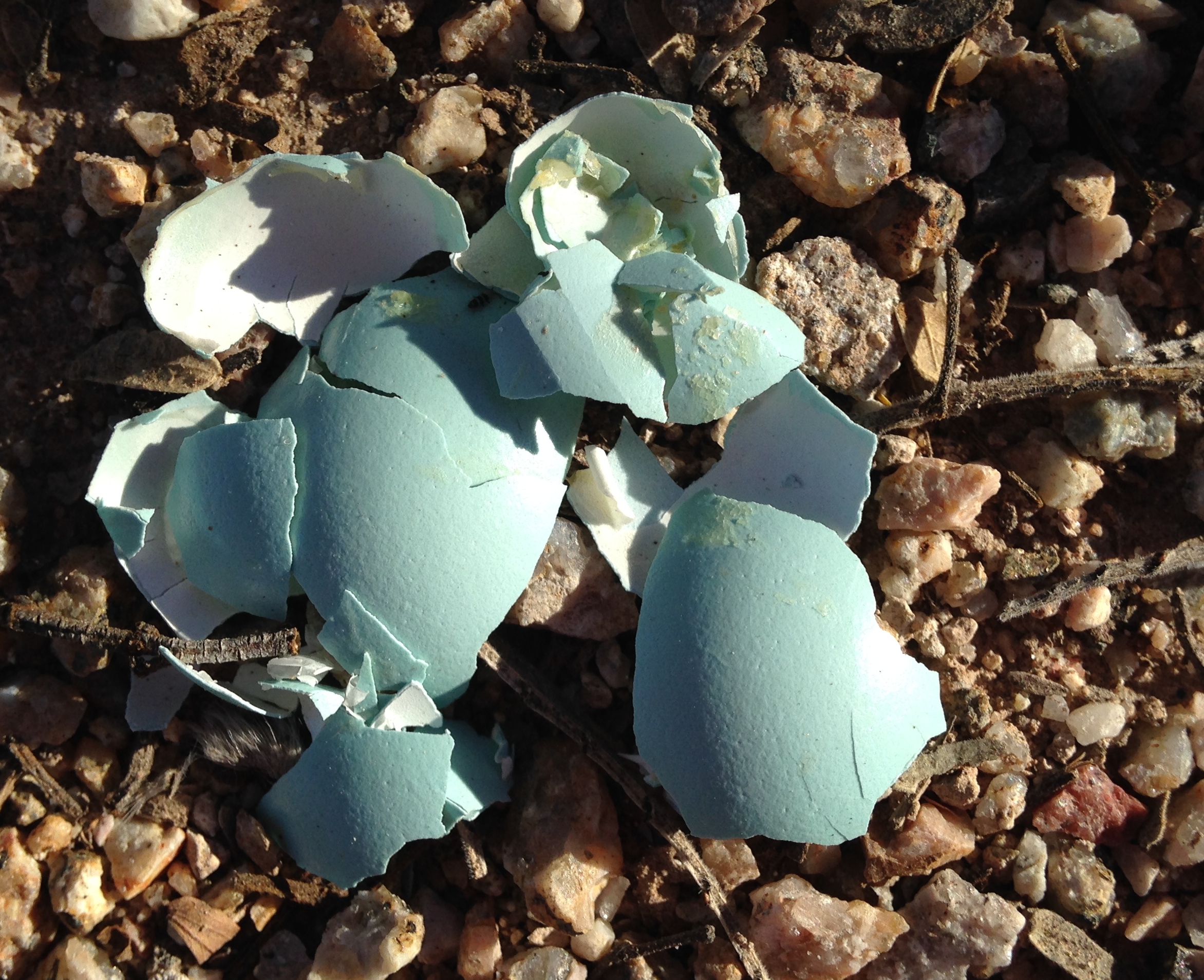
Usually, a female hummingbird will build and fasten the nest onto the part of a tree or bush where branches overlap, crossing each other, or make a “Y”  for stability This is so the eggs or baby birds do not get catapulted off in one of springtime’s storms, or gusty winds like we have had here over the past few days. Note in the photo above, how the spider webs are woven into the nest, as well as how they fasten it to the base branches.   I have read that they will actually test and retest the site by repeatedly landing on it to see how it will hold. This skillful construction has helped the nest stay secure during the past few days of wind, where as this little egg (a robin egg perhaps?) did not fare so well. The broken egg photo was taken a three minute walk from the hummer nest. (note: a reader skilled in Birds wrote me to say she things the broken eggs are a Curved-bill Thrasher! Thank you!!!)

IMG_9415

About 18 years ago, a docent at the Desert Museum shared a story that opened up the way I thought about the interconnectedness of things in nature. After meticulous research in to the types of humming birds,  plants and habitat requirements, the Desert Museum Built a beautiful state of the art Humming Bird sanctuary/exhibit. Once the Hummingbirds were introduced, all appeared to be well – they fed and flew contentedly, living the lives hummingbirds do. All appeared  fine in hummingbird paradise – except that no nest building was going on.

As you can imagine, this was taken very seriously and after thorough research, it was discovered that no spiders had been introduced into the ecosystem of the site.When spiders were introduced to the hummer system, and webs were spun and thus available, the hummers began building nests. For me, this is very profound. This deep interconnectedness of spider and baby hummer. It gives practical meaning to the idea of the web of life. It is also quite a gorgeous thing to behold – this gathering of spider webs by agile hummers. The first time I saw it, it was only because the shiny sliver strands were backlit by the sun. The female gathered them in her beak, with a kind of sweeping motion of her body.

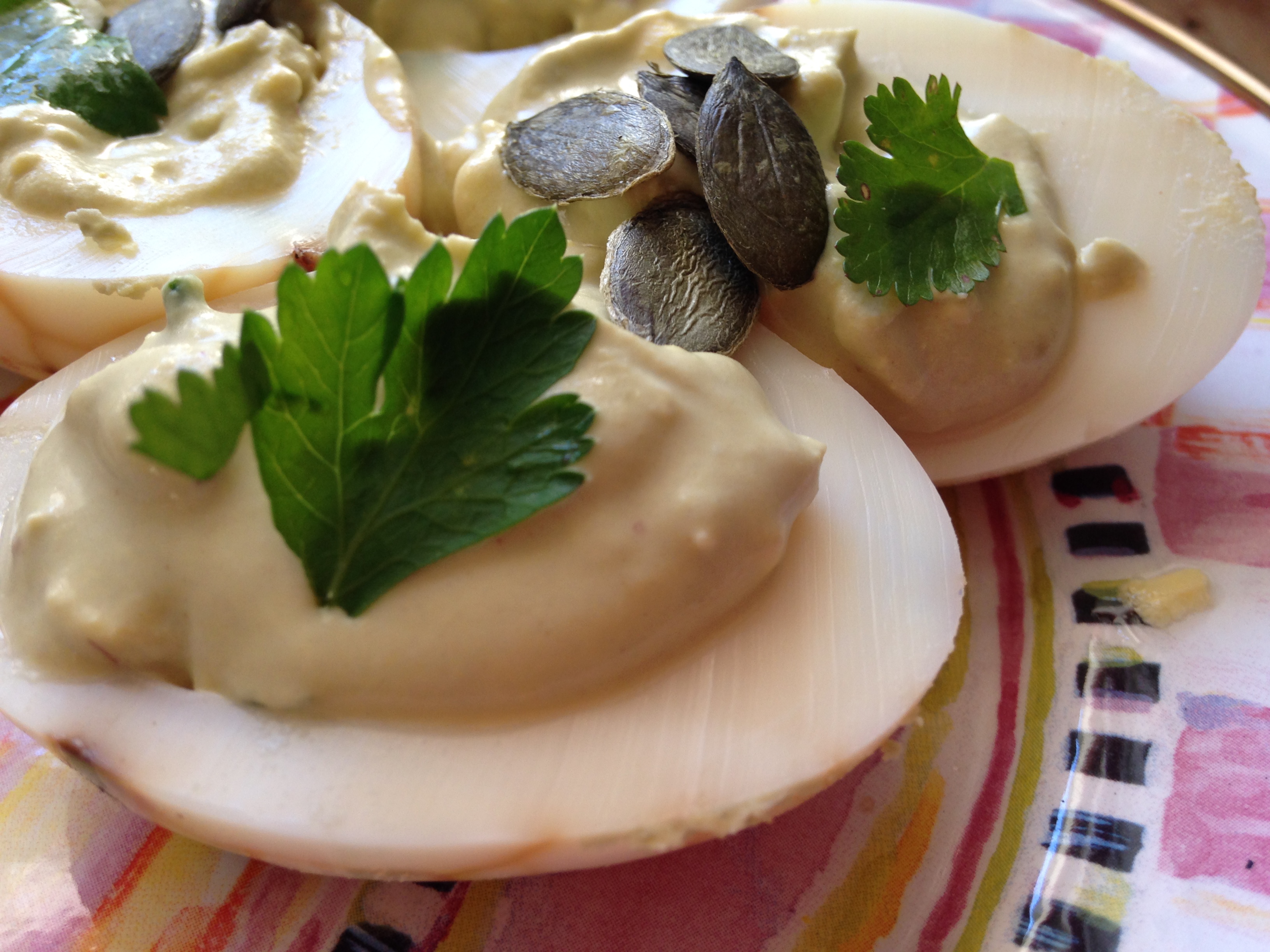
Recipe – Tiny Egg Salad Nests (formally known as Deviled Eggs)

IMG_9303

Like tiny hummer nests in and of themselves, hard boiled egg whites are well built and can hold precious cargo. Packed with protein eggs are a healthy and really tasty treat. Use herbs from your own garden or local surrounds to flavor your tiny-nest- snack.

Ingredients:

Use your favorite Deviled egg recipe, most people have their favorite one. In case you have not made them in a while, here is a basic recipe.

-6 eggs, hard boiled

-4 Tablespoons Mayonaise

-2 Tablespoon Mustard

-salt and paprika to taste.

-Herbs from the garden – here I used cilantro, parsley and pepitas (pumpkin seeds), even chiltepin.  If you use tea eggs, which we are going to revisit next month, you can enjoy the spider web like pattern/motif on the outside of your tiny nest !

-I often chop up the egg whites that break as I am preparing them; and add it to the “deviled egg” mixture – it makes it more like a True Egg Salad, within the tiny egg-white-nest.

– Make sure to “weave in” your version of silk silver spider strands of elasticity into whatever you are incubating.

Recipe to Make Your Own Yard/Surrounds Hummer Friendly :

*Provide nectar by planting their favorite plants (find out what is local to your region). Here in Tucson that includes wild and domestic tubular flowers such as Penstemon, which is a flower that grows wild here.  Hummers likely co-evolved with long, tubular flowering plants (think the length and shape of their beaks and tongues …)   and move deftly to such crimson red flowers in the herb garden, salvias , trumpet vine, penstemon, ocotillo blossoms, chuparosa tubes. They are also insect eaters, and pick the tiny, only to be seen if back lit, insects tight out of the air.

*Leave spider webs – and lichen (!) if you live in a region with lichen, for nest building.

* Avoid the use of harmful chemical sprays and poisons on your plants as the hummingbirds do rub up against blooms as they seek nectar and eat insects (for protein)

* make sure there is a water source for them

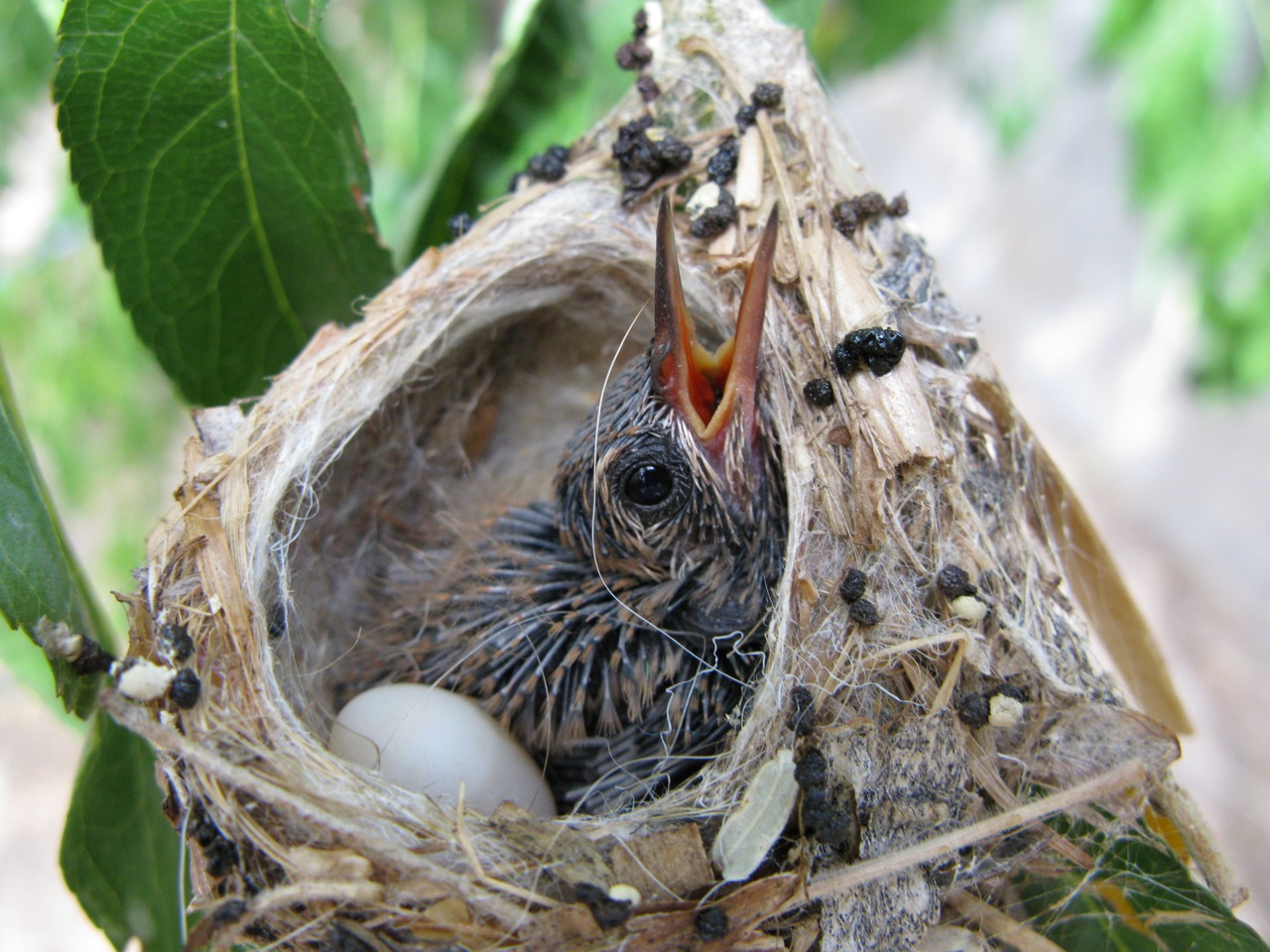
IMG_9420The photo above is the one I took yesterday afternoon, of the first hatchling.

I am happy to share that the nest rode out a very gusty night and morning just fine.

Let’s all send some appreciation to spiders for their webs, even when we might find them a little creepy – and to the skillful nest building of female hummingbirds.

Sweet Roasted Mesquite for a Happy Valentine’s

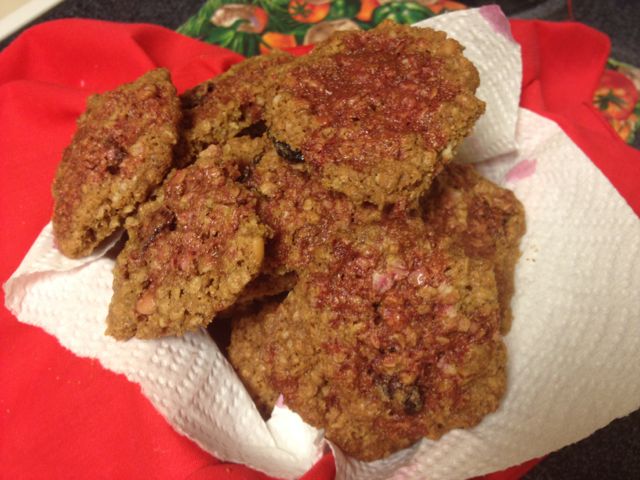
Valentine's Roasted Mesquite and Heirloom White Sonora Wheat Oatmeal Cookies

Valentine’s Roasted Mesquite and Heirloom White Sonora Wheat Oatmeal Cookies


[If only this were a scratch-and-sniff site….]

‘Tis the season for the sweetest, rarest, and heart-healthy mesquite treat of the whole year– Roasted Mesquite! During this relatively cool and occasionally soppy “wintery” weather, stored mesquite pods, which may have drawn in moisture from the humid air since harvesting last summer, can be roasted or toasted for ease of milling into a fine meal. The result is a transformation into something even sweeter than the already-yummy natural raw mesquite meal.


Tia Marta here to introduce you to Roasted Mesquite and to share some creative ideas for celebrating Valentine’s (and beyond).


When mesquite pods are roasted, their complex sugars burst with an almost chocolat-y bouquet. Roasted mesquite has hints of its “botanical cousin,” the carob, from the Near East (known as Saint John’s Bread in the Bible, as it fed St. John so well through his desert wilderness retreat). Those soluble complex carbohydrates that make mesquite such a heart-healthy food–giving sustained energy, helping with cholesterol, balancing blood sugar—come flavorfully to the fore when mesquite is roasted. Take note: all fitness fans, hypoglycemics, diabetic and gluten-free cooks! Roasted mesquite is a super booster-food especially for you. Its complex sweetness and its nutrition make it a gift for everyone you love.

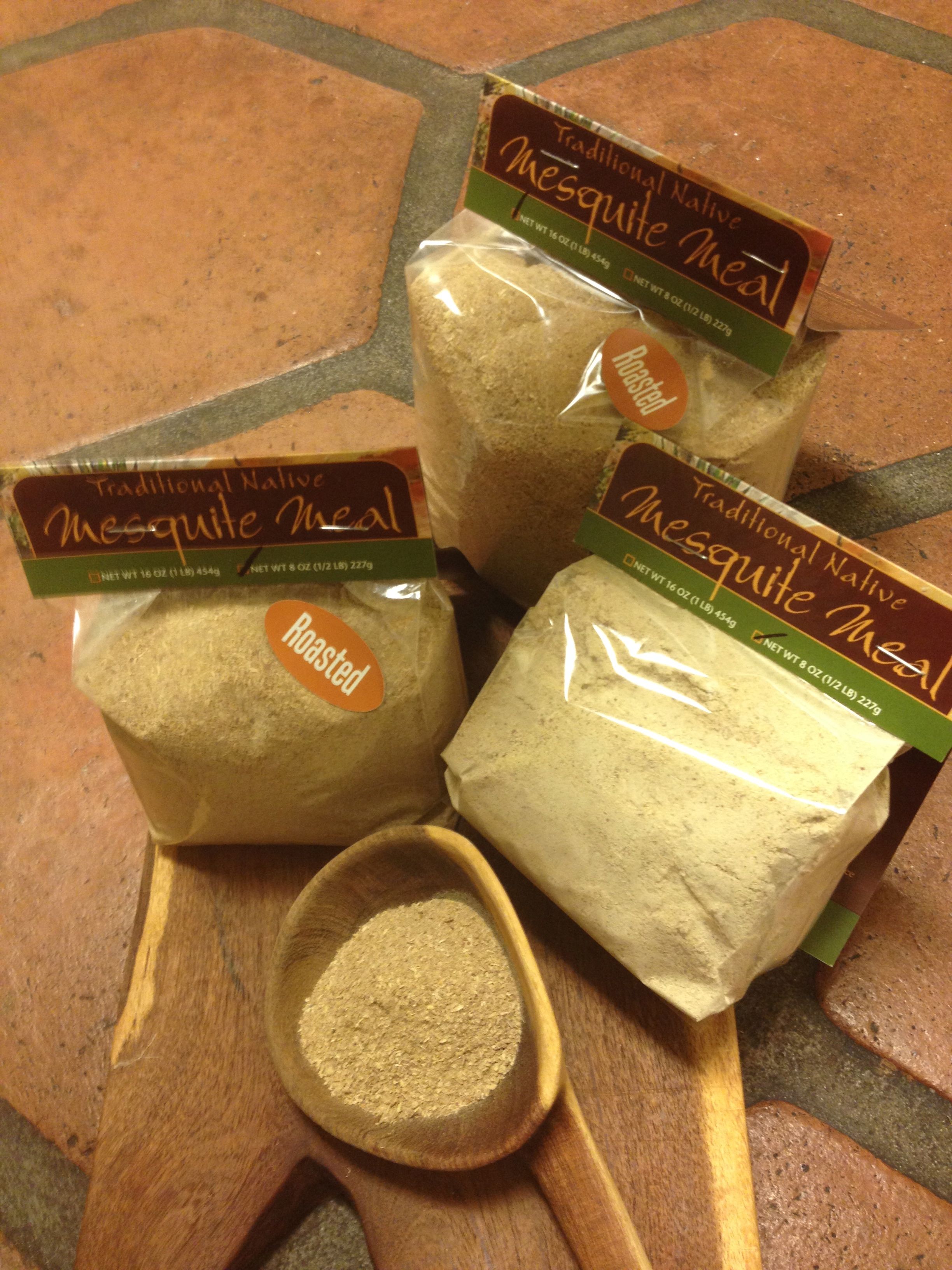
Comparing roasted mesquite flour and natural raw mesquite flour (MABurgess photo)

Comparing roasted mesquite flour and natural raw mesquite flour (MABurgess photo)

You can use roasted mesquite meal in so many ways. In addition to baking with it, the distinctive aroma and richness puts it into the category of seasoning or spice. Shake roasted mesquite through a big-holed spice shaker to jazz up bland dishes or for sprinkling atop coffeecakes, muffins, sundaes, custards, frapaccinos, salads….Yum, it is waiting for your inventions. I make a little mix of garlic powder, sea salt, and roasted mesquite meal, then put the combo in a shaker and keep it handy by the stove or on the table to sprinkle on about everything. Try it on your steamed greens or in quinoa. When corn-on-the-cob season rolls around, there isn’t anything better than my roasted mesquite salt dusted on it. (Mesquite orchardist and agriculturalist Mark Moody will have fresh corn with roasted mesquite at Flagstaff farmers markets this summer—don’t miss it.)

Add a tablespoon of roasted mesquite meal to any hot cereal. It does wonders for oatmeal. Mesquite is the tastiest of all nutritional supplements. Whatever you add it to, you know you are boosting flavor and nutrition—making hearts happier!

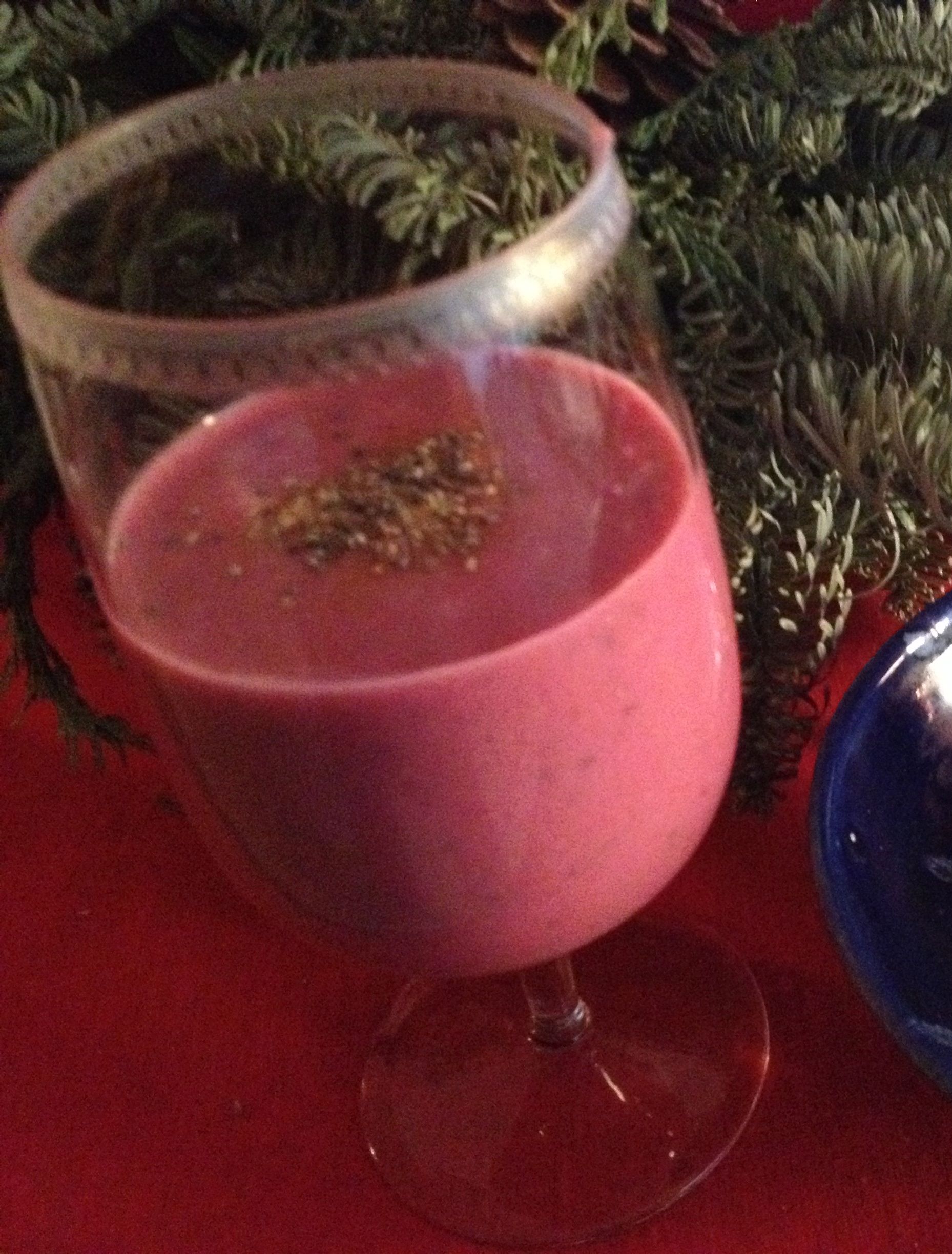
Taste the glorious nutrition of a roasted mesquite and berry smoothie! (MABurgess photo)

Taste the glorious nutrition of a roasted mesquite and red berry smoothie! (MABurgess photo)

Try this delectable and easy Desert Delight–Roasted Mesquite & Red Berry Smoothieso colorful it can make breakfast into a Valentine’s feast. So rich it can be a Valentine’s dessert served with a spoon. (You can double or triple this recipe for company):

Presoak: 1 Tablespoon chia seed in 1 Cup organic apple juice for a few minutes.

In a blender, mix:

1 cup organic plain or vanilla non-fat yogurt.

2 Tbsp. Roasted Velvet Mesquite Meal*

1 cup frozen raspberries or blueberries

2 Tbsp. prickly pear juice or nectar

your pre-soaked applejuice-chia mix

½ or whole ripe banana

1 Tbsp agave nectar (optional as desired for more sweetness)

A few ice cubes (optional as needed for chill or dilution)

Blend on medium ½ minute until smoothie is gloriously pink. Serve in parfait glass with a thin sprinkle of chia seed or pinch of roasted mesquite meal on top as a garni.

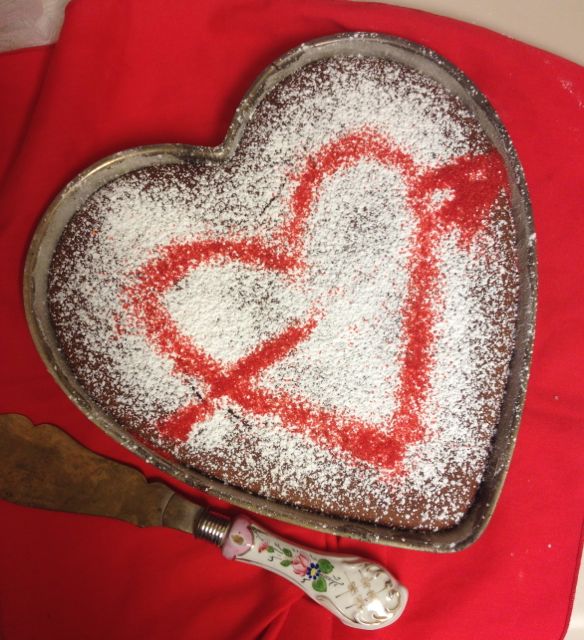
Valentine's gluten-free roasted mesquite/almond coffeecake (MABurgess photo)

Valentine’s gluten-free roasted mesquite/almond coffeecake (MABurgess photo)

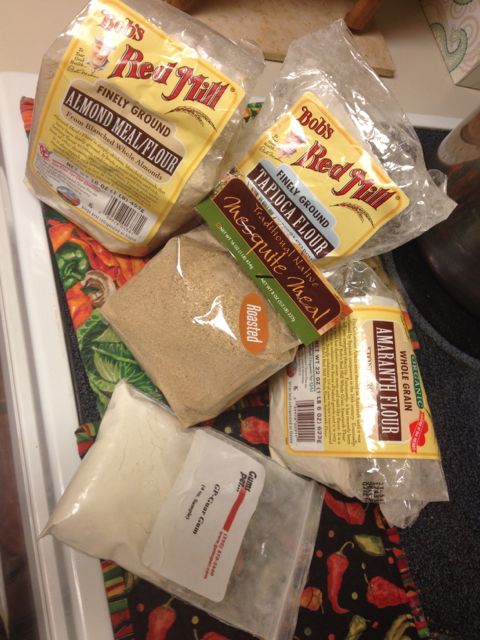
Ingredients for gluten-free roasted mesquite and almond coffeecake looks like an ad for Bob's Red Mill

Ingredients for gluten-free roasted mesquite and almond coffeecake looks like an ad for Bob’s Red Mill

And here’s a wonderful gluten-free recipe to share with wheat-sensitive friends:

Muff’s Gluten-Free Roasted Mesquite/Almond CoffeeCake:

(This is a heavier cake that sometimes turns out more like an energy bar when sliced.)

Preheat oven to 350 degrees. Lightly oil or butter an 8×8” pyrex baking dish and dust with rice flour.

Sift together:

½ cup Roasted Velvet Mesquite Meal*

¾ cup organic brown rice flour and/or amaranth flour

½ cup almond meal

¼ cup tapioca flour

2 tsp guar gum or locust bean gum (for leavening)

1 tsp baking powder

¼ tsp sea salt

Mix In:

¼ cup agave nectar

¼ cup canola or other cooking oil

¾ cup soy milk, rice milk, or almond milk

Beat separately then add in:

2 eggs

1 tsp vanilla extract

1 tsp almond extract

Pour into baking dish. Bake 25-35 minutes or more until cake tests done. Serve with thanks to the nutritious bean trees of the desert!

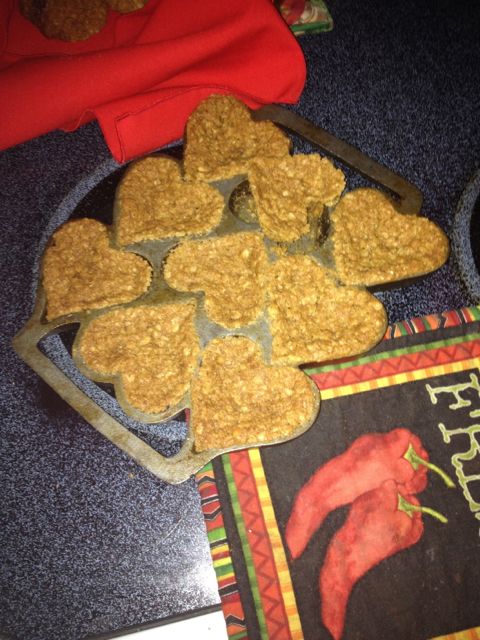
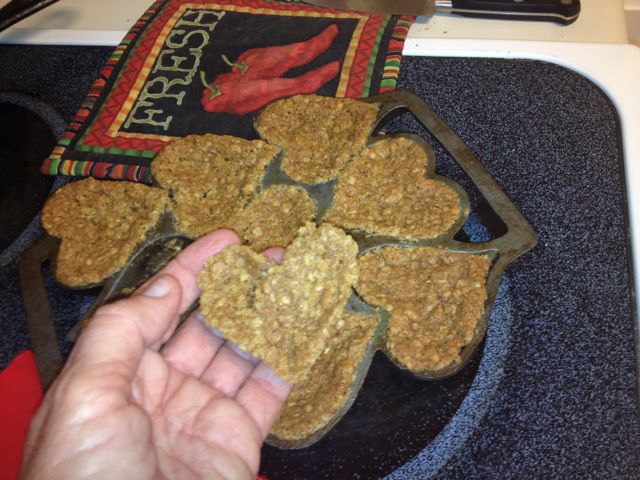
Roasted mesquite cookies in valentine iron pan

Roasted mesquite cookies in valentine iron pan

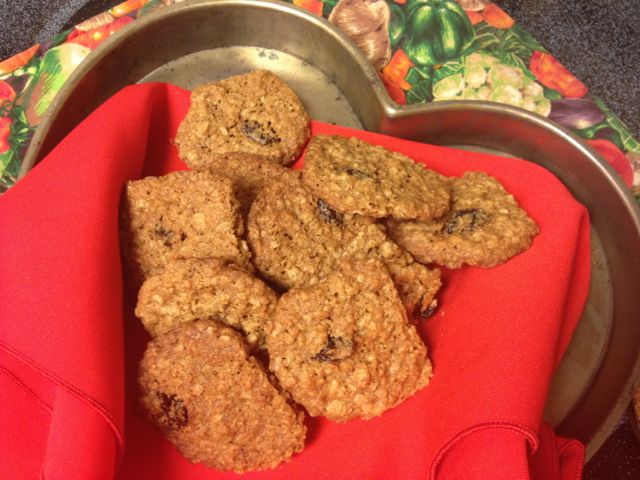
Roasted mesquite cherry oatmeal cookies

Roasted mesquite heirloom wheat & cherry oatmeal cookies

Now for a relatively “healthy” cookie try this celebration treat with roasted mesquite—

Muff’s Roasted Mesquite & White Sonora Wheat Valentine Oatmeal Cookies (with pinyones and dried red cherries to honor George Washington’s birthday too)—a great cookie for any time of year.

Preheat oven to 350 degrees.

Cream together: 1 cup (2 sticks) organic butter softened, ½ cup organic brown sugar firmly packed, and ½ cup organic white sugar

Beat in and mix until creamy: 2 eggs and 1 teaspoon vanilla

In a separate bowl, sift together: 1 tsp. baking soda, 1 tsp sea salt, 1 cup organic White Sonora Wheat flour**, and ½ cup Roasted native velvet Mesquite Meal*

Mix dry ingredients with moist ingredients until smooth.

Add, and mix in: 2-3 cups quick oatmeal (uncooked), ¼-1/2 cup pine nuts (pinyones) shelled, and ¾ cup dry cherries or dry cranberries.

Onto a well-greased cookie sheet, drop 1-tsp glops of cookie dough well-spaced. (You could use a heart-shaped mold or heart cookie cutter.) Press a dry cherry on top of each glop for décor.

Bake 10-12 minutes until barely golden brown, and enjoy the festive desert flavor of roasted mesquite with your Valentine!

Roasted Mesquite and Heirloom White Sonora Wheat Oatmeal cookies droozled with prickly pear juice (MABurgess photo)

Roasted Mesquite and Heirloom White Sonora Wheat Oatmeal cookies droozled with prickly pear juice (MABurgess photo)

*For purchasing Roasted Mesquite Meal–seek and ye shall find. There are only a few places where you can source this seasonal culinary treasure, if you are not roasting and milling it yourself! Find it at the wonderful NativeSeeds/SEARCH store (3061 N. Campbell Ave, Tucson, www.nativeseeds.org). Our roasted mesquite is from native Arizona velvet mesquite, Prosopis velutina, grown and milled with the highest standards. For tastes, visit the Flor de Mayo booth on Sundays at St.Phillips Farmers Market (SE corner River Rd and Campbell Ave), or order at www.flordemayoarts.com via PayPal. It is also online at www.mesquiteflour.com and from the Prickly Pops booth at Thursday Santa Cruz Farmers Market.

**The special local ingredient for the cookie recipe above, heirloom White Sonora Wheat flour, is available at two Tucson locations. Several different grinds of Hayden Flour Mills’ heirloom flour is at the Native Seeds/SEARCH store. For super-fresh-milled “live” White Sonora flour, from local, certified organic whole grain grown by BKWFarms, you can contact Tia Marta by phone or email by the Friday before pick-up at Sunday’s St Phillips Farmers Market, along with the roasted mesquite meal.

For more ideas on how to cook with mesquite—roasted or natural–check out the recipe book Eat Mesquite! published by www.desertharvesters.org, and available at the NativeSeeds/SEARCH store. Visit www.bajaaz.org, the website of Baja Arizona Sustainable Agriculture, for more mesquite details.

Newcomers as well as confirmed “desert rats” can see the actual plants which produce the local ingredients of our Valentine Cookies—mesquite trees and heirloom White Sonora Wheat growing at our special Baja Arizona parks. See and appreciate them in their winter-spring glory at the Friends of Tucson’s Birthplace Mission Garden (base of A-Mountain, Saturdays), at the Arizona-Sonora Desert Museum, and in the ethnobotanical garden at Tohono Chul Park.

Enjoying roasted mesquite treats is indeed another way of rejoicing in the desert’s natural bounty, and of supporting appropriate, sustainable desert agriculture. Happy Valentine’s, and may your heart be happy cooking with roasted mesquite!—from Tia Marta and Rod at www.flordemayoarts.com.


On Emptiness, Filling, and Cups Overflowing: Chocolate–Chiltepin Cupcakes with Cool/Hot Frosting

IMG_9128

Aunt Linda here: Happy February ! The peak of February’s very gorgeous very Full moon was Tuesday.  Also easily visible with the naked eye, the planet Jupiter played flirtatiously around the moon for several days.

Today’s blog offers a little parable. So pour yourself a cup of tea, coffee, or whatever you prefer, and travel with me.

Once upon a time, during a moon such as this with Jupiter visible to the naked eye, in a land not so far away ….   a pilgrim, or a seeker, or a soldier, or an emperor, or someone just like you and me, crested the peak of a mountain having finally found the Wise One.  After many moons of seeking this particular Wise Person, the seeker arrives with high hopes of learning what they had so dearly yearned to learn.   They were in Search of Answers.

“Ah”, said the Wise One, “sit down and let us talk over some tea”. So, after warming the water and preparing tea, the Wise One began to pour the liquid into the cup of the One in Search of Answers.

The Wise One poured.

And poured.

And poured.

Until the tea cup overflowed. Spilling onto the table, the floor, the person.

IMG_9125

In some versions of the story, the more polite seeker, is startled, and exclaims: “Teacher! Perhaps you have not noticed that my cup is spilling over!”.  In another version, the tea spilled onto the robes of the (not so polite) emperor, who becomes angry, chiding the Wise One for ruining his robes.

In each version, the reply of the Wise One is the same:  “There is no room in the mind of the seeker, for the wisdom he/she says he wants, and has searched for for so many years. Emptiness, whether mind or cup, is needed before new insights can be received”. Being filled with opinions, speculations, habits of mind,  hinders the ability to take in of fresh insights/knowledge.

Temple Grandin ran into this phenomena in the world of animal husbandry. Having discovered extremely practical wisdom about how to work with large animals more efficiently and calmly. She developed methods that significantly decreased the stress on both animal and human, and other methods that significantly increased efficiency. Her ideas were practical. Her ideas were “humane” and efficient . They offered ranchers and industry alike, to save money.

And they were met with “full”-on resistance, if you pardon the pun.

Rolling forward in time, the vast majority of ranchers, have integrated some if not all of her ideas of moving animals. Corrals and shoots have been redesigned. Transportation trailers for horses were redesigned (diagonal facing not front facing) . It goes on and on.  But before the “industry” could take in all this animal-human wisdom “it” had to empty It’s mind of preconceived ideas.

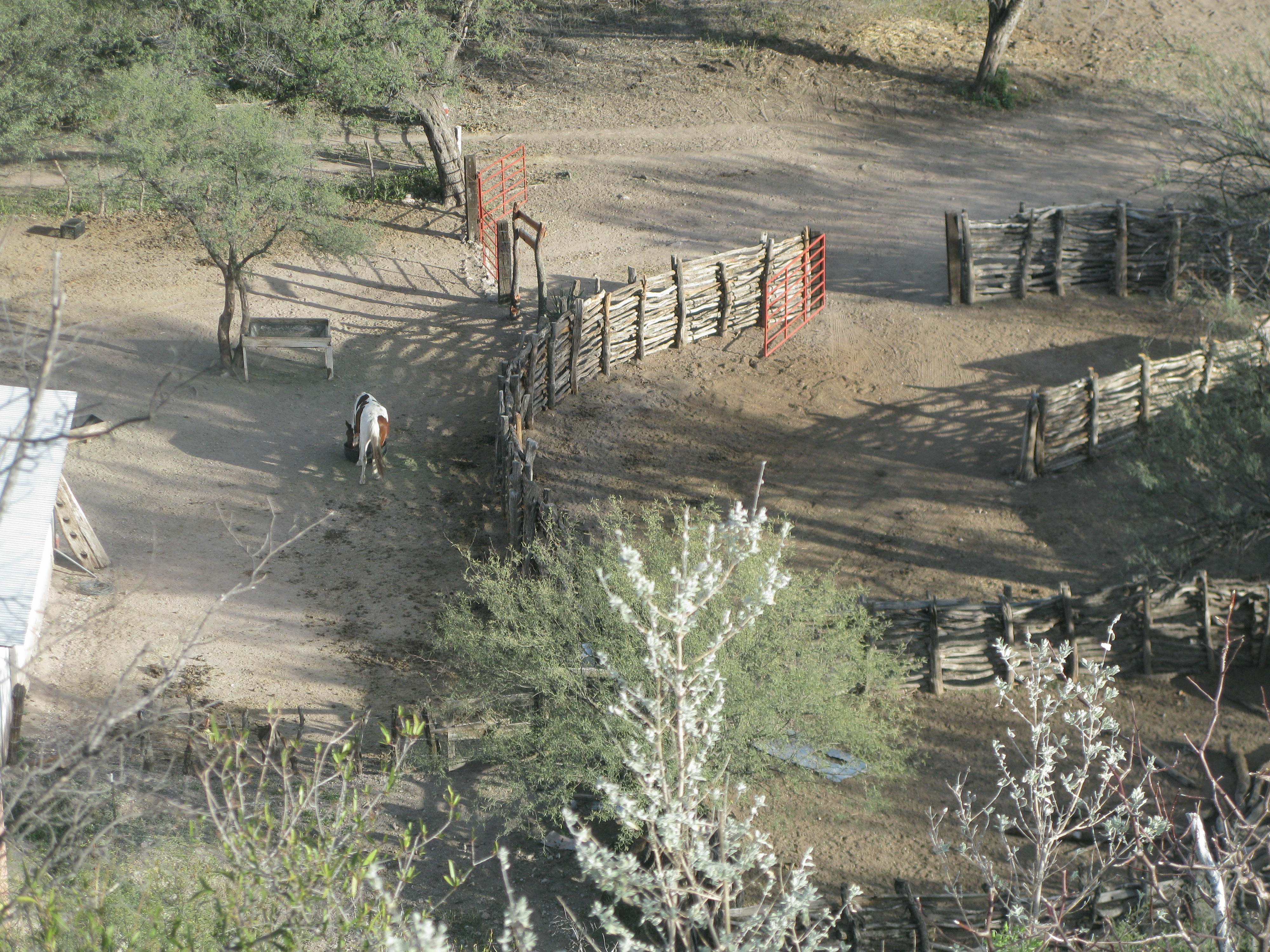
IMG_4614We redesigned our corrals. No more box shapes with corners. Curves allow flight animals such as cows and horses to feel safer and move as they would in the field.

On a personal level, when my mind is “full” of worry, I can sometimes miss the more innovative solutions available to me. Conversely, when I empty my mind enough, life gets easier. For me, “easier” is simply more practical.

One example from the week: I discovered a nest of baby mice in the feed bin this week.   I immediately felt stress. TO be clear, I am not “anti-mouse”.  I am just “anti-TOO MANY MICE that it becomes unhealthy”.  An occasional mouse is not uncommon around poultry, and the “girls” (the chickens themselves) or a king snake take care of them. Until recently, our cat was a good “mouser”, but she is 20 years old now and no longer on the job. So this issue of mouse nests is a new dilemma for me. I do not want unhealthy mouse droppings around the hens and eggs. I do not want mice eating the feed, and bugging the chickens all night long, as they nibble here and there. Follow the trail of mouse poop and you will be amazed at what acrobatics they are! I hate to use poison for a variety of reasons, one being fear that a predator such as a hawk or neighbors cat could be poisoned itself if it eats the bait-ridden mouse. And baby mice, despite knowing all of the above, are just so cute. I don’t Want to kill them!

IMG_9080

Adorable for sure, this nest of baby mice is nevertheless not welcome in the hen house.

I was full -on- fretting.  No space for innovative solutions to present themselves. Deciding to relax my mind, I went for a walk, switching mental channels from a litany of methods of killing mice, none of which I liked … to a question… How does Mother Nature do it?  Mice have a plethora of babies, presumably because there are a plethora of animals that eat/need those mice. What eats mice? Snakes came to mind. ( Just as I am not anti-mouse, I am not anti-snake either. All have their place. It is BALANCE that I am looking for). I sent out a text (modern world) and within minutes had a Python present itself. Then another snake owner said she was looking for a good source of mice for her reptile. Later this afternoon, a litter of mice, will be delivered to a Python. And I will be rid of the “seed” stock of multiple generations of mice. Whether or not the snake-owners will raise the mice and feed them as needed, or freeze them for later feeding, I do not know. Stay posted.

The Recipe:

Chocolate-Chiltepin Cupcakes with Cool/Hot Cream Cheese Frosting

IMG_7799

IMG_9137 IMG_8168 I Love the sensation(s) on my tongue as the cool of the mint in the frosting meets the heat of the chiltepin! And while it is my “go to” cupcake recipe all year long, it might be a Very fun Valentines Day treat, what with the Chocolate/Chile combination as well as the sensual mint-chile interaction.

Ingredients for Cupcakes:

1 Cup Milk (cow, almond, rice, coconut, etc)

1 teaspoon apple cider vinegar

¼ cup honey (local honey if you can; it is good for you and your local beekeepers)

½ cup oil of your choice

1 teaspoon vanilla extract

1 cup unbleached all purpose flour

1/3 cup cocoa

¼ teaspoon dried and crushed chiltepins, seeds removed if desired.

¾ teaspoon baking soda

¾ teaspoon baking powder

¼ teaspoon salt

How to:

Preheat your oven to 350 degrees and line 12 cupcake cups with paper liners.

Whisk together the milk and vinegar and in a large bowl and set aside to allow time to curdle. Once curdled, add the honey, oil, and vanilla extract and blend well.

Sift the dry ingredients together and slowly add to the wet mixture, stirring between additions. Divide batter among the cups, filling each about ¾ full.

Bake in preheated oven for 18-20 minutes.

Once the cupcakes have cooled, you can frost them with the Cool/Hot Cream Cheese Frosting that you have made while the cake-lets were baking. 

Ingredients for Frosting:

2, 8-ounce packages cream cheese, softened

2 tablespoons unsalted butter, softened

1 teaspoon vanilla extract

1 teaspoon mint extract

1 teaspoon chocolate extract

1 tablespoon cocoa powder

¾ cup powdered sugar

1-2 tablespoons milk (cow, nut, coconut etc)

¼ teaspoon dried and crushed chiltepins. Note: leave seeds of you are going to eat promptly or want the heat to remain stable. Remove seeds if you will be eating frosting in a few days and do not want the “heat” to increase. The “heat” from chile comes from the oils on the seeds, and with time, the heat will “grow”. Experiment and see what you prefer!

12 springs fresh mint – for an edible garnish atop the cupcakes.g

How to:

Combine all the ingredients except the fresh mint in a food processor bowl and mix well until combined. Add just 1 tablespoom of milk to begin, adding the rest by teaspoons if you want to thin the mixture.

IMG_8170

Frost the cupcakes; top each cupcake with a small sprig of mint for an edible garnish.

More Ideas for Wild Dates in Borderlands Towns

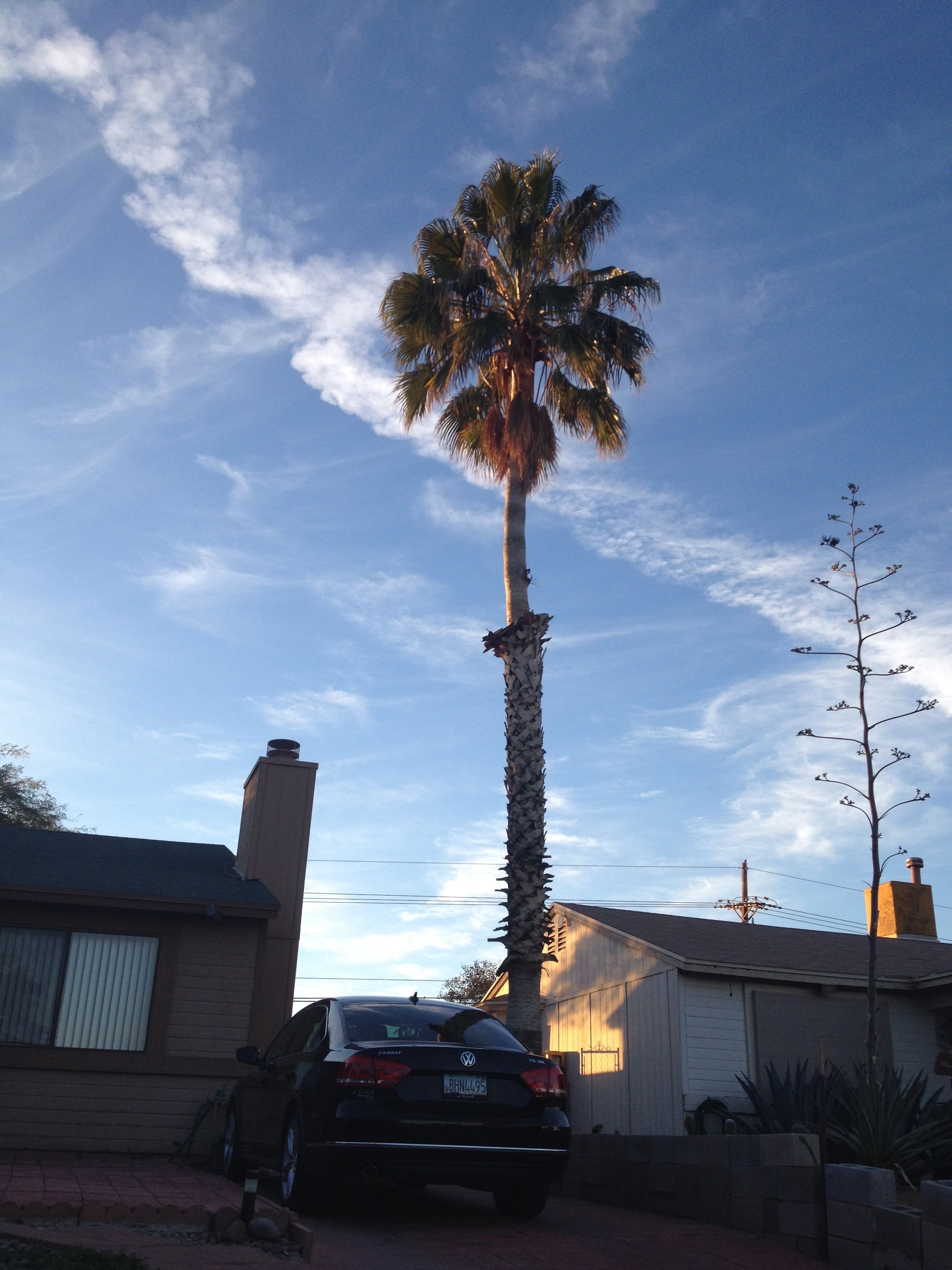
Washingtonia filifera near UA main gate (R.Mondt photo)

Our native fan palm, Washingtonia filifera, near UA main gate.  Original seed from Arizona’s KOFA Mountains.   (R.Mondt photo)

Yes, we can delight in the most fabulous wild dates right here in Baja Arizona. We don’t have to put out lots of energy into finding these tasty little morsels because they are now all over the urban landscape. Once, in olden times, they were confined to oases, but now they line every old neighborhood street in low-desert towns. Harvest at the right time and enjoy their bounty.

Our Native Fan Palm Washingtonia filifera, UA photo (Note the stout trunk)

Our Native Fan Palm Washingtonia filifera, UA photo (Note the stout trunk)

Tia Marta here to continue our culinary explorations of native fan palm fruit. Our street sentinels are more than vertical shade.  They bear other surprising gifts. Our so called California fan palms (“palma taco”) offer tiny sweet and plentiful fruits (the size of a plump pea), and were harvested and relished by Native People of the Sonoran and Mojave deserts long before Hispanics brought date palms (the pinnate-leafed palms) from the Old World.

Washingtonia robusta in a S.Tucson landscape

Washingtonia robusta planted in a S.Tucson landscape

When ripe in summer into fall, zillions of fruits hang from pendulous stalks of Washingtonia filifera, with 20 pounds or more of the little buggers in one cluster—talk about prolific! As mentioned in my blog-sister’s post two weeks ago, Carolyn and I were challenged by renowned ethnobotanist Dr Richard Felger to try our hands at creating some “contemporary” recipes for this ancient and well-adapted desert food—which is now disregarded as nothing more than a columnar street planting. We know from ethnographic accounts (see them summarized in Wendy Hodgson’s Food Plants of the Sonoran Desert, UA Press, 2001) that for the Native Cahuilla of Southern California, the fan palm meant survival—a staple in their diet, used both fresh or dried and ground, hard seeds and all, into a flour for cooking or griddling. Another ethnobiologist friend Dr. Amadeo Rea (1997) documented Pima children collecting fan palm fruits as snacks. Dr. Felger intends now to bring this native palm back into new, appropriate use as a sustainable desert food crop.

Fruits newly harvested from the California fan palm Washingtonia filifera (MABurgess photo)

Fruits newly harvested from the California fan palm Washingtonia filifera (MABurgess photo)

Washingtonia fruit is mostly seed, but the small amount of pulp has a group impact (MABurgess photo)

Washingtonia fruit is mostly seed, but the small amount of pulp has an impact in numbers (MABurgess photo)

Harvesting the high hanging fruit clusters proves challenging. Native harvesters used a lasso. More recently some harvesters fit a sharp can lid to the end of a pole to cut off the entire fruit stalk. A Tohono O’odham saguaro harvesting kuipaD might suffice—or a long-poled tree-trimmer—both worth a try.


In addition to their success as hot-desert food producers, both fan palms native to southwest North America, Washingtonia filifera (the stout, shorter one) and W.robusta (the super-tall, spindlier one), provide excellent nutrition. It has been estimated that one fan palm’s fruit could sustain one human’s nutritional needs for more than 200 days! Get a load of these figures from James W. Cornett (Principles Jour.Internat.PalmSociety,1987):  Protein 3.1%, Carbs 77.7%, Fiber 10.4%, Calcium 110 mg per 100g, VitaminA(Carotenes) 180mg per 100g.  Comparing these wild date nutritional figures with the commercial date palm (Phoenix dactylifera), our wild fan palm is way ahead on all counts except carbs (carbs 94.1% in standard dates).

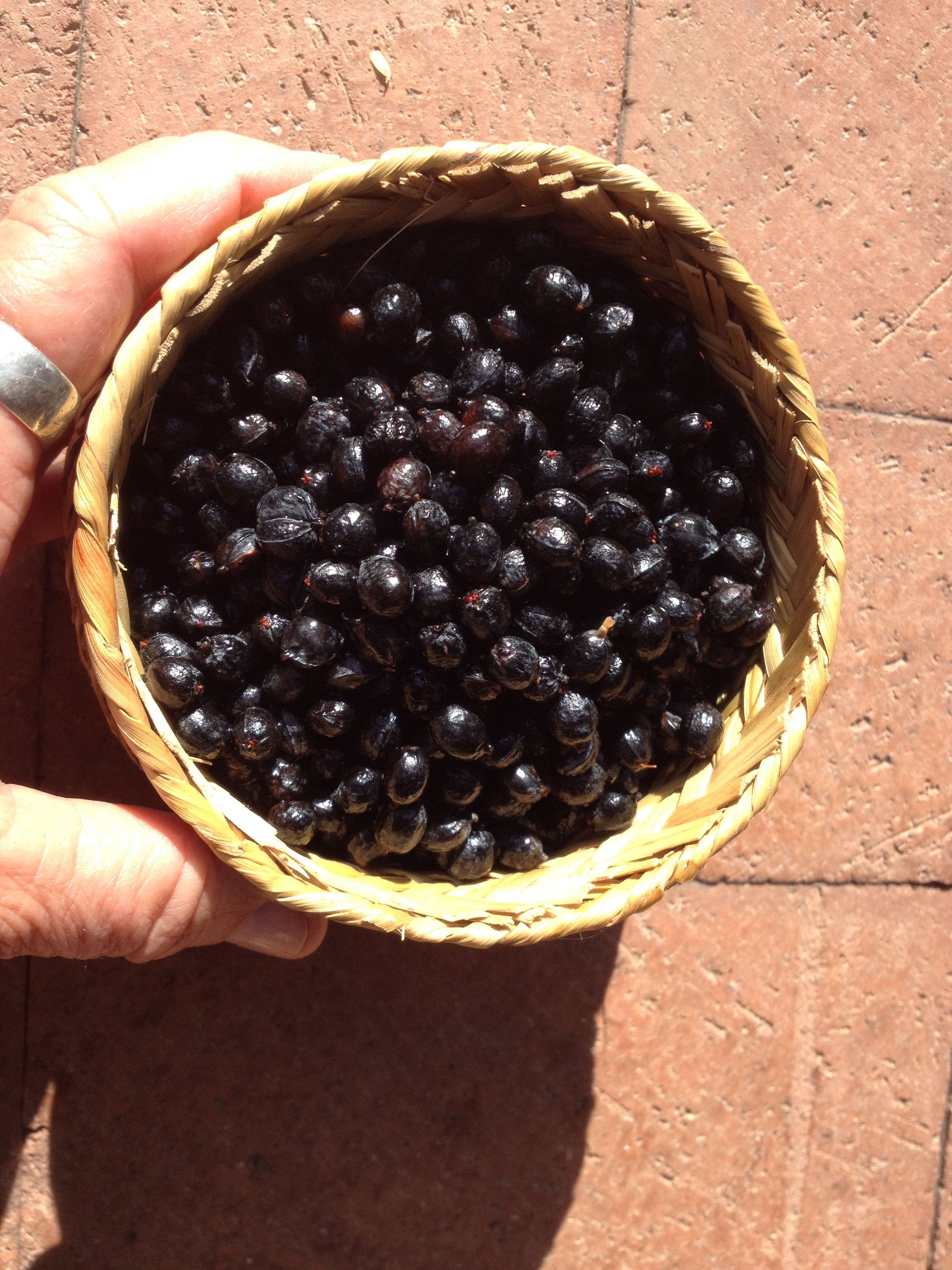
Washed and drained fruits of Washingtonia filifera ready for snacking! (MABurgess photo)

Washed and drained fruits of Washingtonia filifera in Tarahumara sifting basket, ready for snacking! (MABurgess photo)

Since the fruits of W.robusta (the tall one) are even tinier than W.filifera, I chose to do my foodie experiments with the latter one’s “bigger” datelets–both small.  Fruits of both are mostly seed, a stony seed surrounded by a thin layer of sweet skin and dry, date-like pulp. Here are two fun ideas I’ve come up with for using fan palm fruits, which can be done easily in any kitchen or patio. These ideas also might present interesting potential for commercial-scale food production. (I hope our wonderful local companies like Cheri’s Desert Harvest are listening to the significance herein!)                 So, here’s my first idea–really in three delicious parts:

Simmering fan palm fruits

Simmering fan palm fruitsSolar Fan Palm Syrup, Datil Molasses, or Datil Candy

SOLAR FAN PALM SYRUP

Directions:

Wash thoroughly and drain 4 cups desert fan palm fruits. Place in a saucepan with 8 cups drinking water to cover fruit well. On stove-top, gently simmer the fruits for at least 30 minutes, (if using solar oven, make it 1 hour). Add more drinking water to keep fruits covered. Let cool and stand in refrig for 1-3 days. This process is bringing out the complex sugars into solution. Again, when you have a little time, bring back to simmer 15-20 minutes. Taste the liquid. It should be deliciously sweet with a rich, almost smokey bouquet—but still thin. With a sieve, decant the sweet liquid from the cooked fruits, saving the fruits aside.

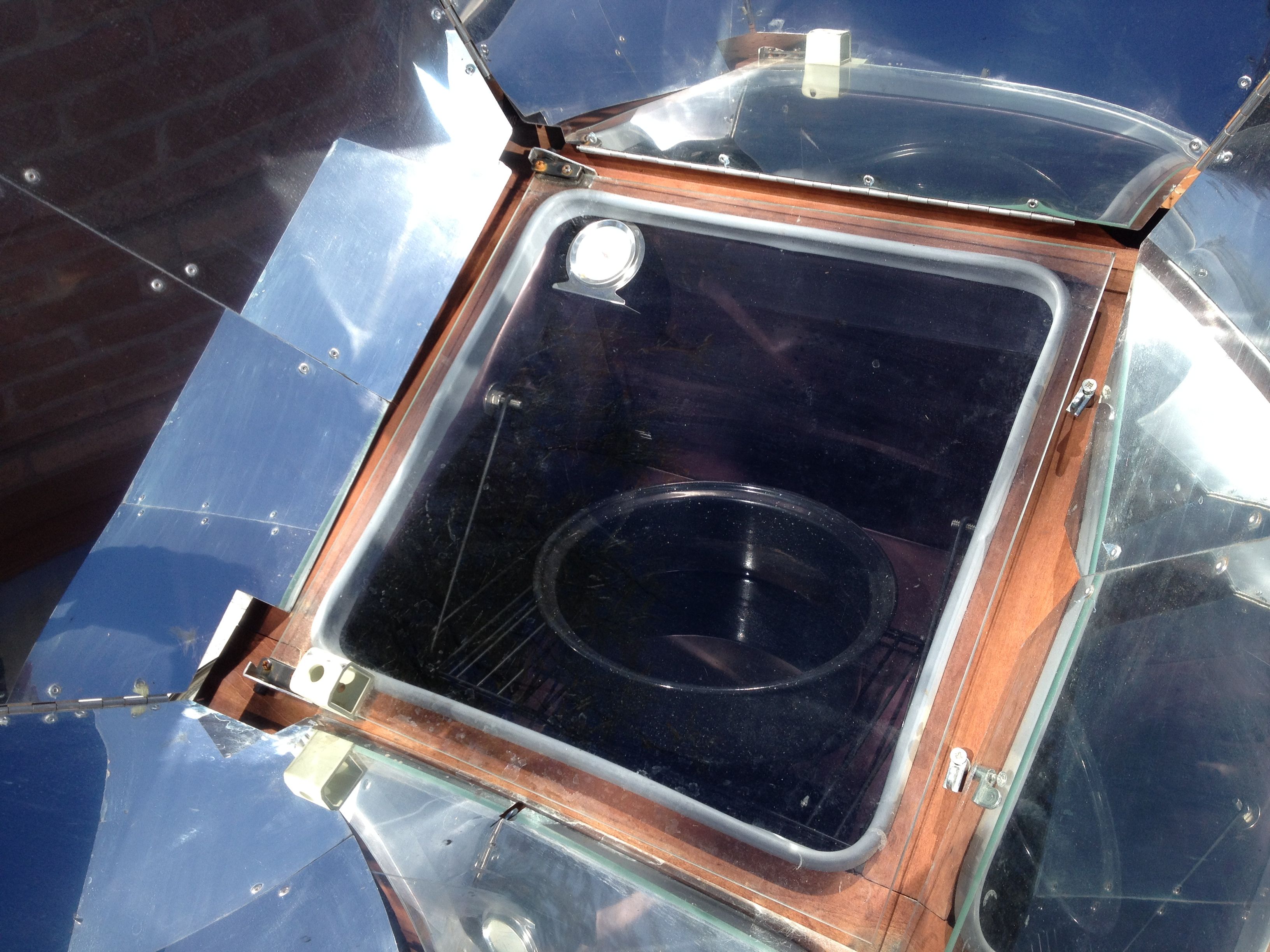
After sieving out the simmered fruit, the liquid is being concentrated in a solar oven with oven cover slightly open to release moisture (MABurgess photo)

After sieving out the simmered fruit, the liquid is being concentrated in a solar oven with oven cover slightly open to release moisture (MABurgess photo

[Here is where my experience reducing thin saguaro fruit juice kicked in. I knew that this thin, sweet liquid from the fan palm dates had to be cooked down slowly.]

Pour the juice into a solar-oven-worthy pan and put in preheated solar oven—without a lid on the pan. Let the glass cover of the oven be slightly open to allow steam/moisture to escape. Check after 15 minutes. If syrup is desired, check for correct syrup consistency.  Keep heating until thickened to pourable syrup.  Then, try this wonderful and healthful solar syrup over mesquite pancakes for the ultimate Southwestern breakfast!

Concentrated Solar Fan Palm Syrup--nothing added--just water and fan palm fruit!  (MABurgess)

Concentrated Solar Fan Palm Syrup–nothing added–just water and fan palm fruit!  Come taste it at the StPhil’s farmers market!(MABurgess)


“DATIL SYLVESTRE” MOLASSES

With more time and further moisture reduction, there are more delicious options….. Here’s one:  For the best, richest “Datil Molasses” you ever tasted, let the liquid cook down for another 45 minutes or an hour (depending on sun intensity).  Be careful not to overcook, which might leave a sweet glue on the bottom of your pan. (The same reduction of liquid can be done of course on the stove-top or over a fire, like reducing maple sap, but hey, this is a desert product. We’ve got our fuel overhead! Let’s use it.)

“DULCES DE DATIL SYLVESTRE”

Carrying the process of concentrating the syrup yet another step further…If an even more chewy candy is desired, you might use the concentrated sweet molasses in a candy mold or for gelling like a fan-palm gummy bear.

Here’s another totally delightsome, exotic yet simple idea for maximum pleasure from fan palm fruits…..

DESERT OASIS CORDIAL

Wild Fan Palm Liqueur (MABurgess photo)

Wild Fan Palm Cordial (MABurgess photo)“Desert Oasis Cordial”

It takes about 4-5 weeks to make this rich cordial liqueur, so plan ahead. With a fall harvest of wild dates you could start making your Desert Oasis Cordial by Thanksgiving and have it ready for Christmas-time celebrations. But don’t wait—when the fruits are ripe, go for it.

This is how I did it:

Wash, wash, wash and drain at least 2 cups of ripe native fan palm fruitlets (W.filifera), enough to pack firmly into a mason jar.  Into the packed jar, pour vodka of your choice, filling all the space between the little fruits to the brim to cover them. (You could use tequila or EverClear for differing degrees of delight.)  Screw on lid and place jar in a cool dark corner of your kitchen, where you can be reminded to agitate it. After a week, open it and add more vodka to cover fruits, as the fruit tissue will have absorbed some of the alcohol. Shake and turn over the closed jar every week.  For the herbalists among us, you will recognize this process is basically tincturing the wild dates. After 4-5 weeks, decant (i.e. separate) the liquid from the fruit. The decanted liquid will be a rich dark chocolate brown color like Godiva liqueur only translucent. Taste it and serve sparingly in small cordial glasses. Store any remaining liqueur in a closed decanter for the next festive occasion.

W.filifera fruit AFTER tincturing and decanting makes a fabulous alcoholic treat (seeds to be discarded)

W.filifera fruit AFTER tincturing and decanting makes a fabulous alcoholic treat (seeds to be discarded) (MABurgess)

Decanting the marinated fan palm fruits from the liqueur (MABurgess)

Decanting the marinated fan palm fruits from the liqueur (MABurgess)

After both your Fan-Palm Syrup-making and your Desert Oasis Cordial-making, you will have delicious fruits left over in the straining or decanting process.

Don’t forget the simple joy of snacking on little fruits, doing the pulp-from-seed separation maneuver with your tongue and teeth. Move over, sunflower seeds!  The boiled fruits after syrup-making are still tasty.  Better still–the vodka-soaked wild dates give an extra kick, so don’t overindulge.

Both can be briefly quick-whirled or mashed in a blender, meat grinder, or CuisinArt to begin the process of separating the remaining pulp from the hard seeds.

After decanting the cordial, remaining fruit is whirled and put thru colander to separate pulp from seeds

After decanting the cordial, remaining fruit is whirled and put thru colander to separate pulp from seeds

[If someone has a good idea of how best to separate seeds from pulp easily, please share it!] Fruit leathers, energy bars, jams, “datil newtons”, spreads, supplements—there are SO many ways the remaining fruit pulp could be used, so that none of the nutrients and fiber need go to waste. Even the hard seeds could be parched and ground into a nutritious flour—as Native People did in earlier times, to their advantage.


"Desert Oasis Cordial" from wild fan palm fruits (MABurgess photo)

“Desert Oasis Cordial” from wild fan palm fruits (MABurgess photo)

BTW, after snacking on Washingtonia fruitlets, be sure to check your smile in the mirror for black flecks of the yummy pulp between your incisors.  I can see it now—the next fad question after “Got milk?” will be “Got datil?”  That could make for a wild date experience. Enjoy!

For a taste of the native fan palm fruits, come by our Flor de Mayo booth at Sunday’s St Phillips farmers market, 9am-1pm. There we also have a demo of solar-oven cookery in action.  The cleverly designed solar ovens are for sale from us with a discount and no shipping costs. We’d like to see every household in Baja Arizona equipped with a solar oven for emergencies as well as for sustainable living.

You can find the perfect makings for the pancakes to eat with your Solar FanPalm Syrup for that Southwestern breakfast–mesquite flour and heirloom White Sonora Wheat flour— at the Native Seeds/SEARCH store (3061 N Campbell, Tucson) and at Flor de Mayo’s booth at St Phillips farmers market.  See you on Sunday! Have your taste-buds ready for a wild date.

Playing with Washingtonia palm fruit

Washingtonia filifera (California fan palm)

Washingtonia filifera (California fan palm)


It’s Carolyn this week, taking you backstage to a food experiment. As we move into a hotter, drier climate here in the Southwest, we’ll have to consider agricultural products that can handle the changes. Although I’ve been playing with edible wild plants for decades and Tia Marta (Muffin Burgess) has put in similar years of work, it’s always exciting for us to find something new. We’re going to do a two-part investigation of what to do with a wild food new to both of us.


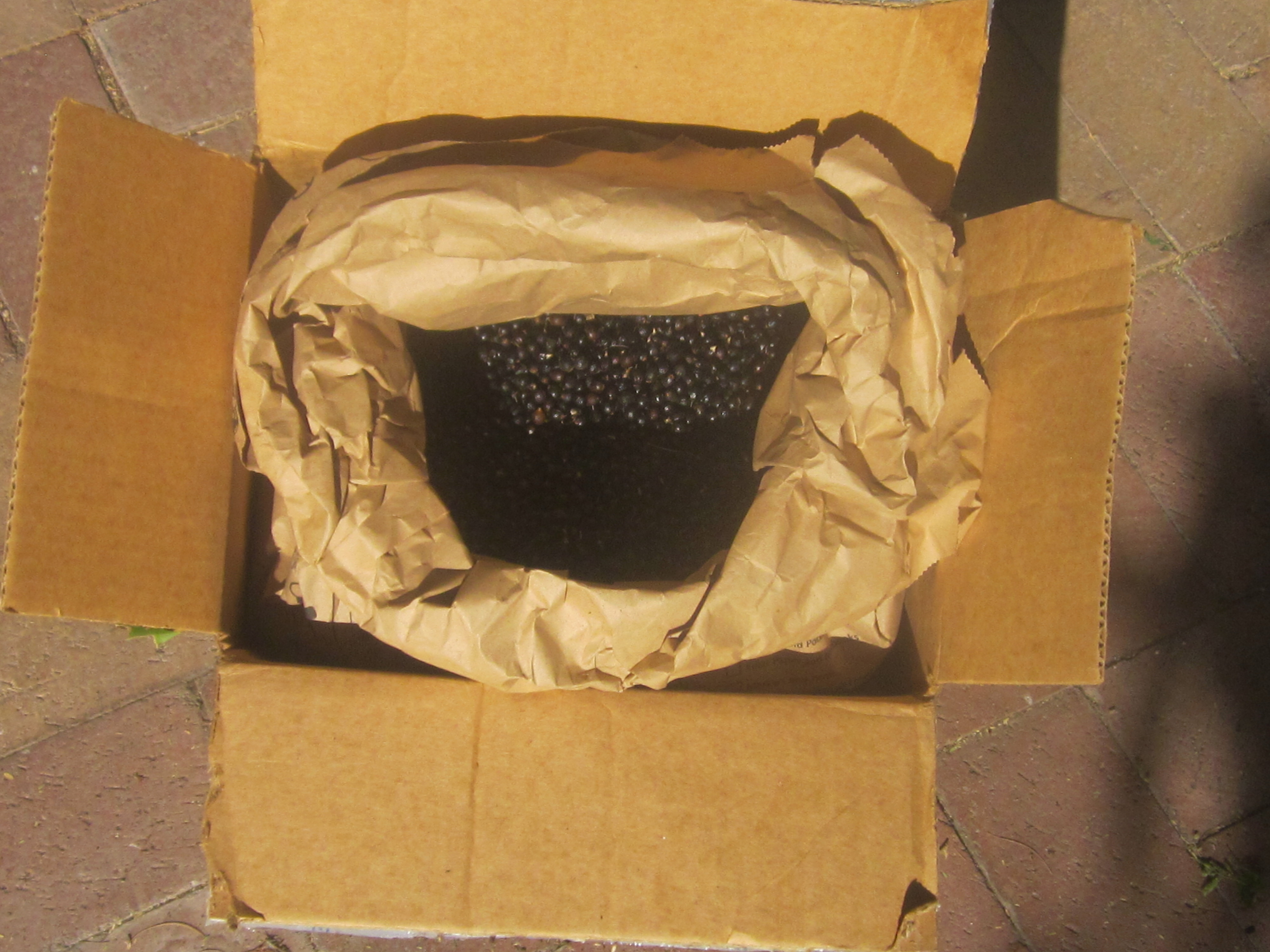
Big box of palm fruit.

A big box of  W. robusta palm fruit arrived at my house.


Last fall I received an email from noted ethnobotanist Dr.Richard Felger. He and a colleague, Dr. Don Hodel, an environmental horticulturist for the University of California Cooperative Extension, were working on some wild palm fruits, two species of Washingtonia, also called Mexican or California fan palm. He wondered if I could come up with some recipes. Back in the early 1970s when I was just beginning work with wild edibles, Dr. Felger took me on one of my first plant walks and over the years has answered many questions for me. I figured I owed him. I also asked Tia Marta if she wanted to join in the fun.

After a couple of days,  FedX deposited a box with about 10 pounds of tiny hard black nodules on my doorstep – Washingtonia robusta fruit gathered from a park in Signal Hill, Calif. , near Long Beach. Not promising, they were little more than skin on seed with almost nonexistent flesh, nothing like their cousins the palm fruits we know as dates. Humans have a long history of using palm fruits – in fact some scholars think that the honey referenced in the Bible was actually date syrup.

Wendy Hodgson, THE expert on wild desert foods, says in her book Food Plants of the Sonoran Desert, that the Washingtonia fruits were very important to the Cahuilla and Cocopa. She writes, “They made flour from the ground dried fruits and mixed it with other flours and water to form a mush.” We don’t eat much mush anymore (unless you consider oatmeal for breakfast), so I’d have to devise something else to do with them.

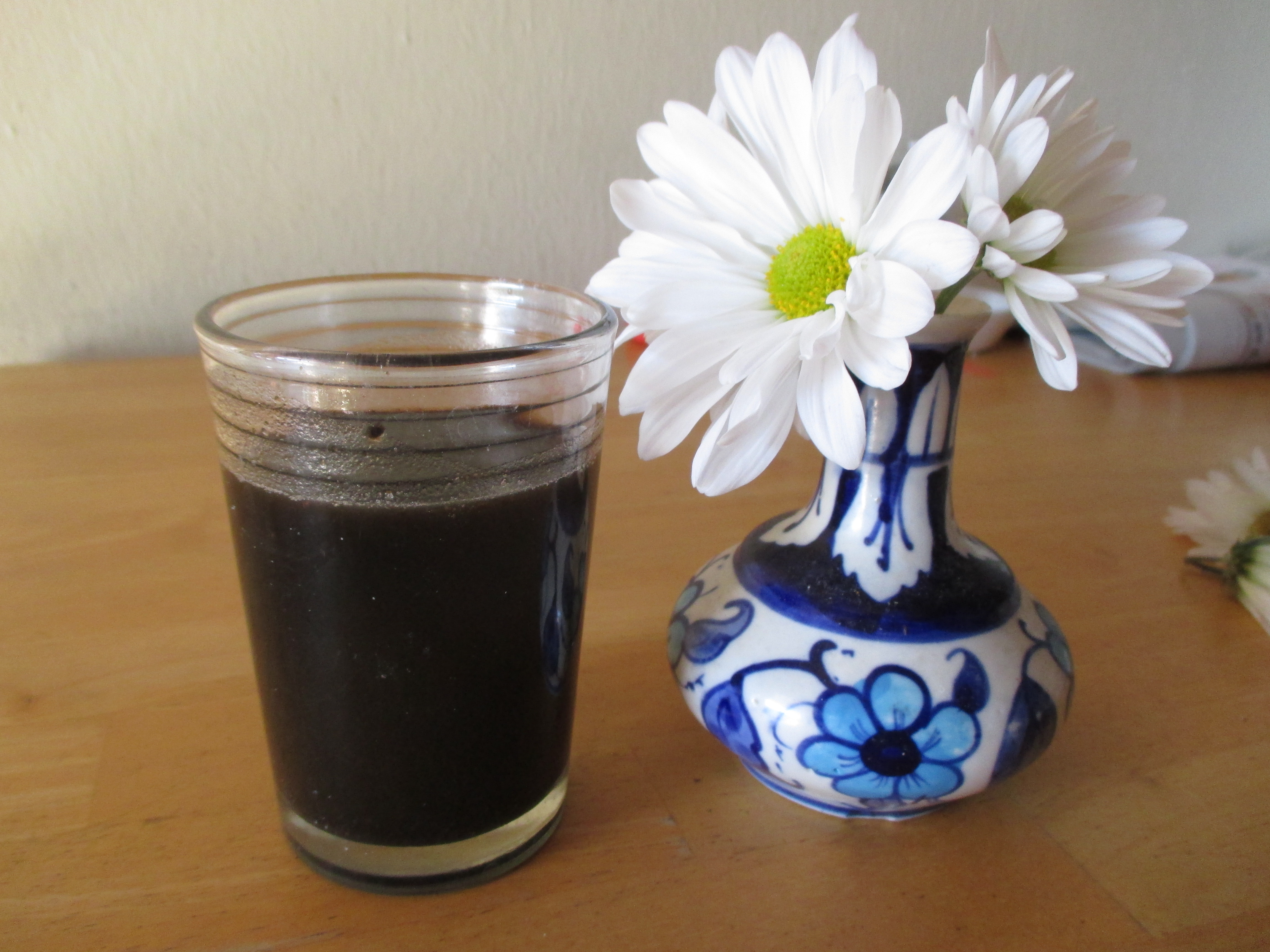
I took 4 cups of fruit and covered them with 8 cups of water. Brought it all it to a boil, then simmered uncovered for 30 minutes. I ran the softened fruit through a blender in batches and strained the liquid, ending up with 5 cups of almost black liquid that tasted something like prune juice.

Even flowers don't make this liquid look appetizing.

Even flowers don’t make this liquid look appetizing.

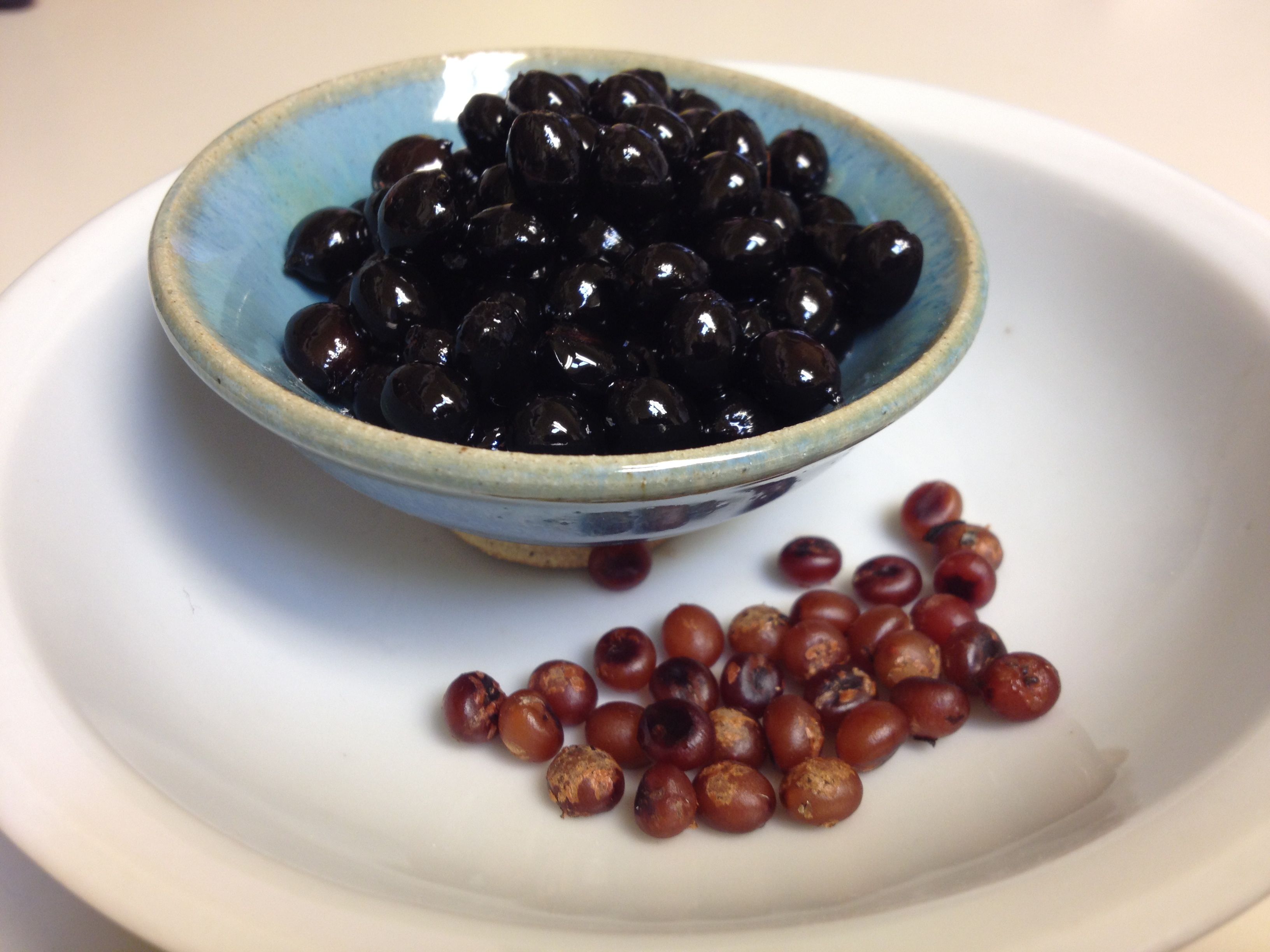
. I simmered it until reduced to ¾ cup pulpy liquid then spread the remaining pulp and seeds on a cookie sheet and put it in sun to dry. Later, I sifted out ¼ cup dried flakes and discarded the hard seeds.

Pulp and seeds drying in the sun.

Pulp and seeds drying in the sun.

At this point I wrote Dr. Felger my scientific assessment: Sweet — but definitely not yummy. I pressed on and made some tasty muffins. Since there is interest in natural sweeteners, I concentrated on that aspect. Using a standard muffin recipe, I substituted the palm syrup for the liquid milk and reduced the sugar. I added the dried flakes just because I had them and to add some texture.

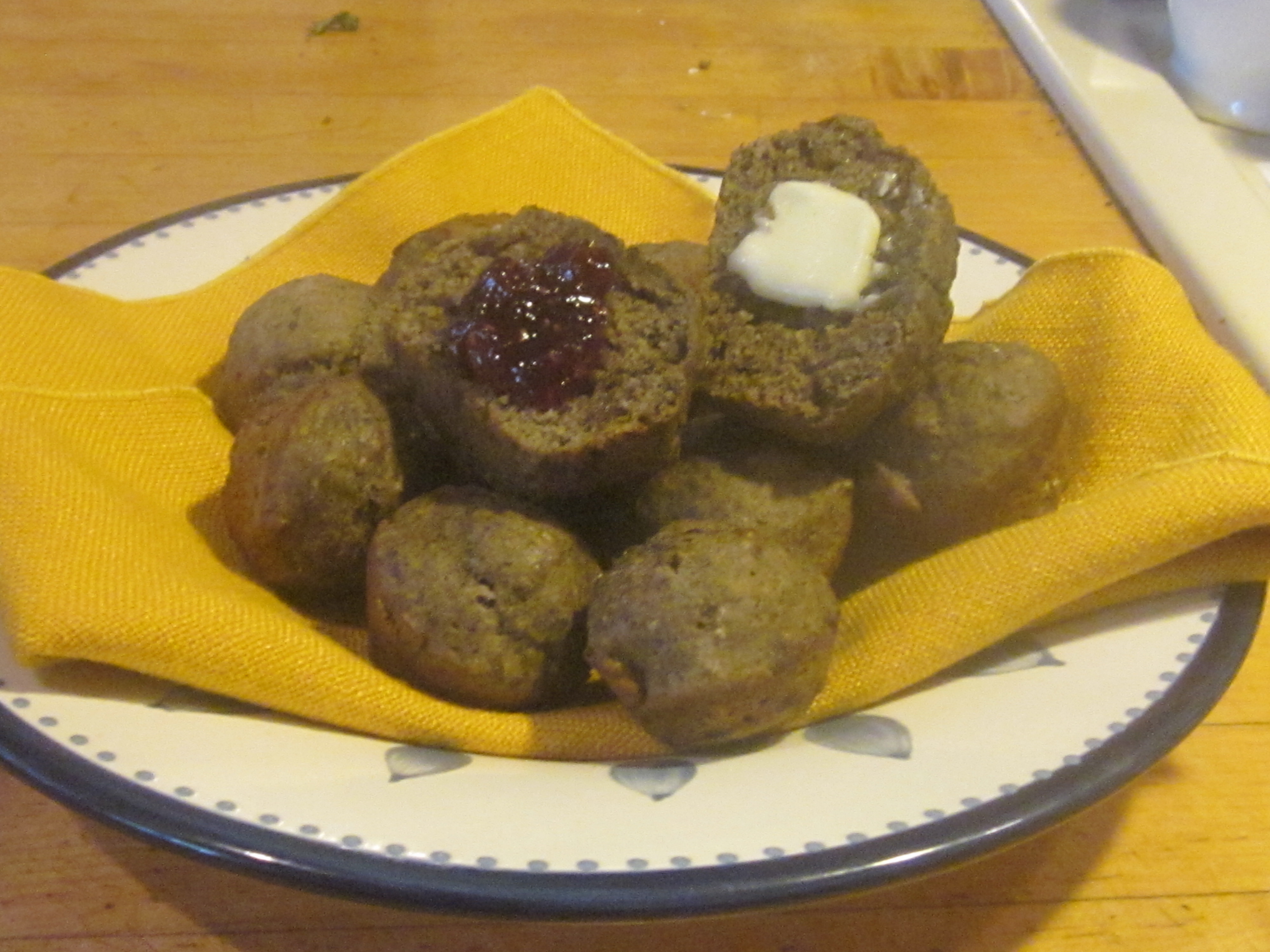
Muffins with palm syrup and dried flakes.

Muffins with palm syrup and dried flakes.

Fan Palm Muffins

Makes 1 dozen

1 ¾ cup unbleached white flour

¾ teaspoon salt

2 teaspoons baking powder

2 tablespoons sugar

¼ cup dry powdered milk

¼ cup dried Washingtonia  flakes

2 eggs

¾ cup pulpy Washingtonia syrup

3 tablespoons melted butter

Mix dry ingredients in a bowl. In another bowl, mix eggs, Washingtonia syrup and melted butter. Stir wet ingredients into dry ingredients. Do not overmix; some lumps are OK. Bake in greased muffin tins at 400 degrees F for about 15 minutes or until they appear done.

Washingtonia filifera fruit (about 1/4 inch) on left and W. robusta on the right.

Washingtonia filifera fruit (about 1/4 inch) on left and              W. robusta on the right.

Meanwhile, Dr. Hodel acquired some Washingtonia filifera fruit from a street tree near Indio, Calif., and sent another 10 pounds. Oh boy. They were still tiny, but bigger than the robusta. I put them through a similar process of simmering, blending, straining and reducing. The taste difference was subtle – more date-like than prune-like. Better.

I decided to use the filifera syrup in a healthy treat, showcasing its natural sweetness, and came up with these truffles. I used almond butter, but other nut butters will do.


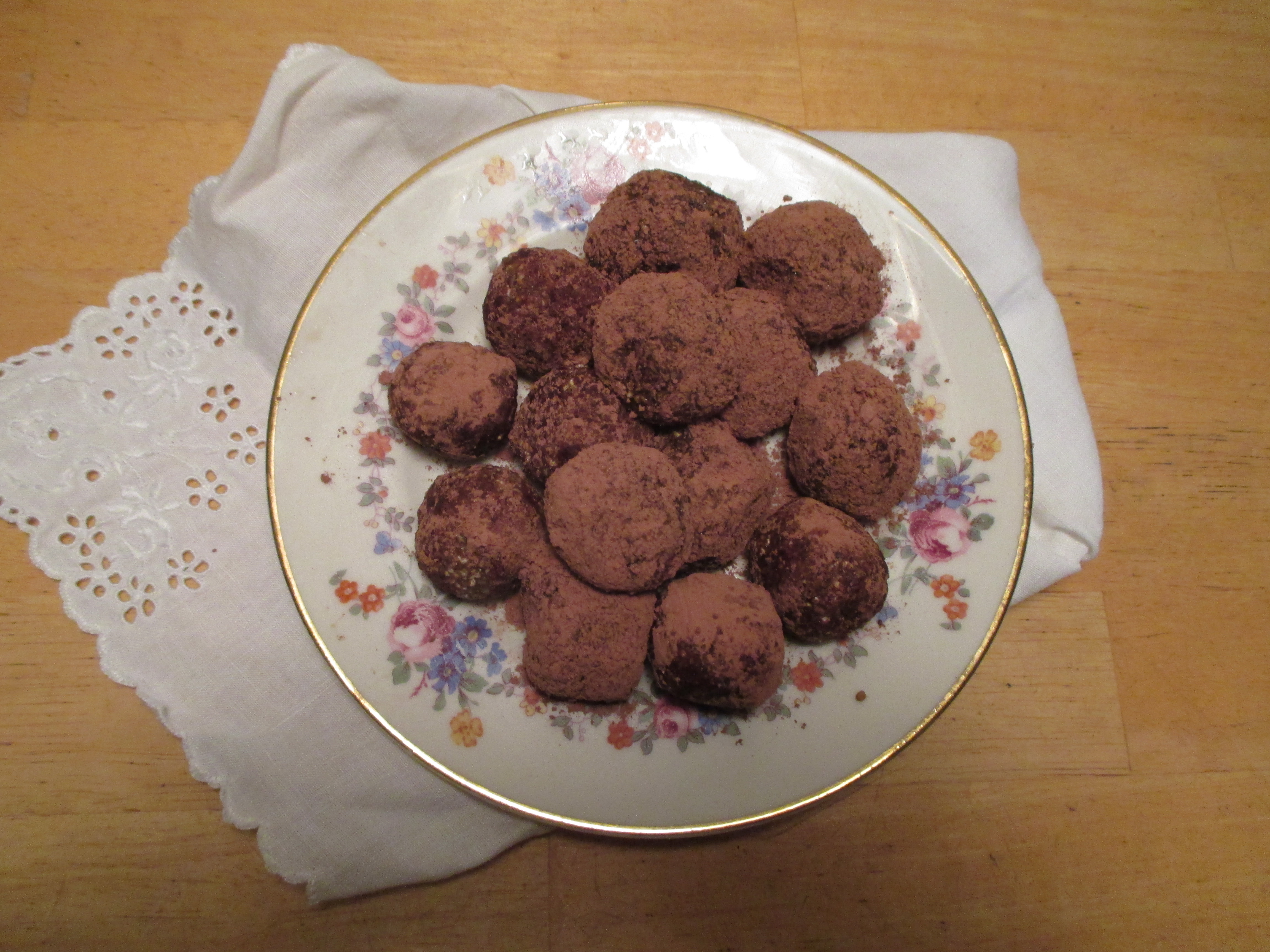
Nutty truffles sweetened with W. filifera syrup and rolled in cocoa.

Nutty truffles sweetened with palm syrup and rolled in cocoa.

Nutty Truffles

Makes 1 dozen

½ cup almond butter

½  cup popped amaranth grain

¼ cup ground popped amaranth

6 tablespoons Washingtonia filifera palm syrup

1/3 cup cocoa or carob powder

Combine all ingredients except cocoa in a bowl and blend with a spoon. Form into 12 small balls. Roll each in cocoa. (You can buy popped amanranth at Native Seeds SEARCH)

 ♥  ♦  ♥  ♦

What’s the point of trying to find a way to use the fan palm fruits? With climate change bringing hotter, drier summers to the Southwest, ethnobotanists like Dr. Felger and Dr. Hodel are looking for plants that can take those conditions and still produce food.

I don’t expect a rush of  people heading out to gather bushel baskets of fan palm fruits. They’ll appeal to the more ardent wild food enthusiasts who, like me, want to taste every berry on every bush.  But  they may have uses in more industrialized food production. They are sweet and easy to harvest and process. Some entrepreneur may see opportunity there. After all, nobody I know makes their own agave syrup.

(Check out Dr. Richard Felger ‘s article at  “Arizona Native Food Plants for a Dry Future” in The Plant Press: The Arizona Native Plant Society vol. 37, no. 2: 1, 3-5.)


Play with your Food; Seriously. Yin/Yang Tortilla Making

Aunt Linda here on this 2nd day of January, 2015. The snow has melted from our New Years snow fall here in Tucson. Yesterday we awoke to snow on the ground. The bee hives, poultry feed bins, and garden were all covered with the beauty of  cold, wet, snow. IMG_8706 Today’s recipe is less about the “what” of the food itself and more about the “how” of food. Like the attention we give it while making/preparing it. And the quality of that attention. Seriously, let’s play a bit while we prepare our food!  I take the wrong things seriously and can “miss” important things, (like actually TASTING food), while my mind thinks about other more “important” things. What got me thinking about Apparent Opposites  – like serious play – was cleaning out the poultry coops two mornings ago. IMG_7840 IMG_7841 IMG_7878                   I love cleaning coops.  It is messy affair, yet rejuvenates me. Hens eat and and then poop. They shed feathers and grow back new ones. They die and new ones hatch. The coop is definitely a place where the yin and the yang of life comes together. And it is a place where the tin and yang of “doing” and “allowing” is required as well.  Poop and old food scraps do not make their way to the compost on their own. That requires active raking and hauling it to the compost. After that, compost HAPPENS.  We allow it time to do its magical transformation from “hot” compost that will burn a plants roots, into the “black gold” that garden plants love. Making tortillas requires the apparent opposites (but by now you get that they are not separate, but part of the same whole!)   of  “doing” and “allowing”, as well. If we were to make masa (dough) directly into tortillas, the consistency would not be right.  Just as in bread making, the dough needs time to rest; and to transform. And in order for that transformation to happen, we must take our hands off it;  let it do it’s own alchemy.    IMG_9818       IMG_3335 With tortillas, we actively make the masa.  We let it rest – then shape tortillas.  With experience, we know when the perfect consistency is reached. Time and heat transform them.   IMG_4379                          Uncooked tortilla being shaped (above) and then cooked (below). These are the big tortillas cowboys like on ranches. IMG_4382 So back to you and perhaps some apparent opposites in your life. You may want to play with the yin/yang of “doing” and “allowing” of making tortillas. Or not.   There are many fun tortillas available on the market these days, from organic yellow corn, to blue corn to wheat, spelt, rice. Whether you make they or buy them,  I dare you to play.  Why? Because with play we forget our serious selves, and we enjoy (and this do not miss!) our food. I also dare you to play so much that you make mistakes. We are mistake adverse in this culture.   If you buys your tortillas, or if you are rewarming your home made ones, warm them over a flame – or in a pan (cast iron best) if you are flame adverse.  Add butter, or olive oil, or coconut oil or and sprinkle with salt.  Or use any oils you like and add honey – or even coconut butter for a sweet treat. I like to keep the flavors present but not overwhelming so I can still enjoy the taste of the tortilla itself – but there are no rules and experimentation is fun. IMG_8717       IMG_8728 Warmed Corn Tortilla with Butter and Honey!! There are few things as startling simple as this! IMG_8725 I used refried beans to make this Yin/Yang tortilla – and added a fried egg  as breakfast while writing to you.

Mesquite Gingerfolk for Christmas

Mesquite Gingerfolk are tasty treats for the holidays.

Mesquite Gingerfolk are tasty treats for the holidays.

It’s Carolyn today sharing one of my favorite holiday recipes. The flavor of mesquite meal blends nicely with the warm spices we like in the winter.  These Mesquite Ginger Folk are pretty cute and they taste wonderful.  I used good quality margarine rather than butter or Crisco because I like the eventual texture and the flavor is good. This recipe makes a spicy cookie. If you want more of the mesquite flavor to come through, cut down on the spices. The dough must be well chilled before you roll it out, so this is a two-step recipe: mixing first, then later rolling and baking.

Mesquite Ginger Folk (makes about 3 1/2 dozen rolled cookies)

In a medium bowl, combine 2 cups all-purpose flour, 1/2 cup whole-wheat flour,  1/2 cup mesquite meal, 1 1/2 teaspoons ground cinnamon, 2 teaspoons ground ginger, 1 teaspoon allspice, 1/2 teaspoon salt, 1/4 teaspoon ground black pepper.  Stir and fluff with a fork and then set aside.

In a large bowl, use an electric mixer to beat 1 1/2 sticks margarine  with 1/2 cup packed brown sugar until fluffy. Beat in 2/3 cup molasses and one large egg. Then gradually add the flour mixture to make a stiff dough. You may need to give up the mixer for a wooden spoon.  Divide the dough into two thick disks and wrap each in plastic wrap.  Refrigerate until chilled, about three hours.

When you are ready to bake, take one disk from the refrigerator .   You’ll want the dough just warm enough to roll without cracking.  While you are waiting, preheat the oven to 350 F. and put out brown paper or wire racks to receive the baked cookies. You’ll also need lots of flour to keep the dough from sticking when rolled.  So get a small bowl of flour, take part of the disk, and roll it in the flour before you roll out with the rolling pin.

Roll a ball of dough in the flour.

Roll a ball of dough in the flour.

Roll out the dough about 1/8-inch thick on flour-dusted surface. Cut out the cookies and transfer them to the cookie sheet, placing them 1 inch apart. Gently knead the scraps together and roll out again.  When you fill one cookie sheet, bake it for about 10 – 12 minutes while you prepare another sheet.

This cutter gives a nice uni-sex cookie.

This cutter gives a nice uni-sex cookie.

If you wish, you can use raisins and dried cranberries to make eyes, a mouth and buttons.  Chop the dried fruit into tiny pieces.

IMG_0413

Sometimes it is difficult to position those tiny pieces on the cookies. But remember those tweezers you keep in the kitchen to deal with cactus stickers?  Perfect for placing the eyes and buttons.

IMG_0408

To further decorate the cookies, perhaps make some shoes or pants, mix up some white frosting using powered sugar, a little butter and a few drops of milk.  If you have a decorator bag, use it to pipe out some decorations or just draw the decorations with a flat-end toothpick.  Either way, you’ll love your Mesquite Ginger Folk and you’ll love sharing them.

If you’d like to make some mesquite cookies but can’t face the cutting and decorating, you can use the same recipe to make drop cookies. Frost if you have time.

Mesquite Ginger Cookies in simple form.

Mesquite Ginger Cookies in simple form.

If you have not harvested your own mesquite meal, here are a few places to purchase it:  The Flor de Mayo Table at Sunday St. Phillips Farmers Market; the Native Seeds/SEARCH store at 3061 N. Campbell Ave. and http://www.nativeseeds.org for mail order; and the San Xavier Farm Store, http://www.sanxavierfarm.org.  If you are in Phoenix, check the farmers markets there.

For more great mesquite recipes, check out my cookbook Cooking the Wild Southwest: Delicious Recipes for Desert Plants. You’ll learn how to make Mesquite Apple Coffeecake, a fabulous rolled cake with mesquite and coconut, a a dozen other delicious recipes.