Fu Yung with Local Veggies


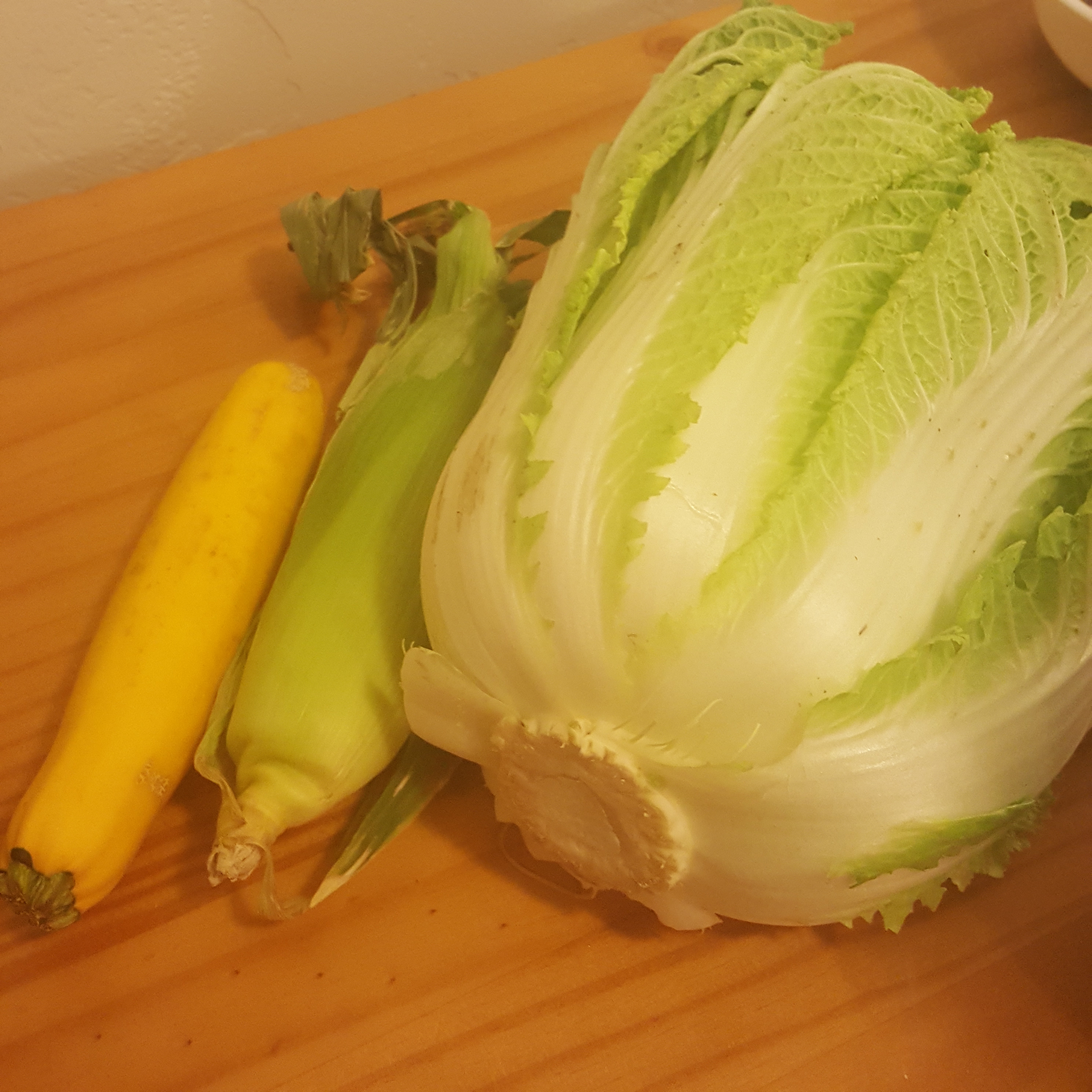
No matter how beautiful local veggies are, dreaming up something new and exciting to make with the same characters over and over again can be a challenge. Amy here with my latest attempt to use beautiful Tucson CSA napa cabbage (Sleeping Frog Farm) and summer squash (Crooked Sky Farm). And what to do when you have only ONE tiny ear of sweet corn? I also had ripe serrano chiles from a friend and a handful of blanched tender Foothills Palo Verde seeds. See Martha’s post for more on desert legumes.

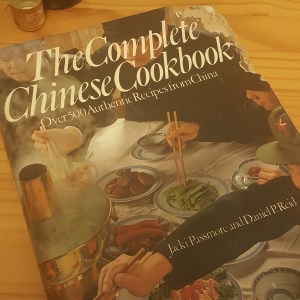
This week’s inspiration came from my mom, who remembered the Fu Yung we used to make in our family Chinese feasts. Aunts, uncles and cousins would cook all day to make complicated meals from many world cuisines. I’ve been attempting recipes in this book since I was in high school. Following and diverting from this and a handful of other recipes is how I learned to cook.
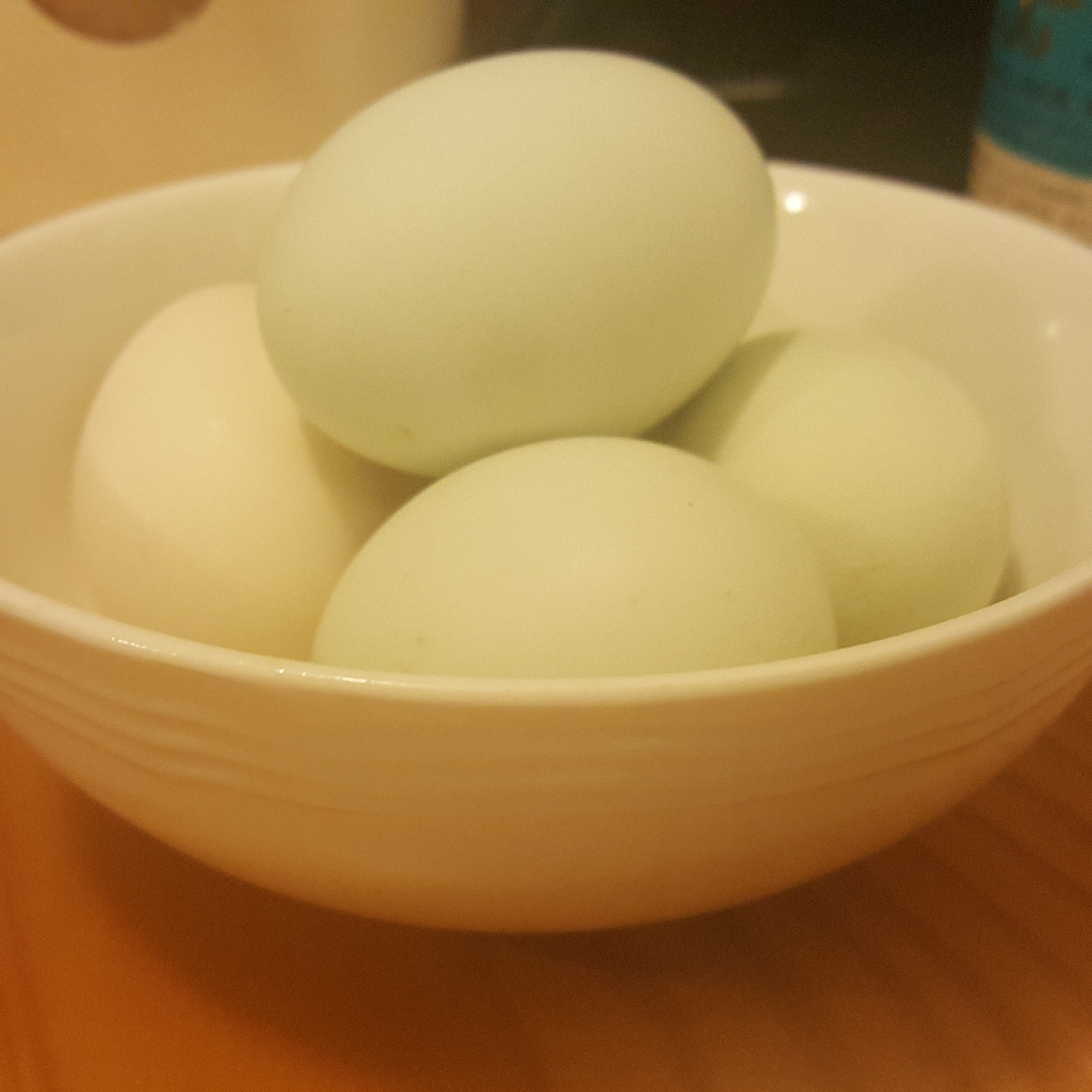
I also had lots of eggs from watching the neighbor’s chickens. Perfect!
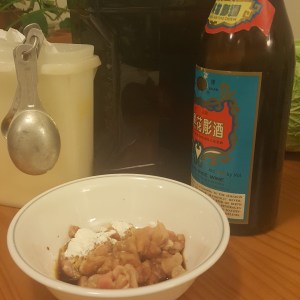
The first step to not skip in this recipe is to marinate thinly sliced meat in soy sauce, rice wine and cornstarch for at least 15 minutes. It calls for beef but I used half that amount of pork.

Instead of meat, strongly flavored dried Chinese mushrooms are excellent. Just soak in water, cut in tiny strips and add them with the rest of the veggies. Save the mushroom soaking liquid to make the sauce. Yum!
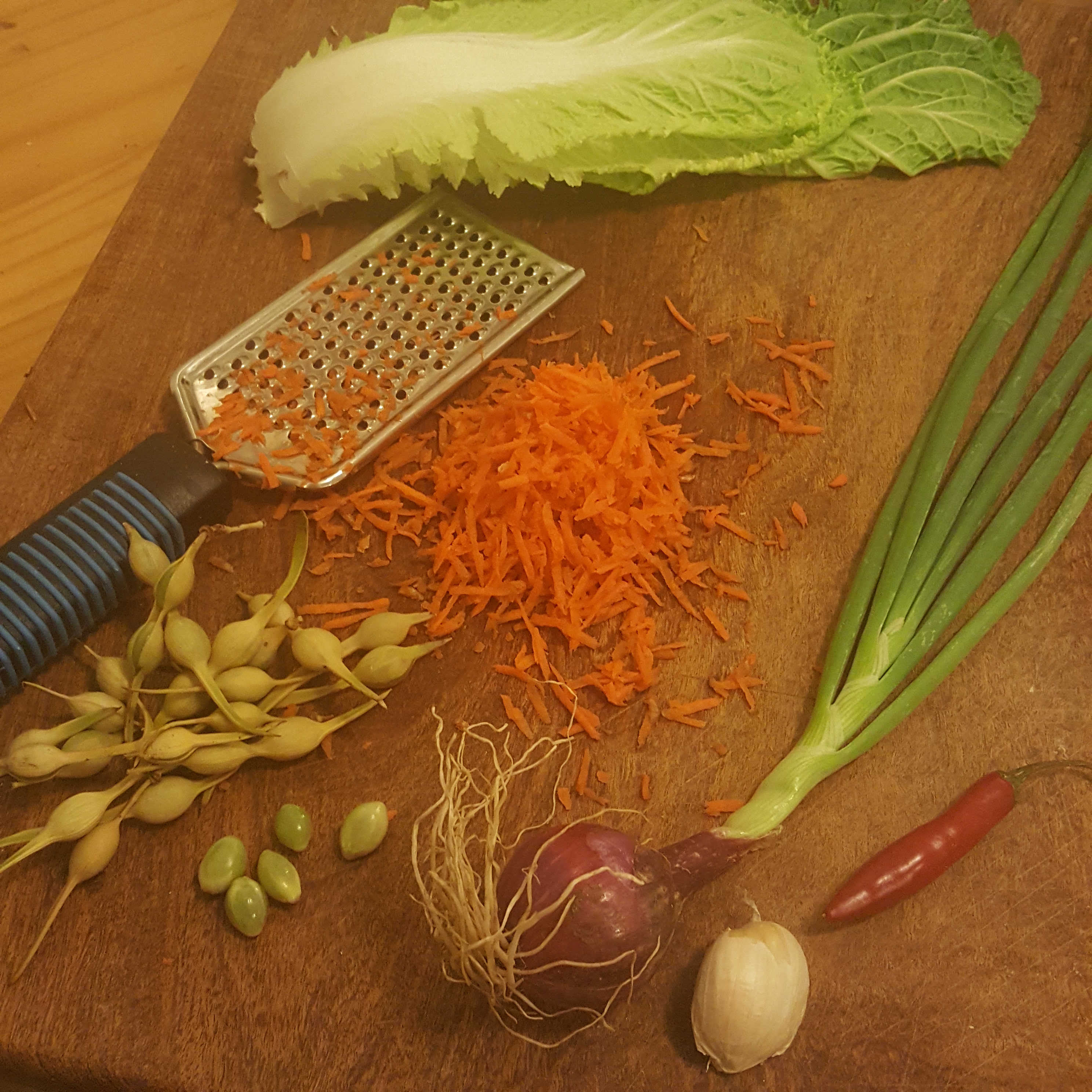
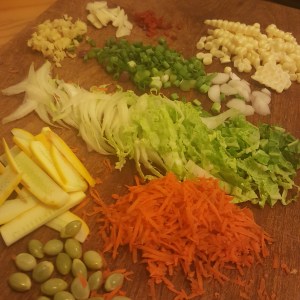
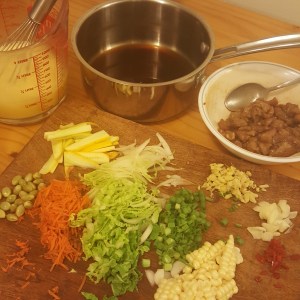
Cut all the veggies. This is not the dish to start cooking the longer cooking items before you cut the others. The original recipe called for spring onion and a little fresh ginger. I used carrot, cabbage, golden zucchini, young onion tops and bottoms, sweet corn and tender blanched palo verde seeds. For spice, I used garlic, ripe serrano and lots of ginger.
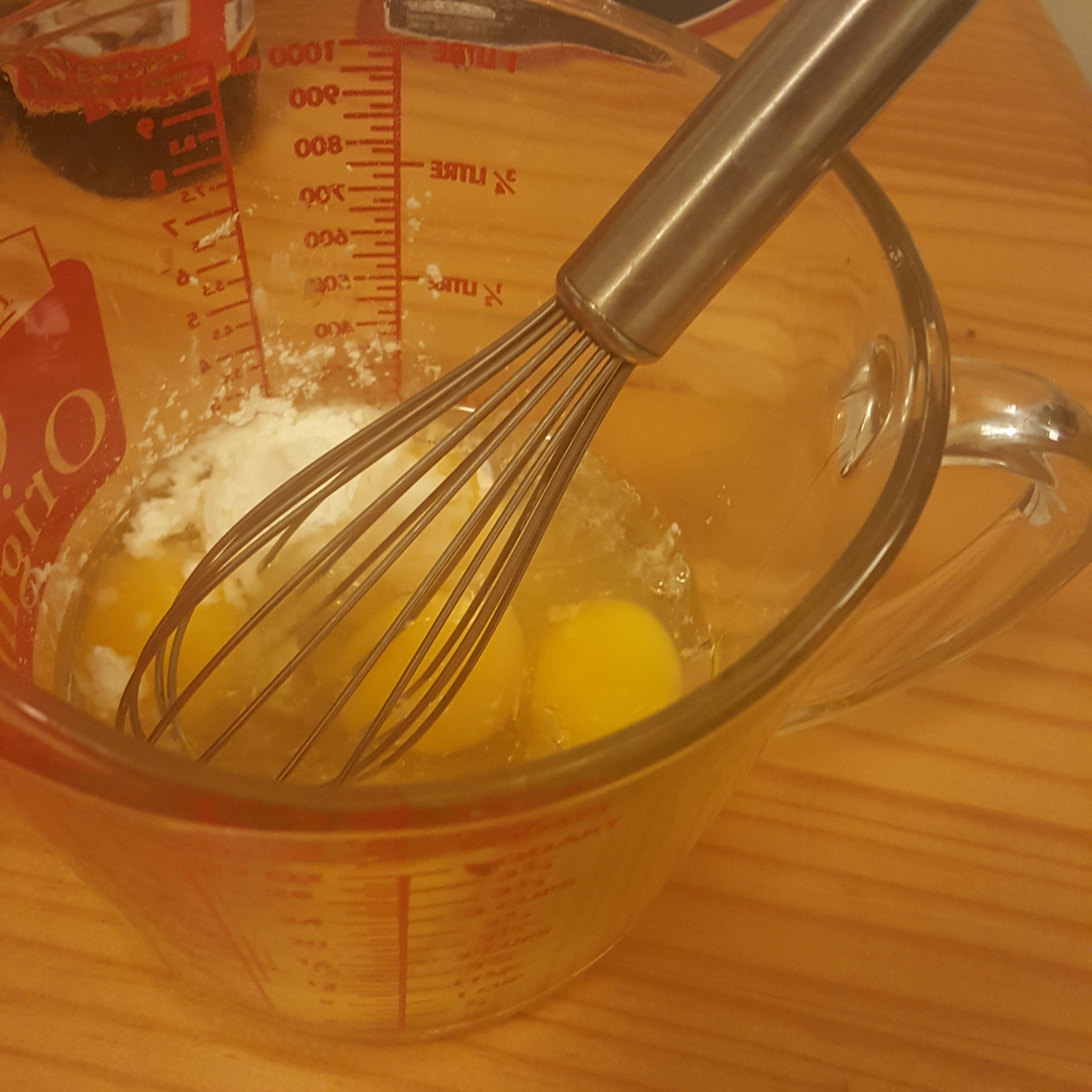
Then beat eggs, cornstarch and a splash of water. Next time I’ll mix the cornstarch and water before the eggs to prevent difficult to remove lumps.
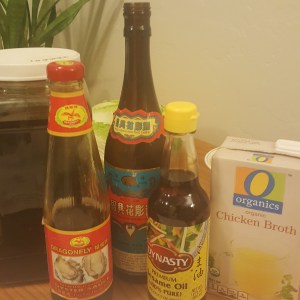
In a small saucepan, measure all the sauce ingredients and set aside: chicken or mushroom broth, oyster sauce (or mushroom sauce), rice wine, sesame oil and cornstarch.
Bring everything close to the stove.
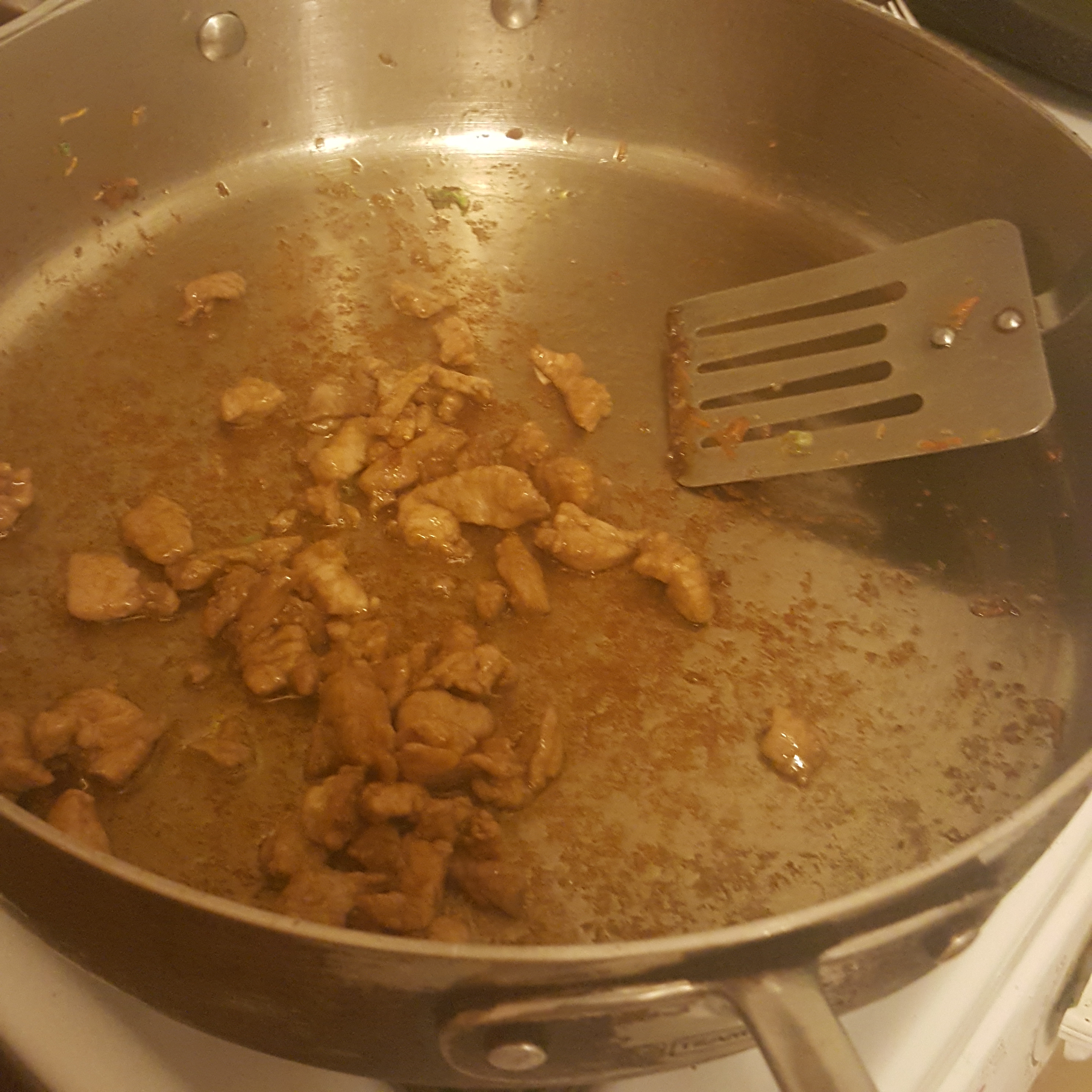
In place of a wok, I use a very large skillet on high to cook the meat in a little oil. When browned but not necessarily cooked through, remove from the pan and set aside.
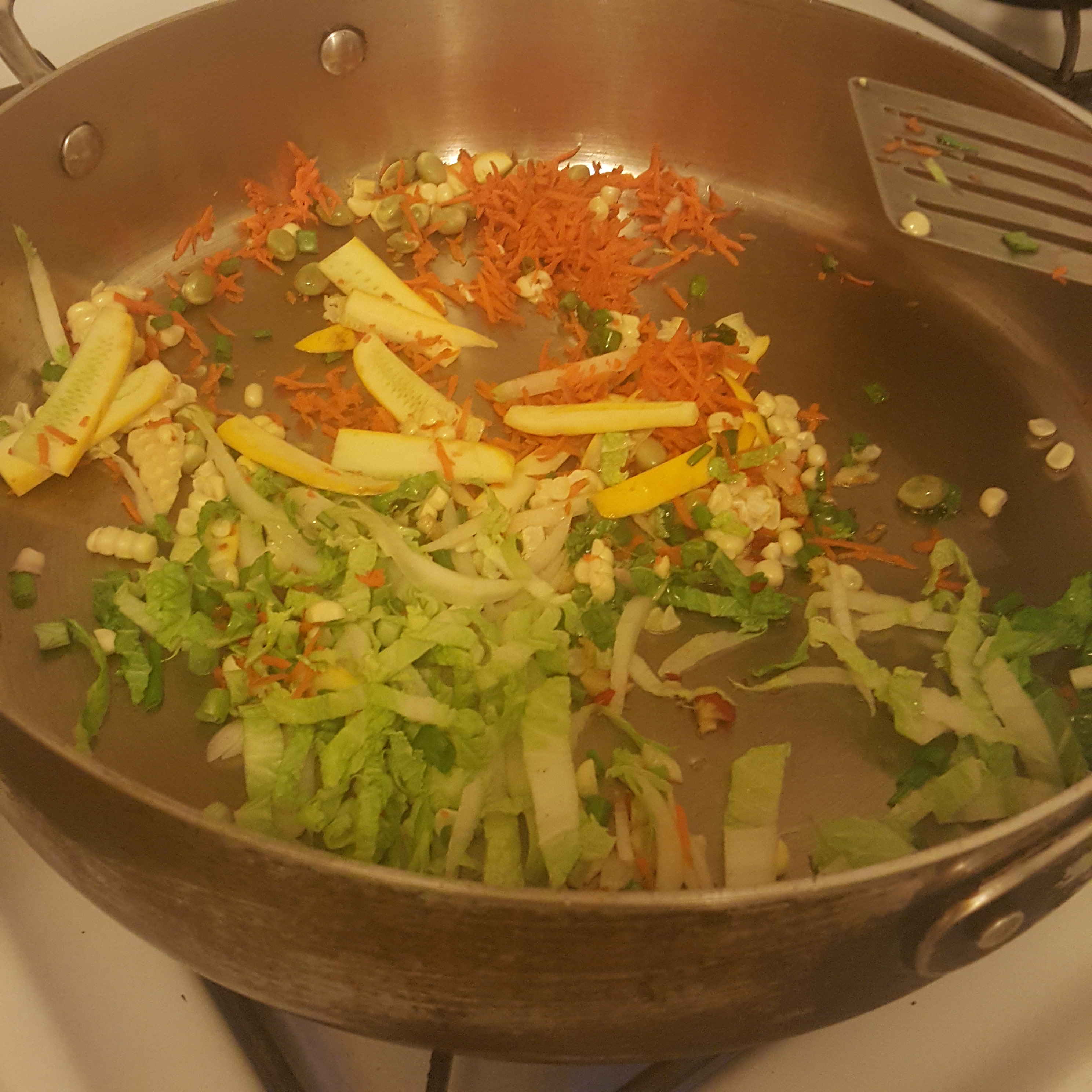
Add a little more oil and cook the garlic, ginger and chile. Add the veggies and stir fry for just a minute!
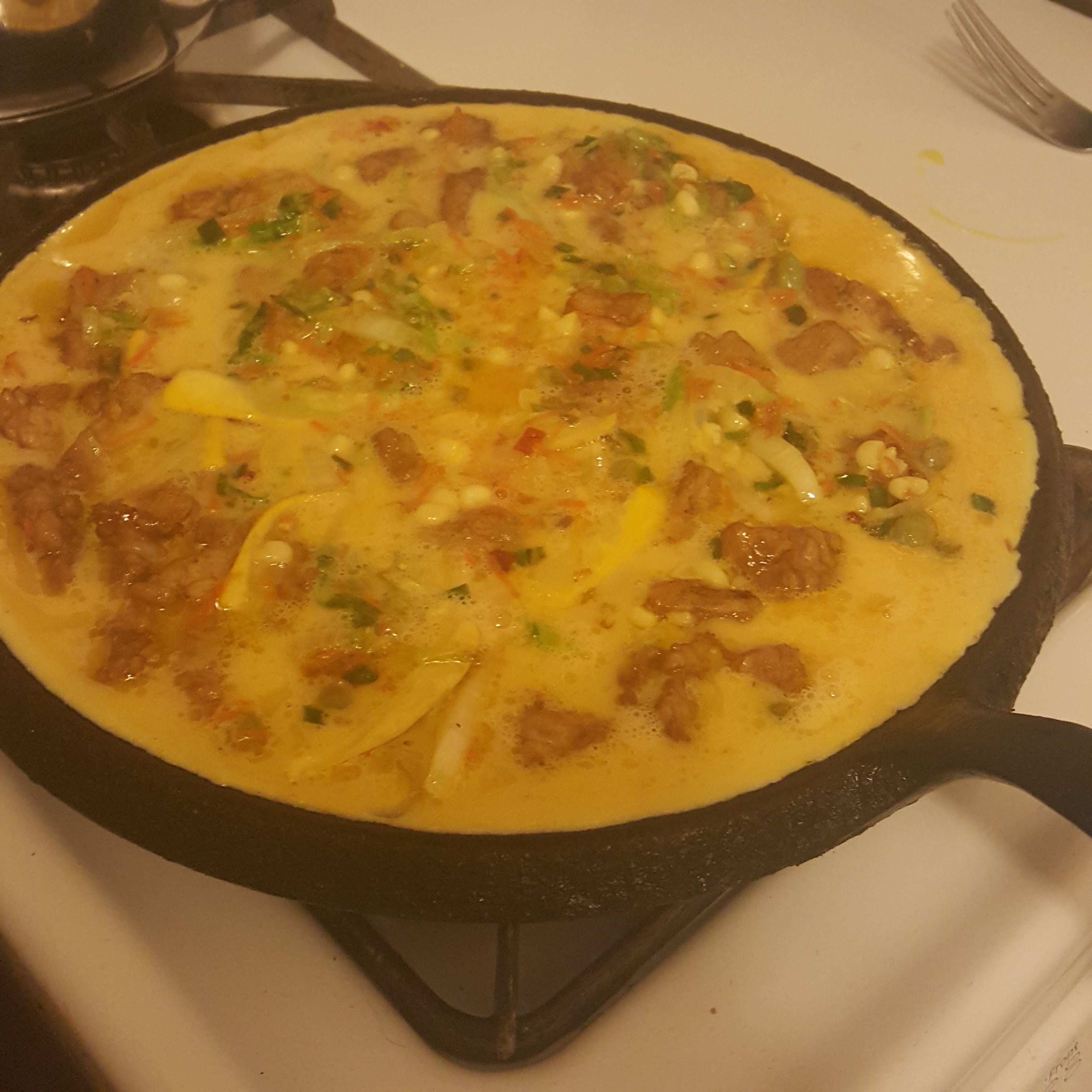
Gently heat a well seasoned cast iron or nonstick pan with low or rounded sides. Splash on a bit of cooking oil and toasted sesame oil. Add the meat and veggies in an even layer and pour the eggs over all. Cook gently until almost set and browning on the bottom. Slide onto a plate. Cover with a another plate and invert. Slide back onto the pan and cook through. If there are more veggies than the eggs can hold together, it will be messy. The book suggests cutting in wedges and flipping each, but it is not as pretty.
Serve the prettiest side up, you decide. Sometime while waiting for the eggs to set, heat the sauce while whisking, until thick. Keep warm.
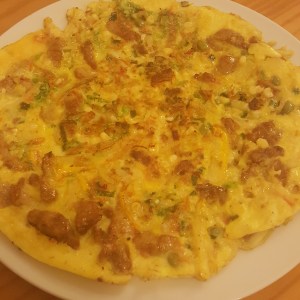
Cut in wedges with a pizza cutter and serve with the sauce. Of course it is best right away, but it makes a great cold breakfast or lunch. Enjoy!
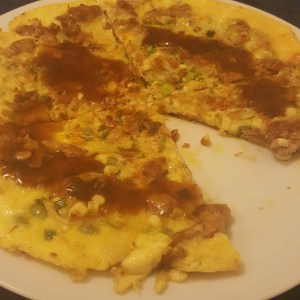
Veggie and Pork (or Chinese Mushroom) Fu Yung


1 1/2 oz thinly sliced pork or dried, soaked Chinese mushrooms


Marinate for at least 15 minutes in:

2 teaspoons light soy sauce

1 teaspoon rice wine or dry sherry

1 1/2 teaspoons corn starch


Veggies:

Your choice! About 1 cup after stir frying

Fresh ginger, garlic and green onion to taste


Egg mixture:

5 large eggs

2 teaspoons cornstarch

1 tablespoon water


Sauce:

1/4 cup chicken broth or mushroom soaking liquid from above

2 teaspoons light soy sauce

1 tablespoon oyster (or mushroom) sauce

1 teaspoon rice wine or dry sherry

1/4 teaspoon sugar

1 teaspoon toasted sesame oil

1/2 teaspoon cornstarch


For frying:

Mild cooking oil, like canola or peanut

Toasted sesame oil


Ornamental Medicinals for Desert Landscaping

Goodding’s verbena makes an attractive mound of orchid and lavender flowers spring into summer.  What’s more it can make a gentle, delectable and calming tea.  Need mellowing out?  Try Verbena gooddinggii!  (MABurgess photo)

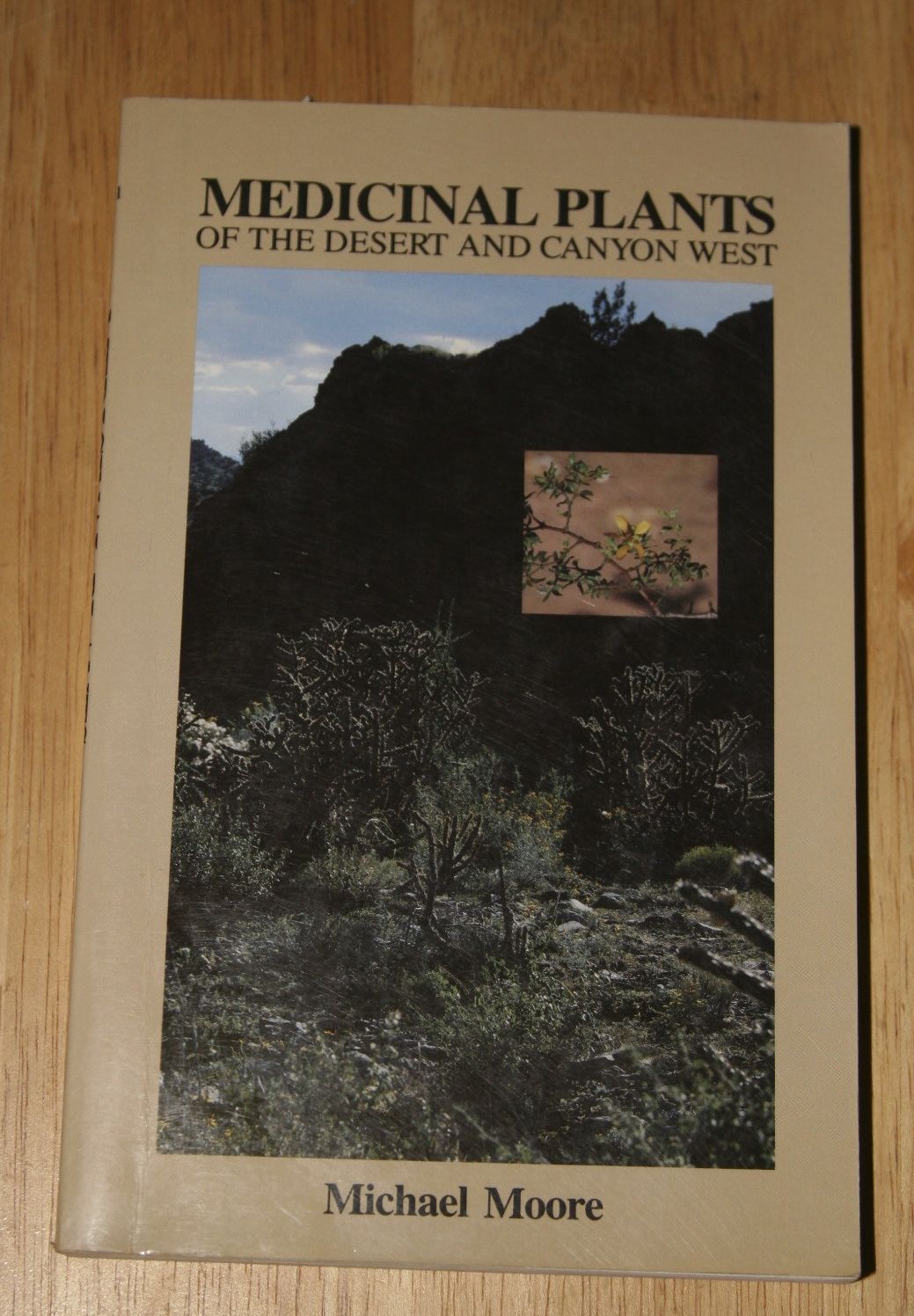
With the excitement of our Tucson Festival of Books and many upcoming plant sales, I was motivated to use some of our Baja Arizona herbalist authors as inspiration for desert landscaping.  Tia Marta here encouraging you to check out Michael Moore’s, John Slattery’s, and Charles Kane’s books on medicinal plant uses for great ideas and good instruction.  My personal challenge has been to create seasonal color in the garden with plants that I know I might use also as herbal remedies.

Find Michael Moore’s must-have handbook Medicinal Plants of the Desert and Canyon West at the Tucson Festival of Books.

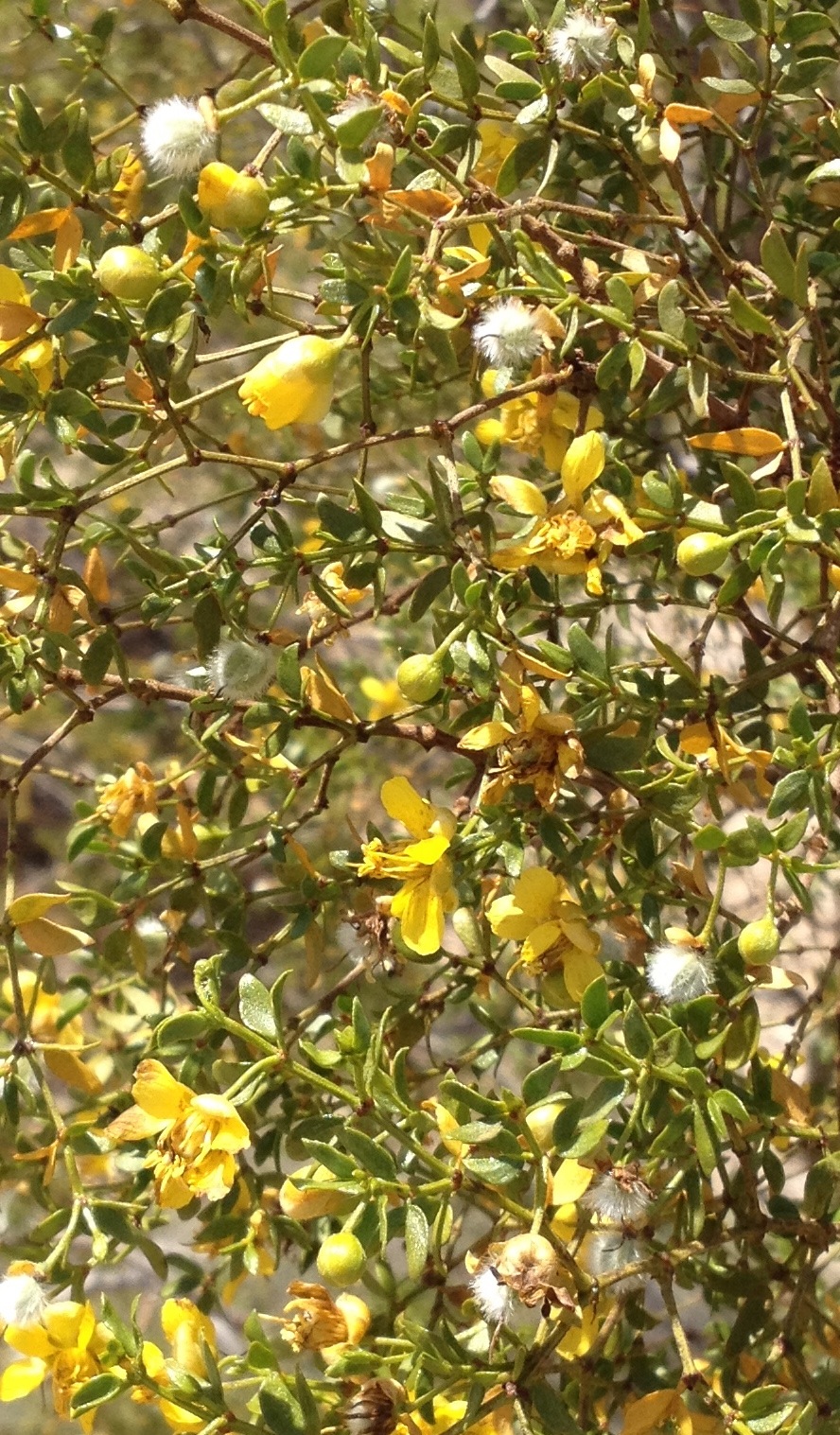
Larrea tridentata–known as She:gi by the Tohono O’odham is “our desert drugstore.” Should you find it on your land, protect it, cherish it, and use it.(MABurgess photo)

Watch for announcements of plant sales at the Arizona-Sonora Desert Museum, Tohono Chul Park, NativeSeeds/SEARCH, and Desert Survivors to find beautiful ornamentals which also give healing or soothing, stimulation or protection.


Desert chia–“da:pk” in Tohono O’odham–Salvia columbariae–should be planted as seed in the fall for a spring harvest of seed that helps balance blood sugar and has high omega-3 fatty acid. (MABurgess photo)

Also to be planted as seed in the fall for a spring show is Mexican gold poppy. Its effect as a calmer/mellower has been known to traditional people for centuries. (MABurgess photo)

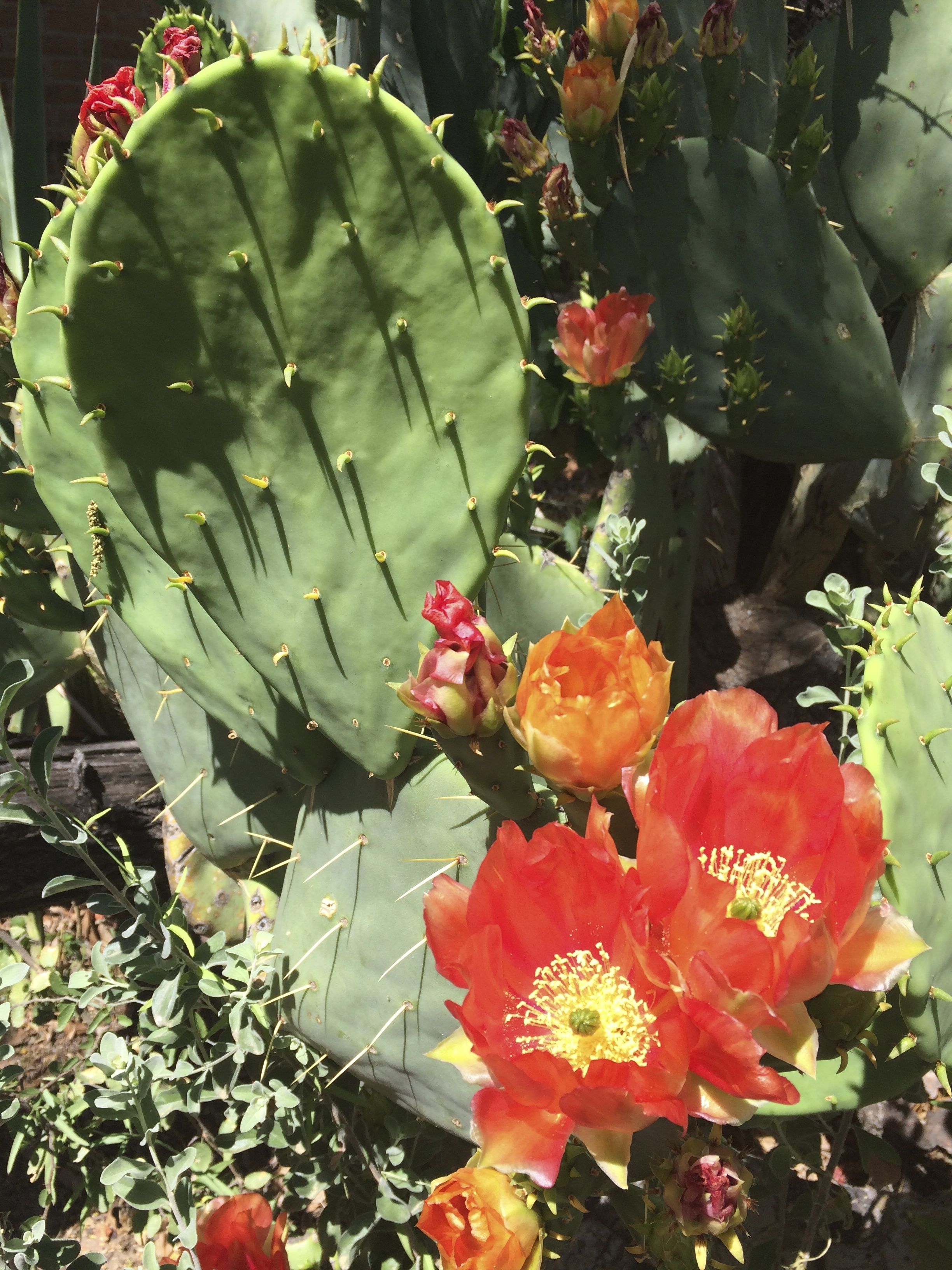
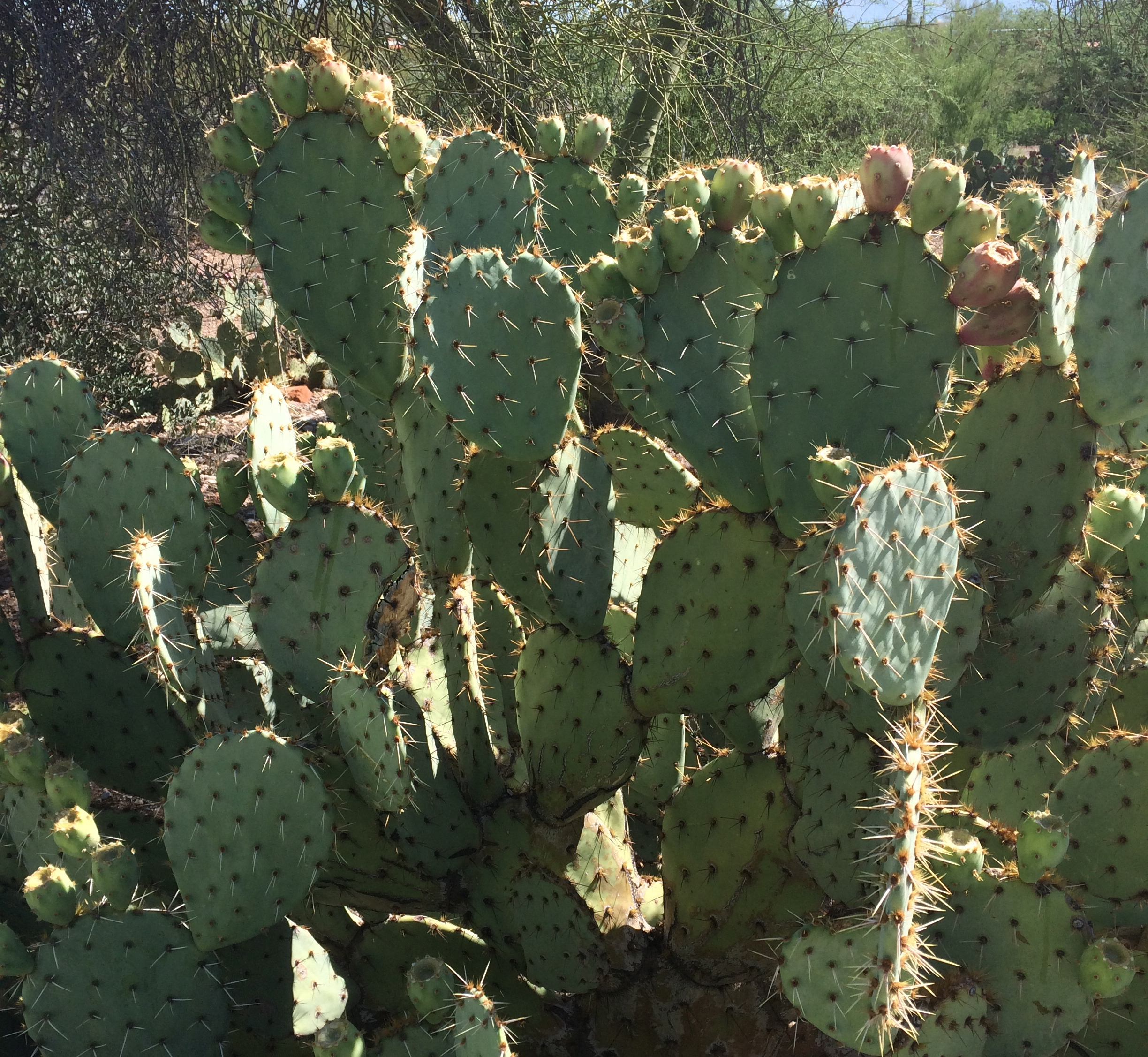
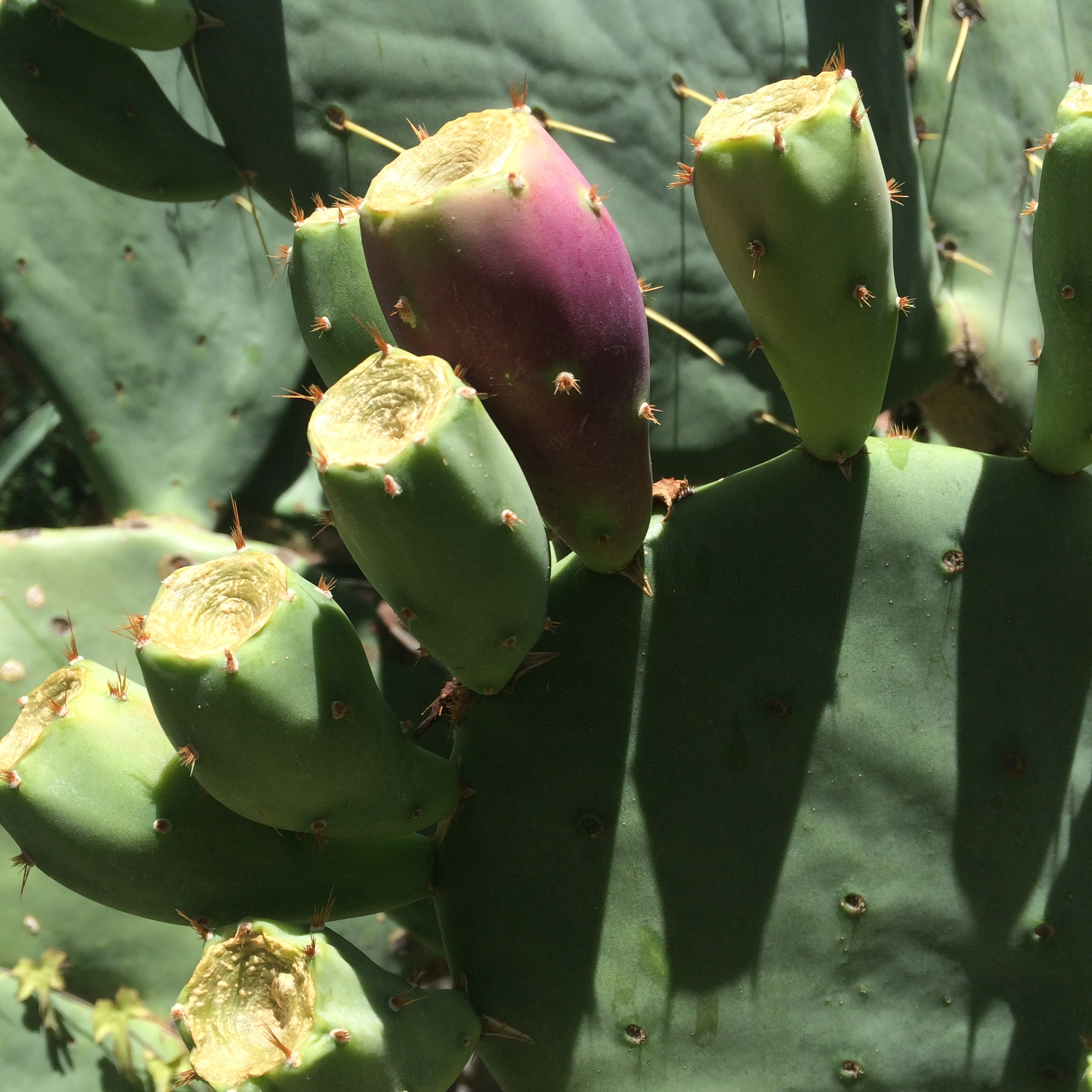
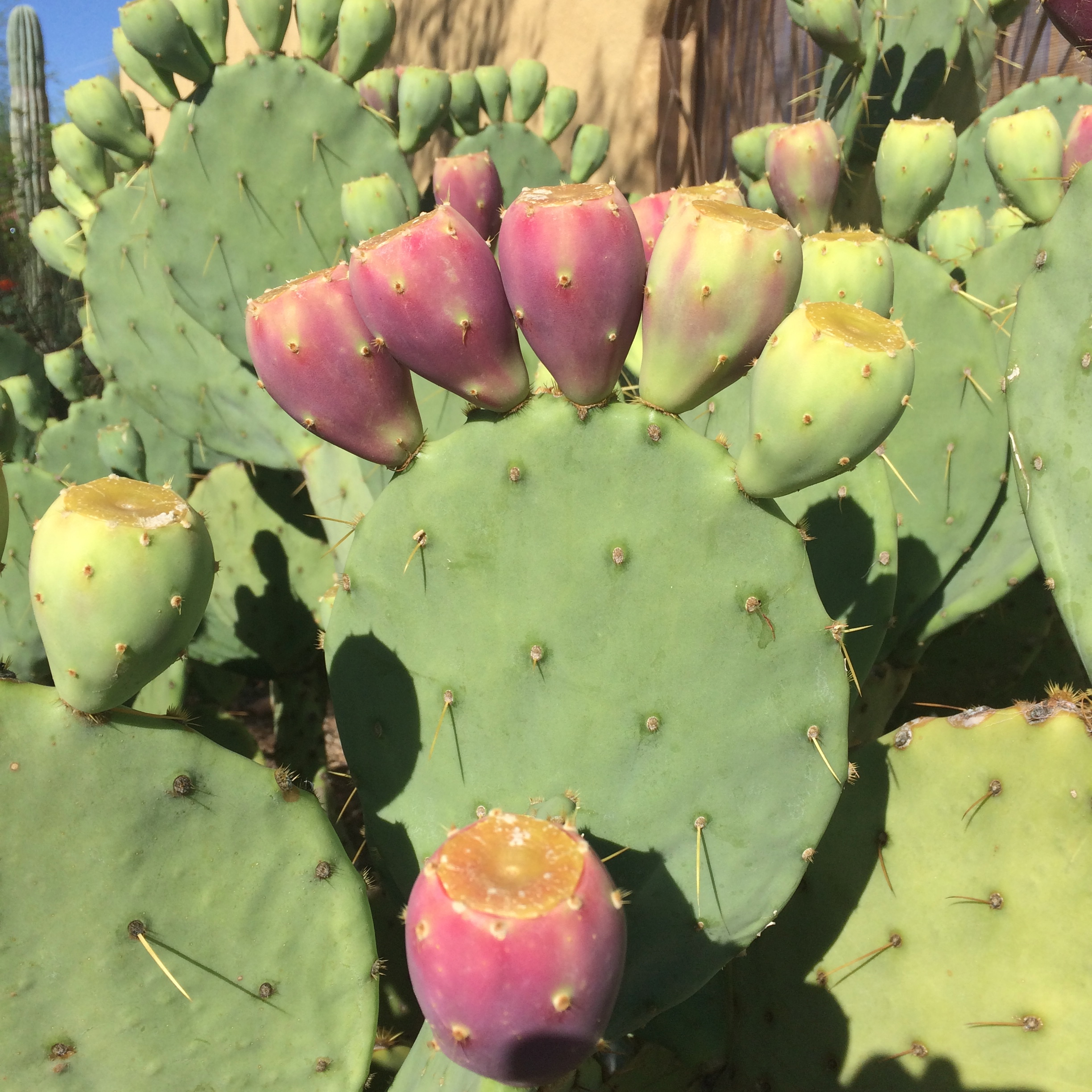
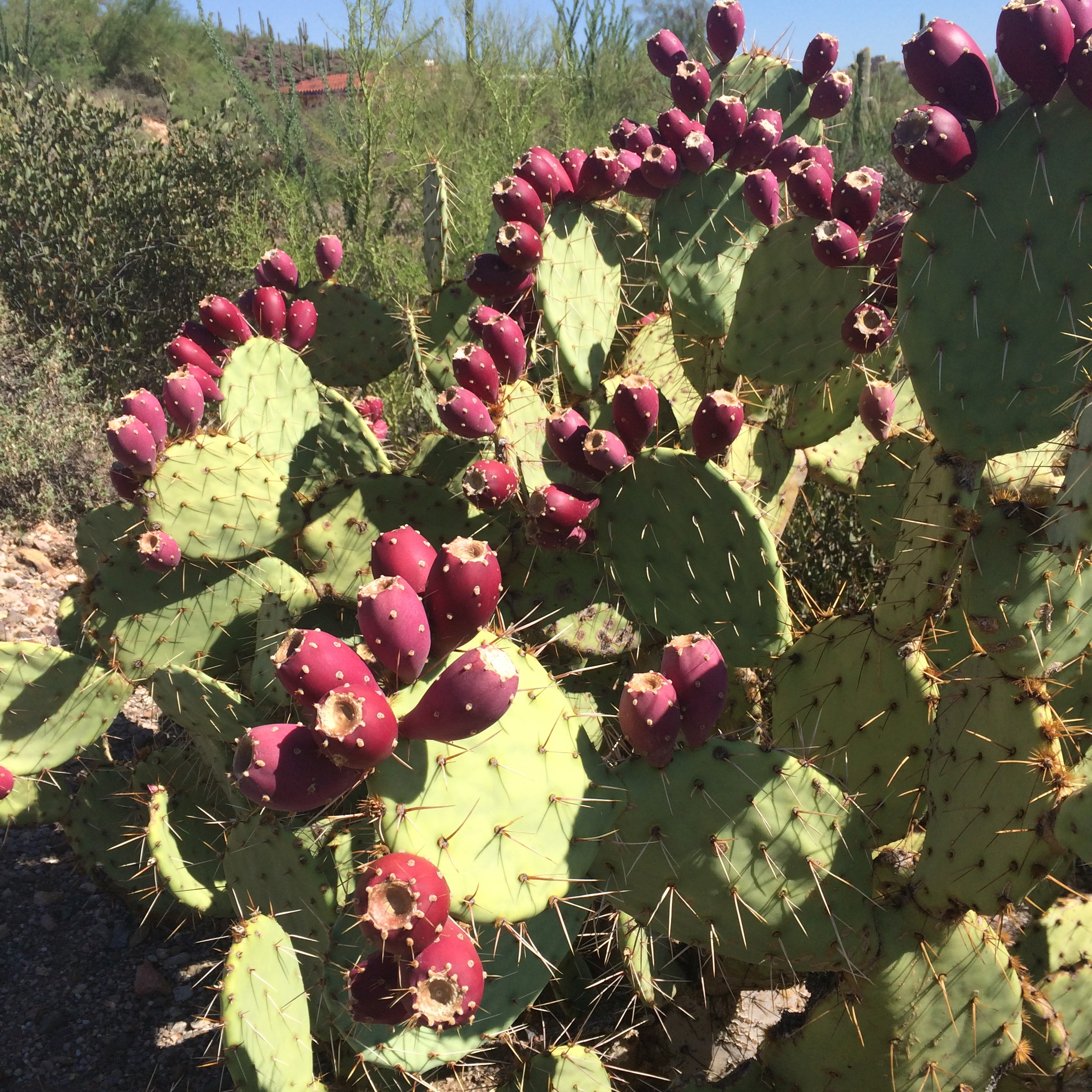
A hedge of prickly pear, especially this Persian orange-flowered Opuntia lindheimeri, can give you tasty “remedies” from blood-sugar-balancing nopales (see the new growth in the photo), herbal tea from the flowers, and high calcium from both young pads and fruits in late summer. (MABurgess photo)

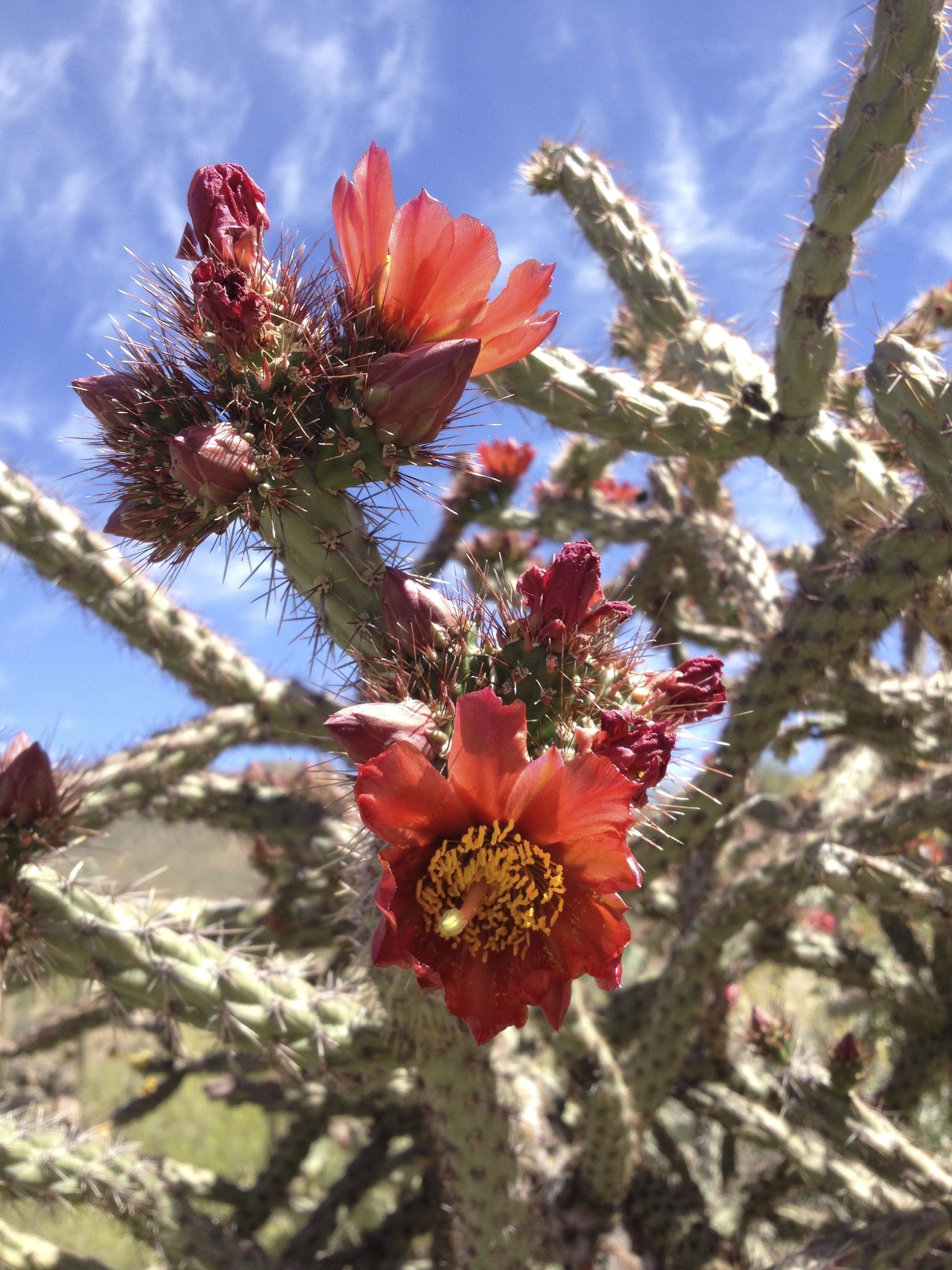
No desert garden is complete without cholla! Cylindropuntia versicolor‘s (Staghorn’s; ciolim) colors are dazzling; its prepared buds balance blood sugar and give enormous amounts of available calcium helpful in prevention of osteoporosis. (MABurgess photo)


Late spring will bring a pink and lavender show of flowers to desert willow (“ann” in O’odham). The beautiful tree in this photo is in the landscape of the new Tohono O’odham Community College campus. All parts of Ahn have been used traditionally as an effective anti-fungal. (MABurgess photo)

Flowers of Ahn (Chilopsis linearis) are a visual as well as an herbal gift. Check out herbal books for guidance how it was traditionally used. (MABurgess photo)

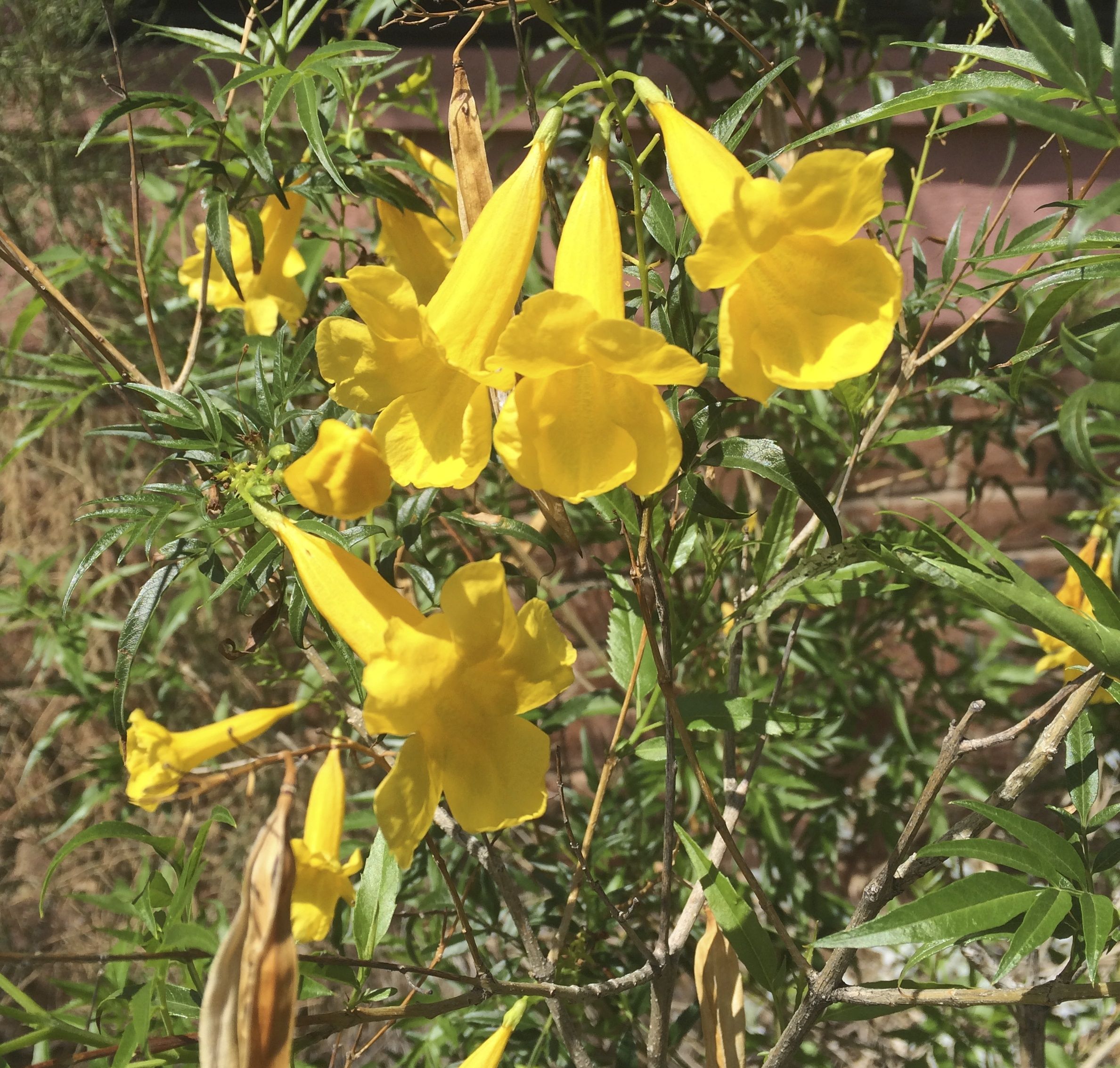
With monsoon rains come the bright yellow flowers of Tecoma stans (“tronadora” in Spanish) making a sensational landscape splash. It also doubles as an important remedy for certain types of diabetes. (MABurgess photo)

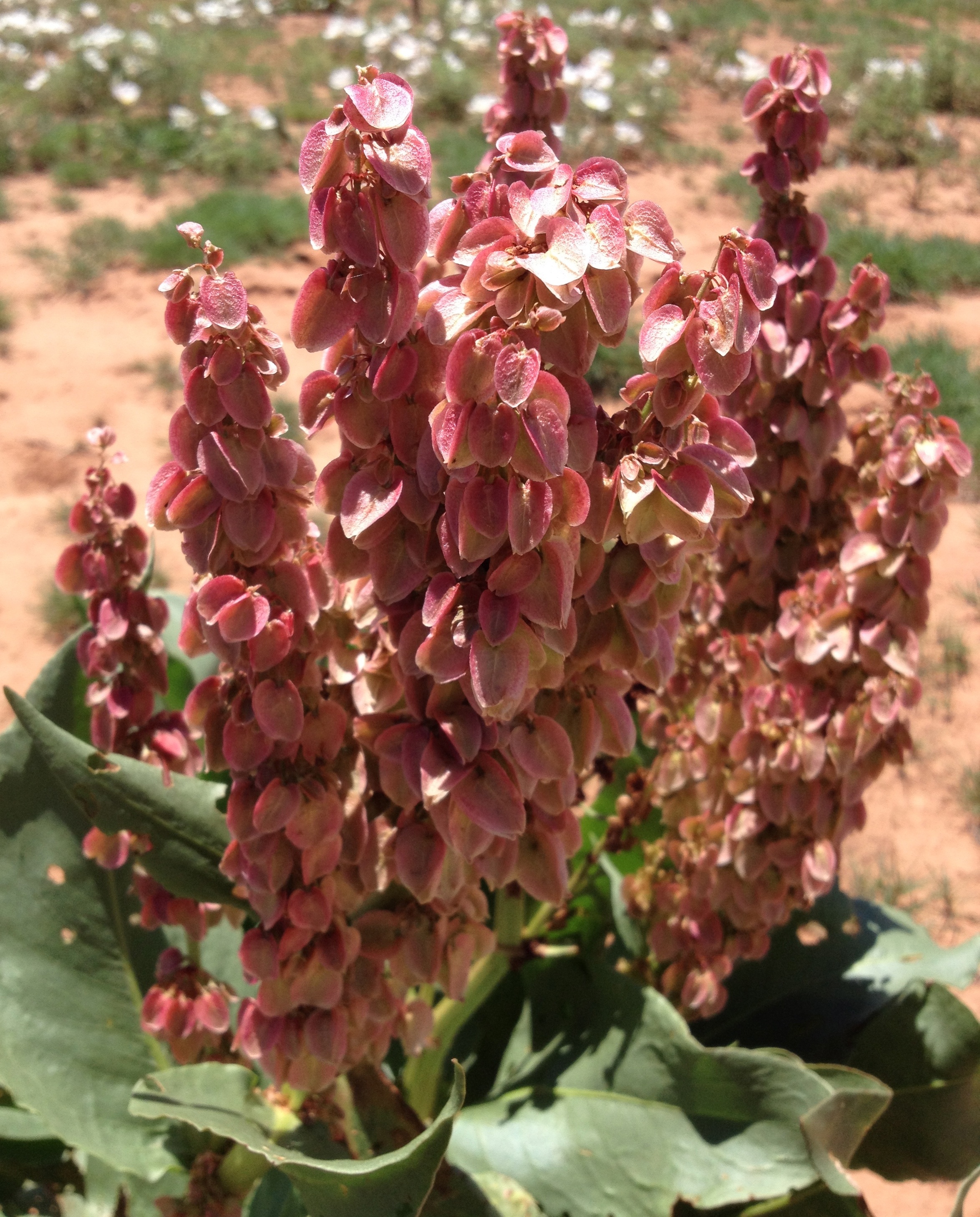
A perennial to be planted as a tuber in the fall is the wild rhubarb (hiwidchuls in O’odham)( For more about this one, see last month’s blog post). Its tuber has important astringent properties.(MABurgess photo)

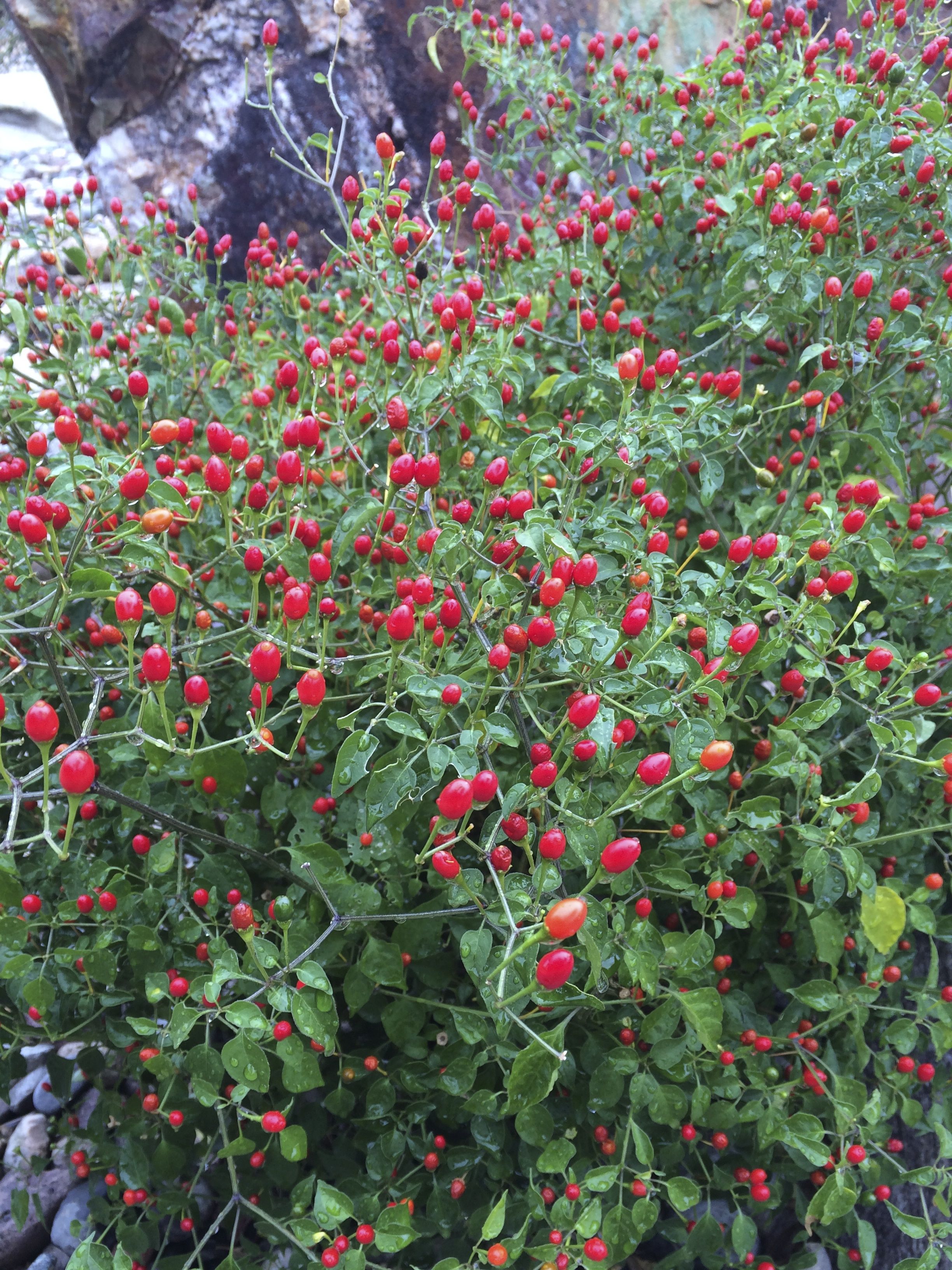
At summer’s end your garden will be punctuated with bright Chiltepin peppers! You–and your wild birds–will prosper with picante delights full of vitamin C and A. In addition, you can use them in a topical salve to soothe the anguish of shingles or muscle-sore. (MABurgess photo)

All through the year a Baja Arizona desert garden can give dramatic color as well as special healing gifts that have been know to Desert People since time immemorial.  You can see examples of these native desert plants growing at the Friends of Tucson’s Birthplace’s Mission Garden (foot of A-Mountain in Tucson, at the Arizona-Sonora Desert Museum, and at Tohono Chul Park.  Stay tuned for more about Mission Garden’s Michael Moore Medicinal Plant Garden to be planted this year.

Tis the season now to see a show of spring medicinals in nature as well as in town.  Here’s hoping you can get out in this lovely weather to see the desert explode with its colorful herbal gifts!

EVERYTHING-LOCAL PIZZA from Baja Arizona!

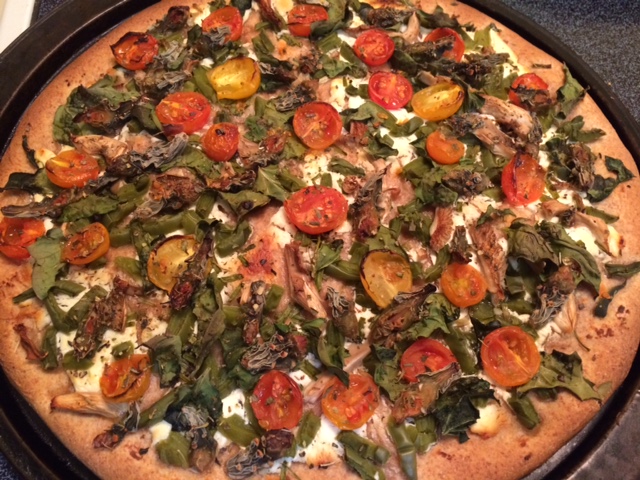
Totally local veggie pizza with cholla buds, nopalitos, acelgas, mushrooms, goat cheese and home-grown cherry tomatoes--ready to bake

Totally local veggie pizza with cholla buds, nopalitos, acelgas, mushrooms, goat cheese and home-grown cherry tomatoes–ready to bake

If you love pizza–and I’m picky about good pizza–here are some ways to celebrate local foods, to eat super-healthily, get creative in the kitchen, AND have new excuses to eat pizza!  Tia Marta here to share ideas for a delicious pizza party, incorporating the fabulous gifts that our local desert foods offer.

It will take a little fore-thought and assembly time (…like, all year harvesting at the right seasons for DIYers, or trips to the farmers market, NativeSeeds/SEARCH store, or San Xavier Farm Coop).

Locally-harvested buckhorn and staghorn cholla buds, reconstituted and ready to cut as toppings for pizza

Locally-harvested buckhorn and staghorn cholla buds, reconstituted and ready to cut as toppings for pizza

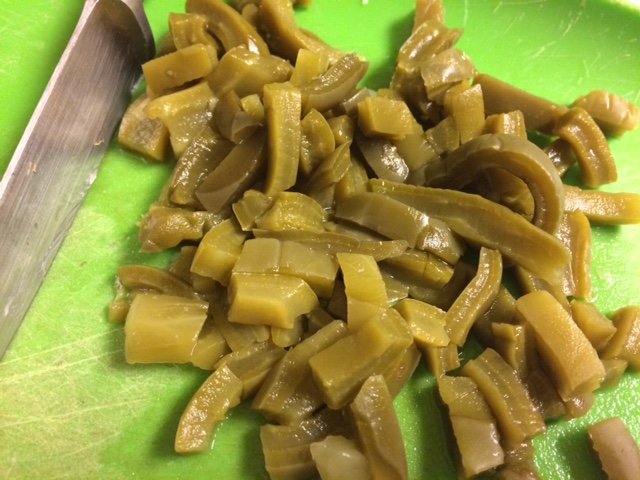
Pickled prickly pear cactus pads--better known as nopalitos in Spanish and nowi in Tohono O'odham

Pickled prickly pear cactus pads–better known as nopalitos in Spanish and nowi in Tohono O’odham

Cholla buds dried from last April’s harvest, soaked and simmered until soft through, make a tangy taste surprise– a super-nutritious calcium-packed pizza topping.  In the photo, the larger buds are from Buckhorn cholla (Cylindropuntia acanthacarpa) and the smaller buds are from Staghorn (C. versicolor), both plentiful for harvesting in low desert.  Dried cholla buds are available at San Xavier Coop Association’s farm outlet, at NativeSeeds/SEARCH store, and at http://www.flordemayoarts.com.

Another perfect topping is nopalitos, simmered or pickled and diced young pads of our ubiquitous prickly pears (Opuntia engelmannii, O.ficus-indica to name a couple).  Collecting from the desert is a spring activity, but you can easily find whole or diced nopales anytime at Food City.  The other cheater’s method is to find canned pickled cactus in the Mexican food section of any local grocery.  Nopalitos are a taste thrill on a pizza, and you can enjoy their blood-sugar balancing benefits to boot.

Starting the dough sponge--with local, organic hard red wheat flour--ready to rise

Starting the dough sponge–with local, organic hard red wheat flour–ready to rise

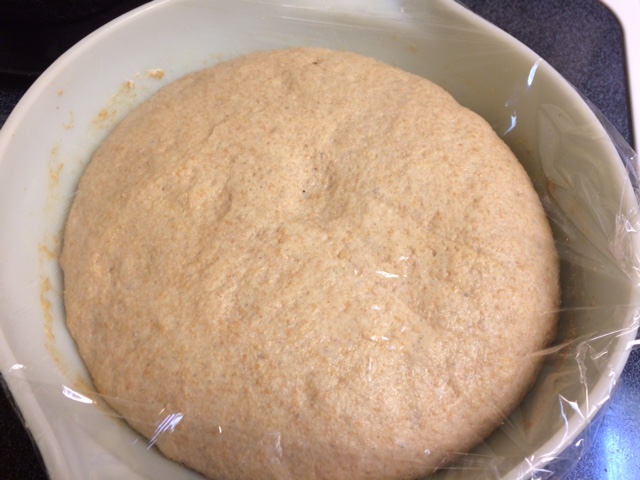
Risen pizza dough after a couple of hours--note the rich whole grain flour of local BKWFarms hard red wheat

Risen pizza dough after a couple of hours–note the rich whole grain flour of local BKWFarms hard red wheat

As for making the crust, we have the perfect source of the freshest whole grain organic flours right here from BKWFarms’ fresh-milled heirloom white Sonora & hard red wheat.

My suggestions for a Baja Arizona Pizza Crust:

Ingredients:

3 ½ to 4 cups bread flour mix  (consisting of 2- 2  1/2 cups organic hard red wheat flour from BKWFarms Marana, 1 cup pastry-milled organic heirloom white Sonora wheat flour also from BKWFarms, ½ cup organic all purpose flour from a good grocery)

2 tsp local raw honey (see Freddie the Singing Beekeeper at Sunday Rillito farmers market)

1-2 envelopes instant dry yeast (or your own sourdough starter)

2 tsp Utah ancient sea salt or commercial sea salt

1 ½ cups drinking water, heated in pyrex to between 105 degrees F and 115 degrees F

2 Tbsp organic olive oil for the dough
PLUS 2 tsp more olive oil for spreading on dough as it proofs
Pizza dough risen and kneaded then stretched and patted out on pizza pan ready for toppings

Pizza dough risen and kneaded then stretched and patted out on pizza pan ready for toppings

Directions for making Crust:

[Note–you can find several pizza dough recipes for bread mixers online.  Just substitute the above ingredients.]

Heat water and pour into a large mixing bowl.  Test for temperature then dissolve dry yeast.  Add honey and sea salt and dissolve both.  Add oil to wet mixture.  Sift flours. Gradually mix flours into wet ingredients until a mass of dough is formed and begins to pull away from sides of bowl.  Knead into a ball.  Let stand covered in a warm place until ball of dough has at least doubled in size (approx 2 hours).  Knead the ball again, divide into 2 equal parts, cover thinly with the additional olive oil, and roll out or hand-flatten the 2 dough balls out onto 2 oiled pizza pans.  Pat dough to approximately 1/4″-3/8″ thickness to the edges of pan.  At this point you are ready to add any number of good toppings.  Here are ideas for a local veggie and a local meatie pizza.
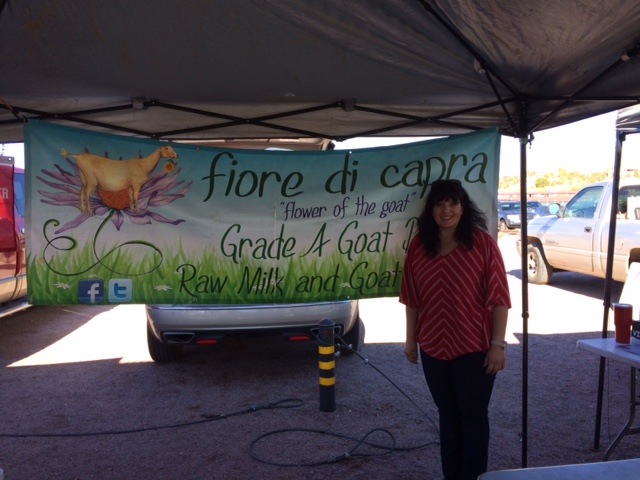
For the finest plain local carefully created goat cheese, find Fiore di Capra at Rillito Farmers Market, Sundays in Tucson

For the finest plain local carefully created goat cheese, find Fiore di Capra at Rillito Farmers Market, Sundays in Tucson

Baja Arizona Pizza Toppings

Ingredients for local Veggie Pizza toppings:

1/2 pt. spreadable goat cheese (I use Fiore di Capra’s plain)

local chard or acelgas (from Mission Garden) torn in pieces

local tomatoes, sliced

I’itoi’s Onions, chopped

heirloom garlic, minced

1/2 cup reconstituted cholla buds, sliced in half or quarters

1/2 cup diced nopalitos 

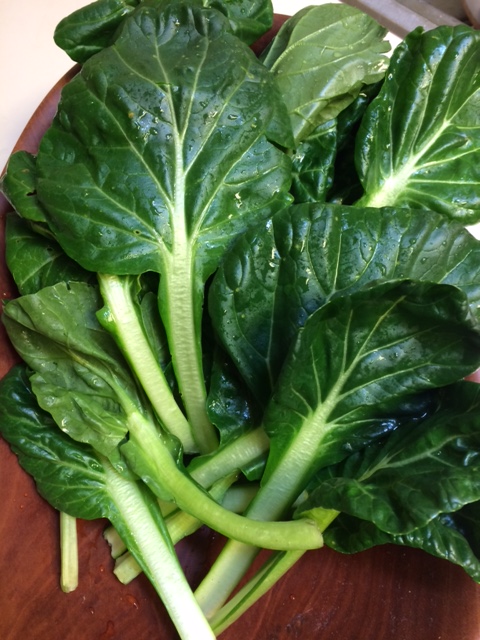
Fresh Chard (acelgas) from a refugee friend's garden--a great substitute for spinach in a pizza!

Fresh Chard (acelgas) from a refugee friend’s garden–a great substitute for spinach in a pizza!

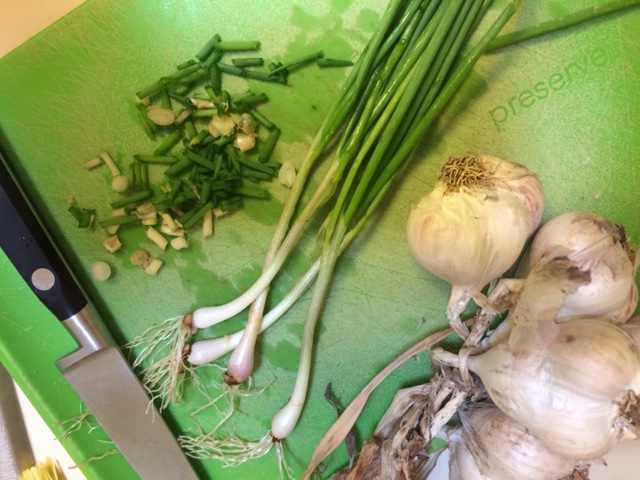
Native I'itoi's Onions and local heirloom garlic from my garden for pizza topping

Native I’itoi’s Onions and local heirloom garlic from my garden for pizza topping

1/2 cup local oyster mushrooms, sliced

1/4-1/2 cup salsa, optional

Luscious oyster mushrooms from Maggie's Farm (Rillito Farmers Market) to cut in strips for pizza

Luscious oyster mushrooms from Maggie’s Farm (Rillito Farmers Market) to cut in strips for pizza

[You probably by now have some ideas of your own to add!]

Ingredients for Meatie Baja Arizona Pizza toppings:

1/2 pt goat cheese

1/2 lb local chorizo sausage, loosely fried

or, 1/2 lb local grass-fed beef hamburger, loosely fried and spiced with I’itoi onions, garlic, salt

1/2 cup tomato&pepper salsa of choice (mild, chilpotle, etc)

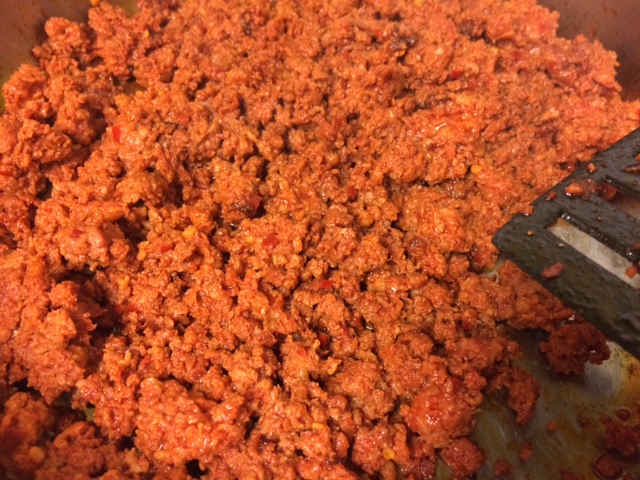
Fresh local pork chorizo to render before putting on pizza dough

Fresh local pork chorizo to render before putting it on the pizza dough

Directions for Toppings:

Layer your toppings artfully, beginning by spreading the goat cheese evenly over the patted-out crust dough.  For a local Veggie Pizza, scatter minced garlic and chopped I’itoi’s onions evenly atop the goat cheese layer.  Place torn leaves of fresh acelgas over the onion/garlic layer.  Add sliced tomatoes, sliced mushrooms, sliced cholla buds, diced nopalitos.  Top with optional salsa.  For a Cholla&Chorizo Meatie Pizza, do a similar layering beginning with goat cheese spread over the crust dough, then scattered I’itoi’s onions and garlic, then a full layer of cooked chorizo, and topped by lots of sliced cholla buds.  Adding salsa over all is optional for making a juicier pizza.

Preheat oven to high 425 degrees F.  Bake both pizzas 20-24 minutes or until the crust begins to turn more golden.  You won’t believe the flavor of the crust alone on this local pizza–and the delicious toppings grown right here in Baja Arizona are better than “icing on the cake”!  You can add more spice and zing by crushing our native wild chiltepin peppers on your pizza–but be forewarned–they might blow your socks off.

Home-grown chiltepin peppers crushed and ready to spice up a local pizza--Look out for a wave of picante heat even with a small pinch!

Home-grown chiltepin peppers from my garden, dried, crushed and ready to spice up a local pizza–Look out for a wave of picante heat even with a small pinch!

Here’s wishing you a great local pizza party!

How could you top this Baja Arizona Pizza?!!! Our locally grown and wild desert-harvested ingredients can't be beat by any other veggie pizza!

How could you top this Baja Arizona Pizza?!!! Our locally grown and wild desert-harvested ingredients can’t be beat by any other veggie pizza!

What a great combination--wild-harvested cholla buds, local chorizo, Fiore di Capra goat cheese, and truly flavorful organic wheat flour crust!

What a great combination–wild-harvested cholla buds, local chorizo, Fiore di Capra goat cheese, and truly flavorful organic wheat flour crust!

Buen provecho from Tia Marta!  See you when you visit http://www.flordemayoarts.com.


Chapulines (Grasshoppers) con Mole

20160924_080146

On a late season prickly pear harvesting trip, my friend Nicole and I found few tunas but lots of grasshoppers. I’ve always wanted to try chapulines, but never had the opportunity. Nicole learned how to harvest them this summer, so we attempted ourselves.

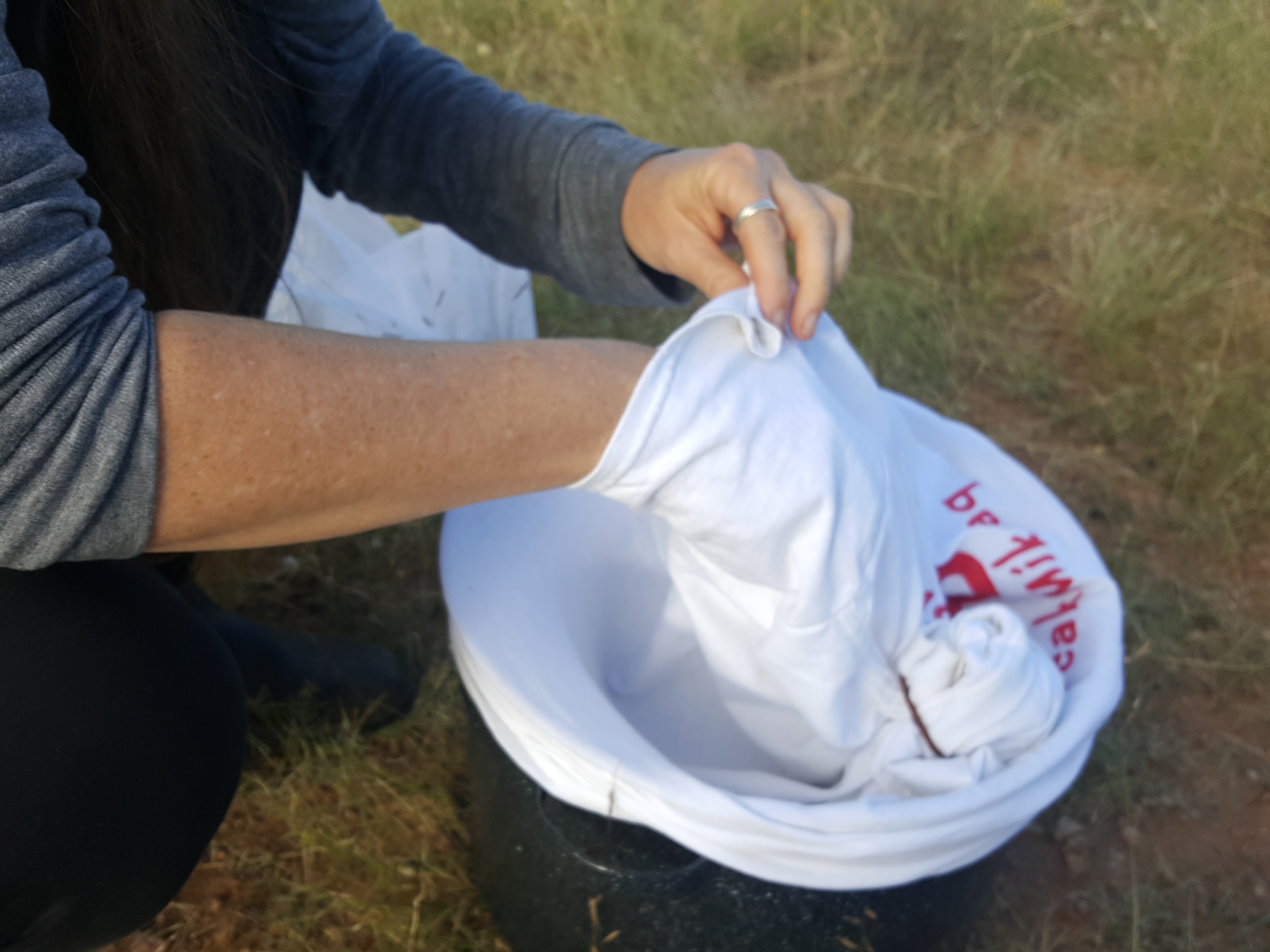
Catching them is the trick! When the sun is up, they are fast. We managed to flush some out of the grass into a clearing, toss a big straw hat over one, and grab it by hand. We bagged three, not even enough for one taco. As the sun set, they stopped jumping but were too hard to see in the grass in the low light. We returned with nets. In the cool early morning they weren’t active enough to jump into the nets but were easier to see; we tossed the net over one, and grabbed it by hand. As the day warmed, they got too fast for that method, and sweeping the grass with the net was more successful. Yes, it’s slow, but fun. Plus a beautiful day in the desert.

Nicole fashioned an way to hold our catch without letting any escape when we caught another.

20160924_080408

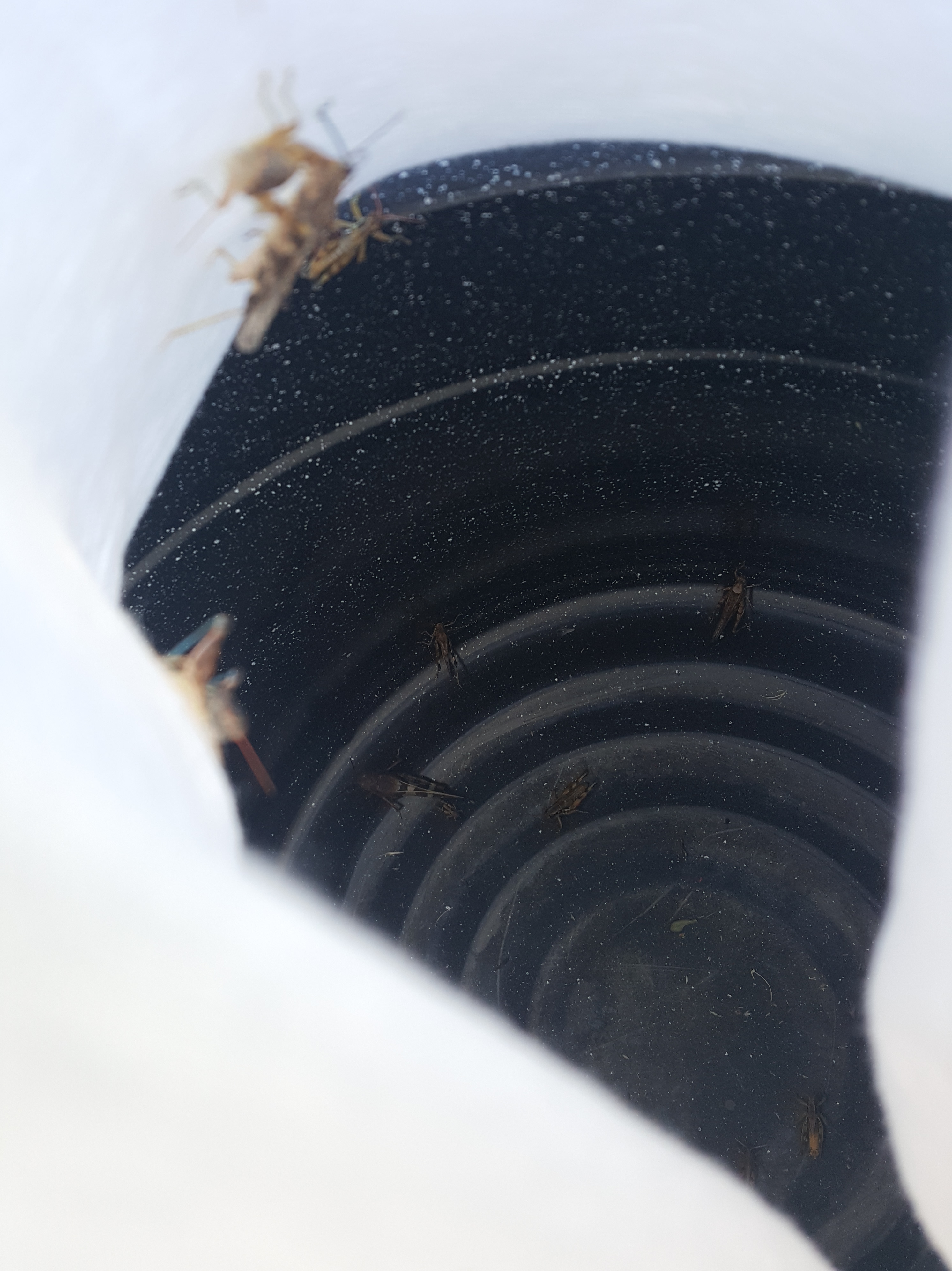
Here they are inside. While they hopped around, they emptied their digestive tracts.

20160924_080353

At home we put the whole container in the freezer.

20160924_093610_001

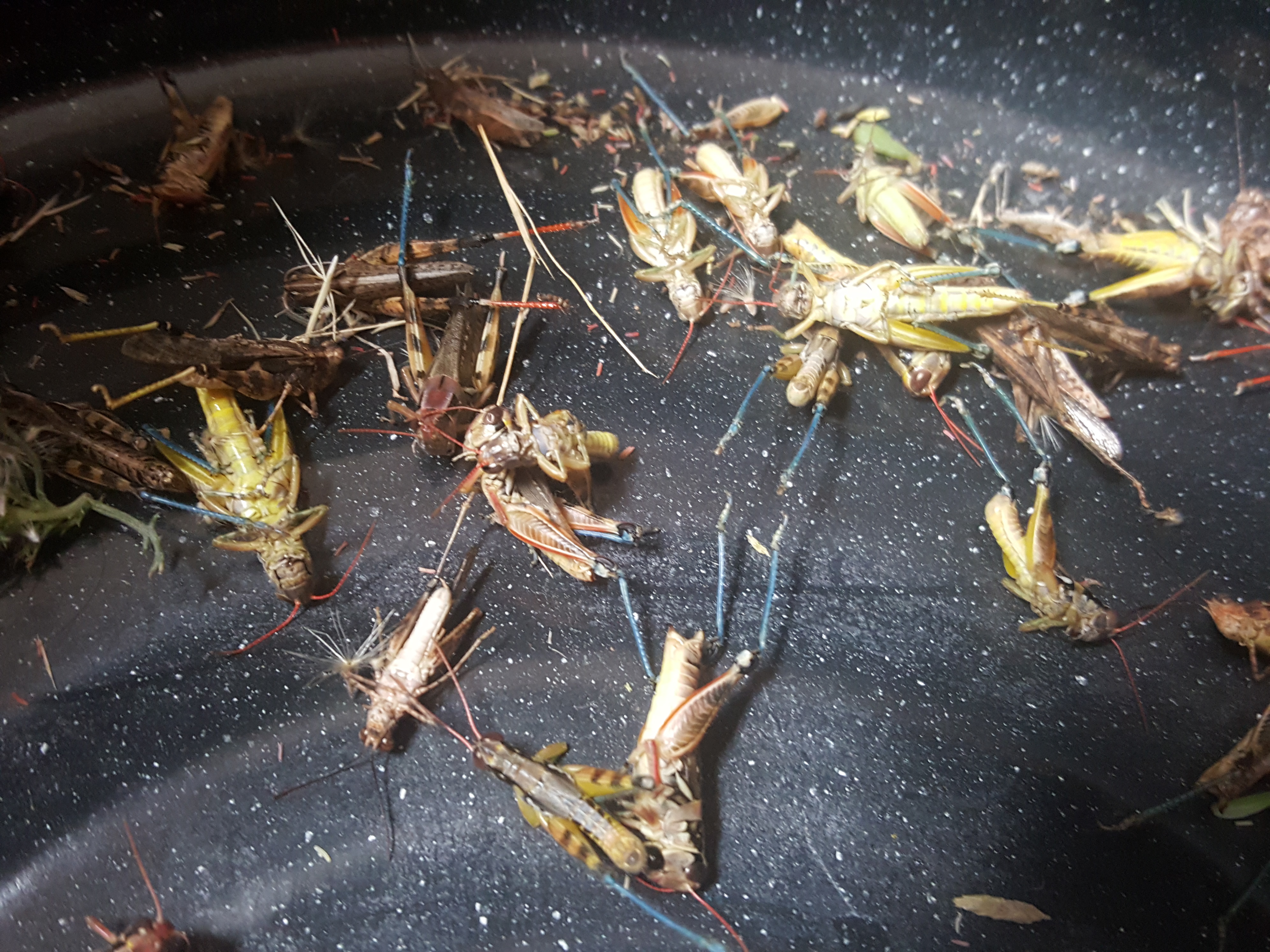
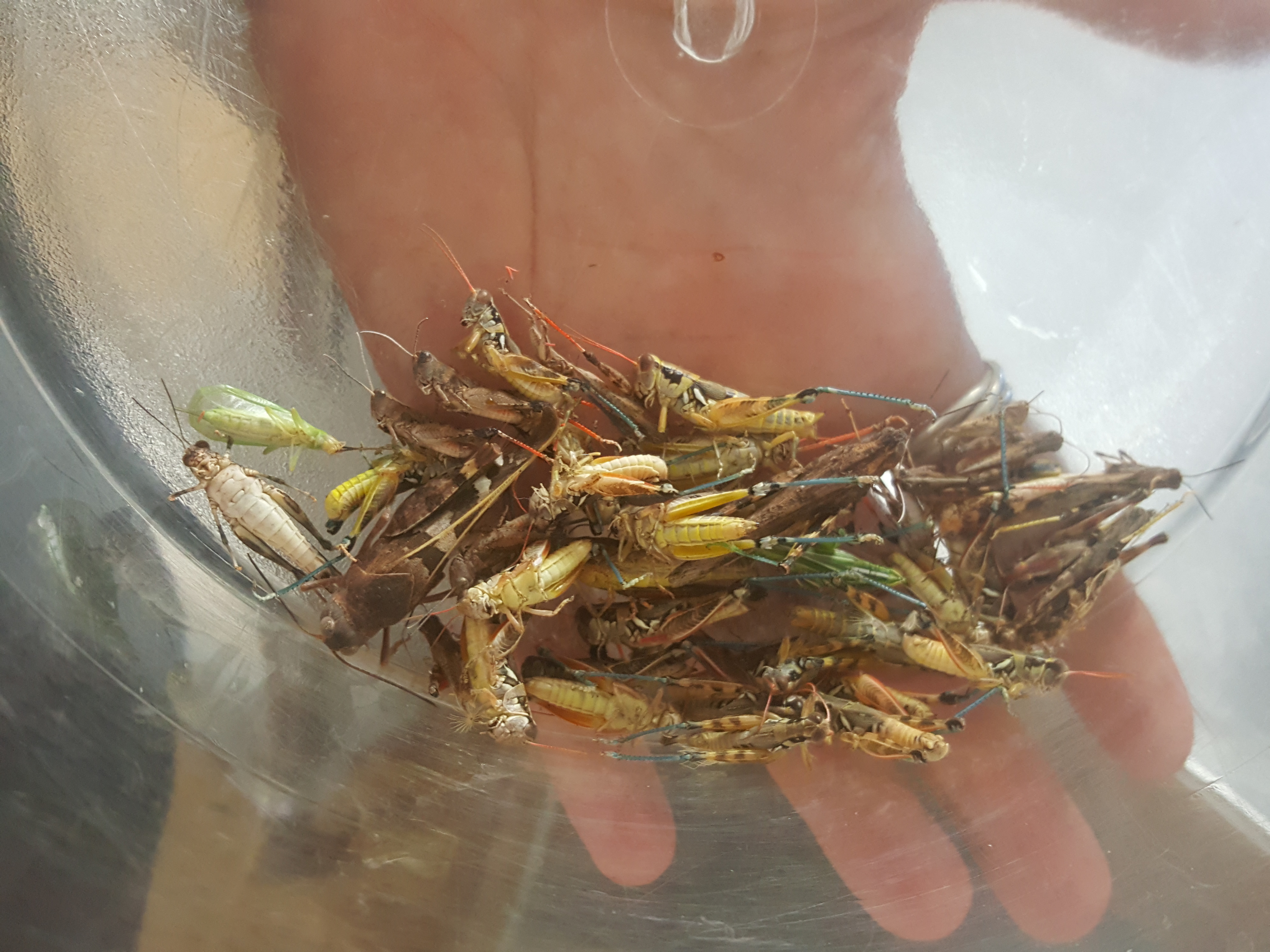
Then we picked them out of the grass seeds and debris. So beautiful.

20160924_093906

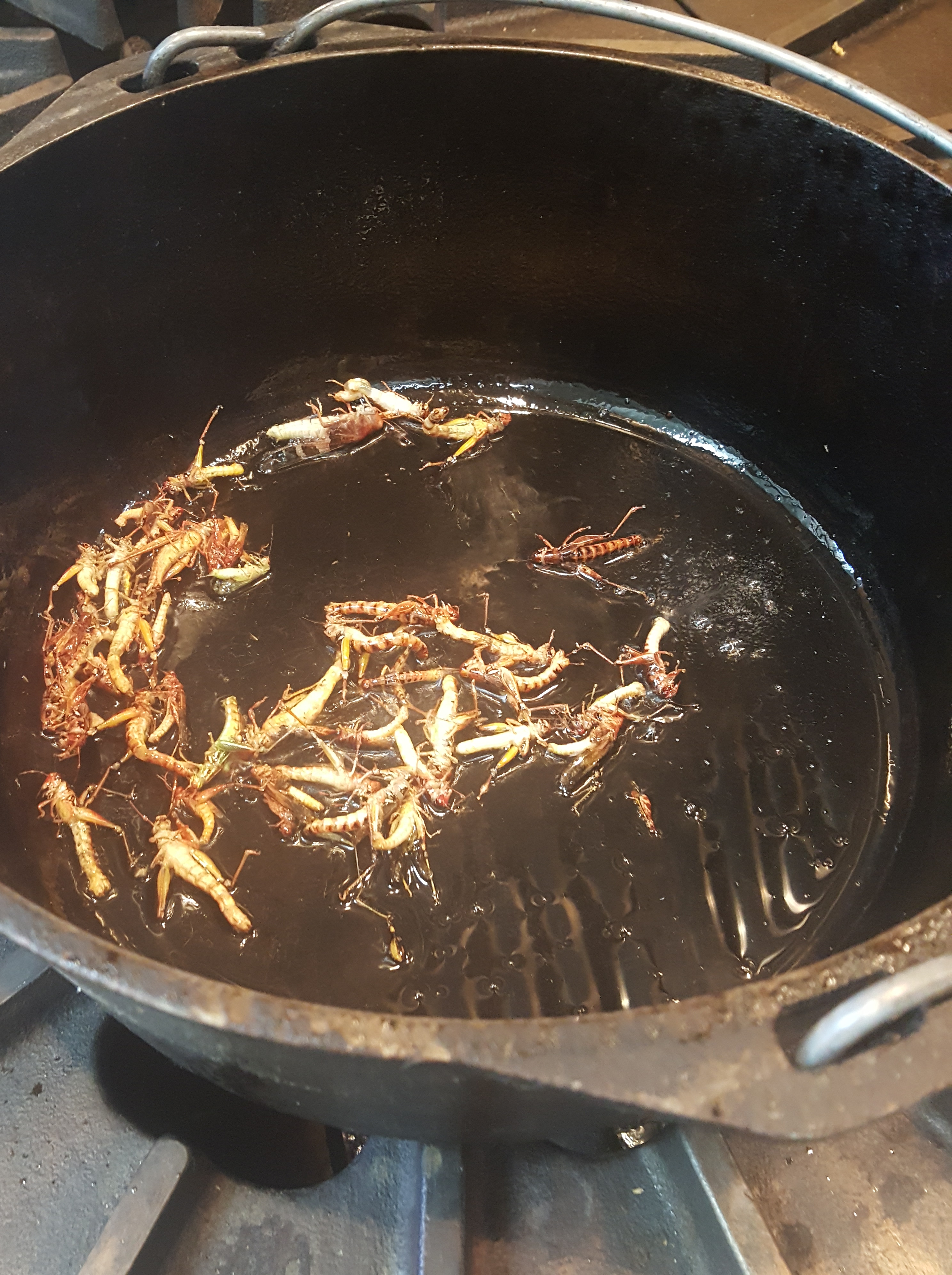
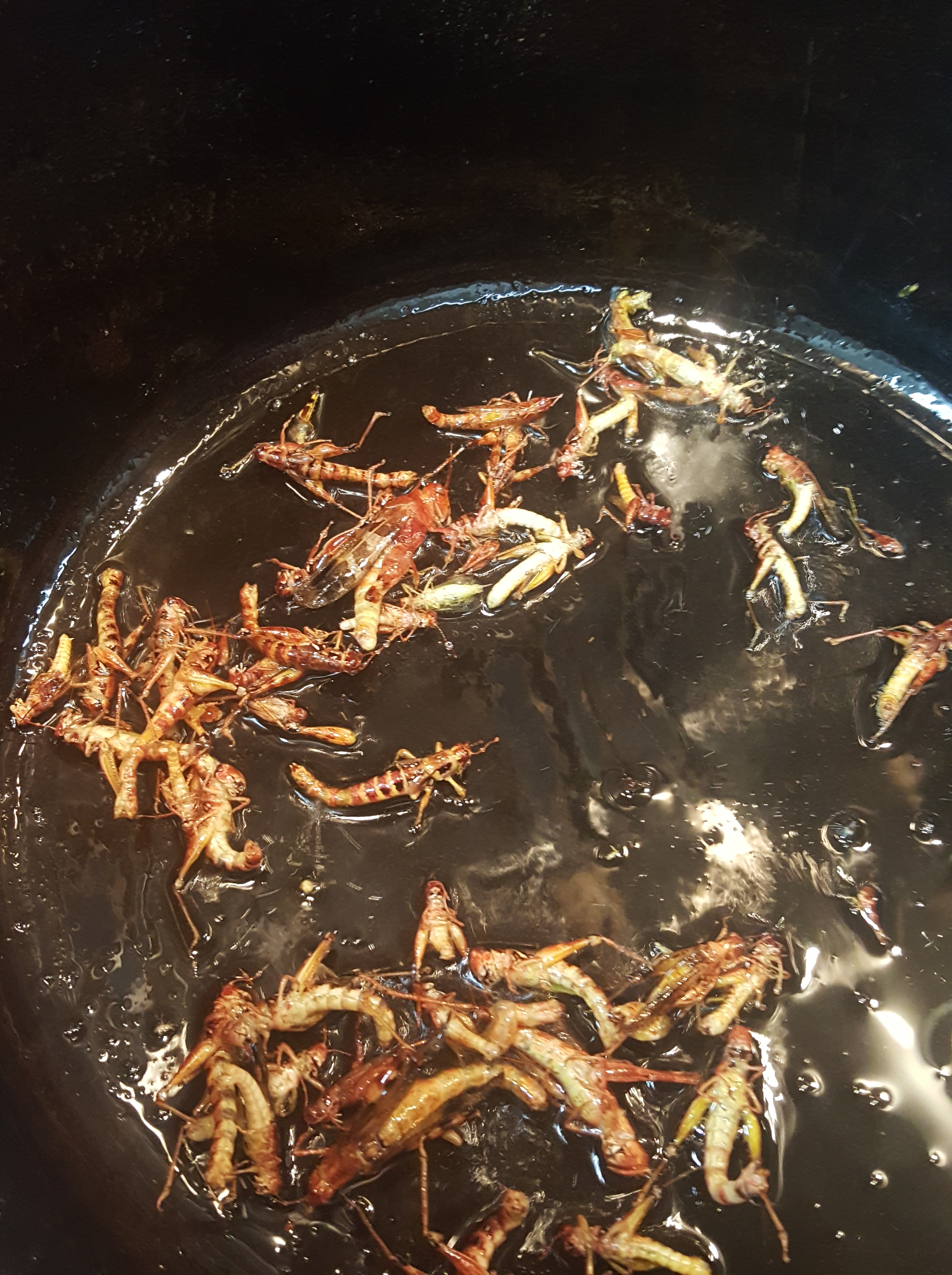
We melted a little duck fat a cast iron pan and fried the chapulines.

20160924_093938

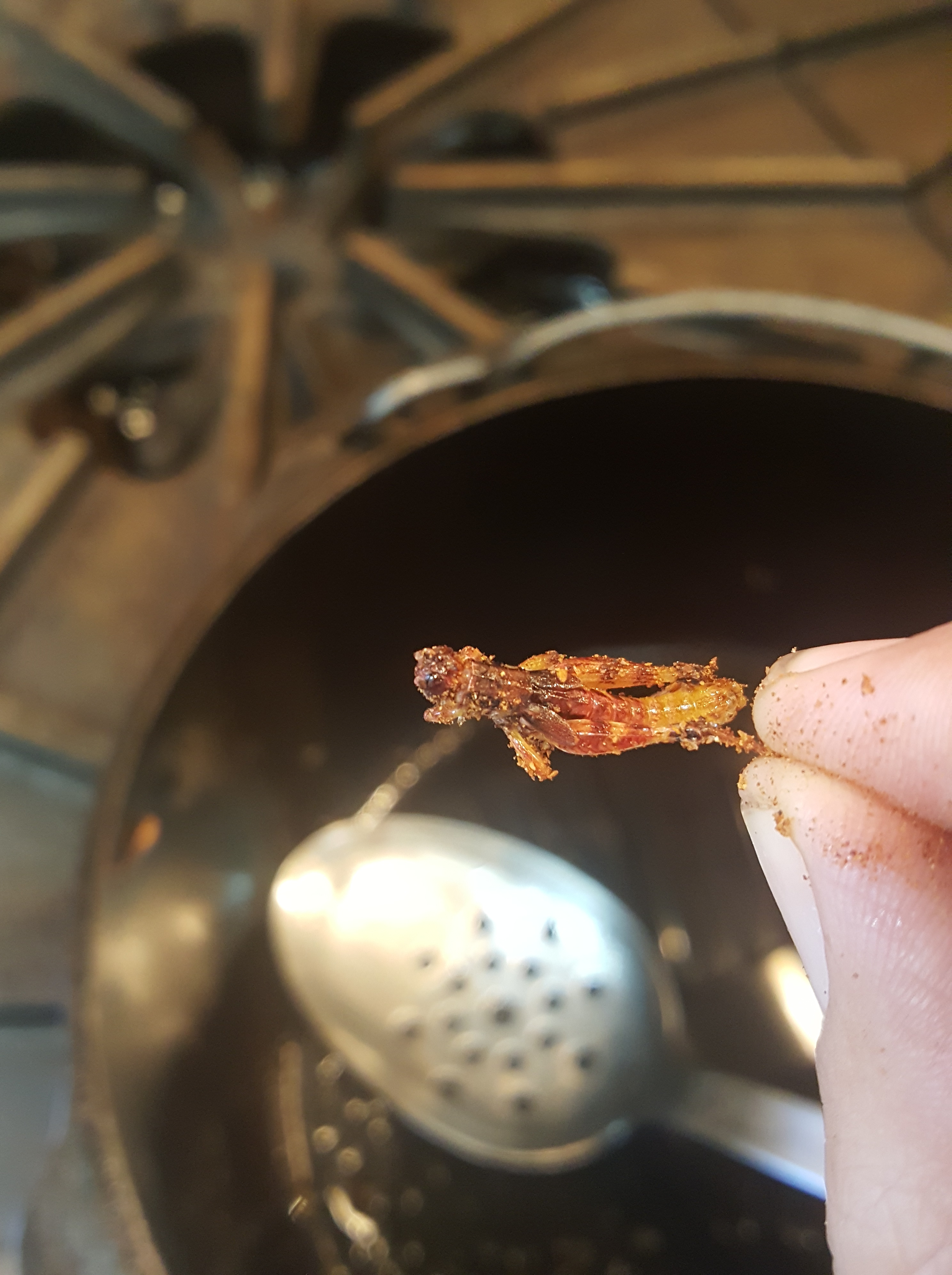
This is when they turned from animals to food, and the only moment in the process that made me a little uncomfortable. We let them get really crispy.

20160924_093953

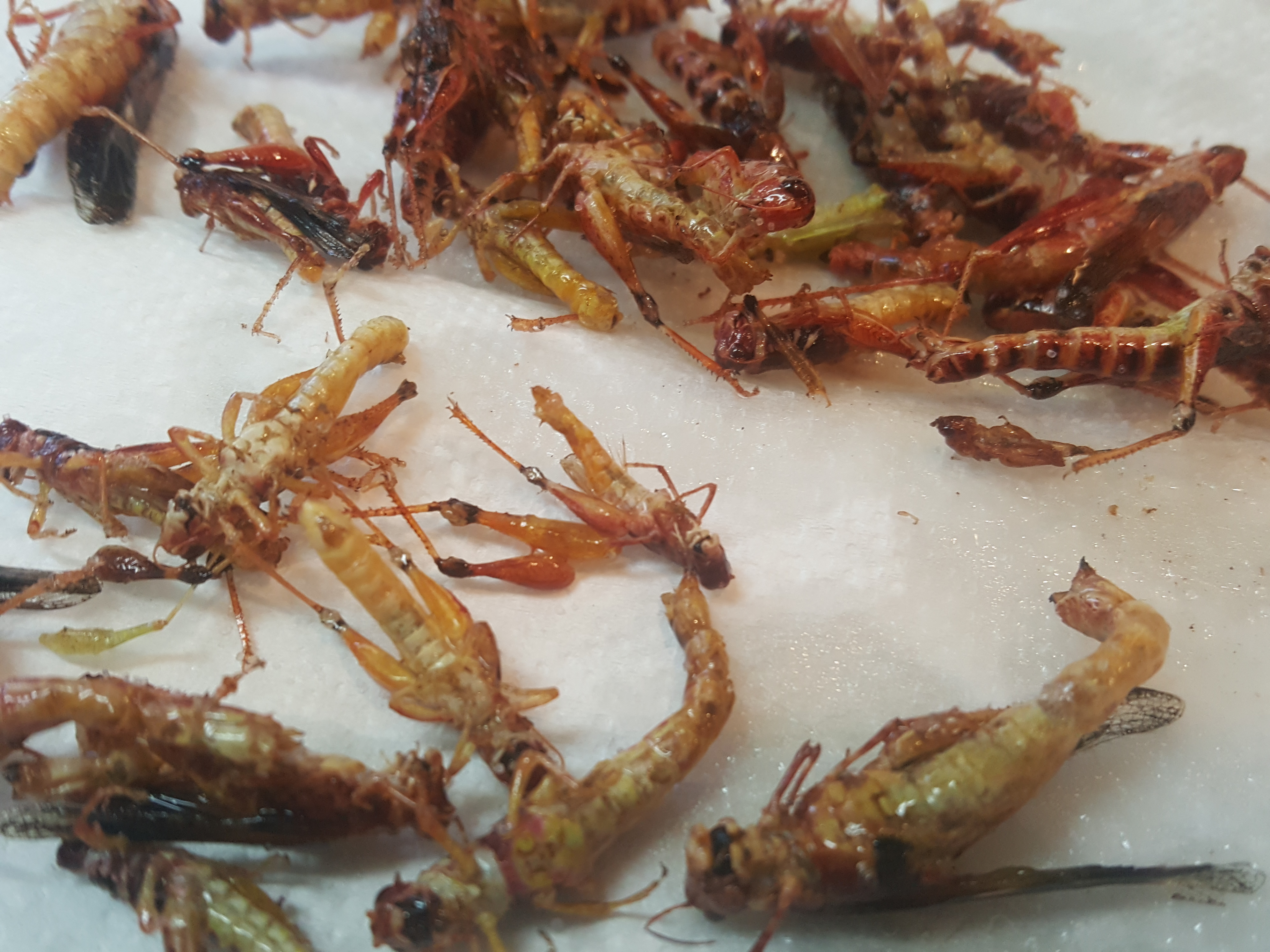
But after all that work, I needed to at least try them. Nicole knew from previous experience to eat the small ones whole, but remove the wings and legs from the larger ones.

20160924_094229

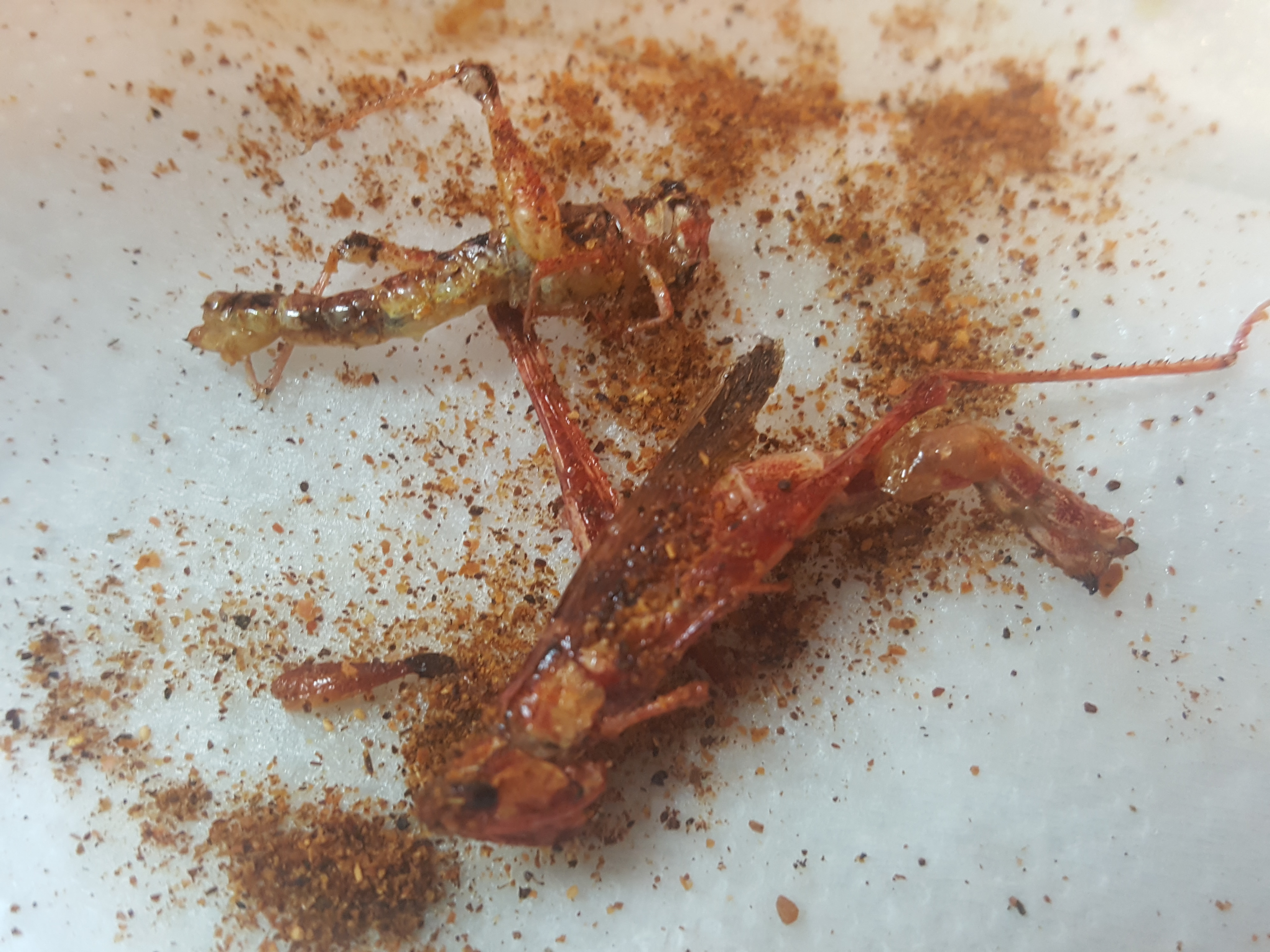
YUM!!!! Crispy fried meat. Then we dusted them with Mano Y Metate mole powder, of course.

20160924_094826

20160924_095149

Delicious, abundant, local, free. We’ll do that again!

The Best Mesquite Brownies

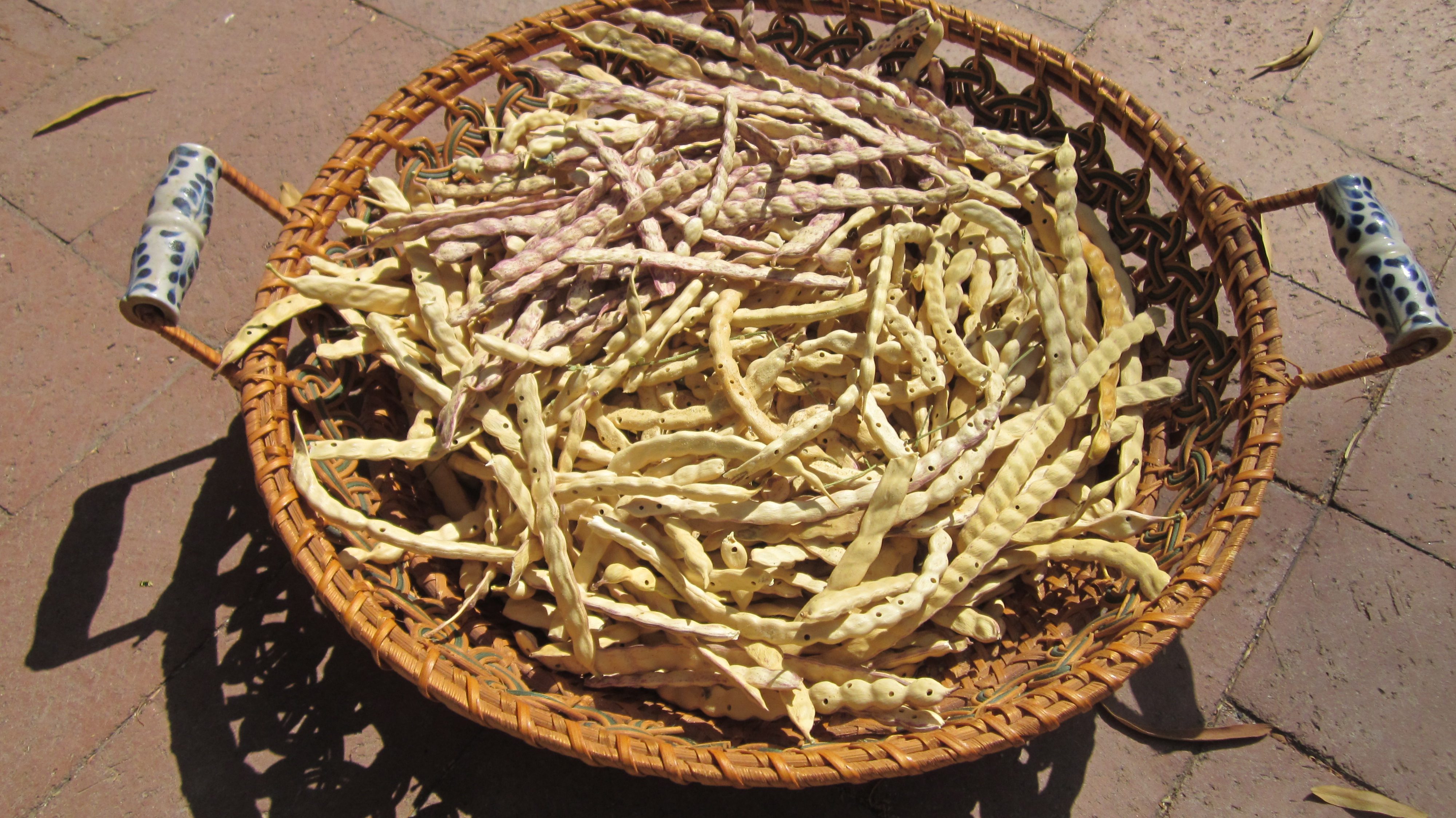
Carolyn Niethammer with you here today talking about one of my favorite subjects, mesquite meal. The first crop of mesquite pods ripened early this year on the lower desert. Here in Tucson, Desert Harvesters sponsored a milling in June. (A milling is this miraculous process of putting whole pods in a hammermill and getting lovely, silky flour at the end.) Because of the early summer rains, there is a huge second crop of pods ripening on the trees now(see the photo above). If you missed the first round, there will be opportunities to get your pods ground in communities throughout Arizona later in the fall after the weather has dried out.

Dry mesquite pods ready for milling.

Dry mesquite pods ready for milling.

So what to do with all that mesquite meal after you have had your fill of pancakes?

I have been cooking with mesquite pods since the early 1970s and have published in my cookbooks lots of recipes using the ground pods. But until now, I’ve never been completely satisfied with a mesquite brownie recipe. But this one that I made for a potluck at Native Seeds/SEARCH earlier this summer is close to perfect. I used pepitas (hulled pumpkin seeds) because I think the flavor goes well with mesquite, but pecans would work too. If you cannot bear to bake anything without chocolate, feel free to toss in some chocolate chips and maybe a little cocoa powder as well. The familiar warm flavor of mesquite will still come through.

The recipe has a considerable amount of fat and sugar, but those are the ingredients that make up what we consider a proper brownie. Just go easy on how many you eat.

If you aren’t up to making your own mesquite meal, you can purchase it from the Native Seeds/SEARCH retail store or order on-line from NS/S or Flor de Mayo. Mesquite meal is also available at farmers’ markets throughout Arizona.

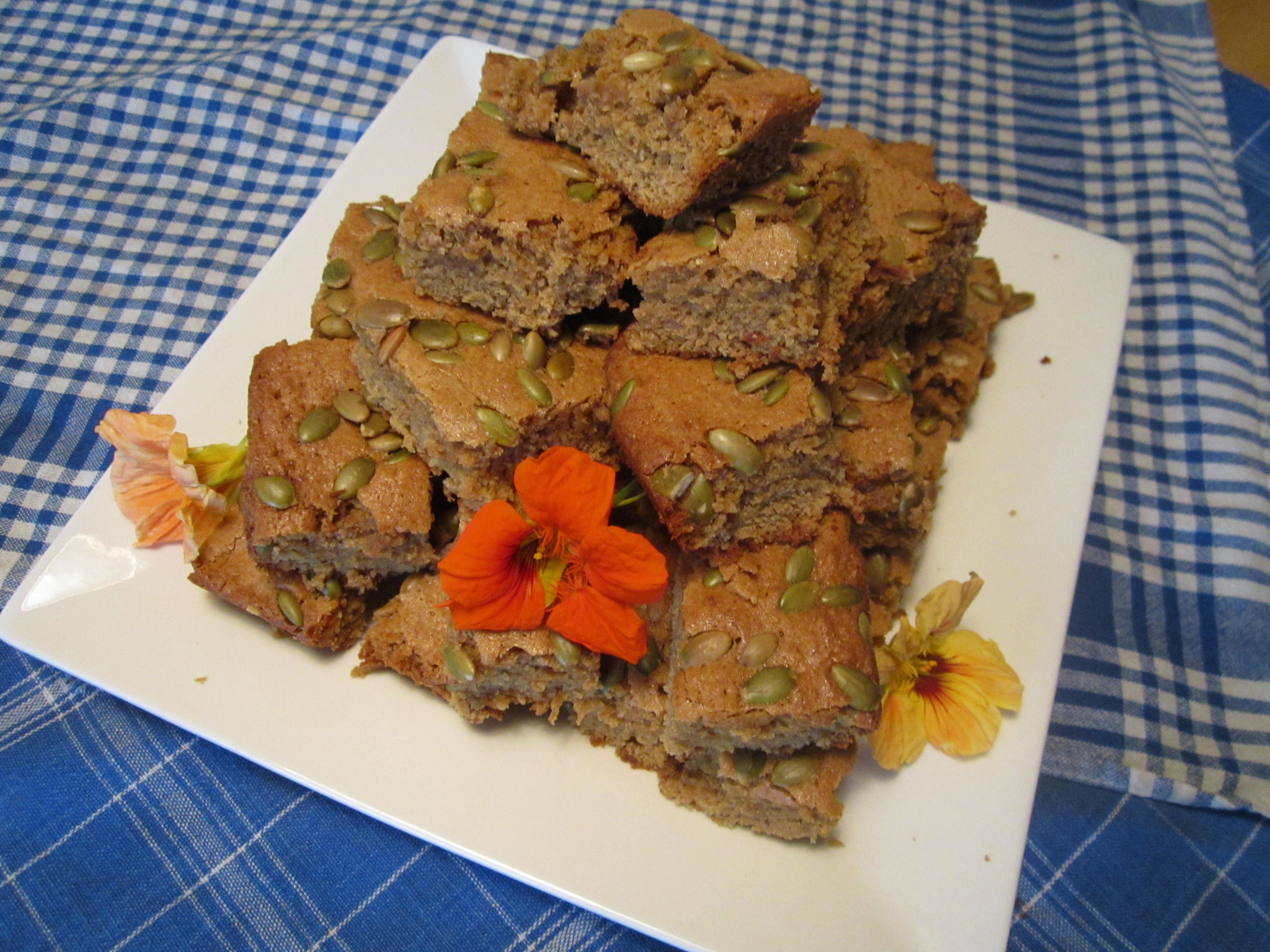
Ummm, don't these look good?

Ummm, don’t these look good?

Best Mesquite Brownies

2/3 cup melted butter

1/4 cup vegetable oil

3/4 cup mesquite meal

2 cups brown sugar

4 eggs

2 teaspoons vanilla extract

1- 1/2 cups all-purpose flour

1 teaspoon baking powder

1 teaspoon salt (if using unsalted butter)

1/2 cup pepitas or chopped pecans

2/3 cup semisweet chocolate chips (optional)

  1. Preheat oven to 350 degrees and grease a 9×13-inch baking pan. Set aside.
  2. In a medium bowl, combine mesquite meal, flour, baking powder and salt if using. Set aside.
  3. Combine melted butter and oil in a large bowl. Stir in sugar and add eggs, one at a time, combining well after each addition. Stir in vanilla.
  4. Stir in mesquite and flour mixture. Add chocolate chips if using.
  5. Spread batter into the prepared pan. Bake at 350 degrees for 25 to 30 minutes or until a toothpick inserted near the center comes out clean. When cool, cut into squares.

__

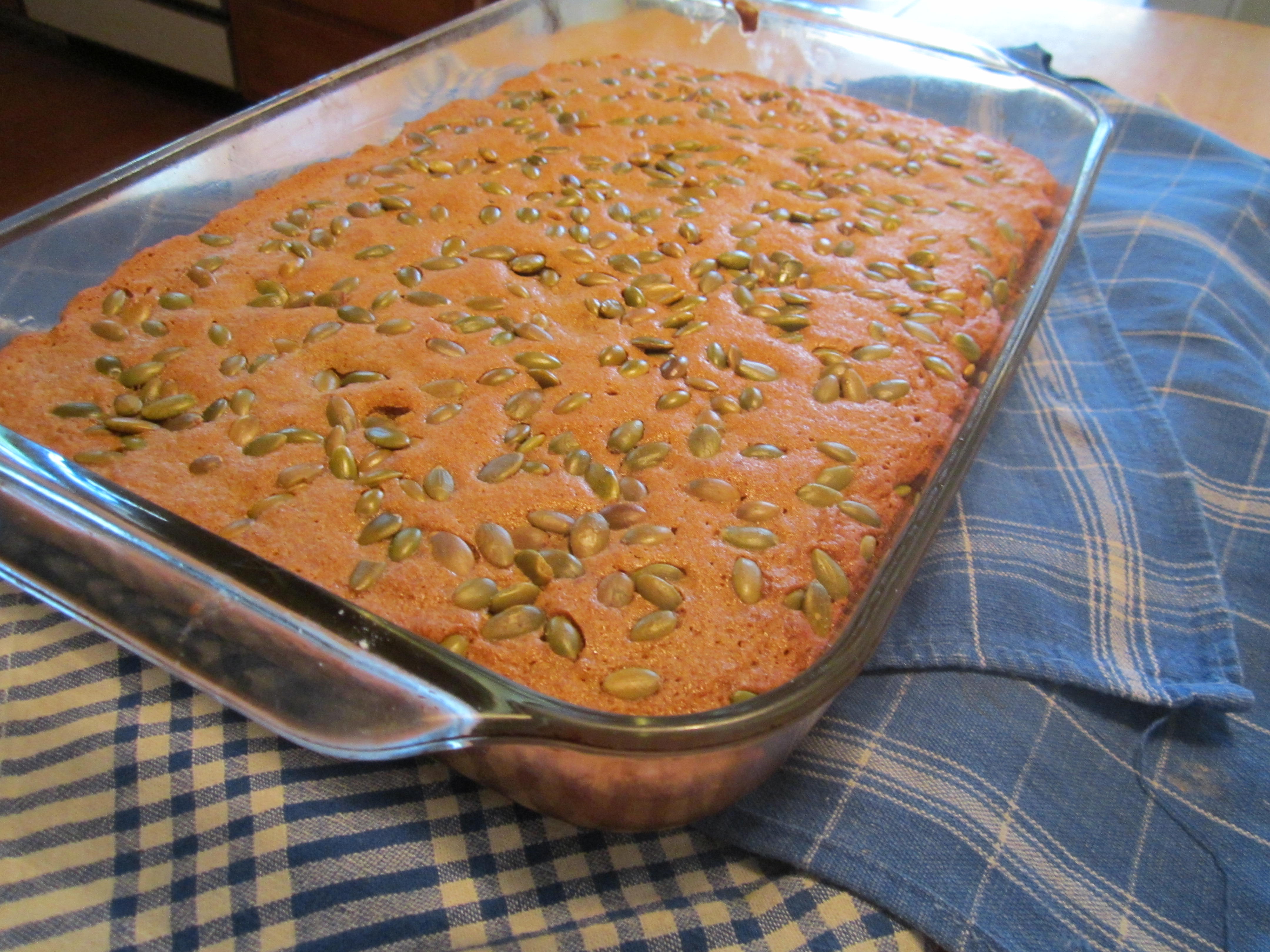
Cooling in the pan, ready to cut into squares.

Mesquite brownies cooling in the pan, ready to cut into squares.

____________________________

Want more recipes for mesquite meal? Check out my cookbook Cooking the Wild Southwest: Delicious Recipes for Desert Plants available at Native Seeds/SEARCH or from Amazon or B&N.  There you’ll find my favorite recipes for Apple-Mesquite Coffee Cake and a killer Banana Mesquite layer cake.

Promise, Preparedness, Present Fulfillment–with Fruits of the Desert

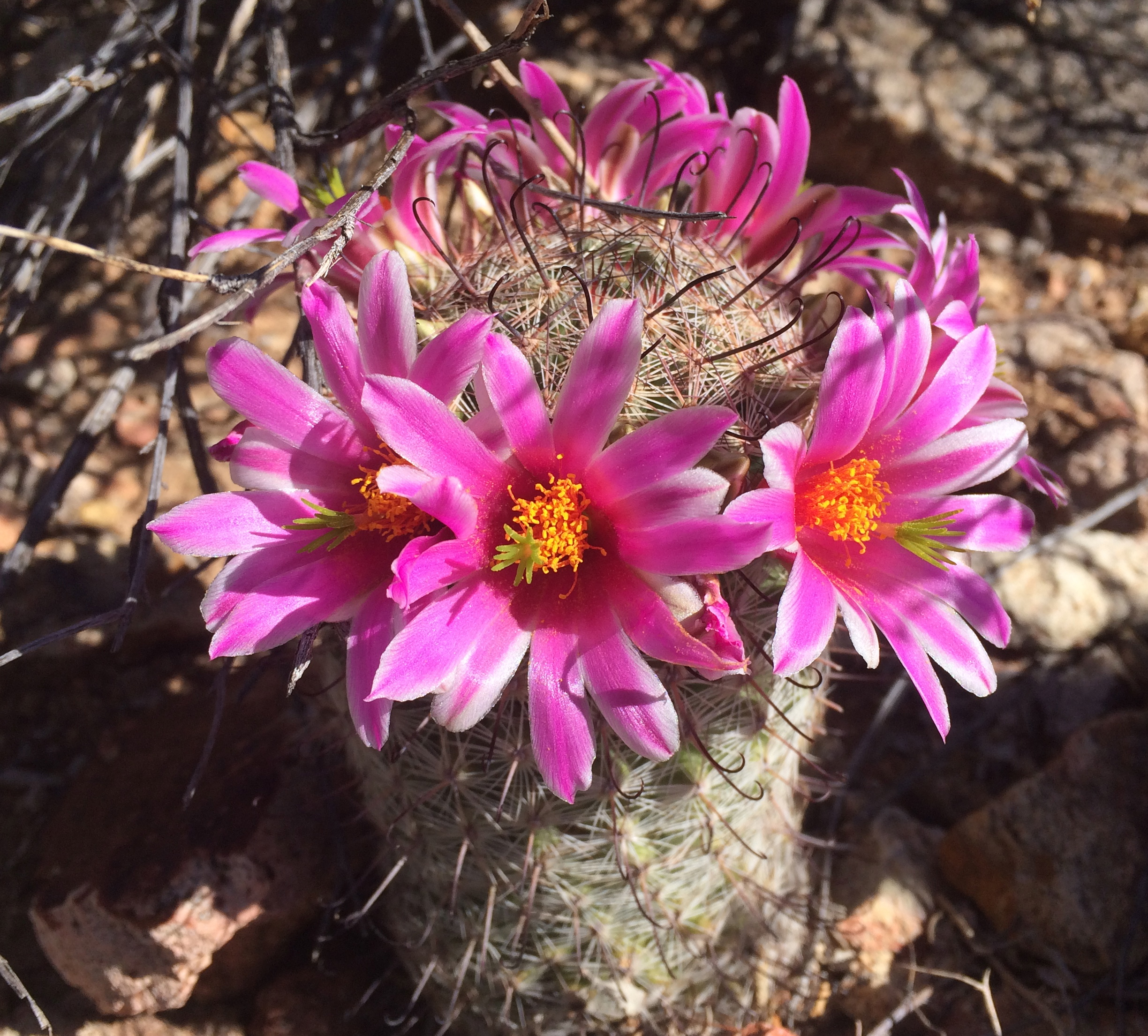
small fishhook Mammillaria microcarpa celebration the monsoon with a promise of future fruitlets (MABurgess photo)

Fishhook Mammillaria microcarpa celebrating the monsoon with a promise of future fruitlets (MABurgess photo)

Crowns of Mammillaria flowers make pink arches like miniature 4th of July fireworks now suddenly visible among desert rocks and under greening bursage.  They are rain celebrations–the PROMISES of fruits to come!  In a few weeks the little fishhook pincushions will sport a crown of shiny red fruitlets.  Keep watch for them.  Known in Sonora as pitayita de raton (little mouse’s pitaya), each long red droplet will give you a sweet tangy zing– like a mini-organpipe-cactus fruit.  Tia Marta here to share ways of enjoying the cornucopia that is beginning to spill out flavorfully all around us in town and out in the desert in this monsoon time.

Late fruiting prickly pear--still green and full of promise

Late fruiting prickly pear–unripe green but full of promise this week (July 8)

Opuntia lendheimeri alba barely turning pink--more promises...

Opuntia lindheimeri alba barely turning pink this week–more promises…(July 8)

Opuntia engelmannii in first stages of ripening...

Opuntia engelmannii in first stages of ripening…not yet (week of July 8)

All around the desert and through every neighborhood, I see the promise of a good prickly pear harvest, inspired by our elongated spring and nurtured by good monsoon rain.  Each prickly pear seems to march to a different drummer.  Right now you can see every shade of color–unripe to ripening tunas–very green, to rosy, to deepening red.  These are PROMISES so don’t jump the gun!  They are not ready quite yet–but this is the signal to get your kitchen PREPARED.  Stay tuned–There will be more blog posts to detail prickly pear ideas in coming weeks.  Make space now in your freezer, and make time on your calendar for the August TUNA HARVEST.


Opuntia engelmannii in full ripening fruit--but not ready yet!

Opuntia engelmannii full of ripening fruit–But don’t salivate yet (week of July 8)!  Wait for a dark maroon color to extend all the way to the bottom attachment of the tuna AND through the tuna‘s entire interior before they are fully ripe and ready to eat or cook.

What a glorious monsoon our Sonoran Desert has enjoyed over the last couple of weeks!  The explosion of life in such a short time is astounding on the heels of record-breaking heat and drought.  This is when the desert shows its tropical heritage with a surge of energy, fecundity, productivity.  Isn’t it interesting that the “outsider’s” view of the desert is of hazardous scarcity?  More interesting instead is to understand and appreciate the waves of nutritious plenty that can erupt suddenly here in the Sonoran Desert.  Native People know how to rally, to harvest in the times of plenty and to store short-lived fruits of the desert against lean times–lessons worth exercising.   Plentiful foothills palo verde seeds (Parkinsonia microphylla) are a case in point.

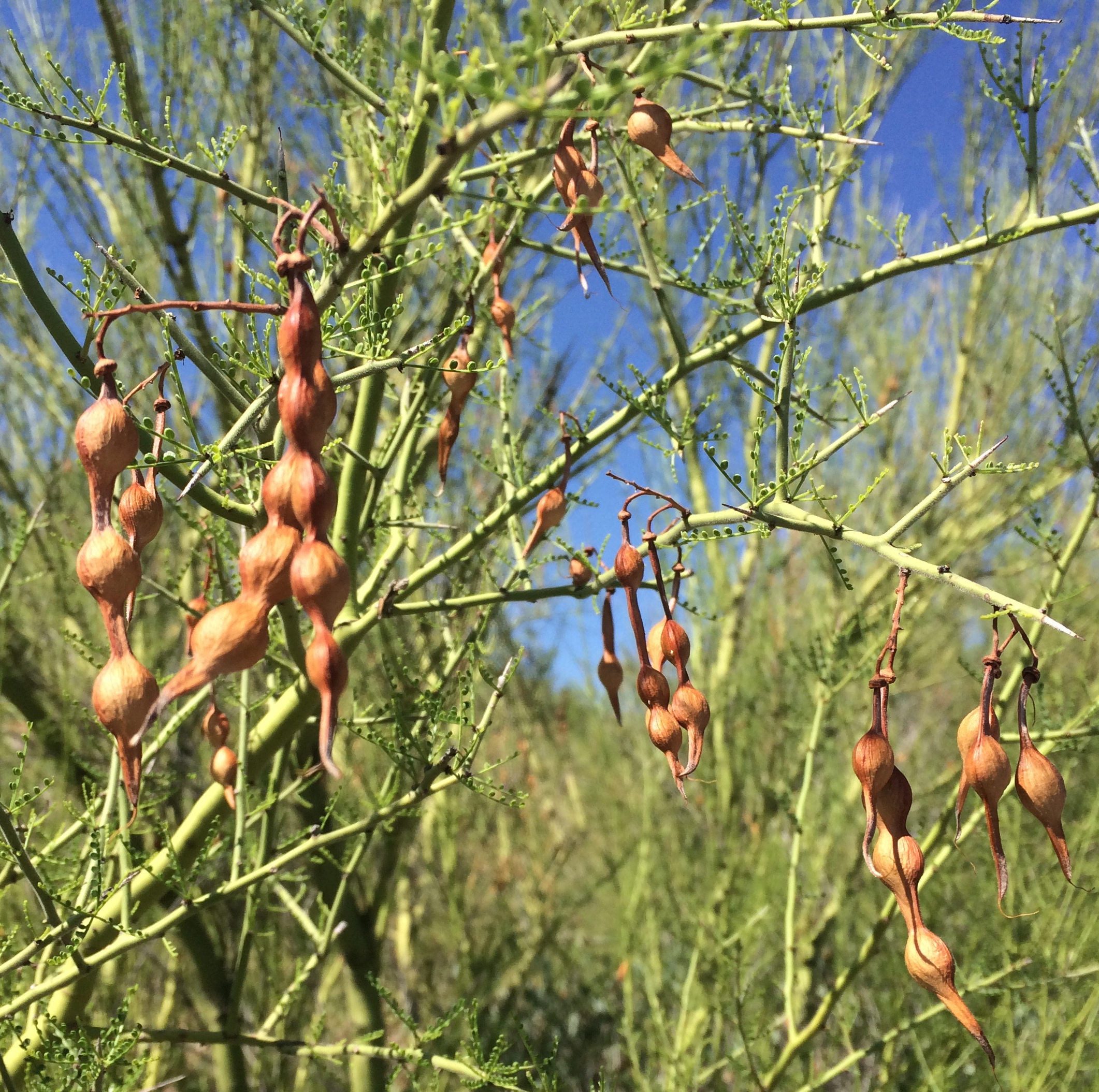
Mature dry pods of foothills paloverde--They have potential for making flour!

Mature dry pods of foothills paloverde–with potential for making nutritious flour!

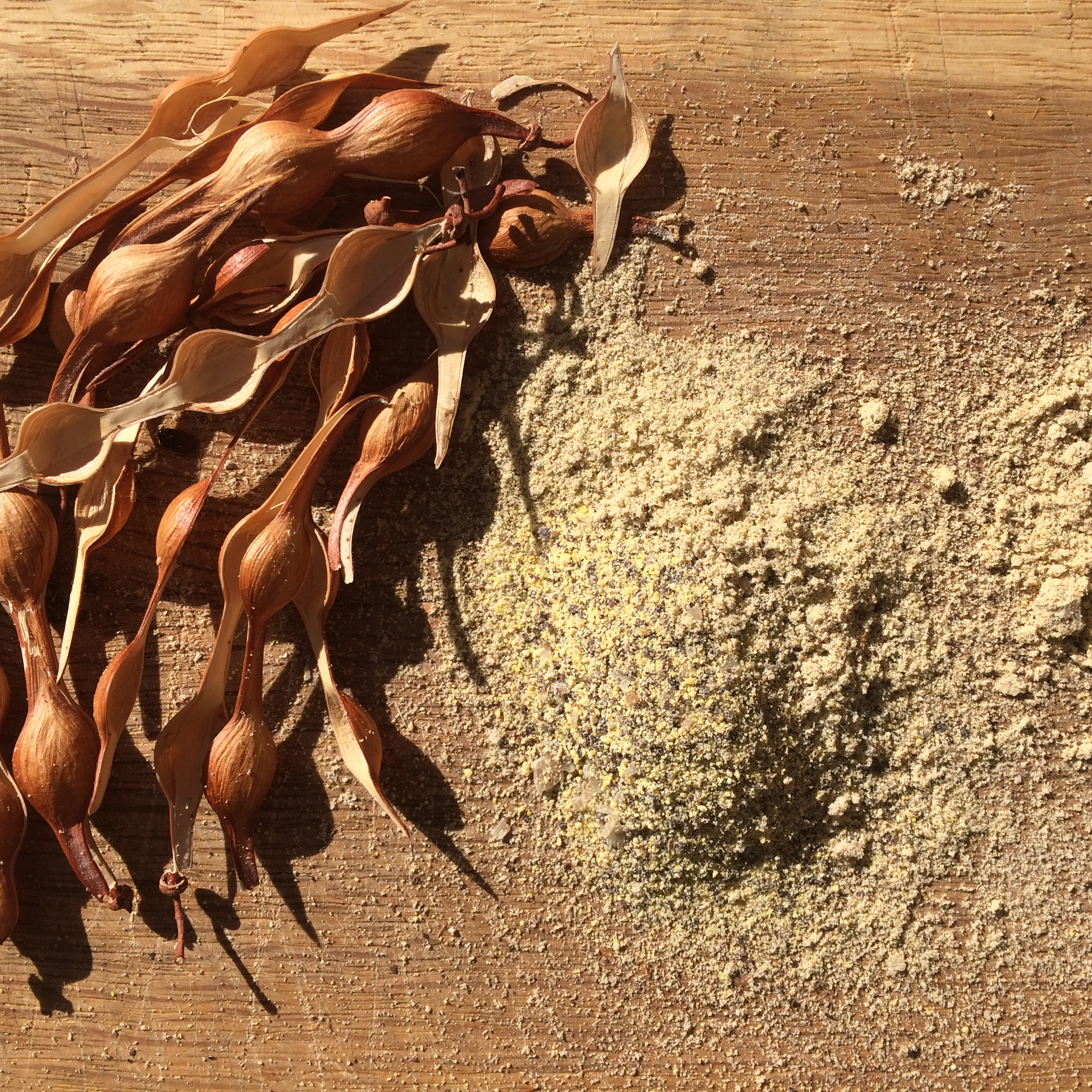
Foothills palo verde seed milled raw for baking

Foothills palo verde seed milled raw for baking

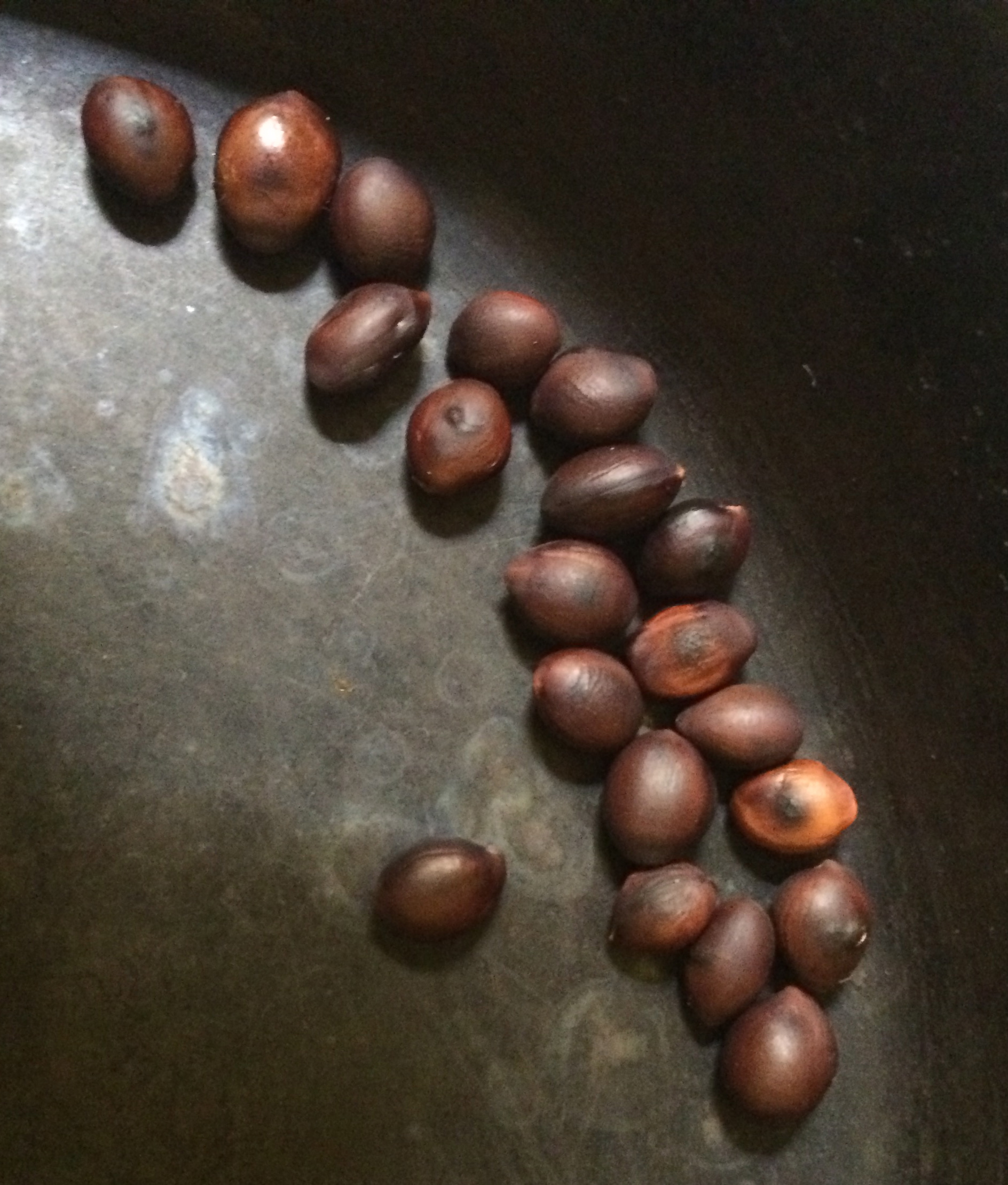
Seeds of foothills palo verde dry and hard as little stones

Seeds of foothills palo verde– dry and hard as little stones


At PRESENT, lasting perhaps through July, there are copious “fruits-of-the-desert” hanging on foothills palo verde trees (aka little-leaf paloverde) covering desert hillsides.  In early June, palo verde pods were offering soft sweetpeas for fresh picking (described in the June13,2015 Savor blog on this site).   Now in July, palo verde pods are rattling with shrunken stone-hard seeds.  When ground, or when toasted and milled, these little dry seeds can produce two fabulous gluten-free flours for adding to baked goods, hot cereal, gravies etc.

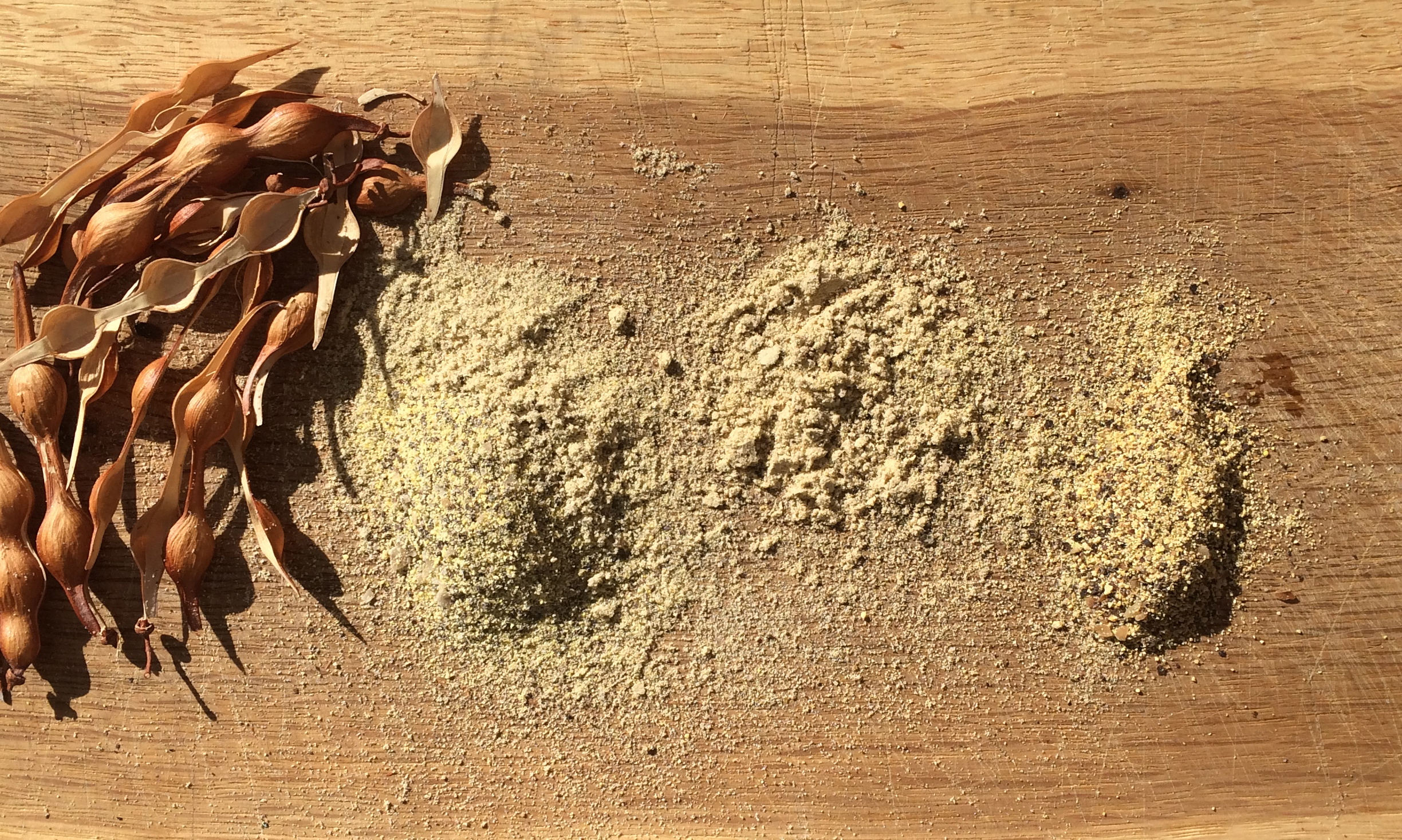
Dry foothills palo verde seed milled raw on L, toasted and milled fine in center, toasted coarse-milled on R

Dry foothills palo verde seeds:  milled raw-Left; toasted and milled fine-Center; toasted & coarse-milled-Right

Foothills palo verde seed toasting in a dry iron skillet

Foothills palo verde seed toasting in a dry iron skillet

Oh how I wish that technology could keep up with our needs for scratch, sniff, and taste in this blog!!  The distinctly different flavors and textures of these two flours are so pleasant.  Desert People traditionally parched and ground these seeds in bedrock mortars.  I used a coffee mill to grind them.  The raw flour has a wonderful bean-i-ness bouquet coming through.  Then I toasted (parched) a separate batch of seeds in an un-greased skillet before milling, and WOW the roasty aroma of this gluten-free flour is rich.  I am using it to add flavor –not to mention high protein and complex carbs–to multigrain breads and biscuits.  So FULFILLING!  A friend who tried these different preparations for palo verde flour even wants to use it as a spice or seasoning!

With the monsoon (and with the help of many hummingbird pollinators) has come another edible surprise to my desert garden–octopus cactus fruit–that I just have to share with you:

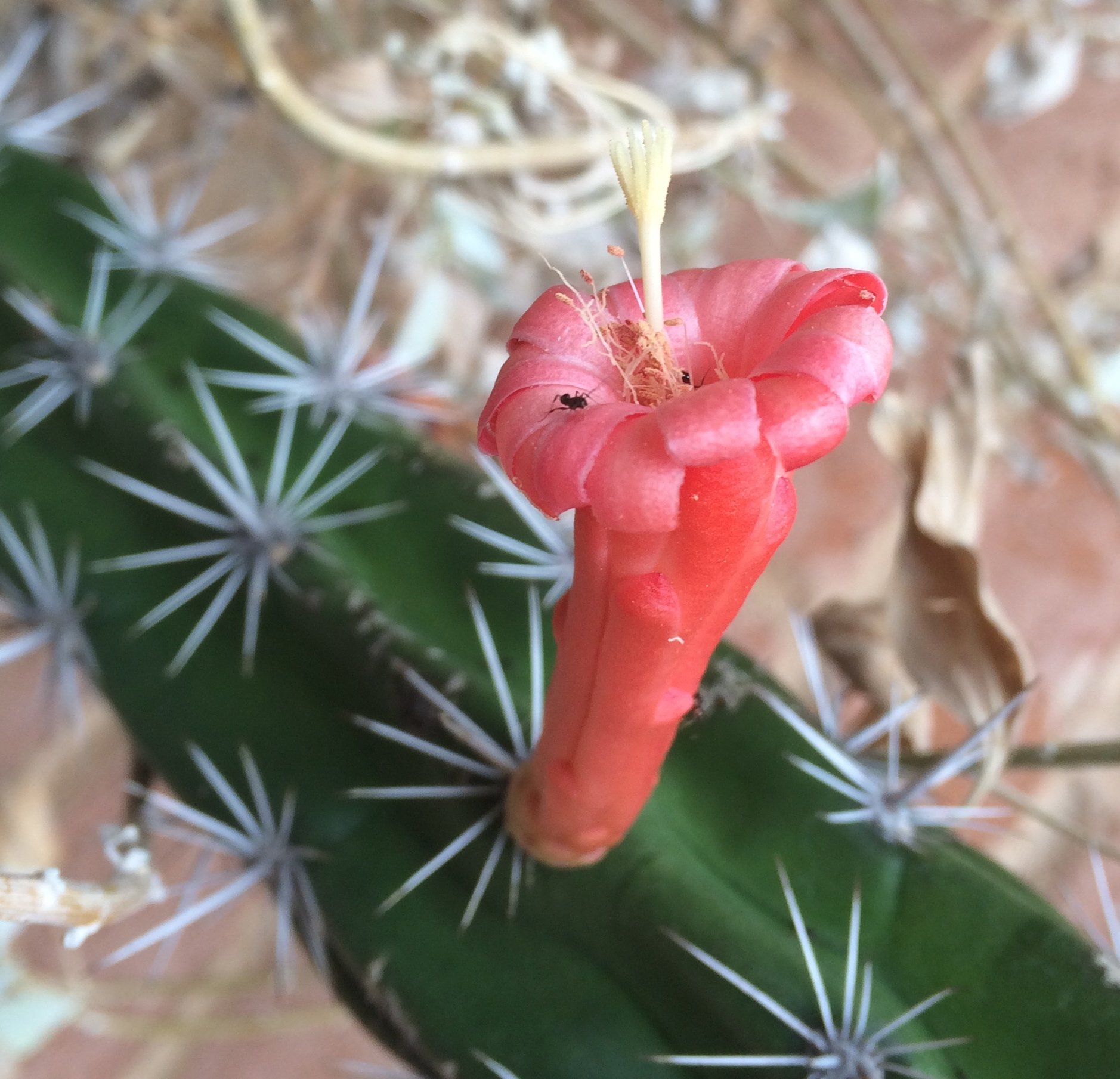
Stenocereus alamosensis with hummer- and perhaps ant-pollinated flower, June26,2016 (MABurgess photo)

Stenocereus alamosensis with hummer- and perhaps ant-pollinated flower, June26,2016.  Note happy ant on petal.  (MABurgess photo)

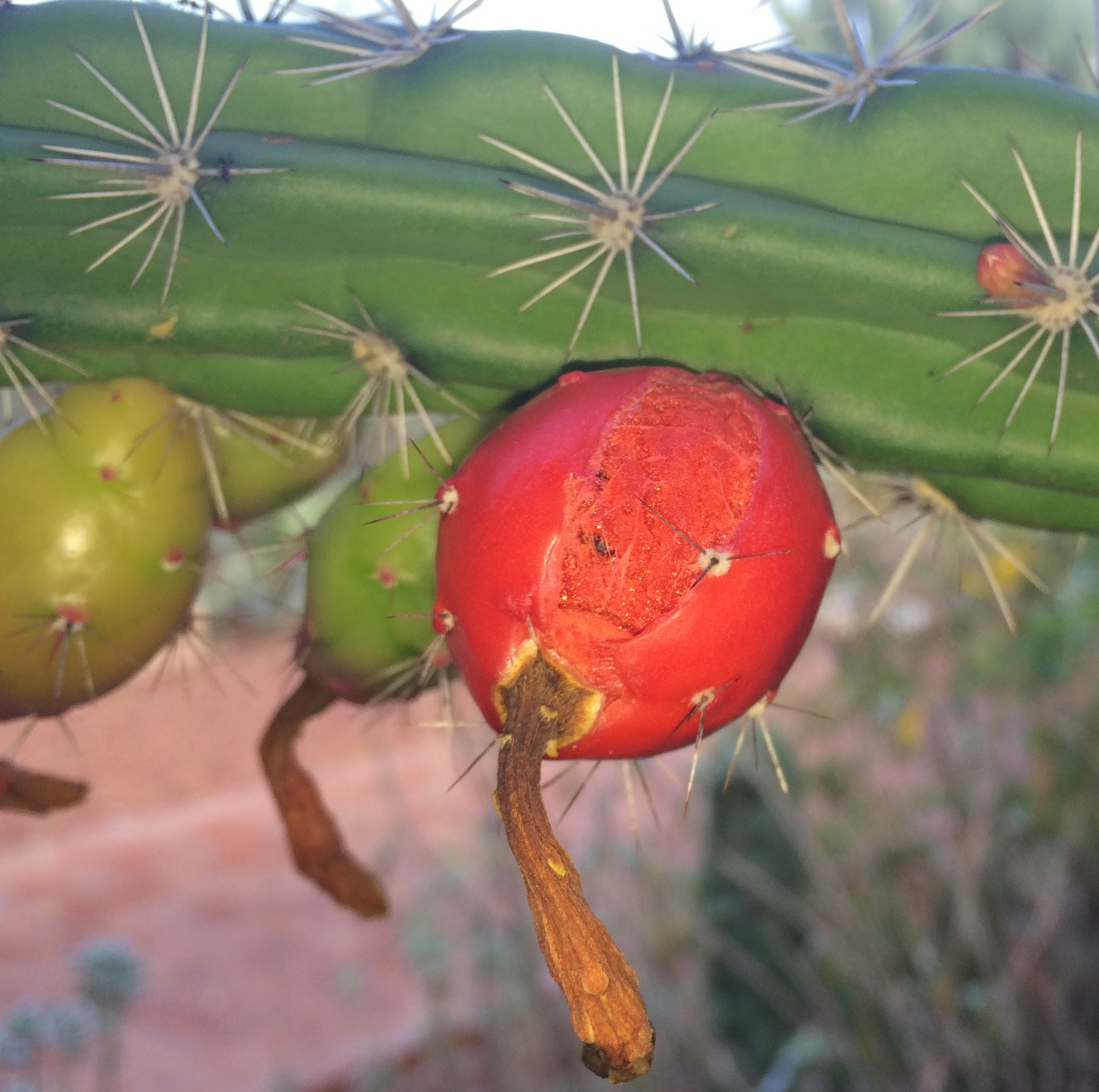
Fruit of octopus cactus Stenocereus alamosensis, ripe and splitting July 4, 2016

Fruit of octopus cactus Stenocereus alamosensis, ripe and splitting July 4, 2016 (MABurgess photo)

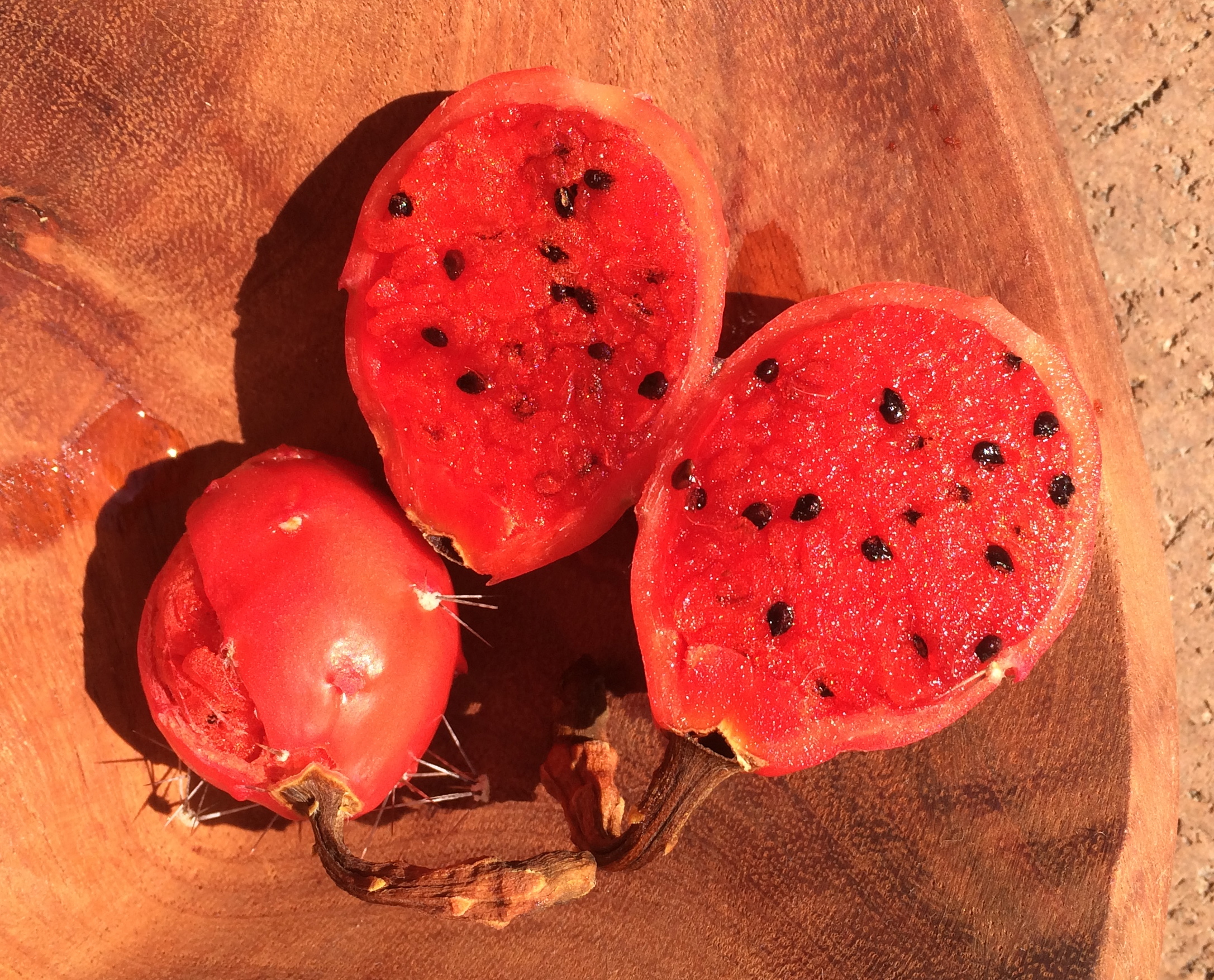
Sliced octopus cactus fruit on palo chino bowl (MABurgess photo)

Juicy sliced octopus cactus fruit (Stenocereus alamosensis) on palo chino bowl (MABurgess photo)

Years ago I collected seed for it near Alamos, Sonora, and grew it out in Tucson.  Surviving frosty winters, and flowering in previous years, it never bore fruit before.  This year, fertilization happened at last, and voila–there are sensational, gently sweet delicacies to eat right off the cactus.  The fruit’s fresh crispy texture is like watermelon and its seeds are tiny protein crunches.  [Light bulb idea]–With climate change, this flavorful cactus fruit–and others like it–could become an appropriate specialty food to grow locally.

Keep your eyes peeled and prepare for more harvests from the latest new “promises” blooming for multiple times this season in the desert…..Check out these potential edibles:

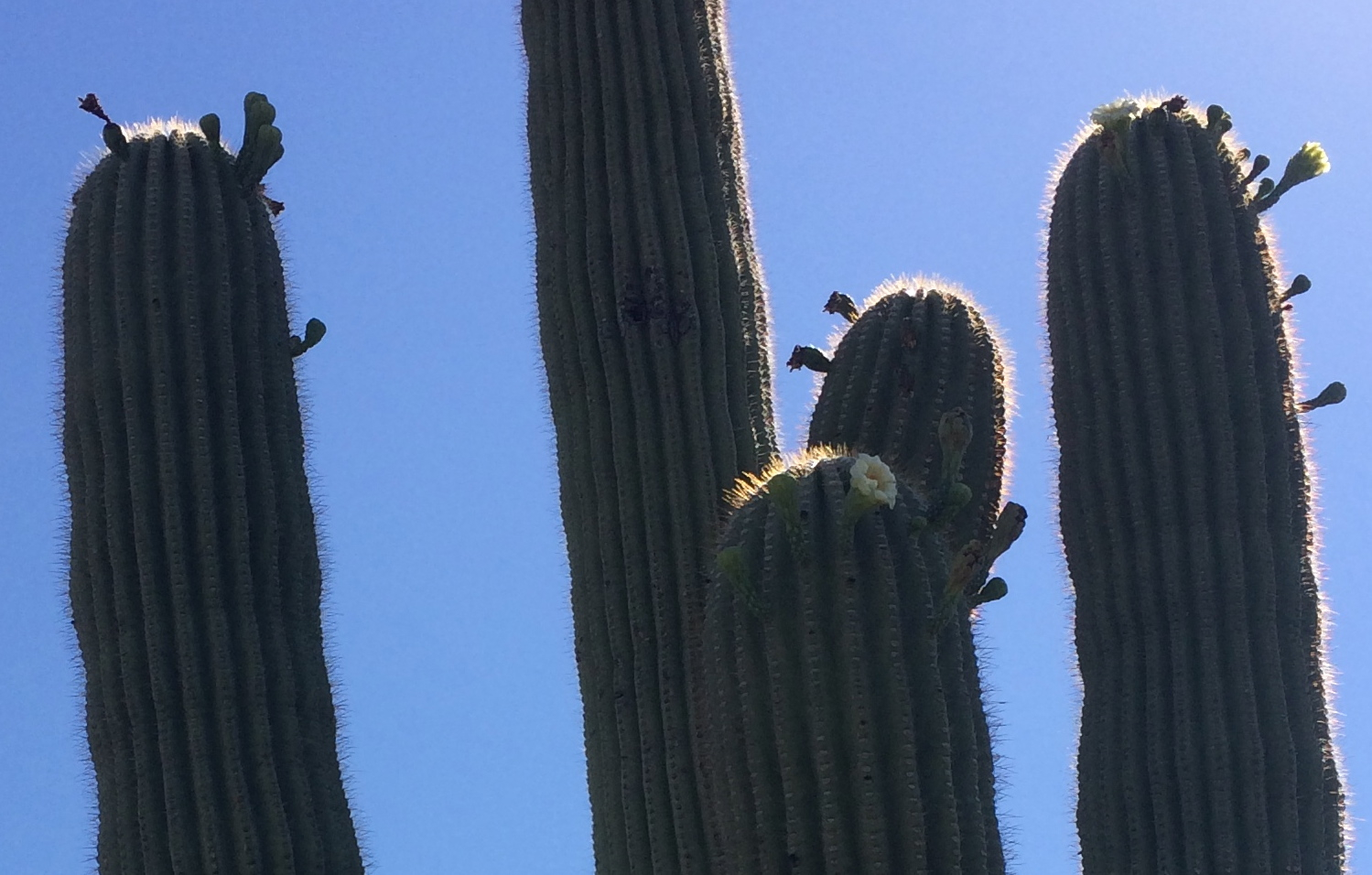
This is the third bloom of saguaros this season--with pollination may give another fruit harvest

This is the third bloom of saguaros this season–if  pollinated may give yet another fruit harvest

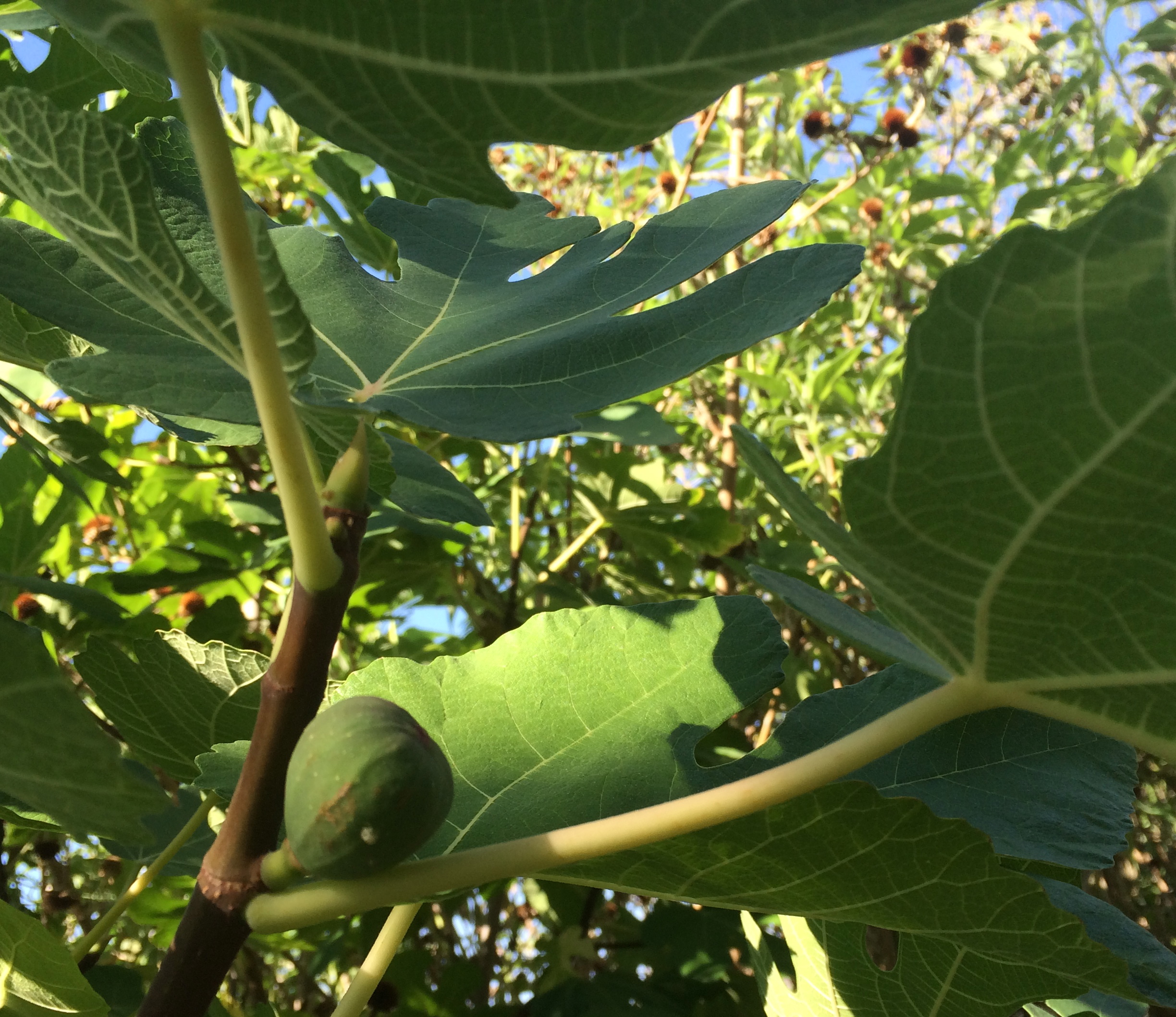
Green swelling Padre Kino fig--watch for preparing heirloom fruit ideas next month….

Green swelling Padre Kino fig–Young trees are available next week at the NSS plant sale!

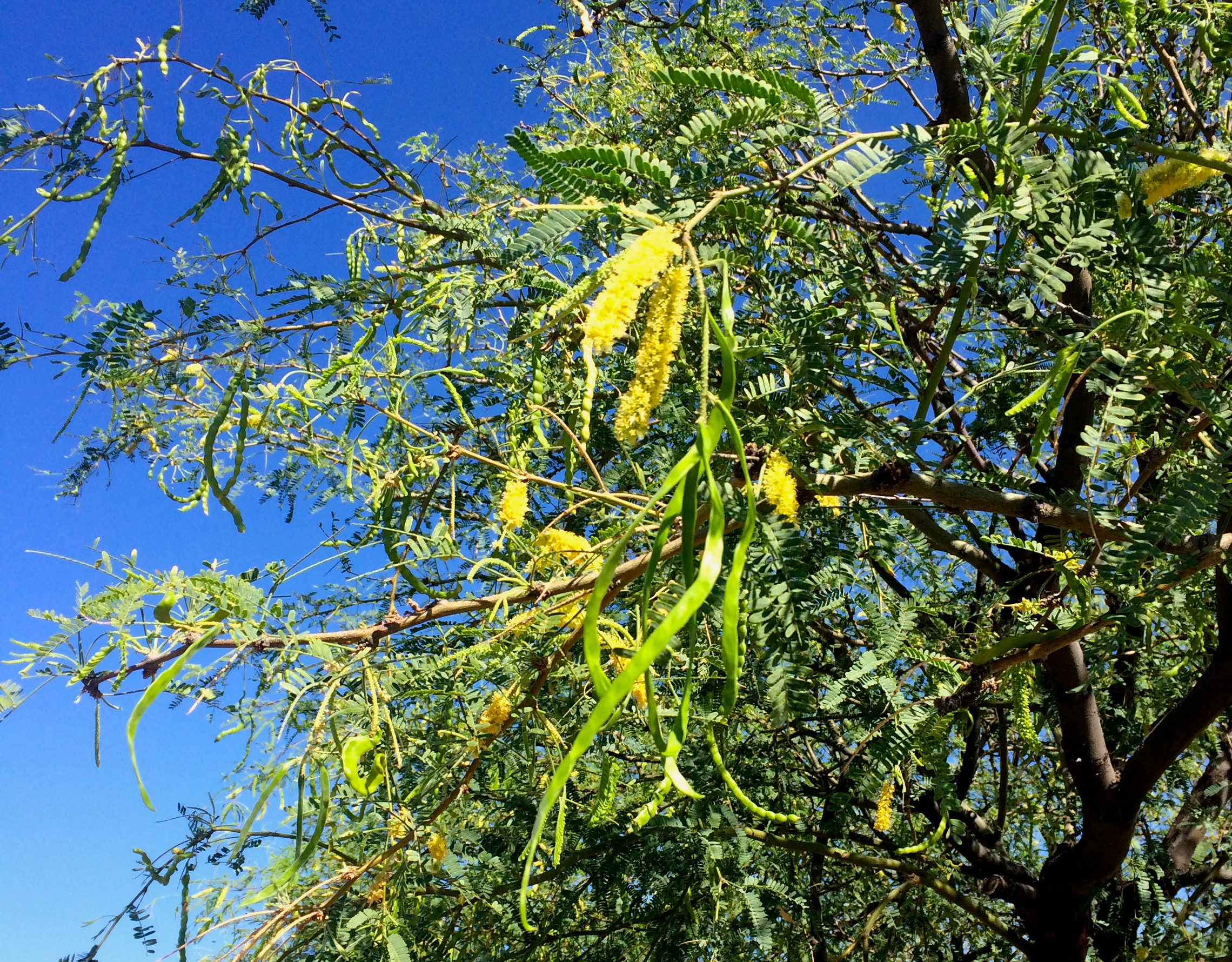
A new wave of mesquite flowers and green pods promise a second harvest this season.

A new wave of mesquite flowers and green pods promise a second harvest this season.

Don’t miss the NativeSeeds/SEARCH Monsoon Plant Sale this next weekend, Friday-Sunday, July 15-17, 2016!  For your own garden-to-table promises and preparations, check out the many starts of NSS heirloom summer vegetables and monsoon wildflowers.  There will be tomatillo plants, heirloom chile varieties, cucumber, many squash and melon varieties to give your garden a jump-start.  A few 5-gallon  Father Kino fig trees propagated at Mission Garden will be available for sale, so come early.

For well-seasoned ideas for desert cookery, two fabulously useful books continue to inspire:    Tucsonan Sandal English’s cookbook from the 1970’s Fruits of the Desert published by the Arizona Daily Star, and desert-foods aficionado (& Blog-Sister) Carolyn Niethammer’s book Cooking the Wild Southwest published by University of Arizona Press.  Borrow or buy, and use them with joy.

I wish you happy harvesting as the desert’s present promises become a cornucopia of fulfilling plenty!

[For anyone seeking heirloom foods and products made with wild foods, check out http://www.flordemayoarts.com and http://www.nativeseeds.org, or visit the Baggesen Family booth at Sunday St Philips farmers market.]


Everybody Cooks Desert Wild Plants

It’s Carolyn Niethammer with you this April Friday, my favorite time of year when the Sonoran Desert is bursting with life. The rains weren’t as heavy as El Niño had promised, but there was enough moisture so that our arid-adapted plants could produce a colorful and abundant spring. When I was a young reporter for the Arizona Daily Star we used to have a feature called “Everybody Cooks.” I loved going out into the community and talking to good cooks from all walks of life — Mexican nanas, musicians, business owners, Jewish homemakers — about what they made for holidays and everyday family meals. I recalled those good times earlier this month at the Native Seeds/SEARCH Arid Abundance Potluck.

People arrived at the Arid Abundance Potluck with so many creative uses of the delicacies of a Sonoran desert spring that I just had to document the event.

Chad Borseth shows off his cholla bud appetizer.

Chad Borseth shows off his cholla bud appetizer.

Chad Borseth, the manager of the NS/S retail store, started us out with a cholla bud appetizer. There’s an old joke about how a cook made chicken soup in 1880. It starts: first you catch the chicken. This is sort of like that. You do have to harvest, clean (meaning remove the thorns) and dry the cholla buds. Or you can go the the NS/S store and buy some already cleaned and dried. Chad boiled the dried cholla buds for about 45 minutes, drained them and then chilled them in white balsamic vinegar overnight. When he was ready to serve them at the potluck he cut  each of them in half and arranged them on a plate and drizzled them with prickly pear syrup. Toothpicks are handy for picking up the delicious little morsels.


IMG_0658

Nancy Reid serves up  her rich and delicious  Green Chile-Cholla Bud Quiche

Nancy Reid, a retail associate at the NS/S store,  brought a green chile and cholla bud quiche that she had modified from a recipe in a wonderful but out-of-print NS/S cookbook. She began by melting a tablespoon of butter in the bottom of an 8-inch round pan. In a bowl, she beat 4 eggs. Then she added 3/4 cup cooked cholla buds, 3/4 cup chopped green chiles, 1 cup of cottage cheese, 2 cups of shredded colby/jack cheese, and a little salt. It went in the oven at 325 degrees F. for 40 minutes.


Laura Neff with her salsa.

Laura Neff , NS/S retail associate, with her salsa.


What’s a southwestern meal without salsa? Laura Neff’s version includes 1/2 cup dried cholla buds boiled for 45 minutes and drained, 1/2 cup diced tomatoes, 1/4 cup diced red onion, 1/4 cup chopped cilantro, 1-2 finely minced jalapenos, and 1 tablespoon of lime juice. She combined everything except the cholla buds in a food processor. The cholla buds were chopped by hand and added  at the end.


My friend Connie Lauth wasn’t at the potluck but she made this gorgeous quiche recently for company. Connie lives on the desert at the very end of a road into the Tucson Mountains. While Chad and Laura used dried and reconstituted cholla buds, Connie just walked out her door and picked some fresh ones. She used nopalitos from Food City but by now there are plenty of fresh, new-growth prickly pear pads ready for harvest.

Nopalito-Cholla Bud Quiche

Connie’s Nopalito-Cholla Bud Quiche

Here’s Connie’s recipe:

Connie’s Desert Pie

1 cup of cholla buds

1 cup of nopalitos

½ cup thinly sliced red bell pepper

4 large eggs

1/2 cup milk,

1 ½ teaspoons pico de gallo seasoning

1 tablespoon of chopped fresh cilantro

1 frozen deep dish pie shell

1 cup shredded Mexican cheese

Dethorn cholla buds by holding them with tongs and burning them off over a gas stove.. Rinse. Microwave in a covered dish on high for 4 minutes.

Cut gathered or purchased nopalitos into 1/4-inch dice. Microwave with red bell peppers for about 4 minutes.  In a bowl, beat eggs and milk, add seasonings.  Layer egg mixture with vegetables and cheese in the pie shell. Bake at 400 degrees about 40 minutes until a knife inserted in center comes out clean

________________

If  you are inspired to try your hand at more desert gathering and cooking, my book Cooking the Wild Southwest: Delicous Recipes for Desert Plants can be your guide to 23 easily recognized, gathered and cooked  desert edibles.  If you want to harvest some nopales (prickly pear pads), you can find lots of recipes in The Prickly Pear Cookbook. Both books  are available in the Native Seeds/SEARCH retail store at 3061  N. Campbell or on their website. The books are also available from Amazon and B&N.


Spring Salad

cholla 2016

Amy collecting cholla buds

Some years, spring seems to last about a week in the desert, going from winter to summer too fast. When the weather is beautiful, we know to celebrate these days outside!!!!

blog 20160415_100732

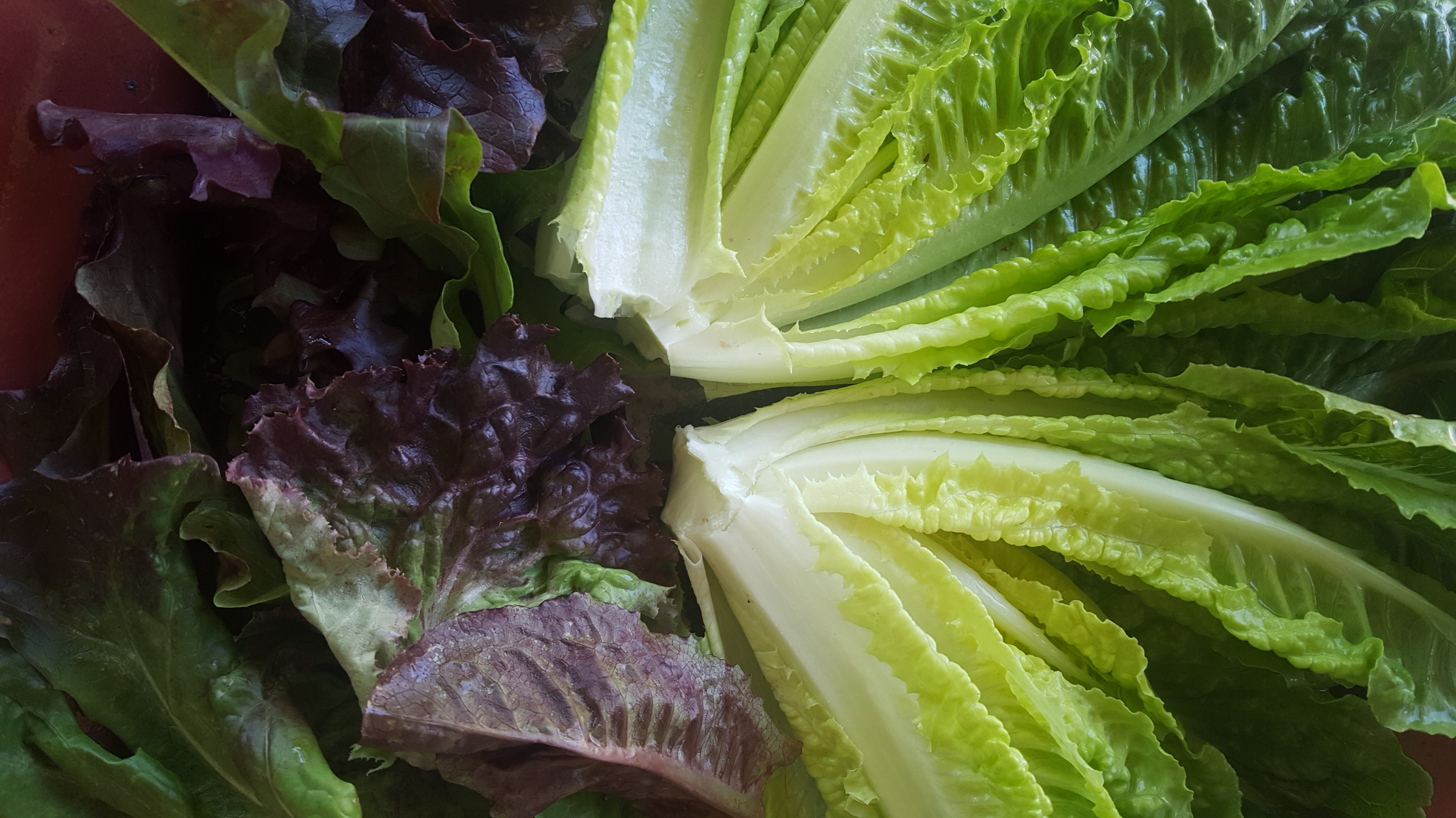
Romaine hearts and assorted red lettuces

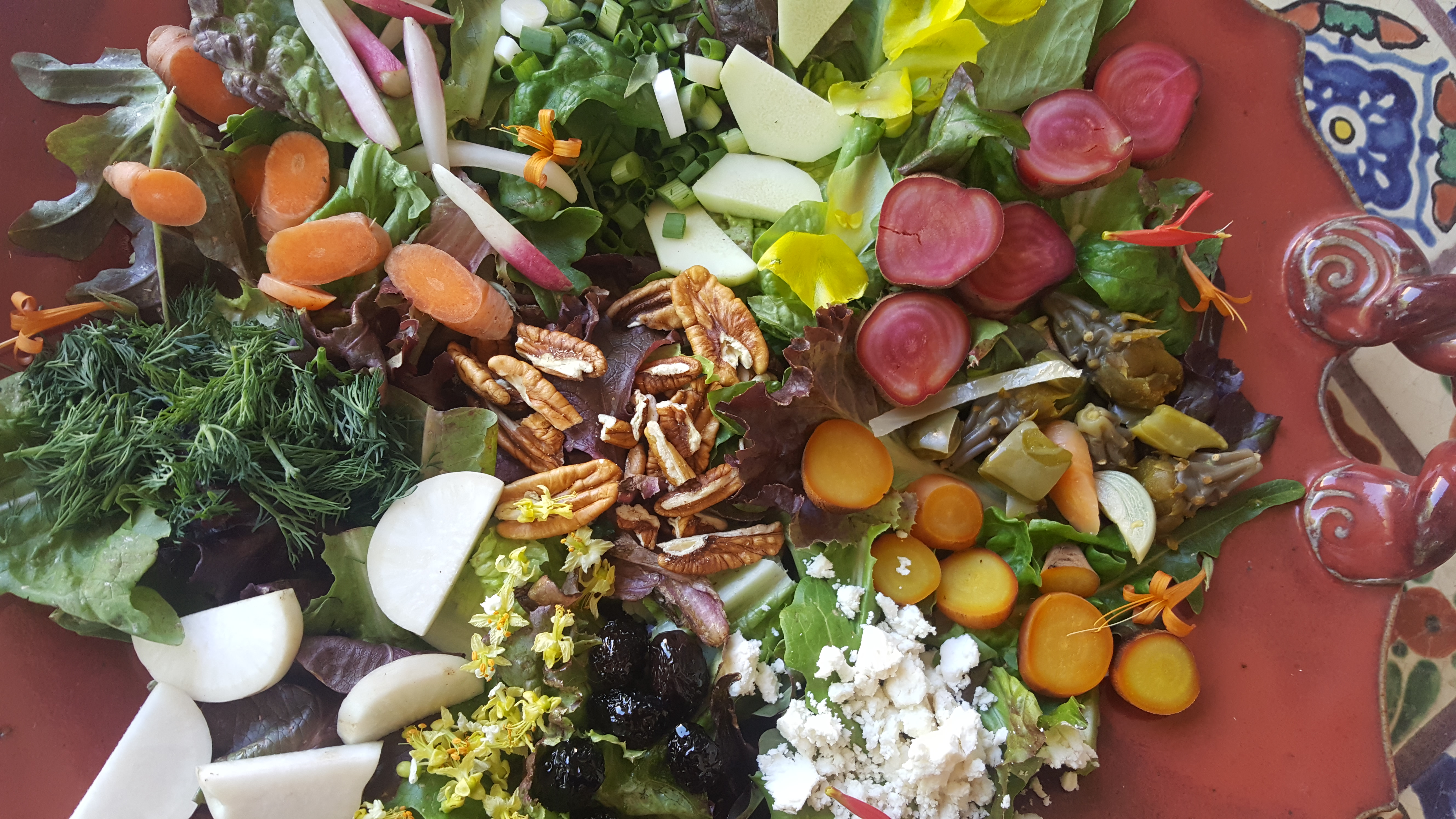
Winter lettuces are still around for a short time more, and the weather is finally warm enough that I feel like eating a salad. Here is a salad made with ingredients I had on hand. I traded for most items, the exceptions being the items I made. I hope this serves as an inspiration to go to a farmers’ market, use little bits of what you have in the refrigerator, go into the desert near your home, and forage in your yard.

blog 20160415_093007

Hakurei turnips, Chioggia and Golden beets, Carrots, Kholrabi, , and French Breakfast Radishes.

Hakurei “salad turnips” are so sweet and tender, they can win over stubborn turnip haters, and are a treat raw for turnip lovers.

I steamed and sliced the beets, peeled and sliced the kholrabi, and simply sliced the turnips, carrots and radishes.

I'itoi onions and dill.

I’itoi onions and dill.

For fresh herbs, I used dill and I’itoi onions. I like the green tops as much as the white parts.

Crusts of Small Planet Bakery Cottage Wheat make excellent croutons. Just chop, drizzle with olive oil, salt, and garlic powder (my guilty pleasure), then toast in a skillet until crunchy.

blog 20160415_104817

Heels of Cottage Wheat.

blog 20160415_104958

Cast iron skillet croutons.


blog 20160415_085613

Brined goat feta.

20150910_120612

Mango Salsa.

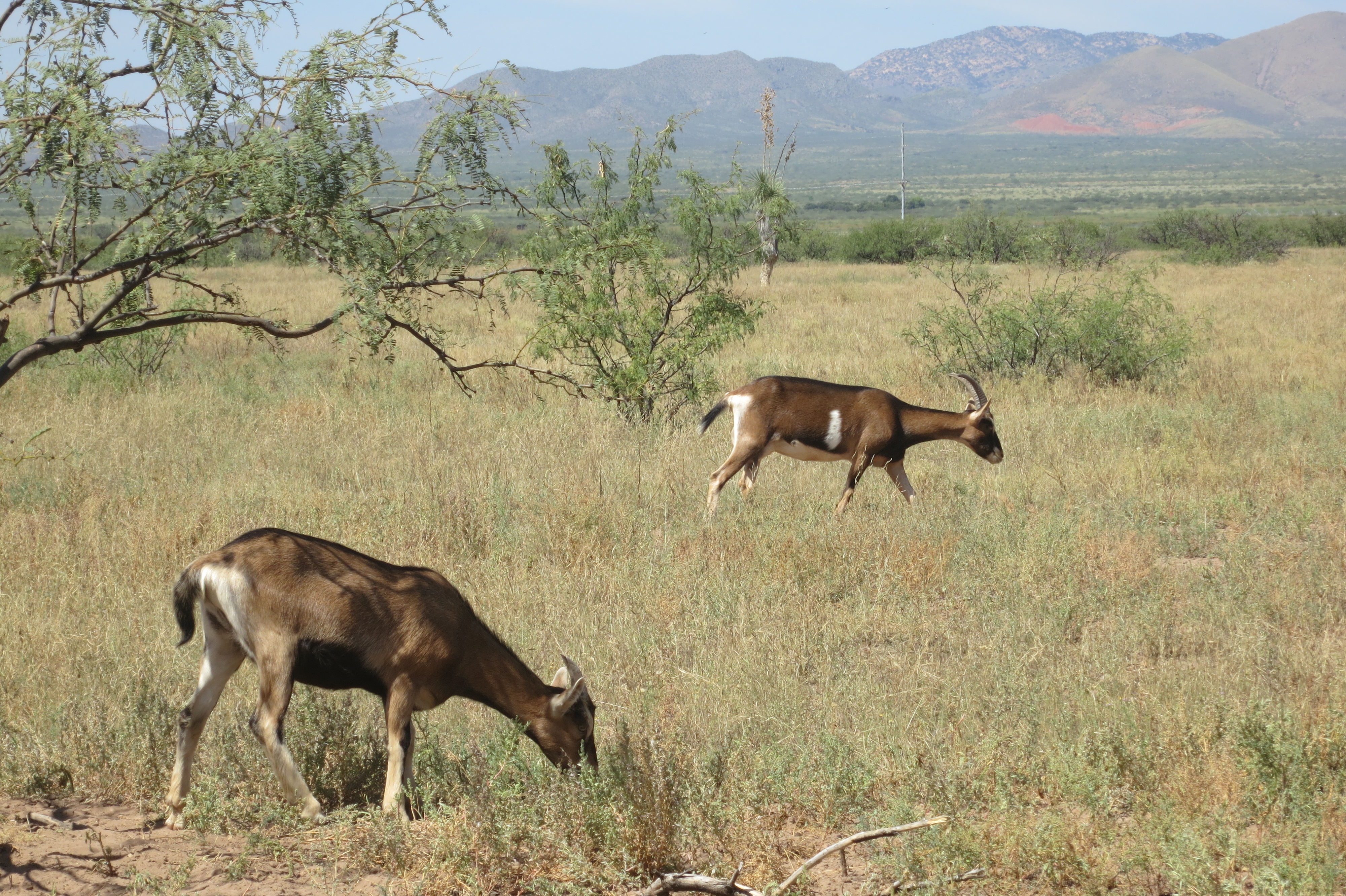
Last fall, I goat/house sat for a friend, and this is the feta I made from the milk. Mango the goat has mellowed over the years since I first learned to milk and she first learned to be milked.

IMG_3508

The heard on the grassland.


IMG_3517

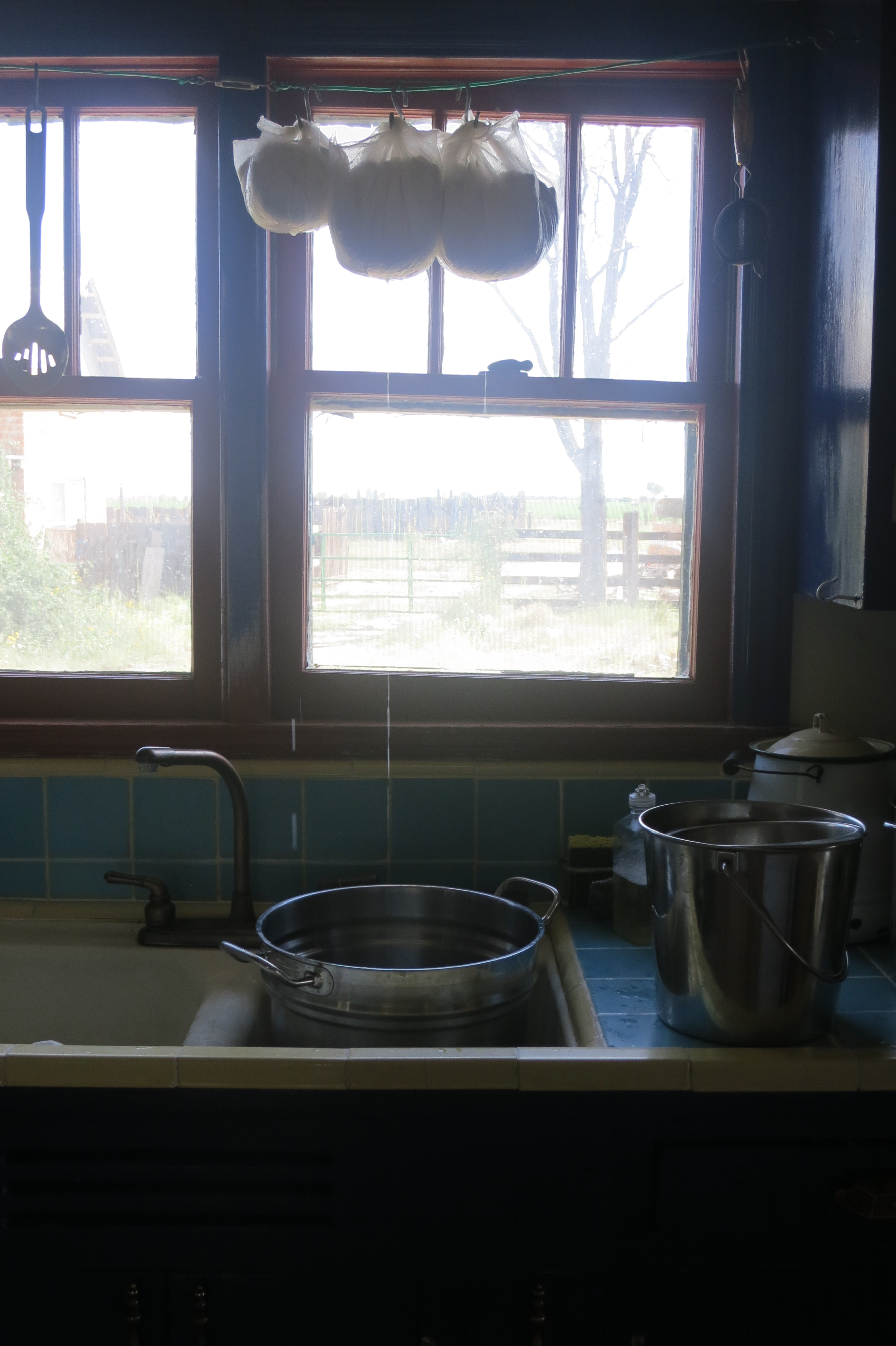
Fresh cheese curds draining whey.

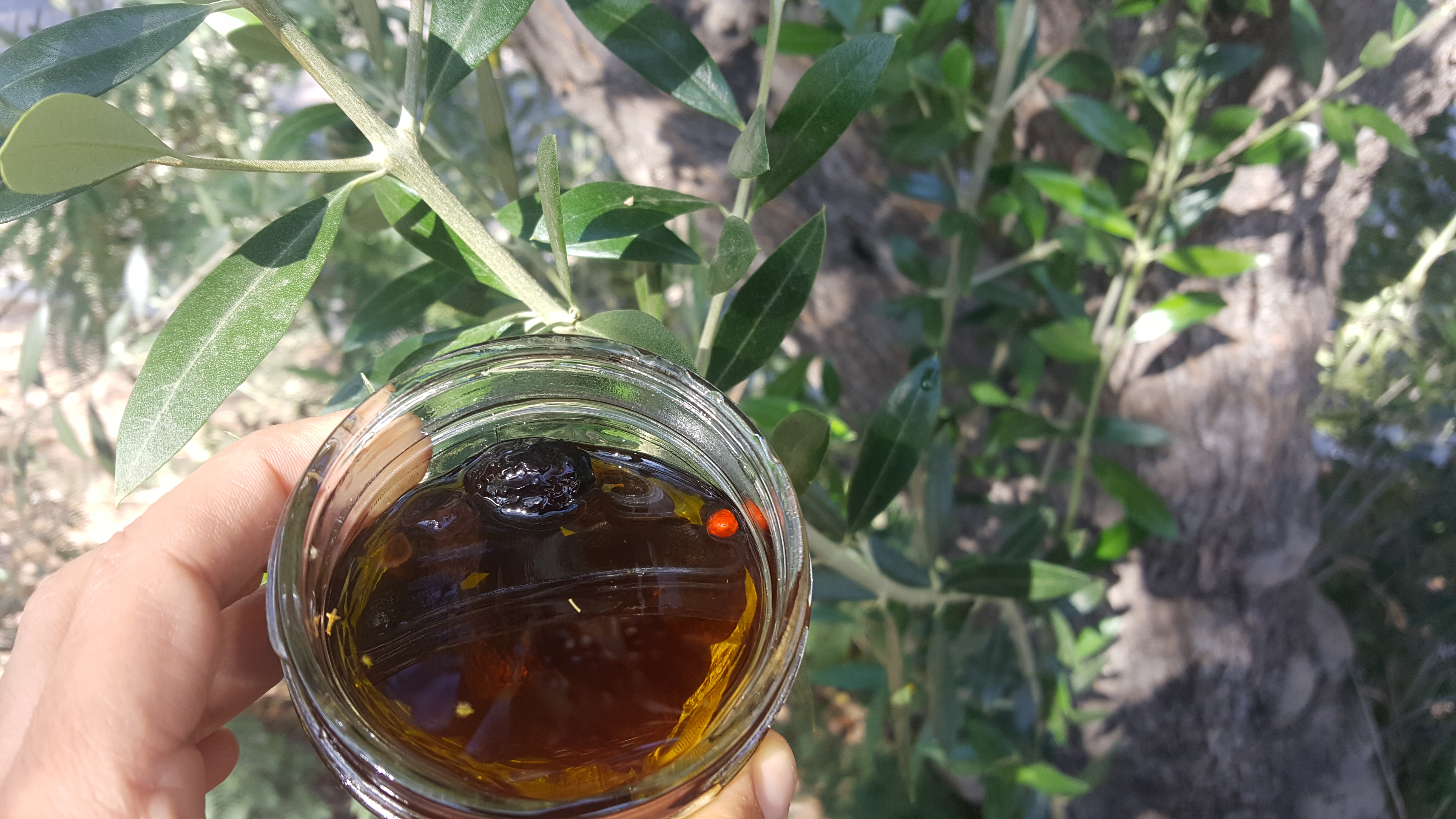
Solar cured olives from Bean Tree Farm.

Solar cured olives from Bean Tree Farm.

Pickles! Cholla buds and nopalitos en escabeche.

Pickles! Cholla buds and nopalitos en escabeche.

blog 20160415_103012

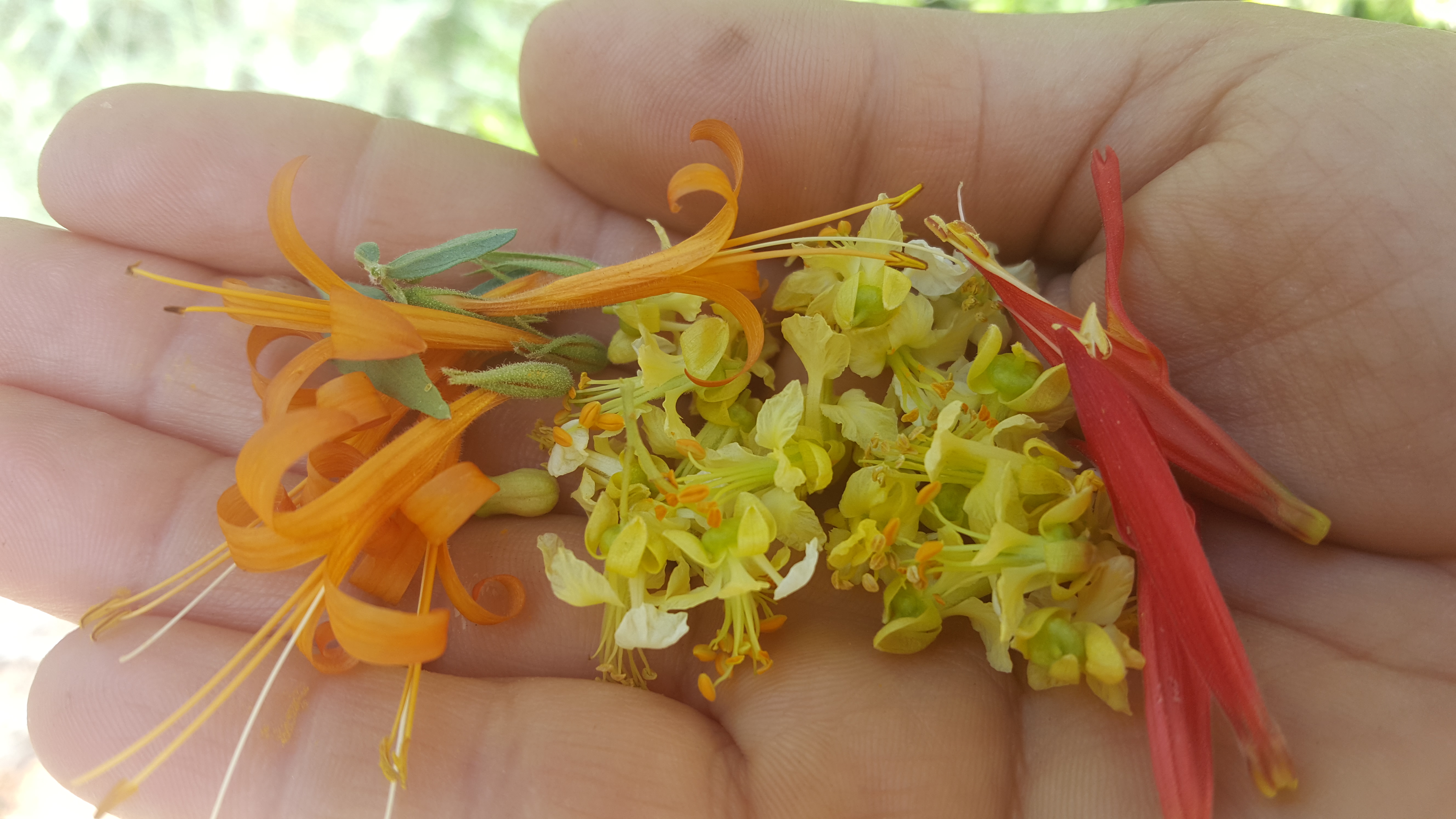
Fresh flowers for garnish.


blog 20160415_090830

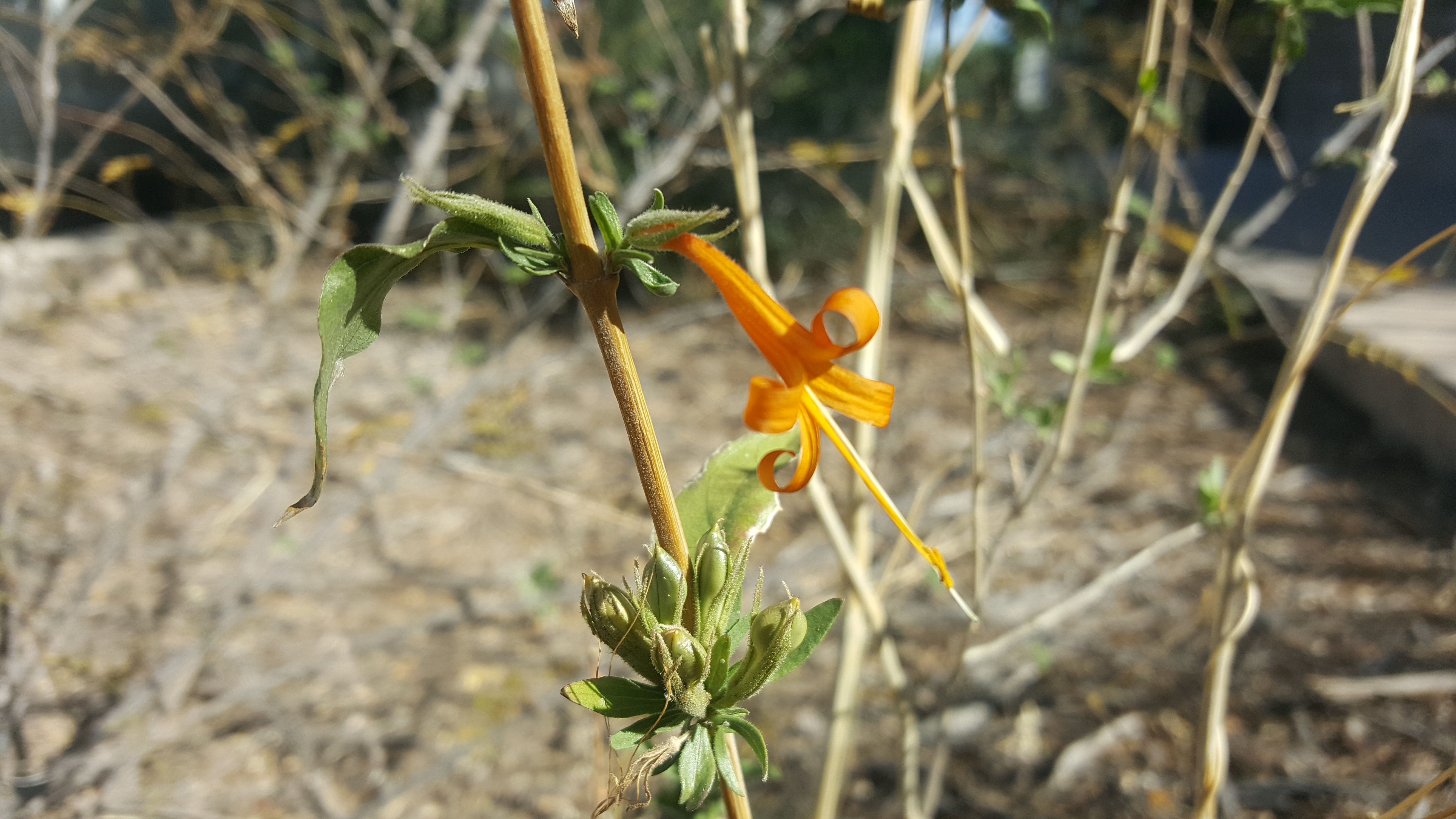
Desert Honeysuckle, Anisacanthus thurberi.

blog 20160415_104348

Foothills Palo Verde, Parkinsonia microphylla.

blog 20160415_091001

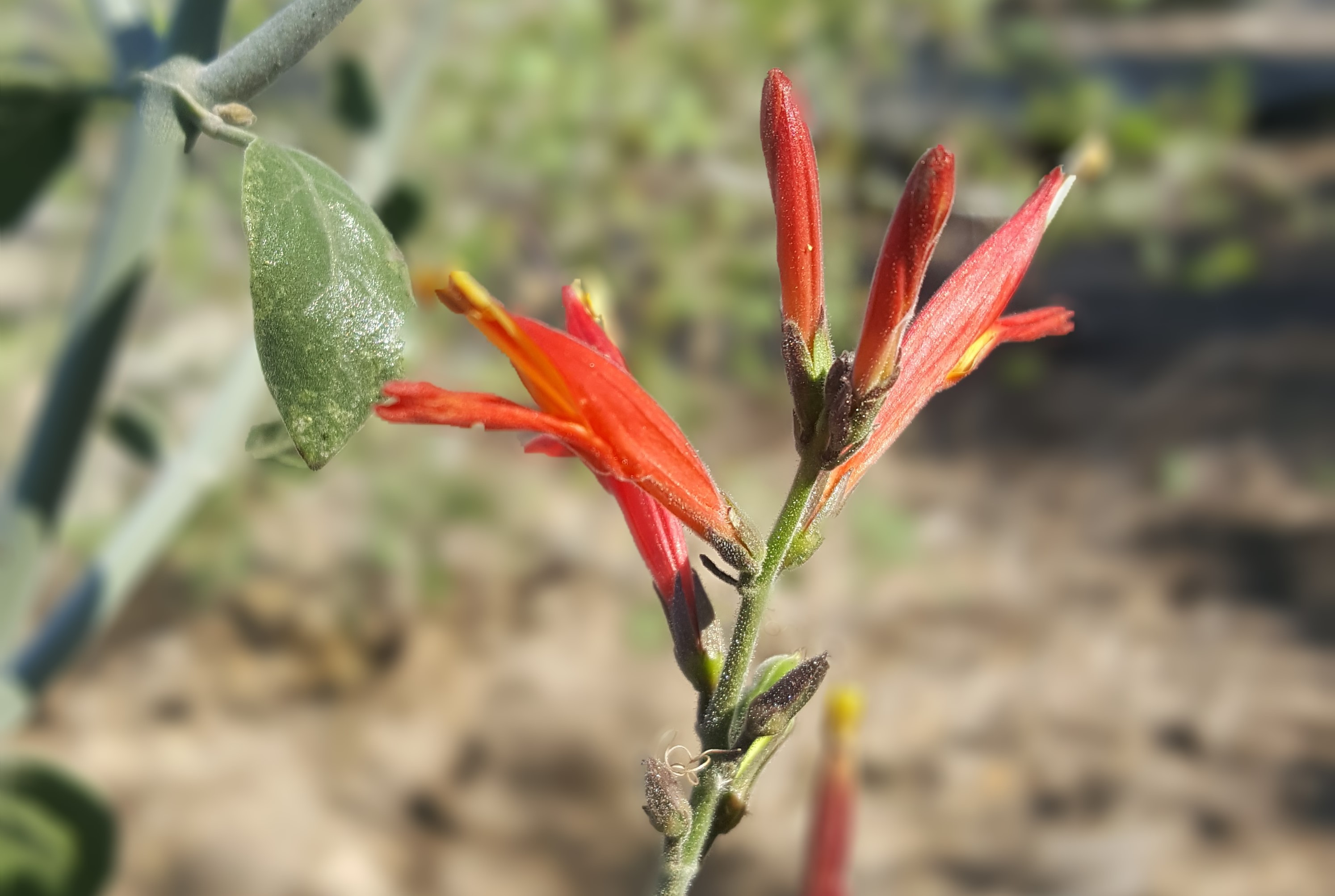
Chuparosa, Justicia californica.

Prickly Pear Cactus flowers are a fleshy, vegetal garnish. Opuntia engelmannii

Prickly Pear Cactus flowers are a fleshy, vegetal garnish. Opuntia engelmannii

blog 20160415_103501

Dress with olive oil and lemon juice. Enjoy!


The Charm of Desert Chia

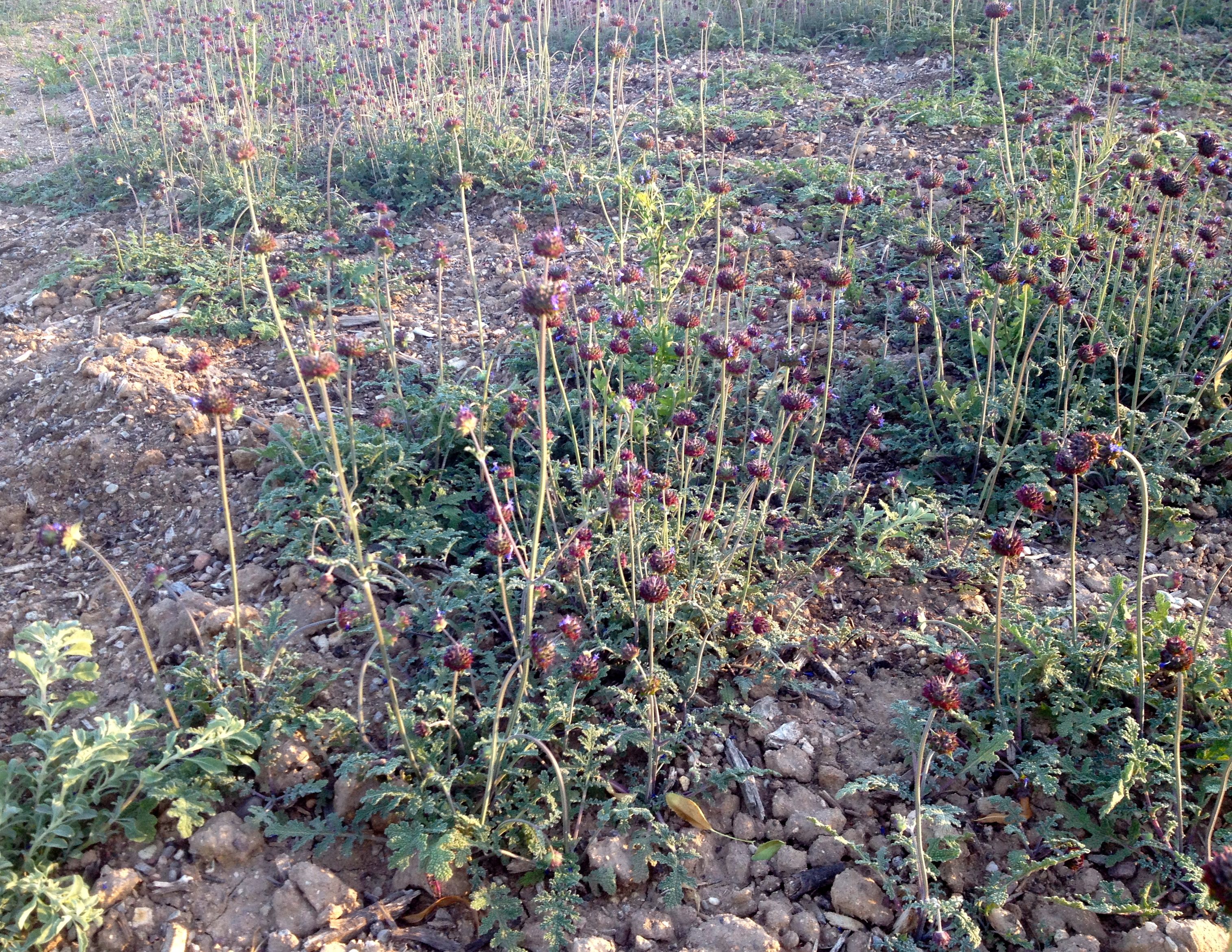
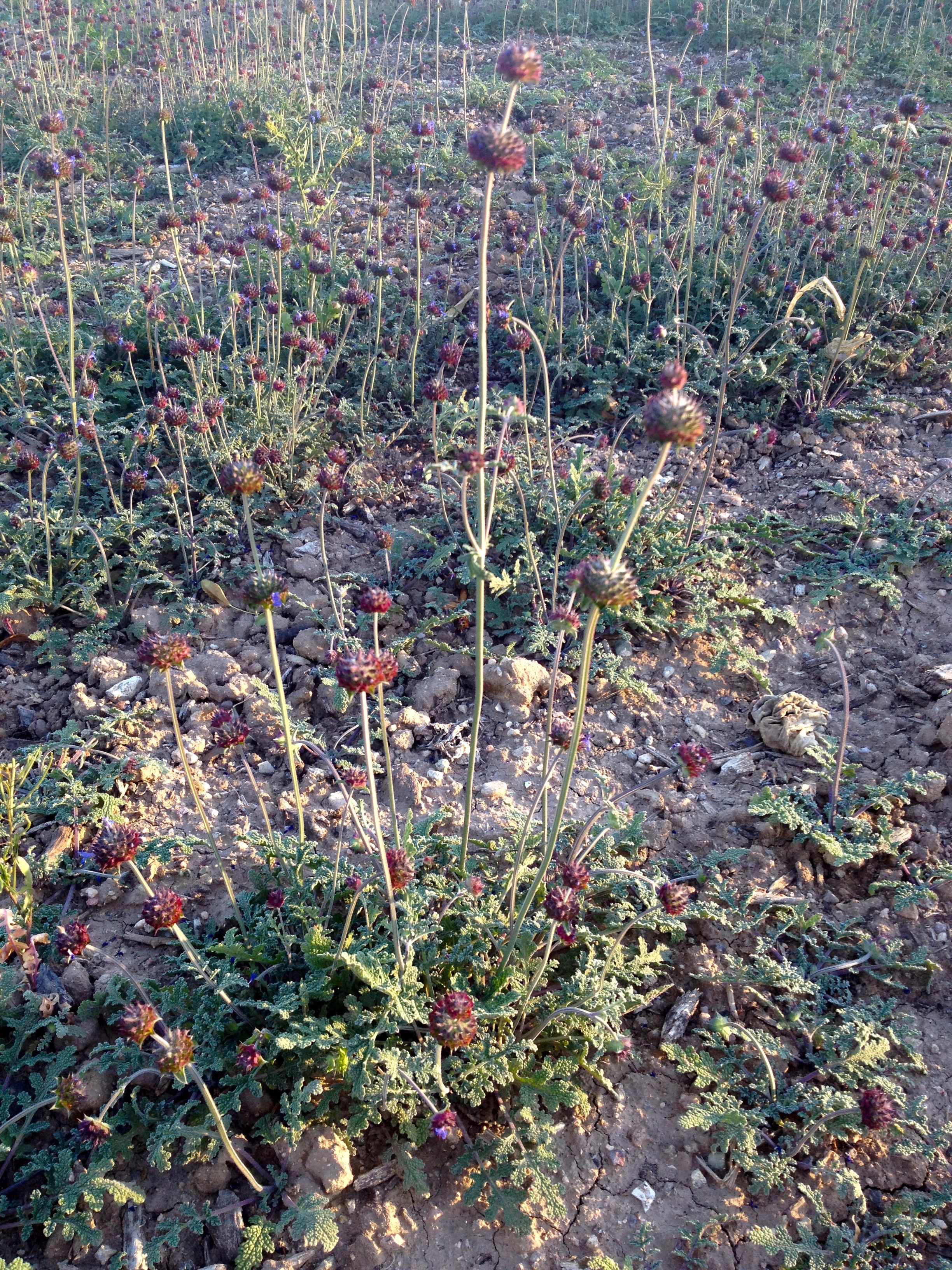
A patch of desert chia (Salvia columbariae) inviting pollinators….

A patch of desert chia (Salvia columbariae) inviting pollinators….(MABurgess photo)

It is happening right now in desert gardens and up desert arroyo beds–the visual surprise of desert chia! But you have to look twice, as they can be elusive.

Tia Marta here to share some thoughts about a very important little desert ephemeral.  Salvia columbariae, brought on by winter rains, is spreading its lovely ground-hugging rosettes and beginning to send up its wand-like square flower stalks to greet pollinators with spherical clusters of deep blue flowerlets–almost appearing “ultraviolet” to our eyes.

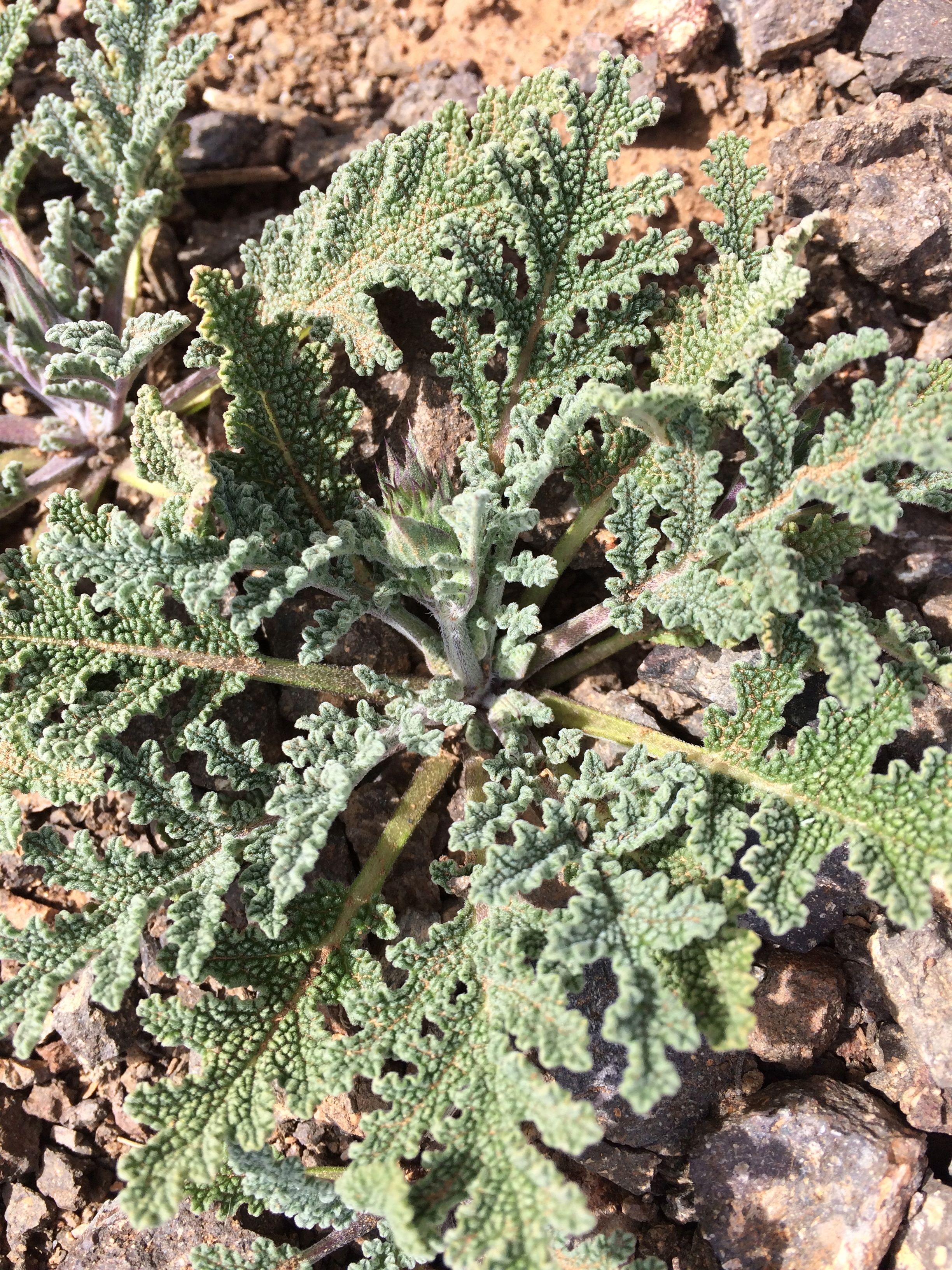
Chia’s foliage itself is a wonder.  If you get down on hands and knees with a magnifier, you’ll see a most knobby green terrain-of-a-leaf.  Pinch the leaf and a luscious bouquet arises.  Oh if we could capture that scent!  It would make a lovely lotion.

A rosette of beautiful desert chia with its scented, intaglio foliage--Wishing this were a squeeze-and-sniff photo!

A rosette of beautiful desert chia with its scented, intaglio foliage–Wishing this were a squeeze-and-sniff photo! (MABurgess photo)

Humans are funny in that when we see wildflowers emerge in the spring, as they are now, we HAVE TO HAVE THEM in our gardens!  Well, if we want them now, we should have planted the seeds last fall!  Put it on your calendar right away–on the October page–to buy those chia seeds and plant them at the beginning of October when the nights turn cool.  Or, if you are into instant gratification, if you need a quick wildflower fix, there just might be a plant sale this weekend somewhere in Tucson, AZ, where they will have potted chia starts ready to put in the ground–to give you a show, and a harvest, before hot weather sets in.  If you like to gamble, you could rake in some seeds this month and chances are the seeds (which have built-in DNA smarts) will wait until fall rains come to germinate, as their germination-triggers are attuned to cool/wet conditions; amazingly, hot summer rains  won’t tempt them out of seed dormancy.

Balls of spiny seedheads climb the square stems of these mint-family wonders, as long as moisture lasts.

Balls of spiny seedheads climb the square stems of these mint-family wonders, as long as cool moisture lasts. (MABurgess photo)


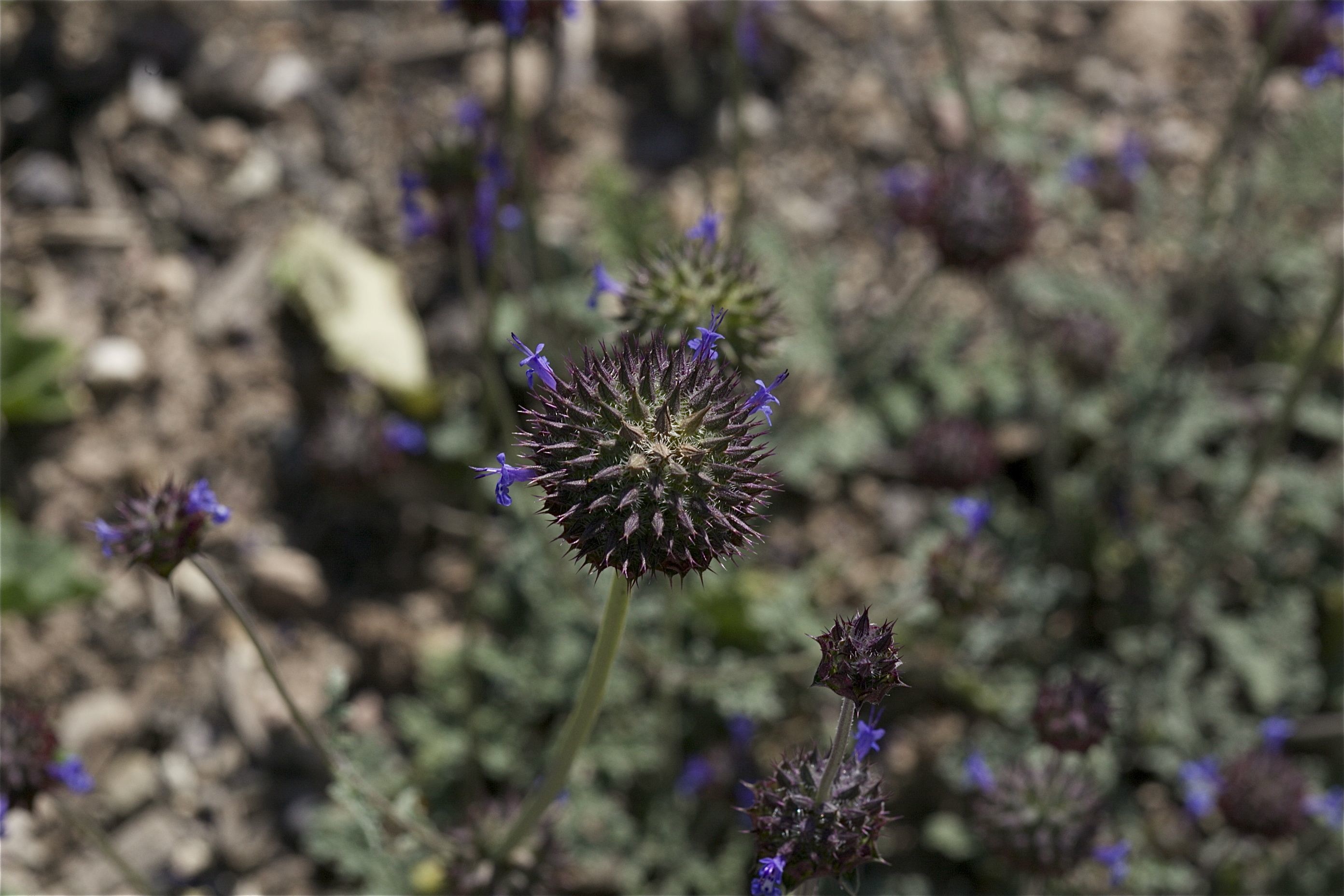
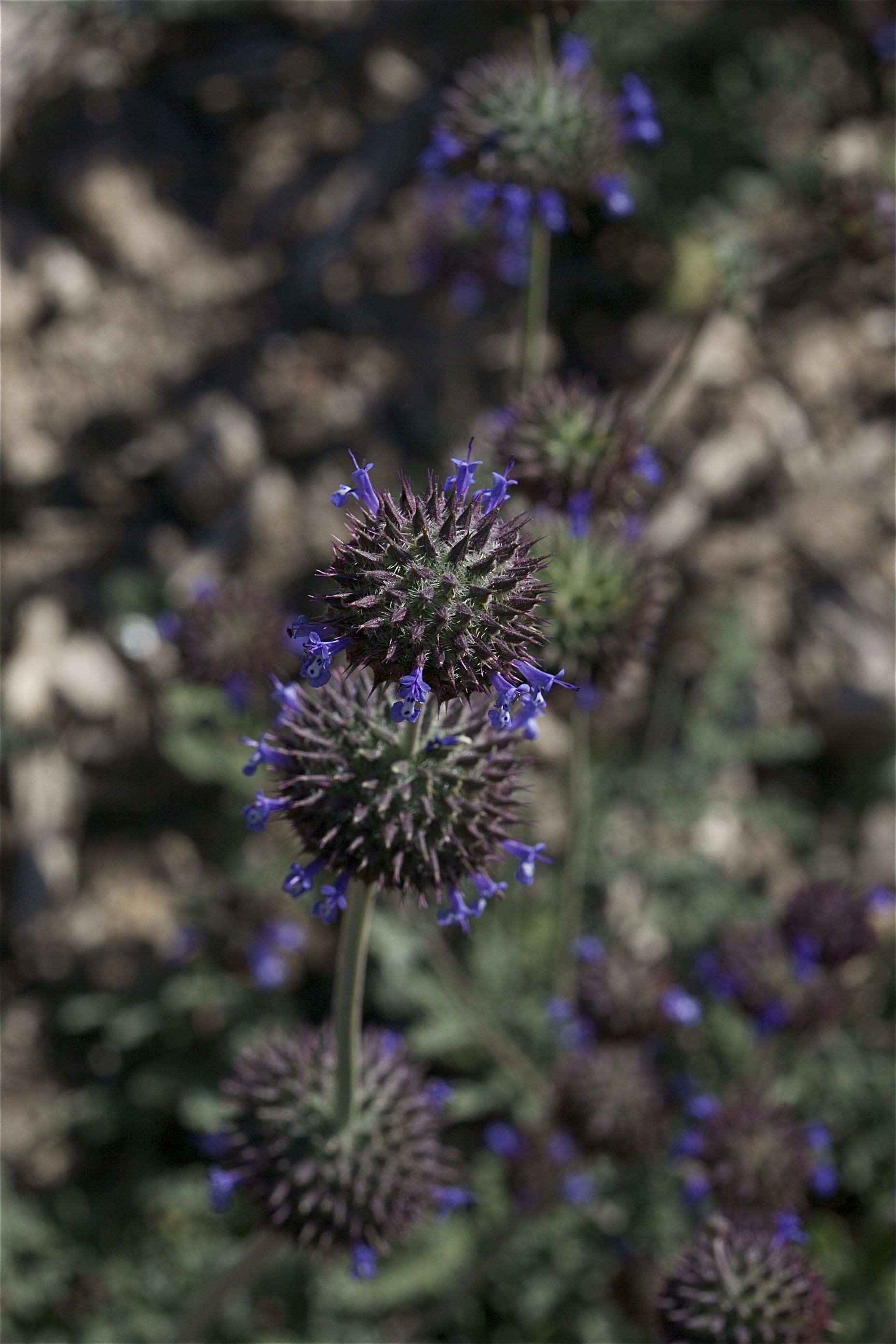
Close-up of desert chia in flower--note the sphere of tiny flowers (JRMondt photo)

Close-up of desert chia in flower–note the sphere of tiny flowers (JRMondt photo)

Check out the Plant Sale THIS WEEKEND–March 11-13–at the NativeSeeds/SEARCH store, 3061 N Campbell Ave, Tucson, for starts of several spring ephemerals–maybe even chia.  There is still time to get them planted to enjoy their color and later their seeds.

And, take a walk up any arroyo–Yetman Trail or King Canyon in the Tucson Mountains, Pima Canyon or Finger Rock Canyon into the Catalinas, or trails in Catalina State Park–for a chance to see a patch of desert chia in bloom.

Double desert chia seedhead (JRMondt photo)

Double desert chia seedhead (JRMondt photo)

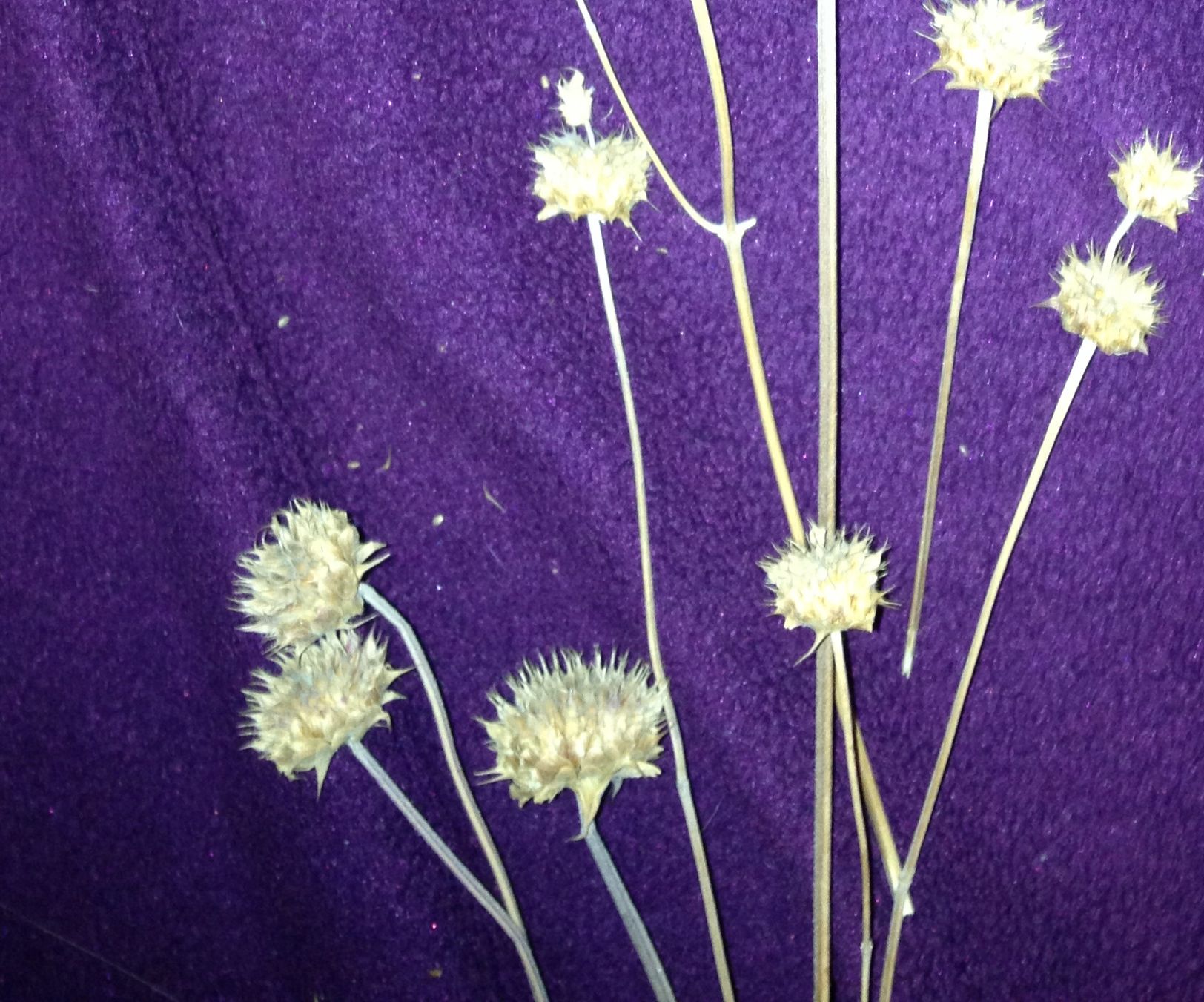
About April and May, when the days are getting hot and dry, return to your patch of chia to find straw-colored spiny balls dancing on slender dry stalks, usually calf-high, sometimes knee-high, or, after a wet winter/spring, perhaps thigh-high.  Try to find them just after they dry before the breeze has battered them and scattered their seed.  With a strong paper sack (or a canvas bag that you can wash later to soften the spiny bracts that will get stuck in the fabric), gather the seedheads and crush them.  Bare hands or soft-gloved hands BEWARE!  Best to use leather gloves for gathering seedheads.


Dry stalks and spiny seed heads of desert chia (MABurgess photo)

Dry stalks and spiny seedheads of desert chia (MABurgess photo)

In earlier times, Native Peoples may have used baskets shaped like combs to pass through patches of chia seedheads to gather many at a time.  There are records of Cocopa and Chemehuevi people of the Colorado Desert storing large ollas full of chia seed.  When you see how tiny the seeds are and realize how much work it is to harvest an olla of chia seed, the time and effort must have been astounding–but they KNEW how important this food is!  When chia was ready, the whole village had to be out there gathering, making the most of the short window of opportunity.

The nutrition of chia–both our native desert chia and the Aztec chia, Salvia hispanicum–is way up there among the super-foods.  Packed in the tiny seeds is a big percentage of omega-3 fatty acids.  In addition, chia contains complex carbs which give lots of sustained energy, like slow-release fertilizer–a great food for athletes.  These same carbs balance blood sugar, providing a gift to hypoglycemics or diabetics.

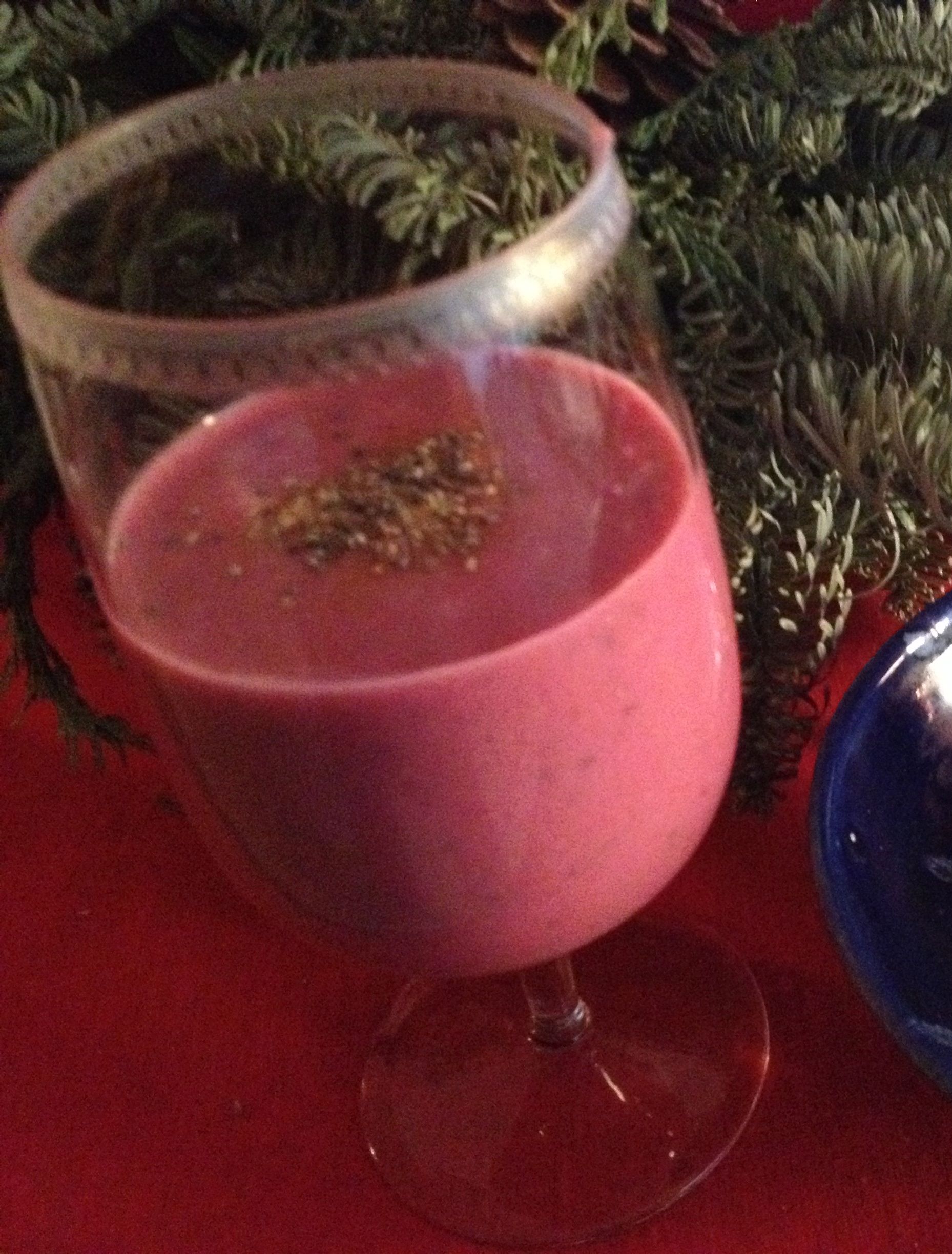
Taste the glorious nutrition of a chia-mesquite-berry smoothie! (MABurgess photo)

Taste the glorious nutrition of a chia-mesquite-berry smoothie! (MABurgess photo)

Chia Mesquite Berry Smoothie Recipe

1 Tbsp chia seed, and a pinch for garnish

1 cup apple or cranberry juice

2 tsp mesquite meal (optional, and delicious)

1 cup frozen blueberries or raspberries (or other favorite berry)

1 cup vanilla yogurt (or 1 cup plain yogurt and 2 tsp agave nectar)

ice optional

Soak 1 T chia seed in a cup of apple juice or other fruit juice for 5-10 minutes.  Then combine all other ingredients in a blender.  Pulse until all ingredients are mixed. Pour into 2 big glasses, sprinkle top with a pinch of chia seed, and enjoy with a pal!


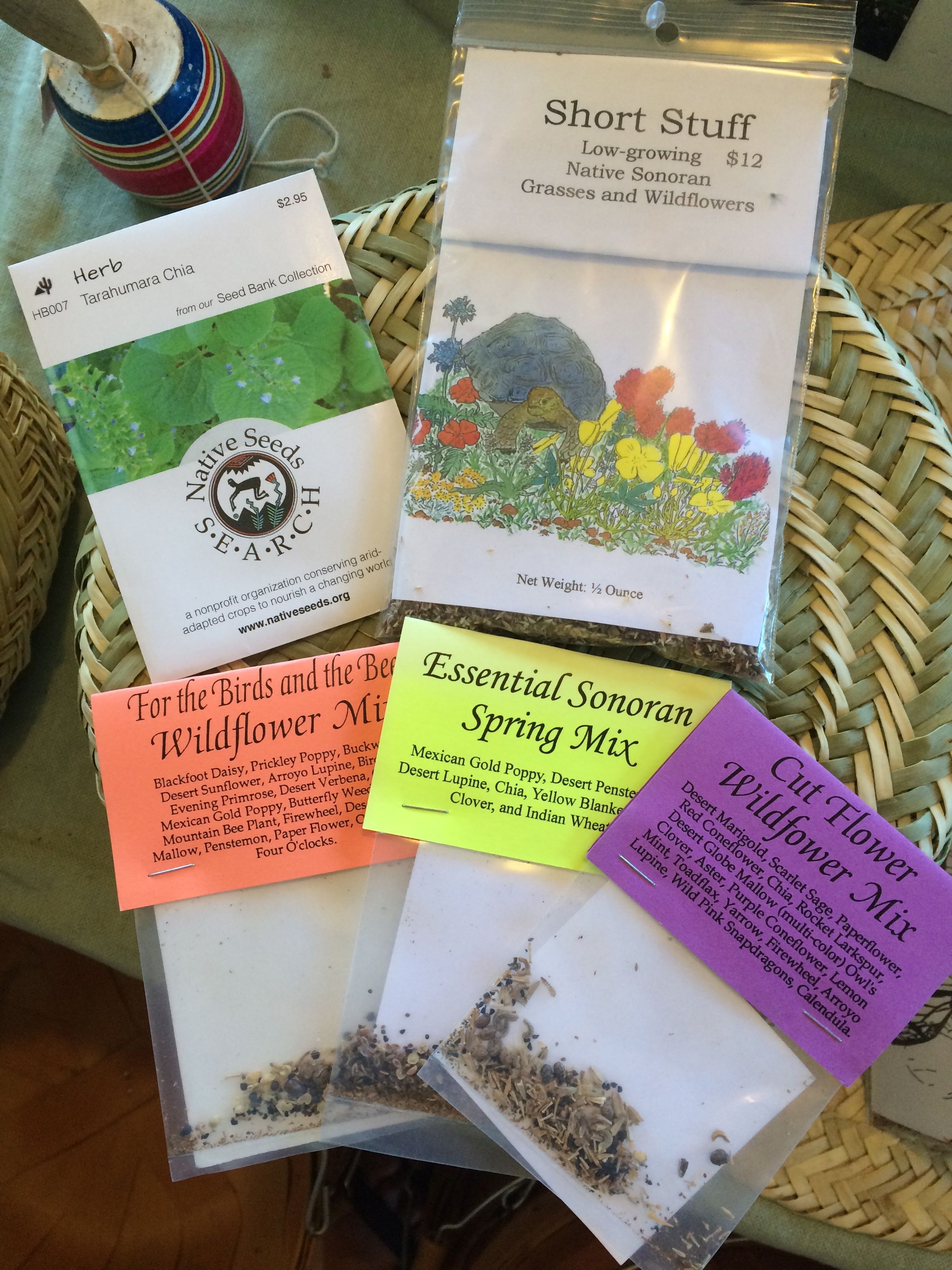
Tarahumara Chia and Desert Chia are available in seed packets and seed mixtures from NativeSeeds/SEARCH.

Tarahumara Chia and Desert Chia are available in seed packets and seed mixtures from NativeSeeds/SEARCH.

You can visit the NativeSeeds/SEARCH online catalog or visit the one-of-a-kind store on North Campbell Avenue to find the right seeds for your garden.  They have Tarahumara chia, the one made famous by the Raramuri native runners of the Sierra Madre.  NSS also has every wildflower mix containing desert chia, for spring garden showiness or benefits to wildlife.  Come by the Flor de Mayo booth at StPhilips Farmers Market for ideas for using chia and a pinch to try for yourself.  For learning more about seed saving, try a class at NativeSeeds/SEARCH.

The gifts of chia–from the visual and olfactory, to the culinary and the medicinal–are many, and even magical.  We can participate in spreading their wealth of beauty and benefit by planting and harvesting, saving their seeds and passing them along with hope and intent….

Oh Yum! Tasty Mesquite Meal Enhances Pie Crust and Waffles

Bodie Robins offers a selection of delicious gluten-free baked goods at farmers markets in Tucson and Sierra Vista.

Bodie Robins offers a selection of delicious gluten-free baked goods at farmers markets in Tucson and Sierra Vista.

For thousands of years, mesquite pods were the primary food of people who lived on the Sonoran Desert. It’s Carolyn here today recalling that when I first started researching and experimenting with mesquite in 1972, hardly anybody was eating this sweet nutritious food. Although a few Tohono O’odham kept up with the old ways, it was on the verge of being forgotten.

Until recently,  it wasn’t easy to process mesquite pods. Early Native women made mesquite meal by pounding the pods in bedrock mortars. By the 1970s it hadn’t gotten much easier. But fortunately for all of us someone (I recall it was at the Desert Museum) figured that the pods could be crushed and sifted by a hammermill, a common piece of farm equipment. After some years, Desert Harvesters took up the challenge and offered to grind the pods of all comers for a modest fee. Getting a beautiful, smooth tasty flour was now easy. And the world of mesquite baking opened up.

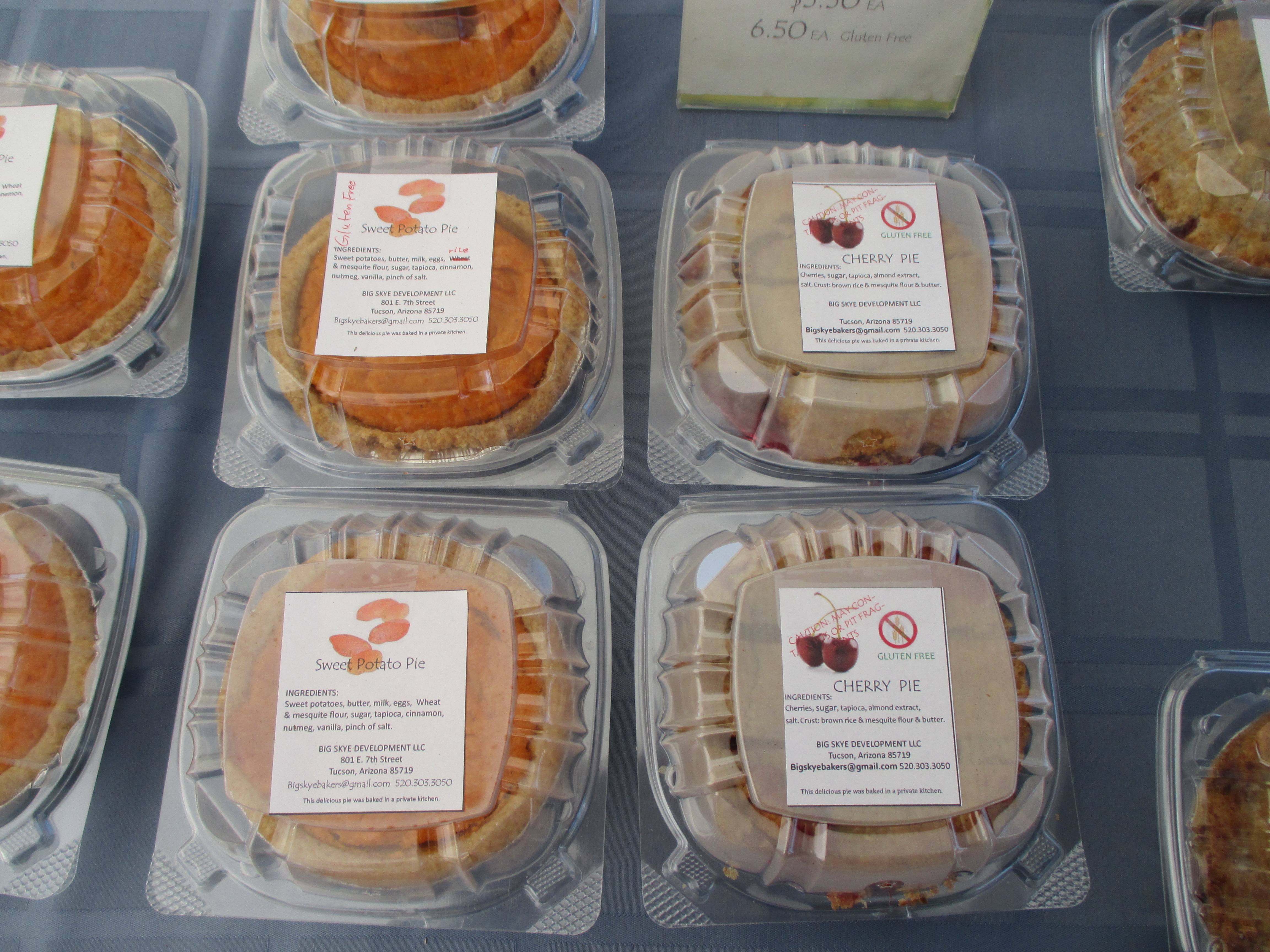
Mesquite crust adds extra deliciousness to Big Skye's fruit pies.

Mesquite crust adds extra deliciousness to Big Skye’s sweet potato and fruit pies.

Bodie Robins of Big Skye Bakers is one of the folks who have brought mesquite baking into the twenty-first century selling mesquite baked goods at farmers’ markets in Tucson and Sierra Vista.

Bodie, an architectural designer, began baking with mesquite as therapy in 2008 when construction took a dive with the recession. His first experiment produced some dog biscuits that he shared with his neighbors. He decided there might be a future in mesquite baking when his neighbors admitted they were eating the dog biscuits themselves. With salsa!

Bodie took his product to a farmers’ market. But it turns out not enough people were willing to pay for high-end mesquite dog biscuits (many dogs are willing to just chew the pods, unbaked), so he began to experiment with other baked goods, trying various combinations of flours until he produced a version he liked.

Today he sells pies with mesquite crust, cookies, and cupcakes. Many of his customers are attracted by the gluten-free nature of Bodie’s mesquite pie crust. One very grateful middle-aged customer was thrilled to find a pie crust he could eat and told Bodie he hadn’t been able to eat pie since he was 15 years old.

Bodie entices his customers with a little table setting at his farmers market booth. Personally, I'm ready to dig right in.

Bodie entices his customers with a little table setting at his farmers market booth. Personally, I’m ready to dig right in.

A perfect loaf of gluten-free bread eluded Bodie until recently when extensive experimenting has finally led to a mixture of mesquite meal, brown rice flour, tapioca and sweet potato flour that turns out a delicious loaf.

“My customers are particular about the foods they buy and eat,” he says .  “They like to learn about mesquite. There’s a romance to it – an arts and crafts movement about food. I get everything from savvy young college kids to the elderly.”

Bodie gathers the mesquite pods he uses himself and has them ground at the Baja Arizona mill at the Sierra Vista farmers’ market. He goes through up to 200 pounds a year and if he runs out, he can grind a few pounds in his Vitamix. He produces his goods in his home kitchen under the home baker cottage industry law.

You can find Bodie and his Big Skye specialty baked goods at the Rillito Farmers’ Market in Tucson on Sunday mornings from 9 a.m. to 1 p.m. and at the Sierra Vista Farmers’ Market on Thursdays from 10 a.m. to 2 p.m

Here’s a delicious recipe for waffles that Bodie developed. This recipe includes wheat flour, but if you are gluten sensitive, experiment with some other flours to find a mixture that works for you.

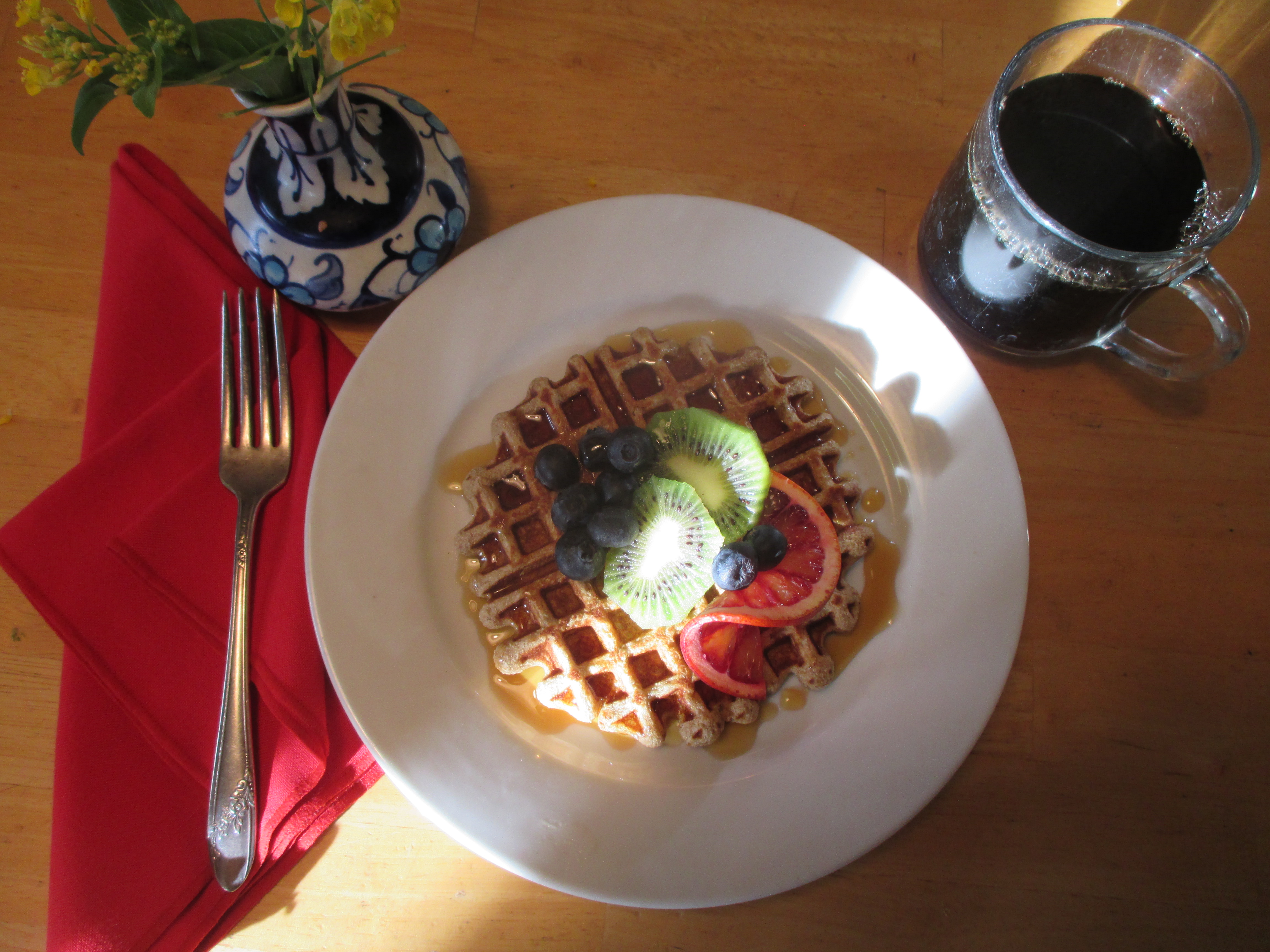
Mesquite waffles make a delicious breakfast or lunch.

Mesquite-Pecan waffles make a delicious breakfast or lunch.

Cinnamon-Pecan Mesquite Waffles

Ingredients

2 eggs separated

2 1/2 cups milk

¼ cup olive oil

1 cup all-purpose flour

½ cup whole-wheat flour

½ cup mesquite meal

1 cup finely chopped pecans

1 tablespoon cinnamon

1 tablespoon baking powder

½ teaspoon salt

1 tablespoon sugar

Directions

  1. Lightly oil and pre heat waffle iron.
  2. Separate eggs reserving the whites in a bowl and set aside. In another bowl mix egg yolks, milk and oil.
  3. Mix all dry ingredients together
  4. Add liquids to dry ingredients. Gently mix until smooth.
  5. Beat the egg whites until stiff.
  6. Fold in the egg whites to the waffle mix.
  7. Place 1/2 cup of batter onto hot waffle iron. Close lid. Bake until golden Repeat with remaining batter.

________________________________________________________________

Want more mesquite recipies? Check out my cookbook Cooking the Wild Southwest, Delicious Recipes for Desert Plants. You can buy it at the Native Seeds/SEARCH Store at 3061 North Campbell Avenue, in Tucson, or order it off the NSS website or from Barnes&Noble. If you need mesquite flour, buy it from Martha Burgess’s Flor de Mayo stand at the St. Phillip’s Farmers’ Market in Tucson on Sundays or order it here.