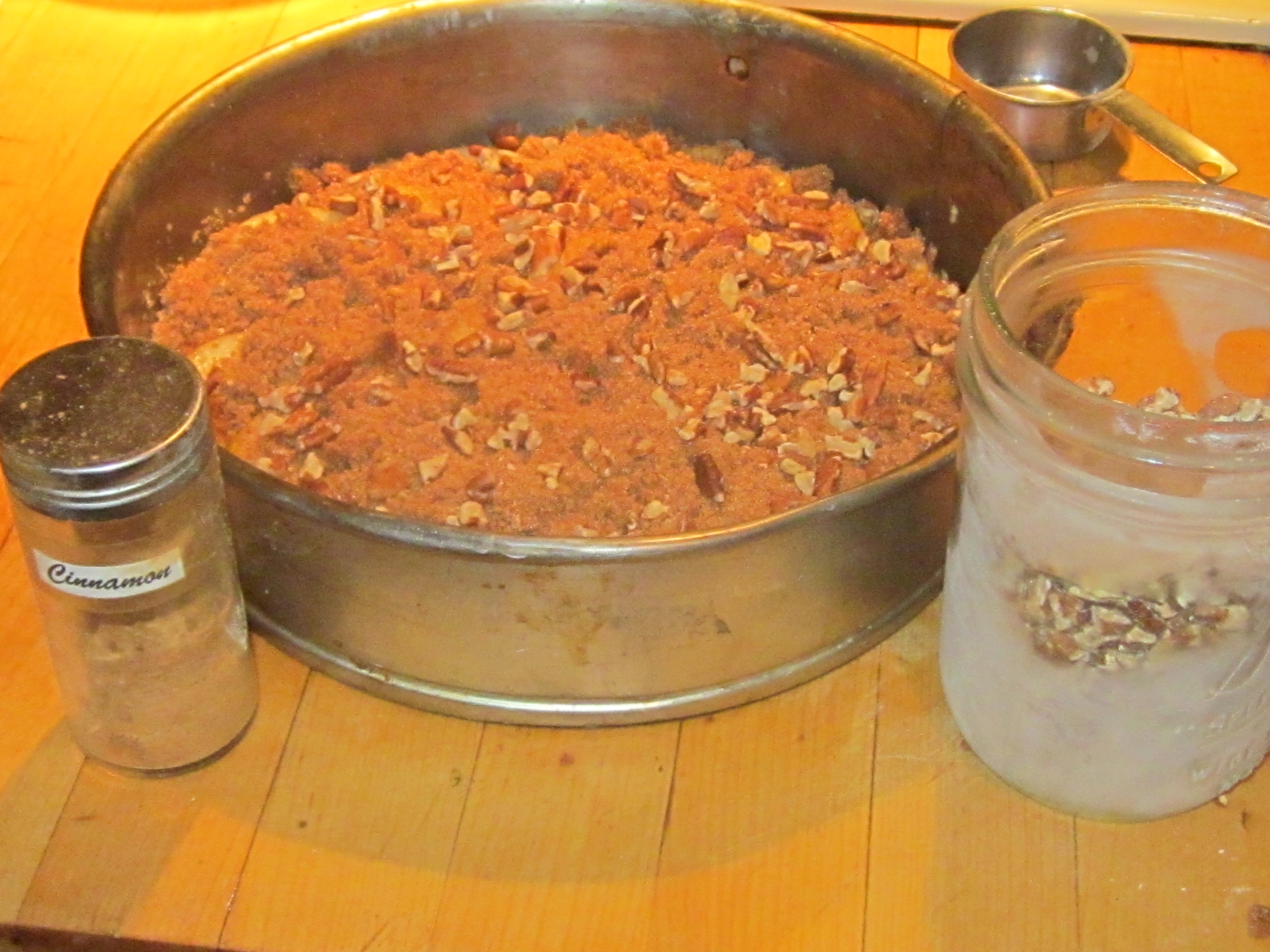
Mesquite Ginger Pear Tart Ready for the oven.
Hello everyone. This is Carolyn Niethammer and this is my week for the Savor the Southwest blog.
With mesquite millings happening all over Arizona, it’s time to plan for what you’ll make with your delicious mesquite meal. Pancakes are fine for mornings at home, but when you are headed for a holiday potluck, something a little special is required to show how attuned you are to our desert foods. This Mesquite Ginger Pear Tart fills the bill. I adapted the recipe from an old Joy of Cooking recipe for an apple cake. This is better! Ginger, a warm spice, always goes so well with mesquite.
I give you the recipe at the bottom, but here are the steps. Works best if you have a springform pan so you can remove the sides of the pan from the finished cake without disturbing the topping. However if all you have is a regular cake pan, just carefully tip it over onto a plate, then flip it back. You may have to reposition a few nuts, but it will taste great.
First make the batter. Use your fingers to push it to the edges of the pan.

Spread the cake batter with your fingers.
Cut a perfectly ripe pear into quarters, then into nice even slices.
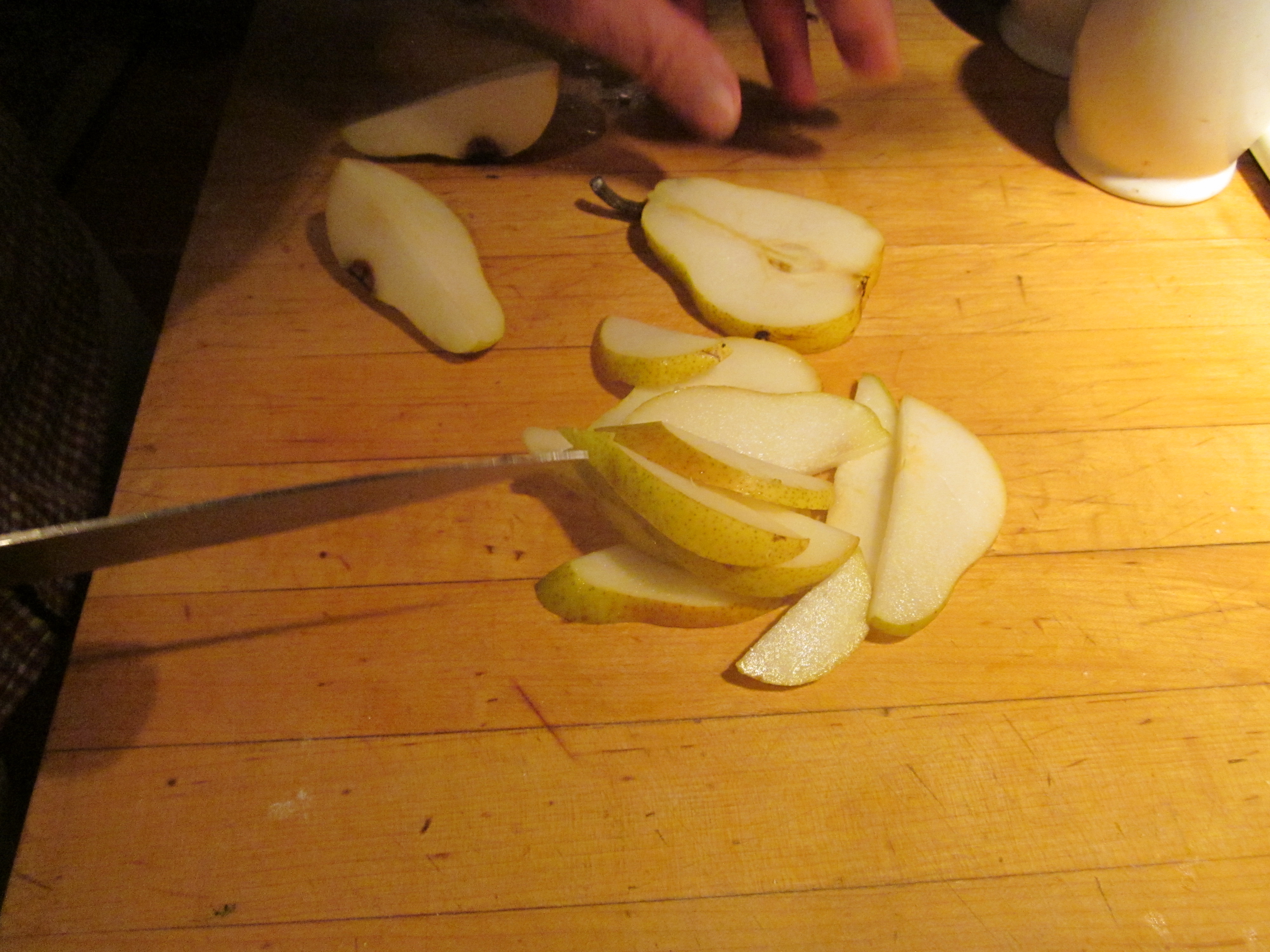
Arrange the pear slices on top of the batter.

Make a pretty pinwheel pattern with the pear slices.
Mix the topping and sprinkle over the pear slices.

Crumbly topping will add sweetness and crunch to your cake.
After baking, cool and remove from the springform pan.
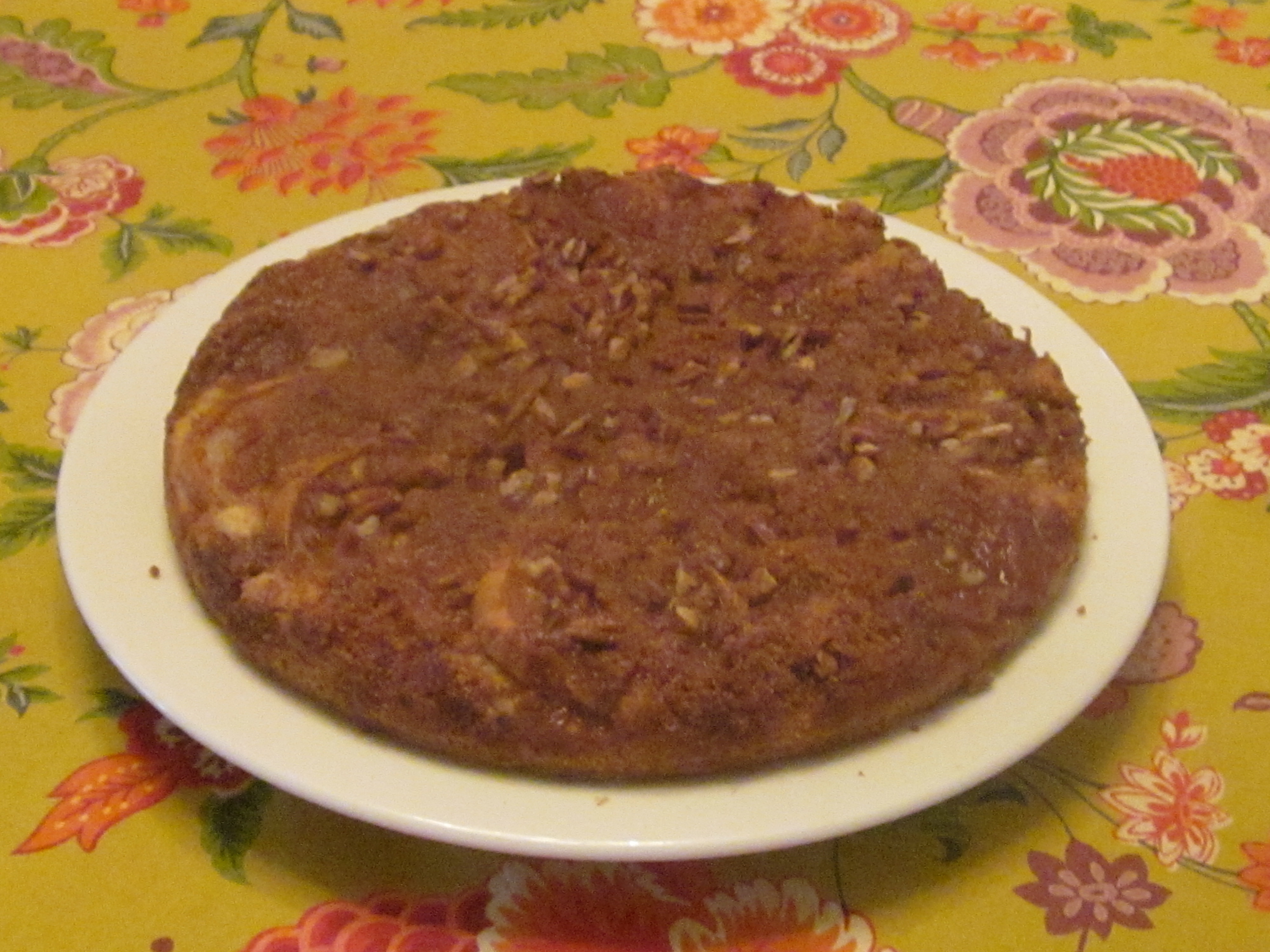
Fragrant Mesquite Ginger Pear Cake.
Now that you know the method, here’s the recipe:
Mesquite-Ginger Pear Cake
1 cup flour
¼ cup mesquite meal
3/4 teaspoon ground ginger
¼ teaspoon salt
2 tablespoons sugar
3 tablespoons butter
1 egg
½ teaspoon vanilla
¼ cup milk
2 large pears, sliced
Topping:
½ cup sugar
¼ cup mesquite meal
3 tablespoons melted butter
¼ cup chopped pecans or walnuts
Prepare a 8- or 9-inch springform pan by lining with a buttered piece of paper cut to fit the pan. Preheat oven to 425 degrees F.
In a medium bowl, combine flour, mesquite meal, salt and sugar. Fluff with a fork until well combined. Add the butter and rub with your fingers or cut with a pastry blender until butter is worked in.
In a glass measuring cup, put the ¼ cup milk and then beat in the egg and vanilla. Stir into the dry ingredients to make a stiff batter. Press into the prepared pan with spatula or your dampened fingers. Arranged sliced pears in a circular pattern on top of batter.
In a small bowl, mix the ½ cup sugar, mesquite meal, and melted butter. Sprinkle evenly over cake and pears. Top with chopped nuts. Bake in preheated oven for about 25 minutes. Remove sides of pan and cool. Serve with a dollop of whipped cream.
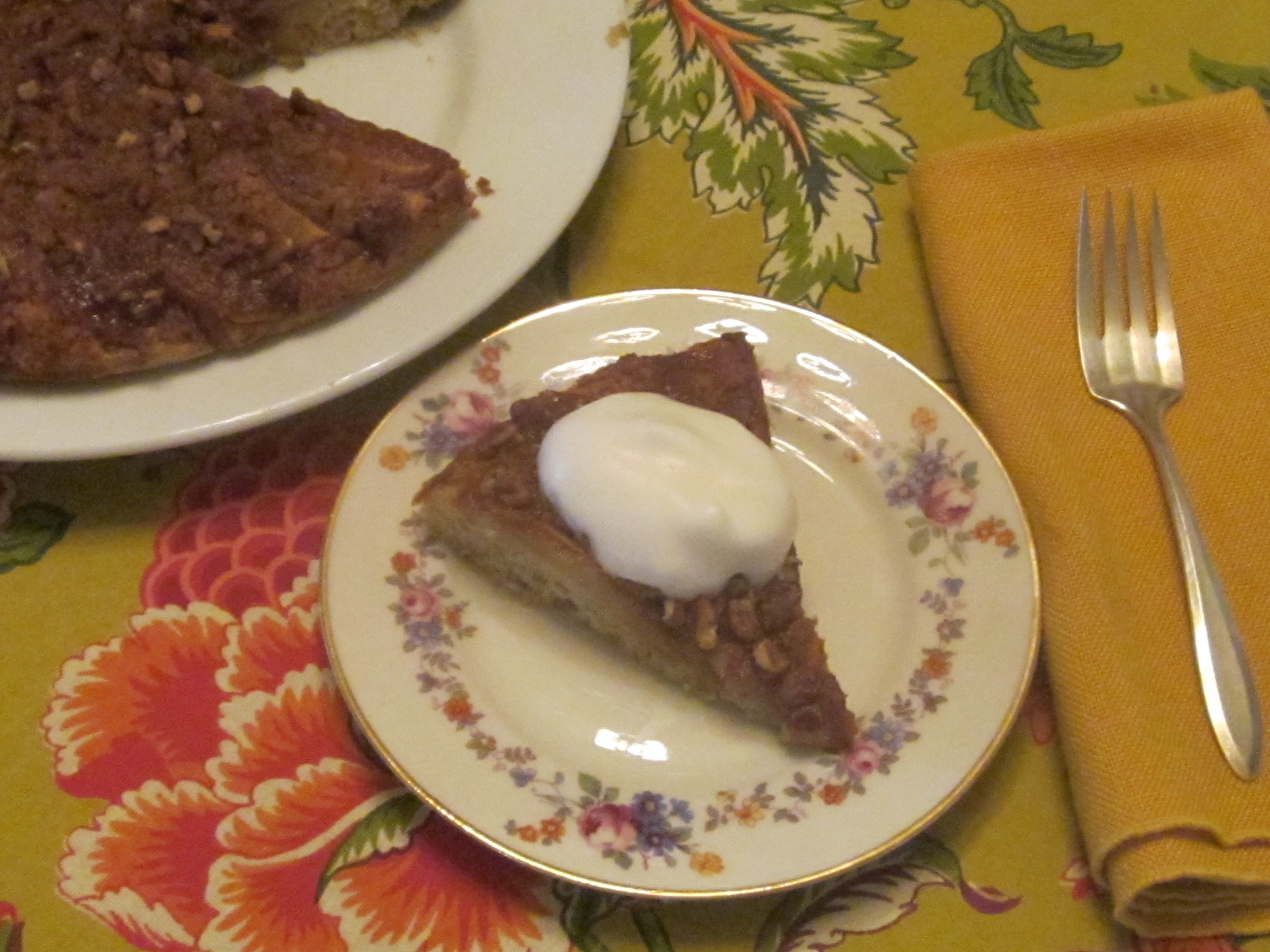
Delicious slice of Mesquite Ginger Pear Tart.
********************
Looking for more ideas to use your mesquite meal? Check out Cooking the Wild Southwest: Delicious Recipes for Desert Plants. It includes recipes for 23 easily identified and gathered plants that grow all over the Southwest.

 Jacqueline Soule has been writing about plants in the Southwest since the 1980’s, and growing and using them since even before that. An award-winning garden writer, she is delighted to be the instigator of this venture. She welcomes you to her free lectures at the Pima County Libraries.

