Election Bread—Savoring an old Recipe

No matter who your candidate was this momentous month, by fixing this festive treat called “Election Bread,” we can at least toast the democratic process AND local heirloom foods all in one delicious slice!
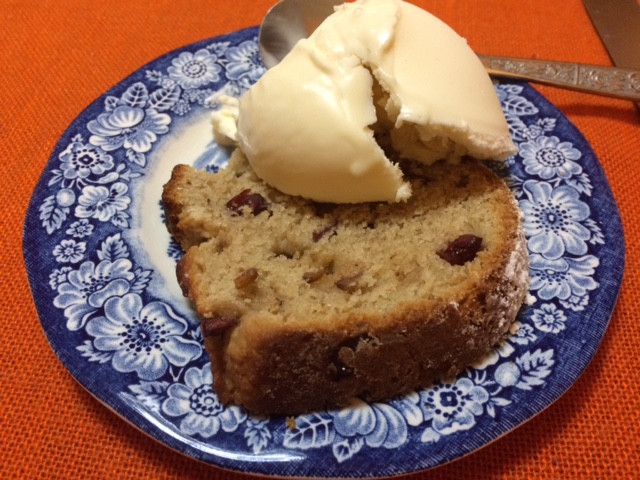
Ames Family Election Bread served joyously as a dessert

Ames family traditional Election Bread served joyously as a dessert topped with natural vanilla ice cream

Tia Marta here to share an Election Bread recipe inspired from my own family tradition served around election time each November. On the internet you might find historical variations of it with the moniker “Election Cake.” Technically it is a fruity yeast bread—probably one of the precursors of holiday fruit cake, reminiscent of Italian panettone–a nice addition as weather cools and fruits ripen. In the “old days” they say this Election Bread was baked to attract people to the polls on Election Day and fortify them for the trip home.

I gleaned our Ames Family Election Bread recipe from a cherished little cook’s notebook which my 80-year-old great Aunt Rina wrote for me when I was just learning to cook—yikes, some decades ago. My new adaptation of it reflects our home turf in the flavor-filled Sonoran Desert.
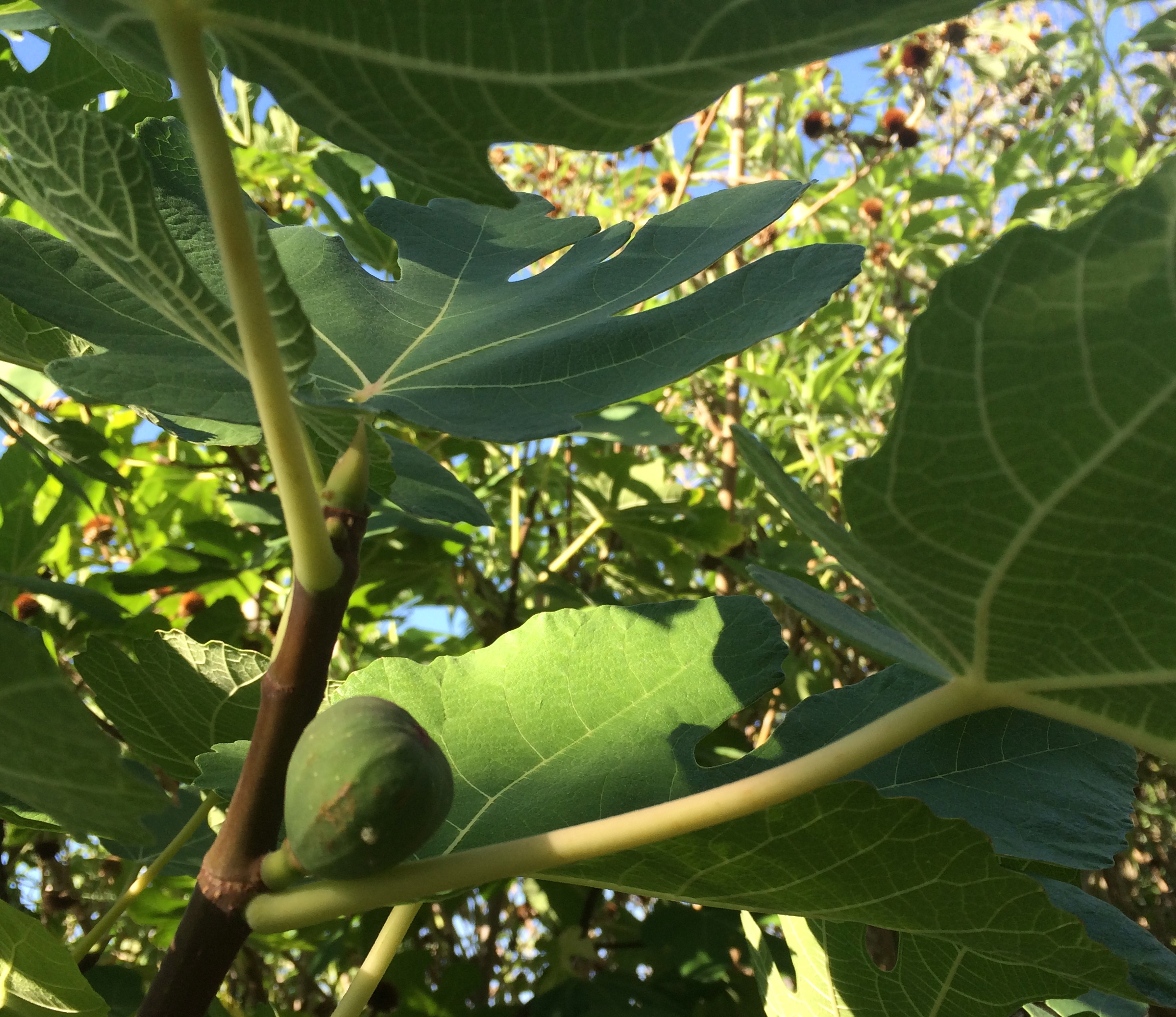
Heirloom Sosa-Carrillo fig (a Padre Kino introduction) from Mission Garden now producing in my yard (MABurgess photo)
Heirloom Sosa-Carrillo fig (a Padre Kino introduction) from Mission Garden now producing in my yard (MABurgess photo)

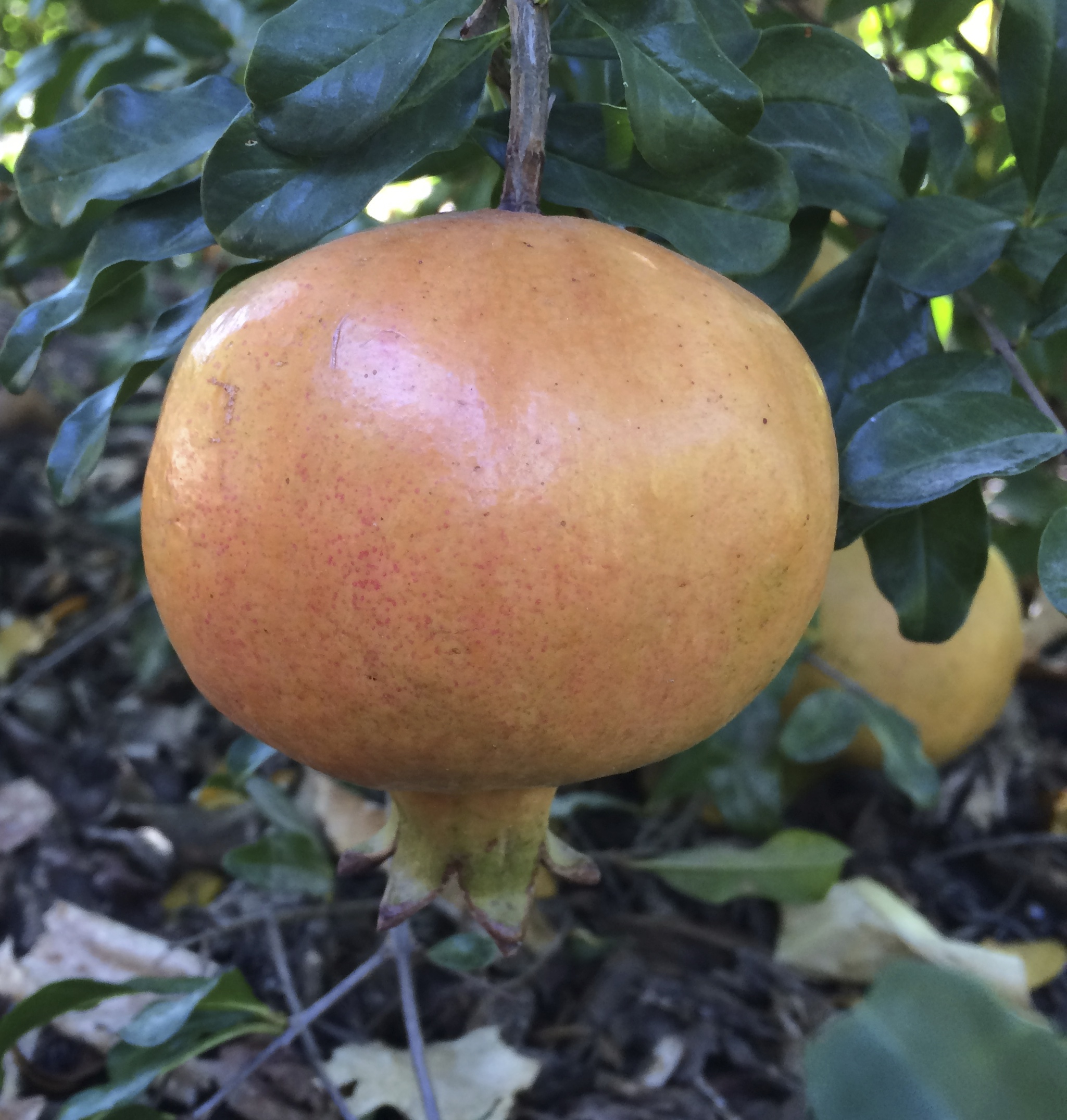
Heirloom pomegranate from Mission Garden, Tucson (MABurgess photo)

Heirloom pomegranate from Mission Garden, Tucson (MABurgess photo)

But here in Baja Arizona, instead of waiting for fall, I had to begin prep a few months ago by harvesting ripe heirloom figs, pomegranates and apricots as they ripened.  Father Kino’s figs grace my yard and the other two yummy fruits, grown at Tucson’s Mission Garden at the base of A-Mountain, were purchased at the Thursday Santa Cruz farmers’ market.

Preserving them for later use, I dried the fruits in my solar oven with the lid slightly opened, allowing humid air to escape.
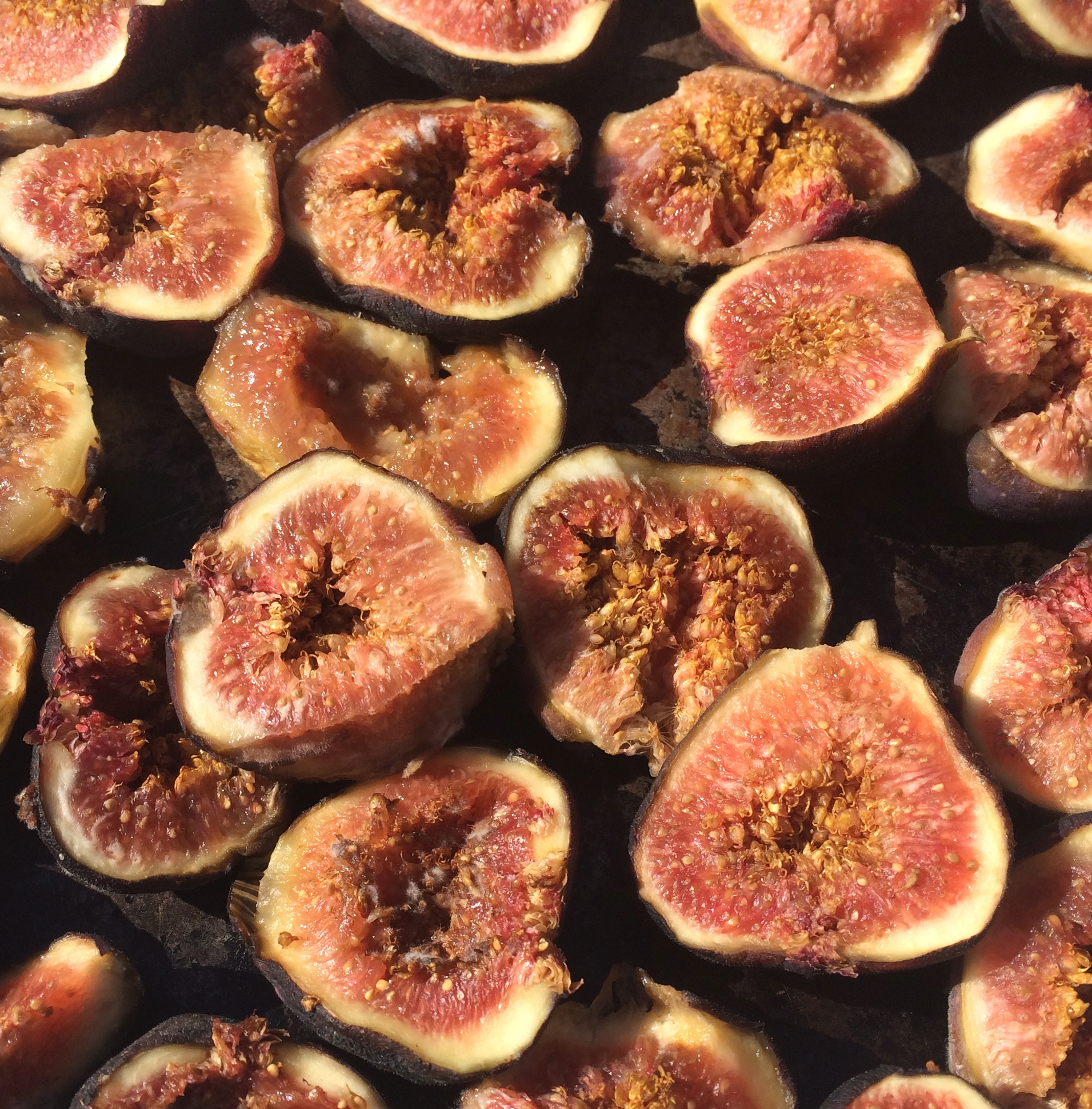
 

Fresh Mission figs cut ready for drying in the solar oven

Fresh Mission figs cut ready for drying in the solar oven

Sun-dried figs get even sweeter and more flavorful than when they are fresh!

Sun-dried figs get even sweeter and more flavorful than when they are fresh!

Celebrating our International City of Gastronomy, I rejoice in using flours grown and milled locally by BKWFarms in Marana, Arizona, to bake this rich bread.  Other ingredients I sourced close to home as well — Tucson’s precious mesquite-smoked Hamilton whiskey, homegrown heirloom fruit propagated at Mission Garden, agave nectar in place of sorghum molasses — from the bounty of Baja Arizona’s foodscape, its green thumbs, and its creative local “food-artists.”
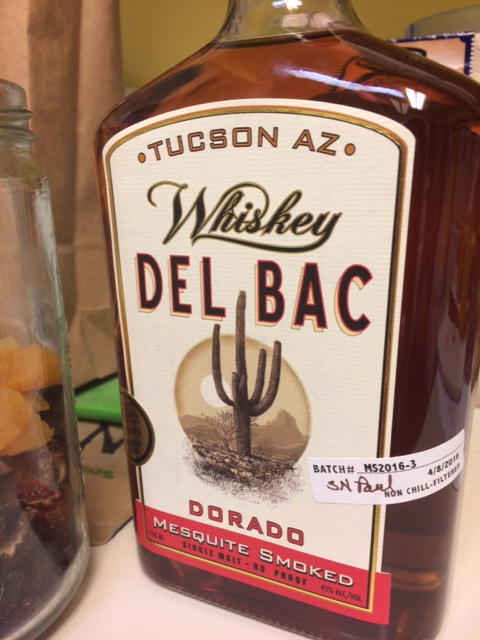
Tucson's best whiskey from Hamilton Distillers--made with organic local malted grain dried using local mesquite.

Tucson’s best whiskey from Hamilton Distillers–made with organic local malted grain dried using local mesquite.

Bread teaches us patience.  It is a beautiful meditation so take time to enjoy the process. There are tasks for this recipe to be done on two consecutive days.  At the very least, in between texts and emails, radio news and phone calls, take time out to go to the kitchen, check the status of your “rehydrating” fruit, or check your yeast sponge, take a nip, etc.  Bread is a living gift and this Election Bread in particular brings many quite lively foods together.  Be not daunted–become one with the yeasts!

If you are already into sourdough baking and have live starter, take method A.  If you are beginning with dry yeast, take method B.  Both will give olfactory pleasure from the git-go.


RECIPE FOR AMES FAMILY ELECTION BREAD

Day 1—Making the Pre-ferment –method A–Using Sourdough Starter
1 cup whole milk, warmed to ~ 70º F
¼ cup active starter — fully hydrated
2 ¼ cups all-purpose or whole wheat pastry flour *

OR Day 1 — Making the Pre-ferment — method B– Using Yeast
1 1/8 cup milk, warmed to ~70º F
1 tsp instant dry yeast
2 ¼ cups plus 2 Tbsp organic all-purpose or whole wheat pastry flour *

Pre-ferment Instructions:  In a bowl, combine milk and sourdough starter or yeast. Mix thoroughly until starter or yeast is well dispersed in the milk mixture. Add flour and mix vigorously until the yeast mixture is smooth. Scrape the sides of your bowl to use all yeast. Cover the bowl with a damp towel or plastic wrap. Allow your sponge to rest and ferment 8-12 hours at room temperature. When ready to use, your pre-ferment will have bubbles covering the surface.

Also Day 1–Pre-Soaking Dried Fruits

1 cup dried fruits, coarsely diced in 3/8-inch or ½-inch pieces **
1-1 ½ cup whiskey, bourbon, brandy, or non-alcoholic fruit juice ***

Instructions for Pre-soaking Dried Fruit:  To prepare dried fruits for your bread, soak them overnight, or for several days beforehand, in a lidded jar. Measure your dried fruit then cover with liquor or liquid of choice. (To speed up the soaking process put diced fruit in a small sauce pan, warm over low heat for a few minutes, remove from the heat, and allow fruit to soak, covered, for several hours.) Until the fruit is totally softened, you may need to add more liquid to keep fruit submerged.

Before adding fruit to your dough, strain the liquid off of the fruit. Use this fruity liquid as a cordial, or to make a simple glaze after bread is baked.

Freshly mixed dough in greased and floured bunt pan
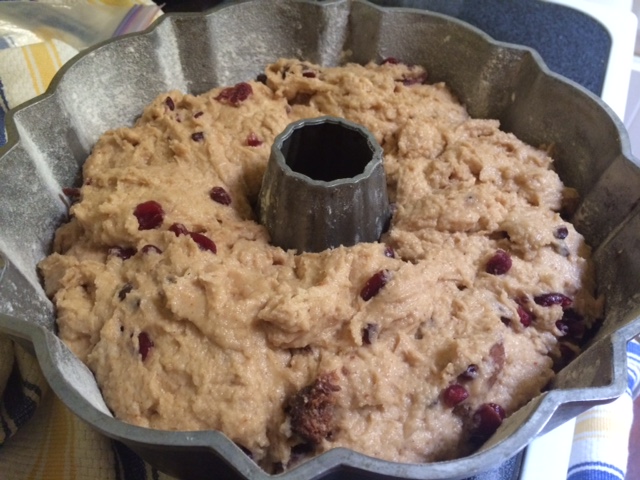
Freshly mixed dough in greased and floured bunt pan

Proofing Election Bread dough--after covering and allowing dough to rise to almost double size--fruit bites visible

Proofing Election Bread dough–after covering and allowing dough to rise to almost double size–fruit bites visible

*** My secret to this “fruit marinade” is the smokey flavor of local Whiskey del Bac!  Using spirits results in a fabulous liqueur “biproduct” to enjoy later.  But, remember the words to that song “Oh we never eat fruitcake because it has rum, and one little bite turns a man to a bum……..”  For the tea- totaler, any fruit juices will work for re-hydrating the dried fruit chunks:  try apple cider, prickly pear, pomegranate juice, cranberry.  Then save the liquid after decanting as it will have delicious new flavors added.


Day 2 –Preparing Dough, Proofing, Baking Election Bread

Ingredients:  
1 cup unsalted butter
¾ cup unrefined organic sugar
2 eggs
1/3 cup whole-milk yogurt
¼ cup sorghum molasses, agave nectar, or honey
Your Pre-ferment –yeast mixture or sourdough mixture from Day 1
2 ¼ cups all-purpose or whole wheat pastry flour combination *
1-2 Tbsp mixed spice blend—your choice cinnamon, allspice, nutmeg, mace blend
¼ tsp ground coriander –optional
¼ tsp ground black pepper –optional
1-2 tsp salt
2 Tbsp sherry or another spirit- optional
2 cups rehydrated local fruit from dried/preserved fruits, decanted

* Create your own combination of pastry flours. My Southwest pastry flour mix to total 2 ¼ cups is:
½ cup organic all-purpose flour
¼ cup mesquite pod milling dust
1 cup organic BKWFarms’ hard red wheat flour                                                                                                                                          ½ cup organic heirloom BKWFarms’ White Sonora Wheat flour  (heirloom flours available at NativeSeeds/SEARCH and http://www.flordemayoarts.com)

** My Election Bread fruit mix honors the Kino Heritage Fruit Tree Project. You can purchase heirloom fruit seasonally at Santa Cruz Farmers’ Market. For this recipe I used:
1/3 cup diced dry figs
1/3 cup diced dry apricots
1/6 cup dry pomegranate “arils”
1/6 cup dry cranberries (a bow to East Coast food)
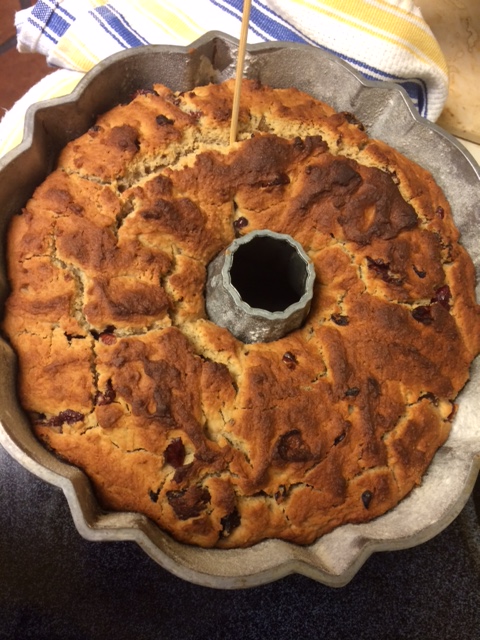
You can test to see if dough is done thru using a wooden kabob skewer or cake tester. Listen to hear if bubbles are still popping in the dough.

You can test to see if dough is done through by using a wooden kabob skewer or cake tester. Listen to hear if bubbles are still popping in the dough.

Day 2–Instructions for Election Day Bread Baking

a) Cream the butter well; add sugar, mixing until light and fluffy. Add the eggs one at a time with mixer (or spoon) on medium speed. Mix in the sorghum/honey and yogurt. If you have a dough hook mixer you can use it or good old elbow grease. Add the pre-ferment (starter or sponge) and mix slightly.
b) In a separate bowl, sift together all of the dry ingredients. Mix as you add dry ingredients into liquid ingredients, being careful not to over-mix.
c) Gently fold in the rehydrated fruit (then optional sherry).
d) Grease (with butter) and flour a bundt pan or round cake pan. Divide the dough evenly into the cake pan. Proof (i.e. let the dough rise) covered in a warm place for 2-4 hours, until the dough has risen by about ⅓ of its volume.
e) Preheat oven to 375F. Bake at 375° F (190° C) for 10 minutes. Reduce oven temperature to 350° F (177° C) and continue baking for about 25-35 minutes, or until a tester comes out clean. Let cake cool completely before cutting and eating.         Enjoy this sweet bread either plain or topped with a simple glaze.

If you are new to yeast bread baking, it would be fun to connect with a friend to chop fruit or get hands gooey together, or to have one person read directions while the other mixes. We always do it as a family and it’s so much more fun to add humor and gossip to the mix–or even a little political emoting.
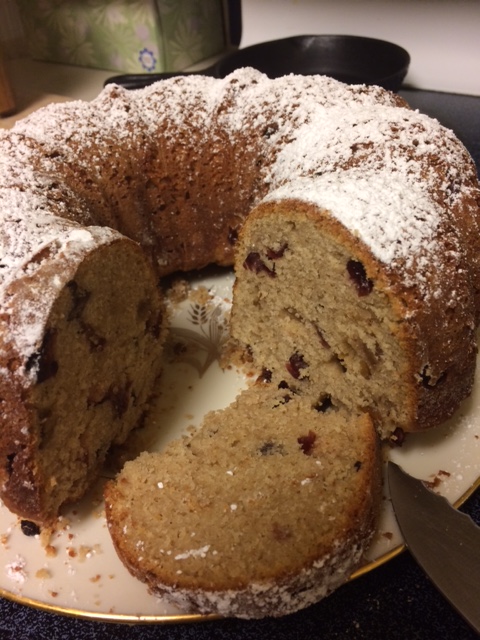
Sonoran Desert style Election Bread with local grains and local fruits--Ah the aromas!

Sonoran Desert style Election Bread with local grains and local fruits–Ahhhh, the aromas and rich history of Baja Arizona in a single slice!

During the coming holidays, you could try this easy bread for a great party treat, for breakfast, or for a colorful dessert topped with whipped cream or ice cream.
And feel free to play with the recipe, adding your own tastes, honoring your own family’s food culture and history and your own sense of place!
Buen provecho from Tia Marta!

Chapulines (Grasshoppers) con Mole

20160924_080146

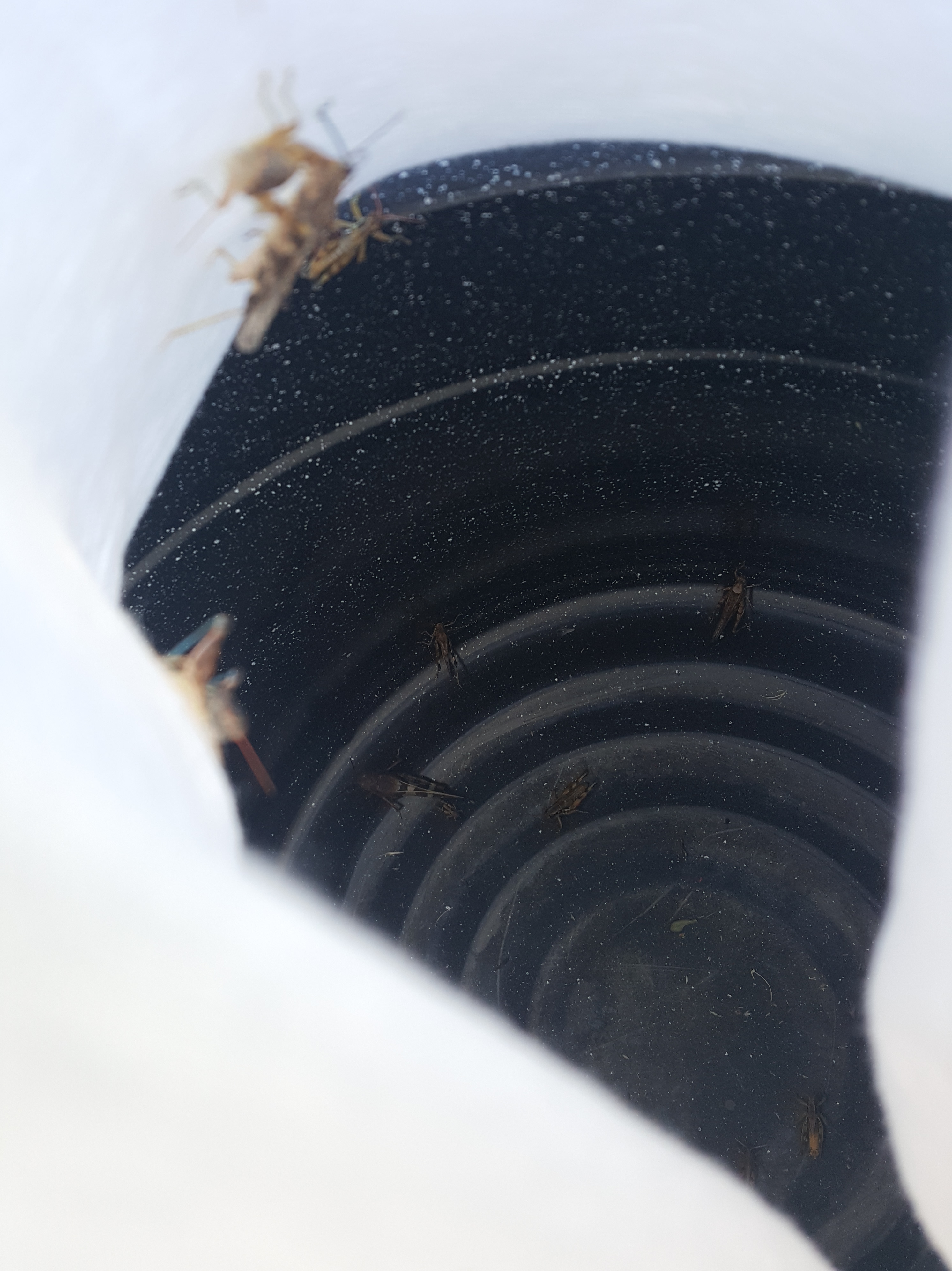
On a late season prickly pear harvesting trip, my friend Nicole and I found few tunas but lots of grasshoppers. I’ve always wanted to try chapulines, but never had the opportunity. Nicole learned how to harvest them this summer, so we attempted ourselves.

Catching them is the trick! When the sun is up, they are fast. We managed to flush some out of the grass into a clearing, toss a big straw hat over one, and grab it by hand. We bagged three, not even enough for one taco. As the sun set, they stopped jumping but were too hard to see in the grass in the low light. We returned with nets. In the cool early morning they weren’t active enough to jump into the nets but were easier to see; we tossed the net over one, and grabbed it by hand. As the day warmed, they got too fast for that method, and sweeping the grass with the net was more successful. Yes, it’s slow, but fun. Plus a beautiful day in the desert.

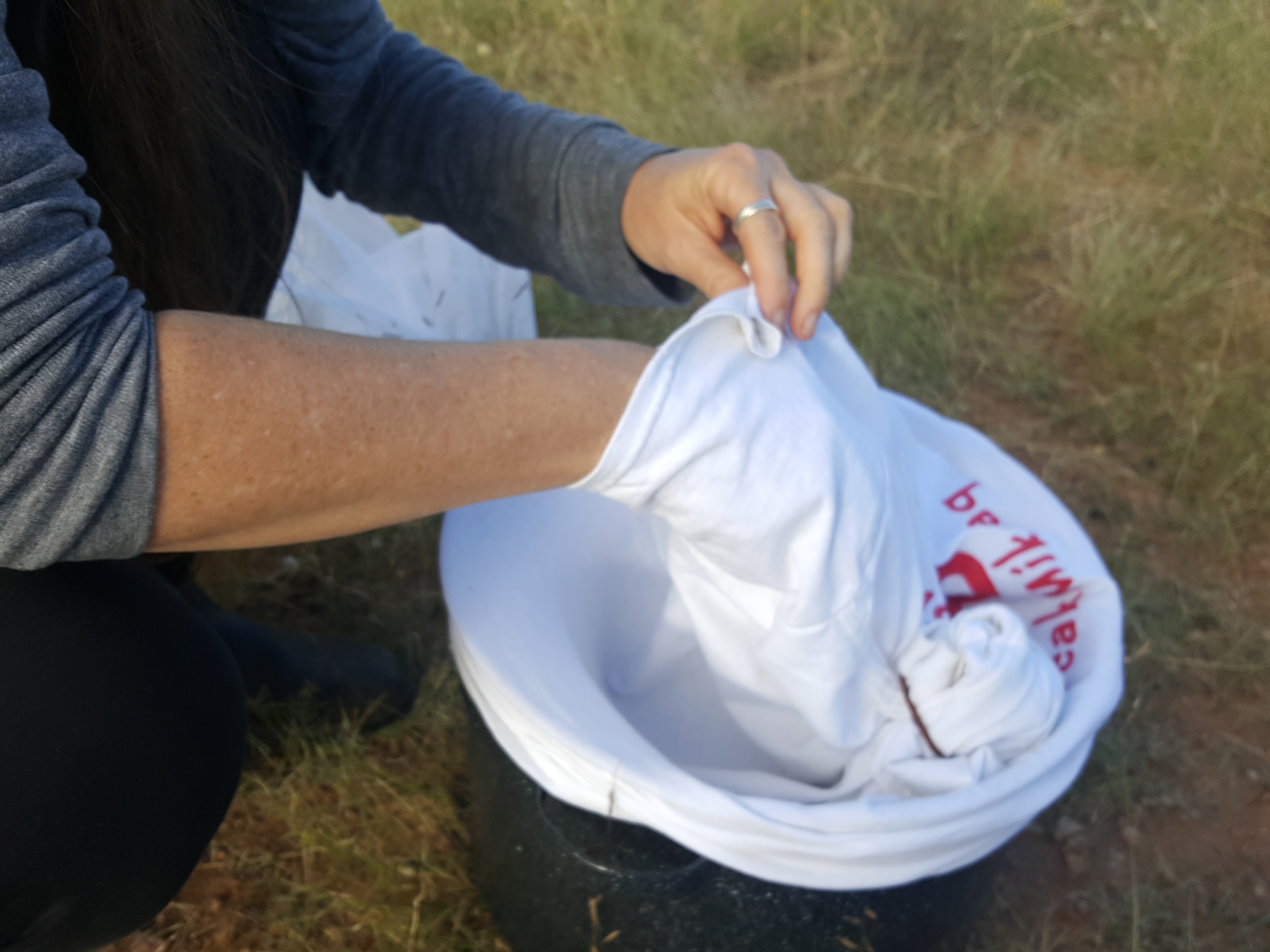
Nicole fashioned an way to hold our catch without letting any escape when we caught another.

20160924_080408

Here they are inside. While they hopped around, they emptied their digestive tracts.

20160924_080353

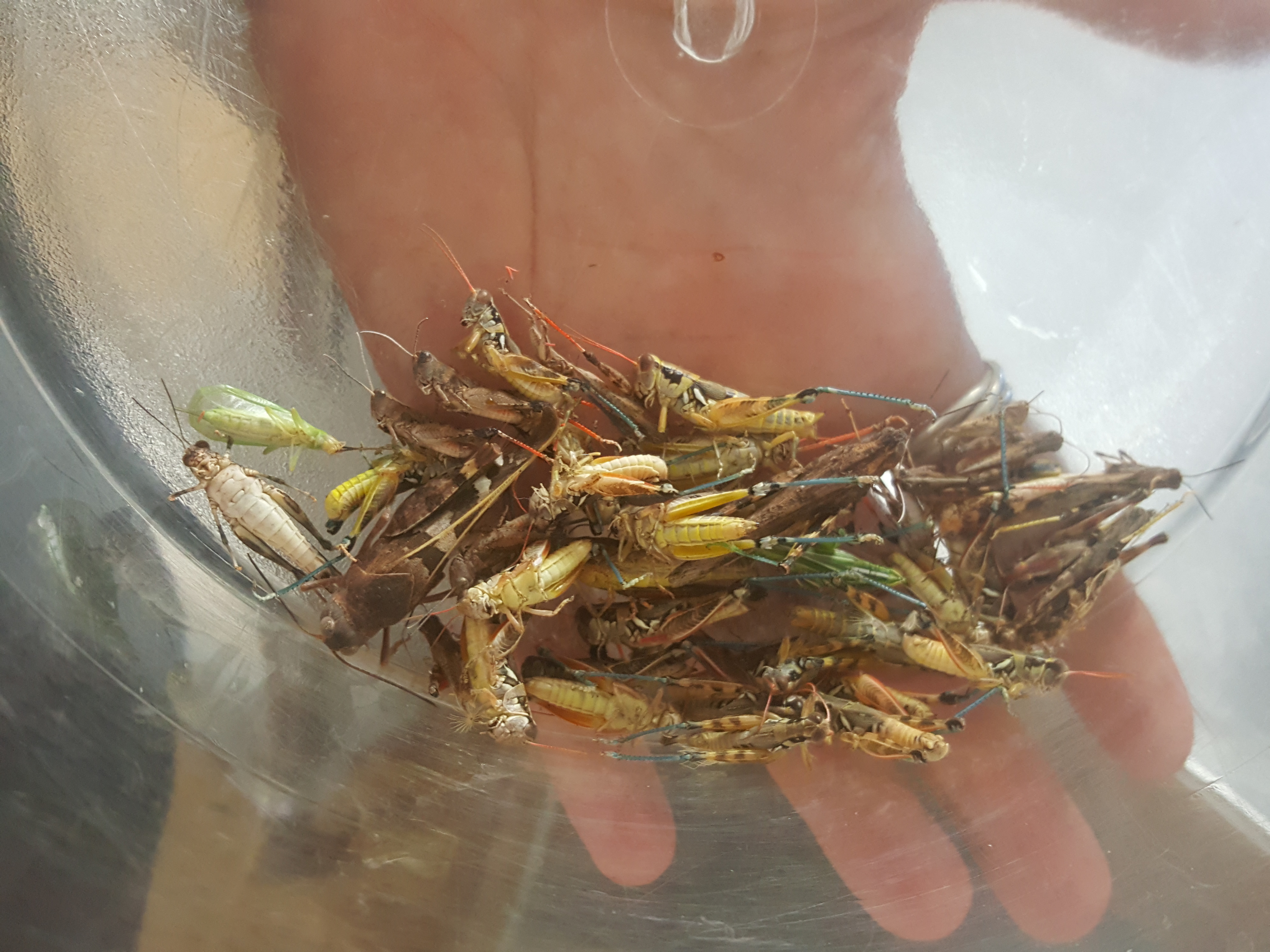
At home we put the whole container in the freezer.

20160924_093610_001

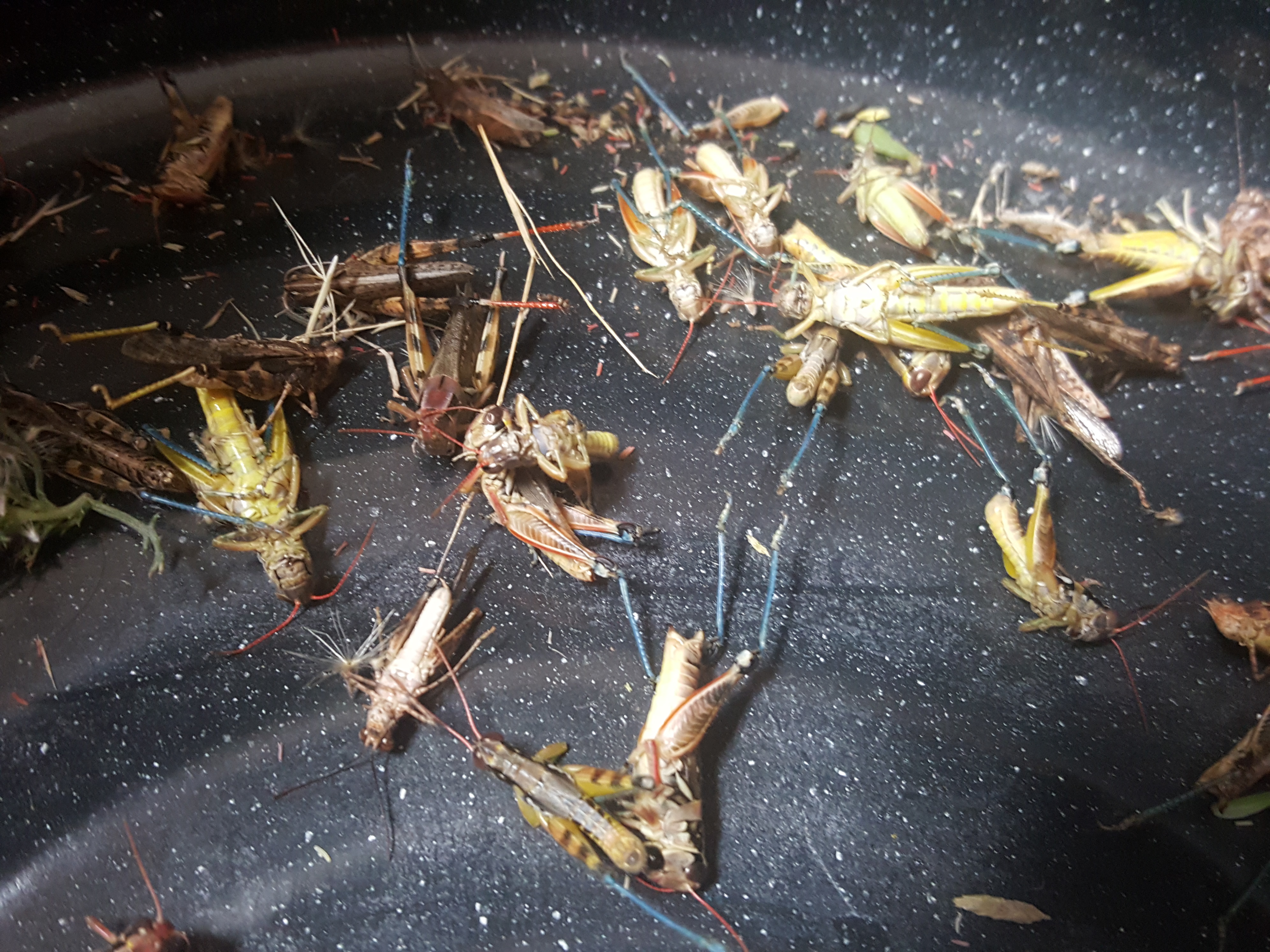
Then we picked them out of the grass seeds and debris. So beautiful.

20160924_093906

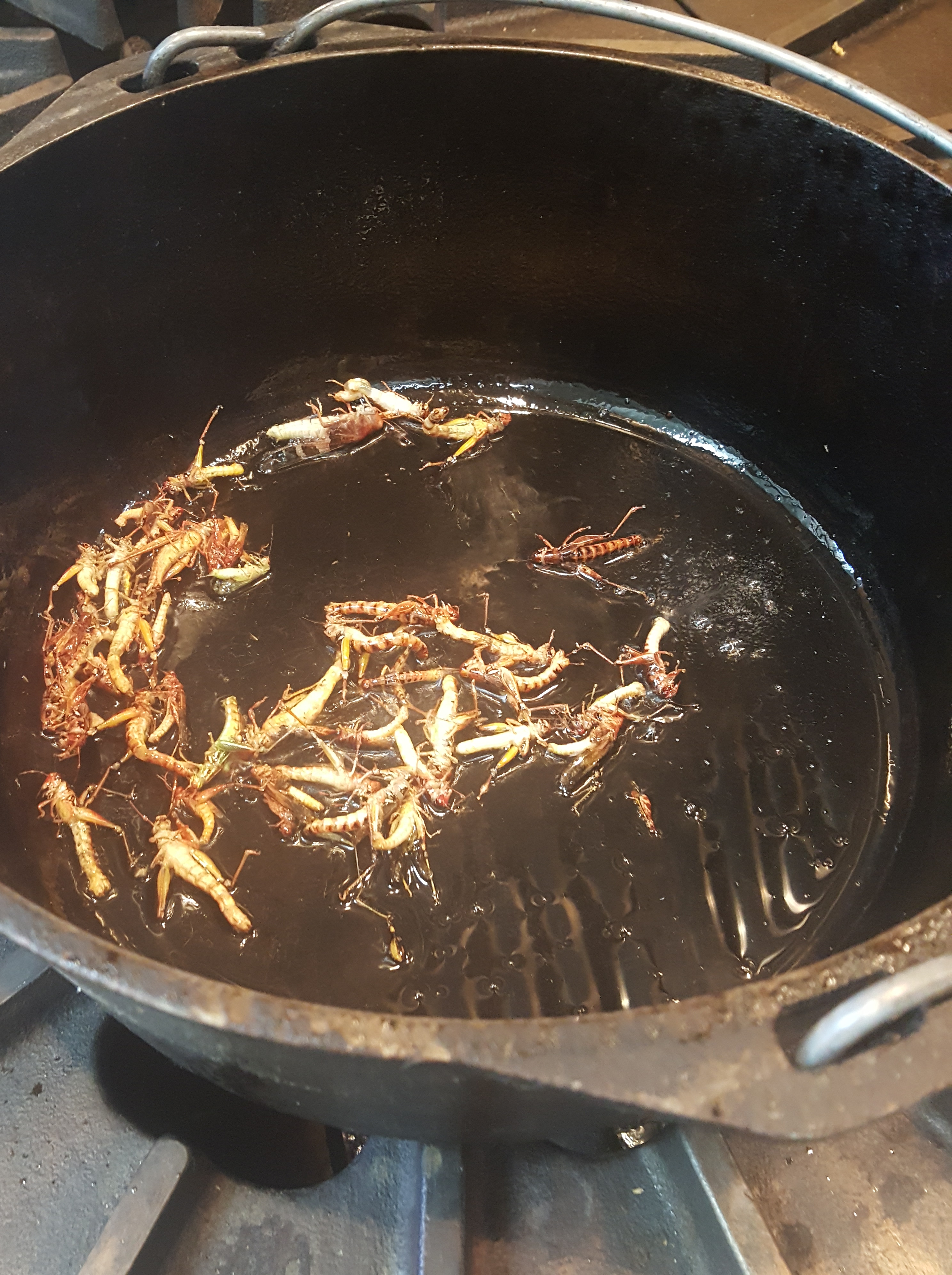
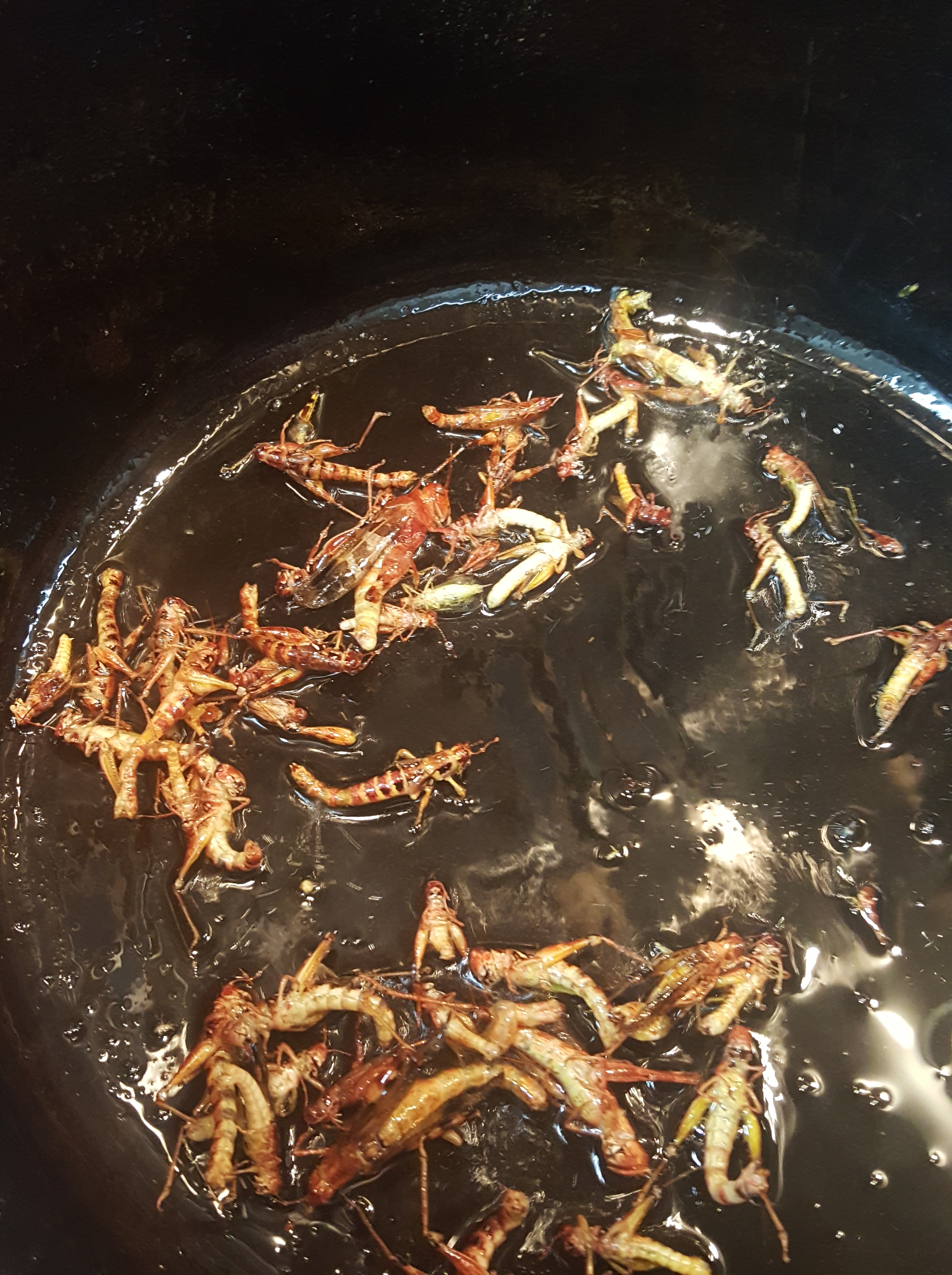
We melted a little duck fat a cast iron pan and fried the chapulines.

20160924_093938

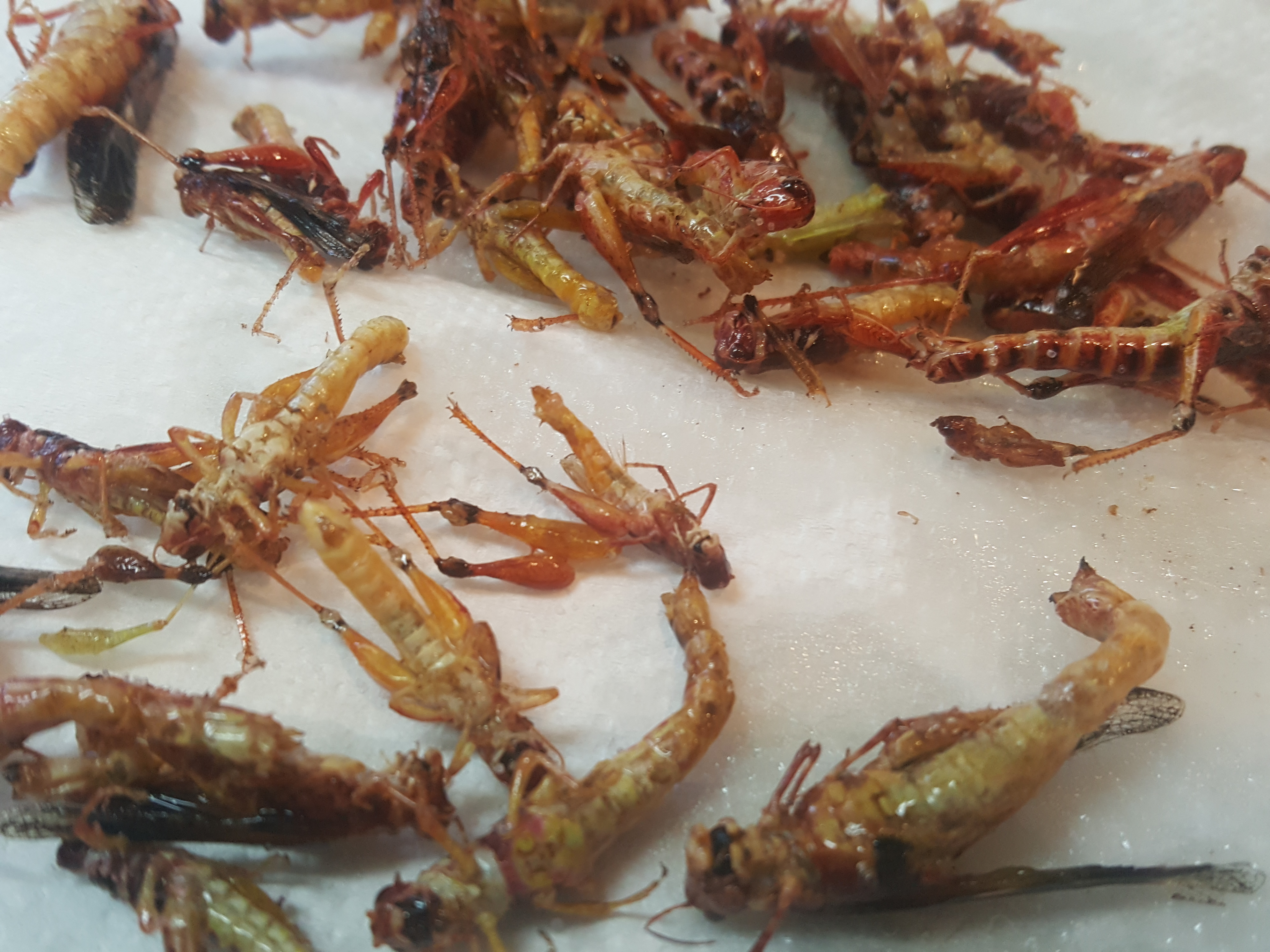
This is when they turned from animals to food, and the only moment in the process that made me a little uncomfortable. We let them get really crispy.

20160924_093953

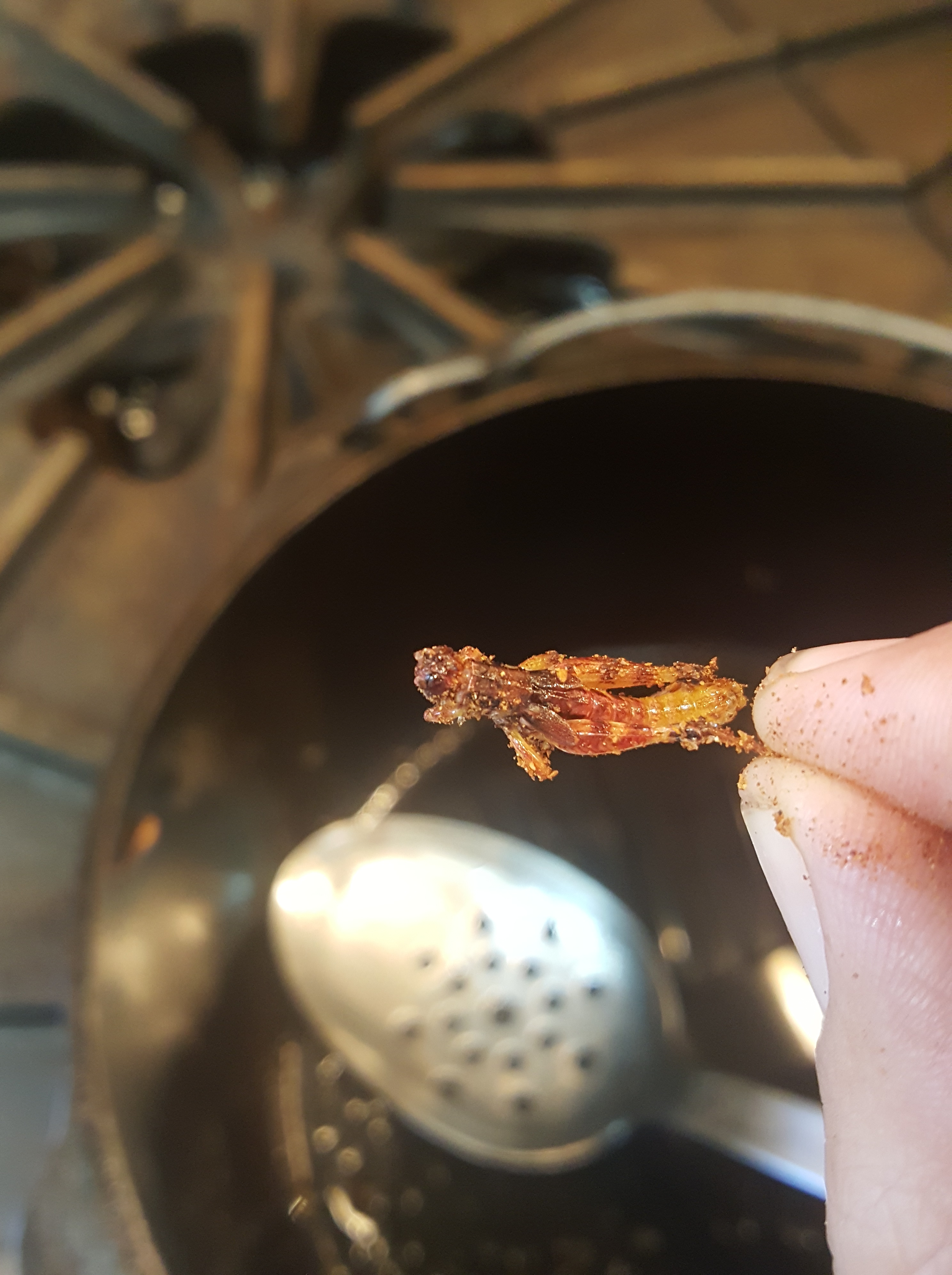
But after all that work, I needed to at least try them. Nicole knew from previous experience to eat the small ones whole, but remove the wings and legs from the larger ones.

20160924_094229

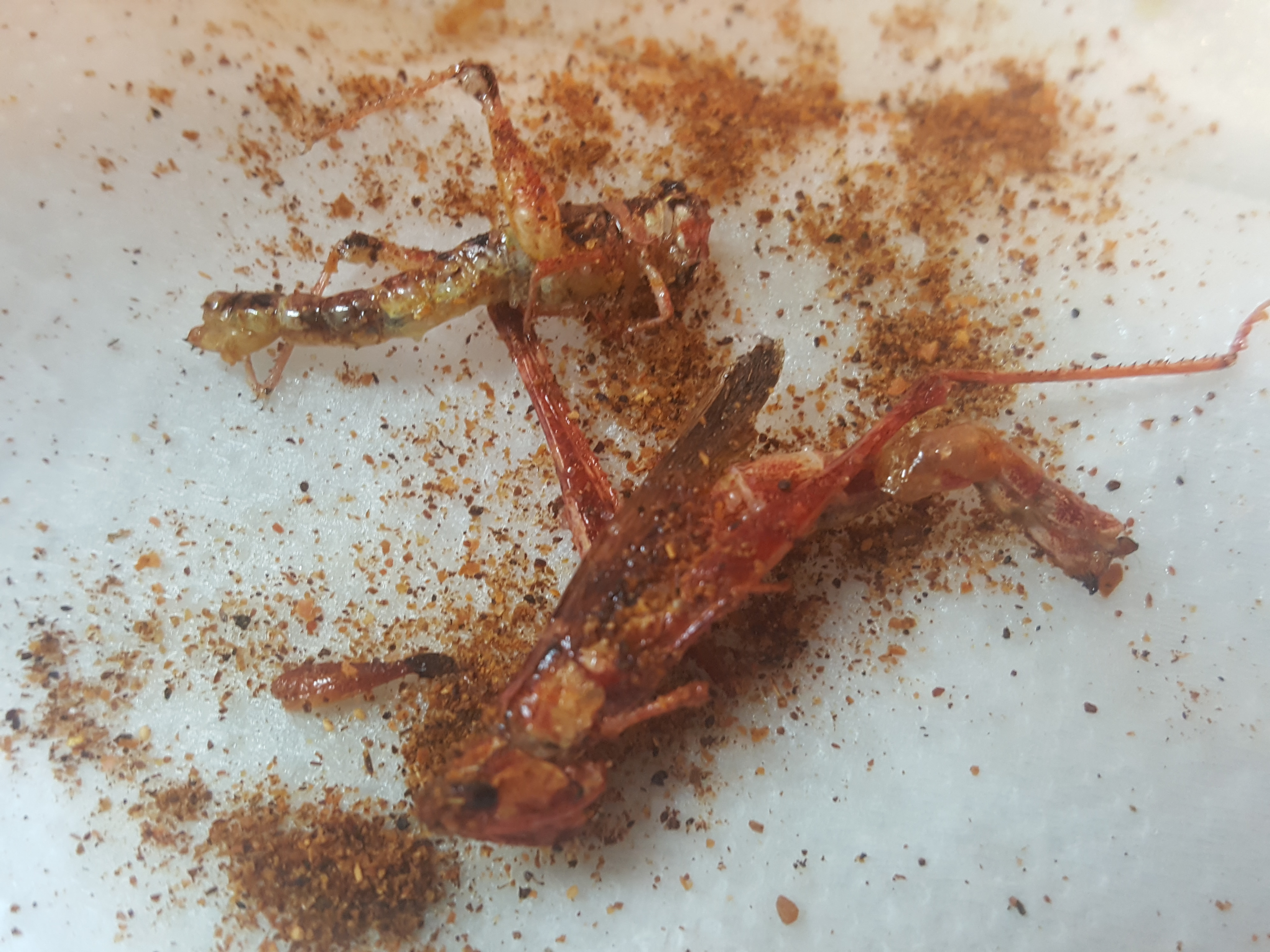
YUM!!!! Crispy fried meat. Then we dusted them with Mano Y Metate mole powder, of course.

20160924_094826

20160924_095149

Delicious, abundant, local, free. We’ll do that again!

Broiled figs in peach sauce and Plum almond cake

9-figs-fin-peach-sauce

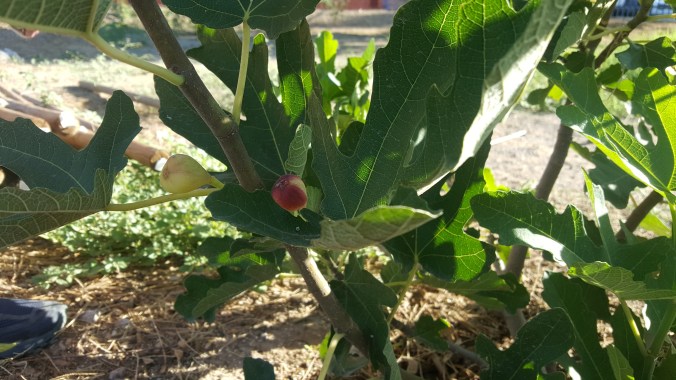
Hello, Amy here playing with the last of the summer fruits. My mom’s Black Mission Fig tree, planted by my grandfather so many years ago, yields two crops a year, early and late summer. The flowers open and are self pollinated inside the developing fruit. This baby fig tree had its first two fruits this year.

1-fig-tree

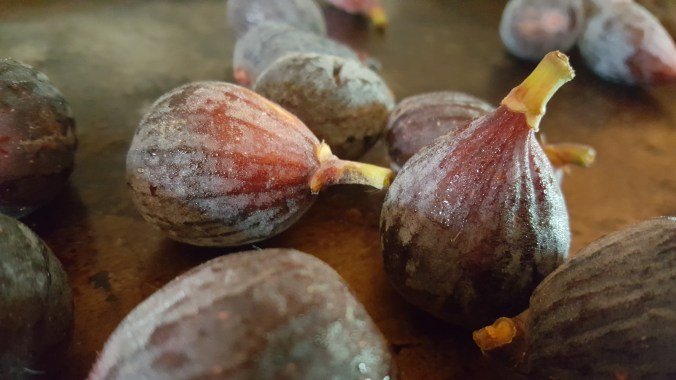
We mostly eat them fresh, the entire fruit with skin, seeds and all, leaving only the stem. They dry beautifully on screens outside, or in a hot car.

2-fresh-whole-figs

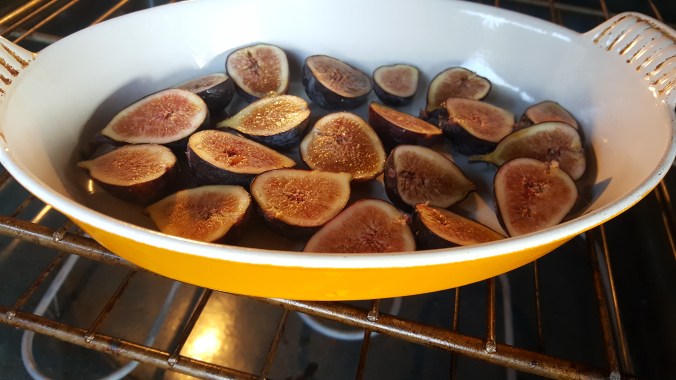
I wanted to do something special with the figs, so I consulted Sweet Simplicity: Jaques Pépin’s Fruit Desserts. Broil the figs!

4-figs-in-oven

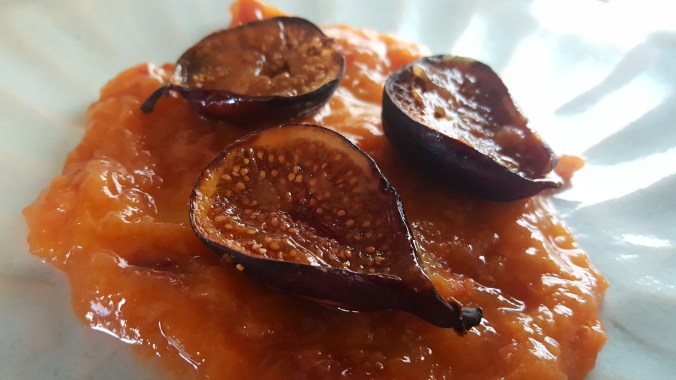
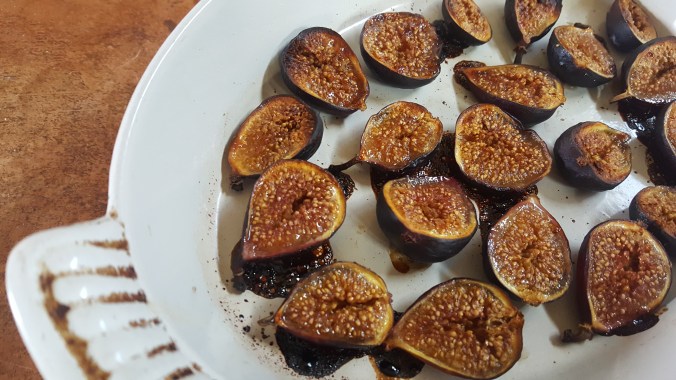
I halved the fruit and decided that they were plenty sweet. If they weren’t, I would have sprinkled with sugar as suggested. After a few minutes under the broiler, they were even sweeter and the flavor concentrated, but still moist and easier to eat than dried.

5-broiled-figs

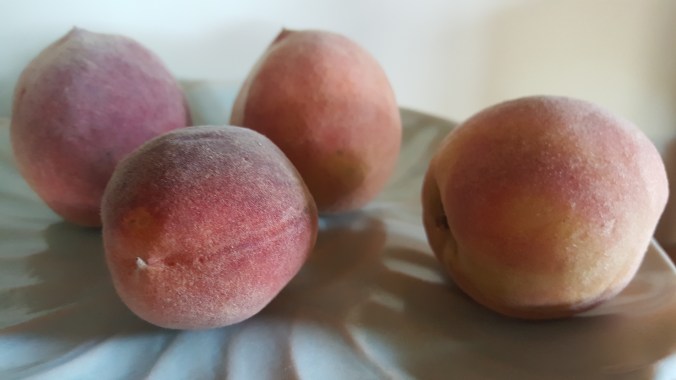
Jacques made a sauce with strained peach preserves, but I had a few tiny fresh peaches from higher elevation southern Arizona.

6-whole-peaches

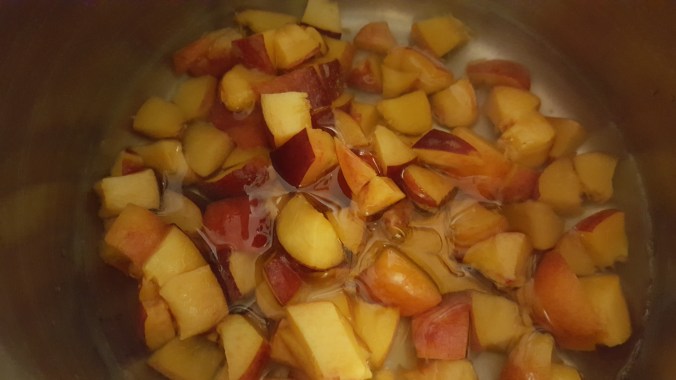
I seeded and chopped the peaches, skins included. So much color, nutrition and fiber is in the skin. Plus I like varied textures.

8-sliced-peaches

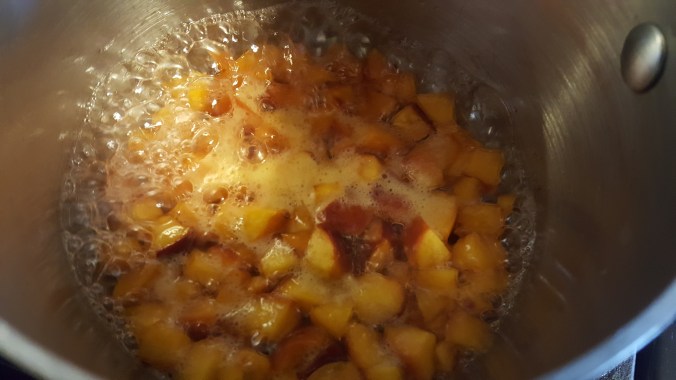
The peaches simmered with a tiny bit of water for a few minutes, until soft.

7-boiling-peaches

I pureed the peaches and seasoned with a squeeze of lemon and a splash of rum.

9-figs-fin-peach-sauce

That worked! So when someone gave me a handful of little plums, I immediately consulted the same book to show off the little treasures.

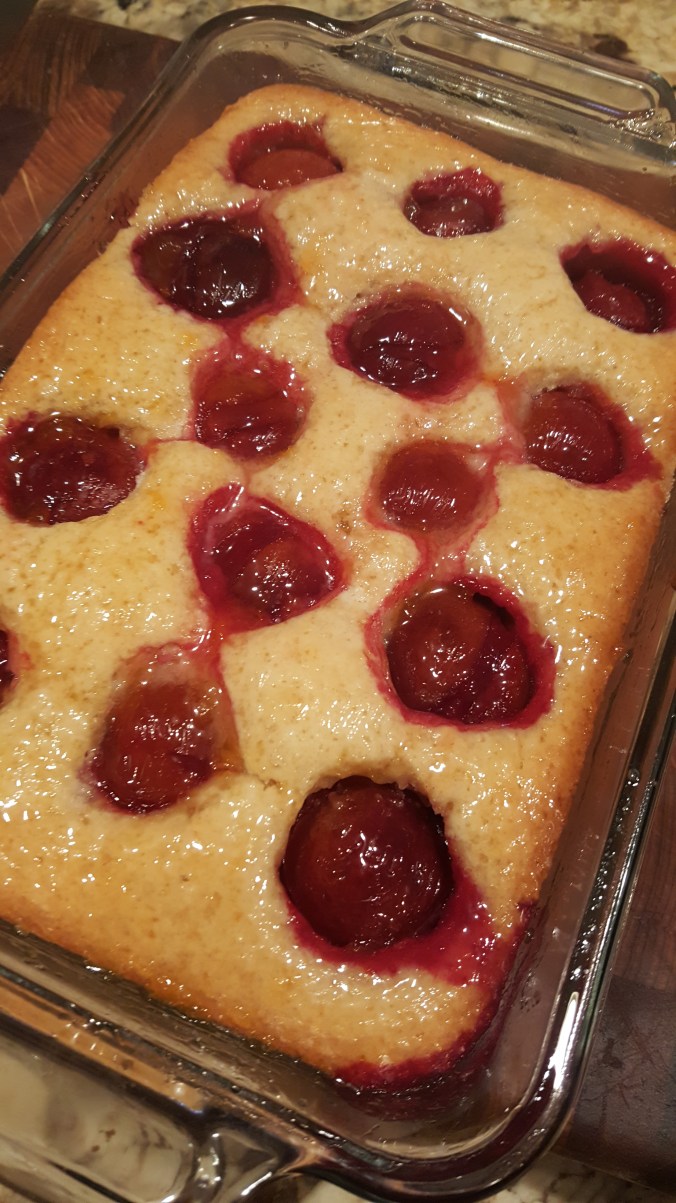
10-plum-cake

Here is my version of the Plum and Almond Cake

1 cup all purpose flour

1 cup almonds

2/3 cup sugar

1 teaspoon baking powder

1 teaspoon vanilla

6 tablespoons butter, softened

2 eggs

1/3 cup heavy cream

Garnish:

14 little plums

1/4 cup apricot jam

2 teaspoons hazelnut liqueur

Preheat oven to 350 degrees F. Grease an 8×8 inch or similar size baking dish. Grind almonds in a food processor until powdered. Add the rest of dry ingredients and process. Add the wet ingredients and pulse into a batter. Spread batter into prepared dish and nestle in the whole fruit. Bake for 55 minutes or until the cake is browned. Mix the jam and liqueur and brush on top of the cake. Warn the eaters of the pits and enjoy!

Our Living Giving Heirloom Pomegranate

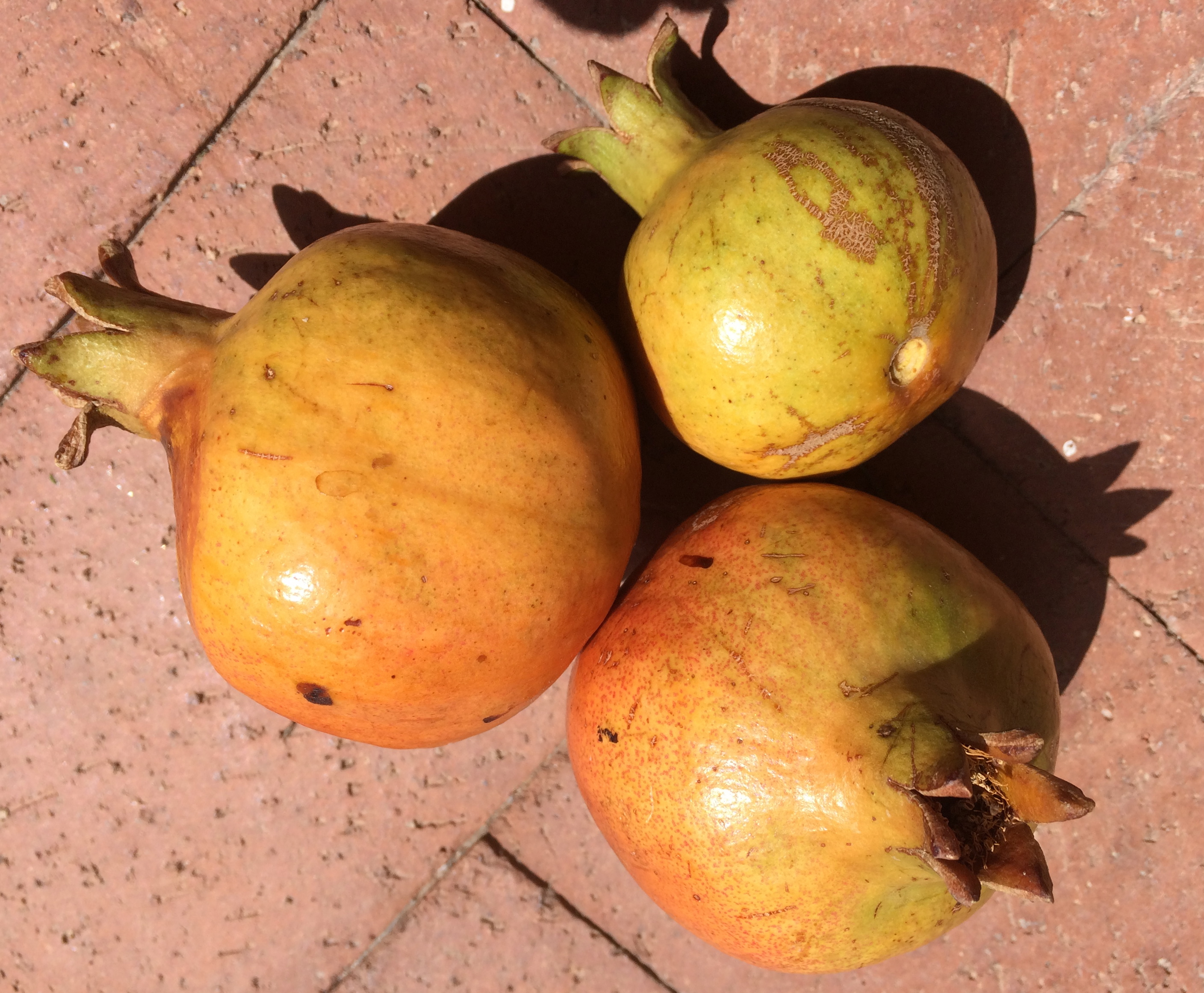
Brought by the Padres to Baja Arizona during the Mission Period, this desert-adapted Sonoran White Pomegranate can continue to feed us visually, nutritionally, esthetically (photo MABurgess)

Brought by the Padres to Baja Arizona during the Mission Period over 350 years ago, this desert-adapted Sonoran White Pomegranate can continue to feed us visually, nutritionally, sustainably  (photo MABurgess)

It is thought that the so-called “apple,” the fruit of knowledge of good and evil which Eve shared with Adam in the Garden of Eden, was actually a pomegranate.   Now, thankfully, since Eden, we are all “fallen” and can enjoy pomegranates with no guilt!   Tia Marta here, inspired deeply by the recent article in Edible Baja Arizona by Dena Cowan about the comeback of heirloom Sonora White Pomegranate being celebrated at Tucson’s Mission Garden.  (This is a must-read:  http://ediblebajaarizona.com/sonoran-white-pomegranate .)

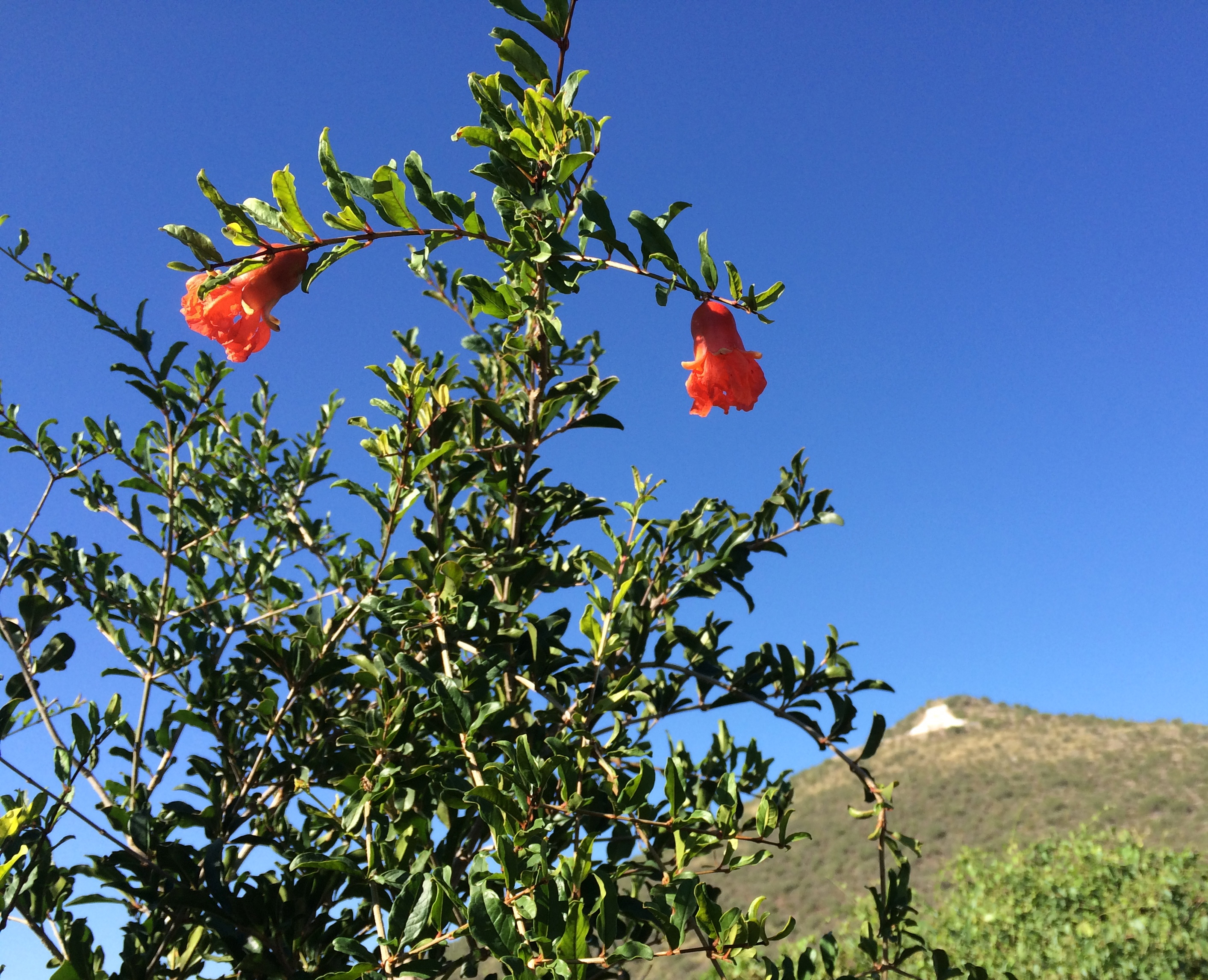
Heirloom Sonora white pomegranate blooms and fruits all summer at Tucson' Mission Garden (photoMABurgess)

Heirloom Sonora white pomegranate blooms and fruits all summer at Tucson’ Mission Garden at the base of   “A”-Mountain (photoMABurgess)

One of the first joys of pomegranates is esthetic, making pomegranate (particularly our local heirloom Sonoran White) a primo candidate for edible landscaping.  Its rich green foliage is cooling to eyes and spirit.  Its glorious, shiny red flowers decorate the trees all summer, followed by sensuous round beige fruits that become rosy as they ripen like Christmas ornaments hanging on the tree.

Sensational flower of Sonoran White Pomegranate--an extra bonus for edible landscapers (MABurgess photo)

Sensational flower of Sonoran White Pomegranate–an extra bonus for edible landscapers .  (Check out the shape of pomegranate flowers to see the design influence in Spanish silver work which in turn inspired Dine/Navajo  “squash blossom” jewelry.) (MABurgess photo)

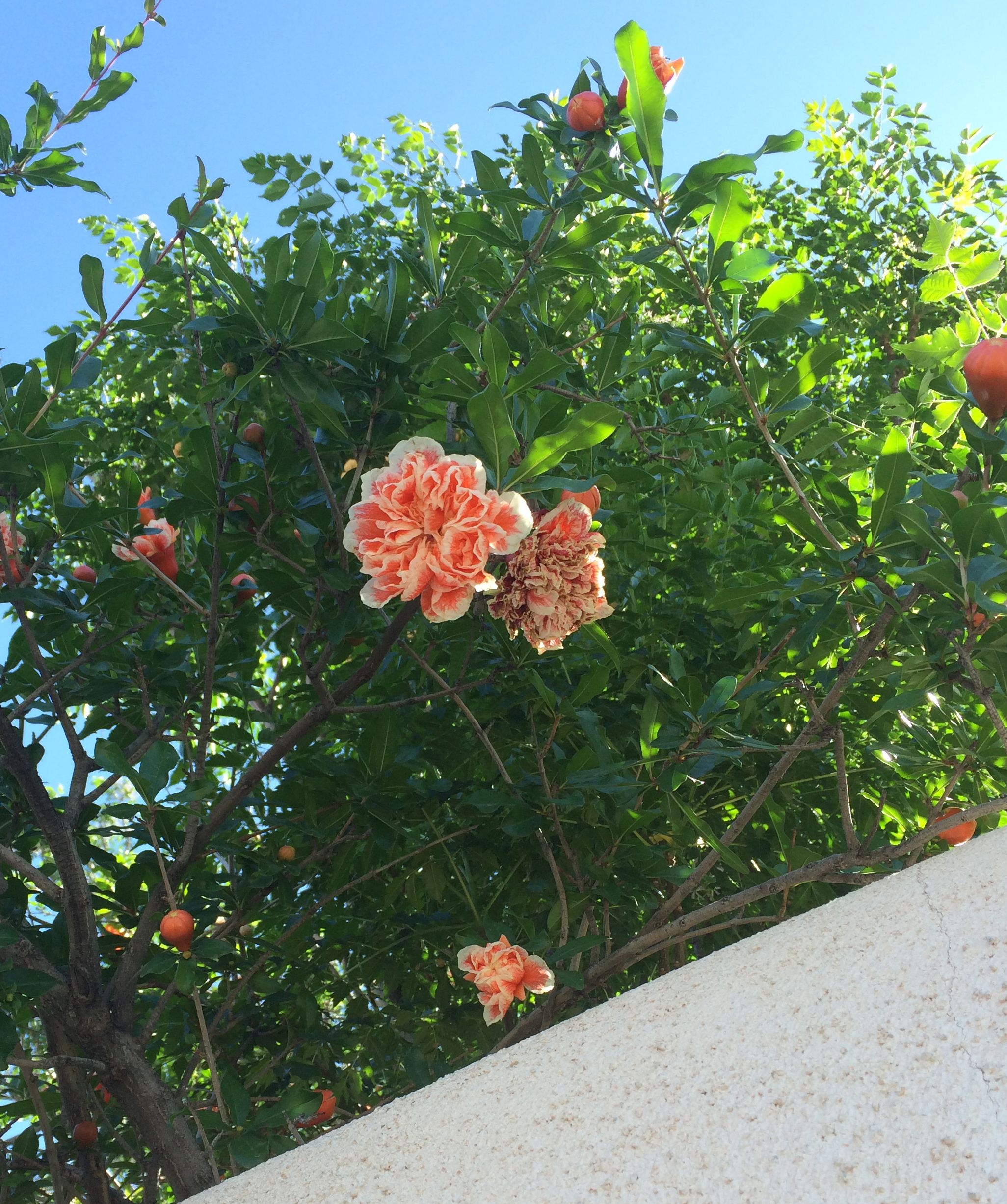
Peeking over the wall of Cordoba House in Tucson's historic neighborhood is a double flowered pomegranate (MABurgess photo)

Peeking over the wall of Cordoba House in Tucson’s historic Presidio Neighborhood is a double flowered pomegranate (MABurgess photo)

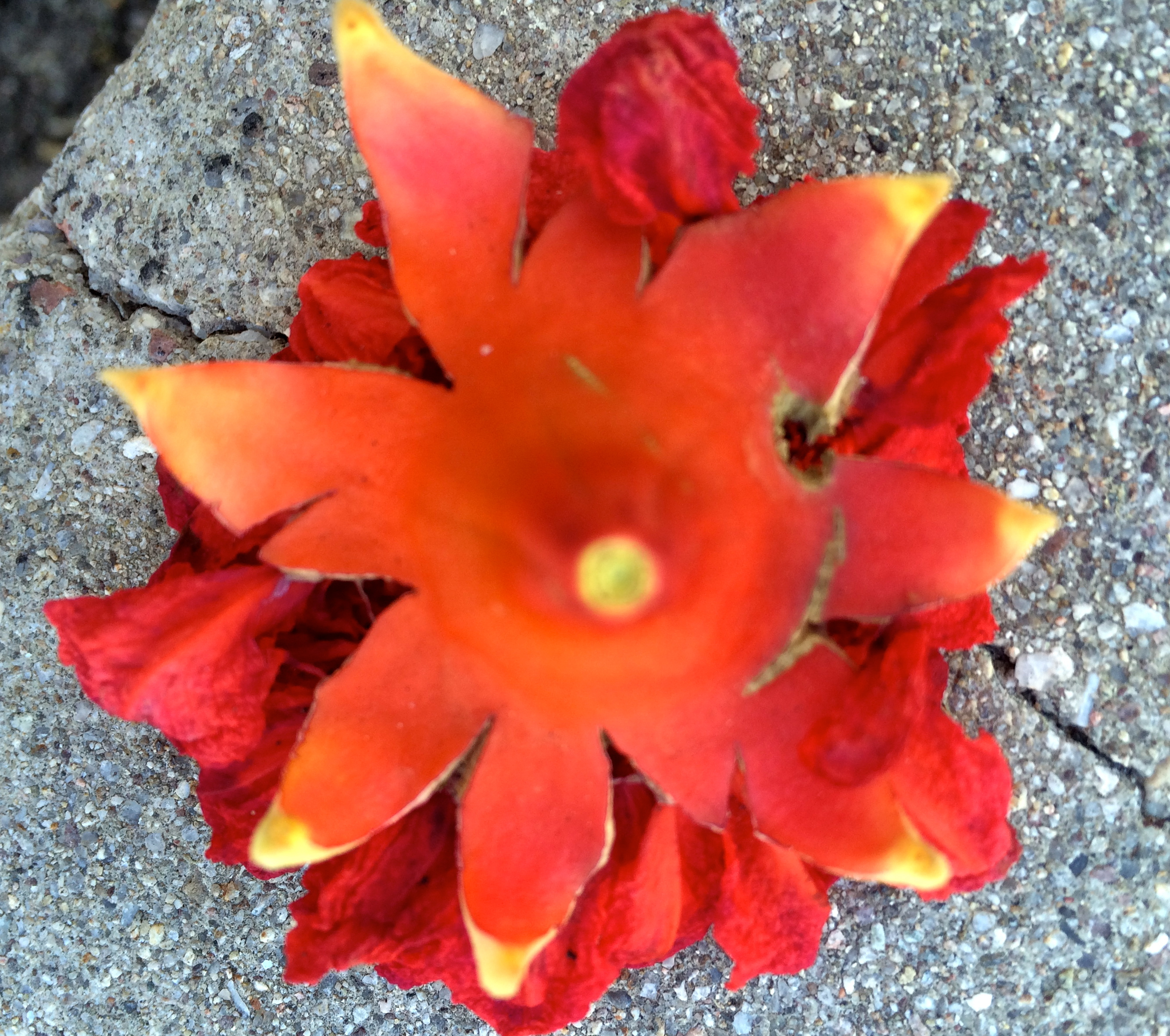
A "fallen star" --a pomegranate flower on the pavement continues as a radiant bouquet (MABurgess photo)

A “fallen star” –a pomegranate flower on the pavement continues as a radiant bouquet (MABurgess photo)


Prepare to share your plentiful crop of Sonoran White Pomegranate with other frugivorous creatures. True bugs can be pests. No prob--damage is limited. (MABurgess photo)

Prepare to share your plentiful crop of Sonoran White Pomegranate with other frugivorous creatures. True bugs like these leaf-legged bugs (Coreidae) can be pests. No prob–damage is usually limited. (MABurgess photo)

The structure of pomegranate fruits, with its separate juicy cells or arils, normally prevents insect damage from destroying an entire fruit.  Just cut off the effected area and the remaining arils still will be perfect for eating.

Traditional Sonoran style for opening an heirloom Sonoran White pomegranate (MABurgess photo)

Traditional Sonoran style for opening an heirloom Sonoran White pomegranate (MABurgess photo)

Jesus Garcia, founder of the Kino Heritage Tree Program at Arizona-Sonora Desert Museum and Mission Garden (and traditional knowledge-keeper of important Sonoran folkways), teaches how to cut the top off of a pomegranate to clearly see the septa or membranes that separate the five or six groupings of juice cells (arils), each containing a seed.  In most modern cultivated pomegranates, there is a hard bitter seed that must be “discarded,” making eating less than perfect.  Amazingly, the Sonoran White has small, tender seeds that present no problem–just eat the arils whole and enjoy!  (No spitting necessary.)

Traditional way of opening the Sonoran White Pomegranate for happy access to arils (MABurgess photo)

Subdivide the fruit along its easy membranes.  This is Garcias’ traditional way of opening the Sonoran White Pomegranate for happy access to “arils” –the juicy beads or sarcotestas (MABurgess photo)

I always thought that pomme -grenade was named for the city of Granada, but actually it is the other way ’round.  The Spanish city was re-named Granada when the Moors brought the fruit there from the MiddleEast and it made a big splash.

Technically the pomegranate  (Punica granatum) does not have many familiar relatives to us in its family of loosestrifes (Lythraceae).  It is so different from other plants that some taxonomists place it in its own family Punicaceae.  Pomegranate fruit is a berry, with each seed surrounded by sweet juice in little discrete cases called sarcotestas.  (There must be a better name for these delicious little beads of bliss!)

Nutritionally pomegranate has sweet advantages, providing antioxidants,  folate, vitamins C and K, plus manganese, phosphorus and potassium.

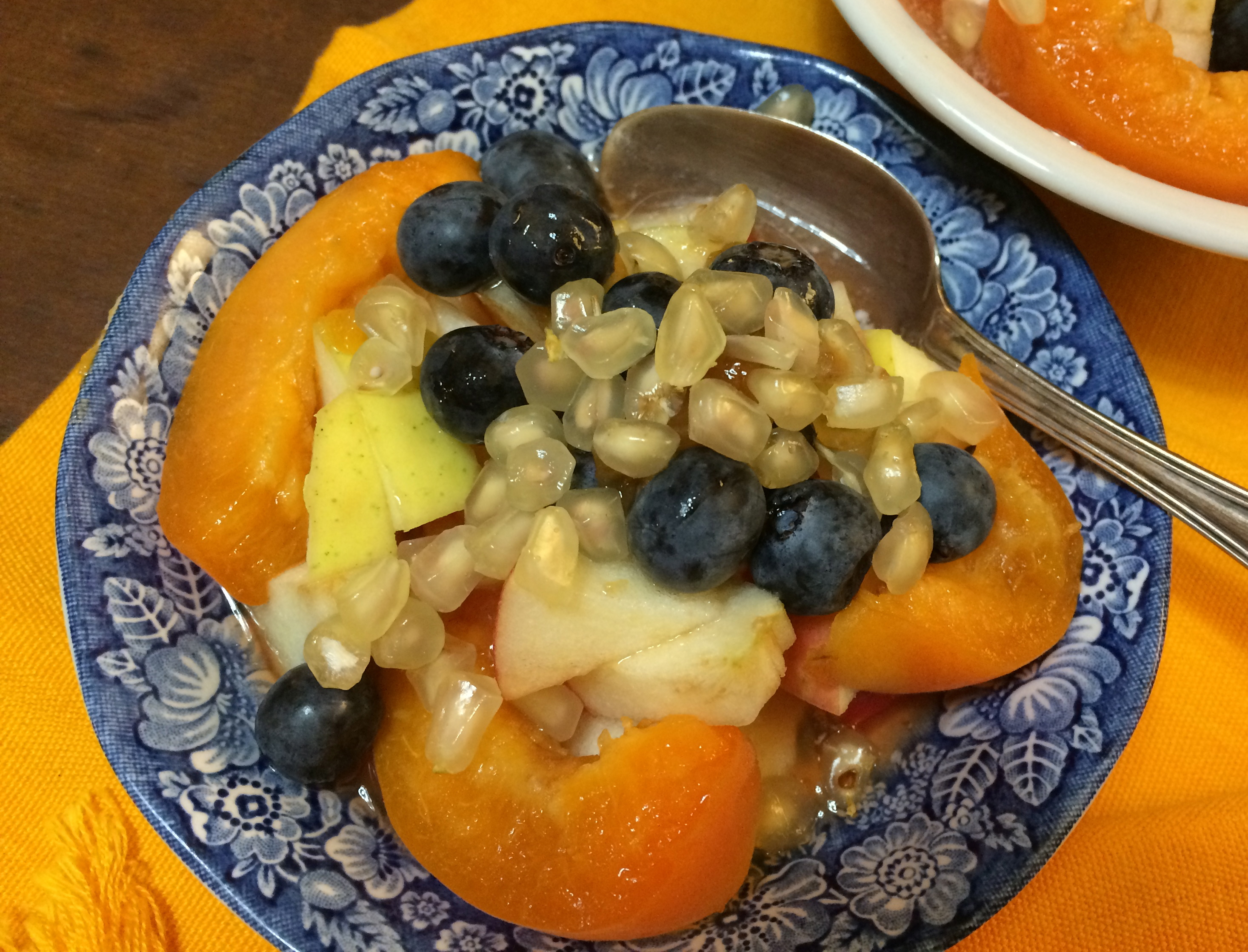
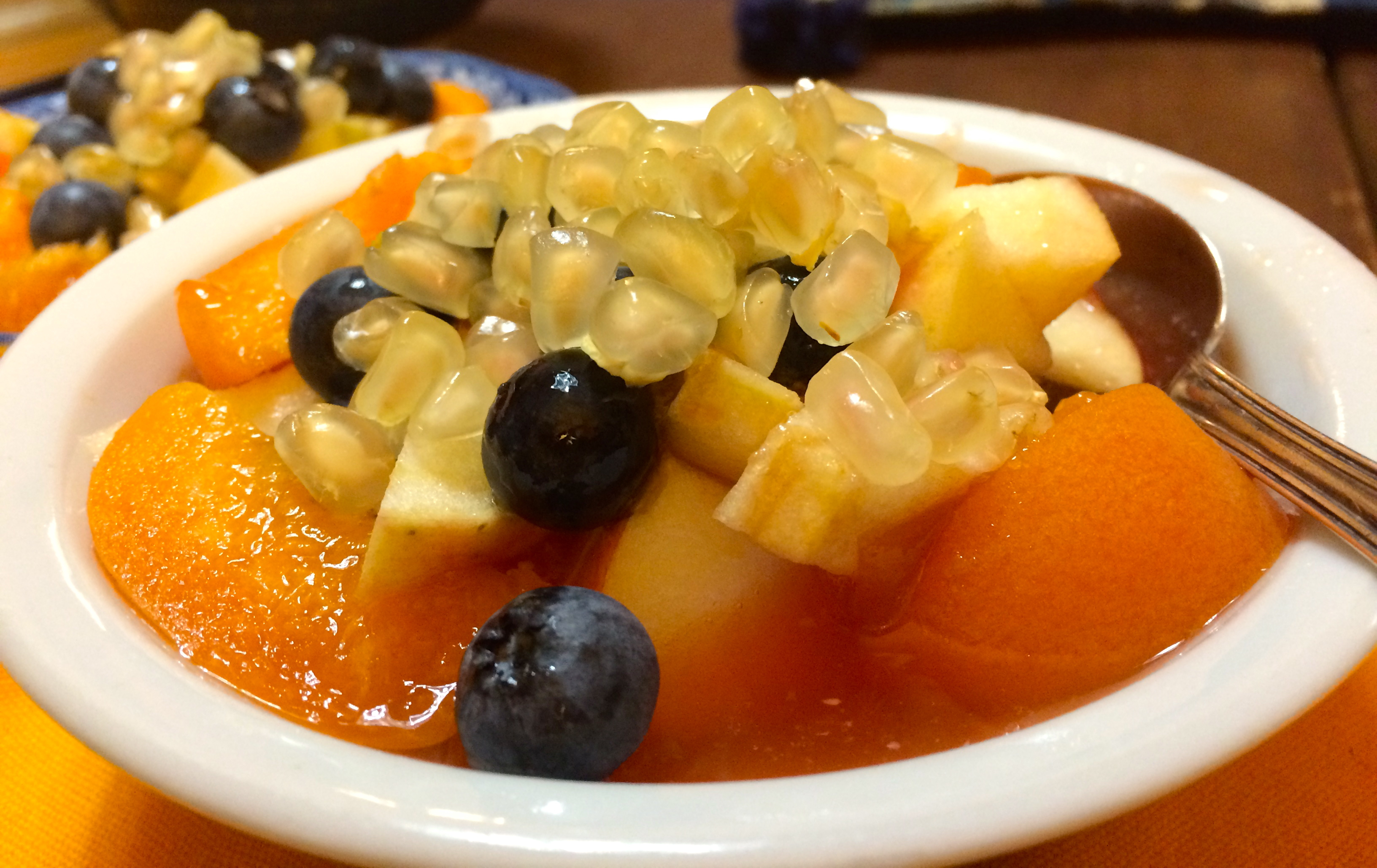
Fruity dessert topped with juicy clear Sonoran White Pomegranate seed-cells (MABurgess photo)

Fruity dessert topped with juicy clear Sonoran White Pomegranate seed-cells (MABurgess photo)

Sonoran White Pomegranate can be juiced to drink straight or add to other drinks. (Talk about a nutritious addition to margaritas!) The simplest, most delightful way of enjoying our clear Sonoran White seed-cells is simply snacking by the handful.

I make a luscious dessert with vanilla yogurt topped with slices of fresh apricot, local apple, and blueberries, and crowned by the sweet seed-cells of Sonoran White Pomegranate.  Rejoice in this ancient gift brought by the Missionaries to Baja Arizona–a desert survivor, well-adapted to carrying us into climate change in arid lands!

Let your Sonoran White Pomegranate fruits remain on the tree until you see a rosy blush--then you know they are getting sweeter!

Let your Sonoran White Pomegranate fruits remain on the tree until you see a rosy blush–then you know they are getting sweetest! (MABurgess photo)

Sonoran White Pomegranate tops this southwestern dessert (MABurgess photo)

Sonoran White Pomegranate tops this southwestern dessert (MABurgess photo)

Friends of Tucson’s Birthplace will be sponsoring a Pomegranate event this month–September 24, 2016– at the Mission Garden.  Come learn all about our local heirloom treasure, the Sonoran White Pomegranate, how to grow it in our own gardens, and how to prepare it in zillion delectable ways.  For details call 520.777.9270 or email missiongarden.tucson@gmail.com (www.tucsonsbirthplace.org.)  Let’s keep this living and giving food-heirloom alive and well in our gardens into the future!


The Best Mesquite Brownies

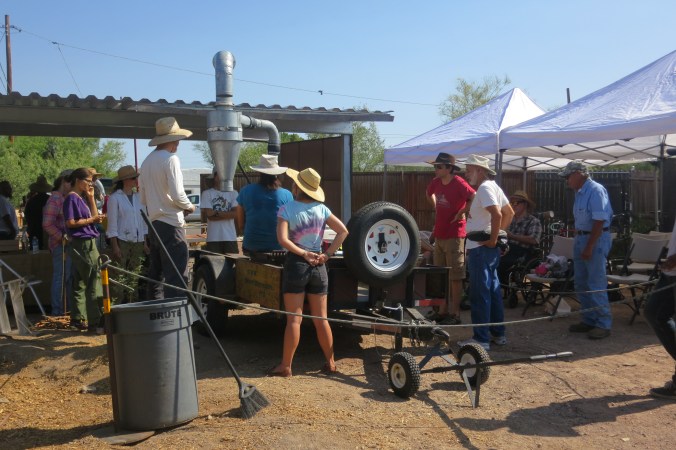
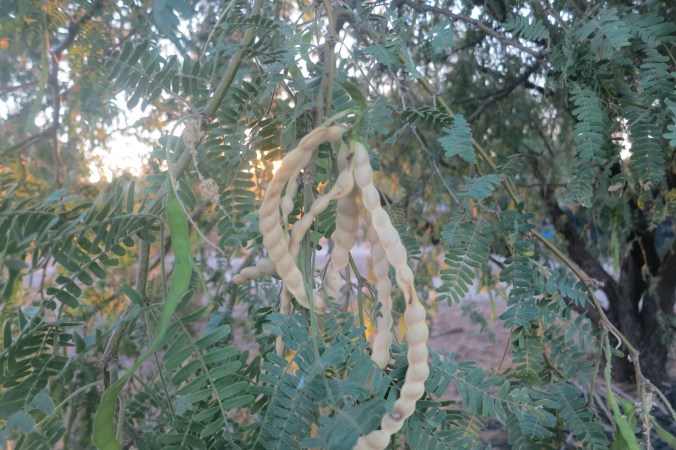
Carolyn Niethammer with you here today talking about one of my favorite subjects, mesquite meal. The first crop of mesquite pods ripened early this year on the lower desert. Here in Tucson, Desert Harvesters sponsored a milling in June. (A milling is this miraculous process of putting whole pods in a hammermill and getting lovely, silky flour at the end.) Because of the early summer rains, there is a huge second crop of pods ripening on the trees now(see the photo above). If you missed the first round, there will be opportunities to get your pods ground in communities throughout Arizona later in the fall after the weather has dried out.

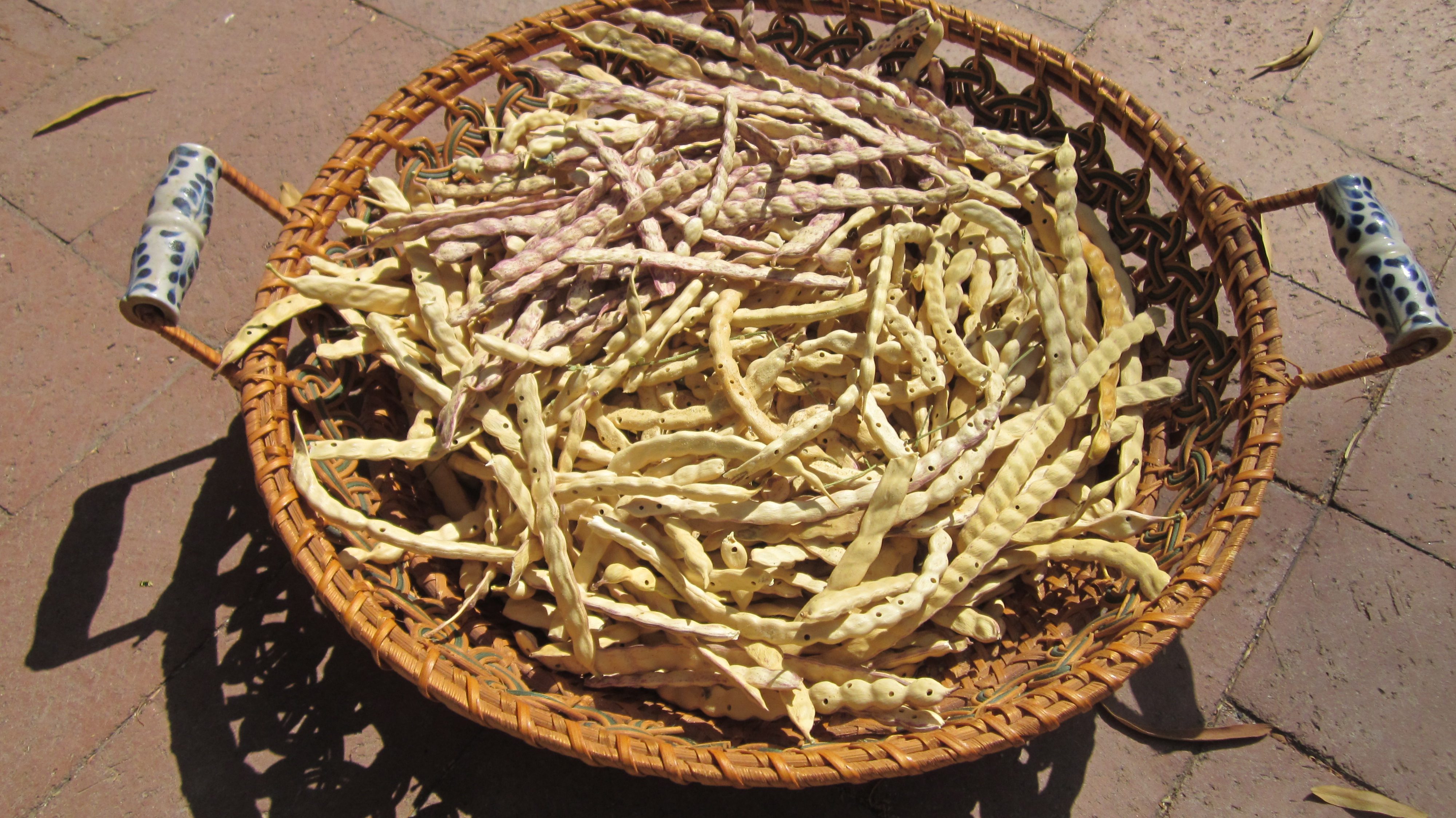
Dry mesquite pods ready for milling.

Dry mesquite pods ready for milling.

So what to do with all that mesquite meal after you have had your fill of pancakes?

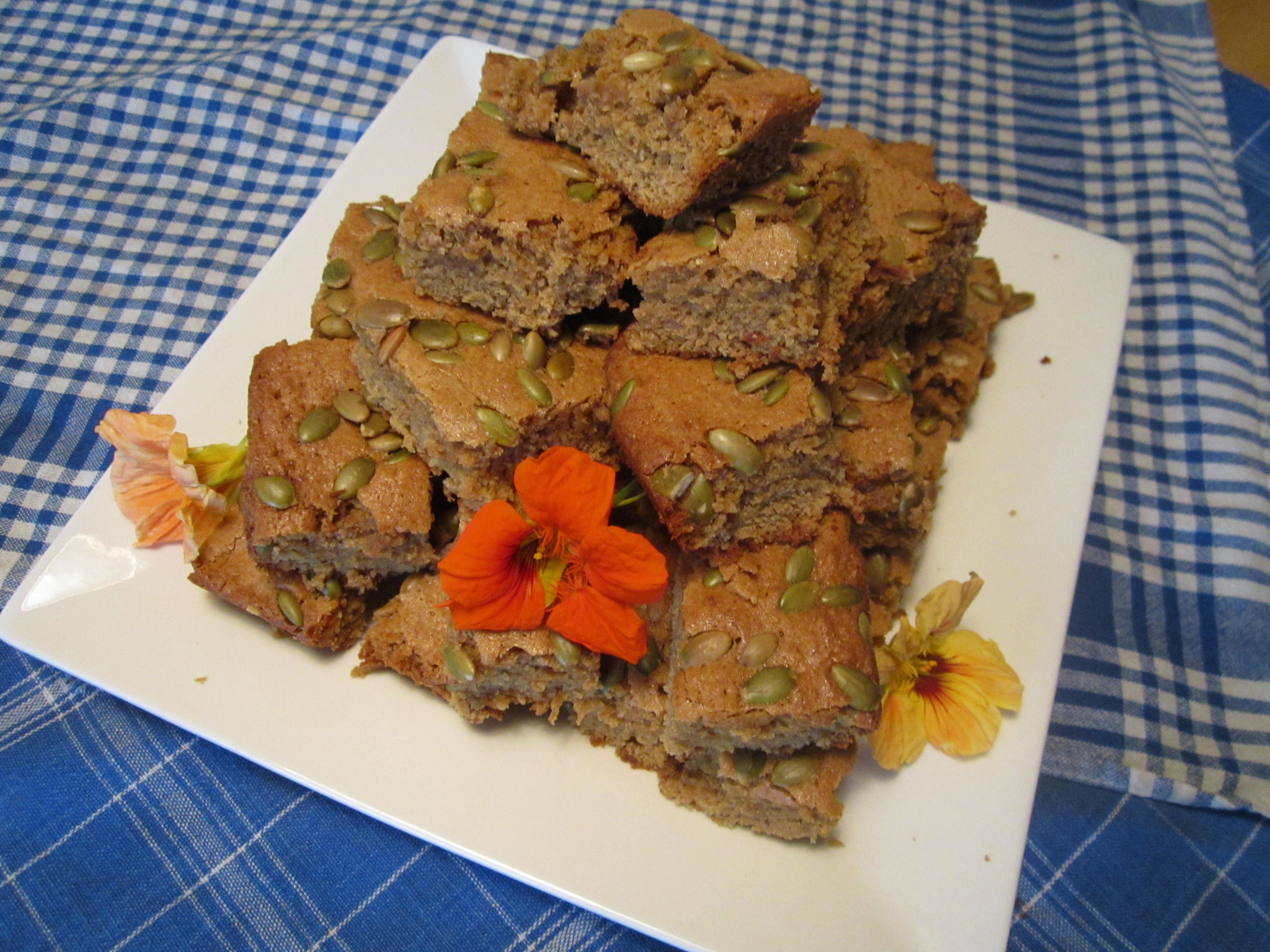
I have been cooking with mesquite pods since the early 1970s and have published in my cookbooks lots of recipes using the ground pods. But until now, I’ve never been completely satisfied with a mesquite brownie recipe. But this one that I made for a potluck at Native Seeds/SEARCH earlier this summer is close to perfect. I used pepitas (hulled pumpkin seeds) because I think the flavor goes well with mesquite, but pecans would work too. If you cannot bear to bake anything without chocolate, feel free to toss in some chocolate chips and maybe a little cocoa powder as well. The familiar warm flavor of mesquite will still come through.

The recipe has a considerable amount of fat and sugar, but those are the ingredients that make up what we consider a proper brownie. Just go easy on how many you eat.

If you aren’t up to making your own mesquite meal, you can purchase it from the Native Seeds/SEARCH retail store or order on-line from NS/S or Flor de Mayo. Mesquite meal is also available at farmers’ markets throughout Arizona.

Ummm, don't these look good?

Ummm, don’t these look good?

Best Mesquite Brownies

2/3 cup melted butter

1/4 cup vegetable oil

3/4 cup mesquite meal

2 cups brown sugar

4 eggs

2 teaspoons vanilla extract

1- 1/2 cups all-purpose flour

1 teaspoon baking powder

1 teaspoon salt (if using unsalted butter)

1/2 cup pepitas or chopped pecans

2/3 cup semisweet chocolate chips (optional)

  1. Preheat oven to 350 degrees and grease a 9×13-inch baking pan. Set aside.
  2. In a medium bowl, combine mesquite meal, flour, baking powder and salt if using. Set aside.
  3. Combine melted butter and oil in a large bowl. Stir in sugar and add eggs, one at a time, combining well after each addition. Stir in vanilla.
  4. Stir in mesquite and flour mixture. Add chocolate chips if using.
  5. Spread batter into the prepared pan. Bake at 350 degrees for 25 to 30 minutes or until a toothpick inserted near the center comes out clean. When cool, cut into squares.

__

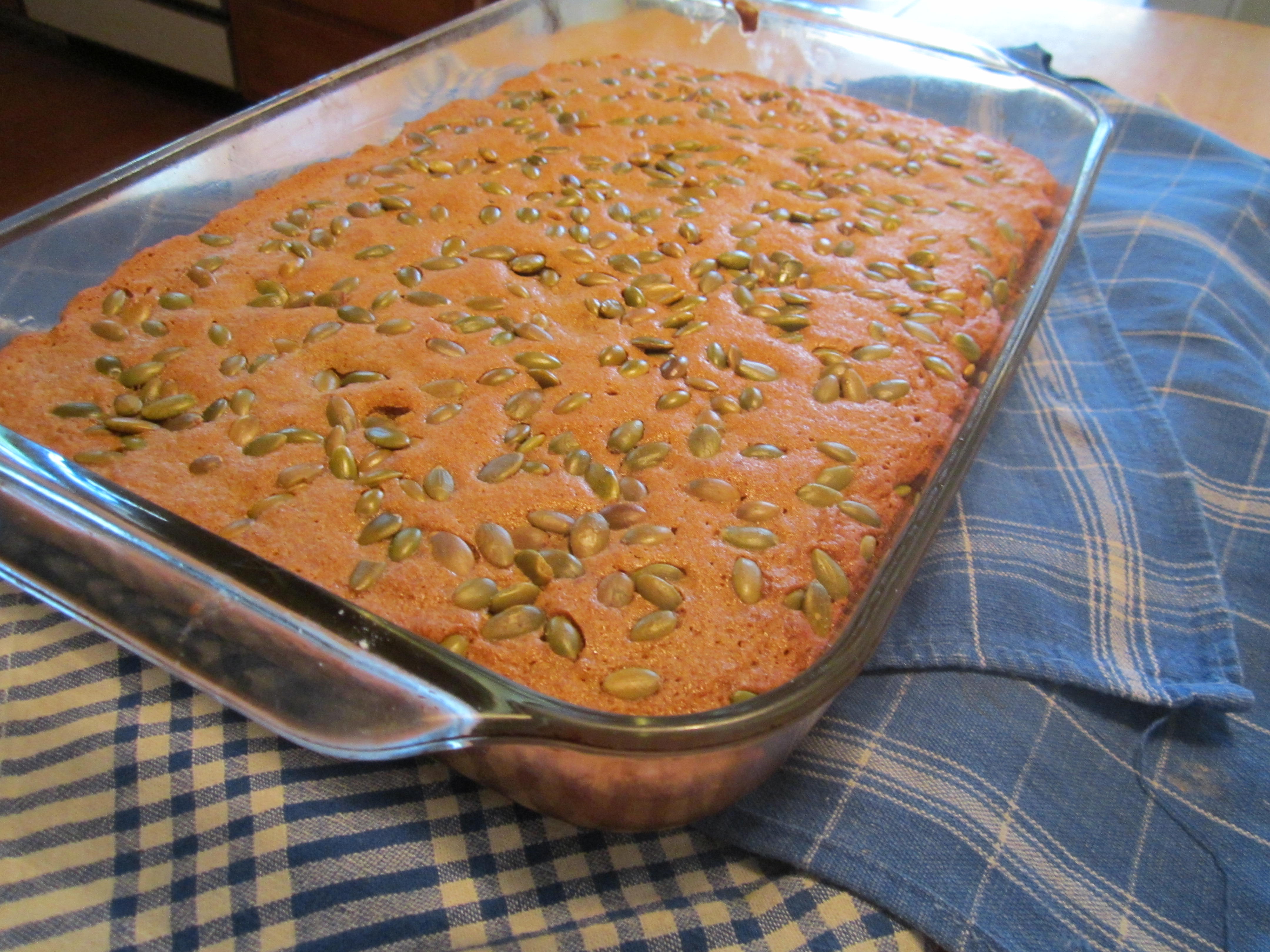
Cooling in the pan, ready to cut into squares.

Mesquite brownies cooling in the pan, ready to cut into squares.

____________________________

Want more recipes for mesquite meal? Check out my cookbook Cooking the Wild Southwest: Delicious Recipes for Desert Plants available at Native Seeds/SEARCH or from Amazon or B&N.  There you’ll find my favorite recipes for Apple-Mesquite Coffee Cake and a killer Banana Mesquite layer cake.

Desert Harvesters June Events

010Though newcomers to the Sonoran Desert sometimes miss the abundant fruits, berries, mushrooms, and greens of wetter forests, one Tucson organization wants you to know the desert is full of food: You just have to know where to look for it. Desert Harvesters is a nonprofit grassroots group that promotes the harvest of native, wild, and cultivated desert foods and also advocates for the planting of indigenous, food-bearing shade trees (such as the Velvet mesquite) and understory plantings within rainwater harvesting “gardens” in the landscapes where we live, work, and play. Funds raised at these events support the group’s educational efforts in the community, including demonstrations, publications, and tasting events.
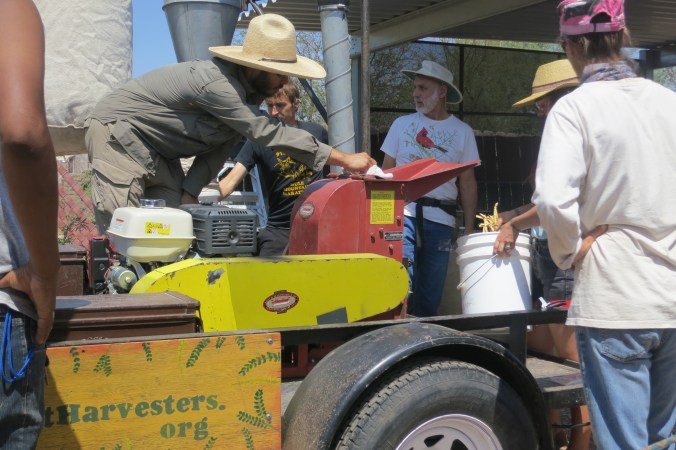
The group announces its summer season of harvesting workshops and activities, which aim to help the public learn how to plant, harvest, process, and prepare wild, native, and local food items, including mesquite pods, ironwood & palo verde seeds, and saguaro fruit. Currently the group is raising funds to support the publication of a revised and expanded version of its 2010 cookbook Eat Mesquite! This new cookbook will include recipes for mesquite and other desert foods, as well as information about how to grow, harvest, and prepare native and local foods. Desert Harvesters is also seeking volunteers to help with (and learn from) these and other events.

041

June 18 & 19, 2016

Workshops on Mesquite Pod Tasting, Inspection, and Ticketing and Hammermill Operation for those who want to become Desert Harvesters volunteers or staff, or others wishing to expand their mesquite-related skill sets. Visit http://www.DesertHarvesters.org or email volunteer@DesertHarvesters.org to learn more.


June 23, 2016

DESERT HARVESTERS’ 14th ANNUAL MESQUITE MILLING & WILD FOODS & DRINKS FIESTA Santa Cruz River Farmers’ Market at Mercado San Agustín, 100 S Avenida del Convento, Tucson

Bring your clean & sorted mesquite pods to be milled with our hammermill (fee applies) and taste an array of wild foods.

Harvesters can have their milled mesquite flour tested for aflatoxins (see below) at our 14th Annual Mesquite Milling on June 23, 2016, in Tucson. The cost per test will be a special subsidized fee of only $5.

We will also be serving craft beers (Smoked Mesquite Apple beer as well as a beer finished with creosote flowers) from Iron John Brewing Co. with proceeds going to Desert Harvesters.


June 24, 2016

Desert Harvesters’ Happy Hour at Tap & Bottle

403 N 6th Ave #135, Tucson

5–8 pm

Enjoy great regional brews, some infused with locally sourced native wild ingredients. A percentage of all happy-hour sales goes to Desert Harvesters! A local food truck will also be on site with delicious offerings including native wild ingredients.

IMG_2000

BE IN SYNC WITH THE SONORAN DESERT’S NATURAL PATTERNS

To encourage harvesting before the monsoons, and to be more in sync with the Sonoran Desert ecology’s natural patterns, Desert Harvesters has shifted its annual harvesting and milling trainings, along with its mesquite millings and fiesta, to the month of June—BEFORE the summer rains. This is also when our native bean trees (mesquite, desert ironwood, palo verde) are ready to harvest (they produce before the rains so their seed is on the ground ready to germinate when the rains arrive). Regularly check our Calendar of Events for more such event info.


FOOD SAFETY: Aflatoxin and how to avoid it

Aflatoxin is a toxic natural compound produced by certain molds; it can cause liver damage and cancer. Aflatoxin is found in many common foods, but only in small quantities is considered safe (U.S. ≤ 20 parts per billion (ppb), Europe ≤ 2 ppb). We at Desert Harvesters are specifically concerned with the invisible mold (Aspergillus flavus) that can produce aflatoxin B1 on mesquite pods, as well as on other food crops (legumes, corn, etc) that have been exposed to moisture.

HARVEST MESQUITE PODS BEFORE THE RAINS (at higher elevations, harvesting in dry autumn weather may be an option)

Desert Harvesters is now recommending that, as much as possible, harvesters collect mesquite pods BEFORE the monsoon rains. (This can be more difficult at higher altitudes due to later ripening. In these areas the best practice may be to only harvest in dry autumn weather.) The reason for pre-rain/dry-season harvesting is to reduce the pods’ exposure to moisture, and thus the risk of the development of an invisible mold (Aspergillus flavus) and the aflatoxin it can produce. Aflatoxin poisoning can have serious health consequences over the long term, so we want to harvest in a SAFE manner. To further avoid moisture issues with the pods we recommend you do NOT rinse or wash pods.

In the small number of batches of mesquite flour we have tested thus far…ALL mesquite pods we tested which were harvested BEFORE the rains have tested SAFE.

In other words, NO mesquite pods harvested BEFORE the rains had results with unsafe levels of aflatoxin. The U.S.-designated safe limit of aflatoxin is 20 parts per billion (ppb), so safe test results will be 20 or fewer ppb.

However, all test batches of mesquite pods that DID have results with unsafe levels of aflatoxin were harvested AFTER the onset of the rains. Again, in the U.S., safe aflatoxin levels of 20 or fewer parts per billion (ppb) are considered safe. However, many other batches harvested AFTER the onset of the rains tested SAFE.


We hope to continue to share more studies and best harvesting practices.


What to do with mesquite flour?

Sonoran Cookies

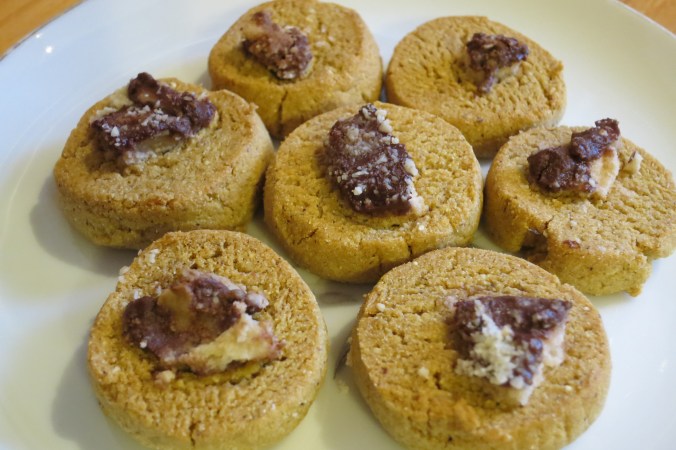
Here’s a truly classic recipe from the first EAT Mesquite! Cookbook.We’ve made hundreds of these cookies. The author of the original recipe is unknown. The ones in the photo below are topped with mesquite toffee.

mesq cookies toffee

.25 lb (one stick) butter

1 cup sugar (can be reduced to .75 cup sugar, plus .25 cup mesquite)

1 egg

2 teaspoon vanilla (or local lemon extract)

2 cup corn tortilla meal (or whole wheat flour)

1 cup mesquite meal

2 teaspoons baking powder

2 teaspoons baking soda

.5 cup pecans, finely chopped (optional)

Cream softened butter.  Mix in sugar, egg and extract.  Sift dry ingredients and add to the first mixture.  Add nuts (optional) and beat until smooth.  Roll dough into 2 inch balls and press onto ungreased cookie sheet.  Or, roll dough into thin logs, wrap in waxed paper, and refrigerate or freeze.  Slice cold logs into rounds and place on cookie sheet.  (Doubled cookie sheets or Airbake prevent bottoms from browning too fast.)  Place in preheated 375 F oven and bake 12 minutes or until golden.  Cool on racks until crisp, or eat warm and soft.  Makes up to 200 tiny (.75 inch) cookies.


Epazote and Garden Herbs Blend Into Delicious Mole Verde

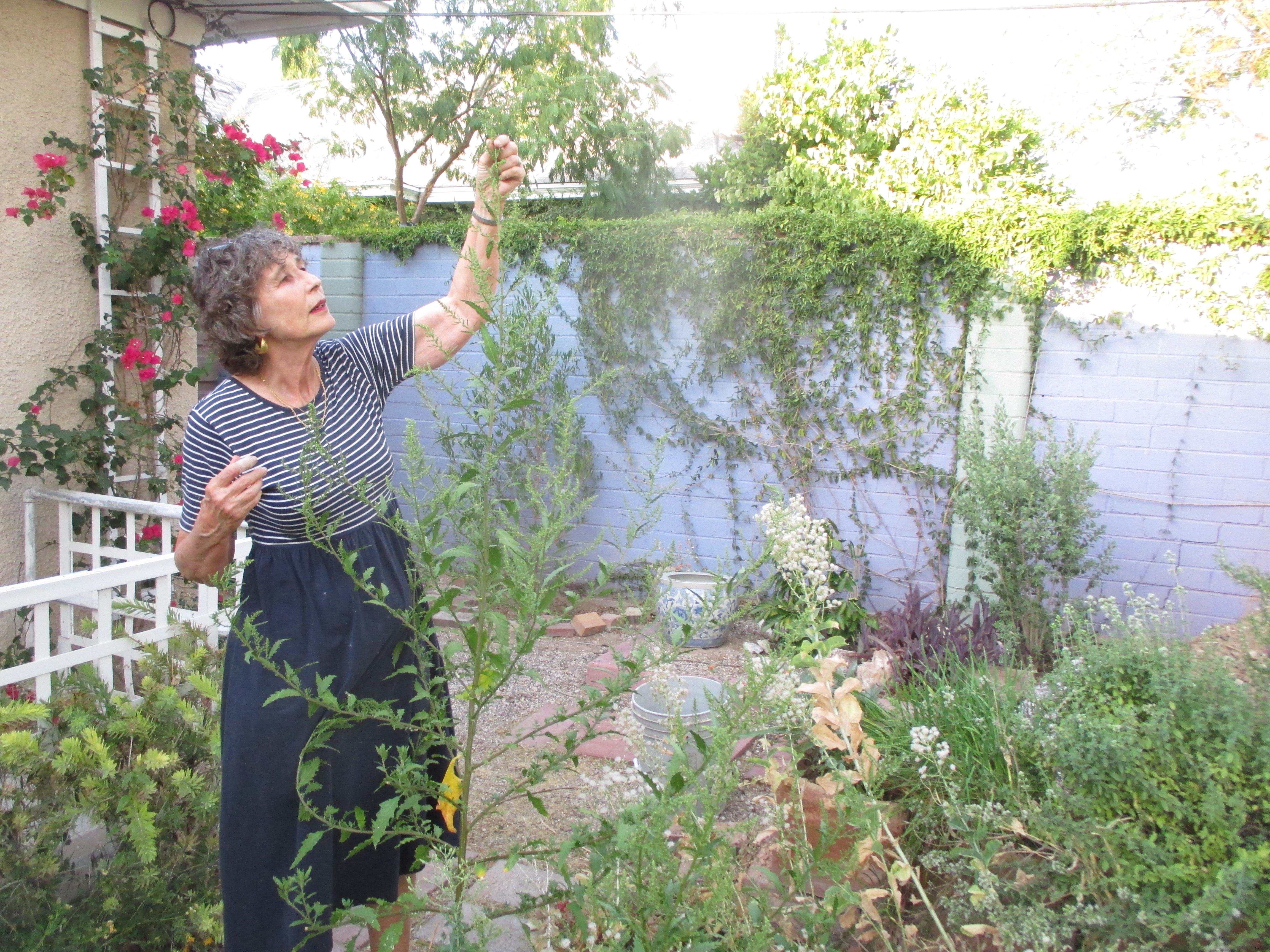
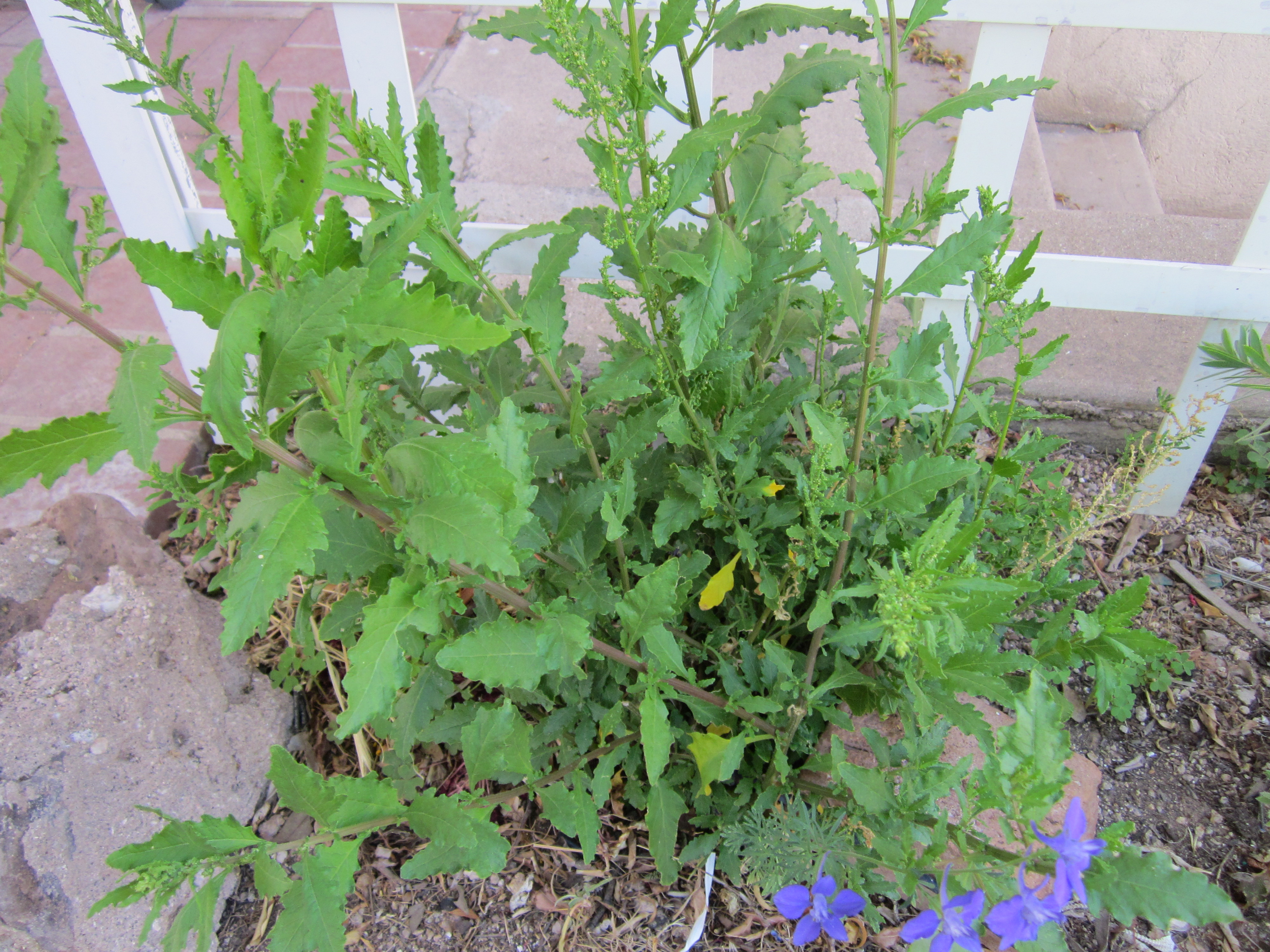
This epazote plant has grown to over 6 feet.

This epazote plant has grown to over 6 feet. It was a volunteer in the lettuce bed and loved the rich soil.

Carolyn here this week. This spring I have had epazote sprouting between my tomato plants, epazote in the pea pots, epazote in the kale and in the I’itoi onions. I harvested the last of the chard today and there was an epazote plant hiding in that row. For fun, I left one in the lettuce patch and it has grown over 6 feet, thriving in the rich soil and organic inputs in that area. After taking a picture today, I’m going to pull it before it releases a couple thousand seeds and takes over my entire garden.

I bought my first epazote plant from a lovely Mexican woman at the farmer’s market. That one died, but I tried again the next fall. This time I was more successful and now I can supply epazote to anyone who needs it.

Healthy epazote plant earlier in the spring.

Healthy epazote plant earlier in the spring.

Epazote is a New World herb that originated in Central America and parts of Mexico and in the Nahuatl language is called epazo-tl. It has spread north to the U.S. and to the Caribbean. The scientific name was formerly Chenopodium ambrosoides but has been changed to Dysphania ambrosoides. Interestingly, it is related to quinoa, spinach and beets.

Epazote is used as an flavoring herb and its taste changes slightly as the plant ages. Chew on a leaf of a young plant and you will notice a light citrus-y flavor that starts on your tongue and spreads through your mouth. Leaves from older plants intensify the pine-y or eucalyptus flavor notes that underlie the citrus. Some say it tastes similar to tarragon.

In the Southwest, epazote is most frequently used in cooking black beans for flavor and also for its anti-gas effects. Add two or three sprigs during the last 15 minutes of cooking. If you have access to fresh epazote, feel free to try it in other dishes. A little chopped up in a corn relish adds a spritely flavor. If you make your own mole sauces, add a few leaves, particularly to a green mole. It also goes well in filling for tamales and sprinkled on the cheese in quesadillas

Another traditional use of epazote as developed by the native Mayans is as a tea, particularly as a remedy for intestinal parasites. Epazote includes 60-80 % ascaridole, which is toxic to several intestinal worms.

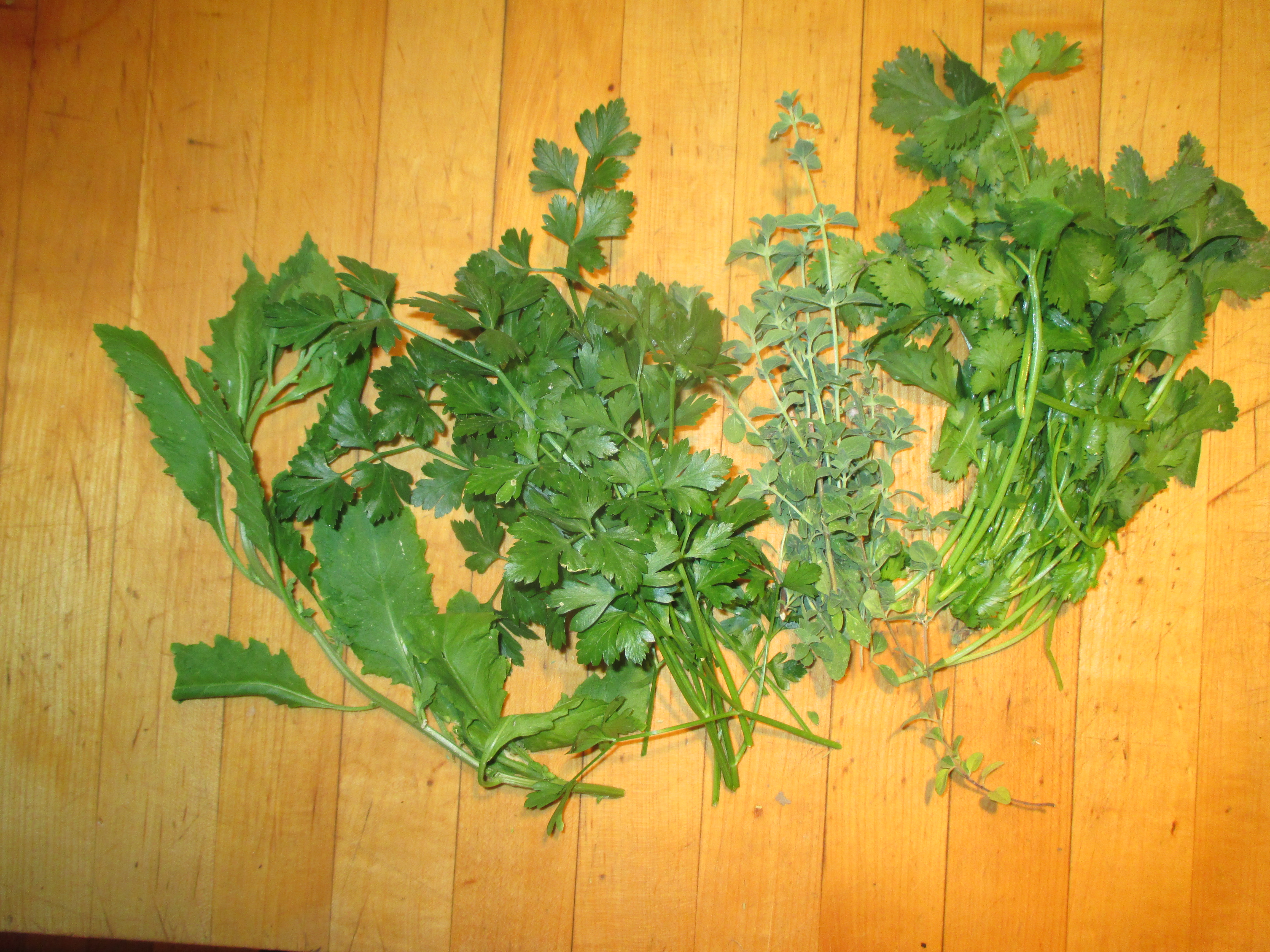
Herbs for Mole Verde from left: epazote, parsley, oregano, and cilantro.

Herbs for Mole Verde from left: epazote, parsley, oregano, and cilantro.

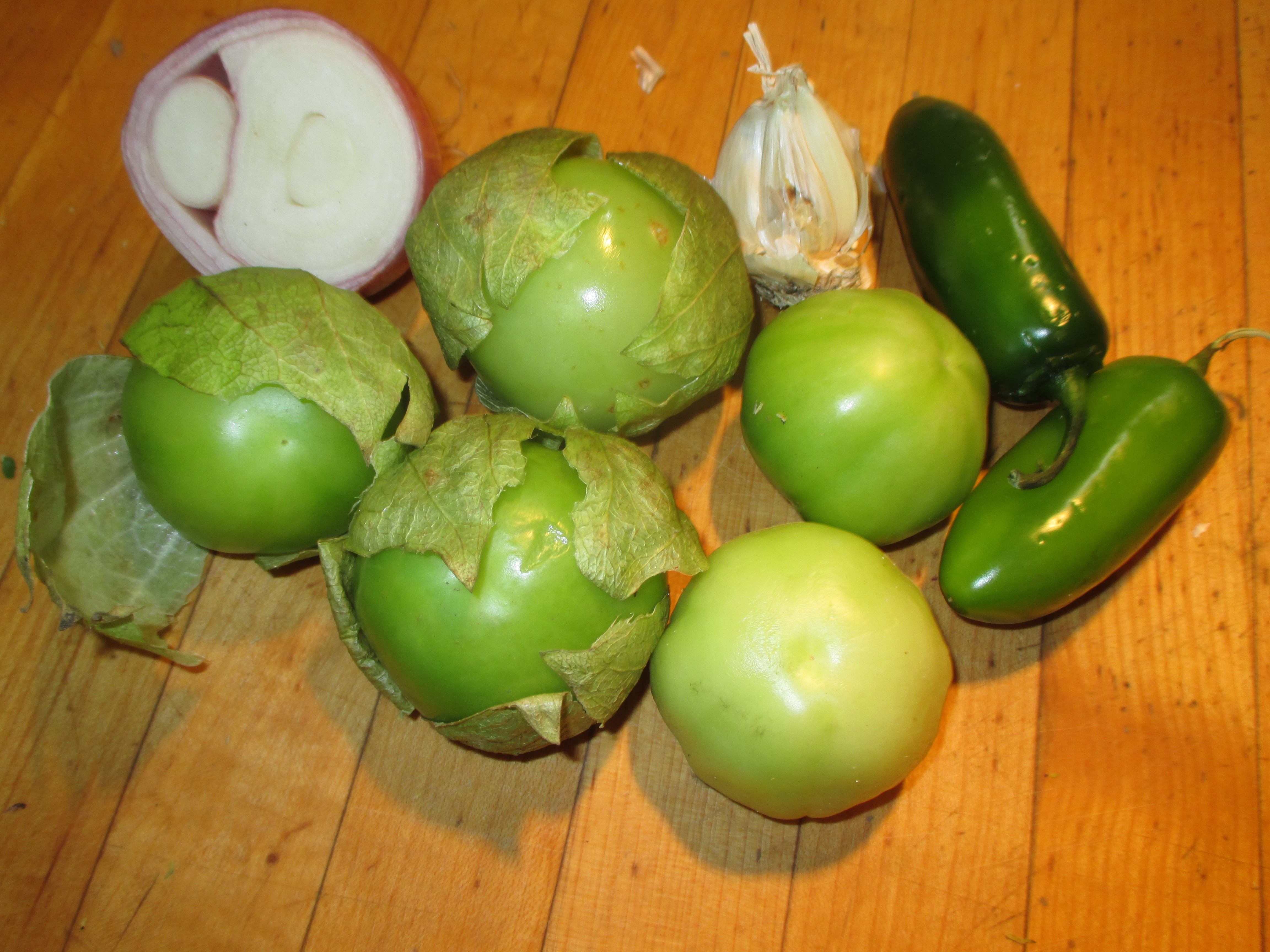
Here are the vegetables you will use: tomatillos, onion, garlic and jalapenos.

Here are the vegetables you will use: tomatillos, onion, garlic and jalapenos.

As with most leafy greens, epazote also provides some vitamins and minerals including vitamin A, B-complex vitamins (specifically folic acid) and vitamin C as well as calcium, manganese, copper,  potassium, phosphorous and zinc.

Mole Verde

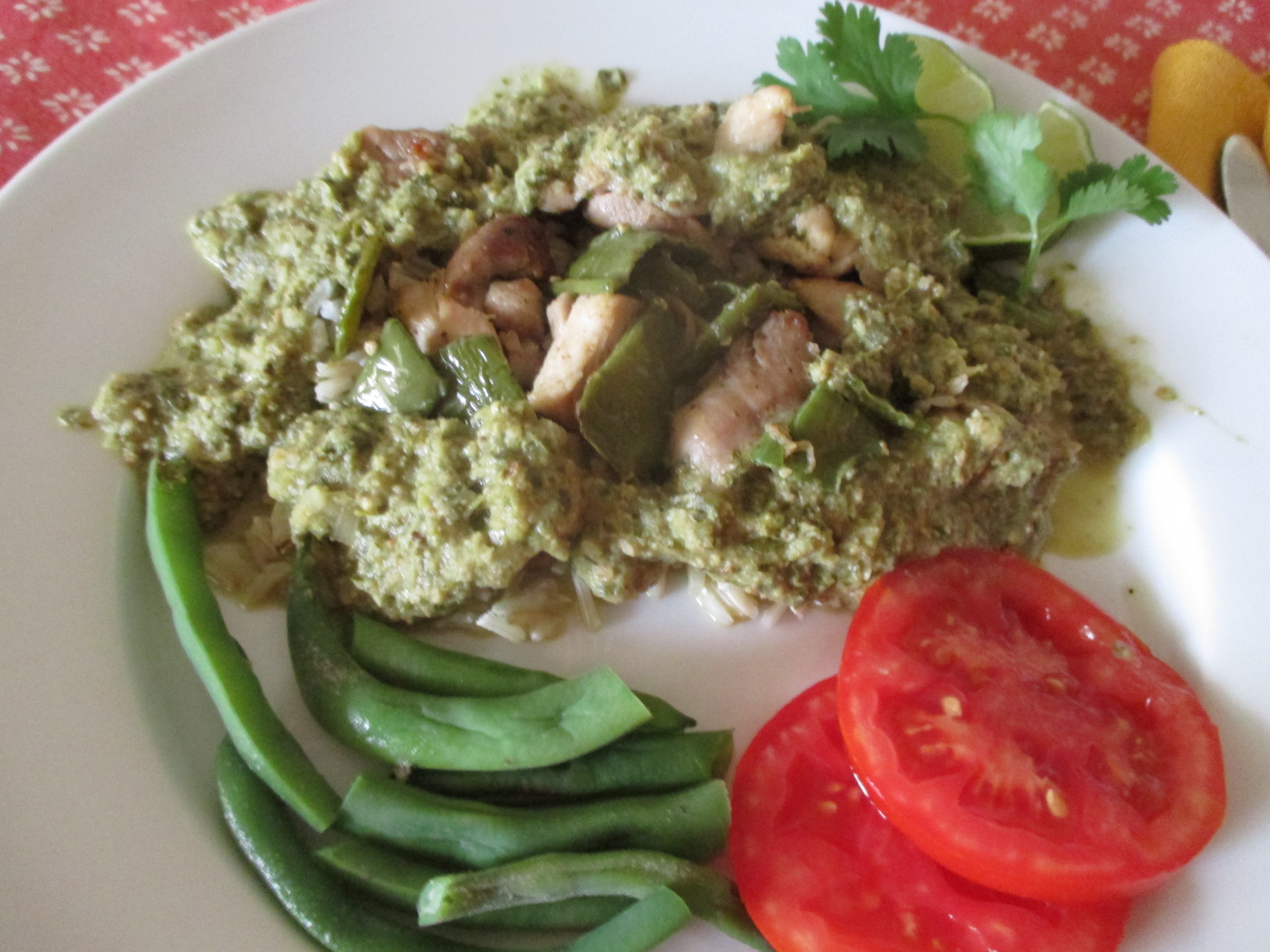
Here’s a recipe for a delicious green mole with epazote. This is a chewy, substantial version due to the pepitas.  I served the sauce with sautéed chicken breast pieces and fresh nopalitos from my garden. Makes about 6 generous servings.

Ingredients

1 cup pepitas (hulled pumpkin seeds)

1 cup roughly chopped white onion (about 1 small)

1 tablespoon minced garlic (about 3 medium cloves)

1 tablespoon vegetable oil

1/2 pound tomatillos, husked and cut in eighths (about 5 large)

2 medium jalapeño peppers, roughly chopped (seeds removed for a milder sauce)

1 cup packed coarsely chopped fresh cilantro leaves and tender stems

1/2 cup packed coarsely chopped fresh epazote

½ cup parsley leaves

2 tablespoons fresh oregano

2 cups low-sodium chicken stock, divided

Salt, to taste

Directions

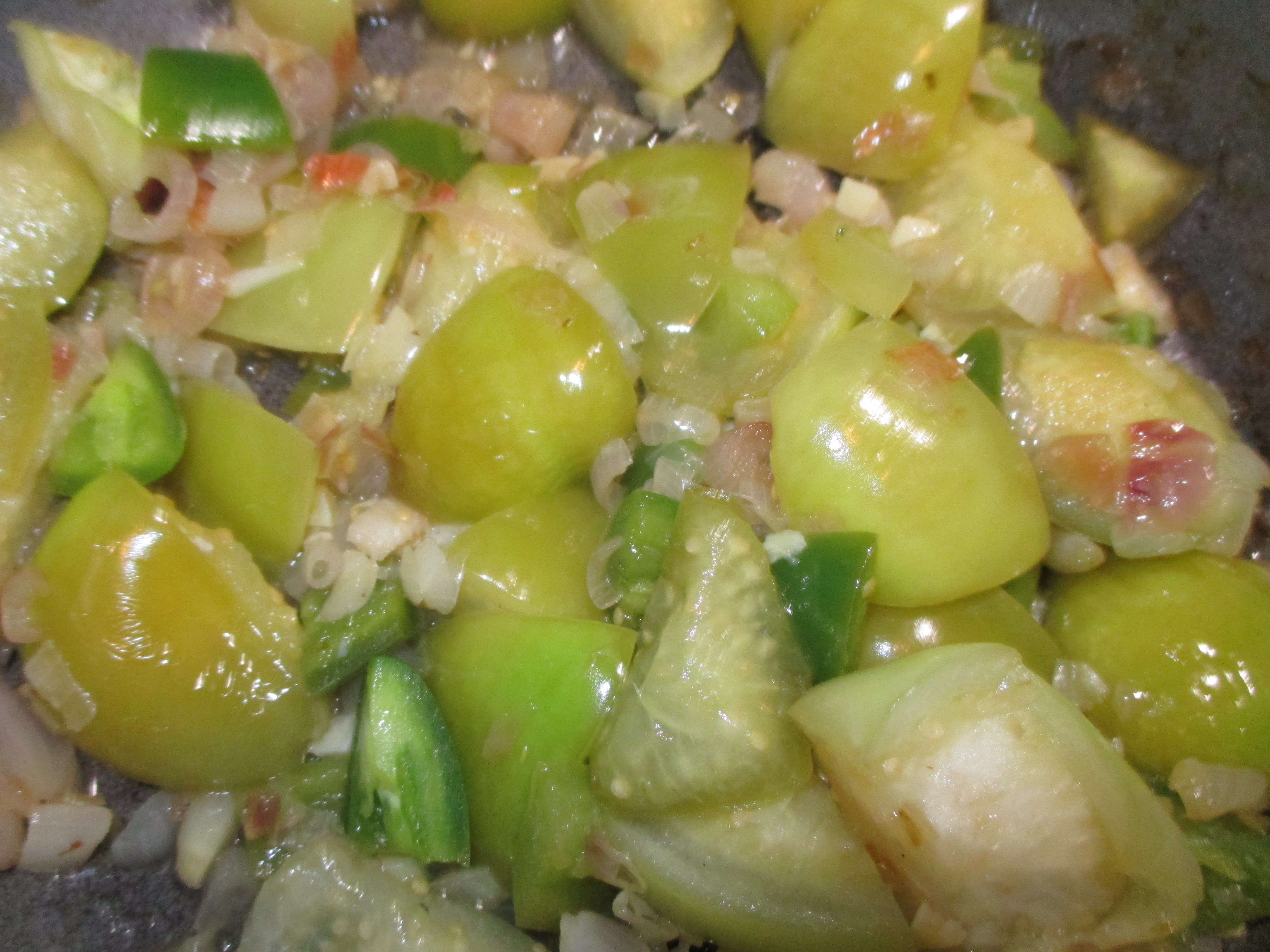
Saute the onion, garlic, and tomatillos until soft.

Saute the onion, garlic, and tomatillos until soft.

  1. Prepare all your herbs first and set aside. In a medium heavy skillet over medium-high heat, toast pepitas until they start to pop and turn a light golden brown. Toss constantly so they won’t burn. Transfer to a blender and process until finely ground. You will have to stop the blender every few seconds to redistribute the contents.
  2. In a heavy saucepan, heat the oil and sauté the onion until it starts getting translucent. Add the garlic and cook another minute. Add the tomatillos and jalapeno and cook, stirring frequently until soft.
  3. Transfer the sautéed vegetables to the blender jar with the pepitas and the herbs. Add one cup of the chicken stock and puree until well combined. This may take a couple of minutes.
  4. Return the blended mixture to the saucepan and put it over medium heat. Meanwhile rinse the blender jar with the remaining cup of chicken broth and add to the pot. Reduce heat and simmer for 10 to 15 minutes to let the herbs release their flavors and the flavors to blend. Stir frequently.
  5. Use immediately or transfer to an airtight container and store in refrigerator for up to 3 days, reheating before use.
Serve the sauce with chicken, fish, or vegetables.

Serve the sauce with chicken, fish, or vegetables.

_____________________________________________________

You can buy seeds for epazote from Native Seeds/SEARCH.   They also carry a selection of cookbooks by Carolyn Niethammer. The books are also available online from Amazon and Barnes&Noble.

It is nearly National Pollinator Week!

pw2016_stickerENG.jpg

Linda here this first, and very hot, Friday in June.

June brings us all sorts of gifts. The sun is nearing it’s solstice this month (around June 20th), and the heat is intensifying. It is this very heat helps bring the summer rains here in the Southwest. The moon is a New Moon tomorrow – this Saturday – and will be full again around the 20th – just in time to shine light on National Pollinator week!

Most of us know that pollinators are cornerstone species for planet earth. But lets look a little deeper at a few pollinators and link them with some foods/drinks we might have overlooked as pollinator dependent.  And with the references to the sun and the moon above –  lets look at which pollinators are doing what, and when.

Bees shown below, for instance, are solar beings. They actually have five eyes, not just the two that we can easily see with our own two human eyes. The other three are on top of their head, and they navigate using the sun. So while they spend much of their time inside dark hives, they forage for nectar and pollen while the sun is out, and are not active outside the hive at night. Keeping this in mind can be very helpful for how a beekeeper moves and where she stands in relationship to the sun,when working with bees is important. More about this another time.

IMG_0874 (1)

Queen Cups (middle comb) being formed in a friend’s hive.

Bats on the other hand, are evening/night pollinators. Among the many many many pollination activities that bats perform are agave flowers! And from agave flowers, grow agave plants. And from the careful work of bats, to the careful work of people (who harvest these plants and bake the “hearts” in the earth to make liquors) come Agave drinks.

IMG_0846 (1)

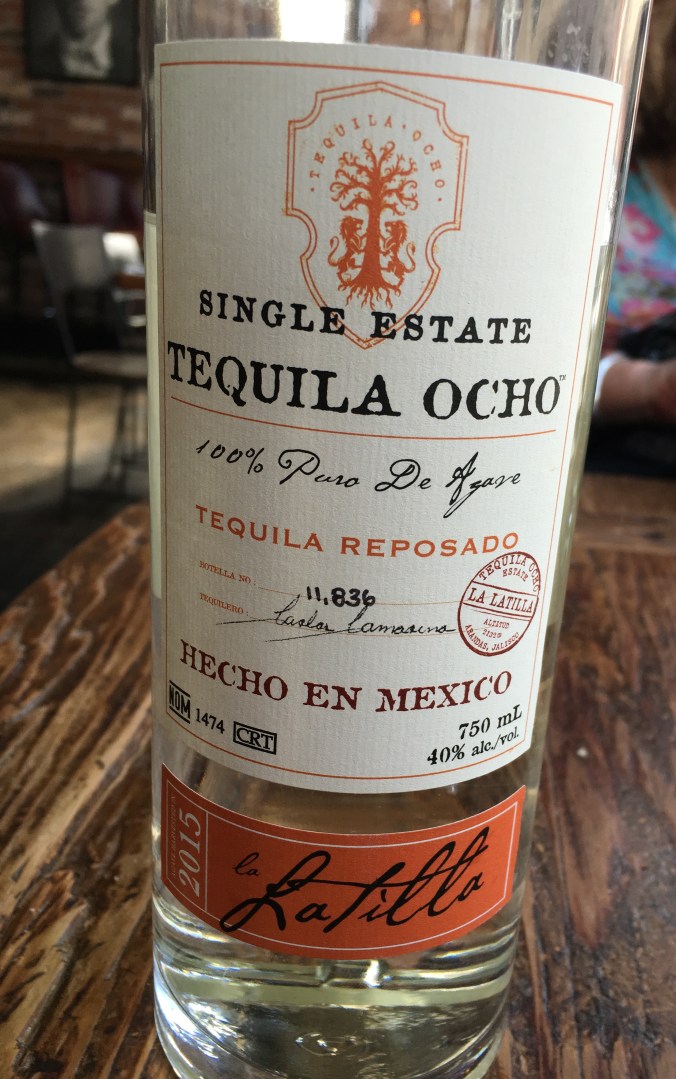
Agave Liquors are thanks to bats. That that tequila in your hands and that makes such an impression on your tounge is there because bats pollinated the agave flower. The Bacanora. The Mescal. All the Agave Liquors … are thanks to bats. Try an Agave Flight sometime. I did for my birthday just this week and it made quite and impression.

IMG_9540

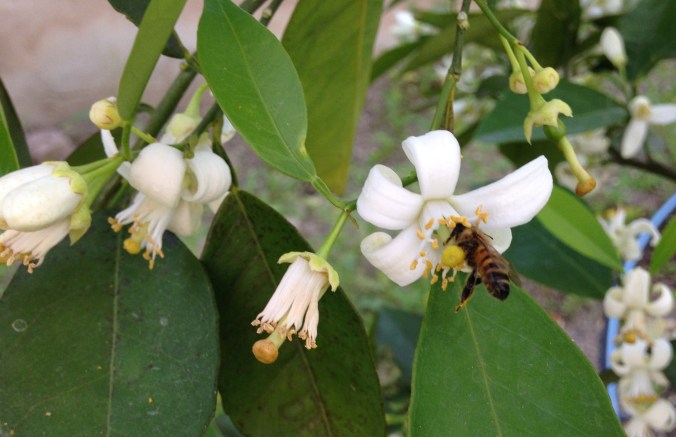
Honey bee at a citrus flower

IMG_0832 (1)

Citrus along side of Tequila Flight are thanks to bees.

IMG_2459

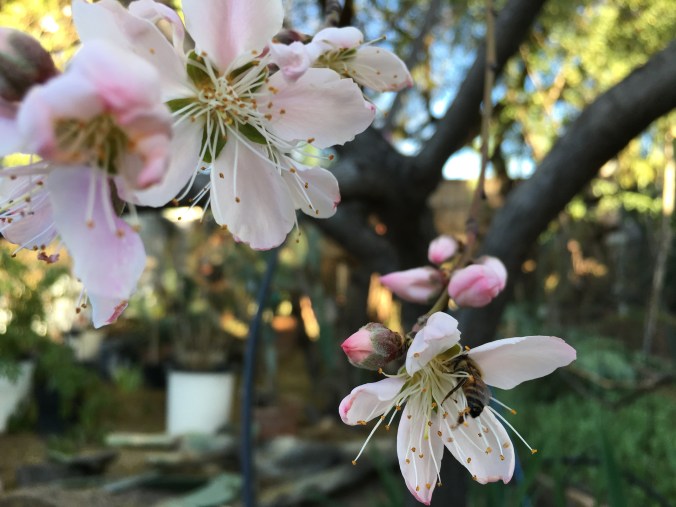
Honey bee at a stone fruit flower – peach and nectarines and plums are examples of stone fruit

IMG_0795

Bacanora infused with peaches is thanks to both solar bees and nocturnal bats.

If you have never tried bacanora, consider doing so. It has a smoky flavor that is both surprising  – and kind of grounding.The hearts of the plants are cooked in “ovens” in the earth for extended periods of time. I also like that smoke is of the “air” –  as are bats and bees and flies – well all pollinators.

IMG_0880

The peach infused bacanora infuses not only flavor but a beautiful peach color as well.


And while you are at it, you can thank a tiny fly as well. Why flies?  They pollinate the flowers that become CHOCOLATE.

It is a strange and wonderful world:  flies and bats and stinging bees offer such gifts.  I am grateful for the pollinators who enrich both the earth and my culinary world as well . Please write me if/when you connect a pollinator with a favorite food.

Celebrate National Pollinator week in your own way. And consider checking out and even giving to an organization like XERCES ( http://www.xerces.org ) that is doing powerful, quality work. 

pw2016_stickerESP.jpg


Brick and Mortar Brownies

IMG_3914

Linda here. It’s  ranged from breezy to downright windy here in the Old Pueblo this spring, affecting the moods of humans and non humans alike.  Bees, for example,  do not “like” wind, and on windy days I do not check Apis hives.  Red eyed and sneezing humans and are affected by the dust and pollen. Like so much in life, winds have a  mixed effect on things, both negative and positive.

One of the positives of pollen on the wind is that it can reveal a lot about older ecosystems. I recently learned about this in an article I came across on the science of archeobotany – which is basically the archeology of Things Botanical.

On a windy spring day such as we have experienced here – but in the early 18th century in Colonial Williamsburg  – masons were at work laying brick.  A mason “slather(s) mortar as he buil(ds) row after row of the buildings foundation”. Unbeknownst to him, he is also building an archeological record of the trees and plants growing at that time.  As pollen rode the waves of the winds it came to rest on/in the the mortar and  became encapsulated in the building itself.

The mortar acts like a kind of time machine where the pollen of old is extracted and analyzed by archeologists, revealing what plants lived and thrived at the time, in that town: trees, for example, were abundant –  (pine oak maple and hornbeam) revealing a tree filled ecosystem in Williamsburg in the early 18th century. Contrasted to pollen from the same town in the later in the 18th century/early 19th where/when the mortar reveals that the trees had been cut down – and mostly ragweed and goosefoot pollen are found in that time-frames pollen-mortar revelations. Pretty interesting.

In a similar way  Zander (1941) describes honey comb from Apis mellifera (found in a tomb from the Nineteenth Dynasty in Egypt), that was dissolved in water and found to contain mostly pollen from Egyptian avocado and desert dates  “which indicate that the plants of Egypt have changes considerably since the time of the pharaohs.”


IMG_0473

RECIPE INGREDIETNS: (inspired and amended from  the cook book NOURISHING)

-2 medium sized sweet potatoes

– 11-12 fresh dates (pitted)

– ¾ cup cup ground almonds

– 2/3 cup buckweat flour

– 3 tablespoons cacao nibs

– ¼ cup raw cacao powder

– at least 3 tablespoons honey

– zest of one orange – plus the juice

– ½ teaspoon ground cinnamon

– ¼ t salt

– 1 tablespoon oil of your choice (olive oil/coconut oil)

– 1 tablespoon almond milk/ or coconut milk if you feel it needs moisture

– Optional 1-2 teaspoons ground chiltepin – seeds and all

HOW TO:

Steam peeled sweet potatoes until soft (approximately 18 minutes) and blend in food processor with the dates and honey.

IMG_0411

IMG_0418

Mix the dry ingredients together and fold in the sweet potato/date/honey mixture.


IMG_0423

IMG_0420

Add the juice of the orange whose peel you just “zested”. If the batter is still a little dry you might add a little milk and/or oil.

IMG_0431

Add this super power batter to a parchment paper lined baking pan – and cook at 350 degrees for about 20 minutes. Let cool. Sprinkle with cacao powder, or honey, or chiltepin. Refrigerate – the cold brownie has a wonderful taste (whereas the warm are not so flavorful. )


Everybody Cooks Desert Wild Plants

It’s Carolyn Niethammer with you this April Friday, my favorite time of year when the Sonoran Desert is bursting with life. The rains weren’t as heavy as El Niño had promised, but there was enough moisture so that our arid-adapted plants could produce a colorful and abundant spring. When I was a young reporter for the Arizona Daily Star we used to have a feature called “Everybody Cooks.” I loved going out into the community and talking to good cooks from all walks of life — Mexican nanas, musicians, business owners, Jewish homemakers — about what they made for holidays and everyday family meals. I recalled those good times earlier this month at the Native Seeds/SEARCH Arid Abundance Potluck.

People arrived at the Arid Abundance Potluck with so many creative uses of the delicacies of a Sonoran desert spring that I just had to document the event.

Chad Borseth shows off his cholla bud appetizer.

Chad Borseth shows off his cholla bud appetizer.

Chad Borseth, the manager of the NS/S retail store, started us out with a cholla bud appetizer. There’s an old joke about how a cook made chicken soup in 1880. It starts: first you catch the chicken. This is sort of like that. You do have to harvest, clean (meaning remove the thorns) and dry the cholla buds. Or you can go the the NS/S store and buy some already cleaned and dried. Chad boiled the dried cholla buds for about 45 minutes, drained them and then chilled them in white balsamic vinegar overnight. When he was ready to serve them at the potluck he cut  each of them in half and arranged them on a plate and drizzled them with prickly pear syrup. Toothpicks are handy for picking up the delicious little morsels.


IMG_0658

Nancy Reid serves up  her rich and delicious  Green Chile-Cholla Bud Quiche

Nancy Reid, a retail associate at the NS/S store,  brought a green chile and cholla bud quiche that she had modified from a recipe in a wonderful but out-of-print NS/S cookbook. She began by melting a tablespoon of butter in the bottom of an 8-inch round pan. In a bowl, she beat 4 eggs. Then she added 3/4 cup cooked cholla buds, 3/4 cup chopped green chiles, 1 cup of cottage cheese, 2 cups of shredded colby/jack cheese, and a little salt. It went in the oven at 325 degrees F. for 40 minutes.


Laura Neff with her salsa.

Laura Neff , NS/S retail associate, with her salsa.


What’s a southwestern meal without salsa? Laura Neff’s version includes 1/2 cup dried cholla buds boiled for 45 minutes and drained, 1/2 cup diced tomatoes, 1/4 cup diced red onion, 1/4 cup chopped cilantro, 1-2 finely minced jalapenos, and 1 tablespoon of lime juice. She combined everything except the cholla buds in a food processor. The cholla buds were chopped by hand and added  at the end.


My friend Connie Lauth wasn’t at the potluck but she made this gorgeous quiche recently for company. Connie lives on the desert at the very end of a road into the Tucson Mountains. While Chad and Laura used dried and reconstituted cholla buds, Connie just walked out her door and picked some fresh ones. She used nopalitos from Food City but by now there are plenty of fresh, new-growth prickly pear pads ready for harvest.

Nopalito-Cholla Bud Quiche

Connie’s Nopalito-Cholla Bud Quiche

Here’s Connie’s recipe:

Connie’s Desert Pie

1 cup of cholla buds

1 cup of nopalitos

½ cup thinly sliced red bell pepper

4 large eggs

1/2 cup milk,

1 ½ teaspoons pico de gallo seasoning

1 tablespoon of chopped fresh cilantro

1 frozen deep dish pie shell

1 cup shredded Mexican cheese

Dethorn cholla buds by holding them with tongs and burning them off over a gas stove.. Rinse. Microwave in a covered dish on high for 4 minutes.

Cut gathered or purchased nopalitos into 1/4-inch dice. Microwave with red bell peppers for about 4 minutes.  In a bowl, beat eggs and milk, add seasonings.  Layer egg mixture with vegetables and cheese in the pie shell. Bake at 400 degrees about 40 minutes until a knife inserted in center comes out clean

________________

If  you are inspired to try your hand at more desert gathering and cooking, my book Cooking the Wild Southwest: Delicous Recipes for Desert Plants can be your guide to 23 easily recognized, gathered and cooked  desert edibles.  If you want to harvest some nopales (prickly pear pads), you can find lots of recipes in The Prickly Pear Cookbook. Both books  are available in the Native Seeds/SEARCH retail store at 3061  N. Campbell or on their website. The books are also available from Amazon and B&N.