Wild Rhubarb Rises Again!

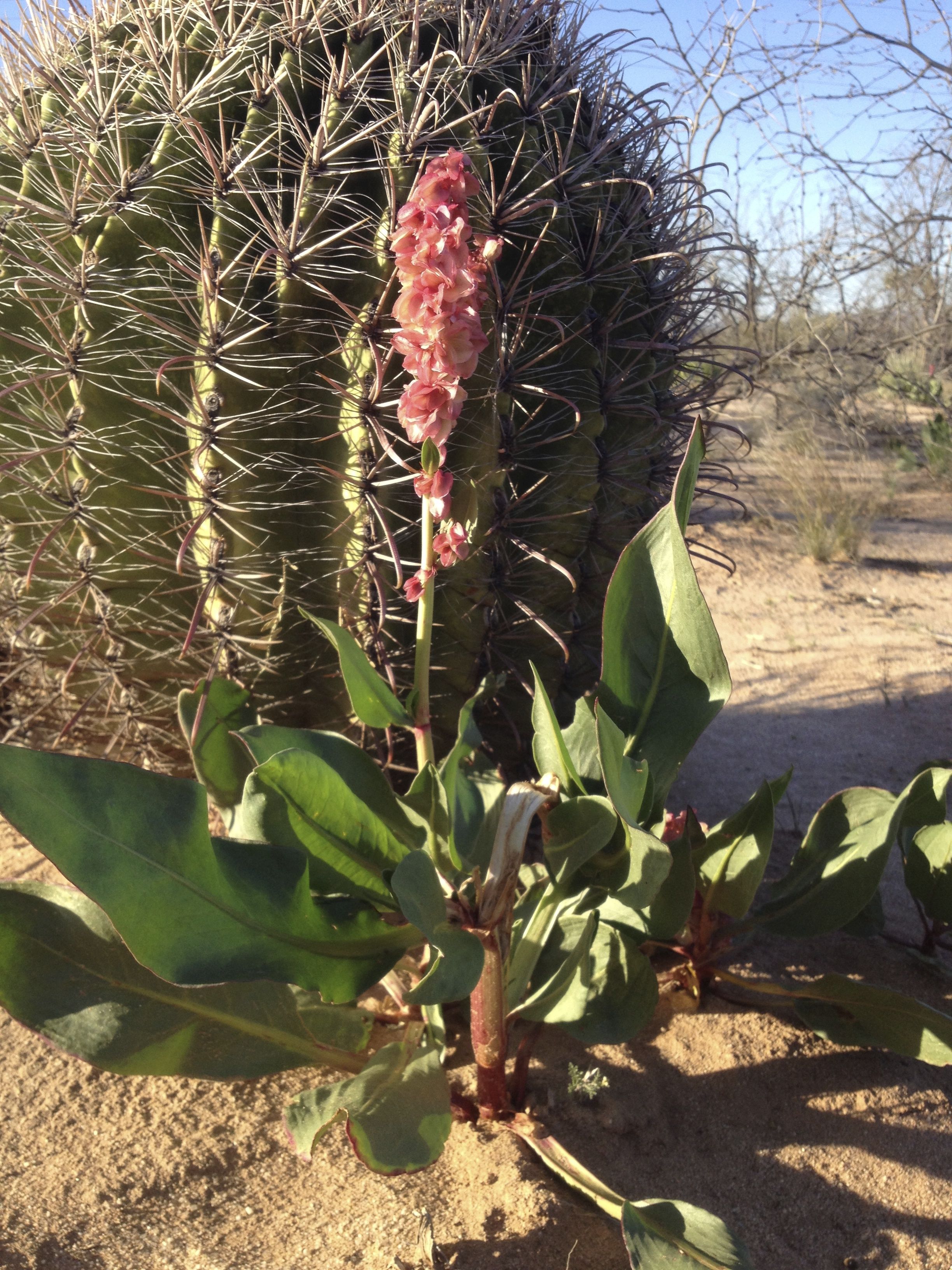
Wild rhubarb is emerging again this month from its hidden storage roots, dotting arroyo-banks and sandy places with green rosettes of leaves and colorful raspberry-pink stalks (MABurgess photo)

Wild rhubarb is emerging again this month from its hidden storage roots, dotting arroyo-banks and sandy places with green rosettes of leaves and colorful raspberry-pink stalks (MABurgess photo)

It’s an unusual winter season when Canaigre (also known by many other names:  Wild Rhubarb, Desert Dock,  Hiwidchuls in O’odham language, Latin name Rumex hymenosepalus) creeps up out of its sandy hiding places to bloom and seed before spring weather gets too warm.  When conditions are right, it can dot the desert floor in early spring with its floppy leathery leaves and pink stalks similar to domestic rhubarb.  This recent cool season Nov.2016-Jan.2017, with its period of penetrating rains, has been the right trigger for awakening canaigre.  Right now it’s time to attune our vision to finding it!  If the weather heats up rapidly, as happened in the last couple of springs, its tender leaf rosettes will dry and crinkle leaving a brown organic “shadow” of itself on the sand, its stored life safely underground in fat roots.  Tia Marta here to share some experiences with canaigre or wild rhubarb.
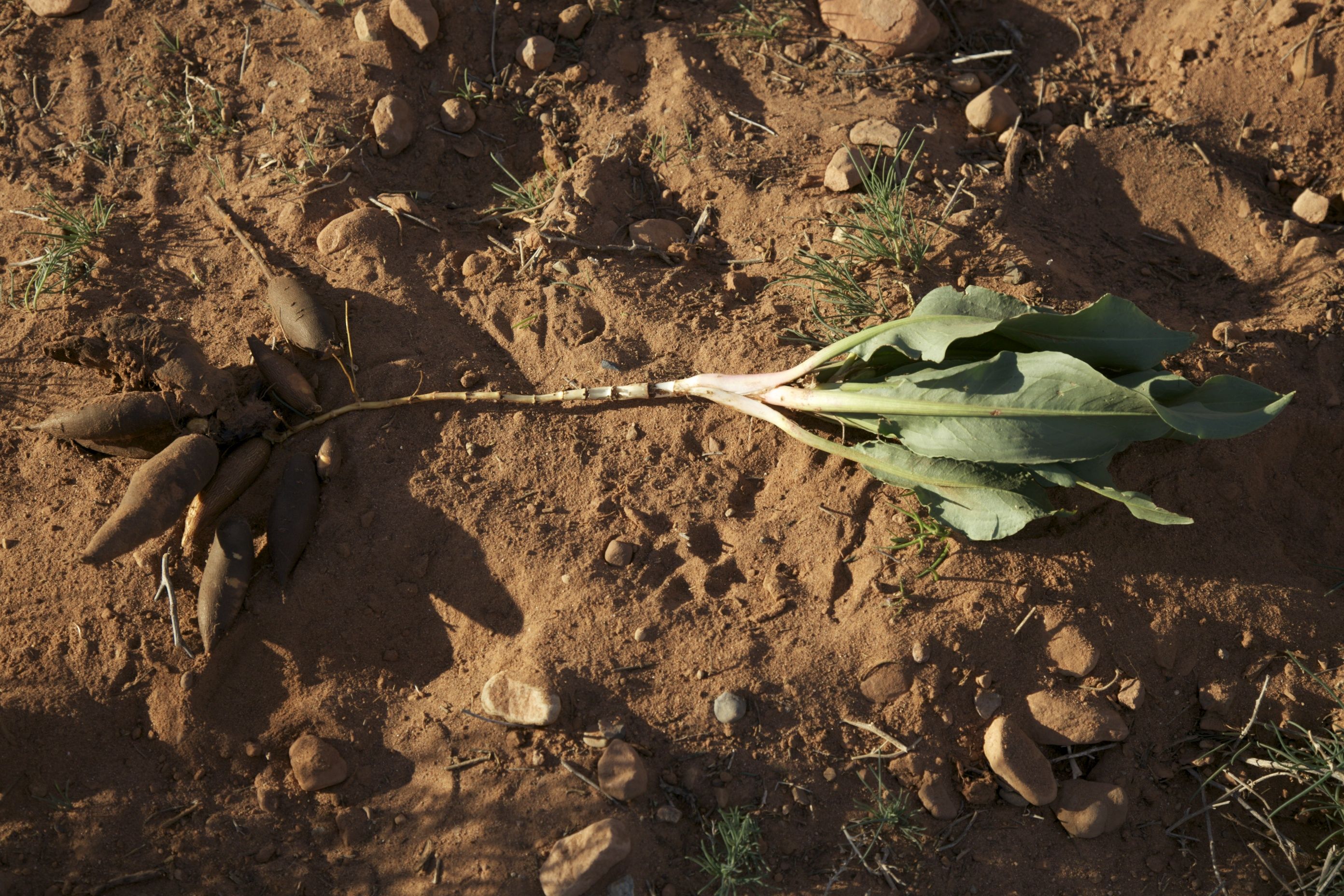
Wild rhubarb dug out of sandy soil showing multiple tuberous roots and young leaves (MABurgess photo)

Wild rhubarb dug out of sandy soil showing multiple tuberous roots and young leaves (JRMondt photo)
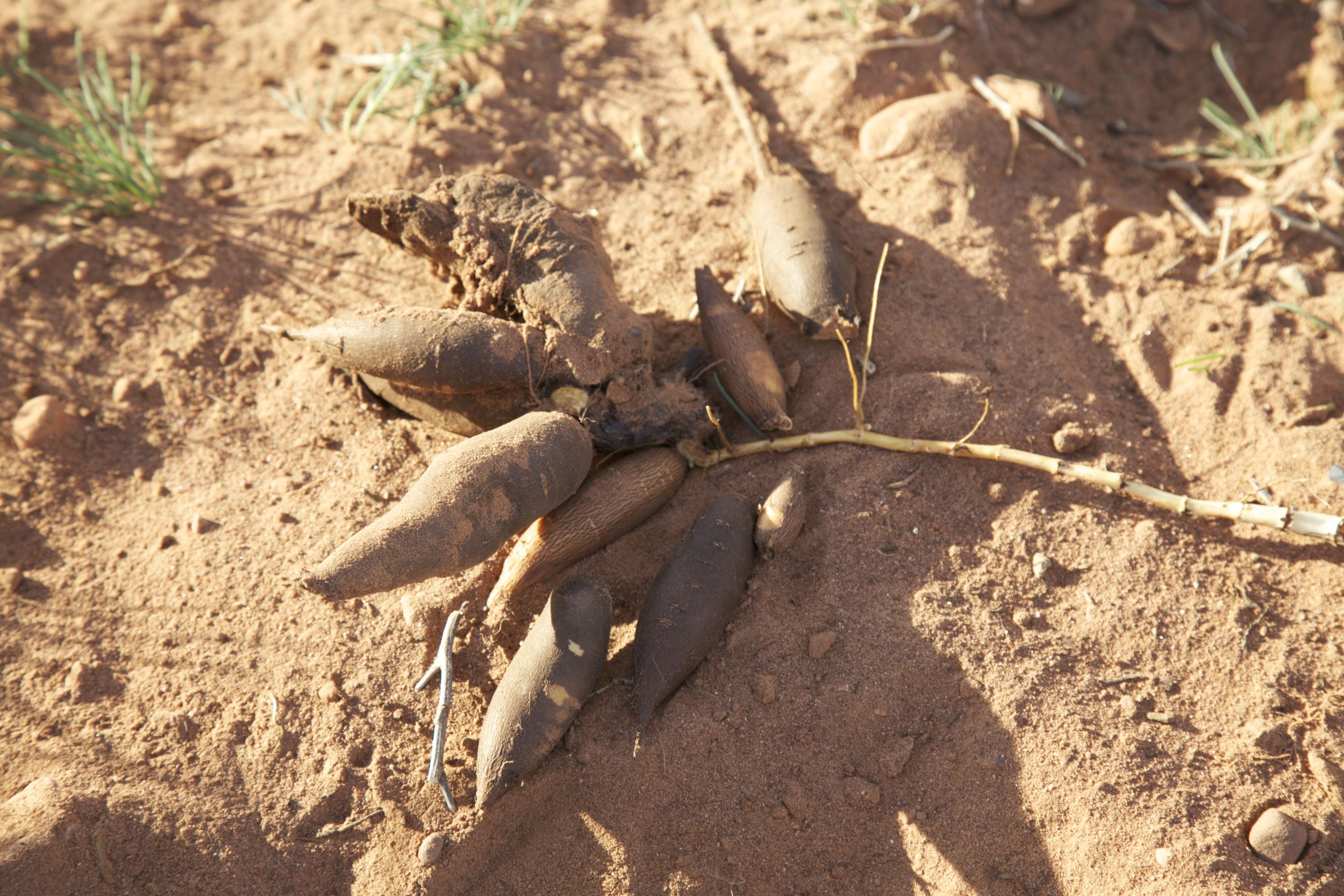
Close-up of wild rhubarb storage roots (JRMondt photo)

Close-up of wild rhubarb storage roots (JRMondt photo)

Canaigre isn’t just everywhere in the desert.  It’s elusive.  It usually likes sandy loose soil, like the flood plains of our desert rivers in Baja Arizona and Sonora, along major arroyo banks, and on pockets of ancient sand dunes.  Where you see one you usually see many.
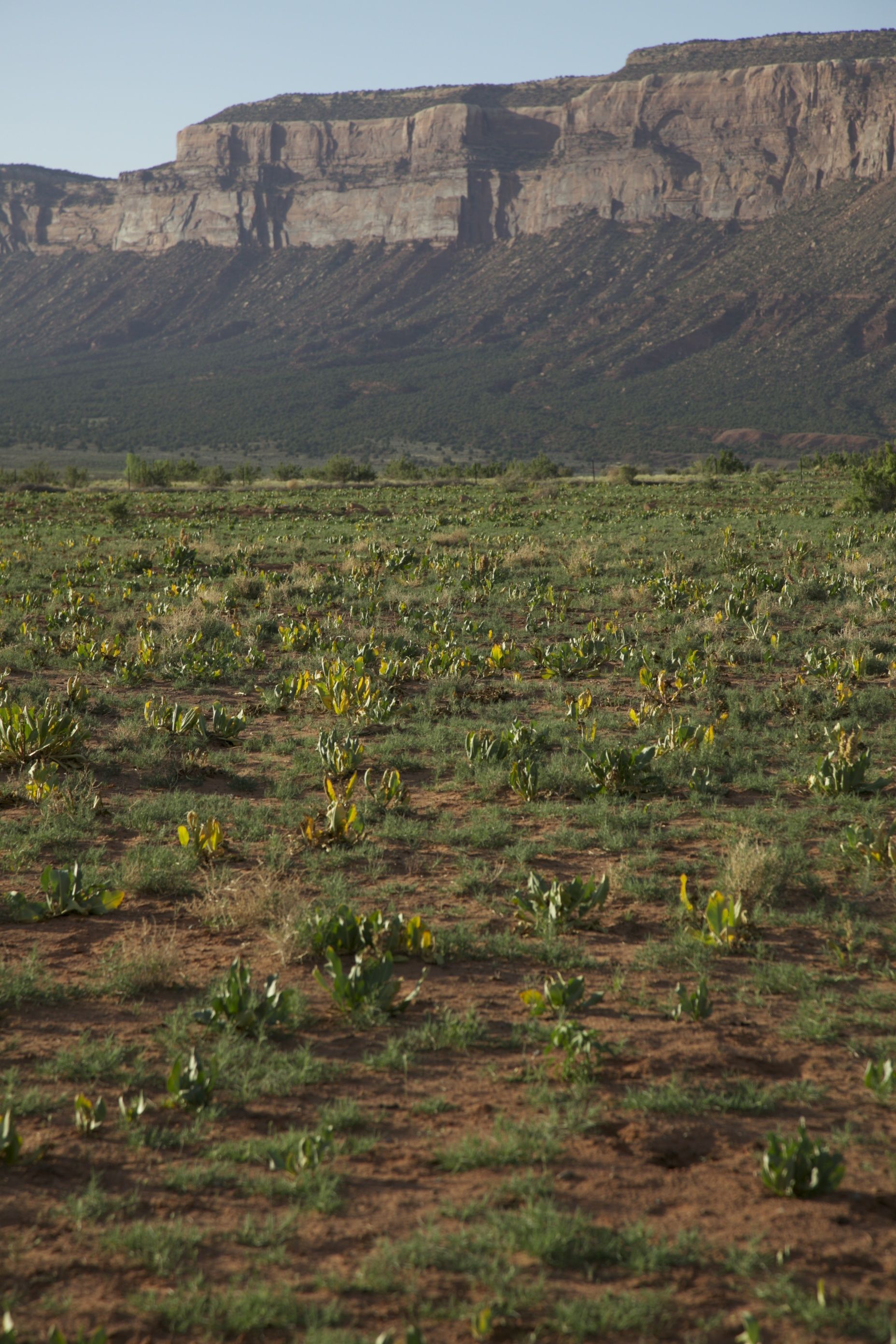
Wild rhubarb on sandy soil in Paradox Valley, western CO (JRMondt photo)
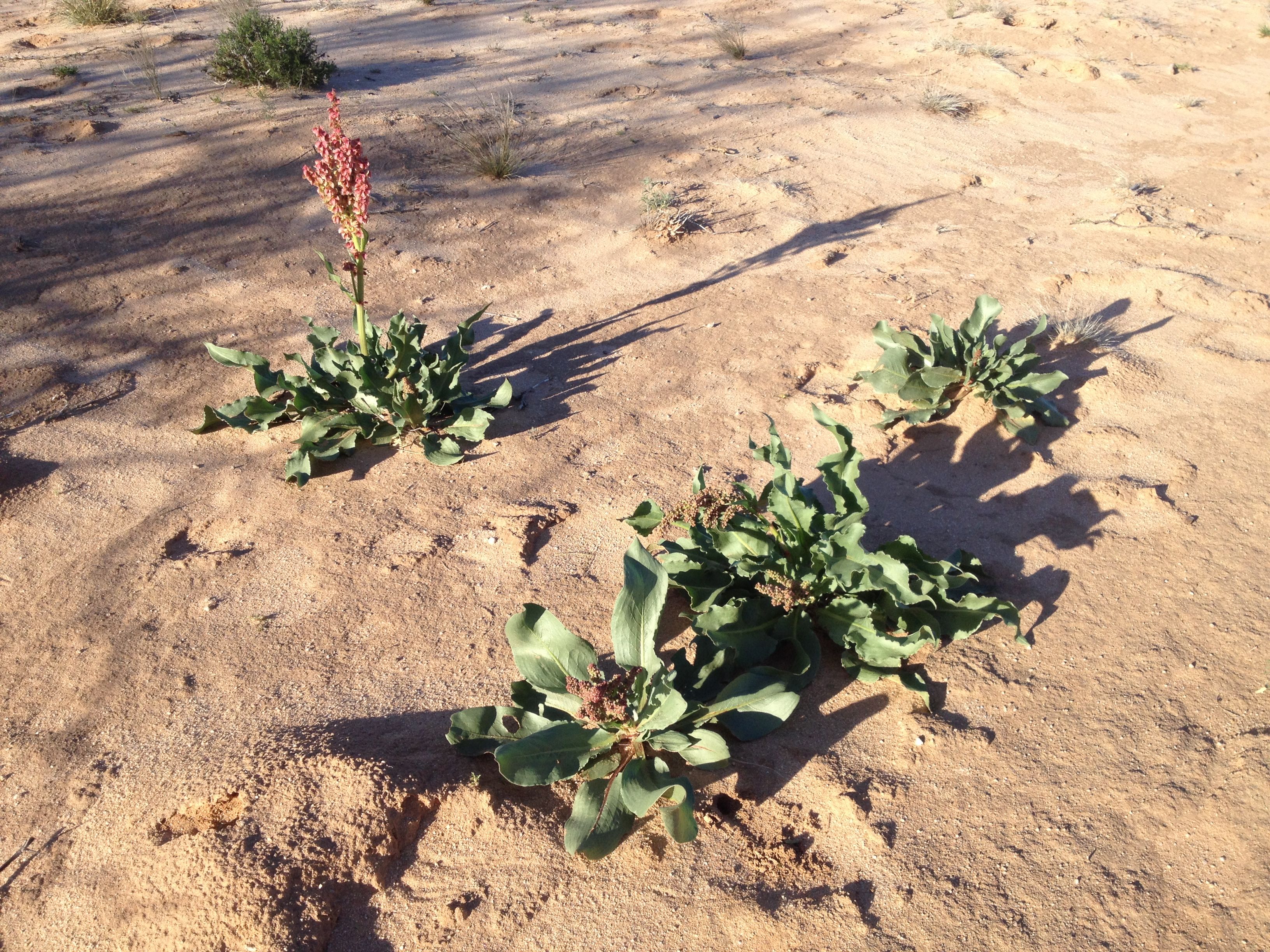
Wild rhubarb on sandy soil in Paradox Valley, western CO (JRMondt photo)

Wild rhubarb emerging in ancient dune soil, Avra Valley , southern AZ (MABurgess photo)

Wild rhubarb emerging in ancient dune soil, Avra Valley , southern AZ (MABurgess photo)

My late friend and mentor, Tohono O’odham Elder Juanita Ahil, would take me to her favorite harvesting grounds at the right time each February and March to collect the rosy stalks–if they had emerged.  Over the last 40 years, with deep regret, frustration and anguish, I’ve seen her special “harvesting gardens” go under the blade as development turned wild rhubarb habitat into apartments, golf courses, and strip malls.  Hopefully our Arizona Native Plant Society (www.AZNPS.com) will be able to advocate for setting aside some remaining sites on public lands, similar to the BLM Chiltepin Reserve at Rock Corral Canyon in the Atascosa Mountains.  Where wild rhubarb was once super-plentiful, they and their habitats are now greatly diminished, even threatened.

Wild rhubarb stalk ready to harvest (MABurgess photo)
Wild rhubarb stalk ready to harvest (MABurgess photo)

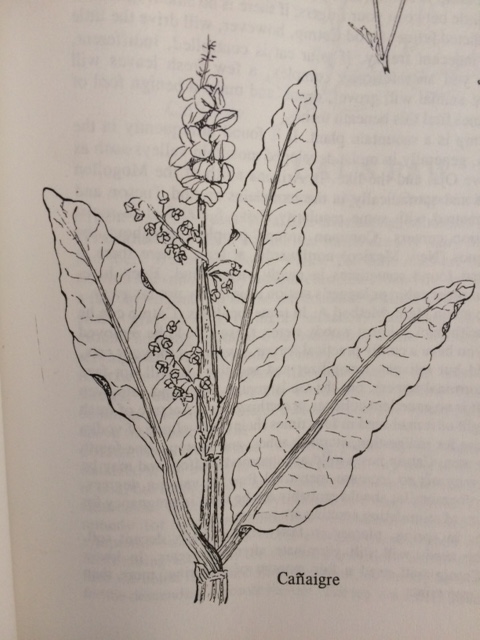
Botanical illustration of wild rhubarb from Medicinal Plants of the Mountain West by Michael Moore, U.NewMexico Press (drawing by Mimi Kamp)

Botanical illustration of wild rhubarb from Medicinal Plants of the Mountain West by Michael Moore, U.NewMexico Press (drawing by Mimi Kamp)

Details of the parts of the plant that Juanita traditionally harvested are shown in Mimi Kamp’s sketch.  Contrary to some ethnographic reports, Juanita did not use the leaf petioles for food; she harvested the flower stalks, i.e. the stems, leaving the leaves to make more food for the plants to store for the next season.  Traditional knowledge is so attuned to Nature.  Hers was an awareness of the plant’s needs balanced with her own appetite.  Other reports of traditional use of wild rhubarb mention cooking the leaves after leaching/steaming out the oxalic acid from them which is not healthy to eat.

Juanita would also dig deeply into the sandy soil directly under an unusually large, robust hiwidchuls to harvest one or more (up to maybe 1/4 of the tubers) to use as medicine.  I recall her digging a big purplish tuber the size of an oblong sweet potato at a depth of 2 1/2 feet on the floodplain of the Rio Santa Cruz where ball parks now prevent any hiwidchuls growth at all.  She would dry it and powder it to use later on scrapes to staunch bleeding.  Her hiwidchuls harvesting dress was dotted with rosy brown patches of color dyed from the juice splashed on the cloth when she cut the tubers into slices for drying. (See Jacqueline Soule’s post on this blog from 2014, also Michael Moore’s Medicinal Plants books, for alternate uses.)

Wild rhubarb flower stalk close-up (MABurgess photo)

Wild rhubarb flower stalk close-up  with buds and flowers  typical of buckwheats (MABurgess photo)

Canaigre/wild rhubarb is in the buckwheat family sporting clusters of little flowers that produce winged seeds.  Their papery membranes help catch the wind for flying to new planting grounds.  The green celery-like flower stalk or stem turns pink or raspberry-tinted as it matures.  That was when Juanita would cut the stem at its base to use for her hiwidchuls pas-tild, wild rhubarb pie!
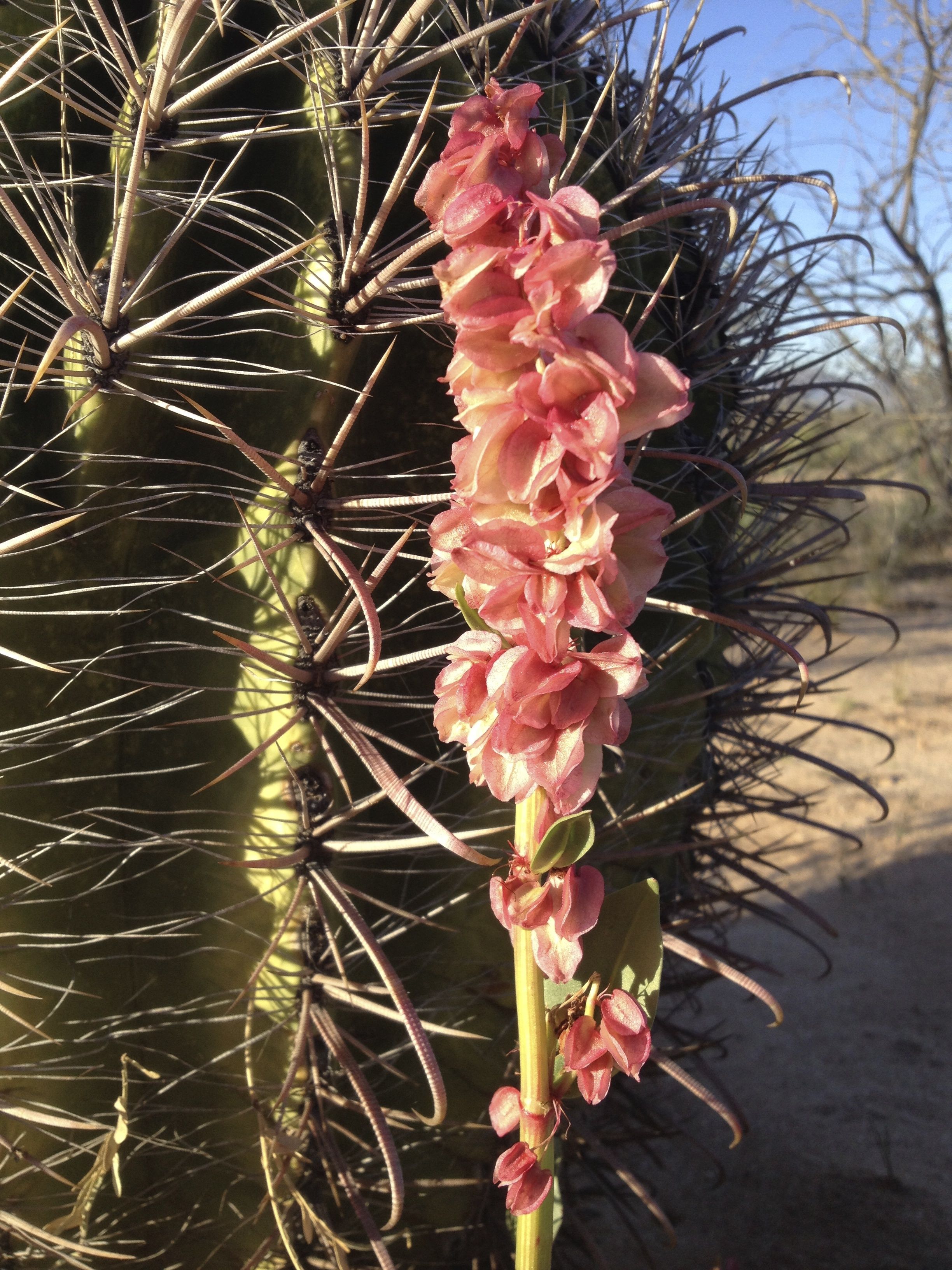
Wild rhubarb stalk with colorful immature seeds forming (MABurgess photo)

Wild rhubarb stalk with colorful immature seeds forming (MABurgess photo)

Close-up of wild rhubarb's membranous seeds (MABurgess photo)

Close-up of wild rhubarb’s membranous seeds (MABurgess photo)

In a good year, Juanita would harvest literally bundles of hiwidchuls stalks and we would set to work baking.  Her pies were sweet and tangy.  Here is what she would roughly put together in her off the cuff recipe.  But almost any rhubarb pie recipe should work with the wild rhubarb.  You can find great info on Southwest Native uses of canaigre in Blog-Sister Carolyn Niethammer’s book American Indian Food and Lore.

Juanita’s approximate Hiwidchuls Pas-tird RECIPE

Ingredients:

ca 4-6 cups chopped young wild rhubarb stems

1/4-1/2 cup white Sonora wheat flour

2-3 Tbsp butter

ca 2 cups sugar

pie crust–2 layers for top and bottom, or bottom crust and top lattice crust (A good variation is mesquite flour added to your crusts)

Directions:  Prep stems ahead.  Preheat oven to 450 F.  Chop young rhubarb stems in 1/2 inch cuts.  Stems are full of vascular bundles and can become very fibrous as stems become fully mature, so youthful stems are best.  (Be warned:  One year we harvested a little too late and our pies were so “chewy” with fiber that we had to eat our pies outside in order to be able to easily “spit out the quids.”)  Cook hiwidchuls chopped pieces in a small amount of water until tender.  Add in sugar, butter and flour and cook until mixture is thickening.  Pour mixture into your pie crust.  Cover with top pie crust and pierce for steam escape, or cover with lattice crust.  Begin baking in hot oven (at 450F) then reduce heat to medium oven (350F) for 45-50 minutes or until crust is golden brown and juice is bubbling through lattice or steam holes.  Enjoy it hot or cold!


Wild rhubarb stalk ready to harvest (MABurgess photo)

Wild rhubarb stalk ready to harvest (MABurgess photo)

Now let’s head out into the desert washes to see if there are more stands of hiwidchuls popping up out of the ground, making solar food to keep themselves and other creatures alive and well!   Let’s get ready to be collecting their seeds (which also were used traditionally by Native People as food) in order to propagate and multiply them, adding them to our gardens for future late winter shows of color, good food and good medicine.  Happy gardening and eating from Tia Marta and traditional knowledge shared!


EVERYTHING-LOCAL PIZZA from Baja Arizona!

Totally local veggie pizza with cholla buds, nopalitos, acelgas, mushrooms, goat cheese and home-grown cherry tomatoes--ready to bake

Totally local veggie pizza with cholla buds, nopalitos, acelgas, mushrooms, goat cheese and home-grown cherry tomatoes–ready to bake

If you love pizza–and I’m picky about good pizza–here are some ways to celebrate local foods, to eat super-healthily, get creative in the kitchen, AND have new excuses to eat pizza!  Tia Marta here to share ideas for a delicious pizza party, incorporating the fabulous gifts that our local desert foods offer.

It will take a little fore-thought and assembly time (…like, all year harvesting at the right seasons for DIYers, or trips to the farmers market, NativeSeeds/SEARCH store, or San Xavier Farm Coop).

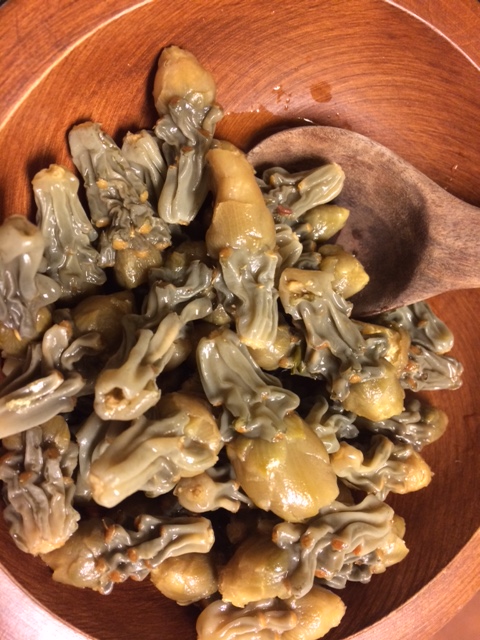
Locally-harvested buckhorn and staghorn cholla buds, reconstituted and ready to cut as toppings for pizza

Locally-harvested buckhorn and staghorn cholla buds, reconstituted and ready to cut as toppings for pizza

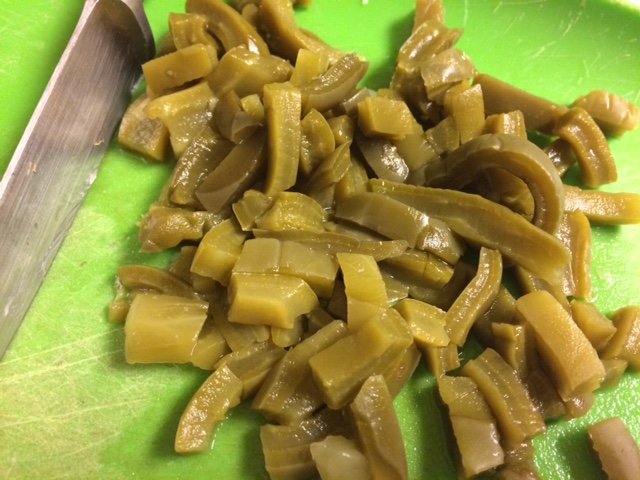
Pickled prickly pear cactus pads--better known as nopalitos in Spanish and nowi in Tohono O'odham

Pickled prickly pear cactus pads–better known as nopalitos in Spanish and nowi in Tohono O’odham

Cholla buds dried from last April’s harvest, soaked and simmered until soft through, make a tangy taste surprise– a super-nutritious calcium-packed pizza topping.  In the photo, the larger buds are from Buckhorn cholla (Cylindropuntia acanthacarpa) and the smaller buds are from Staghorn (C. versicolor), both plentiful for harvesting in low desert.  Dried cholla buds are available at San Xavier Coop Association’s farm outlet, at NativeSeeds/SEARCH store, and at http://www.flordemayoarts.com.

Another perfect topping is nopalitos, simmered or pickled and diced young pads of our ubiquitous prickly pears (Opuntia engelmannii, O.ficus-indica to name a couple).  Collecting from the desert is a spring activity, but you can easily find whole or diced nopales anytime at Food City.  The other cheater’s method is to find canned pickled cactus in the Mexican food section of any local grocery.  Nopalitos are a taste thrill on a pizza, and you can enjoy their blood-sugar balancing benefits to boot.

Starting the dough sponge--with local, organic hard red wheat flour--ready to rise

Starting the dough sponge–with local, organic hard red wheat flour–ready to rise

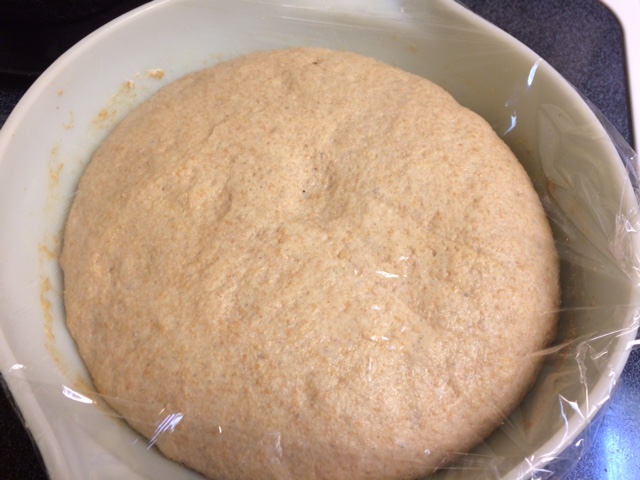
Risen pizza dough after a couple of hours--note the rich whole grain flour of local BKWFarms hard red wheat

Risen pizza dough after a couple of hours–note the rich whole grain flour of local BKWFarms hard red wheat

As for making the crust, we have the perfect source of the freshest whole grain organic flours right here from BKWFarms’ fresh-milled heirloom white Sonora & hard red wheat.

My suggestions for a Baja Arizona Pizza Crust:

Ingredients:

3 ½ to 4 cups bread flour mix  (consisting of 2- 2  1/2 cups organic hard red wheat flour from BKWFarms Marana, 1 cup pastry-milled organic heirloom white Sonora wheat flour also from BKWFarms, ½ cup organic all purpose flour from a good grocery)

2 tsp local raw honey (see Freddie the Singing Beekeeper at Sunday Rillito farmers market)

1-2 envelopes instant dry yeast (or your own sourdough starter)

2 tsp Utah ancient sea salt or commercial sea salt

1 ½ cups drinking water, heated in pyrex to between 105 degrees F and 115 degrees F

2 Tbsp organic olive oil for the dough

PLUS 2 tsp more olive oil for spreading on dough as it proofs

Pizza dough risen and kneaded then stretched and patted out on pizza pan ready for toppings

Pizza dough risen and kneaded then stretched and patted out on pizza pan ready for toppings

Directions for making Crust:

[Note–you can find several pizza dough recipes for bread mixers online.  Just substitute the above ingredients.]

Heat water and pour into a large mixing bowl.  Test for temperature then dissolve dry yeast.  Add honey and sea salt and dissolve both.  Add oil to wet mixture.  Sift flours. Gradually mix flours into wet ingredients until a mass of dough is formed and begins to pull away from sides of bowl.  Knead into a ball.  Let stand covered in a warm place until ball of dough has at least doubled in size (approx 2 hours).  Knead the ball again, divide into 2 equal parts, cover thinly with the additional olive oil, and roll out or hand-flatten the 2 dough balls out onto 2 oiled pizza pans.  Pat dough to approximately 1/4″-3/8″ thickness to the edges of pan.  At this point you are ready to add any number of good toppings.  Here are ideas for a local veggie and a local meatie pizza.

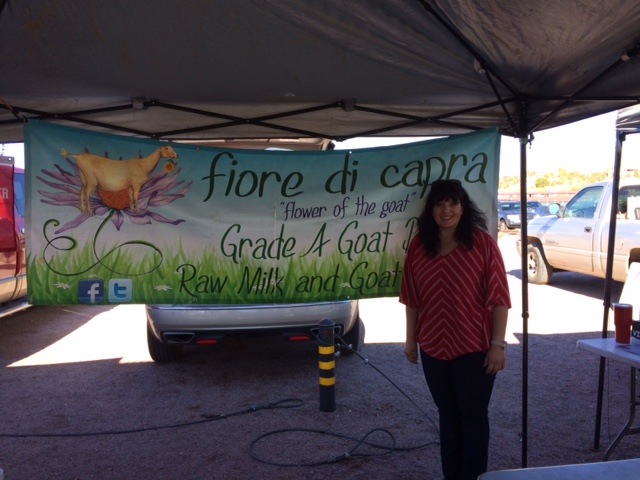
For the finest plain local carefully created goat cheese, find Fiore di Capra at Rillito Farmers Market, Sundays in Tucson

For the finest plain local carefully created goat cheese, find Fiore di Capra at Rillito Farmers Market, Sundays in Tucson

Baja Arizona Pizza Toppings

Ingredients for local Veggie Pizza toppings:

1/2 pt. spreadable goat cheese (I use Fiore di Capra’s plain)

local chard or acelgas (from Mission Garden) torn in pieces

local tomatoes, sliced

I’itoi’s Onions, chopped

heirloom garlic, minced

1/2 cup reconstituted cholla buds, sliced in half or quarters

1/2 cup diced nopalitos 

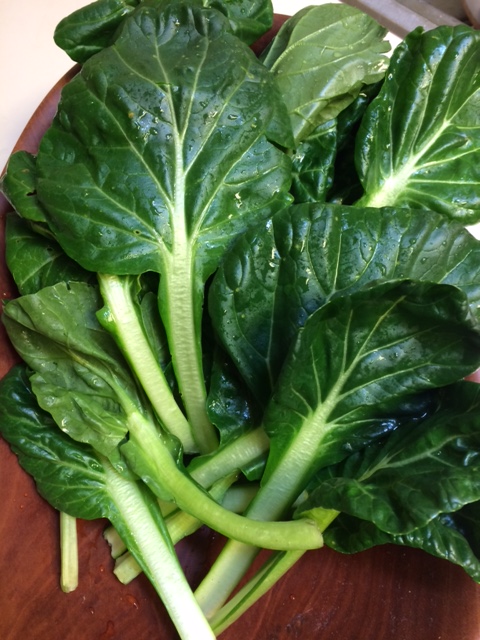
Fresh Chard (acelgas) from a refugee friend's garden--a great substitute for spinach in a pizza!

Fresh Chard (acelgas) from a refugee friend’s garden–a great substitute for spinach in a pizza!

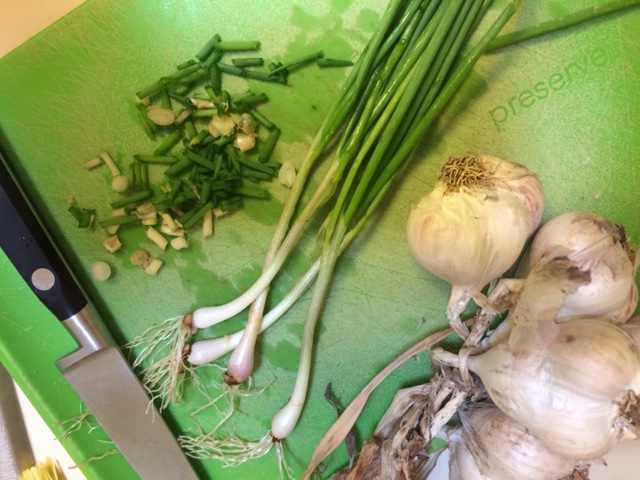
Native I'itoi's Onions and local heirloom garlic from my garden for pizza topping

Native I’itoi’s Onions and local heirloom garlic from my garden for pizza topping

1/2 cup local oyster mushrooms, sliced

1/4-1/2 cup salsa, optional

Luscious oyster mushrooms from Maggie's Farm (Rillito Farmers Market) to cut in strips for pizza

Luscious oyster mushrooms from Maggie’s Farm (Rillito Farmers Market) to cut in strips for pizza

[You probably by now have some ideas of your own to add!]

Ingredients for Meatie Baja Arizona Pizza toppings:

1/2 pt goat cheese

1/2 lb local chorizo sausage, loosely fried

or, 1/2 lb local grass-fed beef hamburger, loosely fried and spiced with I’itoi onions, garlic, salt

1/2 cup tomato&pepper salsa of choice (mild, chilpotle, etc)

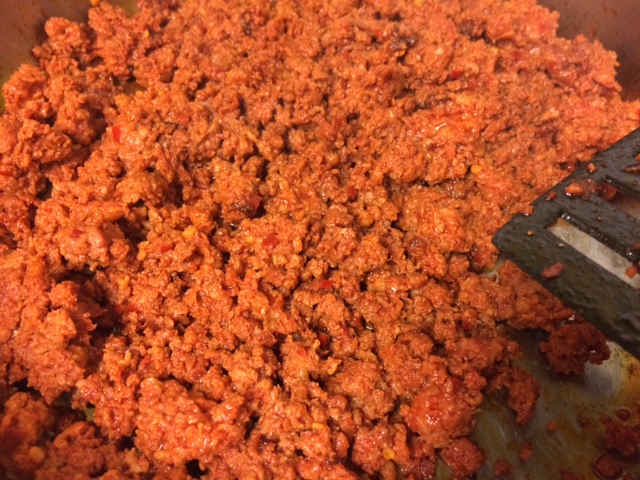
Fresh local pork chorizo to render before putting on pizza dough

Fresh local pork chorizo to render before putting it on the pizza dough

Directions for Toppings:

Layer your toppings artfully, beginning by spreading the goat cheese evenly over the patted-out crust dough.  For a local Veggie Pizza, scatter minced garlic and chopped I’itoi’s onions evenly atop the goat cheese layer.  Place torn leaves of fresh acelgas over the onion/garlic layer.  Add sliced tomatoes, sliced mushrooms, sliced cholla buds, diced nopalitos.  Top with optional salsa.  For a Cholla&Chorizo Meatie Pizza, do a similar layering beginning with goat cheese spread over the crust dough, then scattered I’itoi’s onions and garlic, then a full layer of cooked chorizo, and topped by lots of sliced cholla buds.  Adding salsa over all is optional for making a juicier pizza.

Preheat oven to high 425 degrees F.  Bake both pizzas 20-24 minutes or until the crust begins to turn more golden.  You won’t believe the flavor of the crust alone on this local pizza–and the delicious toppings grown right here in Baja Arizona are better than “icing on the cake”!  You can add more spice and zing by crushing our native wild chiltepin peppers on your pizza–but be forewarned–they might blow your socks off.

Home-grown chiltepin peppers crushed and ready to spice up a local pizza--Look out for a wave of picante heat even with a small pinch!

Home-grown chiltepin peppers from my garden, dried, crushed and ready to spice up a local pizza–Look out for a wave of picante heat even with a small pinch!

Here’s wishing you a great local pizza party!

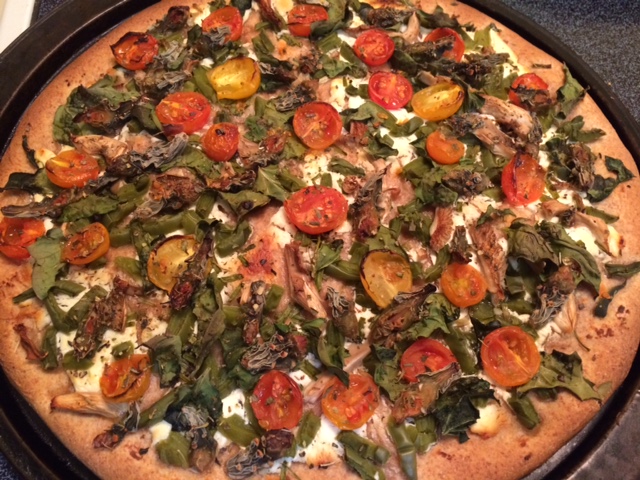
How could you top this Baja Arizona Pizza?!!! Our locally grown and wild desert-harvested ingredients can't be beat by any other veggie pizza!

How could you top this Baja Arizona Pizza?!!! Our locally grown and wild desert-harvested ingredients can’t be beat by any other veggie pizza!

What a great combination--wild-harvested cholla buds, local chorizo, Fiore di Capra goat cheese, and truly flavorful organic wheat flour crust!

What a great combination–wild-harvested cholla buds, local chorizo, Fiore di Capra goat cheese, and truly flavorful organic wheat flour crust!

Buen provecho from Tia Marta!  See you when you visit http://www.flordemayoarts.com.


Chile Rellenos, Reimagined

To make this dish, start with some nice roasted chiles.

To make this dish, start with some nice roasted chiles.

Carolyn here today, feeling a little nostalgic. My mother taught me how to cook,  beginning with stirring Jello when I was five years old. Then later there was junior high home ec and a Girl Scout cooking badge.  Mom would be 102 next week if she were alive and she would have been a more adventurous cook if her kids had been more adventurous at the table.   I wouldn’t say my brother and I were picky eaters, but we didn’t want anything too unusual. It wasn’t until I spent the summer in Europe between my junior and senior year in college that I began to broaden my palate and did a complete change. For the next decade, I wasn’t interested in any food that wasn’t authentically ethnic.

So when Mom told me she had this new recipe called Chile Cheese Puff, I couldn’t have been less interested. The name alone sounded so Family Circle or Good Housekeeping, absolutely everything my friends and I were not in the early 1970s. (Remember, much of what we call The Sixties happened in the early Seventies). But at some point I came around, tried the recipe and liked it. And when I needed some chile recipes for my second cookbook The Tumbleweed Gourmet, I included Chile Cheese Puff. For some reason I didn’t think to rename it.

This book went out of print long ago, but there are still used copies on Amazon.

This book went out of print long ago, but there are still used copies on Amazon.

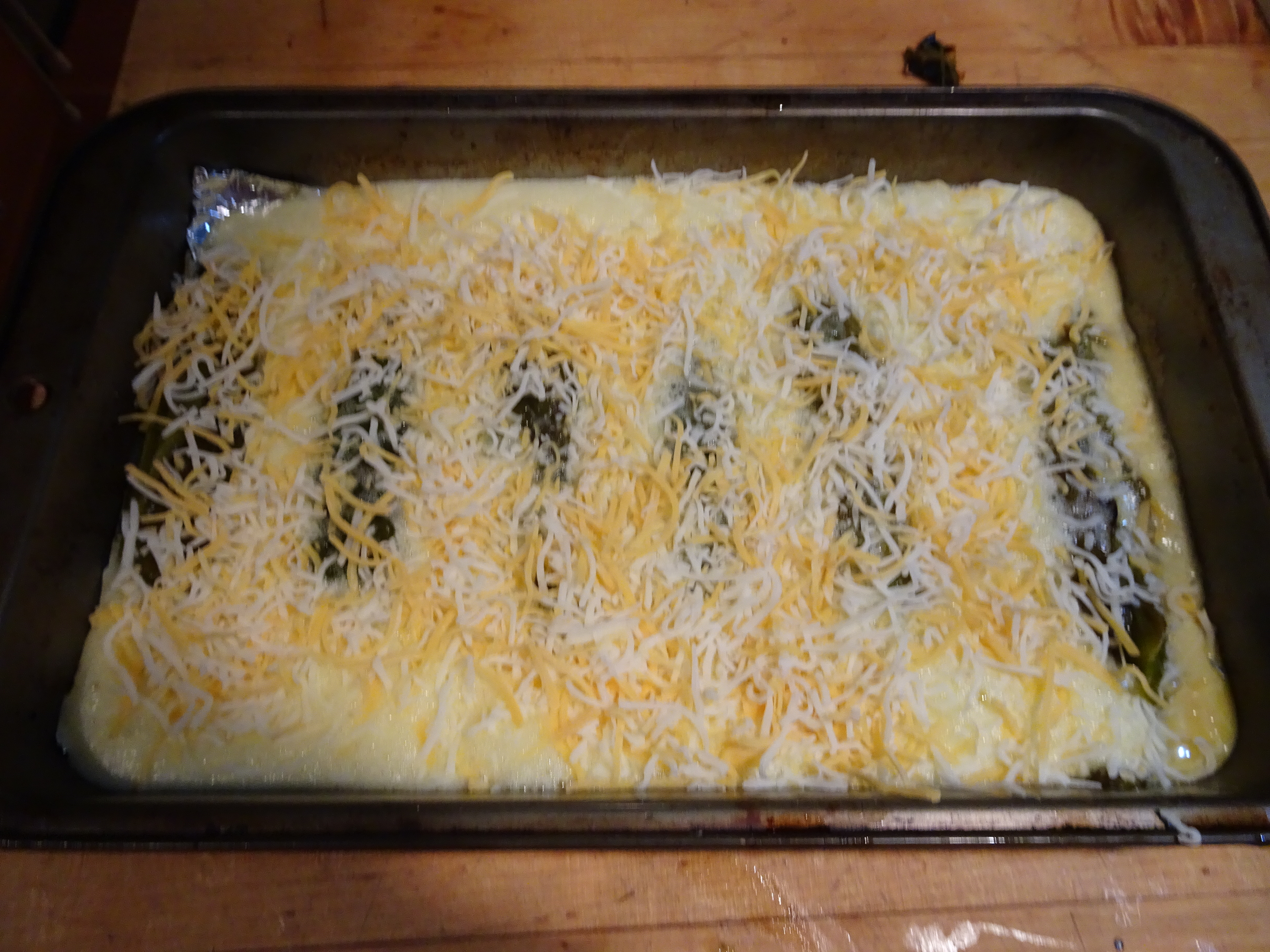
Basically this is a baked chile relleno. Without the deep frying, it is much healthier, but almost as delicious. It’s a great dish to make for a light dinner when you need inspiration. If you live in the Southwest, you probably already have all the ingredients on hand. This recipe calls for stuffing the chiles with jack cheese, but you could use beans or mashed squash as well.  You can roast and peel your own chiles, usually Anaheims but poblanos are delicious. Or get the ones in a can.

Chile Cheese Puff

2 cans (4 oz each) whole green chiles

or

6 to 7 fresh peeled chiles

1/4 pound jack cheese (or beans, squash or tofu)

2 cups milk

4 eggs

1/3 cup instant flour (Wondra)

1/2 teaspoon salt

Dash pepper

1/2 pound gated longhorn or cheddar cheese

Grease a 6 inch by 9 inch baking dish. Preheat oven to 350 degrees F. Clean seeds and ribs from chiles, trying not to tear them. Cut jack cheese in strips and stuff chiles. Alternately, stuff with mashed beans, squash or tofu.

dsc00040

dsc00041

These chiles had very thin walls and shredded when I peeled them. For this dish, it doesn’t matter. Just reassemble them, with half on the bottom and half covering your filling.

Arrange chiles flat in a row in prepared baking dish.

Divide eggs. In a medium bowl, whip whites until frothy, whip in yolks. Add flour, milk, salt, pepper and gently combine.

dsc00048


Pour over chiles. Sprinkle with gated cheese. Bake in preheated oven for 35 to 45 minutes until puffed and golden.

dsc00049

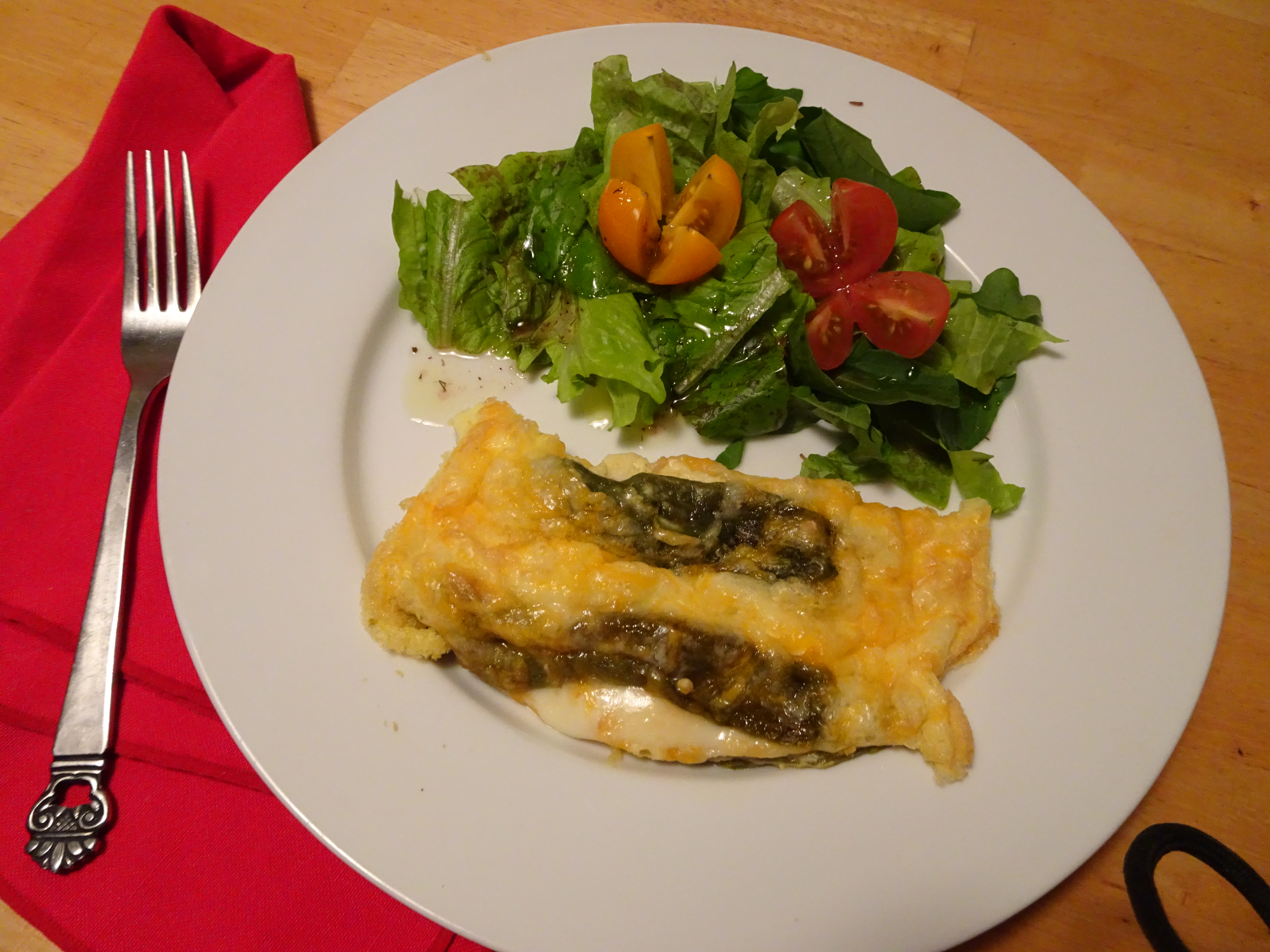
Add a salad and you have a great light meal.

Add a salad and you have a great light meal.

__________________________________________

Carolyn Niethammer’s five cookbooks cover wild foods of the southwest deserts and other southwest cuisine. Find her books at the Native Seeds/SEARCH retail store, on Amazon or order from your favorite independent bookstore.

For a Spicy Solstice….

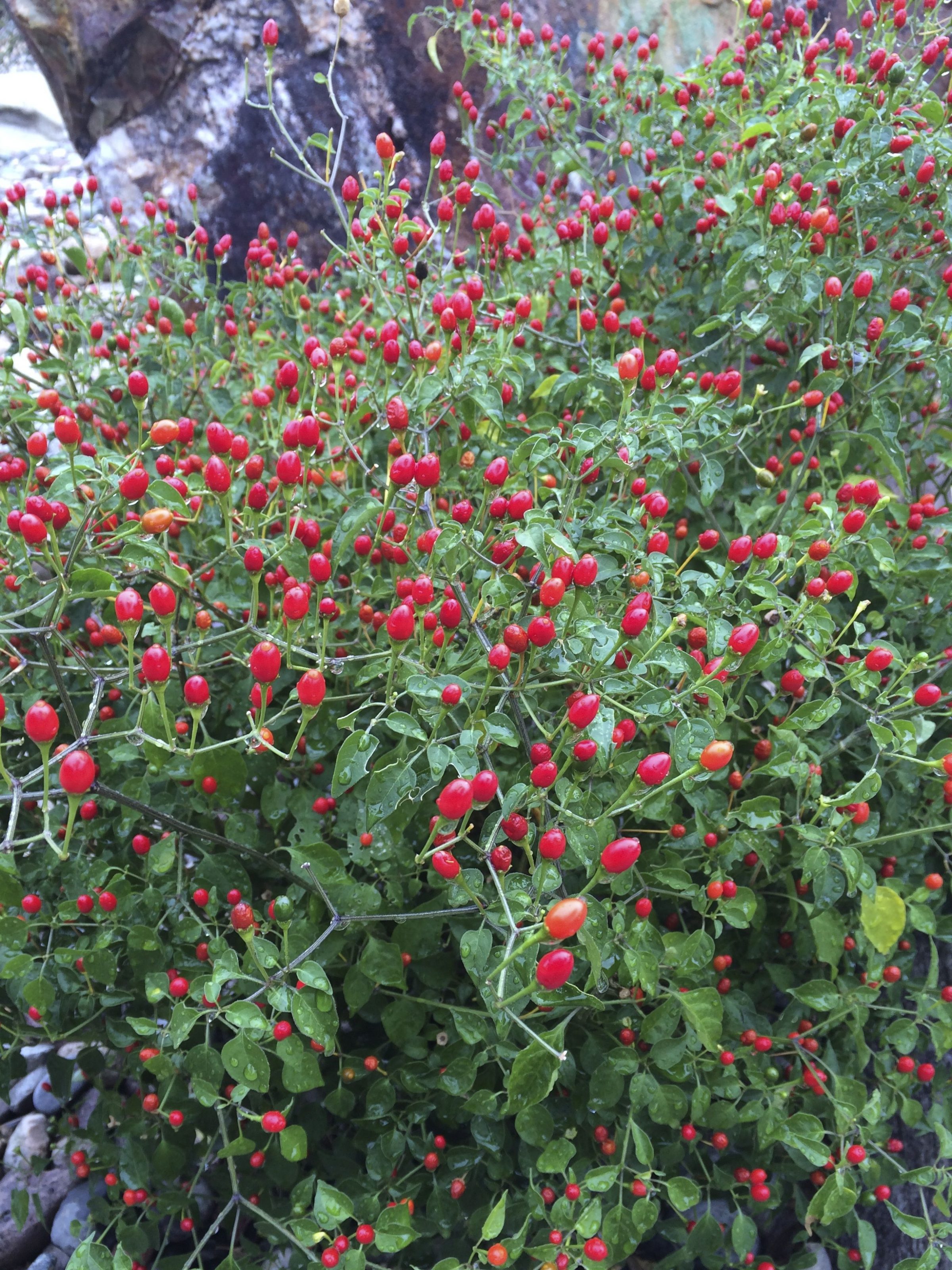
Chiltepin pepper from the wild, growing at Tohono Chul Park (Burgess photo)

Chiltepin pepper plant, originally from the wild, growing in the Tohono Chul Park landscape (Burgess photo)

It’s chile time in Baja Arizona!  The local goodness of our Sonoran Desert foods can assert itself tastefully—yea, vehemently!—into other imported cuisines. Tia Marta here to share a wonderful new wrinkle to celebrate this holiday season, by wedding the local “vehemence” of our chiltepin pepper with an imported tradition.

In decades since the 1940s, industrial ag and interstate grocery service have tried to make Baja Arizona into a food colony (but we are tastefully fighting back). Fossil fuels transport outside traditions to us that we do cherish and that help keep families together, like the many food traditions we celebrate at Tucson Meet Yourself in October each year.  At the top of the import list for Yuletide is one borrowed from East-coast First Nations. (See Renewing America’s Food Traditions by Gary Paul Nabhan, UA Press, for more.) This imported gift from Native People of Southern New England and coastal New Jersey bogs that I’m referring to for holiday feasts is naturally the cranberry. Thank Goodness for trade routes!

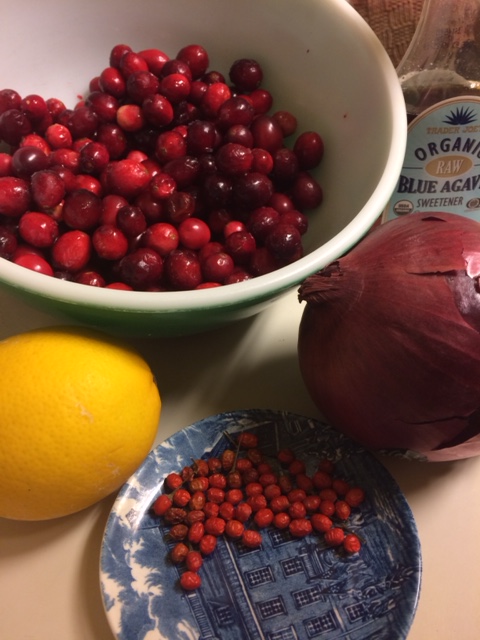
Ingredients for Chiltepin-Cranberry Relish--some local, some transported

Ingredients for Chiltepin-Cranberry Relish–my own Meyer lemon and chiltepines, plus transported cranberries, agave nectar, and red onion

Local and import come together sensationally in my recipe for a raw, vegan Chiltepin-Craberry Relish.
Yes, it is picante, sweet and tangy—and delicious! It was inspired by amazing cook and baker Cindy Burson of Country Harvest who won People’s Choice at a fair with her version. (Cindy’s Southwest treats can be enjoyed at Sunday’s Rillito Farmers Market and Wednesday’s Green Valley Farmers Market.)

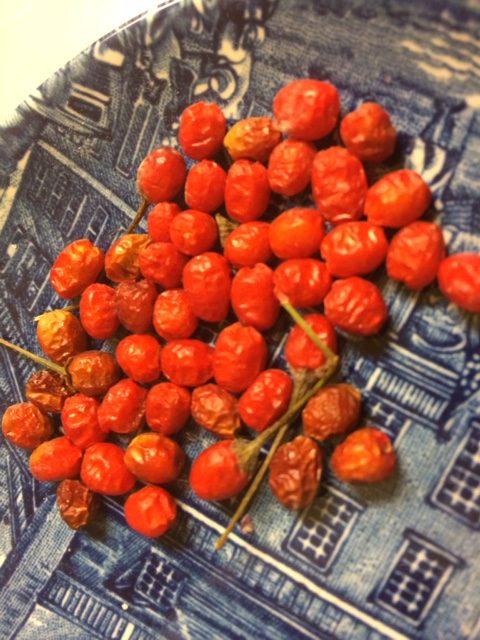
Dried chiltepines for the relish--They make a great snack, great flavoring for Tom's Mix SW Heirloom Beans, and super in any salsa

Dried chiltepines to use in the cranberry relish–They also make a great snack, great flavoring for Tom’s Mix SW Heirloom Beans, and super in any salsa.

Muff’s Fresh and Easy CHILTEPIN-CRANBERRY RELISH RECIPE

Ingredients:

3 cups fresh organic cranberries, washed

1/2 medium red onion, diced

8-12 dry chiltepin peppers for picante palettes, depending on “heat” desired (4-6 chiltepines for less picante).  Start with less, then add more later if higher “vehemence” is needed.

1/2 cup local raw honey or agave nectar

2 Tbsps lemon or lime juice

1-2 Tbsps tangerine rind or Meyer lemon rind, chopped

1/4 cup fresh cilantro, chopped (optional ingredient)

Directions:

In a food processor, pulse all the fresh ingredients and juice at least 6 to 8 times, keeping the texture coarse.

Chill in a covered bowl in refrigerator overnight or at least 8 hours, for time to meld the flavors.

Stir the mixture;  do a taste test.  Add more honey or agave nectar, or chiltepines as needed for the sweet toote or picante palette.

Spicy Chiltepin-Cranberry Relish can keep its freshness, flavor, and color in the frig for at least a week.

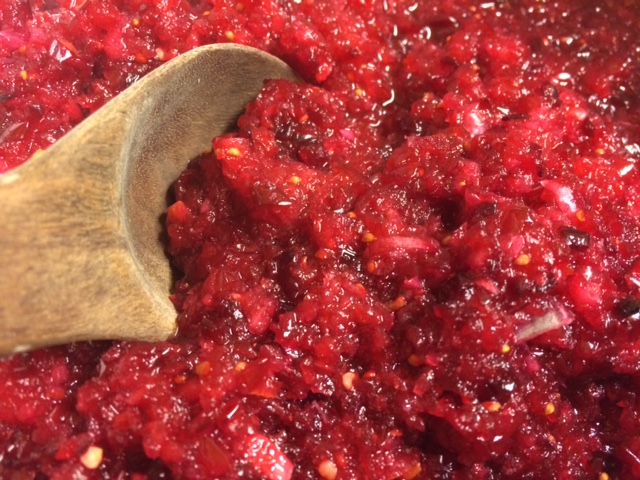
Note texture of fresh relish--not too fine. (Tarahumara and Mayo spoons like this for serving can be found at the NativeSeeds/SEARCH store)

Note texture of fresh relish–not too fine. (Tarahumara and Mayo spoons like this for serving can be found at the NativeSeeds/SEARCH store)

Even the conservative palette will relish this holiday condiment—perfect for Christmas dinner or festive smorgasbords. Chiltepin adds a glorious kick to the sweet tart of cranberries, with a non-lingering wave of excitement to the tastebuds! You will find Chiltepin-Cranberry Relish as a fine complement not only to turkey or ham. Try it with bagels and cream cheese. Use it as a savory side, or with a salad, on any holiday platter. It’s a celebration of East meeting Southwest—Enjoy!

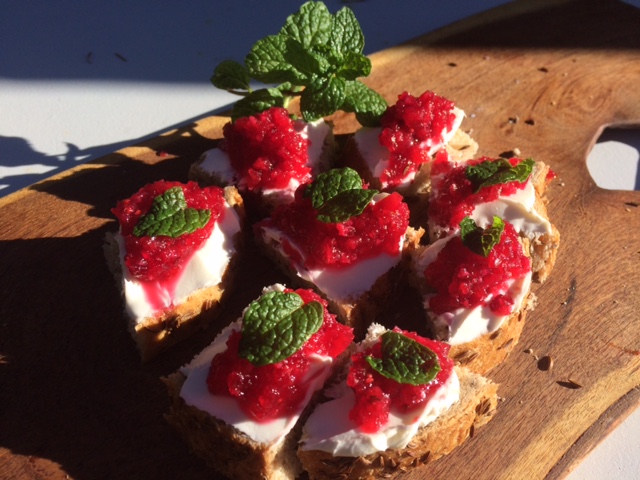
Here I've used Chiltepin-Cranberry Relish served with creamcheese-on-rye canapés

Here I’ve used Spicy Chiltepin-Cranberry Relish served as creamcheese-on-rye canapés

We harvest chiltepines one by one as we need them, from our own chiltepin plants. Birds appreciate our chiltepin bushes as much as we do! Some of our plants I propagated from wild chiltepines in Arispe, Sonora, and Baboquivari. Some, purchased at Tohono Chul Park’s Chiles and Chocolate event, were propagated by experts Charles DiConcini and blog sister Linda McKittrick from Sierra Madrean plants. To buy healthy, productive plants for your own garden, be sure to put the NativeSeeds/SEARCH Valentine’s Plant Sale on your calendar for February.

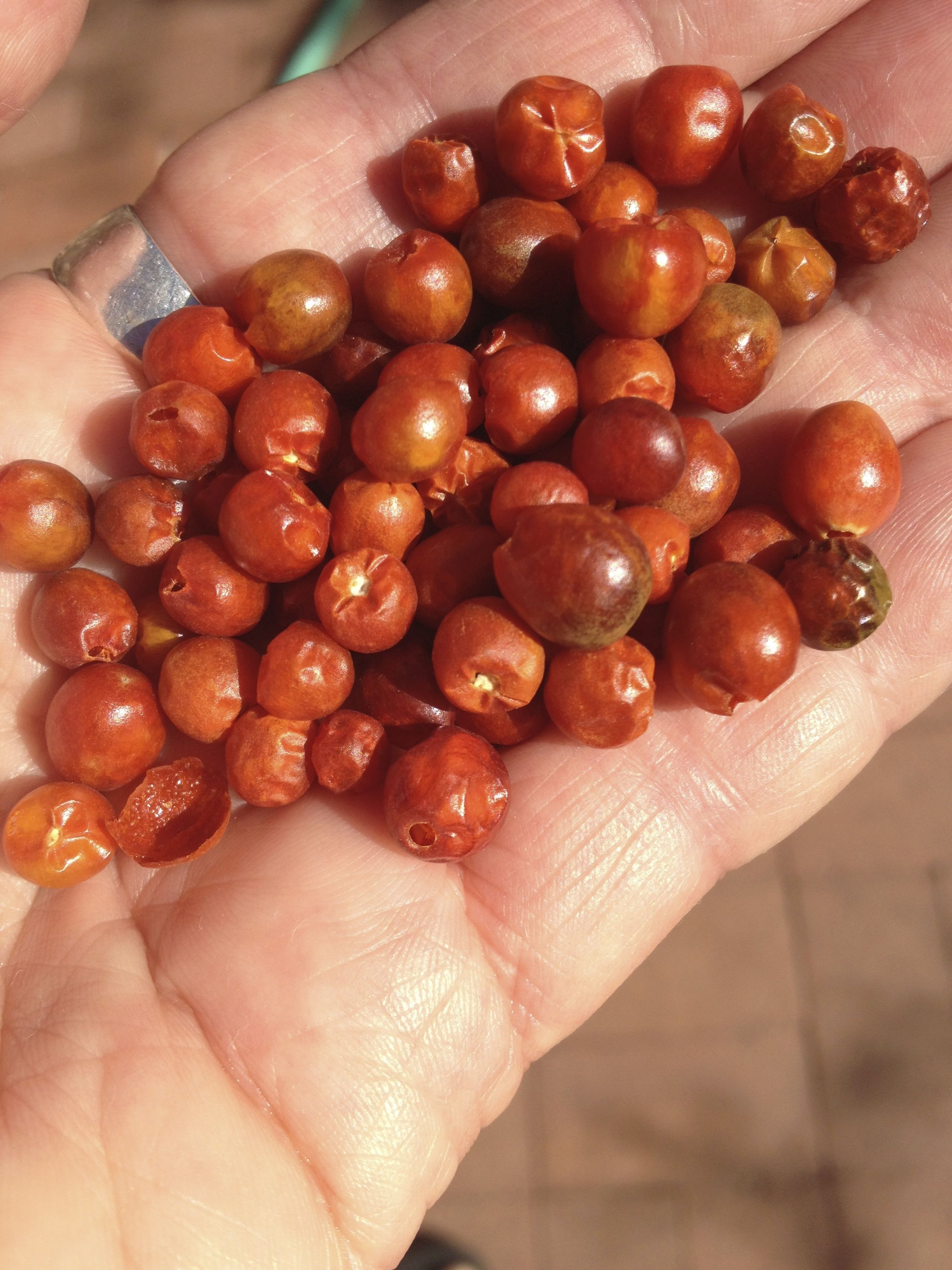
Fresh-picked mature chiltepin peppers--Caution: do not rub eyes after picking chiltepines!

Fresh-picked mature chiltepin peppers–Caution: do not rub eyes after picking chiltepines!

To source fresh dried chiltepin peppers for cooking and eating, visit the NativeSeeds/SEARCH store (3061 N Campbell Ave, Tucson or http://www.nativeseeds.org) or stop by Cindy’s Country Harvest booth at Rillito Farmers Market Sunday.  You can see live chiltepin plants in fruit at Tohono Chul Park and at Mission Garden in Tucson.

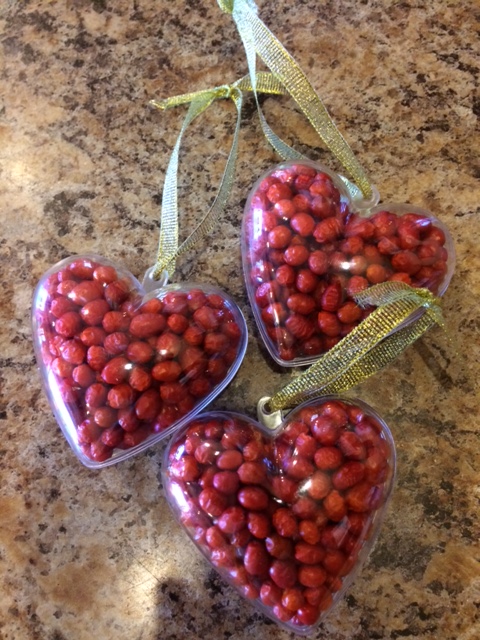
Chiltepin-filled Heart Ornaments available at NativeSeeds/SEARCH Store for holiday decor and spice into the New Year!

Chiltepin-filled Heart Ornaments are available at NativeSeeds/SEARCH Store for holiday decor and spice into the New Year!

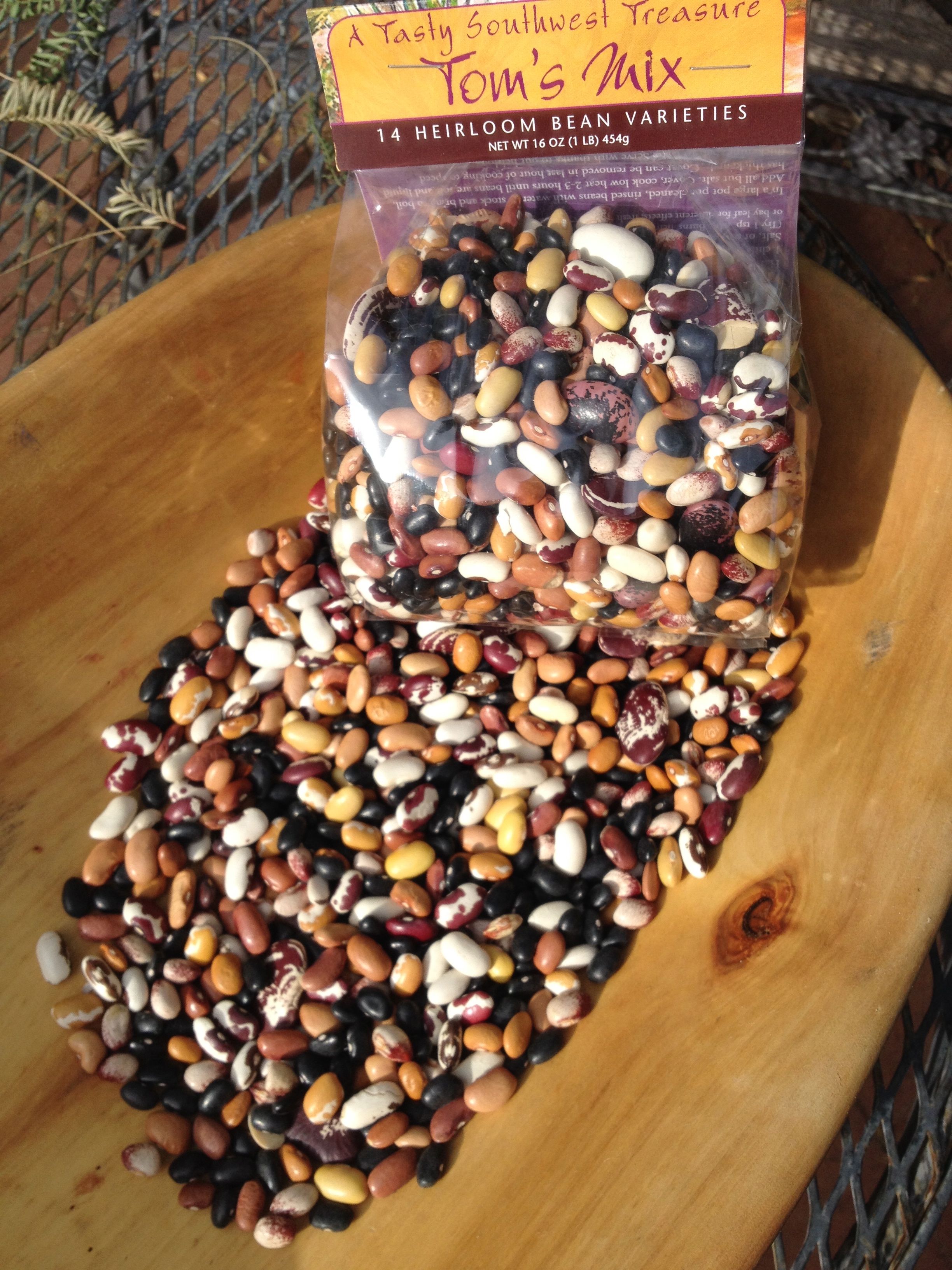
Another great idea:  A couple of chiltepines added to Southwest Heirloom Bean Tom’s Mix makes it a perfect potluck crowd-pleaser. You can find SW Heirloom Bean Tom’s Mix at NativeSeeds/SEARCH, or for online gifts at http://www.flordemayoarts.com.

Tom's Mix 14-Heirloom Bean Mix makes a perfect gift from the Southwest--made spicy with chiltepines! Find them at NativeSeeds/SEARCH store, Tohono Chul Museum Shop, Wiwpul Du'ag at San Xavier Plaza, and the UNICEF Store in Monterrey Village, Tucson; or online www.flordemayoarts.com

Tom’s Mix 14-Heirloom Bean Mix makes a perfect gift from the Southwest–made spicy with chiltepines! Find them at Rillito Sunday Farmers Market, NativeSeeds/SEARCH store, Tohono Chul Museum Shop, Wiwpul Du’ag at San Xavier Plaza, and the UNICEF Store in Monterrey Village, Tucson; or online http://www.flordemayoarts.com

Pepitas, Squash Bees, and The Power of Small Things

Linda here, writing to you this chilly, December morning.

Several people asked me about squash this week. What a surprise! –  as squash is  often a bit under-appreciated.

I adore squash. It is rare in that every part of the plant can be eaten – leaves, shoots, flowers (both the male and female flowers), and its seeds.


img_4768

Pumpkin Seeds (hulled) roasted with chiltepin

Let’s spend a moment with the Squash Bee. We think of squash as growing in the garden, that is, a domesticated plant. And it is. But Sophie D. Coe, in America’s First Cuisines reminds us that they were (as were so many of our not domesticated foods) WILD. She writes: “Their original distribution in the wild can be traced by the ranges of various species of bees of the genus Peponapis, whose sole source of nectar and pollen are the squashes, and specific species of squashes for specific species of bees at that.”

img_4747

Squash Bees – from a poster at a squash stand.

There have often been times in our shared human history (and present!) where food is scarce. People planned ahead for times of hunger. In terms of squash, it was prepared by cutting in into strips and dried for use later.

img_4778

This print was made by Jean Bales (1946-2004) and it titled Cushaw Melons: Pumpkin Harvest and Drying the Pumpkin (1980).

Most of you have favorite squash recipes that you turn to for you Holiday Tables. I want to remind you to not throw away the seeds when you are preparing your squash.

img_7558

A squash growing through the fence.

Before we get into the recipe maybe we better spend a moment on How to “get into” the squash. Think squash like the one growing on the fence can be tricky to cut open with a knife. A friend from Mexico showed me a simple trick that has changed my squash-culinary-life.

It is this: Use gravity.

Meaning: Drop the darned thing on the ground until it cracks open, then scoop out the seeds and save for the garden and for the recipe below. Then you can get your knif into the rind and cut for roasting or steaming of what have you.

Today’s recipe: Roasted Pumpkin Seeds (Pepitas) with chiltepin. 

img_4765

The key to this VERY tasty treat, is to roast on VERY low heat. I use heat around 175 (under 200 degrees for sure).

I put a handful of pumpkin seeds (hulled or not) on a baking sheet in a preheated oven.

Add a tablespoon of Braggs Liquid Aminos and make sure that the seeds are coated with and spread them out evenly on the sheet.

I sprinkle half of the pan with dried chiltepin – and the other half leave for those who may not like such heat.

Every oven is different, but mine take about 15 minutes to roast. While they are in the oven, check them once or twice moving them around with a utensil to keep them from sticking.

When they are dry (and not sticky) take them out and let them cool.

————————————————————————–

Here are a few other squash adventures that I have had. Please let me know what you make with your squash!

img_2731

Scramble squash blossoms into your eggs …. they are delicious!!!

img_2738


img_1487

Empanadas baking …

Make empanadas with squash filling sometime – they can be sweet or savory! The rustic oven you see above lends a nice smoky flavor to the empanadas – but they are fabulous in any kind of oven. img_1486

img_7213

An embroidery project I made as an Ode to this generous plant


Corn to posole

20161120_153431

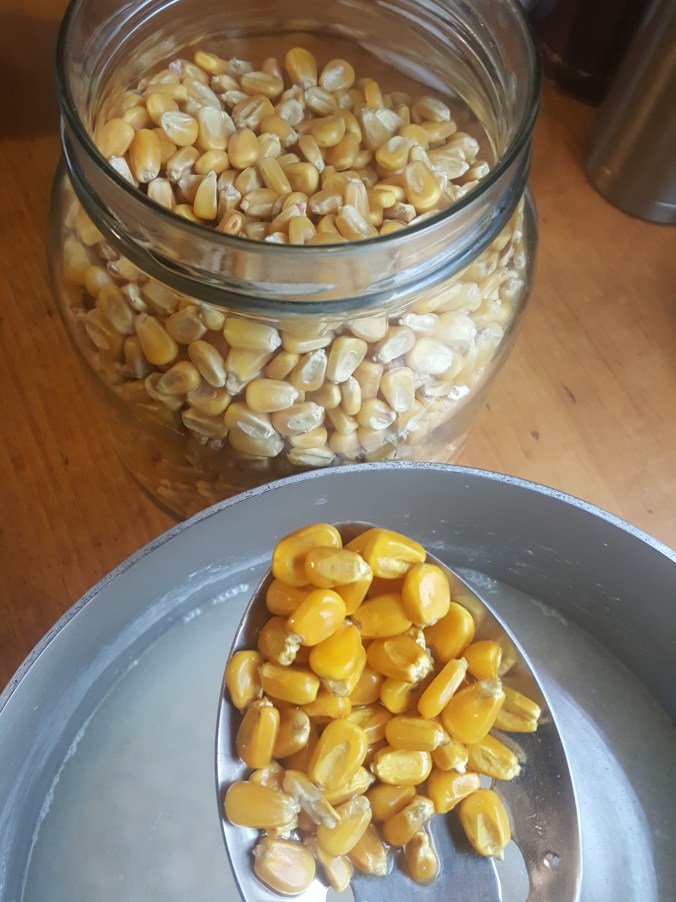
Do you love posole? Amy here today making posole from dry, untreated corn. What corn to use for posole? Flour corn varieties are good, as they have a large starch content. Also dent corn varieties, which contain some starch, dry unevenly on the cob and form an indentation in the top of the kernel. The dent corn I’m using today is sometimes called field corn, and it may have been grown to feed to livestock. I sometimes get dry corn, purple or white, from the bulk bins at the Mexican store. Use what you can find or grow and see what happens! This corn was a gift of completely unknown origin from my friend Lori.

20161120_154052

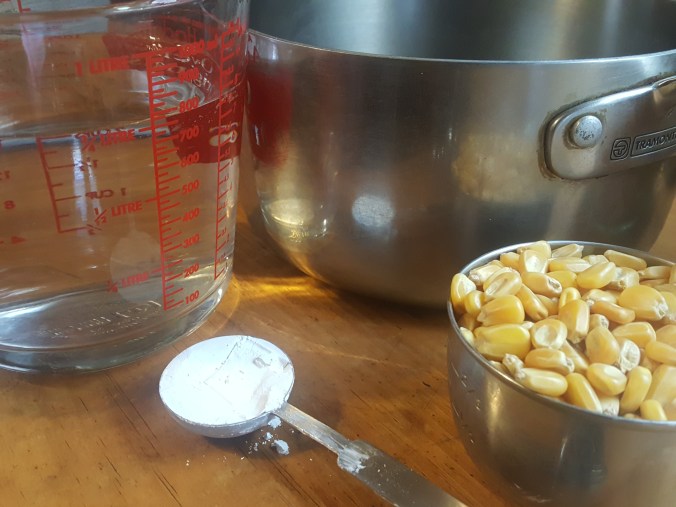
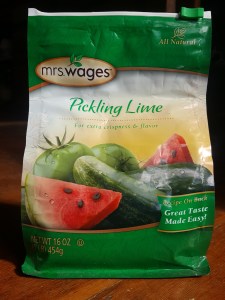
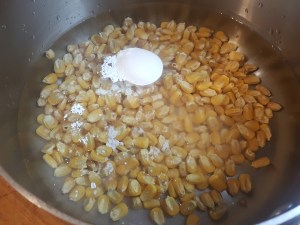
The ratio is 1 cup dry corn, 3 cups water and 1 tablespoon lime. Not lime, the citrus fruit, it is specially treated limestone. The best source for culinary calcium hydroxide is called cal sold with Mexican spices, or called pickling lime sold with canning supplies to keep pickles crisp. It is becoming rare since modern pickle recipes are more cautious of botulism growing in the less acidic environment. If necessary, type S (slaked) construction lime for concrete and mortar works, but you have to add more of it.

20161121_105421

20161120_154253


Place all in a non reactive pan, simmer for a few minutes and then remove from the heat. If you are making posole, it is not critical if the corn starts to cook a bit. If the corn will be ground into tamales or tortillas, it will be gummy and not stick together well if cooked.

As soon as the corn is in the lime water, it turns bright yellow!

20161120_154644

Then let it soak overnight. I decided to boil some corn in plain water to compare the results.

20161121_080957

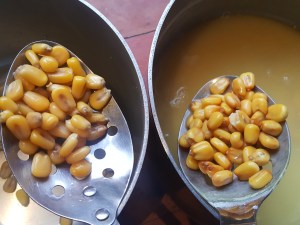
The next morning: On the right, the limed corn is much darker yellow color than the corn boiled and soaked overnight in fresh water, on the left. On the right the lime water, formerly white, is now yellow from the seed coats of the corn. The water in the pot on the left remains clear.

Drain the lime water and send to the sewer, not your plants! It is very alkaline and will harm the soil and plants.

20161121_082053

The lime turns the seed coats into slime. Now rinse, rub, rinse, rub, rinse.

20161121_082941

Now the rinsed, limed treated corn in the colander is a lighter yellow than the plain water boiled corn in my hand.

This is called nixtamal, and can be ground into masa for tamales or tortillas, or cooked into posole. I will make masa in another post.

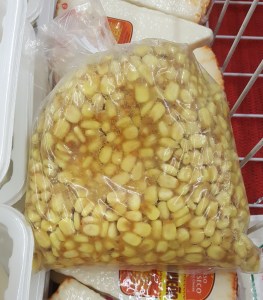
You can purchase nixtamal ready to rinse at most grocery stores. After rinsing, it freezes beautifully. I have purchased it dry, whole or ground, but never dried it myself. I use it dry in the Mano Y Metate Mole powders to give body to the sauce.

20160918_120010

When the corn rinsing water is clear, boil in fresh salted water. Add chopped onion and a few cloves of garlic. Cooking times vary wildly depending on the batch, but at least an hour, until tender and the kernels burst open.

20161121_083914

The same corn after identical soaking and cooking times: the treated corn on the right blossomed to toothsome tenderness and has the characteristic posole aroma. I see some residual seed coat, but I do not notice when eating. On the left, the fresh water soaked and cooked corn has a few kernels that blossomed some, but is overall texture is hard with seed coats remaining in my mouth after chewing. It does not smell like posole.

20161121_115028

This reason alone would justify the nixtamal-ization process, but it also makes it more nutritious. The niacin present in corn becomes more available, the amino acid balance improves and the lime adds a digestible source of calcium.

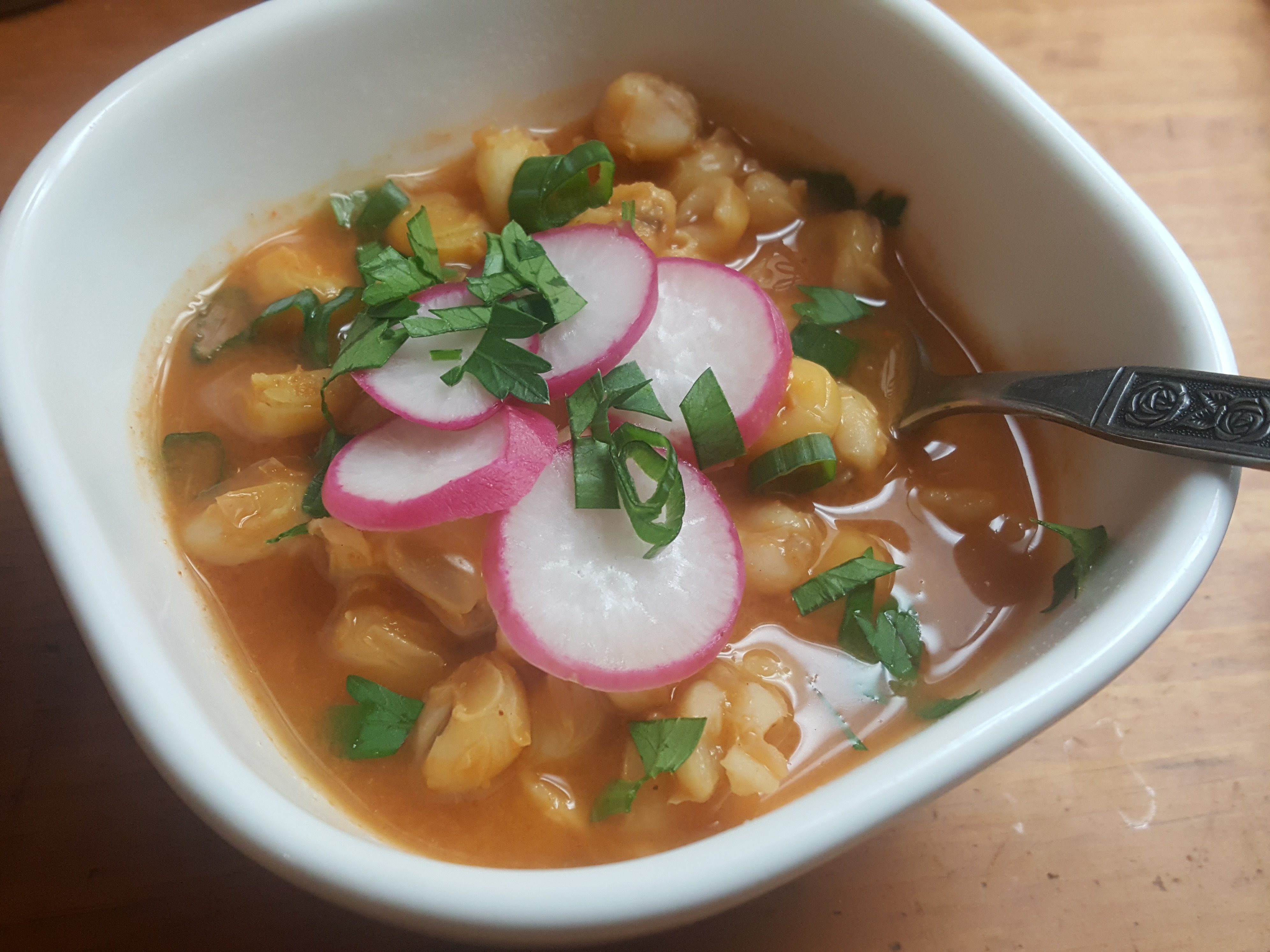
To the pot you can add little red chile, green chile, cubes of pork, beef tripe, pinto beans, or sliced carrots. I added Mano Y Metate Pipian Picante Powder. Garnish with shredded cabbage, sliced radishes, cilantro, white or green onion or lime wedges.

20161121_170748_001

Election Bread—Savoring an old Recipe

No matter who your candidate was this momentous month, by fixing this festive treat called “Election Bread,” we can at least toast the democratic process AND local heirloom foods all in one delicious slice!

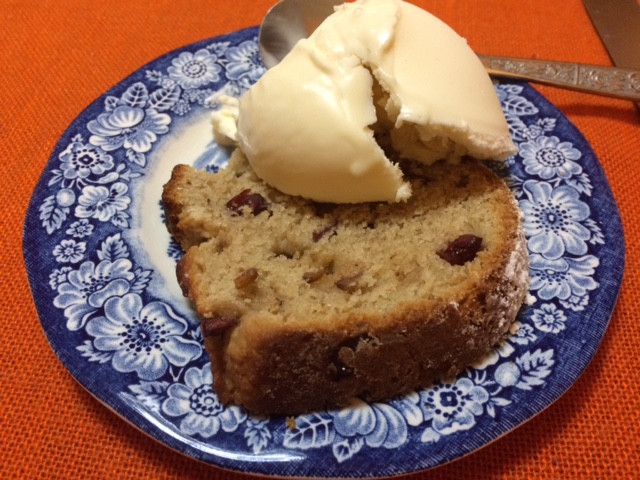
Ames Family Election Bread served joyously as a dessert

Ames family traditional Election Bread served joyously as a dessert topped with natural vanilla ice cream

Tia Marta here to share an Election Bread recipe inspired from my own family tradition served around election time each November. On the internet you might find historical variations of it with the moniker “Election Cake.” Technically it is a fruity yeast bread—probably one of the precursors of holiday fruit cake, reminiscent of Italian panettone–a nice addition as weather cools and fruits ripen. In the “old days” they say this Election Bread was baked to attract people to the polls on Election Day and fortify them for the trip home.

I gleaned our Ames Family Election Bread recipe from a cherished little cook’s notebook which my 80-year-old great Aunt Rina wrote for me when I was just learning to cook—yikes, some decades ago. My new adaptation of it reflects our home turf in the flavor-filled Sonoran Desert.

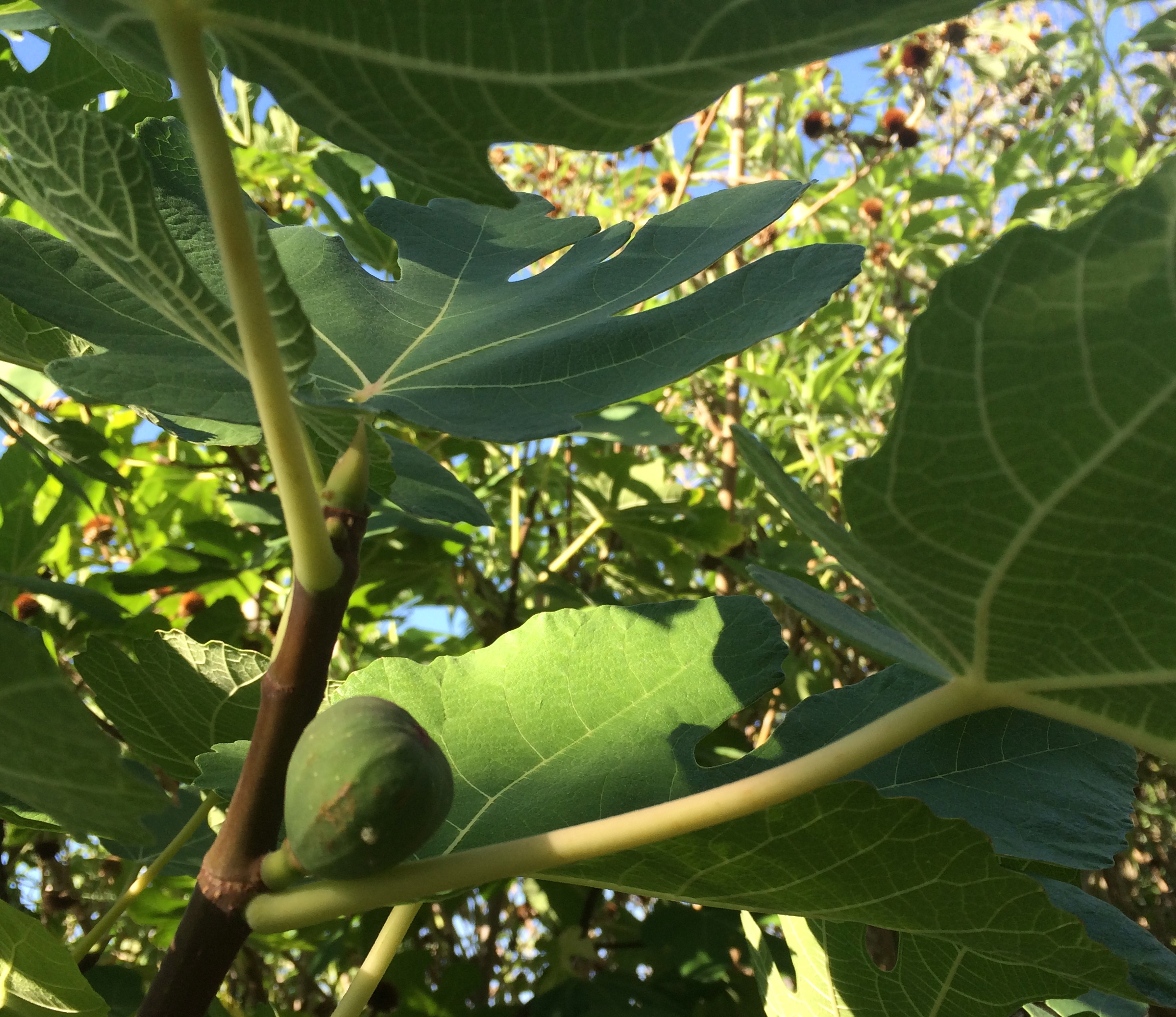
Heirloom Sosa-Carrillo fig (a Padre Kino introduction) from Mission Garden now producing in my yard (MABurgess photo)

Heirloom Sosa-Carrillo fig (a Padre Kino introduction) from Mission Garden now producing in my yard (MABurgess photo)

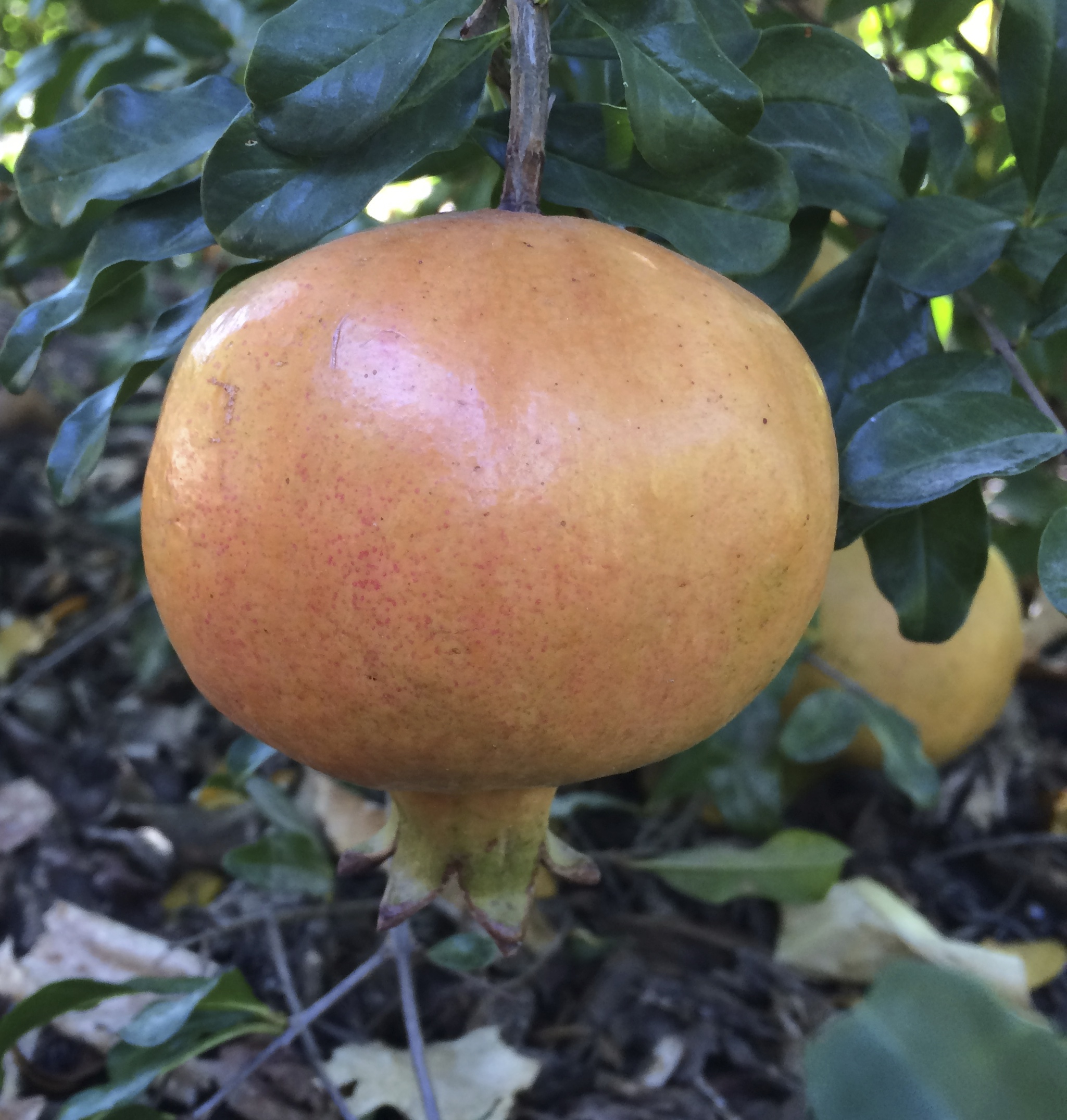
Heirloom pomegranate from Mission Garden, Tucson (MABurgess photo)

Heirloom pomegranate from Mission Garden, Tucson (MABurgess photo)

But here in Baja Arizona, instead of waiting for fall, I had to begin prep a few months ago by harvesting ripe heirloom figs, pomegranates and apricots as they ripened.  Father Kino’s figs grace my yard and the other two yummy fruits, grown at Tucson’s Mission Garden at the base of A-Mountain, were purchased at the Thursday Santa Cruz farmers’ market.

Preserving them for later use, I dried the fruits in my solar oven with the lid slightly opened, allowing humid air to escape.


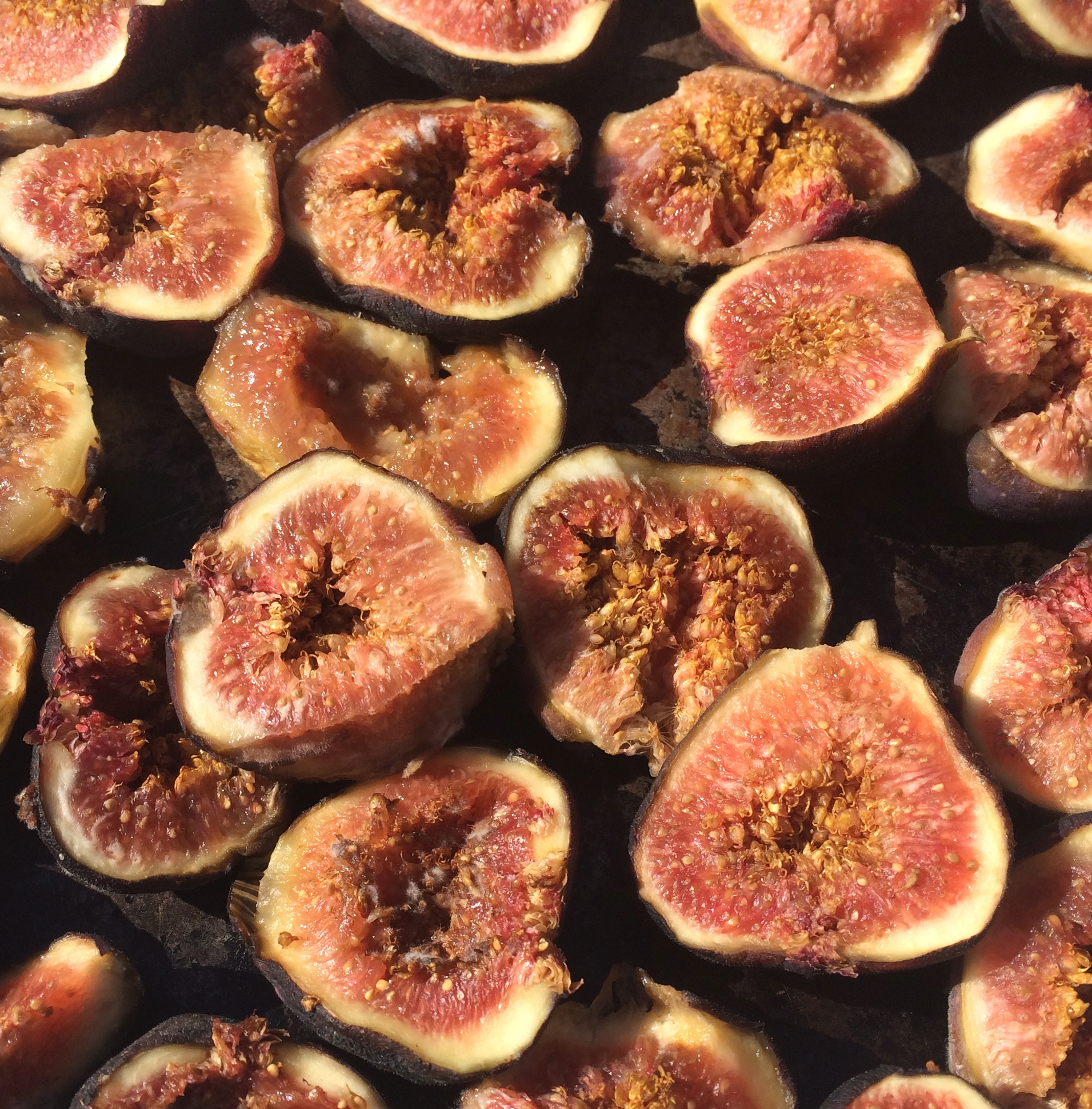
Fresh Mission figs cut ready for drying in the solar oven

Fresh Mission figs cut ready for drying in the solar oven

Sun-dried figs get even sweeter and more flavorful than when they are fresh!

Sun-dried figs get even sweeter and more flavorful than when they are fresh!

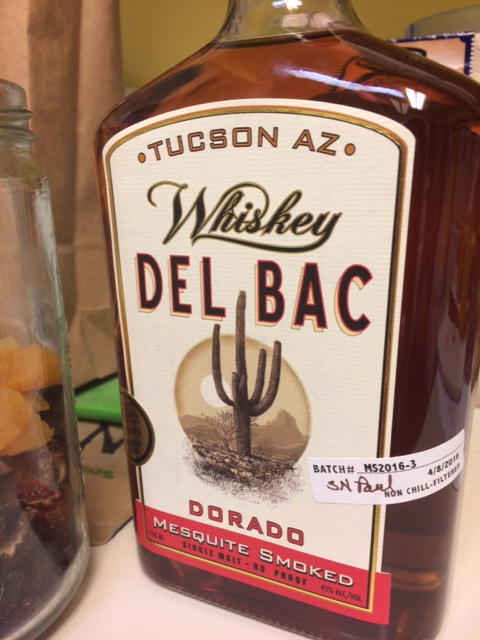
Celebrating our International City of Gastronomy, I rejoice in using flours grown and milled locally by BKWFarms in Marana, Arizona, to bake this rich bread.  Other ingredients I sourced close to home as well — Tucson’s precious mesquite-smoked Hamilton whiskey, homegrown heirloom fruit propagated at Mission Garden, agave nectar in place of sorghum molasses — from the bounty of Baja Arizona’s foodscape, its green thumbs, and its creative local “food-artists.”

Tucson's best whiskey from Hamilton Distillers--made with organic local malted grain dried using local mesquite.

Tucson’s best whiskey from Hamilton Distillers–made with organic local malted grain dried using local mesquite.

Bread teaches us patience.  It is a beautiful meditation so take time to enjoy the process. There are tasks for this recipe to be done on two consecutive days.  At the very least, in between texts and emails, radio news and phone calls, take time out to go to the kitchen, check the status of your “rehydrating” fruit, or check your yeast sponge, take a nip, etc.  Bread is a living gift and this Election Bread in particular brings many quite lively foods together.  Be not daunted–become one with the yeasts!

If you are already into sourdough baking and have live starter, take method A.  If you are beginning with dry yeast, take method B.  Both will give olfactory pleasure from the git-go.


RECIPE FOR AMES FAMILY ELECTION BREAD

Day 1—Making the Pre-ferment –method A–Using Sourdough Starter
1 cup whole milk, warmed to ~ 70º F
¼ cup active starter — fully hydrated
2 ¼ cups all-purpose or whole wheat pastry flour *

OR Day 1 — Making the Pre-ferment — method B– Using Yeast
1 1/8 cup milk, warmed to ~70º F
1 tsp instant dry yeast
2 ¼ cups plus 2 Tbsp organic all-purpose or whole wheat pastry flour *

Pre-ferment Instructions:  In a bowl, combine milk and sourdough starter or yeast. Mix thoroughly until starter or yeast is well dispersed in the milk mixture. Add flour and mix vigorously until the yeast mixture is smooth. Scrape the sides of your bowl to use all yeast. Cover the bowl with a damp towel or plastic wrap. Allow your sponge to rest and ferment 8-12 hours at room temperature. When ready to use, your pre-ferment will have bubbles covering the surface.

Also Day 1–Pre-Soaking Dried Fruits

1 cup dried fruits, coarsely diced in 3/8-inch or ½-inch pieces **
1-1 ½ cup whiskey, bourbon, brandy, or non-alcoholic fruit juice ***

Instructions for Pre-soaking Dried Fruit:  To prepare dried fruits for your bread, soak them overnight, or for several days beforehand, in a lidded jar. Measure your dried fruit then cover with liquor or liquid of choice. (To speed up the soaking process put diced fruit in a small sauce pan, warm over low heat for a few minutes, remove from the heat, and allow fruit to soak, covered, for several hours.) Until the fruit is totally softened, you may need to add more liquid to keep fruit submerged.

Before adding fruit to your dough, strain the liquid off of the fruit. Use this fruity liquid as a cordial, or to make a simple glaze after bread is baked.

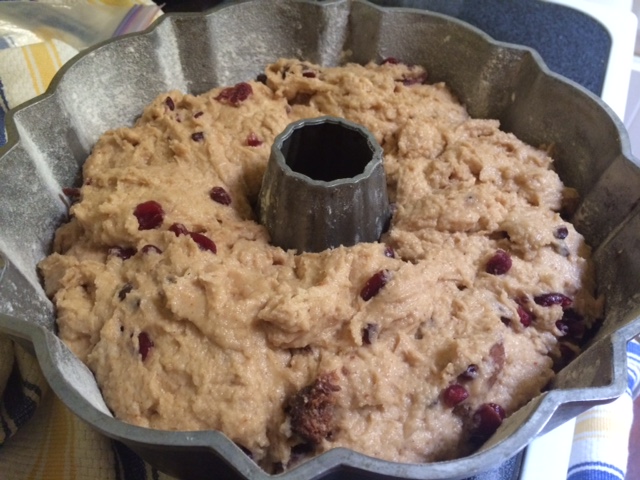
Freshly mixed dough in greased and floured bunt pan

Freshly mixed dough in greased and floured bunt pan

Proofing Election Bread dough--after covering and allowing dough to rise to almost double size--fruit bites visible

Proofing Election Bread dough–after covering and allowing dough to rise to almost double size–fruit bites visible

*** My secret to this “fruit marinade” is the smokey flavor of local Whiskey del Bac!  Using spirits results in a fabulous liqueur “biproduct” to enjoy later.  But, remember the words to that song “Oh we never eat fruitcake because it has rum, and one little bite turns a man to a bum……..”  For the tea- totaler, any fruit juices will work for re-hydrating the dried fruit chunks:  try apple cider, prickly pear, pomegranate juice, cranberry.  Then save the liquid after decanting as it will have delicious new flavors added.


Day 2 –Preparing Dough, Proofing, Baking Election Bread

Ingredients:  
1 cup unsalted butter
¾ cup unrefined organic sugar
2 eggs
1/3 cup whole-milk yogurt
¼ cup sorghum molasses, agave nectar, or honey
Your Pre-ferment –yeast mixture or sourdough mixture from Day 1
2 ¼ cups all-purpose or whole wheat pastry flour combination *
1-2 Tbsp mixed spice blend—your choice cinnamon, allspice, nutmeg, mace blend
¼ tsp ground coriander –optional
¼ tsp ground black pepper –optional
1-2 tsp salt
2 Tbsp sherry or another spirit- optional
2 cups rehydrated local fruit from dried/preserved fruits, decanted

* Create your own combination of pastry flours. My Southwest pastry flour mix to total 2 ¼ cups is:
½ cup organic all-purpose flour
¼ cup mesquite pod milling dust
1 cup organic BKWFarms’ hard red wheat flour                                                                                                                                          ½ cup organic heirloom BKWFarms’ White Sonora Wheat flour  (heirloom flours available at NativeSeeds/SEARCH and http://www.flordemayoarts.com)

** My Election Bread fruit mix honors the Kino Heritage Fruit Tree Project. You can purchase heirloom fruit seasonally at Santa Cruz Farmers’ Market. For this recipe I used:
1/3 cup diced dry figs
1/3 cup diced dry apricots
1/6 cup dry pomegranate “arils”
1/6 cup dry cranberries (a bow to East Coast food)

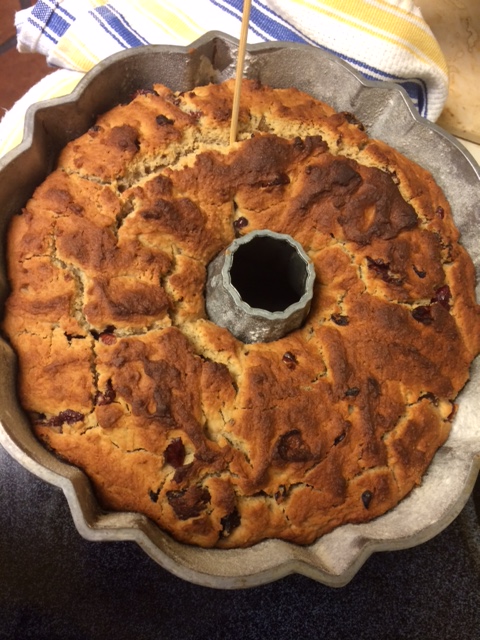
You can test to see if dough is done thru using a wooden kabob skewer or cake tester. Listen to hear if bubbles are still popping in the dough.

You can test to see if dough is done through by using a wooden kabob skewer or cake tester. Listen to hear if bubbles are still popping in the dough.

Day 2–Instructions for Election Day Bread Baking

a) Cream the butter well; add sugar, mixing until light and fluffy. Add the eggs one at a time with mixer (or spoon) on medium speed. Mix in the sorghum/honey and yogurt. If you have a dough hook mixer you can use it or good old elbow grease. Add the pre-ferment (starter or sponge) and mix slightly.
b) In a separate bowl, sift together all of the dry ingredients. Mix as you add dry ingredients into liquid ingredients, being careful not to over-mix.
c) Gently fold in the rehydrated fruit (then optional sherry).
d) Grease (with butter) and flour a bundt pan or round cake pan. Divide the dough evenly into the cake pan. Proof (i.e. let the dough rise) covered in a warm place for 2-4 hours, until the dough has risen by about ⅓ of its volume.
e) Preheat oven to 375F. Bake at 375° F (190° C) for 10 minutes. Reduce oven temperature to 350° F (177° C) and continue baking for about 25-35 minutes, or until a tester comes out clean. Let cake cool completely before cutting and eating.         Enjoy this sweet bread either plain or topped with a simple glaze.

If you are new to yeast bread baking, it would be fun to connect with a friend to chop fruit or get hands gooey together, or to have one person read directions while the other mixes. We always do it as a family and it’s so much more fun to add humor and gossip to the mix–or even a little political emoting.

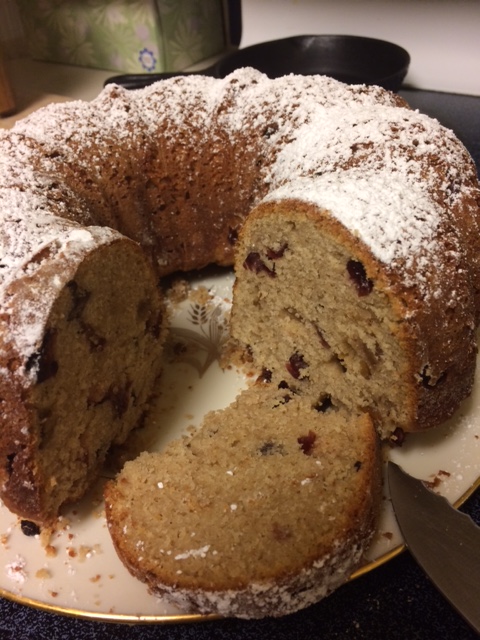
Sonoran Desert style Election Bread with local grains and local fruits--Ah the aromas!

Sonoran Desert style Election Bread with local grains and local fruits–Ahhhh, the aromas and rich history of Baja Arizona in a single slice!

During the coming holidays, you could try this easy bread for a great party treat, for breakfast, or for a colorful dessert topped with whipped cream or ice cream.
And feel free to play with the recipe, adding your own tastes, honoring your own family’s food culture and history and your own sense of place!
Buen provecho from Tia Marta!

Chapulines (Grasshoppers) con Mole

20160924_080146

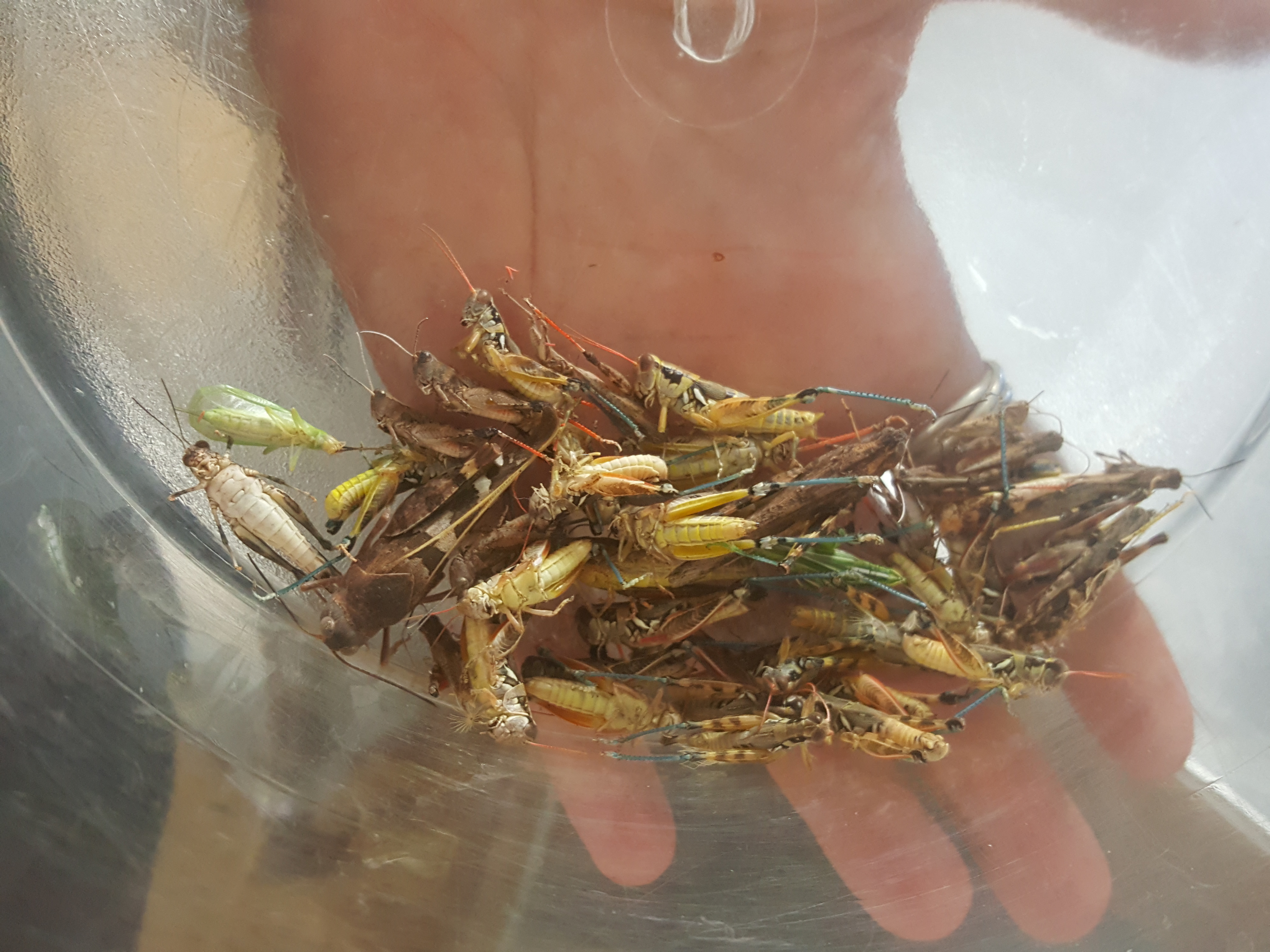
On a late season prickly pear harvesting trip, my friend Nicole and I found few tunas but lots of grasshoppers. I’ve always wanted to try chapulines, but never had the opportunity. Nicole learned how to harvest them this summer, so we attempted ourselves.

Catching them is the trick! When the sun is up, they are fast. We managed to flush some out of the grass into a clearing, toss a big straw hat over one, and grab it by hand. We bagged three, not even enough for one taco. As the sun set, they stopped jumping but were too hard to see in the grass in the low light. We returned with nets. In the cool early morning they weren’t active enough to jump into the nets but were easier to see; we tossed the net over one, and grabbed it by hand. As the day warmed, they got too fast for that method, and sweeping the grass with the net was more successful. Yes, it’s slow, but fun. Plus a beautiful day in the desert.

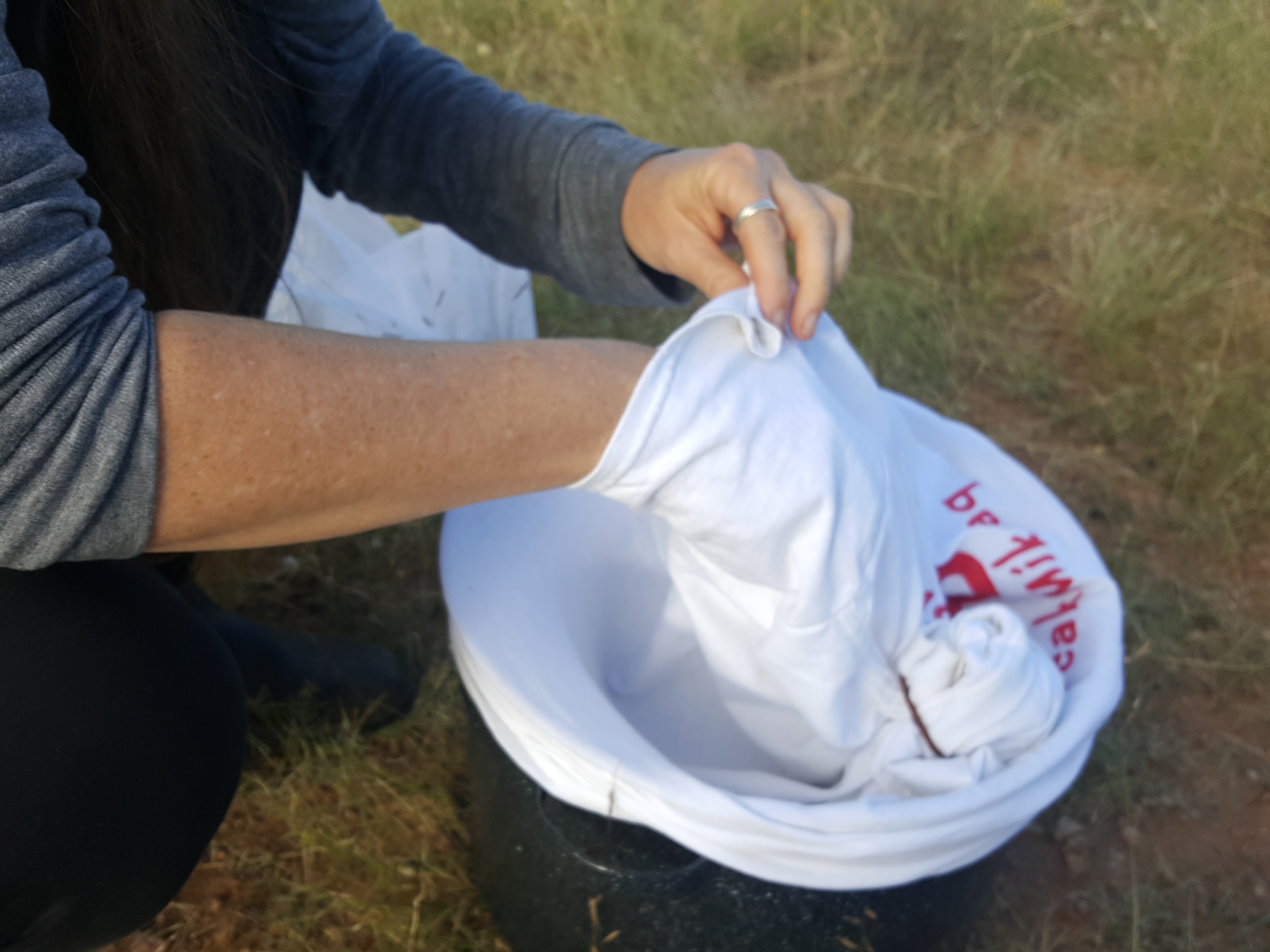
Nicole fashioned an way to hold our catch without letting any escape when we caught another.

20160924_080408

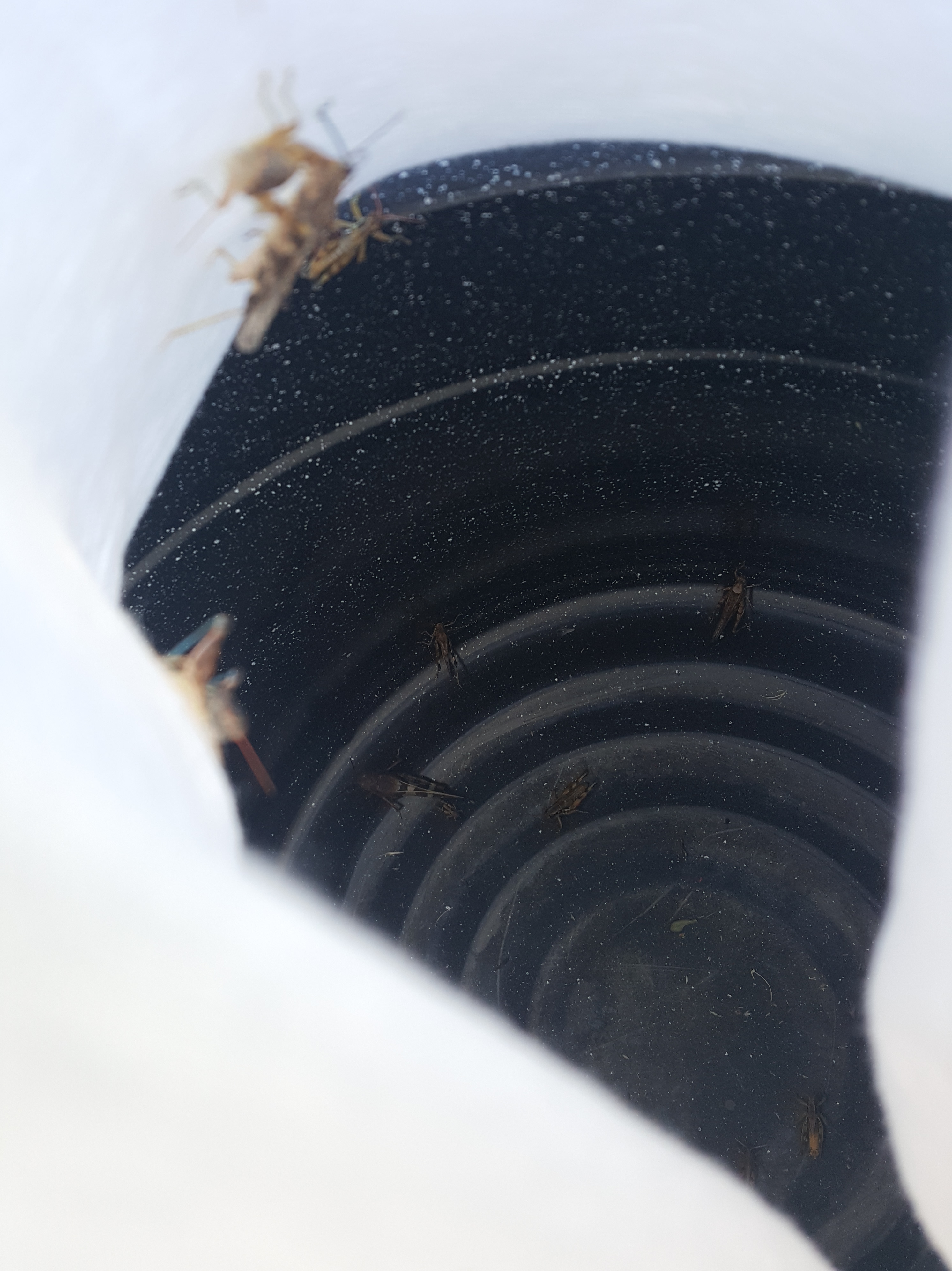
Here they are inside. While they hopped around, they emptied their digestive tracts.

20160924_080353

At home we put the whole container in the freezer.

20160924_093610_001

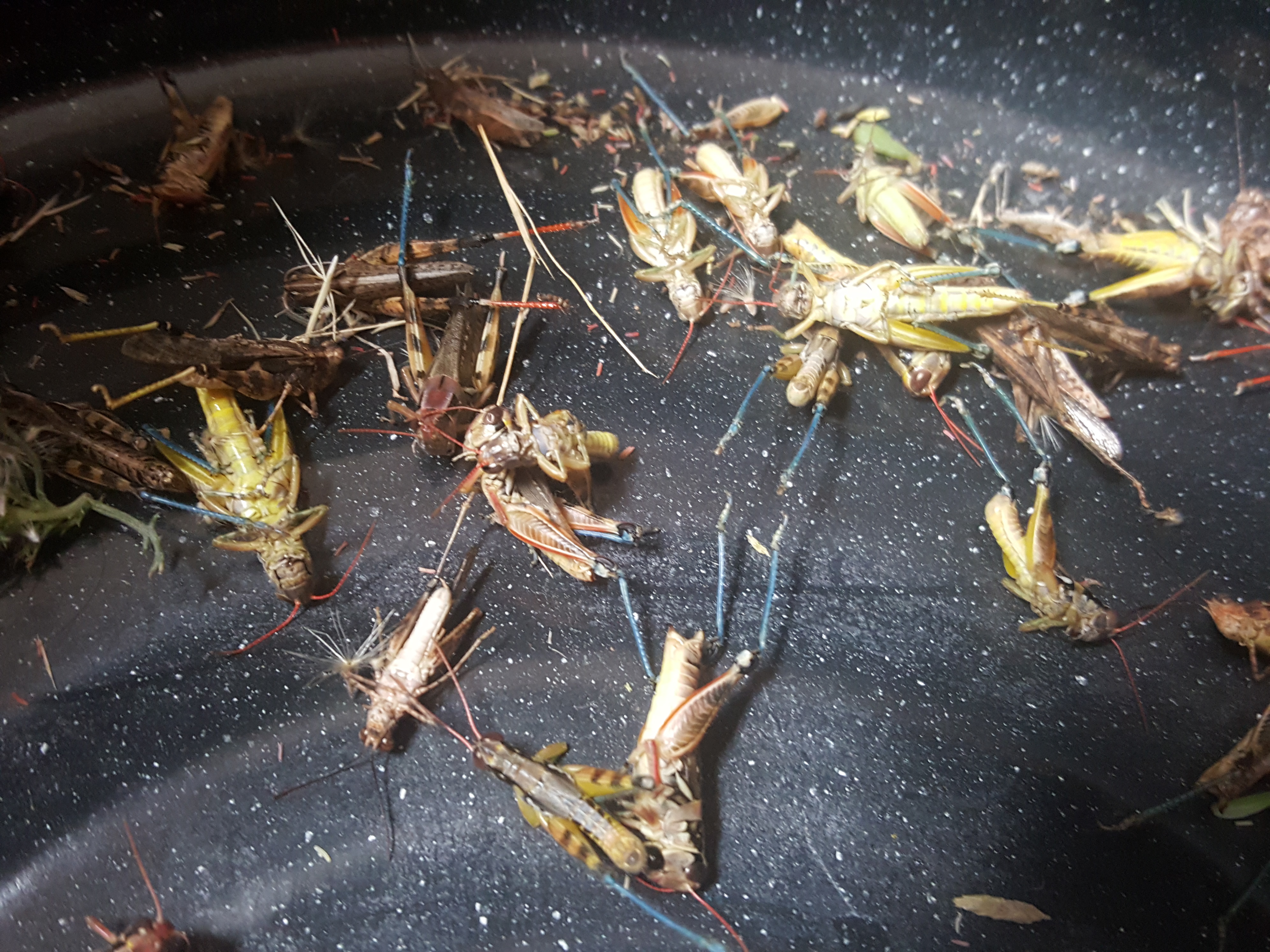
Then we picked them out of the grass seeds and debris. So beautiful.

20160924_093906

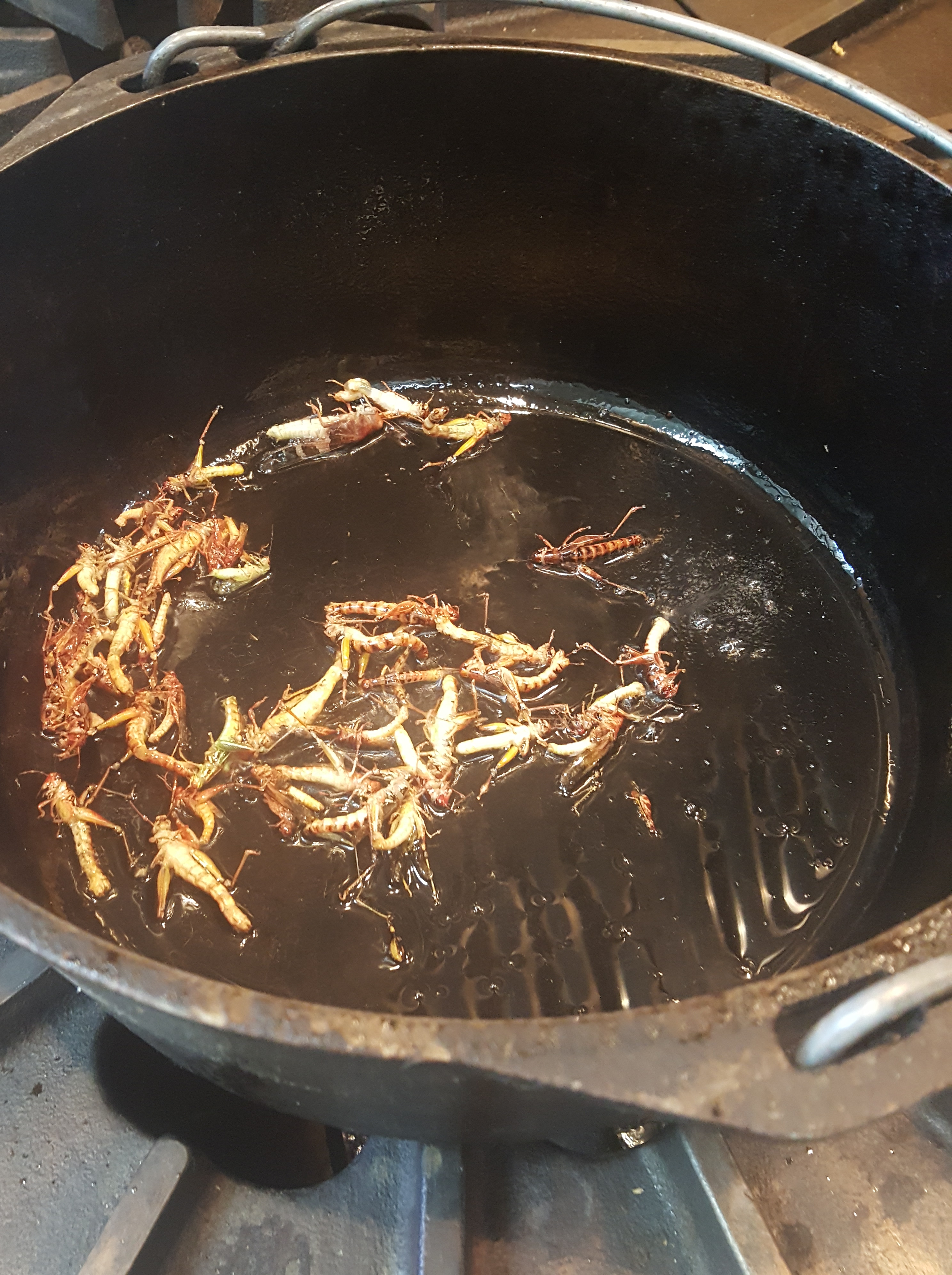
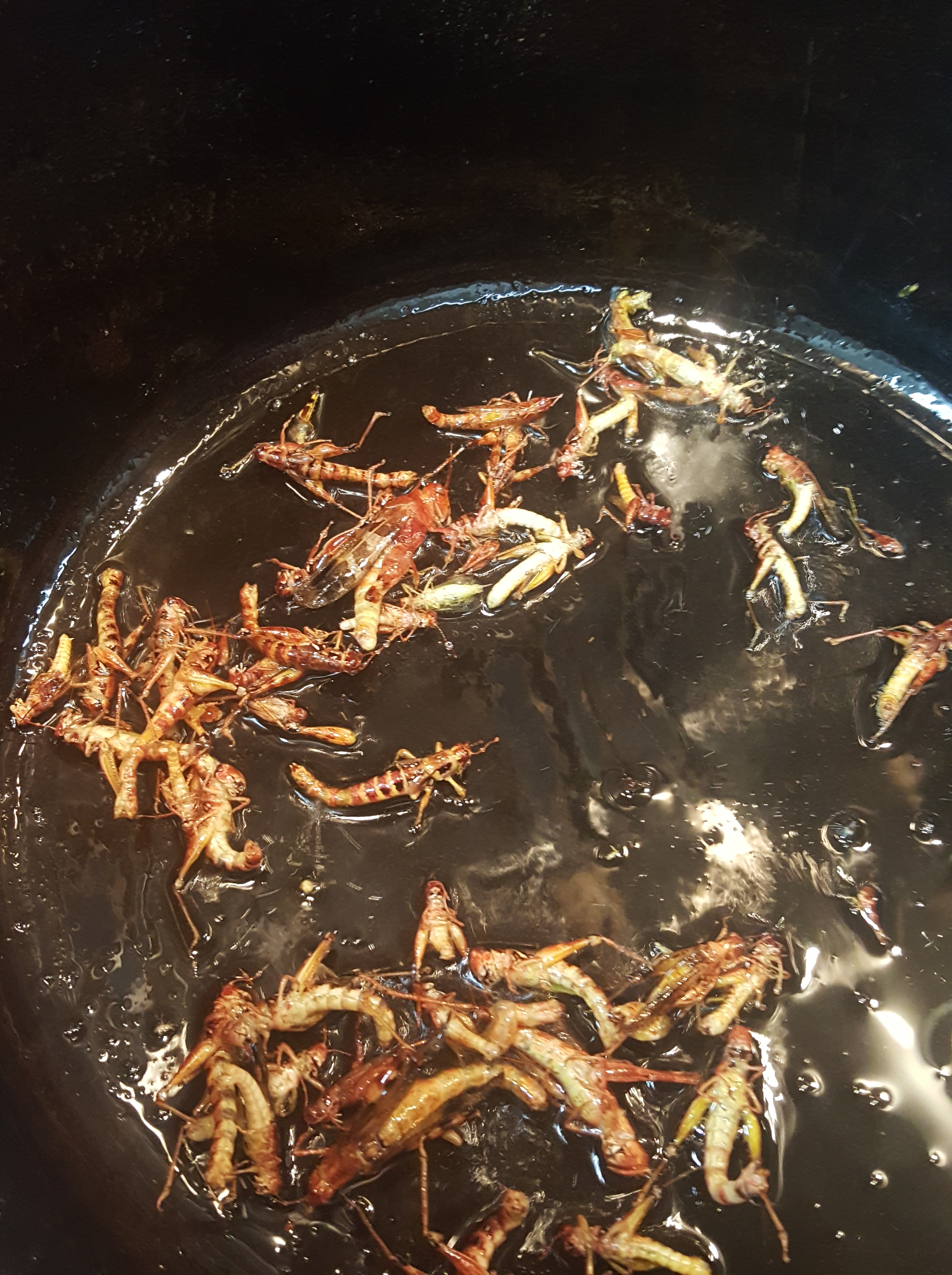
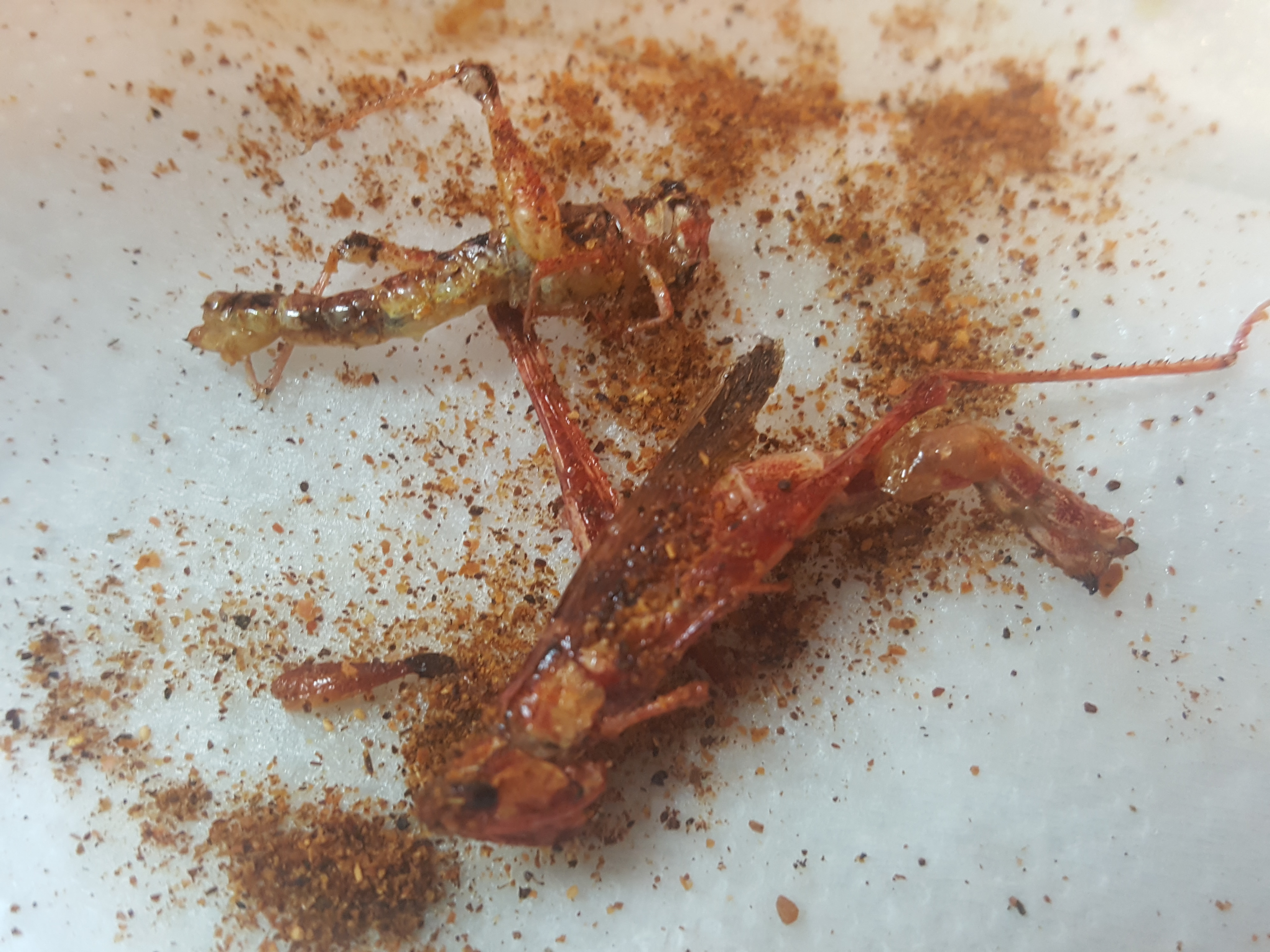
We melted a little duck fat a cast iron pan and fried the chapulines.

20160924_093938

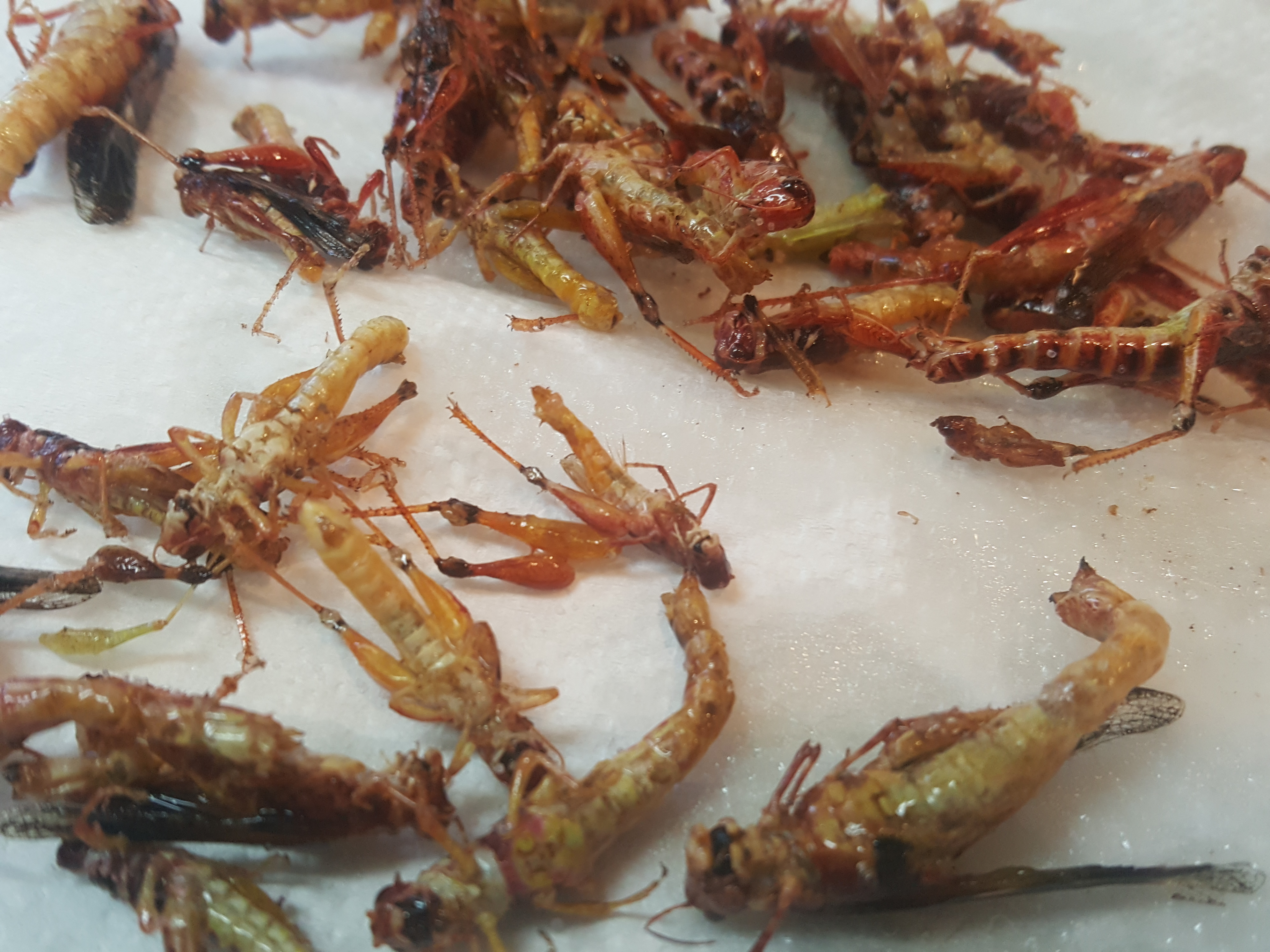
This is when they turned from animals to food, and the only moment in the process that made me a little uncomfortable. We let them get really crispy.

20160924_093953

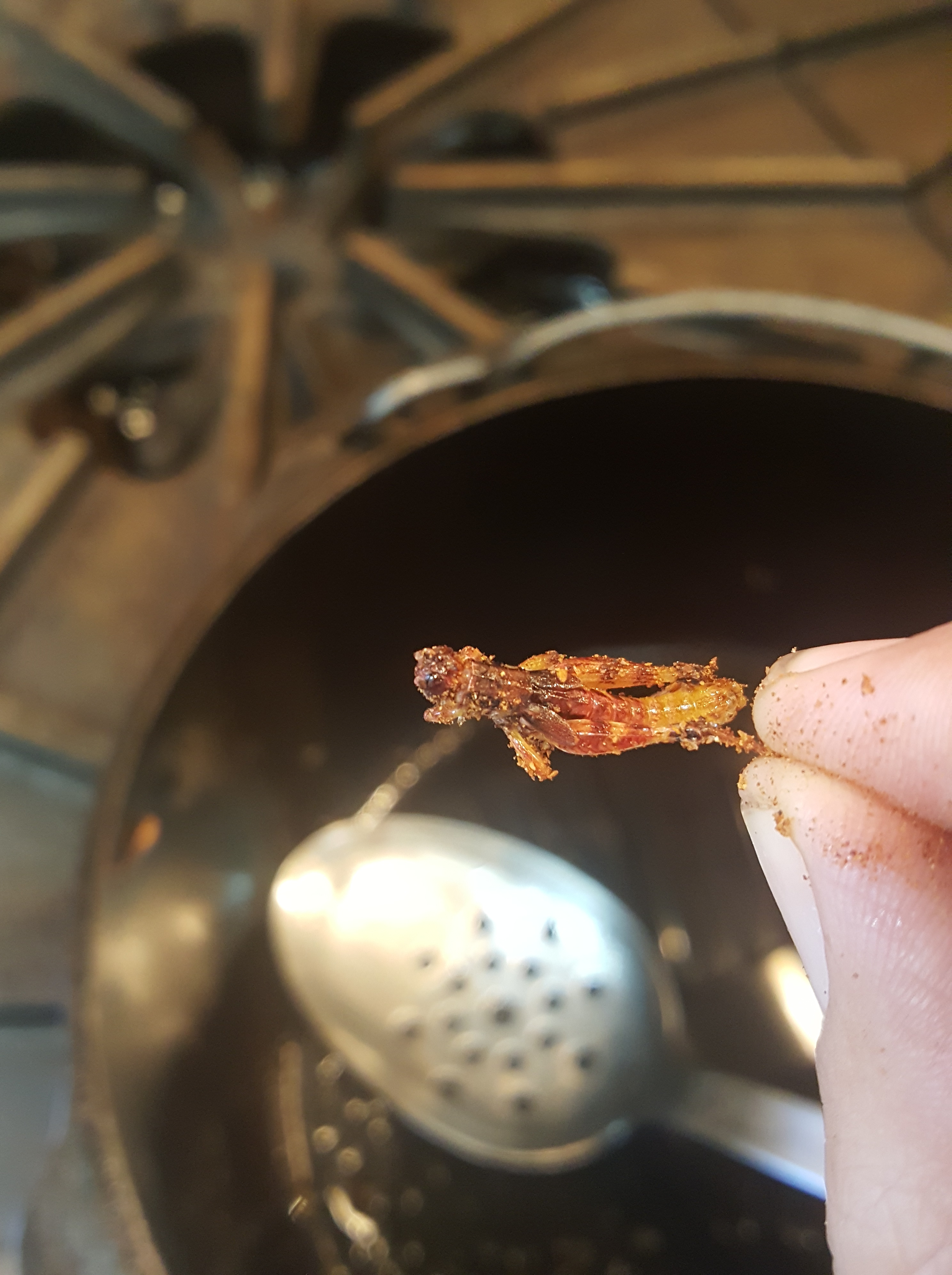
But after all that work, I needed to at least try them. Nicole knew from previous experience to eat the small ones whole, but remove the wings and legs from the larger ones.

20160924_094229

YUM!!!! Crispy fried meat. Then we dusted them with Mano Y Metate mole powder, of course.

20160924_094826

20160924_095149

Delicious, abundant, local, free. We’ll do that again!

Broiled figs in peach sauce and Plum almond cake

9-figs-fin-peach-sauce

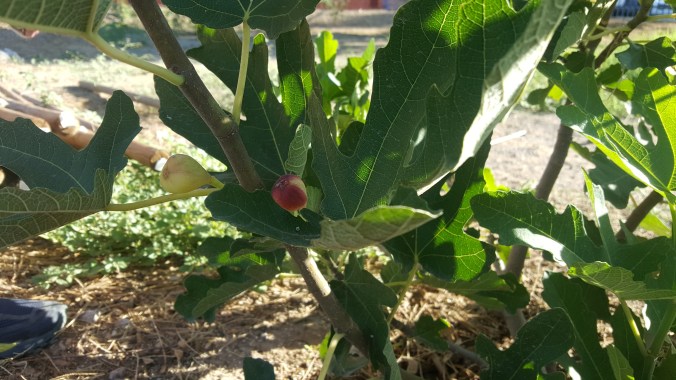
Hello, Amy here playing with the last of the summer fruits. My mom’s Black Mission Fig tree, planted by my grandfather so many years ago, yields two crops a year, early and late summer. The flowers open and are self pollinated inside the developing fruit. This baby fig tree had its first two fruits this year.

1-fig-tree

We mostly eat them fresh, the entire fruit with skin, seeds and all, leaving only the stem. They dry beautifully on screens outside, or in a hot car.

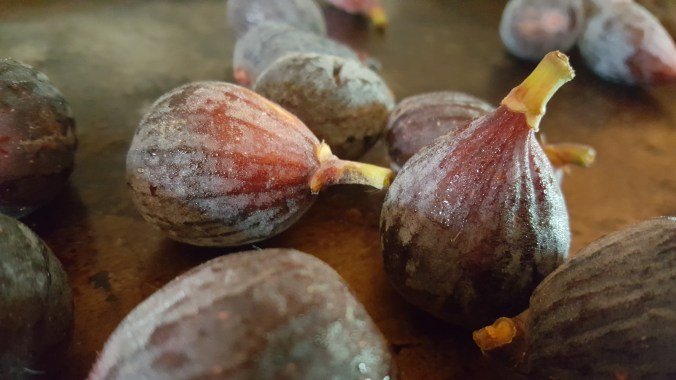
2-fresh-whole-figs

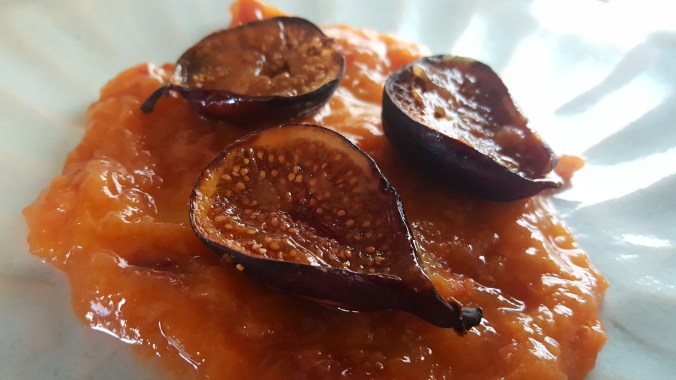
I wanted to do something special with the figs, so I consulted Sweet Simplicity: Jaques Pépin’s Fruit Desserts. Broil the figs!

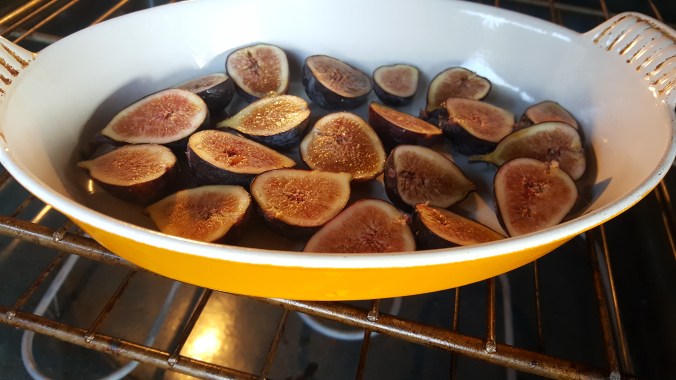
4-figs-in-oven

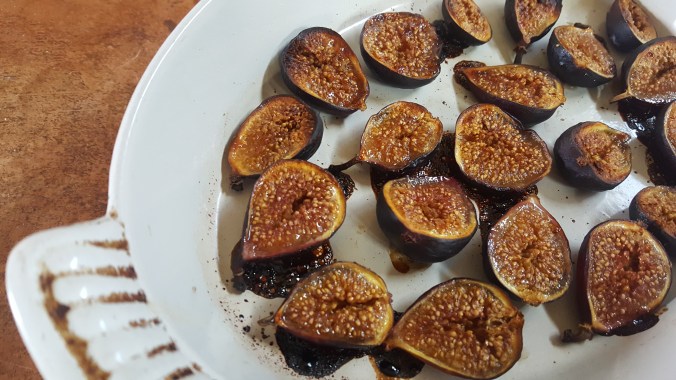
I halved the fruit and decided that they were plenty sweet. If they weren’t, I would have sprinkled with sugar as suggested. After a few minutes under the broiler, they were even sweeter and the flavor concentrated, but still moist and easier to eat than dried.

5-broiled-figs

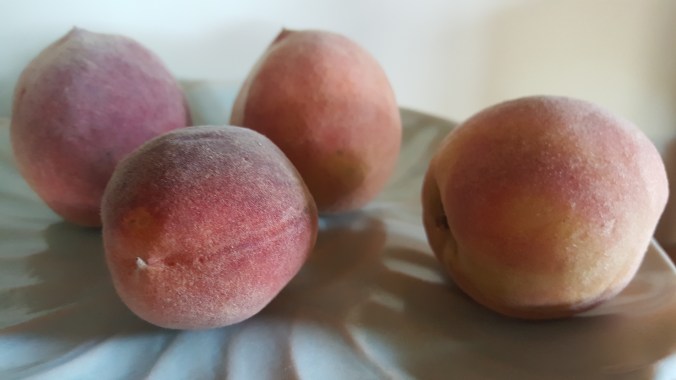
Jacques made a sauce with strained peach preserves, but I had a few tiny fresh peaches from higher elevation southern Arizona.

6-whole-peaches

I seeded and chopped the peaches, skins included. So much color, nutrition and fiber is in the skin. Plus I like varied textures.

8-sliced-peaches

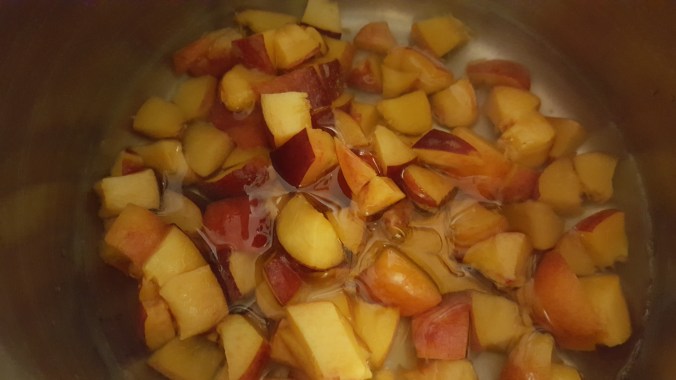
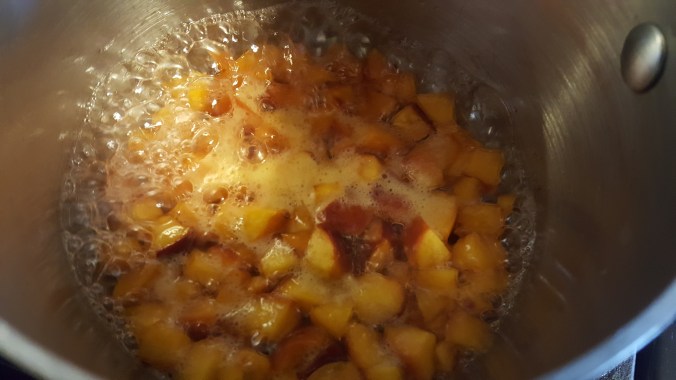
The peaches simmered with a tiny bit of water for a few minutes, until soft.

7-boiling-peaches

I pureed the peaches and seasoned with a squeeze of lemon and a splash of rum.

9-figs-fin-peach-sauce

That worked! So when someone gave me a handful of little plums, I immediately consulted the same book to show off the little treasures.

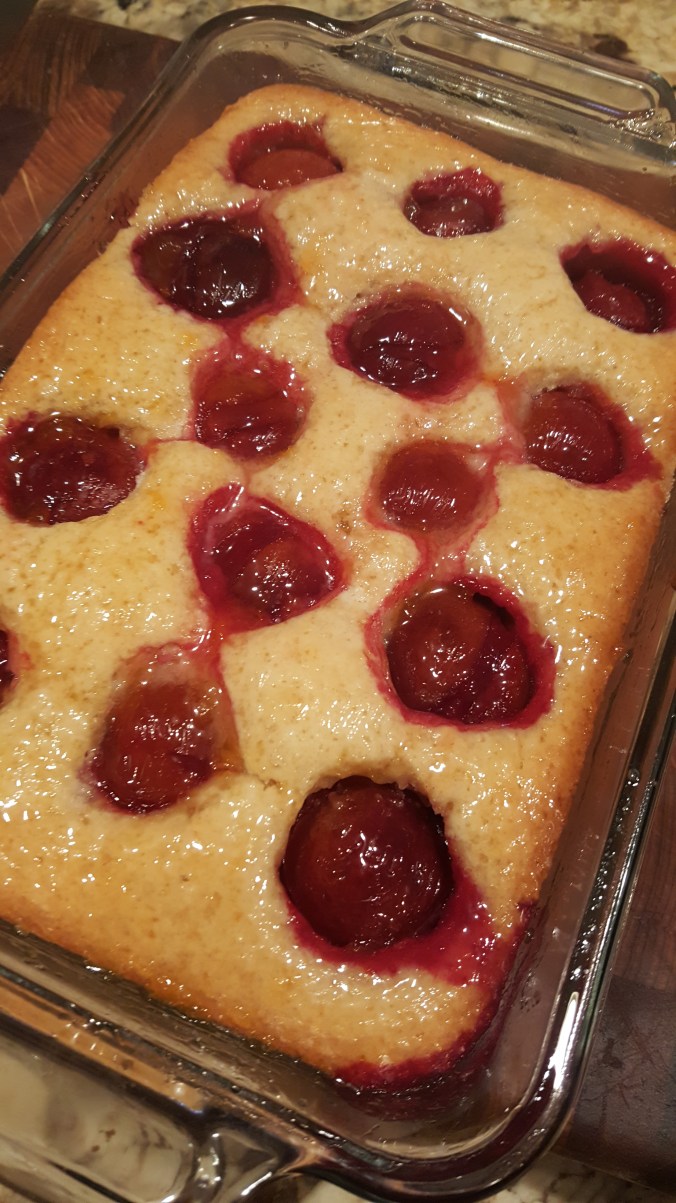
10-plum-cake

Here is my version of the Plum and Almond Cake

1 cup all purpose flour

1 cup almonds

2/3 cup sugar

1 teaspoon baking powder

1 teaspoon vanilla

6 tablespoons butter, softened

2 eggs

1/3 cup heavy cream

Garnish:

14 little plums

1/4 cup apricot jam

2 teaspoons hazelnut liqueur

Preheat oven to 350 degrees F. Grease an 8×8 inch or similar size baking dish. Grind almonds in a food processor until powdered. Add the rest of dry ingredients and process. Add the wet ingredients and pulse into a batter. Spread batter into prepared dish and nestle in the whole fruit. Bake for 55 minutes or until the cake is browned. Mix the jam and liqueur and brush on top of the cake. Warn the eaters of the pits and enjoy!

Our Living Giving Heirloom Pomegranate

Brought by the Padres to Baja Arizona during the Mission Period, this desert-adapted Sonoran White Pomegranate can continue to feed us visually, nutritionally, esthetically (photo MABurgess)

Brought by the Padres to Baja Arizona during the Mission Period over 350 years ago, this desert-adapted Sonoran White Pomegranate can continue to feed us visually, nutritionally, sustainably  (photo MABurgess)

It is thought that the so-called “apple,” the fruit of knowledge of good and evil which Eve shared with Adam in the Garden of Eden, was actually a pomegranate.   Now, thankfully, since Eden, we are all “fallen” and can enjoy pomegranates with no guilt!   Tia Marta here, inspired deeply by the recent article in Edible Baja Arizona by Dena Cowan about the comeback of heirloom Sonora White Pomegranate being celebrated at Tucson’s Mission Garden.  (This is a must-read:  http://ediblebajaarizona.com/sonoran-white-pomegranate .)

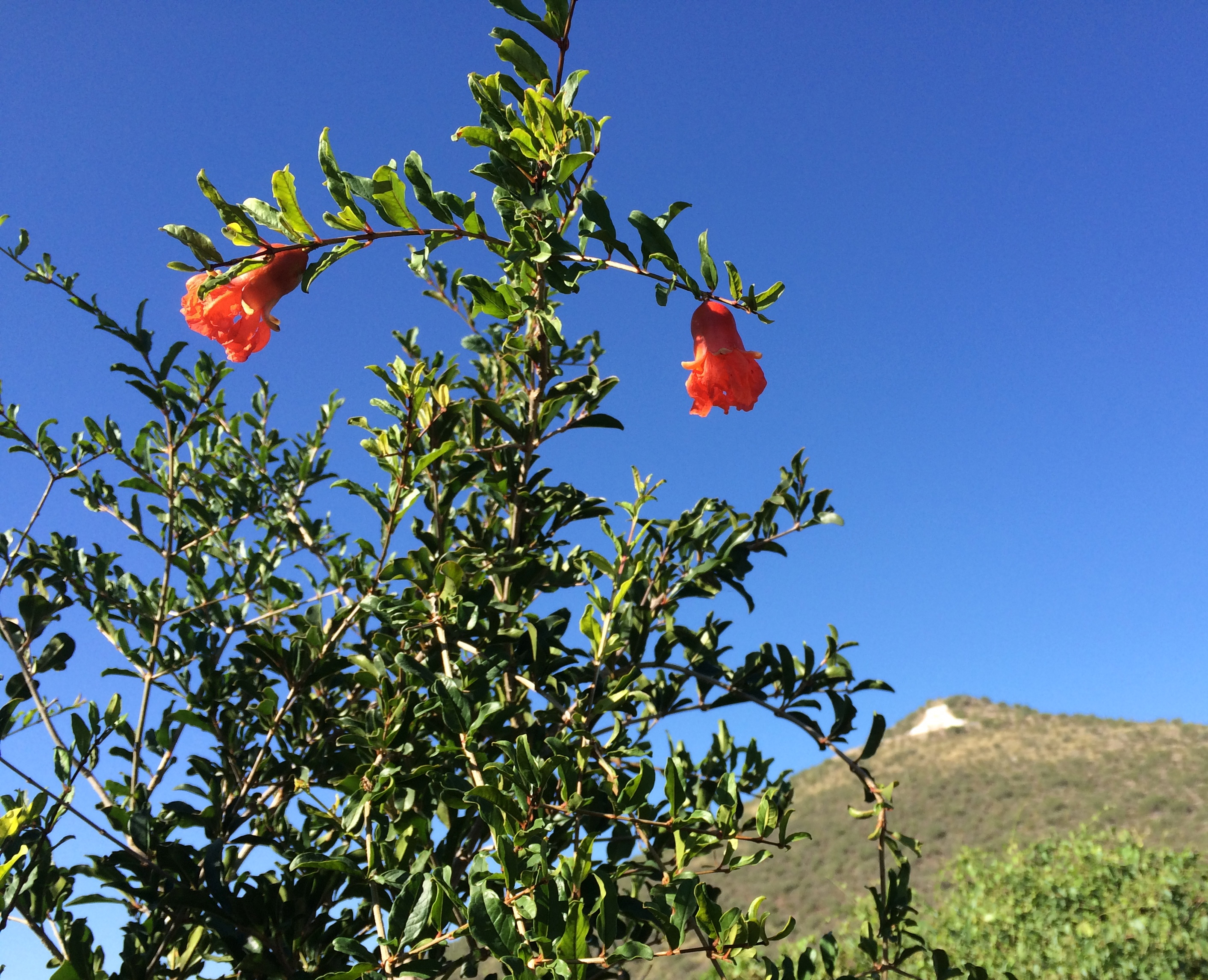
Heirloom Sonora white pomegranate blooms and fruits all summer at Tucson' Mission Garden (photoMABurgess)

Heirloom Sonora white pomegranate blooms and fruits all summer at Tucson’ Mission Garden at the base of   “A”-Mountain (photoMABurgess)

One of the first joys of pomegranates is esthetic, making pomegranate (particularly our local heirloom Sonoran White) a primo candidate for edible landscaping.  Its rich green foliage is cooling to eyes and spirit.  Its glorious, shiny red flowers decorate the trees all summer, followed by sensuous round beige fruits that become rosy as they ripen like Christmas ornaments hanging on the tree.

Sensational flower of Sonoran White Pomegranate--an extra bonus for edible landscapers (MABurgess photo)

Sensational flower of Sonoran White Pomegranate–an extra bonus for edible landscapers .  (Check out the shape of pomegranate flowers to see the design influence in Spanish silver work which in turn inspired Dine/Navajo  “squash blossom” jewelry.) (MABurgess photo)

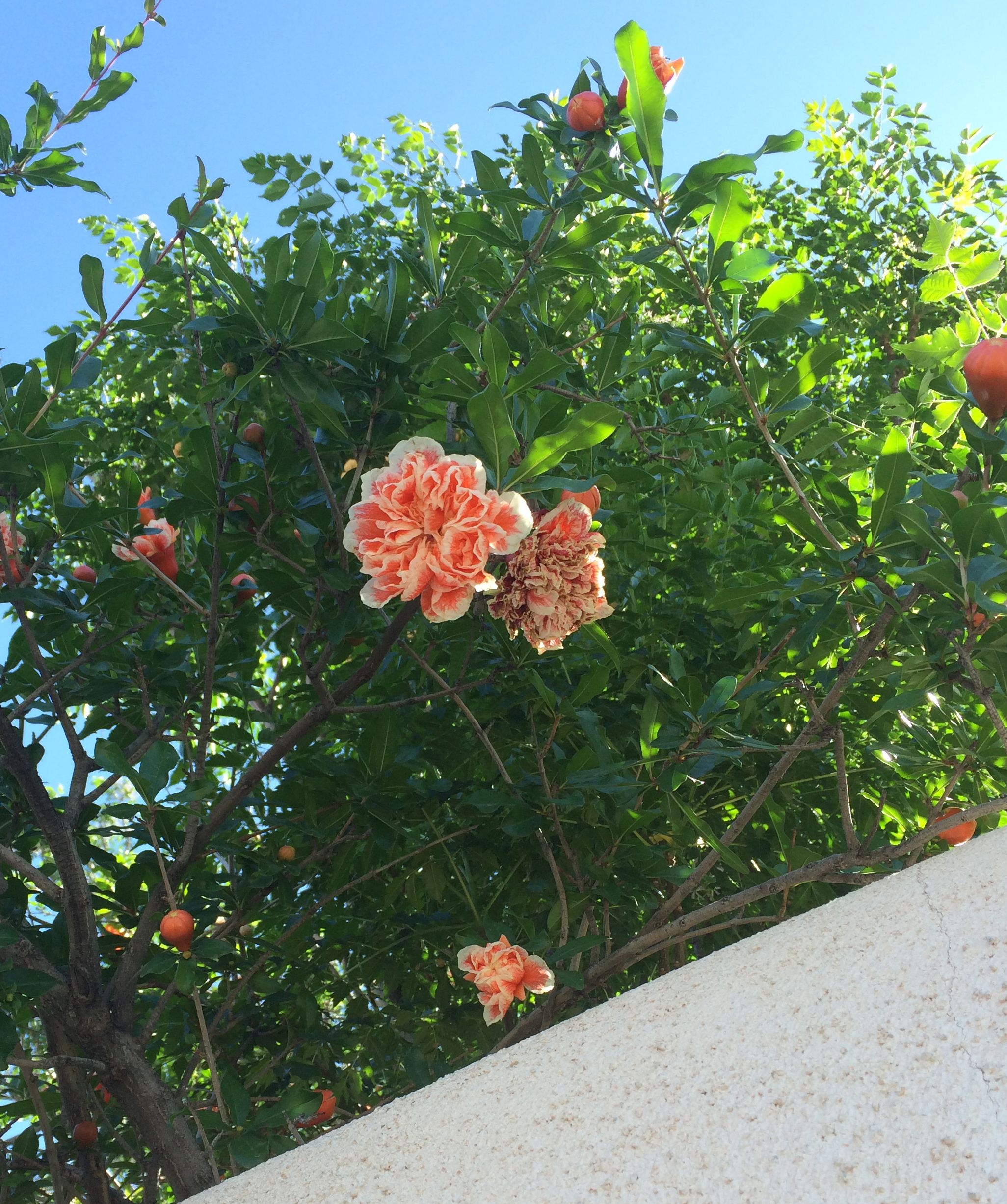
Peeking over the wall of Cordoba House in Tucson's historic neighborhood is a double flowered pomegranate (MABurgess photo)

Peeking over the wall of Cordoba House in Tucson’s historic Presidio Neighborhood is a double flowered pomegranate (MABurgess photo)

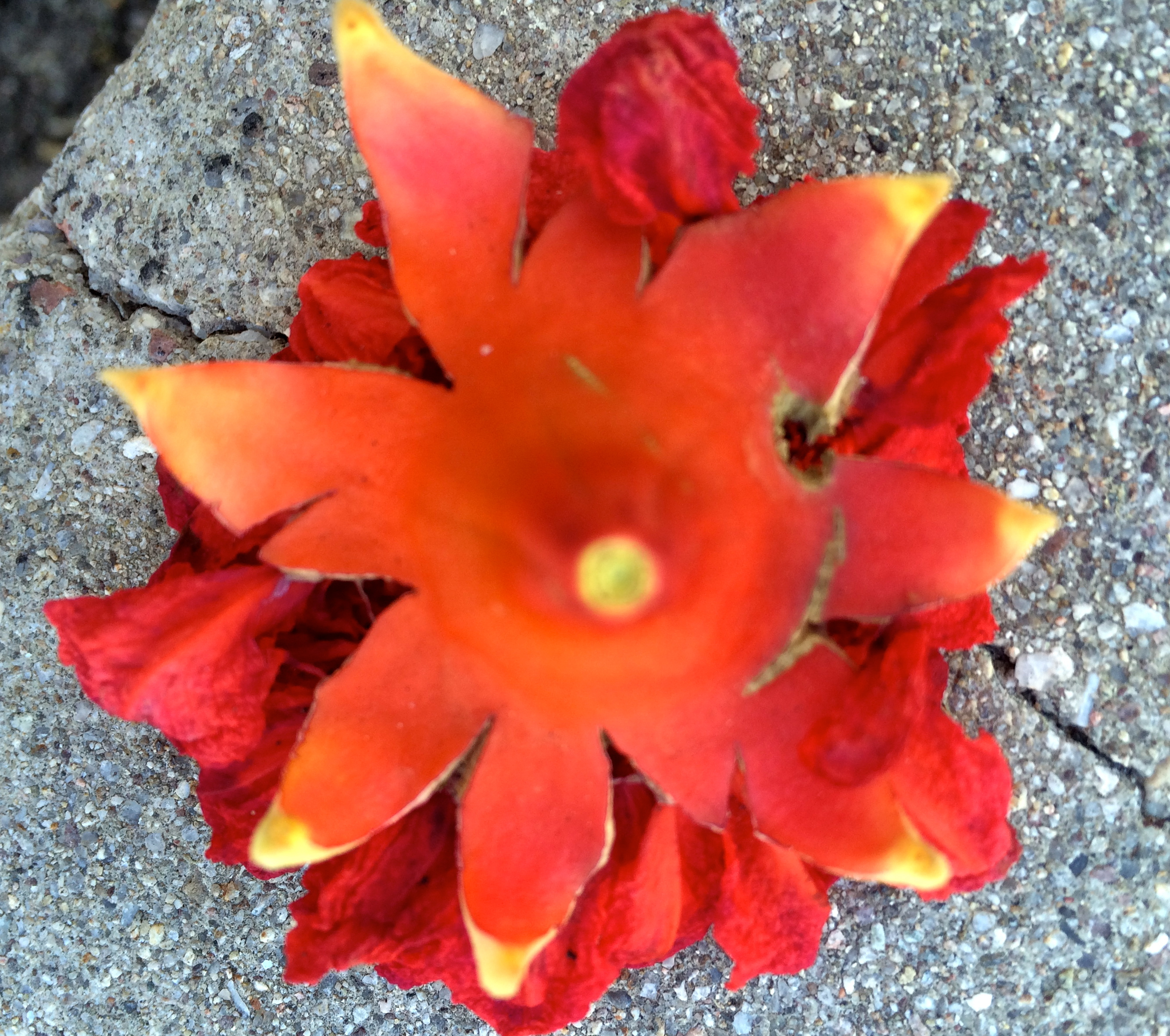
A "fallen star" --a pomegranate flower on the pavement continues as a radiant bouquet (MABurgess photo)

A “fallen star” –a pomegranate flower on the pavement continues as a radiant bouquet (MABurgess photo)


Prepare to share your plentiful crop of Sonoran White Pomegranate with other frugivorous creatures. True bugs can be pests. No prob--damage is limited. (MABurgess photo)

Prepare to share your plentiful crop of Sonoran White Pomegranate with other frugivorous creatures. True bugs like these leaf-legged bugs (Coreidae) can be pests. No prob–damage is usually limited. (MABurgess photo)

The structure of pomegranate fruits, with its separate juicy cells or arils, normally prevents insect damage from destroying an entire fruit.  Just cut off the effected area and the remaining arils still will be perfect for eating.

Traditional Sonoran style for opening an heirloom Sonoran White pomegranate (MABurgess photo)

Traditional Sonoran style for opening an heirloom Sonoran White pomegranate (MABurgess photo)

Jesus Garcia, founder of the Kino Heritage Tree Program at Arizona-Sonora Desert Museum and Mission Garden (and traditional knowledge-keeper of important Sonoran folkways), teaches how to cut the top off of a pomegranate to clearly see the septa or membranes that separate the five or six groupings of juice cells (arils), each containing a seed.  In most modern cultivated pomegranates, there is a hard bitter seed that must be “discarded,” making eating less than perfect.  Amazingly, the Sonoran White has small, tender seeds that present no problem–just eat the arils whole and enjoy!  (No spitting necessary.)

Traditional way of opening the Sonoran White Pomegranate for happy access to arils (MABurgess photo)

Subdivide the fruit along its easy membranes.  This is Garcias’ traditional way of opening the Sonoran White Pomegranate for happy access to “arils” –the juicy beads or sarcotestas (MABurgess photo)

I always thought that pomme -grenade was named for the city of Granada, but actually it is the other way ’round.  The Spanish city was re-named Granada when the Moors brought the fruit there from the MiddleEast and it made a big splash.

Technically the pomegranate  (Punica granatum) does not have many familiar relatives to us in its family of loosestrifes (Lythraceae).  It is so different from other plants that some taxonomists place it in its own family Punicaceae.  Pomegranate fruit is a berry, with each seed surrounded by sweet juice in little discrete cases called sarcotestas.  (There must be a better name for these delicious little beads of bliss!)

Nutritionally pomegranate has sweet advantages, providing antioxidants,  folate, vitamins C and K, plus manganese, phosphorus and potassium.

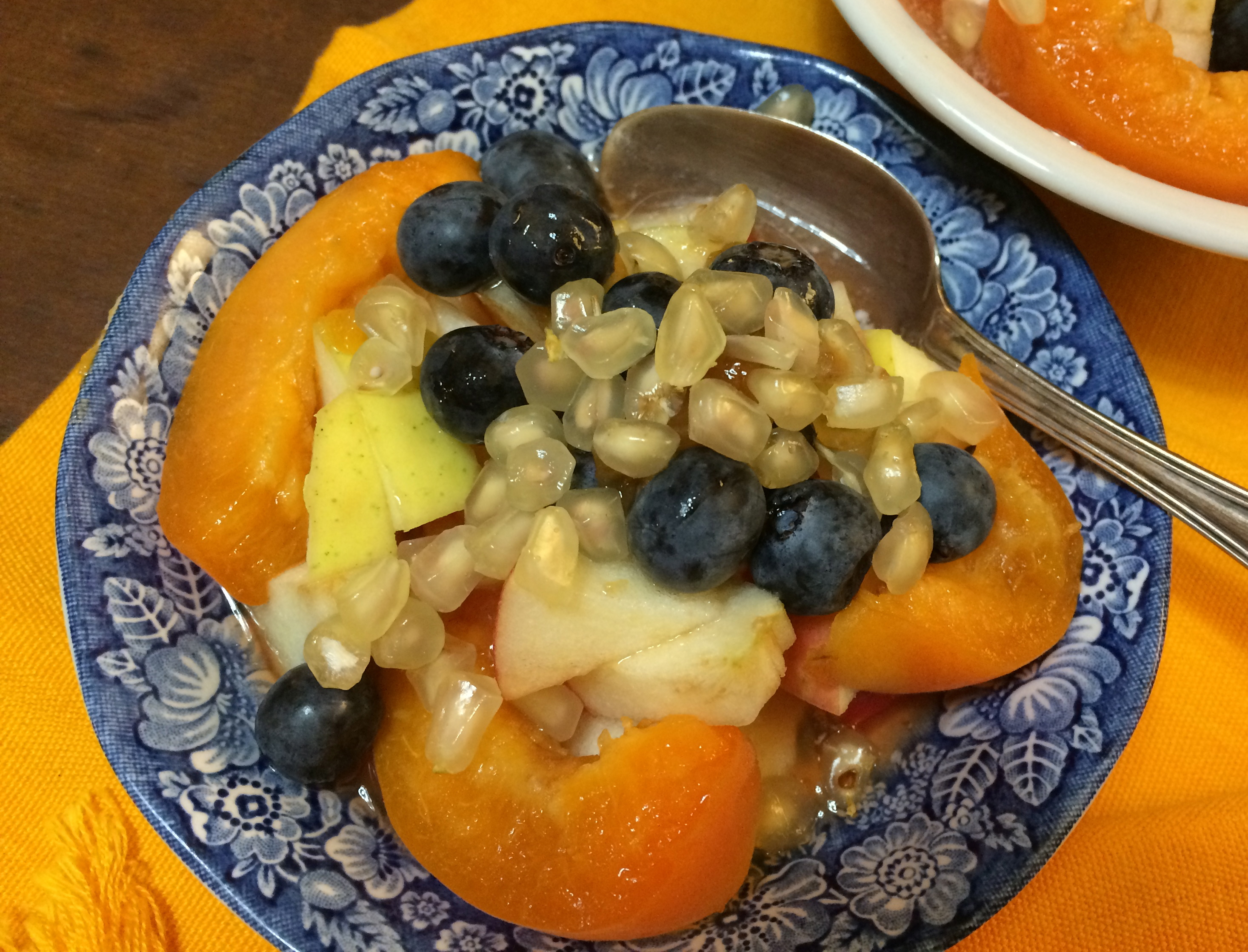
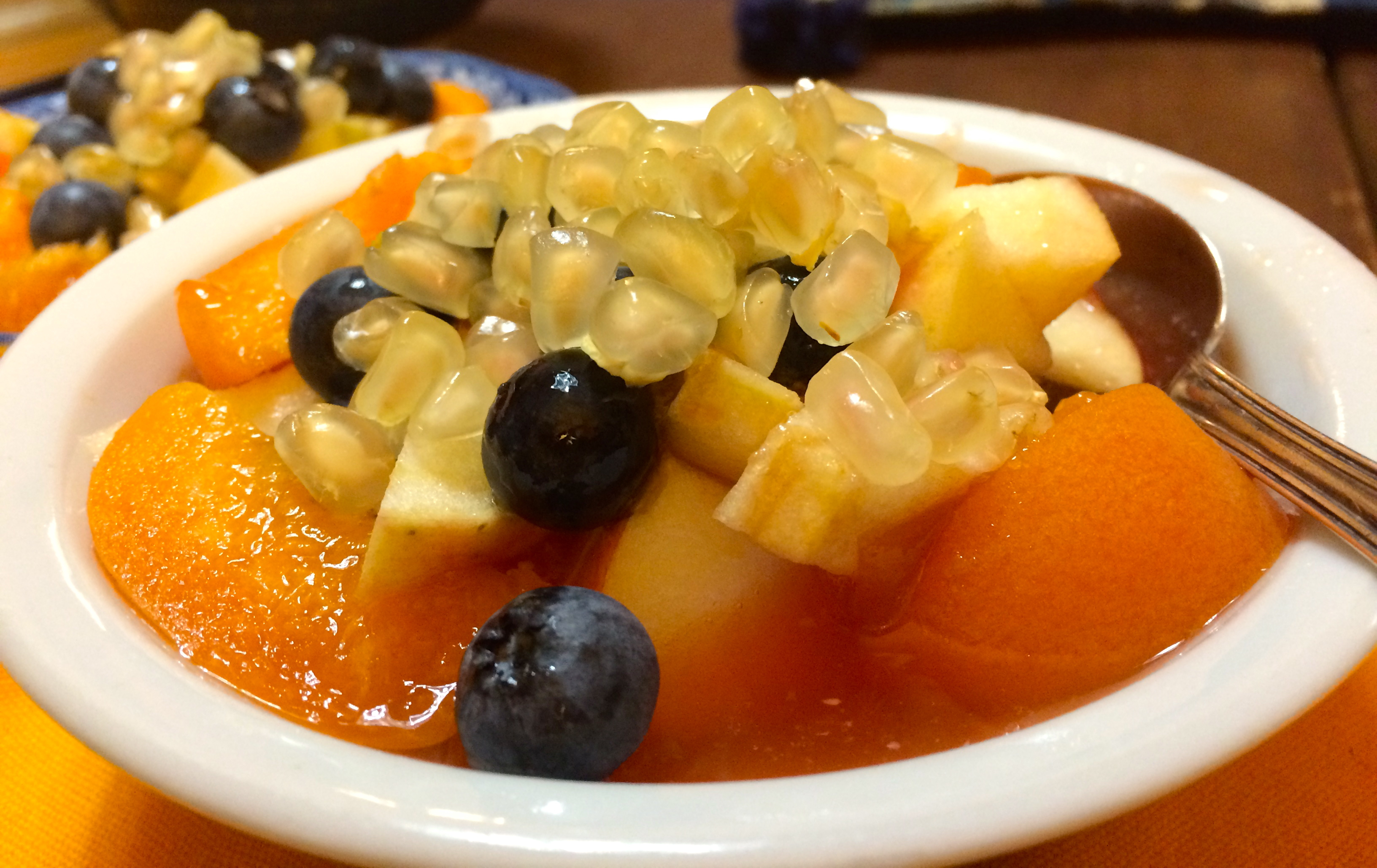
Fruity dessert topped with juicy clear Sonoran White Pomegranate seed-cells (MABurgess photo)

Fruity dessert topped with juicy clear Sonoran White Pomegranate seed-cells (MABurgess photo)

Sonoran White Pomegranate can be juiced to drink straight or add to other drinks. (Talk about a nutritious addition to margaritas!) The simplest, most delightful way of enjoying our clear Sonoran White seed-cells is simply snacking by the handful.

I make a luscious dessert with vanilla yogurt topped with slices of fresh apricot, local apple, and blueberries, and crowned by the sweet seed-cells of Sonoran White Pomegranate.  Rejoice in this ancient gift brought by the Missionaries to Baja Arizona–a desert survivor, well-adapted to carrying us into climate change in arid lands!

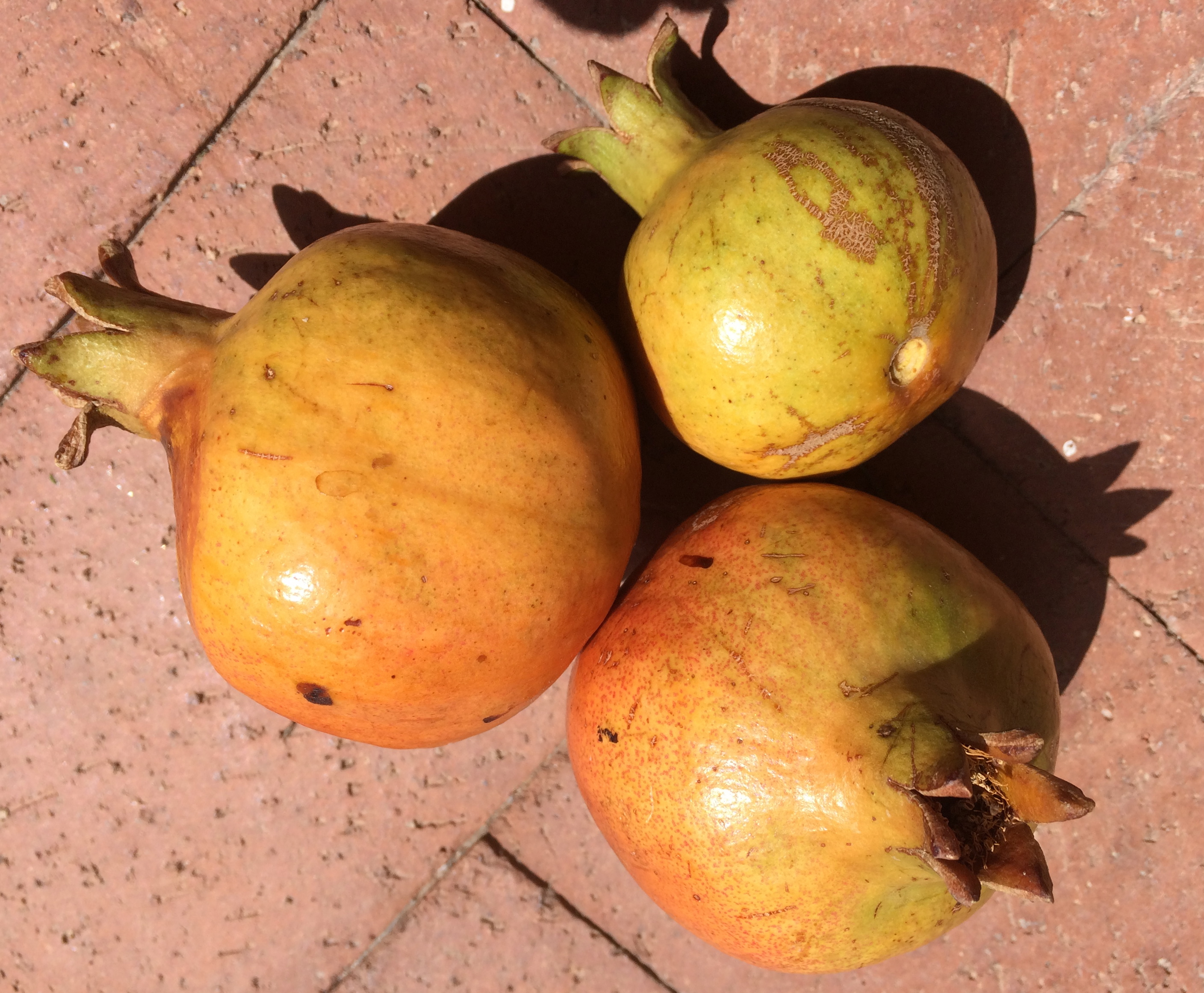
Let your Sonoran White Pomegranate fruits remain on the tree until you see a rosy blush--then you know they are getting sweeter!

Let your Sonoran White Pomegranate fruits remain on the tree until you see a rosy blush–then you know they are getting sweetest! (MABurgess photo)

Sonoran White Pomegranate tops this southwestern dessert (MABurgess photo)

Sonoran White Pomegranate tops this southwestern dessert (MABurgess photo)

Friends of Tucson’s Birthplace will be sponsoring a Pomegranate event this month–September 24, 2016– at the Mission Garden.  Come learn all about our local heirloom treasure, the Sonoran White Pomegranate, how to grow it in our own gardens, and how to prepare it in zillion delectable ways.  For details call 520.777.9270 or email missiongarden.tucson@gmail.com (www.tucsonsbirthplace.org.)  Let’s keep this living and giving food-heirloom alive and well in our gardens into the future!