Sonoran Summer Tacos with Nopales and Verdolagas

It’s Carolyn today and I’m out in my garden to pick some delicious and healthy vegetables to bring you a season-spanning recipe. If your Ficus Indica prickly pear (the Mexican tall kind) sent out its leaves a little late this spring, you probably have a few smaller pads that are still tender enough to cook. Combine those with the purslane in your summer garden for a delicious vegetable side dish or taco filling.  If you don’t have your own cactus. you can always pick up some nopal pads at any Mexican grocery store. If you buy the kind already cleaned, you’ll need to use them right away as once they are scraped, they go bad quickly. We have previously discussed how to clean prickly pear pads here. 

We’ve also discussed purslane previously in this blog here, but I’ll copy the nutritional information because it is so important:

It’s sad but true that right now people are out in their yards pulling these plants out and tossing them in the garbage (or compost for the more enlightened). They should be tossing them in the wok  or frying pan (see recipe below.) Purslane provides six times more vitamin E than spinach and seven times more beta carotene than carrots. It’s also rich in vitamin C, magnesium, riboflavin, potassium and phosphorus. One cup of cooked purslane has 25 milligrams (20 percent of the recommended daily intake) of vitamin C.

Especially important to those of us eating a modern diet, purslane is very high in an essential omega-3 fatty acid called alpha-linolenic acid (ALA). Omega-3s are a class of polyunsaturated essential fatty acids. Your body cannot manufacture essential fatty acids, so you must get them from food. Certain fibers also help in controlling blood sugar.

If your aren’t familiar with purslane or verdolagas, here’s a closeup photo:

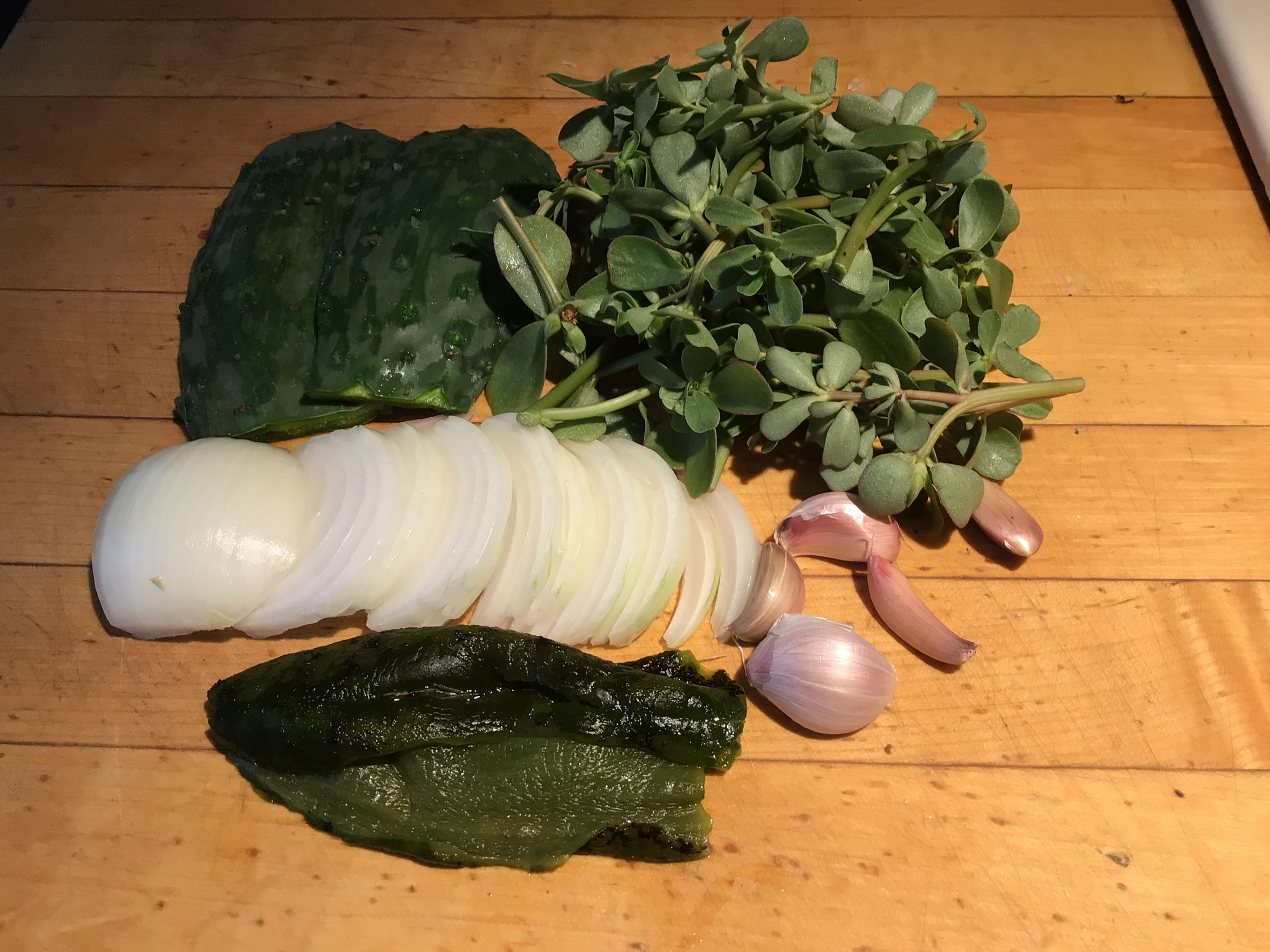
Here are all your ingredients for the tacos: (top) prickly pear leaves and purslane, (bottom) onion slices, garlic and poblano chile.
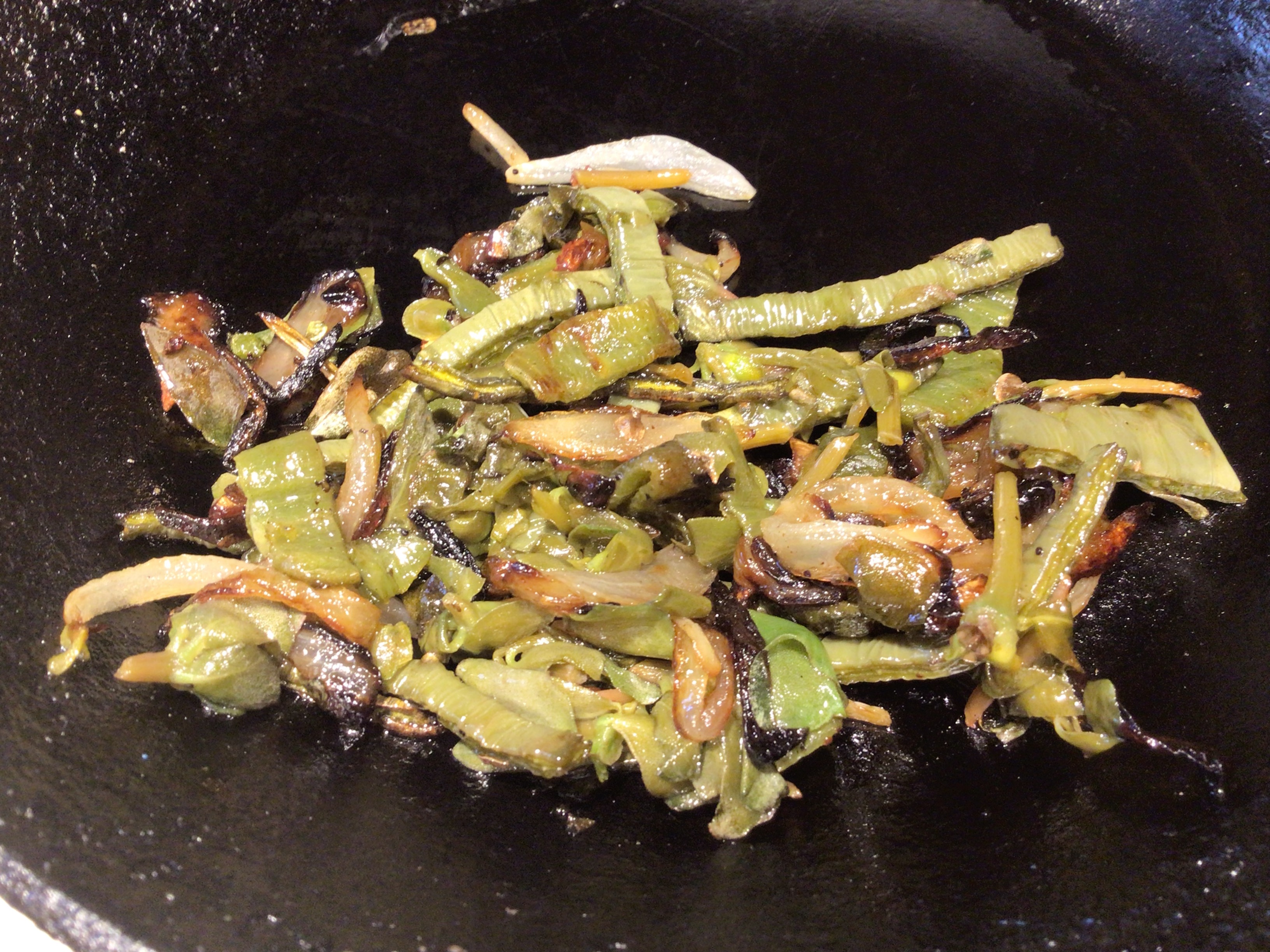

This is what the ingredients will look like cooked.

Sonoran Summer Tacos

2  2×4-inch prickly pear pads or equivalent

½ white or yellow onion

2 cloves garlic, minced (1 teaspoon)

2 tablespoons neutral vegetable oil

1 cup verdolaga (purslane), packed

1 roasted, peeled, cleaned Anaheim or poblano chile, cut into pieces

      (or 2 tablespoons chopped canned green chiles)

4 corn tortillas or small flour tortillas

2-4 tablespoons crumbled cotija cheese or cheese of choice

Using rubber gloves, clean the stickers from the prickly pear pads. Rinse and cut into pieces 2 inches by 1/8 inch (roughly the size of a wood matchstick.) Set aside.

Cut the onion into thin strands by cutting from the root to the stem (not crosswise). Add the oil to a heavy frying pan and begin sautéing the onion over low medium heat. You want it to cook slowly until soft and light brown. After about 10 minutes, add the garlic. While that is happening, you can prep the rest of the ingredients.

Cut the fresh chile into pieces about 1 inch by 1/8 inch. Chop the verdolagas (purslane) roughly. After 10-15 minutes when the onions are ready, stir in the greens and chile and continue to cook.

Coat a heavy frying pan with a light spray of oil and soften the tortillas. Divide the vegetables among the tortillas. Sprinkle with cheese and fold over.
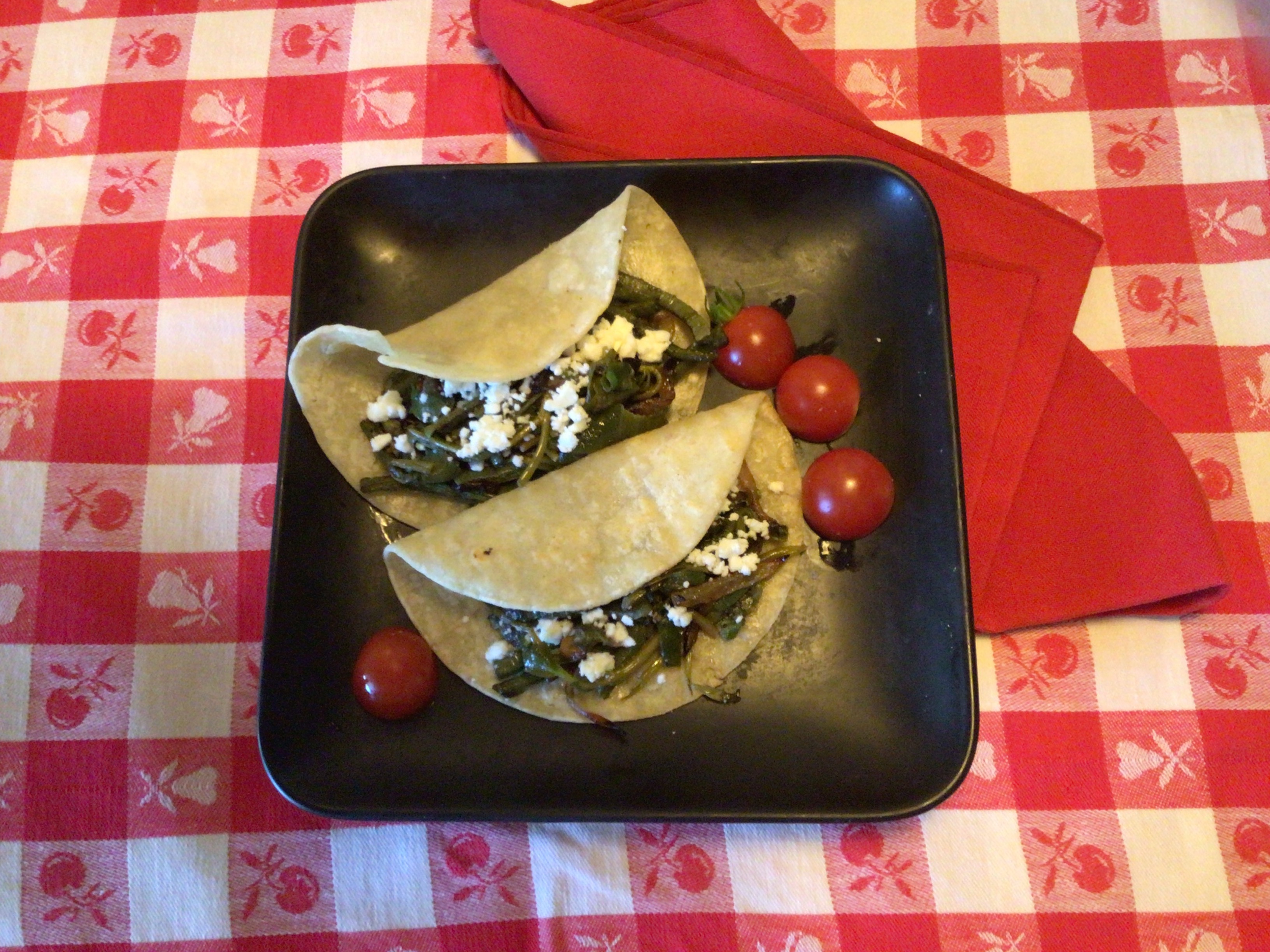
Every recipe writer whether for a blog or cookbook, needs a taste tester. Is it good? Would you eat it again? Here is my taste tester who has eaten his way through five cookbooks and dozens of these blog posts over forty years.
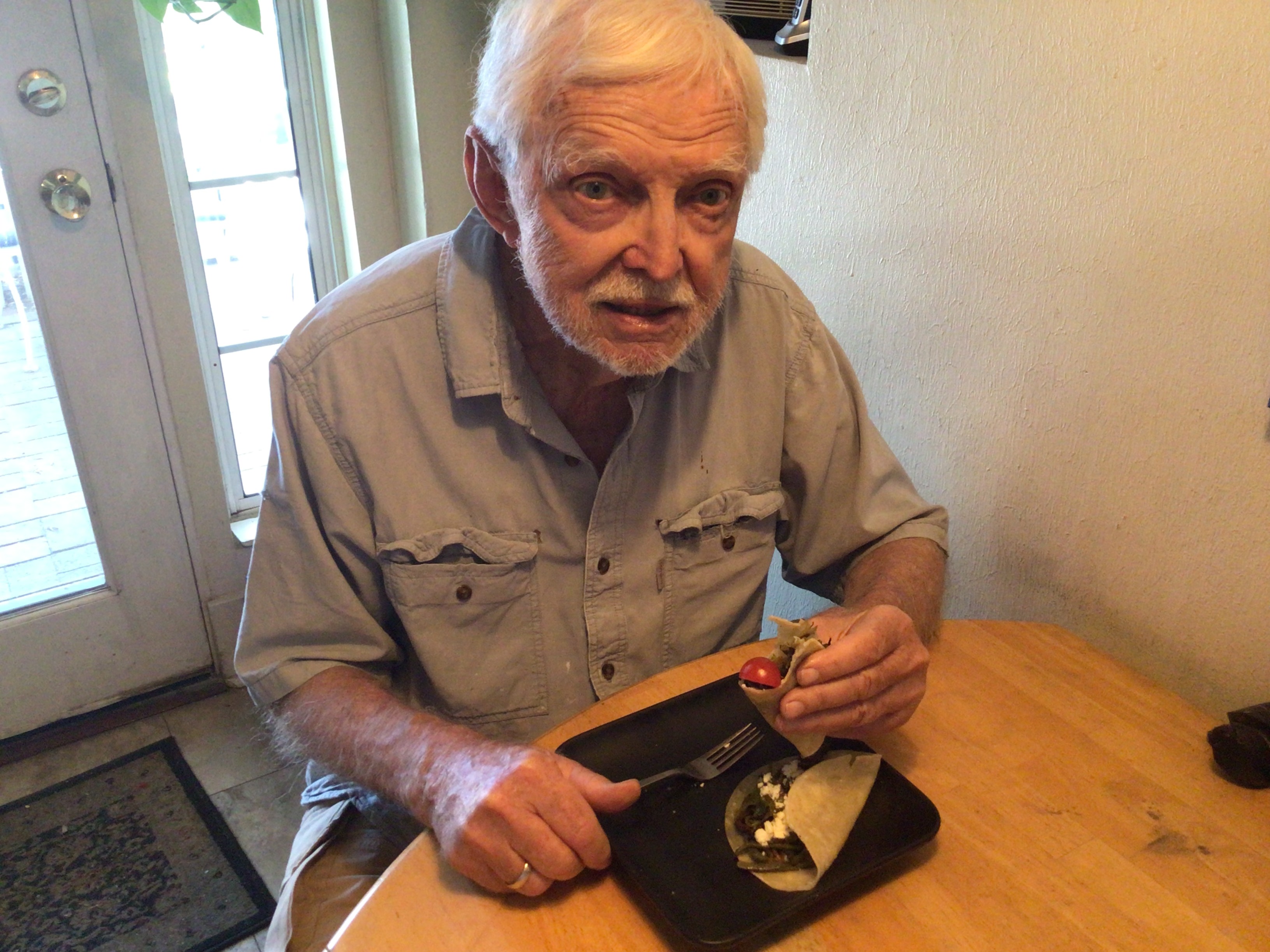
Chief taste tester Ford Burkhart works his way through the Sonoran Summer Tacos for lunch. He gave them the thumbs up. 

____________________________________
You can learn more about the history of food in Southern Arizona in my latest book A Desert Feast, the story of the last 4,000 years of food in the Sonoran Desert. Want more recipes using  foods of the Southwest? You’d find ideas for collecting and using 23 easily recognized and gathered desert foods in Cooking the Wild Southwest: Delicious Recipes for Desert Foods.  . Recipes from top Southwest chefs are collected in The New Southwest Cookbook. Just click on the titles for more information. You can learn more about me on my website.
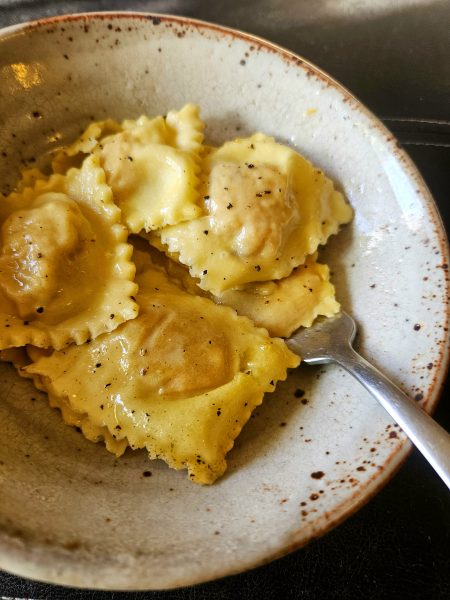
Cushaw Ravioli

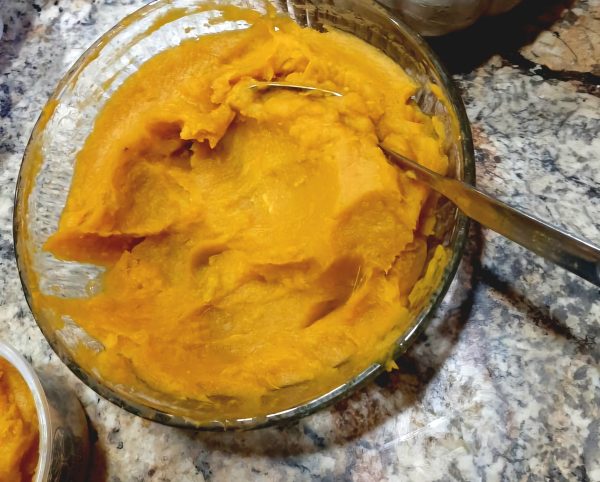
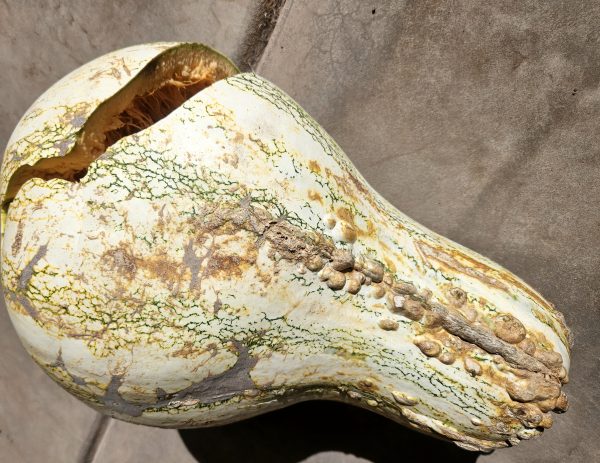
Hello friends, Amy here, with a BIG cushaw winter squash. For starters, it’s beautiful. Farmer Frank of Crooked Sky Farms has been sending Tucson CSA huge and tiny pumpkins and winter squashes for 20 years. People often ask us what to do with them. Well, twelve months a year I always have frozen winter squash in the freezer, ready for soup, pie, pumpkin bread and now ravioli.

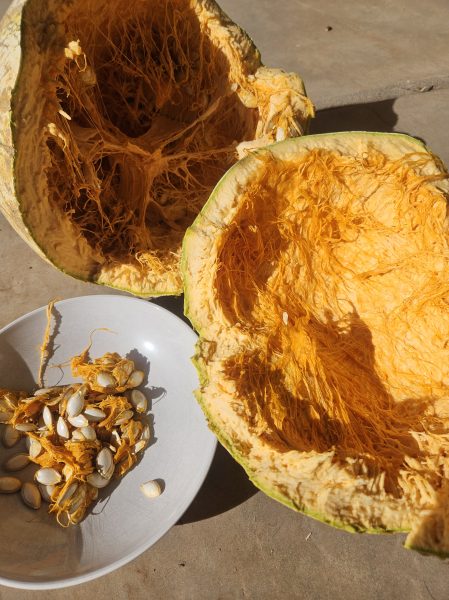
Start by dropping on the patio until it cracks open. Big ones break more easily but sometimes little ones need to be slammed. This is much safer and easier than taking a cleaver to it.

Then I pry it open with my hands and scoop out the seeds, saving them for planting or eating.

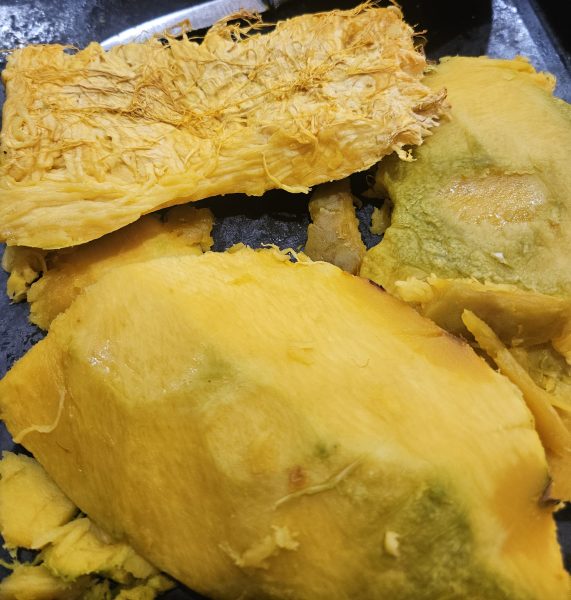
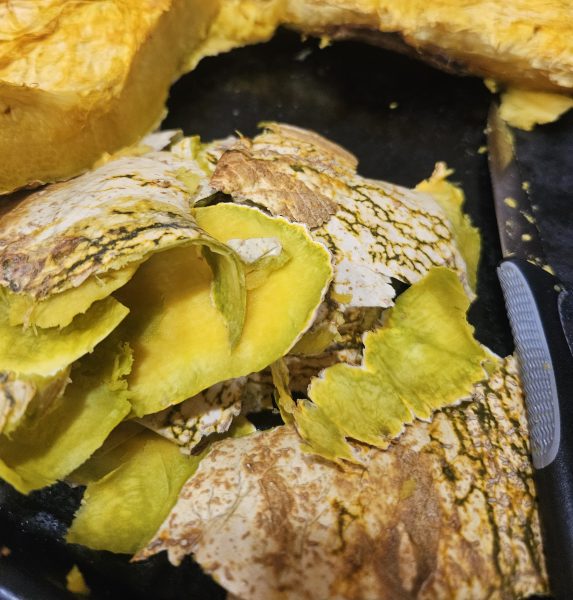
Place the pieces on a cookie sheet and bake uncovered at 350 F until a fork pierces the flesh easily and some of the moisture in the fruit evaporates. The flesh can be scooped out of the hard skin varieties with a big spoon or the skin can sometimes be trimmed off with a knife.

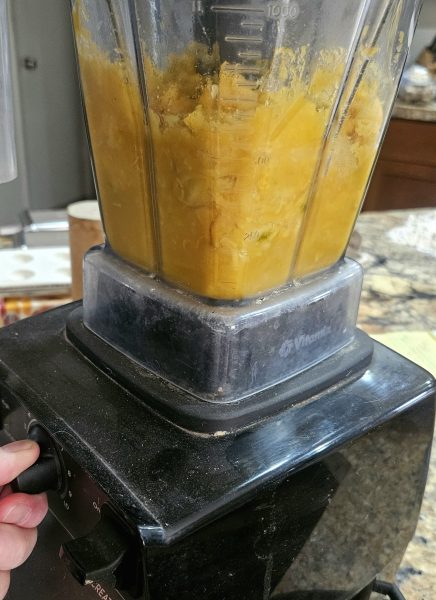
The flesh whizzed in a food processor or blender is pleasantly smooth. If I want texture, I add nuts to sweet creations or sautéed onion to savory concoctions. Stringy mashed squash turns many people away from the “mushy” vegetable entirely.

This cushaw squash was SO sweet and flavorful! If it wasn’t, I’d add a bit of sugar and salt to taste. This squash puree was thicker than normal, so I did not need to drain it. (It is critical to drain squash destined for pie or empanadas. Squash is very perishable, so I place the colander full of puree and bowl catching the liquid in the refrigerator. Don’t toss the liquid! It’s so good in a squash or vegetable soup.)

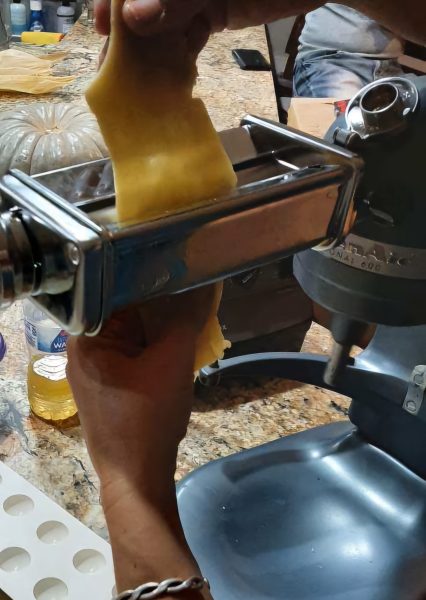
My uncle recently gave me a pasta roller attachment for the stand mixer and a ravioli press. I already own a hand crank roller that requires 3 hands to operate, and hasn’t been used in years. But inspired by the new toys, I wanted to put sweet, plentiful winter squash puree in ravioli.

Plus, I love food cooked in tiny edible parcels, like empanadas, stuffed grape leaves, cabbage rolls, spring rolls, pot stickers, samosas and floutas (taquitos)… What are your favorites?

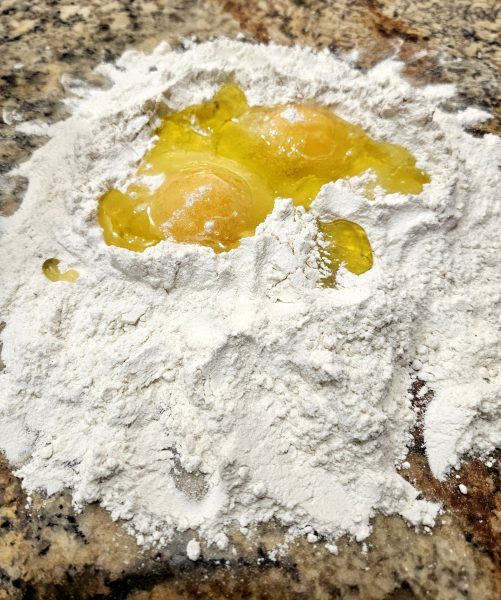
I tried different ravioli dough recipes with varying amounts of egg, water and olive oil, and everything I tried worked. It’s forgiving! But I liked the logic in this one, using a cup of all purpose flour, half a teaspoon salt, and egg and two yolks. I worked it on the countertop by hand and after an hour rest, I started to roll.

Apparently some home cooks use a machine to knead the dough, and some roll it out by hand. It’s forgiving! Basically, start the thickest roller setting and roll the dough through a few times before adjusting the setting a notch thinner.

This is easy but not fast!

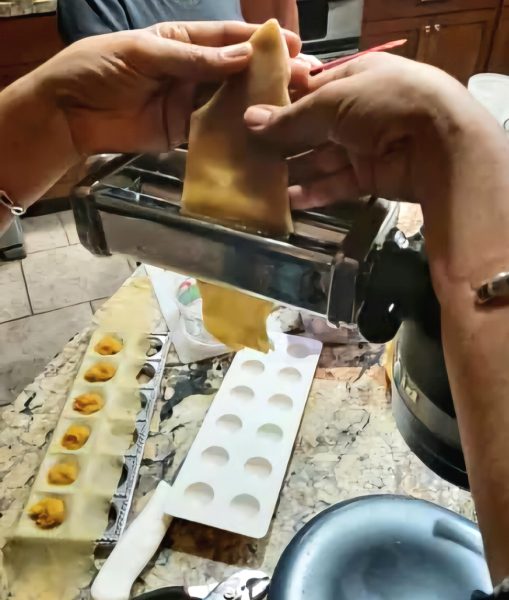
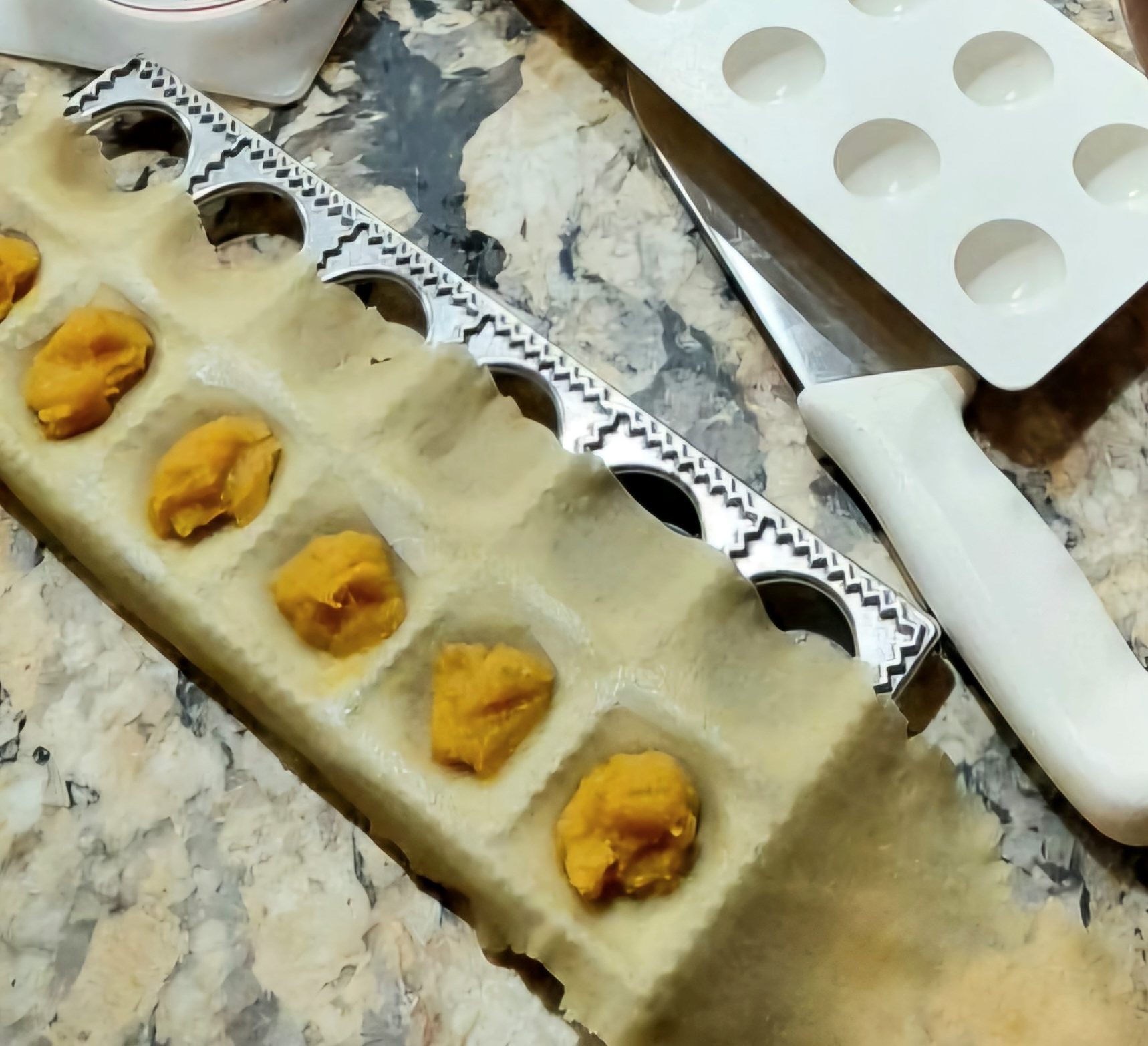
The form presses the thin dough into wells to hold a tablespoon of filling. I dabbed water along the seams to encourage better sealing, just in case. With the top sheet of dough covering the filling, it was easy to seal and perforate by using a rolling pin over the top.

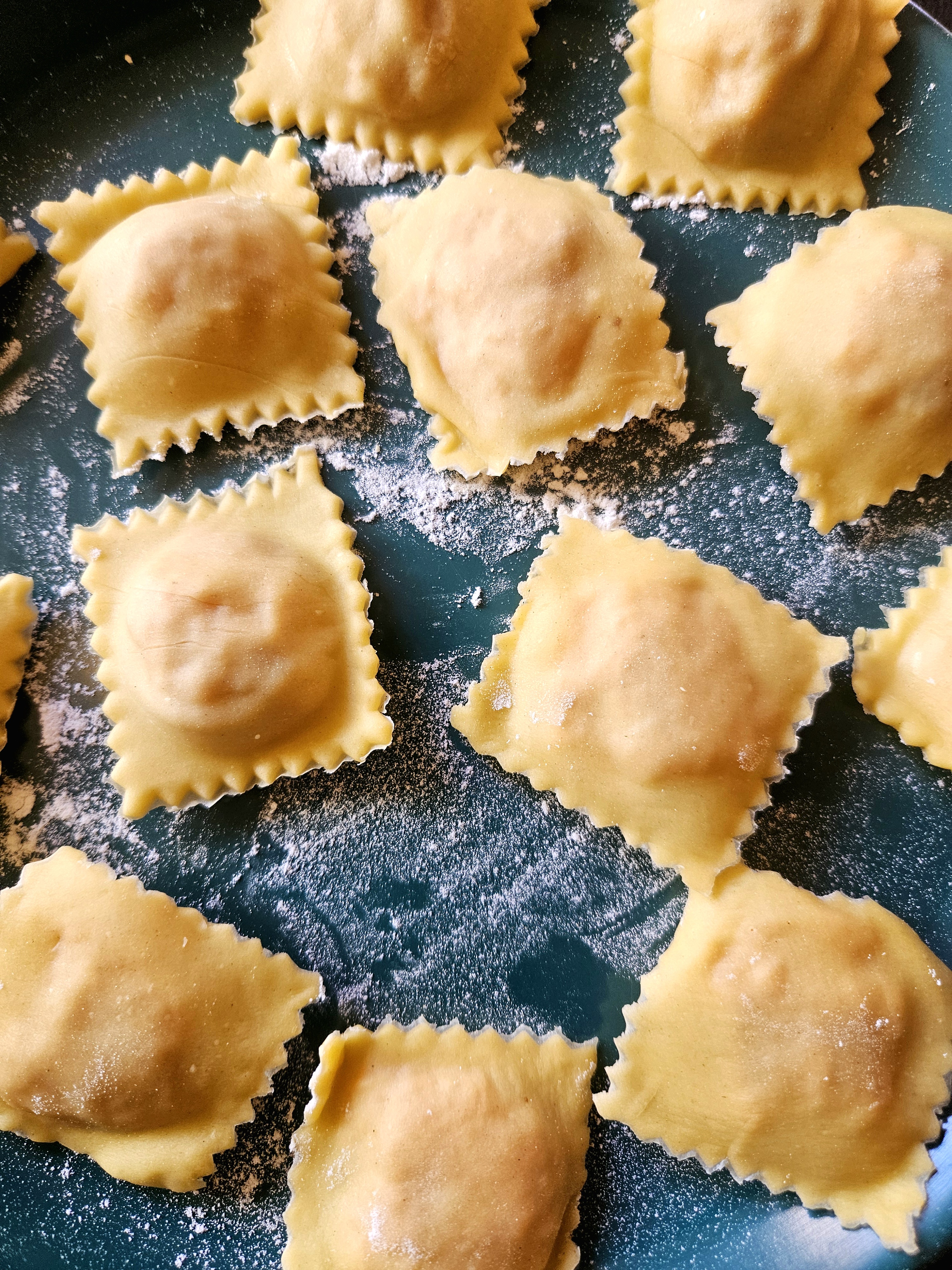
This gimmicky looking tool is efficient! Dusted with flour and resting in a single layer, they are tidy, symmetrical and well sealed.

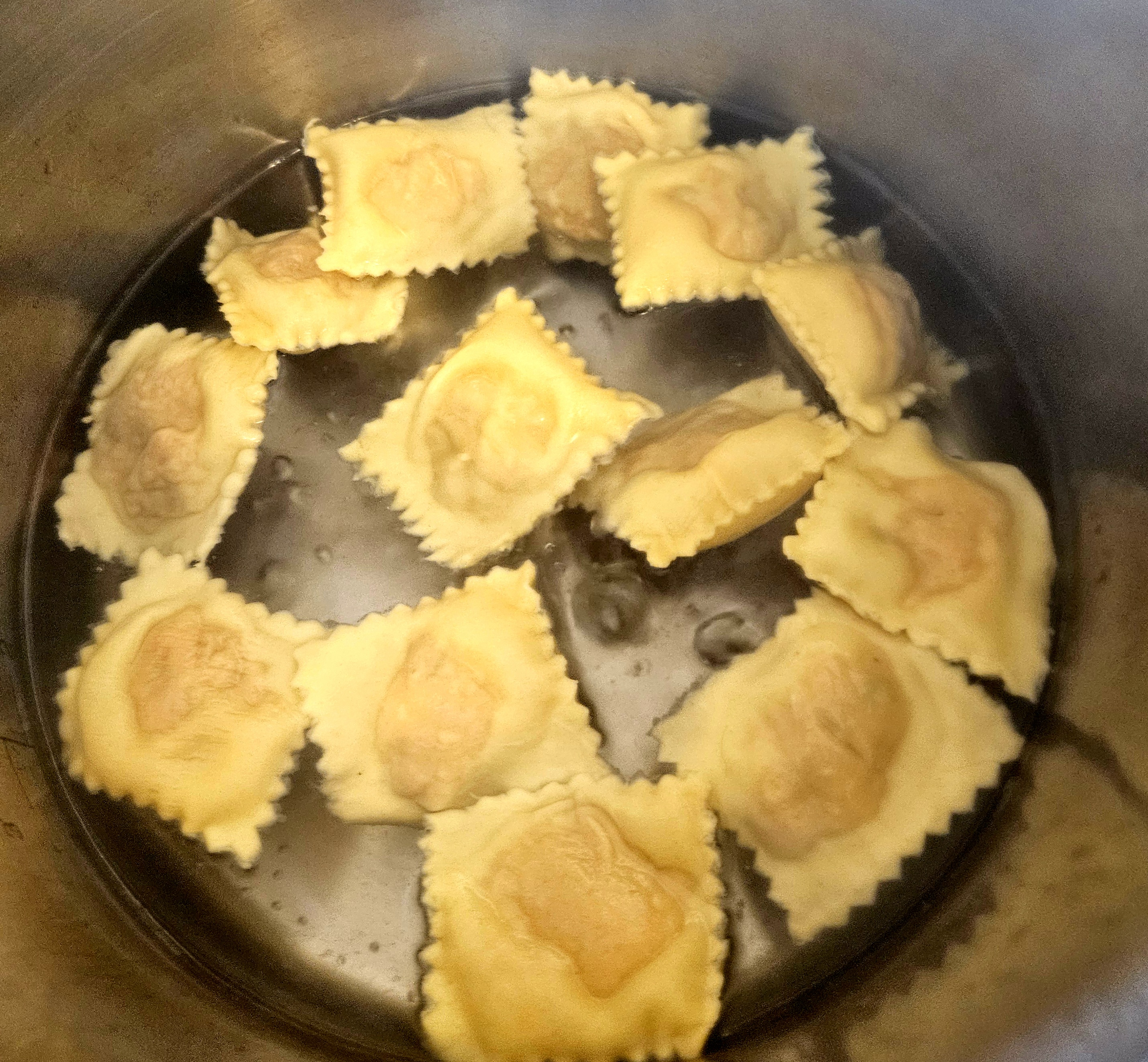
Cooking for three minutes in gently boiling water, it’s amazing they stay sealed.

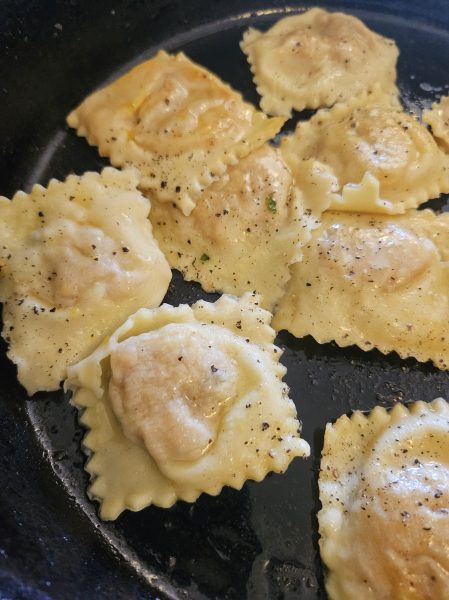
With the filling of unadorned sweet cushaw squash, dressing the finished product in various combinations of butter, olive oil, garlic, thyme, black pepper and hard cheese was delicious. My aunt fried some with tons of garlic until browned… oh my.

But my favorite way was just butter, salt and pepper, letting the sweet cushaw shine.

Tepache: An Sonoran Summer Favorite

Josefina Lizárraga served her tepache at a recent event at Mission Garden in Tucson. Josefina is a font of wisdom on the traditional foods of the Sonoran Desert.

The summer heat has settled in here in Southern Arizona and cooling drinks are the order of the day. Of course, there is always water, but it’s nice to be amused by something more flavorful. 

It’s Carolyn today, bringing you a recipe for tepache, a simple pineapple drink that is a classic regional favorite. It is made with pineapple peels, the part you usually throw away, and a Mexican sugar staple, a hard cone of brown sugar called piloncillo. Properly made, tepache has a slight alcoholic zing. It won’t get you drunk, but it’s best reserved for adults. 

We recently learned how to make tepache from Josefina Lizárraga, who comes often to Mission Garden in Tucson to share her tips for dealing with local fruit. She is affectionately called La Madrina del Jardín. The process is pretty simple.

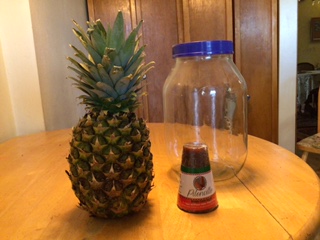
A nice ripe pineapple, a cone of piloncillo, and a jar are all you need to make tepache.

Tepache Recipe

Choose a ripe pineapple with a nice fruity fragrance. Wash the outside. As you cut off the peel, leave a little more of the fruit than you would if you were tossing it out. Cut the peel and the core into smaller pieces and add to the jar.

Bring about two cups of water to a boil in a small saucepan and add the piloncillo. Turn off the heat and let the sugar dissolve. If you can’t find piloncillo, use 8 ounces of dark brown or turbinado sugar.

Put the pineapple peels into your gallon glass jar and add whatever fruit you won’t be eating as well. Adding some of the fruit will give your tepache more flavor. You can also add a few cinnamon sticks.

Cut the pineapple peel and core into chunks.

Add the dissolved sugar and water and top up the water to about 3/5ths. Cover the jar with a cloth. DO NOT SCREW DOWN A LID. Put the jar on your counter. Josefina says just 4 to 4 1/2 days. Longer will result in vinegar. Refrigerate your tepache and enjoy with ice.

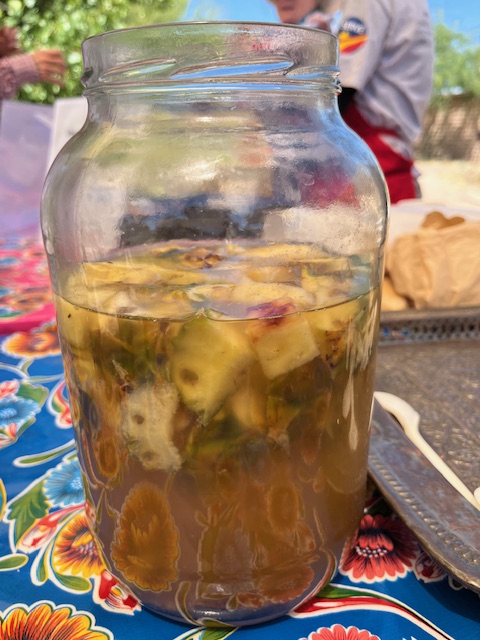
This is Josefina’s tepache she was serving at Mission Garden.

___________________________________________________________

You can learn more about the history of food in Southern Arizona in my latest book A Desert Feast, the story of the last 4,000 years of food in the Sonoran Desert. Want more recipes using  foods of the Southwest? You’d find ideas for collecting and using 23 easily recognized and gathered desert foods in Cooking the Wild Southwest: Delicious Recipes for Desert Foods.  . Recipes from top Southwest chefs are collected in The New Southwest Cookbook. Just click on the titles for more information. You can learn more about me on my website.
Savory Wolfberry Amaranth Balls

Hello friends, Amy here enjoying another great year for the wolfberry bush (Lycium fremontii …I think) in my yard. Tucson’s native species of the Chinese goji berry, they are similarly packed with antioxidants and health benefits. In the tomato family, it’s called tomatillo in Spanish, not to be confused in size, shape, color or taste to the garden variety of husked ground cherries that go by that name. Wolfberries taste somewhat like tomatoes and work well in sweet and savory dishes, when I manage to harvest more than I eat raw from the bush. Thriving on only rainwater, one huge plant produces plenty of fruit for me and the resident phainopeplas.

Inspired by this recipe for millet balls, I used fresh wolfberries in place of dried Turkish barberries.

It was delicious! It reminded me of falafel, crispy on the outside and grainy on the inside. A simple cilantro, garlic, lemon juice, olive oil chutney complimented them perfectly.

So the next time, I decided to use amaranth seeds. I bought this from the store, but you can harvest your own from wild or cultivated plants in the late summer if you’re ambitious.

I toasted them in oil until they became a shade darker and a few of them popped open.

I added water, three times the volume of amaranth seed, and cooked in the solar oven until it was creamy. Then I mixed in fresh wolfberries and enough flour to make a soft dough.

The dough was muuuuch stickier, so I added significantly more flour than for the millet balls and still they looked shaggy. (I used all purpose wheat flour but next time will try amaranth flour).

The toasted flavor came though and I’m glad the only seasoning I used was salt and wolfberries. The dough certainly didn’t need any egg or flax egg to hold together! They baked up just as well as the millet version, but with the texture of a cookie. Next I’ll try them sweetened!

I served them with a lemon pickle but that tomatillo salsa would be good. I took the rest to a picnic among the wildflowers. Happy spring!

processed by AtomJPEG 1.5.0n

50 Years Exploring Wild Foods of the Southwest

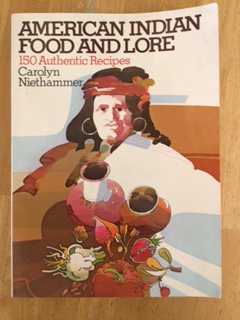
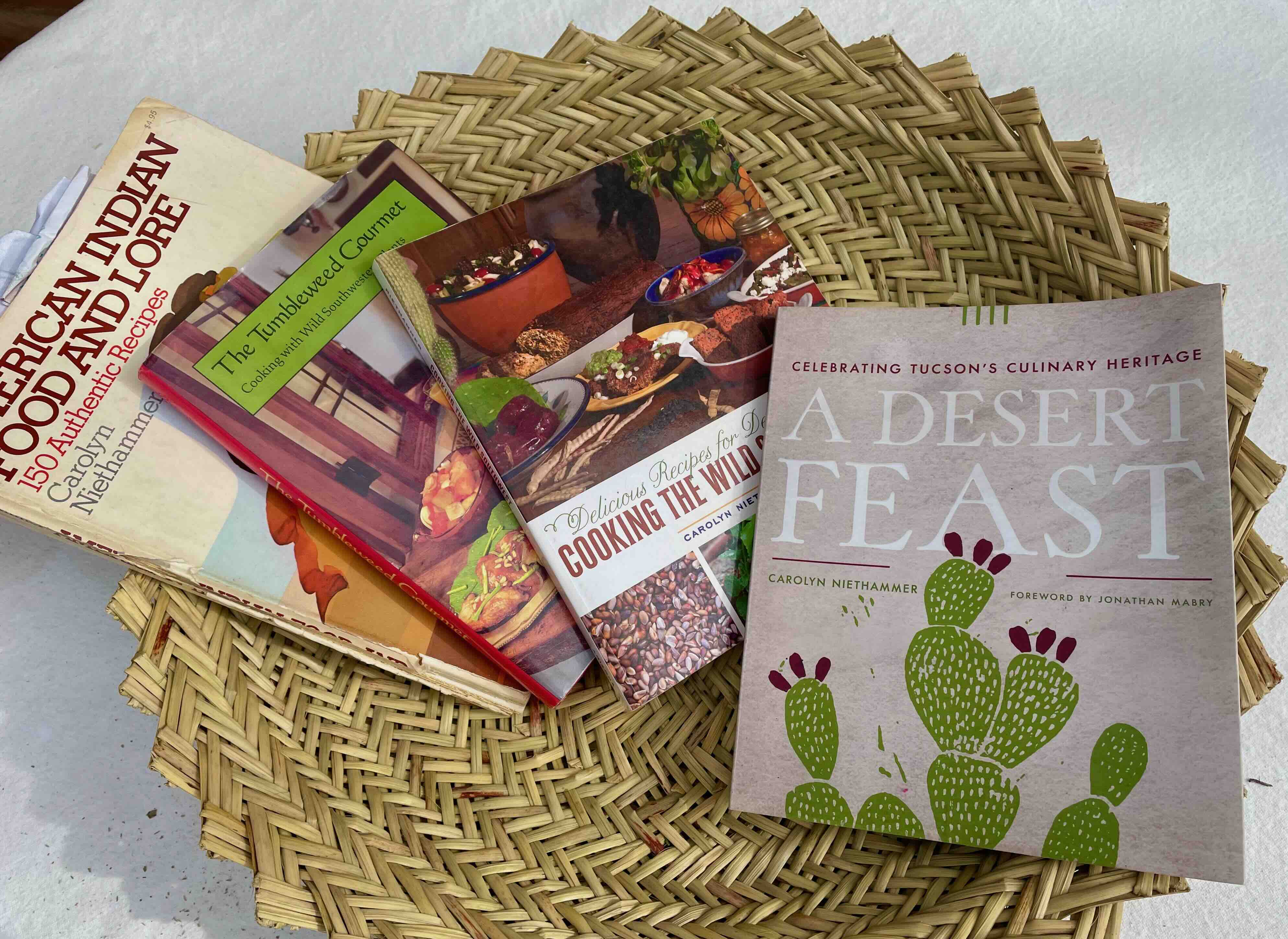
It’s Carolyn here today with a walk down memory lane. This year celebrates 50 years since the first publication of my first book American Indian Food and Lore, now republished as American Indian Cooking: Recipes from the Southwest. In 1970, I was a young out-of-work journalist and through an unlikely set of circumstances ended up with a contract for a book on Indian cooking with Macmillan, a major New York publisher. Preliminary research showed that traditional Native American food revolved around edible wild plants and corn, beans, and squash.

My college science was zoology so I had a lot to learn about edible plants. I began by reading every ethnobotany written about Southwestern plants. I found mentors to take me on plant walks, including the late renowned botanist Richard Felger. When I knew enough to ask intelligent questions, I headed out to talk to the experts, Native American women. My first teachers were two lovely Tohono O’odham women on the San Xavier section of the reservation who spent an afternoon teaching me to cook mesquite the way their mothers had. I put the leftovers in the backseat of my car and had a head-on collision on a narrow dirt road on the way home. Woke up in the hospital with mesquite mush in my hair.

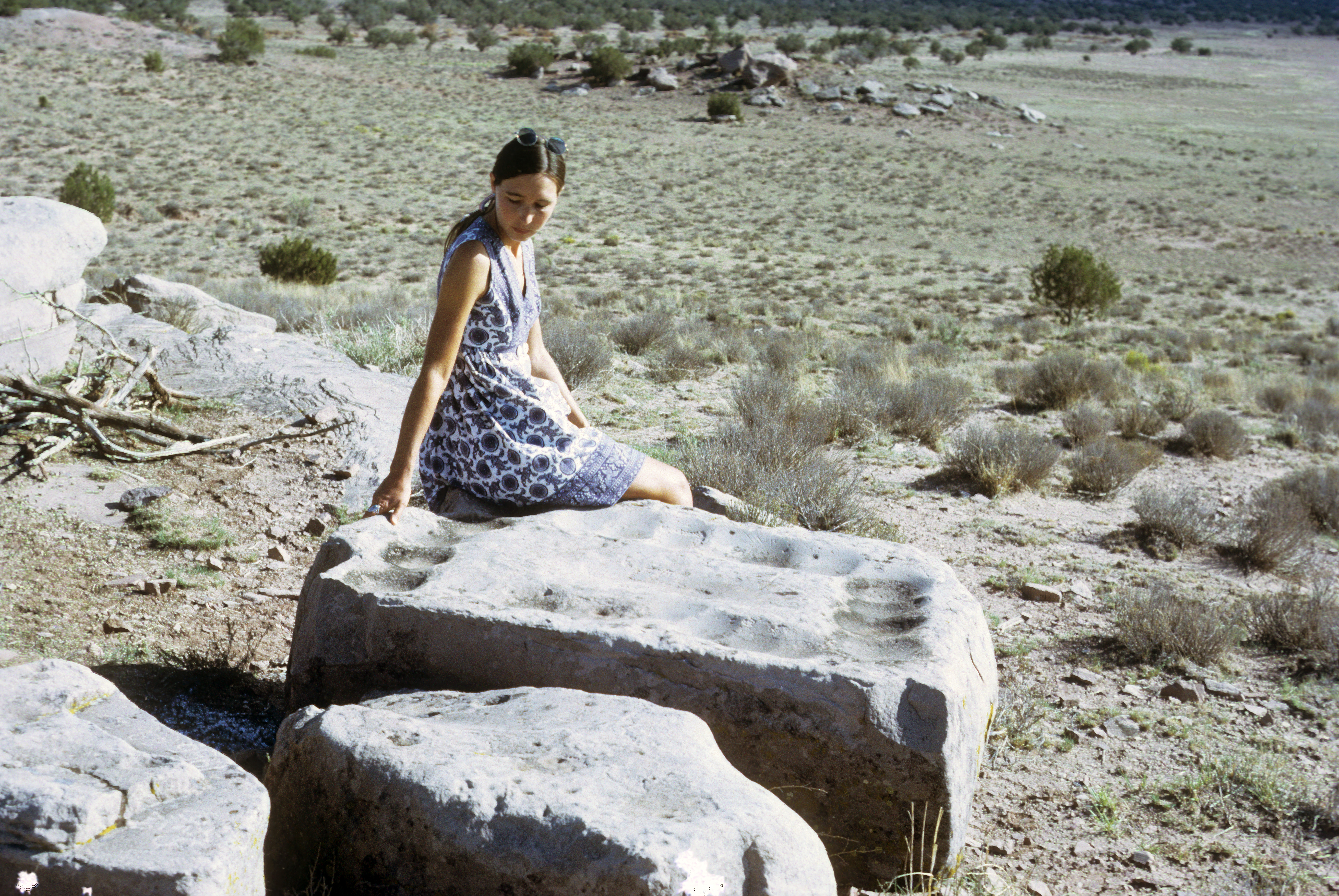
Here I am in 1971 trying to learn to distinguish one little green plant from another.

Perhaps that was some sort of christening, so for $150 I bought a Chevy wagon and the summer of 1971, I headed to remote areas on the Hopi, Navajo, Zuni, Havasupai, and Pueblo reservations. Many very generous middle-aged Native women taught me about plants they had gathered with their grandmothers. I worked in an office that winter to gather some money and headed out again the summer of 1972.

Finding a communal grinding stone at Hawikuh (founded c. 1400) near the Zuni Reservation. Imagine the women sitting around the stone doing food preparation.

Then it was time to test the recipes when I had them and develop recipes when necessary. A friend lent me an electric typewriter (such a luxury), and I wrote up what I had learned. A small grant allowed me to pay Jenean Thomson to do the gorgeous and accurate line drawings of the plants.

Jenean Thomson’s ocotillo illustration.

The book was “in press” for two years and was released by MacMillan in 1974. Euell Gibbons had published several well-known books on edible wild plants, but they were all Eastern species. American Indian Food and Lore joined a very few popular books on edible Western plants. Sunset Magazine even came and did an article on my wild food gathering class. Writer and ethnobotanist Gary Nabhan joined me, and one year we did a class we privately called Gary and Carri’s Thorny Foods Review.

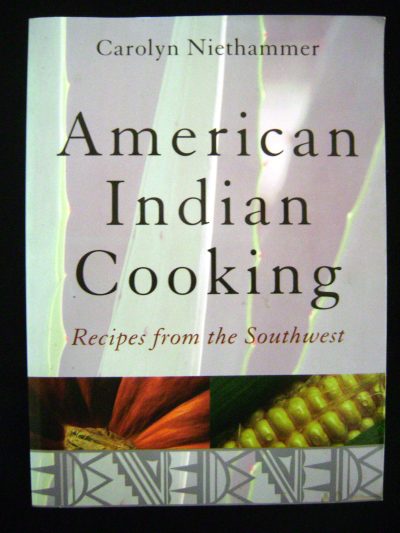
After two decades, with changes in ownership, Macmillan decided the book didn’t fit their line, but the University of Nebraska Press liked it. In 1999, they republished the book under their Bison Books line as American Indian Cooking: Recipes from the Southwest with a lovely new cover.

I have followed this title with four more books on Southwestern food, but my first foray into cookbooks with the all the memories I have doing the research remains a high point of my life.

Here is one of the original recipes taught to me by a Navajo cook.

Navajo Griddle Cakes

(Makes 14 4-inch cakes)

Although this calls for lamb’s-quarter seeds, you can substitute amaranth, quinoa, chia, or sunflower seeds.

¾ cup ground lamb’s-quarter seeds

¾ cup whole wheat flour

2 tablespoons sugar or honey

½ teaspoon salt

1 teaspoon baking powder

1 egg

2 cups milk

2 tablespoons oil or bacon drippings.

Combine dry ingredients in a bowl. In another bowl beat together egg, milk, and fat and add to dry ingredients. Heat the griddle and add a small amount of oil. Test the griddle by letting a few drops of cold water fall on it. If the water bounces and sputters, the griddle is ready to use. Bake the pancakes.

__________________________________

Note from SavorSisterTiaMarta:  If you want to find other fascinating, flavorful, and from-the-earth Indigenous recipes that were gifted to Carolyn 50 years ago and which she published in American Indian Food and Lore, you can chase down used book copies via Thriftbooks, Amazonbooks and other sites.  This first book is a treasure trove of totally useful, current ideas!