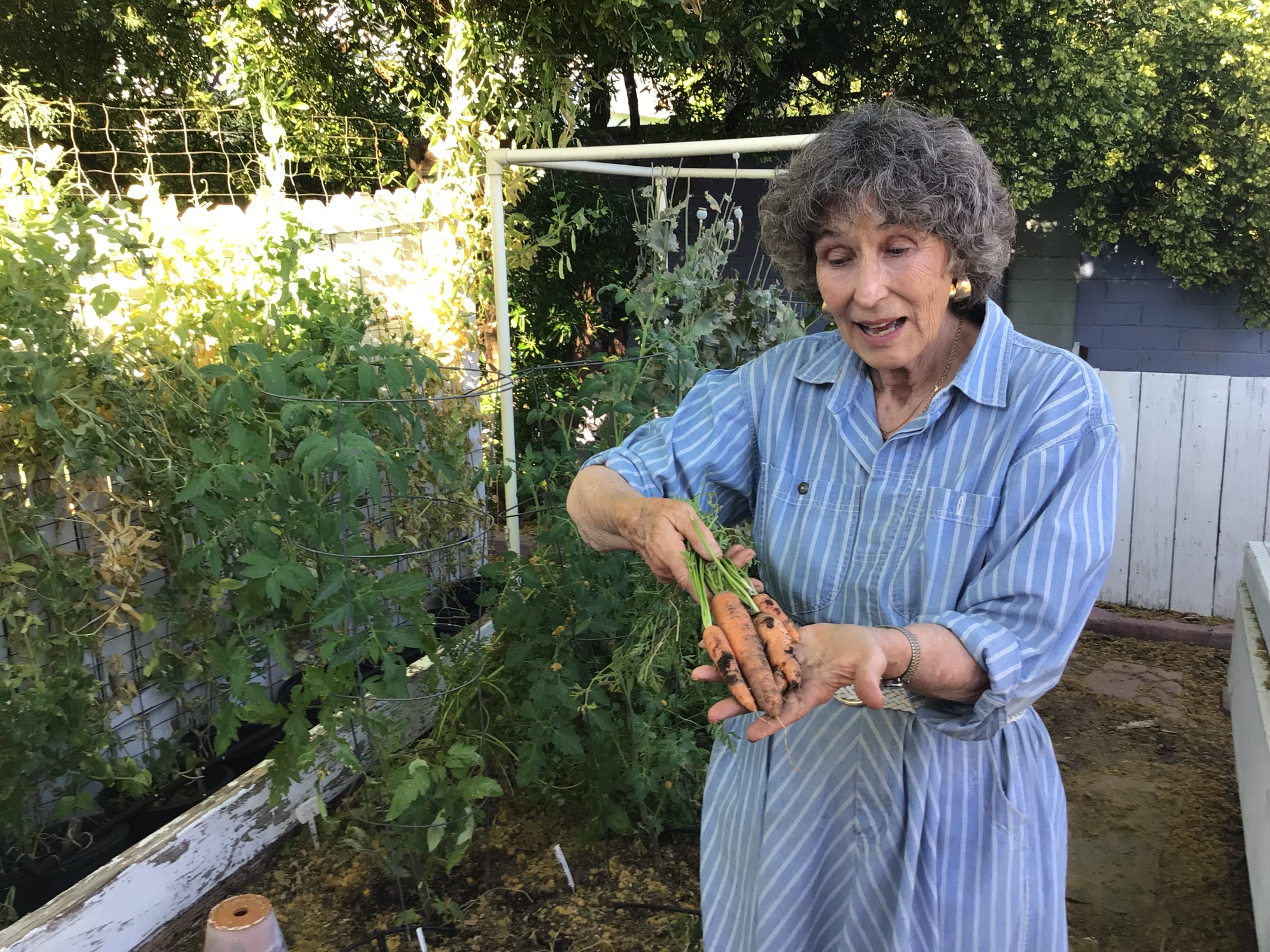
GET READY FOR NOPALITO SEASON

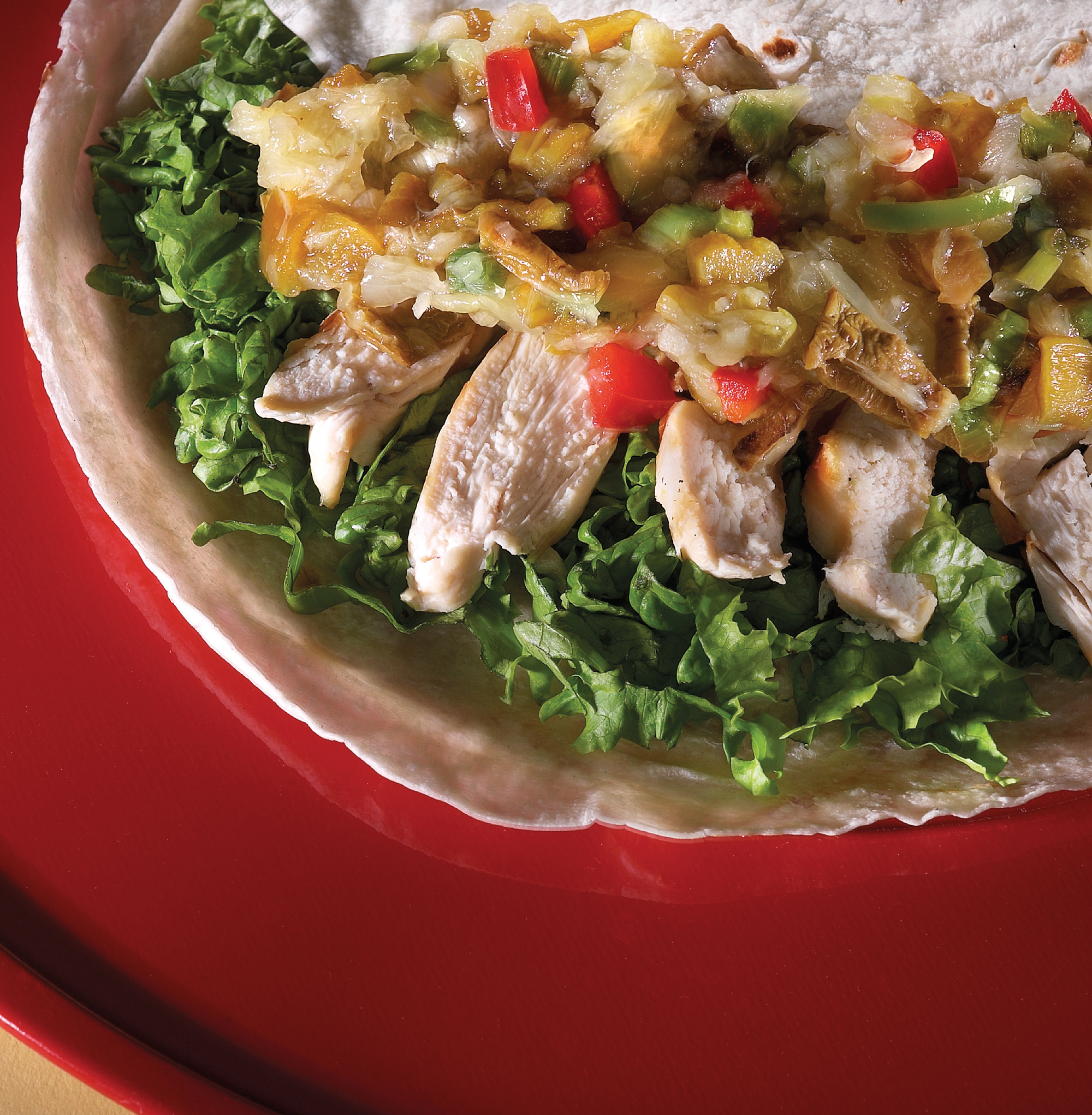
Grilled Chicken with Nopalito and Pineapple Salsa

Grilled Chicken with Nopalito and Pineapple Salsa (from The Prickly Pear Cookbook)

(Note: I will be teaching a class on cooking with nopales at the Presidio of Tucson on April 3. You can sign up on their website.)

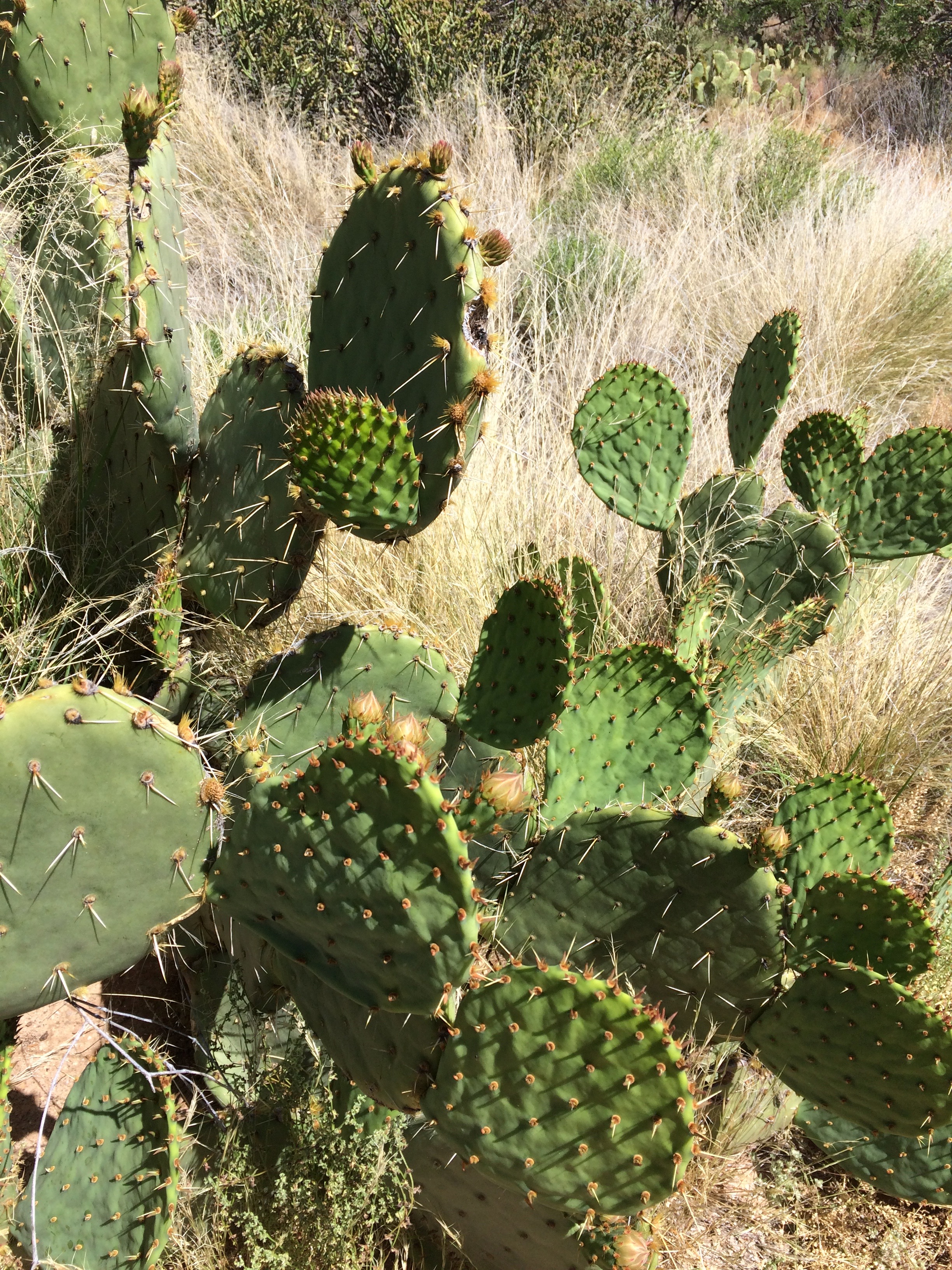
The new prickly pear pads (nopales) that we cook and use for nopalitos are usually ready in from March to early May.  It’s Carolyn here today tempting you with two recipes for a delicious salsas made with nopalitos. (Definition of nopalito: a nopal, or cactus pad, cut into little pieces).

Why bother to learn how to use prickly pear pads? For hundreds of years, both the fruit and pads were considered folk medicine in Mexico and early research showed that the fibers in nopales were helpful in curbing blood sugar. Today, researchers in the US and Europe are using sophisticated laboratory techniques and specially bred mouse models (that would be transgenic mice, not transgender mice)  to investigate prickly pear fruits, pads, flowers, and seeds as a cure for a wide array variety of ills.

Investigators are looking into prickly pear compounds as antioxidant, antiviral, anti tumor, anti diabetic, and antiparasite.  It may be useful in combating a range of cancers including leukemia, lung, gastric, colon, and ovarian. Studies have considered its use in the treatment of ulcers and alcoholism and a possible role in boosting memory and energy metabolism. Many research labs are investigating prickly pear for cancer prevention.

The many varieties of prickly pear put out their new growth when the spring warms up. All prickly pear pads are edible (meaning they not only won’t kill you but in this case are very nutritious), but they are only appropriate for food when they are new. After about six weeks, they develop a fibrous infrastructure. The easiest kind of pads to prepare are those from the large Mexican variety of prickly pear that do not grow wild north of Mexico. You can grow them in your yard if your winter doesn’t bring much freezing. Or you can get them at a Mexican grocery story. They are called Ficus indica or sometimes Burbank because Luther Burbank did some breeding work on them. The wild cactus pads are also delicious, but harder to prepare because of the abundance of spines.

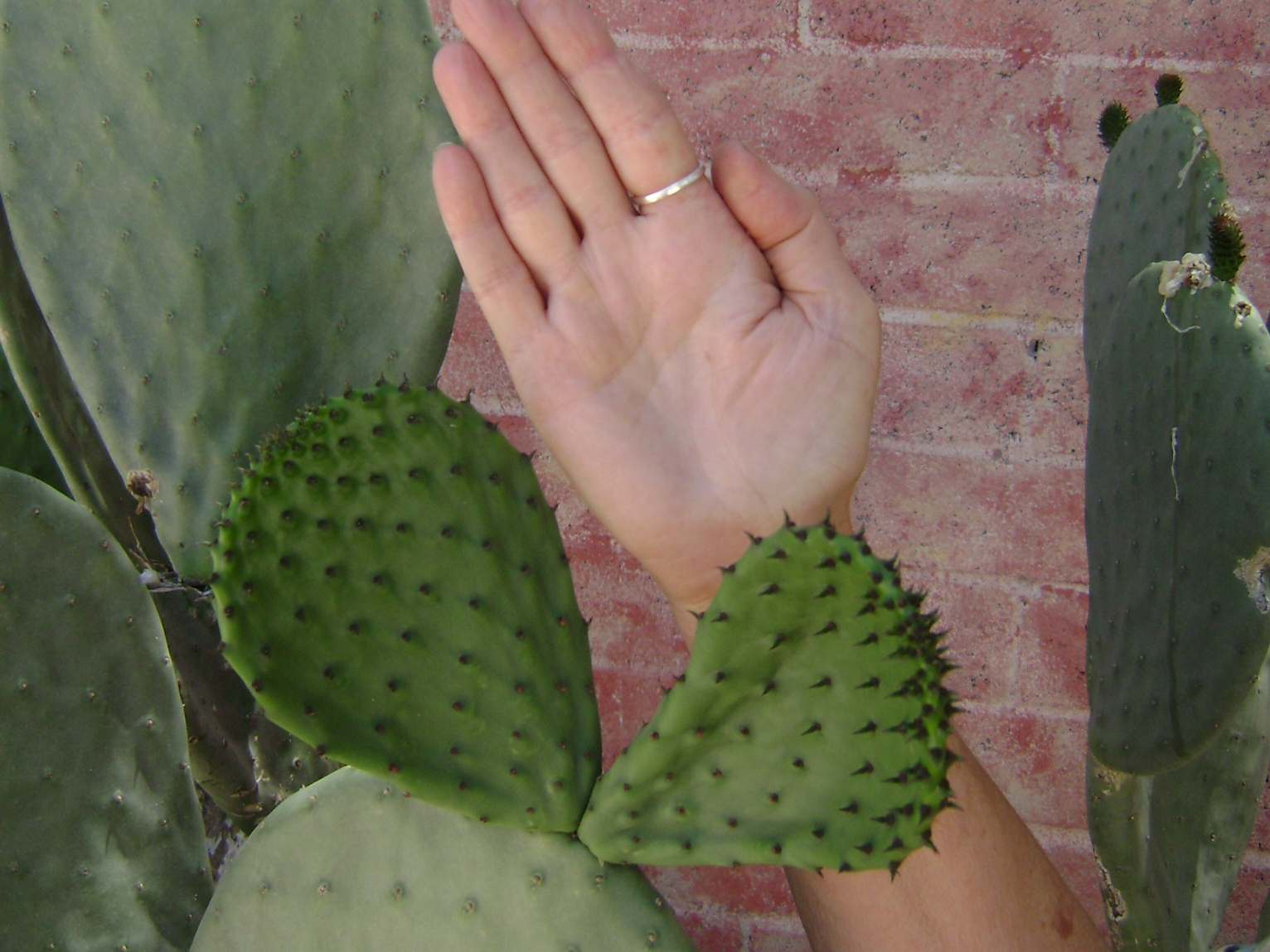
You can do a rough estimate of when a pad is ready to pick if it is about the size of your hand. The nopales available in Mexican grocery stores are grown by farmers who know how to manipulate the plant to keep fresh pads coming year ’round.

Pick nopales in the spring when the size of your hand.

Pick nopales in the spring when the size of your hand.

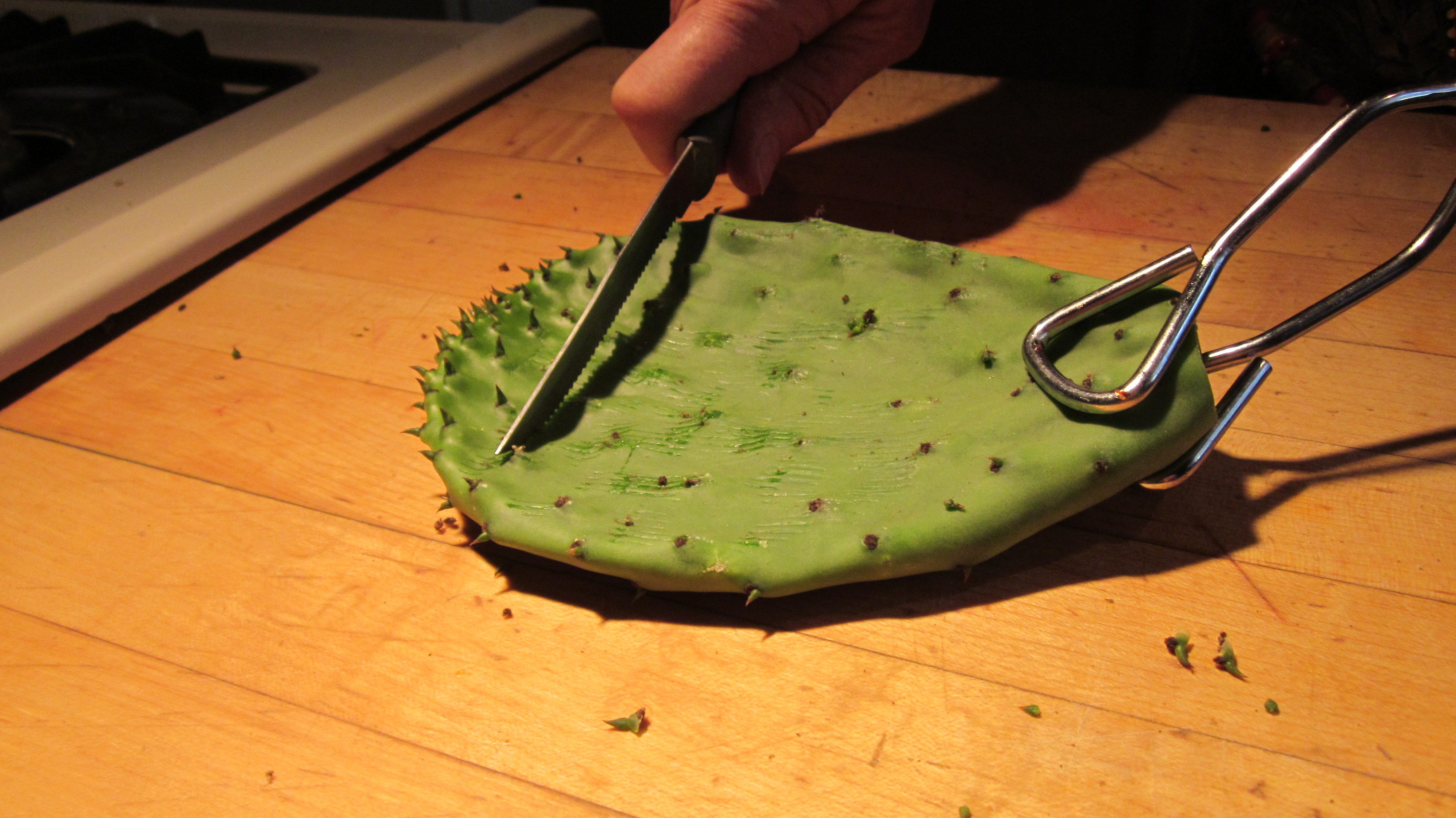
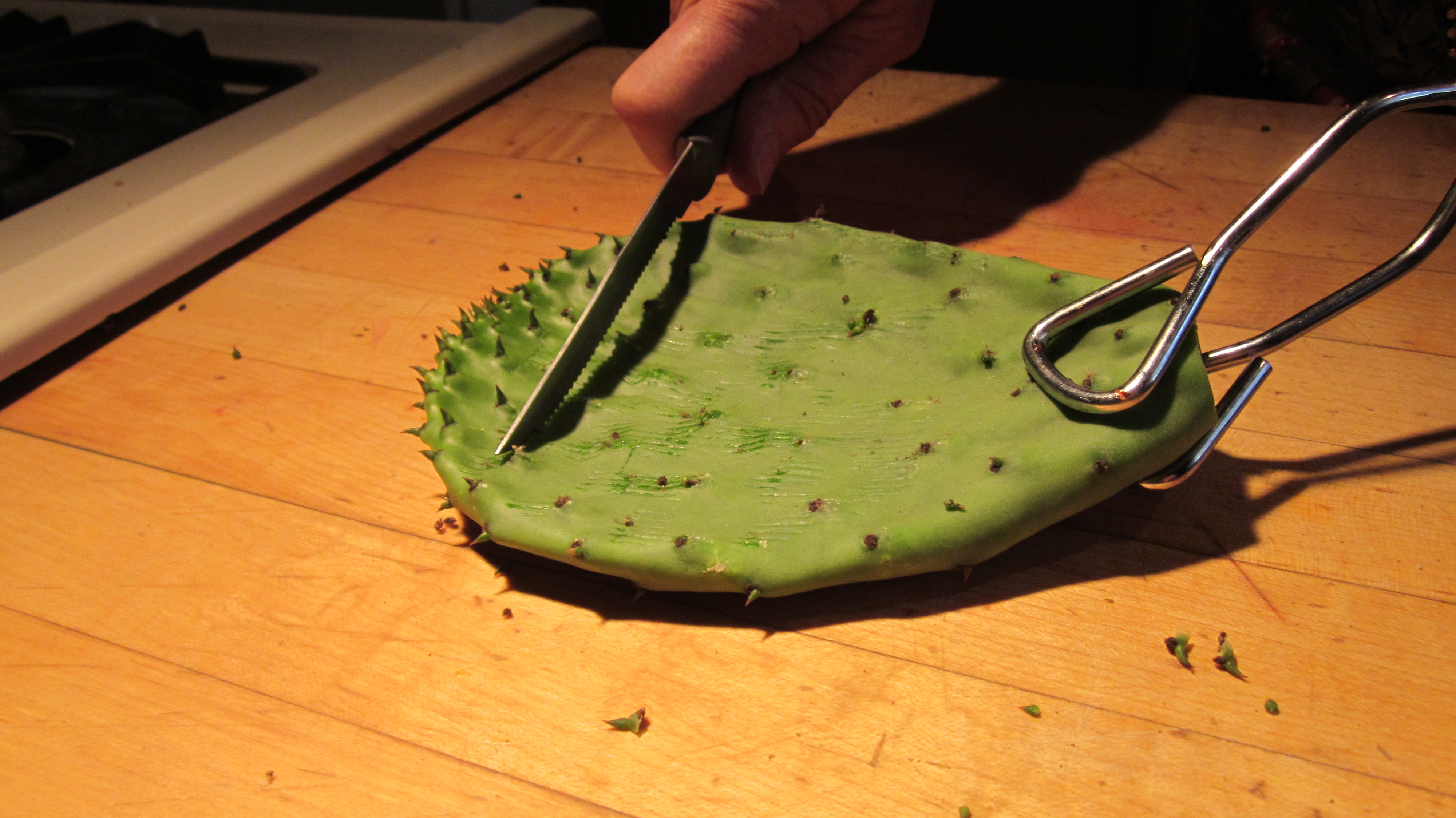
To prepare the nopales, you’ll use  tongs, of course, and then don rubber kitchen gloves to protect your hands as you get rid of the stickers. You don’t need industrial strength gloves, just good quality ones from the grocery store will do. Using a common steak knife, scrape vigorously against the growth (from outer edge to stem) to remove the stickers.

Scrape the thorns vigorously in the direction of the stem.

Scrape the thorns vigorously in the direction of the stem.

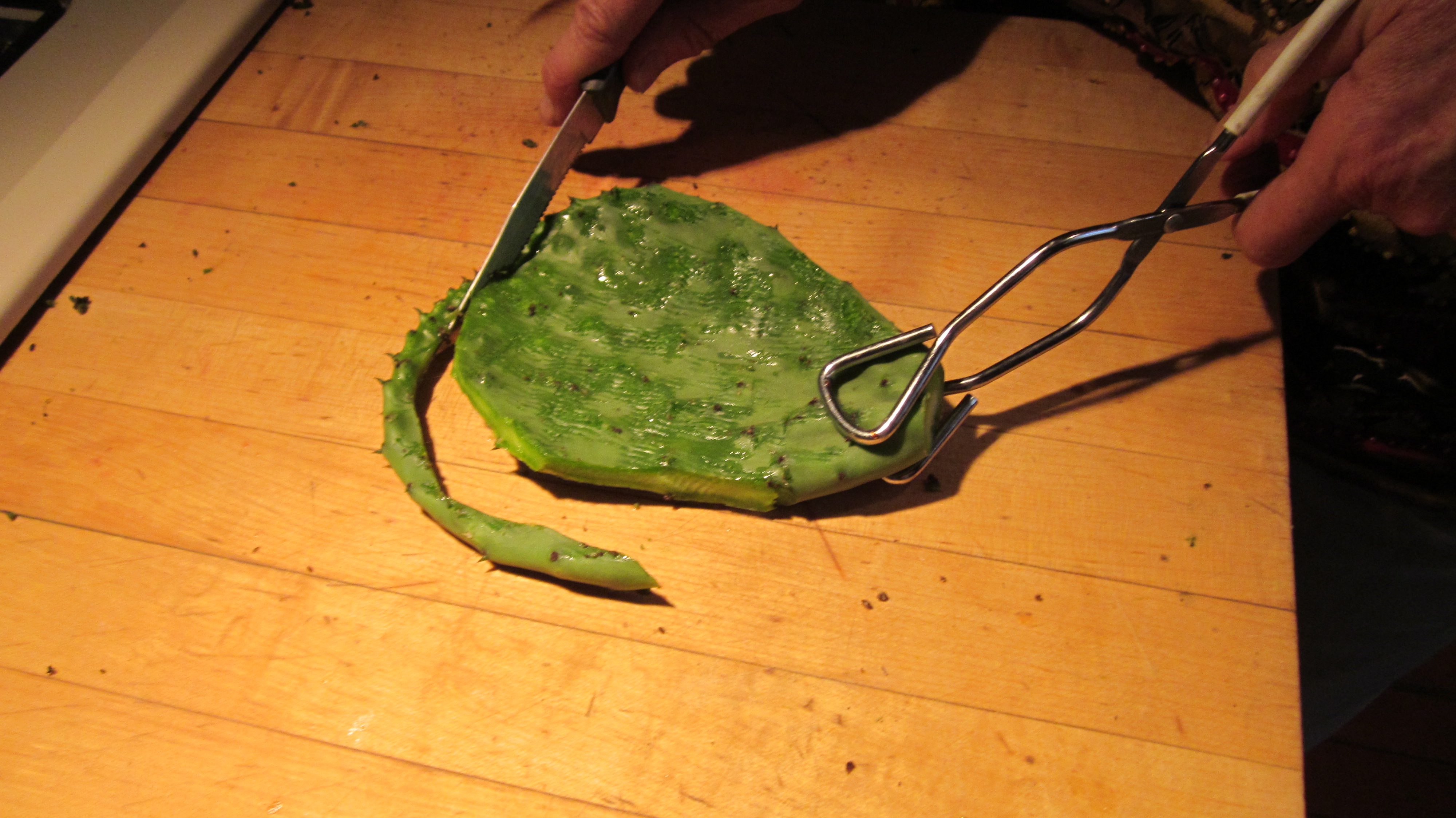
The edge has lots of stickers so just trim it off.

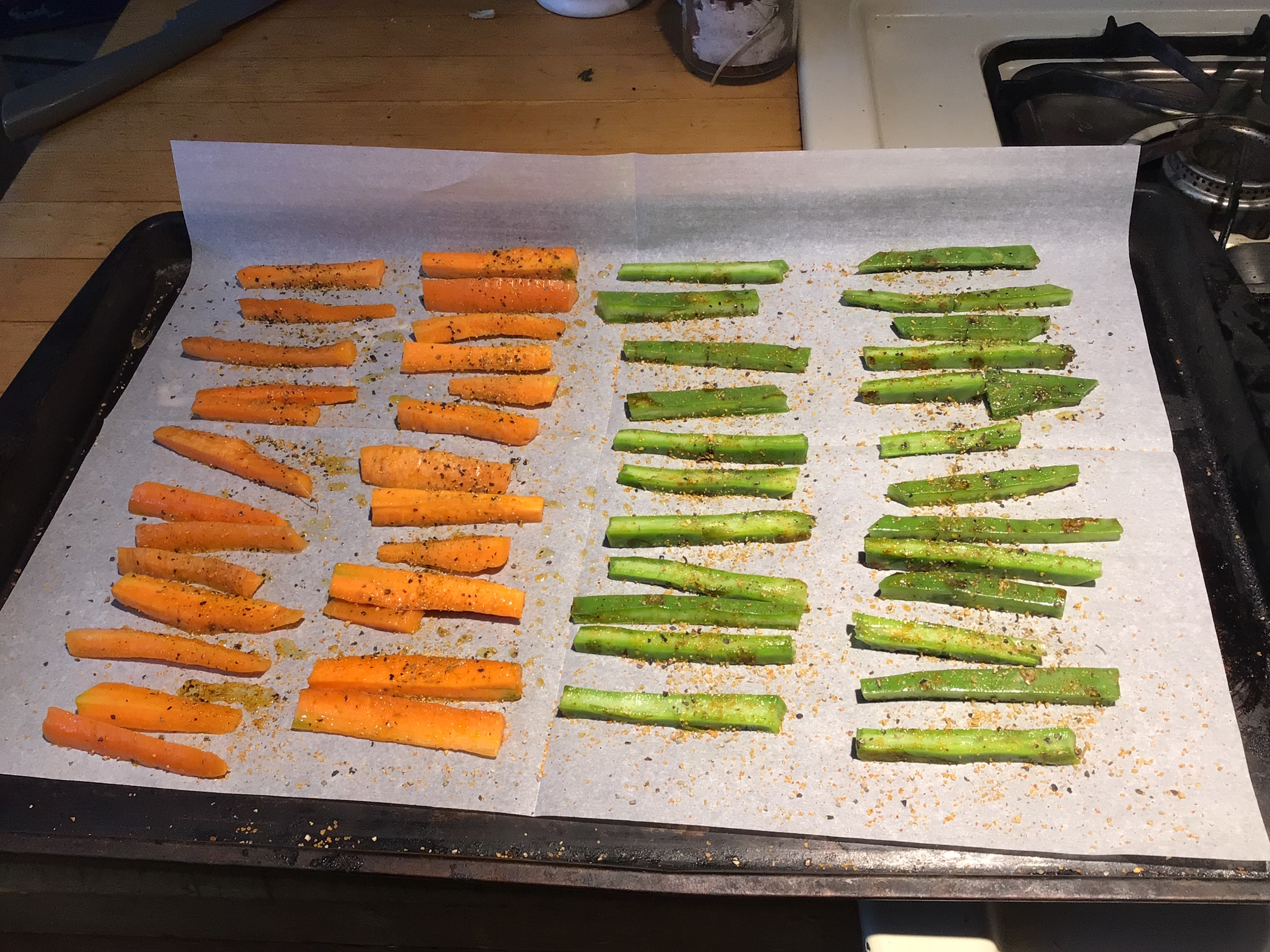
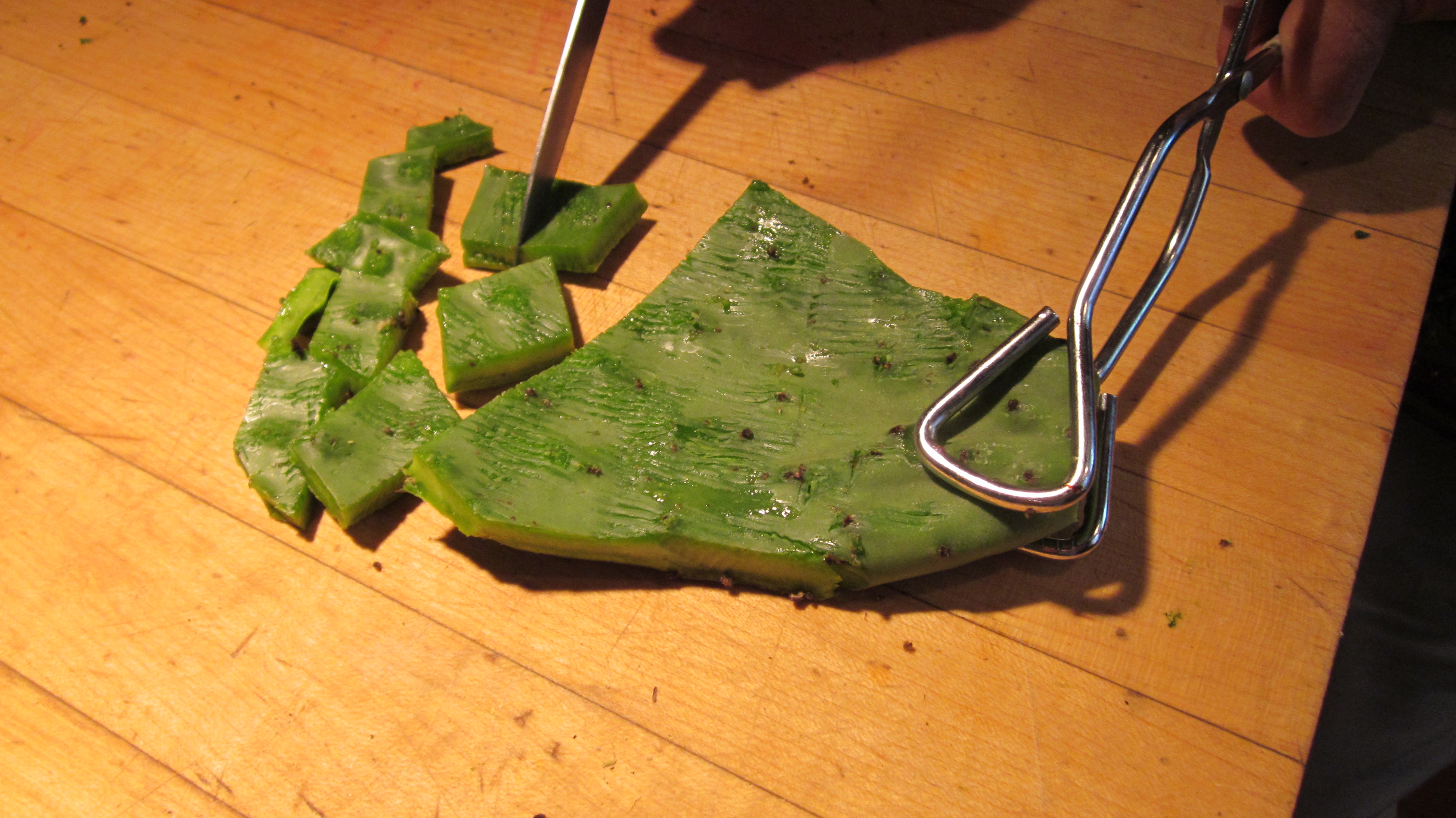
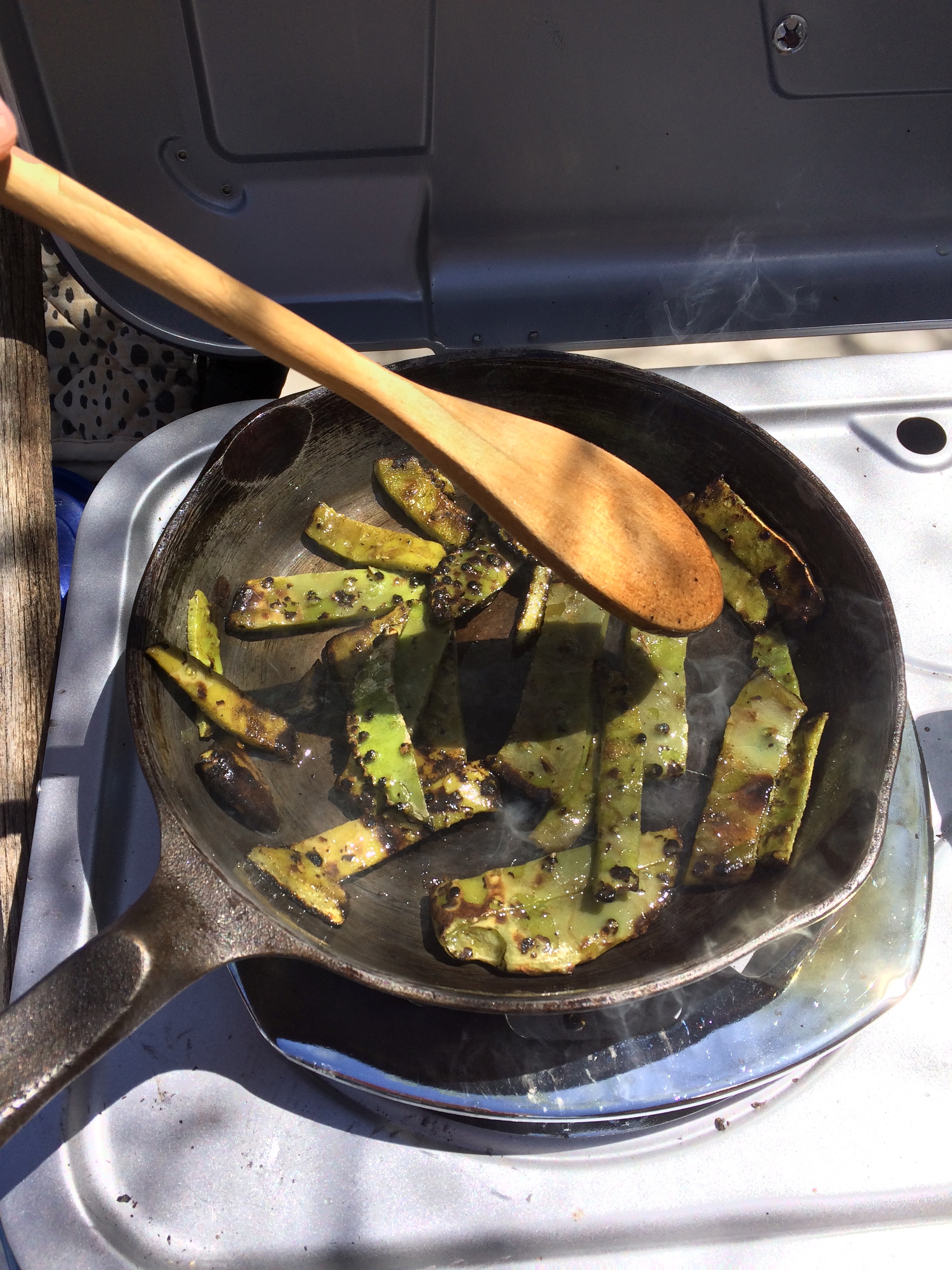
IMG_0196At this point, you can cut it into small pieces to cook or leave it whole and cut it up later. You can cook them in a frying pan filmed with oil, or use the Rick Bayless method (of TV show fame) and toss them with a little oil, sprinkle with sale, put on a cookie sheet and roast in a 375 degree oven for 20 minutes.  In any case, you should check them and turn them over as they cook.

Cut into small pieces to cook.

Cut into small pieces to cook.

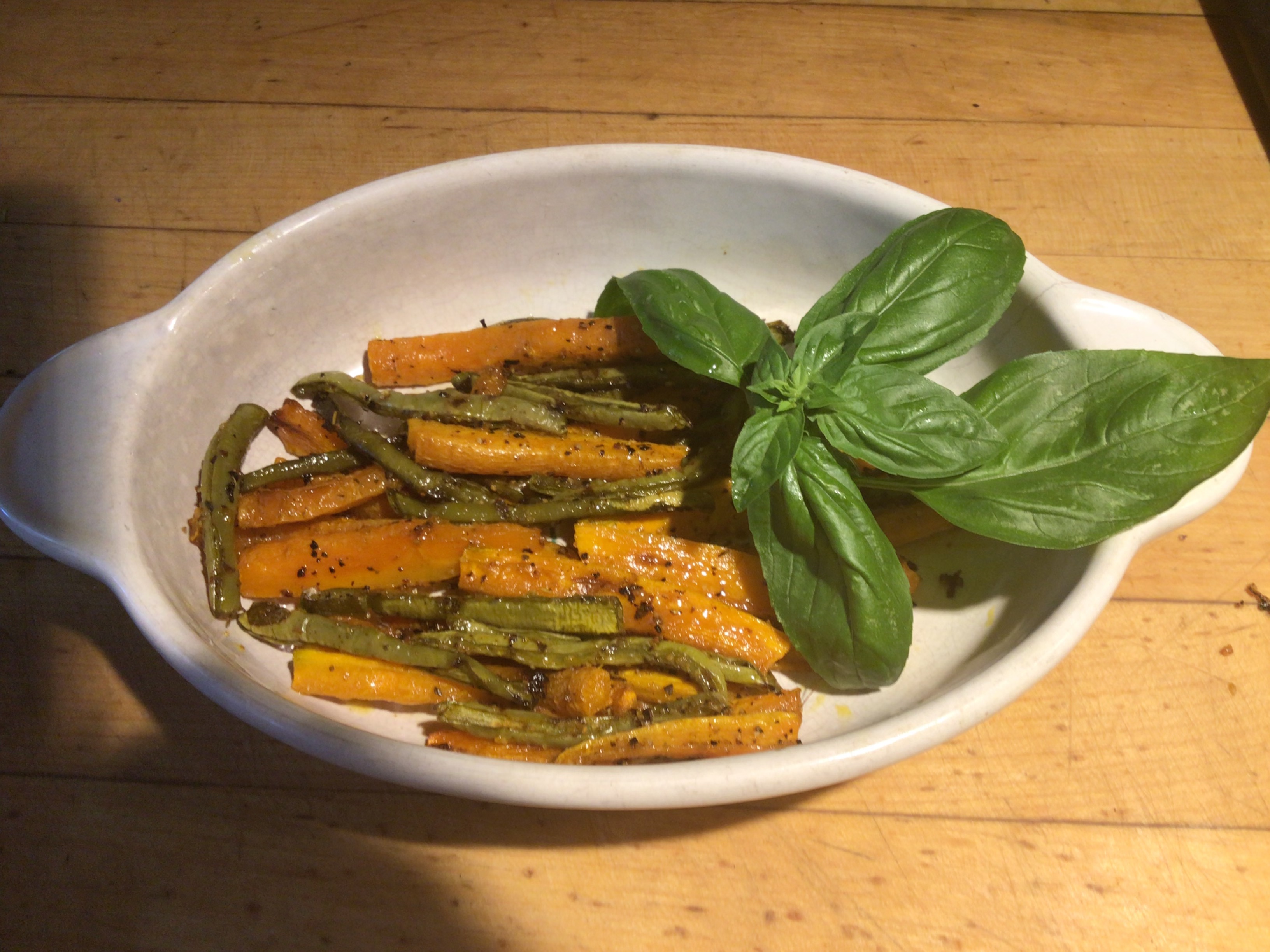
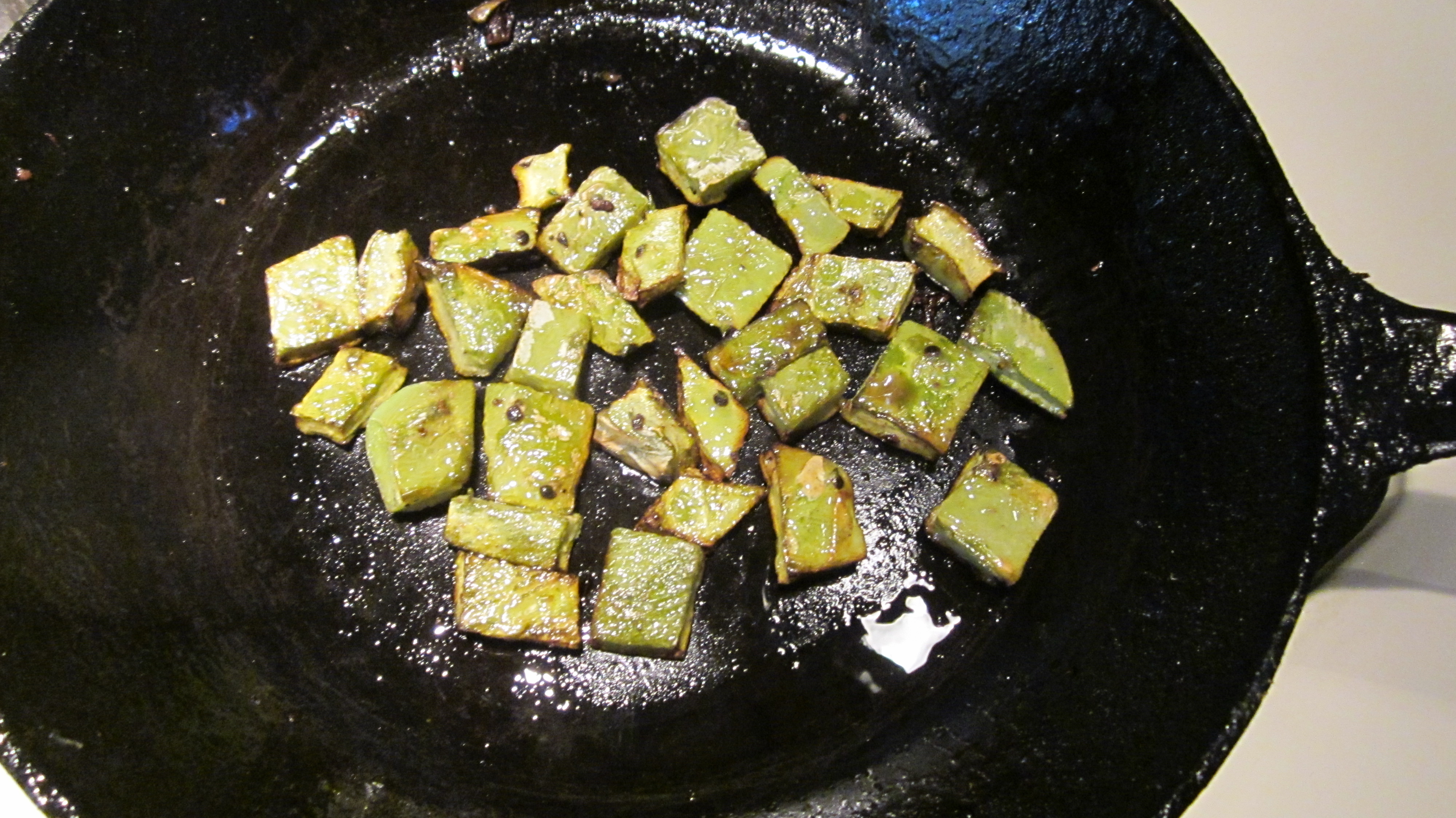
The nopales will turn from bright green to a more olive color as they cook. The gummy sap that some people find objectionable will dry up and become less noticeable.

The cooked nopalitos turn from bright green to olive.

The cooked nopalitos turn from bright green to olive.

You can also cook nopales on the barbecue alongside some chicken to make a delicious taco. 

Here’s the recipe for the sauce in the picture at the top of the blog:

Nopalito and Pineapple Salsa

1 raw, cleaned prickly pear pad

1 tablespoon vegetable oil

1 cup canned crushed pineapple packed in it’s own juice

¼ cup finely chopped red bell pepper

¼ cup thinly sliced green onions, including some tops

1 tablespoon canned green chiles

1 finely minced serrano chile (optional)

½ teaspoon finely minced garlic

2 tablespoons lime juice

¼ teaspoon salt

1 tablespoon finely minced cilantro (optional)

Cut prickly pear pad in 1 ½ inch squares.  Film a heavy frying pan with the oil and add the prickly pear pads.  Cook over low heat, turning occasionally, until pieces have given up much of their juice and are slightly brown. Remove from pan, cool, and chop into pieces as wide as a matchstick and about ¼-inch long.

Transfer to medium bowl.  Add remaining ingredients, stir to combine and set aside for flavors to mingle.

Nopalito and Bean Salsa

Here’s an even easier recipe and you might have everything except the nopales in your pantry.

1 1/2 cups commercial red salsa

1/2 cup canned black beans, rinsed

1/2 cup cooked nopalitos

1 tablespoon lime juice

1-2 tablespoons chopped cilantro

Combine all ingredients in a bowl. Serve with chips.

______________________

You can learn more about the history of food in Southern Arizona in my latest book A Desert Feast, the story of the last 4,000 years of food in the Sonoran Desert. Want more recipes using  foods of the Southwest? You’d find ideas for collecting and using 23 easily recognized and gathered desert foods in Cooking the Wild Southwest: Delicious Recipes for Desert Foods.  . Recipes from top Southwest chefs are collected in The New Southwest Cookbook. Just click on the titles for more information. You can learn more about me on my website.
Prickly Pear Borscht: A Novel Way to Mix Cultures

(The Savor the Southwest guest poster today is Barbara Rose. She has lived and worked at Bean Tree Farm since 1985. She is an enthusiastic expert in all things Sonoran Desert and has taught hundreds of students how to live in and appreciate this fragile and glorious ecosystem. We thank her for her knowledge and years of inspiration.)

My grandma Evie was born in Brooklyn in 1900 to Ukrainian immigrants, and she moved to southwest Florida in the 1920s. Her back yard was a forest of avocado and citrus trees, and her kitchen was fragrant with crocks of garlicky green tomatoes, cucumber pickles and pots of simmering chicken soup “with the feet” (her way of saying the whole chicken). She smeared onion-infused chicken fat on slices of dense black pumpernickel, and served up bowls of cold, sweet-sour beet borscht, with a hot boiled potato and big dollop of sour cream. I am so grateful that she shared with me a treasure of food and family stories.

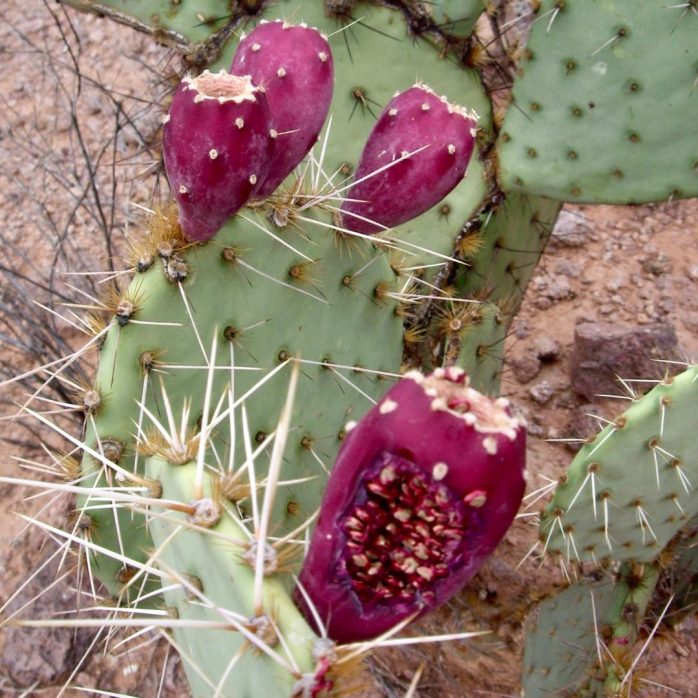
Beets have been pickled and soured by lactic acid fermentation for ages. I love beets, but I’m not so good at growing them. Prickly pear cactus thrive, and the ripe fruits are delicious, nutritious, and a gorgeous color.

The animals know when prickly pears are ripe. If they have been nibbling, it is time to pick.


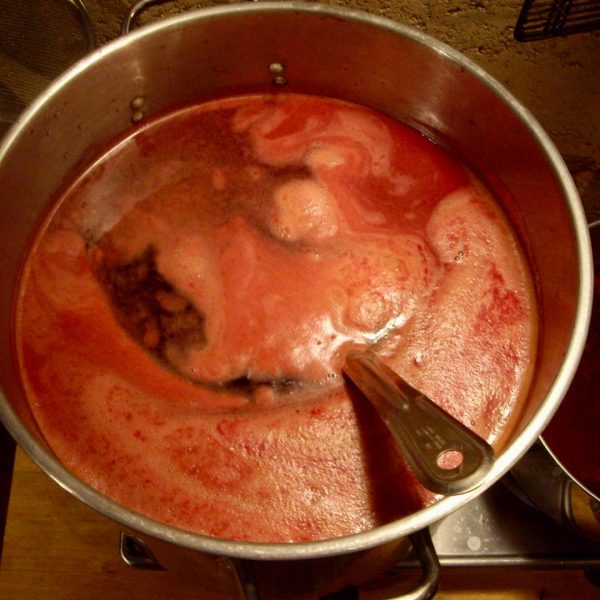
I’ve developed a way to make borscht with fermented prickly pears- red desert fruits that sour nicely, have a sweet earthy flavor, and carry far away family food traditions into the desert food forest I love and care for!

I hope you enjoy the recipe, expand on it, and make it your own.


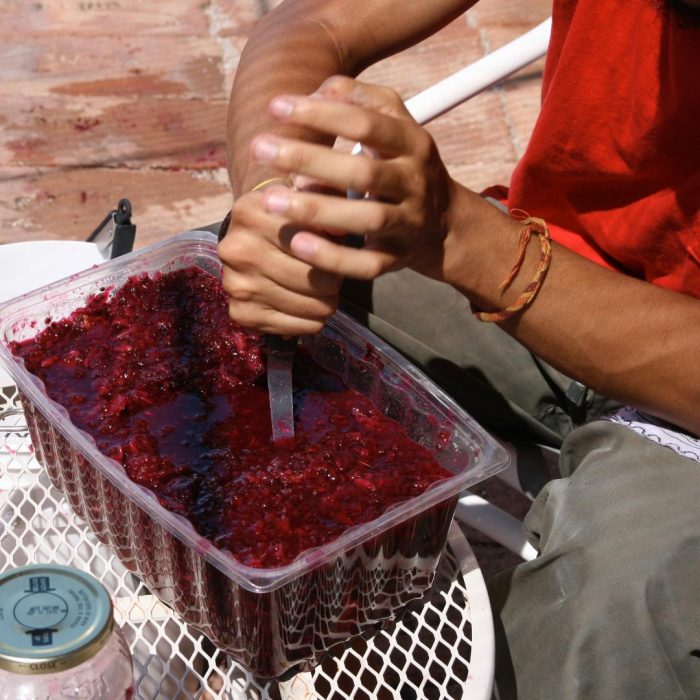
Mash the fruit. It is easier if you freeze first as this helps break down the cell walls.


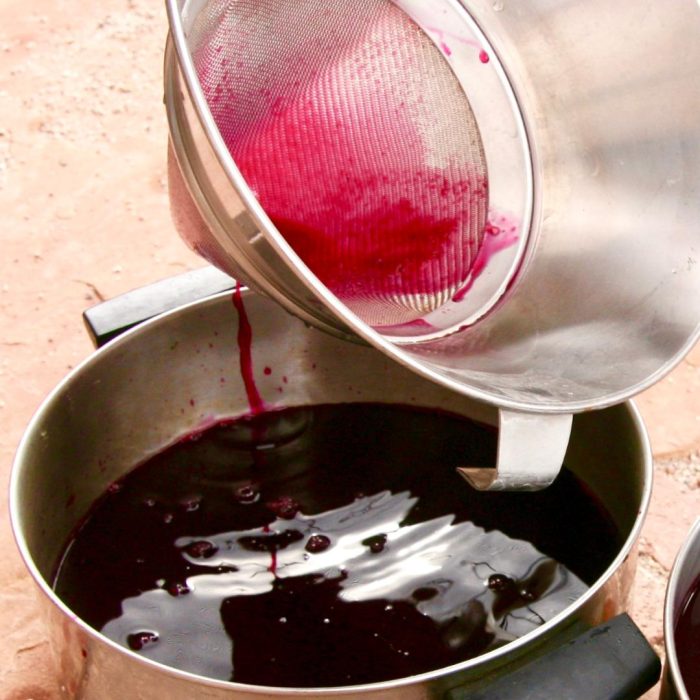
Be sure to strain the liquid through a fine mesh strainer to catch every last glochid (those are the tiny thorns).


Simmering the juice and broth helps meld the flavors.

SONORAN DESERT BORSCHT

Makes 2 quarts

1 quart fermented, sweet-sour prickly pear fruit juice (see method below)

1 quart broth, strained and chilled (chicken, vegetable, bone, mesquite, or combo, flavored with herbs, alliums, chiles, or whatever you have.)

1 hot boiled potato per serving

Sour cream, crema, yogurt

Combine prickly pear mixture and broth. Simmer with salt, pepper, chile, and your choice of herbs to taste to blend flavors. Chill if serving cold.

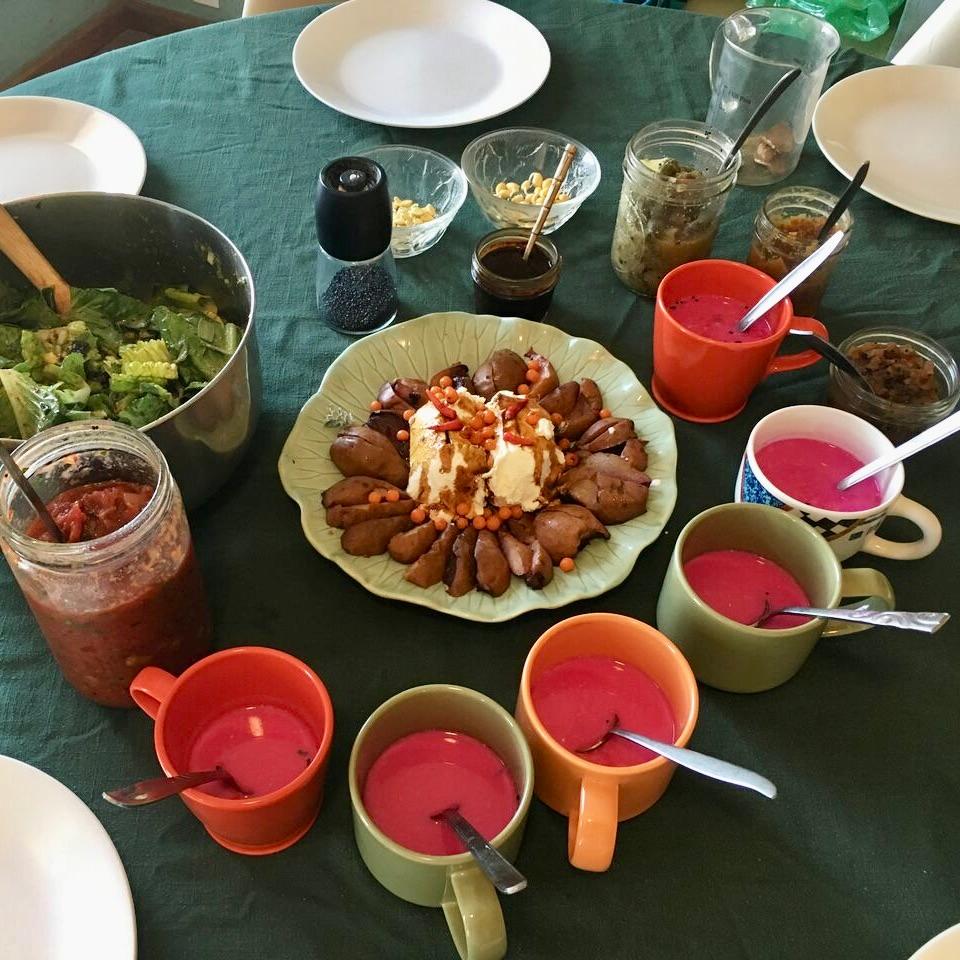
To each bowl of borscht add a boiled potato. Garnish with sour cream, and serve with sides of hard-boiled eggs, green onion, and sliced cucumbers.. Borscht turns a gorgeous magenta-pink when the cream is stirred in. Enjoy!

How to ferment prickly pear juice:

Add 1/2 cup of kombucha or whey (liquid strained from yogurt or cheese-making) to 1 quart of prickly pear juice a day or so ahead of making your borscht. Cover with a cloth and taste on occasion. It will develop a sweet-sour flavor as it ferments. When it has that “tang” but still retains some sweetness, it’s ready to use. Sometimes I combine citrus juice with the prickly pear and ferment both. This juice will store in your  fridge for some time, becoming more sour from fermentation. It can also be frozen.

Final step: Serve for lunch. Goes well with other desert delicacies. Find recipes in the Desert Harvesters’ cookbook  Eat Mesquite, a Cookbook for Sonoran Desert Foods.

_______________________________________

You can find more recipes for prickly pear and other wild desert foods  in Eat Mesquite and More: a Cookbook for Sonoran Desert Foods and Living, available at Food Conspiracy Co-op, EXO, Crisol, Mission Garden, Desert Museum, and online at desertharvesters.org. More recipes can be found in Cooking the Wild Southwest: Delicious Recipes for Desert Plants. 

Happy Holidays from the Savor Sisters

Happy Holidays to all our readers from the Savor Sisters: Amy, Carolyn and Tia Marta. we are grateful to all of you for following our blog, some of you for many years, as we share our enthusiasm for wild foods, local Southwestern foods, and spices and flavorings. Since you find our offerings interesting, perhaps you have friends or relatives who would also read or cook in Southwest style. If you are stymied for the perfect gift, we have some ideas for you. 

Prickly pear fruits are found throughout the Southwest. They are delicious, full of vitamins -and free! If someone you know likes to cook, a copy of The Prickly Pear Cookbook might help them try something new. The book includes recipes for both the magenta-colored fruit and the nutritious pads called “nopales.” The link above takes you to Amazon, but consider ordering from  your local bookseller. 

For the Southwest history buff and those interested in regional food, A Desert Feast: Celebrating Tucson Culinary History tells the tale of how corn and irrigation entered what we now call the United States. Agriculture spread from the Santa Cruz Valley very slowly north and east to the rest of the United States. Lavishly illustrated, the book has won four awards, one for design.  Order from Amazon, Native Seeds/SEARCH, or your local bookseller. 

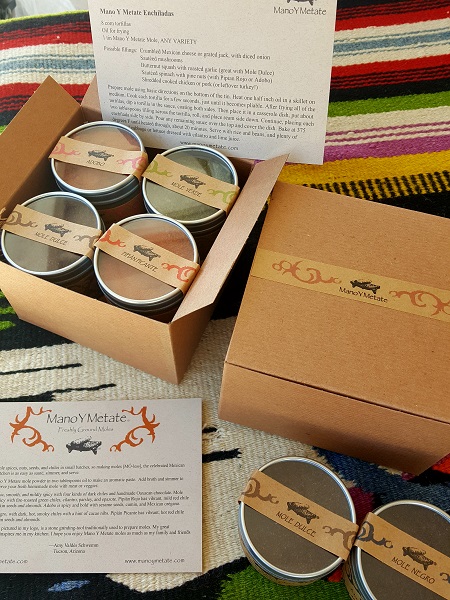
Also, FOODS make great inspiring, clutter free gifts! With Mano Y Metate mole powders, culinary creatives can go WILD and those just learning to season food can add a pinch to any dish for balanced flavor that taste like someone has been in the kitchen their whole life, and all that day.

Mole gift boxes can now be customized! Choose which variety of mole with chocolate: Mole Dulce with handmade Oaxacan chocolate and a homey taste that reminds me of my grandma, or Mole Negro with a spicier smoky complexity made with fair trade roasted cacao nibs. Also, choose between my original mild Pipian Rojo made with Santa Cruz mild red chile from Tumacacori Arizona or Pipian Picante made with Santa Cruz hot chile, for a medium spice level. Both pipianes are full of pumpkin seeds, or pepitas, almonds and warming spices.

Rounding out all gift box sets are tins of Adobo and Mole Verde for contrast and variety. Included are recipes to make the classic mole sauces and a recipe card for Enmoladas, enchiladas made with mole sauce, and lots of ideas for vegetarian, vegan and meaty fillings. Butternut squash is a favorite!

I (Amy here) personally make and package the mole, so I can send it directly to your loved ones or business contacts, or of course to you so you can give it in person.

I’ll be IN PERSON at Tohono Chul Park’s Holiday Nights December 10,11,17,18 evenings 5:30-8:30pm. (Masks required, outdoors). Stop by our booth and talk about food with my family. We would love to meet you!

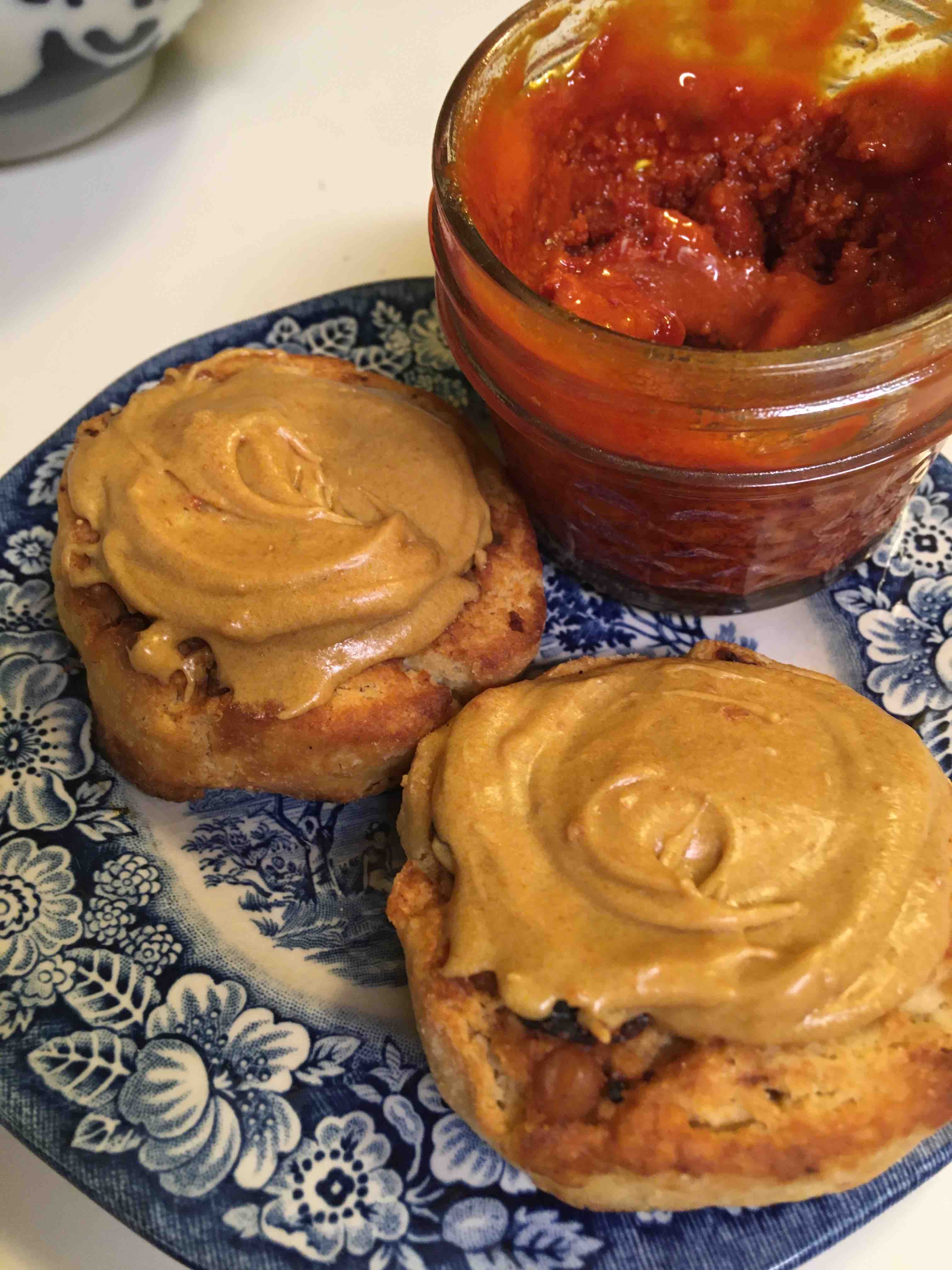
Easy Cinnamon Swirls with Sweet Southwest Glaze

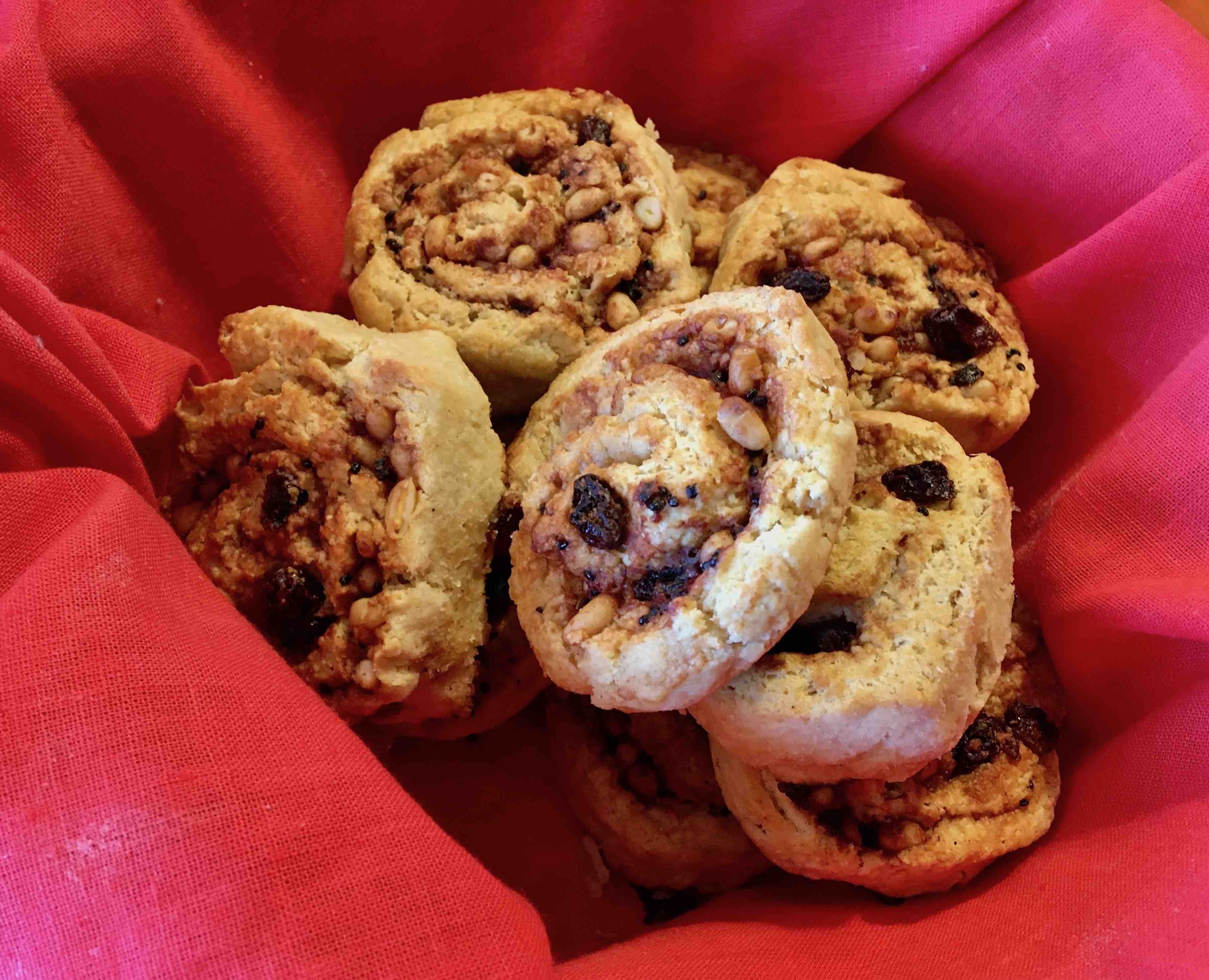
Quick cinnamon swirl biscuits can dress up any celebratory breakfast. These have special Southwest surprises inside–Read on!

Here’s an easy and festive treat for warm winter breakfasts!  Get your ingredients out now in prep for New Year’s morning, Three King’s Day, for Orthodox New Years, or a birthday delight.

Tia Marta here to share how, using a quick biscuit dough, you can insert your favorite wild desert berries and seeds to make a sweet swirl–no long waiting on yeast-rising for this goodie.  Dig out those wild seeds and juices you harvested last summer (always thinking ahead)….

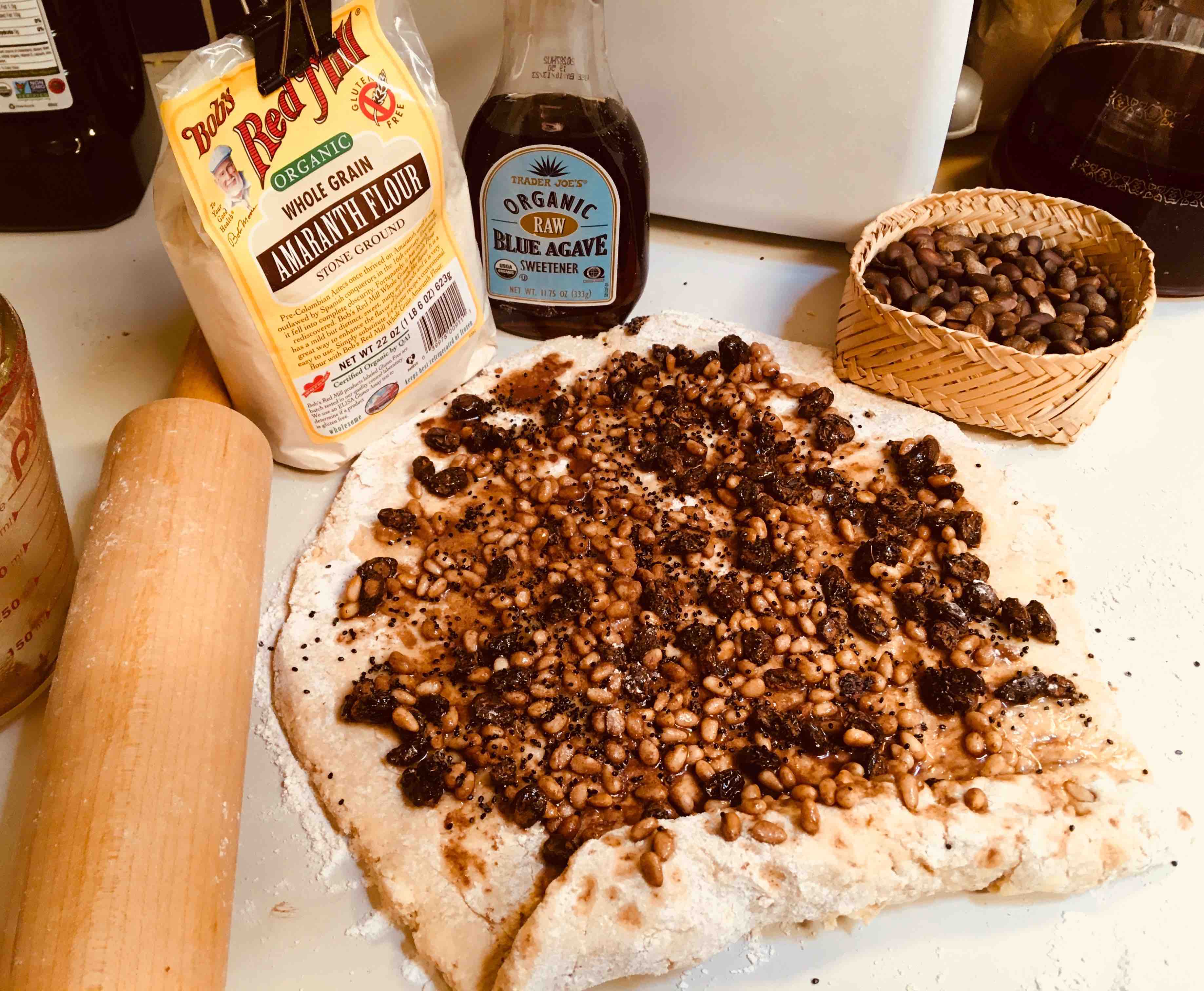
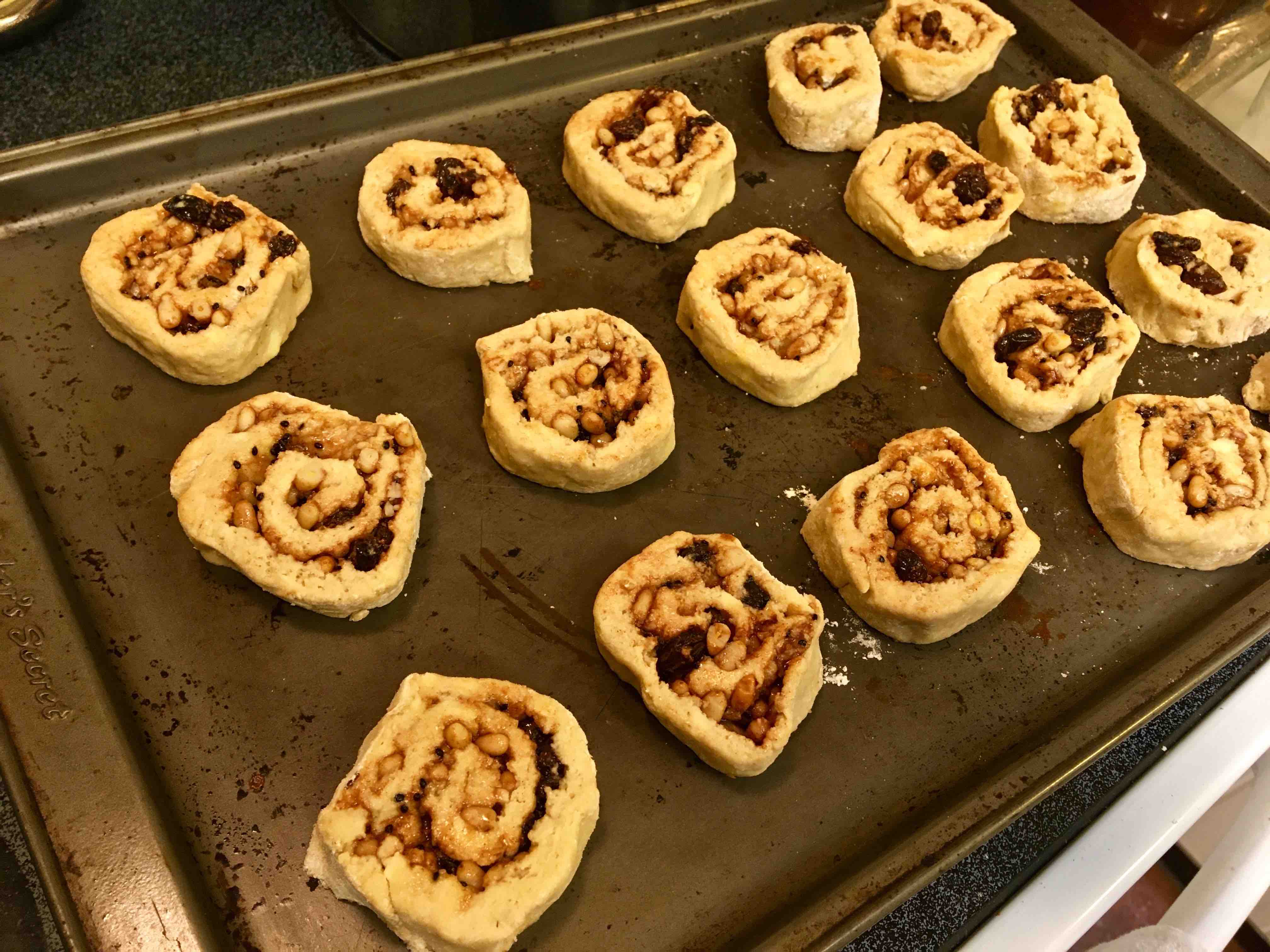
Roll out your biscuit dough and spread with your mix of pinyon nuts, agave syrup, and dried berries. Then, roll up the dough tightly into a “log” shape.

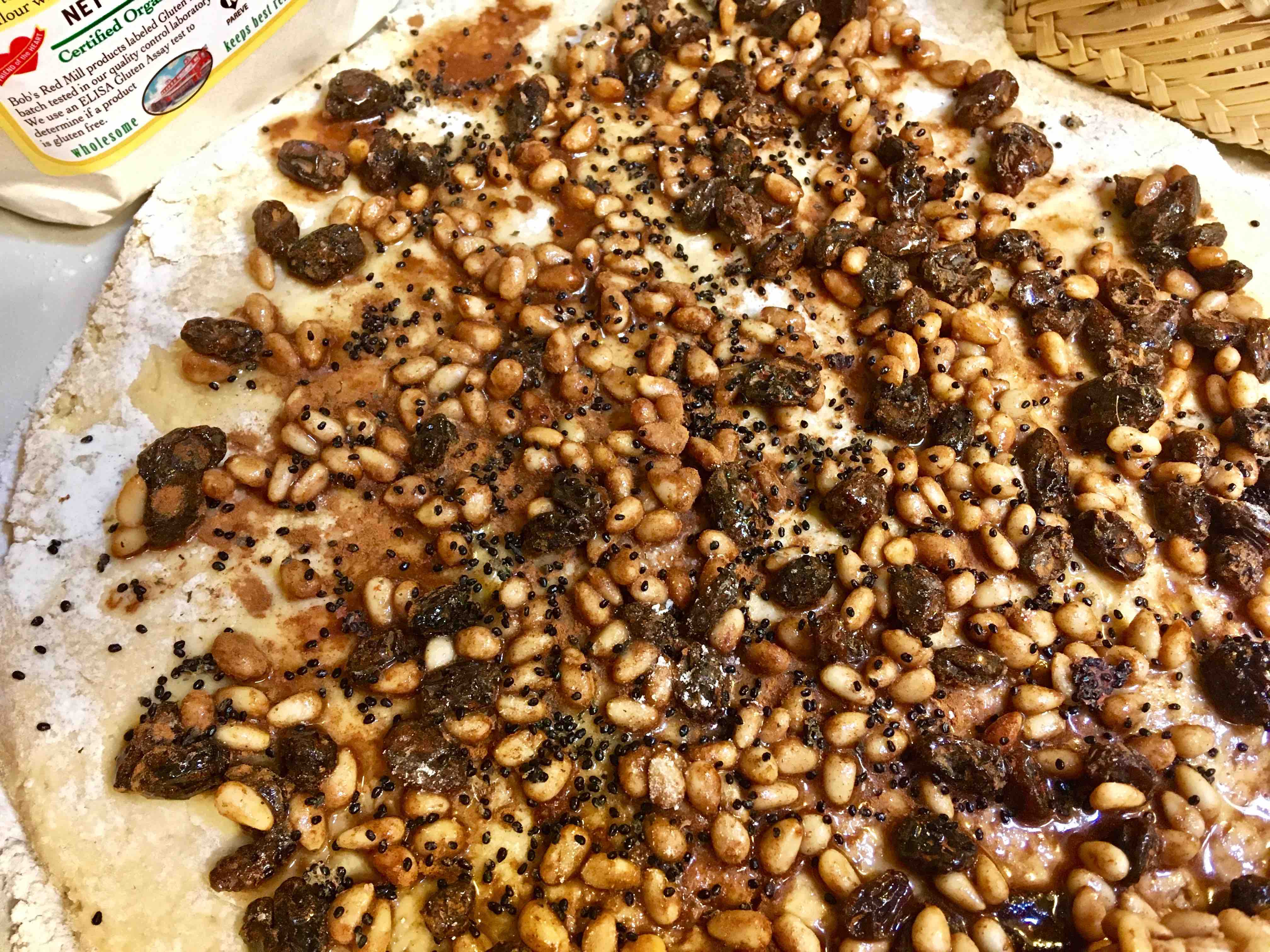
Before rolling up your dough “log” sprinkle with saguaro seed, chia or popped amaranth.

RECIPE–SOUTHWEST CINNAMON SWIRLS

Ingredients for dough: 

2 cups sifted flour (*heirloom white Sonora wheat with 1/4 cup amaranth flour makes a great mix)

2 1/2 tsp baking powder

3/4 tsp sea salt

1/3 cup butter

3/4 cup milk of any kind

*white Sonora wheat is available at Barrio Bread Tucson; whole wheatberries for home milling are available at NativeSeedsSEARCH  or from www.flordemayoarts.com .

Ingredients for inner swirl (use what you have):

1/4 cup agave nectar (or or mesquite syrup, or desert honey which will spread more slowly)

1/4 cup pine nuts (de-hulled) (OR, chopped AZ walnut or pecan meats, or crushed bellota acorn meats)

1/4 cup dried berries (desert or canyon hackberry, dry saguaro fruit, cherries, raisins, cranberries)

1/2 tsp ground cinnamon

1/8 cup saguaro seeds (OR popped amaranth seed, or wild chia seed)

Directions for inside swirl:  Mix together all swirl ingredients (except seeds) for spreading on dough.

Directions for dough:  Sift dry ingredients together.  Cut in butter to pea size or smaller into dry mixture.  Add milk and stir to form dough ball.  Knead with fingers 10-20 “turns”.  Pat dough out on flour-dusted board.  With flour-dusted rolling pin, roll dough to about 1/2 inch thickness.

Place dough swirls on ungreased cookie sheet to bake 12-14 minutes.

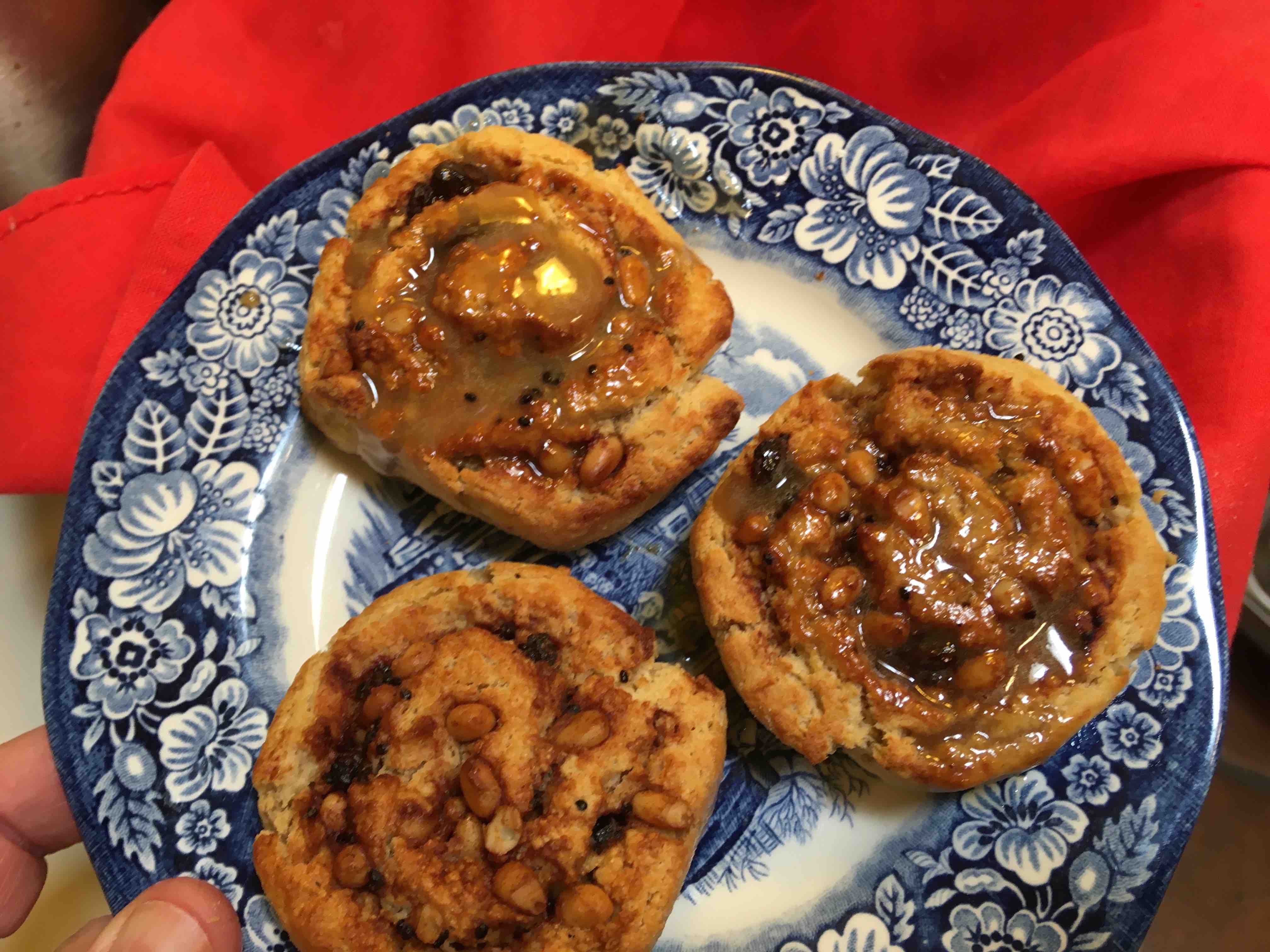
Preheat oven to 450F.  Spread gooey cinnamon/agave syrup/nut mixture evenly onto flattened dough.  Sprinkle with desert seeds. Then tightly roll the flattened and bedecked dough into a “log”.  With a sharp knife, cut rounds of the “log” 1/2 inch thick and place each swirl on an uncreased cookie sheet.  Bake 12-14 minutes.  Serve hot with melted butter, or top with (tah-dah!) Tia Marta’s saguaro or prickly pear glaze (recipe follows).

Serve cinnamon swirls HOT out of the oven!

Buttered Desert Cinnamon Swirls — yum!  For an even more decadent topping, top with a glaze….

RECIPE–Tia Marta’s Easy Saguaro Glaze and Southwest Hard Sauce

Ingredients:  2-3 Tbsp softened butter

1/2 cup sifted confectioners’ sugar

1/3 cup saguaro syrup, prickly pear syrup, or mesquite syrup

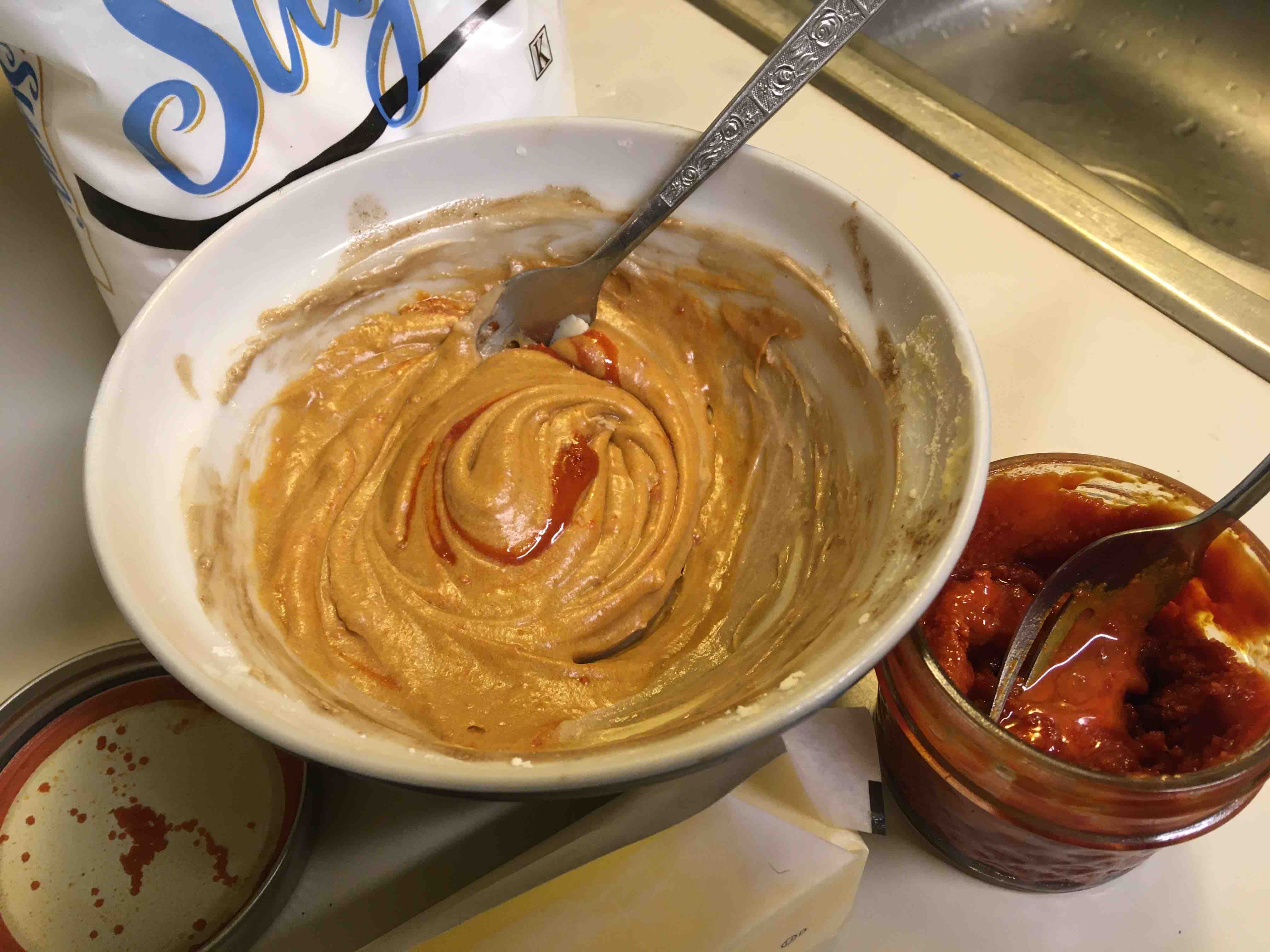
Directions:  Beat softened butter with confectioners’ sugar until smooth.  Gradually add up to 1/3 cup saguaro syrup or other desert fruit syrup mixing thoroughly to spreadable consistency.  Apply to tops of cinnamon swirls.  (You may want to make this glaze ahead and chill before spreading, but no-chill works for me.)

There’s only one more step to make this the most fabulous Southwest Hard Sauce:   Add 1 tsp of local agave mescal (try bacanora) to your glaze spread and voila–You have created a hard sauce!   (Goes great on brown-bread, bread pudding, holiday fruit dishes, or to make your cinnamon swirls into a rich dessert.)

Use home-made saguaro, prickly pear, or mesquite syrup for a delightsome glaze, or find great ready-made syrups from Cherie’s Desert Harvest also available at www.nativeseeds.org.

May the New Year 2021 bring you little swirls of joy, adventure and nutrition given generously by our Southwest desert plants–Feliz Año Nuevo! from Tia Marta

o


Prickly Pear Coconut Frozen Pops

Hello friends, it’s Amy here with my new favorite late summer treat. Pink prickly pear pops are creamy and easy to bite, yet vegan using coconut milk. For a prickly pear peach sorbet using cream and honey, try Carolyn’s recipe from last season. Also, try Tia Marta’s Prickly Pear-Mesquite-White Sonora Wheat Muffins (Ihbhai c Kui Wihog Pas-tihl).


With the drought, there are very few prickly pears out in the wild this year.

However, the young plants in my yard near water harvesting basins set a decent amount of fruit, especially for their size.

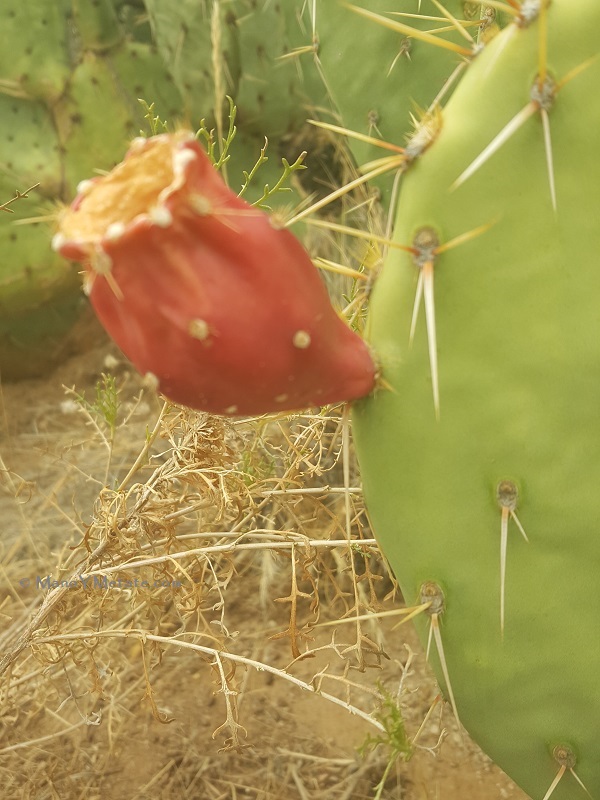
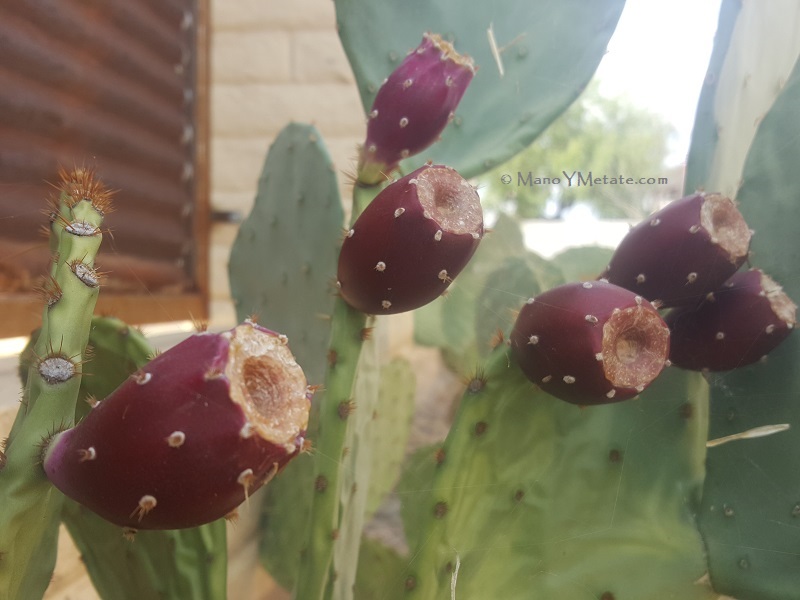
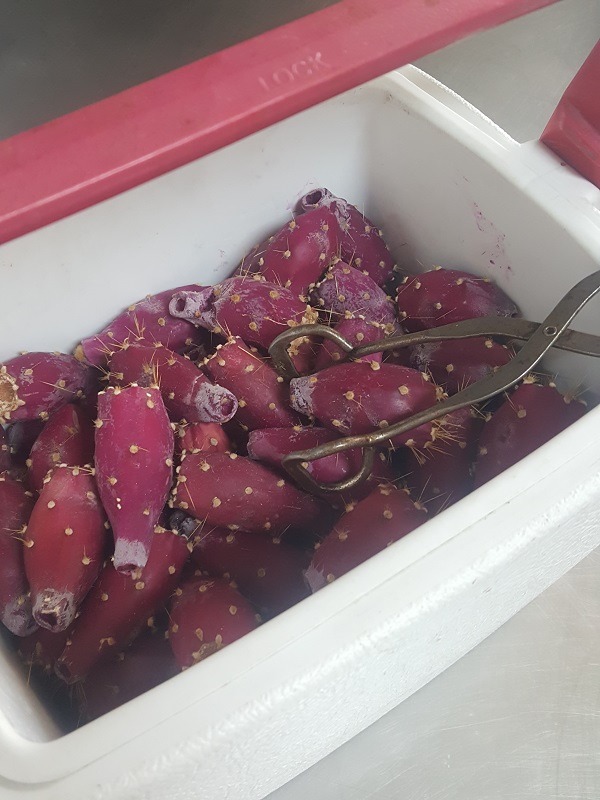
Even though the fruit may look purple sooner, I usually wait until September to harvest. If picked before total ripeness, the firm flesh holds onto the juice and it is more difficult to extract. To check, I simply pluck them off the plant with kitchen tongs. Ideally, the fruit separates easily from the plant and the skin with no tinge of green at the base tears the fruit open a bit (see the holes in the bottoms of the fruit in the photo below). If juice runs where the tongs squeeze the flesh, it’s definitely ready!!!! 

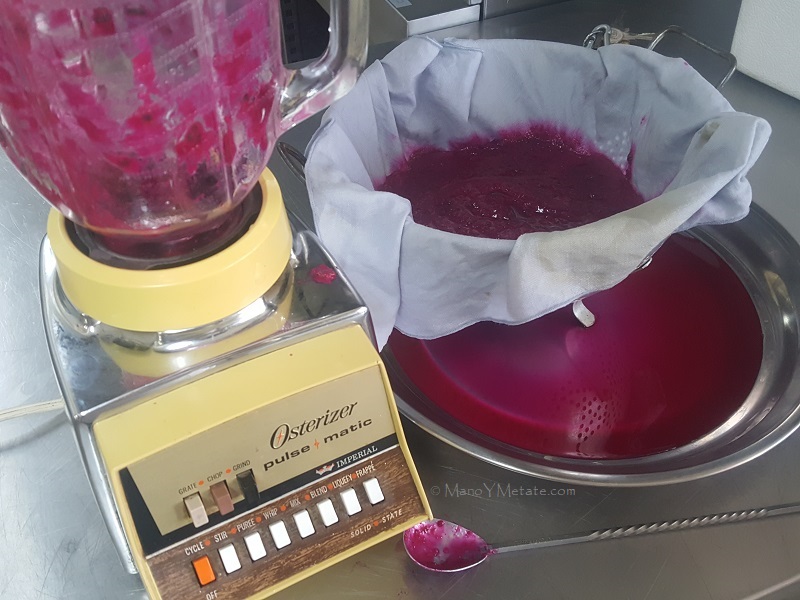
I then blend the whole fruit, spines and all.

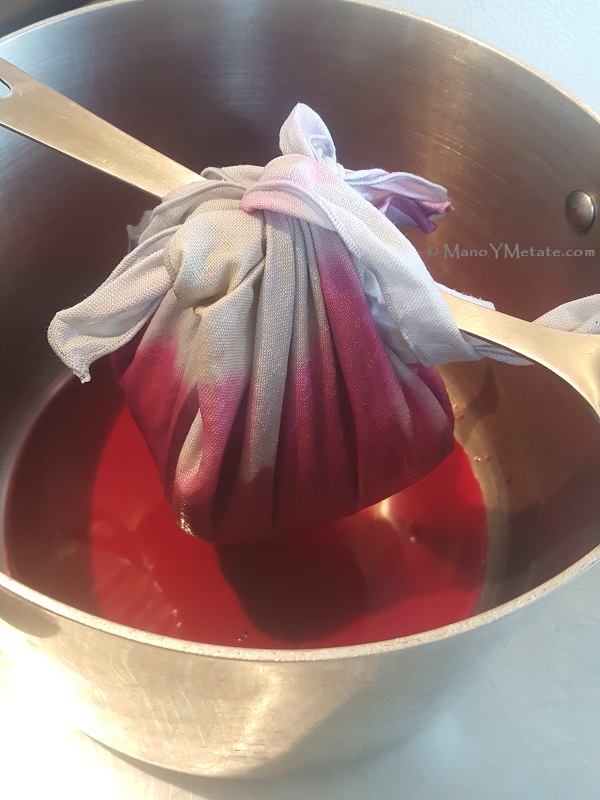
The hard seeds remain intact, while the pulp and skins are pureed. Then I strain the slurry through a cloth napkin or other piece of fabric. Cheese cloth is not fine enough.

This strains out the seeds, pulp, pieces of skin, spines and the tiny, skin-irritating glochids.

It drains slowly, so sometimes I tie the ends of the fabric, hanging it to drip in the refrigerator. 

The clear juice is ready to make treats or savory food right away, or freeze for later. As an extra precaution, I let the juice stand, then pour the clear liquid from the top, sacrificing the bottom inch from the vessel to leave behind any sediment.

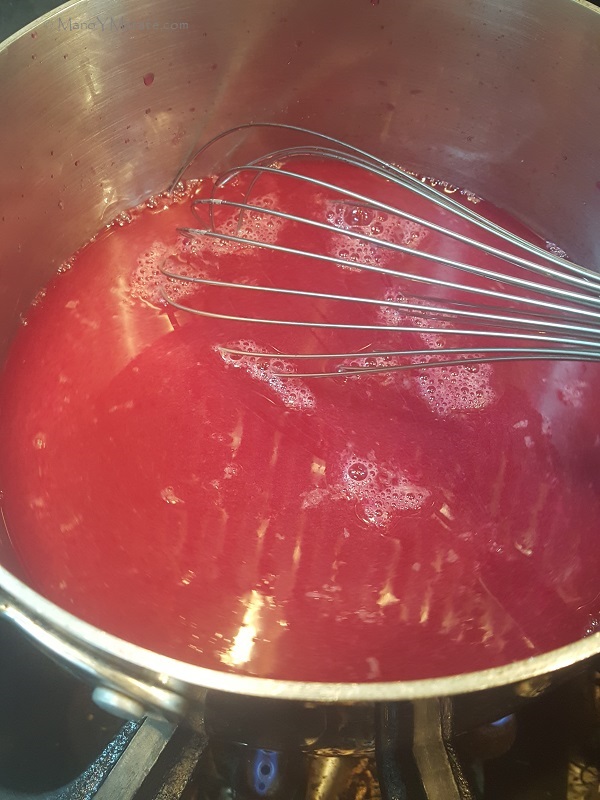
To make pops, I heated some juice with lemon and sugar, then thickened it slightly with cornstarch to make a thin syrup.

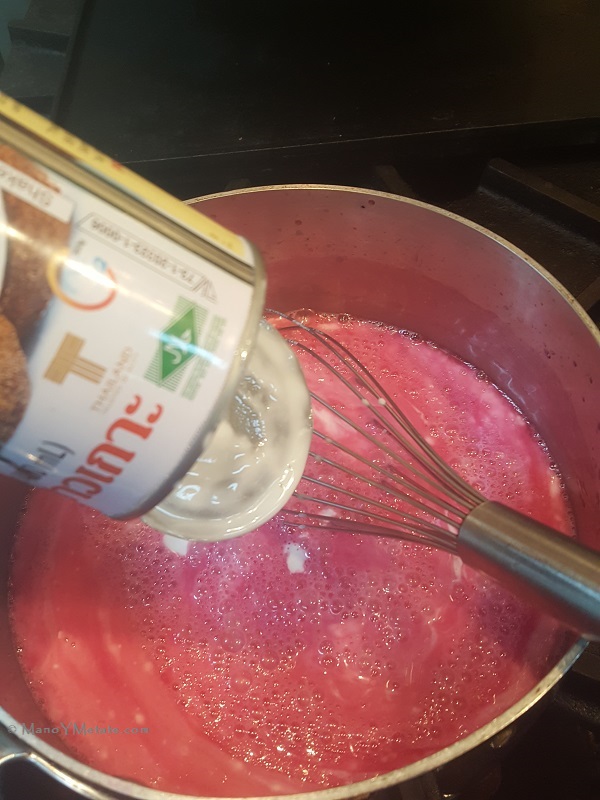
After taking it off the heat, I added a can of coconut milk. Add a little lemon or orange extract, if you like.

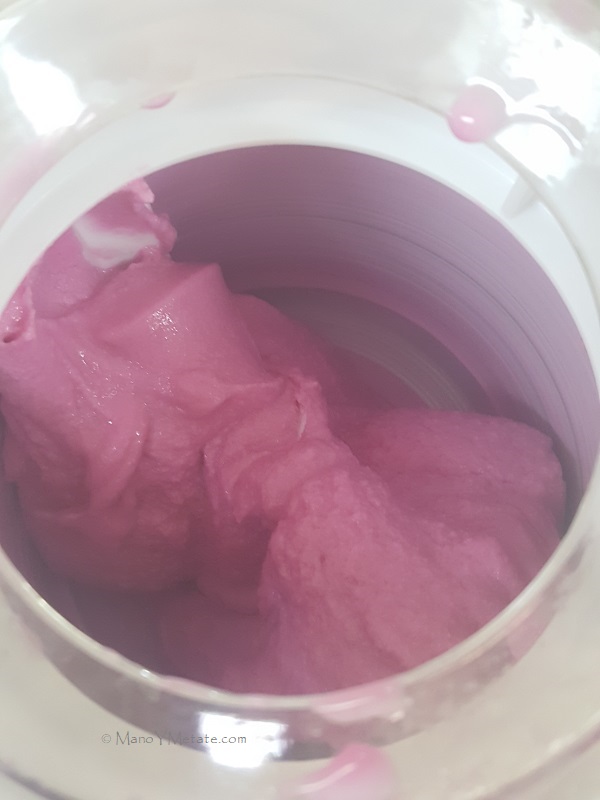
When completely chilled in the refrigerator over night, it is ready to be frozen in an ice cream maker.

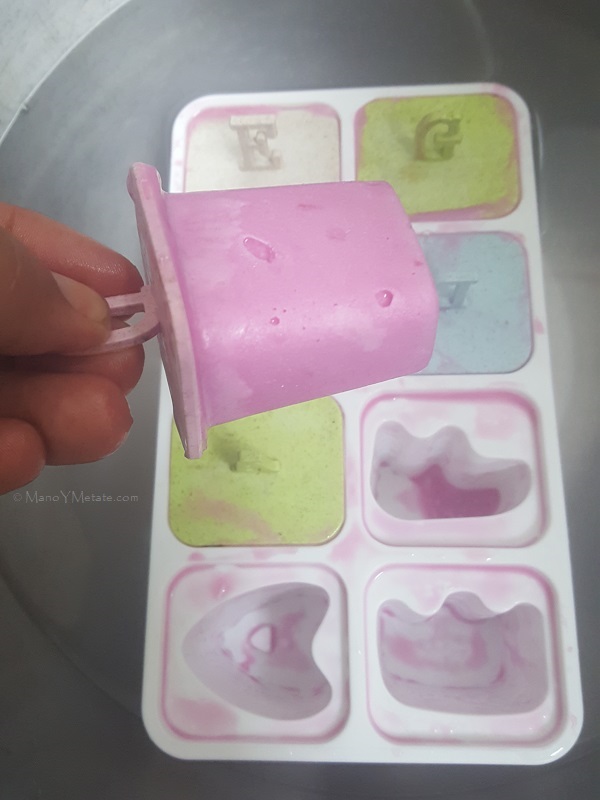
If you just pour the mixture into the pop molds, it will freeze as hard as ice. But this method makes pops that are easy to bite.
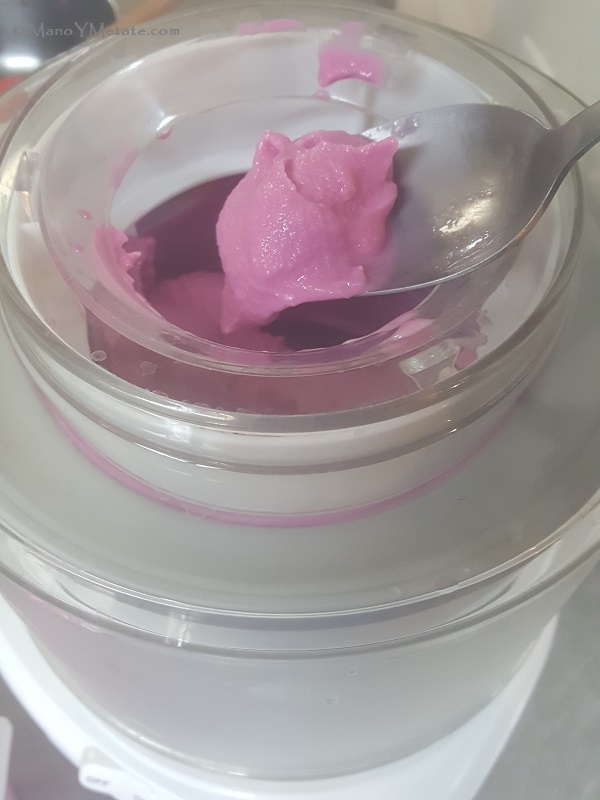
Of course, it can be eaten now as soft serve or frozen in one container to enjoy as a sorbet. But spooned into reusable pop molds, it is portion controlled!!!

Prickly pear coconut frozen pops (or sorbet) 

By Amy Valdes Schwemm

1 cup prickly pear juice

1 ½ cups sugar

¼ teaspoon salt

¼ cup lemon juice

1 tablespoon cornstarch

13-15 oz coconut milk

lemon or orange extract (commercial or 100 proof vodka infused with zest) to taste

Bring first four ingredients to a gentle boil. Dissolve cornstarch in 2 tablespoons water in a small dish. Add to pan, and simmer for one minute. Add coconut milk and extract. Remove from heat to cool and refrigerate until well chilled. Pour into ice cream maker and freeze. Firm in freezer, either in pop molds or a lidded container. Enjoy!
Call It Prickly Pear, Call it Nopal. It’s time for harvest.

Every year, for thousands of years, people living in the Sonoran Desert could count on prickly pear producing succulent delicious new pads this time of year. The native varieties of Opuntia have lots of thorns and it must have been a chore to clean them when all you had was a sharp-edged stone for a tool. Carolyn here today, recalling that one of the reasons that Tucson was named a UNESCO City of Gastronomy is that modern Sonoran Desert dwellers eat some of the same foods people ate here when they were just small family groups drifting through the area, long before there were even villages. That’s quite a testament to the staying power of these local foods.

You need to pick prickly pear pads in the spring when they are only a few weeks old. As they mature they develop a woody interior structure. You can buy fresh pads year ’round in Mexican grocery stores. They are grown by farmers who know how to manipulate their plants through trimming and fertilizing to produce throughout the season.

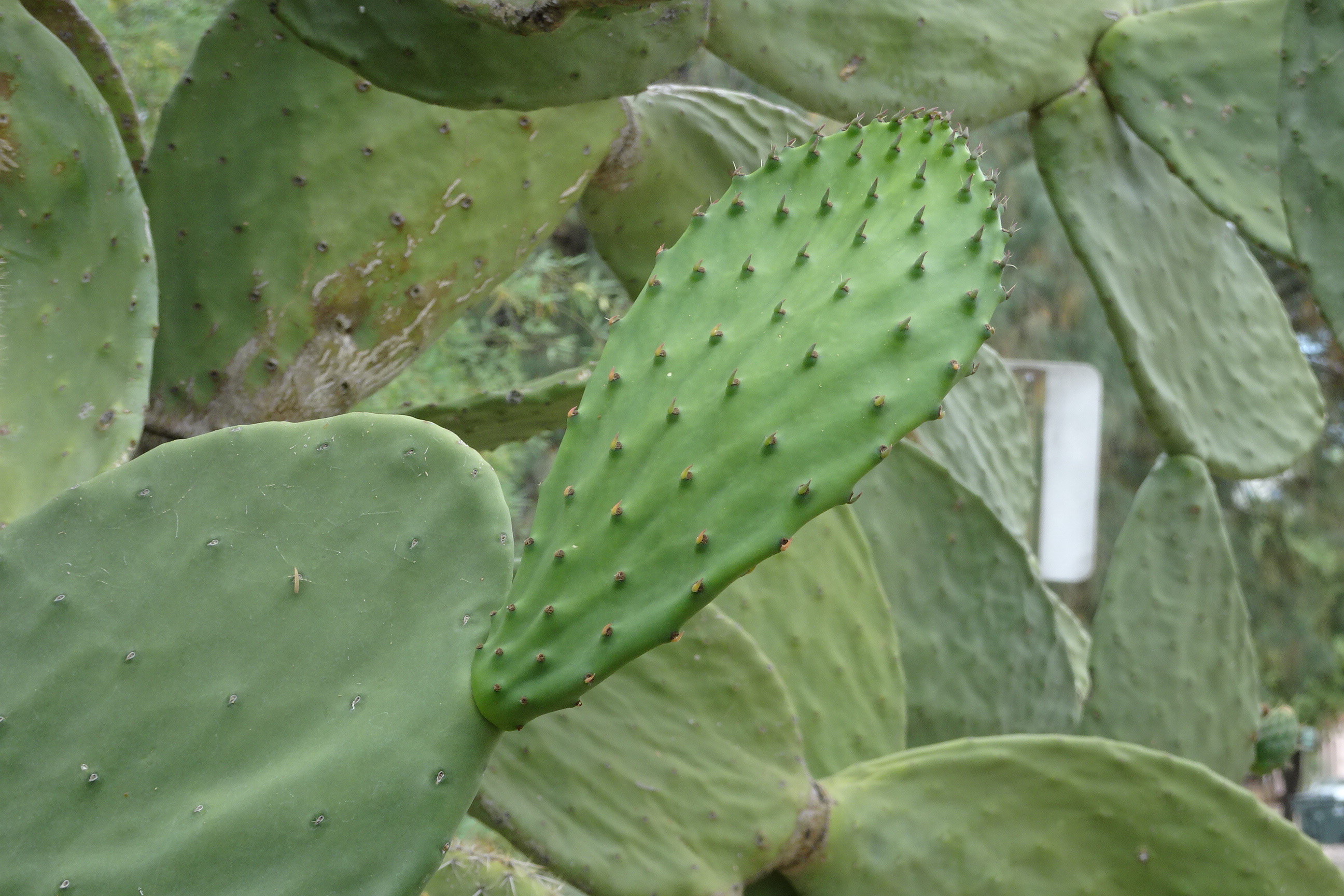
A fresh prickly pear pad, tender and succulent. Very obvious that it is new growth.

Interior structure of a prickly pear pad where the green flesh has rotted away.

Today, most of us who like to pick and eat prickly pear use the Ficus indica variety that grows taller and without big thorns on the young pads. It is native to areas further south, but it can survive here in gardens. Although the big thorns are absent, there are, however, tiny stickers called glochids, and they can be dangerous so you should wear rubber gloves when working with the pads. The glochids look like small hairs but they do have barbs on the end. You don’t want them in your finger or your tongue! I tend to just scrape the sides of the pad with a serrated steak knife, then cut off the edge as in these pictures. The edge has so many thorns it is not worthwhile to try to clean it so just trim it off.

Use a serrated steak knife to clean the thorns and glochids from the prickly pear pad.

My friend Chad Borseth takes a more nuanced approach to cleaning the pads, cutting out just the glochids. He sells lots of edible wild plant products on his website Sky Island Spice Co. and has made this video of cleaning the pads. If you want a better idea of just how to go about it, take a look at the video.

The nopalitos are done when they turn olive green.

Once you have the cleaned pads, you’ll need to cut them up into strips or small squares and cook them. Now you have turned your nopal into nopalitos. You can do this in oil in a frying pan, or follow the Rick Bayless method and oil them, place on a cookie sheet and bake until olive green. The cooking shrivels them and dries up the gummy sap that is so healthful but that some people find objectionable.

You can put the cooked nopalitos into a taco, combined with meat or alone. Or, if you are introducing them to people who might be wary, include them as a new ingredient in some familiar food.  In a previous post we gave a recipe for nopalitos in pineapple salsa which is a great side dish. It comes from The Prickly Pear Cookbook. 

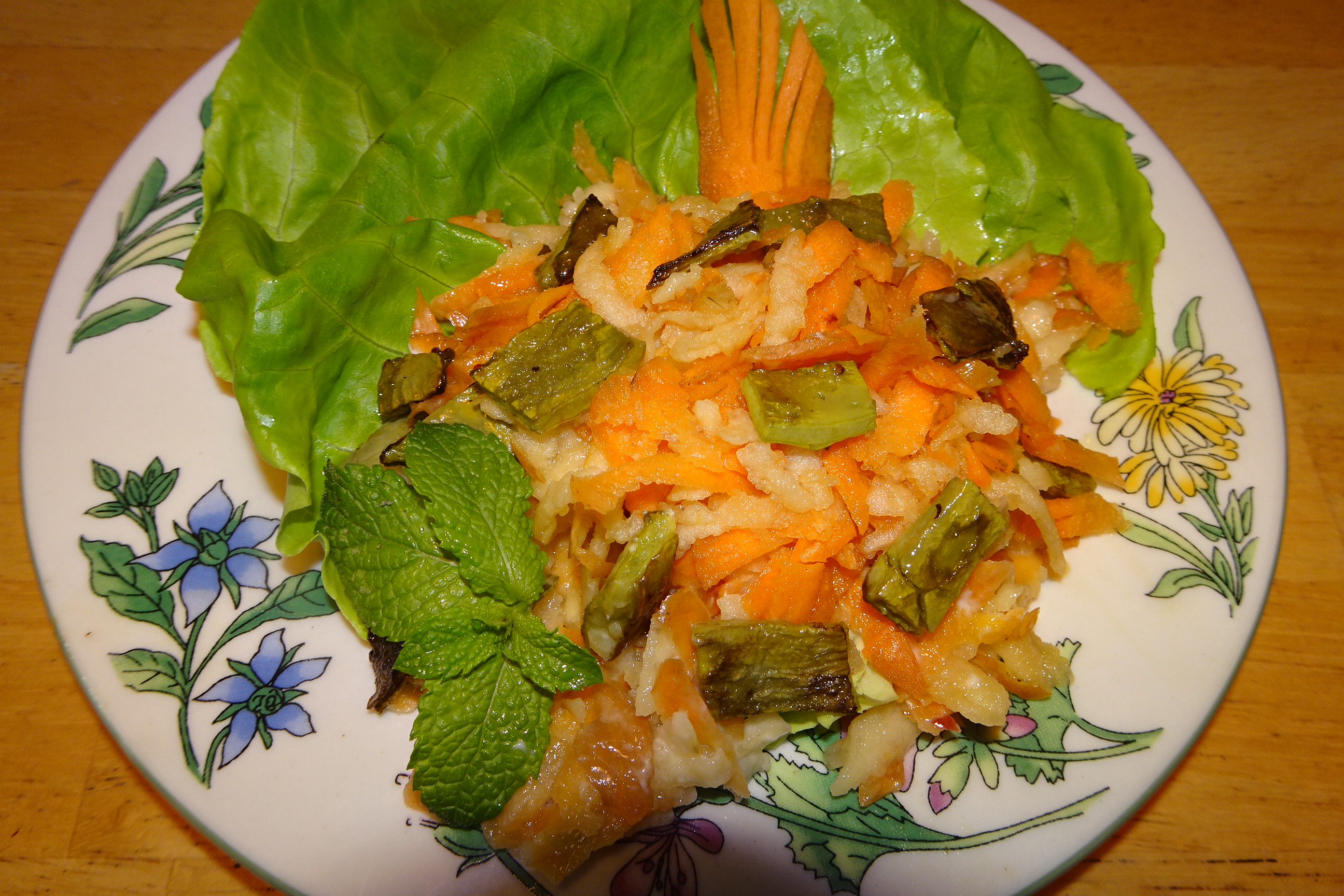
Another super easy familiar dish is this apple and carrot salad, with, of course, nopalitos. It is adapted from Cooking the Wild Southwest: Delicious Recipes for Desert Plants, a compilation of information on how to gather and cook 23 delicious and easily gathered desert plants.

Apple, carrot, and nopalito salad is a delicious way to introduce people to their first taste of cactus.

Apple, Carrot and Nopalito Salad

1 small cleaned prickly pear pad

1 cup shredded carrot

½ shredded apple

Dressing

2 tablespoons mayonnaise

2 tablespoons milk

½ teaspoon sugar, honey, or agave syrup

Sprinkle of salt

Cut the prickly pear pad into very small pieces and bake on a greased cookie sheet in a 200-degree oven until dried and slightly chewy. This should take 15-30 minutes depending on how juicy the nopalitos are. Or put them in a frying pan with just enough oil to coat the pan and cook until olive green. The pieces will shrivel.

Meanwhile make the dressing by combining the mayonnaise and milk in a small bowl. Season with the sweetner and salt. Set aside.

When the nopalitos are chewy, add the carrot, apple, and nopalitos to the dressing. Stir and serve. It looks nice on a lettuce leaf.

____________________________________


If you are interested in edible wild plants of the Southwest and Southwest food, check out my books Cooking the Wild Southwest, Delicious Recipes for Desert Plants, The New Southwest Cookbook, a complilation of recipes from the Southwest’s top chefs, and The Prickly Pear Cookbook, with great recipes for both pads and fruits. There is more information about them at www.cniethammer.com.

Buy copies on line or order from your favorite local bookstore. They will love you for it.

Festive Buffet Ideas–Southwest Style

Winter is here, and out-of-town company is sure to invade our relatively sunny climes in Baja Arizona.  Tia Marta here with some ideas for local Sonoran Desert goodies that you can make ahead to have at-the-ready for creating a glorious buffet or instant party.

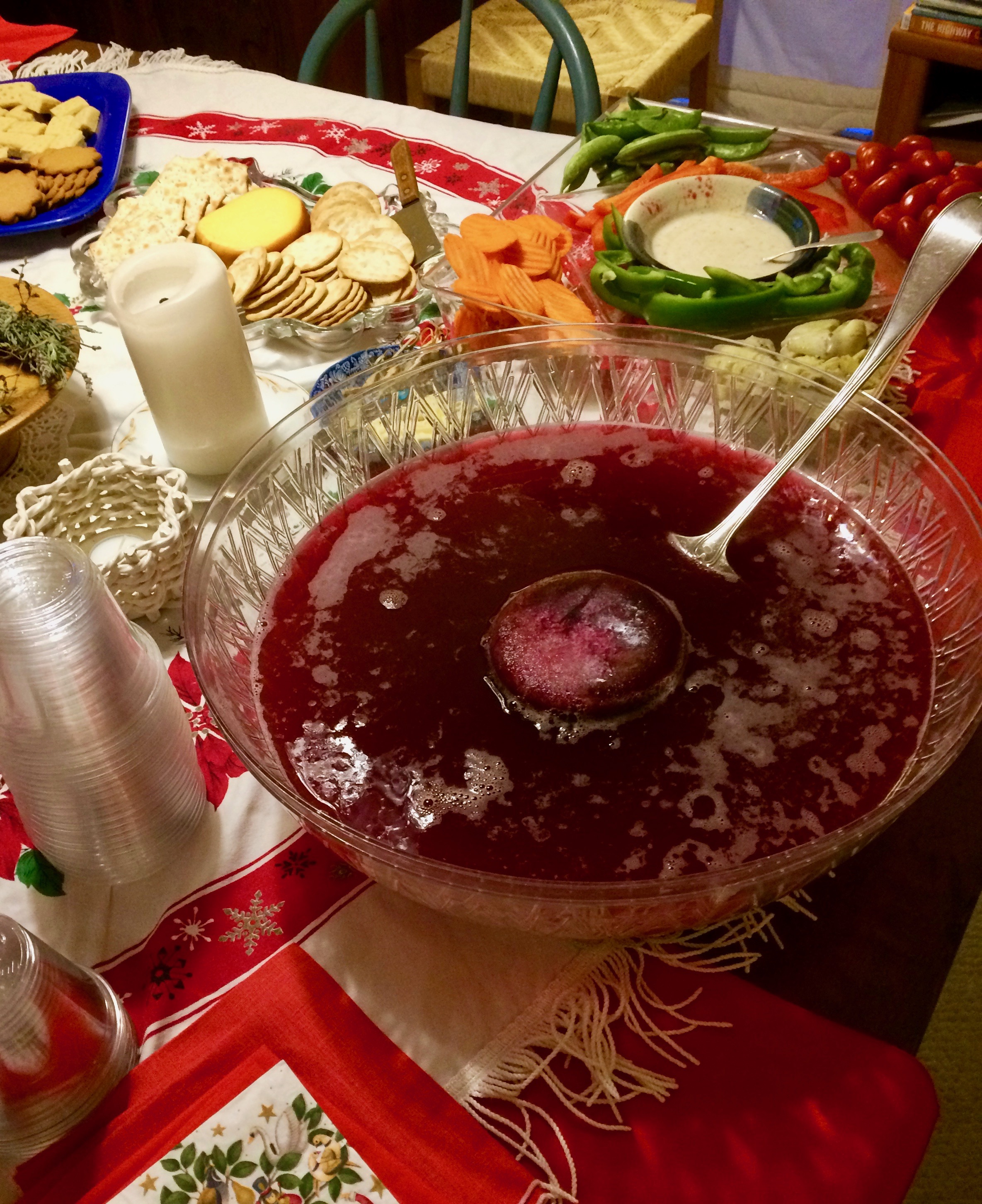
This festive table features colorful, delectable Sonoran-desert fare.  Note lemon juice ice-float for flavoring and chilling the punch.  Many other buffet ideas following….. (MABurgess photo)

With freezing nights everyone is harvesting citrus like mad.  What to do with all those lemons your neighbor has generously dumped at your door?  Right!–save space and squeeze the wonderful juice into a plastic bowl to freeze and use as a floating ice-block or as lemon ice cubes.

Zoom in to check out the buffet table details:  On the cheese plate note the thin slices of barrel cactus fruit as rings atop the cheese wedge, adding a zesty touch to the spread.  Squares of white manchego cheese top squares of sweet local cajeta de membrillo, a lovely conserve made with heirloom quince fruits from Mission Garden.  My special veggie dip is laced with “chives” of chopped I’itoi’s Onion and fresh oregano from my garden, moringa leaves from friend Wanda’s tree, and a single crushed dry chiltepin pepper for a picante kick.

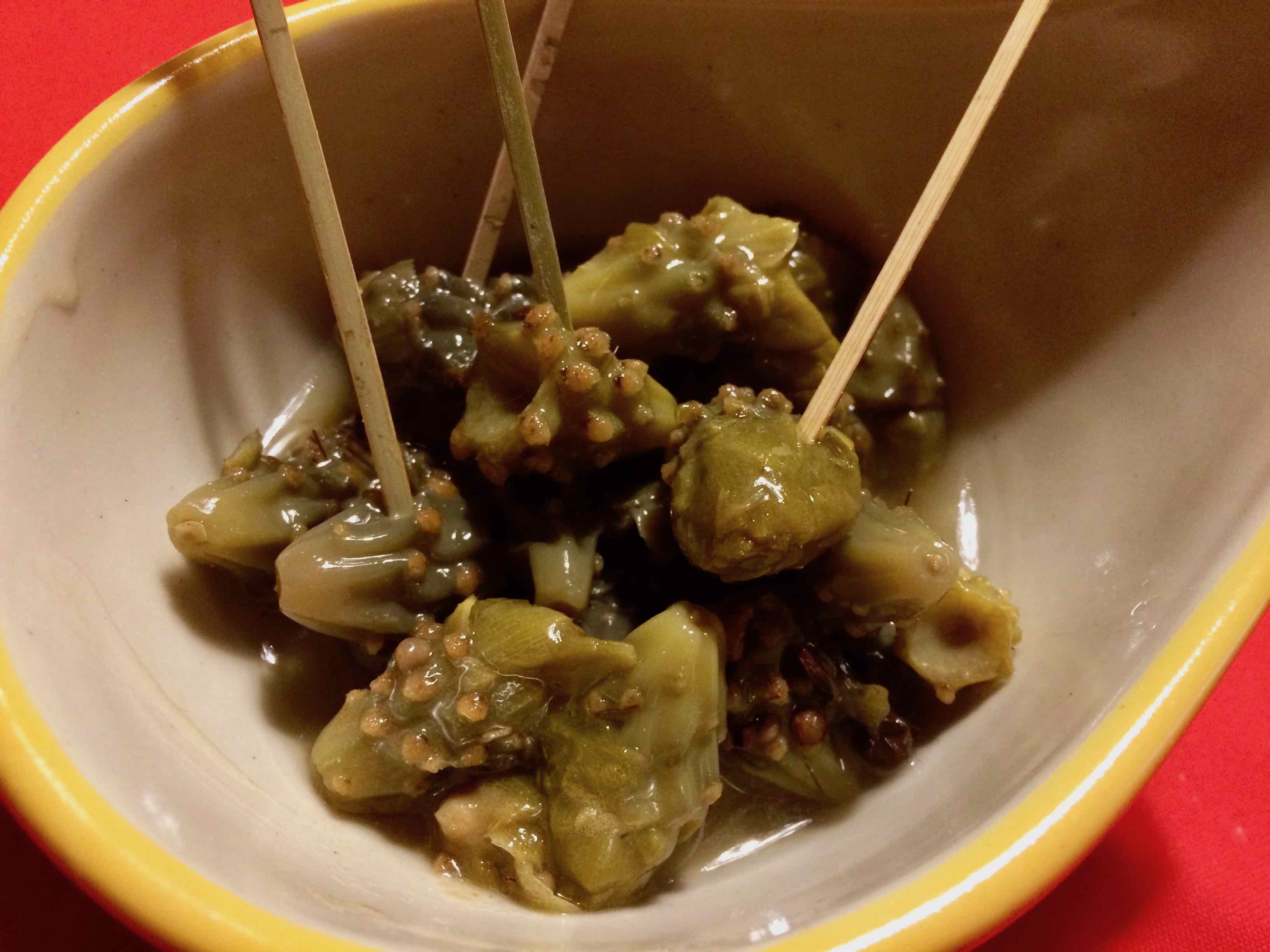
Tangy pickled cholla cactus flower bud hors d’oeuvres (MABurgess photo)

In place of olives or pickles I like to feature my pickled cholla flower buds  or nopalito pickles.  In place of mixed nuts I serve bellotas (Emory oak acorns) or pinyon nuts, both supporting local harvesters (see Southwest Foraging).  Instead of peanuts I like to present Incan corn nuts (not local, from Peru, but a bow to Native tradition.)

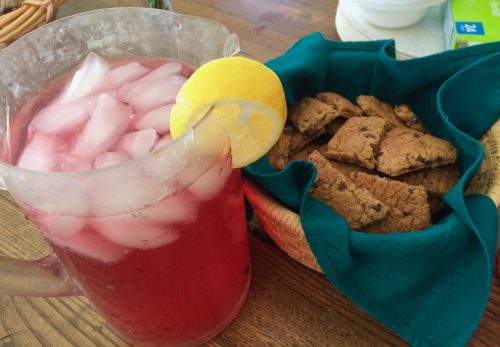
Refreshing and colorful prickly pear lemonade and mesquite-amaranth-white Sonora wheat-chocolate chip cookies! (MABurgess photo)

For luscious “local cookies” I use a basic toll-house cookie recipe (calling for 2 cups flour) by substituting 1/2 cup mesquite flour, 1/2 cup amaranth flour, and 1 cup white Sonora wheat flour, plus an extra egg and a cup of pine nuts in place of pecans.  These treats will get snarfed up as soon as you put them on the table.  (See Dec13 post for other cookie recipes)

Sparkly and nutritious cherry punch with ginger ale and a floating iceberg of pure prickly pear juice (MABurgess photo)

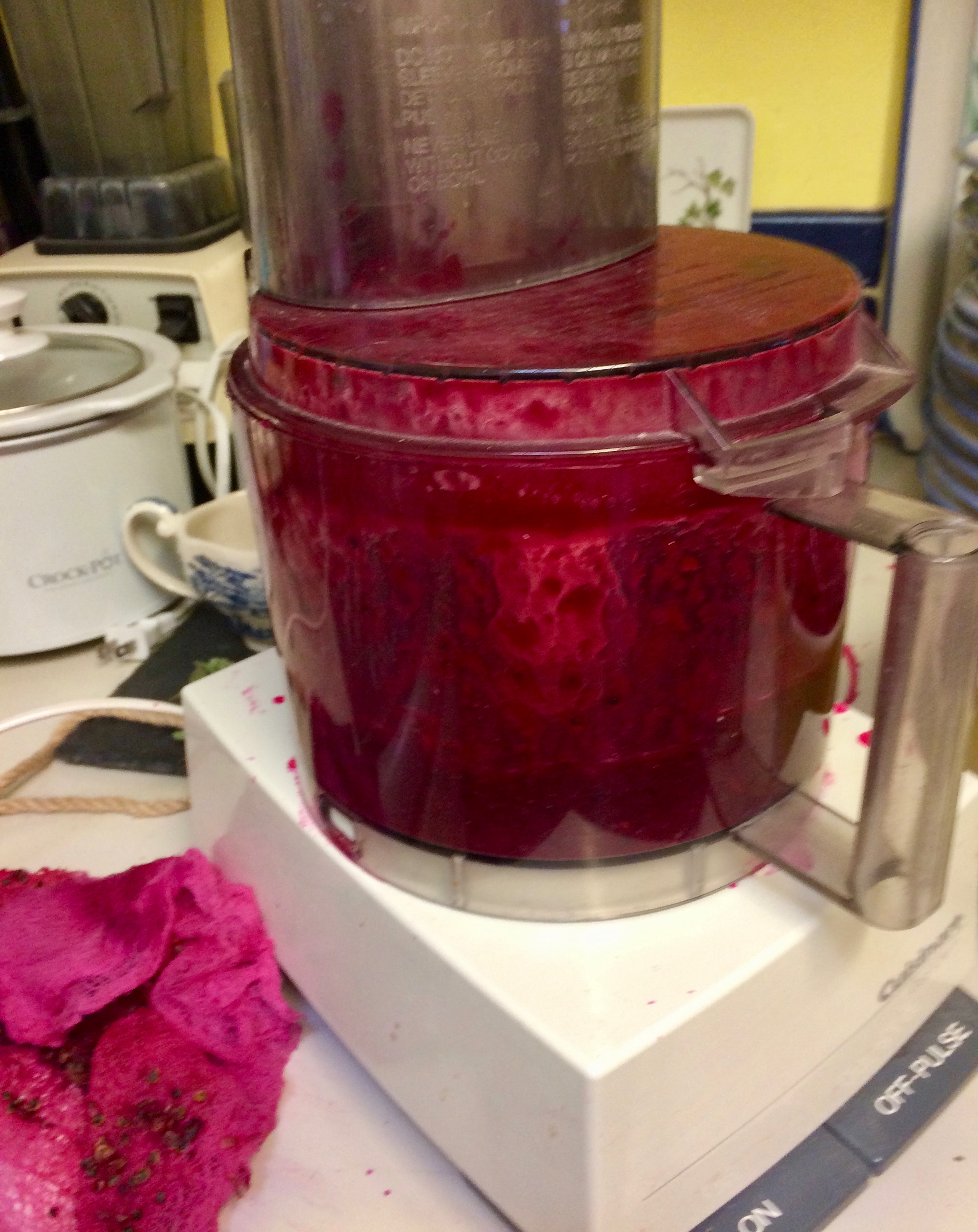
Whirl your thawed prickly pear tunas in blender

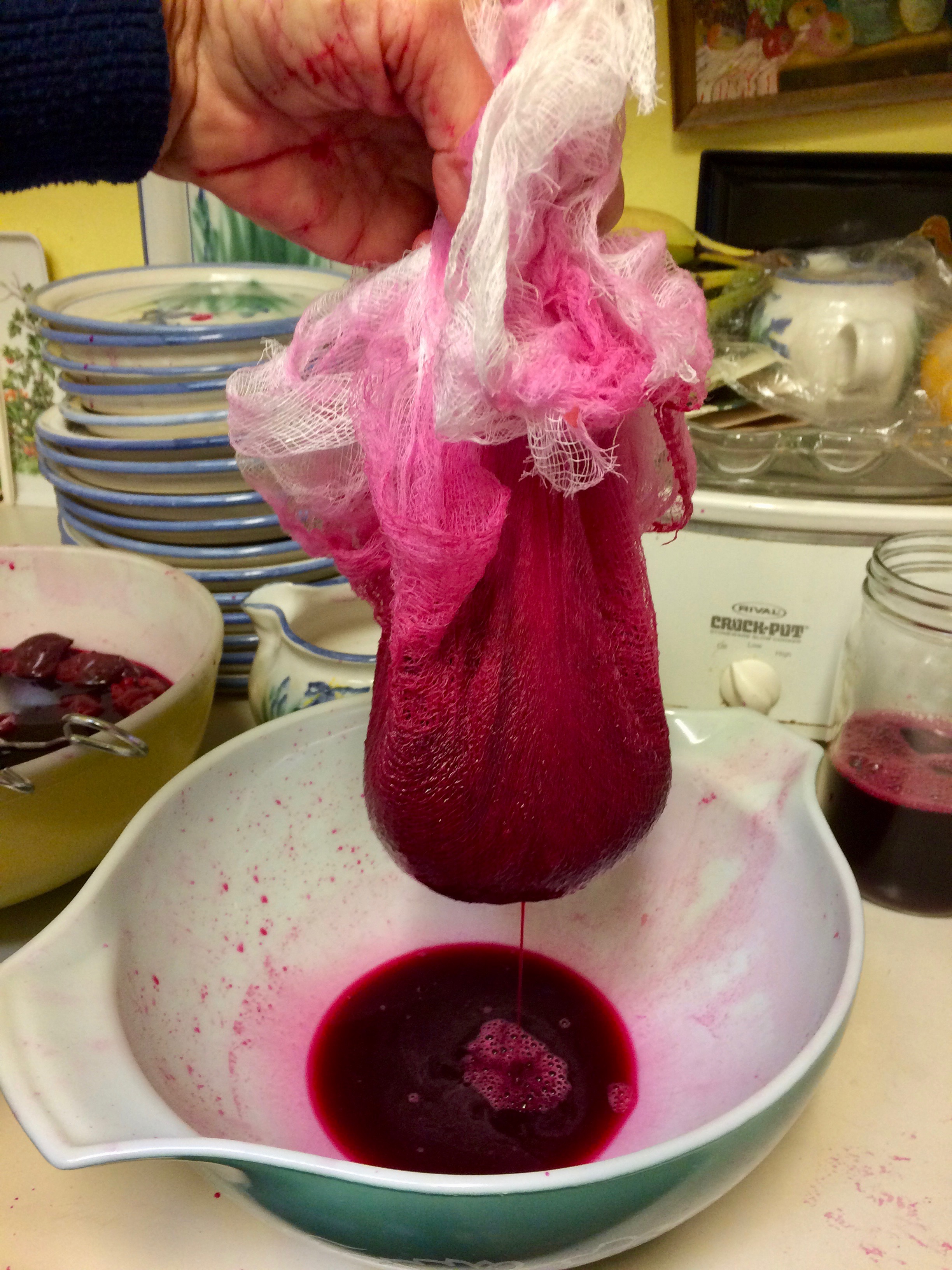
Squeeze whirled prickly pear fruit thru 4 layers of cheesecloth

SPARKLY PRICKLY PEAR CHERRY PUNCH RECIPE:

In a big clear punchbowl mix:

1  block of frozen pure prickly pear juice   (OR, 1 bottle of Cheri’s Desert Harvest Prickly Pear Syrup plus ice cubes)

1 pint (half jar) Trader Joe’s pure Cherry Juice

1 liter chilled ginger ale

Serve with joy!

(As ice block is thawing in the punchbowl and the punch is consumed around it, add the remaining pint of cherry juice and another liter of chilled ginger ale over the block.)

With a bag of prickly pear tunas frozen whole from last September’s hasty harvest, I thawed them to extract the juice to then refreeze as a cactus-fruit ice-block.  It is an easy process–but timely action required.  If you haven’t harvested from the desert, Cheri’s Desert Harvest Prickly Pear Syrup is available at NativeSeedsSEARCH Store, 3061 N.Campbell Avenue or at other special Southwest food shops.

To make your own cholla or nopalito pickles, as March approaches, watch for announcements of cholla bud harvesting workshops.  Tia Marta may schedule classes through Mission Garden or www.flordemayoarts.com.

Happy entertaining with a local Southwest flair!

Delectable Cholla bud and Nopalito Recipe Ideas


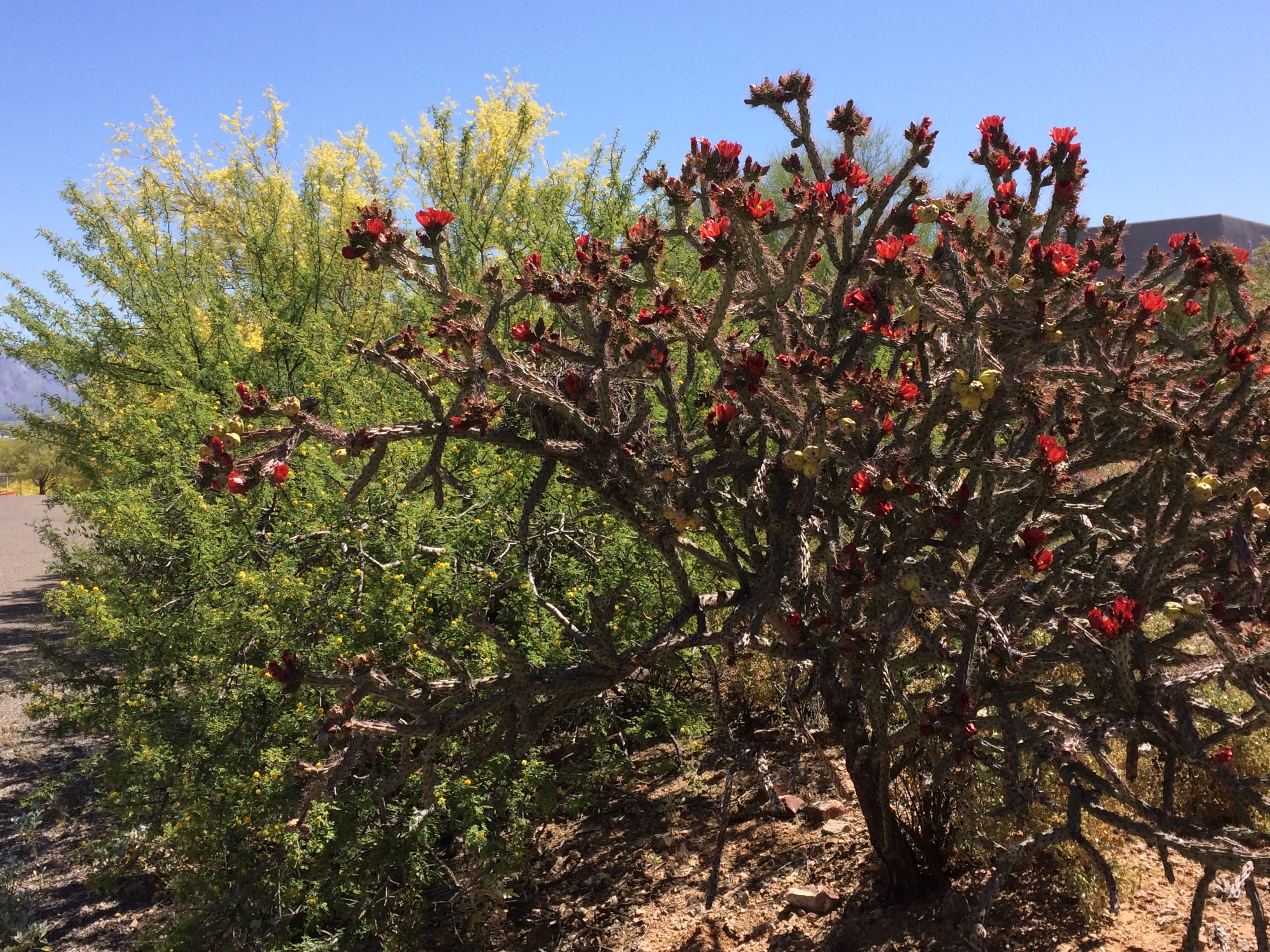
Blooming staghorn cholla and foothills palo verde bathe the Sonoran Desert in color. Surprisingly, this 2019 spring season has been so cool and moist that we are still harvesting cholla buds and fresh nopales in May. (MABurgess photo)

“Act now while this offer lasts!”–so says Mother Nature in the Sonoran Desert.  She only offers her bounty in certain pulses or moments, and we must harvest while her “window of opportunity” is open. Tia Marta here to share some delectable ideas for serving your own desert harvest from our glorious bloomin’ cholla and prickly pears.

The YOUNGEST pads of new growth on prickly pear are the ones with tiny leaves at the areoles (where spines will later grow). (MABurgess photo)

After singe-ing off the tiny leaves and spiny glochids using tongs over a flame (either campfire or gas stove), slice and saute young prickly pear pads in olive oil. Now they are ready to use in lots of great recipes…(MABurgess photo)

Young prickly pear pads (many species in Baja Arizona) have no woody tissue yet developed inside. In their youthful stage (see photo) they are not only edible but also super-nutritious! The photo is our native Engelmann’s prickly pear (Opuntia engelmannii) with flower buds forming. Traditional Tohono O’odham call the edible young pads nawi.

After spines and areoles are singed off you can chop and scramble nopalitos with eggs, bake them into a quiche, pickle them, OR simmer them in a delicious mole sauce….The fastest and easiest way to prep a gourmet nopalito meal is to use Mano y Metate’s Mole Mixes.  Savor blog writer Amy Valdes Schwemm has created several different sabores of mole–many without chocolate.  My sweetie loves Amy’s Mole Adobe as its savory spice binder is pumpkin seeds with no tree nuts.

Nopalitos in Mano y Metate Mole Adobo sauce–here served with a mesquite tortilla (from Tortilleria Arevalo available at farmers’ markets in Tucson.) Nopalitos en Mole over brown rice is delicious too.

Get out your tongs and whisk brooms to harvest the last of the cholla buds this season!

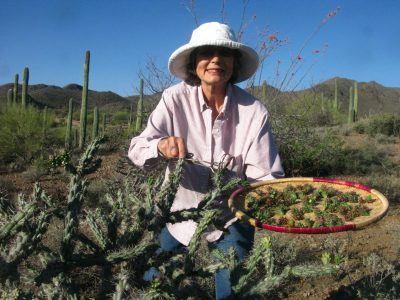
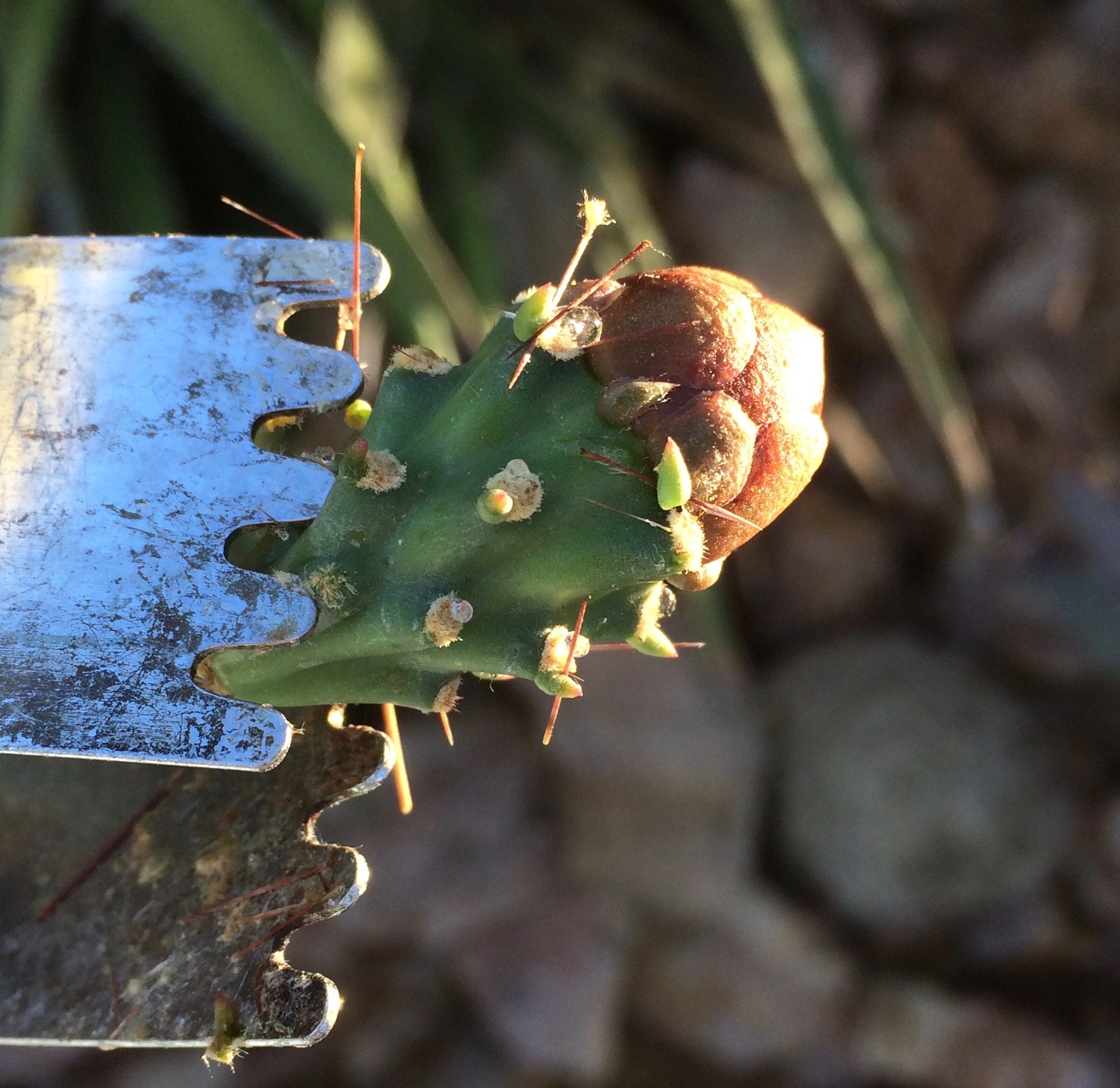
A staghorn cholla cactus flower bud (Cylindropuntia versicolor) still with spines in need of cleaning. Buds with petals not yet open are the ones to pick–carefully.(MABurgess)

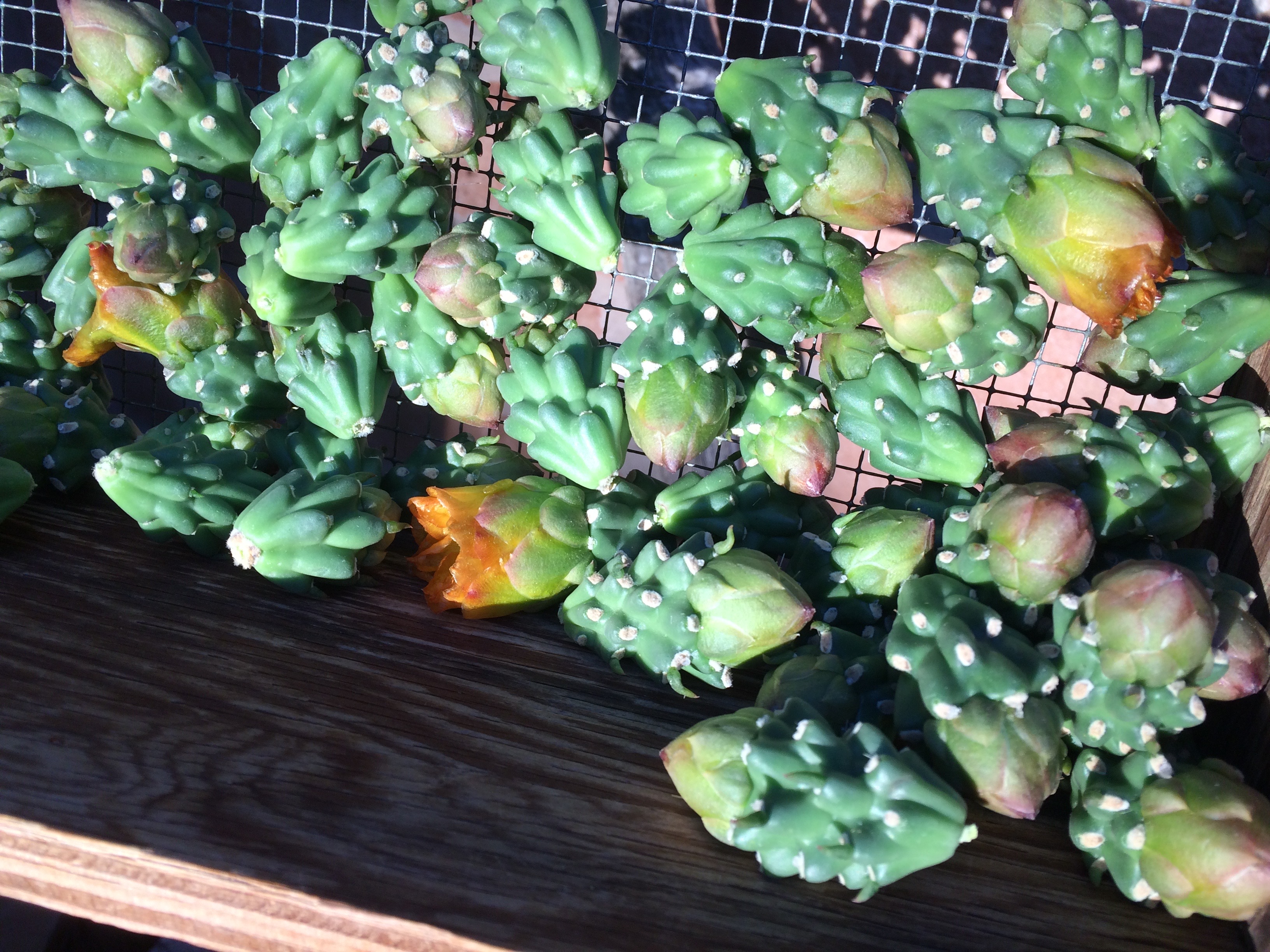
A harvest of staghorn cholla buds in screen box to remove spines from areoles (MABurgess photo)

Tohono O’odham harvesters know this cholla species as ciolim–pronounce it chee’o-lim.

Once de-spined, cholla buds must be boiled or roasted to denature its protective oxalic acid. Then, tah-dah!, cholla buds lend themselves to wonderful recipes similar to nopalitos in omelettes, quiches, stir-fries… They are flavorfully exotic, tangy, definitely nutritious containing gobs of available calcium and energy-sustaining complex carbs!

Pickled cholla buds (MABurgess photo)

I love to pickle my fresh cholla buds to enjoy later as garnish for wintertime dishes. For the salad recipe below, I’d canned them with pickling spices, but an easier alternative is to marinate them short-term for 24-48 hours in your favorite dressing for a quick fix.


Muff’s Easy Marinated Cholla Bud and Sonoran Wheat-berry Salad Recipe:

First–prep ahead–heirloom White Sonoran Wheat-berries:   boil 1 cup dry wheat-berries in 4 cups drinking water for 1 hour 15 minutes, or until water is fully absorbed and grains are puffed up, then chill.

Also prep ahead— marinate fresh boiled cholla buds in pickle juice, or your favorite marinade or salad dressing for 24-48 hours in refrigerator.

Then–Chop any combination of your favorite fresh veggies–sweet peppers, tomatoes, summer squash, celery, carrots, artichoke hearts, etc….

Toss veggies with cooked chilled wheat-berries and marinated cholla buds.  Add spices and pinyones if desired.  Dress with remaining cholla marinade.  Allow to chill before serving, neat or on a bed of fresh salad greens.


The yummiest cholla bud and wheat-berry marinated salad ever! (MABurgess photo)

Let’s honor, tend, and enjoy these desert foods that have fed generations of desert people for hundreds–thousands–of years, keeping them healthy and strong!  Thanks to traditional harvesters, newcomers can more deeply appreciate and take good care of this beautiful desert.

An energy-saving idea:   You can save energy and keep the heat out of the kitchen this summer by cooking your cholla buds or your wheat-berries in a solar oven!  Check out a light-weight streamlined model solar oven at www.flordemayoarts.com.

[White Sonora Wheat-berries are available at NativeSeedsSEARCH store, 3061 N.Campbell Avenue, Tucson.  Not to fret if cholla and prickly pear harvests are done for this spring in your neighborhood!  During the rest of the year, you can find dried cholla buds at NativeSeedsSEARCH, at San Xavier Coop, OldTown Artisans, and at Flor de Mayo and fresh nopales in the Mexican foods section at groceries like Food City.]

Blue Corn Pancakes bedecked for the Holidays

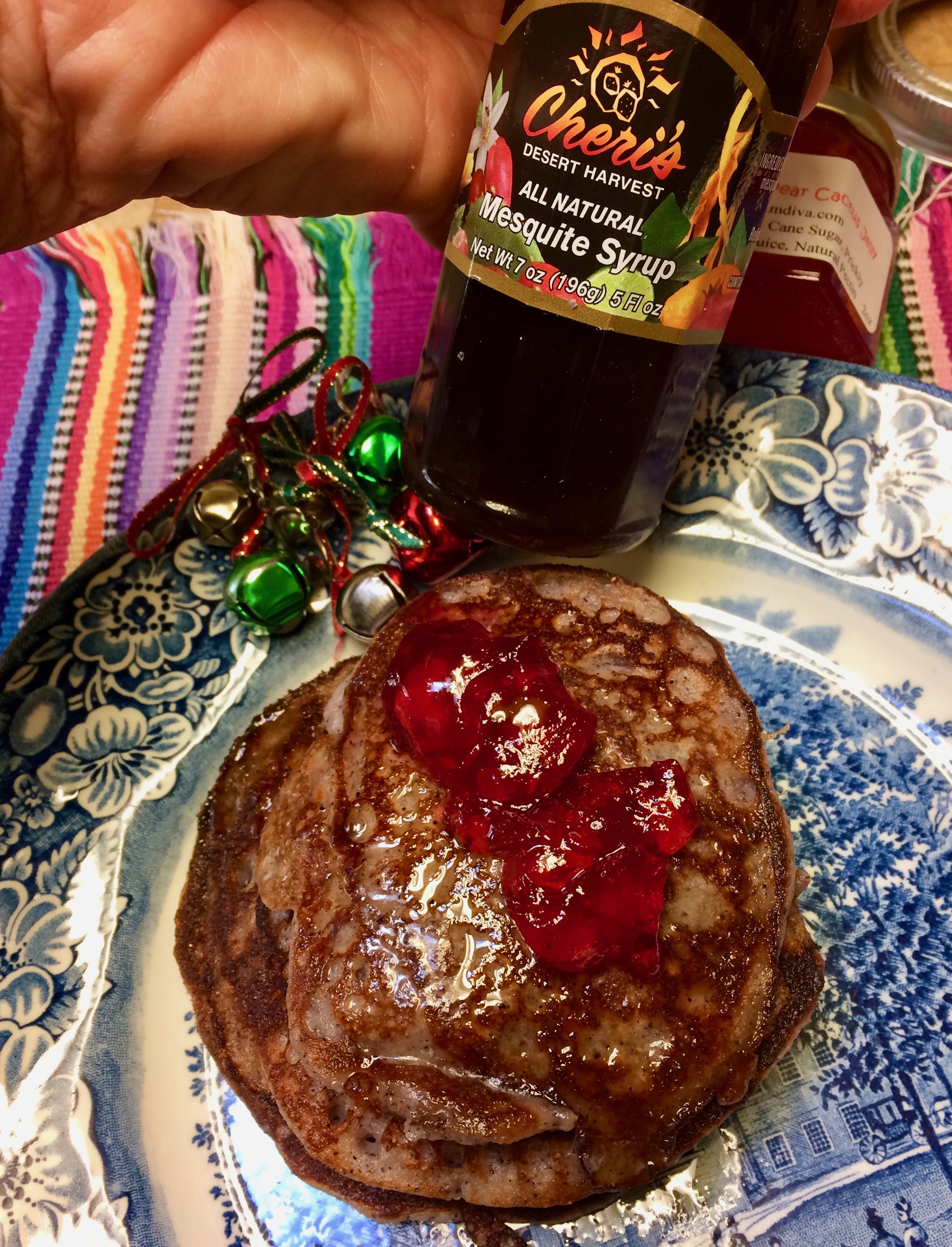
Going local for a holiday breakfast! Gluten-free blue corn pancakes are bedecked with Tucson’s own Cheri’s Desert Harvest mesquite syrup and Coyote Pause’s prickly pear jam. (MABurgess photo)

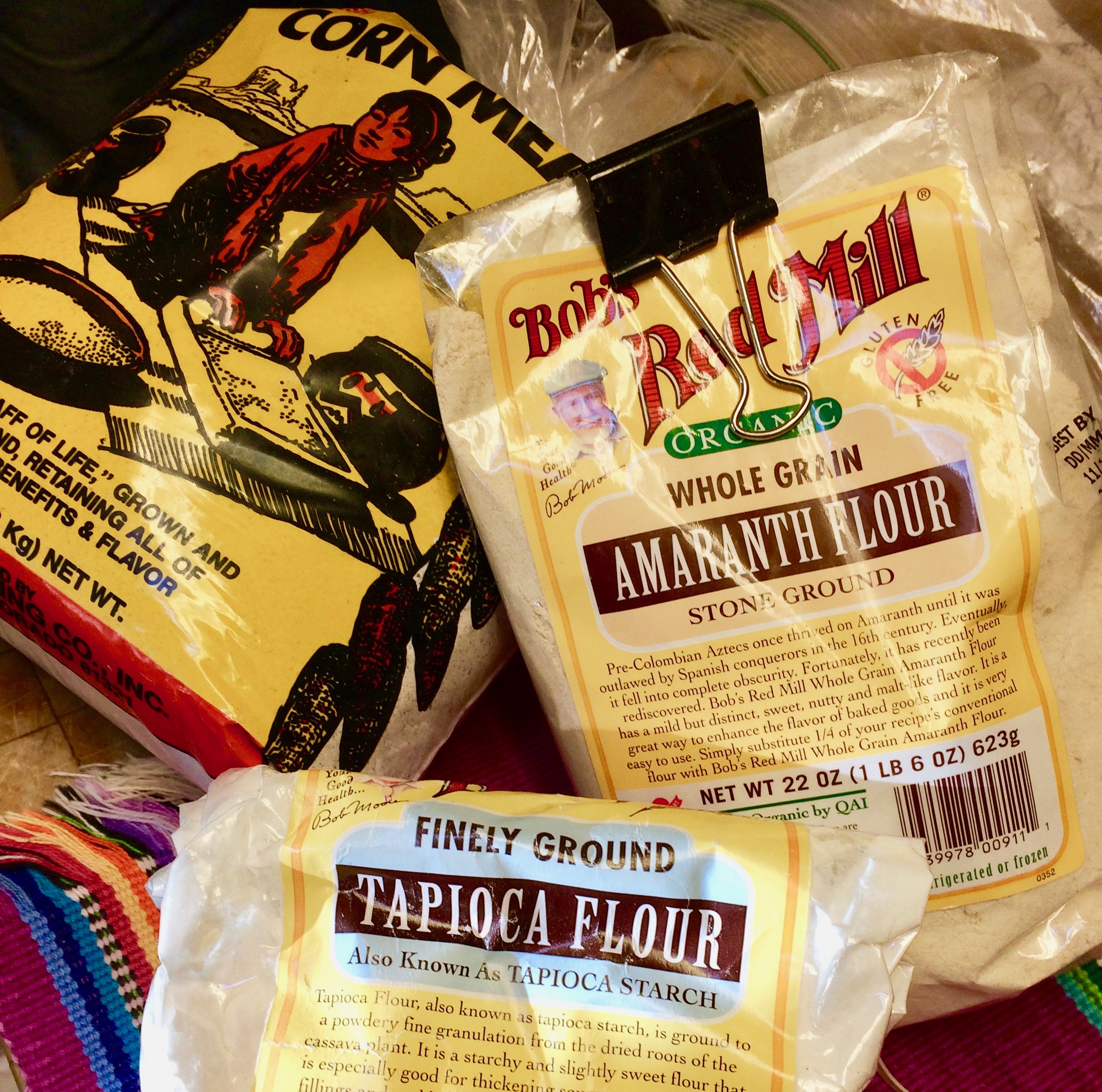
For the wheat-sensitive, try a delicious gluten-free mix of flours for pancake batter–Navajo blue cornmeal, Bob’s Red Mill amaranth flour and tapioca flour,

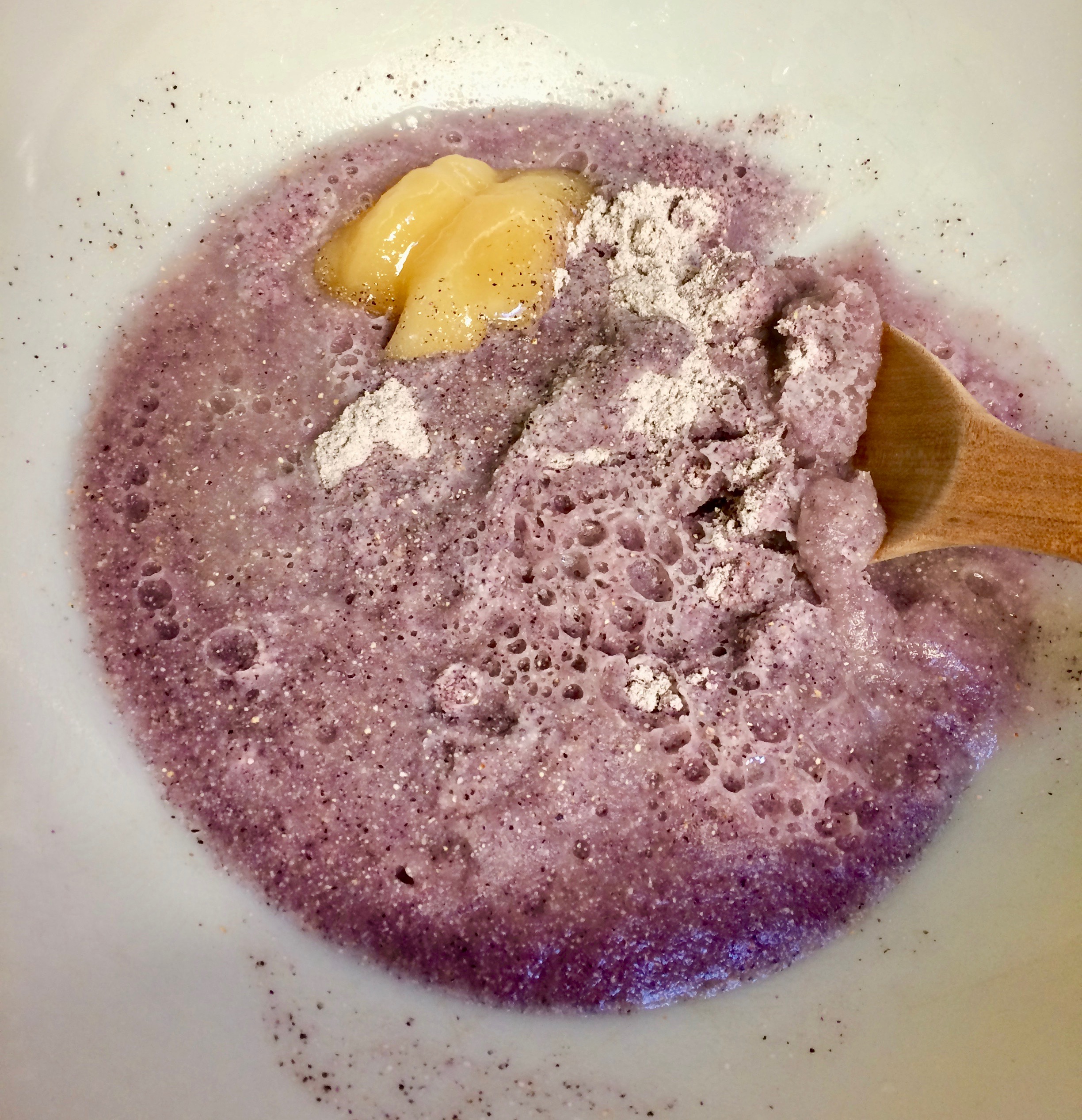
First step for holiday pancake batter–Beautiful blue cornmeal mixed with boiling water and raw honey to mix and let corn’s bouquet permeate the air! (see recipe)


Tia Marta here to share one of our family’s traditional Christmas brunch favorites….


RECIPE–Tia Marta’s Gluten-free Holiday Blue Corn Pancakes

Ingredients:

1 Cup  blue cornmeal (available at NativeSeedsSEARCH)

1 tsp  sea salt

2 generous Tbsp  local raw honey

1 Cup  boiling water

1 large egg

1/3 Cup  milk (or soy or almond milk)

1 Tbsp  avocado oil (or melted butter)

1/4-1/2 Cup  plain non-fat yogurt (or sour cream)

1/2 Cup  total gluten-free flour mix (I use 1/4 C amaranth flour plus 1/4 C tapioca flour)

1 Tbsp  baking powder

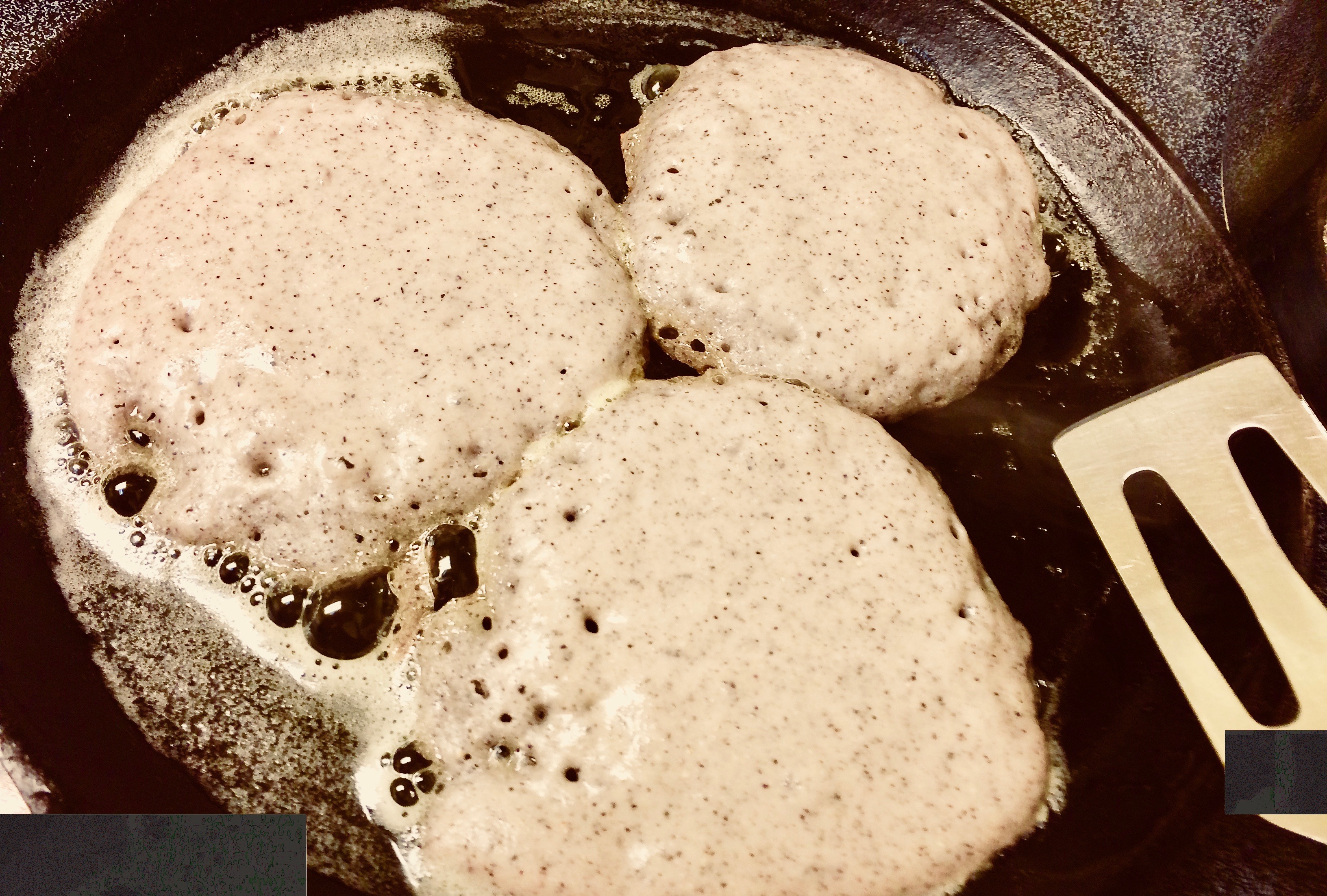
Directions:  Measure blue cornmeal, sea salt, and honey into a bowl.  Stir in boiling water until honey is melted, and let mixture stand 5-10 minutes.  Meanwhile in a separate bowl beat together egg, milk and oil, then add to the cornmeal mixture.  Sift flour and baking powder together, then add flour mixture into the batter with a few strokes.  Stir enough yogurt into batter to desired liquidity.  Place batter on hot, greased skillet in 1/4-1/2 cup dollops.  Turn when bubbles in the batter begin to stay open (as shown in photo.)

Don’t wait! Serve hot bluecorn pancakes right away.  Have your toppings (found locally or home-made from desert cactus fruits or mesquite pods) on the table ready for guests to custom-decorate each pancake stack.  Then taste the joy and nutrition of farm and wild desert bounty!

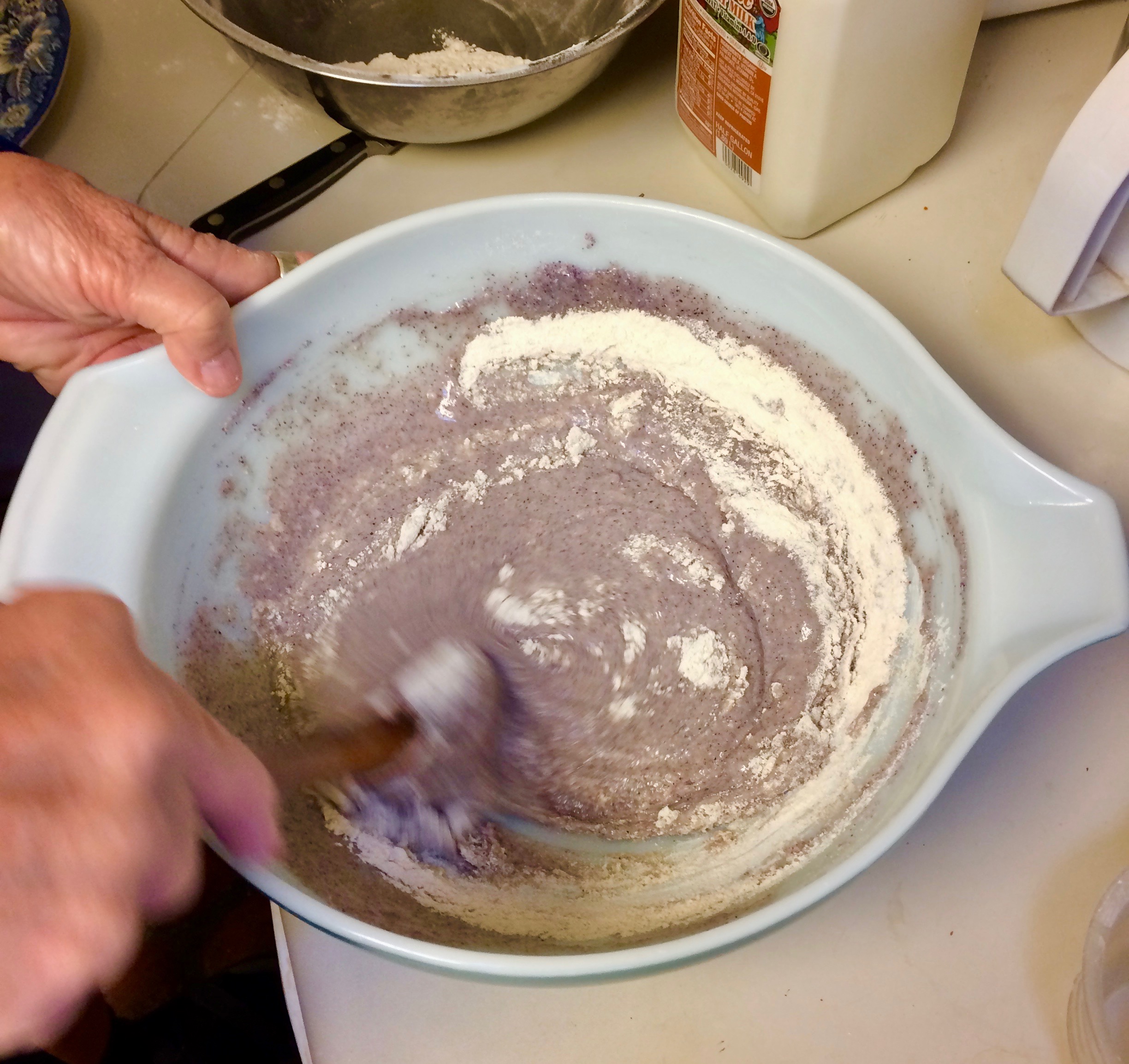
After mixing wet ingredients, quick-beat in your gluten-free flour….

Pancakes on the hot griddle are getting done through and ready to turn when batter bubbles begin to stay open….

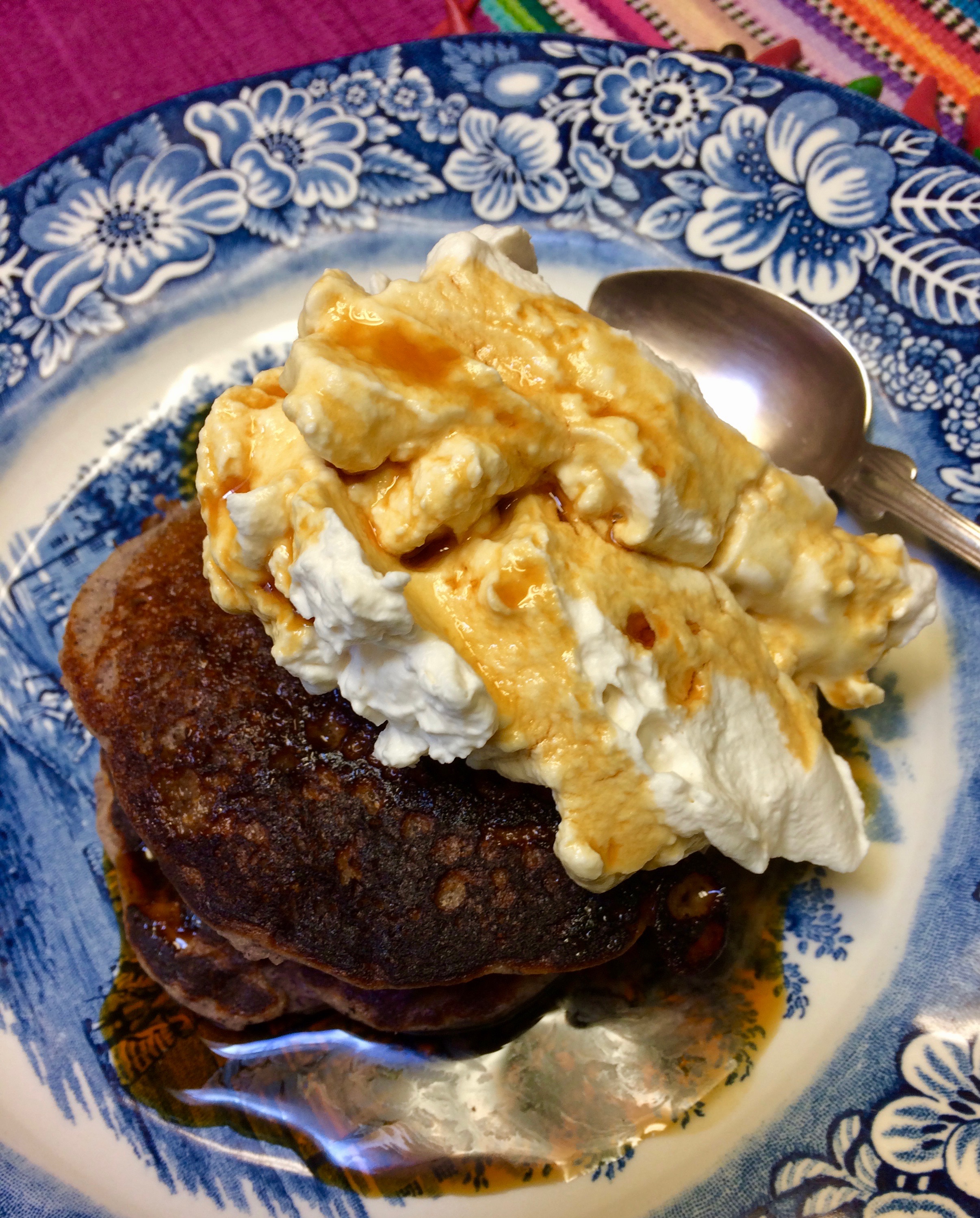
As Rod was helping me in the kitchen by whipping the cream he splashed a little libation into one batch.  I must admit the Kahlua cafe liqueur gives the whipped cream a festive kick.  For the hard-core among us we might go so far as lacing another batch of whipped cream with a crushed chiltepin pepper.


Home-made saguaro syrup tops whipped cream made with Kahlua liqueur on these blue corn pancakes.  Is this gilding the lily or what?    (Making saguaro syrup is another story, so stay tuned for next June’s blog.)

You can find fabulous local raw honey and precious saguaro syrup at San Xavier Farm Coop at 8100 S. Oidag Wog on the Tohono O’odham Nation near San Xavier Mission.  Honey from Fred Terry the Singing Beekeeper at Sunday’s Rillito Farmers Market is also superb, as is our SavorSister Monica King’s honey.   Native American-grown blue cornmeal is available at the NativeSeedsSEARCH store, 3061 N.Campbell Ave, Tucson, or online at www.nativeseeds.org (the perfect place for holiday shopping!)  Cheri’s Desert Harvest products (like her mesquite syrup in photo) are there at the NSS store and at several specialty shops in Arizona.  Great local foods–such as home-made prickly pear jam–are a part of the delectable menu at Coyote Pause Cafe near Tucson Estates.

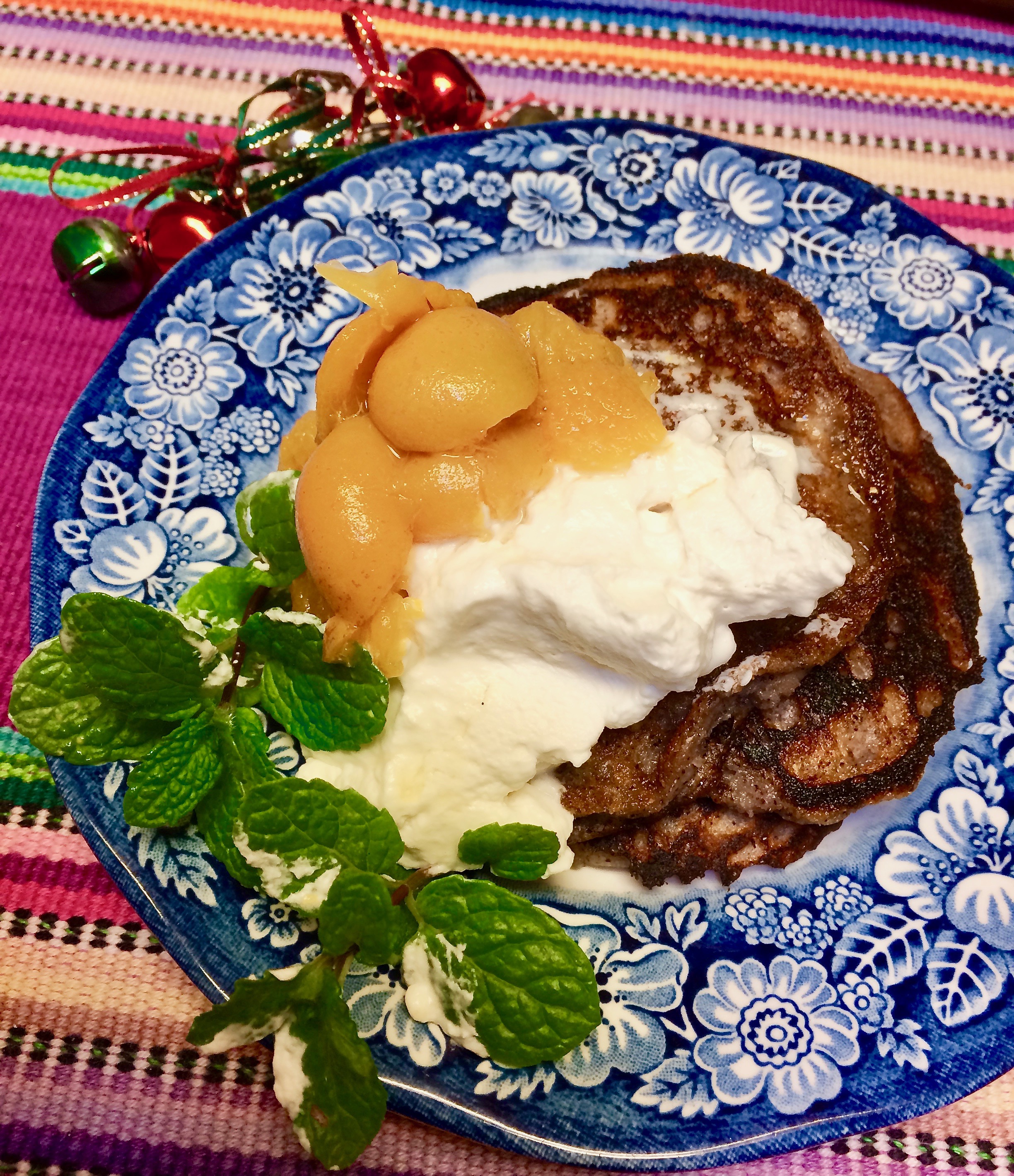
Try topping your blue corn pancakes with whipped cream and fruit–Here I’ve used home-canned apricots purchased in the charming town of Bacoachi, Sonora (south of Cananea), on a recent Mission Garden tour. (MABurgess photo)

Dress up a holiday breakfast to delight the eye and tastebuds–fit for all at your table–with nutritious, LOCALLY-sourced Southwest gluten-free pancakes!   Ideas offered with cheers and holiday blessings from Tia Marta!

[Tia Marta is an Ethnobotanist and Artist dba Flor de Mayo Arts.  Many of her Southwestern heirloom bean and wheat-berry products, as well as her beautiful canvas art-totes, notecards and prints, are available at the NativeSeedsSEARCH store, at Tohono Chul Park Museum Shop, the UNICEF Store in Monterrey Village, Presidio Museum and Old Town Artisans in OldTown Tucson.  Hear her in person as lecturer/guide at several upcoming City of Gastronomy Tours in January-April 2019 sponsored by Tucson Presidio Museum.]


Southwest Youth Plant the Seeds of Food Security

Young volunteers planting heirloom corn seedlings at Mission Garden, Tucson  (MABurgess photo)

It is so exciting and deeply inspiring to see how our Baja Arizona young people are taking to gardening!  From the looks of it, the future of our food will be in good hands!  Tia Marta of Flor de Mayo Arts here to let you know about just a few of the interesting projects several school programs have quietly begun.   Knowledge is growing out of the desert soil, along with delicious produce.

High school students at Youth Ag Day celebration at San Xavier Farm Coop learn how to de-spine and peel prickly pear fruit for making prickly pear lemonade.  It is not only delicious but also helps balance blood sugar and curb cholesterol! (MABurgess photo)

Our children are connecting with Nature, soil microorganisms, and living plants that can feed them–doing healthy activity that produces not only healthier bodies but also nutritional consciousness planted deep in the brain.  Funny how dirty garden fingers can make you smarter–What a neat link!

University of Arizona “Compost Cats” are on the go daily to “harvest” organic waste all over town. Here they are teaching students at Youth Ag Day how to turn kitchen and cafeteria waste into rich soil to feed the next crop. (MABurgess photo)

Who in the world would think a compost pile worthy of note?  Well this is a record-breaker.  The young Compost Cats have created a gift to the future of gardening and farming in Tucson by #1 changing peoples’ habits about recycling organic waste on a big scale. (There should be a better term than “waste” –perhaps “discards”–because….)   Then #2, these Cats have turned all that Tucson waste around to be a positive asset, a resource!

This mountain of compost is but a fraction of the “Sierra Madre of Super Soil” at San Xavier Coop Farm collected by the UA Compost Cats. They IMPROVE the soil with traditional composting, giving the crops a healthy nutrient boost. (MABurgess photo)

There’s nothing like being out there observing what happens in Nature! Here representatives from NRCS (Natural Resources Conservation Service, USDA) show students at Youth Ag Day how ground covers and different plantings help infiltration of rainwater into the soil. With no plant cover, rain sluices away as floodwater. (MABurgess photo)

Our local southwest seed-conservation organization NativeSeedsSEARCH is providing a priceless resource to groups who can apply for their Community Seed Grants. (For details check out www.nativeseeds.org).  Recently a number of Tucson schools are growing amazing vegetable gardens with the seeds donated by NativeSeedsSEARCH, including Ochoa Elementary, Nosotros Academy, Tully Elementary, Roskruge Bilingual K-8 Magnet School, and Pima Community College.  You can read about Seed Grant Superstars in the latest issue of Seedhead News available by calling 520-622-0380.  Become a member and support this program for the future!

Tohono O’odham Community College Agriculture interns clean mesquite beans they have harvested for milling into a sweet, nutritious flour. (MABurgess photo)

TOCC Agriculture Intern Joyce Miguel and Cooperative Extension Instructor Clifford Pablo prepare the mill for grinding dry mesquite pods into useful flour–a new method for an important traditional food! (MABurgess photo with permission)


Teachers, like Tohono O’odham Community College Professor Clifford Pablo in the Agriculture Program and through Cooperative Extension, have inspired a couple of generations of youth to learn modern ag methods along with a deep respect for traditional foods and foodways.  His interns have become teachers themselves, and their agricultural products–grown as crops and wild-harvested–are being used for celebration feasts, special ceremonies, and sometimes even appear in the TOCC cafeteria.

Let’s rejoice in the good work that these young people, in many schools and gardening programs throughout Baja Arizona, are doing!  In the words of Wendell Berry, one of the great voices of our time about the very sources of our food, “Slow Knowledge” is what we gain from gardening and farming.  For our youth, the connection of healthy soil, healthy work outside, the miracle of seeds sprouting into plants that eventually feed us–this slow knowledge cannot be learned any other way.  We now know that such “slow knowledge” gained from assisting Nature to grow our food actually grows healthy neurological pathways in young brains and makes them think more clearly, be less stressed, achieve better understanding in math and language, and develop better critical-thinking skills.  What better prep for being leaders than to play in the garden as a youth!!

Link to the latest UA Alumni Magazine (fall 2018) for a heartwarming article by our Blog-Sister Carolyn Niethammer about the University of Arizona’s partnerships with local school gardening programs.

Watch the Mission Garden’s website www.tucsonsbirthplace.org for many gardening activities, celebrations, and workshops coming up that are perfect for kids and elders alike.  You can contact me, Tia Marta, on my website www.flordemayoarts to learn of desert foods workshops where interested young people are welcome.

Young people know that food security will be in their hands.  Indigenous youth and some disadvantaged communities seem to realize that “the government” will probably not be there as a fall-back food provider.  Youth all across Arizona are learning the skills of growing food sustainably and may even begin re-teaching the elders–in time.