For a Spicy Solstice….

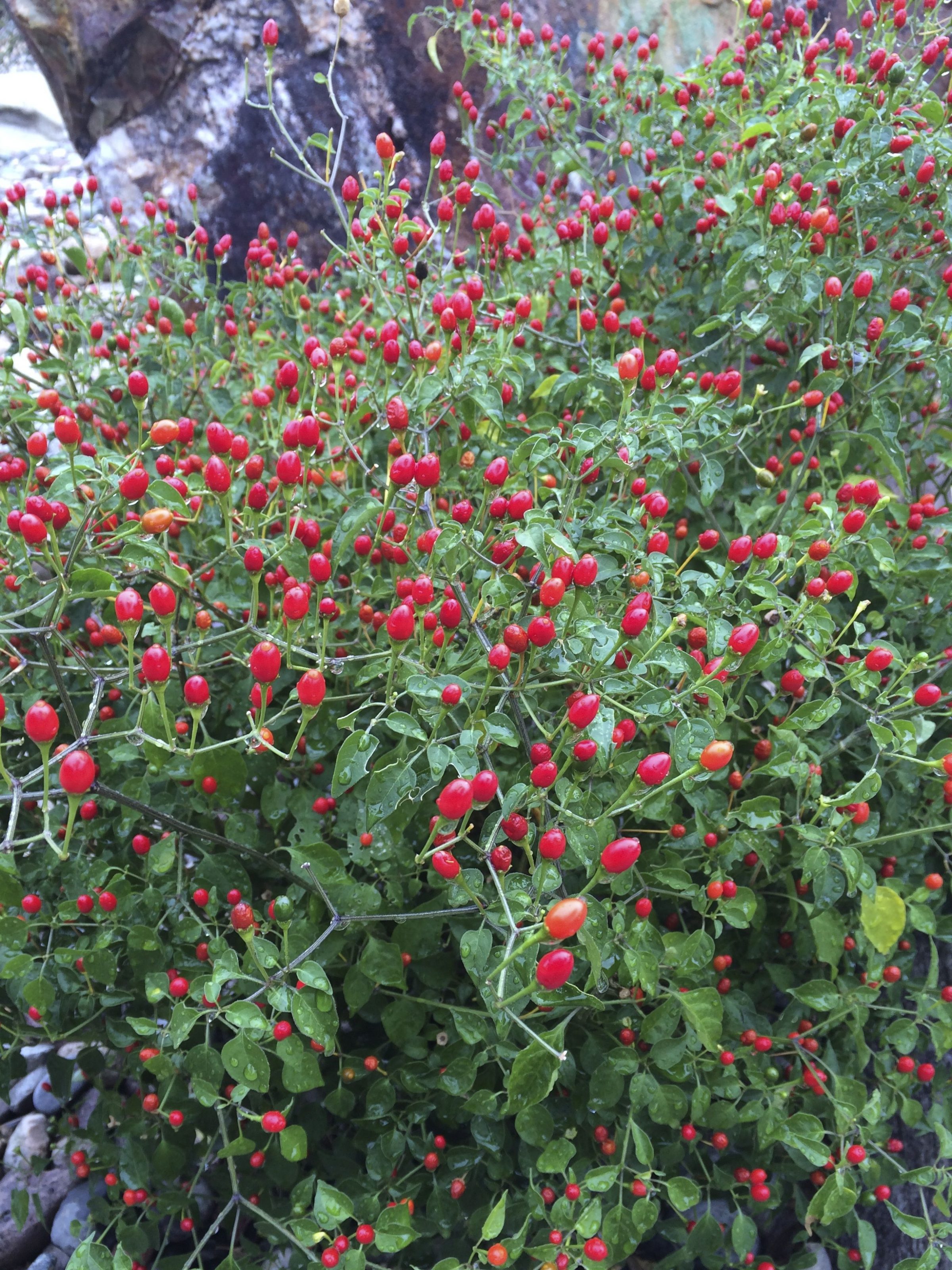
Chiltepin pepper from the wild, growing at Tohono Chul Park (Burgess photo)

Chiltepin pepper plant, originally from the wild, growing in the Tohono Chul Park landscape (Burgess photo)

It’s chile time in Baja Arizona!  The local goodness of our Sonoran Desert foods can assert itself tastefully—yea, vehemently!—into other imported cuisines. Tia Marta here to share a wonderful new wrinkle to celebrate this holiday season, by wedding the local “vehemence” of our chiltepin pepper with an imported tradition.

In decades since the 1940s, industrial ag and interstate grocery service have tried to make Baja Arizona into a food colony (but we are tastefully fighting back). Fossil fuels transport outside traditions to us that we do cherish and that help keep families together, like the many food traditions we celebrate at Tucson Meet Yourself in October each year.  At the top of the import list for Yuletide is one borrowed from East-coast First Nations. (See Renewing America’s Food Traditions by Gary Paul Nabhan, UA Press, for more.) This imported gift from Native People of Southern New England and coastal New Jersey bogs that I’m referring to for holiday feasts is naturally the cranberry. Thank Goodness for trade routes!

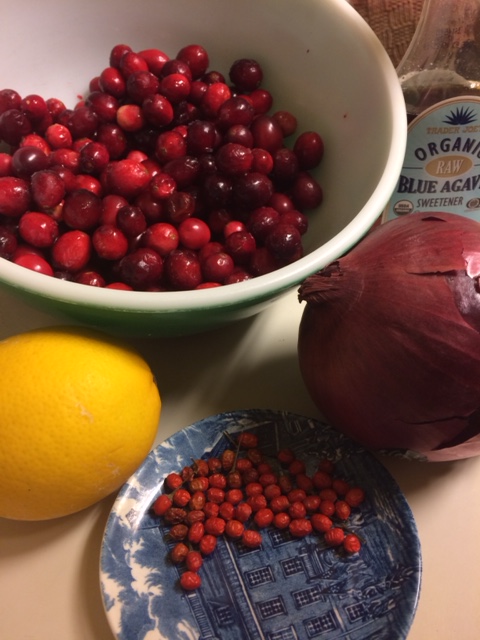
Ingredients for Chiltepin-Cranberry Relish--some local, some transported

Ingredients for Chiltepin-Cranberry Relish–my own Meyer lemon and chiltepines, plus transported cranberries, agave nectar, and red onion

Local and import come together sensationally in my recipe for a raw, vegan Chiltepin-Craberry Relish.
Yes, it is picante, sweet and tangy—and delicious! It was inspired by amazing cook and baker Cindy Burson of Country Harvest who won People’s Choice at a fair with her version. (Cindy’s Southwest treats can be enjoyed at Sunday’s Rillito Farmers Market and Wednesday’s Green Valley Farmers Market.)

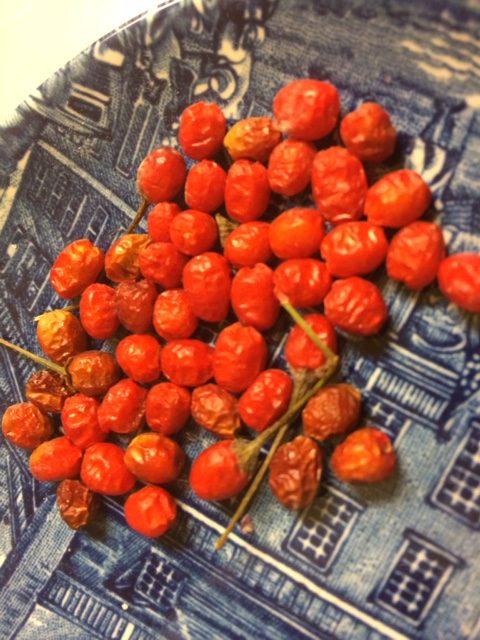
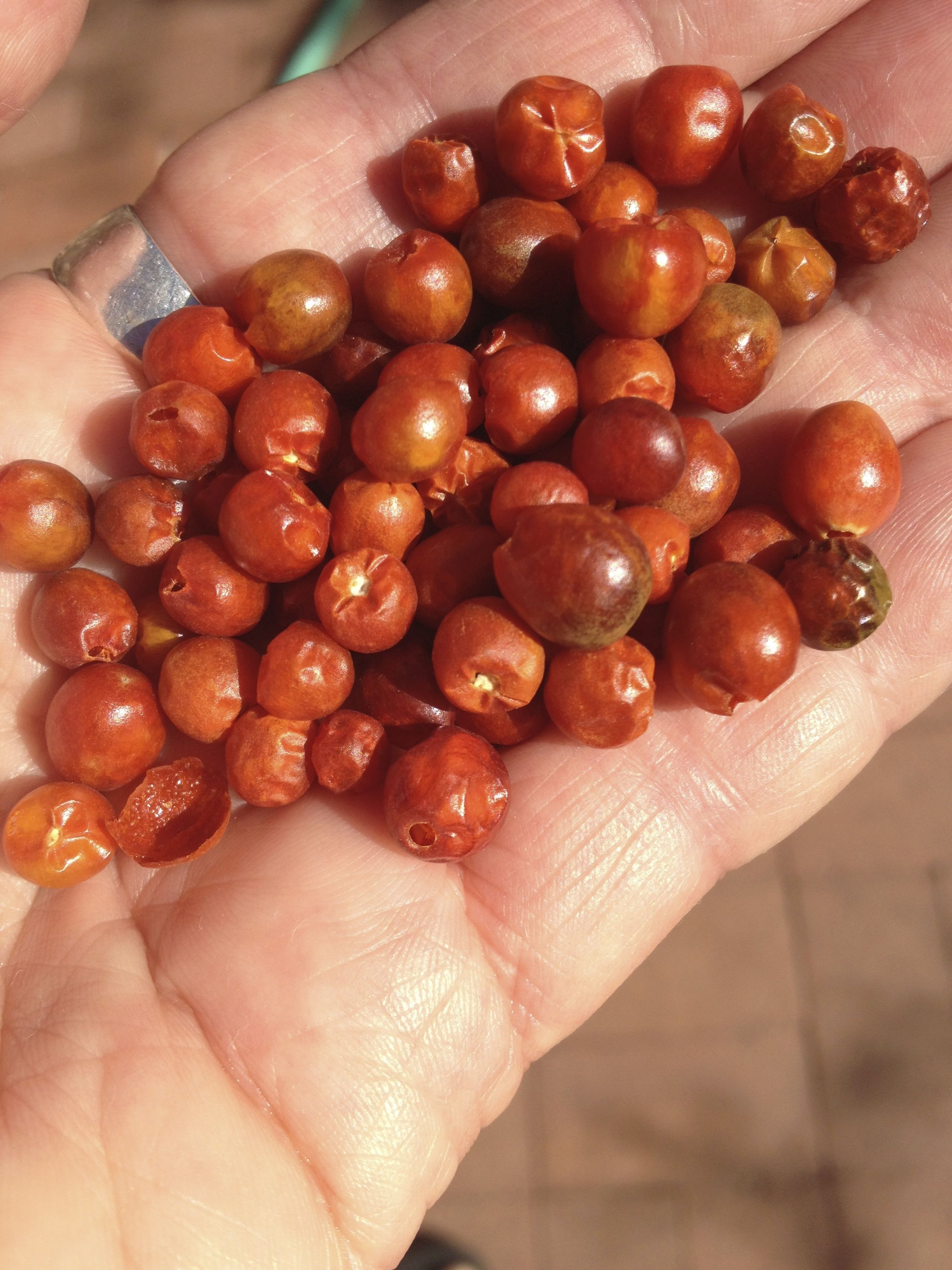
Dried chiltepines for the relish--They make a great snack, great flavoring for Tom's Mix SW Heirloom Beans, and super in any salsa

Dried chiltepines to use in the cranberry relish–They also make a great snack, great flavoring for Tom’s Mix SW Heirloom Beans, and super in any salsa.

Muff’s Fresh and Easy CHILTEPIN-CRANBERRY RELISH RECIPE

Ingredients:

3 cups fresh organic cranberries, washed

1/2 medium red onion, diced

8-12 dry chiltepin peppers for picante palettes, depending on “heat” desired (4-6 chiltepines for less picante).  Start with less, then add more later if higher “vehemence” is needed.

1/2 cup local raw honey or agave nectar

2 Tbsps lemon or lime juice

1-2 Tbsps tangerine rind or Meyer lemon rind, chopped

1/4 cup fresh cilantro, chopped (optional ingredient)

Directions:

In a food processor, pulse all the fresh ingredients and juice at least 6 to 8 times, keeping the texture coarse.

Chill in a covered bowl in refrigerator overnight or at least 8 hours, for time to meld the flavors.

Stir the mixture;  do a taste test.  Add more honey or agave nectar, or chiltepines as needed for the sweet toote or picante palette.

Spicy Chiltepin-Cranberry Relish can keep its freshness, flavor, and color in the frig for at least a week.

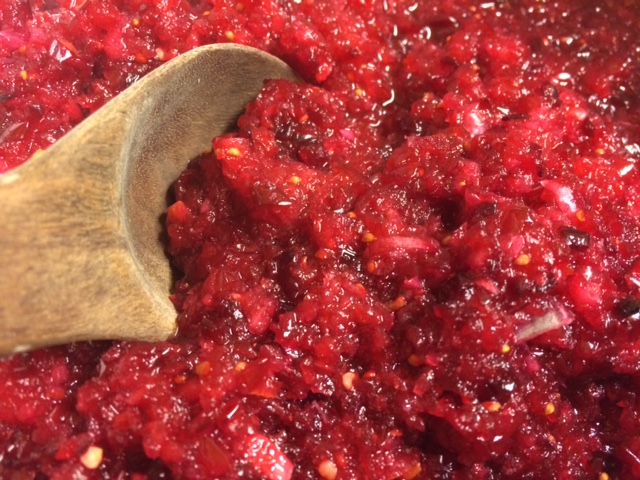
Note texture of fresh relish--not too fine. (Tarahumara and Mayo spoons like this for serving can be found at the NativeSeeds/SEARCH store)

Note texture of fresh relish–not too fine. (Tarahumara and Mayo spoons like this for serving can be found at the NativeSeeds/SEARCH store)

Even the conservative palette will relish this holiday condiment—perfect for Christmas dinner or festive smorgasbords. Chiltepin adds a glorious kick to the sweet tart of cranberries, with a non-lingering wave of excitement to the tastebuds! You will find Chiltepin-Cranberry Relish as a fine complement not only to turkey or ham. Try it with bagels and cream cheese. Use it as a savory side, or with a salad, on any holiday platter. It’s a celebration of East meeting Southwest—Enjoy!

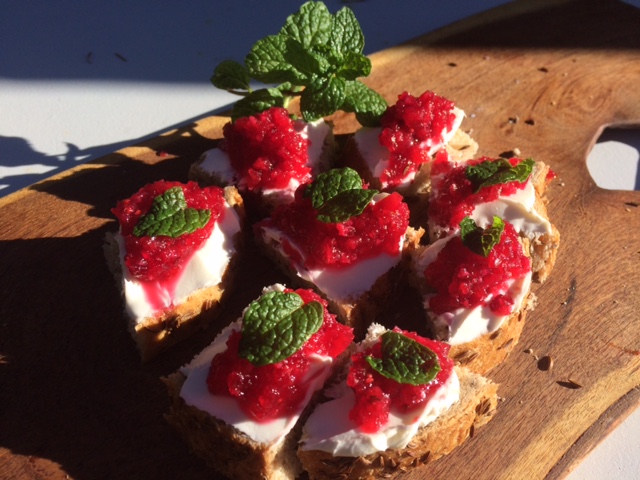
Here I've used Chiltepin-Cranberry Relish served with creamcheese-on-rye canapés

Here I’ve used Spicy Chiltepin-Cranberry Relish served as creamcheese-on-rye canapés

We harvest chiltepines one by one as we need them, from our own chiltepin plants. Birds appreciate our chiltepin bushes as much as we do! Some of our plants I propagated from wild chiltepines in Arispe, Sonora, and Baboquivari. Some, purchased at Tohono Chul Park’s Chiles and Chocolate event, were propagated by experts Charles DiConcini and blog sister Linda McKittrick from Sierra Madrean plants. To buy healthy, productive plants for your own garden, be sure to put the NativeSeeds/SEARCH Valentine’s Plant Sale on your calendar for February.

Fresh-picked mature chiltepin peppers--Caution: do not rub eyes after picking chiltepines!

Fresh-picked mature chiltepin peppers–Caution: do not rub eyes after picking chiltepines!

To source fresh dried chiltepin peppers for cooking and eating, visit the NativeSeeds/SEARCH store (3061 N Campbell Ave, Tucson or http://www.nativeseeds.org) or stop by Cindy’s Country Harvest booth at Rillito Farmers Market Sunday.  You can see live chiltepin plants in fruit at Tohono Chul Park and at Mission Garden in Tucson.

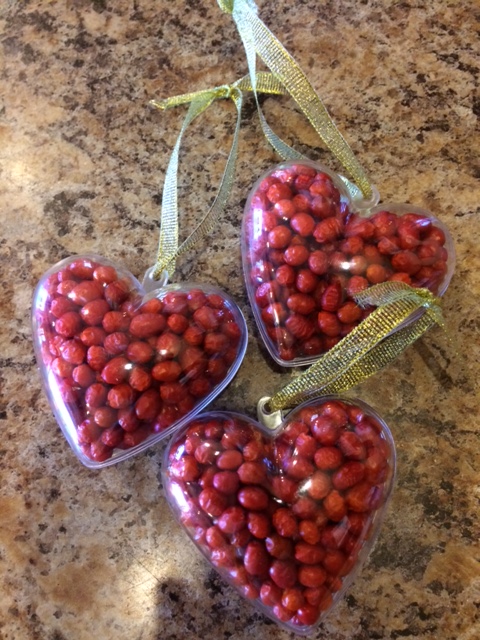
Chiltepin-filled Heart Ornaments available at NativeSeeds/SEARCH Store for holiday decor and spice into the New Year!

Chiltepin-filled Heart Ornaments are available at NativeSeeds/SEARCH Store for holiday decor and spice into the New Year!

Another great idea:  A couple of chiltepines added to Southwest Heirloom Bean Tom’s Mix makes it a perfect potluck crowd-pleaser. You can find SW Heirloom Bean Tom’s Mix at NativeSeeds/SEARCH, or for online gifts at http://www.flordemayoarts.com.
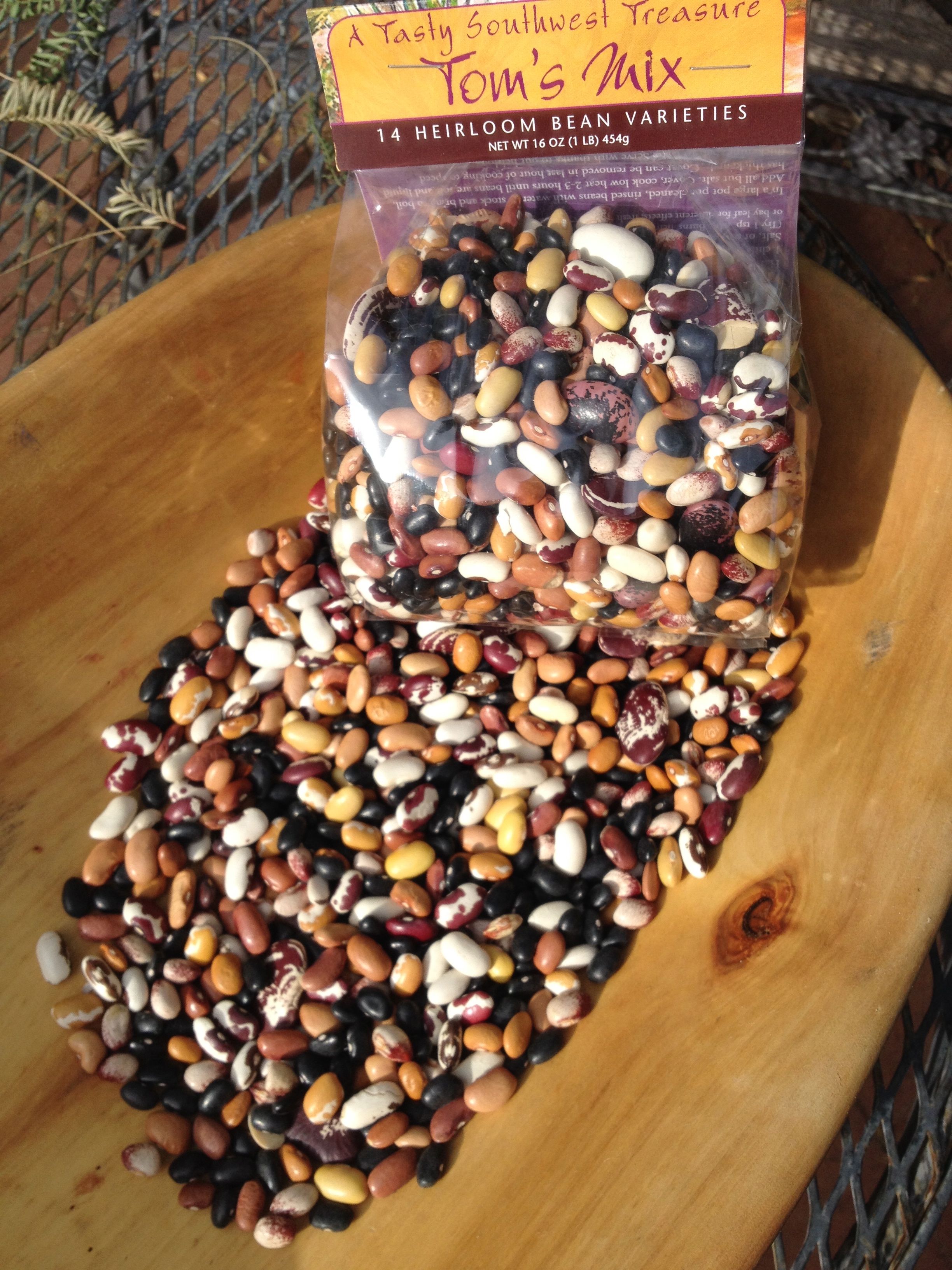
Tom's Mix 14-Heirloom Bean Mix makes a perfect gift from the Southwest--made spicy with chiltepines! Find them at NativeSeeds/SEARCH store, Tohono Chul Museum Shop, Wiwpul Du'ag at San Xavier Plaza, and the UNICEF Store in Monterrey Village, Tucson; or online www.flordemayoarts.com

Tom’s Mix 14-Heirloom Bean Mix makes a perfect gift from the Southwest–made spicy with chiltepines! Find them at Rillito Sunday Farmers Market, NativeSeeds/SEARCH store, Tohono Chul Museum Shop, Wiwpul Du’ag at San Xavier Plaza, and the UNICEF Store in Monterrey Village, Tucson; or online http://www.flordemayoarts.com

The Best Mesquite Brownies

Carolyn Niethammer with you here today talking about one of my favorite subjects, mesquite meal. The first crop of mesquite pods ripened early this year on the lower desert. Here in Tucson, Desert Harvesters sponsored a milling in June. (A milling is this miraculous process of putting whole pods in a hammermill and getting lovely, silky flour at the end.) Because of the early summer rains, there is a huge second crop of pods ripening on the trees now(see the photo above). If you missed the first round, there will be opportunities to get your pods ground in communities throughout Arizona later in the fall after the weather has dried out.

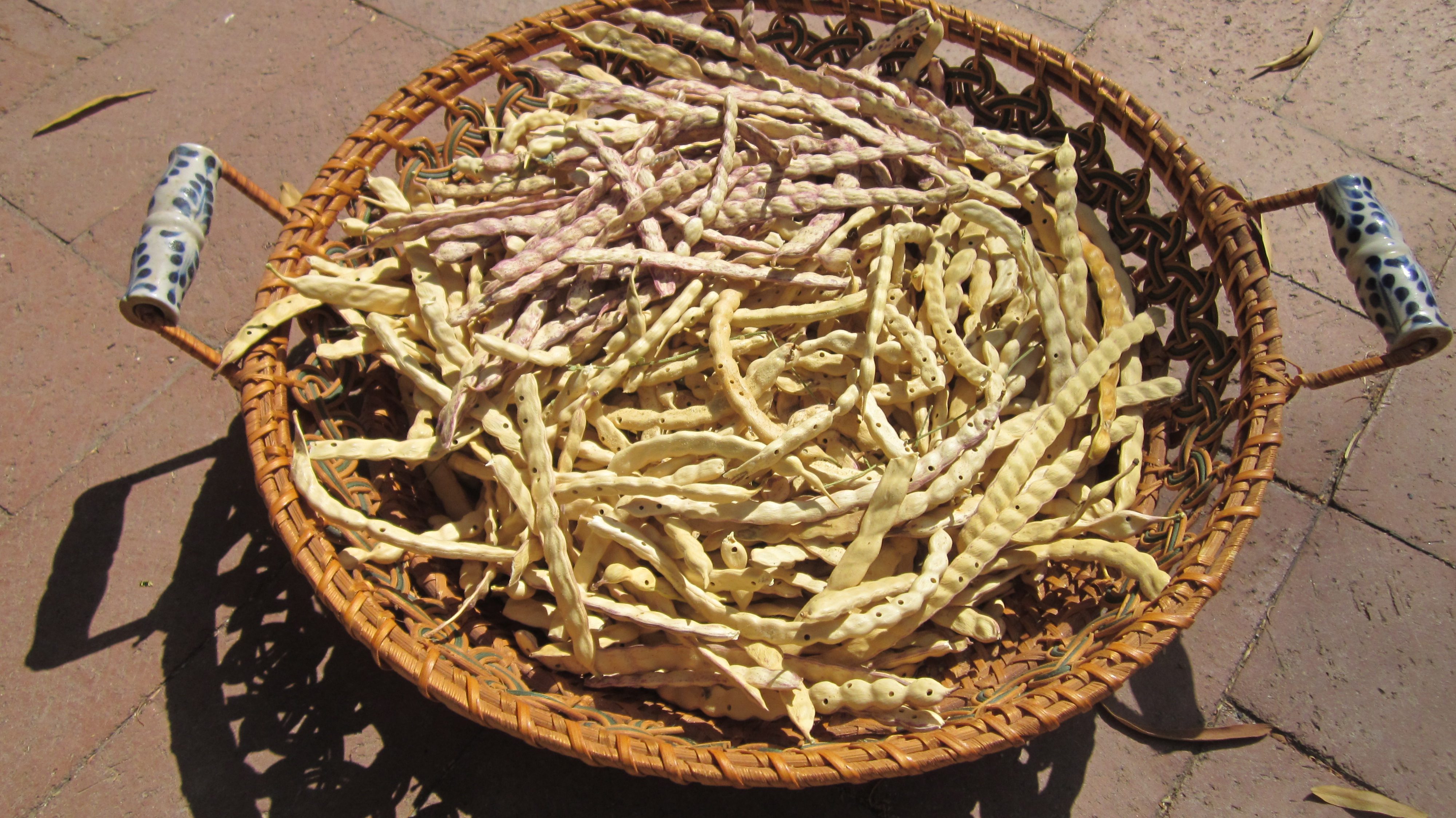
Dry mesquite pods ready for milling.

Dry mesquite pods ready for milling.

So what to do with all that mesquite meal after you have had your fill of pancakes?

I have been cooking with mesquite pods since the early 1970s and have published in my cookbooks lots of recipes using the ground pods. But until now, I’ve never been completely satisfied with a mesquite brownie recipe. But this one that I made for a potluck at Native Seeds/SEARCH earlier this summer is close to perfect. I used pepitas (hulled pumpkin seeds) because I think the flavor goes well with mesquite, but pecans would work too. If you cannot bear to bake anything without chocolate, feel free to toss in some chocolate chips and maybe a little cocoa powder as well. The familiar warm flavor of mesquite will still come through.

The recipe has a considerable amount of fat and sugar, but those are the ingredients that make up what we consider a proper brownie. Just go easy on how many you eat.

If you aren’t up to making your own mesquite meal, you can purchase it from the Native Seeds/SEARCH retail store or order on-line from NS/S or Flor de Mayo. Mesquite meal is also available at farmers’ markets throughout Arizona.

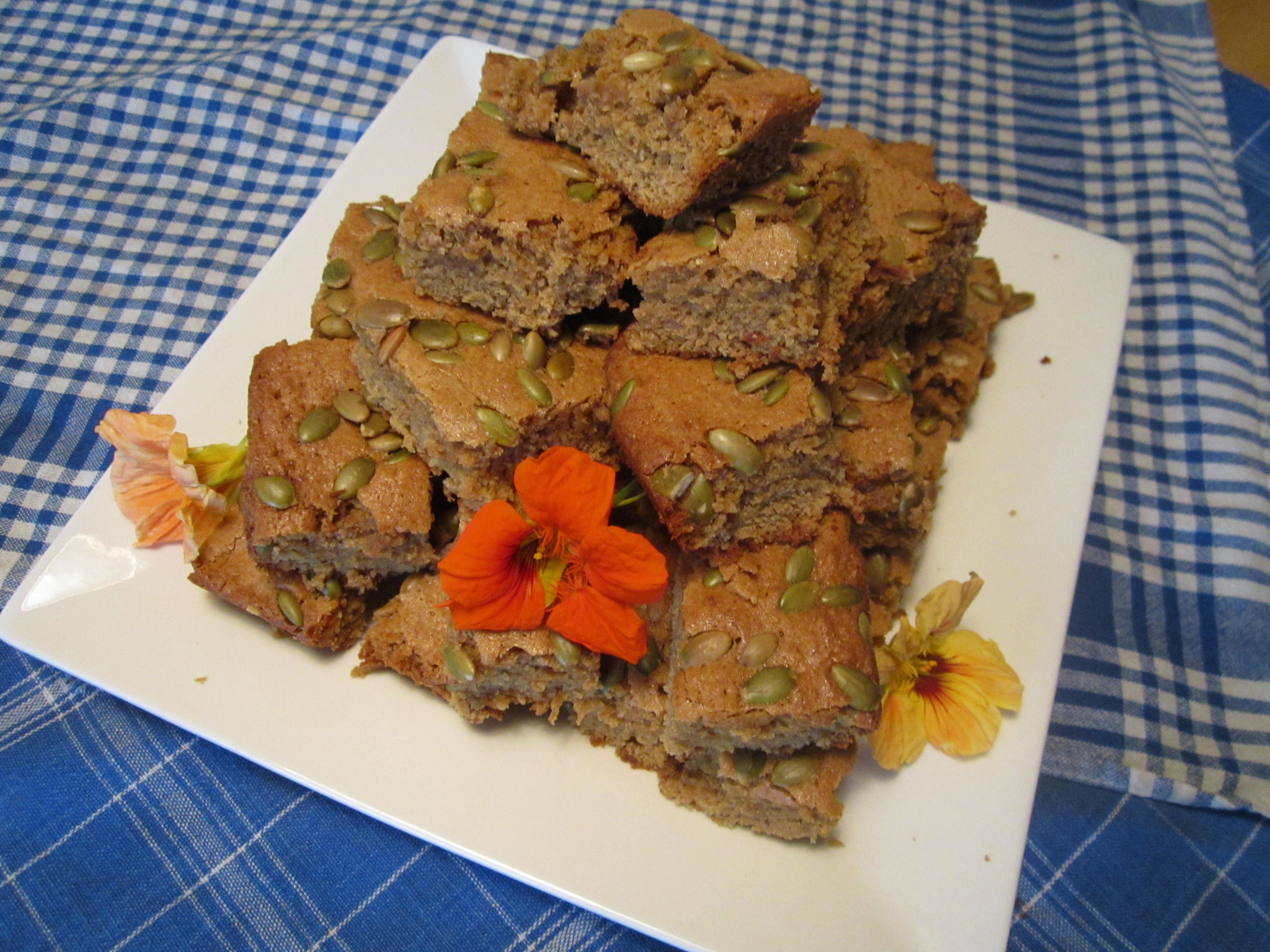
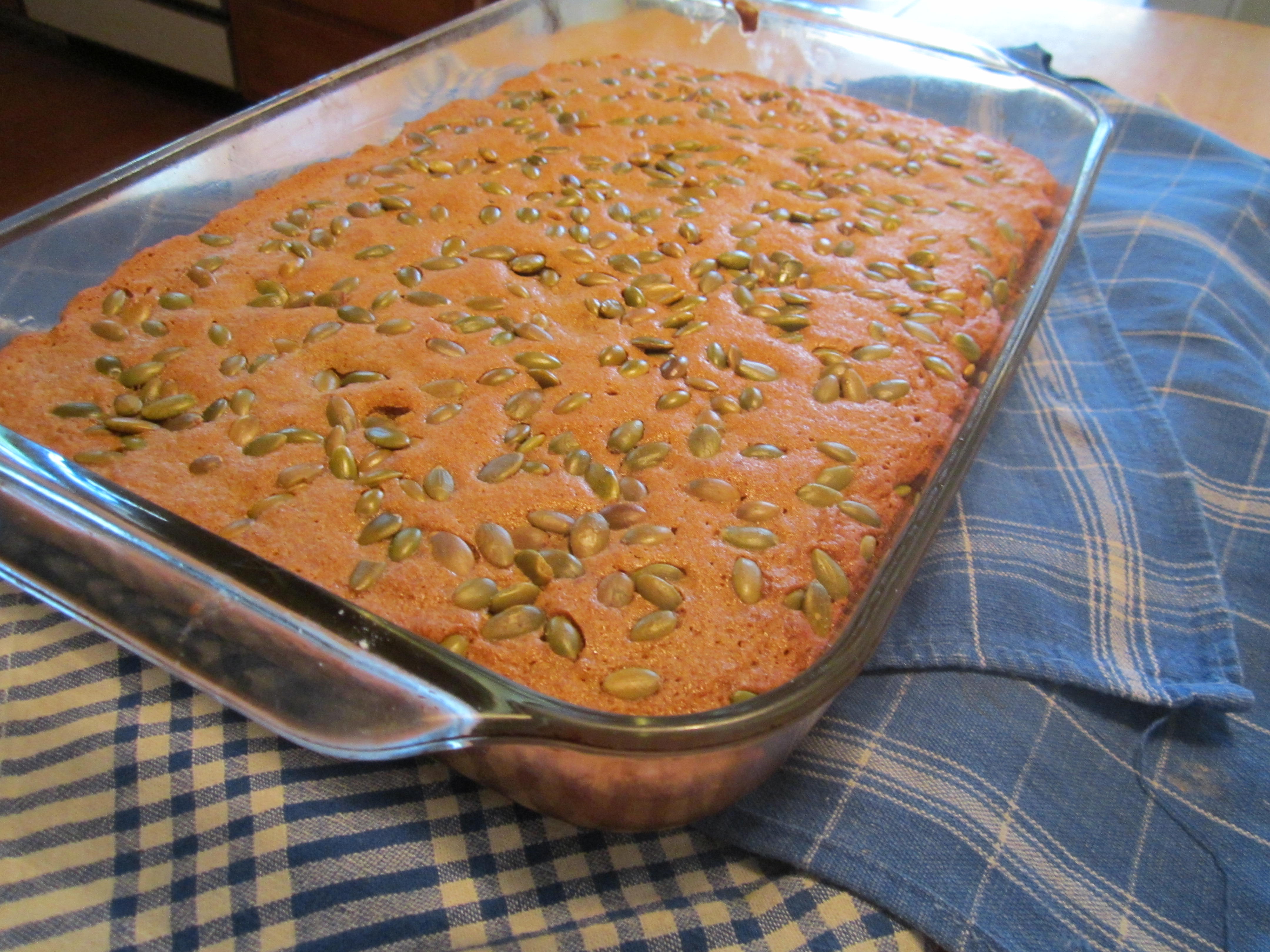
Ummm, don't these look good?

Ummm, don’t these look good?

Best Mesquite Brownies

2/3 cup melted butter

1/4 cup vegetable oil

3/4 cup mesquite meal

2 cups brown sugar

4 eggs

2 teaspoons vanilla extract

1- 1/2 cups all-purpose flour

1 teaspoon baking powder

1 teaspoon salt (if using unsalted butter)

1/2 cup pepitas or chopped pecans

2/3 cup semisweet chocolate chips (optional)

  1. Preheat oven to 350 degrees and grease a 9×13-inch baking pan. Set aside.
  2. In a medium bowl, combine mesquite meal, flour, baking powder and salt if using. Set aside.
  3. Combine melted butter and oil in a large bowl. Stir in sugar and add eggs, one at a time, combining well after each addition. Stir in vanilla.
  4. Stir in mesquite and flour mixture. Add chocolate chips if using.
  5. Spread batter into the prepared pan. Bake at 350 degrees for 25 to 30 minutes or until a toothpick inserted near the center comes out clean. When cool, cut into squares.

__

Cooling in the pan, ready to cut into squares.

Mesquite brownies cooling in the pan, ready to cut into squares.

____________________________

Want more recipes for mesquite meal? Check out my cookbook Cooking the Wild Southwest: Delicious Recipes for Desert Plants available at Native Seeds/SEARCH or from Amazon or B&N.  There you’ll find my favorite recipes for Apple-Mesquite Coffee Cake and a killer Banana Mesquite layer cake.

Promise, Preparedness, Present Fulfillment–with Fruits of the Desert

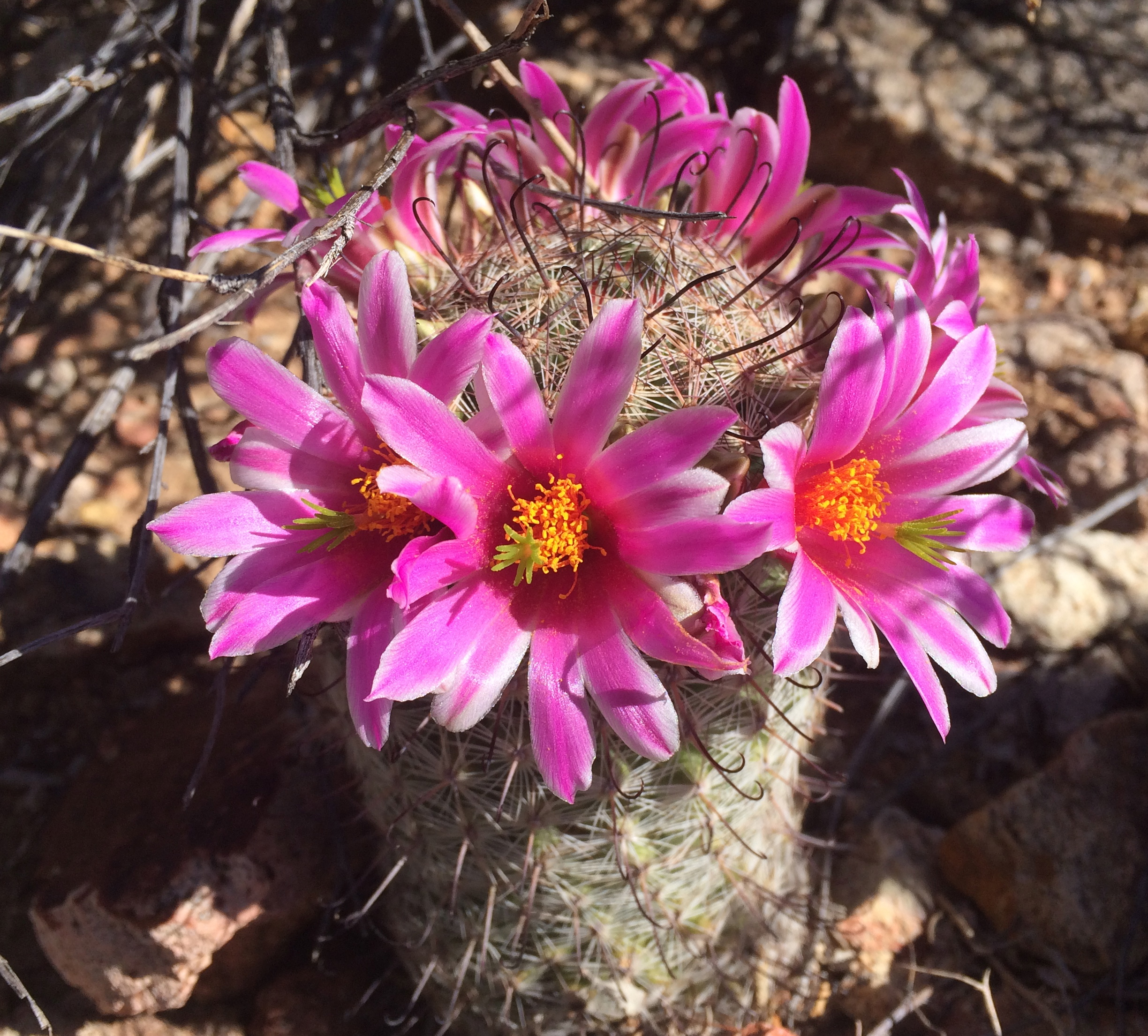
small fishhook Mammillaria microcarpa celebration the monsoon with a promise of future fruitlets (MABurgess photo)

Fishhook Mammillaria microcarpa celebrating the monsoon with a promise of future fruitlets (MABurgess photo)

Crowns of Mammillaria flowers make pink arches like miniature 4th of July fireworks now suddenly visible among desert rocks and under greening bursage.  They are rain celebrations–the PROMISES of fruits to come!  In a few weeks the little fishhook pincushions will sport a crown of shiny red fruitlets.  Keep watch for them.  Known in Sonora as pitayita de raton (little mouse’s pitaya), each long red droplet will give you a sweet tangy zing– like a mini-organpipe-cactus fruit.  Tia Marta here to share ways of enjoying the cornucopia that is beginning to spill out flavorfully all around us in town and out in the desert in this monsoon time.

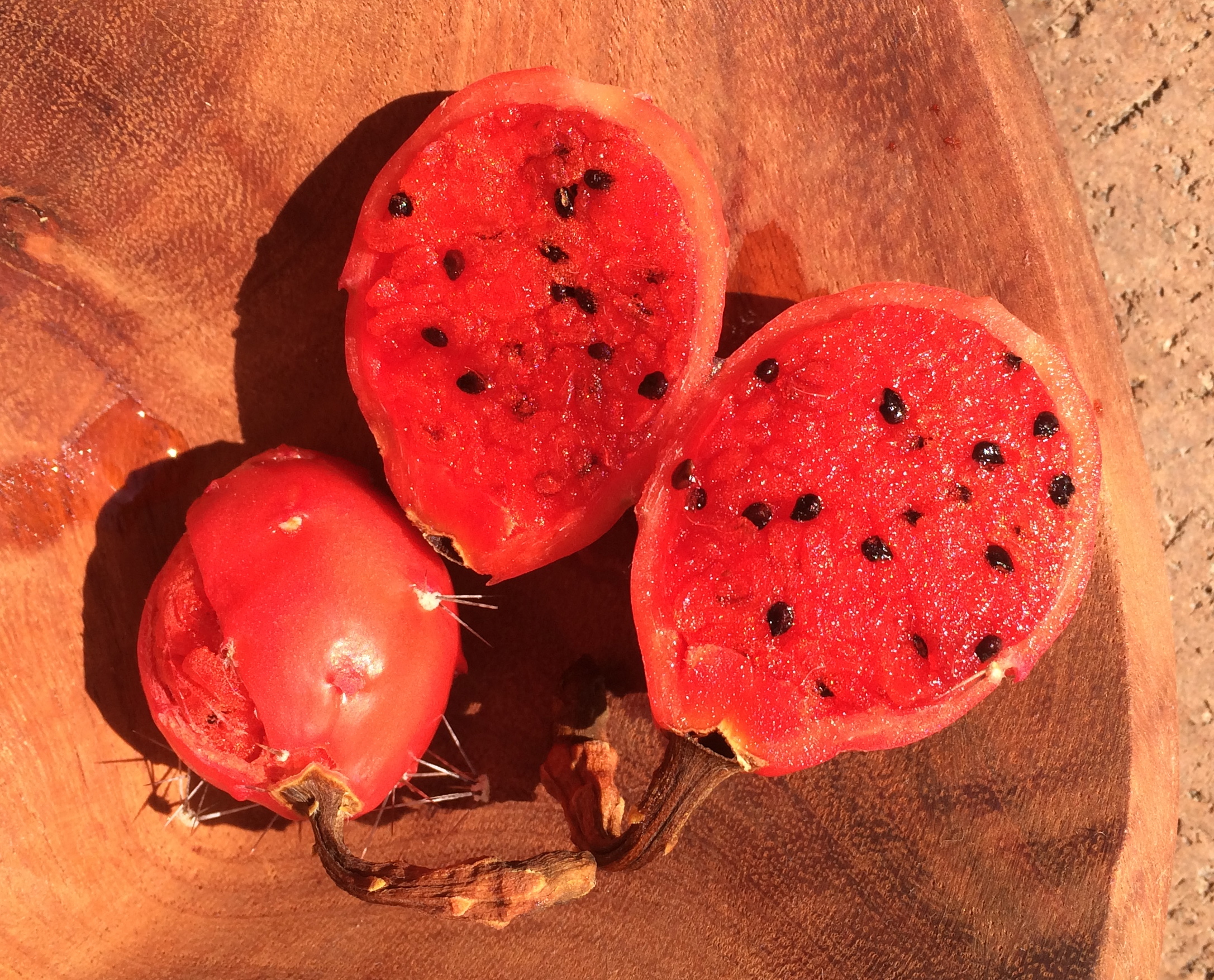
Late fruiting prickly pear--still green and full of promise

Late fruiting prickly pear–unripe green but full of promise this week (July 8)

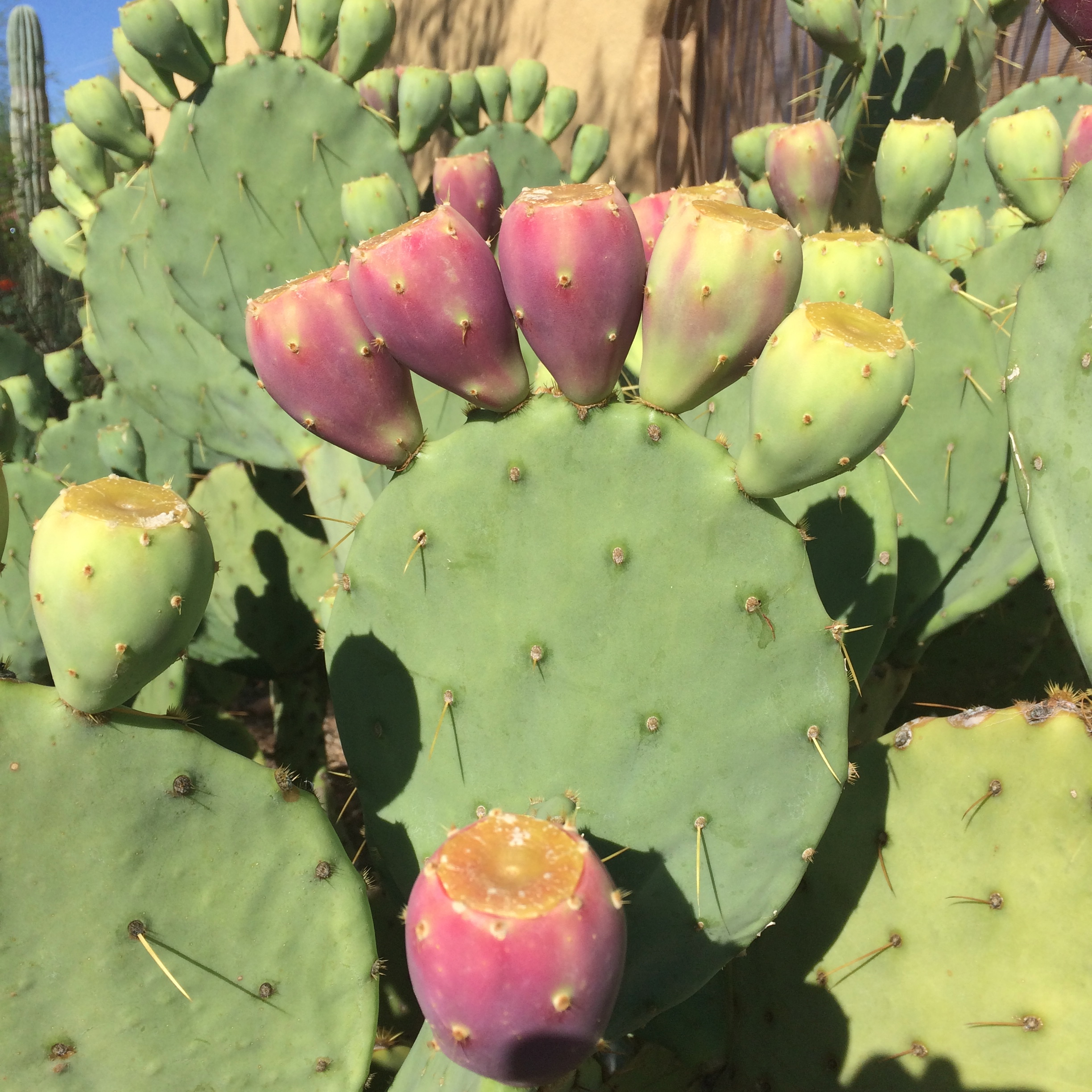
Opuntia lendheimeri alba barely turning pink--more promises...

Opuntia lindheimeri alba barely turning pink this week–more promises…(July 8)

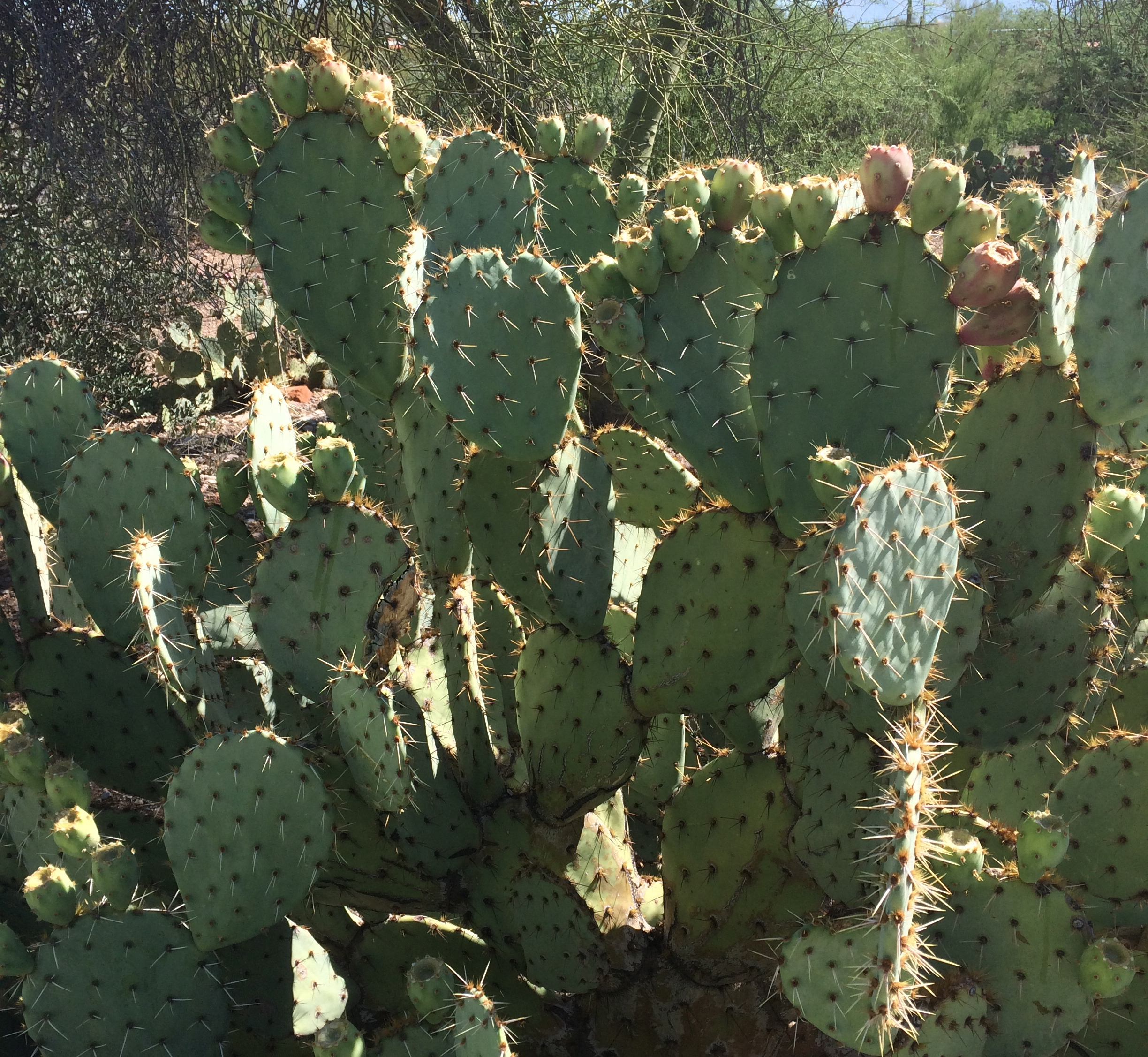
Opuntia engelmannii in first stages of ripening...

Opuntia engelmannii in first stages of ripening…not yet (week of July 8)

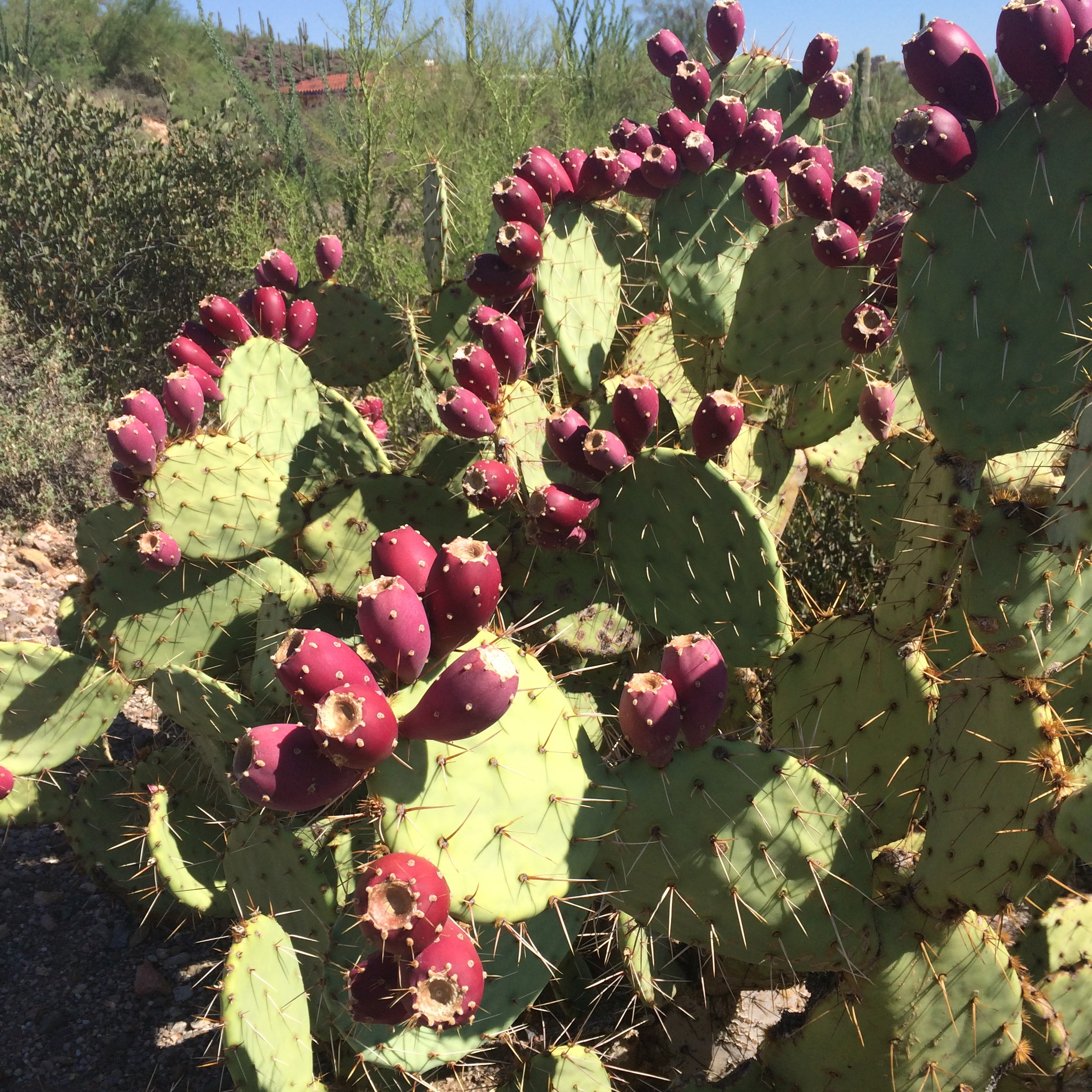
All around the desert and through every neighborhood, I see the promise of a good prickly pear harvest, inspired by our elongated spring and nurtured by good monsoon rain.  Each prickly pear seems to march to a different drummer.  Right now you can see every shade of color–unripe to ripening tunas–very green, to rosy, to deepening red.  These are PROMISES so don’t jump the gun!  They are not ready quite yet–but this is the signal to get your kitchen PREPARED.  Stay tuned–There will be more blog posts to detail prickly pear ideas in coming weeks.  Make space now in your freezer, and make time on your calendar for the August TUNA HARVEST.


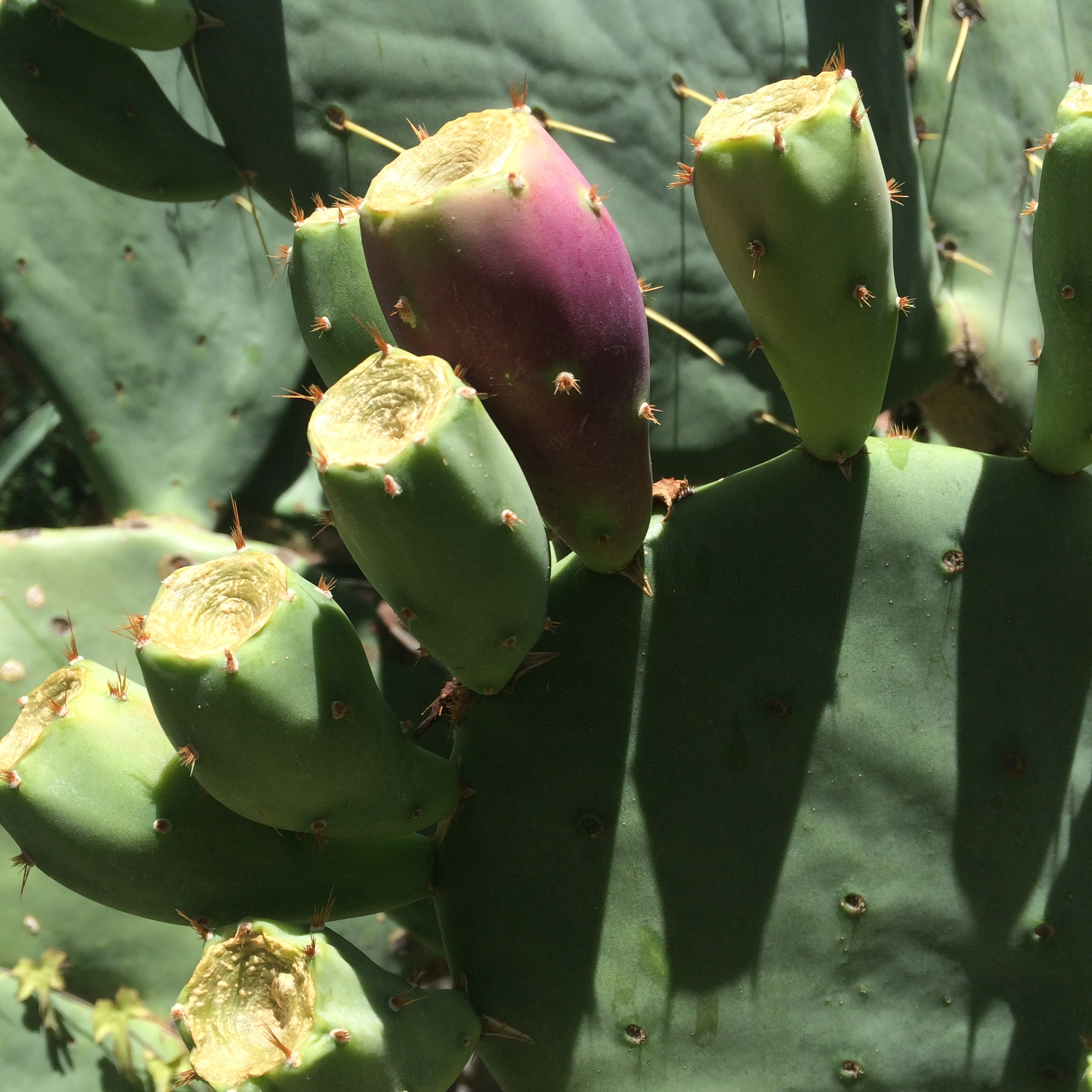
Opuntia engelmannii in full ripening fruit--but not ready yet!

Opuntia engelmannii full of ripening fruit–But don’t salivate yet (week of July 8)!  Wait for a dark maroon color to extend all the way to the bottom attachment of the tuna AND through the tuna‘s entire interior before they are fully ripe and ready to eat or cook.

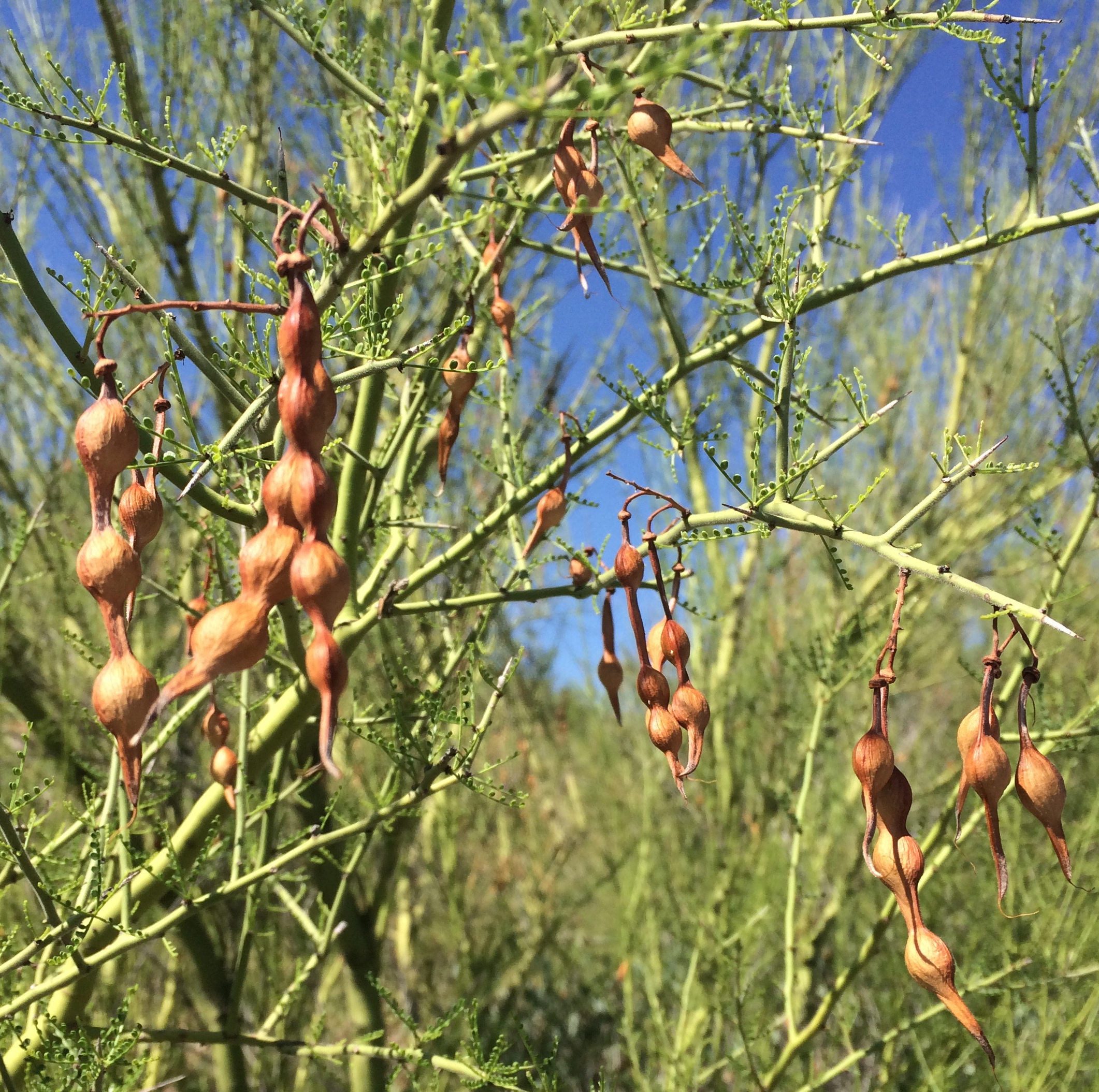
What a glorious monsoon our Sonoran Desert has enjoyed over the last couple of weeks!  The explosion of life in such a short time is astounding on the heels of record-breaking heat and drought.  This is when the desert shows its tropical heritage with a surge of energy, fecundity, productivity.  Isn’t it interesting that the “outsider’s” view of the desert is of hazardous scarcity?  More interesting instead is to understand and appreciate the waves of nutritious plenty that can erupt suddenly here in the Sonoran Desert.  Native People know how to rally, to harvest in the times of plenty and to store short-lived fruits of the desert against lean times–lessons worth exercising.   Plentiful foothills palo verde seeds (Parkinsonia microphylla) are a case in point.

Mature dry pods of foothills paloverde--They have potential for making flour!

Mature dry pods of foothills paloverde–with potential for making nutritious flour!

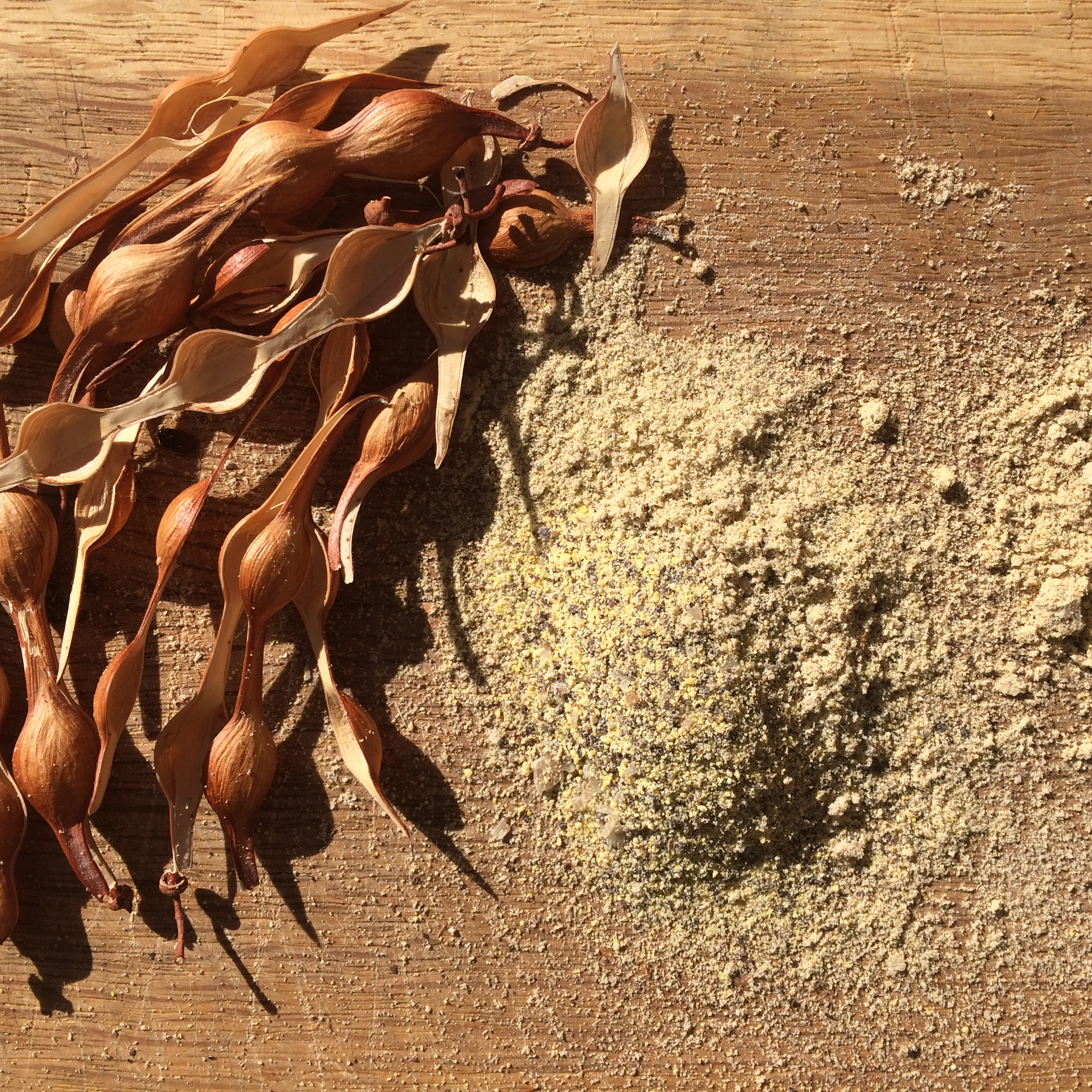
Foothills palo verde seed milled raw for baking

Foothills palo verde seed milled raw for baking

Seeds of foothills palo verde dry and hard as little stones

Seeds of foothills palo verde– dry and hard as little stones


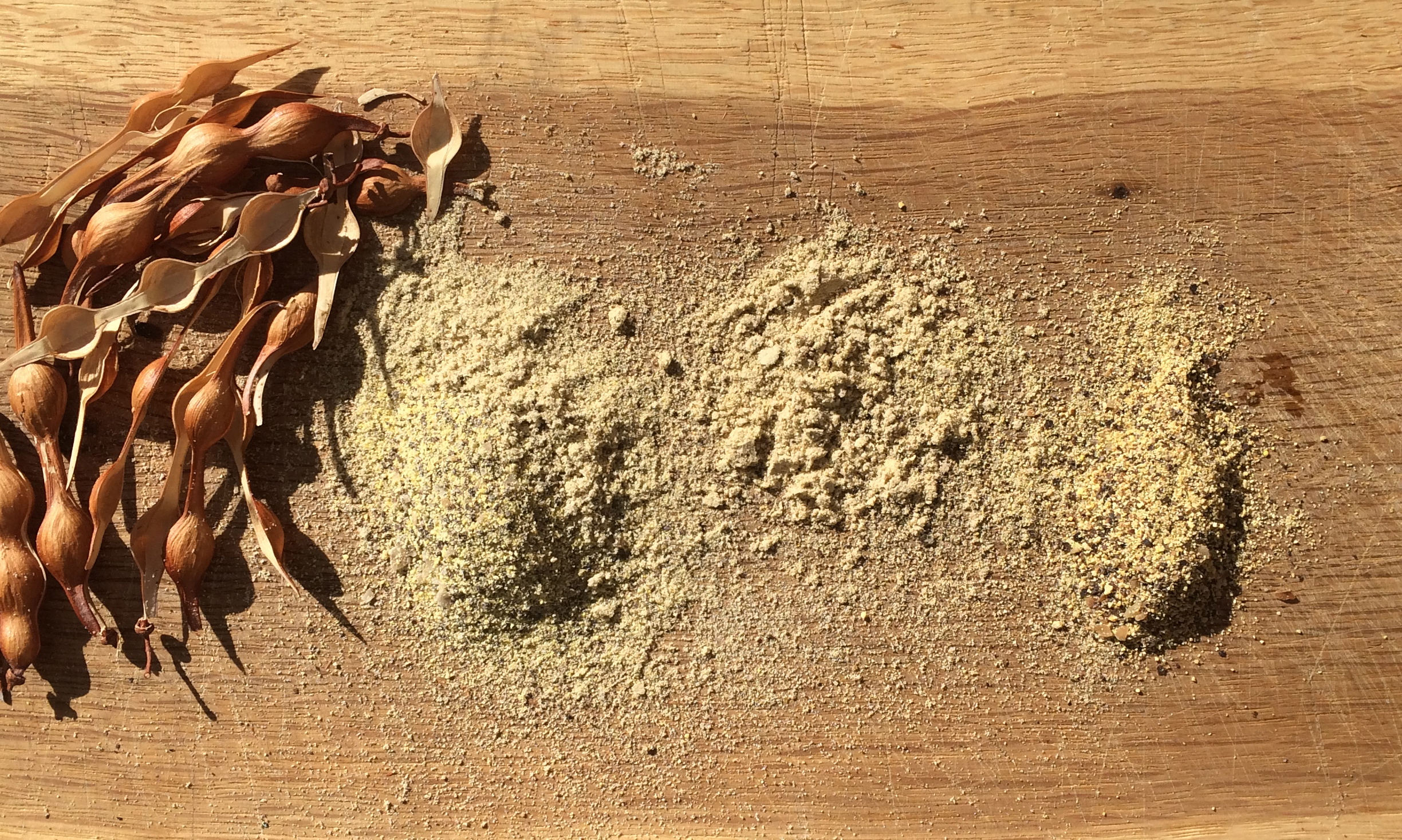
At PRESENT, lasting perhaps through July, there are copious “fruits-of-the-desert” hanging on foothills palo verde trees (aka little-leaf paloverde) covering desert hillsides.  In early June, palo verde pods were offering soft sweetpeas for fresh picking (described in the June13,2015 Savor blog on this site).   Now in July, palo verde pods are rattling with shrunken stone-hard seeds.  When ground, or when toasted and milled, these little dry seeds can produce two fabulous gluten-free flours for adding to baked goods, hot cereal, gravies etc.

Dry foothills palo verde seed milled raw on L, toasted and milled fine in center, toasted coarse-milled on R

Dry foothills palo verde seeds:  milled raw-Left; toasted and milled fine-Center; toasted & coarse-milled-Right

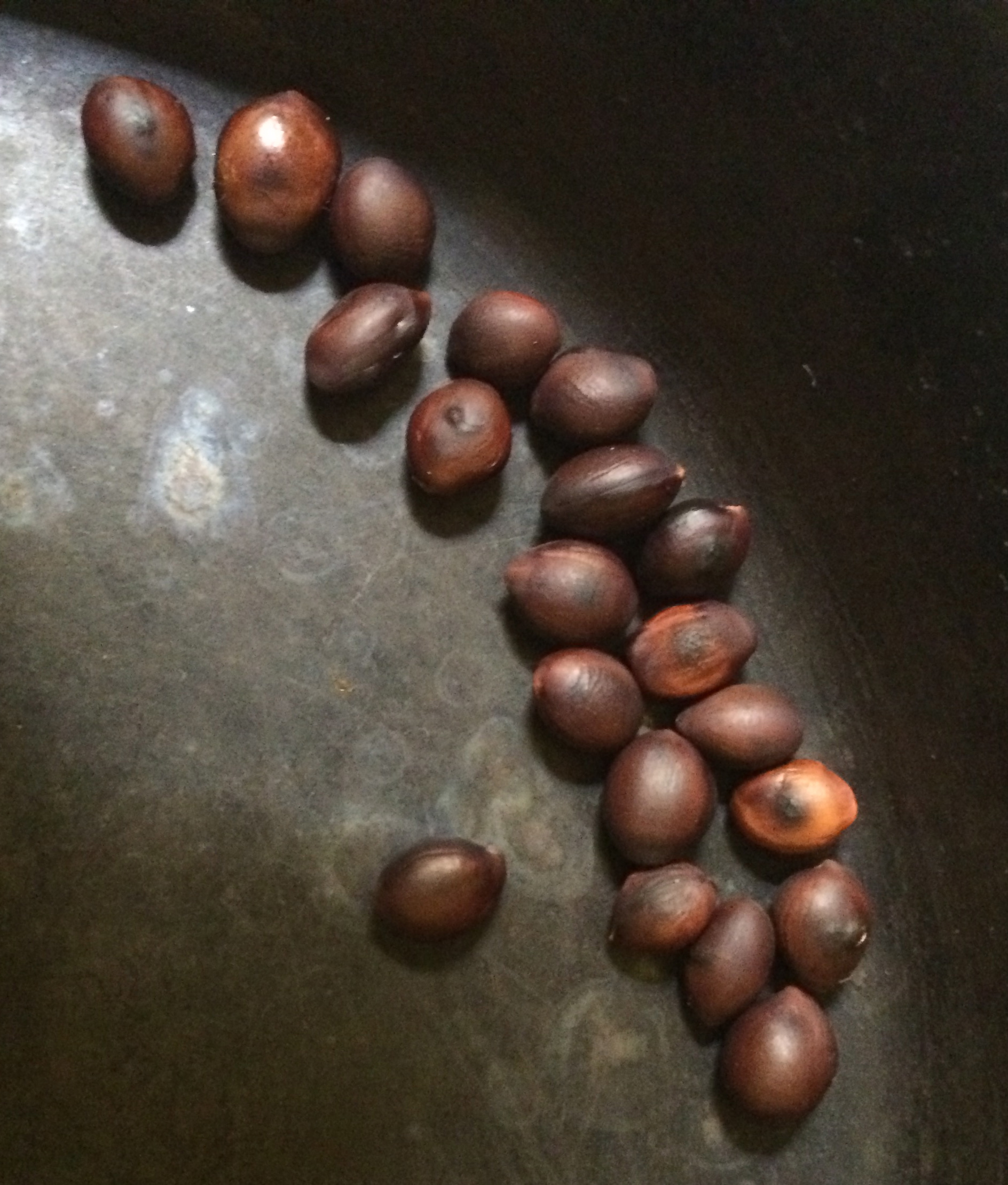
Foothills palo verde seed toasting in a dry iron skillet

Foothills palo verde seed toasting in a dry iron skillet

Oh how I wish that technology could keep up with our needs for scratch, sniff, and taste in this blog!!  The distinctly different flavors and textures of these two flours are so pleasant.  Desert People traditionally parched and ground these seeds in bedrock mortars.  I used a coffee mill to grind them.  The raw flour has a wonderful bean-i-ness bouquet coming through.  Then I toasted (parched) a separate batch of seeds in an un-greased skillet before milling, and WOW the roasty aroma of this gluten-free flour is rich.  I am using it to add flavor –not to mention high protein and complex carbs–to multigrain breads and biscuits.  So FULFILLING!  A friend who tried these different preparations for palo verde flour even wants to use it as a spice or seasoning!

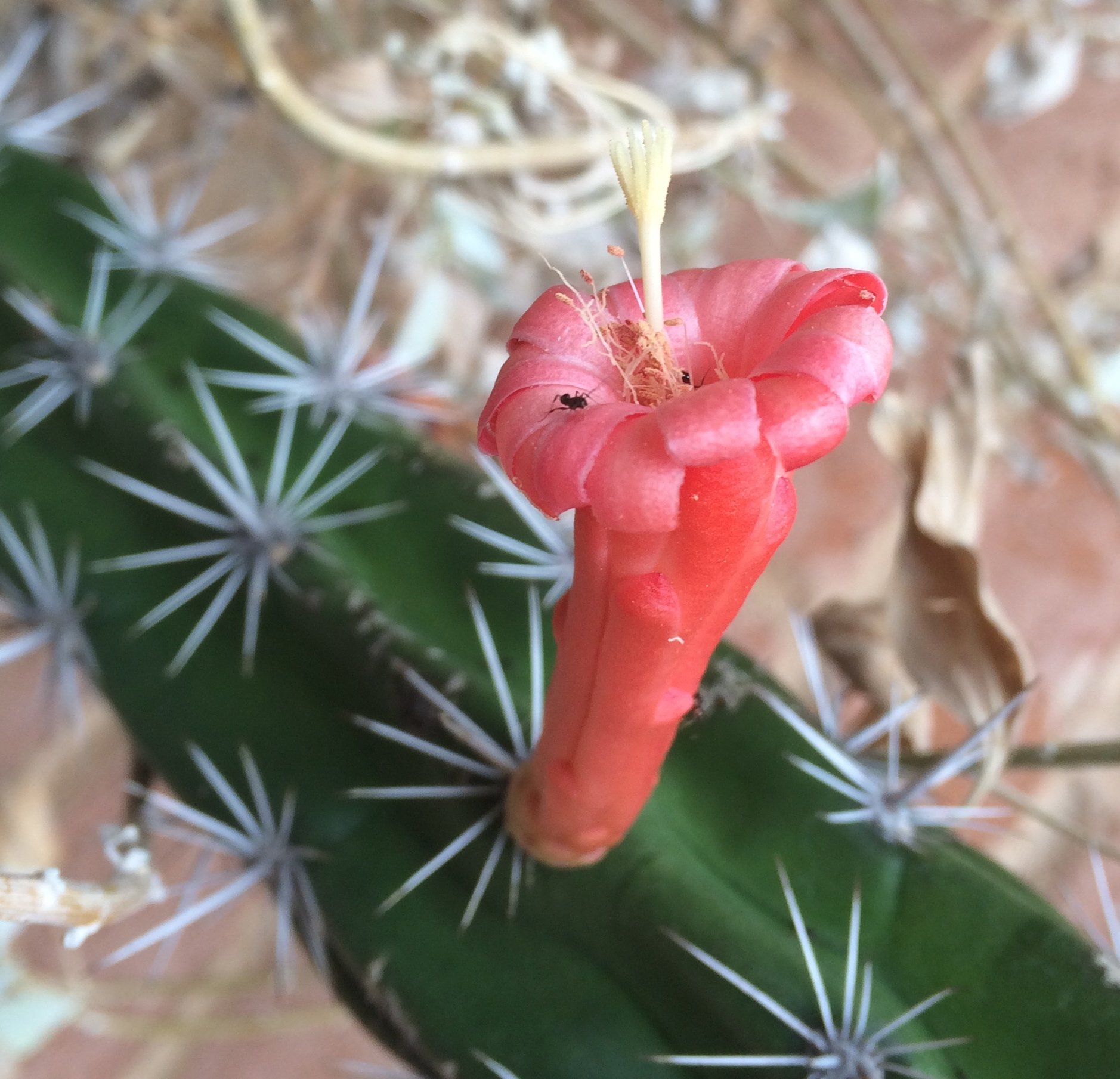
With the monsoon (and with the help of many hummingbird pollinators) has come another edible surprise to my desert garden–octopus cactus fruit–that I just have to share with you:

Stenocereus alamosensis with hummer- and perhaps ant-pollinated flower, June26,2016 (MABurgess photo)

Stenocereus alamosensis with hummer- and perhaps ant-pollinated flower, June26,2016.  Note happy ant on petal.  (MABurgess photo)

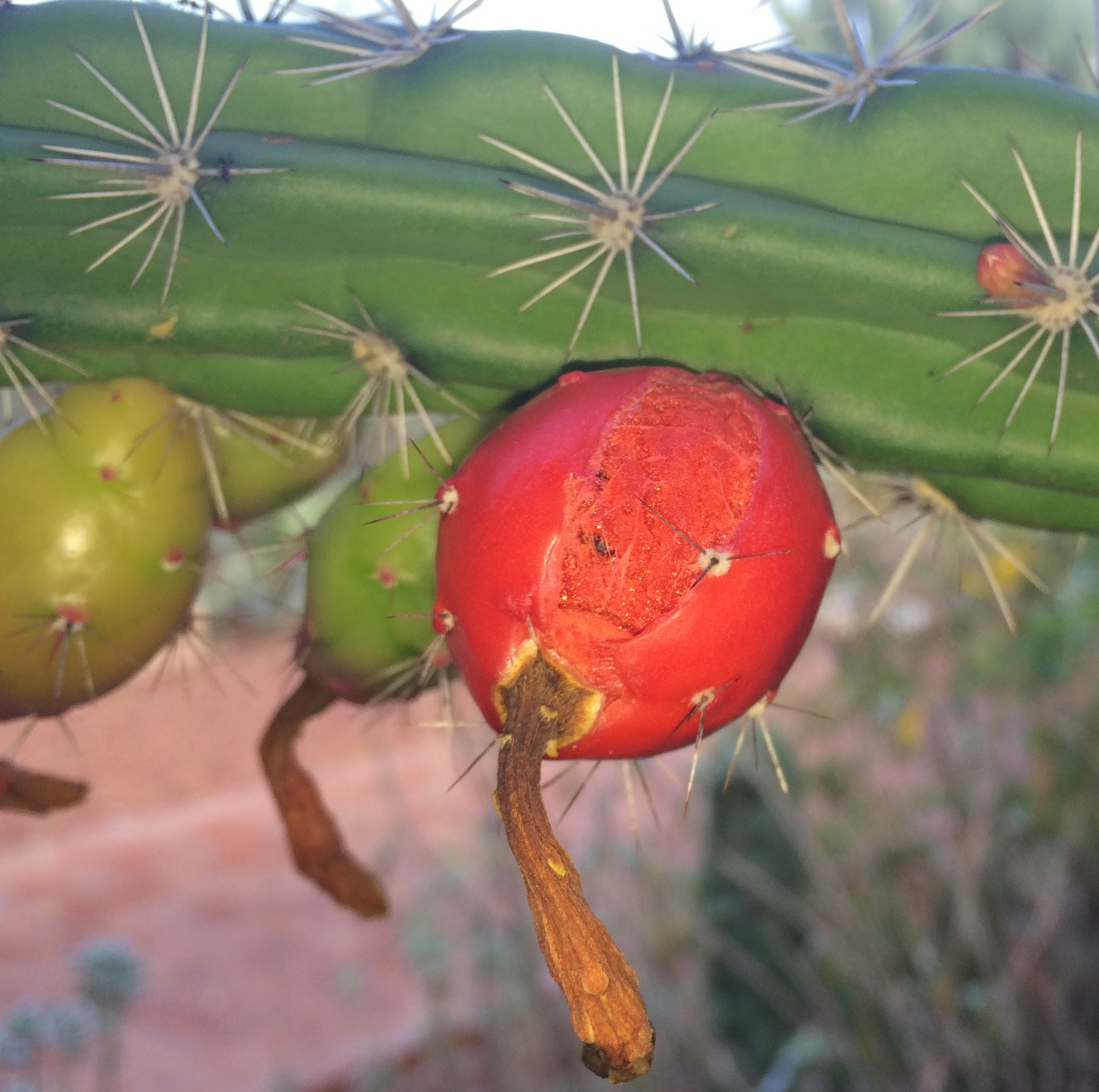
Fruit of octopus cactus Stenocereus alamosensis, ripe and splitting July 4, 2016

Fruit of octopus cactus Stenocereus alamosensis, ripe and splitting July 4, 2016 (MABurgess photo)

Sliced octopus cactus fruit on palo chino bowl (MABurgess photo)

Juicy sliced octopus cactus fruit (Stenocereus alamosensis) on palo chino bowl (MABurgess photo)

Years ago I collected seed for it near Alamos, Sonora, and grew it out in Tucson.  Surviving frosty winters, and flowering in previous years, it never bore fruit before.  This year, fertilization happened at last, and voila–there are sensational, gently sweet delicacies to eat right off the cactus.  The fruit’s fresh crispy texture is like watermelon and its seeds are tiny protein crunches.  [Light bulb idea]–With climate change, this flavorful cactus fruit–and others like it–could become an appropriate specialty food to grow locally.

Keep your eyes peeled and prepare for more harvests from the latest new “promises” blooming for multiple times this season in the desert…..Check out these potential edibles:

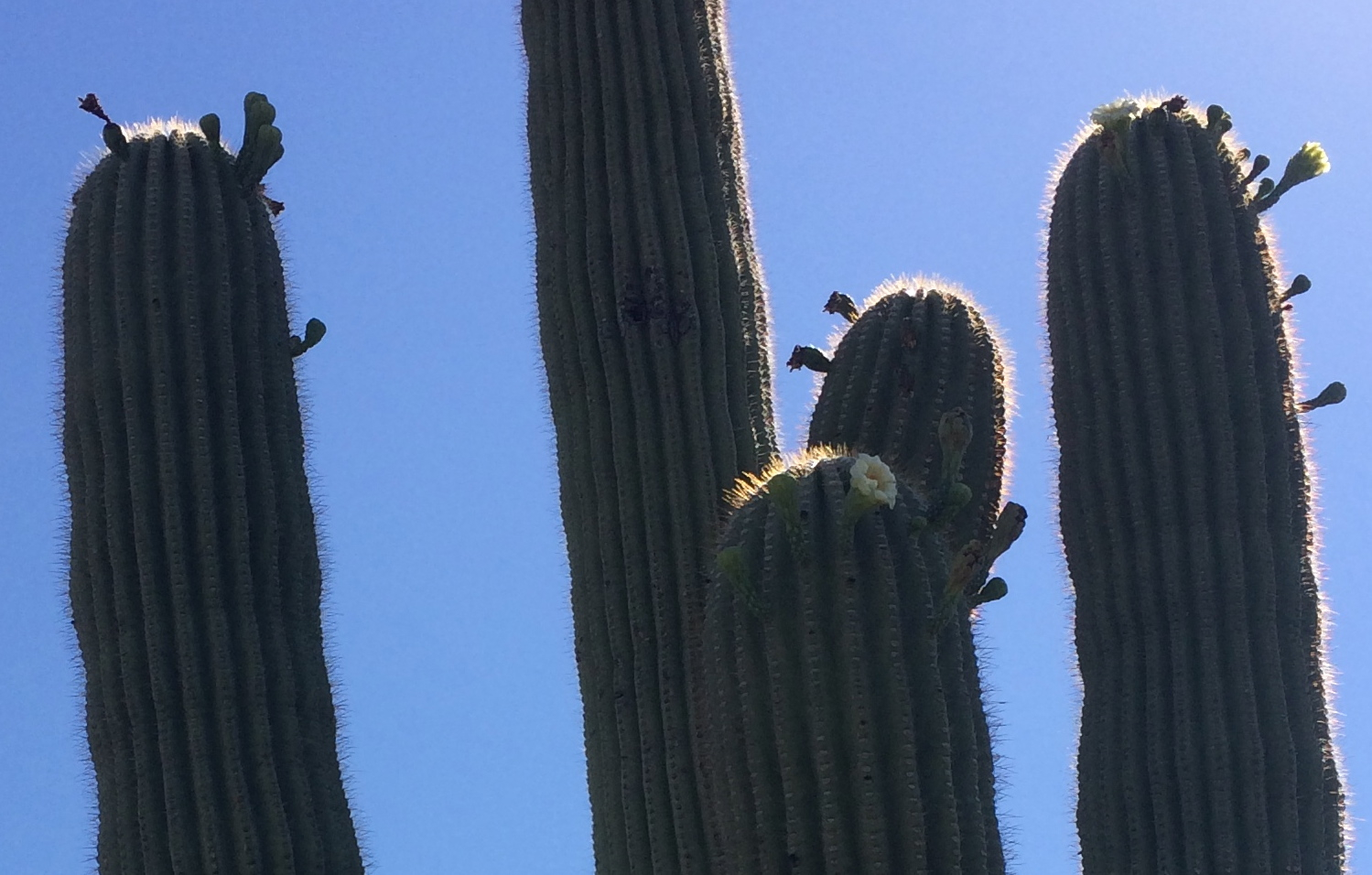
This is the third bloom of saguaros this season--with pollination may give another fruit harvest

This is the third bloom of saguaros this season–if  pollinated may give yet another fruit harvest

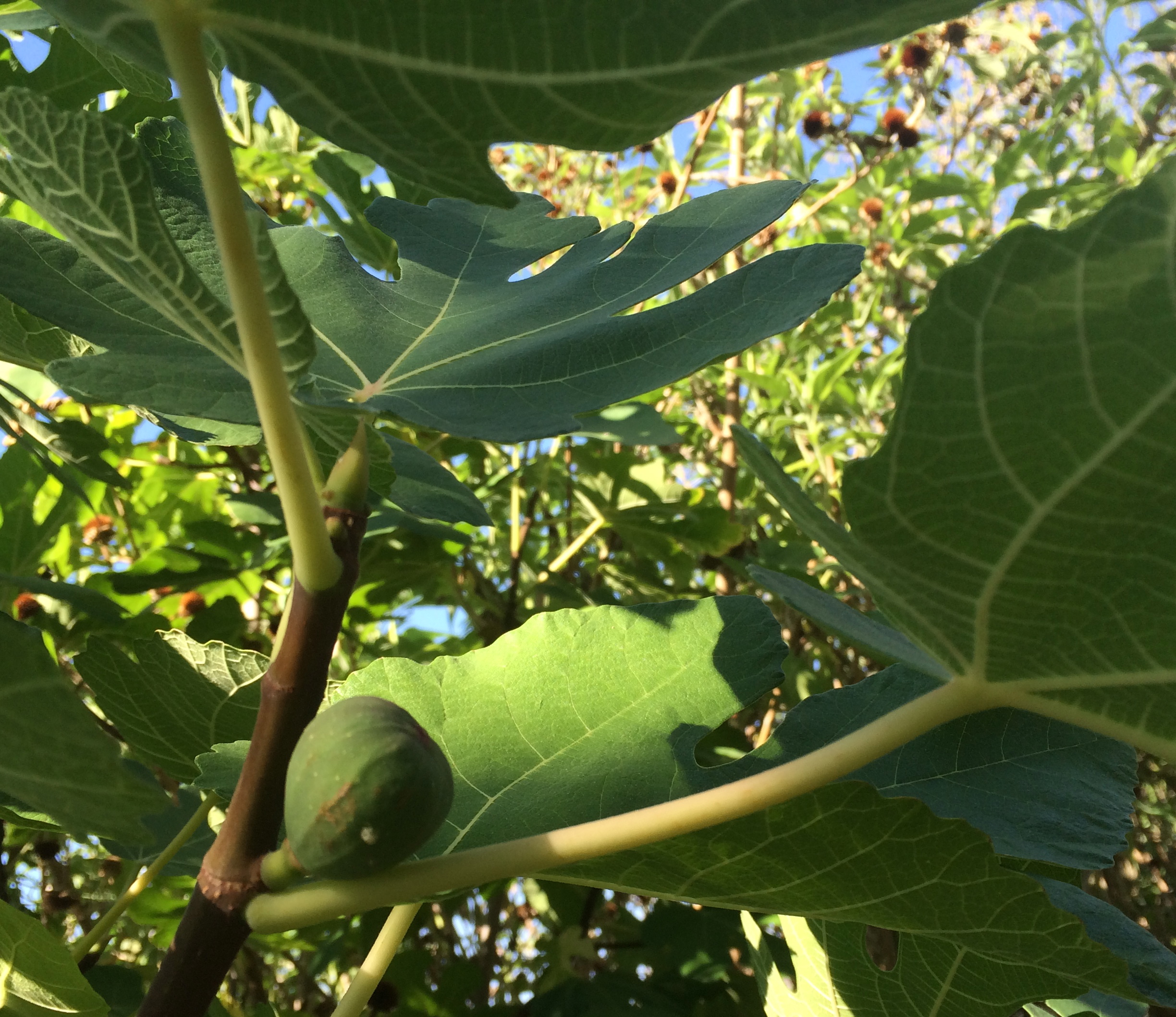
Green swelling Padre Kino fig--watch for preparing heirloom fruit ideas next month….

Green swelling Padre Kino fig–Young trees are available next week at the NSS plant sale!

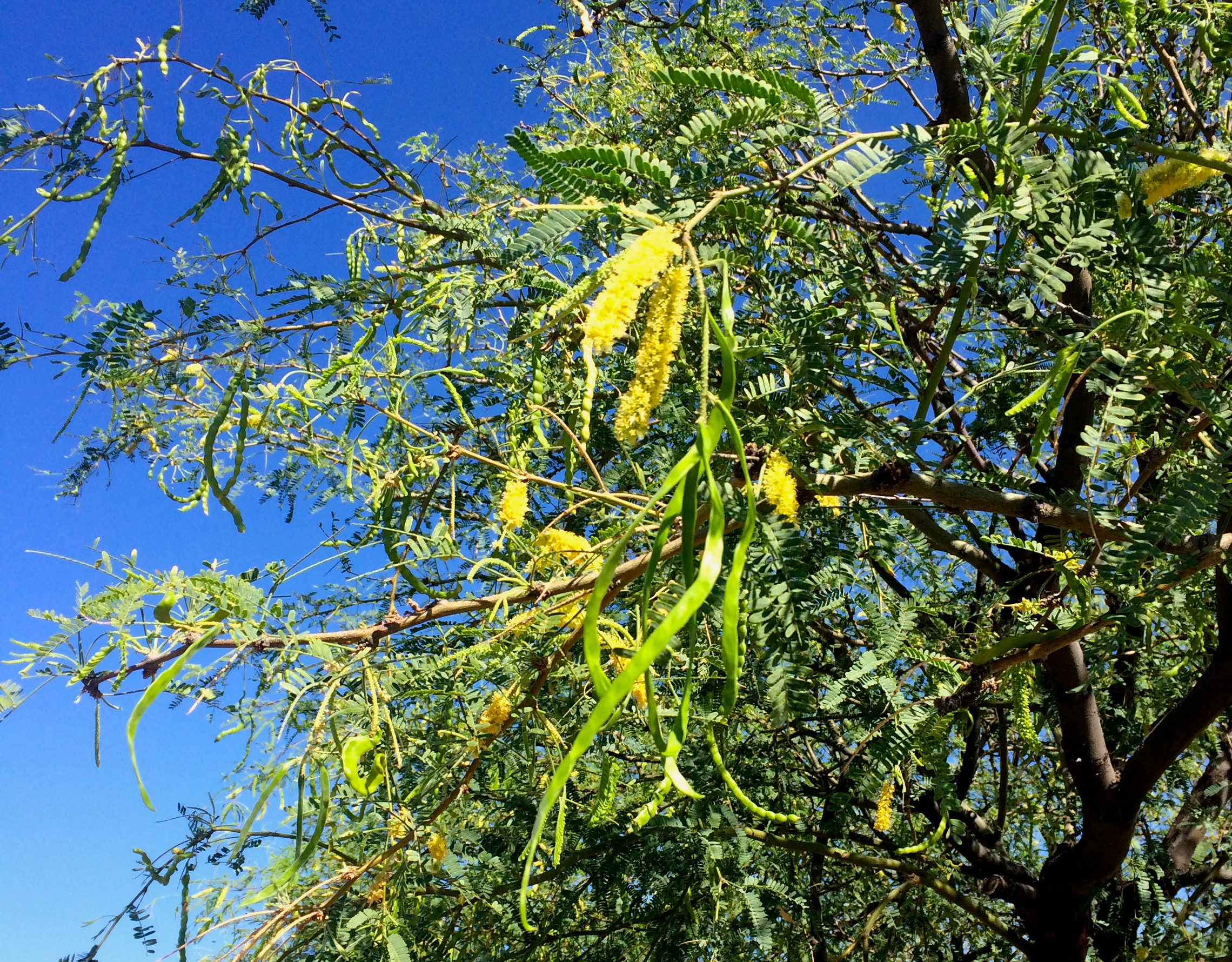
A new wave of mesquite flowers and green pods promise a second harvest this season.

A new wave of mesquite flowers and green pods promise a second harvest this season.

Don’t miss the NativeSeeds/SEARCH Monsoon Plant Sale this next weekend, Friday-Sunday, July 15-17, 2016!  For your own garden-to-table promises and preparations, check out the many starts of NSS heirloom summer vegetables and monsoon wildflowers.  There will be tomatillo plants, heirloom chile varieties, cucumber, many squash and melon varieties to give your garden a jump-start.  A few 5-gallon  Father Kino fig trees propagated at Mission Garden will be available for sale, so come early.

For well-seasoned ideas for desert cookery, two fabulously useful books continue to inspire:    Tucsonan Sandal English’s cookbook from the 1970’s Fruits of the Desert published by the Arizona Daily Star, and desert-foods aficionado (& Blog-Sister) Carolyn Niethammer’s book Cooking the Wild Southwest published by University of Arizona Press.  Borrow or buy, and use them with joy.

I wish you happy harvesting as the desert’s present promises become a cornucopia of fulfilling plenty!

[For anyone seeking heirloom foods and products made with wild foods, check out http://www.flordemayoarts.com and http://www.nativeseeds.org, or visit the Baggesen Family booth at Sunday St Philips farmers market.]


Desert Harvesters June Events

010Though newcomers to the Sonoran Desert sometimes miss the abundant fruits, berries, mushrooms, and greens of wetter forests, one Tucson organization wants you to know the desert is full of food: You just have to know where to look for it. Desert Harvesters is a nonprofit grassroots group that promotes the harvest of native, wild, and cultivated desert foods and also advocates for the planting of indigenous, food-bearing shade trees (such as the Velvet mesquite) and understory plantings within rainwater harvesting “gardens” in the landscapes where we live, work, and play. Funds raised at these events support the group’s educational efforts in the community, including demonstrations, publications, and tasting events.
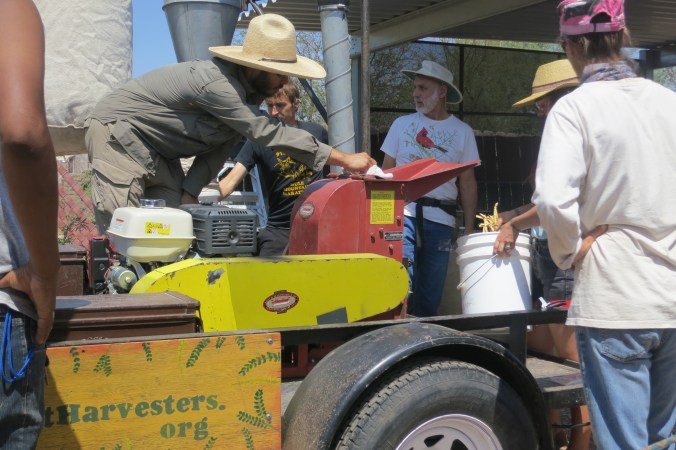
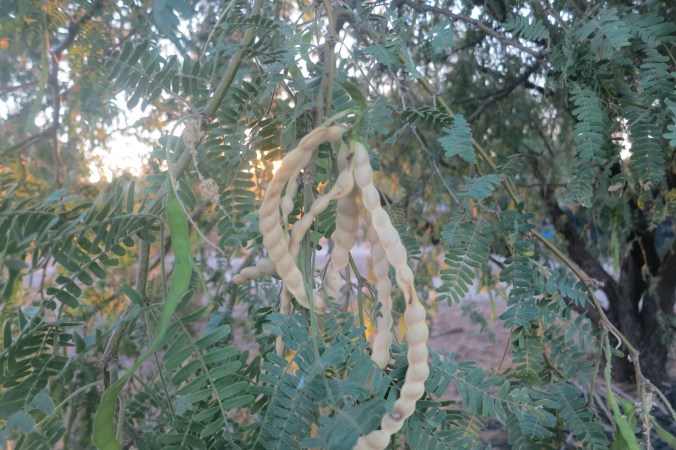
The group announces its summer season of harvesting workshops and activities, which aim to help the public learn how to plant, harvest, process, and prepare wild, native, and local food items, including mesquite pods, ironwood & palo verde seeds, and saguaro fruit. Currently the group is raising funds to support the publication of a revised and expanded version of its 2010 cookbook Eat Mesquite! This new cookbook will include recipes for mesquite and other desert foods, as well as information about how to grow, harvest, and prepare native and local foods. Desert Harvesters is also seeking volunteers to help with (and learn from) these and other events.
041

June 18 & 19, 2016

Workshops on Mesquite Pod Tasting, Inspection, and Ticketing and Hammermill Operation for those who want to become Desert Harvesters volunteers or staff, or others wishing to expand their mesquite-related skill sets. Visit http://www.DesertHarvesters.org or email volunteer@DesertHarvesters.org to learn more.


June 23, 2016

DESERT HARVESTERS’ 14th ANNUAL MESQUITE MILLING & WILD FOODS & DRINKS FIESTA Santa Cruz River Farmers’ Market at Mercado San Agustín, 100 S Avenida del Convento, Tucson

Bring your clean & sorted mesquite pods to be milled with our hammermill (fee applies) and taste an array of wild foods.

Harvesters can have their milled mesquite flour tested for aflatoxins (see below) at our 14th Annual Mesquite Milling on June 23, 2016, in Tucson. The cost per test will be a special subsidized fee of only $5.

We will also be serving craft beers (Smoked Mesquite Apple beer as well as a beer finished with creosote flowers) from Iron John Brewing Co. with proceeds going to Desert Harvesters.


June 24, 2016

Desert Harvesters’ Happy Hour at Tap & Bottle

403 N 6th Ave #135, Tucson

5–8 pm

Enjoy great regional brews, some infused with locally sourced native wild ingredients. A percentage of all happy-hour sales goes to Desert Harvesters! A local food truck will also be on site with delicious offerings including native wild ingredients.
IMG_2000

BE IN SYNC WITH THE SONORAN DESERT’S NATURAL PATTERNS

To encourage harvesting before the monsoons, and to be more in sync with the Sonoran Desert ecology’s natural patterns, Desert Harvesters has shifted its annual harvesting and milling trainings, along with its mesquite millings and fiesta, to the month of June—BEFORE the summer rains. This is also when our native bean trees (mesquite, desert ironwood, palo verde) are ready to harvest (they produce before the rains so their seed is on the ground ready to germinate when the rains arrive). Regularly check our Calendar of Events for more such event info.


FOOD SAFETY: Aflatoxin and how to avoid it

Aflatoxin is a toxic natural compound produced by certain molds; it can cause liver damage and cancer. Aflatoxin is found in many common foods, but only in small quantities is considered safe (U.S. ≤ 20 parts per billion (ppb), Europe ≤ 2 ppb). We at Desert Harvesters are specifically concerned with the invisible mold (Aspergillus flavus) that can produce aflatoxin B1 on mesquite pods, as well as on other food crops (legumes, corn, etc) that have been exposed to moisture.

HARVEST MESQUITE PODS BEFORE THE RAINS (at higher elevations, harvesting in dry autumn weather may be an option)

Desert Harvesters is now recommending that, as much as possible, harvesters collect mesquite pods BEFORE the monsoon rains. (This can be more difficult at higher altitudes due to later ripening. In these areas the best practice may be to only harvest in dry autumn weather.) The reason for pre-rain/dry-season harvesting is to reduce the pods’ exposure to moisture, and thus the risk of the development of an invisible mold (Aspergillus flavus) and the aflatoxin it can produce. Aflatoxin poisoning can have serious health consequences over the long term, so we want to harvest in a SAFE manner. To further avoid moisture issues with the pods we recommend you do NOT rinse or wash pods.

In the small number of batches of mesquite flour we have tested thus far…ALL mesquite pods we tested which were harvested BEFORE the rains have tested SAFE.

In other words, NO mesquite pods harvested BEFORE the rains had results with unsafe levels of aflatoxin. The U.S.-designated safe limit of aflatoxin is 20 parts per billion (ppb), so safe test results will be 20 or fewer ppb.

However, all test batches of mesquite pods that DID have results with unsafe levels of aflatoxin were harvested AFTER the onset of the rains. Again, in the U.S., safe aflatoxin levels of 20 or fewer parts per billion (ppb) are considered safe. However, many other batches harvested AFTER the onset of the rains tested SAFE.


We hope to continue to share more studies and best harvesting practices.


What to do with mesquite flour?

Sonoran Cookies

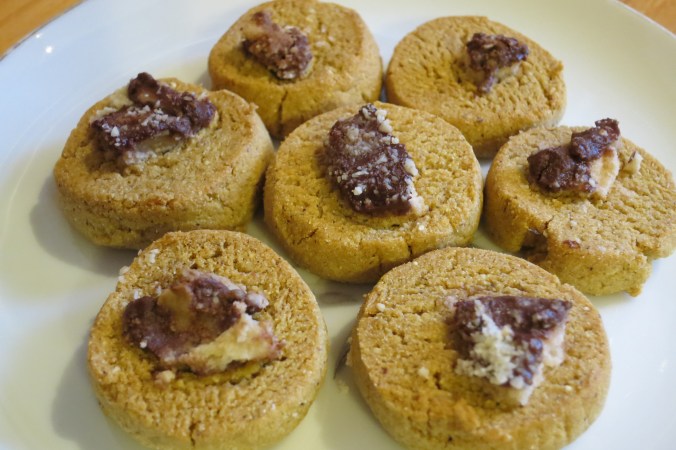
Here’s a truly classic recipe from the first EAT Mesquite! Cookbook.We’ve made hundreds of these cookies. The author of the original recipe is unknown. The ones in the photo below are topped with mesquite toffee.

mesq cookies toffee

.25 lb (one stick) butter

1 cup sugar (can be reduced to .75 cup sugar, plus .25 cup mesquite)

1 egg

2 teaspoon vanilla (or local lemon extract)

2 cup corn tortilla meal (or whole wheat flour)

1 cup mesquite meal

2 teaspoons baking powder

2 teaspoons baking soda

.5 cup pecans, finely chopped (optional)

Cream softened butter.  Mix in sugar, egg and extract.  Sift dry ingredients and add to the first mixture.  Add nuts (optional) and beat until smooth.  Roll dough into 2 inch balls and press onto ungreased cookie sheet.  Or, roll dough into thin logs, wrap in waxed paper, and refrigerate or freeze.  Slice cold logs into rounds and place on cookie sheet.  (Doubled cookie sheets or Airbake prevent bottoms from browning too fast.)  Place in preheated 375 F oven and bake 12 minutes or until golden.  Cool on racks until crisp, or eat warm and soft.  Makes up to 200 tiny (.75 inch) cookies.


Epazote and Garden Herbs Blend Into Delicious Mole Verde

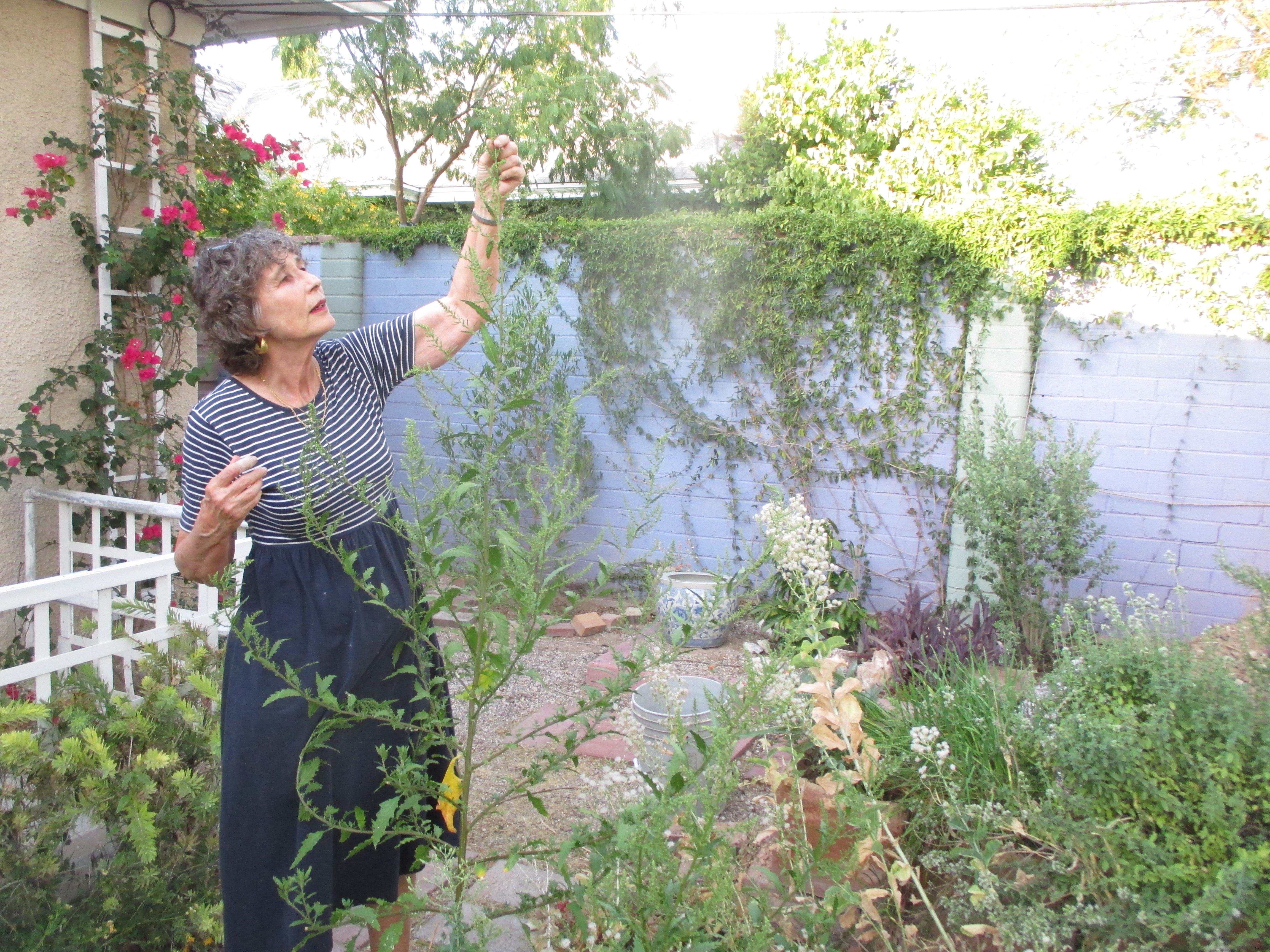
This epazote plant has grown to over 6 feet.

This epazote plant has grown to over 6 feet. It was a volunteer in the lettuce bed and loved the rich soil.

Carolyn here this week. This spring I have had epazote sprouting between my tomato plants, epazote in the pea pots, epazote in the kale and in the I’itoi onions. I harvested the last of the chard today and there was an epazote plant hiding in that row. For fun, I left one in the lettuce patch and it has grown over 6 feet, thriving in the rich soil and organic inputs in that area. After taking a picture today, I’m going to pull it before it releases a couple thousand seeds and takes over my entire garden.

I bought my first epazote plant from a lovely Mexican woman at the farmer’s market. That one died, but I tried again the next fall. This time I was more successful and now I can supply epazote to anyone who needs it.

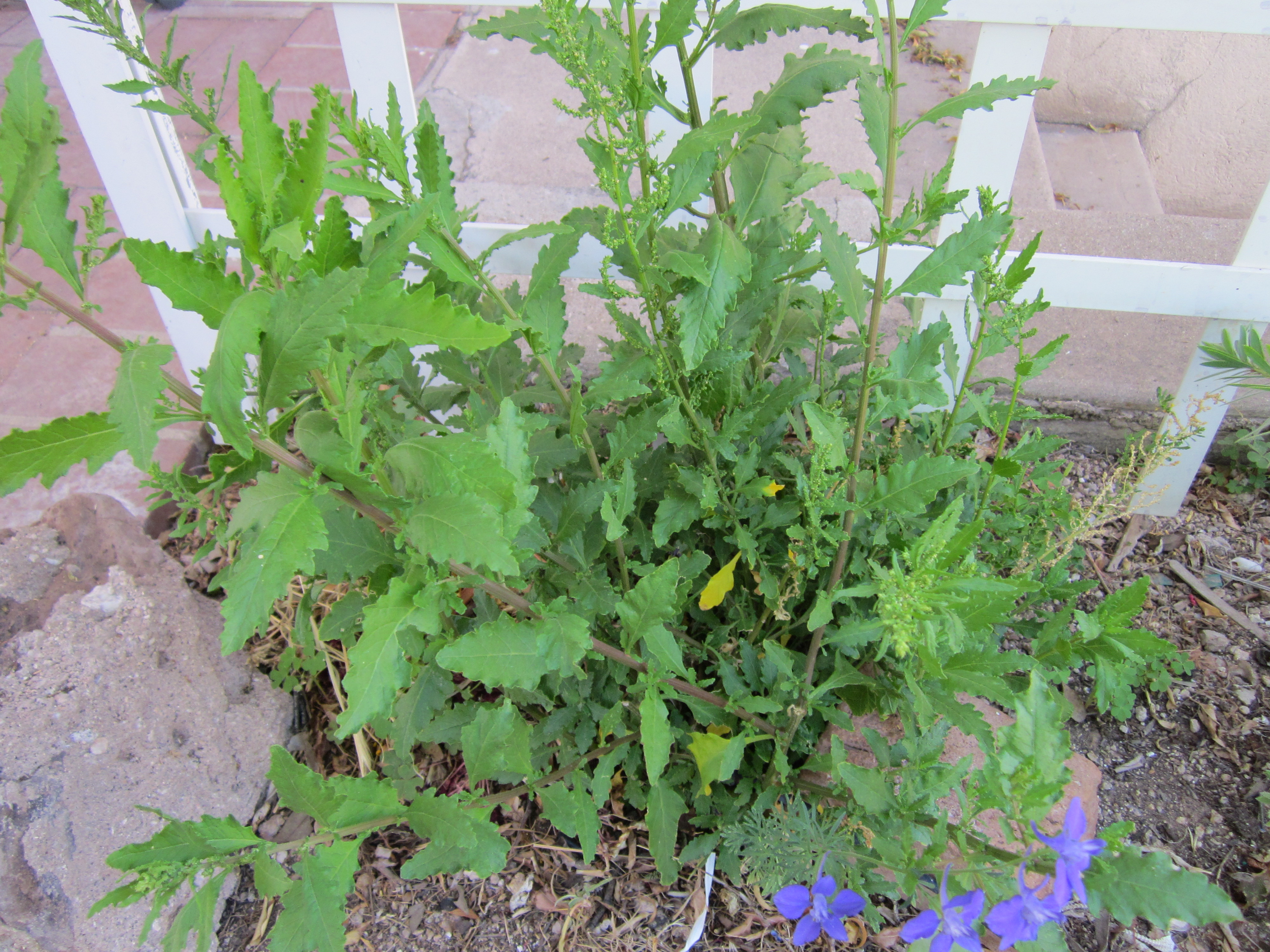
Healthy epazote plant earlier in the spring.

Healthy epazote plant earlier in the spring.

Epazote is a New World herb that originated in Central America and parts of Mexico and in the Nahuatl language is called epazo-tl. It has spread north to the U.S. and to the Caribbean. The scientific name was formerly Chenopodium ambrosoides but has been changed to Dysphania ambrosoides. Interestingly, it is related to quinoa, spinach and beets.
Epazote is used as an flavoring herb and its taste changes slightly as the plant ages. Chew on a leaf of a young plant and you will notice a light citrus-y flavor that starts on your tongue and spreads through your mouth. Leaves from older plants intensify the pine-y or eucalyptus flavor notes that underlie the citrus. Some say it tastes similar to tarragon.
In the Southwest, epazote is most frequently used in cooking black beans for flavor and also for its anti-gas effects. Add two or three sprigs during the last 15 minutes of cooking. If you have access to fresh epazote, feel free to try it in other dishes. A little chopped up in a corn relish adds a spritely flavor. If you make your own mole sauces, add a few leaves, particularly to a green mole. It also goes well in filling for tamales and sprinkled on the cheese in quesadillas

Another traditional use of epazote as developed by the native Mayans is as a tea, particularly as a remedy for intestinal parasites. Epazote includes 60-80 % ascaridole, which is toxic to several intestinal worms.

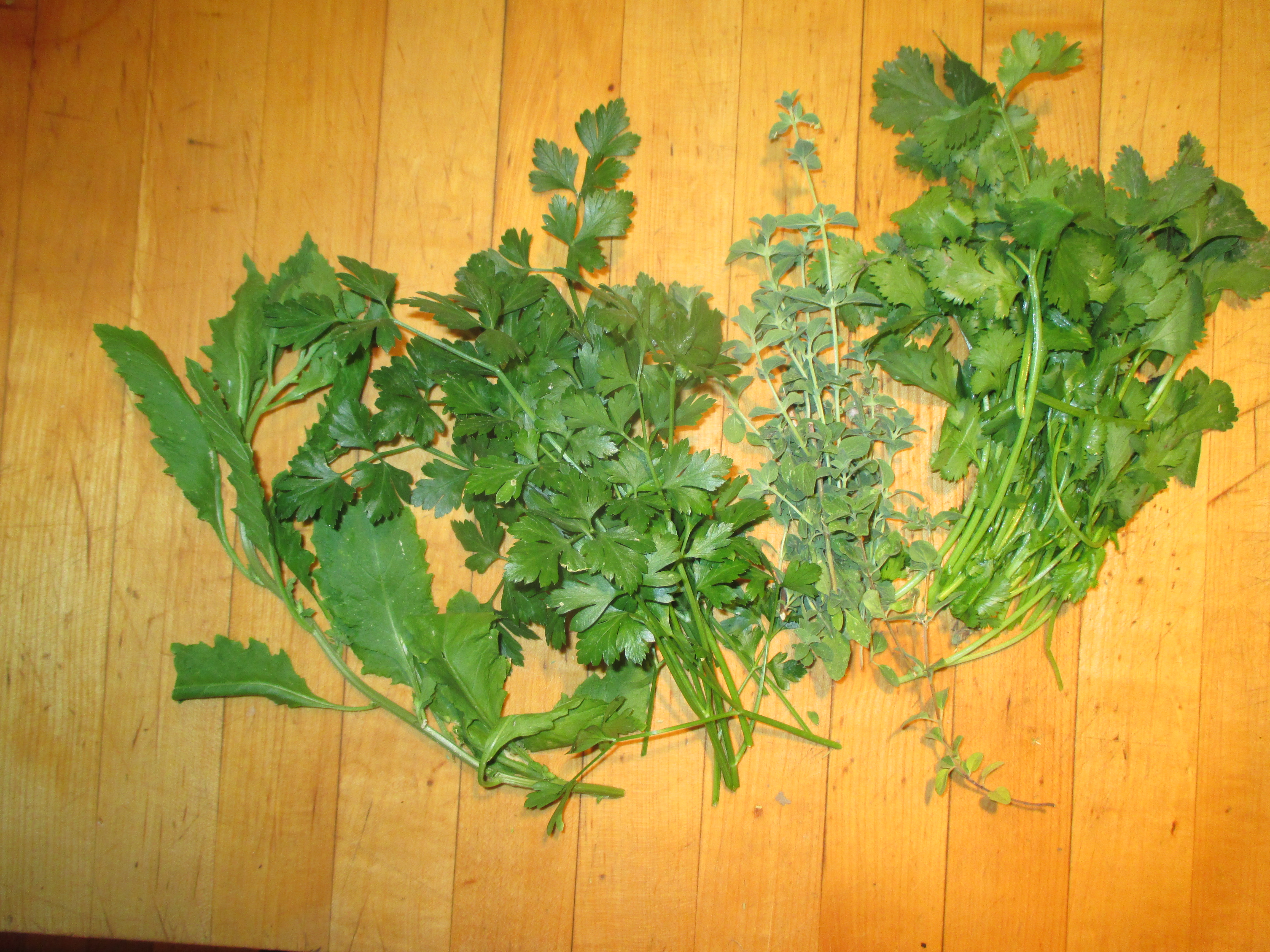
Herbs for Mole Verde from left: epazote, parsley, oregano, and cilantro.

Herbs for Mole Verde from left: epazote, parsley, oregano, and cilantro.

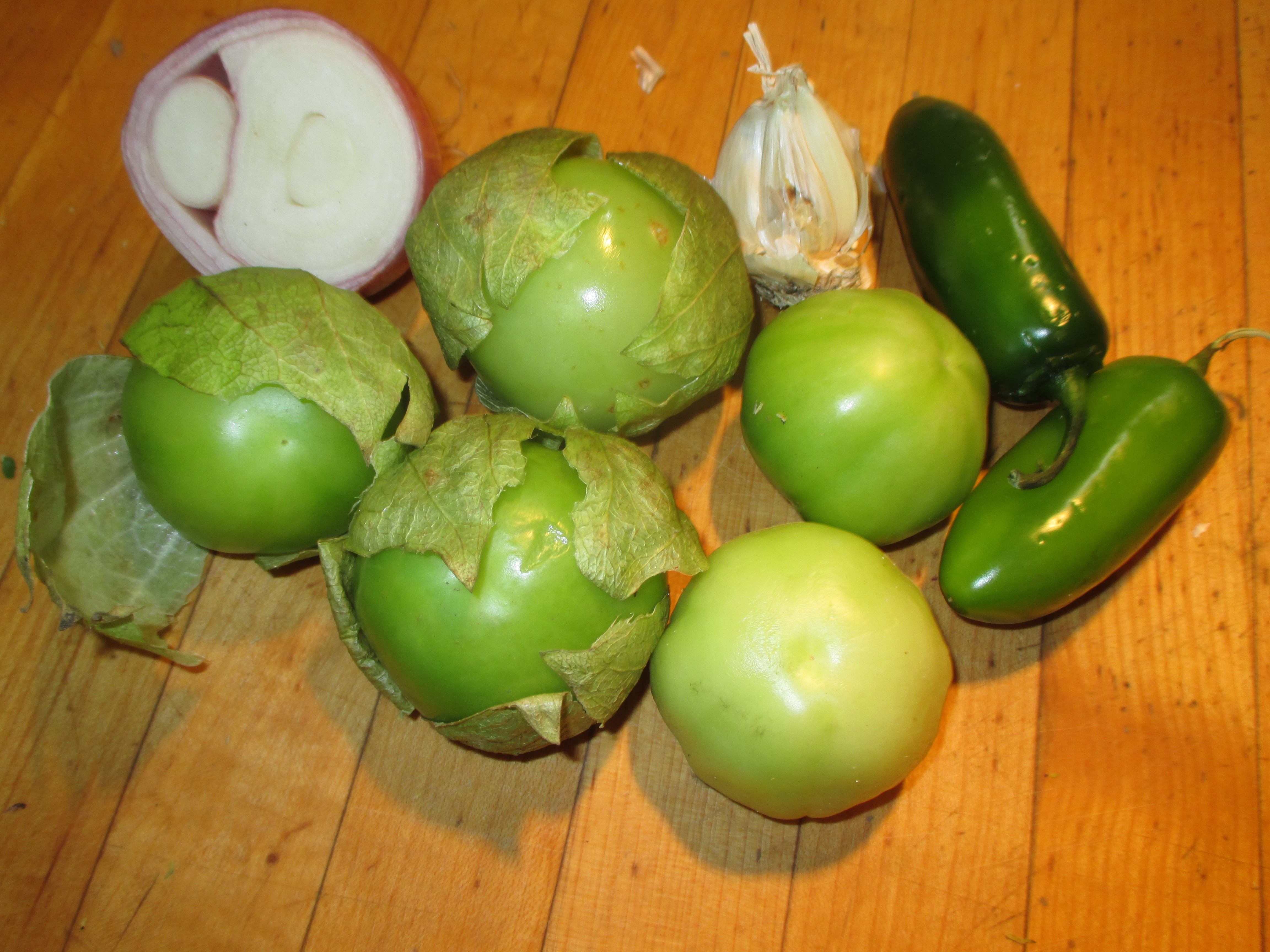
Here are the vegetables you will use: tomatillos, onion, garlic and jalapenos.

Here are the vegetables you will use: tomatillos, onion, garlic and jalapenos.

As with most leafy greens, epazote also provides some vitamins and minerals including vitamin A, B-complex vitamins (specifically folic acid) and vitamin C as well as calcium, manganese, copper,  potassium, phosphorous and zinc.

Mole Verde

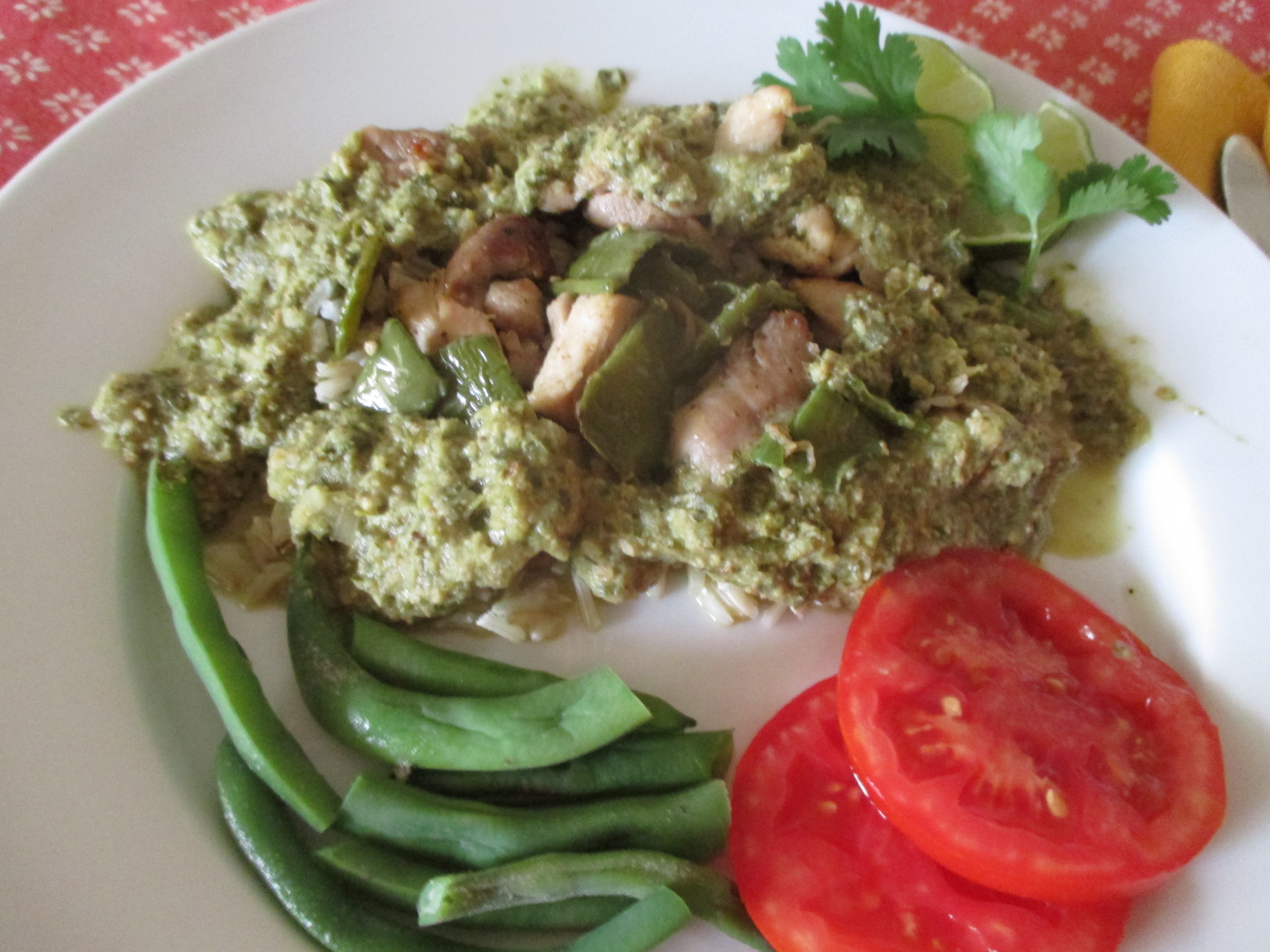
Here’s a recipe for a delicious green mole with epazote. This is a chewy, substantial version due to the pepitas.  I served the sauce with sautéed chicken breast pieces and fresh nopalitos from my garden. Makes about 6 generous servings.

Ingredients

1 cup pepitas (hulled pumpkin seeds)

1 cup roughly chopped white onion (about 1 small)

1 tablespoon minced garlic (about 3 medium cloves)

1 tablespoon vegetable oil

1/2 pound tomatillos, husked and cut in eighths (about 5 large)

2 medium jalapeño peppers, roughly chopped (seeds removed for a milder sauce)

1 cup packed coarsely chopped fresh cilantro leaves and tender stems

1/2 cup packed coarsely chopped fresh epazote

½ cup parsley leaves

2 tablespoons fresh oregano

2 cups low-sodium chicken stock, divided

Salt, to taste

Directions

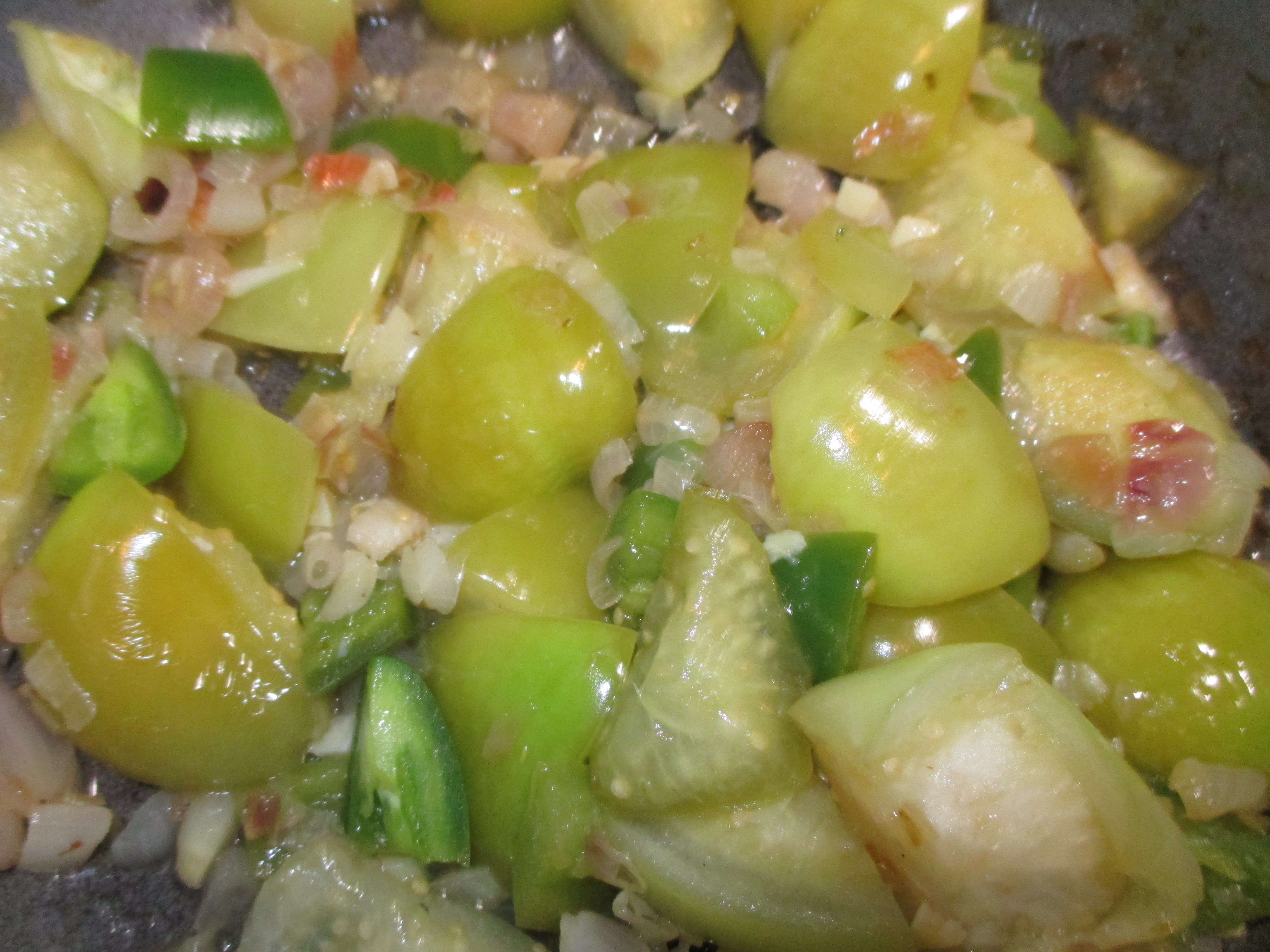
Saute the onion, garlic, and tomatillos until soft.

Saute the onion, garlic, and tomatillos until soft.

  1. Prepare all your herbs first and set aside. In a medium heavy skillet over medium-high heat, toast pepitas until they start to pop and turn a light golden brown. Toss constantly so they won’t burn. Transfer to a blender and process until finely ground. You will have to stop the blender every few seconds to redistribute the contents.
  2. In a heavy saucepan, heat the oil and sauté the onion until it starts getting translucent. Add the garlic and cook another minute. Add the tomatillos and jalapeno and cook, stirring frequently until soft.
  3. Transfer the sautéed vegetables to the blender jar with the pepitas and the herbs. Add one cup of the chicken stock and puree until well combined. This may take a couple of minutes.
  4. Return the blended mixture to the saucepan and put it over medium heat. Meanwhile rinse the blender jar with the remaining cup of chicken broth and add to the pot. Reduce heat and simmer for 10 to 15 minutes to let the herbs release their flavors and the flavors to blend. Stir frequently.
  5. Use immediately or transfer to an airtight container and store in refrigerator for up to 3 days, reheating before use.
Serve the sauce with chicken, fish, or vegetables.

Serve the sauce with chicken, fish, or vegetables.

_____________________________________________________

You can buy seeds for epazote from Native Seeds/SEARCH.   They also carry a selection of cookbooks by Carolyn Niethammer. The books are also available online from Amazon and Barnes&Noble.

Spring Salad

cholla 2016

Amy collecting cholla buds

Some years, spring seems to last about a week in the desert, going from winter to summer too fast. When the weather is beautiful, we know to celebrate these days outside!!!!

blog 20160415_100732

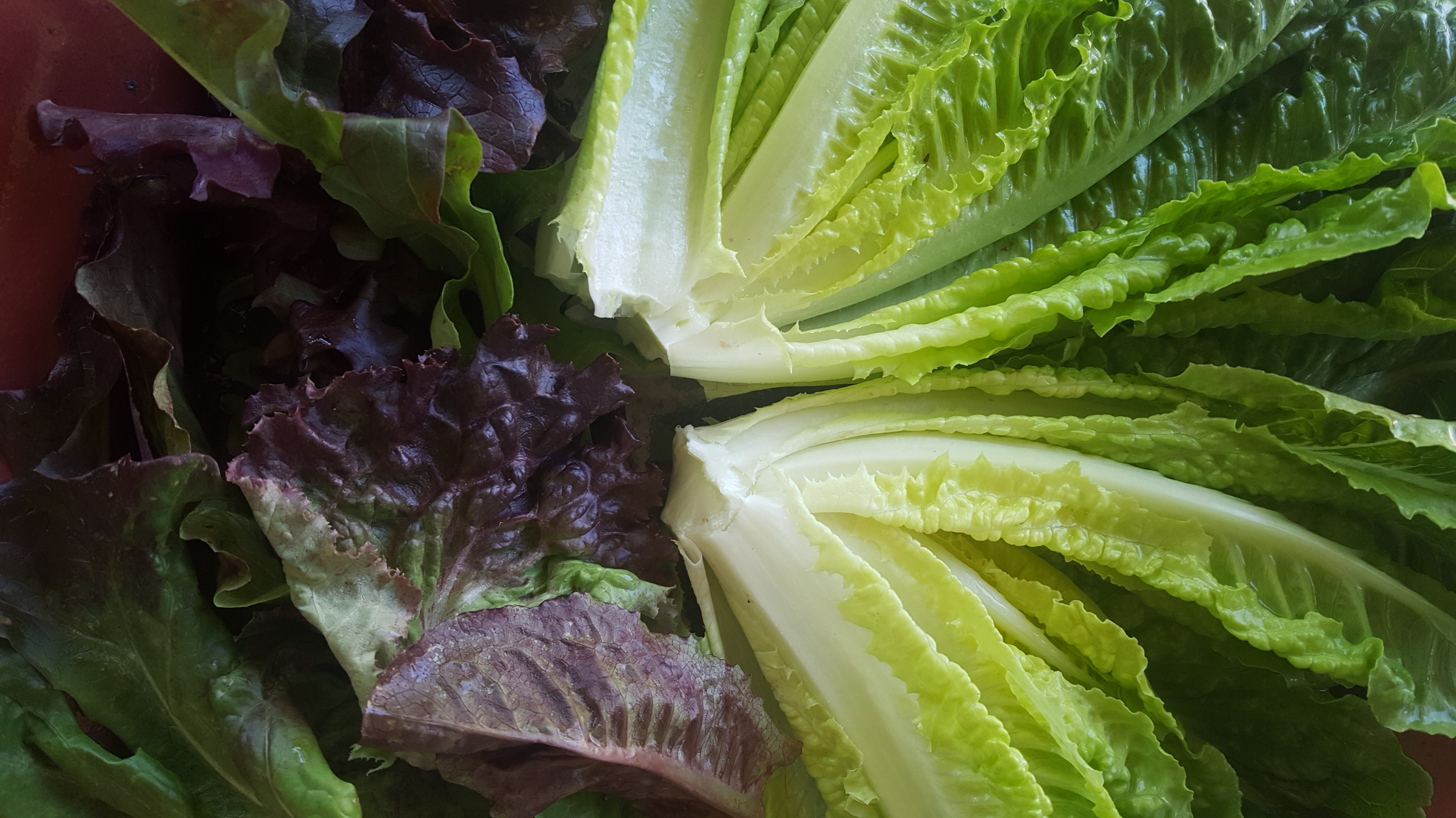
Romaine hearts and assorted red lettuces

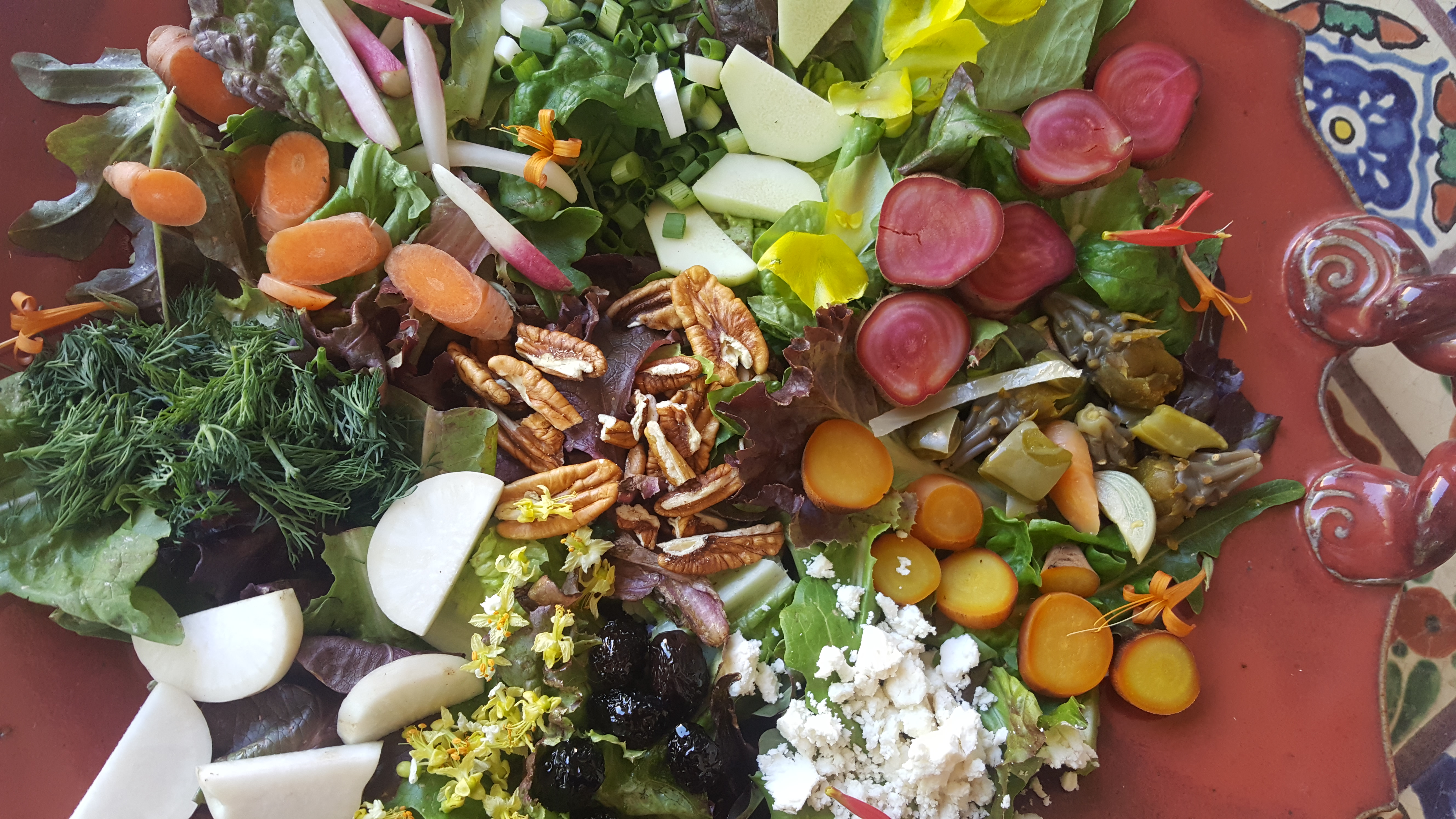
Winter lettuces are still around for a short time more, and the weather is finally warm enough that I feel like eating a salad. Here is a salad made with ingredients I had on hand. I traded for most items, the exceptions being the items I made. I hope this serves as an inspiration to go to a farmers’ market, use little bits of what you have in the refrigerator, go into the desert near your home, and forage in your yard.

blog 20160415_093007

Hakurei turnips, Chioggia and Golden beets, Carrots, Kholrabi, , and French Breakfast Radishes.

Hakurei “salad turnips” are so sweet and tender, they can win over stubborn turnip haters, and are a treat raw for turnip lovers.

I steamed and sliced the beets, peeled and sliced the kholrabi, and simply sliced the turnips, carrots and radishes.

I'itoi onions and dill.

I’itoi onions and dill.

For fresh herbs, I used dill and I’itoi onions. I like the green tops as much as the white parts.

Crusts of Small Planet Bakery Cottage Wheat make excellent croutons. Just chop, drizzle with olive oil, salt, and garlic powder (my guilty pleasure), then toast in a skillet until crunchy.

blog 20160415_104817

Heels of Cottage Wheat.

blog 20160415_104958

Cast iron skillet croutons.


blog 20160415_085613

Brined goat feta.

20150910_120612

Mango Salsa.

Last fall, I goat/house sat for a friend, and this is the feta I made from the milk. Mango the goat has mellowed over the years since I first learned to milk and she first learned to be milked.

IMG_3508

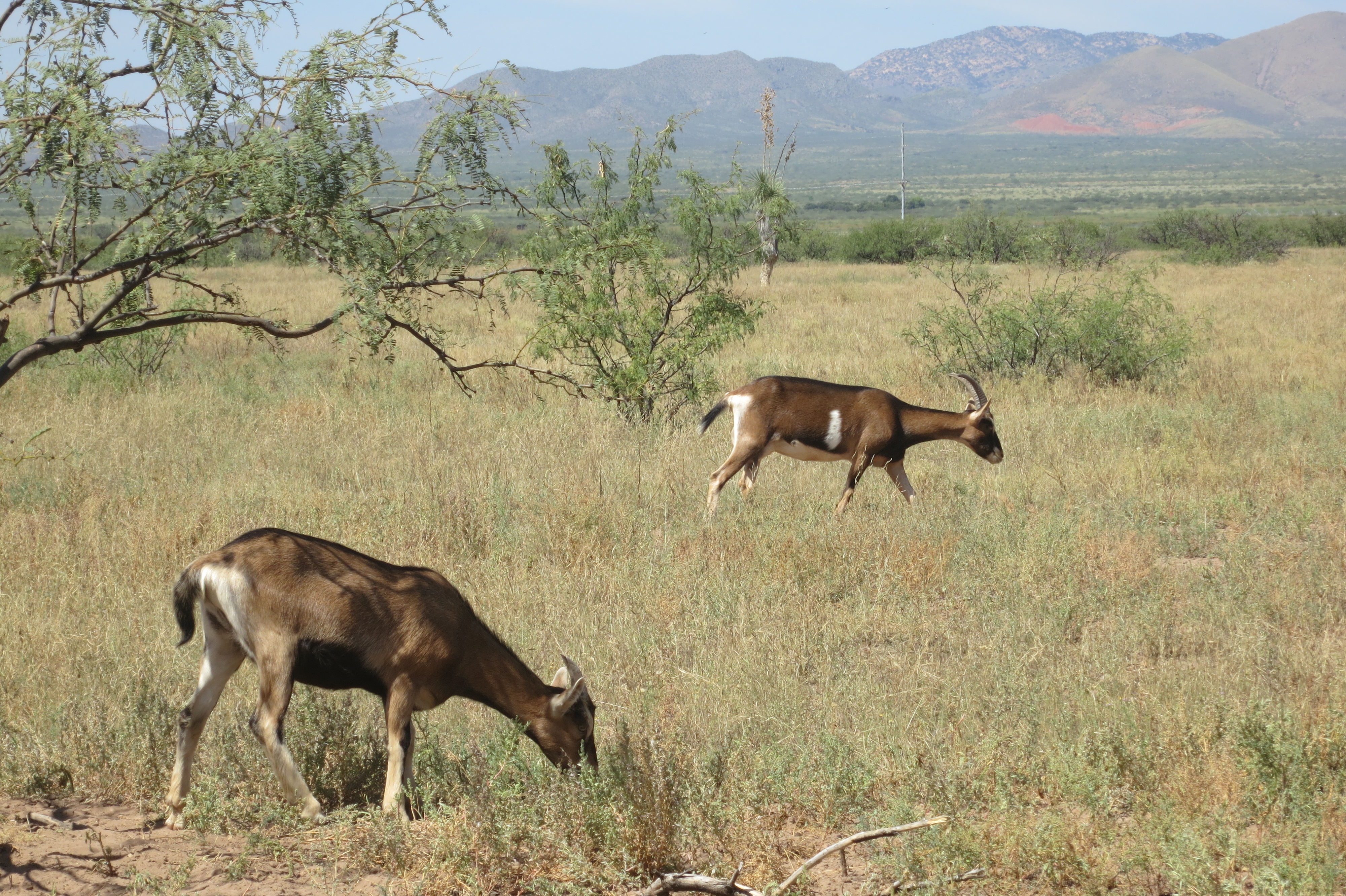
The heard on the grassland.


IMG_3517

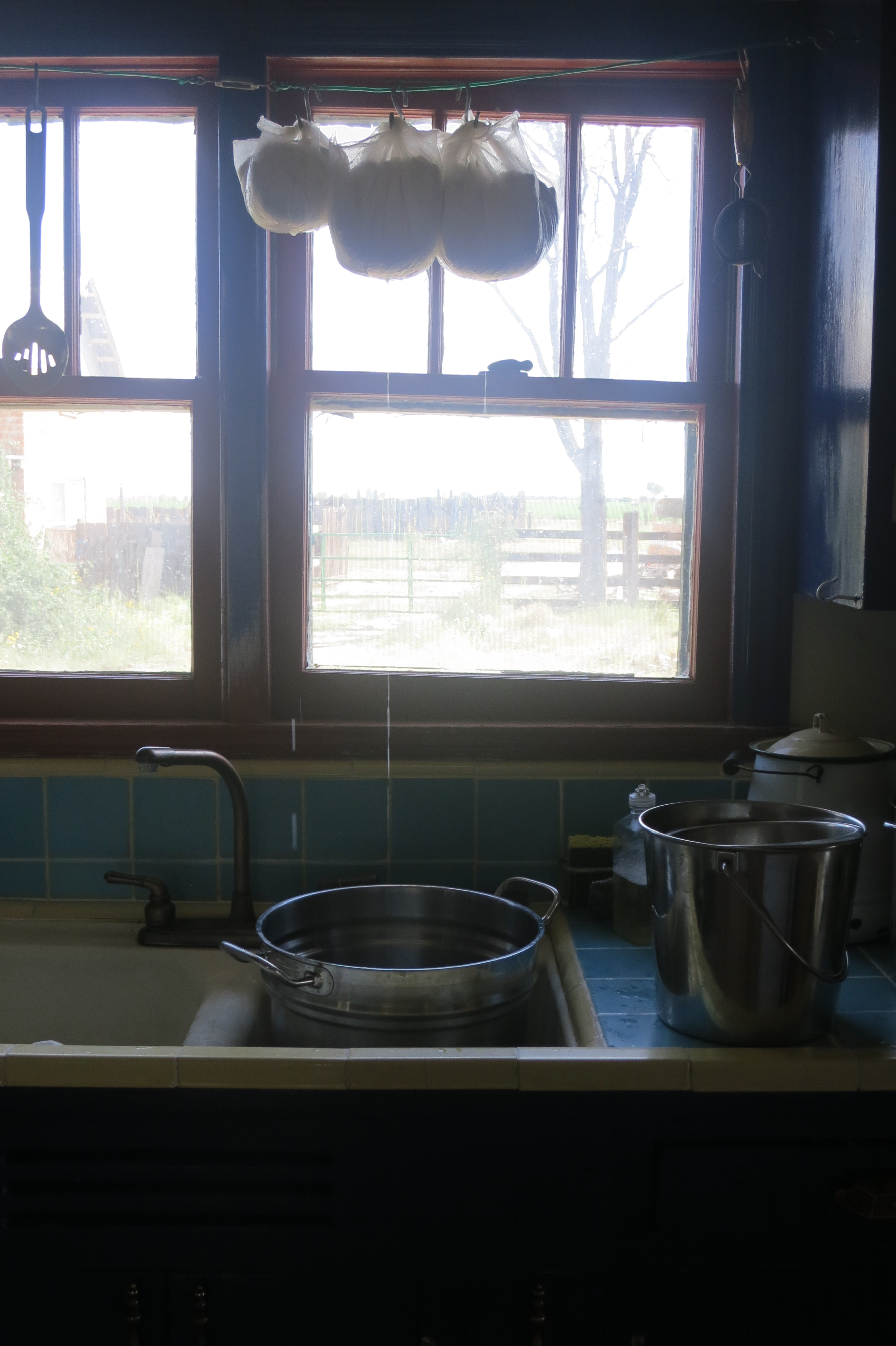
Fresh cheese curds draining whey.

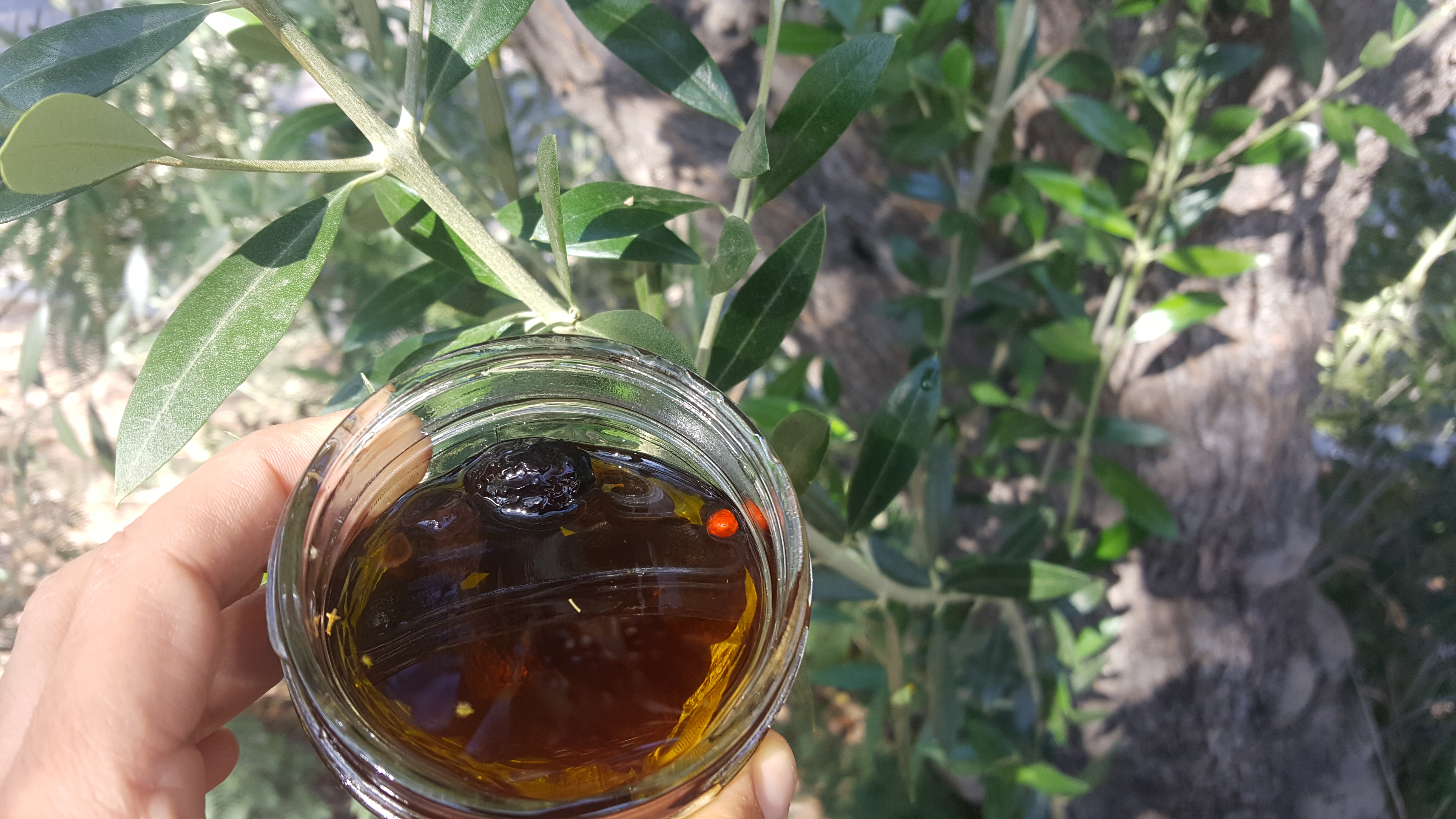
Solar cured olives from Bean Tree Farm.

Solar cured olives from Bean Tree Farm.

Pickles! Cholla buds and nopalitos en escabeche.

Pickles! Cholla buds and nopalitos en escabeche.

blog 20160415_103012

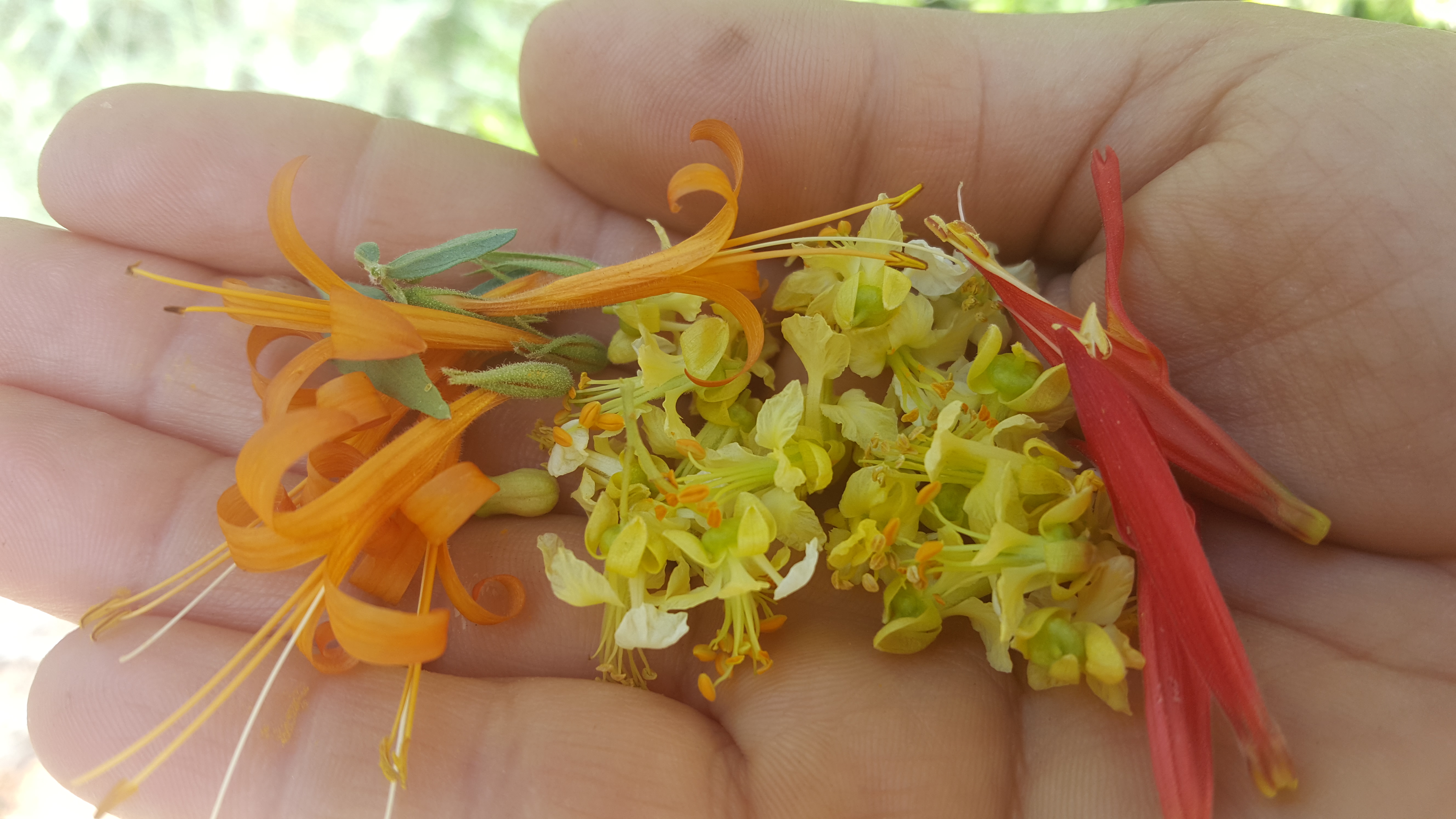
Fresh flowers for garnish.


blog 20160415_090830

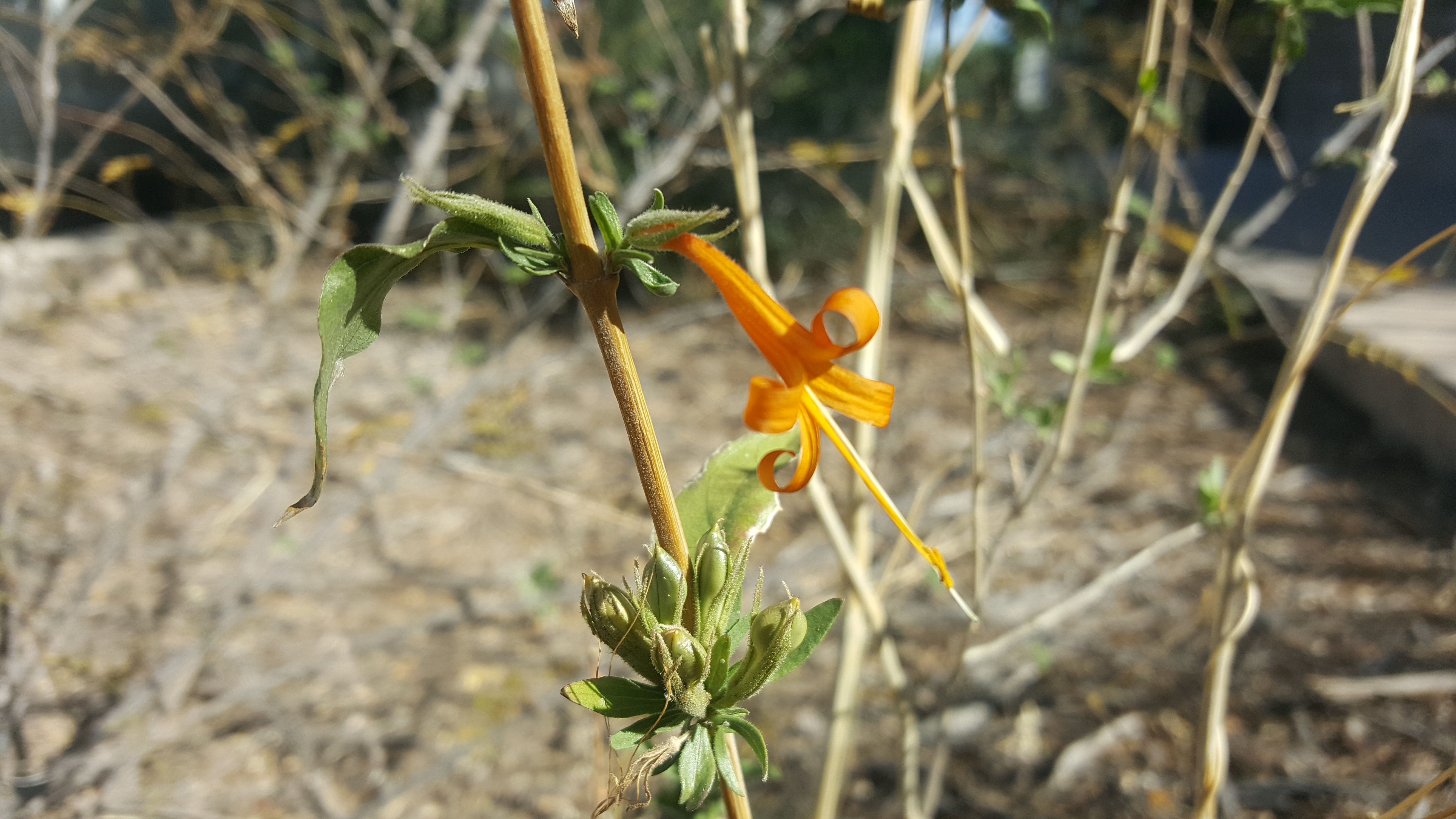
Desert Honeysuckle, Anisacanthus thurberi.

blog 20160415_104348

Foothills Palo Verde, Parkinsonia microphylla.

blog 20160415_091001

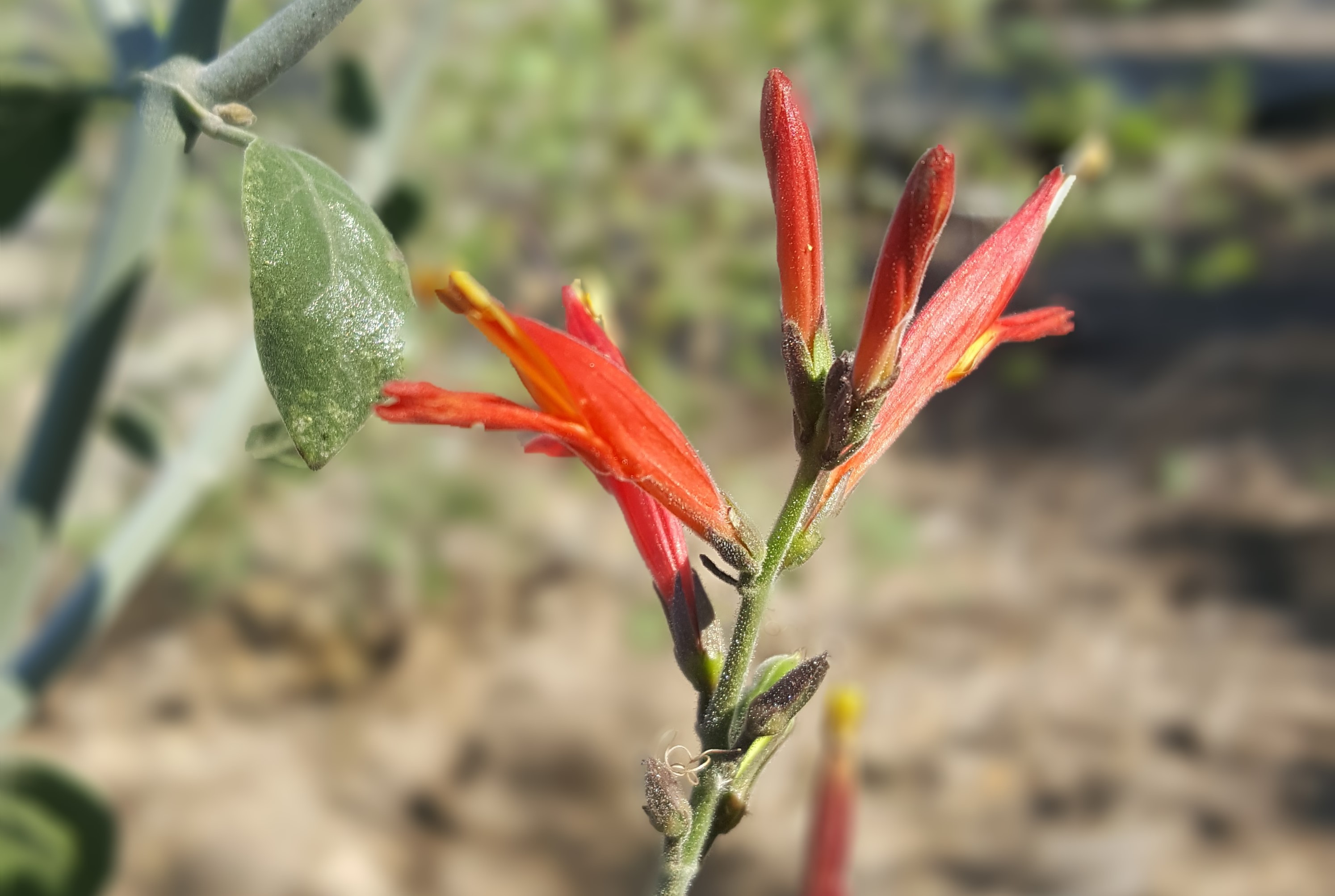
Chuparosa, Justicia californica.

Prickly Pear Cactus flowers are a fleshy, vegetal garnish. Opuntia engelmannii

Prickly Pear Cactus flowers are a fleshy, vegetal garnish. Opuntia engelmannii

blog 20160415_103501

Dress with olive oil and lemon juice. Enjoy!


Oh Yum! Tasty Mesquite Meal Enhances Pie Crust and Waffles

Bodie Robins offers a selection of delicious gluten-free baked goods at farmers markets in Tucson and Sierra Vista.

Bodie Robins offers a selection of delicious gluten-free baked goods at farmers markets in Tucson and Sierra Vista.

For thousands of years, mesquite pods were the primary food of people who lived on the Sonoran Desert. It’s Carolyn here today recalling that when I first started researching and experimenting with mesquite in 1972, hardly anybody was eating this sweet nutritious food. Although a few Tohono O’odham kept up with the old ways, it was on the verge of being forgotten.

Until recently,  it wasn’t easy to process mesquite pods. Early Native women made mesquite meal by pounding the pods in bedrock mortars. By the 1970s it hadn’t gotten much easier. But fortunately for all of us someone (I recall it was at the Desert Museum) figured that the pods could be crushed and sifted by a hammermill, a common piece of farm equipment. After some years, Desert Harvesters took up the challenge and offered to grind the pods of all comers for a modest fee. Getting a beautiful, smooth tasty flour was now easy. And the world of mesquite baking opened up.

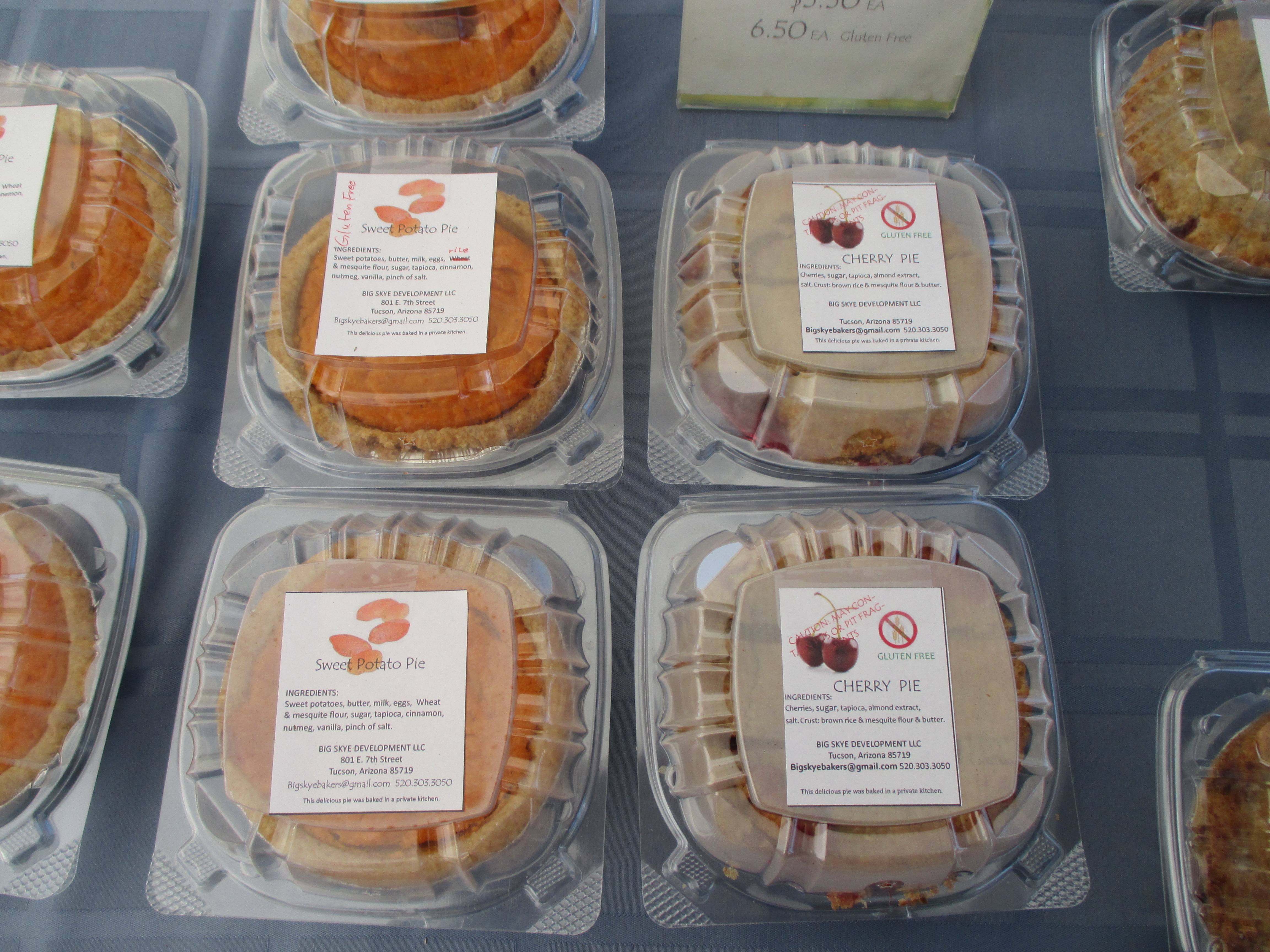
Mesquite crust adds extra deliciousness to Big Skye's fruit pies.

Mesquite crust adds extra deliciousness to Big Skye’s sweet potato and fruit pies.

Bodie Robins of Big Skye Bakers is one of the folks who have brought mesquite baking into the twenty-first century selling mesquite baked goods at farmers’ markets in Tucson and Sierra Vista.

Bodie, an architectural designer, began baking with mesquite as therapy in 2008 when construction took a dive with the recession. His first experiment produced some dog biscuits that he shared with his neighbors. He decided there might be a future in mesquite baking when his neighbors admitted they were eating the dog biscuits themselves. With salsa!

Bodie took his product to a farmers’ market. But it turns out not enough people were willing to pay for high-end mesquite dog biscuits (many dogs are willing to just chew the pods, unbaked), so he began to experiment with other baked goods, trying various combinations of flours until he produced a version he liked.

Today he sells pies with mesquite crust, cookies, and cupcakes. Many of his customers are attracted by the gluten-free nature of Bodie’s mesquite pie crust. One very grateful middle-aged customer was thrilled to find a pie crust he could eat and told Bodie he hadn’t been able to eat pie since he was 15 years old.

Bodie entices his customers with a little table setting at his farmers market booth. Personally, I'm ready to dig right in.

Bodie entices his customers with a little table setting at his farmers market booth. Personally, I’m ready to dig right in.

A perfect loaf of gluten-free bread eluded Bodie until recently when extensive experimenting has finally led to a mixture of mesquite meal, brown rice flour, tapioca and sweet potato flour that turns out a delicious loaf.

“My customers are particular about the foods they buy and eat,” he says .  “They like to learn about mesquite. There’s a romance to it – an arts and crafts movement about food. I get everything from savvy young college kids to the elderly.”

Bodie gathers the mesquite pods he uses himself and has them ground at the Baja Arizona mill at the Sierra Vista farmers’ market. He goes through up to 200 pounds a year and if he runs out, he can grind a few pounds in his Vitamix. He produces his goods in his home kitchen under the home baker cottage industry law.

You can find Bodie and his Big Skye specialty baked goods at the Rillito Farmers’ Market in Tucson on Sunday mornings from 9 a.m. to 1 p.m. and at the Sierra Vista Farmers’ Market on Thursdays from 10 a.m. to 2 p.m

Here’s a delicious recipe for waffles that Bodie developed. This recipe includes wheat flour, but if you are gluten sensitive, experiment with some other flours to find a mixture that works for you.

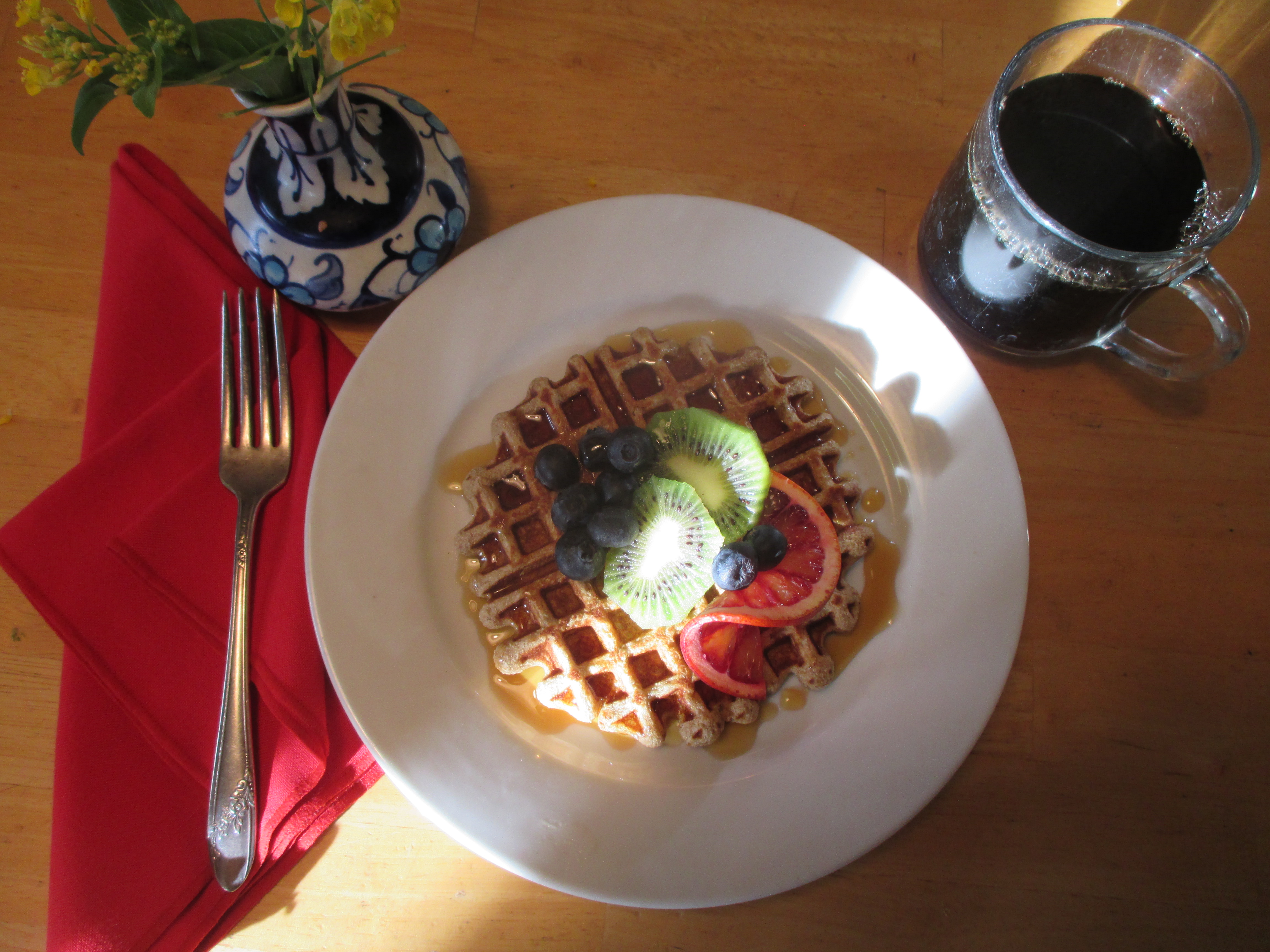
Mesquite waffles make a delicious breakfast or lunch.

Mesquite-Pecan waffles make a delicious breakfast or lunch.

Cinnamon-Pecan Mesquite Waffles

Ingredients

2 eggs separated

2 1/2 cups milk

¼ cup olive oil

1 cup all-purpose flour

½ cup whole-wheat flour

½ cup mesquite meal

1 cup finely chopped pecans

1 tablespoon cinnamon

1 tablespoon baking powder

½ teaspoon salt

1 tablespoon sugar

Directions

  1. Lightly oil and pre heat waffle iron.
  2. Separate eggs reserving the whites in a bowl and set aside. In another bowl mix egg yolks, milk and oil.
  3. Mix all dry ingredients together
  4. Add liquids to dry ingredients. Gently mix until smooth.
  5. Beat the egg whites until stiff.
  6. Fold in the egg whites to the waffle mix.
  7. Place 1/2 cup of batter onto hot waffle iron. Close lid. Bake until golden Repeat with remaining batter.

________________________________________________________________

Want more mesquite recipies? Check out my cookbook Cooking the Wild Southwest, Delicious Recipes for Desert Plants. You can buy it at the Native Seeds/SEARCH Store at 3061 North Campbell Avenue, in Tucson, or order it off the NSS website or from Barnes&Noble. If you need mesquite flour, buy it from Martha Burgess’s Flor de Mayo stand at the St. Phillip’s Farmers’ Market in Tucson on Sundays or order it here.


Farmers’ Market Sources for Warming Body and Soul, Baking and Gifting

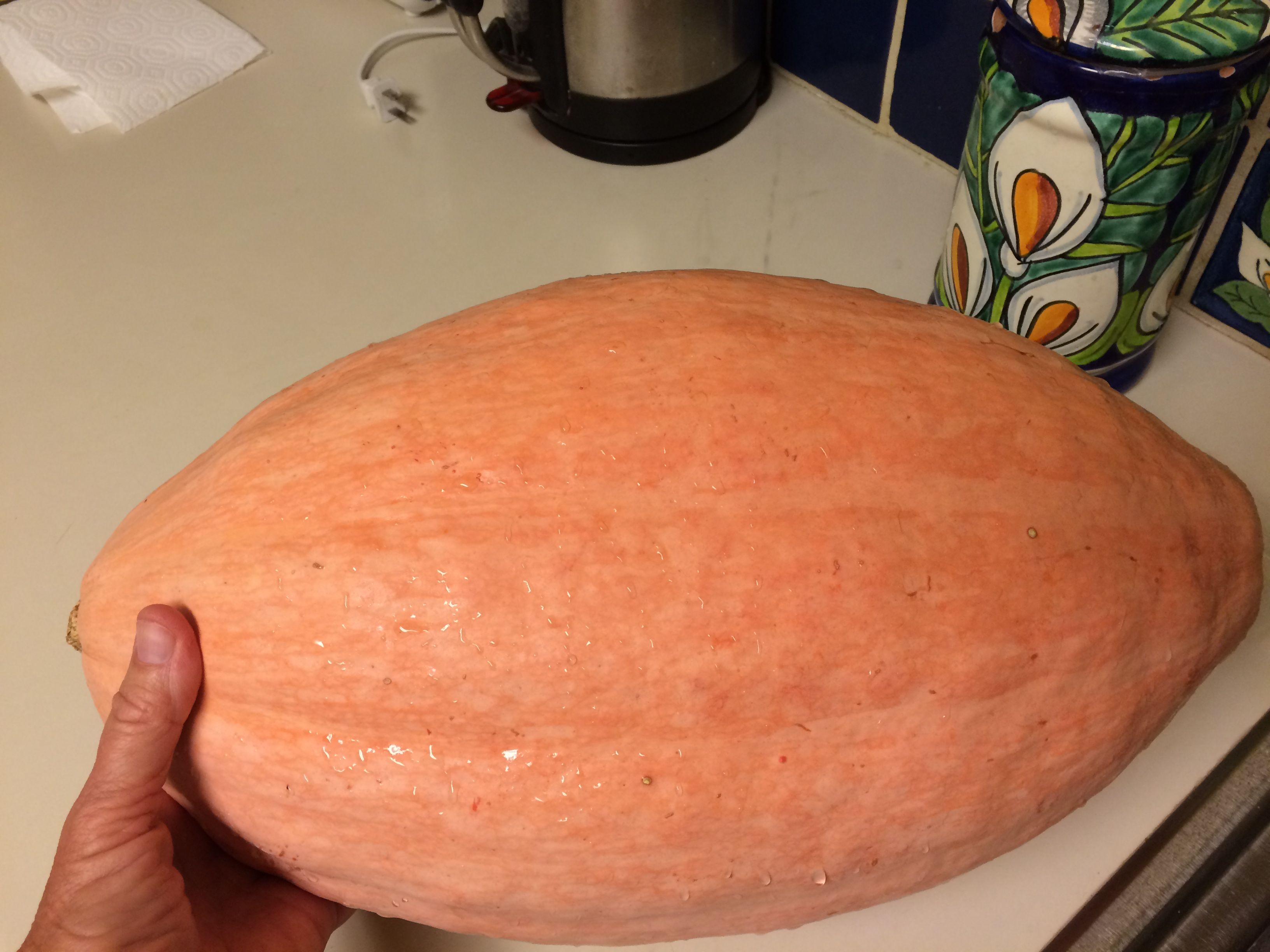
Autumn harvest from the NativeSeeds/ SEARCH Conservation Farm in Patagonia, AZ-heirloom Navajo banana squash

Autumn harvest from the NativeSeeds/ SEARCH Conservation Farm in Patagonia, AZ–heirloom Navajo banana squash (MABurgess photo)

What makes Tucson an International City of Gastronomy?  It is not only that we are blessed with amazingly creative chefs–like the ones showcased at the Mission Garden Picnic feast.  It’s also the availability of rare and wonderful heirloom foods that are adapted to our particular Baja Arizona climate, soil, and cultures!  Few other places have the flavorful and nutritious diversity of crops that have been part of our Baja Arizona agricultural landscape for about 4000 years. 

Tia Marta here to share ideas for finding the raw materials for some great slow-food feasting this Winter Solstice season.

OPEN NSS NAVAJO BANANA SQUASH FOR AN EXPLOSION OF BETA-CAROTENES!

OPEN NSS NAVAJO BANANA SQUASH FOR AN EXPLOSION OF BETA-CAROTENES!

Ignored, more than maligned, by present-day dominant cultures, the squash is a gift to menu-inventors.  It can be prepared as a savory dish with good old salt/pepper/butter, or fancied up with moles.  Or it can be made into fabulous desserts.  Use it in place of sweet potato for a genteel variation.  My favorite is to make it into a festive “Kentucky Pudding”.

Muff’s “Kentucky Pudding” Dessert Recipe

4 cups steamed or baked heirloom Navajo banana squash (or other heirloom) mashed or pureed

2-4 Tbsp mesquite honey or agave nectar (to taste)

2-3 Tbsp chopped crystallized ginger root (I found it at Trader Joe’s)

1/2 cup chopped walnuts or pecans or pine nuts

1/4 cup good bourbon whiskey

Steam or bake squash ahead.  (You can freeze it for using later in a variety of recipes–it’s so convenient!0  In a saucepan, heat mashed squash on medium.  Add honey, ginger, nutmeats.  When hot and steamy, stir in the bourbon quickly and serve with a flair.  You could even try flambé. Serves 4-6.

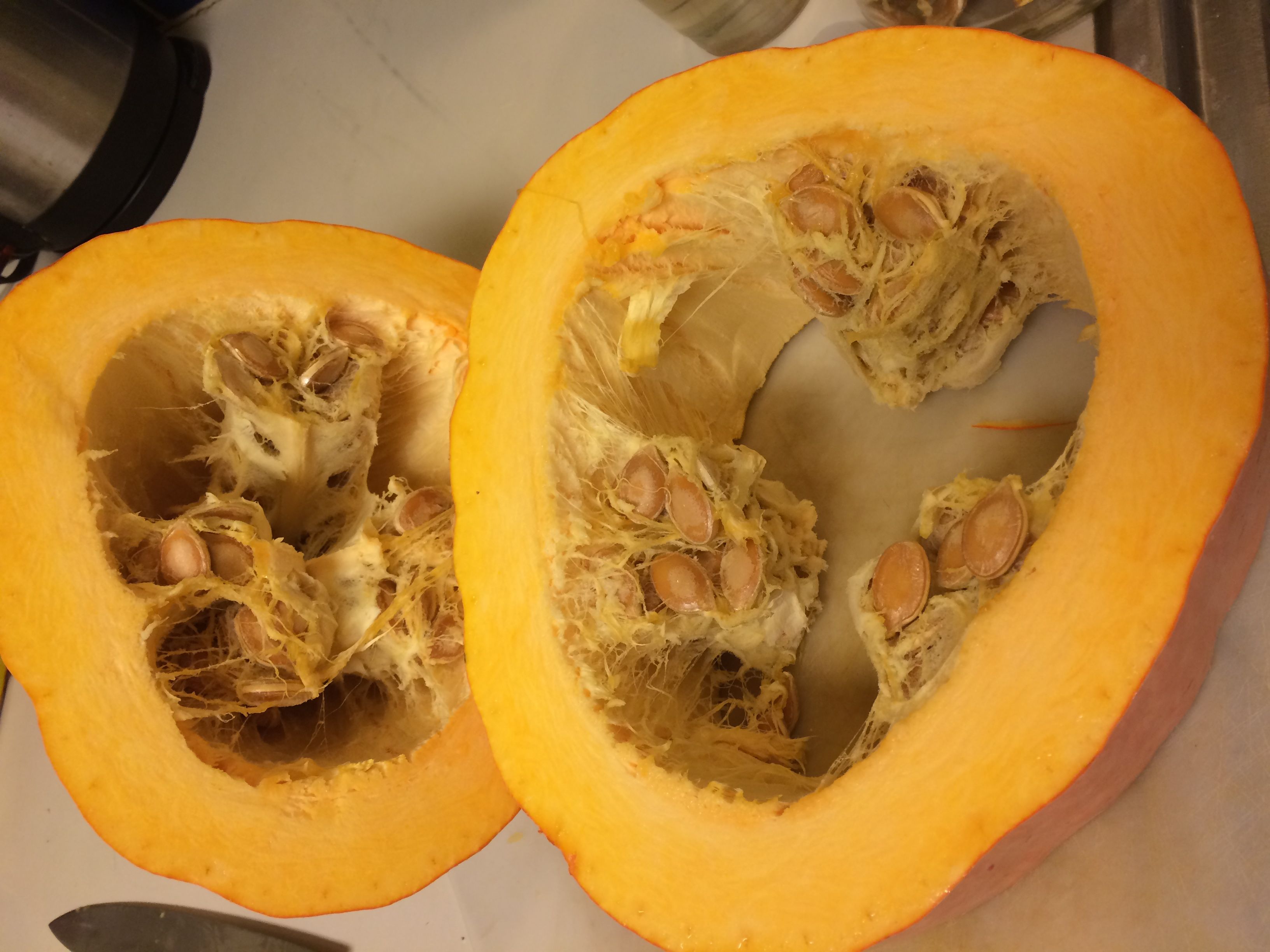
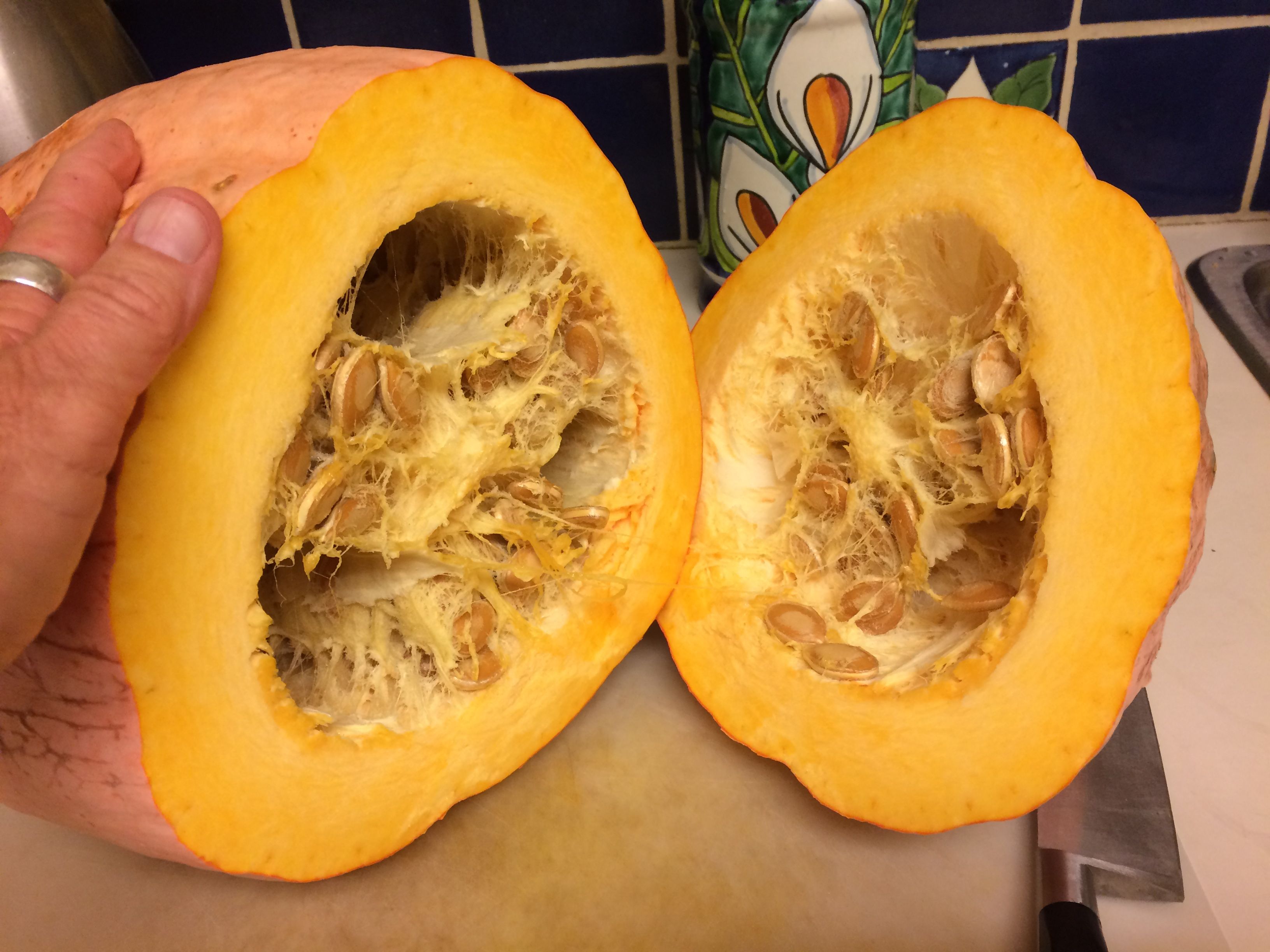
Navajo banana squash showing its interesting pattern of seeds inside

Navajo banana squash showing its interesting pattern of seeds inside

These luscious heirloom squashes, grown at NativeSeeds/SEARCH’s Seed Conservation Farm in Patagonia, are available now at our Flor de Mayo booth at Sunday’s St Philips Farmers’ Market.  Come see the size of them–one of them could feed the whole extended family or a small tribe!  We will be selling them by the smaller family-sized chunk as well.  Start salivating…  If you are seeking Vitamin A in glorious beta-carotenes, this is the food to find.

And don’t forget those giant seeds inside!  They can be roasted easily with a little olive oil and sea salt and voila you have a healthy snack full of zinc to ward off colds in this chilly season.  You can save a handful of those seeds to plant next summer in your garden and keep the gift growing.

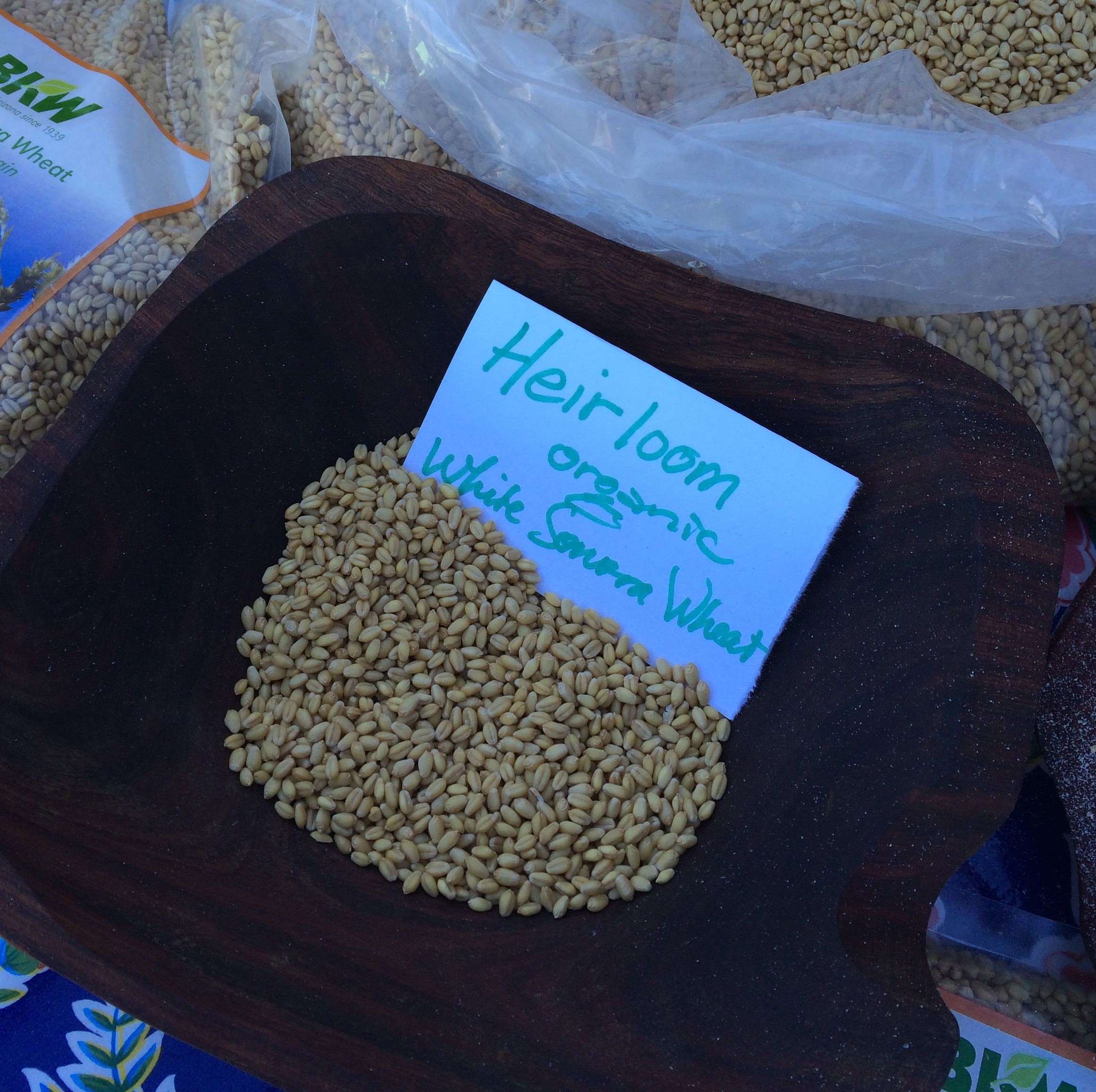
Heirloom organic locally grown White Sonora Wheat-berries

Heirloom organic locally grown White Sonora Wheat-berries

And here are some ideas about baking with local heirloom grains….  Get out your VitaMix or your hand-mill and get ready for a real treat–home-baked goodies made with fresh-milled flour from whole heirloom grains.  Find these precious ancient grains at the NativeSeeds/SEARCH Store (3061 N Campbell near Prep and Pastry) and at the Flor de Mayo booth–Sunday St Philips Food-In-Root Market.

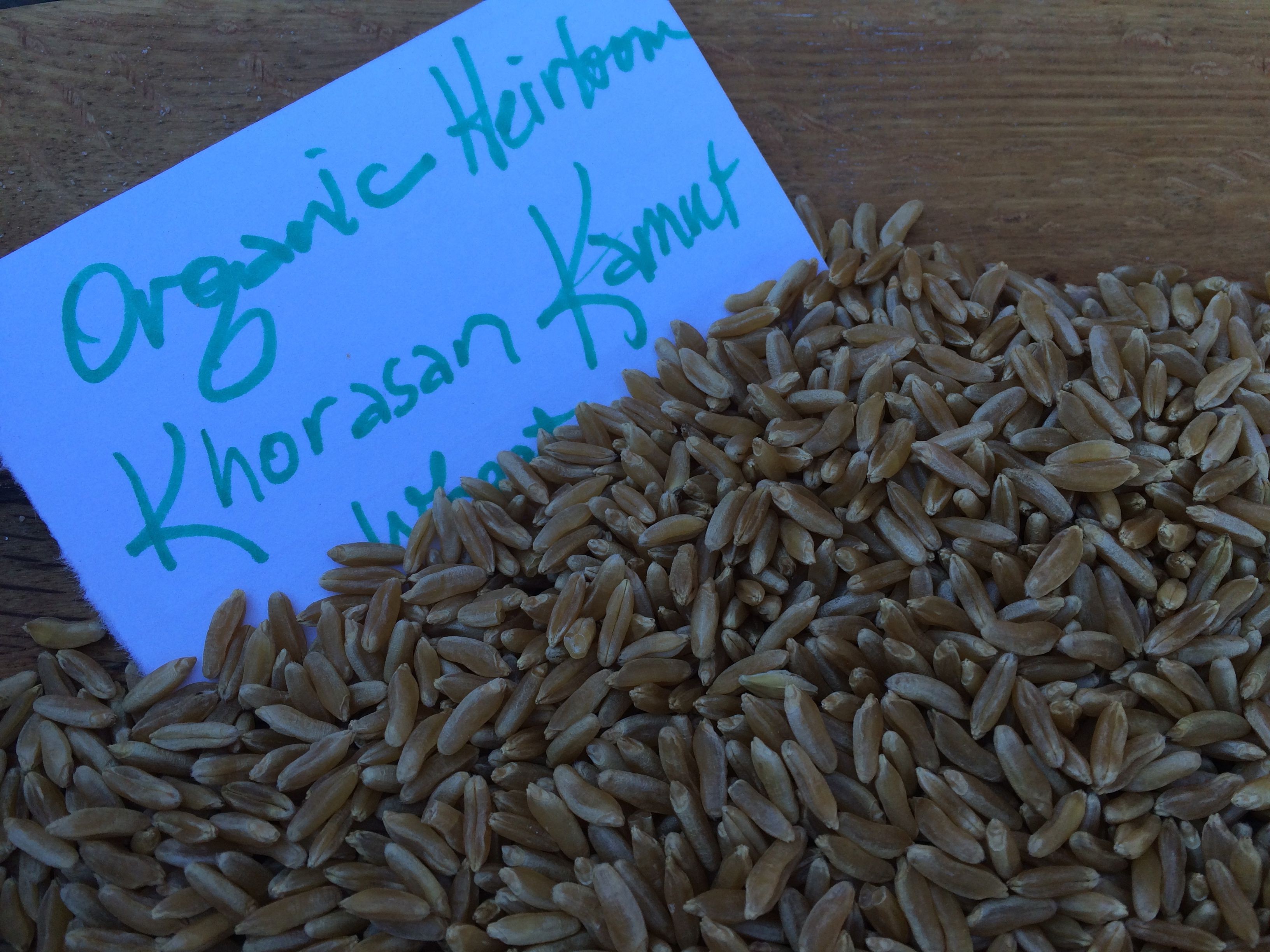
Organic Khorasan Kamut wheat--great for bread baking

Organic Khorasan Kamut wheat–great for bread baking

If you don’t want to take the time, or if you don’t have milling equipment, no problem!  Just come by our Flor de Mayo farmers market booth and see your special grain being fresh-milled before your very eyes.  It is especially neat for kids to see where flour comes from.  Surprisingly, many an adult has difficulty making the connection with grain and flour.  The beauty and significance of keeping the grain whole until milling is that the grain is ALIVE!  When used fresh-milled within a few days of milling, the beneficial enzymes–the “life force” in the whole kernel–are still active in the flour.  And the taste of freshly-milled flour is a whole new flavor-ballgame.

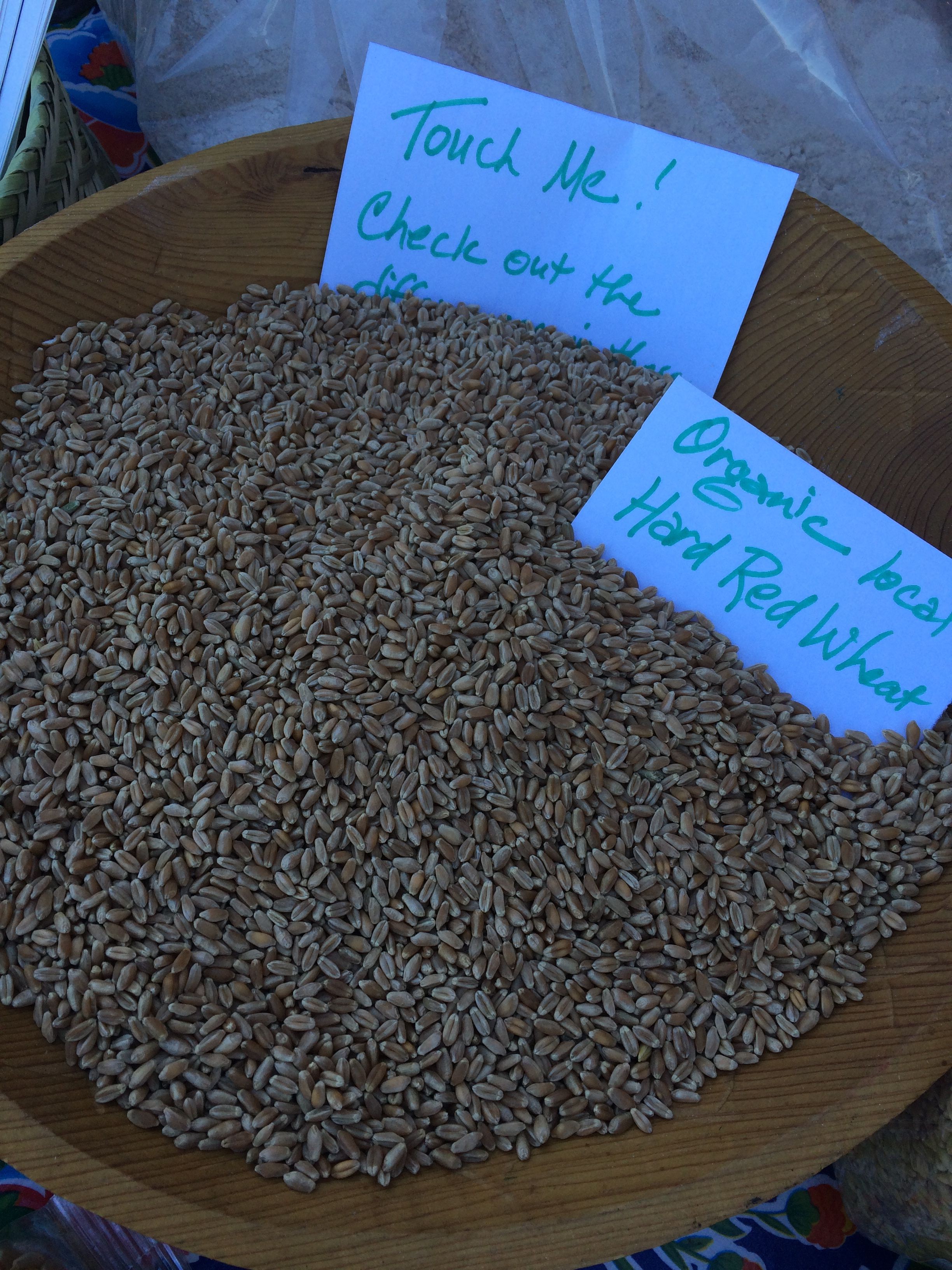
Organic hard red wheat--perfect for Christmas cookies and cakes

Organic hard red wheat–perfect for Christmas cookies and cakes

Come actually touch our good organic grains!   Feel their liveliness.  We have recipe ideas to share, like our Baja Arizona White Sonora Wheat flour and Mesquite pie crust.  In addition we can recommend lots delicious whole wheat-berry recipes for Padre Kino’s white Sonora wheat grown locally by BKWFarms or the Pima club wheat grown by San Xavier Farm Coop and Ramona Farms.

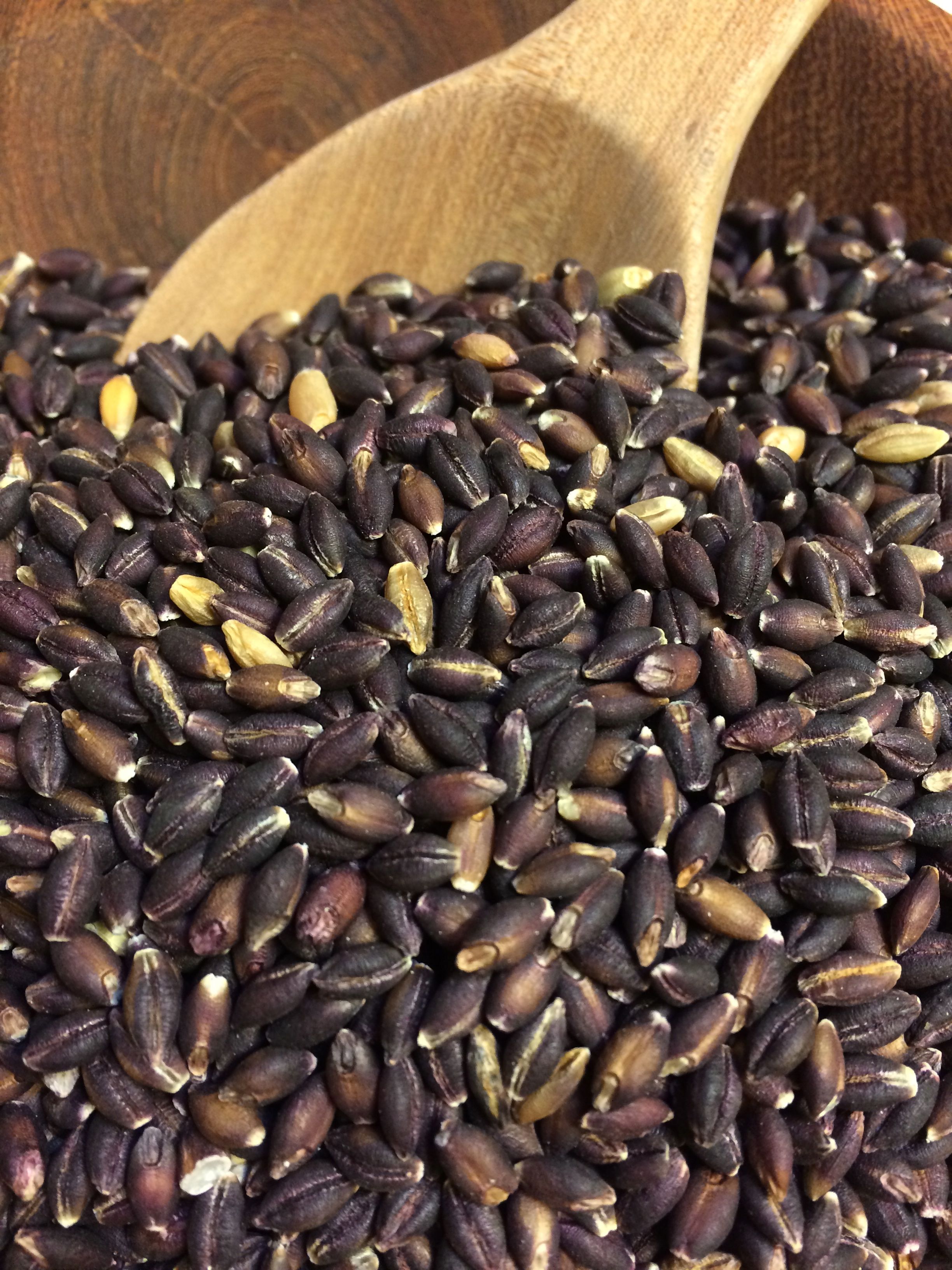
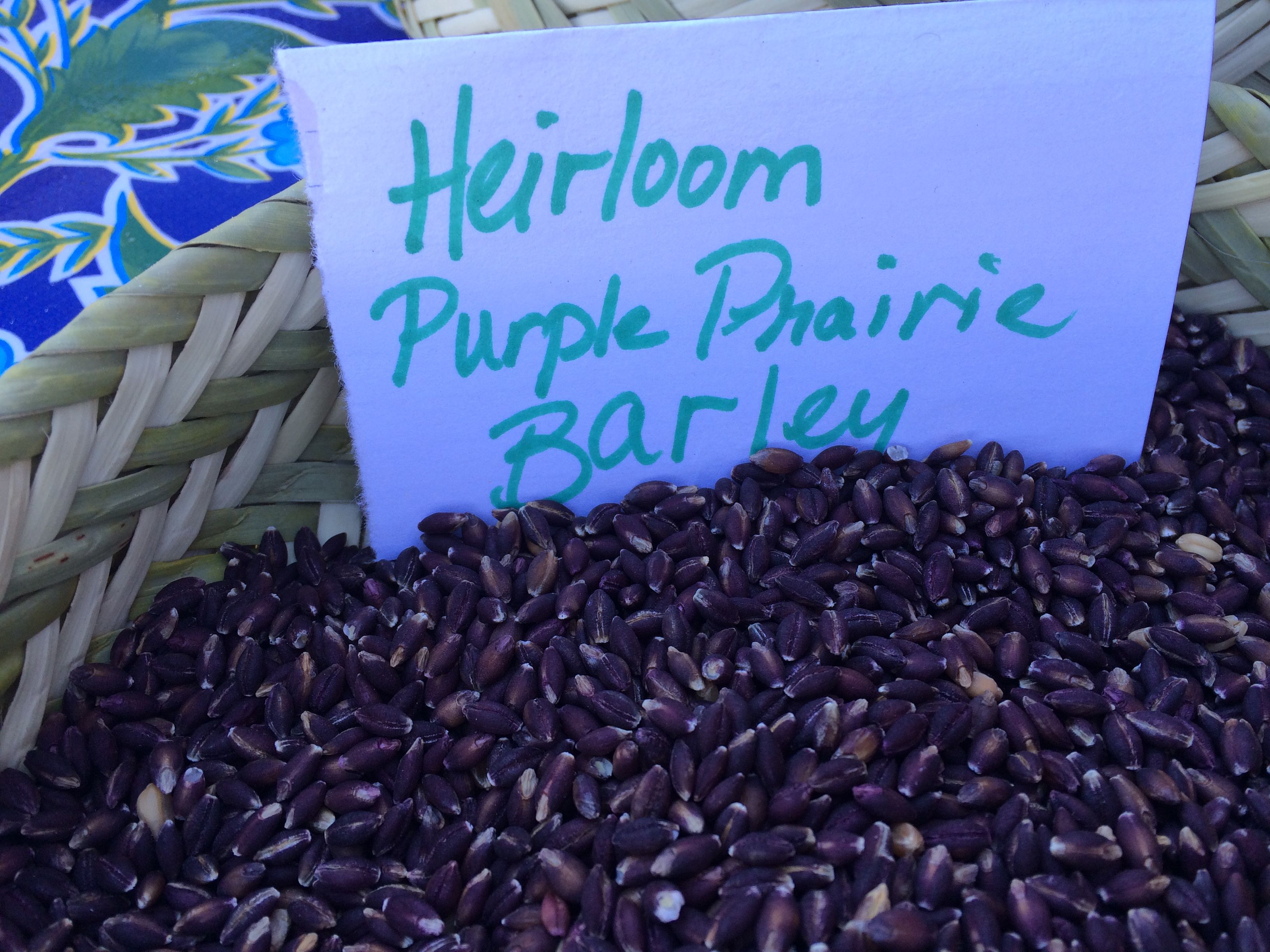
For a completely new experience, try baking with a purple grain!–our heirloom Purple Prairie Barley.  Barley flour has the lowest glycemic index of all the grain flours hence helping to balance blood sugar.  It has a rich flavor that can enhance any bread or biscuit recipe.  The purple color indicates a high anthocyanin content– an important antioxidant.  When you cook the purple barley as a whole grain, you can use it in pilafs and marinated grain salads the way you might use rice or quinoa.  Combined with rice it makes a colorful high-contrast pilaf.  (I’d be happy to elaborate in another post.)

Beautiful purple prairie barley--an heirloom originally from Tibet

Beautiful purple prairie barley–an heirloom originally from Tibet–full of the healthful flavonoid anthocyanin

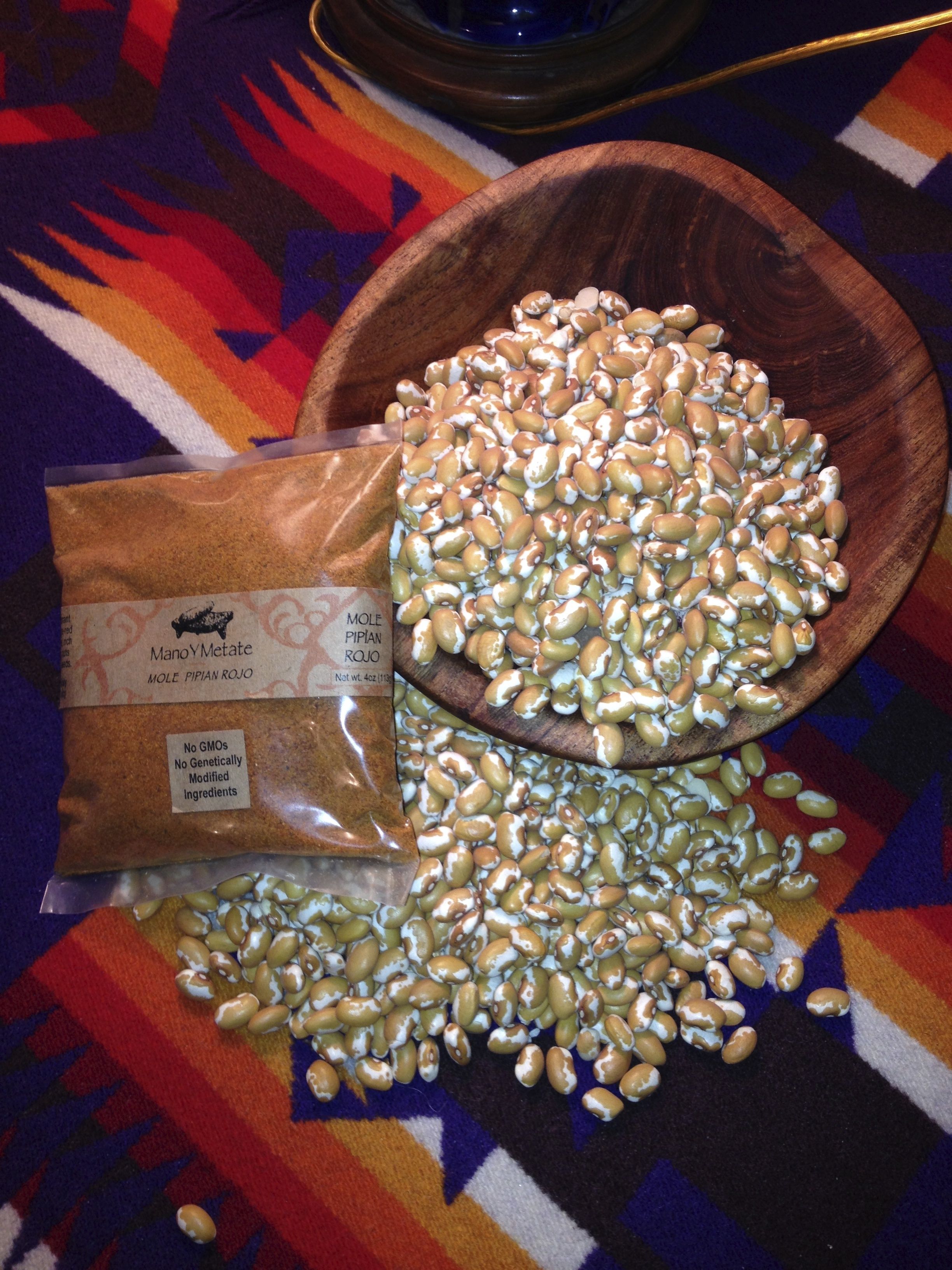
Try using Mano y Metate's Pipian Rojo Mole as a vegetarian spice for these Zuni Gold beans!

Try using Mano y Metate’s Pipian Rojo Mole as a vegetarian spice for these Zuni Gold beans!

Tis the season also to rejoice in the indigenous beans that have supported Native cultures for unknown centuries.

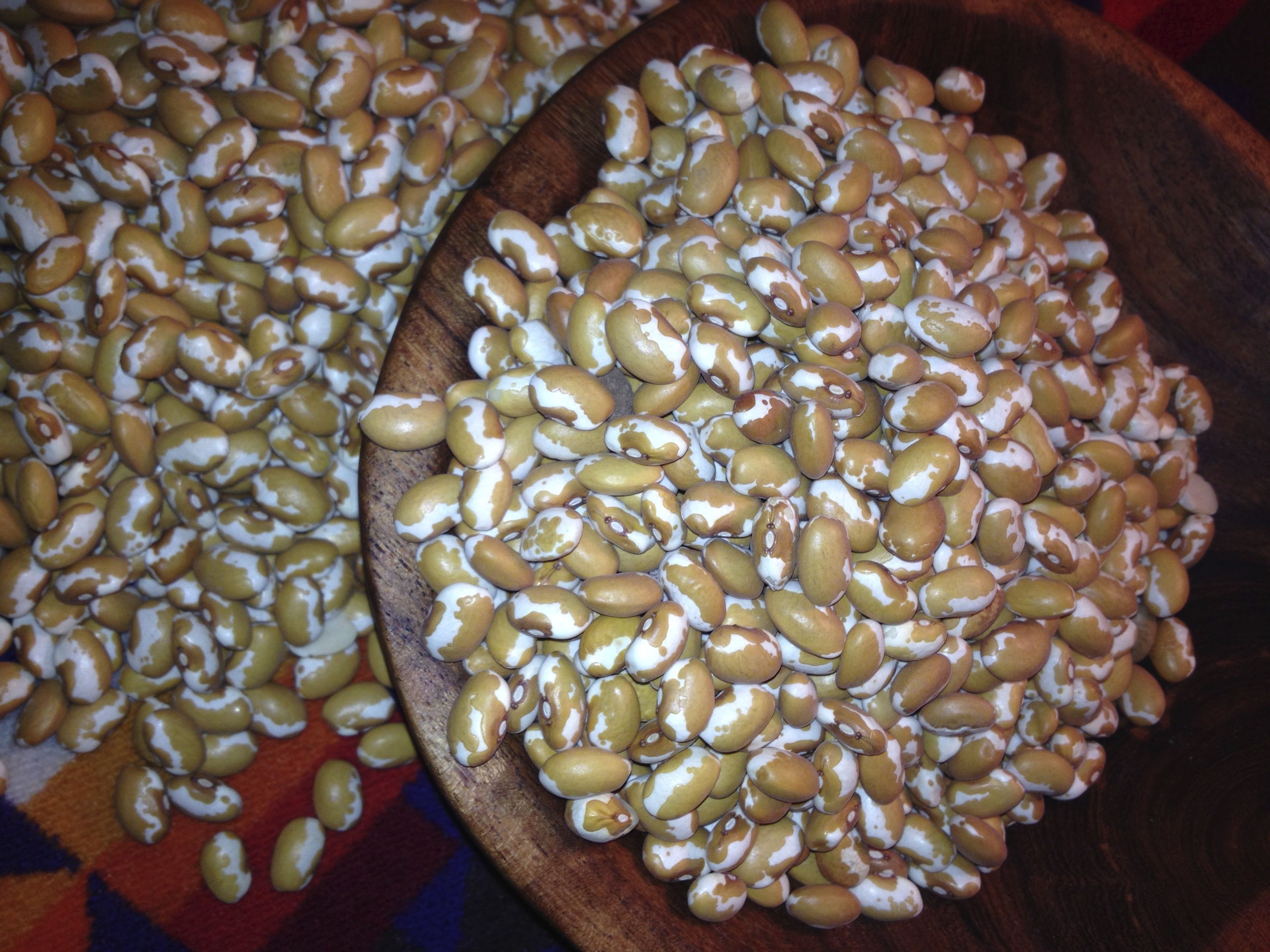
Beautiful Zuni Gold beans--used traditionally in the Winter Solstice celebration

Beautiful Zuni Gold beans–used traditionally in the Winter Solstice celebration

Heirloom beans are full of protein, full of flavor, and so versatile.  I like to cook up a big pot of these golden Solstice beans and then freeze them in serving sizes to prepare later in a variety of fun ways–as chile beans, as dips, in burritos, as hummus, and of course heart-warming bean soup–the list goes on… Come get inspired at our Flor de Mayo table when you see the biodiversity of beans spread before you!

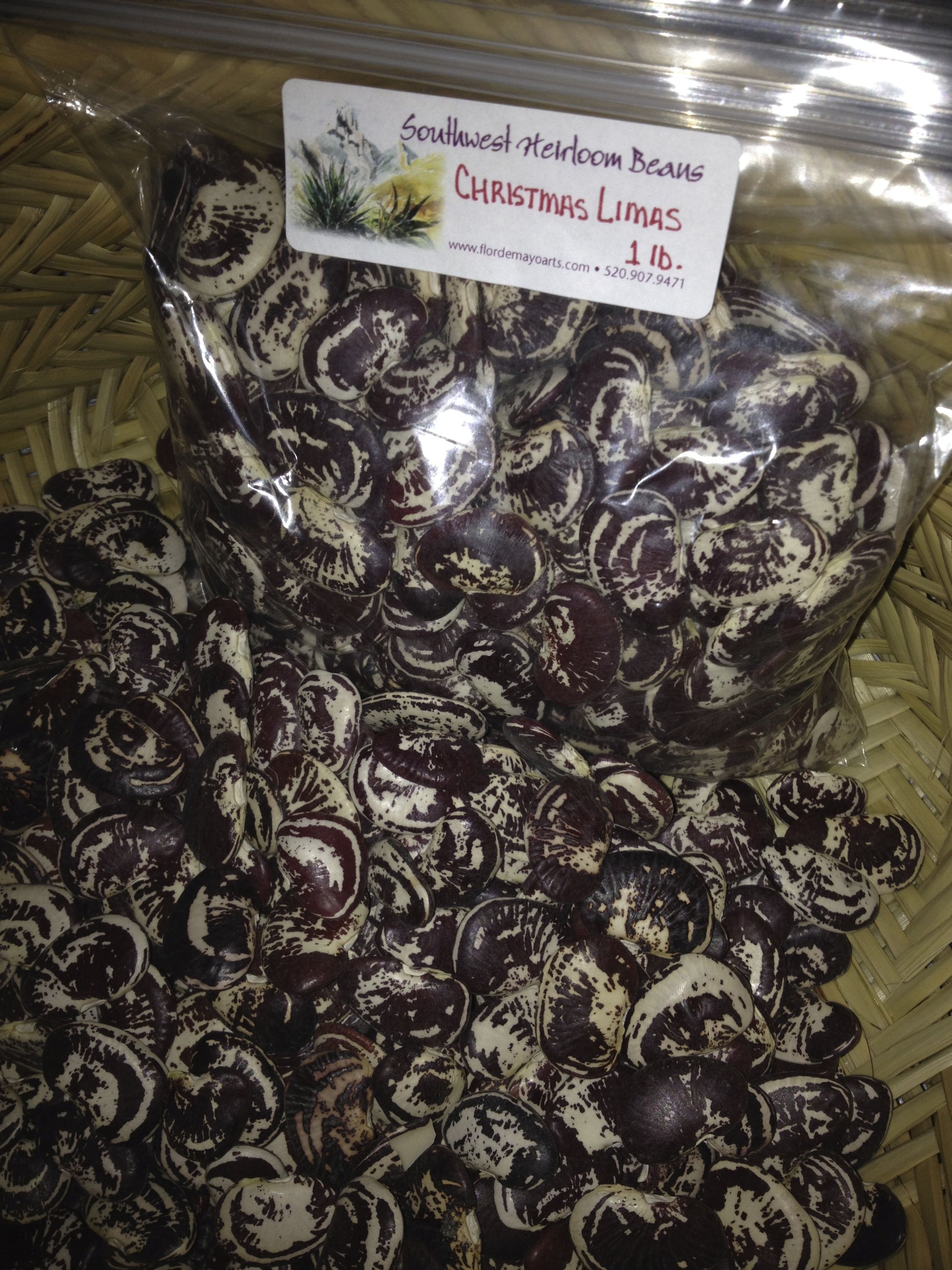
Delectable Christmas Limas can be prepared as vegetarian centerpiece dishes to honor the season!

Delectable Christmas Limas can be prepared as vegetarian centerpiece dishes to honor the season!

The most festive heirloom bean of the holiday season is the colorful Christmas Lima (AKA Chestnut Lima) so called because of the timing when it is harvested.  (Check out past blog posts for some great recipes.)  We have even had jewelry-makers buy this bean to string as fetish-style necklaces.

Calling creative gift-givers!  Join us at the Sunday St Philips Farmers Market for some meaningful, local, healthful and tasty gifts that say “Baja Arizona” in the most delightful way.

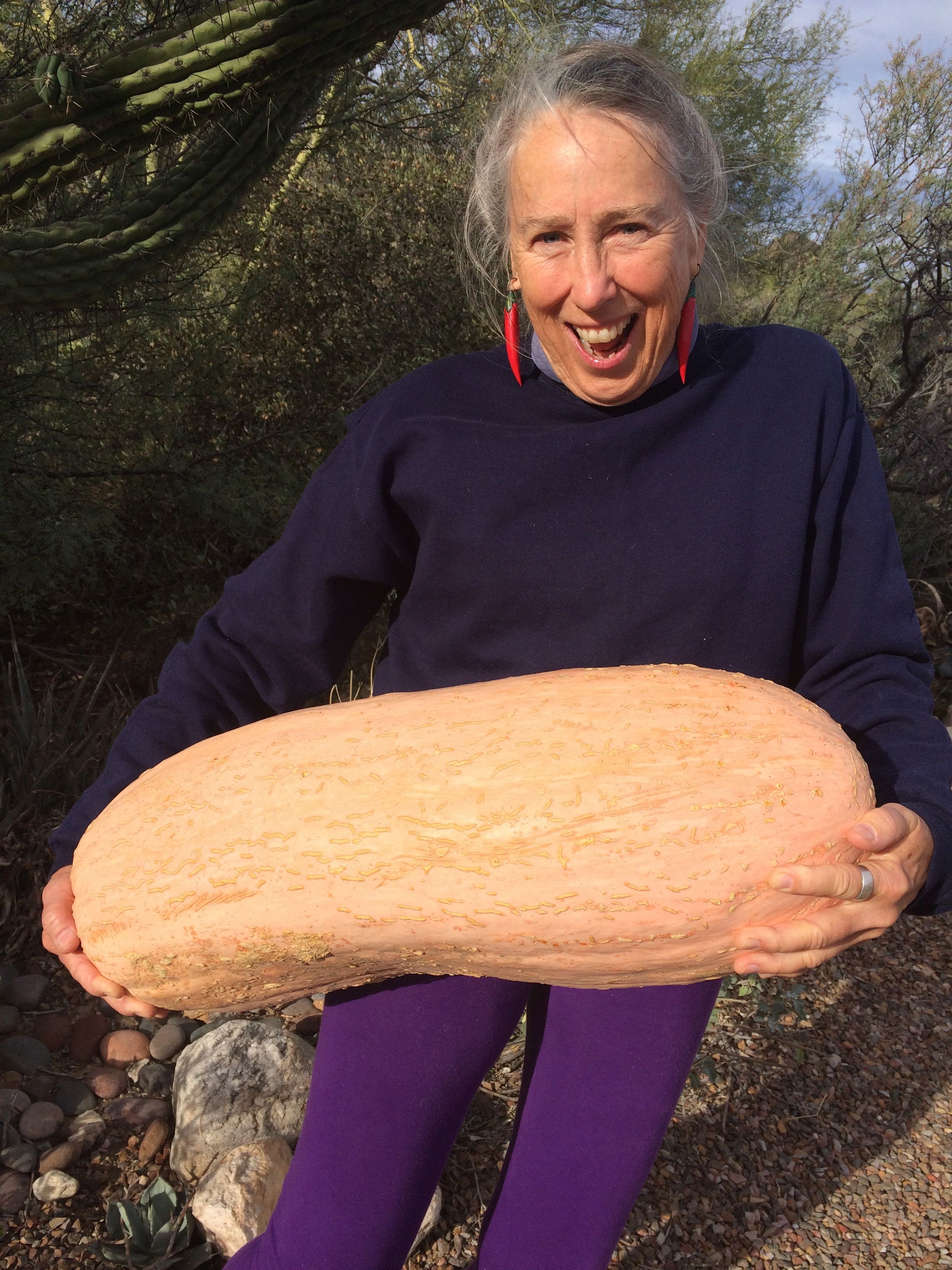
Just for scale, Tia Mart hefts this heirloom Navajo squash. Who needs a workout center if you are a gardener or farmer?

Just for scale, Tia Marta hefts this heirloom Navajo squash. Who needs a workout center if you are a gardener or farmer?

May you have happiness, health, peace in your hearts, and good cheer this holiday season –greetings from Rod and Tia Marta at Flor de Mayo!

Heirloom Grains & Heirloom Fruits marry in a Holiday Pie

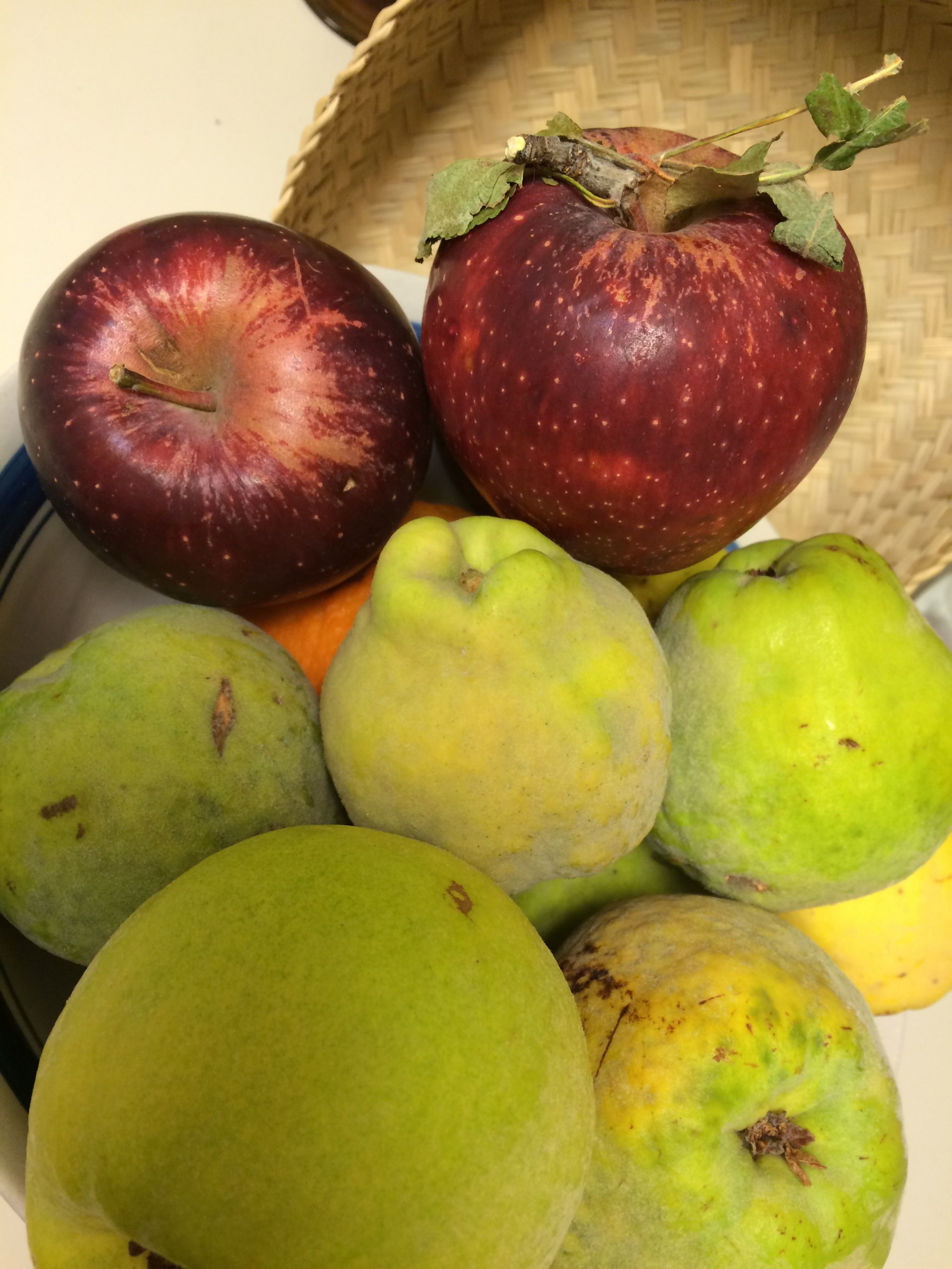
Padre Kino's Membrillo Fruit with Slide Rock Star King Old Fashioned Double Delicious Apples

An Heirloom Fruit Harvest:  Padre Kino’s Membrillo Fruit from my garden with Star King Old Fashioned Double Delicious Apples from Slide Rock State Park heirloom orchard (MABurgess photo)

In both the low Sonoran Desert and in the higher Southwest, fruits are hanging on the trees ready for harvest.  At Mission Garden the quince trees, better known as membrillo, are bearing their last sturdy fruits.  Mission Garden was the site of a wonderful celebration of membrillo in October with talented cook Josefina demonstrating how to make cajeta de membrillo, our sweet autumn dessert delicacy.

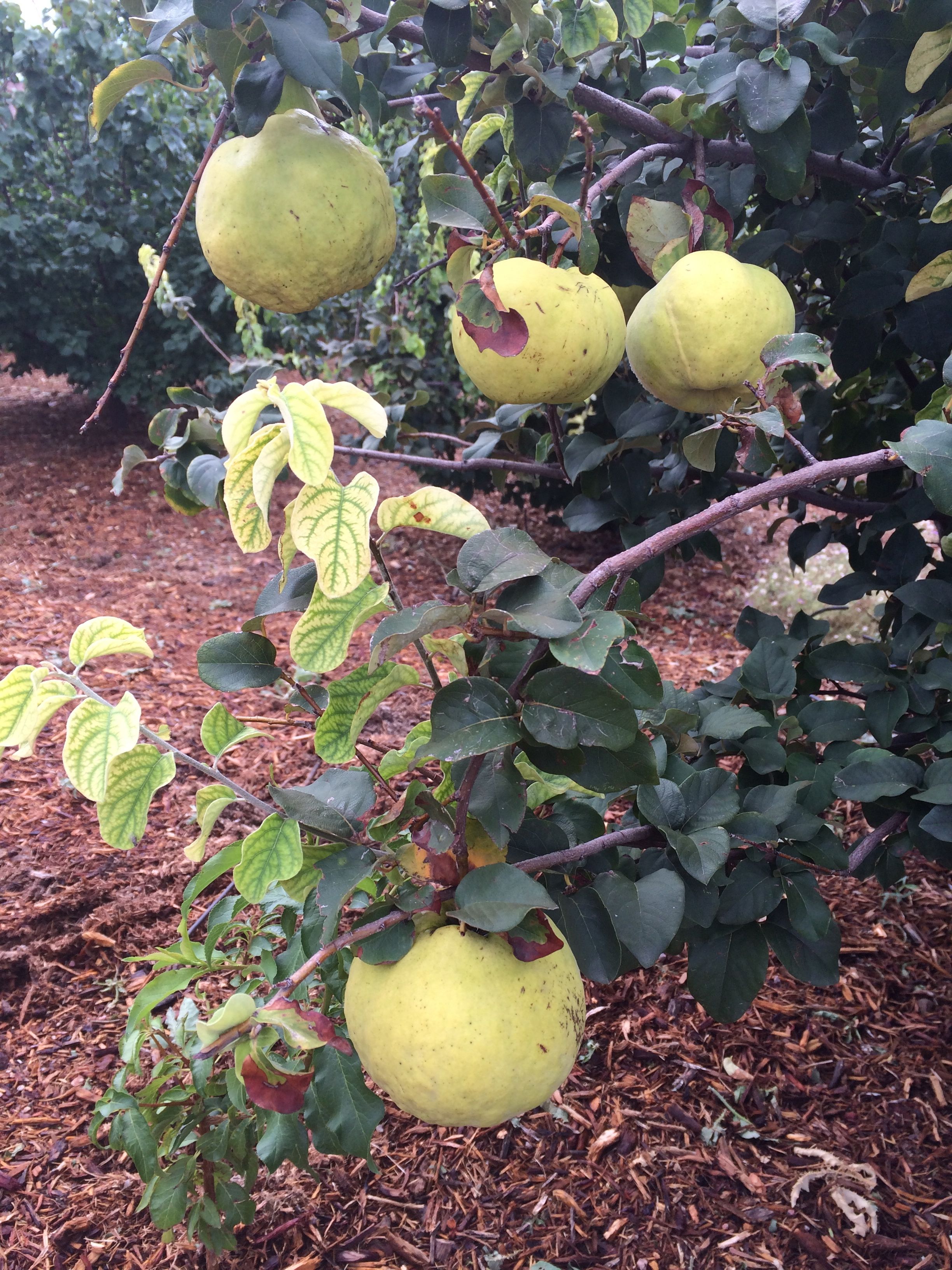
Membrillo (Quince) trees heavy with fruit at Mission Garden Tucson, near A-Mountain

Membrillo (Quince) trees heavy with fruit at Mission Garden in Tucson, Arizona, near A-Mountain–Come visit any Saturday morning!

Membrillo is a perfect food-giving tree for low desert as it can can handle heat--great for a kitchen garden

Membrillo is a perfect food-giving tree for low desert as it can can handle heat–great for a kitchen garden

Tia Marta here to share what is happening in my kitchen these days, bringing together some of my most admired heirloom grain and fruit ingredients–both cultivated and wild–knowing that I have guests coming for the holidays who need a little taste of LOCAL!

It is pie time in our household.  And today it is Membrillo-Apple Pie with White Sonora Wheat-Mesquite pie crust!      I mean, how much more local can one get?

This was the year that our five-year-old quince tree, which we purchased from Desert Survivors Nursery Kino Fruit-tree Project, and which we planted a couple of years ago in our backyard, decided to flower and set fruit–just enough this time to make a couple of pies.  We look forward to the amazing productivity in future years that the Mission Garden quince trees are already showing.  Quince or membrillo fruits look like a cross between yellow apples and pears but are far more sturdy than either of those.    Before ripening they are covered with fuzz and, as they lose it and become shinier and more yellow, you know they are ripening.

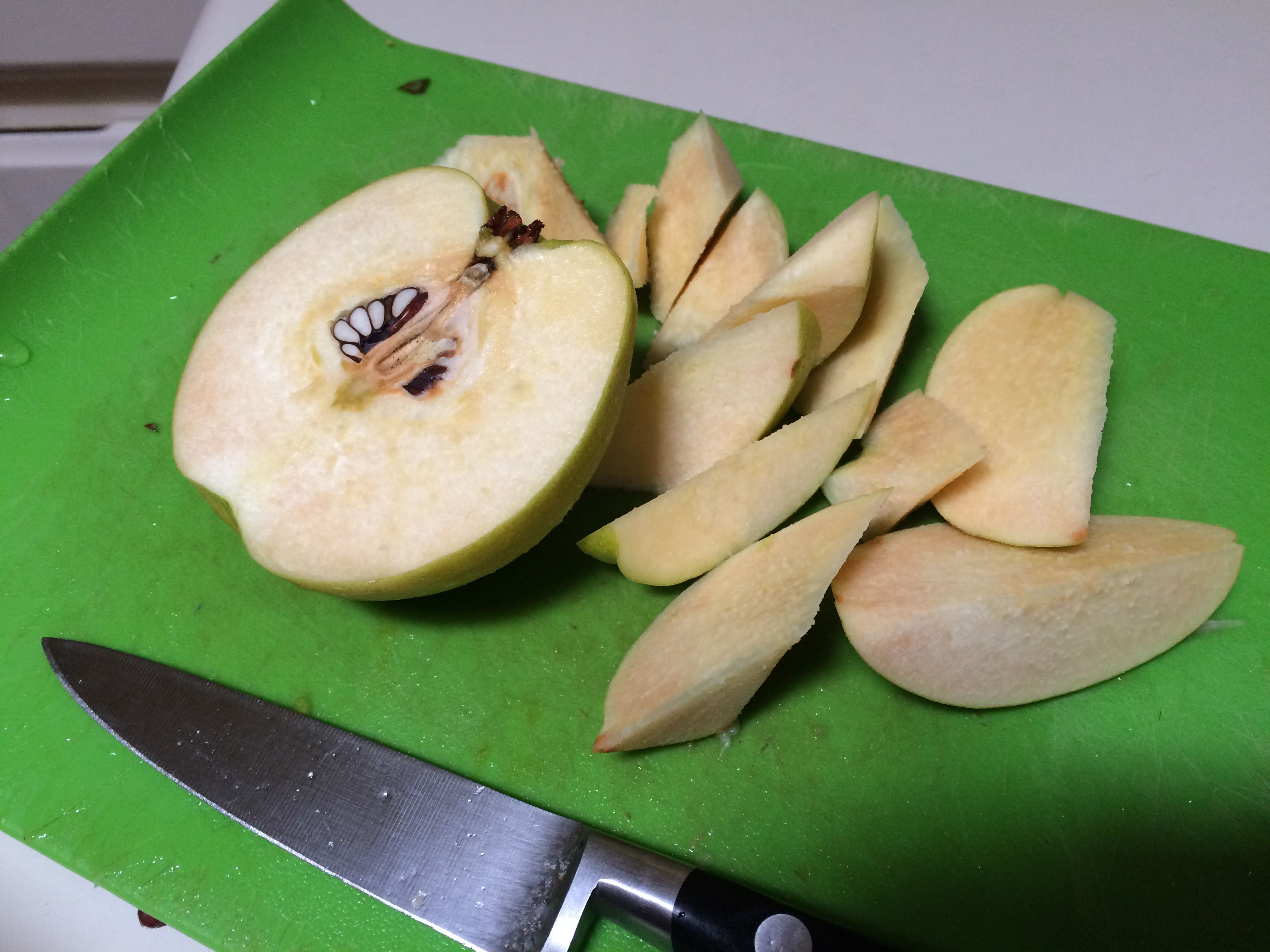
Because they are harder than other fruit, be sure to cut membrillo very carefully. Expect them to come out with not-so -symmetrical slices.

Because they are harder than other fruit, be sure to cut membrillo with extra care. Expect this to result in not-so -symmetrical slices–no problem inside a pie.

Even when this aromatic rose-family fruit is ripe, its somewhat sweet tissue never really softens.  They may feel and taste granular, similar to some pear varieties.  But they are substantial food, full of good potassium, vitamin C, dietary fiber, and iron.  In other regions, quince has been used with apples to make jellies as it aids the gelling process.  Since the time of the missionaries into Pimeria Alta, the traditional way of preparing membrillo here is to cook it down with raw sugarcane sugar to make the cajeta confection.  (A detailed report of cajeta de membrillo will make a neat separate post.)

I chose to mix membrillo with its sweet cousin, heirloom local apples, to create a Southwestern version of the all-American pie.  From the neat old Pendley Homestead at Slide Rock State Park in Oak Creek Canyon near Sedona, I obtained the deep maroon-skinned apples shown above from a 1912 orchard.  From the English Family Orchards at Willcox I added a few little galas.  Don’t ever be ashamed to ask orchardists at farmers’ markets if they have any “rejects” for sale.  Many a tasty apple gets tossed because it has a blemish or knick.  Such apples can become a rewarding gift in pies, apple-brown-betty, or applesauce.

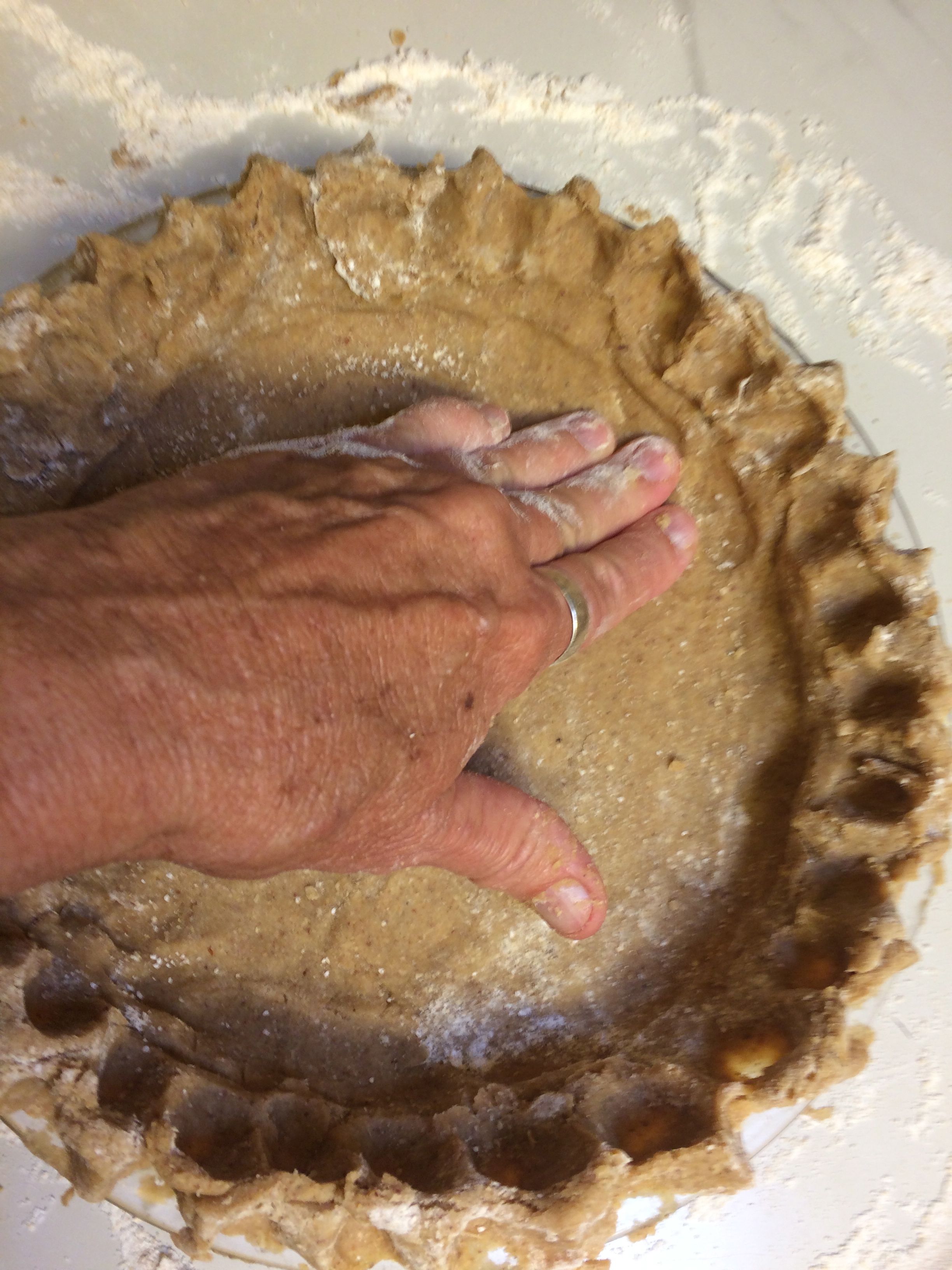
Pressing mesquite/whiteSonora wheat dough into pie pan

Pressing mesquite/whiteSonora wheat dough into pie pan

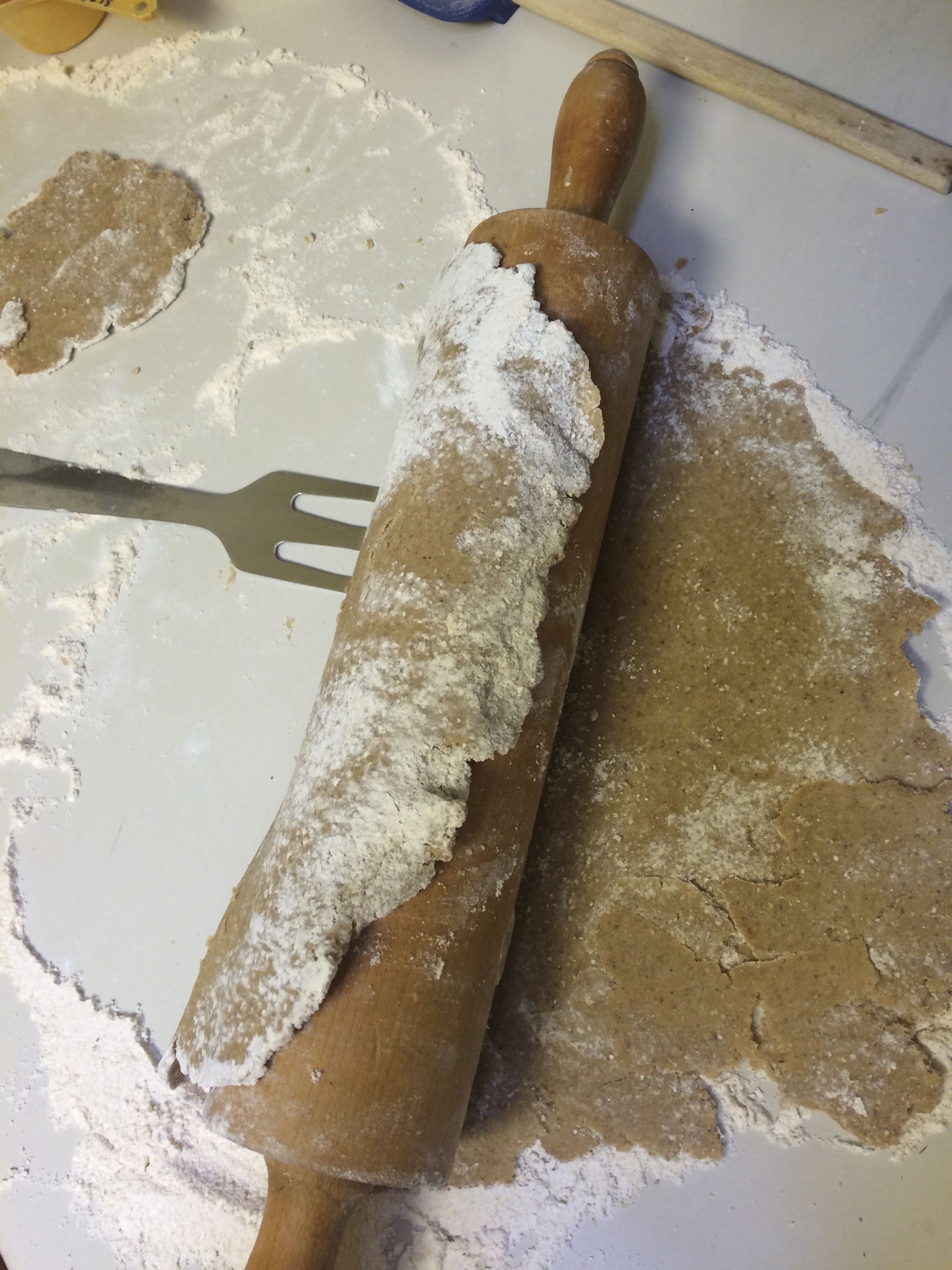
rolling mesquite white Son wheat pie dough

Mesquite meal and white Sonora wheat make a fabulous pie-crust! It is not as elastic as store-bought crusts so be careful in rolling it onto your pie pan. Shown here is a very flat spatula I use as an assist.

Next step, after growing, harvesting, slicing the heirloom fruits, is getting dusted by making my local heirloom Mesquite/White Sonora Wheat Pie Crust (recipe following):

[Kids, don’t try this culinary photographic technique at home.  Your one-handed iPhone will get really sticky.  Mine will never be the same.]


Ingredients for heirloom wheat pie crust:

1 1/2 cups freshly milled whole, organic White Sonora Wheat flour*

1/2 cup freshly milled local velvet mesquite meal**

1 tsp Real-salt or sea salt

2/3 cup shortening (I use organic butter)

5-7 Tbsp ice water

*Organic, fresh-milled white Sonora wheat flour is available for your holiday baking from our Flor de Mayo booth at Sunday St Philips Farmers Market, or by contacting us at info@flordemayoarts.com or  520-907-9471 to order it ahead.                                                                                                                                                                             **Freshly-milled velvet mesquite pod meal (flour) is available via the same Flor de Mayo contacts above.                                                                                                                                                                     Both kinds of heirloom flour are available at a special Heirloom Grains event this coming SATURDAY November 21 at the NativeSeeds/SEARCH store, 3061 N Campbell, Tucson–the public is invited 10am-2pm.

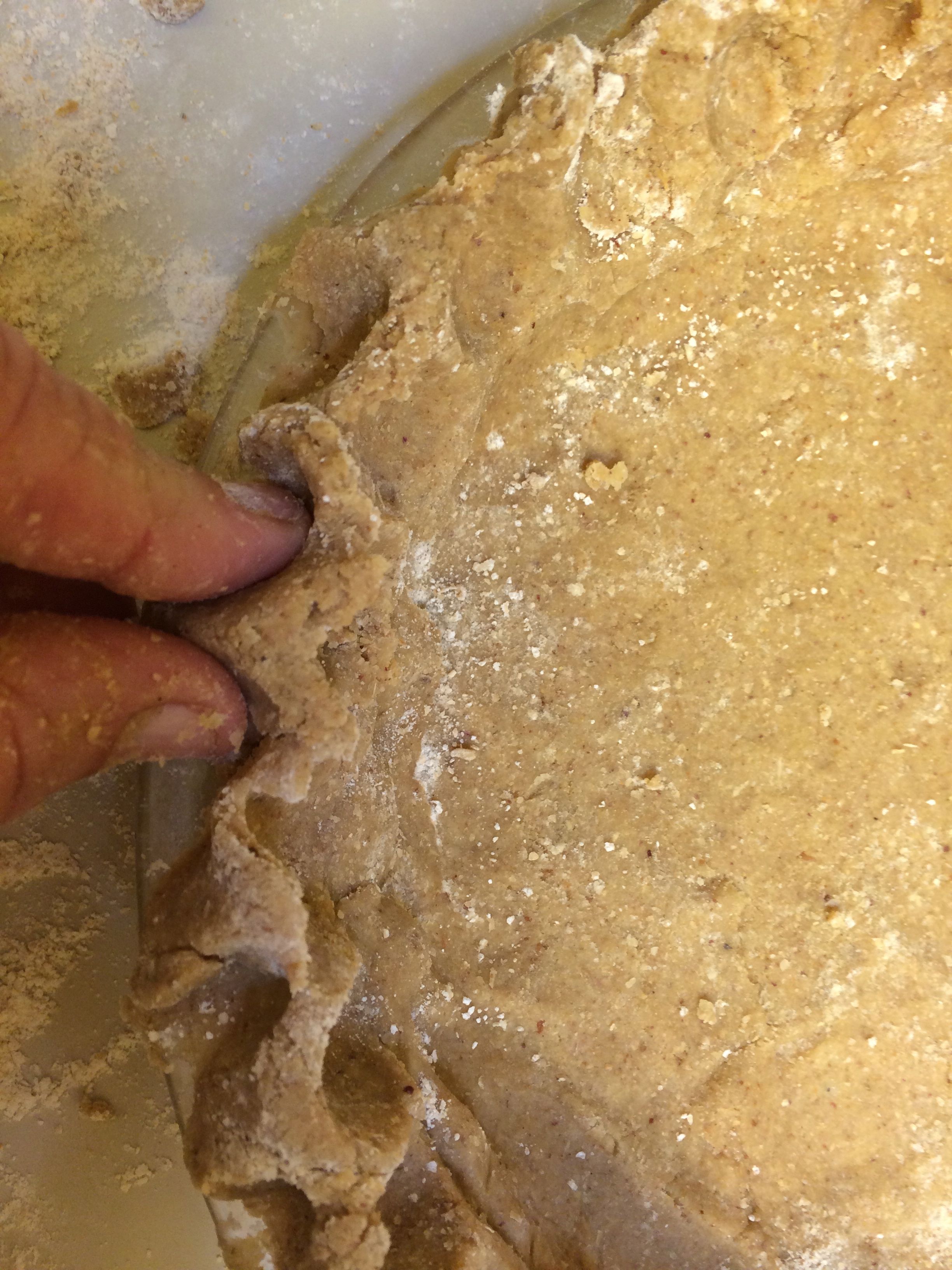
Pinching a tall edge of my mesquite/heirloom wheat pie crust

Pinching a tall scalloped edge of my mesquite/heirloom wheat pie crust–This provides a retaining wall so juicy filling will not overflow while cooking.

Directions for heirloom wheat pie crust (lattice top):

Sift dry ingredients.  Cut in shortening into small pea size lumps.  Sprinkle in tablespoons of ice water gradually, mixing with a fork.  Form 2 balls of dough. Dust each ball with more white Sonoran wheat flour. Flatten each out on a well floured board and roll with rolling pin or bottle.  Use rolling pin as in the illustration, to lift lower pie crust dough onto pie pan.  Press in with fingers.  Keep second ball of dough for working on after pie filling has filled the lower crust. [See recipe for Membrillo/Apple Pie Filling below.]

With second dough ball, roll out as before then cut in 1/2 inch wide strips to lay in basket-weave pattern atop the pie filling to allow filling to lower as it cooks.

Membrillo/Apple Pie Filling ingredients:

(Cook ahead slices and chunks of 4-5 membrillo fruits, washed, then cut with or without skin.  Boil in good drinking water for 20 minutes or until soft.  I am one of those crazies who thinks fruit skins are healthy and full of phytonutrients, so I leave the colorful fruit skins on.)

2 cups sliced membrillo fruit, pre-cooked  (reserve liquid for other gelled salads)

2 cups thinly sliced heirloom apples

1/2 cup organic cane sugar

1/2 cup organic brown sugar

2 Tbsp organic heirloom white Sonora Wheat flour

1/2-1 tsp ground cinnamon

dash sea salt

1-2 Tbsp organic butter

juice of one small heirloom sweet lime       (I got mine from the Friends of Tucson’s Birthplace Mission Garden booth at the Thursday Santa Cruz farmers market at the Mercado San Agustin, West Congress, Tucson)

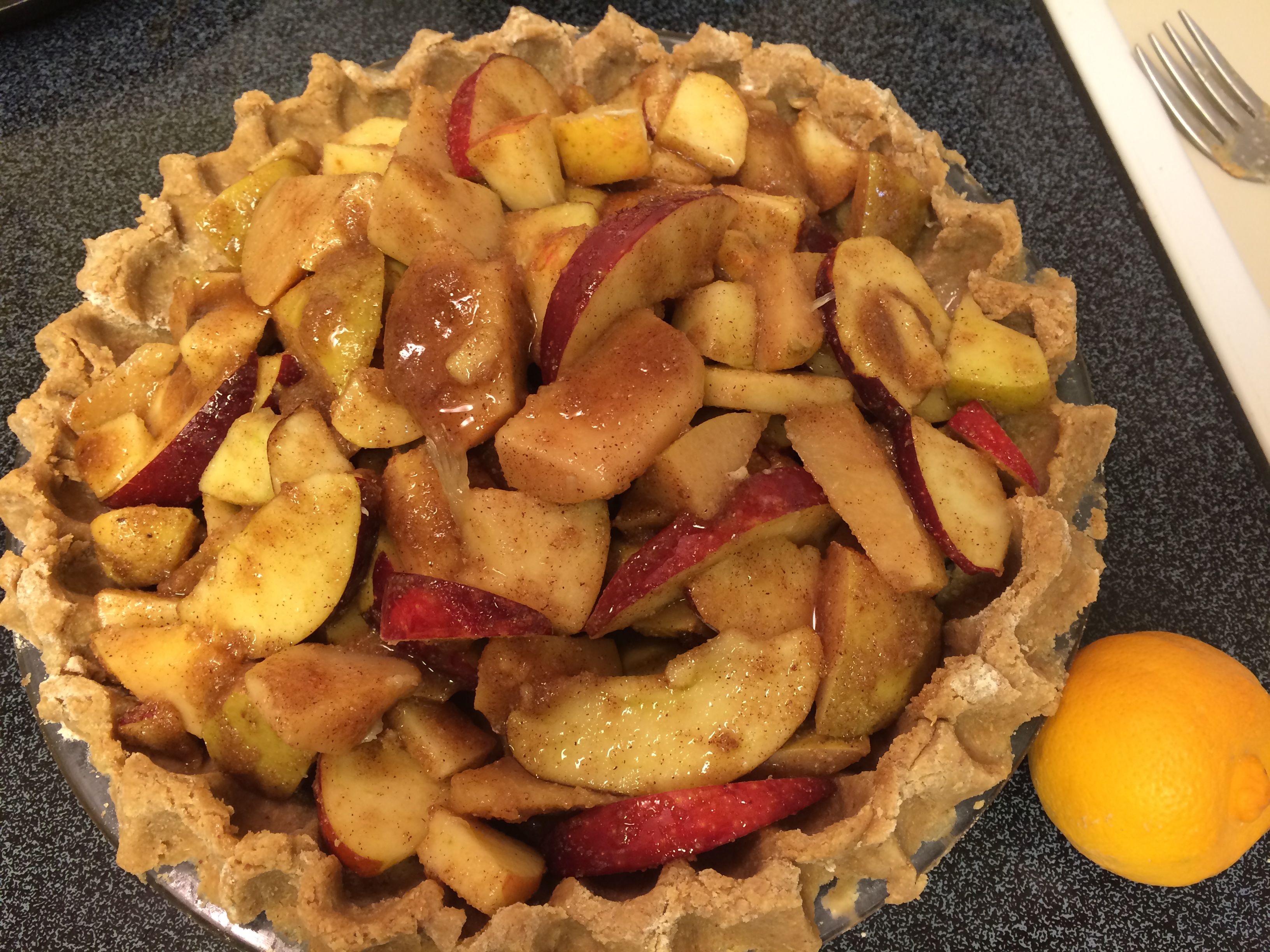
Membrillo/apple pie filling in shell ready to bake

Membrillo/apple pie filling in shell ready to bake. Check out the heirloom sweet lime adjacent–with the dimple–this one from Mission Garden.

Membrillo/Apple Pie-Filling Directions:       Preheat oven to 400 degrees.

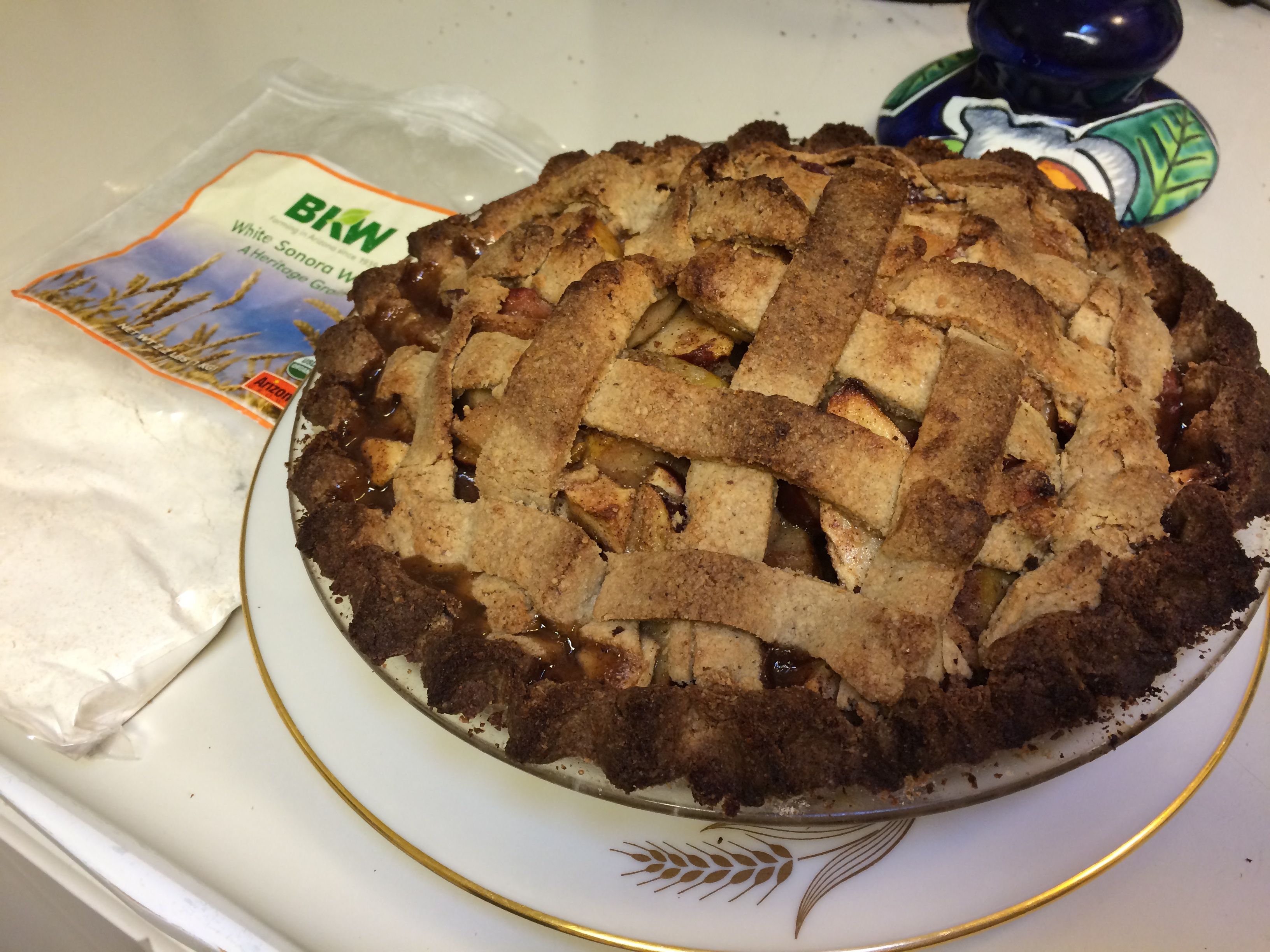
Combine sugars, flour, cinnamon, salt, then mix with the sliced apples.  Fill uncooked pastry crust (shell) with mixture.  Squeeze the sweet lime juice over the filling and place dollups of butter on top.  Place lattice strips of the mesquite/whiteSonorawheat dough across the top of the filling as in picture below.  BAKE for 40-50 minutes or until the crust looks golden brown.  Note:  mesquite meal has natural complex sugars which may caramelize or brown faster than white flour so keep an eye on it after 40 minutes.  The one in my photo got a little too done for my taste, but it will still be fabulous.

Membrillo/heirloom apple pie with mesquite/white Sonora wheat crust--hot and ready to serve

Membrillo/heirloom apple pie with lattice crust of mesquite/white Sonora wheat –hot and ready to serve–To the left in photo is flour milled from BKWFarms wheat-berries.

There will be several ancient grains available at our upcoming Celebration of Heirloom Grains this SATURDAY at the NativeSeeds/SEARCH Store.  Put it on your calendar and dig out your favorite recipes!

Heirloom purple prairie barley available at Flor de Mayo booth,St Philips Farmers Market and at the NSS Grain Event Saturday!

Heirloom purple prairie barley available at Flor de Mayo booth,St Philips Farmers Market and at the NSS Grain Event Saturday!

In addition to our native Mesquite Flour, there will be such fresh lovely grains as organic Hard Red Wheat grown by BKW Farms in Marana which is superb for breads.  Our organic white Sonora wheat is the best for pastries.   Also available will be the ancient Purple Prairie Barley originally from Afghanistan, now from Hayden Mills.

For the knowing baker, milling the whole grain fresh creates a totally different and wondrous effect to breads and pastries because the enzymes and other constituents in the grain remain “lively” for only a few days after milling.  Come enjoy the milling process right before your eyes and feel the vitality of the flour you can take home to bake with!

Our thanks go to the caring padres who first brought the grains to the desert Southwest, to the generations of farmers who continued to grow and save the grain, to NSS for “rediscovering” and conserving them so carefully for the future, and to new farmers like San Xavier Farm Coop, BKWFarmsInc, Ramona Farms, and Hayden Flour Mills for multiplying them for our nutrition, enjoyment, and sustainable desert living!

For more info please call NativeSeeds/SEARCH at 520-622-5561 or Flor de Mayo at 520-907-9471.  See you at the Milling and our Celebration of the Heirloom Grains!!

Magdalena heirloom barley grown at Mission Garden, Tucson

Magdalena heirloom barley grown at Mission Garden, Tucson

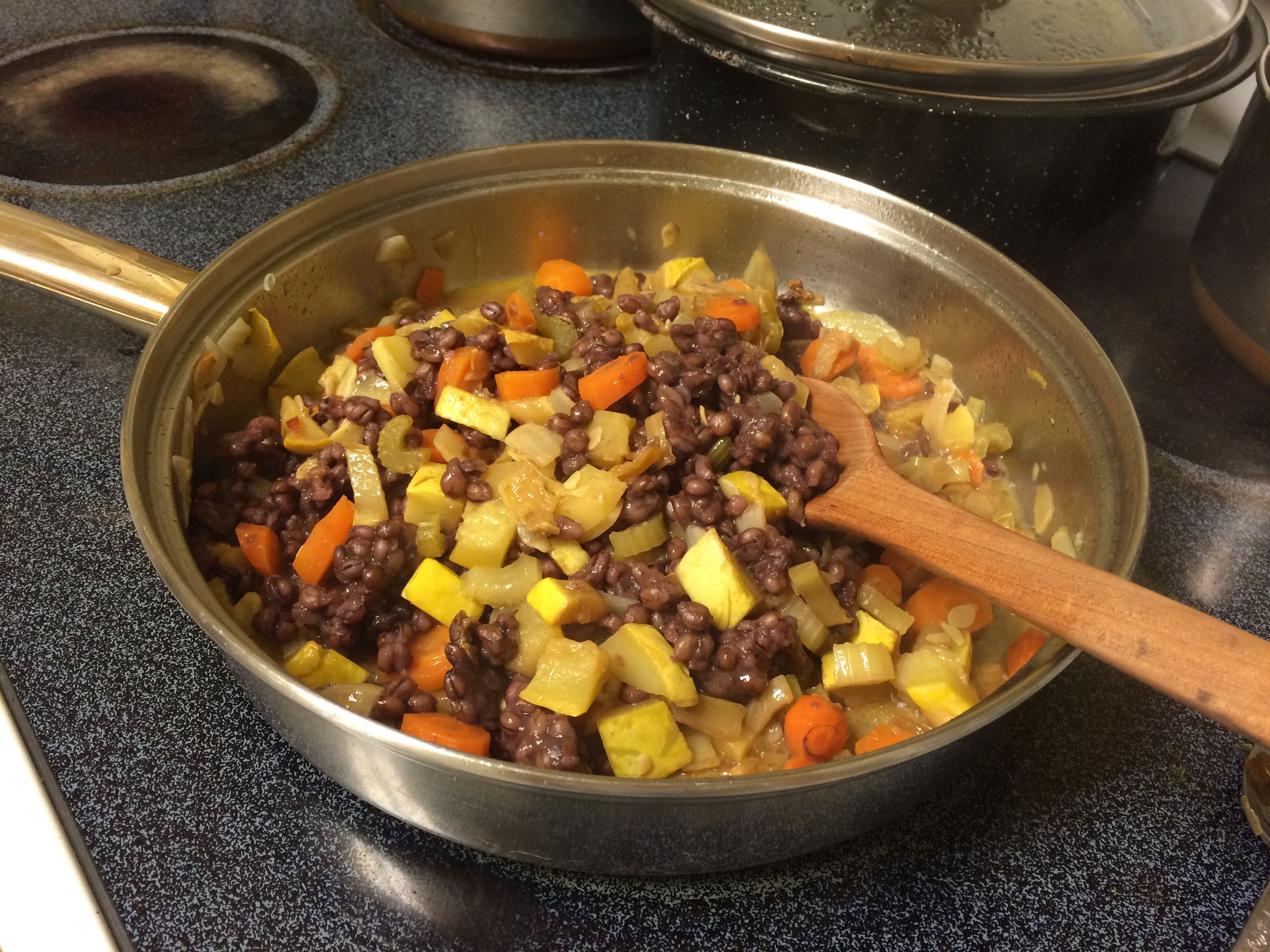
A savory pilaf made with heirloom purple prairie barley--watch for future recipes--Grain available at the Flor de Mayo booth, Sunday St Philips market

A savory pilaf made with heirloom purple prairie barley–watch for future recipes–Whole grain available at the Flor de Mayo booth, Sunday St Philips market, and at Saturday’s Heirloom Grain Celebration

You Say Purslane, I Say Verdolagas

Purslane just sprigs so far due to late rains at my house.

Purslane is  just sprigs so far this year due to late rains at my house.

Here's how it should look once we get some more rain.

Here’s how it should look once we get some more rain.

If you’ve had any decent monsoon rain by now, you may have a vitamin powerhouse coming up in your yard.  Purslane, also called verdolagas, grows in many Southwest backyards in the summer.  It prefers rich, recently turned soils so look for it under your rose bushes or in a flower garden. It has small fleshly leaves about the size of a fingernail, pinkish stems, and grows close to the ground.  I have only a small patch this year where a small rain barrel spilled over. There should be more, but rains have been skimpy in our part of downtown Tucson.

It’s sad but true that right now people are out in their yards pulling these plants out and tossing them in the garbage (or compost for the more enlightened). They should be tossing them in the wok (see recipe below.) Purslane provides six times more vitamin E than spinach and seven times more beta carotene than carrots. It’s also rich in vitamin C, magnesium, riboflavin, potassium and phosphorus. One cup of cooked purslane has 25 milligrams (20 percent of the recommended daily intake) of vitamin C.

Especially important to those of us eating a modern diet, purslane is very high in an essential omega-3 fatty acid called alpha-linolenic acid (ALA). Omega-3s are a class of polyunsaturated essential fatty acids. Your body cannot manufacture essential fatty acids, so you must get them from food. Certain fibers also help in controlling blood sugar.

Sometimes all this talk of nutrition can turn people off  — you might be saying “OK, but what does it taste like?” Delicious, actually. There are lots of ways to use purslane. The mild lemony flavor goes with everything. Purslane can be eaten raw chopped in salads or sautéed . Add it to a stew.   Or toss it in the blender when making a green smoothie and it will add body as well as vitamins.

There’s something else, too. Something beyond just the vitamins that come from eating plants from your own yard. It’s a connection to the land you live on, the seasonal treat that Mother Nature has provided. By eating with the season, you become more than a mere spectator to life’s cycle. You think about these tiny seeds that wait for the rain, then manage to live as the sun beats down with 100-degree fury. And there’s the connection to past generations of people who lived here and ate these plants–a connection that broccoli will never give you.

My friend Roni Rivera-Ashford taught me to put a bowl under the colander and catch the water you use to rinse the purslane. You will find lots of very tiny black seeds in the water.  Botanists tell us that a single purslane plant can produce up to 200,000 seeds. Pour that water with the seeds on a potted plant and you’ll have purslane next year.

Since it’s free and (usually) abundant, why not try some?  Here’s the classic prepartion cooked up in Mexican kitchens every summer.

To prepare the purslane, first chop and sauté  some onion and garlic in a little oil.  When the onion is translucent, add the purslane.

IMG_0880

Next, toss in some chopped fresh tomatoes.

IMG_0881At this point you can eat it, maybe with a little cheese on top. Or to make a heartier meal, saute some small bits of chicken. Now you’ve got a great side dish. Or how about filling for some enchiladas.

Dip the tortilla in chile sauce, add some purslane and roll.

Dip the tortilla in chile sauce, add some purslane and roll.

My favorite is tostadas. Yum!

IMG_0884

_________________________________________

Interested in more ideas for using the wild foods of the Southwest?  Check out my books Cooking the Wild Southwest  where you’ll find recipes for 23 delicious wild plants, and The Prickly Pear Cookbook with lots of recipes for both the prickly pear fruit and pads.   Here’s a little video with ideas for other local wild plants to add novelty and nutrition to your diet.