Desert Harvesters June Events

010Though newcomers to the Sonoran Desert sometimes miss the abundant fruits, berries, mushrooms, and greens of wetter forests, one Tucson organization wants you to know the desert is full of food: You just have to know where to look for it. Desert Harvesters is a nonprofit grassroots group that promotes the harvest of native, wild, and cultivated desert foods and also advocates for the planting of indigenous, food-bearing shade trees (such as the Velvet mesquite) and understory plantings within rainwater harvesting “gardens” in the landscapes where we live, work, and play. Funds raised at these events support the group’s educational efforts in the community, including demonstrations, publications, and tasting events.

The group announces its summer season of harvesting workshops and activities, which aim to help the public learn how to plant, harvest, process, and prepare wild, native, and local food items, including mesquite pods, ironwood & palo verde seeds, and saguaro fruit. Currently the group is raising funds to support the publication of a revised and expanded version of its 2010 cookbook Eat Mesquite! This new cookbook will include recipes for mesquite and other desert foods, as well as information about how to grow, harvest, and prepare native and local foods. Desert Harvesters is also seeking volunteers to help with (and learn from) these and other events.
041

June 18 & 19, 2016

Workshops on Mesquite Pod Tasting, Inspection, and Ticketing and Hammermill Operation for those who want to become Desert Harvesters volunteers or staff, or others wishing to expand their mesquite-related skill sets. Visit http://www.DesertHarvesters.org or email volunteer@DesertHarvesters.org to learn more.


June 23, 2016

DESERT HARVESTERS’ 14th ANNUAL MESQUITE MILLING & WILD FOODS & DRINKS FIESTA Santa Cruz River Farmers’ Market at Mercado San Agustín, 100 S Avenida del Convento, Tucson

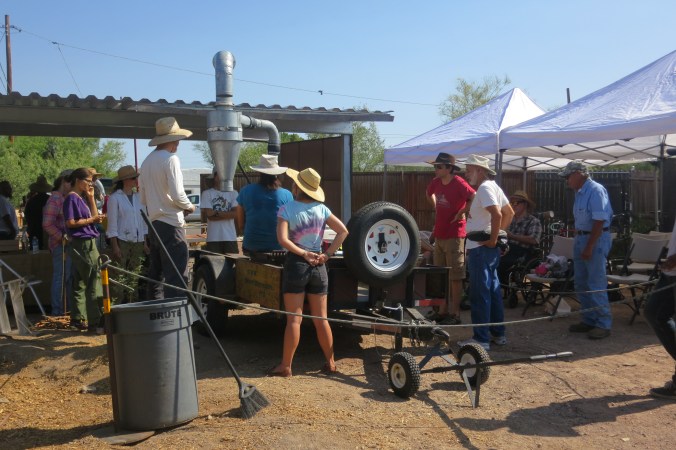
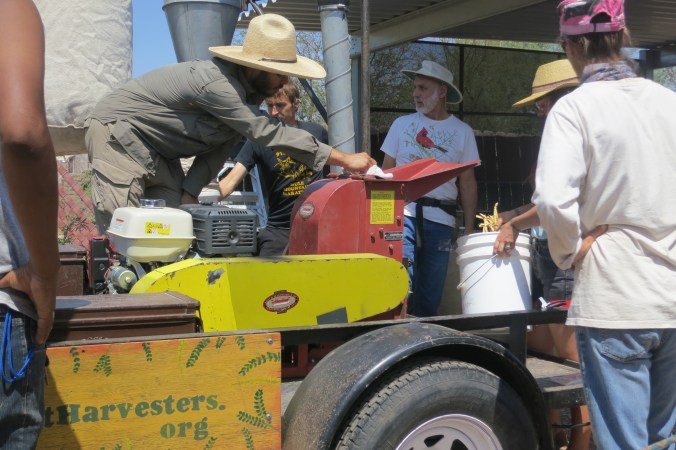
Bring your clean & sorted mesquite pods to be milled with our hammermill (fee applies) and taste an array of wild foods.

Harvesters can have their milled mesquite flour tested for aflatoxins (see below) at our 14th Annual Mesquite Milling on June 23, 2016, in Tucson. The cost per test will be a special subsidized fee of only $5.

We will also be serving craft beers (Smoked Mesquite Apple beer as well as a beer finished with creosote flowers) from Iron John Brewing Co. with proceeds going to Desert Harvesters.


June 24, 2016

Desert Harvesters’ Happy Hour at Tap & Bottle

403 N 6th Ave #135, Tucson

5–8 pm

Enjoy great regional brews, some infused with locally sourced native wild ingredients. A percentage of all happy-hour sales goes to Desert Harvesters! A local food truck will also be on site with delicious offerings including native wild ingredients.
IMG_2000

BE IN SYNC WITH THE SONORAN DESERT’S NATURAL PATTERNS

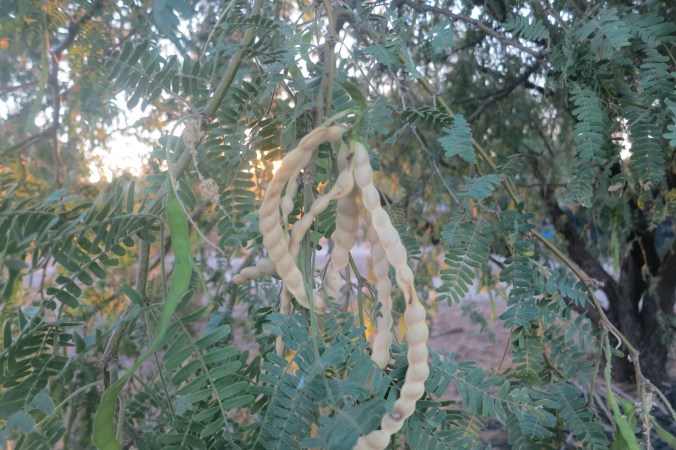
To encourage harvesting before the monsoons, and to be more in sync with the Sonoran Desert ecology’s natural patterns, Desert Harvesters has shifted its annual harvesting and milling trainings, along with its mesquite millings and fiesta, to the month of June—BEFORE the summer rains. This is also when our native bean trees (mesquite, desert ironwood, palo verde) are ready to harvest (they produce before the rains so their seed is on the ground ready to germinate when the rains arrive). Regularly check our Calendar of Events for more such event info.


FOOD SAFETY: Aflatoxin and how to avoid it

Aflatoxin is a toxic natural compound produced by certain molds; it can cause liver damage and cancer. Aflatoxin is found in many common foods, but only in small quantities is considered safe (U.S. ≤ 20 parts per billion (ppb), Europe ≤ 2 ppb). We at Desert Harvesters are specifically concerned with the invisible mold (Aspergillus flavus) that can produce aflatoxin B1 on mesquite pods, as well as on other food crops (legumes, corn, etc) that have been exposed to moisture.

HARVEST MESQUITE PODS BEFORE THE RAINS (at higher elevations, harvesting in dry autumn weather may be an option)

Desert Harvesters is now recommending that, as much as possible, harvesters collect mesquite pods BEFORE the monsoon rains. (This can be more difficult at higher altitudes due to later ripening. In these areas the best practice may be to only harvest in dry autumn weather.) The reason for pre-rain/dry-season harvesting is to reduce the pods’ exposure to moisture, and thus the risk of the development of an invisible mold (Aspergillus flavus) and the aflatoxin it can produce. Aflatoxin poisoning can have serious health consequences over the long term, so we want to harvest in a SAFE manner. To further avoid moisture issues with the pods we recommend you do NOT rinse or wash pods.

In the small number of batches of mesquite flour we have tested thus far…ALL mesquite pods we tested which were harvested BEFORE the rains have tested SAFE.

In other words, NO mesquite pods harvested BEFORE the rains had results with unsafe levels of aflatoxin. The U.S.-designated safe limit of aflatoxin is 20 parts per billion (ppb), so safe test results will be 20 or fewer ppb.

However, all test batches of mesquite pods that DID have results with unsafe levels of aflatoxin were harvested AFTER the onset of the rains. Again, in the U.S., safe aflatoxin levels of 20 or fewer parts per billion (ppb) are considered safe. However, many other batches harvested AFTER the onset of the rains tested SAFE.


We hope to continue to share more studies and best harvesting practices.


What to do with mesquite flour?

Sonoran Cookies

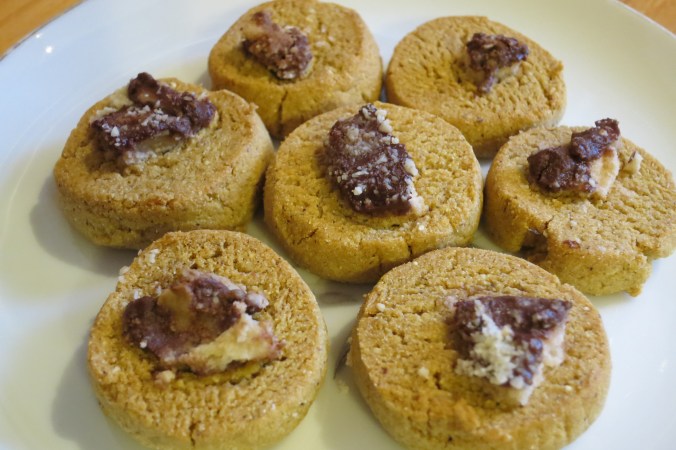
Here’s a truly classic recipe from the first EAT Mesquite! Cookbook.We’ve made hundreds of these cookies. The author of the original recipe is unknown. The ones in the photo below are topped with mesquite toffee.
mesq cookies toffee

.25 lb (one stick) butter

1 cup sugar (can be reduced to .75 cup sugar, plus .25 cup mesquite)

1 egg

2 teaspoon vanilla (or local lemon extract)

2 cup corn tortilla meal (or whole wheat flour)

1 cup mesquite meal

2 teaspoons baking powder

2 teaspoons baking soda

.5 cup pecans, finely chopped (optional)

Cream softened butter.  Mix in sugar, egg and extract.  Sift dry ingredients and add to the first mixture.  Add nuts (optional) and beat until smooth.  Roll dough into 2 inch balls and press onto ungreased cookie sheet.  Or, roll dough into thin logs, wrap in waxed paper, and refrigerate or freeze.  Slice cold logs into rounds and place on cookie sheet.  (Doubled cookie sheets or Airbake prevent bottoms from browning too fast.)  Place in preheated 375 F oven and bake 12 minutes or until golden.  Cool on racks until crisp, or eat warm and soft.  Makes up to 200 tiny (.75 inch) cookies.


Oh Yum! Tasty Mesquite Meal Enhances Pie Crust and Waffles

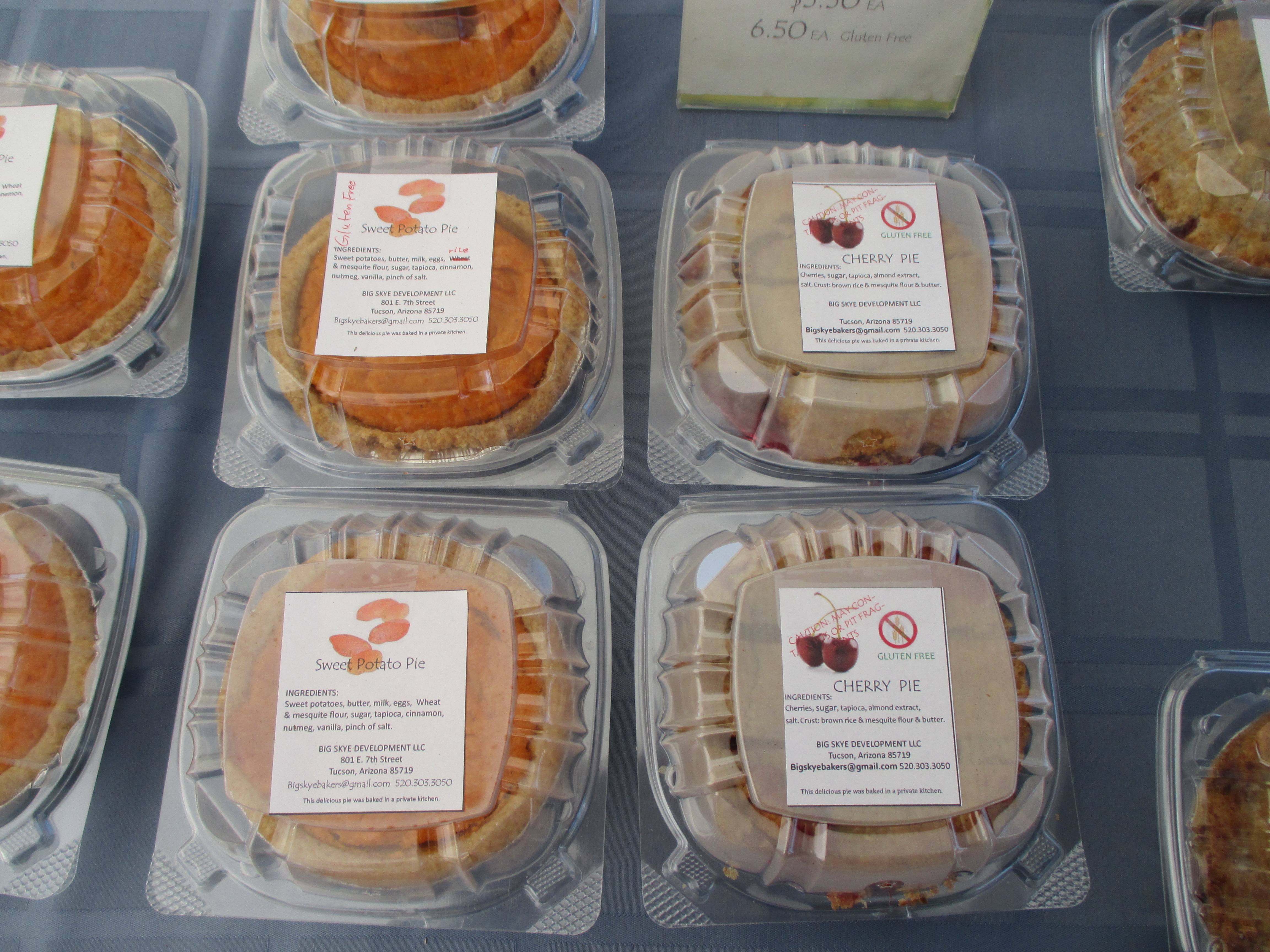
Bodie Robins offers a selection of delicious gluten-free baked goods at farmers markets in Tucson and Sierra Vista.

Bodie Robins offers a selection of delicious gluten-free baked goods at farmers markets in Tucson and Sierra Vista.

For thousands of years, mesquite pods were the primary food of people who lived on the Sonoran Desert. It’s Carolyn here today recalling that when I first started researching and experimenting with mesquite in 1972, hardly anybody was eating this sweet nutritious food. Although a few Tohono O’odham kept up with the old ways, it was on the verge of being forgotten.

Until recently,  it wasn’t easy to process mesquite pods. Early Native women made mesquite meal by pounding the pods in bedrock mortars. By the 1970s it hadn’t gotten much easier. But fortunately for all of us someone (I recall it was at the Desert Museum) figured that the pods could be crushed and sifted by a hammermill, a common piece of farm equipment. After some years, Desert Harvesters took up the challenge and offered to grind the pods of all comers for a modest fee. Getting a beautiful, smooth tasty flour was now easy. And the world of mesquite baking opened up.

Mesquite crust adds extra deliciousness to Big Skye's fruit pies.

Mesquite crust adds extra deliciousness to Big Skye’s sweet potato and fruit pies.

Bodie Robins of Big Skye Bakers is one of the folks who have brought mesquite baking into the twenty-first century selling mesquite baked goods at farmers’ markets in Tucson and Sierra Vista.

Bodie, an architectural designer, began baking with mesquite as therapy in 2008 when construction took a dive with the recession. His first experiment produced some dog biscuits that he shared with his neighbors. He decided there might be a future in mesquite baking when his neighbors admitted they were eating the dog biscuits themselves. With salsa!

Bodie took his product to a farmers’ market. But it turns out not enough people were willing to pay for high-end mesquite dog biscuits (many dogs are willing to just chew the pods, unbaked), so he began to experiment with other baked goods, trying various combinations of flours until he produced a version he liked.

Today he sells pies with mesquite crust, cookies, and cupcakes. Many of his customers are attracted by the gluten-free nature of Bodie’s mesquite pie crust. One very grateful middle-aged customer was thrilled to find a pie crust he could eat and told Bodie he hadn’t been able to eat pie since he was 15 years old.

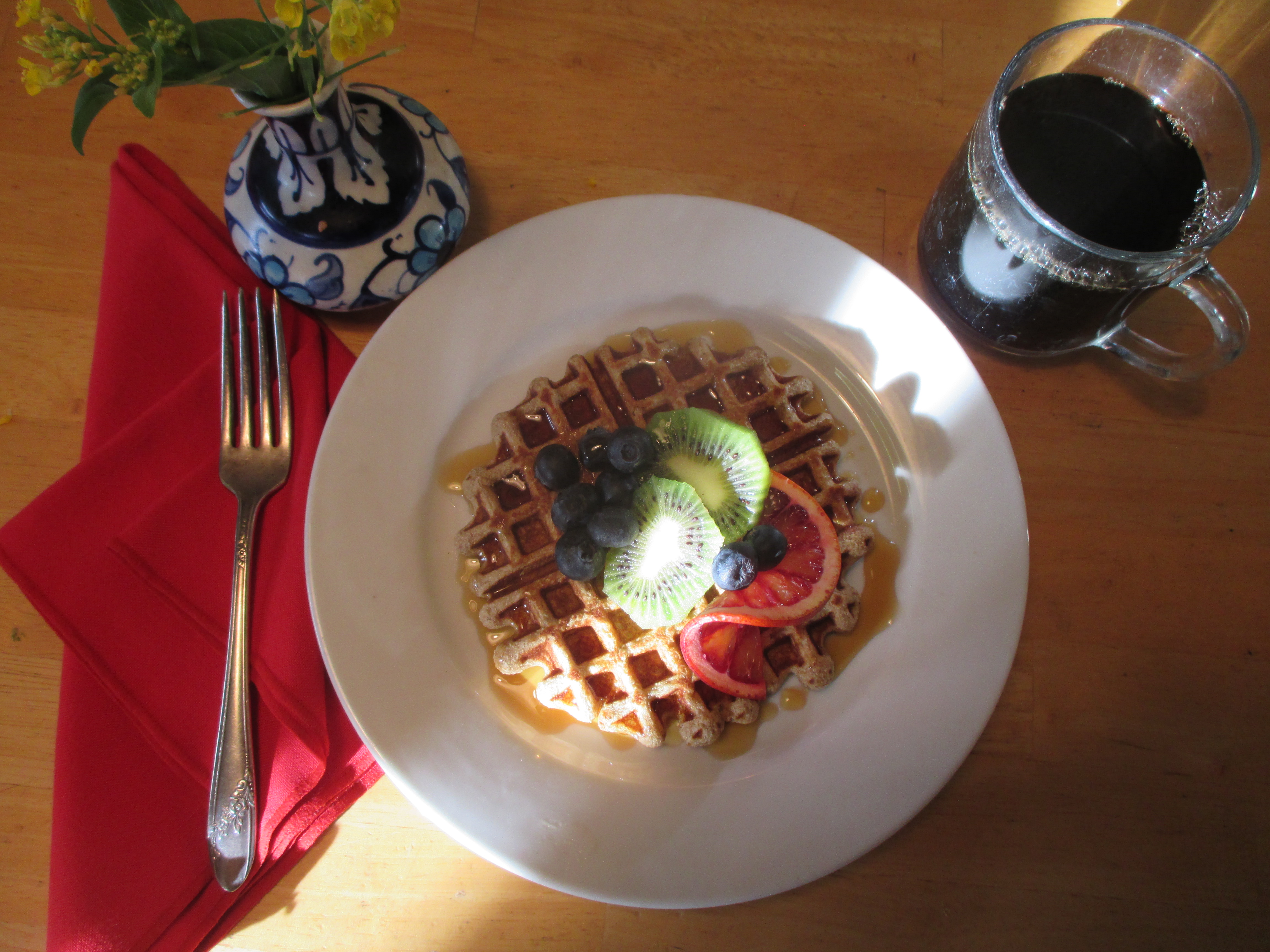
Bodie entices his customers with a little table setting at his farmers market booth. Personally, I'm ready to dig right in.

Bodie entices his customers with a little table setting at his farmers market booth. Personally, I’m ready to dig right in.

A perfect loaf of gluten-free bread eluded Bodie until recently when extensive experimenting has finally led to a mixture of mesquite meal, brown rice flour, tapioca and sweet potato flour that turns out a delicious loaf.

“My customers are particular about the foods they buy and eat,” he says .  “They like to learn about mesquite. There’s a romance to it – an arts and crafts movement about food. I get everything from savvy young college kids to the elderly.”

Bodie gathers the mesquite pods he uses himself and has them ground at the Baja Arizona mill at the Sierra Vista farmers’ market. He goes through up to 200 pounds a year and if he runs out, he can grind a few pounds in his Vitamix. He produces his goods in his home kitchen under the home baker cottage industry law.

You can find Bodie and his Big Skye specialty baked goods at the Rillito Farmers’ Market in Tucson on Sunday mornings from 9 a.m. to 1 p.m. and at the Sierra Vista Farmers’ Market on Thursdays from 10 a.m. to 2 p.m

Here’s a delicious recipe for waffles that Bodie developed. This recipe includes wheat flour, but if you are gluten sensitive, experiment with some other flours to find a mixture that works for you.

Mesquite waffles make a delicious breakfast or lunch.

Mesquite-Pecan waffles make a delicious breakfast or lunch.

Cinnamon-Pecan Mesquite Waffles

Ingredients

2 eggs separated

2 1/2 cups milk

¼ cup olive oil

1 cup all-purpose flour

½ cup whole-wheat flour

½ cup mesquite meal

1 cup finely chopped pecans

1 tablespoon cinnamon

1 tablespoon baking powder

½ teaspoon salt

1 tablespoon sugar

Directions

  1. Lightly oil and pre heat waffle iron.
  2. Separate eggs reserving the whites in a bowl and set aside. In another bowl mix egg yolks, milk and oil.
  3. Mix all dry ingredients together
  4. Add liquids to dry ingredients. Gently mix until smooth.
  5. Beat the egg whites until stiff.
  6. Fold in the egg whites to the waffle mix.
  7. Place 1/2 cup of batter onto hot waffle iron. Close lid. Bake until golden Repeat with remaining batter.

________________________________________________________________

Want more mesquite recipies? Check out my cookbook Cooking the Wild Southwest, Delicious Recipes for Desert Plants. You can buy it at the Native Seeds/SEARCH Store at 3061 North Campbell Avenue, in Tucson, or order it off the NSS website or from Barnes&Noble. If you need mesquite flour, buy it from Martha Burgess’s Flor de Mayo stand at the St. Phillip’s Farmers’ Market in Tucson on Sundays or order it here.


Farmers’ Market Sources for Warming Body and Soul, Baking and Gifting

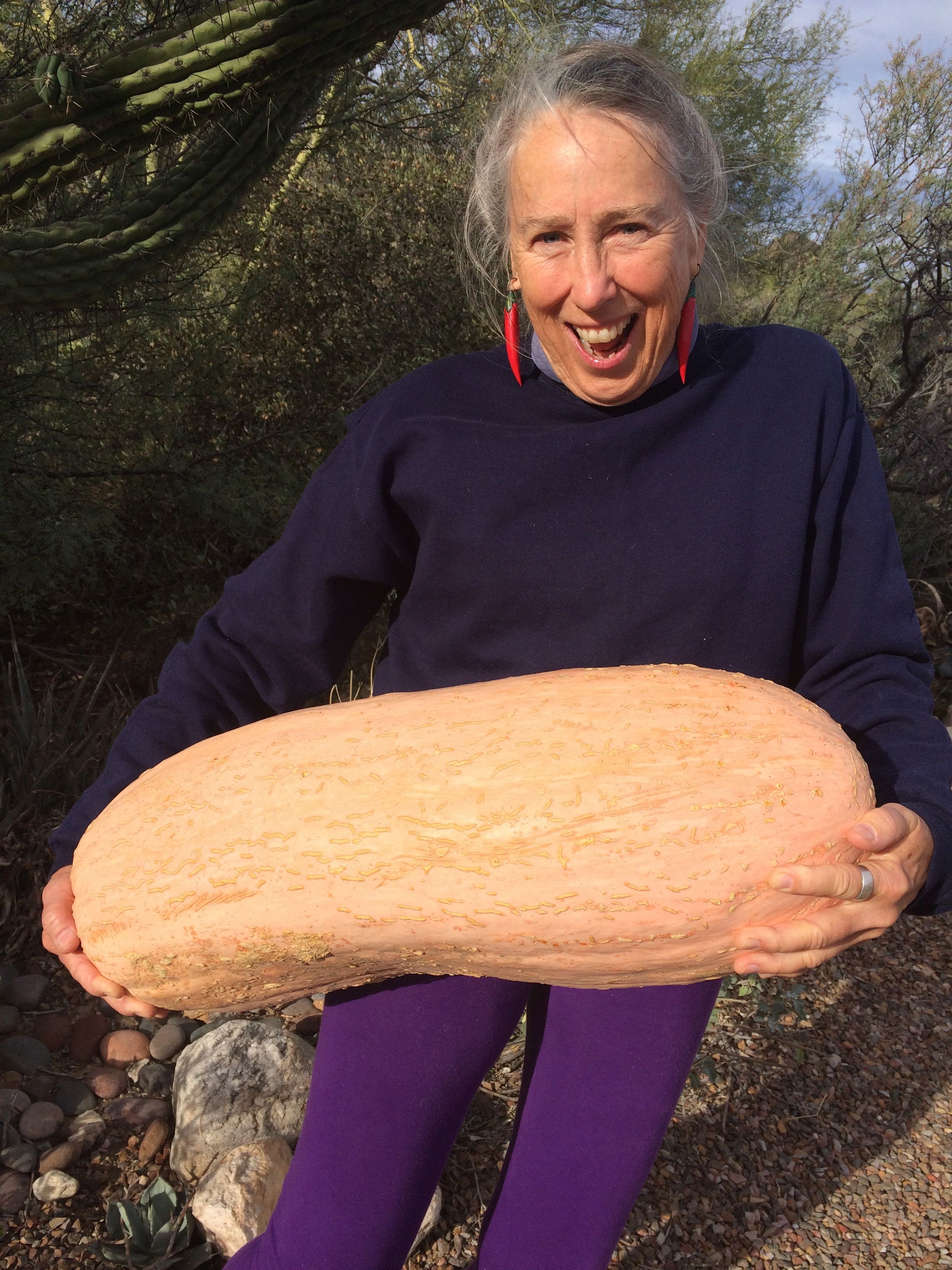
Autumn harvest from the NativeSeeds/ SEARCH Conservation Farm in Patagonia, AZ-heirloom Navajo banana squash

Autumn harvest from the NativeSeeds/ SEARCH Conservation Farm in Patagonia, AZ–heirloom Navajo banana squash (MABurgess photo)

What makes Tucson an International City of Gastronomy?  It is not only that we are blessed with amazingly creative chefs–like the ones showcased at the Mission Garden Picnic feast.  It’s also the availability of rare and wonderful heirloom foods that are adapted to our particular Baja Arizona climate, soil, and cultures!  Few other places have the flavorful and nutritious diversity of crops that have been part of our Baja Arizona agricultural landscape for about 4000 years. 

Tia Marta here to share ideas for finding the raw materials for some great slow-food feasting this Winter Solstice season.

OPEN NSS NAVAJO BANANA SQUASH FOR AN EXPLOSION OF BETA-CAROTENES!

OPEN NSS NAVAJO BANANA SQUASH FOR AN EXPLOSION OF BETA-CAROTENES!

Ignored, more than maligned, by present-day dominant cultures, the squash is a gift to menu-inventors.  It can be prepared as a savory dish with good old salt/pepper/butter, or fancied up with moles.  Or it can be made into fabulous desserts.  Use it in place of sweet potato for a genteel variation.  My favorite is to make it into a festive “Kentucky Pudding”.

Muff’s “Kentucky Pudding” Dessert Recipe

4 cups steamed or baked heirloom Navajo banana squash (or other heirloom) mashed or pureed

2-4 Tbsp mesquite honey or agave nectar (to taste)

2-3 Tbsp chopped crystallized ginger root (I found it at Trader Joe’s)

1/2 cup chopped walnuts or pecans or pine nuts

1/4 cup good bourbon whiskey

Steam or bake squash ahead.  (You can freeze it for using later in a variety of recipes–it’s so convenient!0  In a saucepan, heat mashed squash on medium.  Add honey, ginger, nutmeats.  When hot and steamy, stir in the bourbon quickly and serve with a flair.  You could even try flambé. Serves 4-6.

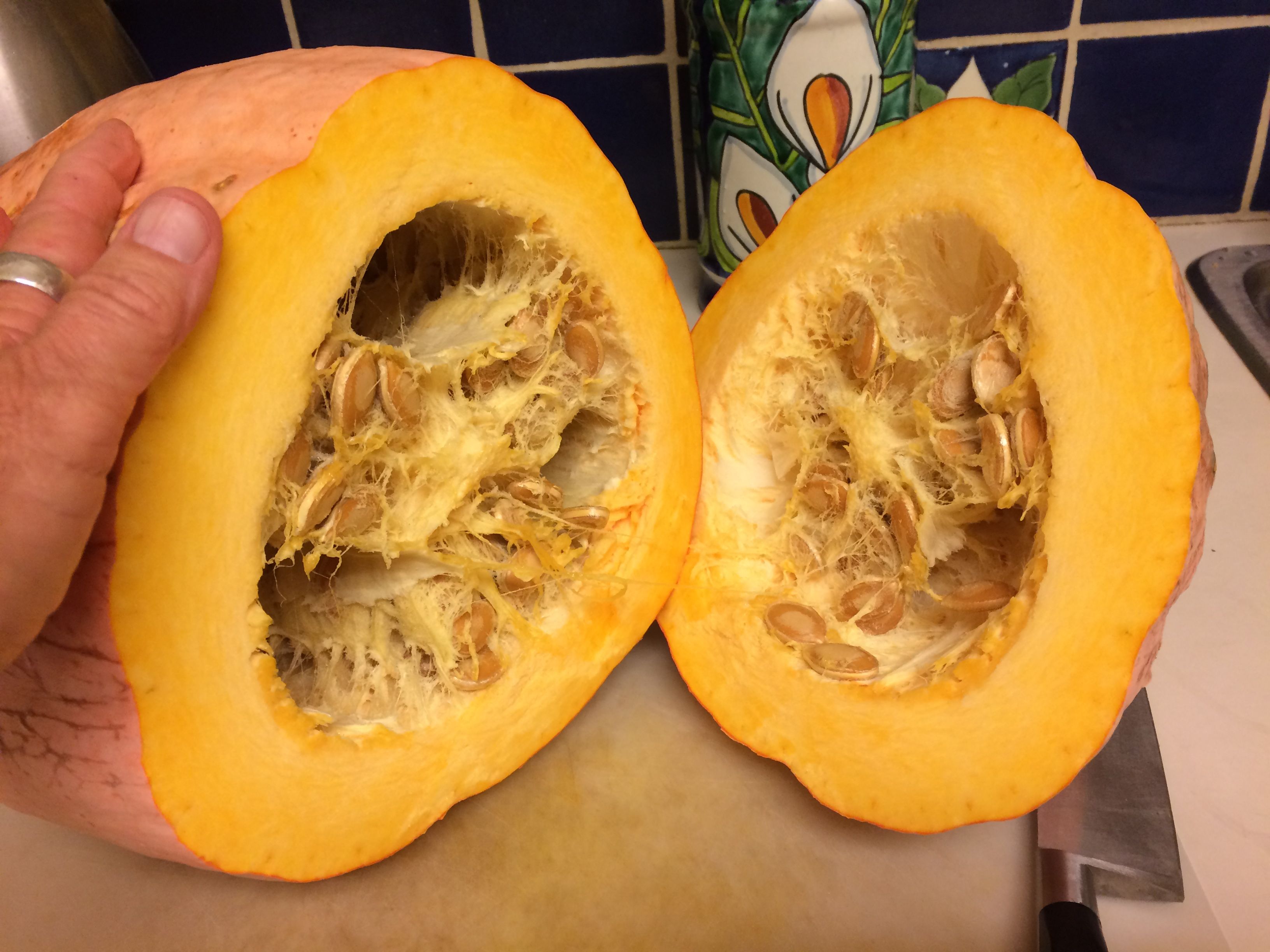
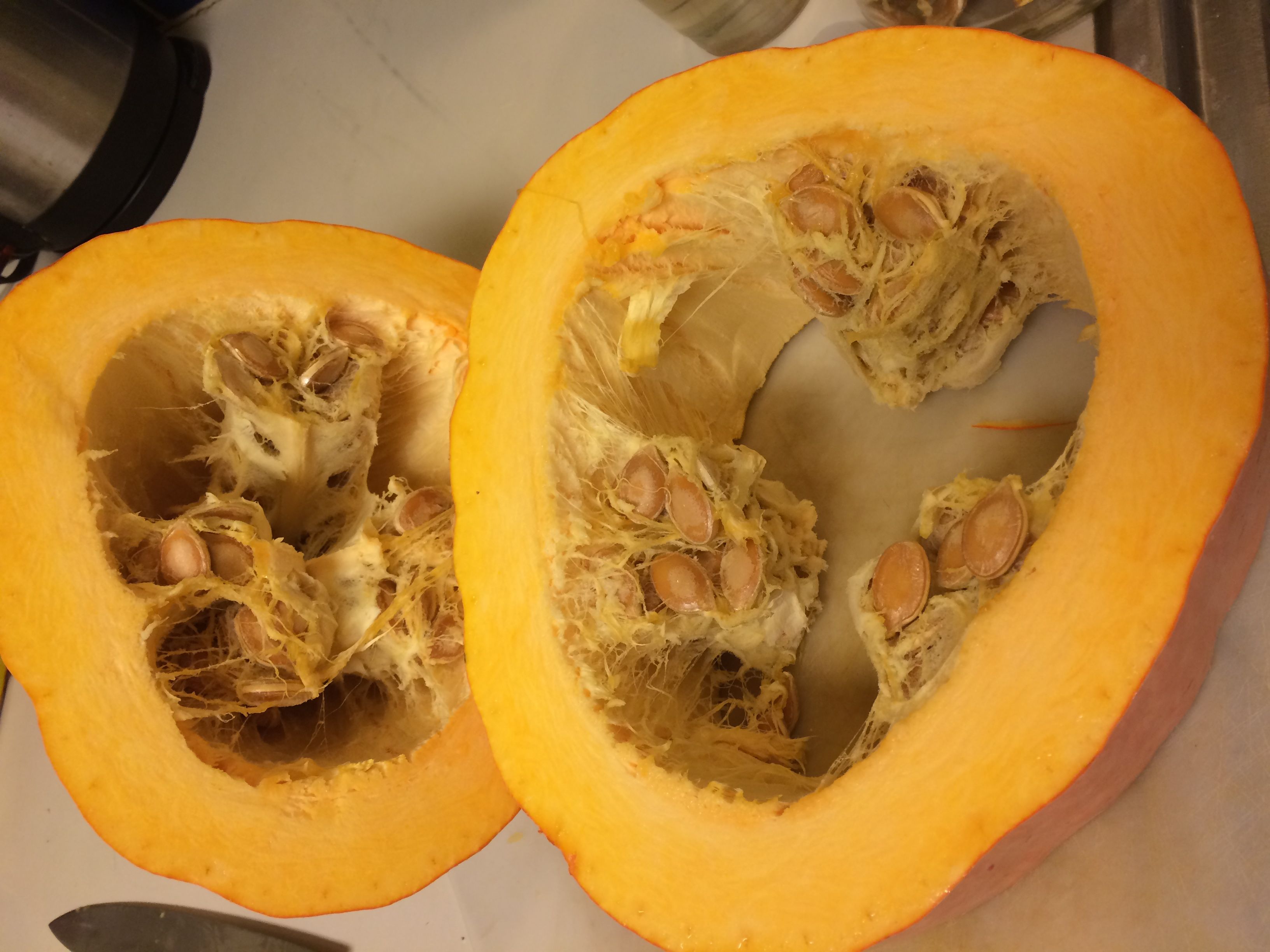
Navajo banana squash showing its interesting pattern of seeds inside

Navajo banana squash showing its interesting pattern of seeds inside

These luscious heirloom squashes, grown at NativeSeeds/SEARCH’s Seed Conservation Farm in Patagonia, are available now at our Flor de Mayo booth at Sunday’s St Philips Farmers’ Market.  Come see the size of them–one of them could feed the whole extended family or a small tribe!  We will be selling them by the smaller family-sized chunk as well.  Start salivating…  If you are seeking Vitamin A in glorious beta-carotenes, this is the food to find.

And don’t forget those giant seeds inside!  They can be roasted easily with a little olive oil and sea salt and voila you have a healthy snack full of zinc to ward off colds in this chilly season.  You can save a handful of those seeds to plant next summer in your garden and keep the gift growing.

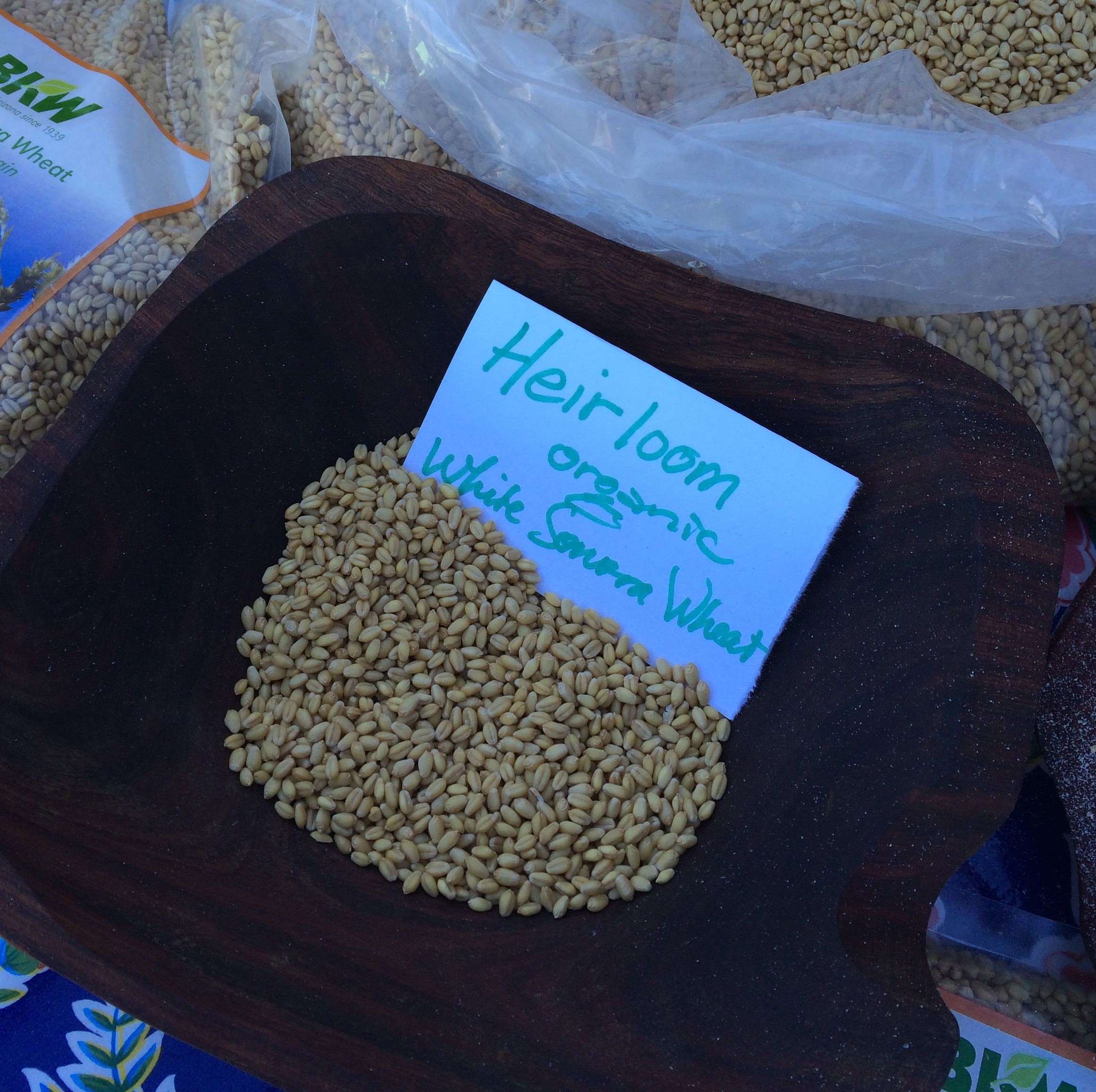
Heirloom organic locally grown White Sonora Wheat-berries

Heirloom organic locally grown White Sonora Wheat-berries

And here are some ideas about baking with local heirloom grains….  Get out your VitaMix or your hand-mill and get ready for a real treat–home-baked goodies made with fresh-milled flour from whole heirloom grains.  Find these precious ancient grains at the NativeSeeds/SEARCH Store (3061 N Campbell near Prep and Pastry) and at the Flor de Mayo booth–Sunday St Philips Food-In-Root Market.

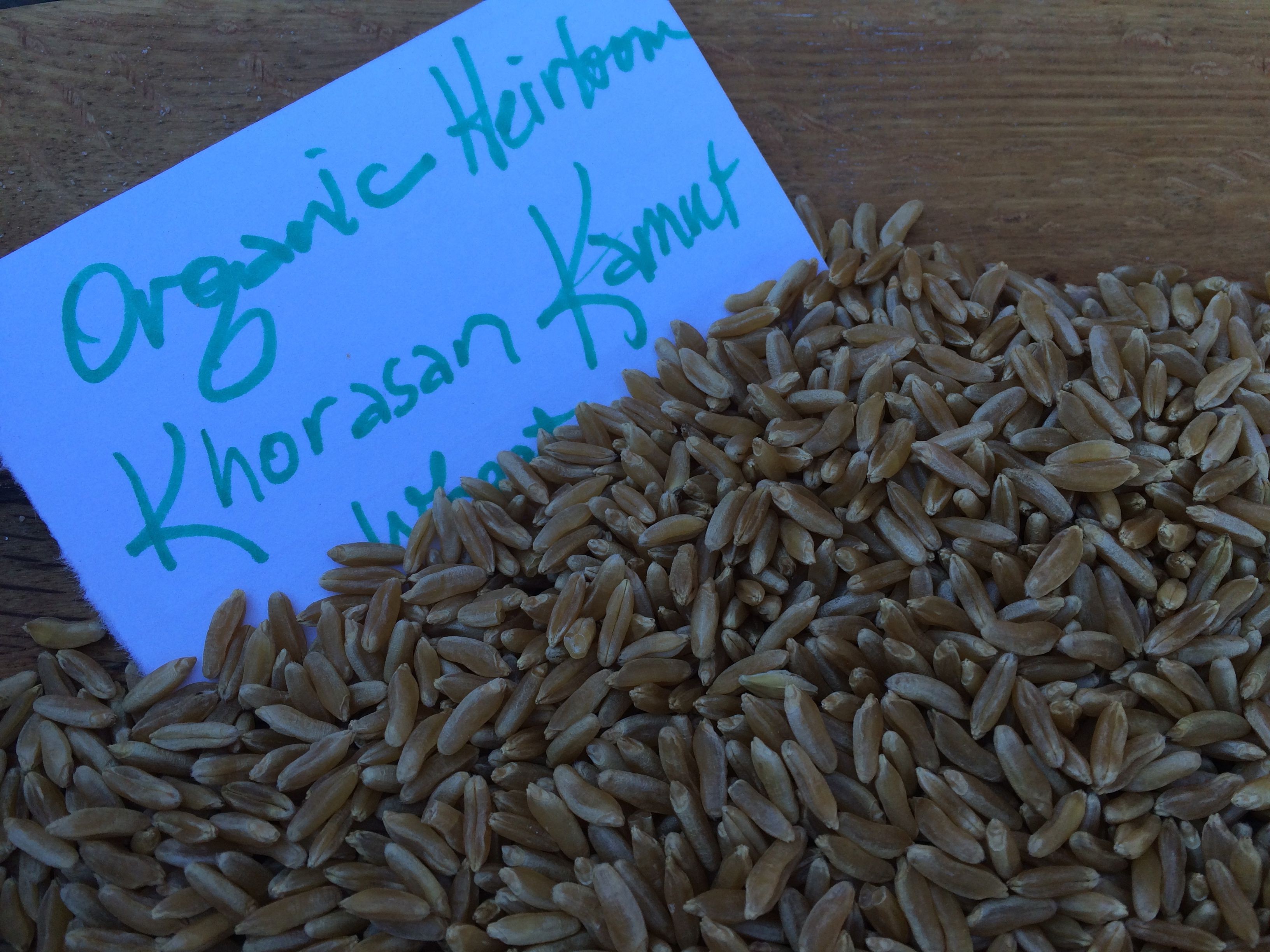
Organic Khorasan Kamut wheat--great for bread baking

Organic Khorasan Kamut wheat–great for bread baking

If you don’t want to take the time, or if you don’t have milling equipment, no problem!  Just come by our Flor de Mayo farmers market booth and see your special grain being fresh-milled before your very eyes.  It is especially neat for kids to see where flour comes from.  Surprisingly, many an adult has difficulty making the connection with grain and flour.  The beauty and significance of keeping the grain whole until milling is that the grain is ALIVE!  When used fresh-milled within a few days of milling, the beneficial enzymes–the “life force” in the whole kernel–are still active in the flour.  And the taste of freshly-milled flour is a whole new flavor-ballgame.

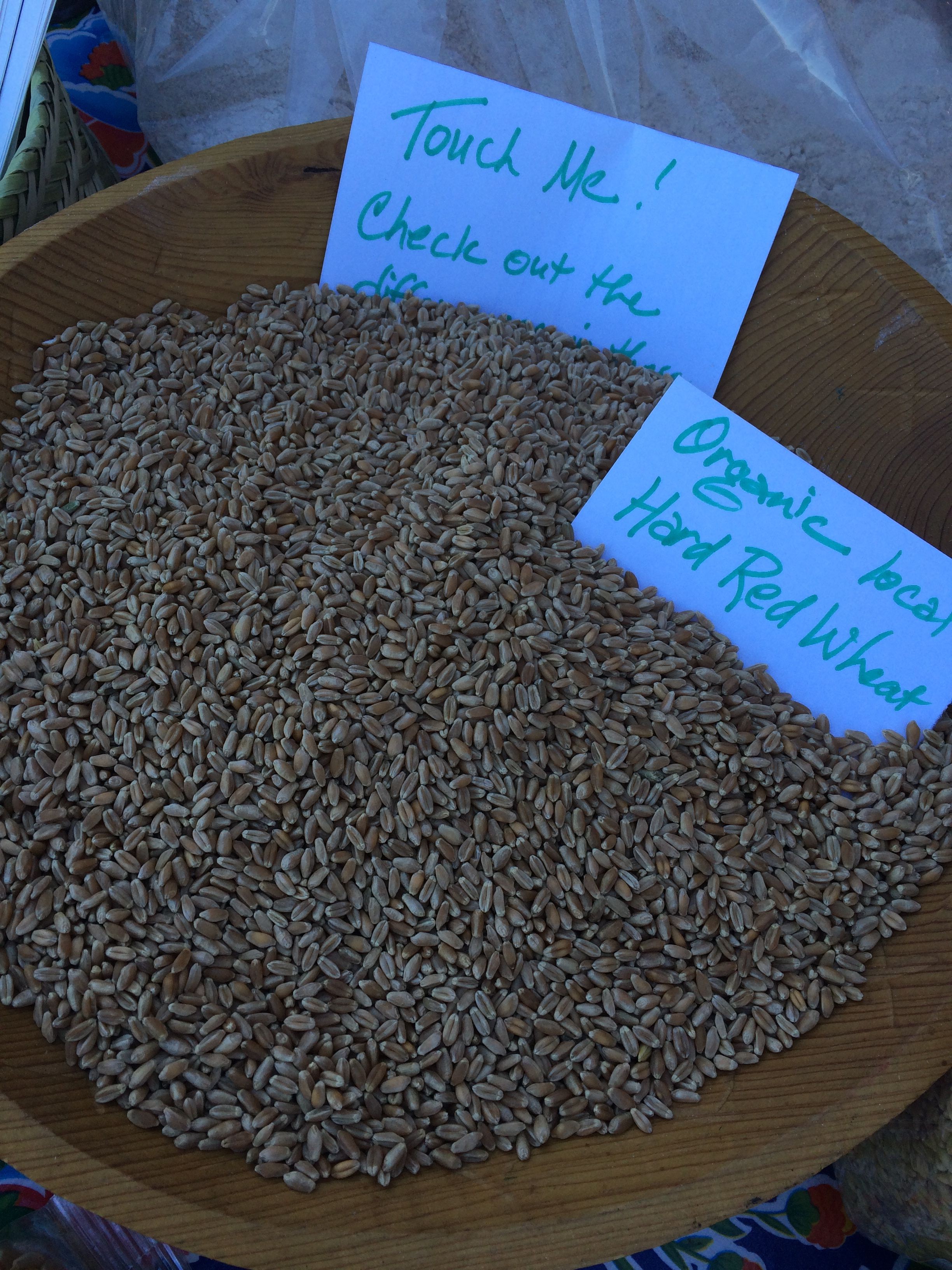
Organic hard red wheat--perfect for Christmas cookies and cakes

Organic hard red wheat–perfect for Christmas cookies and cakes

Come actually touch our good organic grains!   Feel their liveliness.  We have recipe ideas to share, like our Baja Arizona White Sonora Wheat flour and Mesquite pie crust.  In addition we can recommend lots delicious whole wheat-berry recipes for Padre Kino’s white Sonora wheat grown locally by BKWFarms or the Pima club wheat grown by San Xavier Farm Coop and Ramona Farms.

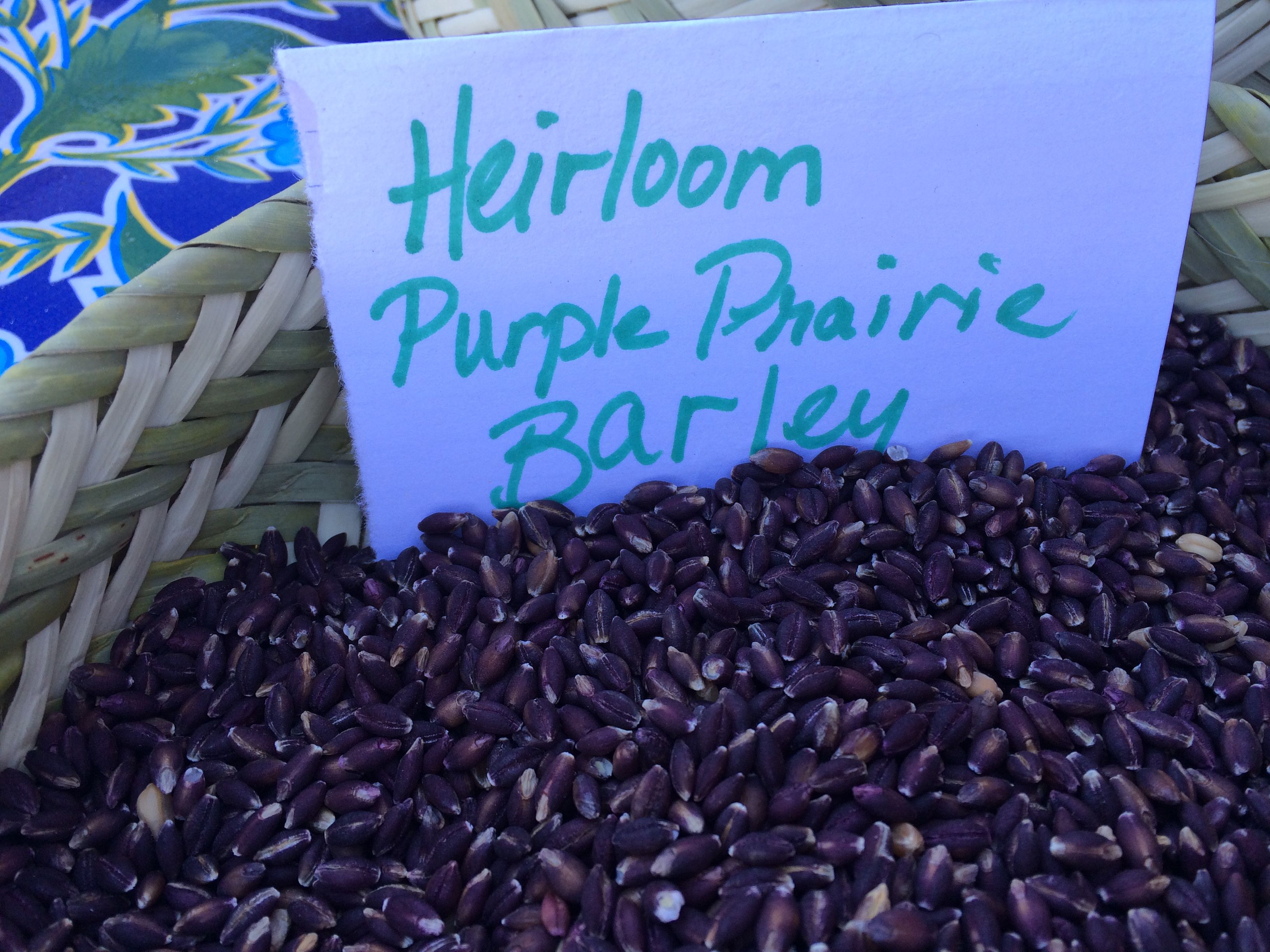
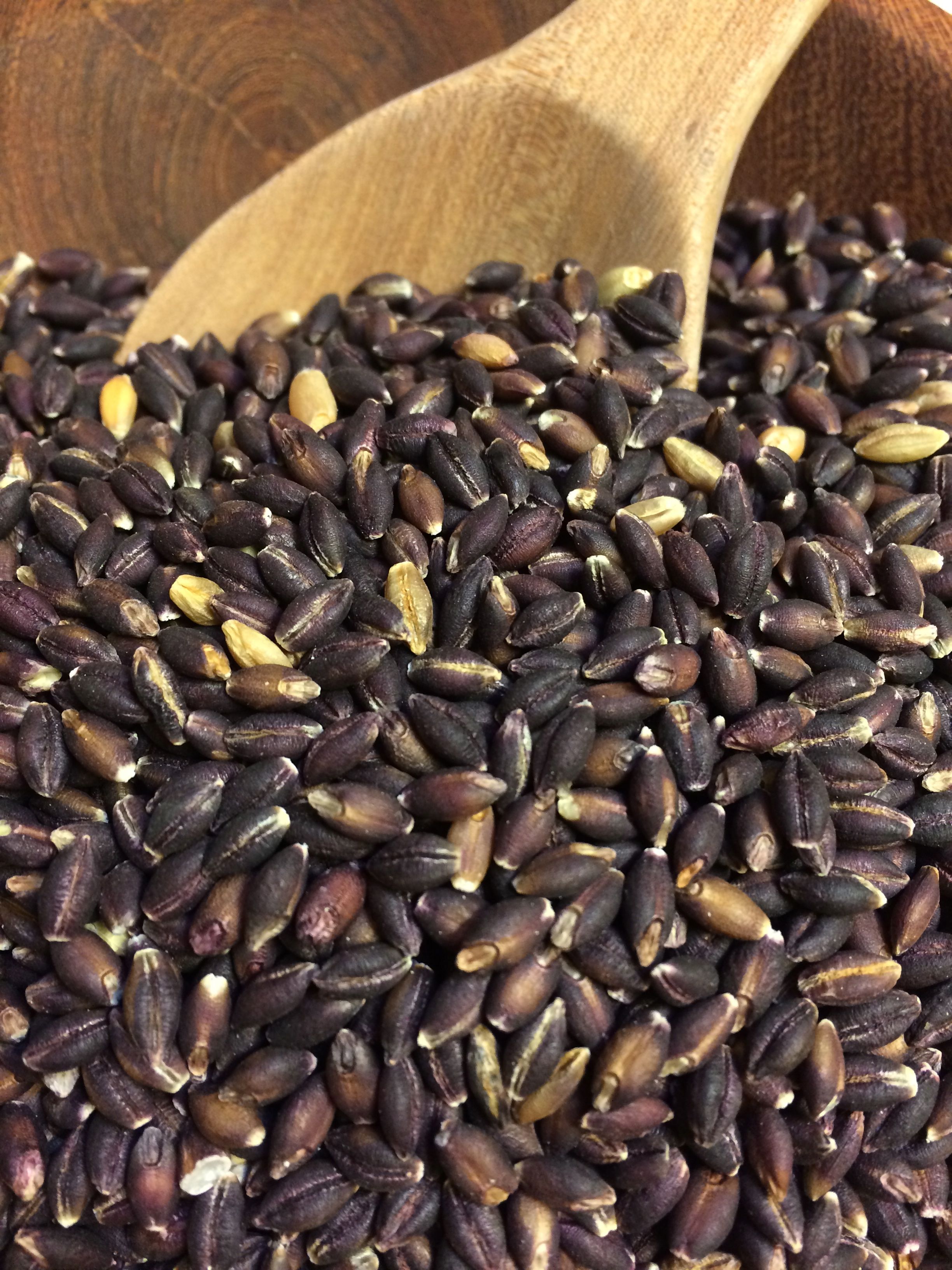
For a completely new experience, try baking with a purple grain!–our heirloom Purple Prairie Barley.  Barley flour has the lowest glycemic index of all the grain flours hence helping to balance blood sugar.  It has a rich flavor that can enhance any bread or biscuit recipe.  The purple color indicates a high anthocyanin content– an important antioxidant.  When you cook the purple barley as a whole grain, you can use it in pilafs and marinated grain salads the way you might use rice or quinoa.  Combined with rice it makes a colorful high-contrast pilaf.  (I’d be happy to elaborate in another post.)

Beautiful purple prairie barley--an heirloom originally from Tibet

Beautiful purple prairie barley–an heirloom originally from Tibet–full of the healthful flavonoid anthocyanin

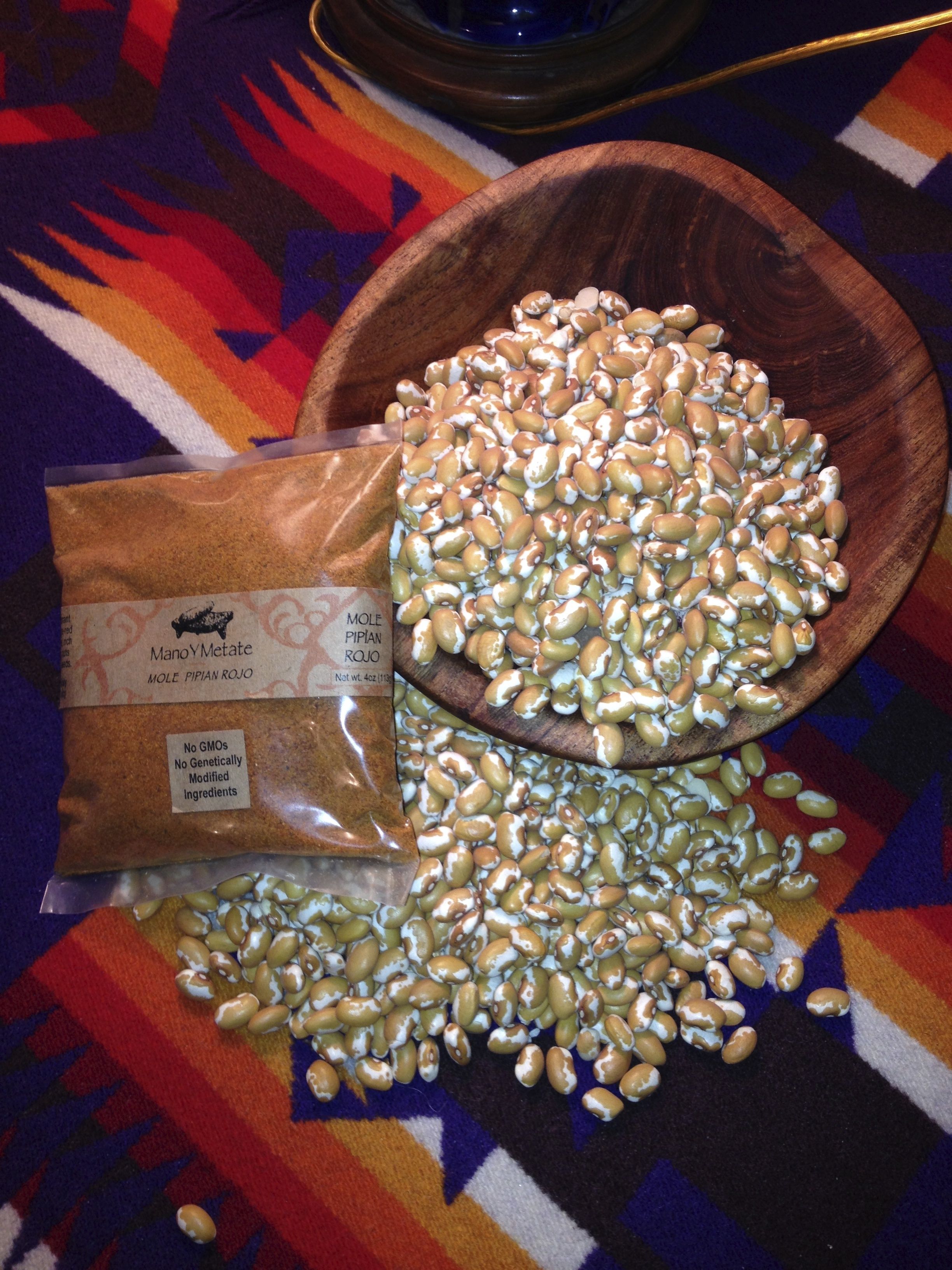
Try using Mano y Metate's Pipian Rojo Mole as a vegetarian spice for these Zuni Gold beans!

Try using Mano y Metate’s Pipian Rojo Mole as a vegetarian spice for these Zuni Gold beans!

Tis the season also to rejoice in the indigenous beans that have supported Native cultures for unknown centuries.

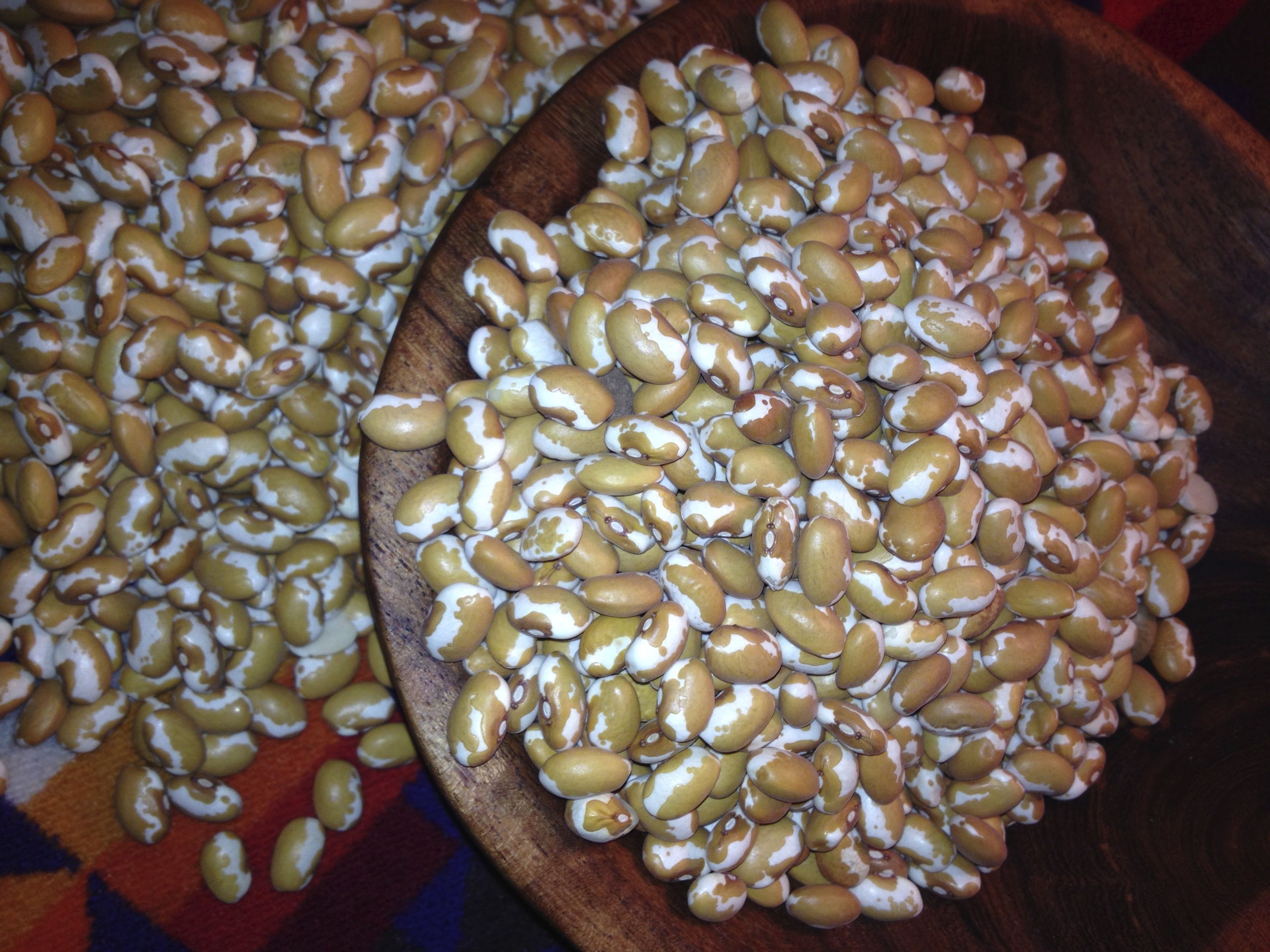
Beautiful Zuni Gold beans--used traditionally in the Winter Solstice celebration

Beautiful Zuni Gold beans–used traditionally in the Winter Solstice celebration

Heirloom beans are full of protein, full of flavor, and so versatile.  I like to cook up a big pot of these golden Solstice beans and then freeze them in serving sizes to prepare later in a variety of fun ways–as chile beans, as dips, in burritos, as hummus, and of course heart-warming bean soup–the list goes on… Come get inspired at our Flor de Mayo table when you see the biodiversity of beans spread before you!

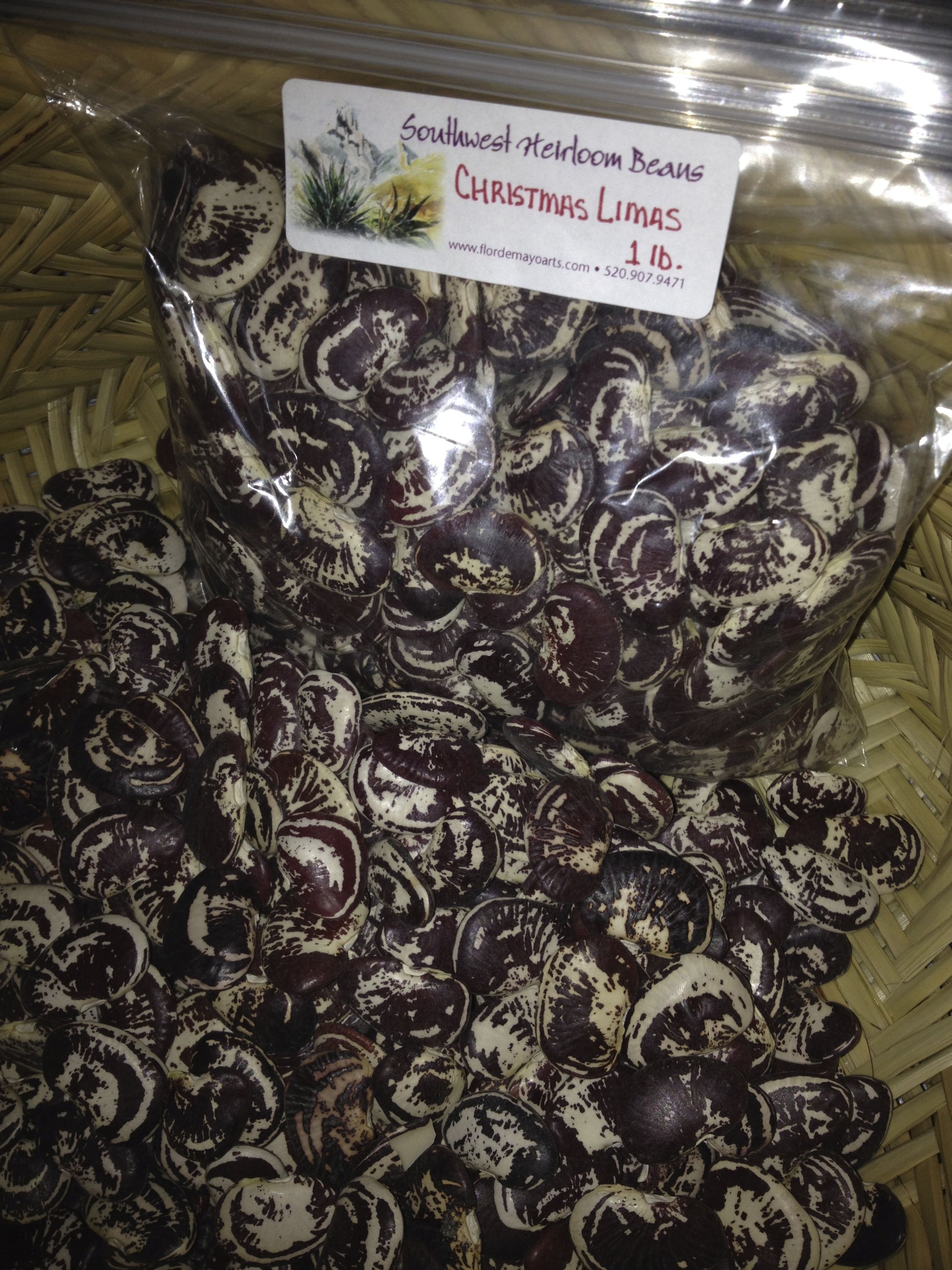
Delectable Christmas Limas can be prepared as vegetarian centerpiece dishes to honor the season!

Delectable Christmas Limas can be prepared as vegetarian centerpiece dishes to honor the season!

The most festive heirloom bean of the holiday season is the colorful Christmas Lima (AKA Chestnut Lima) so called because of the timing when it is harvested.  (Check out past blog posts for some great recipes.)  We have even had jewelry-makers buy this bean to string as fetish-style necklaces.

Calling creative gift-givers!  Join us at the Sunday St Philips Farmers Market for some meaningful, local, healthful and tasty gifts that say “Baja Arizona” in the most delightful way.

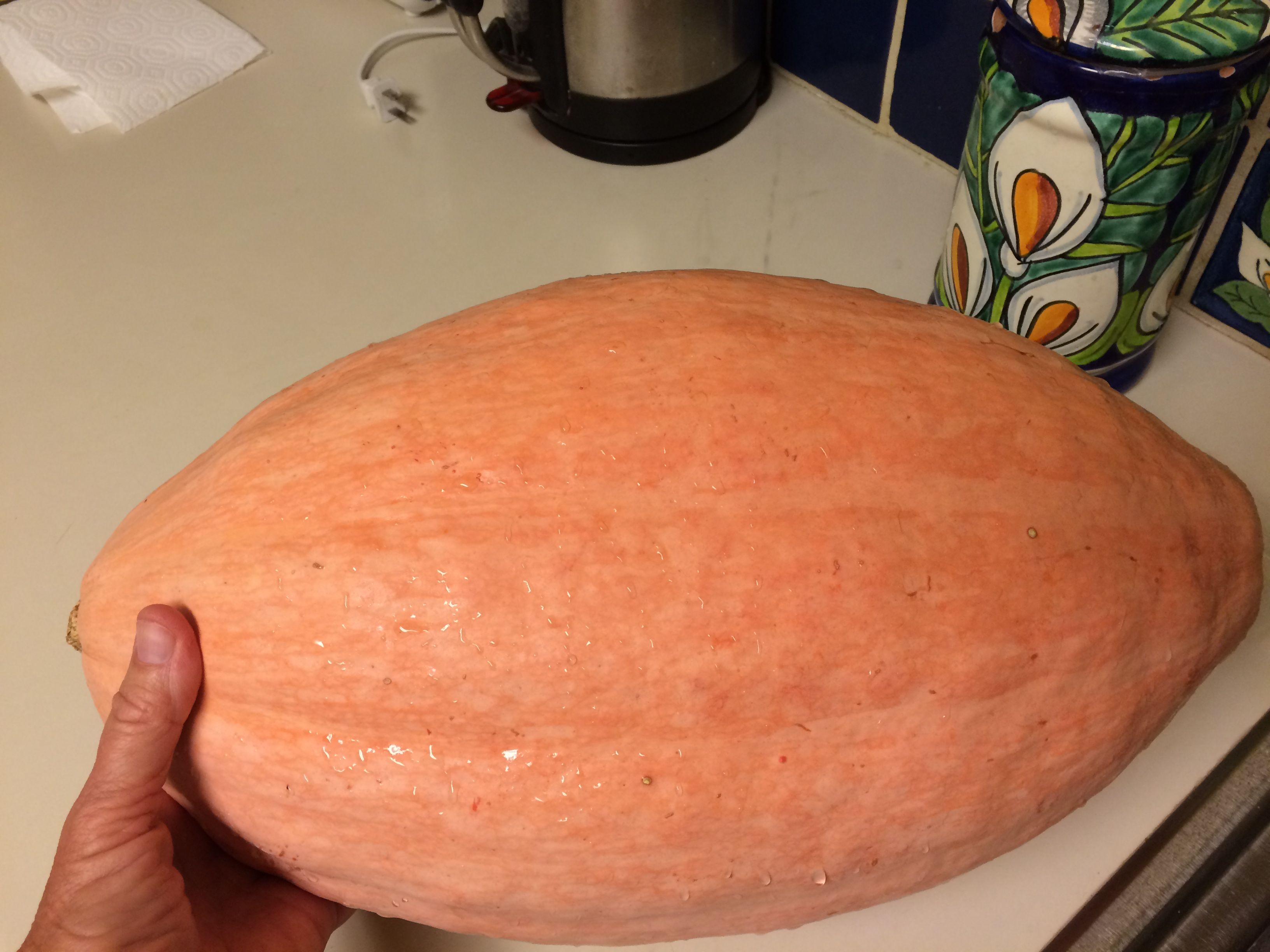
Just for scale, Tia Mart hefts this heirloom Navajo squash. Who needs a workout center if you are a gardener or farmer?

Just for scale, Tia Marta hefts this heirloom Navajo squash. Who needs a workout center if you are a gardener or farmer?

May you have happiness, health, peace in your hearts, and good cheer this holiday season –greetings from Rod and Tia Marta at Flor de Mayo!

Heirloom Grains & Heirloom Fruits marry in a Holiday Pie

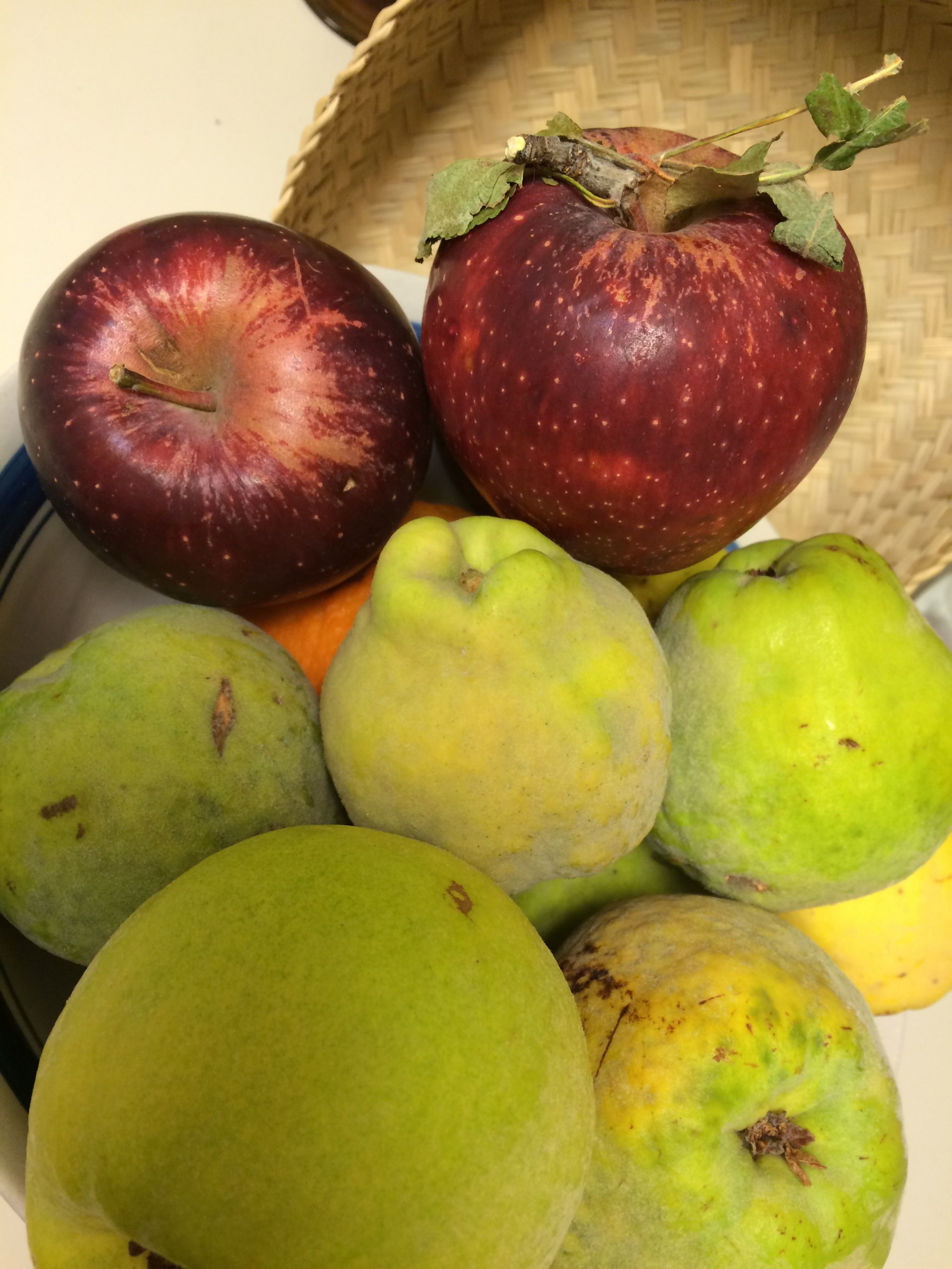
Padre Kino's Membrillo Fruit with Slide Rock Star King Old Fashioned Double Delicious Apples

An Heirloom Fruit Harvest:  Padre Kino’s Membrillo Fruit from my garden with Star King Old Fashioned Double Delicious Apples from Slide Rock State Park heirloom orchard (MABurgess photo)

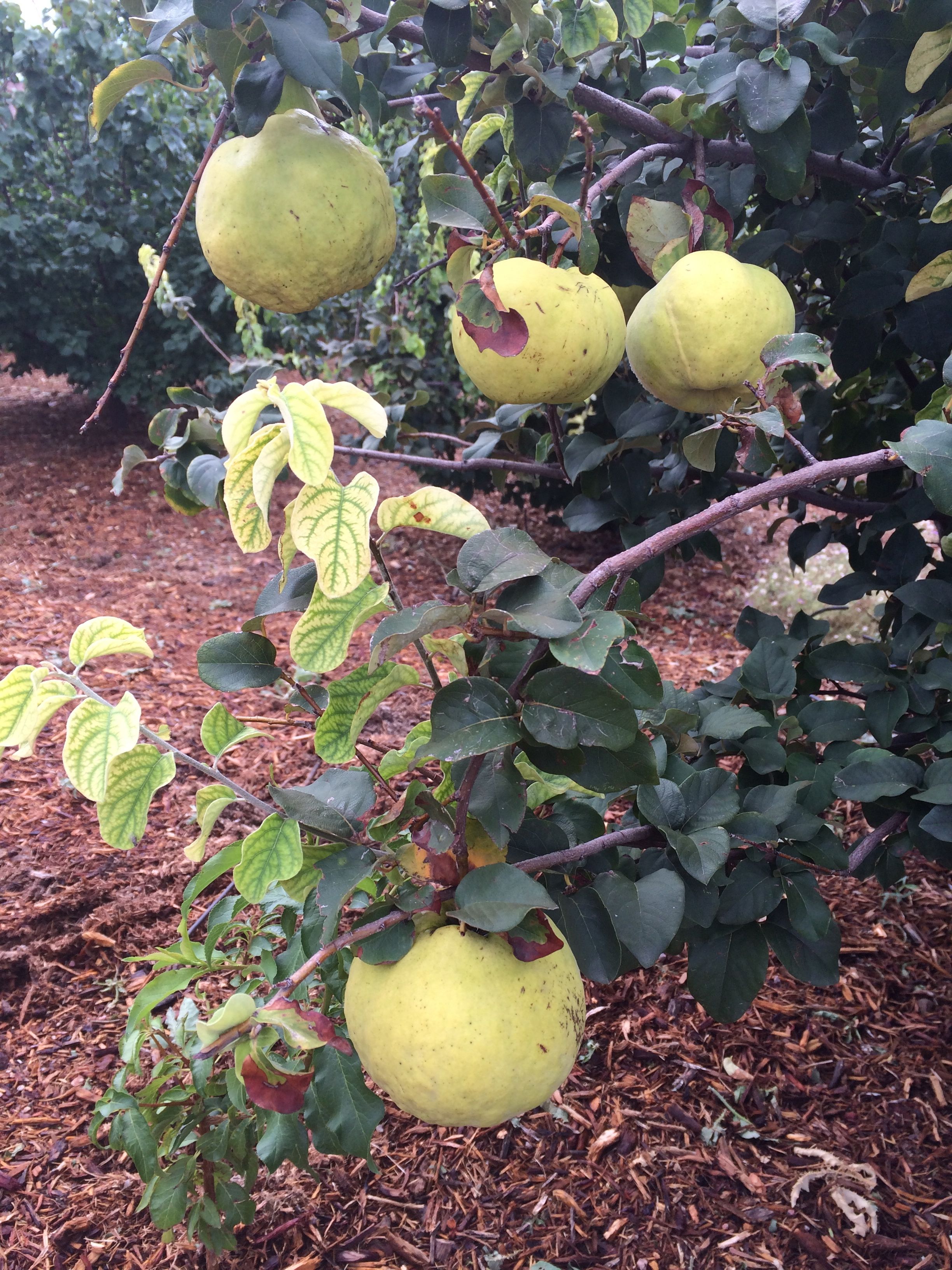
In both the low Sonoran Desert and in the higher Southwest, fruits are hanging on the trees ready for harvest.  At Mission Garden the quince trees, better known as membrillo, are bearing their last sturdy fruits.  Mission Garden was the site of a wonderful celebration of membrillo in October with talented cook Josefina demonstrating how to make cajeta de membrillo, our sweet autumn dessert delicacy.

Membrillo (Quince) trees heavy with fruit at Mission Garden Tucson, near A-Mountain

Membrillo (Quince) trees heavy with fruit at Mission Garden in Tucson, Arizona, near A-Mountain–Come visit any Saturday morning!

Membrillo is a perfect food-giving tree for low desert as it can can handle heat--great for a kitchen garden

Membrillo is a perfect food-giving tree for low desert as it can can handle heat–great for a kitchen garden

Tia Marta here to share what is happening in my kitchen these days, bringing together some of my most admired heirloom grain and fruit ingredients–both cultivated and wild–knowing that I have guests coming for the holidays who need a little taste of LOCAL!

It is pie time in our household.  And today it is Membrillo-Apple Pie with White Sonora Wheat-Mesquite pie crust!      I mean, how much more local can one get?

This was the year that our five-year-old quince tree, which we purchased from Desert Survivors Nursery Kino Fruit-tree Project, and which we planted a couple of years ago in our backyard, decided to flower and set fruit–just enough this time to make a couple of pies.  We look forward to the amazing productivity in future years that the Mission Garden quince trees are already showing.  Quince or membrillo fruits look like a cross between yellow apples and pears but are far more sturdy than either of those.    Before ripening they are covered with fuzz and, as they lose it and become shinier and more yellow, you know they are ripening.

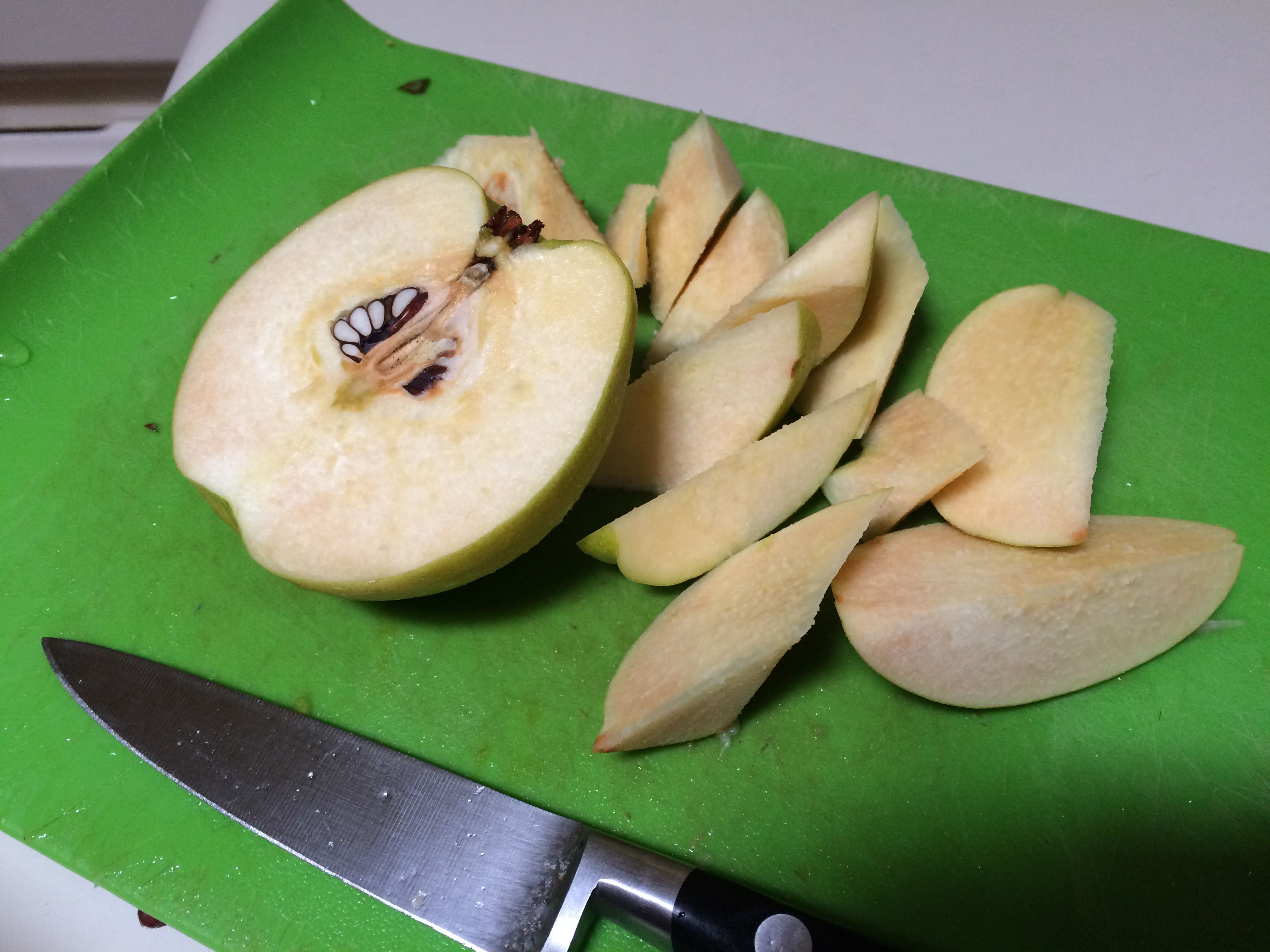
Because they are harder than other fruit, be sure to cut membrillo very carefully. Expect them to come out with not-so -symmetrical slices.

Because they are harder than other fruit, be sure to cut membrillo with extra care. Expect this to result in not-so -symmetrical slices–no problem inside a pie.

Even when this aromatic rose-family fruit is ripe, its somewhat sweet tissue never really softens.  They may feel and taste granular, similar to some pear varieties.  But they are substantial food, full of good potassium, vitamin C, dietary fiber, and iron.  In other regions, quince has been used with apples to make jellies as it aids the gelling process.  Since the time of the missionaries into Pimeria Alta, the traditional way of preparing membrillo here is to cook it down with raw sugarcane sugar to make the cajeta confection.  (A detailed report of cajeta de membrillo will make a neat separate post.)

I chose to mix membrillo with its sweet cousin, heirloom local apples, to create a Southwestern version of the all-American pie.  From the neat old Pendley Homestead at Slide Rock State Park in Oak Creek Canyon near Sedona, I obtained the deep maroon-skinned apples shown above from a 1912 orchard.  From the English Family Orchards at Willcox I added a few little galas.  Don’t ever be ashamed to ask orchardists at farmers’ markets if they have any “rejects” for sale.  Many a tasty apple gets tossed because it has a blemish or knick.  Such apples can become a rewarding gift in pies, apple-brown-betty, or applesauce.

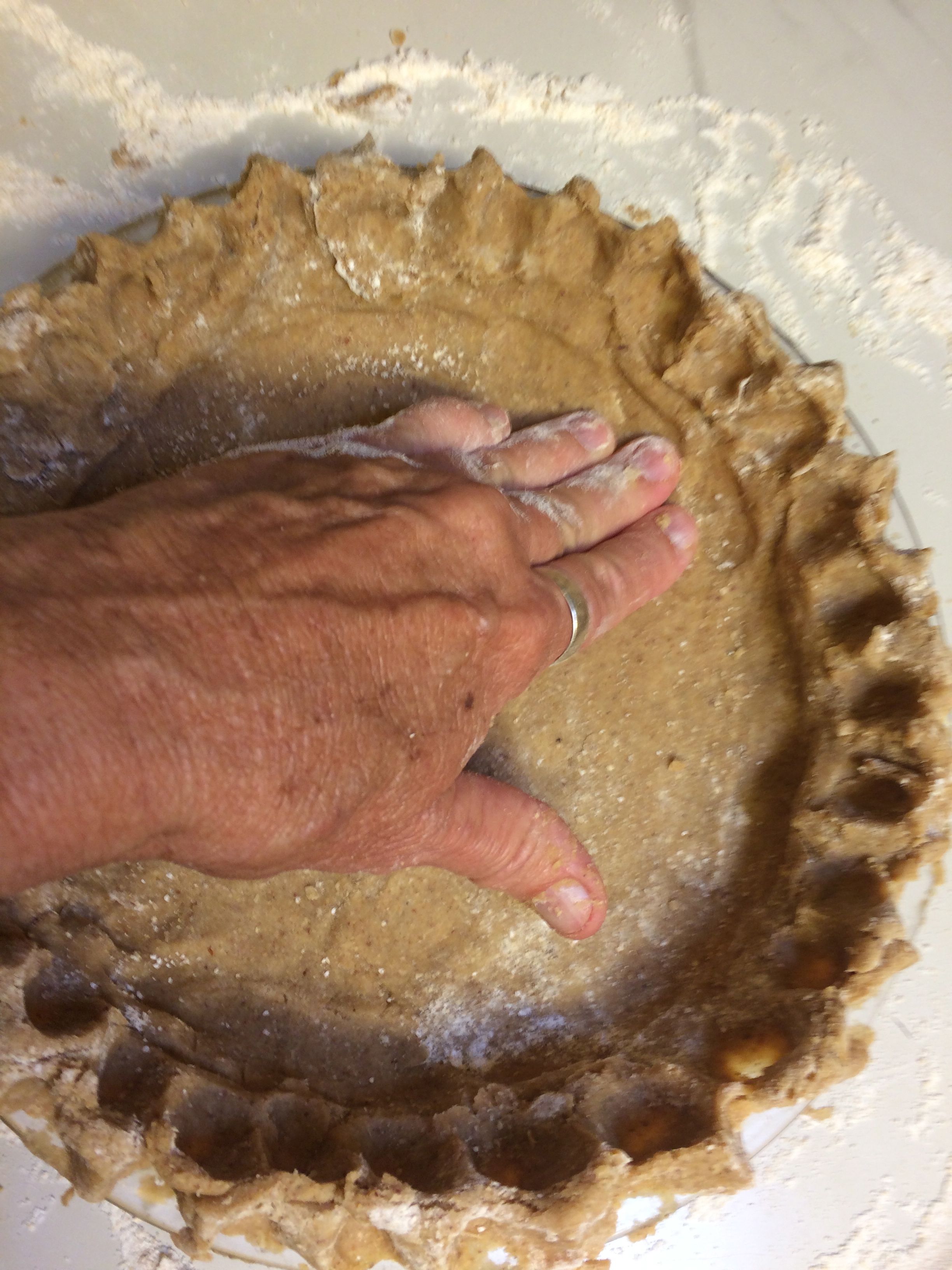
Pressing mesquite/whiteSonora wheat dough into pie pan

Pressing mesquite/whiteSonora wheat dough into pie pan

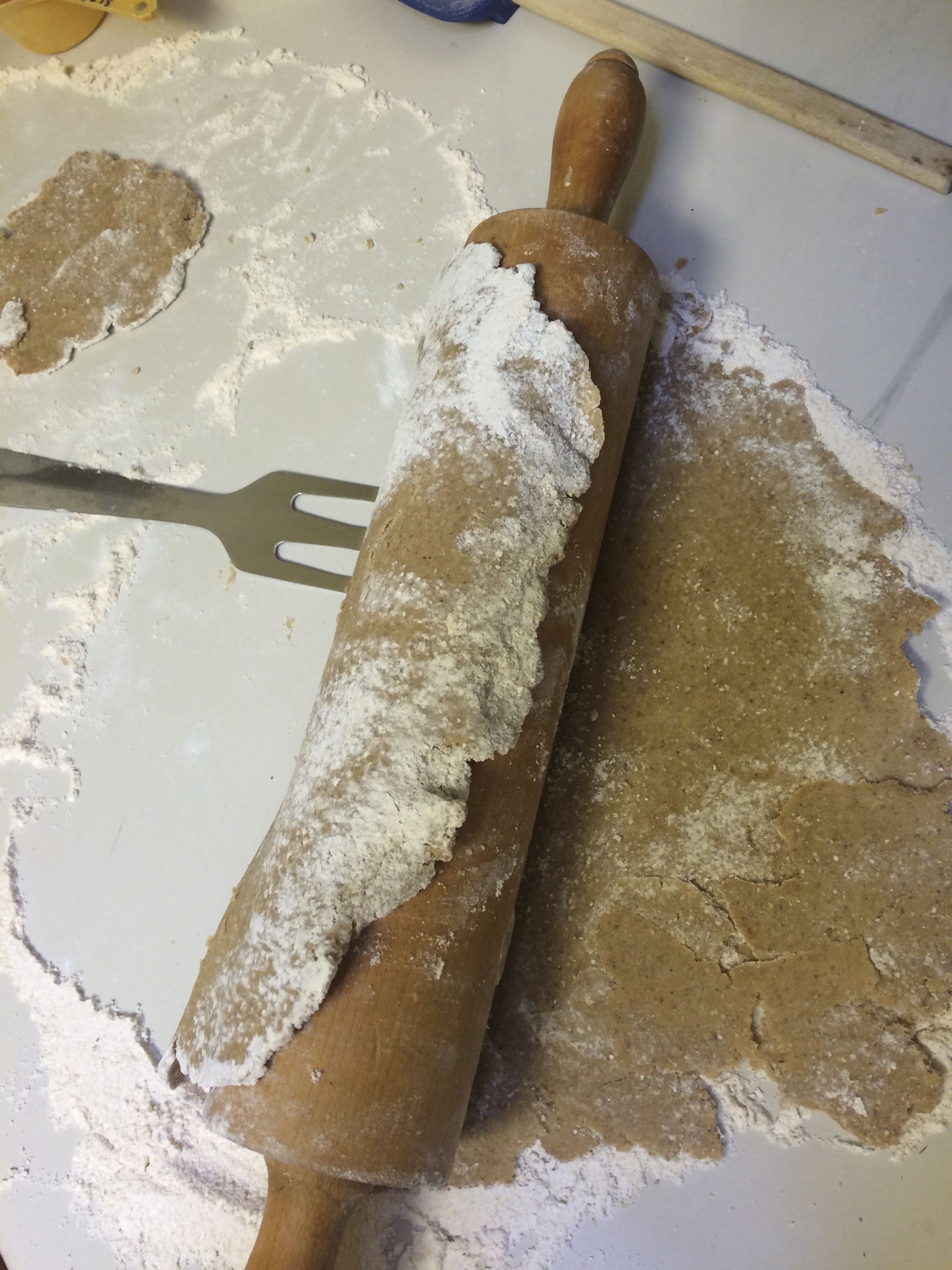
rolling mesquite white Son wheat pie dough

Mesquite meal and white Sonora wheat make a fabulous pie-crust! It is not as elastic as store-bought crusts so be careful in rolling it onto your pie pan. Shown here is a very flat spatula I use as an assist.

Next step, after growing, harvesting, slicing the heirloom fruits, is getting dusted by making my local heirloom Mesquite/White Sonora Wheat Pie Crust (recipe following):

[Kids, don’t try this culinary photographic technique at home.  Your one-handed iPhone will get really sticky.  Mine will never be the same.]


Ingredients for heirloom wheat pie crust:

1 1/2 cups freshly milled whole, organic White Sonora Wheat flour*

1/2 cup freshly milled local velvet mesquite meal**

1 tsp Real-salt or sea salt

2/3 cup shortening (I use organic butter)

5-7 Tbsp ice water

*Organic, fresh-milled white Sonora wheat flour is available for your holiday baking from our Flor de Mayo booth at Sunday St Philips Farmers Market, or by contacting us at info@flordemayoarts.com or  520-907-9471 to order it ahead.                                                                                                                                                                             **Freshly-milled velvet mesquite pod meal (flour) is available via the same Flor de Mayo contacts above.                                                                                                                                                                     Both kinds of heirloom flour are available at a special Heirloom Grains event this coming SATURDAY November 21 at the NativeSeeds/SEARCH store, 3061 N Campbell, Tucson–the public is invited 10am-2pm.

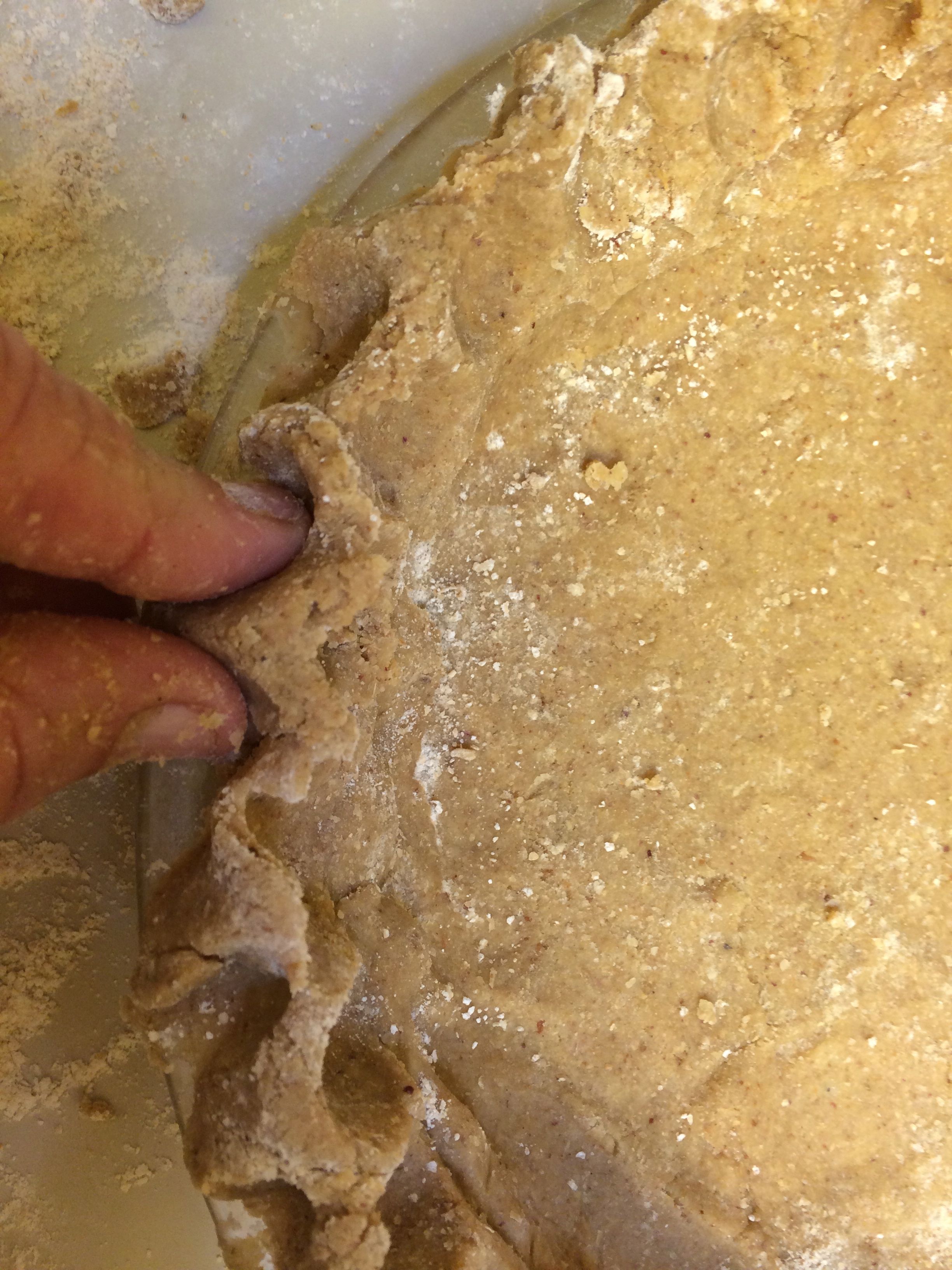
Pinching a tall edge of my mesquite/heirloom wheat pie crust

Pinching a tall scalloped edge of my mesquite/heirloom wheat pie crust–This provides a retaining wall so juicy filling will not overflow while cooking.

Directions for heirloom wheat pie crust (lattice top):

Sift dry ingredients.  Cut in shortening into small pea size lumps.  Sprinkle in tablespoons of ice water gradually, mixing with a fork.  Form 2 balls of dough. Dust each ball with more white Sonoran wheat flour. Flatten each out on a well floured board and roll with rolling pin or bottle.  Use rolling pin as in the illustration, to lift lower pie crust dough onto pie pan.  Press in with fingers.  Keep second ball of dough for working on after pie filling has filled the lower crust. [See recipe for Membrillo/Apple Pie Filling below.]

With second dough ball, roll out as before then cut in 1/2 inch wide strips to lay in basket-weave pattern atop the pie filling to allow filling to lower as it cooks.

Membrillo/Apple Pie Filling ingredients:

(Cook ahead slices and chunks of 4-5 membrillo fruits, washed, then cut with or without skin.  Boil in good drinking water for 20 minutes or until soft.  I am one of those crazies who thinks fruit skins are healthy and full of phytonutrients, so I leave the colorful fruit skins on.)

2 cups sliced membrillo fruit, pre-cooked  (reserve liquid for other gelled salads)

2 cups thinly sliced heirloom apples

1/2 cup organic cane sugar

1/2 cup organic brown sugar

2 Tbsp organic heirloom white Sonora Wheat flour

1/2-1 tsp ground cinnamon

dash sea salt

1-2 Tbsp organic butter

juice of one small heirloom sweet lime       (I got mine from the Friends of Tucson’s Birthplace Mission Garden booth at the Thursday Santa Cruz farmers market at the Mercado San Agustin, West Congress, Tucson)

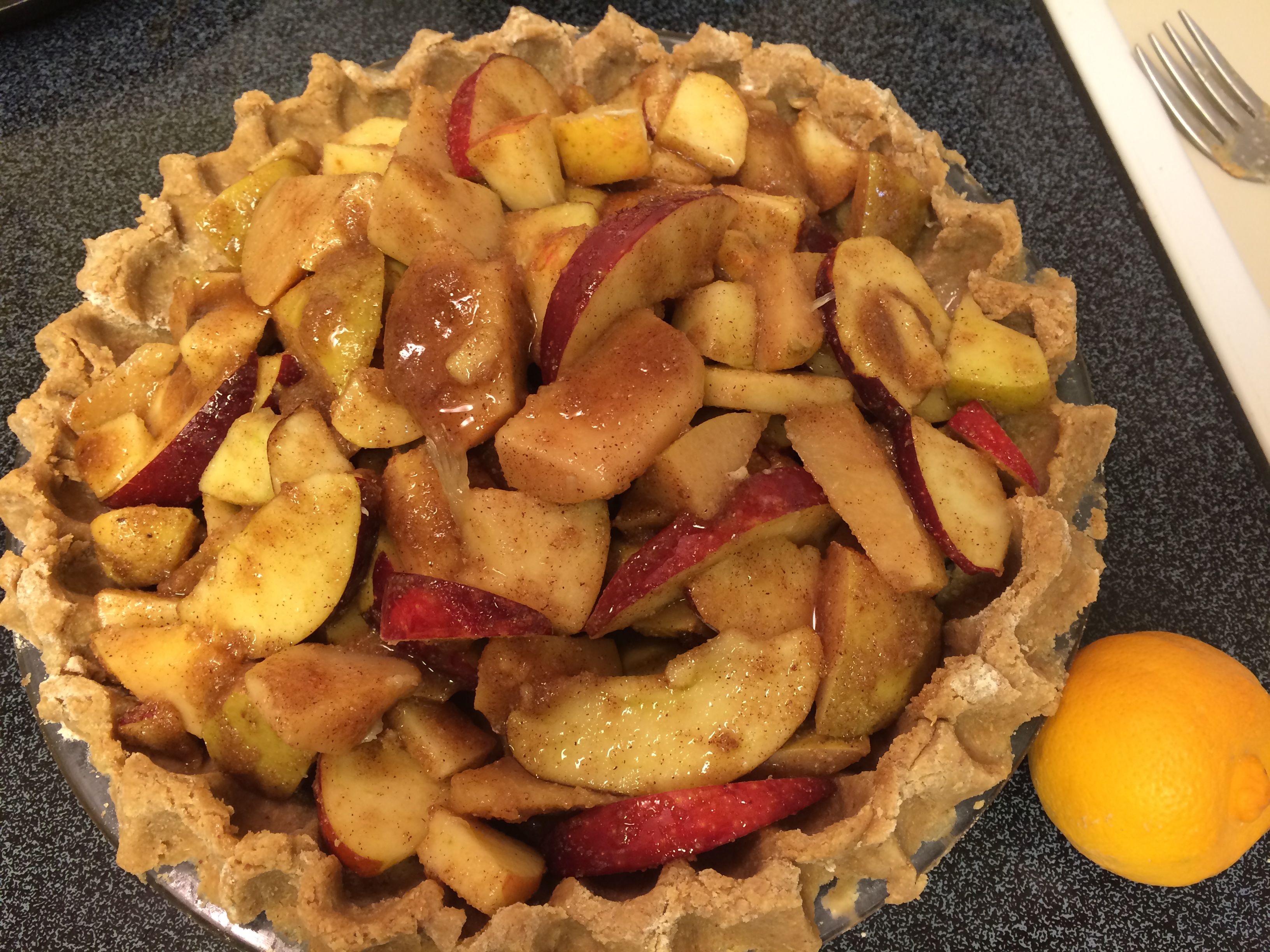
Membrillo/apple pie filling in shell ready to bake

Membrillo/apple pie filling in shell ready to bake. Check out the heirloom sweet lime adjacent–with the dimple–this one from Mission Garden.

Membrillo/Apple Pie-Filling Directions:       Preheat oven to 400 degrees.

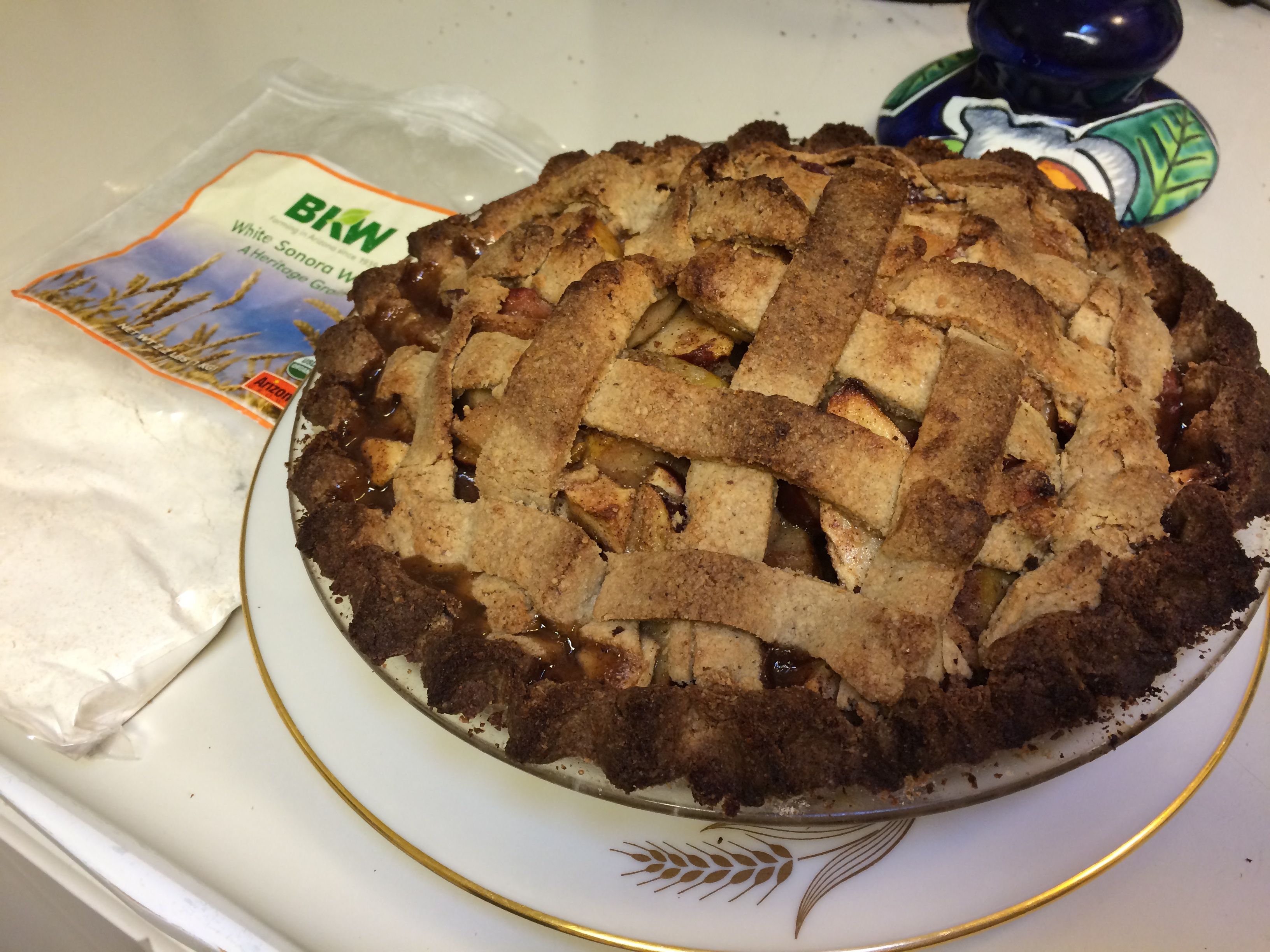
Combine sugars, flour, cinnamon, salt, then mix with the sliced apples.  Fill uncooked pastry crust (shell) with mixture.  Squeeze the sweet lime juice over the filling and place dollups of butter on top.  Place lattice strips of the mesquite/whiteSonorawheat dough across the top of the filling as in picture below.  BAKE for 40-50 minutes or until the crust looks golden brown.  Note:  mesquite meal has natural complex sugars which may caramelize or brown faster than white flour so keep an eye on it after 40 minutes.  The one in my photo got a little too done for my taste, but it will still be fabulous.

Membrillo/heirloom apple pie with mesquite/white Sonora wheat crust--hot and ready to serve

Membrillo/heirloom apple pie with lattice crust of mesquite/white Sonora wheat –hot and ready to serve–To the left in photo is flour milled from BKWFarms wheat-berries.

There will be several ancient grains available at our upcoming Celebration of Heirloom Grains this SATURDAY at the NativeSeeds/SEARCH Store.  Put it on your calendar and dig out your favorite recipes!

Heirloom purple prairie barley available at Flor de Mayo booth,St Philips Farmers Market and at the NSS Grain Event Saturday!

Heirloom purple prairie barley available at Flor de Mayo booth,St Philips Farmers Market and at the NSS Grain Event Saturday!

In addition to our native Mesquite Flour, there will be such fresh lovely grains as organic Hard Red Wheat grown by BKW Farms in Marana which is superb for breads.  Our organic white Sonora wheat is the best for pastries.   Also available will be the ancient Purple Prairie Barley originally from Afghanistan, now from Hayden Mills.

For the knowing baker, milling the whole grain fresh creates a totally different and wondrous effect to breads and pastries because the enzymes and other constituents in the grain remain “lively” for only a few days after milling.  Come enjoy the milling process right before your eyes and feel the vitality of the flour you can take home to bake with!

Our thanks go to the caring padres who first brought the grains to the desert Southwest, to the generations of farmers who continued to grow and save the grain, to NSS for “rediscovering” and conserving them so carefully for the future, and to new farmers like San Xavier Farm Coop, BKWFarmsInc, Ramona Farms, and Hayden Flour Mills for multiplying them for our nutrition, enjoyment, and sustainable desert living!

For more info please call NativeSeeds/SEARCH at 520-622-5561 or Flor de Mayo at 520-907-9471.  See you at the Milling and our Celebration of the Heirloom Grains!!

Magdalena heirloom barley grown at Mission Garden, Tucson

Magdalena heirloom barley grown at Mission Garden, Tucson

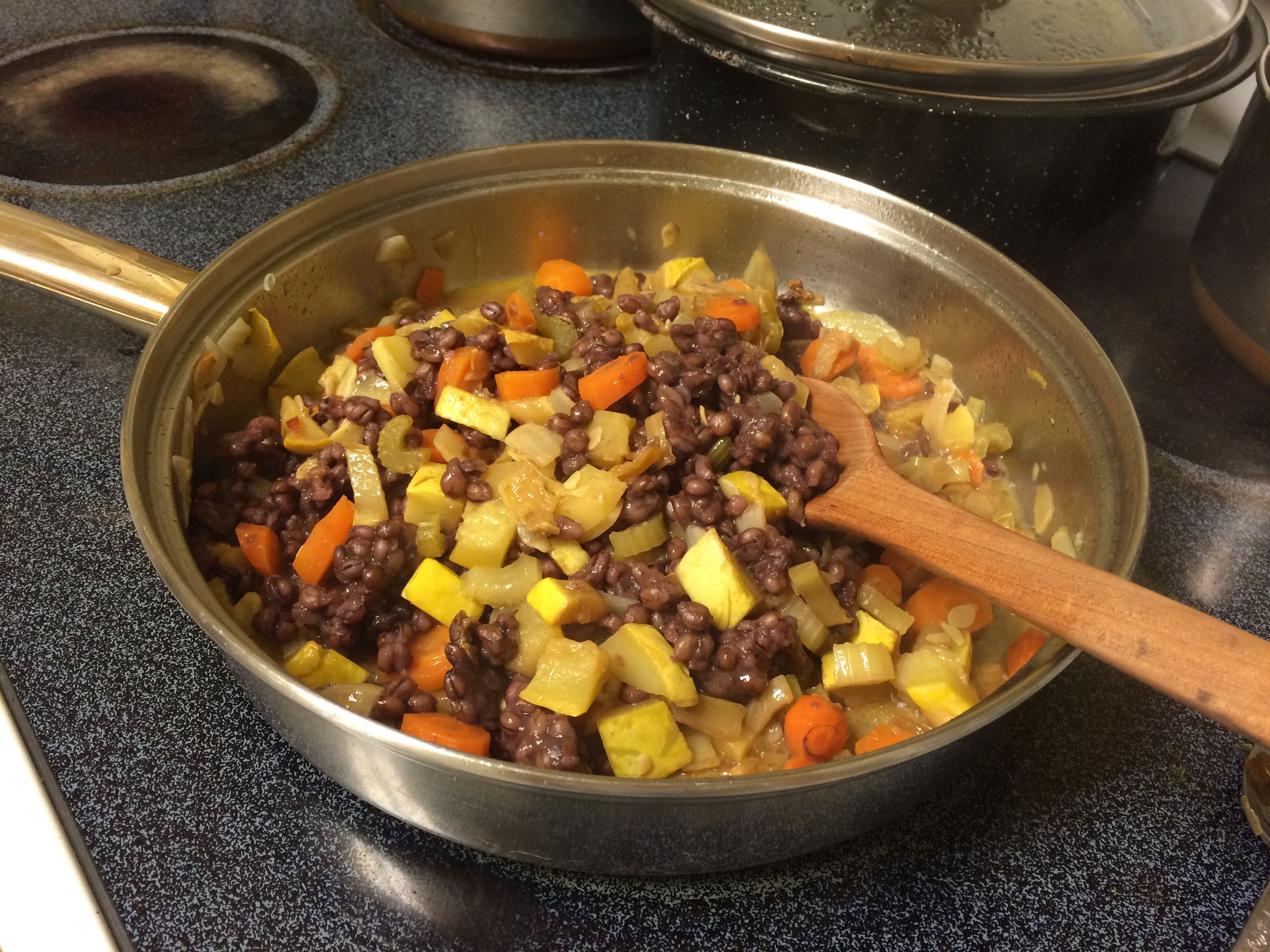
A savory pilaf made with heirloom purple prairie barley--watch for future recipes--Grain available at the Flor de Mayo booth, Sunday St Philips market

A savory pilaf made with heirloom purple prairie barley–watch for future recipes–Whole grain available at the Flor de Mayo booth, Sunday St Philips market, and at Saturday’s Heirloom Grain Celebration

Mesquite Gingerfolk for Christmas

Mesquite Gingerfolk are tasty treats for the holidays.

Mesquite Gingerfolk are tasty treats for the holidays.

It’s Carolyn today sharing one of my favorite holiday recipes. The flavor of mesquite meal blends nicely with the warm spices we like in the winter.  These Mesquite Ginger Folk are pretty cute and they taste wonderful.  I used good quality margarine rather than butter or Crisco because I like the eventual texture and the flavor is good. This recipe makes a spicy cookie. If you want more of the mesquite flavor to come through, cut down on the spices. The dough must be well chilled before you roll it out, so this is a two-step recipe: mixing first, then later rolling and baking.

Mesquite Ginger Folk (makes about 3 1/2 dozen rolled cookies)

In a medium bowl, combine 2 cups all-purpose flour, 1/2 cup whole-wheat flour,  1/2 cup mesquite meal, 1 1/2 teaspoons ground cinnamon, 2 teaspoons ground ginger, 1 teaspoon allspice, 1/2 teaspoon salt, 1/4 teaspoon ground black pepper.  Stir and fluff with a fork and then set aside.

In a large bowl, use an electric mixer to beat 1 1/2 sticks margarine  with 1/2 cup packed brown sugar until fluffy. Beat in 2/3 cup molasses and one large egg. Then gradually add the flour mixture to make a stiff dough. You may need to give up the mixer for a wooden spoon.  Divide the dough into two thick disks and wrap each in plastic wrap.  Refrigerate until chilled, about three hours.

When you are ready to bake, take one disk from the refrigerator .   You’ll want the dough just warm enough to roll without cracking.  While you are waiting, preheat the oven to 350 F. and put out brown paper or wire racks to receive the baked cookies. You’ll also need lots of flour to keep the dough from sticking when rolled.  So get a small bowl of flour, take part of the disk, and roll it in the flour before you roll out with the rolling pin.

Roll a ball of dough in the flour.

Roll a ball of dough in the flour.

Roll out the dough about 1/8-inch thick on flour-dusted surface. Cut out the cookies and transfer them to the cookie sheet, placing them 1 inch apart. Gently knead the scraps together and roll out again.  When you fill one cookie sheet, bake it for about 10 – 12 minutes while you prepare another sheet.

This cutter gives a nice uni-sex cookie.

This cutter gives a nice uni-sex cookie.

If you wish, you can use raisins and dried cranberries to make eyes, a mouth and buttons.  Chop the dried fruit into tiny pieces.

IMG_0413

Sometimes it is difficult to position those tiny pieces on the cookies. But remember those tweezers you keep in the kitchen to deal with cactus stickers?  Perfect for placing the eyes and buttons.

IMG_0408

To further decorate the cookies, perhaps make some shoes or pants, mix up some white frosting using powered sugar, a little butter and a few drops of milk.  If you have a decorator bag, use it to pipe out some decorations or just draw the decorations with a flat-end toothpick.  Either way, you’ll love your Mesquite Ginger Folk and you’ll love sharing them.

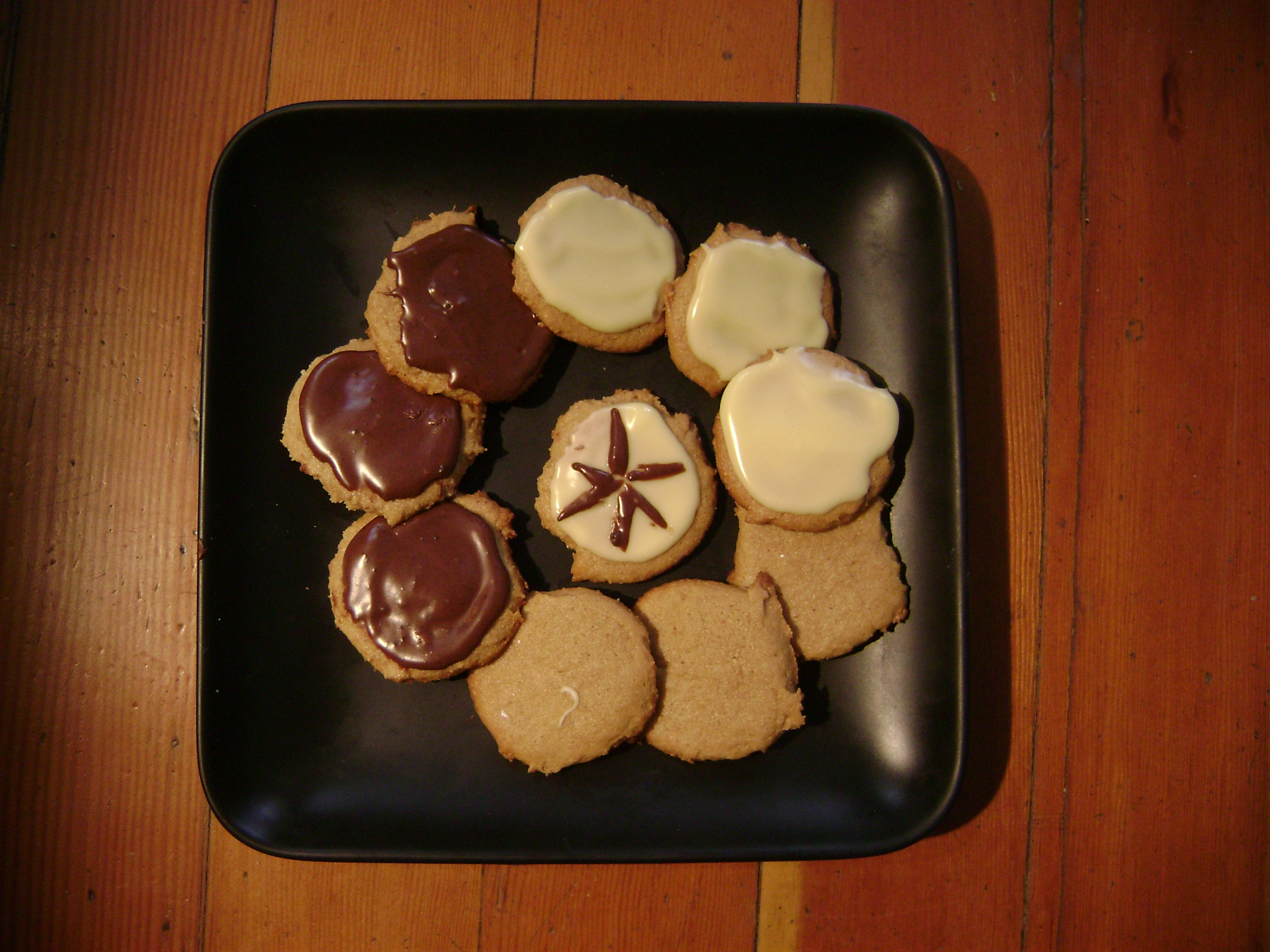
If you’d like to make some mesquite cookies but can’t face the cutting and decorating, you can use the same recipe to make drop cookies. Frost if you have time.
Mesquite Ginger Cookies in simple form.

Mesquite Ginger Cookies in simple form.

If you have not harvested your own mesquite meal, here are a few places to purchase it:  The Flor de Mayo Table at Sunday St. Phillips Farmers Market; the Native Seeds/SEARCH store at 3061 N. Campbell Ave. and http://www.nativeseeds.org for mail order; and the San Xavier Farm Store, http://www.sanxavierfarm.org.  If you are in Phoenix, check the farmers markets there.

For more great mesquite recipes, check out my cookbook Cooking the Wild Southwest: Delicious Recipes for Desert Plants. You’ll learn how to make Mesquite Apple Coffeecake, a fabulous rolled cake with mesquite and coconut, a a dozen other delicious recipes.


Savoring Our First Anniversary (and Mesquite Cake)

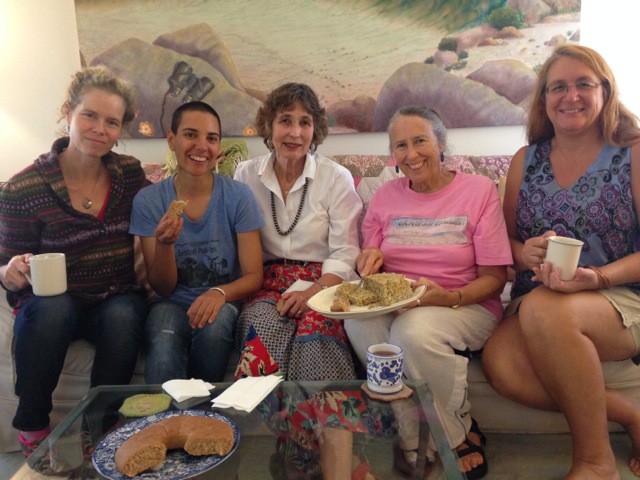
(From left) Aunt Linda, Amy Valdez Schwem, Carolyn Niethammer,  Tia Marta, and Jacqueline Soule.

The Savor sisters: (From left) Aunt Linda, Amy Valdes Schwemm, Carolyn Niethammer, Tia Marta, and Jacqueline Soule.

Carolyn Niethammer here today with this celebratory post. The Savor Sisters, the five writers who bring you Savor the Southwest, got together this week to celebrate the first anniversary of our wide ranging blog about the glories of Southwest food traditions –  traditional, modern, wild and cultivated. The Savor the Southwest month always starts out with Aunt Linda who frequently writes about her bees, recipes with honey, and even making cheese from milk from cows on her ranch. Her posts are lyrical and sometimes spirtual. On the second Friday, you hear from Tia Marta (Muffin Burgess), our ethnobotanist who keeps an eye on what the desert is producing, traditional Native American agricultural products, and ingredients she sometimes uses in her Flor de Mayo products.  I take the third Friday and write about edible desert plants, Southwest specialties and interview other interesting folks in the food world.  On the fourth Friday we hear from Jacqueline Soule who has been taking us through her book Father Kino’s Herbs among other subjects. That’s her gluten-free barrel cactus seed cake Muffin is slicing in the photo. You’ll get the recipe later this month. So far we have only heard from Amy Valdes Schwemm, producer of fabulous spices, on the occasional fifth Friday, but she will be writing more frequently in the coming year.

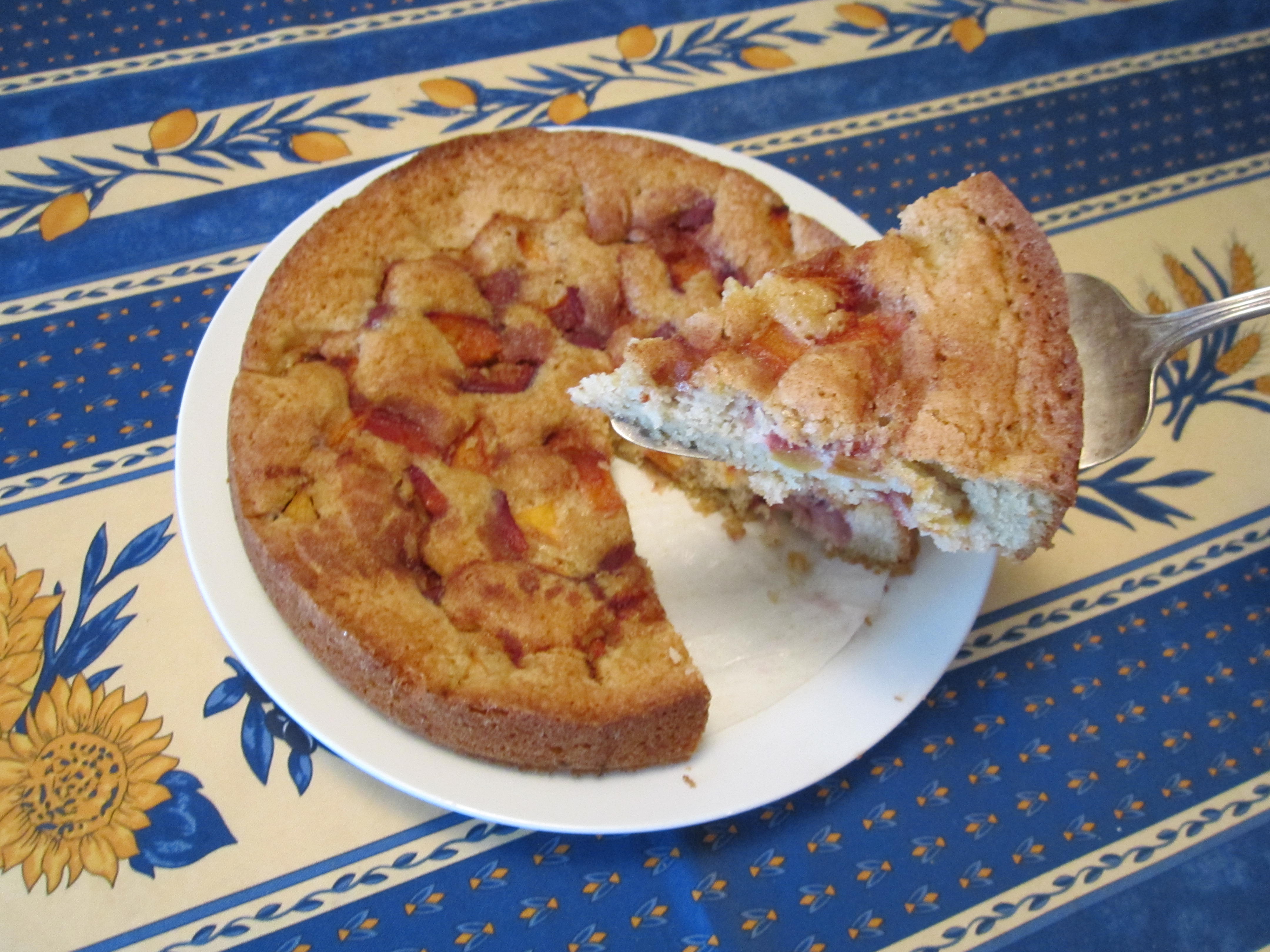
We are grateful to all of you readers who join us each week as we explore and celebrate the culinary delights of this fabulous area here on the Sonoran desert where we are so privileged to live. Every celebration needs something sweet, so today I’m going to give you a recipe for an easy and delicious mesquite cake that uses whatever fruits are in season. I used peaches and grapes, but plums, pears, apples or even prickly pear would be great additions. This is good for brunch or a not-too-sweet dessert.

Golden Mesquite Fruit Cake

3/4 cup all-purpose flour

1/4 cup mesquite meal

2 teaspoons baking powder

1/2 teaspoon ginger or cinnamon

1/4 teaspoon salt

1 stick soft butter

3/4 cup sugar

2 large egs

1 teaspoon vanilla extract

1 cup chopped fresh fruit

For topping

1 tablespoon mesquite meal

1 tablespoon sugar

1/2 teaspoon ginger or cinnamon

Method:

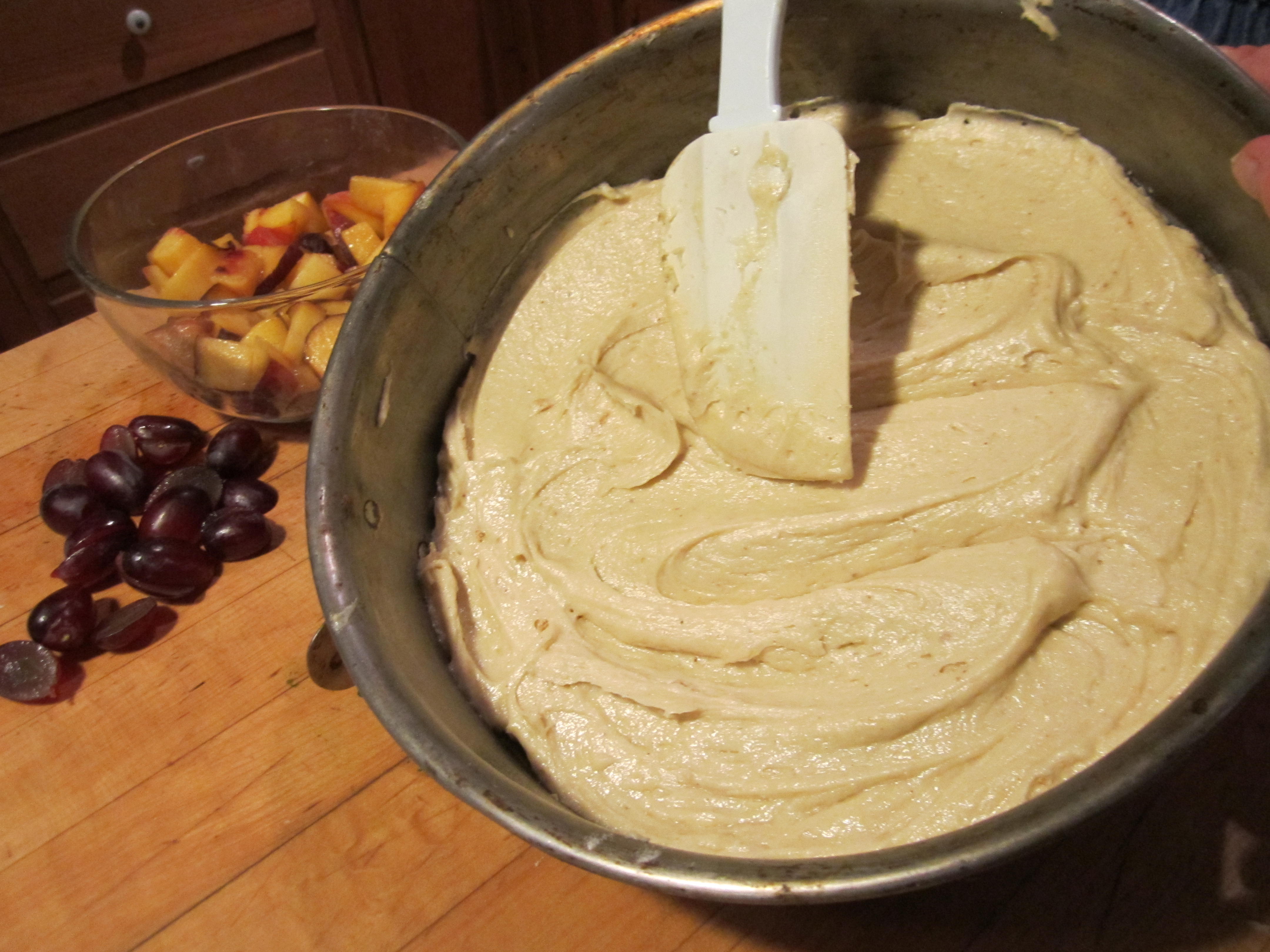
Preheat oven to 350 degrees F with rack in middle. Chop fruit. Lightly butter a springform pan. In a small bowl, whisk together flour, baking powder, salt and spice of choice. In medium bowl, beat butter and sugar with an electic mixer until pale and fluffy. Add eggs one at a time, beating well after each addiotn, then beat in vanilla. At low speed,  add flour mixture until ljust combined. Spread batter evenly in pan.

Spread batter evenly in springform pan.

Spread batter evenly in springform pan.

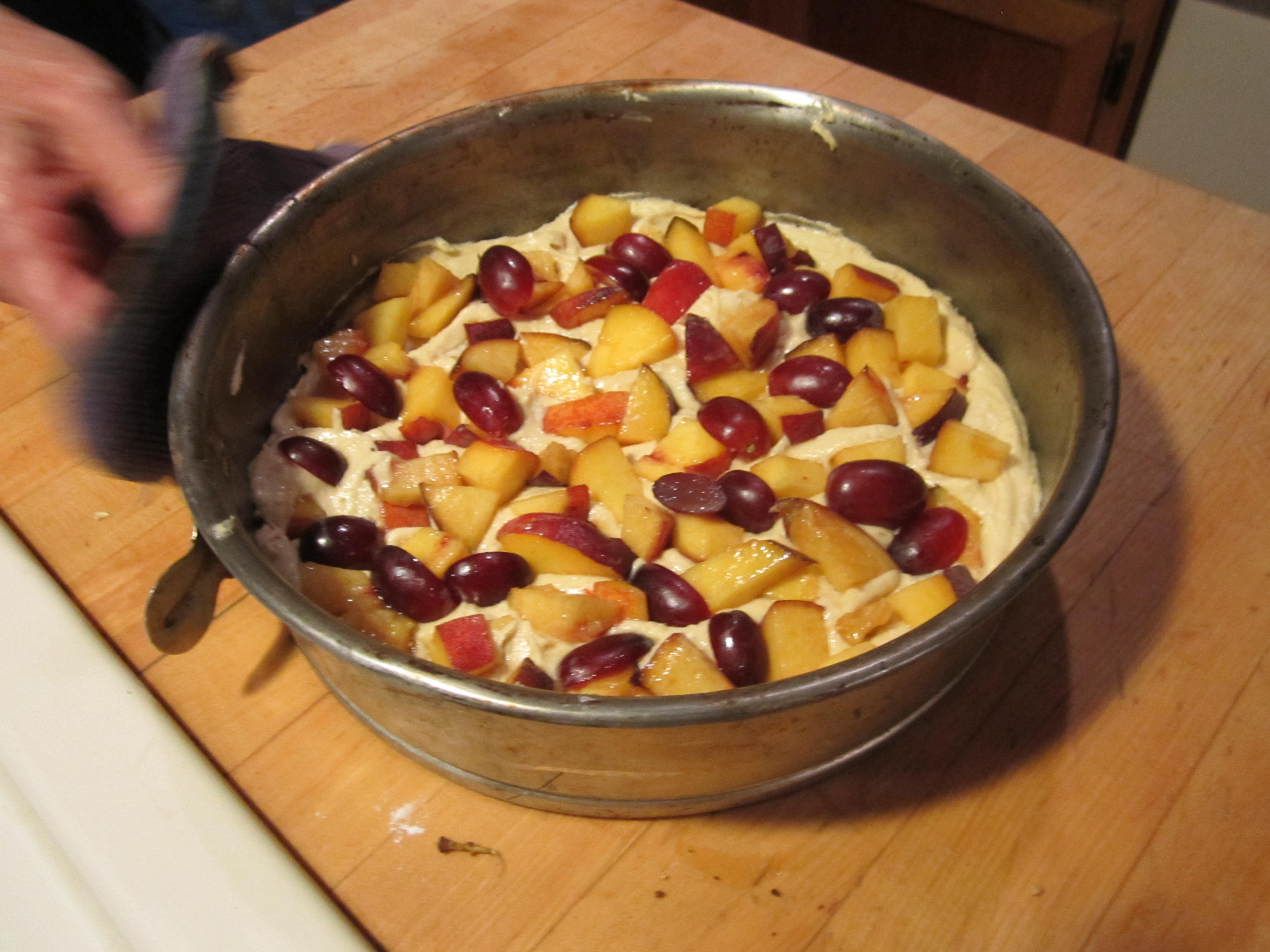
Scatter chopped fruit over top of batter.

Scatter chopped fruit over top of batter.

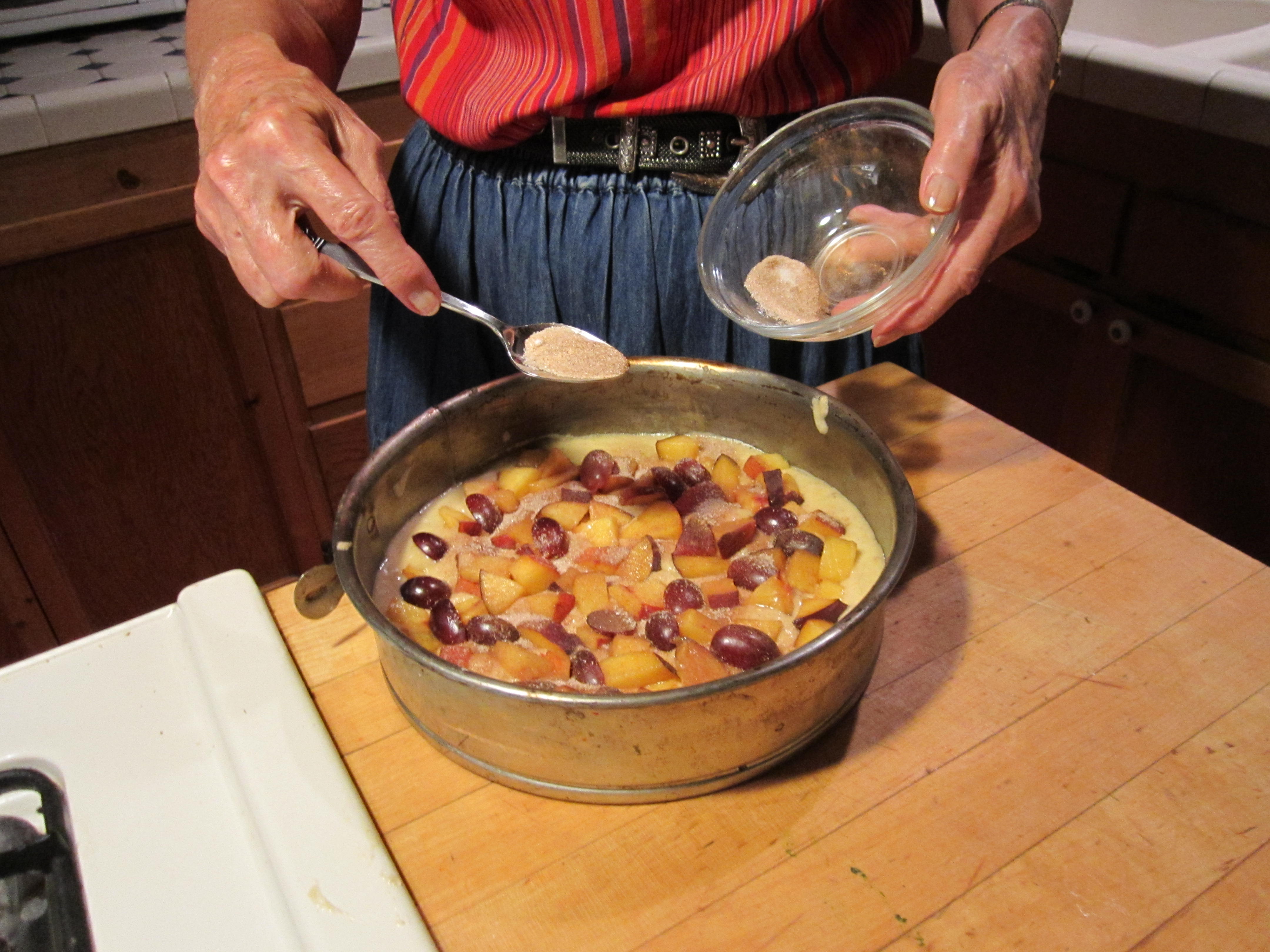
In a small bowl, stir together the topping mixture and sprinkle evenly over the cake.

Sprinkle sugar mixture evenly over cake.

Sprinkle sugar mixture evenly over cake.

Put in preheated oven for 45 to 50 minutes. As the cake bakes it will rise over the fruit. Cake is done when it is golden brown and top is firm but tender when lightly touched. Cool in the pan for around 10 minutes and then remove the sides of the pan. Serve warm or at room temperature. A little whipped cream never hurt anything.

Yummm, warm and fragrant from the oven.

Yummm, warm and fragrant from the oven.

________________________________

Want more delicious recipes using ingredients from the Southwest?  I have lots of ideas for you. In Cooking the Wild Southwest, I introduce you to 23 easily identified and delicious wild plants of the arid Southwest. The Prickly Pear Cookbook is all about the fruits and leaves of the nopal plant. In The New Southwest Cookbook, you’ll meet some of the most innovative professional chefs in the Southwest and get to try the recipes they serve in their restaurants.


Mesquite–Ancient Food for the Future

Yes, we gotta admit it—Tucson and ALL OF BAJA ARIZONA is a FOOD-COLONY!  To feed ourselves here, we currently import over 96% of our foods from out of state or out of country. If there were to be a transportation stoppage or disaster (perish the thought), we have less than 4 days’ food supply in local groceries. (info from Fry’s managers and Pima Co Emergency Mgmt.) This is a scary and sobering reality, and we need to remedy it for the good of all.
When it comes to food security in the Desert Southwest, if we are smart we’d best turn to those whose ancestors not only survived but thrived here, before European food fads invaded, and long before bio-technology pretended to save us–Let us listen to Native People!  If we look to traditional O’odham cuisine, and to that of all low-desert Traditional People in the Southwest, we learn that one of their most important and consistent staple foods was MESQUITE. Meal ground from the whole, ripe, dry pods was prepared in diverse ways by every tribal group, and stored safely against lean times, providing them amazingly tasty nutrition.

Now….its up to “newer arrivals” to the desert to expand our cultural tastes–and enjoy lessons from local tradition….

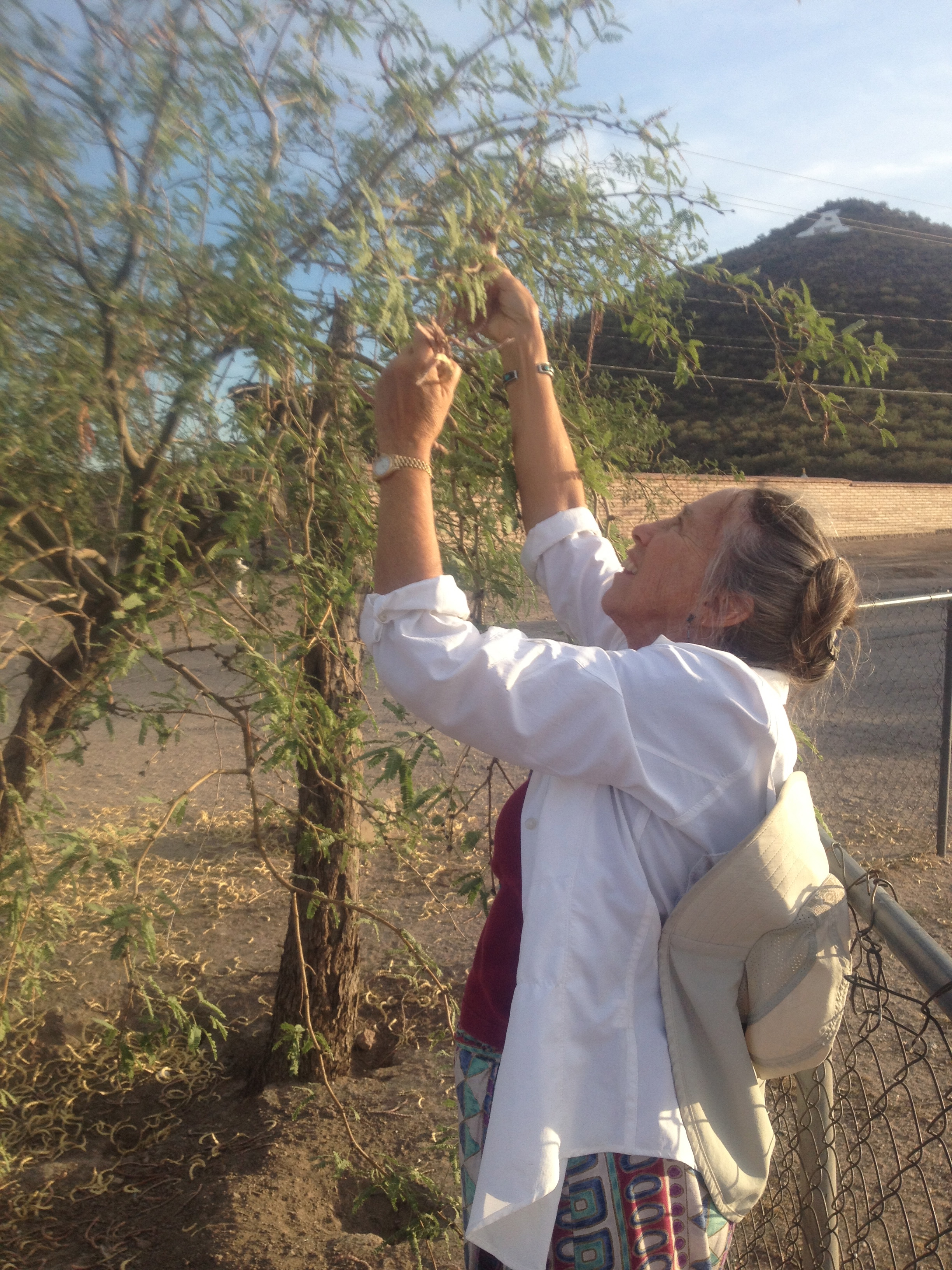
Harvesting ripe velvet mesquite pods--an old Chuk-shon tradition (RodMondt photo)

Harvesting ripe velvet mesquite pods–an old Chuk-shon tradition (RodMondt photo)

Everyone enjoys mesquite’s shade, its smokey flavoring and fuelwood in BBQs. But what about mesquite as food and food-security? Sweet and yummy are first.  Culinary versatility is up there.  Nutrition is paramount.  Recent nutritional analyses show what Native People have ALWAYS known intuitively, that mesquite’s sweetness is healthy (complex) sugars, and that it gives sustained energy (from slow-release complex carbs.)

A major plus for arid-lands food-security is that mesquite trees grow plentifully in the desert WITHOUT ANY HELP from humans. Having evolved with large Pleistocene herbivores, mesquite’s survival strategy is to over-produce quantities of tasty pods to entice mammoths or (extinct) ungulates to eat them and spread their seeds, scarified and delivered in ready-made fertilizer packages. In more recent centuries, cattle have provided a similar service to spread mesquite.  Hungry bi-peds can benefit too from mesquite’s plentiful productivity. With global climate change and the promise of expanding deserts, mesquite offers us a healthy staple food and a fitting dry-lands crop for our stressed Planet.
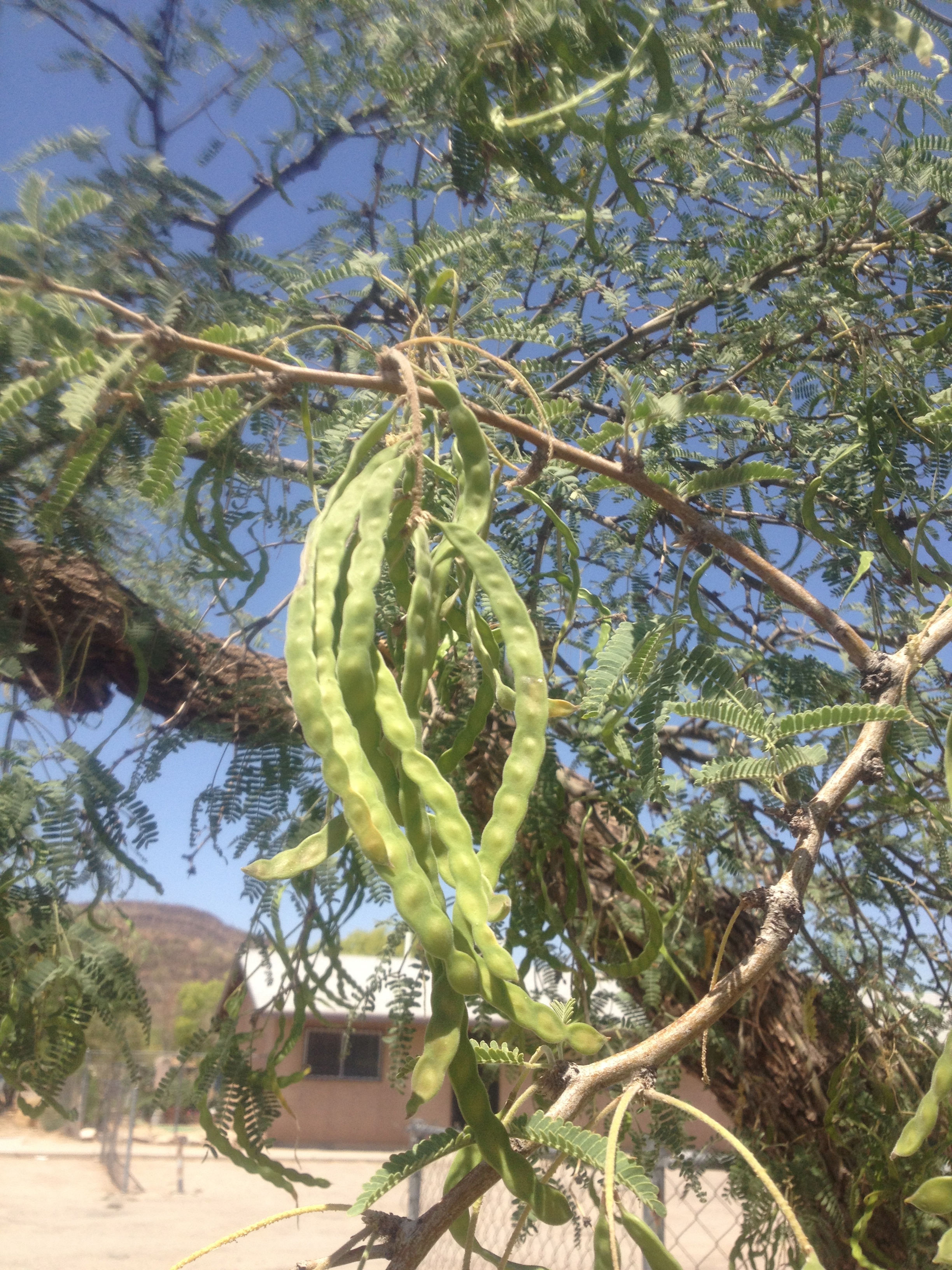
Velvet mesquite pods (Prosopis velutina) in green phase (maburgess photo)

Velvet mesquite pods (Prosopis velutina) in green phase (maburgess photo)

[Mesquite pods are ripening as I write–so heads-up!]

A most timely gathering of mesquite experts—both traditional and innovative—is about to happen at  a MESQUITE CONFERENCE open to the public and not to be missed………Attention–Novice mesquite-harvesters, cooks and culinary artists, bakers and chefs, nutritionists and clinicians, ranchers, farmers, gardeners, athletes and fitness fans, survivalists, nature buffs, climate-change planners…. this conference is for you.

MESQUITE: NEW AGRICULTURAL TRADITIONS FOR AN ANCIENT FOOD  will be held in Benson, Arizona, all day Friday, June 13, 2014, at the Cochise College Campus, 8:30am-4pm.
There will be talks by leading Mesquiteros, including traditional Tohono O’odham harvester Clifford Pablo, new crops innovator Dr. Richard Felger, the one and only mesquite agronomist Mark Moody, wild-harvester Amy Valdes Schwemm, creative desert rancher Dennis Moroney, animal feed expert Dr. Howard Frederick, desert foods ethnobotanist Martha Ames Burgess, and Cooperative Extension outreach educator Mark Apel.

In addition, generously sharing their knowledge, techniques and recipes will be demonstrators, including desert foods writer Carolyn Niethammer, wild-food teacher Barbara Rose, solar cooking expert Valerie McCaffrey, mesquite millers from San Xavier Farm Coop and Tohono O’odham Community College, and children’s book author Laurie Melrood. This is the place to contact producers of mesquite meal for your home cooking, for nouvelle local-source eateries, and breweries. Get your tastebuds ready for samples of delectable new culinary mesquite delights!
Sponsored by Baja Arizona Sustainable Agriculture and University of Arizona Cooperative Extension, with extra support from USDA Western SARE, we have been able to keep the registration fees to a minimum– accessible to anyone. $30 covers the whole day conference including luncheon ($20 for students or members of BASA). Space is limited so register soon. Registration is online via the BASA website http://www.bajaaz.org. For further info call 520-331-9821.
Once registered, please group your travel plans in carpools. For carpooling ideas check out the Native Seeds/SEARCH or BASA facebook sites. Let’s not let anyone miss this conference who needs to be there!


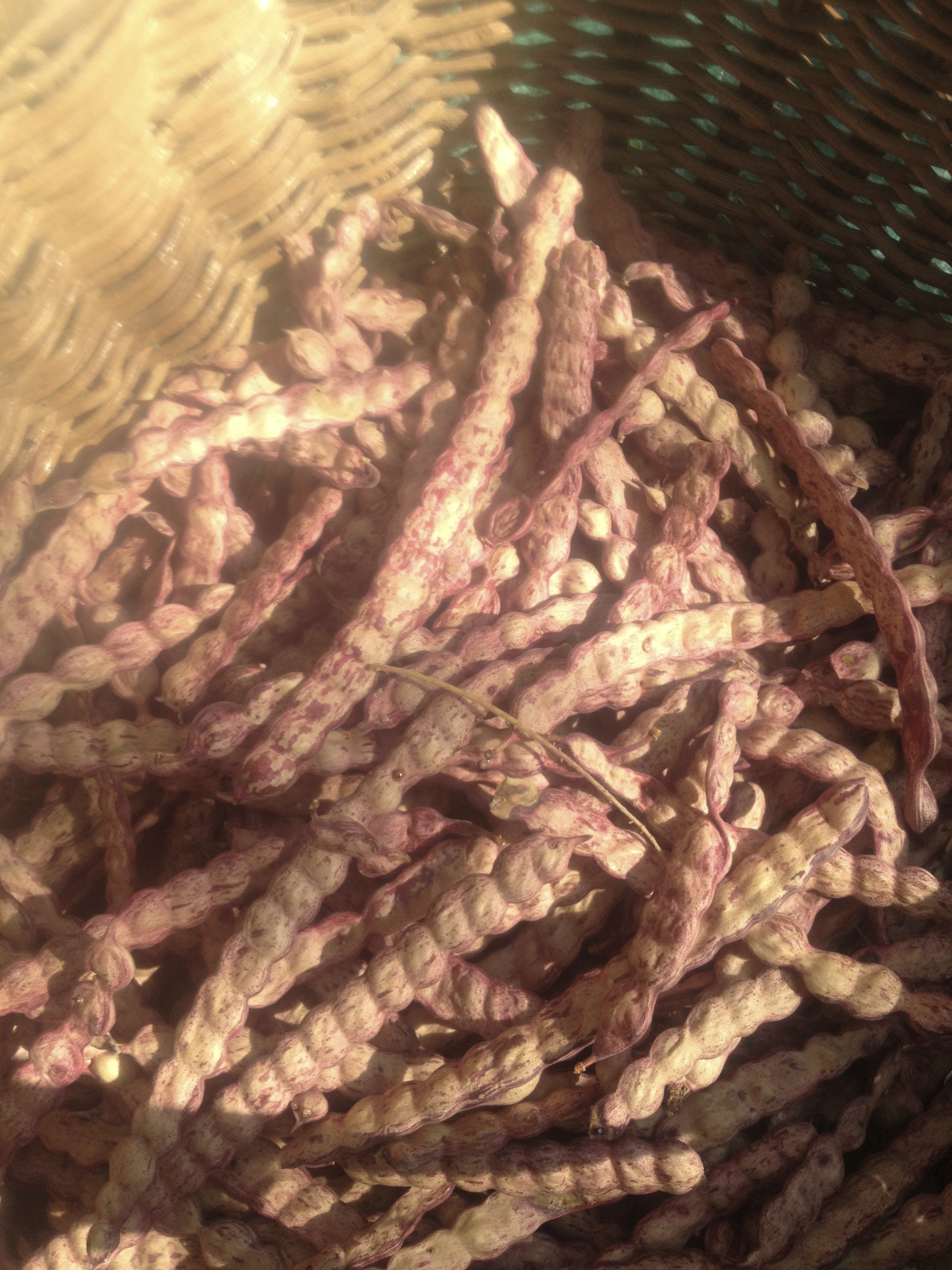
Select sweet velvet mesquite pods dry and ready to grind (maburgess photo)

Select sweet velvet mesquite pods dry and ready to grind (maburgess photo)


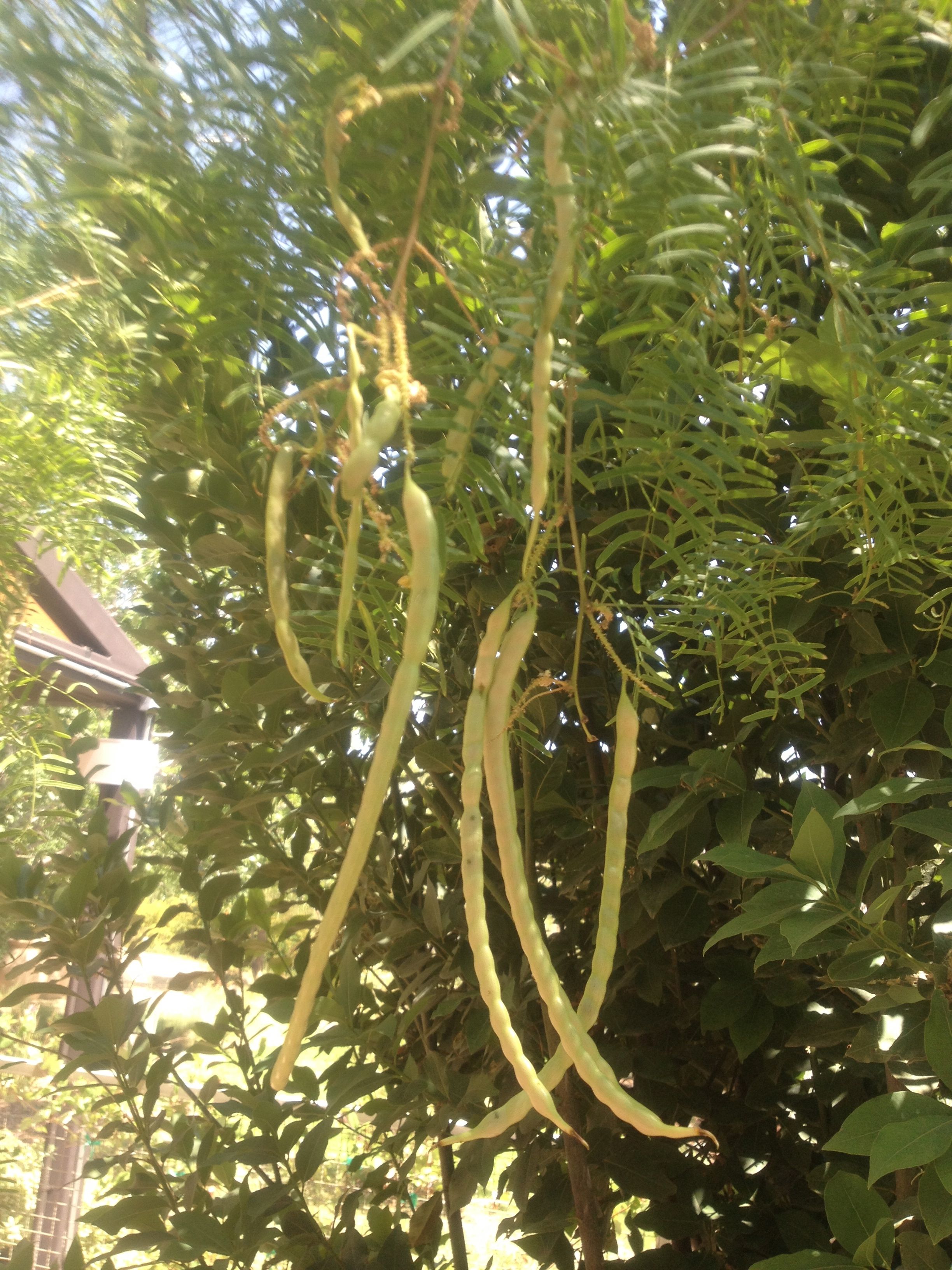
Delicious honey mesquite (Prosopis glandulosa) with ripening pods.

Delicious honey mesquite (Prosopis glandulosa) with ripening pods.

ADDITIONAL MESQUITE HAPPENINGS–Plan to Harvest, Plant, and Celebrate Native Bean-Tree Abundance Before the Rains…

DESERT HARVESTERS is organizing events to help people dramatically enhance the quality of their mesquite pod harvests, what to make with them, and how to better sync with the Sonoran Desert’s seasonal cycles in a way that enhances our shared biome.
We are teaming up with local culinary businesses to increase offerings of native foods in their cuisine, and to encourage landscaping with native food plants in water-harvest earthworks beside their buildings.

Mark your calendar for Thursday June 19, 2014!

Guided Mesquite Harvests and Plantings
Hosted at the Santa Cruz River Farmers’ Market
100 S. Avenida del Convento, Tucson, AZ

5pm harvest on foot, 6pm harvest by bicycle
Led by Desert Harvesters including Amy Valdés Schwemm and Brad Lancaster
$5 to $10 per person (sliding scale)

These hands-on harvest tours show you how to:
• Identify and sample the best-tasting mesquite trees
Every tree is different, but some varieties are consistently much better than others. Taste the differences. (We will also likely harvest from desert ironwood and palo verde.)
• How to harvest safely, ethically, and responsibly
Harvesting pre-rains is best practice to avoid invisible toxic mold. Harvesting from the tree avoids fecal or fungal ground contamination. Check out http://www.ediblebajaarizona.com/calling-all-mesquiteros/ for more on why pre-rain harvests are the traditional practice, and so important.
• Use cool tricks such as the harvest cane.
• How and when to plant the best bean trees
Participants are encouraged to bring sun protection, reusable water bottle, and carry-bags for harvested pods.

Iskashitaa, an organization that helps resettled refugees integrate into the Tucson community, will be offering their beautiful hand-made harvest bags and fresh-squeezed juice from fruit they’ve gleaned. Also there will be AravaipaHeirlooms’ prickly pear pops and chiltepine-infused cold brews from Exo Roast Co.

Bean-Tree Processing Demonstrations
Before and/or after the Guided Harvests and Plantings
4pm to 7pm–FREE
Taught by Barbara Rose, desert foods farmer/fermenter/cook extraordinaire of Bean Tree Farm (see their website for more awesome workshops), will show you how to turn milled or whole desert ironwood seeds, palo verde seeds, and mesquite pods into tasty dishes. Native foods such as mesquite flour, cactus fruit pops, drinks, syrup, and cholla buds will be available for sale, along with seeds and seedlings of the best-tasting native bean-trees and chiltepines.

AND THEN DON’T MISS Sunday, June 22, 2014!

Pre-Monsoon Mesquite Milling
Sunday, June 22, (alert–in the event of rain, it will be moved to Sunday, June 29)
6am to 10am
Bring Your Own Pods!
Pods for milling must be clean, dry, and free of mold/fungus, stones, leaves, bugs and other debris. Cost: $3/gallon of whole pods, with a minimum of $10.

Also at the milling event:
• A native wild foods demonstration – highlighting what’s in the wild-harvest season now
• Exo’s mesquite-, mole-, and chiltepin-infused coffees
• Mesquite baked goods and cactus fruit popsicles
• Seeds and seedlings of select native bean trees and chiltepines — so you can plant yours in time for the rains.

Our thanks to hosts Exo Roast Co. and Tap & Bottle,
403 N. 6th Ave.,Tucson, AZ
Harvesters’ Happy Hour at Tap & Bottle
Come join fellow harvesters in fermented merriment. Tap & Bottle will have local brews on-hand, some infused with local native ingredients. And they will donate a percentage of all the sales to Desert Harvesters. Learn more online at: http://www.DesertHarvesters.org


Mesquite can help us into a food-secure future– fittingly, sustainably, healthily, and sweetly– as we face heating and drying of our desert home.  What a gift mesquite is, as we begin to declare our independence from being a FOOD-COLONY!

Desert Mistletoe for Food and Fun

Jacqueline Soule here today to discuss a edible “weed.”  Most people associate mistletoe it with kisses and winter holidays. Sad to say, here in the desert southwest, many homeowners think of our local mistletoe as a weed to be eliminated from their trees. In reality, they should be thinking of it as a crop to be harvested!

Phoradendron_californicum_6 by Stan Shebs

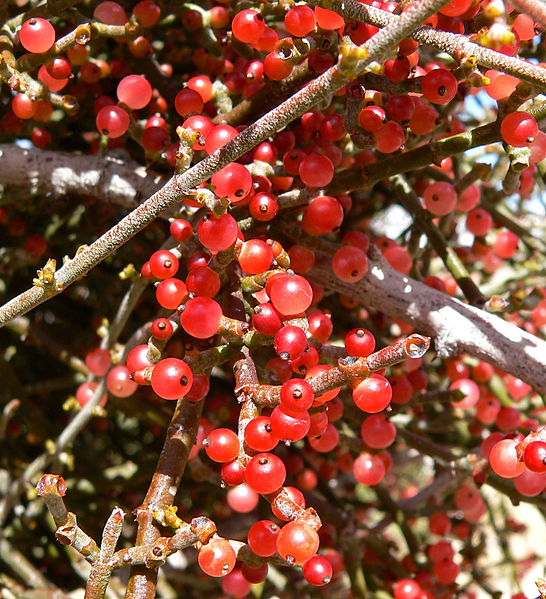
Desert mistletoe fruit is the only mistletoe fruit that is edible. Photo by S. Shebs.


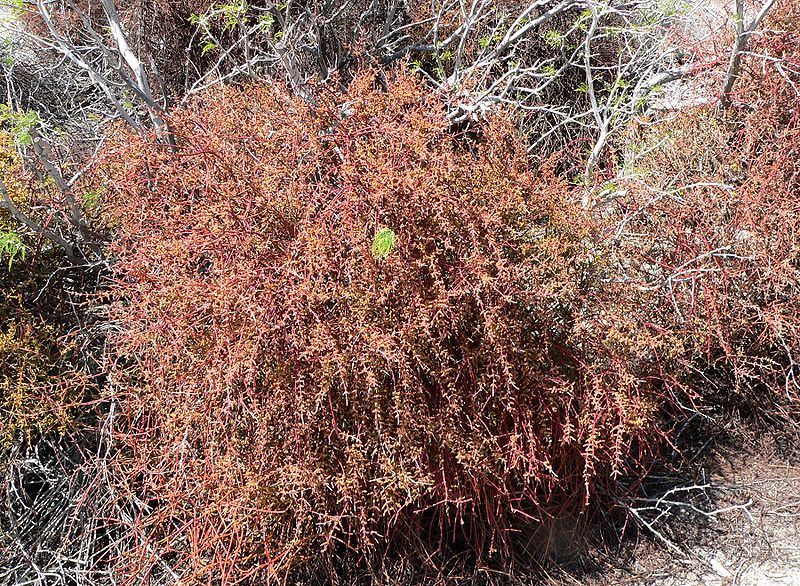
There are many species of mistletoes around the world. The mistletoe plants themselves are all toxic. The berries of most species are toxic. The one exception is our local desert mistletoe, Phoradendron californicum, bearing not only edible but highly palatable white to reddish translucent berries. Native peoples ate only the fruits of mistletoes growing on mesquite, ironwood or catclaw acacia. Found growing on palo verdes or Condalia (desert buckthorn) the fruits are considered inedible.


Phoradendron_californicum_1 by Stan Shebs

Plants of desert mistletoe can become quite large and offer a bountiful harvest of berries. Photo by S. Shebs.


According to literature, the Seri consider mistletoe fruit ripe and harvestable once it turns translucent. Harvest is done by spreading a blanket below the plant and hitting it with sticks to release the fruit. Seri consumed the fruit raw. The Tohono O’odham also consumed the fruit raw. River Pima ate the fruit boiled and mashed, which made it the consistency of a pudding. The Cahilla gathered the fruits November through April and boiled them into a paste with a sprinkle of wood ash added to the pot.  (Bibliography at the end of this article.)

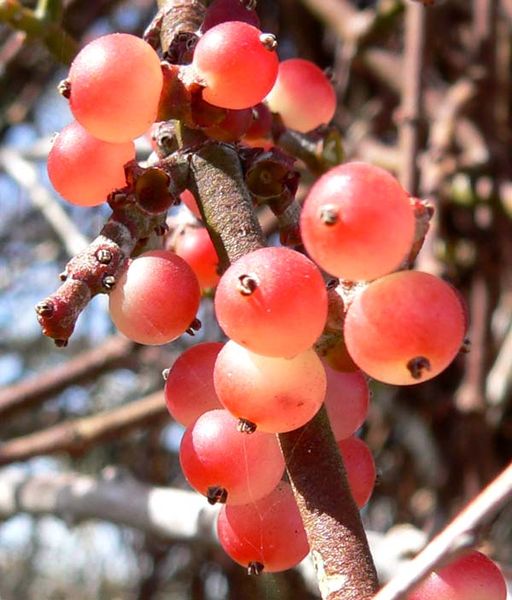
Some desert mistletoe are more red and less translucent.  This is just normal variation within the species.  Photo by S. Shebs.

Some desert mistletoe are more red and less translucent. This is just normal variation within the species. Photo by S. Shebs.


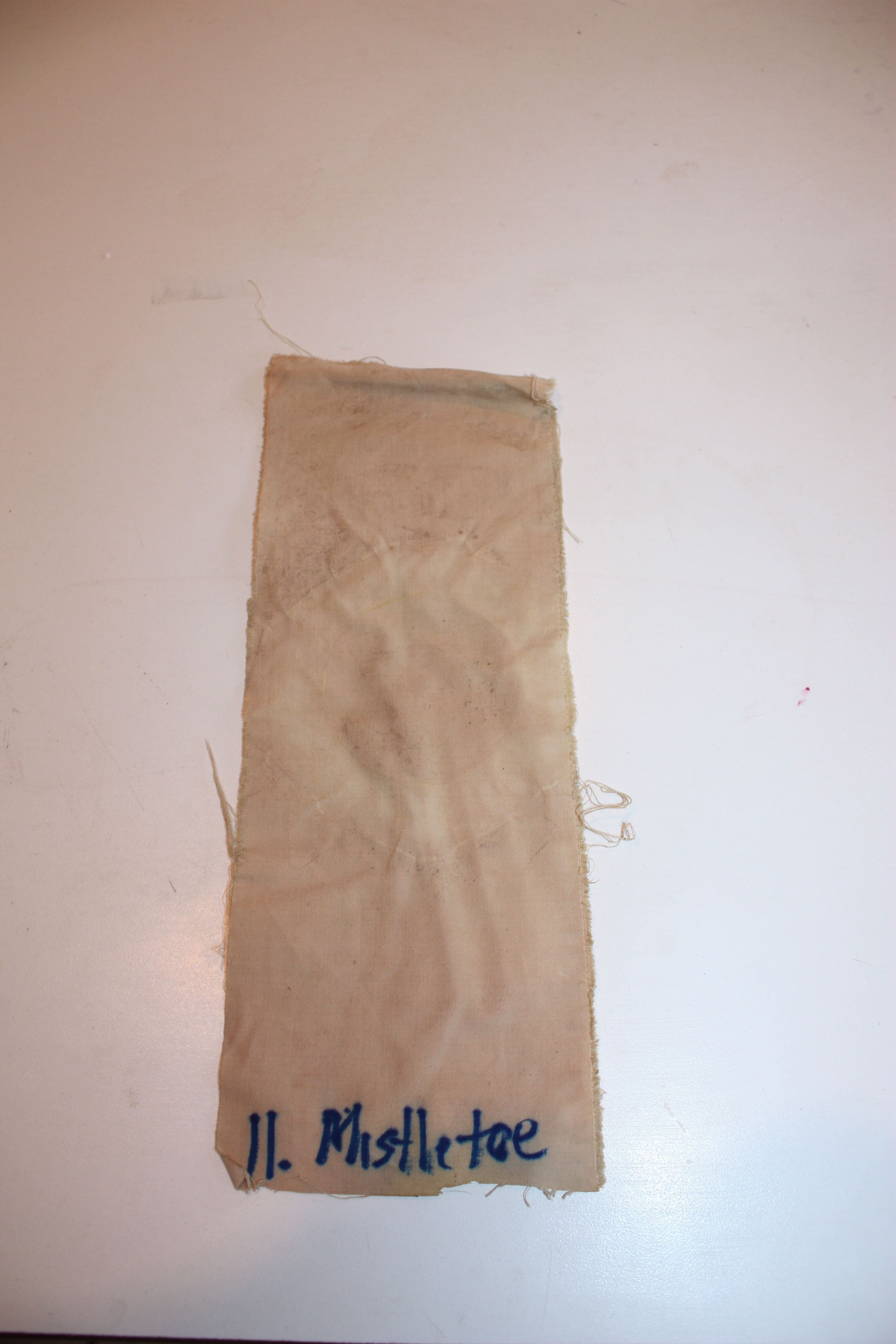
By the way, desert mistletoe plants (not the fruit) contain phoratoxins which can easily lead to death via slowed heart rate, increased blood pressure, convulsions, or cardiac collapse. Some of these compounds can cause hallucinations, but there is no way to judge dosage. People seeking a “high” from mistletoe still turn up in morgues each year. Native peoples used plants other than mistletoe to seek visions, and if one desires visions, one would be wise to follow their example. Although toxic, if used in a well-ventilated place, the foliage of desert mistletoe can be used in crafts and as a dye, producing a pale beige to dark sienna.

Mistletoe dye on cotton

Mistletoe dye on cotton. Photo by J. A. Soule


Harvesting and Use.

Mistletoe berries are ripe once they turn translucent and you can generally see the red seed inside. They also become soft and squishy, losing their hardness. Watch the phainopeplas, when they start devouring berries, then the fruit is ripe! I have only eaten the berries fresh, and find them reminiscent of elderberry in flavor. I was going to experiment with making a jelly this year, but missed my window of opportunity.

When ripe, the berries turn translucent and fall off the plant easily. Photo by S. Shebs.

When ripe, the berries turn translucent and fall off the plant easily. Photo by S. Shebs.


As a dye, mistletoe plants themselves are used. They can be fresh or dried. Place the herbage in the pot, cover with water, bring to a boil, strain. Add an alkalizing agent (ammonia) to intensify the color. You can dye both protein fibers (wool, silk) and plant fibers (cotton) with this solution. Ideally mordant with alum prior to dyeing, but post-mordant baths also work.

paper with desert plants 004

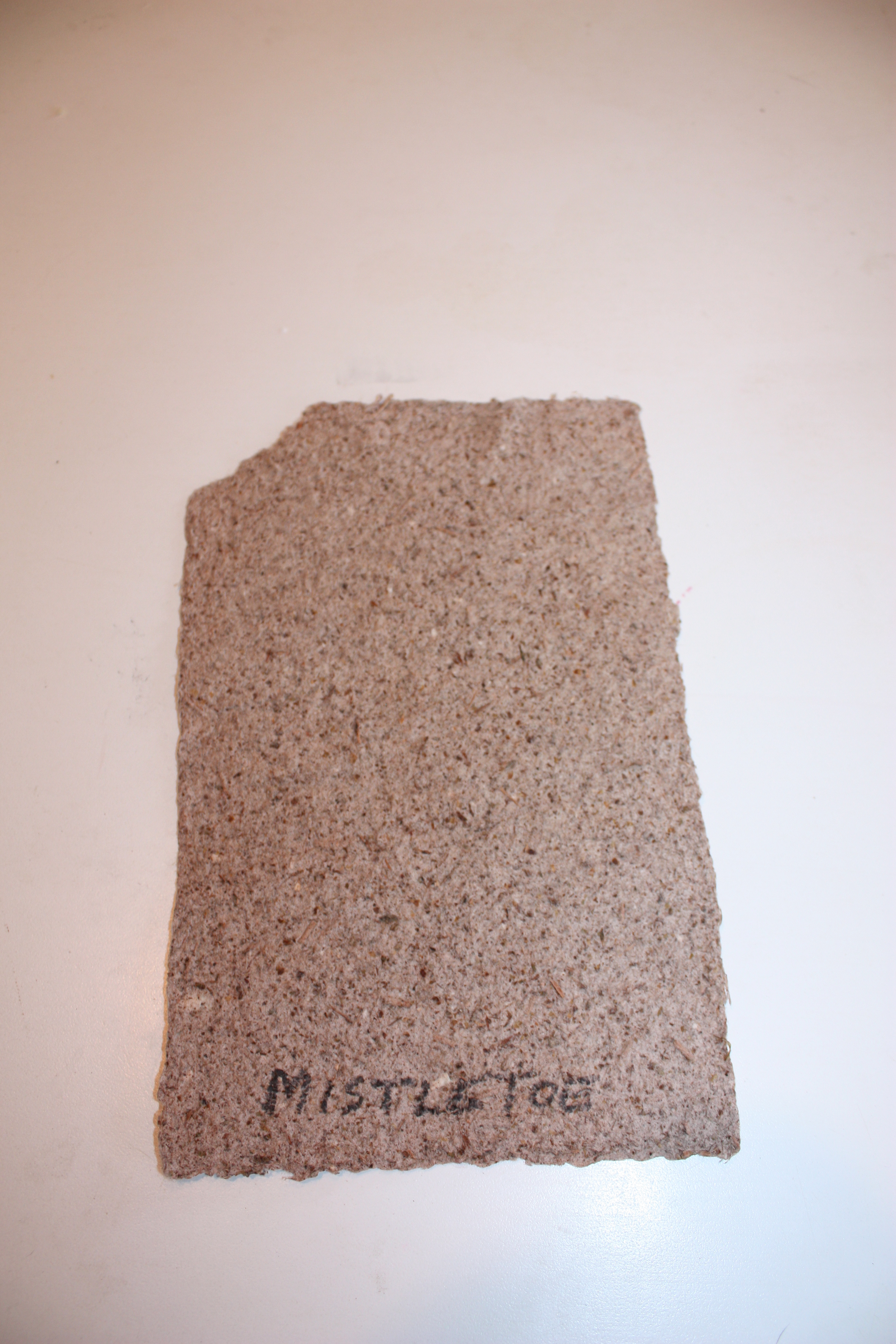
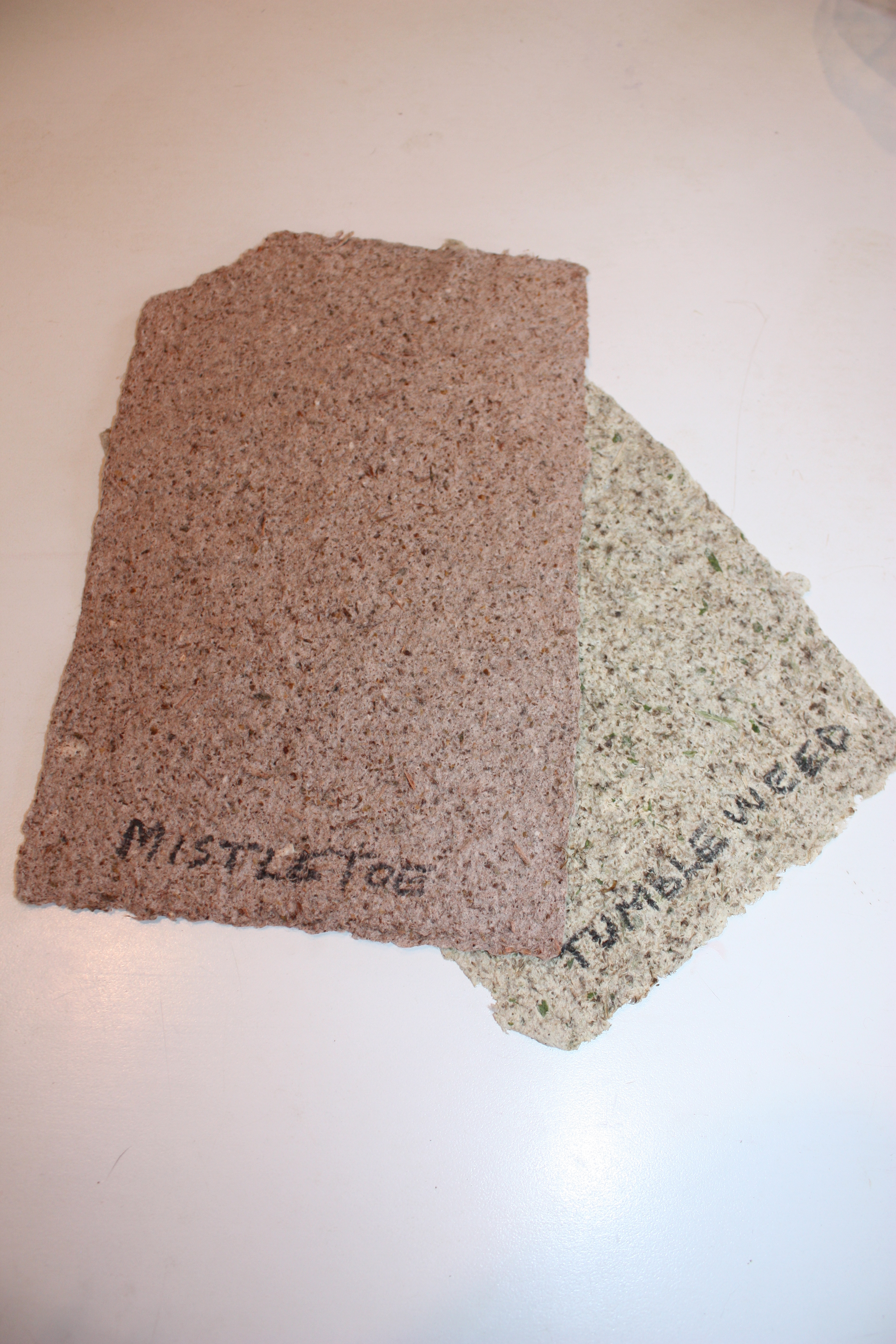
A blend of half paper pulp and half mistletoe plant material yields a nicely textured craft paper. Photo by J. A. Soule.


paper with desert plants 002

All manner of desert plants can be used in papermaking. Photo by J. A. Soule


Rather than discarding the spent mistletoe herbage from making dye, I have frozen it for later use in papermaking. Grind the cooked mistletoe in a blender and mix it half and half with paper pulp to create a lovely, rough-textured, craft paper with a warm brown hue.


Note: This month I have been looking at desert mistletoe in some of my other online articles.

Desert mistletoe and human use is presented here, the third in a series on the topic.
Desert mistletoe and wildlife can be read at: http://www.beautifulwildlifegarden.com/?s=mistletoe
Desert mistletoe as part of a native garden caan be read at: http://nativeplantwildlifegarden.com/?s=mistletoe

This article copyright Jacqueline A. Soule, 2014. The topic is covered more extensively in my book “Father Kino’s Herbs: Growing and Using Them Today” (2011, Tierra del Sol Press, $15). If you live in Tucson, I hope you will consider purchasing a copy locally at Antigone Books, Arizona Experience Store, Magic Garden, Mostly Books, or Rillito Nursery.


For the last eight months, Savor the Southwest has been brought to you every week by four Savor Sisters, me (Jacqueline), Tia Marta, Aunt Linda and Carolyn. Look for our fifth Savor sister, Amy Valdes Schwemm will make her first appearance in June, otherwise she will return to post whenever a month has five Fridays.


Bibliography for this article
Felger, R. S. and M. B. Moser. 1985. People of the Desert and Sea. University of Arizona Press, Tucson, AZ.

Hodgson, W. C. 2001. Food Plants of the Sonoran Desert. University of Arizona Press, Tucson, AZ.

Kearny T. H. and Peebles R. H., et al. 1960. Arizona Flora. University of California Press, Berkeley, CA.

Rea, A. M. 1997. At the Desert’s Green Edge. University of Arizona Press, Tucson, AZ.

Tohono O’odham Nation (s.d.). When Everything Was Real: An Introduction to Papago Desert Foods. Tohono O’odham Nation, Sells, AZ.


© 2014, Jacqueline Soule.  All rights reserved. I have received many requests to reprint my work. My policy is that you are free to use a very short excerpt which must give proper credit to the author, and must include a link back to the original post on our site. Please use the contact me if you have any questions. JAS avatar

Decorate Using Your Southwestern Yard

Holiday time again.  Many people stress out, wanting everything to be perfect.  Others stress out due to family interactions — old and new.  Almost everyone overspends their budget, another source of stress.  It’s easy to tell yourself that you are going to be relaxed this year, but far harder to do it.

Numerous studies demonstrate that the relaxation process is helped by connecting to the natural world.  This is great news for us living here in the sunny southwest.   Take a sanity break in your own back yard, and ideally, bring some of the nature outside into your home.

Fill a vase with evergreen boughs.  Prune your evergreens, or volunteer to do those of a neighbor.  Pines such as Aleppo and Afghan pines are commonly sold as living Christmas trees and make lovely yard trees.  They typically need little pruning (one of their attractions as a yard tree), but you may be able to find some branches that need trimming.  Stores that sell fresh Christmas trees may let you have some trimmed boughs to decorate with.

There are a number of other evergreen cousins.  Trees and shrubs commonly called cypress, cedar and juniper were all typically planted in older neighborhoods.  All will last a week or so in a vase.  Try to find branches with the bright blue “berries.”   Actually the “berries” are tiny cones, and the seeds inside are well loved by many local birds.

Greens don’t have to be traditional holiday evergreens either.  Technically, any plant that does not drop its leaves is an evergreen.  Rosemary is evergreen, and it is related to mint.  Citrus trees are evergreen, and make lovely additions to indoor arrangements.  Pyracantha doesn’t lose it’s leaves in winter and is adorned with bright reddish berries right now.  Nandina, also called heavenly bamboo has red berries and green leaves as well.  The Texas mountain laurel tree is evergreen with silvery seed pods.  One of my favorites to bring indoors is boughs of our native creosote bush.  All of these will last at least a week in a vase and look very festive.

Yule logs are a British Isles tradition.  A mesquite log can take the place of a Christmas tree.  Glitter can be sprinkled into the bark crevices.  Use a drill to bore several holes for candles.  Decorate with evergreens and bows.  If you want to be traditional, the Yule log is burned on Epiphany, January 6th, or in an older tradition, on the Winter Solstice, December 21st.  Do not burn the evergreens when it is time to light your Yule log.  The evergreens are full of highly volatile oils and can cause a house fire instead.

Above all, remember to relax and enjoy the season.  Old expectations may rattle their chains and try to haunt you, but take it easy, and take it slow.  Surround yourself with as much as possible with the natural world.  When you start to feel stressed, take a deep breath, and rest and refresh your eyes and spirit with the beauty of nature.

If you would like help with care and planting of your yard, I work as a “Garden Coach” helping you get the most out of your yard.  Please contact me, Jacqueline, at 909-3474.  Feel free to leave a voice message.

Pear and Mesquite: A Perfect Combo

Mesquite Ginger Pear Tart Ready for the oven.

Mesquite Ginger Pear Tart Ready for the oven.

Hello everyone.  This is Carolyn Niethammer and this is my week for the Savor the Southwest blog.

With mesquite millings happening all over Arizona, it’s time to plan for what you’ll make with your delicious mesquite meal.  Pancakes are fine for mornings at home, but when you are headed for a holiday potluck, something a little special is required to show how attuned you are to our desert foods. This Mesquite Ginger Pear Tart fills the bill.  I adapted the recipe from an old Joy of Cooking recipe for an apple cake. This is better! Ginger, a warm spice, always goes so well with mesquite.

I give you the recipe at the bottom, but here are the steps.  Works best if you have a springform pan so you can remove the sides of the pan from the finished cake without disturbing the topping. However if all you have is a regular cake pan, just carefully tip it over onto a plate, then flip it back.  You may have to reposition a few nuts, but it will taste great.

First make the batter.  Use your fingers to push it to the edges of the pan.

Spread the cake batter with your fingers.

Spread the cake batter with your fingers.

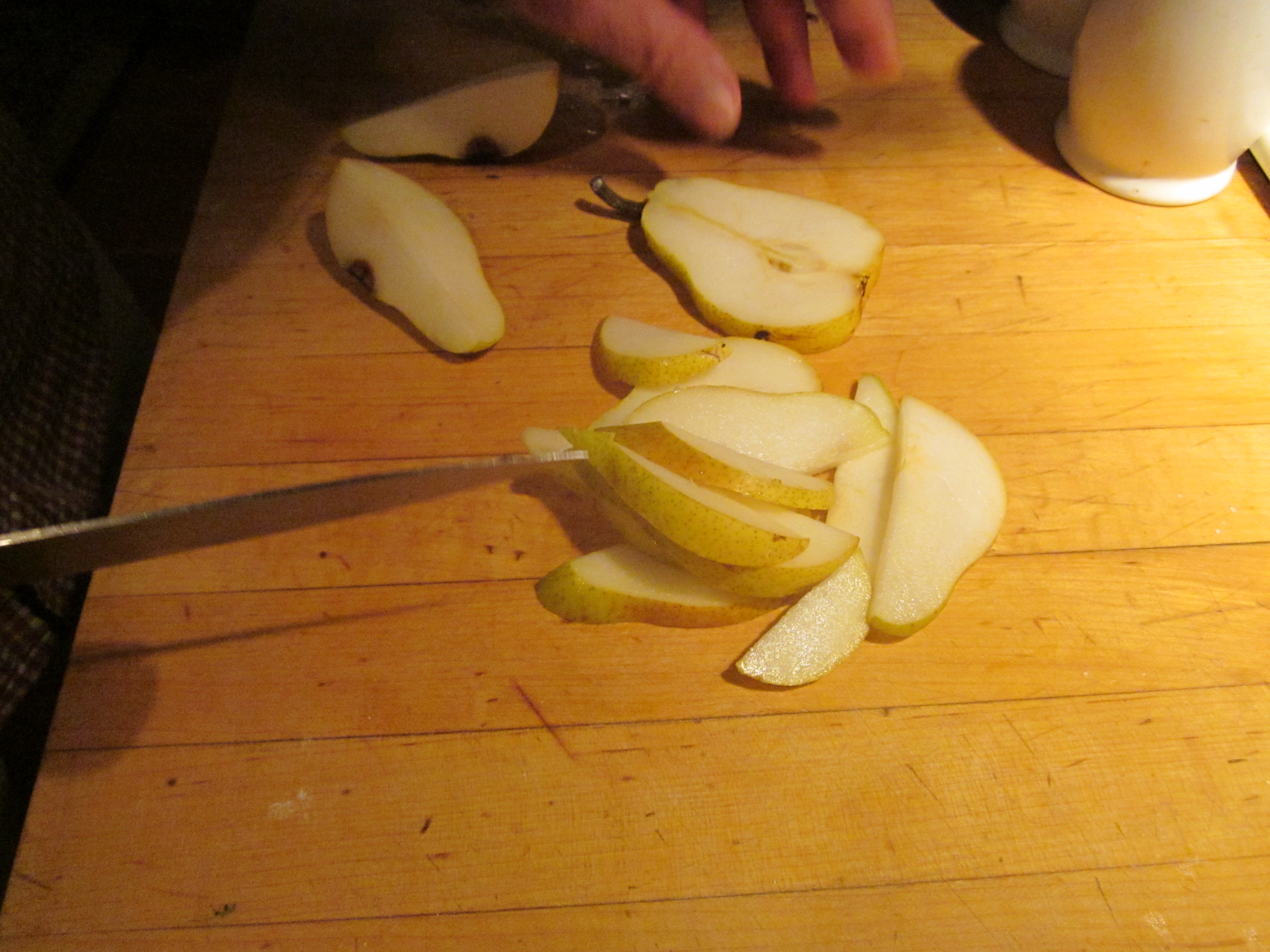
Cut a perfectly ripe pear into quarters, then into nice even slices.

IMG_0938

Arrange the pear slices on top of the batter.

Make a pretty pinwheel pattern with the pear slices.

Make a pretty pinwheel pattern with the pear slices.

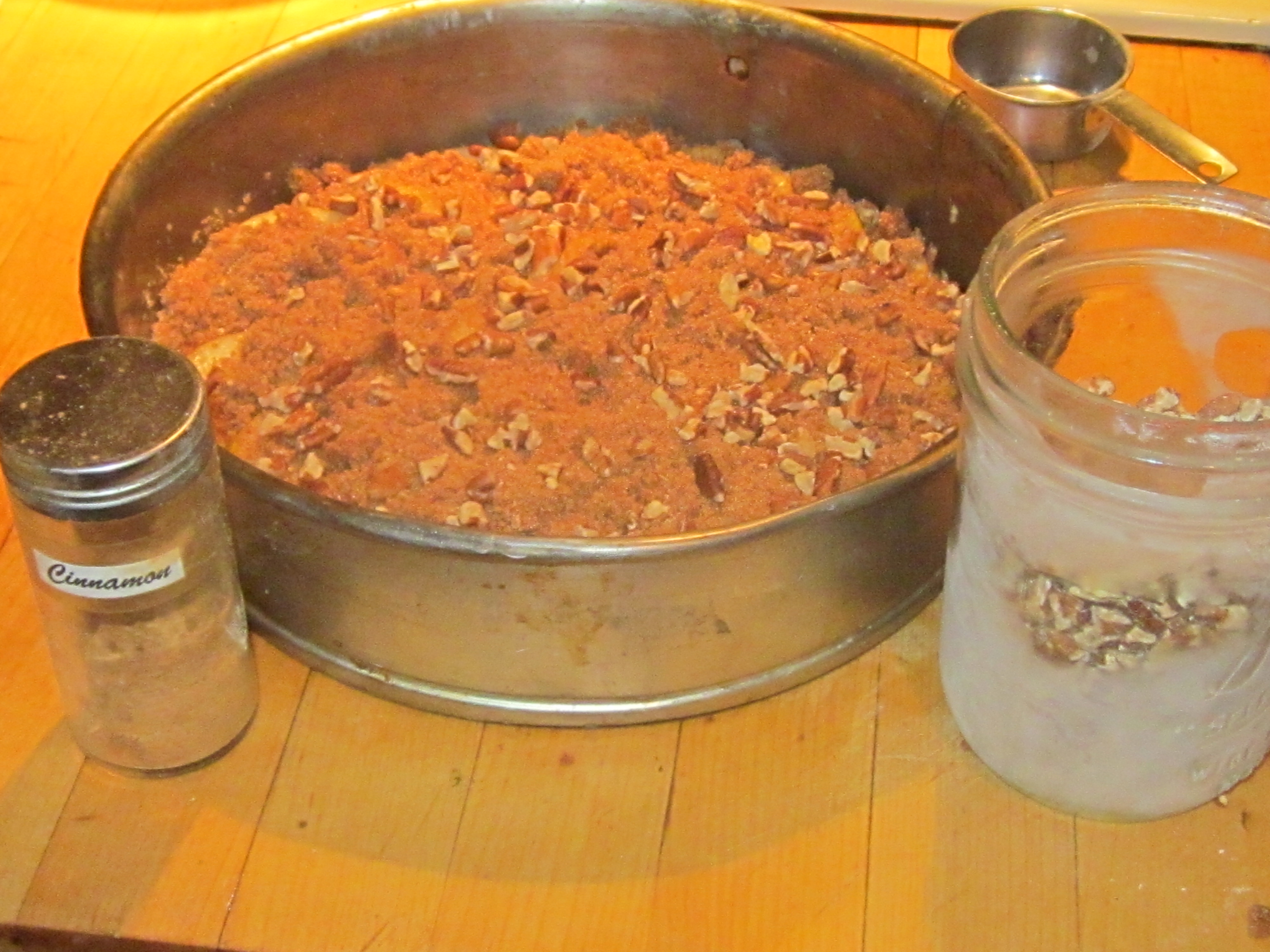
Mix the topping and sprinkle over the pear slices.

Crumbly topping will add sweetness and crunch to your cake.

Crumbly topping will add sweetness and crunch to your cake.

After baking, cool and remove from the springform pan.

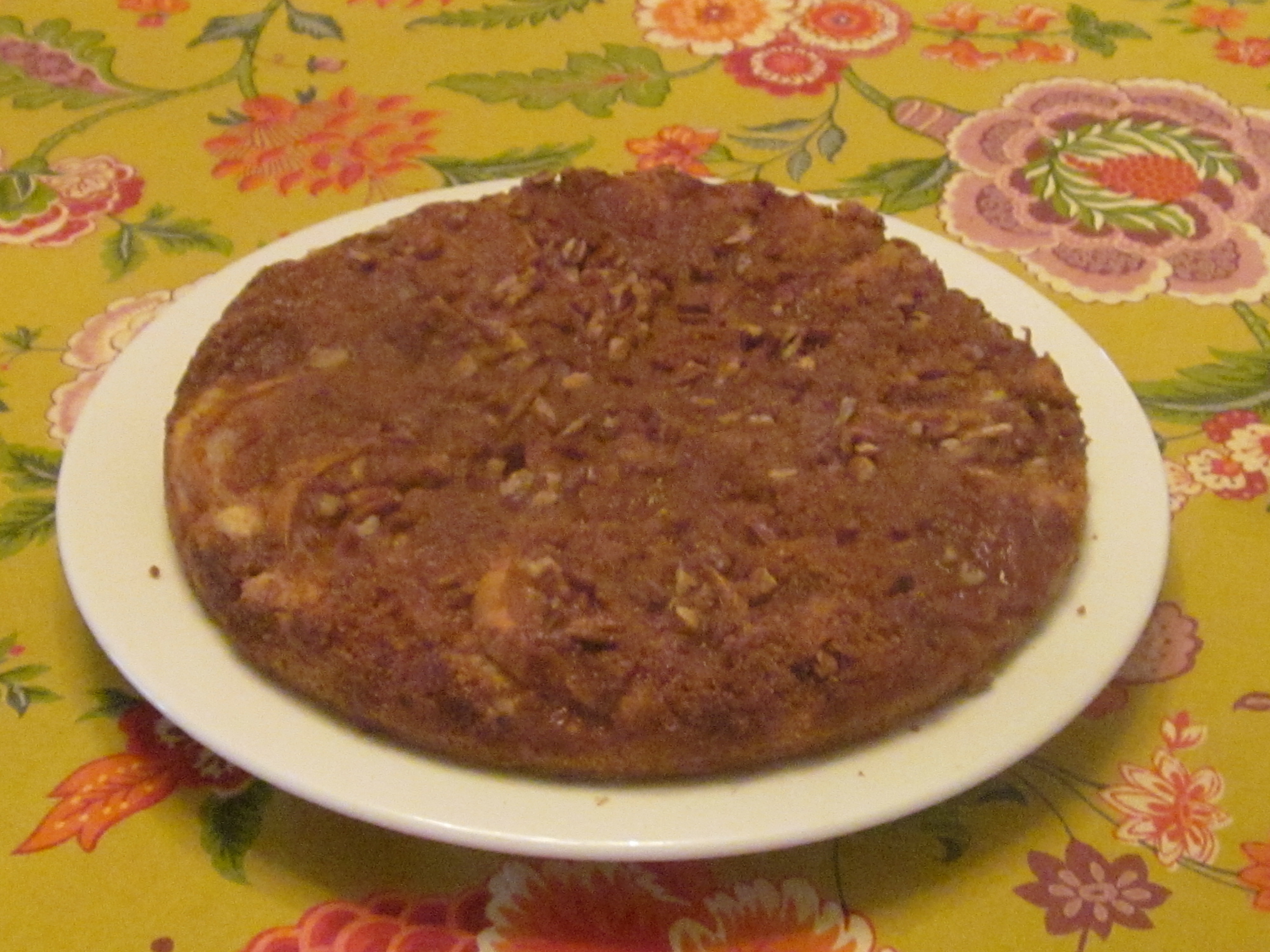
Fragrant Mesquite Ginger Pear Cake.

Fragrant Mesquite Ginger Pear Cake.

Now that you know the method, here’s the recipe:

Mesquite-Ginger Pear Cake

1 cup flour

¼ cup mesquite meal

3/4 teaspoon ground ginger

¼ teaspoon salt

2 tablespoons sugar

3 tablespoons butter

1 egg

½ teaspoon vanilla

¼ cup milk

2 large pears, sliced

Topping:

½ cup sugar

¼ cup mesquite meal

3 tablespoons melted butter

¼ cup chopped pecans or walnuts

Prepare a 8- or 9-inch springform pan by lining with a buttered piece of paper cut to fit the pan. Preheat oven to 425 degrees F.

In a medium bowl, combine flour, mesquite meal, salt and sugar.  Fluff with a fork until well combined. Add the butter and rub with your fingers or cut with a pastry blender until butter is worked in.

In a glass measuring cup, put the ¼ cup milk and then beat in the egg and vanilla. Stir into the dry ingredients to make a stiff batter.  Press into the prepared pan with spatula or your dampened fingers. Arranged sliced pears in a circular pattern on top of batter.

In a small bowl, mix the ½ cup sugar, mesquite meal, and melted butter.  Sprinkle evenly over cake and pears. Top with chopped nuts. Bake in preheated oven for about 25 minutes. Remove sides of pan and cool. Serve with a dollop of whipped cream.

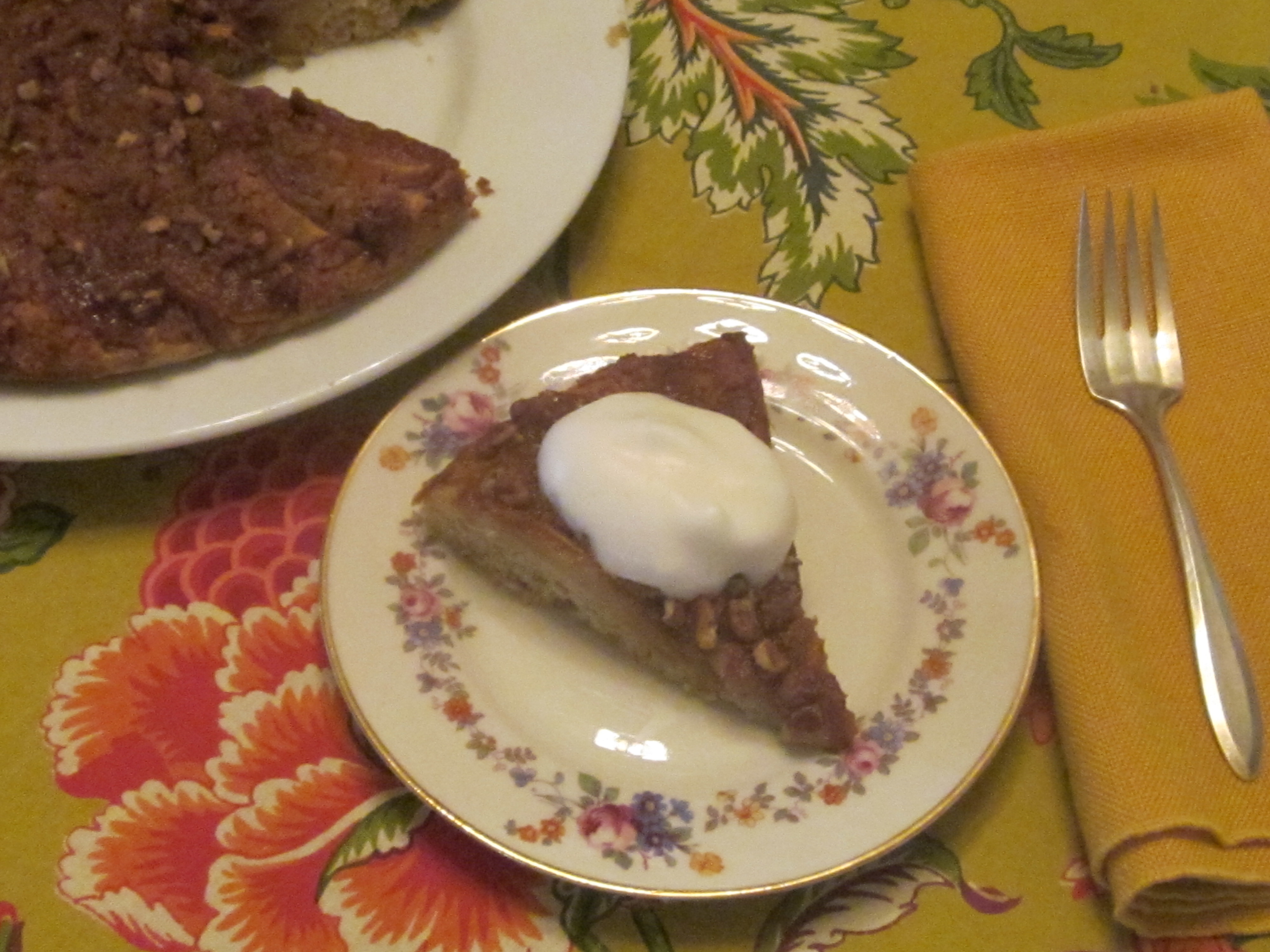
Delicious slice of Mesquite Ginger Pear Tart.

Delicious slice of Mesquite Ginger Pear Tart.

********************

Looking for more ideas to use your mesquite meal? Check out Cooking the Wild Southwest: Delicious Recipes for Desert Plants.  It includes recipes for 23 easily identified and gathered plants that grow all over the Southwest.