A Holiday Crackers Challenge!

Have you noticed that a box of crackers is costing a whole lot more these days than it used to?–especially if you’re wanting specialized grains or herbed flavors? Why not “save” and make my own? Right! I’ve had a hankering for cracker flavors you just can’t find at the grocery, a lust for crackers made with our super-nutritious Southwest flours and herbs. So…fortified with locally-sourced materials, I searched cracker recipes to guide me, but I batted almost zero–so few recipes are out there. I took this dearth as a challenge. Tia Marta here to share some of my cracker experiments–and to challenge YOU to invent your own holiday crackers!
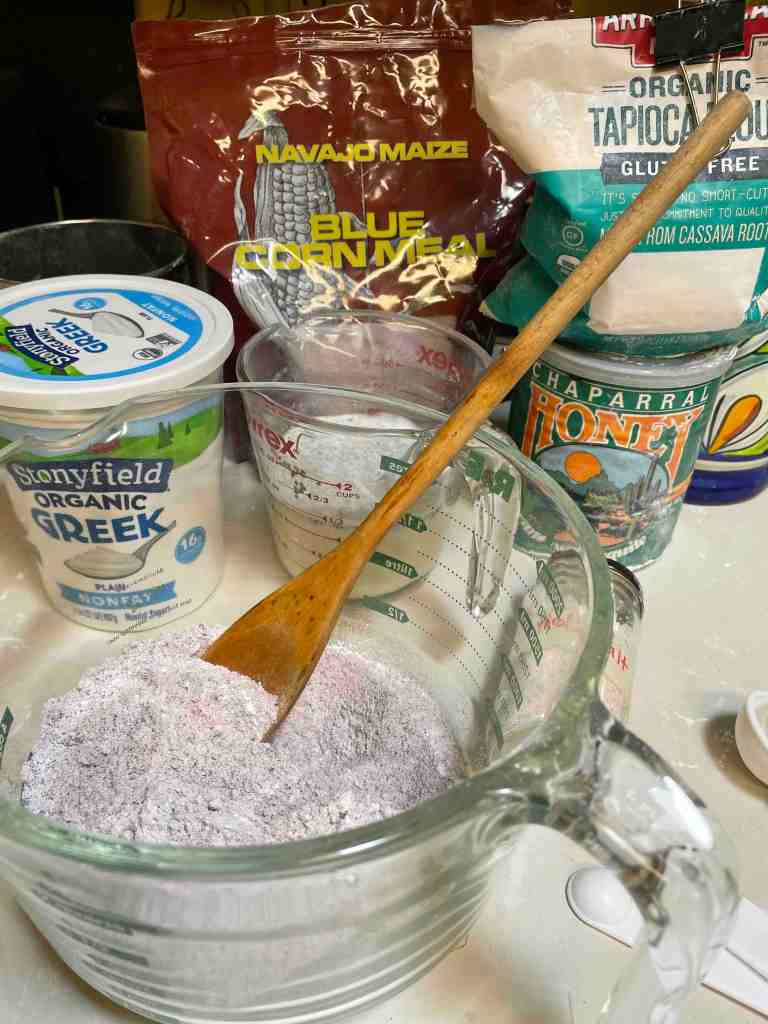
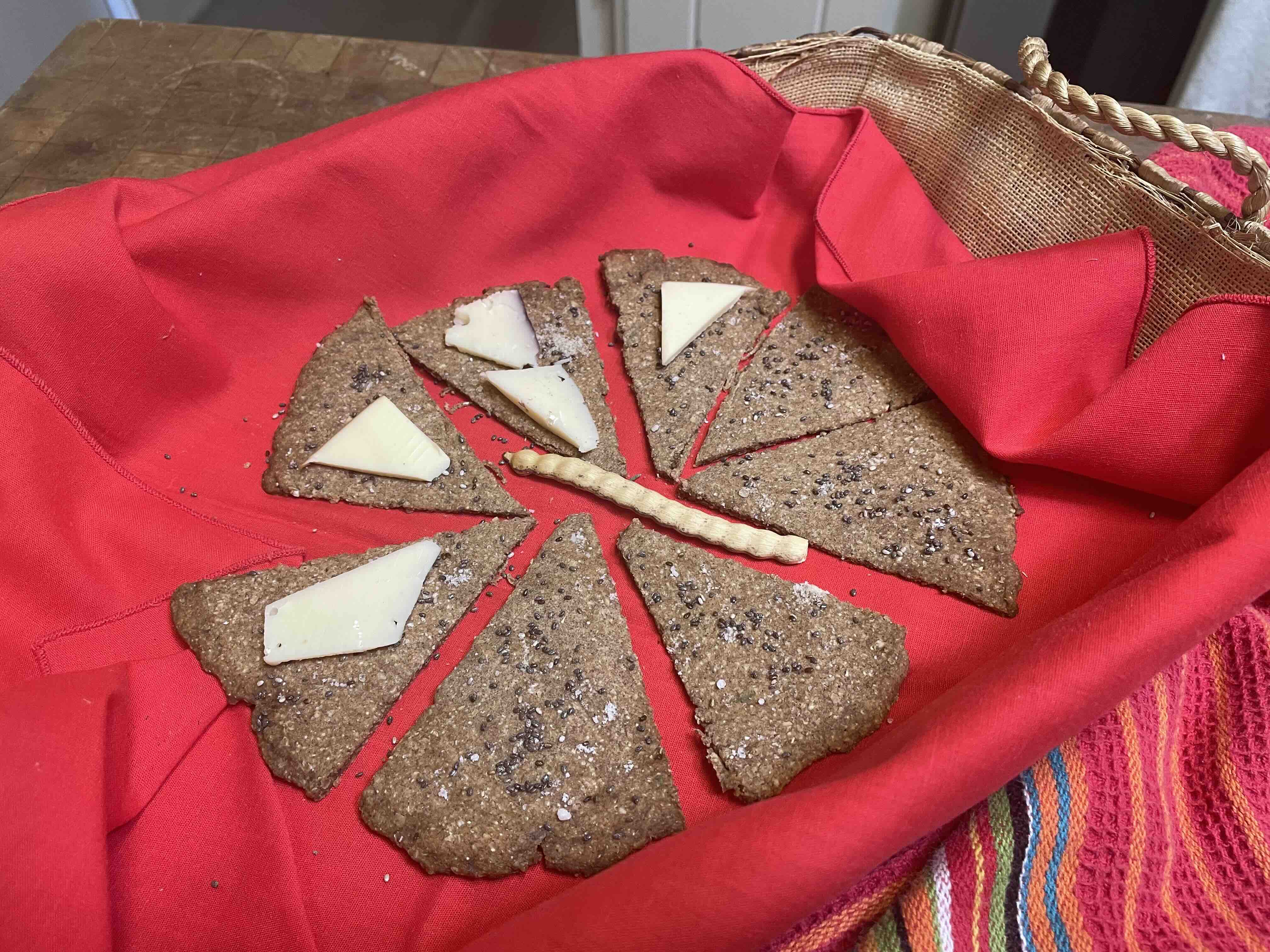
This is fun new territory. First with the goal of a gluten-free Southwest cracker, I took on Native blue cornmeal as the major delicious ingredient, with tapioca flour and chia seed as “binders”.

Recipe for Gluten-free BlueCorn-Amaranth-Chia Crackers:

Ingredients:

3/4 Cup blue corn meal (available from NativeSeedsSEARCH)

3/4 Cup tapioca flour

1/2 Cup amaranth flour 

1/2 tsp baking soda

1/2 tsp sea salt (I used salt from Baja California)

2 Tbsp non-fat plain yogurt (Greek yogurt can be a no-fat substitute for butter)

3/4 Cup lowfat buttermilk

1 Tbsp. chia seed

1 Tbsp mesquite honey (optional, amaranth flour can be a little bitter) (or a generous glob of honey on a teaspoon)

You’ll need a greased pizza pan and a greased rolling pin.

Place half the dough in center of a greased pizza pan. With your fingers press the dough down and outward. Your goal is to create a thin 1/8″ layer of dough on the pan. Using a greased rolling pin, flatten the dough out from the center. Use fingers to push the the thinnest edges back to a uniform thickness, or edges will scorch in the baking. Carefully cut the thinned dough with a sharp knife into squares, and make holes with a fork to even the heat. Bake 8-10 minutes or until you see a toastiness. With a metal spatula, lift the hot crackers off the pan right away to cool.
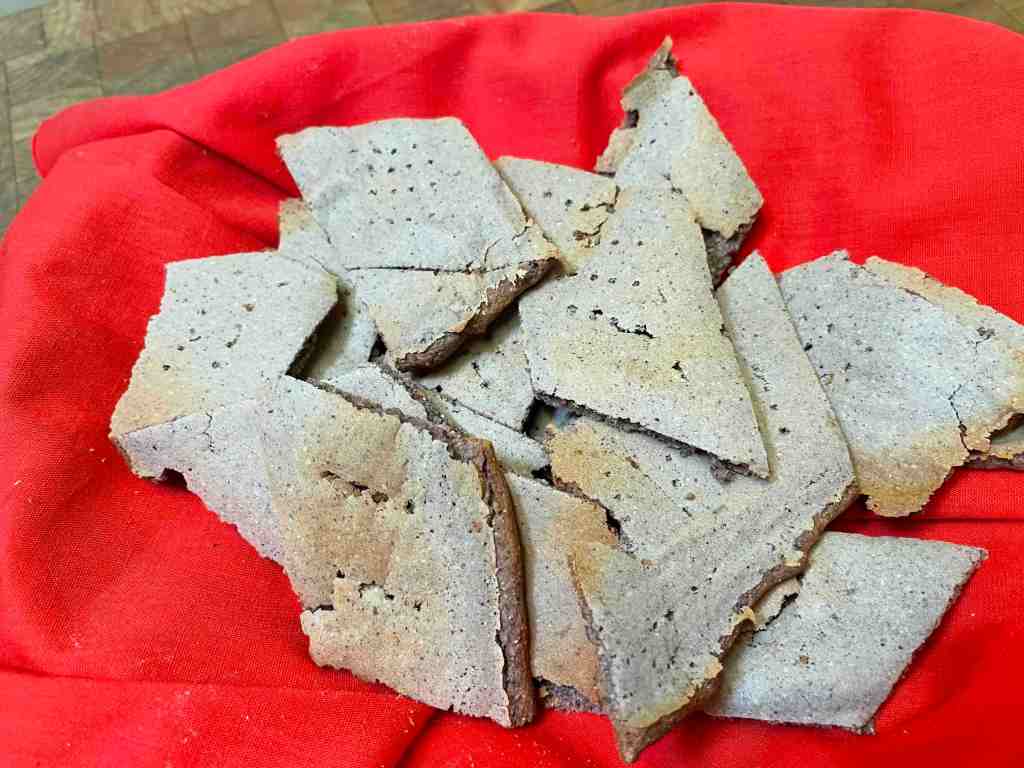
Enjoy nutritious gluten-free BlueCorn-Amaranth crackers with thin slices of membrillo, or with a creamy cheese–a new taste treat with a hint of sweetness.

You’ll see more pictures of the cracker dough prep-process below.
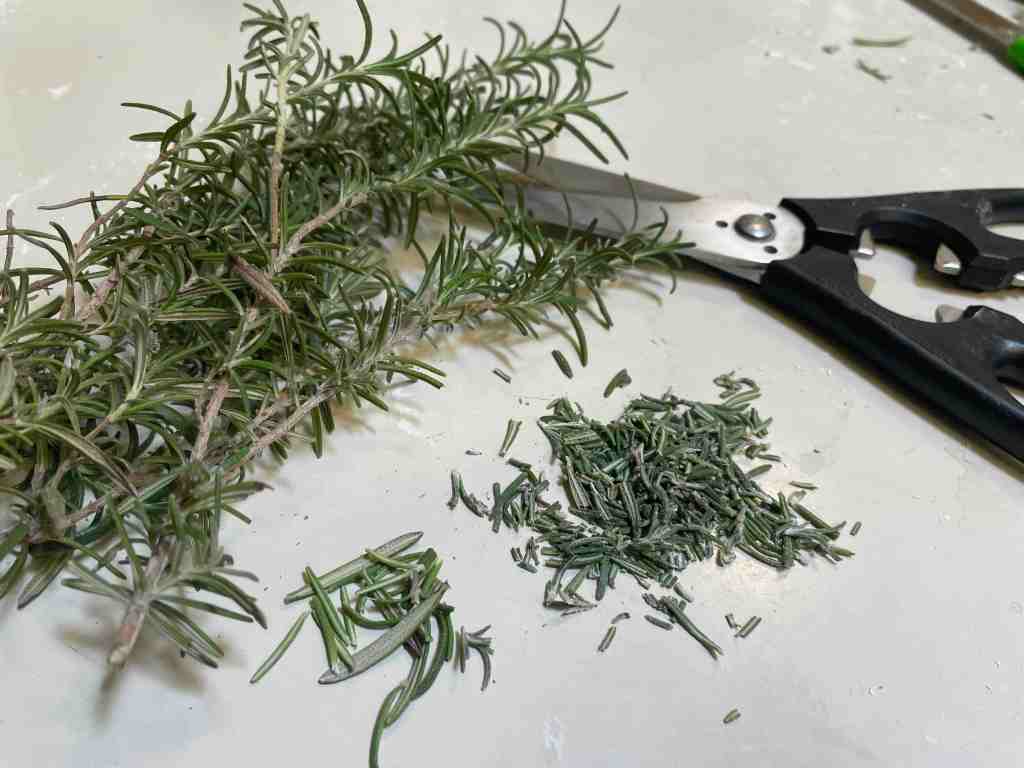
Inspired by rosemary-flavored flatbreads, I decided to try making a rosemary mesquite cracker with local heirloom wheat. Our garden supplied the fresh rosemary to cut into edible bits…. This local combination came out great:

Recipe: ROSEMARY-MESQUITE-PIMACLUB WHEAT Crackers

Ingredients:

3/4 Cup barley flour

1/2 Cup Pima Club wheat flour (from Ramona Farms, Sacaton, AZ)

1/4 Cup mesquite pod flour (any more than this will become too strong a flavor)

1/2 tsp baking soda

1/2 tsp fine sea salt (I used Sea of Cortez pilgrimage salt crystals collected by a friend)

1/4 Cup oat bran

2 Tbsp non-fat plain yogurt

1/2 to 1 Cup low-fat buttermilk

1/2 tsp glob of mesquite honey (optional)

Optional “topping” suggestions: 1/8 tsp additional, dry, finely chopped rosemary leaf; 1/8 tsp crystallized sea salt; 1/2 tsp barrel cactus seed or saguaro seed; 1/2 tsp popped amaranth seed; 1 Tbsp grated aged cheddar

You’ll need a greased pizza pan or baking sheet, and a greased rolling pin.

Directions (similar to previous recipe):

Preheat oven to 350F.  Pre-soak rosemary bits in buttermilk to enhance flavor.  Sift together all dry ingredients except the oat bran.  Add oat bran separately as it will not pass thru sifter easily.  Cut yogurt into dry ingredient mixture.  Add buttermilk mixture gradually until dough is firm–not liquidy.
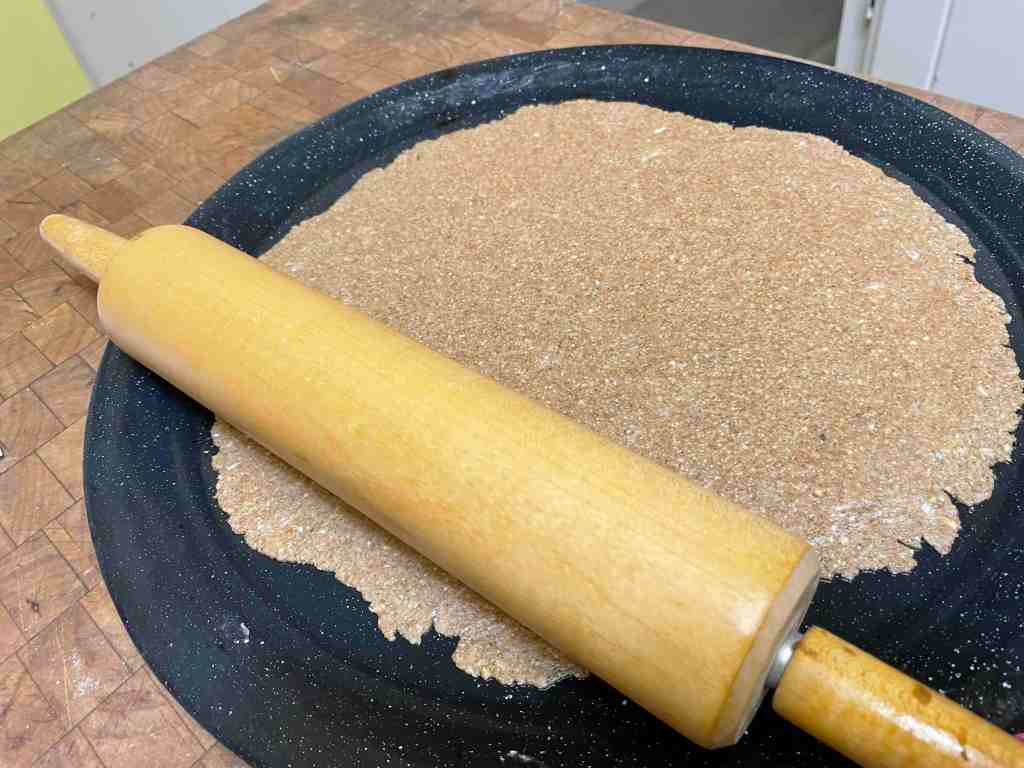
Place half the dough in center of greased pan and roll outwards until very thin and even (approx 1/8″ thickness). Be sure to tuck edges back to be equal thickness as center.
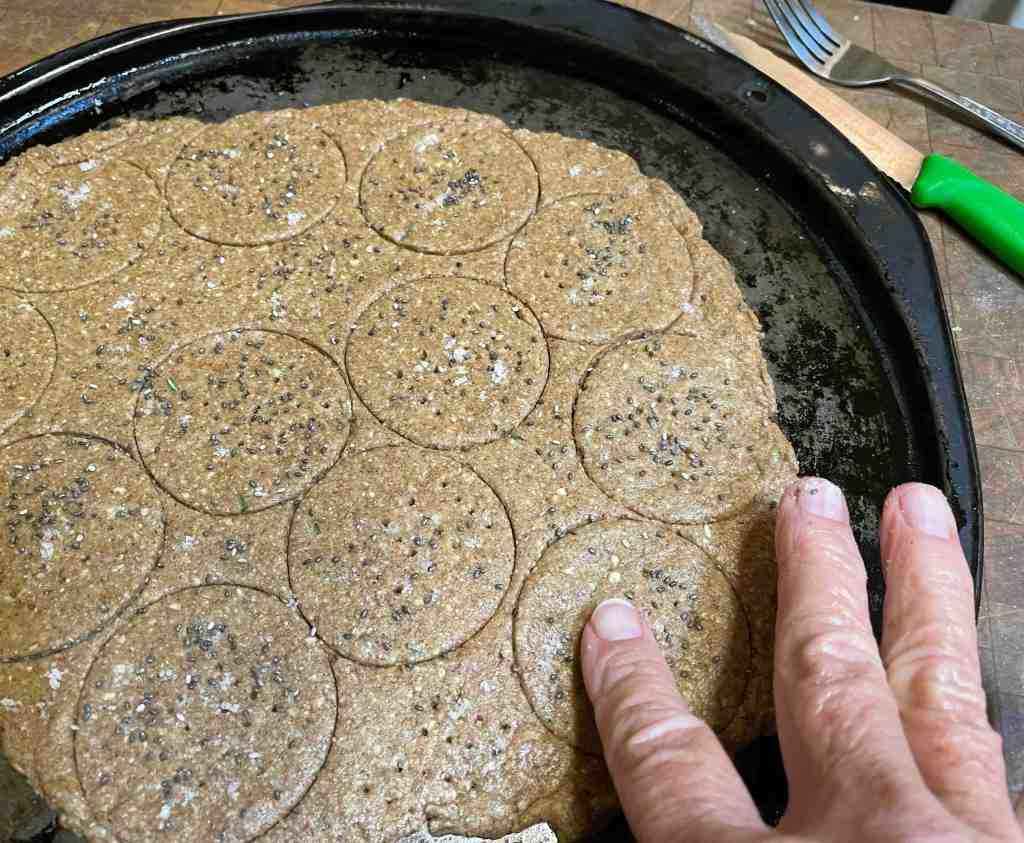
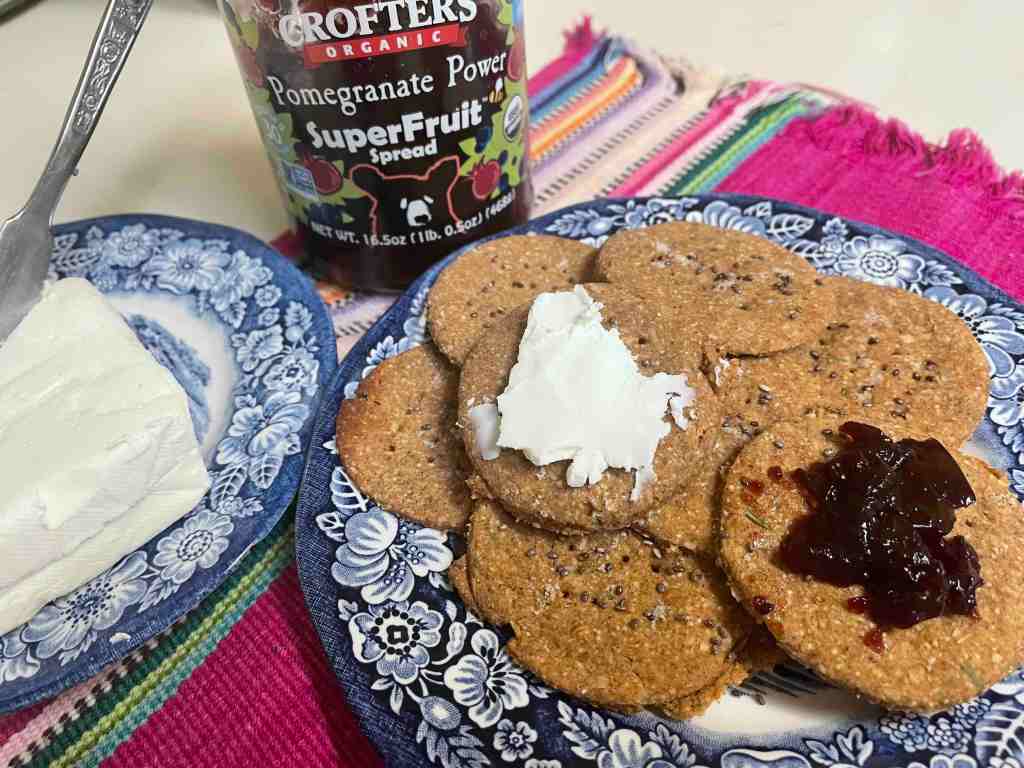
Sprinkle top of thinned dough with your desired topping. Here I’ve used rosemary bits, crystals of sea salt, and a sprinkle of chia. Pat the “topping” into the dough with your fingers so it will stick when baked. For this batch I used a cookie cutter through the rolled dough to make round crackers.
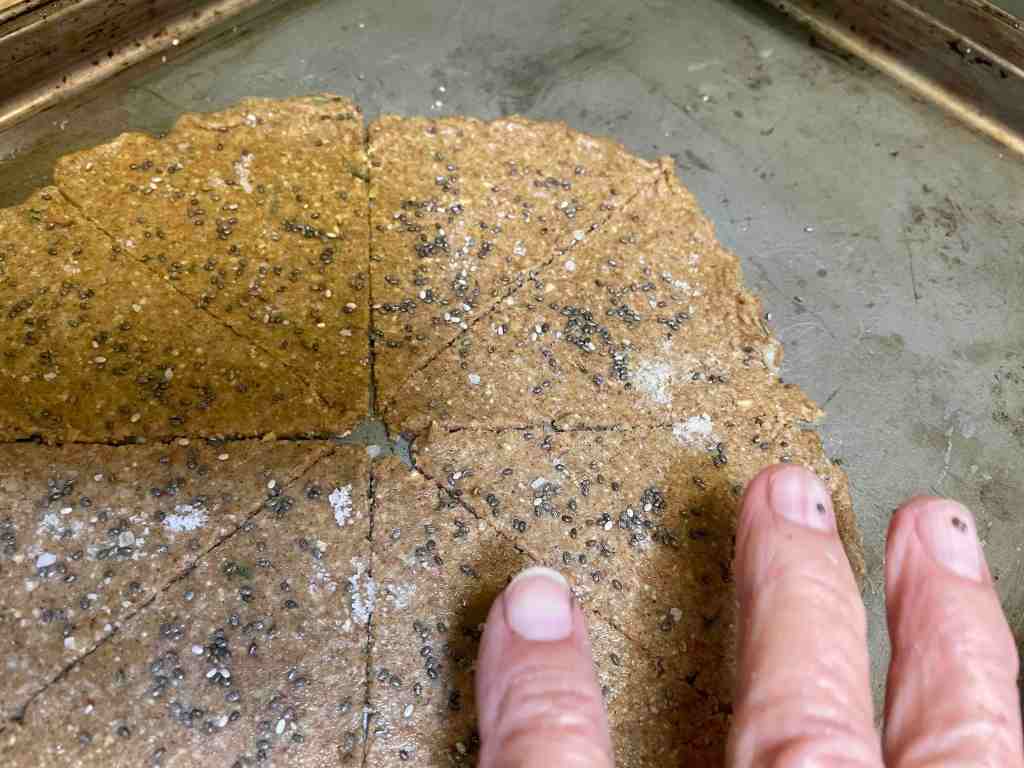
With the other half of the dough I used a greased rectangular pan which confined the rolling pin action to only two directions. Here I formed the dough into a thin circle to make “pie” wedge crackers.
Bake 8-10 minutes and check to see that the crackers have crisped. With metal spatula lift them from pan immediately to cool.

These Rosemary-Mesquite-PimaClub Wheat crackers are savory and pair well with cream cheese and jam, or as a foundation for colorful holiday canapes.

Lots of work goes into making crackers! But if our wonderful local desert grains aren’t available as crackers commercially, this is the only way to go. I challenge you to give them a try–to experiment with your own local grain combos!

Crackers are best made in greater quantity–not piecemeal. I’ve had this vision of an Indigenous-owned and -operated enterprise, with ingredients sourced sustainably from the desert, someday filling this “cracker niche,” making good revenues and providing us all with nutritious, appropriate Southwest-flavored crackers….
A Foraging Consciousness for Famine Times

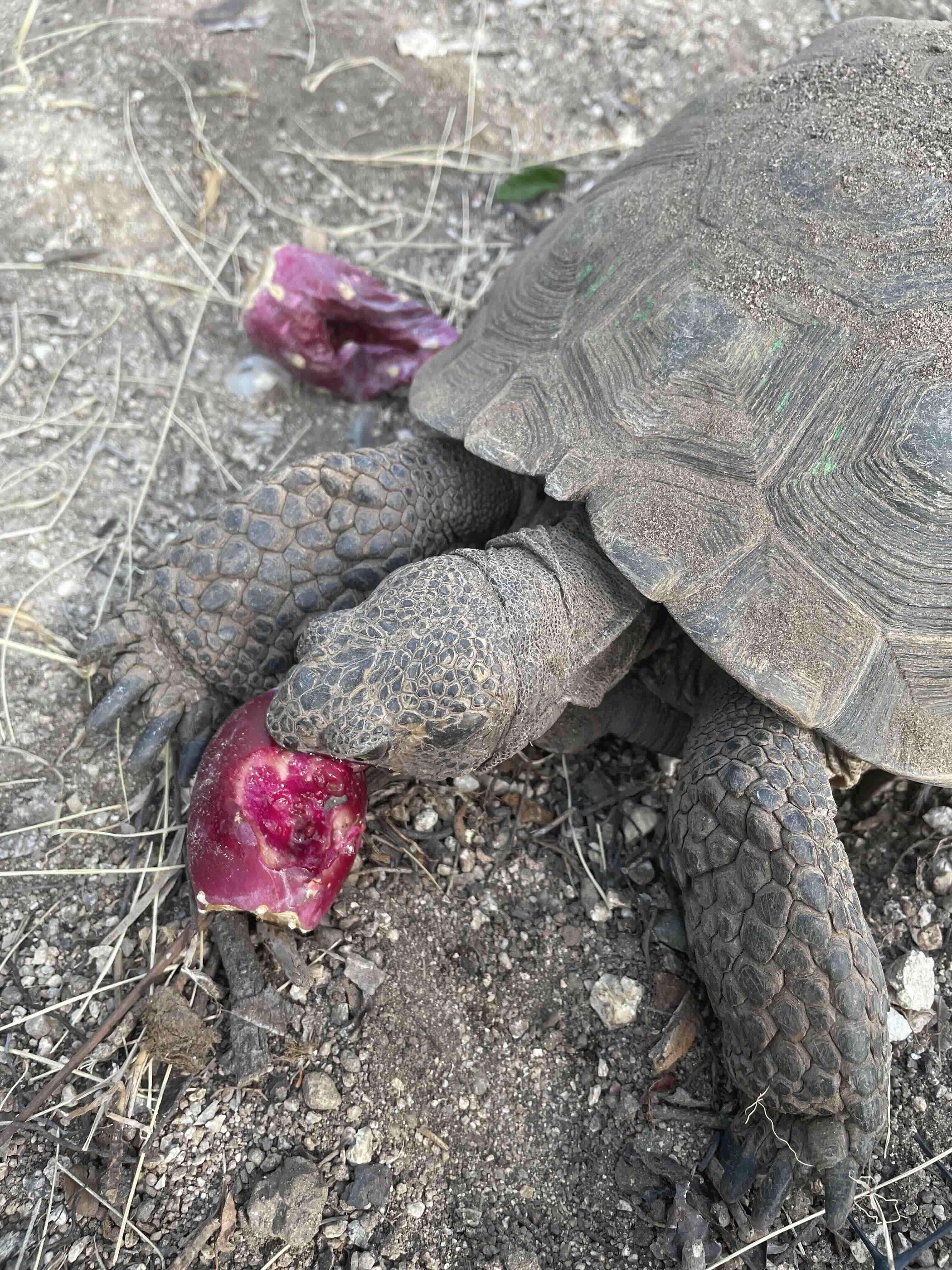
We aren’t alone. Living through this extended drought and awesome heat in the Sonoran Desert is a major feat for any creature out there–plant or animal–no matter how desert-adapted it may be! We are all feeling it. Difficult to imagine how creatures, like the long-lived desert tortoise, manage through the kind of intense drought we are experiencing.

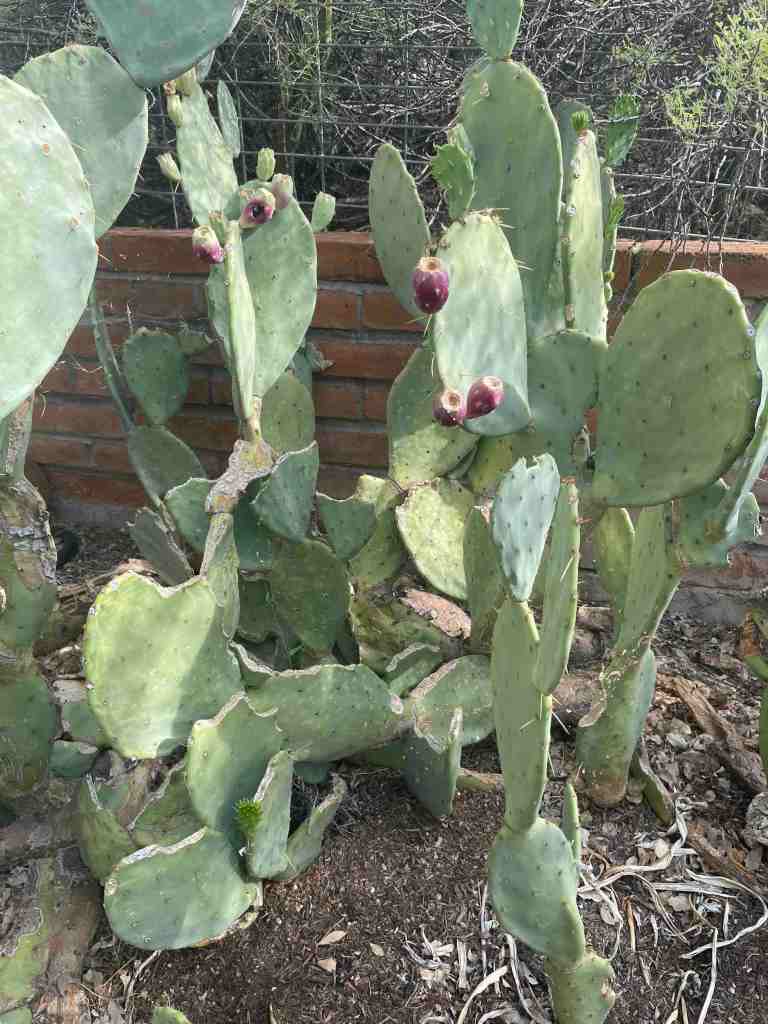
Even in my back yard, my tended prickly pear, covered in buds and tender nopales last April, is ending this summer with tunas dropping before mature or devoured by cactus wrens, and pads chomped by packrats or ground squirrels.

Tia Marta here to share some thoughts about us humans harvesting from the wild. As I learned from my Tohono O’odham mentor, in earlier times Indigenous people had to suffer through lean times using the desert foods they’d stored from times of plenty. They knew sporatic seasonal productivity is the name of the game in the desert. Wise cultural tradition dictates that you harvest abundance when it happens, share your plenty, and store as much as possible against the expected lean times.

Very few native prickly pears have produced fruit this year in the Sonoran Desert, so as human desert harvesters I feel we must refrain this year, and consider the needs of our wild neighbors, the deer, javalina, cottontails, rodents, birds, etc who need what forage remains– far more than we do.

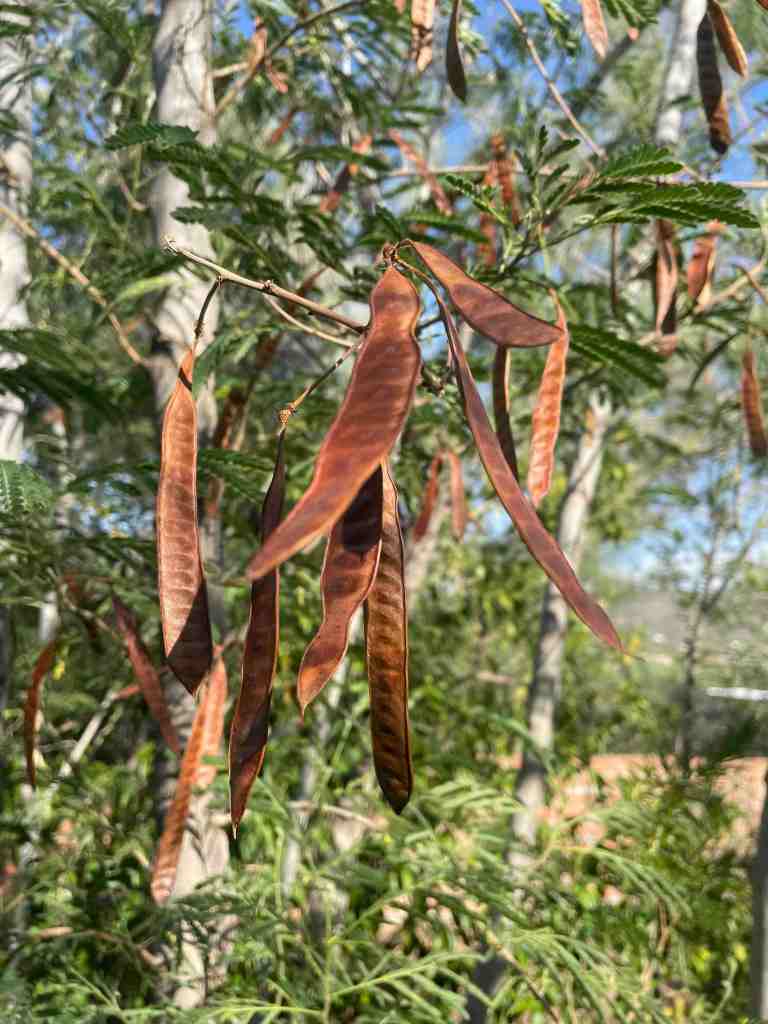
Instead, I suggest we go for an invasive! How about eating from the white lead tree, known as guaje in Mexico, huaxin by the Aztec in its region of origin? Its presence as an invader into the Sonoran Desert generates interesting controversy. The seeds contain an amino acid mimocine toxic for us mammals who have no rumen for digestion. However Guaje‘s young pods, when green, can be cooked in soups or in tacos, as cooking removes the toxicity. This small fast-growing tree has other positive attributes: It is used as great cattle fodder, provides stovewood fuel, erosion remediation, herbal medicine, and it adds soil nitrogen. Its profuse and often continued flowering makes it a good pollinator support. Caution: it IS an invasive species and, if let loose in our desert, could compromise our precious natives..

Guajes (Leucaena leucocephala) have been known and appreciated in Sonora, Mexico, for decades if not centuries. It is planted on the University of Arizona campus (see UA Arboretum) and is being researched as a potential future food plant for climate change by horticulturists at Mission Garden. I’m glad guaje volunteered in our yard from soil in a potted plant. It created a little grove of blessed shade for us, and bees have been abuzz over its puffs of cream-white flowers every spring.

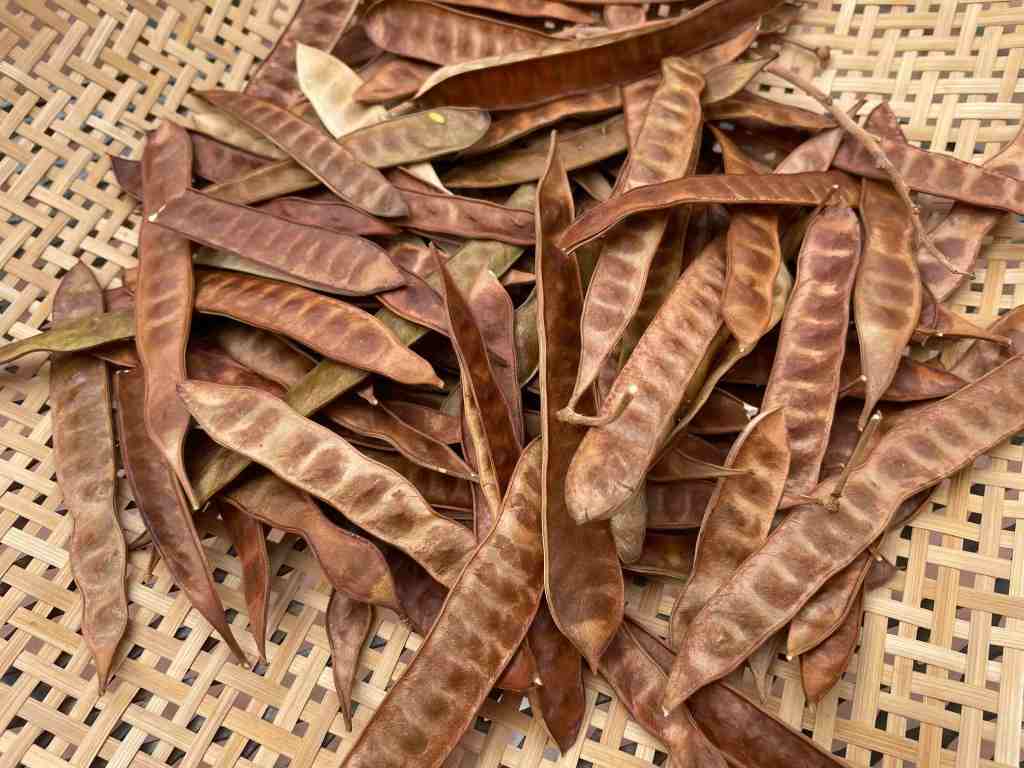
I recently gathered a gallon bag of dry pods which yielded only 1/8 cup of small seed. They resemble flax seed. I soaked them to see if any were viable. About 1/3 of them swelled. When cooked for 15 minutes to remove mimosine, and drained, they proved nut-like and tasty. I’m adding them to my home-made bean dip. As a legume they will provide good protein in addition to texture and new flavor.

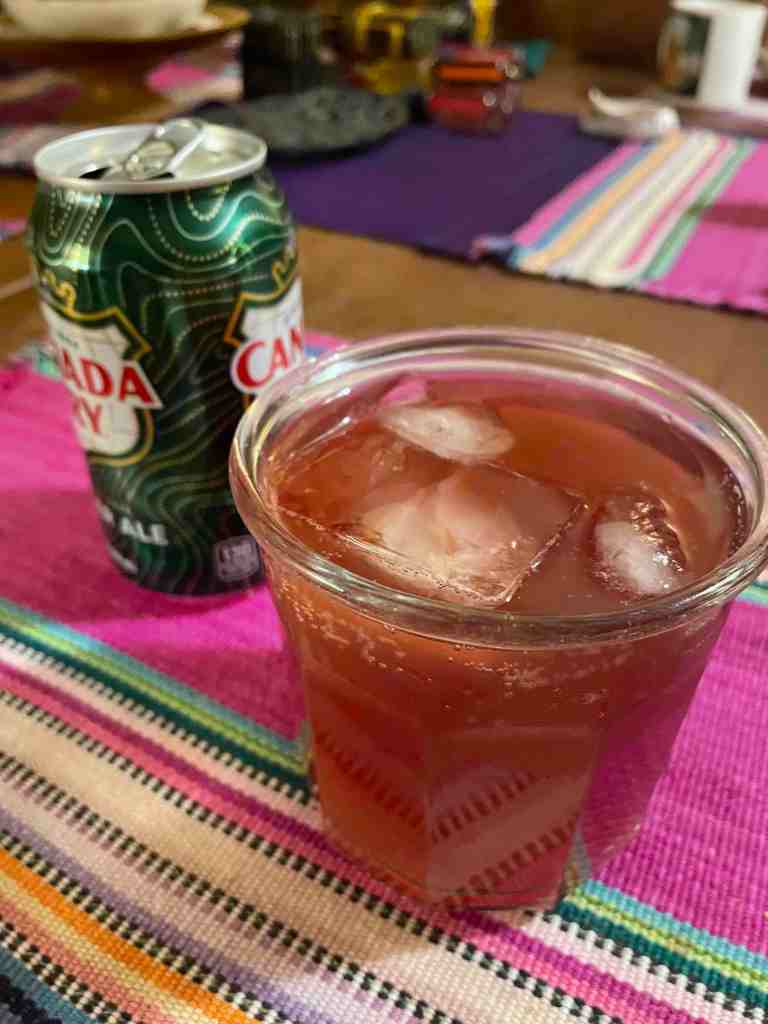
To go with the dip, I’m using a scant amount (a tablespoon per 8oz) of my conserved prickly pear juice, harvested and frozen August last year, with flavored fizzy, gingerale and a splash of mescal. With this dressed up punch, we’re sending a toast to all desert creatures out there! We hope they are benefitting from any prickly pear tunas that may be ripening in our hot, dry desert!

May we be conscious of all the plants and animals around us during these weather-stress times! For more ideas on local “famine foods” see SavorSister Carolyn’s post and Tia Marta’s post. For ideas of what we can grow in prep for more climate extremes, check out Ethnobotanist Gary Paul Nabhan’s inspirational book Growing Food in a Hotter, Drier Land: Lessons from Desert Farmers on Adapting to Climate Uncertainty.

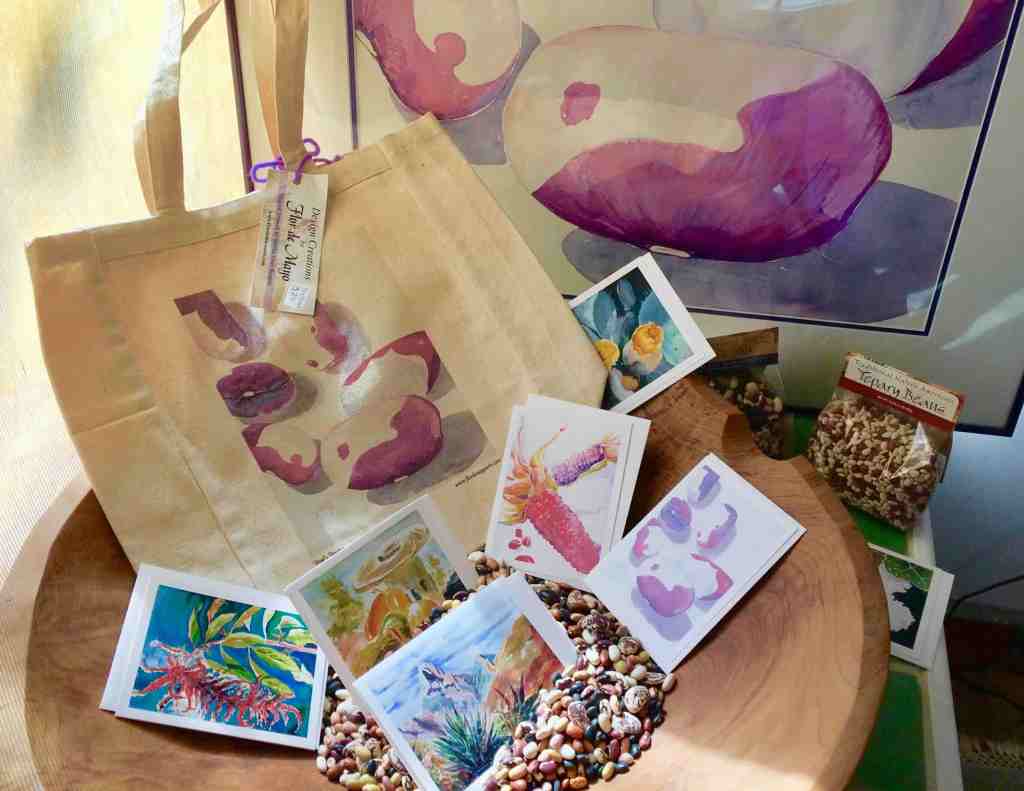
A colorful assortment of Tia Marta’s watercolor art-notecards depicting Southwest Native American heirloom foods can be found at the Mission Garden shop, or online at NativeSeeds/SEARCH.

Welcome to 2025

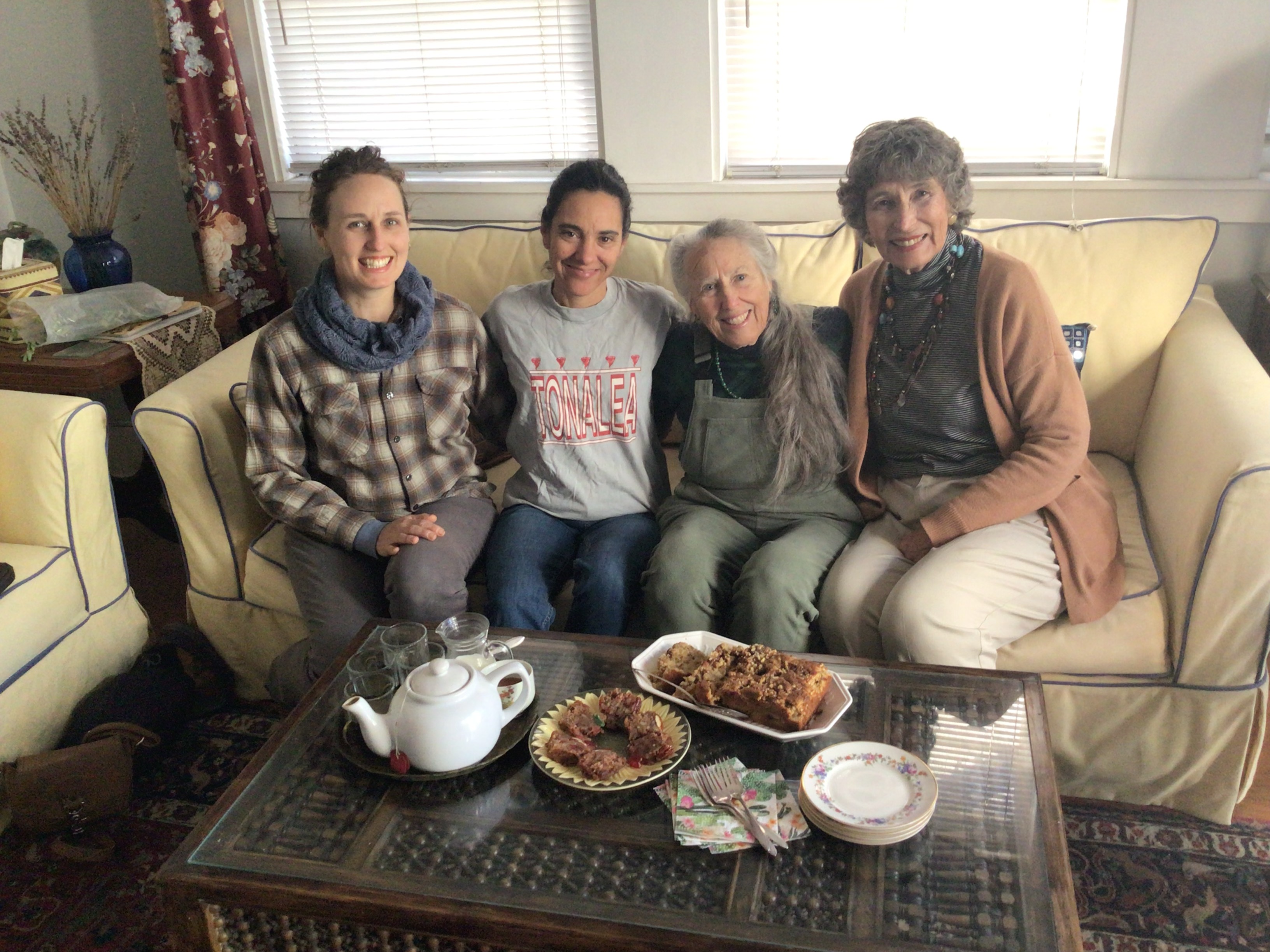
Savor Sisters (from left) Emily Rockey, Amy Valdes Schwemm, Martha Burgess, and Carolyn Niethammer gather to plan out the Savor year. We sampled a mesquite apple cake that may show up in a post.

As the Savor the Southwest blog enters its 13th year, we are so grateful to you, our readers, for following along and indulging us as we share our love of the flavors of the Southwest using both wild and cultivated plants.  During those years we have entered 370 posts sharing recipes for everything from Christmas cookies (mesquite gingerfolk, anyone?) to how to cook quince. Our readers hail from nine foreign countries as well as the United States. 

This year, we are thrilled to welcome a new Savor Sister, Emily Rockey. Emily has worked as a professional gardener for public gardens including most recently Tucson’s historic Mission Garden. Now as she returns to the university to learn even more about the soil that supports both wild and cultivated plants, she has time to share with us her expertise and creativity. Read her full bio on the Authors page. She has already shared her method for making prickly pear wine in a guest post last year. From now on she will be a regular and we are thrilled to welcome her. 

Chapulines–a taste of past & future

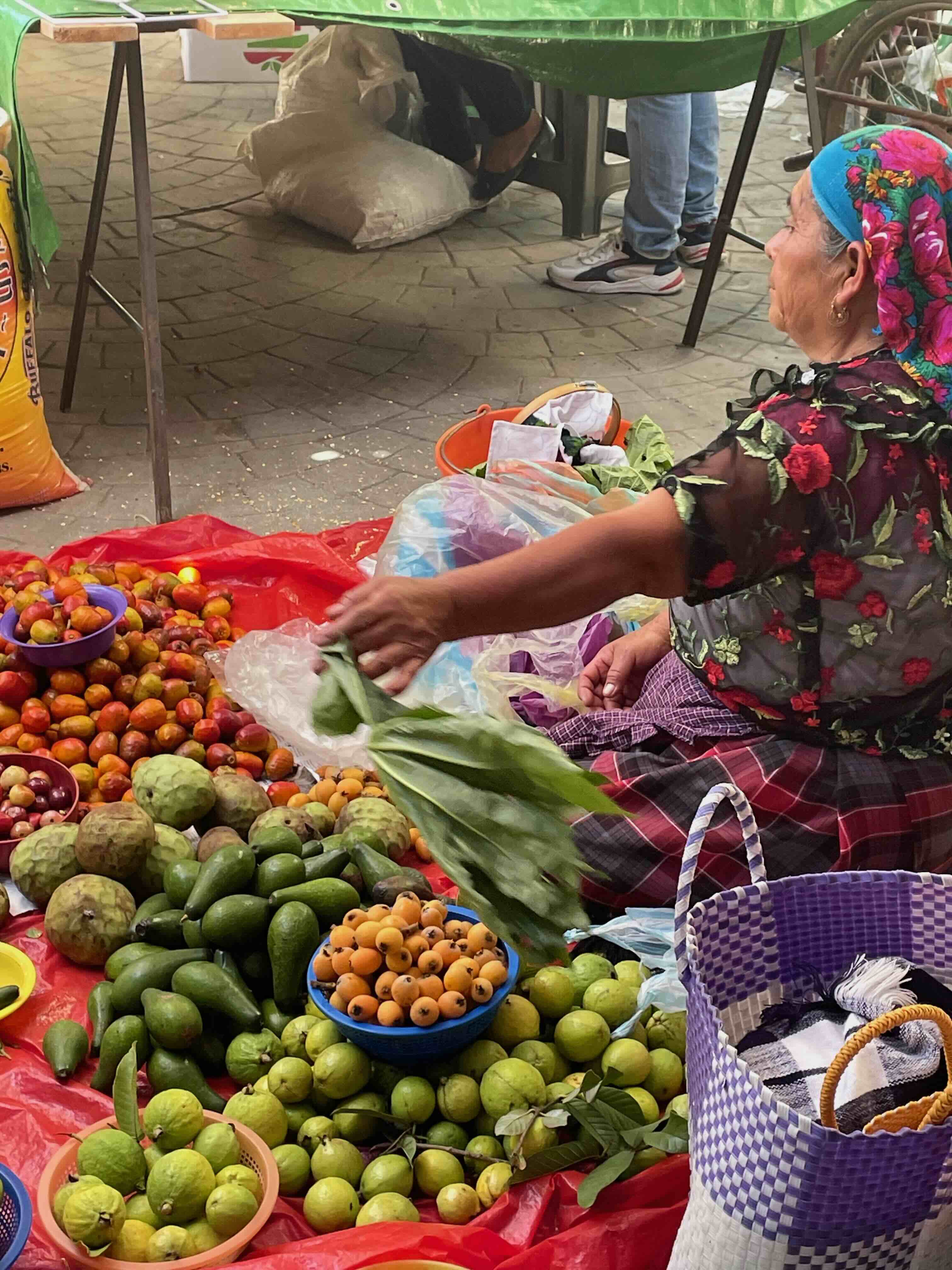
It was a whole new gastronomic experience for me–now perhaps for you too! On a recent trip to colorful Oaxaca, Mexico, with a Mission Garden tour, my eyes and tastes were opened to traditions and to tantalizing potentials of grasshoppers!! Chapulines! (cha-poo-LEE-nays). Tia Marta here to share some fun ideas for trying chapulines creatively, AND some surprising facts about their nutrition.

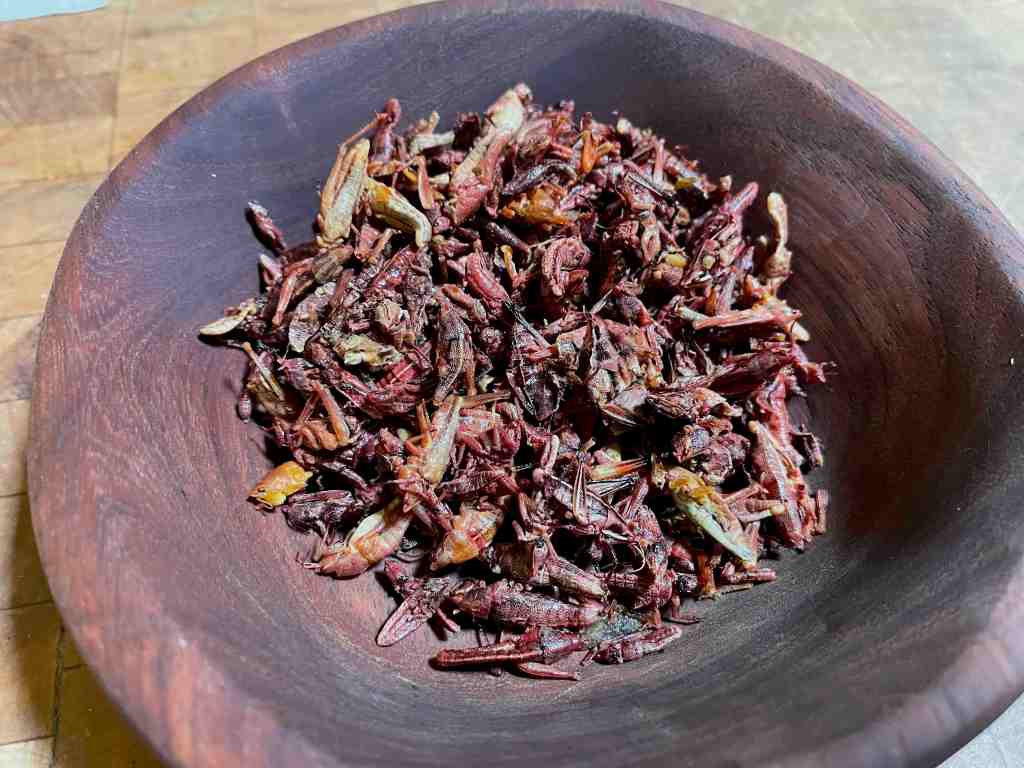
Grasshoppers, when cooked like this with salt and lime, look a bit more palatable than in nature. Better still–They crunch pleasantly and have tasty snack flavors! Get curious–throw preconceived notions to the wind! After all, insects are the wave of our food-future. (Now I see that chapulines are available all over the internet–no need to travel, but Oaxaca IS a special place to visit for amazing foods!)

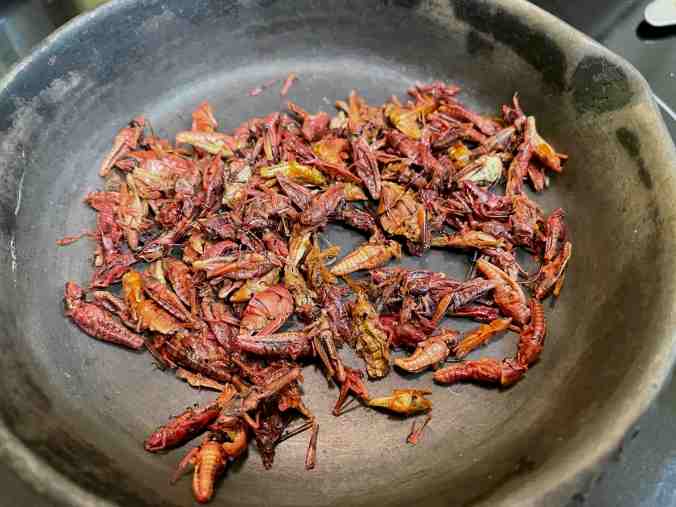
Step 1–Roasting or toasting already-cooked chapulines in a dry iron skillet makes them into crispy delicacies–and they’re much easier to grind into the Perfect Chapulin Spice Mix, full of flavor and NUTRITION too! Did you know they are high in protein, dietary fiber, rich in vitamins A,B,and C, have magnesium, calcium, zinc, and essential fatty acids? We might think of them as “recycled, concentrated vegetables.”

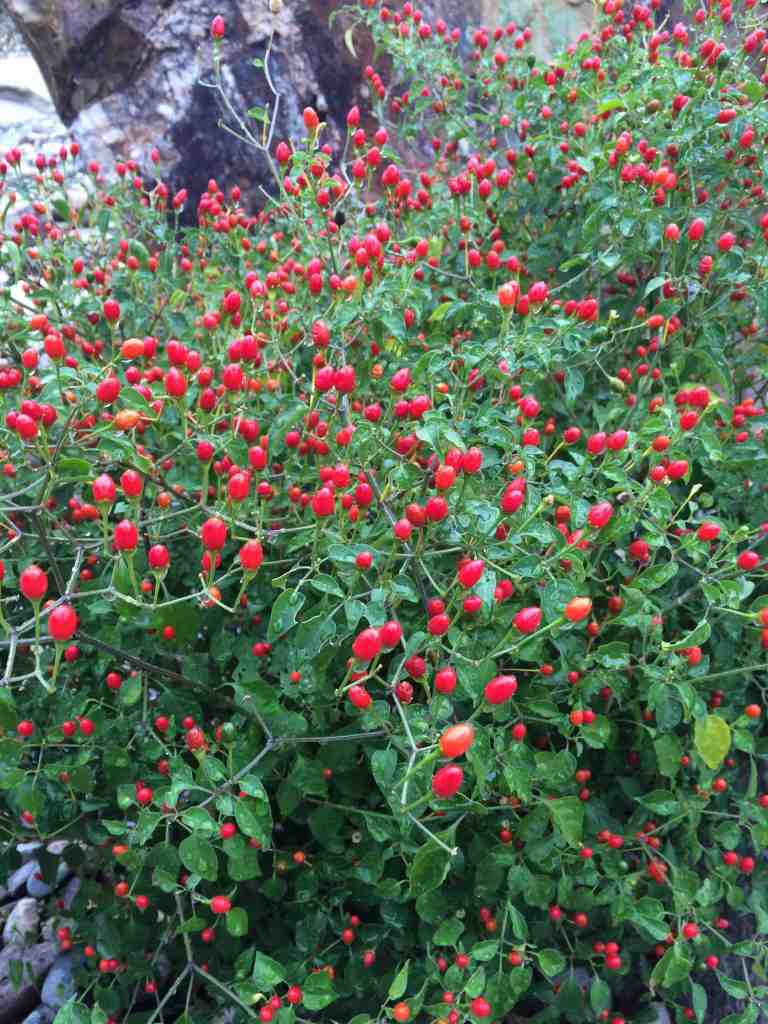
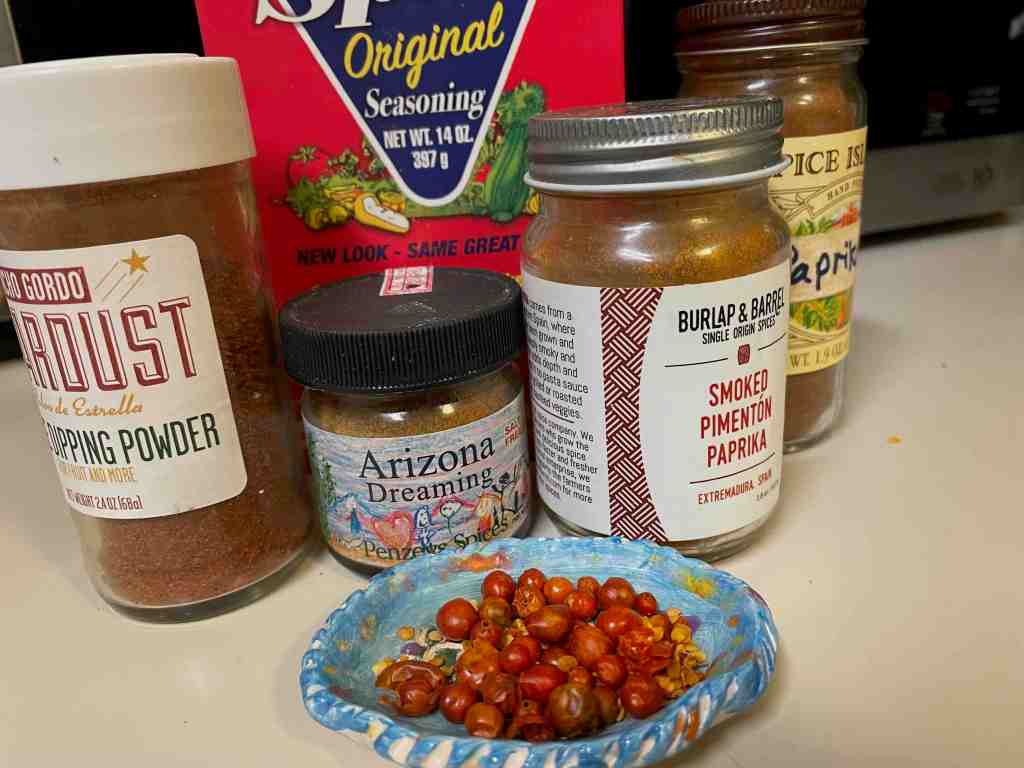
Step 2 for the Perfect Chapulin Spice Mix: collect and dry a few chiltepin peppers from your own bush before the birds get them–or find them at NativeSeedsSEARCH or Tucson’s Mission Garden. When pods are dry, you only need 2 or 3 tiny chiltepin pods to add to your spice mix.

Your chapulinchiltepin spice mix will be more off-the-wall better than any other!

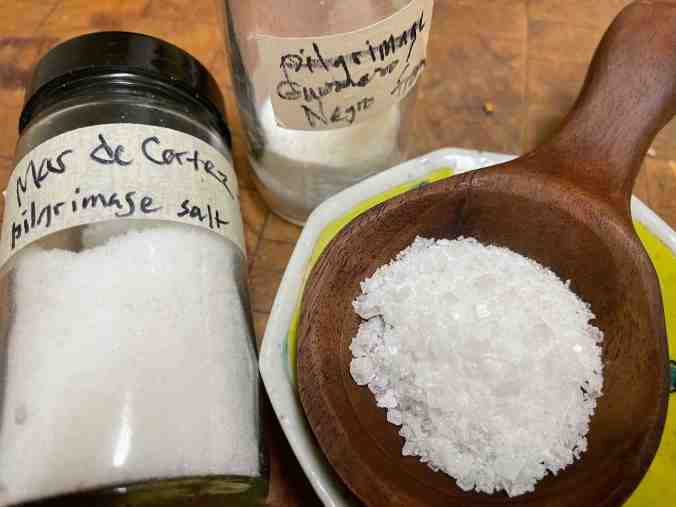
Step 3: Find good natural sea salt–available at many stores. To stay as Sonoran-Desert-local as possible for this project, I made a mix of local salt crystals, one from the Sea of Cortez gifted to me by ASDM ethnobotanist/explorer/educator Jesus Garcia, and another from Guerrero Negro actually made on the Pacific coast of Baja California by Mission Garden volunteer Gay Gilbert.

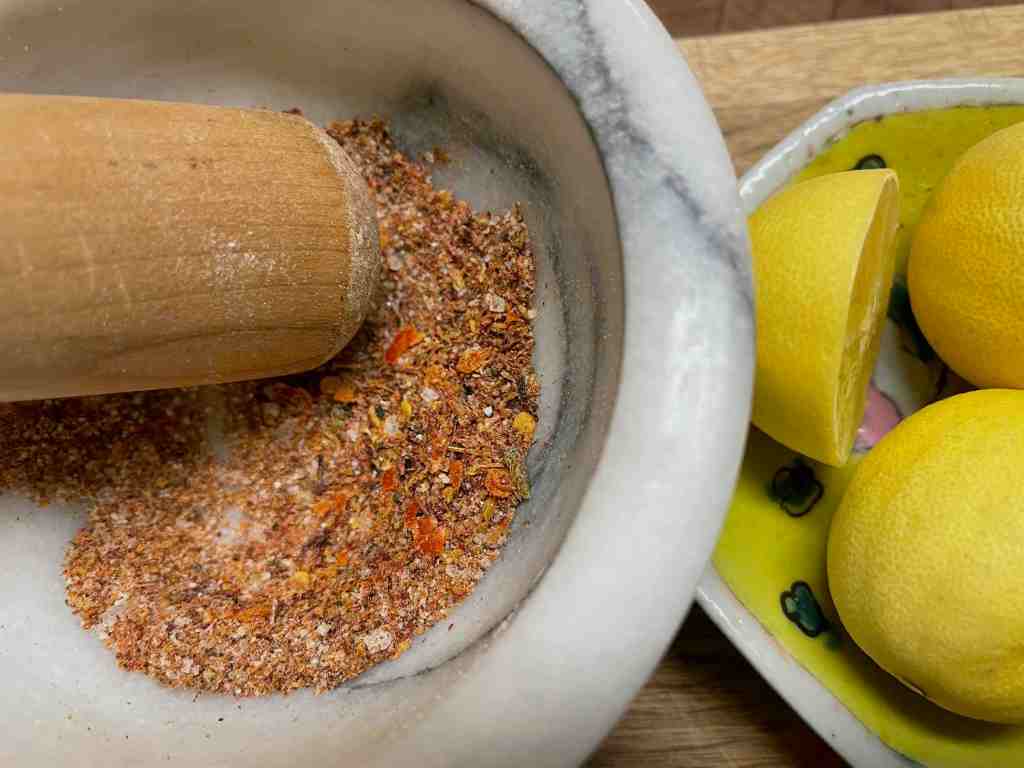
Step 4: You are ready to crush your ingredients with a hand mortar and pestle! RECIPE for the Perfect Chapulin Spice Mix: (This is a good ratio for any quantity): 1 Tbsp. toasted chapulines 1 tsp. sea salt crystals 2-3 tiny chiltepin pods (to desired “heat”) Mill to desired rough or fine texture.

1st idea: sprinkle on jicama slices w/lime!

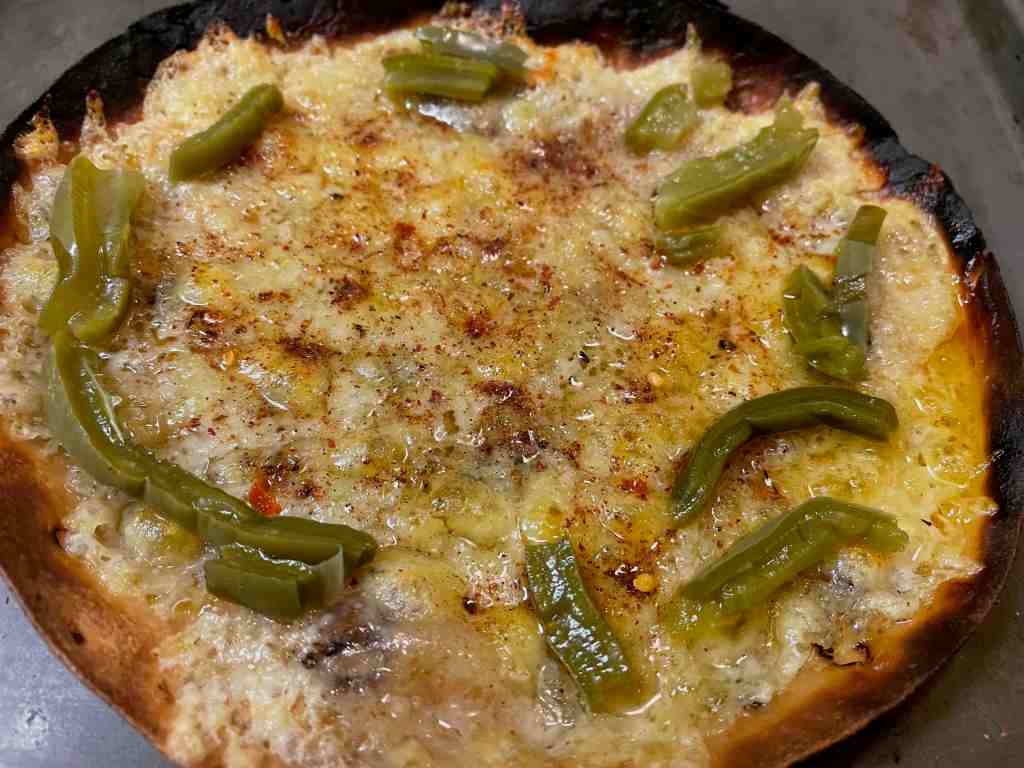
2nd idea: Chapulin Spice Mix on homemade pizza or quesadillas! I sprinkled my mix for a fast delicious lunch on a tortilla with melted cheddar cheese and nopalitos–yum!

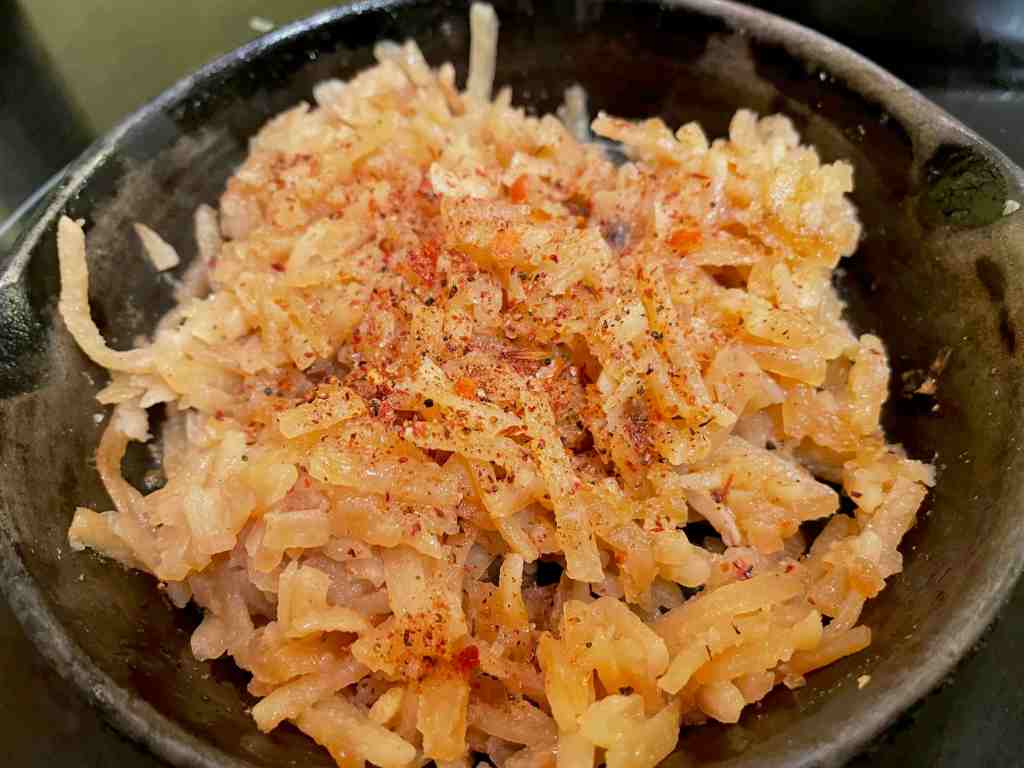
3rd idea: Dress up hash browns for a zippy Southwest palate-pleaser with your Chapulin Spice Mix!

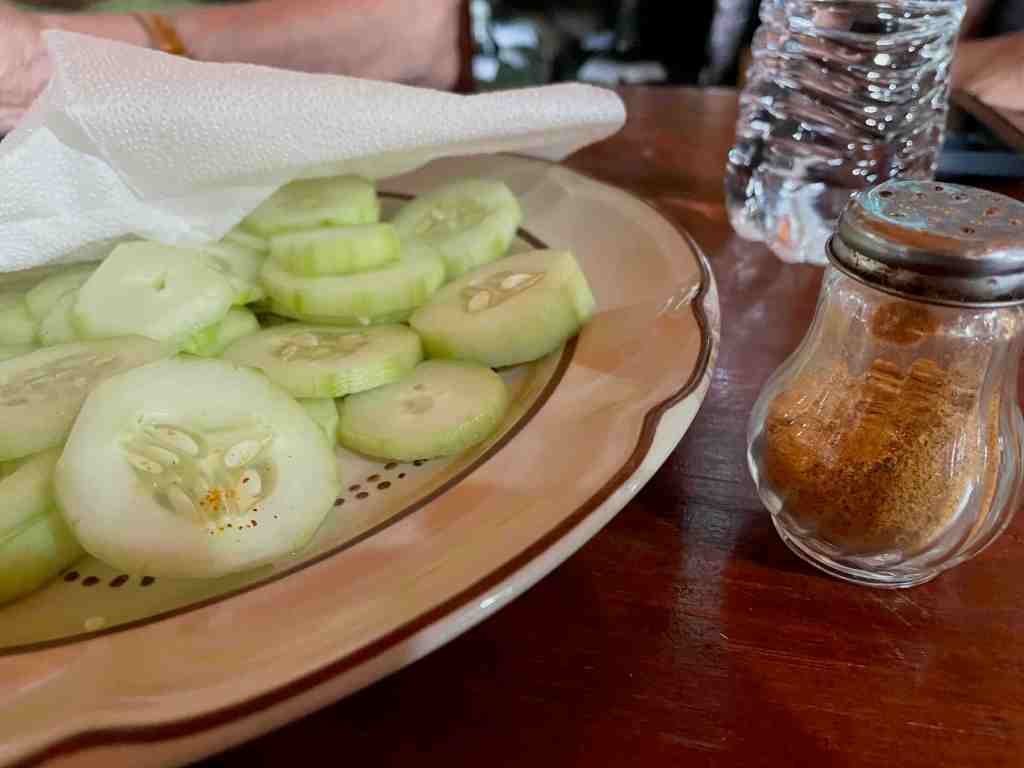
4th idea: For a cool (and simple) buffet or hors d’oeuvre, sprinkle Chapulin Spice Mix on sliced cucumbers or other veggies. It adds a little kick!

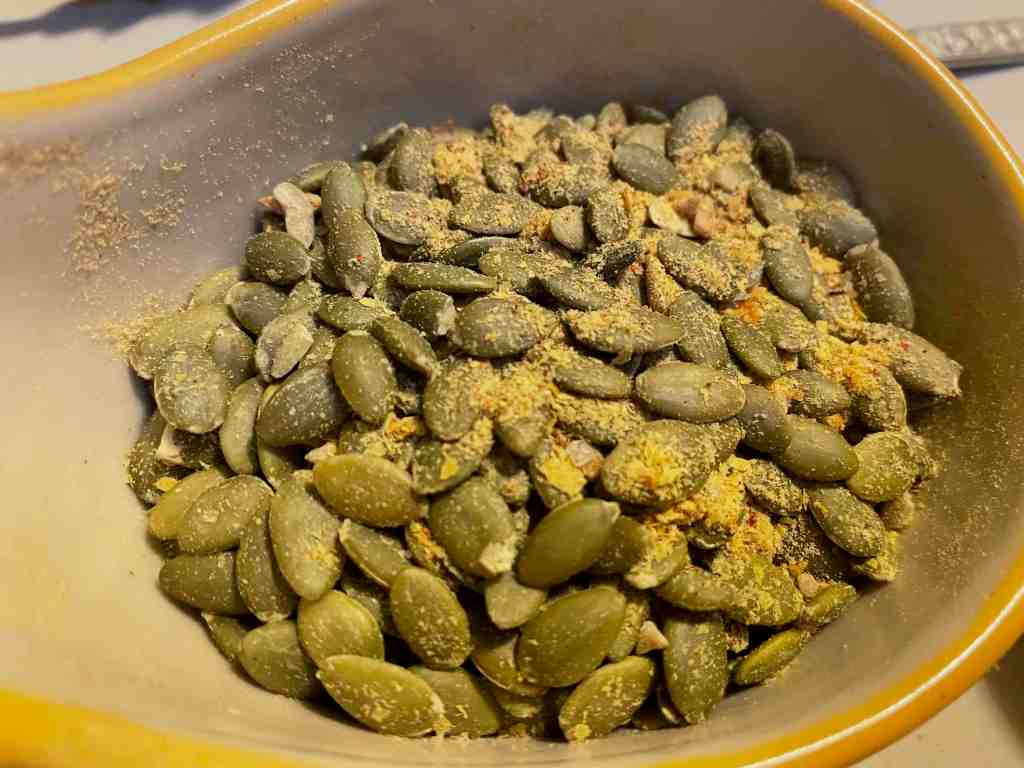
Another super-healthy idea: Add Braggs’ Nutritional Yeast to your Chapulin Spice Mix and toss it with pumpkin seeds or sunflower seeds for a grand health-enhancing snack or energy-boosting trail-mix!

Tia Marta encouraging you–don’t hesitate to take on these delicious gifts of Nature–chapulines! yes, grasshoppers– and try your hand experimenting with your own ways of enjoying them! The next time there is a grasshopper outbreak, don’t swear and fret. Grab your butterfly net! Get out to the garden for a new and different harvest on the fly! Bake them, toast them, spice them up for treats! See what kept early Zapotec and Mixtec cultures thriving with these tiny but plentiful gifts of the insect world. You will be a pace-setter for a future with changing climate!

Marvelous Mulberries–garden dessert in a desert garden

Yummmmm. If you have never tasted a mulberry–or maybe you remember browsing them as a kid back east or in the Midwest–you will be blown away by the glorious mulberry harvest happening right now at Mission Garden!

Tia Marta here tempting your tastebuds for a gentle, natural sweet treat–but…you have to take action SOON. If you’re in southern Arizona, find a hole in your schedule, and a way to get to the base of Tucson’s A-Mountain this week for a mulberry taste-thrill. It will inspire a new planting in your desert home landscape. Three different mulberries await you in Mission Garden’s beautiful and diverse orchards. Come early–summer hours are Wednesday thru Saturday, 8am-noon.

A sumptuous harvest after this wet winter! Look for trees on the Mission Garden grounds that have a big white fabric tarp underneath, and voila! Shake a branch and dive in for a dark, delicious, delicate mulberry, fresh from the tree. The elongated fruit shown here is Pakistani mulberry (Morus alba x rubra), producing like mad even in Tucson’s heat.

Female trees produce fruit. Male, pollen-producing, trees are controversial in Tucson due to allergenic affects. Somewhere out there, there must be male mulberries; none are growing at Mission Garden, yet we have no dearth of fruit.

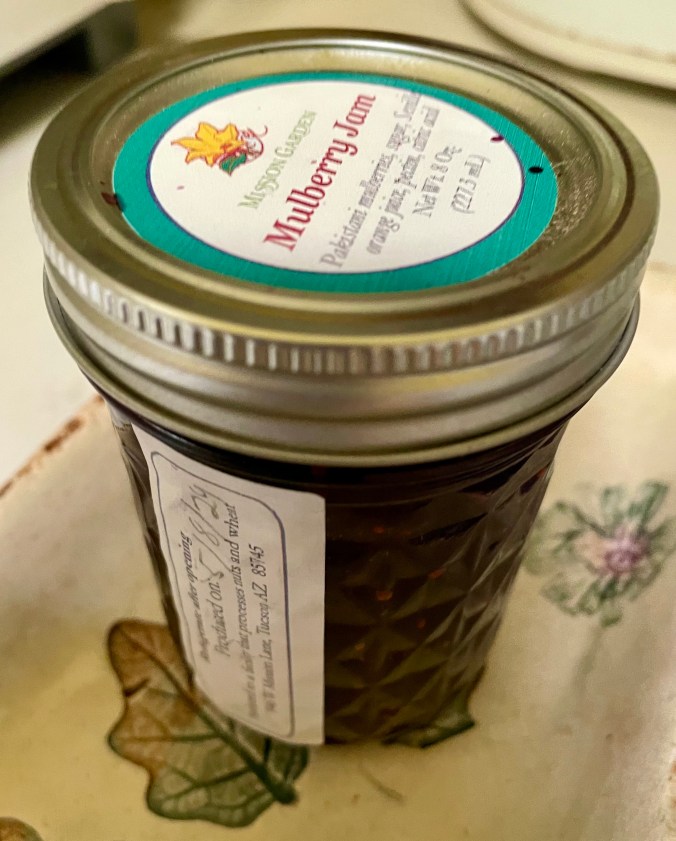
Handmade mulberry jams are going fast at the Mission Garden entrance shop! It’s the best jam you ever tasted, made with love by Mission Garden volunteers in their health-department-certified kitchen. You can’t find local gourmet delicacies like this commercially. The closest thing (like frozen raspberries at a grocer’s freezer?) can’t hold a candle to Mission Garden mulberry jam or sauce! ($8 for the 8oz. jar)

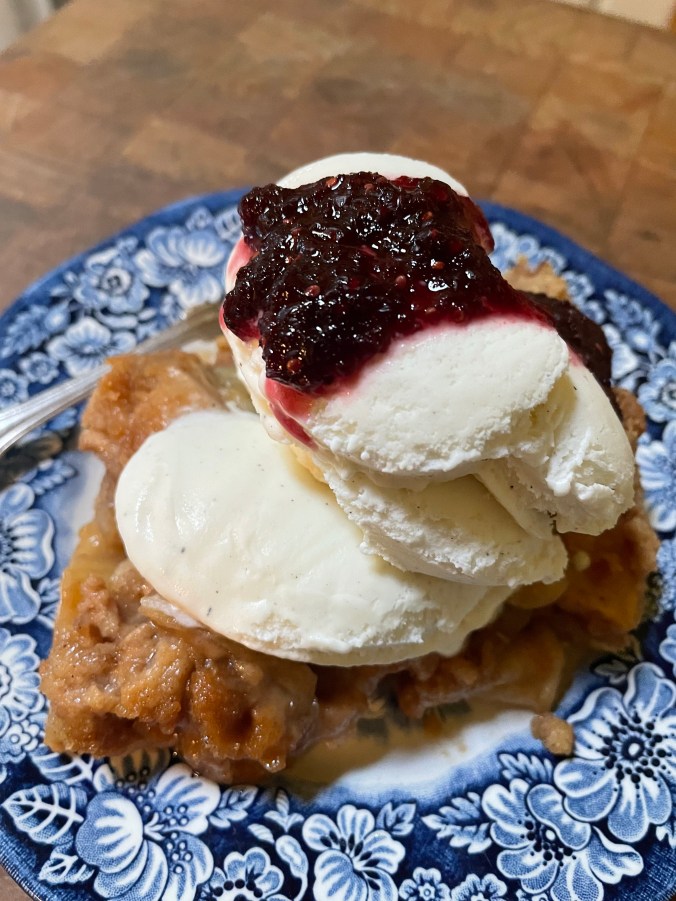
Mulberry jam doubles as a gourmet sauce. My pedestrian apple-brown-betty morphed into a fancy dessert with ala mode topped by a dollup o’ Mission Garden’s mulberry jam. (Mulberry seeds in the sauce are minimal and add a tiny crunch texture.)

As you explore further through the Mission Period huerta (orchard) you’ll find yet another gorgeous green mulberry tree with a totally different color and shape of fruit. (Above, looking up into the foliage, and ripe fruit adjacent) This is white mulberry (Morus alba) with a pale pink or lavender color, and a flavor some people describe as “watermelon” or “lingonberry” or “cloud berry.” So juicy you can’t stop….

A big surprise is to learn that we have a NATIVE mulberry “bush” in the arid Southwest–the wild, small-leafed mulberry tree (Morus microphylla). It’s inspiring to know it is adapted to our Sonoran Desert, only needing a little extra water; it grows close to arroyos out in Nature. This may be one of those amazing plants that may help provide food for us in a hotter, drier future…

Each little wild mulberry is a zap of sweet nutrition, packed with healthy complex sugars, dietary fiber, beta carotines, vitamin C and iron.

I can hardly wait until Mission Garden is propagating cuttings of all these several amazing mulberry species. Already I’m figuring where I can plant them in my yard. Whatever we can’t harvest each season will be a gift for the birds!

This coming SATURDAY, MAY 18, is SAN YSIDRO FIESTA, Mission Garden’s celebration of the traditional pilkan harvest (heirloom wheat harvest). I’ve been playing with recipes using these heirloom grains pairing them with mulberries, but I HAD to relay this timely mulberry story for you ASAP, so you could get to Mission Garden this week to jump through this narrow “mulberry window” of opportunity.

Tia Marta hoping to see you at San Ysidro Fiesta Saturday–or sooner, browsing a mulberry tree this week!

Celebrating Three Tucson Women and Their Innovative Work with Southwest Foods

An Interview with Gary Paul Nabhan

by a SavortheSouthwest.blog Fan

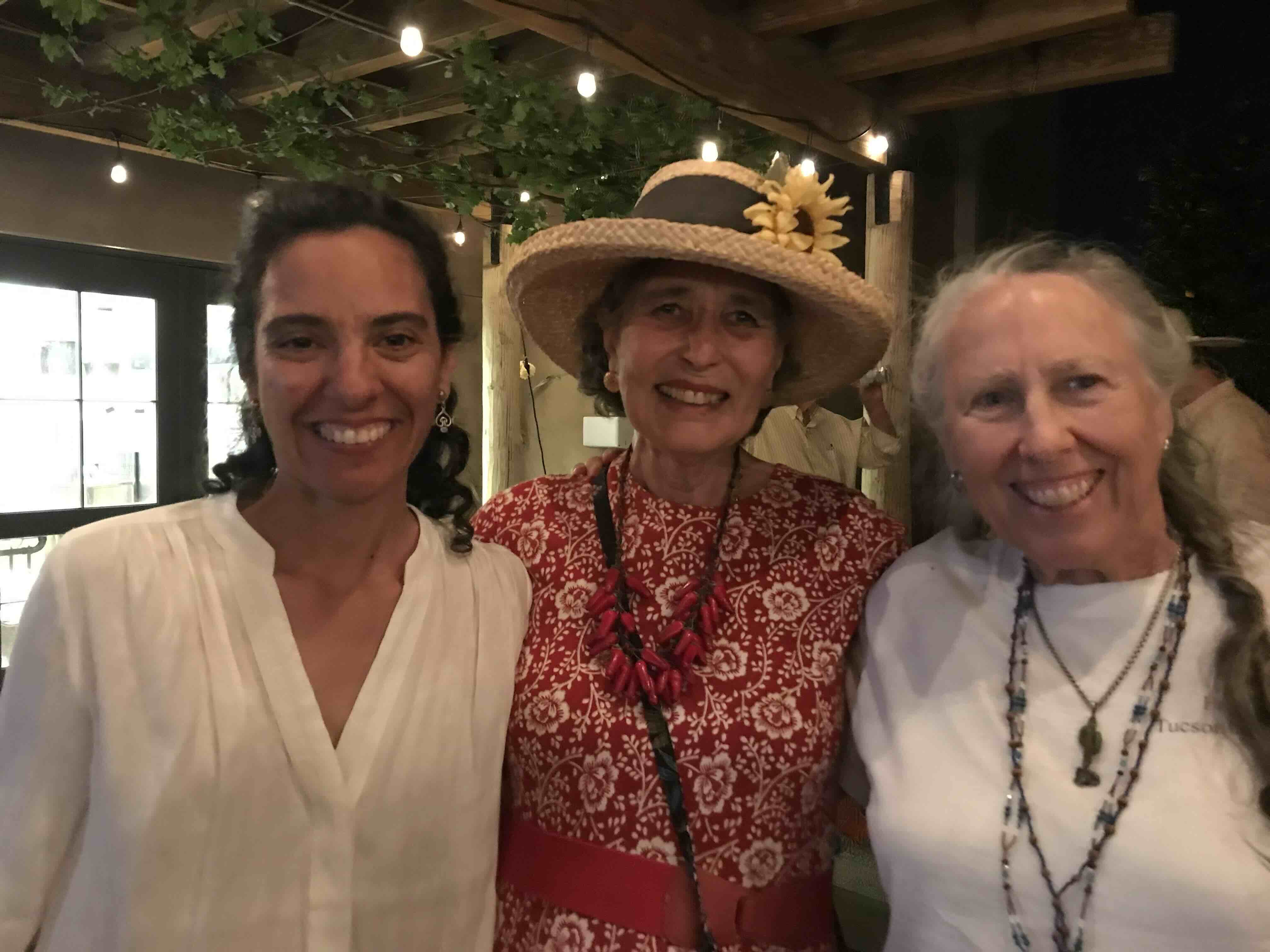
Caption:  Faces behind the blog–the SavorSisters left to right:  Mano y Metate Molera Amy Valdes Schwemm, Author/Culinary Artist/Hostess Extraordinaire Carolyn Niethammer, and Flor de Mayo Prickly Harvester/Frijol Aficionada Martha Ames Burgess

[Esteemed SavortheSouthwest Blog Readers:  Our friend, colleague, desert foods philosopher, orchardist, inspirational instigator of culinary action, and author Gary Paul Nabhan asked to be interviewed.  We were super-honored to learn he is such a fan of our blog!  Here are his shared off-the-cuff remarks.]

Author Gary Paul Nabhan, with local beef and lamb grower Dennis Moroney, owner/founder of Sky Island Brand Meats (enjoying a concert by musician- grasslands botanist-author Jim Koweek in Sonoita, AZ)

INTERVIEW FOLLOWS

Question from a SavortheSouthwest.blog Fan:  So Gary, why are you eager to celebrate these Southwest foodies’ lifework, that of Carolyn Niethammer, Martha Ames Burgess, and Amy Valdés Schwemm?

Gary:  Aside from the fact that they have had enormous influence, not just on me but our whole community, each of them has been a remarkable pioneer or innovator with Southwest foods.  I value their friendships –but also their brightness.

Question: When and how did you get to know each of them?

Gary: When I moved to Tucson in 1975 or so, both Kit Schweitzer and Lloyd Finley heard of my interest in food ethnobotany and said I had to meet Carri.  She was probably working on her book American Indian Food and Lore by then, which was one of the first regional books on Indigenous cuisine in the Southwest.  We did some field harvesting workshops together on seasonal wild foods in the Tucson area, calling it “Gary and Carri’s Thorny Food Review.”  Next we worked together on Pima County Public Library’s amazingly innovative live-talk series, the Sonoran Heritage Program.

With Muffin, in the 1970s we were both engaged with the Arizona-Sonora Desert Museum and with Tumamoc Hill’s Mescal,Marching,&Menudo Society. As fellow grad-students, we’d practice our research findings on each other with presentations and potlucks.  Later, we were conserving seeds and traditional planting know-how with NativeSeedsSEARCH [the organization Gary co-founded] and shared by Indigenous farmer friends. To this day, no single educator of nature and culture has eclipsed Muffin’s capacity to bring Tucsonans out for hands-on experiential programs.  I recall an event that she organized, a Desert Museum program with Tucson explorer Tad Nichols showing his 1943-44 film of flying over the newly-exploding Paricutin volcano. Over 600 people were attracted to Tad’s presentation thanks to Muffin’s enthusiasm. We both had friendships with Tohono O’odham Elder women on the Nation, so traveled out there together a lot, learning from them.  She actually was a model for one of the characters in my first book.

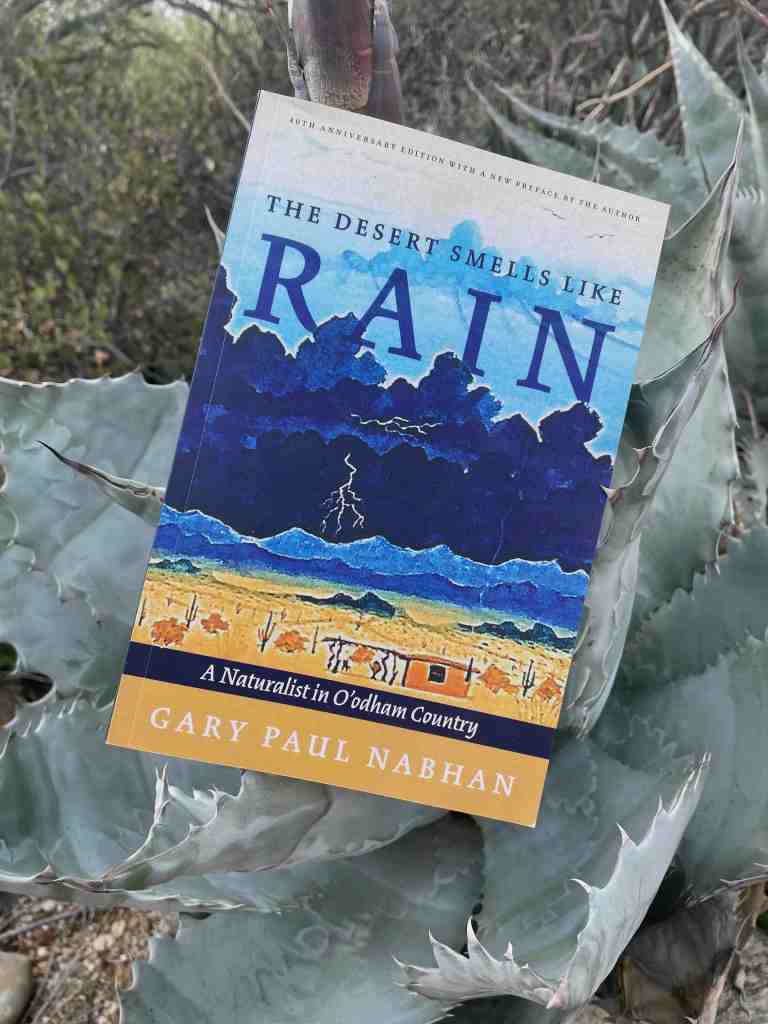
[Nabhan’s book The Desert Smells like Rain, a Naturalist in O’odham Country, first published in 1982, has been reprinted recently by University of Arizona Press!]

I got to know Amy later through her work with Mano y Metate and Desert Harvesters.  Her Mano y Metate moles—which she re-created from scratch when NativeSeedsSEARCH’s Mexican mole source vanished–have always been extraordinary in both honoring tradition–and in kicking fragrances up a notch. Amy agreed to cater one of the first dinners we had in Patagonia when I founded the national network on rare food conservation called Renewing America’s Food Traditions. Our guests from all over–Deborah Madison from Santa Fe, leaders in Chefs Collaborative, and Slow Food USA–loved her creativity as much as I did.

[Amy’s Mole mixes make being a gourmet cook almost instantly possible!]

Question:  What do you think these three Savor-Sisters have in common, in terms of values and strategies for promoting Southwestern foods?

Gary:  That’s easy to respond to:  They all have deeply listened to Indigenous and traditional home cooks, rather than –excuse my Espanglish—simply sitting on their nalgas in front of their desks to make up mierda without any tangible ties to historic traditions. Carolyn’s first book was really a food ethnography acknowledging dozens of Southwest Native women and their traditional foodways. Muffin has done the same with Tohono O’odham women–listening and participating in food harvesting and preparation with elders. And Amy has continued the traditions of her own grandmothers. Not every writer or chef takes that time:  each of these three Tucsonans stands in the tradition of Paula Wolfert, Diana Kennedy and Lois Ellen Frank.

Question:  Any other thoughts you dare share about these Three Mesquiteers?

Gary:  Actually yes–one more thing:  One of the aspirations that Jonathan Mabry, head of Tucson’s City of Gastronomy program, and I had when we were submitting the proposal to make Tucson the first UNESCO City of Gastronomy in the U.S. was this:  to continue the elaboration and celebration of the unique gastronomy of this place and its many cultures. Shortly after getting that designation, I knocked on Carri’s door and said, “Tag, you’re it! No one else can offer the detailed overview of Tucson’s complex culinary legacy in print better than you.  What still needs to happen is to create or articulate a collective identity for a Sonoran Desert cuisine that is identifiable, unique—as it is in New Orleans, Charleston, Boston, or Santa Fe.  So, it’s up to you to express what a distinctive regional cuisine means for us, and illustrate it with great sample dishes, sample menus.”

That’s really a huge task—larger than what one book can ever do—but she started that process.  She had Tucson’s home cooks, chefs, growers–young, veteran, Indigenous—even brewers and distillers all understand what they, as a community, have to build on– that no one in Phoenix, El Paso or Albuquerque can touch.  The result was her latest book A Desert Feast: Celebrating Tucson’s Culinary Traditions.      

Each of Carolyn’s books is a treasure trove of local food delights, ideas and info.

Question:  Okay, so what are you up to these days as Extinguished Professor Nabhan?  We’ve heard a rumor that you sometimes write books in the middle of the night.

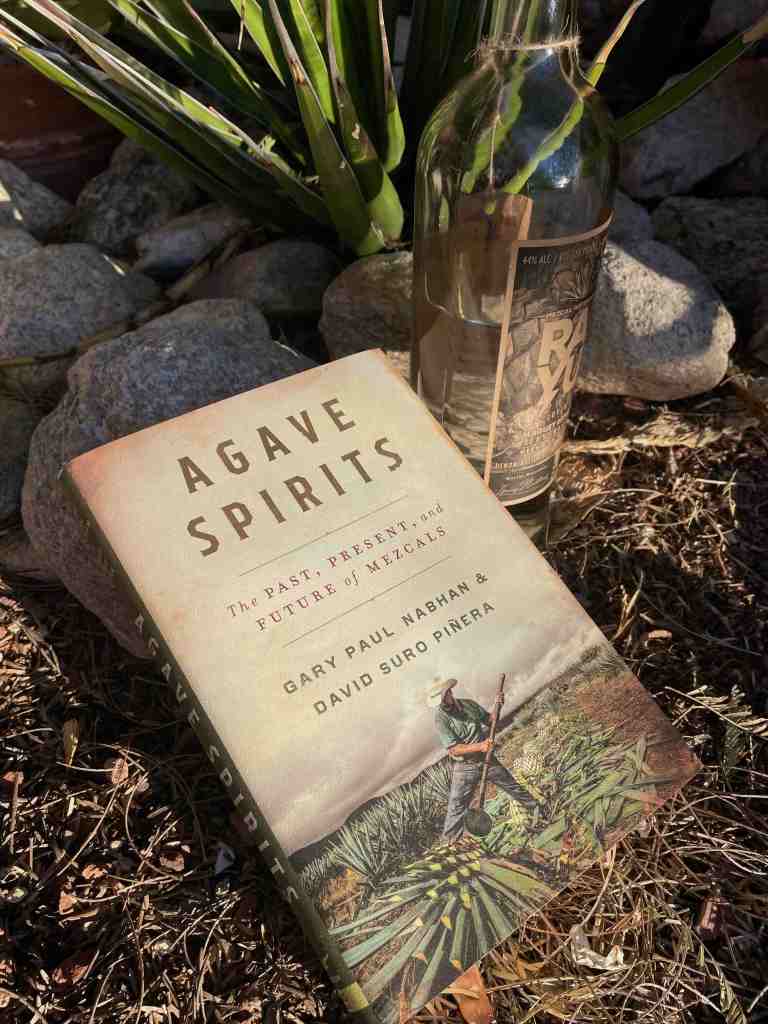
Gary:  Yeah, sleeplessness is my only real asset.  Of course, I’m still rambling around festivals promoting Agave Spirits, my latest book coauthored with David Suro. But I’m also at work on a book with James Beard-award-winning chef and food writer Beth Dooley on the links between and benefits of desert cuisines from around the world in this time of rapid climate change. We’re showing a commonality between what people grow and how they prepare foods from the deserts of India and Persia, through the Middle East and North African “Maghreb”, to the Canaries, Caribbean, northern Mexico and the U.S. Southwest. These will be recipes so aromatic and full of healthful antioxidants that no one will ever say again that living well and eating sustainably in a hot dry world is difficult–if not impossible. And most hopeful, these deserts’ foods can even buffer us from heat stress, dehydration and damaging solar radiation…  So stay tuned!

[The Savor-Sisters thank you, Gary, for your candid thoughts and perspectives about us and our mission in sharing what we do via this blog.  Indeed all of us, dear blog readers included, are anticipating Gary’s next book.  (We can hardly keep up with his blistering writing rate.)  Bravo to him for continuing to share his significant desert stories, and to inspire us resiliently into hotter, drier times! With appreciation, Carri, Amy, and Muff]

Cheering with Agave Spirits!

Tia Marta here, tipping a glass to Mayahuel, Goddess of the Agave, for her many gifts–and, in addition, I’m toasting the current voice of Agave: Southwest native foods author/philosopher Gary Paul Nabhan. Heads-up for a not-to-be-missed event SOON!! — Make plans for Saturday, October 21 to meet Nabhan at a totally celebratory book-signing in downtown Tucson for his latest book, AGAVE SPIRITS!

More than just literary, this event will be laced with enlivening tastes of small-batch mezcales! So take note: NOON til 3pm THIS SATURDAY at PETROGLYPHS EMPORIUM at 160 S.AVENIDA DEL CONVENTO just north of El Mercado along the trolley route west loop.

I just got a copy and can hardly wait to dive into Gary’s special way of weaving us into a sensual and spiritual world of amazing culture, botany, cuisine, all with such humor and human sensitivity. Yay another gift from the Guru! There will be plenty of copies of the book for sale at the event, but just in case, you can also find it available at Antigone Books on 4th Ave. Tucson..

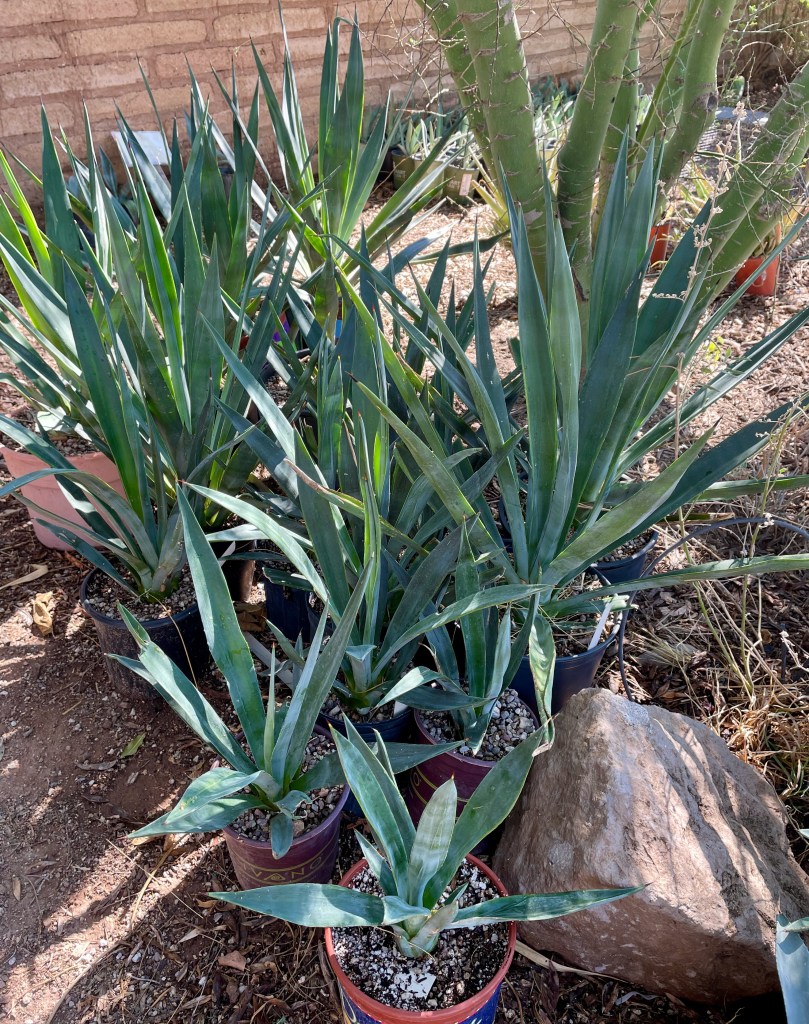
Many native species of agave–known as A’ut to Tohono O’odham ancestors who cultivated them long before European colonists arrived in the Sonoran Desert–were and can still be used for food, fiber, drink, and landscaping. To grow your own, check out the agaves for sale at Mission Garden (such as this Agave murpheyi).

For celebrating–yea honoring–mezcal and other agave spirits in their many forms, here is my very local idea for a Century Plant toasting:

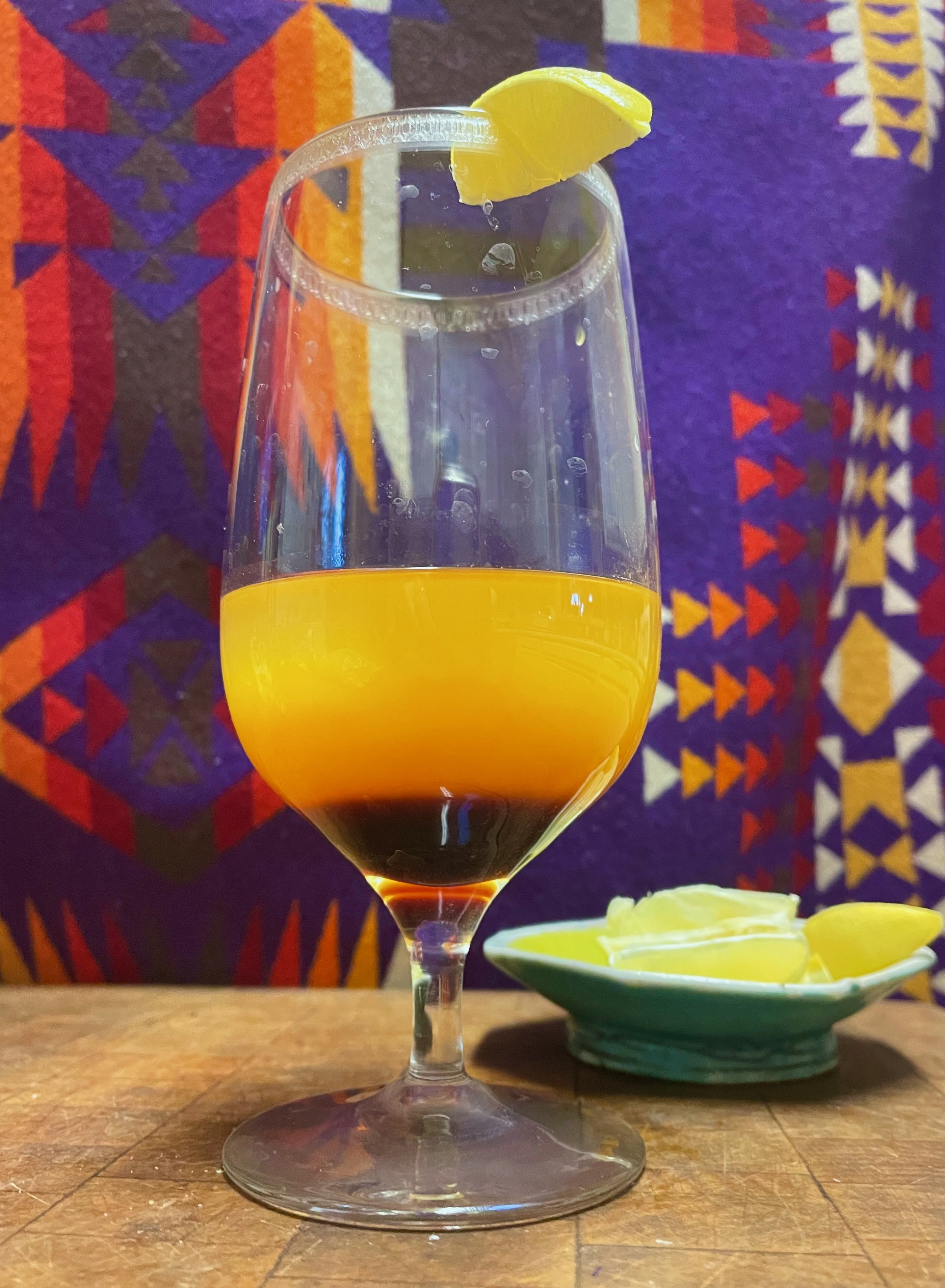
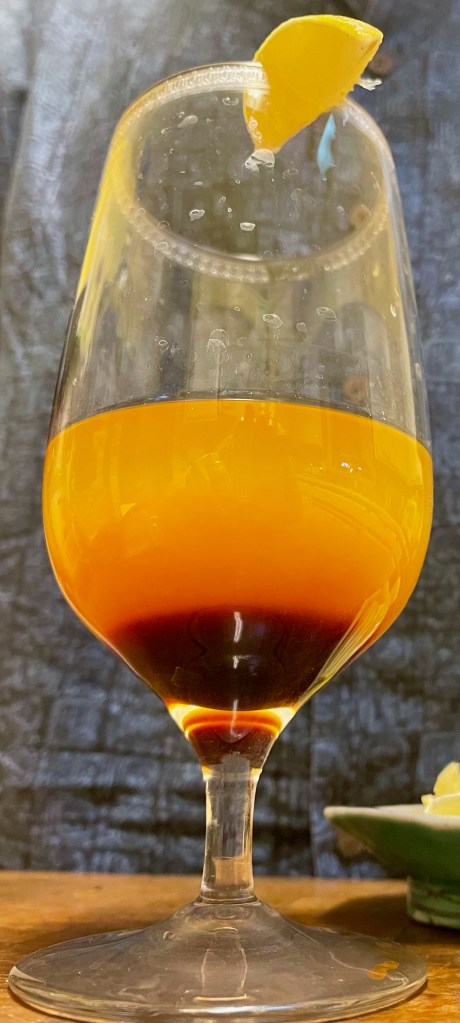
The Torch-bearer Mezcal-Saguaro Sunrise–Tia Marta’s recipe

1–In the bottom of a lovely glass, pour 1 TBSP precious thick saguaro syrup (if you have been so lucky to have bought some from a traditional saguaro harvester, or to have made your own syrup last June).

2–Reserve a jigger of small-batch-mezcal (bought or smuggled from a grower, fermenter, or trader.)

3–Dilute 1 jigger mango juice (available TJ’s, Natural Grocers) with 1/2 jigger drinking water to thin its density.

4–To garnish rim, slice a lime harvested from your own tree or a neighbor’s…

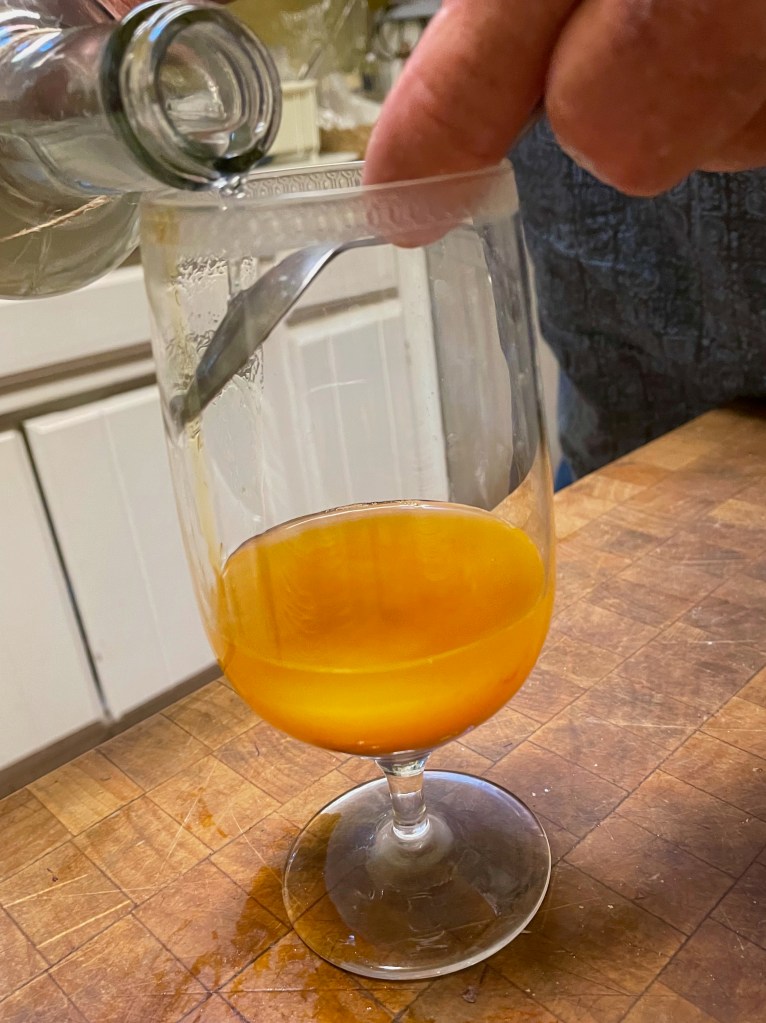
5–(a secret from my formerly-bartender partner): Gently pour the diluted mango juice atop the saguaro syrup layer by placing a spoon upside down to slow the flow against the glass interior, thus preserving the horizonal layers of different densities.

6–Similarly as illustrated over clean inverted spoon, gently pour jigger of mezcal for the top “layer.”

7–Salud! a toast to Agave and its Spirit

A step above and beyond the traditional “tequila sunrise,” this glorious libation is named for the Torch-bearer, who, I was taught by O’odham mentors, lights up and brightens the eastern horizon every dawn with the glowing red, orange, yellow of his solar torch…. This drink helps us rejoice in our local saguaro fruit and spirit of Sonoran agave with its colors, flavors–even nutrition.

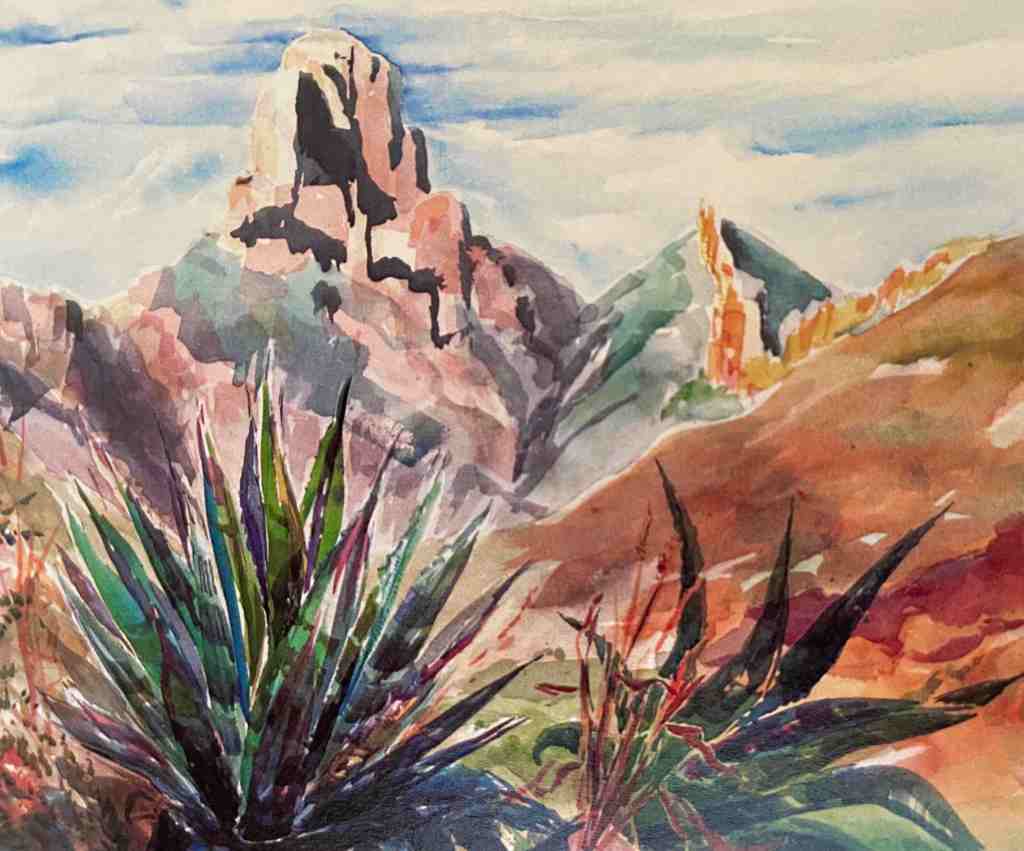
Celebrate agaves also with notecards of my painting “Sacred peak with Agaves,” available at Buenos Aires National Wildlife Refuge visitor center and at Mission Garden. For 11″x17″ matted prints, call Flor de Mayo, 520-907-9471.

More mezcal ideas await…. Check out SavorSister Carolyn Niethammer’s post about the yearly Agave Heritage Festival in Tucson– with agave roasting at Mission Garden– late April. For specialized mezcal tastings locally, visit ExoBarTucson for Thursday evening samplings–It’s an “educational experience.” And stay tuned for more Agave Spirit posts as the holidays approach. Cheers to Mayahuel, to Nabhan’s new book, and indeed to the patient and giving A-ut plant!

See you at Petroglyphs Emporium this Saturday!

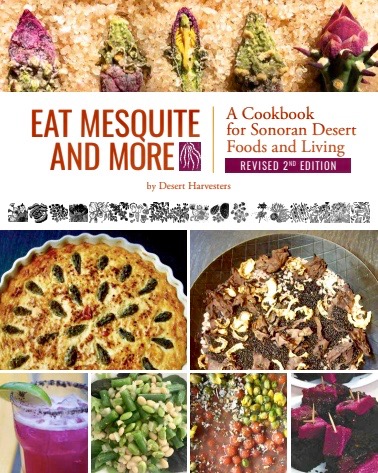
Eat Mesquite and More: a Cookbook for Sonoran Desert Living

Happy Summer, friends!

Amy here, on a hot, hot morning, sitting the shade. Have you seen Desert Harvester’s new edition of the cookbook??? It is 400 pages! with lots of color photographs and original art. It really is worth getting the book for the art alone.

But today I want to highlight the ethics in book. It starts with a poem by Ofelia Zepeda, followed by a land acknowledgement, and a Desert Harvesters ManiFEASTO in English and Spanish. There is a recipe for Abundance and a detailed primer on Reciprocity, elaborating on “Get to Know vs Grab and Go” and “Rewild vs Defiled” and a whole other section on living and eating in place. So yes, even if you don’t live in the desert where these plants grow, and even if you never plan to cook, this is still a tremendous resource and inspiration.

As the title declares, Desert Harvesters has morphed from mesquite milling focused to offering intimate portraits and recipes of over 20 desert ingredients. Have you harvested: mesquite, ironwood, saguaro, acorn, devil’s claw, wolfberry, hackberry, mushrooms, chiltepin, barrel cactus, prickly pear pads and fruit, cholla, chia, agave, palo verde, yucca, ocotillo, globe mallow, purslane, packrats, grasshoppers or cicadas? With detailed harvesting instructions, seasonal timing and expert tips, a novice harvesters can actually get out there and try! Many desert plants offer multiple delicacies, such as ironwood tree as green seeds, mature seeds, flowers and seed sprouts.

There are a LOT of recipes, some easy and some taking days or longer to make. I didn’t count how many recipes are in the book, but it says only 80 of them are bilingual, English and Spanish and 65 are new to this edition. There are a few medicine recipes, too. This book really does have something new for even the most seasoned harvester. The recipes are contributed and tested by community members far and wide, encompassing ancient wisdom and modern innovation from many cultures. It also includes many recipes from us Savor Sisters, Carolyn, Tia Marta and I.

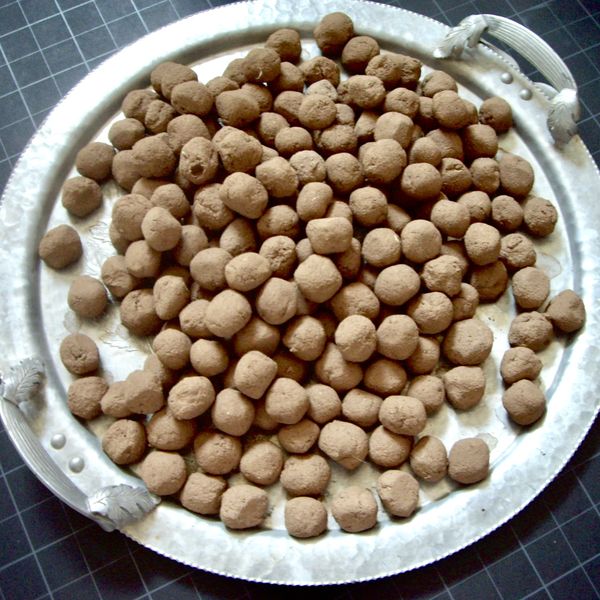
If you still aren’t convinced to buy this book or find it in the library, go to Desert Harvesters Facebook page. There you will see recipes for Seed Balls for planting and Saguaro Fruit Truffles for eating. Don’t mix them up!

Happy Yellow Moon! S-ke:g Oam Maṣad!

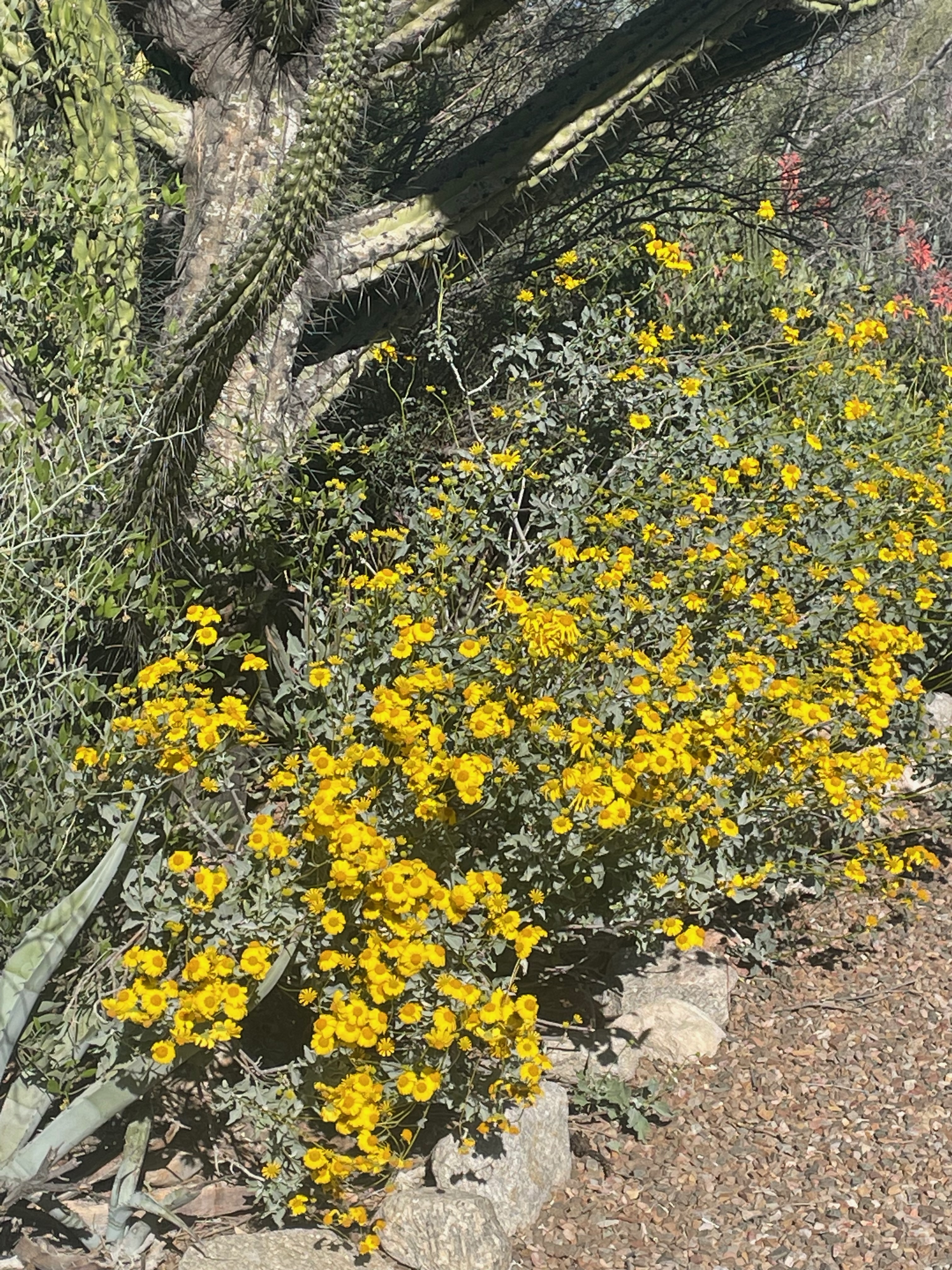
April– at last!  The Sonoran Des is in cheer-mode after a long, chilly-wet and wonderful winter-spring!  Our plant neighbors are blessed with deep moisture, so brace yourself as they explode into their glorious garb of yellows. Tia Marta here, inviting you to celebrate a rite of spring with a bow not only to the bunnies and birds but also to buds and beans….
Any rite will be fine. You choose your rite way. Here at Casa Choyita, I have some interesting projects in the works to celebrate spring–both involving cookery but of two different “ilks”:  a creative recipe for heirloom beans and cholla cactus flower buds, plus,  colorful dyes cooked from beans and brittlebush.  Every step of the way we’re honoring the plants with thanks for their varied gifts.

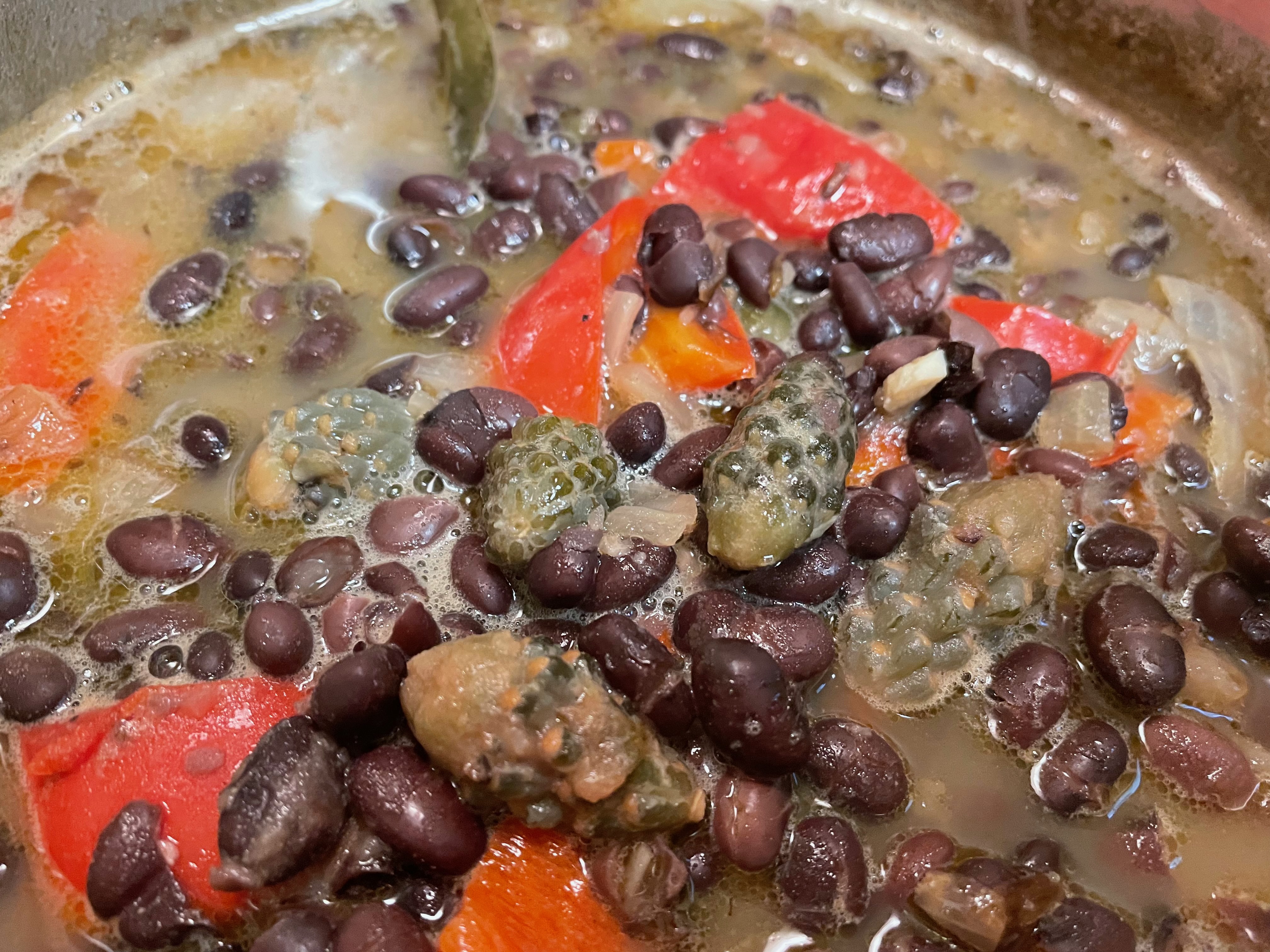
S-cuk mu:ñ c ciolim Frijoles negros con botones de choya–Black beans with cholla buds– by any Borderlands name this combo is delectable. Try my recipe below for a Cubano style. and enjoy! (Dark water from soaking your blackbeans can be saved and used creatively–See explanation below…)

Watch your backyard ciolim (pronounced chee’oh–rlim) closely these next couple of weeks to know when to harvest!

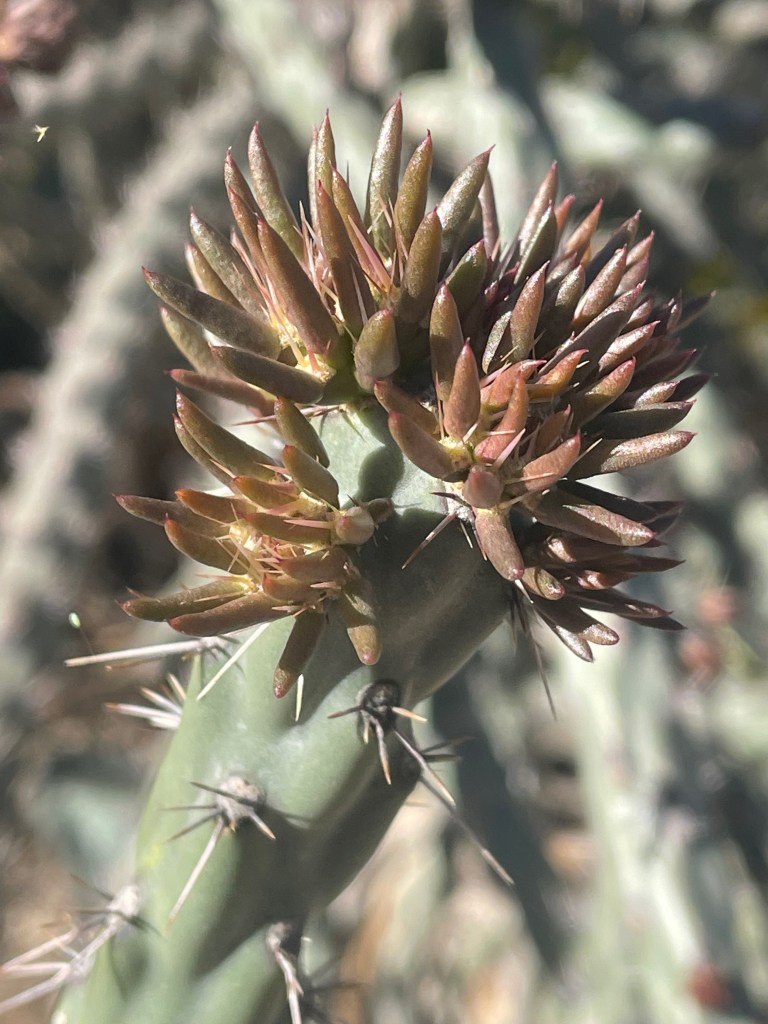
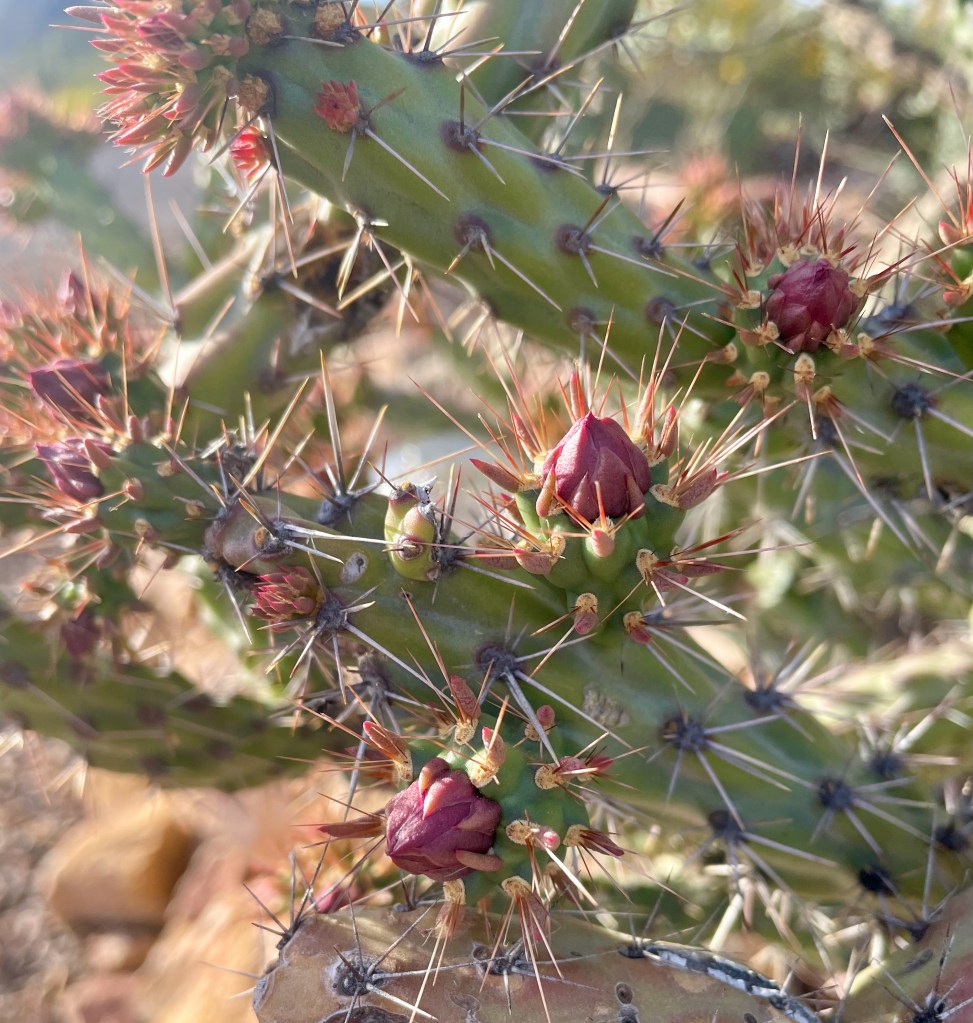
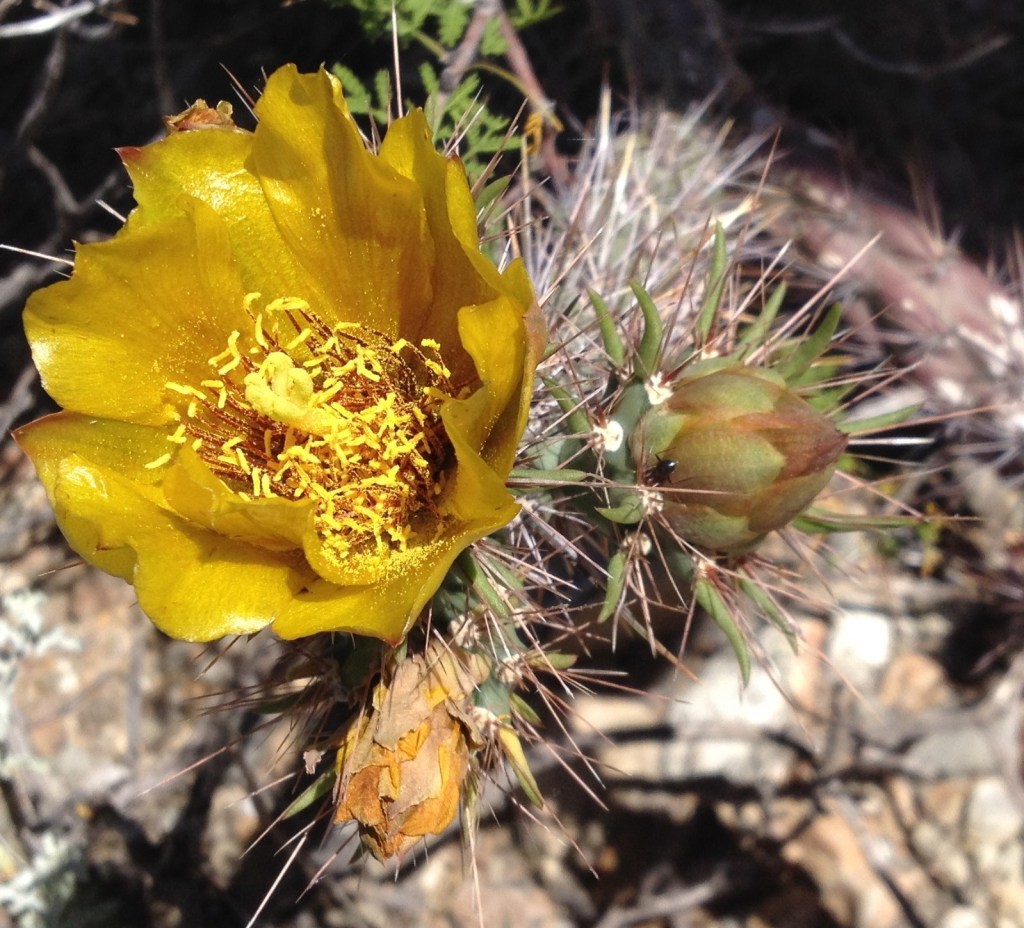
The Sonoran Desert’s staghorn cholla (Cylindropuntia versicolor) and other cholla species’ flower buds will be swelling daily. Those little succulent prongs you see on the buds are actual cactus leaves! (This is the only time we’re able to see real leaves on cholla and prickly pear.)

Wait til the buds are as fat as they can get before blooming to harvest while still in the bud stage….
….These buds are not quite ready, still swelling…..
 

…. My O’odham teacher instructed me to check when the first cholla flower opens on a plant. Then you’ll have a comparison to know the maximum size the buds will get on that cactus–Now the buds are ready to harvest!

RECIPE: Tia Marta’s Black Beans with Cholla Buds, Cubano style:

Simmer your fresh despined (or prepped, dried, reconstituted) cholla buds ahead, until they are soft.

Pre-soak beans: Cover black beans in water (3x the amount of beans) and soak for 6-8 hours minimum. Strain and SAVE your darkened water for future dye projects. You can soak beans a second time and strain to derive even more dark dye-water.

In a crock pot or sauce pan add lots of fresh water to your drained beans, then simmer until softened, 1-2 hours or more, checking water level.

Add to the cook pot: 1 cup of sauteed chunks of sweet red bell peppers, 1/2 cup sauteed chopped onion, 1 Tbsp fresh minced garlic, 1 tsp wild oregano, 1 tsp cumin powder or seed, 4 bay leaves, sea salt to taste, 1 Tbsp agave nectar, 1 Tbsp wine vinegar, 1/2 cup cooked and drained cholla buds, chiltepin peppers to taste (sparingly). [These are my preferred herbs and spices. Do try your own variations!]

Simmer all ingredients for another hour until it thickens and flavors meld. Serve over steamed brown rice for a fabulous veggie meal, or serve cold for a savory summer dish.

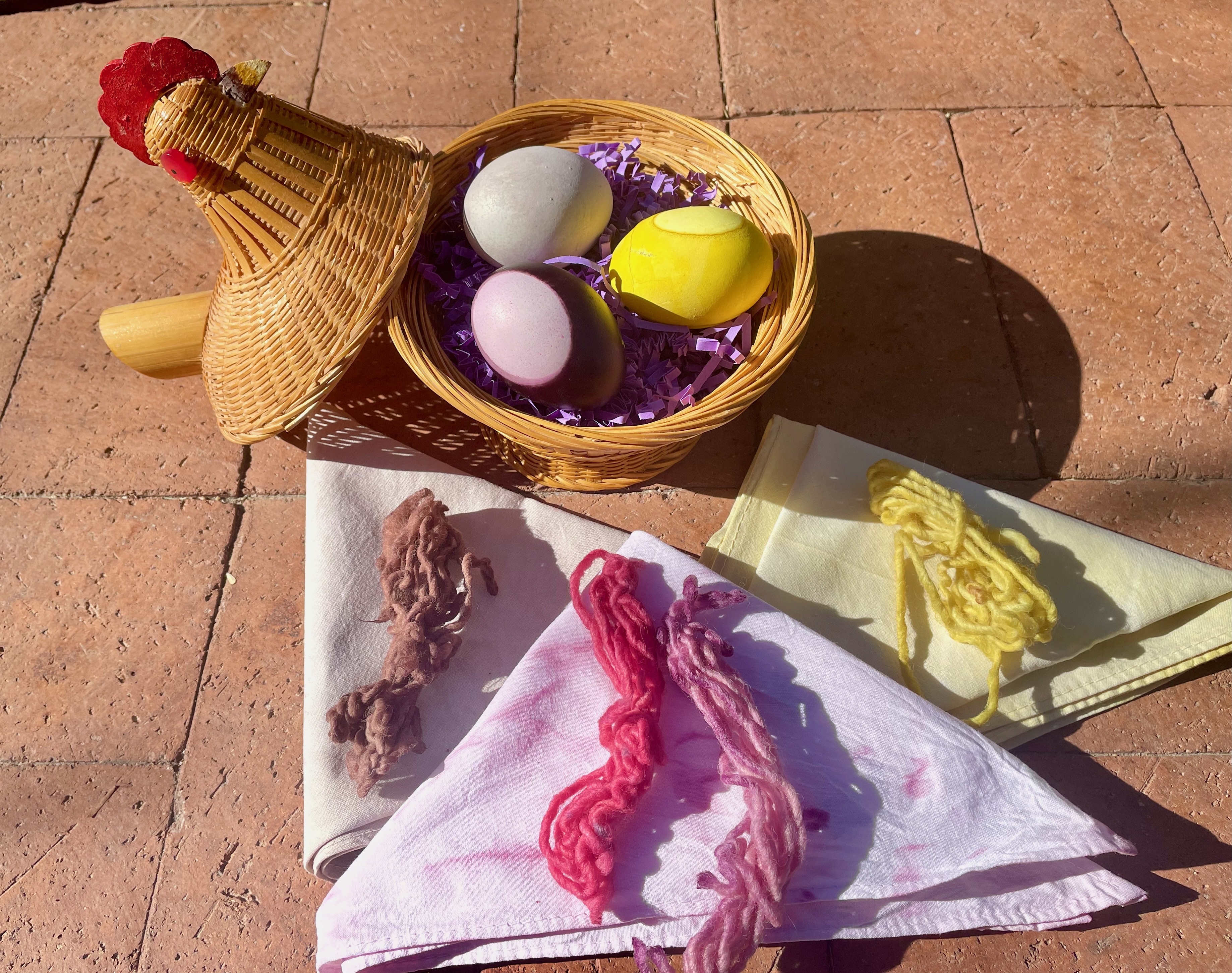
For a Tohono O’odham Community College art class we had experimented dyeing yarn and cotton with blackbean juice (left, gray/taupe), cochineal insect (center, pink/lavender), and brittlebush (right, yellow).
Later (seen in my chicken basket above for the season) I further experimented with a new medium, eggs! My plant dyes, used cold, actually worked–a warm gray from blackbeans, bright yellow from brittlebush flowers, and deeeeep purple from cochineal!
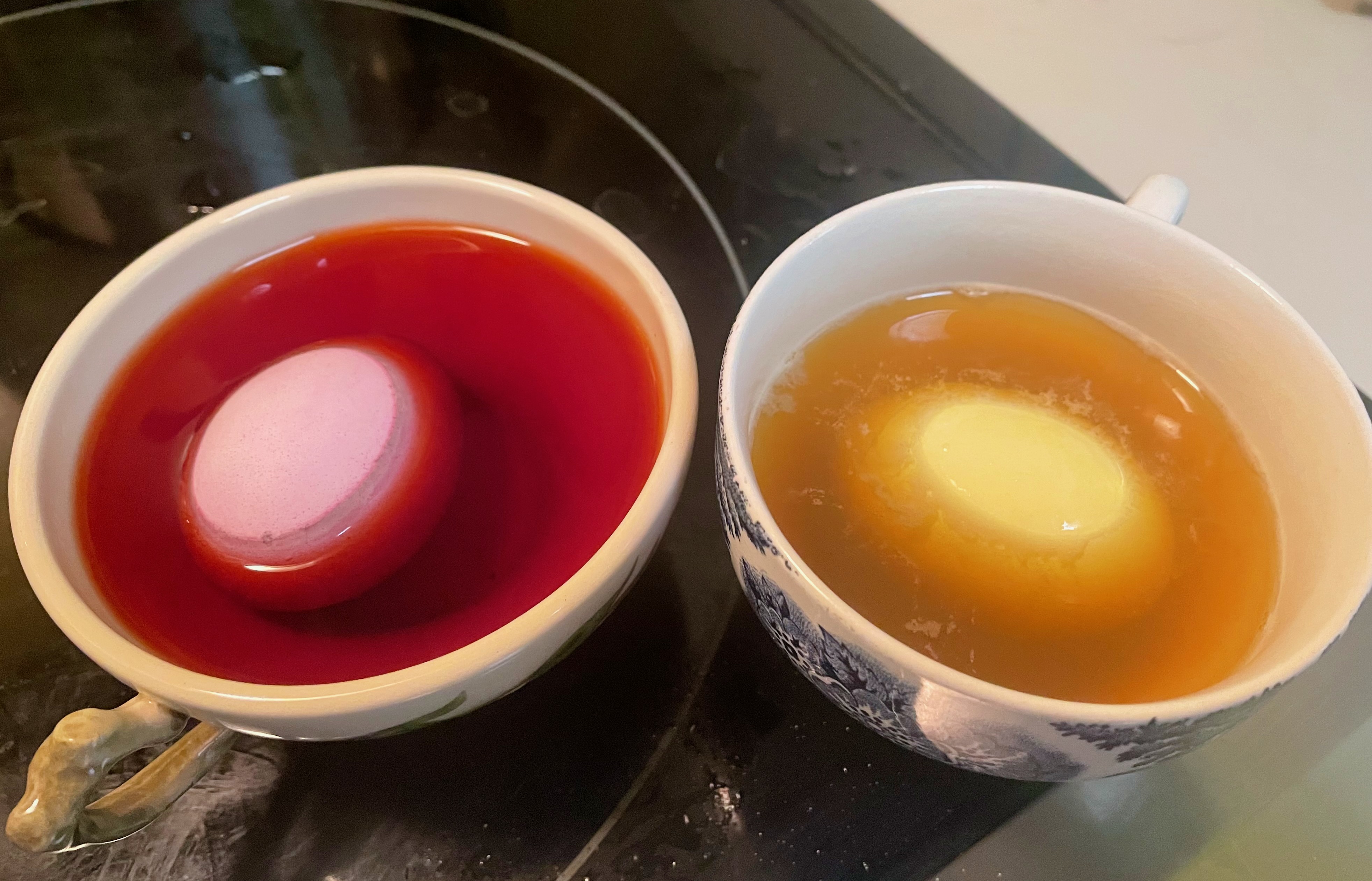
Here’s my close-up process: I placed boiled white eggs (from Mission Garden’s heirloom chickens) into cochineal dye (left) and brittlebush flower dye (right) to bathe for an hour and–voila!–we had Easter eggs. The dye didn’t even penetrate the shells.
Who knows–My next step may be to make fancy deviled eggs with pickled cholla buds….

S-ke:g Oam Maṣad!--a happy Yellow Moon to desert harvesters and Southwest cooks from Tia Marta! May we all celebrate visually and gastronomically!

Since we have a short window of opportunity for collecting cholla buds this month, you are invited to get a head start by checking more blog posts full of great ideas. Here are some good links:

https://savorthesouthwest.blog/2017/04/21/cholla-crepes-with-hollandaise-and-mulberry-compote-yogurt-crepes/

https://savorthesouthwest.blog/2014/03/18/theyre-here-theyre-ready-cholla-buds-grand-opening/

https://savorthesouthwest.blog/2021/04/21/curry-puffs-with-cholla-and-palo-verde/

https://savorthesouthwest.blog/2021/04/30/quiche-sonoraine-a-la-cholla-bud/

Holiday Citrus-Mesquite Bars

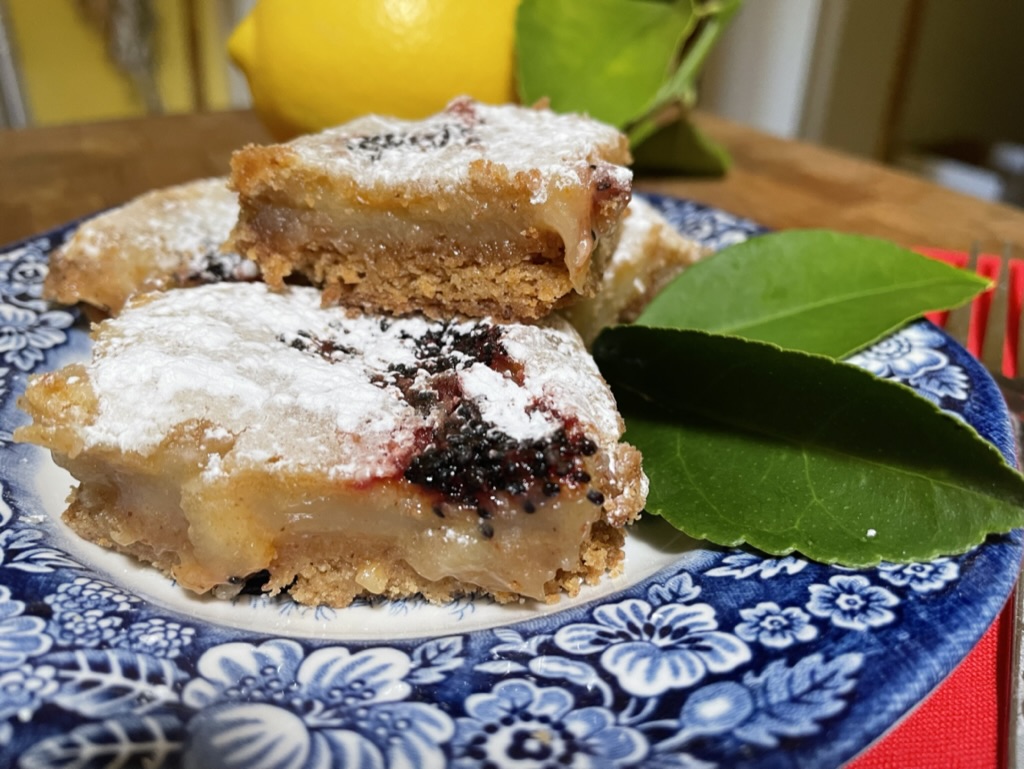
OK, anyone can put sugar, butter and flour together, but if you give yourself carte blanche to invent new local variations on old-time favorites you can come up with some winners, especially for special winter occasions. Tia Marta here to share what I did with traditional lemon bars for a totally Southwest flair:

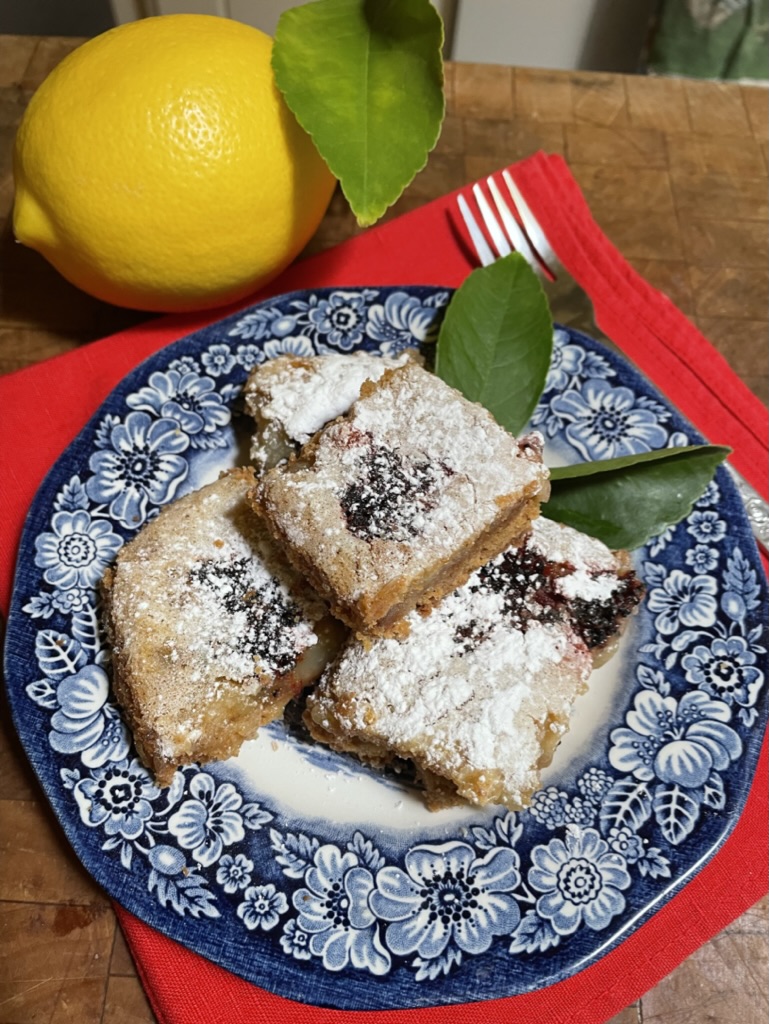
Try this delicious locally-inspired RECIPE for HOLIDAY CITRUS BARS:

You will need a 9×13″ baking dish and mixing bowls

Ingredients for crust:

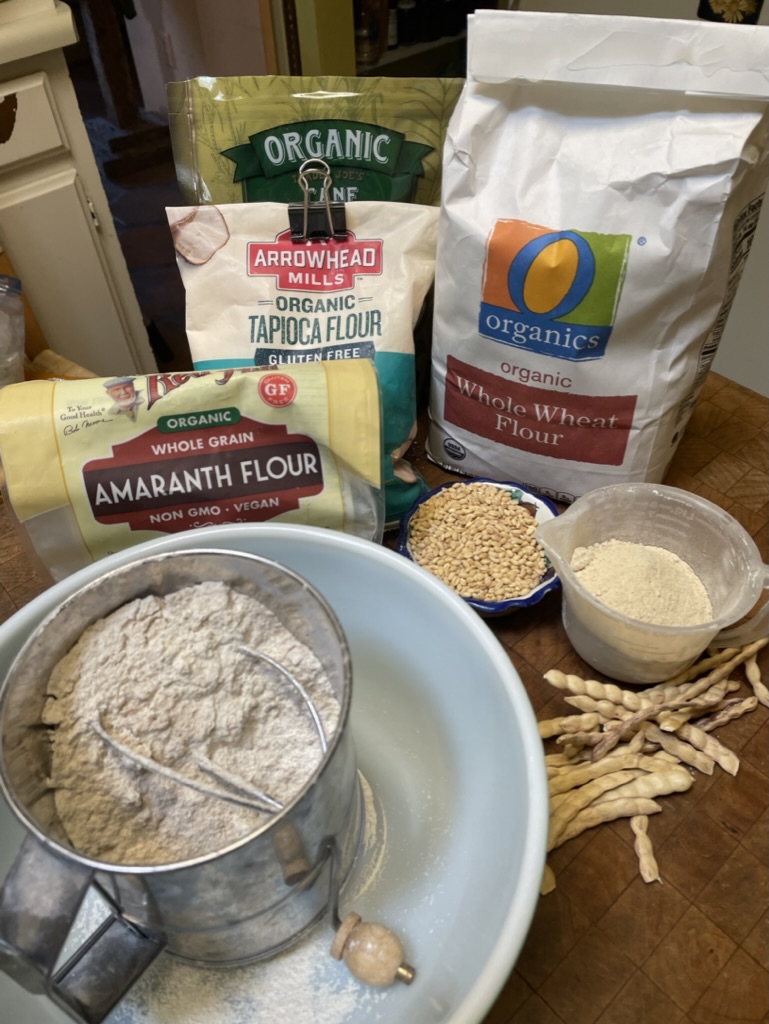
1 and 1/2 cups flour mix (I used 1 cup organic fine whole wheat and 1/2 cup white Sonora wheat flour*)

1/2 cup mesquite meal (in place of crushed graham crackers used in other recipes)

3/4 cup butter, softened room temperature

1/2 cup powdered sugar

Ingredients for top layer:

2 cups regular sugar

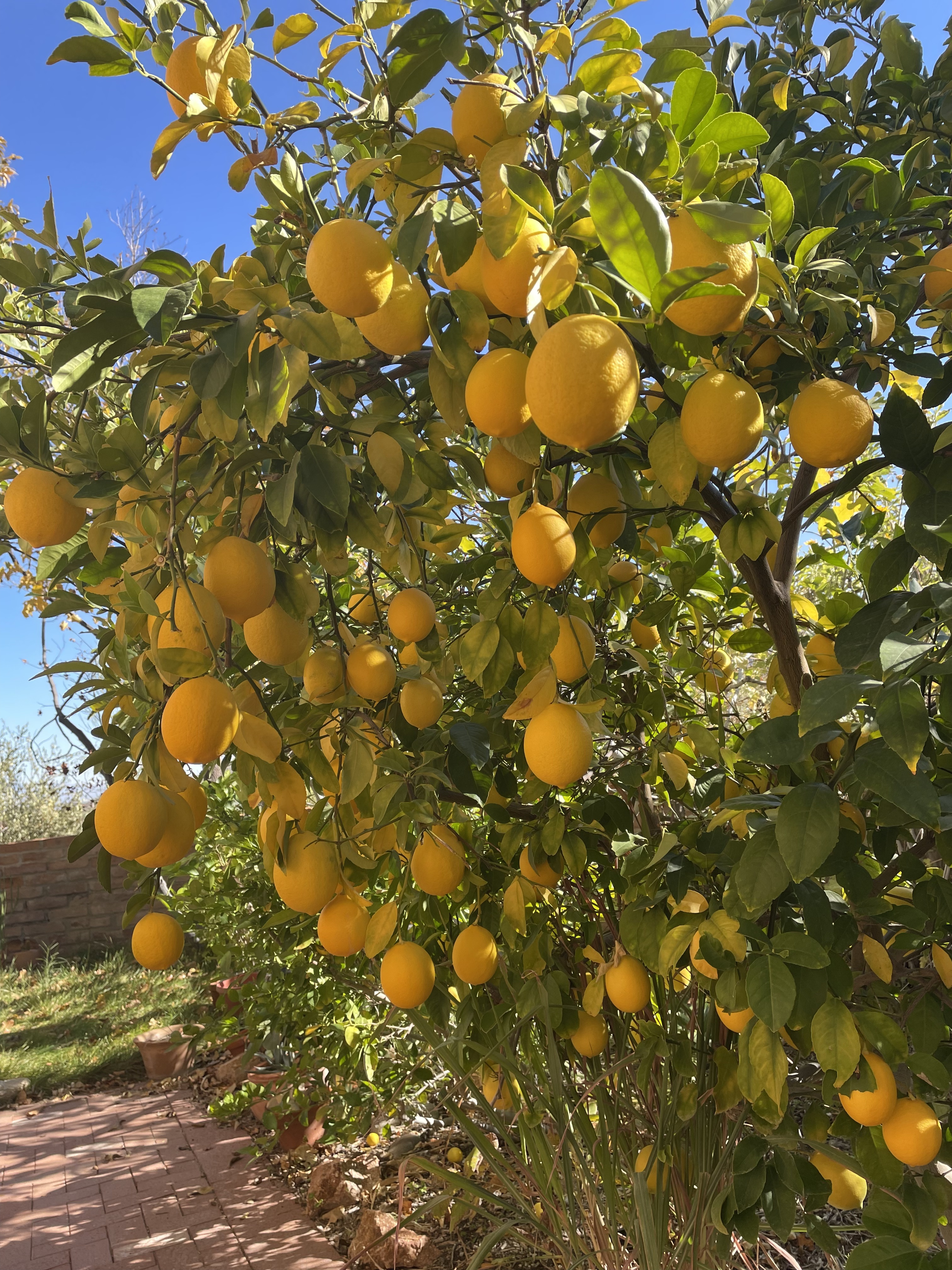
1/2 cup lemon juice (lime juice or tangerine juice also are delish)

1-2 Tbsp lemon-zest (I used minced Meyer lemon rind; lime- or tangerine-zest would be great)

4 lg. eggs

optional wild desert fruits (I used saguaro fruit; prickly pear or hackberries would work great)

!/4 cup flour (added separately for this top-layer mixture)

*white Sonora wheat flour is available from Barrio Bread milled with heirloom grain grown by BKW Farms in Marana

Directions follow with pictures:

Preheat oven to 350 degrees F.

To begin crust, sift flour mixture, mesquite meal, and and powdered sugar together.

(Since the crust is not leavened, you can make it gluten-free by using tapioca flour as your binder and amaranth flour with the mesquite flour.)

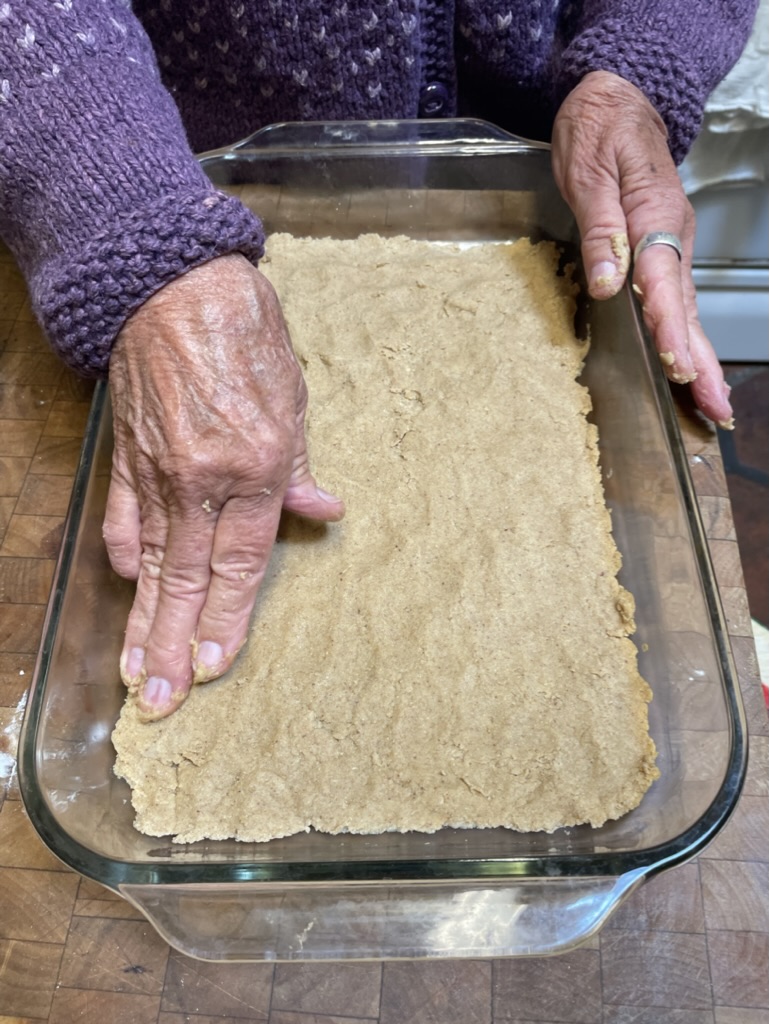
Mix crust ingredients–flours, confectioners’ sugar, and softened butter– to make a “dough”.

Press “dough” into the bottom of the 9×13″ baking pan, relatively evenly (maybe 3/4-1/2″ thick. Be sure to crimp down the edges with a clean knife so the thickness of dough is not tapered thin.

Bake crust at 350F until light brown, about 20-25 minutes. Keep oven on….

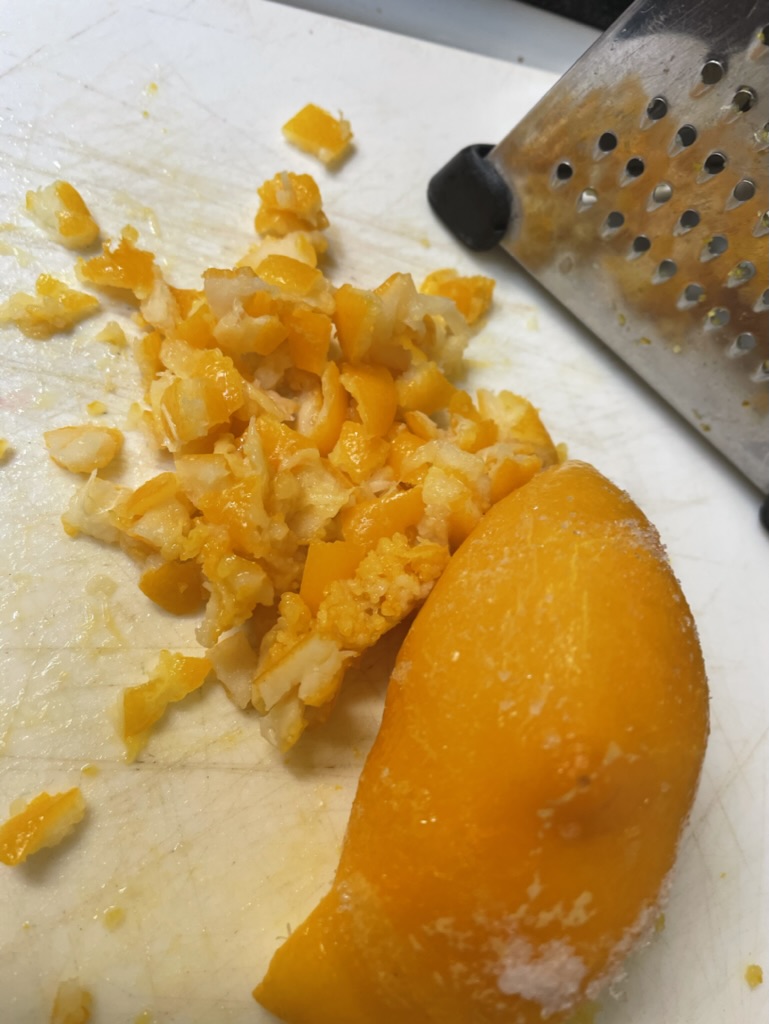
Grate 1-2 tablespoons lemon, lime or tangerine zest.

We have Meyer lemons which have such a mild sweet rind that I experimented by mincing, instead of zesting them. I had juiced the fruits previously, and had frozen the rinds for zesting and for making limoncello (that’s another fantastic blog by SavorSisterCarolyn!) . For the top-layer mixture I used 3 tablespoons of minced Meyer lemon rind.

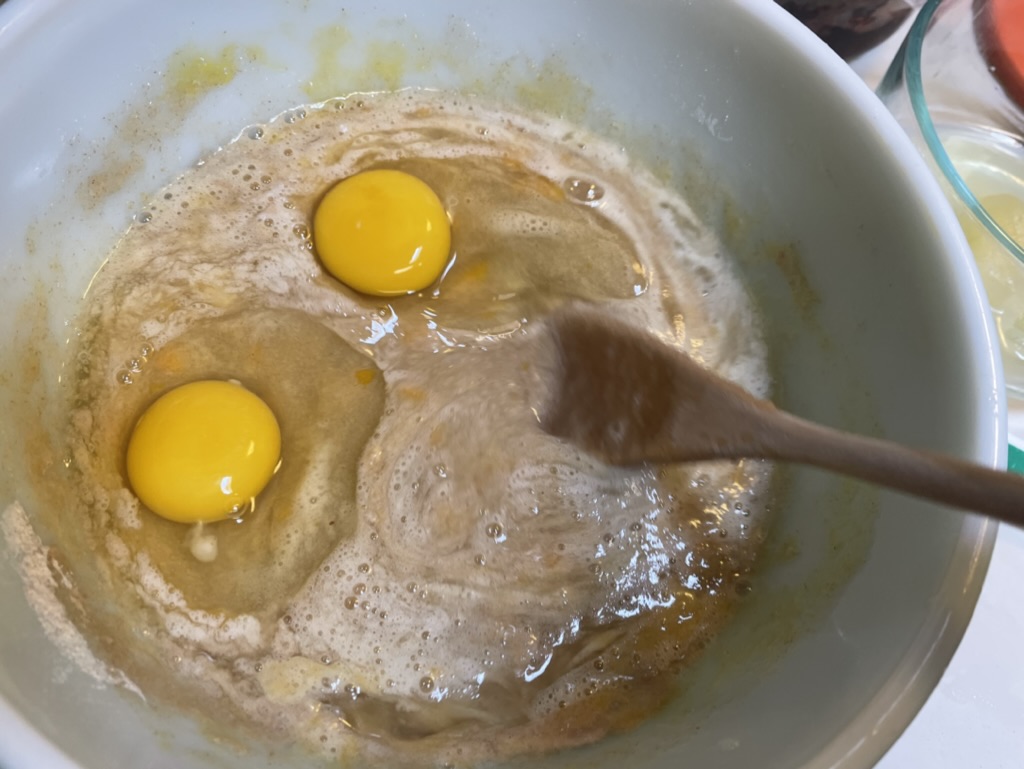
While crust is baking, beat together the top-layer ingredients: sugar, citrus juice, minced or zested rind, 4 eggs, and 1/4 cup flour as thickener. (If you are using a pyrex bake pan, make sure this mixture is warm enough so as not to shock the hot pyrex when poured on crust.)

When crust is light brown and done, bring out of the oven. Pour top-layer mixture onto the crust.

To provide festive decoration and texture, I garnished the top with saguaro fruit collected last June, frozen and now thawed.

Return the now double-layered pan back into oven. Continue baking for another 20-25 or until top layer “sets” firmly.

When done, place on raised rack to cool evenly. Dust the top with powdered sugar.

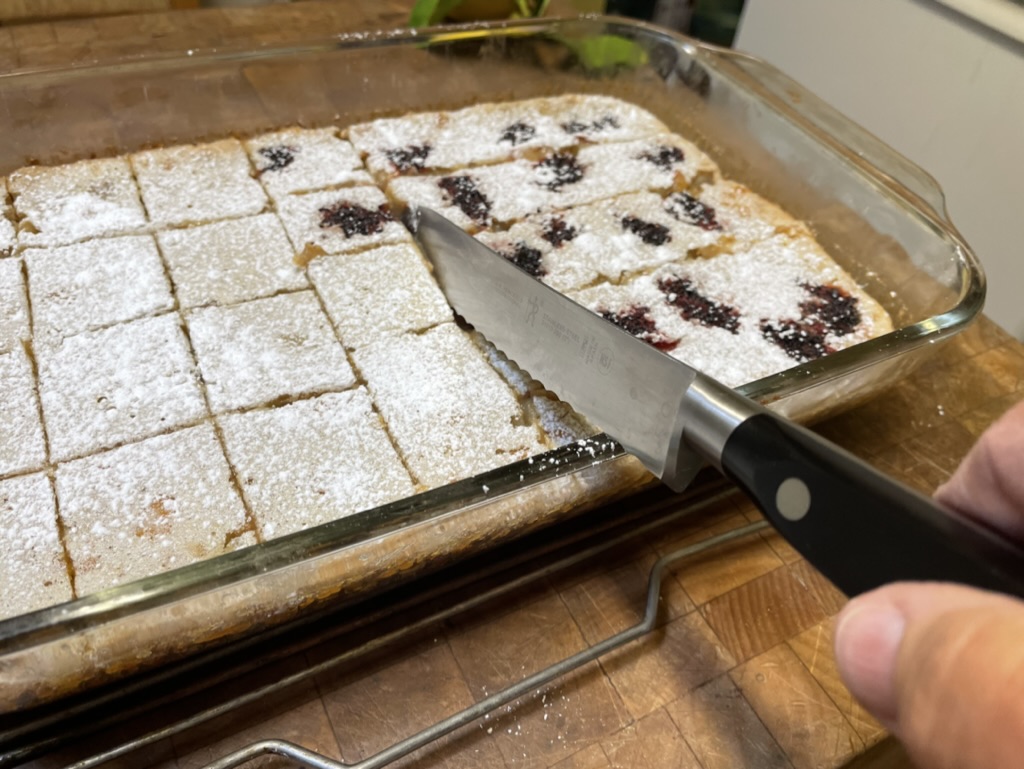
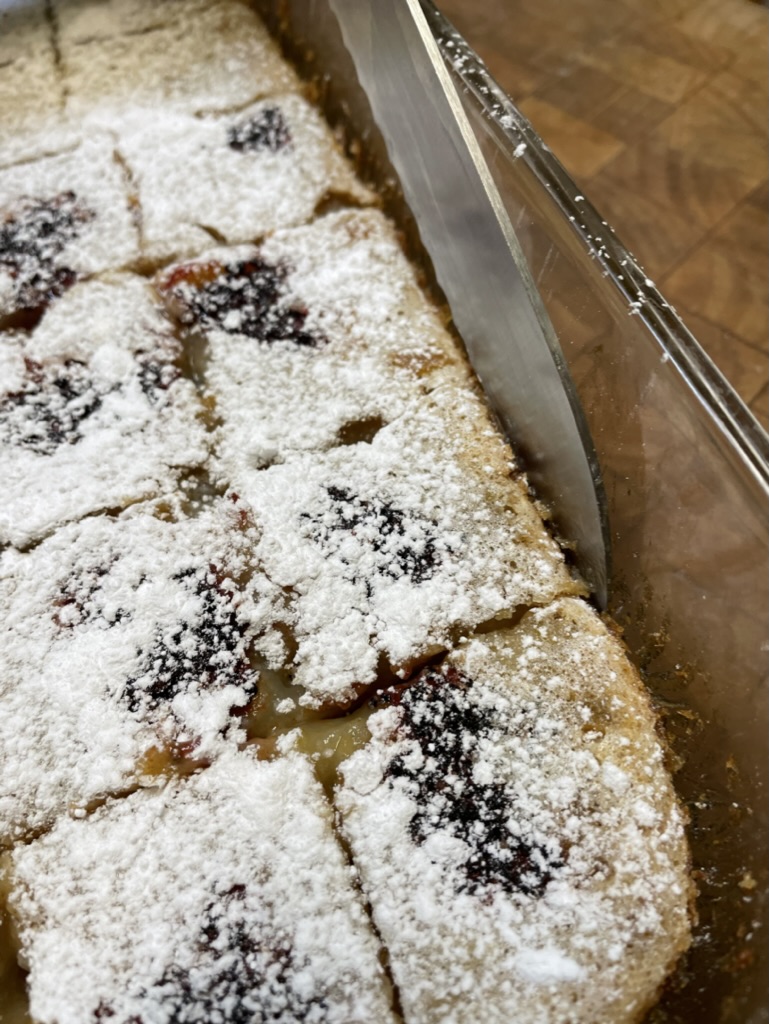
When cool, separate crust from edge with sharp knife to make removal easier. Slice into small squares. These bars are so deliciously RICH –small is better!

Good and gooey –with that wonderful mesquite flavor, the crunch of saguaro seed,

…and the internalized hope that–with this–we can let the desert plants know how important they are to us!

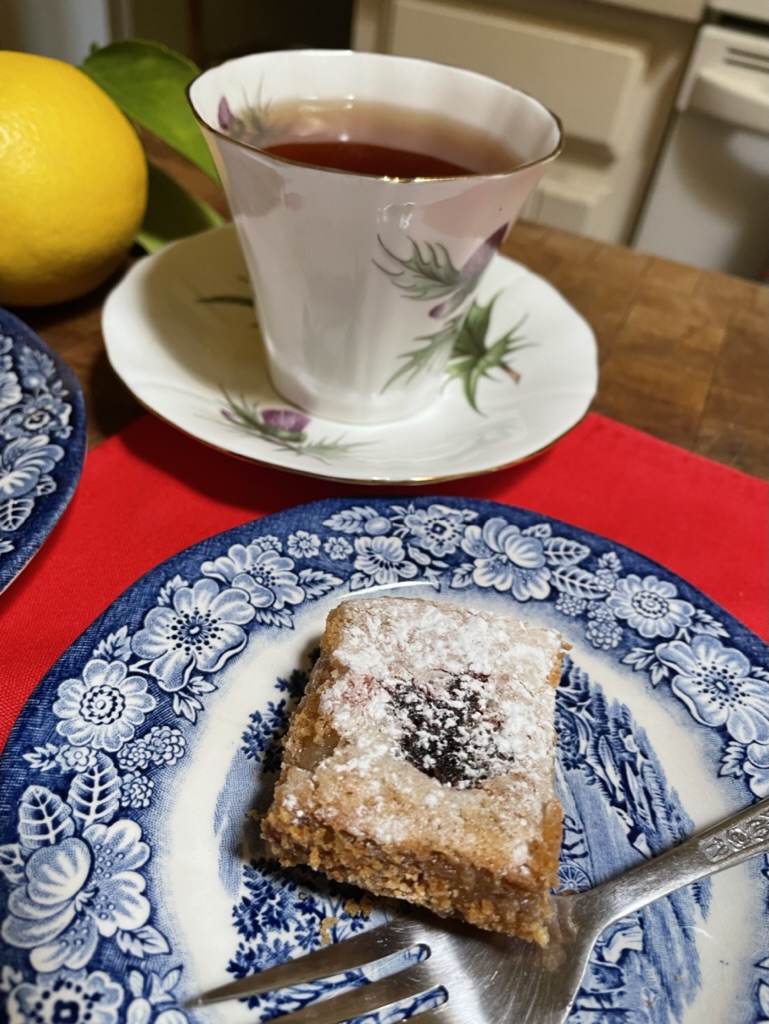
Enjoy a cold-weather tea-time, a citrus harvest with purpose, or a Thanksgiving dessert made with your own variation on this Citrus Bar treat!

As winter festivities draw near, for more great ideas….check out our earlier blog post Southwest Style Holiday Buffets.

A joyous holiday to all from Tia Marta!

[Mesquite flour or saguaro fruit are special tastes of what makes Tucson an International City of Gastronomy! But these desert foods are not available just anywhere. Plan ahead–the way traditional Tohono O’odham harvesters have always known to do– future culinary opportunities will open to you if ye desert goodies while ye may, that is, when they are in season. Here’s a word of encouragemen from Tia Marta: Put it on your 2023 calendar now. Set aside time in mid-late June, tho’ it is super hot, to collect saguaro fruit, peel and freeze it in sealed container. Also mid-late June before the rains, gather brittle dry mesquite pods for community milling, and freeze the meal in sealed containers. In mid-late August, gather whole prickly pear tunas to freeze in paper and plastic, for juicing later. YOU WILL BE SO GLAD LATER THAT YOU SET ASIDE THESE DESERT FRUITS. Use the SEARCH box on this blog for instructions about harvesting a cornacopia of desert delicacies and staples.]