Farmers’ Market Sources for Warming Body and Soul, Baking and Gifting

Autumn harvest from the NativeSeeds/ SEARCH Conservation Farm in Patagonia, AZ-heirloom Navajo banana squash

Autumn harvest from the NativeSeeds/ SEARCH Conservation Farm in Patagonia, AZ–heirloom Navajo banana squash (MABurgess photo)

What makes Tucson an International City of Gastronomy?  It is not only that we are blessed with amazingly creative chefs–like the ones showcased at the Mission Garden Picnic feast.  It’s also the availability of rare and wonderful heirloom foods that are adapted to our particular Baja Arizona climate, soil, and cultures!  Few other places have the flavorful and nutritious diversity of crops that have been part of our Baja Arizona agricultural landscape for about 4000 years. 

Tia Marta here to share ideas for finding the raw materials for some great slow-food feasting this Winter Solstice season.
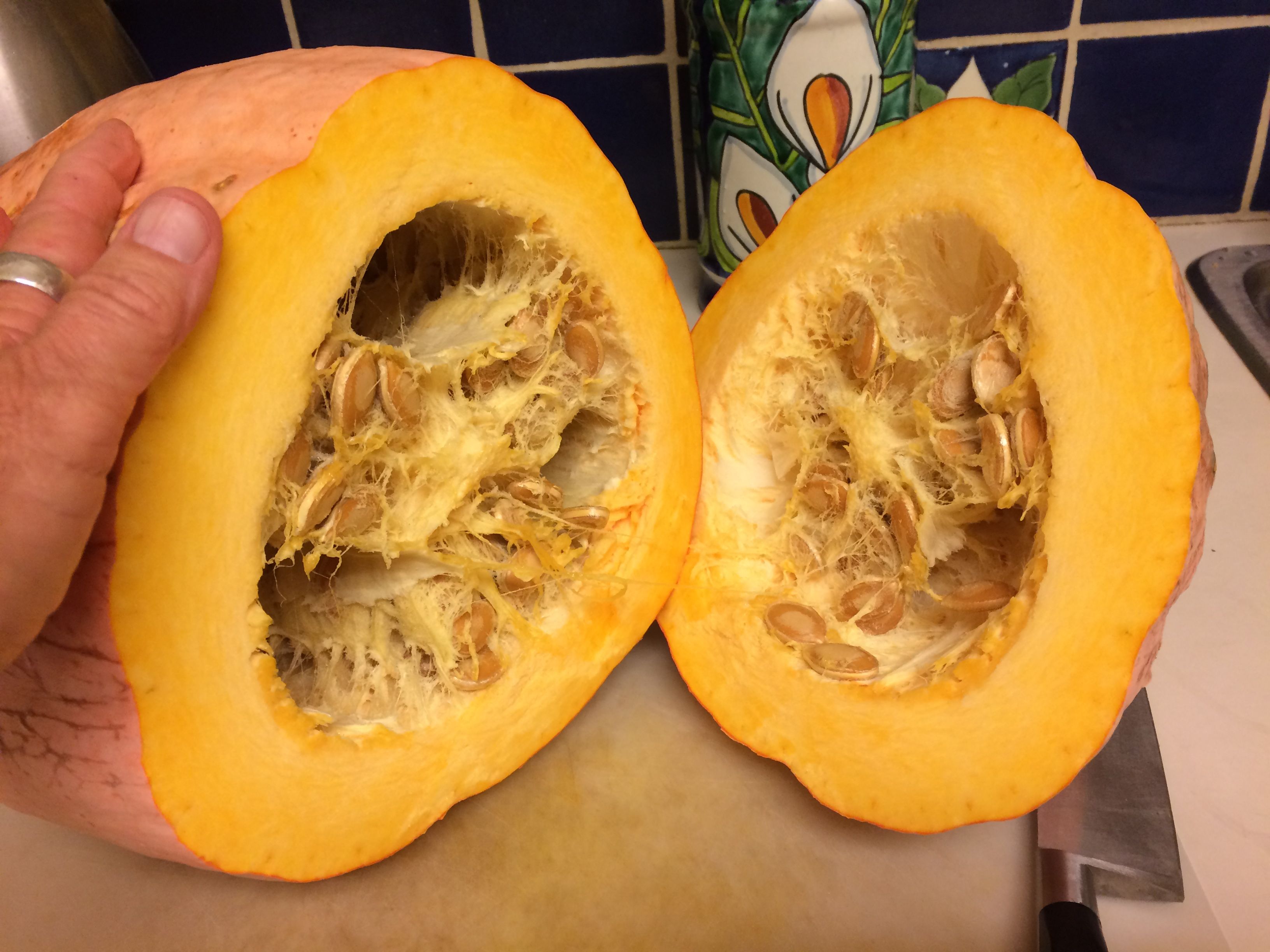
OPEN NSS NAVAJO BANANA SQUASH FOR AN EXPLOSION OF BETA-CAROTENES!

OPEN NSS NAVAJO BANANA SQUASH FOR AN EXPLOSION OF BETA-CAROTENES!

Ignored, more than maligned, by present-day dominant cultures, the squash is a gift to menu-inventors.  It can be prepared as a savory dish with good old salt/pepper/butter, or fancied up with moles.  Or it can be made into fabulous desserts.  Use it in place of sweet potato for a genteel variation.  My favorite is to make it into a festive “Kentucky Pudding”.

Muff’s “Kentucky Pudding” Dessert Recipe

4 cups steamed or baked heirloom Navajo banana squash (or other heirloom) mashed or pureed

2-4 Tbsp mesquite honey or agave nectar (to taste)

2-3 Tbsp chopped crystallized ginger root (I found it at Trader Joe’s)

1/2 cup chopped walnuts or pecans or pine nuts

1/4 cup good bourbon whiskey

Steam or bake squash ahead.  (You can freeze it for using later in a variety of recipes–it’s so convenient!0  In a saucepan, heat mashed squash on medium.  Add honey, ginger, nutmeats.  When hot and steamy, stir in the bourbon quickly and serve with a flair.  You could even try flambé. Serves 4-6.
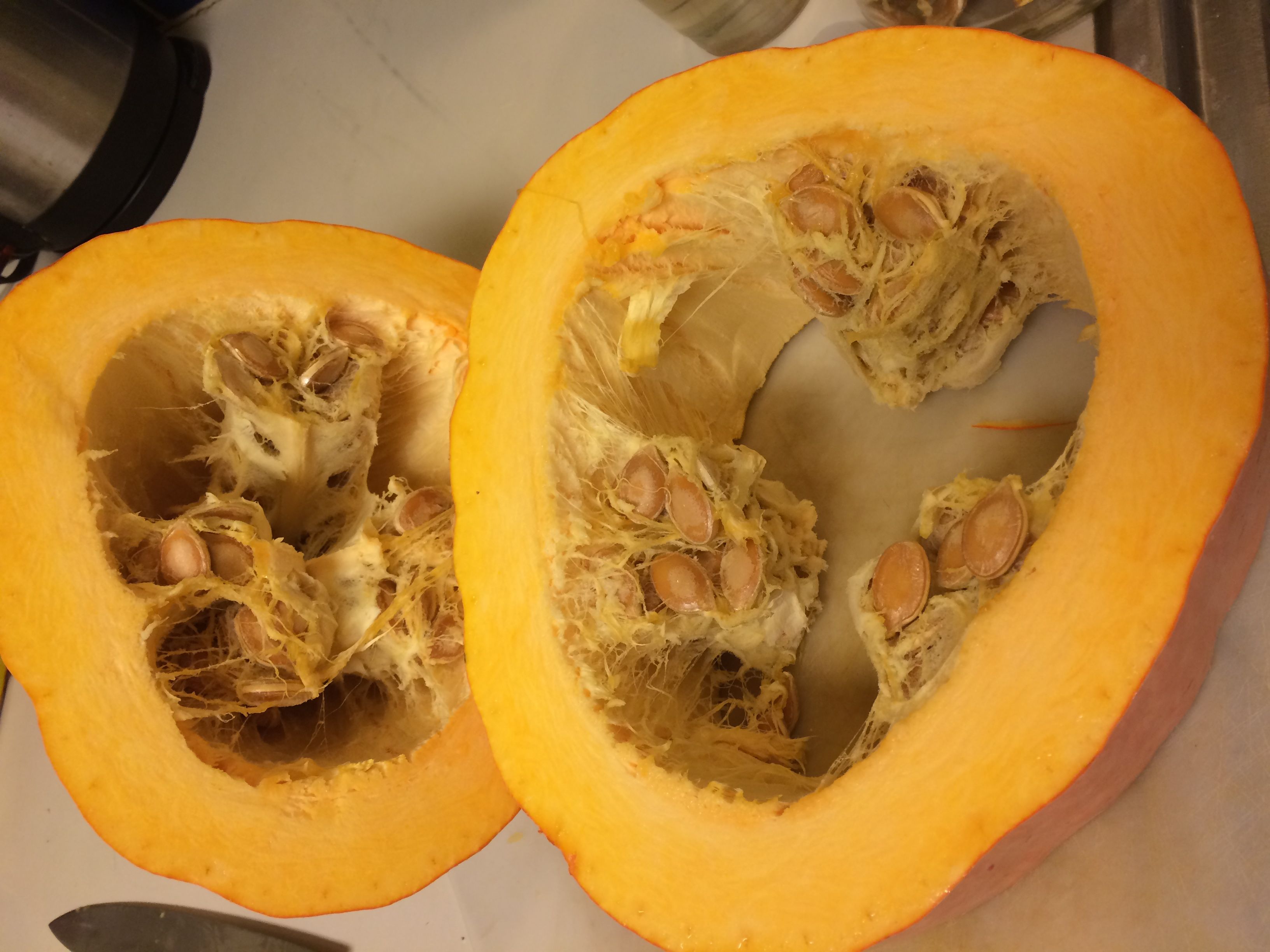
Navajo banana squash showing its interesting pattern of seeds inside

Navajo banana squash showing its interesting pattern of seeds inside

These luscious heirloom squashes, grown at NativeSeeds/SEARCH’s Seed Conservation Farm in Patagonia, are available now at our Flor de Mayo booth at Sunday’s St Philips Farmers’ Market.  Come see the size of them–one of them could feed the whole extended family or a small tribe!  We will be selling them by the smaller family-sized chunk as well.  Start salivating…  If you are seeking Vitamin A in glorious beta-carotenes, this is the food to find.

And don’t forget those giant seeds inside!  They can be roasted easily with a little olive oil and sea salt and voila you have a healthy snack full of zinc to ward off colds in this chilly season.  You can save a handful of those seeds to plant next summer in your garden and keep the gift growing.
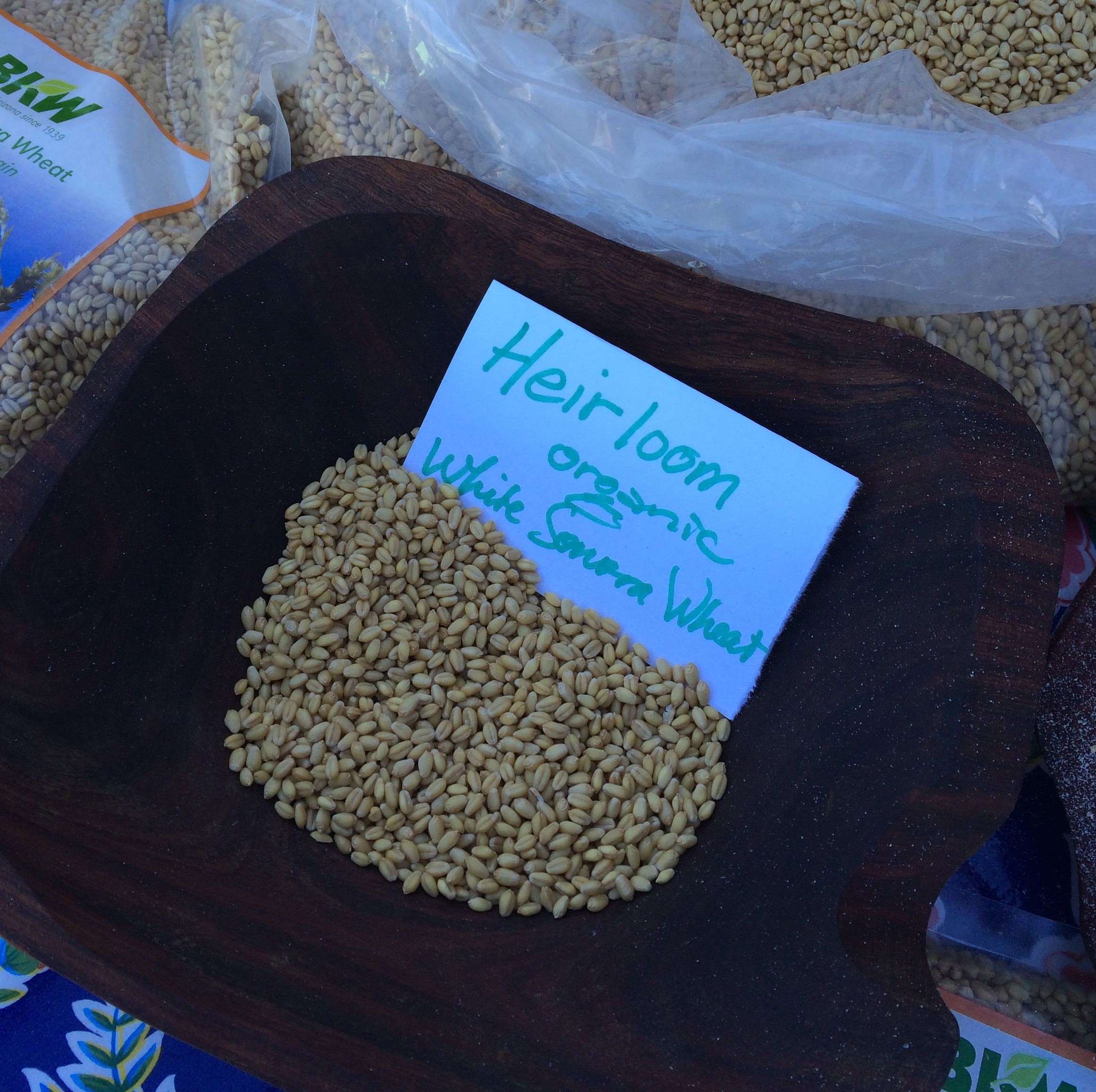
Heirloom organic locally grown White Sonora Wheat-berries

Heirloom organic locally grown White Sonora Wheat-berries

And here are some ideas about baking with local heirloom grains….  Get out your VitaMix or your hand-mill and get ready for a real treat–home-baked goodies made with fresh-milled flour from whole heirloom grains.  Find these precious ancient grains at the NativeSeeds/SEARCH Store (3061 N Campbell near Prep and Pastry) and at the Flor de Mayo booth–Sunday St Philips Food-In-Root Market.
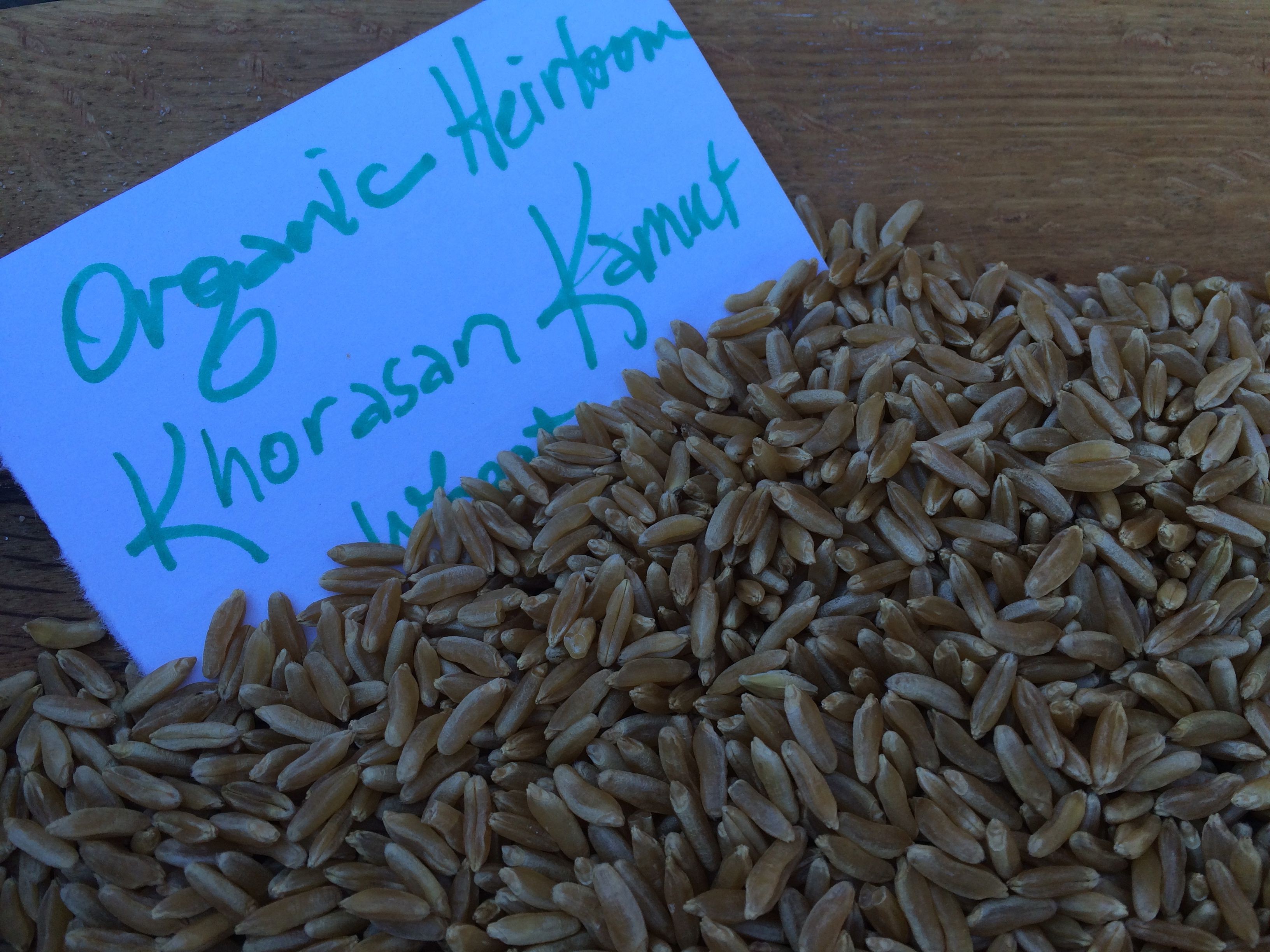
Organic Khorasan Kamut wheat--great for bread baking

Organic Khorasan Kamut wheat–great for bread baking

If you don’t want to take the time, or if you don’t have milling equipment, no problem!  Just come by our Flor de Mayo farmers market booth and see your special grain being fresh-milled before your very eyes.  It is especially neat for kids to see where flour comes from.  Surprisingly, many an adult has difficulty making the connection with grain and flour.  The beauty and significance of keeping the grain whole until milling is that the grain is ALIVE!  When used fresh-milled within a few days of milling, the beneficial enzymes–the “life force” in the whole kernel–are still active in the flour.  And the taste of freshly-milled flour is a whole new flavor-ballgame.
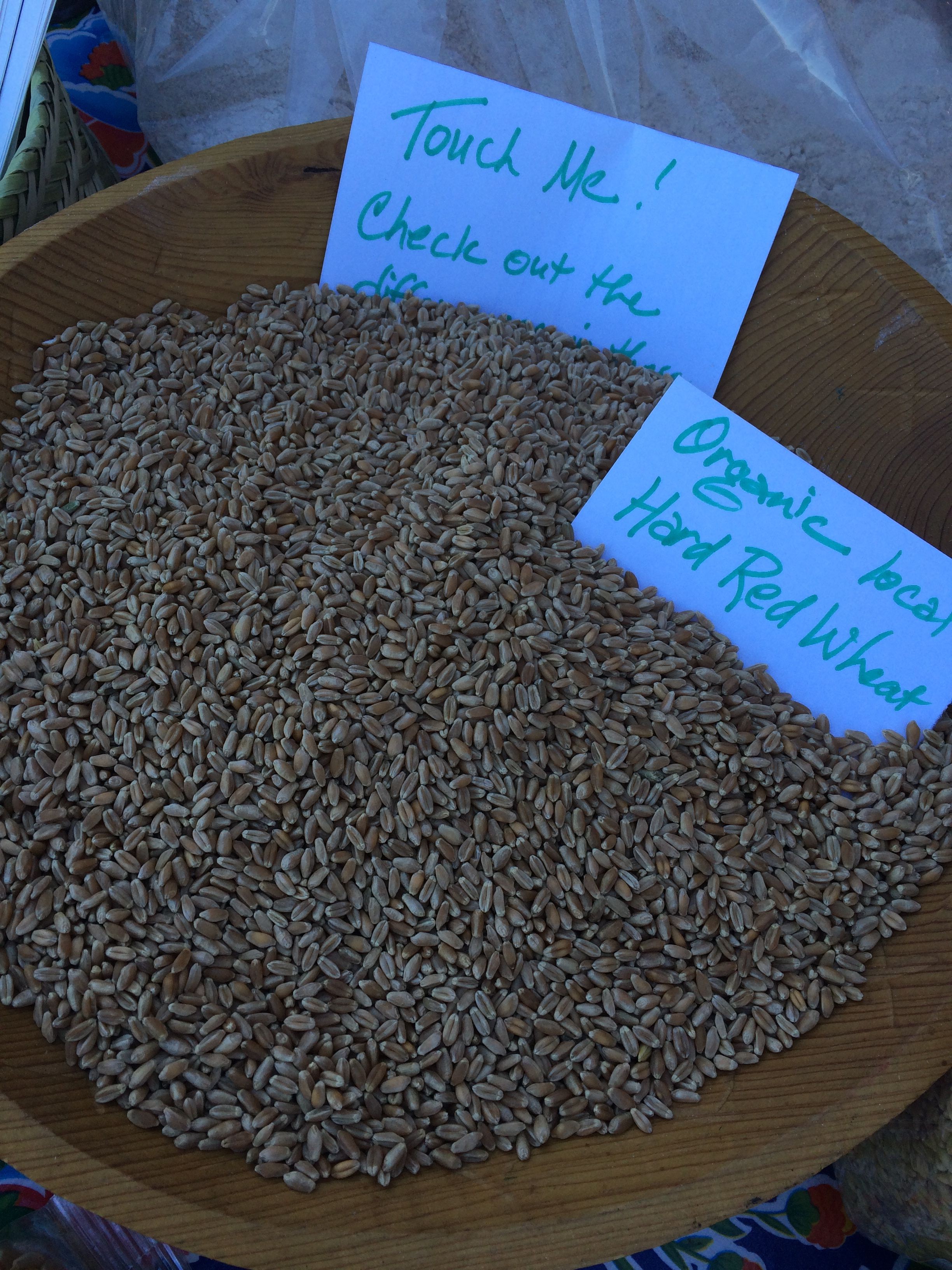
Organic hard red wheat--perfect for Christmas cookies and cakes

Organic hard red wheat–perfect for Christmas cookies and cakes

Come actually touch our good organic grains!   Feel their liveliness.  We have recipe ideas to share, like our Baja Arizona White Sonora Wheat flour and Mesquite pie crust.  In addition we can recommend lots delicious whole wheat-berry recipes for Padre Kino’s white Sonora wheat grown locally by BKWFarms or the Pima club wheat grown by San Xavier Farm Coop and Ramona Farms.

For a completely new experience, try baking with a purple grain!–our heirloom Purple Prairie Barley.  Barley flour has the lowest glycemic index of all the grain flours hence helping to balance blood sugar.  It has a rich flavor that can enhance any bread or biscuit recipe.  The purple color indicates a high anthocyanin content– an important antioxidant.  When you cook the purple barley as a whole grain, you can use it in pilafs and marinated grain salads the way you might use rice or quinoa.  Combined with rice it makes a colorful high-contrast pilaf.  (I’d be happy to elaborate in another post.)
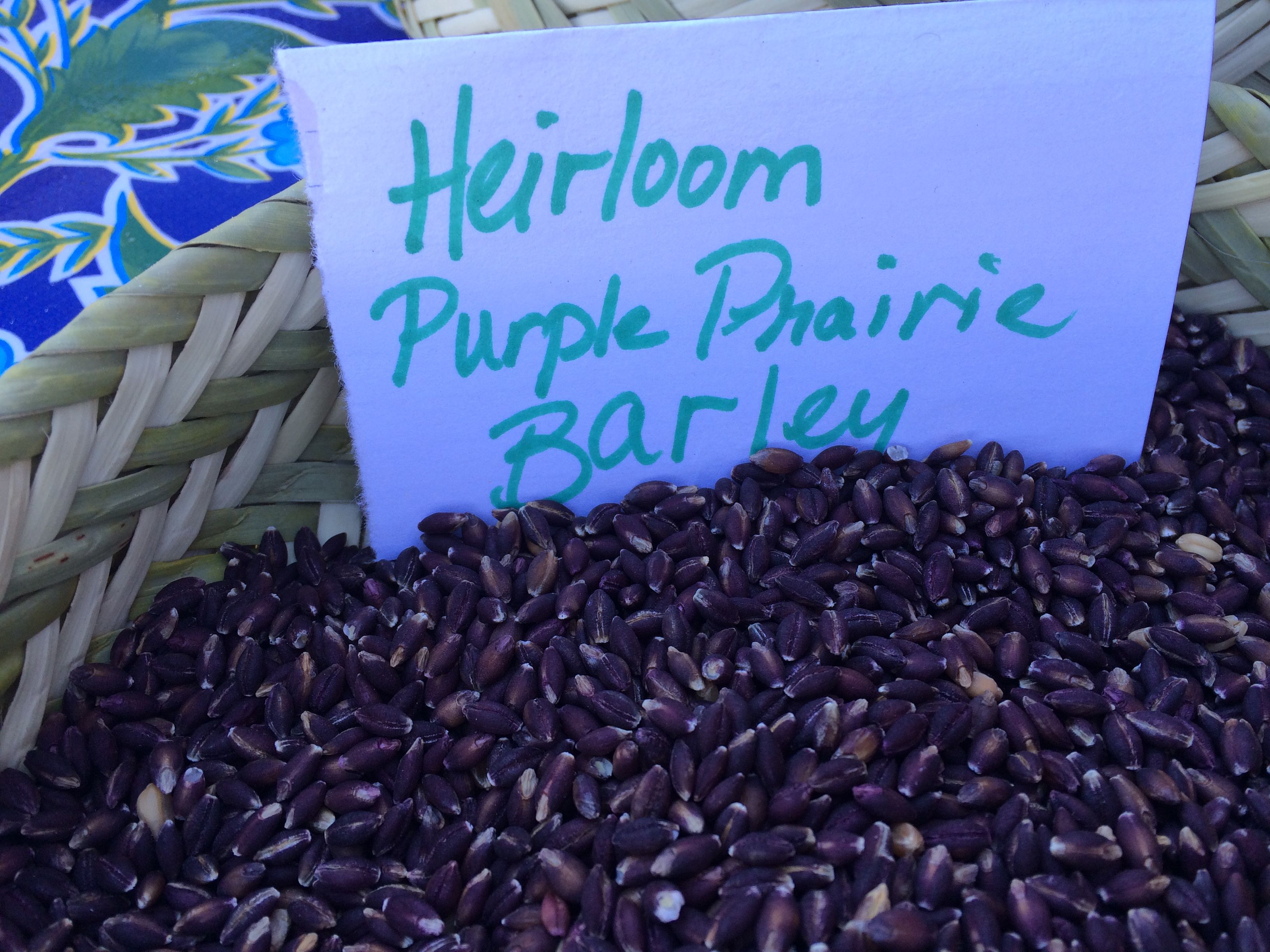
Beautiful purple prairie barley--an heirloom originally from Tibet

Beautiful purple prairie barley–an heirloom originally from Tibet–full of the healthful flavonoid anthocyanin
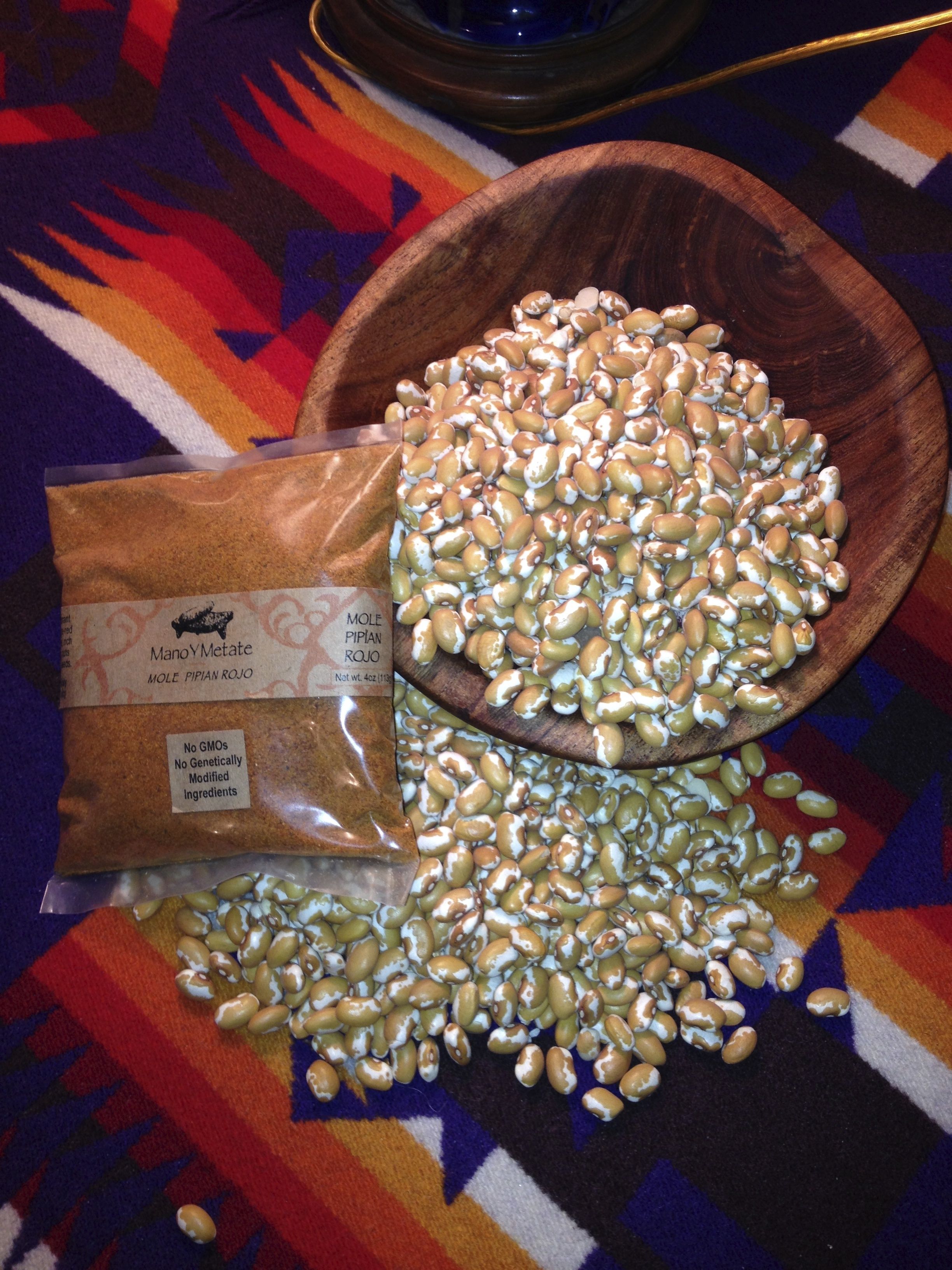
Try using Mano y Metate's Pipian Rojo Mole as a vegetarian spice for these Zuni Gold beans!

Try using Mano y Metate’s Pipian Rojo Mole as a vegetarian spice for these Zuni Gold beans!

Tis the season also to rejoice in the indigenous beans that have supported Native cultures for unknown centuries.
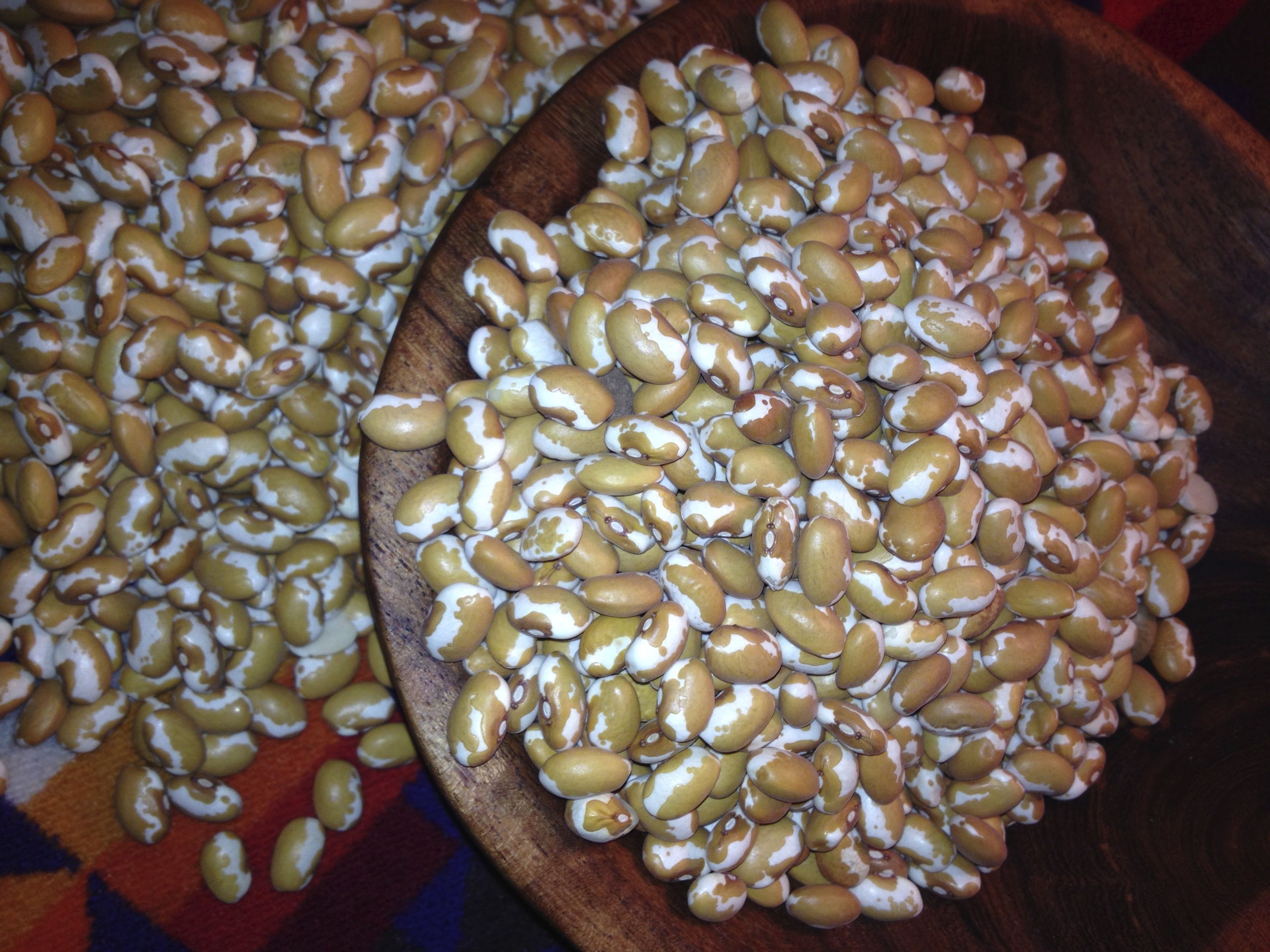
Beautiful Zuni Gold beans--used traditionally in the Winter Solstice celebration

Beautiful Zuni Gold beans–used traditionally in the Winter Solstice celebration

Heirloom beans are full of protein, full of flavor, and so versatile.  I like to cook up a big pot of these golden Solstice beans and then freeze them in serving sizes to prepare later in a variety of fun ways–as chile beans, as dips, in burritos, as hummus, and of course heart-warming bean soup–the list goes on… Come get inspired at our Flor de Mayo table when you see the biodiversity of beans spread before you!
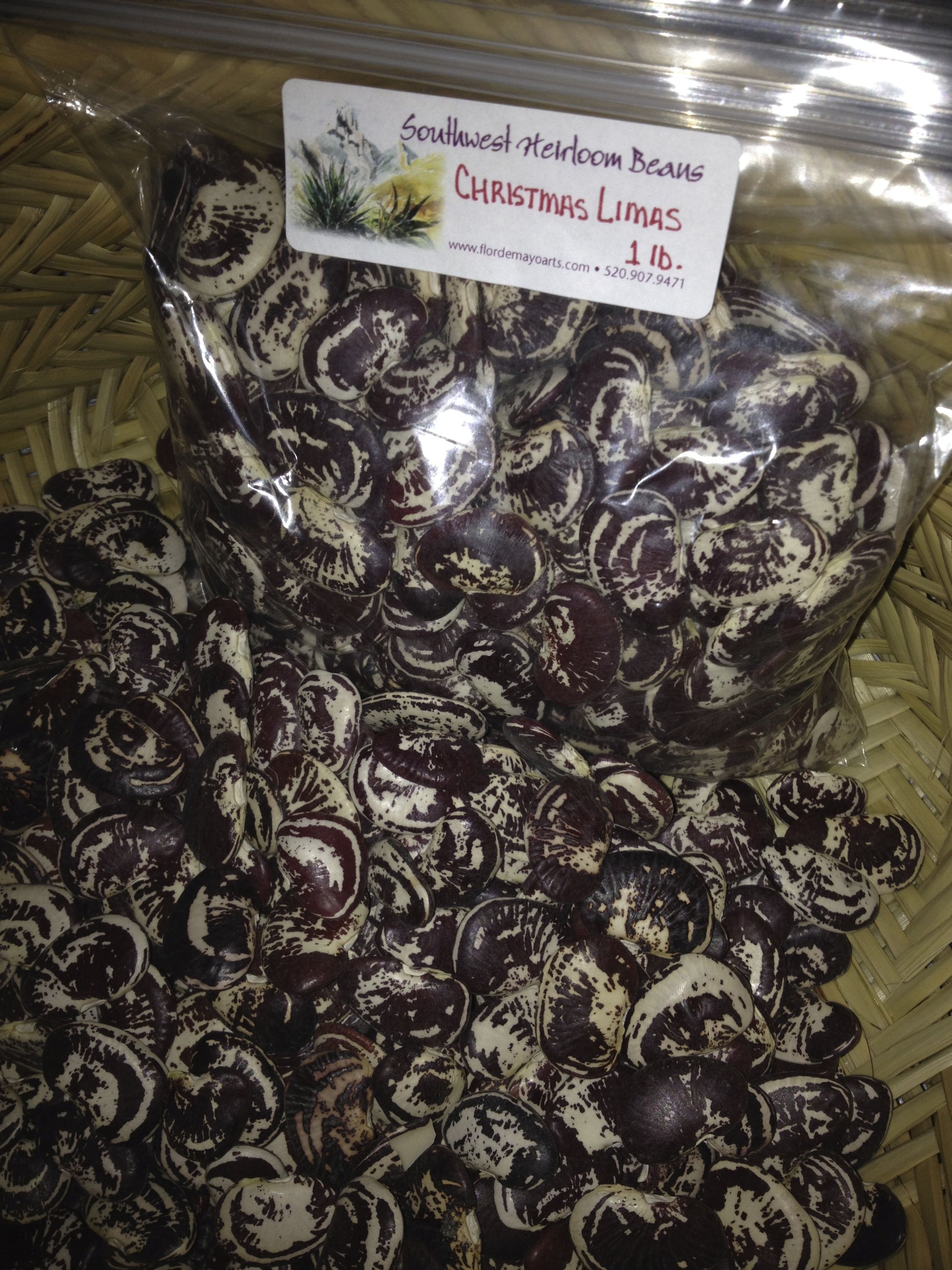
Delectable Christmas Limas can be prepared as vegetarian centerpiece dishes to honor the season!

Delectable Christmas Limas can be prepared as vegetarian centerpiece dishes to honor the season!

The most festive heirloom bean of the holiday season is the colorful Christmas Lima (AKA Chestnut Lima) so called because of the timing when it is harvested.  (Check out past blog posts for some great recipes.)  We have even had jewelry-makers buy this bean to string as fetish-style necklaces.

Calling creative gift-givers!  Join us at the Sunday St Philips Farmers Market for some meaningful, local, healthful and tasty gifts that say “Baja Arizona” in the most delightful way.
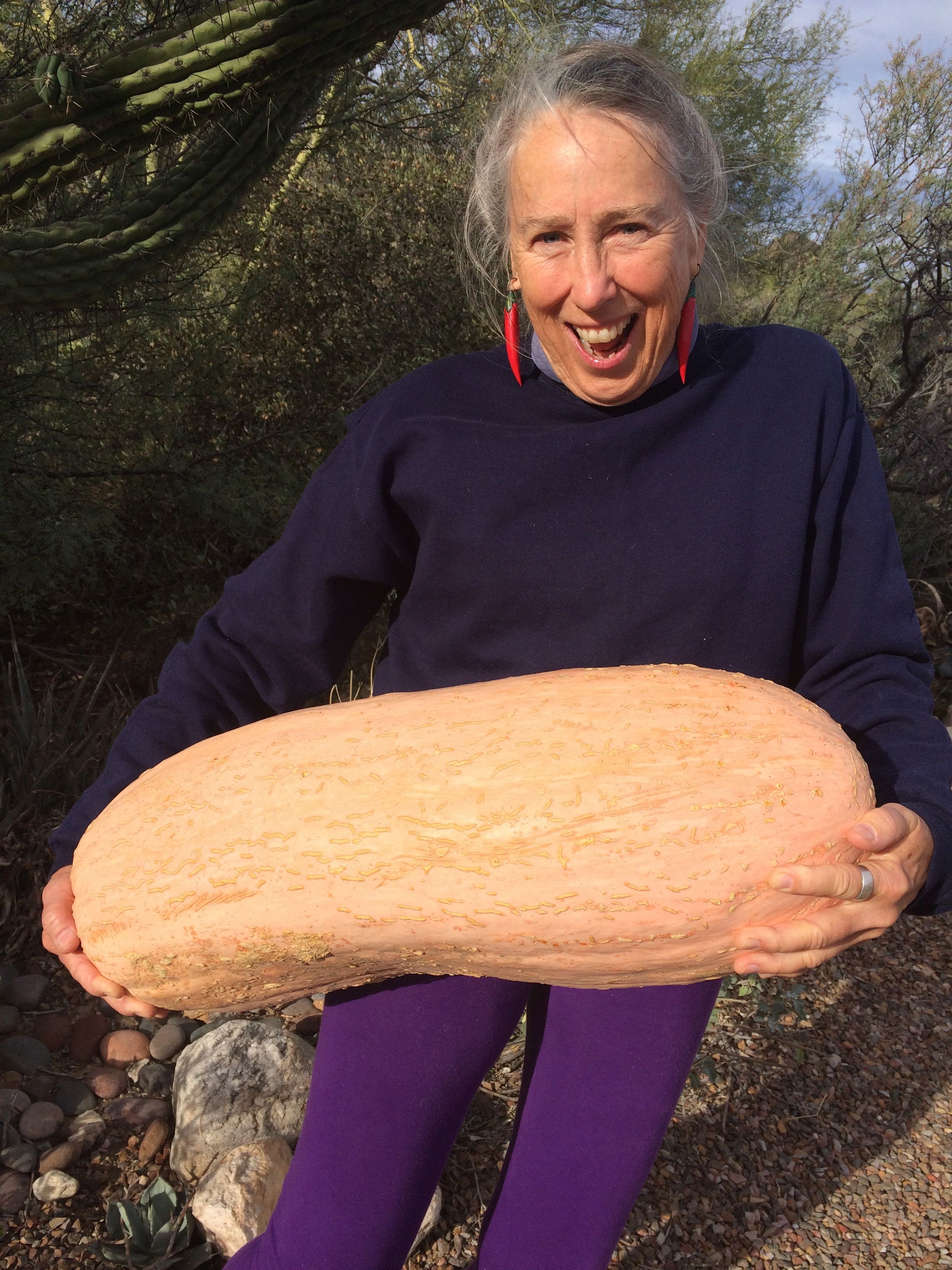
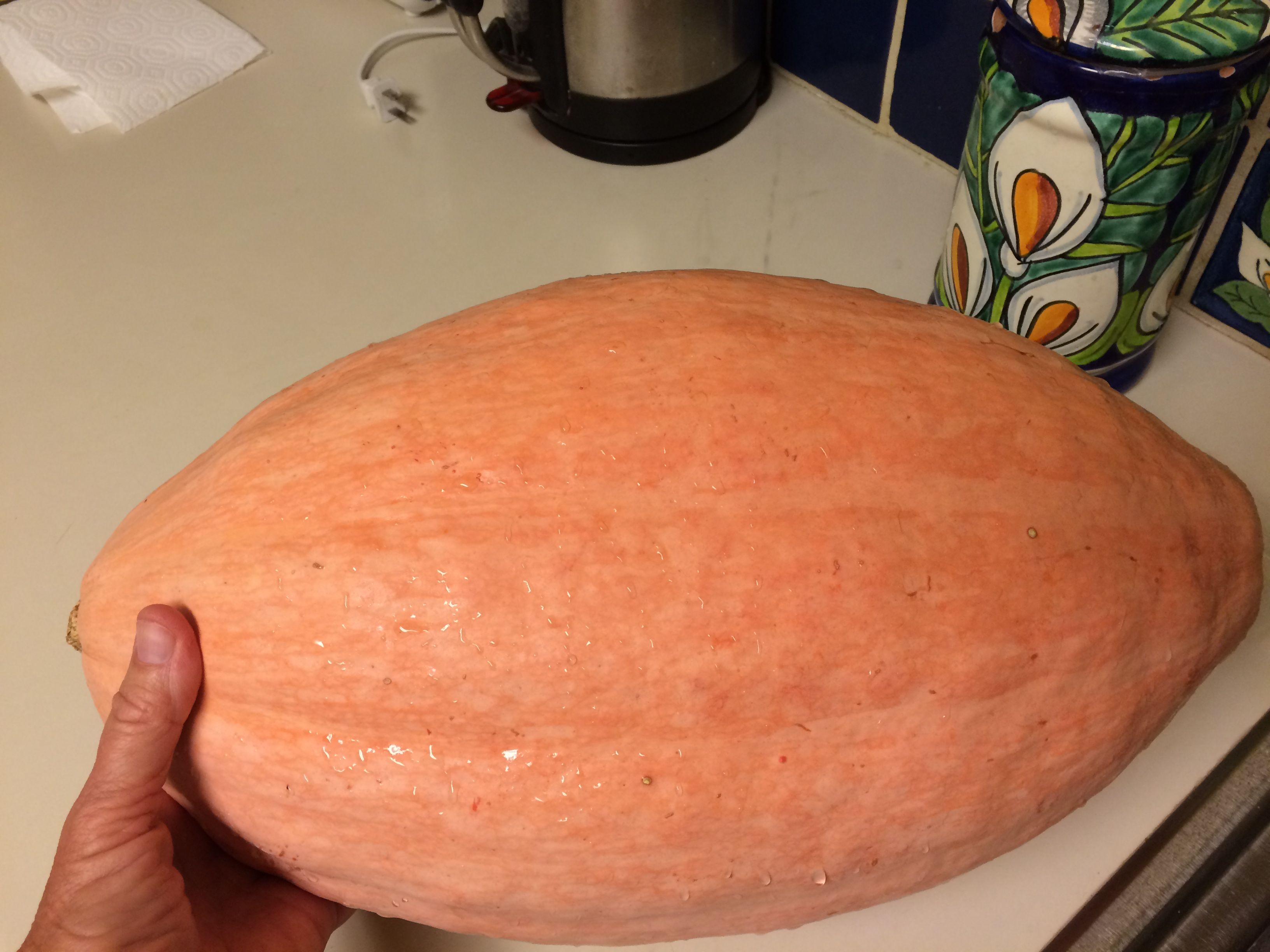
Just for scale, Tia Mart hefts this heirloom Navajo squash. Who needs a workout center if you are a gardener or farmer?

Just for scale, Tia Marta hefts this heirloom Navajo squash. Who needs a workout center if you are a gardener or farmer?

May you have happiness, health, peace in your hearts, and good cheer this holiday season –greetings from Rod and Tia Marta at Flor de Mayo!
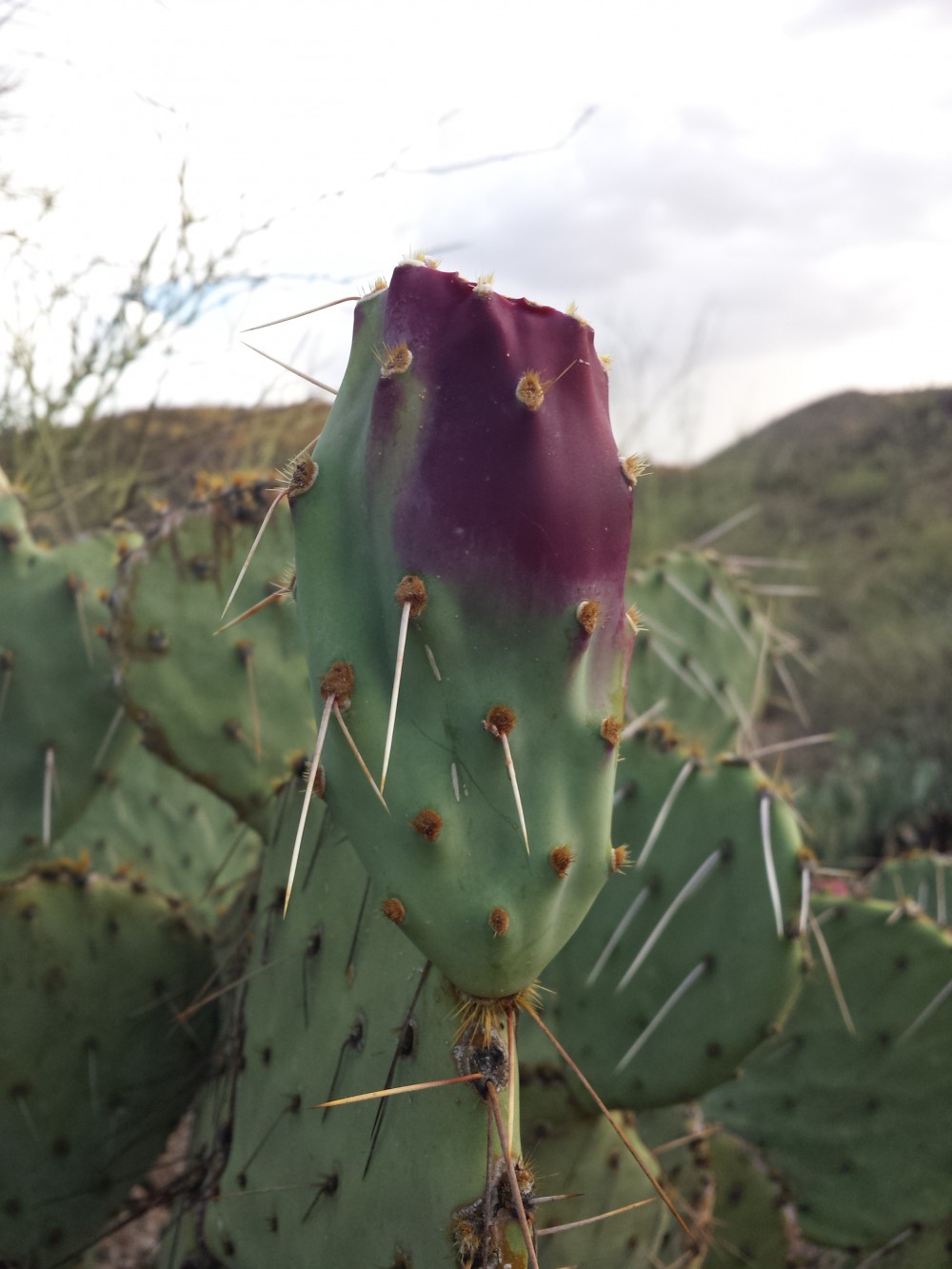
Prickly Pear Upside-down Cake, Summer in Tucson

20150730_185022

Amy Valdes Schwemm here today, with glochids in my hands.

20150811_111746

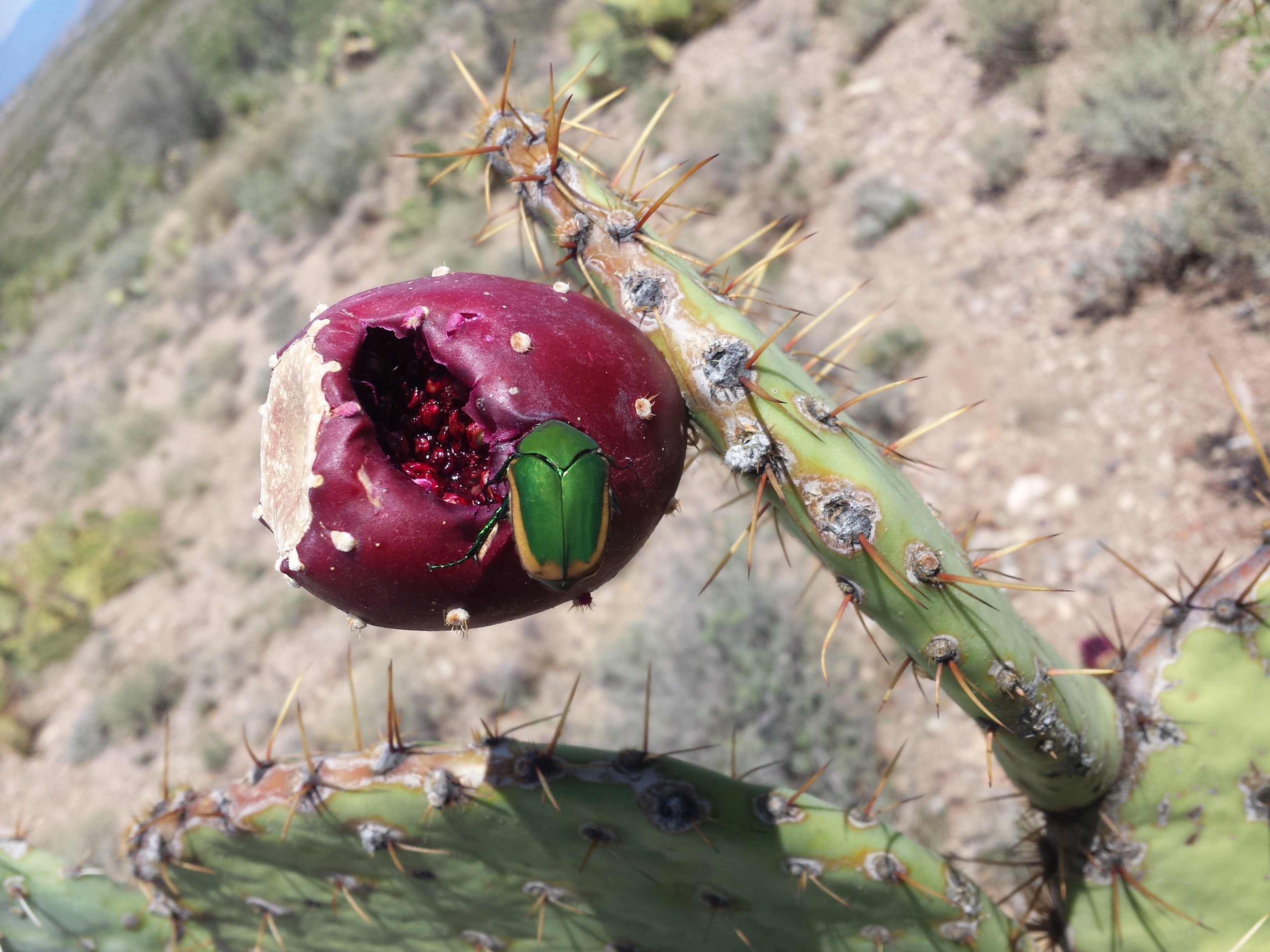
Figeater beetle, Cotinis mutablilis

20150813_185004

Santa Cruz River Farmers’ Market Workshop

20150813_184946

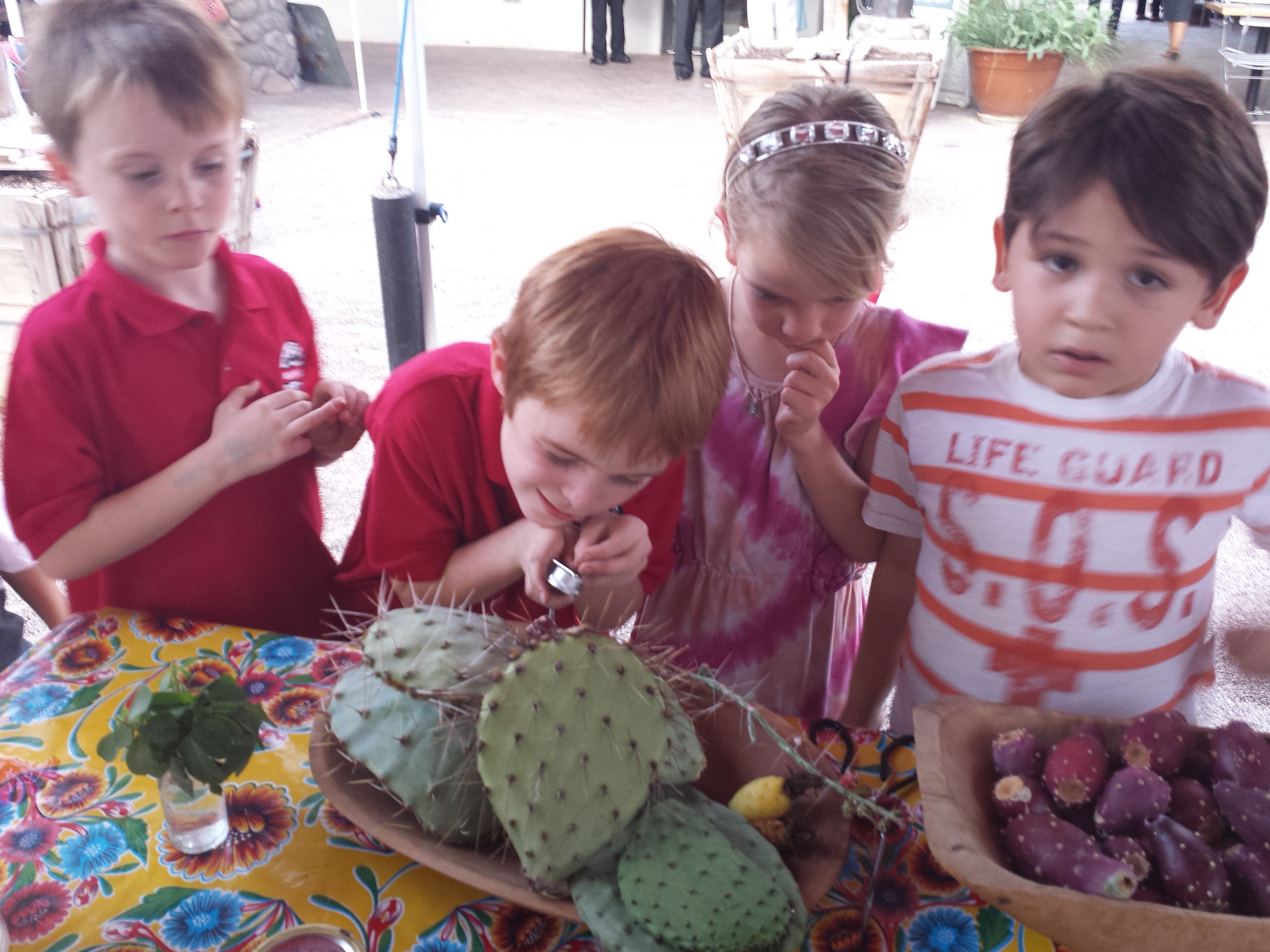
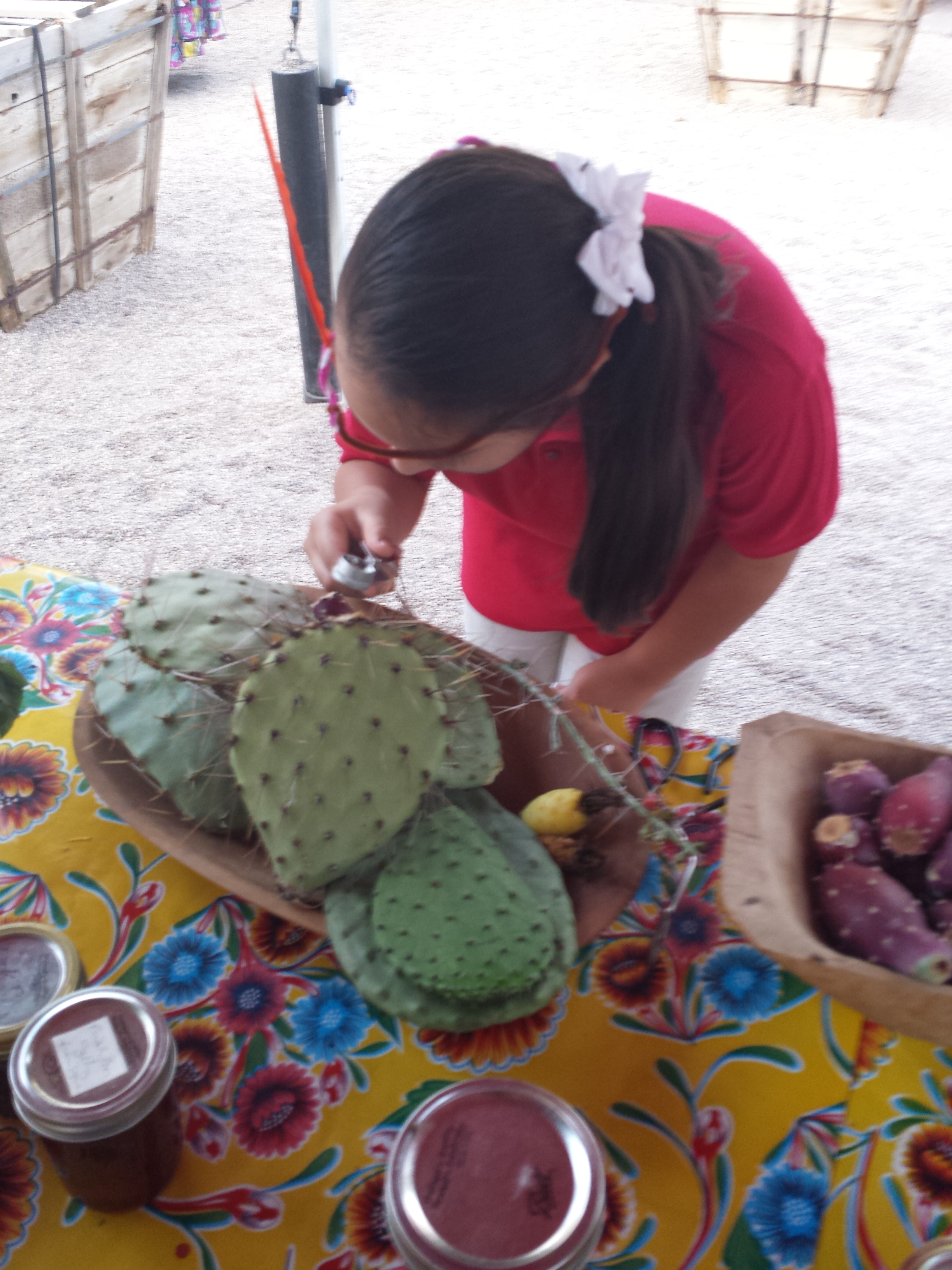
“I want to be a scientist!” she said.

20150814_145703

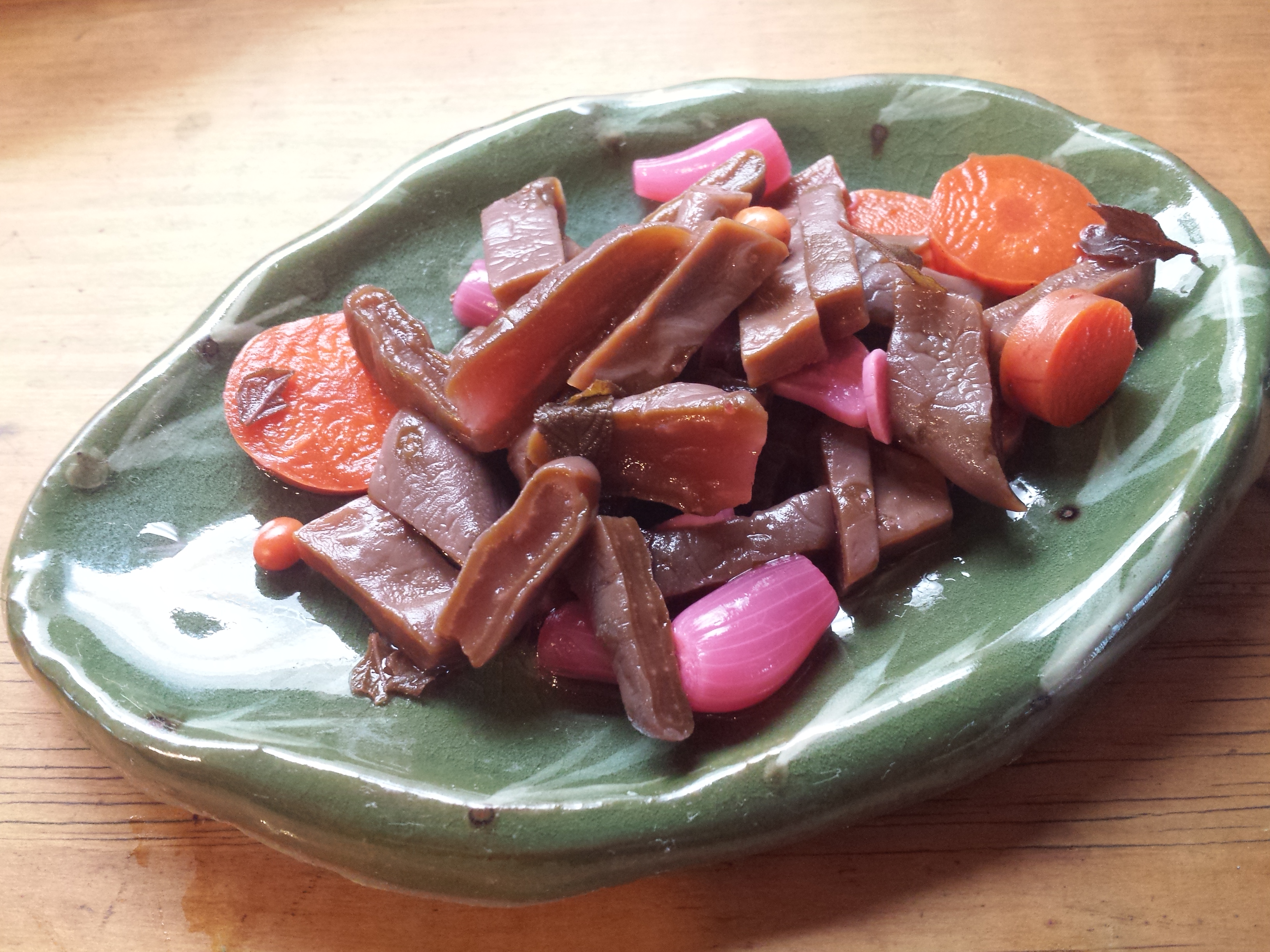
Nopalitos en escabeche (pickled cactus pads with carrots, garlic, I’itoi onion, chiltepin, Mexican oregano)

20150814_103012

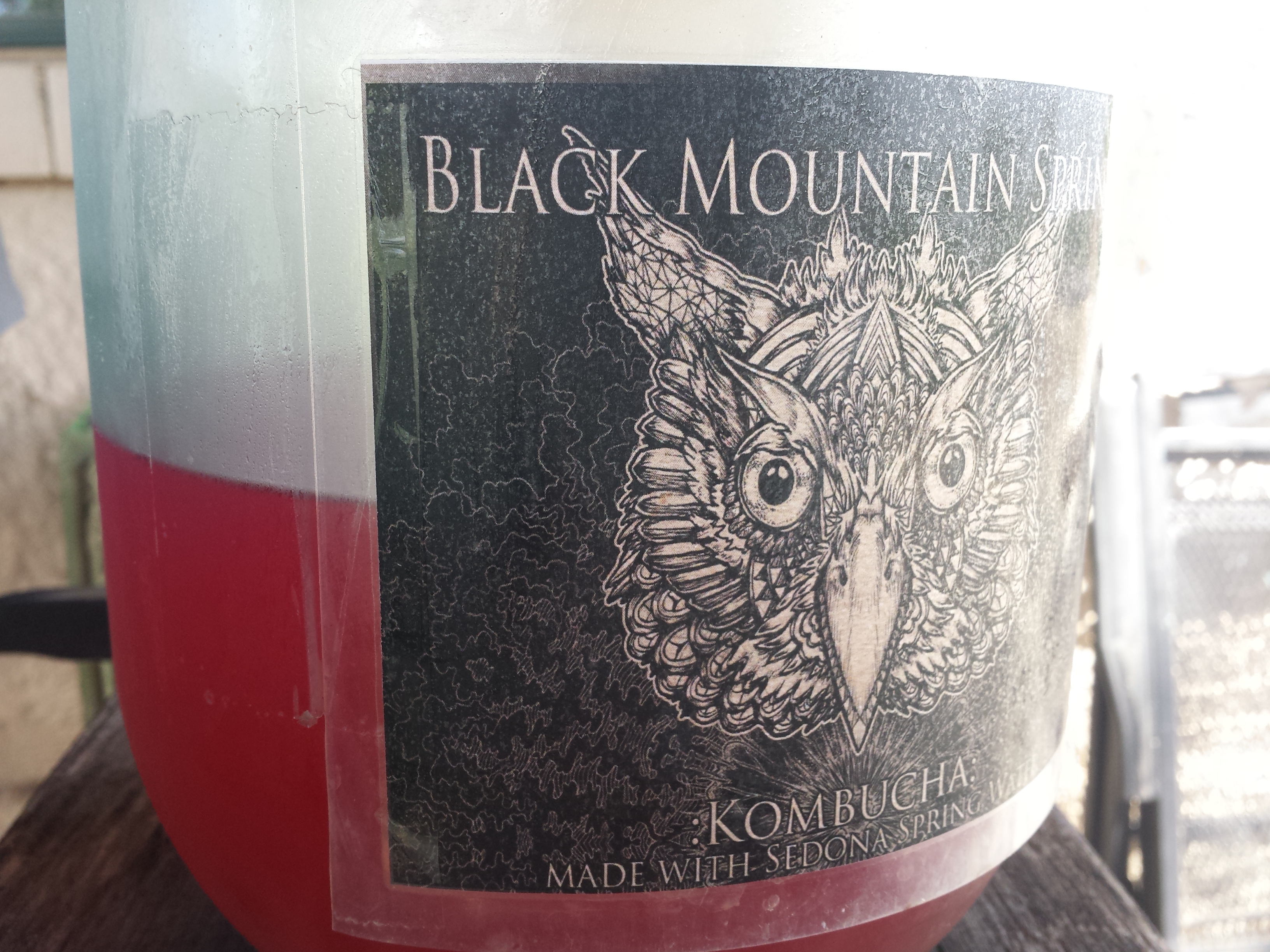
Prickly pear kombucha

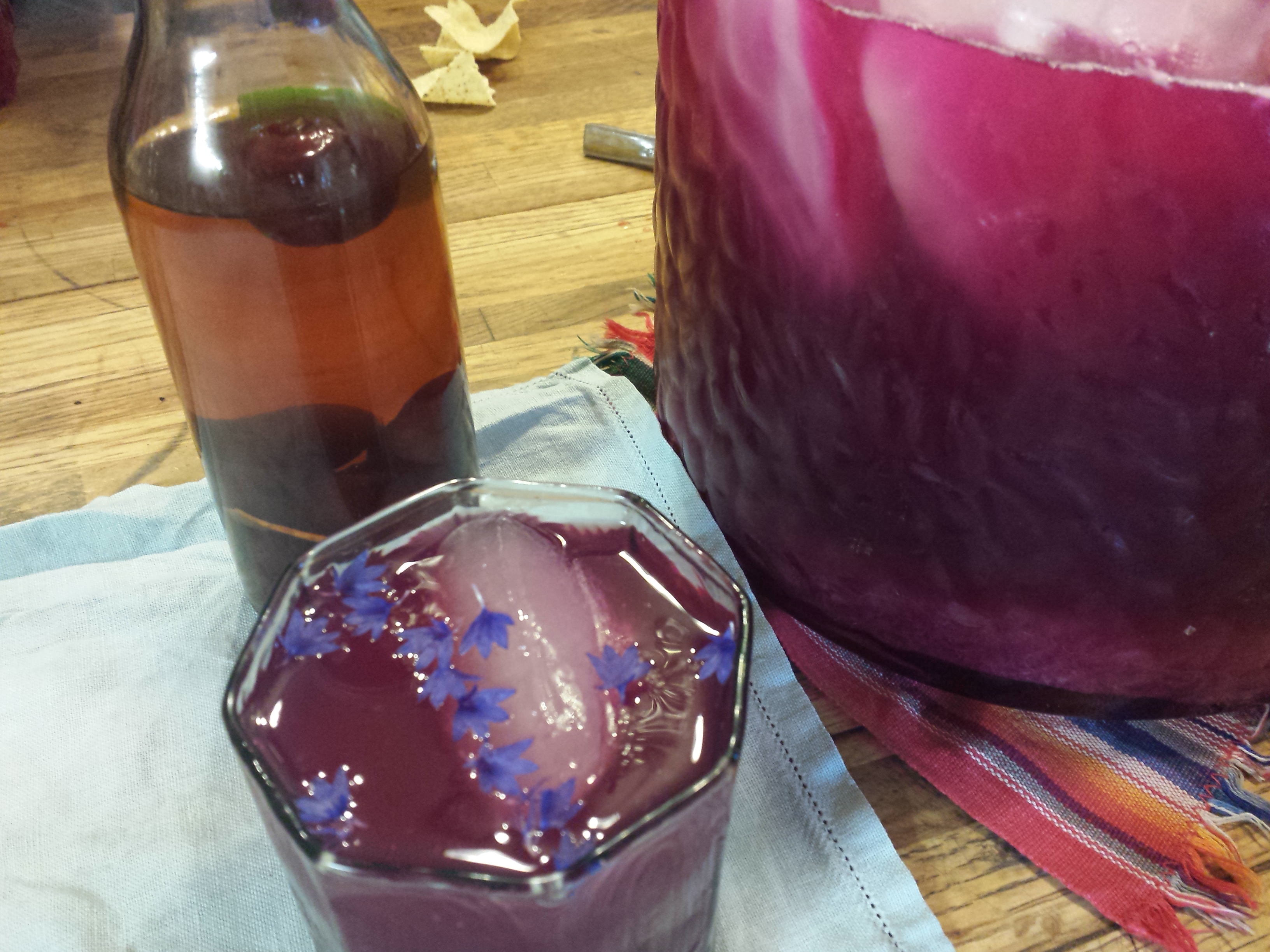
Harvest party at Bean Tree Farm. Classic Barbara Rose cocktail with too many ingredients to list!

Harvest party at Bean Tree Farm. Fancy cocktail by Barbara Rose!

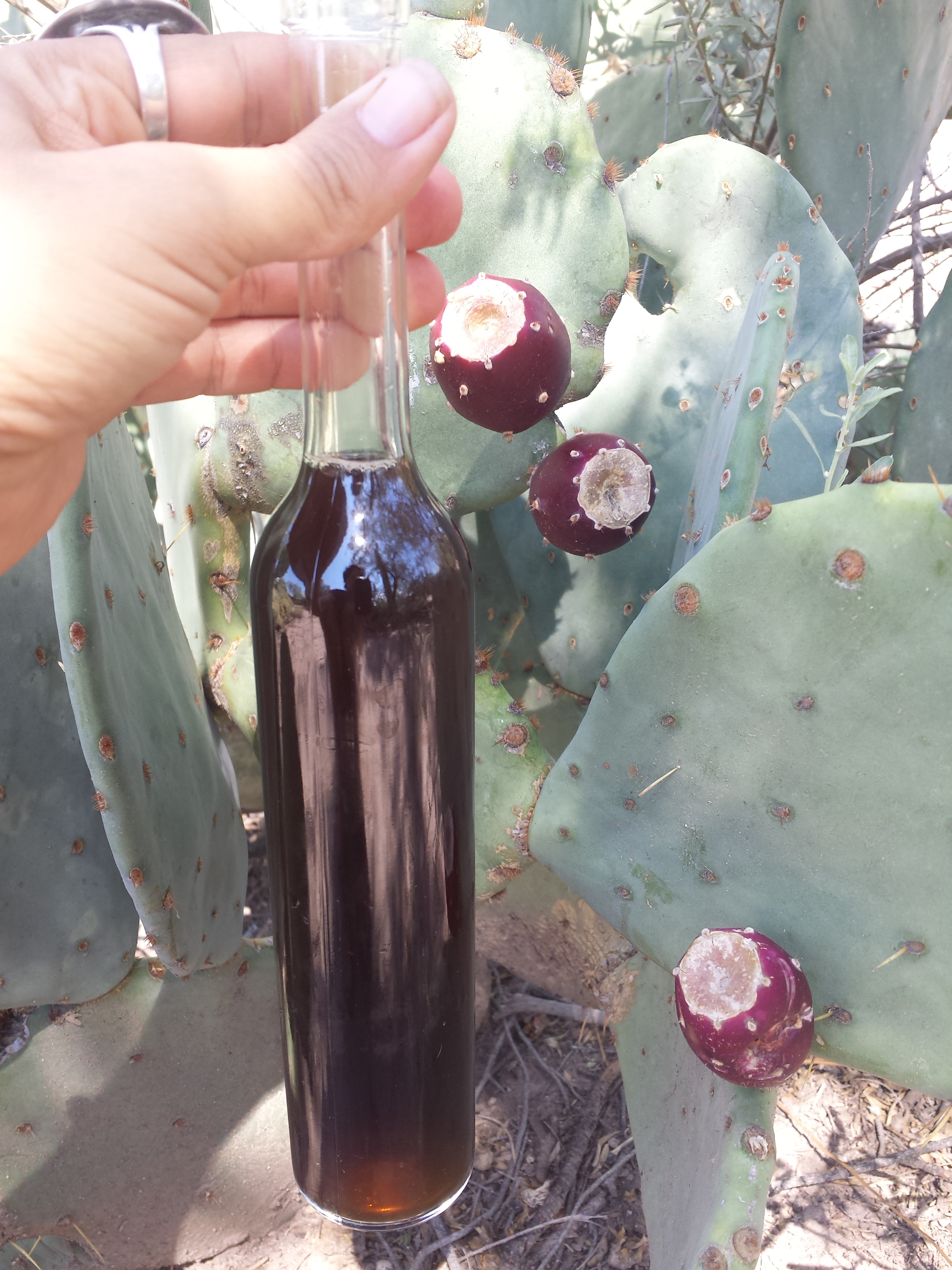
Prickly pear vinegar

Prickly pear vinegar

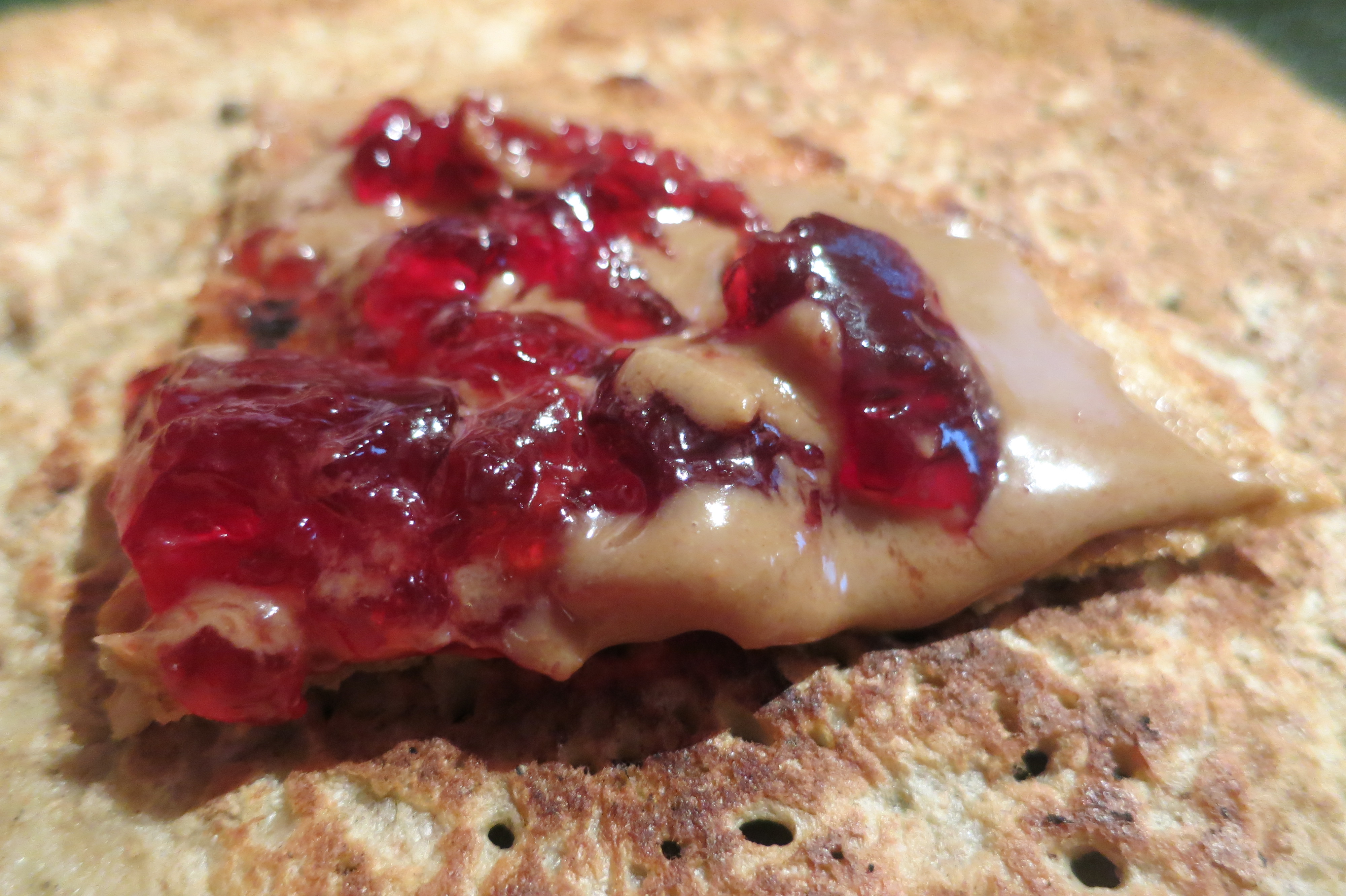
Prickly pear jelly on Sourdough Sonoran Wheat, Barley, Almond crepe

Prickly pear jelly and nut butter on sourdough Sonoran wheat, barley, almond crepe

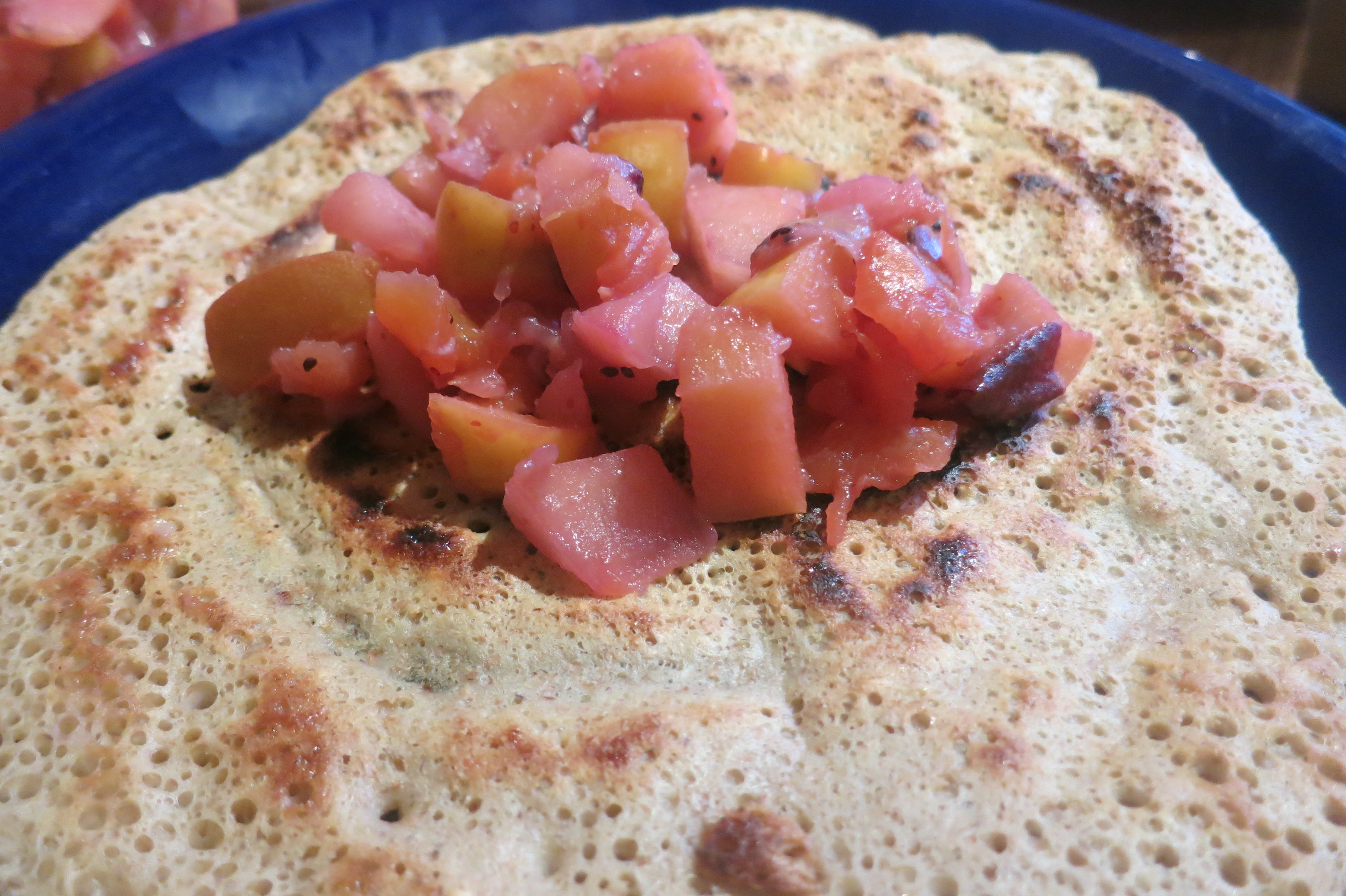
Apple, prickly pear and friends compote

Apple, prickly pear and friends compote

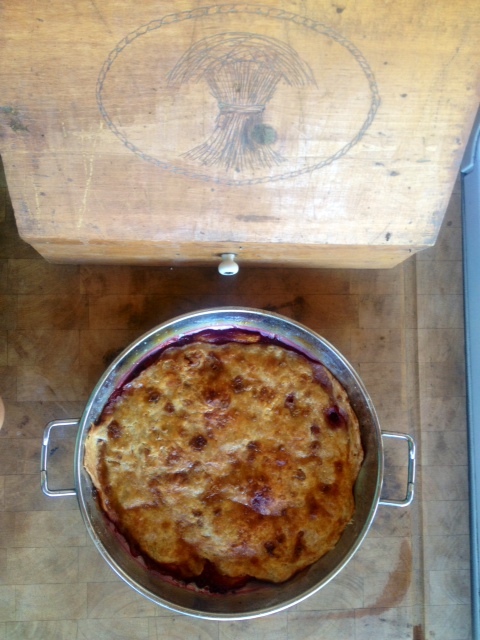
Peach prickly pear cobbler

Peach, raspberry, prickly pear cobbler

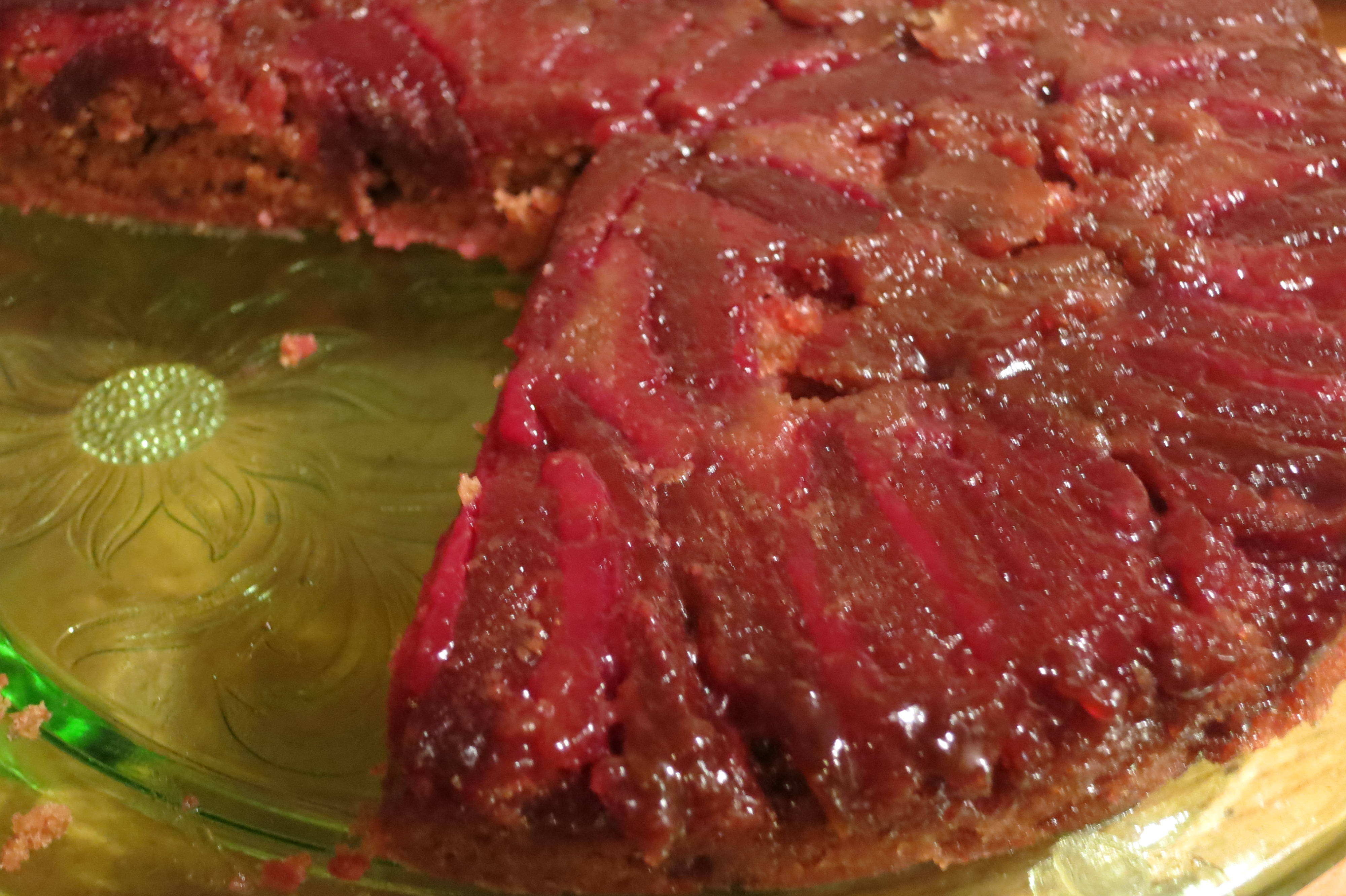
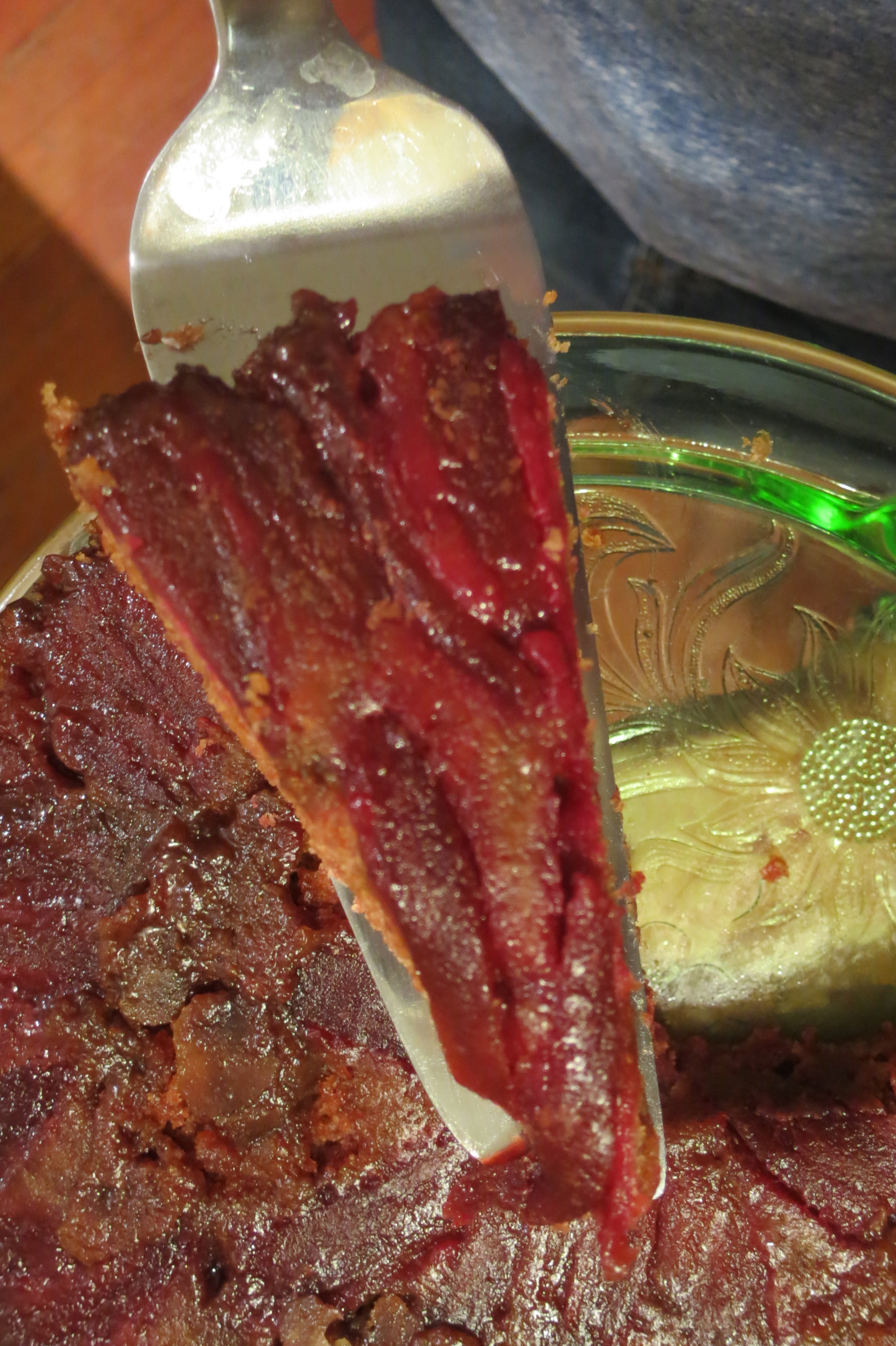
Prickly pear upside down cake

Prickly pear upside down cake

Prickly Pear Upside-down Cake

1/4 cup butter

1/2 cup brown sugar

3/4 cup whole wheat flour

3/4 cup unbleached all purpose flour

3/4 cup sugar

1 teaspoon baking powder

1/4 teaspoon salt

3/4 cup prickly pear juice

1/2 cup butter, melted

1 teaspoon vanilla

6 prickly pear fruit, glochids singed over fire, peeled, seeded and sliced

Preheat oven to 325 degrees F. In a 9 inch springform pan, put 1/4 cup butter. Put pan in the oven just until butter is melted. Sprinkle with brown sugar and arrange prickly pear fruit on top. Mix flours, sugar, baking powder and salt. Separately, mix prickly pear juice, 1/2 cup melted butter and vanilla. Combine the two mixtures and pour into prepared pan. Bake for 3o minutes or until a toothpick inserted in cake comes out clean. I like the cake to have some brown edges. Cool, invert on to a serving plate and enjoy. IMG_3286

Lovely and Luscious Legume Trees

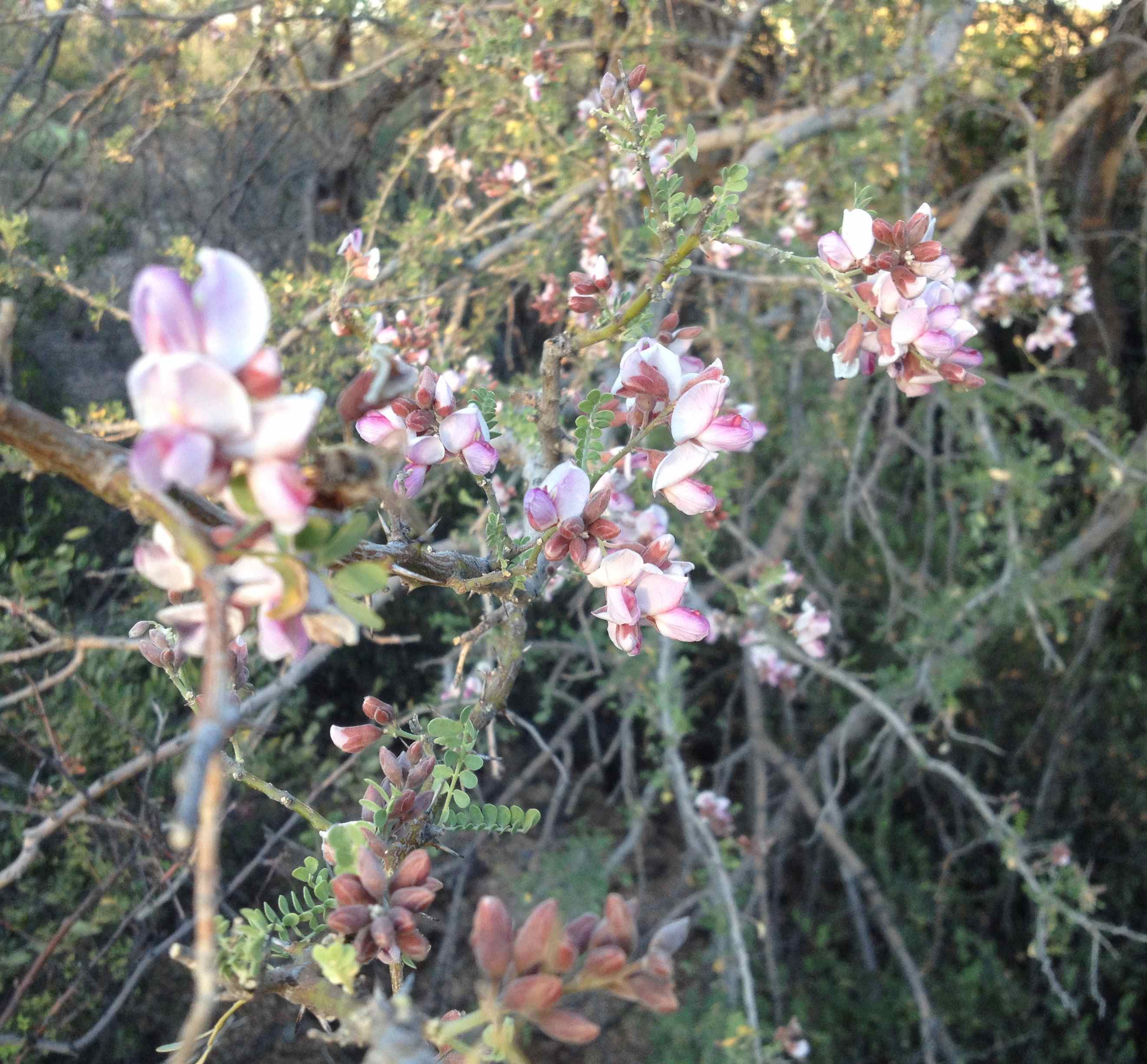
Desert Ironwood (Olneya tesota) still in flower!  This should be a good bean year for ironwood.

Known as hoh’it-kahm to Tohono O’odham, the Desert Ironwood (Olneya tesota) is still in flower! This should be a good bean year for ironwood as the flowers produce pods.

Hasn’t this been the most incredible, elongated spring in the Sonoran Desert ever?  Tia Marta here to celebrate this red-letter year for our desert legume trees–they are still coming on!!

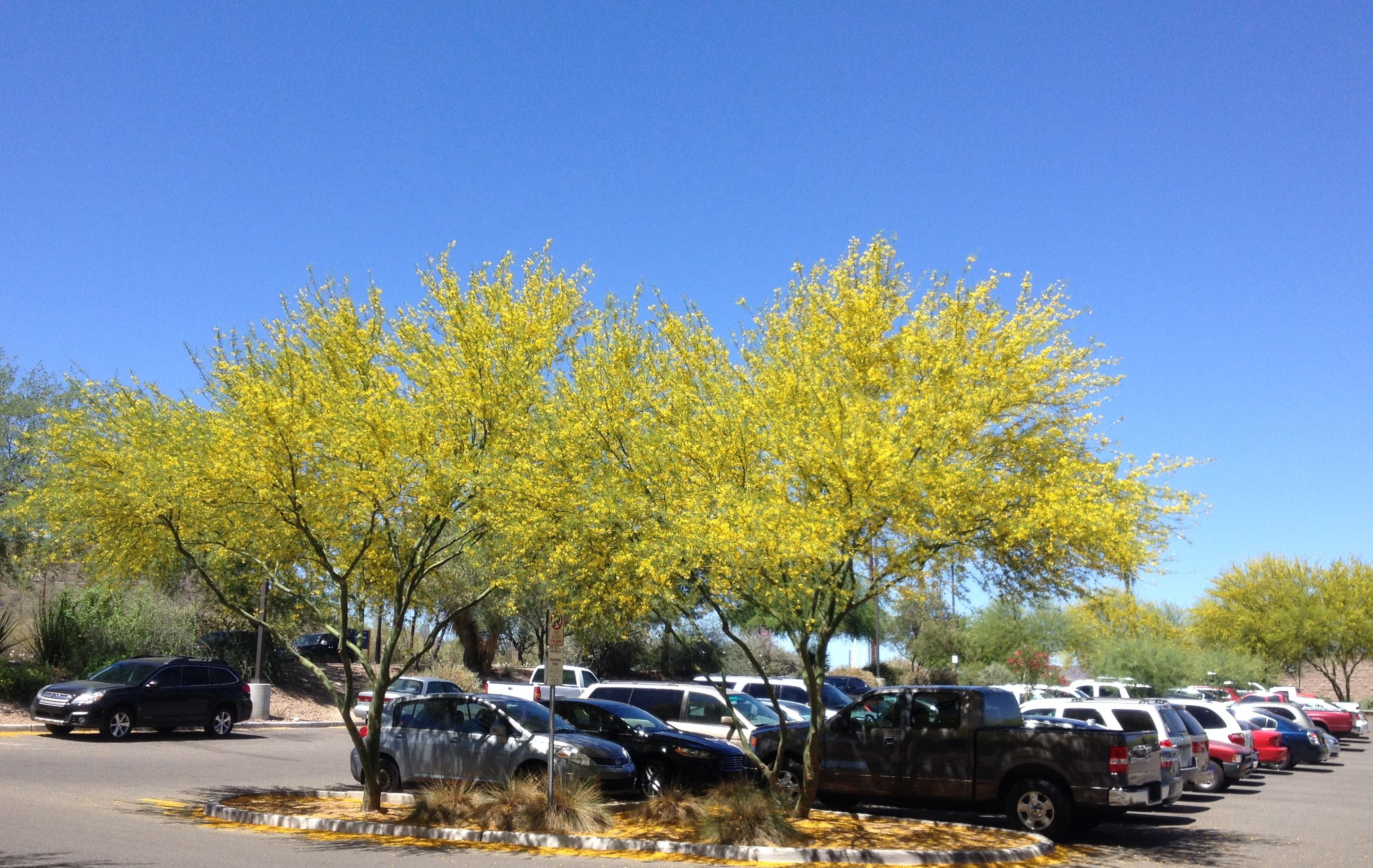
Desert Museum hybrid palo verde--thanks to St Mary's Hospital for beautiful landscaping!

Desert Museum hybrid palo verde–thanks to St Mary’s Hospital for beautiful landscaping!

We have had the joy of palo verde blossoms from mid-April thru May.  Mark Dimmitt’s amazing Desert Museum hybrid palo verde continues to grace public buildings and roadways with a glorious yellow glow.  Mesquites (life-giving kui wee’hawk to traditional Tohono O’odham) are still producing creamy yellow catkins and greening pods soon to ripen.  Red pod clusters are hanging from white-thorn acacia.  Dusty lavender ironwood blossoms still bedeck the foothills….Color and Beauty–the first of the gifts…


For wild-food aficionados and first time experimenters, this promises to be a bountiful bean year.  Bees are already going wild–they know the buzz.  I’m going wild just thinking about the desert’s gifts of nutrition for so many life-forms.  Humans are just a few of the happy recipients.  With the help of bacteria, the desert’s bean trees even feed the soil with bio-available nitrogen, hidden from our awareness in their root nodules.

Foothills palo verde pods   ready for eating off the tree! (maburgess photo)

Foothills palo verde pods ready for eating off the tree! (maburgess photo)

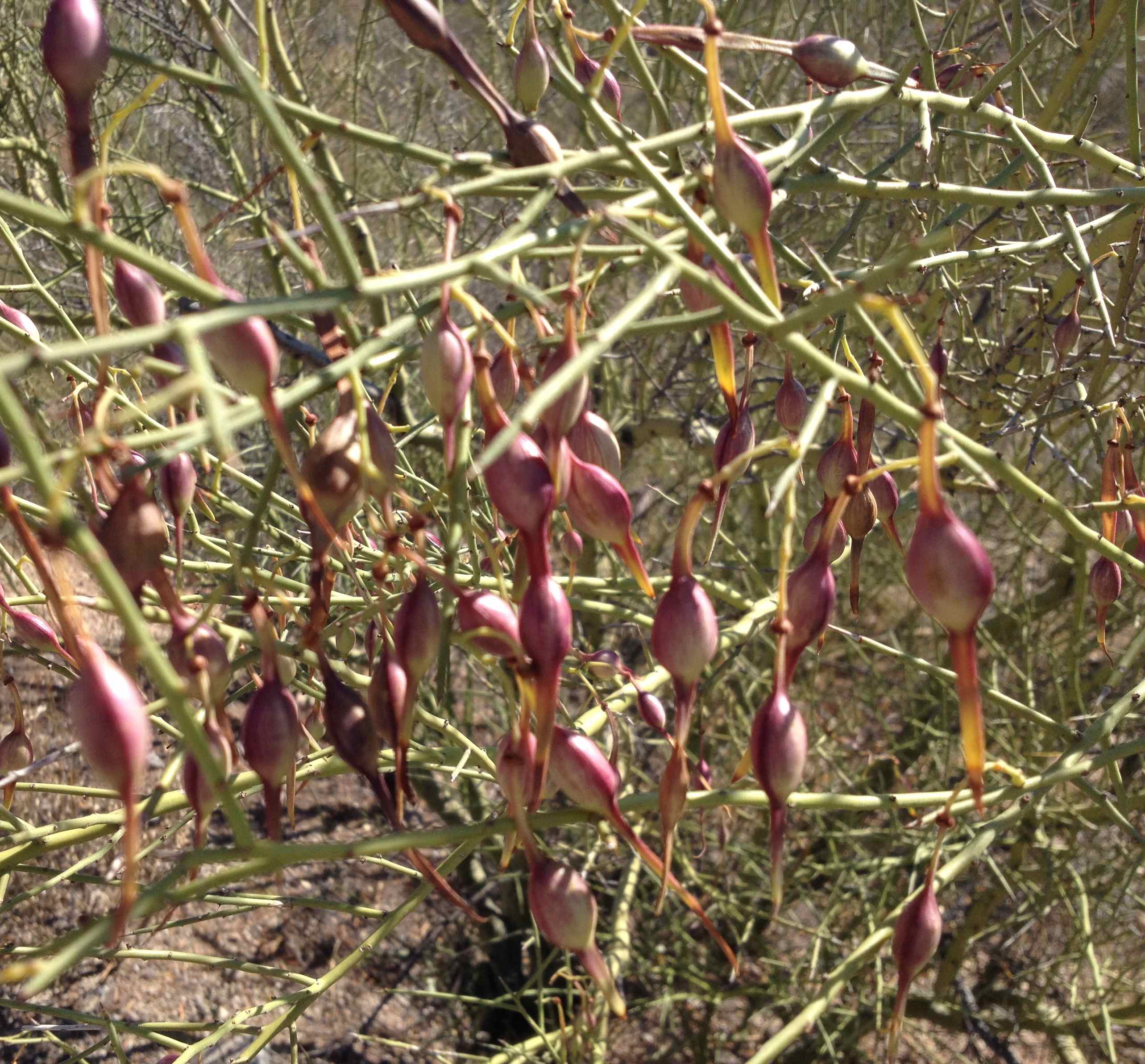
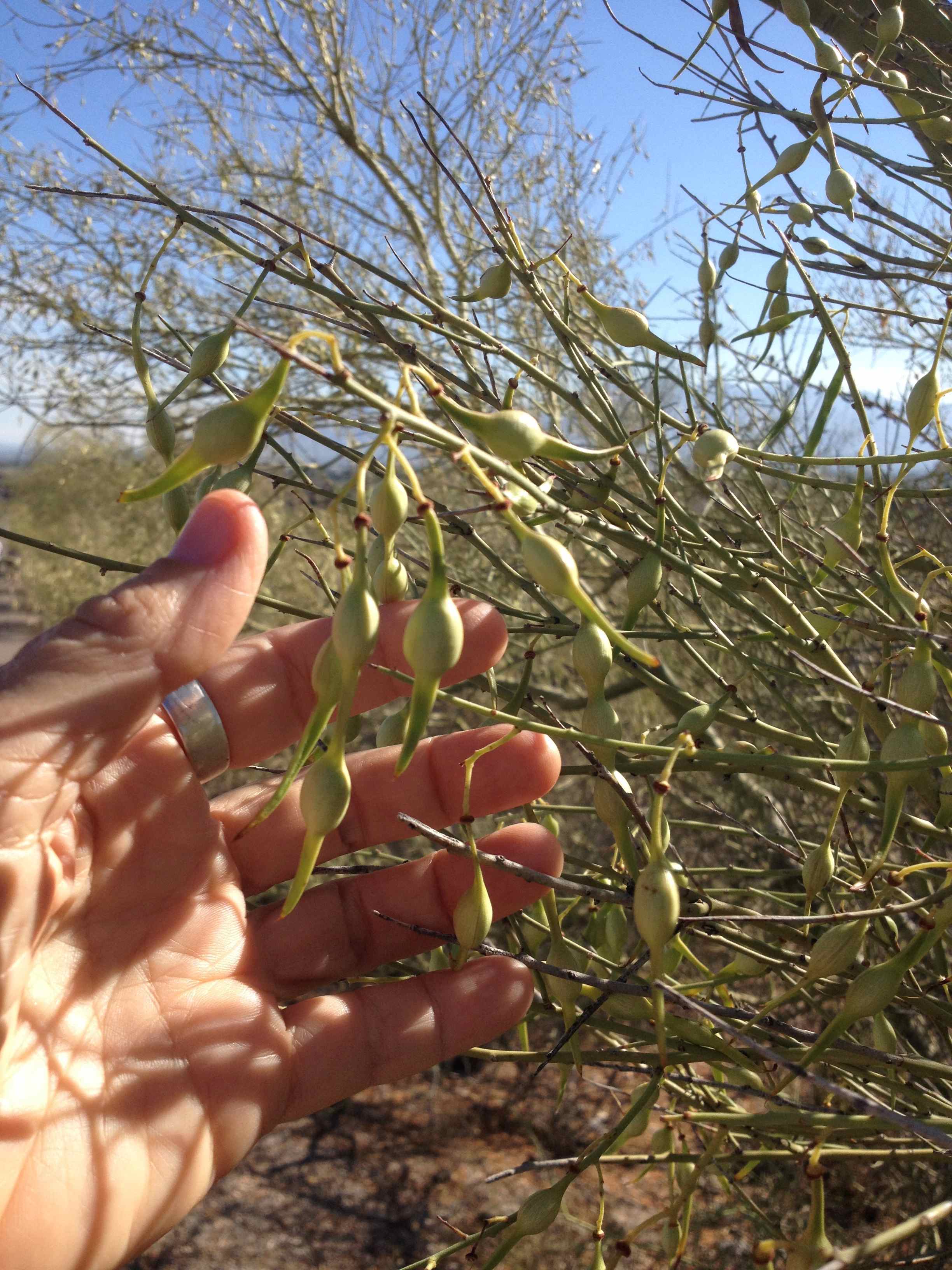
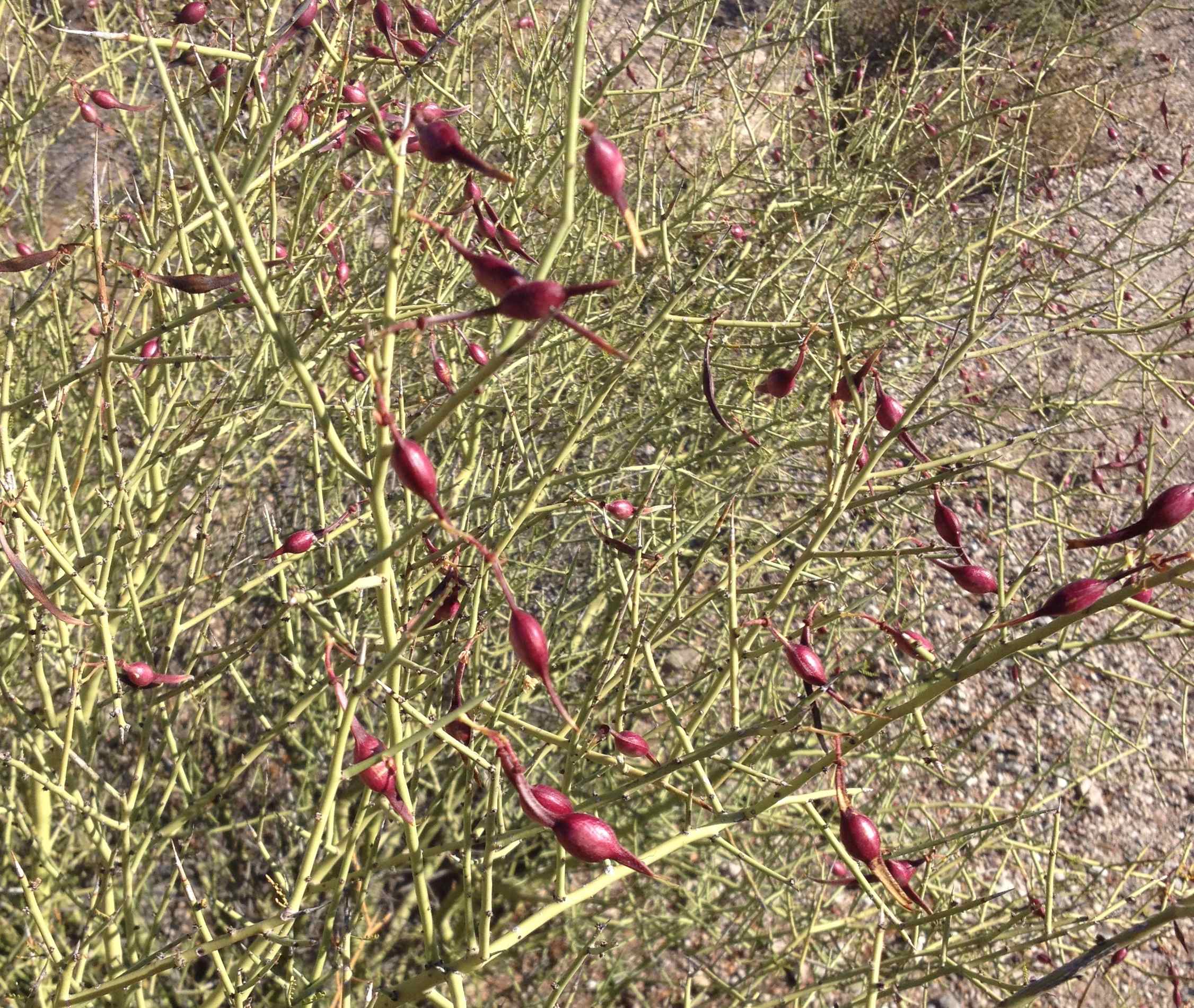
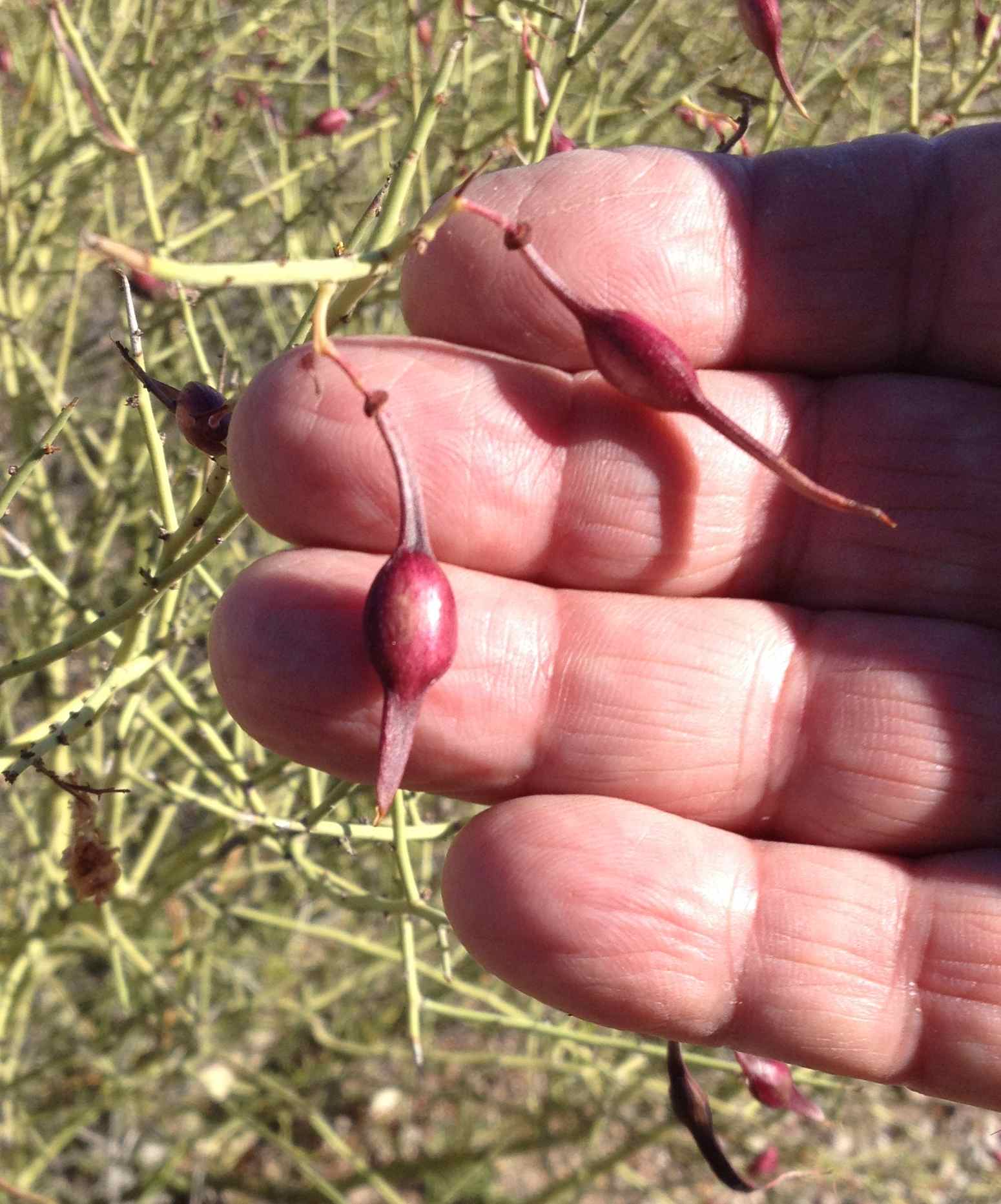
This week is PALO VERDE TIME for sure!  We gotta get out there right away because this only lasts a few days!  If you want a sweet treat to pluck right from the tree, take a walk up almost any rocky hillside in the Sonoran Desert and find the Little-leaf or Foothills Palo Verde (Parkinsonia microphylla–the green barked shrubby tree with teensy leaflets, actually no leaflets right now in June’s heat).  It will be covered with little hanging pods that look like paternoster beads, each seed making a bulge in the pod.  Say a prayer of blessing and thanks to the Koh’o-koh-matk Tree and to Nature for this food.

Seed pods of foothills palo verde plump and ready to pick fresh for a green desert treat.

Seed pods of foothills palo verde plump and ready to pick fresh for a green desert treat.

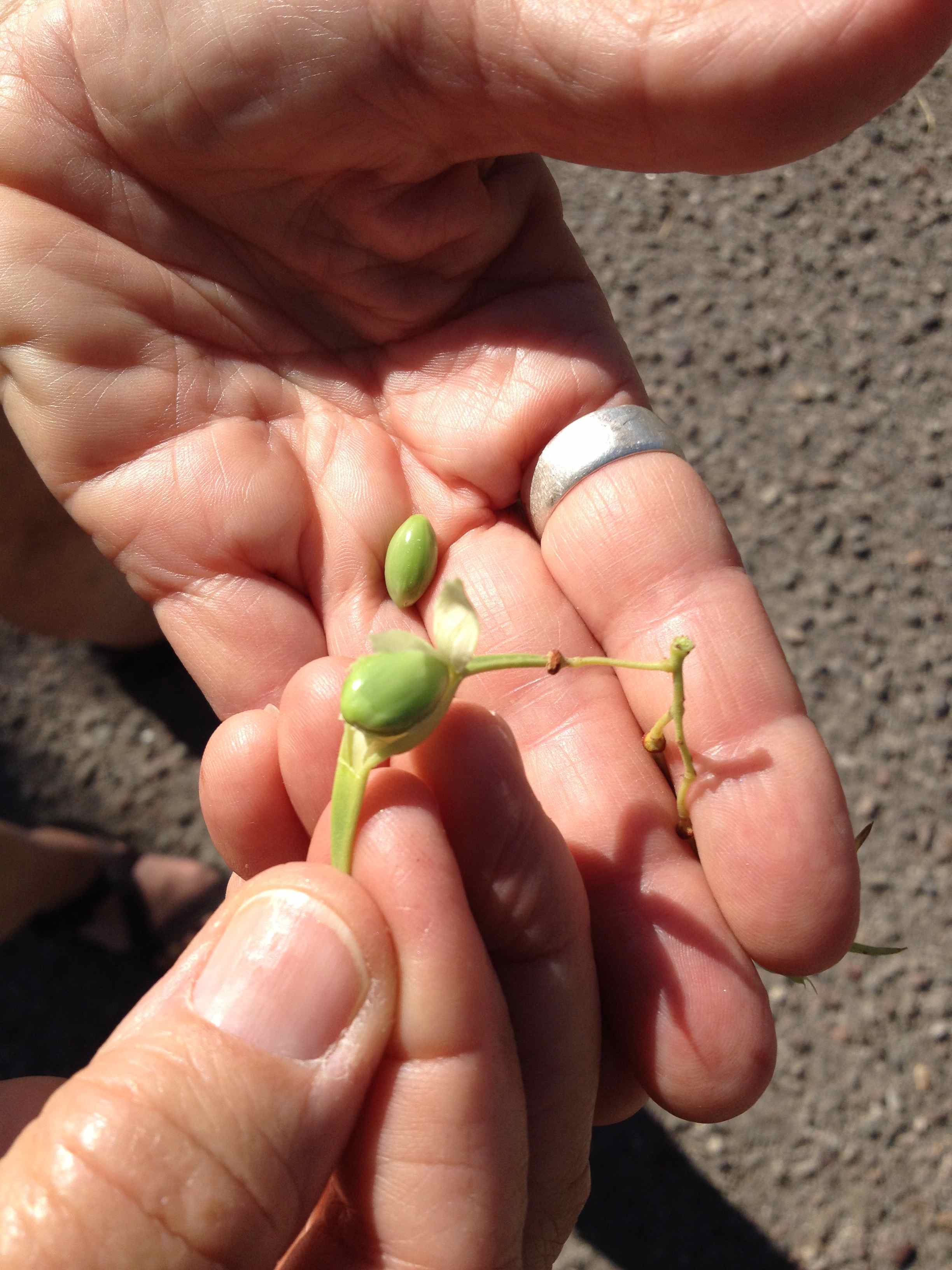
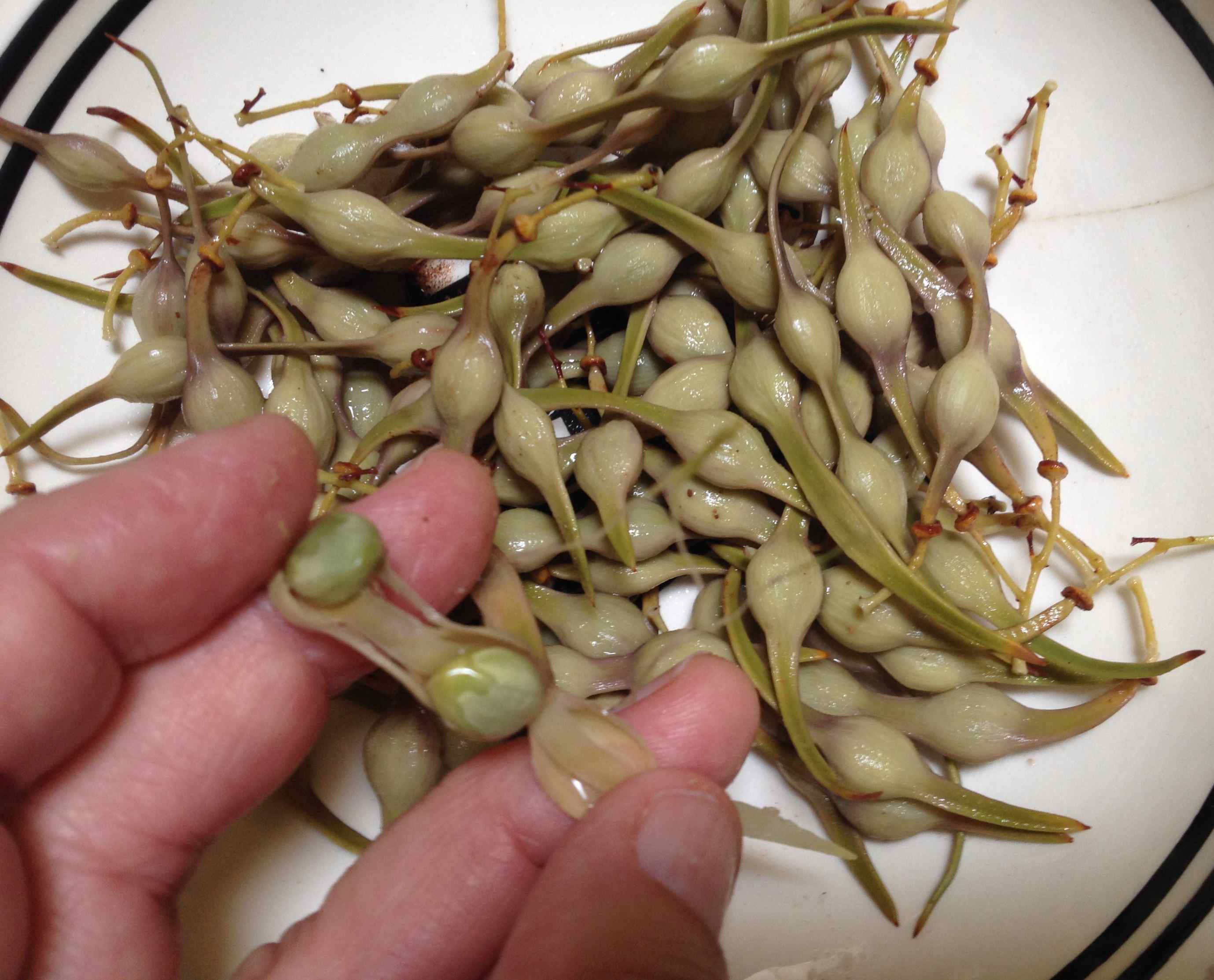
If you find it at the right stage, you can snip the pod-covering with your teeth and peel it back to reveal the pea-like green bean–sweeter than any sweet pea you ever tasted.

Just peel back the outer fiber and voila! there's the delicious sweet "pea"

Just peel back the outer fiber and voila! there’s the delicious sweet “pea”

It can be eaten fresh right then and there. Most harvesters can’t help gorging at first, gathering later.


The variations from one palo verde to the next are interesting to see.   Some pods are all green, some flecked with red, some are even purple!

Foothills palo verde with bright purple pods--Tucson's west side.

Foothills palo verde with bright purple pods–Tucson’s west side.

Foothills palo verde (Parkinsonia microphylla) pod ready to eat.

Foothills palo verde (Parkinsonia microphylla) pod ready to eat.


If you find palo verde pods that are really getting super-plump and the pods are turning slightly buff or straw colored, they may be a little beyond the sweet stage.  At that point it’s best to let them fully mature and to use them for grinding later.  Both the sweet soft green “beans” and the later hard stony seeds when mature are super nutrition for whoever eats them–both chucky-jam-full of complex carbs and high protein.

Foothills palo verde harvest (maburgess photo)

Foothills palo verde harvest (maburgess photo)

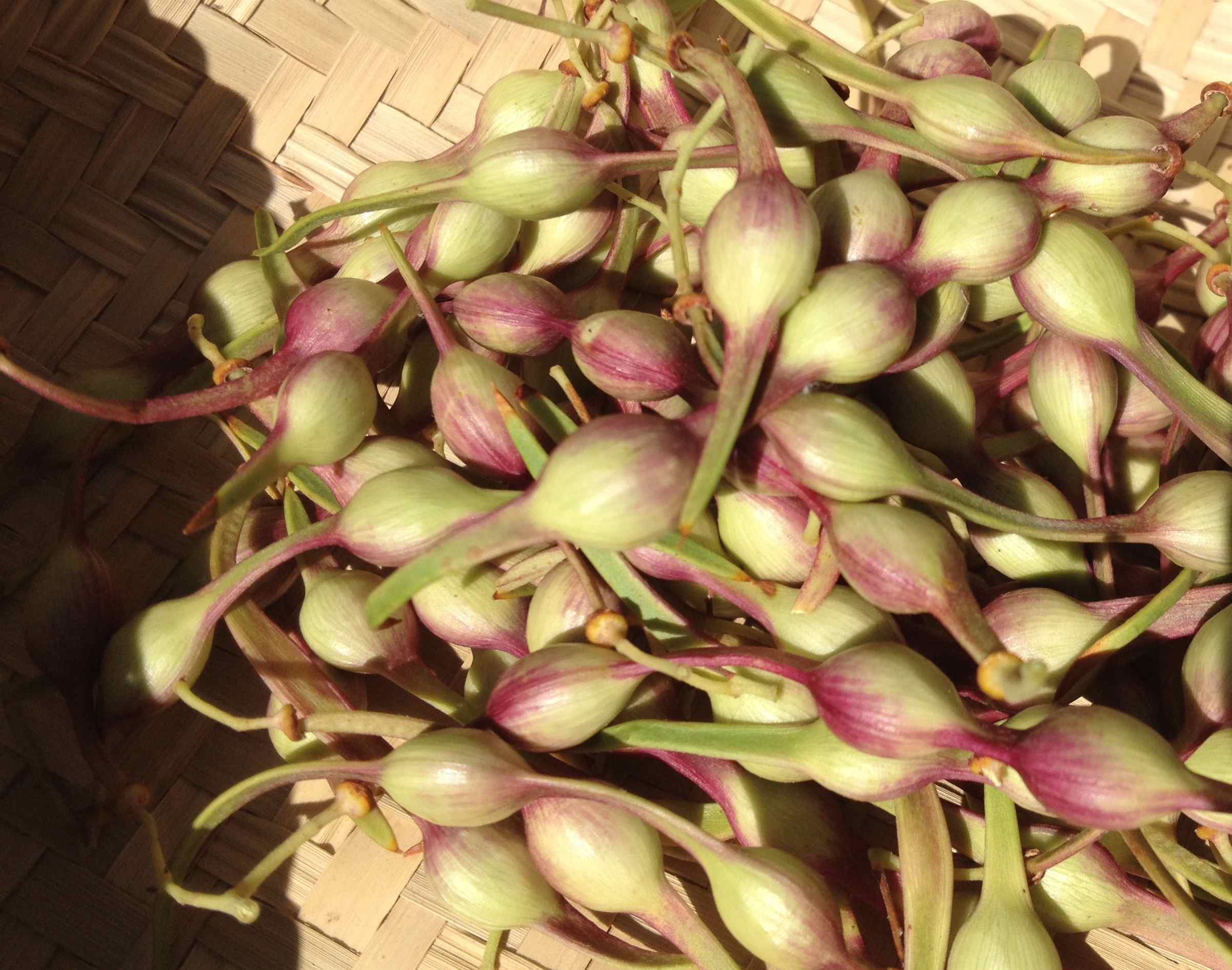
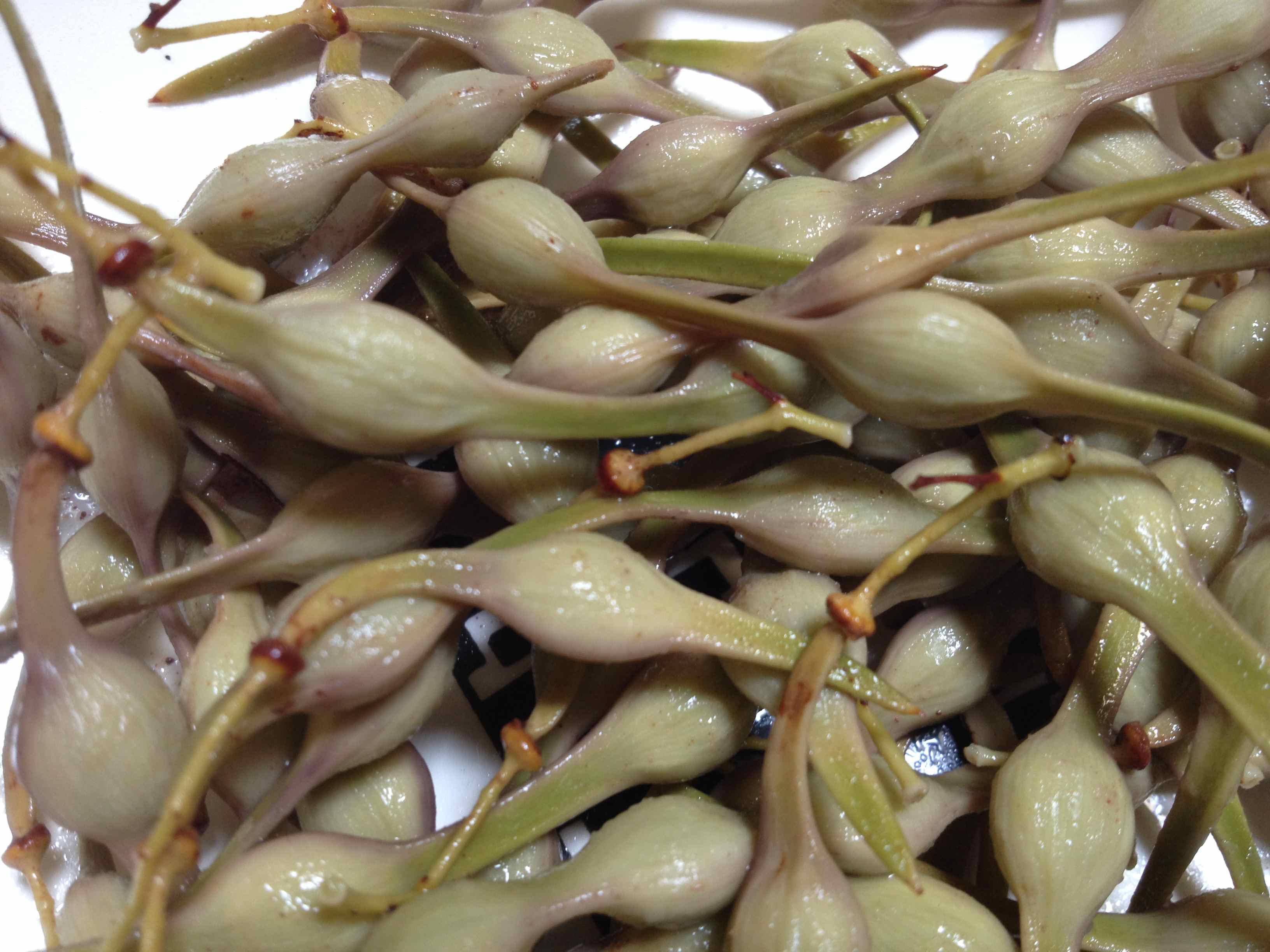
Years ago in Myrtle Beach, South Carolina, I purchased snacks from a kid selling what he called “balled peanuts.”  The delectable treats had simply been boiled in a salt-brine.  Inspired by that treatment, I tried the same process on our desert legumes.  It works wonders on mature ironwood pods–watch for them to be ripening in the coming weeks.  Great also for prepping plump green foothills palo verde pods before they harden.  Quick brining produces a gourmet delight–Desert Edamame!–creamier and tastier than soy bean (and who knows now if any soy is  GMO-free?).   Just imagine….Sonora Desert sushi, tilapia caterpillars with a side of Palo Verde Edamame….

Foothills palo verde pods cooked in brine ready to eat (maburgess photo)

Foothills palo verde pods cooked in brine ready to eat (maburgess photo)

Here’s a quick recipe for Desert Palo Verde “Edamame” Hors O’ouvres:

In a saucepan:

2 cups washed whole foothills palo verde pods

2 cups water

2 tsp sea salt or RealSalt

Boil for 5-10 min to desired “done-ness” or softness.

Chill and serve as snack, as a blow-em-away pot-luck offering,  or as a complement to any Asian cuisine.

Easier than edamame--and you know they are not GMO! Yum!

Easier than edamame–and you know they are not GMO! Yum!

As pods ripen further on our Sonoran Desert bean trees to become hard seeds, the cooking technology can adapt.  Parching and grinding the nutritious but super-hard seeds of palo verde, ironwood, and acacia can create unusual and delicious flours for baking–but that’s another story…

Contact http://www.DesertHarvesters.org for upcoming events like the mesquite milling at Mercado San Augustin, Thursday, June 25, and demos by some of the great Bean Tree harvesters like Barbara Rose, Amy Valdes Schwemm, and Brad Lancaster.  Also Google Bean Tree Farm for more harvesting ideas.  Hey, thanks to Barbara Kingsolver for spreading the idea of our “Bean Trees” to the outside world!

With such nutritious plenty surrounding us, delicious gifts from  hoh’it-kahm,  kui wee’hawk, and ko’o-ko-matk,  bean trees which the Tohono O’odham have known for centuries, we can taste–and experience–food security in our bountiful desert.

If you want more info on harvesting the desert or monsoon gardening, do come talk with me, Tia Marta, at our Sunday, St Philips Farmers Market booth–in the shade of the Flor de Mayo canopy–8am-12noon.  You can find more wild desert food products at our website http://www.flordemayoarts.com.   Also watch for announcements by Tohono Chul Park of our upcoming Fruits of the Desert class this August (www.tohonochul.org).

Mesquite–Ancient Food for the Future

Yes, we gotta admit it—Tucson and ALL OF BAJA ARIZONA is a FOOD-COLONY!  To feed ourselves here, we currently import over 96% of our foods from out of state or out of country. If there were to be a transportation stoppage or disaster (perish the thought), we have less than 4 days’ food supply in local groceries. (info from Fry’s managers and Pima Co Emergency Mgmt.) This is a scary and sobering reality, and we need to remedy it for the good of all.
When it comes to food security in the Desert Southwest, if we are smart we’d best turn to those whose ancestors not only survived but thrived here, before European food fads invaded, and long before bio-technology pretended to save us–Let us listen to Native People!  If we look to traditional O’odham cuisine, and to that of all low-desert Traditional People in the Southwest, we learn that one of their most important and consistent staple foods was MESQUITE. Meal ground from the whole, ripe, dry pods was prepared in diverse ways by every tribal group, and stored safely against lean times, providing them amazingly tasty nutrition.

Now….its up to “newer arrivals” to the desert to expand our cultural tastes–and enjoy lessons from local tradition….

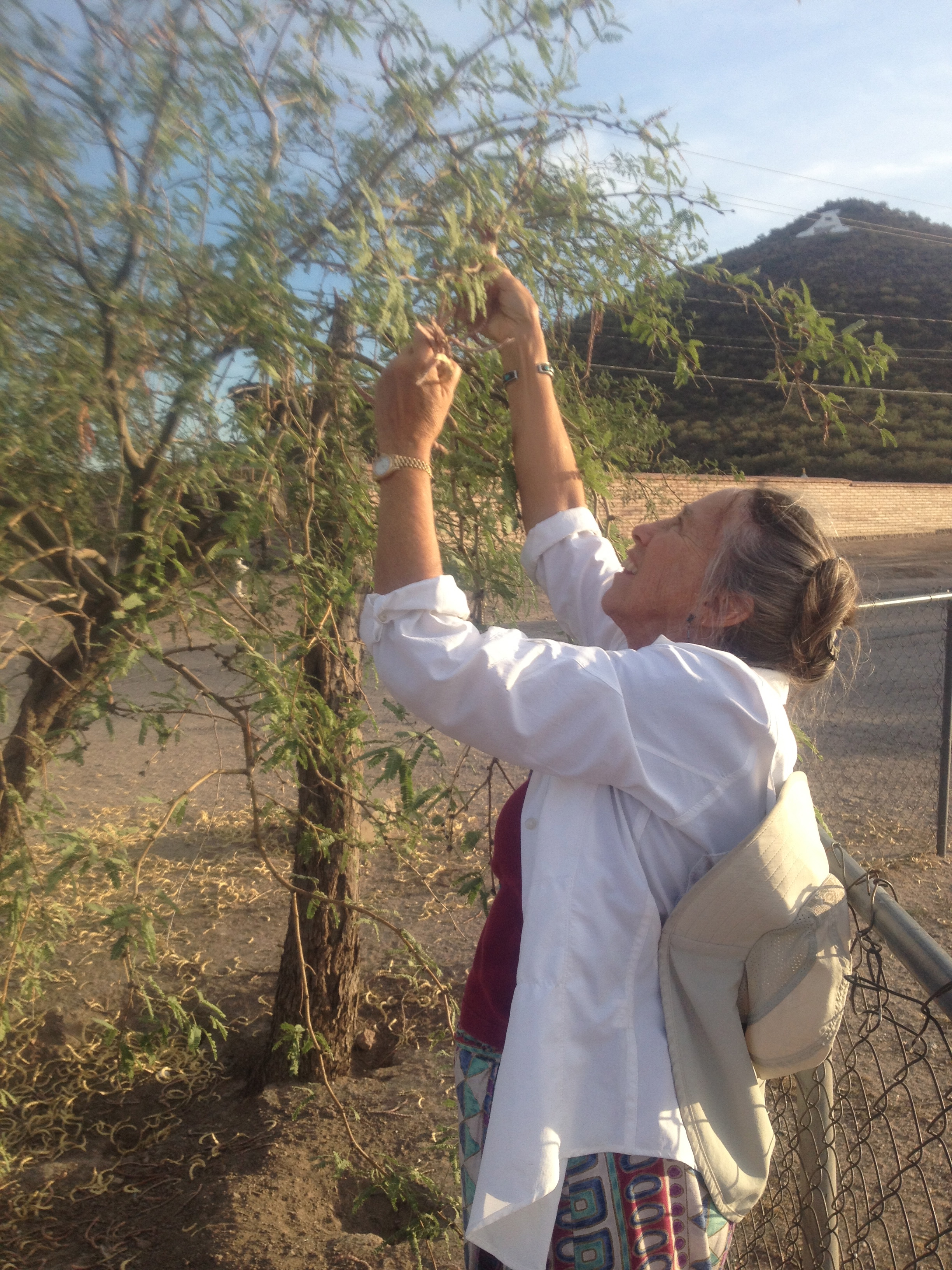
Harvesting ripe velvet mesquite pods--an old Chuk-shon tradition (RodMondt photo)

Harvesting ripe velvet mesquite pods–an old Chuk-shon tradition (RodMondt photo)

Everyone enjoys mesquite’s shade, its smokey flavoring and fuelwood in BBQs. But what about mesquite as food and food-security? Sweet and yummy are first.  Culinary versatility is up there.  Nutrition is paramount.  Recent nutritional analyses show what Native People have ALWAYS known intuitively, that mesquite’s sweetness is healthy (complex) sugars, and that it gives sustained energy (from slow-release complex carbs.)

A major plus for arid-lands food-security is that mesquite trees grow plentifully in the desert WITHOUT ANY HELP from humans. Having evolved with large Pleistocene herbivores, mesquite’s survival strategy is to over-produce quantities of tasty pods to entice mammoths or (extinct) ungulates to eat them and spread their seeds, scarified and delivered in ready-made fertilizer packages. In more recent centuries, cattle have provided a similar service to spread mesquite.  Hungry bi-peds can benefit too from mesquite’s plentiful productivity. With global climate change and the promise of expanding deserts, mesquite offers us a healthy staple food and a fitting dry-lands crop for our stressed Planet.

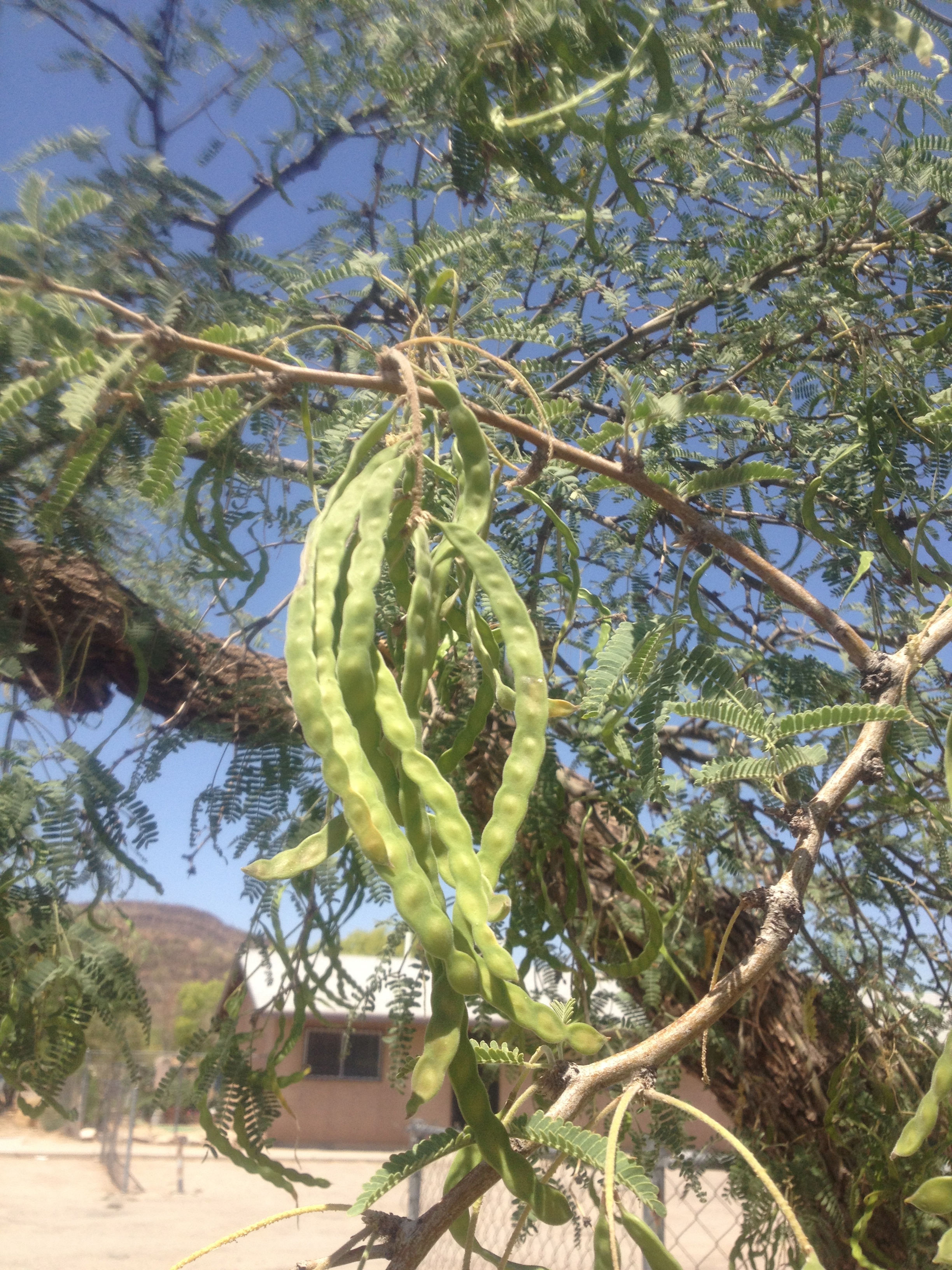
Velvet mesquite pods (Prosopis velutina) in green phase (maburgess photo)

Velvet mesquite pods (Prosopis velutina) in green phase (maburgess photo)

[Mesquite pods are ripening as I write–so heads-up!]

A most timely gathering of mesquite experts—both traditional and innovative—is about to happen at  a MESQUITE CONFERENCE open to the public and not to be missed………Attention–Novice mesquite-harvesters, cooks and culinary artists, bakers and chefs, nutritionists and clinicians, ranchers, farmers, gardeners, athletes and fitness fans, survivalists, nature buffs, climate-change planners…. this conference is for you.

MESQUITE: NEW AGRICULTURAL TRADITIONS FOR AN ANCIENT FOOD  will be held in Benson, Arizona, all day Friday, June 13, 2014, at the Cochise College Campus, 8:30am-4pm.
There will be talks by leading Mesquiteros, including traditional Tohono O’odham harvester Clifford Pablo, new crops innovator Dr. Richard Felger, the one and only mesquite agronomist Mark Moody, wild-harvester Amy Valdes Schwemm, creative desert rancher Dennis Moroney, animal feed expert Dr. Howard Frederick, desert foods ethnobotanist Martha Ames Burgess, and Cooperative Extension outreach educator Mark Apel.

In addition, generously sharing their knowledge, techniques and recipes will be demonstrators, including desert foods writer Carolyn Niethammer, wild-food teacher Barbara Rose, solar cooking expert Valerie McCaffrey, mesquite millers from San Xavier Farm Coop and Tohono O’odham Community College, and children’s book author Laurie Melrood. This is the place to contact producers of mesquite meal for your home cooking, for nouvelle local-source eateries, and breweries. Get your tastebuds ready for samples of delectable new culinary mesquite delights!

Sponsored by Baja Arizona Sustainable Agriculture and University of Arizona Cooperative Extension, with extra support from USDA Western SARE, we have been able to keep the registration fees to a minimum– accessible to anyone. $30 covers the whole day conference including luncheon ($20 for students or members of BASA). Space is limited so register soon. Registration is online via the BASA website http://www.bajaaz.org. For further info call 520-331-9821.
Once registered, please group your travel plans in carpools. For carpooling ideas check out the Native Seeds/SEARCH or BASA facebook sites. Let’s not let anyone miss this conference who needs to be there!


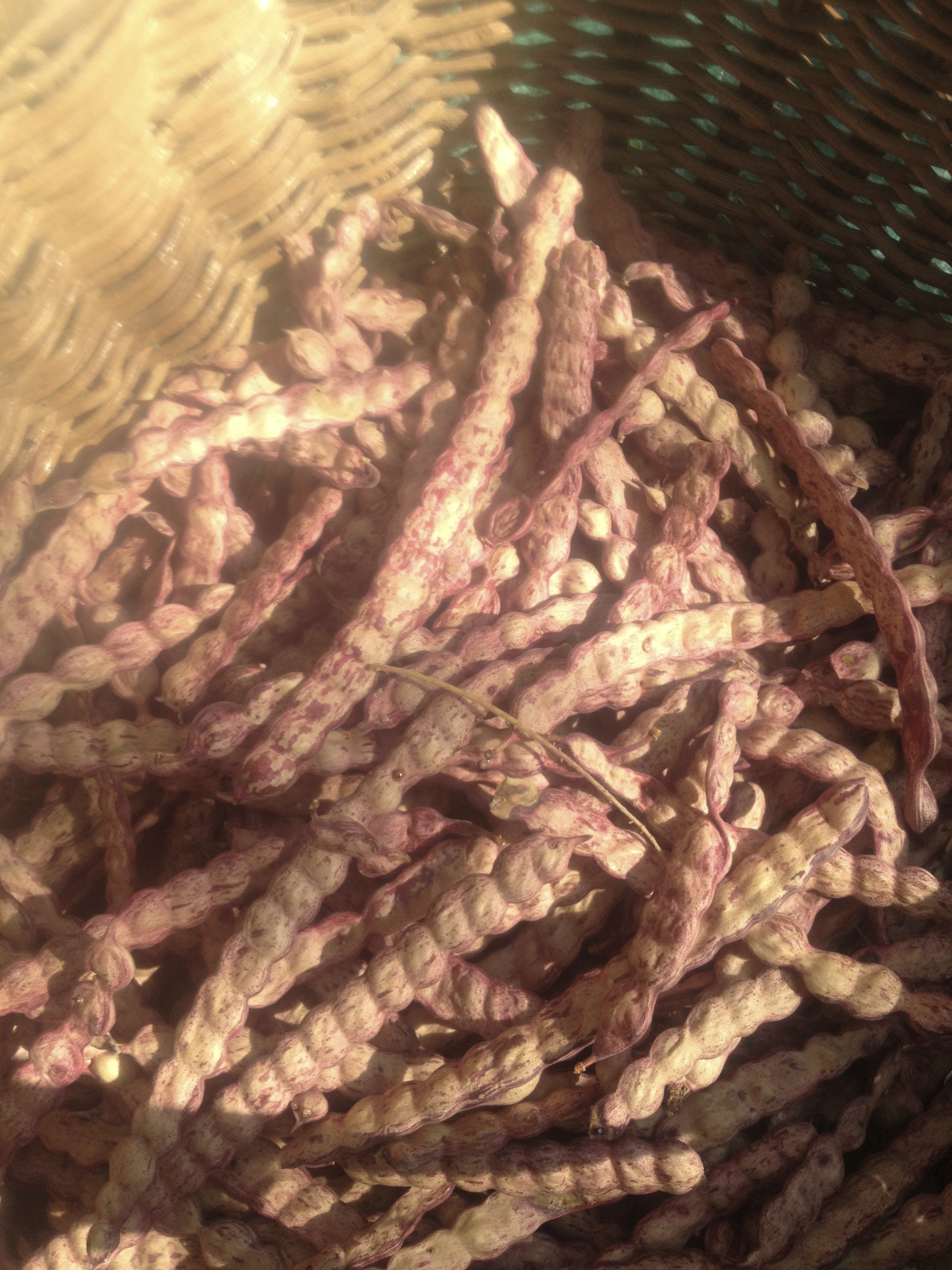
Select sweet velvet mesquite pods dry and ready to grind (maburgess photo)

Select sweet velvet mesquite pods dry and ready to grind (maburgess photo)


Delicious honey mesquite (Prosopis glandulosa) with ripening pods.

Delicious honey mesquite (Prosopis glandulosa) with ripening pods.

ADDITIONAL MESQUITE HAPPENINGS–Plan to Harvest, Plant, and Celebrate Native Bean-Tree Abundance Before the Rains…

DESERT HARVESTERS is organizing events to help people dramatically enhance the quality of their mesquite pod harvests, what to make with them, and how to better sync with the Sonoran Desert’s seasonal cycles in a way that enhances our shared biome.
We are teaming up with local culinary businesses to increase offerings of native foods in their cuisine, and to encourage landscaping with native food plants in water-harvest earthworks beside their buildings.

Mark your calendar for Thursday June 19, 2014!

Guided Mesquite Harvests and Plantings
Hosted at the Santa Cruz River Farmers’ Market
100 S. Avenida del Convento, Tucson, AZ

5pm harvest on foot, 6pm harvest by bicycle
Led by Desert Harvesters including Amy Valdés Schwemm and Brad Lancaster
$5 to $10 per person (sliding scale)

These hands-on harvest tours show you how to:
• Identify and sample the best-tasting mesquite trees
Every tree is different, but some varieties are consistently much better than others. Taste the differences. (We will also likely harvest from desert ironwood and palo verde.)
• How to harvest safely, ethically, and responsibly
Harvesting pre-rains is best practice to avoid invisible toxic mold. Harvesting from the tree avoids fecal or fungal ground contamination. Check out http://www.ediblebajaarizona.com/calling-all-mesquiteros/ for more on why pre-rain harvests are the traditional practice, and so important.
• Use cool tricks such as the harvest cane.
• How and when to plant the best bean trees
Participants are encouraged to bring sun protection, reusable water bottle, and carry-bags for harvested pods.

Iskashitaa, an organization that helps resettled refugees integrate into the Tucson community, will be offering their beautiful hand-made harvest bags and fresh-squeezed juice from fruit they’ve gleaned. Also there will be AravaipaHeirlooms’ prickly pear pops and chiltepine-infused cold brews from Exo Roast Co.

Bean-Tree Processing Demonstrations
Before and/or after the Guided Harvests and Plantings
4pm to 7pm–FREE
Taught by Barbara Rose, desert foods farmer/fermenter/cook extraordinaire of Bean Tree Farm (see their website for more awesome workshops), will show you how to turn milled or whole desert ironwood seeds, palo verde seeds, and mesquite pods into tasty dishes. Native foods such as mesquite flour, cactus fruit pops, drinks, syrup, and cholla buds will be available for sale, along with seeds and seedlings of the best-tasting native bean-trees and chiltepines.

AND THEN DON’T MISS Sunday, June 22, 2014!

Pre-Monsoon Mesquite Milling
Sunday, June 22, (alert–in the event of rain, it will be moved to Sunday, June 29)
6am to 10am
Bring Your Own Pods!
Pods for milling must be clean, dry, and free of mold/fungus, stones, leaves, bugs and other debris. Cost: $3/gallon of whole pods, with a minimum of $10.

Also at the milling event:
• A native wild foods demonstration – highlighting what’s in the wild-harvest season now
• Exo’s mesquite-, mole-, and chiltepin-infused coffees
• Mesquite baked goods and cactus fruit popsicles
• Seeds and seedlings of select native bean trees and chiltepines — so you can plant yours in time for the rains.

Our thanks to hosts Exo Roast Co. and Tap & Bottle,
403 N. 6th Ave.,Tucson, AZ
Harvesters’ Happy Hour at Tap & Bottle
Come join fellow harvesters in fermented merriment. Tap & Bottle will have local brews on-hand, some infused with local native ingredients. And they will donate a percentage of all the sales to Desert Harvesters. Learn more online at: http://www.DesertHarvesters.org


Mesquite can help us into a food-secure future– fittingly, sustainably, healthily, and sweetly– as we face heating and drying of our desert home.  What a gift mesquite is, as we begin to declare our independence from being a FOOD-COLONY!