GET READY FOR NOPALITO SEASON

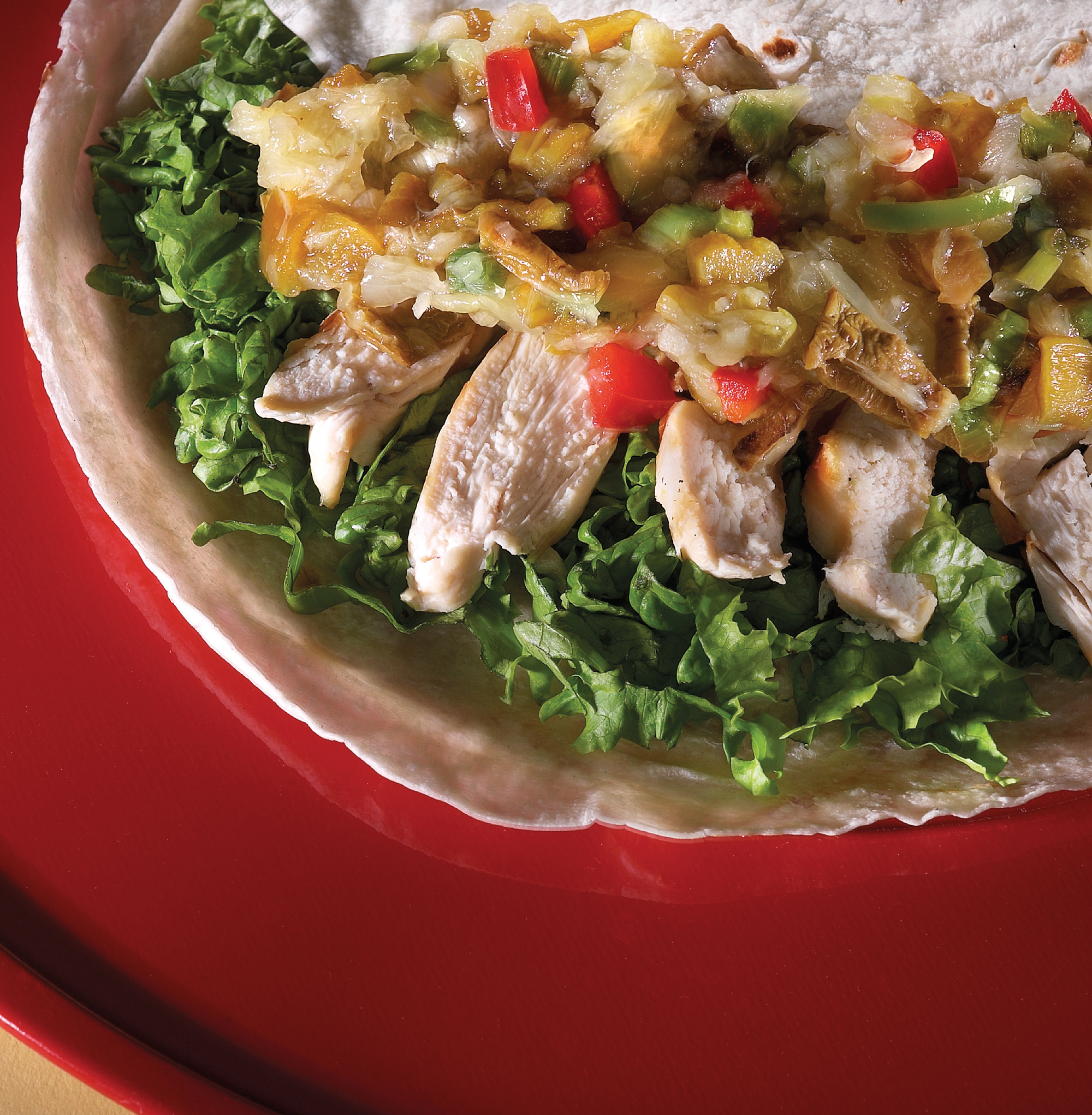
Grilled Chicken with Nopalito and Pineapple Salsa

Grilled Chicken with Nopalito and Pineapple Salsa (from The Prickly Pear Cookbook)

(Note: I will be teaching a class on cooking with nopales at the Presidio of Tucson on April 3. You can sign up on their website.)

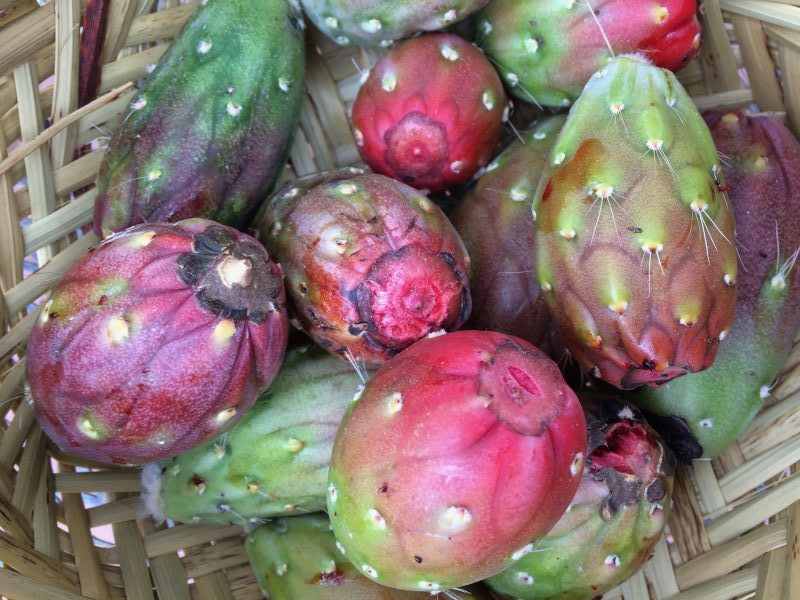
The new prickly pear pads (nopales) that we cook and use for nopalitos are usually ready in from March to early May.  It’s Carolyn here today tempting you with two recipes for a delicious salsas made with nopalitos. (Definition of nopalito: a nopal, or cactus pad, cut into little pieces).

Why bother to learn how to use prickly pear pads? For hundreds of years, both the fruit and pads were considered folk medicine in Mexico and early research showed that the fibers in nopales were helpful in curbing blood sugar. Today, researchers in the US and Europe are using sophisticated laboratory techniques and specially bred mouse models (that would be transgenic mice, not transgender mice)  to investigate prickly pear fruits, pads, flowers, and seeds as a cure for a wide array variety of ills.

Investigators are looking into prickly pear compounds as antioxidant, antiviral, anti tumor, anti diabetic, and antiparasite.  It may be useful in combating a range of cancers including leukemia, lung, gastric, colon, and ovarian. Studies have considered its use in the treatment of ulcers and alcoholism and a possible role in boosting memory and energy metabolism. Many research labs are investigating prickly pear for cancer prevention.

The many varieties of prickly pear put out their new growth when the spring warms up. All prickly pear pads are edible (meaning they not only won’t kill you but in this case are very nutritious), but they are only appropriate for food when they are new. After about six weeks, they develop a fibrous infrastructure. The easiest kind of pads to prepare are those from the large Mexican variety of prickly pear that do not grow wild north of Mexico. You can grow them in your yard if your winter doesn’t bring much freezing. Or you can get them at a Mexican grocery story. They are called Ficus indica or sometimes Burbank because Luther Burbank did some breeding work on them. The wild cactus pads are also delicious, but harder to prepare because of the abundance of spines.

You can do a rough estimate of when a pad is ready to pick if it is about the size of your hand. The nopales available in Mexican grocery stores are grown by farmers who know how to manipulate the plant to keep fresh pads coming year ’round.
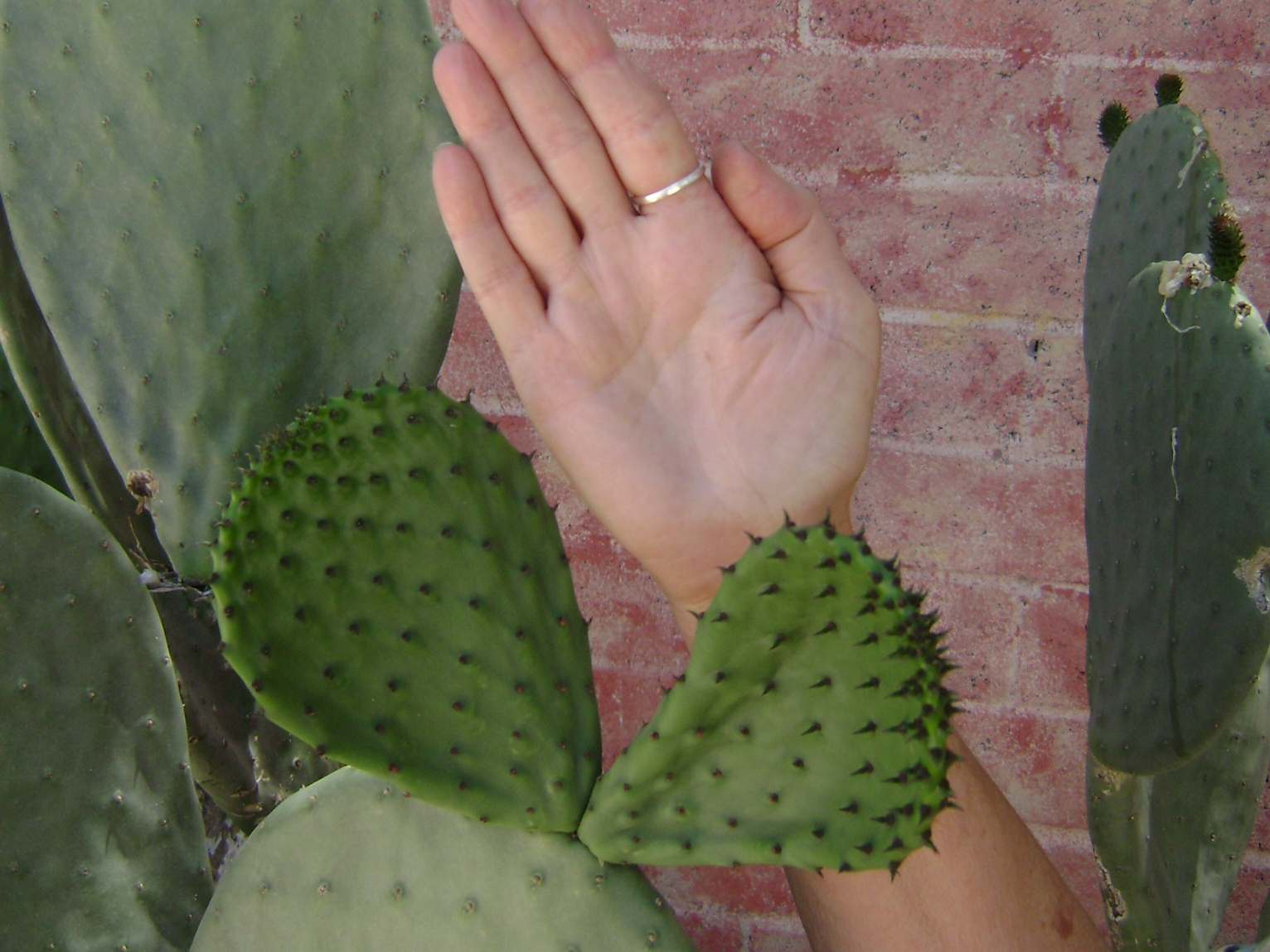
Pick nopales in the spring when the size of your hand.

Pick nopales in the spring when the size of your hand.

To prepare the nopales, you’ll use  tongs, of course, and then don rubber kitchen gloves to protect your hands as you get rid of the stickers. You don’t need industrial strength gloves, just good quality ones from the grocery store will do. Using a common steak knife, scrape vigorously against the growth (from outer edge to stem) to remove the stickers.
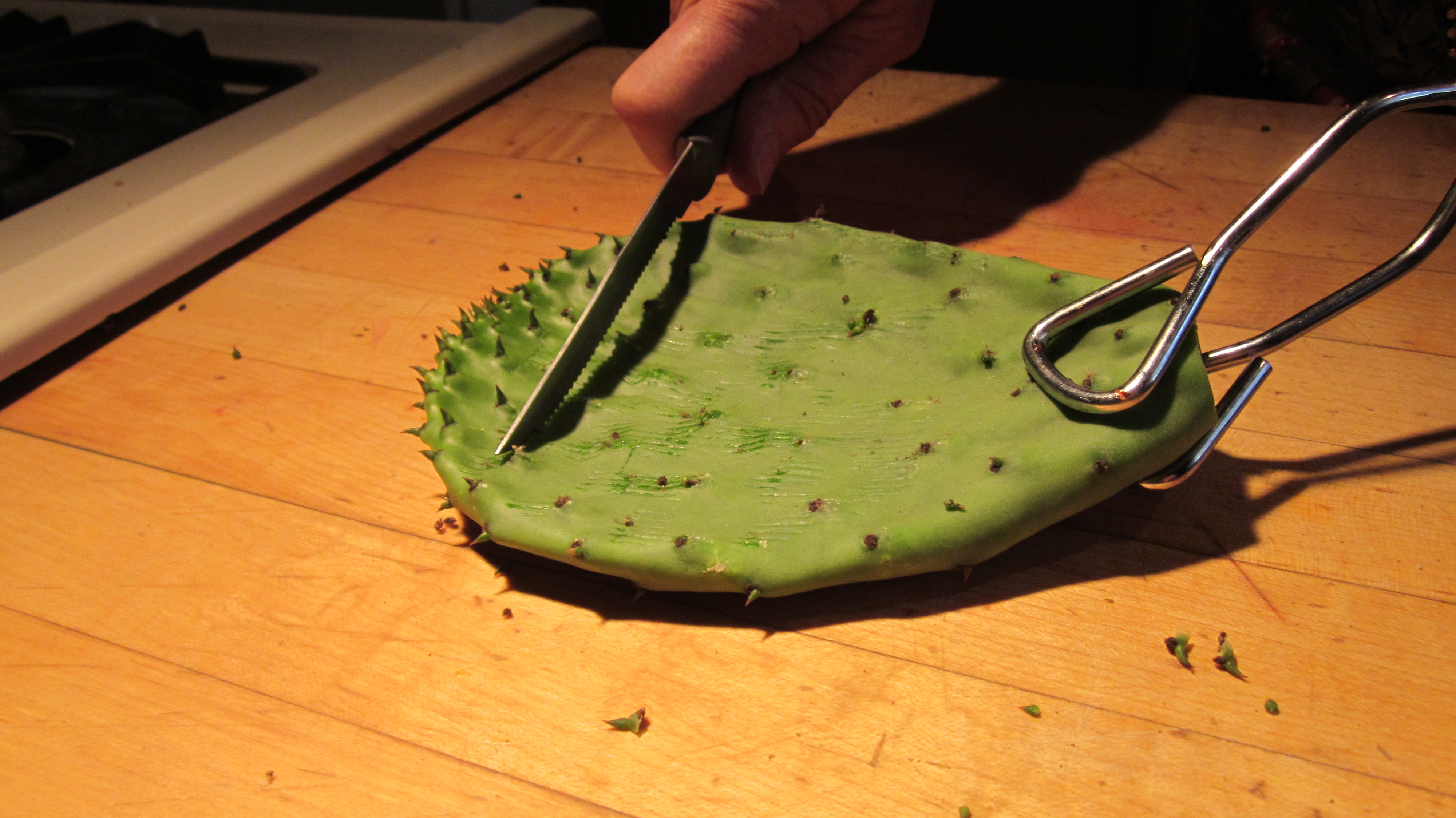
Scrape the thorns vigorously in the direction of the stem.

Scrape the thorns vigorously in the direction of the stem.

The edge has lots of stickers so just trim it off.
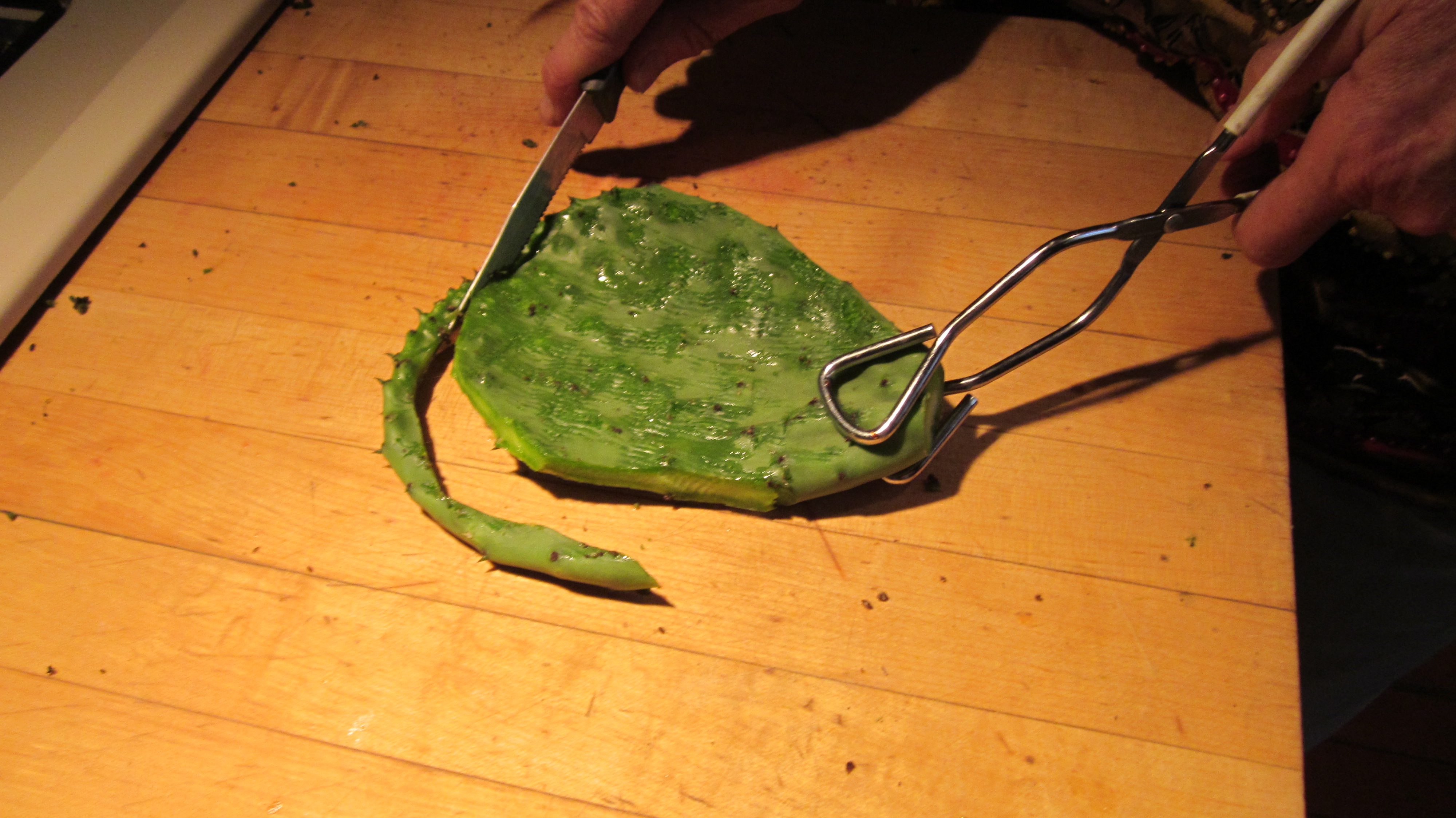
IMG_0196At this point, you can cut it into small pieces to cook or leave it whole and cut it up later. You can cook them in a frying pan filmed with oil, or use the Rick Bayless method (of TV show fame) and toss them with a little oil, sprinkle with sale, put on a cookie sheet and roast in a 375 degree oven for 20 minutes.  In any case, you should check them and turn them over as they cook.
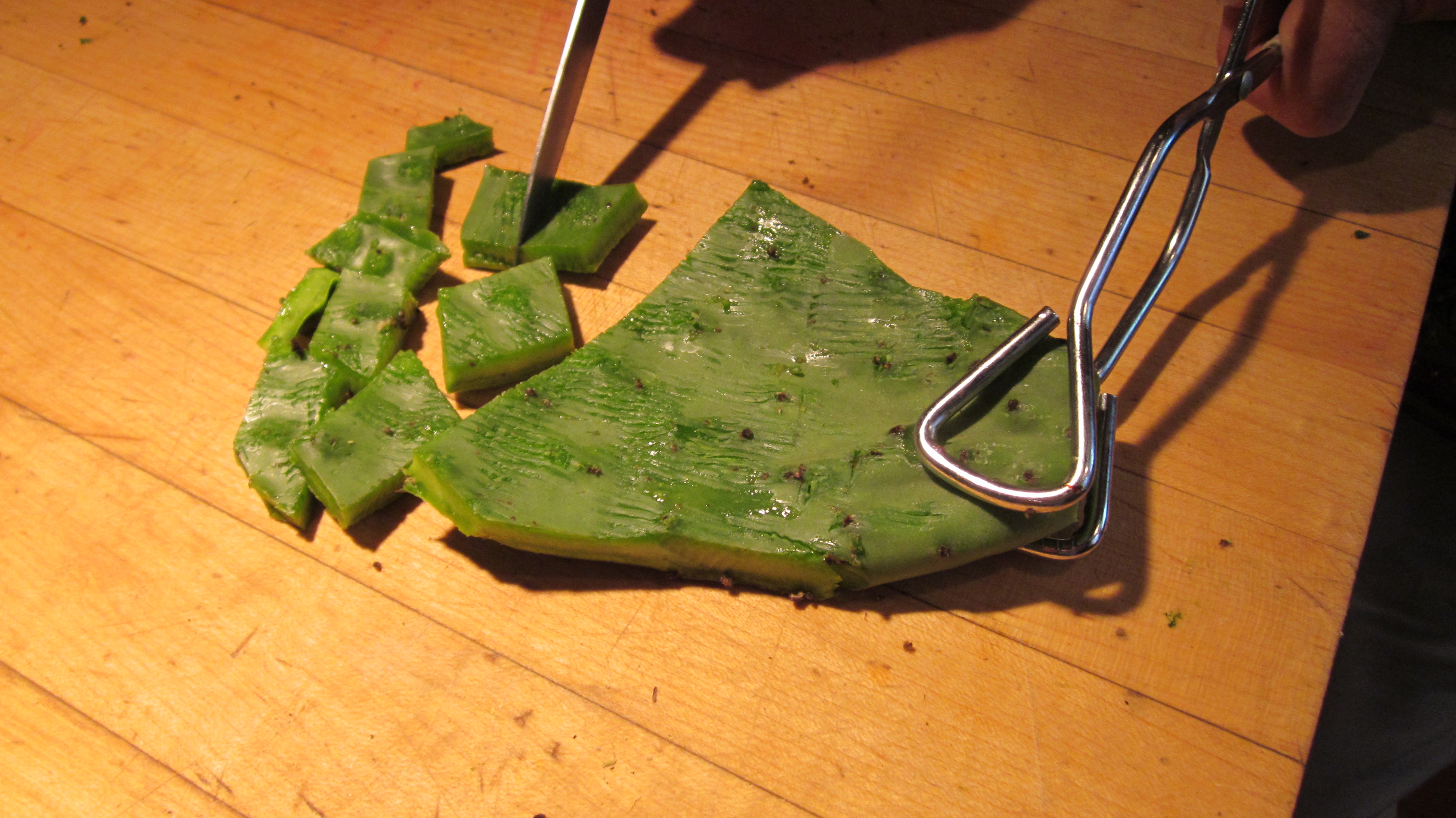
Cut into small pieces to cook.

Cut into small pieces to cook.

The nopales will turn from bright green to a more olive color as they cook. The gummy sap that some people find objectionable will dry up and become less noticeable.
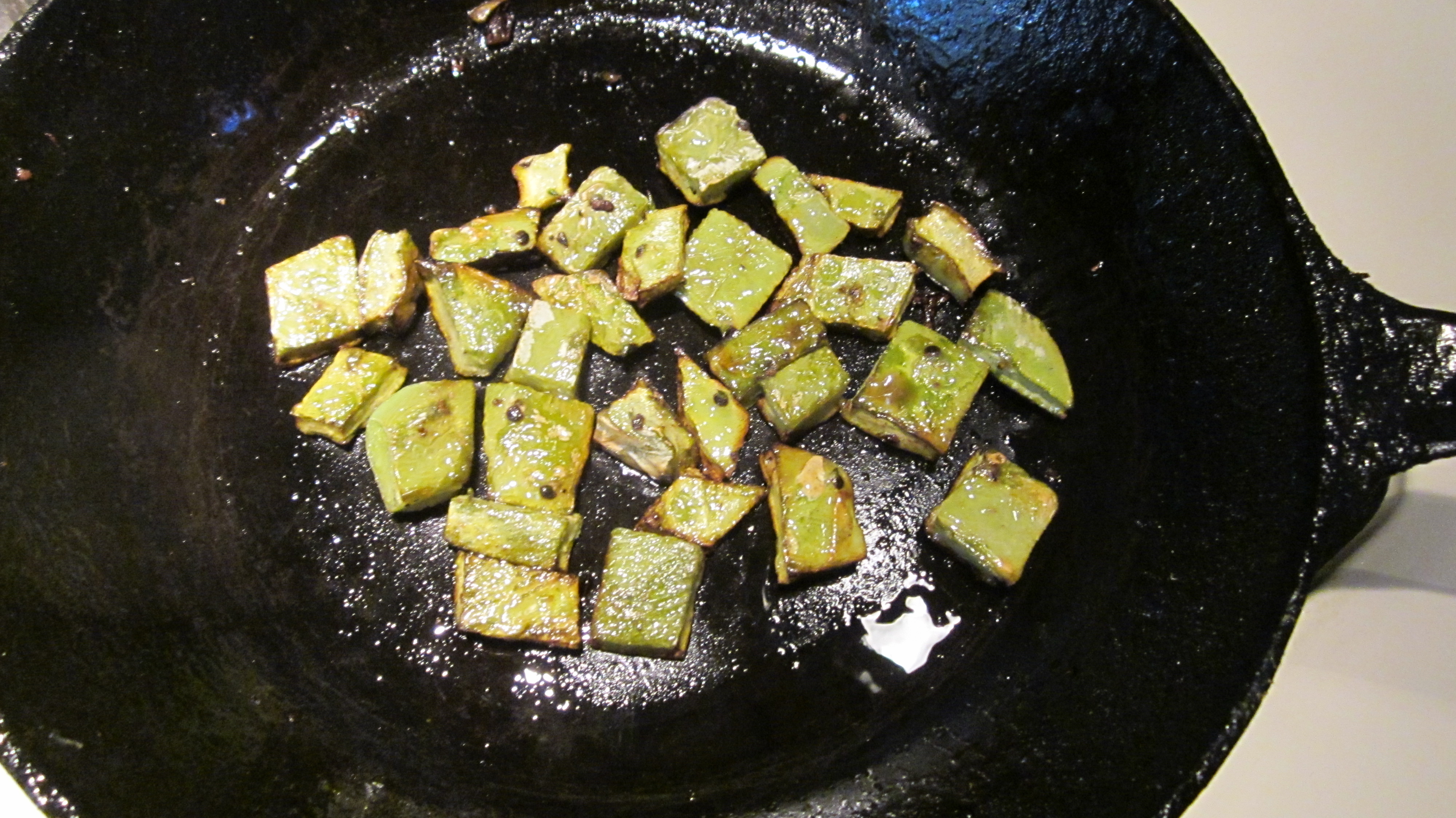
The cooked nopalitos turn from bright green to olive.

The cooked nopalitos turn from bright green to olive.

You can also cook nopales on the barbecue alongside some chicken to make a delicious taco. 

Here’s the recipe for the sauce in the picture at the top of the blog:

Nopalito and Pineapple Salsa

1 raw, cleaned prickly pear pad

1 tablespoon vegetable oil

1 cup canned crushed pineapple packed in it’s own juice

¼ cup finely chopped red bell pepper

¼ cup thinly sliced green onions, including some tops

1 tablespoon canned green chiles

1 finely minced serrano chile (optional)

½ teaspoon finely minced garlic

2 tablespoons lime juice

¼ teaspoon salt

1 tablespoon finely minced cilantro (optional)

Cut prickly pear pad in 1 ½ inch squares.  Film a heavy frying pan with the oil and add the prickly pear pads.  Cook over low heat, turning occasionally, until pieces have given up much of their juice and are slightly brown. Remove from pan, cool, and chop into pieces as wide as a matchstick and about ¼-inch long.

Transfer to medium bowl.  Add remaining ingredients, stir to combine and set aside for flavors to mingle.

Nopalito and Bean Salsa

Here’s an even easier recipe and you might have everything except the nopales in your pantry.

1 1/2 cups commercial red salsa

1/2 cup canned black beans, rinsed

1/2 cup cooked nopalitos

1 tablespoon lime juice

1-2 tablespoons chopped cilantro

Combine all ingredients in a bowl. Serve with chips.

______________________
You can learn more about the history of food in Southern Arizona in my latest book A Desert Feast, the story of the last 4,000 years of food in the Sonoran Desert. Want more recipes using  foods of the Southwest? You’d find ideas for collecting and using 23 easily recognized and gathered desert foods in Cooking the Wild Southwest: Delicious Recipes for Desert Foods.  . Recipes from top Southwest chefs are collected in The New Southwest Cookbook. Just click on the titles for more information. You can learn more about me on my website.
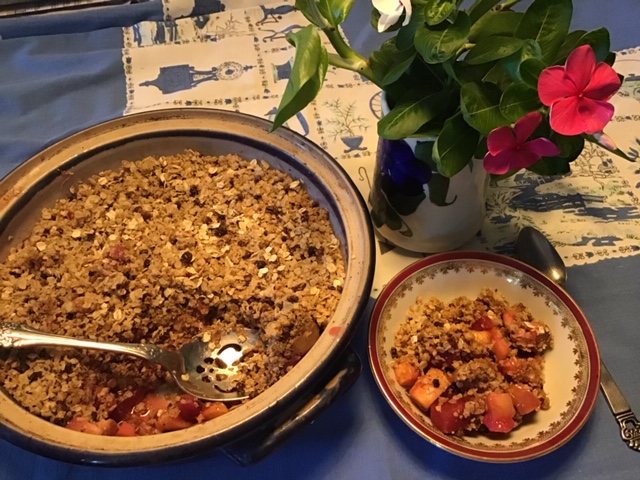
Sonoran Fall Cobbler with Prickly Pear, Apples and Plums and a Mesquite Crust

image4

Apples and plums combine with prickly pear syrup and a mesquite oatmeal topping for the perfect fall dessert.

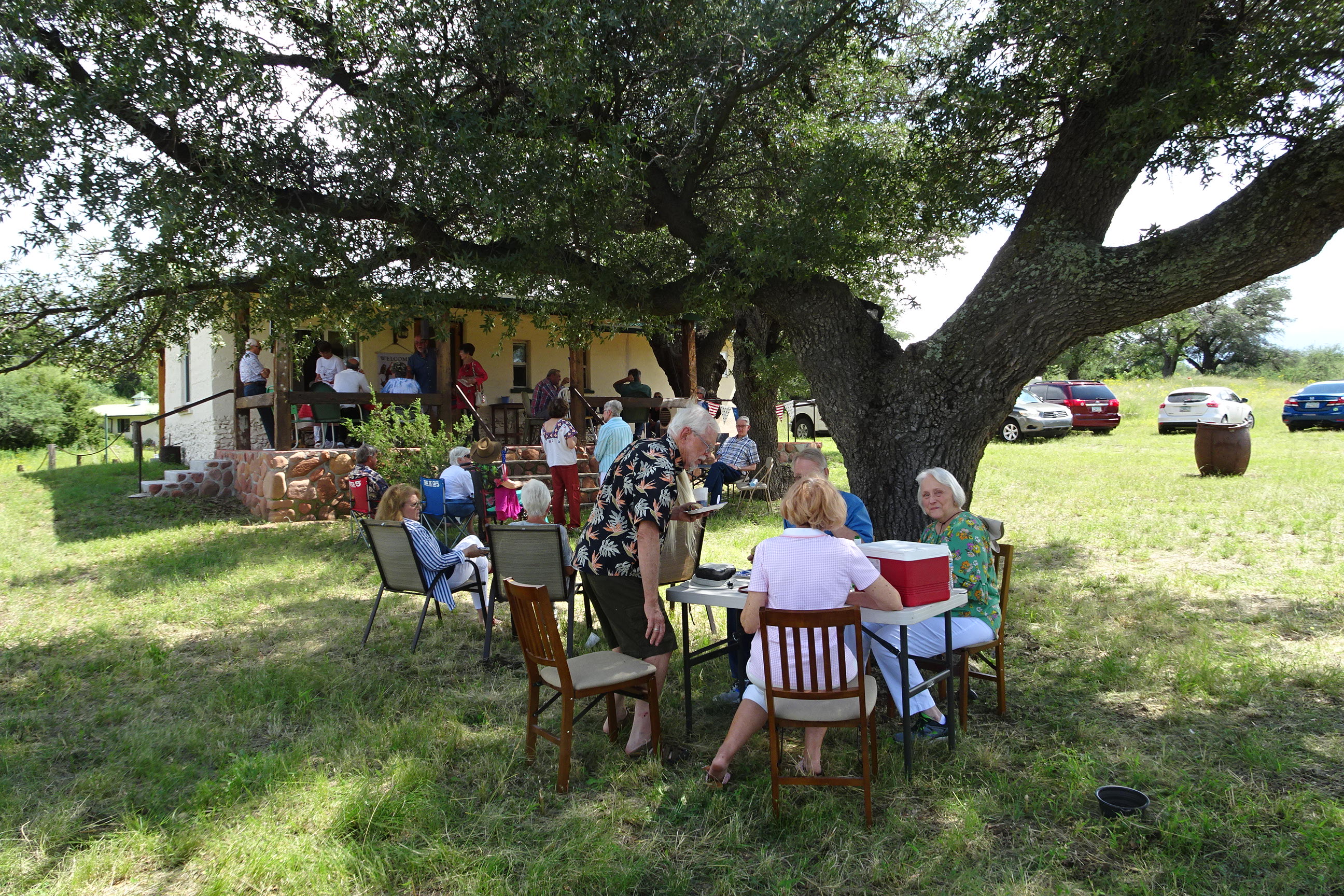
Traditional fall fruits like apple and plums are natural go-togethers with prickly pears and mesquite. It’s Carolyn this week bringing you this recipe that is a good way to introduce people to new flavors because it is a recognizable old standard with a new twist. And it doesn’t take a large amount of either the prickly pear syrup or the mesquite to make a statement. I took this to a last of summer potluck recently and it was the first dessert consumed as people bypassed the whipped cream cake and even the chocolate brownies to give it a try. “You didn’t make enough,” is what I heard. 

DSC01772

Late summer country picnic perfect for Sonoran Fruit Cobbler.

To make the cobbler, you can use any kind of apples, but include at least one tart one, like Granny Smith, to give it a bit of brightness.

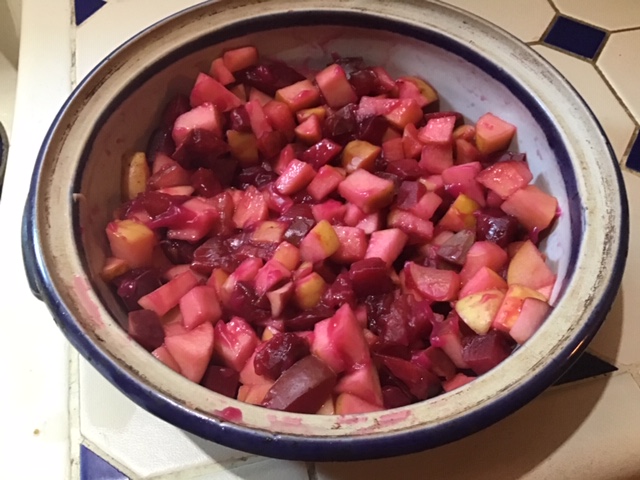
image1

Mix the chopped apple and plums with a little bit of prickly pear syrup.

The mesquite oatmeal topping crisps up because of the butter that you rub into it.

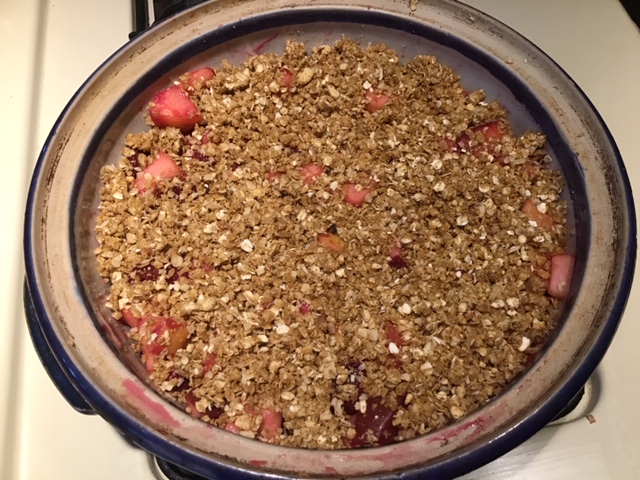
image3

Sprinkle the top with a mixture of oatmeal, mesquite meal, and butter.

Sonoran Fall Cobbler

4 apples, chopped, no need to peel

4 large plums or pluots, chopped

1/4 cup prickly pear syrup

1/2 teaspoon corn starch

Topping:

1 cup dry oatmeal

1/4 cup mesquite meal

2-4 tablespoons brown sugar

1/4 cup (1/2 stick) butter

Heat oven to 350 degrees. Combine the chopped apples and peaches in casserole or pie plate or 8×8-inch pan. Stir the cornstarch into the prickly pear syrup and stir into the fruit mixture. In a bowl, combine the dry ingredients for the topping. Chop the butter into little pieces and with your fingers, rub it into the dry ingredients. Spread over the chopped fruit. Bake in preheated oven for about 25 minutes until fruit is tender and topping is nicely browned.

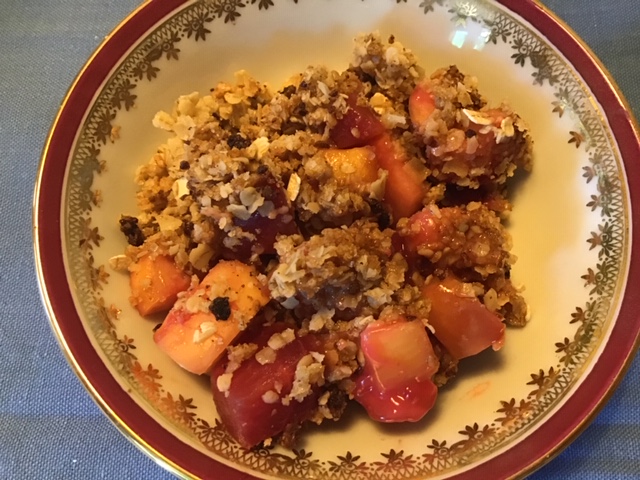
image2

Sonoran Fruit Cobbler is delicious as is or add cream, whipped cream, or ice cream.

____________________________________________

Want more recipes for mesquite and delicious wild foods of the desert? Find them in my book “Cooking the Wild Southwest: Delicious Recipes for Desert Plants.” And if you want to know why Tucson was named a UNESCO City of Gastronomy, I tell the whole 4,000-year story in my newest book “A Desert Feast: Celebrating Tucson’s Culinary History.” Buy them from your local bookstore or order on-line.

Watch The Savor Sisters Demo Wild Foods at Native Plants Christmas Party


The Tucson Chapter of the Arizona Native Plant Society has asked the Savor Sisters–Tia Marta, Amy, and me, Carolyn, to demonstrate cooking some virtual appetizers and “libations” for their on-line Christmas Party. You can join in on Thursday, December 10,  at 7 p.m. MST at a zoom meeting with this link. Amy’s making something with her delicious mole mix, Tia Marta is doing a wild rhubarb pudding, and I’m making a delicious goodie with a mixture of quinoa and popped amaranth seeds bound with agave syrup and coated with chocolate. This is a 21st century version of a treat previously made by the Aztecs. I’m also taking everyone on a field trip to a local craft brewery where the head brewer tells us about all the heritage ingredients that go in his beers.

My newest book, A Desert Feast: Celebrating Tucson’s Culinary Heritage, is more a book of stories with just a few recipes to illustrate past and present food trends. So I went back to my previous cookbook, Cooking the Wild Southwest: Delicious Recipes for Desert Plants to find the perfect recipe for this event.

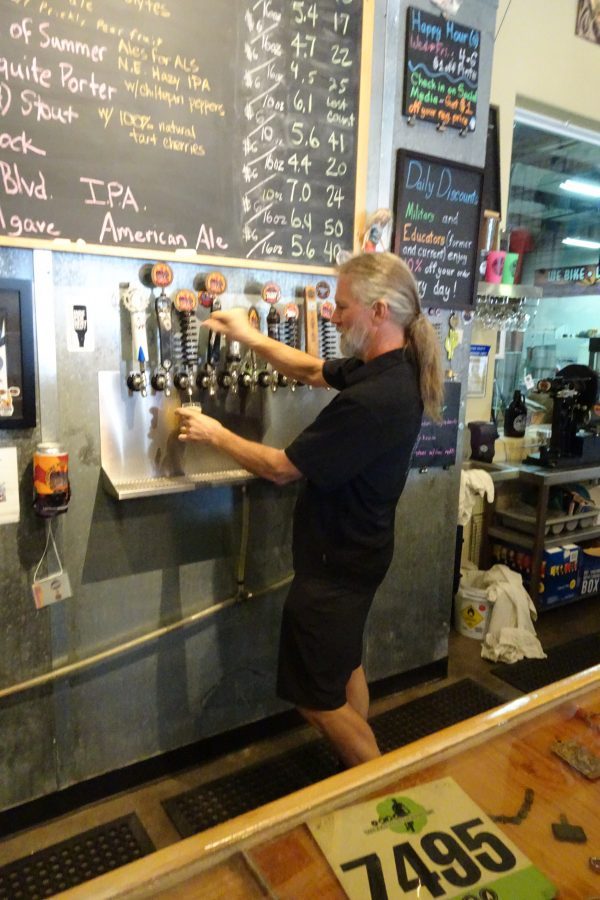
Hank Rowe at Catalina Brewing adds desert flavors such as prickly pear and mesquite to his brews. Come along to hear Hank tell about his beers at the on-line Native Plant Society Party.

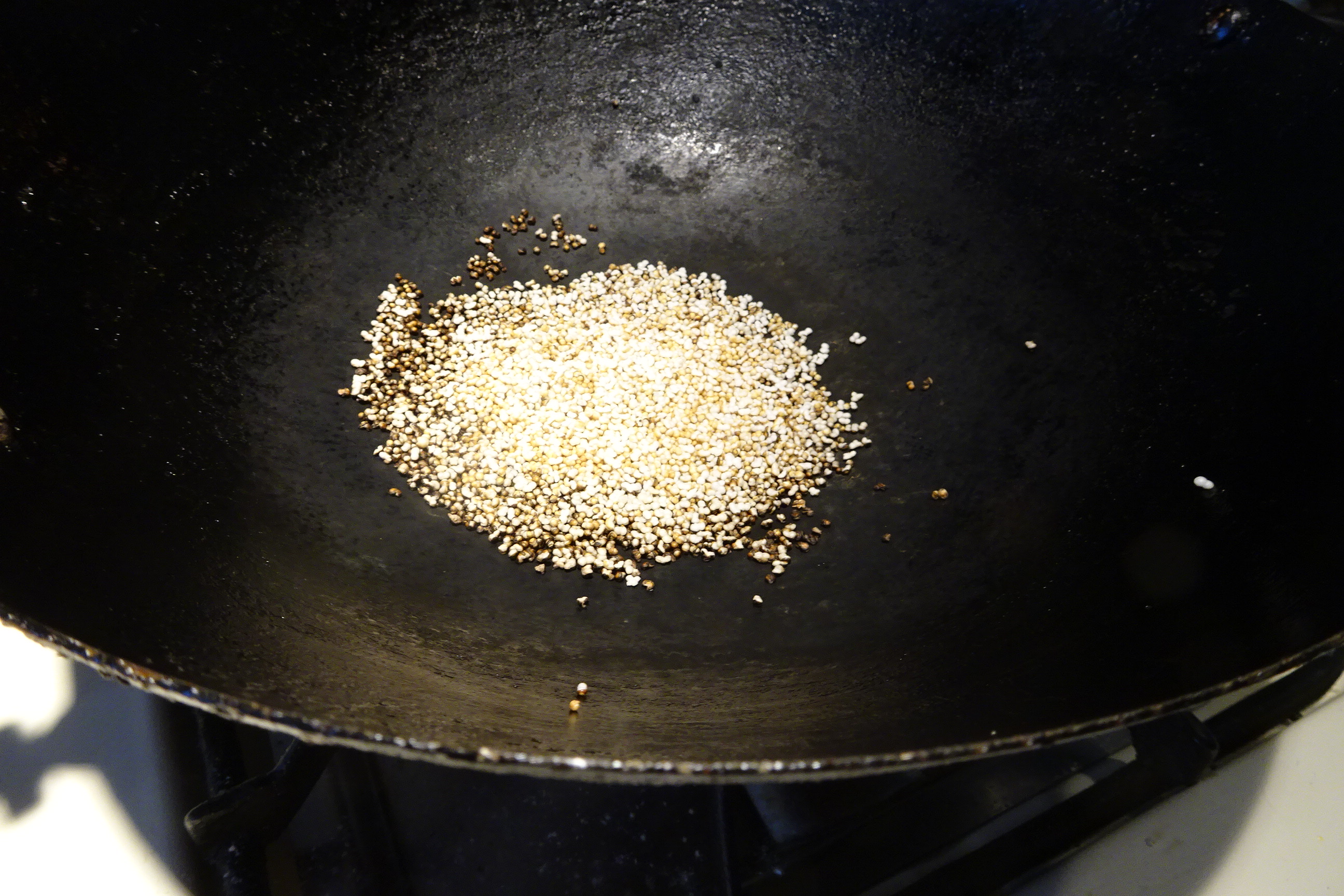
When you pour the amaranth into a hot wok, the golden seeds will pop and become like tiny kernels of popcorn. Work quickly and don’t let the seeds burn or they will be bitter.


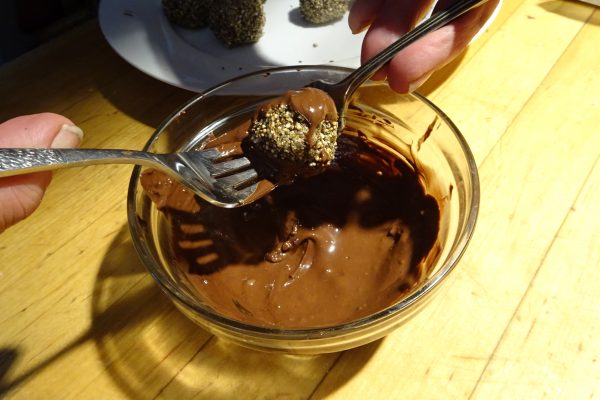
Using two forks, dip each ball into the melted chocolate. They are fragile, so if any break, don’t panic or be upset. Just eat them immediately! Transfer coated balls to refrigerator to harden.

Aztec Delight

This recipe is from my book Cooking the Wild Southwest: Delicious Recipes for Desert Plants. In the video, you can watch the little amaranth seeds pop to a snowy cloud.

¼ cup chia seed

¼ cup amaranth seed

2-3 tablespoons agave syrup

½ cup semi-sweet chocolate chips

            In a wok or heavy bottomed pan over medium heat parch the chia seed for just a minute or two, stirring constantly. Transfer to a coffee grinder or blender and grind to a powder. Put into a bowl.  Repeat with the amaranth grain.  It is possible the amaranth grain will pop while being parched, resulting in a light cloud, like very tiny popcorn kernels. If that happens, fine; if not, equally fine. Combine the ground chia and amaranth in a bowl and begin adding the agave syrup and stirring until you have a stiff dough that holds together.

            Form balls the size of a large olive. Put the chocolate chips in a heat-proof bowl and melt in the microwave or over hot water.  If using the microwave, heat for one minute, check, then continue heating in 30 second increments until melted. If too stiff, add a few drops of neutral oil, like grapeseed.

            Line a plate with waxed paper or plastic wrap.  Using the tines of a fork, roll each ball of the chia/amaranth dough in the chocolate. These balls are rather fragile so be careful. If one breaks apart, the best way to deal with that catastrophe is to eat it immediately.  Transfer the perfect ones to the plate.  Refrigerate until the chocolate has hardened.

___________________________________________________

Still looking for a Christmas gift for your foodie friend? In my new book A Desert Feast: Celebrating Tucson’s Culinary History, you’ll read stories of how early residents existed on wild foods, how agriculture developed and the people built massive irrigation ditches with only wooden tools and baskets, and how the arrival of the Spanish changed everything. I also visit today’s farmers and talk about their challenges and how Tucsonans are learning to garden and grow their own food, starting with school and community gardens. You can order it from your local bookstore (they’ll love you for that) , from Native Seeds/SEARCH, or Amazon.


Mesquite: Not flour, broth!

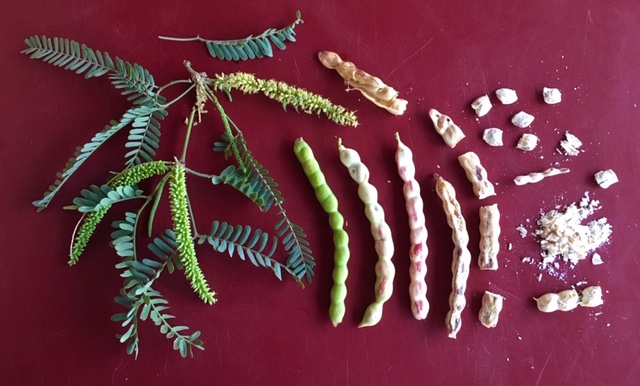
This gorgeous photo shows the lifecycle of a mesquite pod. It was taken by talented photographer Jill Lorenzini whose skill at photographing wild plants never ceases to make me go “ooooh!”

This is the time of year to gather mesquite pods and look for places with hammermills that can grind them into flour or meal to use for baking. Everything is different this year and it may be some time before we can gather for a grinding event. But you can still make delicious treats with your mesquite pods by boiling them. Mesquite is one of Mother Nature’s sweetest offerings and can often replace the need for additional sugar.

It’s Carolyn today. I started playing with mesquite pods many years before Desert Harvesters began offering us the option of having our pods ground into lovely fine meal in their hammermill. I tried everything: blender, Cuisinart, Molina grain mill. Nothing worked well. I understand that a Vitamix does a decent job, but I didn’t have one. I developed a deep appreciation for those Native women who pounded pods in the rock mortar.

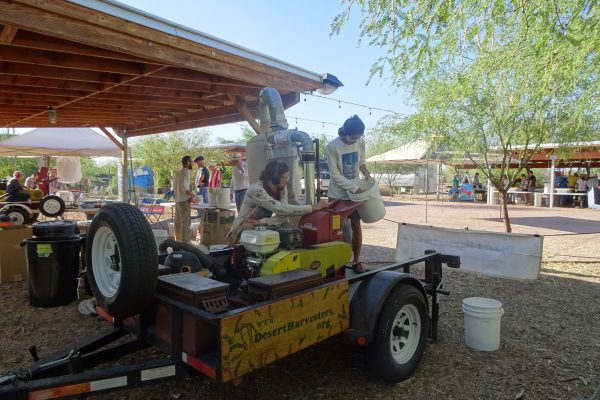
Desert Harvesters grinding mesquite pods in June 2018 using the hammermill.  This year we’re avoiding gatherings like this so we need to find another way to use our mesquite pods.

Without our friends at Desert Harvesters this year helping us to have beautiful fine mesquite meal at this time (maybe later, they say, stay tuned), I’m digging back into my book Cooking the Wild Southwest, to share some recipes for mesquite broth.  Here’s the basic: Take about 4 cups of broken mesquite pods and cover with about 2 quarts of water.

Start with four cups of broken mesquite pods.

Bring to a boil, cover the pot, turn down the heat, and simmer for about an hour. Cool. Next, put your hands into the broth and wring and tear the the pods in the broth, stirring and mashing the sweet pith into the liquid. This is a great place to get the kids or grandkids involved. They love the messiness of it. The object is to get as much of the pith (technically, the mesocarp) into the broth as possible. Strain the liquid through a fine wire-mesh trainer and discard the seeds and fiber. Simmer the liquid uncovered until reduced to three cups.

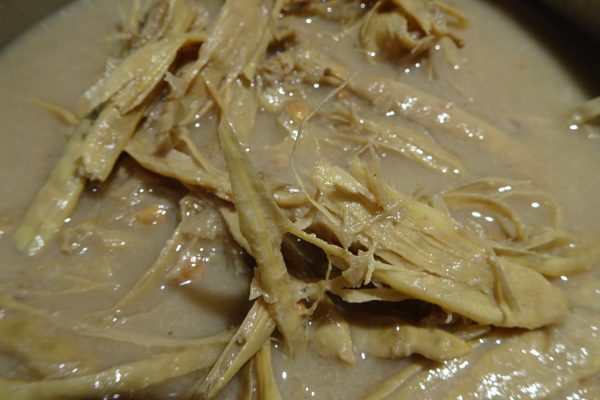
This is what your unstrained broth will look like.

Now we’re ready to make something delicious. Let’s start with something quick, a drink I call the Gila Monster. It’s a perfect beverage for a Sunday brunch or even dessert. It looks especially inviting in clear glass mugs.

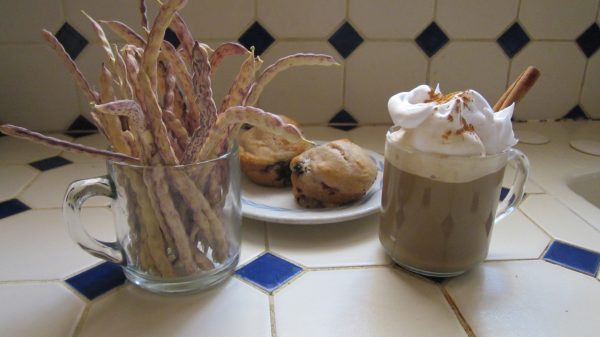
Combine mesquite broth with cold coffee and whipped cream for a delicious brunch treat.

Gila Monster

(These proportions are a basic recipe. You can adjust to your taste. If you are including kids, use just a few tablespoons of coffee and go with mainly milk. )

Makes 6 servings.

1 1/2 cups cold coffee (use decaf for after-dinner)

2 1/2 cups cold Mesquite Broth

1/2 cup cold milk of your choice

1/2 cup coffee liqueur (optional)

Whipped cream

Cinnamon powder

Combine all ingredients in a pitcher or large bowl. Pour into glasses or cups. Top with whipped cream and a dusting of cinnamon powder.

What are some other uses for your broth? Substitute for honey in a honey-mustard salad dressing. Instead of using brown sugar on baked sweet potatoes, drizzle with some mesquite broth. Thicken your broth with cornstarch and use on pancakes. You get the idea. If you want a little more direction, like actual recipes, get a copy of Cooking the Wild Southwest and I’ll guide you step by step through recipes for mesquite broth and mesquite meal. You’ll find even more recipes in the book Desert Harvesters put together Eat Mesquite and More: A Cookbook for Sonoran Desert Foods and Living.  In addition to recipes for mesquite, it covers lots of other desert plants as well.

______________________________________________

If you are interested in edible wild plants of the Southwest and Southwest food, check out my books Cooking the Wild Southwest, Delicious Recipes for Desert Plants, The New Southwest Cookbook, a compilation of recipes from the Southwest’s top chefs, and The Prickly Pear Cookbook, with great recipes for both pads and fruits. And remember Eat Mesquite and More: A Cookbook for Sonoran Desert Foods. In September, I’ll have a new title: A Desert Feast: Celebrating Tucson’s Culinary Heritage. There is more information about my books at www.cniethammer.com.

Buy copies on line or order from your favorite local bookstore. They will love you for it.


Enjoy Ya Cholla!

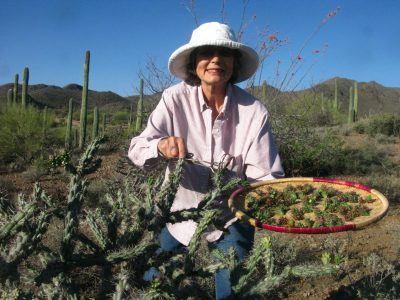
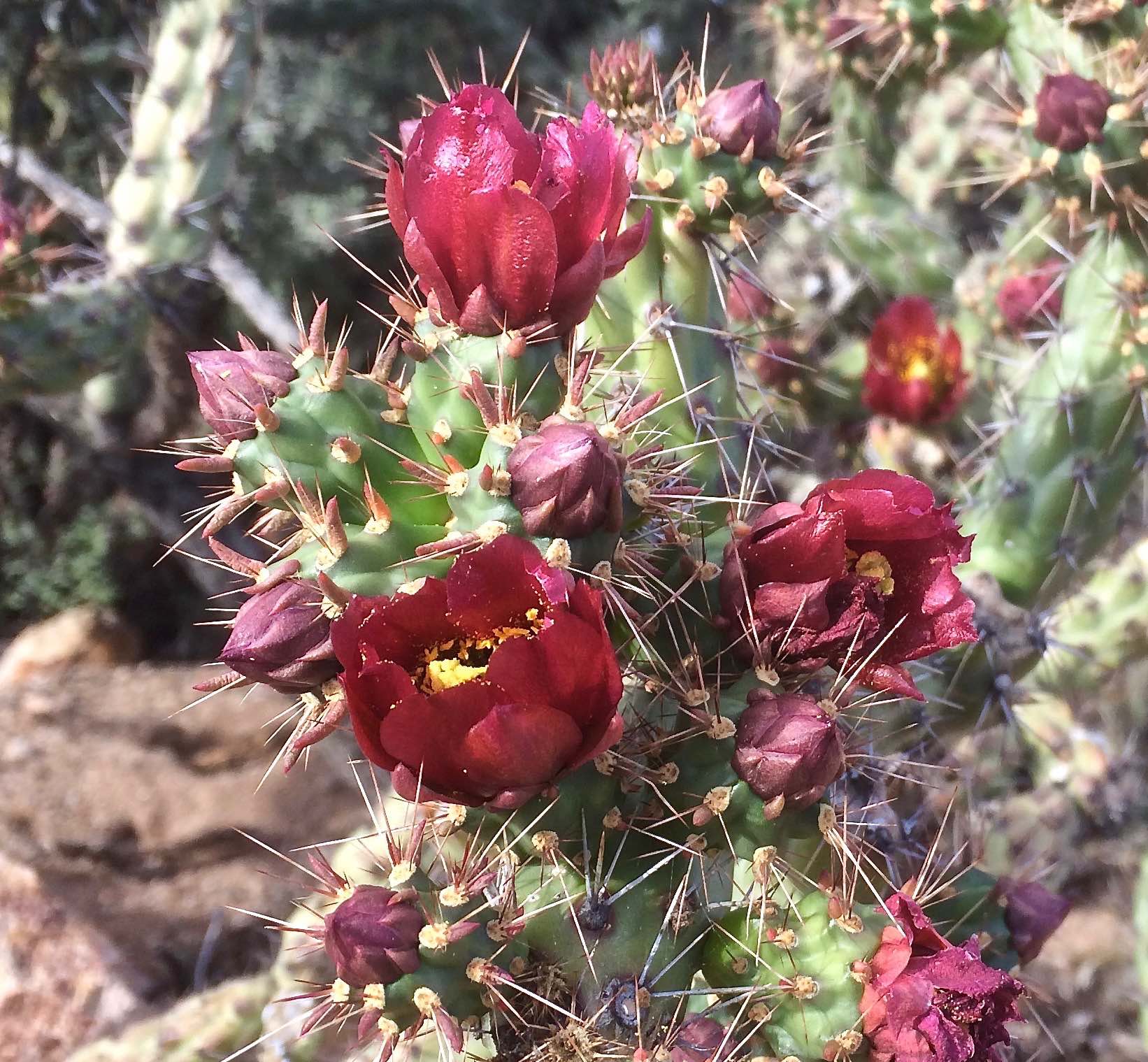
With so much plenty around us in the desert–like this glorious staghorn cholla (Cylindropuntia versicolor)–2-leggeds can be rewarded while social-distancing with healthy outdoor exercise and super nutrition.  Read on…… (MABurgess photo)

The cholla bloom is in full swing!  The low desert in Baja Arizona continues to explode with color late April into early May, with several species of cholla cactus punctuating the landscape colorfully with a rainbow of colors-and a fiesta of flavor.  When the first flower buds open on cholla, traditional O’odham harvesters knew this short window of time is for feasting on this nutritious food, and for drying and storing enough for the rest of the year.

Tia Marta here to share creative and fun ideas for the generous harvest available without getting near a grocery.  For detailed “how-to” ideas, view this earlier SavortheSouthwest post and a short video from a  NativeSeedsSEARCH workshop.

Why harvest unopened buds? Note how loosely opening petals grab spines and don’t let go. After brushing and screening off spines, cleaned buds must be boiled or roasted before eating. (MABurgess photo)

Enjoy my article A Budding Meal _ Martha Ames Burgess EdibleBajaAZ 2014 explaining how Tohono O’odham Elder Juanita Ahil harvested cholla, or, check out www.desertharvesters.org for guidance.

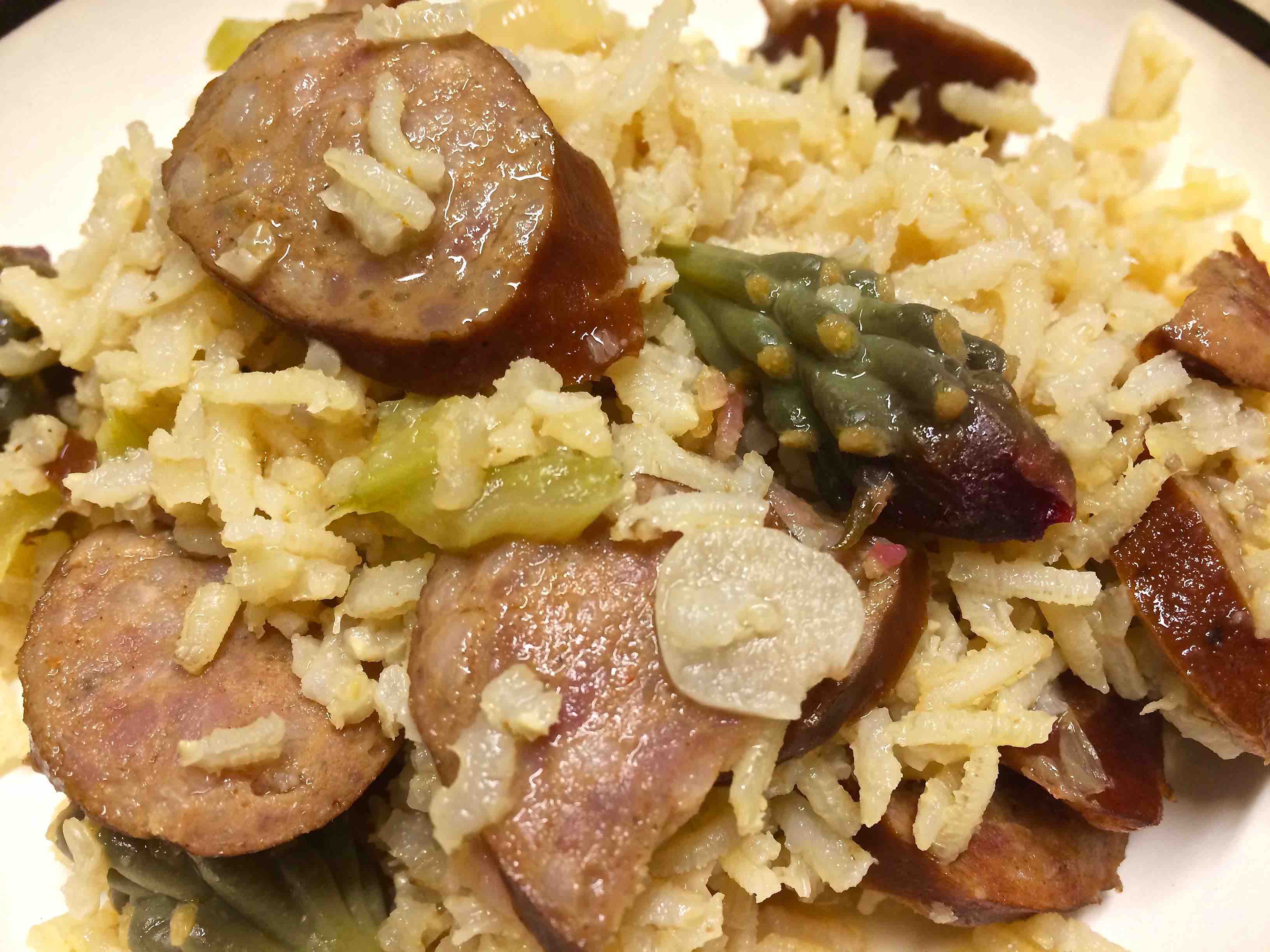
Jambalaya a la Cholla made with andouille sausage, sauteed garlic and celery, cooked cholla buds, served with brown rice. Find great jambalaya recipes online–just add prepared cholla buds!

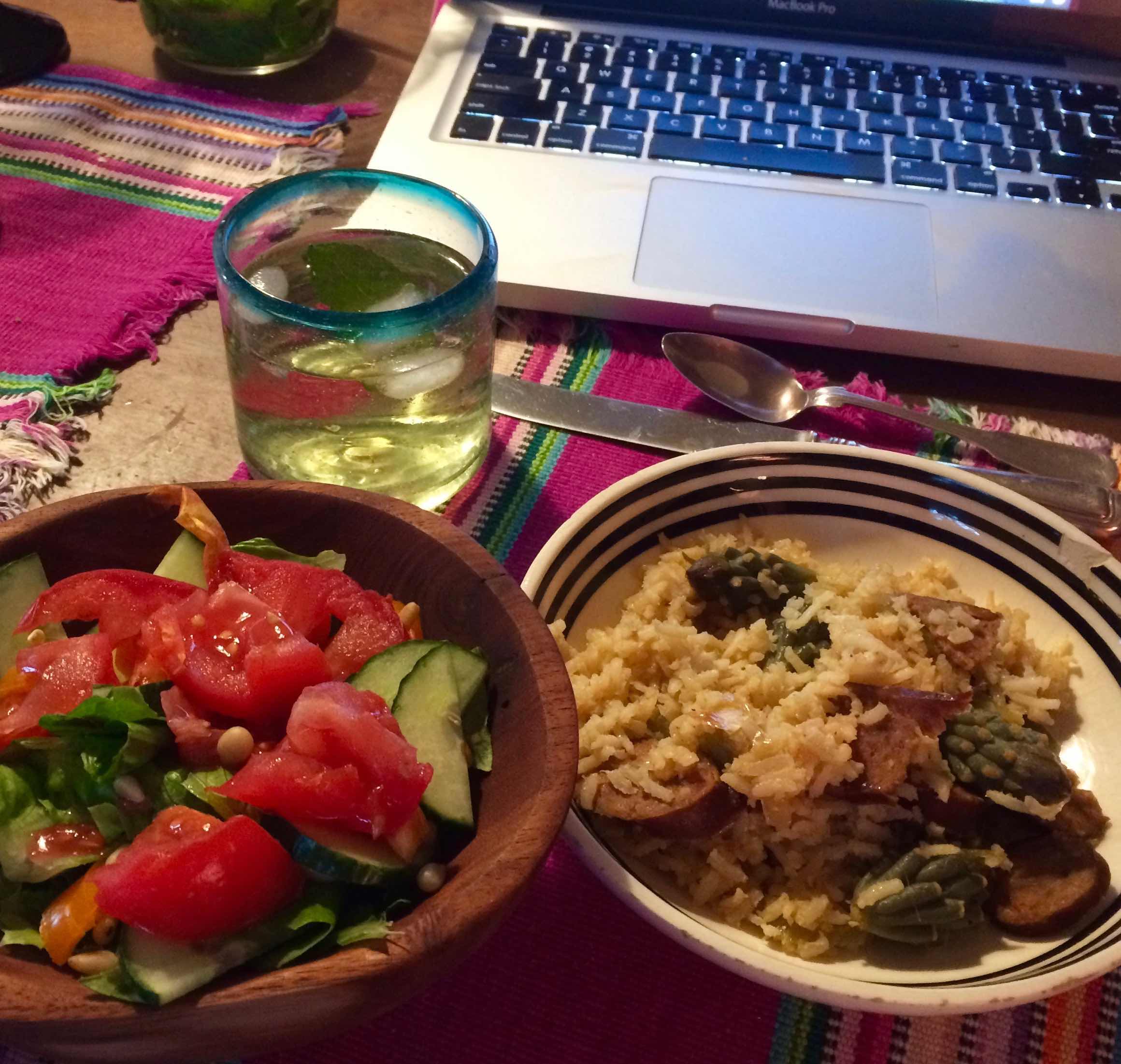
Jambalaya a la Cholla was our centerpiece dinner shared on Zoom with pals.

When you venture into harvesting, be sure to start with three awarenesses:  giving thanks for this plentiful gift from the desert,  watching for snakes, and checking the wind for where spines might blow.

These off-the-wall ideas for sure are not traditional ways of cooking cholla.  Hopefully these ideas can inspire you to get creative with cholla.  As desert dwellers we should all have a deep respect for this much ignored or maligned cactus.  Cholla reminds us that there is no time for boredom.

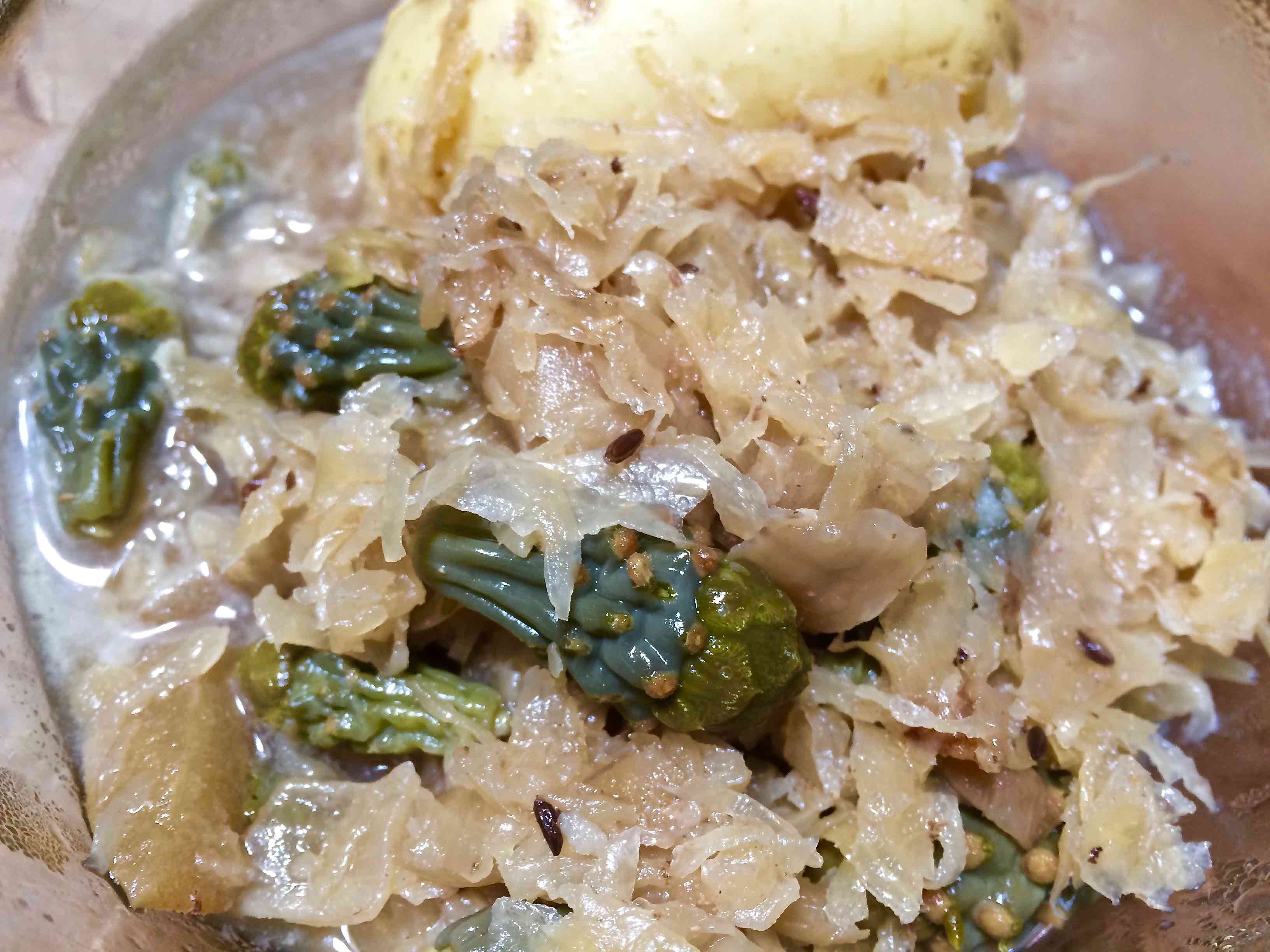
Try diluting the pucker-up sourness of sauerkraut by adding chunks of apple, caraway seed, and…tah-dah…cooked cholla buds for a wonderful addition!

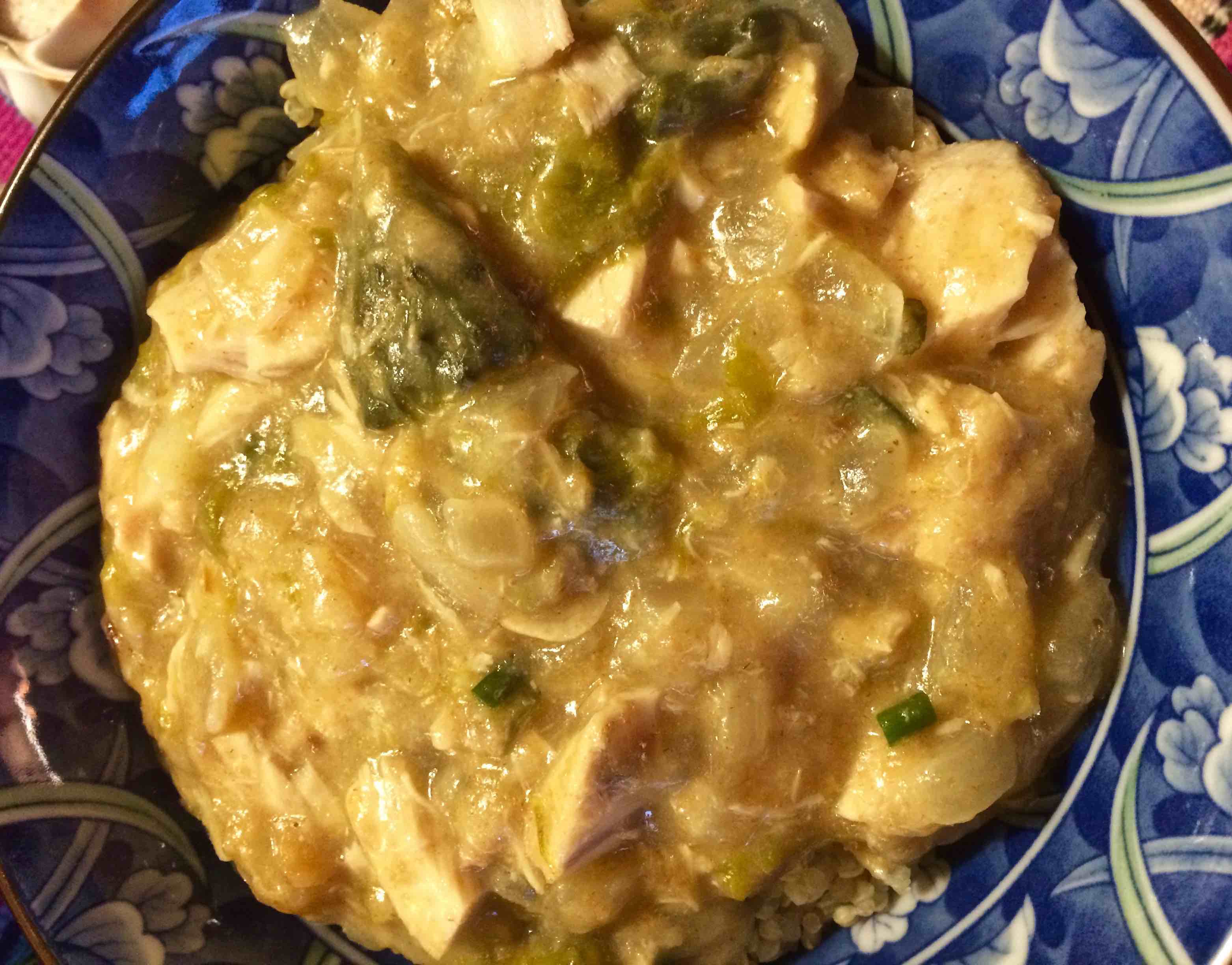
Try this variation on a favorite comfort food–Add prepared cholla buds to creamed chicken or chicken stew.

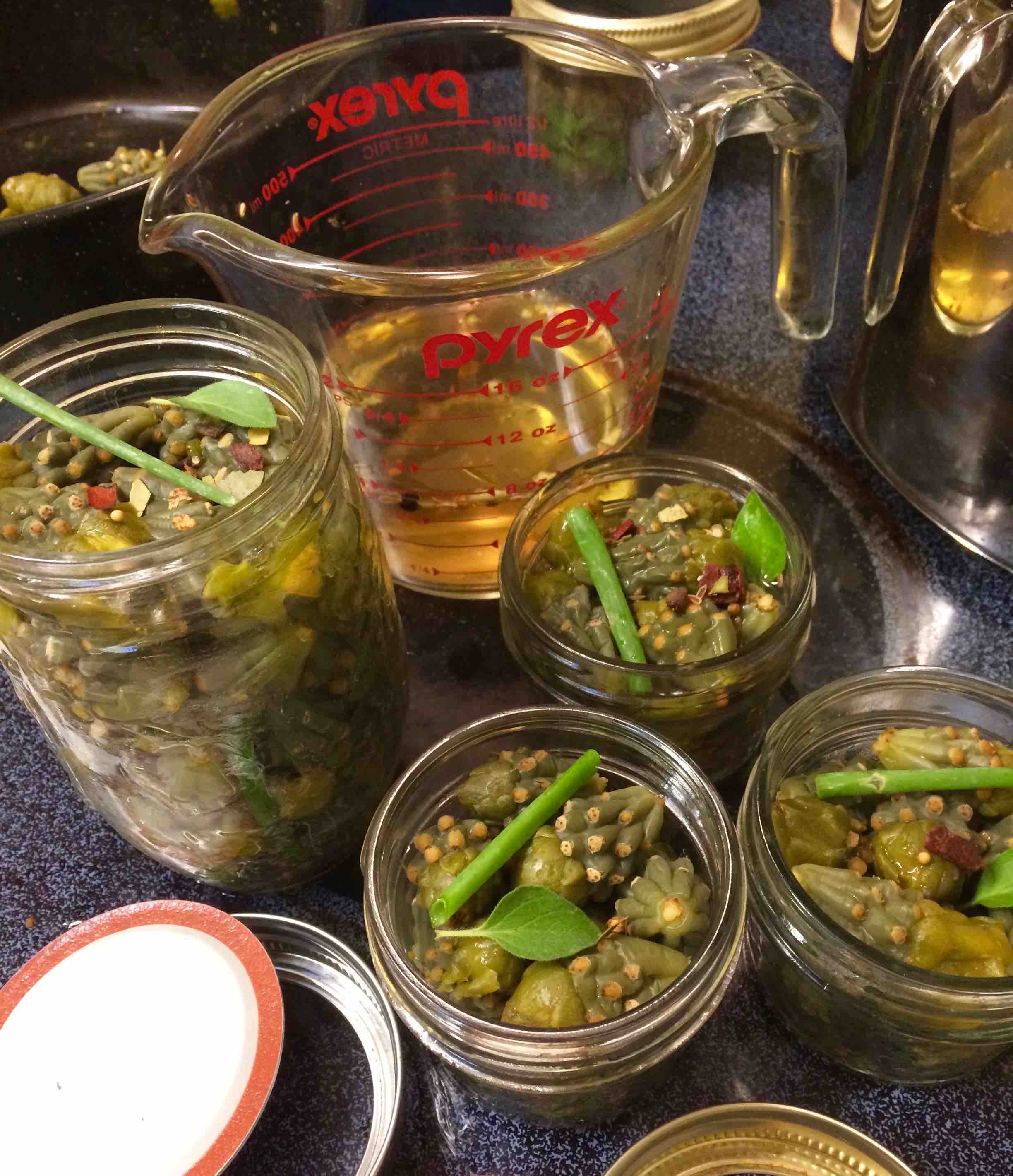
Using a simple dill pickling recipe online, I packed 20-minute-boiled buds into canning jars with snips of fresh oregano and I’itoi’s onion from my garden, then filled jars with a cider vinegar and spice mix. After a 15-minute waterbath jars were ready for storage or use as gourmet hors d’oeuvres.

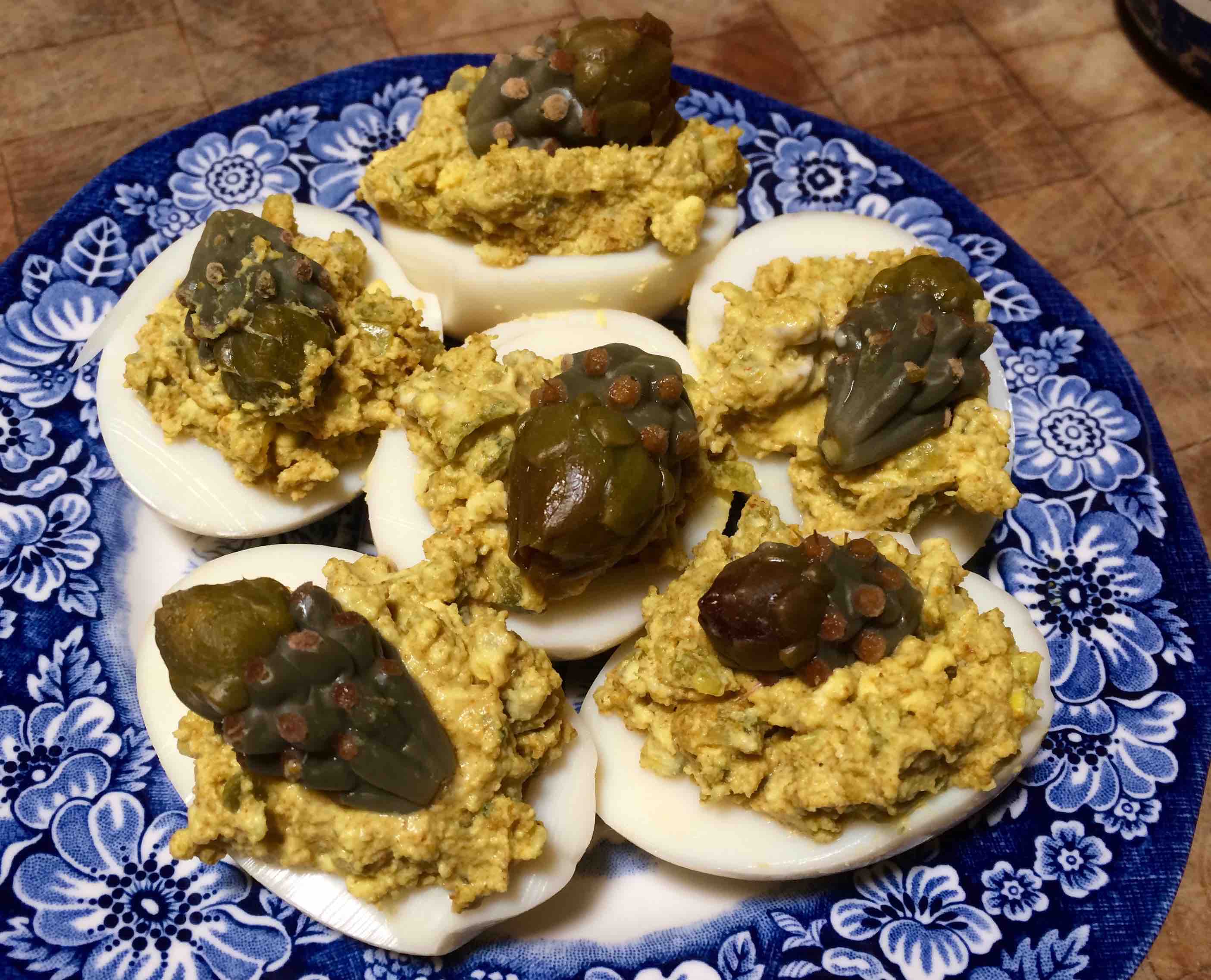
Deviled eggs made with chopped pickled cholla buds are a perfect hot-weather lunch or unusual buffet feature.  Try spicing up your deviled eggs with curry powder for a great complement to cholla!

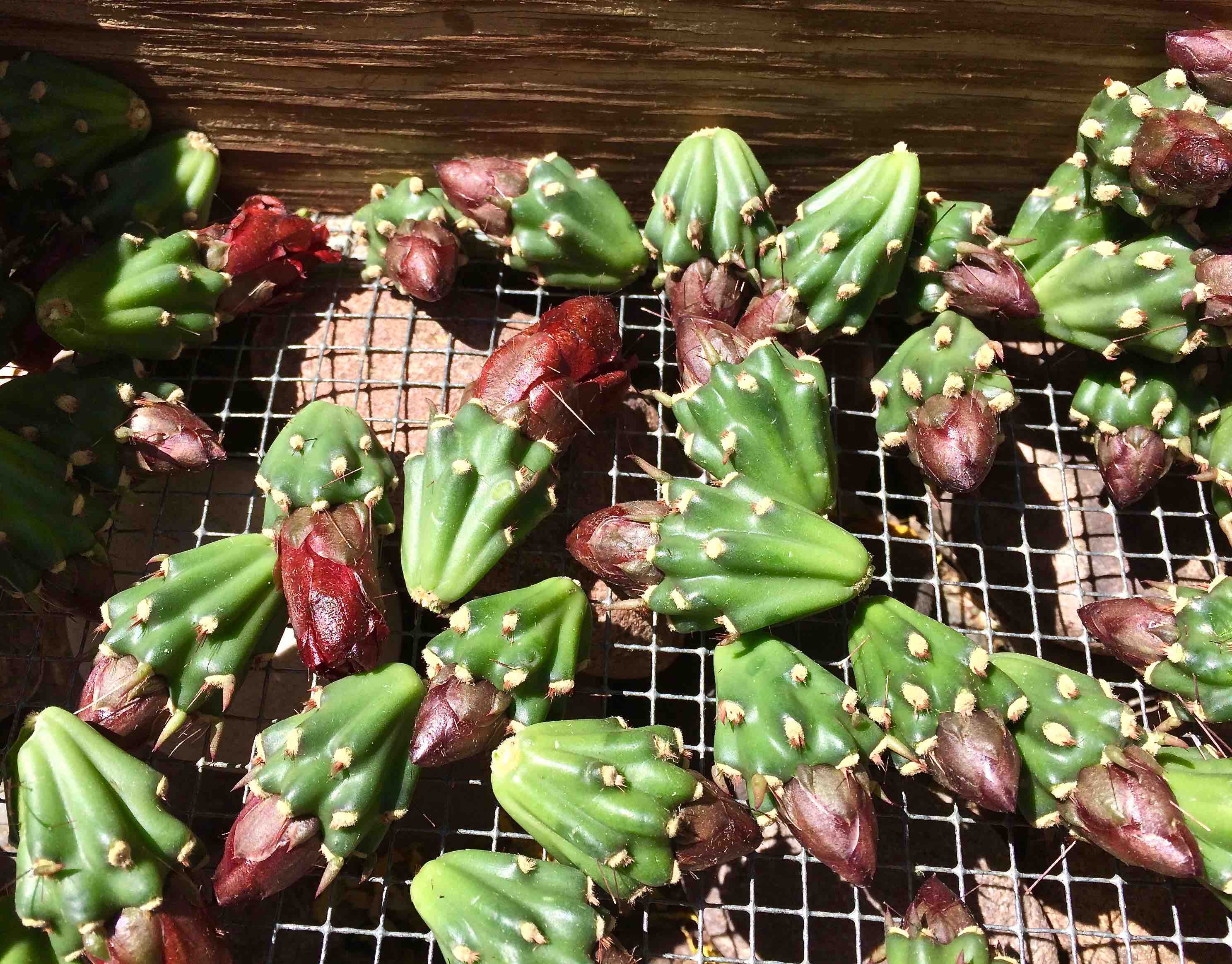
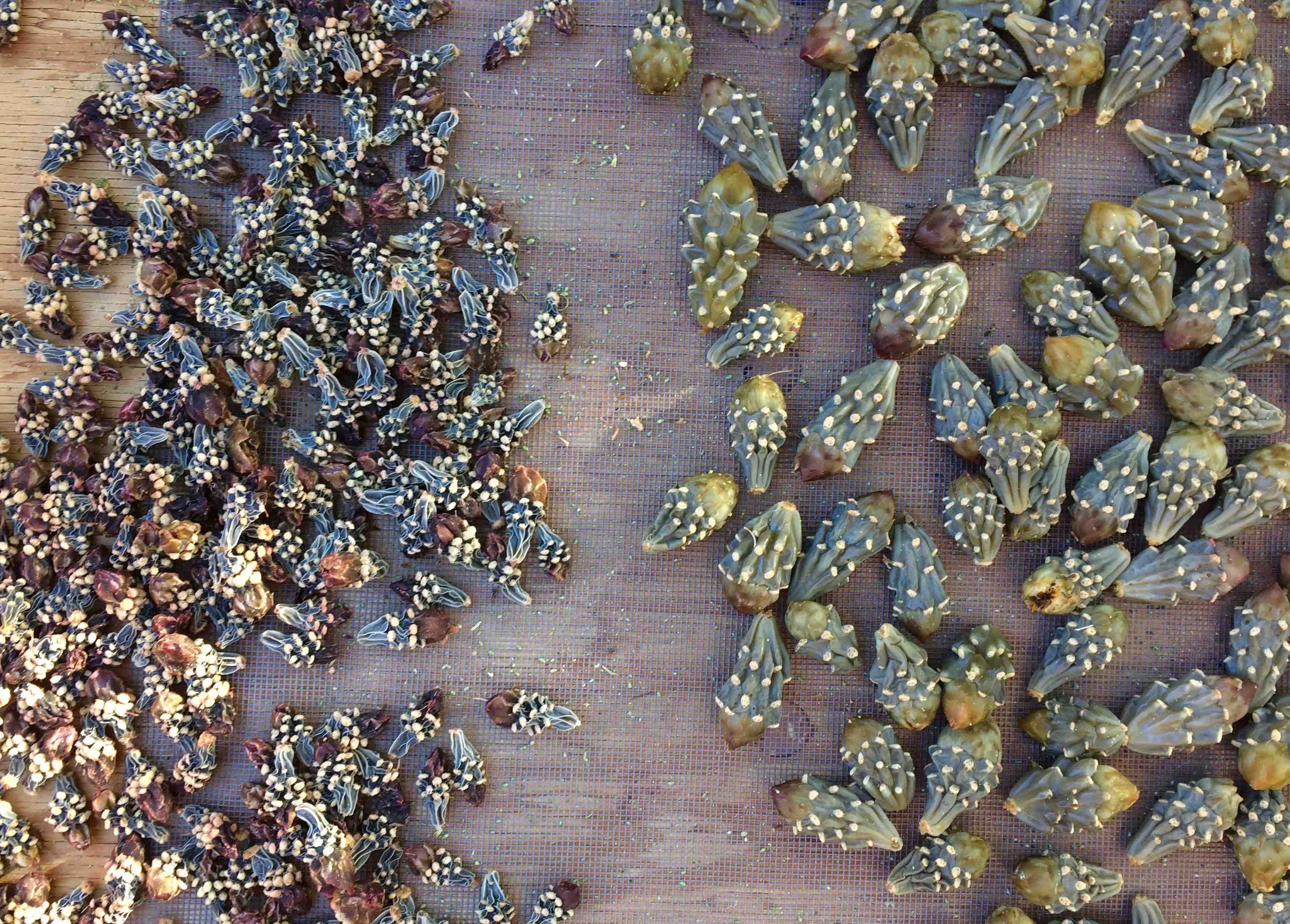
If planning for future food is on your mind, consider drying your cholla buds. Compare sizes on my drying screen of freshly boiled buds (right) and tiny, stone-hard dry buds(left) ready for storage. If fully dried patiently over several days, buds will keep for years in a glass jar.

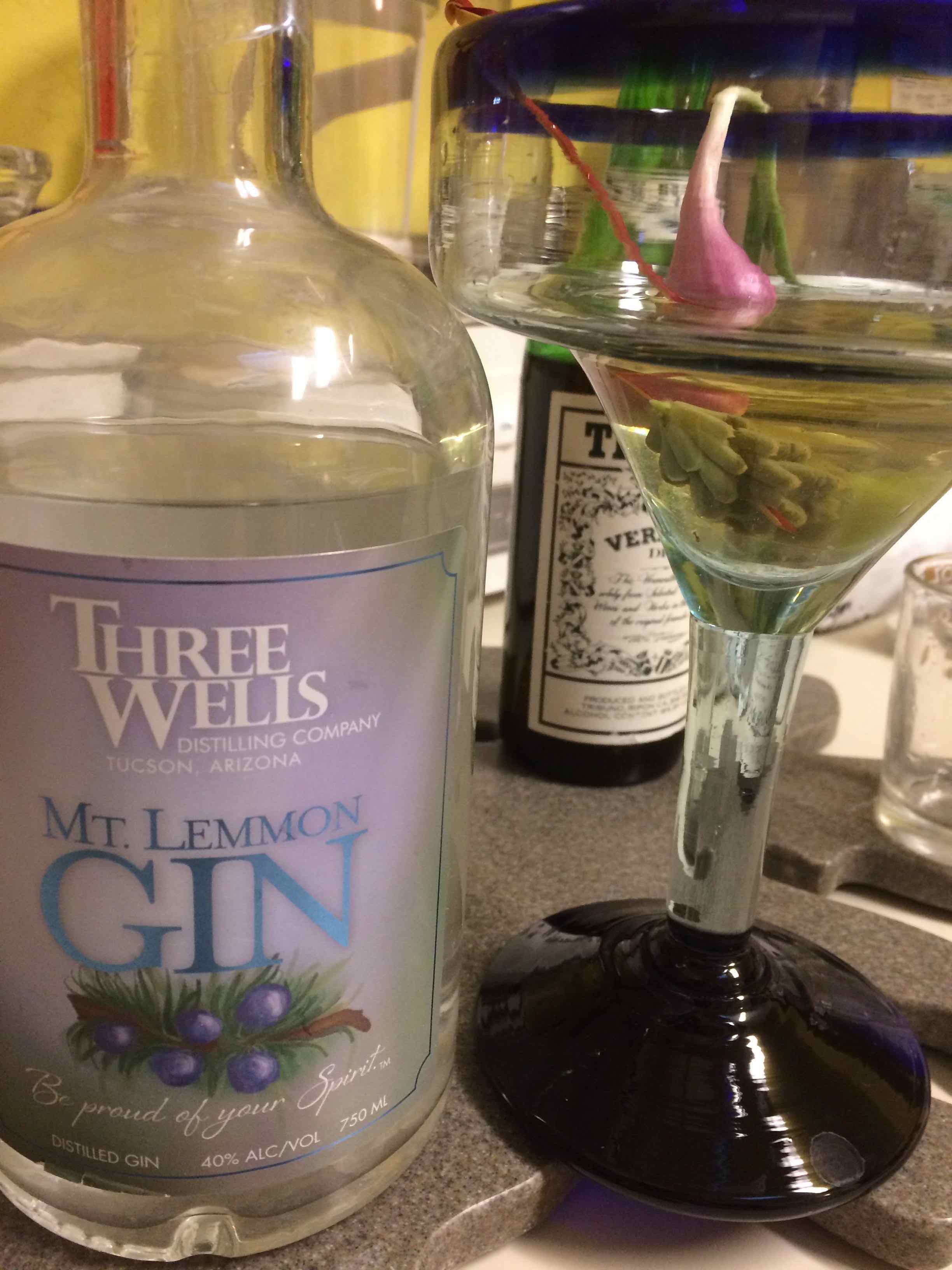
For the best in local libation to allay woes of social distancing, quaff a Sonoran quarantini made with Tucson’s ThreeWells Mt.Lemmon gin and garnished with a pickled cholla bud in place of an olive, plus a bulb of I’itoi’s onion. It can’t get more festively flavorful and local than that!

Read more about traditional cholla bud use by Native cultures in Dr.Wendy Hodgson’s Food Plants of the Sonoran Desert (University of Arizona Press).  Find more cactus cookery ideas in Cooking the Wild Southwest by Savor-Sister Carolyn Niethammer (also UofA Press).

Tia Marta wishes you happy cholla harvesting in our beautiful desert spring!

Dried cholla buds are available online at www.nativeseeds.org and at www.flordemayoarts.com.  You can find them also at the SanXavier Co-op.  For cooking with the sun on these hot days, order handy solar ovens at www.flordemayoarts.com or check craigslist for used solar ovens.

Chad’s Sky Island Spice Company

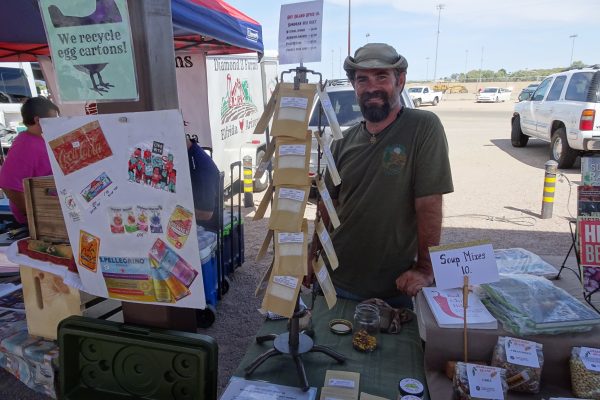
Chad Borseth sells his wild-crafted products from his website and at farmers’ markets.

Chad Borseth grew up in rural Southern Arizona, roaming the hills, learning about the plants, picking up clues to what was edible, such as mesquite and Emory acorns. This past January, he started Sky Island Spice Company to introduce others to some of the flavors unique to the Sonoran Desert.  It’s Carolyn here today to introduce you to another of the small entrepreneurs who are sharing their knowledge and enthusiasm for local desert products.

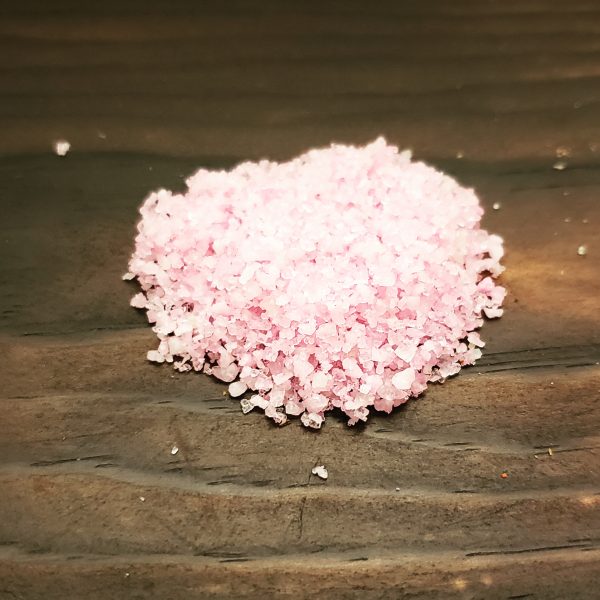
One of Chad’s products is solar-evaporated Sonoran Sea Salt. “It’s got a unique blend of minerals,” he says, “and lower sodium. But it’s high in magnesium and potassium. It also has a different mouthfeel.”  People who like to rim their margarita glasses with salt, will go for his  prickly pear and lime salt.

The solar-evaporated salt from the Sea of Cortez is infused with prickly pear juice and lime juice.

Because of the nature of wild supplies (that would be Mother Nature), Chad’s stock varies with the season. Through the year he will have granola made with acorns and mesquite, hot cocoa mix made with cacao and powdered mushrooms, and something he calls “nopaliditos,” salt-cured nopal or prickly pear pads. They are reminiscent of the saladitos beloved of Tucson kids. He adds flavor to our native chiltepines by smoking them over mesquite. Chad doesn’t confine himself to the desert; summer finds him in the pine forests looking for mushrooms and plants that grow in the higher altitudes. (No worries about the mushrooms–they are for his own use. The mushrooms in his products come from reliable commercial sources.)

Fiery hot chiltepines picking up flavor over mesquite coals.

Those with adventurous palates who are willing to be surprised (pleasantly), can sign up for the Sky Island Spice Company subscription box. At this point, Chad is limiting the subscriptions to just fifteen customers. Every month they will receive a box of three special items not in the regular stock. That might include such items as cookies or wildflower tea. The July box included syrup made from manzanita blossoms.

You can find Chad’s products on the web at Sky Island Spice Company or on Facebook.

Here’s an easy recipe to use Chad’s smoked chiltepins. It is from my cookbook Cooking the Wild Southwest: Delicious Recipes for Desert Plants. The combination of chile and chocolate is a favorite of mine and adding the smokiness of both the smoked chiltepins and the chipotle chiles adds a sophisticated taste. Of course, you can add the chiles to your own homemade ice cream, but if time is short, a good quality commercial ice cream works fine.

Easy Chocolate-Chile Ice Cream

1/2 gallon commercial chocolate ice cream

1/4 to 1/2 teaspoon dried and crushed chiltepins, seeds removed

1/2 teaspoon ground chipotle chiles

Transfer the ice cream from the carton in large clumps and transfer to a flat baking pan to soften evenly. (If you try to soften it in the carton, the outside will get too soft while the inside stays hard.)

Meanwhile, crush the chiltepins in a small mortar, removing the seeds. Sprinkle the crushed chiltepins and the ground chipotle chiles over the ice cream and stir to combine. Repack into the carton or transfer into a bowl and refreeze.

__________________________________

Carolyn Niethammer writes about the foods and people of the Southwest. She has just completed a book on why Tucson was named a UNESCO City of Gastronomy. It will be published by the University of Arizona Press in the fall of 2020. Find her books on her website.
Sonoran Desert New Year Greetings!

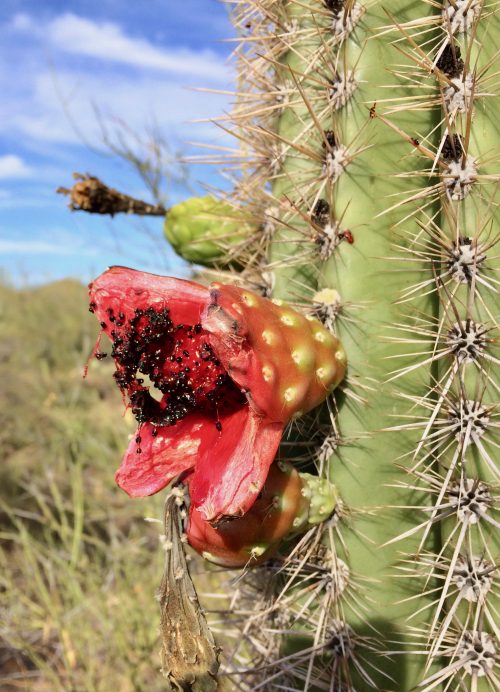
Saguaro fruit is ripe and ready to harvest by many desert creatures. The traditional Tohono O’odham Bahidaj–the saguaro harvest and the rain ceremonies that are an integral part–herald our true New Year in Baja Arizona! (MABurgess photo)

It has been a scorching few days since San Juan’s Day in the Sonoran Desert.  But even in the heat and blistering sun there is such productivity, such life in hopes of rain.  Tia Marta here relishing our beautiful Bahidaj-time–saguaro harvest time–with coyotes, white-wing doves, ant people and a zillion other desert creatures!  So many depend on the delectable, nutritious fruits of our admired Giant Saguaro Cactus.  The Tohono O’odham– original Desert People of the Arizona-Sonora borderlands–traditionally depended upon the Giant Saguaro, hasañ, for more than food.  The Hasañ Bahidaj helps bring the rain!  A spiritual leader recently shared with us that one community still carries on their tradition of using saguaro “wine” in the ceremony to pray for monsoon rains to bless us.  Our thanks go out to those keepers of tradition–May our prayers join with yours!

Saguaro fruits as yet unopened and still green may not be ready to collect. Wait a few more days until they develop the “blush.” (MABurgess photo)

Ripe saguaro fruits perfect for collecting are still closed with a luscious rosy color or “blush” to them! (MABurgess photo)

He told us the new year begins when the rains come and “wash away our old footprints.”

So…Happy New Year greetings to all of you fellow desert residents….when the rains come!….

Meanwhile until then, may we enjoy the bounty of Bahidaj fruit that is provided!  Head out in the coolth of early morning with a long kuipaD (collecting pole) and bucket.  Know your fruit and be choosy so not to waste any of its goodness.  Here are some vivid photographic hints.

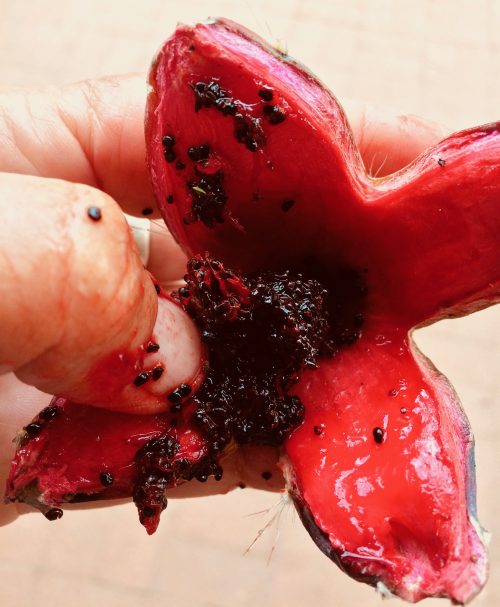
Saguaro fruit open showing the glorious inner fruit and rind.  At this stage fruit can still be harvestable for making syrup. (MABurgess photo)

Use your thumb to scoop out the mass of sweet pulp and seeds.  (MABurgess photo)

The Desert Museum often would get calls from newcomers asking about the “red flowers” on the giant cactus at this time of year.  If they looked closer they would see that it is the husk being the siren of color inviting birds who might assist spreading seed.

At your fingertips in this SavortheSouthwest blog, you can find clear instructions how to prepare saguaro syrup, how to dry Chuñ in a solar oven, and other delicious recipe ideas in our previous posts about Saguaro Season.  Blog sister Carolyn Niethammer’s book Cooking the Wild Southwest is also a great source.   Go for it, enjoy the sweet taste of summer and keep up this long and important tradition of Bahidaj–and add your prayers of thanksgiving.


Count yourself lucky if you find totally dried fruit still in the husk! This is Chuñ, the dried sweet fruit, storable or immediately edible, and better than any energy bar. (MABurgess photo)

Bahidaj Chuñ–dry saguaro fruit–is like candy, one of the finest of desert treats! (MABurgess photo)

With this post I would like to celebrate and acknowledge the life of an amazing traditional harvester, Stella Tucker, who passed in January of this year.  Her lovely daughter Tenisha now is “carrying the baton” or shall we say “carrying the kuipaD” for the family and their community traditions at the Bahidaj camp.  Tenisha is great grand niece of my dear friend and mentor Juanita Ahil, prima desert harvester, who taught us all so much about wild desert foods.

Juanita, and Stella after her, always instructed young harvesters to place the empty husks on the ground near the generous saguaro, facing up to the sky, asking for rain…. I hope they are watching. (MABurgess photo)

You can read more about Stella Tucker in the Edible Baja Arizona magazine archive www.ediblebajaarizona.com July/August 2017 issue.  There is a beautiful tribute to Stella by Kimi Eisele in the AZ Daily Star.

Our own noted Tucson photographer Peter Kresan, was a good friend of Juanita Ahil and documented her harvesting saguaro fruit in beautiful images which he has donated to the Himdag Ki Tohono O’odham Cultural Center in Topawa, AZ.

When harvesting may we always be conscious of the creatures who depend on them for survival and limit our “take”!  It is comforting to know that many of the fruits atop saguaros are well beyond human reach, up there for our feathered and many-legged neighbors.  Be sure always to get permission from any landowner before you harvest.  The Arizona Native Plant Law protects all parts of cacti and succulents except fruit.  Many public lands provide permission for harvesting for personal use–not for commercial purposes–but it is up to the gatherer to know what land you are on and to obtain the right permits.  National Parks and Monuments are off-limits to harvesting by the public; we had to jump through countless government hoops to obtain permits for Juanita’s family to harvest on her own traditional grounds after it became Saguaro National Monument!

My little pot of luscious fruit is cooking at this very moment in my solar oven.  I look forward to hearing from you through my website and send a New Year’s wish from Flor de Mayo–May your harvest be bountiful and may it help bring on good monsoon moisture to the desert!

Agave Fest!

Every year in late April and early May, Tucson residents and visitors celebrate the agave plant in all its glory with dinners, cocktail demos, mescal and bacanora tastings, demonstrations and fiestas. It’s Carolyn today and for the third year, I’ve taken part in the agave roasting at Mission Garden.  The agave plant is a succulent that thrives in arid conditions and when roasted becomes very sweet. It is the defining ingredient in mescal and tequila. It has also been used for thousands of years by the Native Americans as food. The Hohokam even planted agave fields stretching over 1,200  acres in the north end of the Santa Cruz basin. It was a crop that needed little tending and propagated on it’s own by sending out pups. Anthroplogist Suzanne Fish estimates that the Hohokam in the area could have harvested up to 10,000 agave plants annually.

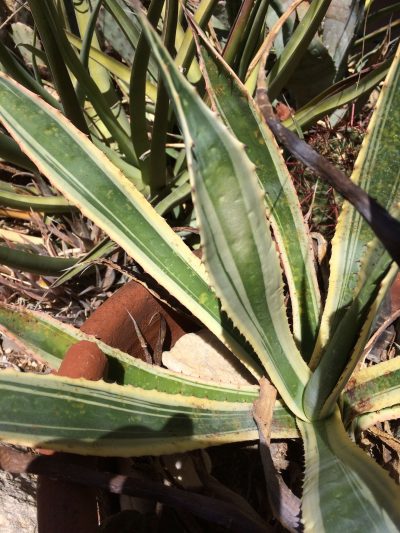
There are many species of agave. We’re not sure how many kinds were used by the Native Americans. (MABurgess photo)

Historically, the stiff and thorny leaves were cut from the agave and the hearts are baked in an earth oven. The people just chewed the pulp from the fibers. Then there was a step up in technology when the hearts were steamed and roasted, crushed and used to make tequila, mescal and bacanora. Here is a link to a demonstration of a old-fashioned bacanora “factory” in Mexico. Of course, today the big commercial mescal and tequila makers use industrial ovens.

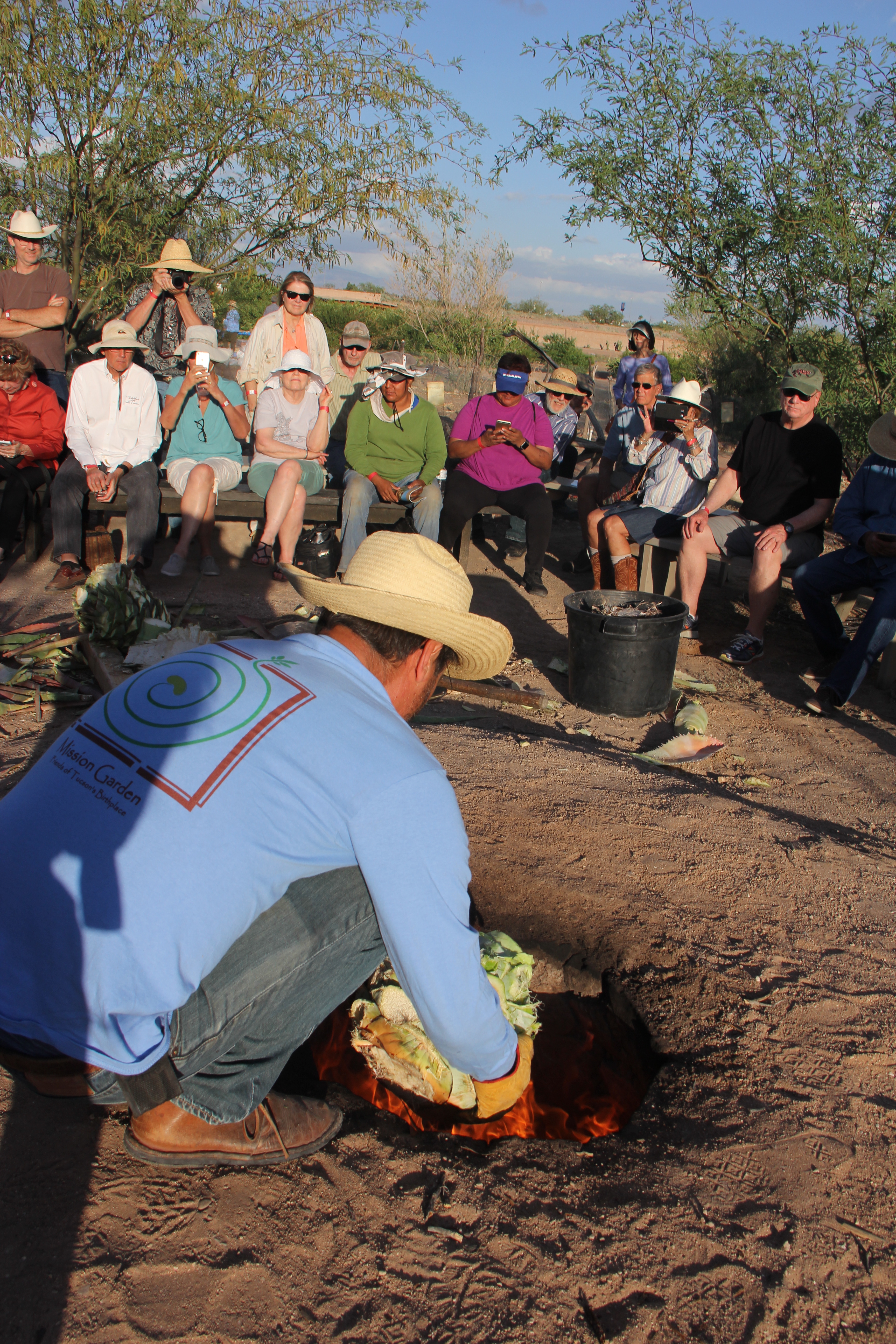
But during Agave Fest, we like to celebrate the oldest traditions, so Jesus Garcia demonstrates baking agave in an earth oven.

Jesus Garcia placing an agave heart in an earth oven on the grounds of Mission Garden. (CNiethammer photo)

Because we don’t all have earth ovens, I am in charge of the home-baking demonstration. I wrap the hearts securely in heavy foil and bake them for about 10 hours at 350 degrees F. (If you try this, be sure to put a foil-lined pan under the agaves because even the most securely wrapped hearts leak sugary juice.)

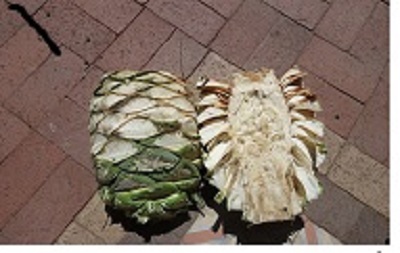
Agave heart split in two so it could fit in my home oven.

This is what the roasted heart looked like after 10 hours. The core on the right is where I removed some of the leaves.

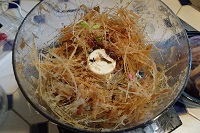
The next challenge is to get enough pulp from the fibers to actually make something. The Native Americans just chewed on the baked leaves and discarded the fibers. Distillers and people who make agave syrup crush the juice from the fibers. To further soften the leaves, I tried boiling them for a while. I also put them in my food processor which did a good job of separating fiber from pulp.

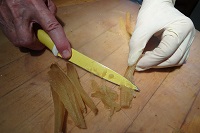
You can also tease out the pulp with a knife.

(We are all constantly experimenting to try to find what works best. A woman who attended my presentation said she has cut up a small agave heart and cooked it in her large slow cooker for three days.)

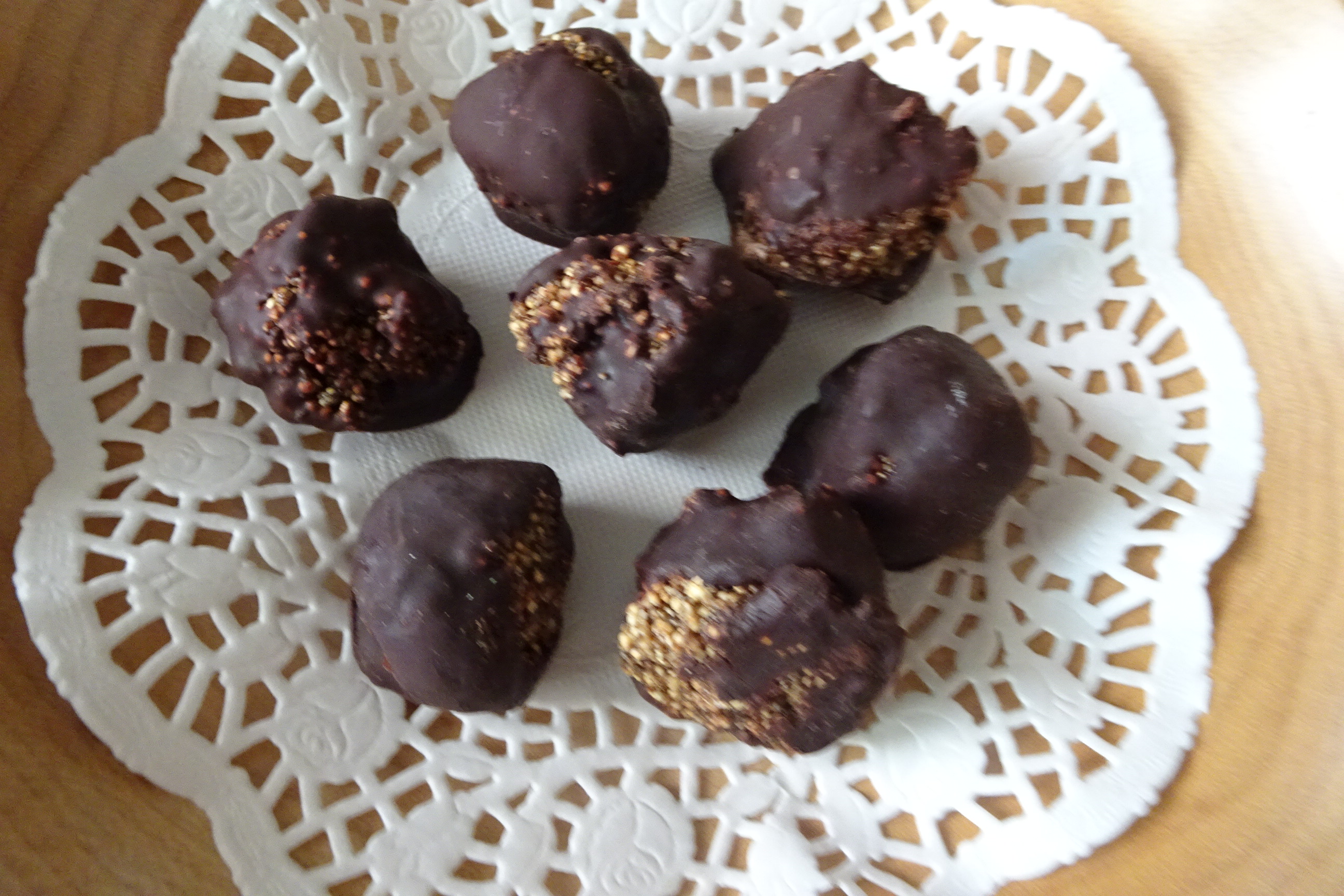
So once you’ve gone to the trouble of getting pulp, what do you do with it? Here’s where the experimenting comes in. I’ve combined it with water to make a murky homemade agave syrup. You can use it to season anything you want to sweeten a little. For the Agave Fest demonstrations, I’ve made a mixed squash, nopalito, and onion saute and added some of the agave pulp. It adds a subtle sweetness and everybody loves it. I also used the pulp to mix with some ground popped amaranth and ground chia. Added a little commercial agave syrup. Formed little balls, firmed up in the fridge, then dipped in melted chocolate. Yum!
Amaranth, chia, agave balls with chocolate coating.

Of course, by the time I served the food, it was nearing 7:30 or 8 p.m. and everybody was starved so it all tasted especially good!

_____________________________________

Want to learn more about wild desert foods and how to prepare them? My book American Indian Cooking: Recipes from the Southwest tells how the Native Americans used the wild plants for food. Cooking the Wild Southwest gives modern recipes for 23 delicious Sonoran Desert plants. There are all available at Native Seeds/SEARCH, online or in the retail store.
 

Southwestern Pintxos– Basque-style Tapas


On a recent trip to Spain we enjoyed an adventurous meal in a Basque tavern where we were introduced to Pintxos–the special Basque version of tapas–northwest Iberian finger-food.  These culinary mini-sculptures bring together the most unexpected combination of foods and flavors.  Each one is a creative work of edible art, visually and deliciously pleasing, handy for a pick-me-up meal or a many-course dinner.
Pintxos–traditional finger food of northwest Spain adapted for Baja Arizona! (MABurgess photo)

Tia Marta here to share ways I’ve adapted these traditional Basque food creations, incorporating our local Baja Arizona ingredients.  Pintxos (pronounced peent’shows) are fun to make.  They let your creativity take off.  The endearing individual servings make a pretty presentation.  Bringing a tray of pintxos to the dinner table makes for some drama too.  Your guests’ curiosity is piqued to find out what interesting delicacies make up each pintxo.  All eyes are focused, tastebuds on alert.  The eating pace slows down to savor-mode as each bite is tested—like sipping a new wine.  If being present matters to you, pintxos certainly makes it happen for everyone at the table.  [I can hardly wait to serve pintxos to adolescents to see what happens with their devices!]

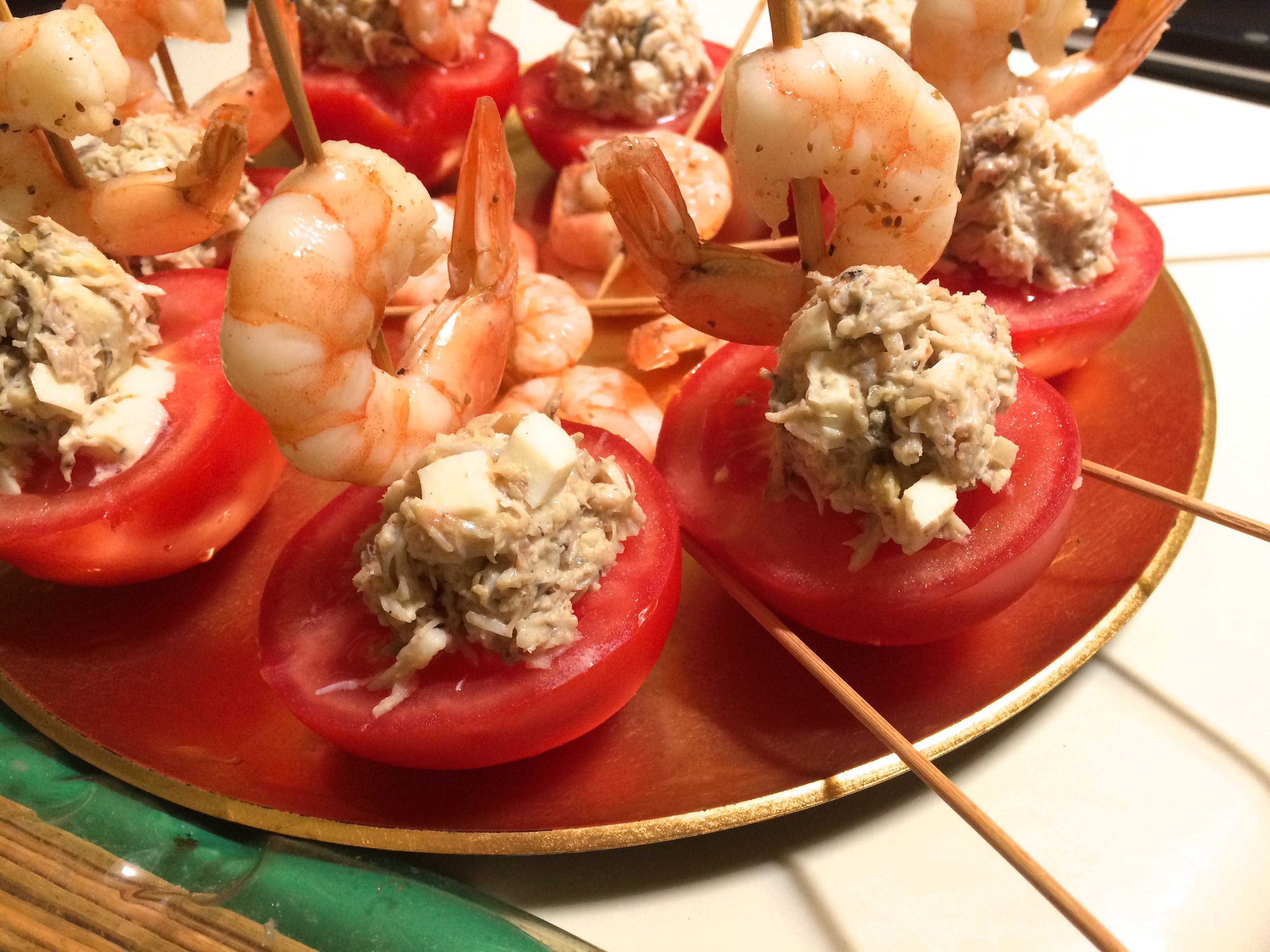
A “shrimp boat” pintxo — a cool seafood “salad” for summertime, made with crab or tuna on a “boat” of tomato with “spinnaker sail” of chilled, cooked shrimp. (MABurgess photo)

Here’s a perfect summer pintxo—a little Sea of Cortes Seafood “Boat.” First find some ripe tomatoes from your garden or your favorite farmers’ market.  Next source some fresh, sustainably-harvested crab meat or tuna and Sea of Cortes shrimp.

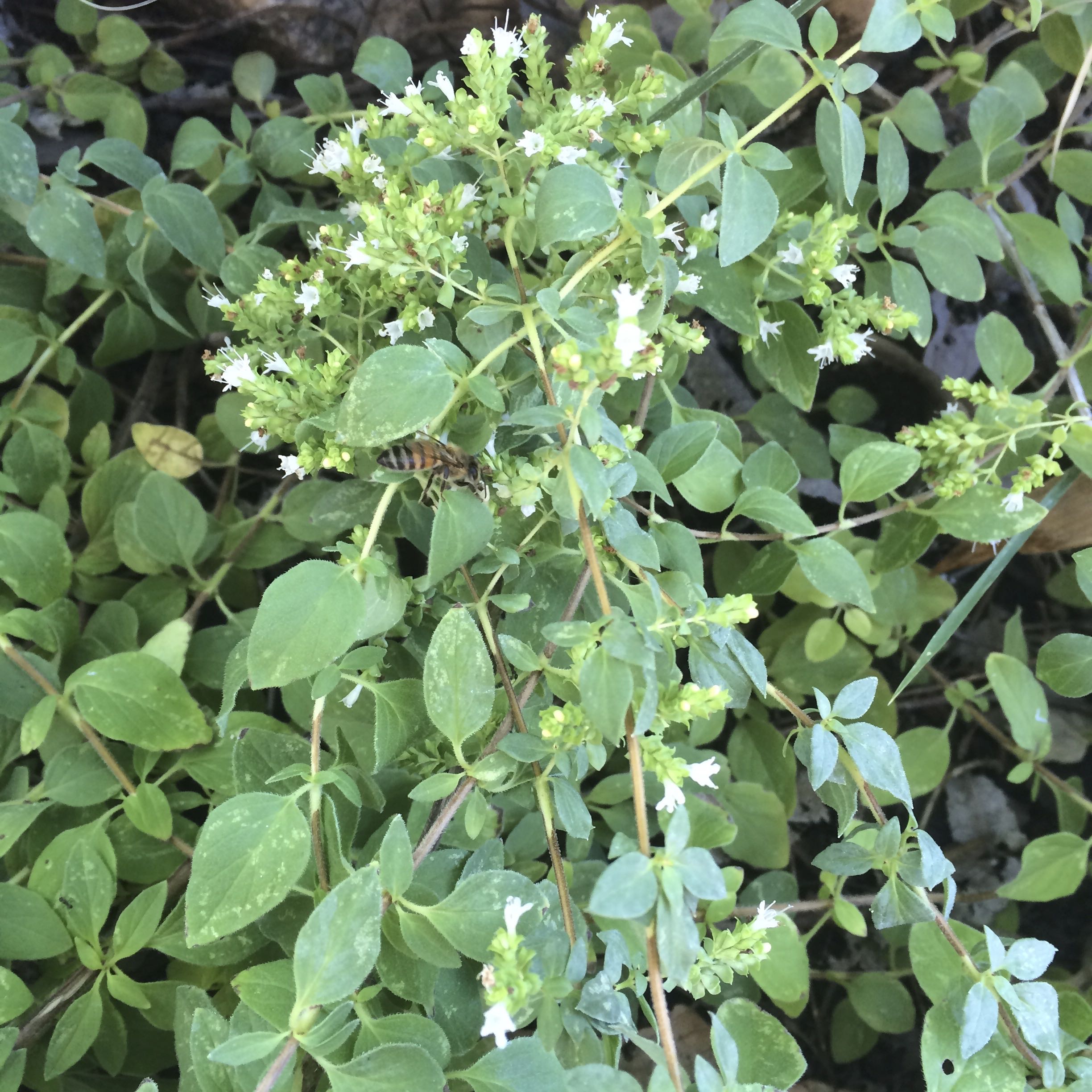
Culinary oregano (Oreganum vulgare) with happy bee pollinating the flowers in my Tucson garden (MABurgess)

Harvest a few sprigs of fresh oregano from the garden (yours or a friend’s.  This fragrant herb grows so easily in low desert gardens.  See Savor-Sister Dr Jacqueline Soule’s post by searching August 28,2015 “Joy of the Mountains” on this blog for fantastic oregano info. They grow readily from cuttings.)

Pintxo actually means “toothpick” or “skewer,” so have a supply of long toothpicks or bamboo skewers ready.  You will also need:  1)  fresh tomato, cut in half so that each half can rest as a “boat” without tipping.  2)  crab or tuna salad, made with  boiled egg chopped, fresh chopped oregano leaf and a tad of mayonaise to taste; formed into a ball, 3) cooked, chilled shrimp.  Skewer a shrimp vertically from the top and then down thru the tomato (see photo) so that the shrimp becomes the “spinnaker sail” in your little sculpture.

Other neat pintxos can be made as layered, open-faced miniature sandwiches.


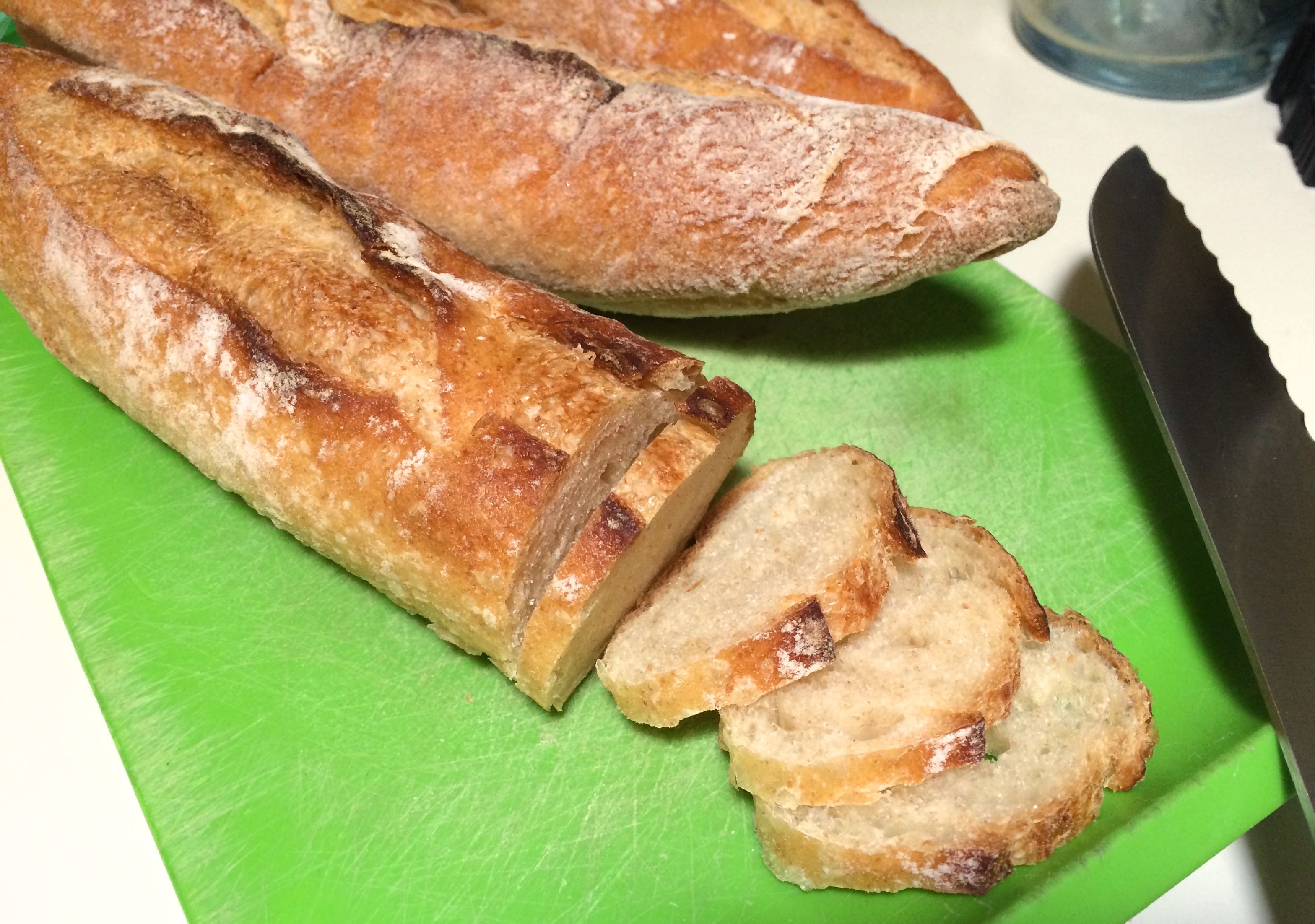
The perfect base for several styles of pintxos is Baja Arizona’s own Barrio Bread baguette, which can be cut in different shapes to suite each different pintxo. (MABurgess photo)

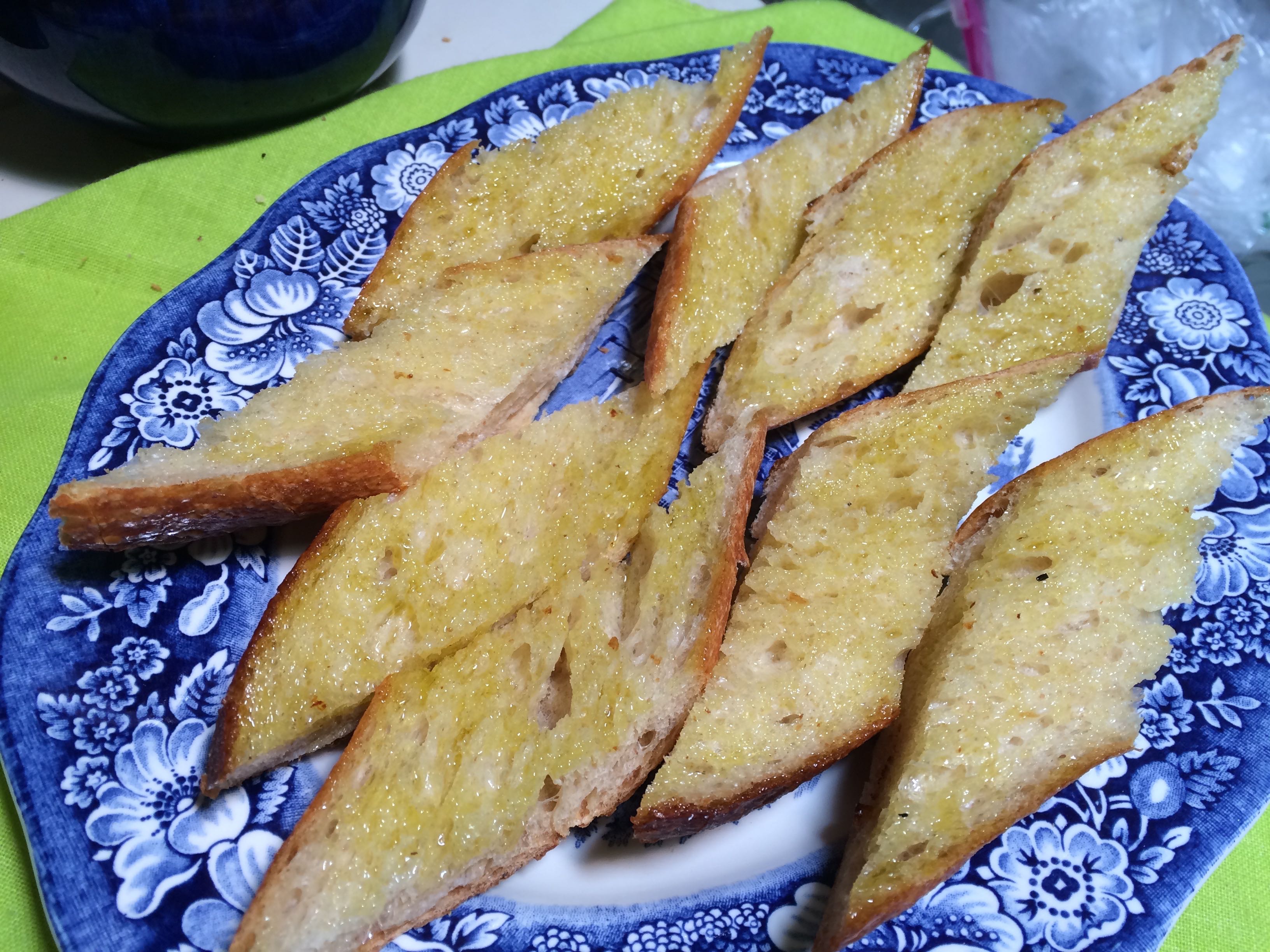
These baguette slices for other pintxos I cut flat then diagonally to make diamond bases for the Asparagus Spear Pintxos. (MABurgess photo)

I went to Don Guerra of Barrio Bread to find our best local equivalent of the bread the Basque are using in Spain for making pintxos.  Having been in Spain himself, he knew immediately and suggested his baguettes made with BKWFarms‘ heirloom organic Padre Kino White Sonora Wheat flour as our perfect pintxo bread.  Indeed it is! Barrio baguettes lend themselves to cutting in several different shapes, a distinct shape for each different pintxo style.

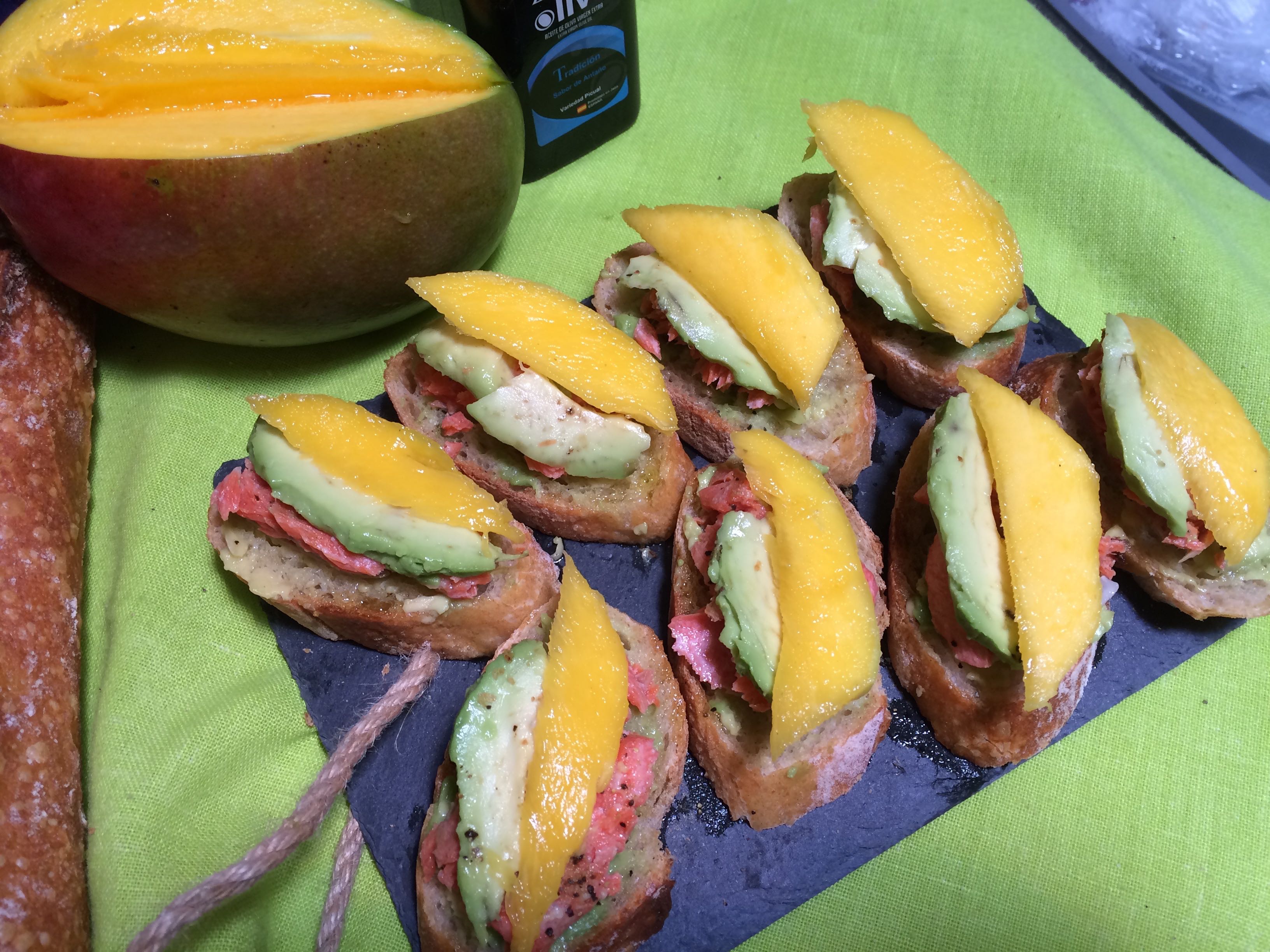
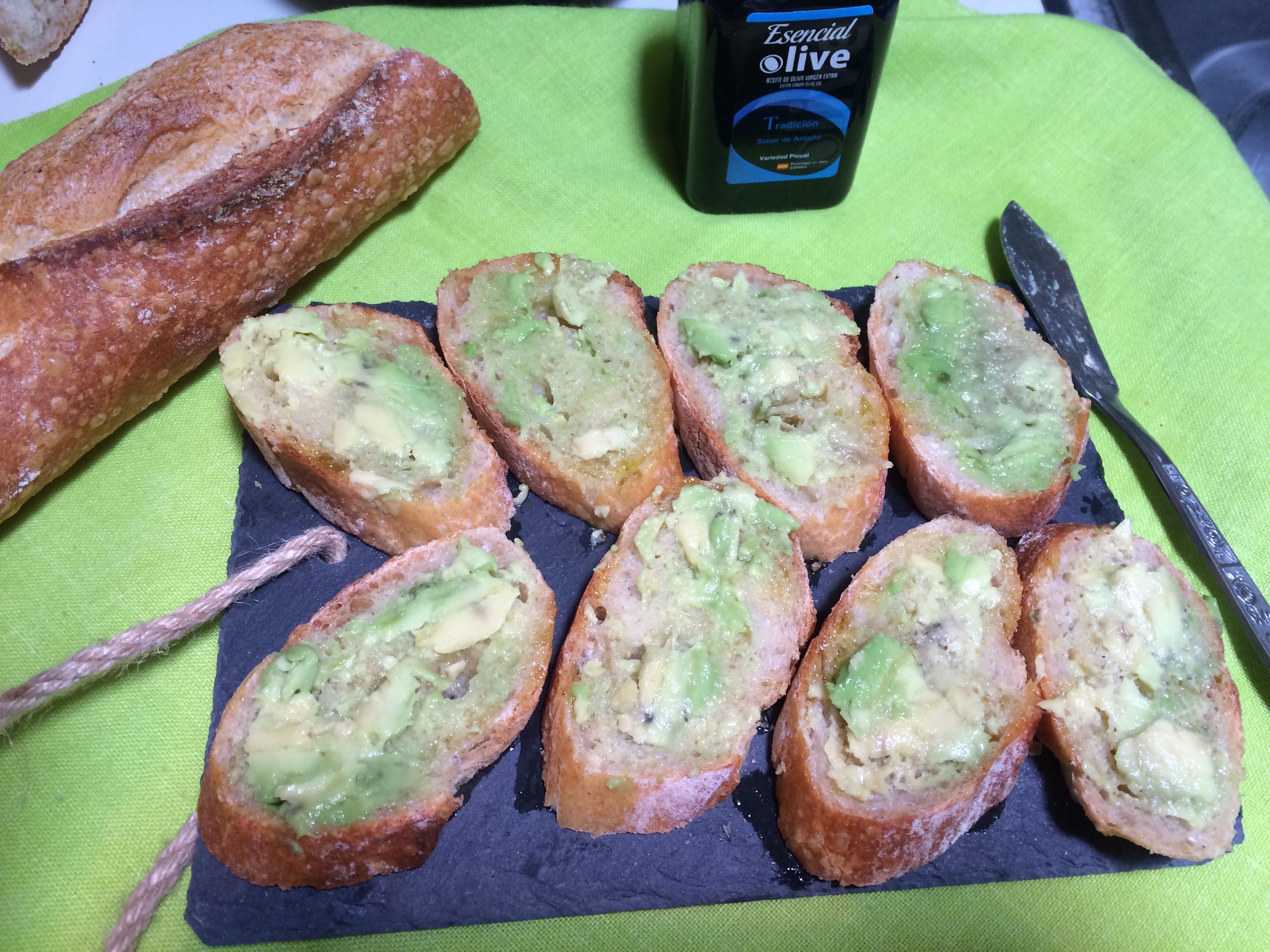
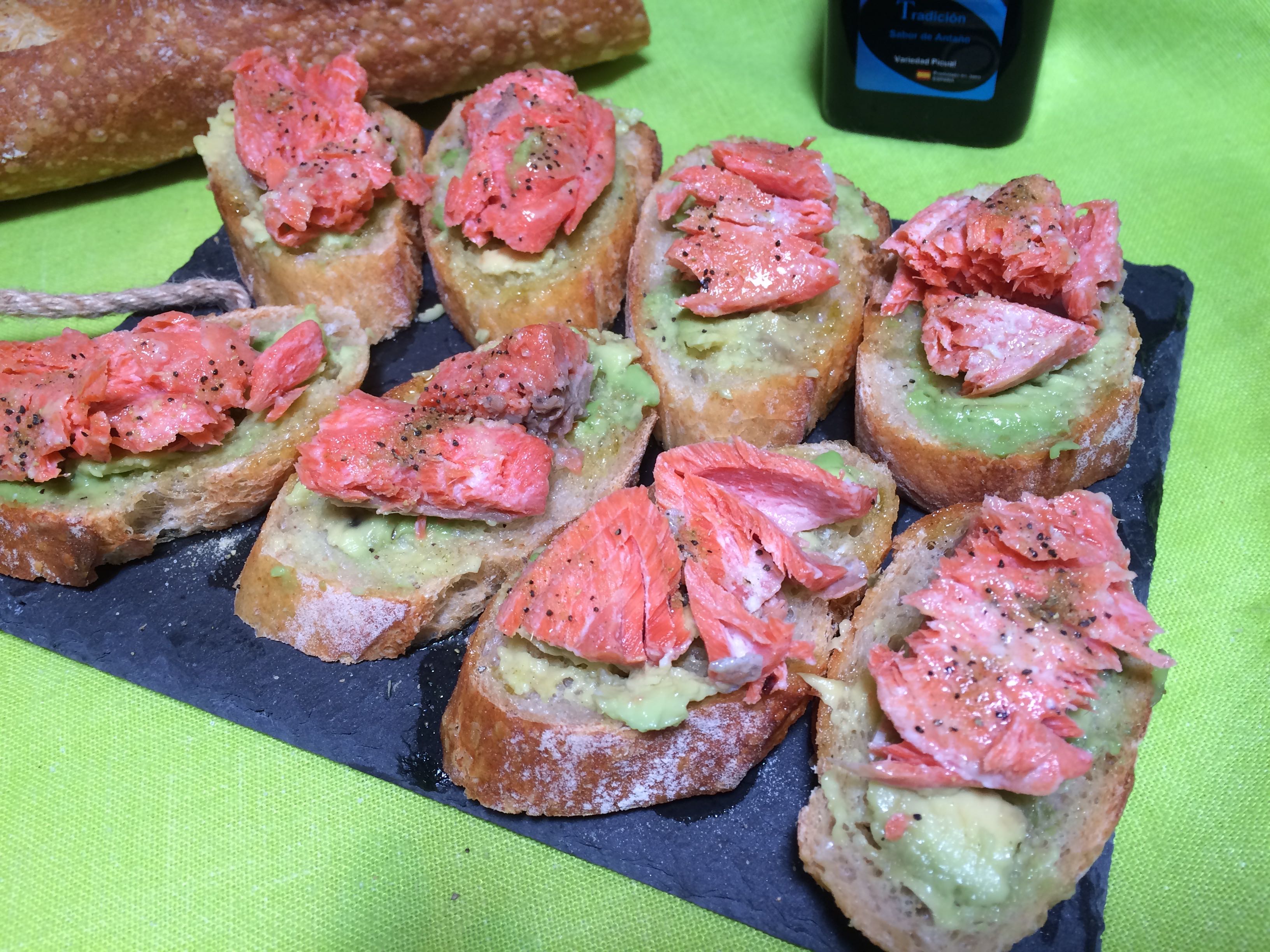
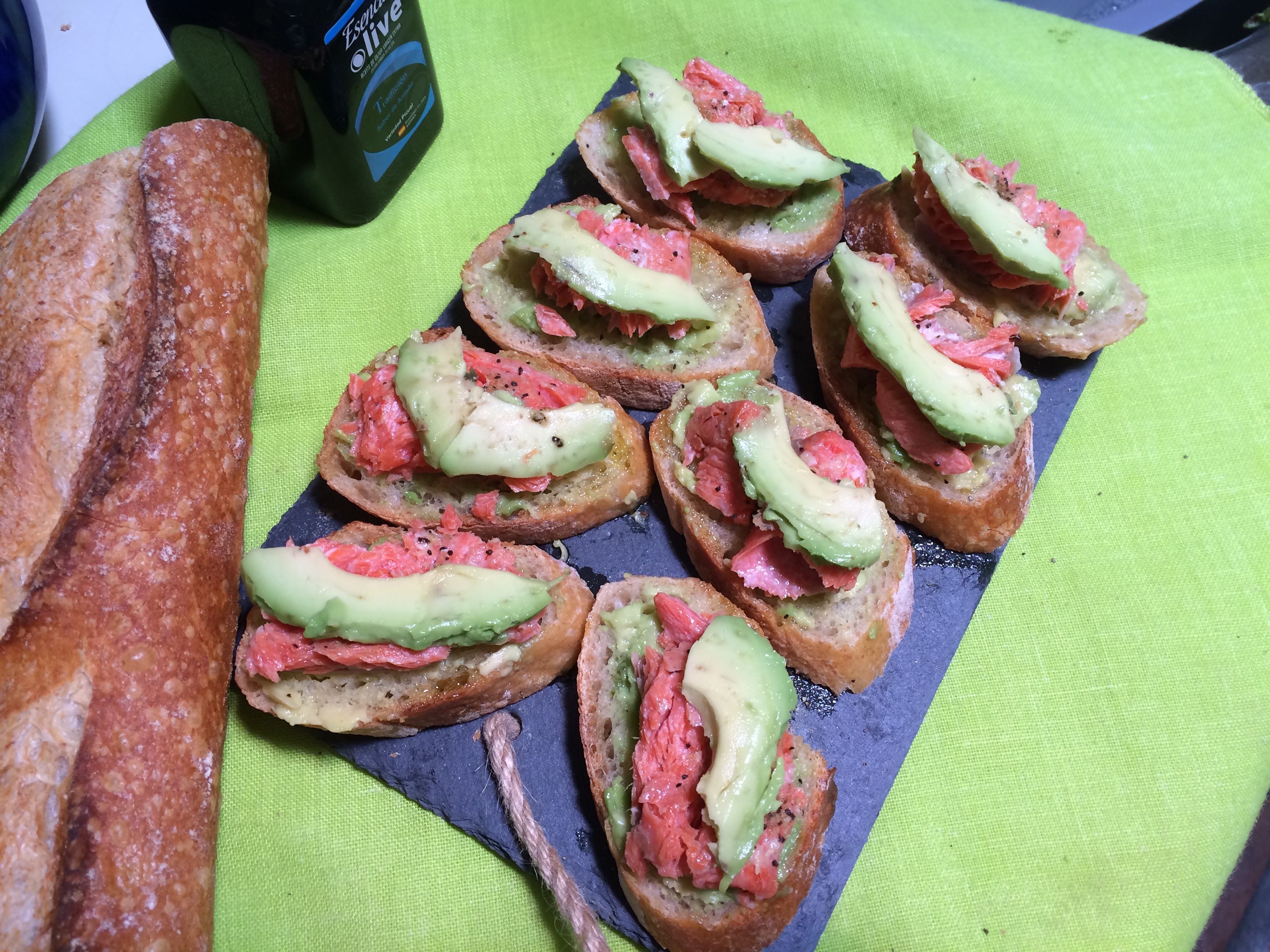
For the next pintxo–the Four-layer “Salmon in the Tropics” Pintxo–I cut the baguette at an angle to make elongate ovals as the pintxo base.

First step–to make the Four-layer “Salmon in the Tropics” Pintxo–spread avocado thinly on an oval of Barrio Bread baguette

Step 2–spread marinated, cooked salmon thinly on the avocado layer

Step 3–place a thin slice of avocado right on the salmon

Step4–place a thin slice of fresh mango on the top (MABurgess photos)


So there you have the Four-layer Salmon in the Tropics Pintxo–a taste combo that I personally would never have thought of, were it not for the creative Basques.

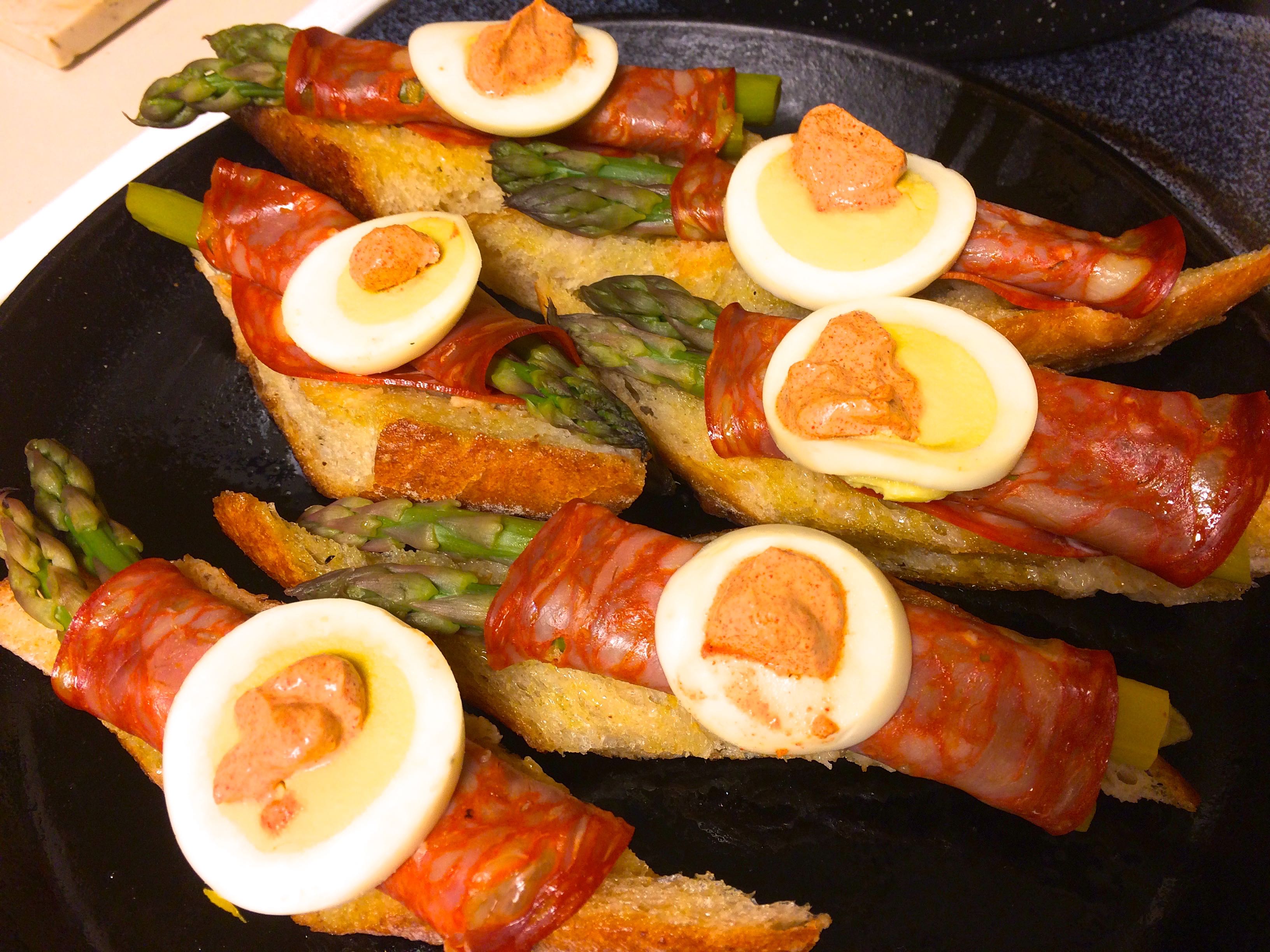
If you aren’t hooked or at least amazed yet, here’s another fun pintxo idea, this time using our local asparagus and chorizo!  Have you ever heard of such an unexpected combination of flavors?  Well it really works!

Asparagus-Spears-with-Chorizo Pintxo

Chorizo-wrapped Asparagas Pinto–cooked in the solar oven! (MABurgess photo)

For this pintxo, you will need:

1) sliced diamonds of Barrio Bread baguette,    2)  fresh farmers market asparagus spears, 3) Mexican-style chorizo OR sliced Spanish-chorizo (available at Trader Joe’s or other specialty grocers) to wrap the asparagus, 4) boiled egg sliced, 5) topping of plain yogurt mixed with your favorite mild chile powder or Spanish pimenton powder.ch

Wrap asparagus spears in chorizo.  If you have Mexican-style chorizo, fry the chorizo-wrapped spears until chorizo is barely done then place on bread to bake in oven or solar oven.  If sliced Spanish-style chorizo is used, bake entire bread/asparagus/chorizo stack in oven or solar oven.  Bake pintxos until asparagus is al-dente (not too long, 300degrees 12-15minutes, or roughly 20-25minutes in a preheated solar oven).  Top with sliced boiled egg and Chile-yogurt sauce.

These pintxos are only the tip of the iceberg of ideas you can create with silvers of your favorite veggies, fruits, fish, or sliced cheeses and meats!  Try thin slices of  Mexican queso asadero melted into your pintxo or Spanish manchego cheese.   Or try a combo of thinly sliced sweet cajeta de membrillo (Sonoran style quince conserve*) and asadero cheese baked gently on a Barrio Bread baguette oval!

*Tucson’s Mission Garden is the place to learn about membrillo fruit and the delicious traditional Hispanic recipes for it.  During the fall harvest you can sign up for workshops to learn how to make your own cajeta de membrillo.

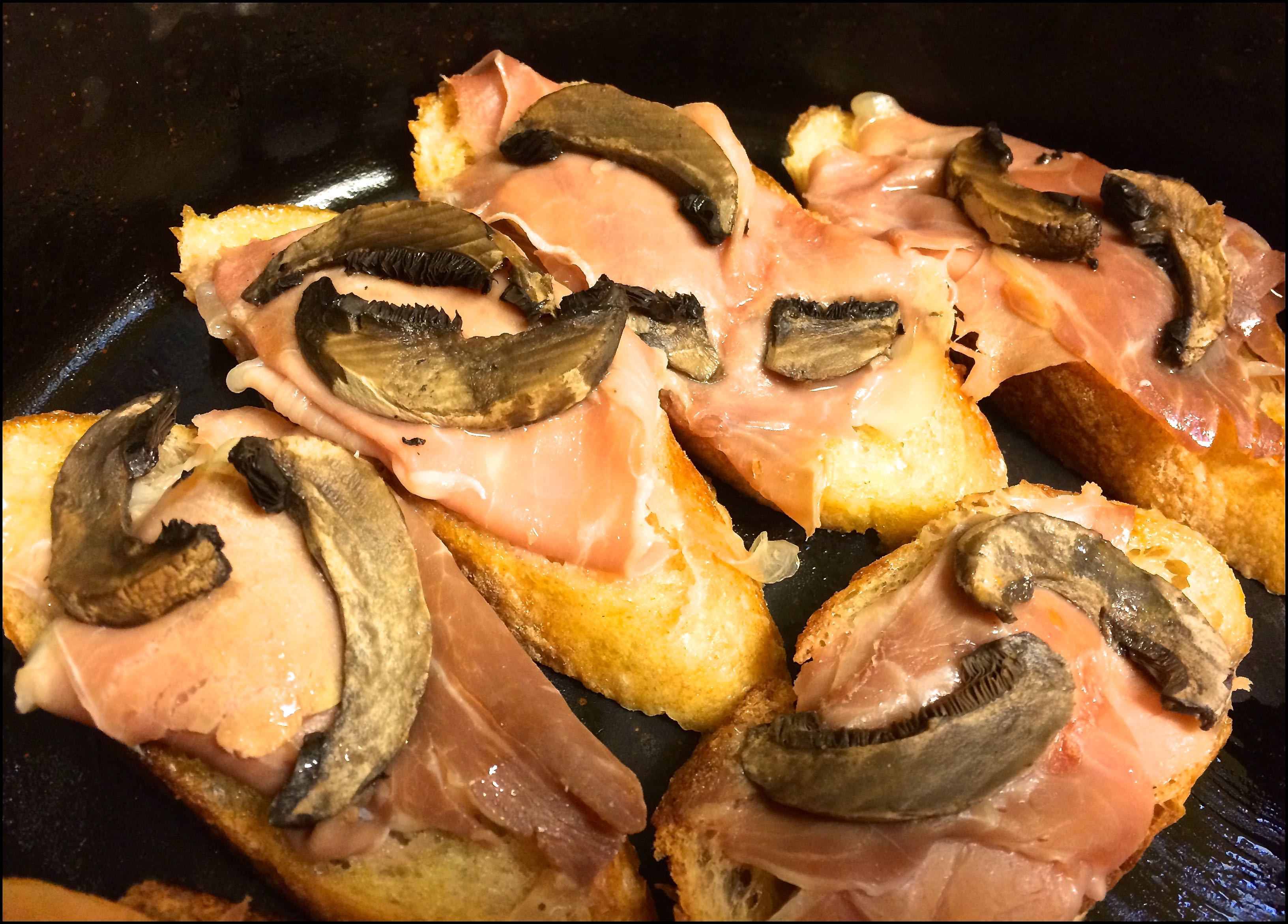
Best-yet pintxo: local thin-sliced ham on manchego cheese on Barrio baguette topped with farmers market mushrooms–and baked to perfection in solar oven (MABurgess photo)

For easy pinxto baking, reaping the gifts of our intense sun, you can order a sleek, easy-to-use solar oven from Flor de Mayo.  Check out www.flordemayoarts.com for a how-to video.  Tia Marta here encouraging you to enjoy new combinations of our local Baja Arizona provender in your own pintxo creations!


Monsoon Mesquite Bosque Butter

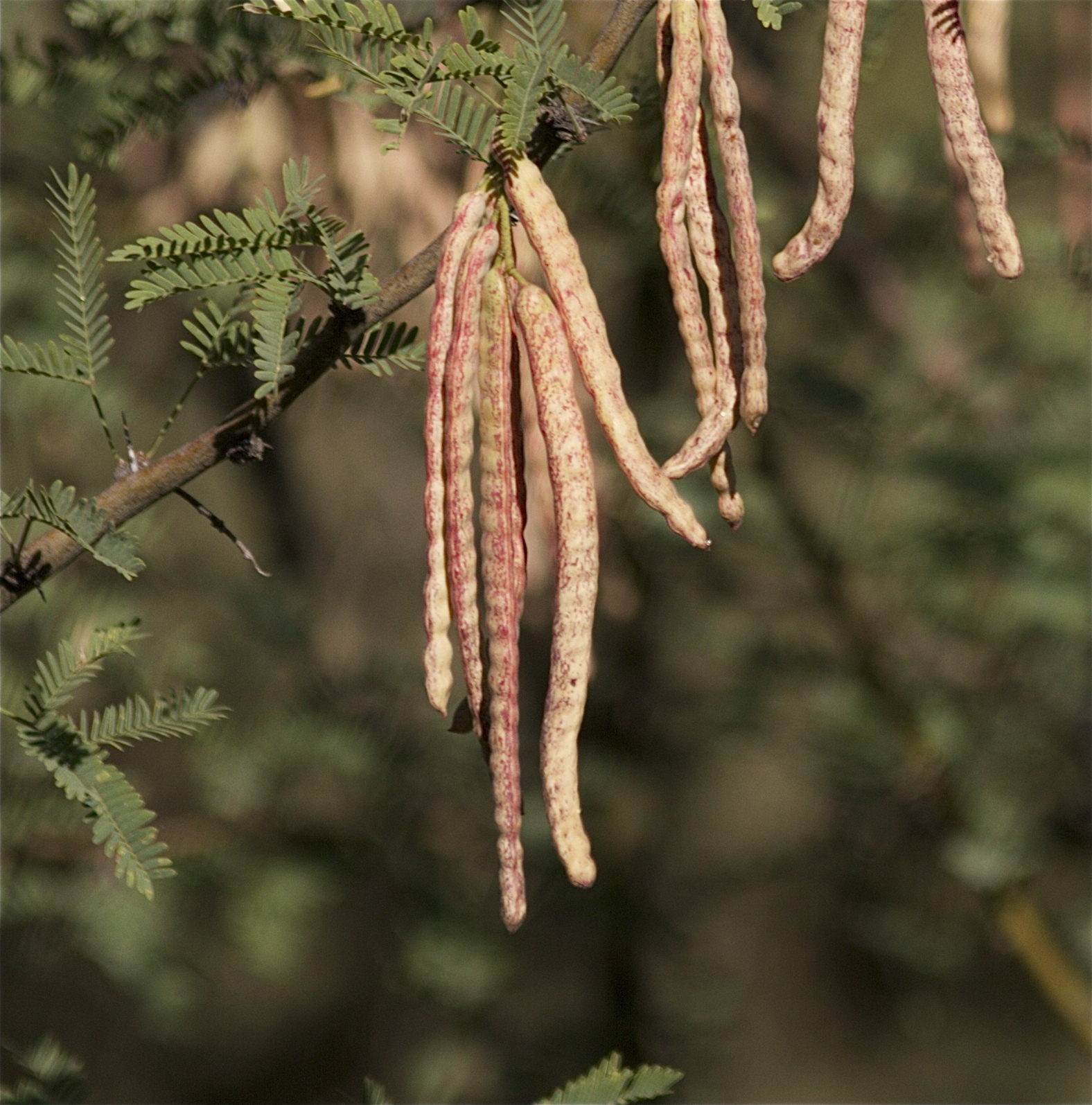
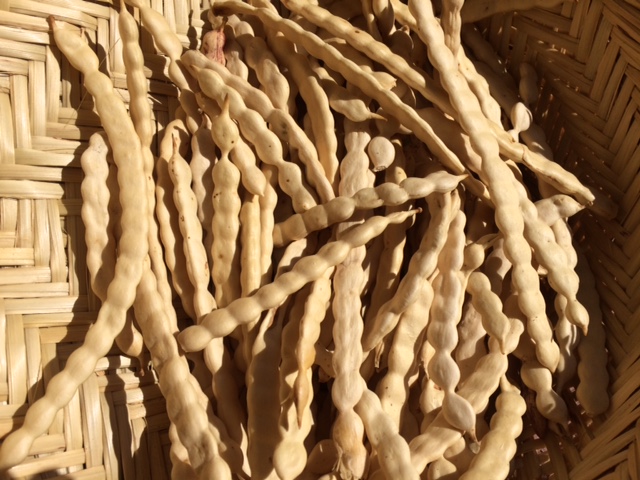
Mature pods of velvet mesquite–ready for monsoon planting  or eating!  (JRMondt photo)

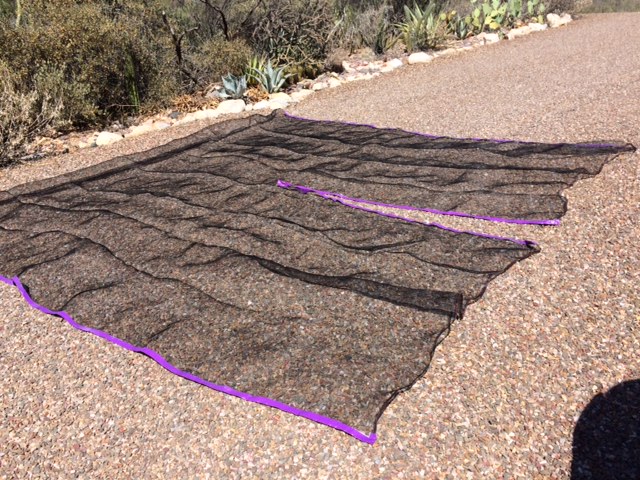
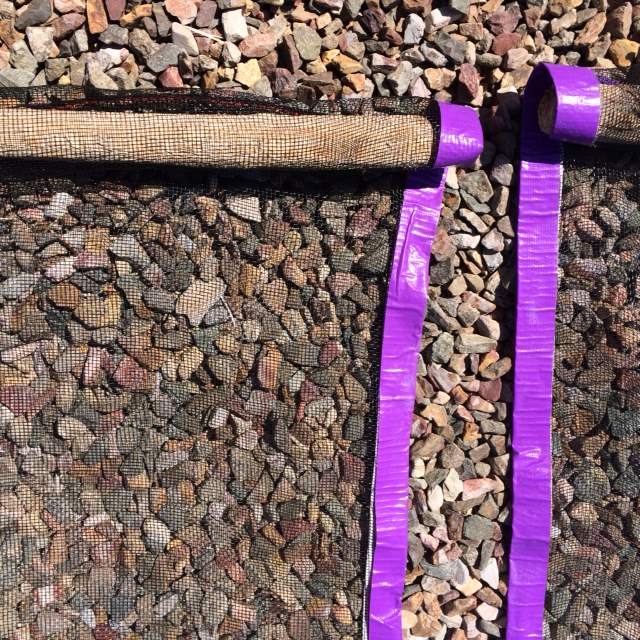
Tia Marta’s 12’x12″ pod net, slit into center on an imaginary radius to wrap around trunk and over understory plants, edged with duct tape on non-selvedge sides (MABurgess photos)

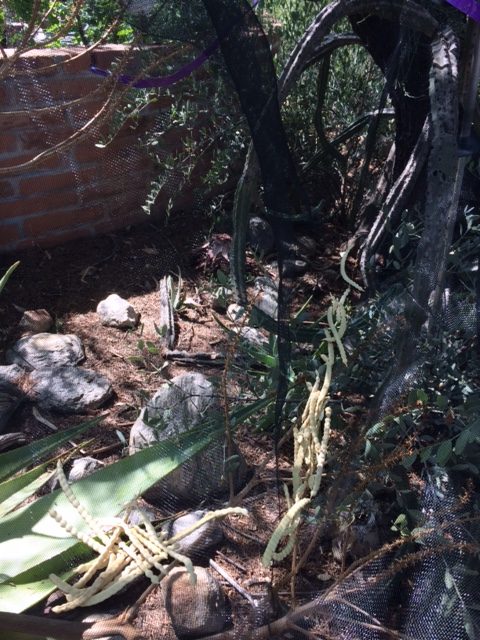
Mesquite pods shaken from tree onto harvesting net

I finished the split center edges of my pod-harvesting net with hems in which to optionally insert saguaro ribs or PVCpipe for easy set-up around a mesquite tree trunk

This past week, at the last hurrah before these wonderful monsoonal rains began, Tia Marta here was out with my handy dandy self-invented pod-harvesting net to bring in some of our Sonoran Desert’s bounty–just in time to avoid the aflatoxin hazard which comes with higher humidity.

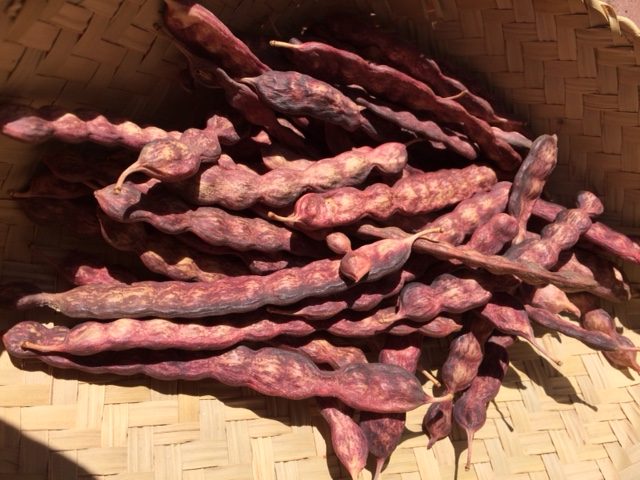
Some velvet mesquite (Prosopis velutina) have a rich raspberry color–Wish you could taste this one–We compete with the wildlife for them. (MABurgess photo)

Plump pods of sweet velvet mesquite, full of pulp for making Bosque Butter. Every tree’s pods have different shapes and tastes.  Be choosy!–collect from the trees with the plumpest and sweetest pods. (MABurgess photo)


Mesquite orchardist, miller of primo mesquite flour, died June3, 2017


With a song of thanks for this desert super-food–and with thankful recollections of some amazing mesquite aficionados–I would like to share one of my favorite mesquite recipes.  This post about mesquite is a tribute to the “gotmesquite guy” Mark Moody who recently passed, and whose fabulous mesquite flour via farmers’ markets and NativeSeeds/SEARCH has fed many a happy desert-foods buff over the years.  (Check out my piece in the online EdibleBajaArizona for more about Mark.)

Mesquite “Bosque Butter” and “Bosque Sauce” a la Tia Marta

This delectable recipe for Mesquite Bosque (pronounced boss’kay) Butter was inspired by a crack team of Arizona-Sonora Desert Museum Docents in the 1970s -80s who assisted in our first Mesquite Harvesting Workshops, possibly the first ever done in English.  In particular I’m honoring the memories of docents Mike and Jean Mentus, Gerry Dennison, and Linda Stillman, who helped me invent this condiment and teach Museum members about it.

This recipe uses the whole dry pods freshly harvested–not milled meal (although you could enhance it with extra mesquite meal if you desire.)

RECIPE for Muff’s “MESQUITE BOSQUE BUTTER”:

You will need:  3 bowls(2 for straining, 1 for compostable fiber), 2 stirring spoons, tasting spoon, 1-2 colanders, 1 lg. saucepan for stovetop or solar oven, cheesecloth, electric mixer with pulse setting (Your grandmother’s osterizer is fine.)

Ingredients:

Approx. 2 qts mesquite pods, clean, mature, dry (preferably fresh off the tree)

Approx. 1 quart drinking water

2 pk sure-jell (or other fruit pectin, ca.3.5oz.)

¼ C sugar (or honey optional) [Sugar helps set the gel.]

½ C raw organic agave nectar

1-2 tsp ground cinnamon

1 T butter (optional)

juice of 4 Mexican limes (or 2 lemons)

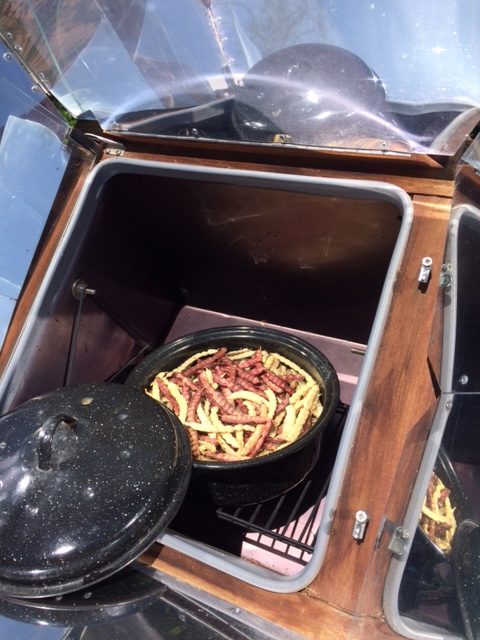
Washed pods, covered with drinking water, set in solar oven to cook (MABurgess photo)

Directions:

 1) Rinse mesquite pods until thoroughly clean of desert dust, and drain them.

2) Place pods in large saucepan with enough drinking water to cover. Add more water if 1qt is not enough to cover pods.

3) Simmer pods 30-40 minutes until fully softened. Softening time differs with dryness of pods.

4) Water will be sweet.  Through a colander over a bowl, drain pods, reserving ALL the liquid.

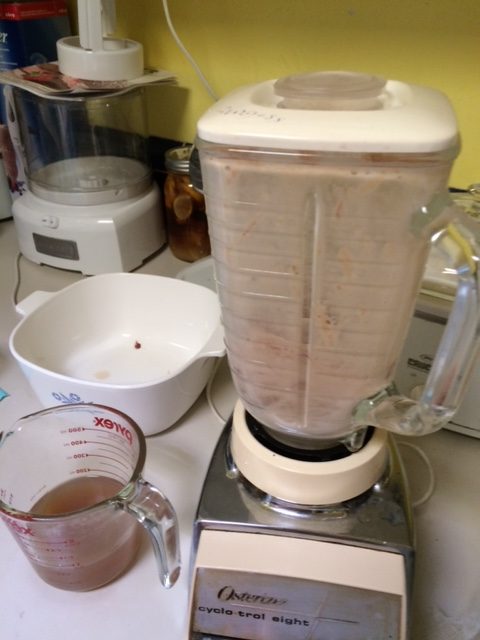
Cooked pods and reserved liquid being blendered

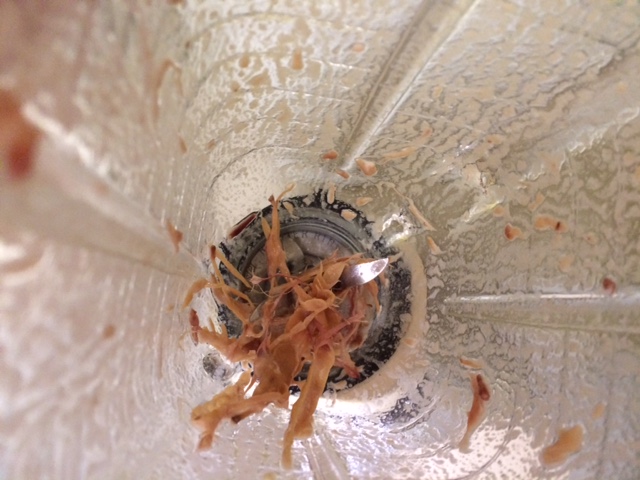
Check bottom of blender to remove all fiber from blade with each handful

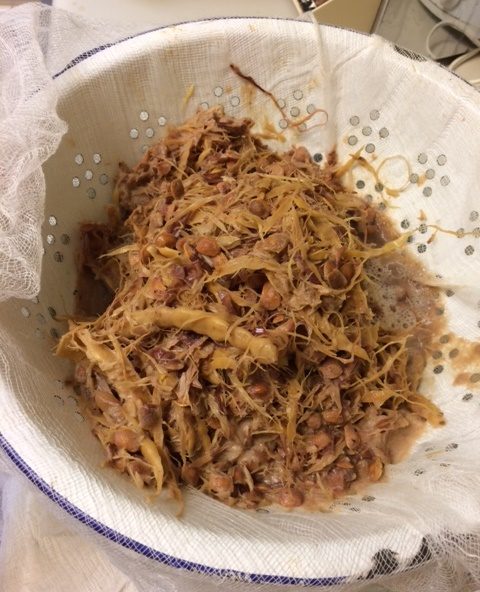
Cooked, blendered pods draining thru cheesecloth in colander

5) In blender, whirl softened pods–handful by handful, each handful with ¼ cup of the reserved liquid– with gentle pulses, 8-10 short pulses max for each handful of pods.

6) Into a cheesecloth-lined colander over a bowl, hand-remove the entire loosened juice, pulp, seed, and fiber mass after each handful.  Check blender blades each time to prevent burnout of motor, as pod fibers can easily bind up the works!

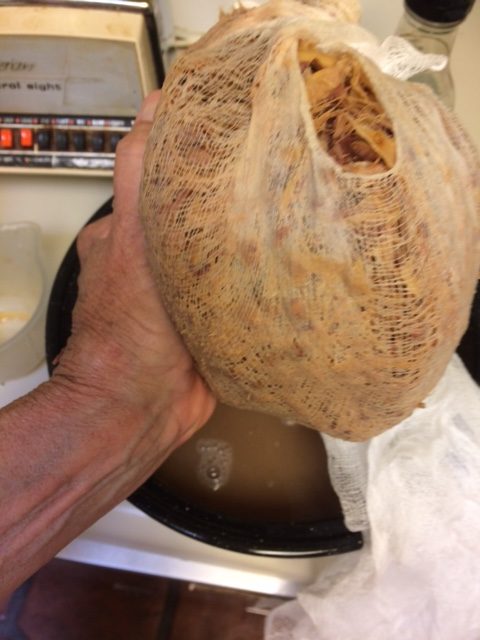
7) In the colander over the bowl, drain as much of the blendered pulpy liquid from the fiber as possible, pressing, squeezing, twisting it out with cheesecloth.  You might extract more if you squeeze the cheesecloth after each handful is poured from the blender.

Squeezing cooked, blendered pods thru cheesecloth to extract pulpy liquid

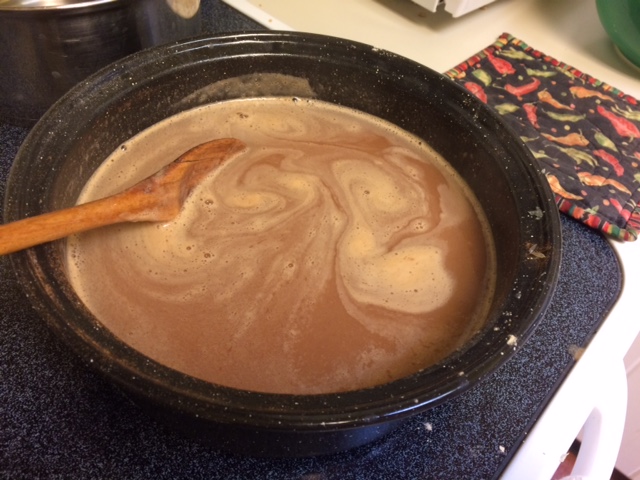
After adding all other ingredients,, boil the sweet pulpy liquid

8) Transfer the strained pulpy liquid to a saucepan.  Bring it to a boil.  Add lime/lemon juice, sugar, agave nectar, cinnamon, pectin, and butter, stirring all in smoothly.

9) The liquid mixture must be cooked down to concentrate it.  Simmer 30-45 minutes to desired texture or thickness.

10) Funnel the mixture into jars.  Cool down; refrigerate when cool.

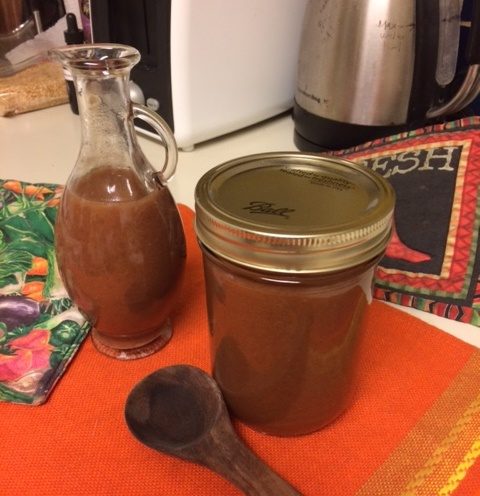
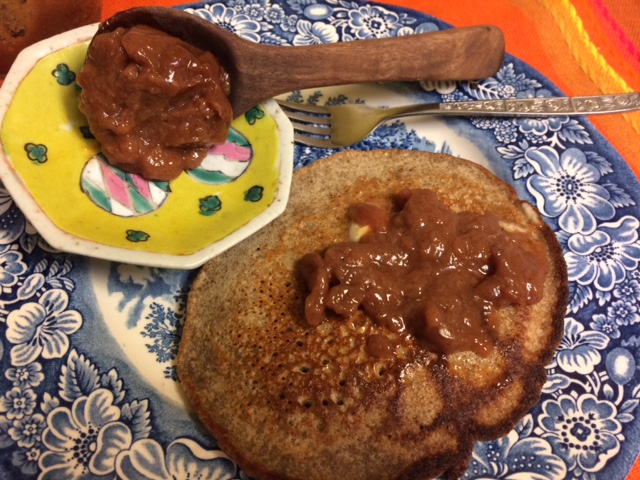
If it thickens it will be a delicious spread–like apple-butter.  If it does not gel it will be a fabulous mesquite syrup or sauce over pancakes, waffles, or ice cream!  If your mix has more liquid than pulp, when it thickens it can even be served as a very rich yummy pudding.

Mesquite Bosque Butter on buckwheat pancake–delish!

However it comes out, you will be enjoying the health benefits of mesquite’s complex carbohydrates and its unforgettable sweet and natural taste!  (Don’t forget to compost the leftover seeds and fiber—good nutrients for soil building.  Or, feed it to the birds in your “back forty.”)

Plan NOW and prep for future mesquite harvests!  Why not plant you own trees and enjoy their shade, their life-giving oxygen–and their nutritious food!  In the coolth of morning start digging a tree hole where you want future shade.  Monsoon time is a good time to plant, and there are Monsoon Plant Sales happening right now.  Three mesquite species are native to our Southwest region:  Velvet (Prosopis velutina), Honey mesquite (P. glandulosa), and Screwbean mesquite (P.pubescens).  All three make fabulous pod meal but the best for Bosque Butter are Velvet and Honey, as their pods can be plump and full of high-carb pulp.  For the most local varieties of mesquite visit Desert Survivors Nursery (desertsurvivors.org).   The Tohono Chul Park’s Monsoon Madness Plant Sale Friday-Saturday, July 28-29, 2017, will have several expert local growers represented (www.tohonochul.org).  NativeSeeds/SEARCH has mesquite meal in stock and expects the most recent local harvest to be available soon.  (NSS’s Monsoon Plant Sale is Fri-Sun, July 28-30, for monsoon gardening plants, http://www.nativeseeds.org).

Happy harvesting–happy tree-planting–y buen provecho! de Tia Marta.