Cheering with Agave Spirits!

Tia Marta here, tipping a glass to Mayahuel, Goddess of the Agave, for her many gifts–and, in addition, I’m toasting the current voice of Agave: Southwest native foods author/philosopher Gary Paul Nabhan. Heads-up for a not-to-be-missed event SOON!! — Make plans for Saturday, October 21 to meet Nabhan at a totally celebratory book-signing in downtown Tucson for his latest book, AGAVE SPIRITS!

More than just literary, this event will be laced with enlivening tastes of small-batch mezcales! So take note: NOON til 3pm THIS SATURDAY at PETROGLYPHS EMPORIUM at 160 S.AVENIDA DEL CONVENTO just north of El Mercado along the trolley route west loop.

I just got a copy and can hardly wait to dive into Gary’s special way of weaving us into a sensual and spiritual world of amazing culture, botany, cuisine, all with such humor and human sensitivity. Yay another gift from the Guru! There will be plenty of copies of the book for sale at the event, but just in case, you can also find it available at Antigone Books on 4th Ave. Tucson..
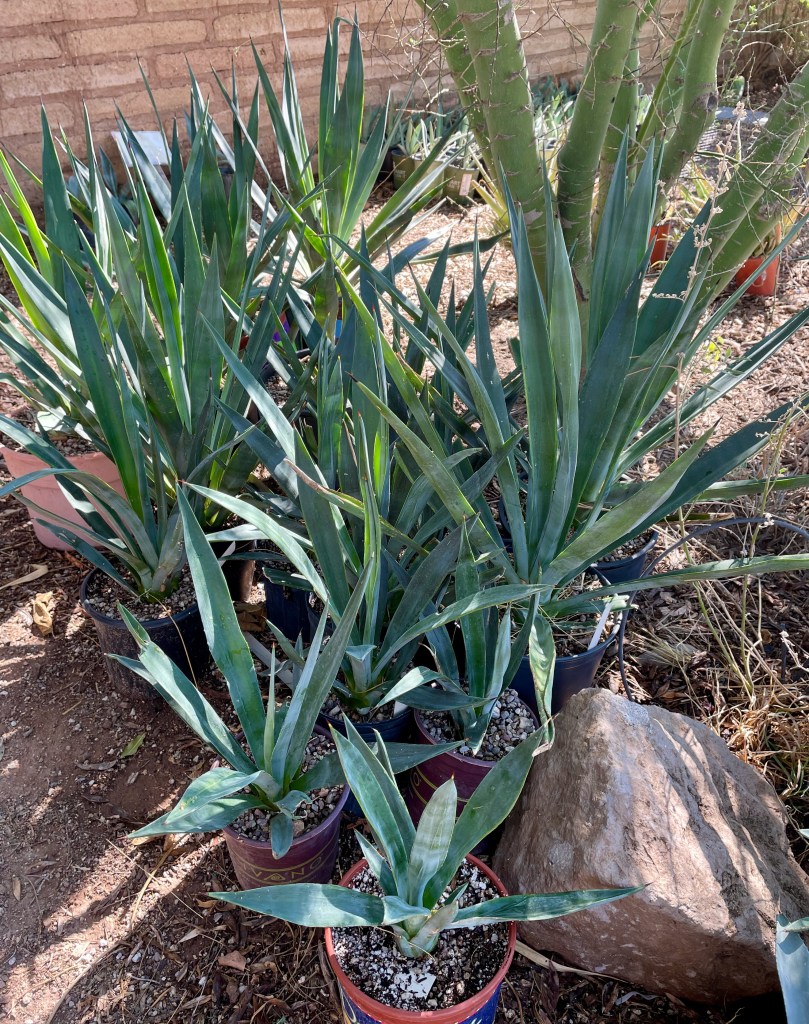
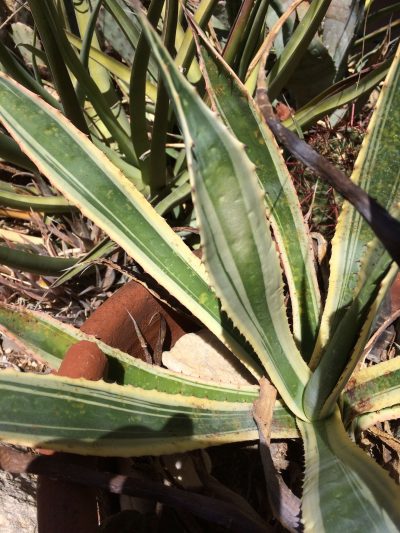
Many native species of agave–known as A’ut to Tohono O’odham ancestors who cultivated them long before European colonists arrived in the Sonoran Desert–were and can still be used for food, fiber, drink, and landscaping. To grow your own, check out the agaves for sale at Mission Garden (such as this Agave murpheyi).

For celebrating–yea honoring–mezcal and other agave spirits in their many forms, here is my very local idea for a Century Plant toasting:

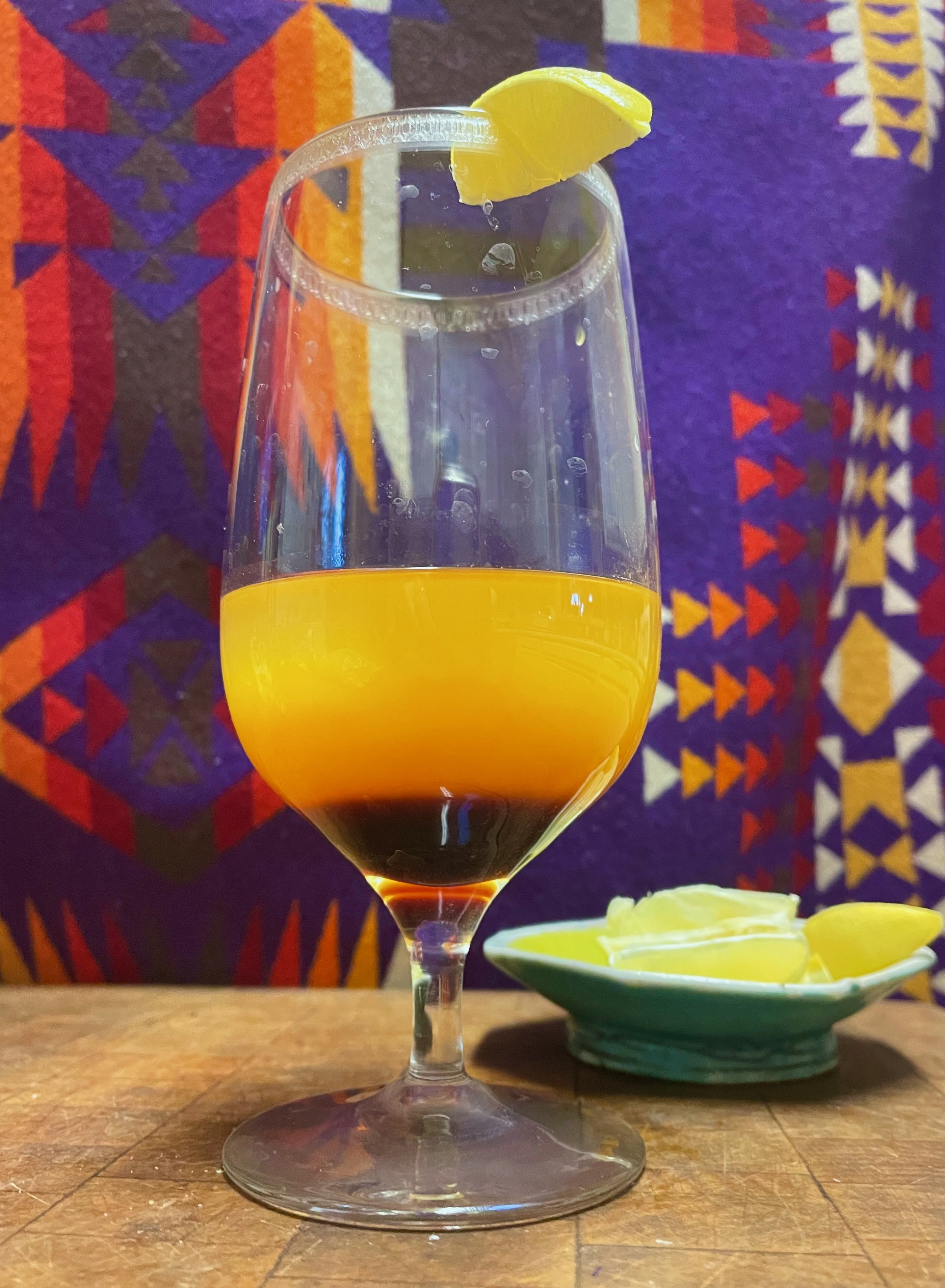
The Torch-bearer Mezcal-Saguaro Sunrise–Tia Marta’s recipe
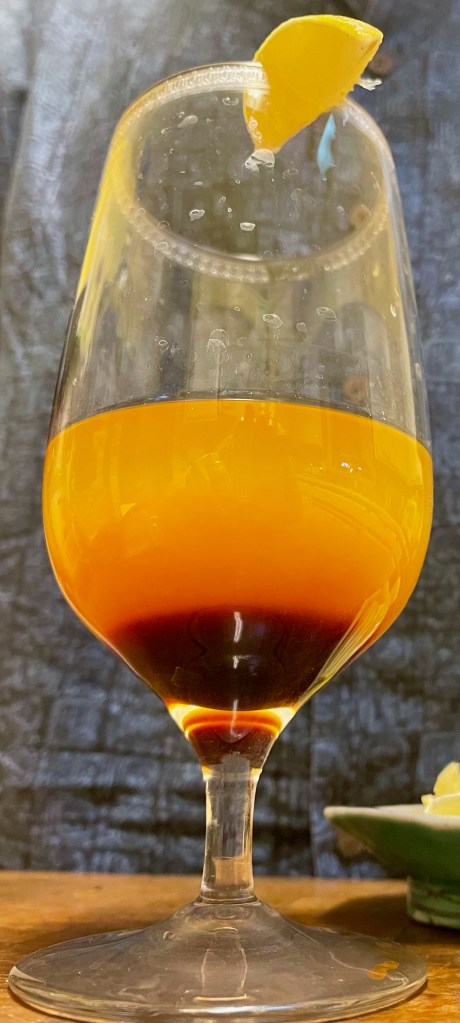
1–In the bottom of a lovely glass, pour 1 TBSP precious thick saguaro syrup (if you have been so lucky to have bought some from a traditional saguaro harvester, or to have made your own syrup last June).

2–Reserve a jigger of small-batch-mezcal (bought or smuggled from a grower, fermenter, or trader.)

3–Dilute 1 jigger mango juice (available TJ’s, Natural Grocers) with 1/2 jigger drinking water to thin its density.

4–To garnish rim, slice a lime harvested from your own tree or a neighbor’s…
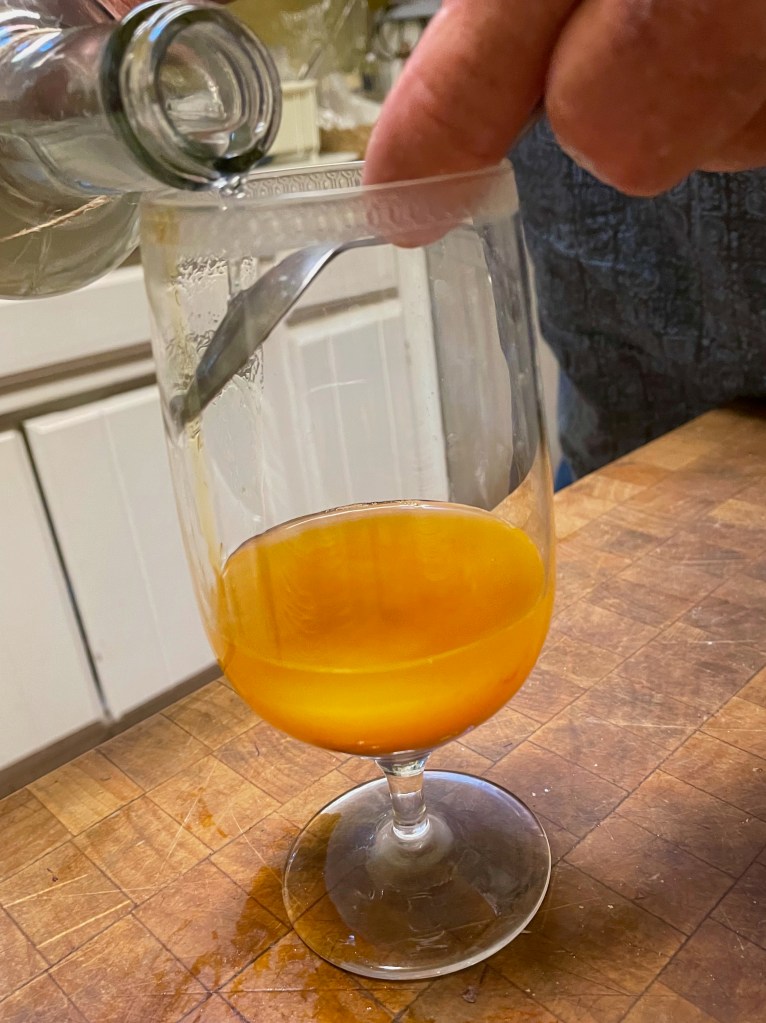
5–(a secret from my formerly-bartender partner): Gently pour the diluted mango juice atop the saguaro syrup layer by placing a spoon upside down to slow the flow against the glass interior, thus preserving the horizonal layers of different densities.

6–Similarly as illustrated over clean inverted spoon, gently pour jigger of mezcal for the top “layer.”

7–Salud! a toast to Agave and its Spirit

A step above and beyond the traditional “tequila sunrise,” this glorious libation is named for the Torch-bearer, who, I was taught by O’odham mentors, lights up and brightens the eastern horizon every dawn with the glowing red, orange, yellow of his solar torch…. This drink helps us rejoice in our local saguaro fruit and spirit of Sonoran agave with its colors, flavors–even nutrition.
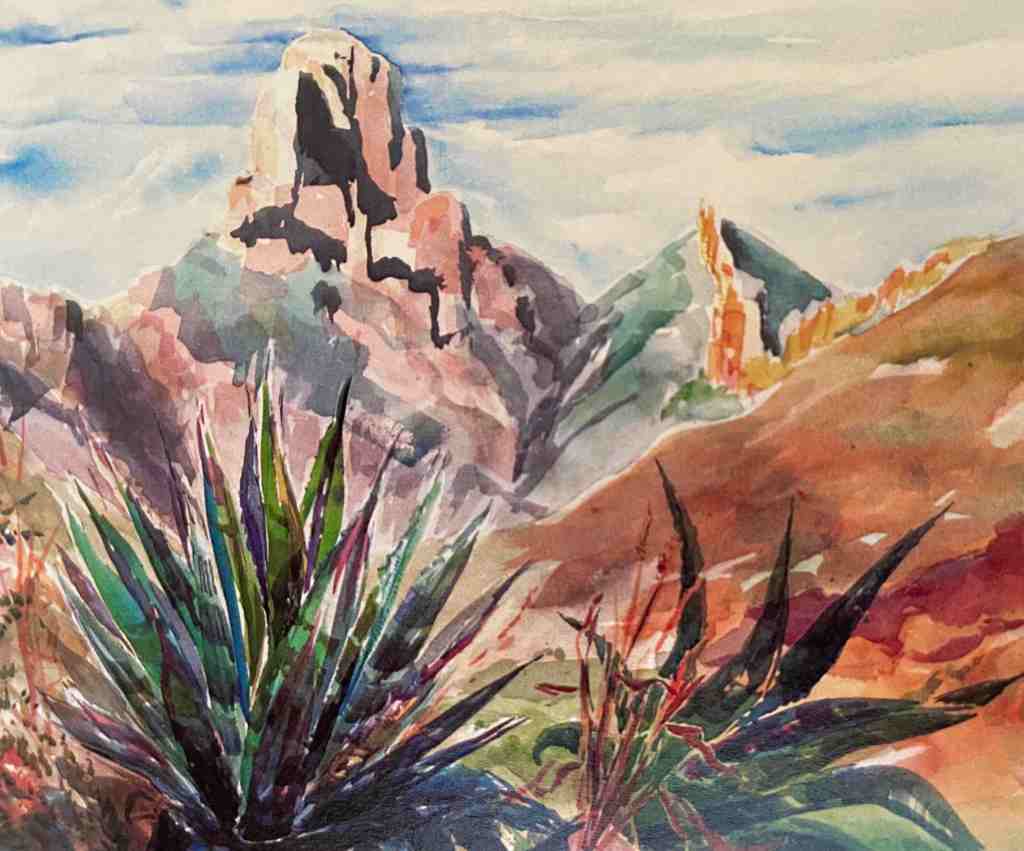
Celebrate agaves also with notecards of my painting “Sacred peak with Agaves,” available at Buenos Aires National Wildlife Refuge visitor center and at Mission Garden. For 11″x17″ matted prints, call Flor de Mayo, 520-907-9471.

More mezcal ideas await…. Check out SavorSister Carolyn Niethammer’s post about the yearly Agave Heritage Festival in Tucson– with agave roasting at Mission Garden– late April. For specialized mezcal tastings locally, visit ExoBarTucson for Thursday evening samplings–It’s an “educational experience.” And stay tuned for more Agave Spirit posts as the holidays approach. Cheers to Mayahuel, to Nabhan’s new book, and indeed to the patient and giving A-ut plant!

See you at Petroglyphs Emporium this Saturday!
Agave Fest!

Every year in late April and early May, Tucson residents and visitors celebrate the agave plant in all its glory with dinners, cocktail demos, mescal and bacanora tastings, demonstrations and fiestas. It’s Carolyn today and for the third year, I’ve taken part in the agave roasting at Mission Garden.  The agave plant is a succulent that thrives in arid conditions and when roasted becomes very sweet. It is the defining ingredient in mescal and tequila. It has also been used for thousands of years by the Native Americans as food. The Hohokam even planted agave fields stretching over 1,200  acres in the north end of the Santa Cruz basin. It was a crop that needed little tending and propagated on it’s own by sending out pups. Anthroplogist Suzanne Fish estimates that the Hohokam in the area could have harvested up to 10,000 agave plants annually.

There are many species of agave. We’re not sure how many kinds were used by the Native Americans. (MABurgess photo)

Historically, the stiff and thorny leaves were cut from the agave and the hearts are baked in an earth oven. The people just chewed the pulp from the fibers. Then there was a step up in technology when the hearts were steamed and roasted, crushed and used to make tequila, mescal and bacanora. Here is a link to a demonstration of a old-fashioned bacanora “factory” in Mexico. Of course, today the big commercial mescal and tequila makers use industrial ovens.

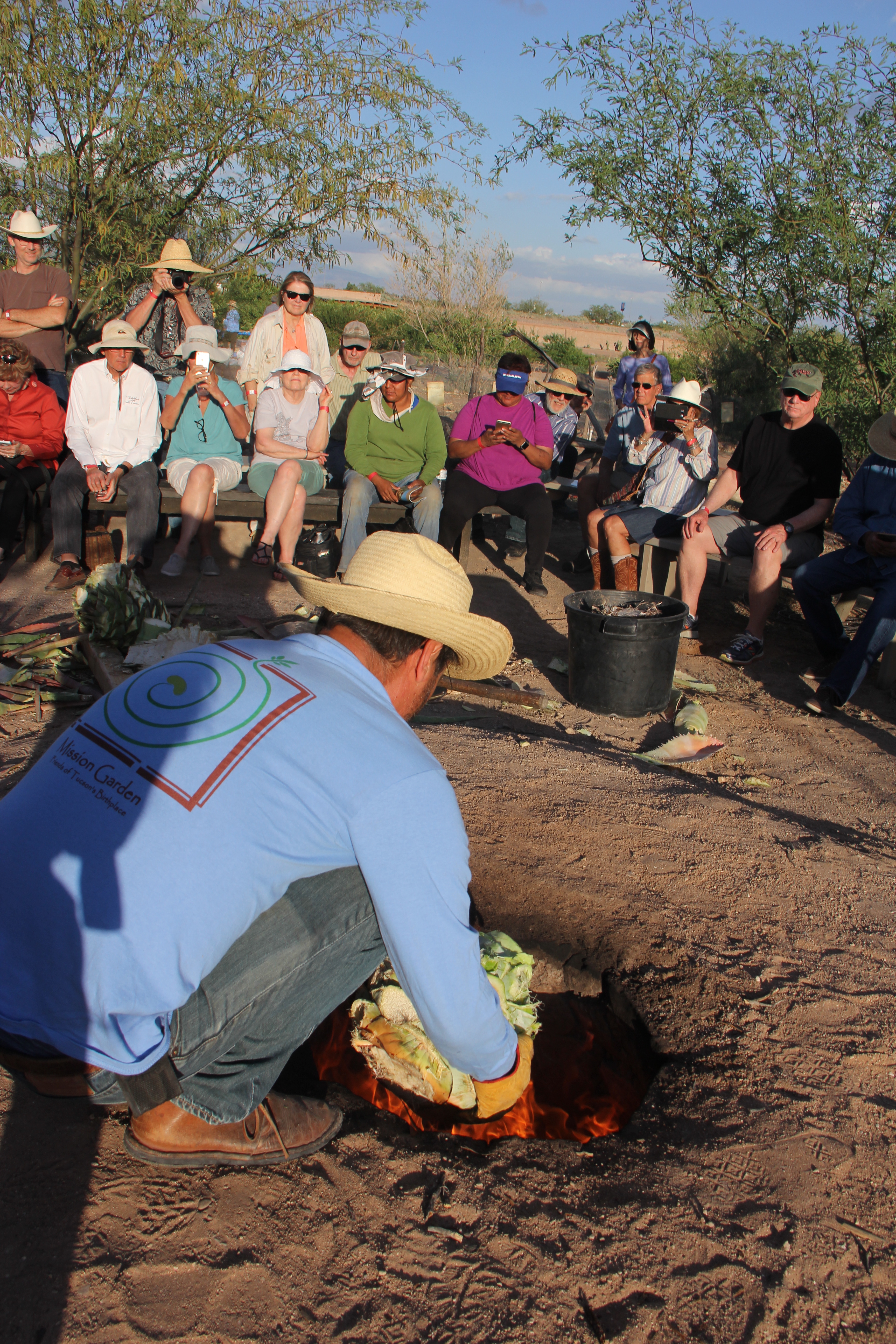
But during Agave Fest, we like to celebrate the oldest traditions, so Jesus Garcia demonstrates baking agave in an earth oven.

Jesus Garcia placing an agave heart in an earth oven on the grounds of Mission Garden. (CNiethammer photo)

Because we don’t all have earth ovens, I am in charge of the home-baking demonstration. I wrap the hearts securely in heavy foil and bake them for about 10 hours at 350 degrees F. (If you try this, be sure to put a foil-lined pan under the agaves because even the most securely wrapped hearts leak sugary juice.)

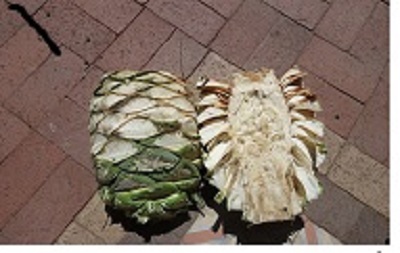
Agave heart split in two so it could fit in my home oven.

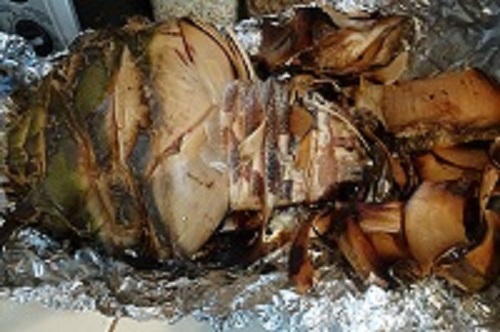
This is what the roasted heart looked like after 10 hours. The core on the right is where I removed some of the leaves.

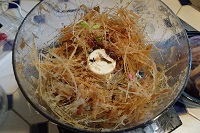
The next challenge is to get enough pulp from the fibers to actually make something. The Native Americans just chewed on the baked leaves and discarded the fibers. Distillers and people who make agave syrup crush the juice from the fibers. To further soften the leaves, I tried boiling them for a while. I also put them in my food processor which did a good job of separating fiber from pulp.

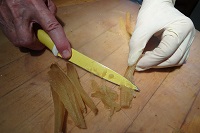
You can also tease out the pulp with a knife.

(We are all constantly experimenting to try to find what works best. A woman who attended my presentation said she has cut up a small agave heart and cooked it in her large slow cooker for three days.)

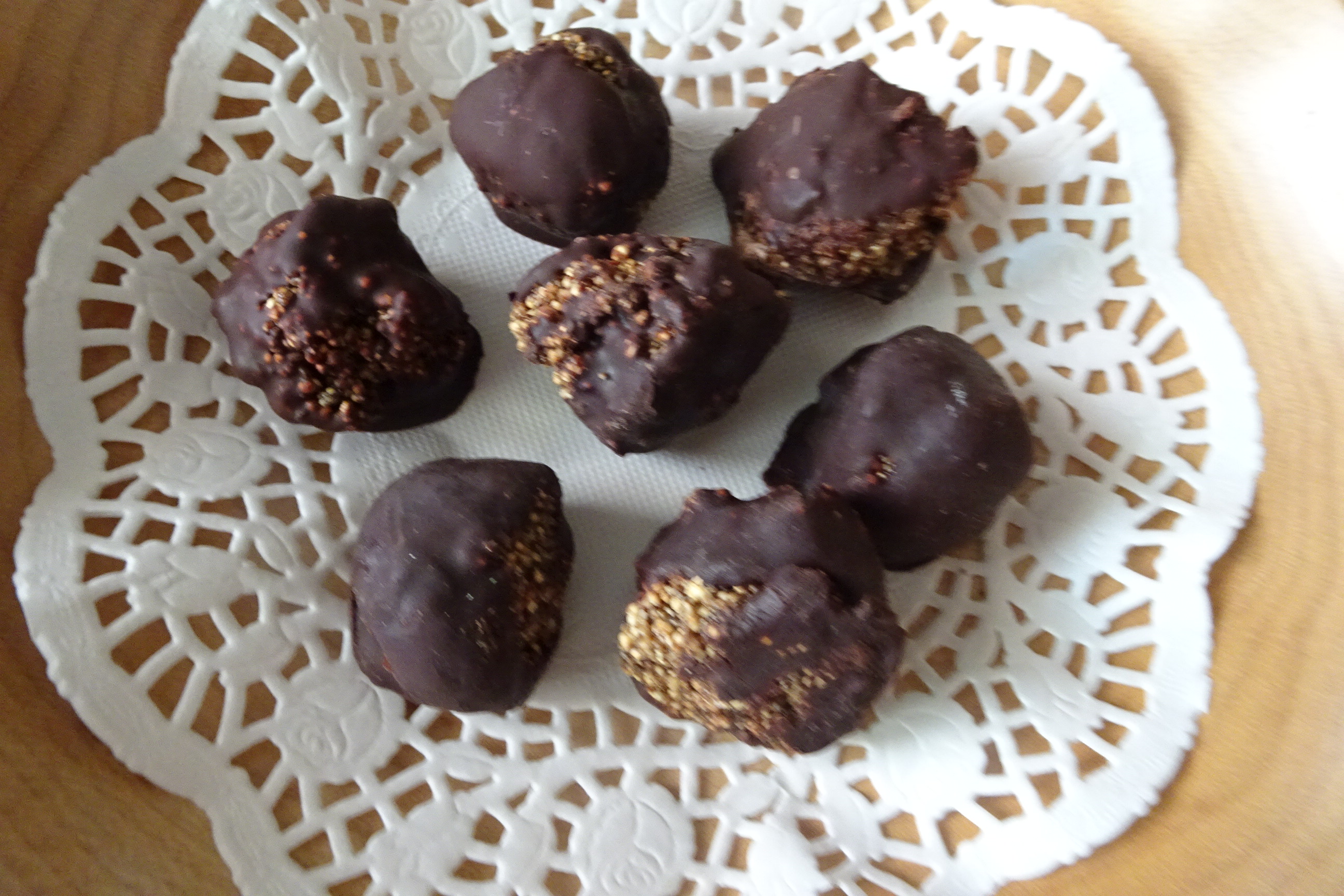
So once you’ve gone to the trouble of getting pulp, what do you do with it? Here’s where the experimenting comes in. I’ve combined it with water to make a murky homemade agave syrup. You can use it to season anything you want to sweeten a little. For the Agave Fest demonstrations, I’ve made a mixed squash, nopalito, and onion saute and added some of the agave pulp. It adds a subtle sweetness and everybody loves it. I also used the pulp to mix with some ground popped amaranth and ground chia. Added a little commercial agave syrup. Formed little balls, firmed up in the fridge, then dipped in melted chocolate. Yum!

Amaranth, chia, agave balls with chocolate coating.

Of course, by the time I served the food, it was nearing 7:30 or 8 p.m. and everybody was starved so it all tasted especially good!

_____________________________________

Want to learn more about wild desert foods and how to prepare them? My book American Indian Cooking: Recipes from the Southwest tells how the Native Americans used the wild plants for food. Cooking the Wild Southwest gives modern recipes for 23 delicious Sonoran Desert plants. There are all available at Native Seeds/SEARCH, online or in the retail store.