Time for Some Thyme

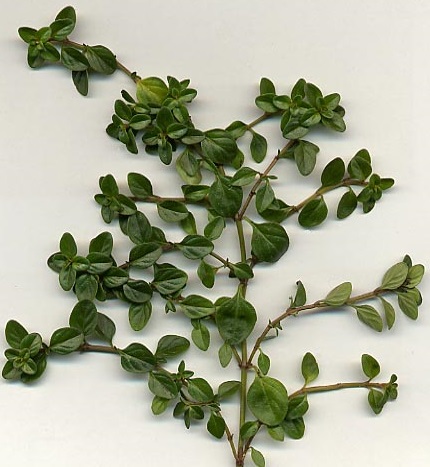
Thymus_vulgaris_branch crop

Common thyme (Thymus vulgaris)  is best grown with a dappled noon-time shade in the summer in the southwest.

Special for Savor the Southwest  February 2015
by Dr. Jacqueline A. Soule

Spring is springing out in my garden – and the little thyme cutting I got from Savor Sister Muffin Burgess back in at our anniversary party in November is finally starting to take off.  November was a terrible time to take cuttings of this warm climate herb – but the great thing about herbs is that humans have been mistreating them for 7000 years or so, and the weak ones have mostly died out.

Thymus_(zaatar)_Jerusalem_BG crop

There are many species of thyme, like this species in the Jerusalem Botanical Garden, used for the herb blend za’atar.

Thyme is a large and very popular genus, with over 350 species and countless cultivars grown around the world. Aside from looking lovely in the landscape, thyme is a strong herb used in cooking, and has some proven medicinal properties as well. It can also be grown indoors in bright, indirect light.

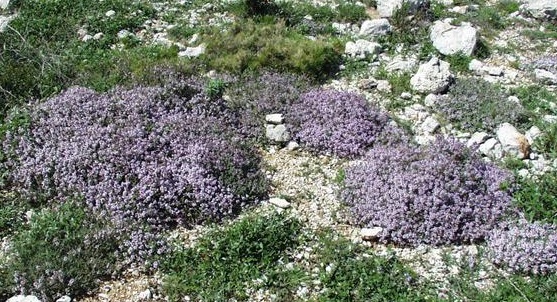
Thymus_vulgaris_habitat_003 crop

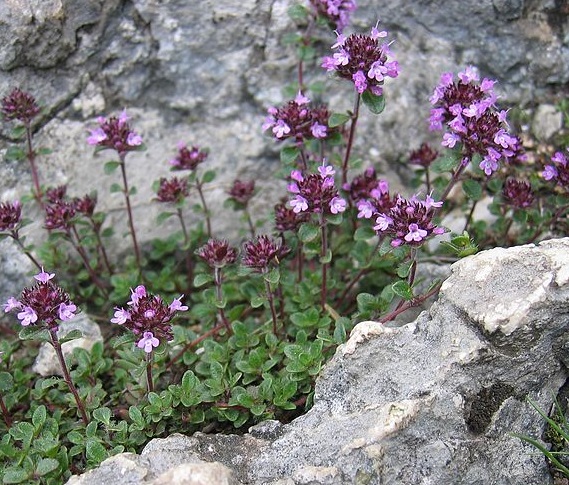
Many herbs that do in the Southwest are originally from a similar climate – like this Thymus vulgaris growing wild on the rocky hillsides of the Galilee.

This lovely, fragrant, tasty, and healthful herb in native to the rocky slopes of the mountains of the eastern Mediterranean region, in the area that is now mostly Greece. Since they are pre-adapted to low water conditions, most species of thyme can be grown here. I grow my thyme plants where they get roof run-off, thus I rarely need to water them; and yet they offer a lush look to my entryway with their glossy green leaves.

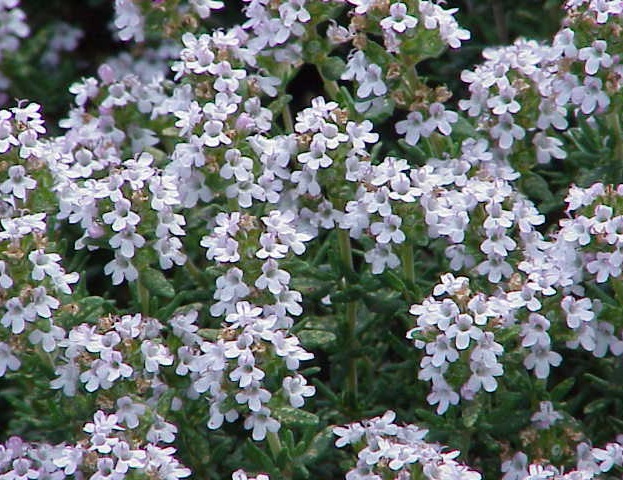
Thymus_vulgaris_bloom_001 crop

Not just tasty, thyme is also another pretty face in the garden! For peak flavor, it is best to harvest this (and most culinary herbs) just before they bloom.

Make sure you grow your thyme in well-drained soil. You may have to add some sand to your soil. I killed several thyme plants until I had finally added enough sand to their bed.

There are many thymes to choose from, but here are the species most commonly found in the nursery.

Common or culinary thyme (Thymus vulgaris) is a low woody plant barely reaching a foot tall. It quickly becomes leggy with bare wood showing so harvest and use or dry your thyme often. (You can give friends jars of your dried herbs as truly personal and unique gifts.)

Creeping thyme (Thymus praecox) makes an attractive and useful groundcover. It is culinary too! Harvest as needed.

Thymus_praecox crop

Creeping thyme, with tiny leaves and charming purple flowers, is perfect for a fairy garden.

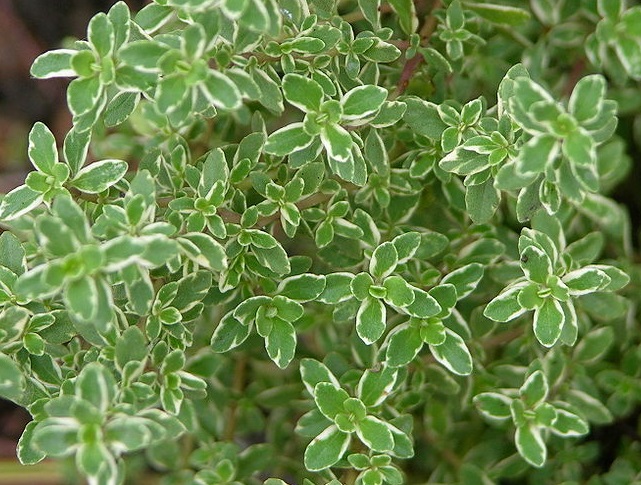
Lemon thyme (Thymus X citriodorus) is a delicious and fragrant low-growing variety with glossy green leaves, and goes wonderfully with fish dishes.

Thymus_citriodorus_variegata_crop

Lemon thyme is great for flavoring fish dishes – two flavors for the price of one!

Equally fragrant and delicious is the golden lemon thyme (Thymus X citriodorus ‘Aureus’). With wonderfully variegated leaves, it looks good in the landscape.

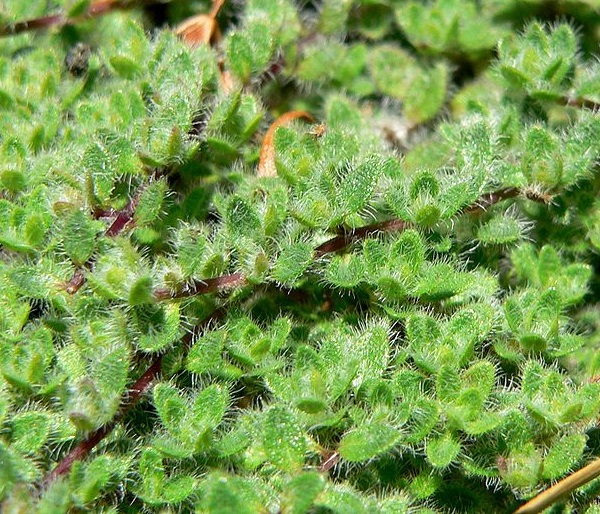
Not generally used as culinary herbs, two popular species of creeping thyme are useful in the landscape. Mother-of-thyme (Thymus serpyllum) and woolly thyme (Thymus pseudolanginosis) both grow well between shady flagstones, and smell great when stepped on.

Thymus_pseudolanuginosus_crop

Add some fragrance to your landscape – plant this heat tolerant woolly thyme between the flagstones of your path.

Sprinkle thyme (either fresh or dried) in soups, salads, on meat dishes or use in herb breads. Use an ample number of sprigs in herbal vinegars and oils for an intense and refreshing flavor.

thyme IMG_2655 crop

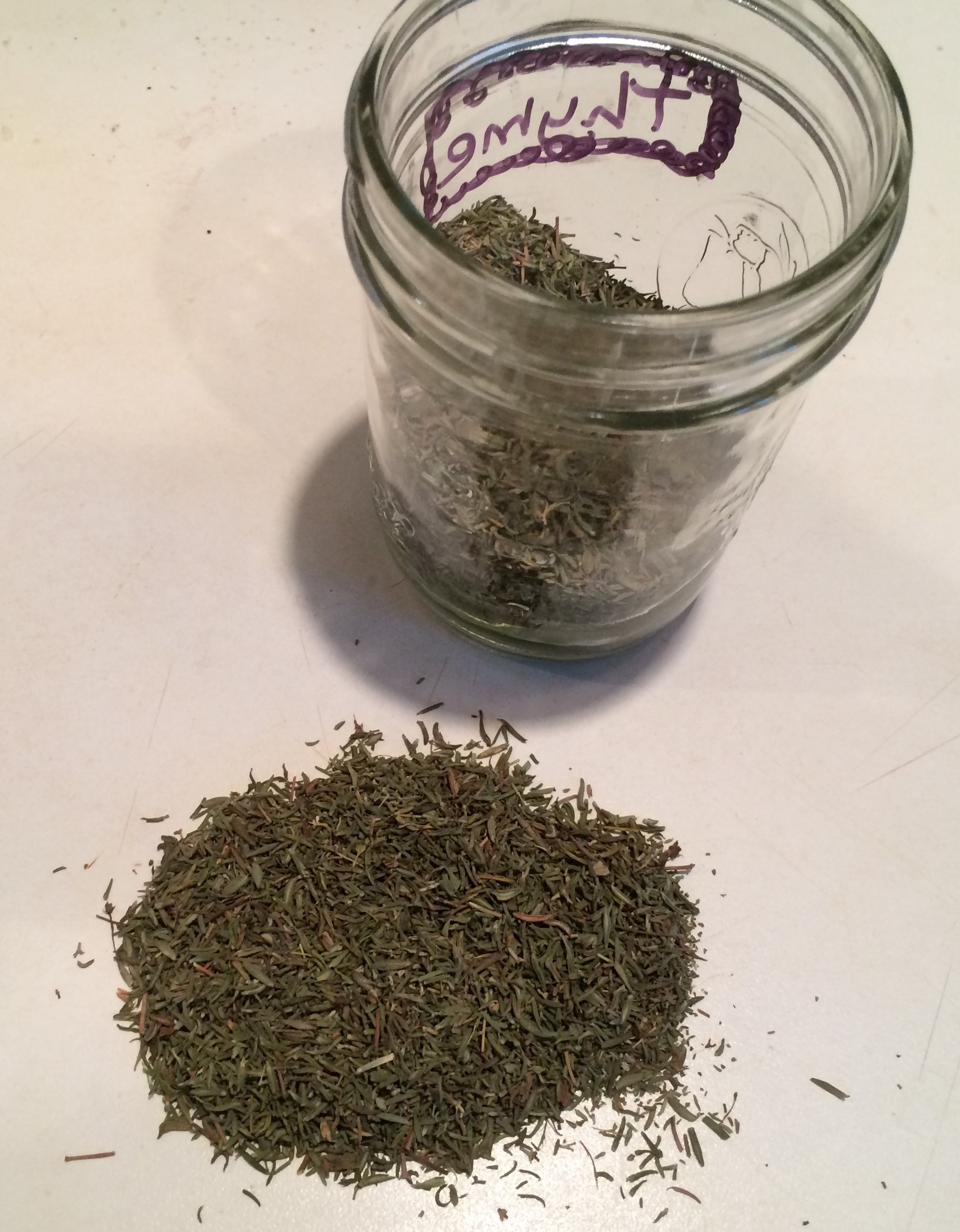
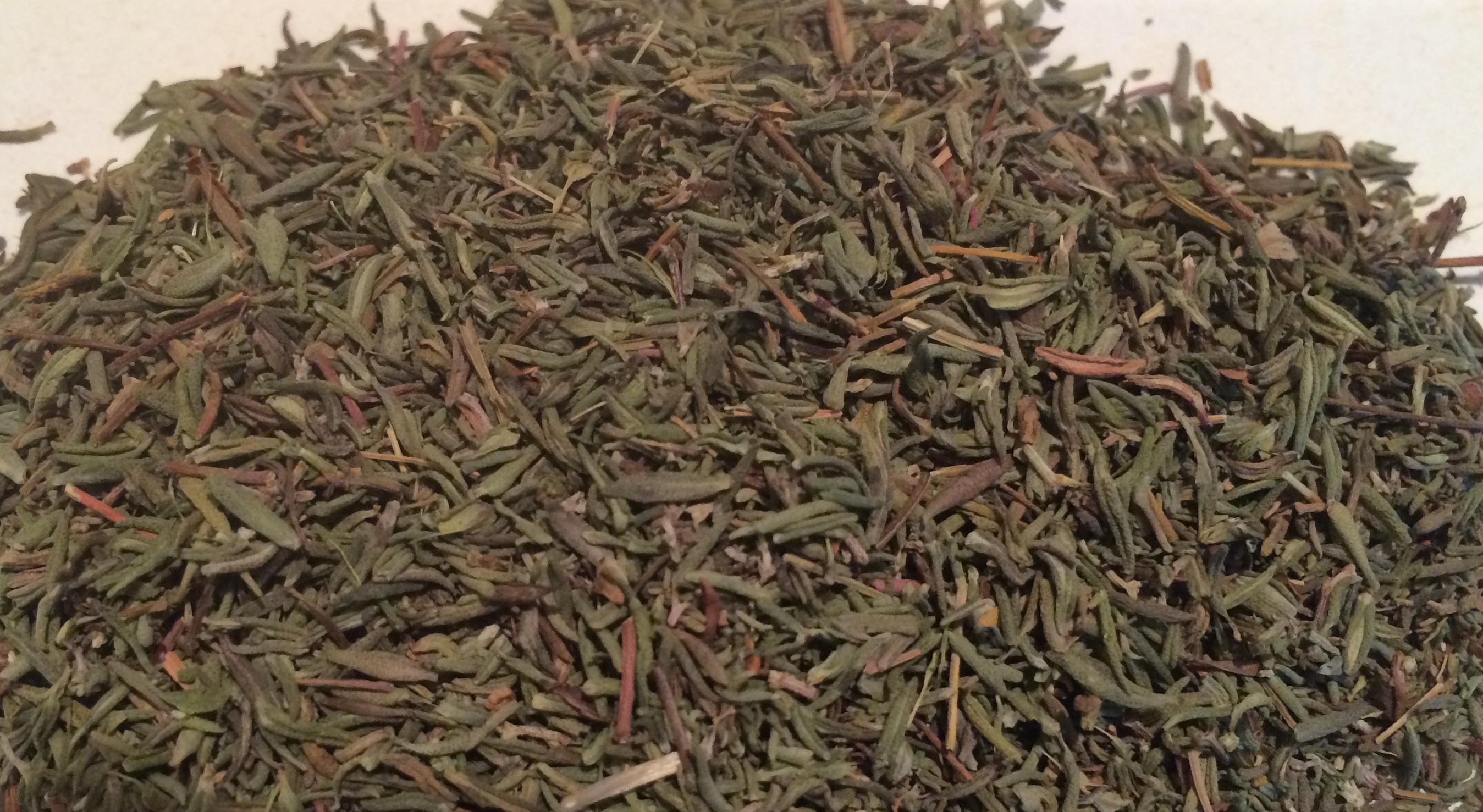
We use ample thyme in our cooking. This 8 ounce jar gets refilled several times a year.

For a quick meal at the end of a long day make Sopa de Farigola, or Thyme Soup, a dish popular in the Catalonia region of northeastern Spain, and thus part of our Sonoran heritage as well.  Fresh eggs and day-old bread are topped with a boiling broth made from water, sprigs of thyme and some olive oil. Great for replacing electrolytes after a day working in the garden!

More about thyme in my books which I will be selling and signing at the Tucson Festival of Books March 14 & 15 this year – Southwest Fruit & Vegetable Gardening (Cool Springs Press 2014, $23), and Father Kino’s Herbs: Growing & Using Them Today (Tierra del Sol Press 2011, $15) also available at Tucson area bookstores, nurseries, botanical gardens, and state parks.

JAS avatar  © 2015, Jacqueline Soule. All rights reserved. I have received many requests to reprint my work. My policy is that you are free to use a very short excerpt which must give proper credit to the author, and must include a link back to the original post on our site. Please use the contact me if you have any questions.

thyme IMG_2657 crop

Pescado en Mole Verde, Spring Roots with Spicy Creamy Dip

053

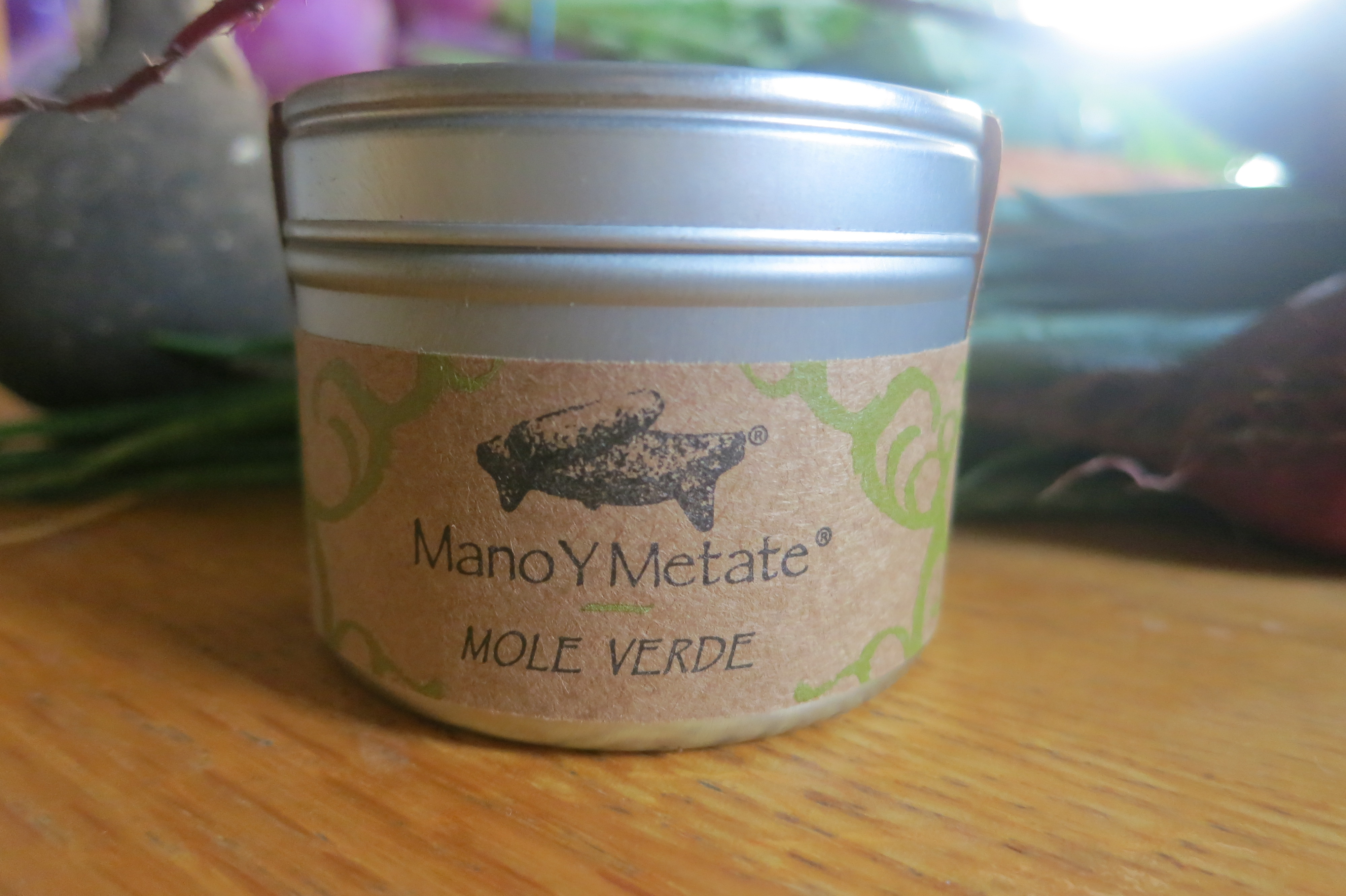
Hello, Amy Valdés Schwemm here, celebrating spring with two recipes using Mano Y Metate Mole Verde.

Spring root vegetables are on the table now! Carrots and purple diakon from Tucson CSA/Crooked Sky Farms, baby onions, and Cylindra beets from the Breckenfelds are very tender. The purple daikon is so mild and the baby beets and carrots sweet, and all prettiest when fresh. I’m sure we’ll have humongous taproots later in the season that will need roasting or pureeing.

023029

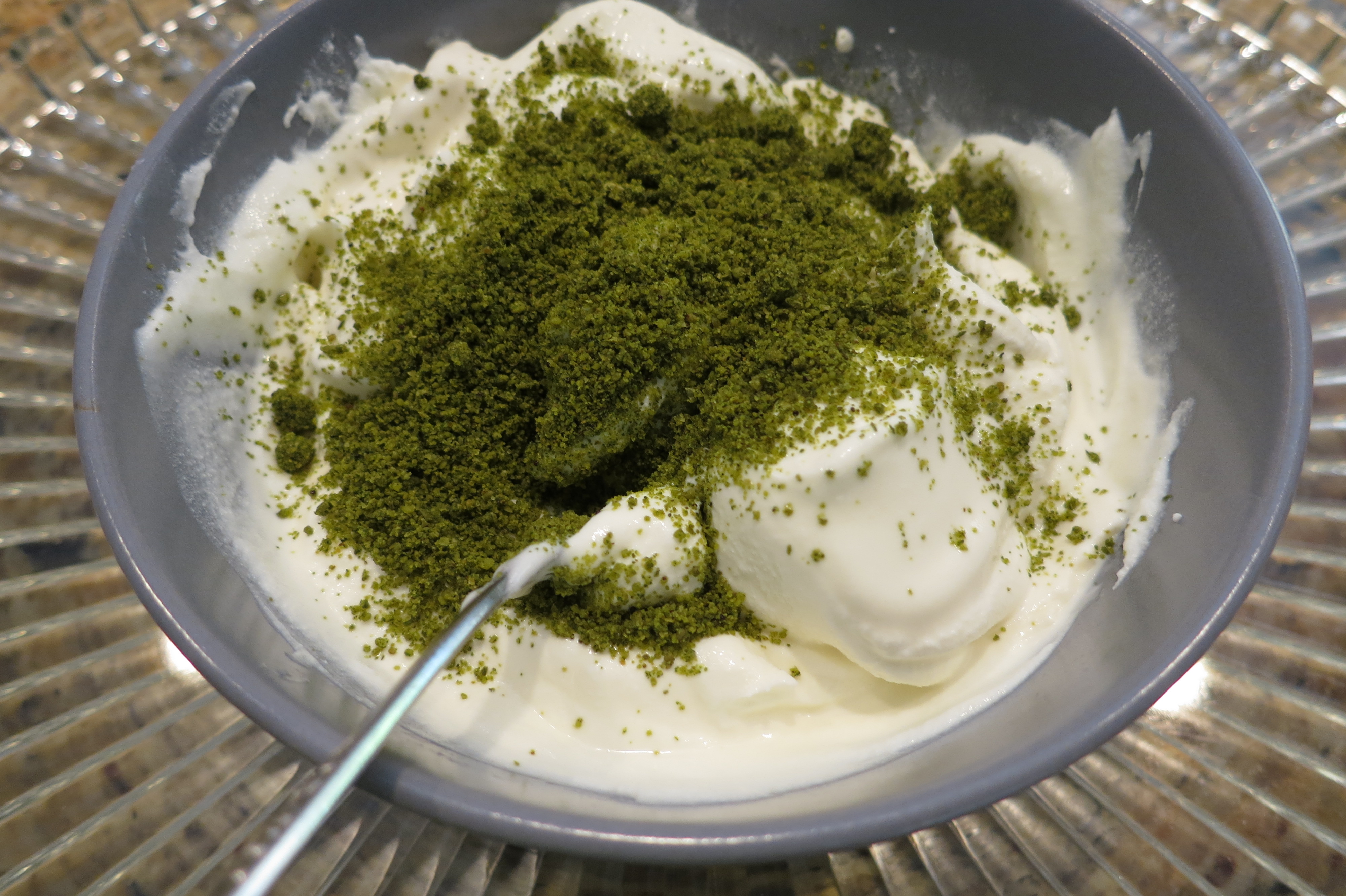
I love creamy dips with crisp, raw veggies. My sister makes a spicy and creamy dip from Mole Verde powder and sour cream. Just mix the two ingredients to taste and refrigerate to let the flavors blend.

thanksgiving 2012 (2)

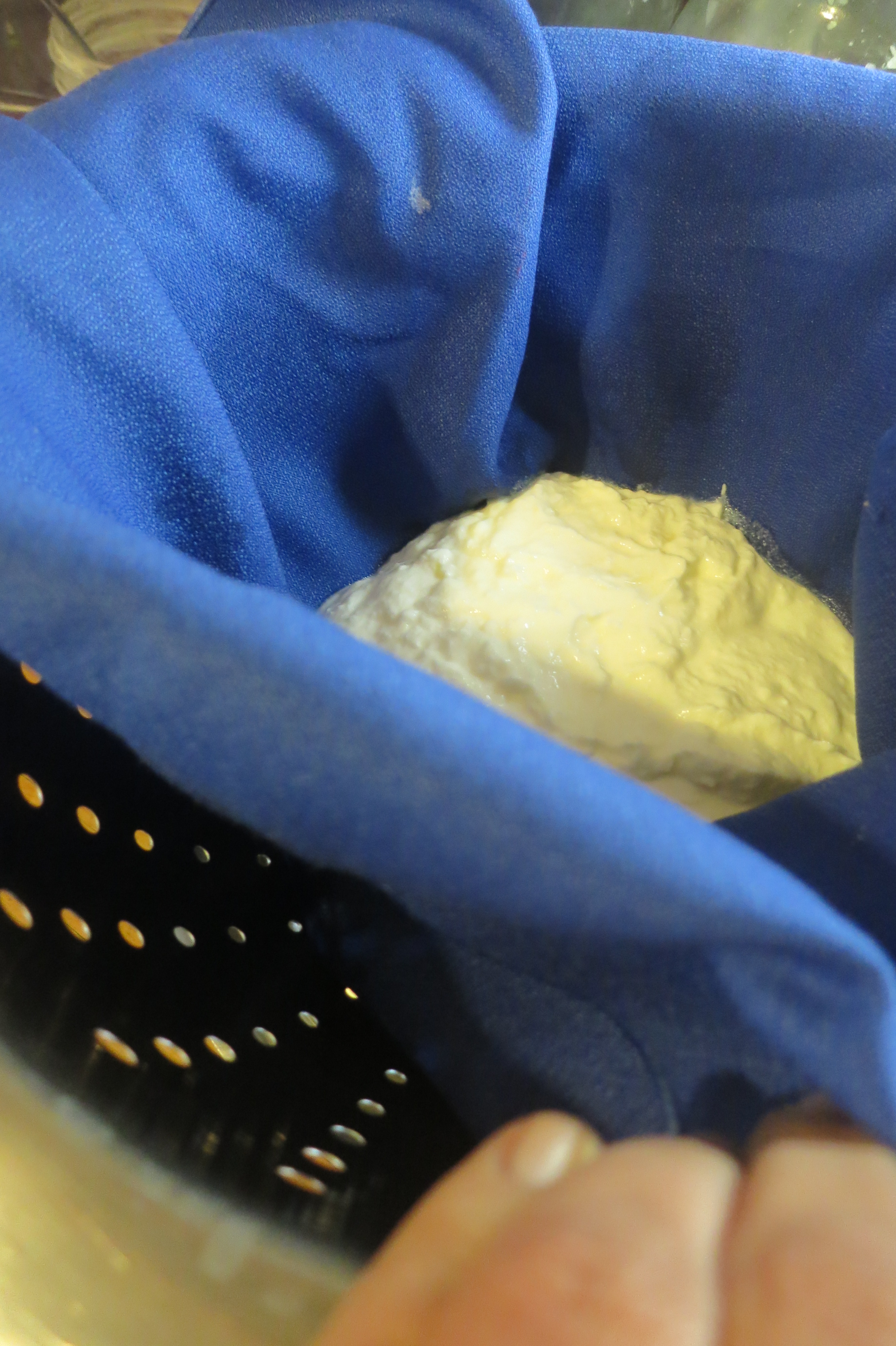
Common sour cream works beautifully for this dish, but I had milk to use up, so I made homemade cultured ricotta to use as the base.

021To make, gently heat any milk in a pot directly on the stove to almost boiling, add strained lemon juice a spoonful at a time, then stir and watch the tiny curds form and the whey turn translucent. (My milk was raw and apparently soured enough to form curds when heated without added acid.) Allow to cool to room temperature, add an envelope of “Bob and Ricki’s Sour Cream Culture” available in Tucson from Brew Your Own Brew.

Strain though a cloth napkin, incubate at room temperature for 24 hours (either hanging in the tied up cloth or in a covered dish). For a smooth texture, whip in a blender or food processor. Salt to taste and refrigerate.

When you add the Mole Verde powder to taste, it can be as spicy or mild as you like. Delicious on tacos or any savory dish where you would use Mexican crema.


Pescado en Mole Verde/Fish with Mole Verde

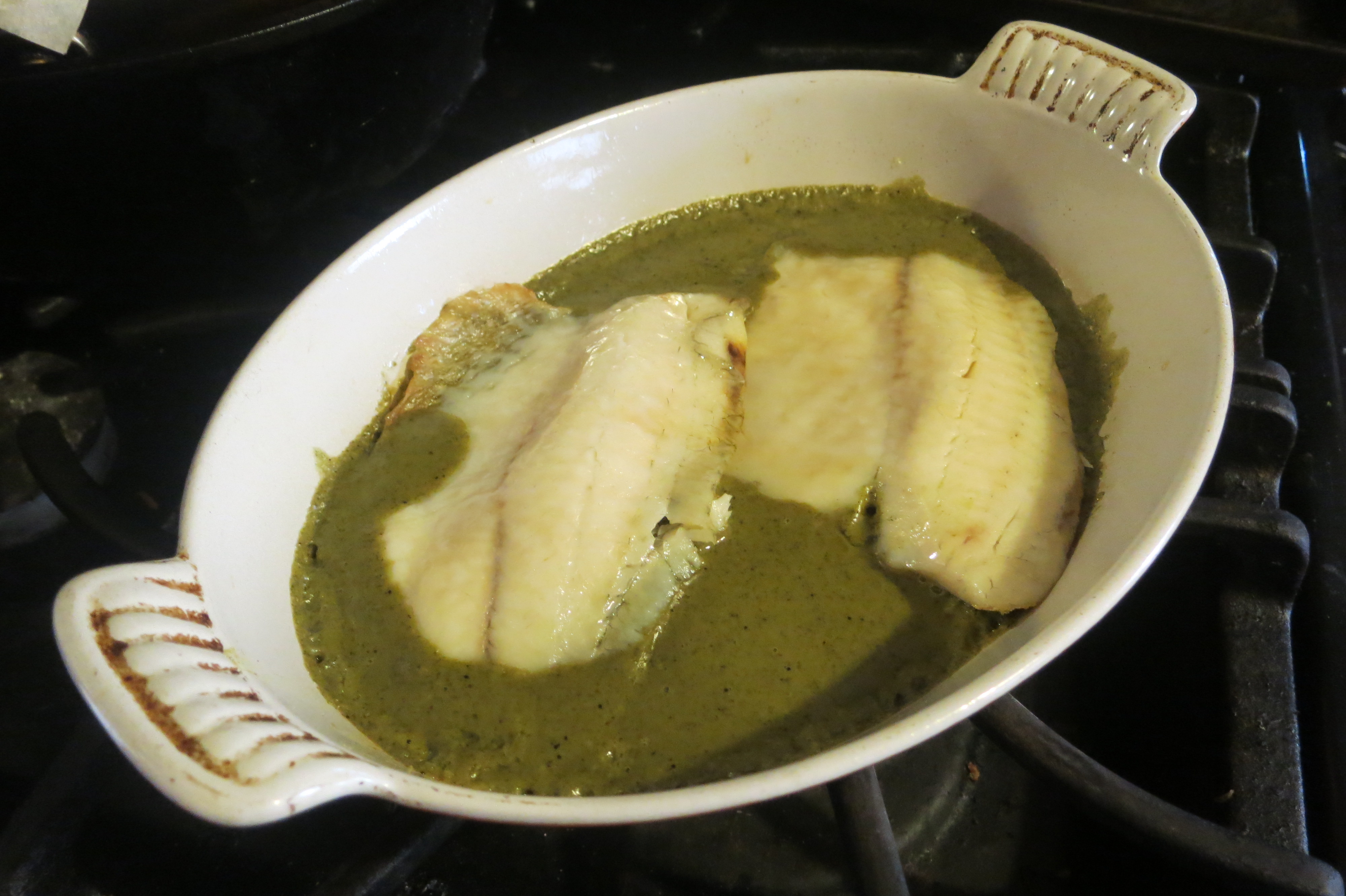
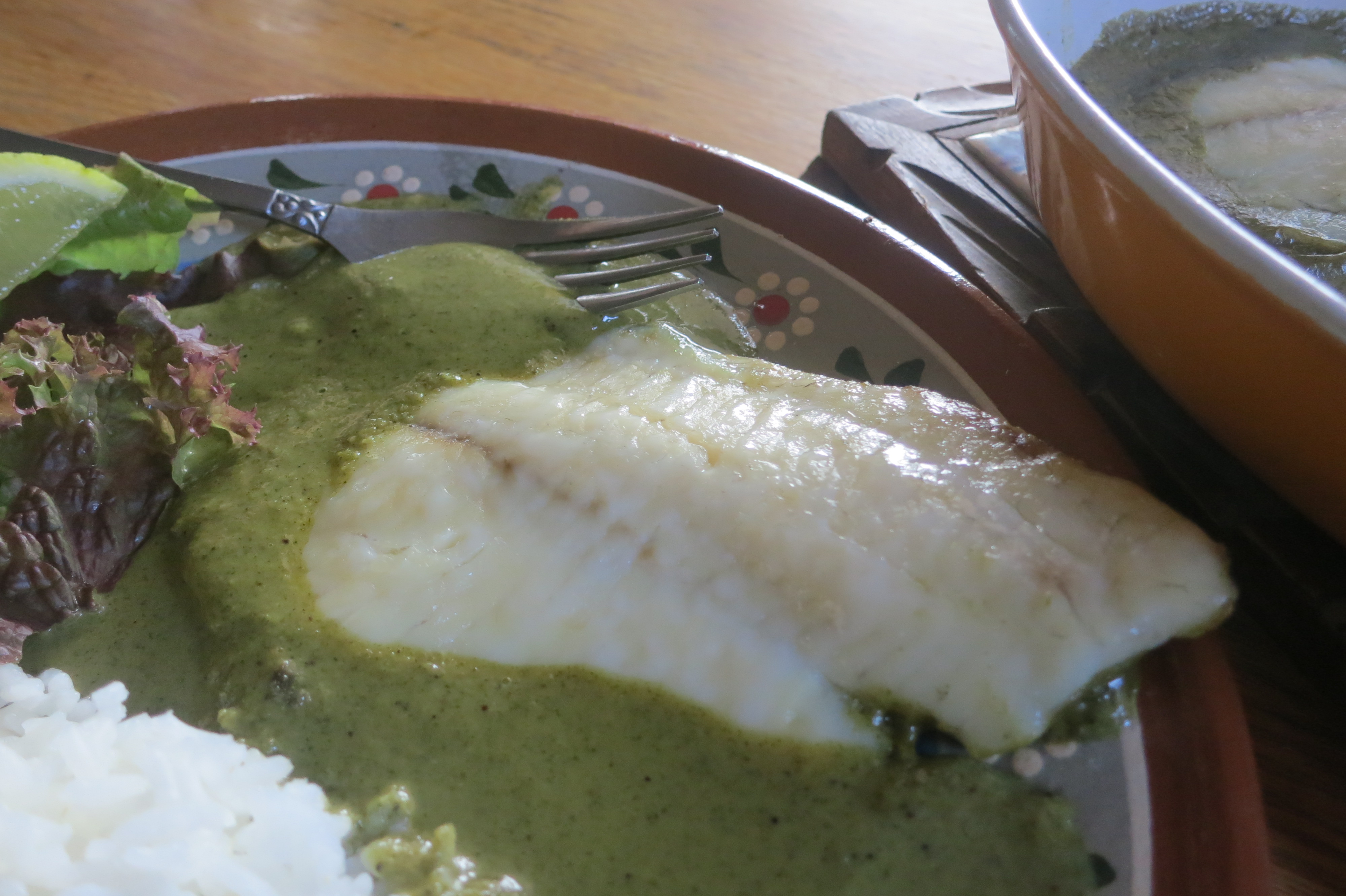
I’m waiting patiently for the tilapia to grow to harvestable size at a local school’s aquaponic system, so in the meantime, I purchase filets from the market. Simply oil both sides and bake for about 15 minutes at 400 degrees F. To make the sauce, put a couple tablespoons of chicken fat and one tin of Mole Verde powder in a saucepan, and stir until the paste is sizzling and fragrant. Add a cup of chicken broth and simmer until it thickens. (Any mild oil and broth can be used.) Pour over fish and return to the oven to keep warm.

001025
Mano Y Metate Mole Verde powder is only thickened with pumpkin seeds and sesame, where the other mole powders are thickened with organic corn tortilla meal and/or organic graham cracker in addition to other nuts and seeds. So Mole Verde makes a lighter sauce than the other moles, perfect for spring. It is spicy from roasted green Hatch chiles and jalapeno. The herbal notes are from parsley, cilantro and epazote. See Jacqueline’s excellent posts about each of those herbs.

014

Serve with plain rice, corn tortillas, and lettuce drizzled with lime juice. I had an anxious tester that doesn’t eat dairy, but I sometimes I add creama and a melty cheese to the sauce, reminiscent of Mariscos Chihuahua’s famous Filete Culichi.

krik

Have a good spring and enjoy the weather and wildflowers, and I’ll be back here in May.

Amy

ManoYMetate.com


Sweet Roasted Mesquite for a Happy Valentine’s

Valentine's Roasted Mesquite and Heirloom White Sonora Wheat Oatmeal Cookies

Valentine’s Roasted Mesquite and Heirloom White Sonora Wheat Oatmeal Cookies


[If only this were a scratch-and-sniff site….]

‘Tis the season for the sweetest, rarest, and heart-healthy mesquite treat of the whole year– Roasted Mesquite! During this relatively cool and occasionally soppy “wintery” weather, stored mesquite pods, which may have drawn in moisture from the humid air since harvesting last summer, can be roasted or toasted for ease of milling into a fine meal. The result is a transformation into something even sweeter than the already-yummy natural raw mesquite meal.


Tia Marta here to introduce you to Roasted Mesquite and to share some creative ideas for celebrating Valentine’s (and beyond).


When mesquite pods are roasted, their complex sugars burst with an almost chocolat-y bouquet. Roasted mesquite has hints of its “botanical cousin,” the carob, from the Near East (known as Saint John’s Bread in the Bible, as it fed St. John so well through his desert wilderness retreat). Those soluble complex carbohydrates that make mesquite such a heart-healthy food–giving sustained energy, helping with cholesterol, balancing blood sugar—come flavorfully to the fore when mesquite is roasted. Take note: all fitness fans, hypoglycemics, diabetic and gluten-free cooks! Roasted mesquite is a super booster-food especially for you. Its complex sweetness and its nutrition make it a gift for everyone you love.

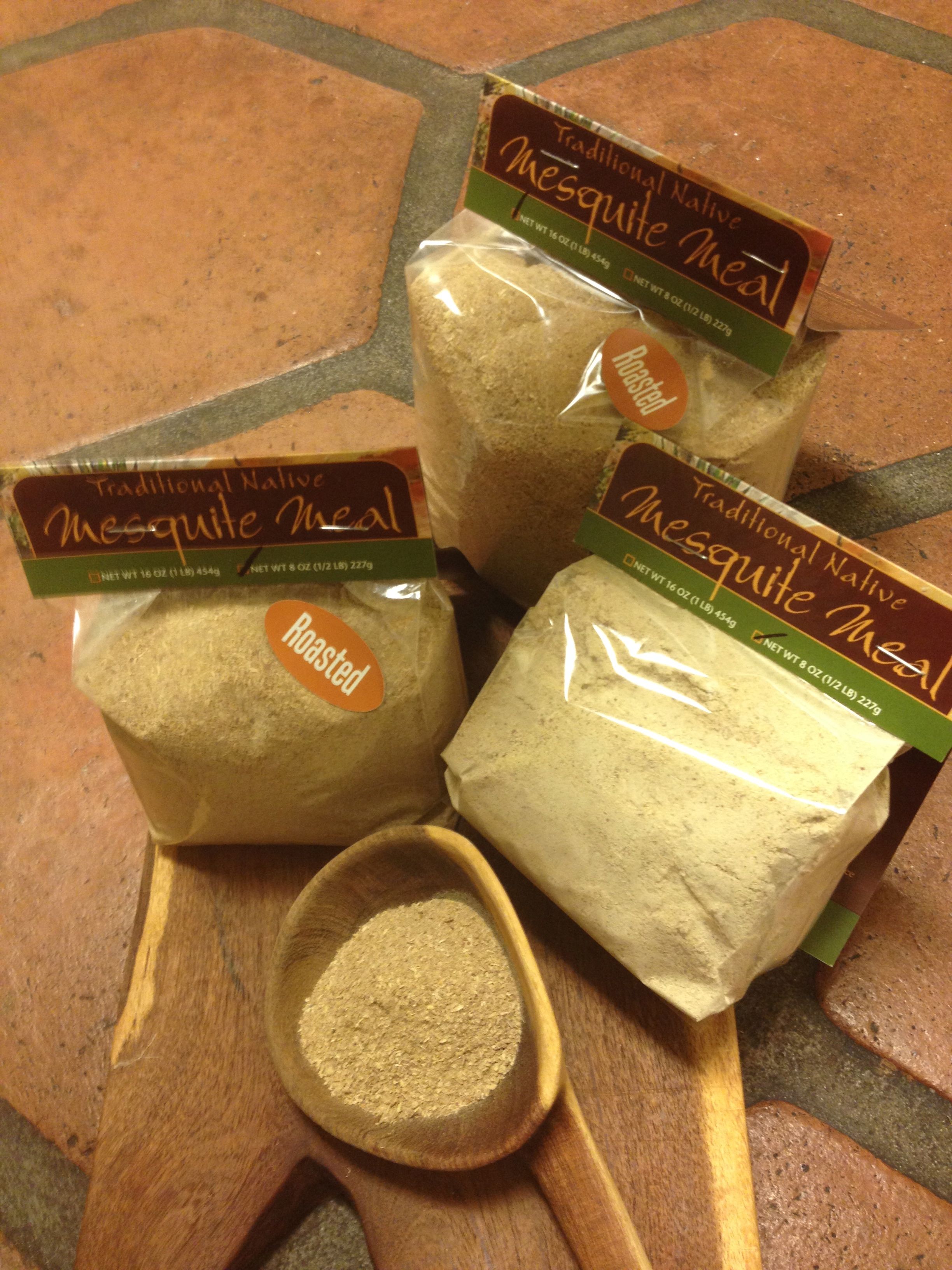
Comparing roasted mesquite flour and natural raw mesquite flour (MABurgess photo)

Comparing roasted mesquite flour and natural raw mesquite flour (MABurgess photo)

You can use roasted mesquite meal in so many ways. In addition to baking with it, the distinctive aroma and richness puts it into the category of seasoning or spice. Shake roasted mesquite through a big-holed spice shaker to jazz up bland dishes or for sprinkling atop coffeecakes, muffins, sundaes, custards, frapaccinos, salads….Yum, it is waiting for your inventions. I make a little mix of garlic powder, sea salt, and roasted mesquite meal, then put the combo in a shaker and keep it handy by the stove or on the table to sprinkle on about everything. Try it on your steamed greens or in quinoa. When corn-on-the-cob season rolls around, there isn’t anything better than my roasted mesquite salt dusted on it. (Mesquite orchardist and agriculturalist Mark Moody will have fresh corn with roasted mesquite at Flagstaff farmers markets this summer—don’t miss it.)

Add a tablespoon of roasted mesquite meal to any hot cereal. It does wonders for oatmeal. Mesquite is the tastiest of all nutritional supplements. Whatever you add it to, you know you are boosting flavor and nutrition—making hearts happier!

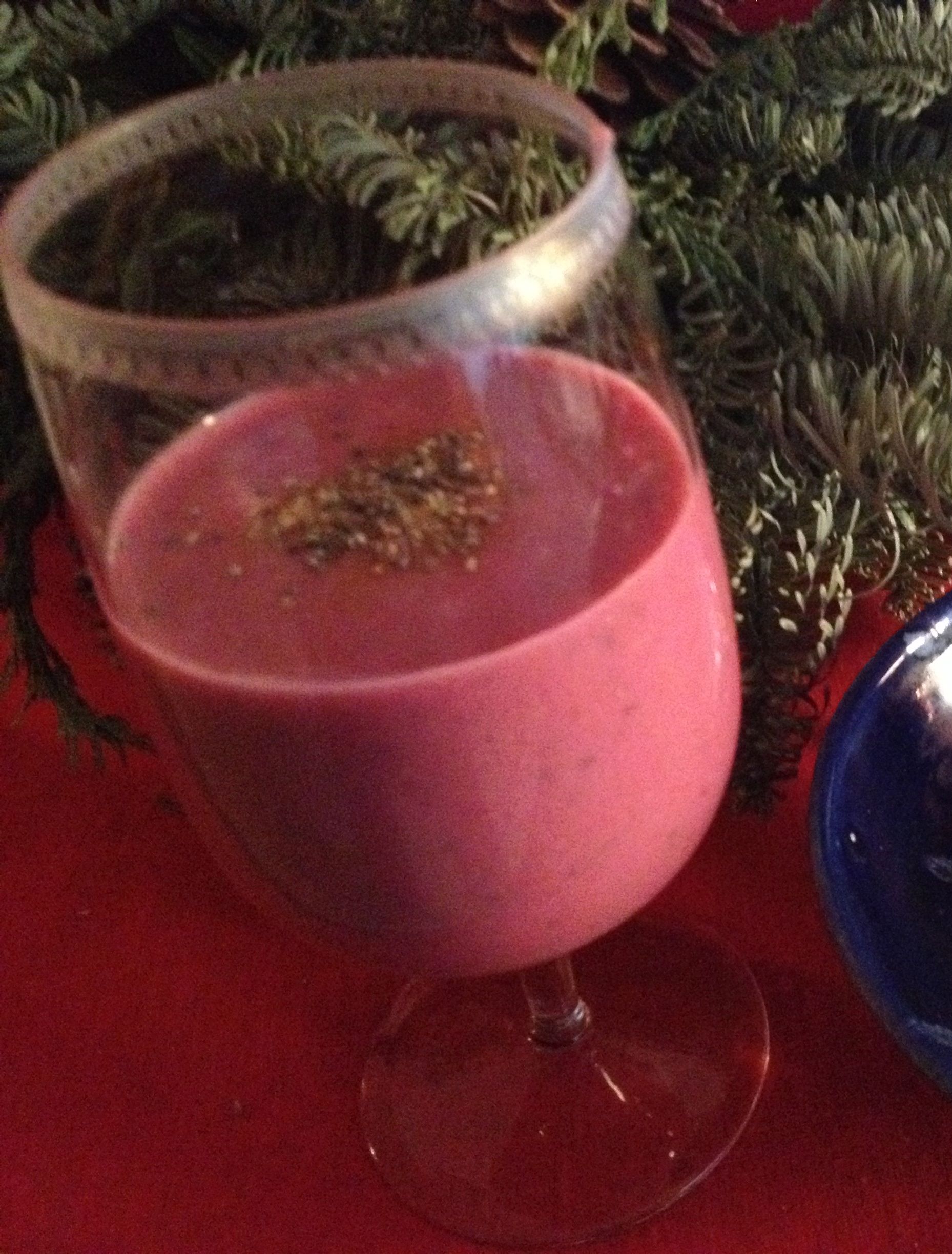
Taste the glorious nutrition of a roasted mesquite and berry smoothie! (MABurgess photo)

Taste the glorious nutrition of a roasted mesquite and red berry smoothie! (MABurgess photo)

Try this delectable and easy Desert Delight–Roasted Mesquite & Red Berry Smoothieso colorful it can make breakfast into a Valentine’s feast. So rich it can be a Valentine’s dessert served with a spoon. (You can double or triple this recipe for company):

Presoak: 1 Tablespoon chia seed in 1 Cup organic apple juice for a few minutes.

In a blender, mix:

1 cup organic plain or vanilla non-fat yogurt.

2 Tbsp. Roasted Velvet Mesquite Meal*

1 cup frozen raspberries or blueberries

2 Tbsp. prickly pear juice or nectar

your pre-soaked applejuice-chia mix

½ or whole ripe banana

1 Tbsp agave nectar (optional as desired for more sweetness)

A few ice cubes (optional as needed for chill or dilution)

Blend on medium ½ minute until smoothie is gloriously pink. Serve in parfait glass with a thin sprinkle of chia seed or pinch of roasted mesquite meal on top as a garni.

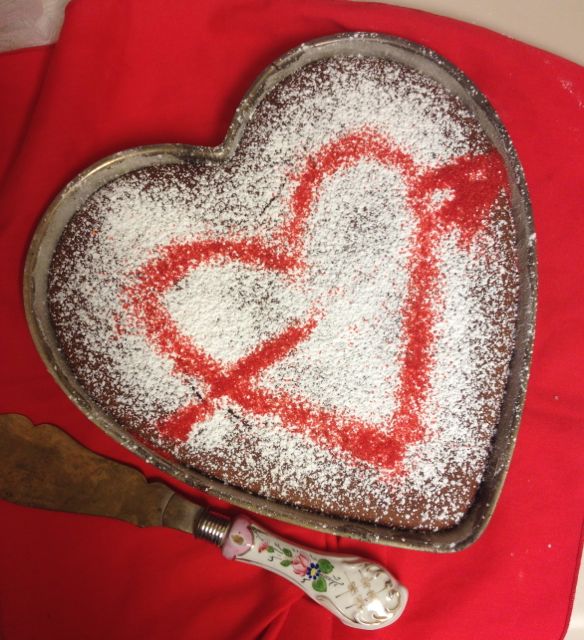
Valentine's gluten-free roasted mesquite/almond coffeecake (MABurgess photo)

Valentine’s gluten-free roasted mesquite/almond coffeecake (MABurgess photo)

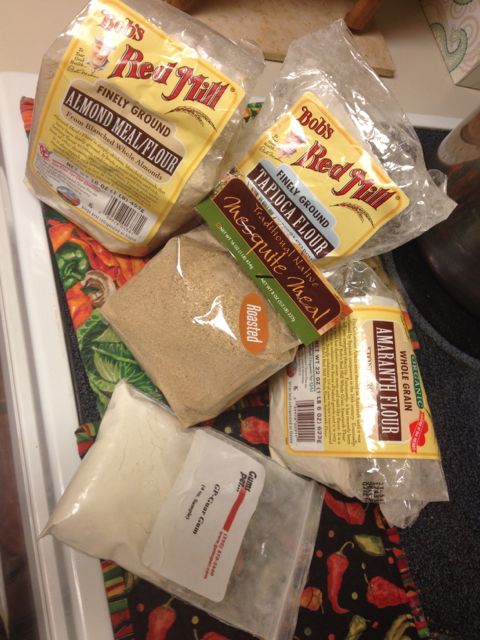
Ingredients for gluten-free roasted mesquite and almond coffeecake looks like an ad for Bob's Red Mill

Ingredients for gluten-free roasted mesquite and almond coffeecake looks like an ad for Bob’s Red Mill

And here’s a wonderful gluten-free recipe to share with wheat-sensitive friends:

Muff’s Gluten-Free Roasted Mesquite/Almond CoffeeCake:

(This is a heavier cake that sometimes turns out more like an energy bar when sliced.)

Preheat oven to 350 degrees. Lightly oil or butter an 8×8” pyrex baking dish and dust with rice flour.

Sift together:

½ cup Roasted Velvet Mesquite Meal*

¾ cup organic brown rice flour and/or amaranth flour

½ cup almond meal

¼ cup tapioca flour

2 tsp guar gum or locust bean gum (for leavening)

1 tsp baking powder

¼ tsp sea salt

Mix In:

¼ cup agave nectar

¼ cup canola or other cooking oil

¾ cup soy milk, rice milk, or almond milk

Beat separately then add in:

2 eggs

1 tsp vanilla extract

1 tsp almond extract

Pour into baking dish. Bake 25-35 minutes or more until cake tests done. Serve with thanks to the nutritious bean trees of the desert!

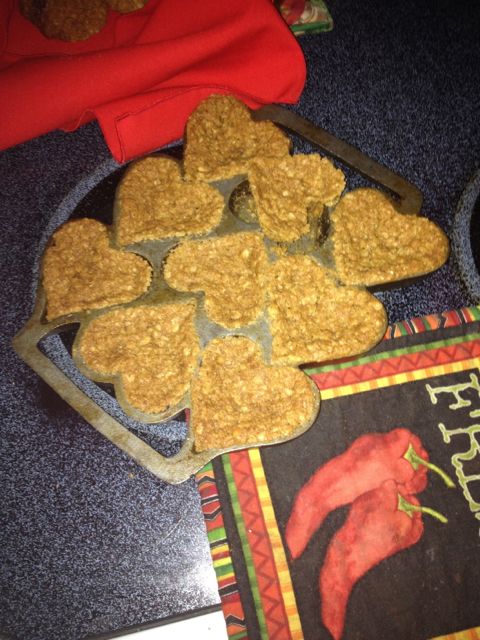
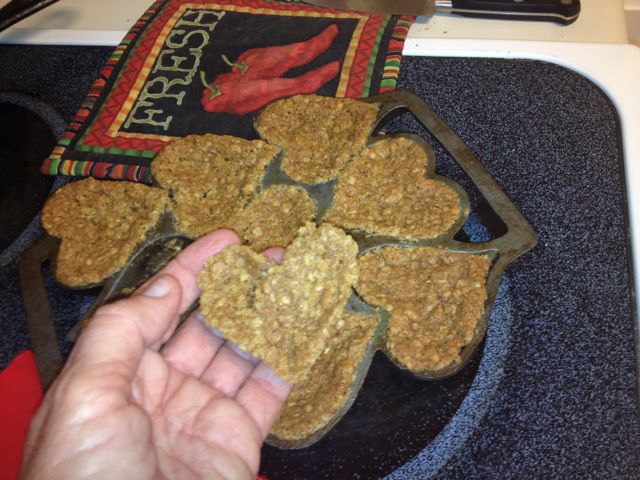
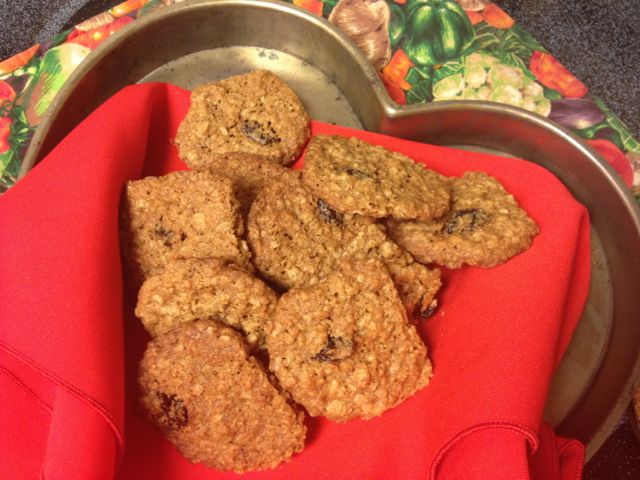
Roasted mesquite cookies in valentine iron pan

Roasted mesquite cookies in valentine iron pan

Roasted mesquite cherry oatmeal cookies

Roasted mesquite heirloom wheat & cherry oatmeal cookies

Now for a relatively “healthy” cookie try this celebration treat with roasted mesquite—

Muff’s Roasted Mesquite & White Sonora Wheat Valentine Oatmeal Cookies (with pinyones and dried red cherries to honor George Washington’s birthday too)—a great cookie for any time of year.

Preheat oven to 350 degrees.

Cream together: 1 cup (2 sticks) organic butter softened, ½ cup organic brown sugar firmly packed, and ½ cup organic white sugar

Beat in and mix until creamy: 2 eggs and 1 teaspoon vanilla

In a separate bowl, sift together: 1 tsp. baking soda, 1 tsp sea salt, 1 cup organic White Sonora Wheat flour**, and ½ cup Roasted native velvet Mesquite Meal*

Mix dry ingredients with moist ingredients until smooth.

Add, and mix in: 2-3 cups quick oatmeal (uncooked), ¼-1/2 cup pine nuts (pinyones) shelled, and ¾ cup dry cherries or dry cranberries.

Onto a well-greased cookie sheet, drop 1-tsp glops of cookie dough well-spaced. (You could use a heart-shaped mold or heart cookie cutter.) Press a dry cherry on top of each glop for décor.

Bake 10-12 minutes until barely golden brown, and enjoy the festive desert flavor of roasted mesquite with your Valentine!

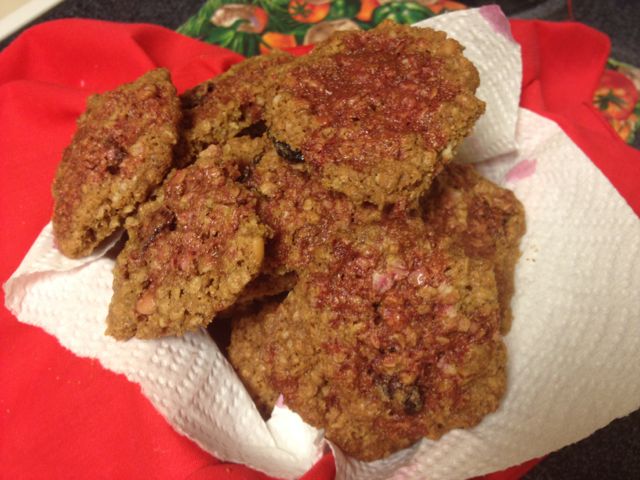
Roasted Mesquite and Heirloom White Sonora Wheat Oatmeal cookies droozled with prickly pear juice (MABurgess photo)

Roasted Mesquite and Heirloom White Sonora Wheat Oatmeal cookies droozled with prickly pear juice (MABurgess photo)

*For purchasing Roasted Mesquite Meal–seek and ye shall find. There are only a few places where you can source this seasonal culinary treasure, if you are not roasting and milling it yourself! Find it at the wonderful NativeSeeds/SEARCH store (3061 N. Campbell Ave, Tucson, www.nativeseeds.org). Our roasted mesquite is from native Arizona velvet mesquite, Prosopis velutina, grown and milled with the highest standards. For tastes, visit the Flor de Mayo booth on Sundays at St.Phillips Farmers Market (SE corner River Rd and Campbell Ave), or order at www.flordemayoarts.com via PayPal. It is also online at www.mesquiteflour.com and from the Prickly Pops booth at Thursday Santa Cruz Farmers Market.

**The special local ingredient for the cookie recipe above, heirloom White Sonora Wheat flour, is available at two Tucson locations. Several different grinds of Hayden Flour Mills’ heirloom flour is at the Native Seeds/SEARCH store. For super-fresh-milled “live” White Sonora flour, from local, certified organic whole grain grown by BKWFarms, you can contact Tia Marta by phone or email by the Friday before pick-up at Sunday’s St Phillips Farmers Market, along with the roasted mesquite meal.

For more ideas on how to cook with mesquite—roasted or natural–check out the recipe book Eat Mesquite! published by www.desertharvesters.org, and available at the NativeSeeds/SEARCH store. Visit www.bajaaz.org, the website of Baja Arizona Sustainable Agriculture, for more mesquite details.

Newcomers as well as confirmed “desert rats” can see the actual plants which produce the local ingredients of our Valentine Cookies—mesquite trees and heirloom White Sonora Wheat growing at our special Baja Arizona parks. See and appreciate them in their winter-spring glory at the Friends of Tucson’s Birthplace Mission Garden (base of A-Mountain, Saturdays), at the Arizona-Sonora Desert Museum, and in the ethnobotanical garden at Tohono Chul Park.

Enjoying roasted mesquite treats is indeed another way of rejoicing in the desert’s natural bounty, and of supporting appropriate, sustainable desert agriculture. Happy Valentine’s, and may your heart be happy cooking with roasted mesquite!—from Tia Marta and Rod at www.flordemayoarts.com.


On Emptiness, Filling, and Cups Overflowing: Chocolate–Chiltepin Cupcakes with Cool/Hot Frosting

IMG_9128

Aunt Linda here: Happy February ! The peak of February’s very gorgeous very Full moon was Tuesday.  Also easily visible with the naked eye, the planet Jupiter played flirtatiously around the moon for several days.

Today’s blog offers a little parable. So pour yourself a cup of tea, coffee, or whatever you prefer, and travel with me.

Once upon a time, during a moon such as this with Jupiter visible to the naked eye, in a land not so far away ….   a pilgrim, or a seeker, or a soldier, or an emperor, or someone just like you and me, crested the peak of a mountain having finally found the Wise One.  After many moons of seeking this particular Wise Person, the seeker arrives with high hopes of learning what they had so dearly yearned to learn.   They were in Search of Answers.

“Ah”, said the Wise One, “sit down and let us talk over some tea”. So, after warming the water and preparing tea, the Wise One began to pour the liquid into the cup of the One in Search of Answers.

The Wise One poured.

And poured.

And poured.

Until the tea cup overflowed. Spilling onto the table, the floor, the person.

IMG_9125

In some versions of the story, the more polite seeker, is startled, and exclaims: “Teacher! Perhaps you have not noticed that my cup is spilling over!”.  In another version, the tea spilled onto the robes of the (not so polite) emperor, who becomes angry, chiding the Wise One for ruining his robes.

In each version, the reply of the Wise One is the same:  “There is no room in the mind of the seeker, for the wisdom he/she says he wants, and has searched for for so many years. Emptiness, whether mind or cup, is needed before new insights can be received”. Being filled with opinions, speculations, habits of mind,  hinders the ability to take in of fresh insights/knowledge.

Temple Grandin ran into this phenomena in the world of animal husbandry. Having discovered extremely practical wisdom about how to work with large animals more efficiently and calmly. She developed methods that significantly decreased the stress on both animal and human, and other methods that significantly increased efficiency. Her ideas were practical. Her ideas were “humane” and efficient . They offered ranchers and industry alike, to save money.

And they were met with “full”-on resistance, if you pardon the pun.

Rolling forward in time, the vast majority of ranchers, have integrated some if not all of her ideas of moving animals. Corrals and shoots have been redesigned. Transportation trailers for horses were redesigned (diagonal facing not front facing) . It goes on and on.  But before the “industry” could take in all this animal-human wisdom “it” had to empty It’s mind of preconceived ideas.

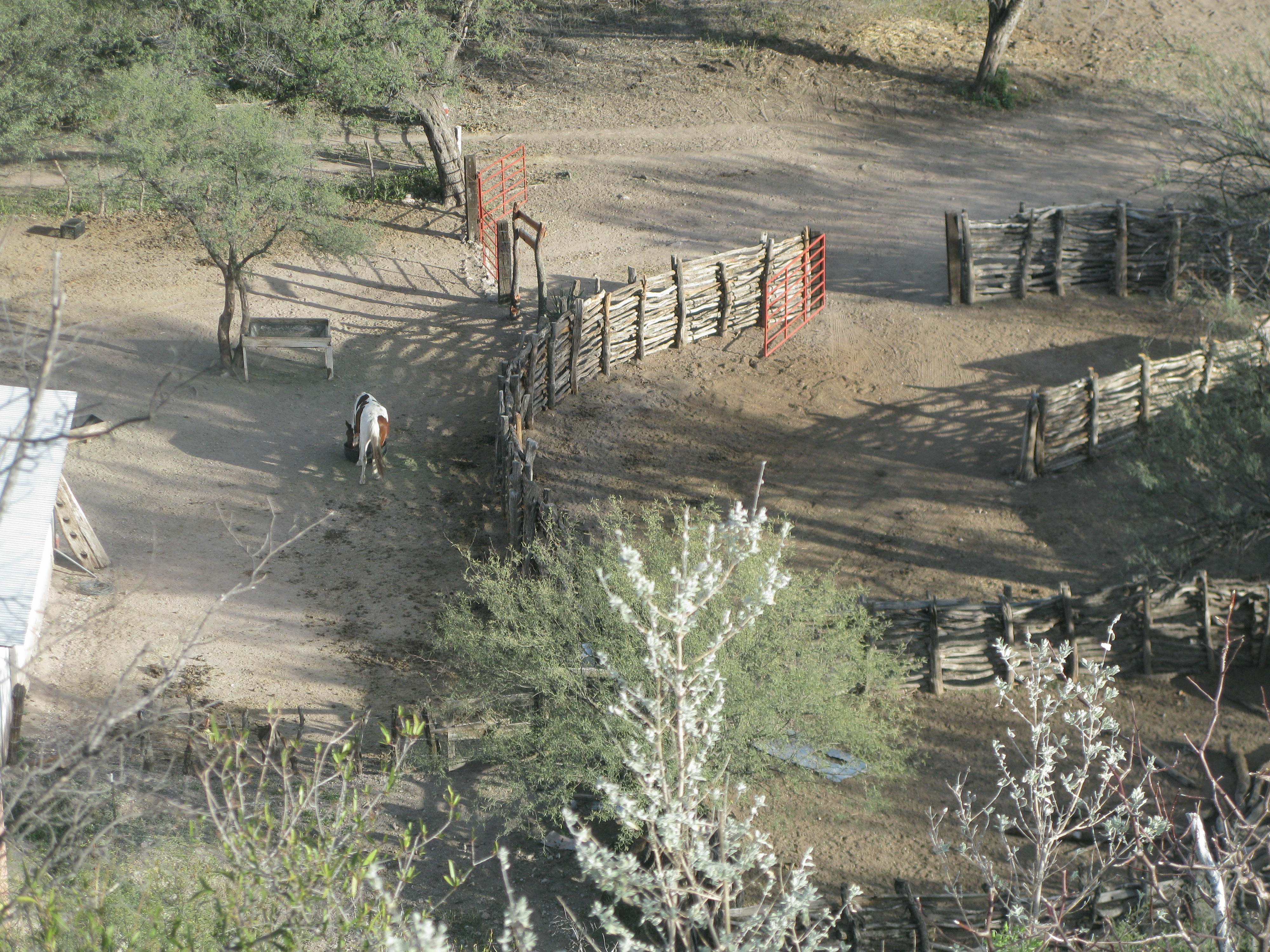
IMG_4614We redesigned our corrals. No more box shapes with corners. Curves allow flight animals such as cows and horses to feel safer and move as they would in the field.

On a personal level, when my mind is “full” of worry, I can sometimes miss the more innovative solutions available to me. Conversely, when I empty my mind enough, life gets easier. For me, “easier” is simply more practical.

One example from the week: I discovered a nest of baby mice in the feed bin this week.   I immediately felt stress. TO be clear, I am not “anti-mouse”.  I am just “anti-TOO MANY MICE that it becomes unhealthy”.  An occasional mouse is not uncommon around poultry, and the “girls” (the chickens themselves) or a king snake take care of them. Until recently, our cat was a good “mouser”, but she is 20 years old now and no longer on the job. So this issue of mouse nests is a new dilemma for me. I do not want unhealthy mouse droppings around the hens and eggs. I do not want mice eating the feed, and bugging the chickens all night long, as they nibble here and there. Follow the trail of mouse poop and you will be amazed at what acrobatics they are! I hate to use poison for a variety of reasons, one being fear that a predator such as a hawk or neighbors cat could be poisoned itself if it eats the bait-ridden mouse. And baby mice, despite knowing all of the above, are just so cute. I don’t Want to kill them!

IMG_9080

Adorable for sure, this nest of baby mice is nevertheless not welcome in the hen house.

I was full -on- fretting.  No space for innovative solutions to present themselves. Deciding to relax my mind, I went for a walk, switching mental channels from a litany of methods of killing mice, none of which I liked … to a question… How does Mother Nature do it?  Mice have a plethora of babies, presumably because there are a plethora of animals that eat/need those mice. What eats mice? Snakes came to mind. ( Just as I am not anti-mouse, I am not anti-snake either. All have their place. It is BALANCE that I am looking for). I sent out a text (modern world) and within minutes had a Python present itself. Then another snake owner said she was looking for a good source of mice for her reptile. Later this afternoon, a litter of mice, will be delivered to a Python. And I will be rid of the “seed” stock of multiple generations of mice. Whether or not the snake-owners will raise the mice and feed them as needed, or freeze them for later feeding, I do not know. Stay posted.

The Recipe:

Chocolate-Chiltepin Cupcakes with Cool/Hot Cream Cheese Frosting

IMG_7799

IMG_9137 IMG_8168 I Love the sensation(s) on my tongue as the cool of the mint in the frosting meets the heat of the chiltepin! And while it is my “go to” cupcake recipe all year long, it might be a Very fun Valentines Day treat, what with the Chocolate/Chile combination as well as the sensual mint-chile interaction.

Ingredients for Cupcakes:

1 Cup Milk (cow, almond, rice, coconut, etc)

1 teaspoon apple cider vinegar

¼ cup honey (local honey if you can; it is good for you and your local beekeepers)

½ cup oil of your choice

1 teaspoon vanilla extract

1 cup unbleached all purpose flour

1/3 cup cocoa

¼ teaspoon dried and crushed chiltepins, seeds removed if desired.

¾ teaspoon baking soda

¾ teaspoon baking powder

¼ teaspoon salt

How to:

Preheat your oven to 350 degrees and line 12 cupcake cups with paper liners.

Whisk together the milk and vinegar and in a large bowl and set aside to allow time to curdle. Once curdled, add the honey, oil, and vanilla extract and blend well.

Sift the dry ingredients together and slowly add to the wet mixture, stirring between additions. Divide batter among the cups, filling each about ¾ full.

Bake in preheated oven for 18-20 minutes.

Once the cupcakes have cooled, you can frost them with the Cool/Hot Cream Cheese Frosting that you have made while the cake-lets were baking. 

Ingredients for Frosting:

2, 8-ounce packages cream cheese, softened

2 tablespoons unsalted butter, softened

1 teaspoon vanilla extract

1 teaspoon mint extract

1 teaspoon chocolate extract

1 tablespoon cocoa powder

¾ cup powdered sugar

1-2 tablespoons milk (cow, nut, coconut etc)

¼ teaspoon dried and crushed chiltepins. Note: leave seeds of you are going to eat promptly or want the heat to remain stable. Remove seeds if you will be eating frosting in a few days and do not want the “heat” to increase. The “heat” from chile comes from the oils on the seeds, and with time, the heat will “grow”. Experiment and see what you prefer!

12 springs fresh mint – for an edible garnish atop the cupcakes.g

How to:

Combine all the ingredients except the fresh mint in a food processor bowl and mix well until combined. Add just 1 tablespoom of milk to begin, adding the rest by teaspoons if you want to thin the mixture.

IMG_8170

Frost the cupcakes; top each cupcake with a small sprig of mint for an edible garnish.

More Ideas for Wild Dates in Borderlands Towns

Washingtonia filifera near UA main gate (R.Mondt photo)

Our native fan palm, Washingtonia filifera, near UA main gate.  Original seed from Arizona’s KOFA Mountains.   (R.Mondt photo)

Yes, we can delight in the most fabulous wild dates right here in Baja Arizona. We don’t have to put out lots of energy into finding these tasty little morsels because they are now all over the urban landscape. Once, in olden times, they were confined to oases, but now they line every old neighborhood street in low-desert towns. Harvest at the right time and enjoy their bounty.

Our Native Fan Palm Washingtonia filifera, UA photo (Note the stout trunk)

Our Native Fan Palm Washingtonia filifera, UA photo (Note the stout trunk)

Tia Marta here to continue our culinary explorations of native fan palm fruit. Our street sentinels are more than vertical shade.  They bear other surprising gifts. Our so called California fan palms (“palma taco”) offer tiny sweet and plentiful fruits (the size of a plump pea), and were harvested and relished by Native People of the Sonoran and Mojave deserts long before Hispanics brought date palms (the pinnate-leafed palms) from the Old World.

Washingtonia robusta in a S.Tucson landscape

Washingtonia robusta planted in a S.Tucson landscape

When ripe in summer into fall, zillions of fruits hang from pendulous stalks of Washingtonia filifera, with 20 pounds or more of the little buggers in one cluster—talk about prolific! As mentioned in my blog-sister’s post two weeks ago, Carolyn and I were challenged by renowned ethnobotanist Dr Richard Felger to try our hands at creating some “contemporary” recipes for this ancient and well-adapted desert food—which is now disregarded as nothing more than a columnar street planting. We know from ethnographic accounts (see them summarized in Wendy Hodgson’s Food Plants of the Sonoran Desert, UA Press, 2001) that for the Native Cahuilla of Southern California, the fan palm meant survival—a staple in their diet, used both fresh or dried and ground, hard seeds and all, into a flour for cooking or griddling. Another ethnobiologist friend Dr. Amadeo Rea (1997) documented Pima children collecting fan palm fruits as snacks. Dr. Felger intends now to bring this native palm back into new, appropriate use as a sustainable desert food crop.

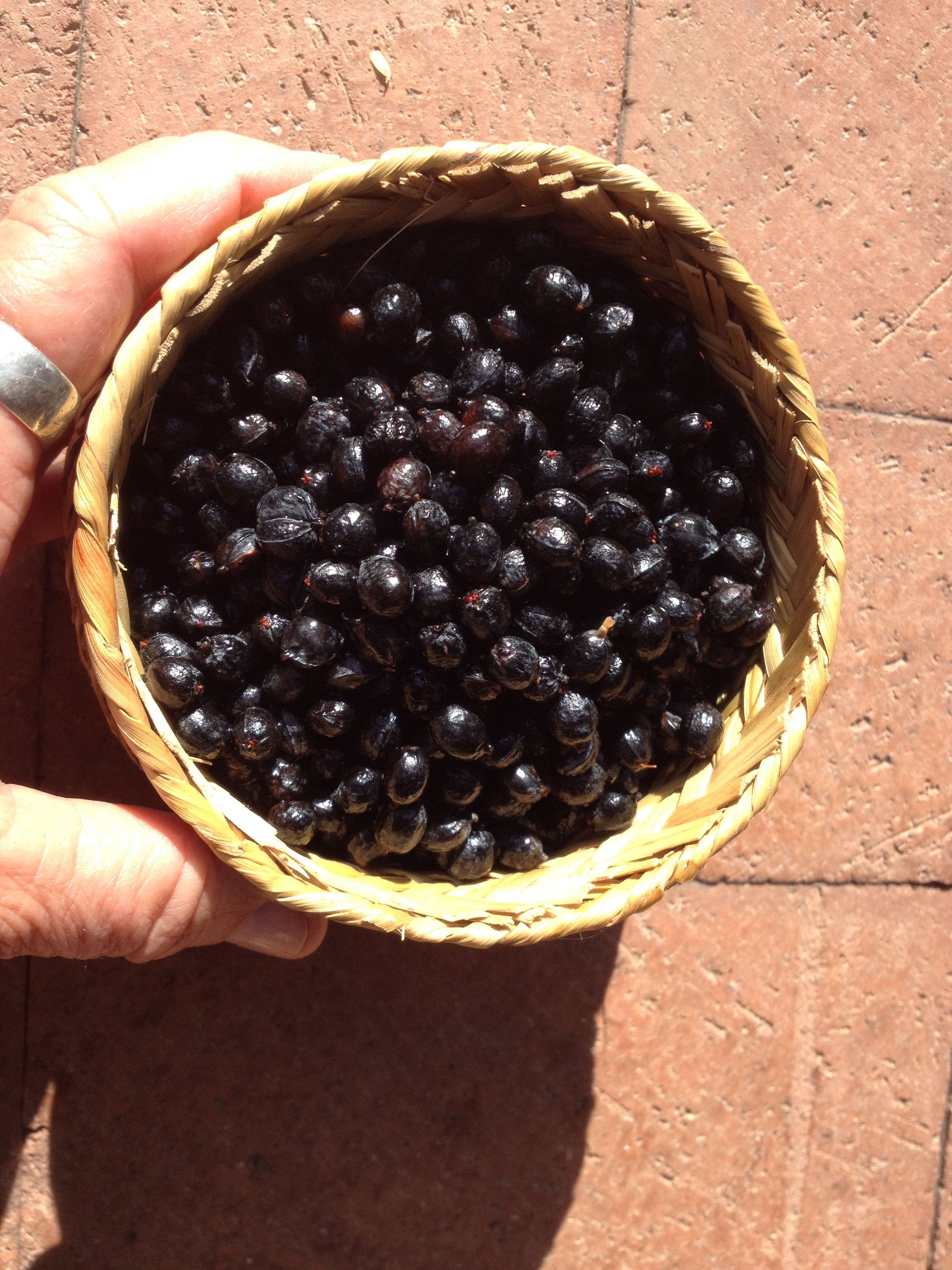
Fruits newly harvested from the California fan palm Washingtonia filifera (MABurgess photo)

Fruits newly harvested from the California fan palm Washingtonia filifera (MABurgess photo)

Washingtonia fruit is mostly seed, but the small amount of pulp has a group impact (MABurgess photo)

Washingtonia fruit is mostly seed, but the small amount of pulp has an impact in numbers (MABurgess photo)

Harvesting the high hanging fruit clusters proves challenging. Native harvesters used a lasso. More recently some harvesters fit a sharp can lid to the end of a pole to cut off the entire fruit stalk. A Tohono O’odham saguaro harvesting kuipaD might suffice—or a long-poled tree-trimmer—both worth a try.


In addition to their success as hot-desert food producers, both fan palms native to southwest North America, Washingtonia filifera (the stout, shorter one) and W.robusta (the super-tall, spindlier one), provide excellent nutrition. It has been estimated that one fan palm’s fruit could sustain one human’s nutritional needs for more than 200 days! Get a load of these figures from James W. Cornett (Principles Jour.Internat.PalmSociety,1987):  Protein 3.1%, Carbs 77.7%, Fiber 10.4%, Calcium 110 mg per 100g, VitaminA(Carotenes) 180mg per 100g.  Comparing these wild date nutritional figures with the commercial date palm (Phoenix dactylifera), our wild fan palm is way ahead on all counts except carbs (carbs 94.1% in standard dates).

Washed and drained fruits of Washingtonia filifera ready for snacking! (MABurgess photo)

Washed and drained fruits of Washingtonia filifera in Tarahumara sifting basket, ready for snacking! (MABurgess photo)

Since the fruits of W.robusta (the tall one) are even tinier than W.filifera, I chose to do my foodie experiments with the latter one’s “bigger” datelets–both small.  Fruits of both are mostly seed, a stony seed surrounded by a thin layer of sweet skin and dry, date-like pulp. Here are two fun ideas I’ve come up with for using fan palm fruits, which can be done easily in any kitchen or patio. These ideas also might present interesting potential for commercial-scale food production. (I hope our wonderful local companies like Cheri’s Desert Harvest are listening to the significance herein!)                 So, here’s my first idea–really in three delicious parts:

Simmering fan palm fruits

Simmering fan palm fruitsSolar Fan Palm Syrup, Datil Molasses, or Datil Candy

SOLAR FAN PALM SYRUP

Directions:

Wash thoroughly and drain 4 cups desert fan palm fruits. Place in a saucepan with 8 cups drinking water to cover fruit well. On stove-top, gently simmer the fruits for at least 30 minutes, (if using solar oven, make it 1 hour). Add more drinking water to keep fruits covered. Let cool and stand in refrig for 1-3 days. This process is bringing out the complex sugars into solution. Again, when you have a little time, bring back to simmer 15-20 minutes. Taste the liquid. It should be deliciously sweet with a rich, almost smokey bouquet—but still thin. With a sieve, decant the sweet liquid from the cooked fruits, saving the fruits aside.

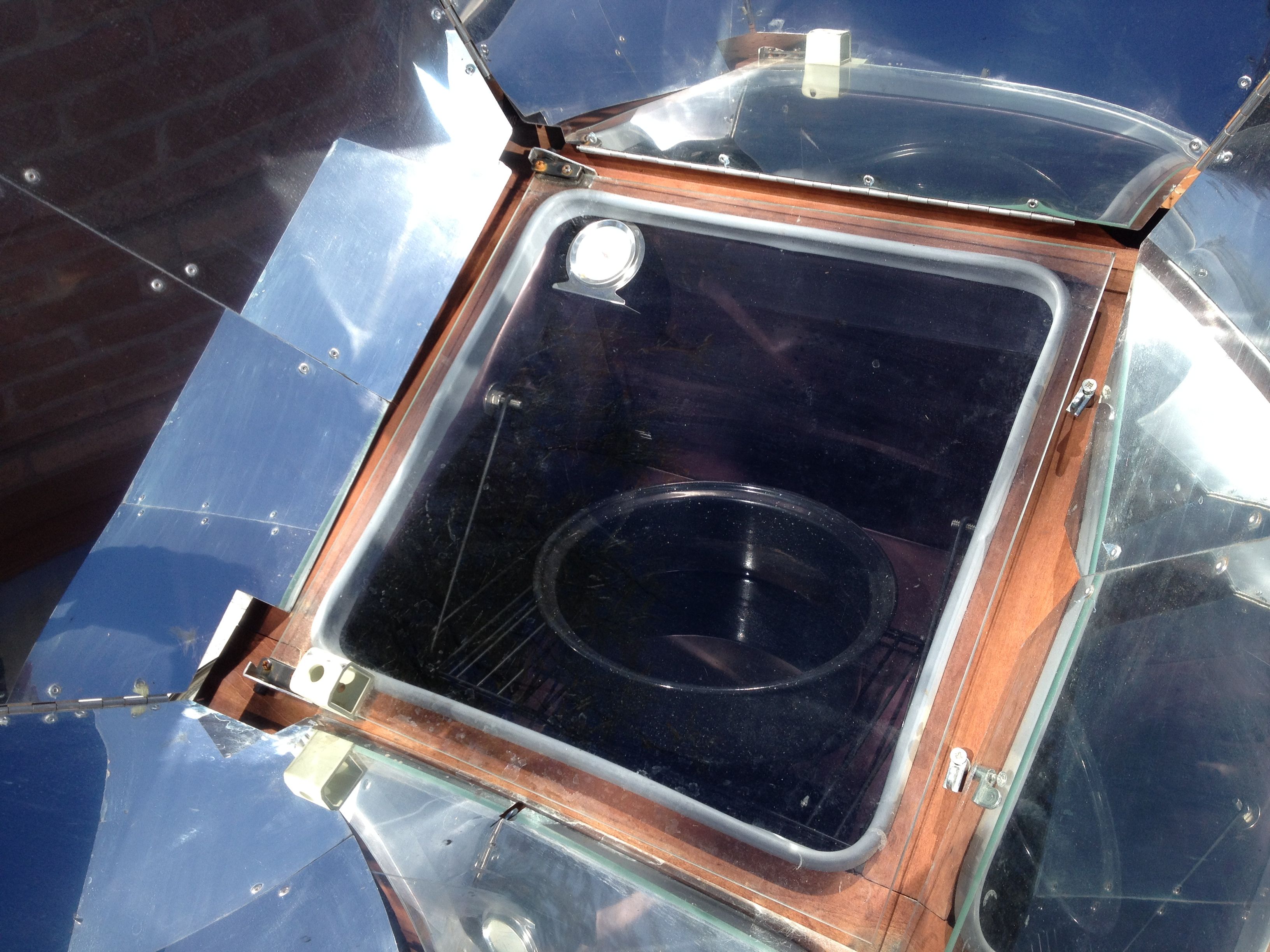
After sieving out the simmered fruit, the liquid is being concentrated in a solar oven with oven cover slightly open to release moisture (MABurgess photo)

After sieving out the simmered fruit, the liquid is being concentrated in a solar oven with oven cover slightly open to release moisture (MABurgess photo

[Here is where my experience reducing thin saguaro fruit juice kicked in. I knew that this thin, sweet liquid from the fan palm dates had to be cooked down slowly.]

Pour the juice into a solar-oven-worthy pan and put in preheated solar oven—without a lid on the pan. Let the glass cover of the oven be slightly open to allow steam/moisture to escape. Check after 15 minutes. If syrup is desired, check for correct syrup consistency.  Keep heating until thickened to pourable syrup.  Then, try this wonderful and healthful solar syrup over mesquite pancakes for the ultimate Southwestern breakfast!

Concentrated Solar Fan Palm Syrup--nothing added--just water and fan palm fruit!  (MABurgess)

Concentrated Solar Fan Palm Syrup–nothing added–just water and fan palm fruit!  Come taste it at the StPhil’s farmers market!(MABurgess)


“DATIL SYLVESTRE” MOLASSES

With more time and further moisture reduction, there are more delicious options….. Here’s one:  For the best, richest “Datil Molasses” you ever tasted, let the liquid cook down for another 45 minutes or an hour (depending on sun intensity).  Be careful not to overcook, which might leave a sweet glue on the bottom of your pan. (The same reduction of liquid can be done of course on the stove-top or over a fire, like reducing maple sap, but hey, this is a desert product. We’ve got our fuel overhead! Let’s use it.)

“DULCES DE DATIL SYLVESTRE”

Carrying the process of concentrating the syrup yet another step further…If an even more chewy candy is desired, you might use the concentrated sweet molasses in a candy mold or for gelling like a fan-palm gummy bear.

Here’s another totally delightsome, exotic yet simple idea for maximum pleasure from fan palm fruits…..

DESERT OASIS CORDIAL

Wild Fan Palm Liqueur (MABurgess photo)

Wild Fan Palm Cordial (MABurgess photo)“Desert Oasis Cordial”

It takes about 4-5 weeks to make this rich cordial liqueur, so plan ahead. With a fall harvest of wild dates you could start making your Desert Oasis Cordial by Thanksgiving and have it ready for Christmas-time celebrations. But don’t wait—when the fruits are ripe, go for it.

This is how I did it:

Wash, wash, wash and drain at least 2 cups of ripe native fan palm fruitlets (W.filifera), enough to pack firmly into a mason jar.  Into the packed jar, pour vodka of your choice, filling all the space between the little fruits to the brim to cover them. (You could use tequila or EverClear for differing degrees of delight.)  Screw on lid and place jar in a cool dark corner of your kitchen, where you can be reminded to agitate it. After a week, open it and add more vodka to cover fruits, as the fruit tissue will have absorbed some of the alcohol. Shake and turn over the closed jar every week.  For the herbalists among us, you will recognize this process is basically tincturing the wild dates. After 4-5 weeks, decant (i.e. separate) the liquid from the fruit. The decanted liquid will be a rich dark chocolate brown color like Godiva liqueur only translucent. Taste it and serve sparingly in small cordial glasses. Store any remaining liqueur in a closed decanter for the next festive occasion.

W.filifera fruit AFTER tincturing and decanting makes a fabulous alcoholic treat (seeds to be discarded)

W.filifera fruit AFTER tincturing and decanting makes a fabulous alcoholic treat (seeds to be discarded) (MABurgess)

Decanting the marinated fan palm fruits from the liqueur (MABurgess)

Decanting the marinated fan palm fruits from the liqueur (MABurgess)

After both your Fan-Palm Syrup-making and your Desert Oasis Cordial-making, you will have delicious fruits left over in the straining or decanting process.

Don’t forget the simple joy of snacking on little fruits, doing the pulp-from-seed separation maneuver with your tongue and teeth. Move over, sunflower seeds!  The boiled fruits after syrup-making are still tasty.  Better still–the vodka-soaked wild dates give an extra kick, so don’t overindulge.

Both can be briefly quick-whirled or mashed in a blender, meat grinder, or CuisinArt to begin the process of separating the remaining pulp from the hard seeds.

After decanting the cordial, remaining fruit is whirled and put thru colander to separate pulp from seeds

After decanting the cordial, remaining fruit is whirled and put thru colander to separate pulp from seeds

[If someone has a good idea of how best to separate seeds from pulp easily, please share it!] Fruit leathers, energy bars, jams, “datil newtons”, spreads, supplements—there are SO many ways the remaining fruit pulp could be used, so that none of the nutrients and fiber need go to waste. Even the hard seeds could be parched and ground into a nutritious flour—as Native People did in earlier times, to their advantage.


"Desert Oasis Cordial" from wild fan palm fruits (MABurgess photo)

“Desert Oasis Cordial” from wild fan palm fruits (MABurgess photo)

BTW, after snacking on Washingtonia fruitlets, be sure to check your smile in the mirror for black flecks of the yummy pulp between your incisors.  I can see it now—the next fad question after “Got milk?” will be “Got datil?”  That could make for a wild date experience. Enjoy!

For a taste of the native fan palm fruits, come by our Flor de Mayo booth at Sunday’s St Phillips farmers market, 9am-1pm. There we also have a demo of solar-oven cookery in action.  The cleverly designed solar ovens are for sale from us with a discount and no shipping costs. We’d like to see every household in Baja Arizona equipped with a solar oven for emergencies as well as for sustainable living.

You can find the perfect makings for the pancakes to eat with your Solar FanPalm Syrup for that Southwestern breakfast–mesquite flour and heirloom White Sonora Wheat flour— at the Native Seeds/SEARCH store (3061 N Campbell, Tucson) and at Flor de Mayo’s booth at St Phillips farmers market.  See you on Sunday! Have your taste-buds ready for a wild date.

Onion Planting Time!

allium BUR HPIM0665

The Southwest is ideal for gardening all year long.

Jacqueline Soule with you here to share some timely planting tips.  Speaking as a gardener – one of the best things about living here in the Southwest is that every month is the month to plant something! Right now, in these cool months with short days and long nights, it is time to plant onions.

If you have never before had a vegetable garden, onions are a great way to start. Of all the garden vegetables, they are tolerant of abuse and forgiving of mistakes. In the ground, in large or small pots, under the shrubs in the front yard of your HOA home (the weed-police are mollified by “bulbs”), wherever you have a little space you can plant some onions. As long as we get rain every ten days, you may not even need to water them. Onions fresh out of the ground have so much more flavor you owe it to yourself to try them.

allium I'itoi BUR HPIM0664

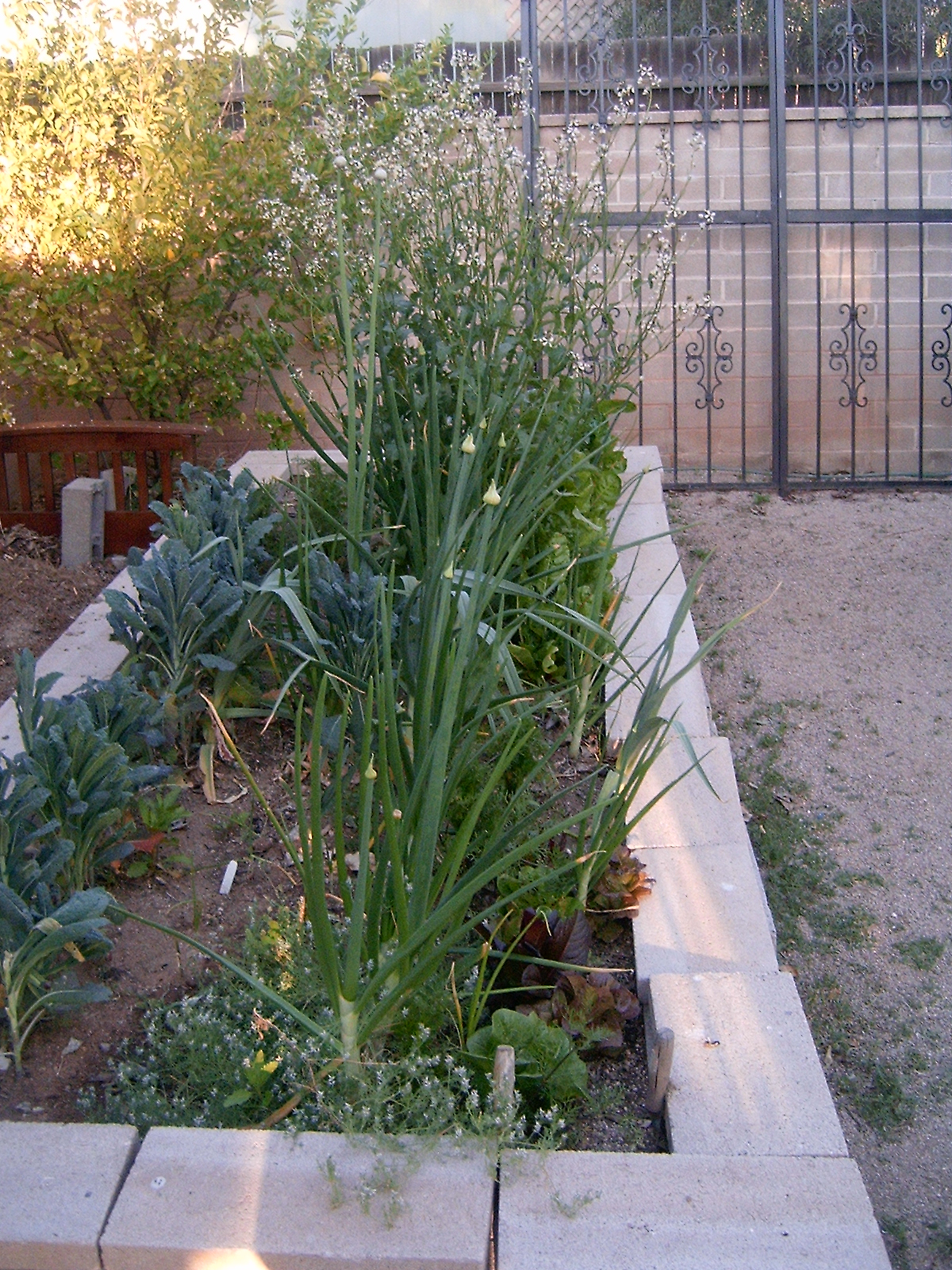
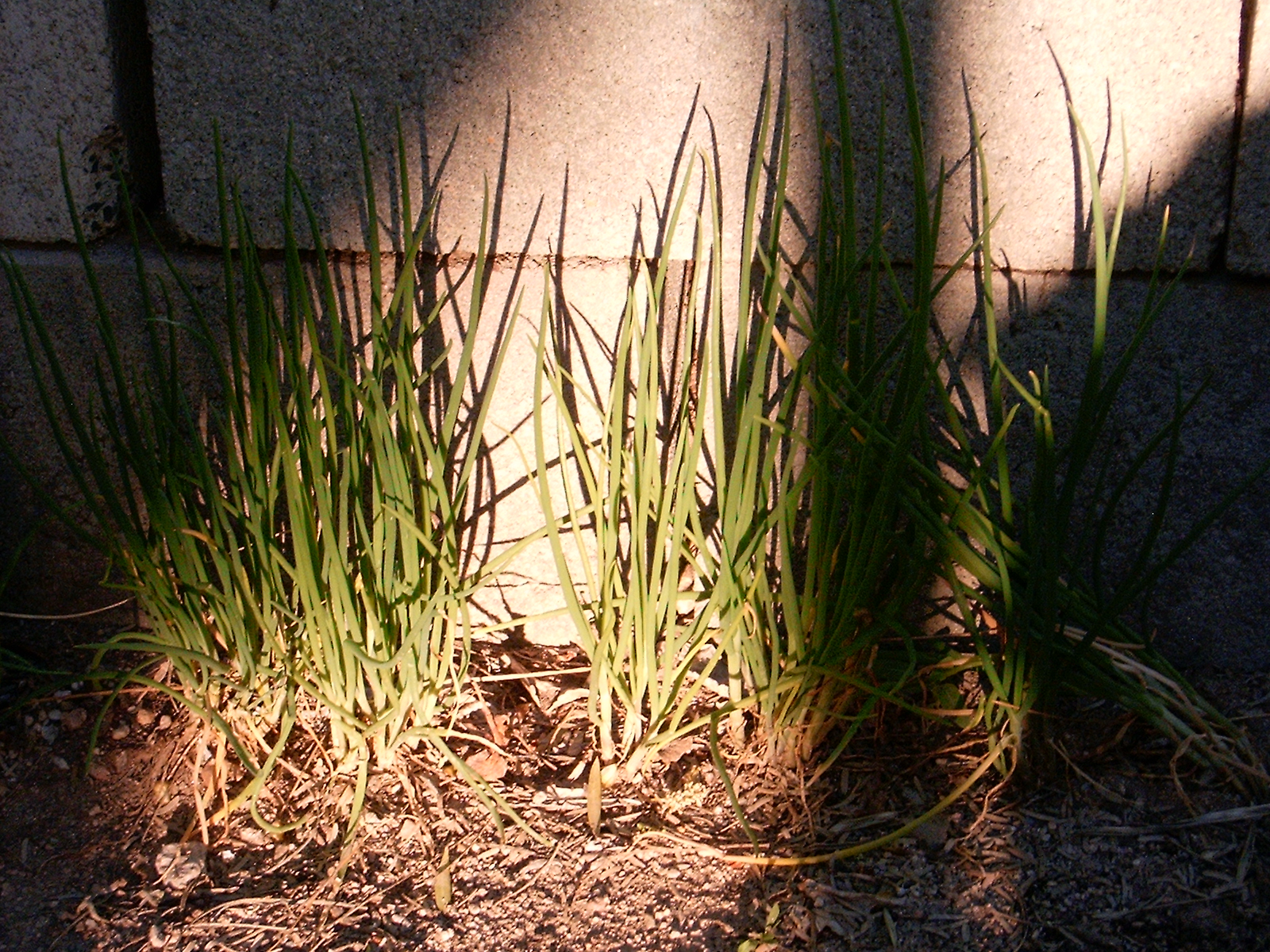
Onions can be tucked into almost any space in the yard. These I’itoi onions stay small.

Which ones? There are more varieties of onions than you can shake a stick at, a number of different types with conflicting names (bunching, bulbing, multiplier) and technically a few different species, but rather than start a discourse on all of that, lets just key into the fact that the days are short, thus you need to plant “short day” varieties.

allium AMP set 001

Onion sets can be planted in pots with potting soil.

Now? In the coldest time of year? Yes! But you will plant “sets” not seeds. Sets are already started from seed onions, or, in the case of multiplier onions and garlics, they are divisions off a larger bulb.

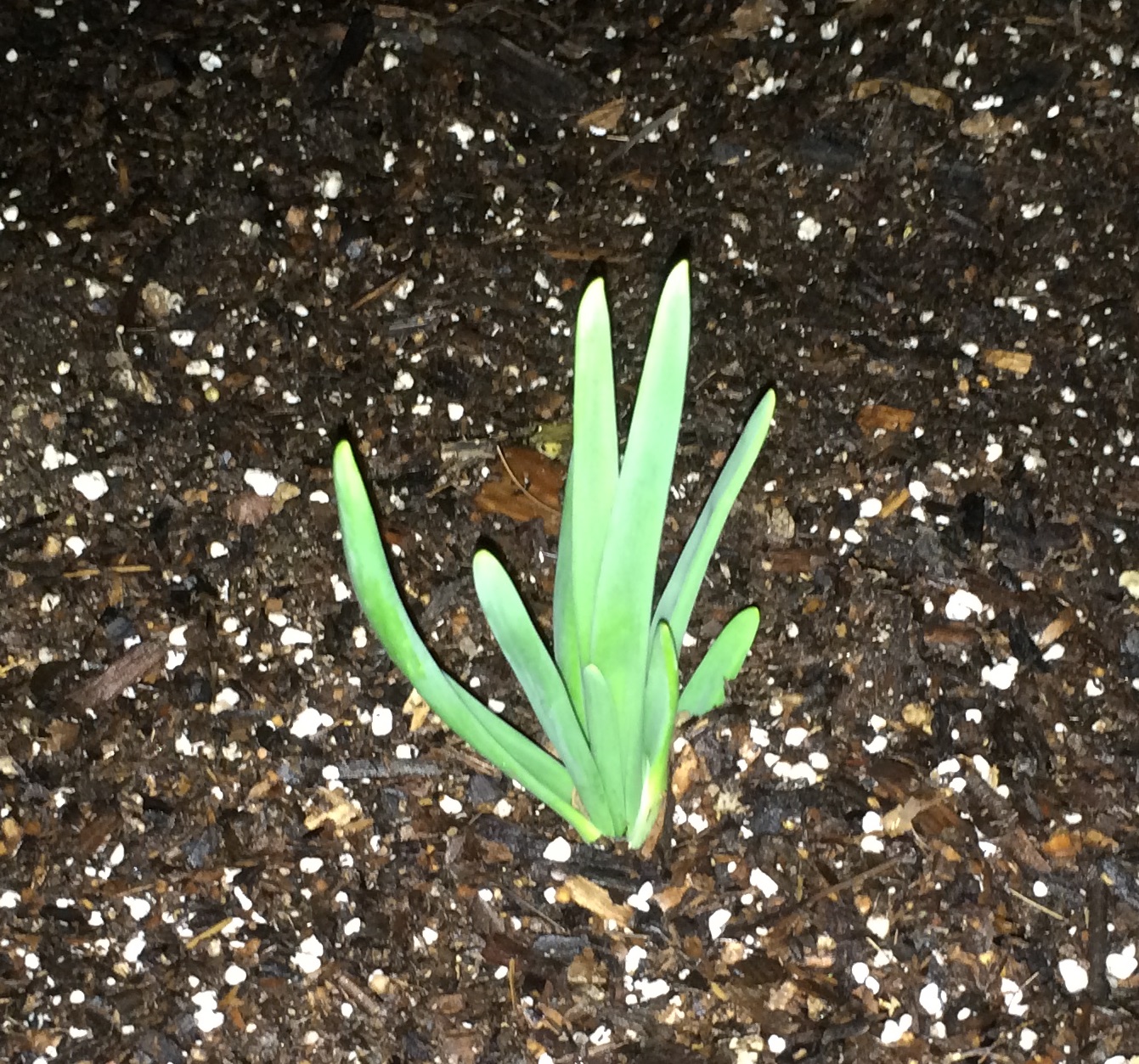
How to plant sets? Just set them into the soil. (Sometimes gardening terminology makes sense.)  Plant with the green side up, the bulb entirely below the soil.

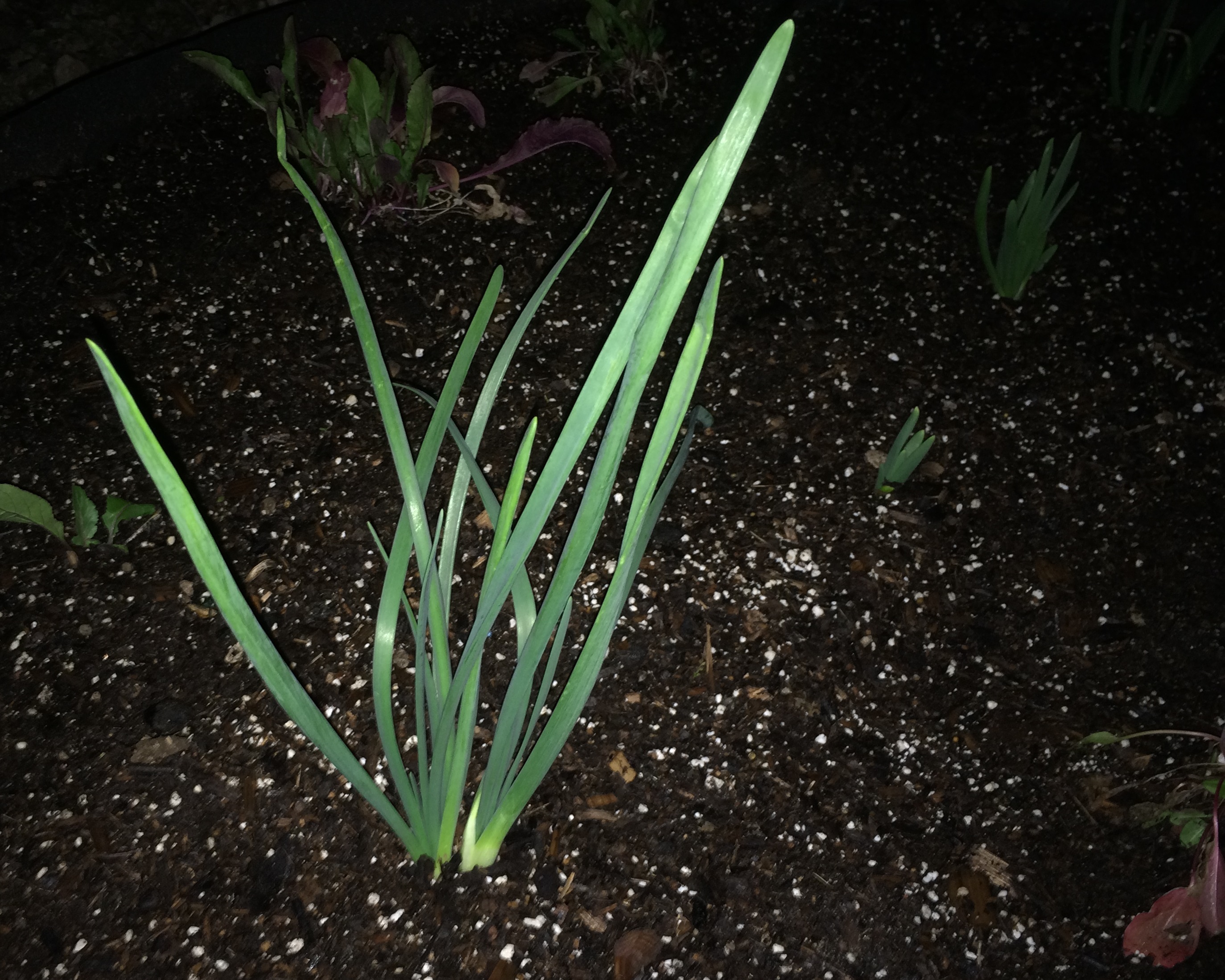
allium AMP set 002

Look in the background in this shot. Some varieties will grow faster than others.

Most of our local nurseries know that now is the time for onions and have a selection of sets to choose from. Big box stores don’t – just another reason to shop local. In past years some of the Farmer’s Market vendors also offered onion sets.

A general planting guide follows.

Light.  Remember the whole “short day” thing?  The short days of winter will mean that the onions will need as much as you can give them.

Soil is not as critical as with most vegetables. But for best overall health, plus full flavor and good final size of your crop, an improved garden soil is recommended. Or plain potting soil if you grow them in containers.

Water is needed on a regular basis for nice fat bulbs and succulent leaves. In general this means two or three times per week, but maybe more if the onions are in pots.

Fertilizer is not much needed by onions. If you want to, use one for root crops, high in nitrogen and potassium. Avoid fertilizer for flowers, like a rose or tomato food. Flowering takes energy away from creating succulent bulbs.

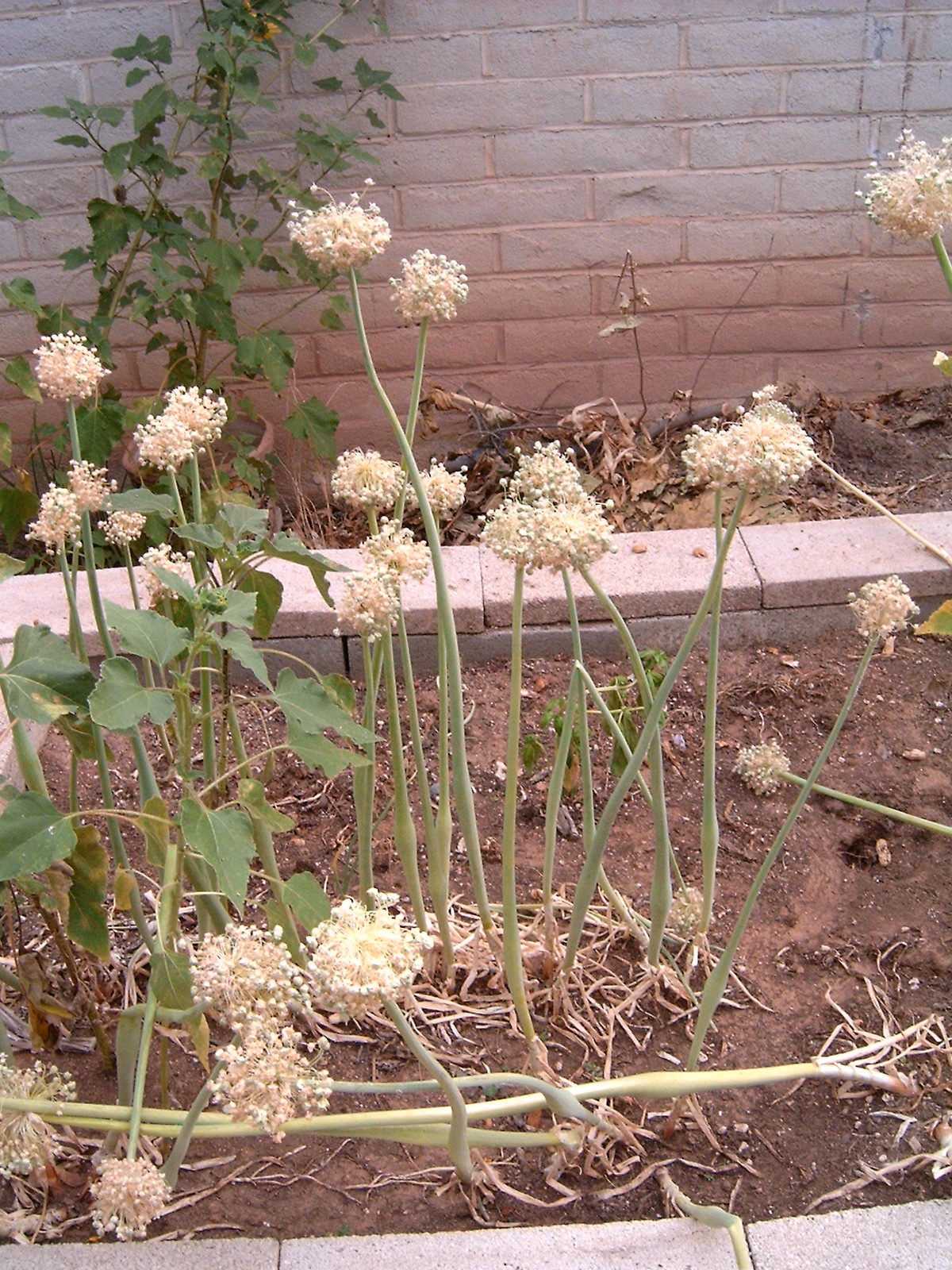
Allium_onion_flowers_J001

These onions got too much flowering fertilizer. Rather than develop good bulbs, they spent their energy producing flowers and seeds.

Harvest – once the tops die down and start to turn brown (usually in late May into June).  For long term storage the garden books from “back east” tell you to dry your onions in the sun – but don’t do that here!! – they will get sun scald and taste yucky. Dry onions in a cool dark place that does have good air flow. I put mine on screens in the laundry room and leave the ceiling fan on low for about three days. Once they have dried onions will store without rotting.

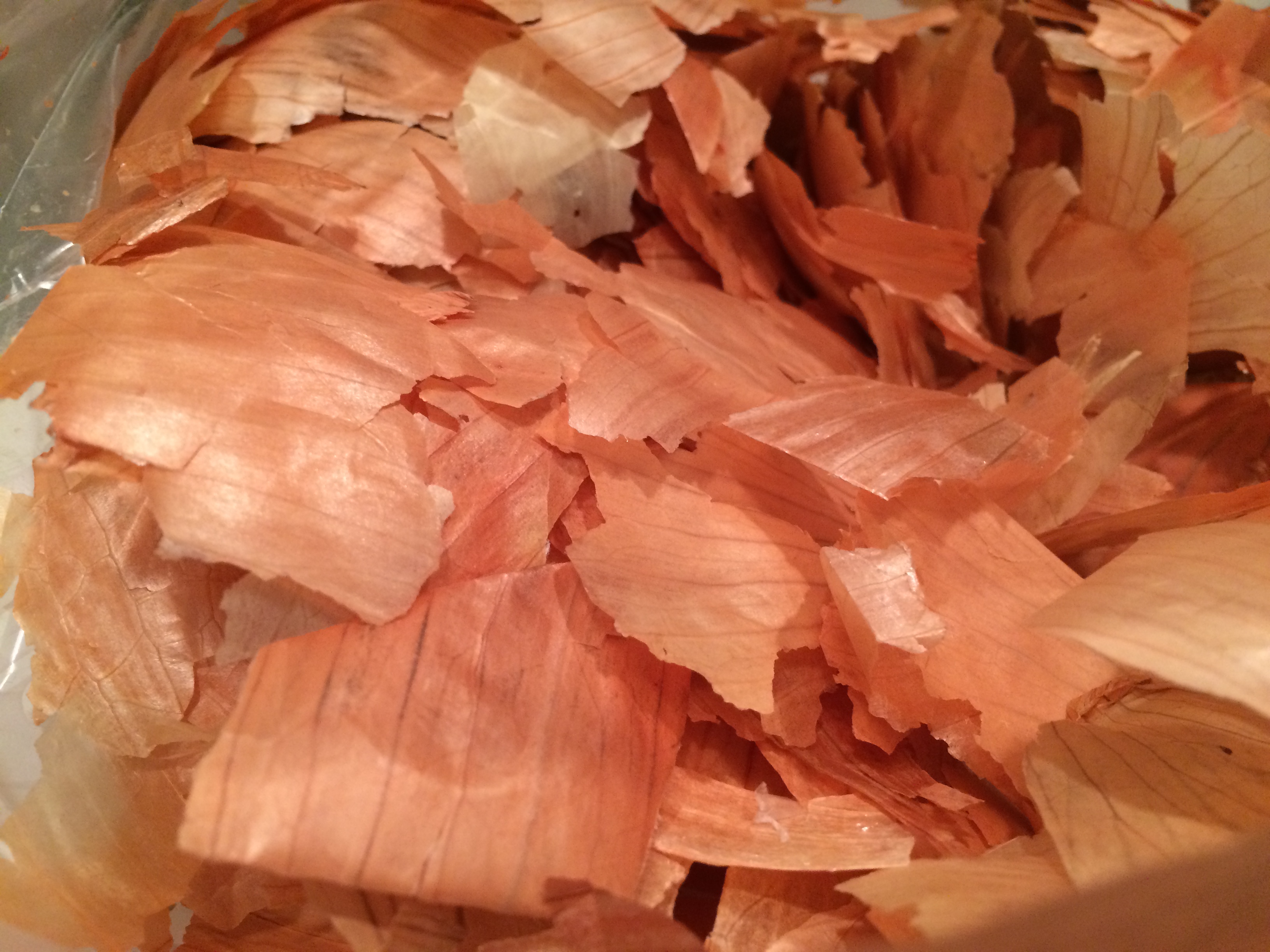
Storage & Use. Some varieties of onions store better than others. Plan on about four months maximum for best flavor and texture. (Ours are eaten so fast this is not an issue.) Don’t forget to save your onion skins to make a great natural dye for Easter eggs and textiles.

onion skin IMG_2348

I keep a bag to add my onion skins to every time I cook.

onion skin IMG_2349

Onion skins produce a warm brown dye.


For more about onions and other vegetables and fruits that will thrive in your Southwestern garden, please consider my book Southwest Fruit and Vegetable Gardening (Cool Springs Press 2014), available at Antigone, Arizona Experience Store, local botanical gardens, state parks, and nurseries.

© 2015, Jacqueline Soule.  All rights reserved. I have received many requests to reprint my work. My policy is that you are free to use a very short excerpt which must give proper credit to the author, and must include a link back to the original post on our site. Please use the contact me if you have any questions. JAS avatar


Playing with Washingtonia palm fruit

Washingtonia filifera (California fan palm)

Washingtonia filifera (California fan palm)


It’s Carolyn this week, taking you backstage to a food experiment. As we move into a hotter, drier climate here in the Southwest, we’ll have to consider agricultural products that can handle the changes. Although I’ve been playing with edible wild plants for decades and Tia Marta (Muffin Burgess) has put in similar years of work, it’s always exciting for us to find something new. We’re going to do a two-part investigation of what to do with a wild food new to both of us.


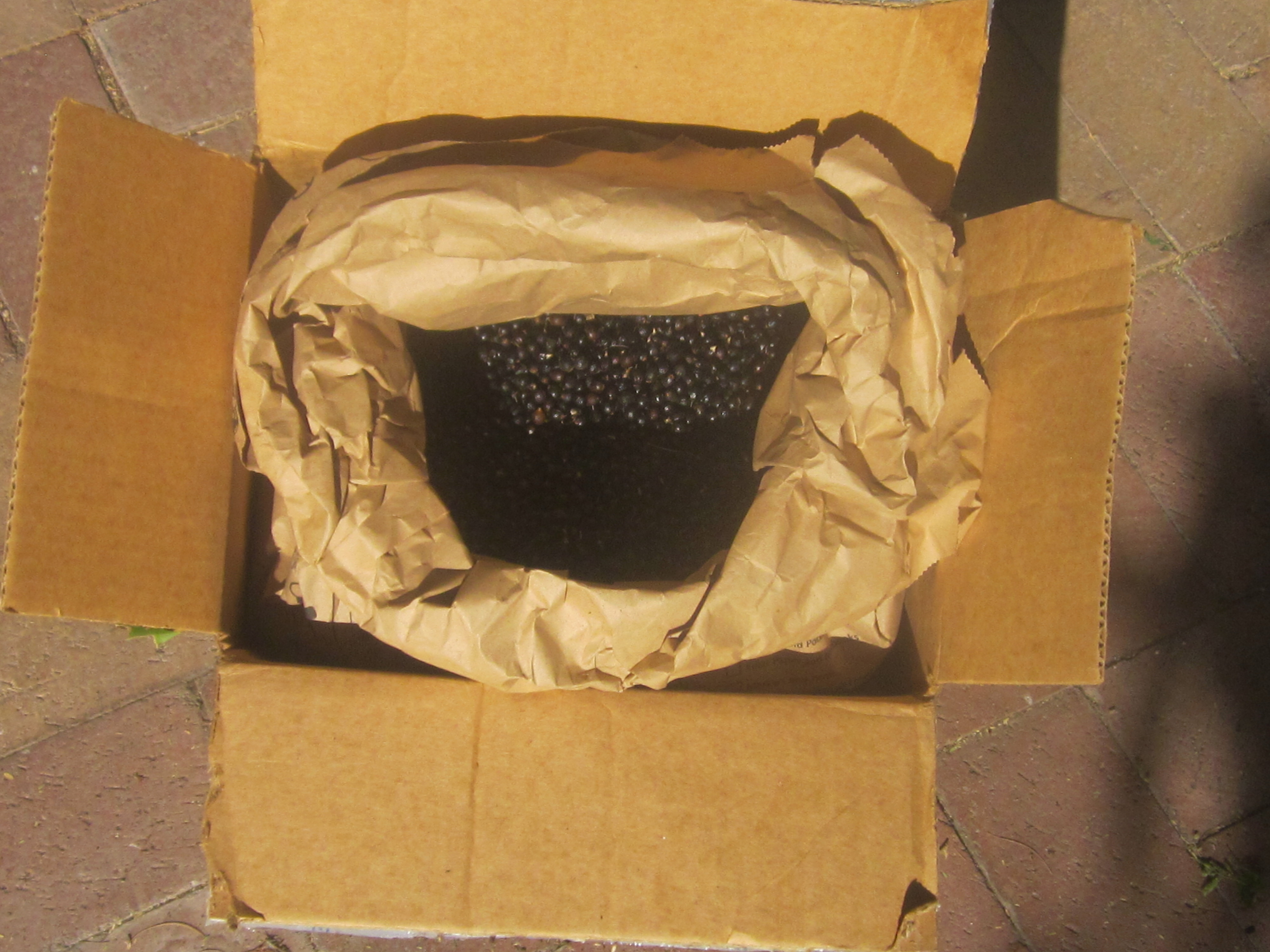
Big box of palm fruit.

A big box of  W. robusta palm fruit arrived at my house.


Last fall I received an email from noted ethnobotanist Dr.Richard Felger. He and a colleague, Dr. Don Hodel, an environmental horticulturist for the University of California Cooperative Extension, were working on some wild palm fruits, two species of Washingtonia, also called Mexican or California fan palm. He wondered if I could come up with some recipes. Back in the early 1970s when I was just beginning work with wild edibles, Dr. Felger took me on one of my first plant walks and over the years has answered many questions for me. I figured I owed him. I also asked Tia Marta if she wanted to join in the fun.

After a couple of days,  FedX deposited a box with about 10 pounds of tiny hard black nodules on my doorstep – Washingtonia robusta fruit gathered from a park in Signal Hill, Calif. , near Long Beach. Not promising, they were little more than skin on seed with almost nonexistent flesh, nothing like their cousins the palm fruits we know as dates. Humans have a long history of using palm fruits – in fact some scholars think that the honey referenced in the Bible was actually date syrup.

Wendy Hodgson, THE expert on wild desert foods, says in her book Food Plants of the Sonoran Desert, that the Washingtonia fruits were very important to the Cahuilla and Cocopa. She writes, “They made flour from the ground dried fruits and mixed it with other flours and water to form a mush.” We don’t eat much mush anymore (unless you consider oatmeal for breakfast), so I’d have to devise something else to do with them.

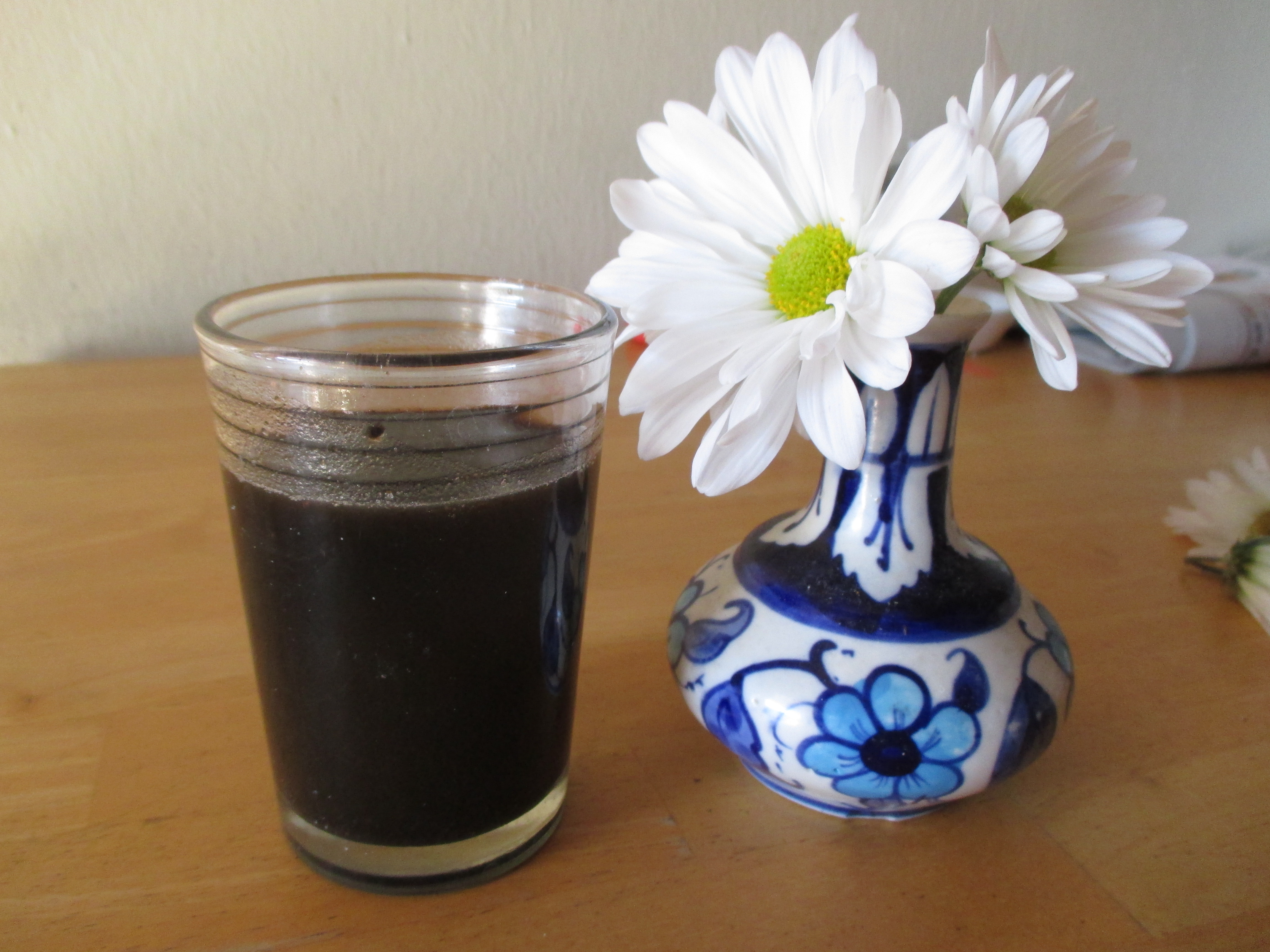
I took 4 cups of fruit and covered them with 8 cups of water. Brought it all it to a boil, then simmered uncovered for 30 minutes. I ran the softened fruit through a blender in batches and strained the liquid, ending up with 5 cups of almost black liquid that tasted something like prune juice.

Even flowers don't make this liquid look appetizing.

Even flowers don’t make this liquid look appetizing.

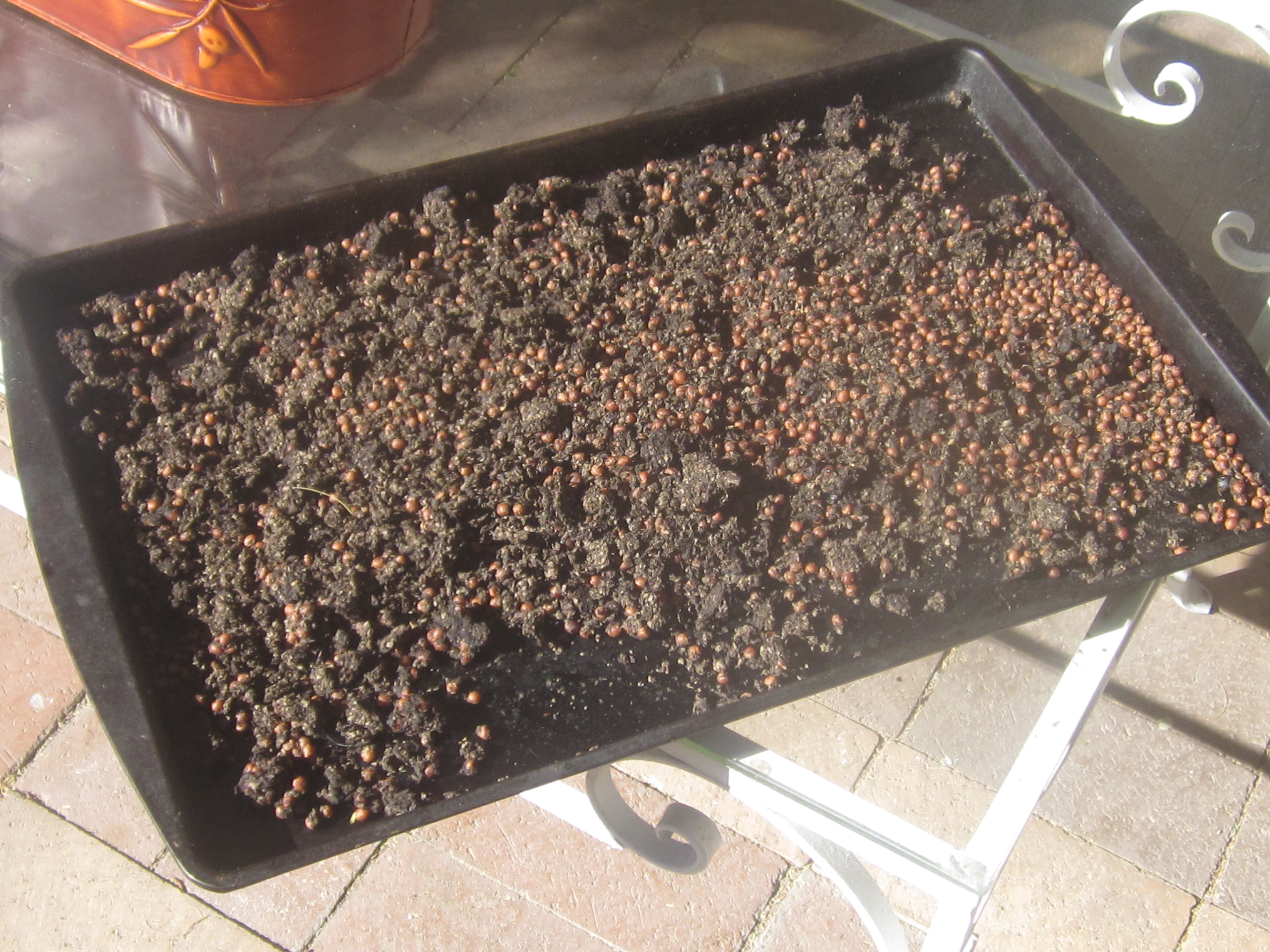
. I simmered it until reduced to ¾ cup pulpy liquid then spread the remaining pulp and seeds on a cookie sheet and put it in sun to dry. Later, I sifted out ¼ cup dried flakes and discarded the hard seeds.

Pulp and seeds drying in the sun.

Pulp and seeds drying in the sun.

At this point I wrote Dr. Felger my scientific assessment: Sweet — but definitely not yummy. I pressed on and made some tasty muffins. Since there is interest in natural sweeteners, I concentrated on that aspect. Using a standard muffin recipe, I substituted the palm syrup for the liquid milk and reduced the sugar. I added the dried flakes just because I had them and to add some texture.

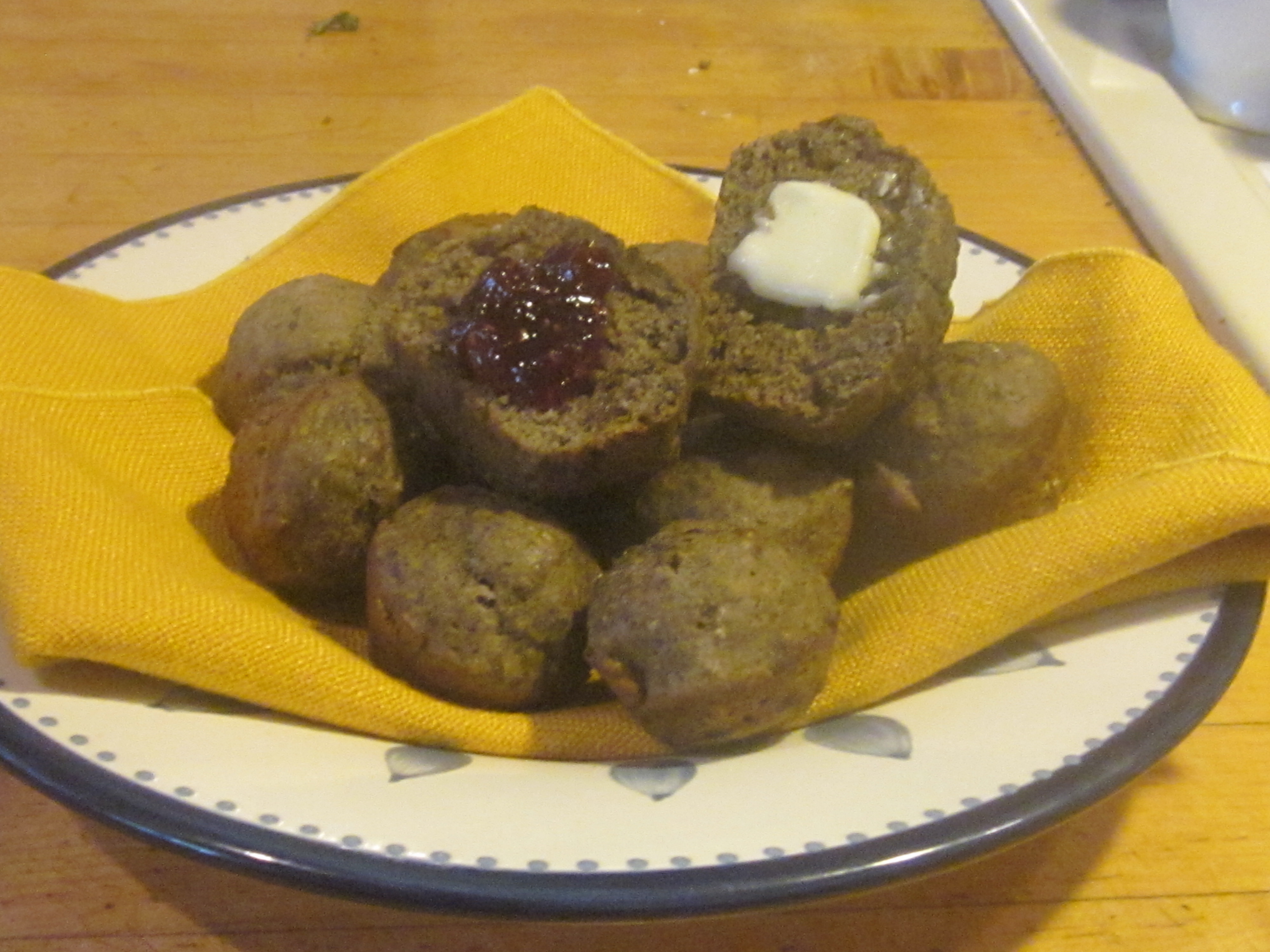
Muffins with palm syrup and dried flakes.

Muffins with palm syrup and dried flakes.

Fan Palm Muffins

Makes 1 dozen

1 ¾ cup unbleached white flour

¾ teaspoon salt

2 teaspoons baking powder

2 tablespoons sugar

¼ cup dry powdered milk

¼ cup dried Washingtonia  flakes

2 eggs

¾ cup pulpy Washingtonia syrup

3 tablespoons melted butter

Mix dry ingredients in a bowl. In another bowl, mix eggs, Washingtonia syrup and melted butter. Stir wet ingredients into dry ingredients. Do not overmix; some lumps are OK. Bake in greased muffin tins at 400 degrees F for about 15 minutes or until they appear done.

Washingtonia filifera fruit (about 1/4 inch) on left and W. robusta on the right.

Washingtonia filifera fruit (about 1/4 inch) on left and              W. robusta on the right.

Meanwhile, Dr. Hodel acquired some Washingtonia filifera fruit from a street tree near Indio, Calif., and sent another 10 pounds. Oh boy. They were still tiny, but bigger than the robusta. I put them through a similar process of simmering, blending, straining and reducing. The taste difference was subtle – more date-like than prune-like. Better.

I decided to use the filifera syrup in a healthy treat, showcasing its natural sweetness, and came up with these truffles. I used almond butter, but other nut butters will do.


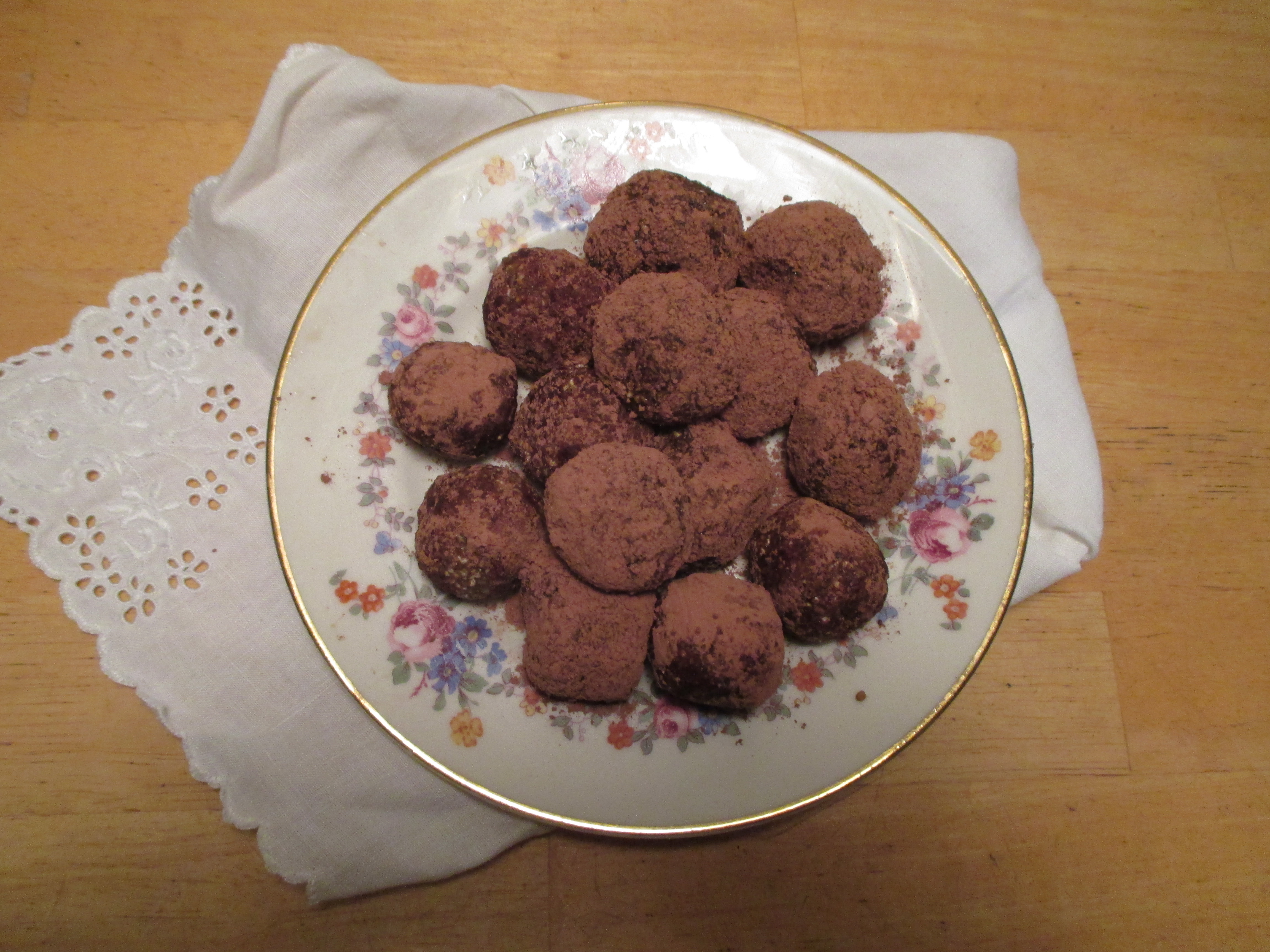
Nutty truffles sweetened with W. filifera syrup and rolled in cocoa.

Nutty truffles sweetened with palm syrup and rolled in cocoa.

Nutty Truffles

Makes 1 dozen

½ cup almond butter

½  cup popped amaranth grain

¼ cup ground popped amaranth

6 tablespoons Washingtonia filifera palm syrup

1/3 cup cocoa or carob powder

Combine all ingredients except cocoa in a bowl and blend with a spoon. Form into 12 small balls. Roll each in cocoa. (You can buy popped amanranth at Native Seeds SEARCH)

 ♥  ♦  ♥  ♦

What’s the point of trying to find a way to use the fan palm fruits? With climate change bringing hotter, drier summers to the Southwest, ethnobotanists like Dr. Felger and Dr. Hodel are looking for plants that can take those conditions and still produce food.

I don’t expect a rush of  people heading out to gather bushel baskets of fan palm fruits. They’ll appeal to the more ardent wild food enthusiasts who, like me, want to taste every berry on every bush.  But  they may have uses in more industrialized food production. They are sweet and easy to harvest and process. Some entrepreneur may see opportunity there. After all, nobody I know makes their own agave syrup.

(Check out Dr. Richard Felger ‘s article at  “Arizona Native Food Plants for a Dry Future” in The Plant Press: The Arizona Native Plant Society vol. 37, no. 2: 1, 3-5.)


Play with your Food; Seriously. Yin/Yang Tortilla Making

Aunt Linda here on this 2nd day of January, 2015. The snow has melted from our New Years snow fall here in Tucson. Yesterday we awoke to snow on the ground. The bee hives, poultry feed bins, and garden were all covered with the beauty of  cold, wet, snow. IMG_8706 Today’s recipe is less about the “what” of the food itself and more about the “how” of food. Like the attention we give it while making/preparing it. And the quality of that attention. Seriously, let’s play a bit while we prepare our food!  I take the wrong things seriously and can “miss” important things, (like actually TASTING food), while my mind thinks about other more “important” things. What got me thinking about Apparent Opposites  – like serious play – was cleaning out the poultry coops two mornings ago. IMG_7840 IMG_7841 IMG_7878                   I love cleaning coops.  It is messy affair, yet rejuvenates me. Hens eat and and then poop. They shed feathers and grow back new ones. They die and new ones hatch. The coop is definitely a place where the yin and the yang of life comes together. And it is a place where the tin and yang of “doing” and “allowing” is required as well.  Poop and old food scraps do not make their way to the compost on their own. That requires active raking and hauling it to the compost. After that, compost HAPPENS.  We allow it time to do its magical transformation from “hot” compost that will burn a plants roots, into the “black gold” that garden plants love. Making tortillas requires the apparent opposites (but by now you get that they are not separate, but part of the same whole!)   of  “doing” and “allowing”, as well. If we were to make masa (dough) directly into tortillas, the consistency would not be right.  Just as in bread making, the dough needs time to rest; and to transform. And in order for that transformation to happen, we must take our hands off it;  let it do it’s own alchemy.    IMG_9818       IMG_3335 With tortillas, we actively make the masa.  We let it rest – then shape tortillas.  With experience, we know when the perfect consistency is reached. Time and heat transform them.   IMG_4379                          Uncooked tortilla being shaped (above) and then cooked (below). These are the big tortillas cowboys like on ranches. IMG_4382 So back to you and perhaps some apparent opposites in your life. You may want to play with the yin/yang of “doing” and “allowing” of making tortillas. Or not.   There are many fun tortillas available on the market these days, from organic yellow corn, to blue corn to wheat, spelt, rice. Whether you make they or buy them,  I dare you to play.  Why? Because with play we forget our serious selves, and we enjoy (and this do not miss!) our food. I also dare you to play so much that you make mistakes. We are mistake adverse in this culture.   If you buys your tortillas, or if you are rewarming your home made ones, warm them over a flame – or in a pan (cast iron best) if you are flame adverse.  Add butter, or olive oil, or coconut oil or and sprinkle with salt.  Or use any oils you like and add honey – or even coconut butter for a sweet treat. I like to keep the flavors present but not overwhelming so I can still enjoy the taste of the tortilla itself – but there are no rules and experimentation is fun. IMG_8717       IMG_8728 Warmed Corn Tortilla with Butter and Honey!! There are few things as startling simple as this! IMG_8725 I used refried beans to make this Yin/Yang tortilla – and added a fried egg  as breakfast while writing to you.

Celebrate the Solstice-tide with Heirloom Bean Treasures

Our ancestors did it—and we still do it today in many ritual ways—we await and call out to the returning light. Indeed in these holy-days of Solstice, Hanukkah, Shálako, Christ-mass, the Yule, we still hope and pray that the light will return to our hearts and our communities throughout our small planet!

Four Corners Gold beans in a Tarahumara madrone scoop

Four Corners Gold beans in a Tarahumara madrone scoop

Tia Marta here to share some ideas of foods that have assisted in traditional winter rites, and which can grace our  tables anew for these holy-days.

To me, sprouts, more than anything else, symbolize the return of longer light, the rebirth of life–on so many levels. Out of the darkness and dormancy a sprout brings new life, vitality, a tiny, fragile but hopeful future. Nutritionally, a sprout is a wave of exuberant phytonutrients surging with life-giving properties for itself–and for those who might consume it.

Four Corners Gold bean sprouts on the 2nd day just emerging from seed coat

Four Corners Gold bean sprouts on the 2nd day just emerging from seed coat

Ancient cultures of the Southwest have used sprouts in ceremony since time-immemorial, helping communities through rough times of transition, phases of seasons, new homes and life changes. My special favorite for sprouting is the beautiful Four Corners Gold bean, a bright mottled golden-yellow Jacob’s cattle bean, a genetic gift from Native Zuni farmers over the centuries. I sprout the beans by first soaking a ½ cup of dry beans overnight in a cup or bowl, then rinsing and draining them at least 2-3 times daily over a 3-5-day period. Watch life virtually explode out of those little packages of potential! I use the sprouts as a respected garnish or as a flavorful addition to salads or stir-fry. It is like a form of communion to eat sprouts–ingesting renewal.

Four Corners Gold beans up close--check out the difference with Yellow-eye--very different tastes--both wonderful

Four Corners Gold beans up close–check out the difference with Yellow-eye–very different tastes–both wonderful

These colorful dry Zuni beans cooked from scratch also make a hearty and nutritious soup or chile-bean dish for chilly wintry nights. On sunny winter days I like to cook the dry beans (pre-soaked the night before) in the solar oven and have them “at the ready” later in the frig. A pot of beans on the back burner during the holiday season can help make a party happen. Cooked beans are a wonderfully patient food you can have waiting to leap into culinary action when company pops in unexpectedly, or if teenage appetites require between-meal satisfaction.

Heirloom Scarlet Runner Beans washed and ready to soak for cooking

Heirloom Scarlet Runner Beans washed and ready to soak for cooking

Here’s a hearty Tia Marta recipe for enlivening a holiday season buffet:

BARBECUED Heirloom SCARLET RUNNER BEAN Dippers
These make the perfect vegetarian hors d’oeuvres to serve at a holiday buffet or to have ready to heat for drop-in company!

Start them the day before you want to serve them by soaking 1 cup of dry Scarlet Runner Beans.
Soak beans in plenty of water (3-4 cups) for at least 12-24 hours until fully plump and twice their original size.
Drain beans, and add 3-4 cups drinking water.
Simmer on low (stovetop or crockpot) for 3-4 hours until done through and pass the taste test, beyond al dente. The beans should keep their shape and integrity. This will produce extra beans to freeze for other recipes or for doubling the recipe. You will need about 8-10 oz or 1 generous cup of cooked beans for this barbeque recipe.

BBQed Scarlet Runner beans glazed and delicious after simmering in sauce

BBQed Scarlet Runner beans glazed and delicious after simmering in sauce

Ingredients:
1 large or 2 medium onions, diced                                                                                                                                                                                                                                                      1 Tbsp. olive oil                                                                                                                                                                                                                                                                                  3-4 Tbsp. butter                                                                                                                                                                                                                                                                                    1 tsp. sea salt
4 Tbsp. molasses
1-2 Tbsp. prepared mustard
1/2 cup mild chile salsa
1 Tbsp. cider vinegar
1-2 tsp. Worcestershire sauce
Dashes of Tabasco or Red Devil hot sauce to taste

To make the Barbeque sauce:
Saute onion in butter until clarified. Add all seasoning ingredients to sauteed onions, stir and simmer for 5 to 10 minutes or more.
Add in cooked, drained beans–8-10 oz cooked Heirloom Scarlet Runner beans (about 1 generous cup).  Simmer smothered beans and sauce 10 minutes or longer (the longer the better).  Making the BBQ scarlet runners ahead, you can refrigerate them at this point.  Heat before serving.
Serve smothered beans on a hot platter or in a chaffing dish with a fancy toothpick in each bean for a wonderful party surprise that is more satisfying than meat-balls.  Serves a gang of hungry party-ers.

(By doubling this sauce recipe you can use all your cooked beans in it.) Bon appetit! And happy holidays to you and your guests!

Barbequed Scarlet Runner beans as hors d'oeuvres--each one is a perfect tasty bite!

Barbequed Scarlet Runner beans as hors d’oeuvres–each one is a perfect tasty bite!

At New Year’s, our family tradition, with one branch hailing from the South, has always been Black-eye Peas. It is a joy to know that there are Native People here in Baja Arizona who adopted black-eye peas into their own traditional cuisine when European padres first brought them from the Old World. Locally-grown black-eye peas (u-us muñ) may still be available from a Pima farm at http://www.ramonafarms.com and sold through the Native Seeds/SEARCH store.

Heiloom Yellow-eye Bean--a delectable alternative to black-eye peas for New Years or great as baked beans anytime!

Heiloom Yellow-eye Bean–a delectable alternative to black-eye peas for New Years or great as baked beans anytime!

For those who want to break away one step from tradition, it is fun to try a delicious alternative New Year’s bean—the yellow-eye. Natives of New England introduced it to Colonists and it became the real Boston Baked Bean long before newer varieties like navy beans or great northerns ever came on the scene. Yellow-eye has a flavor like no other bean and is worth trying in different dishes. I especially like yellow-eyes spiced with freshly ground pipian rojo móle from our own local Mano y Metate (www.manoymetate.com).

We think of cranberries as a holiday fruit but have you tried cranberry beans for warming winter dish? There are many Italian recipes for cranberry bean. My stick-to-the-ribs favorite, which delectably uses winter’s plethora of fresh greens, is cranberry beans-and-greens. Tucson’s Mission Garden is producing bundles of the best acelgas greens ever—available at Thursday’s Santa Cruz farmers market at Mercado San Augustine. I invite you to scroll back to last December 2013’s savorthesouthwest.wordpress blog for more great holiday bean recipes.

Heirloom Christmas Limas can lend themselves to our BBQ bean recipe as well

Heirloom Christmas Limas can lend themselves to our BBQ bean recipe as well

Until I was introduced by Dr Barney Burns (co-founder of Native Seeds/SEARCH) to the diversity of Southwestern heirloom beans, I was a beans-out-of-the-can cook. Indeed even now, with growing awareness of heirloom foods, there are many folks whom Rod and I meet at our farmers market booth who are daunted by the idea of cooking beans from scratch. Yes, dry beans do take time—but with simple low-tech tools like the crockpot or solar oven, multitasking is a breeze. Nothing could be simpler! Cooking one’s own beans opens up a whole new array of flavor possibilities. It’s a color and flavor rainbow of Native American, Hispanic, and pioneer traditional beans which we now have available (largely through the exploratory Southwest seed-saving by Native Seeds/SEARCH over the last 30+ years). All beans are not created equal. Each heirloom has its own unique flavor and bouquet well worth tasting, and its own adaptations to the Baja Arizona desert well worth planting in your garden. Scarlet runner, for example, is long season. Plant it under a mesquite and watch it vine up into the branches, blooming with red flowers for the hummingbirds—the best in edible landscaping! Harvest the giant pods in the fall for next year’s holiday feast.

For limited budgets, buying and cooking dry beans also saves money—big-time. One pound of dry beans when cooked will yield the equivalent of 4 to 6 cans of heat-and-serve beans. Nor will you find our rich SW variety of heirloom beans on any grocery shelf. The Native Seeds/SEARCH store at 3061 N.Campbell Ave, Tucson and the NSS website (www.nativeseeds.org), or the Flor de Mayo booth at Sunday’s St Phillips farmers market (www.flordemayoarts.com) are the very best places to experience that AH-HAH moment when you see 18-20 beautiful heirloom varieties spread out before your very eyes.  I look forward to your visit to our market booth!

Christmas limas with recipe ideas--a yummy stocking stuffer

Christmas limas with recipe ideas–a yummy stocking stuffer–at Flor de Mayo Sunday St Phillips market booth

When one thinks of the cultures, the farmers, the planting and harvesting knowledge, the years of patient selection that all this bean diversity represents, it can boggle the mind and can truly humble the best of cooks and gardeners.

Tia Marta and Rod of Flor de Mayo are sending our thanks to those traditional farmers and to the many young  innovative organic food growers.  May the light be born again in us as we share honorable heirloom foods graciously with our family and friends this Solstice-tide!

Mesquite Gingerfolk for Christmas

Mesquite Gingerfolk are tasty treats for the holidays.

Mesquite Gingerfolk are tasty treats for the holidays.

It’s Carolyn today sharing one of my favorite holiday recipes. The flavor of mesquite meal blends nicely with the warm spices we like in the winter.  These Mesquite Ginger Folk are pretty cute and they taste wonderful.  I used good quality margarine rather than butter or Crisco because I like the eventual texture and the flavor is good. This recipe makes a spicy cookie. If you want more of the mesquite flavor to come through, cut down on the spices. The dough must be well chilled before you roll it out, so this is a two-step recipe: mixing first, then later rolling and baking.

Mesquite Ginger Folk (makes about 3 1/2 dozen rolled cookies)

In a medium bowl, combine 2 cups all-purpose flour, 1/2 cup whole-wheat flour,  1/2 cup mesquite meal, 1 1/2 teaspoons ground cinnamon, 2 teaspoons ground ginger, 1 teaspoon allspice, 1/2 teaspoon salt, 1/4 teaspoon ground black pepper.  Stir and fluff with a fork and then set aside.

In a large bowl, use an electric mixer to beat 1 1/2 sticks margarine  with 1/2 cup packed brown sugar until fluffy. Beat in 2/3 cup molasses and one large egg. Then gradually add the flour mixture to make a stiff dough. You may need to give up the mixer for a wooden spoon.  Divide the dough into two thick disks and wrap each in plastic wrap.  Refrigerate until chilled, about three hours.

When you are ready to bake, take one disk from the refrigerator .   You’ll want the dough just warm enough to roll without cracking.  While you are waiting, preheat the oven to 350 F. and put out brown paper or wire racks to receive the baked cookies. You’ll also need lots of flour to keep the dough from sticking when rolled.  So get a small bowl of flour, take part of the disk, and roll it in the flour before you roll out with the rolling pin.

Roll a ball of dough in the flour.

Roll a ball of dough in the flour.

Roll out the dough about 1/8-inch thick on flour-dusted surface. Cut out the cookies and transfer them to the cookie sheet, placing them 1 inch apart. Gently knead the scraps together and roll out again.  When you fill one cookie sheet, bake it for about 10 – 12 minutes while you prepare another sheet.

This cutter gives a nice uni-sex cookie.

This cutter gives a nice uni-sex cookie.

If you wish, you can use raisins and dried cranberries to make eyes, a mouth and buttons.  Chop the dried fruit into tiny pieces.

IMG_0413

Sometimes it is difficult to position those tiny pieces on the cookies. But remember those tweezers you keep in the kitchen to deal with cactus stickers?  Perfect for placing the eyes and buttons.

IMG_0408

To further decorate the cookies, perhaps make some shoes or pants, mix up some white frosting using powered sugar, a little butter and a few drops of milk.  If you have a decorator bag, use it to pipe out some decorations or just draw the decorations with a flat-end toothpick.  Either way, you’ll love your Mesquite Ginger Folk and you’ll love sharing them.

If you’d like to make some mesquite cookies but can’t face the cutting and decorating, you can use the same recipe to make drop cookies. Frost if you have time.

Mesquite Ginger Cookies in simple form.

Mesquite Ginger Cookies in simple form.

If you have not harvested your own mesquite meal, here are a few places to purchase it:  The Flor de Mayo Table at Sunday St. Phillips Farmers Market; the Native Seeds/SEARCH store at 3061 N. Campbell Ave. and http://www.nativeseeds.org for mail order; and the San Xavier Farm Store, http://www.sanxavierfarm.org.  If you are in Phoenix, check the farmers markets there.

For more great mesquite recipes, check out my cookbook Cooking the Wild Southwest: Delicious Recipes for Desert Plants. You’ll learn how to make Mesquite Apple Coffeecake, a fabulous rolled cake with mesquite and coconut, a a dozen other delicious recipes.