Mixing Up Senses; Chocolate-Chiltepin-Tequila-Medley

Aunt Linda here on an exceptionally moist dawn in the Old Pueblo. All of us desert dwellers,  whether made of skin, feather, fur, or scale,  are feeling our sensory pores wide open.   The “normal” dry, desert, air simply does not hold smells or sounds the way a post monsoon moist morning does. Even the bird calls resonate differently.

IMG_7654

Inspired by an Article, Sounds of the Hive, in this month’s American Bee Journal (September 2015, Volume 155, NO. 9), I found myself thinking about Senses. And about how other creatures sense and navigate the earth, air, and water in different ways than humans do.

So I pose a question to ponder:  Do bees have ears? Can they hear?

For years it was thought that honeybees were deaf. Quoting briefly  M.E.A. McNeil from the article cited above, (which I HIGHLY encourage you to read), “Evidence for the notion that bees are deaf was partly based on the observation that they have no ears. But, in fact they do; they just aren’t called ears and don’t quite look like ours. While a human detects sound through movement of the ear drum, a honey bee has a collection of sensory cells in the antennae ….” (p987)  These sensory cells are found in the second segment of the antennae … it gets technical and fascinating, but basically they “convert mechanical vibrations into nerve impulses” which are then “relayed to the brain.”

No ears, as we think of ears,  needed.  I expanded my musings beyond bees …. how do other life forms sense the world?

In keeping with hearing: Frogs have eardrums – or tympanic membranes – but on the OUTSIDE of the body, behind their eye.

What about taste? Bees and butterflies have chemoreceptors (or taste receptors) on their on their feet; earthworms have them on their entire body.   And octopus: have chemoreceptors on the suckers of their tentacles. They “taste” with their tentacles.

How about sight?  A buteo Hawk has 1 million photo receptors per millimeter in it’s retina; flies have 3,000 lenses in each eye, penguins have flat cornea that allows them to see clearly even while under water. They also can see into the untraviolet range. Honeybees see polarized light.  If you had asked me, before today,  if a scallop could see, I would have flat out assumed NO. In fact, they have 100 eyes around the edges of their shells, enabling them to detect shadows of predators.  Bats and dolphins navigate so skillfully, not using their eyes, but Echolocation.

Mixing Up the Senses Chocolate-Chiltepin Tequila Medley

IMG_0426

I can’t guarantee you that this medley will help you hear with your antennae, but metaphorically, it just might.

(Warning, if you make it too strong, you may need to learn how to use echolocation to find your way home)

Basic Recipe: 

Blend/mix:

1-1/2 oz of your favorite (mixing) tequila.

1-1/2 oz Chocolate Liqueur (I used “Meletti, Cioccolato”)

Add chocolate nibs and one crushed chiltepin to top of drink.

Ice cubes or crushed ice as desired.

IMG_0431

IMG_0430 (1) IMG_0382

Dessert Version: (photo below) Add  4 oz of Unsweetened Chocolate Almond Milk to the recipe above. It softens the drink, and smooths it our somehow.  This was my favorite version. It is chocolaty, sweet, and spicy – all at once.  Plus, it is fun to crunch the nibs and chiltepin in your mouth while the sweet, almost desert-like chocolate plays on your tongue.

IMG_0438

And for a Very Spicy Concoction Option: substitute 1 1/2 oz of Patron’s XO Café INCENDIO for the chocolate liqueur.

Photo (below) of what Incendio looks like. This version has quite a kick to it, and is not for everyone.

IMG_0379

Joy of the Mountains in Tucson

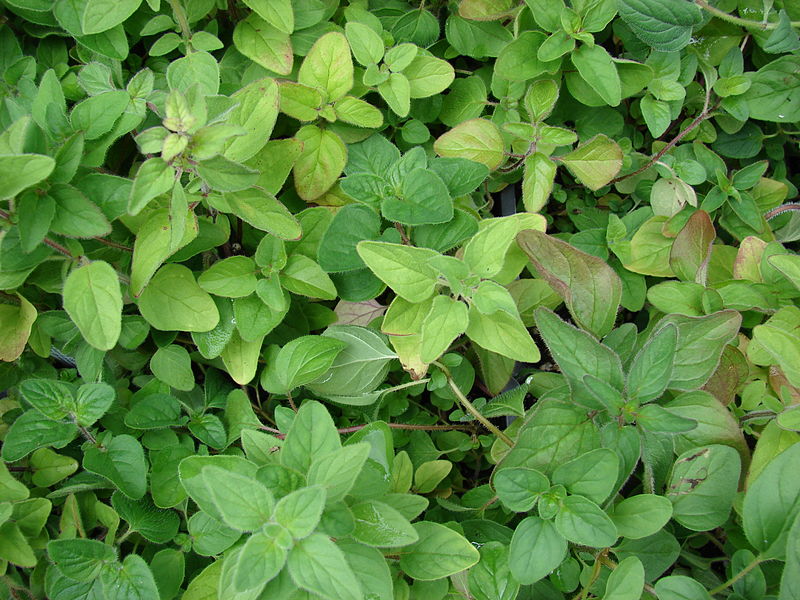
Jacqueline A. Soule here to tell you of a wonderful perennial herb to plant in your garden or landscape this coming month.  Oregano comes to us from the arid mountains of the eastern Mediterranean, including present day Greece and Turkey.  Oregano grows well here in the Old Pueblo forming a lovely low mounding landscape plant with a little added water.

Origanum_majoricum_prostrate_001

In shady sites of our Southwestern yards, oregano can grow quite green and lush.

The name, oregano is translated from the Greek as joy of the mountain. (oros = mountain, ganos = joy) so imagine the rocky Greek mountains as you plant your oregano. Rocky or sandy soil (not clay) works well. Some afternoon shade in summer is best for healthy plants.

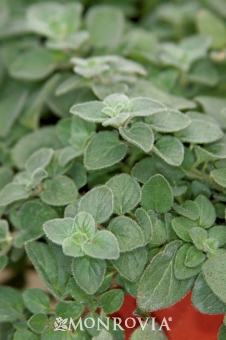
Origanum vulgare 'Hot & Spicy'

Origanum vulgare ‘Hot & Spicy’ likes the heat and has very strong flavor. Like most herbs, it does best in well drained soil and does not thrive if overwatered. Photo courtesy of Monrovia Growers.

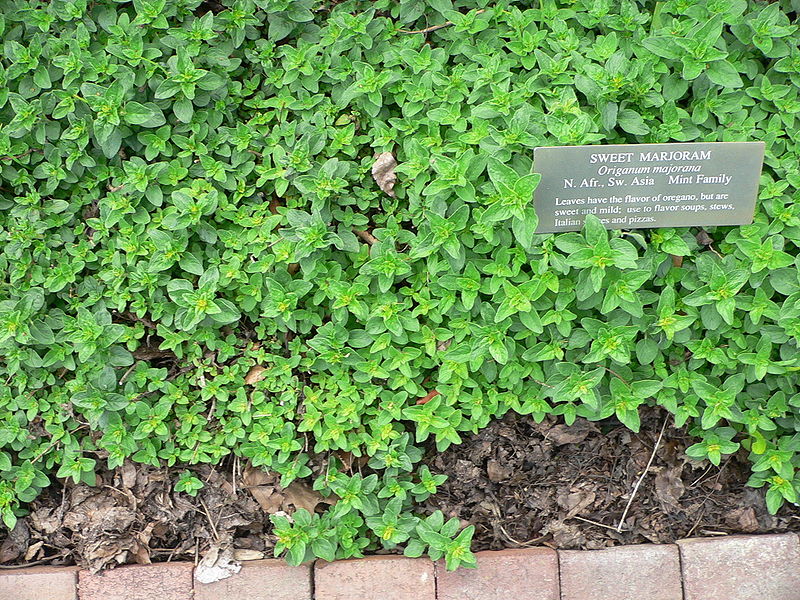
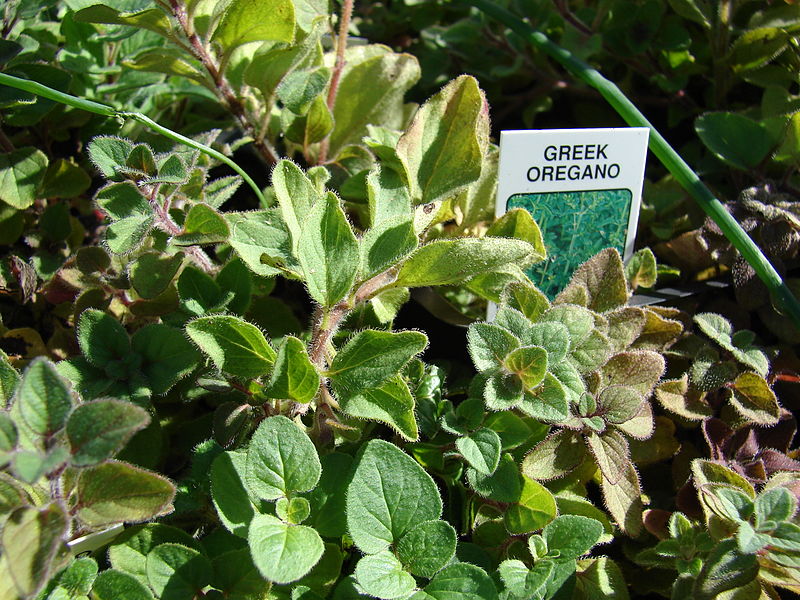
Oregano comes in many species, subspecies and varieties. For the best type able to grow here in the Old Pueblo, go with the true Greek oregano, Origanum vulgare subspecies hirtum. Since many nurseries do not label with correct scientific names, look at the leaves. The one you want will have smallish leaves with silvery hairs on them. When you rub a leaf between your fingers, it should release a strong fragrance of oregano. Avoid the oreganos that are mildly scented, musky scented, or have larger, not very hairy leaves. Indeed, you may run across marjoram (Origanum majorana) or even Italian oregano (Origanum X majoricum). These have their place in the kitchen and in the garden, but don’t plant them next to Greek oregano. The more vigorous Greek oregano will over run the others.

Origanum_majorana_habit

Majoram is closely related to oregano. It also grows well here.

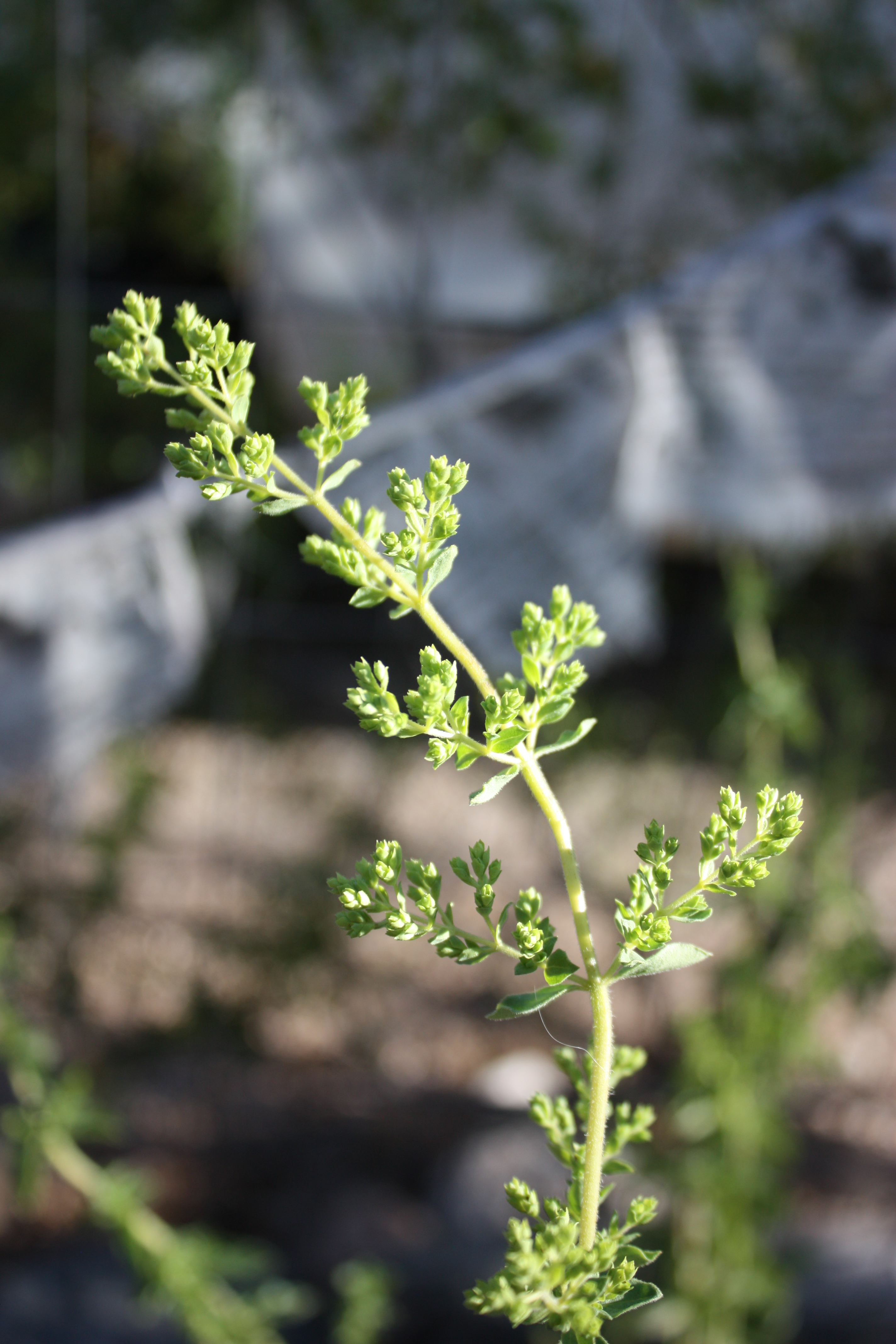
Like many herbs, the best time to harvest oregano is just before it blooms. Many herbs increase their production of essential oils as they go into bloom since it is a time when they really need to protect themselves from pests. When you first start growing oregano, harvest may mean pinching a few stalks back with your fingers. Once your patch gets larger, trim it with strong kitchen scissors to about two inches high, so it forms a low mat of leaves. Don’t worry, it will get tall again.

Origanum AMP_6655

Ideally farvest any oregano you wish to use before it flowers. Once it begins to flower, I like to leave the blooms for the pollinators.

Dry all herbs out of direct sunlight. I spread the cut stems on top of folded paper bags placed on top of the bookshelves. A ceiling fan running during the day helps dry them quickly. The quicker the drying, the less breakdown of the chemical compounds inside the leaves, and thus the sweeter the oregano flavor and less bitter the background notes.

Origanum_majorana_seedling

In the nursery look for the oreganos with very hairy leaves. It is one sign og a true Greek oregano.

Besides its culinary uses, oregano is used medicinally as an antiviral, antibacterial, antifungal, and antiparasitic. The oil of oregano is reported to destroy organisms that contribute to skin infections and digestive problems, strengthen the immune system, increase joint and muscle flexibility, and improve respiratory health. The medicinal properties or oregano appear to be from high concentrations of thymol and carvacrol. Caution is needed since carvacrol appears to reduce the body’s ability to absorb iron. Moderation is, as always, important.

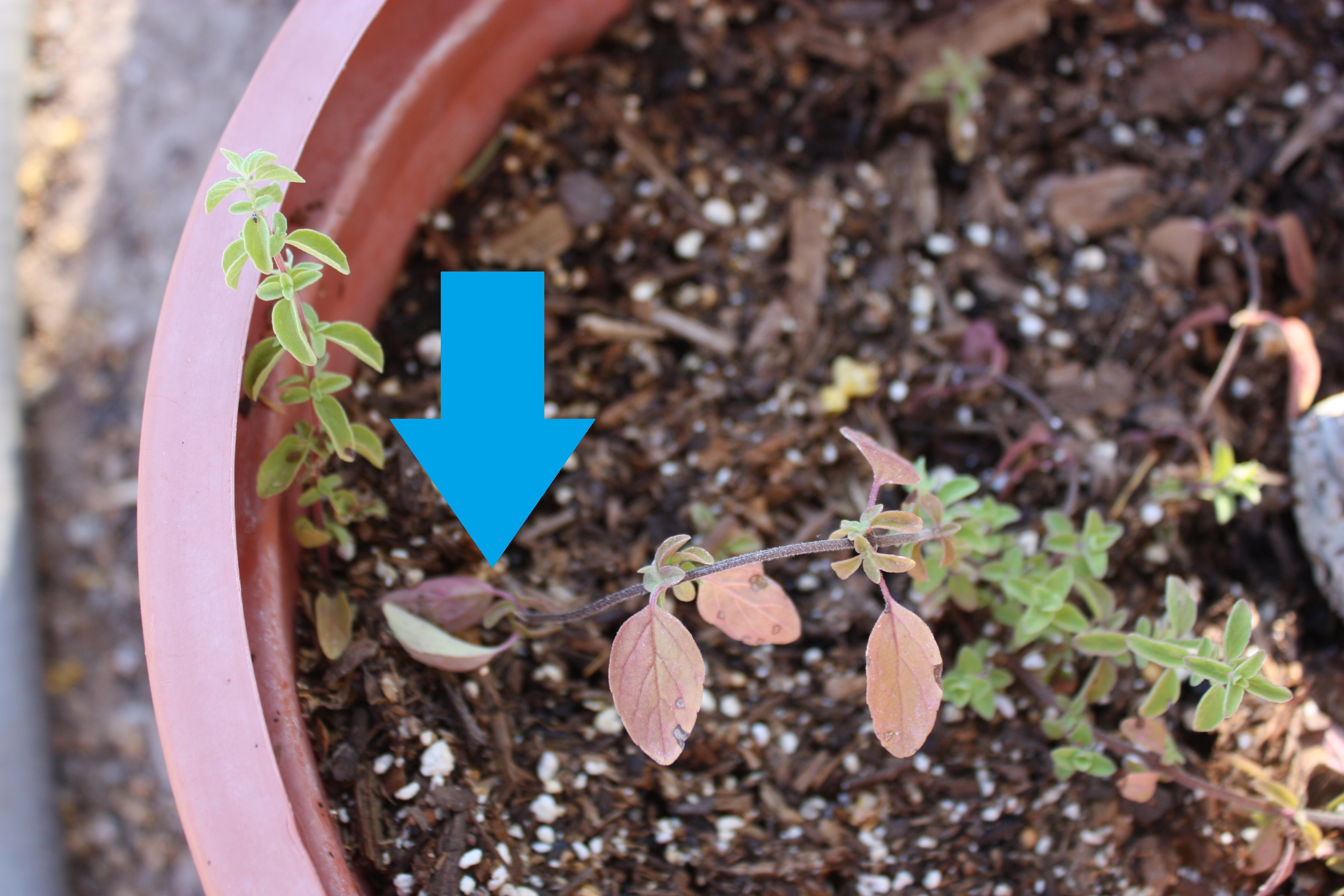
Origanum layering AMP_6648

Spread out the branches of your oregano and bury all but the tip. The branch will root where buried (blue arrow). This is called layering and is and easy way to propagate your herbs.

Please do tell me your favorite way to use oregano in the comment section below.  We Savor Sisters love to hear from our readers!

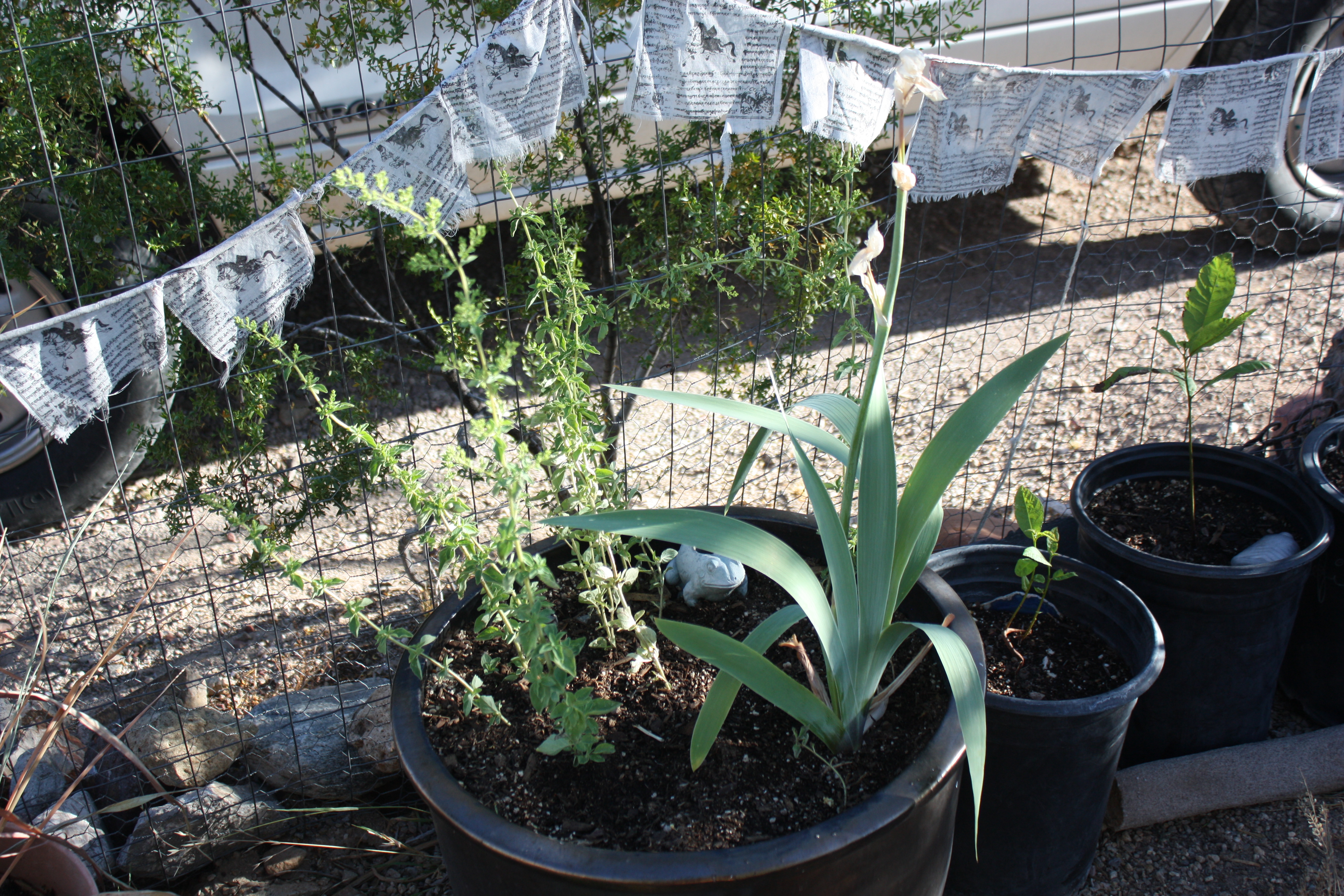
Origanum AMP_6652

As well as in the ground, oregano can be grown in pots. Normally one doesn’t mix iris and oregano but I needed a spot to put the iris, and then it was about to bloom,,, and if you are a gardener, you know how it goes.

JAS avatarIf you live in Southeastern Arizona, please come to one of my lectures. Look for me at your local Pima County Library branch, Steam Pump Ranch, Tumacacori National Historical Park (National Park Service Cenntenial this year!), Tucson Festival of Books and more. After each event I will be signing copies of my books, including the latest, “Southwest Fruit and Vegetable Gardening,” written for Arizona, Nevada and New Mexico (Cool Springs Press, $23).
All photos (except where noted) and all text are copyright © 2015, Jacqueline A. Soule. All rights reserved. I receive many requests to reprint my work. My policy is that you may use a short excerpt but you must give proper credit to the author, and must include a link back to the original post on our site. Photos may not be used.

# # # # #

You Say Purslane, I Say Verdolagas

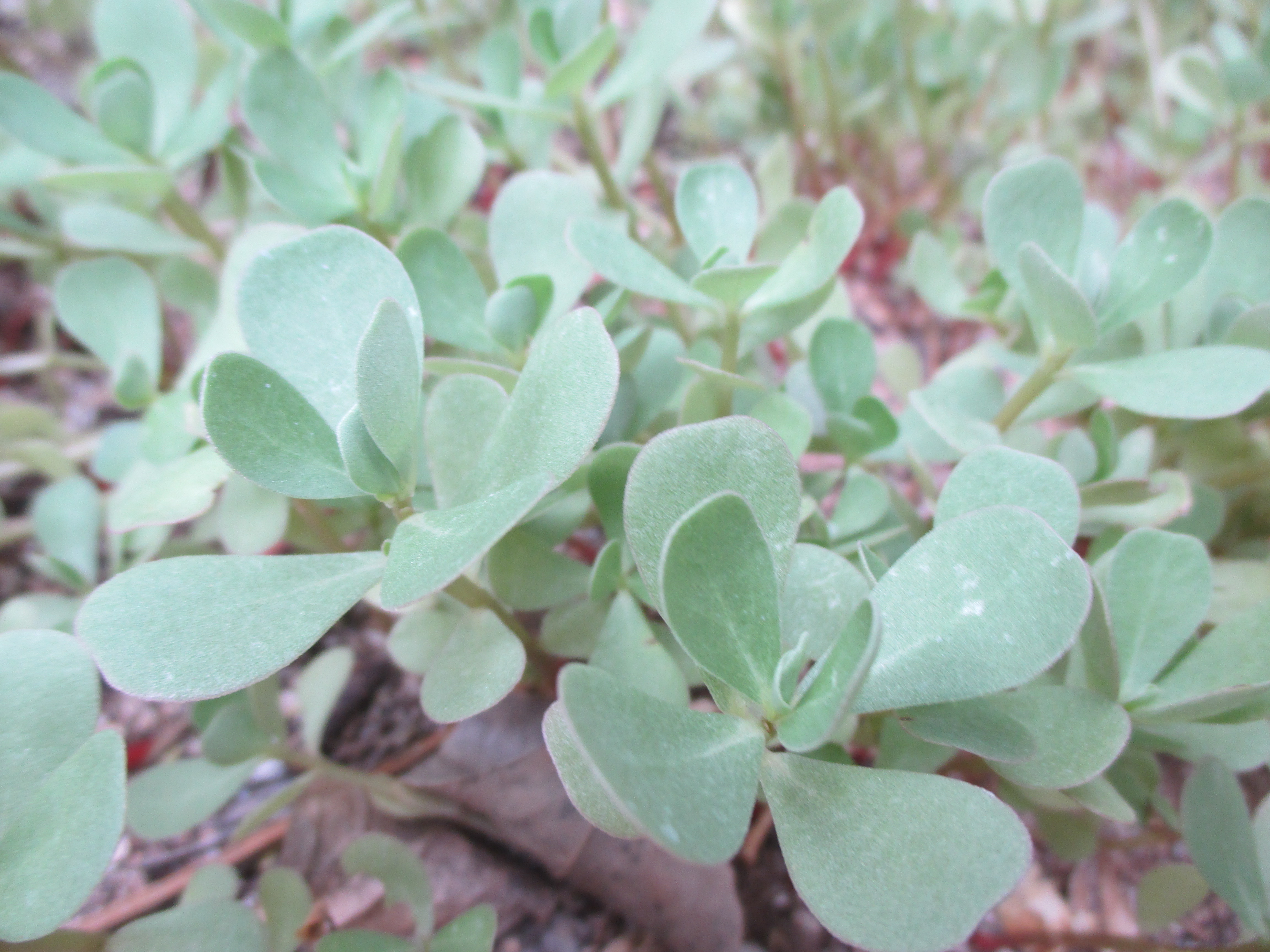
Purslane just sprigs so far due to late rains at my house.

Purslane is  just sprigs so far this year due to late rains at my house.

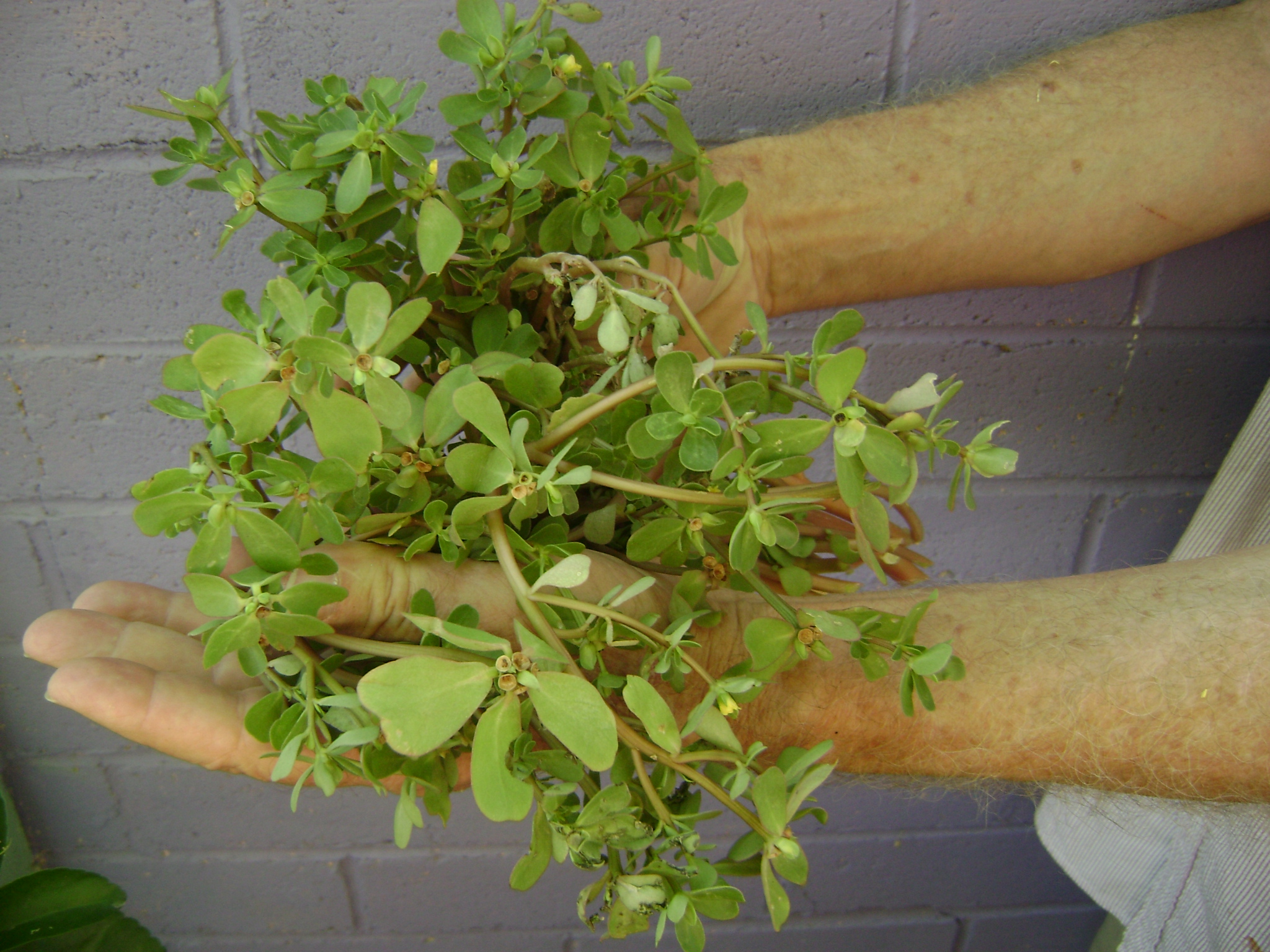
Here's how it should look once we get some more rain.

Here’s how it should look once we get some more rain.

If you’ve had any decent monsoon rain by now, you may have a vitamin powerhouse coming up in your yard.  Purslane, also called verdolagas, grows in many Southwest backyards in the summer.  It prefers rich, recently turned soils so look for it under your rose bushes or in a flower garden. It has small fleshly leaves about the size of a fingernail, pinkish stems, and grows close to the ground.  I have only a small patch this year where a small rain barrel spilled over. There should be more, but rains have been skimpy in our part of downtown Tucson.

It’s sad but true that right now people are out in their yards pulling these plants out and tossing them in the garbage (or compost for the more enlightened). They should be tossing them in the wok (see recipe below.) Purslane provides six times more vitamin E than spinach and seven times more beta carotene than carrots. It’s also rich in vitamin C, magnesium, riboflavin, potassium and phosphorus. One cup of cooked purslane has 25 milligrams (20 percent of the recommended daily intake) of vitamin C.

Especially important to those of us eating a modern diet, purslane is very high in an essential omega-3 fatty acid called alpha-linolenic acid (ALA). Omega-3s are a class of polyunsaturated essential fatty acids. Your body cannot manufacture essential fatty acids, so you must get them from food. Certain fibers also help in controlling blood sugar.

Sometimes all this talk of nutrition can turn people off  — you might be saying “OK, but what does it taste like?” Delicious, actually. There are lots of ways to use purslane. The mild lemony flavor goes with everything. Purslane can be eaten raw chopped in salads or sautéed . Add it to a stew.   Or toss it in the blender when making a green smoothie and it will add body as well as vitamins.

There’s something else, too. Something beyond just the vitamins that come from eating plants from your own yard. It’s a connection to the land you live on, the seasonal treat that Mother Nature has provided. By eating with the season, you become more than a mere spectator to life’s cycle. You think about these tiny seeds that wait for the rain, then manage to live as the sun beats down with 100-degree fury. And there’s the connection to past generations of people who lived here and ate these plants–a connection that broccoli will never give you.

My friend Roni Rivera-Ashford taught me to put a bowl under the colander and catch the water you use to rinse the purslane. You will find lots of very tiny black seeds in the water.  Botanists tell us that a single purslane plant can produce up to 200,000 seeds. Pour that water with the seeds on a potted plant and you’ll have purslane next year.

Since it’s free and (usually) abundant, why not try some?  Here’s the classic prepartion cooked up in Mexican kitchens every summer.

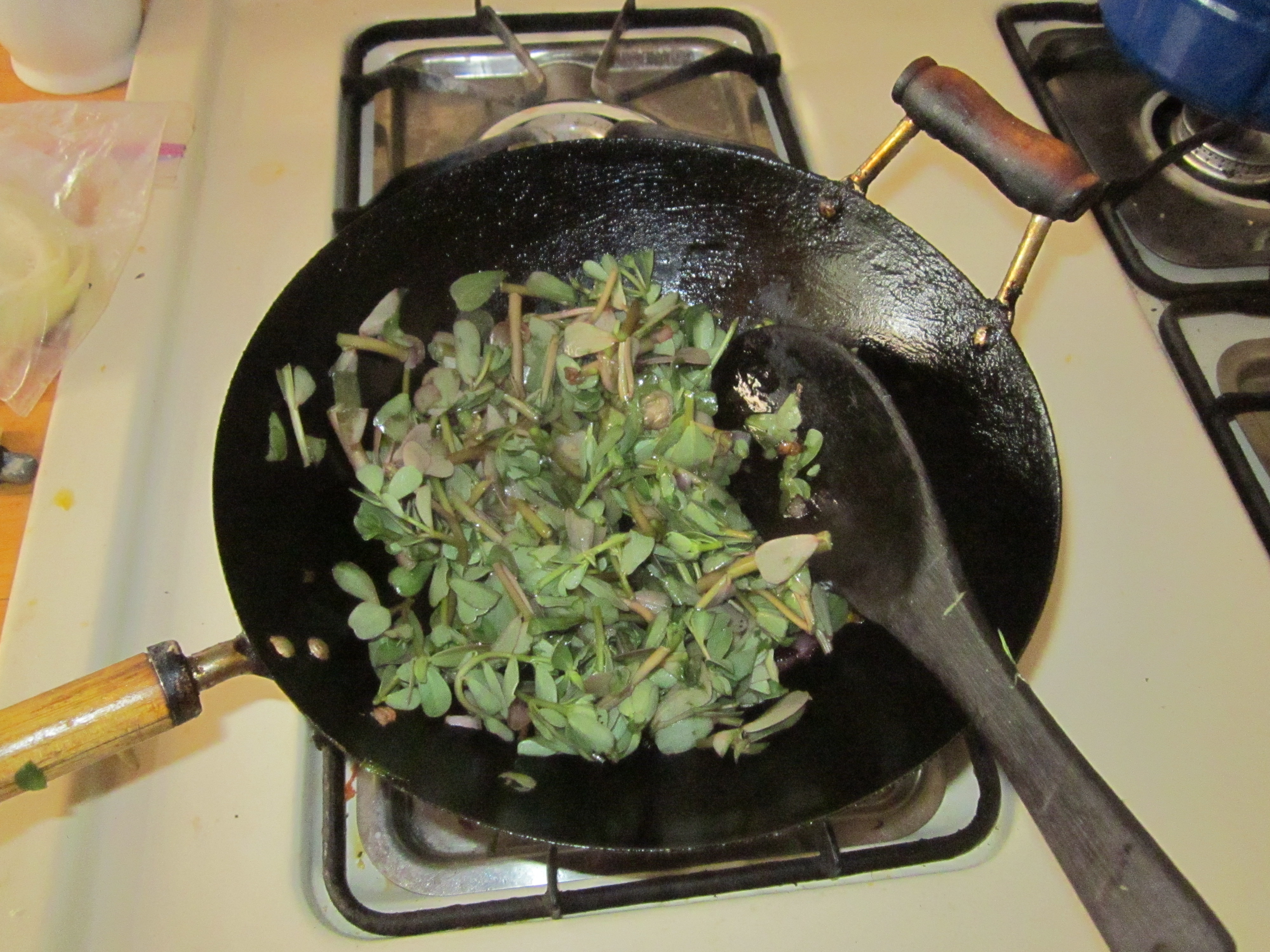
To prepare the purslane, first chop and sauté  some onion and garlic in a little oil.  When the onion is translucent, add the purslane.

IMG_0880

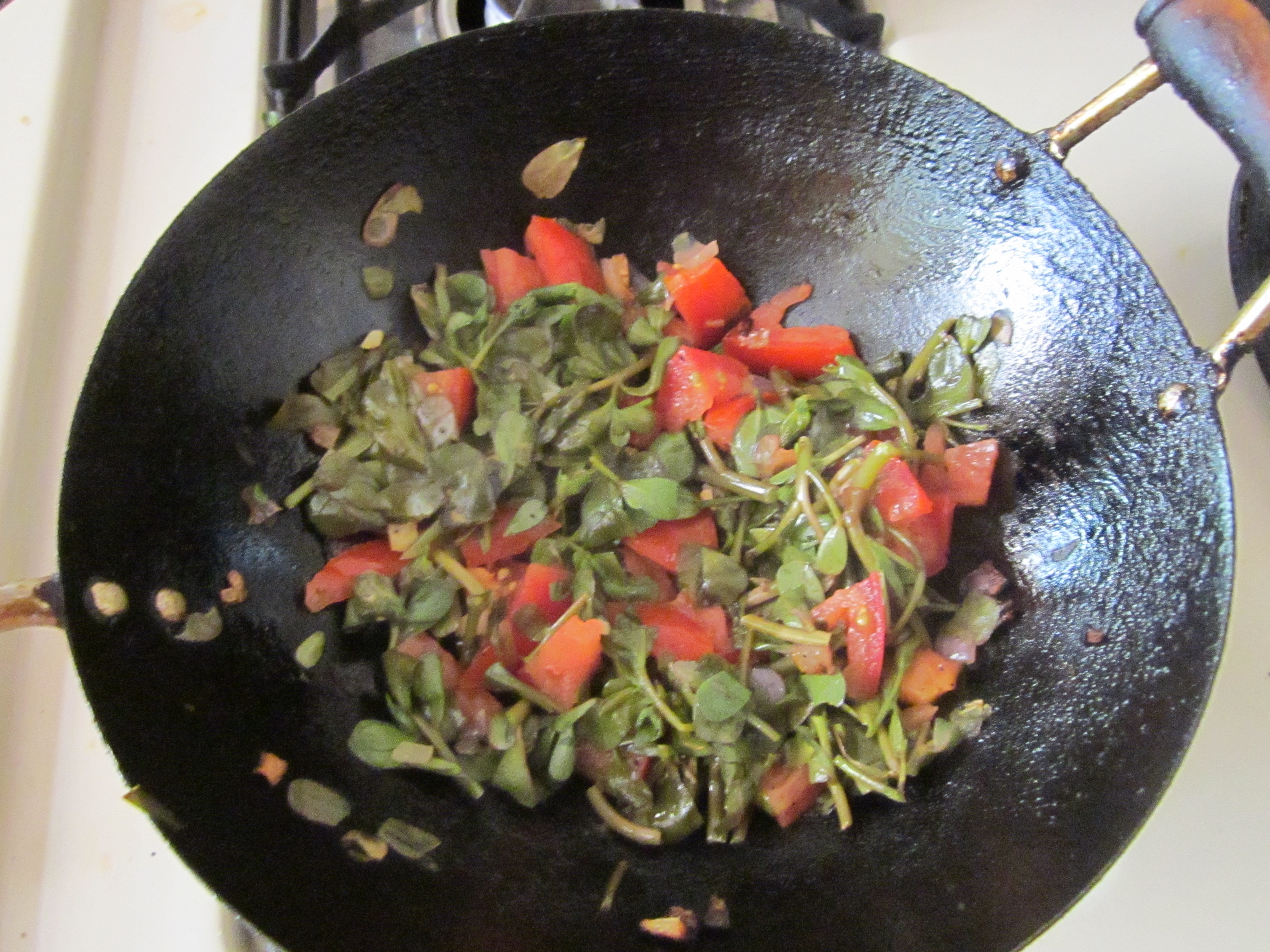
Next, toss in some chopped fresh tomatoes.

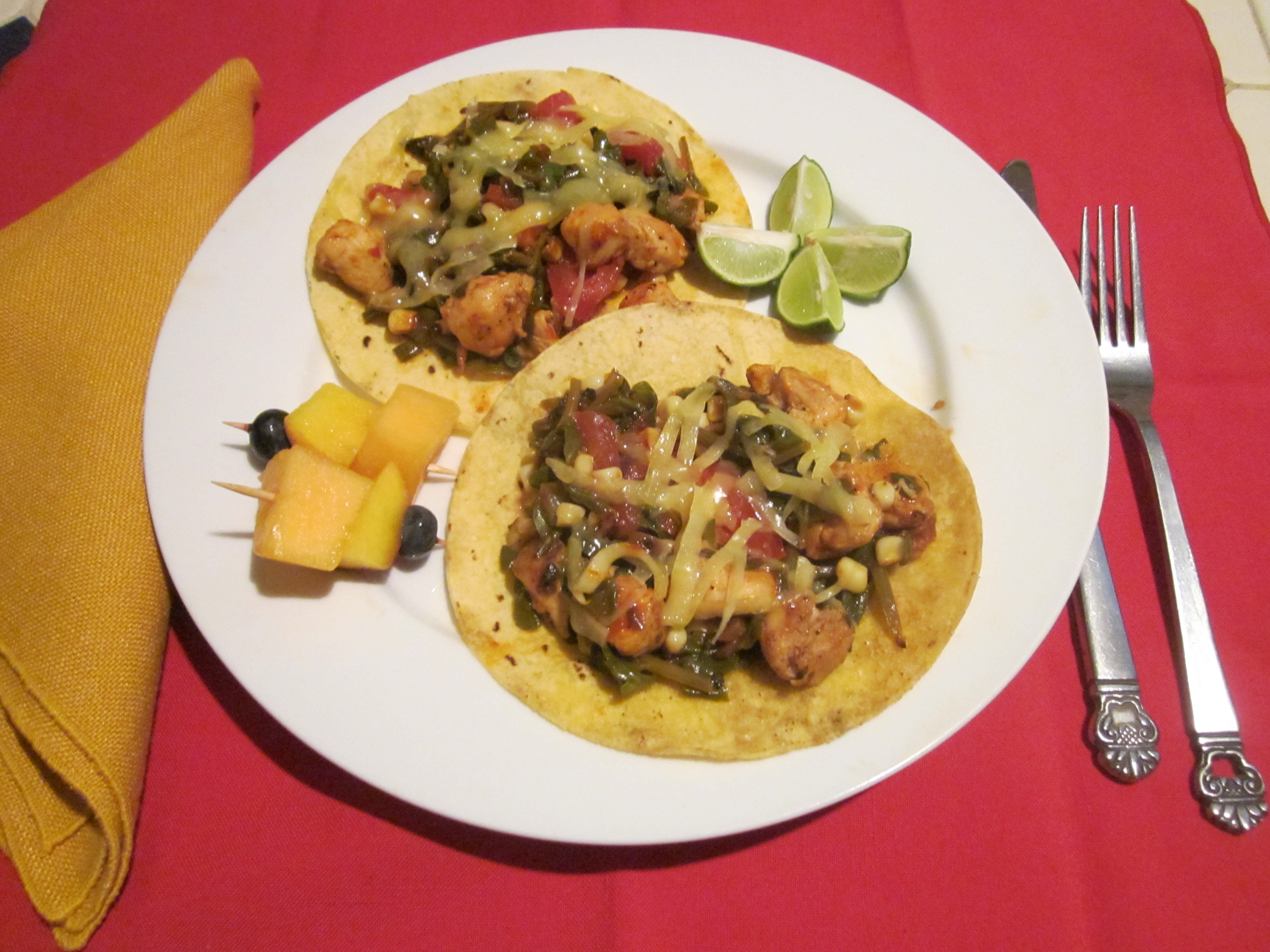
IMG_0881At this point you can eat it, maybe with a little cheese on top. Or to make a heartier meal, saute some small bits of chicken. Now you’ve got a great side dish. Or how about filling for some enchiladas.

Dip the tortilla in chile sauce, add some purslane and roll.

Dip the tortilla in chile sauce, add some purslane and roll.

My favorite is tostadas. Yum!

IMG_0884

_________________________________________

Interested in more ideas for using the wild foods of the Southwest?  Check out my books Cooking the Wild Southwest  where you’ll find recipes for 23 delicious wild plants, and The Prickly Pear Cookbook with lots of recipes for both the prickly pear fruit and pads.   Here’s a little video with ideas for other local wild plants to add novelty and nutrition to your diet.

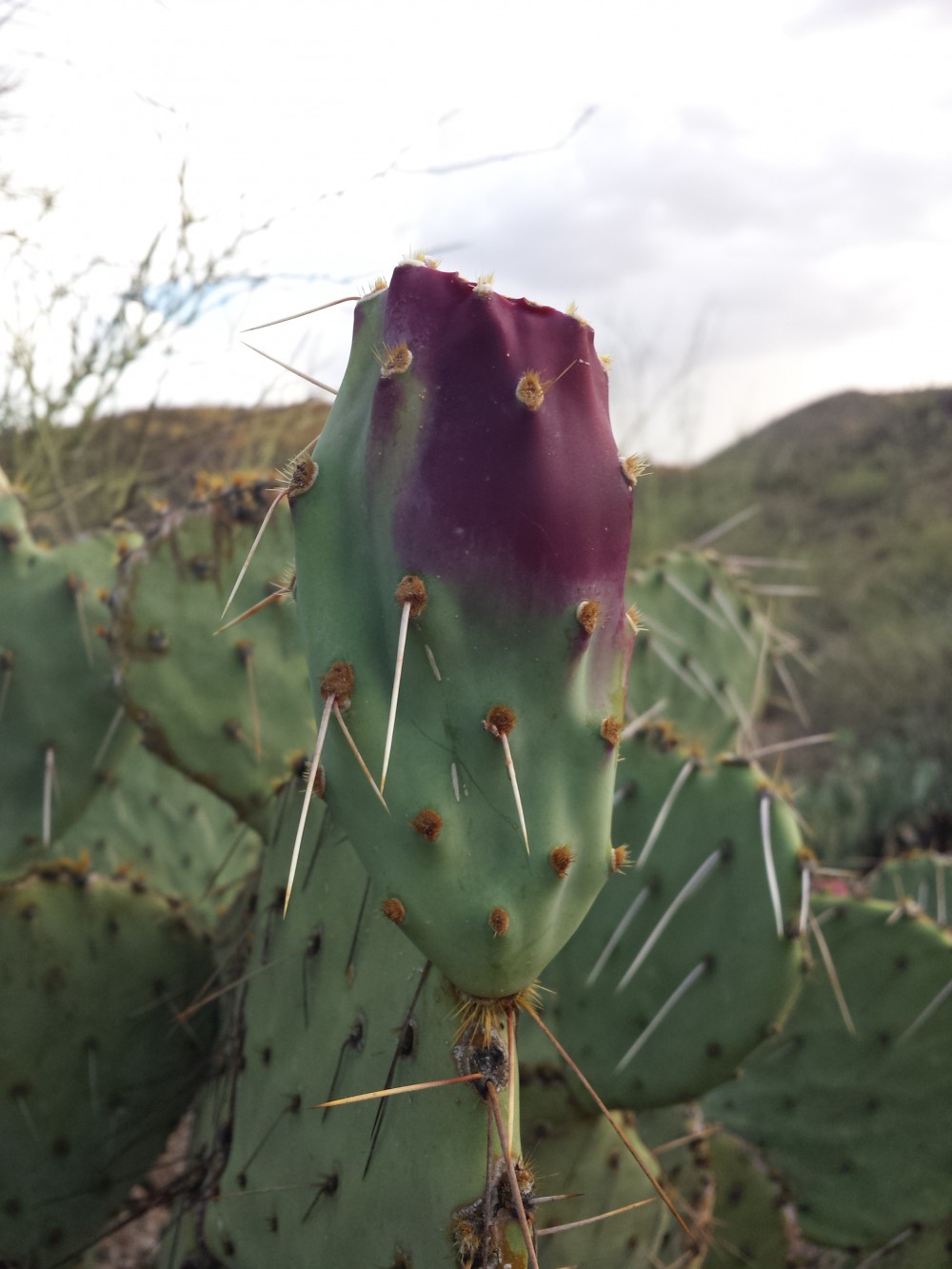
Prickly Pear Upside-down Cake, Summer in Tucson

20150730_185022

Amy Valdes Schwemm here today, with glochids in my hands.

20150811_111746

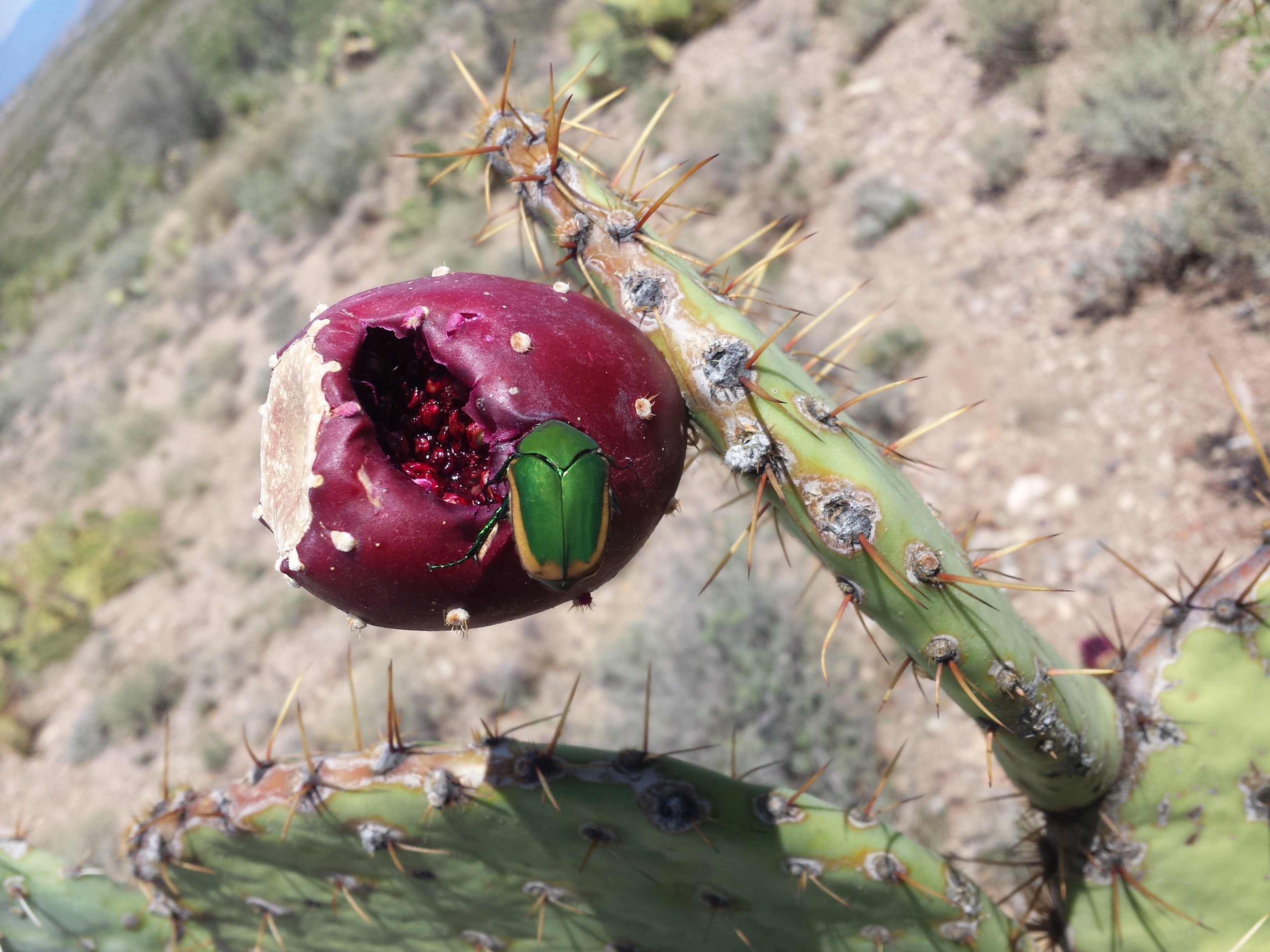
Figeater beetle, Cotinis mutablilis

20150813_185004

Santa Cruz River Farmers’ Market Workshop

20150813_184946

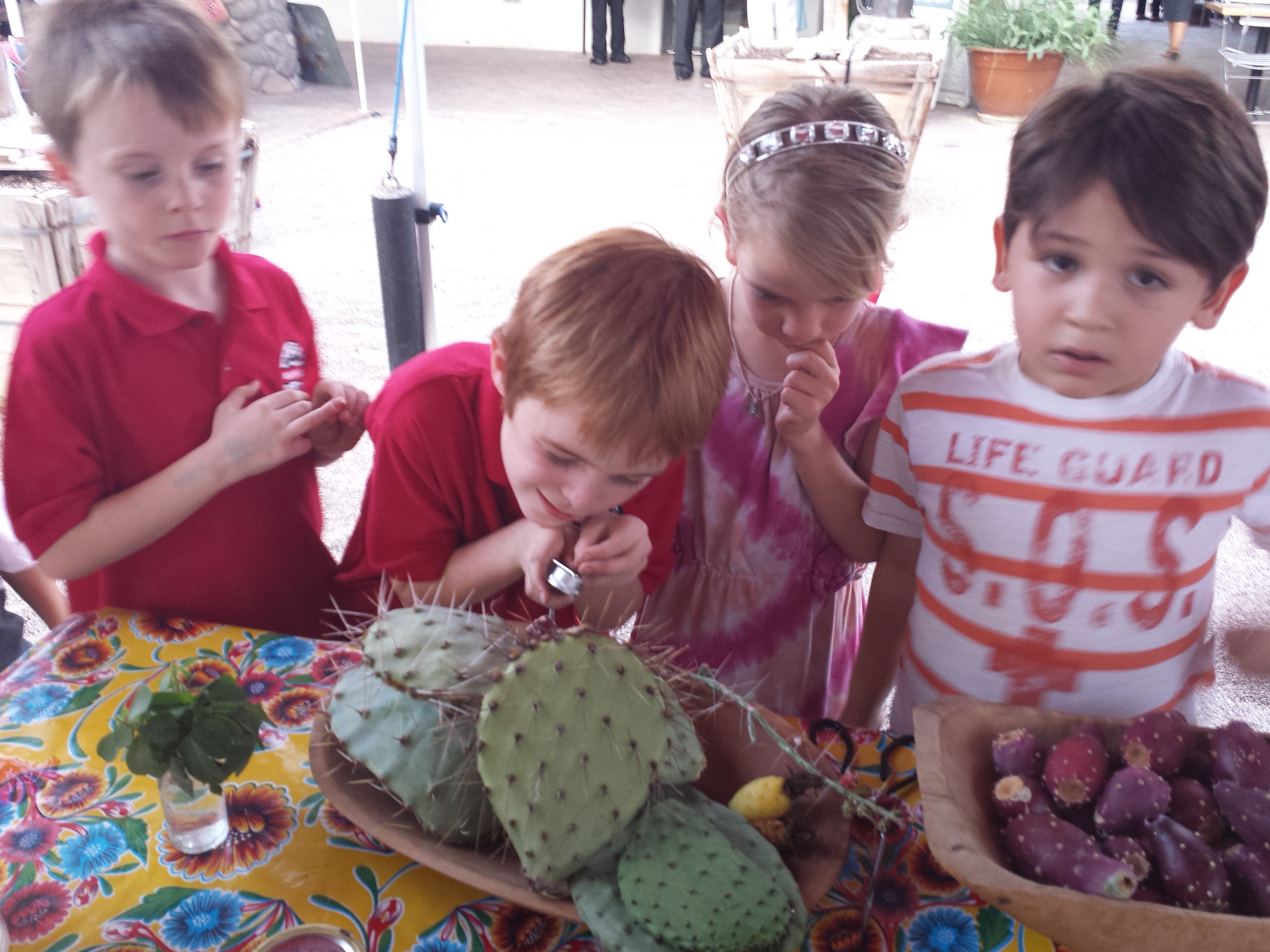
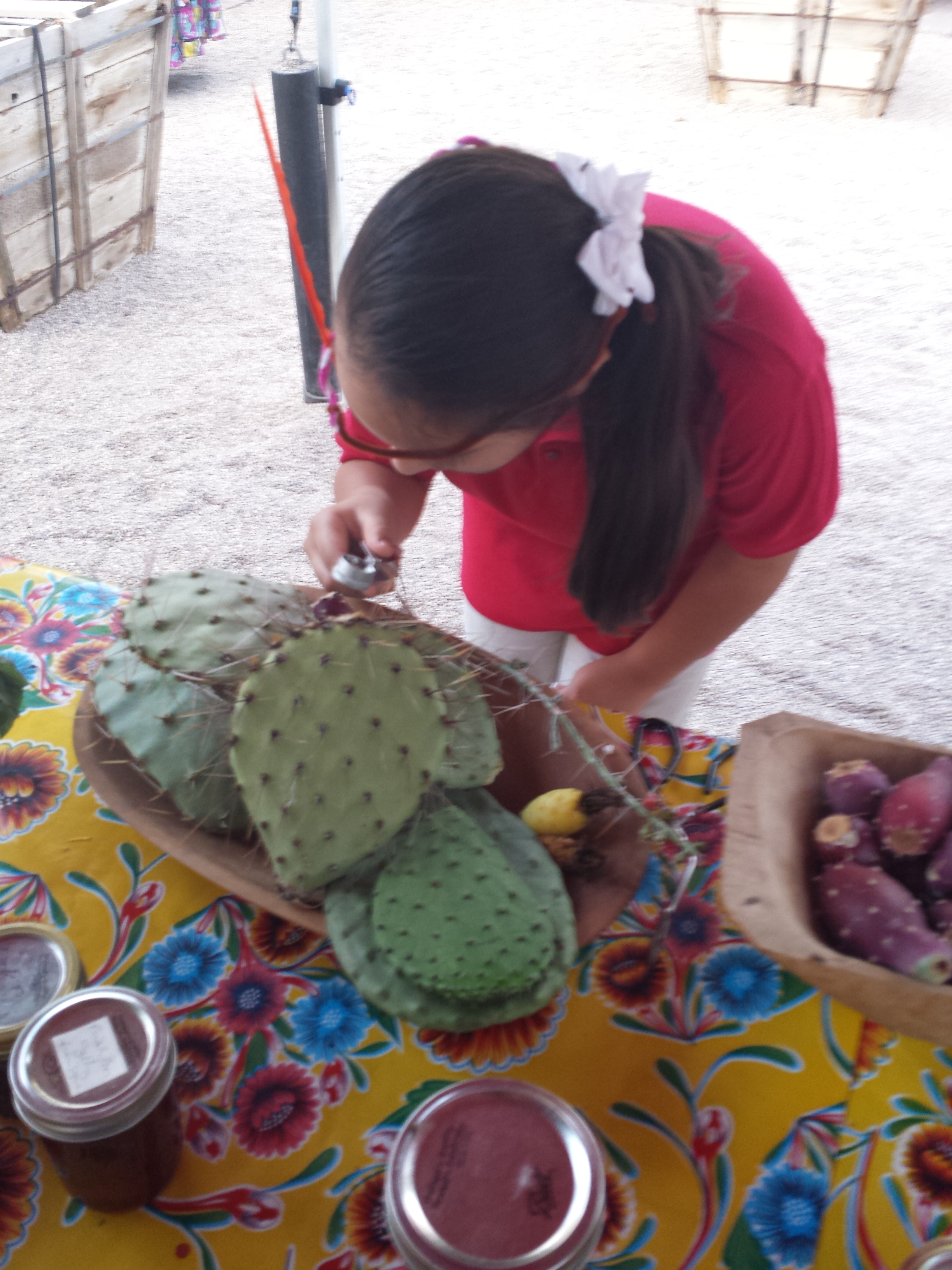
“I want to be a scientist!” she said.

20150814_145703

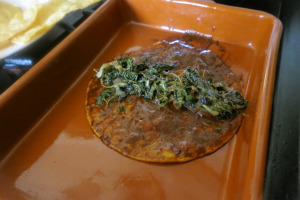
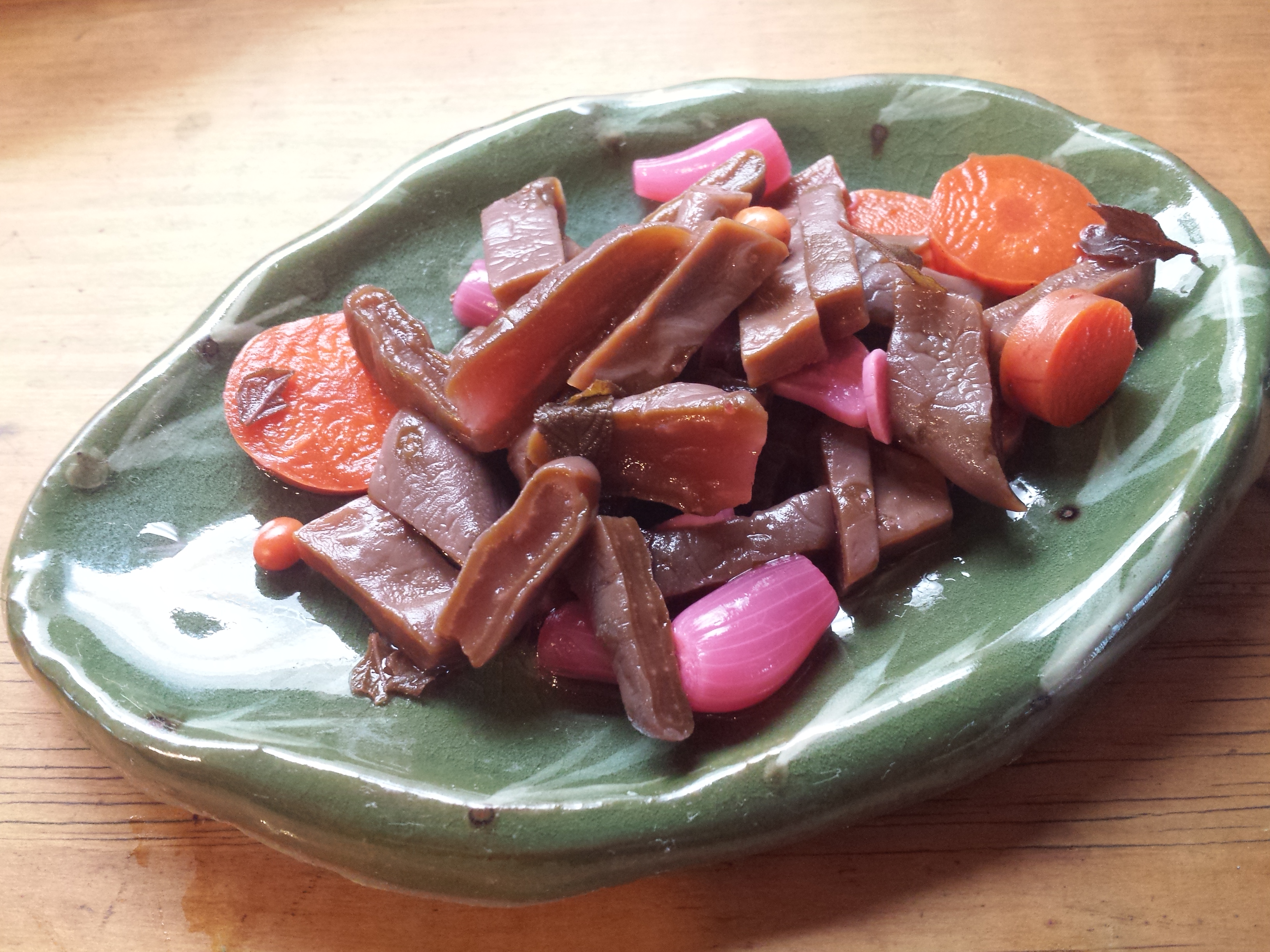
Nopalitos en escabeche (pickled cactus pads with carrots, garlic, I’itoi onion, chiltepin, Mexican oregano)

20150814_103012

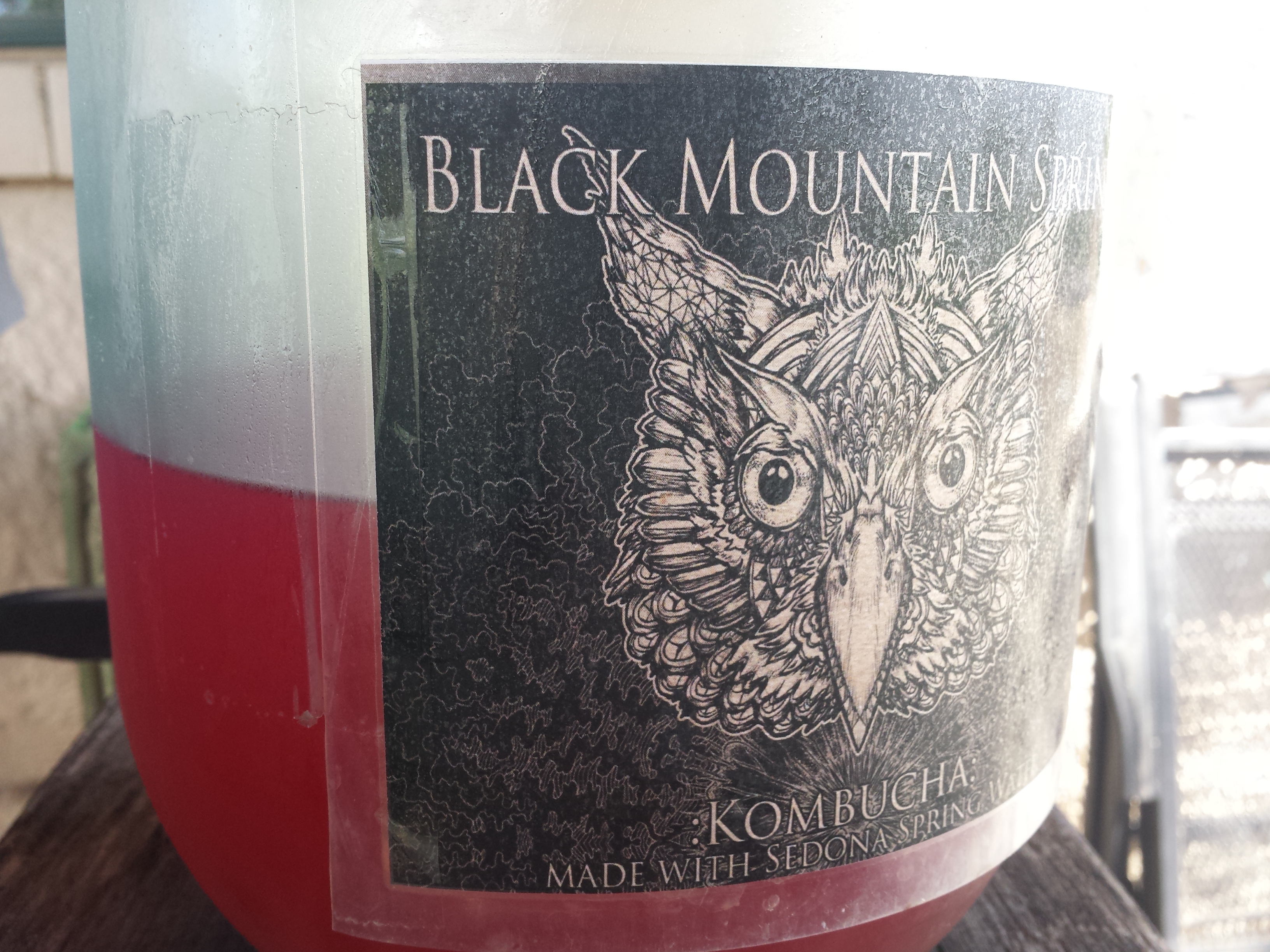
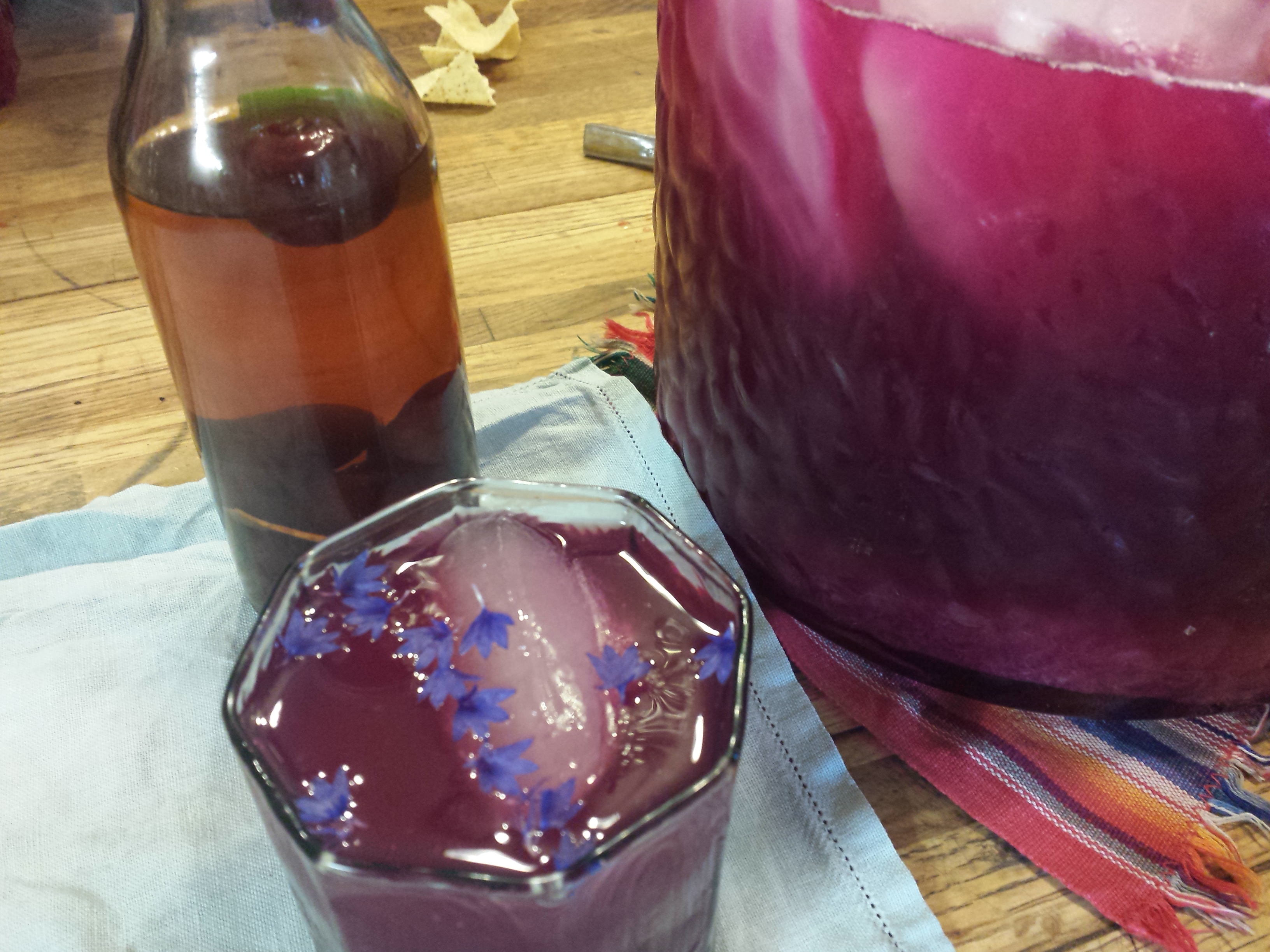
Prickly pear kombucha

Harvest party at Bean Tree Farm. Classic Barbara Rose cocktail with too many ingredients to list!

Harvest party at Bean Tree Farm. Fancy cocktail by Barbara Rose!

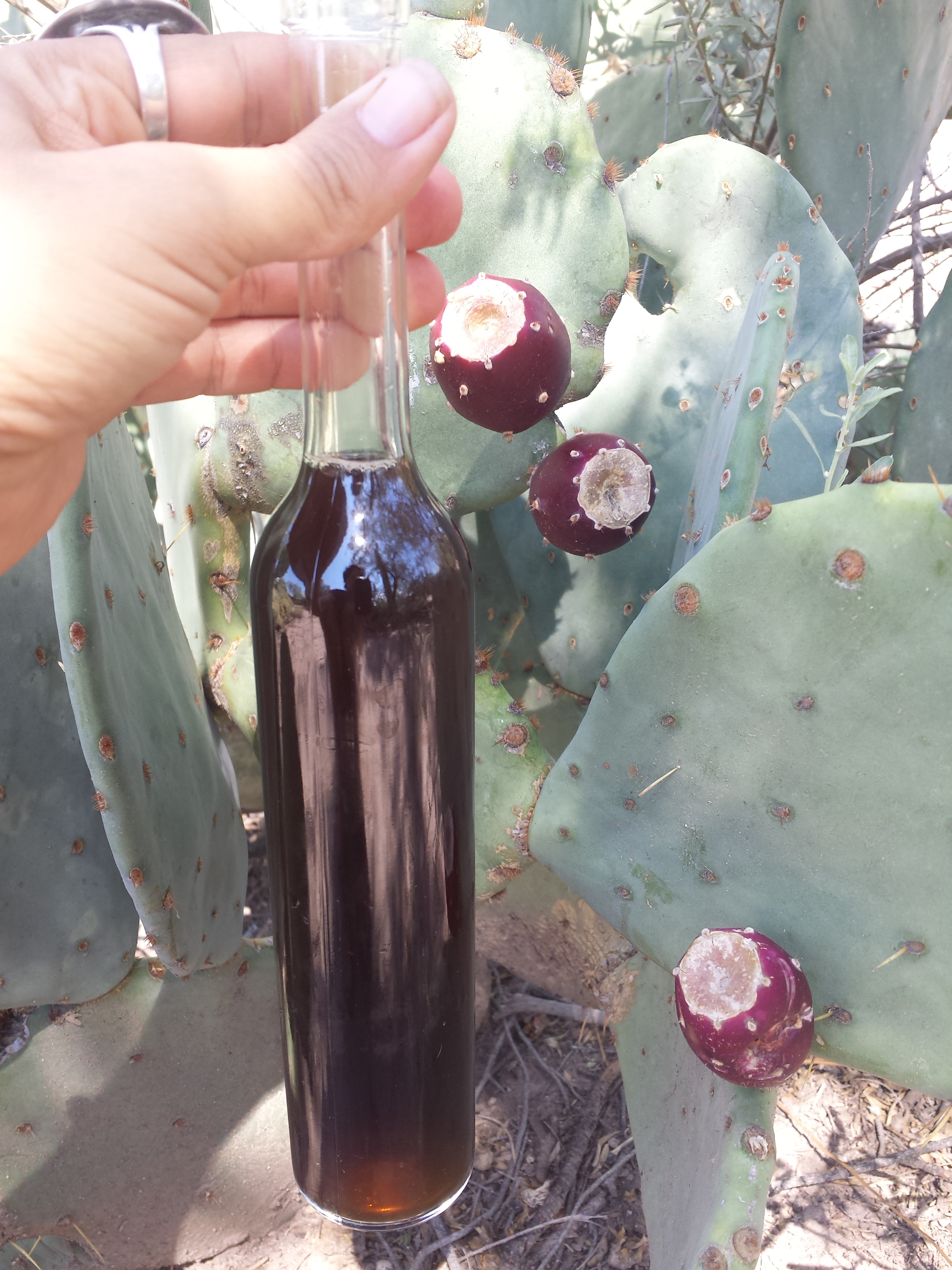
Prickly pear vinegar

Prickly pear vinegar

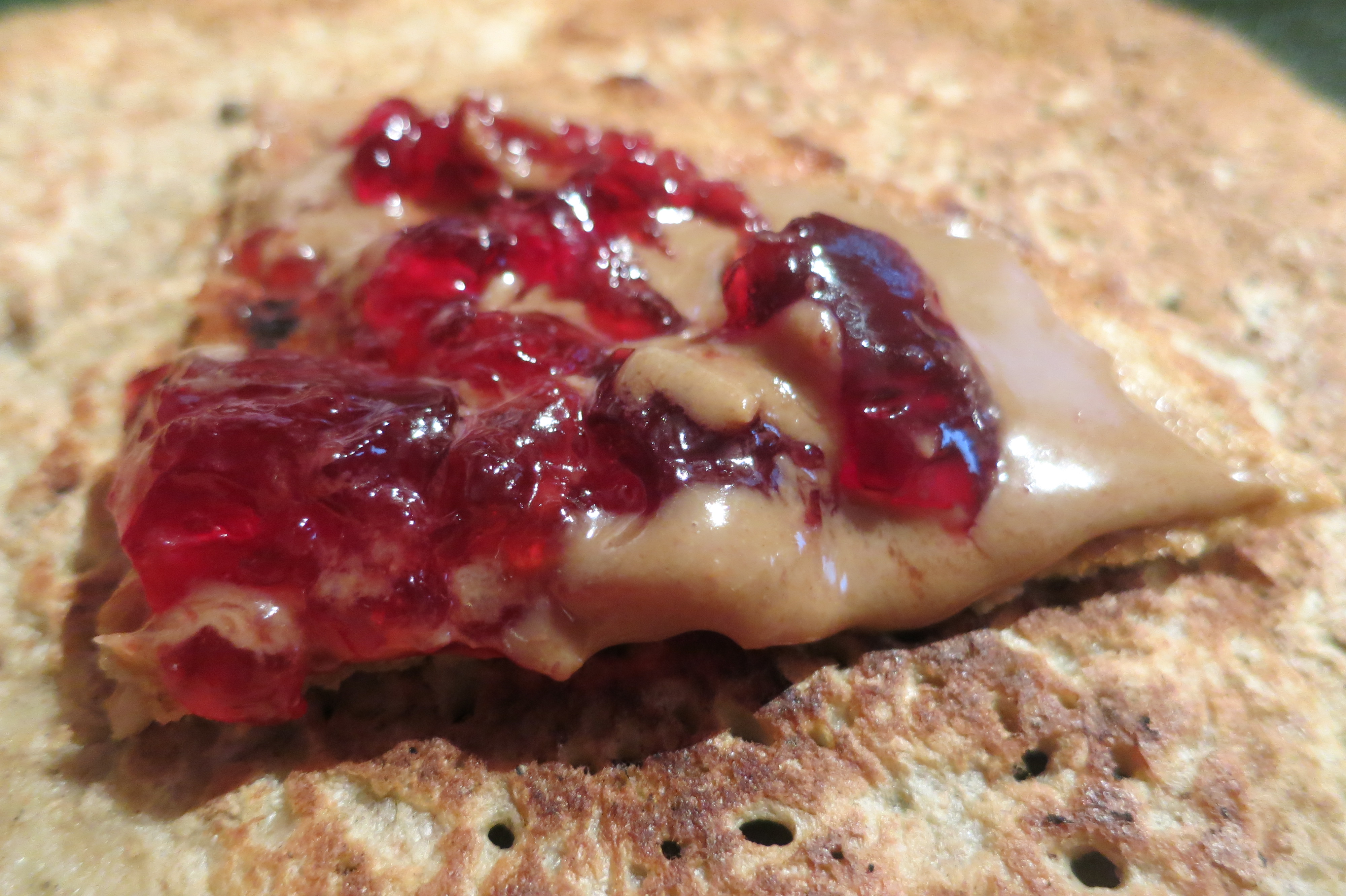
Prickly pear jelly on Sourdough Sonoran Wheat, Barley, Almond crepe

Prickly pear jelly and nut butter on sourdough Sonoran wheat, barley, almond crepe

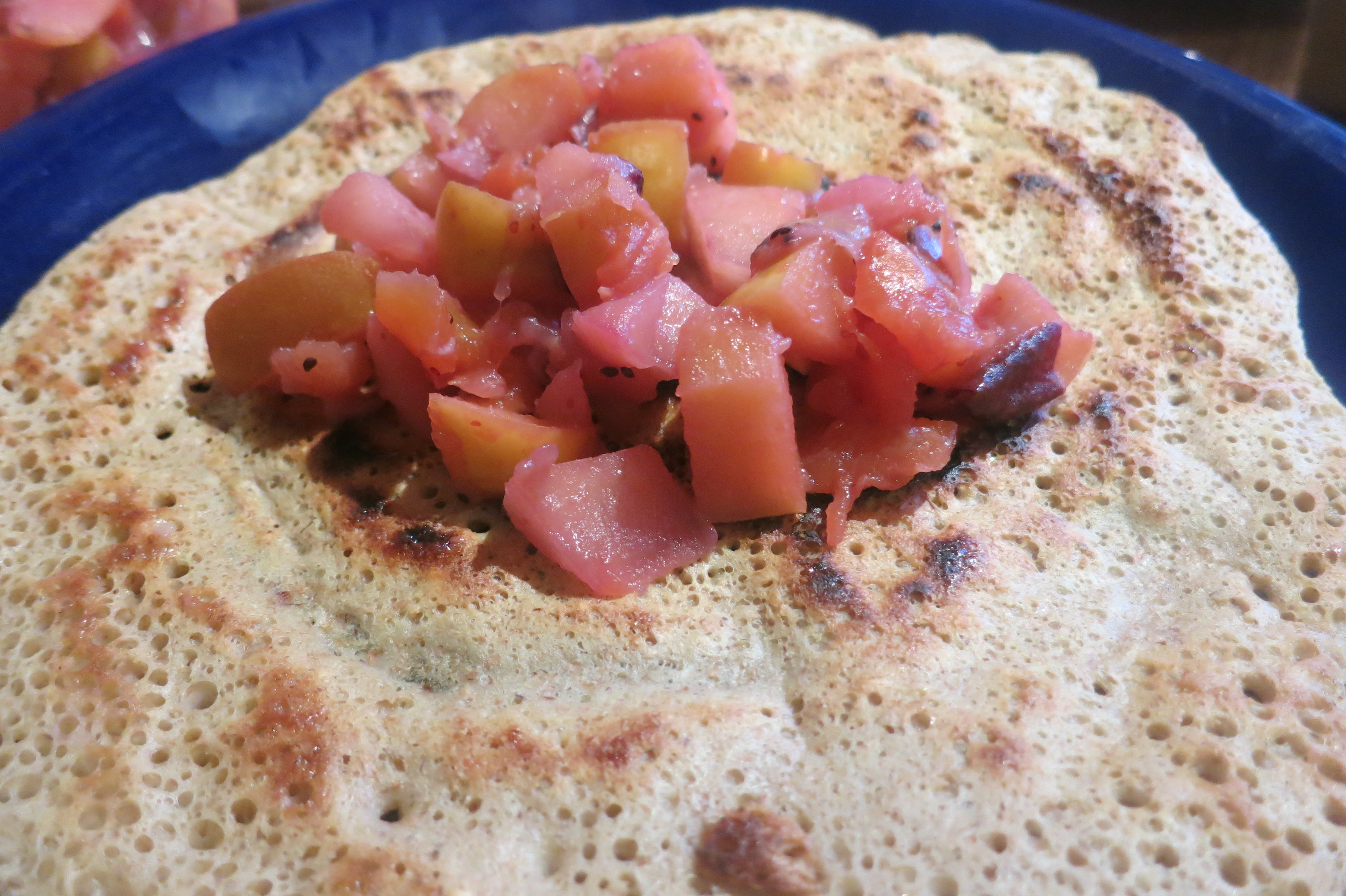
Apple, prickly pear and friends compote

Apple, prickly pear and friends compote

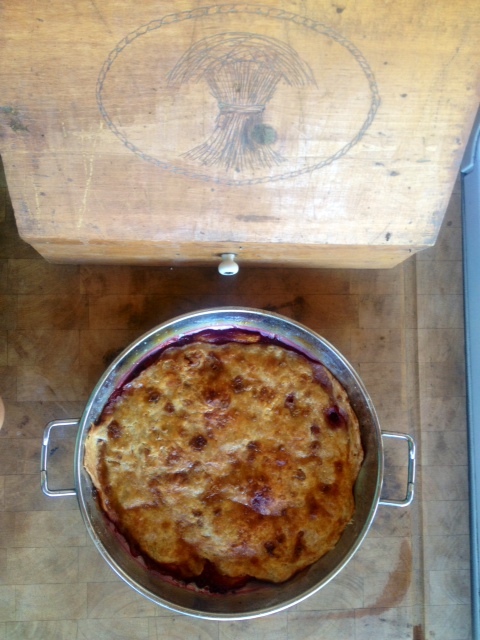
Peach prickly pear cobbler

Peach, raspberry, prickly pear cobbler

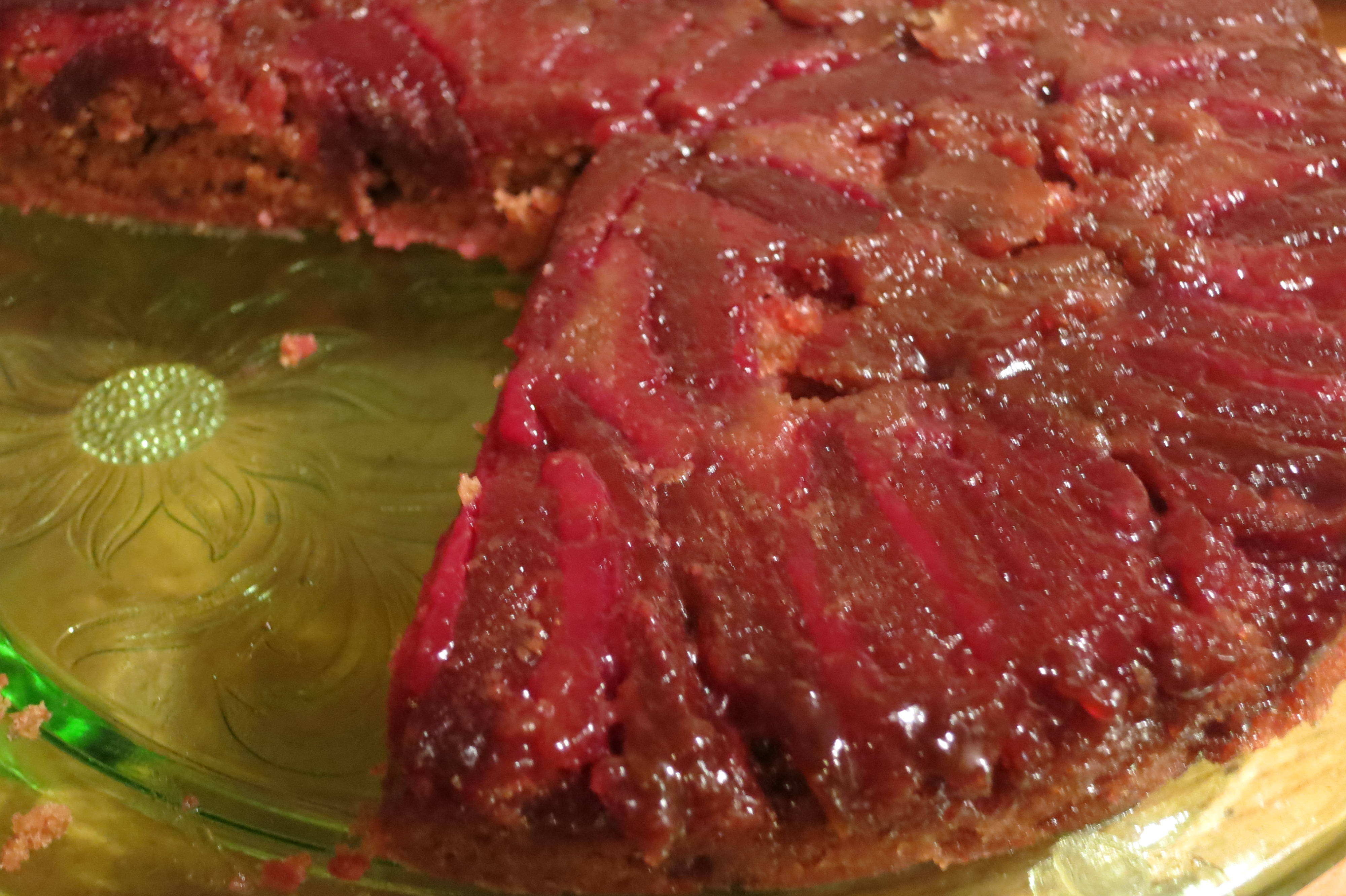
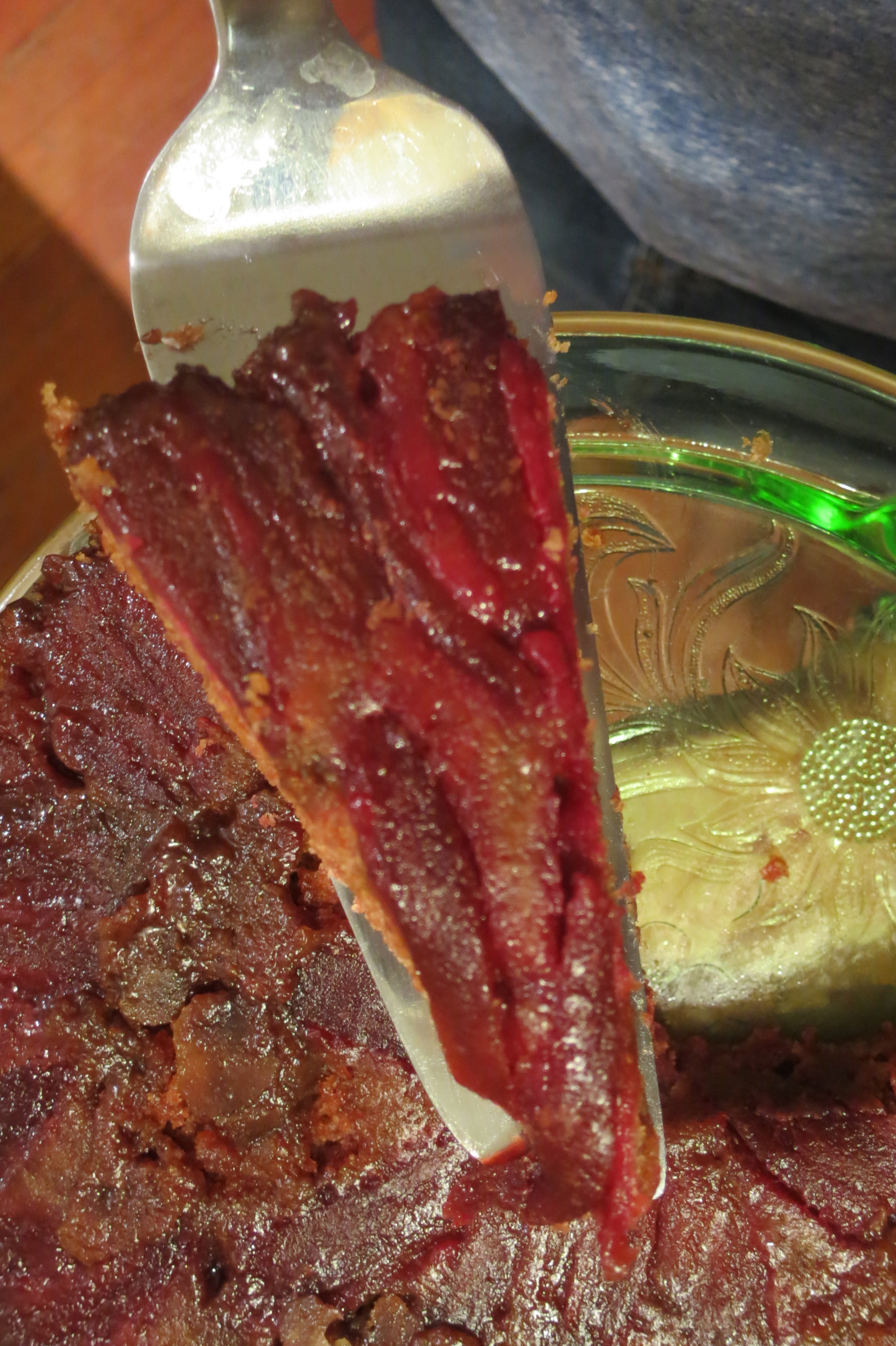
Prickly pear upside down cake

Prickly pear upside down cake

Prickly Pear Upside-down Cake

1/4 cup butter

1/2 cup brown sugar

3/4 cup whole wheat flour

3/4 cup unbleached all purpose flour

3/4 cup sugar

1 teaspoon baking powder

1/4 teaspoon salt

3/4 cup prickly pear juice

1/2 cup butter, melted

1 teaspoon vanilla

6 prickly pear fruit, glochids singed over fire, peeled, seeded and sliced

Preheat oven to 325 degrees F. In a 9 inch springform pan, put 1/4 cup butter. Put pan in the oven just until butter is melted. Sprinkle with brown sugar and arrange prickly pear fruit on top. Mix flours, sugar, baking powder and salt. Separately, mix prickly pear juice, 1/2 cup melted butter and vanilla. Combine the two mixtures and pour into prepared pan. Bake for 3o minutes or until a toothpick inserted in cake comes out clean. I like the cake to have some brown edges. Cool, invert on to a serving plate and enjoy. IMG_3286

Poet’s Late Summer Smoothie – Savory or Sweet

There is so much poetry in nature.  It is a poetry that speaks without words.

Here’s some poetry I came across this morning while doing chores.

  • While collecting eggs – A muted colored, still moist snakeskin. Recently shed, it had unhinged itself from it’s serpentine owner with the help of friction (as it passed underneath the white enamel tub that the duck/hens use for bathing and drinking). I was more mindful collecting eggs in the dim pre-dawn light, lest it’s new skin version had found its way into the nesting boxes. No words written on the skin, but it spoke of a form now too small for its serpentine body.
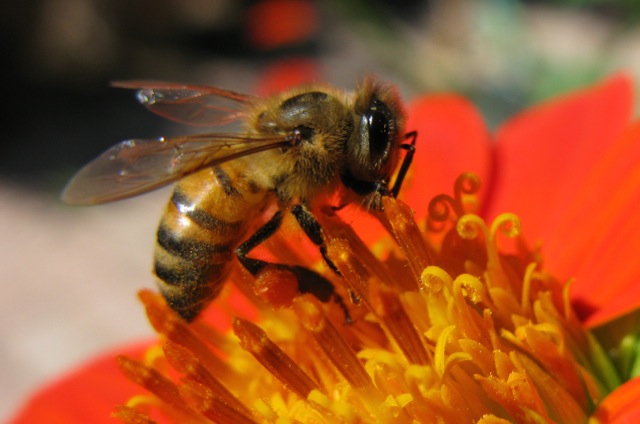
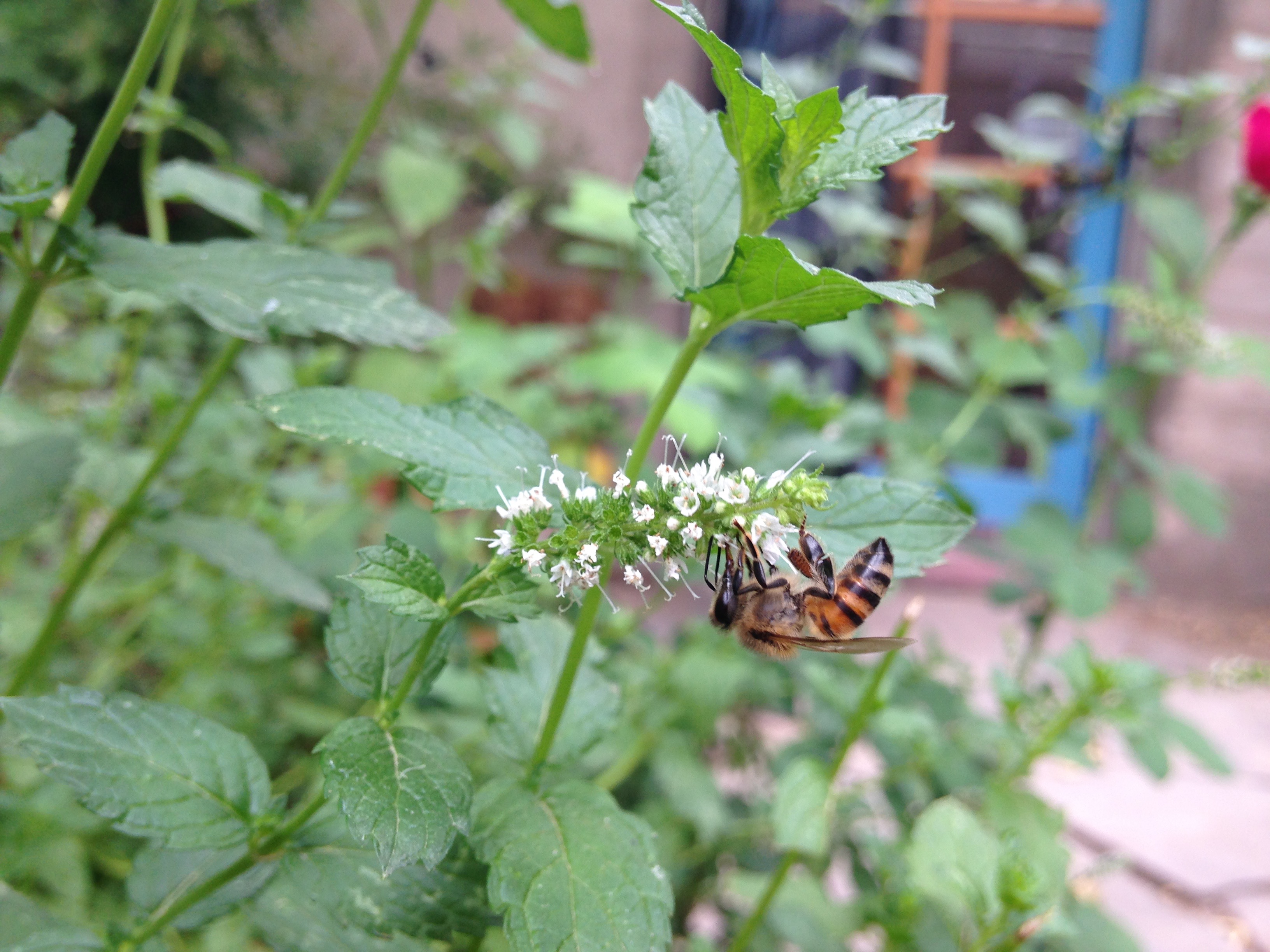
  • While tending the garden – I found poetry in pollen grains hitching a ride on bees; and in bees acting as the legs of plants. No words uttered as they go about their work, but they complete a reproductive act that many plants cannot do on their own. Poetry.  (Below: the poetry of bees at work on the ingredients we’ll use in the Poet’s Recipe: Mint, Strawberries, Pomegranate)
IMG_5968

Honeybee on a mint flower

IMG_9633

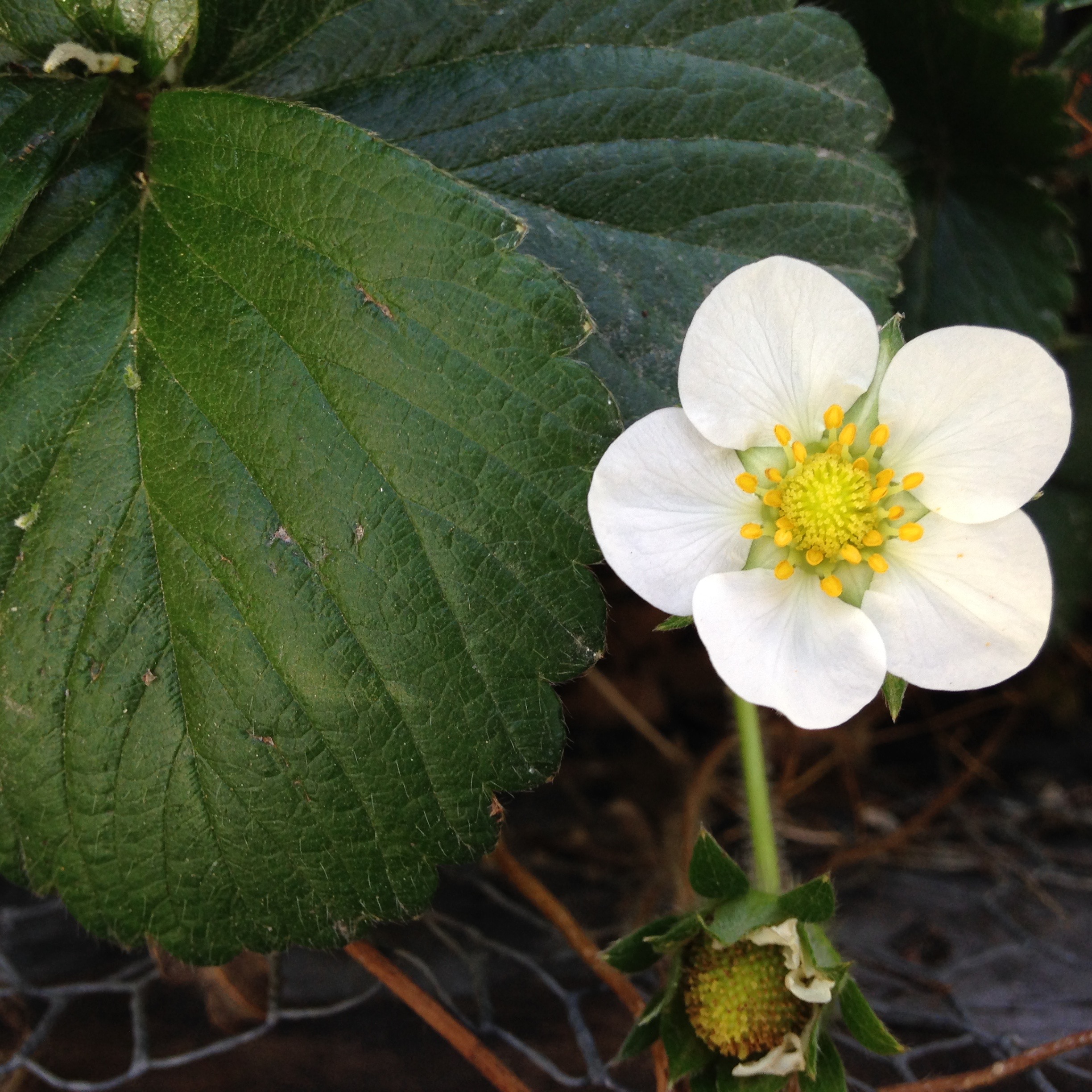
From my garden: white strawberry flower and a strawberry fruit forming just below it. This plant is still producing in August!

IMG_9416

Honeybee at work on a strawberry flower; you can see her pollen sacks (on back legs) are being filled with strawberry pollen!

IMG_6456

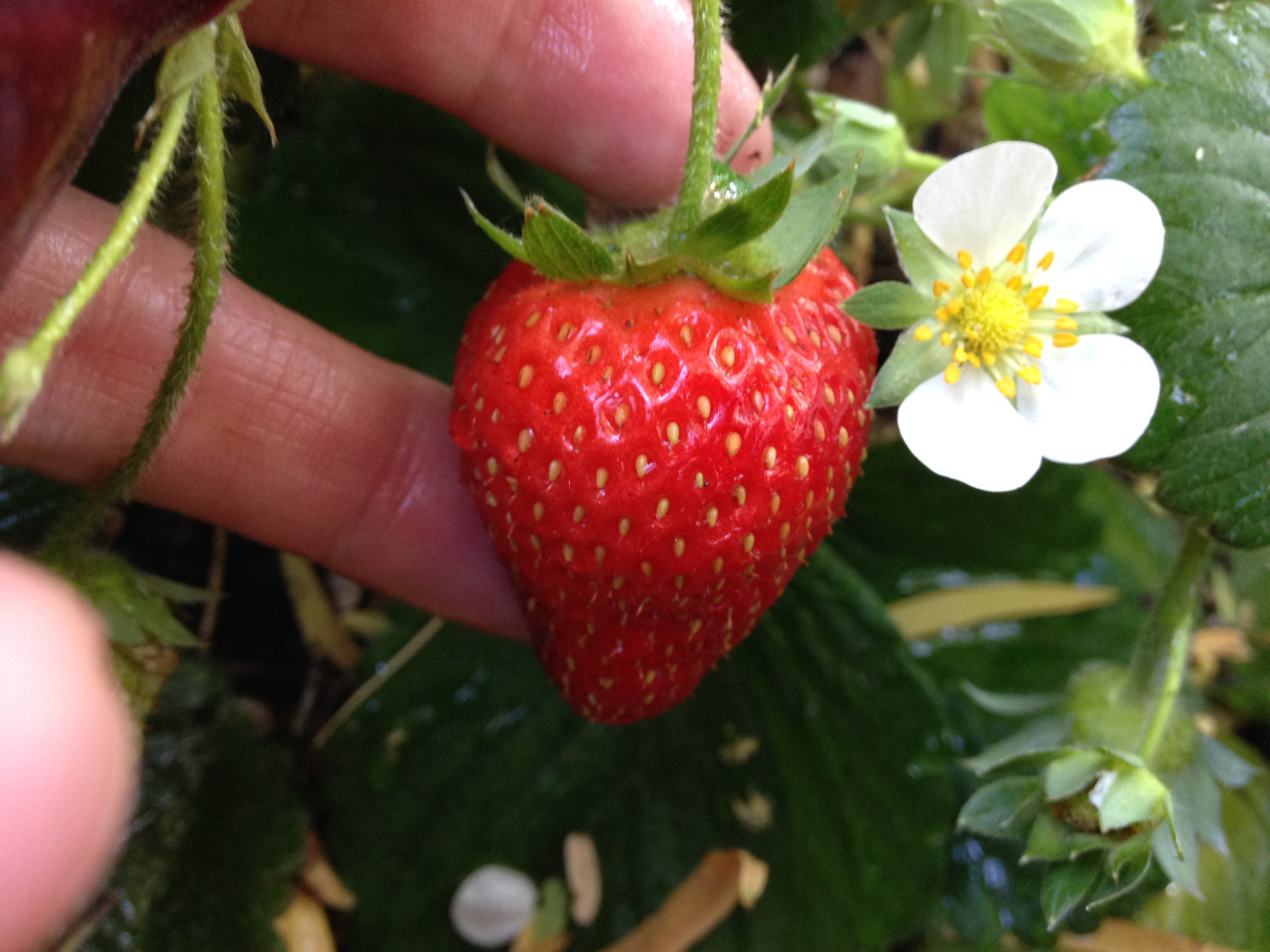
Side by Side – tow different stages: fruit and flower.

IMG_5525

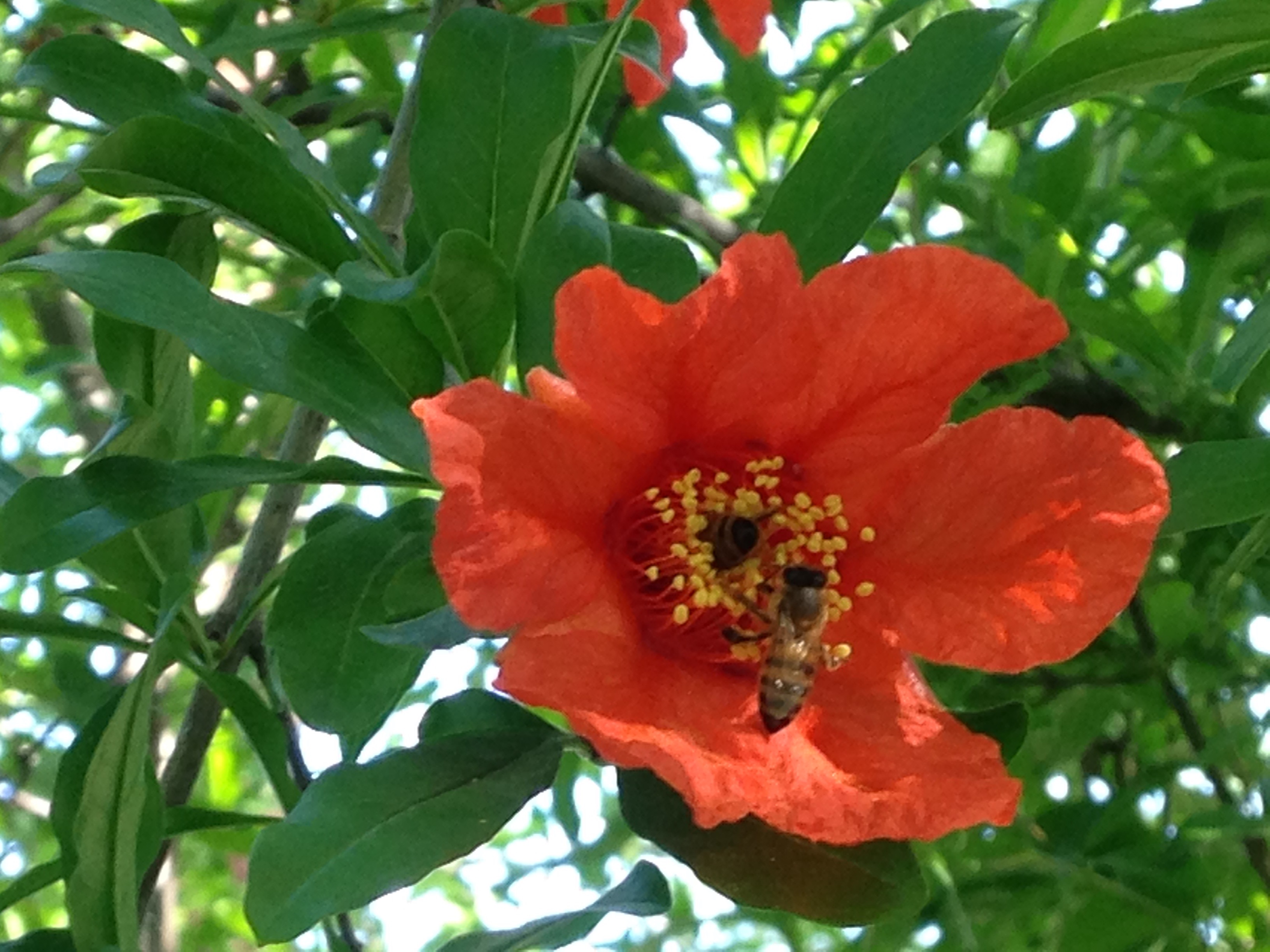
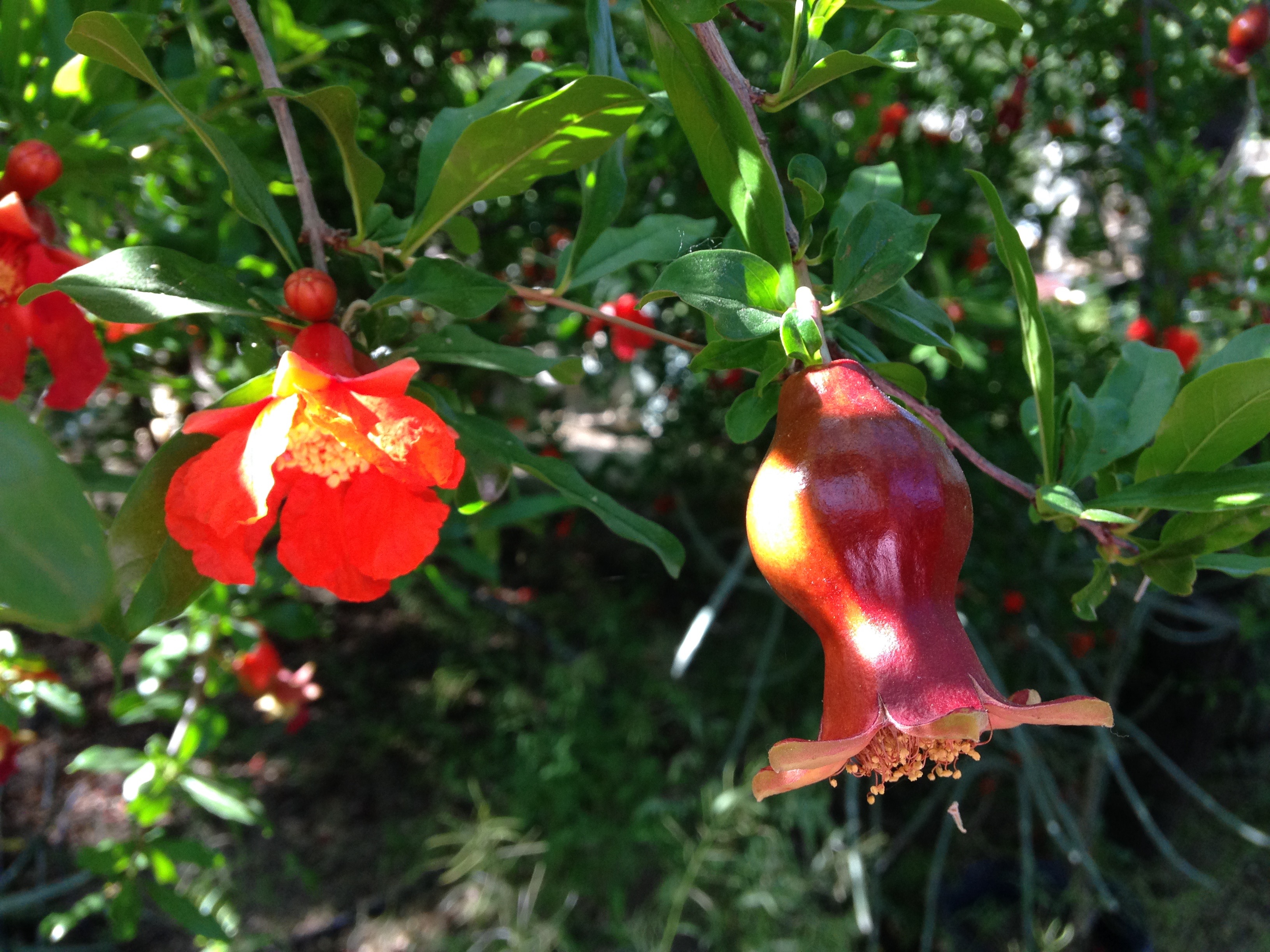
Two honeybees at work on a pomegranate flower; here in the yard.

IMG_5523

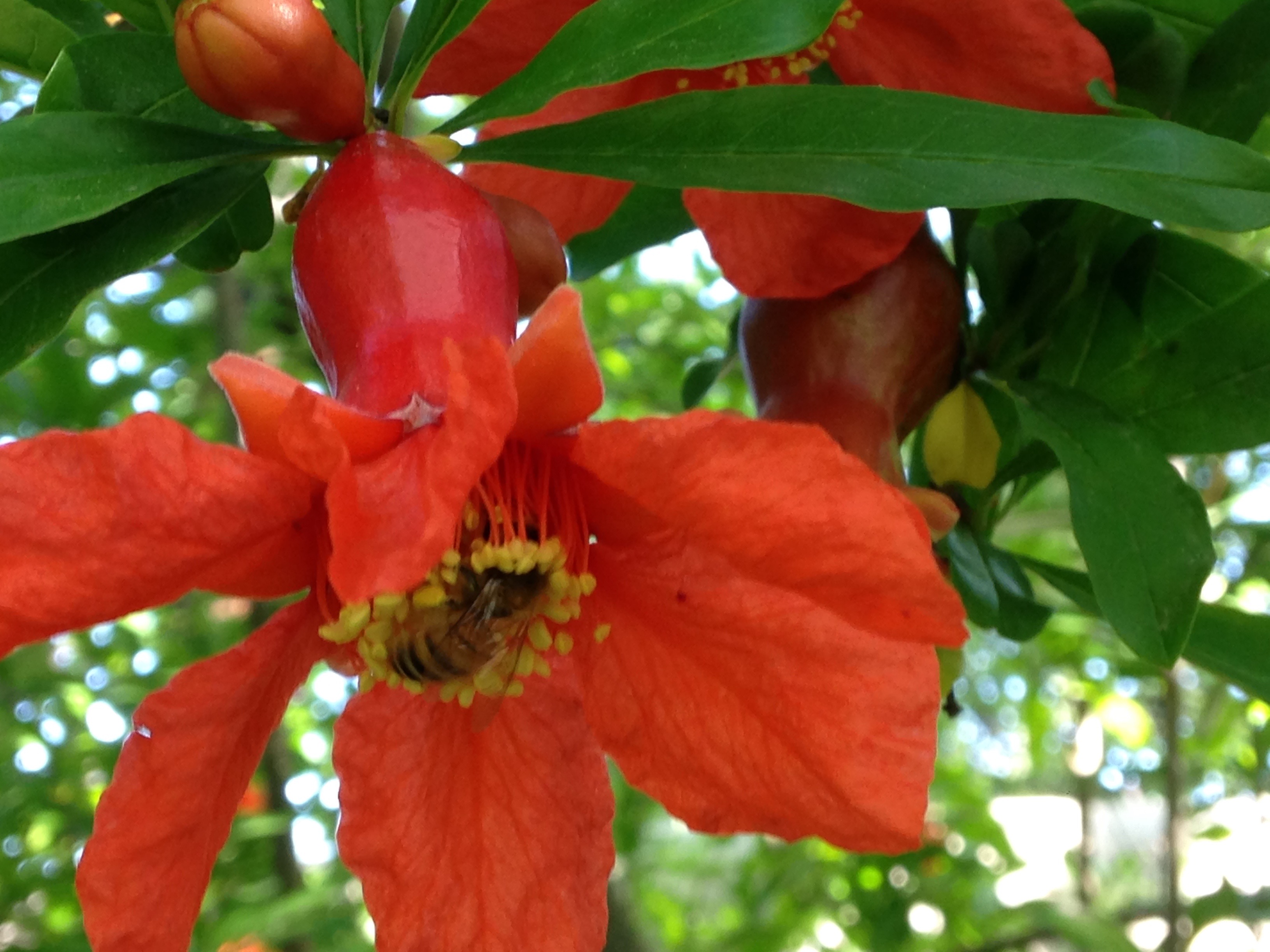
Another view of a honeybee on pomegranate flower; the darker shape behind the large right petal is a pomegranate fruit beginning.

IMG_5534

Here you can see the flower to the left and a young pomegranate fruit beginning to mature, to the right

  • Why talk of poetry? 1) Because poetry is, in part, about being Present. And present to the world right in front of us. And  2) Poetry is also, often, about Associations.  The natural world gives us many many examples of associations  (interconnections),  like spiderwebs and hummingbird nests (see March 2015).  And even bees and ice cream.
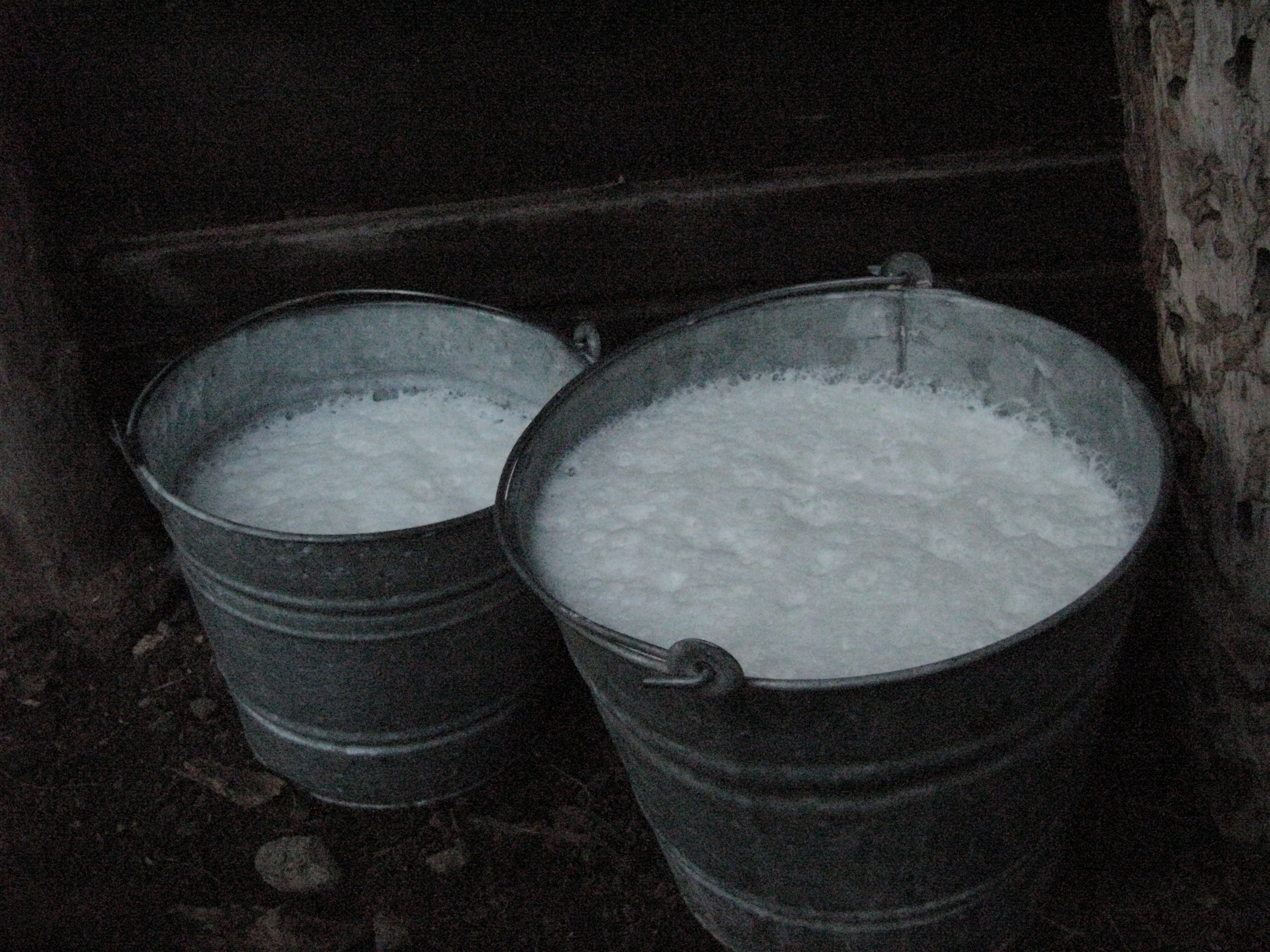
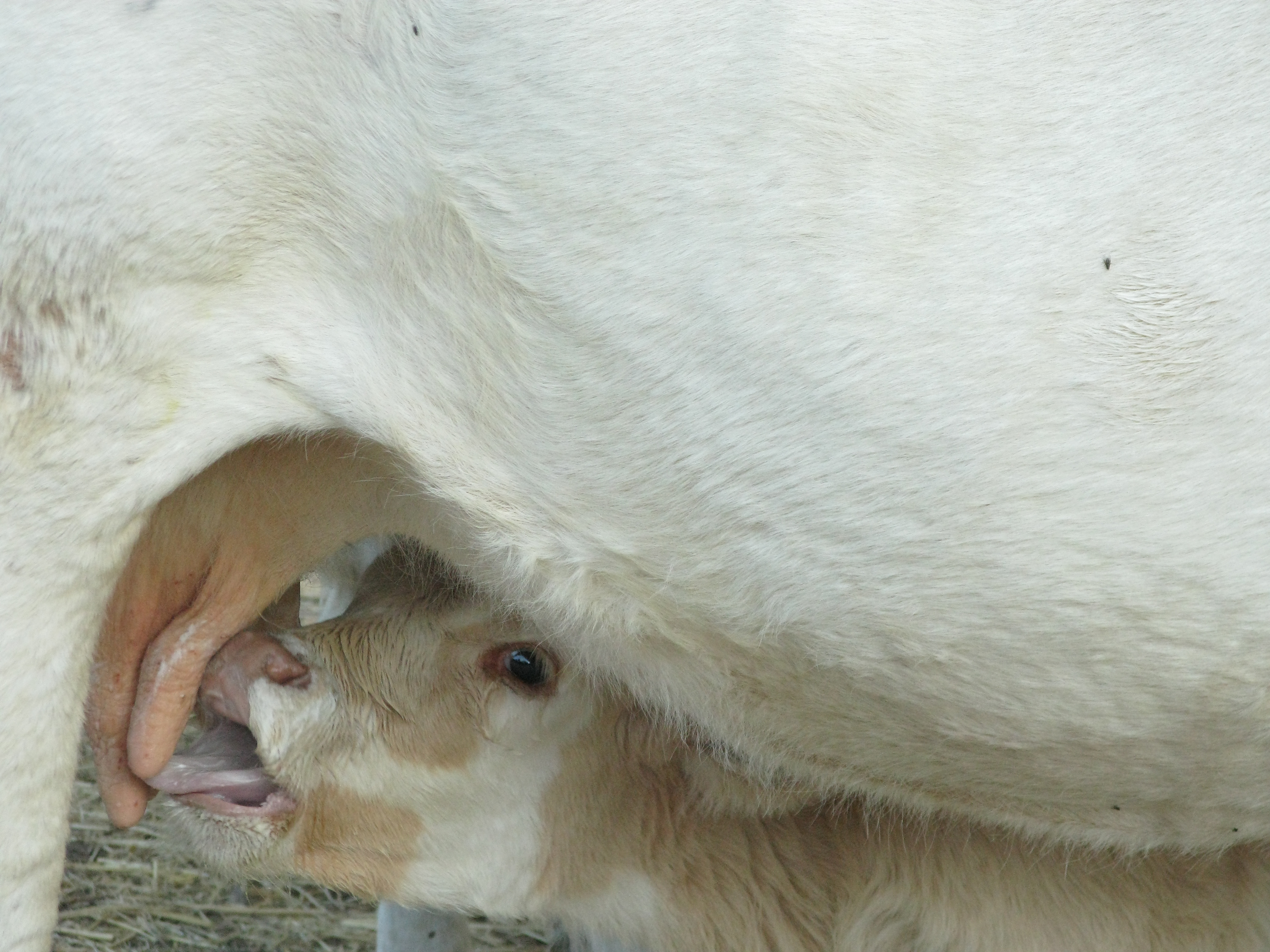
  •  Which leads us right into this weeks recipe, and invites us all to be poets –  both Present to what is in front of us, and more aware of the Associations/connections in front of our eye; and on our tongues.  What do bees and the ice cream (or yogurt) you hold in your hand  have to do with each other?  I am so glad you asked. The milk that came from the cow (or goat or sheep) for your ice cream means that the grasses that the cow ate were pollinated. Whether your cloven hoofed bovine (cow) ate range grasses and shrubs, or field grown grasses like alfalfa, chances are a bee pollinated those grasses.
IMG_1016

I guess you could call this grass fed milk

IMG_9040

                                                  RECIPE: POET’S LATE SUMMER SMOOTHIE

IMG_0026

Garnish your Poet’s smoothie with mint leaves (the left leaf is a pomegranate leaf that I placed just for fun; you do not want to eat it) and fruit of your choosing.

Savory Version: (Below)

IMG_0017

In a blender combine:

2 cups of Plain Yogurt (I used goat, but that is strong for many people

1/4 cup pomegranate seeds.

2 Tablespoons each of mint mint, cucumber.

Add milk if you like a thinner version.

Sweet Version (Below)

IMG_0028

2 cups Ice cream or Sweetened Yogurt,

1 cup fruit and berries of your choice. I added pomegranate, strawberries, and blueberries.

Honey to taste.

Milk if you like a thinner treat; the consistency seems to vary depending on how much juice is in the berries and whether or not you use yogurt or ice cream.

blend

Vegan Version:

2 cups Coconut Milk Ice Cream  – and blend with the flavors you like.

Note that the berries in the photos are not pristine nor perect – perfect for this kind of a snack so you can use up the berries/fruit  you have,

A Useful Desert Broom

baccharis AMP_5239

People complain that they want more green in their landscape. Desert broom is one option for bright green foliage.

Desert broom is called escoba amarga in Spanish, and also called a weed by many.  But I advocate you take a moment to consider this shrub more fully.

Desert broom (Baccharis sarothroides) is a vigorous plant – often the first plant to grow on a cleared stretch of desert (or over the septic tank).  It can be useful to have such a tough plant in your landscape palatte.  Along with landscaping it is useful in a number of other ways.

baccharis seedling crop_6477

Sad to say – some people think the only good desert broom is a dead one.

Uses.

Desert broom has a history of use as a medicinal plant.  A decoction made by cooking the twigs of desert broom is used to treat colds, sinus headache, and in general “sore aching” ailments. The Seri use this when other medicinal plants are not available. The same tea is also used as a rub for sore muscles.  (Perchance Father Kino used some after one of his epic rides.)

Studies done on plant extracts show that desert broom is rich in leutolin, a flavonoid that has demonstrated anti-inflammatory, antioxidant, and cholesterol-lowering capabilities. Desert broom also has quercetin, a proven antioxidant, and apigenin, a chemical which binds to the same brain receptor sites that Valium does. However, many members of the Sunflower family also contain compounds that cause negative side effects, thus caution is advised.

baccharis seedling AMP_6330

Desert broom seedlings are often among the first plants to appear in a cleared area. The rabbits do not eat them.

As it’s name indicates, branches of desert broom do make a passable broom for sweeping the dirt floors of an adobe home.

Desert broom is so plentiful, and many of it’s seep willow cousins are used as dye, so I had to do the experiment. The result – yes! It does dye wool. Various mordants result in differing shades as seen below.  Other members of the Baccharis genus have excellent colorfastness.

baccharis dye on wool crop

Baccharis on wool with different mordants. I use the chemical symbols to mark my mordants. Al = alum, Cu = copper, FE = iron.

Desert broom can be used as filler in fresh and dried floral arrangements, with long lasting color and minimum mess since it has few leaves to lose.

baccharis AMP_5426

This plant gets chopped often for filler in my flower arrangements. Regular clipping helps keep it a dense and bushy.

Desert broom comes in separate male and female plants. The females release their tiny fluffy seeds at the same time a number of other plants release their pollen, thus the seeds of desert broom often get erroneously called an allergen. The pollen of the male plants is released in fall and can be allergenic.

IMG_2701

No, desert broom does not have yellow flowers. In this case a desert broom grew up through a Cassia.

Planting and Care.
Plants may be purchased at nurseries or can be grown from seed. Avoid over-watering in heavy soils as desert broom will drown.

Desert broom will accept shearing and can be trained into a decent, short-lived privacy hedge. Such a short lived hedge is helpful while the longer-lived, taller, non-allergenic, but slower growing Arizona rosewood (Vauquelinia californica) reaches hedge size. Desert broom can also be useful in the landscape since it grows in heavy clay or saline soils where few other plants thrive.

IMG_2708

These plants get sheared once a month by landscapers with power tools. Note that the native desert broom is growing more vigorously than the non-native cassia from Australia.

JAS avatar If you live in Southeastern Arizona, please come to one of my lectures. Look for me at your local Pima County Library branch, Steam Pump Ranch, Tubac Presidio, Tucson Festival of Books and more. After each event I will be signing copies of my books, including the latest, “Southwest Fruit and Vegetable Gardening,” written for Arizona, Nevada and New Mexico (Cool Springs Press, $23).

All photos and all text are copyright © 2015, Jacqueline A. Soule. All rights reserved. I receive many requests to reprint my work. My policy is that you may use a short excerpt but you must give proper credit to the author, and must include a link back to the original post on our site. Photos may not be used.

Fig Jam Ready for Farm to Table Picnic

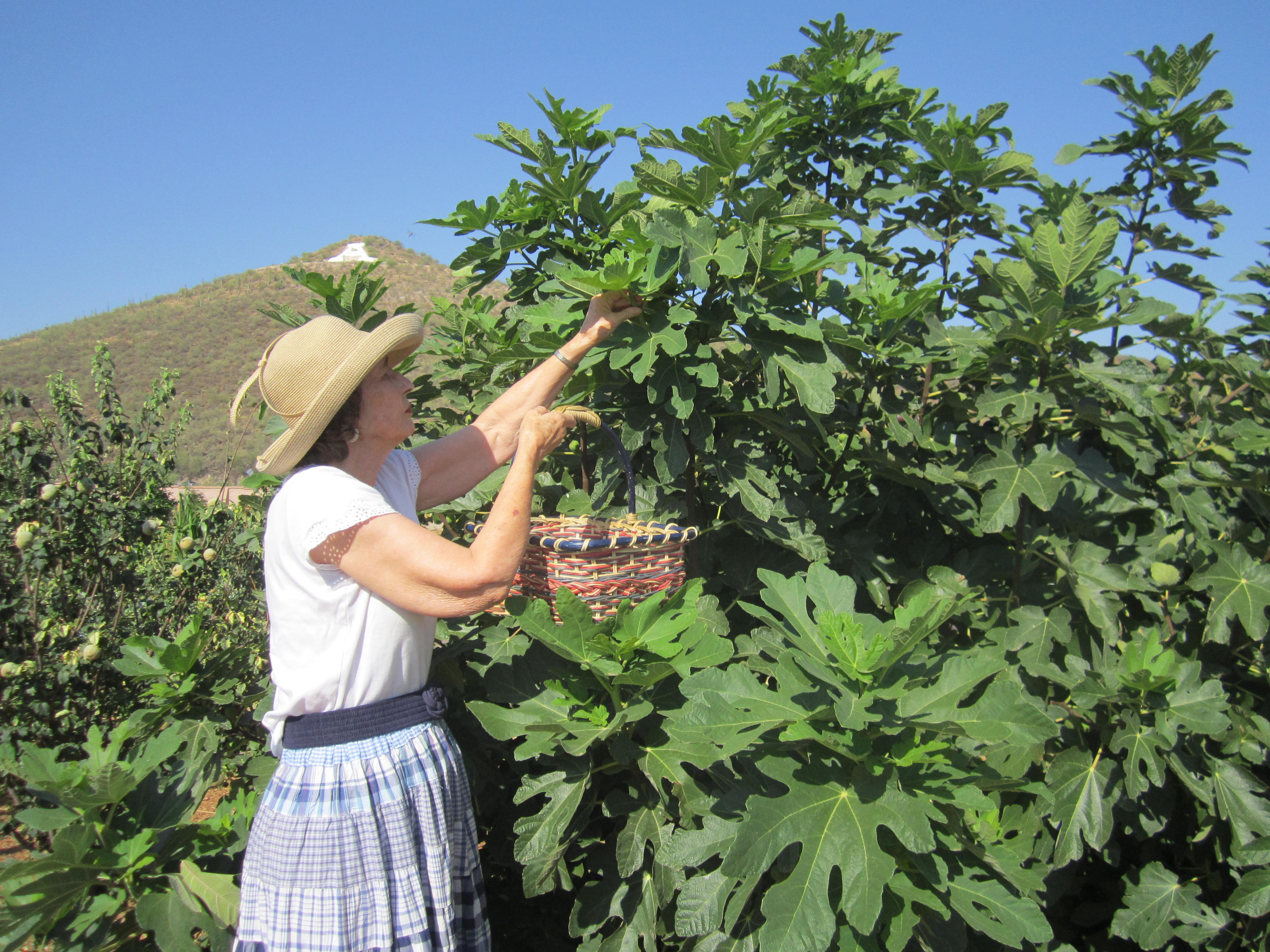
Picking figs at the Mission Garden.

Picking figs at the Mission Garden operated by Friends of Tucson’s Birthplace.

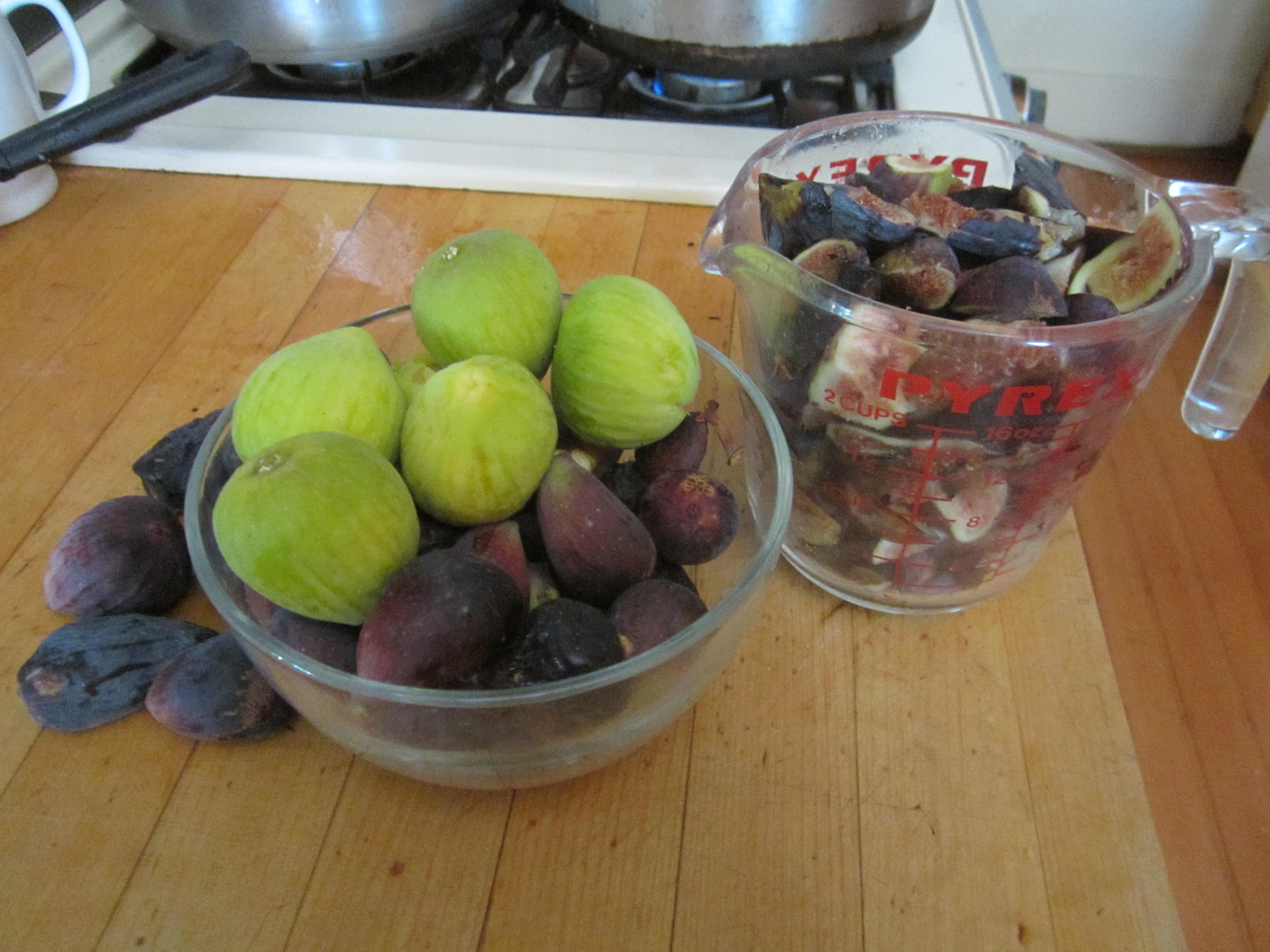
The hottest weather of summer brings Tucson one of its sweetest treats, figs. The figs at the Mission Garden operated by Friends of Tucson’s Birthplace, are ripening  now. Some of the trees have already produced and are beginning to  grow their second crop. This is Carolyn today, and that is me picking figs from one of the trees in the lush recreated historic garden near the Santa Cruz River.  The plan was to preserve the figs as jam to be used as an ingredient in cookies  for the Farm to Table Picnic being organized by the  Mission Garden and Native Seeds/ SEARCH.  On the late afternoon of October 18, dinners will be able to picnic on Southern Arizona’s agricultural  bounty at tables  spread through the Garden. (Ticket detals next month).

The brown figs at Mission Garden are living relics of trees brought to Southern Arizona by Father Kino. They were grown from twigs cut from plants behind the Sosa-Carrillo House. Historic records show that those trees came from cuttings of trees at San Xavier Mission. The green figs were grown from cuttings taken from trees at the  settlements near the Ruby and Oro Blanco mines.

Plump figs from Mission Garden. The green ones are called "white" and some people think they are sweeter.

Plump figs from Mission Garden. The green ones are called “white” and some people think they are sweeter.

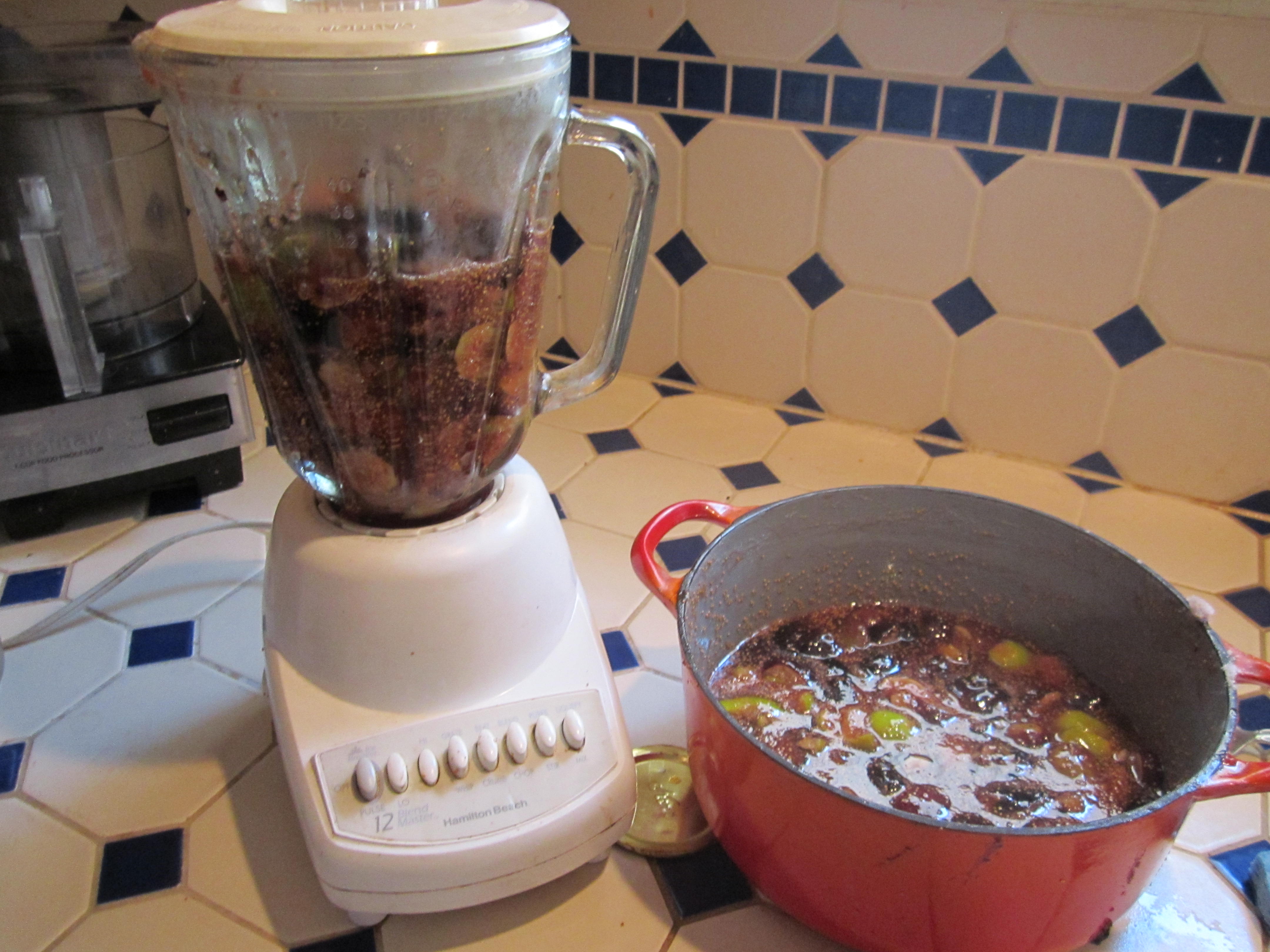
Generally in making jam the old-fashioned way without added commercial pectin, you measure an equal quantity of fruit and sugar and simmer until it is thick. Because these figs were incredibly sweet and because I plan to spread the jam over a base crust, I didn’t care if the jam set up like I would, say a plum or strawberry jam. So I thought it would be safe to use less sugar. Ultimately I used about 4 cups of sugar to 8 cups of chopped figs, about half the usual amount. Since I wanted a smooth product, I put the chopped figs through the blender.  I could have also used my food processor.

Blending the chopped figs for a smooth product.

Blending the chopped figs for a smooth product.

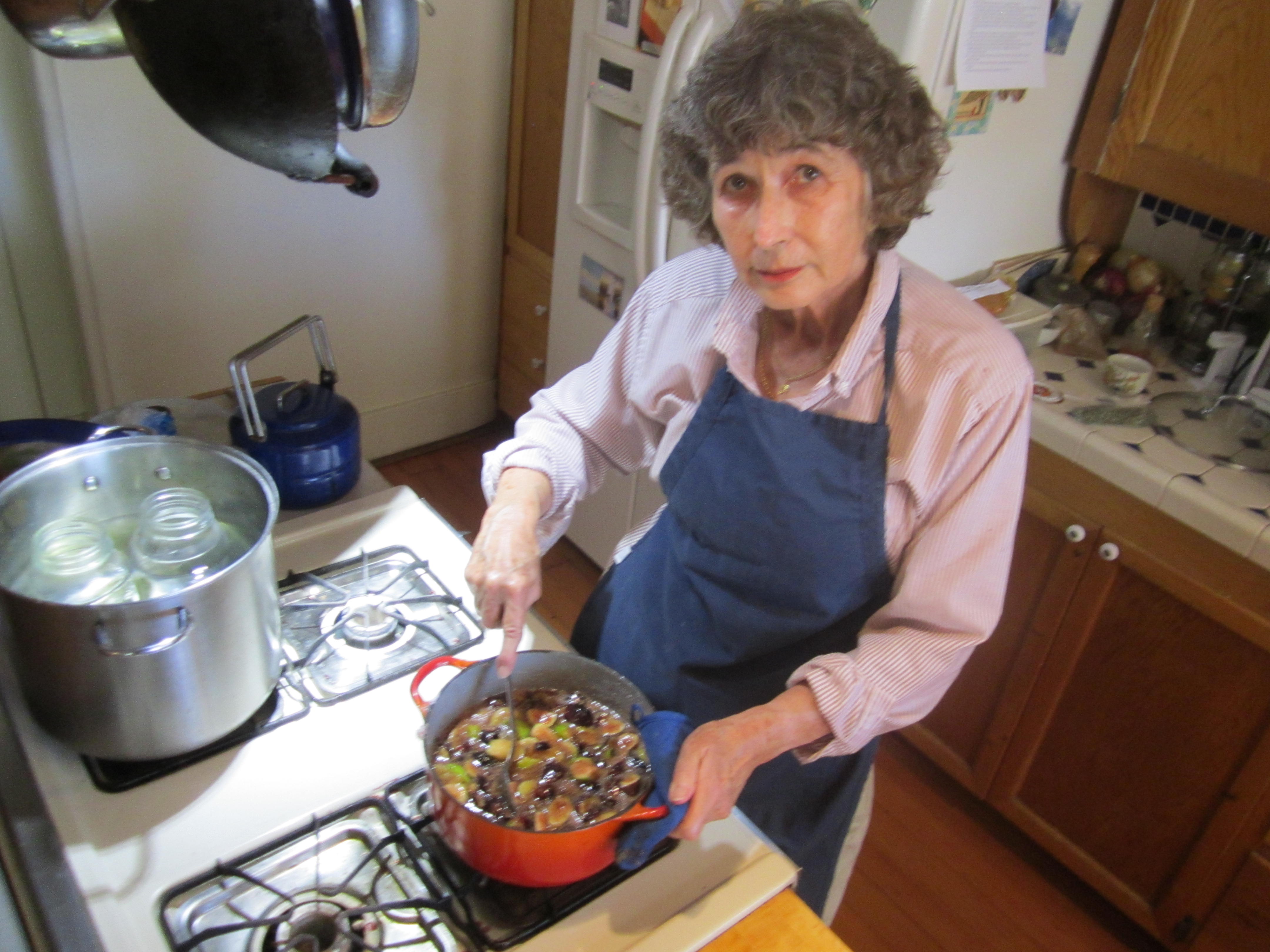
Next came the long slow cooking.  In the picture below, you can see the large pot on the left where I was boiling the storage  jars to sterilize them.

Cooking the jam.

Cooking the jam.

In any jam making, you need to simmer the fruit and sugar until it reaches about 220 degrees F. This takes both time and careful watching to get the jam to a point where it is not too runny and not too stiff.  In Tucson, because of our altitude, 218 degrees F usually gives a better product. Use too high a heat and the jam will burn on the bottom of the pot before it reaches the proper temperature.

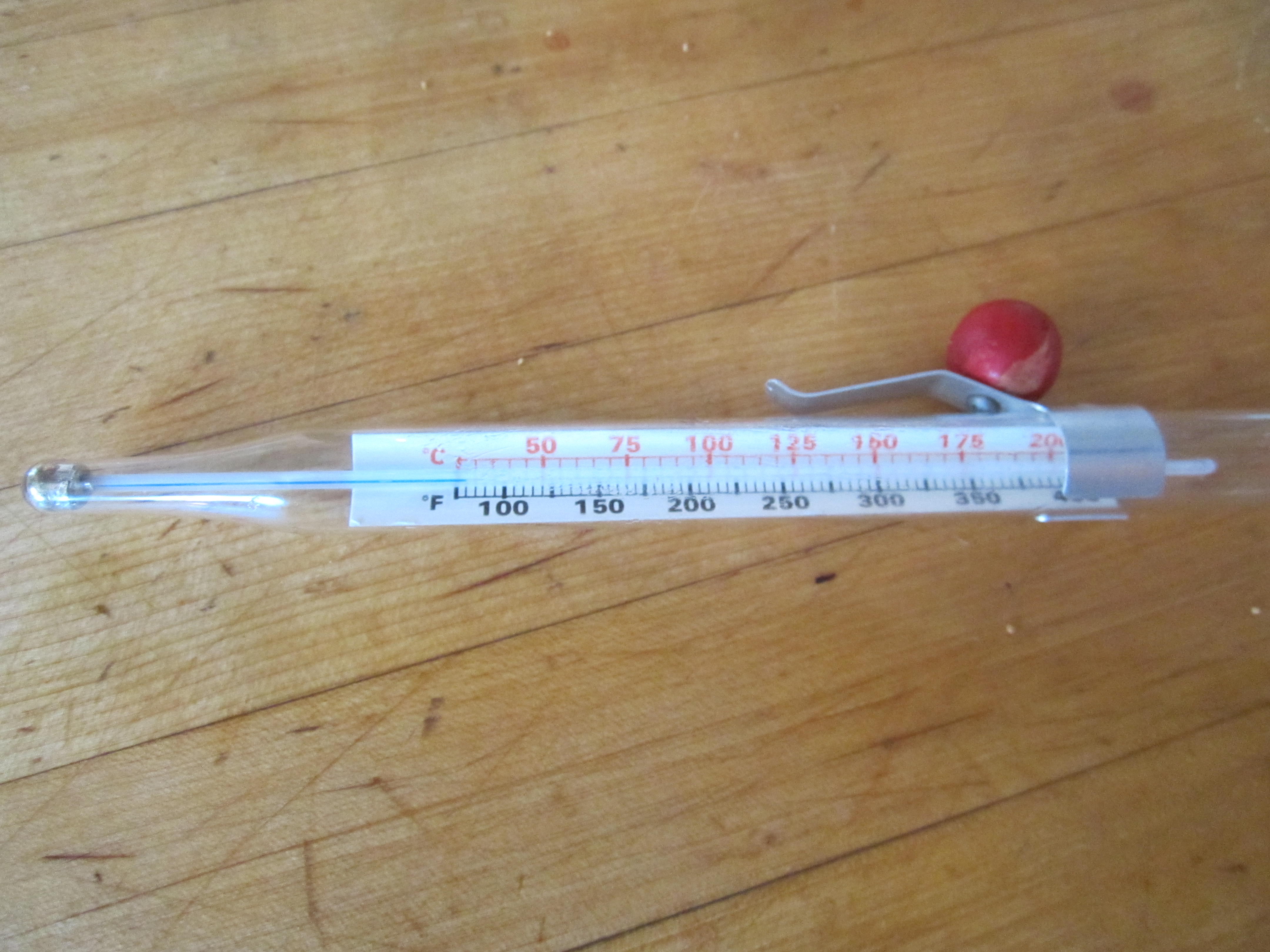
To check the temperture,  I used to use a traditional candy thermometer that looks like this and works with a column of mercury:

Traditional candy thermometer.

Traditional candy thermometer.

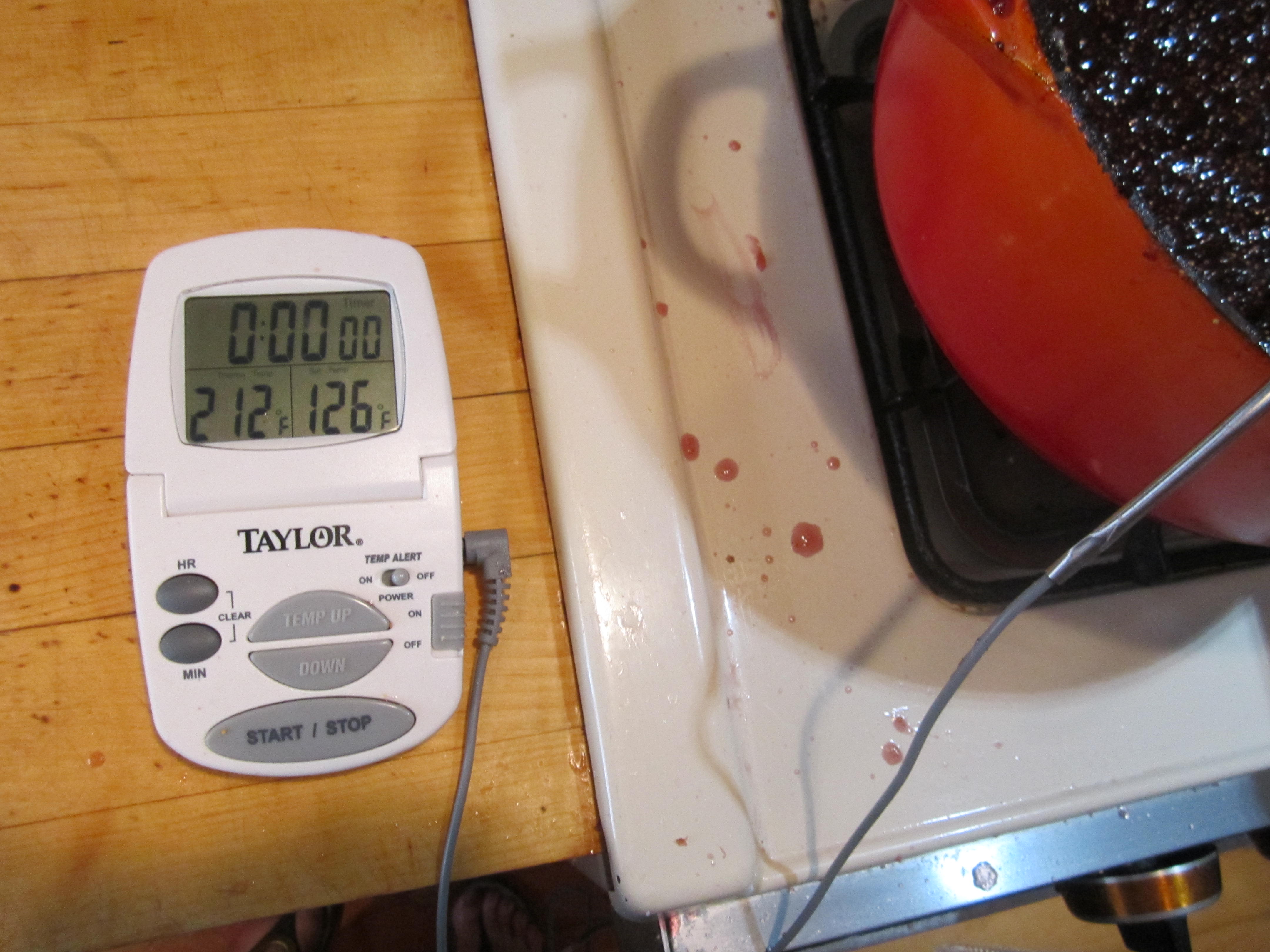
A couple of Christmases ago, however Santa brought me a digital thermometer that is good for roasting a turkey, cooking a thick steak and making jam. It has a probe that sticks in whatever you are cooking and gives you a readout.   See the photo below. You can see this one has reached 212 degrees F. and the jam is almost done.:

Battery-operated digital cooking thermometer.

Battery-operated digital cooking thermometer. The thin silver wire on the right is a probe that rested in the jam.

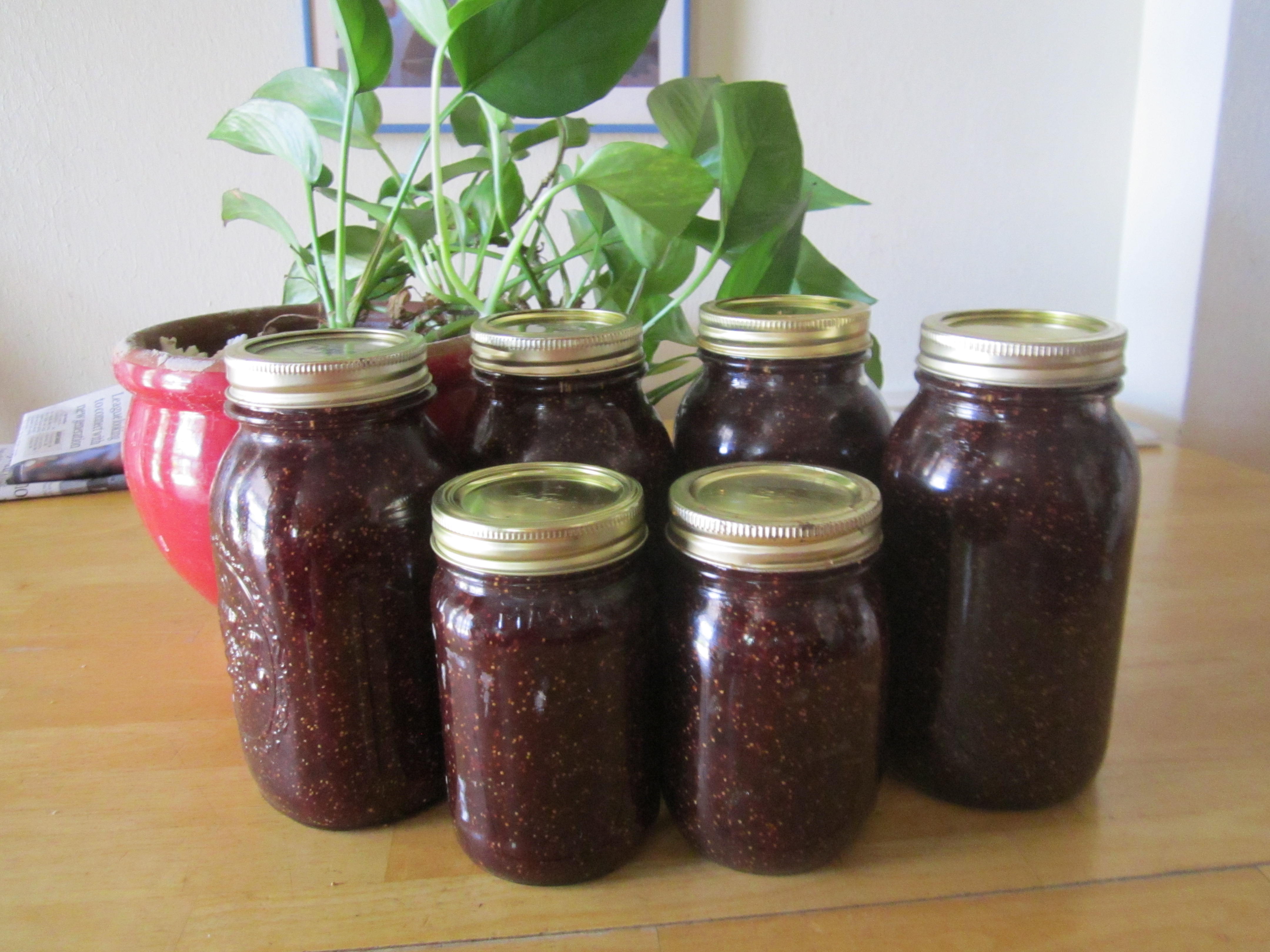
Once finished, the jam just needed to be ladled into the prepared jars, capped and processed for 10 minutes in a boiling water bath.  That’s a lot of jam, but I’ll be baking cookies for 200 ticket holders and a whole bunch of volunteers.

Five quarts of fig jam will wait until October to be made into fig bars for the Farm to Table Dinner.

Five quarts of fig jam will wait until October to be made into fig bars for the Farm to Table Dinner.

I can’t show you a picture of the fig bars, because I haven’t made them yet. But I have used this recipe previously and it is great. It is a modification of a recipe in Fruits of the Desert by the late food writer Sandal English.  If you have fresh figs and are looking for a way to showcase them, try this:

Layered Fig Bars

1 cup sifted flour

1/2 teaspoon baking soda

1/2 teaspoon salt

1 cup oatmeal, quick or old-fashioned

1 cup firmly packed brown sugar

1/2 cup butter, melted

1-1/2 to 2 cups fig jam

Preheat oven to 350 degrees F. and line an 8-inch square pan with foil or parchment paper, leaving some extending over two sides as flaps.

Sift together the flour, baking soda and salt in a large bowl. Mix in the oatmeal and sugar. Stir in the melted butter and mix until crumbly. Firmly press 2/3 of the mixture in the bottom of the prepared pan. Spread fig jam evenly over the base layer. Top with remaining crumb mixture. Gently pat the top layer down. Bake in preheated overn for about 30 minutes. Cool, lift from the pan using the paper flaps, and cut into 24 bars.

Note: If you are making this for your family and don’t care that the bars come out perfectly shaped, you can skip the step of lining the pan.

_________________________________________

Looking for ideas for how to use desert fruits and vegetables?  The Prickly Pear Cookbook has delicious recipes for both the fruit and pads and complete instructions for gathering and processing. Cooking the Wild Southwest gives directions for harvesting and cooking 23 easily gathered desert plants. Find both at the Native Seeds/SEARCH retail store on Campbell or at on-line sellers.

Begin with the End in Sight–Monsoon Planting time for a fall harvest

"Begin with the end in sight"--As we put seeds in the ground, we anticipate a delicious future harvest

“Begin with the end in sight”–As we put seeds in the ground, we anticipate a delicious future harvest

I’m salivating already…contemplating the harvest.  Nothing can motivate us more to get out in the heat and put seeds in the ground than the idea of eating that luscious melon or stringbeans bursting with flavor, straight from the garden!   Ah, anticipation!  Thinking about what taste treats and nutritional benefits we might harvest a few months later can inspire us now to prep soil, browse seed racks, and get busy planting with the monsoon!

Connecting with the soil, prepping for planting a seed, can be a communion and a meditation, good for the soul and beyond….

Connecting with the soil, prepping for planting a seed, can be a communion and a meditation, good for the soul and beyond….

Tia Marta here to share garden-to-table thoughts and ideas.  Necessary ingredients and skills to bring:  some stooped labor, lots of time, rain, patience, and perhaps songs will be needed for assisting plants into their food-giving maturity.  I like to think of “companion planting” as the partnership we commit ourselves to when we garden– just me and the plant, a dynamic duo.  We so need each other.  In this era of instant gratification (like fast money in exchange for something to stuff in the belly), we lose sight of the plant “companions” who are really growing our food.  What “companions” can we trust as well as ourselves?

Gardening provides new interactive games, new pets, beings to care for, a lively antidote to self-centered life.

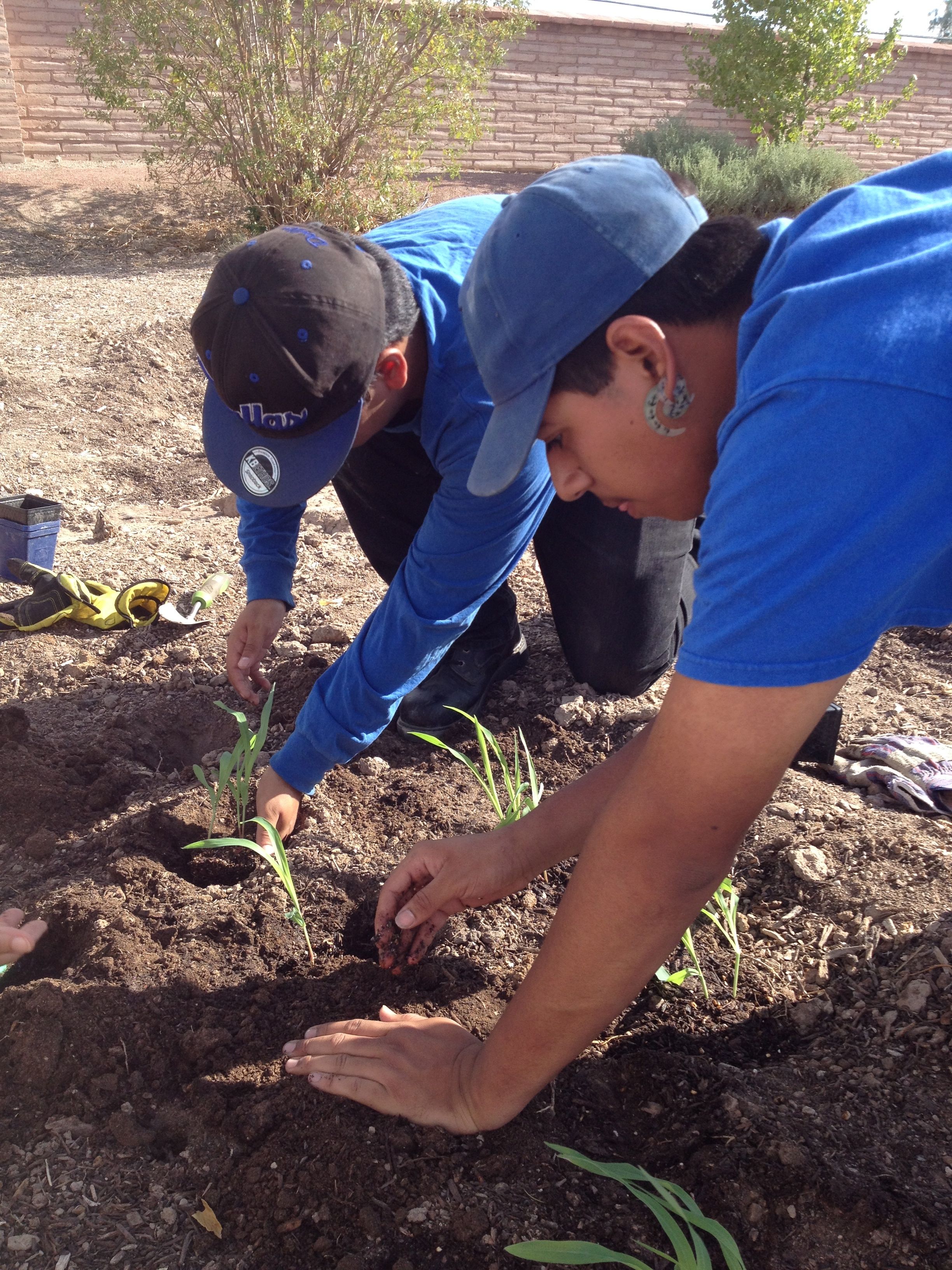
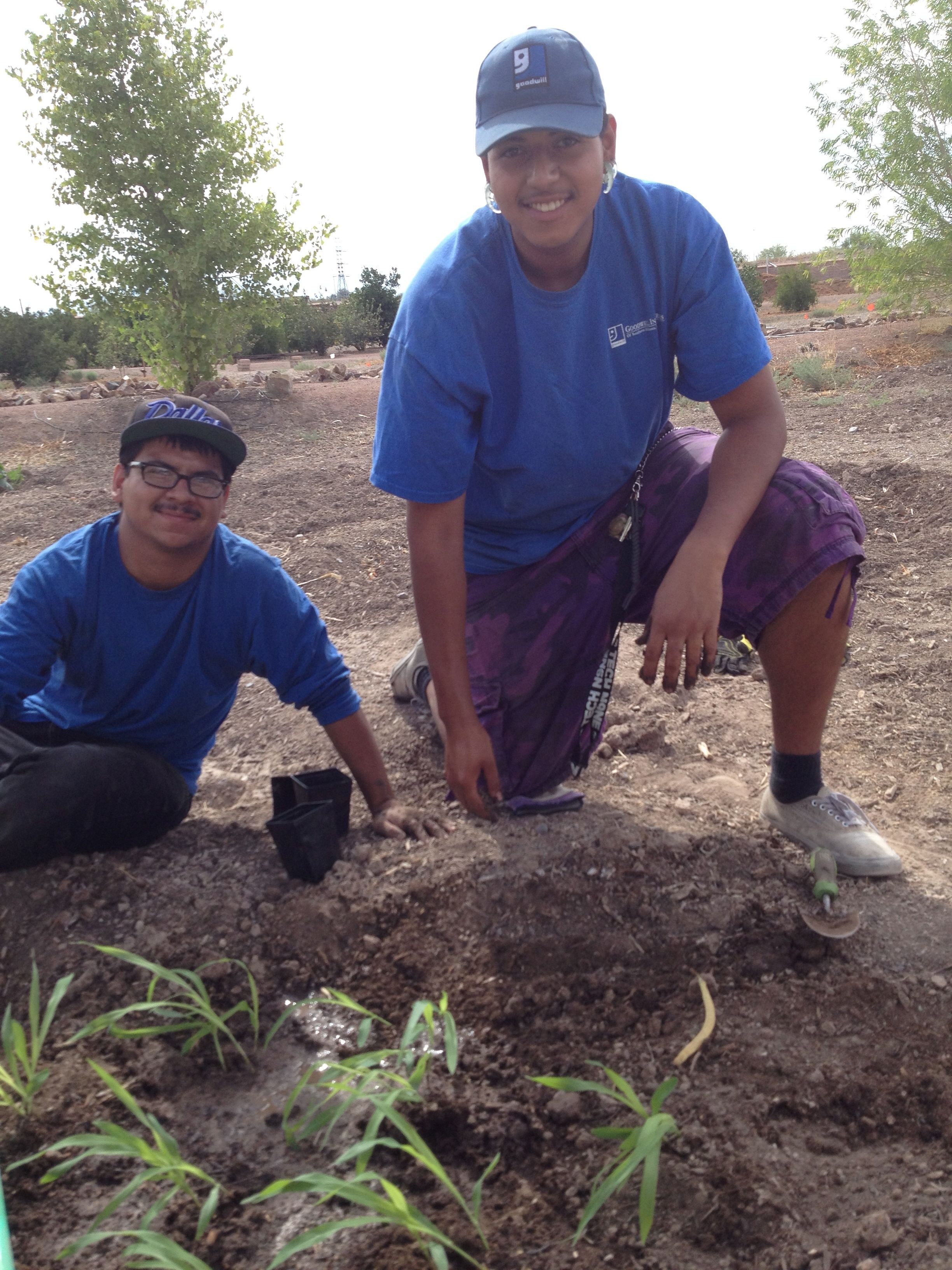
Goodworks Volunteers Barney and Oscar planting chapalote corn seedlings at Mission Garden

Goodworks Volunteers Barney and Oscar planting chapalote corn seedlings at Mission Garden

When your hands are covered with good clean dirt, you can anticipate a fruitful future!

When your hands are covered with good clean dirt, you can anticipate a fruitful future!

We at NativeSeeds/SEARCH and Friends of Tucson’s Birthplace’s Mission Garden are planting –and planning– right now for a harvest feast in October:  the right Native American teparies, the most delicious heirloom squash, the best free-range local beef, the sweetest Southwestern heirloom GMO-free corn, the most pungent local chiles, the most flavorful melons, combined with the rich white Sonora wheat harvested from the winter garden.  Put the NSS/Mission Garden local foods feast on your calendar for October 18, and plan to join fellow locavores and food aficionados for a special down-home Farm-to-Table Picnic— very little distance between the farm where the food was grown and the table where we will break bread together and sip local sangria.

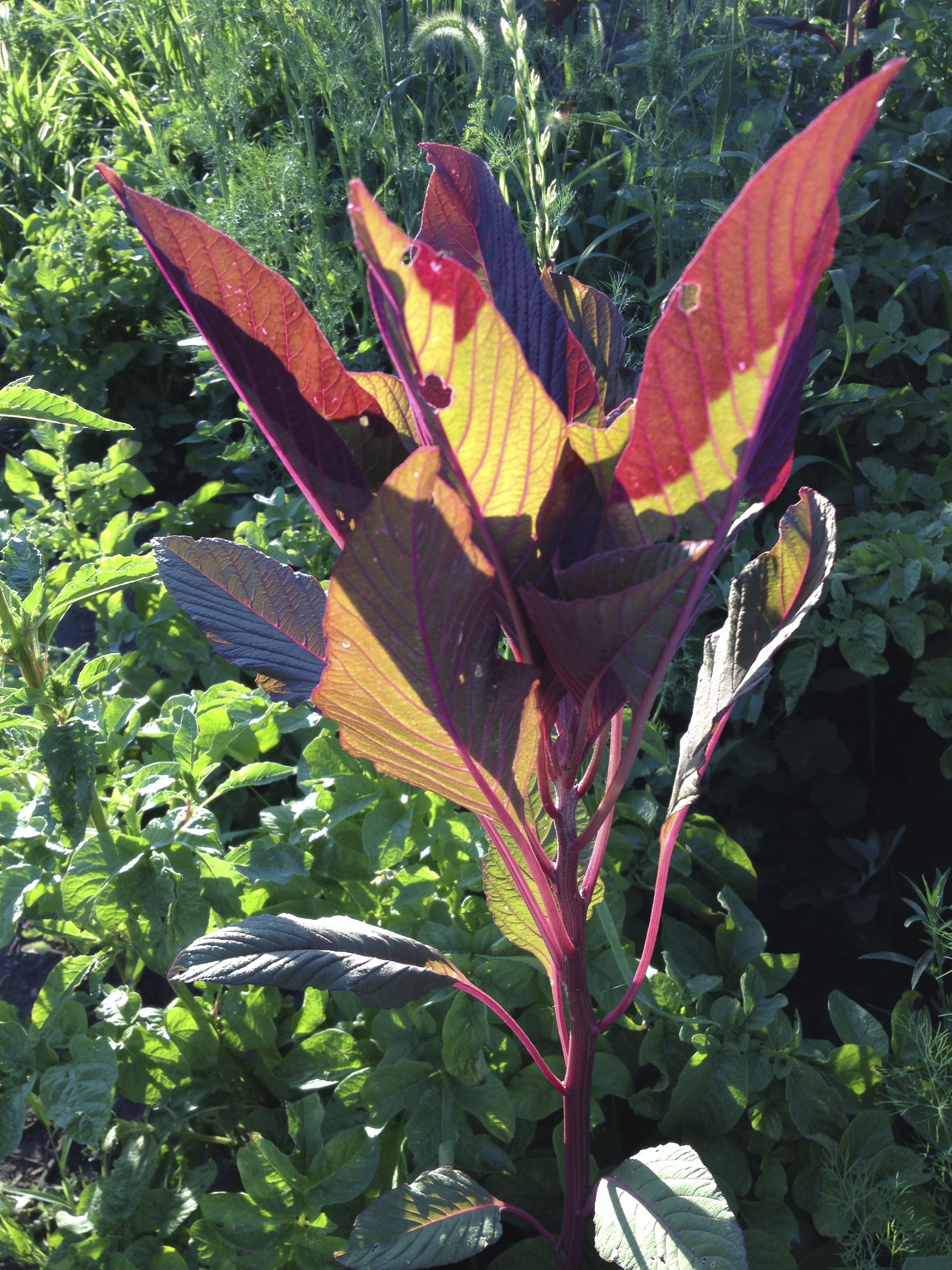
First burst of Hopi Red Dye Amaranth--a glorious ornamental and tasty "green" when eaten in the young stages (MABurgess photo)

First burst of Hopi Red Dye Amaranth–a glorious ornamental and tasty “green” when eaten in the young stages (MABurgess photo)


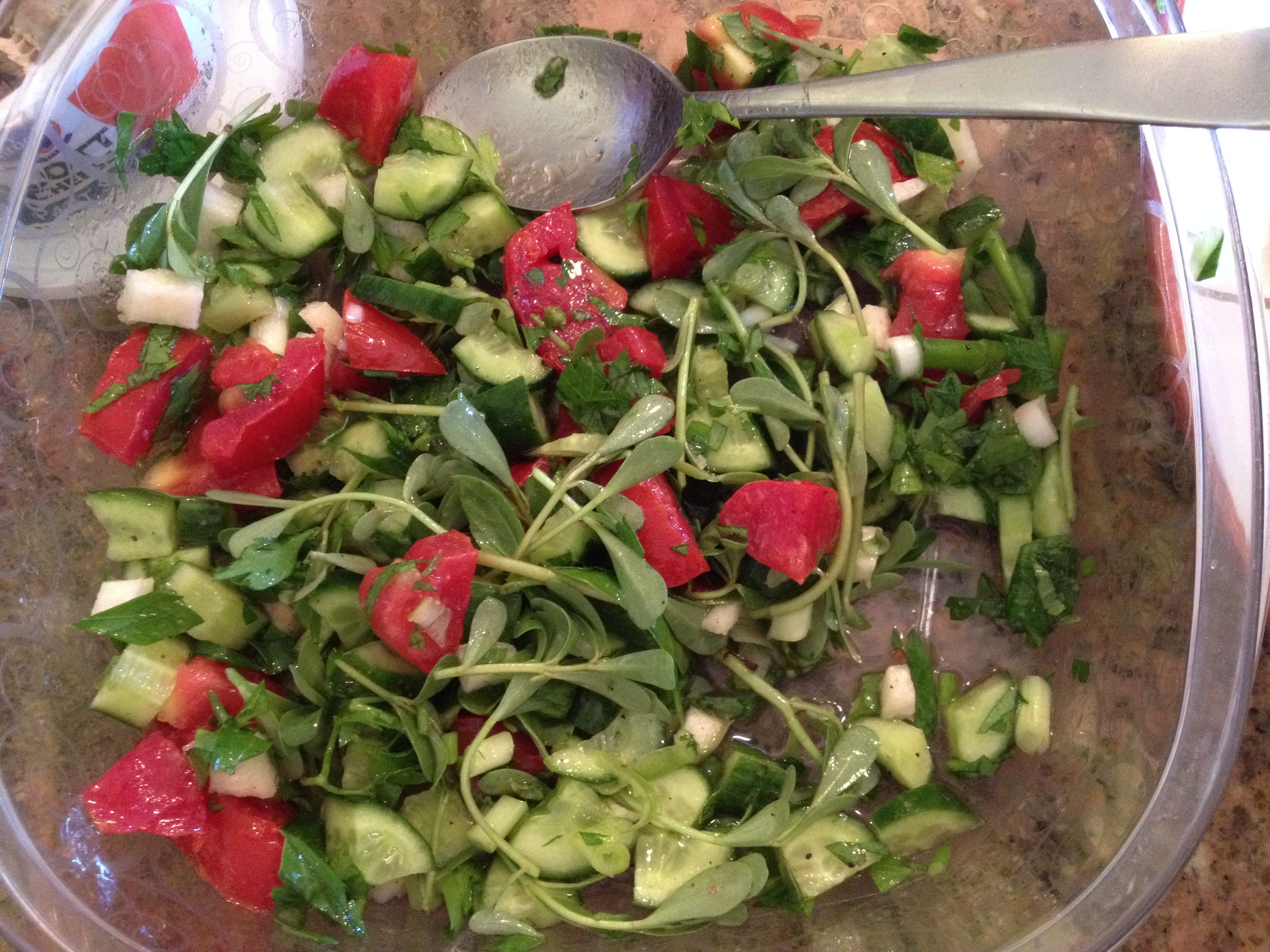
Marjorie Grubb's summer-fresh Verdulaga salad

Marjorie Grubb’s summer-fresh Verdulaga saladEven before growing your monsoon garden, weeds will greet you–and they aren’t all bad.  Even as your seedlings grow you can harvest some delectable weeds like verdulagas (summer purslane) or young amaranth greens.

If you are looking for ideas for planting, there are wonderful helpers at the NativeSeeds/SEARCH store at 3061 N Campbell Ave, Tucson, ready to share their monsoon gardening experiences and tested tricks.  Every Thursday 2-4pm expert gardener Chad Borseth will be there to give a timely demo and to answer questions.  Bring your queries to him–doubtless your questions and the answers will be of help to other fellow gardeners as well.  ALSO for those new to the gardening game, and for veteran gardeners who want a head-start, try planting starts for a leg-up.  They can be so much more dependable than planting seeds.  You can find a diversity of summer plant starts at the NativeSeeds/SEARCH MONSOON PLANT SALE coming up soon–next Friday thru Sunday, July 17-19, at the Campbell Avenue store.  There will be many varieties of chile pepper including our native chiltepin, tomatoes, okra, heirloom squashes and pumpkins, melons, corn, beans, even summer wildflowers…. Come early, as they get snapped up fast.

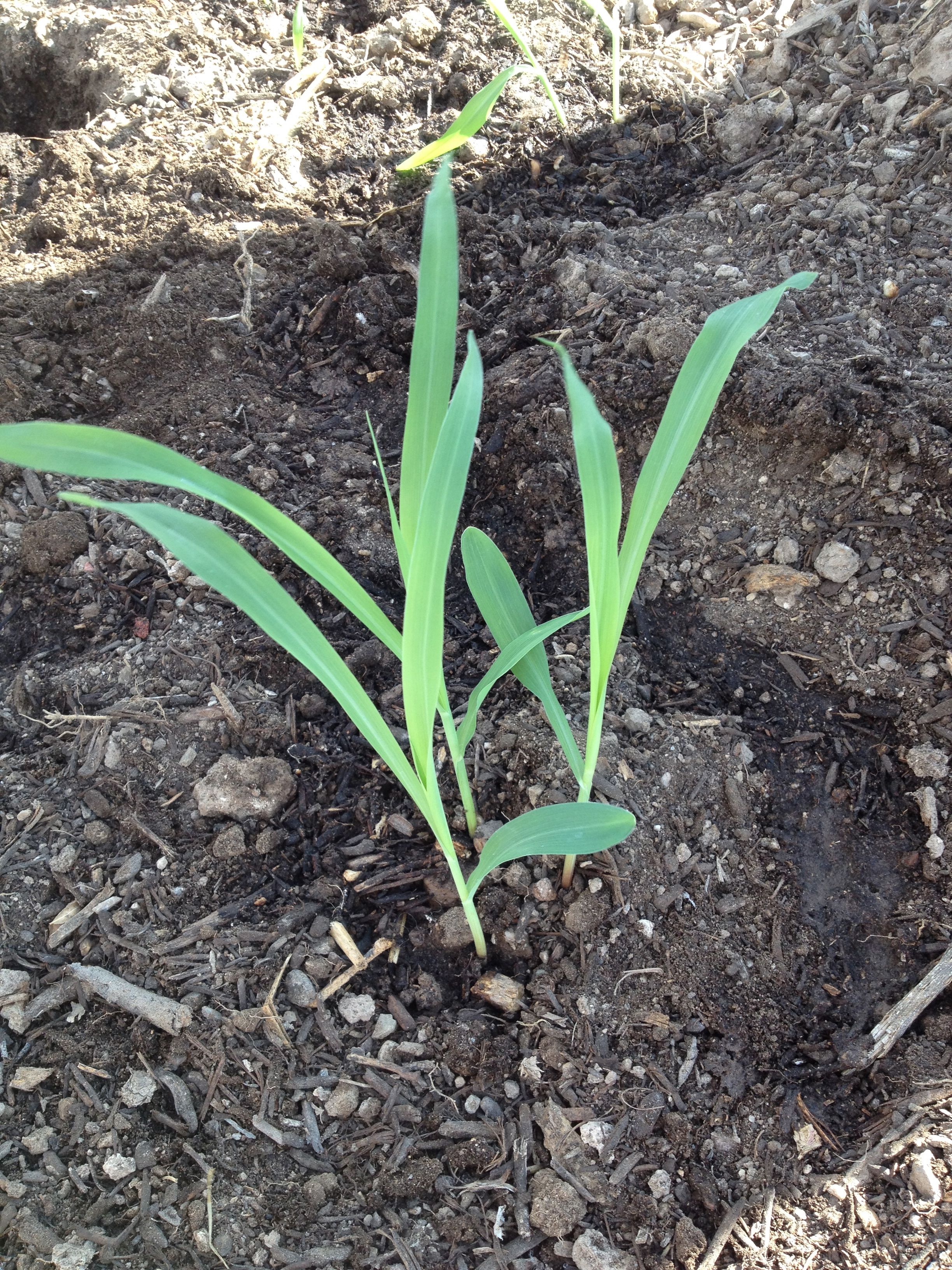
Seedlings of the ancient Chapalote corn (seed available from NativeSeeds/SEARCH)

Seedlings of the ancient Chapalote corn (seed available from NativeSeeds/SEARCH)

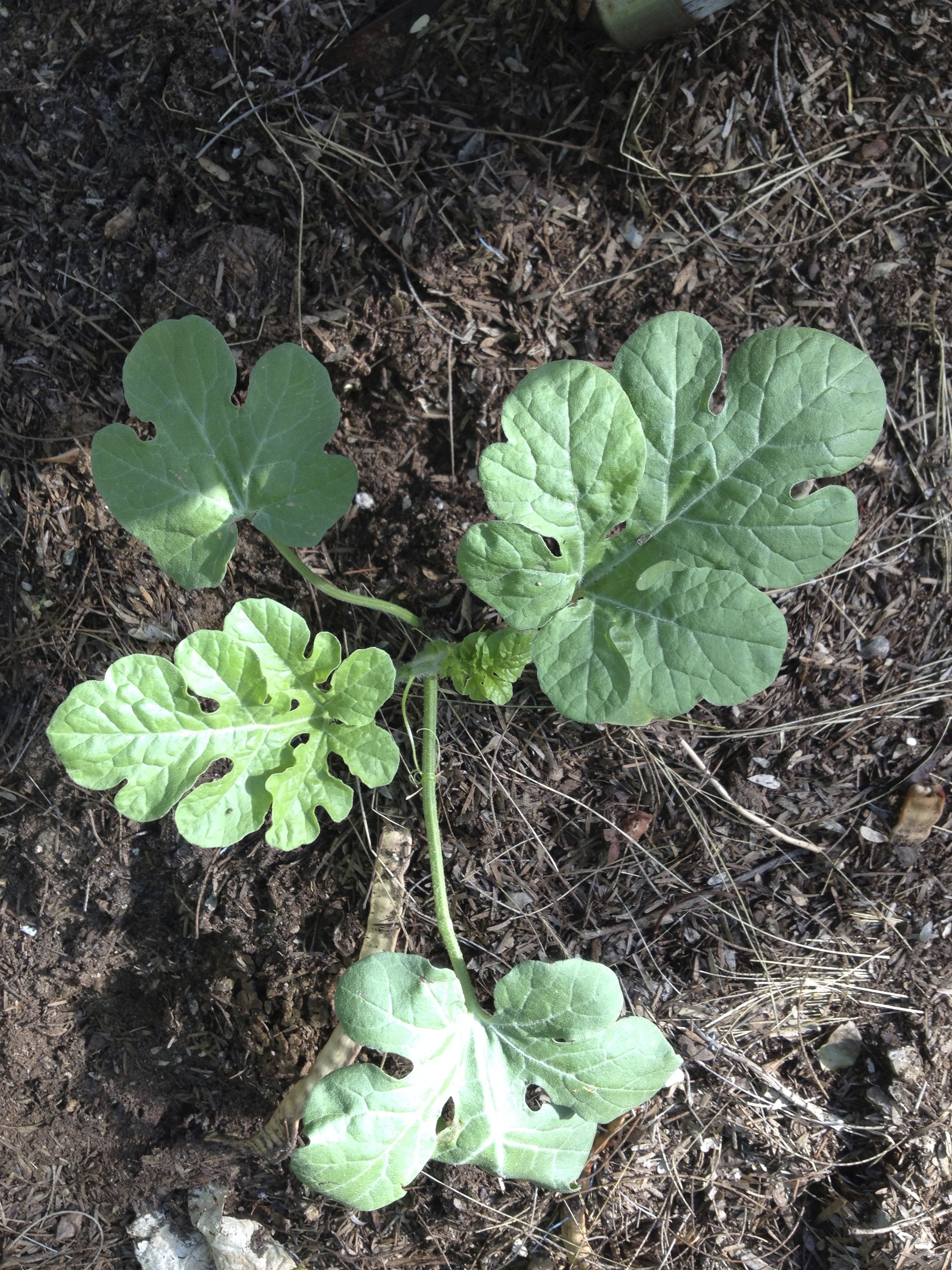
Young Tohono O'odham yellow-meated watermelon--come get seedlings at the NativeSeeds/SEARCH Monsoon Plant Sale July17-19

Young Tohono O’odham yellow-meated watermelon–come get seedlings at the NativeSeeds/SEARCH Monsoon Plant Sale July17-19

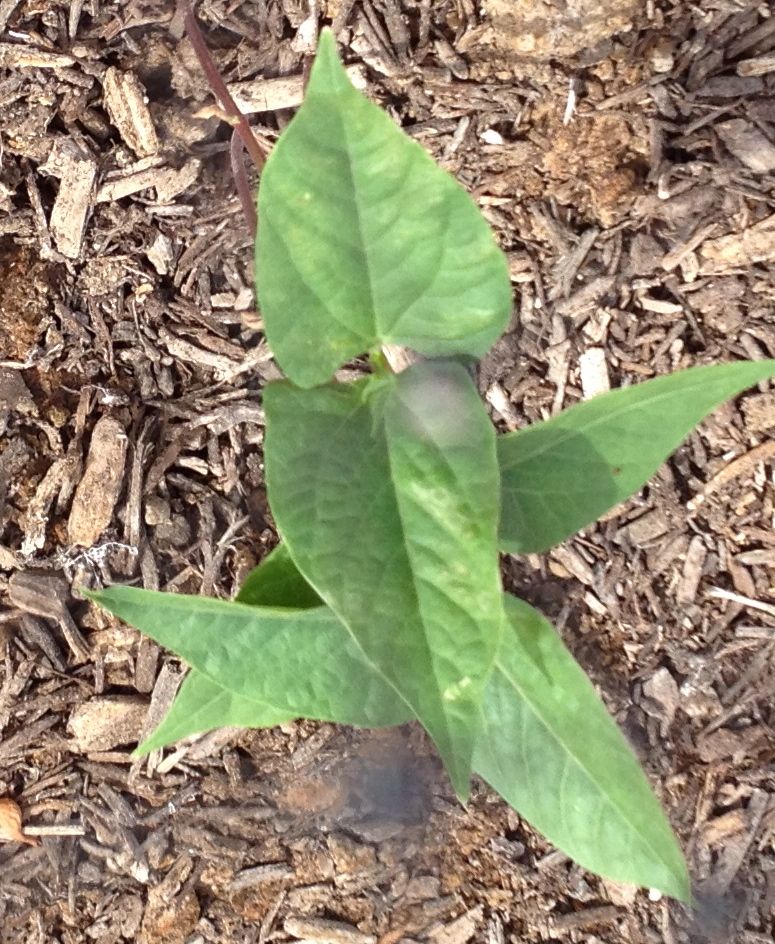
Speckled Tepary Bean seedling seen thru chicken wire protection at Mission Garden

Speckled Tepary Bean seedling seen thru chicken wire protection at Mission Garden

Vulnerable and a little fragile at first, these Southwest heirlooms actually hold in their genes the ability to produce quantities of good food, abiding the unpredictable ups and downs of rainfall and temperature in the desert monsoon season.  With tending, they can be little powerhouses.  Their genes, selected by desert farmers over many centuries, are truly to be respected and preserved–and the way to save them ultimately is not necessarily in a seed bank nor by engineering.  To save them we must GROW them!  Then enjoy positive reinforcement at the harvest.

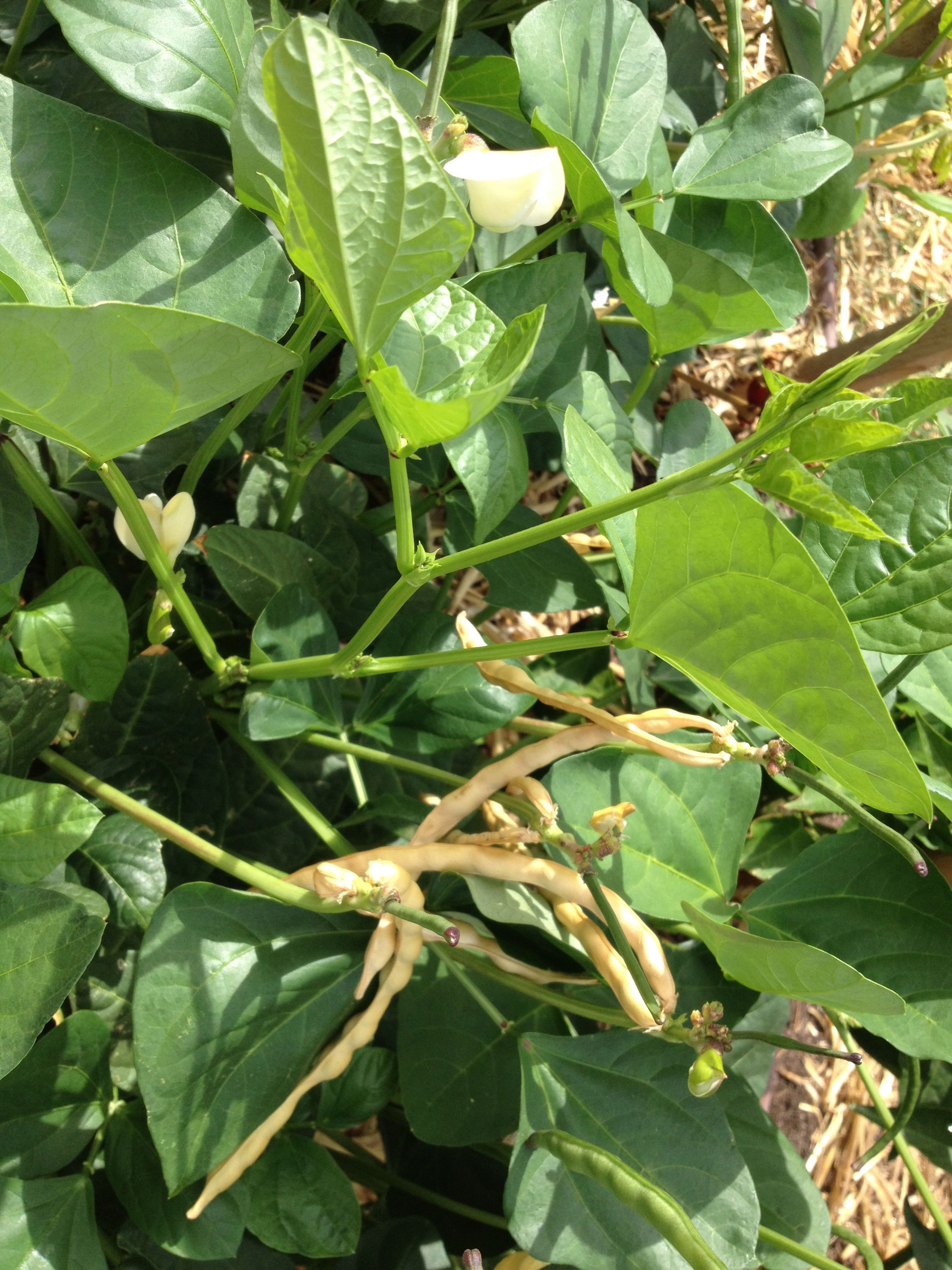
White flowers of Tohono O'odham Black-eye pea quickly producing long pods in the humid heat of monsoon season at Mission Garden (MABurgess photo)

White flowers of Tohono O’odham Black-eye pea quickly producing long pods in the humid heat of monsoon season at Mission Garden (MABurgess photo)


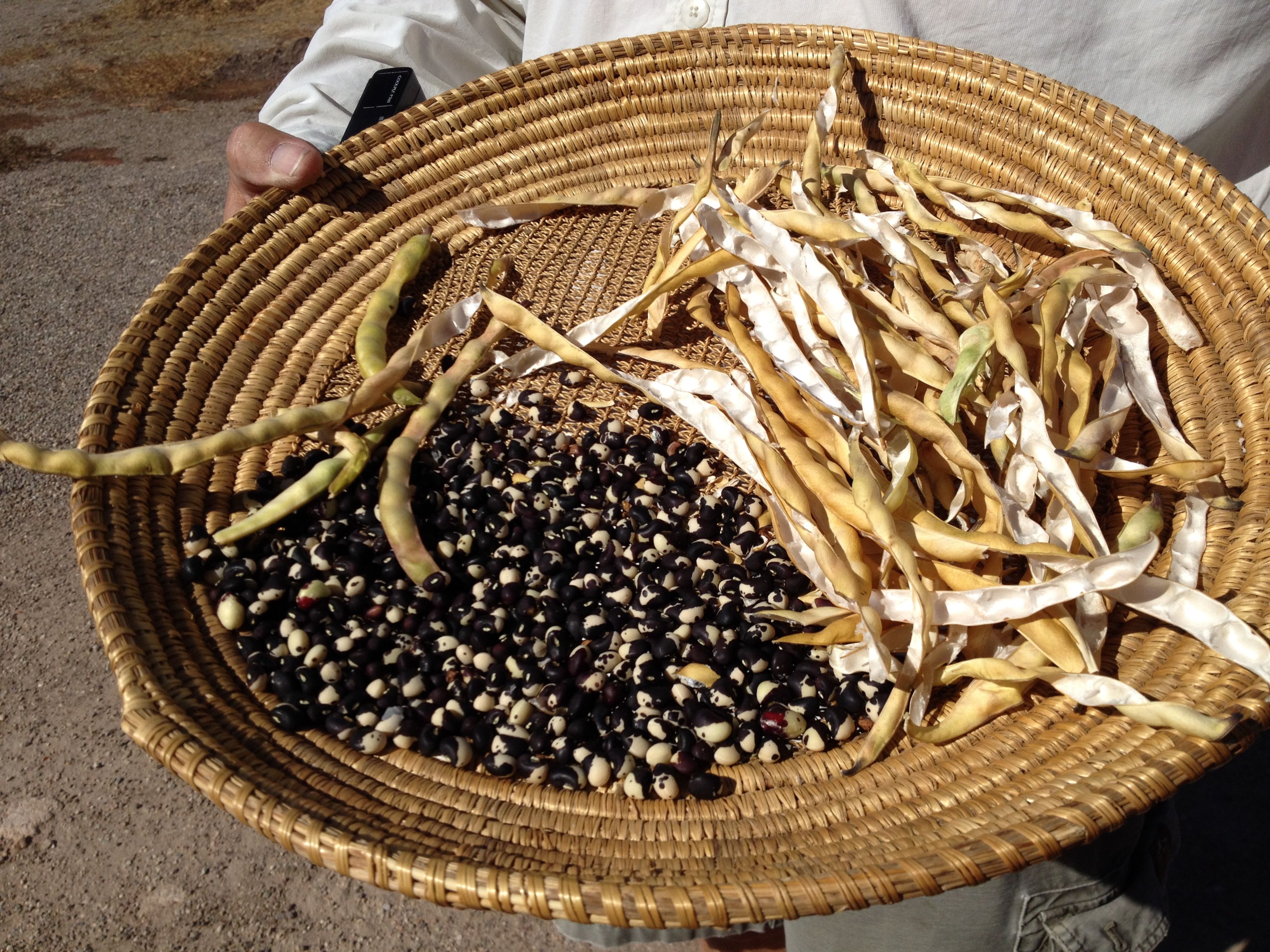
Rich harvest of Tohono O'odham U'Us Mun (black and white spotted black-eye pea) from last summer's harvest at Mission Garden

Rich harvest of Tohono O’odham U’Us Mun (black and white spotted black-eye pea) from last summer’s harvest at Mission Garden


These summer-active black-eyes, introduced by early missionaries and adopted by the Tohono O’odham, are well-adapted to hot weather and will provide a prolific feast in the fall. (U’us mu:n, pronounced “moo0nya”, means spotted or patched.)  Some of their pods will reach a foot long.  If you can “catch” them in the fat, mature and still green-pod-phase in your garden, you might get close to Nirvana eating fresh black-eyes–a treat very few have ever experienced.

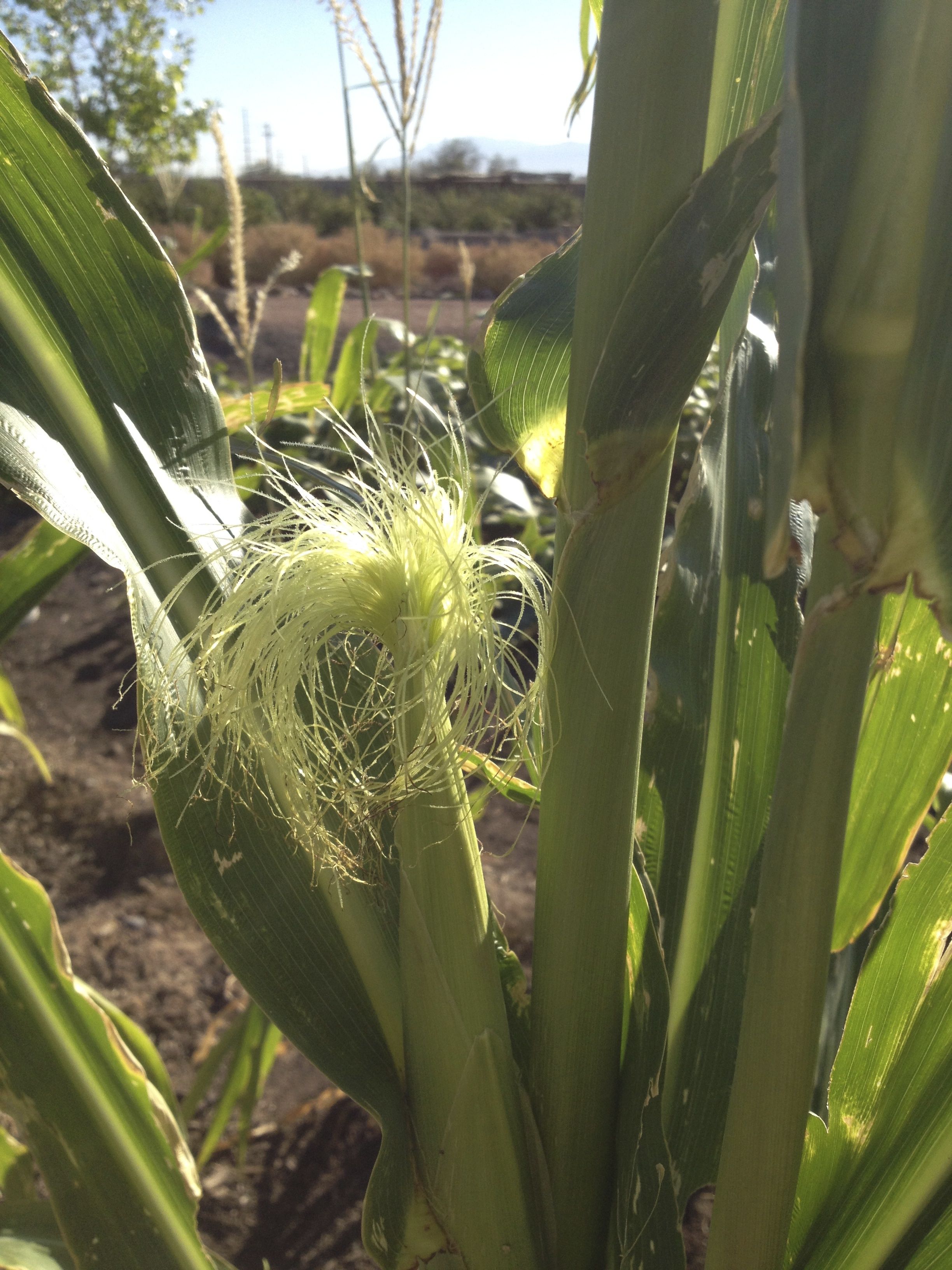
When you see silks emerge on your maturing corn plants, you can help Nature and Genetic Diversity along by touching a tassel  from another plant onto the silks.

When you see silks emerge on your maturing corn plants, you can help Nature and Genetic Diversity along by touching a tassel from another plant onto the silks.

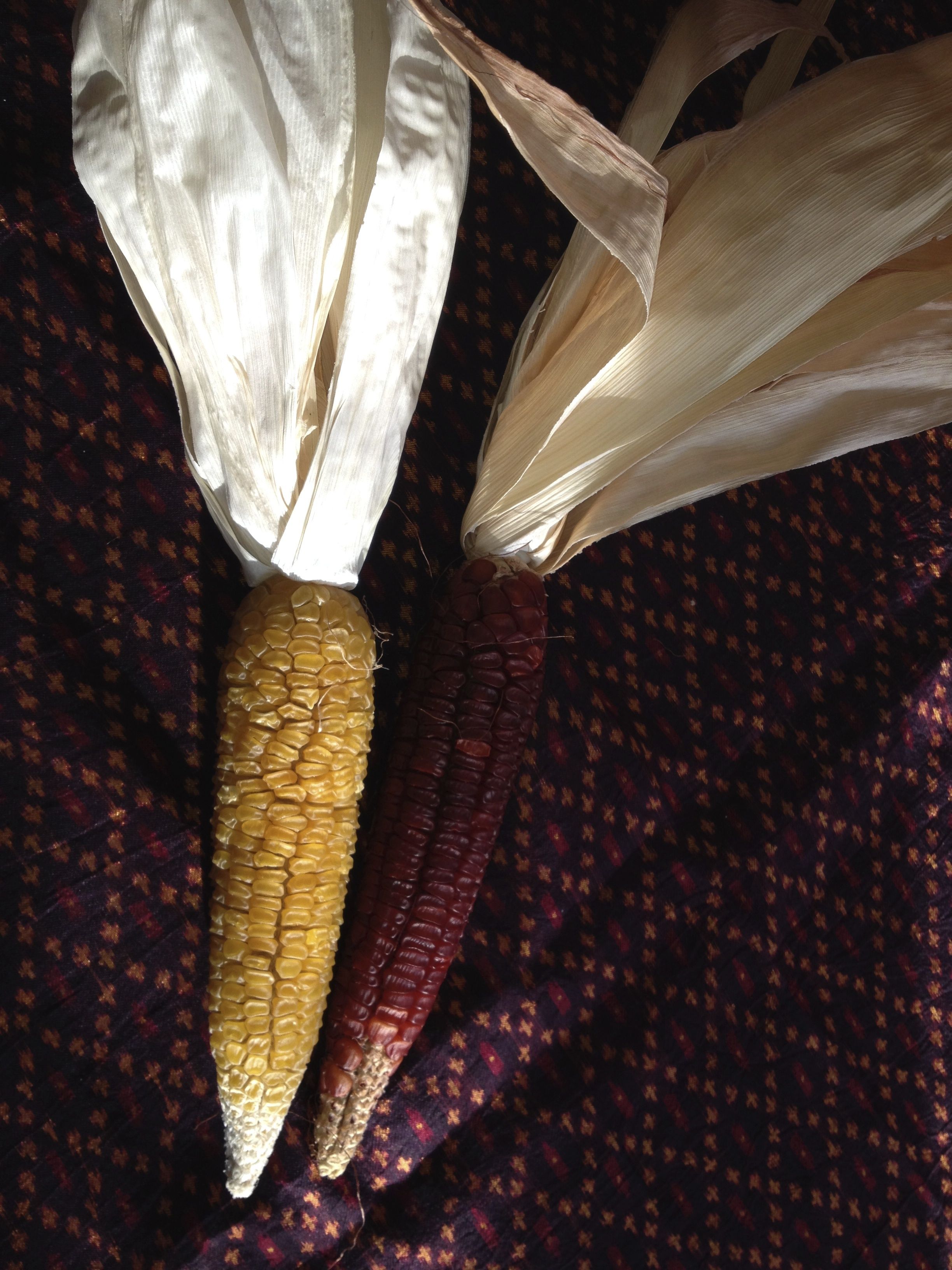
Red Sweet Corn, from the Guarijio People of southern Sonora--note the wrinkly kernels indicating sweetness.  (Available through NativeSeeds/SEARCH)

Red Sweet Corn, from the Guarijio People of southern Sonora–note the wrinkly kernels indicating sweetness. (Available through NativeSeeds/SEARCH)


Slow knowledge–a term coined by philosopher/farmer Wendell Berry–is what we can gain as we patiently watch the transformation of life in the garden.  They say it even builds new neurological pathways.  At the very least it can help young people learn what the word patience means!


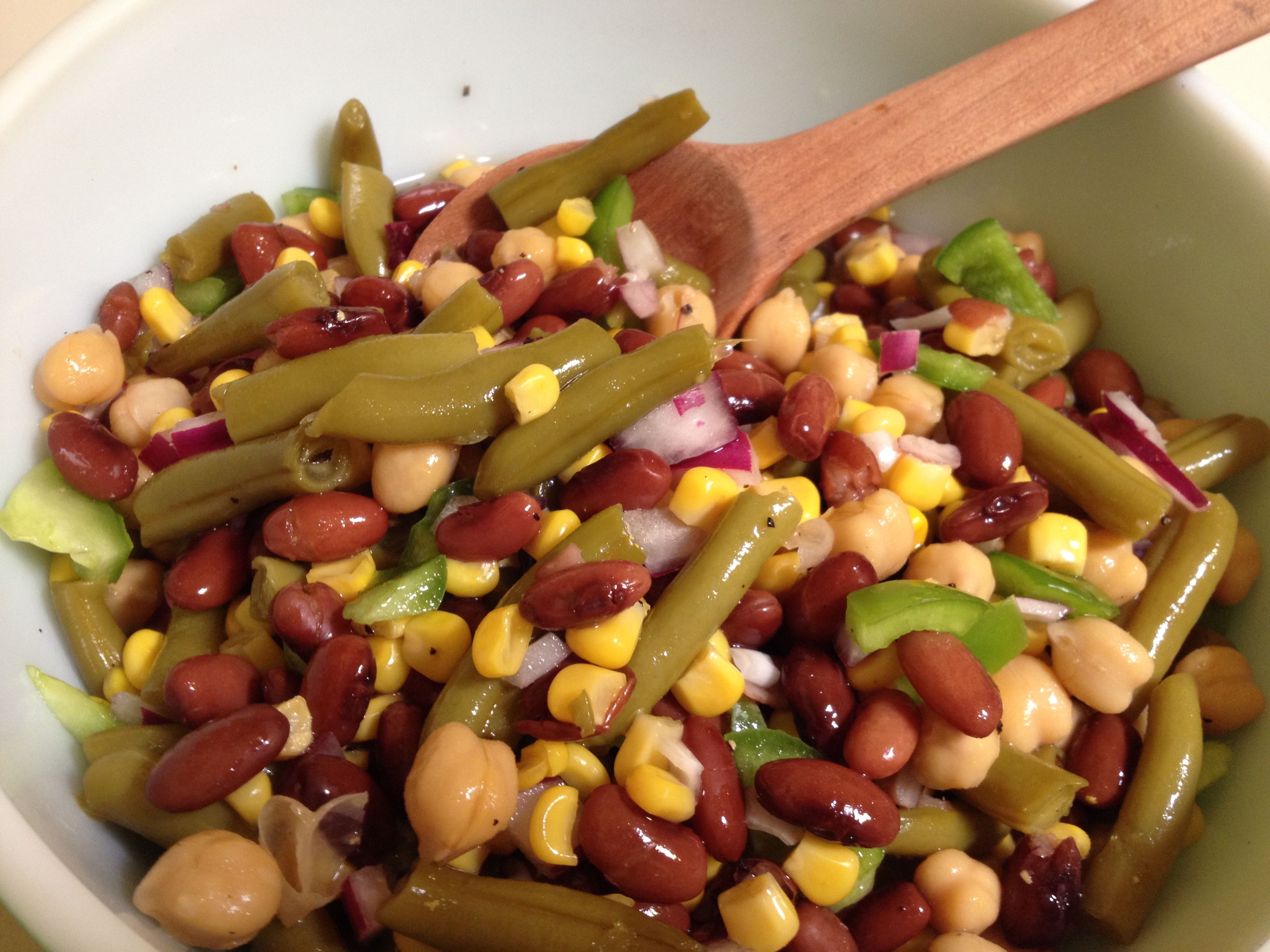
Planting  heirloom Flor de Mayo Beans, string beans, and corn now with the monsoon will mean great marinated bean salads in September!

Planting heirloom Flor de Mayo Beans, string beans, and corn now with the monsoon will mean great marinated bean salads in September!

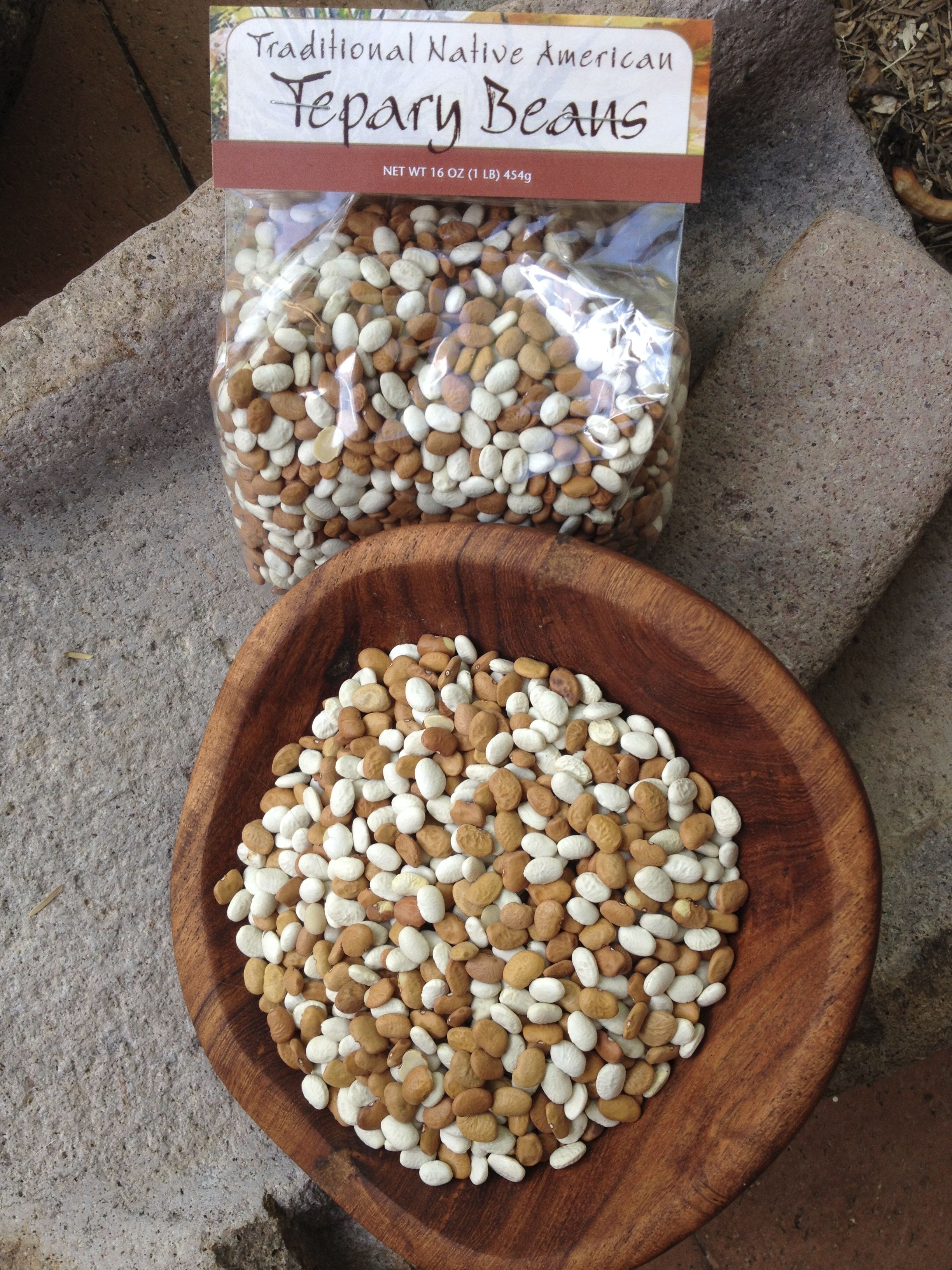
The most nutritious and rich-tasting of all beans--our native Tepary Bean!  --domesticated by early Desert People of the Southwest

The most nutritious and rich-tasting of all beans–our native Tepary Bean! –domesticated by early Desert People of the Southwest


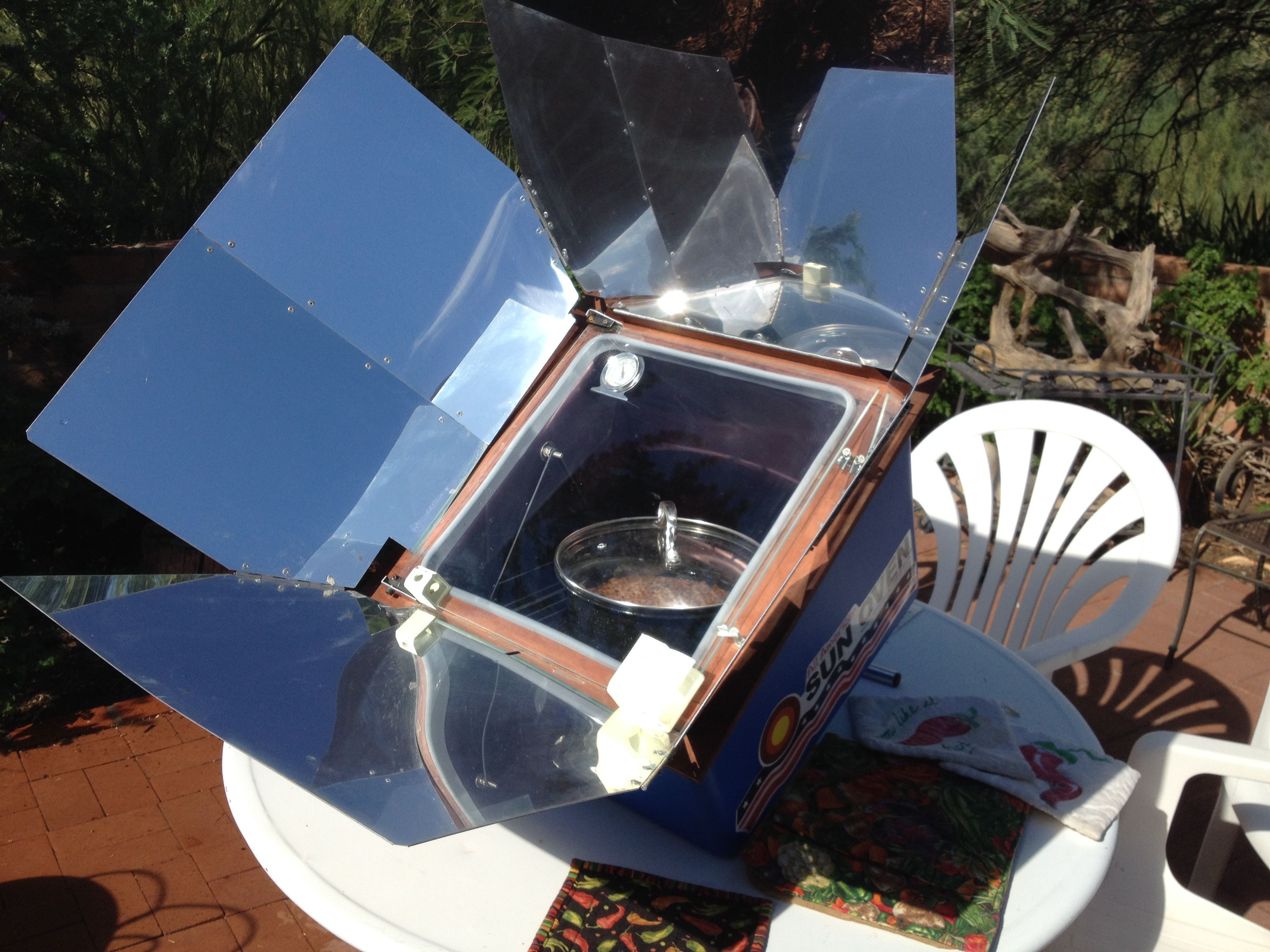
Get the heat out of the kitchen!  Summer is ideal time for cooking your garden or market produce with the SUN! Come see a demo at Sunday St Philips Farmers Market (on sale there).

Get the heat out of the kitchen! Summer is ideal time for cooking your garden or market produce with the SUN! Come see a demo at Sunday St Philips Farmers Market (on sale there).

Happy monsoon gardening!  See you at the NativeSeeds/SEARCH Monsoon Plant Sale next weekend at the NSS Store.  Or come visit our Flor de Mayo booth at Sunday’s St Phillips Farmers Market under the mesquites and sycamores, for gardening tips and a variety of beans to eat and plant.

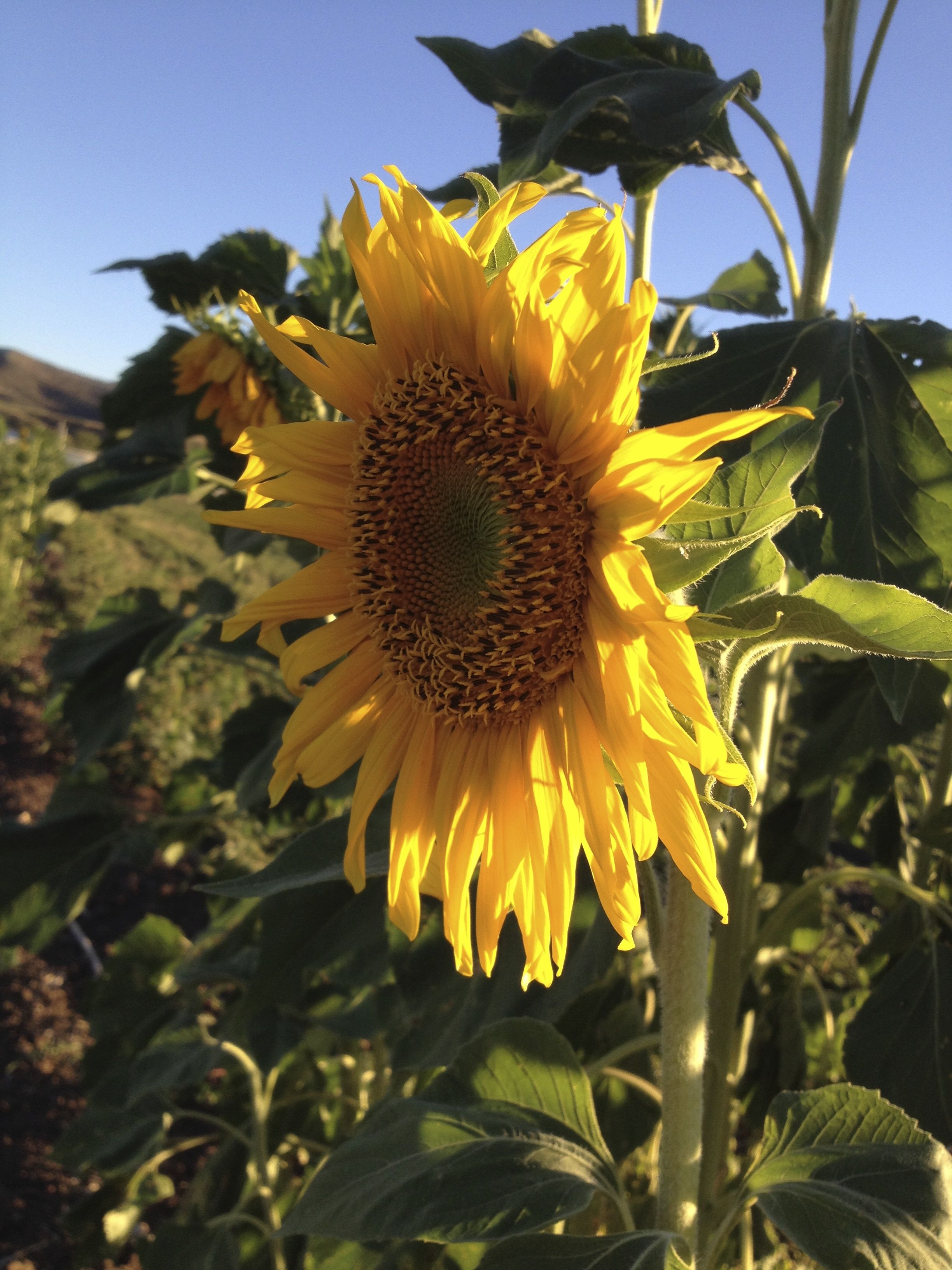
A NativeSeeds/SEARCH heirloom sunflower--colorful protection for a garden margin

A NativeSeeds/SEARCH heirloom sunflower–colorful protection for a garden margin

Feed Sack Wisdom. Rendering Lard 101 DIY Photo-Essay Spicy-Chiltepin Lard

IMG_6750 Aunt Linda here on a glorious cloudy day here in the Old Pueblo. And,  Whoops (!)  there goes Life again, changing just when we were feeling comfortable again! Just when we think we have a handle on it, the game changes. Most of you know by now that fats are not “bad”. Fats are now heralded for the importance they play in our health.  If we are wise enough, we allow Beginners Mind to open, and explore what may be there for us. Of course, we can just Resist.

Remember when eating red meat was “all bad” ?  It turns out if it is grass pasture raised it is may be healthy for us.

Remember when soy was considered “all good”;  it was almost a cure-all?  Well … it turns out that is Not Always So.

And Remember: the game will change again.

But one “truth” that seems to stand firm, is that What Goes Into the animal you eat, or that lays the egg your feed your kids, or the bee that harvests your honey/pollen, or the seed/soil that you plant is important.   For the sake of the lard we are about to render,  “You are What your Animals Eat” (see feed bag below) makes a significant difference in the health of the fat you are rendering.

IMG_6577

Well, trans-fats are “off the shelves” and in three years, as mandated by the FDA. They must be overwhelmingly “not good” for us if a government agency is willing to move that swiftly!  And, among the fats and oils reshuffling themselves, and reconsidered (based on science) as healthy, heat tolerant, and delicious: Lard is “back”.

Inspiration for exploring this new/old fat and how to use it is:  100% Natural LARD:  The Lost Art of Cooking with Your Grandmother’s Secret Ingredient (From the Editors of GRIT Magazine) As soon as I read about book (2012) which I ordered from our independent book store,  Antigone Books, here in Tucson. The book is mesmerizing. It’s recipes are divine, earthy,  and delicious all at once. And it turns out, we can render our own lard right in our own kitchens. Seemed like a fun thing to do for Independence Day.

To get “off the page” and to learn more, I interviewed Cheralyn Schmidt, my dear friend and Culinary Crusader, who has been rendering her own lard for years (and is famous for her Tamale Parties where invitees create their own tamales from different types of masa, the tastiest being made from home-rendered-lard). She is a Chef, has experience in Ag-Extension, teaches food, cooking, and nutrition —  and is the Make It Happen Woman behind Tucson’s Thriving THE GARDEN KITCHEN (google it).  I could gush on and on about her many talents and her bright spirit, but it is time to roll up our sleeves and get to work.

IMG_6647 1) WHY would you WANT to render lard? Well, One it is an act of independence to have the Know How. Two, it makes food taste more delicious. Three, contrary to conventional thinking, and as stated above, lard is considered HEALTHY these days. The chemistry involves in fats is complicated, but there is significant research that is changing our thinking about animal fats. Fats are very important in our diets, I encourage you to find out more; you may be surprised.  Four, fill in Your Own reasons. Five, I enjoy experimenting and learning;  the lard-rendering is one place to play with flavors. Do an experiment and see if you can Taste the Difference between pasture raised lard and corn raised lard. Also, embolden yourself with experimentation. Below you’ll see a CHILTEPIN INFUSED LARD that I played with. 2) What is lard? And where can I get it to render at home?  Lard is pig fat, that you can buy from your local butcher (even butchers at your grocery store,  Sprouts, Whole Foods),  4-H folks, your Heritage Breeders (VERY important in supporting Heritage Animals are folks who are willing to buy heritage animals), the county fair, FFA (used to be Future Famers of America, now I am not sure what it stands for).   VERY Preferably, for both your health and the health of the animal, (NOTE: not separate),  you would ask for the fat from Pastured Animals pigs. Specifically, request, the “leaf lard” of the pig, which is located around the kidney’s. It has the best quality, in terms of nutrition and taste. The book gives this as a resource for Resources as well: http://www.LardCookbook.com IMG_6668 IMG_6670 Above: fresh summer vegetables from the garden have even deeper sweeter notes when cooked in lard. 3)  What can you use this home-made lard to make?  Pie crusts, biscuits, sautéing vegetables, cooking eggs, main dishes such as crab cakes, salmon croquettes, beef wellington, cakes, pies, brownies, cookies, tortillas, tamales.  Summer fruit, berries and vegetables are abundant this time of year! Our nectarine tree is bursting – peoples gardens are brimming over!  and one way to handle the “extra” from your trees or garden is to make pie crusts or empanadas with all that summer joy. Remember to remember the Savory pies (as well as the sweet!)  – you can make a wonderful pie from your tomatoes, summer squash, herbs, your native crops …. whatever is presenting itself. If you are not a gardener, consider wooing yourself and your family/friends with the offerings of the Farmers Markets – with this much abundance comes lower prices and we can make pies galore! IMG_6763 Above: Tortilla and Quesadilla made with chiltepin infused lard! Note that the color of the tortilla is a nice yellow from the chiltepin infused lard-fat. Are your sleeves rolled up? Here we go:  Karen Keb’s section “How to Render Lard” (in the beginning of the book), says it strait. I am going to use her basic guide as well as add photos and insights from Cheralyn and my Rendering Session – that took all of an hour and a half, for 7 lbs of pig fat. The focus this post is on rendering the lard itself, so you feel both inspired and confident enough to do this at home. Later this summer, I will feature a pie crust and some amazing filling that includes tequila – so stay tuned! LARD 101 – HOW TO: 1) ” Preheat the oven to 225 F.” 2) “Fill a large roasting pan with the chopped fat.” Ask for it to be chopped or ground. Our 7 lbs that we got from a 4-H pig raised on kitchen scraps was ground for us at the Meat Lab here in Tucson. IMG_6657 IMG_6655 IMG_6658 3  “Roast Slowly for 30 minutes to one hour”  (or) until the fat has melted and you and you have protein particles  floating on top. Our seven pounds was divided over several pans and took an hour and a half. You may have noticed the red, round, chiltepin added to the pig fat in one of the roasting pans. I love this ancient, “closest living relative to the oldest known chile on the planet” “chile so much I simply HAVE to use it whenever I can. The capsicum infused taste and color added some spice to the lard. Now this can work for you and against you. So for savory pie crusts, quesadillas, or egg cooking  it is SUPERB. You may not want to  add it to your delicate pastry or your sweet berry pie. You will note that the color of the chile infused lard has a  yellow-reddish tint,  and that the lard without the chile is a beautiful white. These colors are seen in both the liquid lard and when it is firm and in the jars as well. Try infusing your lard at home with rosemary. Explore! IMG_6673 4)  “Skim off the solids and set them aside for the chickens” , (Keb really writes this – which I LOVE) Cheralyn suggests that these “Cracklin’s” are good on baked potatoes, on tortillas or in quesadilla’s, even in salads. IMG_6685 IMG_6687 IMG_6688 5) “Pour the liquid fat through a mesh colander lined with a double layer of cheesecloth.” We used flower sack material and it was perfection incarnate for such a project. Those of you who follow me, know I love to make the yogurts cheese; I plan to switch over to flower sack cloth from here-on-out. IMG_6706 IMG_6712 IMG_6710 6)  ” Store in a glass canning jar in the refrigerator or freezer. It will keep for months.” IMG_6750