Bean Flower Soup

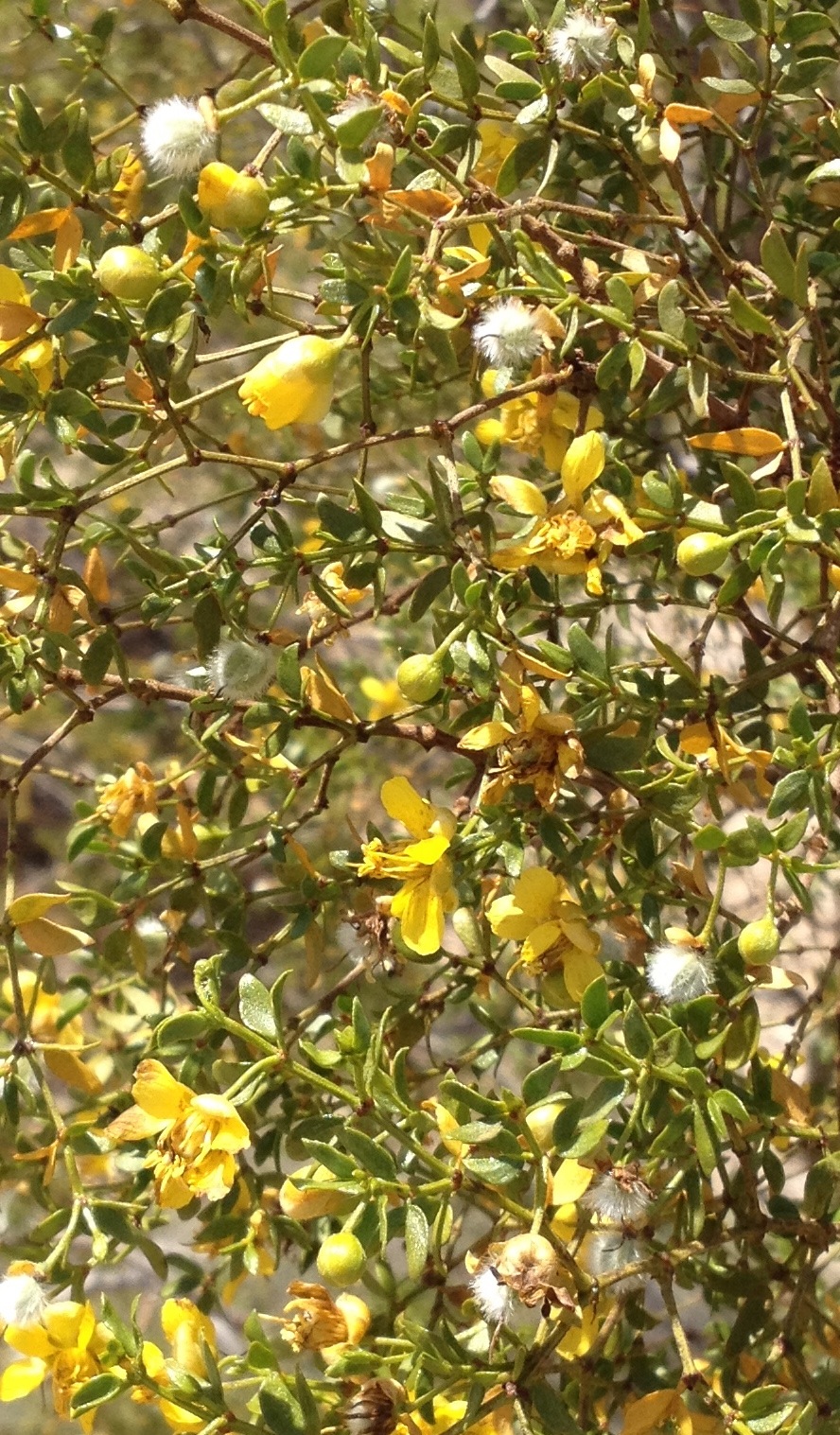
palo verde flowers 1702783
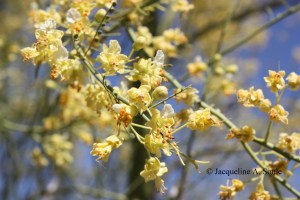
Jacqueline Soule here today to share a savory way to use the flowers of palo verde.
In case you wondered, palo verde flowers are slightly sweet and taste mildly like young garden peas.

In a handout I got back in the 1970’s, I learned that the O’odham name for this April-ish month is Uam Masad which roughly translates to “the yellow month.”  On the slopes of the the Tucson Mountains yellow is certainly the case – with palo verde, brittle bush, paperflower, and desert marigold all combining to cover the slopes in a cloak of glowing yellow.  On a still day, the sound of the various species of native bees working their way through this bounty is a many toned symphony of delight to my ears.
palo verde flowers 1702858
The common name “palo verde” can refer to a number of species, including
Mexican paloverde (Parkinsonia aculeata)
blue palo verde (Parkinsonia florida)
foothill palo verde (Parkinsonia microphylla)
palo brea (Parkinsonia praecox)
Texas palo verde (Parkinsonia texana), and the
Desert Museum hybrid paloverde (Parkinsonia X ‘Desert Museum’).

I told you that so I could tell you this.  All of these New World species of palo verde have edible flowers.  The palatability of the flowers varies though – depending on species and on growing conditions.  Sample before harvest.  Some are tough and stringy, some are large and flavorful.  The flowers on the trees in the leach field were especially large and palatable.  After the initial sample thou, I left them for the busy digger bees (Centris species) moving among the blooms.

palo verde flowers 1702869

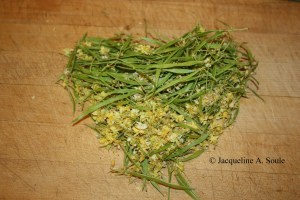
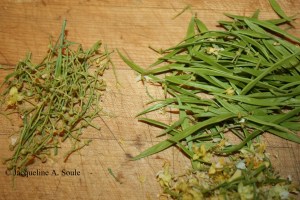
Chop up herbs and flowers to an easily edible size.

Since palo verde flowers are relatively small, compared to other edible flowers like pansy and chrysanthemums, I wanted to find dishes where I could harvest many flowers in a single swipe along the branch then use them en mass.  With a big basket full of flowers, I started experimenting.
palo verde flowers 1702855
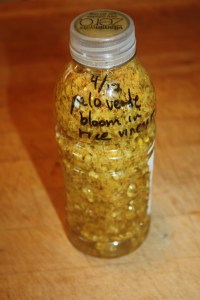
The results – palo verde flowers are fine in salads.  They are good in a pancake-like fritters.  Lightly sauté the flowers with chard and I’itoi onions then pour eggs over them for scrambled breakfast – good.  The floral vinegar will have to wait about a month for my report.  But meanwhile there is my new favorite – bean flower soup.  Bean flower soup is especially good late in the season as flowers are intermixed with young developing palo verde beans.

palo verde flowers 1702863

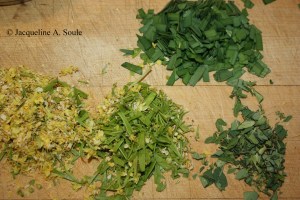
Remove bitter tasting petioles.

Many Americans are not used to the concept of soup before a meal, but it makes sense for three main reasons – even in summer.  Such home-made soups are high in trace minerals, helping replace the electrolytes lost to perspiration during the day (especially in our climate).  The American Institute of Health estimates that 1 out of 5 Americans is clinically dehydrated, in other words, dehydrated enough to interfere with our body’s ability to function properly.  Lastly, for folks trying to lose weight, the hormones signaling hunger take about 20 minutes to become canceled out by eating.  Soup first means that your hormones have more of a chance to tell you that you’ve had enough without overeating.

Palo Verde Flower Soup
1 cup fresh palo verde flowers
1 quart liquid of choice (water, vegetable stock, chicken stock)
1 tablespoon oil of choice (helps better develop the flavor)
herbs to taste (use mild to not overpower the delicate flower flavor)
sea salt to taste
palo verde flowers 1702880
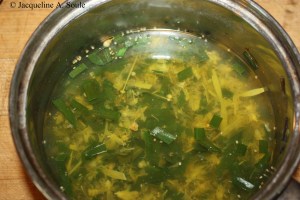
If it is late in the season, and you harvest beans with petioles, remove the tough and bitter petioles.  Give everything a good dicing to help release the flavor and make any potentially fibrous bits small and edible.  Optionally, sauté the herbs in the oil first to develop the flavor but avoid over-heating the flowers, they can become bitter. Add one quart liquid.  Bring to a boil and turn off and remove from the heat.  Let sit for 10 minutes to meld flavors together and finish cooking the soup.  Serve.  Enjoy!

Disclaimer: The authors of this blog have researched the edibility of the materials we discuss, however, humans vary in their ability to tolerate different foods.  Individuals consuming flowers, plants, animals or derivatives mentioned in this blog do so entirely at their own risk. The authors on this site cannot be held responsible for any adverse reaction.  In case of doubt please consult your doctor.

JAS avatarIf you live in Southeastern Arizona, please come to one of my lectures. Look for me at your local Pima County Library branch, Steam Pump Ranch, Tubac Presidio, Tucson Festival of Books and other venues. After each event I will be signing copies of my books, including the latest, Month-by-Month Garden Guide for Arizona, Nevada, and New Mexico (Cool Springs Press, $26).
© Article copyright by Jacqueline A. Soule.  All rights reserved.  Republishing an entire blog post or article is prohibited without permission.  I receive many requests to reprint my work.  My policy is that you may use a short excerpt but you must give proper credit to the author, and must include a link back to the original post on our site.  Photos © Jacqueline A. Soule and they may not be used.

Cholla Crepes with Hollandaise and Mulberry Compote Yogurt Crepes


20170420_160134

Spring in Tucson means cholla buds and mulberries! Amy here with two of our perennial favorites, wrapped in crepes.

20170420_090508

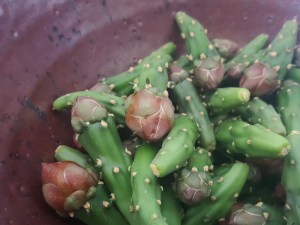
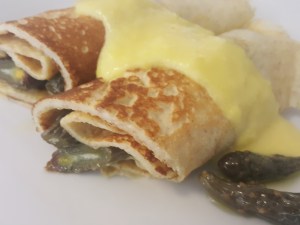
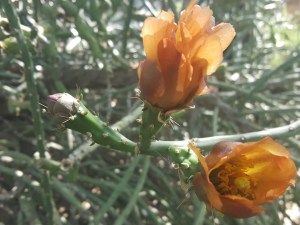
A found a budding Pencil Cholla Cactus in a friend’s yard, and I could pick in exchange for a harvesting lesson. See Tia Marta’s Cholla bud post to learn how to collect and process this favorite desert food. This wasn’t a stellar year in the wild, so I was glad to harvest from a few plants thriving with a bit of care. Pencil chollas, hard to find in the wild, have few spines for the size of the bud and fall off easily when brushed.

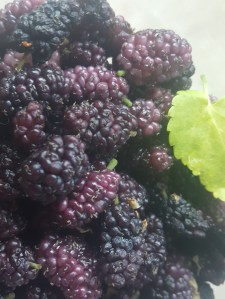
Mulberries are another cultivated cousin of a wild desert riparian food, and my grandfather planed a beautiful tree many years ago that produces enough fruit for birds, dogs and people, too.

20170421_184021

I cooked a bowlful of mulberries with a splash of rum and a squeeze of lemon. I added a bit of water while cooking, just to keep it from sticking.

Brainstorming how to show off these little treasures, I remembered crepes! My mom and aunt taught my family to make crepes with a special electric skillet designed to dunk into a wide shallow bowl of batter, making a delicate skin and browning it delicately.

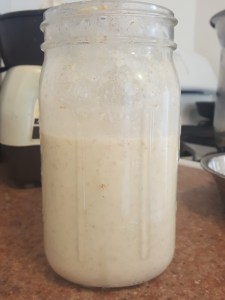
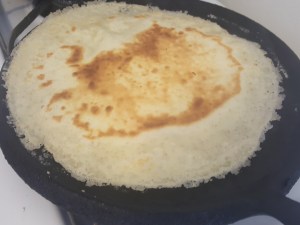
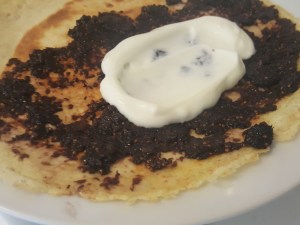
Lacking the very wide, very shallow bowl and the electric crepe maker, I have been making them lately on a cast iron griddle. Start by whirling one cup flour (I used half whole wheat and half all purpose), one and a half cups half and half (milk or milk substitute works fine), 3 tablespoons butter melted completely (or oil), four eggs, and a dash of salt in the blender. Transfer to a quart jar or measuring cup for easy pouring.

20170420_154347

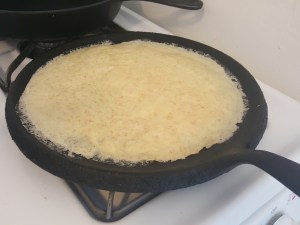
Heat a cast iron pan to medium, swirl the pan before the very first crepe with a small pat of butter, and take a relaxing breath. With one hand, pour batter on the griddle while quickly rotating the pan until the batter reaches the pan’s edges. Hopefully most of the batter is set by then, but if not, just use a little less batter next time and cook this crepe a little longer. If the batter gets too thick, thin with water so it is easier to swirl on the griddle.

20170420_154359

When the edges are papery and the bottom spotted with brown, flip the crepe with your fingertips and brown briefly on the other side.

20170420_154420

Stack the cooked crepes on a plate directly on top of each other. This batch of batter made about a dozen for me.

Cholla Bud in Crepes with Hollandaise

20170420_133519

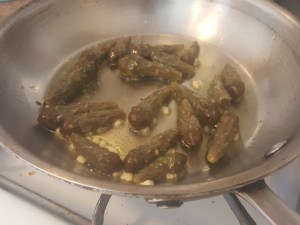
Boil the de-spined cholla buds in water for 10 minutes, then drain. Heat a bit of olive oil, add a clove of minced garlic, a dash of salt and the buds.

20170420_155137

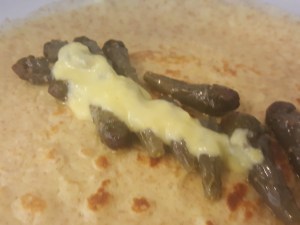
To make hollandaise, put one egg yolk, a tablespoon butter, a squeeze of lemon and a dash of salt in a double boiler. Whisk until creamy, adding a splash of hot water if necessary to thin the sauce. Incorporate one more tablespoon of butter and keep warm. The sauce can easily be doubled or quadrupled as necessary. Assemble, roll and enjoy!

20170420_155738

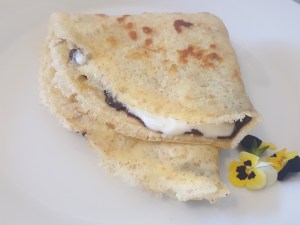
For Mulberry Crepes, you can add a pinch of sugar to the batter if you want. Spread a hot crepe with mulberry compote and a spoon of plain yogurt.

20170420_160424

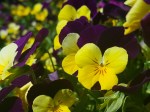
Fold in quarters and garnish with pansies.

20170420_160552

Enjoy the last days of spring, and I’ll be back in summer. Love, Amy


20170420_093731

The Call of the Small

IMG_6588.jpg

“Savor Sister” Linda here with you today, celebrating small things.

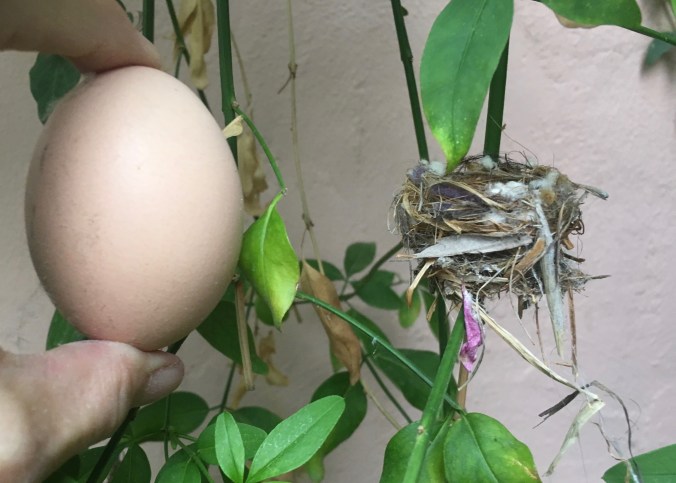
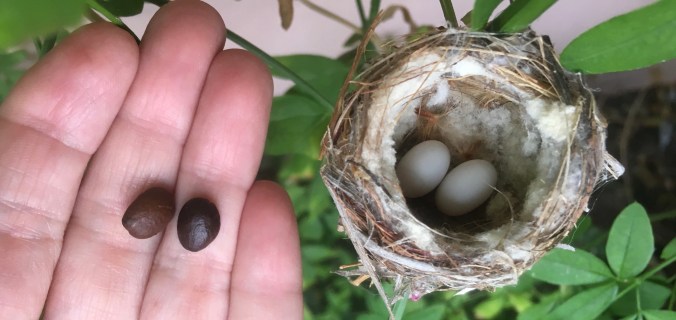
There is a Hummingbird nest in the yard.  It is magic. The nest is small, the eggs are small. “Big” has its place in nature for sure.  But it can be overly admired.

I am in the mood these days to scale things back a bit – so it is the Call of the Small that I hear most loudly.

Small things speak in a different language.  Peer into a hummingbird nest.  Stand at the lip of a flower. Or hang out at the entrance of a bee hive. And take it all in. I feel a vast freedom as I get interested in what is in front of my nose. Other than my phone I mean.

Here are a few visuals of just some such “small” things this week. Then we’ll jump right into a fun, flourless, cookie recipe that features the tiny mighty chiltepin.

IMG_6747.JPG

To help with scale …. a dime above …

IMG_6763.jpg

… and coffee beans ….

IMG_6645 4.jpg

Standing at the lip of Mallow Flowers is always a treat for the native bee lover in me; there are two bees in this flower. Some bees even nap in Mallow flowers. Truly. Google it if you don’t believe me.

IMG_6679.jpg

… here you can see the under and over achievers in the pollen gathering tasks of a hive ….

IMG_6688.jpg

I’ll take this girl on my pollen gathering team for sure.

IMG_6681.jpg

This photo shows a different color of pollen from a differing pollen source.

Call of the Small (flourless) Cookie Recipe – featuring chiltepin

IMG_6730.JPG

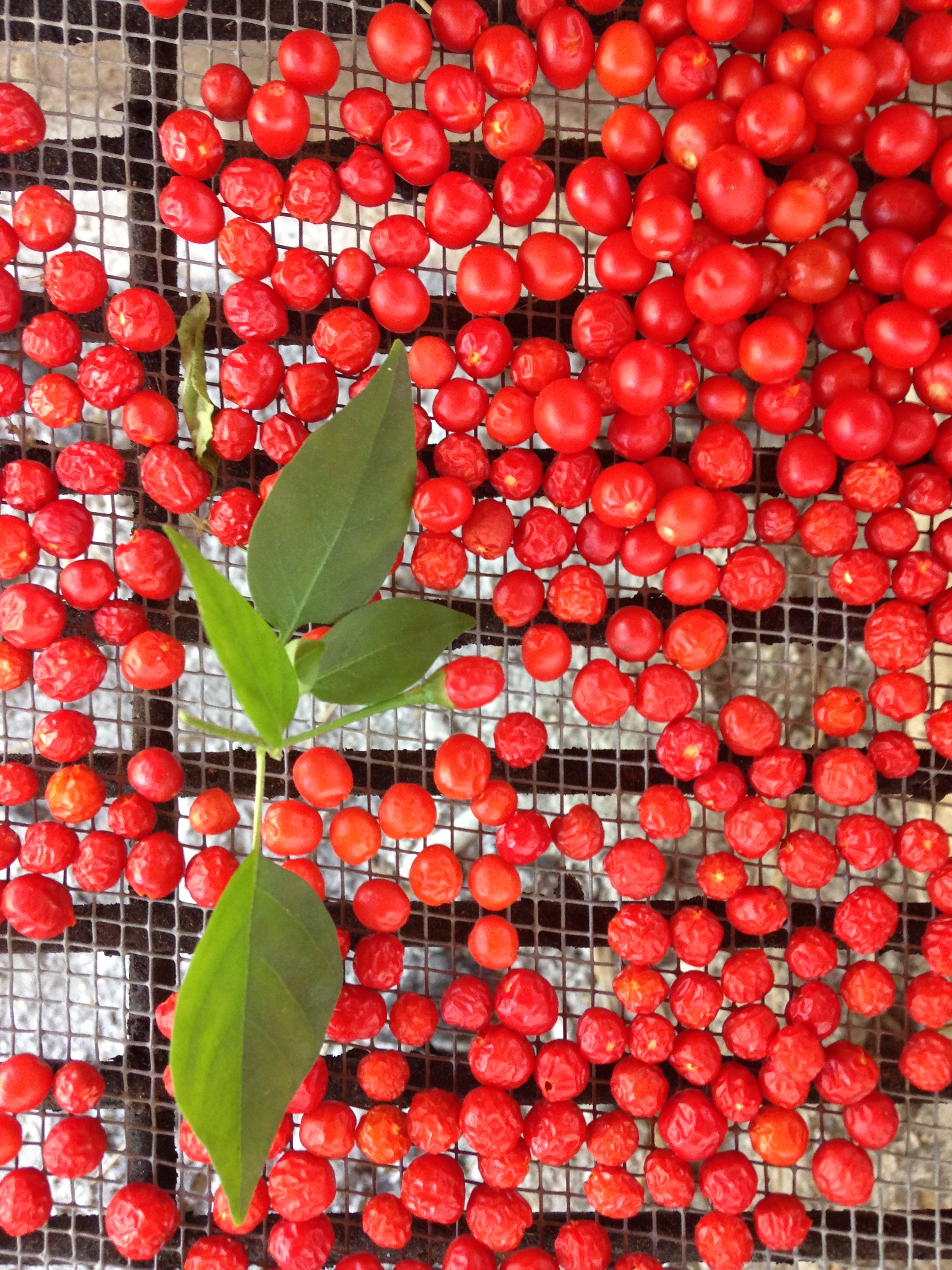
Chiltepin may be tiny but they deliver a STRONG punch of heat directly to your tongue. Unlike most other chilies, these tiny wild chiles have a heat that flares hot and immediate on the tongue. It is not a subtle sensation. And the heat dies quickly.  (Most domesticated chiles run the opposite direction: the heat builds more slowly to a peak).

I remember the first time I tried one. It was a hot October day in the foot hills of the Sierra Madres, and I  was “set up” to be the butt of the chiltepin joke amongst a group of men.  A fresh, bright red chile was picked directly from the plant and handed to me.

I popped it in my mouth.  A good time was had by all as I coughed, sputtered and generally turned red. Now hardly a day goes by without me eating one. I even travel with them because I miss them. Their small size makes them super portable.

IMG_0913.JPG

It was on just such a chiltepin plant that I was “set up” ….

IMG_0822.JPG

chiltepin in various stages of drying

INGREDIENTS AND HOW TO: 

IMG_6708.JPG

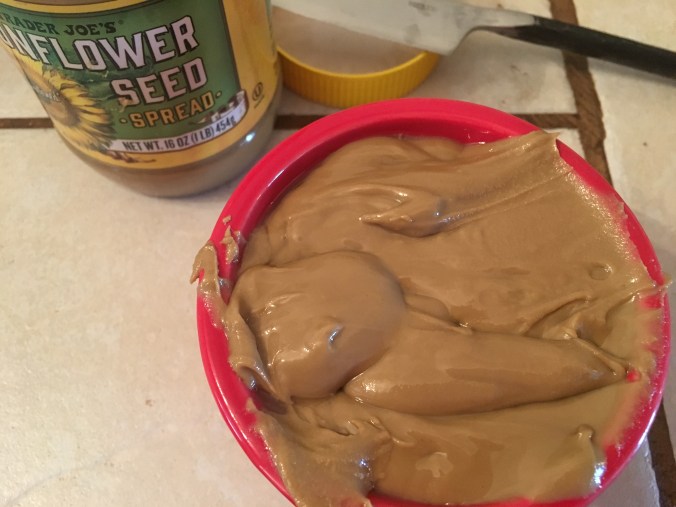
I cup Sunflower Seed Butter

IMG_6712.JPG

1/3 Cup “as local as you can get it” Honey

IMG_6721.JPG

1 fresh egg – I used one turkey egg because they are known for being great in baking

1 teaspoon Vanilla

1/2 teaspoon baking soda

1/2 teaspoon salt

COMBINE ALL THE ABOVE AND MAKE SURE BATTER IS SMOOTH

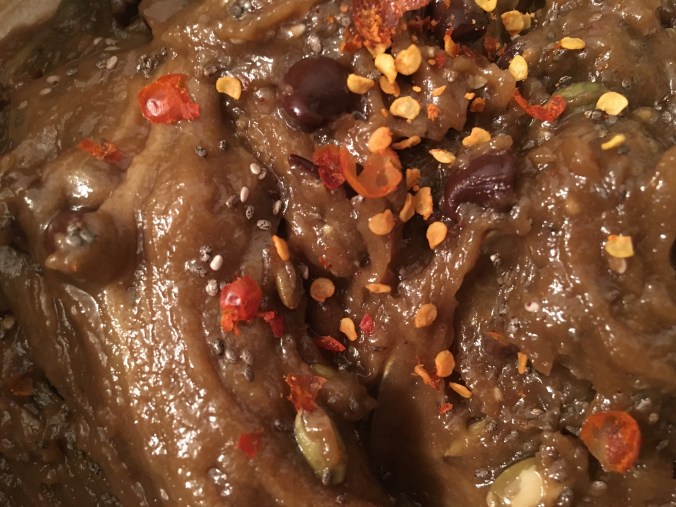
ADD  chocolate chips and  3-5 ground chiltepin seeds and all.  (I also added chia seeds, pepitas, and cranberries).

IMG_6728.JPG

Bake in preheated 350 degree oven until brown. Makes about a dozen cookies. 

Let me know what small things call to you. And how you like the bite of chile in this cookie.

IMG_6725.JPG

The small unglamorous moments never get their moment in the sun – so here are the recipe tools getting washed.


Tarte au Citron: Best Ever Lemon Pie


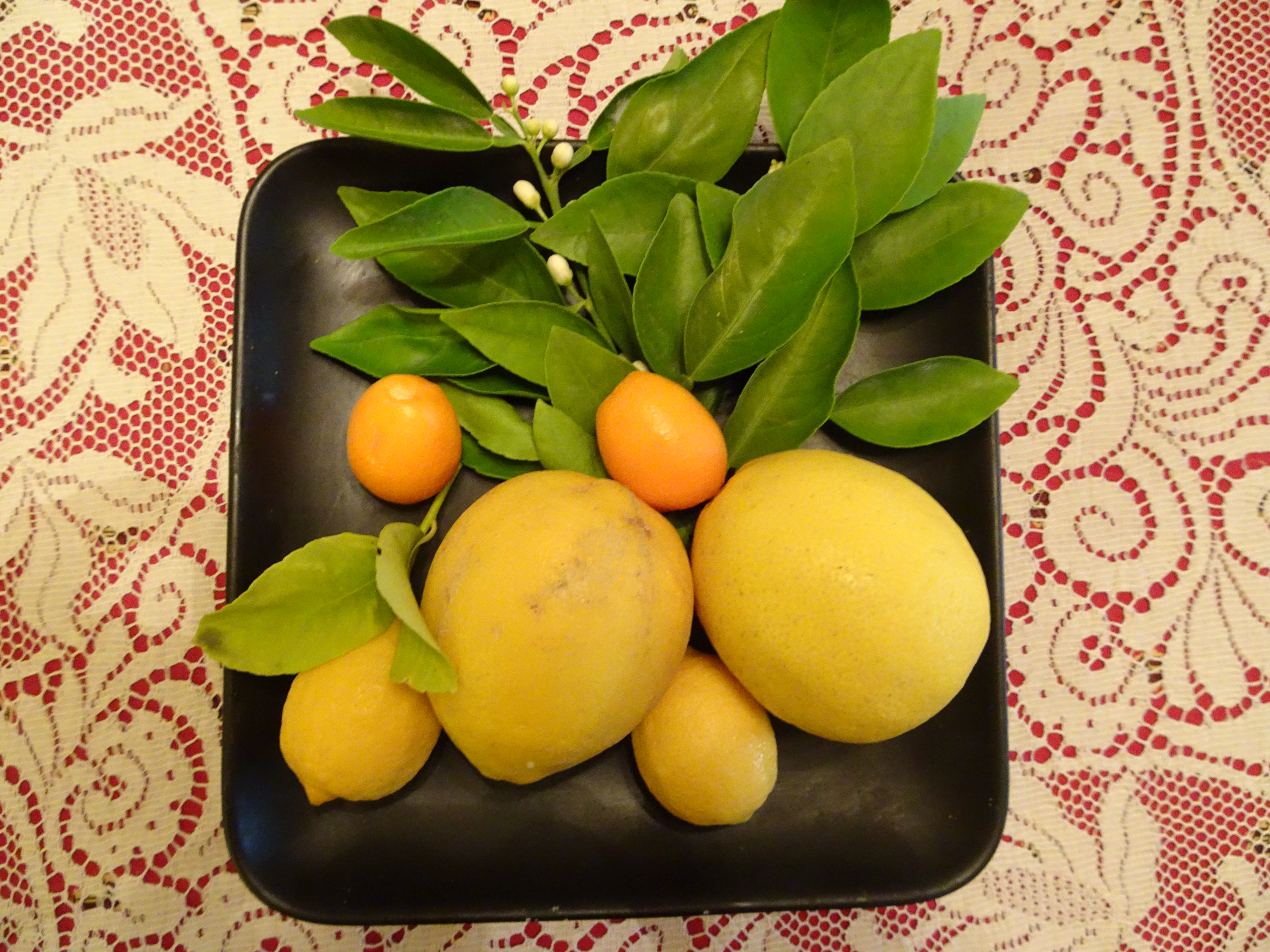
Spring in the desert means great citrus.

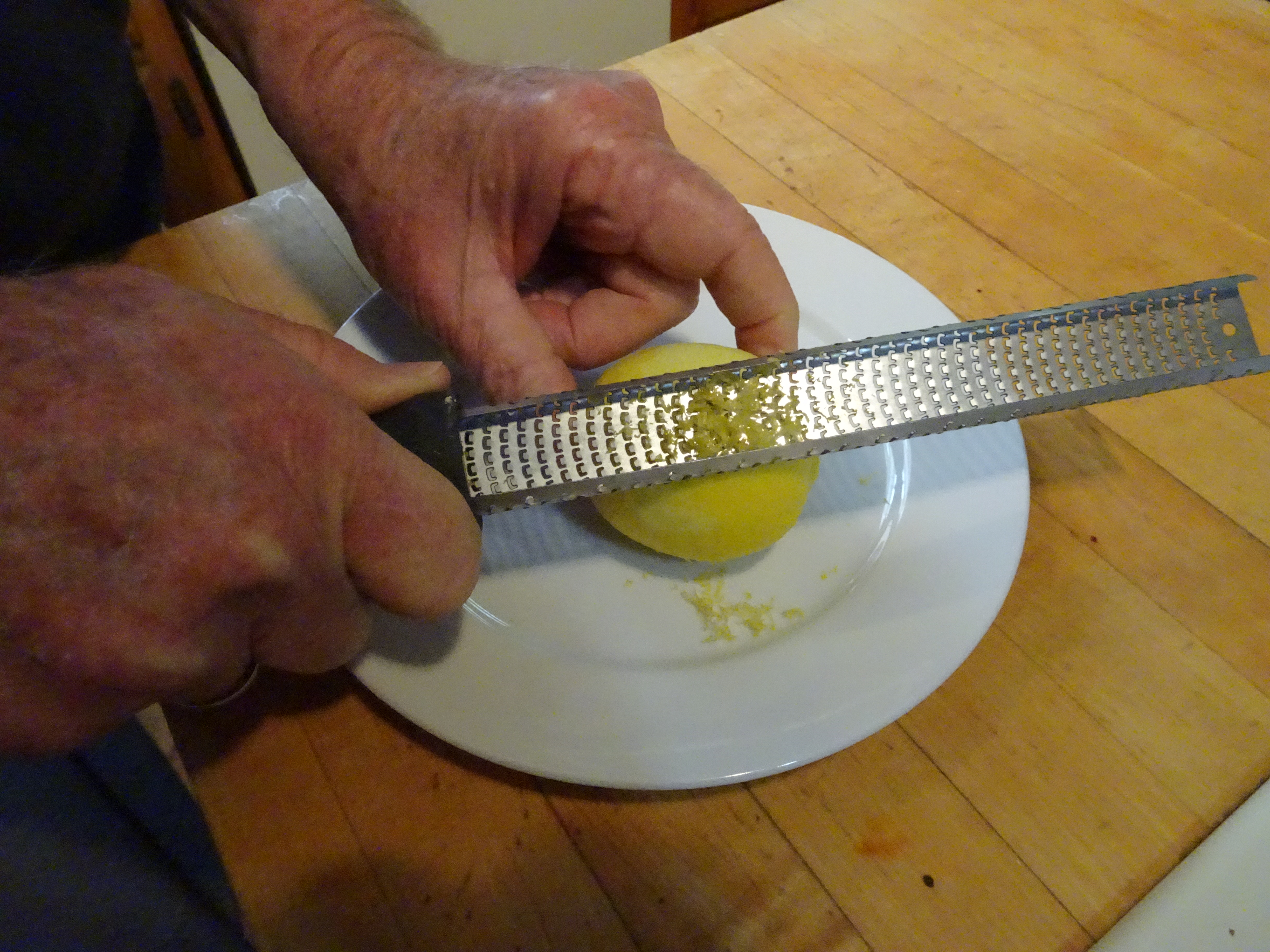
Carolyn here today with one of my favorite recipes, perfect for spring. Many people in the desert have lemon trees in their garden or have access to a neighbor’s bounty. Farmers markets also have lots of citrus in the spring. Making this recipe always reminds me of two dear friends. I begged the recipe several decades ago after eating at a dinner party hosted by Susie Morris and David Devine. I adored the pie, but dreaded making it because I always grated my knuckles along with the lemon zest. Then, a few years ago in repayment for a very minor favor, another friend, Margaret Pope, gave me a new type of zester. It is a miracle tool that makes zesting citrus peel quick and bloodless.

This zester makes producing citrus zest quick and easy.

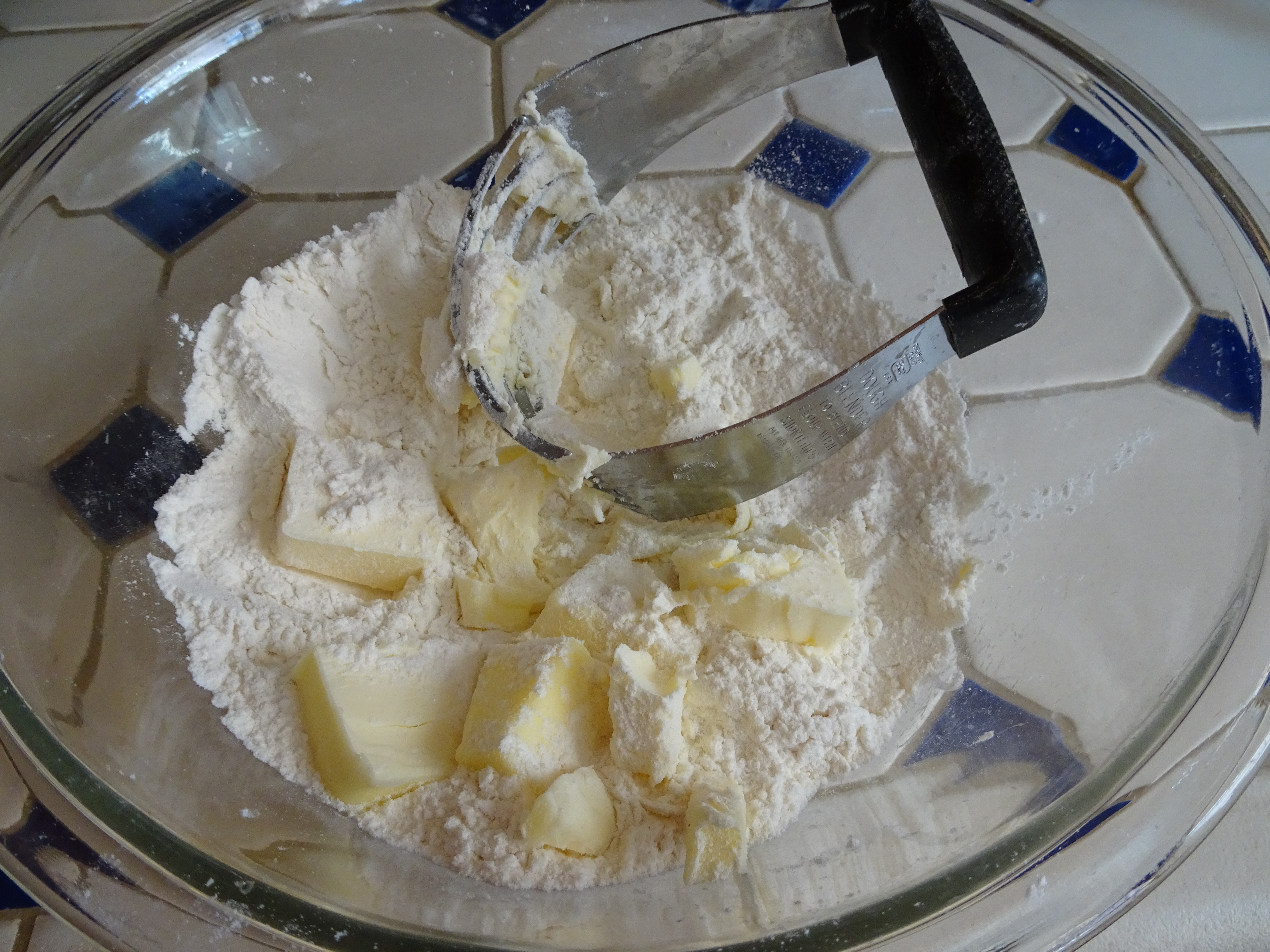
You can use a commercial pie crust or use the directions for a lemon-flavored crust below.  Some directions call for combining the flour and butter in a food processor, but I think that cuts the butter too small. It’s those larger pieces of butter between layers of flour that make your crust flaky. I use an old-fashioned  pastry cutting tool for this.

Cutting the butter into the flour for pie crust.

To make the filling, you need to separate the eggs. Even a little bit of yolk in the whites with inhibit the amount of volume when you beat them. The trick here is to have three bowls: one for the whites, one for the yolks and the working bowl. Crack the egg over the working bowl, catching the yolk in the shell and letting the white go into the bowl. If there is no yolk in the white, add it to the bowl for whites. If the yolk breaks, set the whole egg aside for scrambled eggs for breakfast and get another egg.

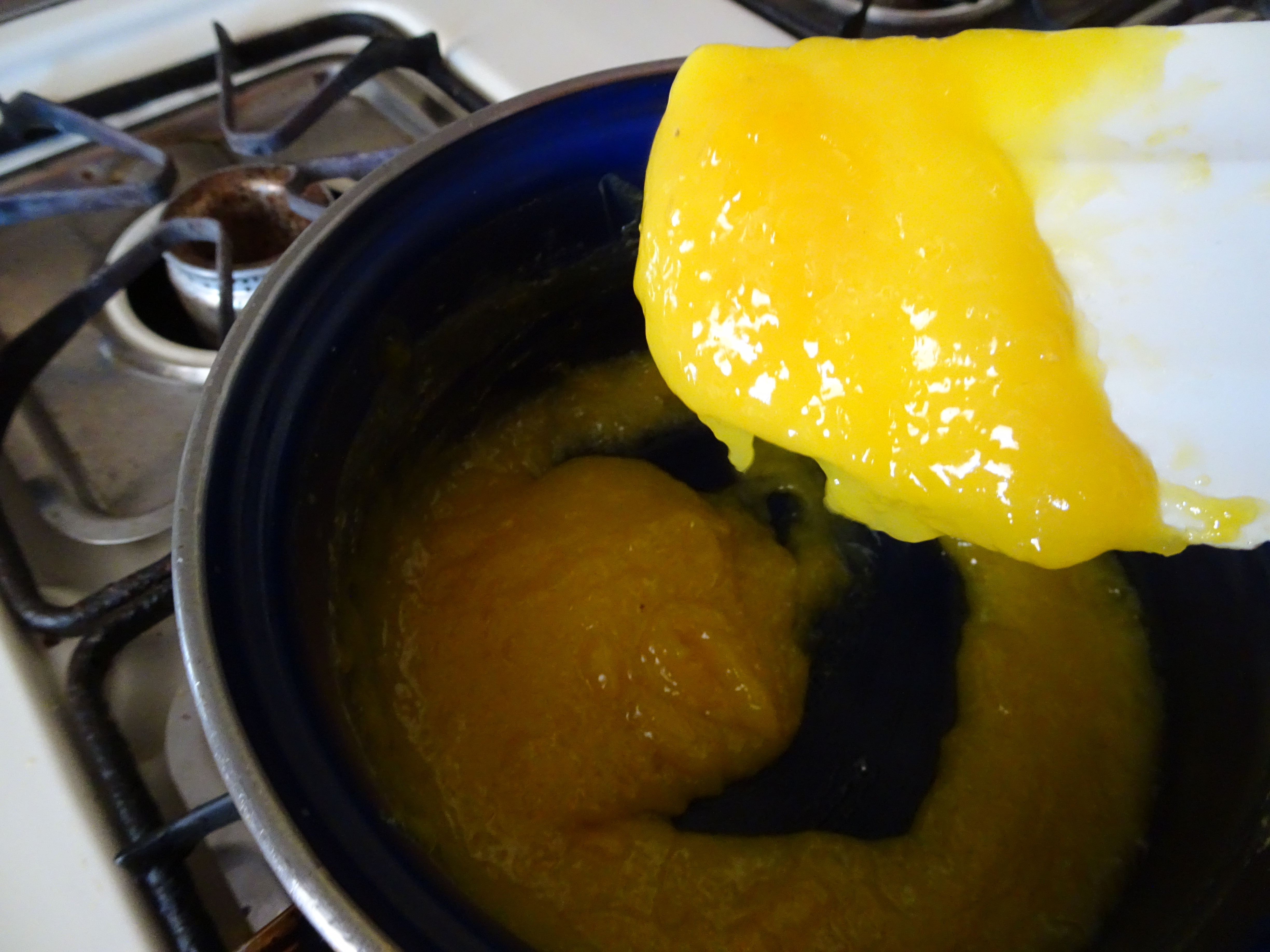
Use the yolks to make the lemon custard filling. It cooks rather quickly, so use low heat and stir and stir. Stop when it is the consistency of mayonnaise.

The custard should be the consistency of mayonnaise.

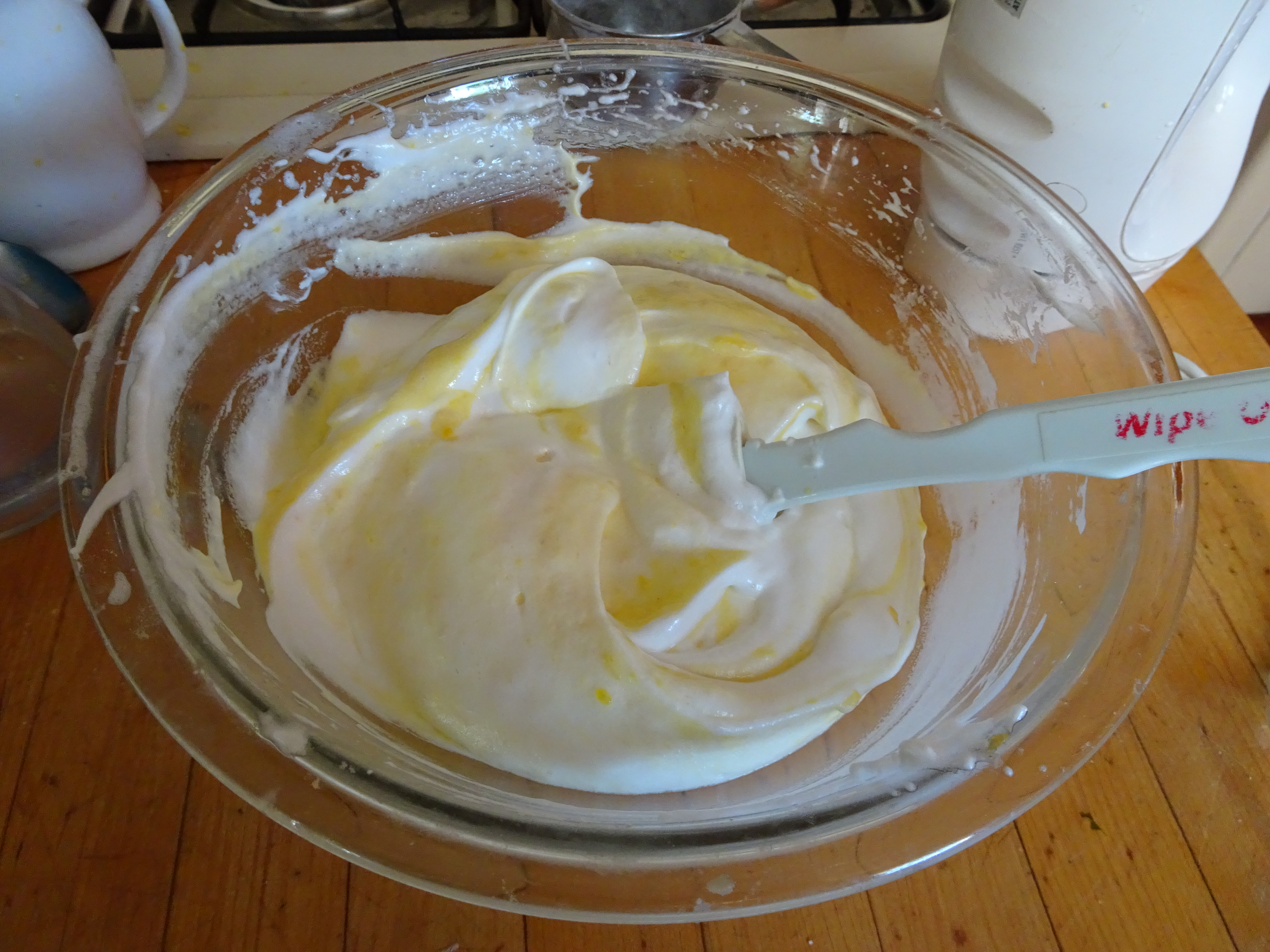
Next, you will beat your egg whites. The filling for the pie is similar to lemon meringue pie, but rather than the custard on the bottom and meringue on top, you fold together the egg whites and custard.

Gently fold the the custard into the beaten egg whites.

Tarte Au Citron

Pastry:

1 ¼ cups flour

2 tablespoons sugar

1 tablespoon ice water

½ cup butter

1 egg yolk

2 teaspoons lemon juice

1 tablespoon lemon zest

Filling:

4 eggs

¾ cup sugar

½ cup lemon juice

zest of two lemons

1 teaspoon cornstarch dissolved in 2 teaspoons water

pinch salt

Optional garnish: Whipped cream and mixed berries

Tarte shell: Heat oven to 400 degrees. Cut butter into the flour. Add  egg yolk, ice water and lemon juice. If you are in the desert, you might need to add more water as our flour has little moisture. Roll out and fit into a 8- or  9-inch tart pan. Bake 10 minutes at 400 degrees. (Use pie weights, beans or rice over a sheet of foil or parchment paper to keep pastry from puffing up).  Reduce heat to 350 degrees. Bake another 10 minutes until lightly golden. Set aside.(Can substitute own recipe for pastry but this is really good)

Filling: While the crust is baking, you can start the custard. Separate eggs. Beat yolks with half the sugar. Add lemon juice, zest and cornstarch. Transfer to saucepan and cook over low heat, stirring often, until consistency of mayonnaise, about 5 minutes.

Remove from heat and rest in bowl of ice water to cool completely. Again preheat oven to 400 degrees if it is cold. In a bowl, place egg whites and salt. Beat gradually, adding remaining sugar until stiff peaks form. Stir about a quarter of the whites into the yolk mixture to lighten it. Then gently fold in the remaining whites.

Spoon lemon mixture into the pastry shell. Bake until the crust is lightly browned and the filling is set, about 15 minutes. Serve alone or with whipped cream and berries.

Cool on wire rack. Serves 8 (or maybe 2).

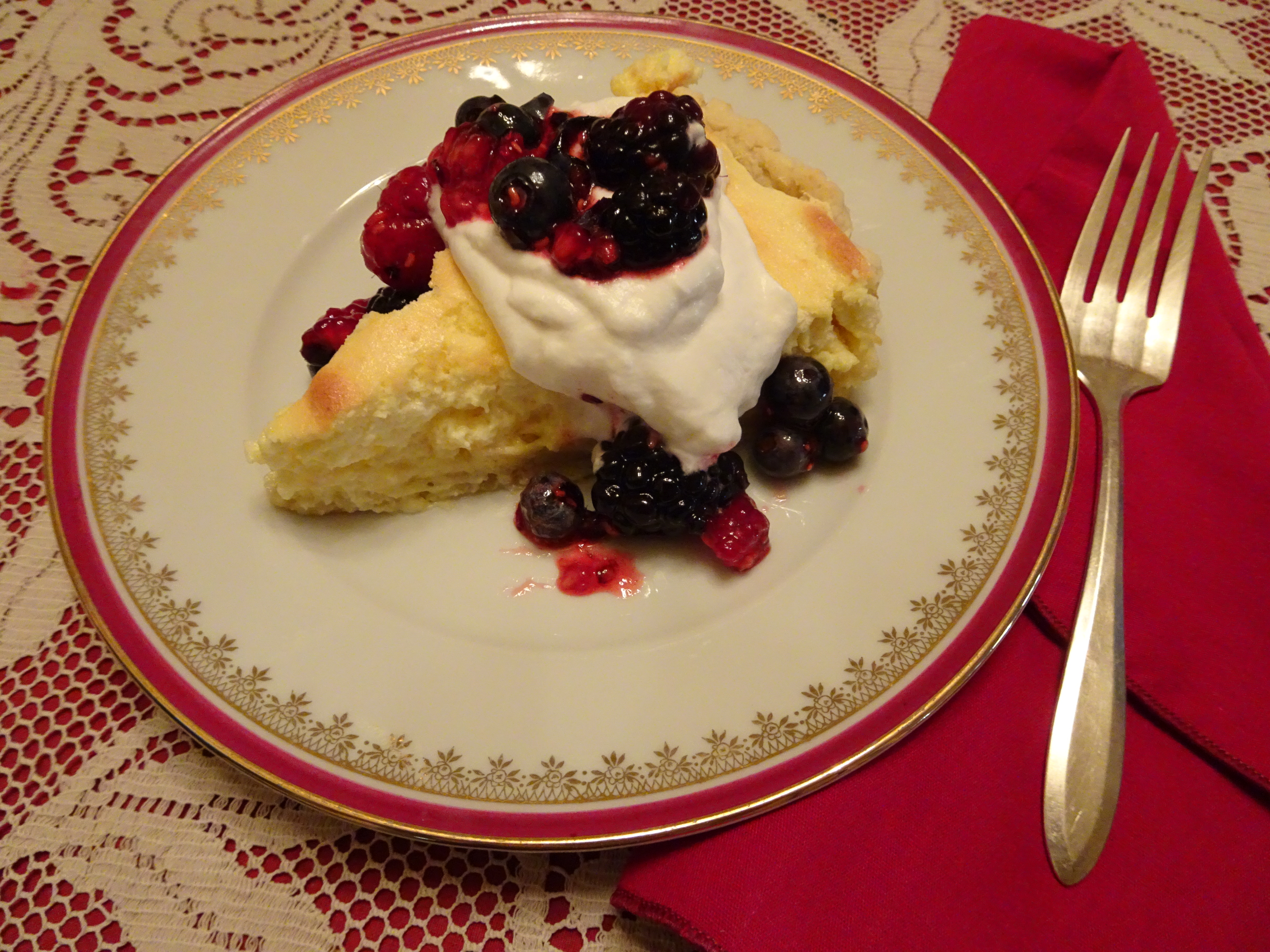
Whipped cream and berries are a luxury addition to a slice of Tarte au Citron.

_______________________________

Carolyn Niethammer is the author of five cookbooks on Southwest foods. You can see her books here.

Savor the Seeds

Savor Sister Jacqueline Soule here this week to discuss seeds.  Seeds to eat and seeds to plant.

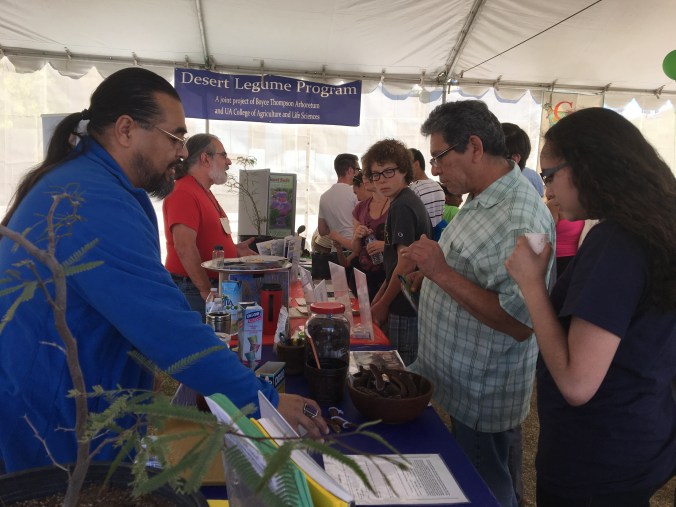
March has been a month of seeds for me.  I got out my boxes of seed for spring planting, All American Selections sent me some seed to try, I harvested bags of barrel cactus fruit for the seed, and I spent 2 long days at the Tucson Festival of Books, in the Science of Food tent, handing out samples of gluten-free mesquite muffins, and talking about the Desert Legume Program (DELEP).

IMG_0255.JPG

Mesquite pods are easy to harvest and grind (with the seeds inside) to make a flour or meal that is a good source of protein.  (recipe below) We were handing out samples to spread the word about DELEP’s mission, which is to acquire and preserve seed of legumes native to the arid and semiarid lands of the world; to learn more about the nature and utility of these unique species; to share legume germplasm; and to aid in the preservation and conservation of desert legume biodiversity.  Volunteers meet once a month, September through May on every 2nd Wednesday from 9 to noon.  The cadre of volunteers assists with seed processing and storage, and we welcome new volunteers!

ferocactus fruit 1107

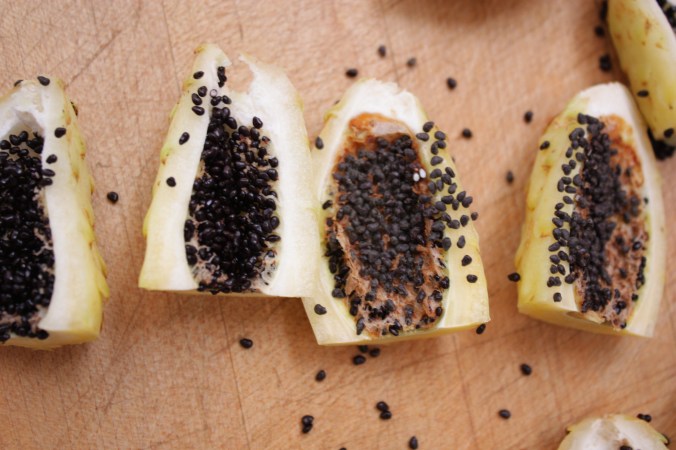
Barrel cactus seed processing and use were discussed in earlier Savor the Southwest blogs.

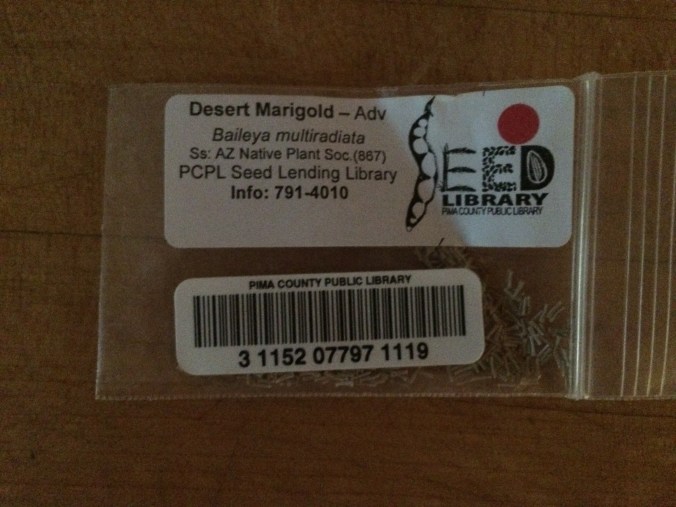
seed library

Did you know that there is a Seed Library in the Pima County Public Library?  The Seed Library is a collection of open-pollinated and heirloom seeds that you can borrow from the Library and grow at home (or in a community garden!).  All you do is check the seeds out of the library using your library card.  They would appreciate if you would later share the seed of what you grew, but it isn’t a requirement.  The idea behind this seed bank is that the best seed to grow in our area is the offspring of whatever grew and thrived in our area.

04 seed harvesting 1508572 (c) JASoule one time use only to CSP

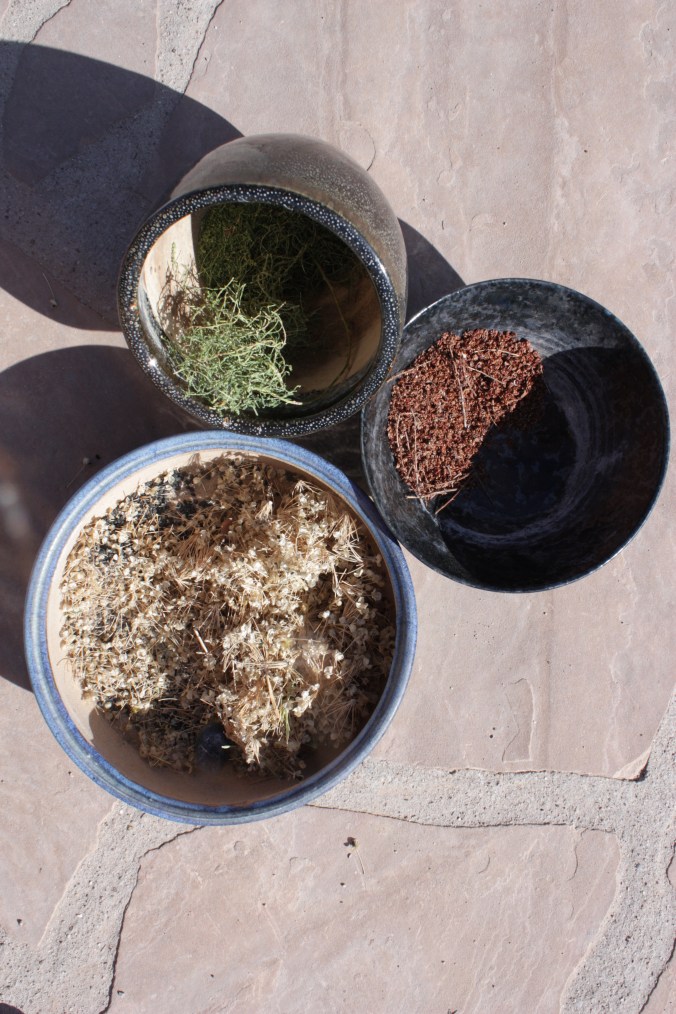
Seed of epazote, canagria, and garlic chives.

Save Seed
It is easy to save seed of annuals, wildflower, vegetables, and herbs. The key is to  collect the seed just as it matures and before it starts to drop. You especially want to keep an eye on seed in pods that dry and shatter to disperse seed.

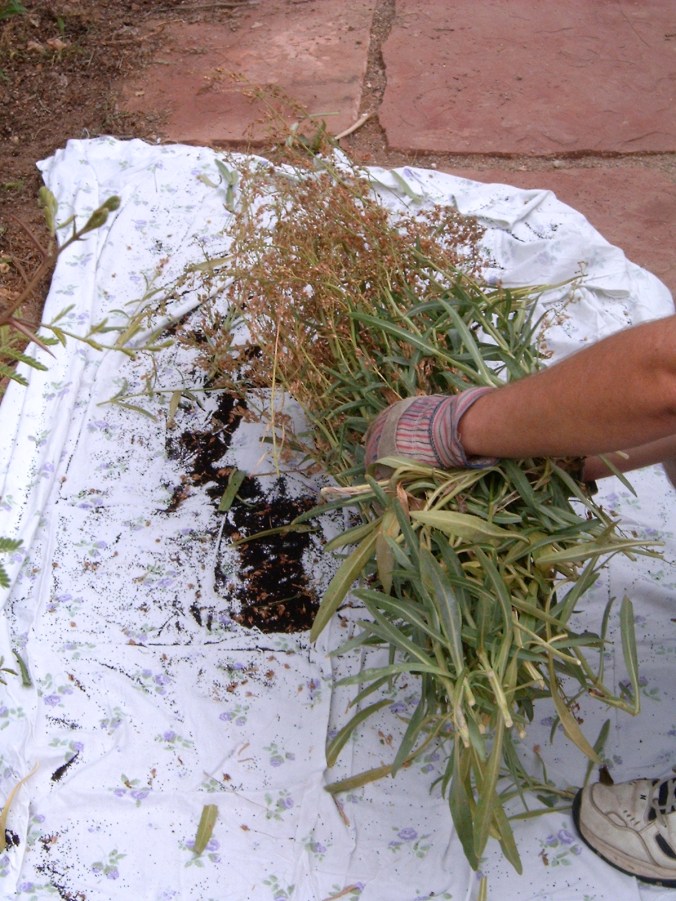
Stalks of Pods – snip off the stalks and invert them into large paper bags. Fold the bags shut. Now when seedpods shatter, the seeds are trapped in the bag for next year’s sowing.

Seedheads – often these seedheads simply break off in your hand. Hold a container below them as you break them off.

For future sowing, you don’t need to clean the seed, although purists like to.  At DELEP we clean seed for long-term storage.  For seeds you use as a herb (like coriander or dill seed), you will need to clean the seed. Kitchen colanders and sieves are useful.

Label your seeds!  Penstemon seed and poppy seed look remarkably similar in a paper bag 2 years later.

04 seed save of penstemon 0800451 (c) JASoule one time use only to CSP

Looking Ahead
In my book Month-by-Month Garden Guide for Arizona, Nevada, and New Mexico I mention that now is the time for USDA zones 10, 9 and 8 gardeners to sow seed of hot-season greens like amaranth, New Zealand spinach, purslane, and Malabar spinach (a perennial vine).  Don’t forget the heat-loving herbs basil, epazote, and perilla. For Zones 7 and 6 gardeners, this is the time to plant cool-season vegetables from seed, like radish, arugula, and European spinach. Plant slow-growing members of carrot family, including parsnip, carrot, fennel, parsley, and dill. In zones 5 and 4, you will plant these in May.

Bailyea multiradiata_4341

Gluten-free Mesquite Muffin
1/8 cup mesquite flour
1/8 cup flax seed meal
1/2 teaspoon alum-free baking powder
pinch of salt
1 tablespoon sweetening – to taste (stevia, honey, molasses, sugar)
1 teaspoon oil – choice (olive oil, butter, coconut)
1 egg

Use a microwave safe mug or pyrex measuring cup, sprayed with cooking spray.
Mix the dry ingredients.
Add the wet ones, stir well.
Microwave for 1 minute.
Remove from the cooking dish right away.
Note: You can quadruple this recipe and cook it in a loaf pan for a loaf cake (but cook for 3½ minutes).

JAS avatarIf you live in Southeastern Arizona, please come to one of my lectures. Look for me at your local Pima County Library branch, Steam Pump Ranch, Tubac Presidio, Tucson Festival of Books and other venues. After each event I will be signing copies of my books, including the latest, Month-by-Month Garden Guide for Arizona, Nevada, and New Mexico (Cool Springs Press, $26).

© Article copyright by Jacqueline A. Soule.  All rights reserved.  Republishing an entire blog post or article is prohibited without permission.  I receive many requests to reprint my work.  My policy is that you may use a short excerpt but you must give proper credit to the author, and must include a link back to the original post on our site.  Photos © Jacqueline A. Soule and they may not be used.

Workshops, walks and events celebrate growing, harvesting and preparing desert foods this spring

Happy Spring, Tucson! Amy here to tell you about opportunities to learn about growing and harvesting desert foods in our neighborhoods. Urban desert explorations allow us to track the seasons and harvests…will it be a fruitful year for barrel cactus? An early or late harvest? What desert edible plants are the neighbors using in the landscape? How are the birds and squirrels faring?

Check Desert Haresters or other sponsoring organizations for further dates and topics in each of these series!

Desert Harvesters La Cocina Walks

Tuesdays March 21, April 11, May 23 and June 20, 2017.  201 N Court, north entrance. $5 donation to support Desert Harvesters education programs.
jill crop

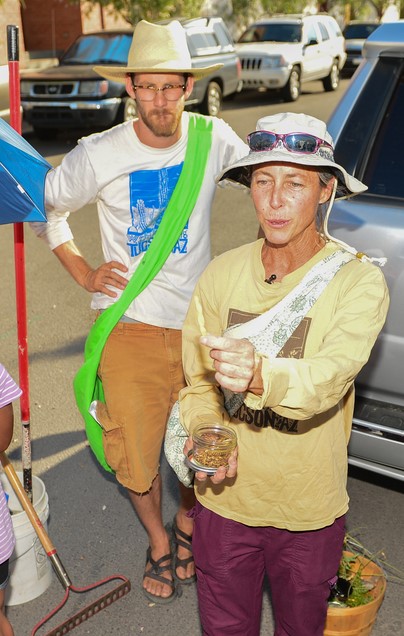
Desert Harvesters will lead casual walks from La Cocina through historic El Presidio Neighborhood to identify native perennial food-bearing plants and other edibles. Walks start in spring, and continue monthly thereafter, into the oncoming heat of summer. Desert Harvesters is partnering with LaCo to incorporate native food ingredients into the menu during our Tuesdays-for-Tucson fundraiser nights, including prickly pear, cholla buds, nopalitos, desert herbs, mesquite, and more.

Desert Harvesters is interested in seeing what wild ingredients might be in the LaCo neighborhood that could be sampled, harvested, and potentially used at LaCo. LaCo Walks are scheduled on Tuesday evenings so that after the walk, folks can support both LaCo and the organization that Tuesdays-for-Tucson benefits that evening; a percentage of LaCo’s night is donated to the organization. Desert Harvesters’ Tuesdays-for-Tucson fundraiser at LaCo is May 16—save the date!
Prickly-Pear-Margarita-w-Mesquite-Bean-Stirstick-br-150x150

photo:Barbara Rose

BRING: Drinking water, sun protection, camera, notebook, and anything else to make you comfortable.

For further information and to sign up, please contact: workshops@desertharvesters.org or jaelle@lorenziniworks.com


Desert Harvesters and Community Food Bank Series at the Santa Cruz River Farmers’ Market

Mercado San Agustín, 100 S. Avenido del Convento
20150402_082609

Cholla Buds
with Desert Harvesters’/Mano Y Metate‘s Amy Valdés Schwemm
Thursday, March 23, 3-6 pm (Saturday hands-on workshop on March 25)
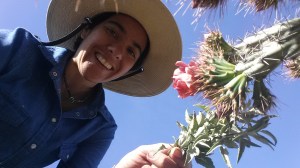
Celebrate one of the first native foods of Spring: cholla-cactus flower buds! Learn how to safely harvest and cook with these calcium-rich, tasty buds. Sample cholla buds with spicy-savory mole sauces.

Spring Bounty! NEW
with Desert Harvesters’/Bean Tree Farm‘s Barbara Rose
Thursday, April 6, 3-6 pm
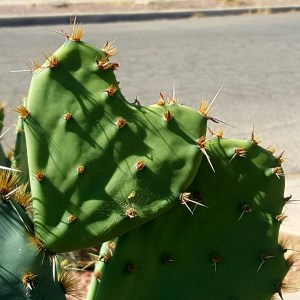
The desert is abloom at this time, and many plants offer edible flowers and foliage to use in teas, garnish, and as flavoring. See what can be made from these and other desert ingredients like Spring greens and herbs, green palo-verde beans, cholla buds, stored foods, and other seasonal surprises.
20160429_110049

Nopalitos
with Desert Harvesters’/Mano Y Metate‘s Amy Valdes-Schwemm
Thursday, May 11, 3-6 pm
(Saturday hands-on workshop on May 13)

Learn how easy it is to collect these nutritious cactus pads from your own yard or neighborhood, and how to prepare them in tasty recipes everyone will love.

All THURSDAY DEMOS are free and open to the public, and are sponsored by the Community Food Bank of Southern Arizona. For more information, contact the Food Bank at (520) 882-3313.

*For further INFORMATION about follow-up HANDS-ON SATURDAY WORKSHOPS, please contact: Barbara beantreefarm@gmail.com or Jill jaelle@lorenziniworks.com To REGISTER for HANDS-ON SATURDAY WORKSHOPS, please contact workshops@desertharvesters.org


Sonoran Desert Series at the Food Conspiracy Coop, facilitated by Desert Harvesters’ Jill Lorenzini and friends.

REGISTER via THIS LINK. All classes will be held in the Hoff building on the NE corner of 7th St & Hoff Ave, behind the Food Conspiracy Co-op. Class fee $10. Desert Harvesters volunteer, member, and partner discounts offered. FOR FURTHER INFORMATION, please contact: jaelle@lorenziniworks.com.
Fruiting-saguaro-JL-rwm-282x300

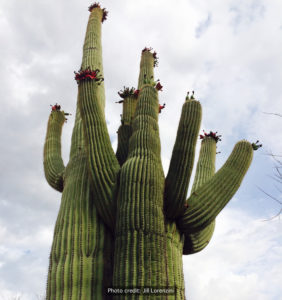
YOU ARE HERE: SONORAN DESERT 101

Monday, MARCH 27, 6–8 pm Interactive exercises about where we are and where we come from using maps, info, and stories to build place-based awareness. We’ll explore from macro to micro, from global to regional to local, from the Southwest to the Sonoran Desert, and to the Uplands Arizona subdivision of the Sonoran Desert we experience here in Tucson. This is one of the most unique ecosystems on the planet! Welcome to the desert and the amazing plant life here! Sample prickly-pear lemonade.
Prickly-pear-cactus-ripe-tunas-JL-rwm-235x300

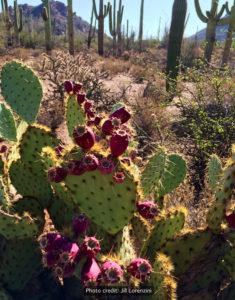
YOU ARE HERE: UPLANDS-ARIZONA-SUBDIVISION NATIVE FOODS

Monday, APRIL 24, 6–8 pm Use the Sonoran Desert Foods Calendar, Wild Foods Calendar, and Native Seeds/SEARCH‘s 5-seasons calendar wheel to understand seasonal cycles and to see the wealth of delicious native perennial plant foods available throughout the year. These nutritious foods—and the many other benefits they provide—will be discussed in detail in subsequent classes. Get familiar with the dynamics of winter and summer monsoon seasons; meet Sky Island mountain ranges, river and riparian areas; explore long-term climate change and ongoing drought cycles. Sample desert-flowers iced tea.
Velvet-mesquite-pods-ripening-JL-rwm-225x300

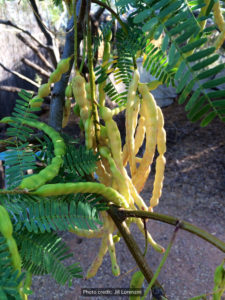
BEAUTIFUL BENEFICIAL BEAN TREES

Monday, MAY 22, 6–8 pm Meet the native mesquite, ironwood, and palo verde trees that anchor the Uplands Arizona plant palette. These trees act as nurse plants for other desert flora, and create rich environments under their canopies where both plants and animals survive and thrive. Desert legume trees provide bountiful harvests of protein-packed beans and tasty pods year after year. The “Be Like a Bean Tree” poster encapsulates many of their attributes. Taste mesquite flour and pods, and shell and taste green palo verde beans.

Dunbar/Spring Walks Sponsored by Desert Harvesters and Partners
5.23-chicane-and-circle-IMG_2744-ps-rwm-300x225

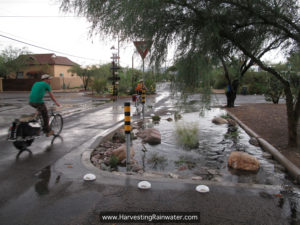
The Dunbar/Spring Neighborhood has a long history of community action, most recently through the work of Brad Lancaster and a network of like-minded neighbors and friends of the Dunbar/Spring Neighborhood who’ve planted native perennial food-bearing trees there, established rainwater- and greywater-harvesting earthworks, pioneered curb cuts and cores, thereby bringing multiple benefits to the neighborhood, including shade and cooler temperatures, more native animals and pollinators, enhanced beauty, tree-planting and -pruning workshops, mulching services, interaction with neighbors, less stormwater lost to storm drains, community art and services, and more.

Monthly weekend walks through the Dunbar/Spring Neighborhood are a fantastic opportunity to see these green-infrastructure strategies in action, as well as to become acquainted with and impressed by common but amazing native (and other) food plants in the area, as they change and grow, flower and bear fruit, shed leaves, and endure seasonal extremes, throughout the year. Learn about native desert foods by watching, harvesting, touching, listening, tasting, smelling, feeling. Additional opportunities include foodshed mapping and return photography. See walk schedule below. See also www.dunbarspring.org.

Saturday MARCH 4, 10–11:30 am (optional: meet early, at 9:30, to get food/drink and socialize) Meet at EXO Roast Coffee, NW corner of 7th St & 6th Ave

Saturday, APRIL 15, 2–3:30 pm Meet at Dunbar/Spring Community Garden, NW corner of University Blvd & 11th Ave

Gila-Monster-and-Brad-300x200

Hands-on Homesteading

Santa Cruz River Farmers Market
100 South Avenida del Convento

RAINWATER HARVESTING CONCEPTS & DESIGN with Desert Harvesters’ Jill Lorenzini and friends

Thursday, April 20, 3–6 pm (Saturday workshop* April 22)

Food security depends on water security. Learn the basic concepts and the many benefits of rainwater-harvesting design, so you can begin implementing simple strategies at home. Based on award-winning books by Brad Lancaster, local author of the Rainwater Harvesting for Drylands and Beyond series.

SOLAR OVENS with Desert Harvesters’ Jill Lorenzini

Thursday, May 25, 4–7 pm

In ultra-sunny Arizona, it makes a lot of sense to cook with the sun. Learn basic solar-oven concepts and design principles, then watch various solar ovens in action and sample delicious solar-cooked foods. Place-based cooking.

All THURSDAY DEMOS are free and open to the public, and are sponsored by the Community Food Bank of Southern Arizona. For more information, contact the Food Bank at (520) 882-3313.

*For further INFORMATION about follow-up HANDS-ON SATURDAY WORKSHOPS, please contact: Barbara beantreefarm@gmail.com or Jill jaelle@lorenziniworks.com To REGISTER for HANDS-ON SATURDAY WORKSHOPS, please contact workshops@desertharvesters.org


Watershed Management Group’s Edible Shade Mesquite Pancake Breakfast

edible-shade-ad-small

Sunday, March 26, 9am – noon
1137 N Dodge Blvd

It’s that time again! Come join us for a fun-filled morning as we celebrate the delicious shade of mesquite, pomegranate, olive and other edible native and desert-adapted trees. Enjoy an artisan market and hands-on learning activities as you explore sustainability practices in action at WMG’s Living Lab and Learning Center. And come hungry—we’ll be serving up local mesquite pancakes, fresh off the griddle!

Only 500 tickets are available, so purchase early or risk missing out. Notice: Unlike previous years, tickets will NOT be available at the door if we sell out in advance!

For tickets and information, contact WMG.


EDIBLE TREE CELEBRATION

Edible Tree Celebration in Honor of the UA Campus Arboretum’s 15th Anniversary

April 1, 11am-2pm

In front of the State Museum Building at the UA, NE corner of Park Avenue and University Blvd

Co-Sponsored by the UA Campus Arboretum (arboretum.arizona.edu/)

and the LEAF Network (Linking Edible Arizona Forests) (leafnetworkaz.org/)

Please join us to celebrate the 15th anniversary of the wonderful UA Campus Arboretum and highlight the value of “edible trees” in the campus and urban environment. (LEAF Network uses the term edible trees to refer to those native and nonnative trees that produce edible fruits, nuts, seeds and pods.)

Activities will include:

11:30 presentation to mark the 15th Anniversary of the UA Campus Arboretum

12:00 commence 30-minute tours of edible trees at the UA Campus Arboretum leaving every half hour

Potted edible trees on display including native and nonnative trees

Free raffle every 15 minutes for potted edible trees, arboretum materials, tree related t-shirts, and other items

Entertaining table displays about the UA Campus Arboretum, edible trees, the LEAF Network and other NGO and educational groups (and more activities to come…)

Collaborators include the Arizona Department of Forestry and Fire Management, Arizona Community Tree Council, Iskashitaa, Trees for Tucson, Friends of Tucson’s Birthplace, Bean Tree Farm, Desert Harvesters and more.

For more information about the event and to reserve a table, contact Ann Audrey ann.audrey.1@gmail.com

Ornamental Medicinals for Desert Landscaping

Goodding’s verbena makes an attractive mound of orchid and lavender flowers spring into summer.  What’s more it can make a gentle, delectable and calming tea.  Need mellowing out?  Try Verbena gooddinggii!  (MABurgess photo)

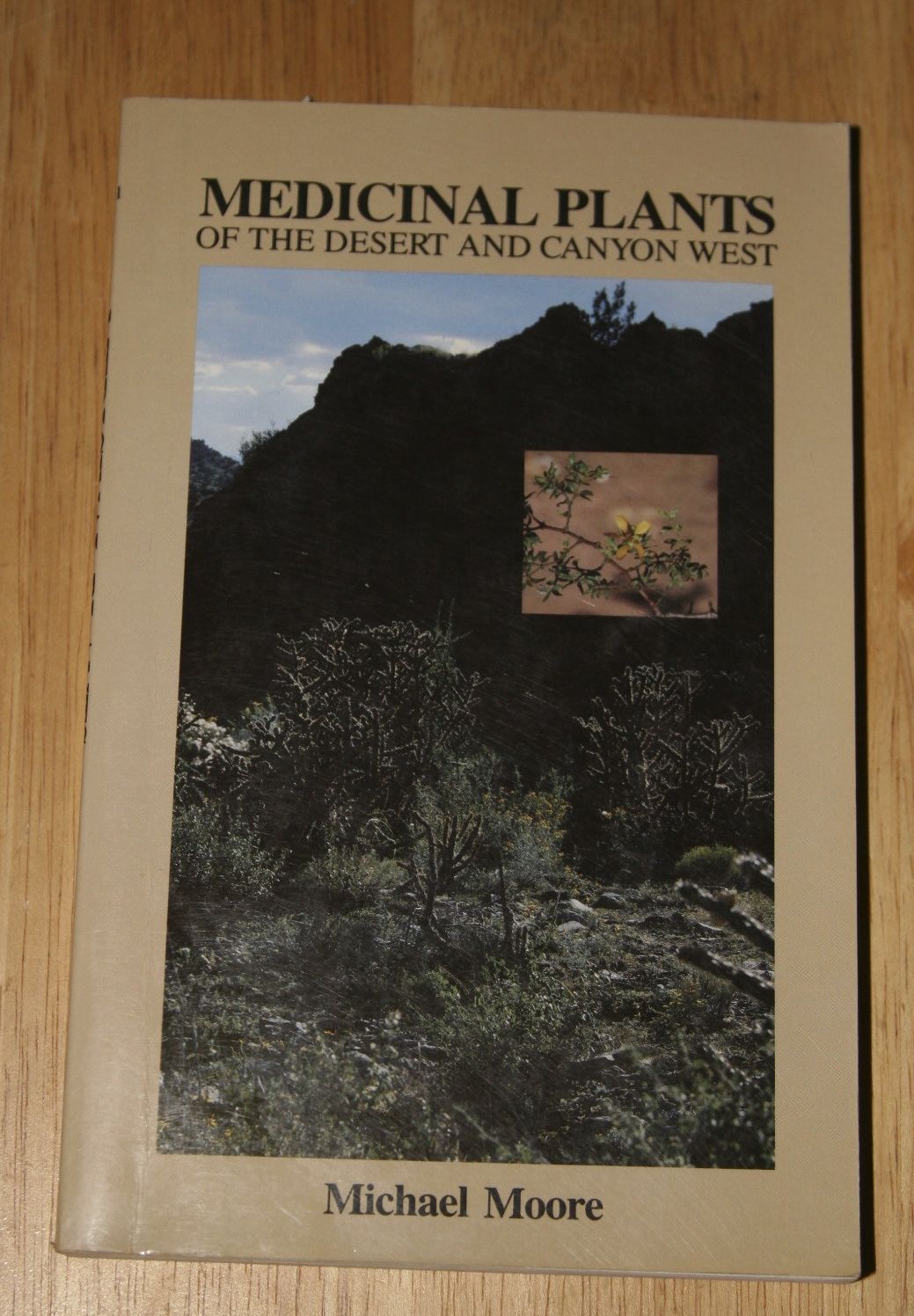
With the excitement of our Tucson Festival of Books and many upcoming plant sales, I was motivated to use some of our Baja Arizona herbalist authors as inspiration for desert landscaping.  Tia Marta here encouraging you to check out Michael Moore’s, John Slattery’s, and Charles Kane’s books on medicinal plant uses for great ideas and good instruction.  My personal challenge has been to create seasonal color in the garden with plants that I know I might use also as herbal remedies.

Find Michael Moore’s must-have handbook Medicinal Plants of the Desert and Canyon West at the Tucson Festival of Books.

Larrea tridentata–known as She:gi by the Tohono O’odham is “our desert drugstore.” Should you find it on your land, protect it, cherish it, and use it.(MABurgess photo)

Watch for announcements of plant sales at the Arizona-Sonora Desert Museum, Tohono Chul Park, NativeSeeds/SEARCH, and Desert Survivors to find beautiful ornamentals which also give healing or soothing, stimulation or protection.


Desert chia–“da:pk” in Tohono O’odham–Salvia columbariae–should be planted as seed in the fall for a spring harvest of seed that helps balance blood sugar and has high omega-3 fatty acid. (MABurgess photo)

Also to be planted as seed in the fall for a spring show is Mexican gold poppy. Its effect as a calmer/mellower has been known to traditional people for centuries. (MABurgess photo)

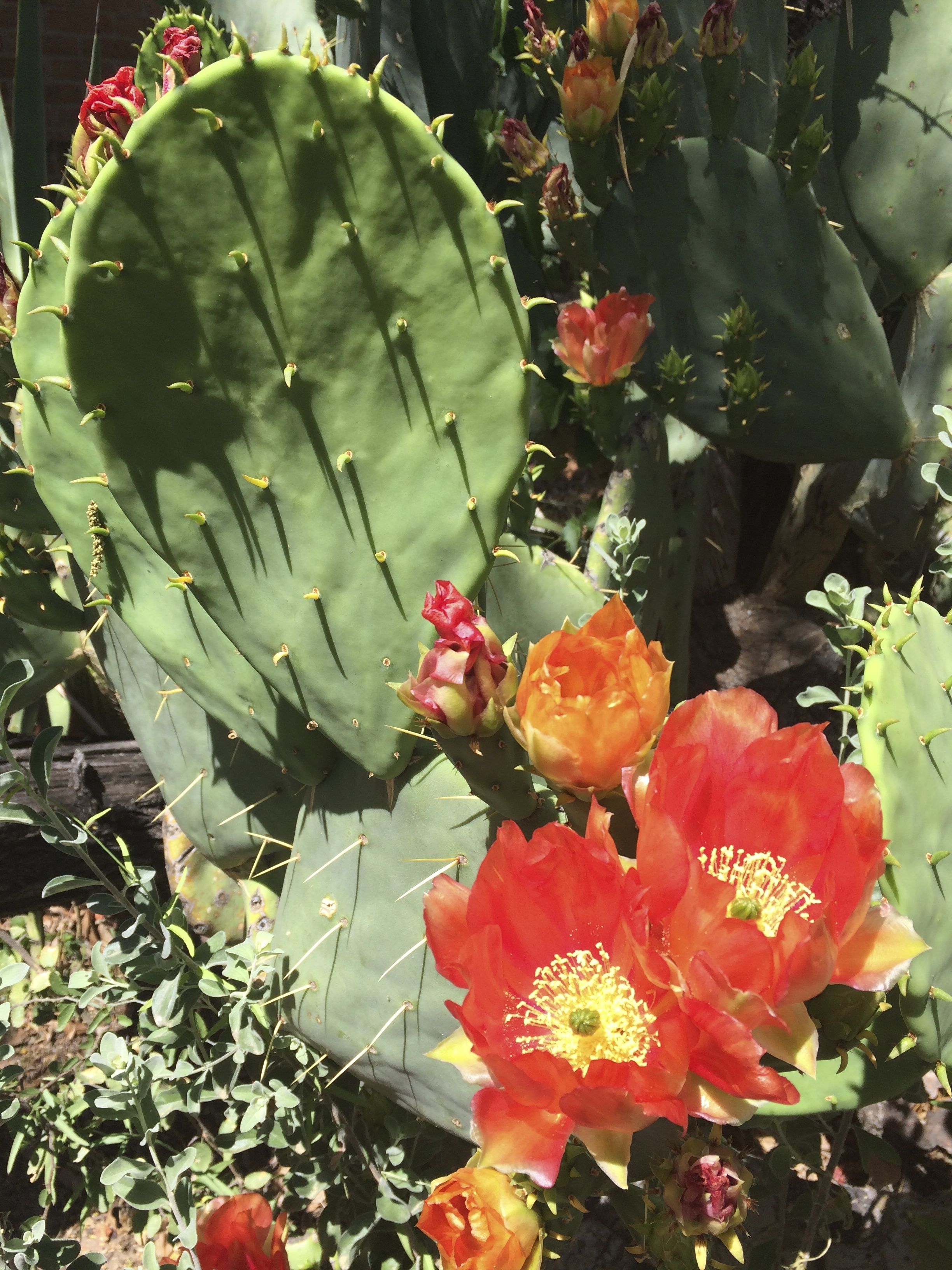
A hedge of prickly pear, especially this Persian orange-flowered Opuntia lindheimeri, can give you tasty “remedies” from blood-sugar-balancing nopales (see the new growth in the photo), herbal tea from the flowers, and high calcium from both young pads and fruits in late summer. (MABurgess photo)

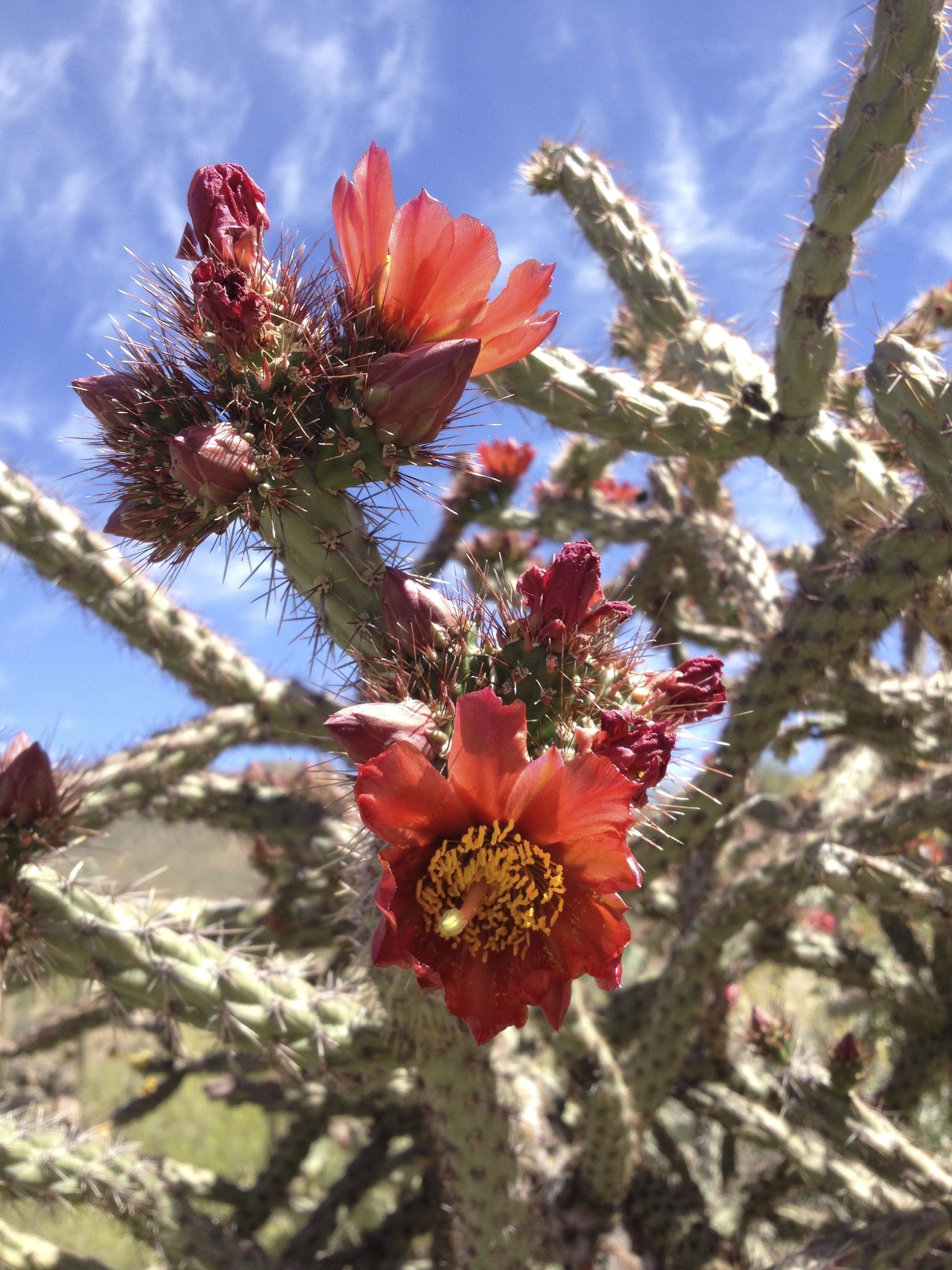
No desert garden is complete without cholla! Cylindropuntia versicolor‘s (Staghorn’s; ciolim) colors are dazzling; its prepared buds balance blood sugar and give enormous amounts of available calcium helpful in prevention of osteoporosis. (MABurgess photo)


Late spring will bring a pink and lavender show of flowers to desert willow (“ann” in O’odham). The beautiful tree in this photo is in the landscape of the new Tohono O’odham Community College campus. All parts of Ahn have been used traditionally as an effective anti-fungal. (MABurgess photo)

Flowers of Ahn (Chilopsis linearis) are a visual as well as an herbal gift. Check out herbal books for guidance how it was traditionally used. (MABurgess photo)

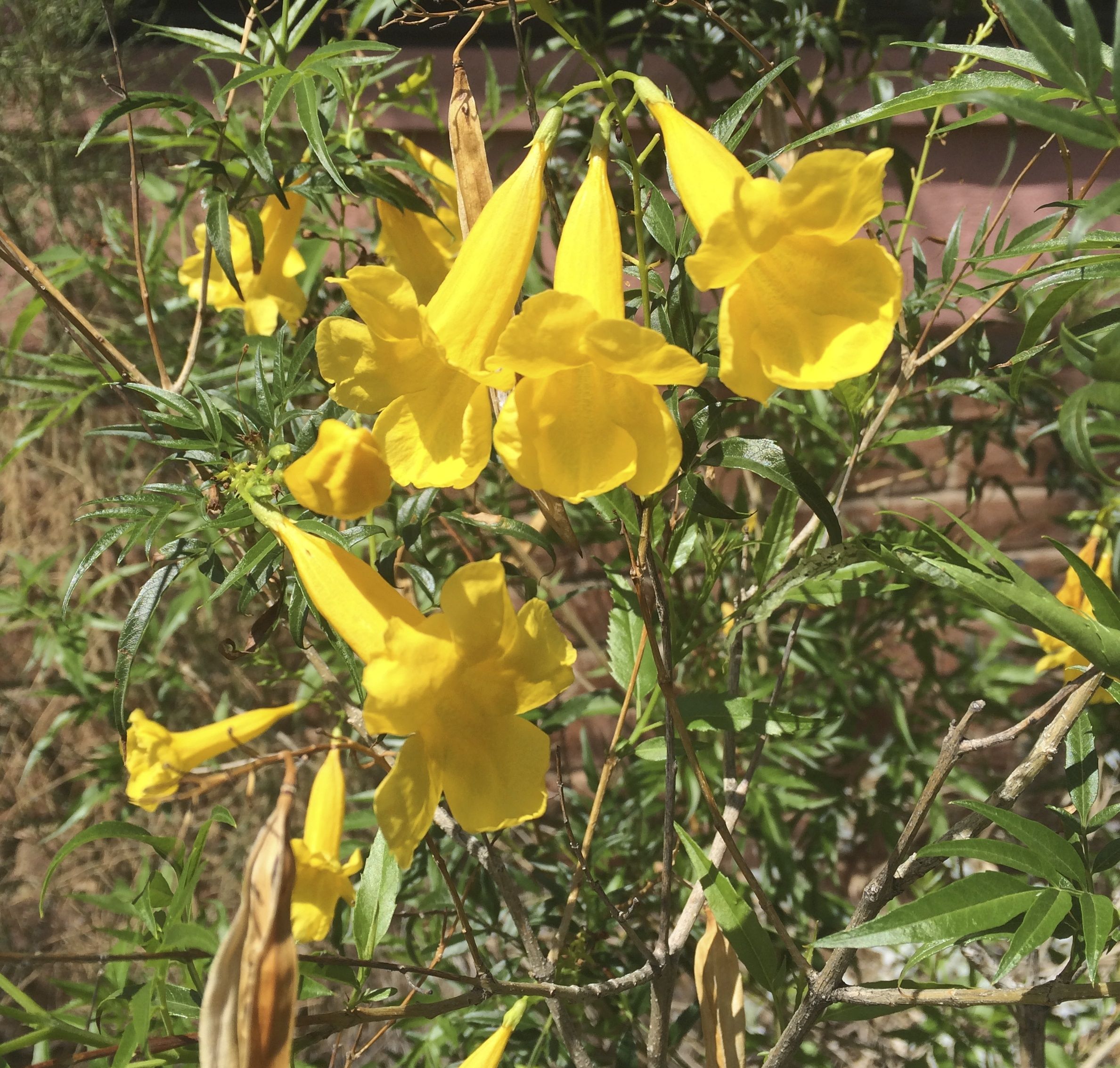
With monsoon rains come the bright yellow flowers of Tecoma stans (“tronadora” in Spanish) making a sensational landscape splash. It also doubles as an important remedy for certain types of diabetes. (MABurgess photo)

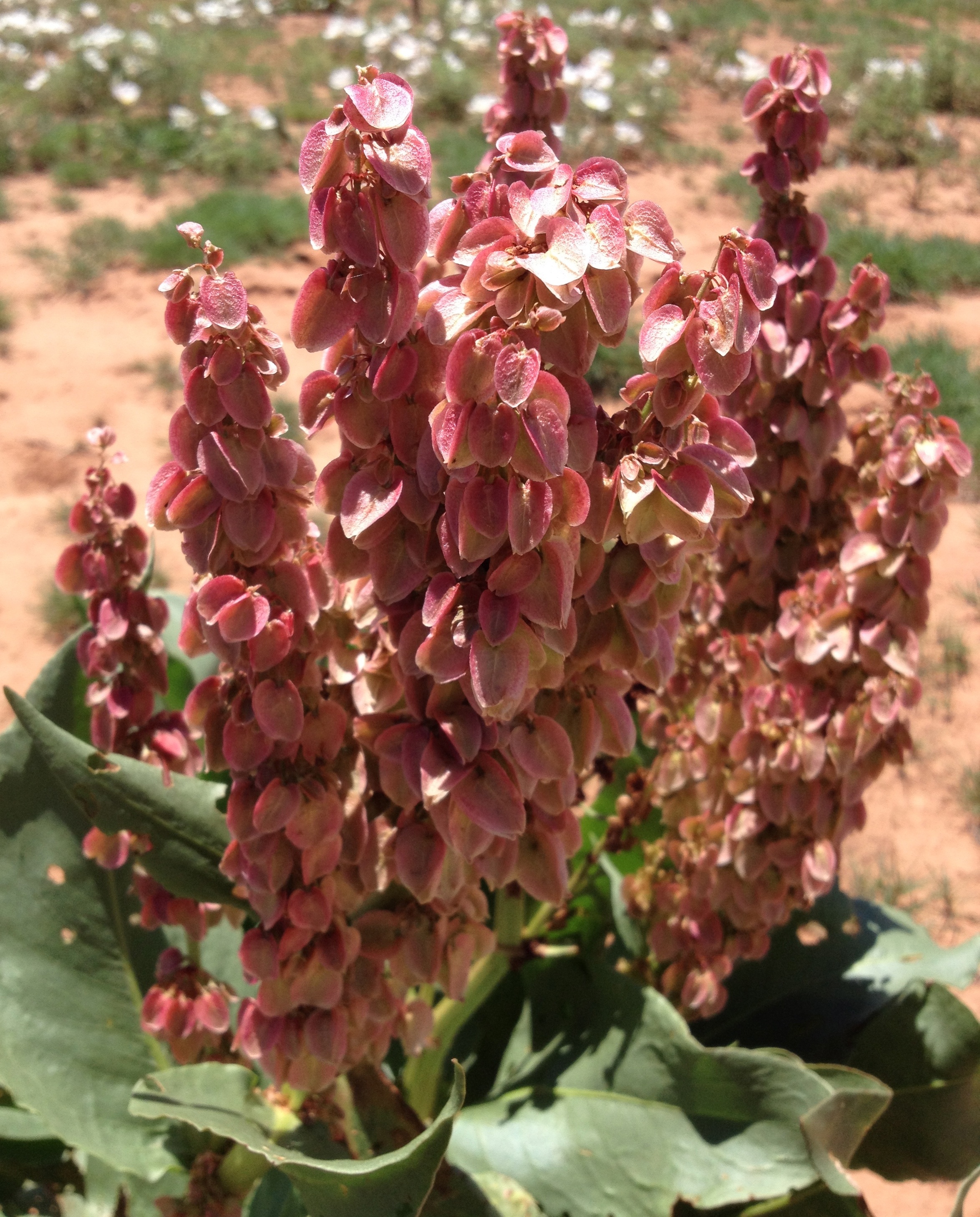
A perennial to be planted as a tuber in the fall is the wild rhubarb (hiwidchuls in O’odham)( For more about this one, see last month’s blog post). Its tuber has important astringent properties.(MABurgess photo)

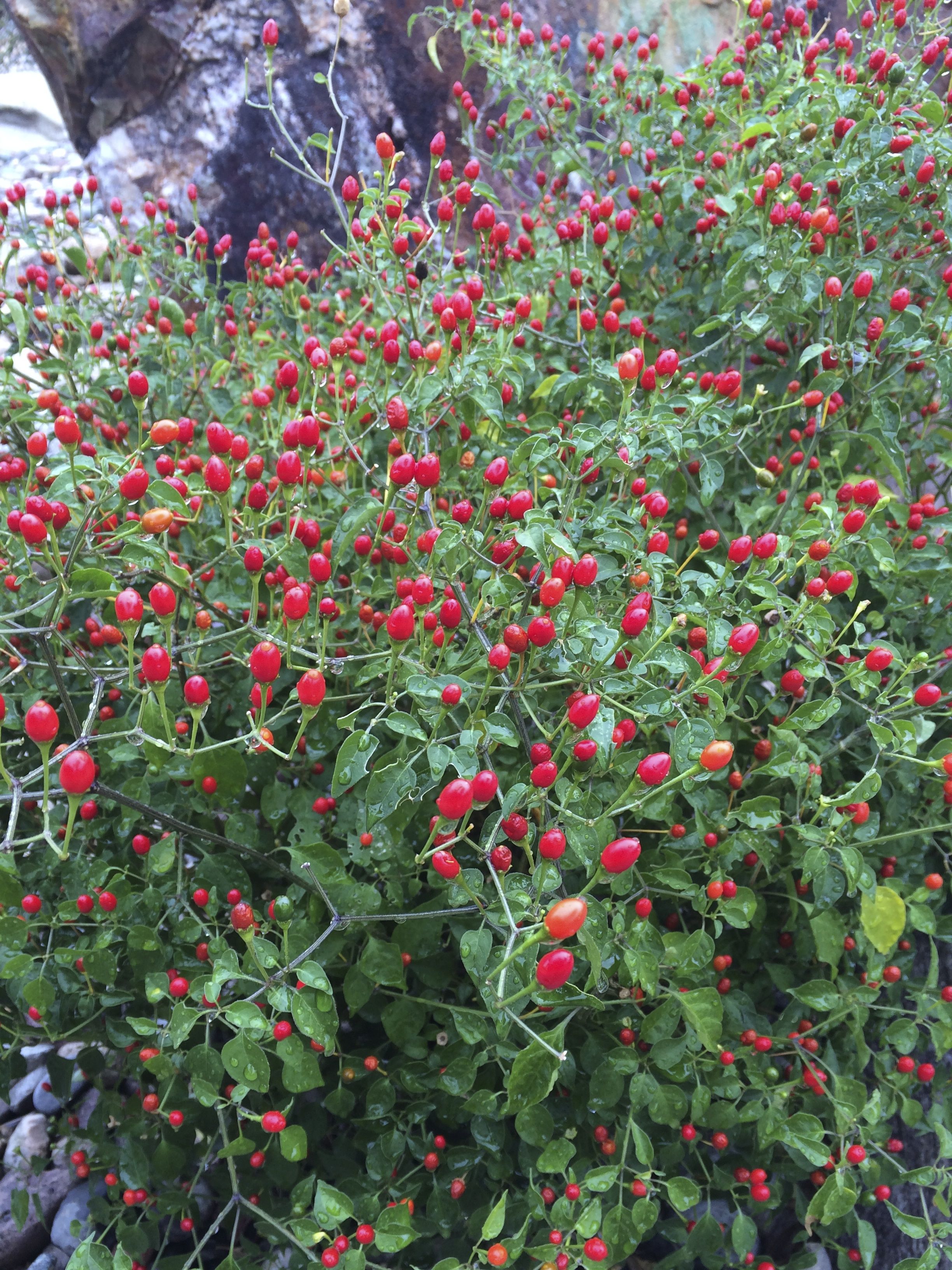
At summer’s end your garden will be punctuated with bright Chiltepin peppers! You–and your wild birds–will prosper with picante delights full of vitamin C and A. In addition, you can use them in a topical salve to soothe the anguish of shingles or muscle-sore. (MABurgess photo)

All through the year a Baja Arizona desert garden can give dramatic color as well as special healing gifts that have been know to Desert People since time immemorial.  You can see examples of these native desert plants growing at the Friends of Tucson’s Birthplace’s Mission Garden (foot of A-Mountain in Tucson, at the Arizona-Sonora Desert Museum, and at Tohono Chul Park.  Stay tuned for more about Mission Garden’s Michael Moore Medicinal Plant Garden to be planted this year.

Tis the season now to see a show of spring medicinals in nature as well as in town.  Here’s hoping you can get out in this lovely weather to see the desert explode with its colorful herbal gifts!

Forgotten Wildness and Why a Picnic

img_6059-2Linda here with you today.  I awoke this morning to the sound of bird songs;  predawn birdsongs. They were strong, and clear, and filled with passion.   I heard “the call” and so went outside,  enjoying the feeling of cool, predawn air on my skin.

I work and play a lot outside.  Even so, I miss a lot. I think it was the Scott Thomas Carlyle who said, “The tragedy in life is not what men suffer, but what they miss.” And what we miss can be right in front of our very noses.

Wildness is all around us.  And while a trip to rekindle relationship with Wildness can mean travel to dramatic terrains, it doesn’t have to. More often, it may mean simply opening your eyes.  I’ll say it again, because we are so conditioned otherwise, to access the wonder and wilds of nature you need not journey to far off lands. More people live in cities these days than ever before, and to the untrained eye nature seems so far away. Don’t be fooled. There are strongholds of the natural world all around and you’ll find these “footprints” in backyards, city parks, cracks in the pavement, alleyways, drainage ditches, and in vacant and not so vacant lots.

Consider a picnic as a vehicle to get you and your senses re calibrated with what is around you.   There is way more going on in a picnic than snacks, even while they are often the very core of a picnic.  A picnic allows our instinctual selves to rub up against Natures varied expressions.

You can have them nearly anywhere … in backyards, city parks, national parks, even tailgates.  In the daytime, in the evening.  Invite just yourself or include friends/family on a picnic and open up to the wild world around you.

Picnic Foods to Consider

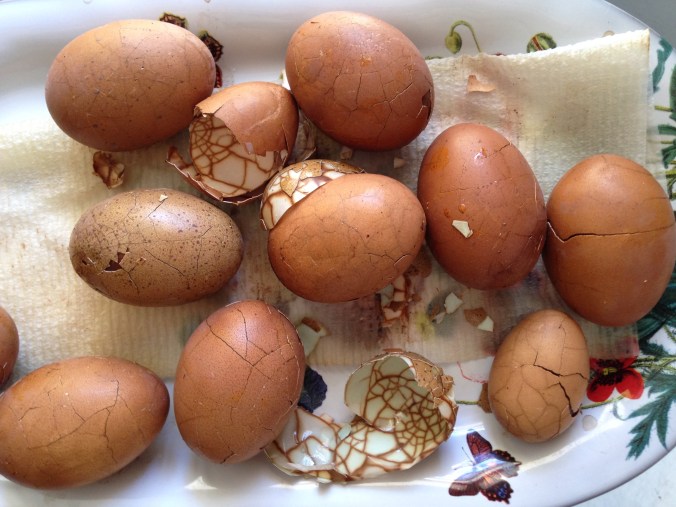
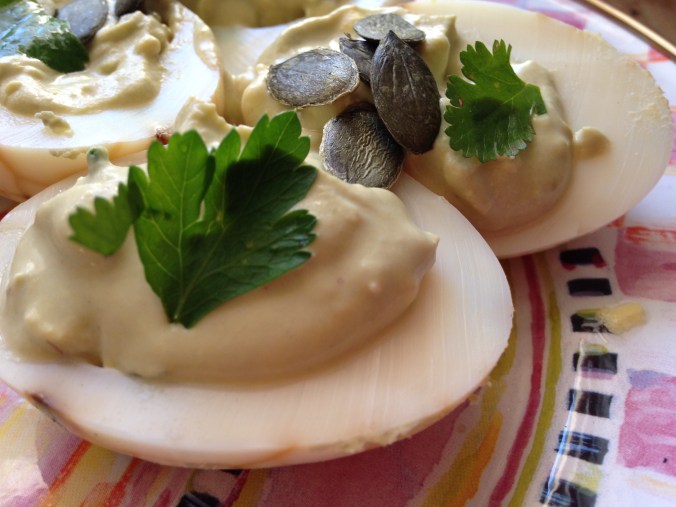
“How the Light Get’s In” Tea eggs –

img_9297

(for recipe click on February 2014, and scroll to my Feb7th, 2014)

IMG_3708

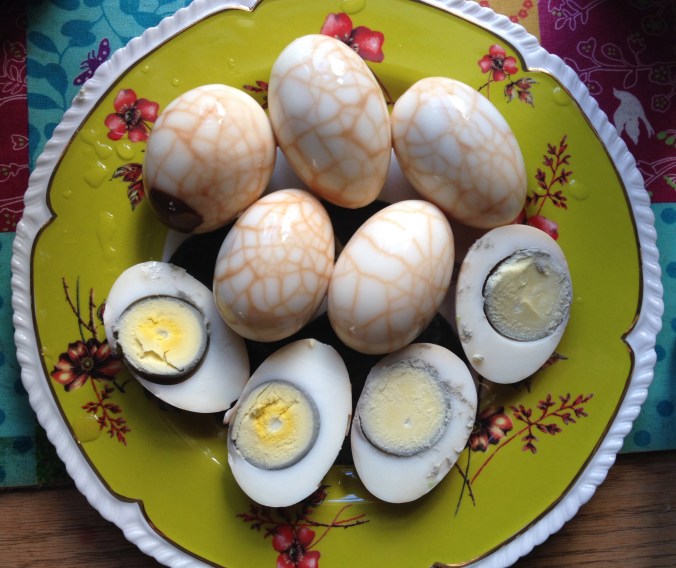
Eat them hard boiled and Savor their aroma, beauty, and flavor

img_9303

Use the tea eggs above and try them as deviled eggs – a perfect picnic food

Friends or Foes? Friends as Foes Fudge Recipe, Click on August 2014 and scroll down to my August 1st post.

img_5998

Here are a tiny sampling of some of the things I have met on a picnic or walk. Note, I did not have to venture far to excite my senses.  Just as in a fantastic fairly tale, all I had to do was open my mind and my eyes.  I chose to share some of life’s smaller fellows because they are so often overlooked. The wild world is as small or as large as our opening up to it.

img_7181

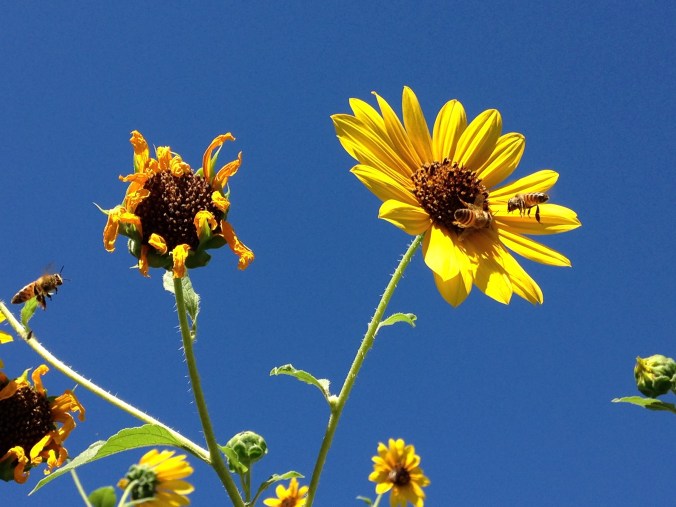
Reciprocal relationship – bees complete the sexual dance of plants s they gather pollen. (Backyard, Tucson)

img_6413

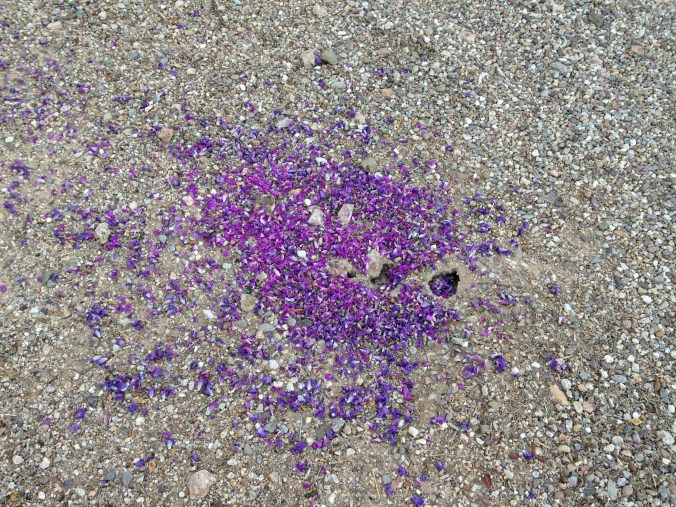
Ants at work with Texas Ranger petals near opening to colony (out on a walk in Tucson)

img_7640

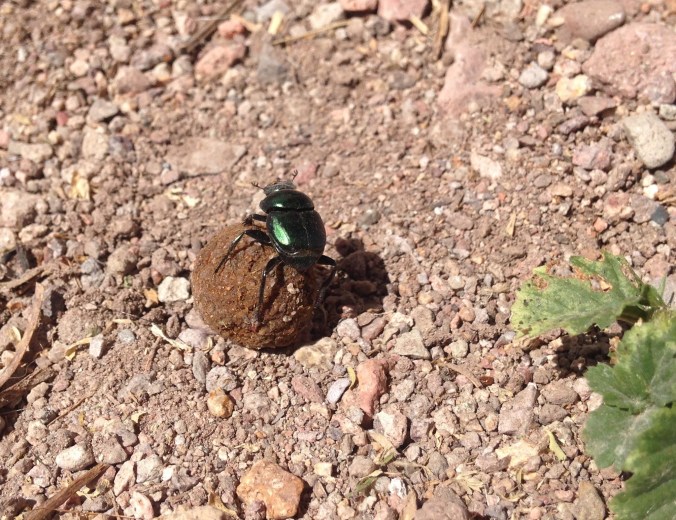
Dung Beetle at work – (just off a road)

original (4294977109)

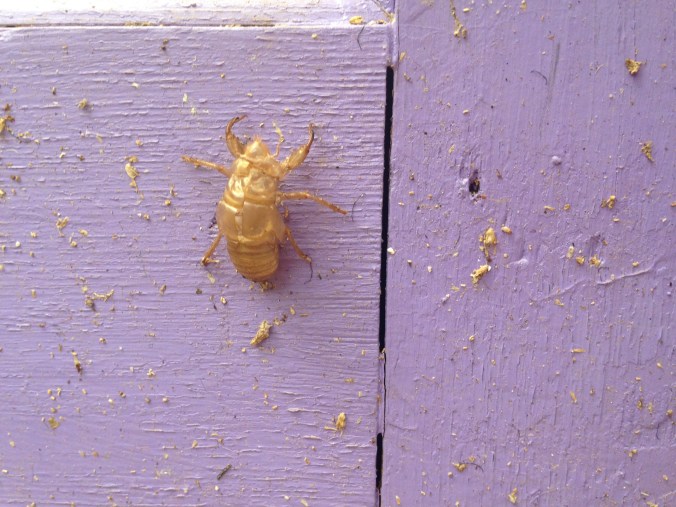
Exoskeleton – (walking in Tucson)

img_5277-1

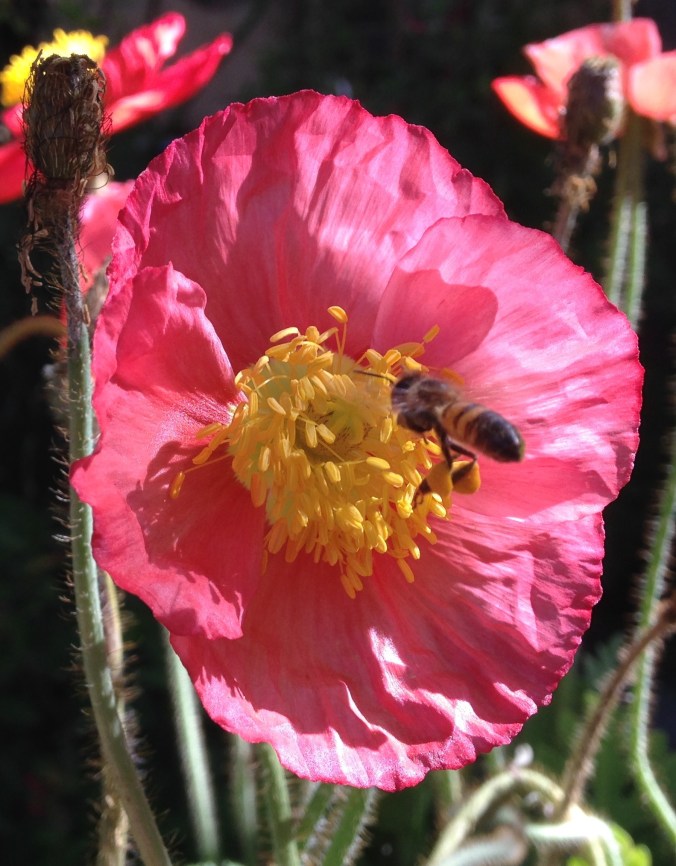
Pollen Baskets  on those back legs …. now you know why they call bees “pollinators” – (on a walk in Tucson)


img_7059

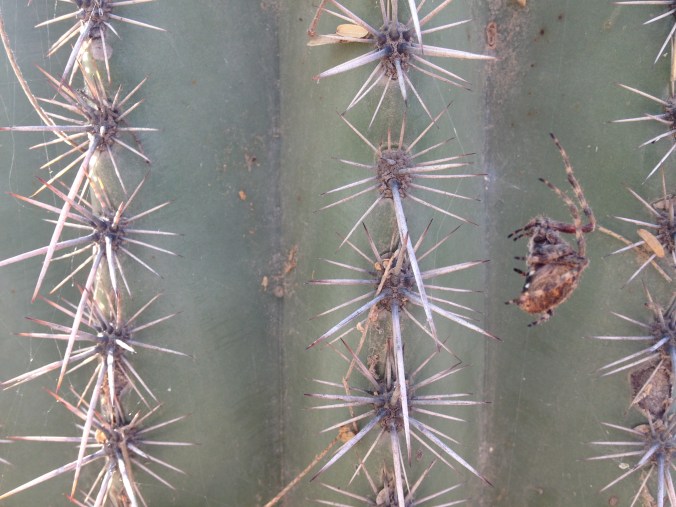
This spider probably “feels safe” tucked into the spines of a Saguaro where no bird beak would fear to tread ….


Beautiful Brittlebush

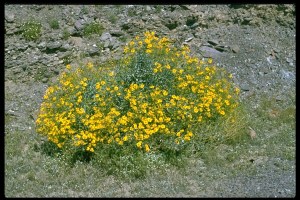
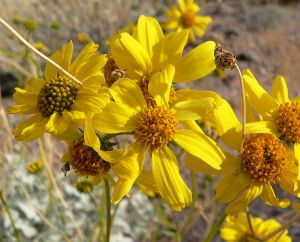
Brittlebush is one of the most common and conspicuous wildflowers in the Sonoran Desert; seasonally providing a glowing golden-yellow cloak for the desert.  Yes, the wood is brittle, hence the name.

encelia_farinosa_habitBrittlebush has a long history of native use.  The resin collected from the base of the plant is often yellowish to brown in color.  This resin can be heated and used as a glue.  The O’odham and Seri use it for hafting, to hold points on arrows and, in the case of the Seri, harpoons.  A different sort of resin is collected from the upper stems, is more gummy and generally a clear yellow.  The Seri use this to seal pottery vessels.  As a child, I learned from Sells area Tohono O’odham children that this upper stem resin makes a passable chewing gum.

kino-webEarly on the Spanish priests learned that brittlebush resin made a highly fragrant incense, akin to frankincense in odor.  In 1702, Father Kino wrote “. . . in this journey inland and on other occasions I have found various things – little trees, fruit, incense, etc. – all species which are peculiar to . . . [this area]  . . . alone, and samples of which I bring, to celebrate with the incense, by the favor of heaven, this Easter and Holy Week, and to place five good grains of incense in the Paschal candle.”

To harvest resin, use a sharp blade, like a single-edge razor blade, to make a shallow vertical slit about one inch long along the stem.  The resin will ooze out of this cut and dry on the plant.  Return in a day or two to collect the resin.  A healthy, well-maintained plant can have numerous cuts made all over it, just have care to not girdle the stem.

encelia-leaves-2825-webIn the 1960’s, I was taught by a longtime cowboy that a brittlebush stem makes a dandy toothbrush.  Simply select a largish branch and peal off the bitter bark, no need for toothpaste.  He had learned the trick years before from an old cowhand.  Whether this was self-taught or learned from natives, it is impossible to say, although the Seri use brittlebush to treat toothache.  For toothache the bark is removed, the branch heated in ashes, and placed in the mouth to “harden” a loose tooth.  Modern dentistry advocates using mildly alkaline solutions to help maintain oral hygiene, which makes me wonder about the pH of brittlebush sap.
encelia_farinosa_capitula_byss
Some Southwestern folks will bundle the leaves and stems and use them to smudge with, much like smudging with white sage.

Flowers are long-lasting in bouquets but do leave some flowers on the plant, because the seeds of brittlebush are an important food source for native seed-eating birds.
encelia-farinosa-cc-may-05-048-web

Planting and Care.  
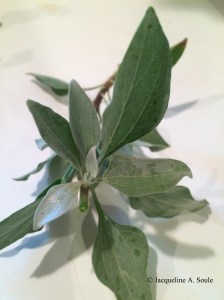
Brittlebush is a lovely addition to any xeriscape.  The shrub generally reaches around three feet tall and naturally forms a symmetrical globular form.  The fragrant silvery leaves are soft and fuzzy, and work well in fresh floral arrangements.  The golden yellow flowers appear in early spring and cover the bush, but in an interesting array.  Flowers open first on the warm south-facing sides of the bushes and blooming gradually moves up and over the bush, ending with the north-facing branches.
encelia-farinosa-bur-0091-web
While it can take full sun, brittlebush does best in a location where it gets noon-time shade in summer.  Avoid planting the shrub near sources of reflected light, like pools or hot south-facing walls.

Brittlebush plants grow best with  rejuvenation pruning every three years.  Just pretend you are a hungry javalina and cut the plants to around six inches tall.  Do this in the fall.  Bloom will be sparse the following year unless you give them some extra water to help them recover.

The above was partially taken from my book, “Father Kino’s Herbs: Growing and Using Them Today.”

JAS avatarIf you live in Southeastern Arizona, please come to one of my lectures. Look for me at your local Pima County Library branch, Steam Pump Ranch, Tubac Presidio, Tucson Festival of Books and other venues. After each event I will be signing copies of my books, including the latest, Month-by-Month Garden Guide for Arizona, Nevada, and New Mexico (Cool Springs Press, $26).
© Article copyright by Jacqueline A. Soule.  All rights reserved.  Republishing an entire blog post or article is prohibited without permission.  I receive many requests to reprint my work.  My policy is that you may use a short excerpt but you must give proper credit to the author, and must include a link back to the original post on our site.  Photos © Jacqueline A. Soule where marked and they may not be used.

Fermented Citrus: Marmalade, Indian Pickle, Mole Pickle

20170122_133637_001Hello friends, Amy here with more fermentation experiments.

It’s a good year for citrus, and I’ve come across a few mystery specimens lately, all very tart. Lemons that look like sour oranges with a lumpy, thick zest. Kumquats that were maybe calamondins. Some called calamondins, but biger, with skin and pith as thick as an orange. Something labeled meyers that were orange and more sour than a regular lemon. Rather than attempt to decipher the cultivars, I’ve just been enjoying them!

Indian Lemon Pickle

A friend’s mom from India fed me some lemon pickle. Wow!!!! Sour!!!! Salty!!!! Spicy, too! It looked as if it was going to be killer spicy, but it was only medium heat. It can be served as a condiment on the table, like with rice and cooked greens. It’s good in a vinaigrette. Any leftover soup or stew suddenly becomes new and exciting! I’m going to try marinating some chicken in it before grilling.

To make Indian lemon pickle, cut sour citrus into small pieces (about 2 cups) and remove the seeds. Add juice to nearly cover the fruit.

20170124_13340720170124_133453Add salt (2 tablespoons) and turmeric (1/2 teaspoon). The spices can be omitted if desired, like classic Moroccan preserved lemons used in cooking or Vietnamese lemons used in lemonade. I’m sure many other cuisines ferment citrus also.
Cover and let ferment at room temperature for a week or two, stirring daily. When the fruit is soft, it is ready to enjoy or spice further.

20170216_135441

Dry toast fenugreek seed (1 tablespoon), cool and grind. Gently heat oil (3 tablespoons) and cook black mustard seeds (half teaspoon) until they sputter! Turn down the heat and add asafoetida powder (1 teaspoon) and the prepared fenugreek. Cook briefly while stirring.


20170216_140512120170216_14104220170216_141617


Add the cooled spicy oil mixture and the chile to the lemon and taste! It stores beautifully in the refrigerator for a long time, thanks to high salt content. Keep the citrus pieces submerged in the brine. The salt can be reduced, but it may not keep as well.

20170216_14375420170216_144044


Mole Pickle

On a creative streak, I decided to use Mano Y Metate Adobo powder in place of the other spices. tin4I cooked Adobo powder (half a tin) in oil (3 tablespoons, cooled and added to the same fermented lemons. Yummy! The fenugreek seed in the other batch has a slight bitter edge that the Adobo version did not have. The richness of the sesame tempered the sharpness of the lemon, but it is still very potent. Perfect for tacos!!!!


20170216_151809 20170216_153025


Fermented Marmalade

Nourishing Traditions by Sally Fallon has a recipe for a fermented Orange or Kumquat Marmalade, so I had to try.

20170216_171139


I chopped three heaping cups of sour citrus and added one tablespoon salt, half a cup filtered water, a quarter cup evaporated cane juice (granulated sugar would be fine) and one quarter cup whey (drained from yogurt) as a starter culture. Fruit normally has enough beneficial Lactobacillus cultures and the salt favors their growth over the harmful microorganisms. However, I followed the recipe since this jar had lower salt concentration and added sugar. (The sugar favors different beneficial cultures to grow.) After sitting for a couple weeks and stirring daily, it was slightly fizzy and delicious!

I made some with sliced fruit and some with fruit chopped in the food processor. The barely salty “brine” was less sour than the ferments in sour juice, slightly sweet, and tasty to sip! We ate the softened fruit on buttered toast, with or without additional evaporated cane juice sprinkled on top. Honey would be good, too.

20170216_170703 20170216_171044


Enjoy, and happy experimenting!