Delectable Cholla bud and Nopalito Recipe Ideas


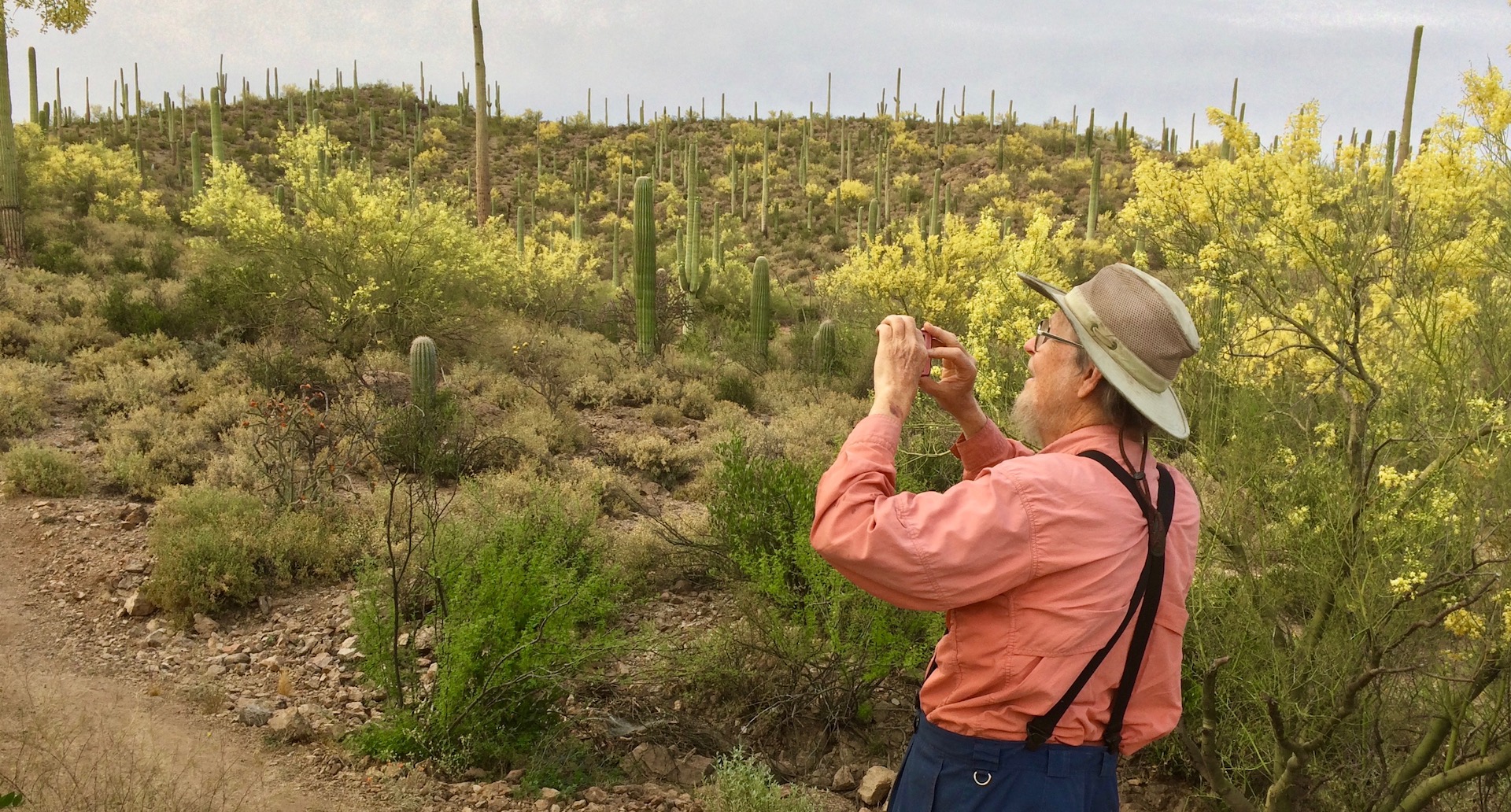
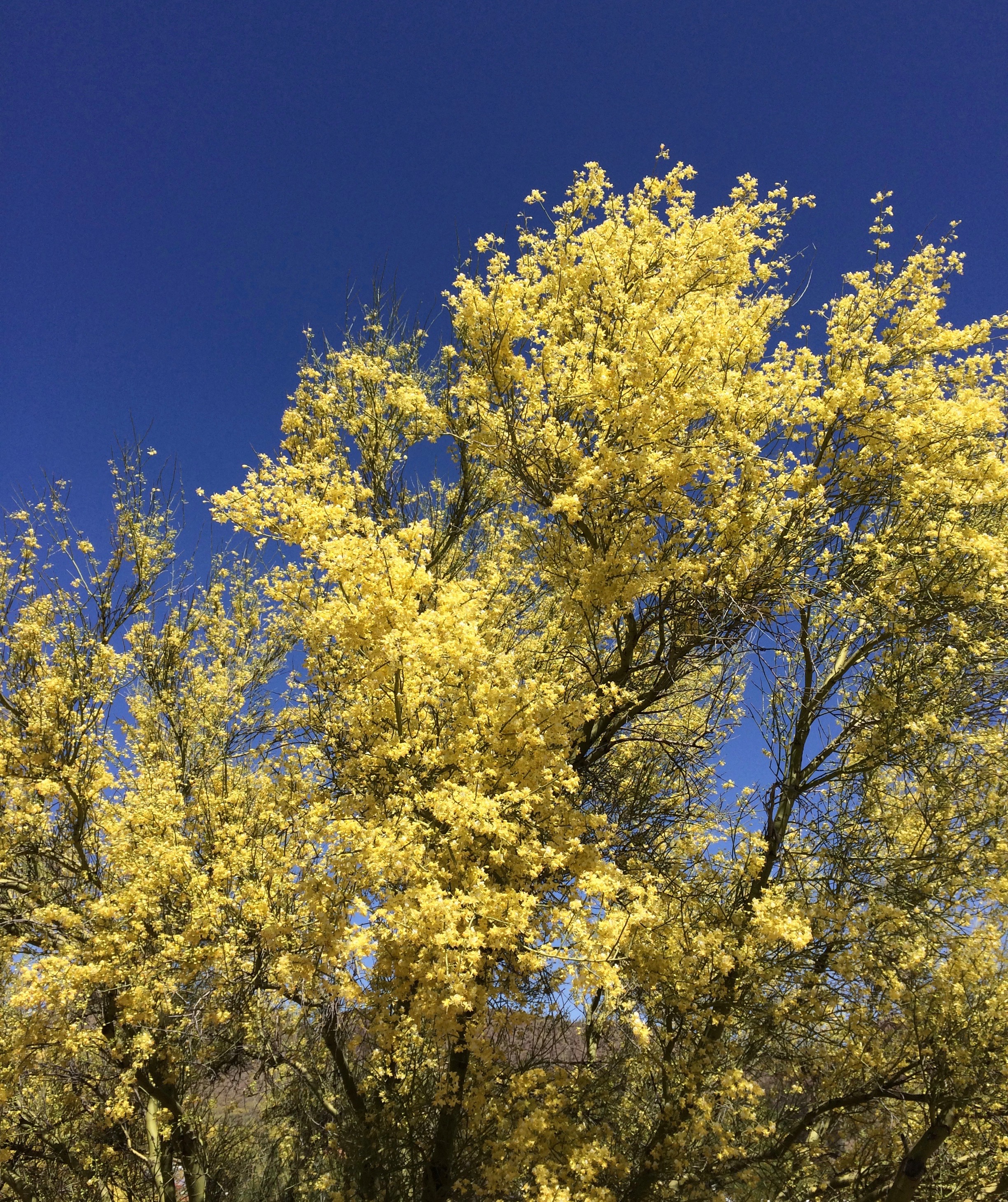
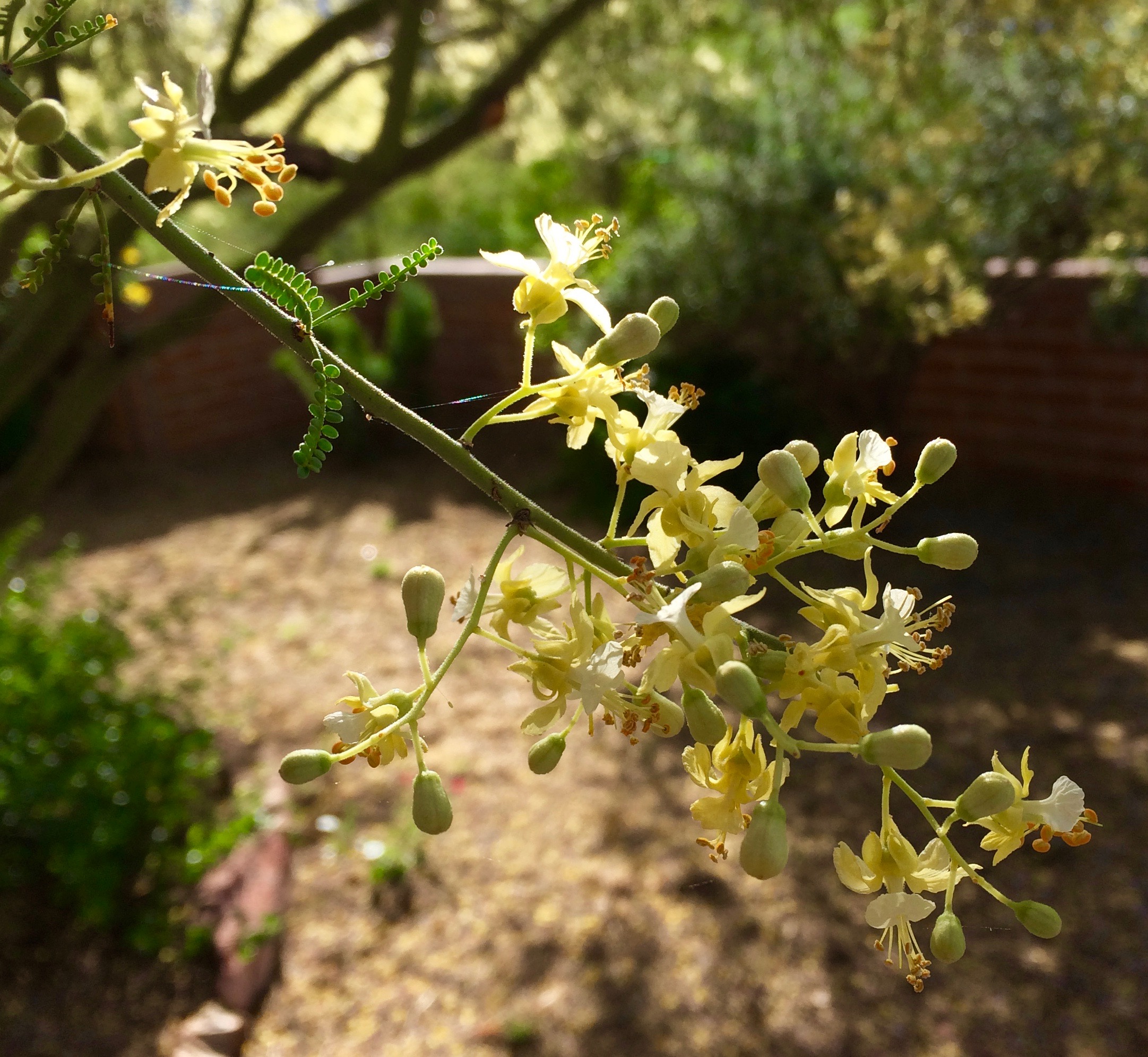
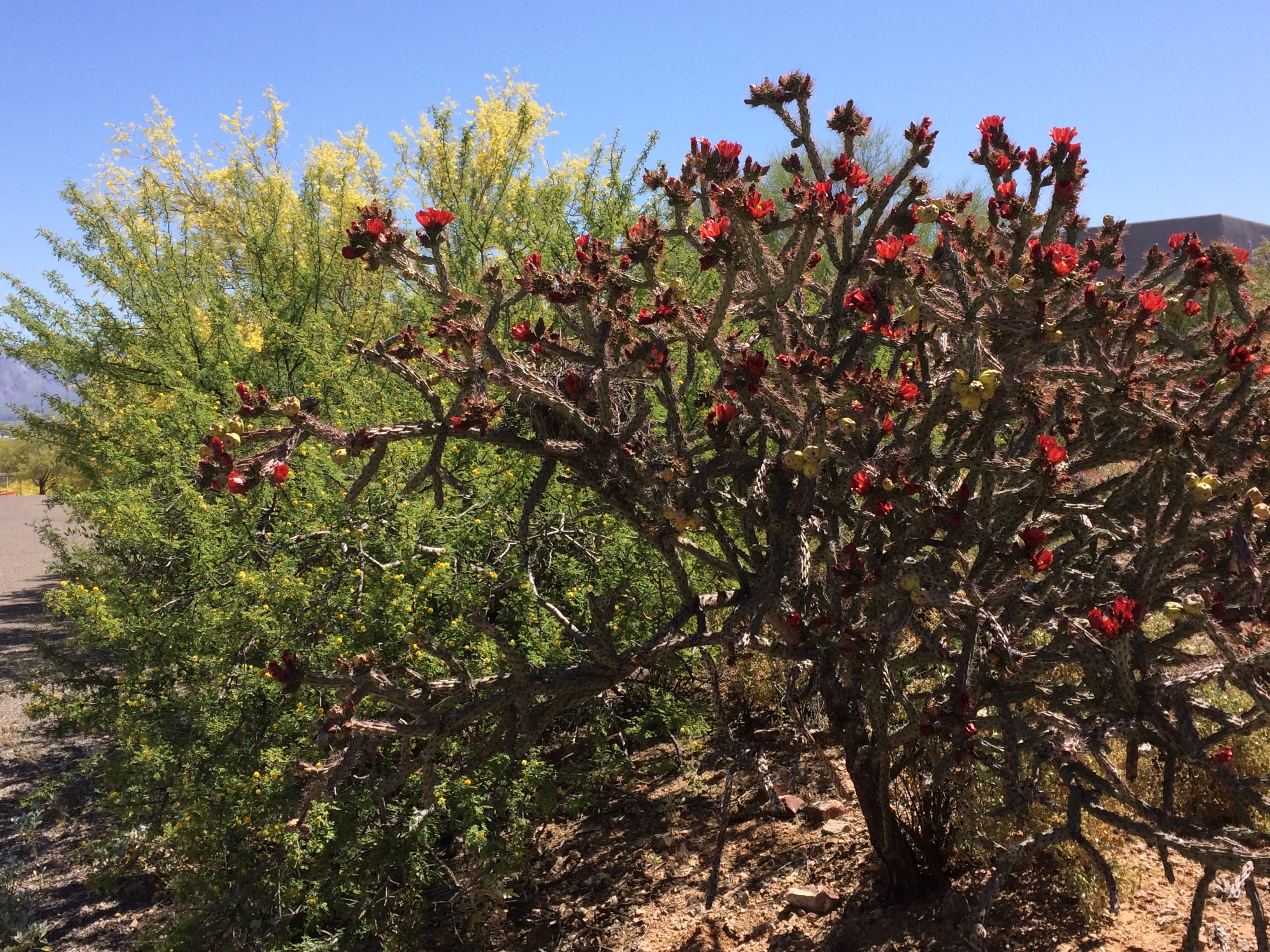
Blooming staghorn cholla and foothills palo verde bathe the Sonoran Desert in color. Surprisingly, this 2019 spring season has been so cool and moist that we are still harvesting cholla buds and fresh nopales in May. (MABurgess photo)
“Act now while this offer lasts!”–so says Mother Nature in the Sonoran Desert.  She only offers her bounty in certain pulses or moments, and we must harvest while her “window of opportunity” is open. Tia Marta here to share some delectable ideas for serving your own desert harvest from our glorious bloomin’ cholla and prickly pears.
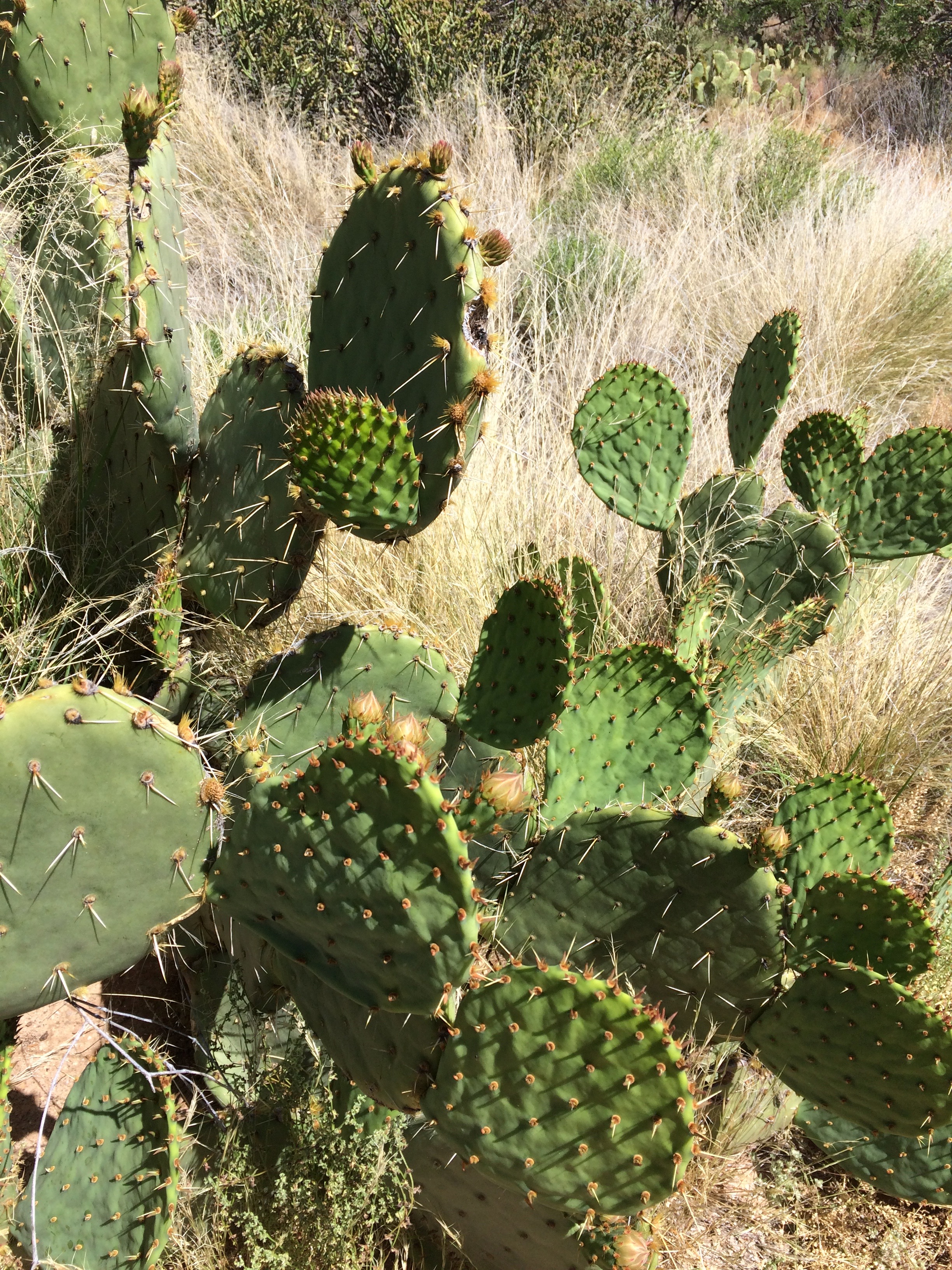
The YOUNGEST pads of new growth on prickly pear are the ones with tiny leaves at the areoles (where spines will later grow). (MABurgess photo)

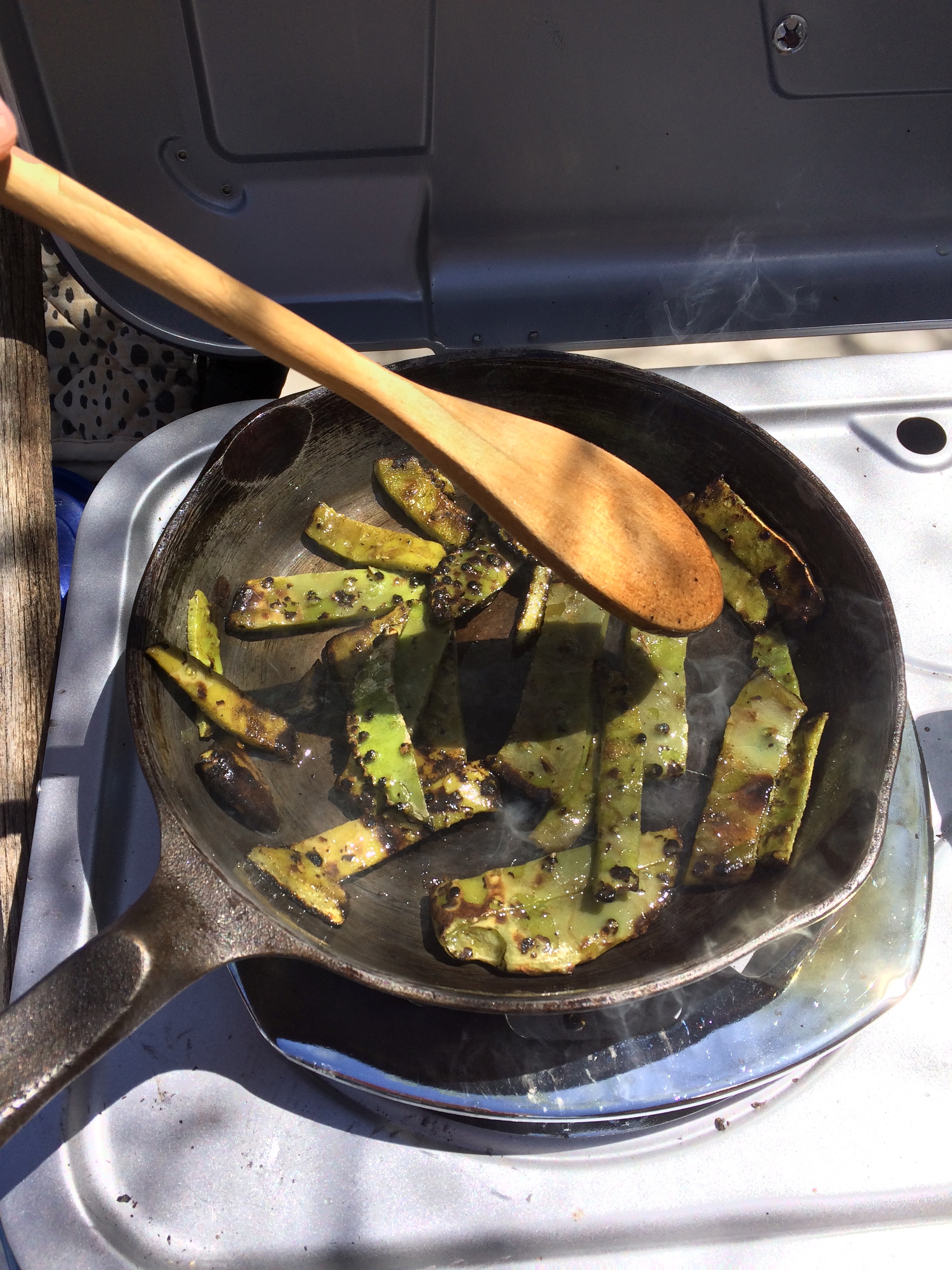
After singe-ing off the tiny leaves and spiny glochids using tongs over a flame (either campfire or gas stove), slice and saute young prickly pear pads in olive oil. Now they are ready to use in lots of great recipes…(MABurgess photo)

Young prickly pear pads (many species in Baja Arizona) have no woody tissue yet developed inside. In their youthful stage (see photo) they are not only edible but also super-nutritious! The photo is our native Engelmann’s prickly pear (Opuntia engelmannii) with flower buds forming. Traditional Tohono O’odham call the edible young pads nawi.

After spines and areoles are singed off you can chop and scramble nopalitos with eggs, bake them into a quiche, pickle them, OR simmer them in a delicious mole sauce….The fastest and easiest way to prep a gourmet nopalito meal is to use Mano y Metate’s Mole Mixes.  Savor blog writer Amy Valdes Schwemm has created several different sabores of mole–many without chocolate.  My sweetie loves Amy’s Mole Adobe as its savory spice binder is pumpkin seeds with no tree nuts.

Nopalitos in Mano y Metate Mole Adobo sauce–here served with a mesquite tortilla (from Tortilleria Arevalo available at farmers’ markets in Tucson.) Nopalitos en Mole over brown rice is delicious too.

Get out your tongs and whisk brooms to harvest the last of the cholla buds this season!

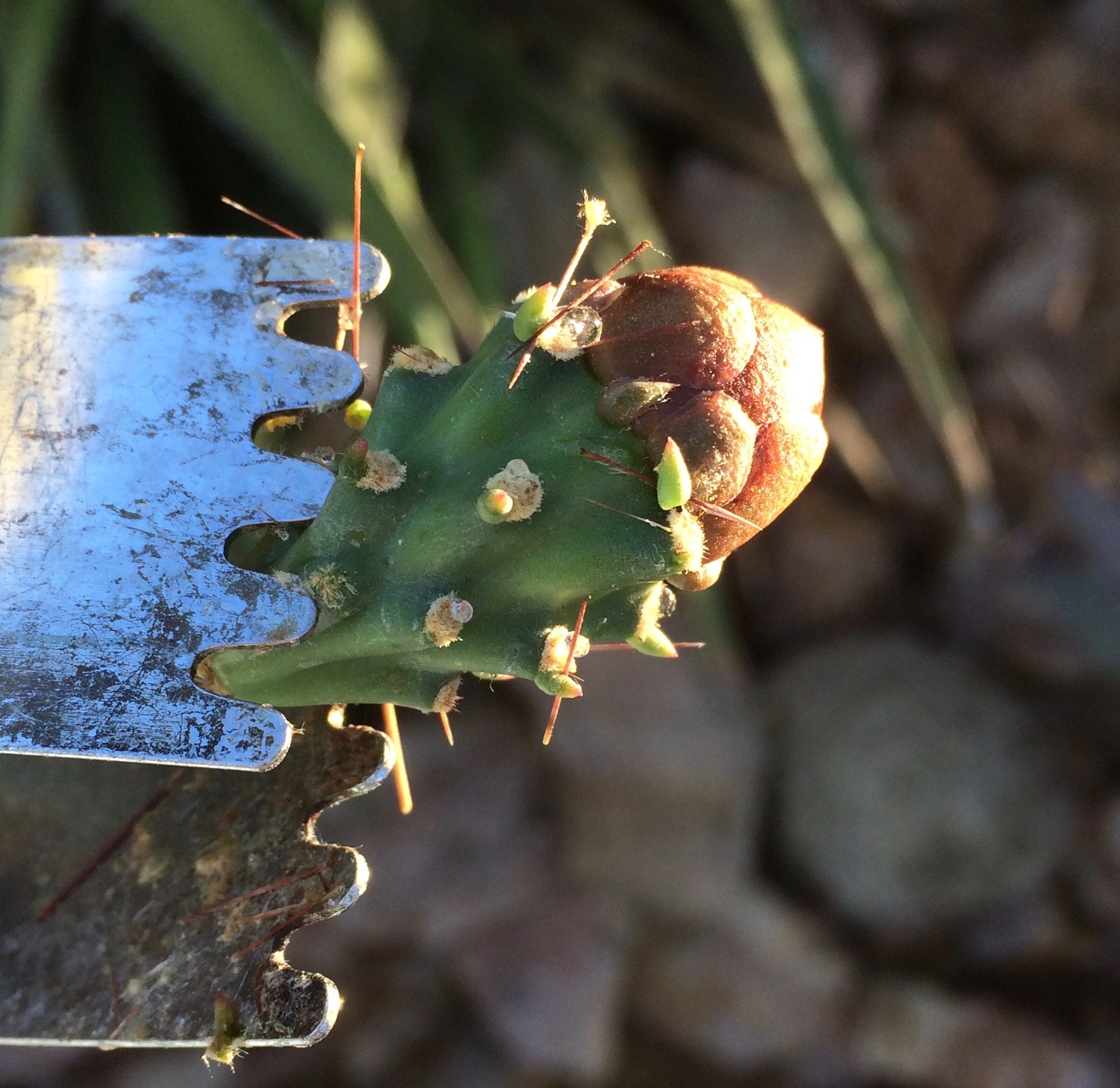
A staghorn cholla cactus flower bud (Cylindropuntia versicolor) still with spines in need of cleaning. Buds with petals not yet open are the ones to pick–carefully.(MABurgess)

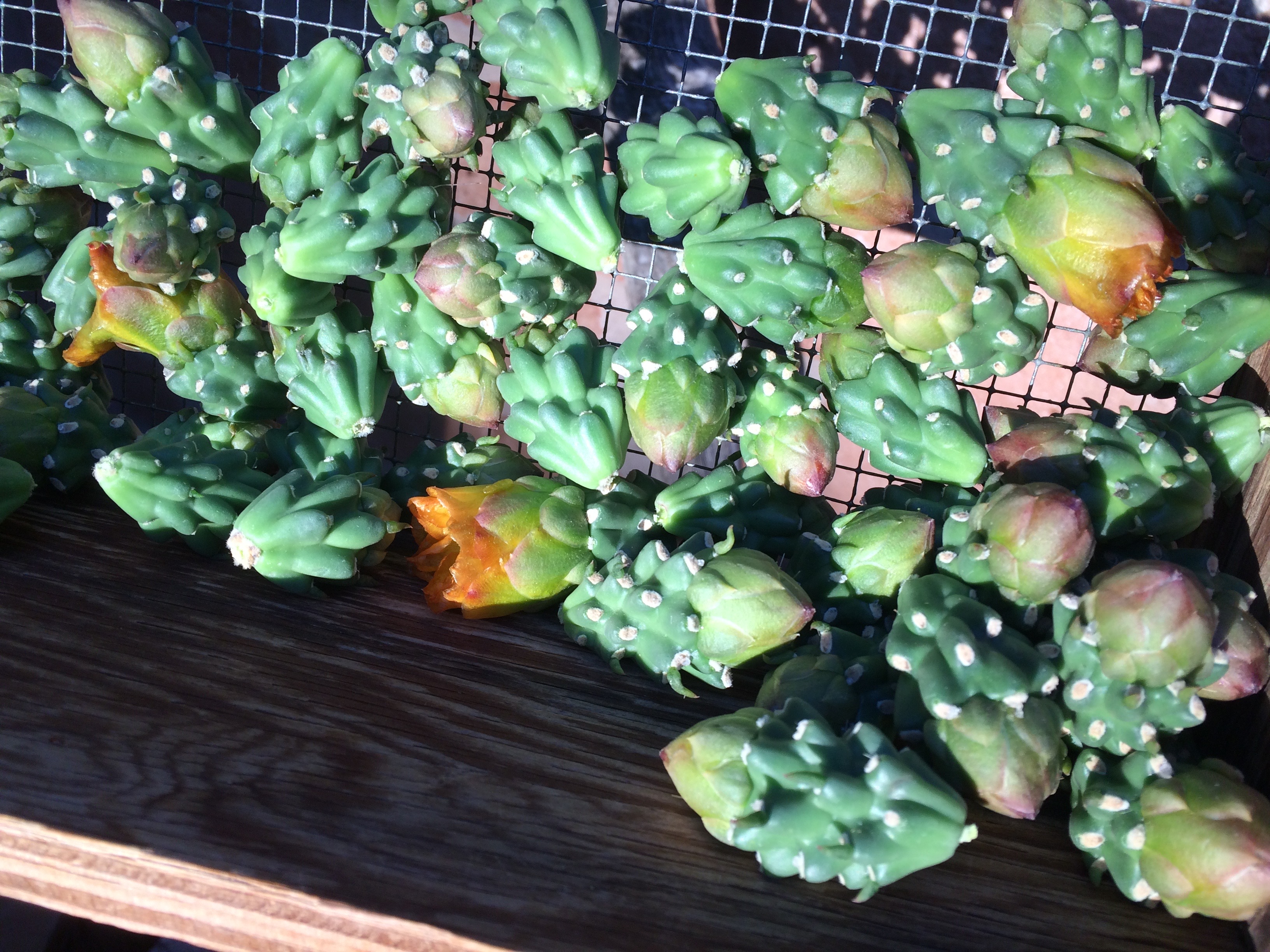
A harvest of staghorn cholla buds in screen box to remove spines from areoles (MABurgess photo)

Tohono O’odham harvesters know this cholla species as ciolim–pronounce it chee’o-lim.

Once de-spined, cholla buds must be boiled or roasted to denature its protective oxalic acid. Then, tah-dah!, cholla buds lend themselves to wonderful recipes similar to nopalitos in omelettes, quiches, stir-fries… They are flavorfully exotic, tangy, definitely nutritious containing gobs of available calcium and energy-sustaining complex carbs!

Pickled cholla buds (MABurgess photo)

I love to pickle my fresh cholla buds to enjoy later as garnish for wintertime dishes. For the salad recipe below, I’d canned them with pickling spices, but an easier alternative is to marinate them short-term for 24-48 hours in your favorite dressing for a quick fix.


Muff’s Easy Marinated Cholla Bud and Sonoran Wheat-berry Salad Recipe:

First–prep ahead–heirloom White Sonoran Wheat-berries:   boil 1 cup dry wheat-berries in 4 cups drinking water for 1 hour 15 minutes, or until water is fully absorbed and grains are puffed up, then chill.

Also prep ahead— marinate fresh boiled cholla buds in pickle juice, or your favorite marinade or salad dressing for 24-48 hours in refrigerator.

Then–Chop any combination of your favorite fresh veggies–sweet peppers, tomatoes, summer squash, celery, carrots, artichoke hearts, etc….

Toss veggies with cooked chilled wheat-berries and marinated cholla buds.  Add spices and pinyones if desired.  Dress with remaining cholla marinade.  Allow to chill before serving, neat or on a bed of fresh salad greens.


The yummiest cholla bud and wheat-berry marinated salad ever! (MABurgess photo)

Let’s honor, tend, and enjoy these desert foods that have fed generations of desert people for hundreds–thousands–of years, keeping them healthy and strong!  Thanks to traditional harvesters, newcomers can more deeply appreciate and take good care of this beautiful desert.

An energy-saving idea:   You can save energy and keep the heat out of the kitchen this summer by cooking your cholla buds or your wheat-berries in a solar oven!  Check out a light-weight streamlined model solar oven at www.flordemayoarts.com.

[White Sonora Wheat-berries are available at NativeSeedsSEARCH store, 3061 N.Campbell Avenue, Tucson.  Not to fret if cholla and prickly pear harvests are done for this spring in your neighborhood!  During the rest of the year, you can find dried cholla buds at NativeSeedsSEARCH, at San Xavier Coop, OldTown Artisans, and at Flor de Mayo and fresh nopales in the Mexican foods section at groceries like Food City.]

Agave Fest!

Every year in late April and early May, Tucson residents and visitors celebrate the agave plant in all its glory with dinners, cocktail demos, mescal and bacanora tastings, demonstrations and fiestas. It’s Carolyn today and for the third year, I’ve taken part in the agave roasting at Mission Garden.  The agave plant is a succulent that thrives in arid conditions and when roasted becomes very sweet. It is the defining ingredient in mescal and tequila. It has also been used for thousands of years by the Native Americans as food. The Hohokam even planted agave fields stretching over 1,200  acres in the north end of the Santa Cruz basin. It was a crop that needed little tending and propagated on it’s own by sending out pups. Anthroplogist Suzanne Fish estimates that the Hohokam in the area could have harvested up to 10,000 agave plants annually.

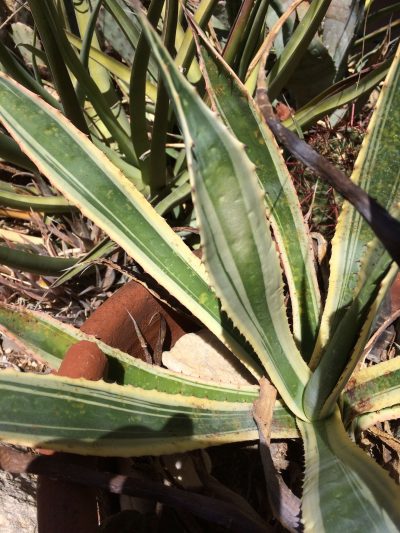
There are many species of agave. We’re not sure how many kinds were used by the Native Americans. (MABurgess photo)

Historically, the stiff and thorny leaves were cut from the agave and the hearts are baked in an earth oven. The people just chewed the pulp from the fibers. Then there was a step up in technology when the hearts were steamed and roasted, crushed and used to make tequila, mescal and bacanora. Here is a link to a demonstration of a old-fashioned bacanora “factory” in Mexico. Of course, today the big commercial mescal and tequila makers use industrial ovens.

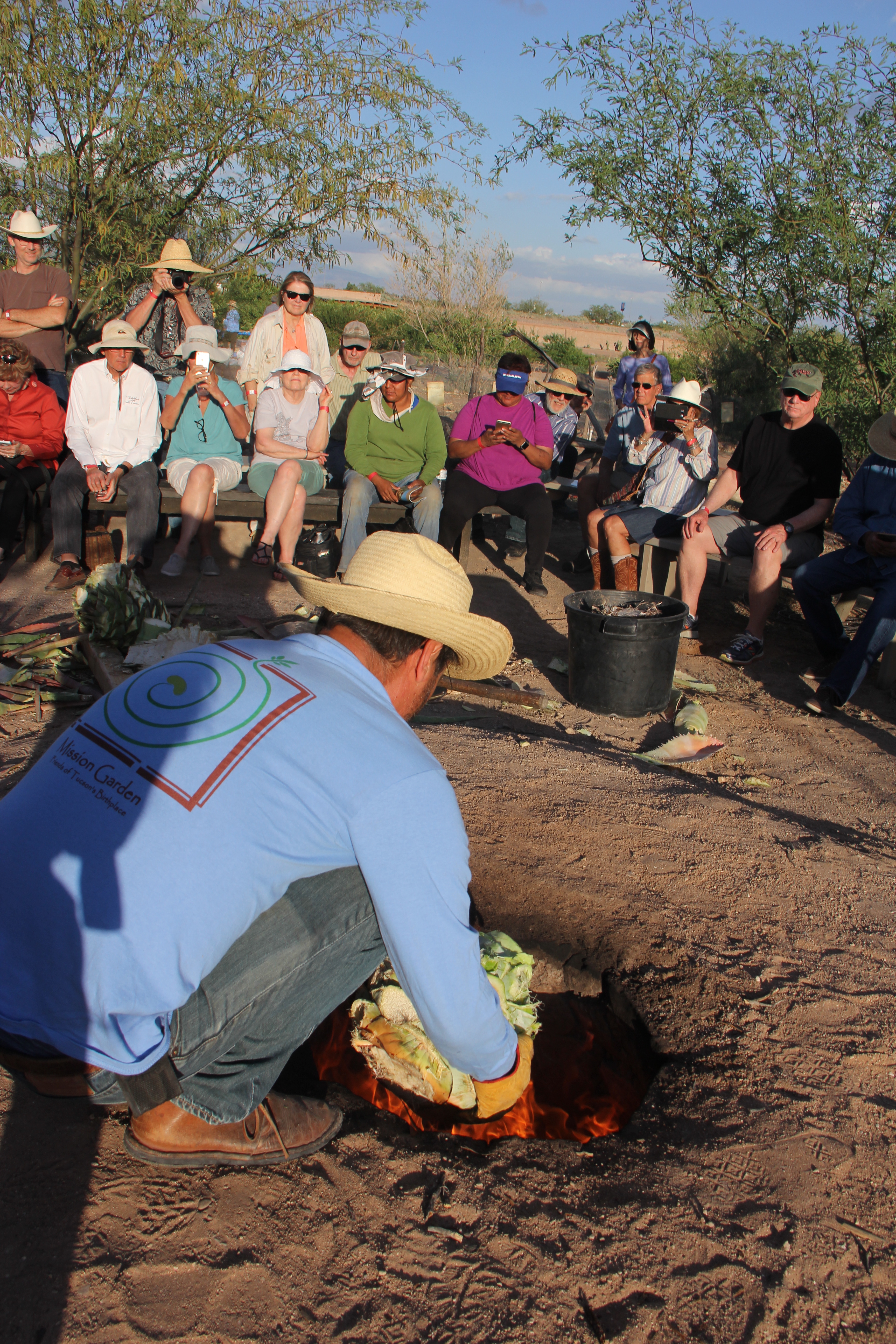
But during Agave Fest, we like to celebrate the oldest traditions, so Jesus Garcia demonstrates baking agave in an earth oven.

Jesus Garcia placing an agave heart in an earth oven on the grounds of Mission Garden. (CNiethammer photo)

Because we don’t all have earth ovens, I am in charge of the home-baking demonstration. I wrap the hearts securely in heavy foil and bake them for about 10 hours at 350 degrees F. (If you try this, be sure to put a foil-lined pan under the agaves because even the most securely wrapped hearts leak sugary juice.)

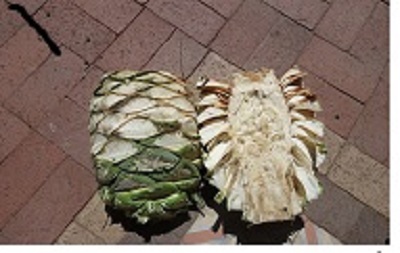
Agave heart split in two so it could fit in my home oven.

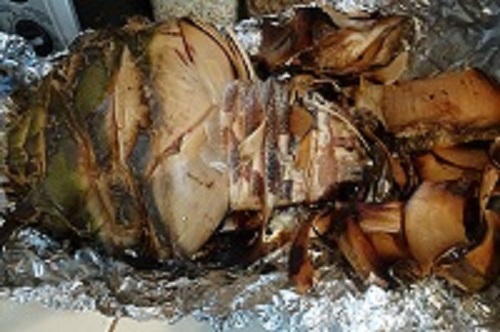
This is what the roasted heart looked like after 10 hours. The core on the right is where I removed some of the leaves.

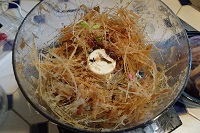
The next challenge is to get enough pulp from the fibers to actually make something. The Native Americans just chewed on the baked leaves and discarded the fibers. Distillers and people who make agave syrup crush the juice from the fibers. To further soften the leaves, I tried boiling them for a while. I also put them in my food processor which did a good job of separating fiber from pulp.

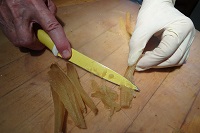
You can also tease out the pulp with a knife.

(We are all constantly experimenting to try to find what works best. A woman who attended my presentation said she has cut up a small agave heart and cooked it in her large slow cooker for three days.)

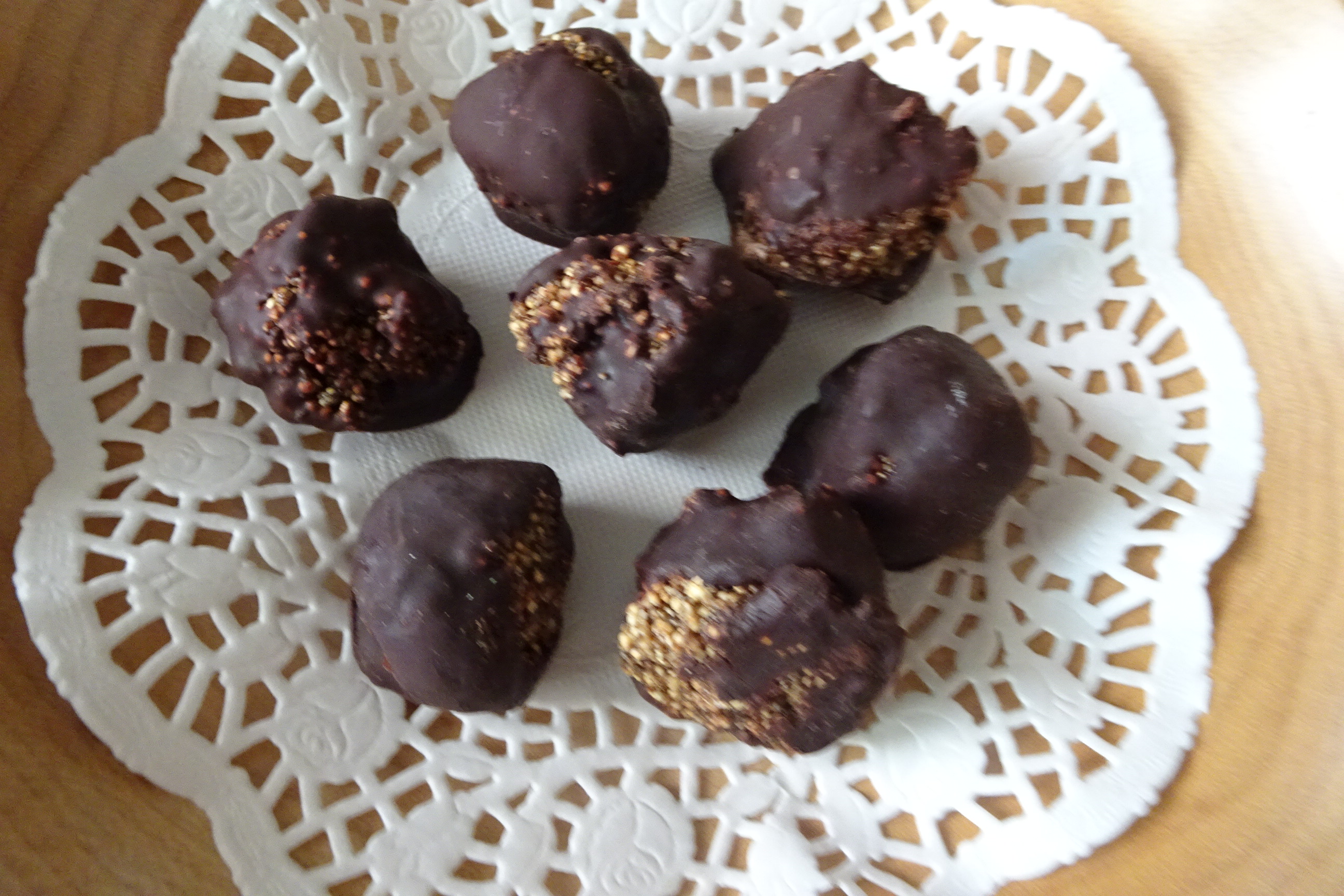
So once you’ve gone to the trouble of getting pulp, what do you do with it? Here’s where the experimenting comes in. I’ve combined it with water to make a murky homemade agave syrup. You can use it to season anything you want to sweeten a little. For the Agave Fest demonstrations, I’ve made a mixed squash, nopalito, and onion saute and added some of the agave pulp. It adds a subtle sweetness and everybody loves it. I also used the pulp to mix with some ground popped amaranth and ground chia. Added a little commercial agave syrup. Formed little balls, firmed up in the fridge, then dipped in melted chocolate. Yum!

Amaranth, chia, agave balls with chocolate coating.

Of course, by the time I served the food, it was nearing 7:30 or 8 p.m. and everybody was starved so it all tasted especially good!

_____________________________________

Want to learn more about wild desert foods and how to prepare them? My book American Indian Cooking: Recipes from the Southwest tells how the Native Americans used the wild plants for food. Cooking the Wild Southwest gives modern recipes for 23 delicious Sonoran Desert plants. There are all available at Native Seeds/SEARCH, online or in the retail store.


Wild Rhubarb Upside-down Cake!

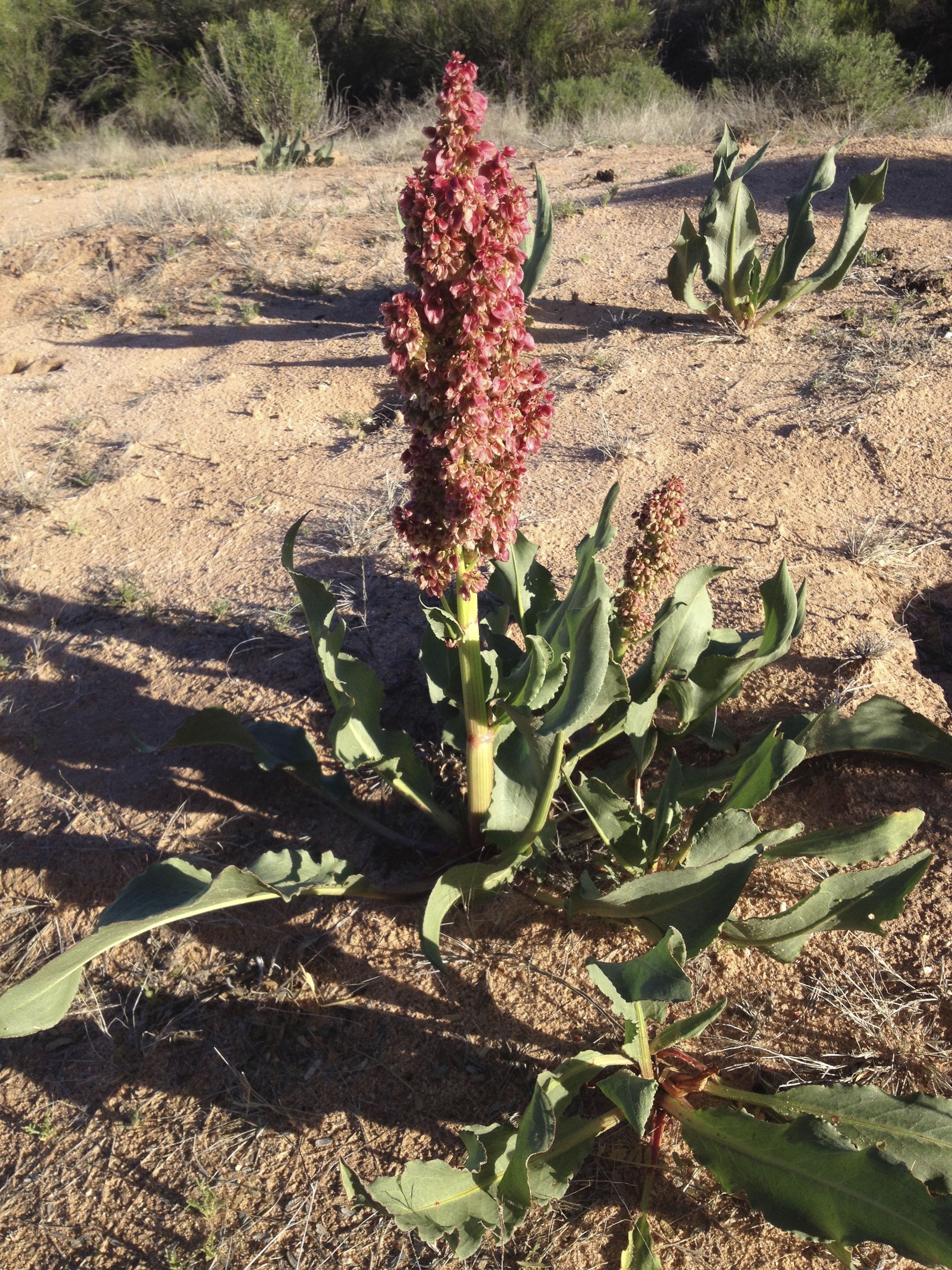
Wild desert rhubarb–canagria–is up from its hiding place deep in sandy desert soil triggered by our wonderful winter 2019 rains– ready to harvest for upside-down cake! (MABurgess photo)

Known as hiwidchuls by traditional Tohono O’odham harvesters, canagria (literally “sour cane”) by Spanish-speaking amigos, Rumex hymenosepalus by science nerds, Arizona dock by herbalists, and wild rhubarb by those who might know its relatives in northern climes, this rarely-seen tuberous perennial has responded gloriously to our winter rainfall.  It is currently bedecking the riverbanks along the Pantano, Rillito and Santa Cruz where Native People have gathered it probably for millennia.  But it won’t be there for long–so act now if you want a tangy-sweet treat!

Tia Marta here to share a fun recipe that celebrates this short-lived desert food:  Wild Rhubarb Upside-down Cake.  (If you seek a rationalization to counter sugars and fat, check out its available Calcium, plus helpful soluble and insoluble fiber.)

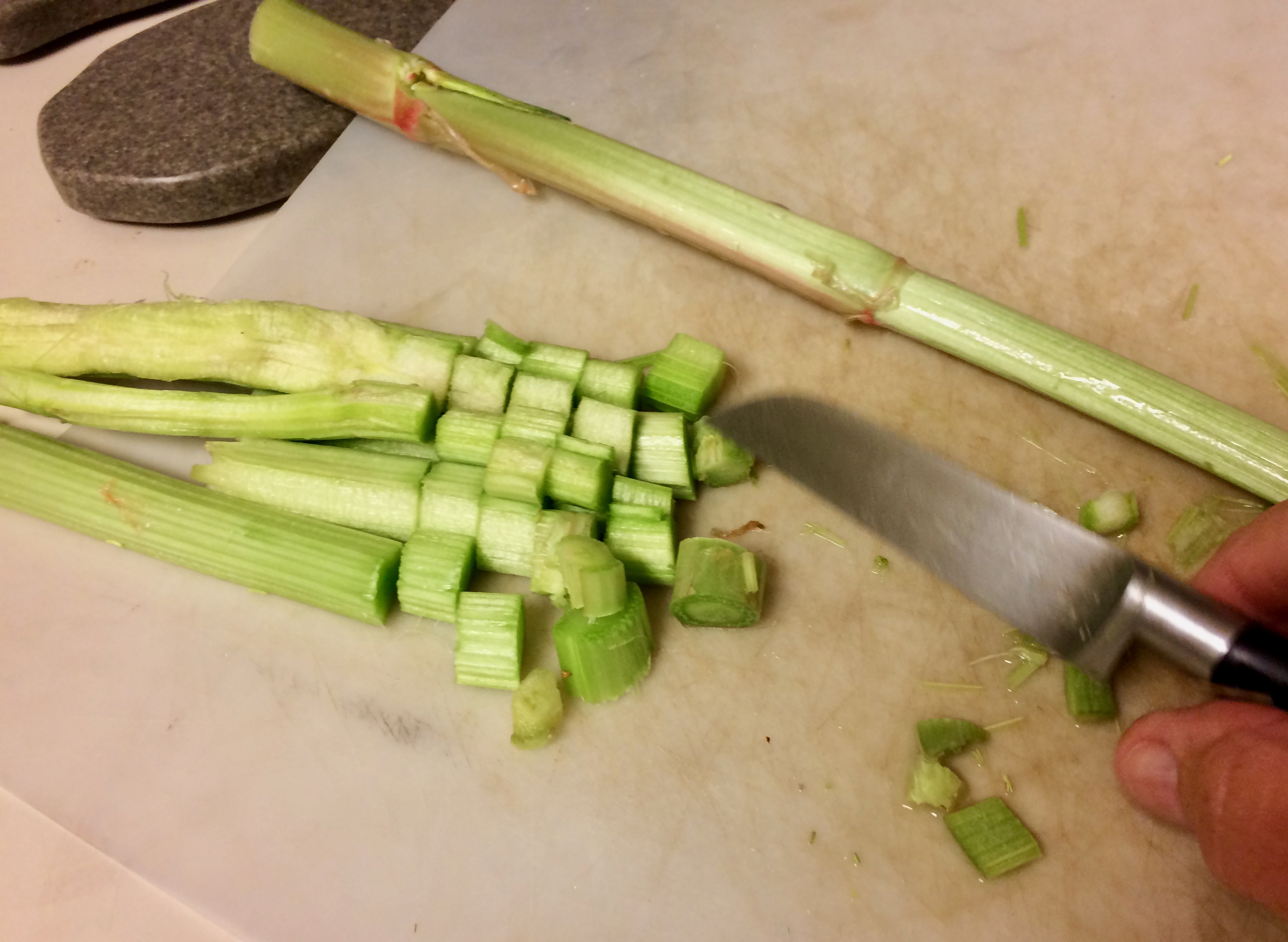
Wild rhubarb stalks look like celery with a pink tinge. Peel off any tough fibers, then chop into 1/2 inch pieces to use as the lemony flavor in the “bottom” of your cake–which becomes the top when turned upside-down. (MABurgess photo)

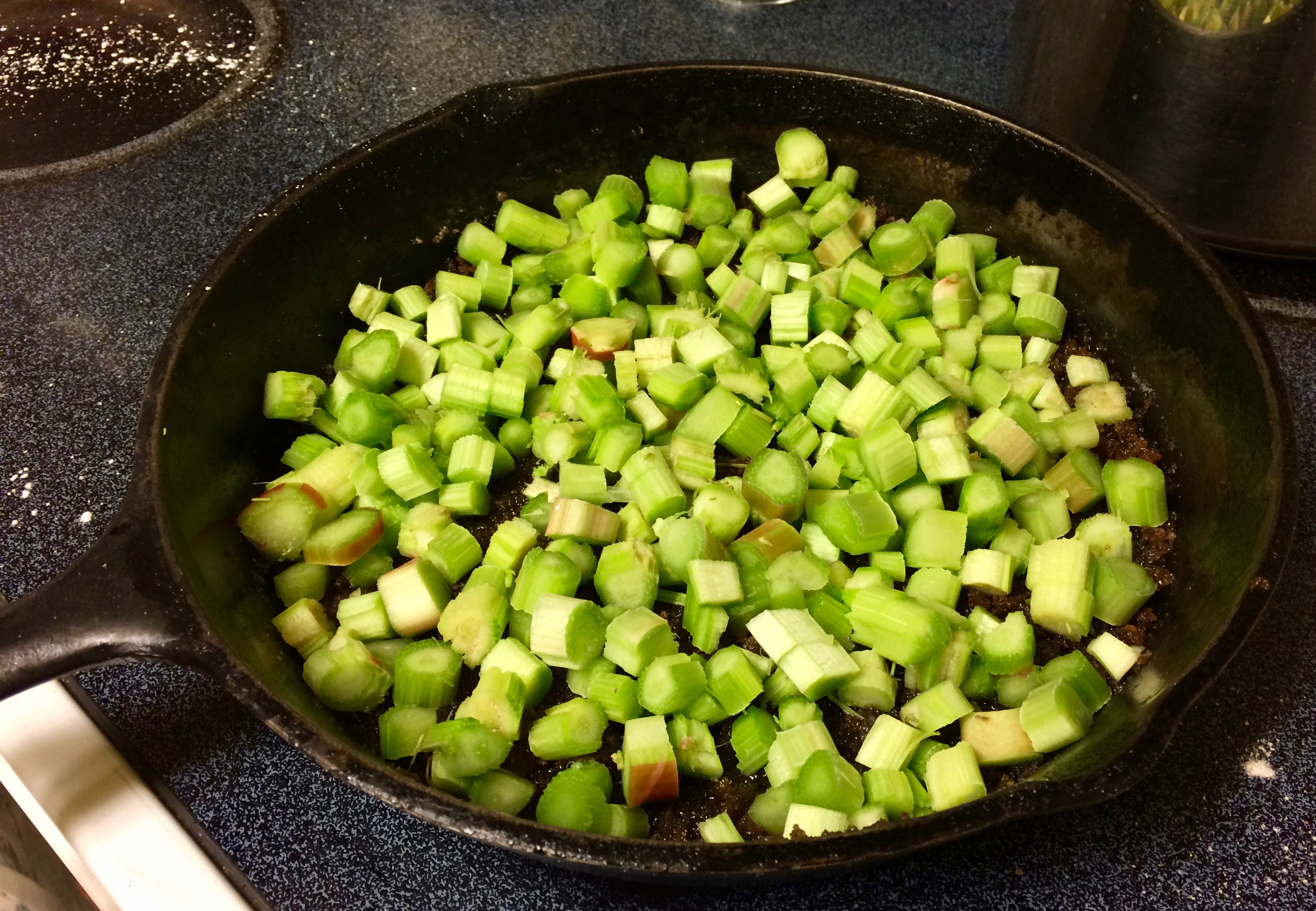
Put chopped canaigria into the butter-and-brown-sugar melt in the iron skillet, and dredge them til all coated with sweetness. It helps to have your skillet warm, as a head-start before baking. (MABurgess photo)

Wild rhubarb leaves can be boiled twice to eat as greens.  The plant also has many important uses other than food–tannins for medicine, dye from its root, and food for a native butterfly.  Read more about hiwidchuls in my February 2017 savor-post using rhubarb as the keyword in the SearchBox above.


I’ve used other ingredients in this recipe from our Baja Arizona palette of delicious heirlooms to make it super-local.

RECIPE FOR WILD ARIZONA RHUBARB UPSIDE-DOWN CAKE (“Skillet Cake”):

Preheat oven to 350F.

Into an iron skillet, melt 1/4 – 1/2 cup butter.

Stir in and stir until dissolved 1/2 – 1 cup brown sugar. (I use 1 cup to balance the rhubarb’s lemony sourness.)

Place diced wild rhubarb on top of butter/sugar mixture (as in photos above).

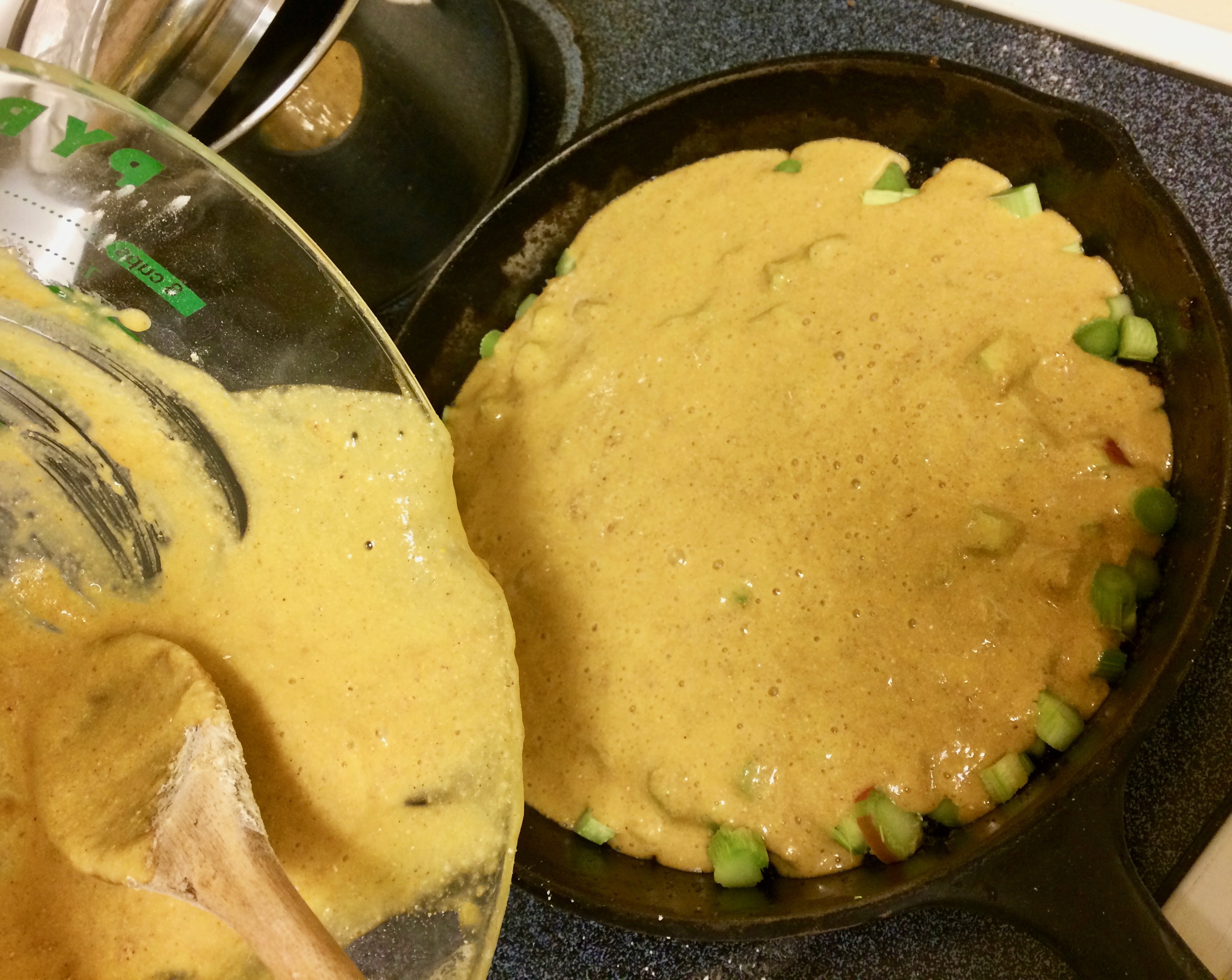
Pour batter right over the wild rhubarb/butter/brown sugar mix in bottom of skillet. (MABurgess photo)

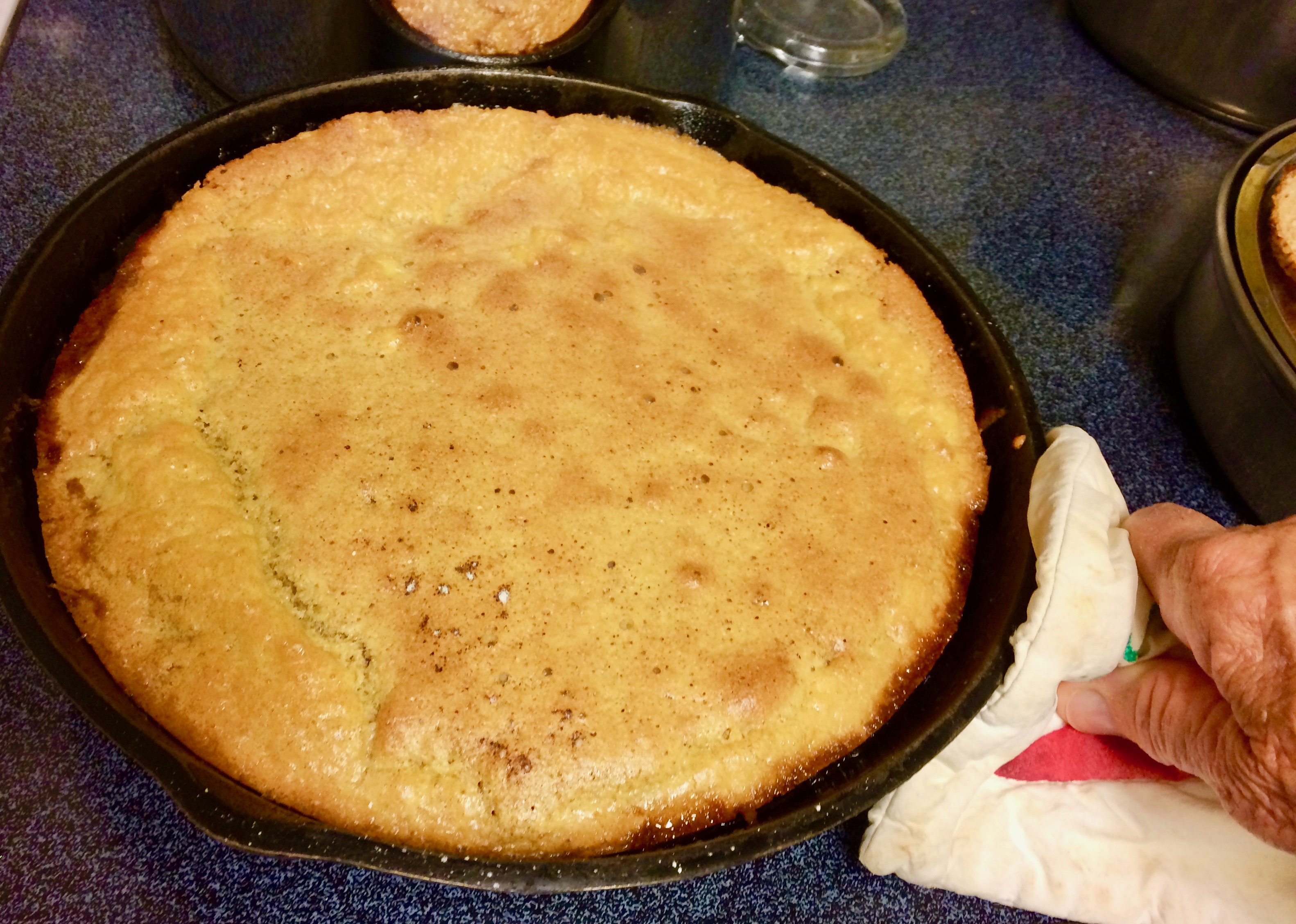
When done, the cake will pull away from sides of skillet. At this point you can keep it in pan to cool down and heat again later, or turn it over immediately. (MABurgess)

To make batter, sift together: 3/4 cup White Sonora Wheat flour

1/4 cup amaranth flour (e.g.Bob’s Red Mill)

1/4 cup mesquite meal

1 tsp baking powder

pinch of sea salt.

Separate 4 eggs, yokes from whites to beat separately. Beat egg whites gradually with 1 cup sugar and whip until stiff.

Add  1 Tbsp melted butter and 1 tsp vanilla to beaten egg yokes.  Fold egg yoke and whites mixture together then gradually add sifted flour mixture.  Pour batter over the still warm or hot rhubarb in skillet.  Bake about 30 minutes or until it tests done.  To serve right away, place a pizza pan or plate on top of the skillet bottom side up, then carefully turn the paired pans over.  Your warm cake will drop easily onto the inverted (now right-side-up) plate.  Remove the skillet carefully.  To gild the lily, you can garnish your cake top with whipped cream.  Enjoy the zippy tang and good nutrition of a wild rhubarb upside-down-cake made with our special heirloom wheat, mesquite, and amaranth!


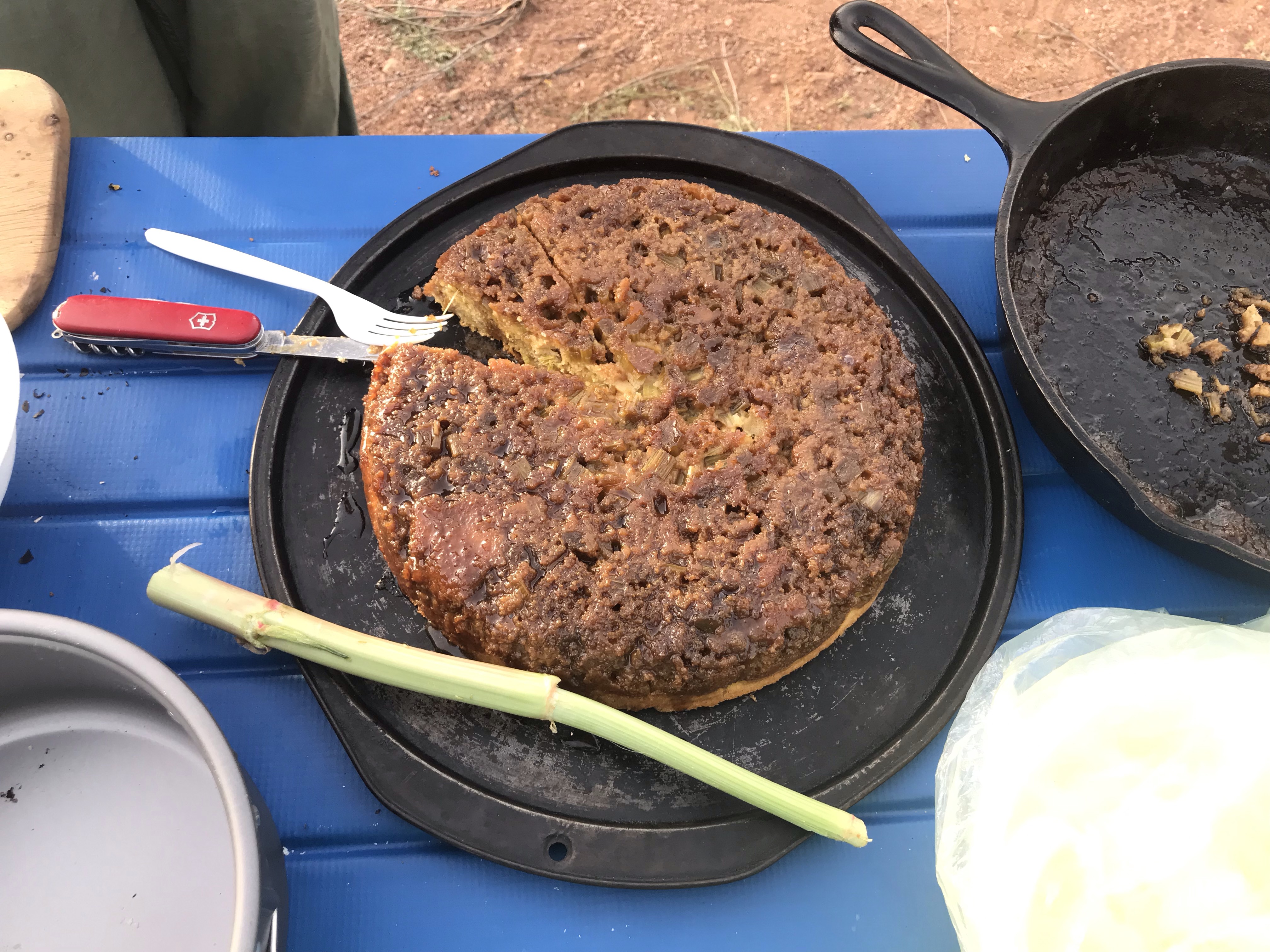
We took our cake out on a camping trip, quick re-heated it in the skillet over the campfire, and turned it over to serve on a pizza pan for a fabulous and nutritious breakfast pastry. (MABurgess photo)

For access to heirloom products and artwork of heirlooms from Flor de Mayo, check out NativeSeeds/SEARCH store and catalog,  and museum shops at Tucson Presidio, Old Town Artisans, and Tohono Chul Park.  And visit my website http://www.flordemayoarts.com.  (Enter your favorite native food word and find great recipes at this very blog–search box at top right.)  Enjoy every bite of flavor with gifts from our beloved Sonoran Desert!


Citrus Season is Time for Marmalade

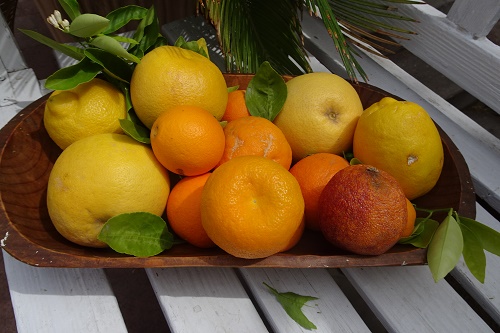
Mix citrus for a delicious marmalade with my favorite recipe.

It’s Carolyn Niethammer here today to share my favorite recipe for citrus marmalade. It comes from an early version of The Joy of Cooking that I received as a gift in 1965. The most recent Joy of Cooking doesn’t even have an entry for jams though I hear there is a resurgence of interest in making them. I love citrus marmalade, but don’t like the overly sweet grocery-story version. I like a little bitterness, more like the English version rather than the American style.  I’ve used this recipe for at least 30 years, varying the proportion of fruit according to what I have.

Some of the oranges come from a Sweet Orange tree in my front yard that my husband as a small child planted with his dad, Dr. Leland Burkhart, a half time extension agent, half time college ag professor.  Dr. Burkhart used to travel all over the state consulting with citrus growers. Since my own grapefruit tree died, I have to snitch a few of those from my neighbors. I also gather a few sour oranges from street trees in the neighborhood because I like the tang it gives my marmalade.  If you don’t have access to free fruit, the farmer’s markets are full of all varieties right now.

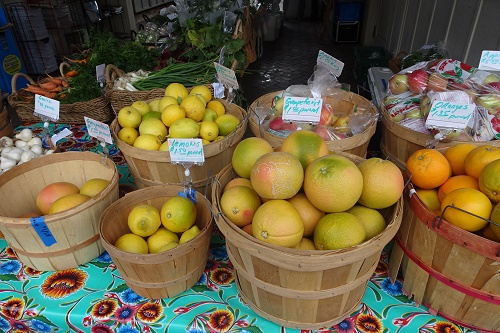
Farmers’ markets in the Southwest have abundant citrus for sale now.

Although I have been using this recipe successfully for years, a couple of years ago I decided to get fancy and carefully cut away all the white pith on the inside of the fruit rinds. Then the mixture simply would not jell no matter how long I cooked it. So….I learned this is where the pectin is, what makes the marmalade thicken up. Leave the white stuff on; it disappears during the soaking and cooking.

Use whatever fruit you have; don’t worry about the proportions. You could use all lemons. Last year I foraged an abundance of kumquats and used those. You might decide to make your version of spring marmalade special by adding some thinly slice barrel cactus fruit, or a little prickly pear juice if you have some, or even some berries. This is a very adaptable recipe. I always try to stress experimentation. Here’s a place to construct your own signature jam to your special taste preference.

The recipe is very easy, but you have to start the process a few days before you plan to do the cooking. The fruit soaks and softens in a corner of your kitchen. During the days when the fruit is soaking, gather up your jars. If you have those with the sealing lids, fine. If not use any jars. Put them in your biggest pot, cover with water, and boil for a few minutes to sterilize. If you don’t have the lids with the rings that seal, be sure to refrigerate the jam until use. If you give it away, caution the receiver not to stick it on a shelf and forget it.

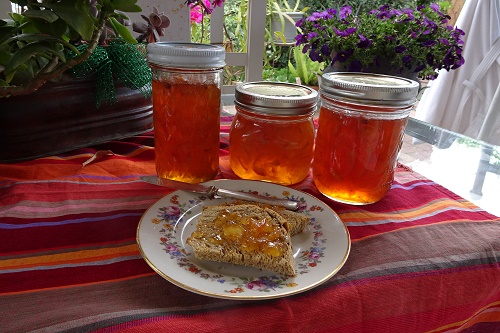
I use whatever jars I have for the marmalade.

Mixed Citrus Marmalade

1 grapefruit

3 oranges

3 lemons

Sugar

Scrub the fruit, cut each in quarters, and remove the seeds. Slice very thinly. Measure the amount of fruit and juice and add 3 times the amount of water. Set aside and let the fruit soak for 12 hours. Simmer for about 20 minutes. Let stand again for 12 hours.

For every cup of fruit and juice, add ¾ cup sugar. Divide into two pots if you have them or cook one half at a time. Cook these ingredients until they reach 220-222 degrees F. on a food thermometer . It will seem like it takes a long time at first and then at the end it moves rapidly. If you don’t have a food thermometer, once you think it’s looking a little thicker, turn off the heat, put a little of the jelly on a china plate and put it in the freezer for a minute. If it firms up, it is ready. If it is still liquid, cook for a little while longer. It usually firms up a bit more once it cools in the jars.

________________________________________________

Ready for another challenge? It was a rainy winter this year in the Southwest which means lots of edible wild desert plants. You can find recipes for 23 of the  easiest to gather and the tastiest in my book Cooking the Wild Southwest available from Native Seeds/SEARCH and from on-line stores.

Browse and Bedeck with Desert’s Bounty–Mustards and more!

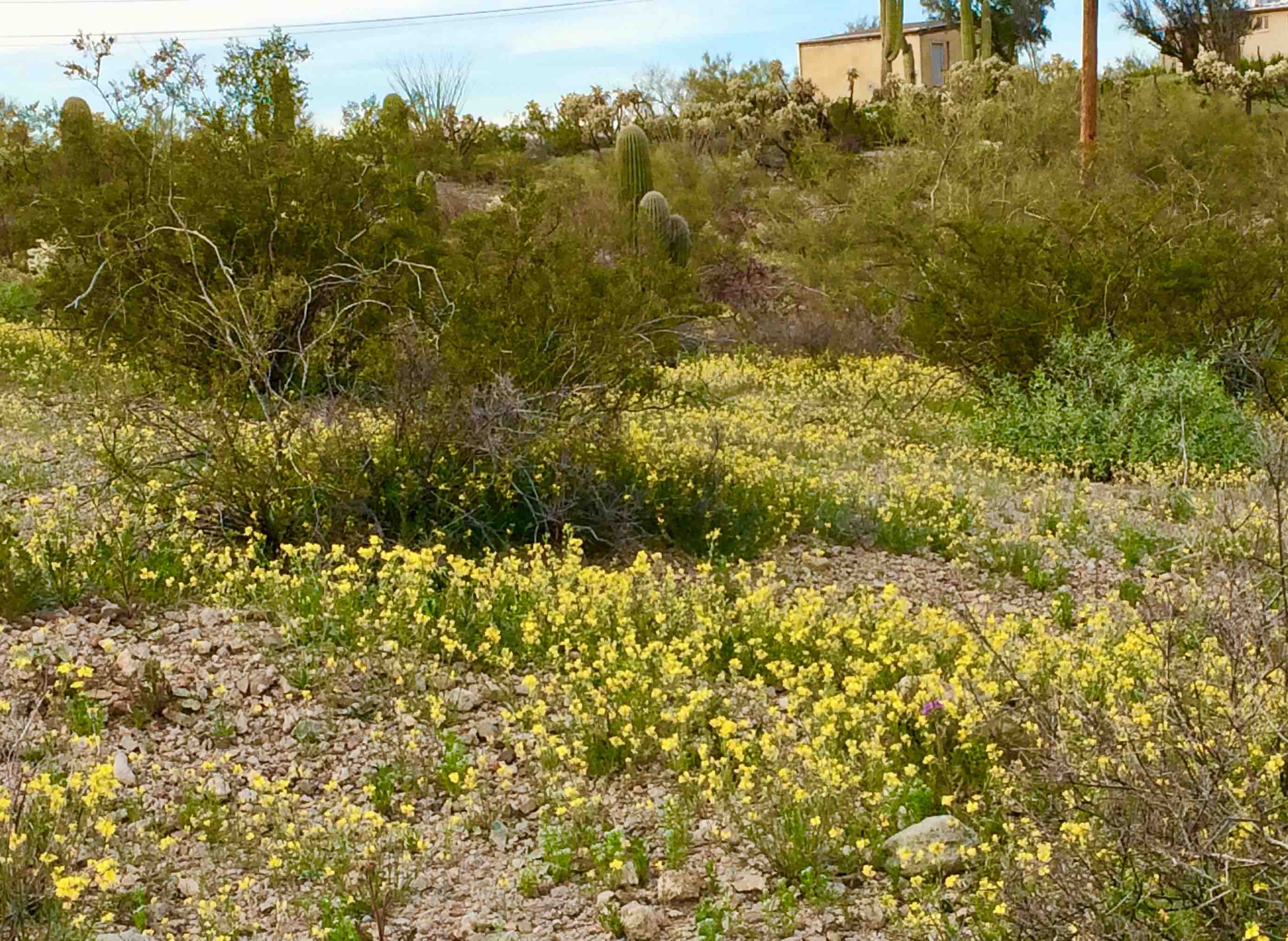
Meadows of bladderpod are carpeting Tucson’s West Side, parts of Avra Valley, and the Tohono O’odham Nation. Bare ground between creosote bushes has turned yellow! Enough for all!  (MABurgess photo)

How glorious!  We haven’t had a spring like this in the Sonoran Desert for so long!  With continuing rains, there’s such plenty around us that there is more than enough for all the pollinators, herbivores, insectivores, granivores, and omnivores that may wish to indulge in the wild-mustard smorgasbord–including two-leggeds.  We are drinking in–yea, indulging in–their beauty.  But we also can benefit from their phytonutrients and enjoy their spicy flavors.  Tia Marta here to share some fun ideas for including the “weeds” from the back-forty into your cuisine and your nutrition.   [As you know, I don’t really believe in weeds.  They all have purpose].

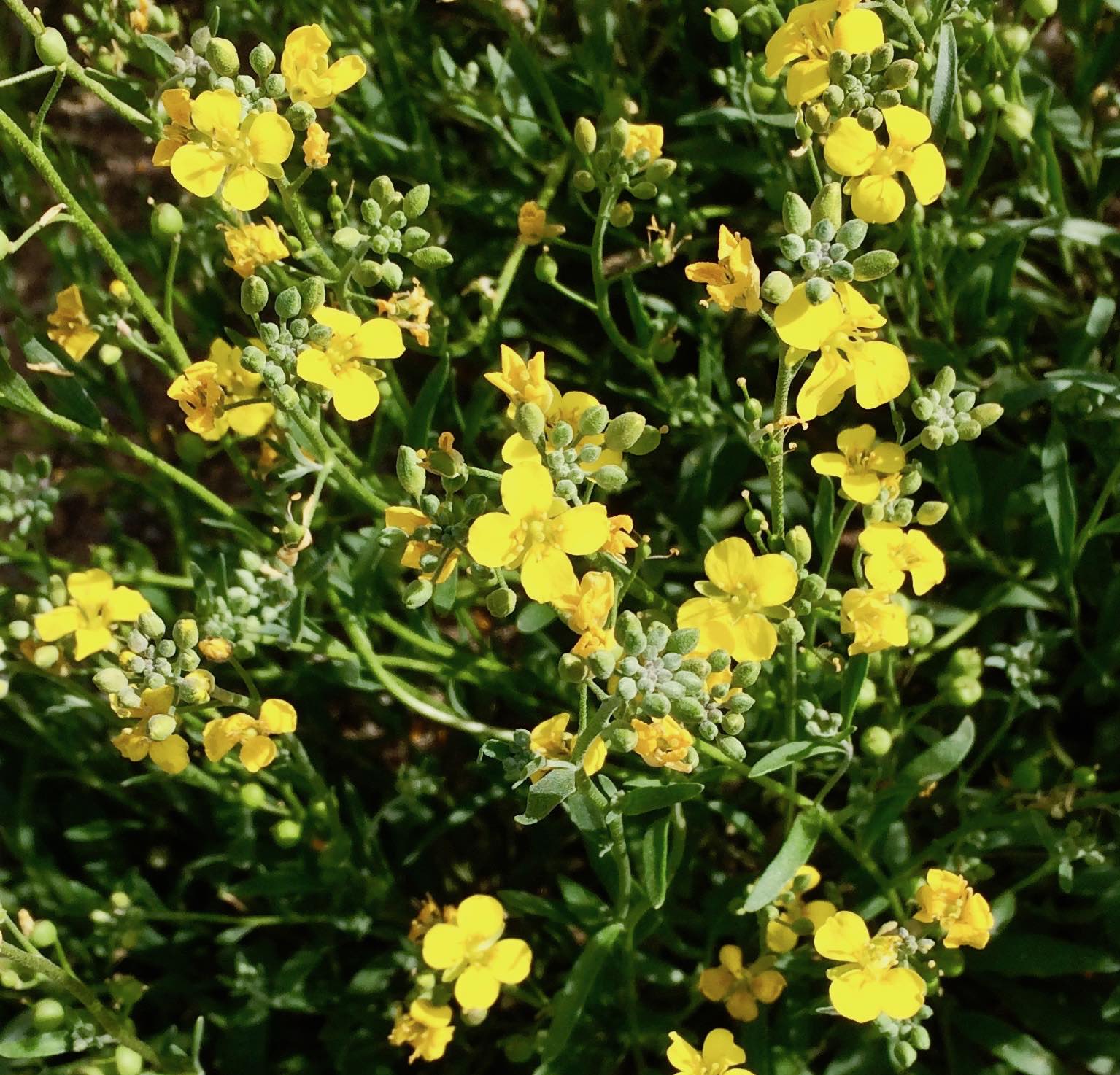
Dancing yellow Crucifers–Yellow Bladderpod (Lesquerella gordoni, members of the mustard family–are not only showy but edible too. Try them as a garnish or a spicy addition to salads. (MABurgess photo)

The name bladder pod refers to the spherical little fruit (seedpod) that looks like a tiny balloon with a divider down the middle, which forms after the 4-petaled flower is pollinated.

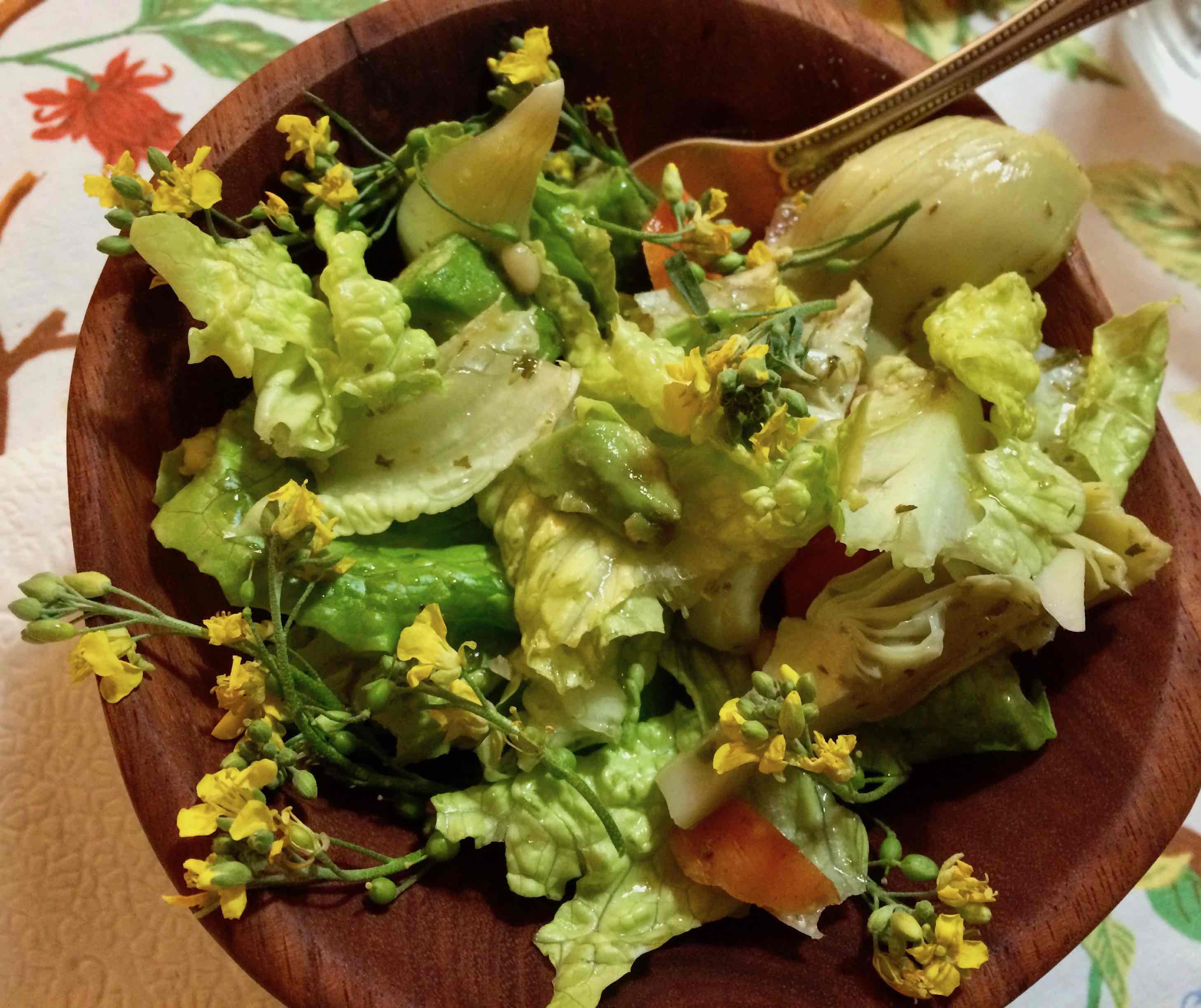
Yellow Bladderpod (aka Lesquerella gordoni) flowers gives your salad a wonderful little flavor-kick and a touch of beauty to boot. Nip off the very fresh tops of this wild mustard and toss it in with your favorite salad. (MABurgess photo)

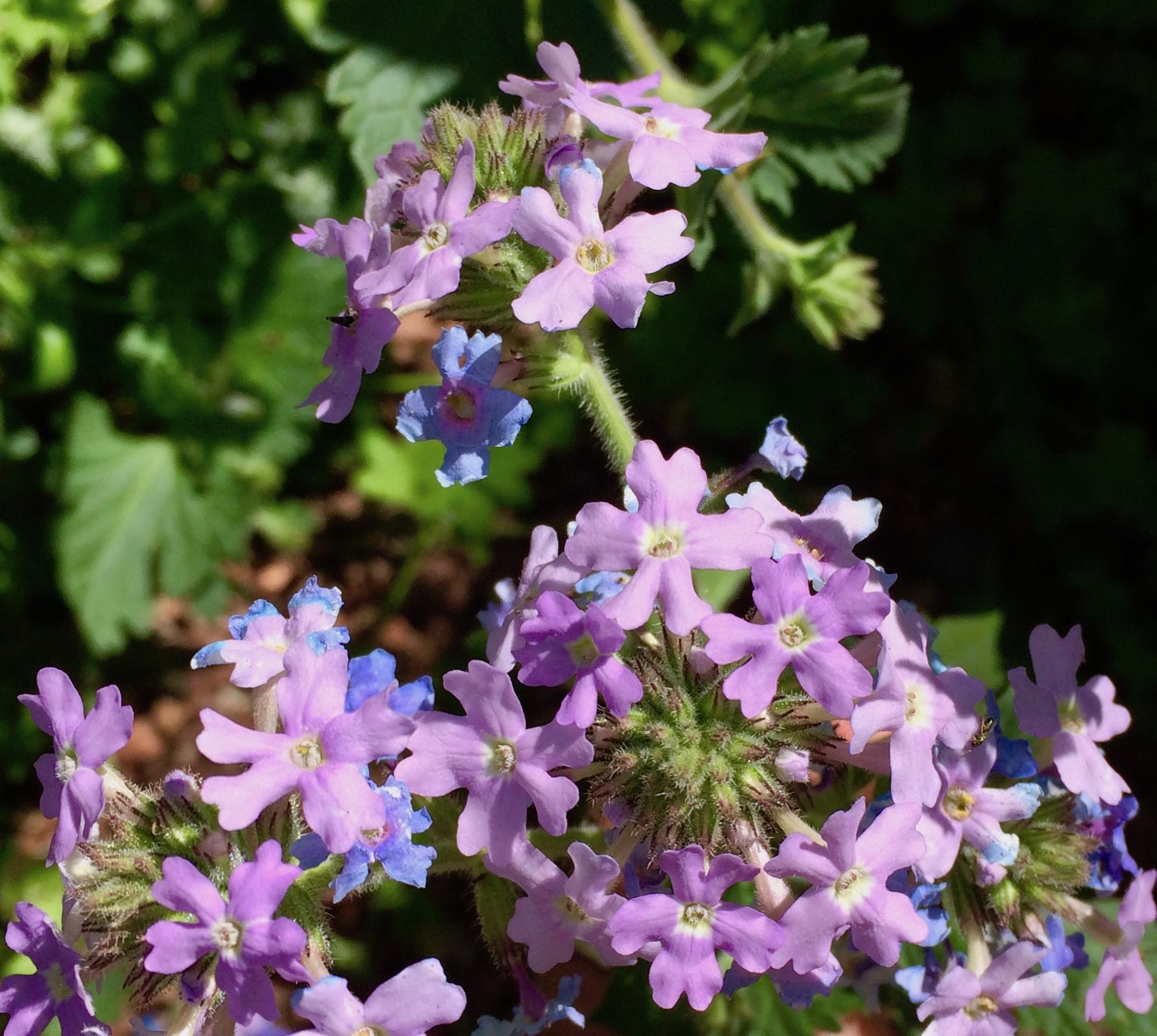
Verbena gooddinggii–Goodding’s verbena–is forming lovely mounds of lavender in arroyos across the Sonoran Desert. Keep your eyes peeled as you drive. It also makes a fabulous landscape plant for xeriscape yards. Notice how the flowerless in each cluster turn from orchid to French blue after pollination. Try verbena as a garnish on any platter for a winsome look and edible addition. (MABurgess photo)

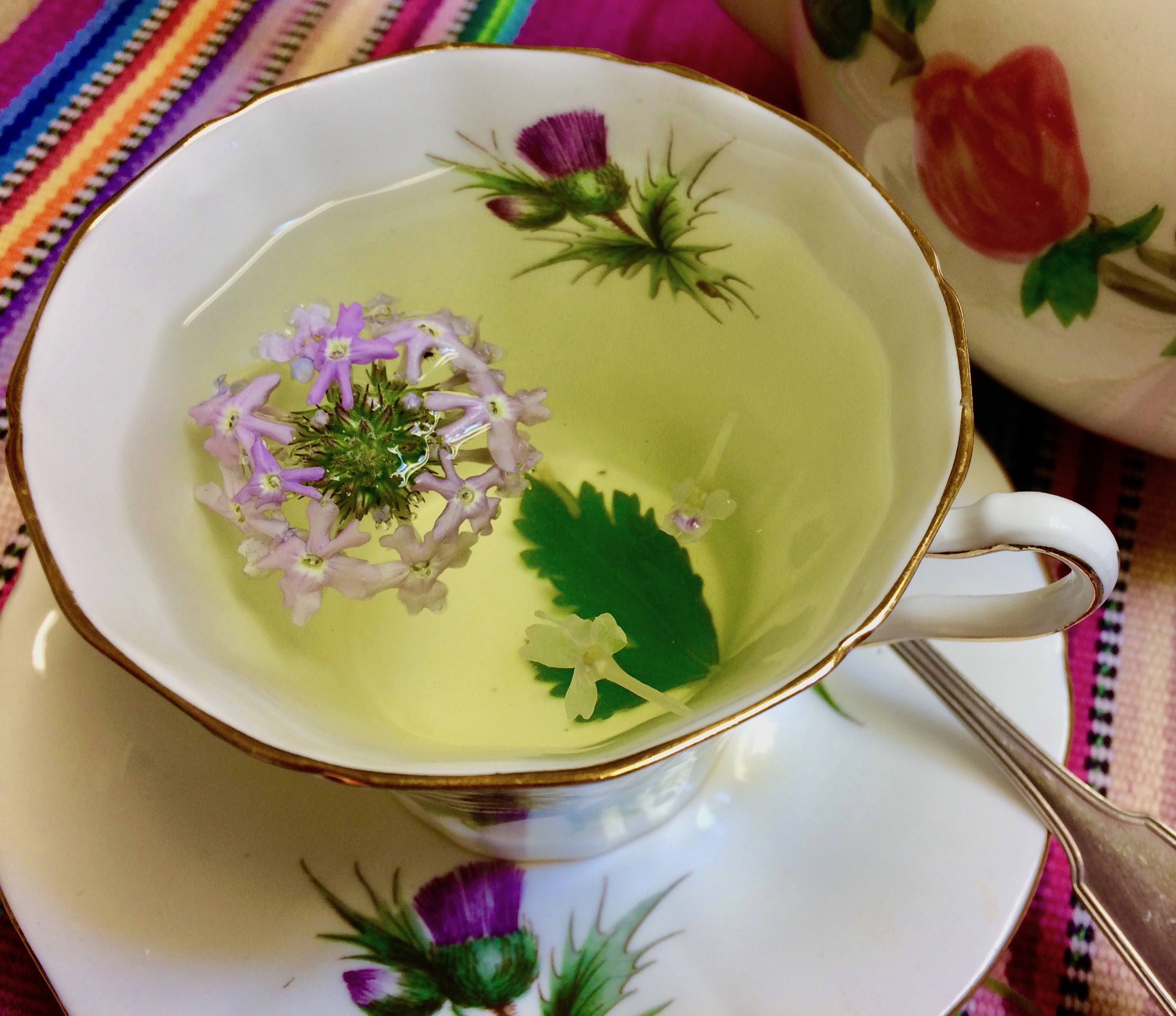
Lovely, fragrant Goodding’s Verbena makes a refreshing tea steeped for a few minutes. It has a hint of sweet on one part of the tongue and a little interesting bitterness on another. It’s as if flavor could be depicted as color! Pleasantly, verbena tea is a beautiful calming tea. It can safely mellow you out which is what tea-time should do for all–young and old! (MABurgess photo)

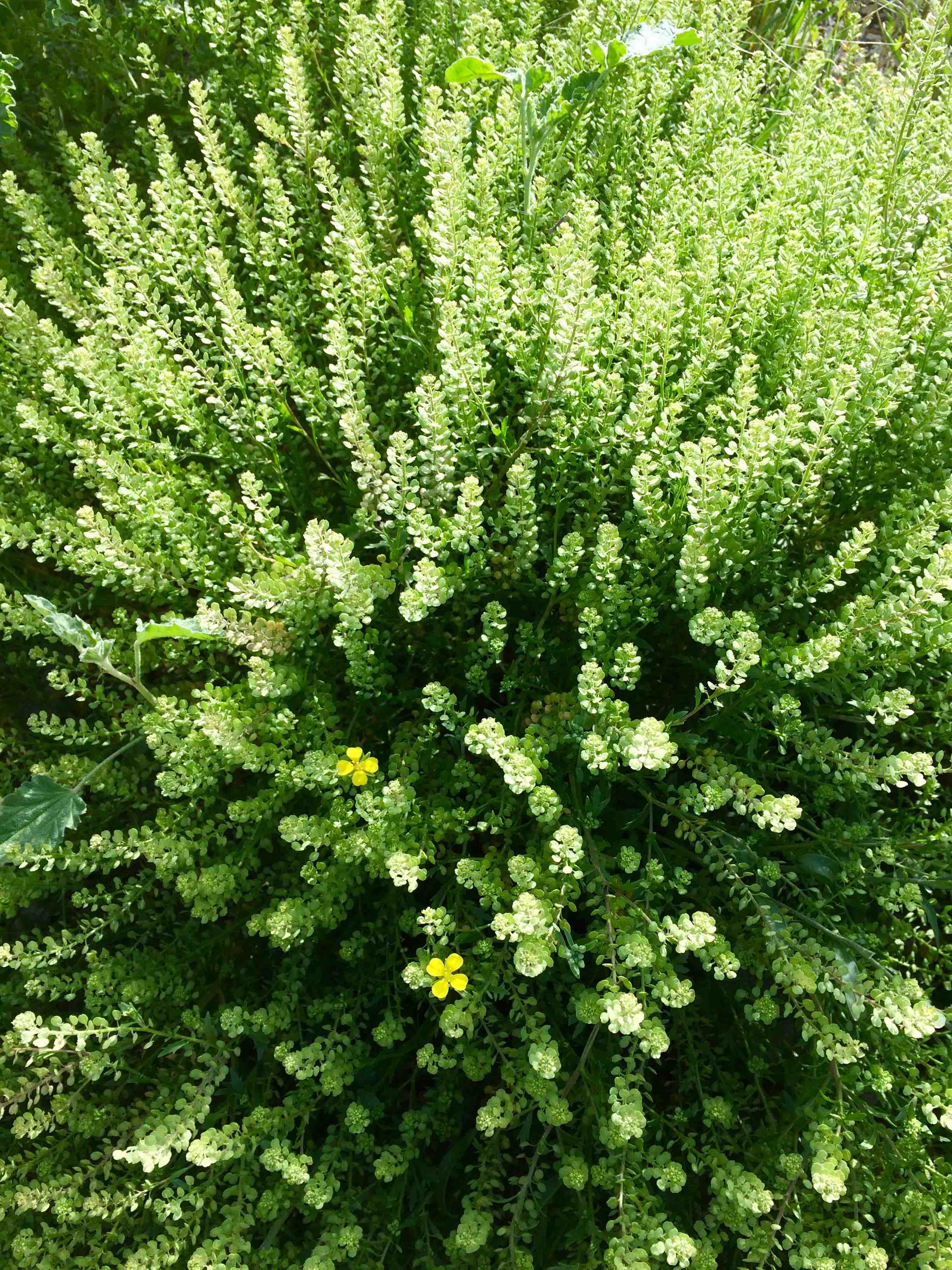
Peppergrass (Lepidium sp.) is not a grass at all! So what’s in a name? Well it is kinda spicy–I wouldn’t say peppery–just a gentle “bite.” It’s a delicate little mustard growing in profuse mounds and sprays this spring. You don’t usually notice it until you are up close. Check out the 2 bladder-pod flowers in the midst of the peppergrass seedpod stalks in this image. (MABurgess photo)

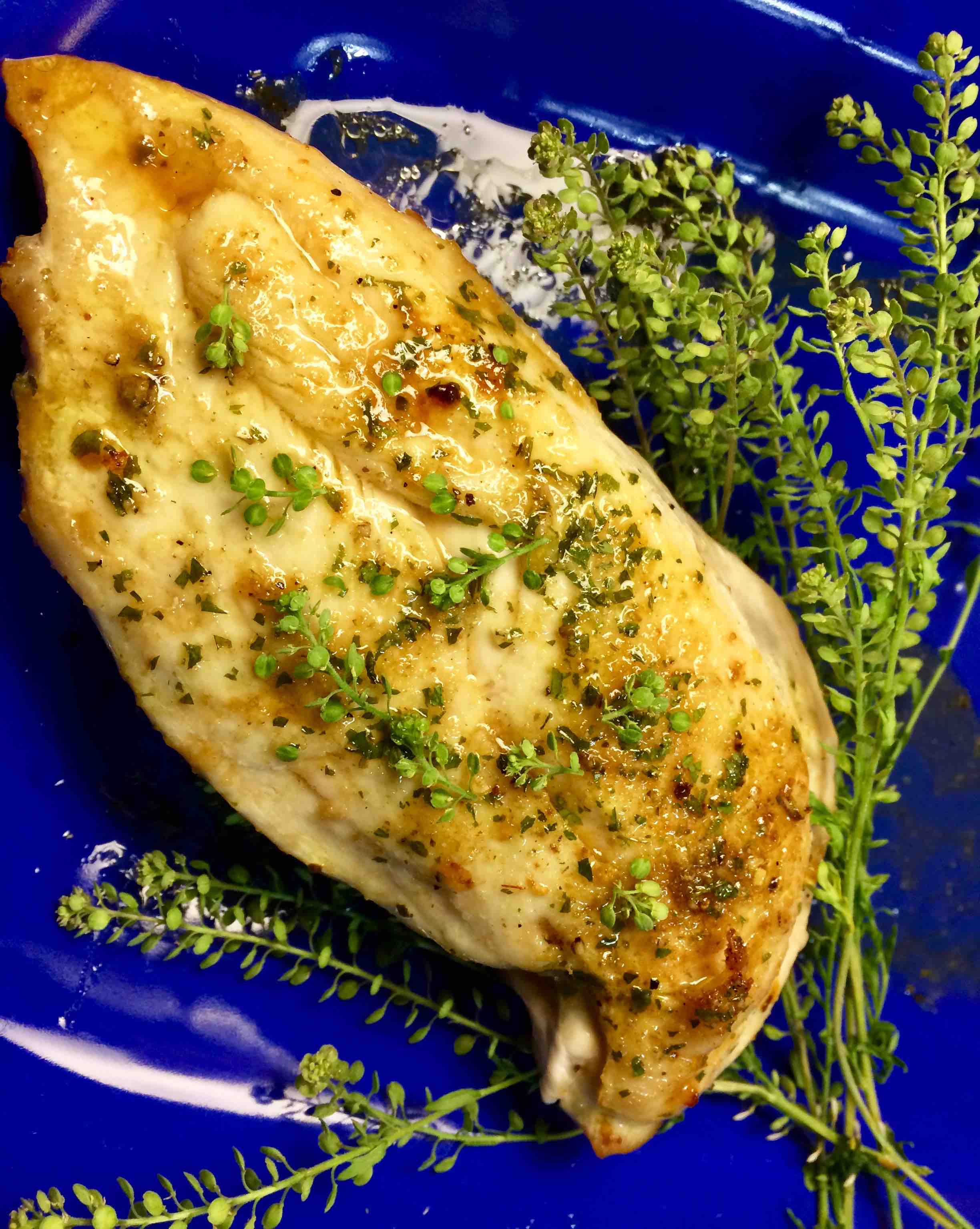
Peppergrass–another mustard family plant growing in plenty this spring–makes a zesty herbal addition to roast chicken (and other meats). It also makes an edible little garnish spray to liven up any platter. (MABurgess photo)

Tia Marta encourages you to go out and enjoy this amazing desert floral display.  You can visit special places like the Arizona-Sonora Desert Museum or Tohono Chul Park to learn names of the flowers.  In natural places where you find meadows of mustards or verbena, know that they can provide you not only visual joy but also vitamins and minerals that only fresh greens can give.  Happy flower hunting!


Love Chimichangas? Here’s a book for you.

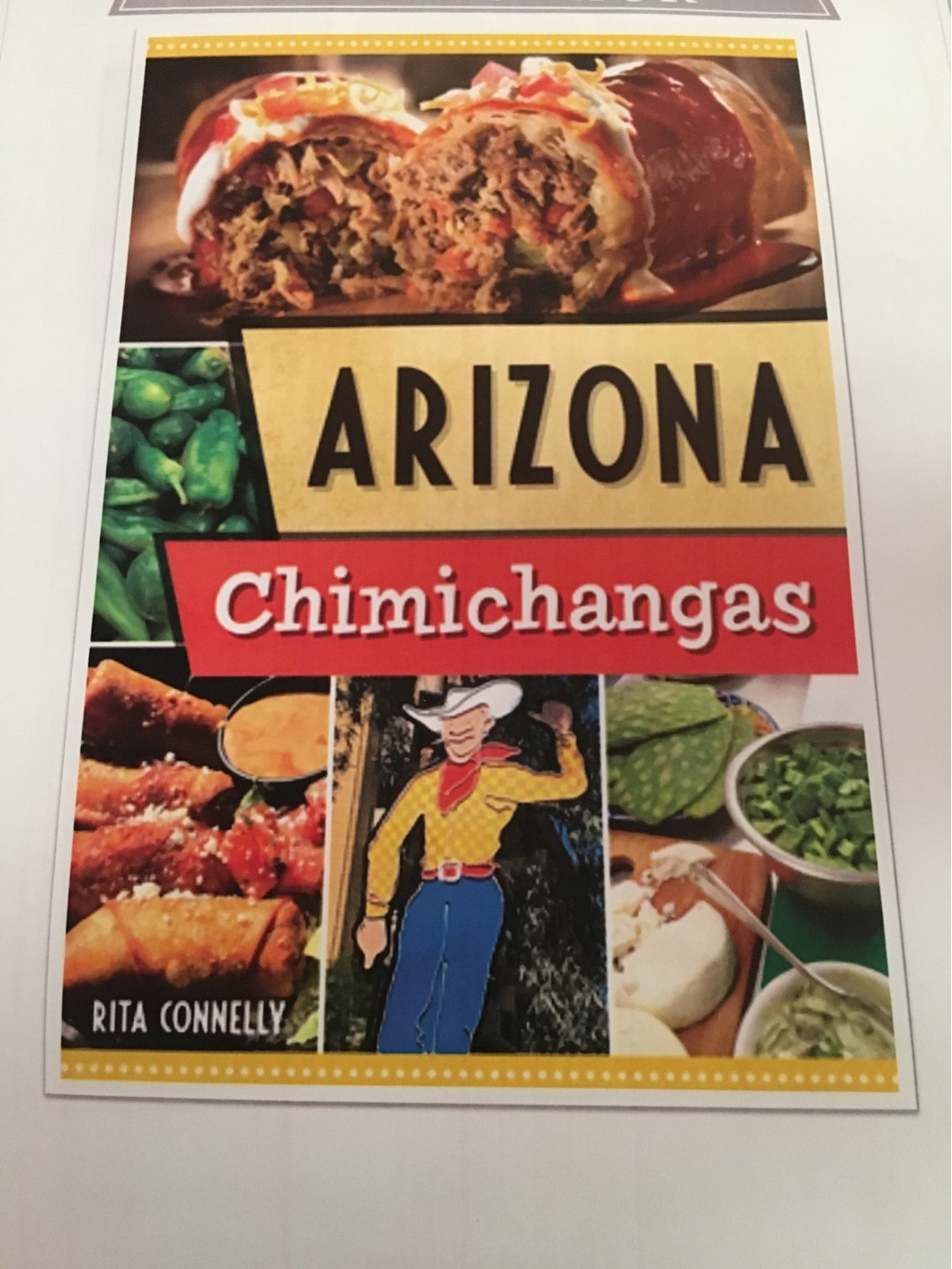
Carolyn here today. I have been spending the last 18 months working on a book about why Tucson was named a UNESCO City of Gastronomy in 2015. It covers what Tucsonans have been eating over the last 10,000 years and also delves into many of the foods we love but aren’t found elsewhere. Along the way, I’ve talked to anthropologists, farmers, chefs, teachers, and people working hard to see that the less fortunate have enough food. And I’ve also kept an eye out for what my fellow writers have been producing. Over the next year, I’ll share with you some of what I’ve learned. Today, we’ll start with Rita Connelly’s new book Arizona Chimichangas.

For ten years Connelly provided the restaurant reviews for the Tucson Weekly, so she’s been in a fair number of local restaurants. She’s seen them come and go. Actually, she wrote an earlier book about beloved restaurants that have vanished.

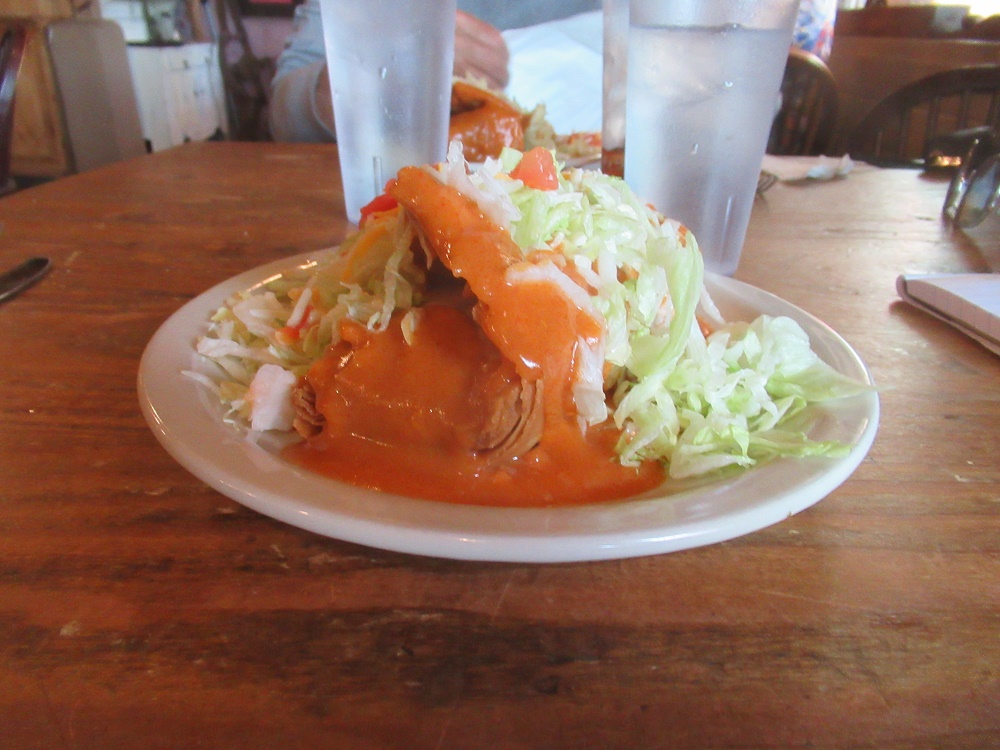
Chimichangas have a cache about them that somehow is more than a sum of their parts. A chimichanga is a deep-fried burro, and a burro is just a flour tortilla wrapped around a filling of beans or meat. Somehow, dropping that humble burro into a sizzling pan of oil transforms it into a flaky pleasureful indulgence. It becomes even better when topped with your choice of condiments such as melted cheese, sour cream, guacamole or enchilada sauce.

Chimichanga “enchilada style” or a “wet” chimi. Photo from Arizona Chimichangas.

Tucsonans want to believe that the chimichanga was invented here in Tucson by accident, but in Connelly’s six-month odyssey of scoping out Mexican restaurants in little towns all over Southern Arizona, she found a fair number of people who swear the delicacy originated right in their restaurant. She even found people who suggest that the chimichanga is an outgrowth of the egg rolls produced by the Chinese who settled in Northern Mexico. And because good flour tortillas are key to a good chimi, Connelly takes us into a tortilla factory.

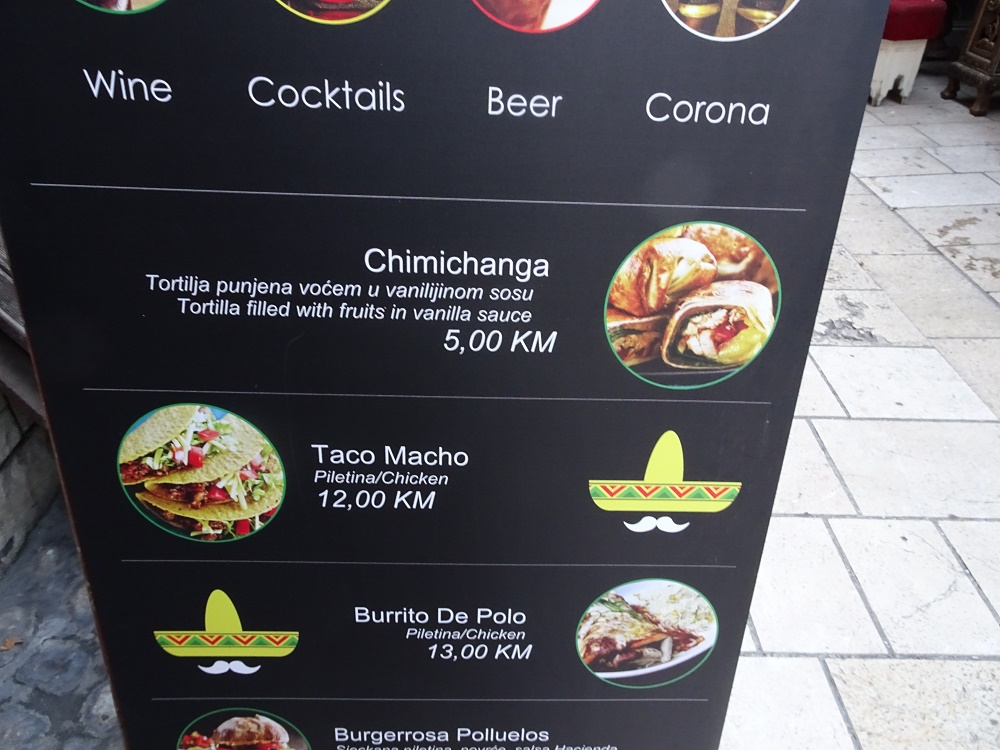
The reputation of chimichangas is worldwide. Here is a picture I took of a restaurant marquee in Sarajevo, Bosnia-Herzegovina, offering a Balkan version of Mexican food. Looks like they are into the sweet version of the chimichanga.

       Menu from Mexican restaurant in Sarajevo, Bosnia-Herzegovina.

If you love chimichangas, if you really love chimichangas, you’ll want to read Connelly’s book on the multi-generation traditions from family restaurants all over Southern Arizona.  Use it as a guide to where to get your next chimi fix. Arizona Chimichangas is available at local bookstores.

Recipe

You really don’t need a recipe for a chimichanga. Brown some ground beef or shred some chicken or beef or pork roast. Sauté it with some chopped onion and garlic, maybe some green bell pepper, maybe a little tomato sauce. Season with salt and pepper. If you want a vegetarian version, use some nicely cooked beans or cooked veggies. Wrap up the filling in a flour tortilla, tucking in the sides as you roll to contain the filling. Heat some neutral vegetable oil  in a frying pan until it is about 375 degrees. Fry the chimis until they are golden and crispy, using tongs to turn them. Drain on several thicknesses of paper towels. Serve with guacamole and sour cream or enchilada sauce for a “wet” chimichanga.

________________________________________

Carolyn Niethammer writes about the food and people of the Southwest. See all her books at www.cniethammer.comCooking the Wild Southwest covers identification information and recipes for 23 delicious, easy-to-gather, and easily recognized edible wild plants of the Sonoran Desert.  Order it from the Native Seeds/SEARCH store. 

Pollo Milanesa

Hello friends, Amy here today making a dish my mom imagined, and I’m so happy to report that it’s a keeper. Chicken Milanesa is a crunchy breaded cutlet of breast meat. Beef Milanesa in a torta (sandwich) is a Mexican favorite! My mom makes excellent Pollo Milanesa with panko, Japanese bread crumbs, which she plates as a main course. She had the idea to season the crumbs with Mano Y Metate Pipian Rojo powder. Another day I’ll try it with other varieties of mole powder. The flavor of the Pipian really came through in the finished dish.

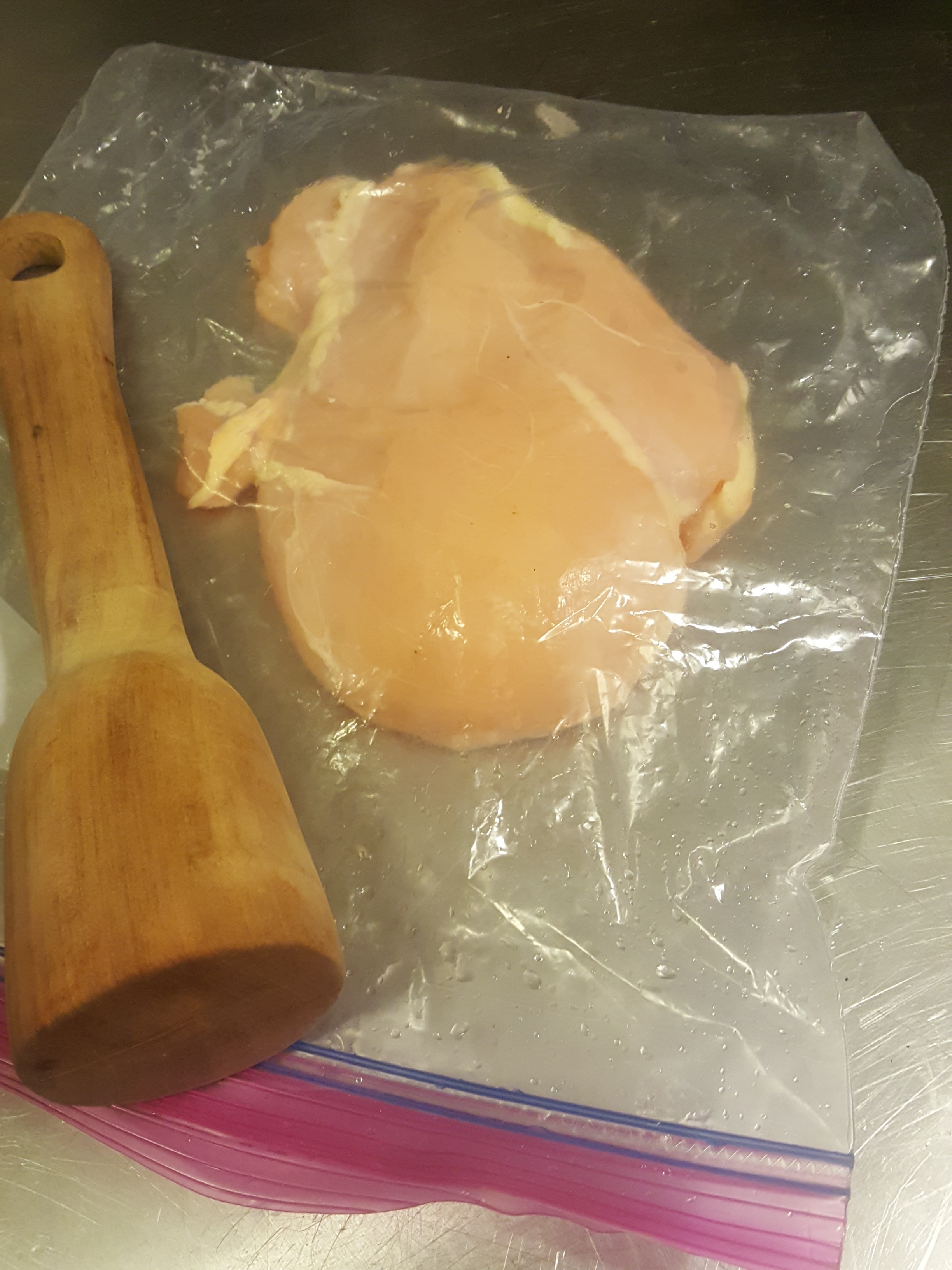
Start with a whole chicken breast in a heavy duty plastic bag.

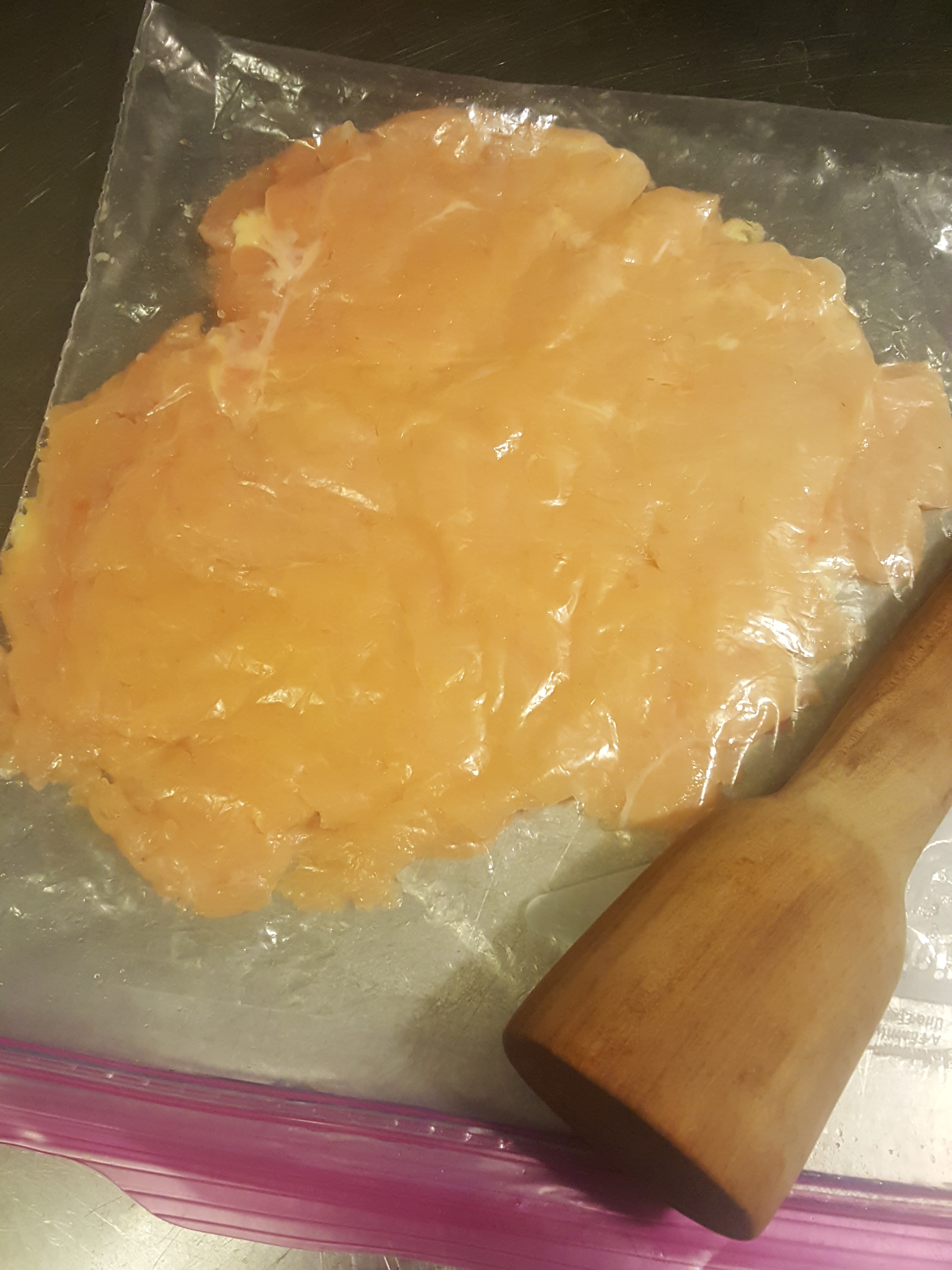
Then pound gently until the meat is very thin.

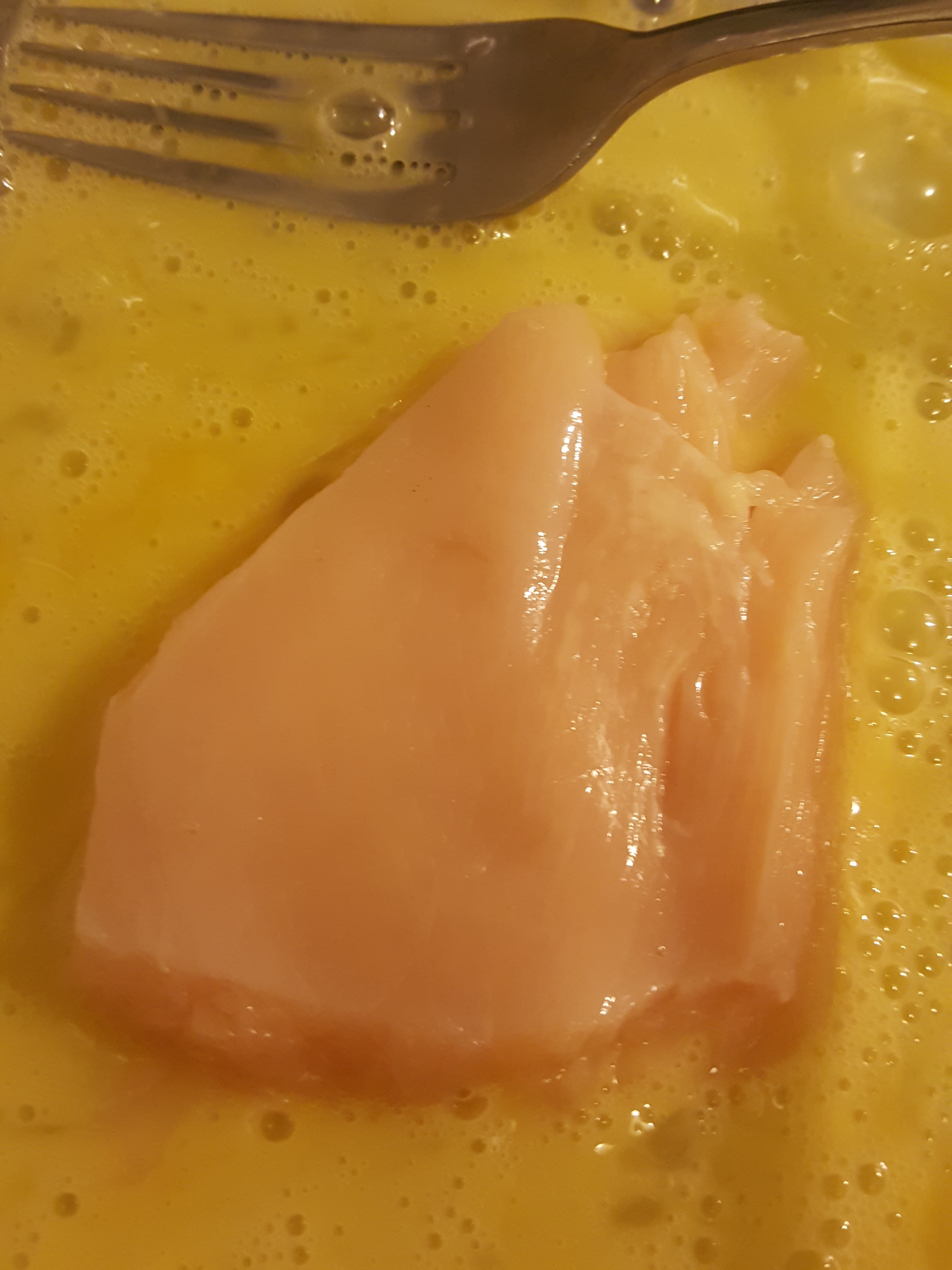
I cut the breast in a few pieces. This time, I forgot to dredge in flour first, which makes a thicker coating. Then dip the meat in a beaten egg.

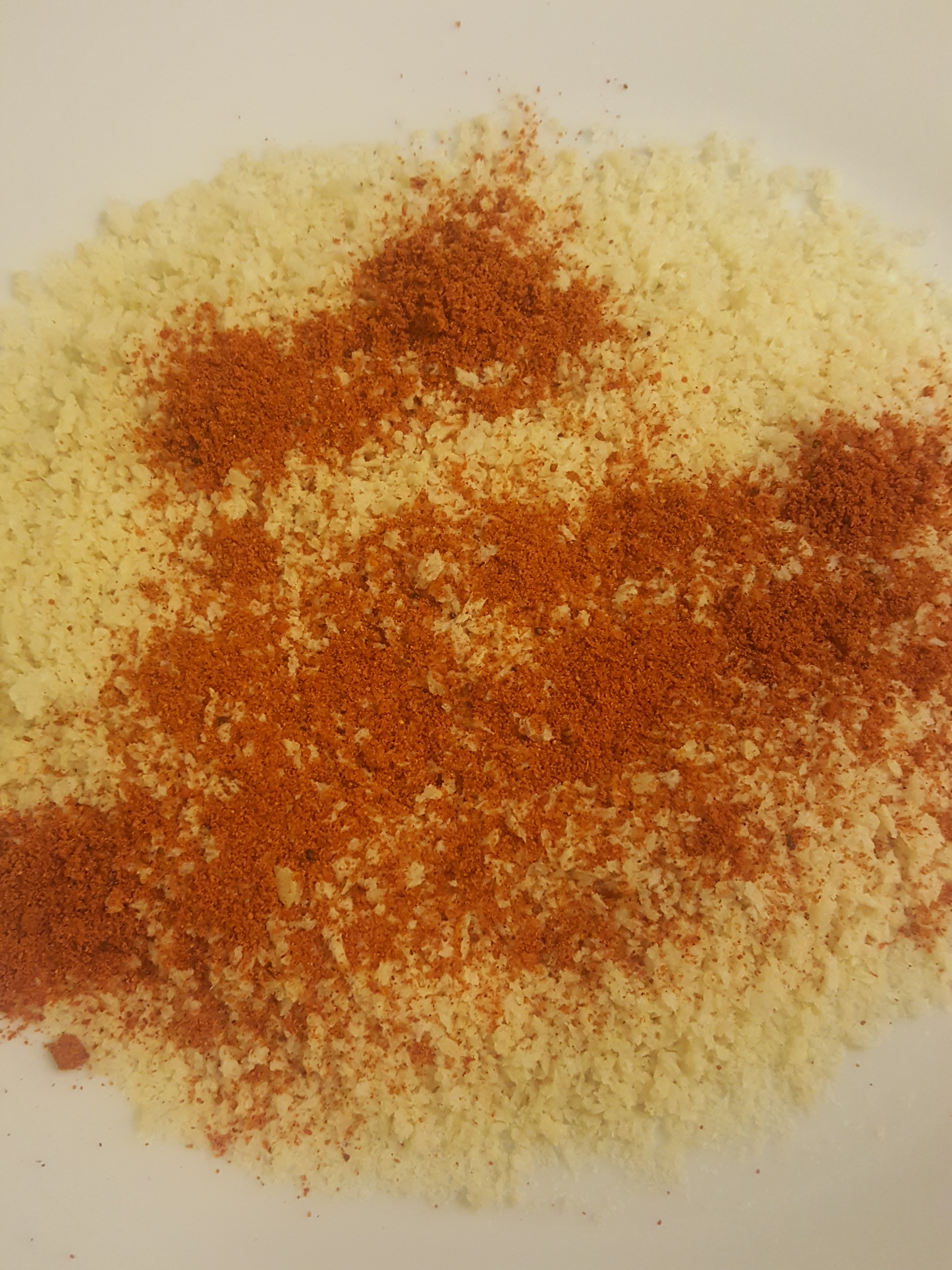
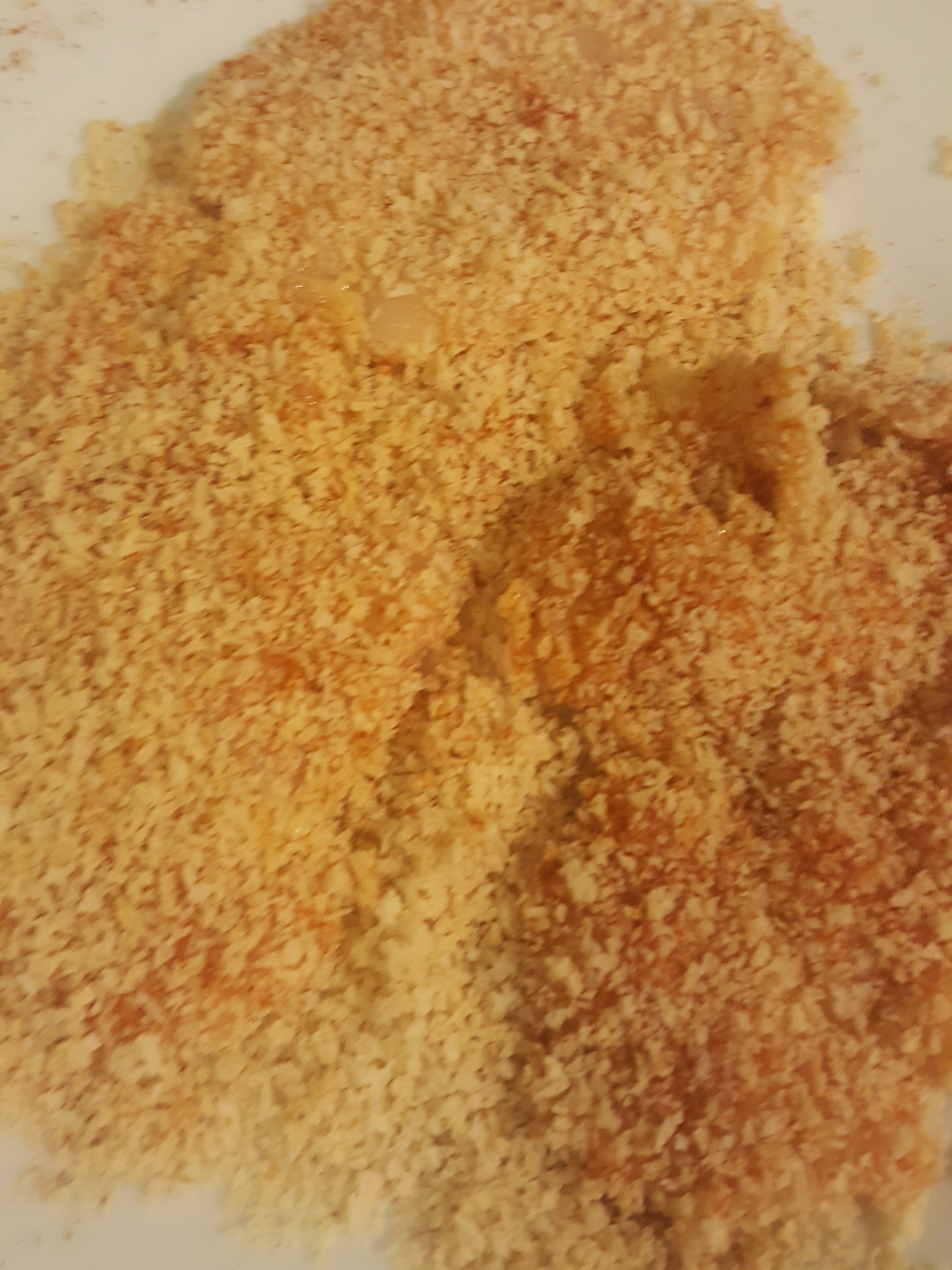
I seasoned panko bread crumbs with Pipian Rojo powder. Salt to taste, if you like.

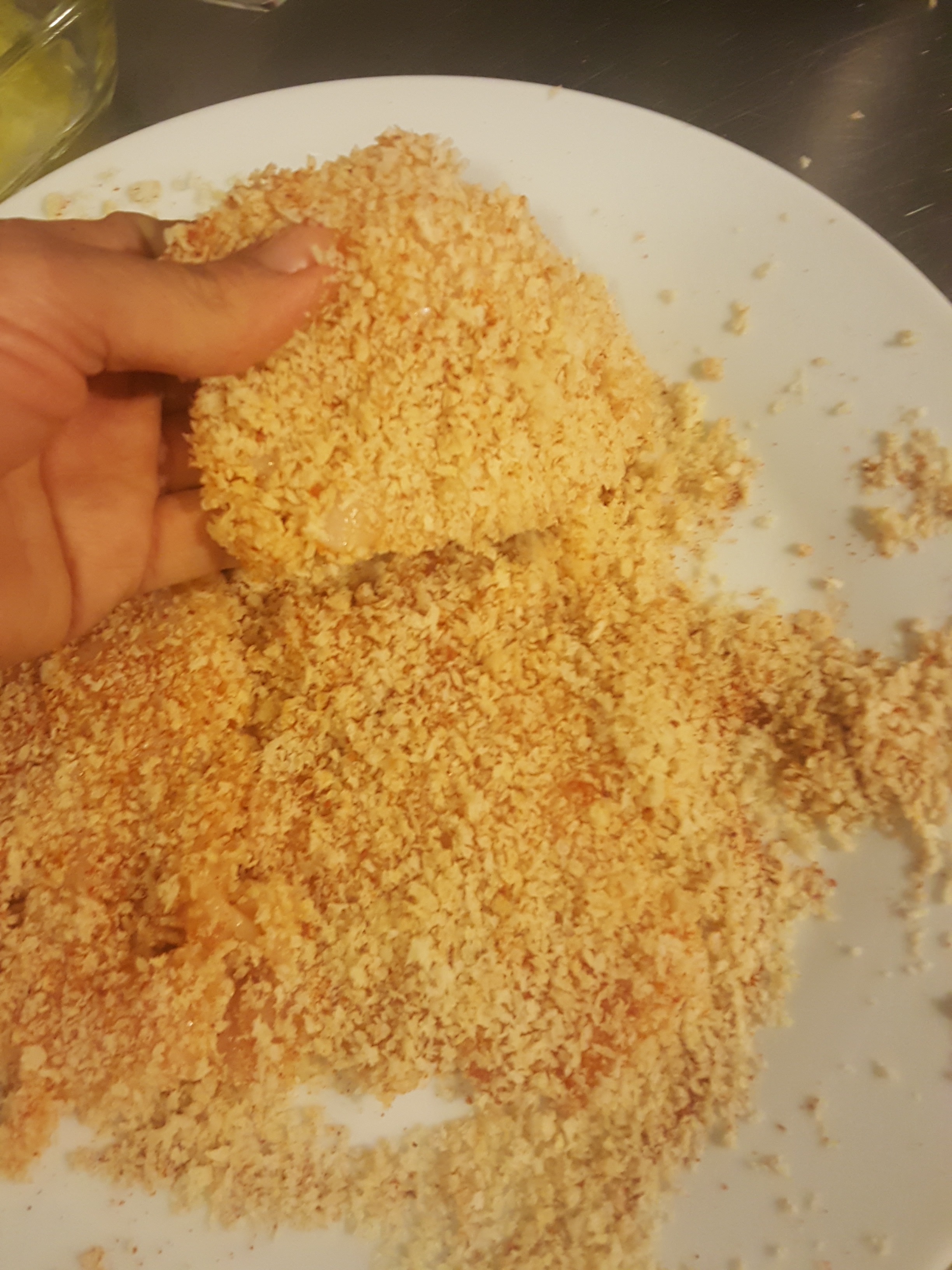
The seasoned crumbs stick to the egg coated chicken, but I pressed extra on to the meat.

Use one hand for the wet egg and the other for the dry crumbs, keeping your hands a little less messy…

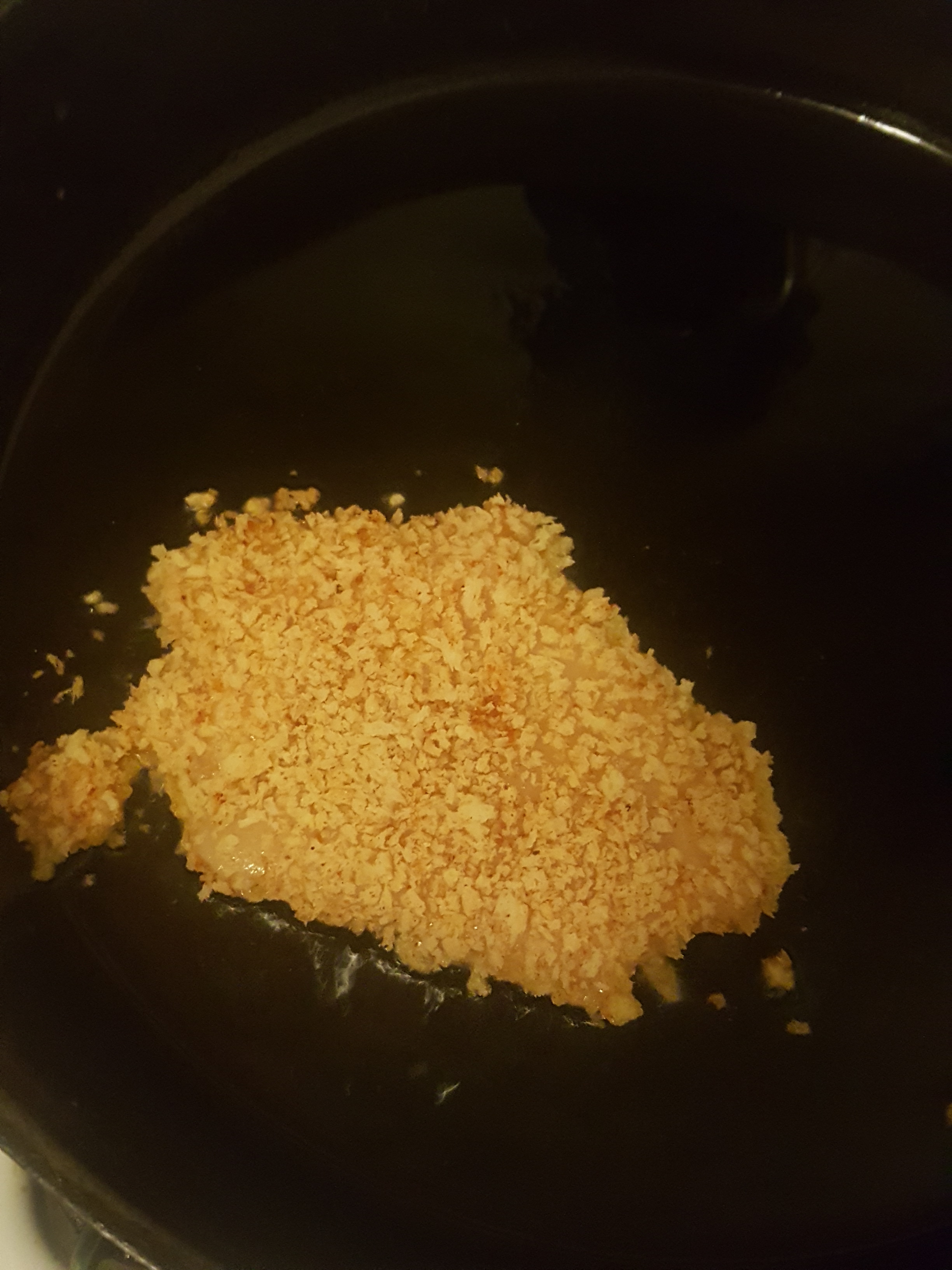
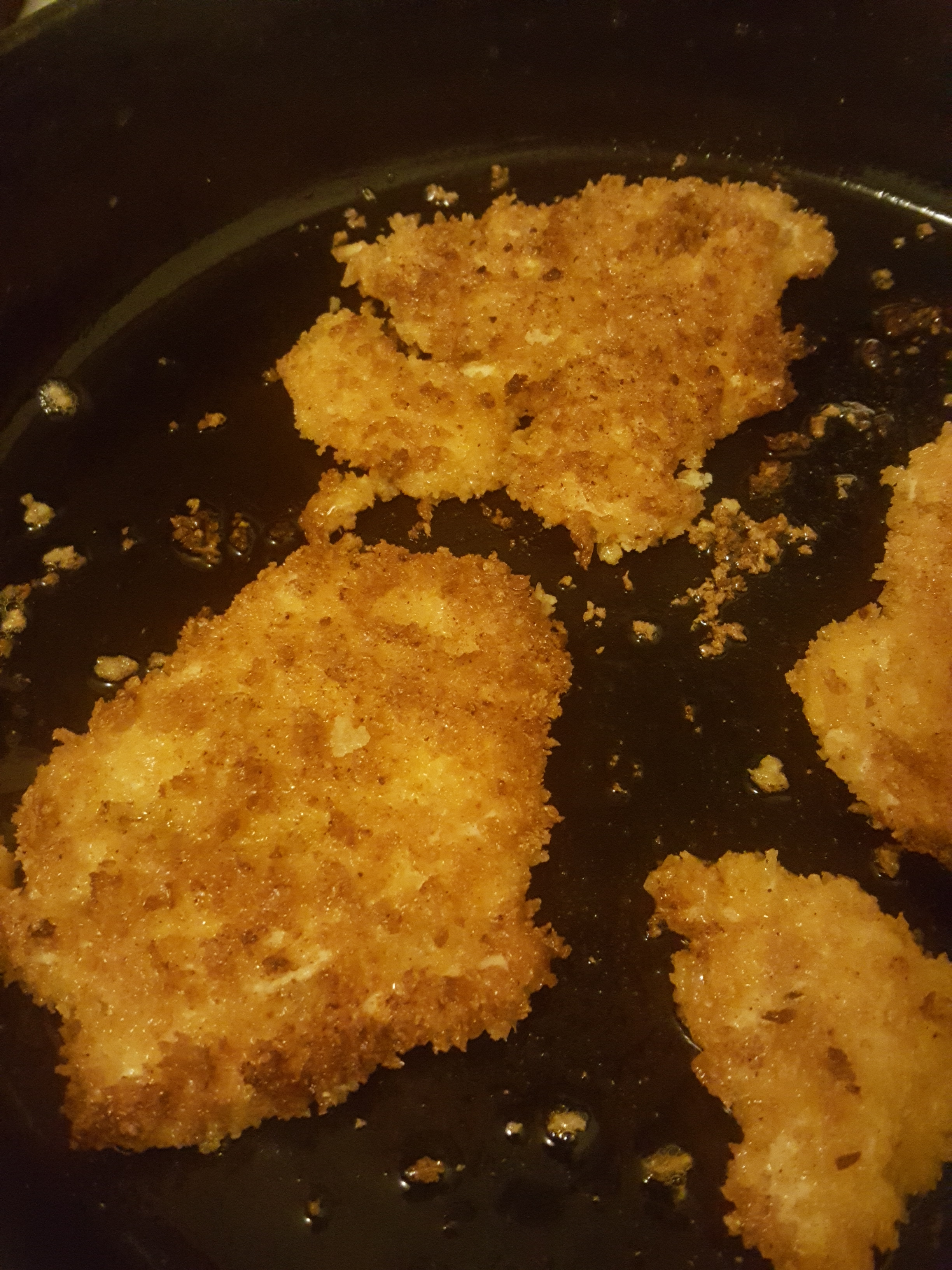
Place the meat in a medium hot skillet with small amount of neutral frying oil.

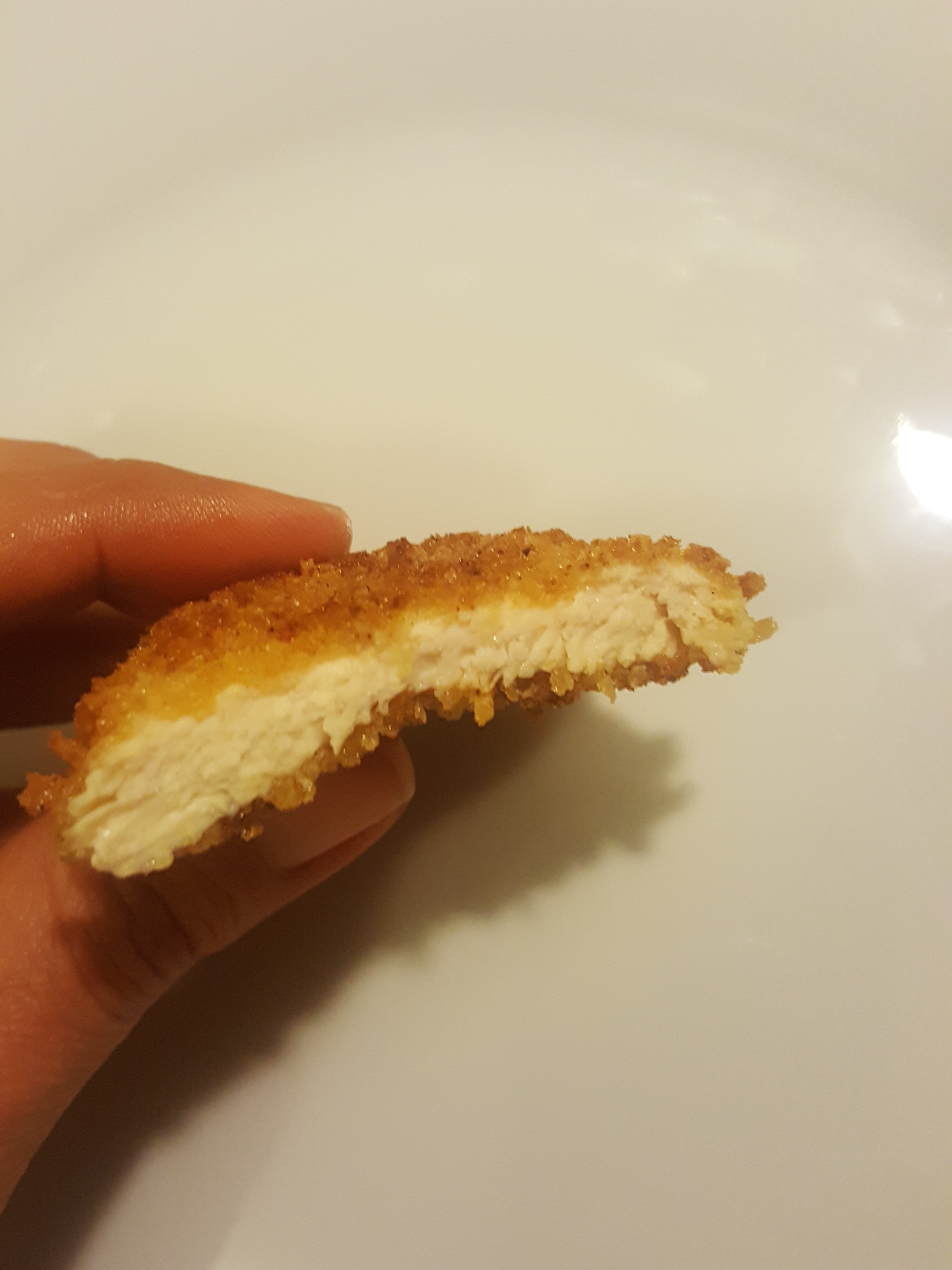
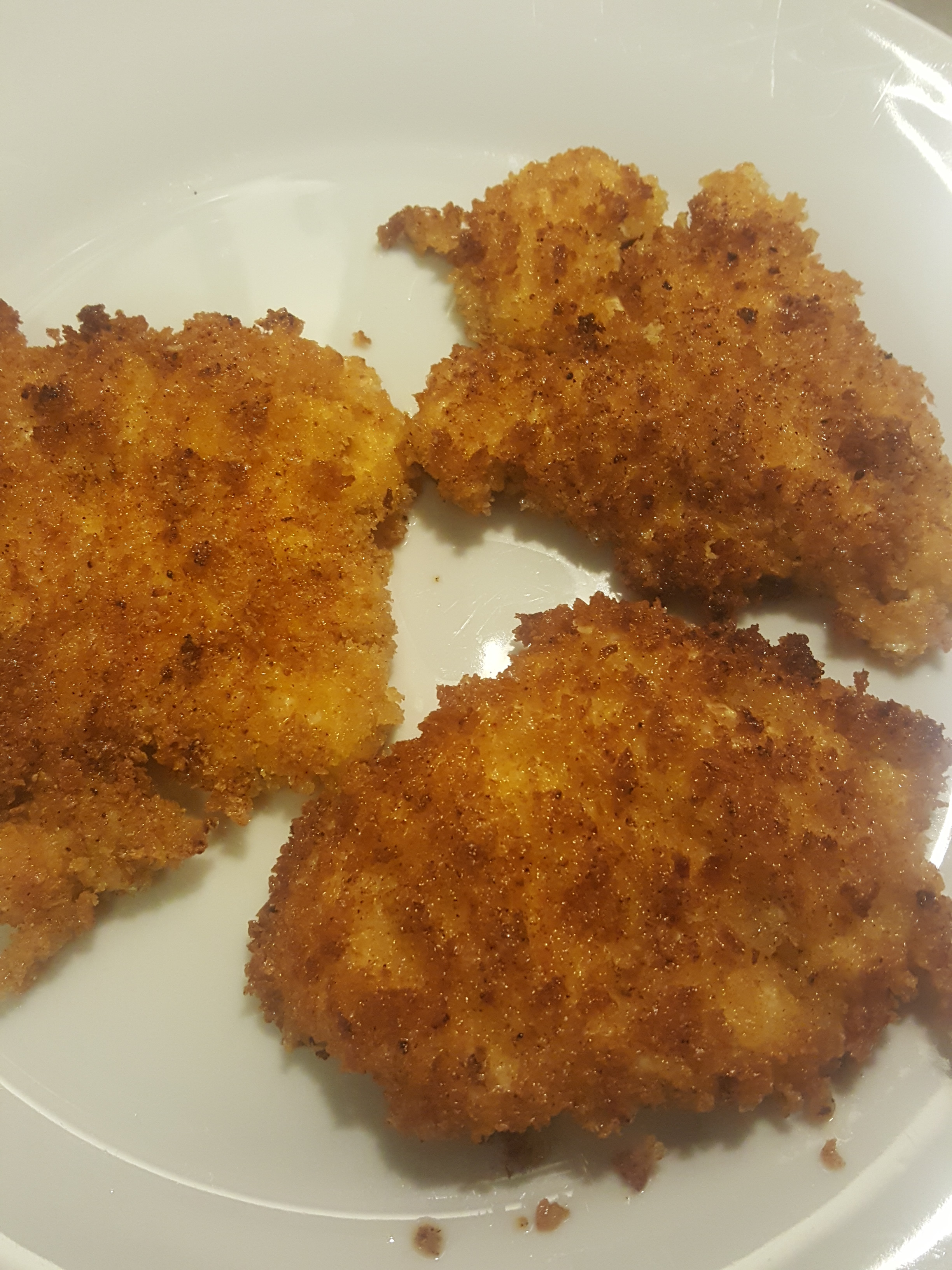
It only takes a few minutes per side for the crumbs to brown and the inside to cook.

Spicy, juicy and tender. It would be perfect served with rice, beans and a salad, but I just ate them as quickly as I made them. Thanks for the idea Mom!

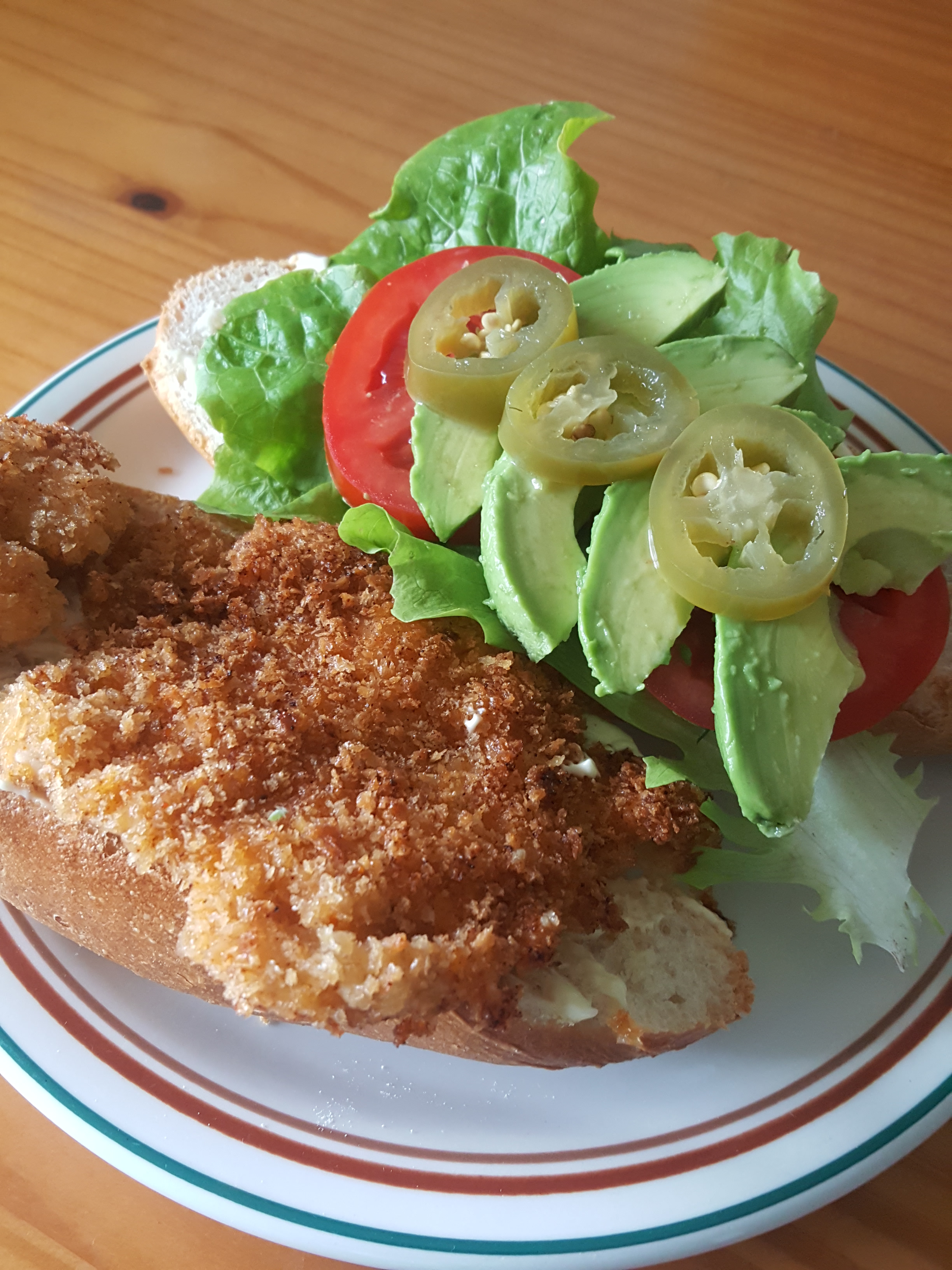
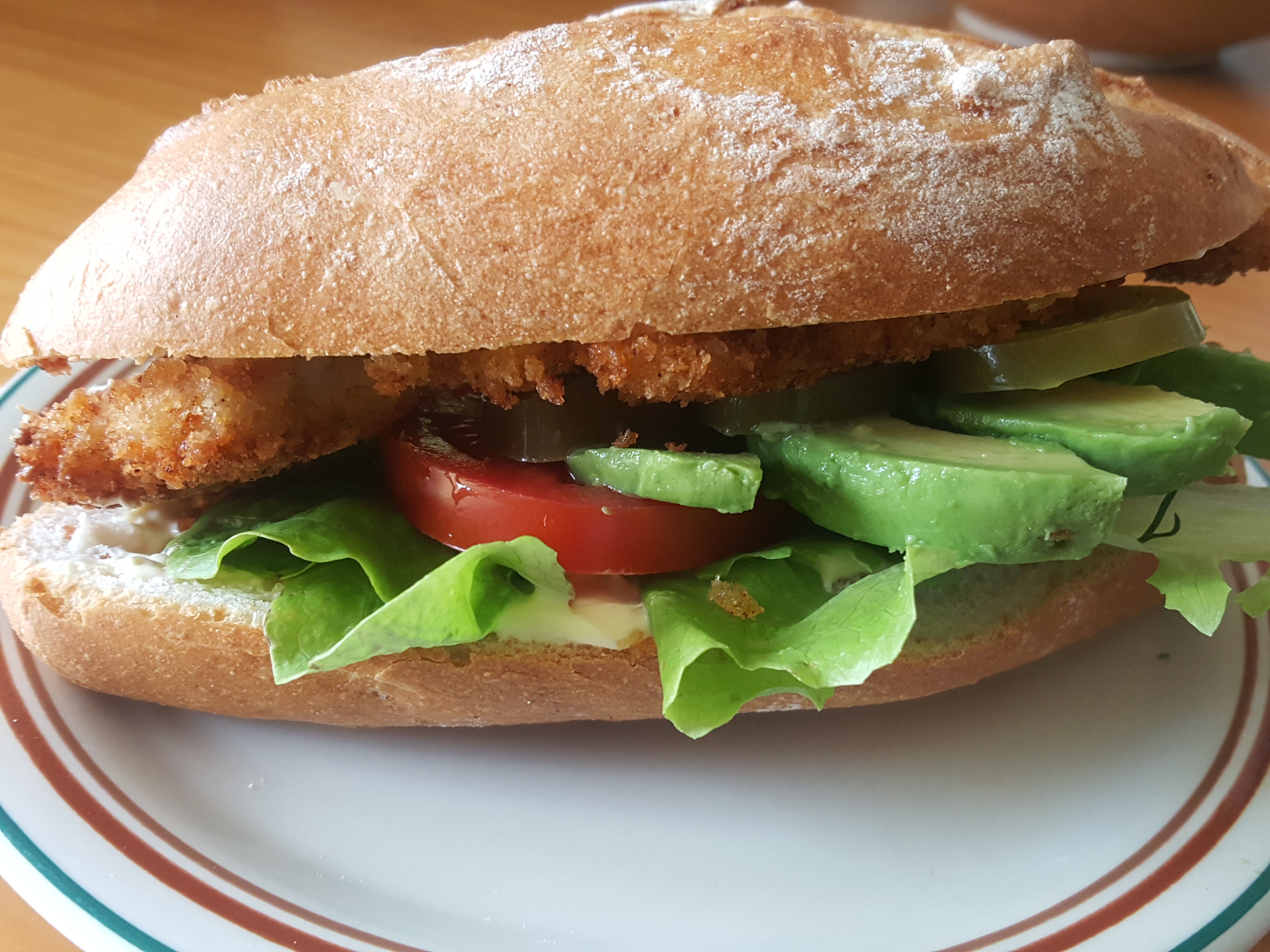
Update: Then I made a torta with homemade mayo, home pickled jalapenos, lettuce from Tucson CSA, tomato and avocado on a bolillo. YUM!


Wild-Harvesting with Good Heart

Isn’t it true that Happy Valentines wishes become really significant when they touch the innermost reaches of our hearts–where their right-ness resonates?!

Tia Marta here sending heartfelt wishes to you blog-readers and appreciators of the desert’s wild foods, with hope and intent that we all may harvest honorably.  Here’s an idea for celebrating love for Mother Earth and indigenous people’s knowledge of Her….

Truly a “hymn of love to the world,” Braiding Sweetgrass by Dr. Robin Wall Kimmerer is the most gently inspiring book I’ve read in a long time! It is a perfect Valentine’s gift to a harvester you love–or a gift for yourself for love of Nature.

In her Braiding Sweetgrass:  Indigenous Wisdom, Scientific Knowledge, and the Teachings of Plants, Dr. Robin Wall Kimmerer weaves a tight yet graceful cord of truth that rings true.  There is strength when the three “strands of knowing” are braided as one.  In particular, her chapter on the Honorable Harvest strikes a resonant chord.  For a stirring verbal version, check out Dr. Robin Wall Kimmerer‘s TED Talk about The Honorable Harvest.  You can view her video here.  It is well worth watching her 18 minute presentation over and over.  Her lessons taken to heart are a fitting and beautiful model how we might live WITH and WITHIN our beloved desert–sustainably–assuring that desert life can evolve and thrive into an unknown future.

Kimmerer’s books can be found locally at Antigone Books, 411 N.4th Ave. They are traditional knowledge and hard science expressed as intimate, personal stories.

And guess what!!  Coming Really SOON –this Monday, February 11, at 6pm,  Dr. Robin Kimmerer will be in Tucson!!  She will read at a public event to share some of her special writings–

at University of Arizona’s Desert Laboratory, Tumamoc Hill (W. Anklam Road near St.Mary’s Hospital), 6pm.   It is free — but space is limited so immediate registration is necessary by phoning 520-629-9455.  Plan to park your car along Anklam Road leaving time to walk up to the stone building for her presentation.  There is a chance that UA may provide van transport from the base of Tumamoc.  To scale the Hill may take 1/2 hour walking the newly paved road.


Inspired by her….Last August–in the desert’s extreme heat–I was harvesting bags of plentiful prickly pear tunas with great respect and gratitude, not to mention awe and incredulity, as honorably as I could, amazed that these succulent “creatures” can produce good food while enduring awesome heat and blasting sun.  Last weekend, after the squeezed juice had rested in my freezer some 5 months, I brought them out to serve at my ArtTrails Open Studio tour– an artistic opportunity to share the desert’s plenty.

A friend toasts the delicious prickly pear, admiration for Nature, and our shared love of art at the ArtTrails Open Studio–prickly pear providing sensational color, flavor, and goodness (MABurgess photo)

Sensational bright pink-purple prickly pear juice frozen in a round mould makes a festive”float” in a punchbowl for Valentine’s Day or any party punch.

At harvest, I had frozen the whole tunas in a paper sack, double-wrapped in plastic.  Later, to extract the sweet juice and pulp, I had thawed them, mashed them, whirled them to slush in the Cuisinart, then squeezed the slush through 4 layers of cheesecloth, into round plastic tubs or moulds to freeze indefinitely as ice-rings.  At serving time, I slipped a frozen round out of its mould–as an ice-block–into the punch bowl, then simply poured gingerale into the bowl to start the block melting. VOILA–we all enjoyed the colorful gifts of festivity, flavor and nutrition.  Nature graces the gathering!

You could embellish this prickly pear punch with spirits or wine, but hey that’s only adding to natural perfection–wild-harvested gifts from the desert!

Kimmerer’s  poetic expression of ancient wisdom resonates.  It strikes home–an inspiration to harvest our wild desert foods not only with immediate gratitude but also with the future of the desert ecosystem foremost in our hearts and actions!

So, Happy Valentine’s to you, and happy wild-harvesting this season with good heart!

[Please visit Tia Marta’s artwork and traditional heirloom foods on the website www.flordemayoarts.com.   You can join Tia Marta and Mano y Metate Molera Amy at our Cholla Buds, Nopalitos and Mole Workshop at the Mission Garden in April, or at one of the Tucson Presidio Museum’s  Gastronomy Tours in March and April.]


Onion rings spiced with Adobo

Hello, Amy here on a crisp and sunny winter day, making crisp and sunny food. I wanted to make something spicy and different, and onion rings sounded fun to make.

I started with tempura batter: rice flour, egg yolk, salt and cold seltzer water.

For half a cup of rice flour, I added half an egg yolk, combining the other half of the yolk with the white to scramble for breakfast. Then a dash of salt and enough seltzer water to make a light batter. Then I added a tablespoon of Mano Y Metate Adobo powder.

I sliced an onion, but many other veggies could go into the same batter.

Through the batter went the rings…

…and into hot oil!

When the vigorous bubbling subsides, they are ready to flip. When golden on both sides, they are done. I skimmed the stray bits of batter and sprinkled over a crispy lettuce and radish salad.

Draining the rings on a wire cooling rack prevents any condensation they might get resting on paper towels, and the whole tray can go into a warm oven for holding.

For additional zip, I sprinkled with extra salt and Adobo powder. Eat as soon as they are cool enough to bite!

Peeling Potatoes for Propagation and Provender

It’s happening in favorite grocery stores and pantries around Baja Arizona.  Potatoes are awakening!  Some are even turning green with chlorophyll showing in their skins.  They know. Time in the low desert to PLANT POTATOES–soon!!–while the weather is chilly and while we are enjoying fantastic soil moisture.

Yukon Gold potato beginning to sprout, skin turning green… This potato wants to be planted!  But wait–no waste here.  We must always be thinking SUSTAINABILITY, right?

Tia Marta here to share a neat trick taught to me by ace heirloom gardener Tom Swain.  Planting potatoes doesn’t have to be a big deal, not expensive nor time-consuming, nor does it require special “seed potatoes,”  no sacrificing luscious chunks of whole potatoes that you would rather eat.  With planting potatoes you can “have your potato cake and eat it too!”

Place potato peelings in a flat dish like this shallow plastic tub. Rinse and drain 1-2 times per day until little rootlets sprout out from under the tiny green leaf sprouts at the “eye.”

These active Yukon Gold peelings sprouted fast and are ready to plant in the garden!

The simple trick is to peel your potatoes to include an “eye” in each peel, the anatomical “action spots” where new life can generate (not hard to find eyes). Knife-peeling may work better for this than with a potato-peeler.  Compost the bad-looking peelings but save the healthy ones to a flat-bottom dish.  Keep the peelings fresh and damp to sprout by rinsing and draining daily, leaving a little water around them, until you have time to dig a garden trench for planting.

Potato plants (Solanum tuberosum) store their life-energy in starchy nodules–potatoes– that form at the tips of modified underground stems or rhizomes.  Green potato skins happen when potatoes are exposed to light–so store potatoes in a dark place.  Avoid eating any green skins of potatoes as they are very bitter and may become toxic.  Better to use green peelings for planting.

Planting my sprouted potato peels — Potato gardening in the desert is different from wetter or temperate regions where plants must be mounded up.  In deserts start them deep:  Dig a trench in good garden soil about a spade depth and place sprouted peels at the bottom…..

Close-up view of potato peels set at bottom of garden “trench”

As I began covering the potato peels on damp garden soil, worms came out to see what the action was. They will assist keeping the soil turned and loosened as I continue to bury the young growth this winter.

Keep a pile of good garden soil at the ready.  As your young plants emerge from the soil, gradually, gently, keep burying them, or top-dressing them with compost, over their days and weeks of growth to encourage the underground stems to continuously elongate, thereby adding space for more and more potatoes to form. Try never to let a little potato get exposed to the sun.  As your plants grow, and as you cover them, your trench will fill, then hopefully it will even become a linear mound full of small potatoes by late spring.  Don’t forget to water regularly as rains diminish.  They need cold or cool weather for best growth, so get them into the ground by end of January at the latest.  You could start them as soon as November’s cool weather sets in.  Plan ahead to protect your potatoes from excavating ground squirrels, rock squirrels or packrats.


Having our “taters and eating them too”– I’m making garlic-parsley-scalloped potatoes with red potatoes I peeled for planting.

Tia Marta’s Scalloped Potatoes Recipe with variations

Into a pyrex dish, slice 6-8 partly peeled potatoes (Skins are nutritious!).  Add 1 cup of grated cheddar cheese, 1+ tsp sea salt, garlic powder and/or black pepper to taste, and milk (soy or rice milk OK) 1-2cups to barely cover potatoes.  As additional seasoning options add 2 Tbsp Mano y Metate Mole mix, 1 Tbsp parsley, and/or 1 tsp paprika. Mix, Cover and Bake at 325 F for ca.45 minutes until all ingredients are happily melded.  [For solar-oven cooking use dark saucepan and dark lid.]. Don’t burn your tongue when you serve them piping hot–and do enjoy the fruits of your potato-labors!

No waste here… I’m using partly-peeled-for-planting red spuds in this delicious variation on scalloped potatoes–seasoned with Mano y Metate’s yummy Mole Verde!  (available at NativeSeedsSEARCH  and many specialty markets in Tucson, online at http://www.manoymetate.com)


Organic new red potatoes ready to peel for sprouting AND for cooking–  Now go for it–don’t waste those peelings!!  Make them work for you.  All it takes is a little bit of garden space and you will have new potatoes for potato salad by next summer.  Happy peeling and planting!

Tia Marta is an artist, ethnobotanist, and teacher about Baja Arizona’s gastronomic history and prehistory.  Her heirloom foods and/or “foodie” notecards can be found at NativeSeedsSEARCH, Tohono Chul Park, the Presidio Museum, Old Town Artisans, Arizona State Museum on UA Campus, Tucson Museum of Art, the UNICEF Store, and online at www.flordemayoarts.com.  Catch one of her Native Foods workshops at Friends of Tucson’s Birthplace’s Mission Garden, or join her downtown Gastronomy Tour at Tucson Presidio.  Coming up soon!–Join us to view her traditional foods artwork at the ArtTrails Open Studio Tour on Tucson’s West Side, Saturday and Sunday February 2-3, 10am-4pm both days.  For directions see the centerfold in Zocalo, the Desert Leaf calendar, or go to www.ArtTrails.org.  See you there!