No roll crackers

Hi friends, it’s true, crackers without the rolling. Amy here sharing this week’s iteration of this miracle recipe I found online. It all started with an abundance of oats…
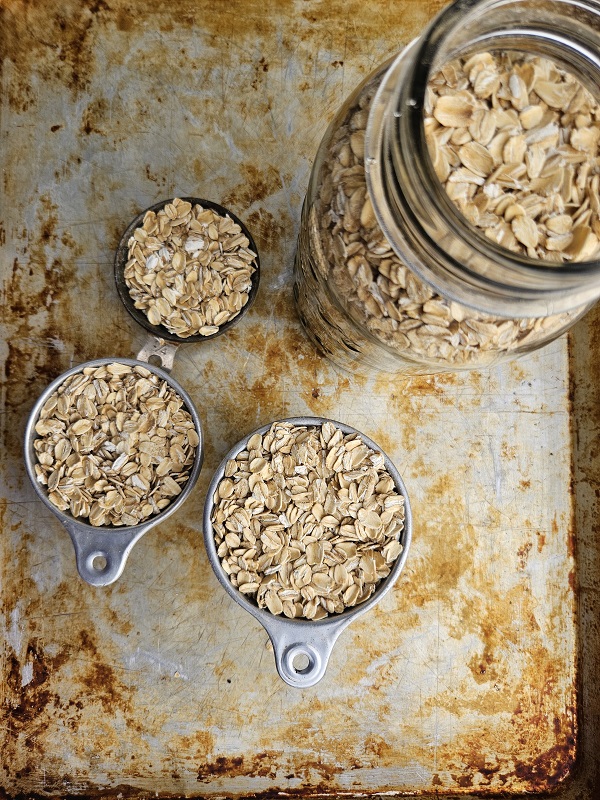
A friend gifted me many pounds of organic rolled oats. Searching for inspiration to use them, I found Camilla’s Easy No-Roll Oat Crackers ( vegan, oil free, GF). It is a brilliant recipe that I’ve been making often these last few weeks since I discovered it. Besides oats, they contain seeds or mix of seeds. Sunflower makes particularly good crackers but branching out, I remembered Carolyn’s Black Beauty Wafers using saguaro seed. The seeds are strained out when making a syrup so those are a brilliant way to use the seed.
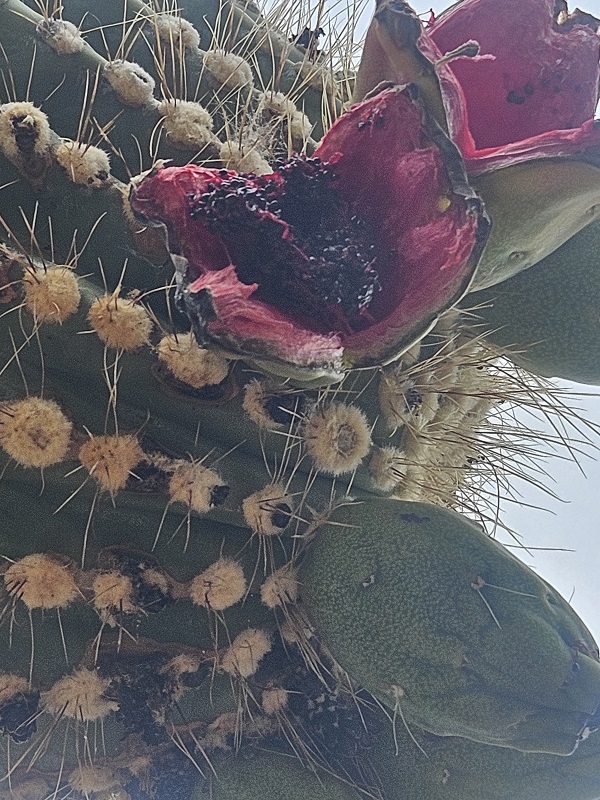
In June, the birds get the first feast of saguaro fruit. If there is more ripening fruit than the birds eat, it falls the ground, often sun dried and intensely concentrated, where I can easily harvest it without poking the plant. No need for a pole!
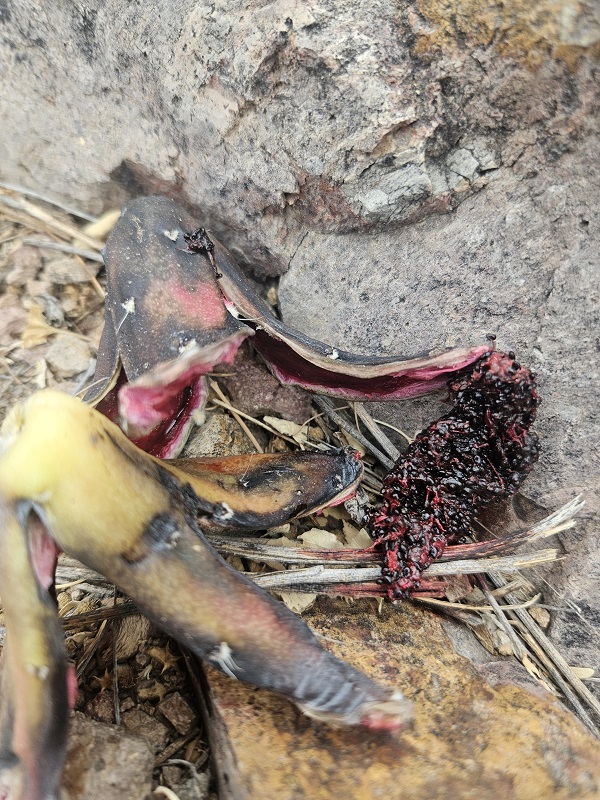
The ground animals get to feast first before the humans, of course, so we waited. But ripe fruit spoils in the rain, and I would never complain about glorious rain! So this year wasn’t the best saguaro fruit harvest for humans. (below, note the mesquite leaflets for scale)
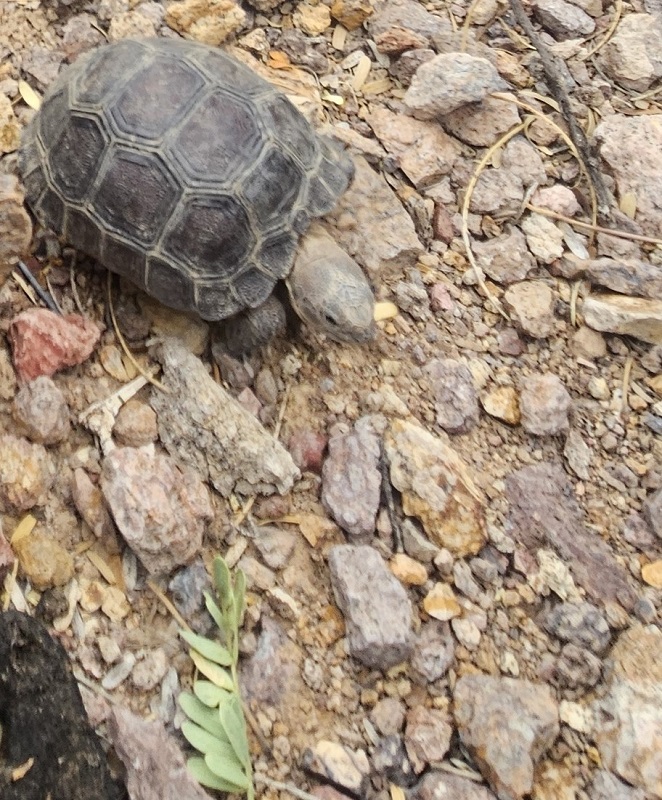
I had some oooold fruit stored in the pantry so I decided to use the whole fruit instead of just the seeds.
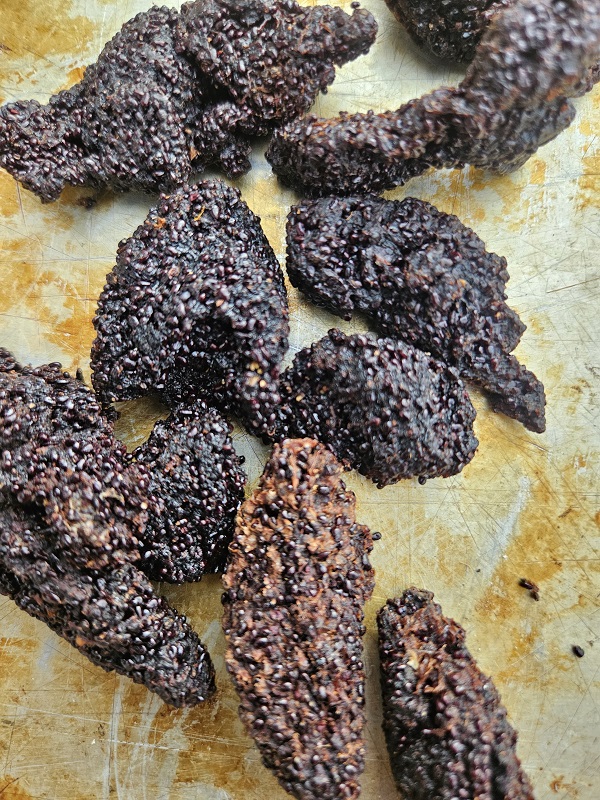
I soaked it in water to soften it.
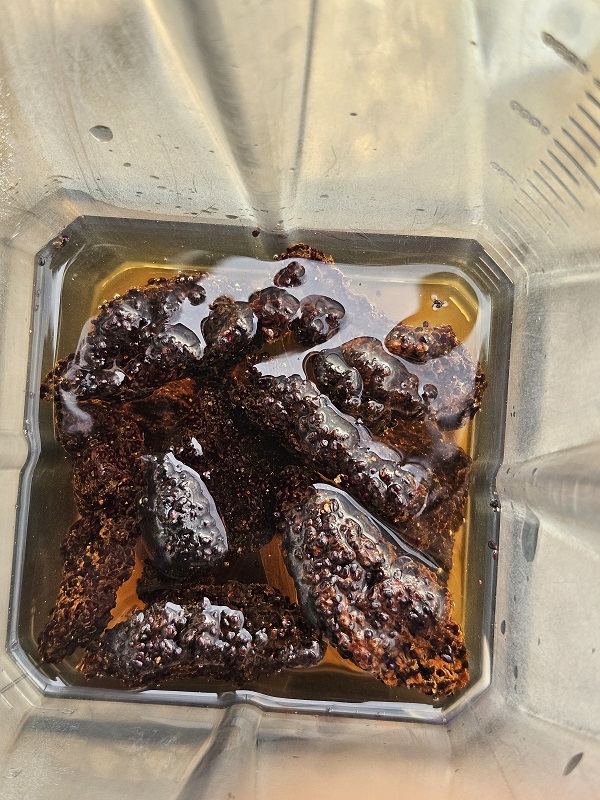
And blended it enough to grind the seeds. Then I added the oats, salt, baking powder and oil.
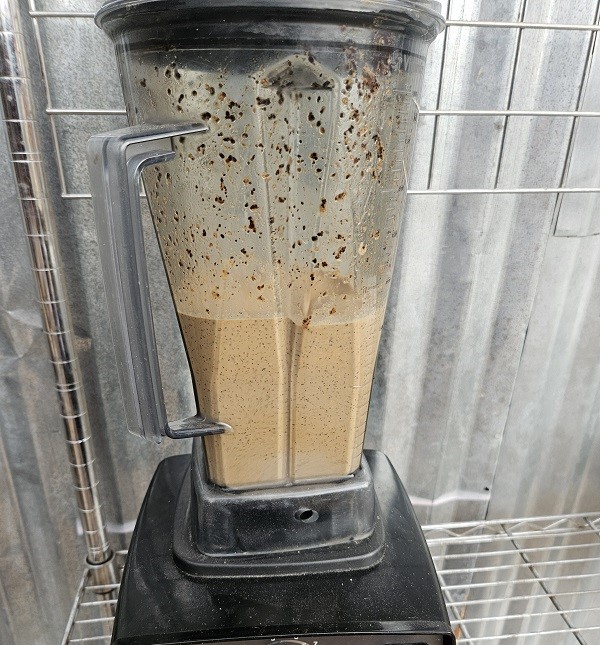
The batter is poured onto a greased half sheet pan (or even a bit larger pan to make crackers just a bit thinner).
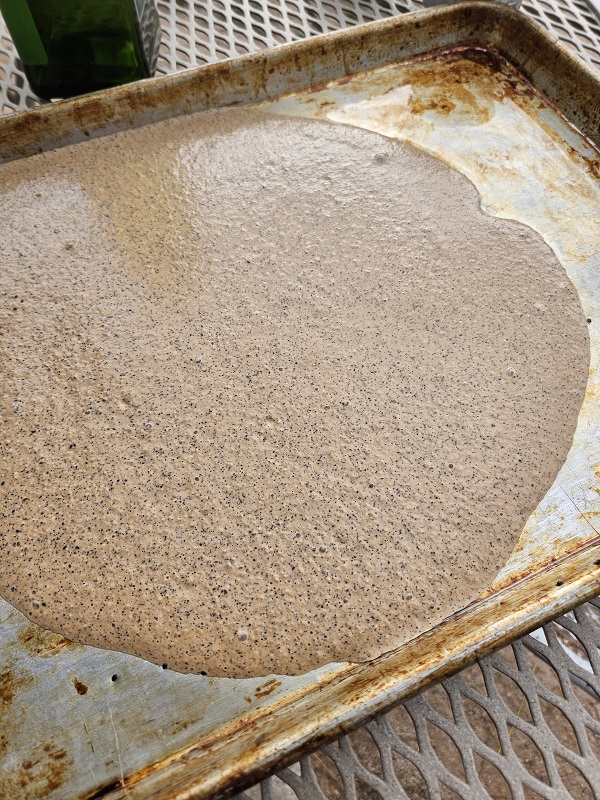
Instead of rolling the dough, it just needs to be smooth!
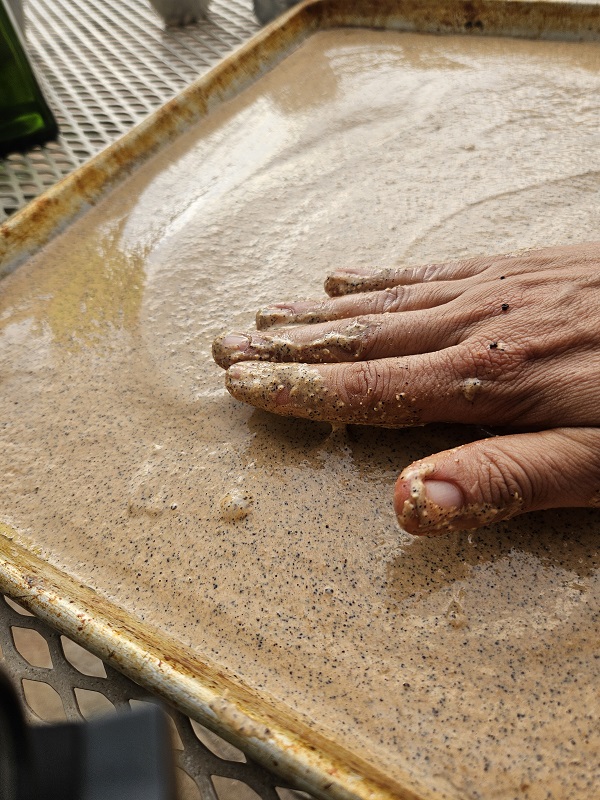
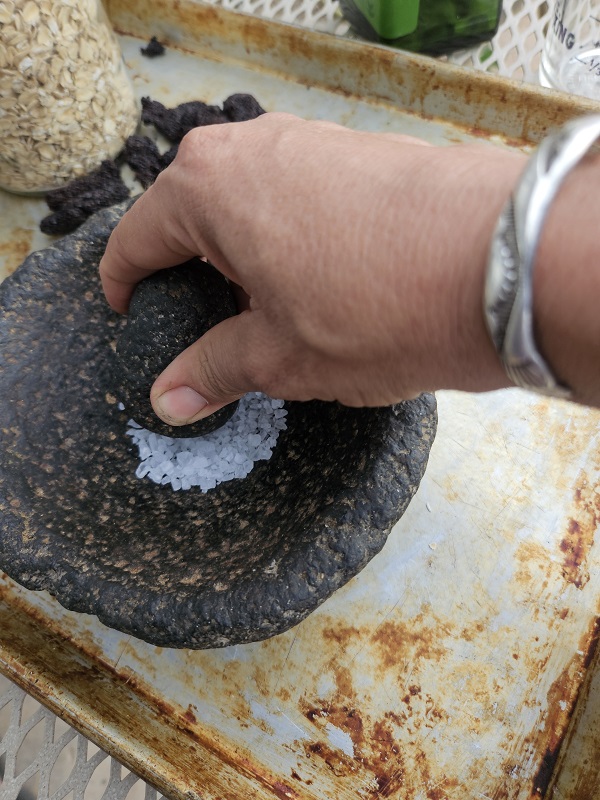
I prefer to add just a touch of salt to the batter so I can sprinkle a decent amount on top. I ground my best Mexican sea salt for this.
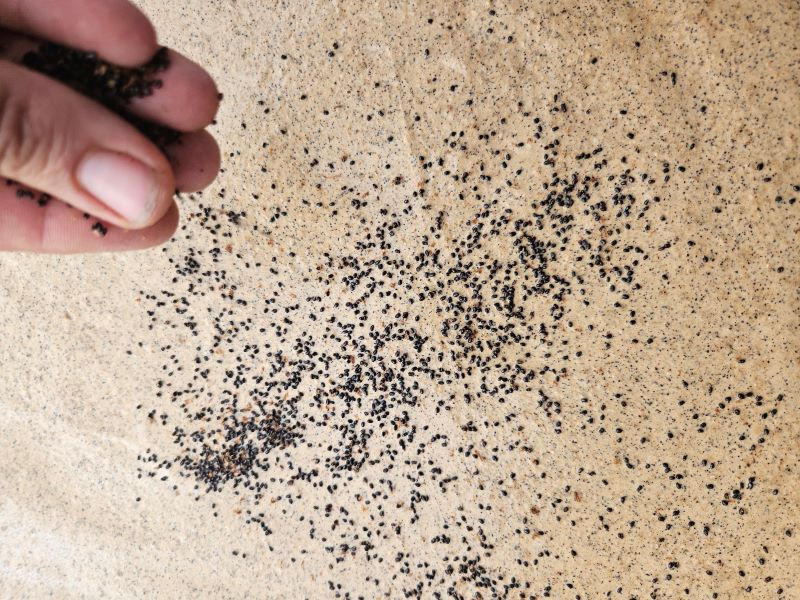
Then I sprinkled with saguaro seed.
After baking for ten minutes, the crackers can be scored before returning to the oven to finish.
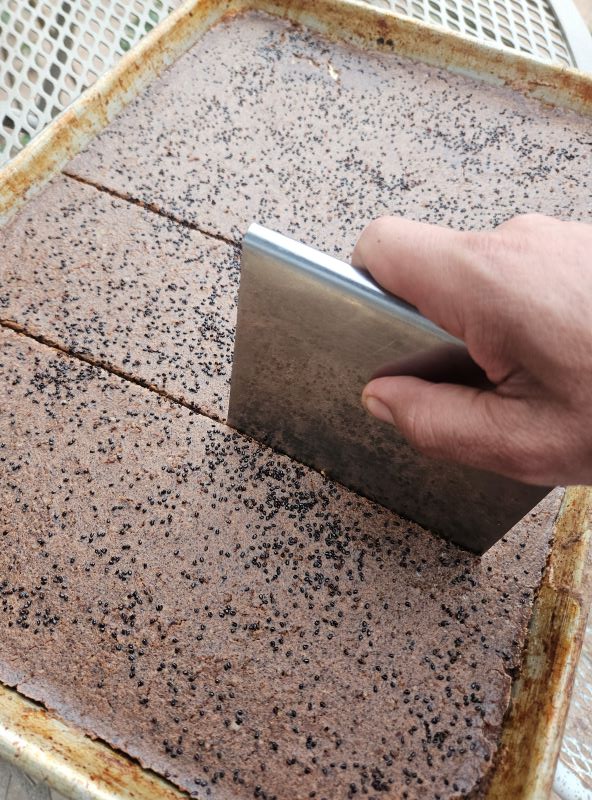
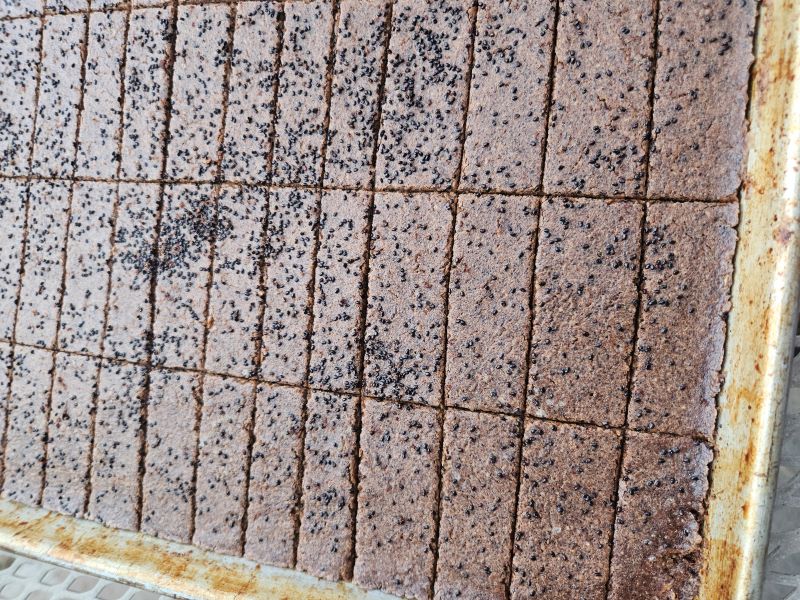
After baking with careful supervision, this batch got darker from the sugar in the saguaro fruit than other batches. A hit of sweetness and delicious! Next time I’ll use a slightly larger yet pan so they are a little thinner. The thinner ones are crispier and more delicate. But think or thin, they are easy to enjoy with spreads, alongside a salad or on their own as a trail snack. Enjoy!
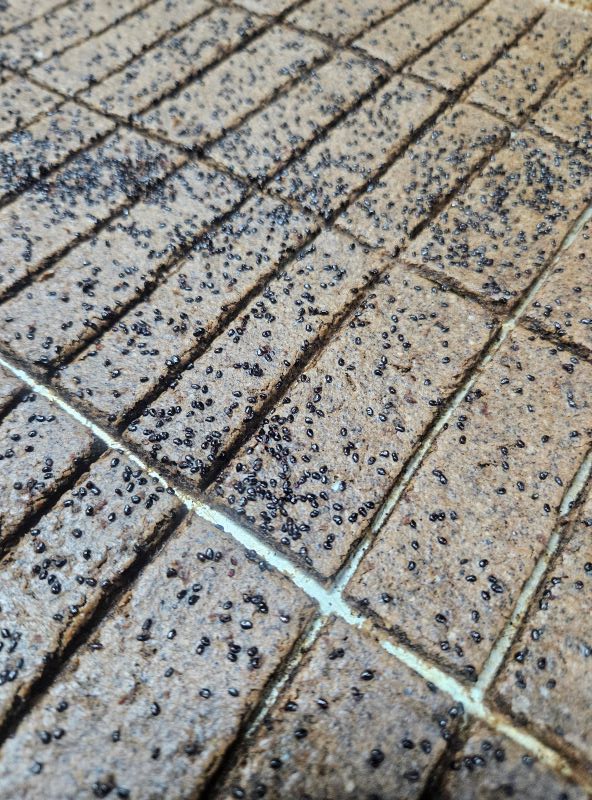
For the recipe, see Camilla’s post on her blog powerhungry.com

Instead of seeds, I added the equivalent weight of dry saguaro fruit. I added a quarter cup of olive oil and reduced the water by that amount. I used approximately 1 teaspoon of coarse sea salt divided between the batter and sprinkled on top with the saguaro seeds. Experiment and have fun!

Tepache: An Sonoran Summer Favorite

Josefina Lizárraga served her tepache at a recent event at Mission Garden in Tucson. Josefina is a font of wisdom on the traditional foods of the Sonoran Desert.

The summer heat has settled in here in Southern Arizona and cooling drinks are the order of the day. Of course, there is always water, but it’s nice to be amused by something more flavorful. 

It’s Carolyn today, bringing you a recipe for tepache, a simple pineapple drink that is a classic regional favorite. It is made with pineapple peels, the part you usually throw away, and a Mexican sugar staple, a hard cone of brown sugar called piloncillo. Properly made, tepache has a slight alcoholic zing. It won’t get you drunk, but it’s best reserved for adults. 

We recently learned how to make tepache from Josefina Lizárraga, who comes often to Mission Garden in Tucson to share her tips for dealing with local fruit. She is affectionately called La Madrina del Jardín. The process is pretty simple.

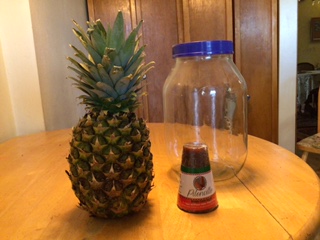
A nice ripe pineapple, a cone of piloncillo, and a jar are all you need to make tepache.

Tepache Recipe

Choose a ripe pineapple with a nice fruity fragrance. Wash the outside. As you cut off the peel, leave a little more of the fruit than you would if you were tossing it out. Cut the peel and the core into smaller pieces and add to the jar.

Bring about two cups of water to a boil in a small saucepan and add the piloncillo. Turn off the heat and let the sugar dissolve. If you can’t find piloncillo, use 8 ounces of dark brown or turbinado sugar.

Put the pineapple peels into your gallon glass jar and add whatever fruit you won’t be eating as well. Adding some of the fruit will give your tepache more flavor. You can also add a few cinnamon sticks.

Cut the pineapple peel and core into chunks.

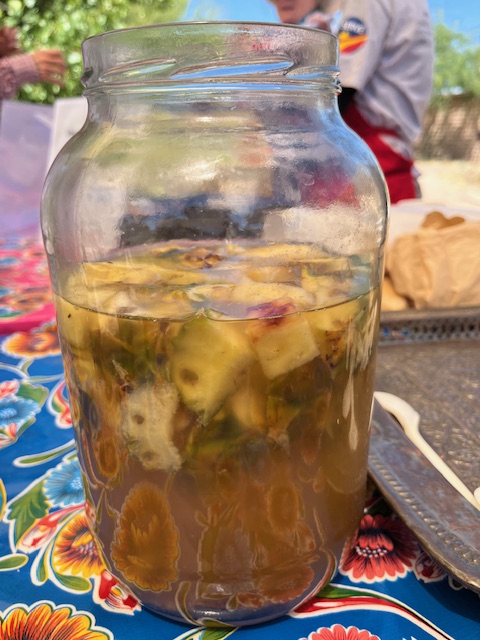
Add the dissolved sugar and water and top up the water to about 3/5ths. Cover the jar with a cloth. DO NOT SCREW DOWN A LID. Put the jar on your counter. Josefina says just 4 to 4 1/2 days. Longer will result in vinegar. Refrigerate your tepache and enjoy with ice.

This is Josefina’s tepache she was serving at Mission Garden.

___________________________________________________________

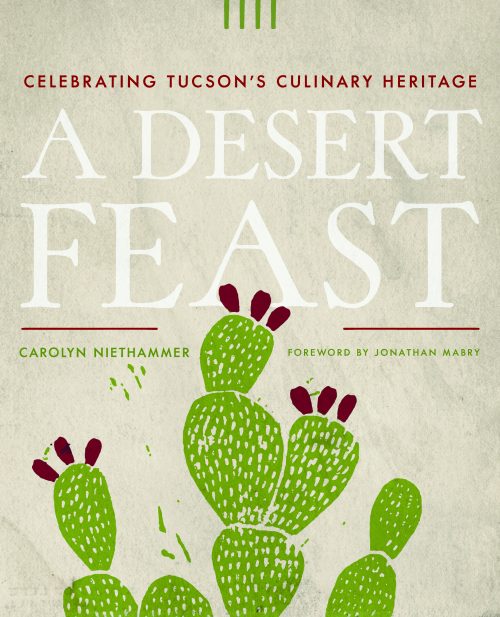
You can learn more about the history of food in Southern Arizona in my latest book A Desert Feast, the story of the last 4,000 years of food in the Sonoran Desert. Want more recipes using  foods of the Southwest? You’d find ideas for collecting and using 23 easily recognized and gathered desert foods in Cooking the Wild Southwest: Delicious Recipes for Desert Foods.  . Recipes from top Southwest chefs are collected in The New Southwest Cookbook. Just click on the titles for more information. You can learn more about me on my website.

Savory Wolfberry Amaranth Balls

Hello friends, Amy here enjoying another great year for the wolfberry bush (Lycium fremontii …I think) in my yard. Tucson’s native species of the Chinese goji berry, they are similarly packed with antioxidants and health benefits. In the tomato family, it’s called tomatillo in Spanish, not to be confused in size, shape, color or taste to the garden variety of husked ground cherries that go by that name. Wolfberries taste somewhat like tomatoes and work well in sweet and savory dishes, when I manage to harvest more than I eat raw from the bush. Thriving on only rainwater, one huge plant produces plenty of fruit for me and the resident phainopeplas.

Inspired by this recipe for millet balls, I used fresh wolfberries in place of dried Turkish barberries.

It was delicious! It reminded me of falafel, crispy on the outside and grainy on the inside. A simple cilantro, garlic, lemon juice, olive oil chutney complimented them perfectly.

So the next time, I decided to use amaranth seeds. I bought this from the store, but you can harvest your own from wild or cultivated plants in the late summer if you’re ambitious.

I toasted them in oil until they became a shade darker and a few of them popped open.

I added water, three times the volume of amaranth seed, and cooked in the solar oven until it was creamy. Then I mixed in fresh wolfberries and enough flour to make a soft dough.

The dough was muuuuch stickier, so I added significantly more flour than for the millet balls and still they looked shaggy. (I used all purpose wheat flour but next time will try amaranth flour).

The toasted flavor came though and I’m glad the only seasoning I used was salt and wolfberries. The dough certainly didn’t need any egg or flax egg to hold together! They baked up just as well as the millet version, but with the texture of a cookie. Next I’ll try them sweetened!

I served them with a lemon pickle but that tomatillo salsa would be good. I took the rest to a picnic among the wildflowers. Happy spring!

processed by AtomJPEG 1.5.0n

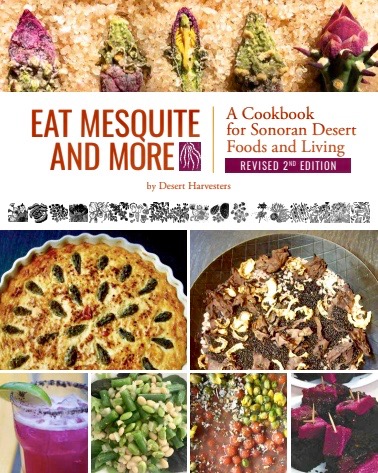
Eat Mesquite and More: a Cookbook for Sonoran Desert Living

Happy Summer, friends!

Amy here, on a hot, hot morning, sitting the shade. Have you seen Desert Harvester’s new edition of the cookbook??? It is 400 pages! with lots of color photographs and original art. It really is worth getting the book for the art alone.

But today I want to highlight the ethics in book. It starts with a poem by Ofelia Zepeda, followed by a land acknowledgement, and a Desert Harvesters ManiFEASTO in English and Spanish. There is a recipe for Abundance and a detailed primer on Reciprocity, elaborating on “Get to Know vs Grab and Go” and “Rewild vs Defiled” and a whole other section on living and eating in place. So yes, even if you don’t live in the desert where these plants grow, and even if you never plan to cook, this is still a tremendous resource and inspiration.

As the title declares, Desert Harvesters has morphed from mesquite milling focused to offering intimate portraits and recipes of over 20 desert ingredients. Have you harvested: mesquite, ironwood, saguaro, acorn, devil’s claw, wolfberry, hackberry, mushrooms, chiltepin, barrel cactus, prickly pear pads and fruit, cholla, chia, agave, palo verde, yucca, ocotillo, globe mallow, purslane, packrats, grasshoppers or cicadas? With detailed harvesting instructions, seasonal timing and expert tips, a novice harvesters can actually get out there and try! Many desert plants offer multiple delicacies, such as ironwood tree as green seeds, mature seeds, flowers and seed sprouts.

There are a LOT of recipes, some easy and some taking days or longer to make. I didn’t count how many recipes are in the book, but it says only 80 of them are bilingual, English and Spanish and 65 are new to this edition. There are a few medicine recipes, too. This book really does have something new for even the most seasoned harvester. The recipes are contributed and tested by community members far and wide, encompassing ancient wisdom and modern innovation from many cultures. It also includes many recipes from us Savor Sisters, Carolyn, Tia Marta and I.

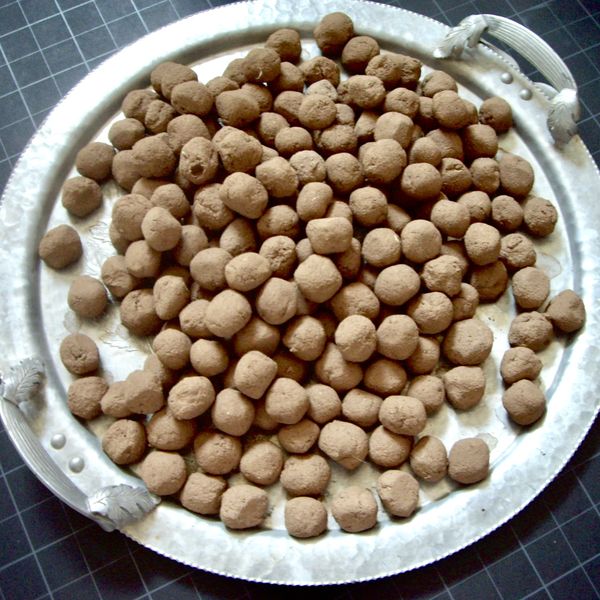
If you still aren’t convinced to buy this book or find it in the library, go to Desert Harvesters Facebook page. There you will see recipes for Seed Balls for planting and Saguaro Fruit Truffles for eating. Don’t mix them up!

Spring Grapefruit Salsa

In Tucson the mesquite trees have fresh new leaves and bags of grapefruits are looking for homes. Happy Spring! Amy here using grapefruits a way I learned from my friend and mentor Barbara Rose of Beantree Farm. You can find the original recipe as well as so much other inspiration in a new edition of the Desert Harvesters Cookbook available to preorder now.

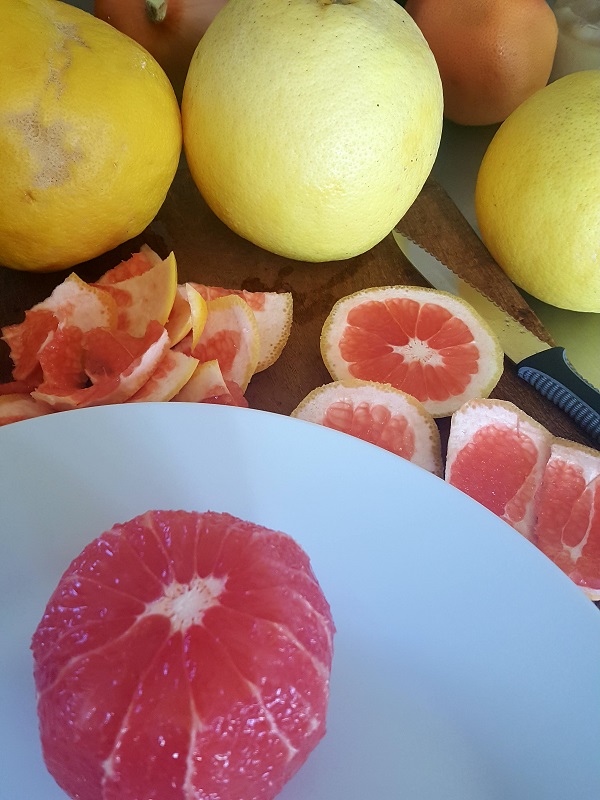
Salsa is commonly made with tomatoes or tomatillos, but when fresh tomatoes are months away, grapefruit are plentiful, juicy, sour and pulpy with a hint of sweet. Yum! Start by cutting the stem end and blossom ends of the fruit.

Then cut down the sides to remove the peel, including the pith. Candy the rinds if you like!

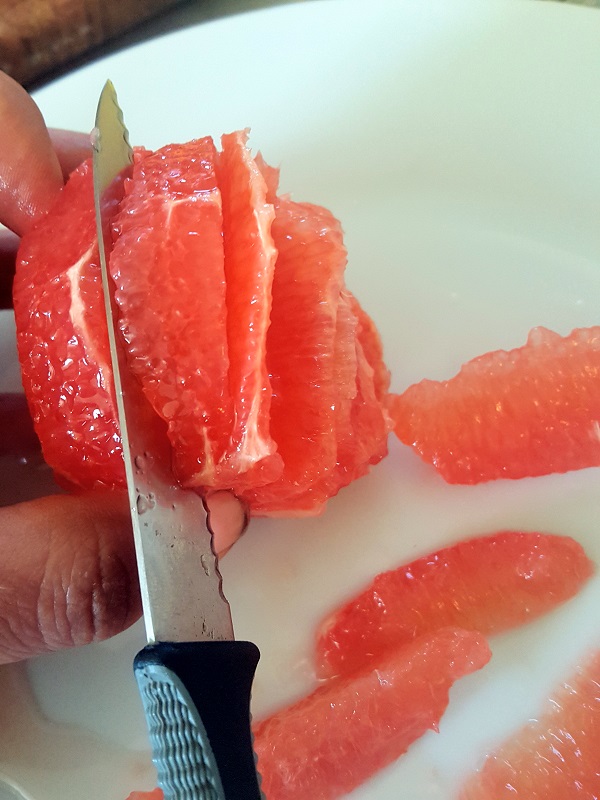
With a paring knife, cut along both sides of each segment to release the pulp in wedges. This goes more quickly than it sounds.

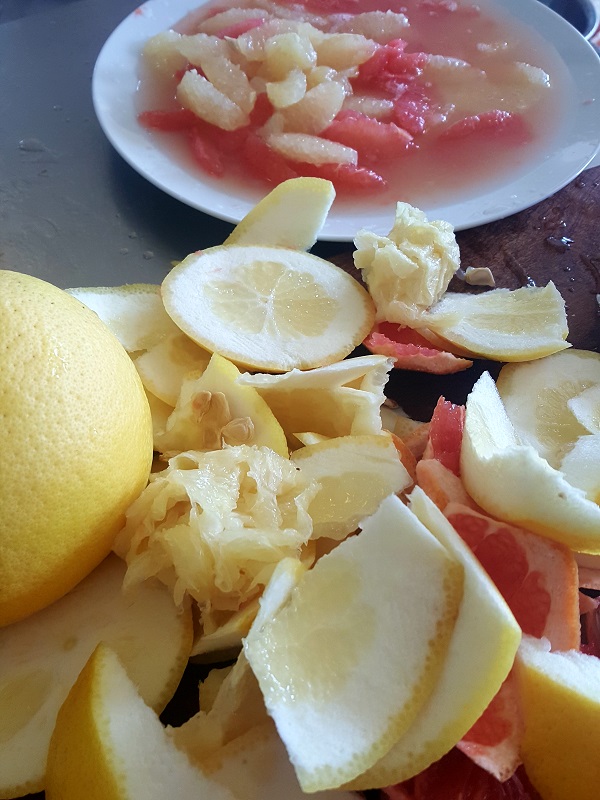
I don’t worry about getting every little piece of pulp since I squeeze the juice out of the membranes left behind.

Remove the seeds and drink some of the excess juice. A mix of different colored grapefruit or even oranges is fun. Use what you have!

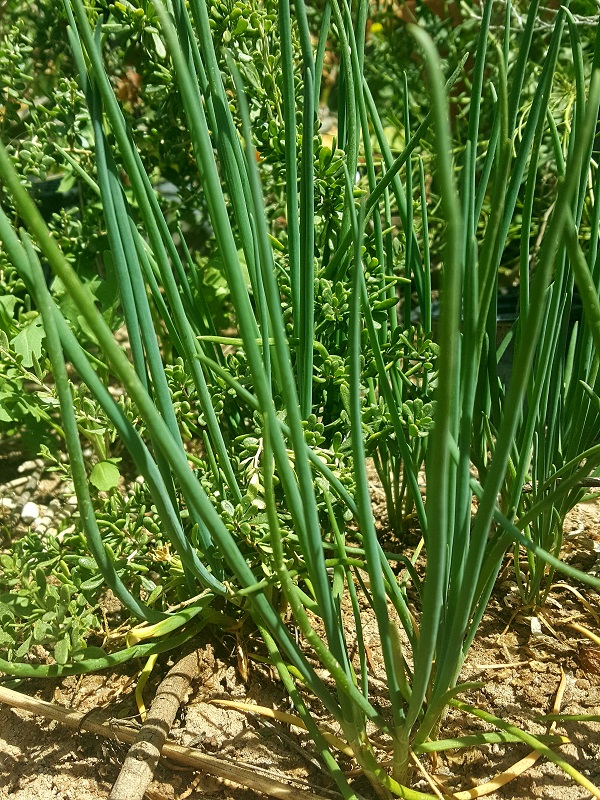
I’itois bunching onion tops have a unique onion flavor but any color onion will work: bulbous white, red or yellow, green spring onion tops, shallots… whatever you have.

Besides a smashed clove of garlic, a splash of cooking oil (any kind), a pinch of salt, and rubbed Mexican oregano, the not so secret ingredient is crushed chiltepin! Use as few or many as you like. Allow the salsa flavors of blend and the chiltepin and oregano to rehydrate.
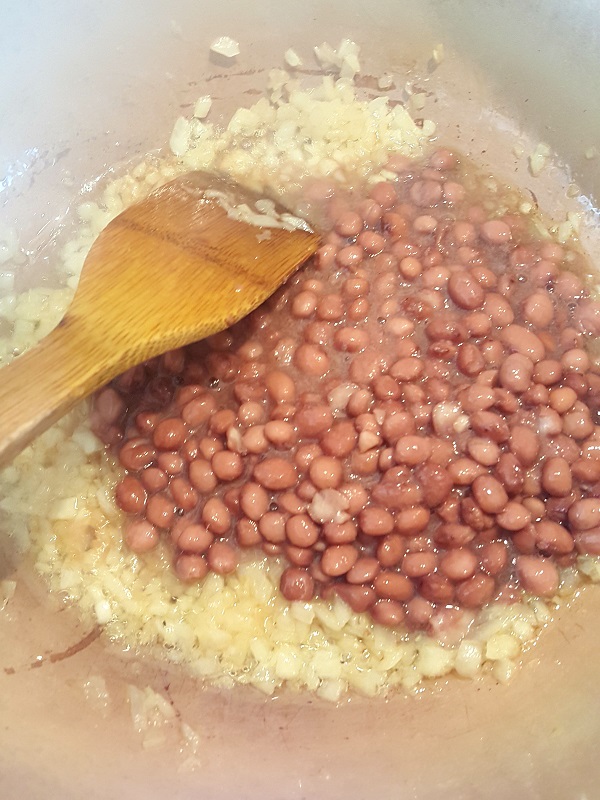
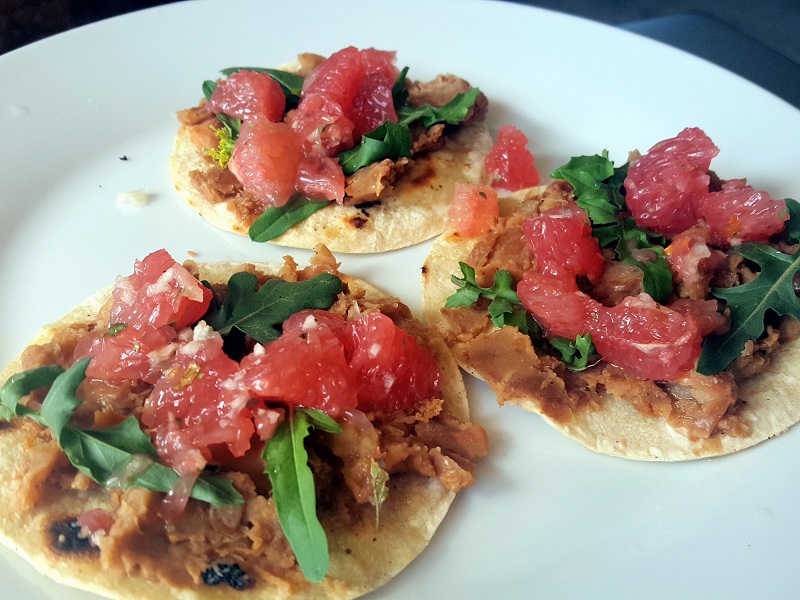
Wanting something to go with the salsa, I made tostadas. Sautéed onion and cooked pink beans are a great base.

Mashed beans stick to tostadas better.

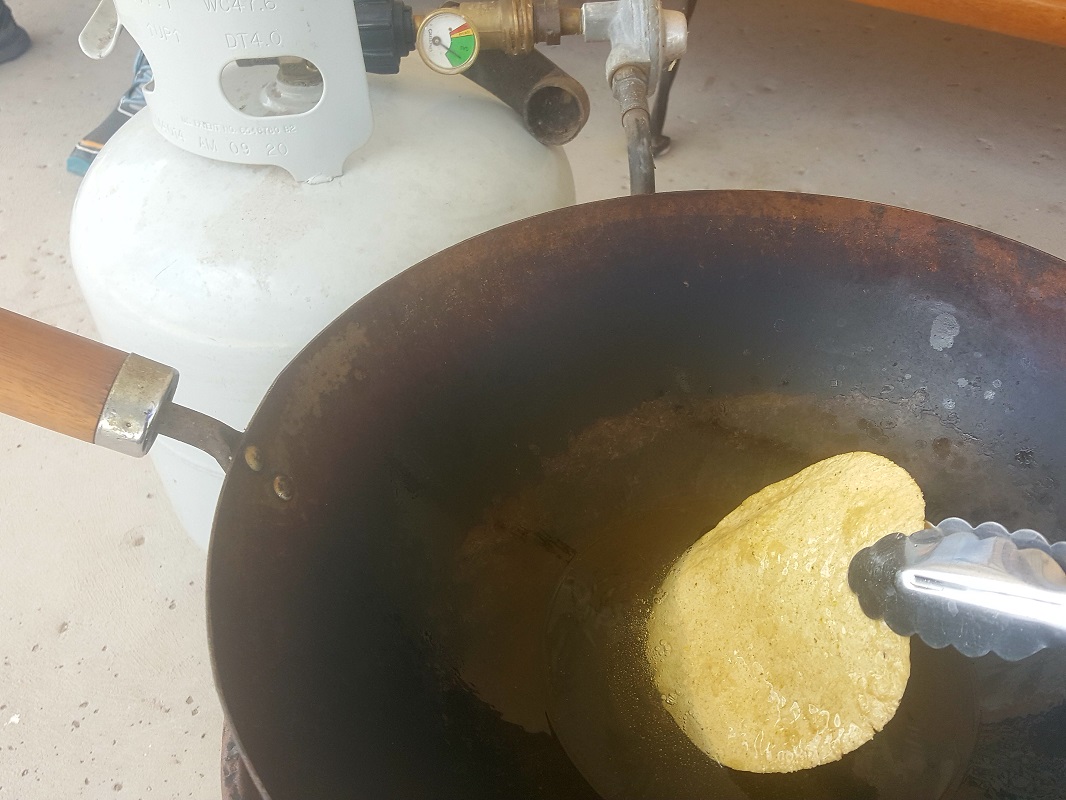
Fry corn tortillas in oil until crispy. In order to not set off the smoke detector, frying outside is the best, especially in beautiful spring weather.

Lettuce or most any green or sprout can all liven up tostadas. Wild mustard greens, like arugula, add a peppery bite.

Assemble and enjoy outside!
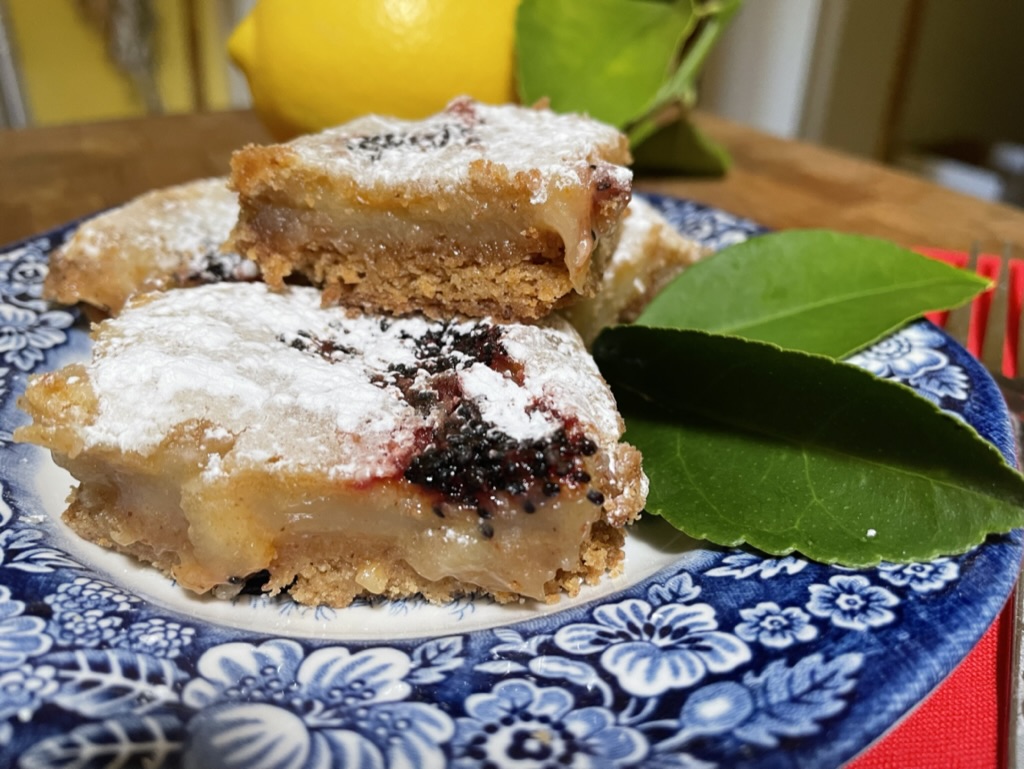
Holiday Citrus-Mesquite Bars

OK, anyone can put sugar, butter and flour together, but if you give yourself carte blanche to invent new local variations on old-time favorites you can come up with some winners, especially for special winter occasions. Tia Marta here to share what I did with traditional lemon bars for a totally Southwest flair:

Try this delicious locally-inspired RECIPE for HOLIDAY CITRUS BARS:

You will need a 9×13″ baking dish and mixing bowls

Ingredients for crust:

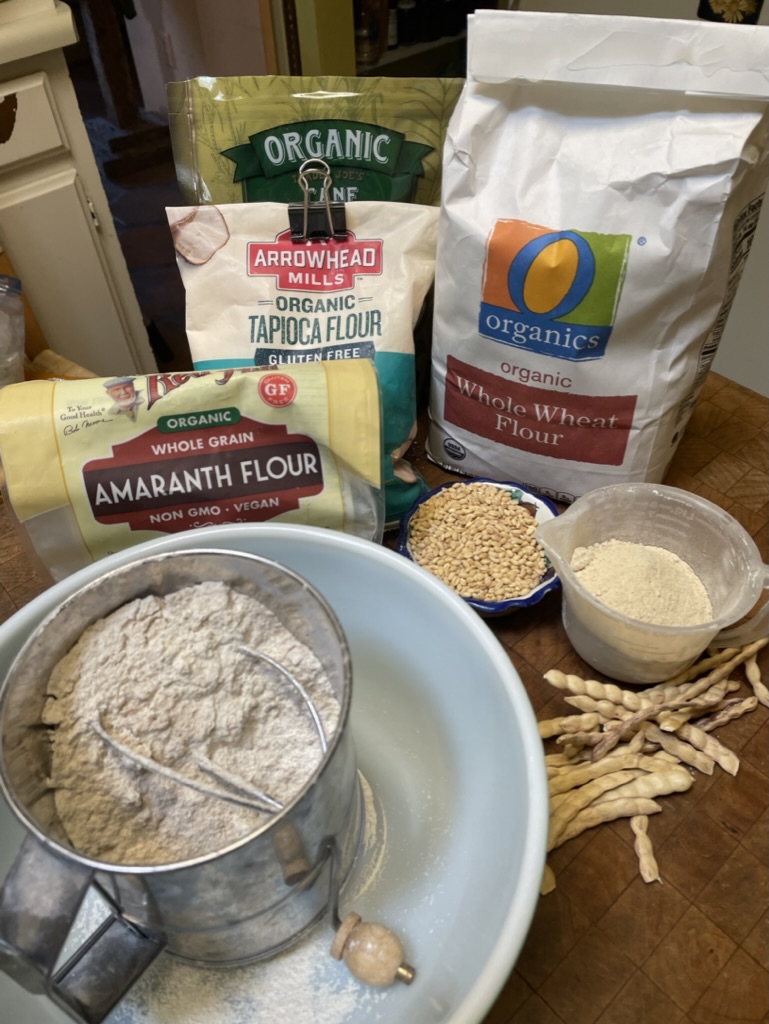
1 and 1/2 cups flour mix (I used 1 cup organic fine whole wheat and 1/2 cup white Sonora wheat flour*)

1/2 cup mesquite meal (in place of crushed graham crackers used in other recipes)

3/4 cup butter, softened room temperature

1/2 cup powdered sugar

Ingredients for top layer:

2 cups regular sugar

1/2 cup lemon juice (lime juice or tangerine juice also are delish)

1-2 Tbsp lemon-zest (I used minced Meyer lemon rind; lime- or tangerine-zest would be great)

4 lg. eggs

optional wild desert fruits (I used saguaro fruit; prickly pear or hackberries would work great)

!/4 cup flour (added separately for this top-layer mixture)

*white Sonora wheat flour is available from Barrio Bread milled with heirloom grain grown by BKW Farms in Marana

Directions follow with pictures:

Preheat oven to 350 degrees F.

To begin crust, sift flour mixture, mesquite meal, and and powdered sugar together.

(Since the crust is not leavened, you can make it gluten-free by using tapioca flour as your binder and amaranth flour with the mesquite flour.)

Mix crust ingredients–flours, confectioners’ sugar, and softened butter– to make a “dough”.

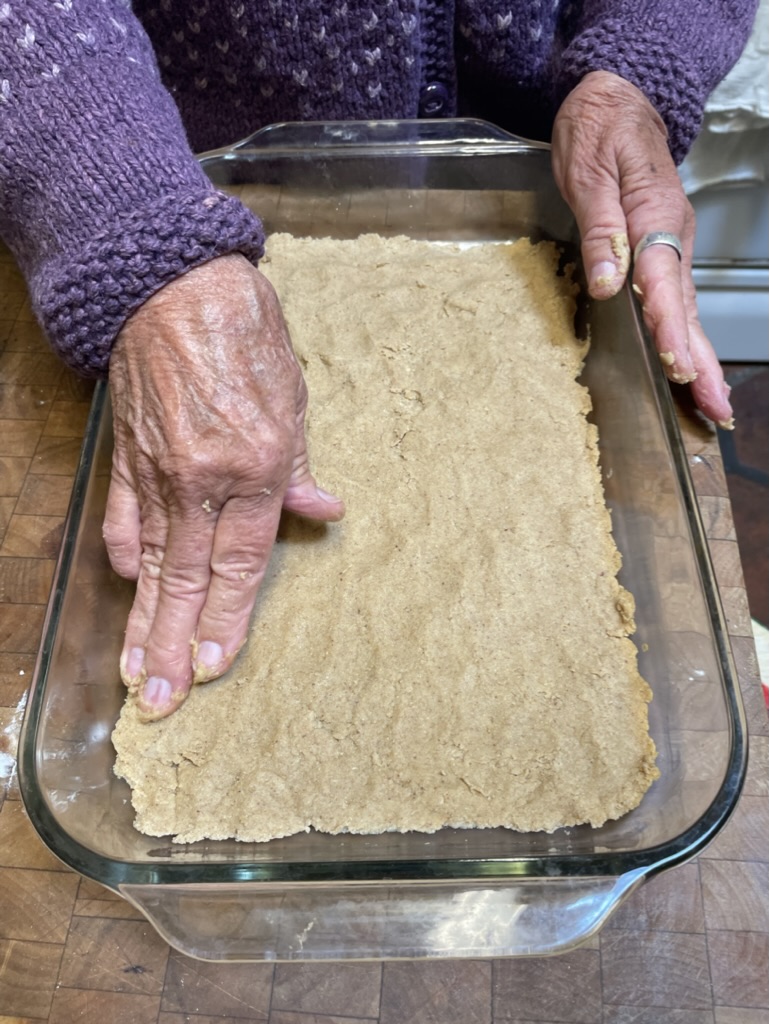
Press “dough” into the bottom of the 9×13″ baking pan, relatively evenly (maybe 3/4-1/2″ thick. Be sure to crimp down the edges with a clean knife so the thickness of dough is not tapered thin.

Bake crust at 350F until light brown, about 20-25 minutes. Keep oven on….

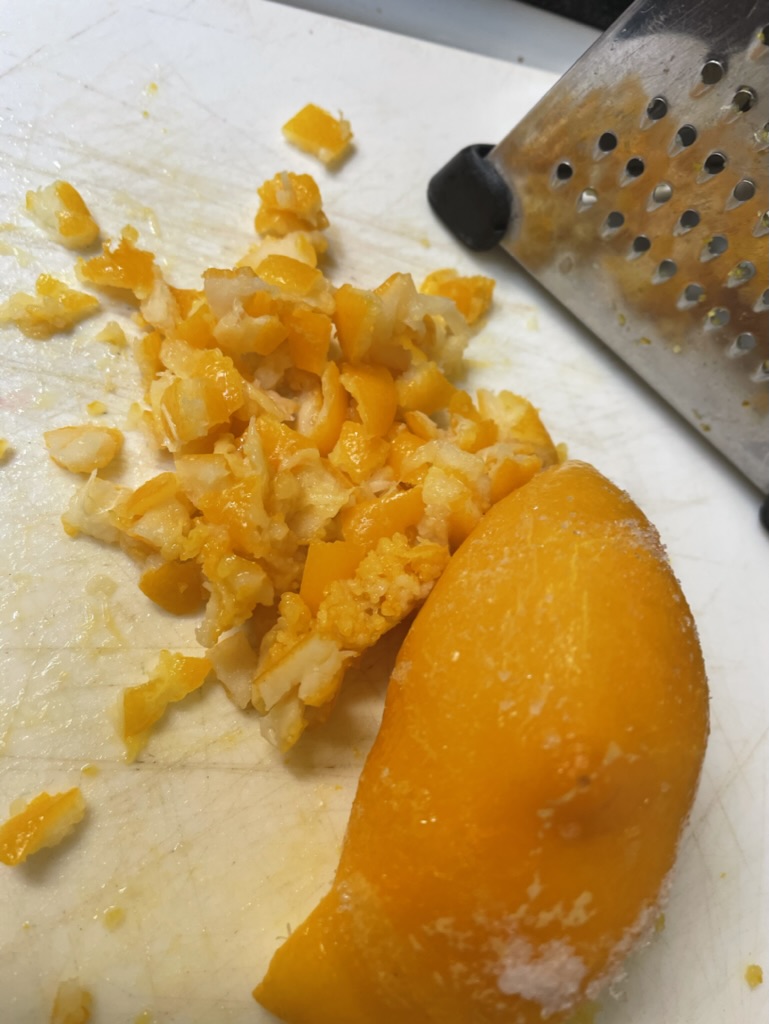
Grate 1-2 tablespoons lemon, lime or tangerine zest.

We have Meyer lemons which have such a mild sweet rind that I experimented by mincing, instead of zesting them. I had juiced the fruits previously, and had frozen the rinds for zesting and for making limoncello (that’s another fantastic blog by SavorSisterCarolyn!) . For the top-layer mixture I used 3 tablespoons of minced Meyer lemon rind.

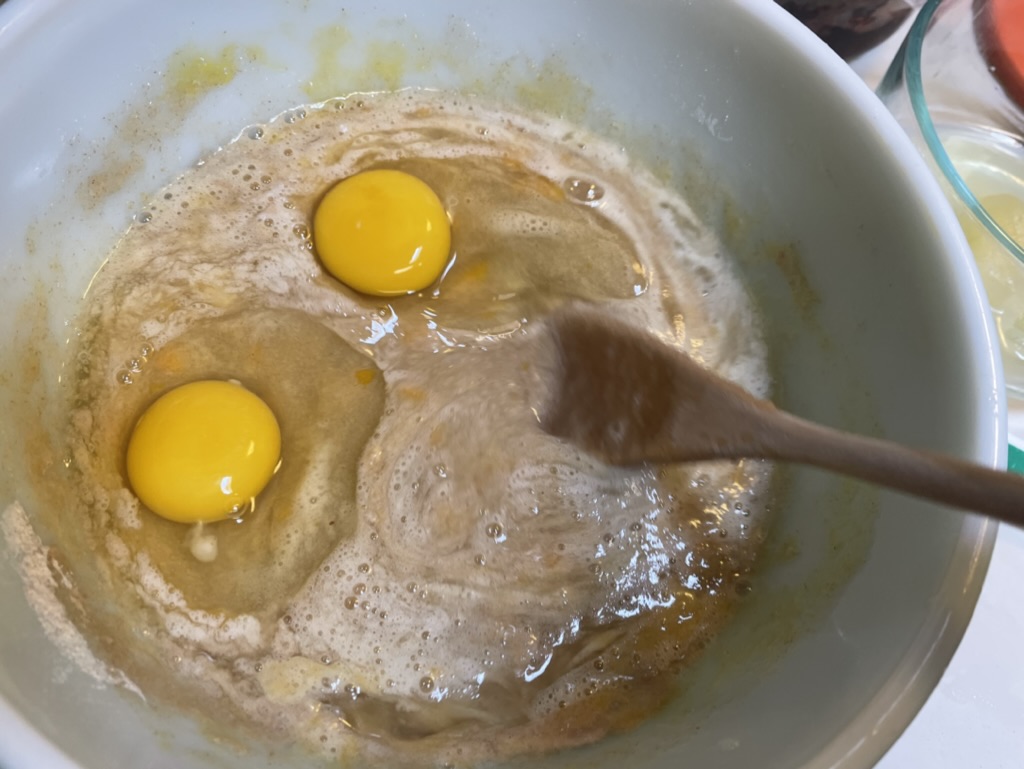
While crust is baking, beat together the top-layer ingredients: sugar, citrus juice, minced or zested rind, 4 eggs, and 1/4 cup flour as thickener. (If you are using a pyrex bake pan, make sure this mixture is warm enough so as not to shock the hot pyrex when poured on crust.)

When crust is light brown and done, bring out of the oven. Pour top-layer mixture onto the crust.

To provide festive decoration and texture, I garnished the top with saguaro fruit collected last June, frozen and now thawed.

Return the now double-layered pan back into oven. Continue baking for another 20-25 or until top layer “sets” firmly.

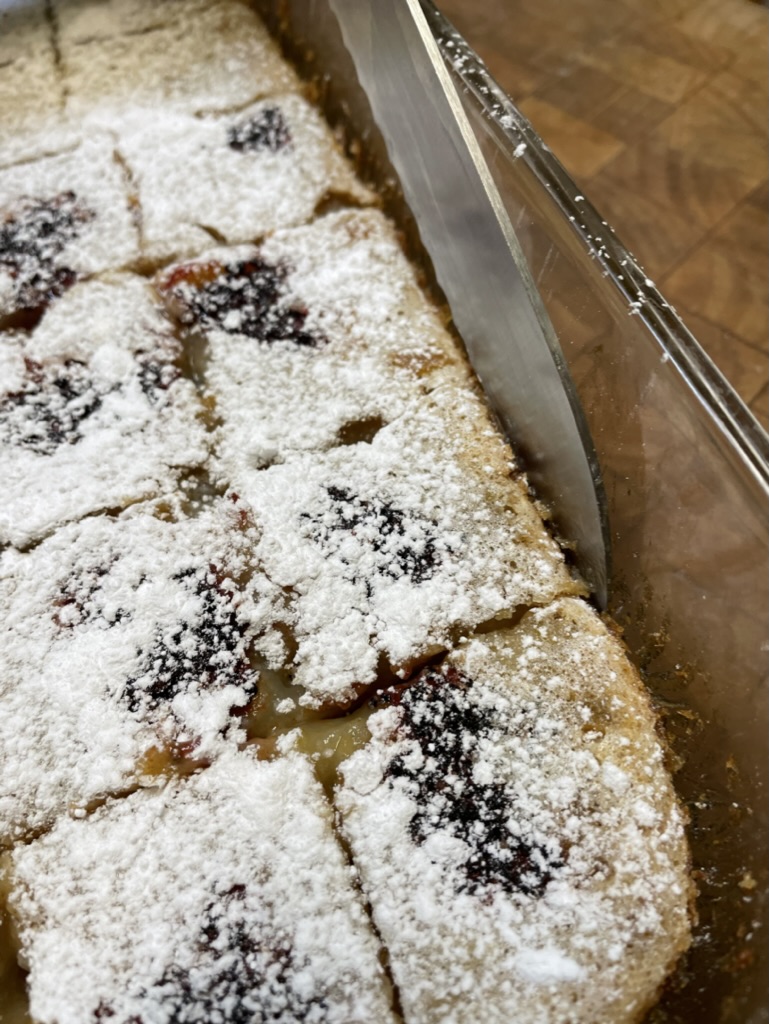
When done, place on raised rack to cool evenly. Dust the top with powdered sugar.

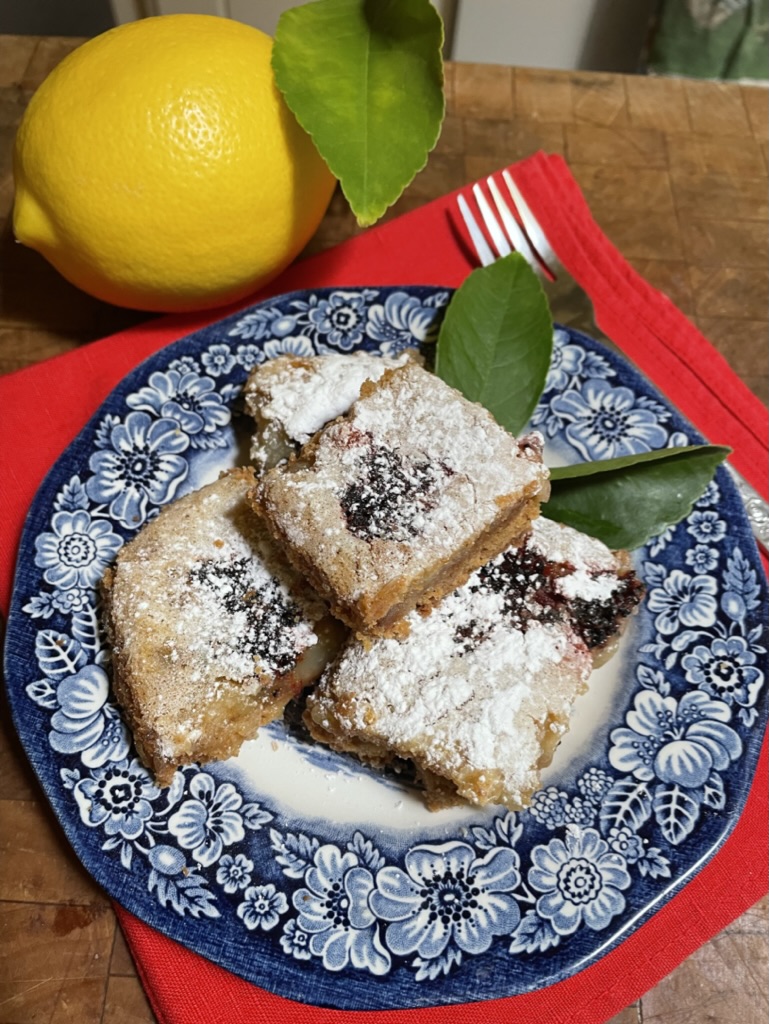
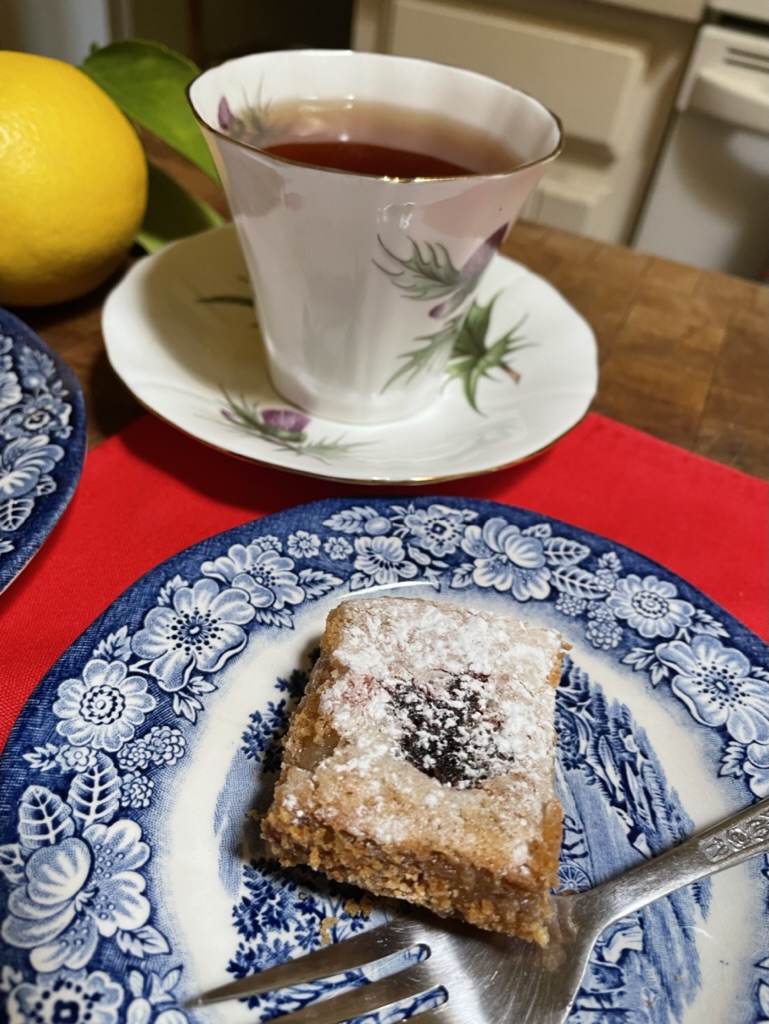
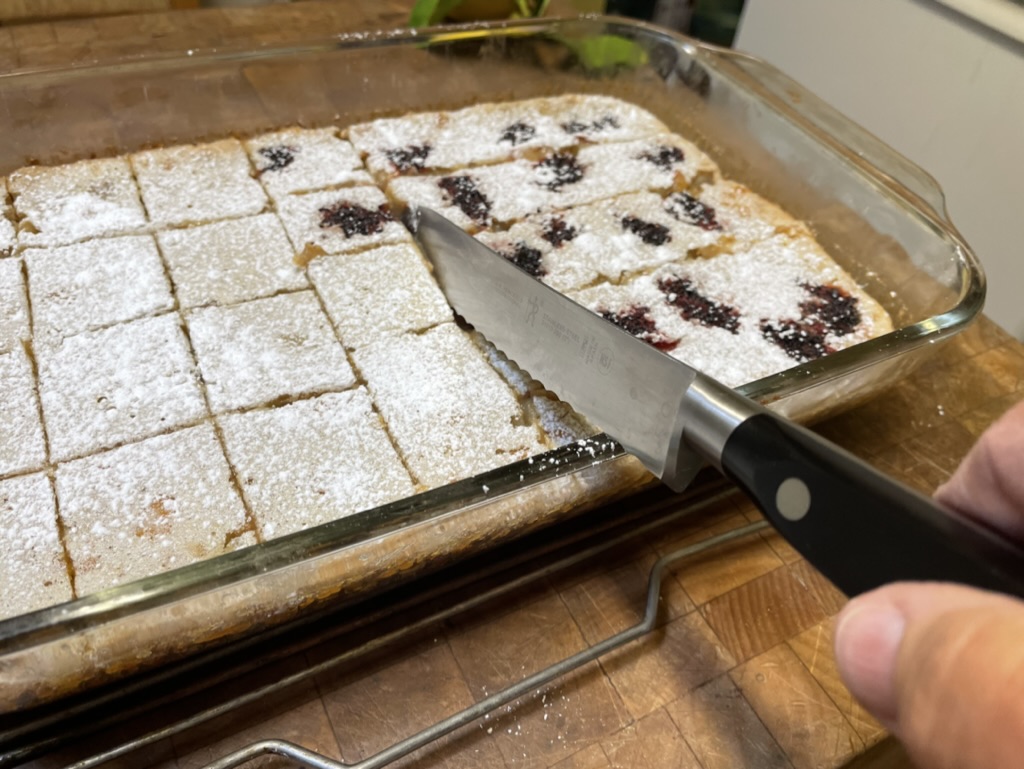
When cool, separate crust from edge with sharp knife to make removal easier. Slice into small squares. These bars are so deliciously RICH –small is better!

Good and gooey –with that wonderful mesquite flavor, the crunch of saguaro seed,

…and the internalized hope that–with this–we can let the desert plants know how important they are to us!

Enjoy a cold-weather tea-time, a citrus harvest with purpose, or a Thanksgiving dessert made with your own variation on this Citrus Bar treat!

As winter festivities draw near, for more great ideas….check out our earlier blog post Southwest Style Holiday Buffets.

A joyous holiday to all from Tia Marta!

[Mesquite flour or saguaro fruit are special tastes of what makes Tucson an International City of Gastronomy! But these desert foods are not available just anywhere. Plan ahead–the way traditional Tohono O’odham harvesters have always known to do– future culinary opportunities will open to you if ye desert goodies while ye may, that is, when they are in season. Here’s a word of encouragemen from Tia Marta: Put it on your 2023 calendar now. Set aside time in mid-late June, tho’ it is super hot, to collect saguaro fruit, peel and freeze it in sealed container. Also mid-late June before the rains, gather brittle dry mesquite pods for community milling, and freeze the meal in sealed containers. In mid-late August, gather whole prickly pear tunas to freeze in paper and plastic, for juicing later. YOU WILL BE SO GLAD LATER THAT YOU SET ASIDE THESE DESERT FRUITS. Use the SEARCH box on this blog for instructions about harvesting a cornacopia of desert delicacies and staples.]

Grapefruit and Poppy Seeds: Cooking from Neighborhood Abundance

Spring finds Southern Arizona desert communities deep in citrus of all kinds. Our grapefruit tree died but I never lack for grapefruit because there are so many productive trees in Tucson owned by people who either don’t like grapefruit or have way more than they can use. This recipe also uses poppy seeds that I grow in my garden. I planted some years ago and do harvest the seeds carefully, but once again, there are so many seeds some drop to the ground and carefully wait out the summer heat to reappear the next winter.

Grapefruits are abundant now in desert communities.

The desert Southwest is awash in citrus every spring. This includes oranges, grapefruits, tangerines and little fruits such as calamondins. Many folks who have a grapefruit tree in their yard find they have way too many, either because they don’t like them or the trees have produced way more than they care to eat. Iskashitaa, a nonprofit that organizes refugees and local citizens into harvest groups, gathers the unwanted fruit and distributes it to those in need or those willing to pay for it. This year has seen a really bountiful harvest. 

Zeru, from Eritrea, an Iskashitaa volunteer, is thrilled with this one-day harvest of grapefruit and lemons.

Our grapefruit tree died and our replacement tree hasn’t gotten organized yet to produce fruit, but the two grapefruit lovers in our household have been blessed by gifts from our neighbor and the Iskashitaa bounty.

This recipe for Grapefruit Poppy Seed Bread gets a little crunch from tiny poppy seeds. I grow my own in my garden. I don’t even have to sow them anymore. Plenty of seeds spill when we’re harvesting them and by January they are coming up in the lettuce garden. They destroy the tidy look of the lettuce in rows, but I can’t bear to pull them out, so by now the garden is messy with poppies, nasturtiums, and lettuce somewhere down under everything. 

Oriental poppies produce thousands of tiny seeds and self-sow easily. Those round objects are the seed pods and when they dry, it is easy to shake out the seeds. Always some fall to the ground and nestle there until they decide to grow the following winter.

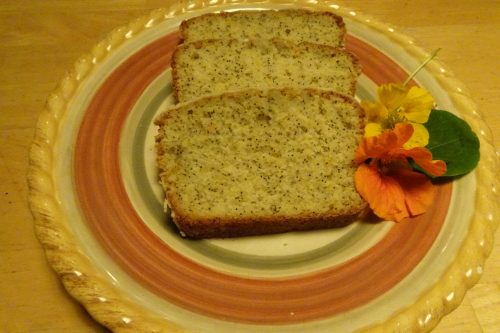
This Grapefruit Poppy Seed Bread has a sweet fruity flavor but it’s hard to detect that it is actually grapefruit. So if you aren’t that keen on grapefruit, this might be a good way to use up some fruit.

Some tips before we get to the recipe. I always line my pans with parchment baking paper or foil to help get the loaves out in one piece. This particular bread seems very tender when it first comes out so the lining is important. 

Here’s a picture of poking the bread with a skewer to let the syrup penetrate the bread easier.

Use a skewer, a toothpick, or even a fork to make holes to allow the glaze to penetrate.

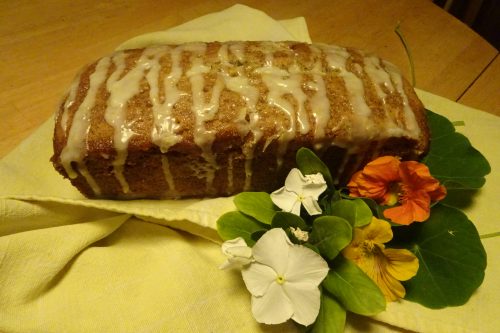
And the beautiful finished bread. This is what you are aiming for. 

Finished grapefruit bread with drizzled glaze

Grapefruit Poppy Seed Bread

1 cup butter, softened

1-2/3 cups sugar, divided

3 large eggs, room temperature

3/4 cup yogurt

3 tablespoons poppy seeds

¼ cup grated grapefruit zest

2 teaspoons vanilla extract

2 cups all-purpose flour

1/2 teaspoon baking soda

1/4 teaspoon salt

1/4 cup grapefruit juice

Glaze:

1 cup confectioners’ sugar

2 tablespoons grapefruit juice

1 tablespoon grapefruit zest

Preheat oven to 350°. In a large bowl, cream butter and 1-1/3 cups sugar until light and fluffy, 5-7 minutes. Add eggs, 1 at a time, beating well after each addition. Beat in yogurt, poppy seeds, grapefruit zest and vanilla. In another bowl, whisk flour, baking soda and salt; gradually beat into creamed mixture.

Transfer to a greased 9×5-in. loaf pan. Bake until a toothpick inserted in center comes out clean, 55-65 minutes. Meanwhile, in a small bowl microsafe bowl, mix grapefruit juice, 1 tablespoon grapefruit zest, and remaining sugar. Microwave for 1 minute to make a simple syrup. Set aside.

Remove bread from oven. Immediately poke holes in bread with a fork; slowly pour juice mixture over bread. Cool in pan 10 minutes before removing to a wire rack to cool completely. The bread is very tender at this point. The cooling in the pan is a necessary step.

In a small bowl, mix glaze ingredients. Carefully remove bread from pan and set on a wire rack and continue to cool; drizzle glaze over bread.

A few pieces of grapefruit bread make a lovely breakfast or a treat when hunger gnaws in the afternoon.

___________________________________________________________

I’m thrilled to announce that my new book A Desert Feast: Celebrating Tucson’s Culinary Heritage has won two awards. It was named a Top Pick in the Southwest Books of the Year list and also won a PubWest award for design. The latter was particularly satisfying because it honored Leigh McDonald and Sara Thaxton who did the extremely complex layout that makes the book so visually stunning. It was as if they entered my brain and executed exactly what I had been hoping for.  Order your copy from your local book store, from Native Seeds/SEARCH, or on-line.

Curry Toppings with a SW Flair

Ideas for curry are in the air…On an adventurous (pre-Covid19) tour of Morocco last February 2020, as fellow travelers, we befriended a remarkable character, Kip Bergstrom, an enthusiastic foodie who seeks out the absolute “right source” for his gourmet dishes.  Diving headlong into Moroccan lamb, he found a local, caring sheep farm (for him Connecticut) and has become online chef for www.wearwoolnewlondon.com

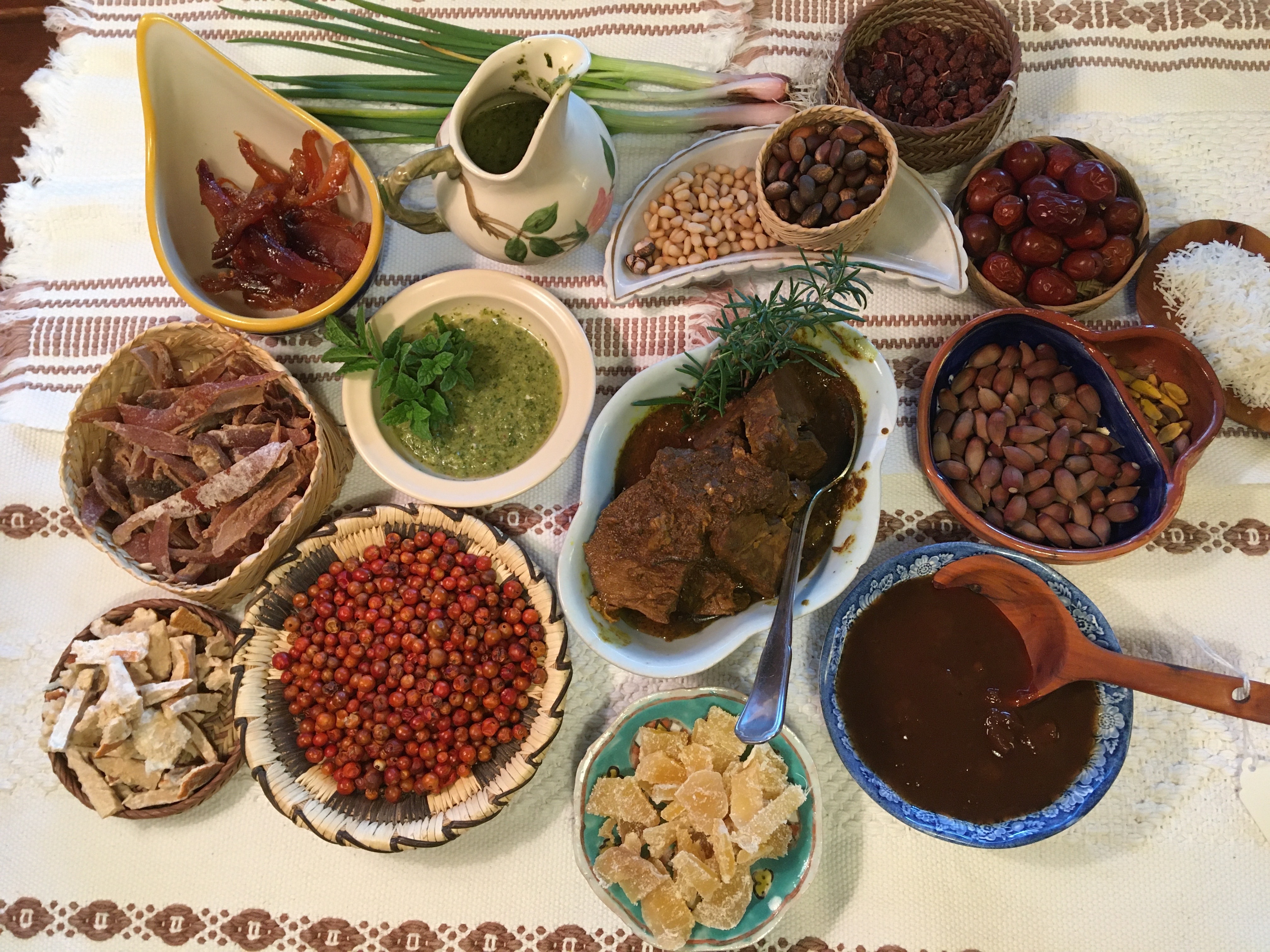
Curry dishes call for crystallized ginger so my inventive Southwest solution is candied local fruit rinds as “side boys” or toppings!

Tia Marta here to share how Kip’s “LambStand” has inspired me to go local with lamb curry in the Southwest.  Being a mindful omnivore, I found Sky Island Brand from the 47-Ranch near Tombstone, AZ, providing lamb at Bisbee and Sierra Vista Farmers’ Markets from their arid-adapted, heritage churro sheep.

My family tradition at Easter has always been to serve lamb roast–then lamb curry soon after, so I’m getting ready.  Mom’s favorite touch to complement complex curry flavors was to dress the table with a festive array of toppings all around the main dish–what she called “curry boys” or “side boys.”  (Not sure the derivation of this term—like servants long ago around the table offering toppings?)  Regardless, these complementary dishes are a visual and gastronomic joy, so I’ve taken it as a fun challenge to create local Southwest curry toppings from local gardens and desert harvests.  These flavor combos promise to surprise and delight you in any curry dish–lamb or vegetarian….

In place of regular store-bought toppings called for in typical curry recipes, here are my creative suggestions:

Fresh from the garden, here are ingredients to make Muff’s Chirichurri Mint Sauce.

In place of regular mint sauce, I make a Southwest version of chimichurri sauce:

Muff’s Chimichurri Mint Sauce Recipe:

Ingredients: handful (1/2 Cup) fresh mint leaves from the garden

2 Tbsp chopped I’itoi’s onions (tops and all) from our mini-oasis veggie patch (also available from Mission Garden as starts (or shallots chopped)

3-4 small cloves heirloom garlic (or 2 lg garlic cloves) chopped

2-3 little chiltepin peppers whole (when I can get there before the birds–use sparingly) OR 1/2 tsp chile pepper flakes

1/2-2/3 Cup red wine vinegar,

1 Tbsp olive oil

Optional–up to 1/4 Cup fresh cilantro chopped

Chimichurri Mint Sauce Directions: Blender, chill and serve fresh in a small cruet.

In place of the traditional peanut “side” I like our local bellotas (Emory oak acorn nutmeats) or pinyon pinenuts.

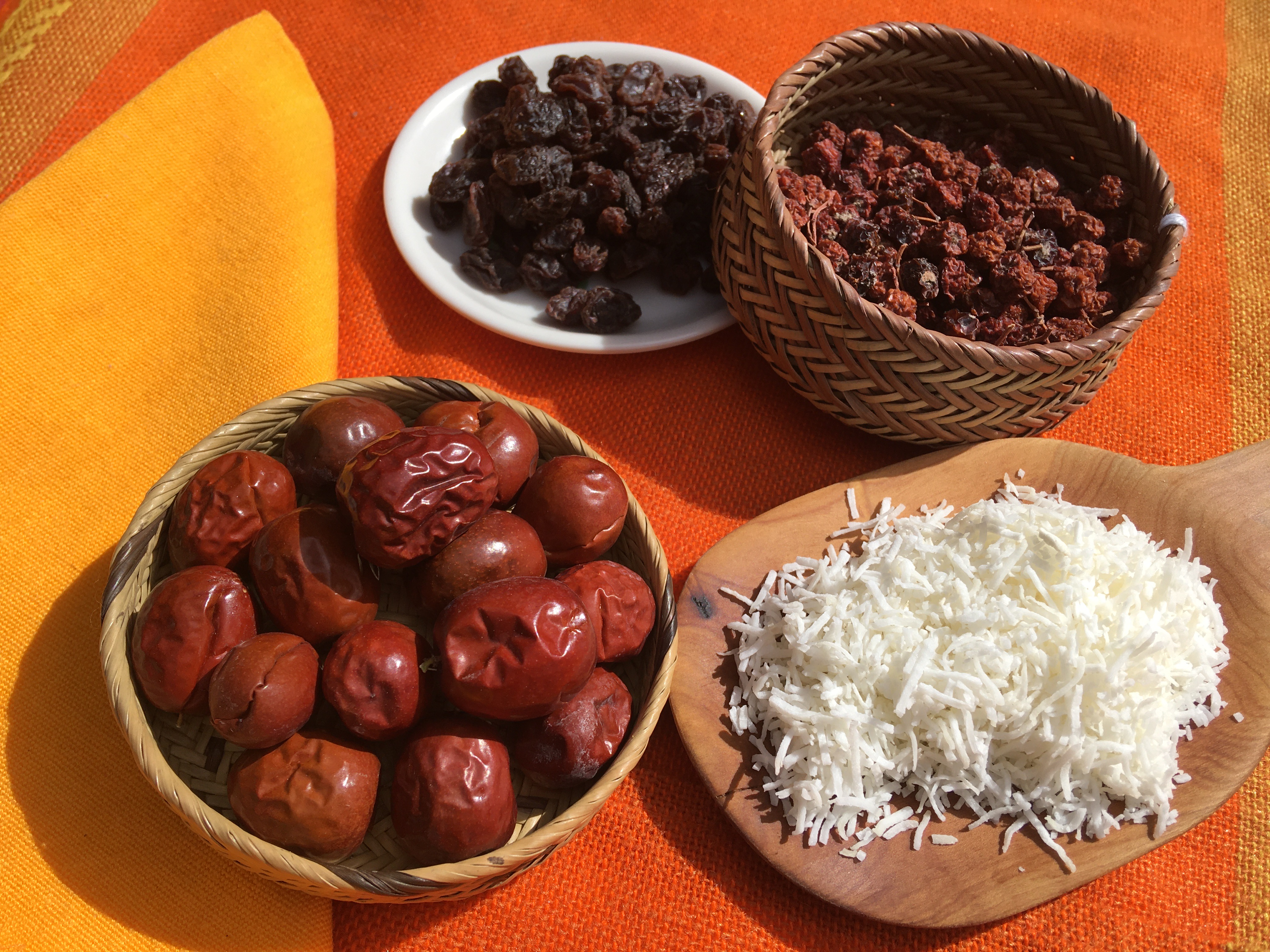
In place of shaved coconut, I purchased jujube fruit from Tucson’s Mission Garden–grown in the Chinese garden section there.

In place of raisins and coconut toppings, try dried jujubes, desert hackberries, or crunchy dried chun (saguaro fruit)!

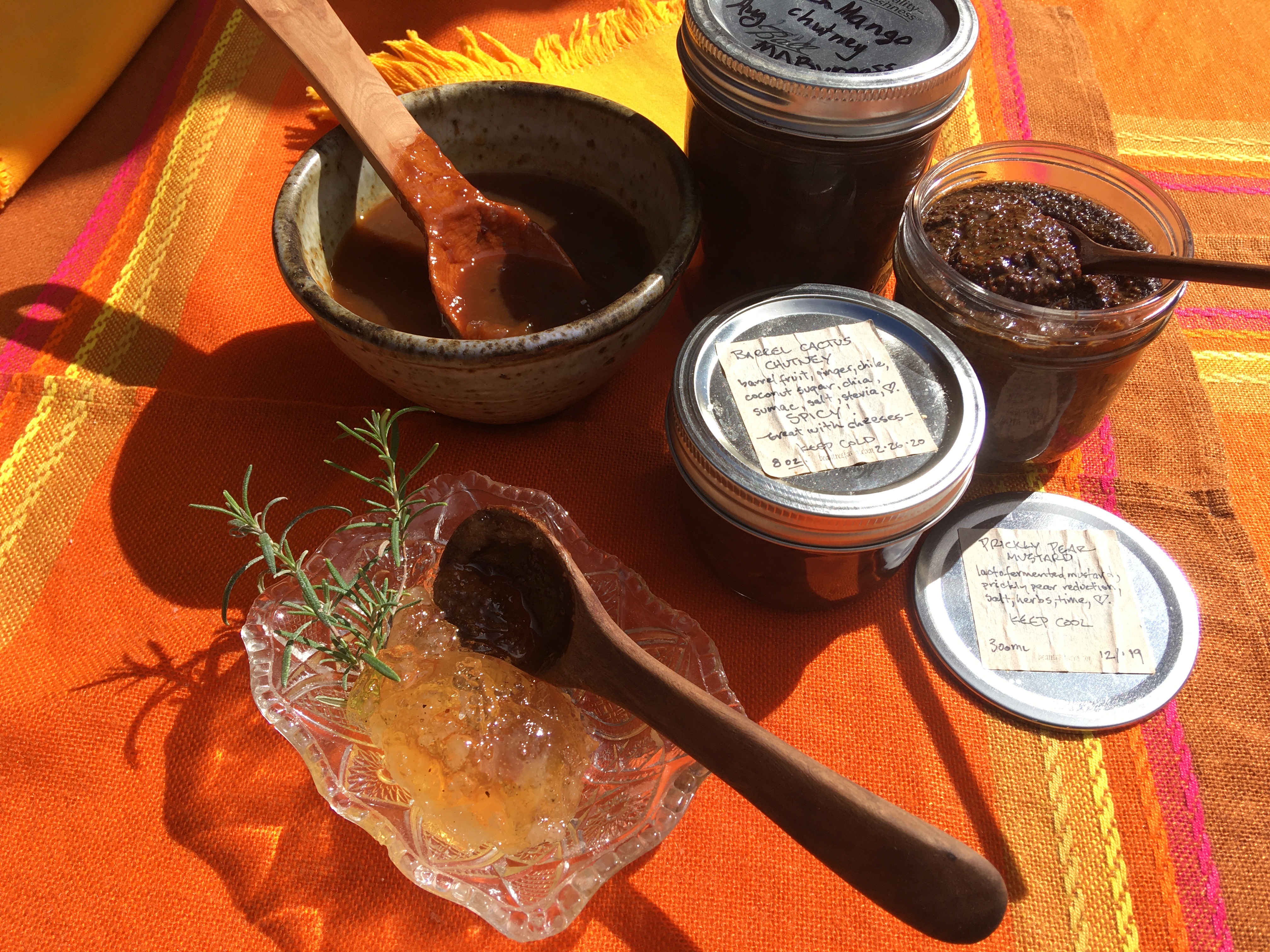
Chutney is a must as a curry topping!   Using a variation on Mom’s recipe, I make a local peach-mango and barrel cactus fruit chutney that should win prizes.  You can find a fabulous cactus-with-chia chutneys or barrel cactus seed mustard at BeanTreeFarm ordering online for easy pick-up.  

Barrel cactus fruit chutney, garden rosemary-garlic jelly, and Bean-Tree Farm’s barrel cactus mustard make great toppings!

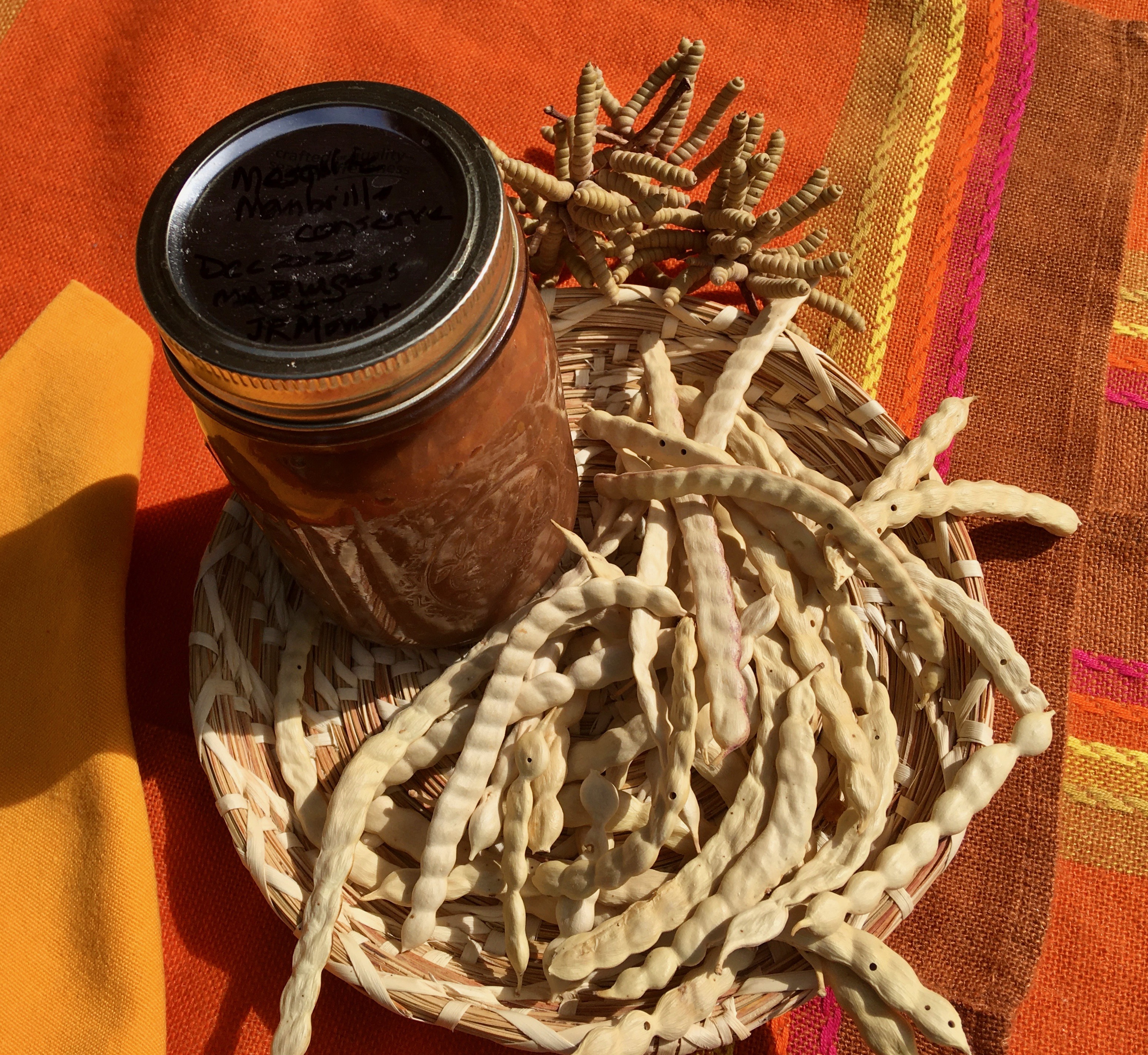
Velvet and screwbean mesquite pods were used in making Tia Marta’s Mesquite/Membrillo Conserve–a great curry garnish!

Another goodie to use as a topping is my mesquite/membrillo conserve  that I made using quince fruit (membrillo) from Mission Garden plus a concentrated sweet syrup made by boiling down whole mesquite pods(See last October’s Savor-post.)

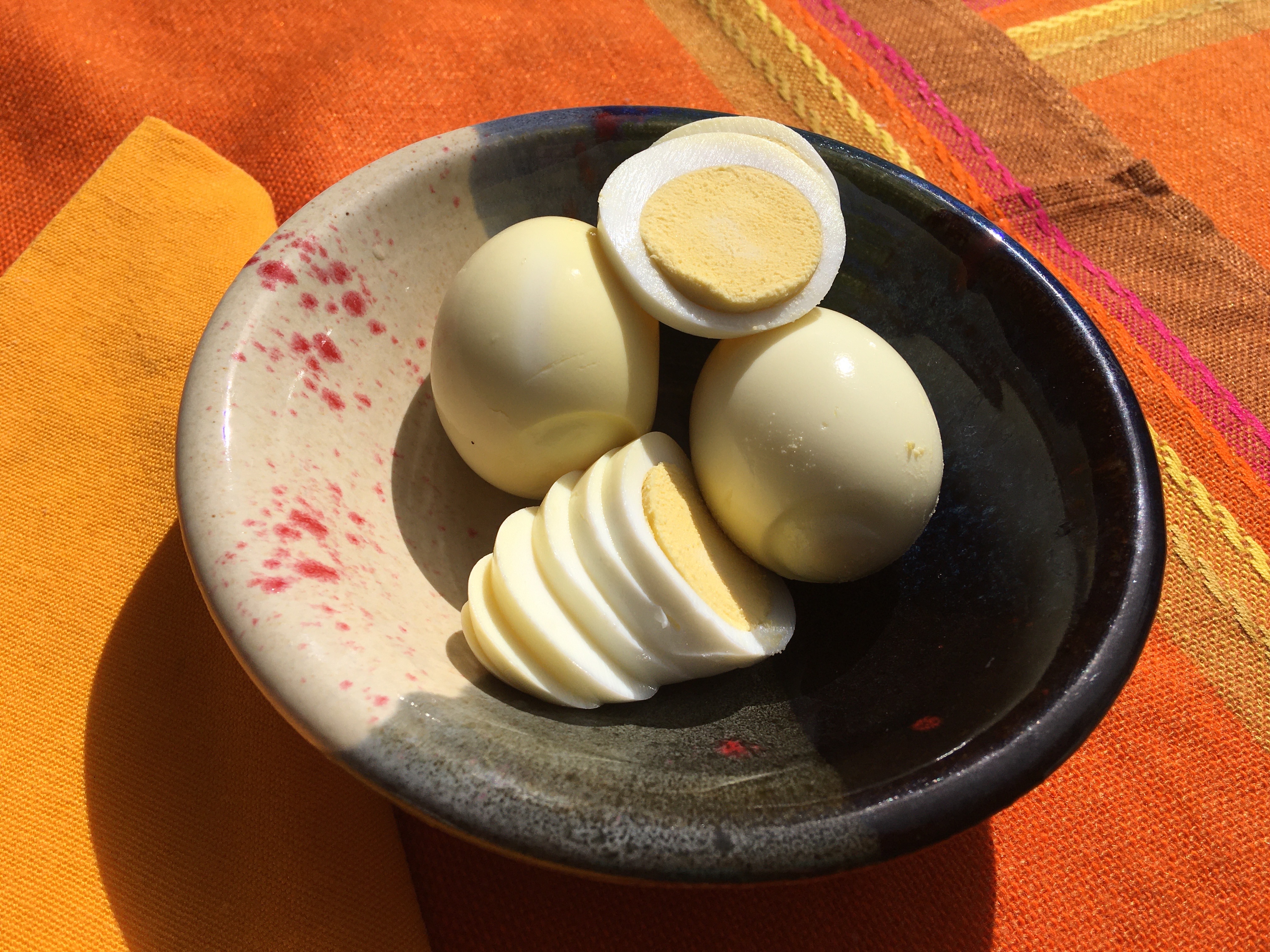
With fresh eggs from the Mission Garden “farm” I first boiled then pickled them for another curry complement.

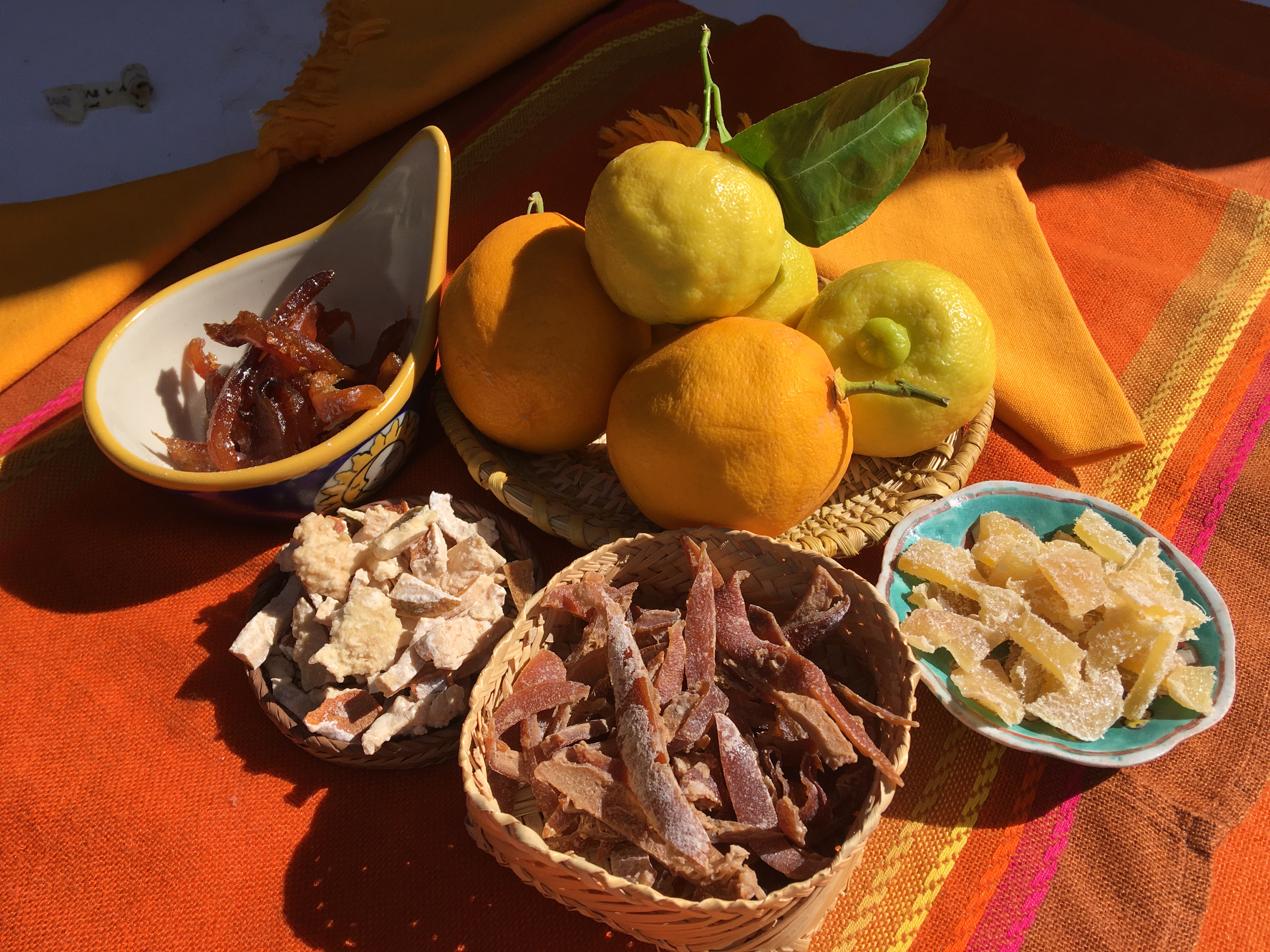
In place of candied ginger, I made candied Meyer lemon-peel and grapefruit-peel from our little huerta trees and the fragrant sweet-lime peel from Mission Garden’s unusual citrus.  Click for the recipe in the SavortheSouthwest.Blog archive.

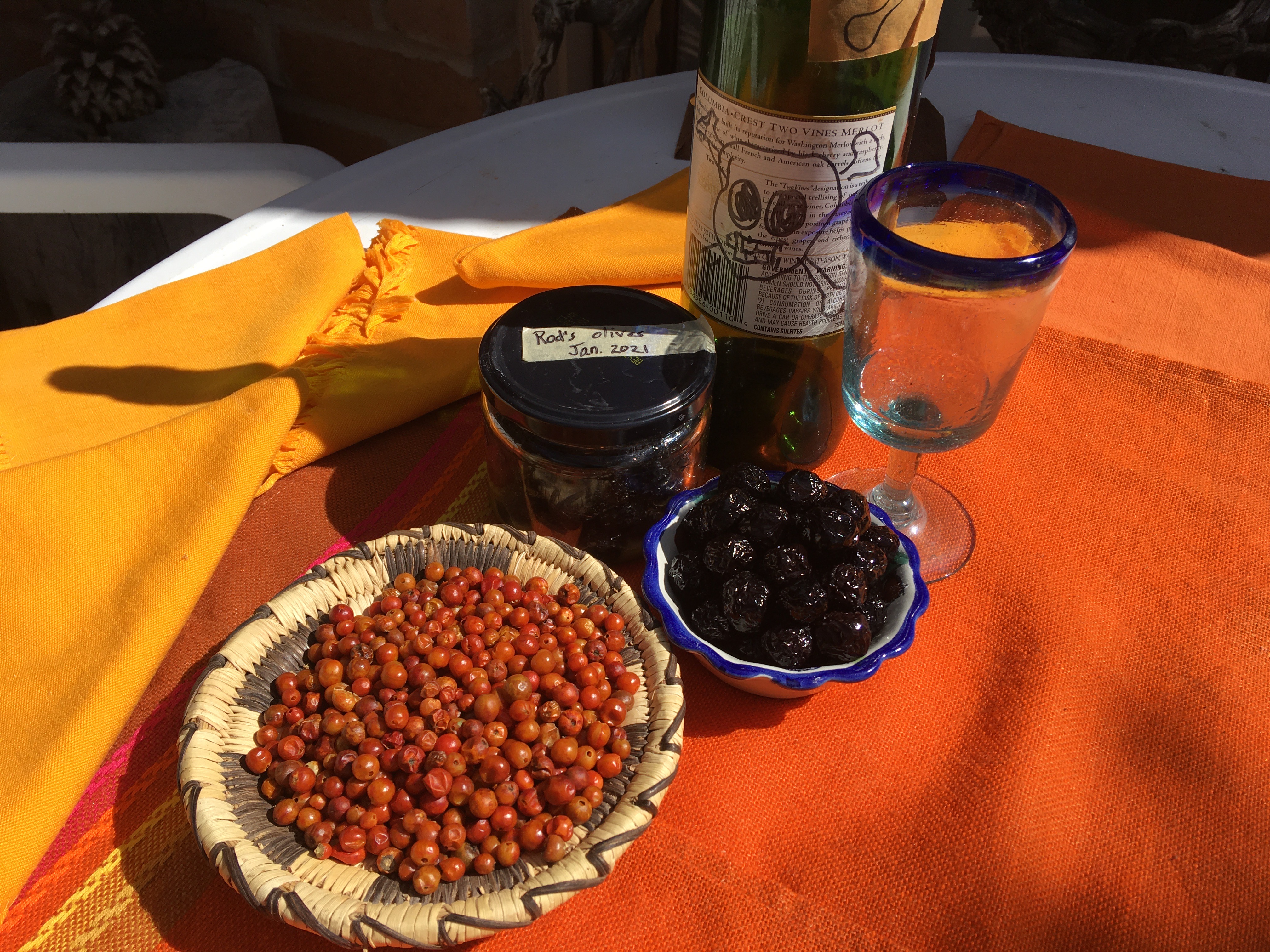
I’m topping off our SW curry meal with Rod’s amazing backyard olives (a future post?), an extra chiltepin hit, then partnering it all with a wee dram of bootleg bacanora mescal.

Your taste buds will be delighted and amazed to discover how all these different flavors blend and complement each other to enhance any curry dish!   


In a festive array around the curried lamb centerpiece, the Southwest’s low-desert bounty provides a garland of delectable complementary flavors!

I’m sending thanks to our desert gardens within and beyond the garden wall, for the plenty that our Sonoran Desert provides.    Here’s hoping these ideas might inspire you to try your own to dress up a curry dinner– lamb or vegetarian—in whatever habitat you live!

Holiday Citrus Treats and Zoom Invite

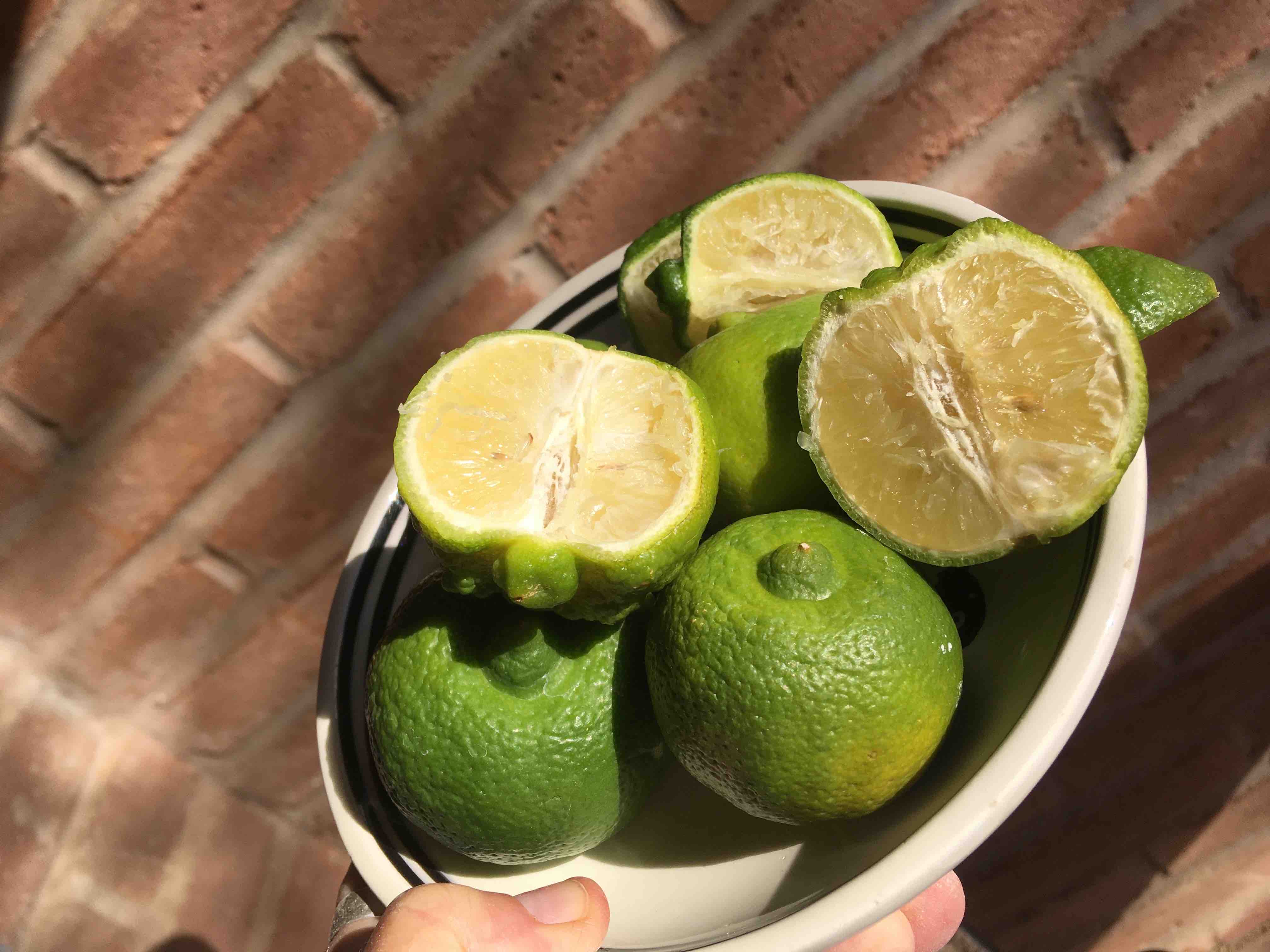
MEYER LEMONS and heirloom citrus fruits are ripening at Mission Garden orchard and in my own little desert oasis. Every part of this glorious fruit can add to festivities.  Read on to see how to even use citrus RIND in delectable confections!

Tia Marta here to share an easy and festive recipe my Great Aunt Rina used to make for the holidays when I was young–Citrus-Rind Candy.  With a combination of grapefruit, tangerine and orange–rare and special in early 1900s New England–she made sweet confections.  Now, in the Sonoran Desert where a diversity of citrus abounds thanks to introductions by early missionaries, I’m expanding on Aunt Rina’s inspiration.

Heirloom sweet lime is growing in profusion at Mission Garden. I can hardly wait to use its surprisingly sweet juice in a libation–then, to harness its unusually fragrant rind to make a confection.  It’s the ultimate “recycling” reward!

With citrus, nothing gets put in the compost except the seeds.  Check out two great posts for holiday libations with heirloom SWEET LIME and explore others thru the SavortheSouthwest Searchbox.

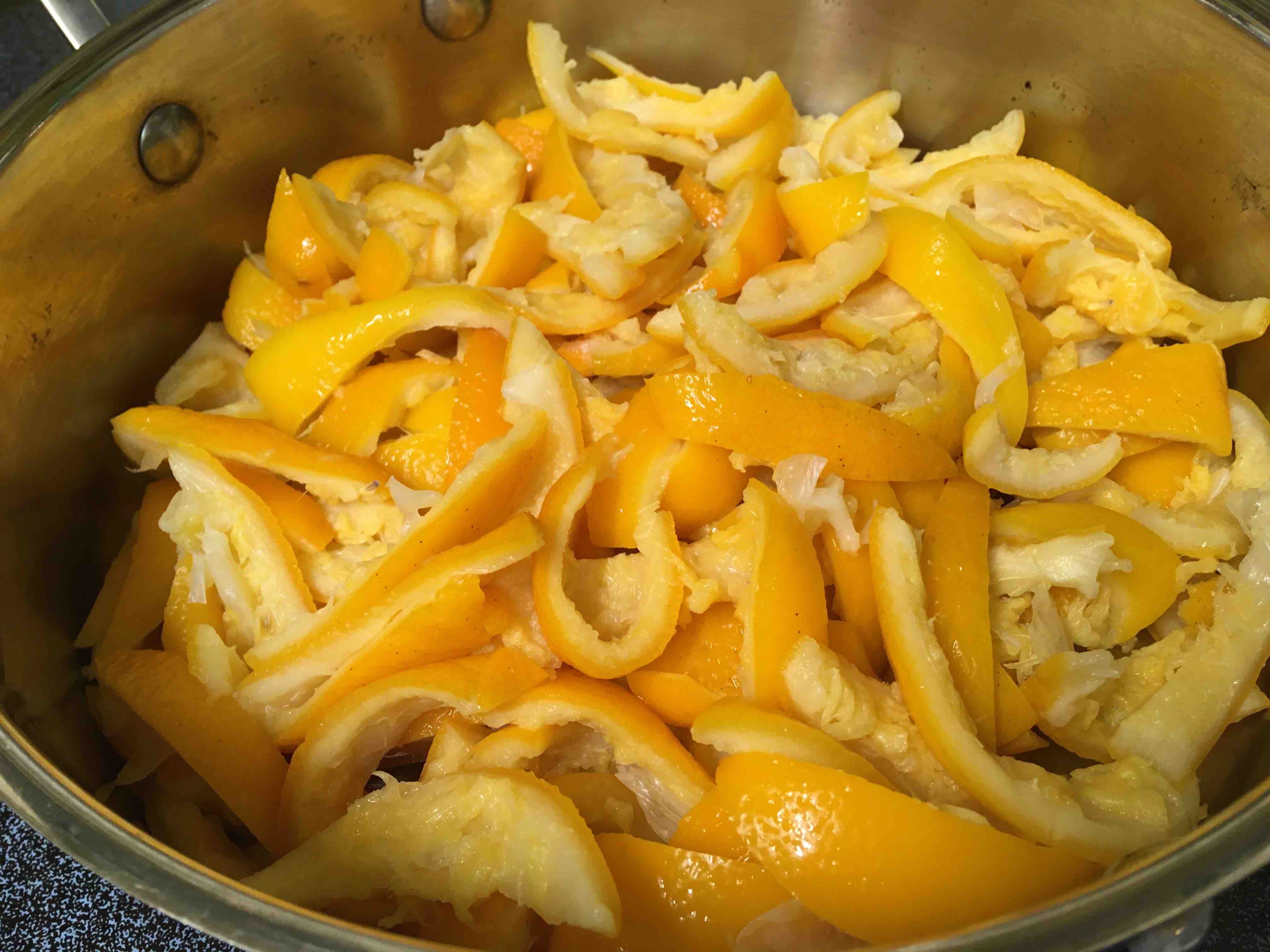
Meyer Lemon Rind Confection Step 1: After juicing lemon, cut rind into strips and put in saucepan.

RECIPE for MEYER LEMON-RIND CONFECTION:

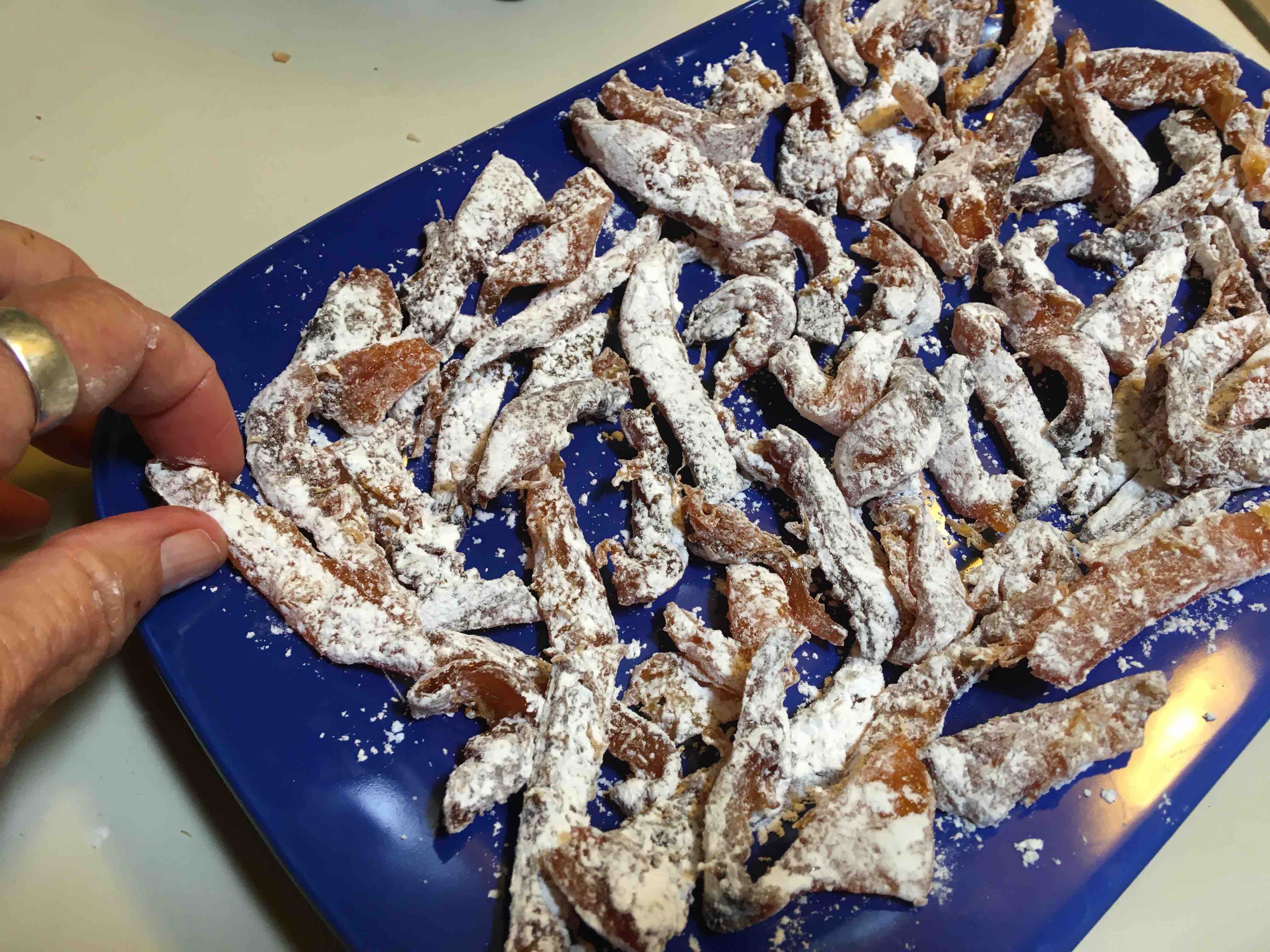
Place 1 qt sliced lemon peel in saucepan.  Cover with 2 cups granulated sugar or 1 1/2 cups agave nectar.  (No water is needed as there is enough moisture in the rind’s white pulp to supply it.)  Mix well and simmer slowly until sugary liquid thickens, being careful not to scorch or caramelize.  Remove from pan and spread out slices on wax paper to cool, dry, and begin to crytallize.  Dust with powdered sugar.  If this candy remains pliable and sticky, you can dust again with powdered sugar.

A little bundle makes a fun old-fashioned stocking-stuffer, or, served on a buffet platter with other sweets it offers a “bitter-sweet” alternative.

Meyer lemon-rind confection is a welcome flavor surprise offering a pleasant bitter note with the sweet.

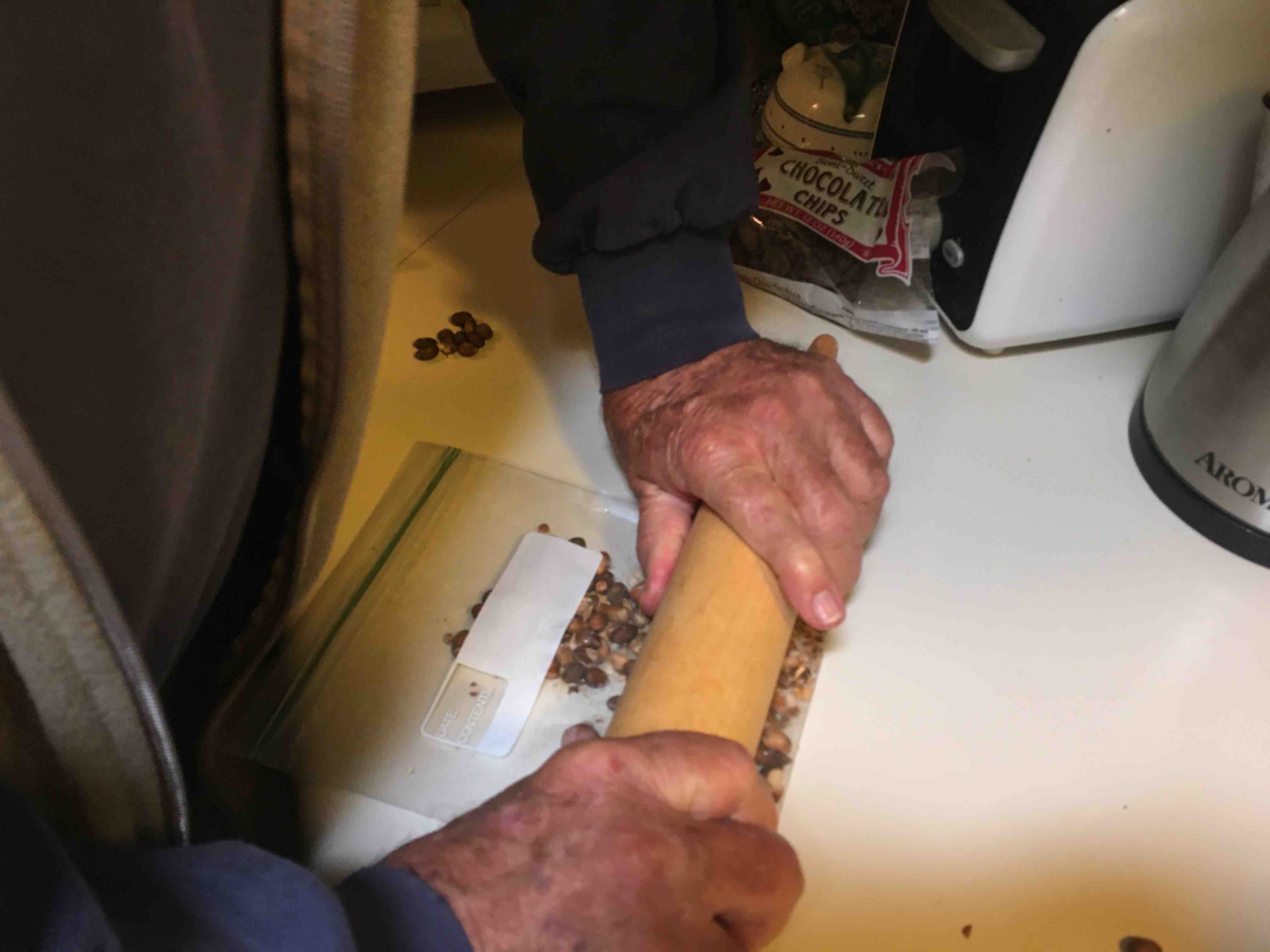
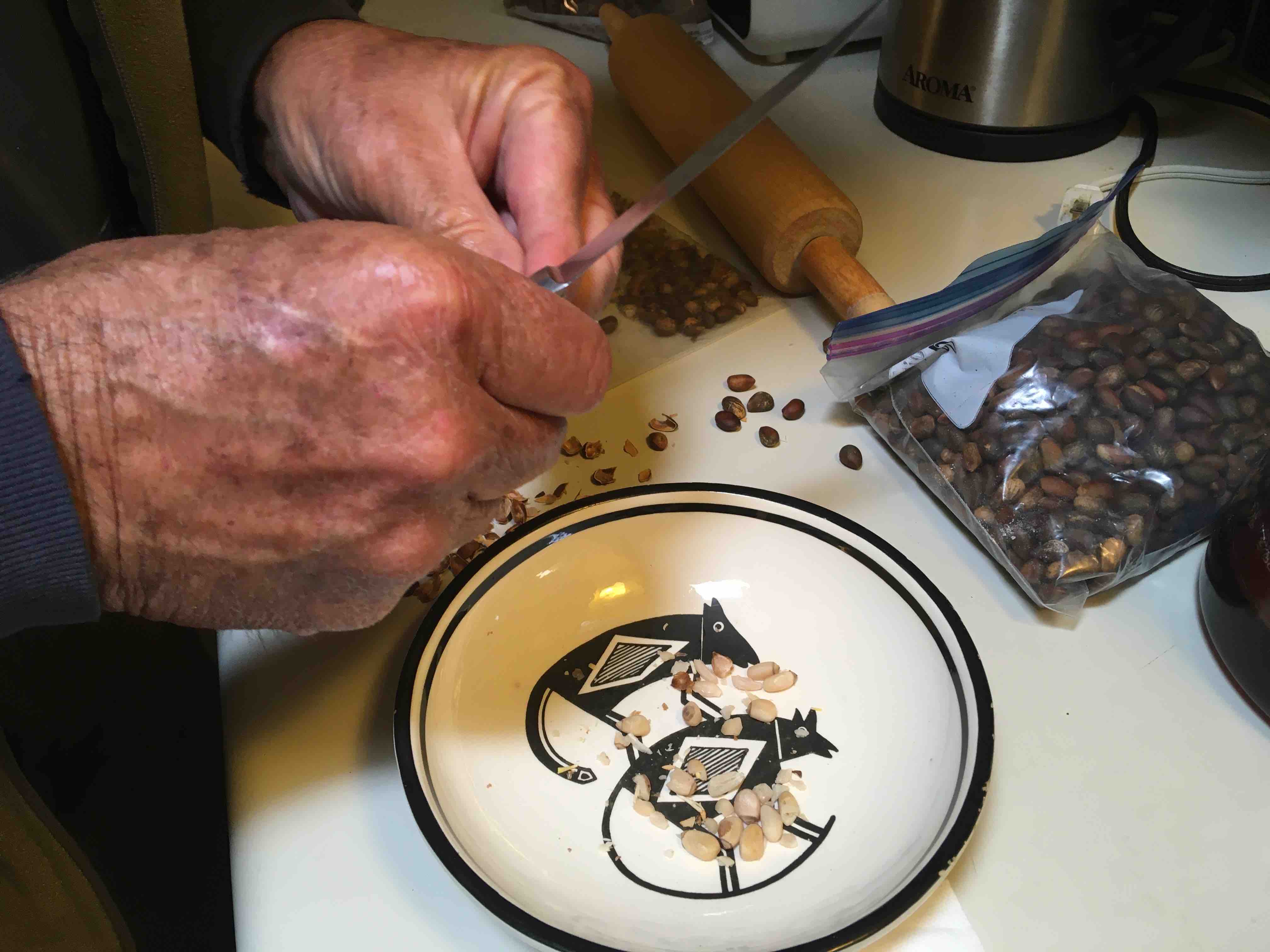
Processing (de-hulling) pine nuts from our native pinyon trees is an ordeal….

…but the rewards of our local pinyones (pine nutmeats) are a joy to the tastebuds! Our native pinyon pine nuts (Pinus cembroides and Pinus edulis) are bigger and tastier than Italian pignolas.

To add a local wild ingredient to your holiday confection, try adding some Southwest pinyones.  (New World pinyones is a local industry waiting to happen.  Thousands of years of Indigenous harvests of pinyon nuts should teach us what a treasure this desert tree gives!)

Of course you can cheat for this recipe and buy delicious Italian stone-pine nuts already de-hulled from Trader Joe’s.

The best “sticking ingredient” for attaching pinyon nutmeats to your citrus-peel confection is–tah dah you got it!!–our sublime western-hemisphere contribution to human bliss–chocolate! 

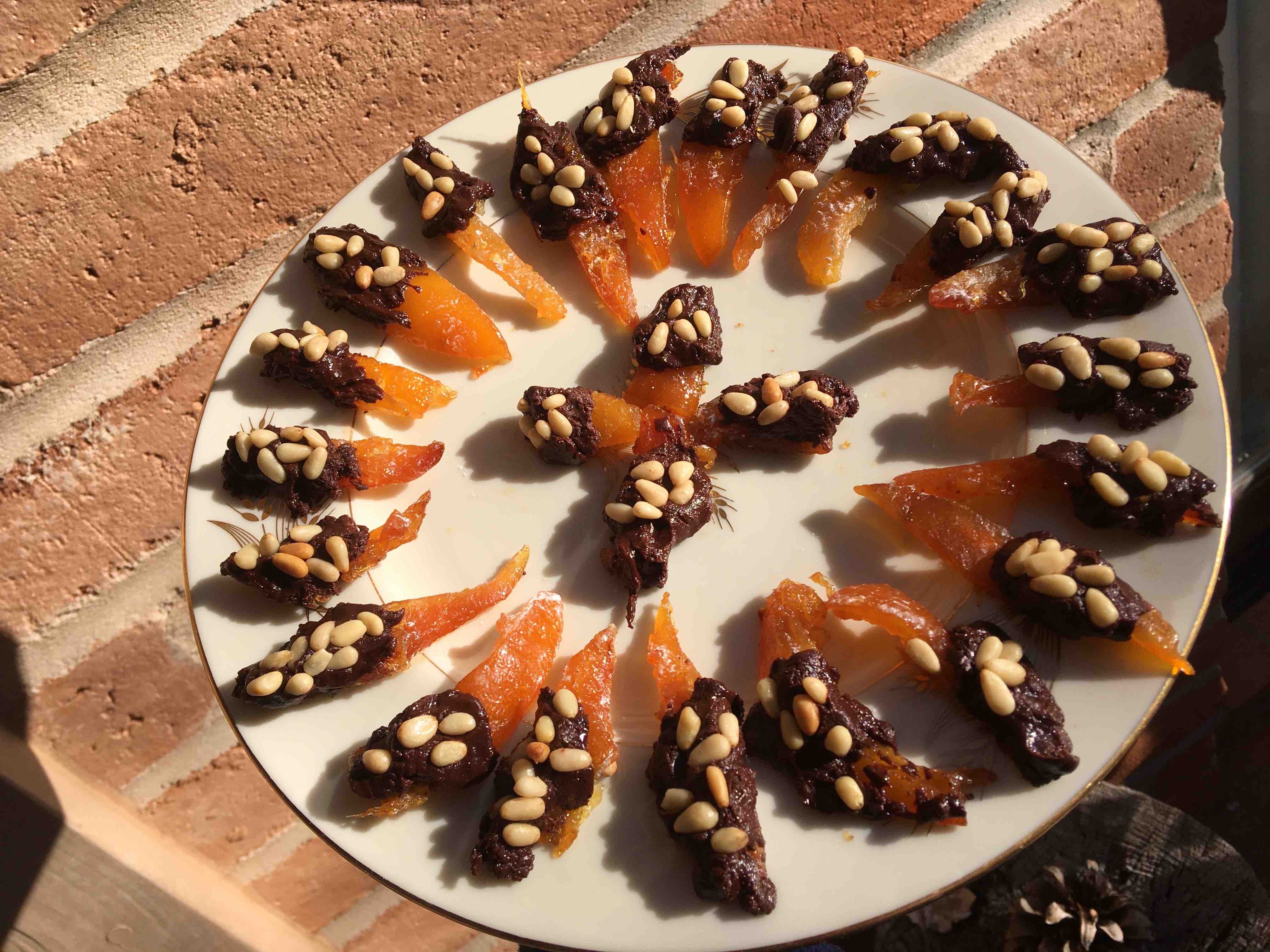
For the ultimate in Meyer lemon delicacies, try dipping your crystallized lemon-rind into melted chocolate, then while it is still hot and molten, imbed a sprinkle of pine nuts.  There’s no more decadent and delectable combo of flavors!

For more great ideas, you are cordially invited to join our Arizona Native Plant Society December Zoom meeting, Thursday, December 10, 2020, at 7pm for a delightful virtual pot luck — Native Plant Desserts and Libations!  Tia Marta will join Tucson’s culinary artists Carolyn Niethammer (author of the new book A Desert Feast) and Amy Valdes Schwemm (molera extraordinaire and creator of ManoyMetate mole mixes) with creative ideas and virtual “tastes” live.  To join the zoom go to www.aznps.com/chapters/tucson in early December for details, or send an email to NativePlantsTucson@gmail.com to request Zoom login.  The meeting will also be streamed on Facebook, starting at 7:00 pm Dec.10.

Happy holiday cooking with our local heirlooms!

Tia Marta’s heirloom products and Southwest foods artwork are available at www.flordemayoarts.com, www.nativeseeds.org, www.tohonochul.org, and in person over the holidays at Tucson’s Mission Garden.

Prickly Pear Coconut Frozen Pops

Hello friends, it’s Amy here with my new favorite late summer treat. Pink prickly pear pops are creamy and easy to bite, yet vegan using coconut milk. For a prickly pear peach sorbet using cream and honey, try Carolyn’s recipe from last season. Also, try Tia Marta’s Prickly Pear-Mesquite-White Sonora Wheat Muffins (Ihbhai c Kui Wihog Pas-tihl).


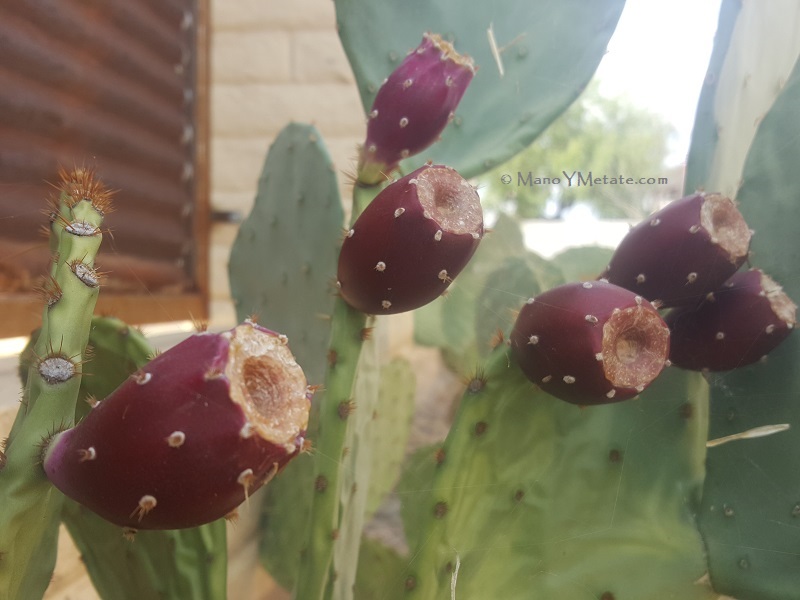
With the drought, there are very few prickly pears out in the wild this year.

However, the young plants in my yard near water harvesting basins set a decent amount of fruit, especially for their size.

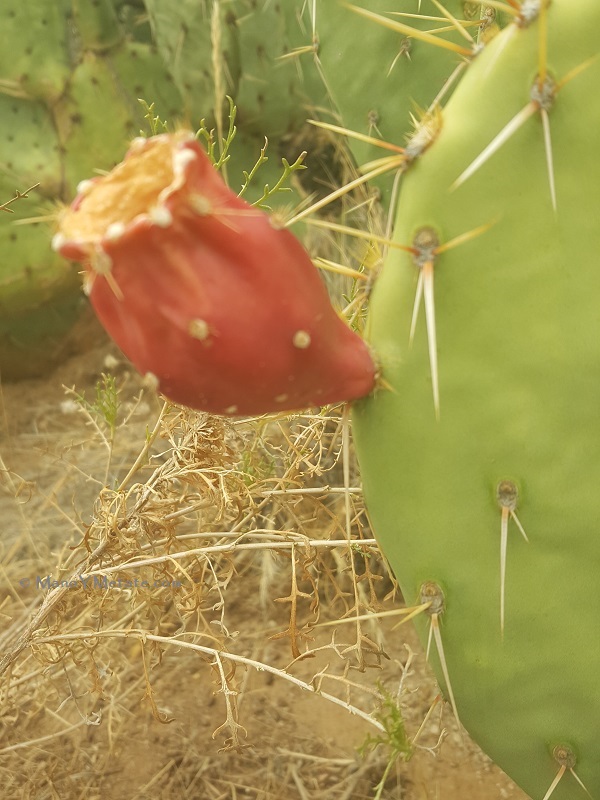
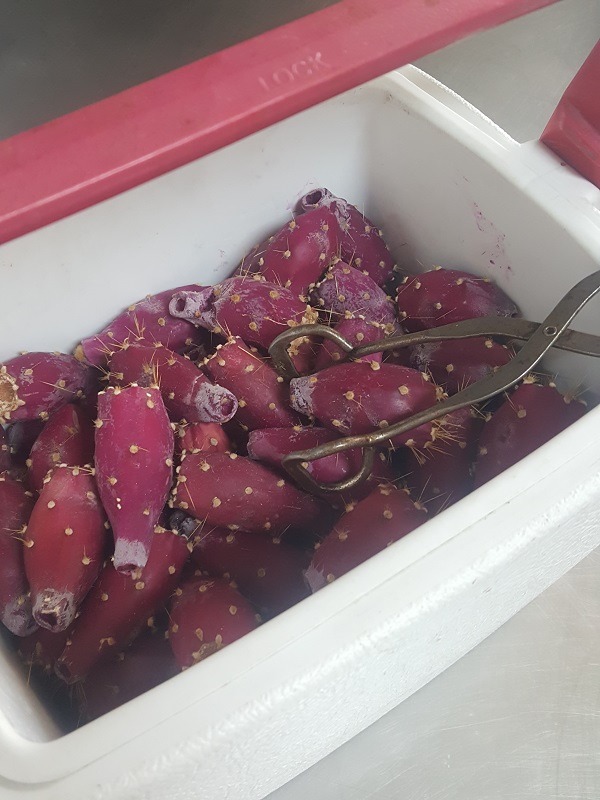
Even though the fruit may look purple sooner, I usually wait until September to harvest. If picked before total ripeness, the firm flesh holds onto the juice and it is more difficult to extract. To check, I simply pluck them off the plant with kitchen tongs. Ideally, the fruit separates easily from the plant and the skin with no tinge of green at the base tears the fruit open a bit (see the holes in the bottoms of the fruit in the photo below). If juice runs where the tongs squeeze the flesh, it’s definitely ready!!!! 

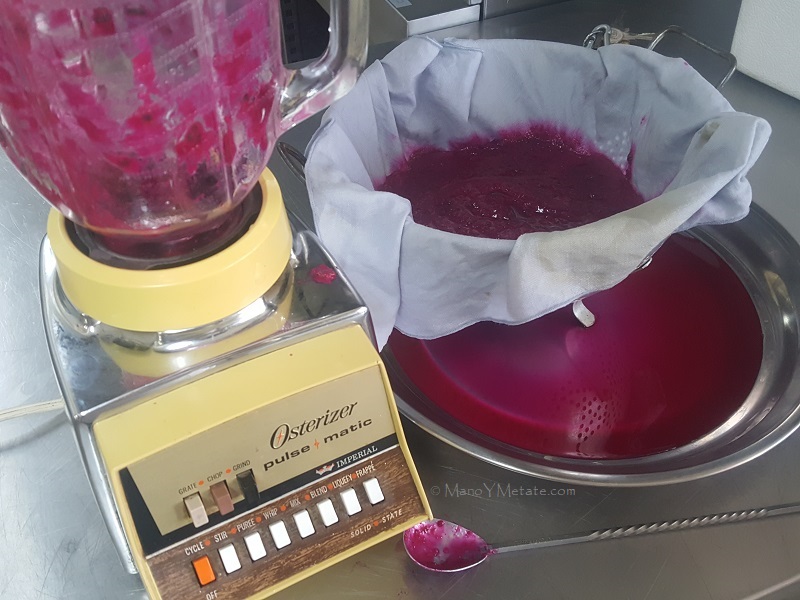
I then blend the whole fruit, spines and all.

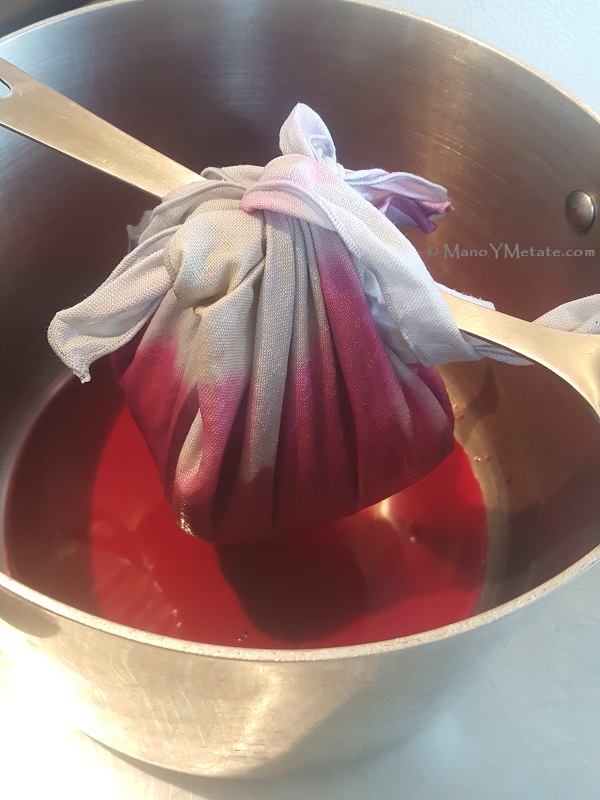
The hard seeds remain intact, while the pulp and skins are pureed. Then I strain the slurry through a cloth napkin or other piece of fabric. Cheese cloth is not fine enough.

This strains out the seeds, pulp, pieces of skin, spines and the tiny, skin-irritating glochids.

It drains slowly, so sometimes I tie the ends of the fabric, hanging it to drip in the refrigerator. 

The clear juice is ready to make treats or savory food right away, or freeze for later. As an extra precaution, I let the juice stand, then pour the clear liquid from the top, sacrificing the bottom inch from the vessel to leave behind any sediment.

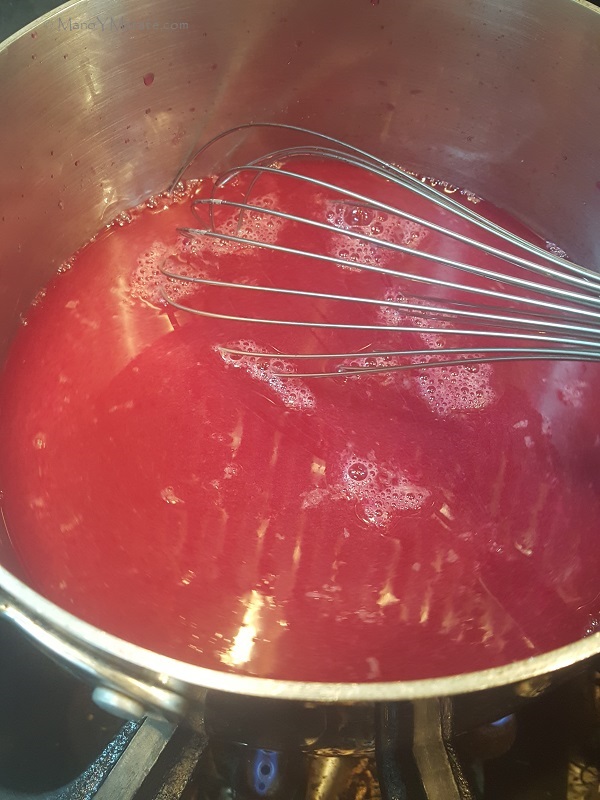
To make pops, I heated some juice with lemon and sugar, then thickened it slightly with cornstarch to make a thin syrup.

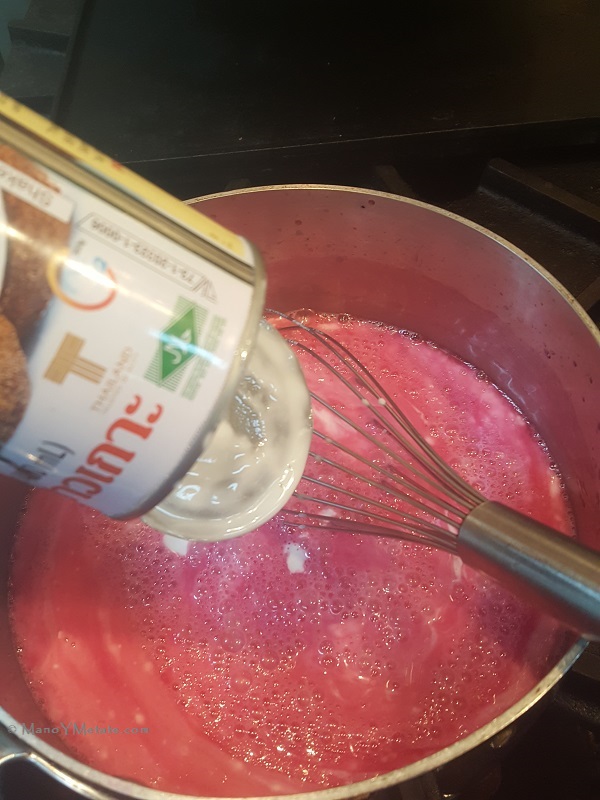
After taking it off the heat, I added a can of coconut milk. Add a little lemon or orange extract, if you like.

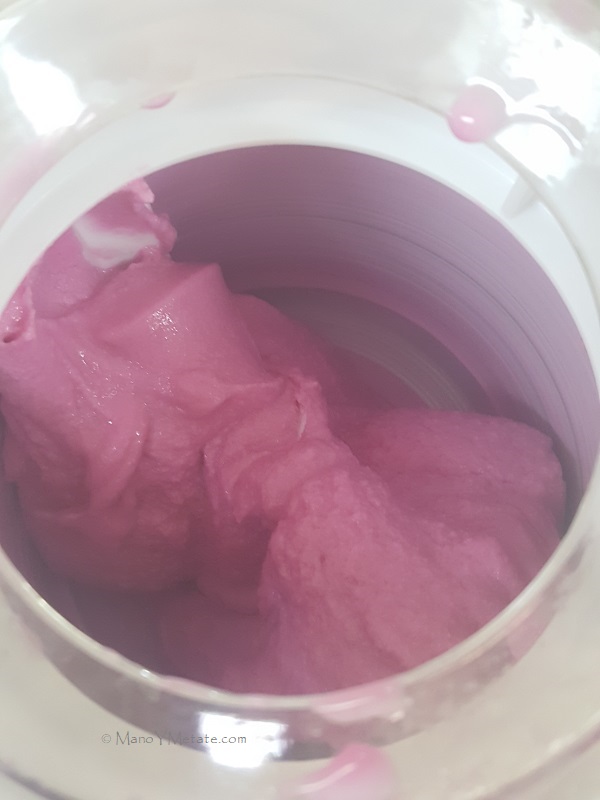
When completely chilled in the refrigerator over night, it is ready to be frozen in an ice cream maker.

If you just pour the mixture into the pop molds, it will freeze as hard as ice. But this method makes pops that are easy to bite.

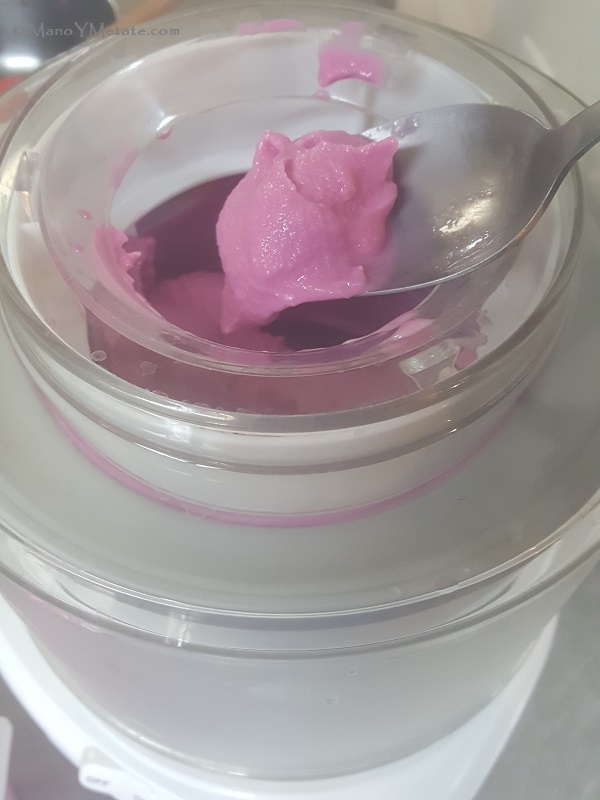
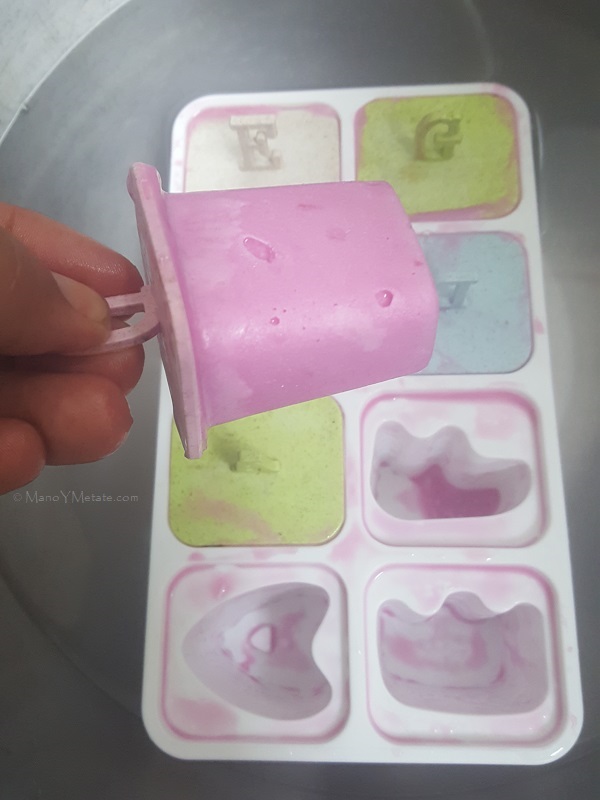
Of course, it can be eaten now as soft serve or frozen in one container to enjoy as a sorbet. But spooned into reusable pop molds, it is portion controlled!!!

Prickly pear coconut frozen pops (or sorbet) 

By Amy Valdes Schwemm

1 cup prickly pear juice

1 ½ cups sugar

¼ teaspoon salt

¼ cup lemon juice

1 tablespoon cornstarch

13-15 oz coconut milk

lemon or orange extract (commercial or 100 proof vodka infused with zest) to taste

Bring first four ingredients to a gentle boil. Dissolve cornstarch in 2 tablespoons water in a small dish. Add to pan, and simmer for one minute. Add coconut milk and extract. Remove from heat to cool and refrigerate until well chilled. Pour into ice cream maker and freeze. Firm in freezer, either in pop molds or a lidded container. Enjoy!