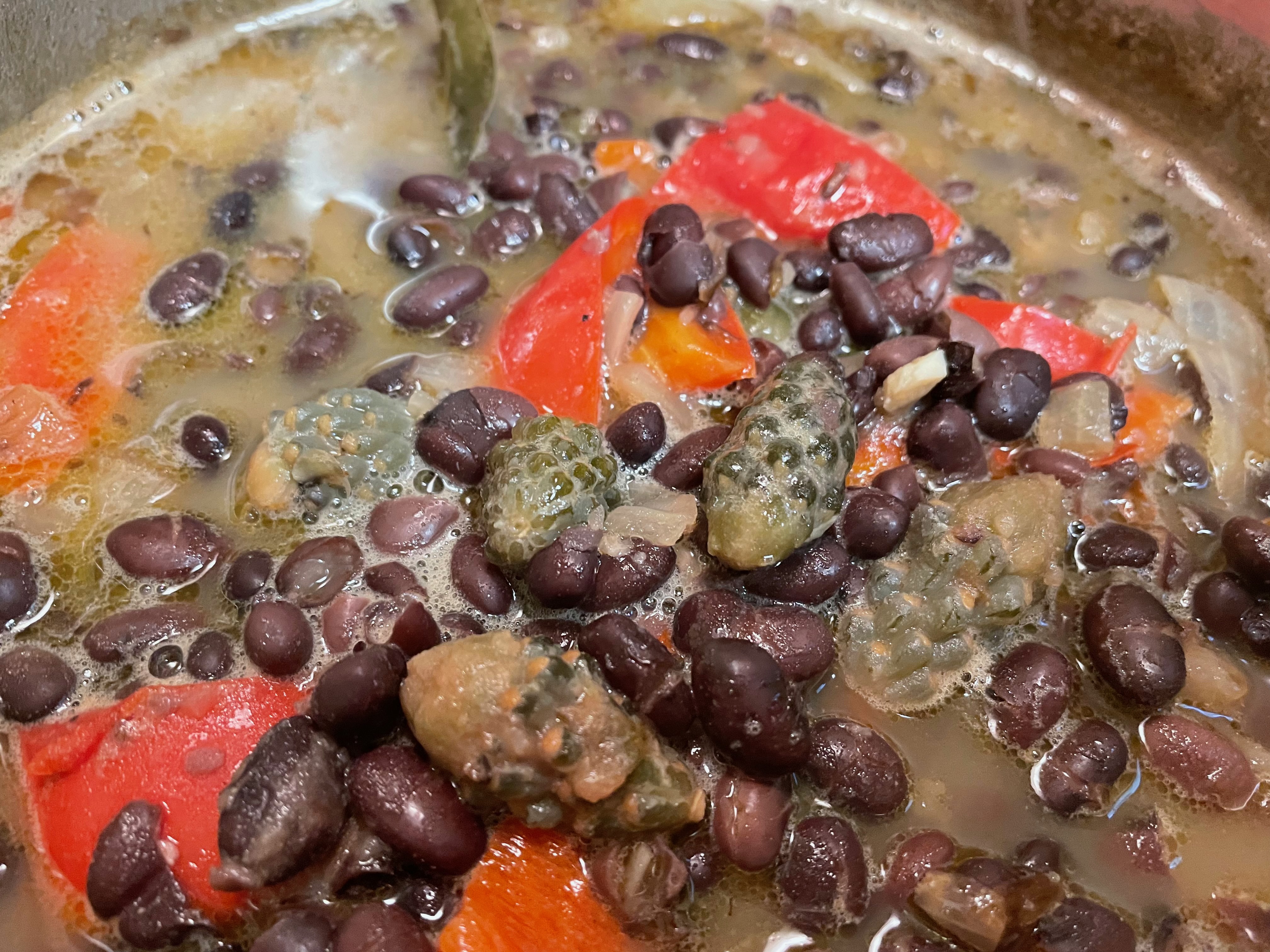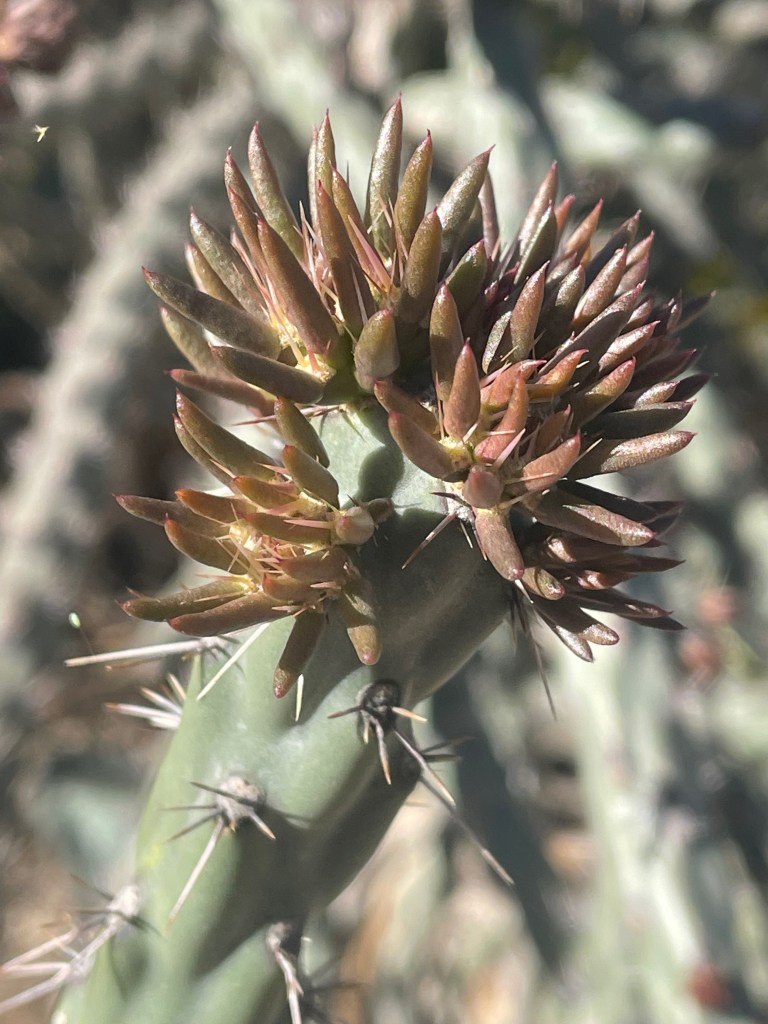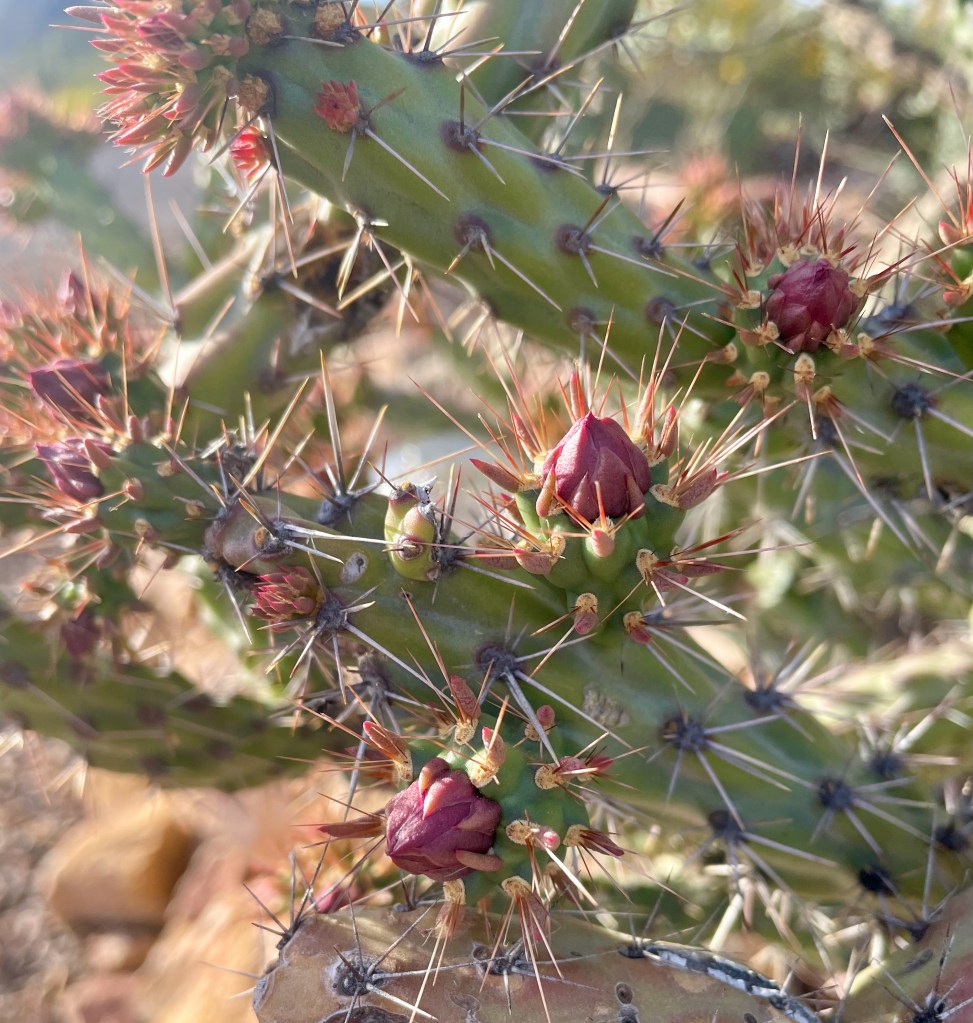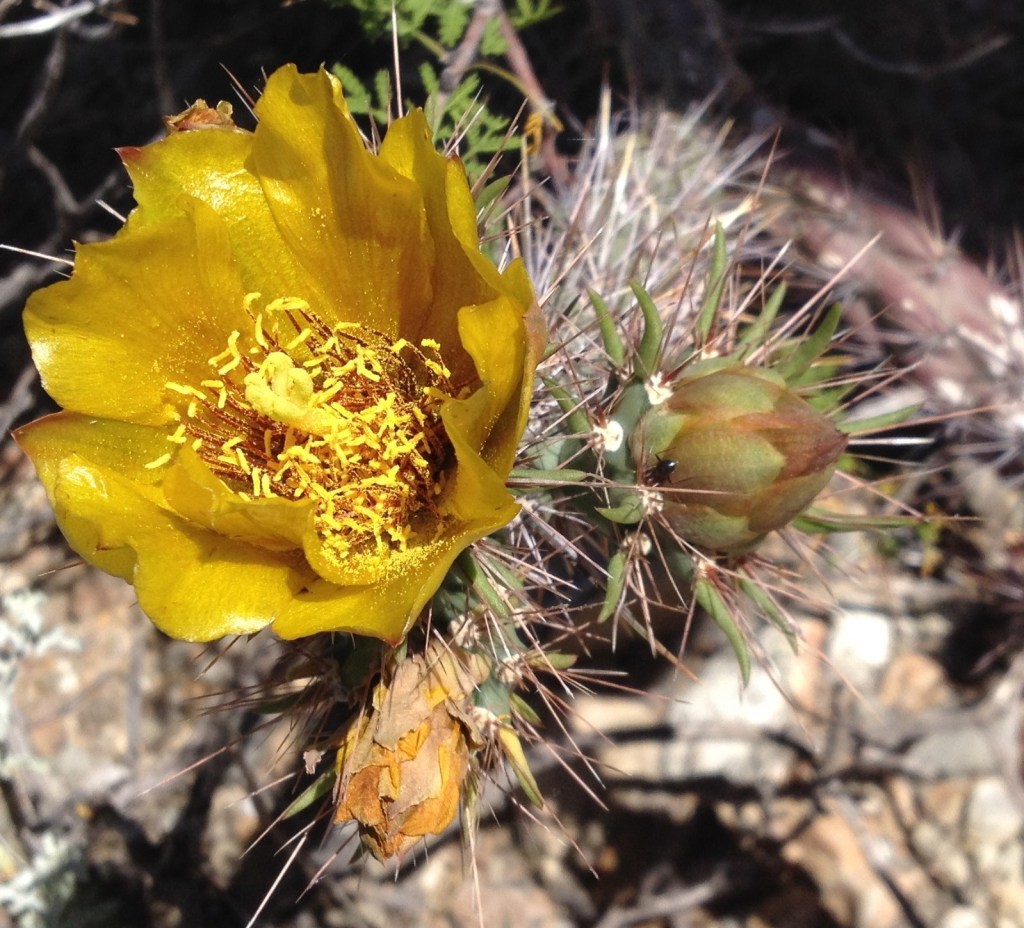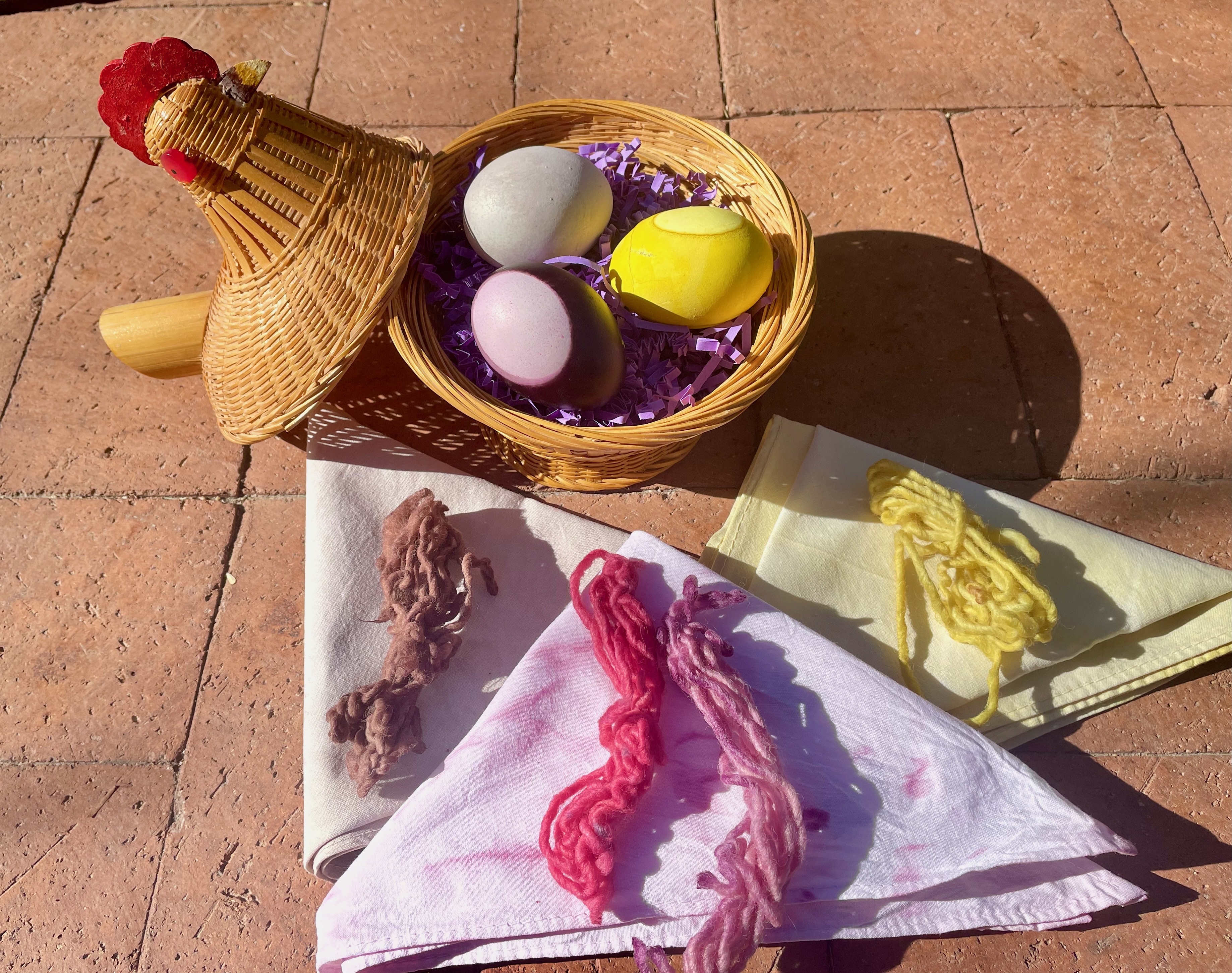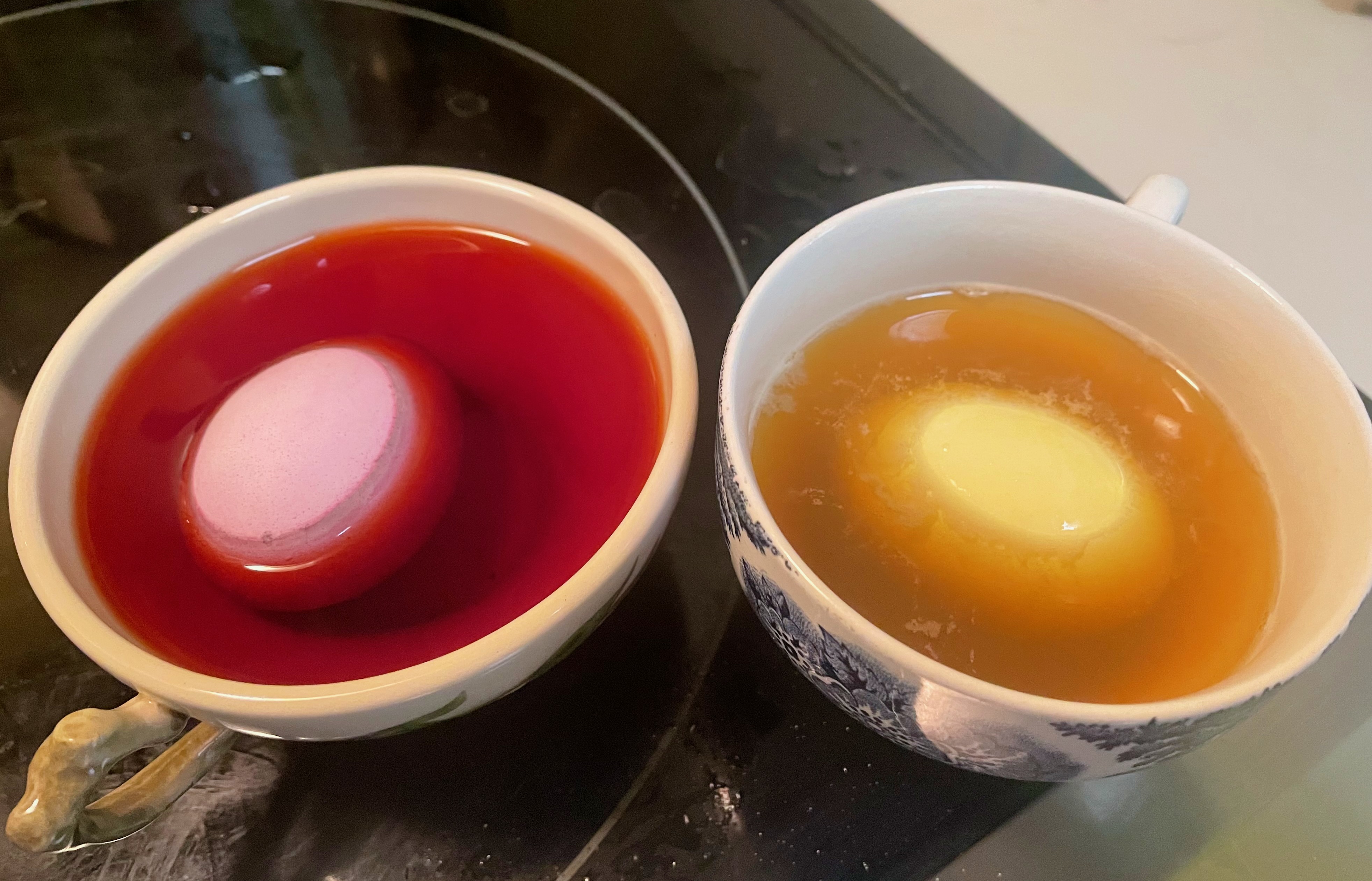
In Tucson the mesquite trees have fresh new leaves and bags of grapefruits are looking for homes. Happy Spring! Amy here using grapefruits a way I learned from my friend and mentor Barbara Rose of Beantree Farm. You can find the original recipe as well as so much other inspiration in a new edition of the Desert Harvesters Cookbook available to preorder now.
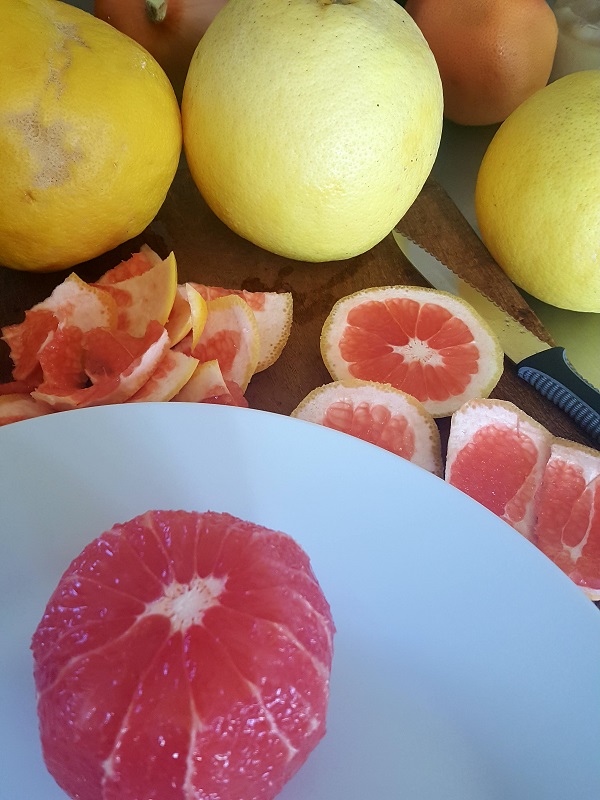
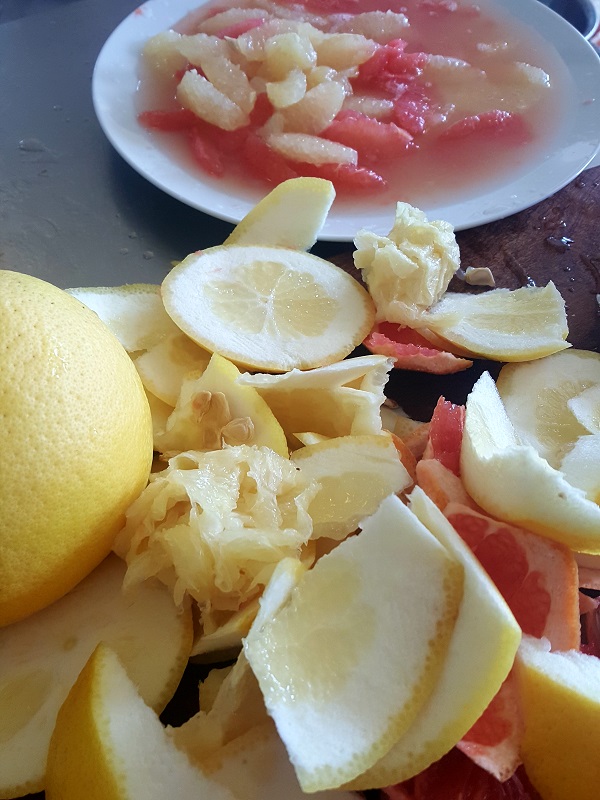
Salsa is commonly made with tomatoes or tomatillos, but when fresh tomatoes are months away, grapefruit are plentiful, juicy, sour and pulpy with a hint of sweet. Yum! Start by cutting the stem end and blossom ends of the fruit.
Then cut down the sides to remove the peel, including the pith. Candy the rinds if you like!
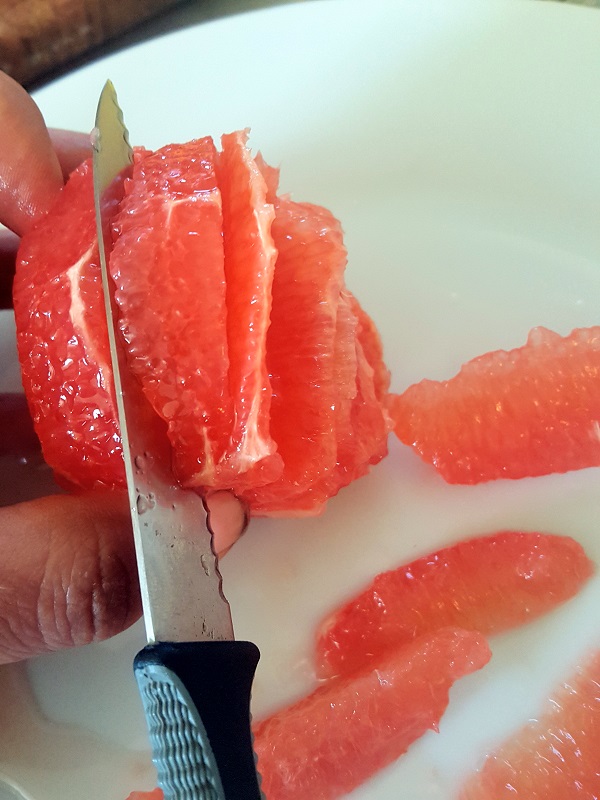
With a paring knife, cut along both sides of each segment to release the pulp in wedges. This goes more quickly than it sounds.
I don’t worry about getting every little piece of pulp since I squeeze the juice out of the membranes left behind.
Remove the seeds and drink some of the excess juice. A mix of different colored grapefruit or even oranges is fun. Use what you have!
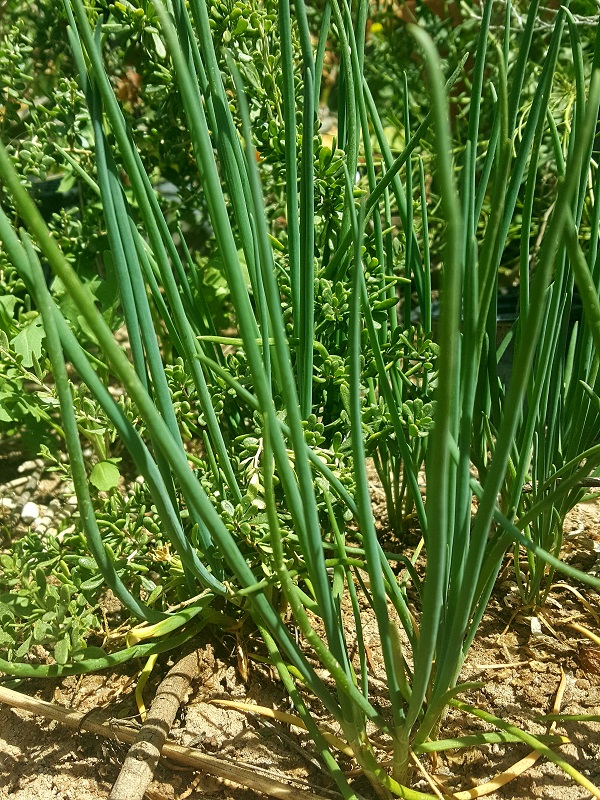
I’itois bunching onion tops have a unique onion flavor but any color onion will work: bulbous white, red or yellow, green spring onion tops, shallots… whatever you have.
Besides a smashed clove of garlic, a splash of cooking oil (any kind), a pinch of salt, and rubbed Mexican oregano, the not so secret ingredient is crushed chiltepin! Use as few or many as you like. Allow the salsa flavors of blend and the chiltepin and oregano to rehydrate.
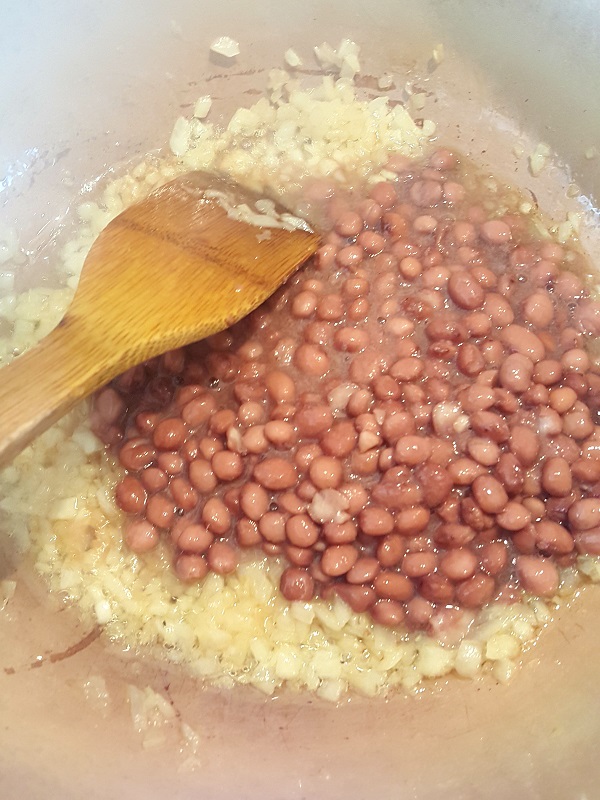
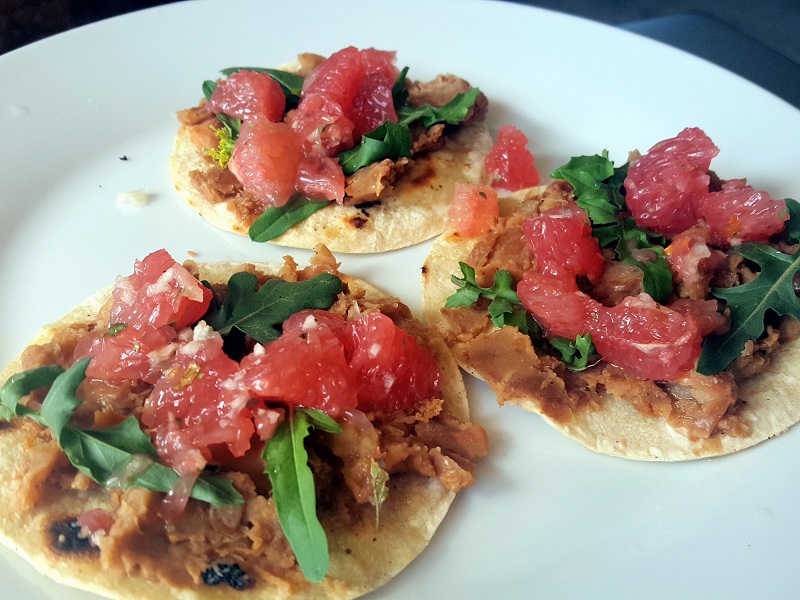
Wanting something to go with the salsa, I made tostadas. Sautéed onion and cooked pink beans are a great base.
Mashed beans stick to tostadas better.
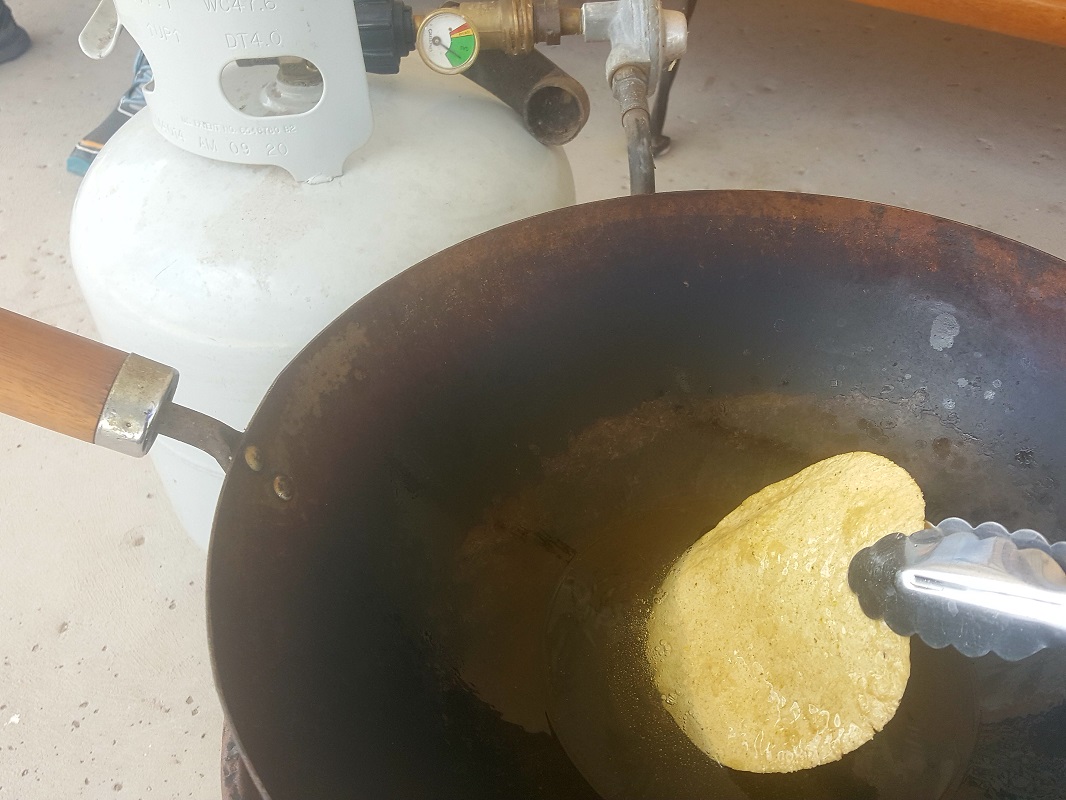
Fry corn tortillas in oil until crispy. In order to not set off the smoke detector, frying outside is the best, especially in beautiful spring weather.
Lettuce or most any green or sprout can all liven up tostadas. Wild mustard greens, like arugula, add a peppery bite.
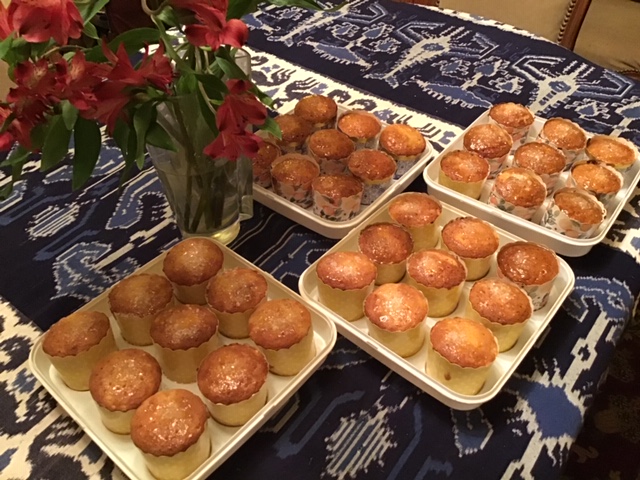
Five dozen Seville orange cupcakes ready for transport to the Mission Garden Citrus Fest.
This is citrus season in the desert Southwest. All varieties of citrus can be found on trees in backyards, orchards, public gardens, college campuses and even street sides. It is a wonderful abundance. It’s Carolyn today and previously on Savor the Southwest, we’ve given you recipes for grapefruits, oranges and lemons (try this fabulous lemon pie or limoncello) . But one abundant fruit that is underused is the Seville orange. Sometimes it is called the sour orange. These oranges have bumpy skin, lots and lots of seeds, and a very tart flavor. Seville oranges make terrific marmalade, the kind with a bitter under flavor that is traditional in British orange marmalade.
The history of all citrus is a little murky, but botanists agree that it originated in parts of Asia where gardeners were growing citrus 4,000 years ago. According to plant expert Dena Cowan of Mission Garden in Tucson, as the various varieties of citrus arose, they interbred to produce even more varieties. Eventually, through human migration and trade, citrus made its way to the Middle East and Southern Europe where the various varieties found a home in the Mediterranean climate. One thing is clear though, the sour orange, the ones we call Seville, predated the varieties of sweet oranges we enjoy. Citrus was brought to the New World by the Spanish explorers and Catholic missionaries. Again, the climate was perfect.
During this season I make many jars of marmalade (recipe here) and store it for use during the year. But I’ve got enough now and was looking for other recipes, specifically something I could sell at the Citrus Fest at Mission Garden. I found a recipe on-line and was able to adapt it to use with the Seville oranges which grow in great abundance at Mission Garden. The five dozen Whole Orange Cupcakes I made sold out and people found them so delicious they wanted the recipe. So here it is along with some tips:
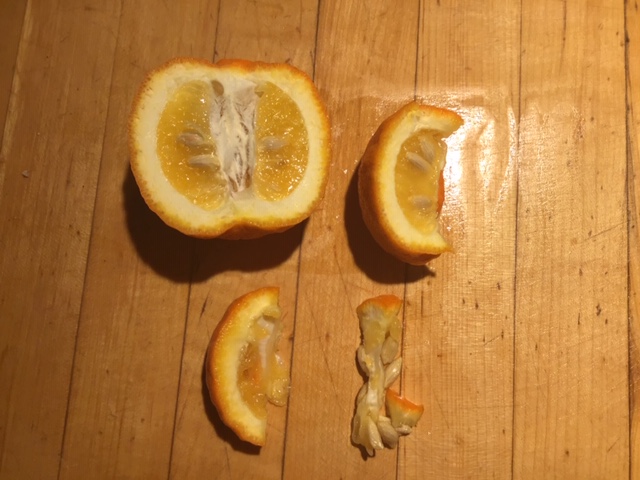
Cut the Seville orange into wedges and trim out the center with seeds and fiber. Discard what you have trimmed and grind the cleaned wedges.
It’s happening again–that MIRACLE OF THE SEED–life, held in abeyance in its little dry dormant package, is now springing into action–miraculous germination! Potential energy becomes kinetic! For me Tia Marta, each time it is a spiritual experience to see it happening. Sure, science can explain the DNA within the seed that dictates when the right setting of moist soil, sunlight, and temperature initiate imbibing water and trigger cell division. But still, when that little hard pellet-of-a-seed transforms before your eyes into visibly living tissue, growing and hinting that it might feed you if you patiently tend it–that is the stuff of MAGIC! May we always be reminded…and appreciate…and offer our homage to the seeds!
Can you sense that welcome change in the sunlight? Do you have that urge to get out in the garden too? Mailboxes are beginning to be stuffed with seed catalogs. The non-desert world contemplates what summer veggies to plant this year. But for us in the low desert, we are already planting winter/spring adapted vegetables. Now is our prime time for root crops, leafy greens, grains, and Mediterranean legumes like peas, lentils, favas and garbanzos. Seed expert and Wildlands Restoration founder Gary Mascaranek says if we plant these cool-season veggies before mid-February we can enjoy a harvest before May’s heat sets in. (We have the bonus of planting a whole new suite of heat-adapted veggies when the monsoon arrives.). OK let’s get those seeds in the ground! There is a wealth of planting, growing, and cultural information for Southwest gardeners in this year’s NativeSeedsSEARCH seedlisting. Check their online catalog or call 520-622-0830 to request a hard copy that you can read with dirty hands!
Let’s thank the “back-story” gardening people through the ages–familiies, lineages, communities, cultures—who, by saving select seeds, have kept the best traits for local plant productivity alive. It is really plants and people together in an ever-changing, joyous, well-fed, active dance, season after season. They have brought to us in 2023 such a rich diveristy of delectable plant foods and nutrition (like the 20-something glorious varieties of beans shown here–and this is only a fraction).
As we plant our winter/spring seeds in the next couple of weeks–and as we eat the fruits of their labors–may we sing our praises to those untold millions throughout human time for their creative co-creations with the plant world.
For some good reading–perhaps on a rainy day– check out:
Henry David Thoreau’s Faith in a Seed, reprinted by Island Press, 1993, edited by Bradley P. Dean, foreword by G.P.Nabhan.
Virginia D. Nazarea’s Heirloom Seeds and their Keepers, University of Arizona Press, 2005.
Scott Chaskey’s Seedtime, On the History, Husbandry, Politics and Promise of Seeds, Rodale Press, 2014.
Gary Paul Nabhan’s and Bill Steen’s Sown by Hand, Aflorisms, Poems and Prayers for Seeds, The Canelo Project, 2018.
Joy Hought’s and Melissa Kruse-Peeples’ Saving Seeds in the Southwest, Techniques for Seed Stewardship in Aridlands, NativeSeeds/SEARCH, 2018.
This latter handbook is a clear instruction guide for successfully and effectively saving categories of heirloom seeds to maximize their genetic diversity.
So Tia Marta here wishing you happy planting–and soon, happy seed-saving and seed-sharing for a sustainable future!
Every Mexican nana anywhere in the US or Mexico has a special, probably complicated, and delicious posole recipe. But you shouldn’t feel intimidated. You can make a delicious posole, basically a pork and hominy stew, for a family dinner or a dinner with friends without much fuss. You can have the basic stew or fancy it up with condiment add ins.
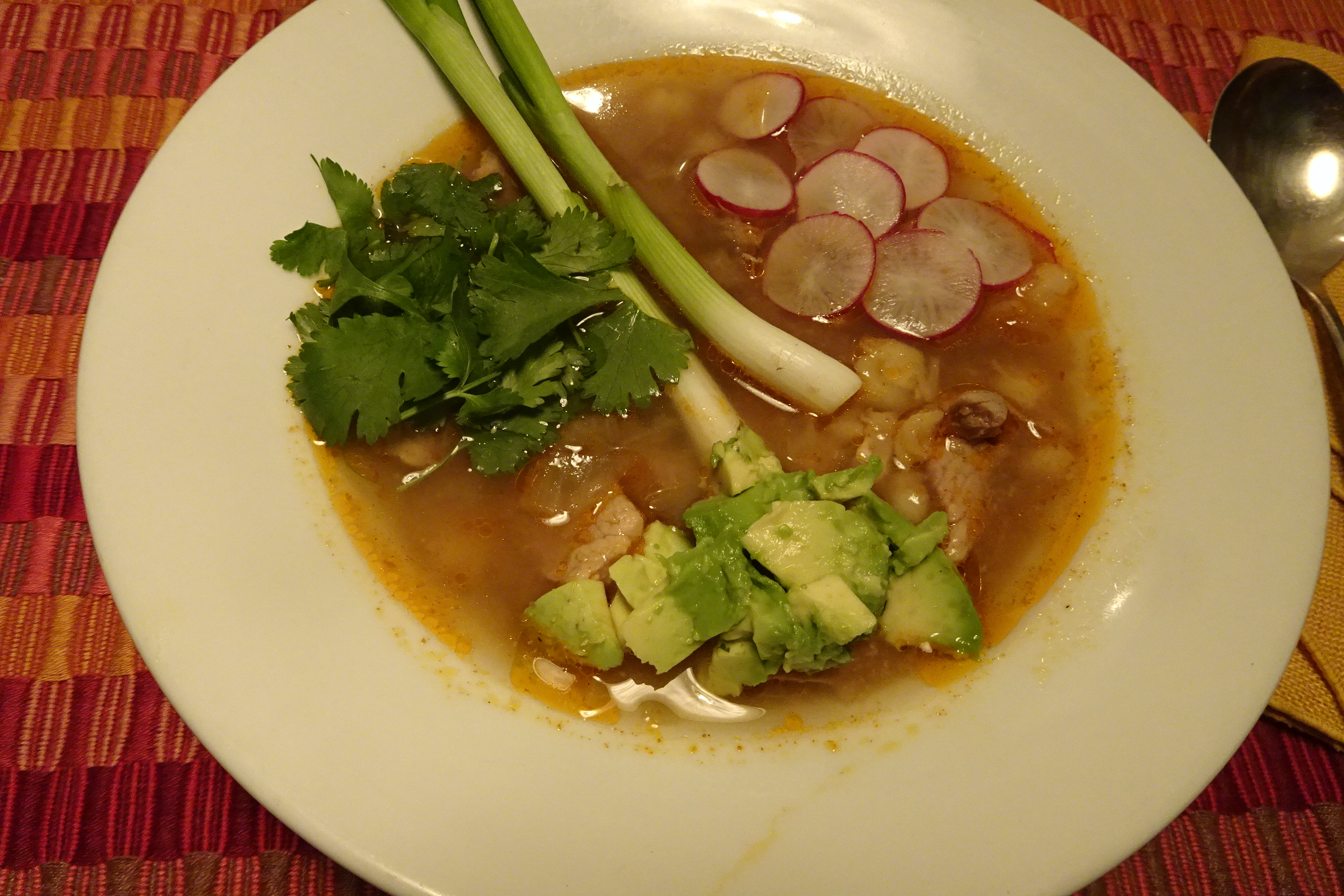
Simply constructed posole all dressed up for dinner.
The thing that differentiates posole from ordinary beef stew is the hominy. My friend Michele Schulz wrote about hominy in a recent blog:
“Nixtamalization is the hominy making process and has been fundamental to Mesoamerican cuisine since ancient times. Among the Lacandon Maya who inhabited the tropical lowland regions of eastern Chiapas, the caustic lime powder was obtained by toasting freshwater shells over a fire for several hours. In the highland areas of Chiapas and throughout much of the Yucatán Peninsula, Belize Valley and Petén Basin, limestone was used to make slaked lime for steeping the shelled kernels. The Maya used nixtamal to produce beers and when bacteria were introduced to nixtamal, a type of sourdough was created.
“Alkalinity helps dissolve hemicellulose, the major adhesive component of the cell walls, loosening hulls from the kernels and softening them. Soaking kills the seed’s germ, keeping it from sprouting while in storage. In addition to providing a source of dietary calcium, the lye or lime reacts with the corn so the nutrient niacin can be assimilated by the digestive tract.”
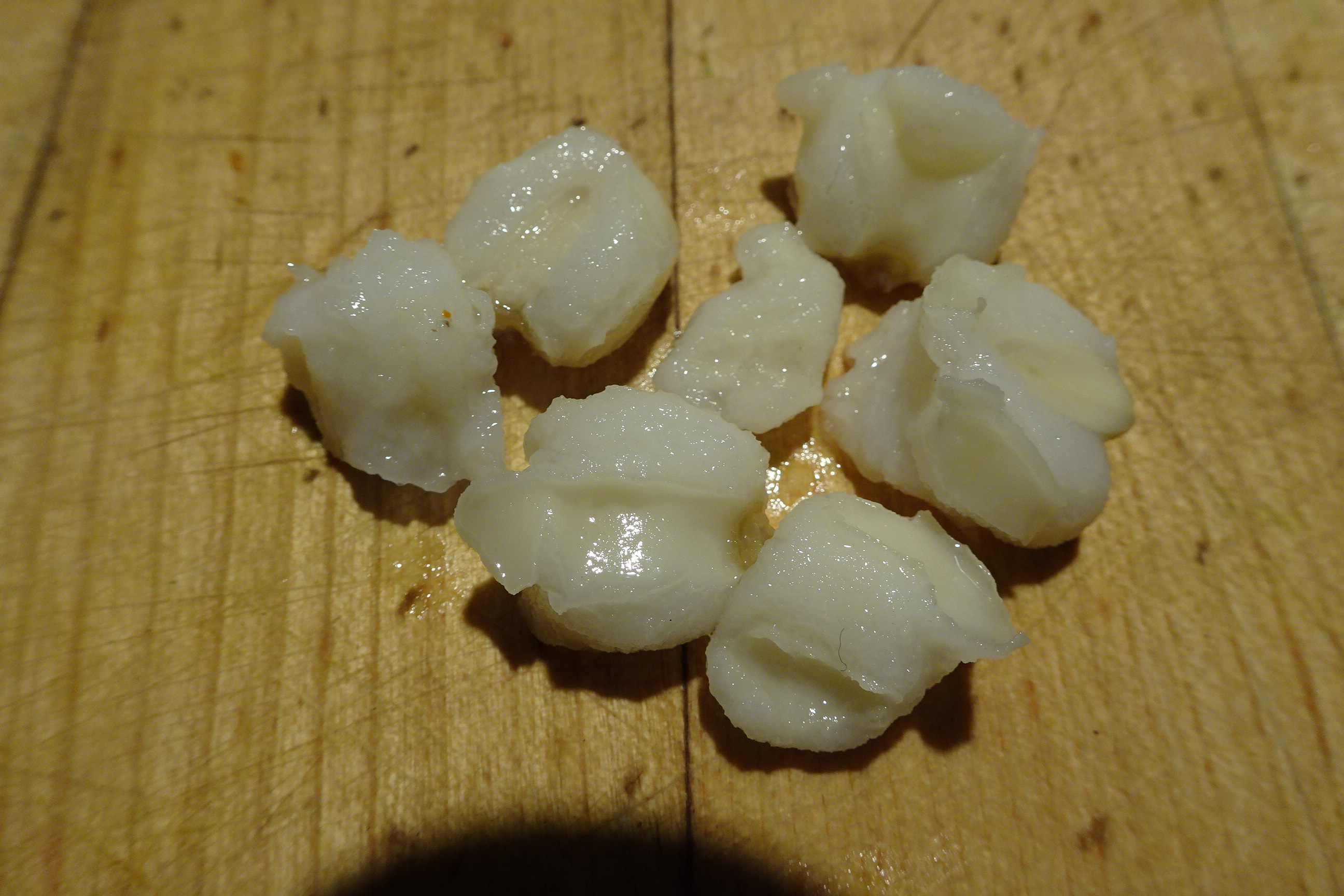
Here is a picture of the way corn kernels puff up to become hominy.
Unlike the ancient Mayans, you won’t have to grind seashells to make your posole. This simple recipe today uses canned hominy which is widely available in grocery stores in the West. Or if you are ready for some culinary fun, you can do what Savor Sister Amy did and make your own hominy from corn. Or maybe you just want to read about it!
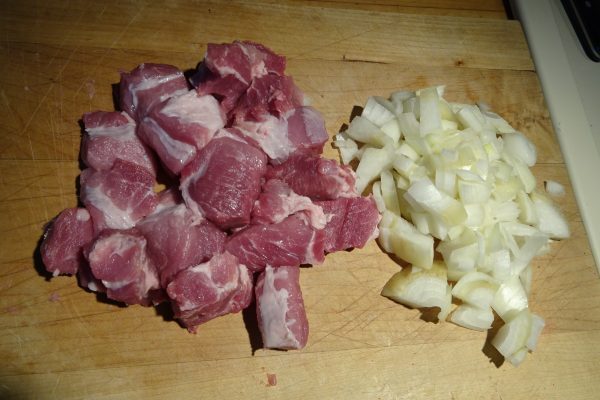
To make our easy version of posole, start with some pork roast (not the loin , too lean) cut in chunks and some chopped onion. If you have a slow cooker, this makes things easy because you don’t have to keep an eye on it. Or you can use a heavy pot on your stove. You’ll cook it until the pork is tender, about 2 hours.
Start with pork cubes and onion.
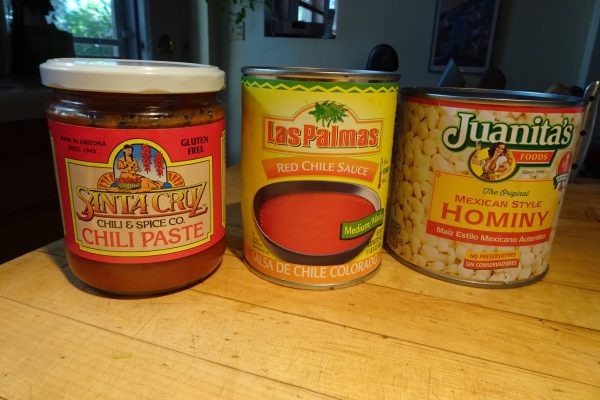
Once the pork is tender, add the hominy and the chile sauce. The bouillion adds a little umami and savoriness and lifts the flavor. Don’t forget the salt. The dish will taste flat without it. How much chile sauce you add depends on the spiciness of the sauce and your taste. It should have a little kick but not burn your tongue.
Here are the canned products that simplify the process. If you can find the Santa Cruz chile paste, it is great. If not, a canned chile paste works.
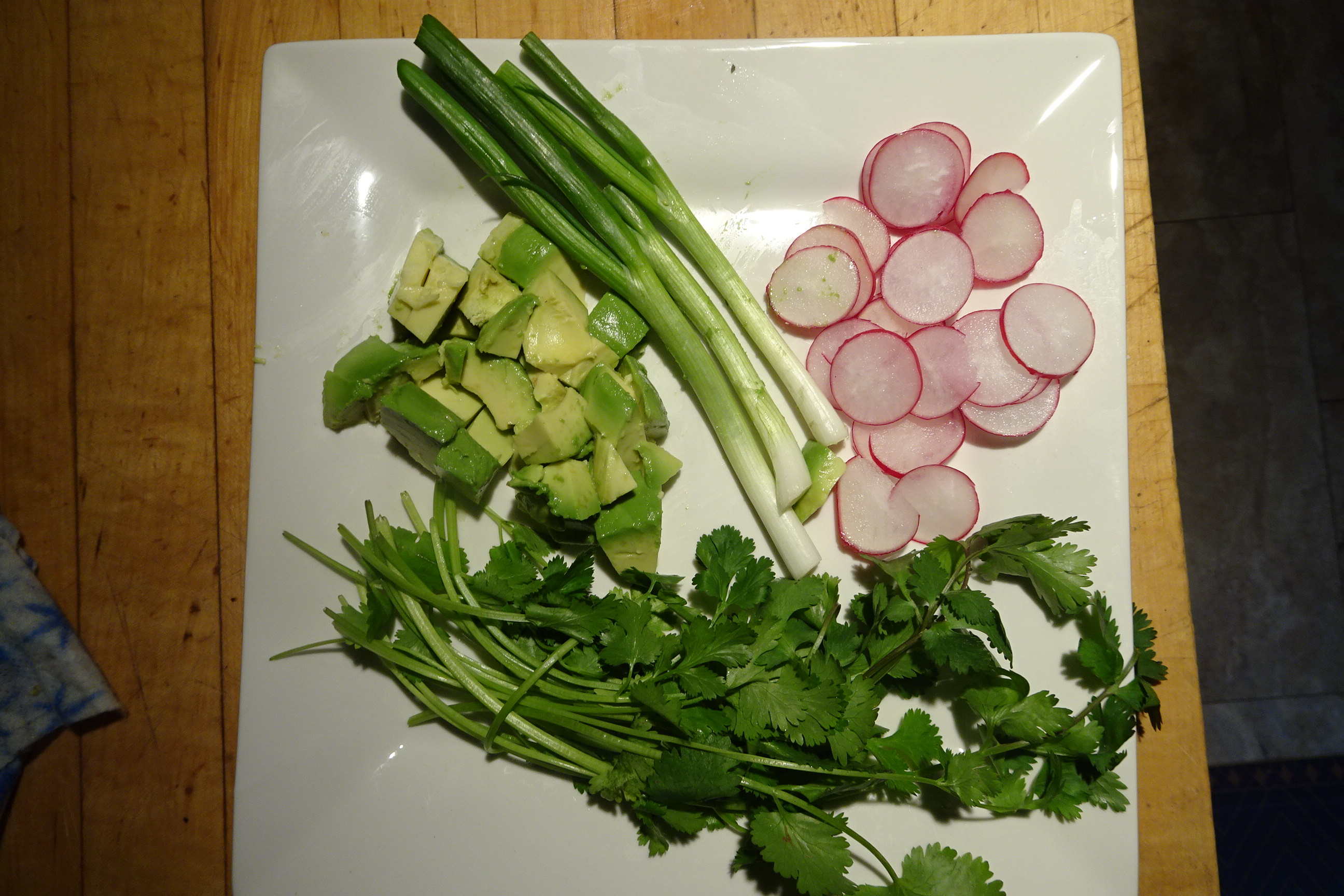
While the posole is cooking, assemble the condiments which can include green onions, radishes, cilantro, avocado and lime wedges.
A nice selections of condiments.
Easy Posole
2-2 1/2 pounds pork stew meat
1 onion
1 teaspoon chopped garlic
1 cup water
1 teaspoon Better than Bouillon or a bouillon cube
1 25-ounce can posole
1/4-1/2 cup chile sauce
Salt and pepper to taste
Condiments:
Sliced radishes
Finely shredded cabbage
Avocado chunks
Cilantro sprigs
Green onions
Lime wedges
Combine the pork chunks, the onion, garlic, and water in a slow cooker or heavy pan (like a Dutch oven), and simmer until the pork is very tender, about two hours. Flavor with salt and pepper. Add the hominy and the red chile sauce and heat. It should be a little soupy. Ladle into bowls and pass the condiments.
________________________________________________
Carolyn Niethammer has been writing about Southwest food for decades and had published five cookbooks. You can find recipes from renown Southwest chefs in the New Southwest Cookbook, recipes for edible wild plants in Cooking the Wild Southwest, and the history of food in the Santa Cruz basin and the arrival of agriculture in what is now the United States in her latest book A Desert Feast.
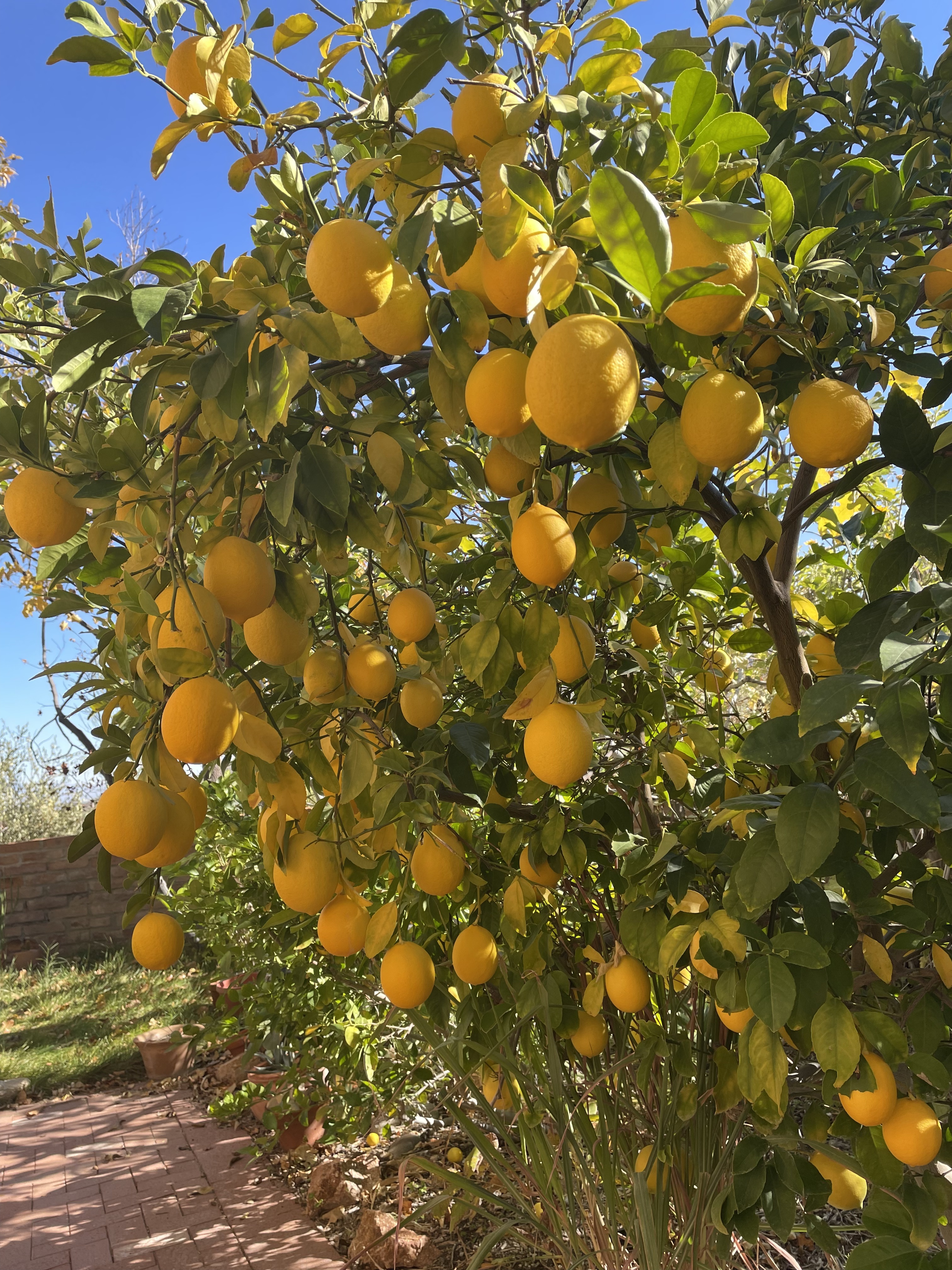
With a bounty of citrus in the low desert now beginning to fall off our trees, and neighbors leaving bags of limes or lemons to your doorstep, it’s the perfect time to consider some fun cook-with-citrus ideas for holiday treats!
OK, anyone can put sugar, butter and flour together, but if you give yourself carte blanche to invent new local variations on old-time favorites you can come up with some winners, especially for special winter occasions. Tia Marta here to share what I did with traditional lemon bars for a totally Southwest flair:
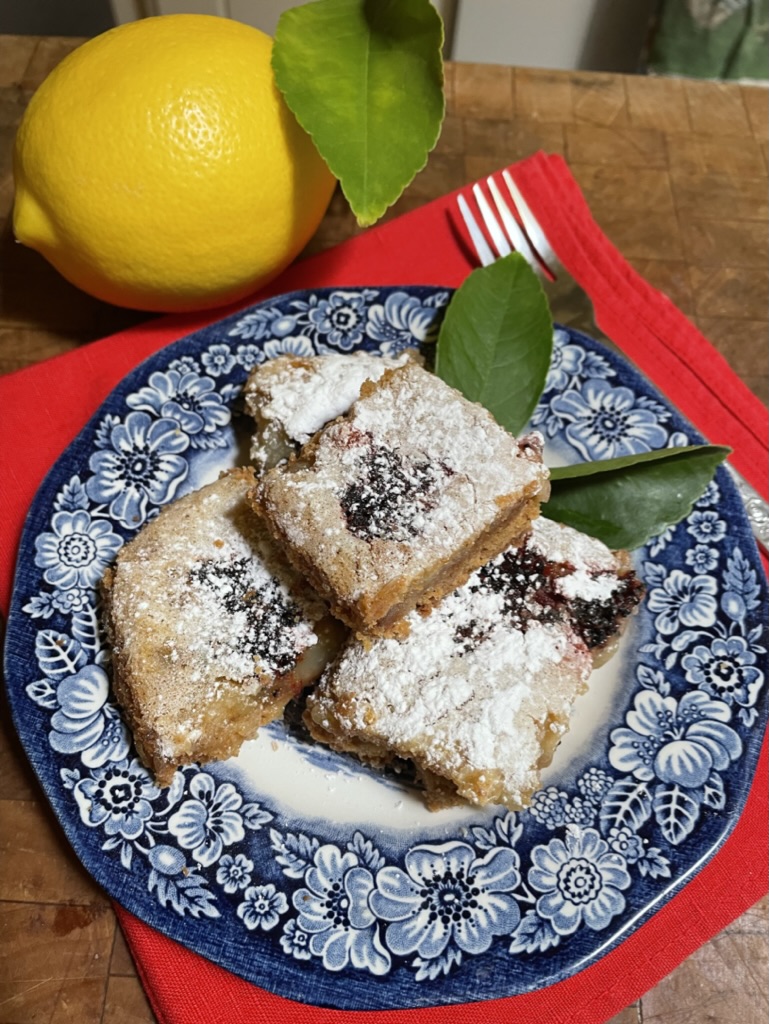
Try this delicious locally-inspired RECIPE for HOLIDAY CITRUS BARS:
You will need a 9×13″ baking dish and mixing bowls
Ingredients for crust:
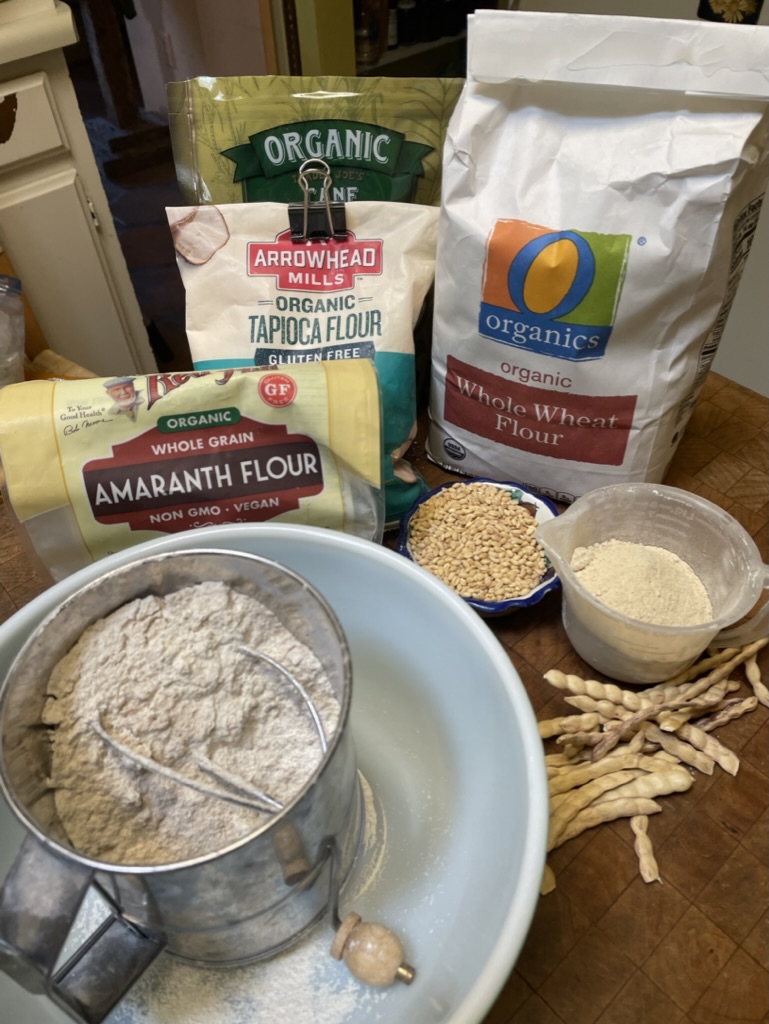
1 and 1/2 cups flour mix (I used 1 cup organic fine whole wheat and 1/2 cup white Sonora wheat flour*)
1/2 cup mesquite meal (in place of crushed graham crackers used in other recipes)
3/4 cup butter, softened room temperature
1/2 cup powdered sugar
Ingredients for top layer:
2 cups regular sugar
1/2 cup lemon juice (lime juice or tangerine juice also are delish)
1-2 Tbsp lemon-zest (I used minced Meyer lemon rind; lime- or tangerine-zest would be great)
4 lg. eggs
optional wild desert fruits (I used saguaro fruit; prickly pear or hackberries would work great)
!/4 cup flour (added separately for this top-layer mixture)
*white Sonora wheat flour is available from Barrio Bread milled with heirloom grain grown by BKW Farms in Marana
Directions follow with pictures:
Preheat oven to 350 degrees F.
To begin crust, sift flour mixture, mesquite meal, and and powdered sugar together.
(Since the crust is not leavened, you can make it gluten-free by using tapioca flour as your binder and amaranth flour with the mesquite flour.)
Mix crust ingredients–flours, confectioners’ sugar, and softened butter– to make a “dough”.
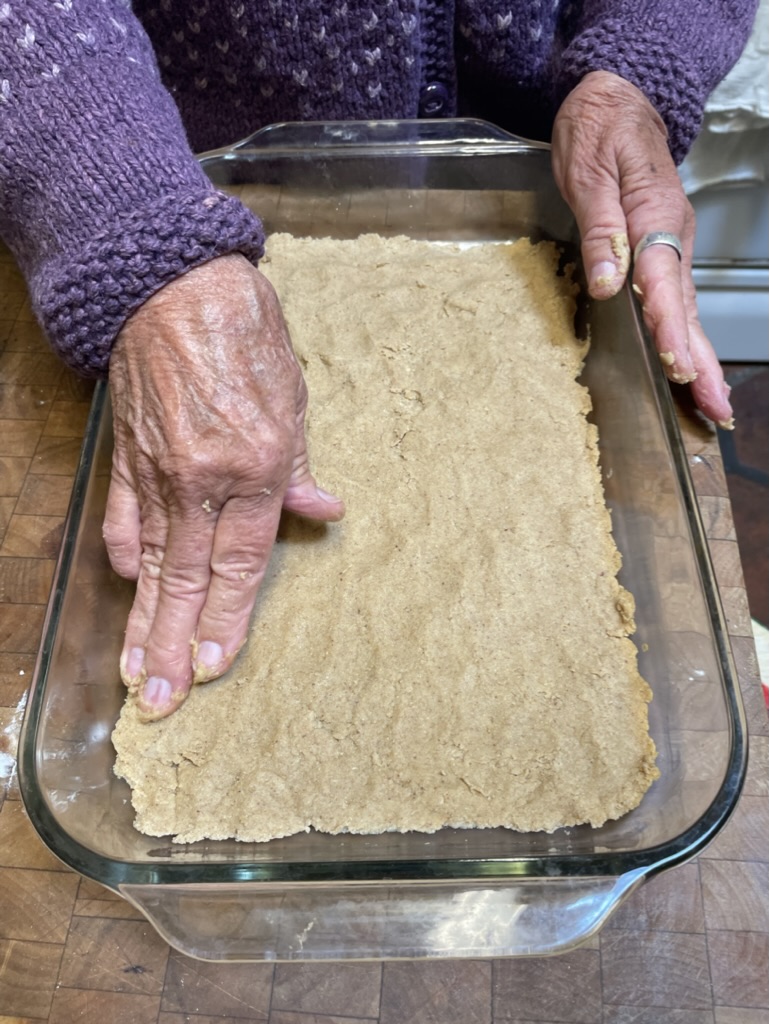
Press “dough” into the bottom of the 9×13″ baking pan, relatively evenly (maybe 3/4-1/2″ thick. Be sure to crimp down the edges with a clean knife so the thickness of dough is not tapered thin.
Bake crust at 350F until light brown, about 20-25 minutes. Keep oven on….
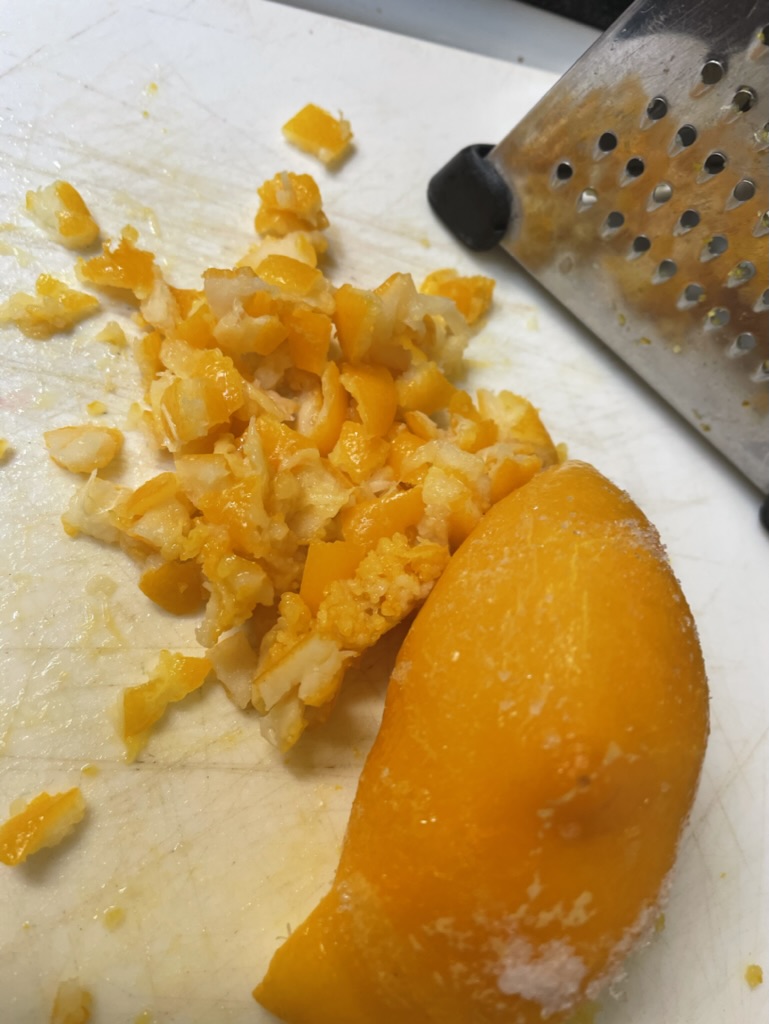
Grate 1-2 tablespoons lemon, lime or tangerine zest.
We have Meyer lemons which have such a mild sweet rind that I experimented by mincing, instead of zesting them. I had juiced the fruits previously, and had frozen the rinds for zesting and for making limoncello (that’s another fantastic blog by SavorSisterCarolyn!) . For the top-layer mixture I used 3 tablespoons of minced Meyer lemon rind.
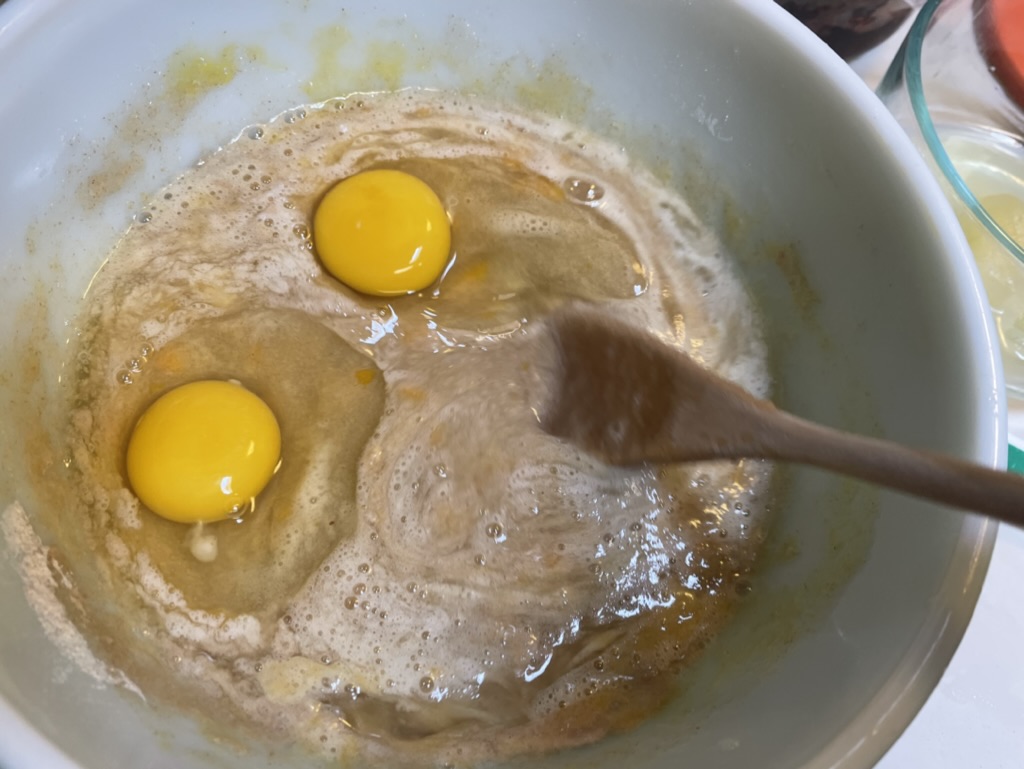
While crust is baking, beat together the top-layer ingredients: sugar, citrus juice, minced or zested rind, 4 eggs, and 1/4 cup flour as thickener. (If you are using a pyrex bake pan, make sure this mixture is warm enough so as not to shock the hot pyrex when poured on crust.)
When crust is light brown and done, bring out of the oven. Pour top-layer mixture onto the crust.
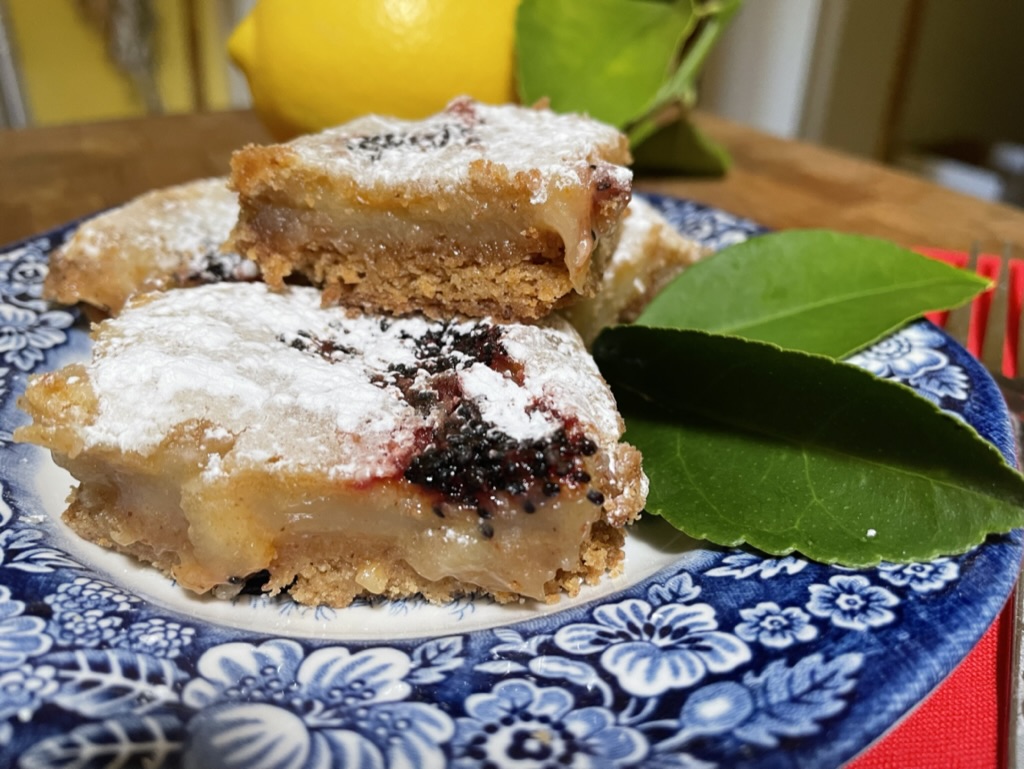
To provide festive decoration and texture, I garnished the top with saguaro fruit collected last June, frozen and now thawed.
Return the now double-layered pan back into oven. Continue baking for another 20-25 or until top layer “sets” firmly.
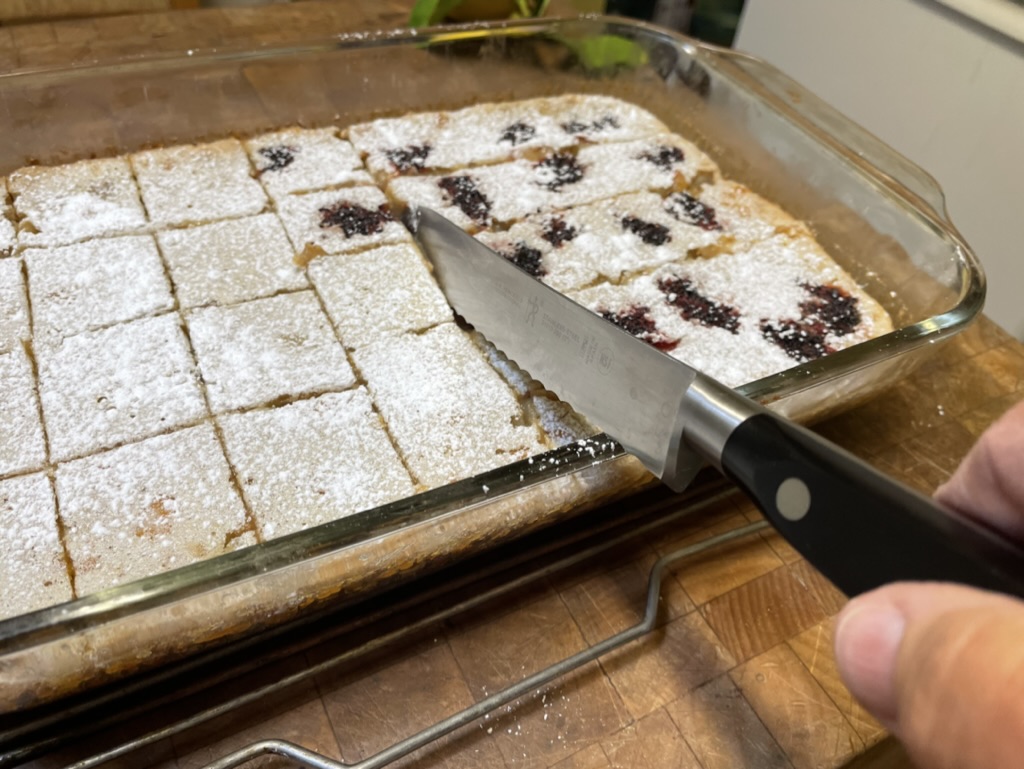
When done, place on raised rack to cool evenly. Dust the top with powdered sugar.
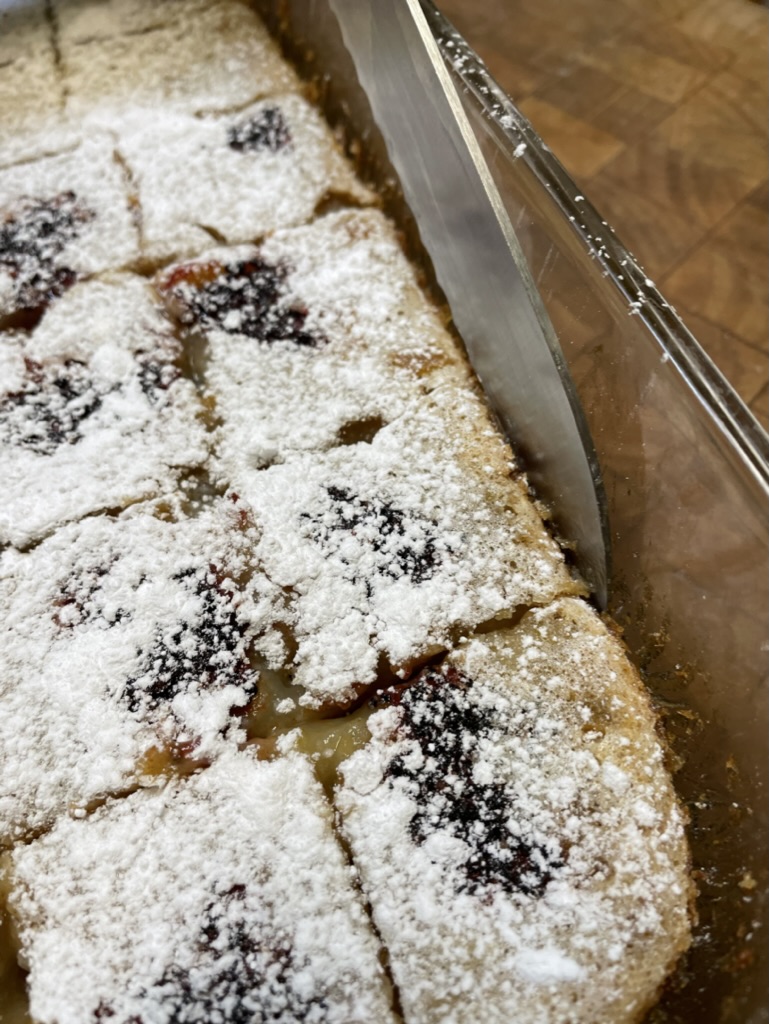
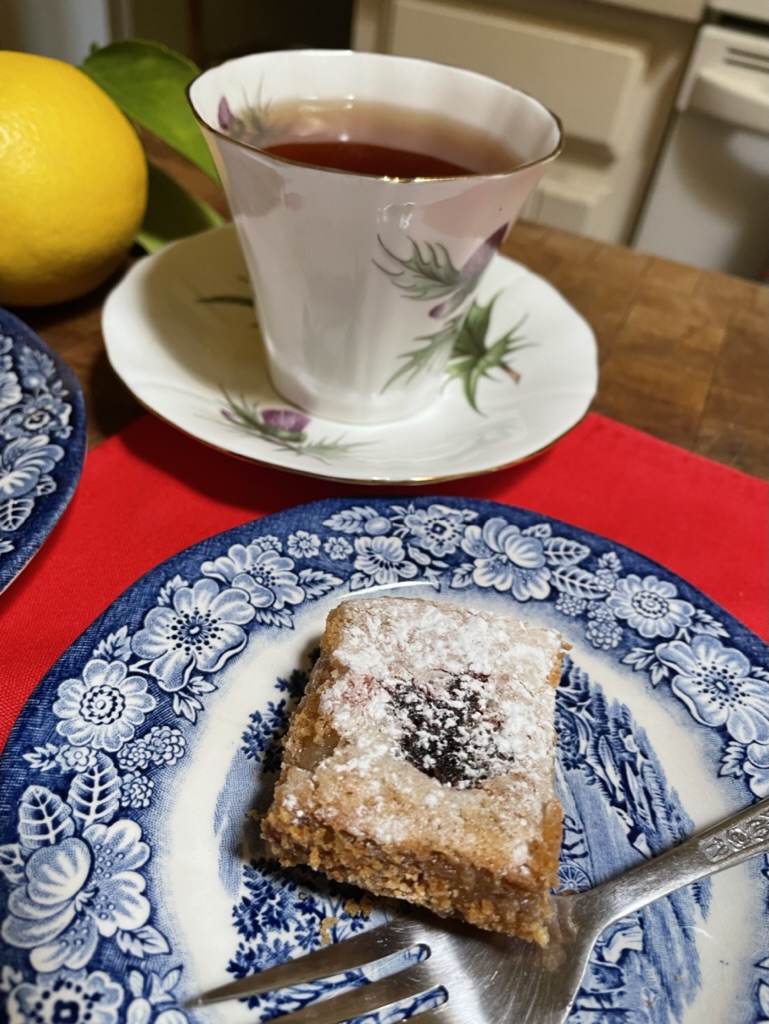
When cool, separate crust from edge with sharp knife to make removal easier. Slice into small squares. These bars are so deliciously RICH –small is better!
Good and gooey –with that wonderful mesquite flavor, the crunch of saguaro seed,
…and the internalized hope that–with this–we can let the desert plants know how important they are to us!
Enjoy a cold-weather tea-time, a citrus harvest with purpose, or a Thanksgiving dessert made with your own variation on this Citrus Bar treat!
[Mesquite flour or saguaro fruit are special tastes of what makes Tucson an International City of Gastronomy! But these desert foods are not available just anywhere. Plan ahead–the way traditional Tohono O’odham harvesters have always known to do– future culinary opportunities will open to you if ye desert goodies while ye may, that is, when they are in season. Here’s a word of encouragemen from Tia Marta: Put it on your 2023 calendar now. Set aside time in mid-late June, tho’ it is super hot, to collect saguaro fruit, peel and freeze it in sealed container. Also mid-late June before the rains, gather brittle dry mesquite pods for community milling, and freeze the meal in sealed containers. In mid-late August, gather whole prickly pear tunas to freeze in paper and plastic, for juicing later. YOU WILL BE SO GLAD LATER THAT YOU SET ASIDE THESE DESERT FRUITS. Use the SEARCH box on this blog for instructions about harvesting a cornacopia of desert delicacies and staples.]
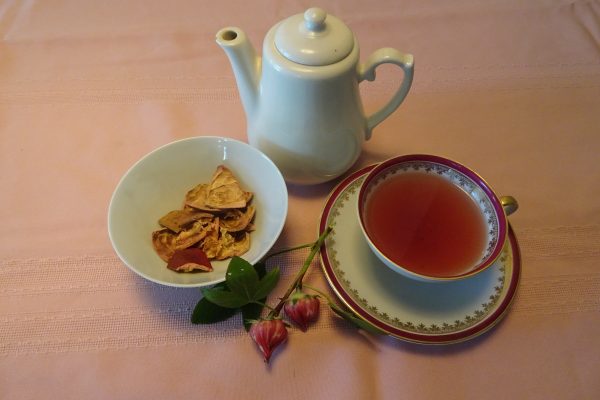
A lovely hot drink made from pomegranate rind and hibiscus flowers.
Hello! It’s Carolyn today and after nine years of Savor the Southwest, we have an updated look. All the old posts for wild food and Southwest specialties are still in the archives, although they all have the new look.
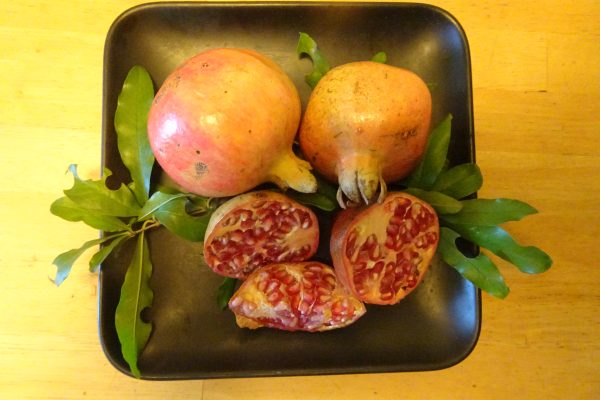
Today I’m going to talk about tea–well actually “infusions,” since tea must refer to the leaves of the Camellia sinensis plant. Fall is pomegranate season in Tucson and many people in the warm Southwest have the trees in their yards. Pomegranates are one of the Old World Mediterranean crops brought to the area by Father Eusebio Kino in the early 1700’s.
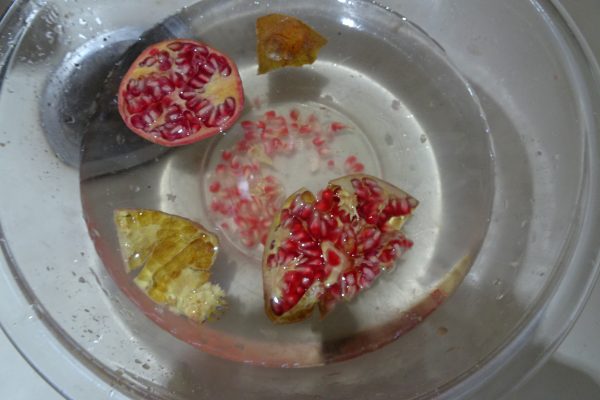
Many people let their precious pomegranates go to waste because they don’t know how to get out the seeds and then how to eat them. An easy way to do this is to quarter the fruit and then submerge the pieces in a bowl of cold water. Pick the seeds out with your fingers. The seeds will sink to the bottom of the bowl and the fiber will float.
Pomegranate being cleaned in a bowl of water.
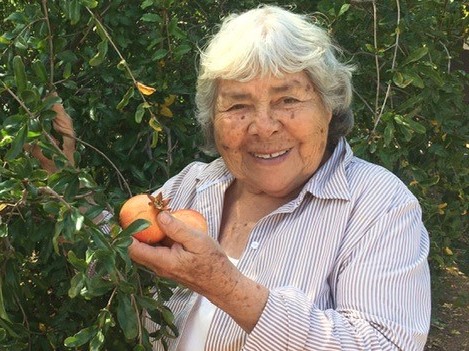
The cleaned seeds can be sprinkled on fruit salads or squeezed for juice. But what of the peels? I was amazed to learn recently that the dried pomegranate rinds can make a great tea–whoops, infusion. The imparter of this old-fashioned knowledge was Josefina Lizárraga, who comes often to Mission Garden to share her tips for dealing with local fruit. She is affectionately called La Madrina del Jardín. According to Josefina, the drink is also good to soothe colds or flu.
Josefina with pomegranate at the Mission Garden. (photo by Emily Rockey)
Another delicious drink can be made from hibiscus flowers from the variety Hibiscus sabdariffa, easily grown in the summer and dried for year round use. Mexicans use it to make a drink called jamaica (Ha-my-ca). In Cairo the juice is heavily sugared for a popular drink called karkadai.
While either the pomegranate or hibiscus teas are good alone, try combining them for a fruity, herby treat. If you have mint in your garden, you could even add a few sprigs of that.
Hibiscus sabdariffa, also called Jamaica.
Té de Granada(Pomegranate Tea)
Recipe by Josephina Lizarraga (as told to Emily Rockey)
Bring 2-3 cups of water to a boil. Put 1.5-2 teaspoons of ground pomegranate rind in a pan or teapot.
When water boils, pour over ground pomegranate skin. Allow to steep 10-15 minutes. The pomegranate will settle to the bottom. Alternately, if you don’t grind the skins, you can leave them in 1-2 inch pieces and boil them for 15-20 minutes.
Enjoy simply as it is, or add sugar or honey.
Drink anytime, or for soothing colds or flu, add honey and lemon.
Jamaica (Hibiscus) Tea
1 quart water
1/2 cup dried hibiscus flowers
1/4-1/2 cup sugar
Ginger slices, cinnamon stick, lime juice (optional)
Bring the water to a boil and pour over the hibiscus flowers and other flavorings you choose. Add sugar and stir until dissolved. Steep about 20 minutes or until desired strength. You can also mix half and half with club soda for something a little fancier.
Hello friends! Amy here celebrating the harvest on the Autumn Equinox.
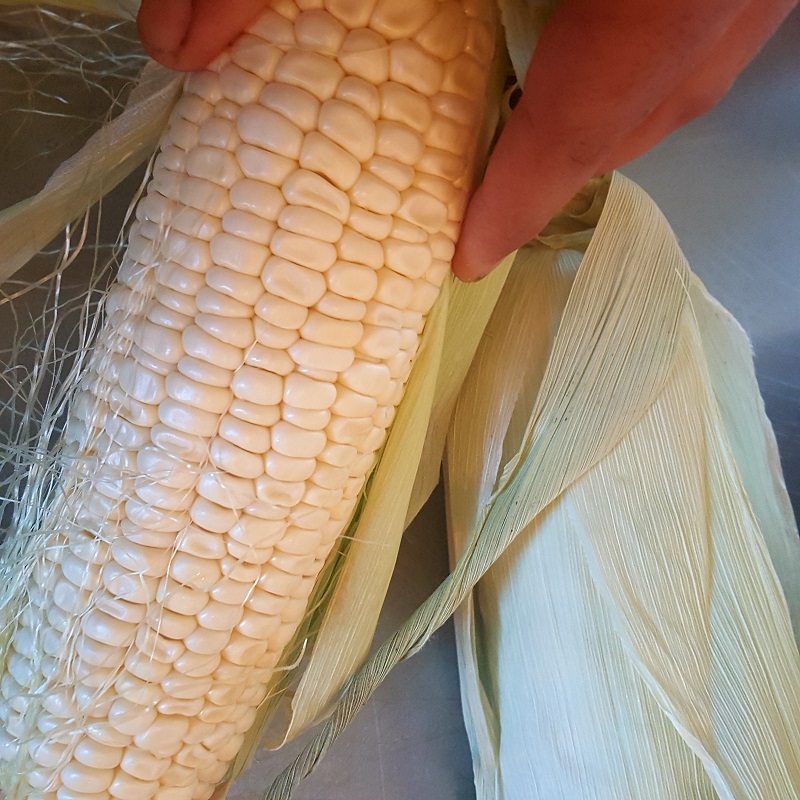
At Mexican Raspado places, I never order the shaved ice with sweet syrup, fruit, ice cream, etc. I always get Coctel de Elote, a corn soup served hot and it is DELICIOUS even in hot weather. It can be made with very immature flour or dent corn varieties also known as starchy “field corn” varieties. These are the same corn varieties that are allowed to mature dry on the plant and made into tortillas, tamales and countless other creations. But elote for coctel de elote can also be sweet corn and that’s what I had from my share at Tucson Community Supported Agriculture.
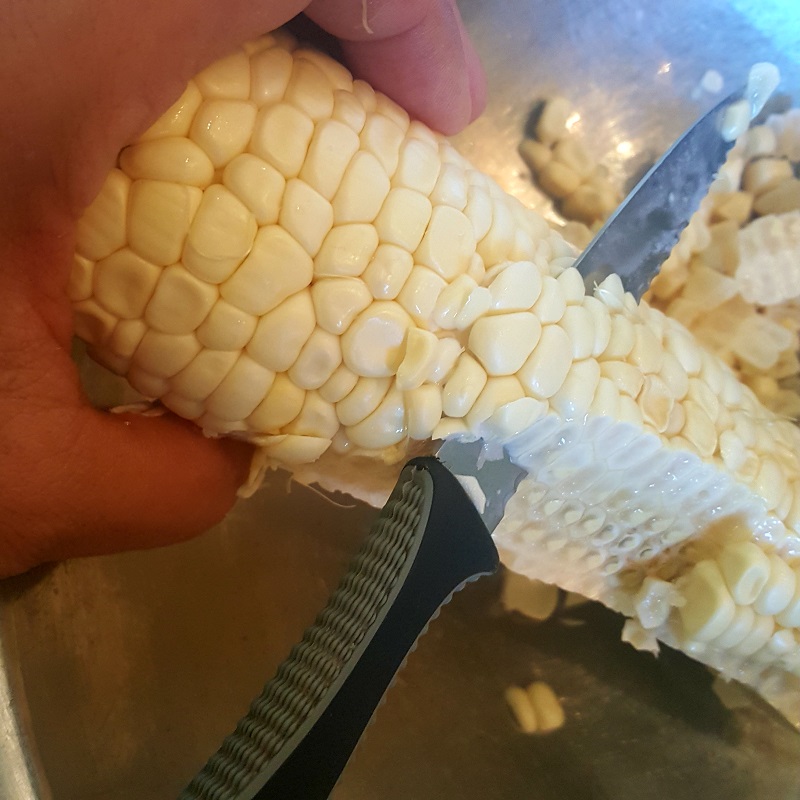
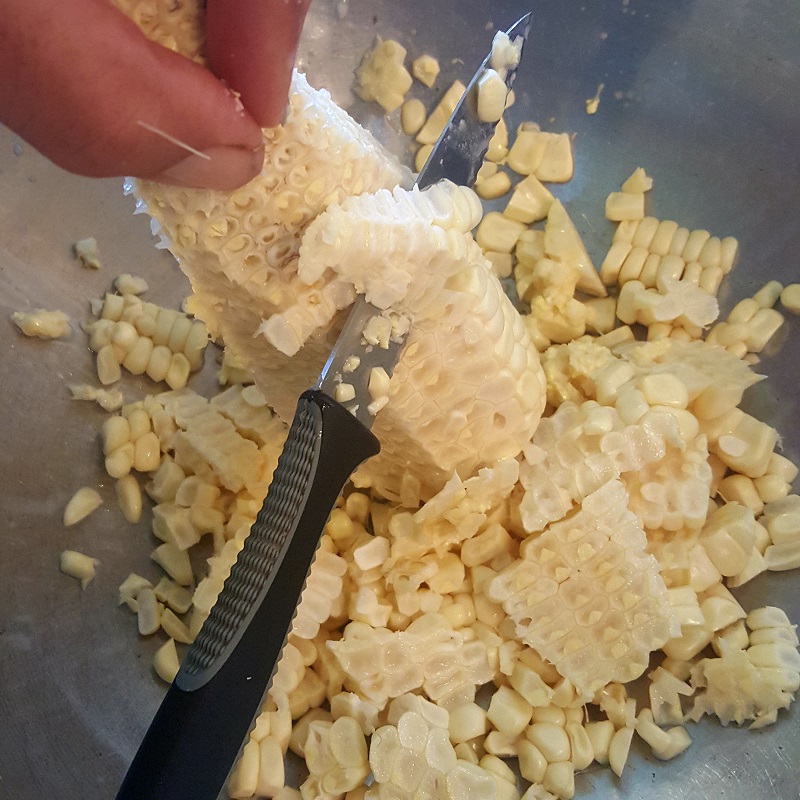
I started by cutting the kernels off the cob, with a sharp little knife within a big bowl.
The kernels can be cut pretty deeply, and the juicy insides scraped into the bowl with the rest.
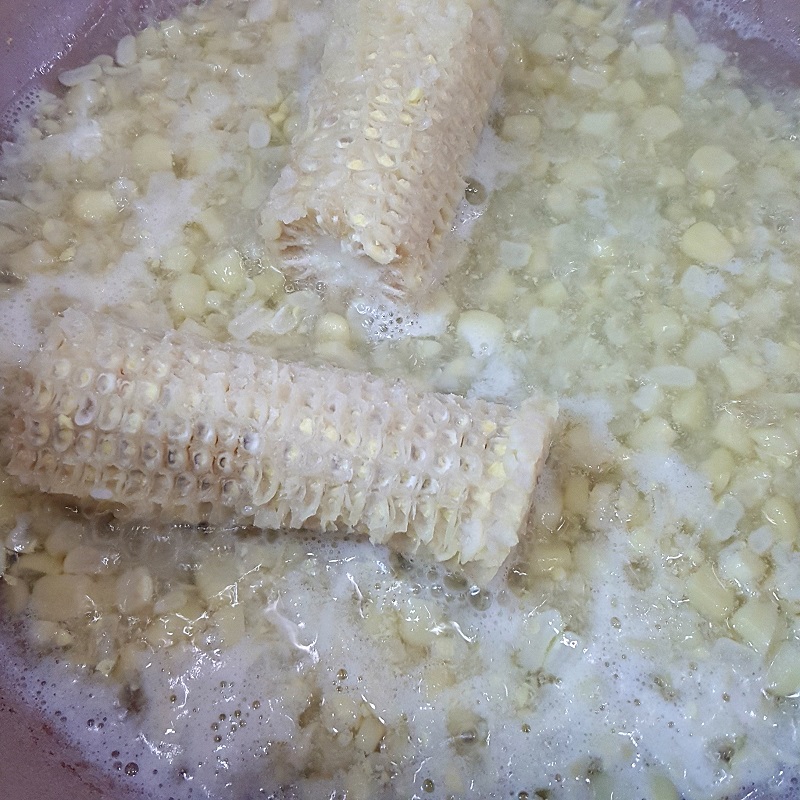
Then the kernels are boiled in just enough water to cover, with a dash of salt. The cobs go in to extract every bit of their goodness to the soup and to add their own distinctive flavor to the broth.
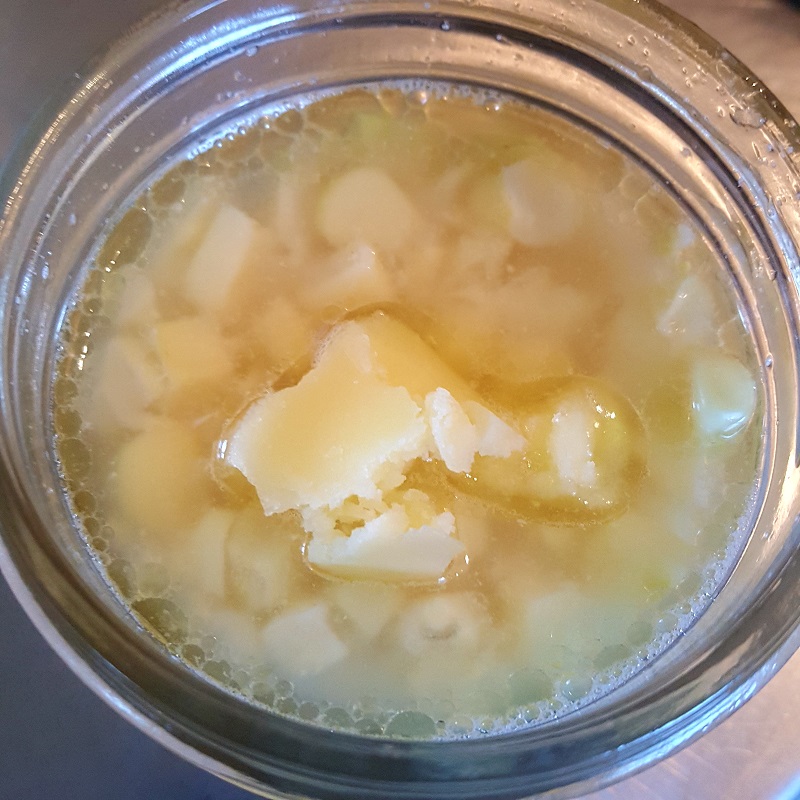
After simmering for a few minutes, the corn was tender. I poured my soup for one into a small jar to serve, leaving the cobs behind. Then, butter!
At the raspado place, they will ask what toppings would you like, but the only answer is everything, the works!
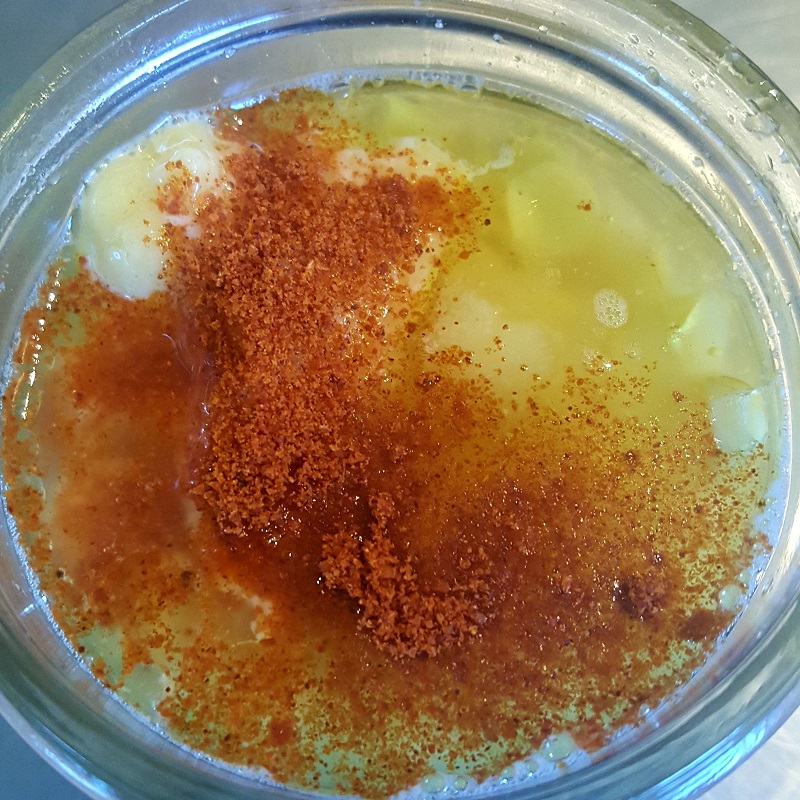
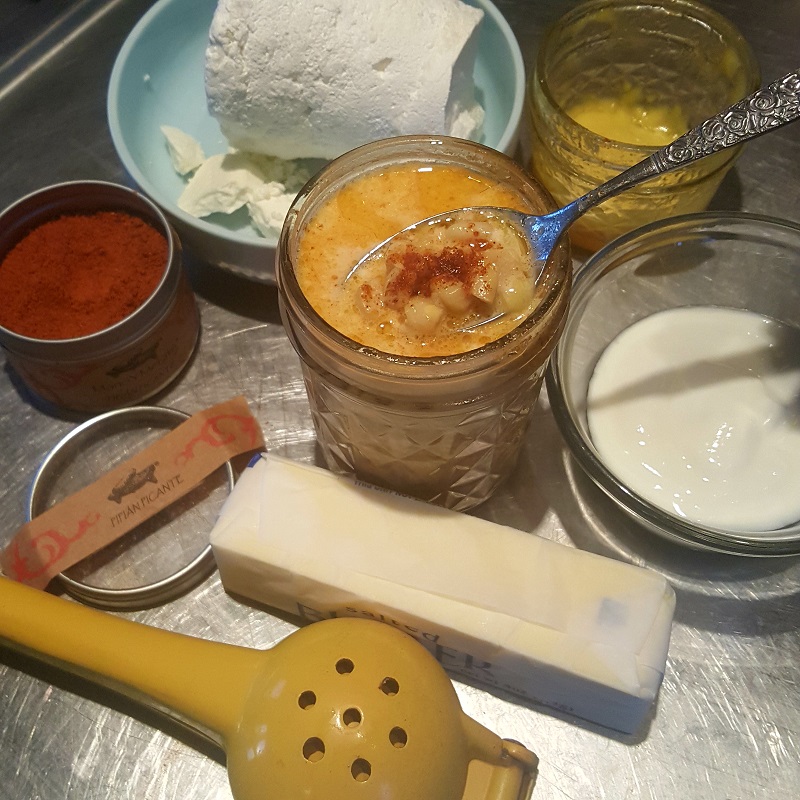
I started with some Mano Y Metate Mole Powder, Pipian Picante. I think any mole powder would be great here, and the traditional would be plain chile powder or a dash of hot sauce.
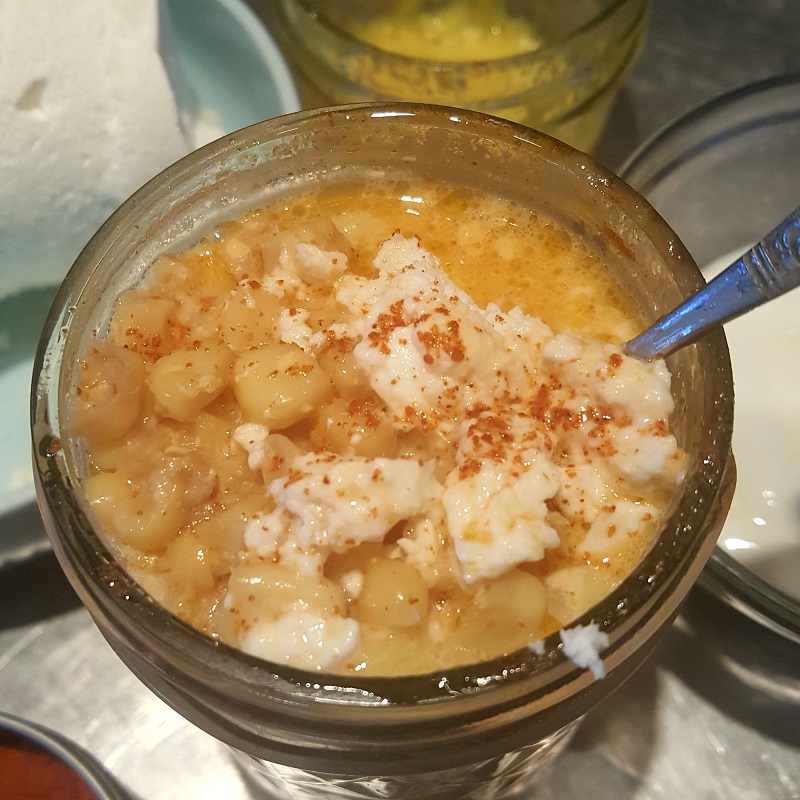
I then juiced a lime into the glass. But this wasn’t enough and I resorted to lemon juice I had frozen in quantity from the spring. Also, homemade mayonnaise (just an egg yolk with mild oil whisked into it until it is thick), store bought creama (Mexican sour cream). Basically, just keep adding and tasting until it is irresistible. Then a final sprinkling of fresh cheese (in this case, homemade goat cheese) sprinkled on top.
Enjoy with a long spoon in the short, hot afternoon.
This new cookbook–inspired by treats and festive meals in the book Little Women–was my inspiration for the “Southwest Seed Cakes”!
It’s hot off the press and already has us salivating! — a fun book to bring back memories, and to share with kids or grandkids in the kitchen. The two authors of The Little Women Cookbook are not only devourers of books themselves, but also creative foodies. (Tia Marta here, speaking with some familiarity, as the first author, Jenne Bergstrom–prima librarian and ace cook–is the talented daughter of one of my best friends.)
So of course my first inclination, after savoring the culinary moment in LIttle Women that each page brings forth vividly, is to see how you and I might adapt those endearing old recipes to our contemporary Southwest fare. On page 64, when I contemplated Meg, Jo, Beth and Amy’s caraway “seed cakes”, it was an image of saguaro seeds that popped into my mind….
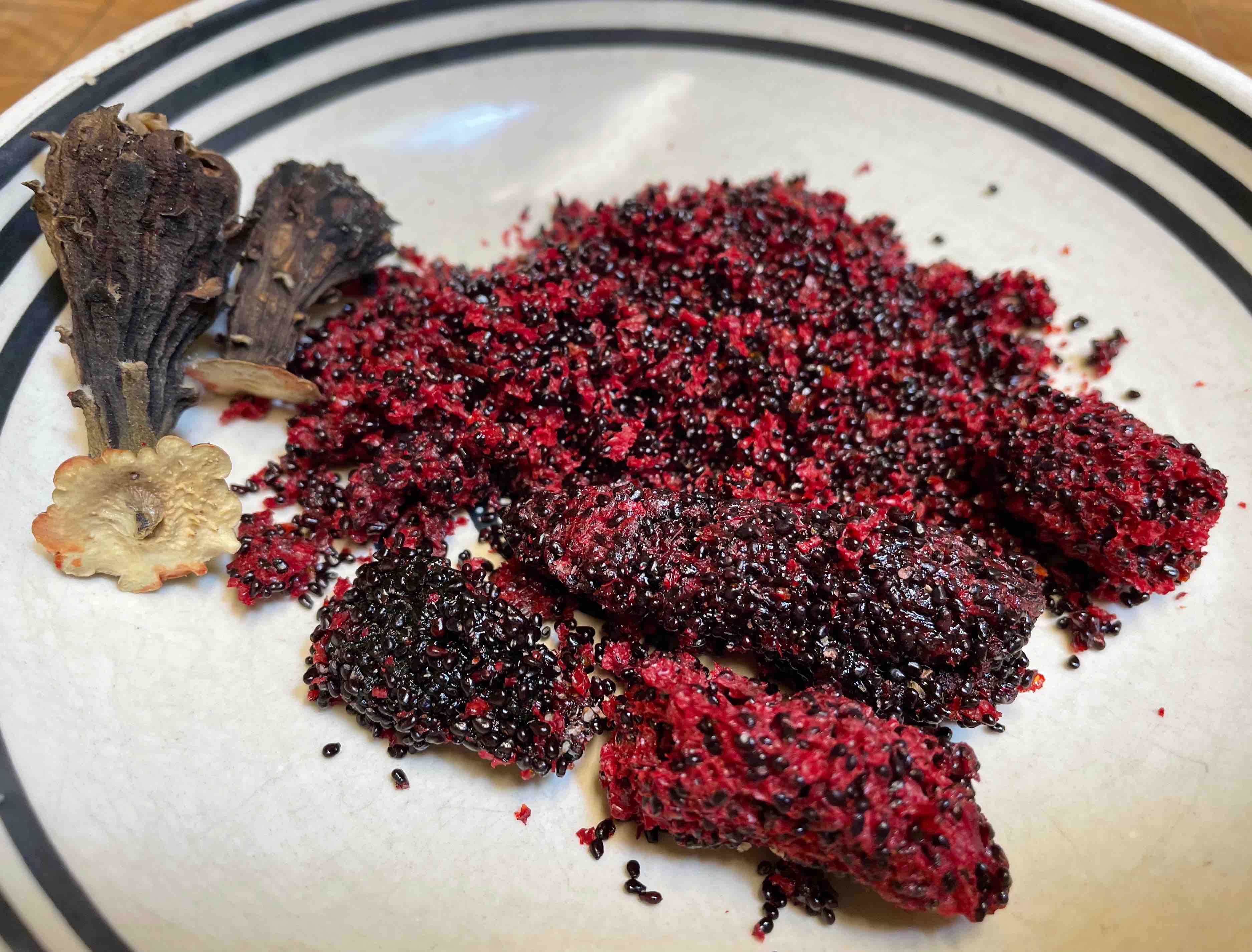
At Solstice saguaro harvest time, I used the dried flower calyx to open fruits and dry them for later. NOW I get to enjoy them again in a Seed Cake…
Hooray–here’s a new way to use the bahidaj cuñ that my Tohono O’odham friend and mentor Juanita-baḍ long ago taught me to harvest. I’ve had them sealed and frozen since June. For the following recipe I could have used barrel cactus seeds (collected last spring) or the nutritious amaranth seed (collected last fall), but for this first experiment I wanted to try just one kind of seed. You’ll see that many of our local Southwest heirlooms lend themselves to this “Seed Cake” treat:
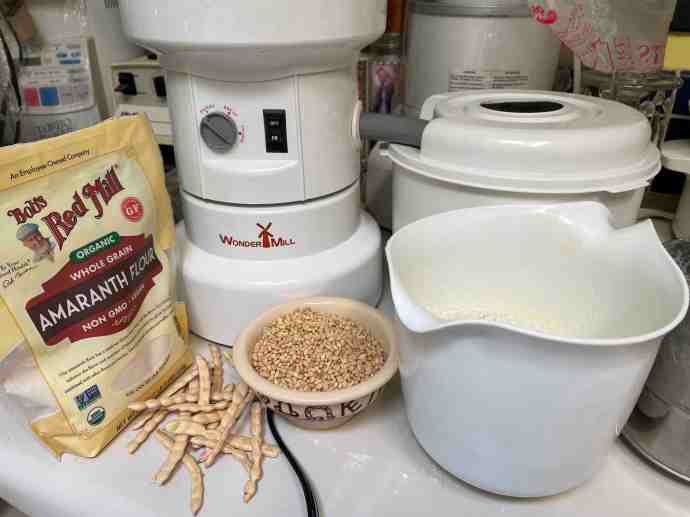
For the flour in the Seed Cakes recipe, I created a mix of amaranth seed flour, mesquite pod flour, and heirloom white Sonora wheat flour which I milled from whole kernel wheat in my Wondermill.
Southwest “Seed-Cakes” Recipe:
(You’ll need a small bowl, a sifting bowl, and a large mixing bowl, muffin tins w/cups if desired, and a beater.)
Ingredients:
2-3 Tbsp dried saguaro seed, with pulp is better (alternatively barrel cactus seed or amaranth seed)
8 oz. (2 sticks) butter (plus more for greasing muffin tins if you don’t have paper liners)
1/2 cup agave “nectar” (agave syrup)
1/2 cup sugar (use sugar to “dredge” remaining agave syrup out of measuring cup to get it all)
4 eggs
2 Tbsp mescal or brandy (optional) or prickly pear juice (to soften seeds)
2 1/4 cups flour (I used 1 3/4 cups heirloom white Sonora wheat flour, 1/2 cup mesquite pod flour, and 1/4 cup amaranth flour)
1/2 tsp sea salt
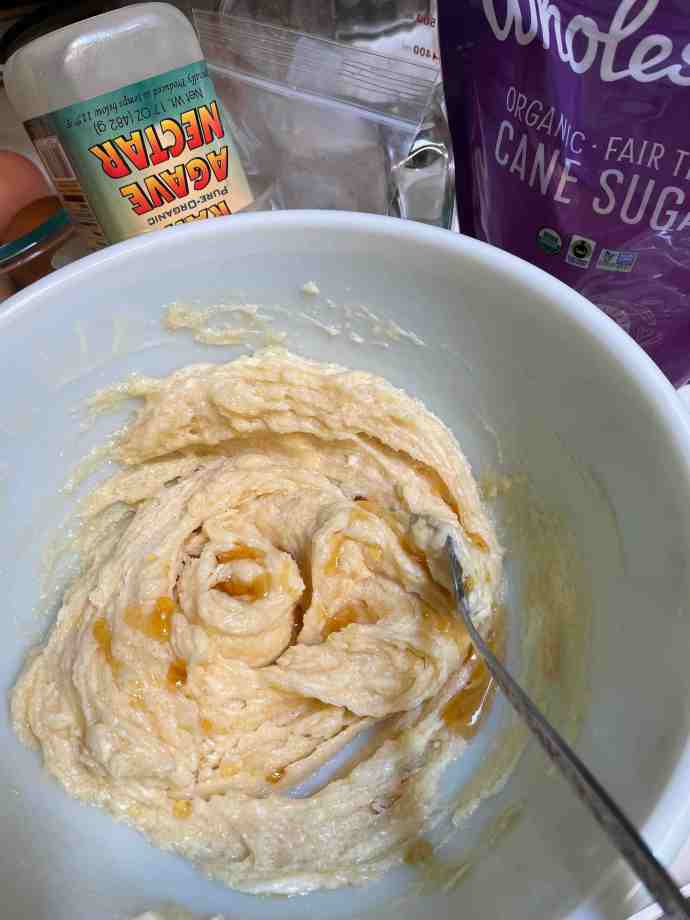
Directions: Preheat oven to 350F. Put seeds in small bowl with mescal or juice to “hydrate”. In large bowl, cream butter, agave nectar and sugar until fluffy. In separate bowl, sift together flours and salt. To the creamed butter, add eggs, and beat at high speed til smooth (2-3 minutes). Gradually add the flour mixture to the wet mixture, mixing on medium speed until well combined. Stir in seeds and remaining liquid.
Pour batter into greased muffin tins, to 3/4 full per cup.
Bake 18-20 minutes……or
…..until muffins turn golden brown and test done with a thin skewer.
Serve with iced tea on the patio, or for birthday celebrations, or have ready when friends pop in–so versatile.
These tastes of the desert are nutritious too! Mesquite flour and amaranth flour are packed with protein, complex carbs and fiber for sustained energy. White Sonora wheat is a low-gluten flour with its own sweet character. Seeds have vegetable proteins and beneficial oils.
So enjoy every Seed Cake bite!
My copy of The Little Women Cookbook is already opening to new pages that will sprout delectable ideas for cool weather and holidays to come….Stay tuned. It’s such fun to adapt our time-honored local ingredients to favorite old-time recipes in totally new combinations!
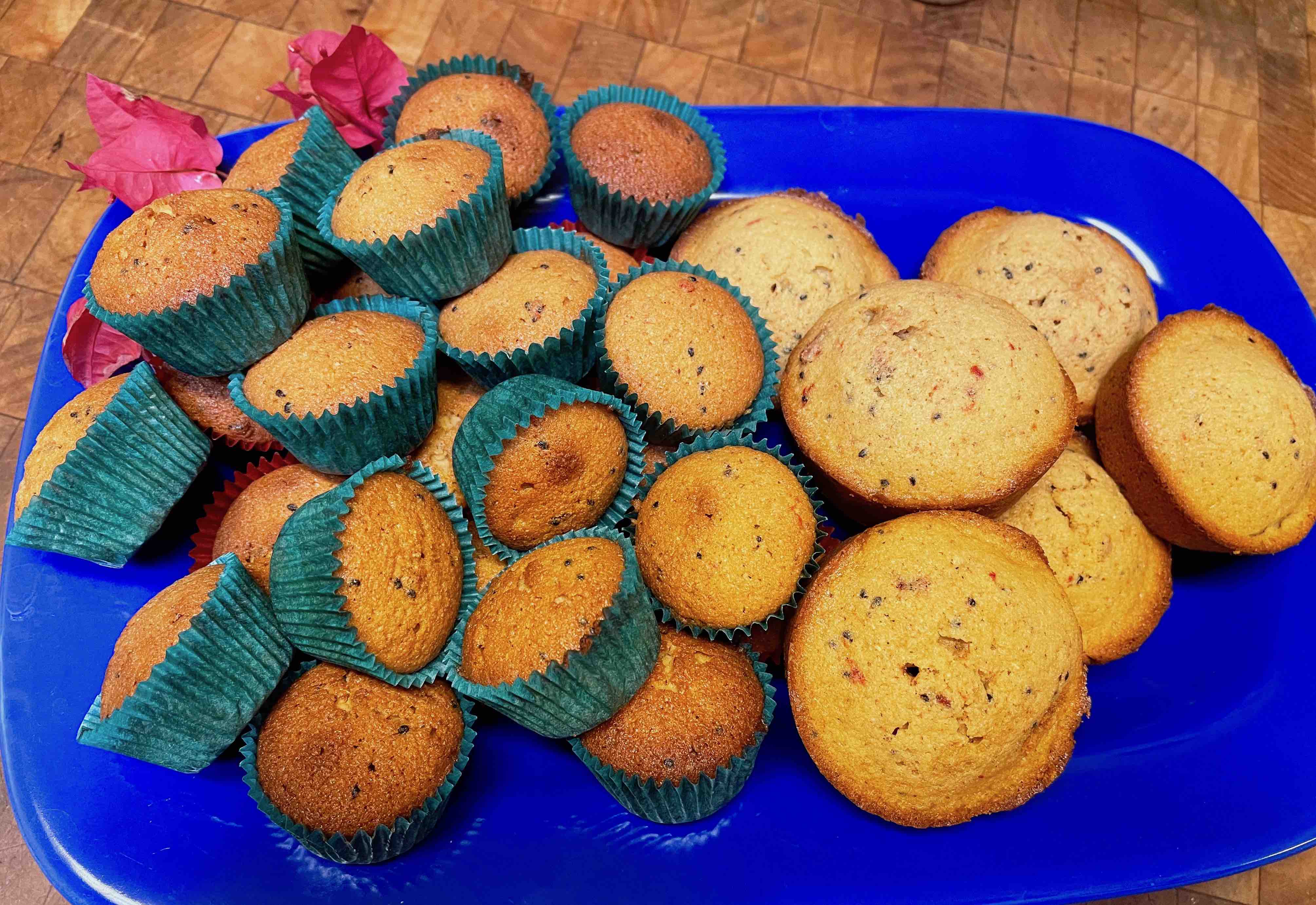
This “Southwest Seed Cake” recipe made 14 large muffins and 24 minis!
Where to locate ingredients: Find mesquite flour on the NativeSeedsSEARCH online catalog. Plan to safely harvest your own mesquite pods next year and have them milled at one of several milling events. Amaranth flour (Bob’s Red Mill is easy to use) can be found at Sprouts and Natural Grocers. Amaranth seed is available via NativeSeedsSEARCH. White Sonora wheat grain is celebrated every May at Mission Garden‘s San Ysidro Fiesta. Find this heirloom flour from the first grower BKWFarmsInc (organic), or from Barrio Bread or NativeSeedsSEARCH. Harvesting your own desert seeds for “Seed Cakes” is the most satisfying activity of all. Amaranth will be ready to gather in September and October. And put on your calendar to harvest your own bahidaj kaij (saguaro fruit seed) next June!
May these “Seed Cakes”, from The Little Women Cookbook and Tia Marta, inspire you to celebrate our desert’s bounty with your own creativity!
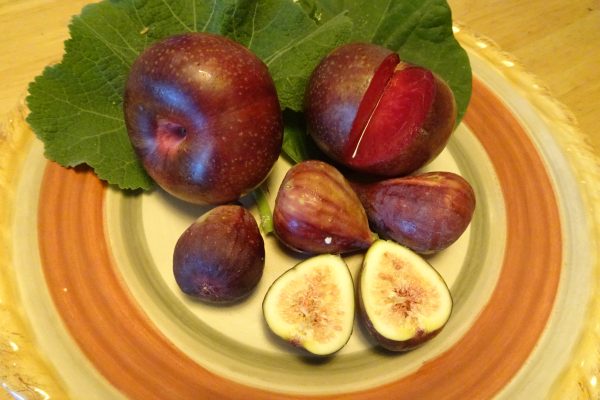
Dark plums and brown figs aren’t brilliantly colored but they bring deep sweetness to summer jam.
When we think of summer fruits, we usually think of jewel tones: the glowing amber of peaches, deep garnet of cherries and raspberries, the sapphire of blueberries, and bright gold of pineapple. But reddish brown figs and dark (sometimes called “black”) plums are also summer fruits with deep flavor and sweetness that combine in an easy jam.
It’s Carolyn with you today and I just love to make jam. When I saw that the fig tree where I glean had some ripening figs, I got up at 6 a.m. and headed out on a seven-block walk to fill a basket.
Decades ago my friend Suzy had a big fig tree, and I learned to protect my arms when harvesting because of rubbing something off of the fuzzy leaves. But my memory of the problem faded over thirty years, and this morning I harvested with bare arms, reaching deep into the interior of the old fig tree to grab the earliest ripening fruit. On the walk home, my forearms were on fire. Tip: wear long sleeves when harvesting figs. The irritation abated after I got home and washed off whatever was causing the problem, but don’t make my mistake.
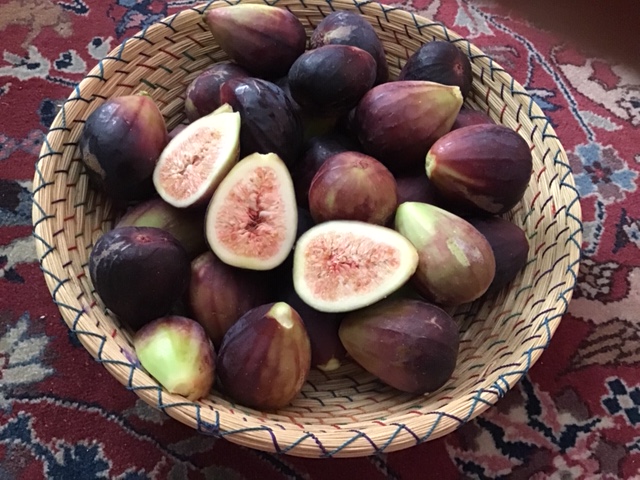
A lovely basket of figs.
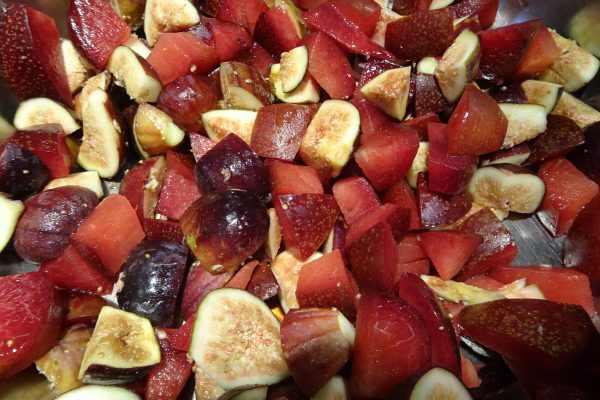
Making the jam couldn’t be easier. Cut the plums and figs into half-inch chunks and combine with the sugar and lemon juice. Bring to a low simmer. Stir occasionally, making sure it doesn’t scorch. Cook until a thermometer registers 220 degrees F. If it seems plenty thick at 218 degrees, you can stop there. Ladle into clean, boiled jars. This makes less than a pint so you probably don’t need to seal the jars; you’ll eat it up quickly.
Cut the figs and plums into half-inch chunks.
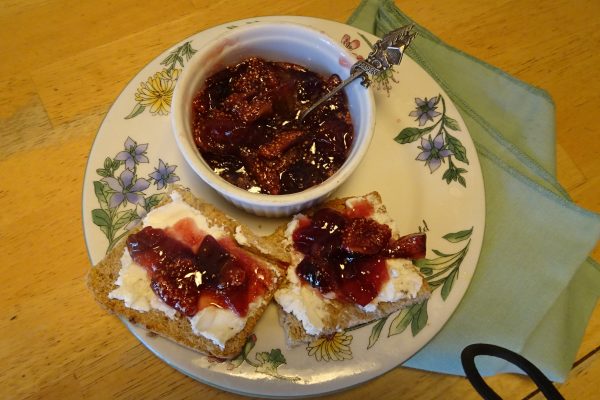
Your homemade jam will be delicious on toast, especially if you also add some goat or ricotta cheese. The picture shows some whole wheat toast made by my husband Ford.
Fig and Plum Jam is delicious on toast. Add goat or ricotta cheese for added richness.
Easy Fig and Plum Jam
1 cup chopped ripe figs
1 cup chopped black plums (about 2)
1 cup sugar
3 tablespoons lemon juice
Combine all ingredients in a medium saucepan and stir to combine. Cook over medium heat, stirring frequently until thermometer registers 218-220 degrees F. Since you are cooking such a small amount, this won’t take too long. Ladle into sterile jars and refrigerate until use. The recipe can be doubled. In that case, for unrefrigerated storage, be sure to use jars with two-section lids that seal. For long-term storage process in a boiling water bath for 10 minutes.
For more great recipes using Southwest foods, check out my cookbooks. The New Southwest Cookbook has recipes from some of the Southwest’s top chefs. Cooking the Wild Southwest includes recipes for foods you can gather in the wild. The Prickly Pear Cookbook teaches you how to gather and prepare prickly pear pads and fruit. Recipes in these books will get you started. Soon you’ll be coming up with great recipes on your own.
The Savor Sisters, Amy, Carolyn, and Tia Marta, are good friends, but busy lives mean we rarely get together. Recently we gathered for a memorial service.
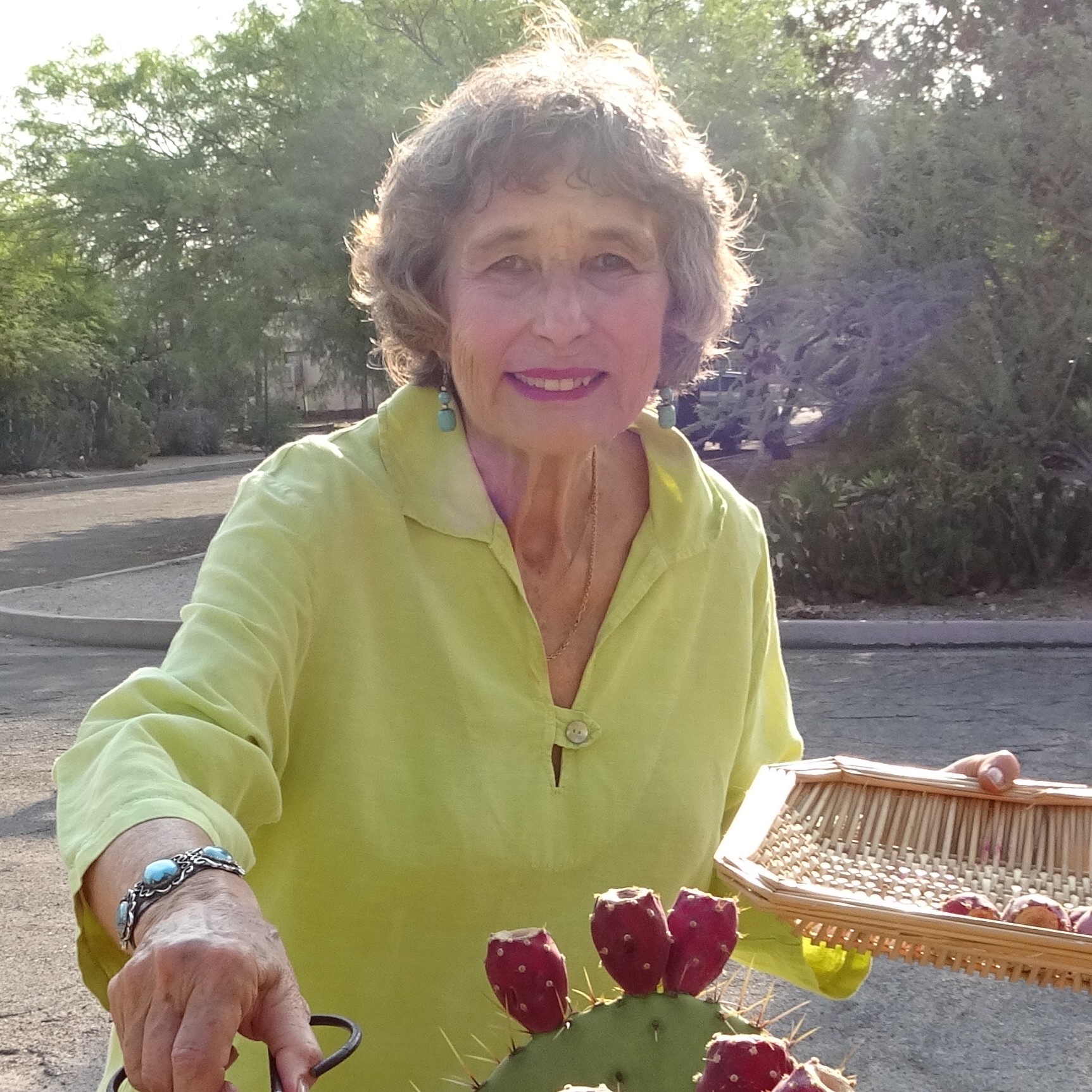
For nine years now, we Savor Sisters have regularly brought you interesting and unusual recipes for both wild and heritage foods of the Southwest. If there is a delicious Southwest food, we’ve probably written about it. We concentrate on the food, not ourselves. But recently we found ourselves at the same event, celebrating the life of ecologist Tony Burgess. Thought you might be interested in the faces behind the recipes.
Gather prickly pear pads when they are young and tender.
In the spring, I like to remind people that it’s time to gather and cook fresh nopales or prickly pear pads. Although all prickly pear pads are edible, you want to look for the Ficus indica, the kind imported from Mexico with fewer spines. (The native Engelmann Opuntia produce better fruit.) Gather the pads in your or a neighbor’s yard (ask!) using tongs or buy them from a Mexican grocery store.
Although this variety of prickly pear lacks the big spines of the native variety, they still have very small spines that need to be removed before cooking. In this column we’ve discussed many times how to clean them. Here are the instructions with photos. Wild food enthusiast, Chad Borseth, has put together a helpful video on cleaning freshly harvested nopal pads. You can watch it here. Chad doesn’t have gloves on and is courting disaster. I suggest you wear rubber gloves, just the kind you get at the grocery for washing dishes are adequate. Also, keep a tweezers handy. If you get a sticker in your finger, just take it out. Don’t make a big deal out of it.
Once you have cleaned the prickly pear pads, you can cut them into small pieces (nopalitos) or strips, coat them with a little oil, and either fry or grill or bake in the oven. When they turn olive green, they are done.
Nopales are delicious and also really healthy. Medical studies have confirmed the folk wisdom that they are great at reducing blood sugar and cholesterol. In fact one study showed that just two small pads eaten daily can control non-insulin dependent diabetes and prevent it from worsening.
Today, I want to give you some easy ideas what to do with the nopales once you’ve cooked them. Whenever you are introducing a new unusual food to people who might be a little skeptical (or maybe it is you who is skeptical!), it is good to include them in something familiar. So here are some of my favorites. Be creative and include nopales in your family favorites.
Tomato Nopalito Salsa: In a bowl combine 1/2 cup tomato salsa (homemade or commercial), 1/2 cup cooked black beans, 1/2 cup cooked nopalitos, 1 tablespoon chopped fresh cilantro, 1 tablespoon lime juice. Serve with chips and watch it disappear.
Grilled Chicken with Nopalito and Pineapple Salsa
Pineapple Salsa: Combine cooked nopalitos with crushed pineapple, red pepper, onion, garlic and other flavorings. Terrific as a topping for grilled chicken. See complete recipe in previous post here.
Fundido de Nopalito: In a small black iron frying pan, brown 1/4 cup chorizo until cooked. Add 1/4 cup cooked nopalitos, and top with 1/4 cup shredded Mexican or Monterrey jack cheese. Heat in 400 degree oven until cheese melts. Serve with soft tortillas or chips. This recipe makes a small amount so be prepared to make more right away.
Nopalito tacos: Cooked nopales have the texture and bite of meat so they make great vegetarian tacos. Use nice soft flour tortillas (the small ones). For tacos, cut your nopales in strips. Top with salsa and cheese. Add chicken or fish if you like.
Use your own recipe for Apple and Carrot Salad and add nopalitos in small dice.
Apple, Carrot and Nopalito Salad: This is a Southwest twist on an American classic. Use your own recipe or follow the directions here.
__________________________________________
Want more recipes for prickly pear and other wild foods? You’ll find delicious ways to bring these healthy plants to your table in my cookbooks Cooking the Wild Southwest: Delicious Recipes for Wild Plantsand The Prickly PearCookbook. The links take you on-line, but consider ordering from your local bookstore. They will love you for it.