The Charm of Desert Chia

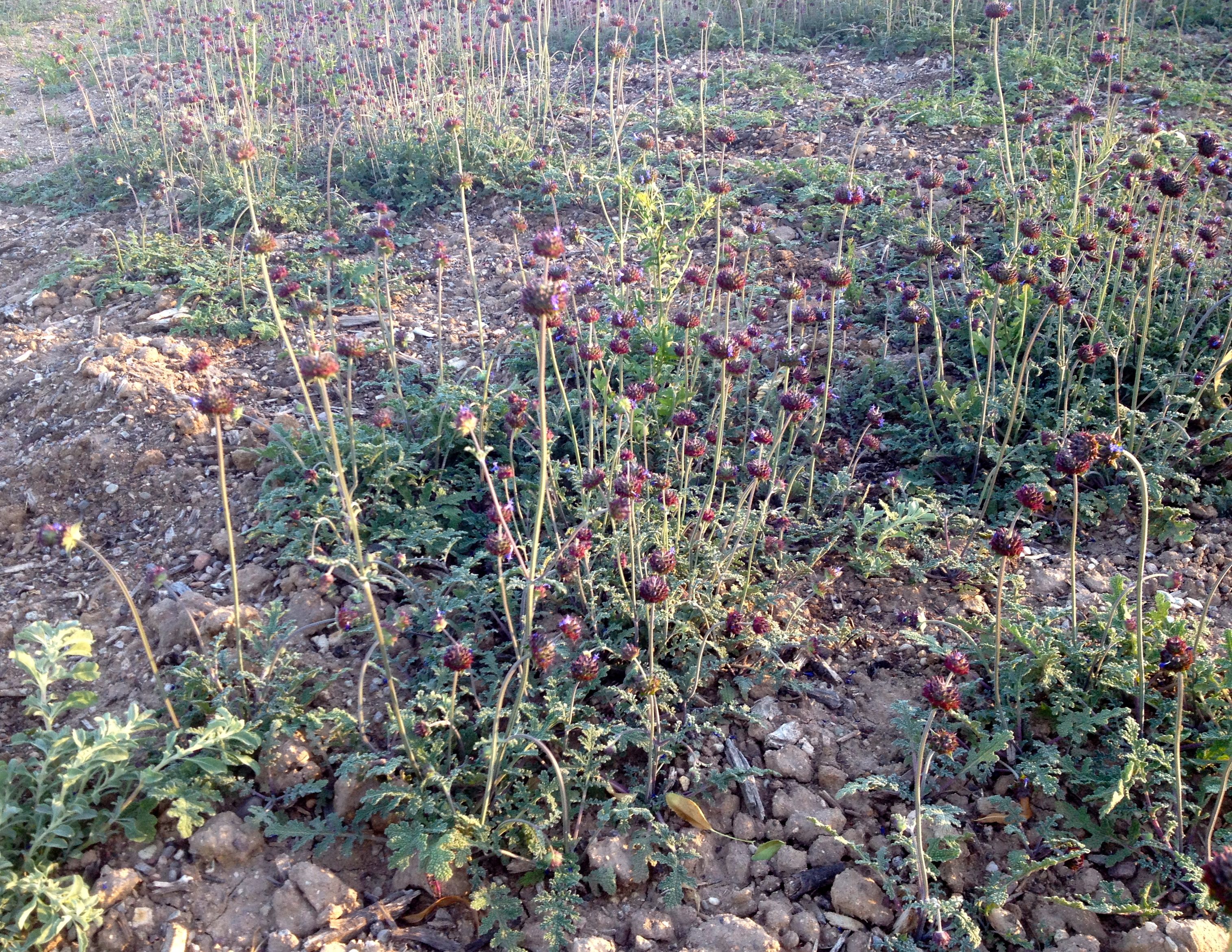
A patch of desert chia (Salvia columbariae) inviting pollinators….

A patch of desert chia (Salvia columbariae) inviting pollinators….(MABurgess photo)

It is happening right now in desert gardens and up desert arroyo beds–the visual surprise of desert chia! But you have to look twice, as they can be elusive.

Tia Marta here to share some thoughts about a very important little desert ephemeral.  Salvia columbariae, brought on by winter rains, is spreading its lovely ground-hugging rosettes and beginning to send up its wand-like square flower stalks to greet pollinators with spherical clusters of deep blue flowerlets–almost appearing “ultraviolet” to our eyes.

Chia’s foliage itself is a wonder.  If you get down on hands and knees with a magnifier, you’ll see a most knobby green terrain-of-a-leaf.  Pinch the leaf and a luscious bouquet arises.  Oh if we could capture that scent!  It would make a lovely lotion.
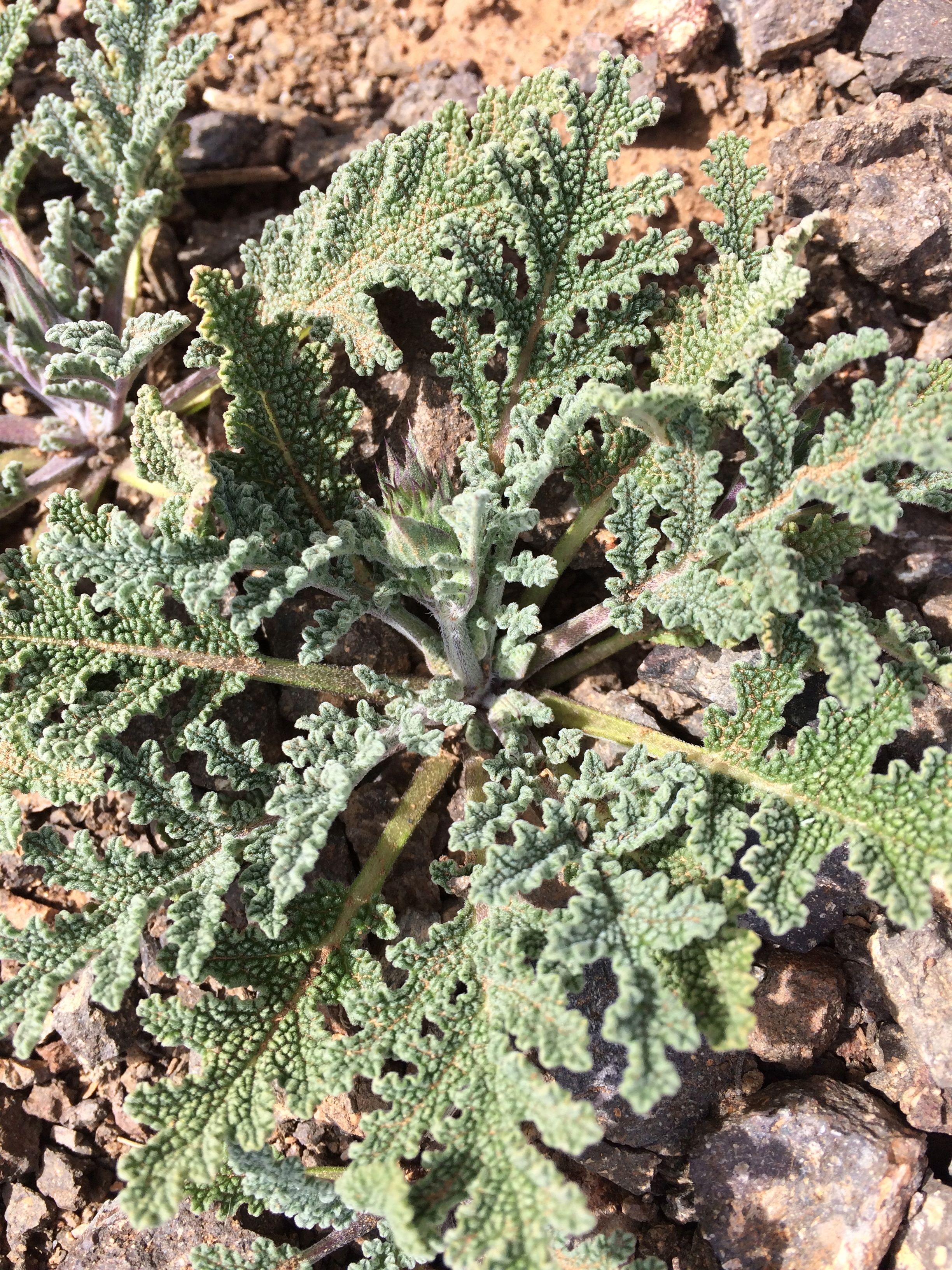
A rosette of beautiful desert chia with its scented, intaglio foliage--Wishing this were a squeeze-and-sniff photo!

A rosette of beautiful desert chia with its scented, intaglio foliage–Wishing this were a squeeze-and-sniff photo! (MABurgess photo)

Humans are funny in that when we see wildflowers emerge in the spring, as they are now, we HAVE TO HAVE THEM in our gardens!  Well, if we want them now, we should have planted the seeds last fall!  Put it on your calendar right away–on the October page–to buy those chia seeds and plant them at the beginning of October when the nights turn cool.  Or, if you are into instant gratification, if you need a quick wildflower fix, there just might be a plant sale this weekend somewhere in Tucson, AZ, where they will have potted chia starts ready to put in the ground–to give you a show, and a harvest, before hot weather sets in.  If you like to gamble, you could rake in some seeds this month and chances are the seeds (which have built-in DNA smarts) will wait until fall rains come to germinate, as their germination-triggers are attuned to cool/wet conditions; amazingly, hot summer rains  won’t tempt them out of seed dormancy.
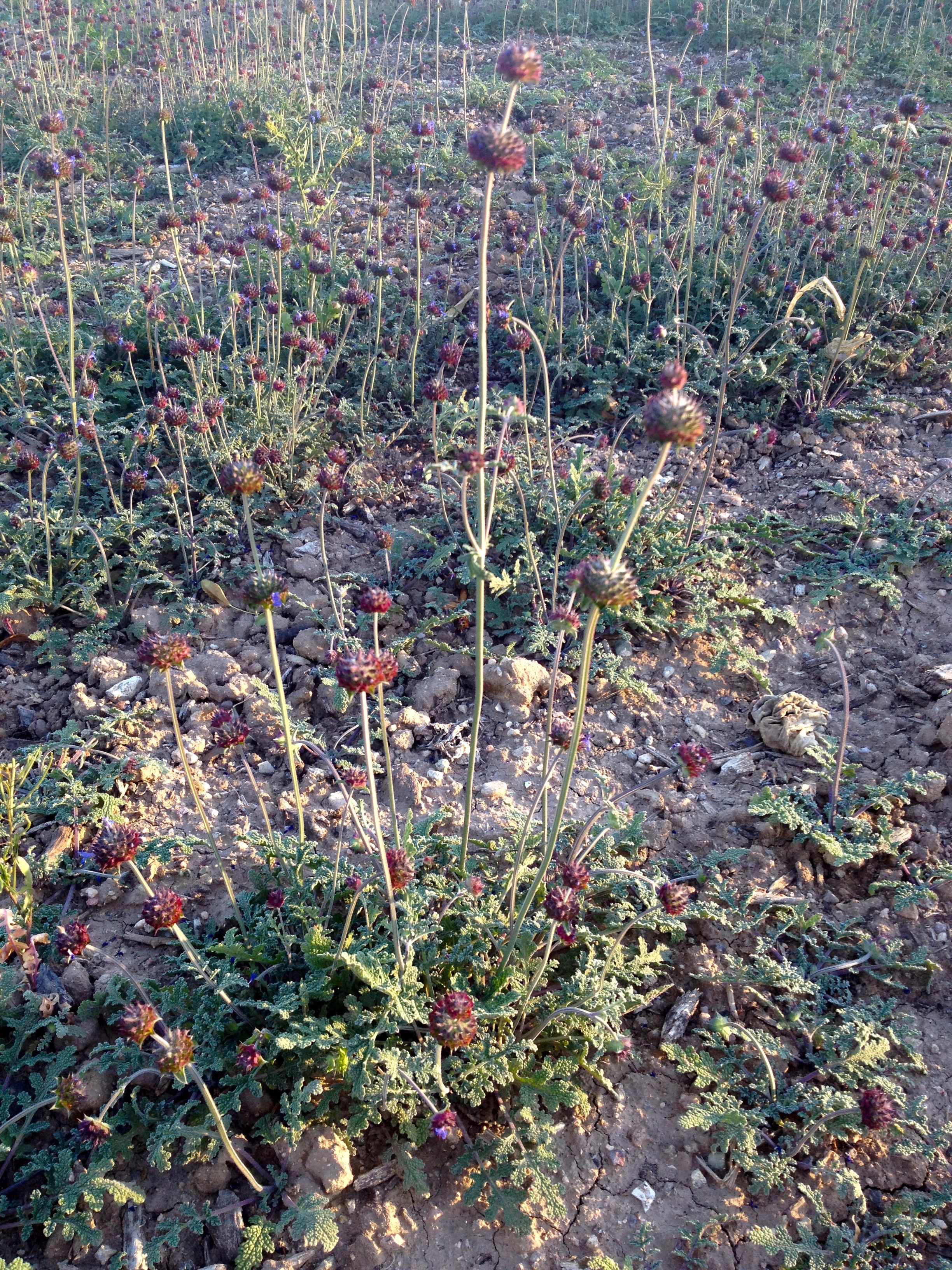
Balls of spiny seedheads climb the square stems of these mint-family wonders, as long as moisture lasts.

Balls of spiny seedheads climb the square stems of these mint-family wonders, as long as cool moisture lasts. (MABurgess photo)
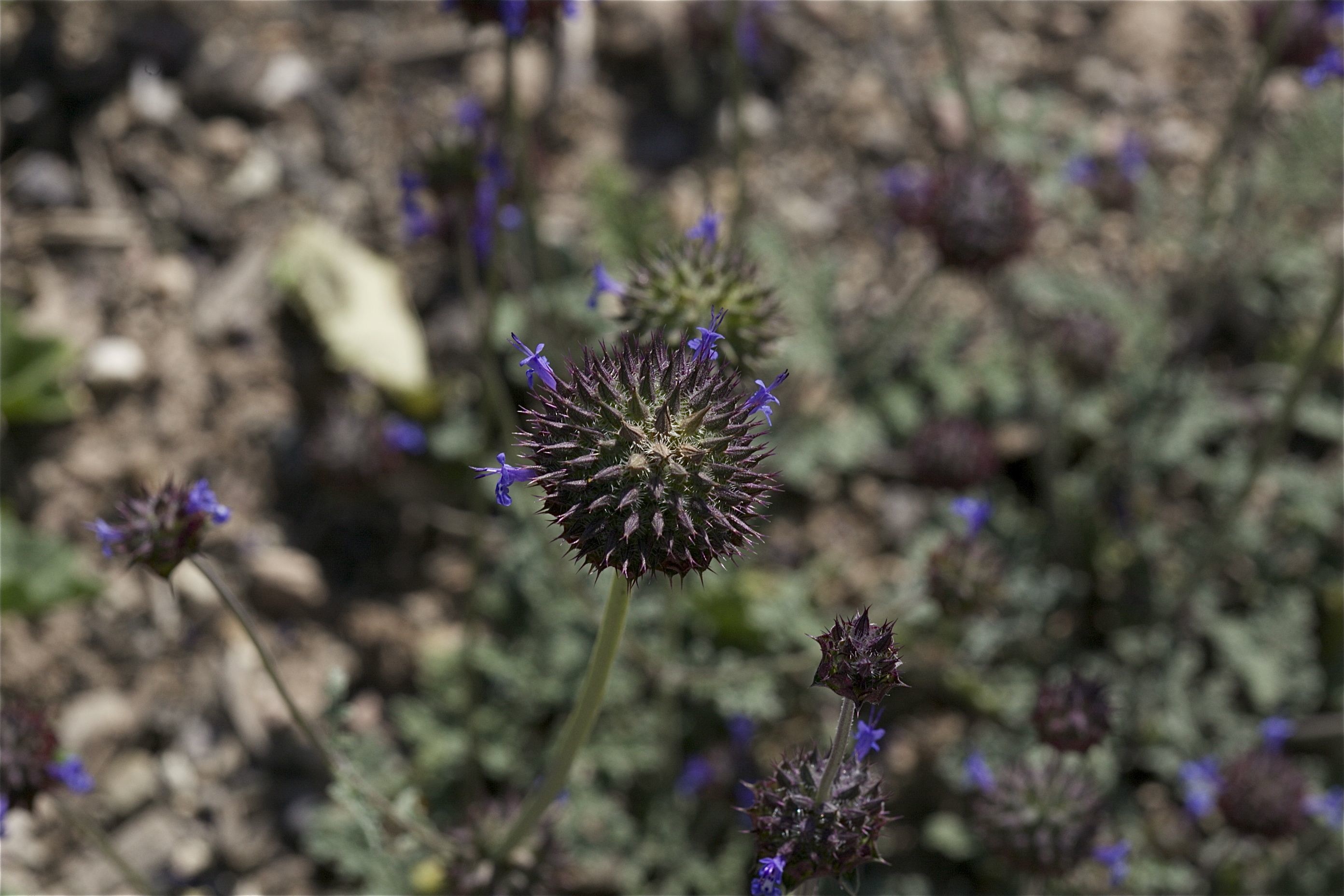
 

Close-up of desert chia in flower--note the sphere of tiny flowers (JRMondt photo)

Close-up of desert chia in flower–note the sphere of tiny flowers (JRMondt photo)

Check out the Plant Sale THIS WEEKEND–March 11-13–at the NativeSeeds/SEARCH store, 3061 N Campbell Ave, Tucson, for starts of several spring ephemerals–maybe even chia.  There is still time to get them planted to enjoy their color and later their seeds.

And, take a walk up any arroyo–Yetman Trail or King Canyon in the Tucson Mountains, Pima Canyon or Finger Rock Canyon into the Catalinas, or trails in Catalina State Park–for a chance to see a patch of desert chia in bloom.
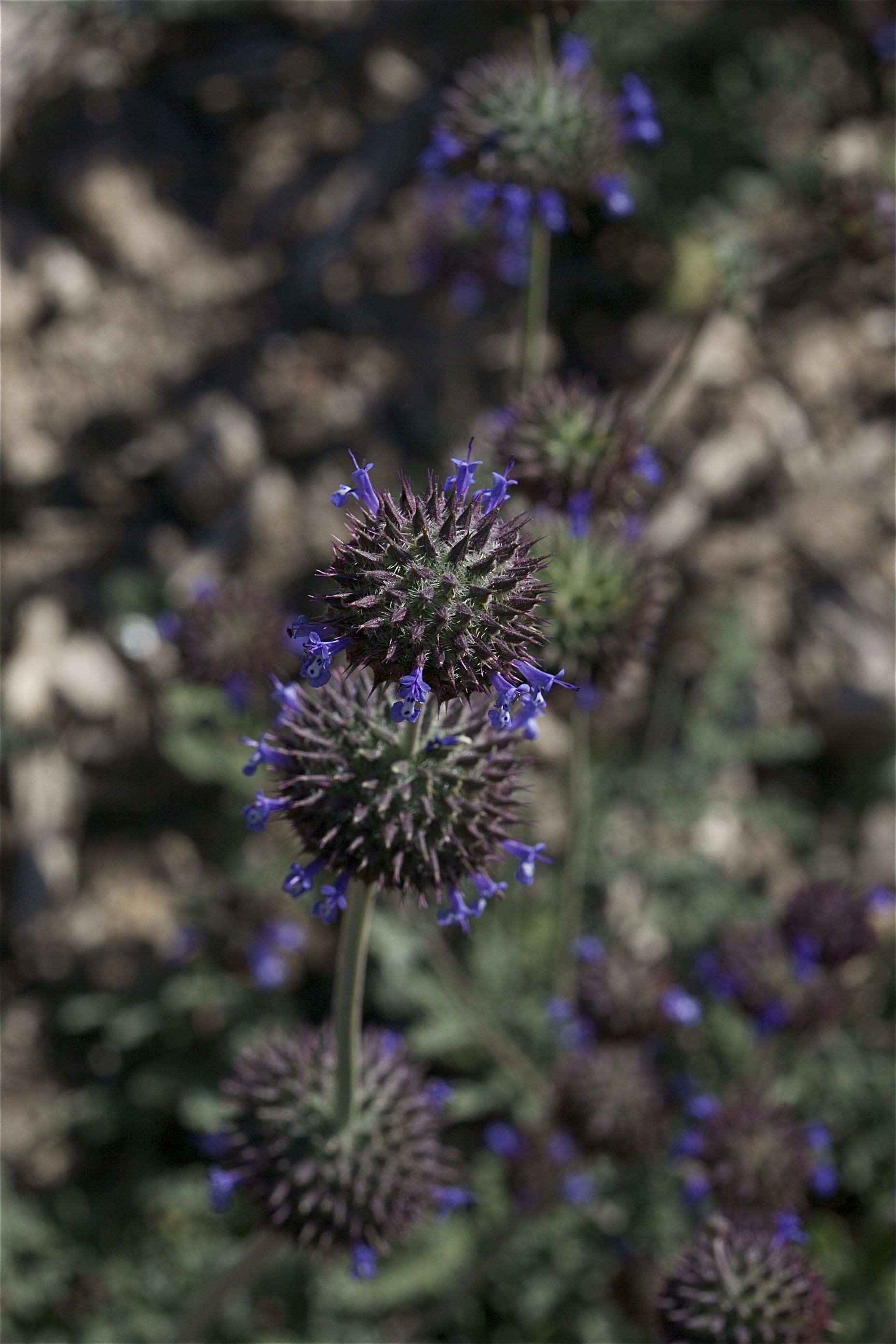
Double desert chia seedhead (JRMondt photo)

Double desert chia seedhead (JRMondt photo)

About April and May, when the days are getting hot and dry, return to your patch of chia to find straw-colored spiny balls dancing on slender dry stalks, usually calf-high, sometimes knee-high, or, after a wet winter/spring, perhaps thigh-high.  Try to find them just after they dry before the breeze has battered them and scattered their seed.  With a strong paper sack (or a canvas bag that you can wash later to soften the spiny bracts that will get stuck in the fabric), gather the seedheads and crush them.  Bare hands or soft-gloved hands BEWARE!  Best to use leather gloves for gathering seedheads.
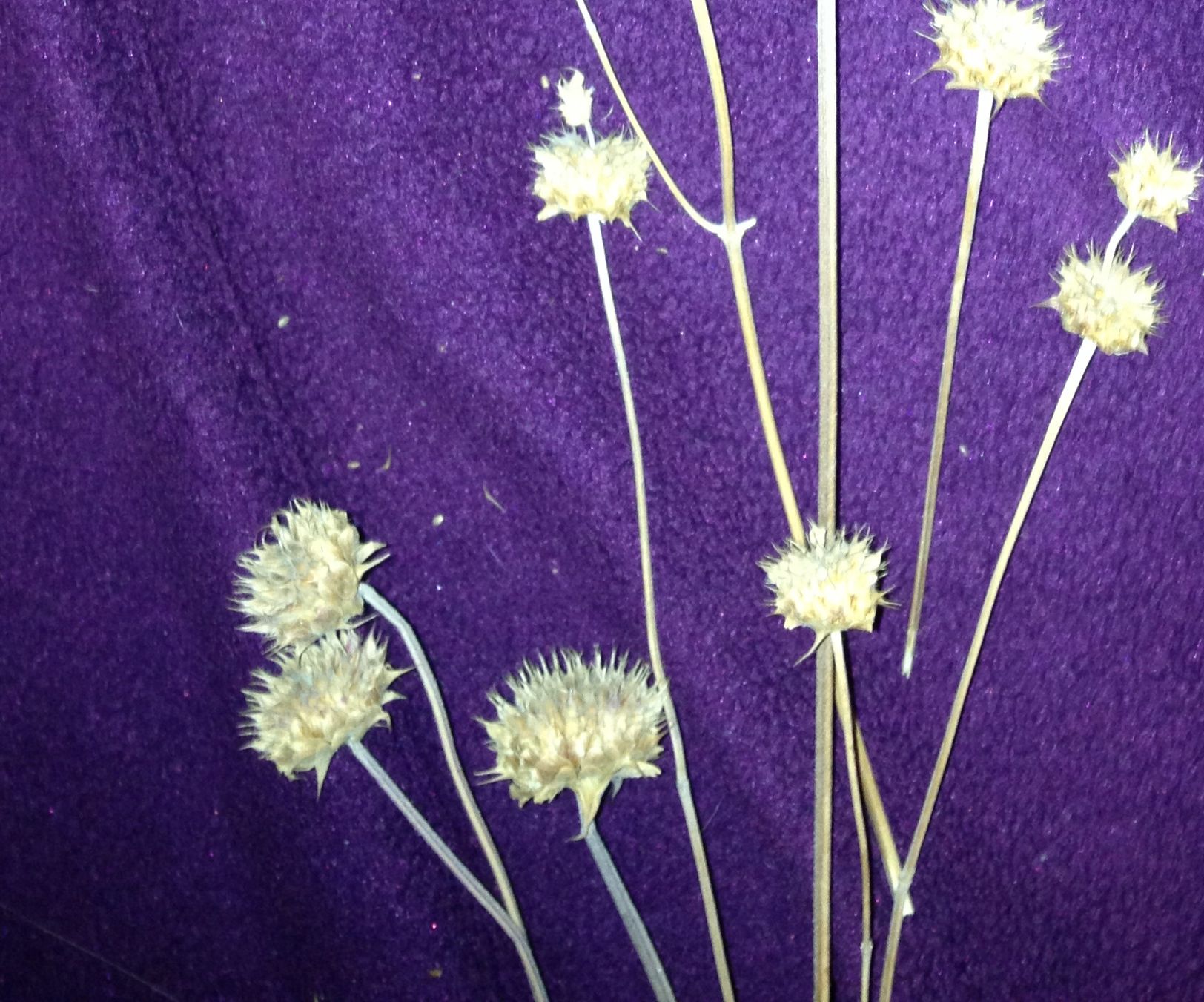
 

Dry stalks and spiny seed heads of desert chia (MABurgess photo)

Dry stalks and spiny seedheads of desert chia (MABurgess photo)

In earlier times, Native Peoples may have used baskets shaped like combs to pass through patches of chia seedheads to gather many at a time.  There are records of Cocopa and Chemehuevi people of the Colorado Desert storing large ollas full of chia seed.  When you see how tiny the seeds are and realize how much work it is to harvest an olla of chia seed, the time and effort must have been astounding–but they KNEW how important this food is!  When chia was ready, the whole village had to be out there gathering, making the most of the short window of opportunity.

The nutrition of chia–both our native desert chia and the Aztec chia, Salvia hispanicum–is way up there among the super-foods.  Packed in the tiny seeds is a big percentage of omega-3 fatty acids.  In addition, chia contains complex carbs which give lots of sustained energy, like slow-release fertilizer–a great food for athletes.  These same carbs balance blood sugar, providing a gift to hypoglycemics or diabetics.
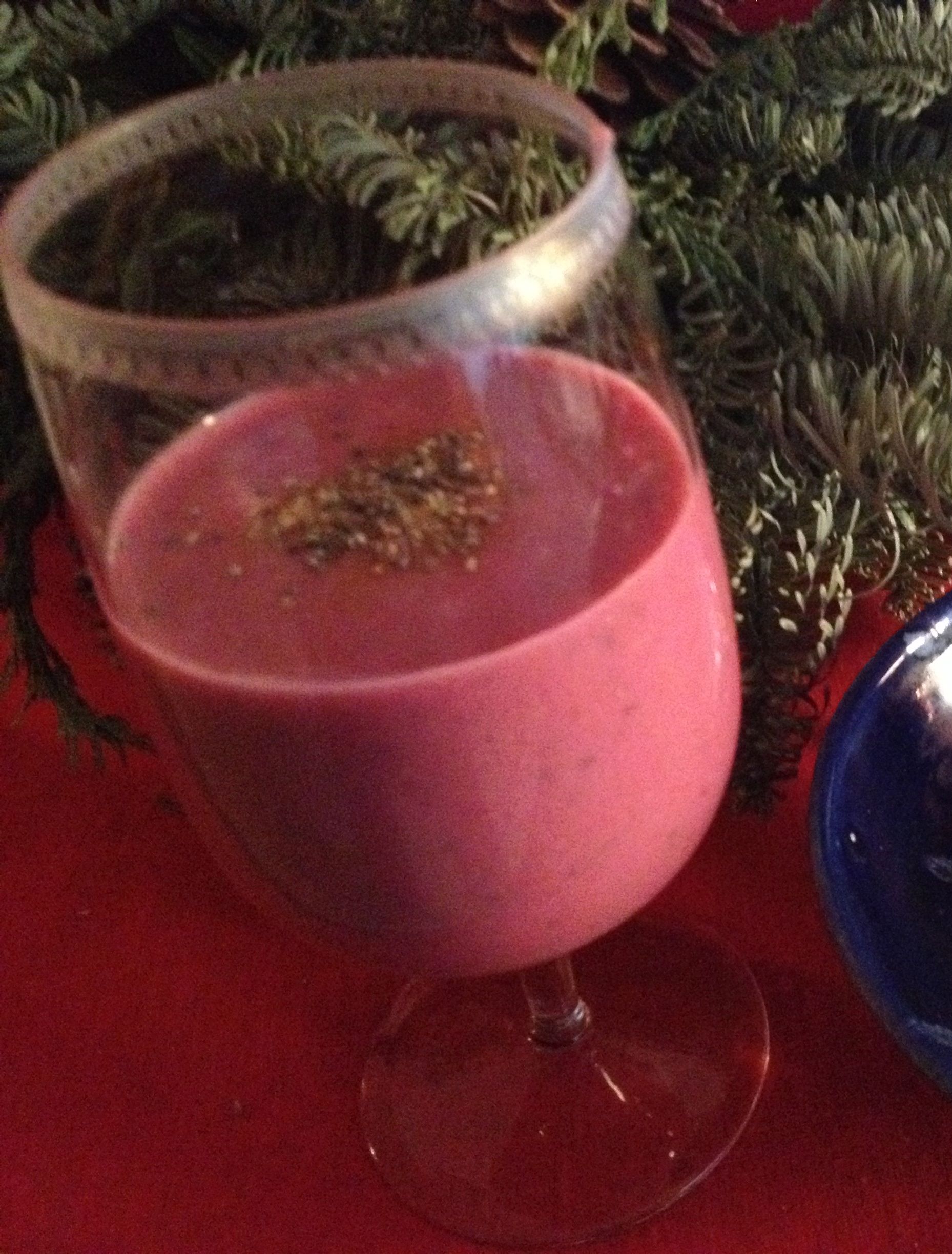
Taste the glorious nutrition of a chia-mesquite-berry smoothie! (MABurgess photo)

Taste the glorious nutrition of a chia-mesquite-berry smoothie! (MABurgess photo)

Chia Mesquite Berry Smoothie Recipe

1 Tbsp chia seed, and a pinch for garnish

1 cup apple or cranberry juice

2 tsp mesquite meal (optional, and delicious)

1 cup frozen blueberries or raspberries (or other favorite berry)

1 cup vanilla yogurt (or 1 cup plain yogurt and 2 tsp agave nectar)

ice optional

Soak 1 T chia seed in a cup of apple juice or other fruit juice for 5-10 minutes.  Then combine all other ingredients in a blender.  Pulse until all ingredients are mixed. Pour into 2 big glasses, sprinkle top with a pinch of chia seed, and enjoy with a pal!
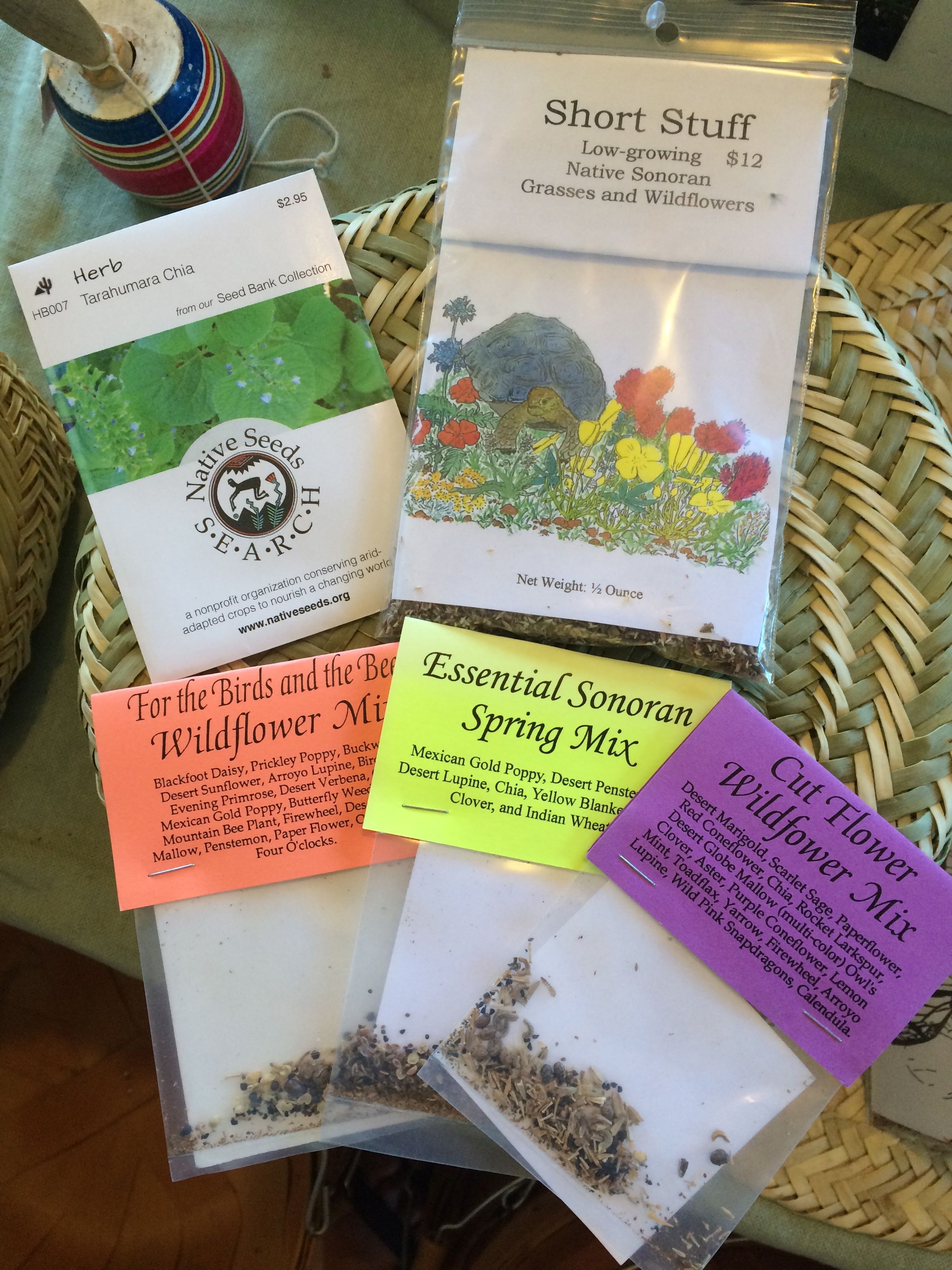
 

Tarahumara Chia and Desert Chia are available in seed packets and seed mixtures from NativeSeeds/SEARCH.

Tarahumara Chia and Desert Chia are available in seed packets and seed mixtures from NativeSeeds/SEARCH.

You can visit the NativeSeeds/SEARCH online catalog or visit the one-of-a-kind store on North Campbell Avenue to find the right seeds for your garden.  They have Tarahumara chia, the one made famous by the Raramuri native runners of the Sierra Madre.  NSS also has every wildflower mix containing desert chia, for spring garden showiness or benefits to wildlife.  Come by the Flor de Mayo booth at StPhilips Farmers Market for ideas for using chia and a pinch to try for yourself.  For learning more about seed saving, try a class at NativeSeeds/SEARCH.

The gifts of chia–from the visual and olfactory, to the culinary and the medicinal–are many, and even magical.  We can participate in spreading their wealth of beauty and benefit by planting and harvesting, saving their seeds and passing them along with hope and intent….

On the Transformational Power of a Humble Pot


IMG_2487

View inside a  clay cooking pot made in Sonora, Mexico. Hand crafted several years ago, by an elder woman who digs the clay herself; each March.

Aunt Linda here this still, cool morning in the Old Pueblo. Today’s post is inspired by the tiny pots I discovered when removing a birdhouse filled with wasps, instead of  baby birds. Wearing my bee veil I safely peeked inside – immediately mesmerized by the sight of beautifully crafted, tiny mud pots. Potter Wasps I wondered?  And what on earth do they DO with these pots? I began to research these tiny pots.  English naturalist John Crompton  described them as “vases of earthenware that the Greeks might have envied.”

IMG_2477

Tiny mud pots

Eric Grissell, in his book BEES, WASPS, and GARDENS writes “unlike many wasps that simply place their egg on the prey or at the bottom of a cell, potter wasps suspend their eggs by a thread from the top of the pot. When it hatches, the wasp larva is hanging directly over it’s supper, and it remains attached safely to it’s line until the first caterpillar or two is consumed, then it is bold enough to drop down and feast among it’s hosts. Apparently, the reason for this odd behavior is that female potter wasps only partially paralyze their hosts, which are still capable of some movement. A tiny wasp larva might be crushed if it had no way to retreat from its twitching dinner plate, so it essentially becomes a trapeze artist.”(p177)

IMG_2524 (1)

insect potter in action

Potter Wasps may not cook per se; but they do collect mud, shape pots, and provide meals  in those pots for their larva. Which gets me thinking about pots. And how humans feed – and have fed ourselves – over time. How might such a simple thing as a fired clay pot have transformed our  lives?

IMG_2490

Simple Cook pot whose “insides” are shown in the top photo. 

Research offered by Michael Pollan in his book COOKED fascinates me. Before the technology of fired clay cooking pots humans heated stones (found in archaeological sites as ‘burned stones’) and fired clay balls. These “cooking stones” were added to the water held in animal skins or watertight baskets (which were not fire proof; that would come later with firing clay) to boil water. Boiling water – another thing we take for granted – allowed humans to transform previously inedible foods edible. This opened wide up our culinary and nutritional world – and seeds, nuts, grains, sometimes rendering some toxic plants safe to eat.

Pollan writes “the cook pot is a kind of second stomach, and external organ of digestion” … “these auxiliary clay stomachs made it possible for humans to thrive on a diet of stored dry seeds which in turn led to the accumulation of wealth, the division of labor, and the rise of civilization. These developments are usually credited to the rise of agriculture, and rightly so, but they depend as much on the cook pot as on the plow.” (154)

IMG_3099

Stew forming with vegetables and, yes you saw right,  some chicken feet; no part goes unused.

Todays Recipe is to add some reverence for the deceptively simple cook pot – (as well as for the act of boiling water) – to your very favorite ingredients. There is no need to use a clay pot; nor to even get complicated. You might add this reverence to making a pot of beans, your grandmothers favorite soup or stew, or even to jam making.


Beautiful Bay

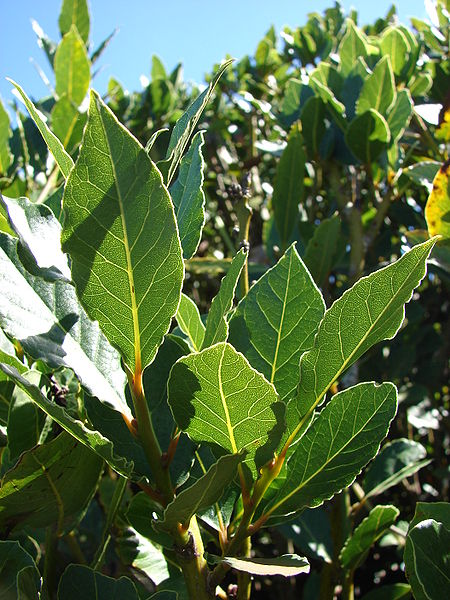
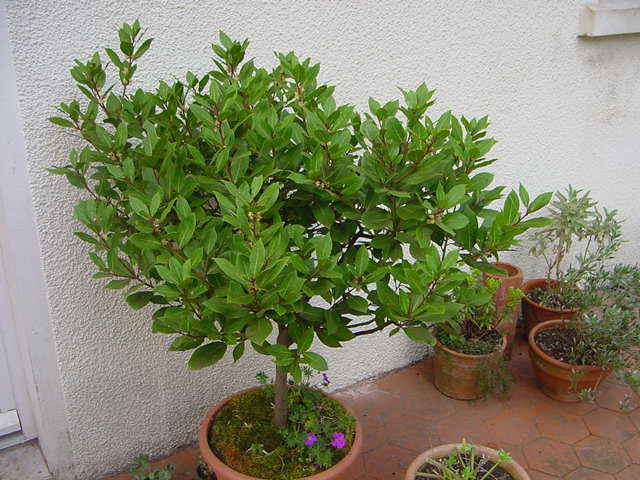
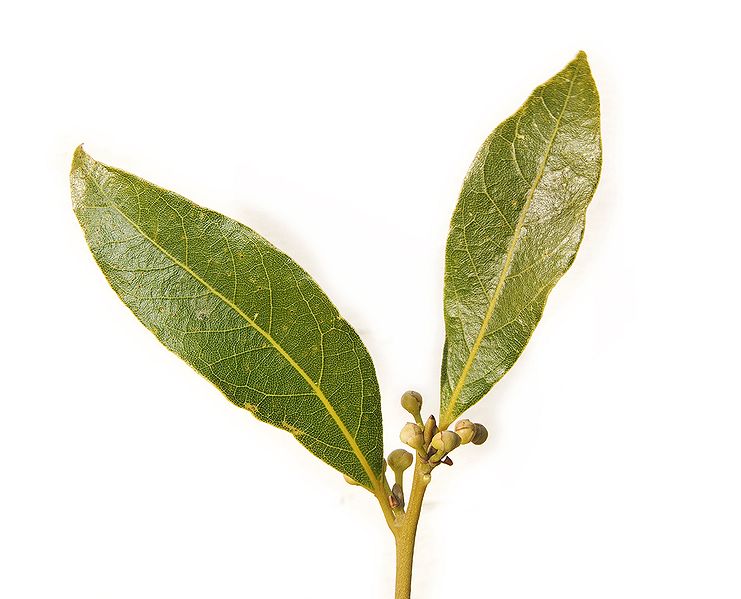
Laurus_nobilis_leaves_004Jacqueline Soule this week, to discuss an herb you can plant now. This herb is a large shrub/small tree that can even be used as a houseplant! I am speaking of bay (Laurus nobilis), also called laurel, or bay laurel. (In Spanish it is called laurel.) Bay is used for Craft, Culinary, Ornamental and Pest Control purposes.


Laurel_paintingHistory.

In ancient Greece and Rome, the bay tree was considered sacred to Apollo, the sun deity. Leafy branches of bay were woven into wreaths to crown the heads of kings and queens, priests, priestesses, poets, bards, and the victors of battles and athletic or scholarly contests. At the first Olympics in 776 B.C.E., laurel garlands were presented to the champions of each contest. During the Renaissance, doctors, upon passing their final examinations, were decorated with berried branches of bay. From this ancient custom derives the French word baccalaureate (from “bacca,” a berry, and “laureus,” of laurel); this has been modified into the term “bachelor” in referring to one type of college degree.


Laurus_nobilis_driedUses

Bay has been used medicinally for centuries. It has a reputation for soothing the stomach and relieving flatulence. Bay has also been used as an astringent, diuretic, narcotic, or stimulant. An infusion (tea) is prepared for these purposes.


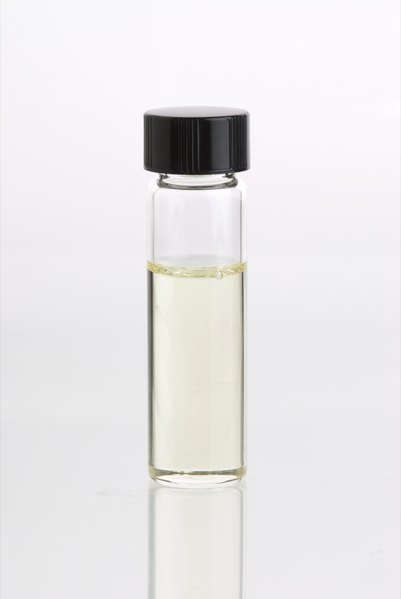
LaurusNobilisEssOilOil of Bay, extracted from the leaves, contains many components, including cineol, geraniol, and some eugenol. Studies of the purified essential oil have proven bactericidal and fungicidal properties. Use as a narcotic may be due to the eugenol found in bay (an oil also found in cloves), which has been shown to have sedative and narcotic effects in mice. Bay is used externally, and considered by some to be a healing agent for rheumatism. In such cases the essential oil is rubbed on the aching joints. A soothing bath soak is prepared from an infusion of the leaves, and added to the bath water. External use of bay may cause dermatitis in sensitive individuals. Always test a small patch of skin before widespread use.


Laurus_nobilis_landscape_01Planting and Care.
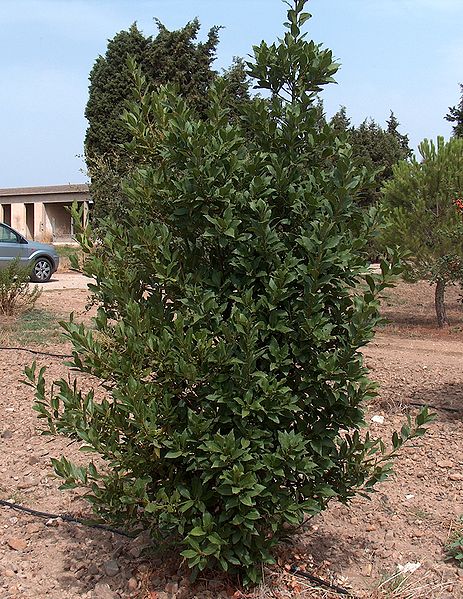
The bay laurel is an evergreen tree with glossy, deep green leaves. It grows well in arid climates such as Greece, Italy, southern France, and here in the Pimería Alta. Bay is a lovely tree for the yard or even poolside. Growing slowly to form a stately tree, in the very best conditions it will eventually reach 40 feet high (it takes decades). Like most herbs, soil with good drainage is required.


laurel-tree-5The only problem with bay is that young trees are frost tender, and must be protected much like a citrus tree. You can grow bay in a container when it is young and move it onto a protected porch for the winter. Plant it out once the plant has some size as it is less likely to freeze, or you can keep in a container for years.  Indeed, you can also grow bay indoors, if you have a well-lit space.

Be sure you buy true bay laurel. Landscape plants sold as “laurel” may be Prunus laurocerasus, also called the English or cherry laurel; a member of the rose family.


Laurus nobilis_lvs_01Harvesting and Use.
Bay as a flavoring herb is always used dried. There are several bitter tasting compounds which are lost with drying, leaving the flavorful and useful oils. Leaves are used whole and removed prior to serving as they leave a bitter taste if chewed. Add bay to your cooking, or prepare as an infusion base for soups.

Bay leaves are used as a pest repellent for flour weevils. Just add several leaves, ideally in a muslin bag, to your flour canisters. Change to fresh leaves every six months. Use the old leaves as organic mulch in the garden.

Bay leaves, either fresh or dried, can be used to create lovely long lasting herbal wreaths.


JAS avatarIf you live in Southeastern Arizona, please come to one of my lectures. Look for me at your local Pima County Library branch, Steam Pump Ranch, Tubac Presidio, Tucson Festival of Books and other venues. After each event I will be signing copies of my books, including the latest, “Southwest Fruit and Vegetable Gardening,” written for Arizona, Nevada and New Mexico (Cool Springs Press, $23).

© All articles are copyright by Jacqueline A. Soule. All rights reserved. Republishing an entire blog post or article is prohibited without permission. I receive many requests to reprint my work. My policy is that you may use a short excerpt but you must give proper credit to the author, and must include a link back to the original post on our site. Photos may not be used.

Sweet and Savory Valentines–with lovely local grains

Happy Valentine's expressed with the happiest of ingredients--heirloom barley, white Sonora wheat, organic hard red wheat and mesquite!

Happy Valentine’s expressed with the happiest of ingredients–heirloom purple barley, white Sonora wheat, organic hard red wheat and mesquite!

I admit it–I have a “thing” about barley. I’ll take it in any form–in stews, Scottish soups, marinated grain salads, mesquite/barley biscuits, barley banana bread…..and yes, my personal favorite, beeeer! (Your’s too? OK that will be another good post….)

Tia Marta here to share some fun recipes fit for a happy Valentine’s Day or beyond–made with heirloom grains including barley–one recipe with whole-kernel grain, one with milled whole grain flour.  These amazing grains are some of the reasons Tucson is now an International City of Gastronomy!

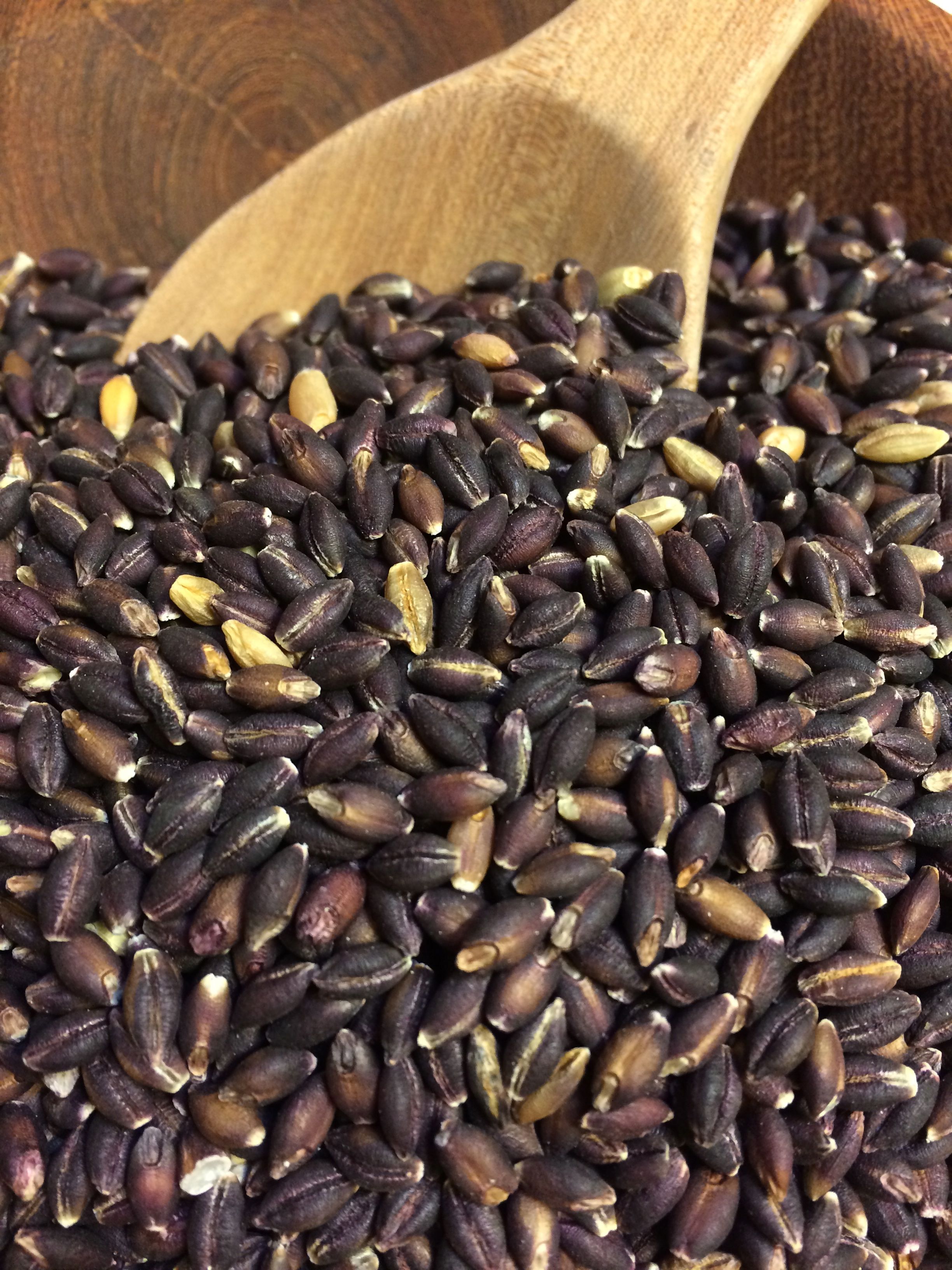
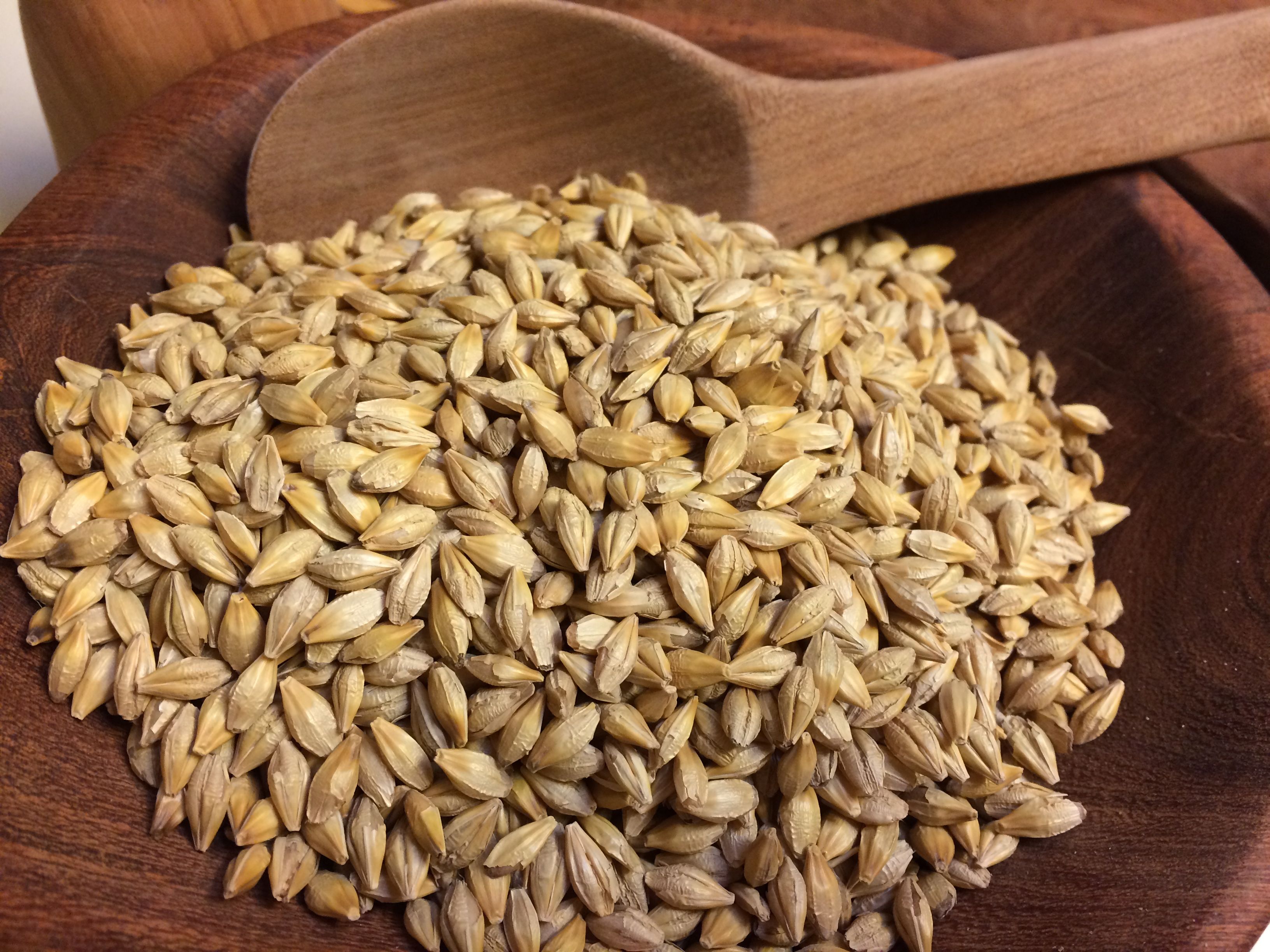
Arizona-grown heirloom Purple Prairie Barley grain in its healthy hulls

Arizona-grown heirloom Purple Prairie Barley grain with its healthy bran intact

It seems very few people in recent times know much about barley except perhaps as an ingredient in grape-nuts cereal or Campbell’s Scotch Broth. When you look into the nutrition of barley you find that it has the lowest glycemic index of all the grains, that is, it is the best of all for keeping blood-sugar in balance, especially when used in whole kernel form, either cooked whole, or milled from whole kernels.

There is an ancient barley now being grown in Arizona that has a delicious flavor, colorful nature, antioxidant properties, and versatility which have captivated me. It hails originally from Tibet (some say by way of the Nile) and is known as Purple Prairie Barley.


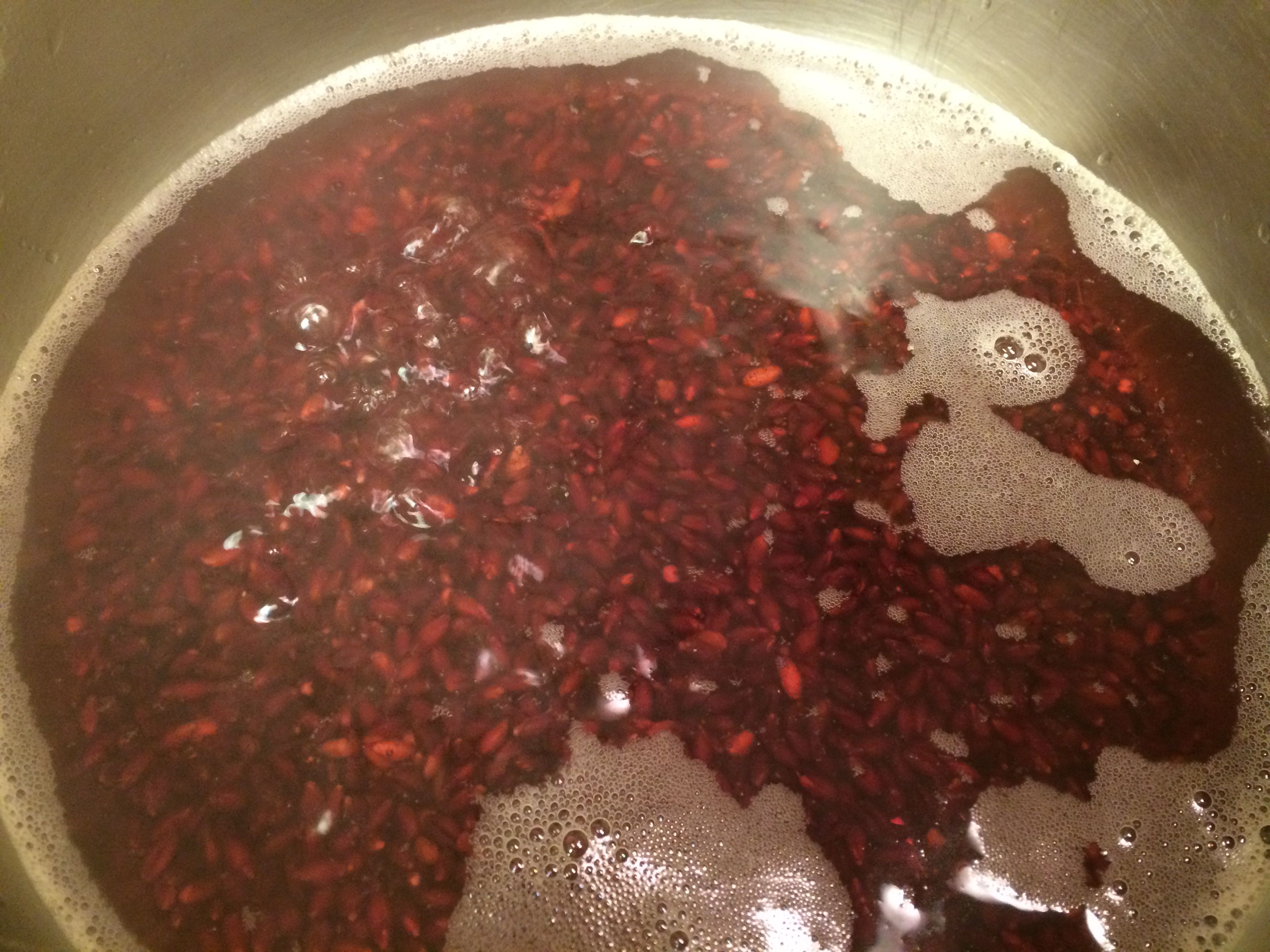
Keep the faith while cooking whole kernel purple prairie barley--Let the grains re-absorb all the liquid, 4:1 that is water:grain

Keep the faith while cooking whole kernel purple prairie barley–Let the grains re-absorb all the liquid,  water:grain ratio is 4:1.

Basic cooking for whole Purple Prairie Barley is super-simple.  It just takes a little time.  Once you have them cooked you can freeze them for future culinary creativity.  Stove-top method:  bring to boil 4 cups drinking water and 1 cup whole grain barley, and simmer until ALL the purple liquid is absorbed.  In a crockpot, the same process may take 3-5 hours–no watching necessary.  The glorious purple liquid which rises in the cooking water is chucky-jam-full of anthocyanins, those wondrous antioxidants, so don’t let a drop get away!

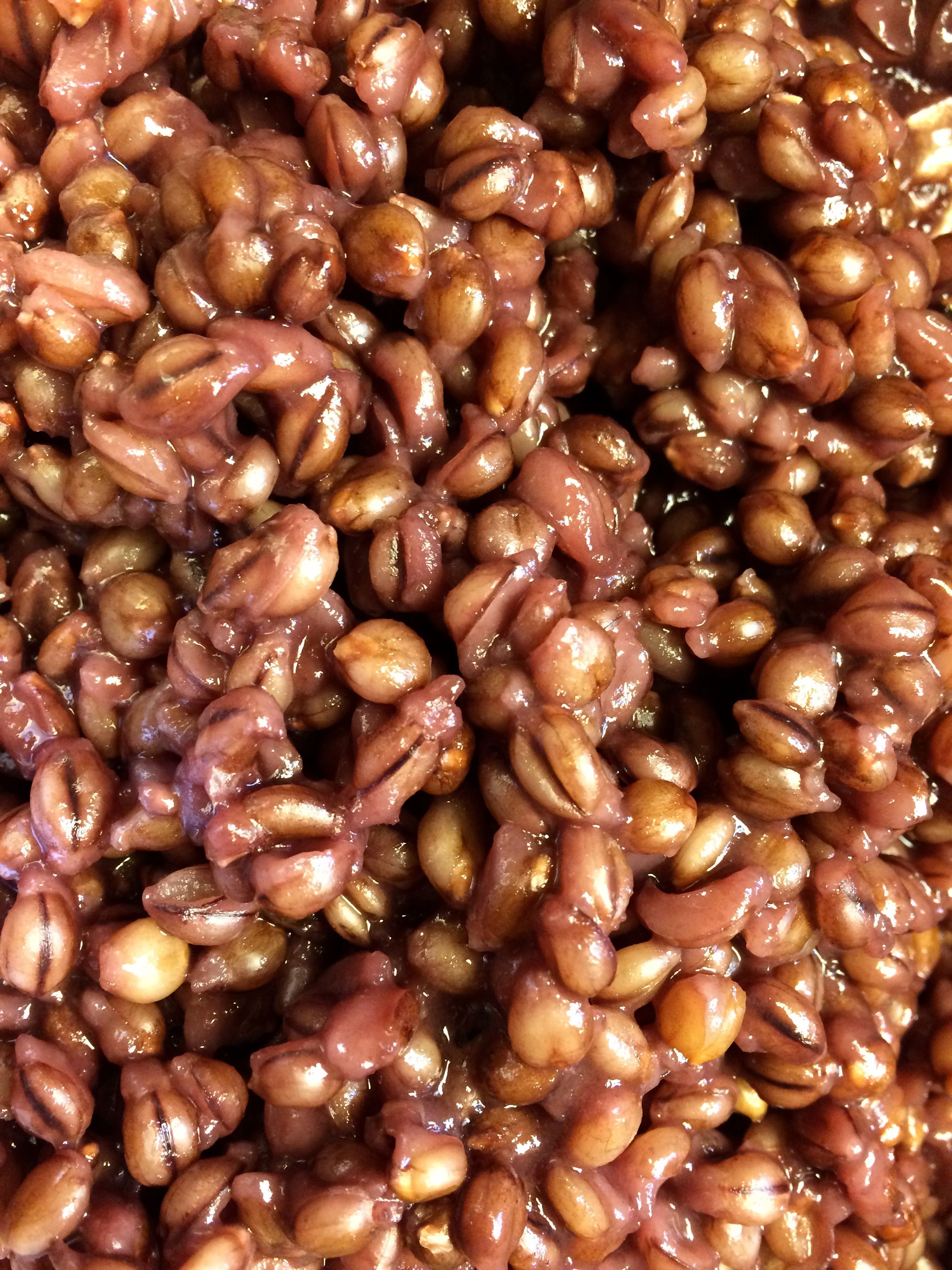
When fully cooked, purple prairie barley is plump, almost round, and still retains its lovely color.

When fully cooked, purple prairie barley is plump, almost round, and still retains its lovely color.


Hot, whole purple barley-berries taste great as a chewy cereal for a chilly morning, delicious with cream or yogurt and a dollop of agave nectar.  It also makes a delectable pilaf (see photo idea below) or marinated whole-kernel salad.  [You can substitute barley in recipes for White Sonora Wheat-berries–to find them enter “wheat” in this blog’s search box.]


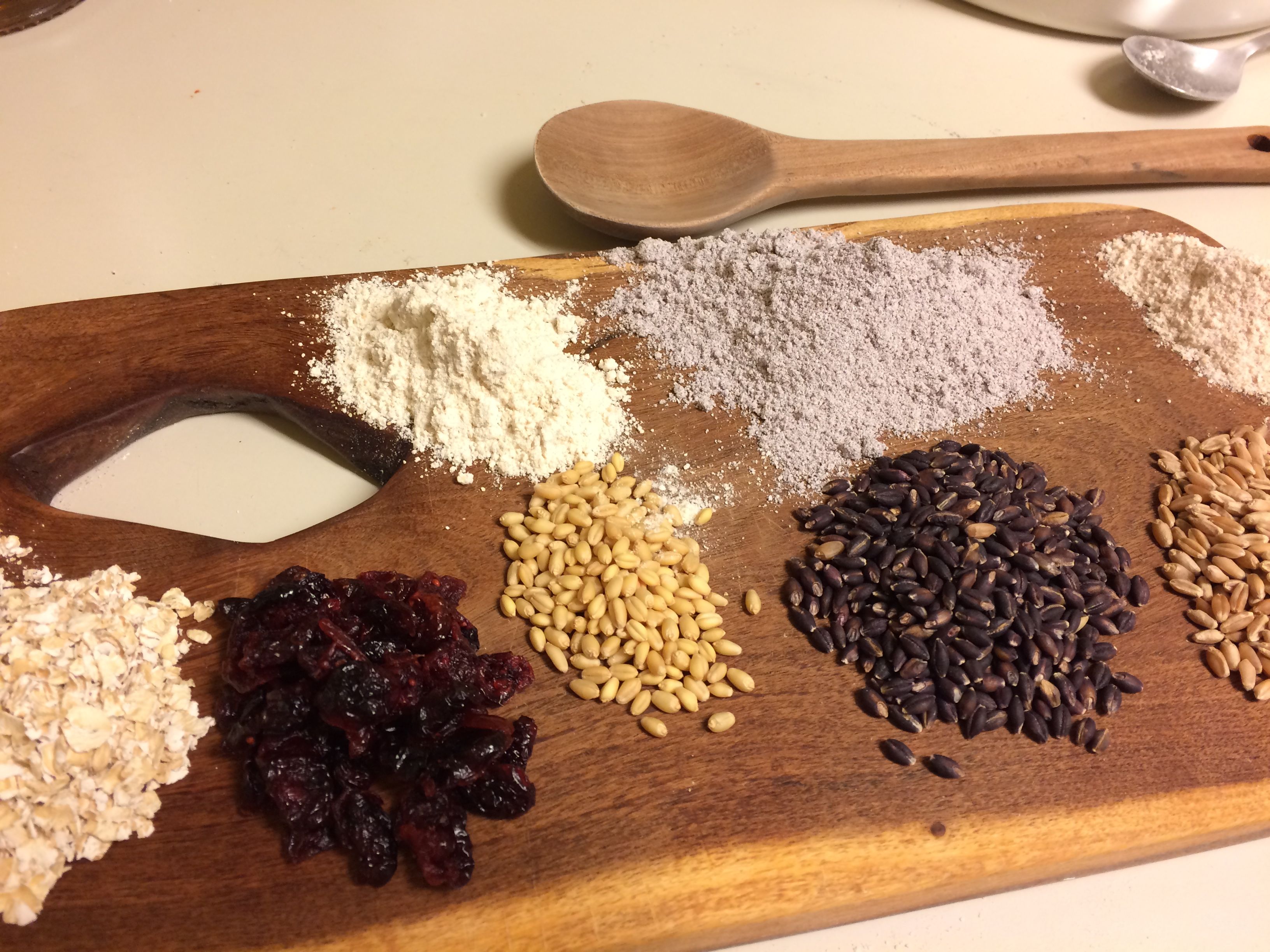
Ingredients for baking Valentine cookies--L to R rolled oats, dry cranberries, White Sonora wheat-berries and flour, Purple Prairie grain and lavender flour, local hard red wheat kernels and flour

Ingredients for baking Valentine cookies–L to R rolled oats, dry cranberries, White Sonora wheat-berries and its golden flour, Purple Prairie grain and its lavender flour, local hard-red wheat kernels paired with its beige flour

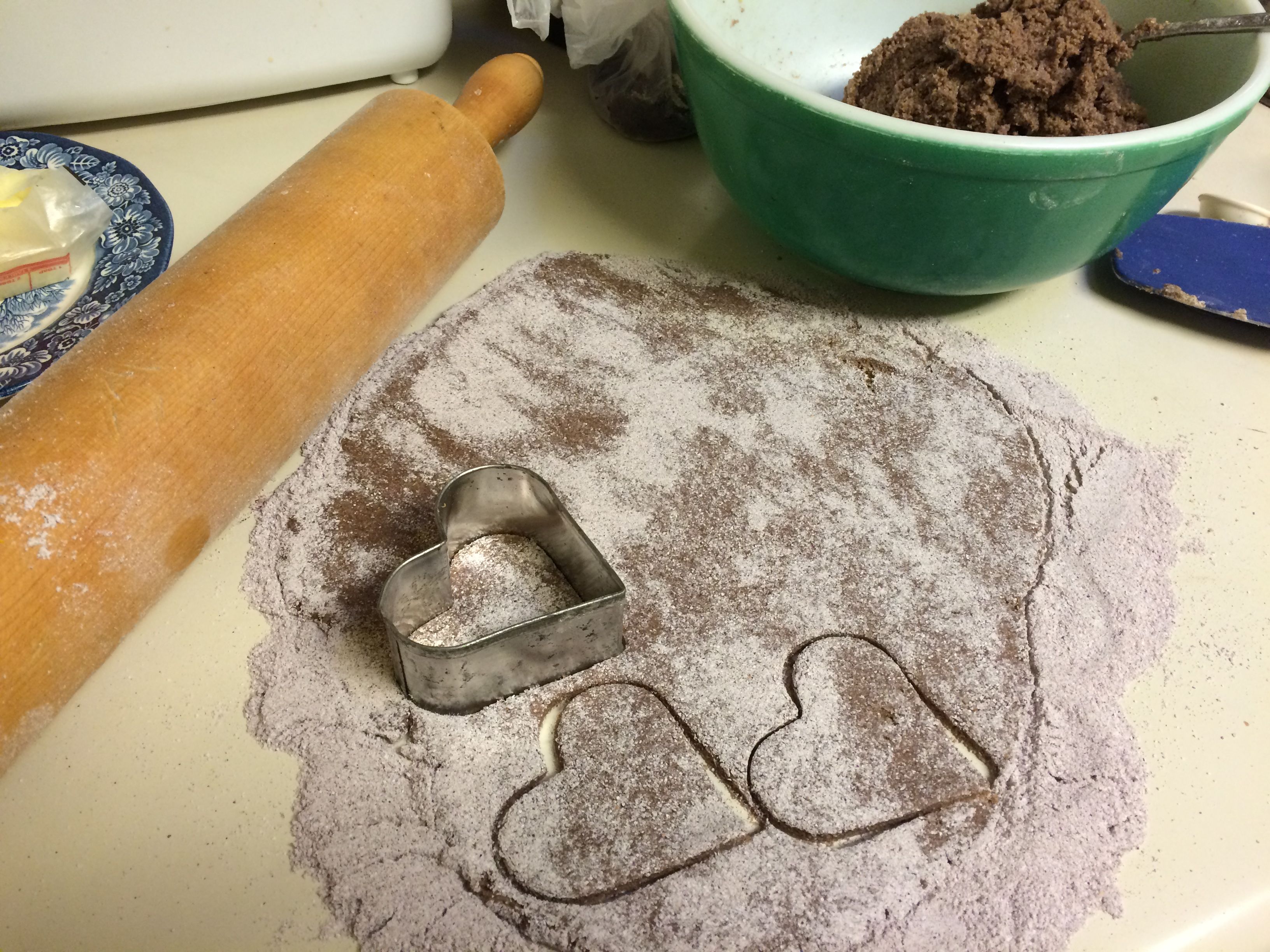
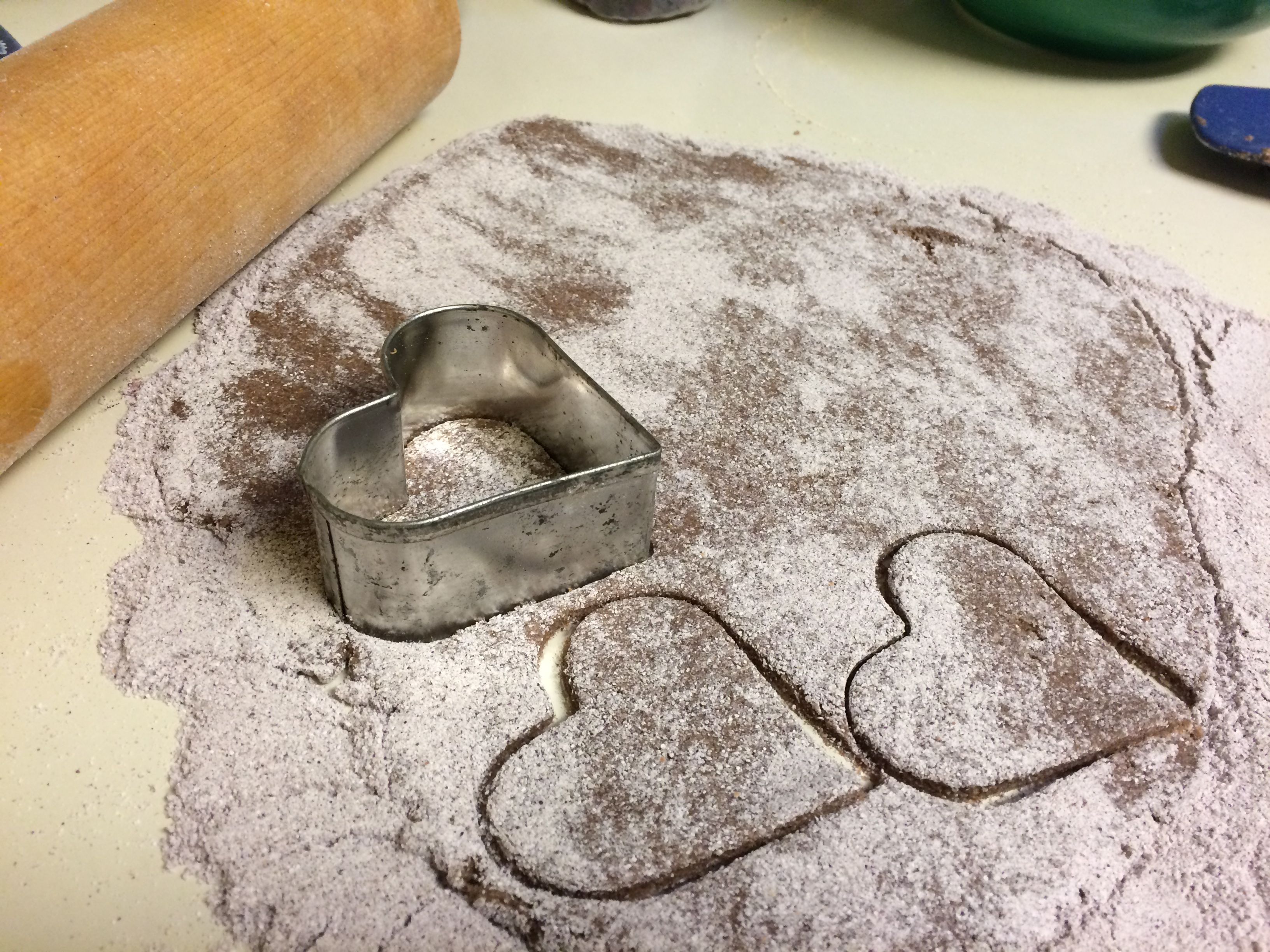
Rolling out dough for heirloom barley hearts--Valentine treats to celebrate Tucson's LIVING culinary history

Rolling out dough for heirloom barley hearts–Valentine treats to celebrate Tucson’s LIVING culinary history


This cookie recipe is really easy–two bowls, sifter, rolling pin or bottle, teaspoon measure, and only one half-cup measuring cup are needed.

Very Sonoran Valentine Cookies

Ingredients:
1 c purple prairie barley flour
1/2 c organic white Sonora wheat flour
1/2 c organic hard red wheat flour
1/2 c local mesquite flour
1/2 tsp sea salt or real salt
2 tsp baking powder
1/2 c (one stick) organic butter
1/2 c organic cane sugar
2 lg or 3 medium eggs
1 tsp vanilla
optional topping on cookie dough: dry cranberries or cherries
Directions: Preheat oven to 375degreesF. Sift all dry ingredients into one bowl. In a separate bowl, cream butter and sugar; stir in vanilla; beat in eggs.  Add dry ingredients into wet mixture, mixing thoroughly. Pat dough out on a board heavily dusted with more barley flour. Roll dough to a ca. 3/8 inch thickness–(consistent thickness is more important than an exact measure.) Cookie-cutter your favorite shapes out of the rolled dough and place on ungreased cookie sheet.  Bake 8-10 minutes or until barely browning. Crunchily enjoy the pinkness of your purple barley cookies!

Rolling out cookie dough for Purple Prairie Barley cookies

Cutting cookie dough for Purple Prairie Barley cookies


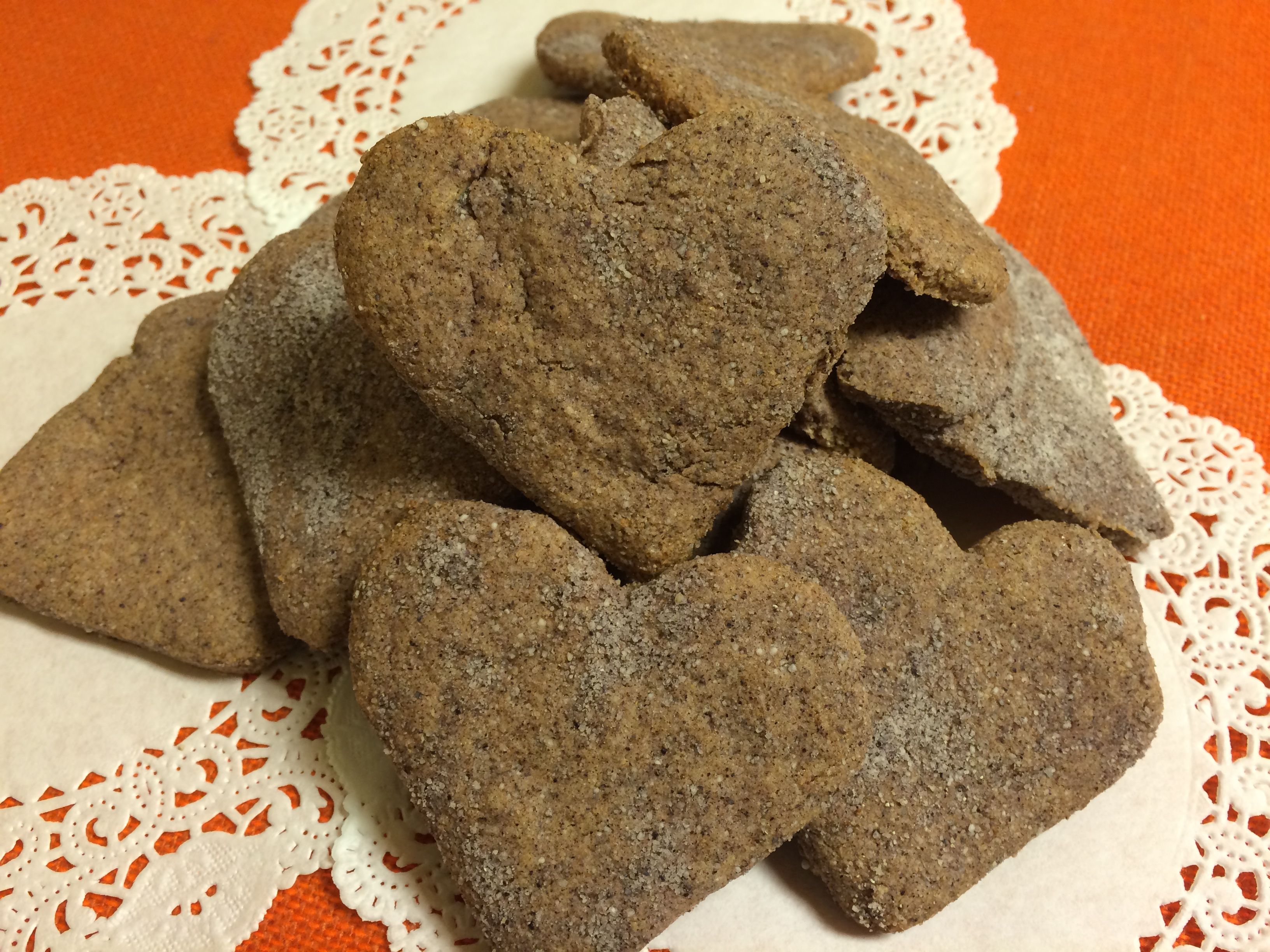
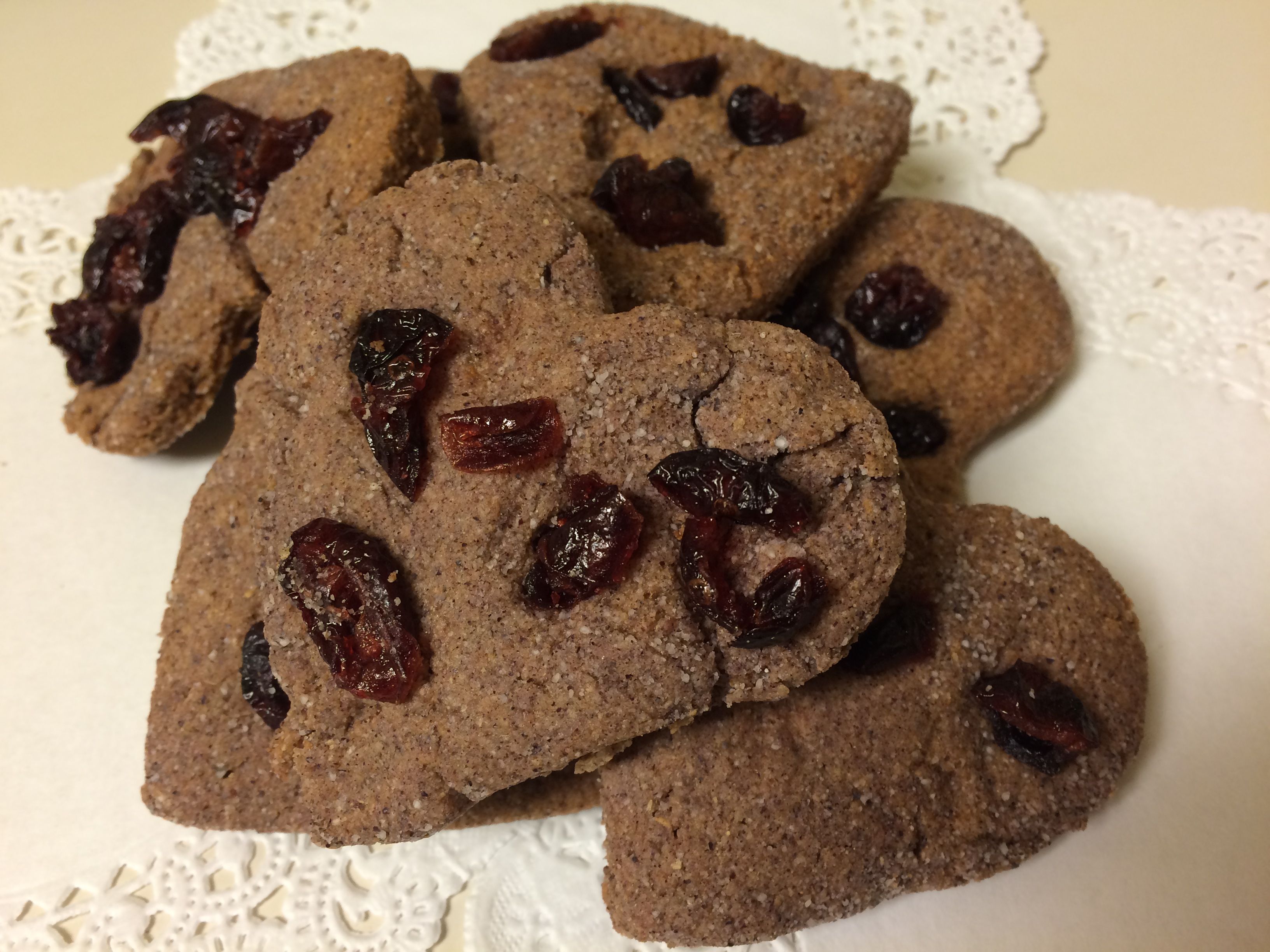
Purple barley Valentine cookies with cranberry decoration

Purple barley Valentine cookies with cranberry decoration– a pinky-purple hue, yummy flavor & crunch!

You can make delightful variations on these Purple Barley Cookies by substituting the above ingredients in an oatmeal cookie recipe or in a Scottish shortbread recipe.


Preparing heirloom purple prairie barley pilaf

Preparing heirloom purple prairie barley pilaf

For a savory dish, try your cooked whole-grain purple barley in a delicious pilaf prepared in a way similar to a quinoa or rice pilaf.  Stir-fry an assortment of 2-3 cups of your favorite veggies in olive oil (try any chopped heirloom squash, scallions, carrots, colorful sweet peppers, mushrooms, kohlrabi, etc from local farmers’ markets).  Finish the stir-fry adding 1 cup of cooked purple prairie barley.  Season to taste with Asian sauce, spike or Cavender’s.  Pine nuts or cashews might add another flavor dimension.


Magdalena heirloom barley grown at Mission Garden, Tucson

Magdalena heirloom barley grown at Mission Garden, Tucson

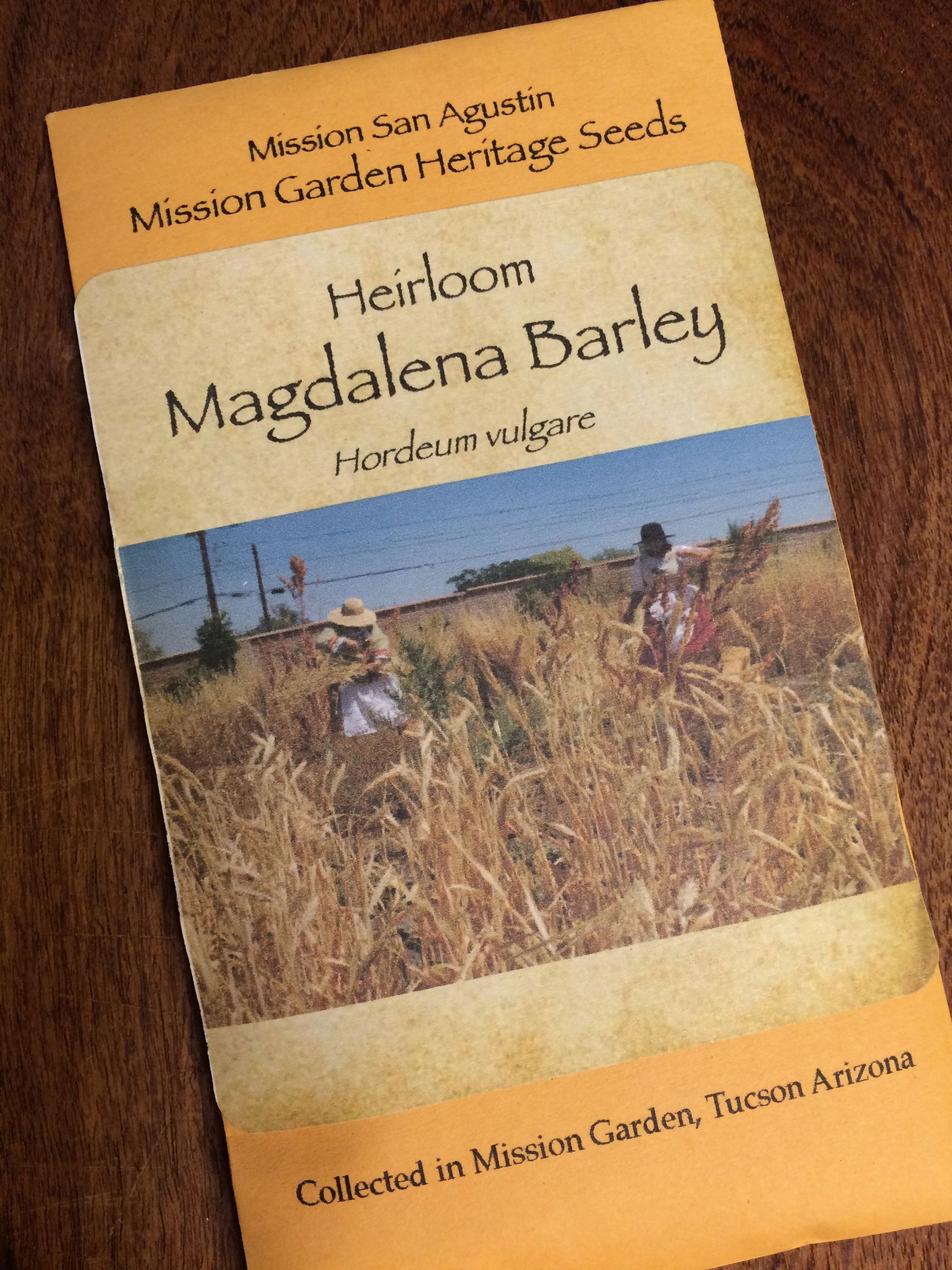
Packaged rare Magdalena Barley seed grown at Mission Garden--our own local treasure.

Packaged rare Magdalena Barley seed grown at Mission Garden–our own local treasure.


Want to find these heirlooms for cooking or to grow them?  Here are some local sources of whole-kernel grains–also, where you can get them freshly milled if you don’t have your own grinder.  Find several of these grains growing at the Friends of Tucson’s Birthplace’s Mission Garden living history gardens, open every Saturday for tours.  Hayden Flour Mills’ heirloom Purple Prairie Barley  is now available at our Flor de Mayo booth at Sunday’s St.Philips Farmers’ Market in various size packets ready to cook or mill.  The Wong family at BKWFarms Inc., now in their fifth generation of local farming in Marana, are the organic growers of Padre Kino’s heirloom White Sonora Wheat which NativeSeeds/SEARCH helped to resurrect from near-loss.  BKWFarms also produces organic hard red wheat-berries, which make a rich, higher gluten flour perfect for breads and cakes, and which I quite successfully used in the Valentine cookie recipe above.  Other heirloom wheat-berries grown by Ramona Farms and San Xavier Coop Association are available at the NativeSeeds/SEARCH store, 3061 N.Campbell Ave, Tucson.  Local mesquite flour for the Valentine cookie recipe is available at the NSS store and at our Flor de Mayo booth, St Philips Farmers’ Market.  Come visit us this Sunday for a little taste!  And, have us mill these organic grains fresh for you on-site!  Check out http://www.flordemayoarts.com for re-sourcing these grains online.  For a great grain brew, ask at Dragoon and our other local micro-breweries for their latest creation.  Here’s to your health–using our local, organic, heirloom grains!

I invite you also to join me, Tia Marta, next Saturday, February 20, at Tucson Presidio Museum’s community lecture at the Dusty Monk Salon and Saloon, Old Town Artisans downtown Tucson.  I’ll be speaking about the Presidio Period’s Edible Plants, and there just might be a few tastes of these heirloom grain treasures for accompaniment….

Simple Home Remedy for a Cold

IMG_2268

Aunt Linda here. I am keeping it very simple today. The “little grey cells” are not at their best while my body fights off a cold, and so I have shelved what I had planned for today’s post.   We are going with the “less is more” approach to colds – and life.

Honey bees give us so much – lemons and honey are just two.

IMG_2270 (1)

So todays recipe is simple:  heat water to almost boiling. Find a favorite cup. Squeeze in as much lemon juice as you would like. Add honey. This is soothing for the throat – and the raw honey and lemon juice seem to have alkalizing properties for the body. Interestingly, I have read that processed honey will make your body more acidic.

IMG_2274 (1)

I added some honey comb, but that is just because I had it on hand. Use whatever honey you have. It occurred to me that the wax just might “exfoliate” the throat. But that is nothing more than a hunch.

In that vein, I added some salted pistachios to further “exfoliate” my throat – I felt like the magic of honey and lemon might work better.

IMG_2272 (1)

Until Next time!


Oh Yum! Tasty Mesquite Meal Enhances Pie Crust and Waffles

Bodie Robins offers a selection of delicious gluten-free baked goods at farmers markets in Tucson and Sierra Vista.

Bodie Robins offers a selection of delicious gluten-free baked goods at farmers markets in Tucson and Sierra Vista.

For thousands of years, mesquite pods were the primary food of people who lived on the Sonoran Desert. It’s Carolyn here today recalling that when I first started researching and experimenting with mesquite in 1972, hardly anybody was eating this sweet nutritious food. Although a few Tohono O’odham kept up with the old ways, it was on the verge of being forgotten.

Until recently,  it wasn’t easy to process mesquite pods. Early Native women made mesquite meal by pounding the pods in bedrock mortars. By the 1970s it hadn’t gotten much easier. But fortunately for all of us someone (I recall it was at the Desert Museum) figured that the pods could be crushed and sifted by a hammermill, a common piece of farm equipment. After some years, Desert Harvesters took up the challenge and offered to grind the pods of all comers for a modest fee. Getting a beautiful, smooth tasty flour was now easy. And the world of mesquite baking opened up.

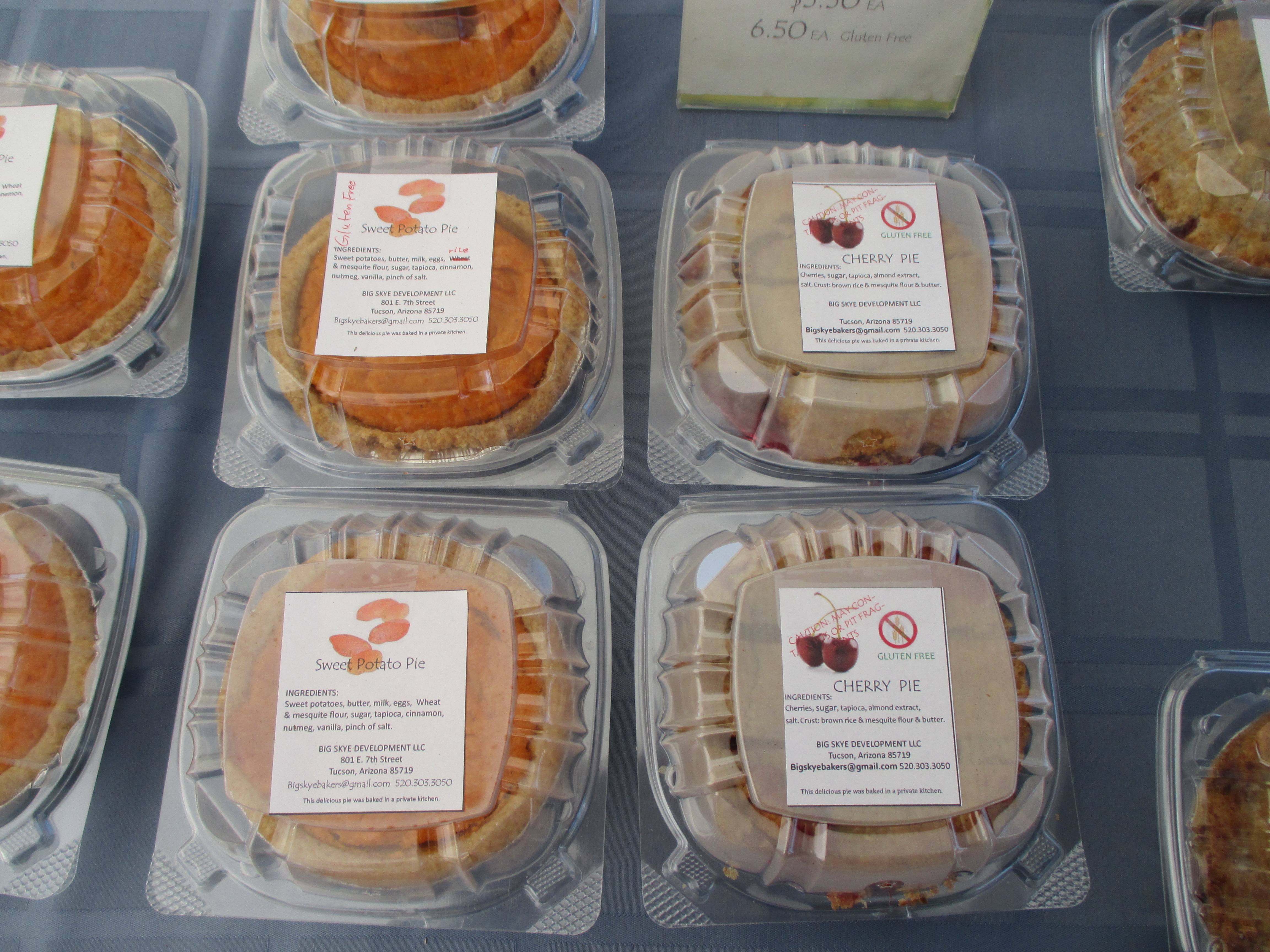
Mesquite crust adds extra deliciousness to Big Skye's fruit pies.

Mesquite crust adds extra deliciousness to Big Skye’s sweet potato and fruit pies.

Bodie Robins of Big Skye Bakers is one of the folks who have brought mesquite baking into the twenty-first century selling mesquite baked goods at farmers’ markets in Tucson and Sierra Vista.

Bodie, an architectural designer, began baking with mesquite as therapy in 2008 when construction took a dive with the recession. His first experiment produced some dog biscuits that he shared with his neighbors. He decided there might be a future in mesquite baking when his neighbors admitted they were eating the dog biscuits themselves. With salsa!

Bodie took his product to a farmers’ market. But it turns out not enough people were willing to pay for high-end mesquite dog biscuits (many dogs are willing to just chew the pods, unbaked), so he began to experiment with other baked goods, trying various combinations of flours until he produced a version he liked.

Today he sells pies with mesquite crust, cookies, and cupcakes. Many of his customers are attracted by the gluten-free nature of Bodie’s mesquite pie crust. One very grateful middle-aged customer was thrilled to find a pie crust he could eat and told Bodie he hadn’t been able to eat pie since he was 15 years old.

Bodie entices his customers with a little table setting at his farmers market booth. Personally, I'm ready to dig right in.

Bodie entices his customers with a little table setting at his farmers market booth. Personally, I’m ready to dig right in.

A perfect loaf of gluten-free bread eluded Bodie until recently when extensive experimenting has finally led to a mixture of mesquite meal, brown rice flour, tapioca and sweet potato flour that turns out a delicious loaf.

“My customers are particular about the foods they buy and eat,” he says .  “They like to learn about mesquite. There’s a romance to it – an arts and crafts movement about food. I get everything from savvy young college kids to the elderly.”

Bodie gathers the mesquite pods he uses himself and has them ground at the Baja Arizona mill at the Sierra Vista farmers’ market. He goes through up to 200 pounds a year and if he runs out, he can grind a few pounds in his Vitamix. He produces his goods in his home kitchen under the home baker cottage industry law.

You can find Bodie and his Big Skye specialty baked goods at the Rillito Farmers’ Market in Tucson on Sunday mornings from 9 a.m. to 1 p.m. and at the Sierra Vista Farmers’ Market on Thursdays from 10 a.m. to 2 p.m

Here’s a delicious recipe for waffles that Bodie developed. This recipe includes wheat flour, but if you are gluten sensitive, experiment with some other flours to find a mixture that works for you.

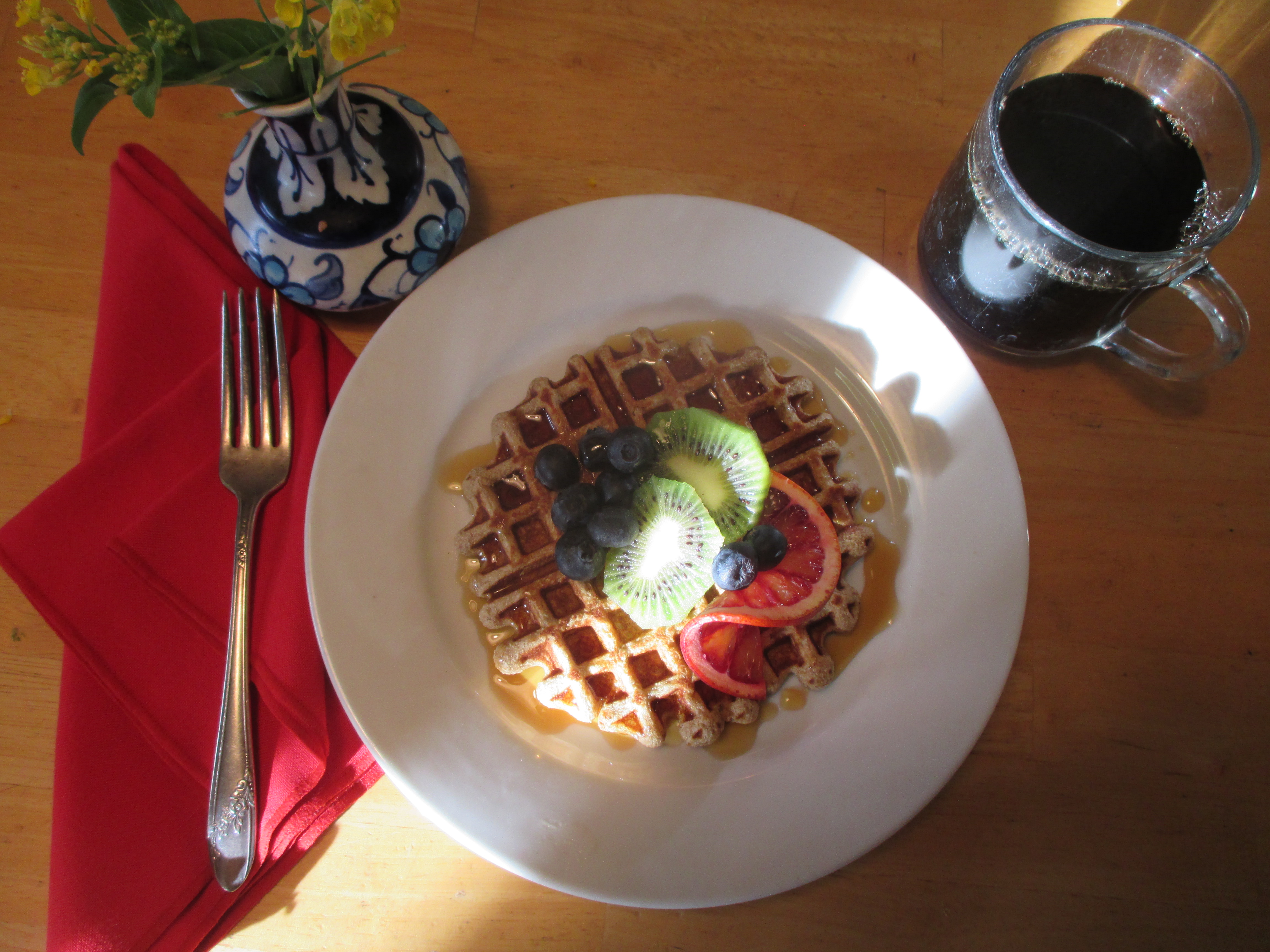
Mesquite waffles make a delicious breakfast or lunch.

Mesquite-Pecan waffles make a delicious breakfast or lunch.

Cinnamon-Pecan Mesquite Waffles

Ingredients

2 eggs separated

2 1/2 cups milk

¼ cup olive oil

1 cup all-purpose flour

½ cup whole-wheat flour

½ cup mesquite meal

1 cup finely chopped pecans

1 tablespoon cinnamon

1 tablespoon baking powder

½ teaspoon salt

1 tablespoon sugar

Directions

  1. Lightly oil and pre heat waffle iron.
  2. Separate eggs reserving the whites in a bowl and set aside. In another bowl mix egg yolks, milk and oil.
  3. Mix all dry ingredients together
  4. Add liquids to dry ingredients. Gently mix until smooth.
  5. Beat the egg whites until stiff.
  6. Fold in the egg whites to the waffle mix.
  7. Place 1/2 cup of batter onto hot waffle iron. Close lid. Bake until golden Repeat with remaining batter.

________________________________________________________________

Want more mesquite recipies? Check out my cookbook Cooking the Wild Southwest, Delicious Recipes for Desert Plants. You can buy it at the Native Seeds/SEARCH Store at 3061 North Campbell Avenue, in Tucson, or order it off the NSS website or from Barnes&Noble. If you need mesquite flour, buy it from Martha Burgess’s Flor de Mayo stand at the St. Phillip’s Farmers’ Market in Tucson on Sundays or order it here.


Adobe House to Commercial Kitchen

Hello friends, Amy here, admitting the reason I’ve been busier than usual. Along with increased demand for mole during the holidays, I also needed to make a new home for Mano y Metate. I moved in just after Christmas.

To keep the 1945 adobe sound, new wooden beams suspend the exhaust hood.

20160115_150804

The smallest place I could find is much bigger than Mano y Metate needs, so I am renting the space to other users as well.

We had to cut the floor for new electrical and plumbing. To commemorate, we scraped and sealed the floor clear.

We have ten sink basins in less than 1,000 square feet. Safety first!

You can really appreciate something when you know what it is, inside and out.

The electrical box had charred and melted pieces, maybe from many years ago. The tale of a near death experience?

The grease interceptor and new sewer lines.

New walkway for wheels and feet.

plumb in adobe

If you are seriously interested in renting, email me your business plan to casa del metate at gmail dot com.


Glorious Garlic Chives

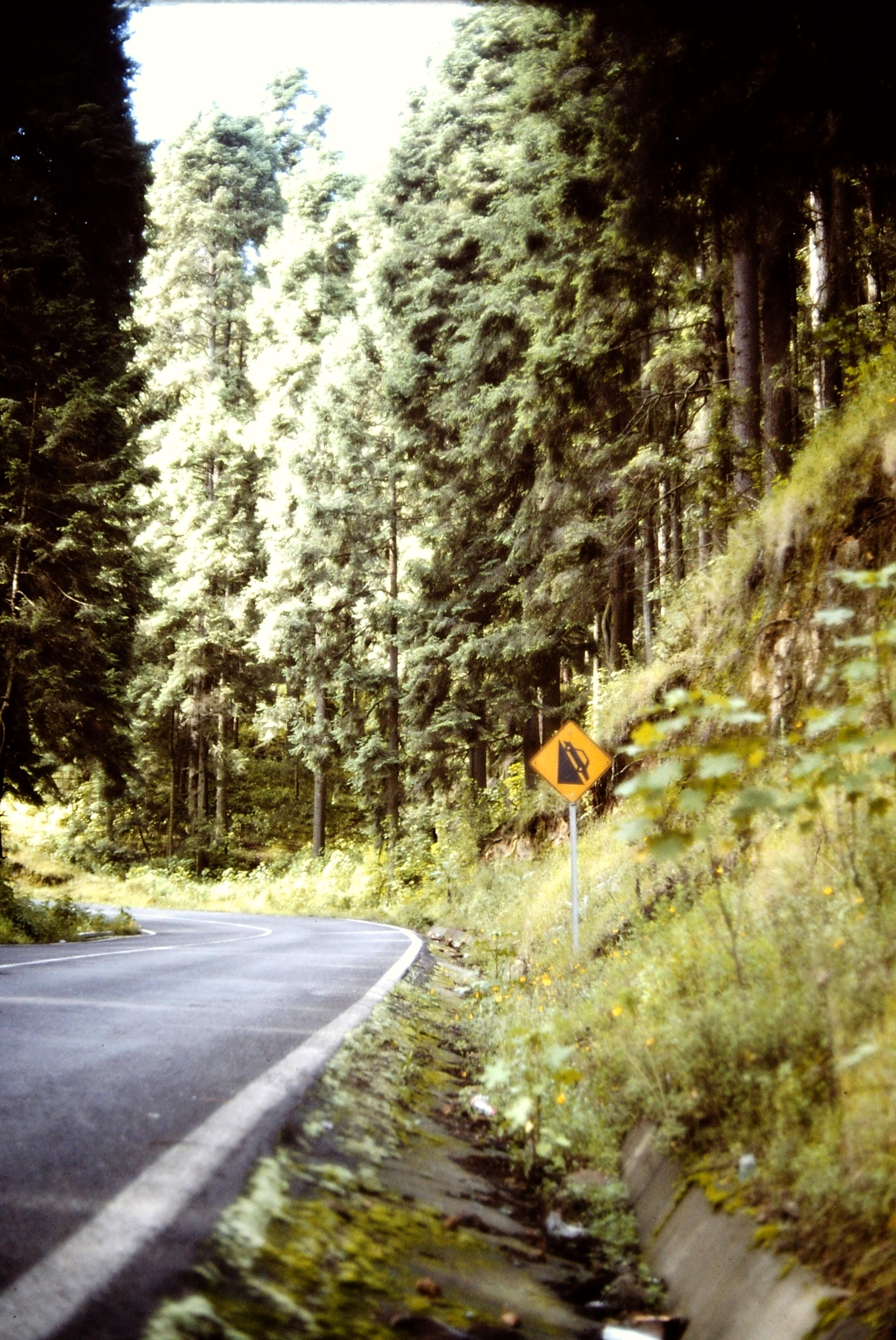
MICHO Mts near Uruzpan 6 Aug 90 050

The mountains of Michoacan in 1990. That road sign is only a slight exaggeration.

Jacqueline Soule this week with a charming and easy-to-grow herb – garlic chives.  This herb offers a dish the hint of garlic and the fresh crispness of scallions. 

The first time I ate garlic chives that I know of was chopped and sprinkled on my soft tacos at a little roadside food stop in a forgotten town in Michoacan. The woman serving us was so taken with my questions about the plant that she sent her son scurrying home to dig up some bulbs to give me. Since I was on a plant collecting trip I had all the permits I needed to legally bring the bulbs back to the USA with me.  These tough perennials have been surviving in my gardens in various USDA zones and even indoors in pots for the next 30 plus years.

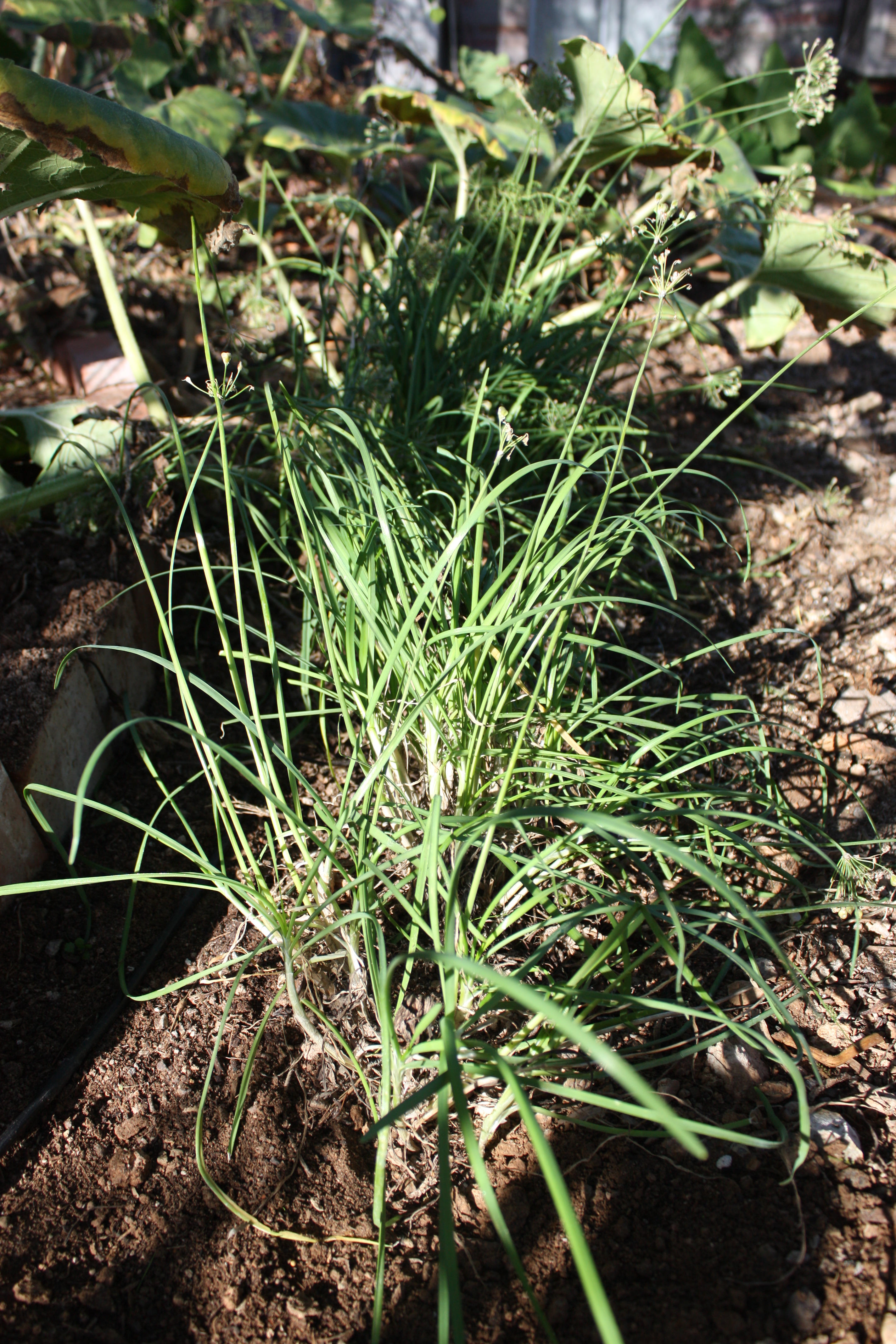
Allium tuberosum AMAP IMG_4640

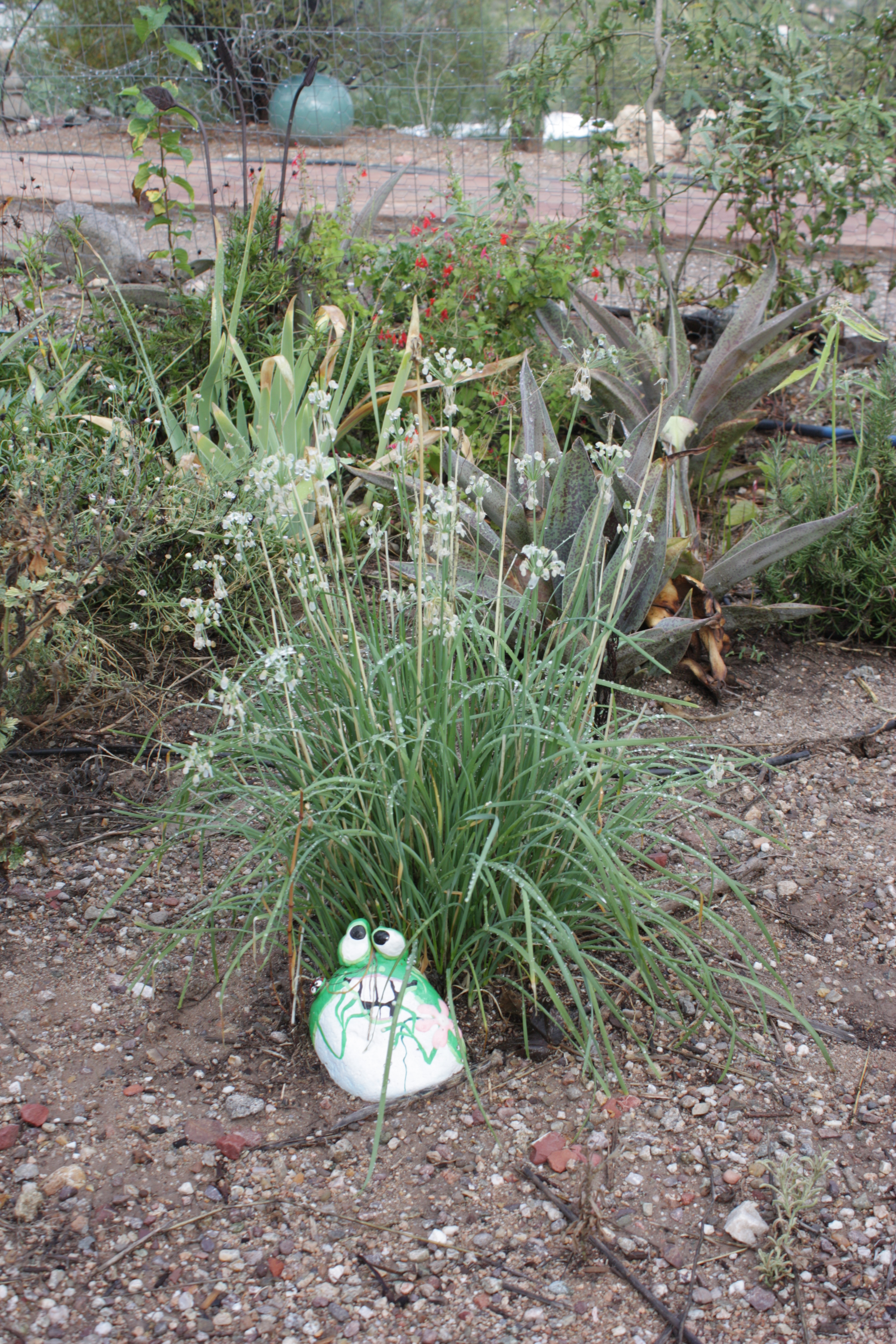
Garlic chives are tough plants that survive with little extra water and taste great.

Garlic chives (Allium tuberosum) make a graceful green statement in the landscape, are low water users, and bloom in September and October with a fireworks-like burst of white bloom on a tall stalk held above the grassy green leaves.

Allium tuberosum AMAP c_4763

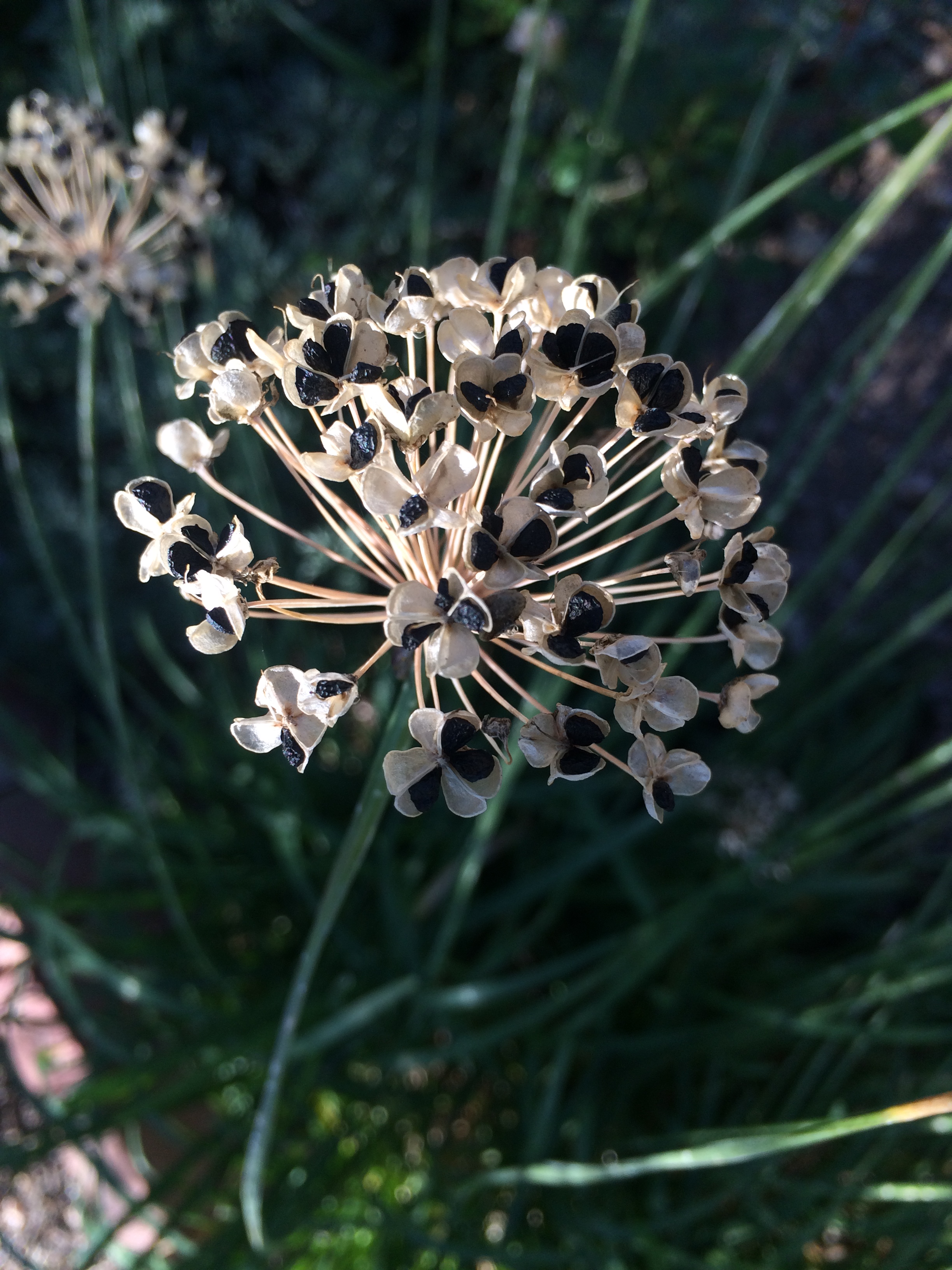
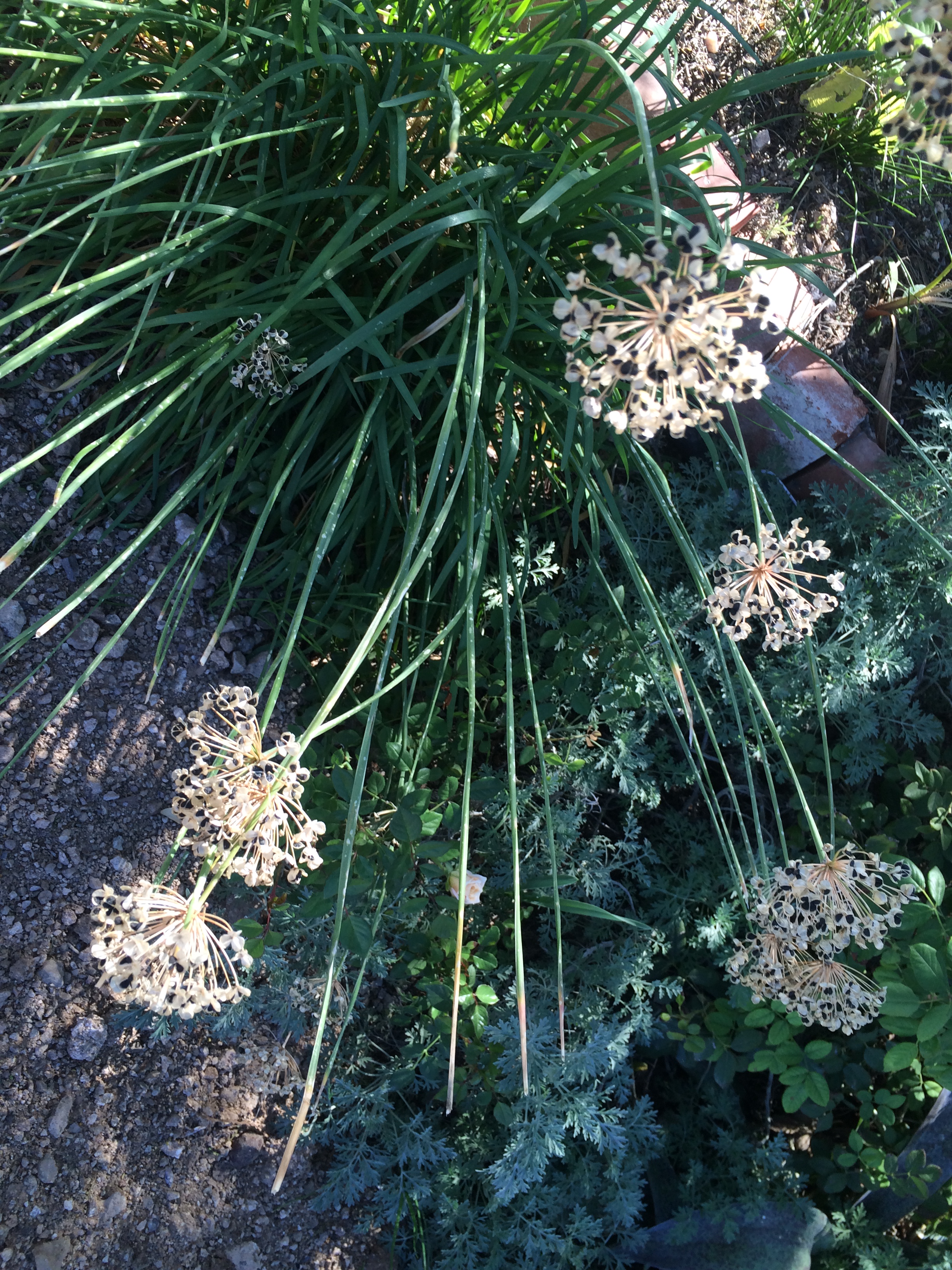
Blooms are white, followed by easy to harvest seed heads.

Originally from the Mongolian steppes, plants tolerate our alkaline soils and thrive in zones 10 to 4. Despite the tuberous name, the part you eat are the leaves. Harvest anytime to add raw or cooked to any dish where you desire a mild garlic flavor.

Allium tuberosum AMAP c_4761

Garlic chives are equally edible when vegetative, in bloom or in seed – quite unlike many other herbs.

Use garlic chive leaves how you would use scallions. We like them in stir-fry and omelets, or just a few to give zing to salad. They are also great in soup, even in simple soup made to hydrate and warm on a cool winter day.

Plant grow readily from seed, and can spread through the garden, appearing in watered areas. It is easily removed if it comes up where you don’t want it. If you are trying to eat only plants that are in season, these are always in season! Garlic chives great addition to the garden, even if you never plan to eat any.

Allium tuberosum AMAP IMG_4590

No matter what your garden style, garlic chives can fit right in.

JAS avatarIf you wish tips on gardening in the Southwest, please visit my facebook page Gardening With Soule.  If you live in Southeastern Arizona, please come to one of my lectures. Look for me at your local Pima County Library branch, Tumacacori (Fruits & Herbs of the Old Missions, 12:30, Thursday February 4th, 2016), Steam Pump Ranch, Tubac Presidio, Tucson Festival of Books and other venues. After each event I will be signing copies of my books, including the latest, “Southwest Fruit and Vegetable Gardening,” written for Arizona, Nevada and New Mexico (Cool Springs Press, $23).

© This article and these photos are copyright by Jacqueline A. Soule. All rights reserved. Republishing an entire blog post or article is prohibited without permission. I receive many requests to reprint my work. My policy is that you may use a short excerpt but you must give proper credit to the author, and must include a link back to the original post on our site. Photos may not be used.

On Fire

IMG_0658
A (Controlled) Fire


Happy New Year. Aunt Linda here this January 1st, to celebrate transformational fire.

When do you cook or bake with fire?  Like so much in life we can take fire, and it’s transformative power, for granted.

A recent National Geographic article, A Brief History of Cooking With Fire,  is thought provoking. In it Rebecca Rupp, introduces us to Harvard anthropologist and primatologist Richard Wrangham, whose 2009 book Catching Fire; How cooking Made Us Human, suggests that the control of fire and the discovery of cooking may account for the dramatic changes in our ancestors physiology (reduction of large gut to a smaller one, and an increase in brain size). I encourage you to explore this on your own and come to your own conclusions. My personal  recommendation is Michael Pollan’s 2013 book, COOKED for a thorough and insightful perspective.

It is clear that fire was of critical importance to our ancestors. Rupp, in her article ) link below for full article,  writes:  ” Otzi, the 5000-year-old Iceman discovered in 1991 by hikers in the Italian Alps, cautiously carried his fire along with him, in the form of embers wrapped in maple leaves and stored in a birchbark box. As back-up, he was also equipped with a fire-starting kit, consisting of iron pyrites, flint, and tinder fungus. The Neolithic technique seems to have involved grinding the fungus until it was fine and fluffy, then piling it in a mollusk shell, and striking sparks with the flint and pyrite until the tinder ignited.” SEE: http://theplate.nationalgeographic.com/2015/09/02/a-brief-history-of-cooking-with-fire/

To return from our 5000 year old Otzi,  (who you can meet yourself in a small museum in the Alps; he is not the sole property of science, but available to all of us. I know this because I have seen him),  to January 1st, 2016, I encourage you to see fire with fresh eyes.

IMG_0882 (1)

Cooking empanadas with fire/embers above and below

IMG_0871

This humble way of cooking requires a very sophisticated understanding of fire , embers, and heat. How cold or warm the ambient temperature around the oven is, affects the baking of the holiday cookies and empanadas.

IMG_0876

Baking with fire also requires heat tolerance. The smoke imparts a flavor that I adore. It warms twice, once upon baking, then upon eating.

IMG_0931

We cooked/baked into the night. As the temperature drops outside, the embers kept us warm.

IMG_0933

IMG_1511

We built this simple grill with a grate and some brick in the back yard. Marinated zucchini is steaming in the foil.


IMG_1519

This is the same grill as the photo above, you can see that works well for vegetarians, meat eaters, or the general omnivore.

IMG_1521

You do not need a hearth or grill like the ones above. You can use a fireplace to roast  marsh mellow for smores, or hot dogs (meat or vegan) or even wrap potatoes in foil and bake in the embers.

IMG_1156

If you explore more about the nutrition of cooked food, youmay be surprised at how nutritious it is. One example: 90% of a cooked egg is digested; only 65% of a raw egg is digested. See footnote page 61, of COOKED.


This was sent by T who posted a comment but could not post the fire photo that she was “ignited” by – so here it is. (I could not figure out how to get it larger). Taken January 2nd, 2016. Thanks for your enthusiasm T!

IMG_3014

Thank you!


++++++++++++++++

Note: Last night, at New Years Eve dinner, the ceramicists at the table reminded me that clay needs fire to bake, as well. Good point! The making of pots, whether ancient or modern, functional or decorative, requires fires’ transformative quality to go from a raw to fired state.

There is a beautiful 20 minute video of Maria Martinez, of San Ildefonso Pueblo, NM which includes her building a firing mound/kiln. It was shot in 1972, when Maria was in her mid 80’s.  I include it here, though I know most modern folk wont have the patience for it. The reverence it shows, is an inspiration for me personally. Continue reading

Mole Dulce Brownies

mole brownies 002

Amy here, running, needing something for a cookie trade! Recipe below.

Mole Dulce is perfect in desserts and sweet treats, like in EXO Roast Co‘s Mole Latte. My friend Amy there is always asking for more mole. I developed a Mole Dulce variation without the graham cracker, so the drink would be wheat free. Someday I’ll get to making a label for that, so people can buy it on the shelf.

mole latte

Savory, salty, spicy Mole Dulce gets its sweetness from raisins and Xocolatl, very fine Oaxacan drinking chocolate imported by my friends Yissel and Dave. The beautiful brown paper wrap with dried lavender protects the hand formed sticks.

034

The chocolate contains cacao, cane sugar, almonds and cinnamon. The Mole Dulce powder contains additional almonds, giving body and flavor to the sauce. Or in this case, BROWNIES!

Mano Y Metate Mole Dulce Brownies

4 eggs (room temperature)
2 cups sugar
2 sticks softened butter (8 ounces)
1 1/4 cup cocoa powder
1 teaspoon vanilla
1/2 cup flour
1/4 teaspoon salt
3 tablespoons Mole Dulce powder (www.manoYmetate.com)
Mole Dulce powder for topping, 5 tablespoons or so, to taste
Preheat the oven to 300 degrees F. Line a 9” x13” baking pan (or 2 pans, each 8”x8”) with parchment paper.

With an electric mixer, beat the eggs just until fluffy. Beat in sugar. Add remaining ingredients and beat. Pour batter into pan(s) and spread to level. Push Mole Dulce powder though a wire strainer to evenly distribute over the batter as a topping. Bake for 35 minutes, or until a toothpick inserted comes out with crumbs instead of batter on it.

I like them thinner, so there’s more spicy, chocolaty topping per bite. Feel free to take it out sooner or bake them in a smaller pan if you like them gooey, but the edges of the pan always seem to go first around here.

Now, off to the cookie trade. And to grind more mole.

Love, light and peace to all! Amy