Happy Spring, Tucson! Amy here to tell you about opportunities to learn about growing and harvesting desert foods in our neighborhoods. Urban desert explorations allow us to track the seasons and harvests…will it be a fruitful year for barrel cactus? An early or late harvest? What desert edible plants are the neighbors using in the landscape? How are the birds and squirrels faring?
Check Desert Haresters or other sponsoring organizations for further dates and topics in each of these series!
Desert Harvesters La Cocina Walks
Tuesdays March 21, April 11, May 23 and June 20, 2017. 201 N Court, north entrance. $5 donation to support Desert Harvesters education programs.
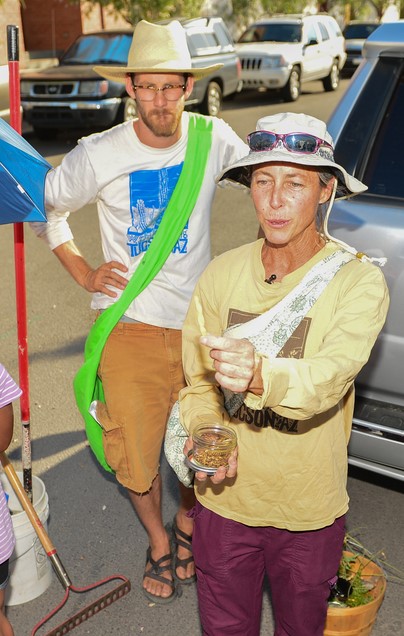
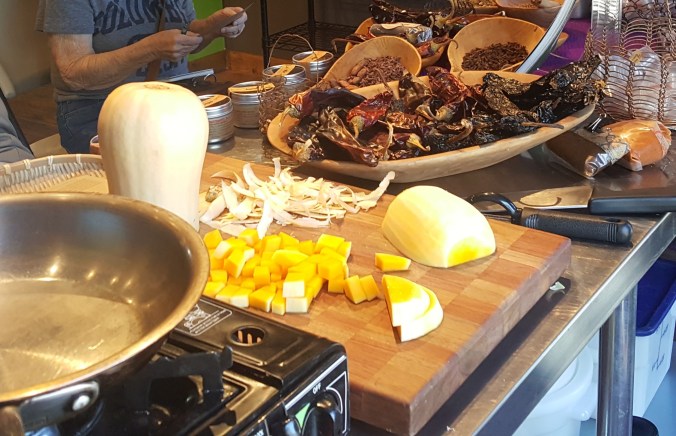
Desert Harvesters will lead casual walks from La Cocina through historic El Presidio Neighborhood to identify native perennial food-bearing plants and other edibles. Walks start in spring, and continue monthly thereafter, into the oncoming heat of summer. Desert Harvesters is partnering with LaCo to incorporate native food ingredients into the menu during our Tuesdays-for-Tucson fundraiser nights, including prickly pear, cholla buds, nopalitos, desert herbs, mesquite, and more.
Desert Harvesters is interested in seeing what wild ingredients might be in the LaCo neighborhood that could be sampled, harvested, and potentially used at LaCo. LaCo Walks are scheduled on Tuesday evenings so that after the walk, folks can support both LaCo and the organization that Tuesdays-for-Tucson benefits that evening; a percentage of LaCo’s night is donated to the organization. Desert Harvesters’ Tuesdays-for-Tucson fundraiser at LaCo is May 16—save the date!
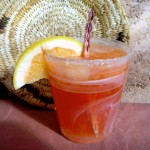
photo:Barbara Rose
BRING: Drinking water, sun protection, camera, notebook, and anything else to make you comfortable.
For further information and to sign up, please contact: workshops@desertharvesters.org or jaelle@lorenziniworks.com
Desert Harvesters and Community Food Bank Series at the Santa Cruz River Farmers’ Market
Mercado San Agustín, 100 S. Avenido del Convento
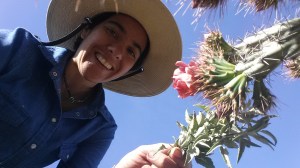
Cholla Buds
with Desert Harvesters’/Mano Y Metate‘s Amy Valdés Schwemm
Thursday, March 23, 3-6 pm (Saturday hands-on workshop on March 25)
Celebrate one of the first native foods of Spring: cholla-cactus flower buds! Learn how to safely harvest and cook with these calcium-rich, tasty buds. Sample cholla buds with spicy-savory mole sauces.
Spring Bounty! NEW
with Desert Harvesters’/Bean Tree Farm‘s Barbara Rose
Thursday, April 6, 3-6 pm
The desert is abloom at this time, and many plants offer edible flowers and foliage to use in teas, garnish, and as flavoring. See what can be made from these and other desert ingredients like Spring greens and herbs, green palo-verde beans, cholla buds, stored foods, and other seasonal surprises.
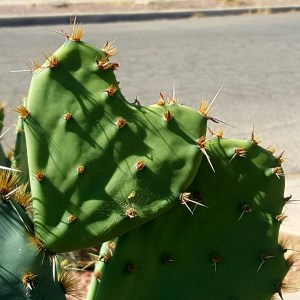
Nopalitos
with Desert Harvesters’/Mano Y Metate‘s Amy Valdes-Schwemm
Thursday, May 11, 3-6 pm
(Saturday hands-on workshop on May 13)
Learn how easy it is to collect these nutritious cactus pads from your own yard or neighborhood, and how to prepare them in tasty recipes everyone will love.
All THURSDAY DEMOS are free and open to the public, and are sponsored by the Community Food Bank of Southern Arizona. For more information, contact the Food Bank at (520) 882-3313.
*For further INFORMATION about follow-up HANDS-ON SATURDAY WORKSHOPS, please contact: Barbara beantreefarm@gmail.com or Jill jaelle@lorenziniworks.com To REGISTER for HANDS-ON SATURDAY WORKSHOPS, please contact workshops@desertharvesters.org
Sonoran Desert Series at the Food Conspiracy Coop, facilitated by Desert Harvesters’ Jill Lorenzini and friends.
REGISTER via THIS LINK. All classes will be held in the Hoff building on the NE corner of 7th St & Hoff Ave, behind the Food Conspiracy Co-op. Class fee $10. Desert Harvesters volunteer, member, and partner discounts offered. FOR FURTHER INFORMATION, please contact: jaelle@lorenziniworks.com.
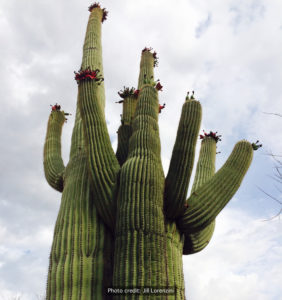
YOU ARE HERE: SONORAN DESERT 101
Monday, MARCH 27, 6–8 pm Interactive exercises about where we are and where we come from using maps, info, and stories to build place-based awareness. We’ll explore from macro to micro, from global to regional to local, from the Southwest to the Sonoran Desert, and to the Uplands Arizona subdivision of the Sonoran Desert we experience here in Tucson. This is one of the most unique ecosystems on the planet! Welcome to the desert and the amazing plant life here! Sample prickly-pear lemonade.
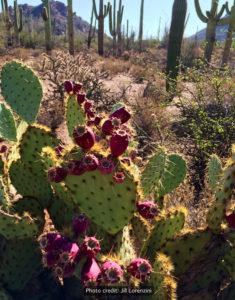
YOU ARE HERE: UPLANDS-ARIZONA-SUBDIVISION NATIVE FOODS
Monday, APRIL 24, 6–8 pm Use the Sonoran Desert Foods Calendar, Wild Foods Calendar, and Native Seeds/SEARCH‘s 5-seasons calendar wheel to understand seasonal cycles and to see the wealth of delicious native perennial plant foods available throughout the year. These nutritious foods—and the many other benefits they provide—will be discussed in detail in subsequent classes. Get familiar with the dynamics of winter and summer monsoon seasons; meet Sky Island mountain ranges, river and riparian areas; explore long-term climate change and ongoing drought cycles. Sample desert-flowers iced tea.
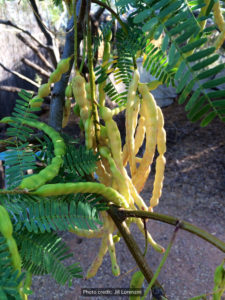
BEAUTIFUL BENEFICIAL BEAN TREES
Monday, MAY 22, 6–8 pm Meet the native mesquite, ironwood, and palo verde trees that anchor the Uplands Arizona plant palette. These trees act as nurse plants for other desert flora, and create rich environments under their canopies where both plants and animals survive and thrive. Desert legume trees provide bountiful harvests of protein-packed beans and tasty pods year after year. The “Be Like a Bean Tree” poster encapsulates many of their attributes. Taste mesquite flour and pods, and shell and taste green palo verde beans.
Dunbar/Spring Walks Sponsored by Desert Harvesters and Partners
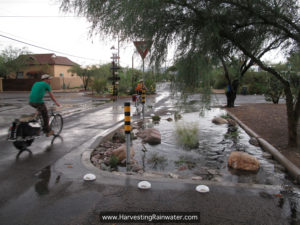
The Dunbar/Spring Neighborhood has a long history of community action, most recently through the work of Brad Lancaster and a network of like-minded neighbors and friends of the Dunbar/Spring Neighborhood who’ve planted native perennial food-bearing trees there, established rainwater- and greywater-harvesting earthworks, pioneered curb cuts and cores, thereby bringing multiple benefits to the neighborhood, including shade and cooler temperatures, more native animals and pollinators, enhanced beauty, tree-planting and -pruning workshops, mulching services, interaction with neighbors, less stormwater lost to storm drains, community art and services, and more.
Monthly weekend walks through the Dunbar/Spring Neighborhood are a fantastic opportunity to see these green-infrastructure strategies in action, as well as to become acquainted with and impressed by common but amazing native (and other) food plants in the area, as they change and grow, flower and bear fruit, shed leaves, and endure seasonal extremes, throughout the year. Learn about native desert foods by watching, harvesting, touching, listening, tasting, smelling, feeling. Additional opportunities include foodshed mapping and return photography. See walk schedule below. See also www.dunbarspring.org.
Saturday MARCH 4, 10–11:30 am (optional: meet early, at 9:30, to get food/drink and socialize) Meet at EXO Roast Coffee, NW corner of 7th St & 6th Ave
Saturday, APRIL 15, 2–3:30 pm Meet at Dunbar/Spring Community Garden, NW corner of University Blvd & 11th Ave
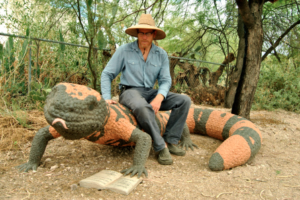
Hands-on Homesteading
Santa Cruz River Farmers Market
100 South Avenida del Convento
RAINWATER HARVESTING CONCEPTS & DESIGN with Desert Harvesters’ Jill Lorenzini and friends
Thursday, April 20, 3–6 pm (Saturday workshop* April 22)
Food security depends on water security. Learn the basic concepts and the many benefits of rainwater-harvesting design, so you can begin implementing simple strategies at home. Based on award-winning books by Brad Lancaster, local author of the Rainwater Harvesting for Drylands and Beyond series.
SOLAR OVENS with Desert Harvesters’ Jill Lorenzini
Thursday, May 25, 4–7 pm
In ultra-sunny Arizona, it makes a lot of sense to cook with the sun. Learn basic solar-oven concepts and design principles, then watch various solar ovens in action and sample delicious solar-cooked foods. Place-based cooking.
All THURSDAY DEMOS are free and open to the public, and are sponsored by the Community Food Bank of Southern Arizona. For more information, contact the Food Bank at (520) 882-3313.
*For further INFORMATION about follow-up HANDS-ON SATURDAY WORKSHOPS, please contact: Barbara beantreefarm@gmail.com or Jill jaelle@lorenziniworks.com To REGISTER for HANDS-ON SATURDAY WORKSHOPS, please contact workshops@desertharvesters.org
Watershed Management Group’s Edible Shade Mesquite Pancake Breakfast

Sunday, March 26, 9am – noon
1137 N Dodge Blvd
It’s that time again! Come join us for a fun-filled morning as we celebrate the delicious shade of mesquite, pomegranate, olive and other edible native and desert-adapted trees. Enjoy an artisan market and hands-on learning activities as you explore sustainability practices in action at WMG’s Living Lab and Learning Center. And come hungry—we’ll be serving up local mesquite pancakes, fresh off the griddle!
Only 500 tickets are available, so purchase early or risk missing out. Notice: Unlike previous years, tickets will NOT be available at the door if we sell out in advance!
For tickets and information, contact WMG.
EDIBLE TREE CELEBRATION
Edible Tree Celebration in Honor of the UA Campus Arboretum’s 15th Anniversary
April 1, 11am-2pm
In front of the State Museum Building at the UA, NE corner of Park Avenue and University Blvd
Co-Sponsored by the UA Campus Arboretum (arboretum.arizona.edu/)
and the LEAF Network (Linking Edible Arizona Forests) (leafnetworkaz.org/)
Please join us to celebrate the 15th anniversary of the wonderful UA Campus Arboretum and highlight the value of “edible trees” in the campus and urban environment. (LEAF Network uses the term edible trees to refer to those native and nonnative trees that produce edible fruits, nuts, seeds and pods.)
Activities will include:
11:30 presentation to mark the 15th Anniversary of the UA Campus Arboretum
12:00 commence 30-minute tours of edible trees at the UA Campus Arboretum leaving every half hour
Potted edible trees on display including native and nonnative trees
Free raffle every 15 minutes for potted edible trees, arboretum materials, tree related t-shirts, and other items
Entertaining table displays about the UA Campus Arboretum, edible trees, the LEAF Network and other NGO and educational groups (and more activities to come…)
Collaborators include the Arizona Department of Forestry and Fire Management, Arizona Community Tree Council, Iskashitaa, Trees for Tucson, Friends of Tucson’s Birthplace, Bean Tree Farm, Desert Harvesters and more.
For more information about the event and to reserve a table, contact Ann Audrey ann.audrey.1@gmail.com
 If you live in Southeastern Arizona, please come to one of my lectures. Look for me at your local Pima County Library branch, Steam Pump Ranch, Tubac Presidio, Tucson Festival of Books and other venues. After each event I will be signing copies of my books, including the latest, Month-by-Month Garden Guide for Arizona, Nevada, and New Mexico (Cool Springs Press, $26).




 Linda here with you today. I awoke this morning to the sound of bird songs; predawn birdsongs. They were strong, and clear, and filled with passion. I heard “the call” and so went outside, enjoying the feeling of cool, predawn air on my skin.

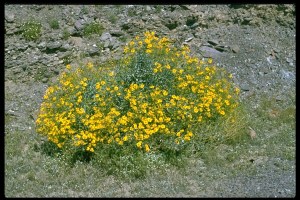 Brittlebush has a long history of native use. The resin collected from the base of the plant is often yellowish to brown in color. This resin can be heated and used as a glue. The O’odham and Seri use it for hafting, to hold points on arrows and, in the case of the Seri, harpoons. A different sort of resin is collected from the upper stems, is more gummy and generally a clear yellow. The Seri use this to seal pottery vessels. As a child, I learned from Sells area Tohono O’odham children that this upper stem resin makes a passable chewing gum.
 Early on the Spanish priests learned that brittlebush resin made a highly fragrant incense, akin to frankincense in odor. In 1702, Father Kino wrote “. . . in this journey inland and on other occasions I have found various things – little trees, fruit, incense, etc. – all species which are peculiar to . . . [this area] . . . alone, and samples of which I bring, to celebrate with the incense, by the favor of heaven, this Easter and Holy Week, and to place five good grains of incense in the Paschal candle.”
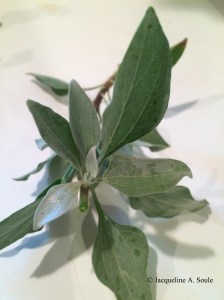 In the 1960’s, I was taught by a longtime cowboy that a brittlebush stem makes a dandy toothbrush. Simply select a largish branch and peal off the bitter bark, no need for toothpaste. He had learned the trick years before from an old cowhand. Whether this was self-taught or learned from natives, it is impossible to say, although the Seri use brittlebush to treat toothache. For toothache the bark is removed, the branch heated in ashes, and placed in the mouth to “harden” a loose tooth. Modern dentistry advocates using mildly alkaline solutions to help maintain oral hygiene, which makes me wonder about the pH of brittlebush sap.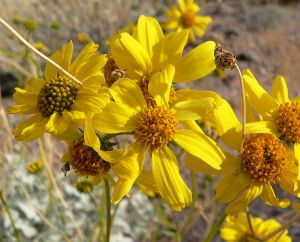







 Savor the Southwest: