The Charm of Desert Chia

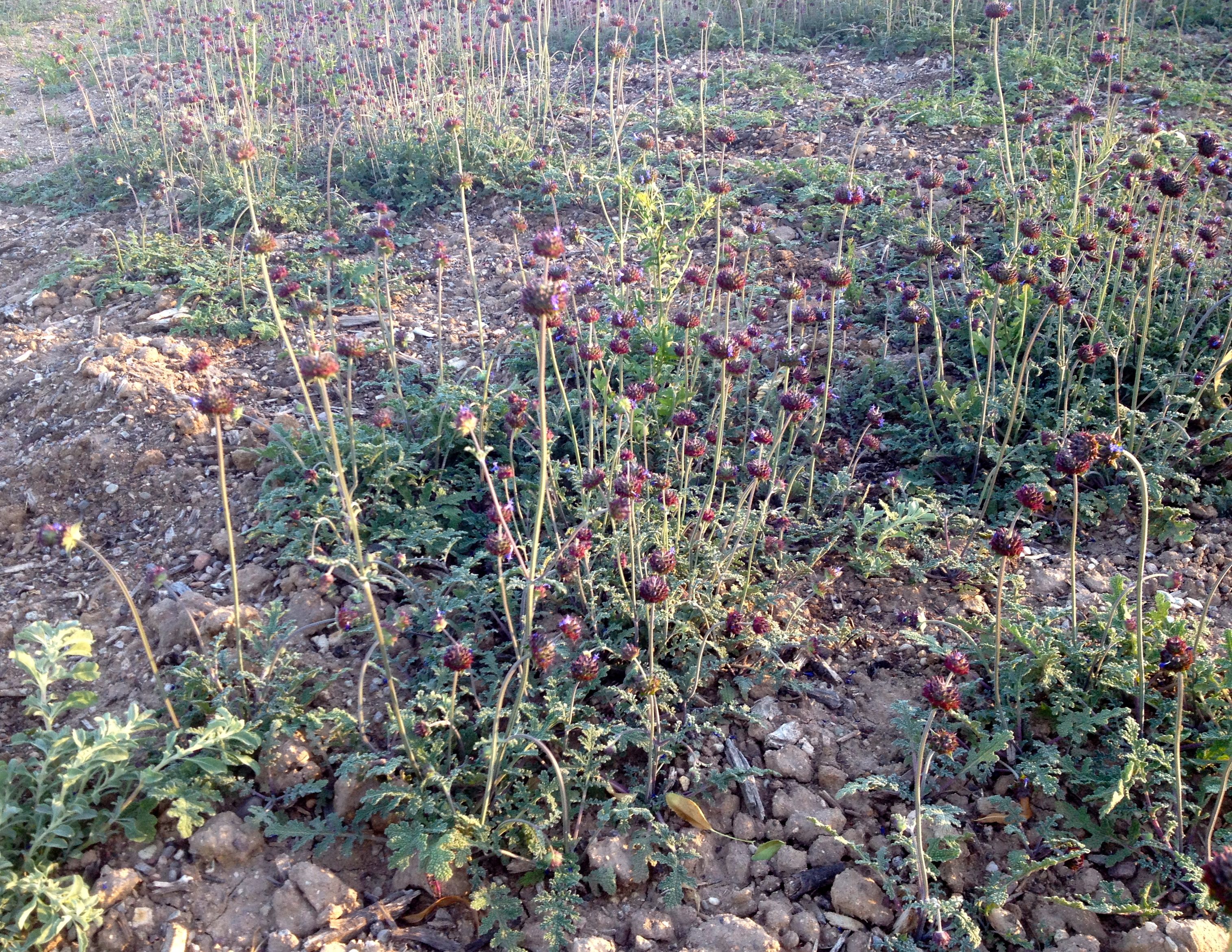
A patch of desert chia (Salvia columbariae) inviting pollinators….

A patch of desert chia (Salvia columbariae) inviting pollinators….(MABurgess photo)

It is happening right now in desert gardens and up desert arroyo beds–the visual surprise of desert chia! But you have to look twice, as they can be elusive.

Tia Marta here to share some thoughts about a very important little desert ephemeral.  Salvia columbariae, brought on by winter rains, is spreading its lovely ground-hugging rosettes and beginning to send up its wand-like square flower stalks to greet pollinators with spherical clusters of deep blue flowerlets–almost appearing “ultraviolet” to our eyes.

Chia’s foliage itself is a wonder.  If you get down on hands and knees with a magnifier, you’ll see a most knobby green terrain-of-a-leaf.  Pinch the leaf and a luscious bouquet arises.  Oh if we could capture that scent!  It would make a lovely lotion.
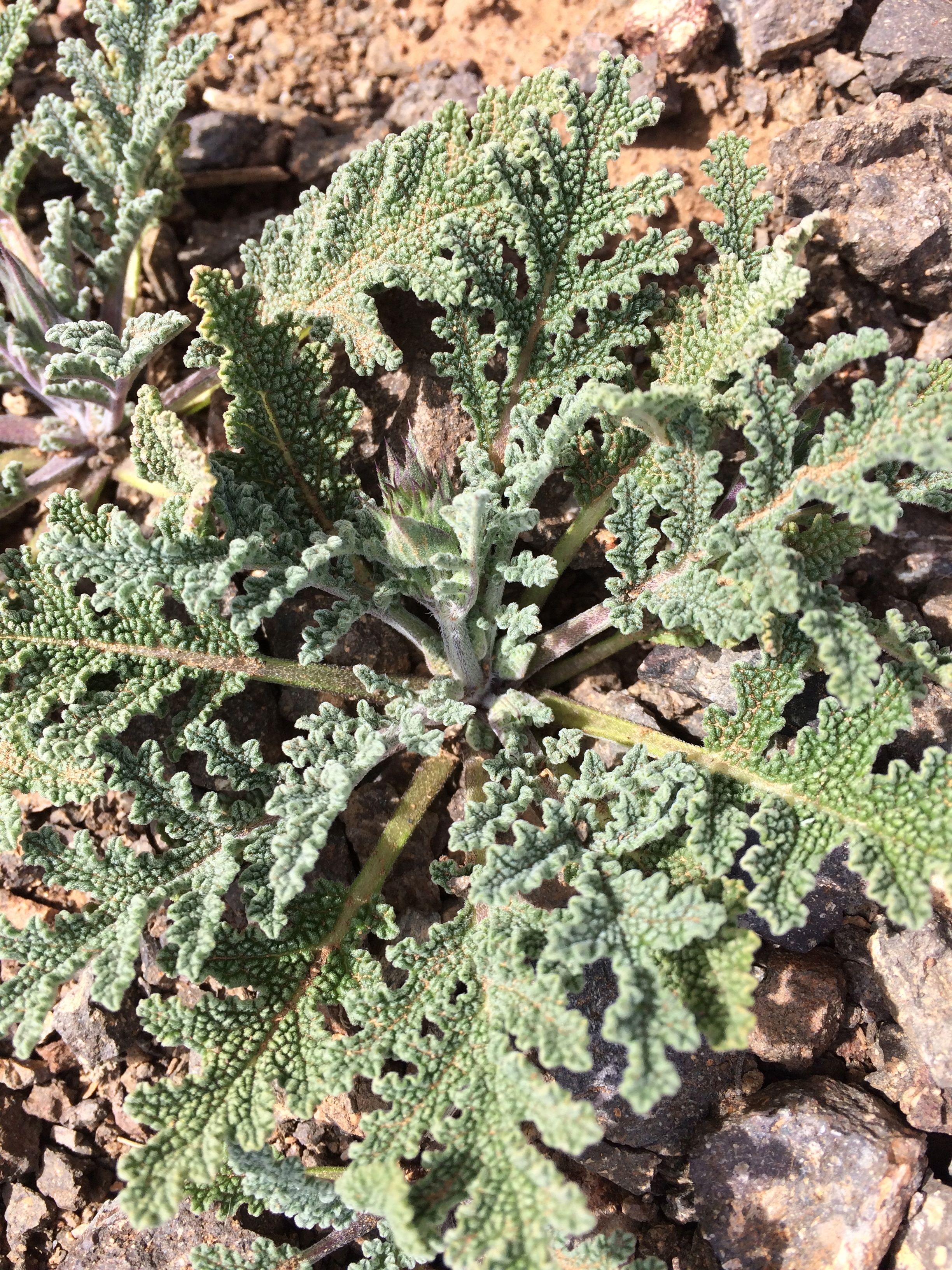
A rosette of beautiful desert chia with its scented, intaglio foliage--Wishing this were a squeeze-and-sniff photo!

A rosette of beautiful desert chia with its scented, intaglio foliage–Wishing this were a squeeze-and-sniff photo! (MABurgess photo)

Humans are funny in that when we see wildflowers emerge in the spring, as they are now, we HAVE TO HAVE THEM in our gardens!  Well, if we want them now, we should have planted the seeds last fall!  Put it on your calendar right away–on the October page–to buy those chia seeds and plant them at the beginning of October when the nights turn cool.  Or, if you are into instant gratification, if you need a quick wildflower fix, there just might be a plant sale this weekend somewhere in Tucson, AZ, where they will have potted chia starts ready to put in the ground–to give you a show, and a harvest, before hot weather sets in.  If you like to gamble, you could rake in some seeds this month and chances are the seeds (which have built-in DNA smarts) will wait until fall rains come to germinate, as their germination-triggers are attuned to cool/wet conditions; amazingly, hot summer rains  won’t tempt them out of seed dormancy.
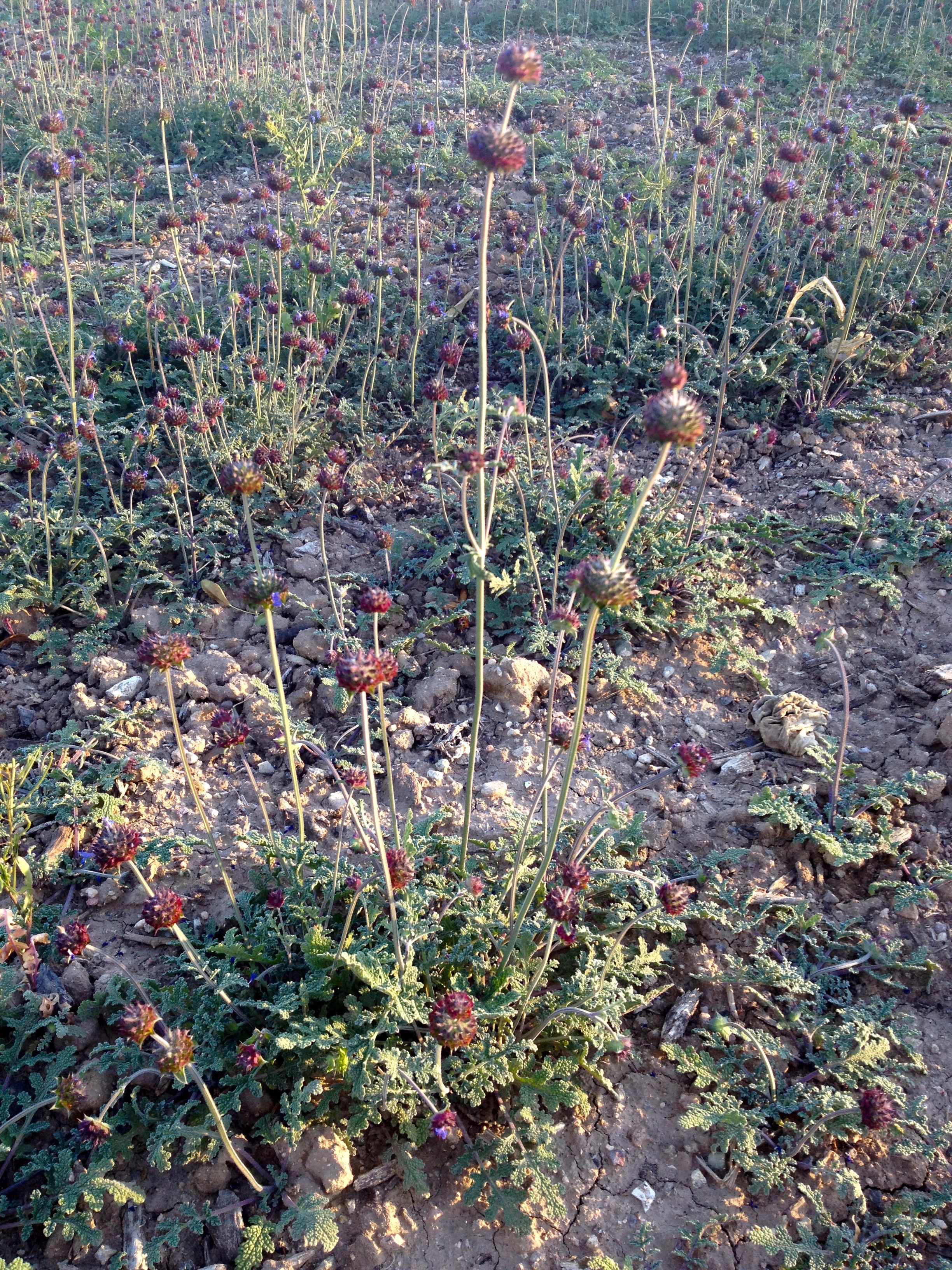
Balls of spiny seedheads climb the square stems of these mint-family wonders, as long as moisture lasts.

Balls of spiny seedheads climb the square stems of these mint-family wonders, as long as cool moisture lasts. (MABurgess photo)
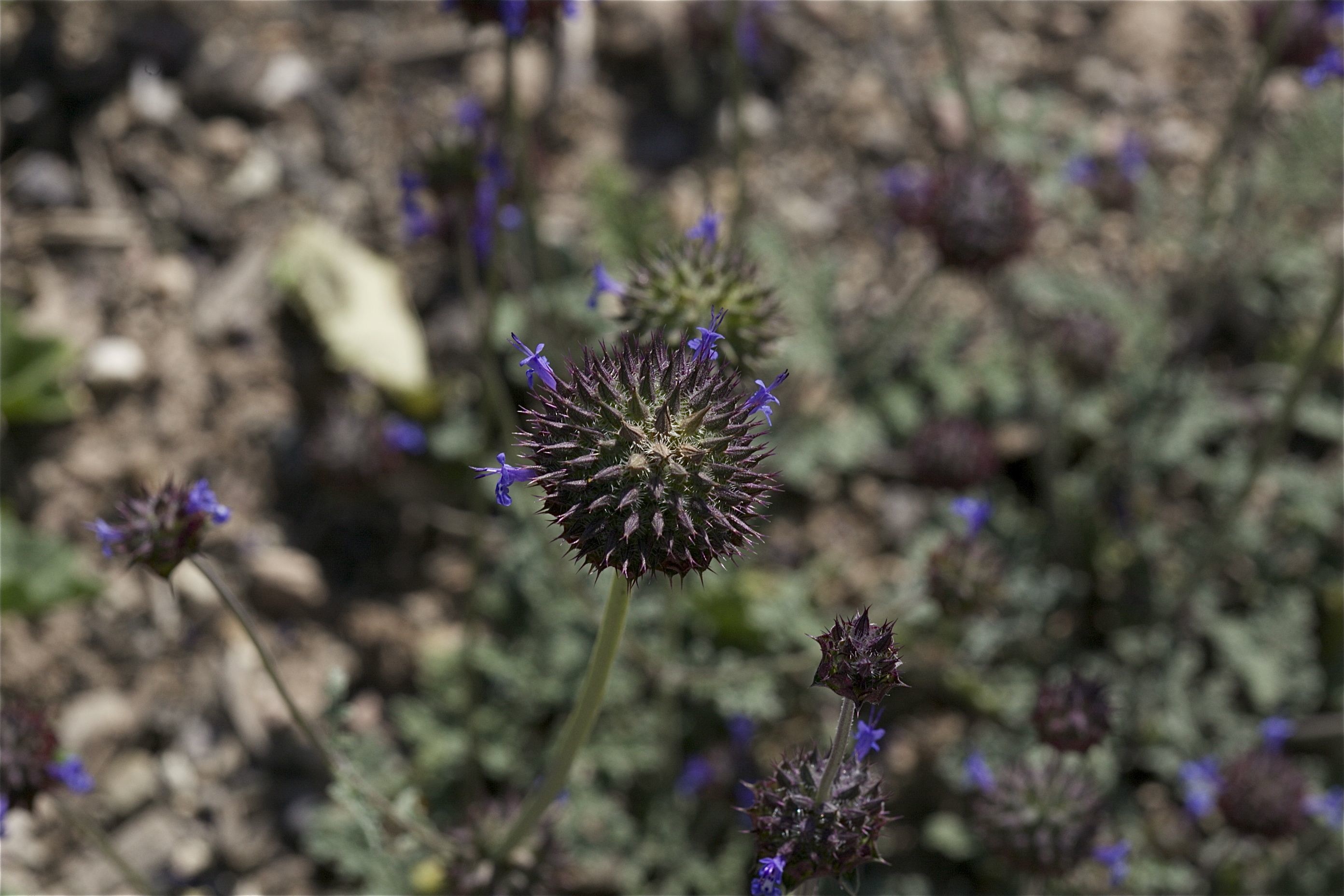
 

Close-up of desert chia in flower--note the sphere of tiny flowers (JRMondt photo)

Close-up of desert chia in flower–note the sphere of tiny flowers (JRMondt photo)

Check out the Plant Sale THIS WEEKEND–March 11-13–at the NativeSeeds/SEARCH store, 3061 N Campbell Ave, Tucson, for starts of several spring ephemerals–maybe even chia.  There is still time to get them planted to enjoy their color and later their seeds.

And, take a walk up any arroyo–Yetman Trail or King Canyon in the Tucson Mountains, Pima Canyon or Finger Rock Canyon into the Catalinas, or trails in Catalina State Park–for a chance to see a patch of desert chia in bloom.
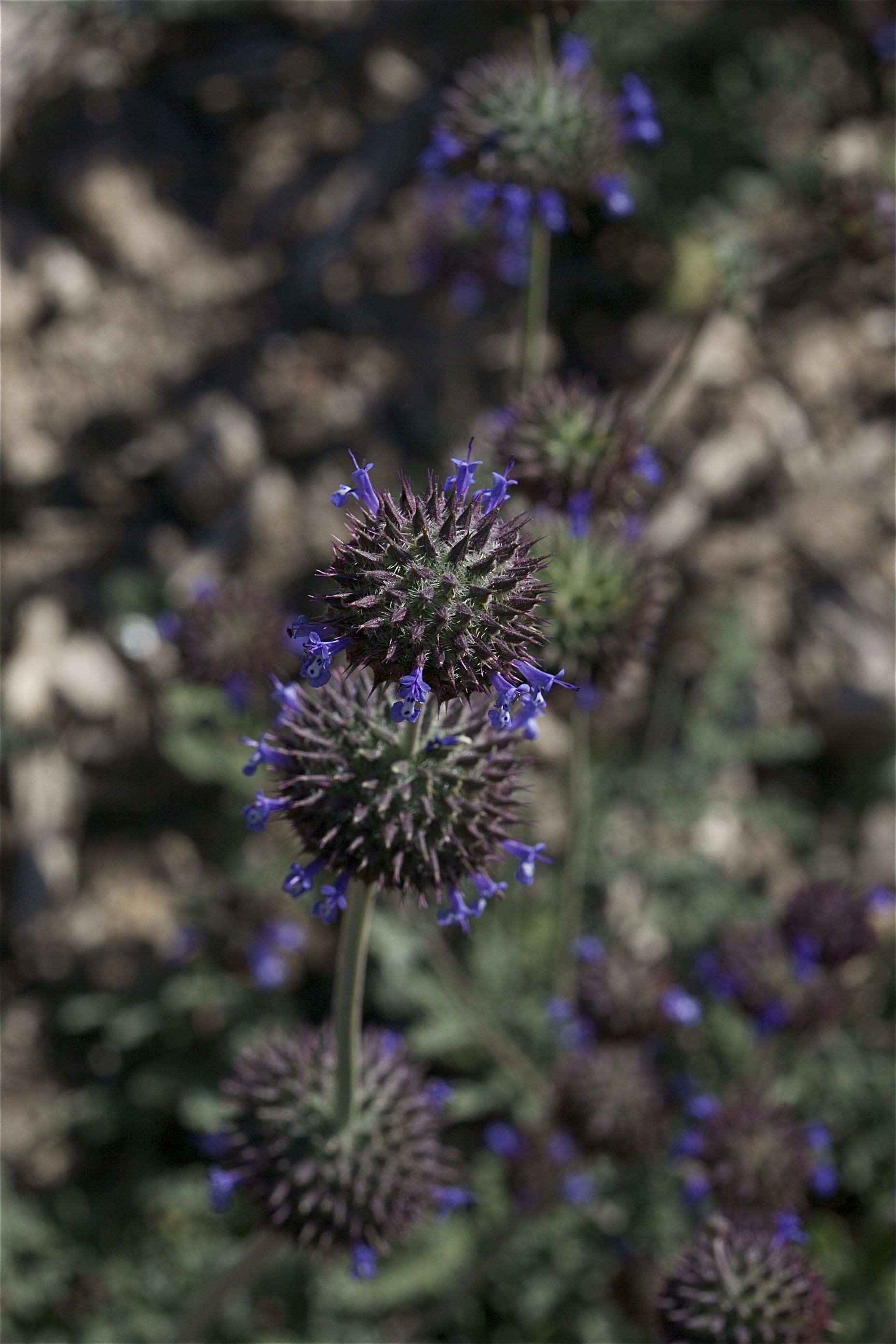
Double desert chia seedhead (JRMondt photo)

Double desert chia seedhead (JRMondt photo)

About April and May, when the days are getting hot and dry, return to your patch of chia to find straw-colored spiny balls dancing on slender dry stalks, usually calf-high, sometimes knee-high, or, after a wet winter/spring, perhaps thigh-high.  Try to find them just after they dry before the breeze has battered them and scattered their seed.  With a strong paper sack (or a canvas bag that you can wash later to soften the spiny bracts that will get stuck in the fabric), gather the seedheads and crush them.  Bare hands or soft-gloved hands BEWARE!  Best to use leather gloves for gathering seedheads.
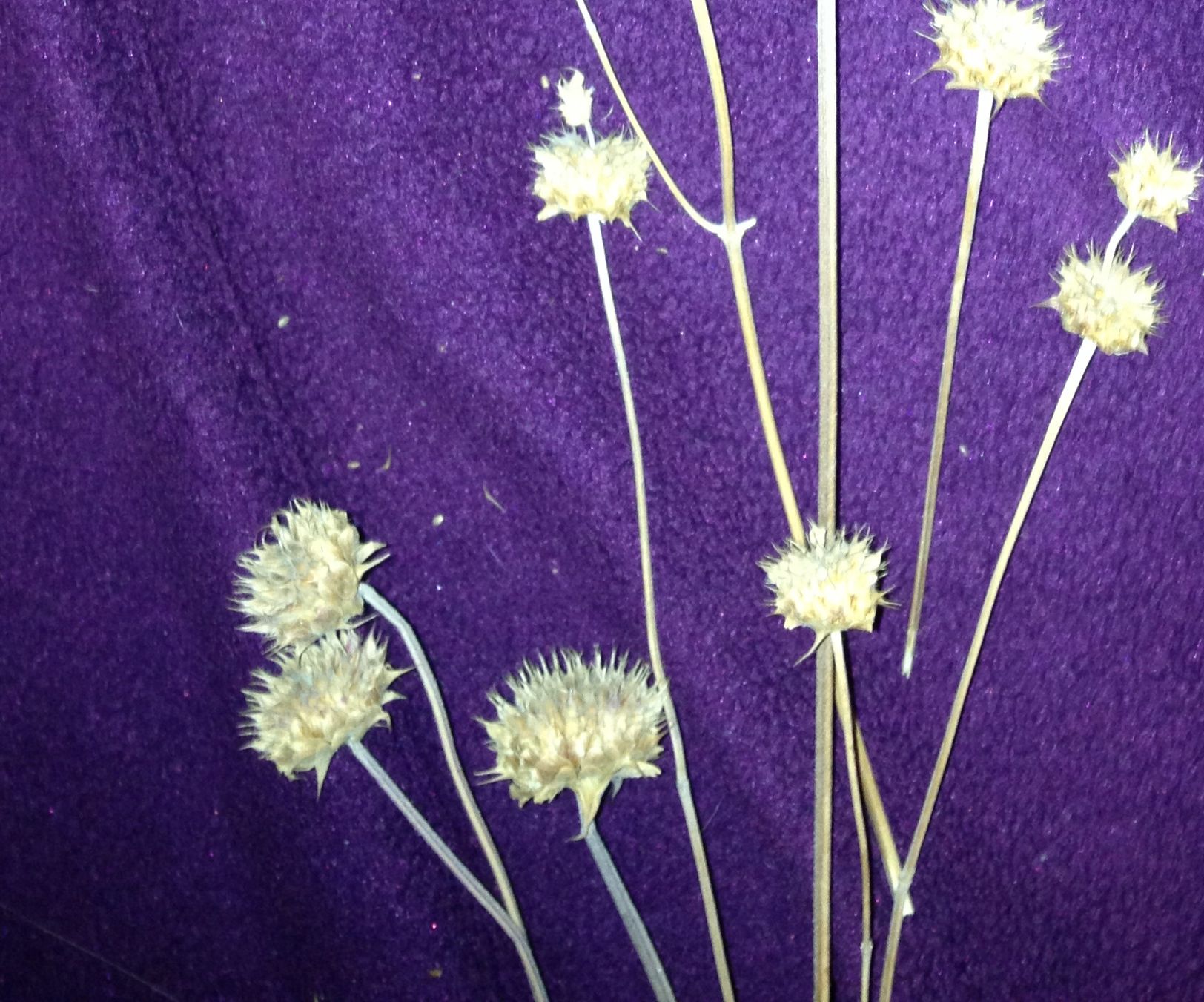
 

Dry stalks and spiny seed heads of desert chia (MABurgess photo)

Dry stalks and spiny seedheads of desert chia (MABurgess photo)

In earlier times, Native Peoples may have used baskets shaped like combs to pass through patches of chia seedheads to gather many at a time.  There are records of Cocopa and Chemehuevi people of the Colorado Desert storing large ollas full of chia seed.  When you see how tiny the seeds are and realize how much work it is to harvest an olla of chia seed, the time and effort must have been astounding–but they KNEW how important this food is!  When chia was ready, the whole village had to be out there gathering, making the most of the short window of opportunity.

The nutrition of chia–both our native desert chia and the Aztec chia, Salvia hispanicum–is way up there among the super-foods.  Packed in the tiny seeds is a big percentage of omega-3 fatty acids.  In addition, chia contains complex carbs which give lots of sustained energy, like slow-release fertilizer–a great food for athletes.  These same carbs balance blood sugar, providing a gift to hypoglycemics or diabetics.
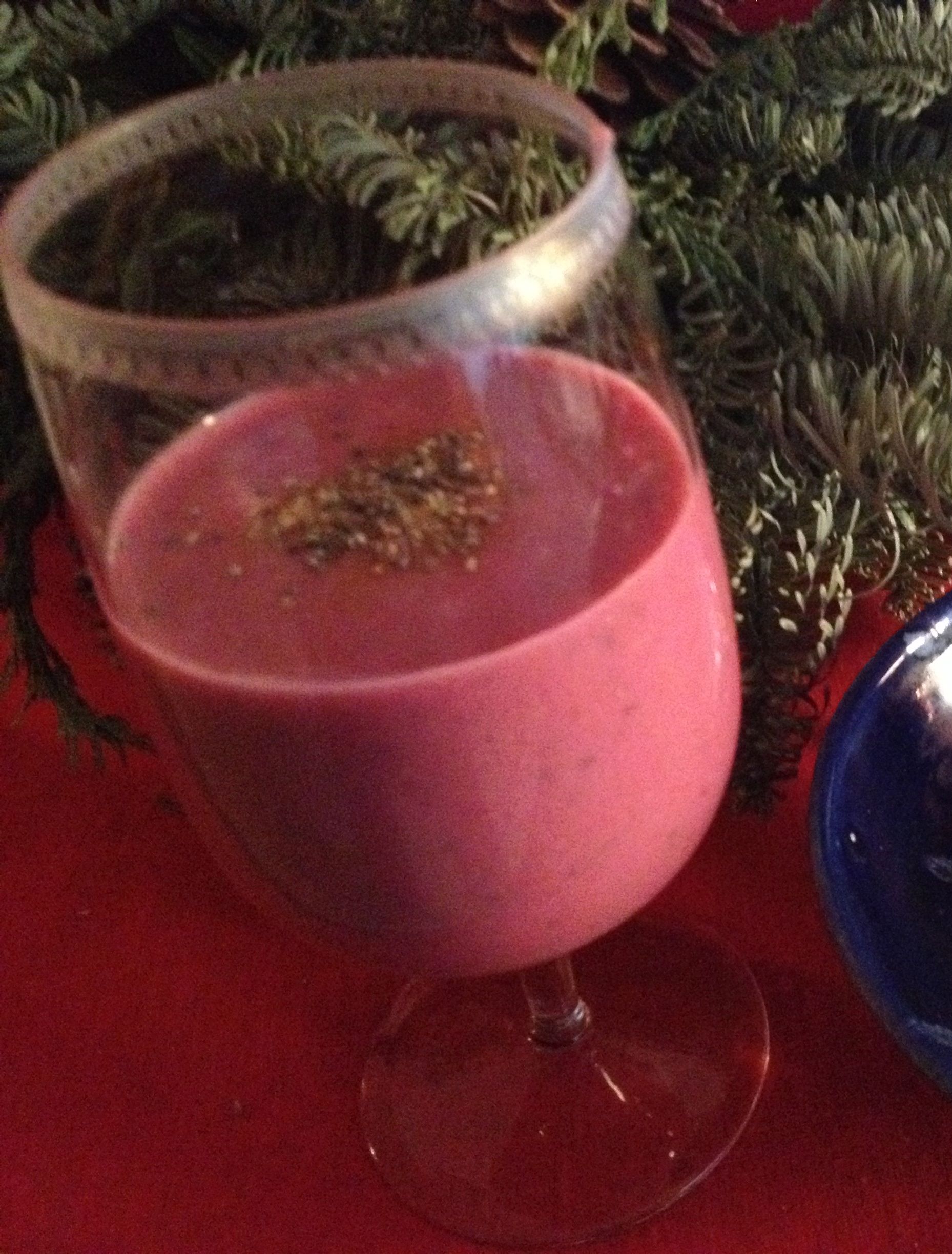
Taste the glorious nutrition of a chia-mesquite-berry smoothie! (MABurgess photo)

Taste the glorious nutrition of a chia-mesquite-berry smoothie! (MABurgess photo)

Chia Mesquite Berry Smoothie Recipe

1 Tbsp chia seed, and a pinch for garnish

1 cup apple or cranberry juice

2 tsp mesquite meal (optional, and delicious)

1 cup frozen blueberries or raspberries (or other favorite berry)

1 cup vanilla yogurt (or 1 cup plain yogurt and 2 tsp agave nectar)

ice optional

Soak 1 T chia seed in a cup of apple juice or other fruit juice for 5-10 minutes.  Then combine all other ingredients in a blender.  Pulse until all ingredients are mixed. Pour into 2 big glasses, sprinkle top with a pinch of chia seed, and enjoy with a pal!
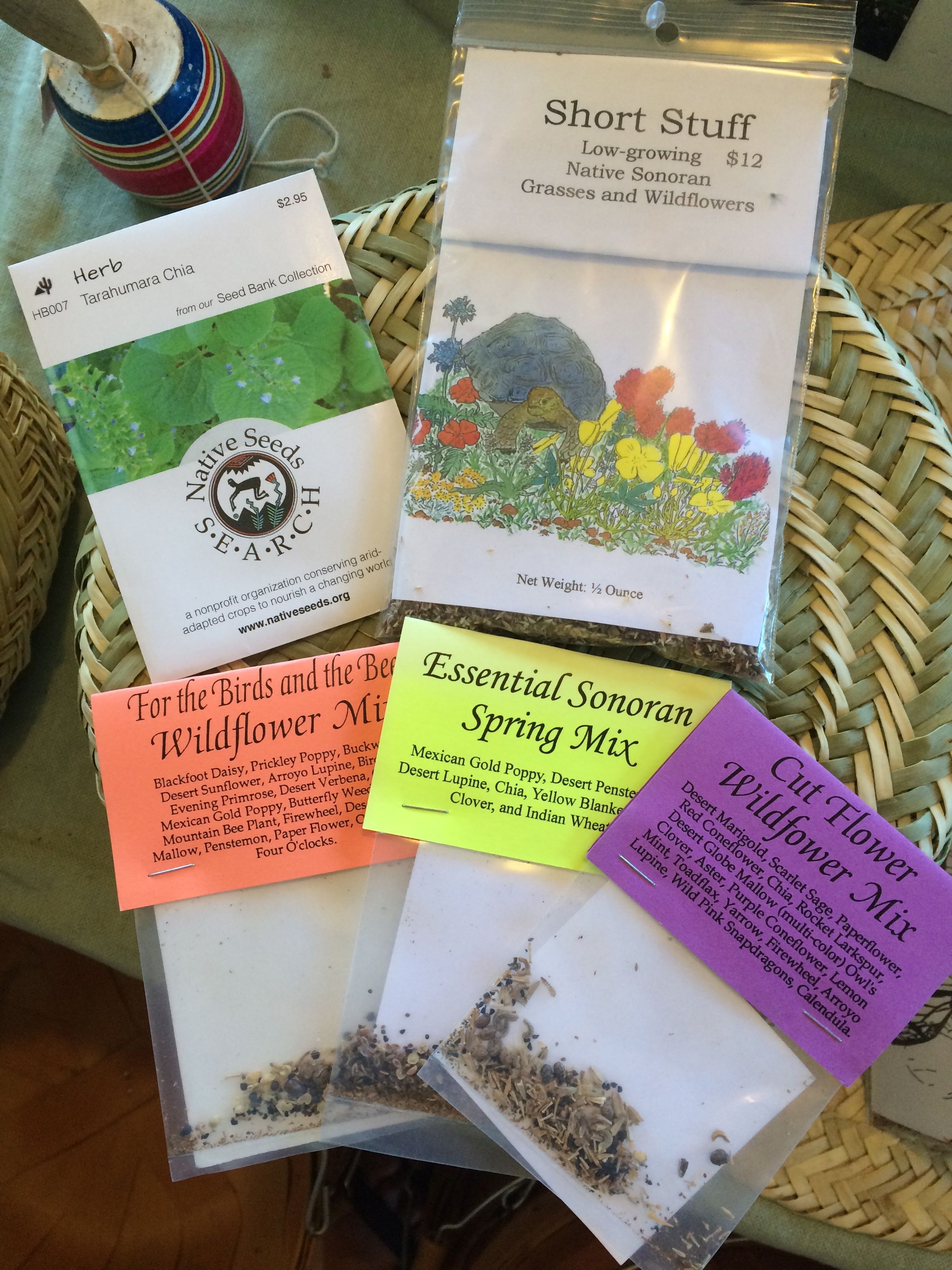
 

Tarahumara Chia and Desert Chia are available in seed packets and seed mixtures from NativeSeeds/SEARCH.

Tarahumara Chia and Desert Chia are available in seed packets and seed mixtures from NativeSeeds/SEARCH.

You can visit the NativeSeeds/SEARCH online catalog or visit the one-of-a-kind store on North Campbell Avenue to find the right seeds for your garden.  They have Tarahumara chia, the one made famous by the Raramuri native runners of the Sierra Madre.  NSS also has every wildflower mix containing desert chia, for spring garden showiness or benefits to wildlife.  Come by the Flor de Mayo booth at StPhilips Farmers Market for ideas for using chia and a pinch to try for yourself.  For learning more about seed saving, try a class at NativeSeeds/SEARCH.

The gifts of chia–from the visual and olfactory, to the culinary and the medicinal–are many, and even magical.  We can participate in spreading their wealth of beauty and benefit by planting and harvesting, saving their seeds and passing them along with hope and intent….
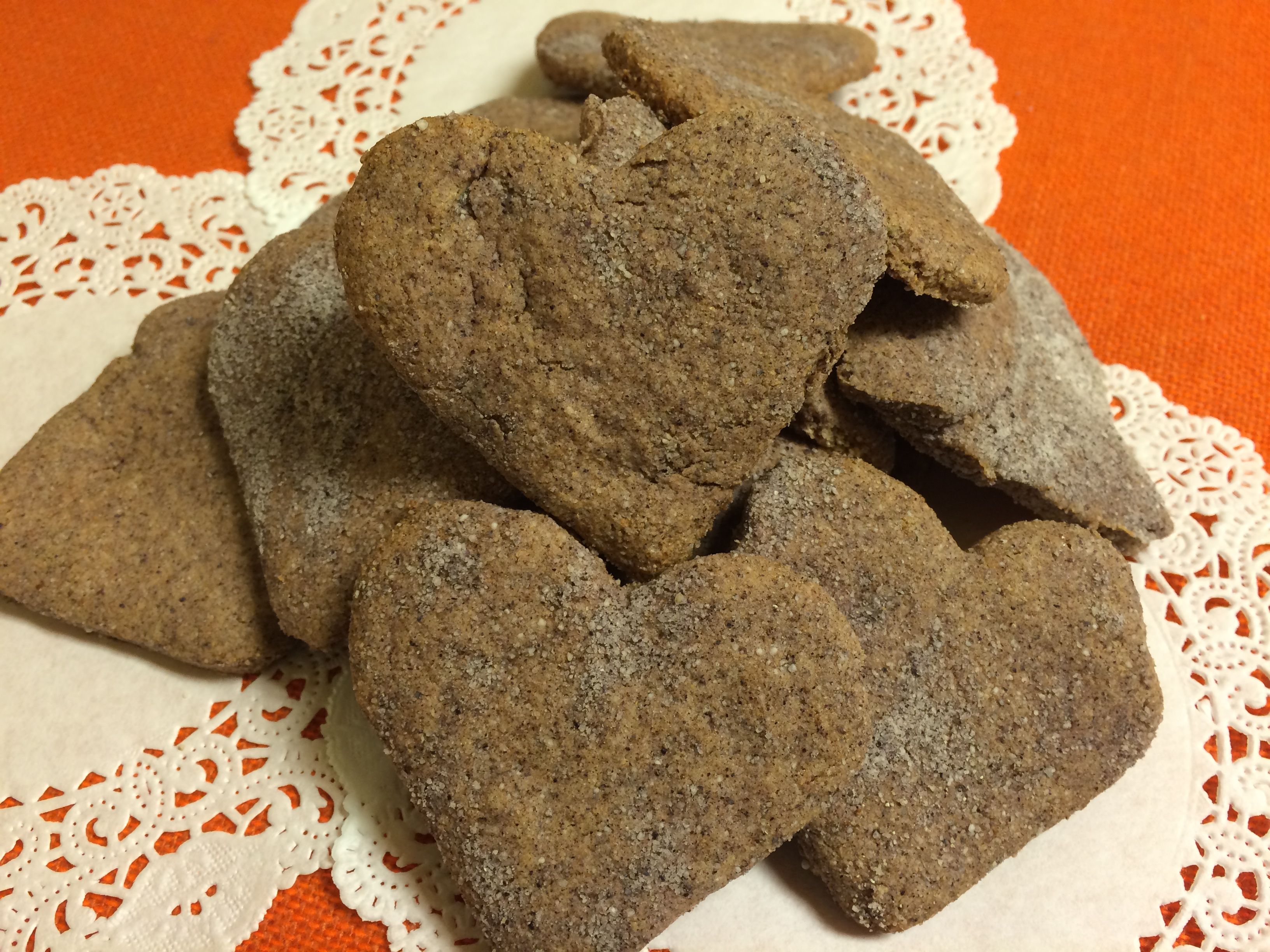
Sweet and Savory Valentines–with lovely local grains

Happy Valentine's expressed with the happiest of ingredients--heirloom barley, white Sonora wheat, organic hard red wheat and mesquite!

Happy Valentine’s expressed with the happiest of ingredients–heirloom purple barley, white Sonora wheat, organic hard red wheat and mesquite!

I admit it–I have a “thing” about barley. I’ll take it in any form–in stews, Scottish soups, marinated grain salads, mesquite/barley biscuits, barley banana bread…..and yes, my personal favorite, beeeer! (Your’s too? OK that will be another good post….)

Tia Marta here to share some fun recipes fit for a happy Valentine’s Day or beyond–made with heirloom grains including barley–one recipe with whole-kernel grain, one with milled whole grain flour.  These amazing grains are some of the reasons Tucson is now an International City of Gastronomy!

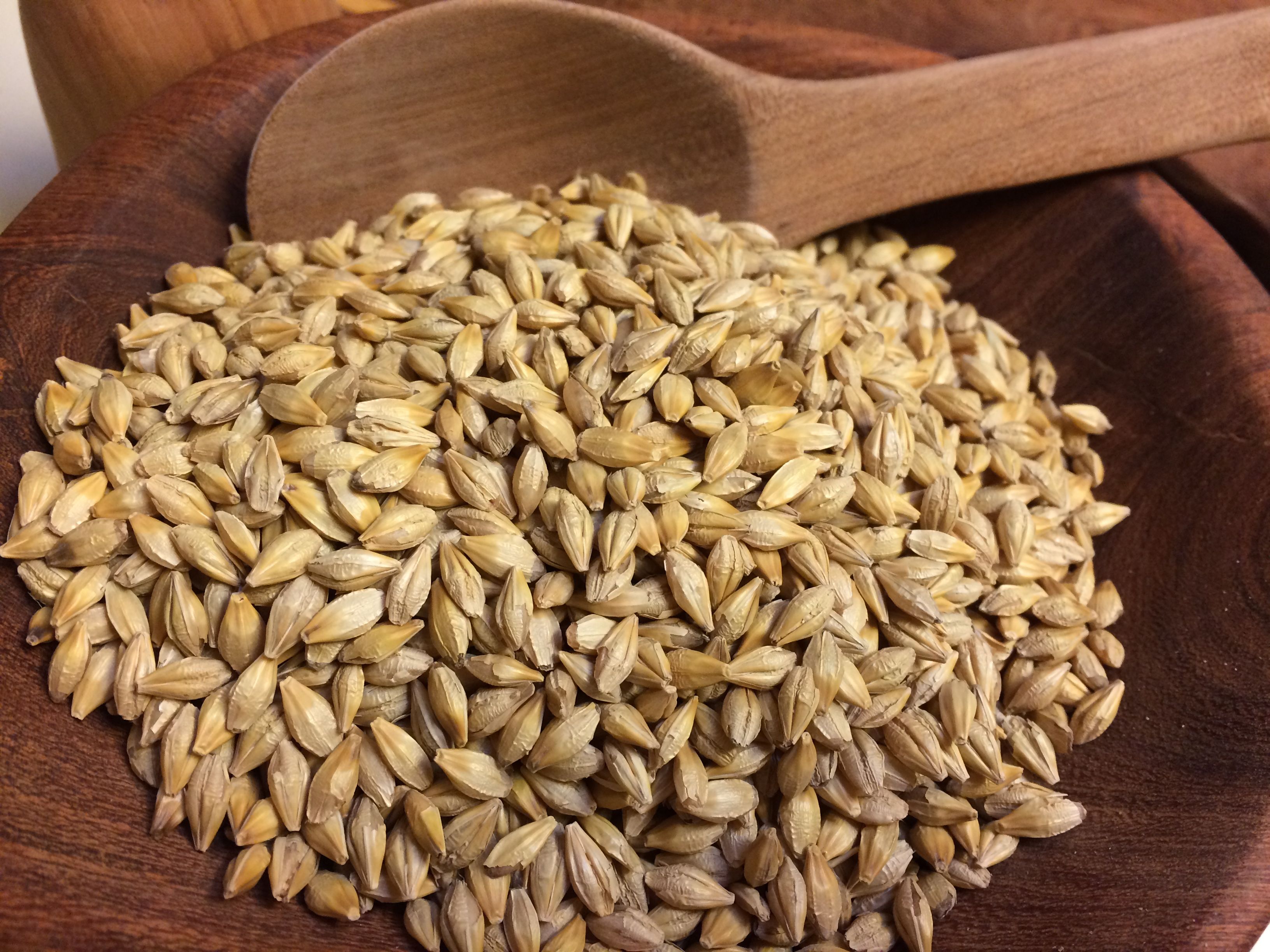
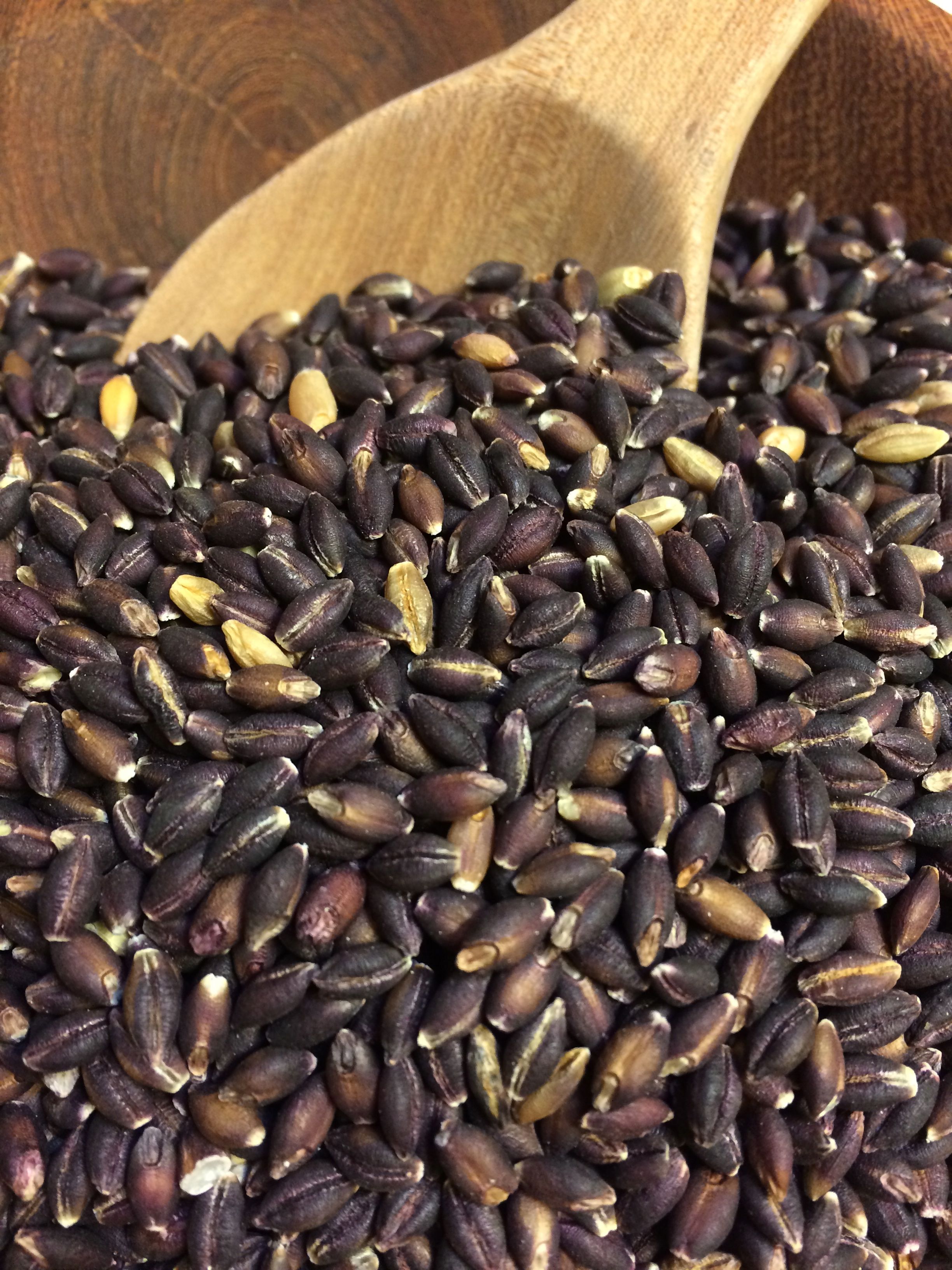
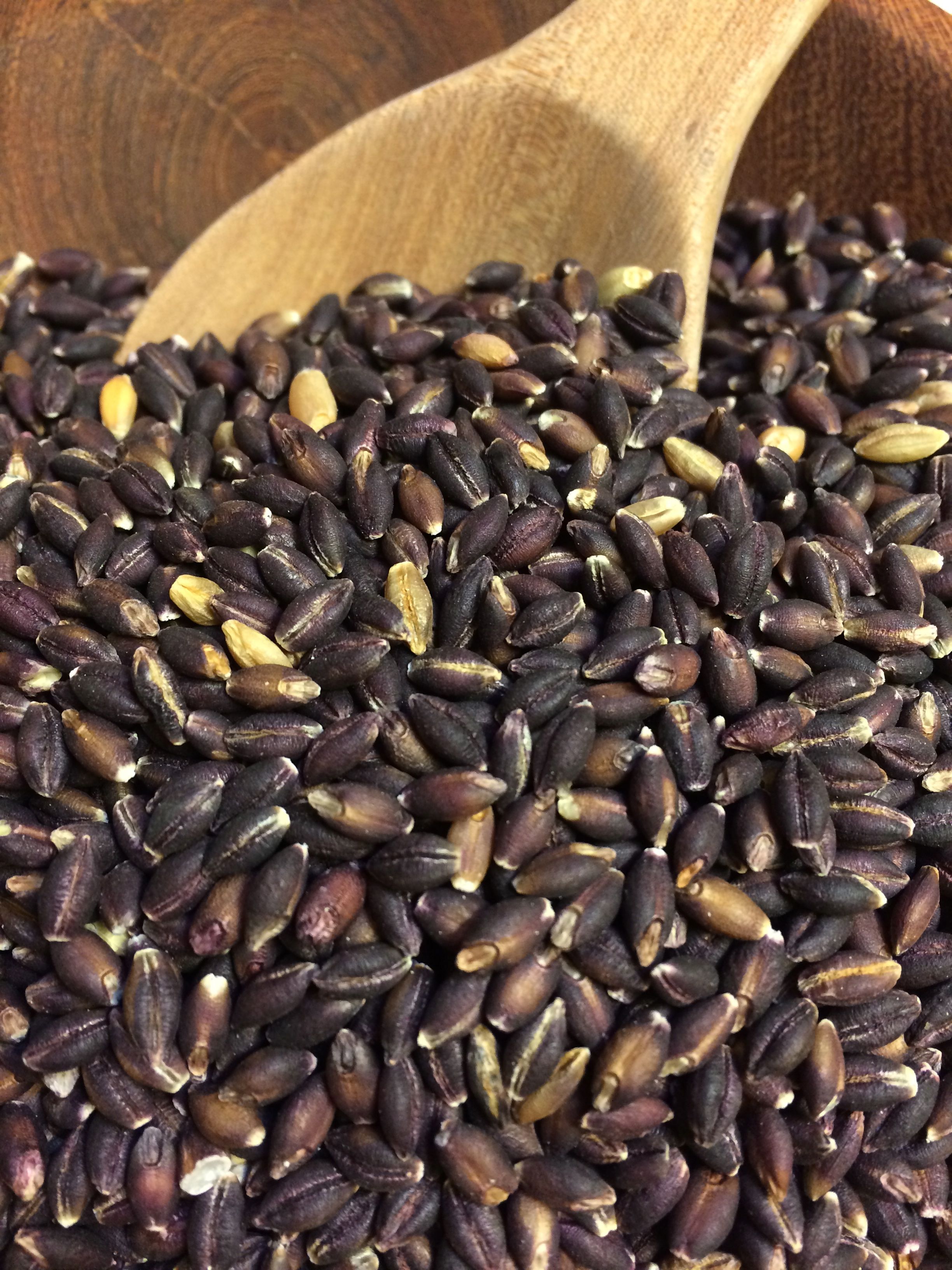
Arizona-grown heirloom Purple Prairie Barley grain in its healthy hulls

Arizona-grown heirloom Purple Prairie Barley grain with its healthy bran intact

It seems very few people in recent times know much about barley except perhaps as an ingredient in grape-nuts cereal or Campbell’s Scotch Broth. When you look into the nutrition of barley you find that it has the lowest glycemic index of all the grains, that is, it is the best of all for keeping blood-sugar in balance, especially when used in whole kernel form, either cooked whole, or milled from whole kernels.

There is an ancient barley now being grown in Arizona that has a delicious flavor, colorful nature, antioxidant properties, and versatility which have captivated me. It hails originally from Tibet (some say by way of the Nile) and is known as Purple Prairie Barley.


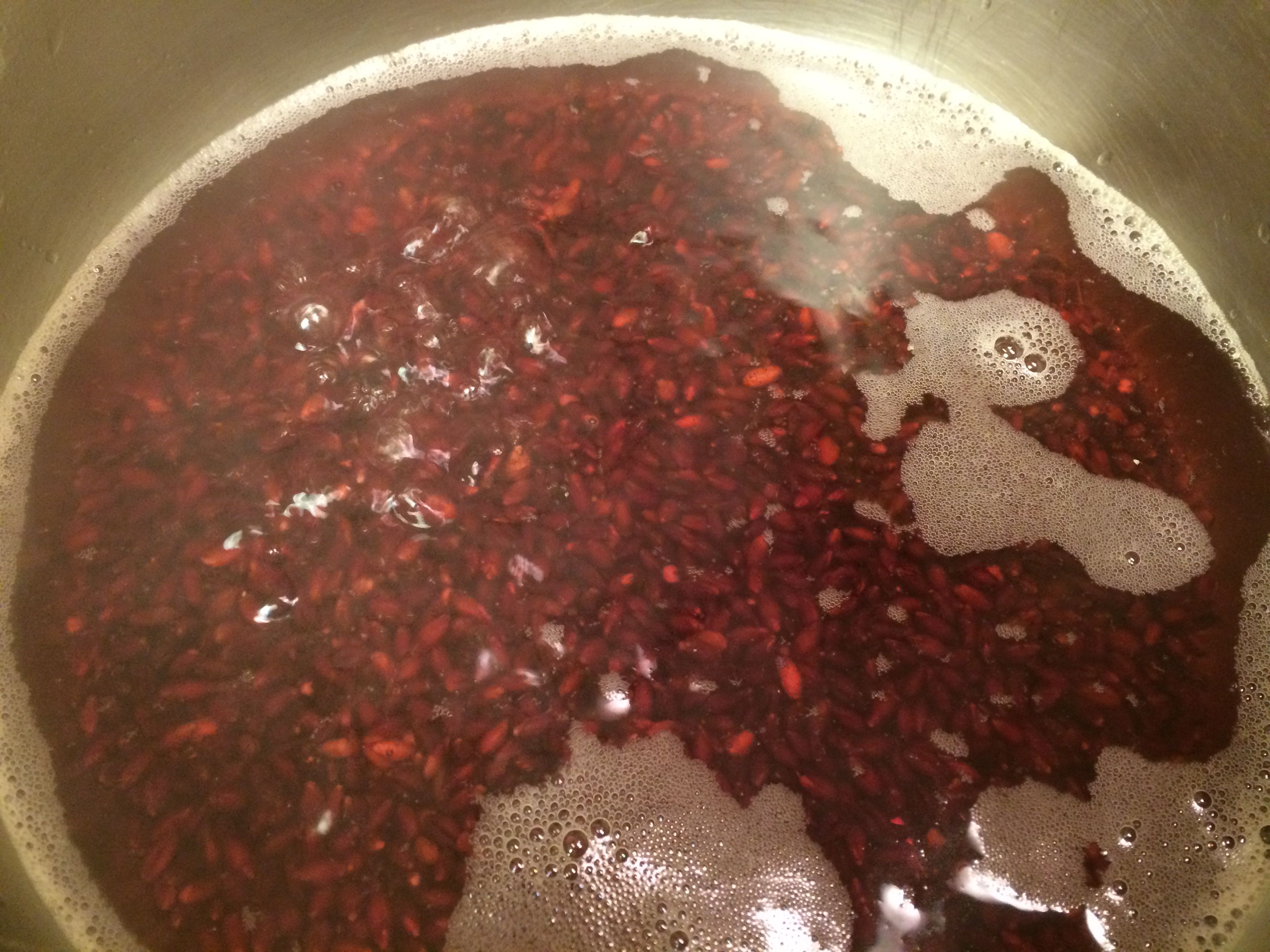
Keep the faith while cooking whole kernel purple prairie barley--Let the grains re-absorb all the liquid, 4:1 that is water:grain

Keep the faith while cooking whole kernel purple prairie barley–Let the grains re-absorb all the liquid,  water:grain ratio is 4:1.

Basic cooking for whole Purple Prairie Barley is super-simple.  It just takes a little time.  Once you have them cooked you can freeze them for future culinary creativity.  Stove-top method:  bring to boil 4 cups drinking water and 1 cup whole grain barley, and simmer until ALL the purple liquid is absorbed.  In a crockpot, the same process may take 3-5 hours–no watching necessary.  The glorious purple liquid which rises in the cooking water is chucky-jam-full of anthocyanins, those wondrous antioxidants, so don’t let a drop get away!

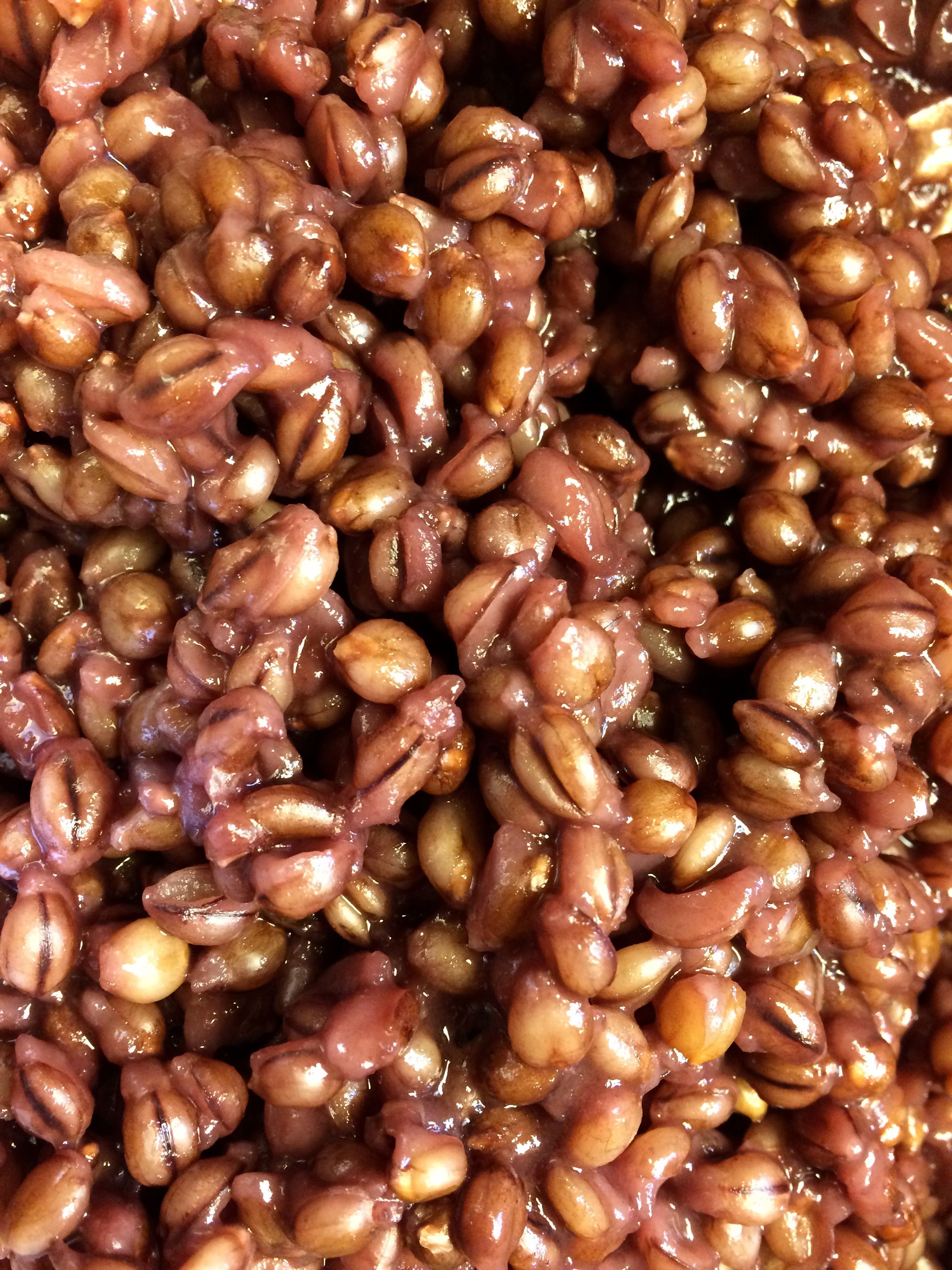
When fully cooked, purple prairie barley is plump, almost round, and still retains its lovely color.

When fully cooked, purple prairie barley is plump, almost round, and still retains its lovely color.


Hot, whole purple barley-berries taste great as a chewy cereal for a chilly morning, delicious with cream or yogurt and a dollop of agave nectar.  It also makes a delectable pilaf (see photo idea below) or marinated whole-kernel salad.  [You can substitute barley in recipes for White Sonora Wheat-berries–to find them enter “wheat” in this blog’s search box.]


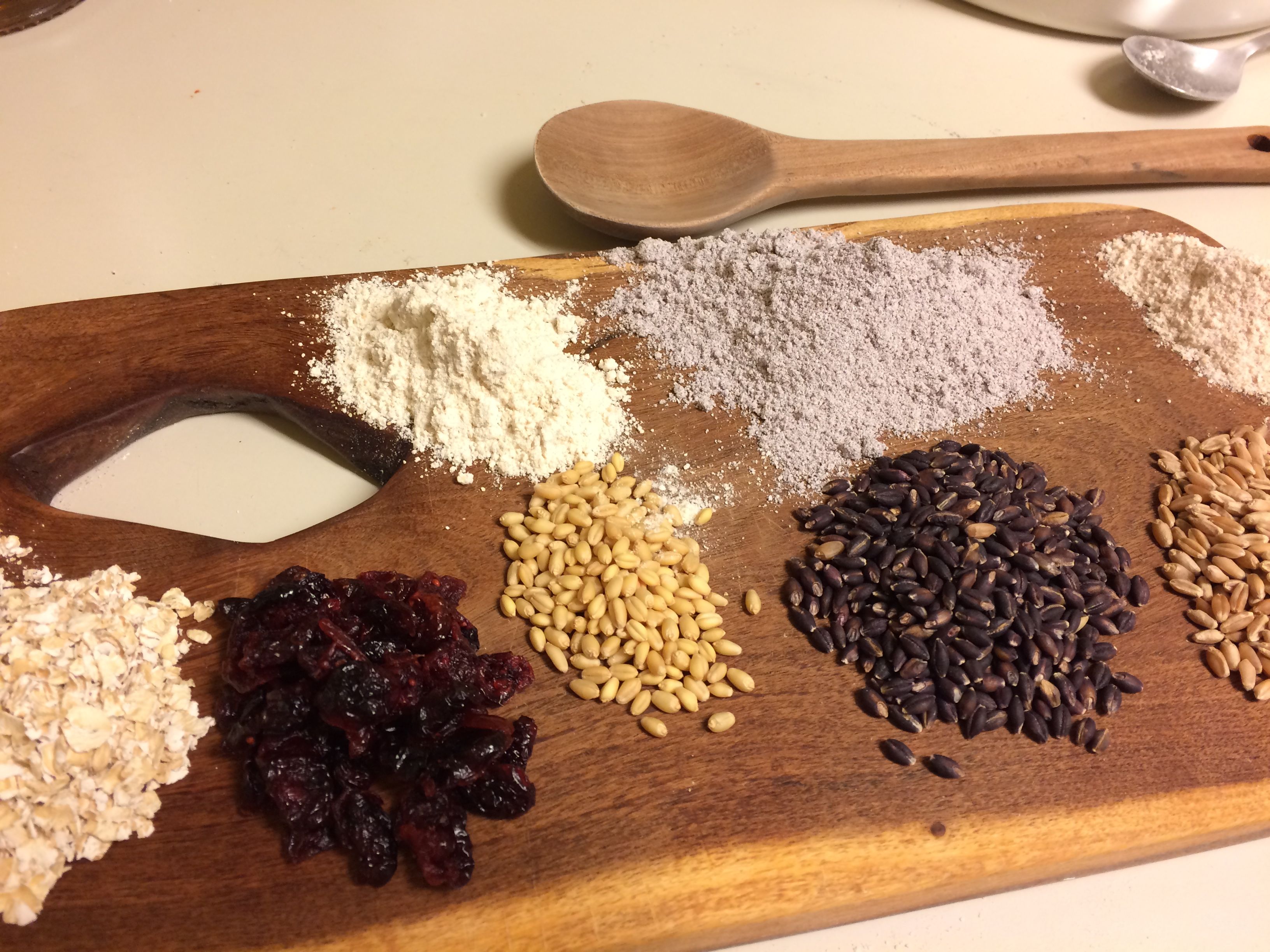
Ingredients for baking Valentine cookies--L to R rolled oats, dry cranberries, White Sonora wheat-berries and flour, Purple Prairie grain and lavender flour, local hard red wheat kernels and flour

Ingredients for baking Valentine cookies–L to R rolled oats, dry cranberries, White Sonora wheat-berries and its golden flour, Purple Prairie grain and its lavender flour, local hard-red wheat kernels paired with its beige flour

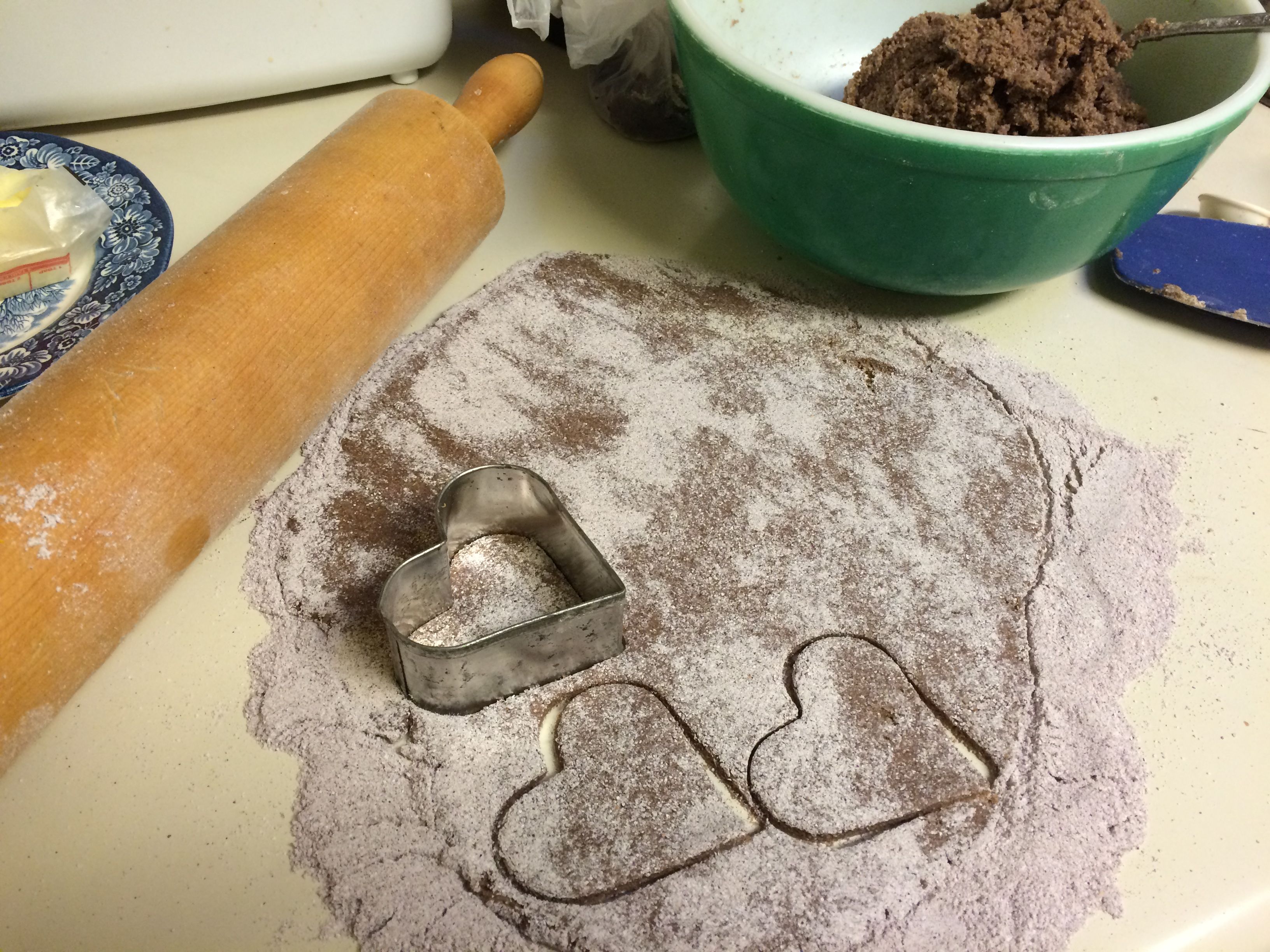
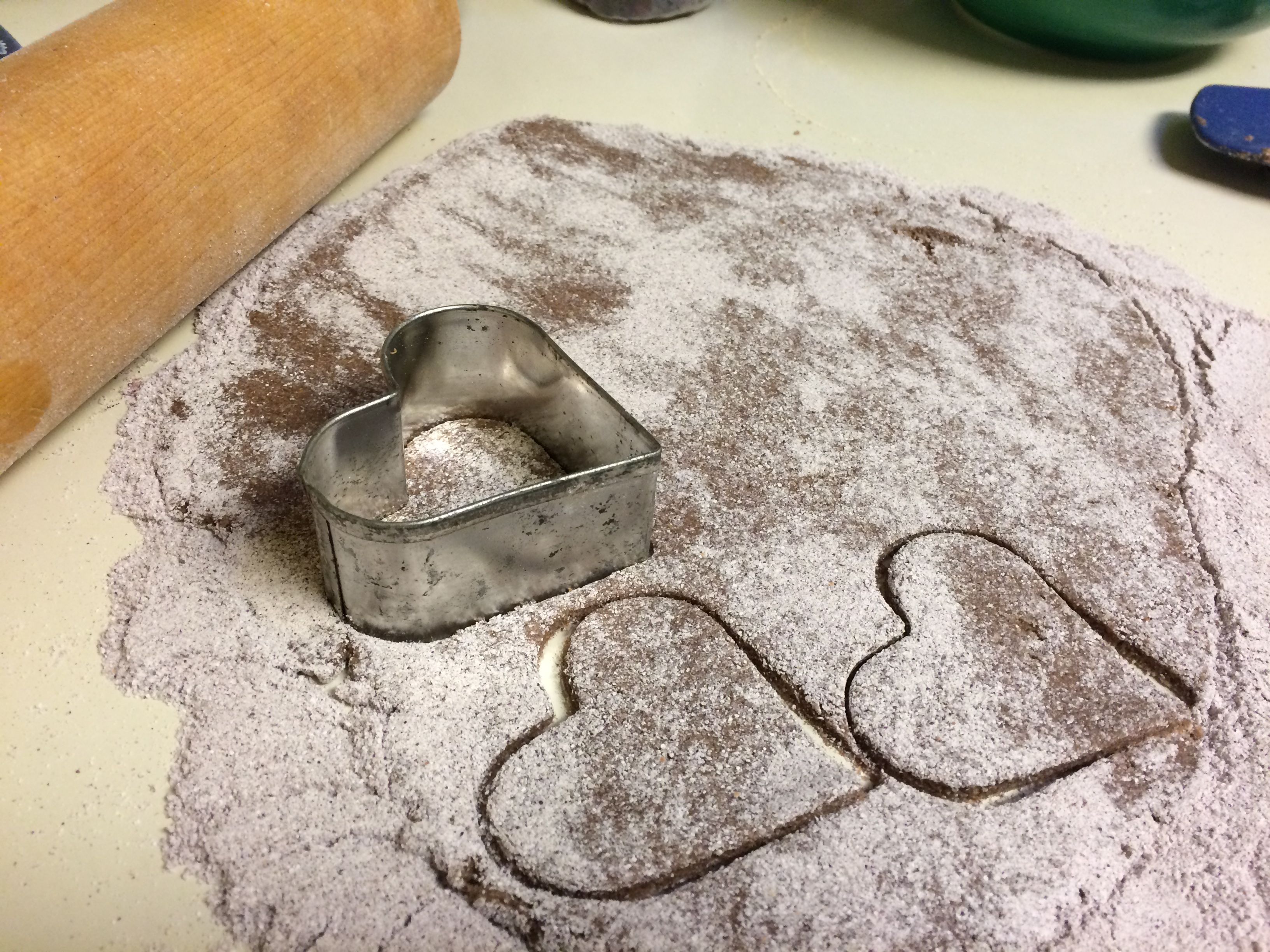
Rolling out dough for heirloom barley hearts--Valentine treats to celebrate Tucson's LIVING culinary history

Rolling out dough for heirloom barley hearts–Valentine treats to celebrate Tucson’s LIVING culinary history


This cookie recipe is really easy–two bowls, sifter, rolling pin or bottle, teaspoon measure, and only one half-cup measuring cup are needed.

Very Sonoran Valentine Cookies

Ingredients:
1 c purple prairie barley flour
1/2 c organic white Sonora wheat flour
1/2 c organic hard red wheat flour
1/2 c local mesquite flour
1/2 tsp sea salt or real salt
2 tsp baking powder
1/2 c (one stick) organic butter
1/2 c organic cane sugar
2 lg or 3 medium eggs
1 tsp vanilla
optional topping on cookie dough: dry cranberries or cherries
Directions: Preheat oven to 375degreesF. Sift all dry ingredients into one bowl. In a separate bowl, cream butter and sugar; stir in vanilla; beat in eggs.  Add dry ingredients into wet mixture, mixing thoroughly. Pat dough out on a board heavily dusted with more barley flour. Roll dough to a ca. 3/8 inch thickness–(consistent thickness is more important than an exact measure.) Cookie-cutter your favorite shapes out of the rolled dough and place on ungreased cookie sheet.  Bake 8-10 minutes or until barely browning. Crunchily enjoy the pinkness of your purple barley cookies!

Rolling out cookie dough for Purple Prairie Barley cookies

Cutting cookie dough for Purple Prairie Barley cookies


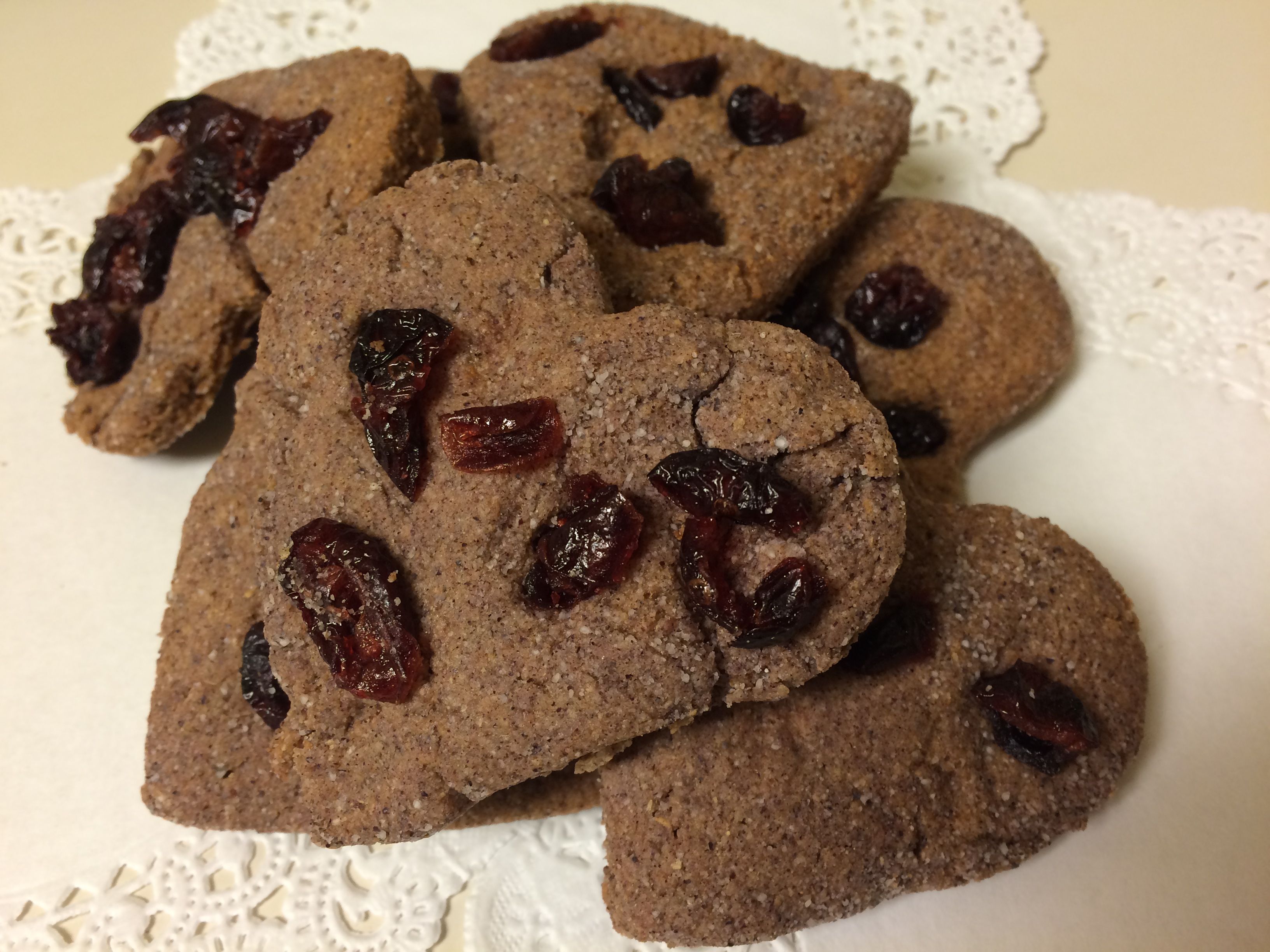
Purple barley Valentine cookies with cranberry decoration

Purple barley Valentine cookies with cranberry decoration– a pinky-purple hue, yummy flavor & crunch!

You can make delightful variations on these Purple Barley Cookies by substituting the above ingredients in an oatmeal cookie recipe or in a Scottish shortbread recipe.


Preparing heirloom purple prairie barley pilaf

Preparing heirloom purple prairie barley pilaf

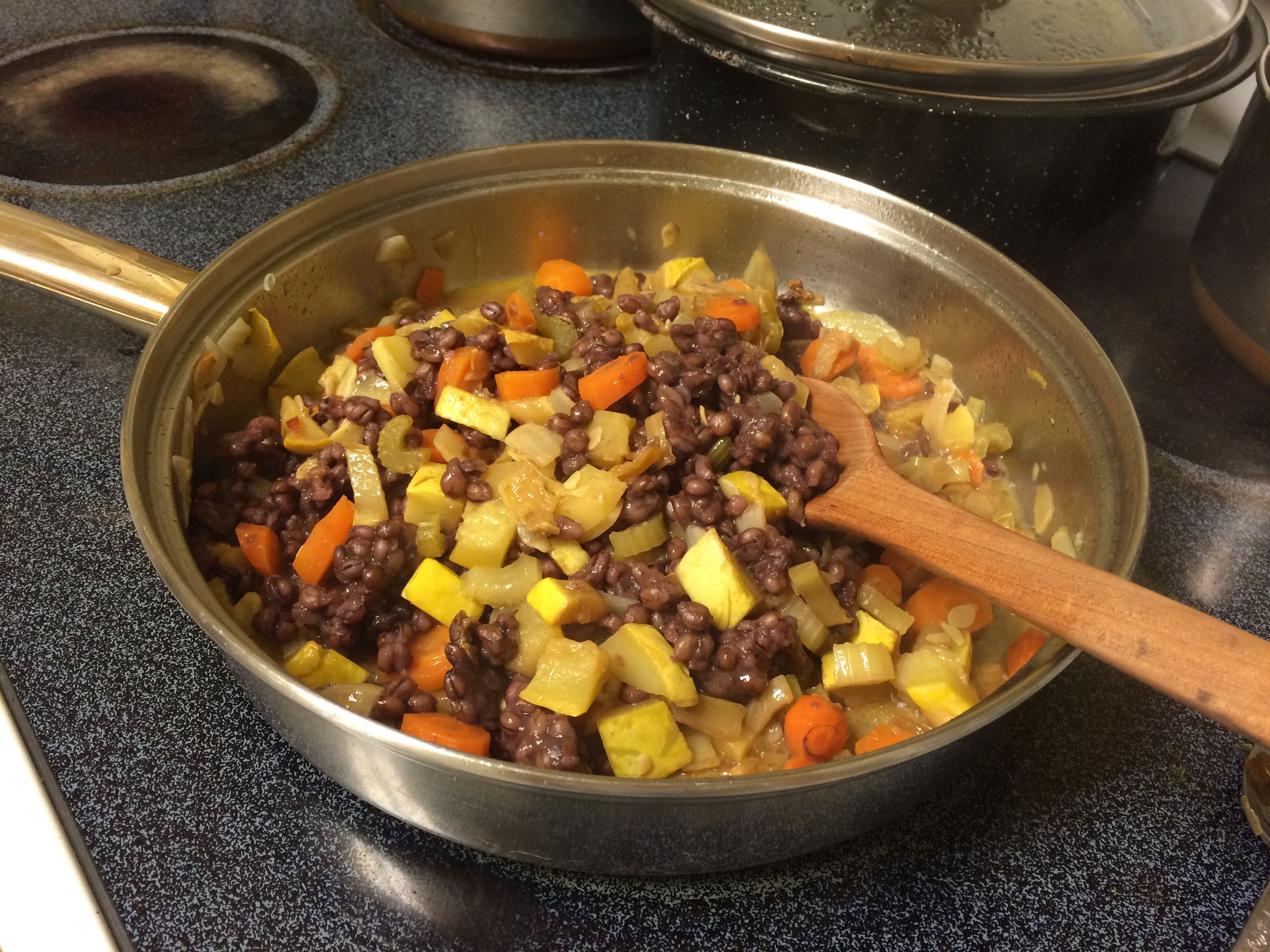
For a savory dish, try your cooked whole-grain purple barley in a delicious pilaf prepared in a way similar to a quinoa or rice pilaf.  Stir-fry an assortment of 2-3 cups of your favorite veggies in olive oil (try any chopped heirloom squash, scallions, carrots, colorful sweet peppers, mushrooms, kohlrabi, etc from local farmers’ markets).  Finish the stir-fry adding 1 cup of cooked purple prairie barley.  Season to taste with Asian sauce, spike or Cavender’s.  Pine nuts or cashews might add another flavor dimension.


Magdalena heirloom barley grown at Mission Garden, Tucson

Magdalena heirloom barley grown at Mission Garden, Tucson

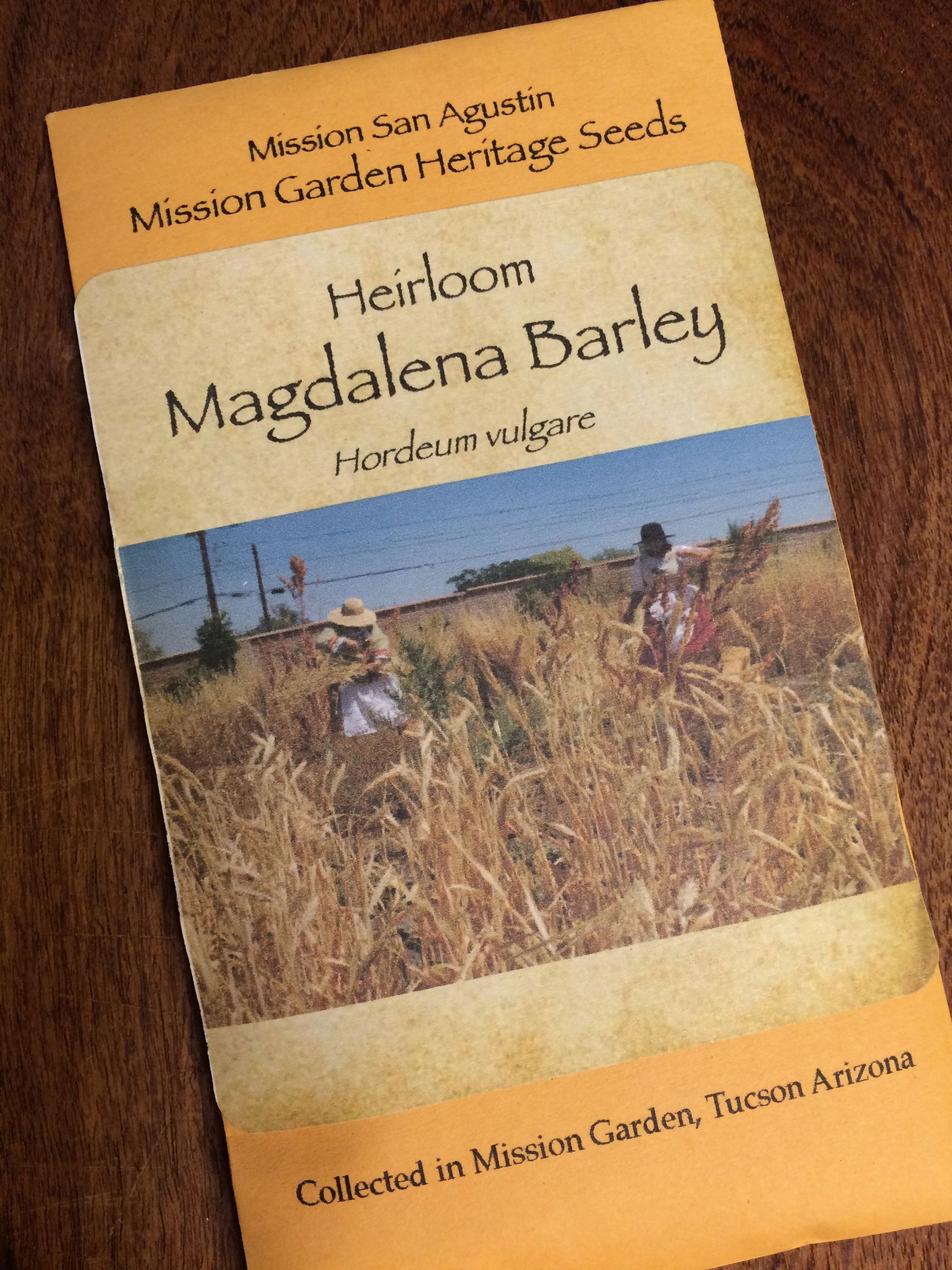
Packaged rare Magdalena Barley seed grown at Mission Garden--our own local treasure.

Packaged rare Magdalena Barley seed grown at Mission Garden–our own local treasure.


Want to find these heirlooms for cooking or to grow them?  Here are some local sources of whole-kernel grains–also, where you can get them freshly milled if you don’t have your own grinder.  Find several of these grains growing at the Friends of Tucson’s Birthplace’s Mission Garden living history gardens, open every Saturday for tours.  Hayden Flour Mills’ heirloom Purple Prairie Barley  is now available at our Flor de Mayo booth at Sunday’s St.Philips Farmers’ Market in various size packets ready to cook or mill.  The Wong family at BKWFarms Inc., now in their fifth generation of local farming in Marana, are the organic growers of Padre Kino’s heirloom White Sonora Wheat which NativeSeeds/SEARCH helped to resurrect from near-loss.  BKWFarms also produces organic hard red wheat-berries, which make a rich, higher gluten flour perfect for breads and cakes, and which I quite successfully used in the Valentine cookie recipe above.  Other heirloom wheat-berries grown by Ramona Farms and San Xavier Coop Association are available at the NativeSeeds/SEARCH store, 3061 N.Campbell Ave, Tucson.  Local mesquite flour for the Valentine cookie recipe is available at the NSS store and at our Flor de Mayo booth, St Philips Farmers’ Market.  Come visit us this Sunday for a little taste!  And, have us mill these organic grains fresh for you on-site!  Check out http://www.flordemayoarts.com for re-sourcing these grains online.  For a great grain brew, ask at Dragoon and our other local micro-breweries for their latest creation.  Here’s to your health–using our local, organic, heirloom grains!

I invite you also to join me, Tia Marta, next Saturday, February 20, at Tucson Presidio Museum’s community lecture at the Dusty Monk Salon and Saloon, Old Town Artisans downtown Tucson.  I’ll be speaking about the Presidio Period’s Edible Plants, and there just might be a few tastes of these heirloom grain treasures for accompaniment….
Farmers’ Market Sources for Warming Body and Soul, Baking and Gifting

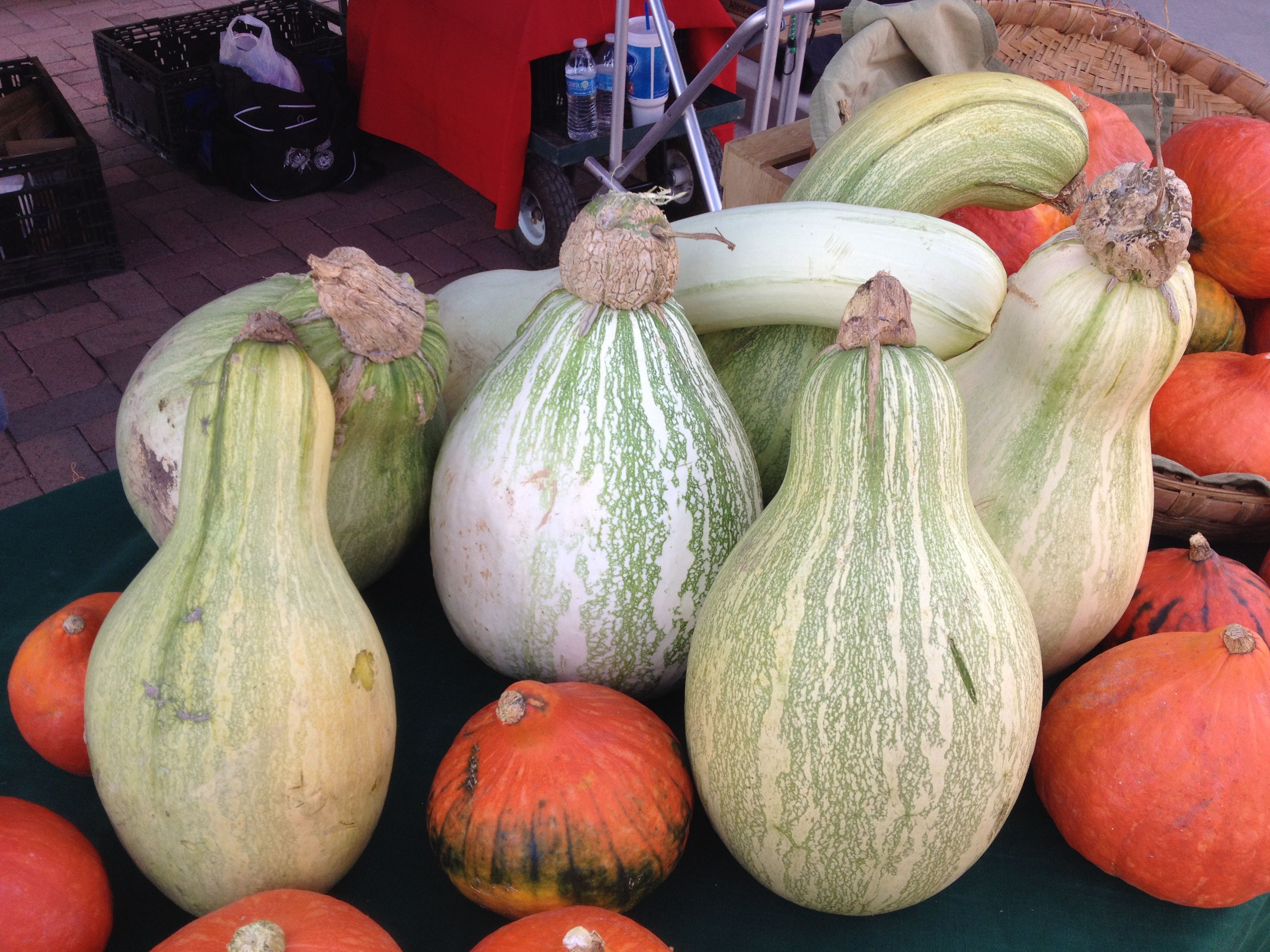
Autumn harvest from the NativeSeeds/ SEARCH Conservation Farm in Patagonia, AZ-heirloom Navajo banana squash

Autumn harvest from the NativeSeeds/ SEARCH Conservation Farm in Patagonia, AZ–heirloom Navajo banana squash (MABurgess photo)

What makes Tucson an International City of Gastronomy?  It is not only that we are blessed with amazingly creative chefs–like the ones showcased at the Mission Garden Picnic feast.  It’s also the availability of rare and wonderful heirloom foods that are adapted to our particular Baja Arizona climate, soil, and cultures!  Few other places have the flavorful and nutritious diversity of crops that have been part of our Baja Arizona agricultural landscape for about 4000 years. 

Tia Marta here to share ideas for finding the raw materials for some great slow-food feasting this Winter Solstice season.

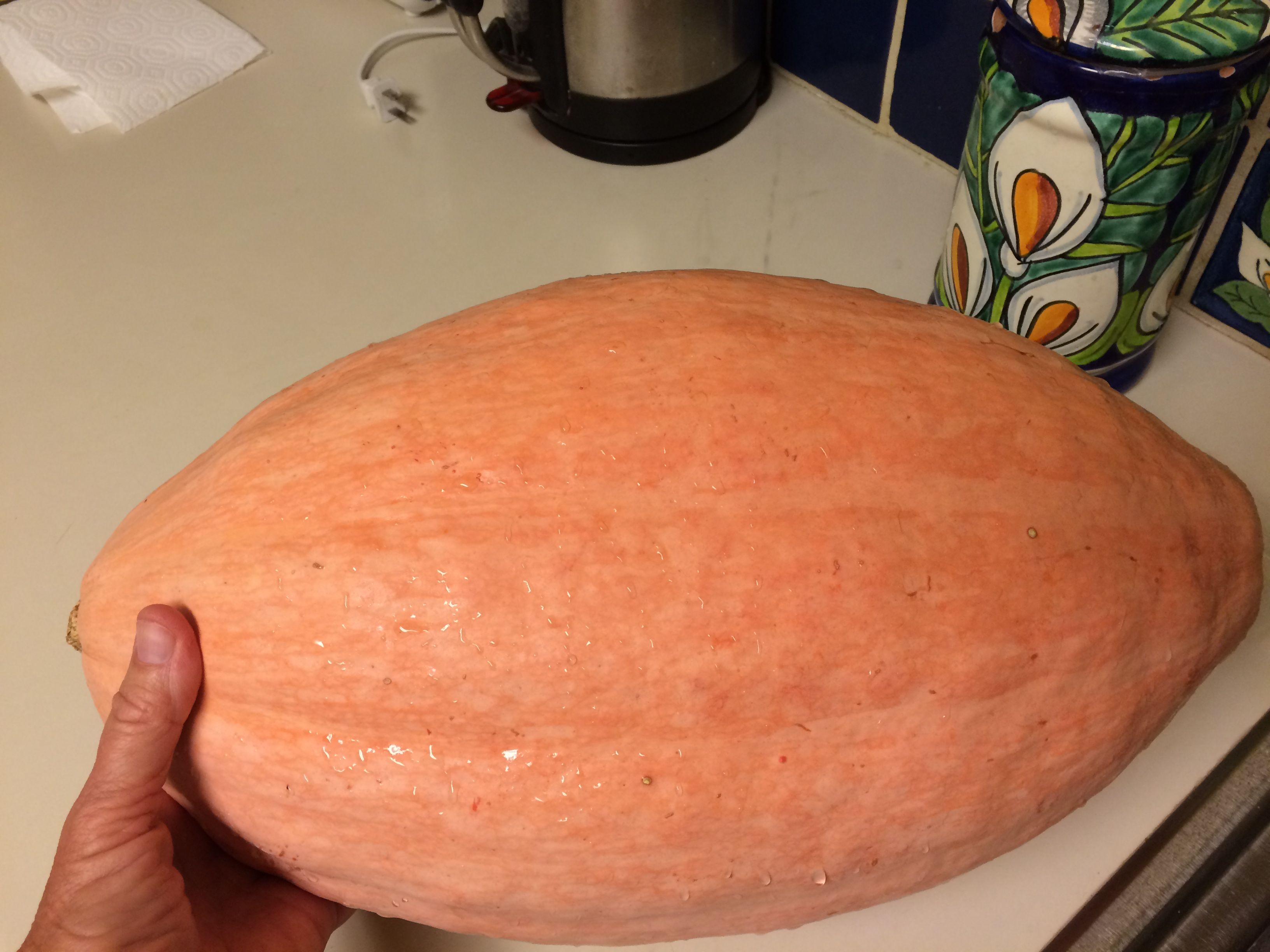
OPEN NSS NAVAJO BANANA SQUASH FOR AN EXPLOSION OF BETA-CAROTENES!

OPEN NSS NAVAJO BANANA SQUASH FOR AN EXPLOSION OF BETA-CAROTENES!

Ignored, more than maligned, by present-day dominant cultures, the squash is a gift to menu-inventors.  It can be prepared as a savory dish with good old salt/pepper/butter, or fancied up with moles.  Or it can be made into fabulous desserts.  Use it in place of sweet potato for a genteel variation.  My favorite is to make it into a festive “Kentucky Pudding”.

Muff’s “Kentucky Pudding” Dessert Recipe

4 cups steamed or baked heirloom Navajo banana squash (or other heirloom) mashed or pureed

2-4 Tbsp mesquite honey or agave nectar (to taste)

2-3 Tbsp chopped crystallized ginger root (I found it at Trader Joe’s)

1/2 cup chopped walnuts or pecans or pine nuts

1/4 cup good bourbon whiskey

Steam or bake squash ahead.  (You can freeze it for using later in a variety of recipes–it’s so convenient!0  In a saucepan, heat mashed squash on medium.  Add honey, ginger, nutmeats.  When hot and steamy, stir in the bourbon quickly and serve with a flair.  You could even try flambé. Serves 4-6.

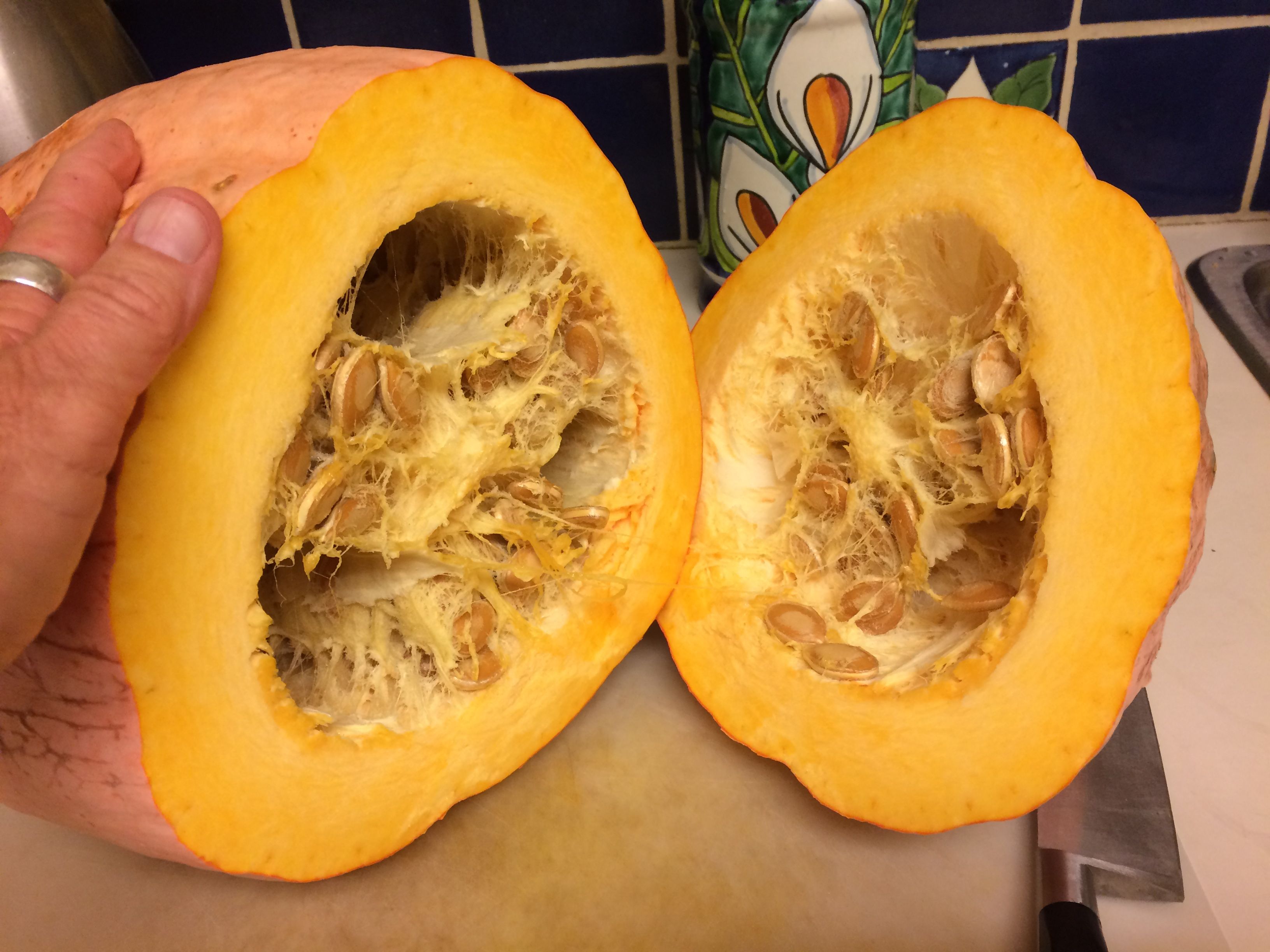
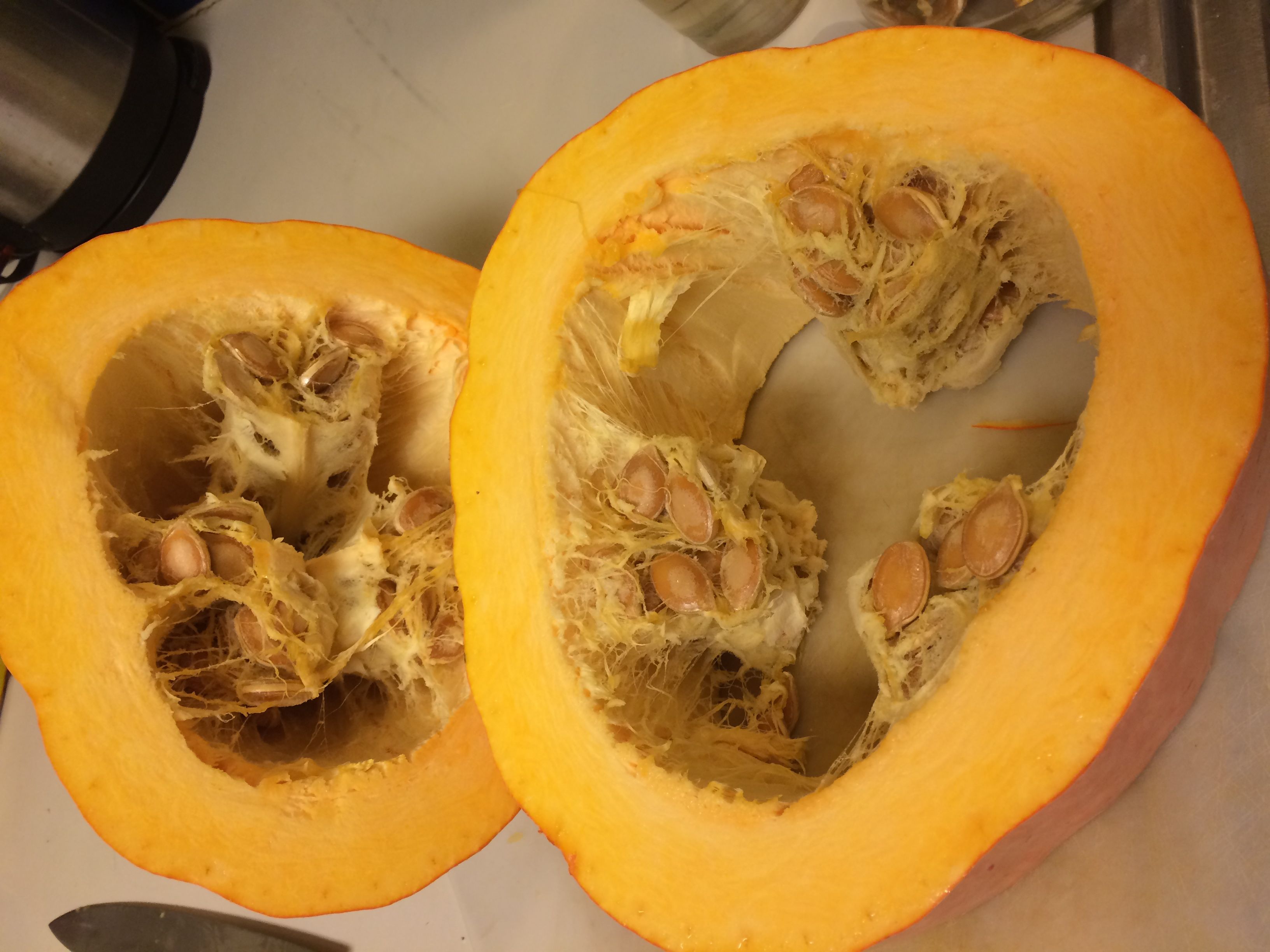
Navajo banana squash showing its interesting pattern of seeds inside

Navajo banana squash showing its interesting pattern of seeds inside

These luscious heirloom squashes, grown at NativeSeeds/SEARCH’s Seed Conservation Farm in Patagonia, are available now at our Flor de Mayo booth at Sunday’s St Philips Farmers’ Market.  Come see the size of them–one of them could feed the whole extended family or a small tribe!  We will be selling them by the smaller family-sized chunk as well.  Start salivating…  If you are seeking Vitamin A in glorious beta-carotenes, this is the food to find.

And don’t forget those giant seeds inside!  They can be roasted easily with a little olive oil and sea salt and voila you have a healthy snack full of zinc to ward off colds in this chilly season.  You can save a handful of those seeds to plant next summer in your garden and keep the gift growing.

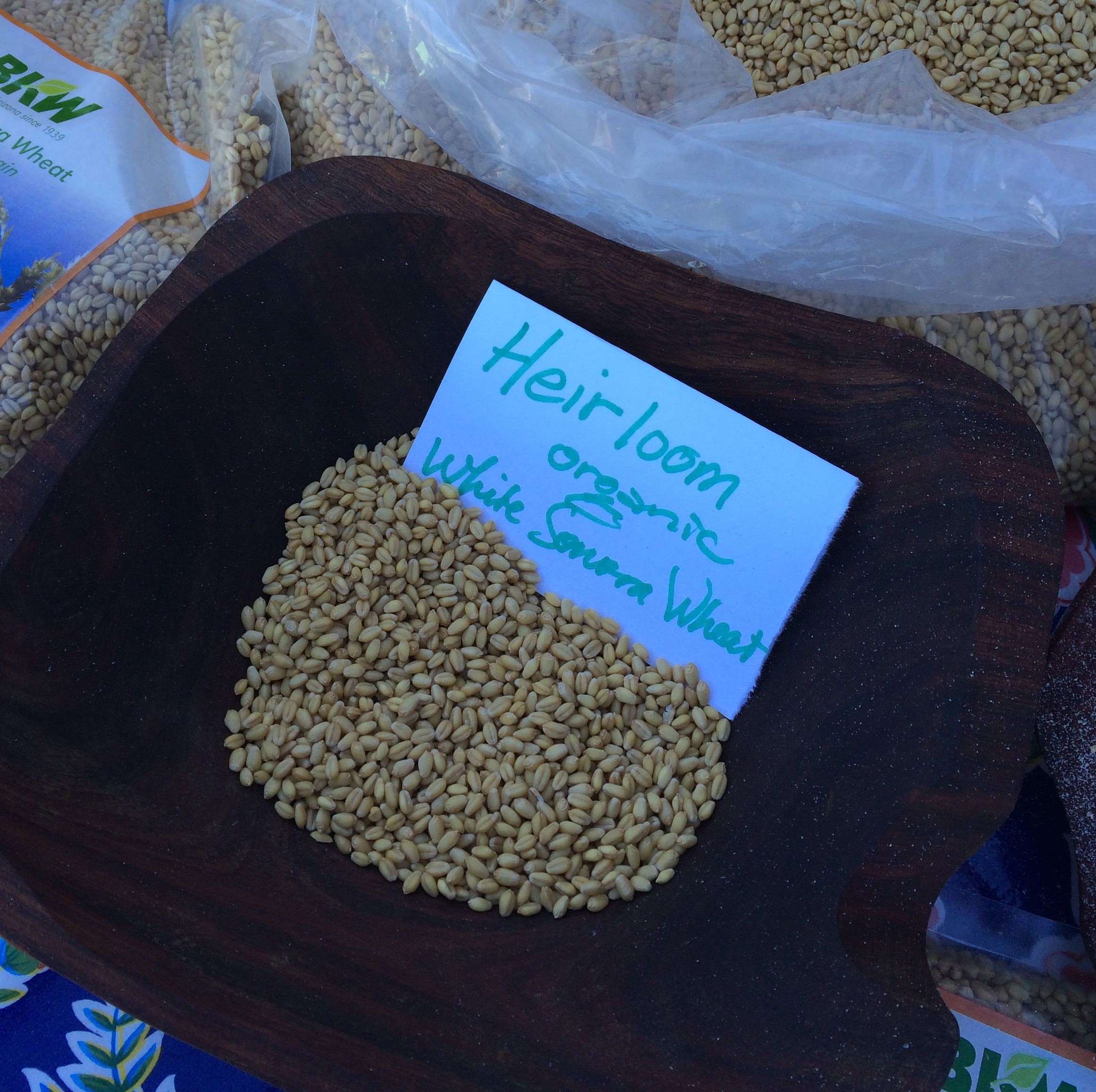
Heirloom organic locally grown White Sonora Wheat-berries

Heirloom organic locally grown White Sonora Wheat-berries

And here are some ideas about baking with local heirloom grains….  Get out your VitaMix or your hand-mill and get ready for a real treat–home-baked goodies made with fresh-milled flour from whole heirloom grains.  Find these precious ancient grains at the NativeSeeds/SEARCH Store (3061 N Campbell near Prep and Pastry) and at the Flor de Mayo booth–Sunday St Philips Food-In-Root Market.
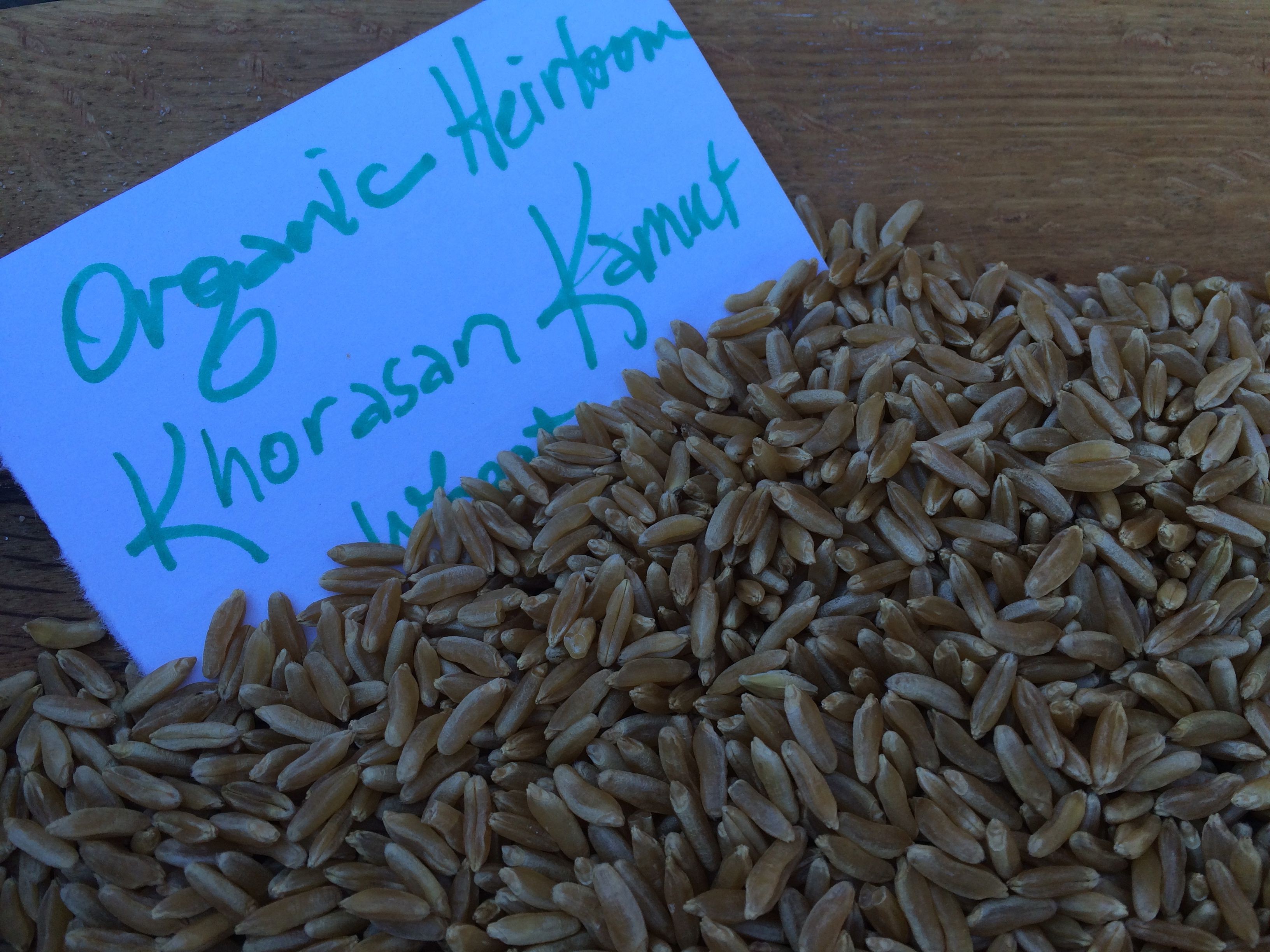
Organic Khorasan Kamut wheat--great for bread baking

Organic Khorasan Kamut wheat–great for bread baking

If you don’t want to take the time, or if you don’t have milling equipment, no problem!  Just come by our Flor de Mayo farmers market booth and see your special grain being fresh-milled before your very eyes.  It is especially neat for kids to see where flour comes from.  Surprisingly, many an adult has difficulty making the connection with grain and flour.  The beauty and significance of keeping the grain whole until milling is that the grain is ALIVE!  When used fresh-milled within a few days of milling, the beneficial enzymes–the “life force” in the whole kernel–are still active in the flour.  And the taste of freshly-milled flour is a whole new flavor-ballgame.

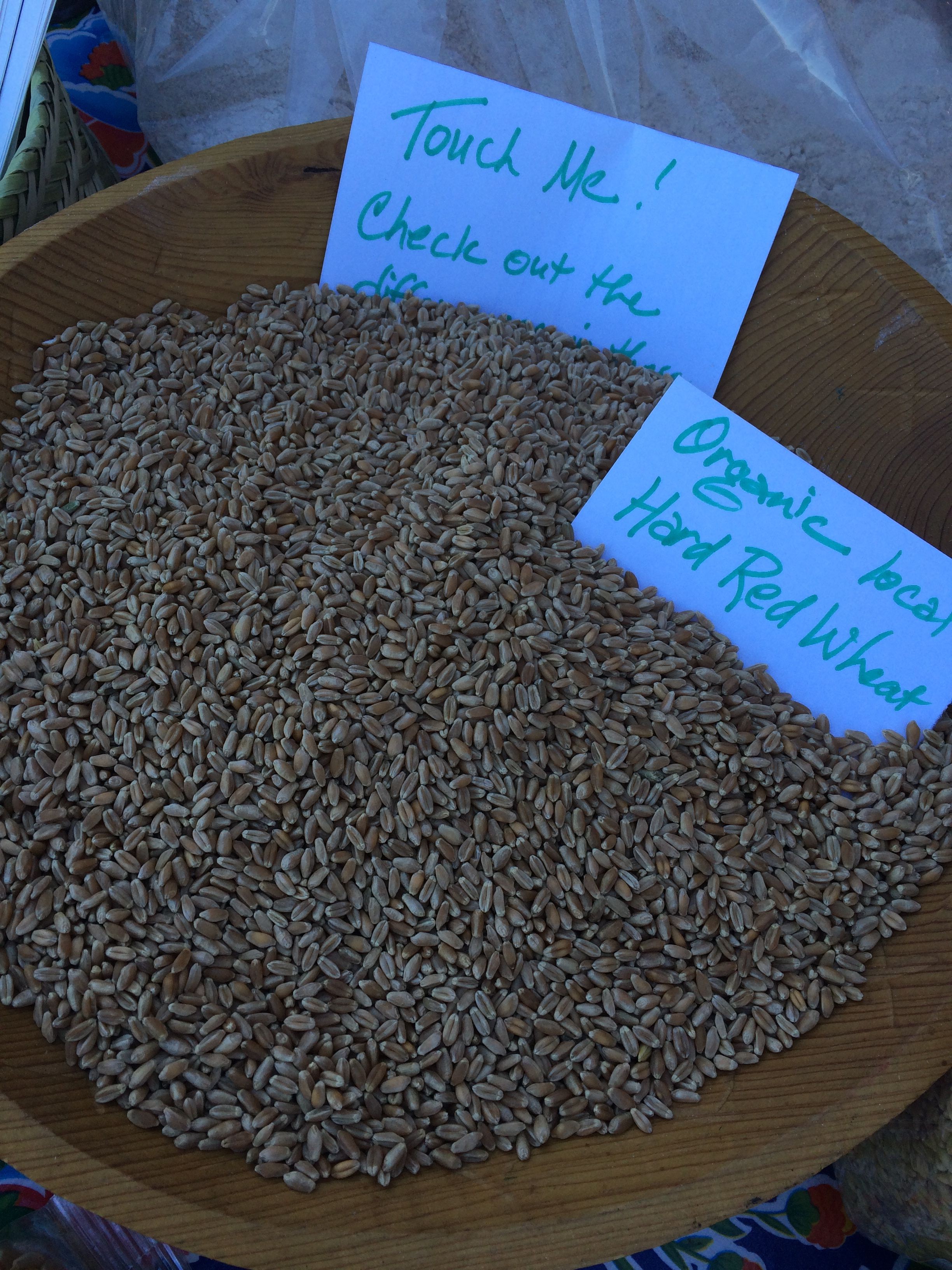
Organic hard red wheat--perfect for Christmas cookies and cakes

Organic hard red wheat–perfect for Christmas cookies and cakes

Come actually touch our good organic grains!   Feel their liveliness.  We have recipe ideas to share, like our Baja Arizona White Sonora Wheat flour and Mesquite pie crust.  In addition we can recommend lots delicious whole wheat-berry recipes for Padre Kino’s white Sonora wheat grown locally by BKWFarms or the Pima club wheat grown by San Xavier Farm Coop and Ramona Farms.

For a completely new experience, try baking with a purple grain!–our heirloom Purple Prairie Barley.  Barley flour has the lowest glycemic index of all the grain flours hence helping to balance blood sugar.  It has a rich flavor that can enhance any bread or biscuit recipe.  The purple color indicates a high anthocyanin content– an important antioxidant.  When you cook the purple barley as a whole grain, you can use it in pilafs and marinated grain salads the way you might use rice or quinoa.  Combined with rice it makes a colorful high-contrast pilaf.  (I’d be happy to elaborate in another post.)

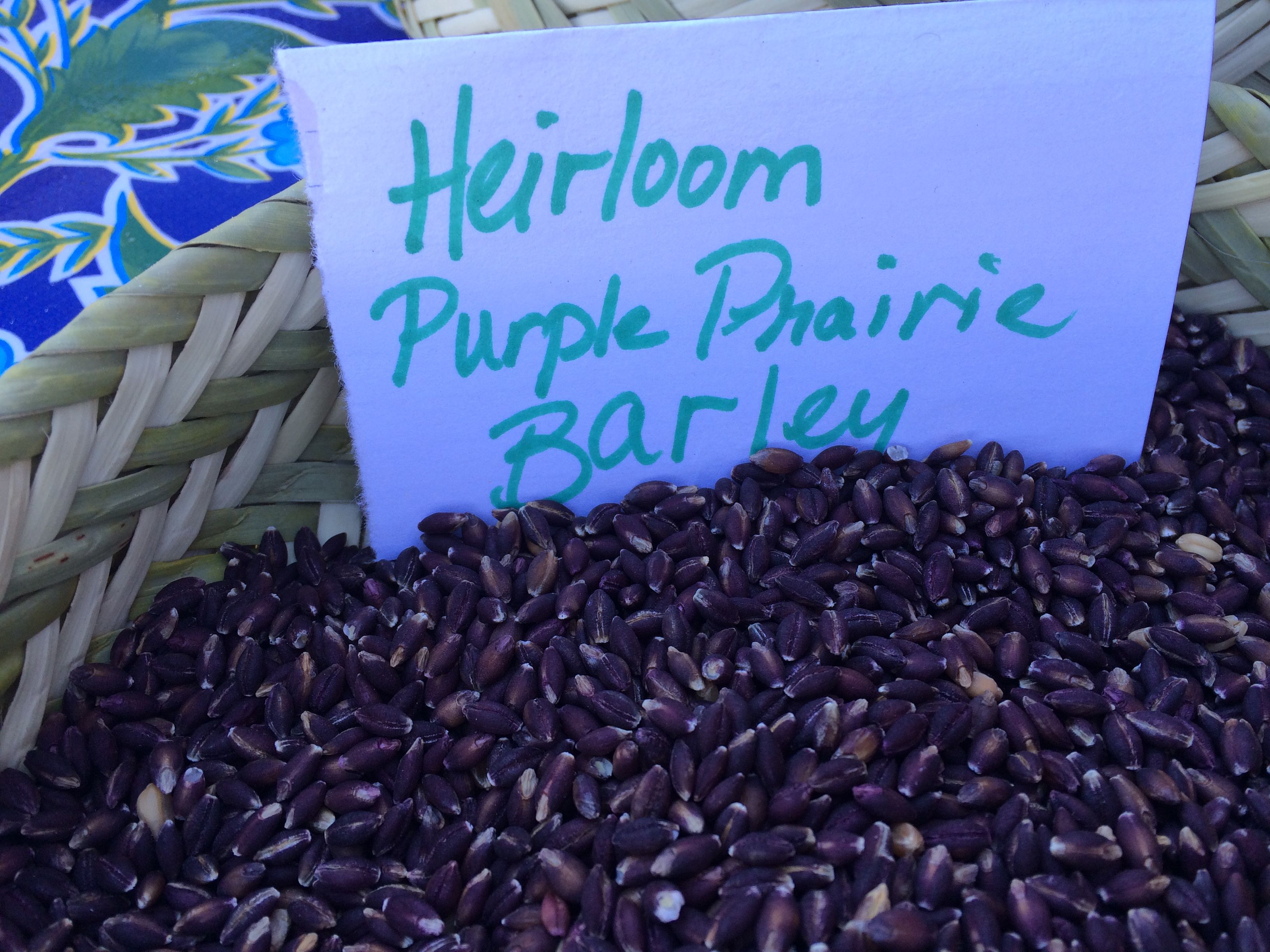
Beautiful purple prairie barley--an heirloom originally from Tibet

Beautiful purple prairie barley–an heirloom originally from Tibet–full of the healthful flavonoid anthocyanin

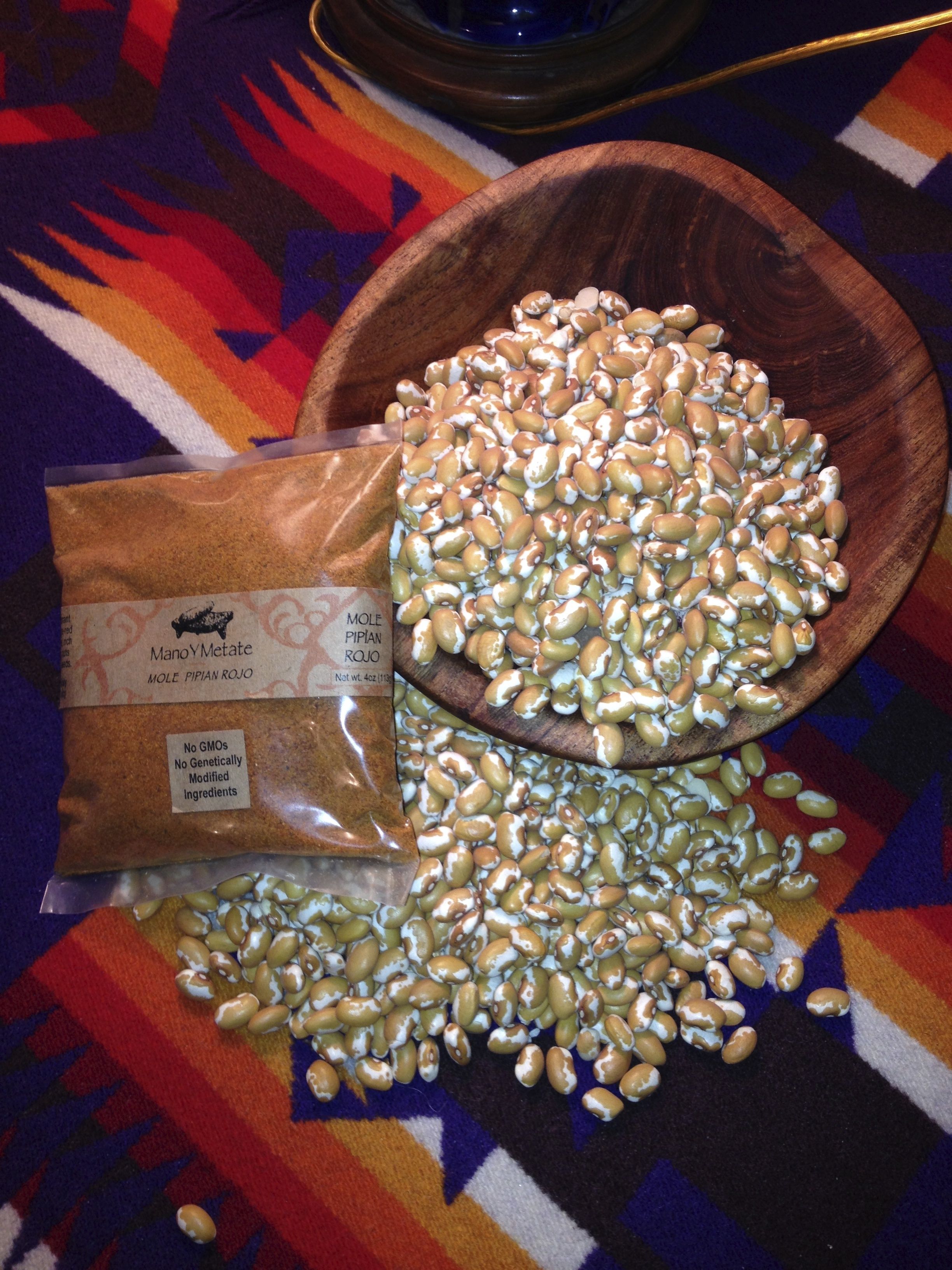
Try using Mano y Metate's Pipian Rojo Mole as a vegetarian spice for these Zuni Gold beans!

Try using Mano y Metate’s Pipian Rojo Mole as a vegetarian spice for these Zuni Gold beans!

Tis the season also to rejoice in the indigenous beans that have supported Native cultures for unknown centuries.

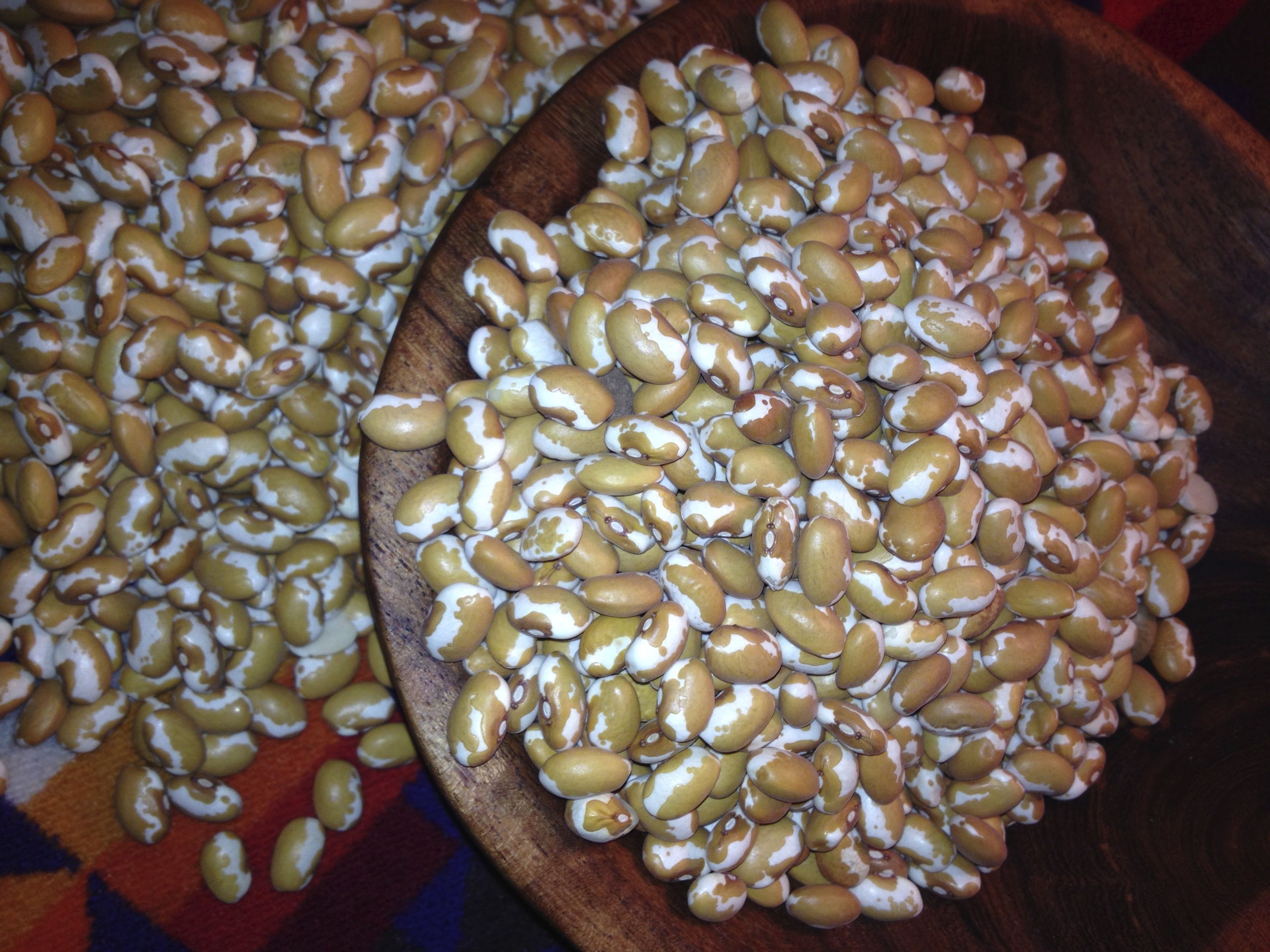
Beautiful Zuni Gold beans--used traditionally in the Winter Solstice celebration

Beautiful Zuni Gold beans–used traditionally in the Winter Solstice celebration

Heirloom beans are full of protein, full of flavor, and so versatile.  I like to cook up a big pot of these golden Solstice beans and then freeze them in serving sizes to prepare later in a variety of fun ways–as chile beans, as dips, in burritos, as hummus, and of course heart-warming bean soup–the list goes on… Come get inspired at our Flor de Mayo table when you see the biodiversity of beans spread before you!

Delectable Christmas Limas can be prepared as vegetarian centerpiece dishes to honor the season!

Delectable Christmas Limas can be prepared as vegetarian centerpiece dishes to honor the season!

The most festive heirloom bean of the holiday season is the colorful Christmas Lima (AKA Chestnut Lima) so called because of the timing when it is harvested.  (Check out past blog posts for some great recipes.)  We have even had jewelry-makers buy this bean to string as fetish-style necklaces.

Calling creative gift-givers!  Join us at the Sunday St Philips Farmers Market for some meaningful, local, healthful and tasty gifts that say “Baja Arizona” in the most delightful way.

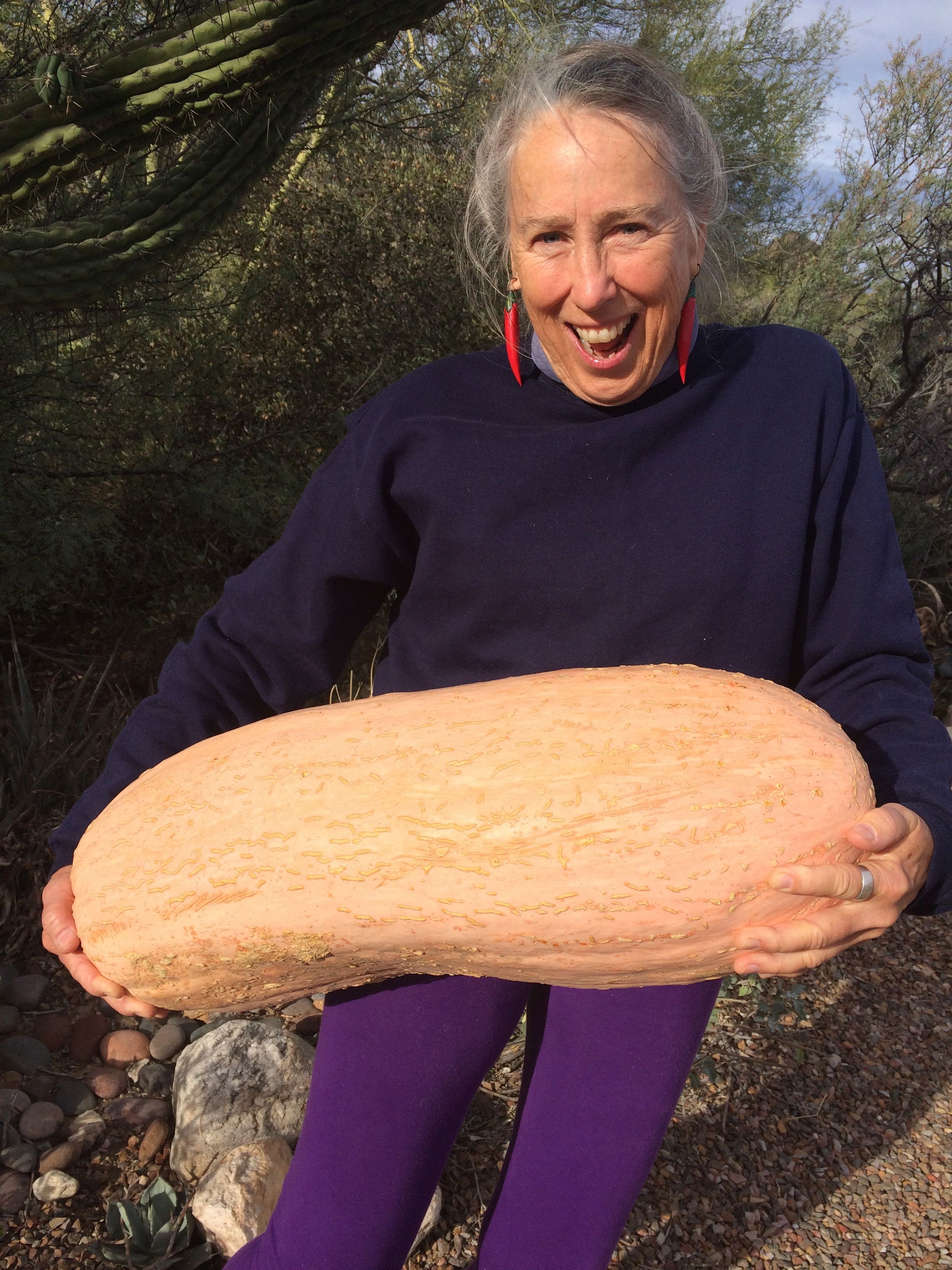
Just for scale, Tia Mart hefts this heirloom Navajo squash. Who needs a workout center if you are a gardener or farmer?

Just for scale, Tia Marta hefts this heirloom Navajo squash. Who needs a workout center if you are a gardener or farmer?

May you have happiness, health, peace in your hearts, and good cheer this holiday season –greetings from Rod and Tia Marta at Flor de Mayo!

Heirloom Grains & Heirloom Fruits marry in a Holiday Pie

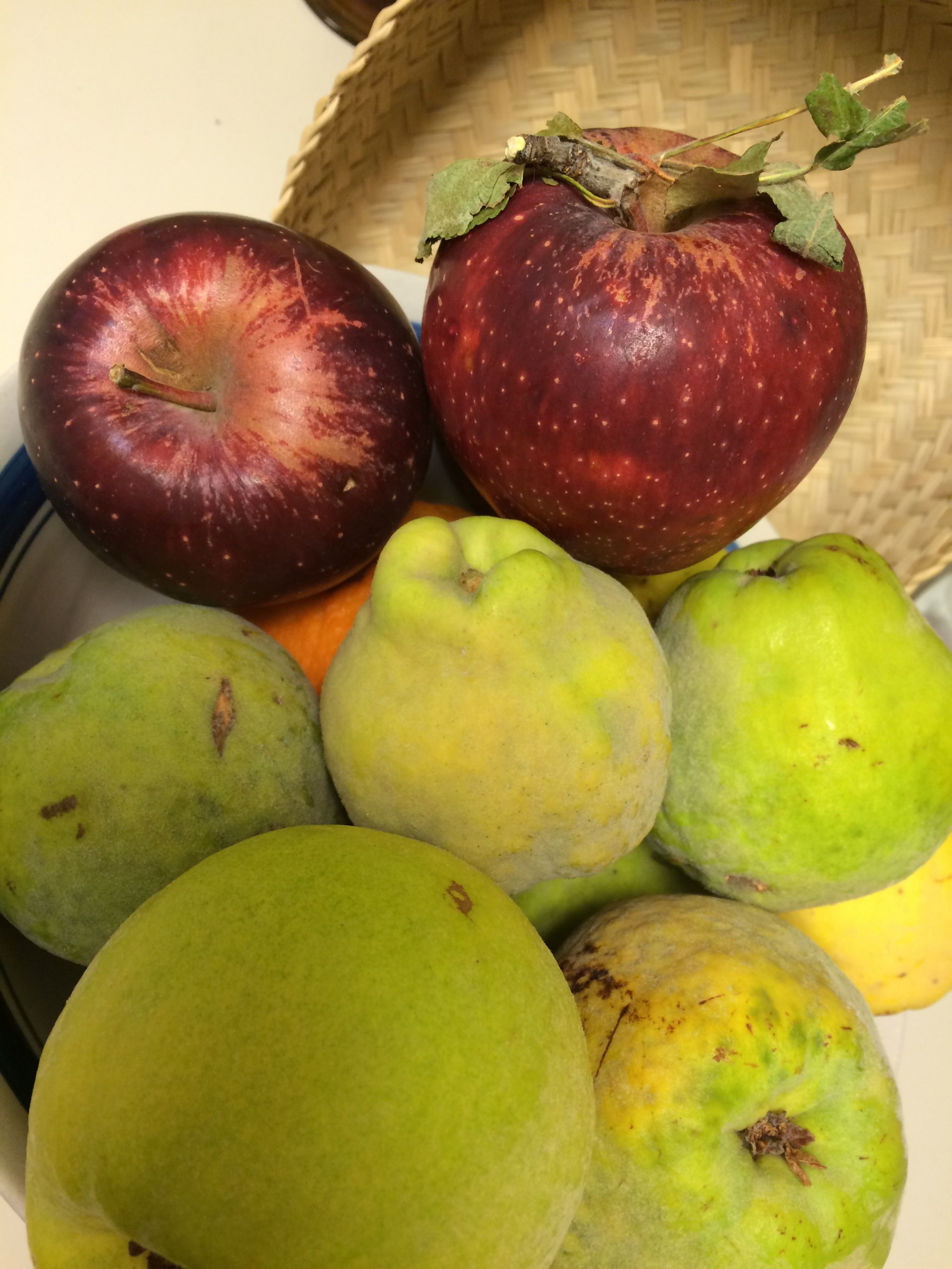
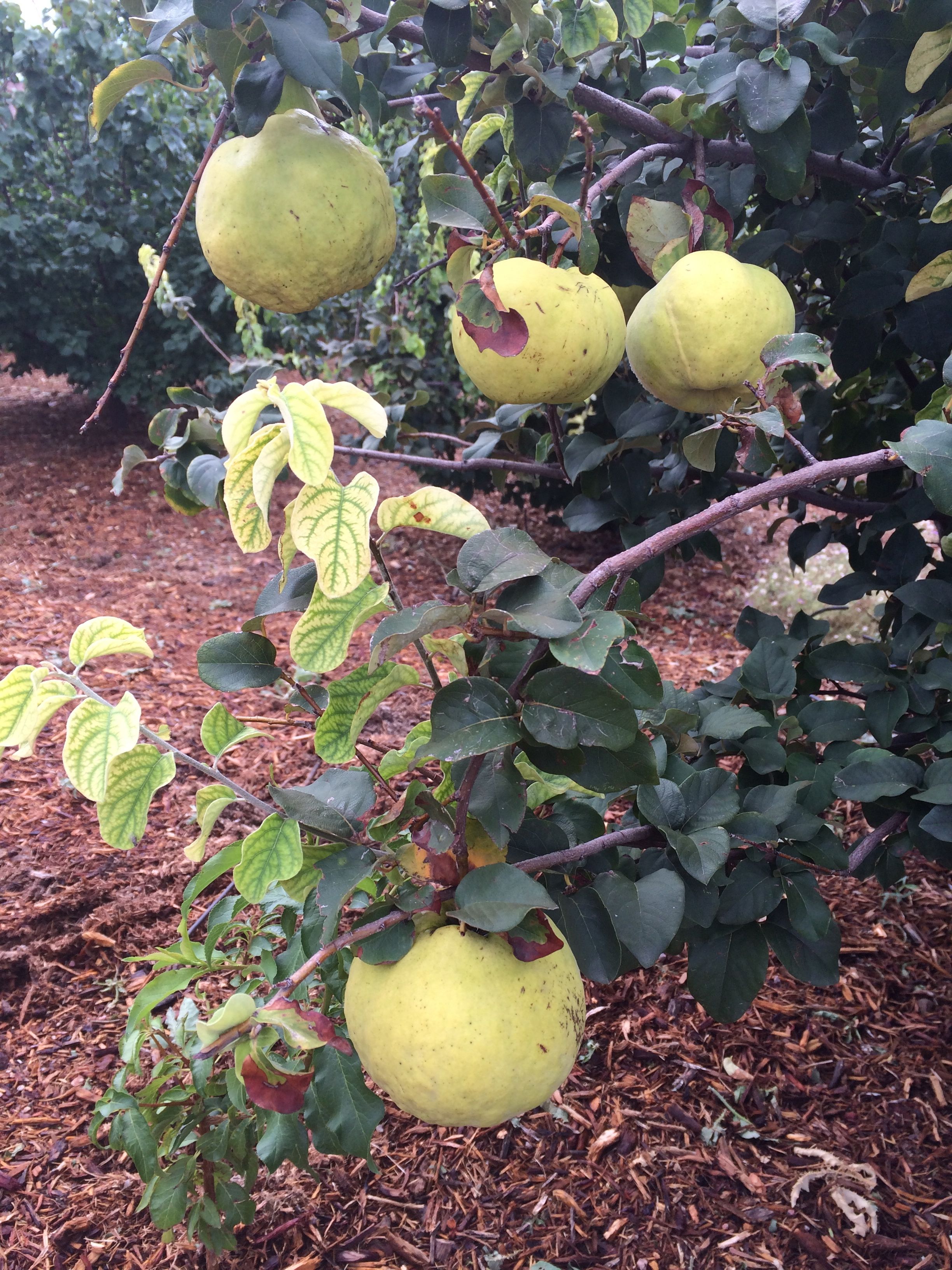
Padre Kino's Membrillo Fruit with Slide Rock Star King Old Fashioned Double Delicious Apples

An Heirloom Fruit Harvest:  Padre Kino’s Membrillo Fruit from my garden with Star King Old Fashioned Double Delicious Apples from Slide Rock State Park heirloom orchard (MABurgess photo)

In both the low Sonoran Desert and in the higher Southwest, fruits are hanging on the trees ready for harvest.  At Mission Garden the quince trees, better known as membrillo, are bearing their last sturdy fruits.  Mission Garden was the site of a wonderful celebration of membrillo in October with talented cook Josefina demonstrating how to make cajeta de membrillo, our sweet autumn dessert delicacy.

Membrillo (Quince) trees heavy with fruit at Mission Garden Tucson, near A-Mountain

Membrillo (Quince) trees heavy with fruit at Mission Garden in Tucson, Arizona, near A-Mountain–Come visit any Saturday morning!

Membrillo is a perfect food-giving tree for low desert as it can can handle heat--great for a kitchen garden

Membrillo is a perfect food-giving tree for low desert as it can can handle heat–great for a kitchen garden

Tia Marta here to share what is happening in my kitchen these days, bringing together some of my most admired heirloom grain and fruit ingredients–both cultivated and wild–knowing that I have guests coming for the holidays who need a little taste of LOCAL!

It is pie time in our household.  And today it is Membrillo-Apple Pie with White Sonora Wheat-Mesquite pie crust!      I mean, how much more local can one get?

This was the year that our five-year-old quince tree, which we purchased from Desert Survivors Nursery Kino Fruit-tree Project, and which we planted a couple of years ago in our backyard, decided to flower and set fruit–just enough this time to make a couple of pies.  We look forward to the amazing productivity in future years that the Mission Garden quince trees are already showing.  Quince or membrillo fruits look like a cross between yellow apples and pears but are far more sturdy than either of those.    Before ripening they are covered with fuzz and, as they lose it and become shinier and more yellow, you know they are ripening.

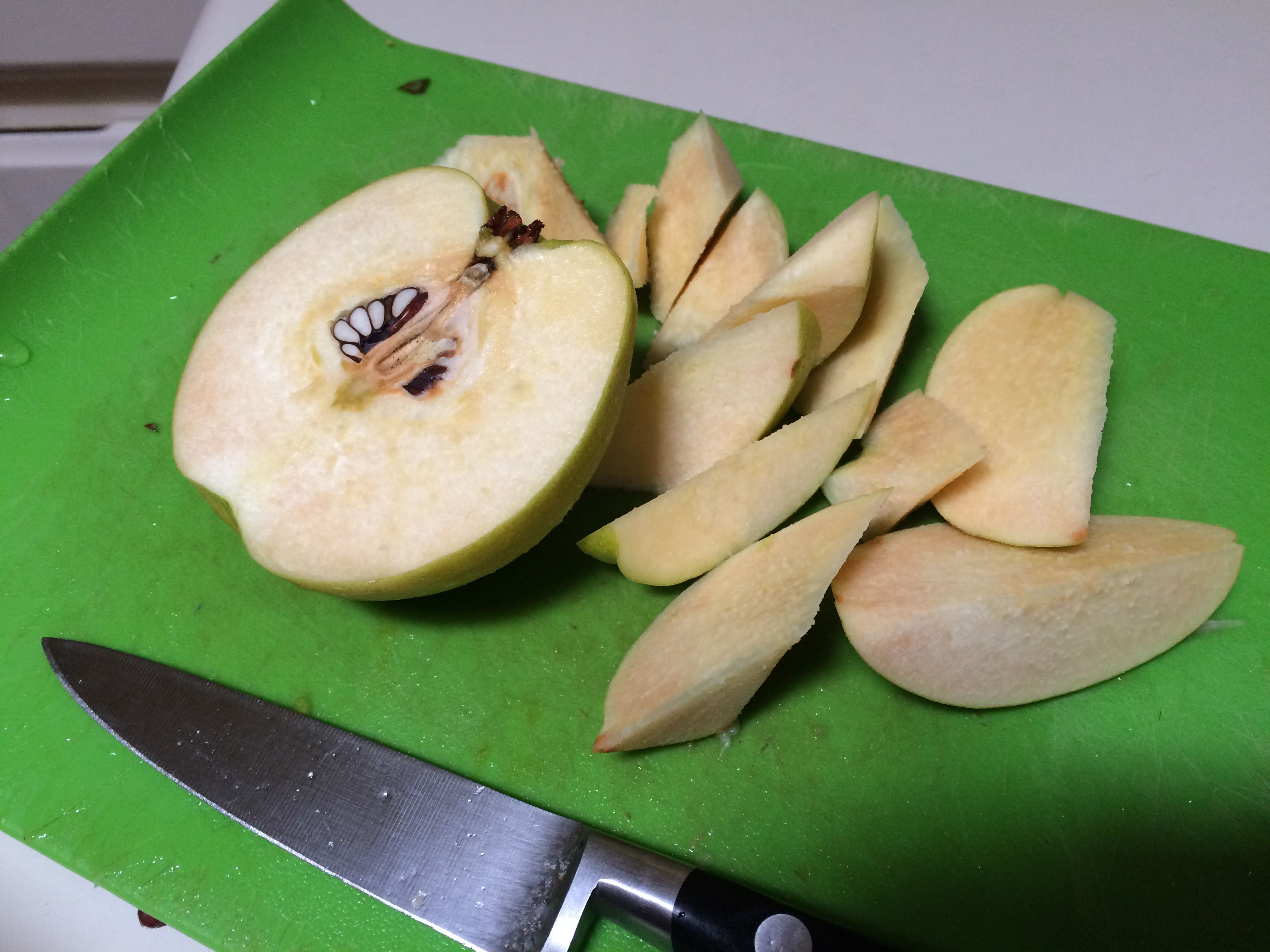
Because they are harder than other fruit, be sure to cut membrillo very carefully. Expect them to come out with not-so -symmetrical slices.

Because they are harder than other fruit, be sure to cut membrillo with extra care. Expect this to result in not-so -symmetrical slices–no problem inside a pie.

Even when this aromatic rose-family fruit is ripe, its somewhat sweet tissue never really softens.  They may feel and taste granular, similar to some pear varieties.  But they are substantial food, full of good potassium, vitamin C, dietary fiber, and iron.  In other regions, quince has been used with apples to make jellies as it aids the gelling process.  Since the time of the missionaries into Pimeria Alta, the traditional way of preparing membrillo here is to cook it down with raw sugarcane sugar to make the cajeta confection.  (A detailed report of cajeta de membrillo will make a neat separate post.)

I chose to mix membrillo with its sweet cousin, heirloom local apples, to create a Southwestern version of the all-American pie.  From the neat old Pendley Homestead at Slide Rock State Park in Oak Creek Canyon near Sedona, I obtained the deep maroon-skinned apples shown above from a 1912 orchard.  From the English Family Orchards at Willcox I added a few little galas.  Don’t ever be ashamed to ask orchardists at farmers’ markets if they have any “rejects” for sale.  Many a tasty apple gets tossed because it has a blemish or knick.  Such apples can become a rewarding gift in pies, apple-brown-betty, or applesauce.

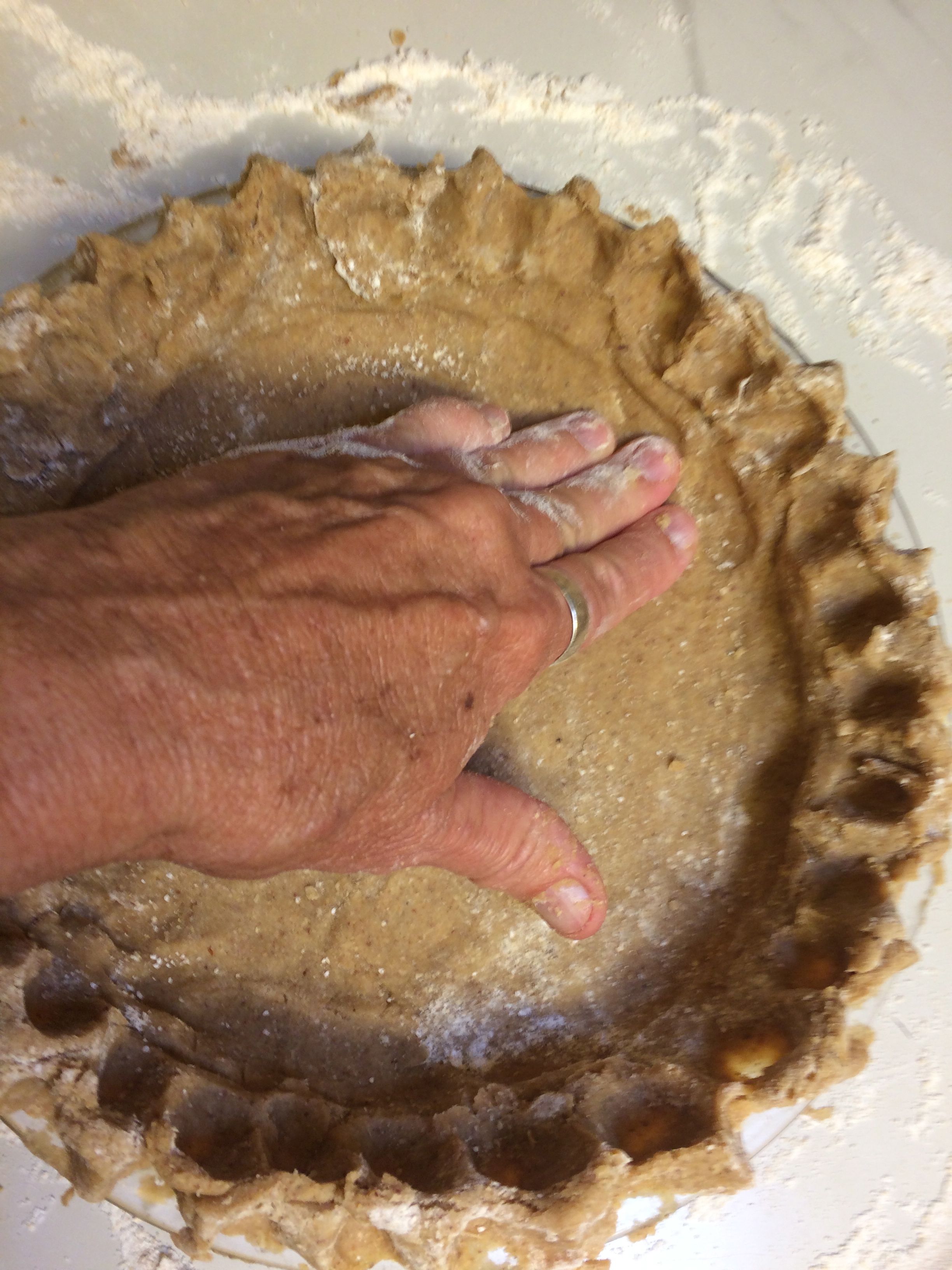
Pressing mesquite/whiteSonora wheat dough into pie pan

Pressing mesquite/whiteSonora wheat dough into pie pan

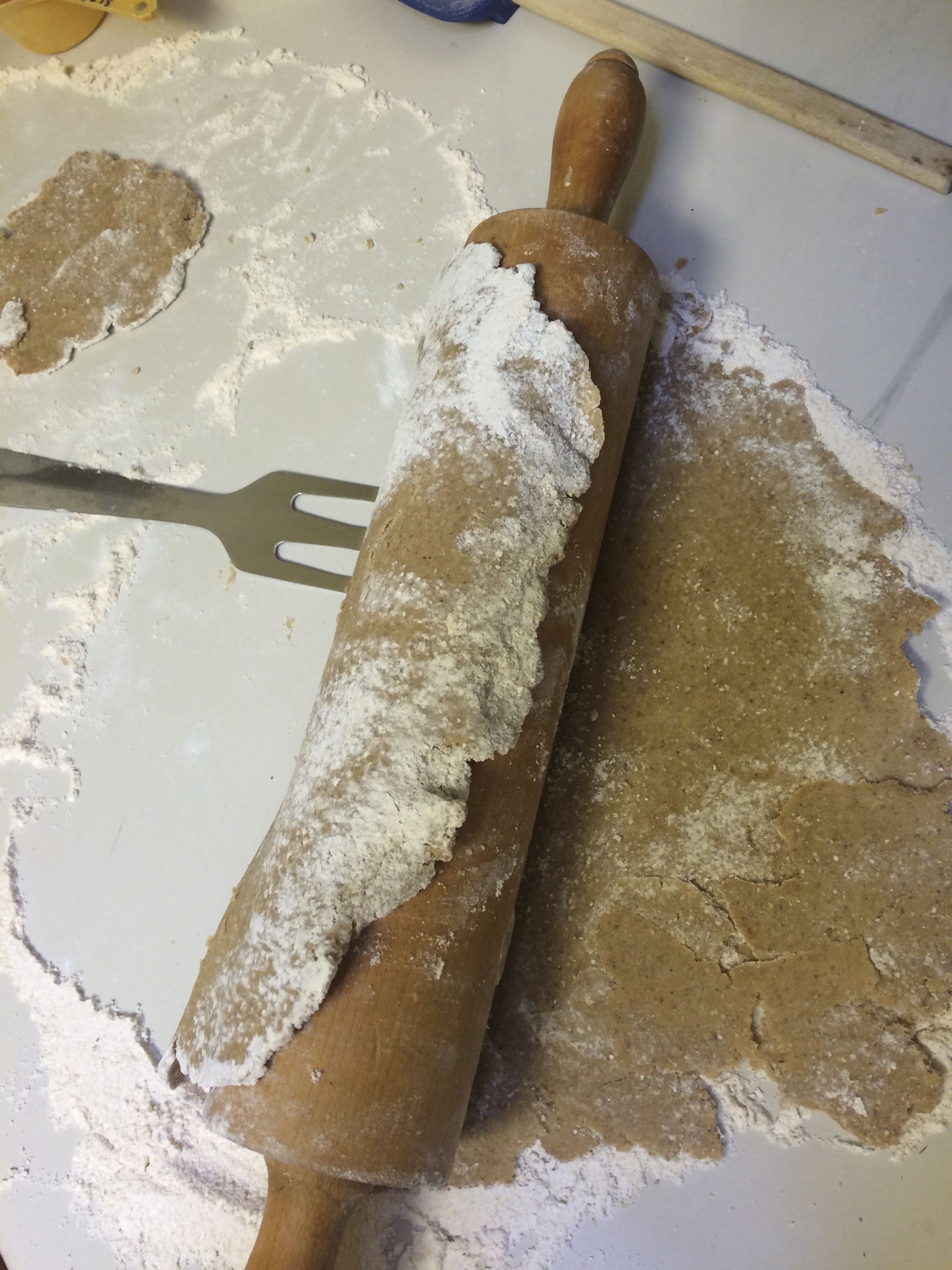
rolling mesquite white Son wheat pie dough

Mesquite meal and white Sonora wheat make a fabulous pie-crust! It is not as elastic as store-bought crusts so be careful in rolling it onto your pie pan. Shown here is a very flat spatula I use as an assist.

Next step, after growing, harvesting, slicing the heirloom fruits, is getting dusted by making my local heirloom Mesquite/White Sonora Wheat Pie Crust (recipe following):

[Kids, don’t try this culinary photographic technique at home.  Your one-handed iPhone will get really sticky.  Mine will never be the same.]


Ingredients for heirloom wheat pie crust:

1 1/2 cups freshly milled whole, organic White Sonora Wheat flour*

1/2 cup freshly milled local velvet mesquite meal**

1 tsp Real-salt or sea salt

2/3 cup shortening (I use organic butter)

5-7 Tbsp ice water

*Organic, fresh-milled white Sonora wheat flour is available for your holiday baking from our Flor de Mayo booth at Sunday St Philips Farmers Market, or by contacting us at info@flordemayoarts.com or  520-907-9471 to order it ahead.                                                                                                                                                                             **Freshly-milled velvet mesquite pod meal (flour) is available via the same Flor de Mayo contacts above.                                                                                                                                                                     Both kinds of heirloom flour are available at a special Heirloom Grains event this coming SATURDAY November 21 at the NativeSeeds/SEARCH store, 3061 N Campbell, Tucson–the public is invited 10am-2pm.

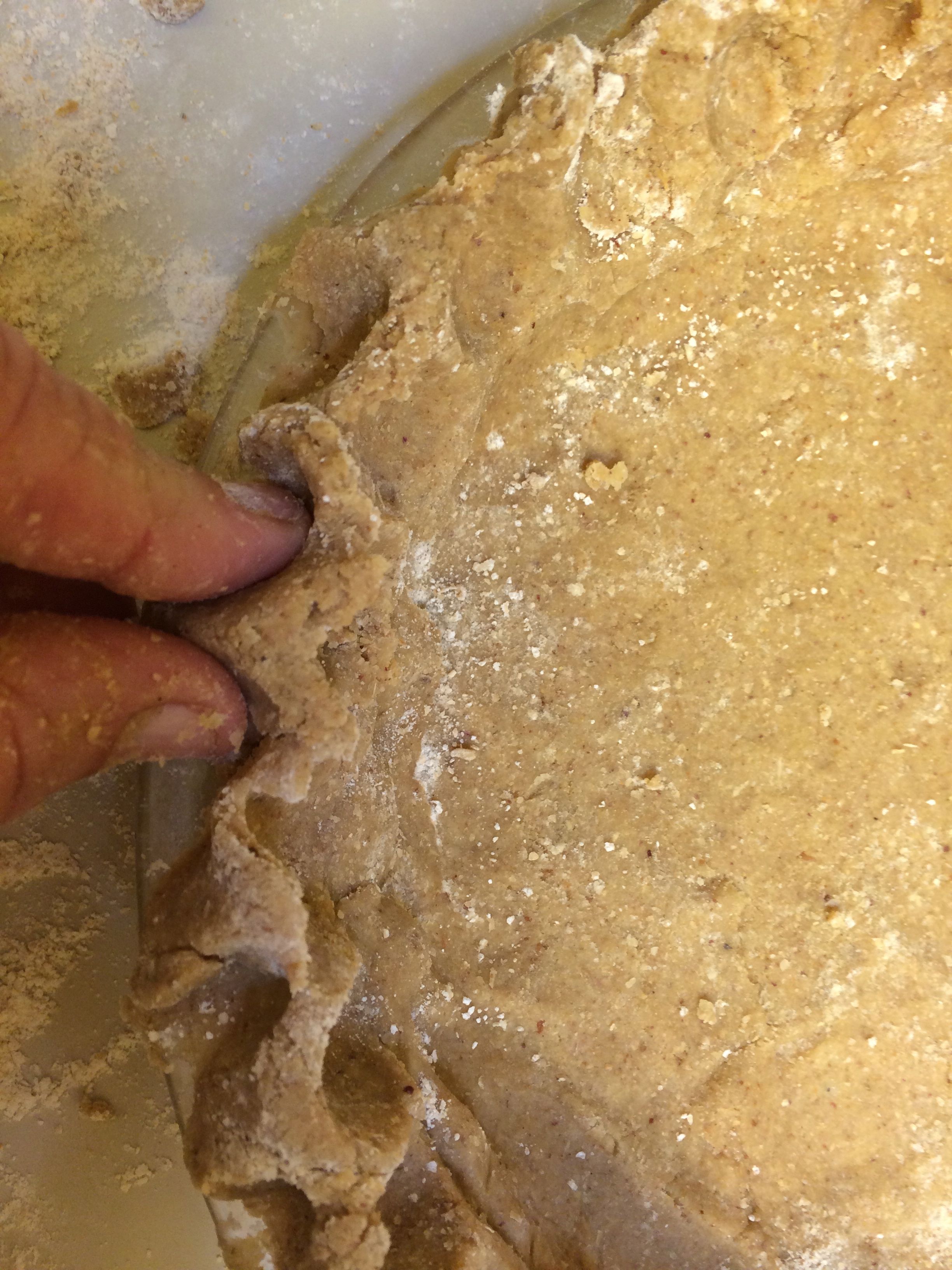
Pinching a tall edge of my mesquite/heirloom wheat pie crust

Pinching a tall scalloped edge of my mesquite/heirloom wheat pie crust–This provides a retaining wall so juicy filling will not overflow while cooking.

Directions for heirloom wheat pie crust (lattice top):

Sift dry ingredients.  Cut in shortening into small pea size lumps.  Sprinkle in tablespoons of ice water gradually, mixing with a fork.  Form 2 balls of dough. Dust each ball with more white Sonoran wheat flour. Flatten each out on a well floured board and roll with rolling pin or bottle.  Use rolling pin as in the illustration, to lift lower pie crust dough onto pie pan.  Press in with fingers.  Keep second ball of dough for working on after pie filling has filled the lower crust. [See recipe for Membrillo/Apple Pie Filling below.]

With second dough ball, roll out as before then cut in 1/2 inch wide strips to lay in basket-weave pattern atop the pie filling to allow filling to lower as it cooks.

Membrillo/Apple Pie Filling ingredients:

(Cook ahead slices and chunks of 4-5 membrillo fruits, washed, then cut with or without skin.  Boil in good drinking water for 20 minutes or until soft.  I am one of those crazies who thinks fruit skins are healthy and full of phytonutrients, so I leave the colorful fruit skins on.)

2 cups sliced membrillo fruit, pre-cooked  (reserve liquid for other gelled salads)

2 cups thinly sliced heirloom apples

1/2 cup organic cane sugar

1/2 cup organic brown sugar

2 Tbsp organic heirloom white Sonora Wheat flour

1/2-1 tsp ground cinnamon

dash sea salt

1-2 Tbsp organic butter

juice of one small heirloom sweet lime       (I got mine from the Friends of Tucson’s Birthplace Mission Garden booth at the Thursday Santa Cruz farmers market at the Mercado San Agustin, West Congress, Tucson)

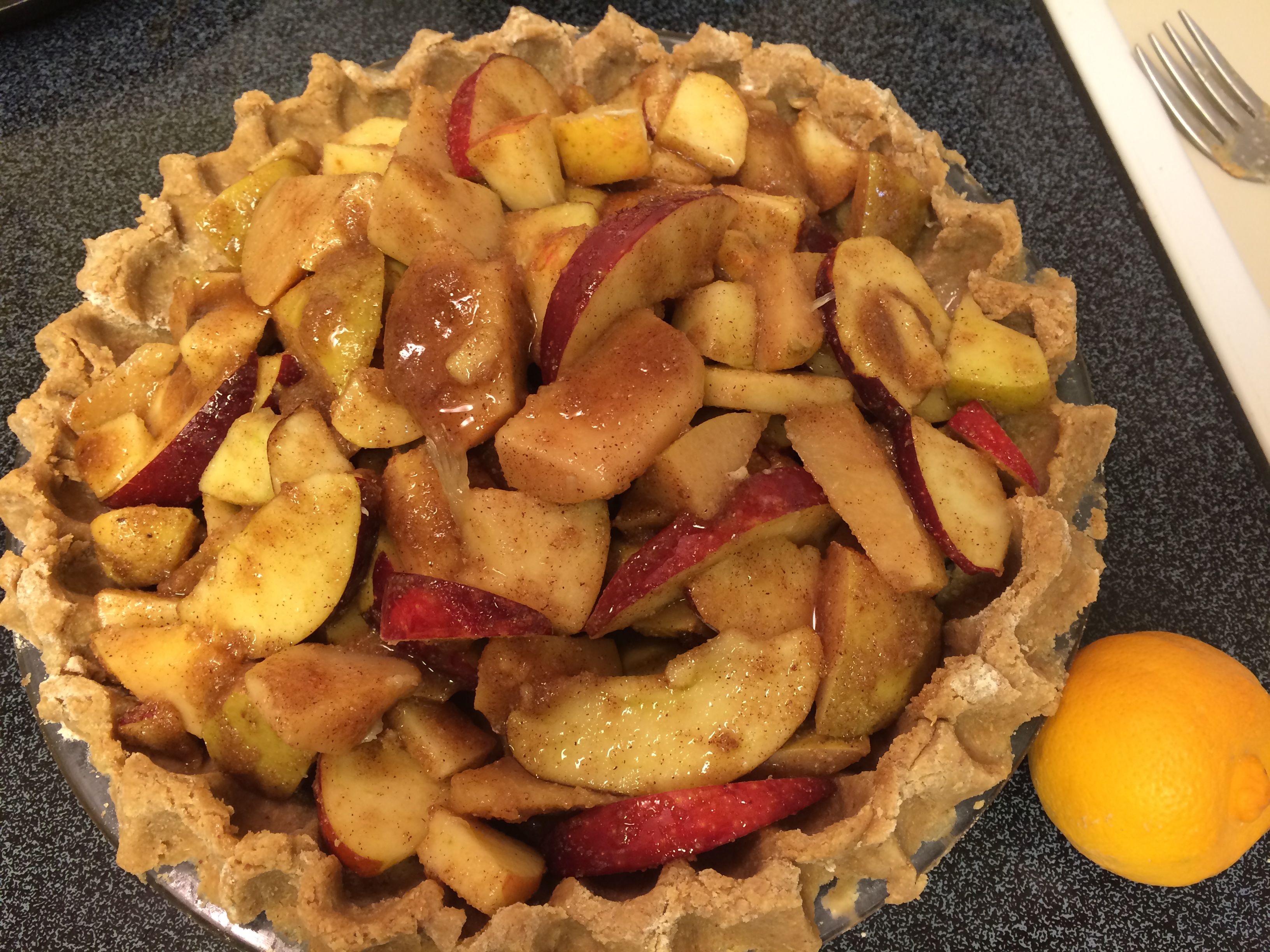
Membrillo/apple pie filling in shell ready to bake

Membrillo/apple pie filling in shell ready to bake. Check out the heirloom sweet lime adjacent–with the dimple–this one from Mission Garden.

Membrillo/Apple Pie-Filling Directions:       Preheat oven to 400 degrees.

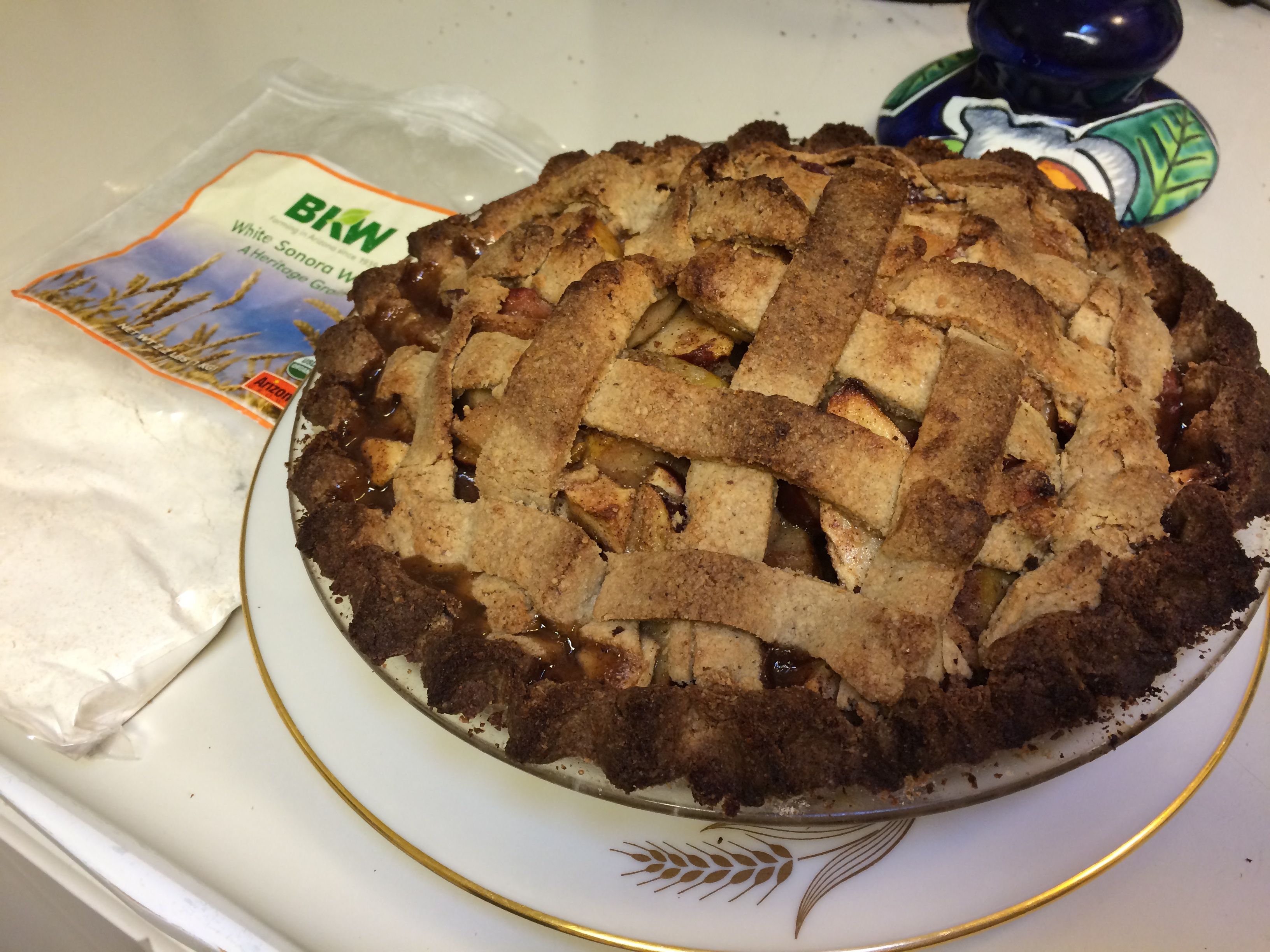
Combine sugars, flour, cinnamon, salt, then mix with the sliced apples.  Fill uncooked pastry crust (shell) with mixture.  Squeeze the sweet lime juice over the filling and place dollups of butter on top.  Place lattice strips of the mesquite/whiteSonorawheat dough across the top of the filling as in picture below.  BAKE for 40-50 minutes or until the crust looks golden brown.  Note:  mesquite meal has natural complex sugars which may caramelize or brown faster than white flour so keep an eye on it after 40 minutes.  The one in my photo got a little too done for my taste, but it will still be fabulous.

Membrillo/heirloom apple pie with mesquite/white Sonora wheat crust--hot and ready to serve

Membrillo/heirloom apple pie with lattice crust of mesquite/white Sonora wheat –hot and ready to serve–To the left in photo is flour milled from BKWFarms wheat-berries.

There will be several ancient grains available at our upcoming Celebration of Heirloom Grains this SATURDAY at the NativeSeeds/SEARCH Store.  Put it on your calendar and dig out your favorite recipes!

Heirloom purple prairie barley available at Flor de Mayo booth,St Philips Farmers Market and at the NSS Grain Event Saturday!

Heirloom purple prairie barley available at Flor de Mayo booth,St Philips Farmers Market and at the NSS Grain Event Saturday!

In addition to our native Mesquite Flour, there will be such fresh lovely grains as organic Hard Red Wheat grown by BKW Farms in Marana which is superb for breads.  Our organic white Sonora wheat is the best for pastries.   Also available will be the ancient Purple Prairie Barley originally from Afghanistan, now from Hayden Mills.

For the knowing baker, milling the whole grain fresh creates a totally different and wondrous effect to breads and pastries because the enzymes and other constituents in the grain remain “lively” for only a few days after milling.  Come enjoy the milling process right before your eyes and feel the vitality of the flour you can take home to bake with!

Our thanks go to the caring padres who first brought the grains to the desert Southwest, to the generations of farmers who continued to grow and save the grain, to NSS for “rediscovering” and conserving them so carefully for the future, and to new farmers like San Xavier Farm Coop, BKWFarmsInc, Ramona Farms, and Hayden Flour Mills for multiplying them for our nutrition, enjoyment, and sustainable desert living!

For more info please call NativeSeeds/SEARCH at 520-622-5561 or Flor de Mayo at 520-907-9471.  See you at the Milling and our Celebration of the Heirloom Grains!!

Magdalena heirloom barley grown at Mission Garden, Tucson

Magdalena heirloom barley grown at Mission Garden, Tucson

A savory pilaf made with heirloom purple prairie barley--watch for future recipes--Grain available at the Flor de Mayo booth, Sunday St Philips market

A savory pilaf made with heirloom purple prairie barley–watch for future recipes–Whole grain available at the Flor de Mayo booth, Sunday St Philips market, and at Saturday’s Heirloom Grain Celebration

Taste Buds Ready to “Rejoice in Local”–at Mission Garden!

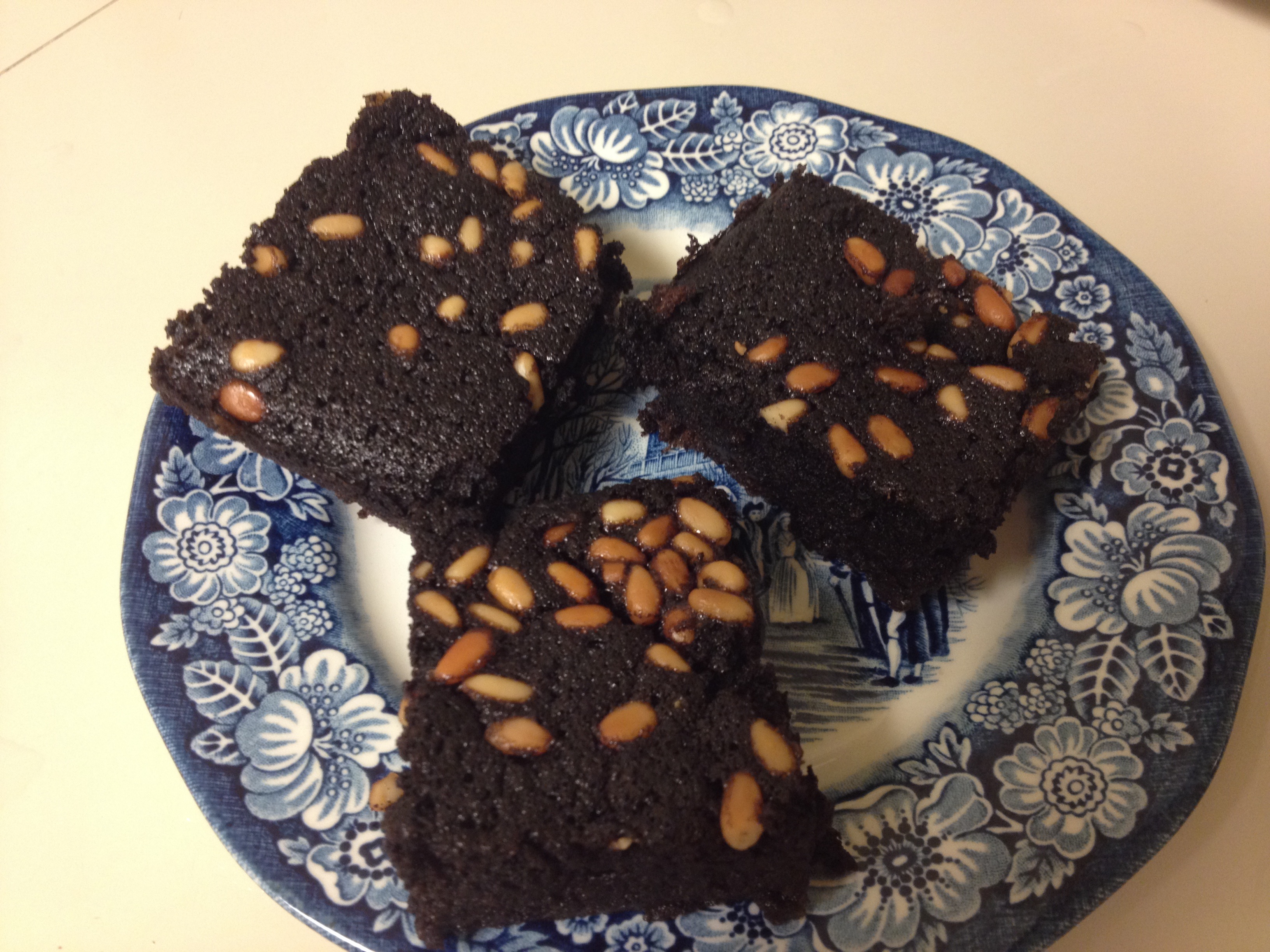
Gluten-free black tepary brownie-cockaigne for a desert dessert!

Yum!–Gluten-free Akimel O’odham Black Tepary Bean brownies with pinyones — a truly desert dessert served at the Farm-to-Table Picnic Feast at Mission Garden

Indeed, there is no doubt Tucson should be given the designation as an International City of Gastronomy!  Where else in the world could we enjoy a finer, more diverse, perfectly indigenous, more delectable and nutritious PICNIC-FEAST than here in Tucson?  Delicious dishes were the pieces de resistance by some of Tucson’s most renowned chefs for……the first-ever Farm-to-Table Picnic at Tucson’s Mission Garden.

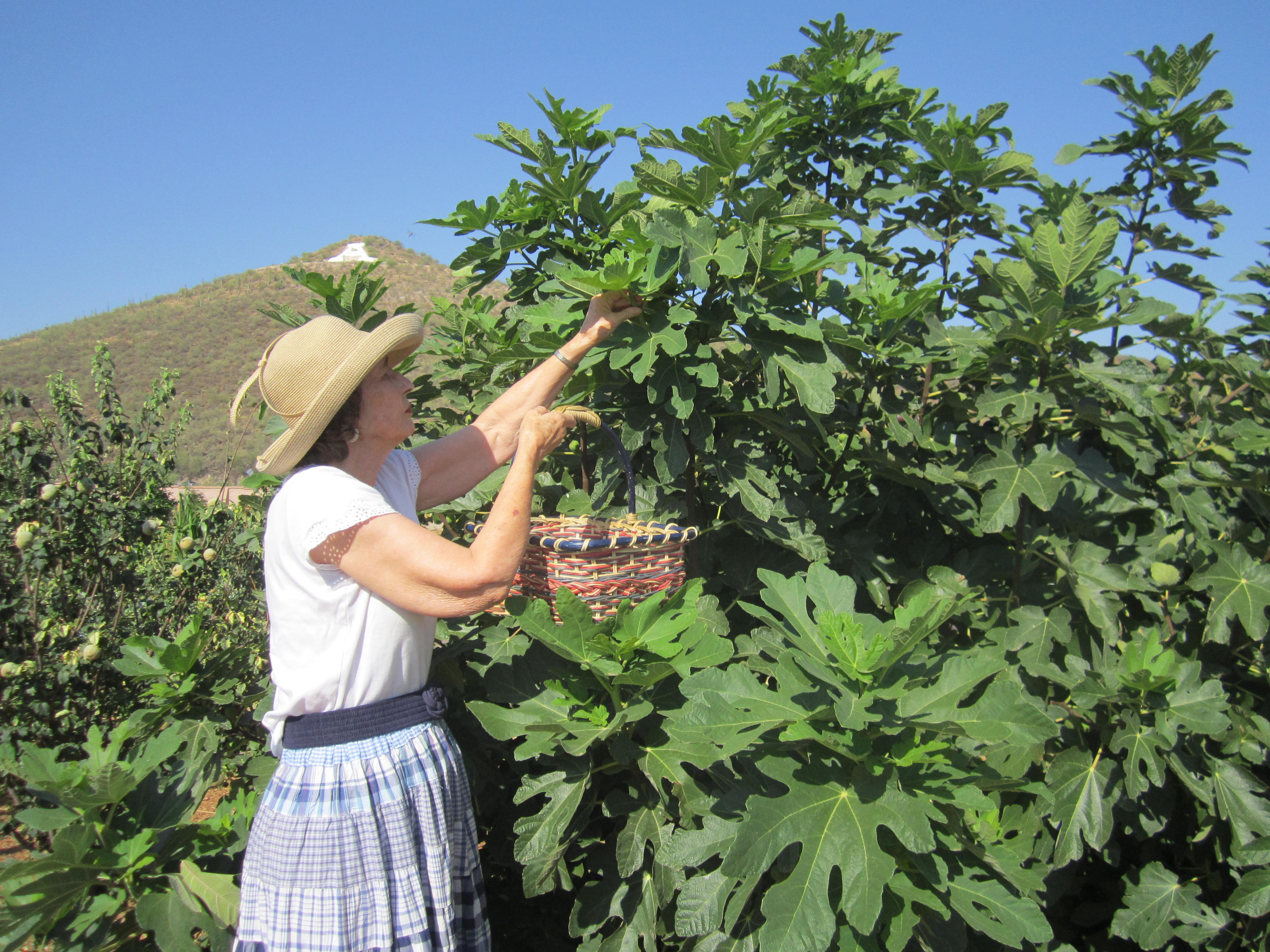
Picking heirloom figs at the Mission Garden for the Farm to Table Feast.

Native-foods cook and author Carolyn Niethammer picking heirloom figs at the Mission Garden for the Farm to Table Feast for her gone-to-heaven fig-bar postre.

At the base of our landmark A-Mountain–the very birthplace of Schuuck-shon–set in a scene of verdant orchard trees heavy with fruit, and heirloom vegetables bearing their colorful autumn harvest, we feasted this past Sunday, October 18, on the tried and true fruits of our desert land.    The community registered for this edible fundraiser via the two hosts of the Farm-to-Table Picnic Feast–our Tucson-born-and-bred organizations– Friends of Tucson’s Birthplace and NativeSeeds/SEARCH.   The cost of $75 covered a magnificent repast–not just a dainty little taste of hors d’oeuvres but a sumptuous serving of at least 7 gourmet entrees, plus a variety of hand-made desserts and some locally fermented beverages!  Either website can guide you to ways of supporting or volunteering for these worthy outfits–http://www.tucsonsbirthplace.org or http://www.nativeseeds.org.

At our special outdoor feast, we learned and appreciated where every single bite comes from!  Every ingredient was LOCAL–grown on our own Baja Arizona soil, bathed by our own Arizona sun, watered by our own Pleistocene aquifer, tended by our own neighbors’ hands not to mention those of Mission Garden and NSS volunteers and staff.

To recognize them from the source….the beautiful Native Tohono O’odham Ha:l squashes, grown at the NativeSeeds/SEARCH Conservation Farm, in combo with I’itoi’s Onions and other heirloom veggies, morphed into betacarotene-rich chile with Loew’s Ventana Canyon‘s Chef Ken Harvey’s magic.   Mission Garden’s heirloom pumpkins and greens transformed by Chef Doug Levy at Feast Tucson to a superb salad-supreme.

Traditional and delicious--Tohono O'odham Ha:l winter squash with magic inside--and curry pumpkins (MABphoto)

Traditional and delicious–Tohono O’odham Ha:l winter squash with magic inside of them–with curry pumpkins (MABphoto)

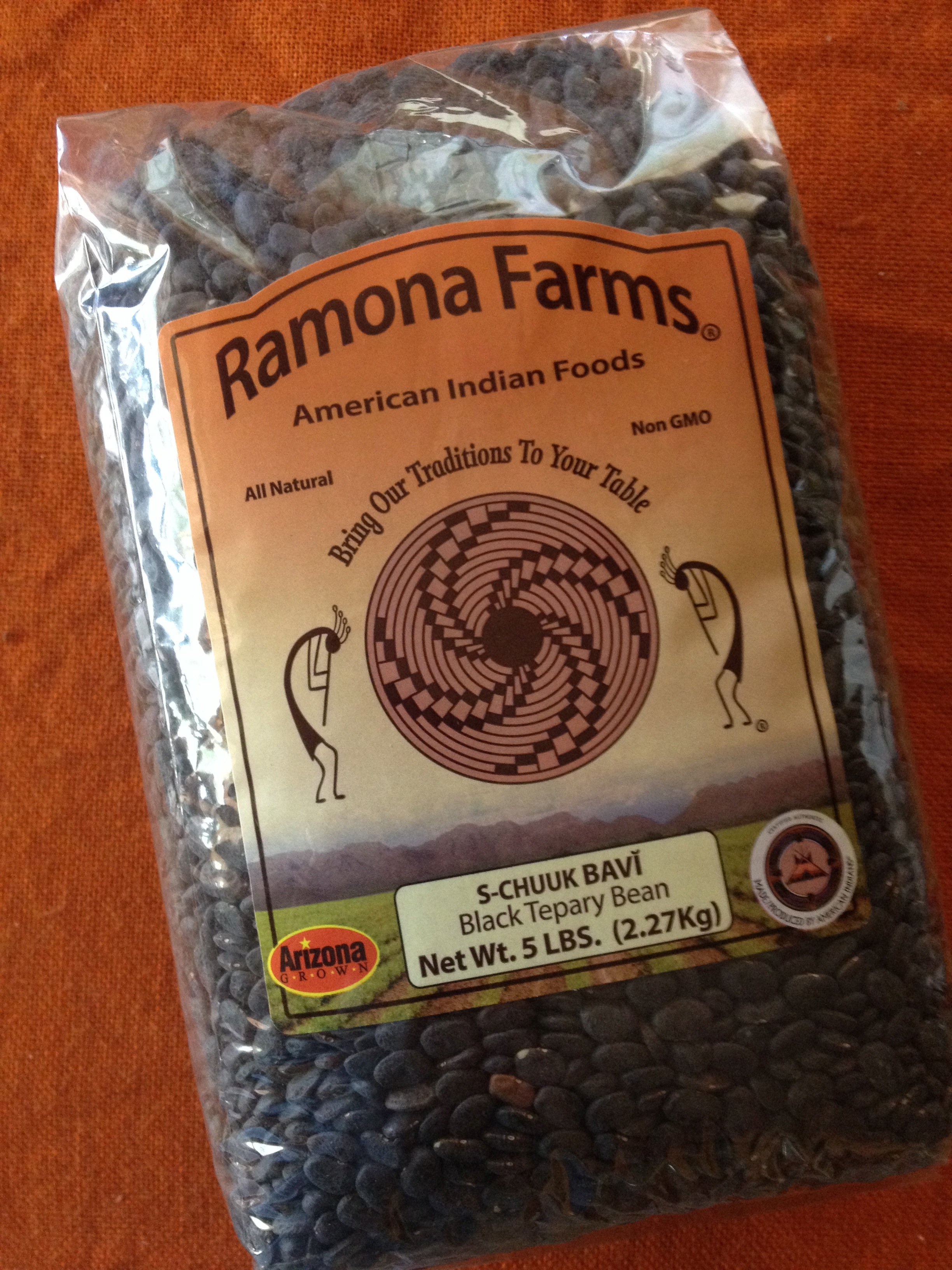
Akimel O’odham pearly black teparies from Pima farmer Ramona Button‘s fields  and locally-harvested cholla buds transformed with culinary sorcery by Chef Janos Wilder’s Downtown Kitchen into the most gourmet vegetarian delight.

S-Chuuk Bavi from Ramona Farms

Padre Kino’s White Sonora Wheat from BKWFarms‘ organic fields became the most flavorful and delicately marinated wheat-berry salad by the hand of Chef Rebecca Ramey at Blue Willow Restaurant.  And speaking of transformation, BKWFarms’ organic white Sonora wheat, with the magic of friendly microbes at Dragoon Brewery, became a festive brew with an amazing back-story to delight all samplers.

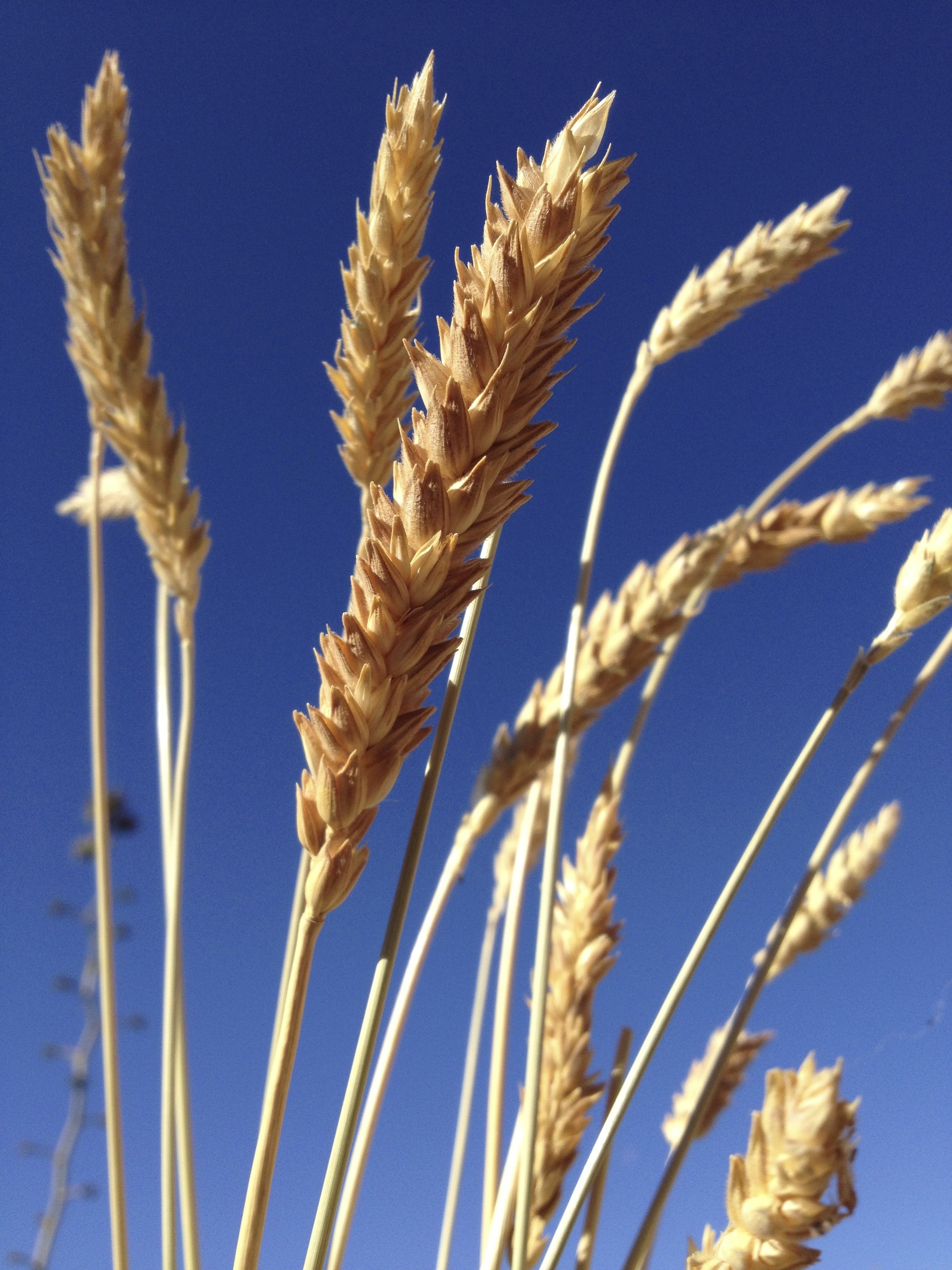
Ripened seed heads of organic heirloom Padre Kino White Sonora Wheat from BKWFarms in Marana (MABurgess photo)

Ripened seed heads of organic heirloom Padre Kino White Sonora Wheat from BKWFarms in Marana (MABurgess photo)


Farmer Frank’s Crooked Sky Farms‘ GMO-free fresh corn expressed itself in a fresh-from-the garden casserole by Proper’s Chef Kris Vrolijk.    Tohono O’odham traditional melon with other fresh corn and tomato, evolved into a gourmet gazpacho created by the Chef at Desert Diamond Casino, our major event sponsor.


Tia Marta here thanking ALL who came to the Table–the Farm-to-Table outdoor Picnic Feast at Mission Garden–to enjoy this enriching experience of Tucson’s traditional foods, cultivated with love in our own “desert terroir.”*  THANKS TO ALL our local–yet world-famous–culinary talent who prepared these sacred foods with care and dedication!  THANKS ALSO to the supporters and volunteers who made this event such a success!   Was it a sign of its significance at that moving moment culminating the feast when the heavens blessed us with a glorious sunset?

The public is invited to visit the ever-changing setting of this feast–the very garden and orchard where many of the heirloom foods are still hanging on fruit-tree boughs or ripening on the vine.  The Mission Garden is open for tours every Saturday with knowledgeable guides to take you through this special desert oasis–a living agricultural history museum.  (For info see http://www.tucsonsbirthplace.org).

For your own table, you too can source the heirloom foods served at the Picnic Feast, at the NativeSeeds/SEARCH Store, 3061 N Campbell, Tucson, http://www.nativeseeds.org, or at the Flor de Mayo booth (online at http://www.flordemayoarts.com) and other farm booths at Sunday’s St Philips Farmers’ Market (www.foodinroot.com).

Native Black Tepary Beans from Flor de Mayo at St Philips farmers market Sundays

Native Black Tepary Beans from Flor de Mayo at St Philips farmers market Sundays

Join NativeSeeds/SEARCH as a member and stay in touch with seed-savers, gardeners, and cooks as we keep these desert-adapted foods alive and well into an unknown future.

Yours truly, Tia Marta, have also honored these heirloom foods artistically by documenting them from my garden in their harvest splendor as watercolor images.  I invite you to view them firsthand at two upcoming OPEN STUDIO eventsART TRAILS on Saturday, Oct 24, and the TPAC OPEN STUDIO weekend Nov.14-15 at Carolyn Leigh Studio.  Search by my studio name, Flor de Mayo Studio, or by artist’s name, Martha Ames Burgess, at  http://www.ArtTrails.org , and at http://www.tucsonpimaopenstudiotour.org  for directions, and do come by for a visit.  You can also check out some of my Southwest Native heirloom food images on my website gallery http://www.flordemayoarts.com — enjoy!

NativeSeeds/SEARCH heirloom Navajo Cushaw Squash watercolor by artist Martha Ames Burgess

NativeSeeds/SEARCH heirloom Navajo Cushaw watercolor by artist Martha Ames Burgess


What will Tucson's top chefs cook for the Heritage Picnic?

Tucson’s top chefs cook for the Farm-to-Table Heritage Foods Picnic Feast


*Desert Terroir,  by renowned author and co-founder of NativeSeeds/SEARCH, available at the NSS store, is a great read about the deep significance of LOCAL.  We can “internalize” his messages by shopping at farmers’ markets,  growing our own, and honoring long-successful desert traditions, seeds, and foods.

Black Teparies Make a Come-Back!

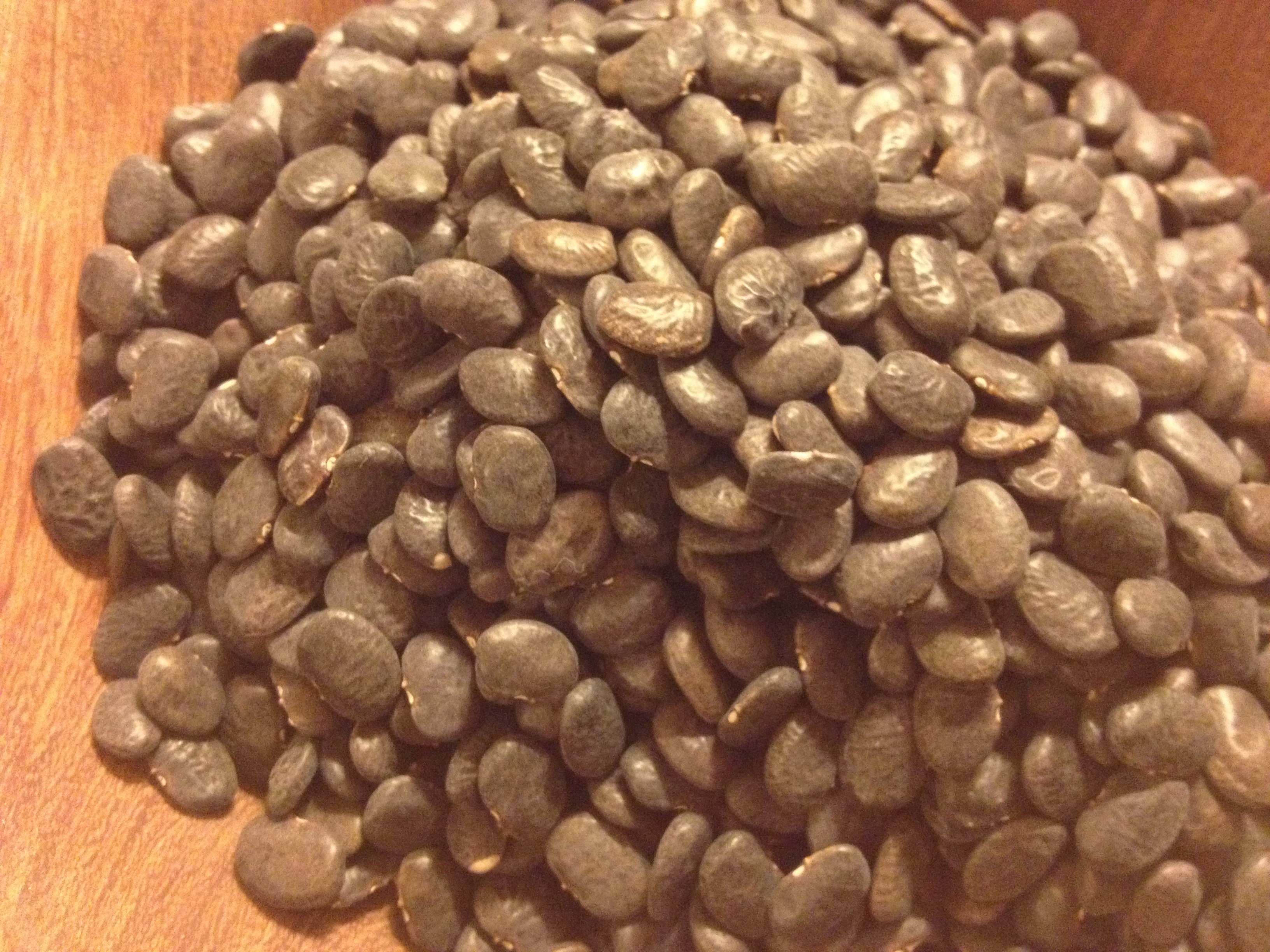
Rich black teary beans dried, ready to hydrate for cooking

Rich black tepary beans dried, ready to hydrate for cooking

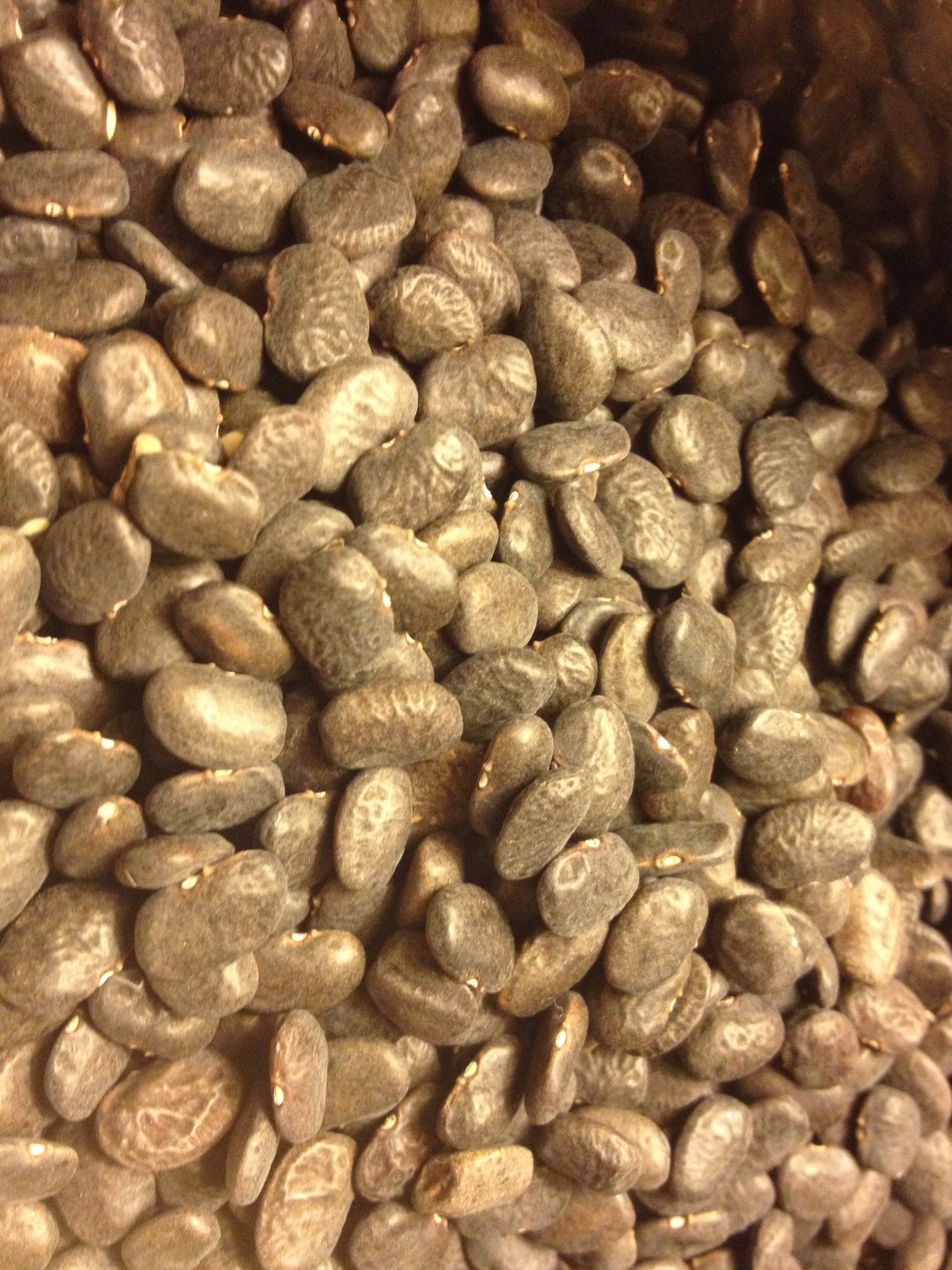
In some light they are a dull charcoal difficult to spot if the pods shatter onto the ground. Sometimes they appear shiny black or opalescent. Somehow black teparies appear to have an antiquity about them–mysteriously harking back to a time rich in prehistory. Tia Marta here to tell you a little about the black tepary bean’s odyssey back into cultivation and into the cooking pots of Southwesterners once again.

Shiny black teparies close up

Shiny black teparies close up

Back in 1912, before WWI and the rapid plunge the “remote” Southwest unavoidably took into East-Coast food fads, there was a crop survey done of the many types of tepary beans being grown and used by different Native American families and communities throughout the Borderlands. The diversity at that time was astounding—some 40+ different colors, forms, sizes, speckles, of tepary beans were reported. Within about a decade there remained only a couple of dominant tepary colors—“red” (an orangy-brown) and white. [For more history, check out Volume 5, No.1 of Desert Plants Journal published by the University of Arizona CALS. Specifically this issue is devoted to tepary beans, and includes an article by yours truly.]

The neat thing about cultivars that are still genetically close to their wild ancestors is that they still contain a diversity of genes that can “pop out” occasionally as visibly different seeds. In the case of the teparies, every so often in a harvest of white teparies, for example, there may turn up a few coral pink, or blue speckled, or even black beans. At the University of Arizona’s Maricopa Experimental Farm, an amazing crop researcher, Mike Sheedy, was, for several years growing teparies to isolate some of these genetic “sports”. He used assistance from his kids (In farming, child labor rules just can’t apply) to help pick out the odd-ball seeds from hundreds of pounds of harvested teparies. Over the years, he grew the separated colors in isolation from each other to preserve color purity. Before research funds ran out he had “re-created” an ancient lineage of black teparies—i.e. he has assisted the ancient genes to come again to the fore, to bring the “invisible” genotype back into the “visible” phenotypes. At termination of his research project he generously donated the black tepary collection to the traditional Pima farming family of Ramona and Terry Button.

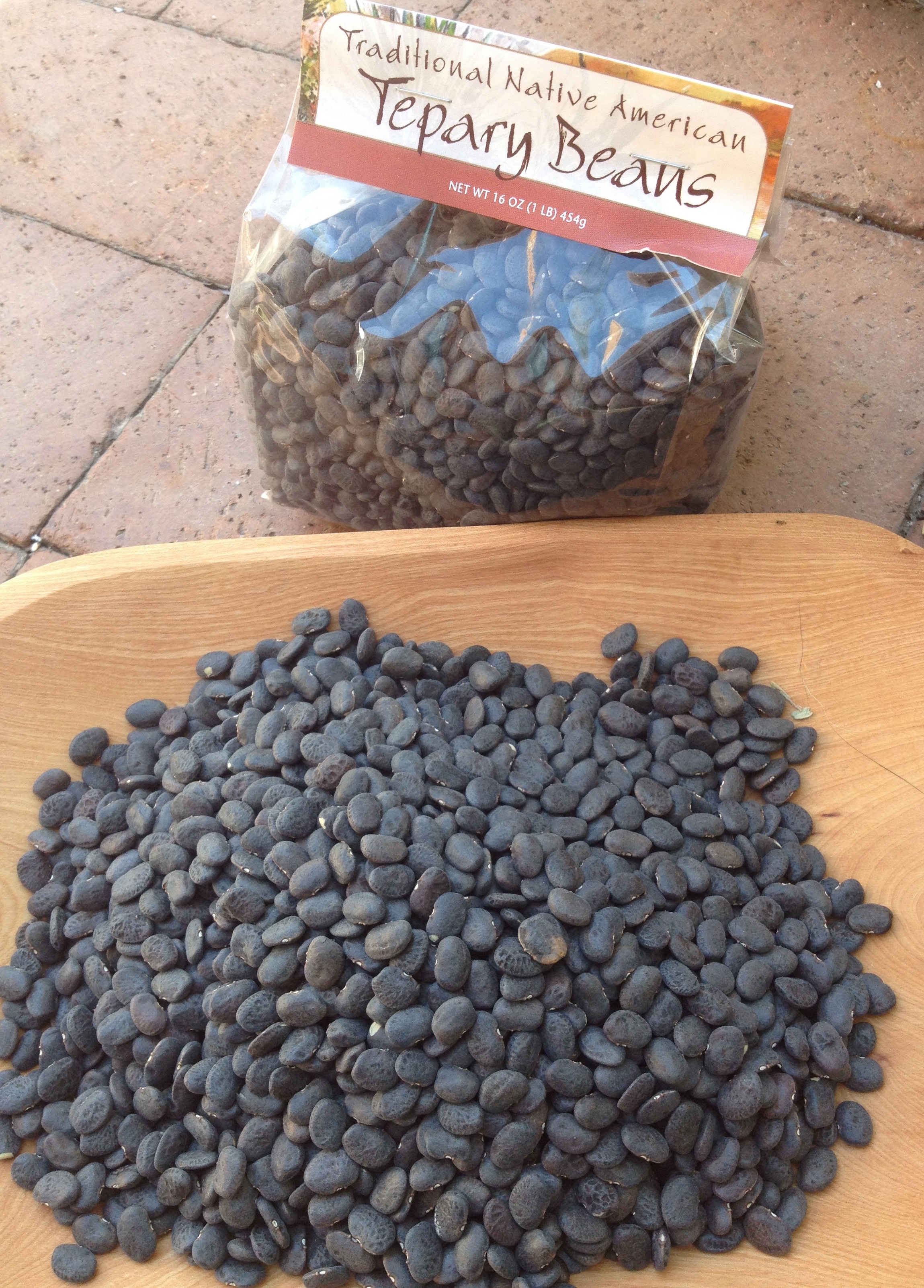
Native Black Tepary Beans & Flor de Mayo 1-lb pkg

Native Black Tepary Beans & Flor de Mayo 1-lb pkg

Now—tah-dah!—at last black teparies are in agricultural production on ancestral lands! The public can purchase these little food gems of antiquity now at the NativeSeeds/SEARCH store (3061 N Campbell Ave, Tucson) www.nativeseeds.org , at the Flor de Mayo booth at Sunday St Philips Farmers Market www.flordemayoarts.com , or online via www.ramonafarms.com.

S-Chuuk Bavi from Ramona Farms

Black teparies are very different in taste from the red or white teparies—although all teparies are much richer than their more distant cousins like the common bean, lima or black-eye pea. Black tepary, schkug ba:wĭ of the Tohono and Akimel O’odham, is the deepest, nuttiest of all, with an earthy bouquet and a slightly bitter after-note reminiscent of coffee. Well, you will just have to try your own taste buds on them!

The public will have an exciting opportunity to taste black teparies prepared by none other than our beloved Tucson Chef Janos Wilder (of Downtown Kitchen fame) at the upcoming Farm to Table Picnic feast at Mission Garden, Sunday afternoon, October 18, 4-6:30pm. Janos is not letting on what his special black tepary recipe will be, but we can be sure it’ll be sensational. [The picnic is by pre-registration only so buy your tickets soon! Online purchase is via the Friends of Tucson’s Birthplace site www.tucsonsbirthplace.org.]

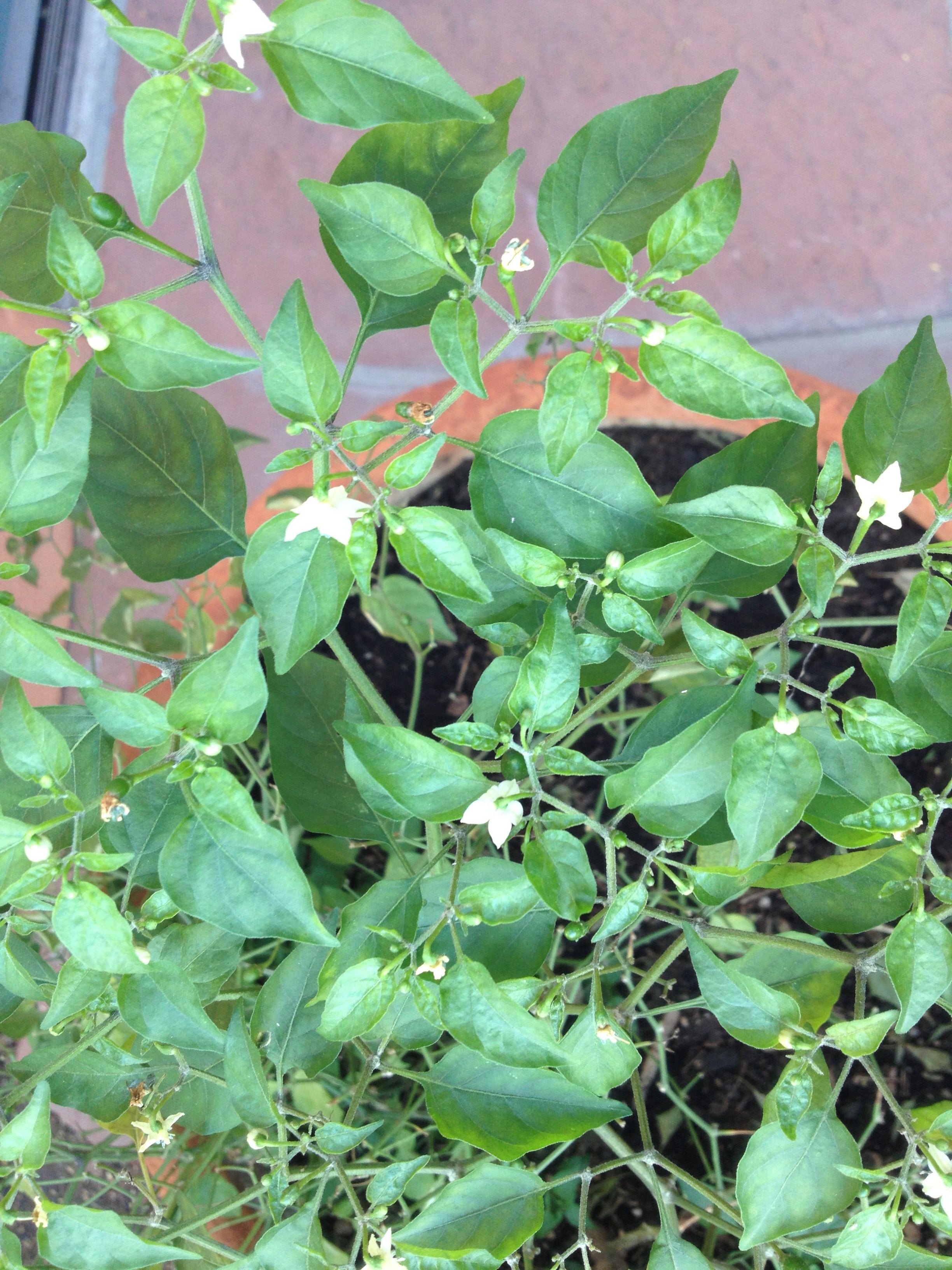
Potted blooming chiltepin plant for edible landscaping

Potted blooming chiltepin plant for edible landscaping

All of the heirloom foods served at the Farm to Table Picnic are being grown (even as I write) locally in Baja Arizona, either at the NativeSeeds/SEARCH Conservation Farm in Patagonia, or at the Mission Garden itself, or by sponsoring farmers and ranchers such as BKWFarmsInc, the 47-Ranch, and Ramona Farms. Some of Tucson’s best chefs are donating their skill and time to prepare different dishes for us. It will be a great opportunity to put the fun in fundraising for two worthy local non-profits, to share the delicious tastes of our heirloom foods of the Borderlands, and to share community joy in what we are able to produce together locally.

For adventuresome cooks, dessert addicts, and chocoholics, I would like to share two variations on brownies made with—yes, you guessed it—black tepary beans! You will not believe how yummy these are.

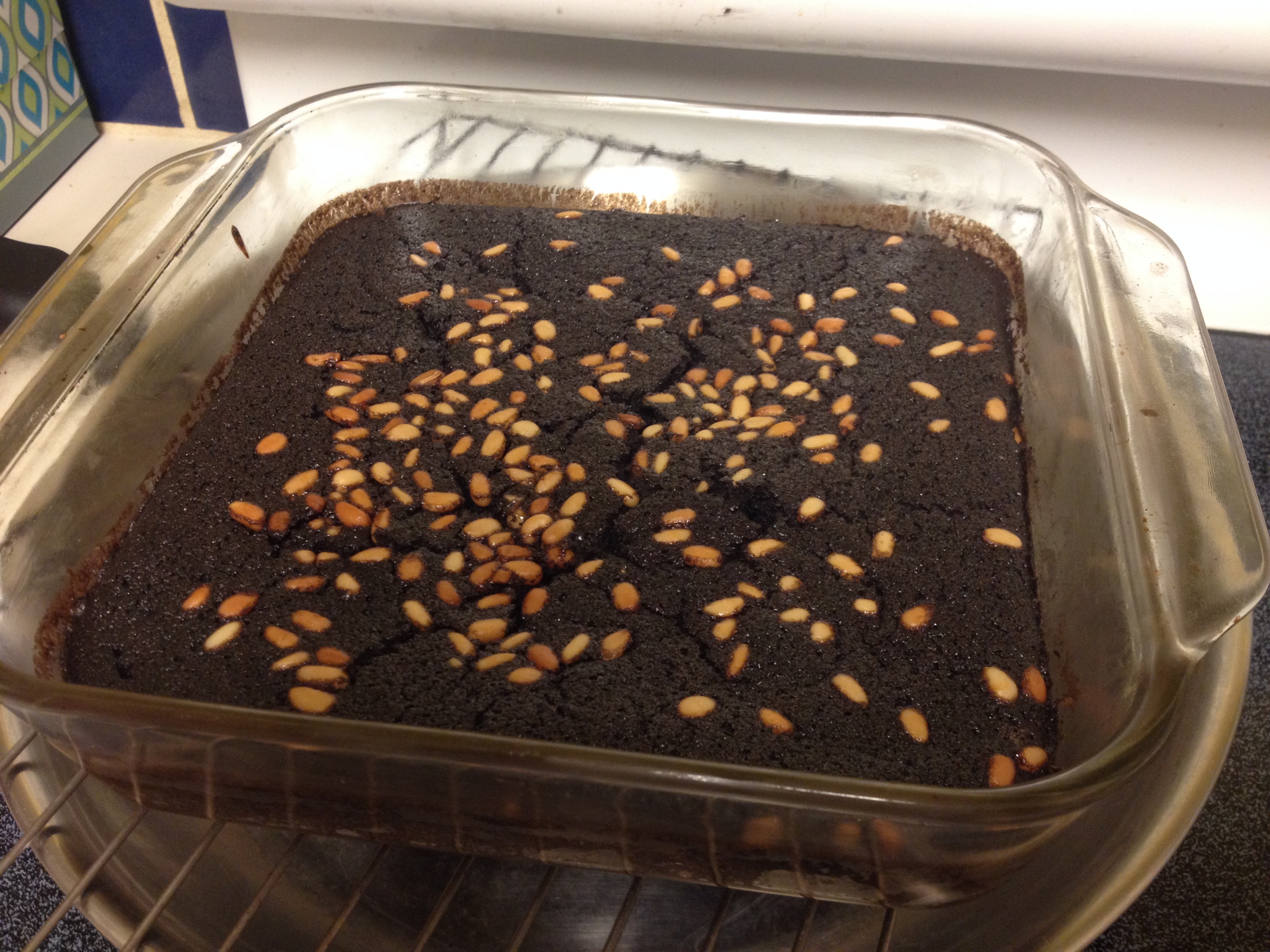
Gluten-free Black Tepary Brownie-Cockaigne on cooling rack

Gluten-free Black Tepary Brownie-Cockaigne on cooling rack


First, cooking black teparies (as with all teparies) takes some time—and premeditation.  The day before you want to use them, sort, wash, and pre-soak your black teparies. I hit them with a quick boil and let them sit overnight to hydrate slowly. Change the water the next day, adding fresh drinking water. Simmer until soft (it may take 2-3 hours on stovetop or 4-6 in crockpot). You want them beyond al dente in order to puree them in a blender or CuisinArt for the following recipes.


Muff’s Gluten-free Black Tepary Bean Brownies-Cockaigne

Ingredients:

1 cup cooked and pureed black tepary beans

1 stick butter= ¼ lb= ½ cup butter

5 Tbsp dark 100% cocoa powder, unsweetened (1 oz.)

¼ tsp sea salt

1 cup organic cane sugar

1 cup loose organic brown sugar

1 tsp vanilla extract

4 eggs well-beaten

¼- ½ cup nutmeats (I use pinyon nuts to keep the Southwest theme)

Directions for Muff’s Gluten-free Black Tepary Brownie-Cockaigne:

Preheat oven to 350 degrees F. Grease an 8×8” baking dish and place a wax paper cut to fit the bottom of pan. Melt butter (preferably in top of double boiler). Stir in thoroughly 5 Tbsp dark unsweetened cocoa powder. Let the mixture cool. Add sugars and sea salt to mixture and beat until creamy. Add vanilla. Beat 4 eggs and add to mixture stirring until uniform in color. Add 1 cup pureed black teparies and hand-mix. Pour batter into greased bake pan. Sprinkle top of batter with pinyones or other nutmeats. Bake 45-50 minutes until it tests done with toothpick.   Cool pan on a rack. Cut in small squares to serve because it is so rich and moist. Enjoy their delicious flavors AND the healthy qualities of high protein/high complex carb teparies, protein-rich eggs, and the benefits of dark chocolate!

Gluten-free black tepary brownie-cockaigne ready to eat

Gluten-free Black Tepary Brownie-Cockaigne ready to eat–wheat-free, light, nutritious and delicious!

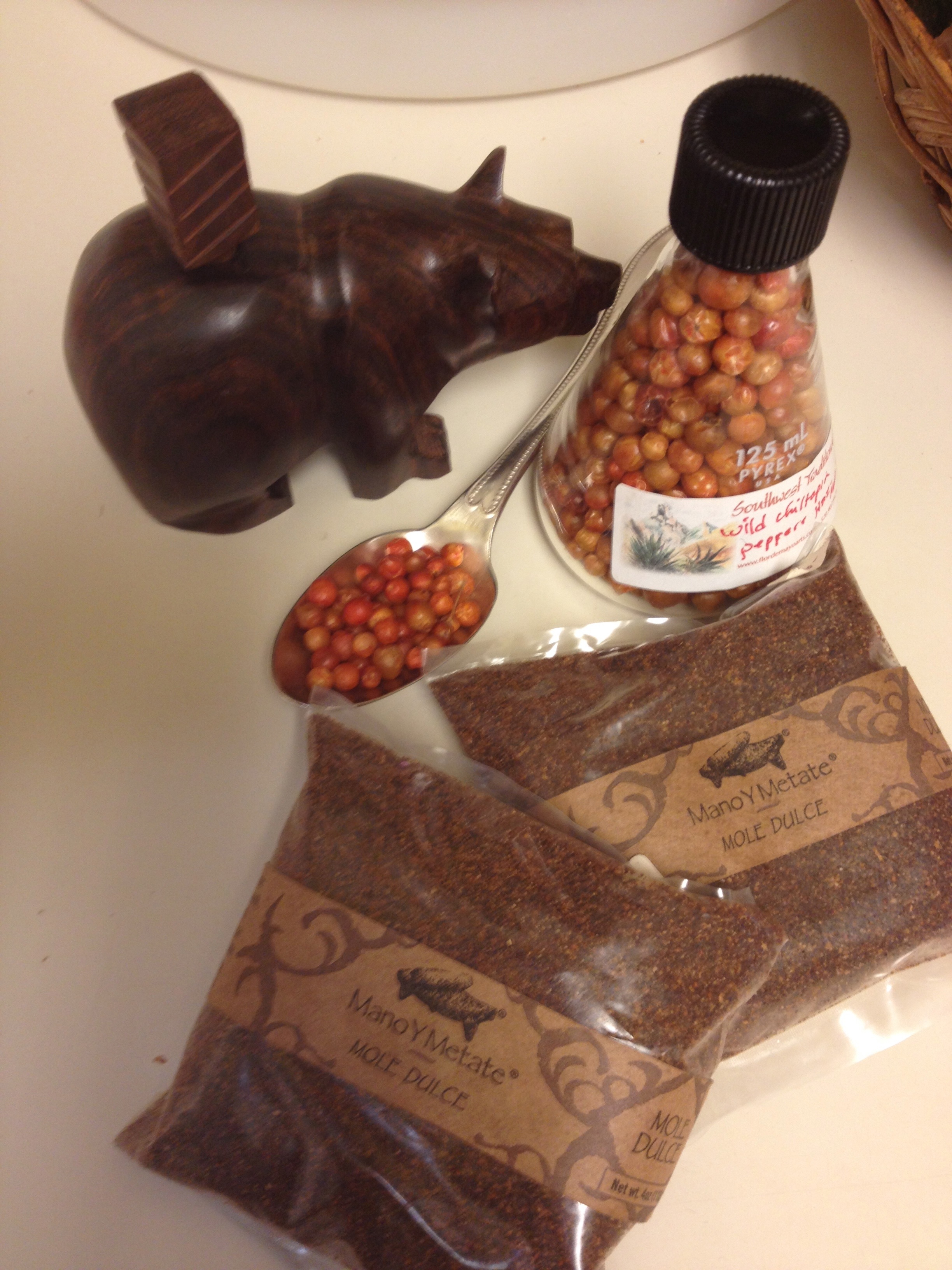
My next black tepary brownie recipe was first inspired by food-writer and “Blog-sister” Carolyn Niethammer’s recipe found in her book Cooking the Wild Southwest (p.133)–a must-have in every SW cook’s kitchen shelf. Here I’ve made some interesting gastronomic additions…including the use of our fantastic local heirloom White Sonora Wheat flour, crushed wild chiltepines, and Mano y Metate’s fresh-ground Mole Dulce powder produced by our local Molera herself, Amy Valdes Schwemm.


“Hot-Dam”* Black Tepary Brownie Bars [*in the best sense of the expression]

Ingredients:

5 Tbsp unsweetened 100% cocoa powder

½ stick (1/4 cup) melted butter

¾ cup organic cane sugar

¾ cup org brown sugar, not-packed

2 eggs, beaten

2 tsp vanilla extract

¾ cup pureed cooked black teparies

¾ cup organic heirloom White Sonora Wheat flour**

3 or 4+ crushed wild chiltepin peppers*** (number depends on your desired picante level)

¼ tsp sea salt

1-2 Tbsp Mano y Metate ground Mole Dulce powder

2 Tbsp raw pinyon nutmeats

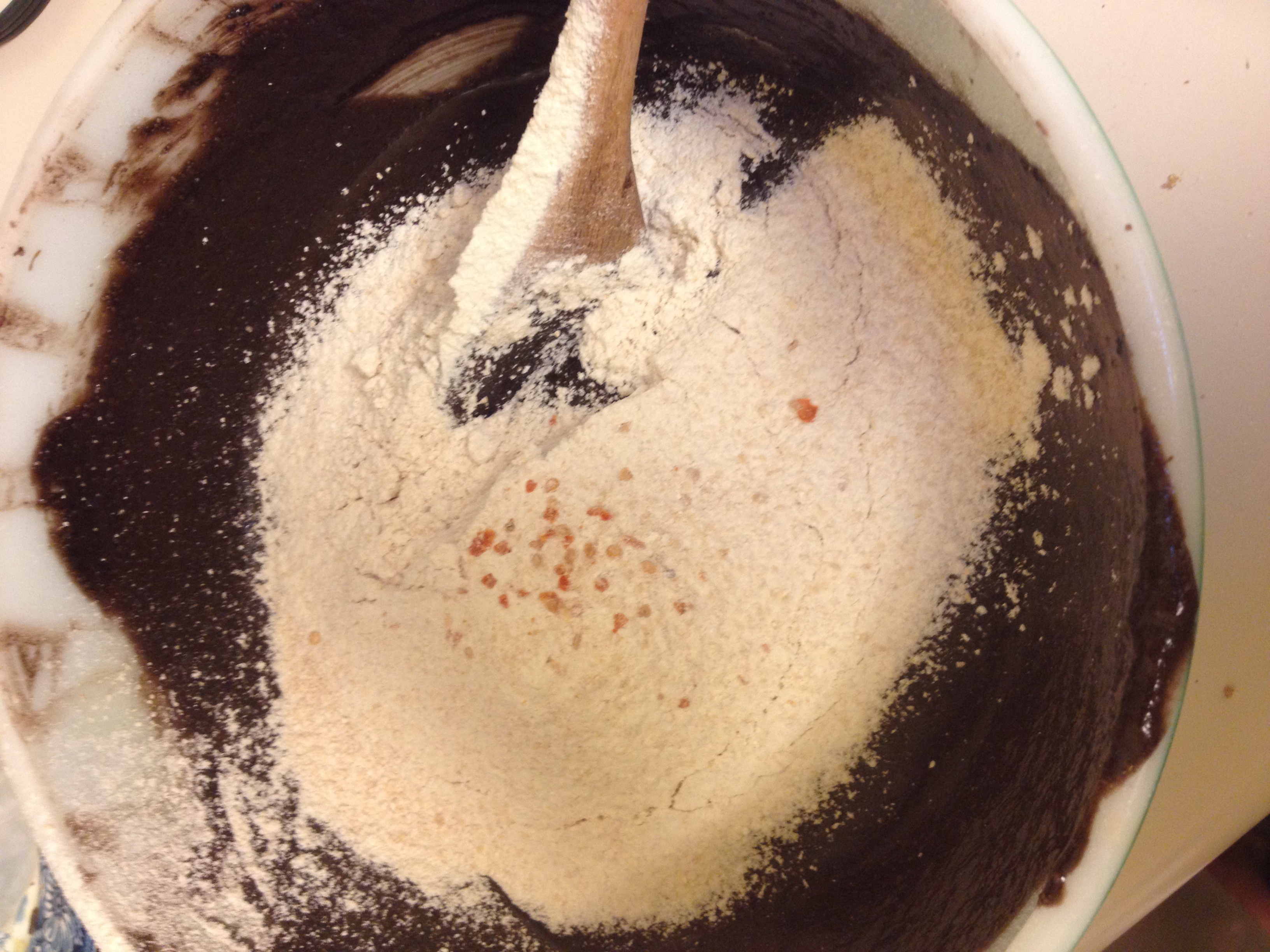
Adding White Sonora Wheat flour and crushed chiltepin to molten chocolate mixture

Adding White Sonora Wheat flour and crushed chiltepin to molten chocolate mixture

** Freshly milled White Sonora Wheat is available at our Flor de Mayo booth, Sunday’s St Philips farmers market (www.foodinroot.com). Call ahead for quantities larger than 1 kilo—520-907-9471.

***whole wild-harvested Chiltepines are available at the NSS Store, 3061 N Campbell, and at Flor de Mayo booth, Sunday St Philips farmers mkt. Chiltepin plants to grow can be purchased at NSS plant sales.

Flavors to guild the lily--Wild chiltepin peppers, ironwood bear molinillo grinder, and Mole Dulce powder

Flavors to guild the lily–Wild chiltepin peppers, ironwood bear molinillo chiltepin grinder, and Mole Dulce powder (all available at NSS store and Flor de Mayo at St Philips farmers market)


Directions for “Hot-dam” Black Tepary Brownie Bars:

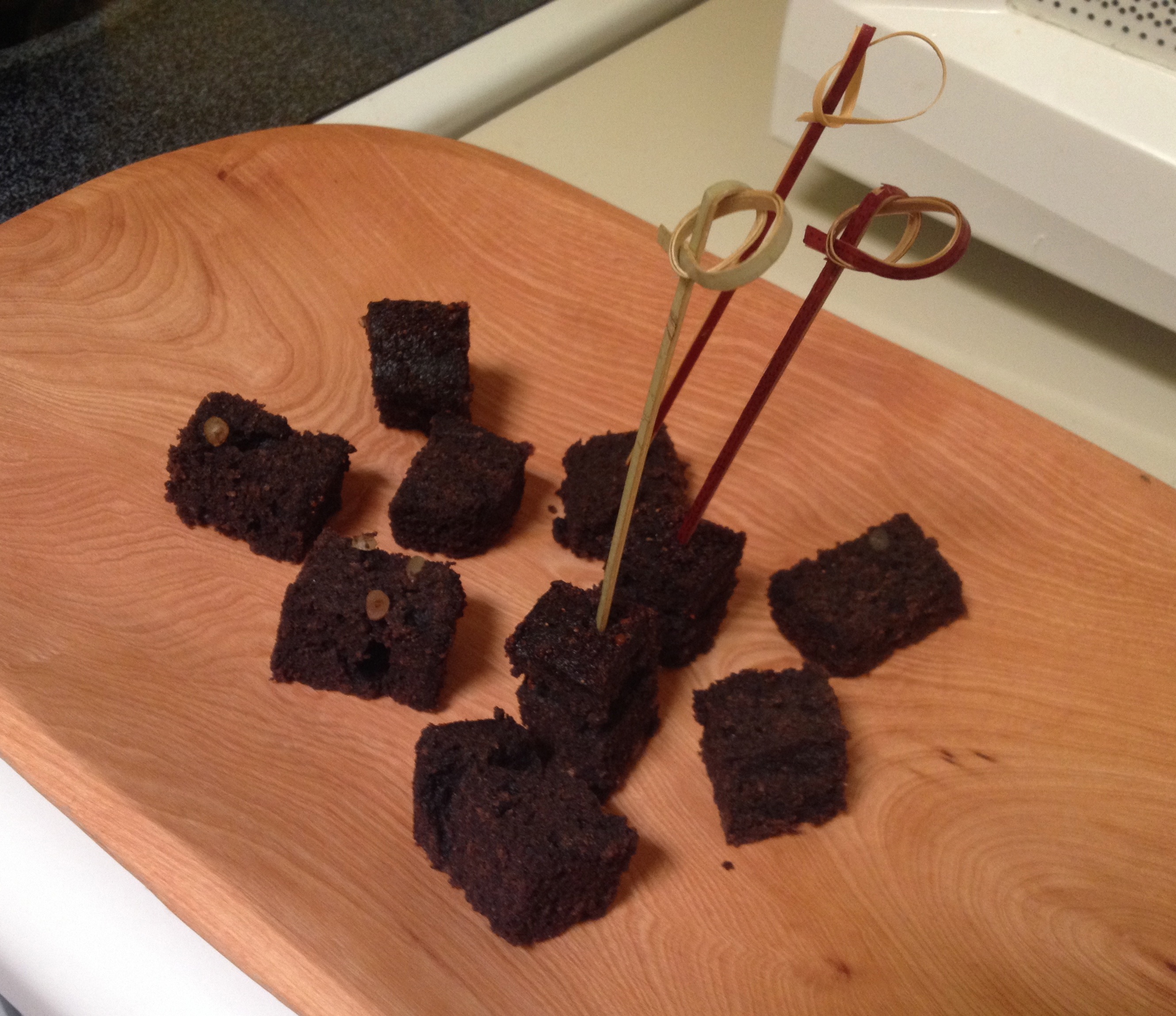
Pre-heat oven to 325F. Grease 8×8” baking pan with wax paper set in bottom. Melt butter and mix powdered cocoa in thoroughly. Add the brown sugar and organic white sugar and vanilla to the butter and cocoa, and beat. Beat 2 eggs and stir thoroughly into the choc/sugar mixture. Wisk in ¾ cup pureed black teparies. Sift together: ¾ C white Sonora wheat flour, ¼ tsp sea salt, and the well-crushed chiltepin peppers. Stir dry ingredients into liquid mixture. Add pinyon nutmeats. Pour batter into bake-pan. Sprinkle 1-2 Tbsp of Mole Dulce powder on top of the batter. Bake 25 minutes or until it tests done (when fingerprint pressed on top springs back). When cooled, cut into small bite-size squares to be served with hors d’oeuvre picks—you will see why…..(and don’t rub your eyes after eating.)

"Hot-dam" Black Tepary Brownies ready to enjoy!

“Hot-dam” Black Tepary Brownies ready to enjoy!


Tia Marta is hoping you enjoy these fruits and flavors of the Sonoran Desert assisted by fruits of tropical North America—a marriage made in dessert-Heaven! With every bite we should be thanking ancient tepary farmers, and the recent ones who have brought back the Black Tepary from near genetic-oblivion.


Coming this week to Tucson is a food event not to miss: the Farmer to Chef Connection, this Wednesday, September 16, at Tucson Community Center, 12:00noon-5:30pm, sponsored by LocalFirstArizona. Google their site for tickets and come enjoy a smorgasbord of local tastes.

Also be sure to mark your calendar for October 18 and join NativeSeeds/SEARCH and Friends of Tucson’s Birthplace at the very heart of Tucson’s Birthplace –the Mission Garden at the base of A-Mountain—for the first-ever outdoor Farm to Table Picnic. It will be a feast to remember. Make reservations now and we’ll see you there for fun, flavor, history and friendship!

Lovely and Luscious Legume Trees

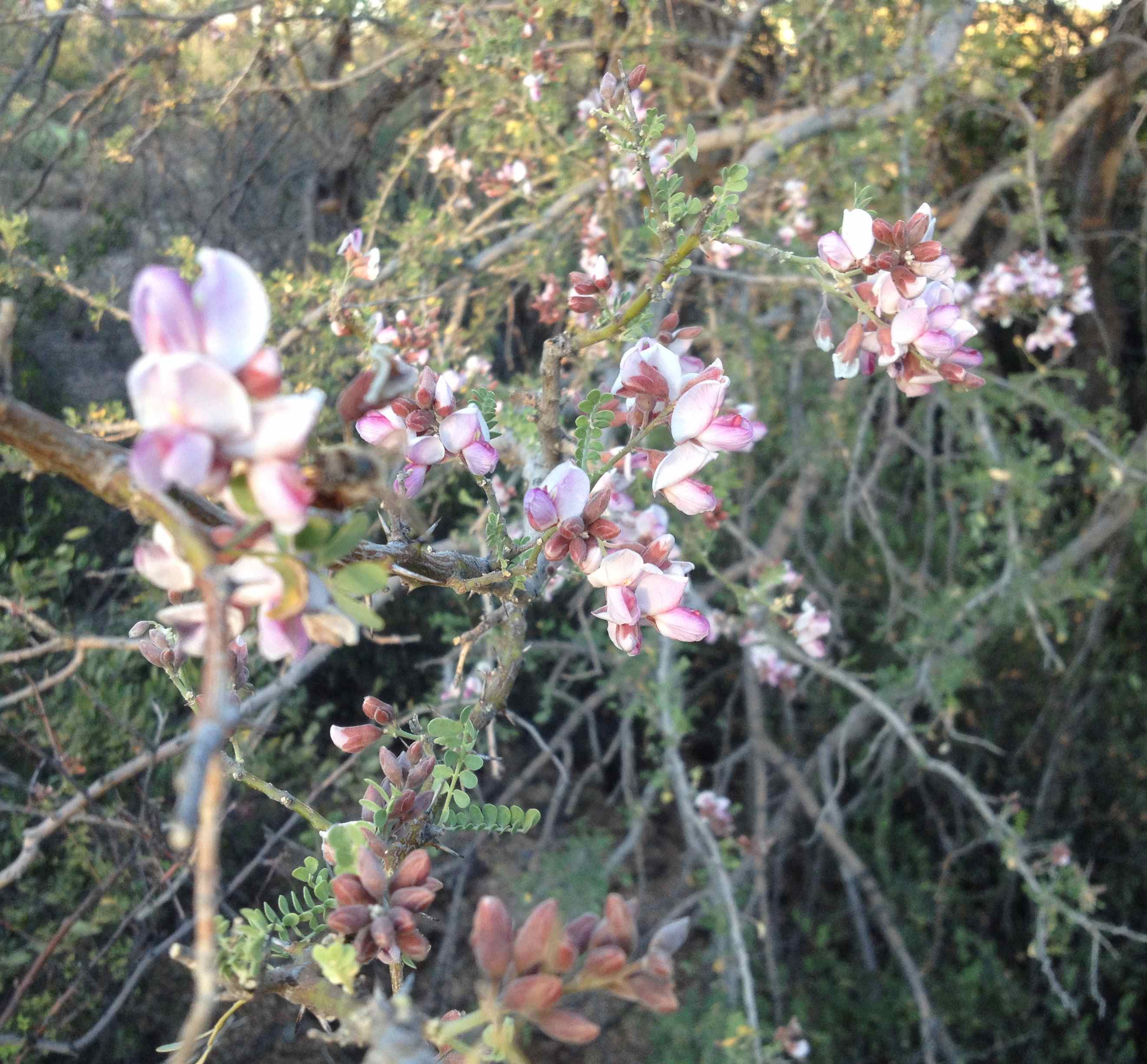
Desert Ironwood (Olneya tesota) still in flower!  This should be a good bean year for ironwood.

Known as hoh’it-kahm to Tohono O’odham, the Desert Ironwood (Olneya tesota) is still in flower! This should be a good bean year for ironwood as the flowers produce pods.

Hasn’t this been the most incredible, elongated spring in the Sonoran Desert ever?  Tia Marta here to celebrate this red-letter year for our desert legume trees–they are still coming on!!

Desert Museum hybrid palo verde--thanks to St Mary's Hospital for beautiful landscaping!

Desert Museum hybrid palo verde–thanks to St Mary’s Hospital for beautiful landscaping!

We have had the joy of palo verde blossoms from mid-April thru May.  Mark Dimmitt’s amazing Desert Museum hybrid palo verde continues to grace public buildings and roadways with a glorious yellow glow.  Mesquites (life-giving kui wee’hawk to traditional Tohono O’odham) are still producing creamy yellow catkins and greening pods soon to ripen.  Red pod clusters are hanging from white-thorn acacia.  Dusty lavender ironwood blossoms still bedeck the foothills….Color and Beauty–the first of the gifts…


For wild-food aficionados and first time experimenters, this promises to be a bountiful bean year.  Bees are already going wild–they know the buzz.  I’m going wild just thinking about the desert’s gifts of nutrition for so many life-forms.  Humans are just a few of the happy recipients.  With the help of bacteria, the desert’s bean trees even feed the soil with bio-available nitrogen, hidden from our awareness in their root nodules.

Foothills palo verde pods   ready for eating off the tree! (maburgess photo)

Foothills palo verde pods ready for eating off the tree! (maburgess photo)

This week is PALO VERDE TIME for sure!  We gotta get out there right away because this only lasts a few days!  If you want a sweet treat to pluck right from the tree, take a walk up almost any rocky hillside in the Sonoran Desert and find the Little-leaf or Foothills Palo Verde (Parkinsonia microphylla–the green barked shrubby tree with teensy leaflets, actually no leaflets right now in June’s heat).  It will be covered with little hanging pods that look like paternoster beads, each seed making a bulge in the pod.  Say a prayer of blessing and thanks to the Koh’o-koh-matk Tree and to Nature for this food.

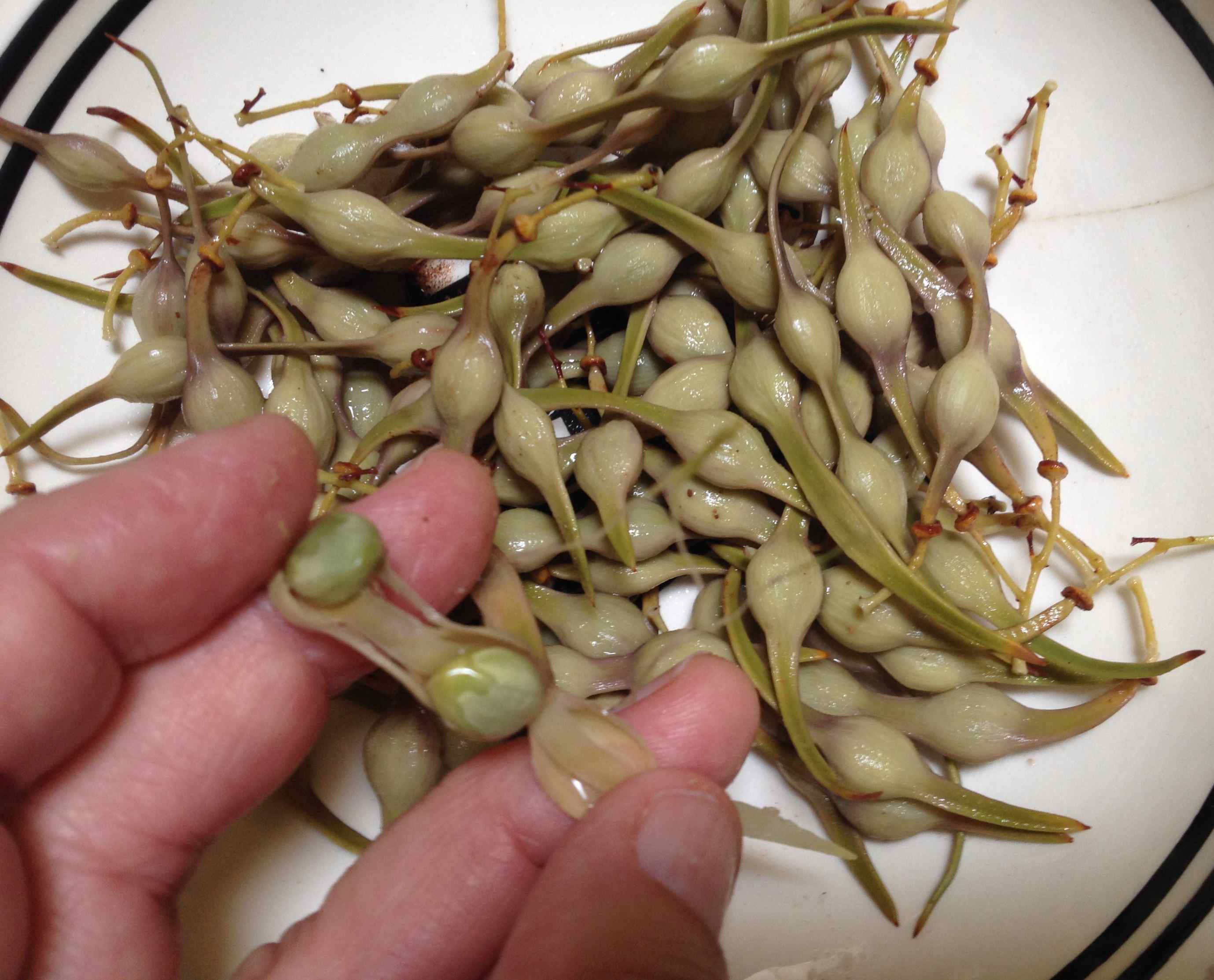
Seed pods of foothills palo verde plump and ready to pick fresh for a green desert treat.

Seed pods of foothills palo verde plump and ready to pick fresh for a green desert treat.

If you find it at the right stage, you can snip the pod-covering with your teeth and peel it back to reveal the pea-like green bean–sweeter than any sweet pea you ever tasted.

Just peel back the outer fiber and voila! there's the delicious sweet "pea"

Just peel back the outer fiber and voila! there’s the delicious sweet “pea”

It can be eaten fresh right then and there. Most harvesters can’t help gorging at first, gathering later.


The variations from one palo verde to the next are interesting to see.   Some pods are all green, some flecked with red, some are even purple!

Foothills palo verde with bright purple pods--Tucson's west side.

Foothills palo verde with bright purple pods–Tucson’s west side.

Foothills palo verde (Parkinsonia microphylla) pod ready to eat.

Foothills palo verde (Parkinsonia microphylla) pod ready to eat.


If you find palo verde pods that are really getting super-plump and the pods are turning slightly buff or straw colored, they may be a little beyond the sweet stage.  At that point it’s best to let them fully mature and to use them for grinding later.  Both the sweet soft green “beans” and the later hard stony seeds when mature are super nutrition for whoever eats them–both chucky-jam-full of complex carbs and high protein.

Foothills palo verde harvest (maburgess photo)

Foothills palo verde harvest (maburgess photo)

Years ago in Myrtle Beach, South Carolina, I purchased snacks from a kid selling what he called “balled peanuts.”  The delectable treats had simply been boiled in a salt-brine.  Inspired by that treatment, I tried the same process on our desert legumes.  It works wonders on mature ironwood pods–watch for them to be ripening in the coming weeks.  Great also for prepping plump green foothills palo verde pods before they harden.  Quick brining produces a gourmet delight–Desert Edamame!–creamier and tastier than soy bean (and who knows now if any soy is  GMO-free?).   Just imagine….Sonora Desert sushi, tilapia caterpillars with a side of Palo Verde Edamame….

Foothills palo verde pods cooked in brine ready to eat (maburgess photo)

Foothills palo verde pods cooked in brine ready to eat (maburgess photo)

Here’s a quick recipe for Desert Palo Verde “Edamame” Hors O’ouvres:

In a saucepan:

2 cups washed whole foothills palo verde pods

2 cups water

2 tsp sea salt or RealSalt

Boil for 5-10 min to desired “done-ness” or softness.

Chill and serve as snack, as a blow-em-away pot-luck offering,  or as a complement to any Asian cuisine.

Easier than edamame--and you know they are not GMO! Yum!

Easier than edamame–and you know they are not GMO! Yum!

As pods ripen further on our Sonoran Desert bean trees to become hard seeds, the cooking technology can adapt.  Parching and grinding the nutritious but super-hard seeds of palo verde, ironwood, and acacia can create unusual and delicious flours for baking–but that’s another story…

Contact http://www.DesertHarvesters.org for upcoming events like the mesquite milling at Mercado San Augustin, Thursday, June 25, and demos by some of the great Bean Tree harvesters like Barbara Rose, Amy Valdes Schwemm, and Brad Lancaster.  Also Google Bean Tree Farm for more harvesting ideas.  Hey, thanks to Barbara Kingsolver for spreading the idea of our “Bean Trees” to the outside world!

With such nutritious plenty surrounding us, delicious gifts from  hoh’it-kahm,  kui wee’hawk, and ko’o-ko-matk,  bean trees which the Tohono O’odham have known for centuries, we can taste–and experience–food security in our bountiful desert.

If you want more info on harvesting the desert or monsoon gardening, do come talk with me, Tia Marta, at our Sunday, St Philips Farmers Market booth–in the shade of the Flor de Mayo canopy–8am-12noon.  You can find more wild desert food products at our website http://www.flordemayoarts.com.   Also watch for announcements by Tohono Chul Park of our upcoming Fruits of the Desert class this August (www.tohonochul.org).

An Invitation to Celebrate El Dia de San Ysidro Labrador

With White Sonora Wheat waving its ripening seed heads in May’s wind, it’s time again to celebrate our local agriculture–our ability to feed ourselves locally.  Yea!.. harvest time now for our winter gardens’  bounty as it dries…

Ripened seed heads of organic heirloom White Sonora Wheat from BKWFarms in Marana (MABurgess photo)

Ripened seed heads of organic heirloom White Sonora Wheat from BKWFarms in Marana (MABurgess photo)

Tia Marta here inviting you to return to the hallowed soil of Schuk-shon–Tucson’s Birthplace “Black Spring”–at the foot of “A” Mountain, in the new Mission Garden, to the very site of the original garden supporting Mission San Augustin de Schuk-shon.  The Feast of San Ysidro Labrador is approaching.

May 15 is the traditional Dia de San Ysidro, Saint Isidor, patron saint of farmers and gardeners.

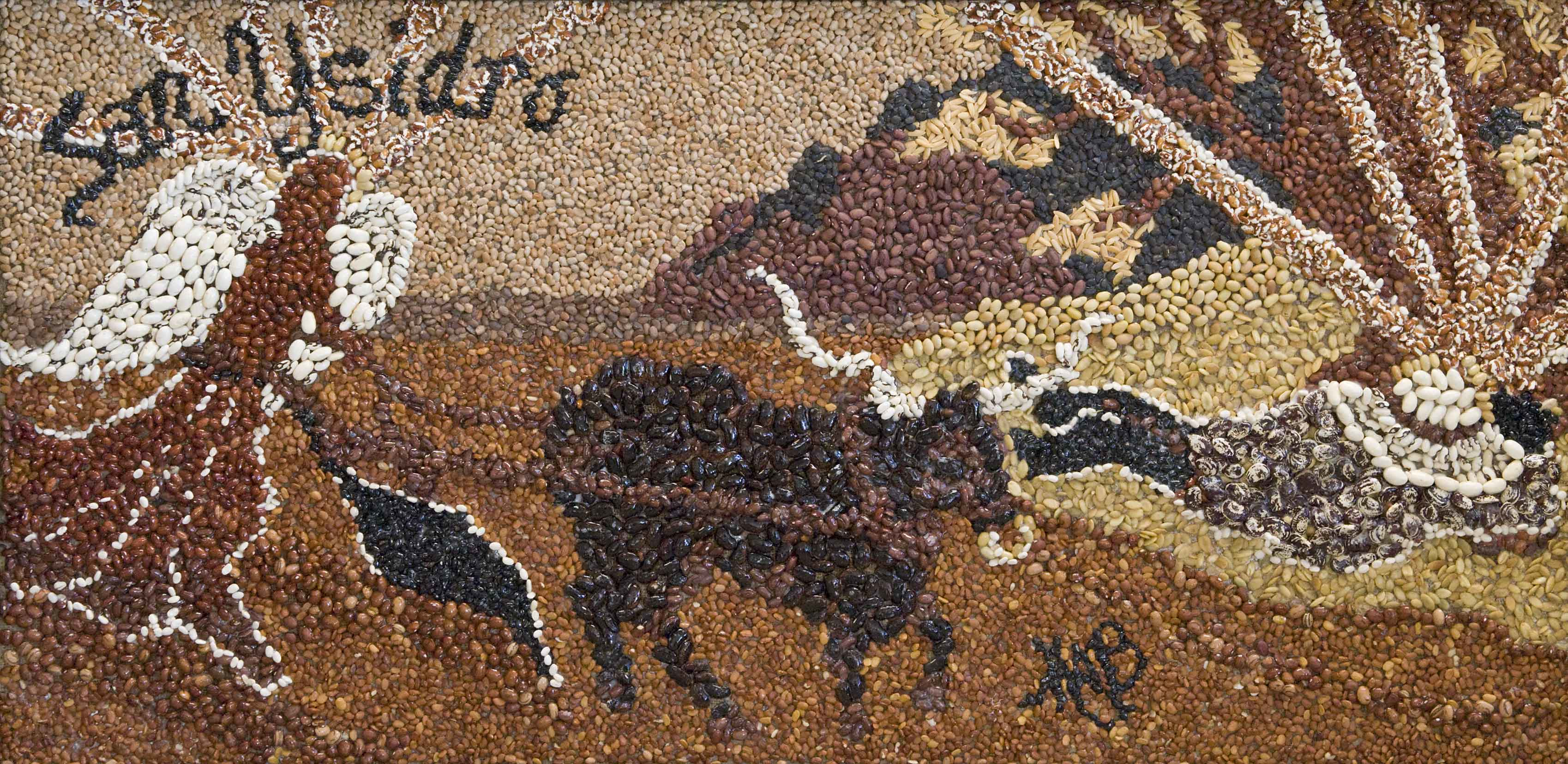
According to legend, San Ysidro Labrador was so hard-working and generous with his produce to all in need—people or animals–that angels would plow next to him to triple his crop. In my artistic interpretation, San Ysidro lies exhausted under a tree from working his field while an angel guides his ox to finish his plowing.

Heirloom bean mosaic of San Ysidro Labrador created by artist/ethnobotanist MABurgess

Heirloom bean mosaic of San Ysidro Labrador created by artist/ethnobotanist MABurgess

Here in my big-scale heirloom bean mosaic, the “medium is the message”–in part.   It was assembled using more than 21 colorful varieties of Southwestern heirloom beans and seeds, grown out from the Native Seeds/SEARCH Collection, in Tucson, Arizona.

The ancient seeds used to “paint” this image pay homage not only to San Ysidro but also to the generations of traditional farmers who have selected their seed and labored to grow the best for feeding family and community. Their seed-saving has provided us today with priceless heirlooms, fitting genes, and hope for a food-secure future.  (Notecards of my San Ysidro mosaic will be on sale at the fiesta as a fund-raiser for Mission Garden’s good work.)

This year, our San Ysidro fiesta will be celebrated on Saturday, May 16, within the adobe-walled orchard of living agricultural history, Tucson’s newest “museum park” sponsored by the non-profit Friends of Tucson’s Birthplace.  Planted in this living museum are representative crops that have fed the sequence of Tucson residents over the last 4100 years.  Seeds of these ancient crops were blessedly conserved by the caring staff and volunteers of NativeSeeds/SEARCH over the past 34 years.

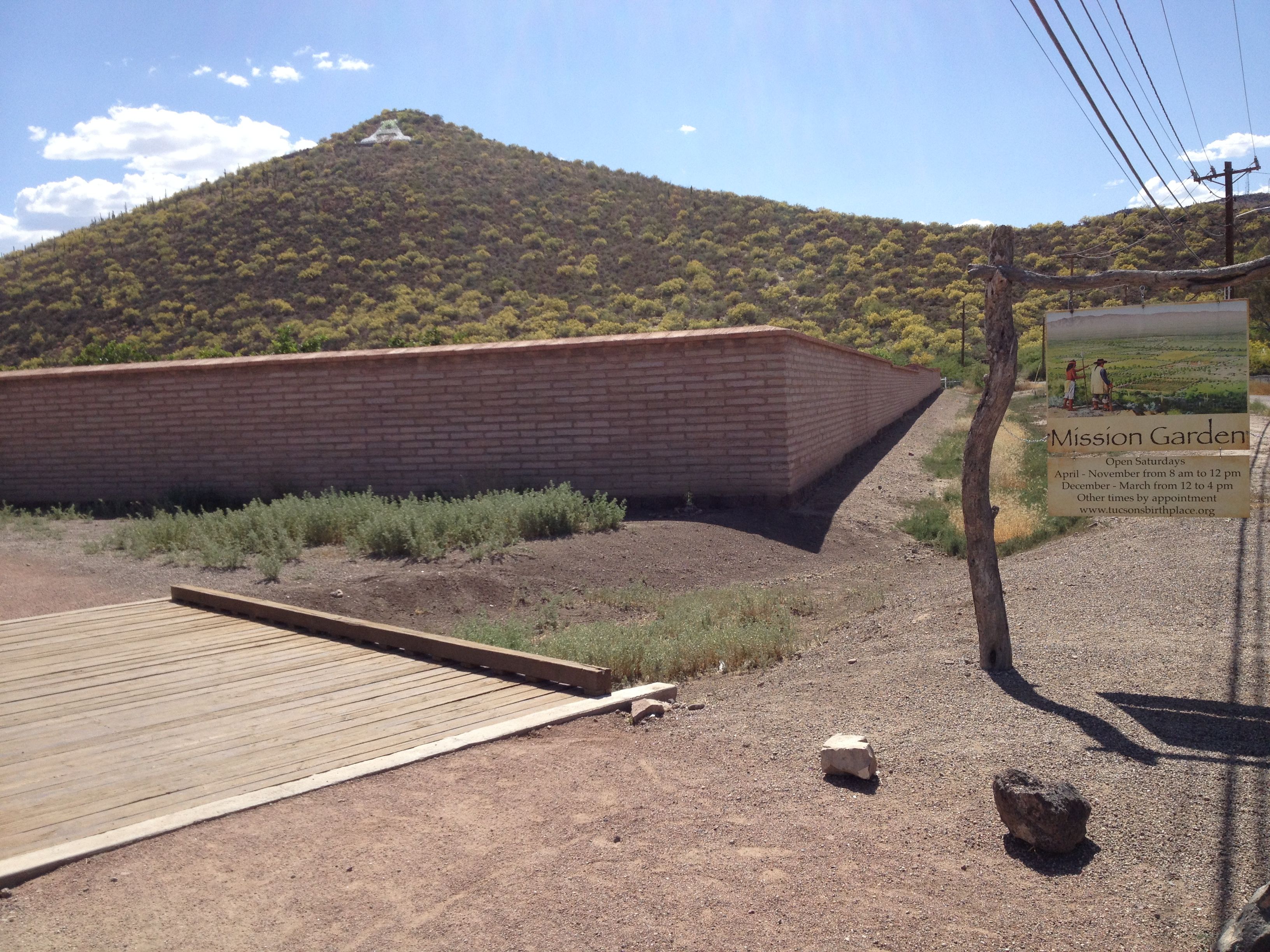
The new Mission Garden--living agricultural history

The new Mission Garden–living agricultural history


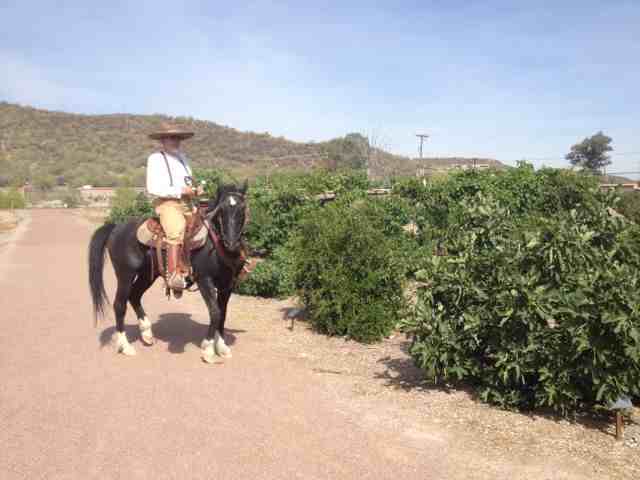
Vaquero in the Orchard of heirloom Mission Period fruit trees at San Ysidro Fiesta 2014 (MABurgess photo)

Vaquero in the Orchard of heirloom Mission Period fruit trees at San Ysidro Fiesta 2014 (MABurgess photo)


The Dia de San Ysidro celebration will officially begin at 9am with a procession from the future Tucson Origins Heritage Park next to the Santa Cruz “river” channel to Mission Garden’s east gate at 929 West Mission Lane, just east of  Grande (Mission Road.)  Festivities will include music by Mariachi Las Aguilitas from Davis Elementary, Alabanza with Bobby Benton, a presentation by historian/author Dr. Tom Sheridan, Native American four-direction prayers and blessing of the fields, food, and animals, and the Tohono O’odham Desert Indian Dancers from San Xavier.  Designs for the new cultural theme gardens (Chinese, Mexican, Afro-American, and Medicinal) will be unveiled.

Activities will culminate with a tasting of Pozole de Trigo, the traditional Sonoran stew for the feast-day prepared by talented volunteer cooks from Tucson’s Hispanic community.  For a fabulous recipe to try in your own kitchen, check out Bill Steen’s article for Sonoran Wheat Posole in Edible Baja Arizona–here’s the link to directions with his mouth-watering photos:

http://www.ediblebajaarizona.com/a-personal-posole

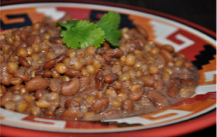
Or, for an even more local recipe, try this Akimel O’odham (Pima) recipe for Heirloom Wheat Posole with Tepary Beans:

Pima Posole Stew with Tepary Beans and White Sonora Wheat, served at Heard Museum

Pima Posole with Tepary Beans and White Sonora Wheat, served at Heard Museum

The combination of high protein Native Teparies and delicious low-gluten Heirloom Wheat Berries makes this a rich and nutritious stew.


Heirloom Wheat Posole with Tepary Beans—Pilt’kan ch Ba’bawi Posh’oldt

Ingredients:

2 cups dry tepary beans *

Water to more than cover the beans for initial soaking and cooking

1 large marrow bone (or beef broth as substitute for ½ the water when simmering, omit for vegetarian)

2 cups dry whole wheat berries (wheat kernels) **

3-4 cups drinking water or stock

Sea salt to taste (1-2 Tbsp.)

Black pepper or native chiltepine peppers***, to taste

Directions:

Carefully sort dry beans to remove stones. Wash, rinse, and cover with good water to soak overnight. Drain when plumped and ready to cook.

In big cooking pot, put beans, marrow bone, and drinking water to cover. Bring to a boil then simmer for 2+ hours.

Separately, rinse wheat berries and drain. Add wheat berries and salt to the cooking teparies. Add more water and/or stock. Bring to boil, then simmer an additional 1 ½ hours or until wheat berries are round and tender, and teparies are tender(not chewy).

Reserve excess water for later soup stock. Remove bone.  For serving, posole should be moist with broth. Add black pepper and sea salt to taste. If picante bite is desired, add one or two crushed chiltepine peppers.

Enjoy this traditional taste of the desert! ***********Here’s where to find these traditional ingredients (being grown anew in their home turf):

*Native tepary beans are available at www.nativeseeds.org or at www.ramonafarms.com .

** Organic White Sonora Wheatberries are available at Flor de Mayo tent at Sunday St Philips Farmers Market, Tucson, or at the NativeSeeds/SEARCH Store, 3061 N Campbell Ave, Tucson.

***whole wild-harvested chiltepine peppers are available at Flor de Mayo tent, Sunday St Philips Farmers Market, Tucson, or at the NativeSeeds/SEARCH Store, Tucson.

*****************************************************************************************

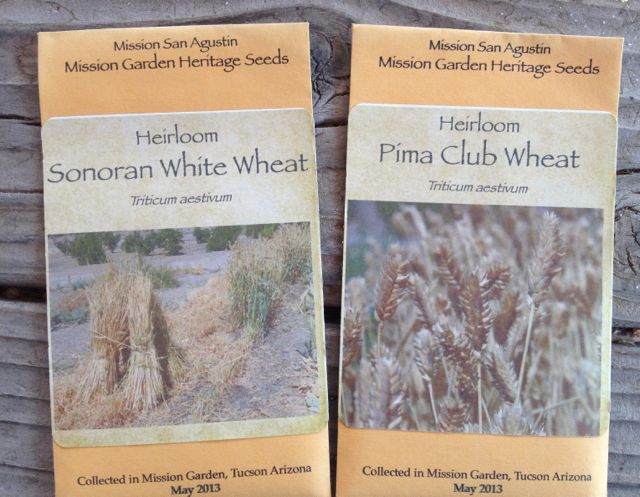
Seed packets of heirloom wheat varieties grown at Mission Garden

Seed packets of heirloom wheat varieties grown at Mission Garden, for sale to plant in your own winter garden.

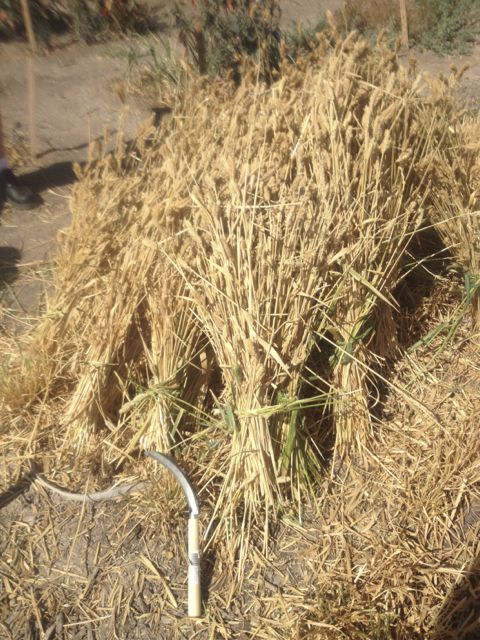
Sheaves of heirloom White Sonora Wheat hand-harvested at Mission Garden

Sheaves of heirloom White Sonora Wheat hand-harvested at Mission Garden

Because Dia de San Ysidro especially heralds the wheat harvest, the staple grain introduced by Padre Eusebio Kino and other missionaries over 300 years ago to the Native Tohono O’odham community living here, this year’s festivities will include a ceremonial wheat harvest, guided by expert plantsman and Desert Museum staff person Jesus Garcia, to take place around 8am, Saturday, May 16, before the procession.

Support organizations, such as NativeSeeds/SEARCH, San Xavier Coop Association, BKWFarmsInc, and Tucson Herbalist Collective will have booths with demonstration items, tastes of native foods, solar cooked White Sonoran Wheat berries, traditional food products packaged for sale, and resource people to talk with about desert gardening for real food.

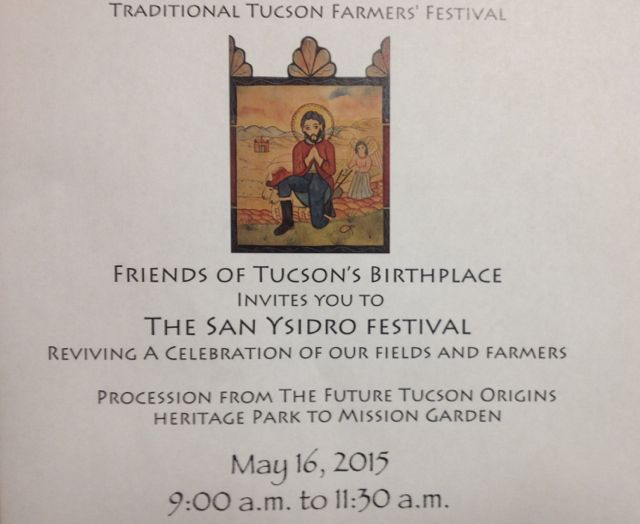
Invitation to the 2015 San Ysidro Fiesta

Invitation to the 2015 San Ysidro Fiesta

The event is free with a donation requested.   Find out more details of the San Ysidro Festival at  www.tucsonsbirthplace.org.   Hope to see you there!

[For more great recipes and stories about White Sonora Wheat, you can search with the box above using those key words, thru the last 2 years of this blog.]

Glorious Diversity–A Palette of Heirloom Legumes

The desert this spring is exploding with color, its rainbow shades reminding us of the amazing diversity of life, of species, of varieties of plants in this rich Sonoran Desert! Cholla flowers themselves are a veritable palette of genetic diversity within a species and between species.

Tia Marta here to talk about the rich diversity of beans selected and cultivated over the centuries by smart Native farmers in what is now the southwest borderlands…..

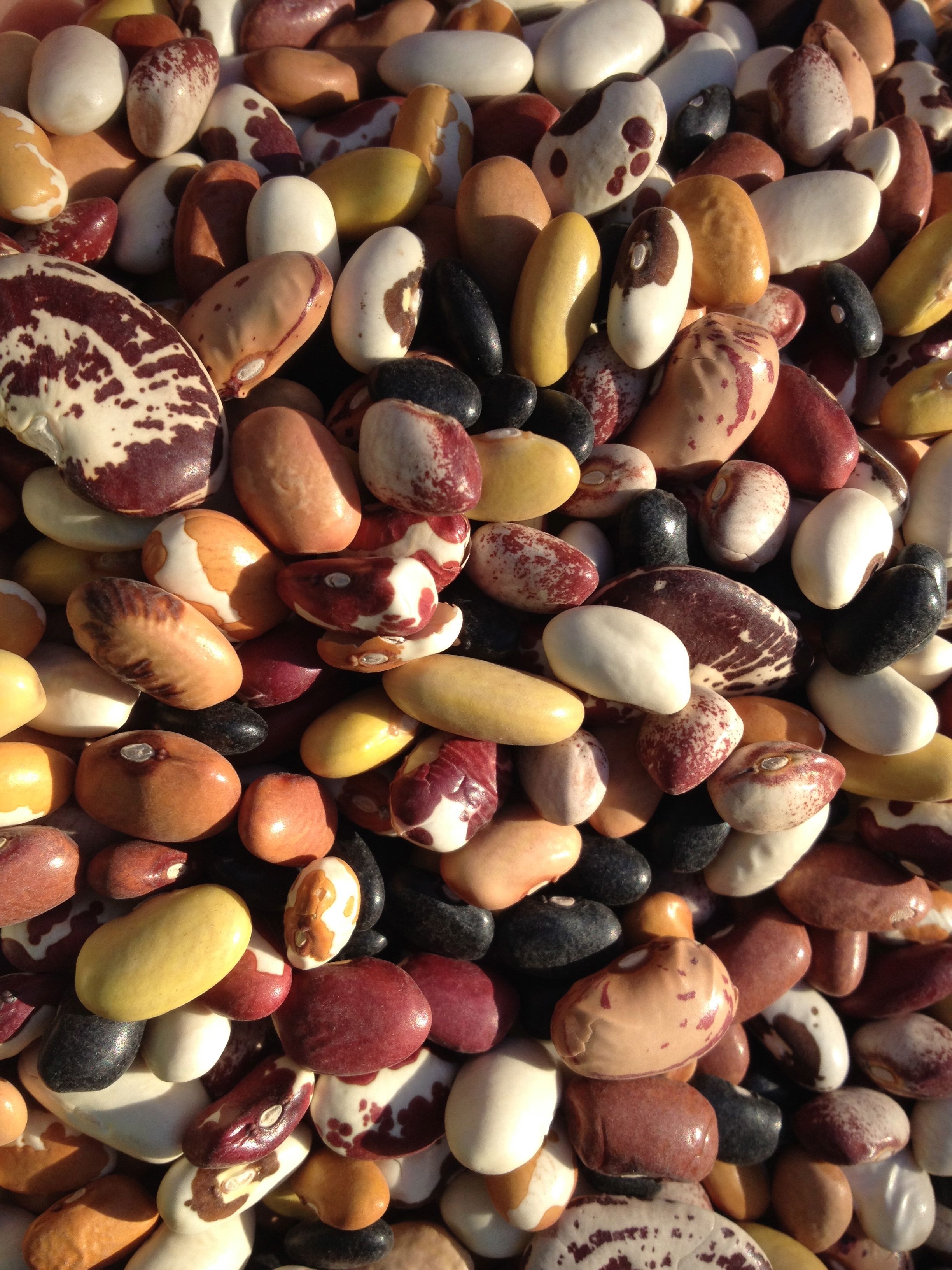
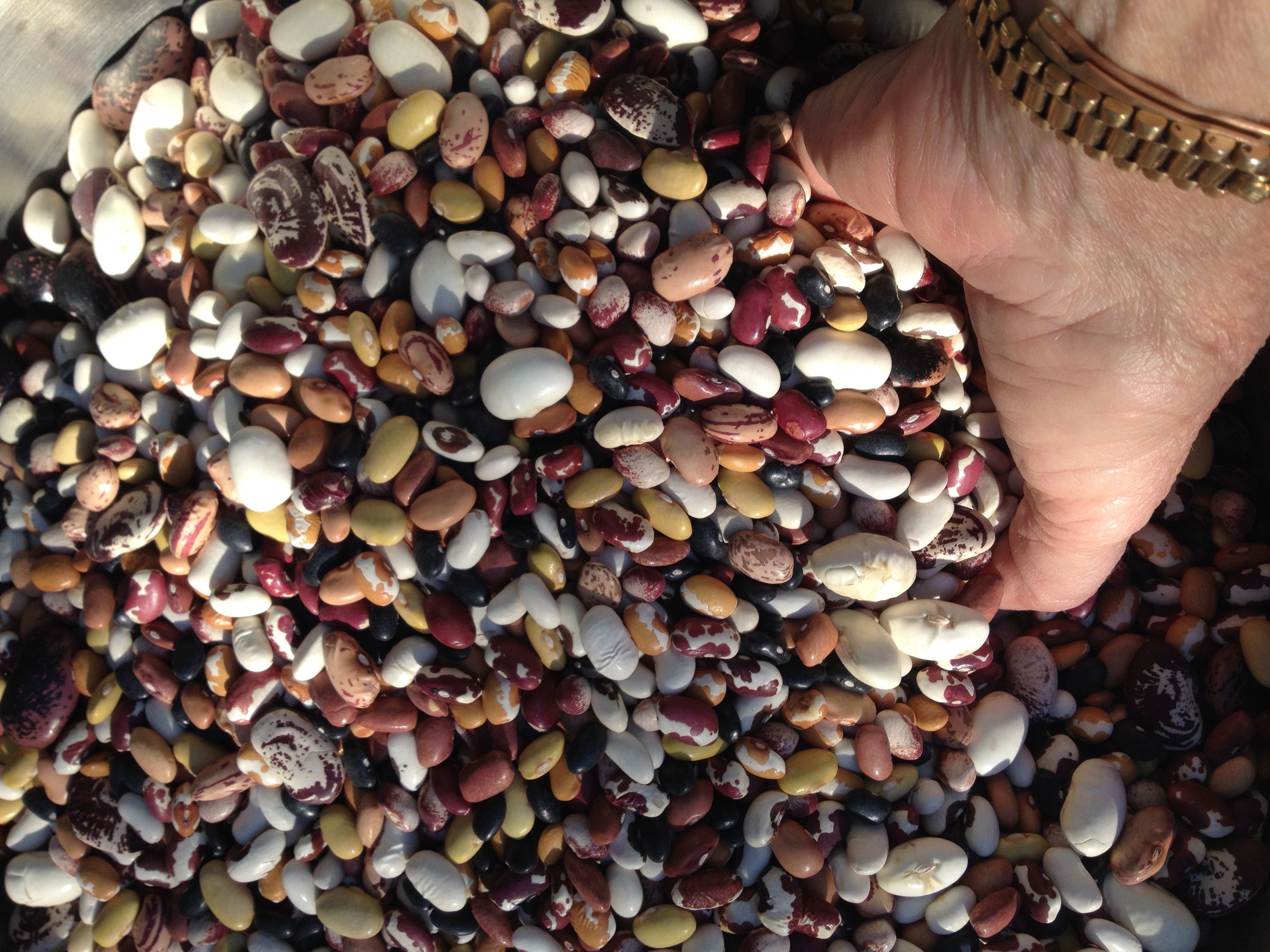
Tom's Mix is a rainbow of color, flavor, nutrition, and genetic adaptations to the desert Southwest! (MABurgess photo)

Tom’s Mix is a rainbow of color, flavor, nutrition, and genetic adaptations to the desert Southwest! (MABurgess photo)

In the genetic treasure trove of the NativeSeeds/SEARCH Seed Bank, there are hundreds of varieties and landraces of common bean, runner bean, and limas that can dazzle both our eyes, tastebuds–and our souls. Their colors, theirs shapes, sizes, sculpture are miniature works of art. And inside each little bean, each variety carries a complex of genes shaped over time to fit a specific local rainfall regime, soil, daylength, temperature range, and human habits. Their genetic potential may provide us some nutritional lifeboats into the uncharted waters of climate change.  (We are in this together.)

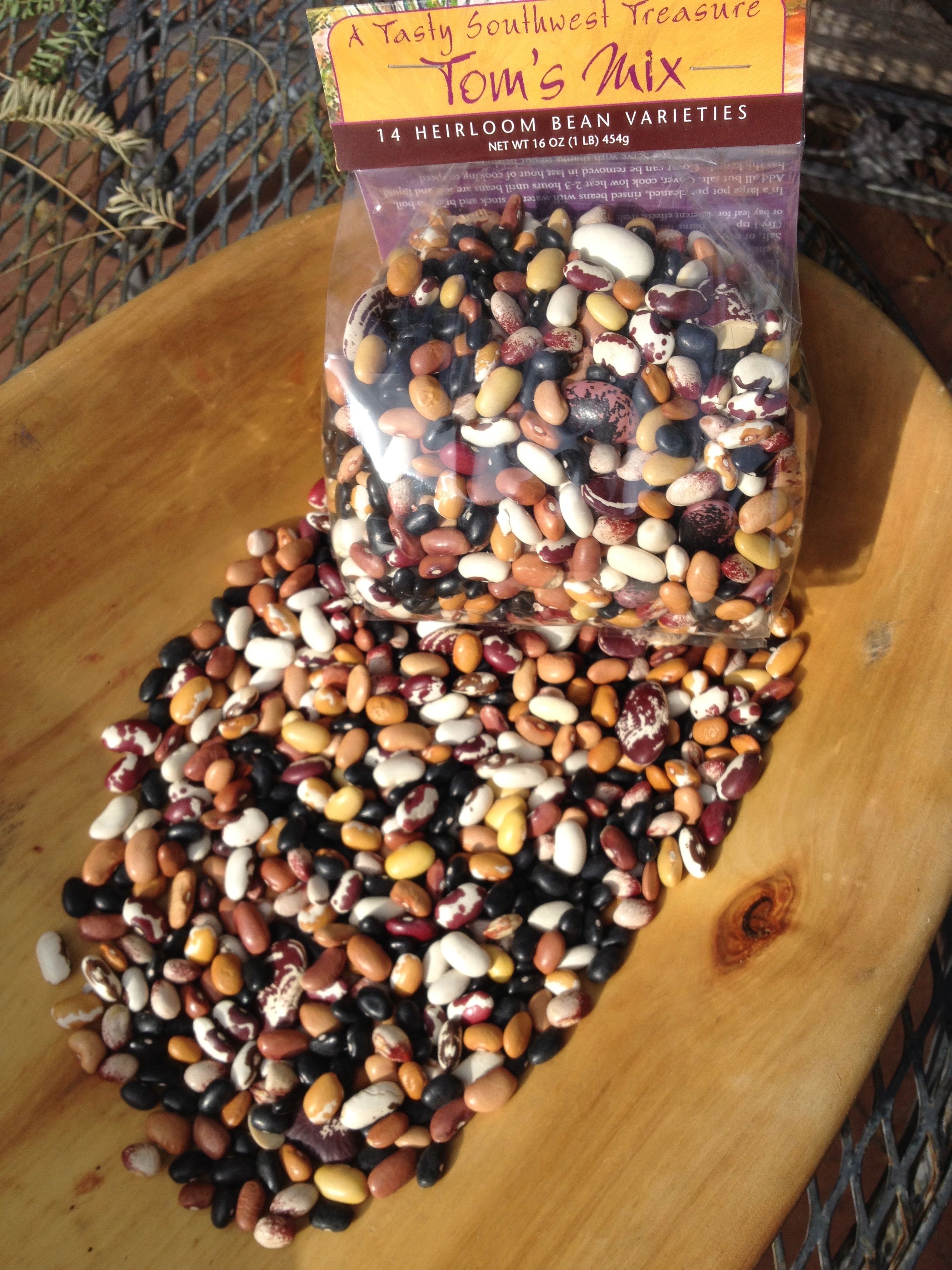
Delectable Tom's Mix available online at NativeSeeds.org and FlordeMayoArts.com.

Delectable Tom’s Mix available online at NativeSeeds.org and FlordeMayoArts.com.

Long ago, my gardening pal and mentor Tom Swain “invented” a mix of 14 different beautiful Southwestern heirloom beans garnered from the NativeSeeds/SEARCH collection. Of course we had to call it “Tom’s Mix” (ok–“oldsters” get it). It is the most beautiful set of genetic as well as flavor jewels—truly a treasure to behold and to eat.

Many people at our Flor de Mayo booth at Sunday St Phillips Farmers Market have asked how to identify each bean in the mix. To sort them, ID each variety, and come to know them is a fun challenge.  I’d like to create a game for kids (and adults) to teach taxonomy in a cool way using them.


So, head for the NativeSeeds store or Sunday’s St Phillips market, pick up a bag of Tom’s Mix, and take the BEAN CHALLENGE!

Herewith is your KEY to unlocking some the of mystery beans of our beautiful desert region.  (They each carry stories with them–come learn more from Tia Marta at the Sunday market… see, buy, taste each beautiful bean, see which one is cooking in the solar oven, and press her to finish her bean book!)  Until then, you can feast on these gorgeous visual hints—first a feast for the eye, later for the palette–with this photographic key to the makings of Tom’s Mix:

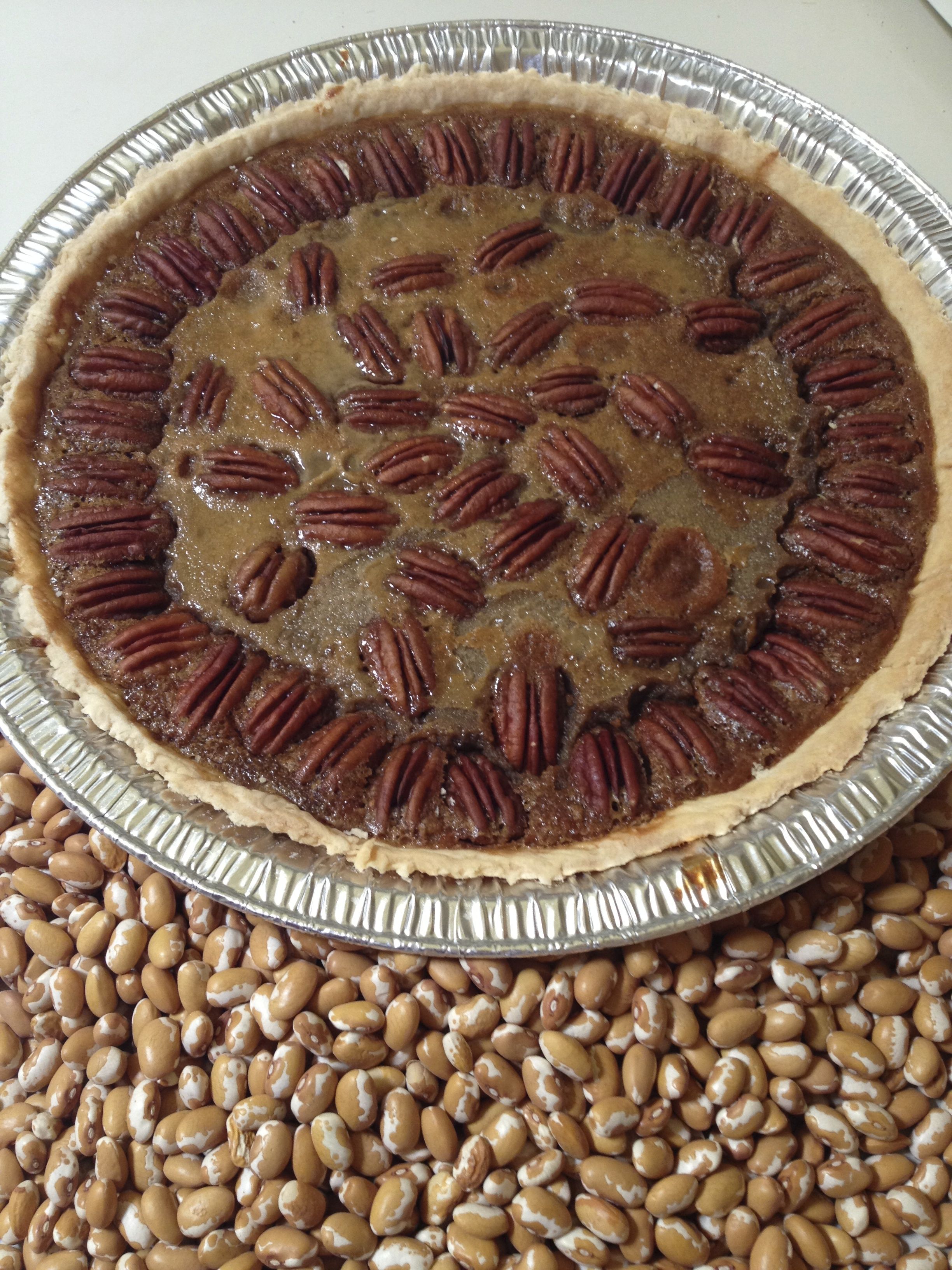
Ed's perfect pecan pie made with Zuni beans--a healthy dessert!.

Ed’s perfect pecan pie made with Zuni beans–a healthy dessert!.

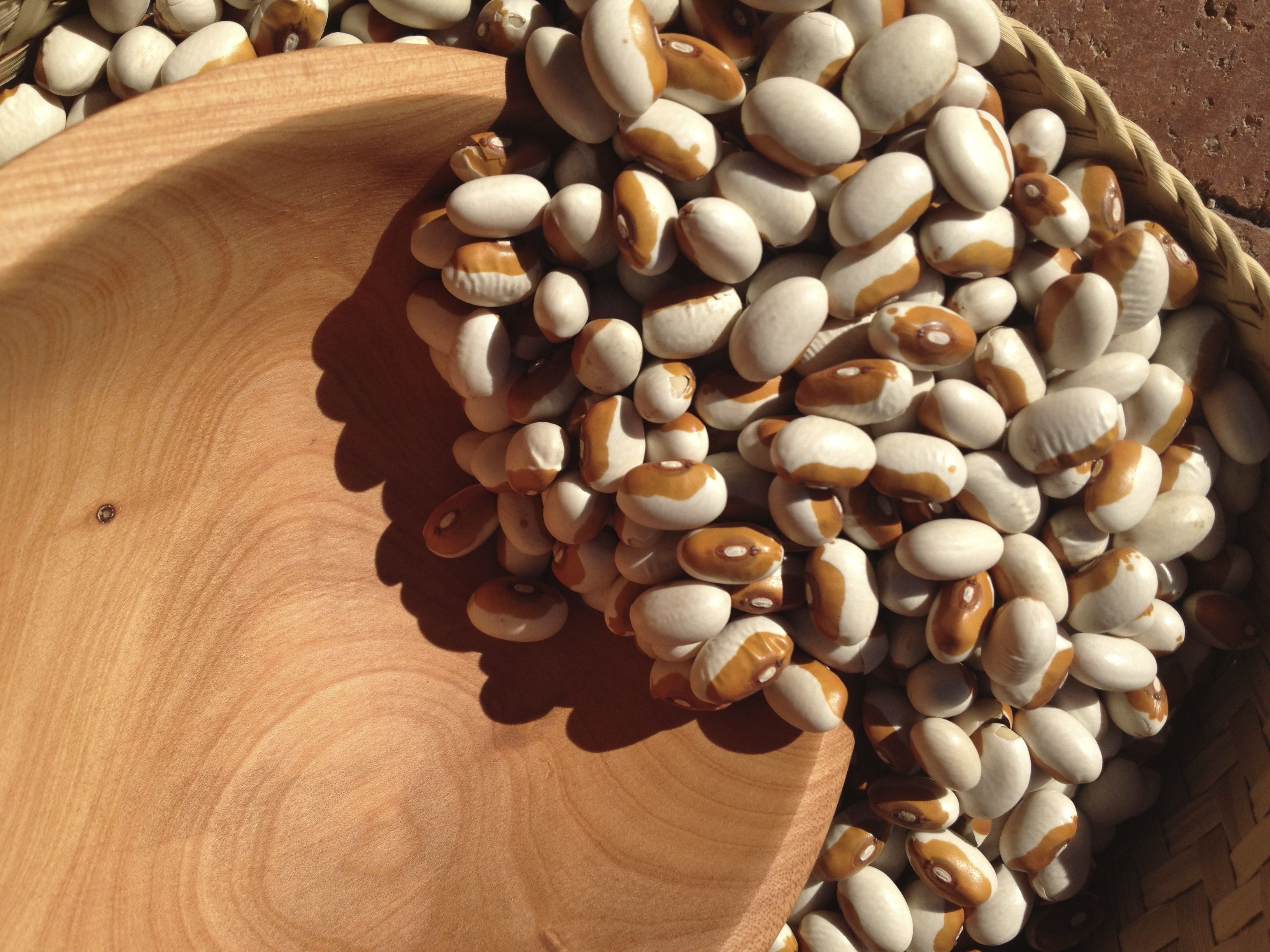
“Zuni Gold” (aka “Four Corners Gold”) was originally from the Native Zuni people of NW New Mexico, a flavor gift to the world.

“Zuni Gold” (aka “Four Corners Gold”) was originally from the Native Zuni people of NW New Mexico, a flavor gift to the world.


"Yellow-eye bean" (not related to black-eye pea) similar to Zuni Gold but with a distinctively different flavor.  It was the original Boston baked bean before coming west.  So rare it is not often used in the mix.

“Yellow-eye bean” (not related to black-eye pea) similar to Zuni Gold but with a distinctively different flavor. It was the original Boston baked bean before coming west. So rare it is not often used in the mix.


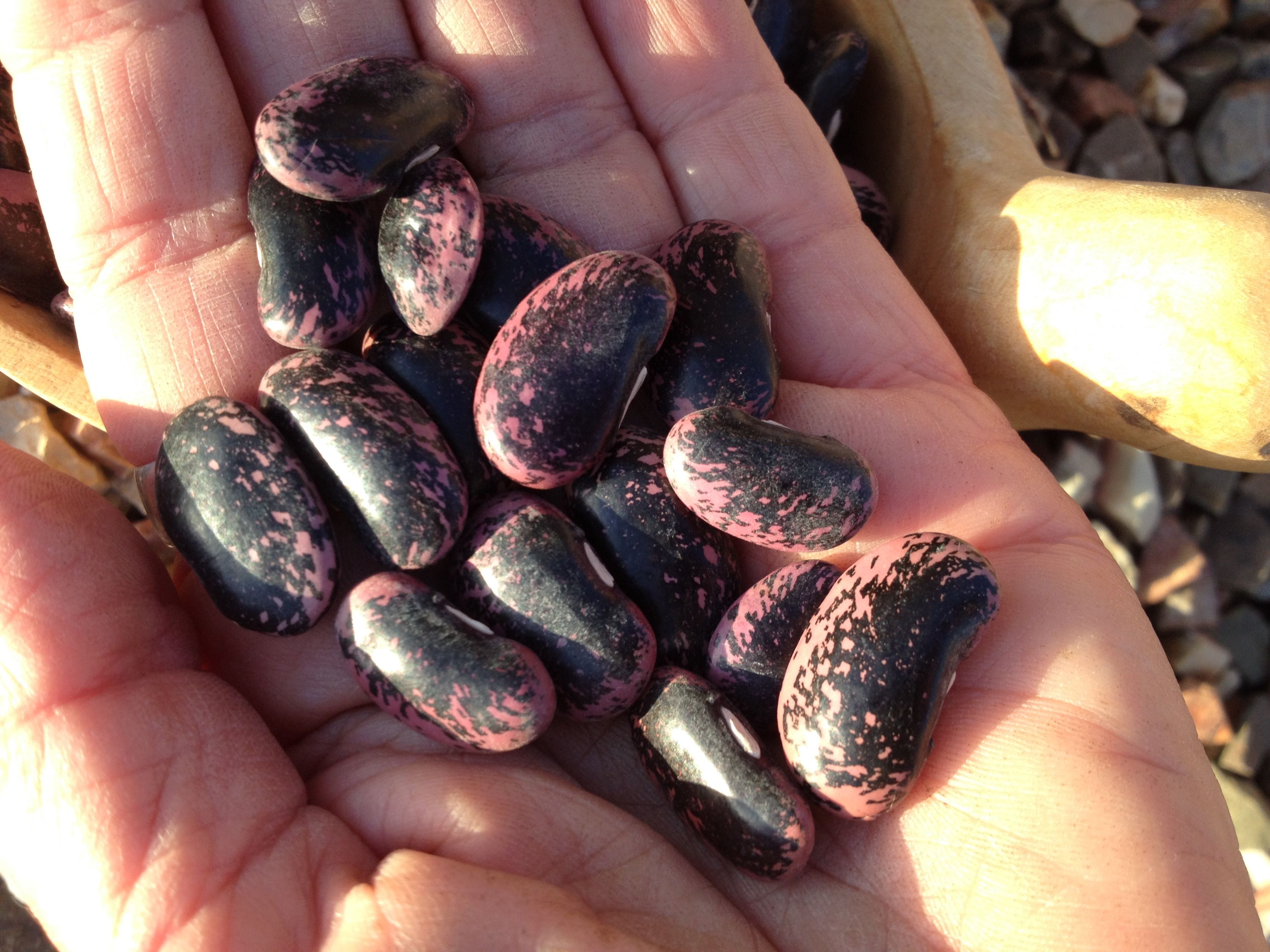
“Scarlet Runner” is a vining bean with brilliant red flowers that attract hummingbirds.  It is a large purplish speckled bean not to be confused with lima.

“Scarlet Runner” is a vining bean with brilliant red flowers that attract hummingbirds. It is a large purplish speckled bean not to be confused with lima. (MABurgess photo)

Runner beans (Phaseolus coccineus) are larger than so-called “common” beans (Phaseolus vulgaris–an insulting name for such wonderful food plants!)  Runner beans, as the name implies, are climbers as compared with bush-beans.  Their flowers are bigger and they bear huge pods.  Runner beans make a great addition to soups and stews.

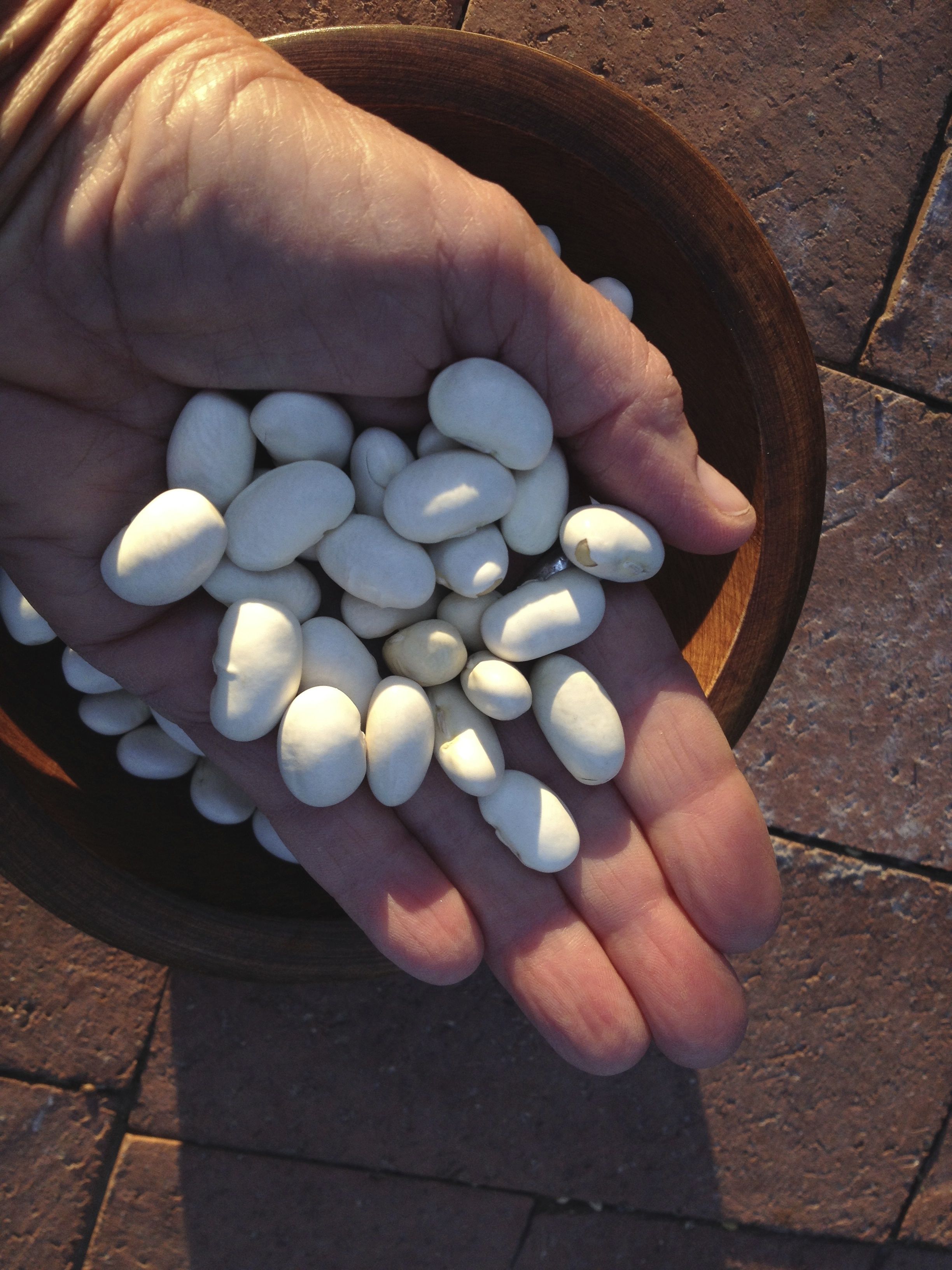
Related to scarlet runner is “Aztec White Runner” or “Bordal” (aka “Mortgage Lifter”) is another vining bean with a big white flower.  It is large, plump and a little sweet.

Related to scarlet runner is “Aztec White Runner” or “Bordal” (aka “Mortgage Lifter”) is another vining bean with a big white flower. It is large, plump and a little sweet.  (MABurgess photo)


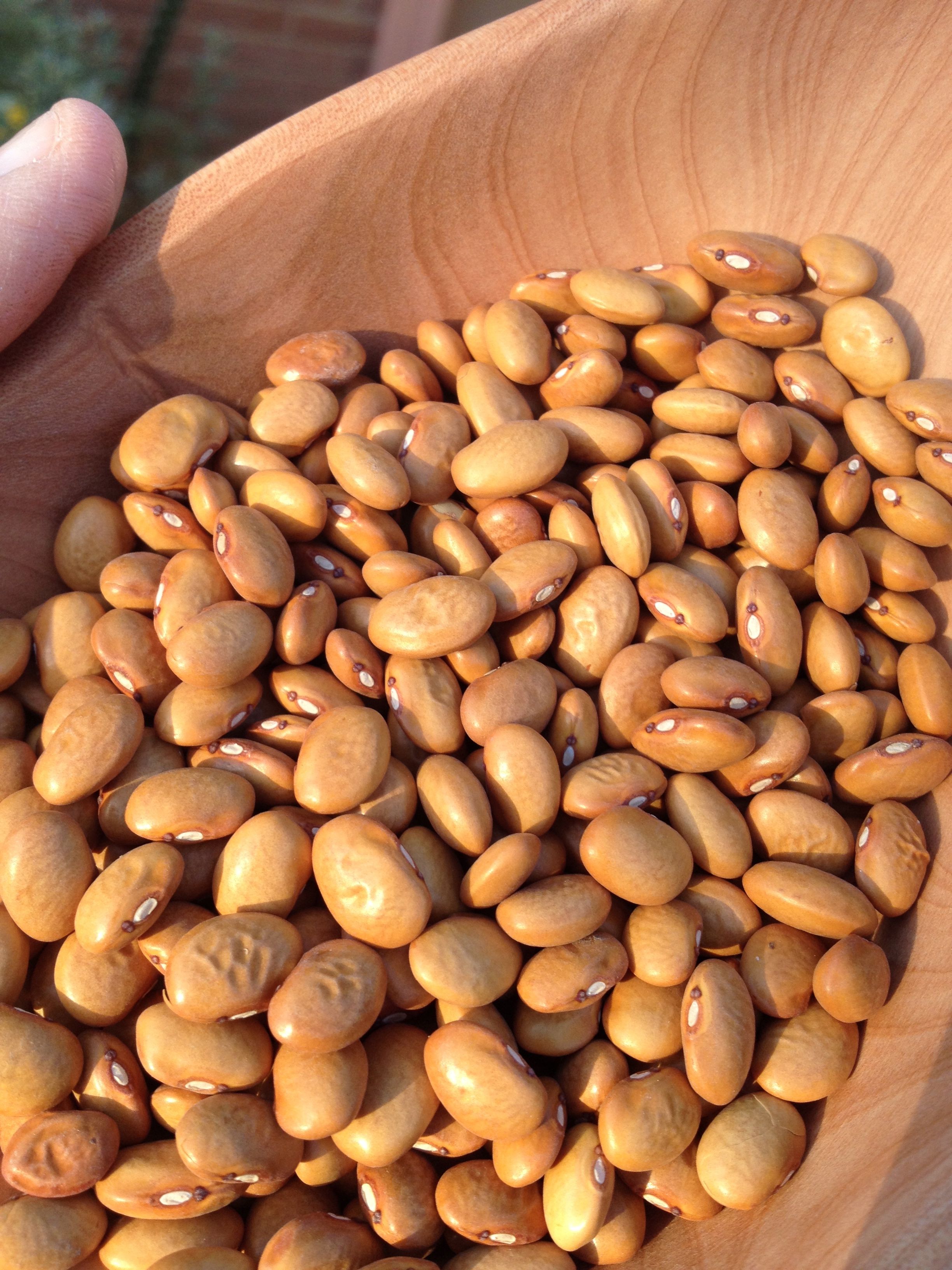
“Yellow Indian Woman” is the only bean in the mix not from the SW.  As legend has it, Swedes brought this bean to Native people of the northern plains.

“Yellow Indian Woman” is the only bean in the mix not from the SW. As legend has it, Swedes brought this bean to Native people of the northern plains.

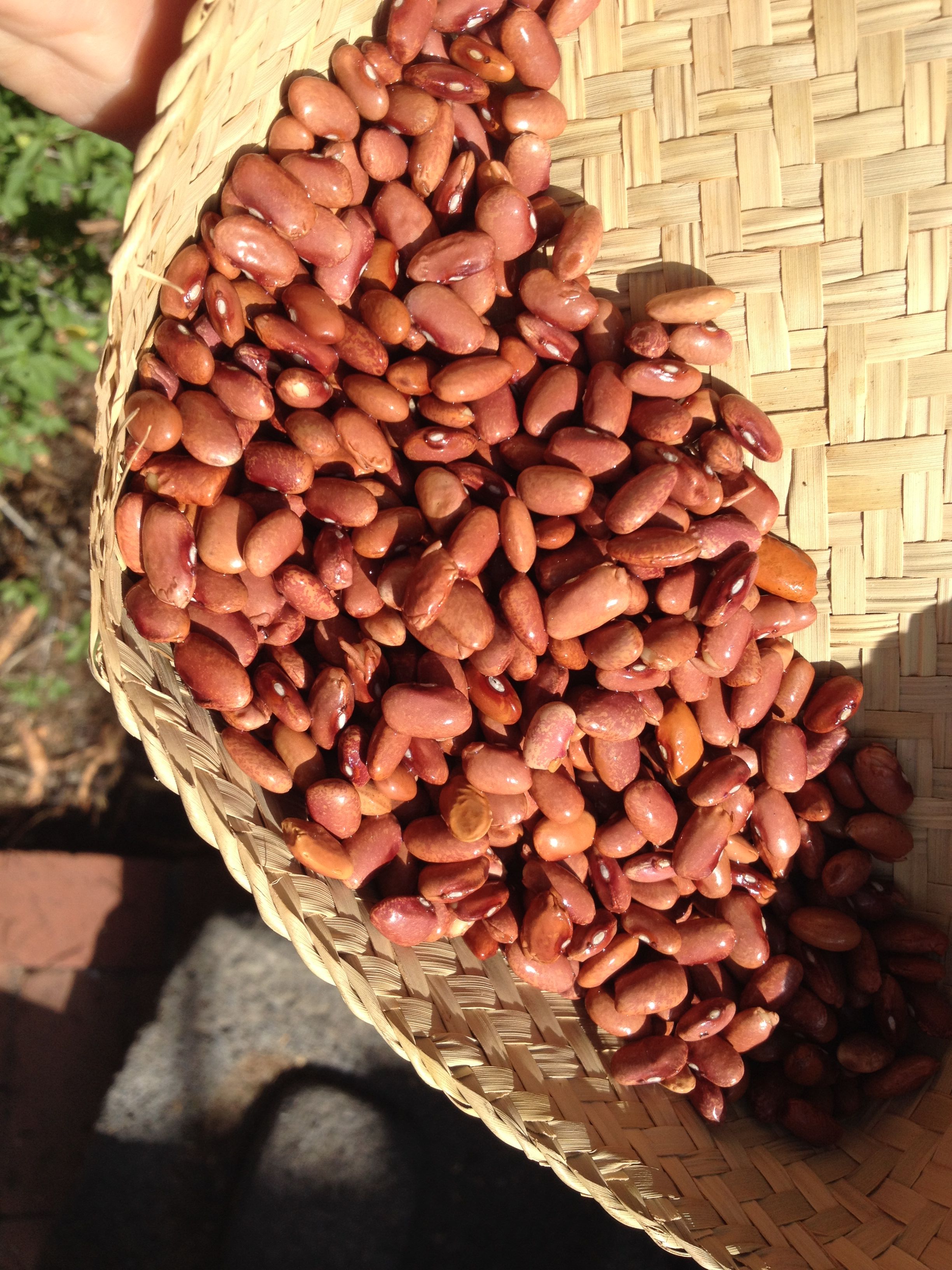
“Flor de Mayo”  (Mayflower) is a favorite of traditional people from Chihuahua and Texas to southern Sonora.

“Flor de Mayo” (Mayflower) is a favorite of traditional people from Chihuahua and Texas to southern Sonora.

“Bolita” or “little bullet” is a champion of flavor and makes a delish burrito or refried bean.

“Bolita” or “little bullet” is a champion of flavor and makes a delish burrito or refried bean.


These three beans are of similar shape and color–though different in flavors.  It is neat to try them separately, to enjoy their individual attributes.  Watch for announcements when Native Seeds/SEARCH sponsors its Great Bean Tasting Events.


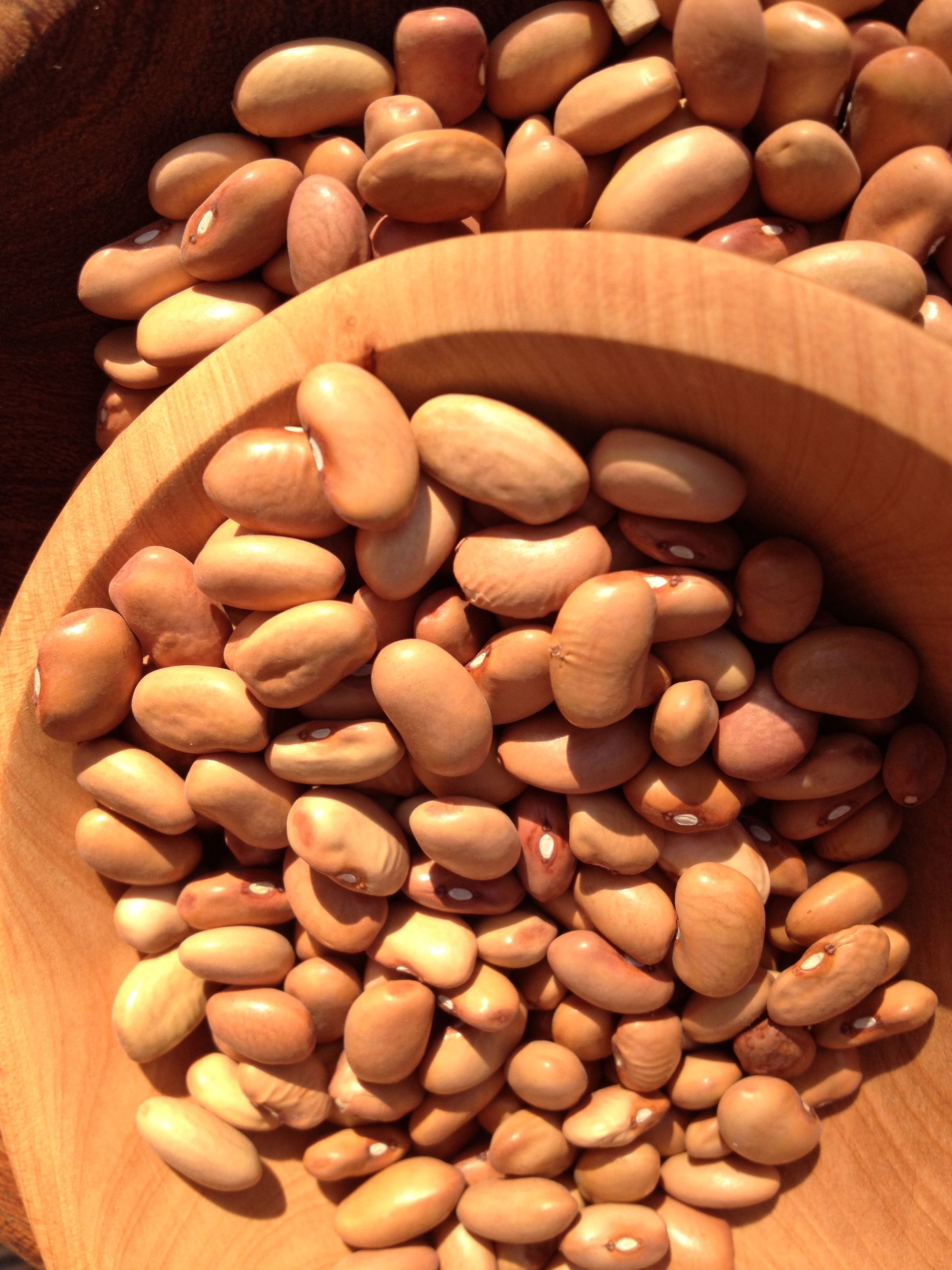
“Moon Bean” (also known in Colorado as “pinkeye bean”)  is a mild, tasty, versatile bean.

“Moon Bean” (also known in Colorado as “pinkeye bean”) is a mild, tasty, versatile bean.

In Tucson our culinary hero Chef Janos Wilder of the Downtown Kitchen has created the most delectable casserole using Moon Beans, chicken, and other surprise veggies.  Try this one out also in marinated salads with white Sonora wheat berries.

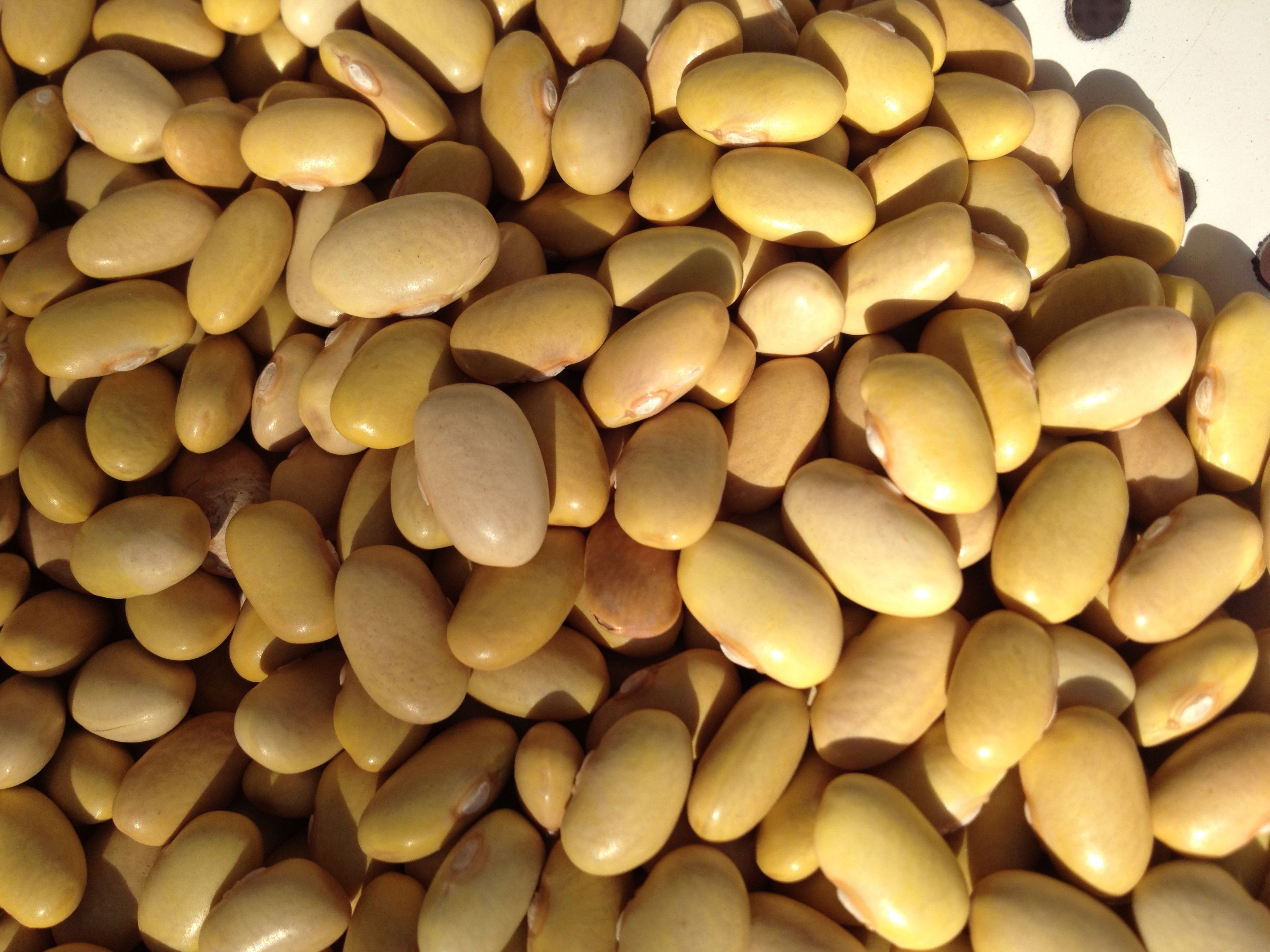
“Maicoba”  is named for the Pima Bajo village in Sonora where it originated.  This yellow bean goes by many monikers—sulfur bean, azufrado, canario, peruano.

“Maicoba” is named for the Pima Bajo village in Sonora where it originated. This yellow bean goes by many monikers—sulfur bean, azufrado, canario, peruano.

The versatile Maicoba makes a fabulous refried bean, a great dip, or burrito.

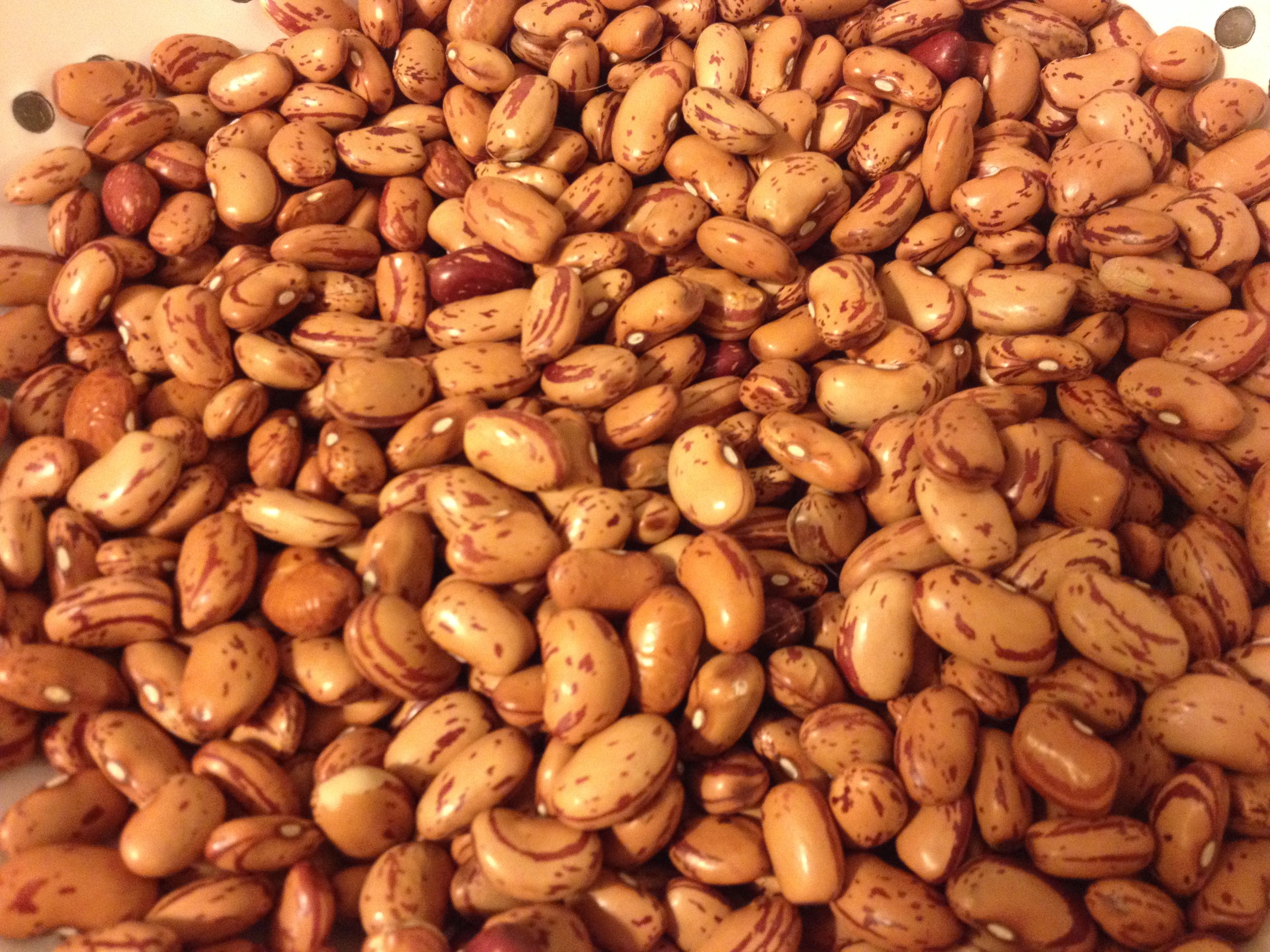
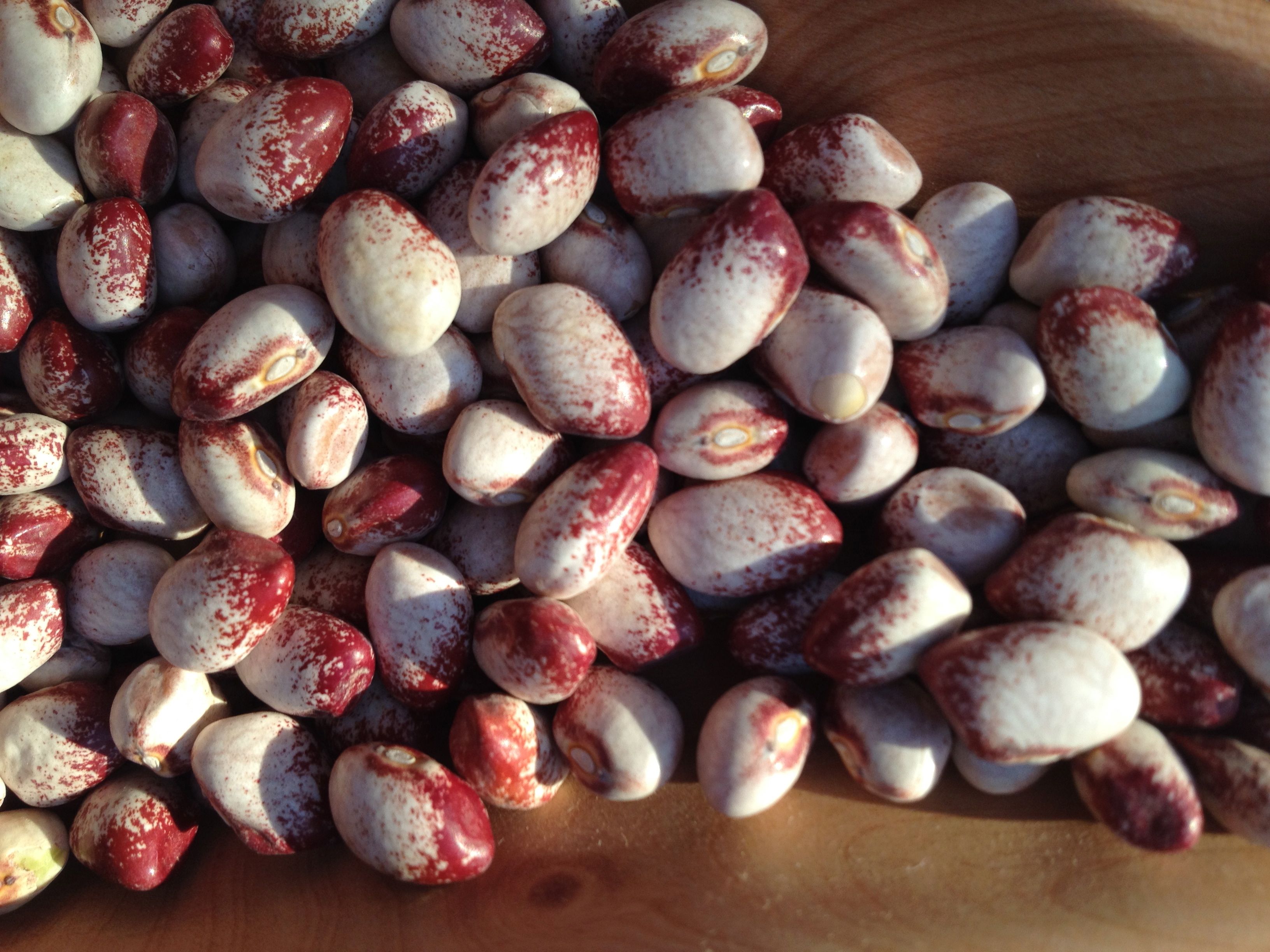
“Cranberry bean” refers to the flecks and strips of dark maroon or cranberry coloration on beige, not to its flavor.

“Cranberry bean” refers to the flecks and strips of dark maroon or cranberry coloration on beige, not to its flavor.

You will often see Italian recipes calling for cranberry bean.  This year’s crop of cranberry was for some weather reason a bust; let’s hope that next year it comes back strong again.  To participate, plant some locally.

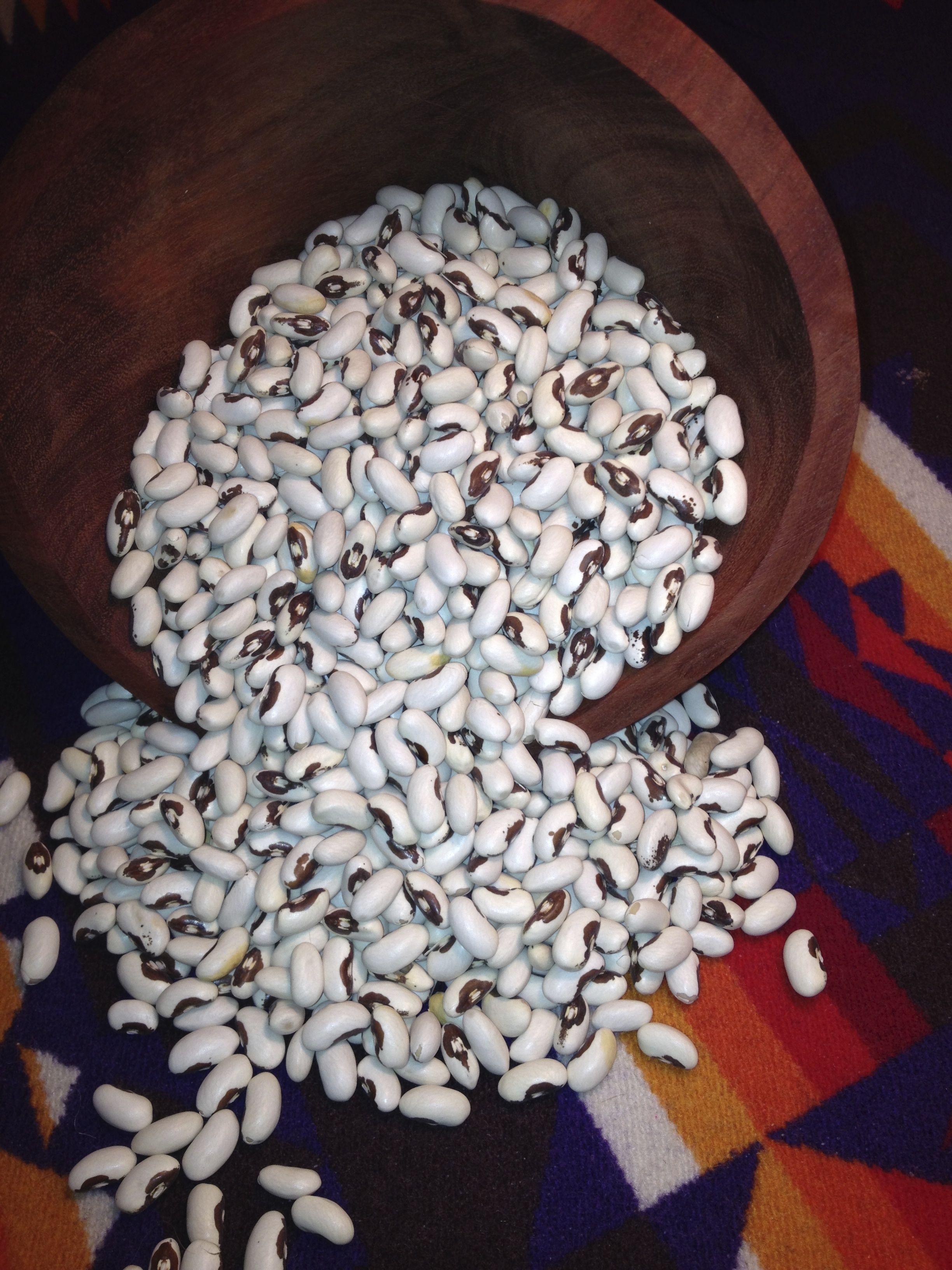
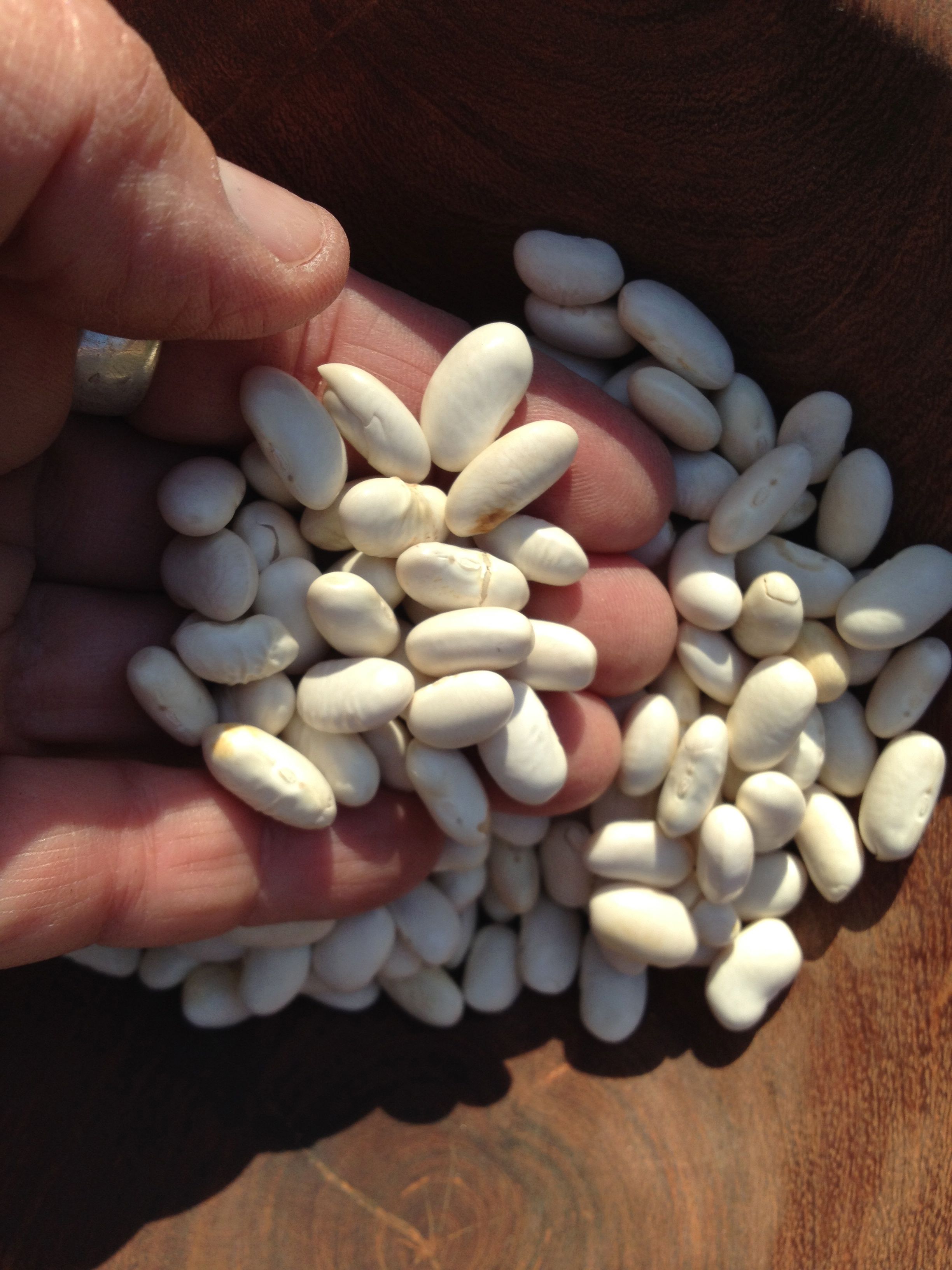
“Cannellini” is an elongated white bean grown in the Four Corners for years, brought there by immigrants.

“Cannellini” is an elongated white bean grown in the Four Corners for years, brought there by immigrants.

Cannellini makes a fabulous addition to minestrone, or becomes the center of a yummy Mediterranean marinated bean salad.  A smaller, creamier bean is the “Colorado River Bean” which resembles the Mayflower bean from SeedSavers catalog.

“Colorado River bean” takes its name from the Colorado Plateau where it is grown.  This small speckled bean makes a wonderfully creamy soup.

“Colorado River bean” takes its name from the Colorado Plateau where it is grown. This small speckled bean makes a wonderfully creamy soup.

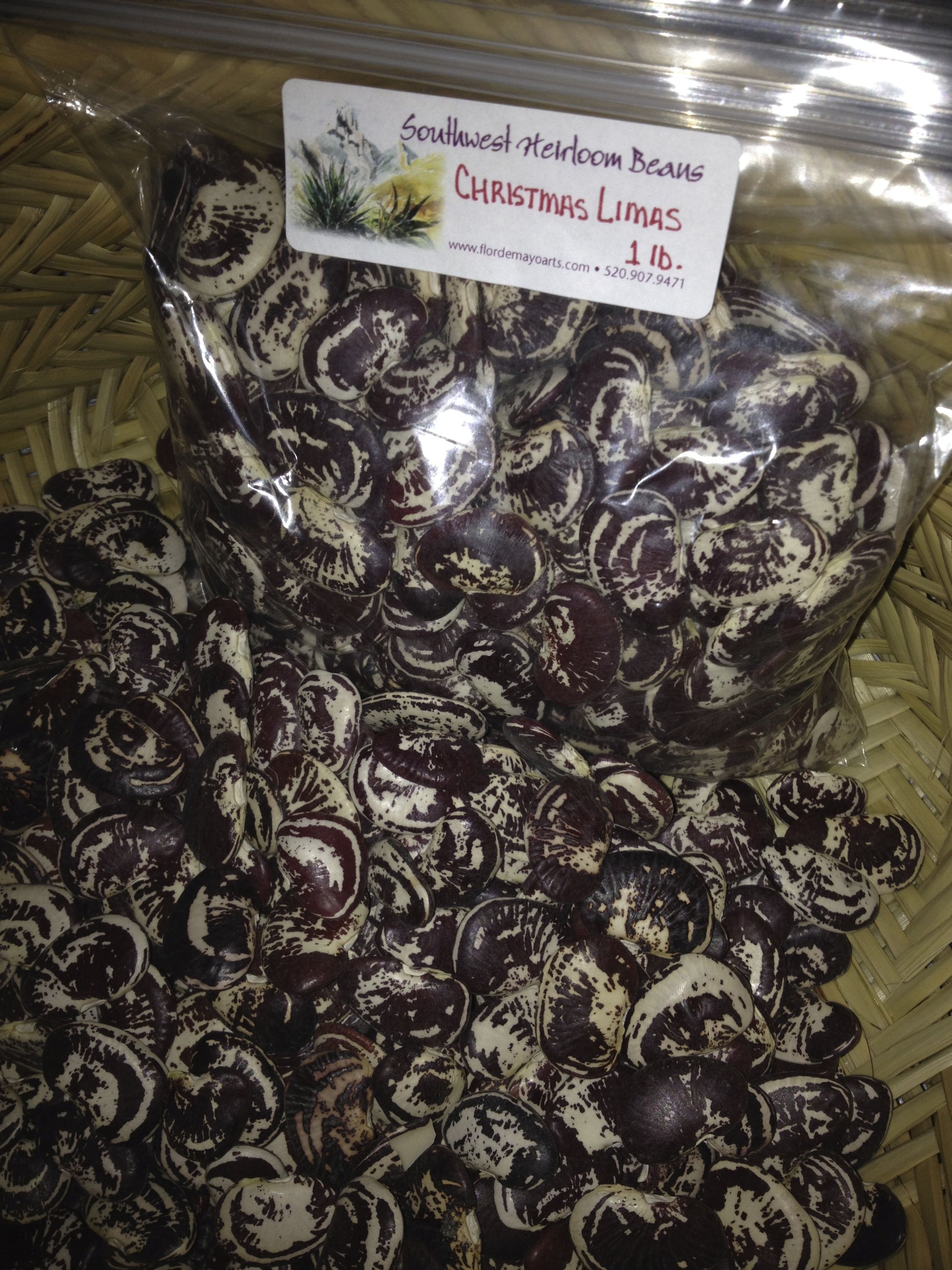
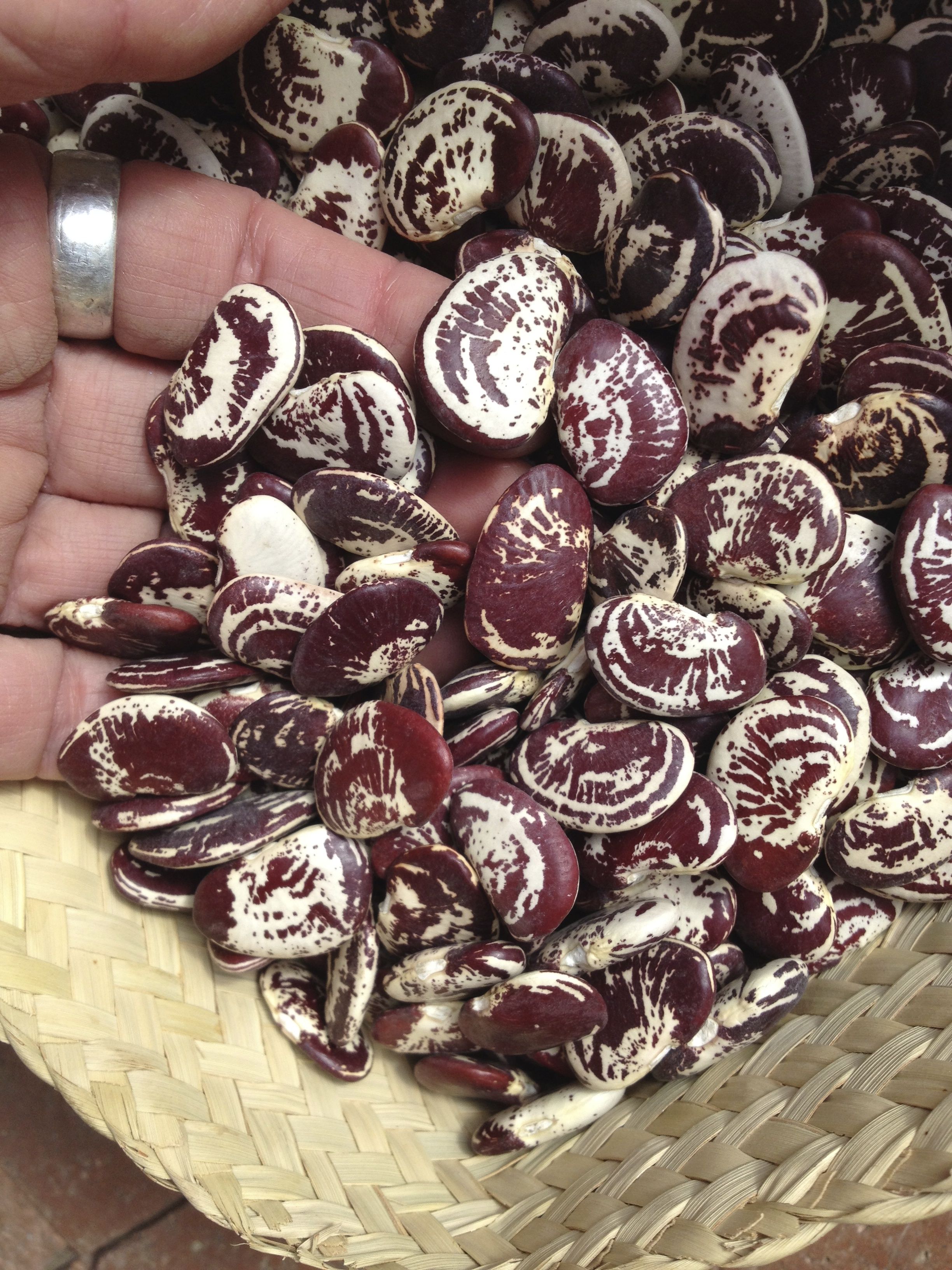
Worlds apart in flavor and size is the Christmas lima–a true lima bean (Phaseolus lunatus–like a moon).  This one is not like your average butter bean.  It is massive as beans go, rich and almost meaty–great for a vegetarian centerpiece dish.

“Christmas lima” or “Chestnut lima” is a true lima bean Phaseolus lunatus, large, flat, purple mottled, and hearty flavored.

“Christmas lima” or “Chestnut lima” is a true lima bean, large, flat, purple mottled, and hearty flavored.


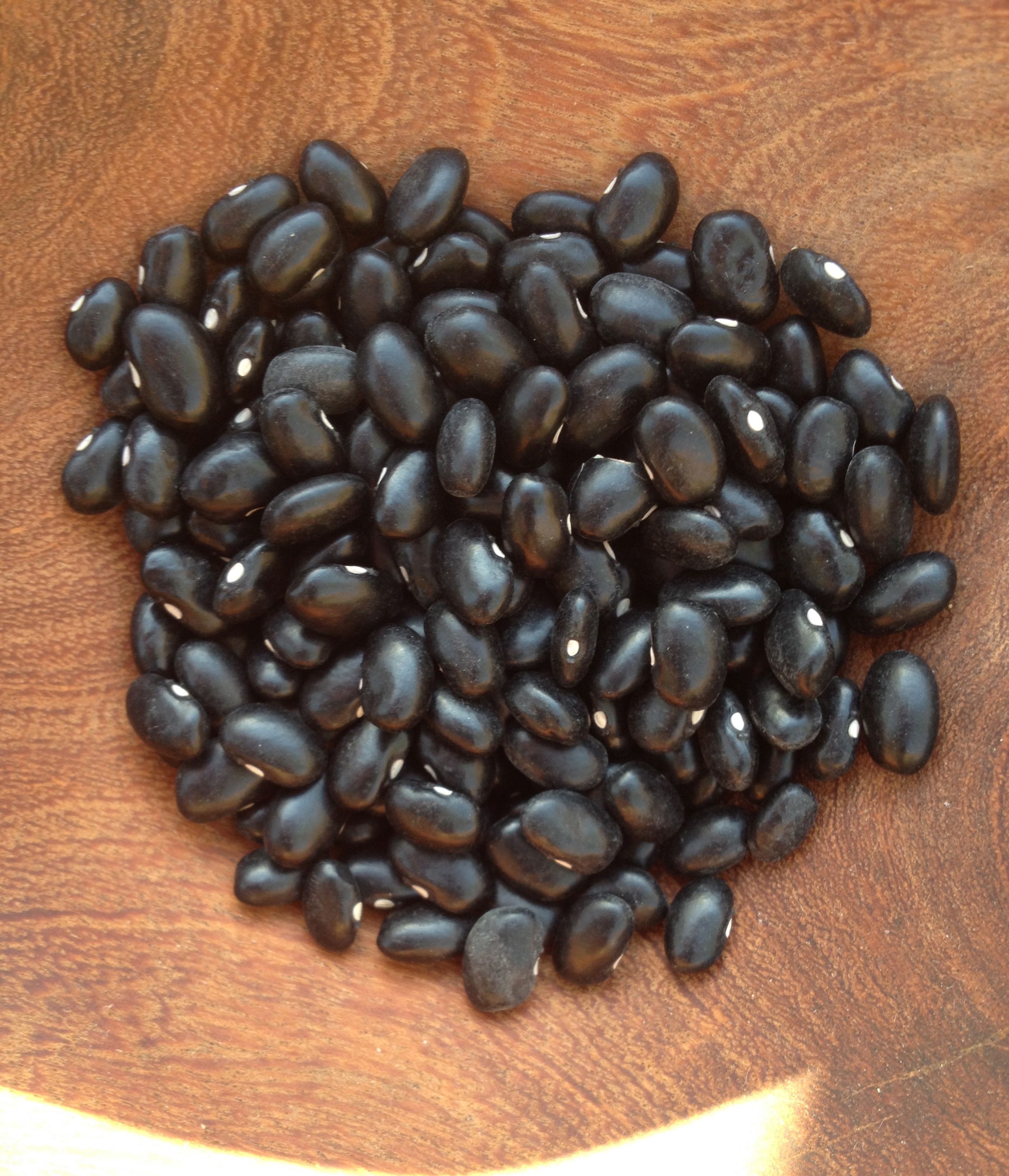
“Aztec Black Bean” or “Black Turtle” is the traditional bean of the Nahuatl or central Mexico.

“Aztec Black Bean” or “Black Turtle” is the traditional bean of the Nahuatl or central Mexico.


“Anasazi Bean” is the only trademarked bean in the mix.  Original seeds of this fast-cooking bean were actually found in an ancestral Puebloan ruin in the Four Corners.

“Anasazi Bean” is the only trademarked bean in the mix. Original seeds of this fast-cooking bean were actually found in an ancestral Puebloan ruin in the Four Corners.

These two beautiful beans, Black Turtle and “Anasazi bean,” bind up the full complement of flavors in Tom’s Mix.  As individual beans, each is hard to beat flavor-wise and texture-wise.  Together, combined in our Tom’s Mix, they are a culinary delight.

Black beans are the staple of many traditional diets, from Meso-America to northern New Mexico.

The “Anasazi” is the fastest cooking and least distressing to digestion of any bean I know of.

So now are you feeling enriched by these visual legume wonders?  I hope so!  Now to come try your hand at identifying them firsthand, and to treating your taste-buds at our Flor de Mayo tent at Sunday farmers market.

Identified or not, these precious heirloom beans in Tom’s Mix make a fabulous soup that our market and online customers rave about. You can ship out this Southwest gift to all corners of the globe via paypal at http://www.flordemayoarts.com.

Tom’s Mix is so versatile—try them as a dip or as a most colorful marinated bean salad when the weather heats up. If you are inspired to assist the bean genes into the future, try your hand at growing some of the Tom’s Mix varieties this summer in your own garden.  You can learn lots more at our Seed Libraries (Pima County Public Library) and at the upcoming International Seed Library Conference to be held in Tucson in early May.

Diversity of Southwestern heirlooms in Tom's Mix

Diversity of Southwestern heirlooms in Tom’s Mix

See you Sunday at St Phillips Plaza or at the NSS Store, 3061 N Campbell. We look forward to talking heirloom beans with you!

[As for the diversity of those cholla flowers mentioned at the start….. Tia Marta will be exploring our diverse cholla flora at upcoming cholla bud harvesting workshops: Sat April 11 sponsored by NativeSeeds/SEARCH and Sat April 18 sponsored by Tohono Chul Park. Contact each for more info: http://www.nativeseeds.org and http://www.tohonochulpark.org, or call Flor de Mayo at 520-907-9471.]

Luscious Lemons

IMG_0092

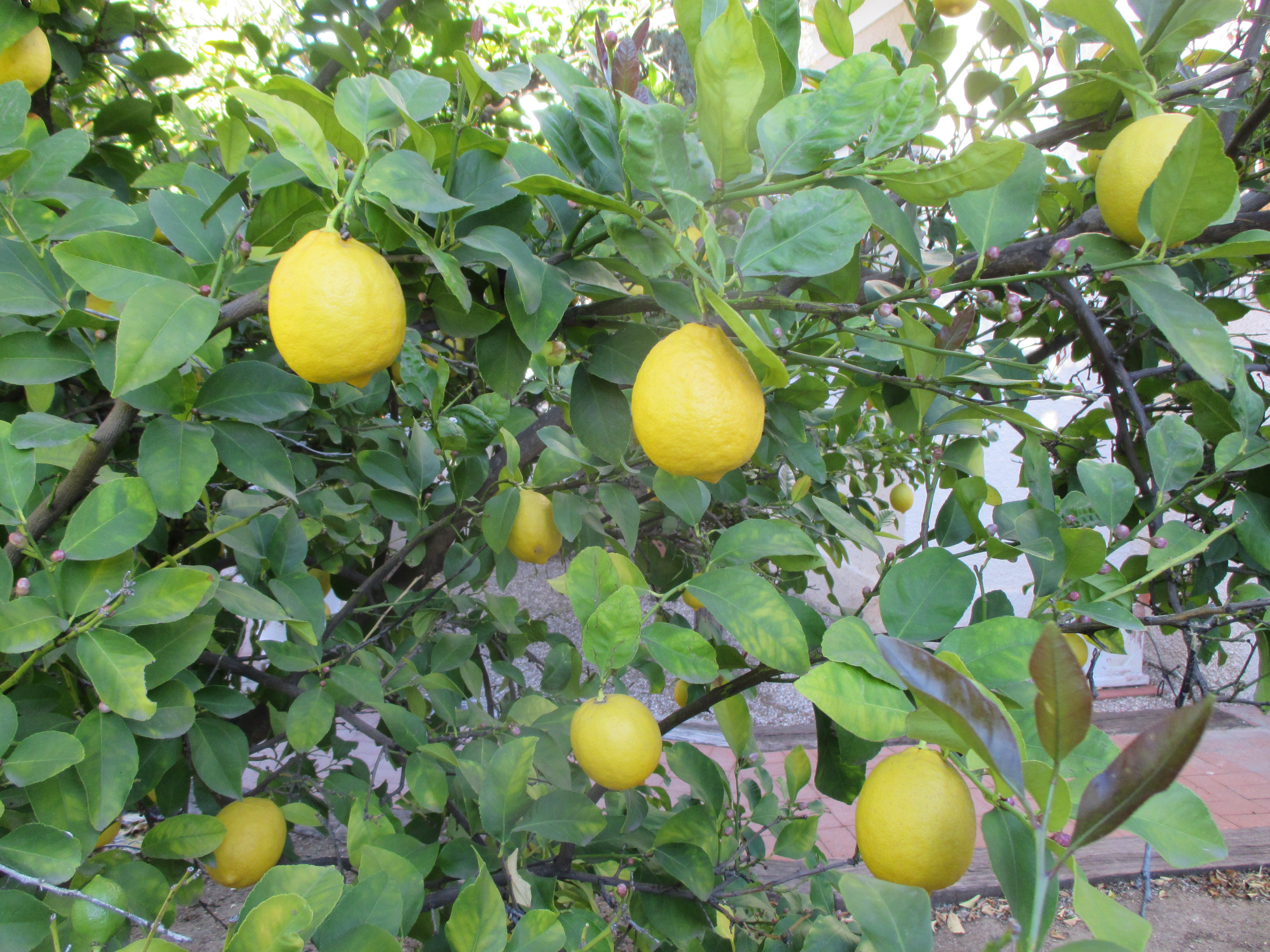
As I write, the citrus trees in my neighborhood are beginning to bloom and sending waves of  scented the air through my exuberantly flowering garden. This is the kind of experience poets rhapsodize about. The two big freezes we had in 2011 and 2013 affected most of Tucson’s lemon trees, and some gardeners went without lemons as the trees recovered. But this spring they came roaring back. It’s Carolyn this week giving you ideas for using lemons from your own trees, those you can beg from neighbors or buy at the farmers’ market.

Make Some Lemon Curd

The word “luscious” could have been invented to describe lemon curd. It’s sweet without being cloying; tart without being sour. Yum. I made it once before with so-so results. As with any recipe involving cooked eggs, there is always the chance of curdling if you don’t handle the ingredients delicately. This recipe, developed by Elinor Klivans from Fine Cooking reduces the risk. You can use your lemon curd on toast or scones or fill tiny tart shells for a dessert.

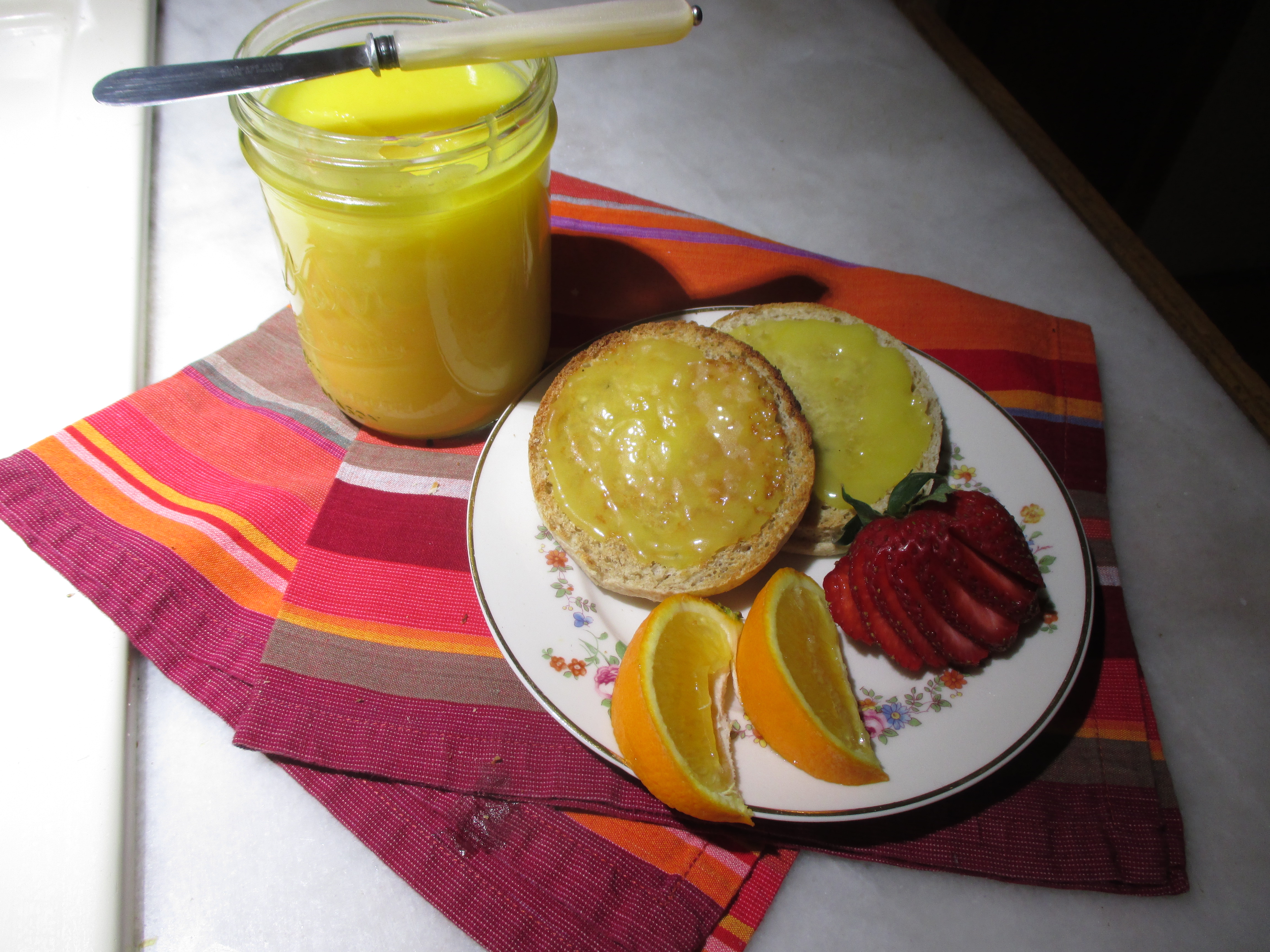
Lemon curd and English muffins make an elegant breakfast.

Lemon curd and English muffins make an elegant breakfast.

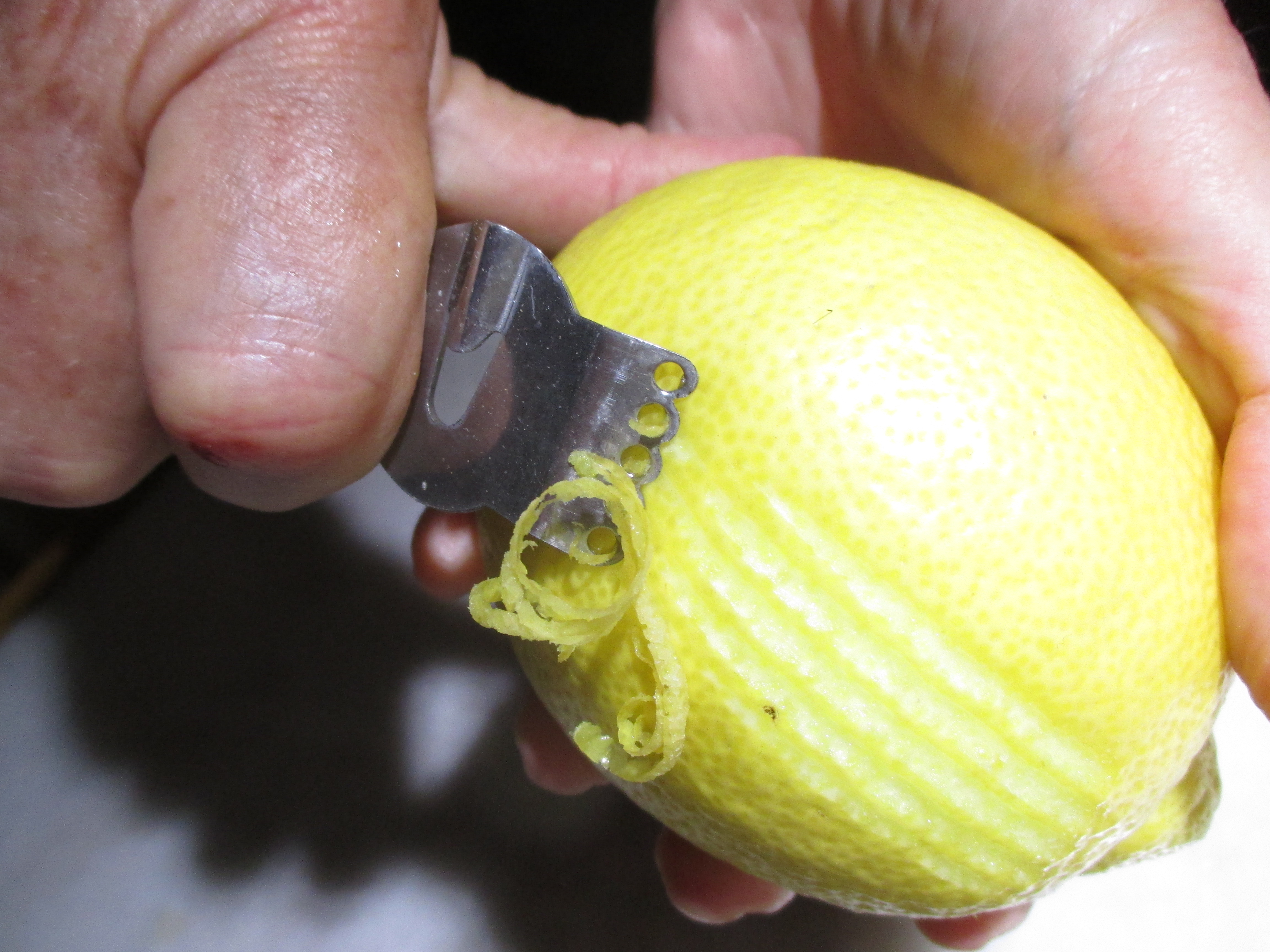
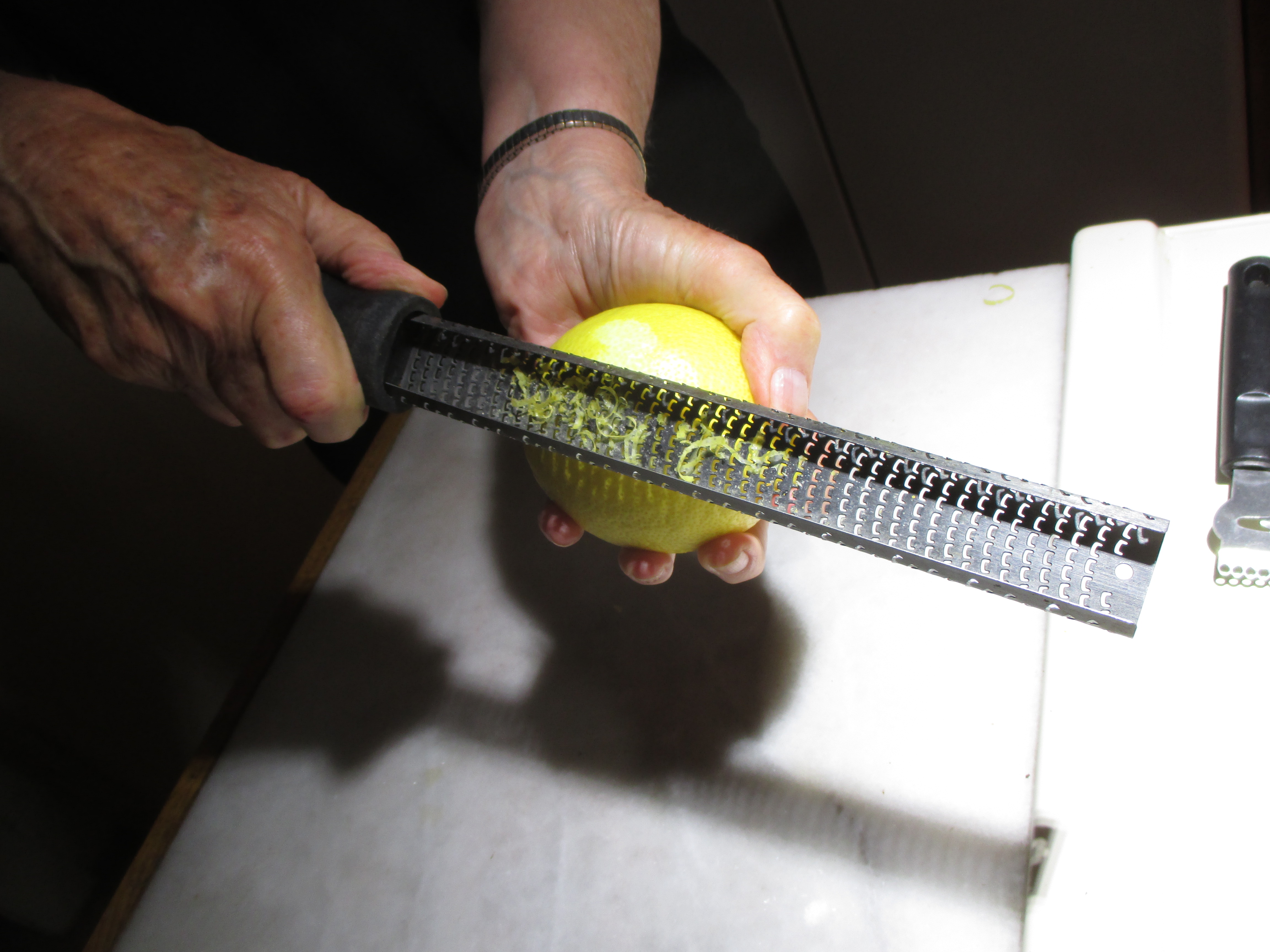
To make lemon curd, you’ll need to zest a lemon first. You only need a tablespoon of zest. You can use a lemon zester or get finer zest with a microplane.

Zesting with a simple lemon zester.

Zesting with a simple lemon zester.

Using a microplane to make lemon zest.

Using a microplane to make lemon zest.

Lemon Curd

by Elinor Klivans from Fine Cooking

6 tablespoons unsalted butter, softened at room temperature

1 cup sugar

2 large eggs

2 large egg yolks

2/3 cup fresh lemon juice

1 tablespoon grated lemon zest

In a large bowl, beat the butter and sugar with an electric mixer, about 2 minutes. Slowly add the eggs one at a time, beating between, then add the yolks. Beat for 1 more minute. Mix in the lemon juice. The mixture will look curdled. Don’t worry as it will smooth out as it cooks.

Transfer the mixture to  a medium, heavy-bottomed saucepan and cook the mixture over low heat until it looks smooth. You will find that the curdled appearance will disappear as the butter in the mixture melts. Increase the heat to medium and cook, stirring constantly, until the mixture thickens, from 8 to 15 minutes. Don’t try to rush this. Put on the radio or some music to entertain yourself. If you have a cooking thermometer, it should read 170 degrees F. when the curd is finished.

The curd is almost ready.

The curd is almost ready.

If you don’t have a thermometer, dip the back of a spoon into the sauce, and and run your finger through it. A path should remain. Most important:  Don’t let the mixture boil.

Test doneness without a thermometer.

Test doneness without a thermometer.

Remove the pan from the heat; stir in the lemon zest. Transfer the curd to a bowl. Press plastic wrap on the surface of the lemon curd to keep a skin from forming and chill  in the refrigerator. The curd will thicken further as it cools. Covered tightly, it will keep in the refrigerator for a week and in the freezer for 2 months. Each tablespoon has about 50 calories.

Limoncello: A Treat from Italy

Italian limoncello is easy to make.

Italian limoncello is easy to make.

If you have ever been to Italy, you probably know about limoncello, the generic name for an Italian citrus-based lemon liqueur that is served well chilled in the summer months. All you need is lemons, vodka and sugar. When choosing lemons you want to use organic if possible to avoid wax and pesticides on the peel. This recipe is adapted from one given by the television cook Giada De Laurentiis.

Limoncello

10 lemons
1 (750-ml) bottle vodka
3 1/2 cups water
2 1/2 cups sugar

Start with a clean gallon jar. First, carefully peel the lemons in long strips with a vegetable peeler so there is no white pith on the peel. Use only the outer part of the rind. Put the rinds in the jar and cover with the vodka. Let it sit at room temperature for at least 10 days and up to 40 days in a cool dark place.

When you are ready to proceed, combine the water and sugar in a saucepan, bring to a gentle boil and let it boil 5 to 7 minutes. Remove from heat and let the syrup cool. Add to the limoncello mixture and let it rest from overnight to 10 days (the experts really differ on this. I just waited 2 days and it was fine.) Strain into bottles, seal and refrigerate.

Limoncello Cocktail

Mix half-and-half limoncello, seltzer water, tonic, or champagne and serve over ice.

Easier, Better Lemonade

No squeezing needed when you pour boiling water over sliced lemons.

No squeezing needed when you pour boiling water over sliced lemons.

I learned to make the best lemonade from my friend Ann who lives in New Jersey. She learned it from a woman in Germany. Neither of these areas are lemon-growing regions so it may be a way of conserving. Rather than squeezing them, slice the lemons and pour boiling water over them. Let them steep for a couple of hours, pour off the water and repeat. You can keep adding water, letting it sit and draining until the taste grows too weak. This makes a juice with greater depth of flavor because it extracts the lemon oils from the rinds. Sweeten to taste with your choice of sugar, honey or agave syrup.

And Don’t Forget…

Tia Marta is running several classes in gathering and preparing cholla buds. This is a great year for desert plants and the cholla buds are fat and juicy.

Workshop Dates (find a downloadable flyer on the website http://www.flordemayoarts.com):
Saturday April 4, 2015, 7:30-9:30am—register at 520-907-9471
Wednesday, April 8, 8-11am, Pima Co Parks & Rec 520-615-7855 x 6
Saturday, April 11, 8-11am, Westside, sponsored by NativeSeeds/SEARCH, call 520-622-0830×100

Saturday, April 18, 8:30-11:30am, Tohono Chul Park, 520-742-6455 x 228