Mesquite–Ancient Food for the Future

Yes, we gotta admit it—Tucson and ALL OF BAJA ARIZONA is a FOOD-COLONY!  To feed ourselves here, we currently import over 96% of our foods from out of state or out of country. If there were to be a transportation stoppage or disaster (perish the thought), we have less than 4 days’ food supply in local groceries. (info from Fry’s managers and Pima Co Emergency Mgmt.) This is a scary and sobering reality, and we need to remedy it for the good of all.
When it comes to food security in the Desert Southwest, if we are smart we’d best turn to those whose ancestors not only survived but thrived here, before European food fads invaded, and long before bio-technology pretended to save us–Let us listen to Native People!  If we look to traditional O’odham cuisine, and to that of all low-desert Traditional People in the Southwest, we learn that one of their most important and consistent staple foods was MESQUITE. Meal ground from the whole, ripe, dry pods was prepared in diverse ways by every tribal group, and stored safely against lean times, providing them amazingly tasty nutrition.

Now….its up to “newer arrivals” to the desert to expand our cultural tastes–and enjoy lessons from local tradition….

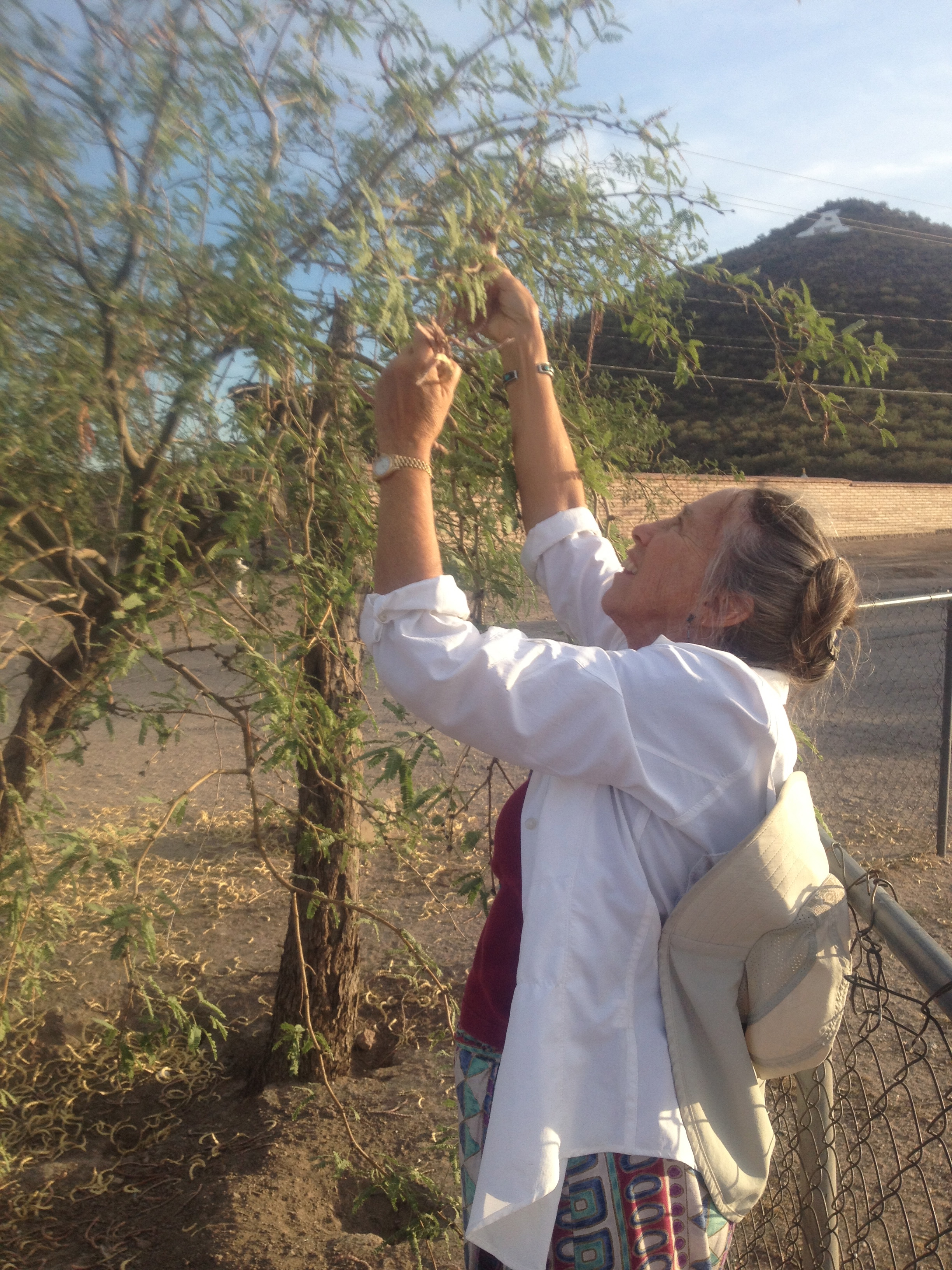
Harvesting ripe velvet mesquite pods--an old Chuk-shon tradition (RodMondt photo)

Harvesting ripe velvet mesquite pods–an old Chuk-shon tradition (RodMondt photo)

Everyone enjoys mesquite’s shade, its smokey flavoring and fuelwood in BBQs. But what about mesquite as food and food-security? Sweet and yummy are first.  Culinary versatility is up there.  Nutrition is paramount.  Recent nutritional analyses show what Native People have ALWAYS known intuitively, that mesquite’s sweetness is healthy (complex) sugars, and that it gives sustained energy (from slow-release complex carbs.)

A major plus for arid-lands food-security is that mesquite trees grow plentifully in the desert WITHOUT ANY HELP from humans. Having evolved with large Pleistocene herbivores, mesquite’s survival strategy is to over-produce quantities of tasty pods to entice mammoths or (extinct) ungulates to eat them and spread their seeds, scarified and delivered in ready-made fertilizer packages. In more recent centuries, cattle have provided a similar service to spread mesquite.  Hungry bi-peds can benefit too from mesquite’s plentiful productivity. With global climate change and the promise of expanding deserts, mesquite offers us a healthy staple food and a fitting dry-lands crop for our stressed Planet.

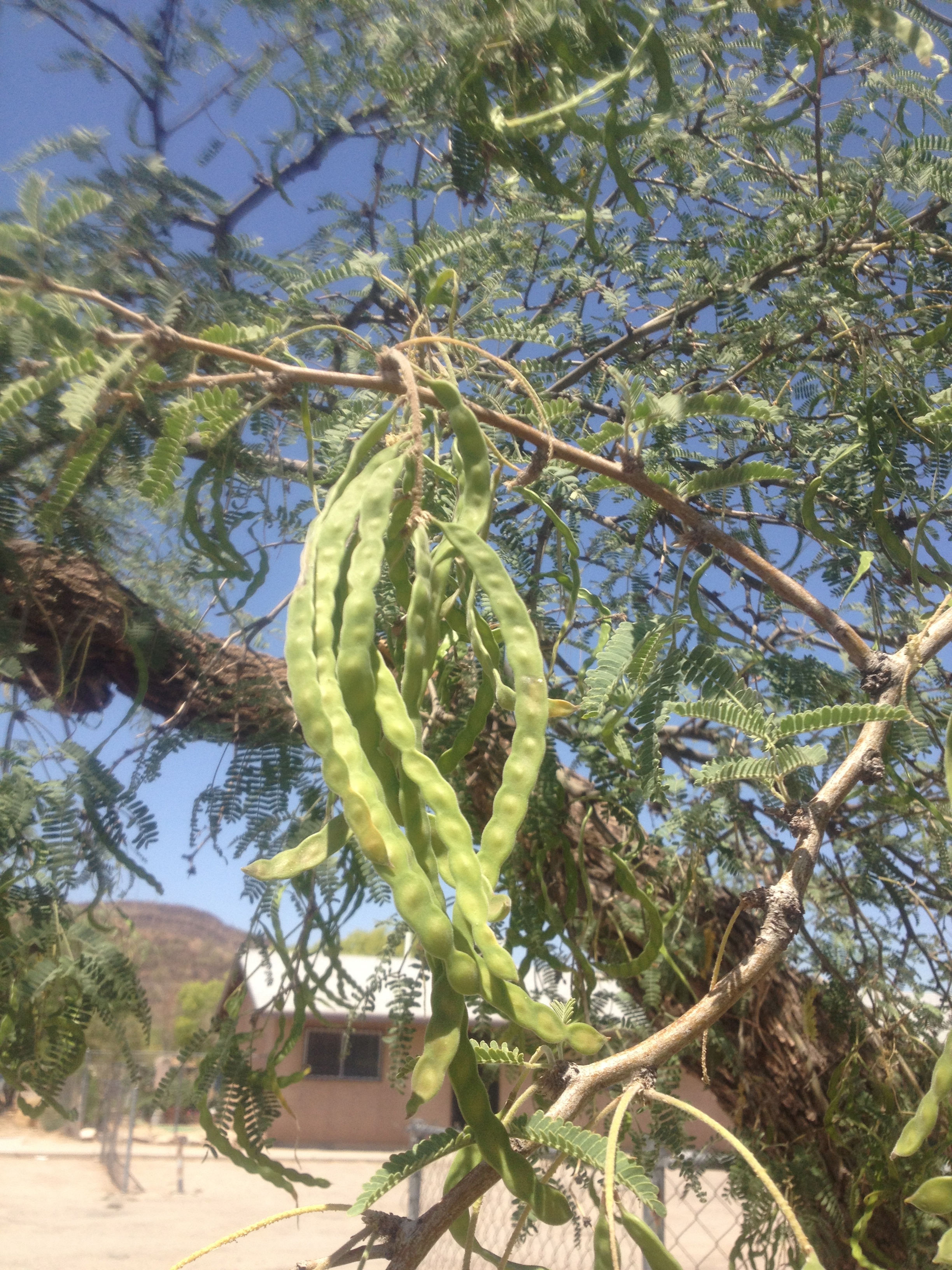
Velvet mesquite pods (Prosopis velutina) in green phase (maburgess photo)

Velvet mesquite pods (Prosopis velutina) in green phase (maburgess photo)

[Mesquite pods are ripening as I write–so heads-up!]

A most timely gathering of mesquite experts—both traditional and innovative—is about to happen at  a MESQUITE CONFERENCE open to the public and not to be missed………Attention–Novice mesquite-harvesters, cooks and culinary artists, bakers and chefs, nutritionists and clinicians, ranchers, farmers, gardeners, athletes and fitness fans, survivalists, nature buffs, climate-change planners…. this conference is for you.

MESQUITE: NEW AGRICULTURAL TRADITIONS FOR AN ANCIENT FOOD  will be held in Benson, Arizona, all day Friday, June 13, 2014, at the Cochise College Campus, 8:30am-4pm.
There will be talks by leading Mesquiteros, including traditional Tohono O’odham harvester Clifford Pablo, new crops innovator Dr. Richard Felger, the one and only mesquite agronomist Mark Moody, wild-harvester Amy Valdes Schwemm, creative desert rancher Dennis Moroney, animal feed expert Dr. Howard Frederick, desert foods ethnobotanist Martha Ames Burgess, and Cooperative Extension outreach educator Mark Apel.

In addition, generously sharing their knowledge, techniques and recipes will be demonstrators, including desert foods writer Carolyn Niethammer, wild-food teacher Barbara Rose, solar cooking expert Valerie McCaffrey, mesquite millers from San Xavier Farm Coop and Tohono O’odham Community College, and children’s book author Laurie Melrood. This is the place to contact producers of mesquite meal for your home cooking, for nouvelle local-source eateries, and breweries. Get your tastebuds ready for samples of delectable new culinary mesquite delights!

Sponsored by Baja Arizona Sustainable Agriculture and University of Arizona Cooperative Extension, with extra support from USDA Western SARE, we have been able to keep the registration fees to a minimum– accessible to anyone. $30 covers the whole day conference including luncheon ($20 for students or members of BASA). Space is limited so register soon. Registration is online via the BASA website http://www.bajaaz.org. For further info call 520-331-9821.
Once registered, please group your travel plans in carpools. For carpooling ideas check out the Native Seeds/SEARCH or BASA facebook sites. Let’s not let anyone miss this conference who needs to be there!


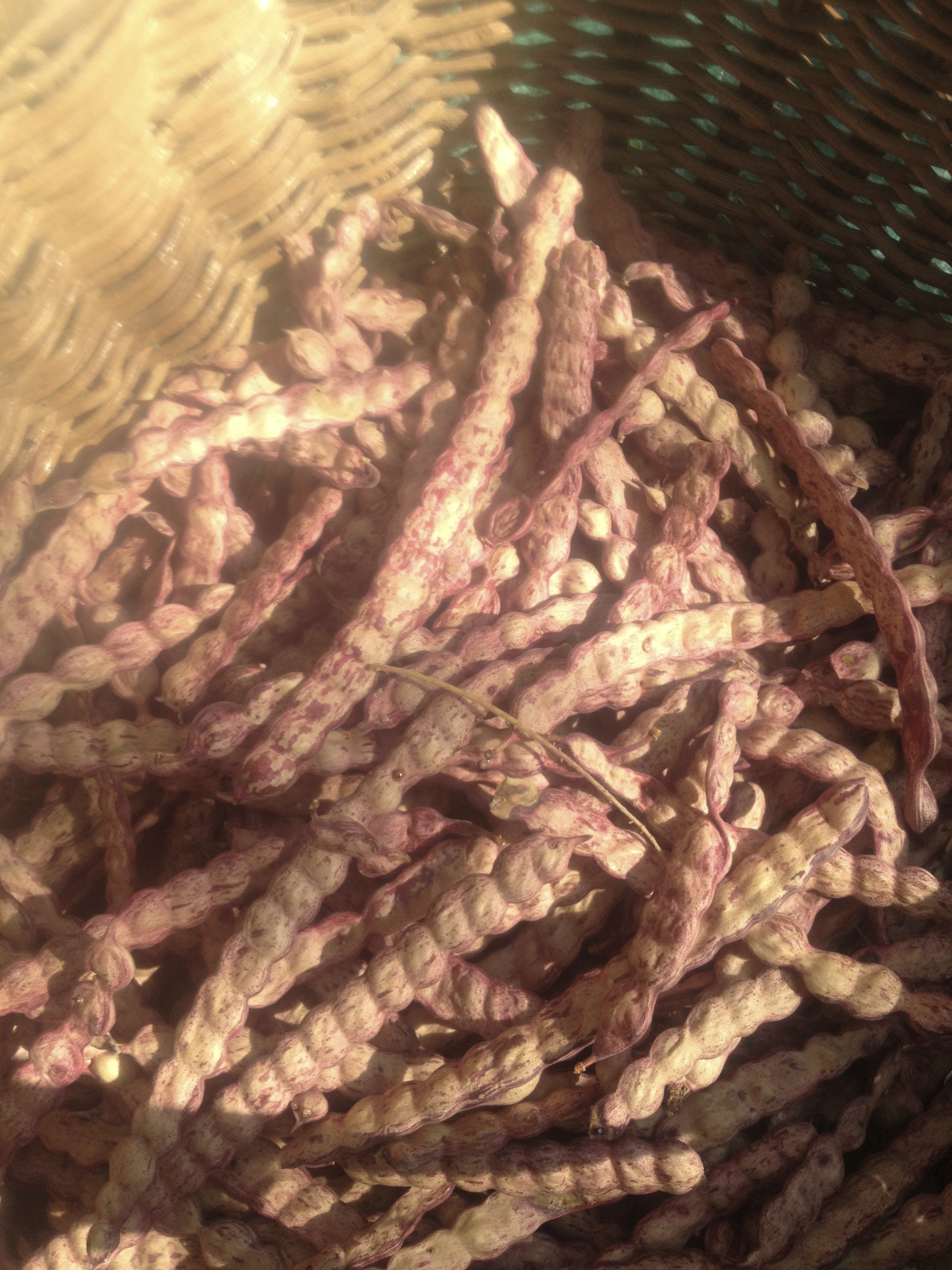
Select sweet velvet mesquite pods dry and ready to grind (maburgess photo)

Select sweet velvet mesquite pods dry and ready to grind (maburgess photo)


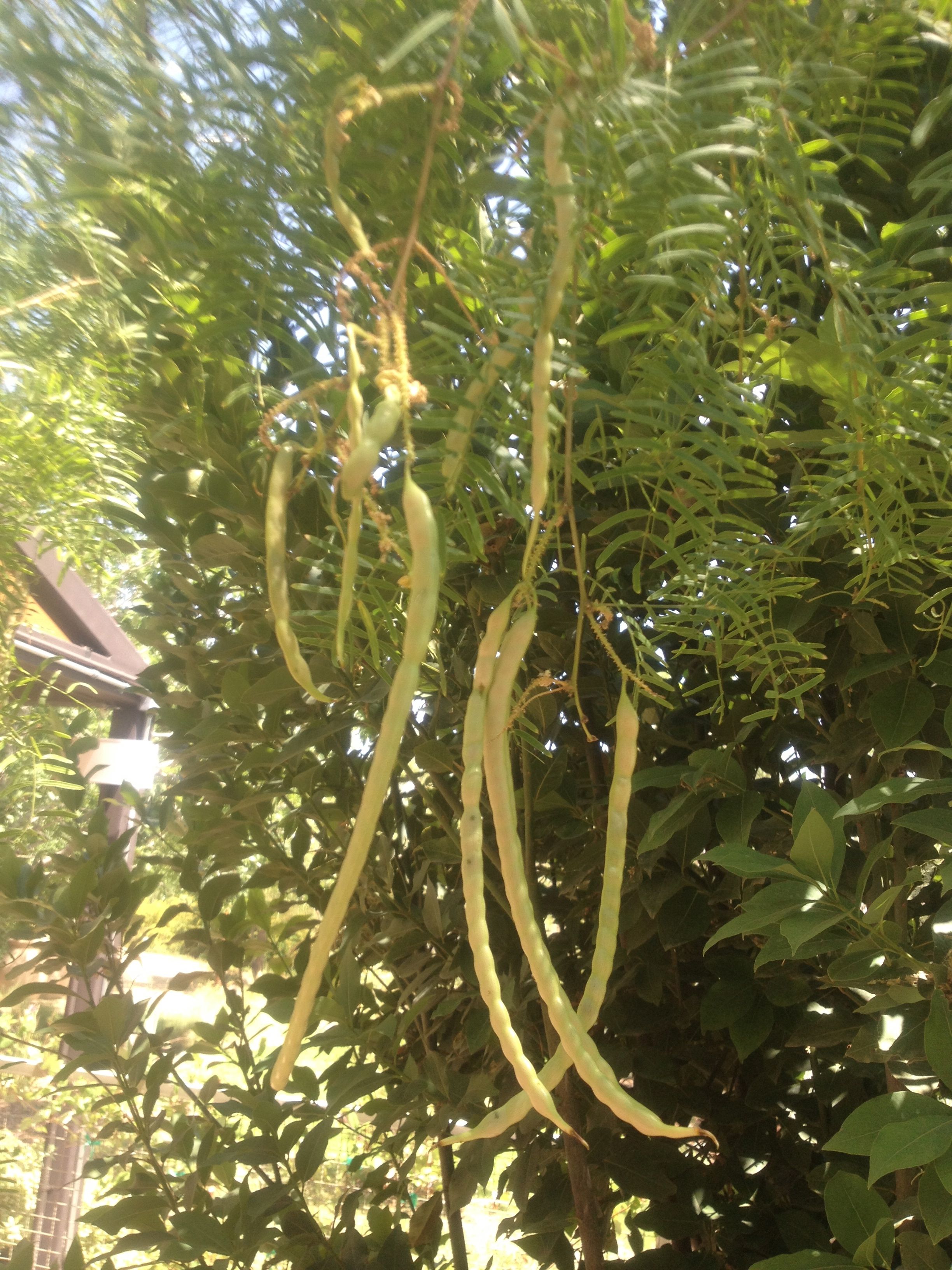
Delicious honey mesquite (Prosopis glandulosa) with ripening pods.

Delicious honey mesquite (Prosopis glandulosa) with ripening pods.

ADDITIONAL MESQUITE HAPPENINGS–Plan to Harvest, Plant, and Celebrate Native Bean-Tree Abundance Before the Rains…

DESERT HARVESTERS is organizing events to help people dramatically enhance the quality of their mesquite pod harvests, what to make with them, and how to better sync with the Sonoran Desert’s seasonal cycles in a way that enhances our shared biome.
We are teaming up with local culinary businesses to increase offerings of native foods in their cuisine, and to encourage landscaping with native food plants in water-harvest earthworks beside their buildings.

Mark your calendar for Thursday June 19, 2014!

Guided Mesquite Harvests and Plantings
Hosted at the Santa Cruz River Farmers’ Market
100 S. Avenida del Convento, Tucson, AZ

5pm harvest on foot, 6pm harvest by bicycle
Led by Desert Harvesters including Amy Valdés Schwemm and Brad Lancaster
$5 to $10 per person (sliding scale)

These hands-on harvest tours show you how to:
• Identify and sample the best-tasting mesquite trees
Every tree is different, but some varieties are consistently much better than others. Taste the differences. (We will also likely harvest from desert ironwood and palo verde.)
• How to harvest safely, ethically, and responsibly
Harvesting pre-rains is best practice to avoid invisible toxic mold. Harvesting from the tree avoids fecal or fungal ground contamination. Check out http://www.ediblebajaarizona.com/calling-all-mesquiteros/ for more on why pre-rain harvests are the traditional practice, and so important.
• Use cool tricks such as the harvest cane.
• How and when to plant the best bean trees
Participants are encouraged to bring sun protection, reusable water bottle, and carry-bags for harvested pods.

Iskashitaa, an organization that helps resettled refugees integrate into the Tucson community, will be offering their beautiful hand-made harvest bags and fresh-squeezed juice from fruit they’ve gleaned. Also there will be AravaipaHeirlooms’ prickly pear pops and chiltepine-infused cold brews from Exo Roast Co.

Bean-Tree Processing Demonstrations
Before and/or after the Guided Harvests and Plantings
4pm to 7pm–FREE
Taught by Barbara Rose, desert foods farmer/fermenter/cook extraordinaire of Bean Tree Farm (see their website for more awesome workshops), will show you how to turn milled or whole desert ironwood seeds, palo verde seeds, and mesquite pods into tasty dishes. Native foods such as mesquite flour, cactus fruit pops, drinks, syrup, and cholla buds will be available for sale, along with seeds and seedlings of the best-tasting native bean-trees and chiltepines.

AND THEN DON’T MISS Sunday, June 22, 2014!

Pre-Monsoon Mesquite Milling
Sunday, June 22, (alert–in the event of rain, it will be moved to Sunday, June 29)
6am to 10am
Bring Your Own Pods!
Pods for milling must be clean, dry, and free of mold/fungus, stones, leaves, bugs and other debris. Cost: $3/gallon of whole pods, with a minimum of $10.

Also at the milling event:
• A native wild foods demonstration – highlighting what’s in the wild-harvest season now
• Exo’s mesquite-, mole-, and chiltepin-infused coffees
• Mesquite baked goods and cactus fruit popsicles
• Seeds and seedlings of select native bean trees and chiltepines — so you can plant yours in time for the rains.

Our thanks to hosts Exo Roast Co. and Tap & Bottle,
403 N. 6th Ave.,Tucson, AZ
Harvesters’ Happy Hour at Tap & Bottle
Come join fellow harvesters in fermented merriment. Tap & Bottle will have local brews on-hand, some infused with local native ingredients. And they will donate a percentage of all the sales to Desert Harvesters. Learn more online at: http://www.DesertHarvesters.org


Mesquite can help us into a food-secure future– fittingly, sustainably, healthily, and sweetly– as we face heating and drying of our desert home.  What a gift mesquite is, as we begin to declare our independence from being a FOOD-COLONY!

Edible Flowers of Spring

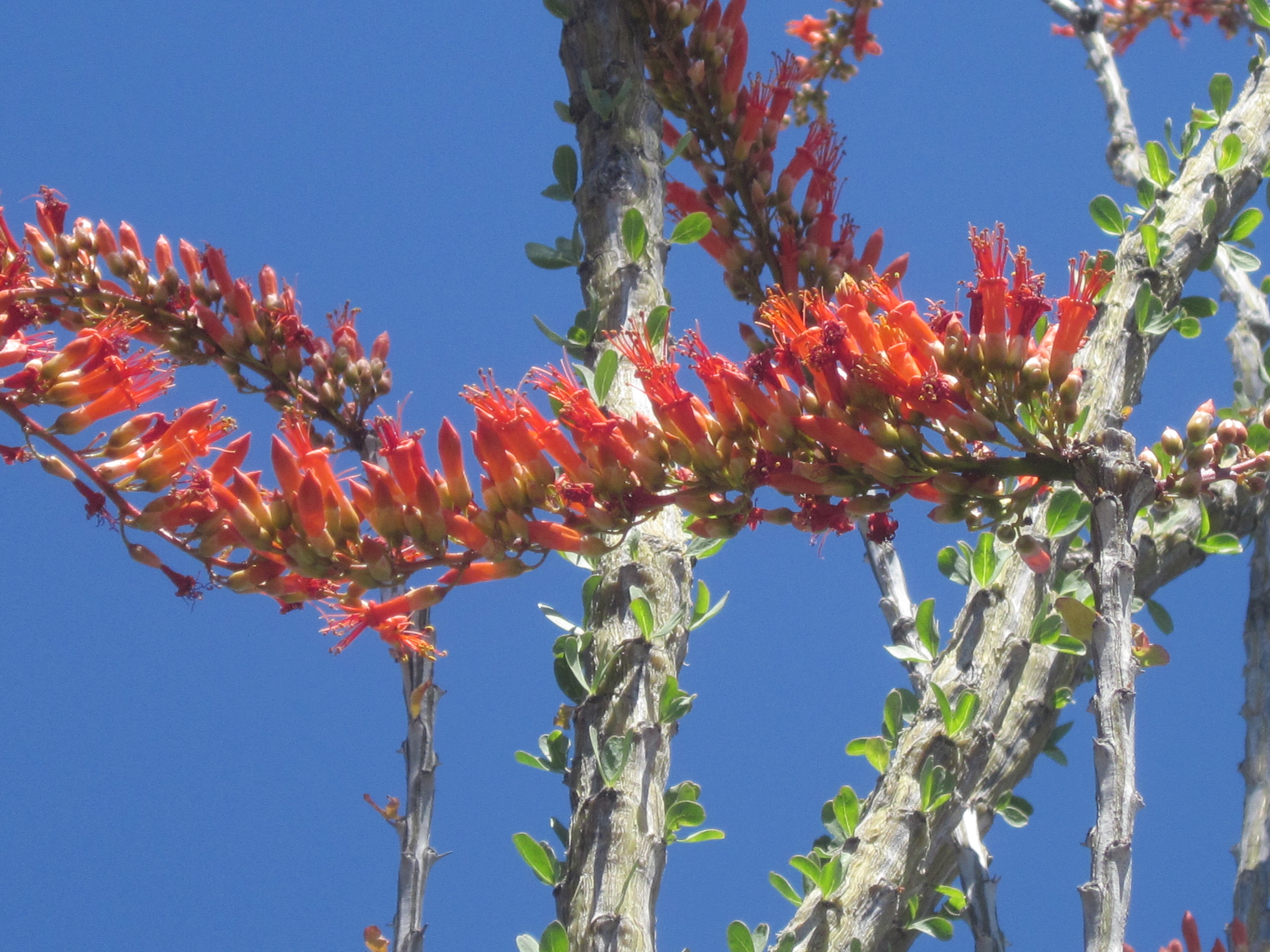
Ocotillo blossoms

Ocotillo blossoms

It’s Carolyn today. Two months ago Tia Marta wrote about gathering and preparing delicious cholla buds, but that is only the barest beginning of the edible flowers that can add fun and interest to our meals. Spring is the best time to find the biggest bounty of  beautiful munchibles.  Gather a bowlful of ocotillo blossoms, add water, and let it stand overnight. You’ll have a delicate juice. The flowers must be open for the nectar to leach into the water.  I wrote about the early Native American uses to ocotillo as a medicinal herb in American Indian Cooking: Recipes from the Southwest. 

Ford at Empire 015

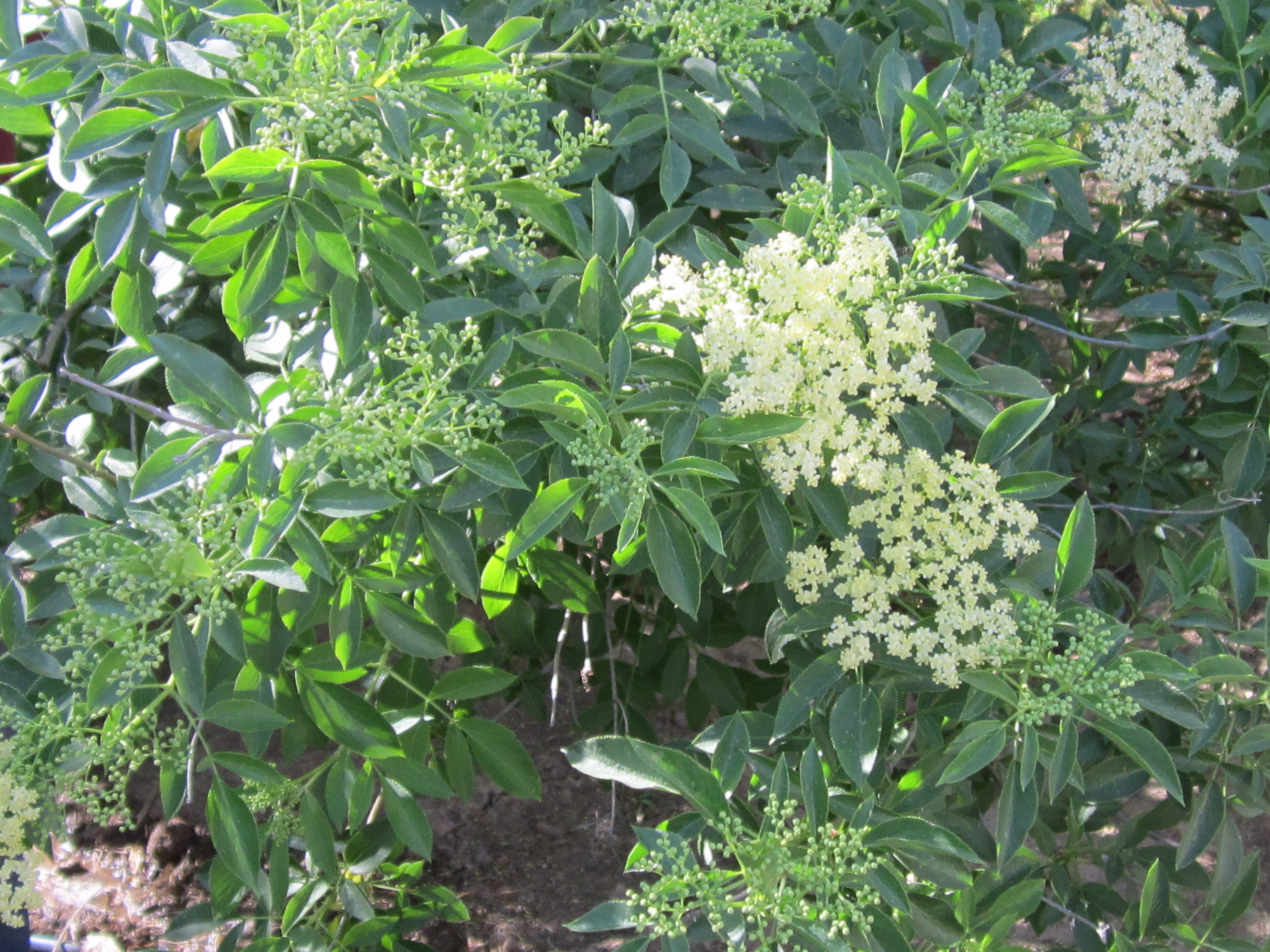
Blossoms on elderberry bush.

This is also the season for elderberry bushes to flower.  Sometimes called elderblow, the flowers make delicious fritters.  I have given full directions in my earlier blog Carolyn’s Southwest Kitchen and you can see it here.

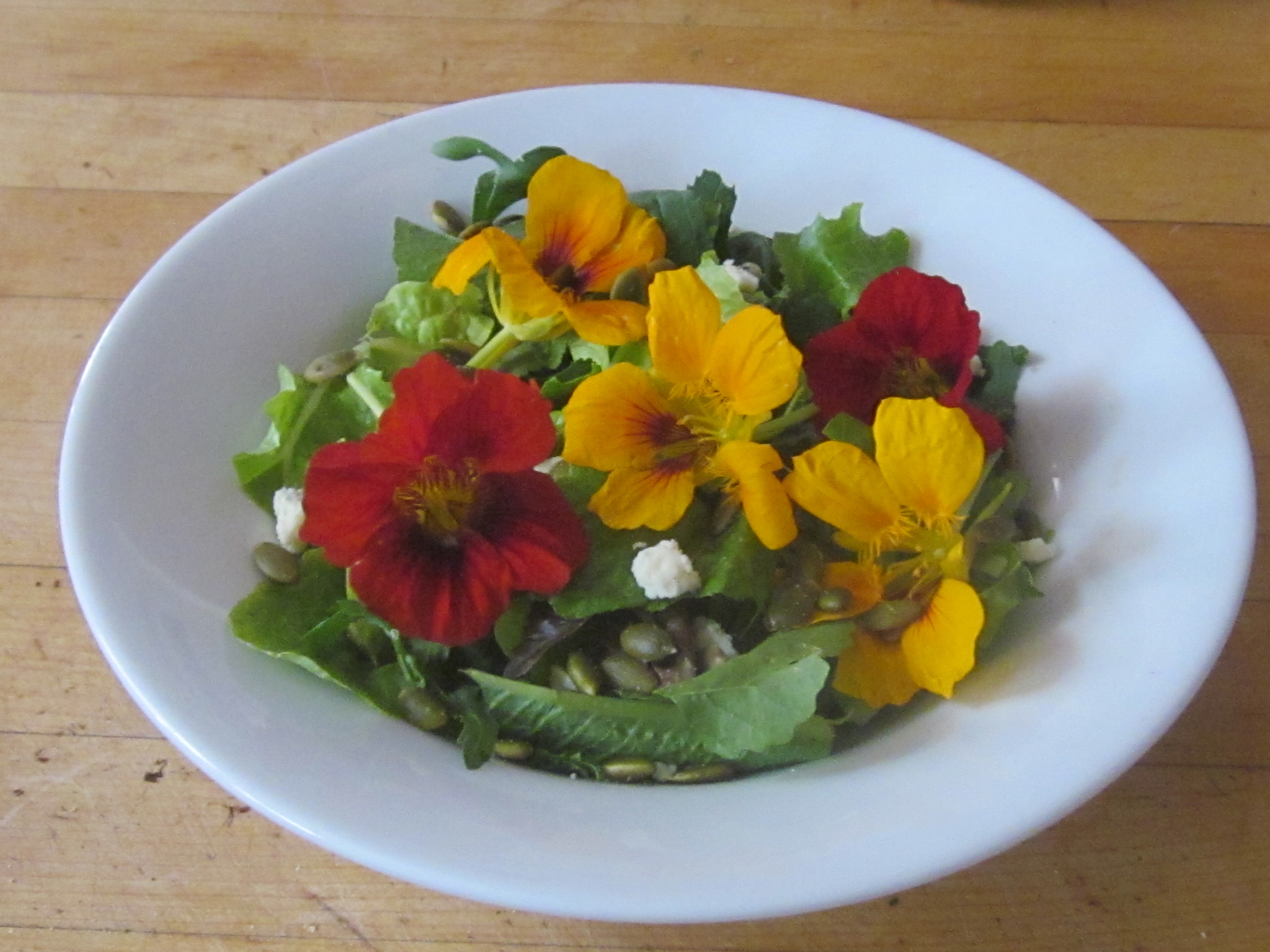
Moving from the desert to your own garden, you’ll find many edible flowers. Many of them make delicious additions to salads.  Among them are nasturtium flowers, which have bright, peppery flavor.

Two colors of nasturtium flowers on a fresh garden salad.

Two colors of nasturtium flowers on a  garden salad.

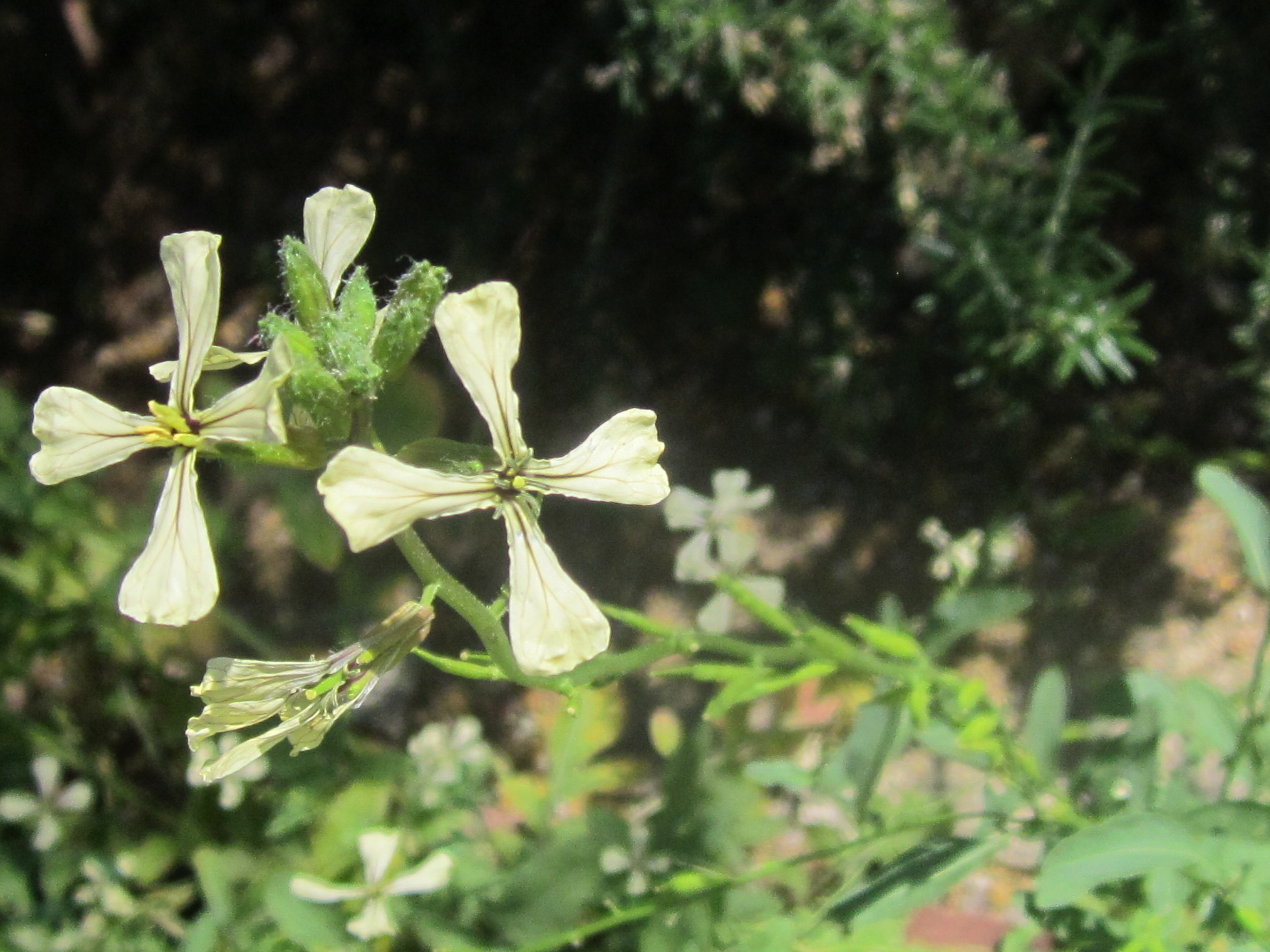
Arugula tends to bolt early and especially did so on this very hot spring on the Sonoron Desert.  But the flowers, though small, taste lovely, not quite as intense as the the leaves.

Arugula flowers

Arugula flowers


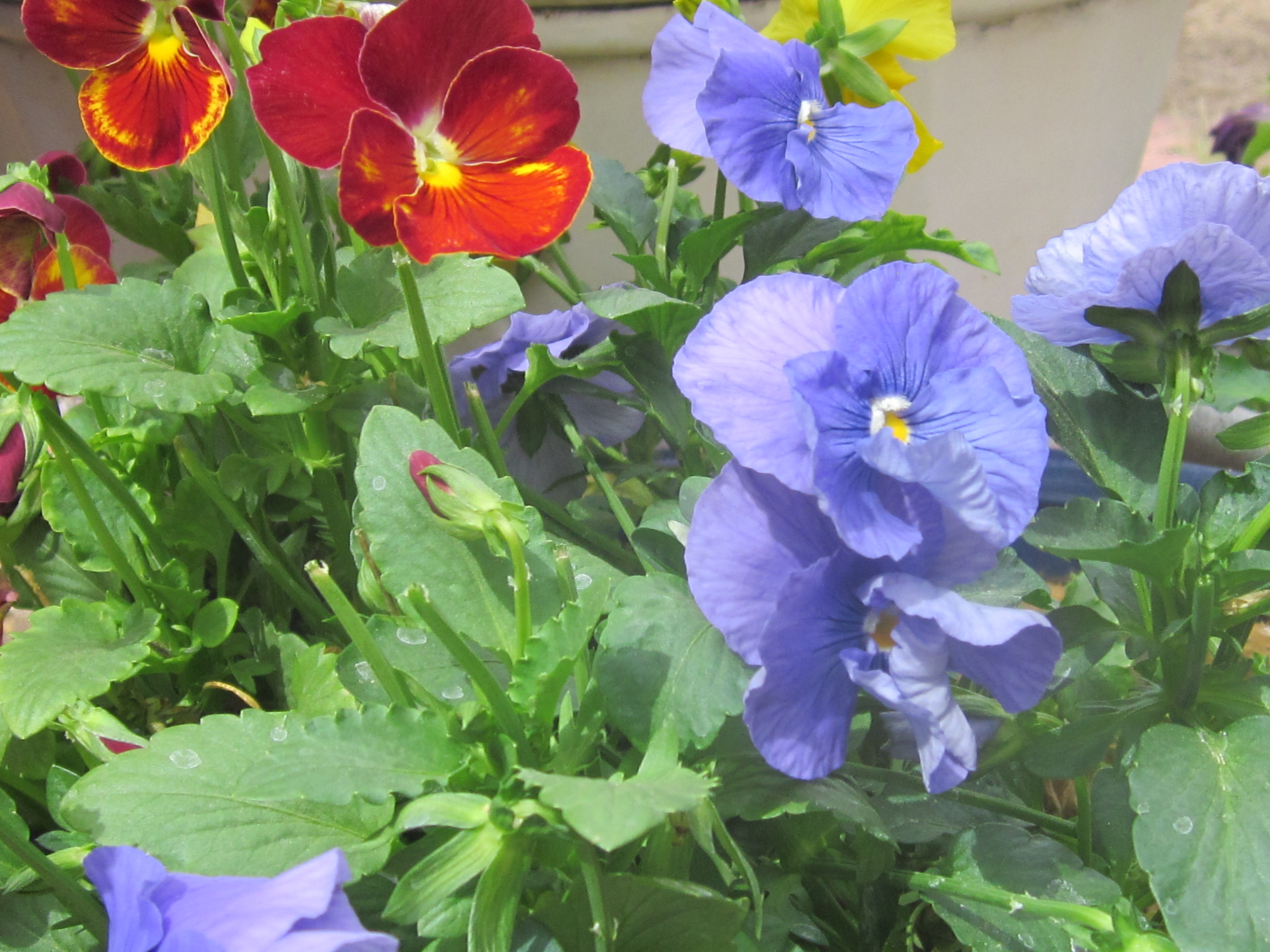
Other delicious salad additions are pansies and violas, their smaller cousins.

Pansies

Pansies

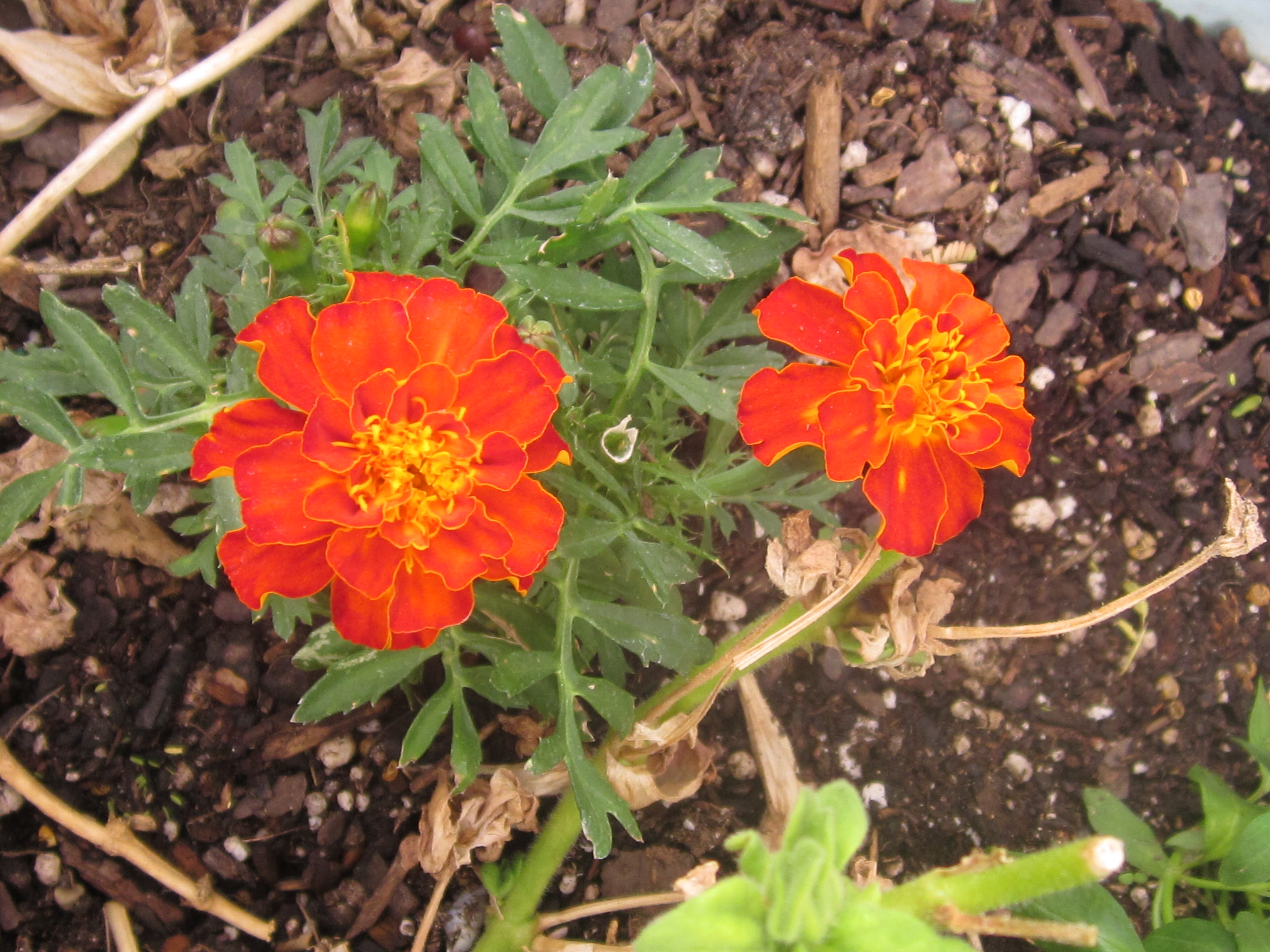
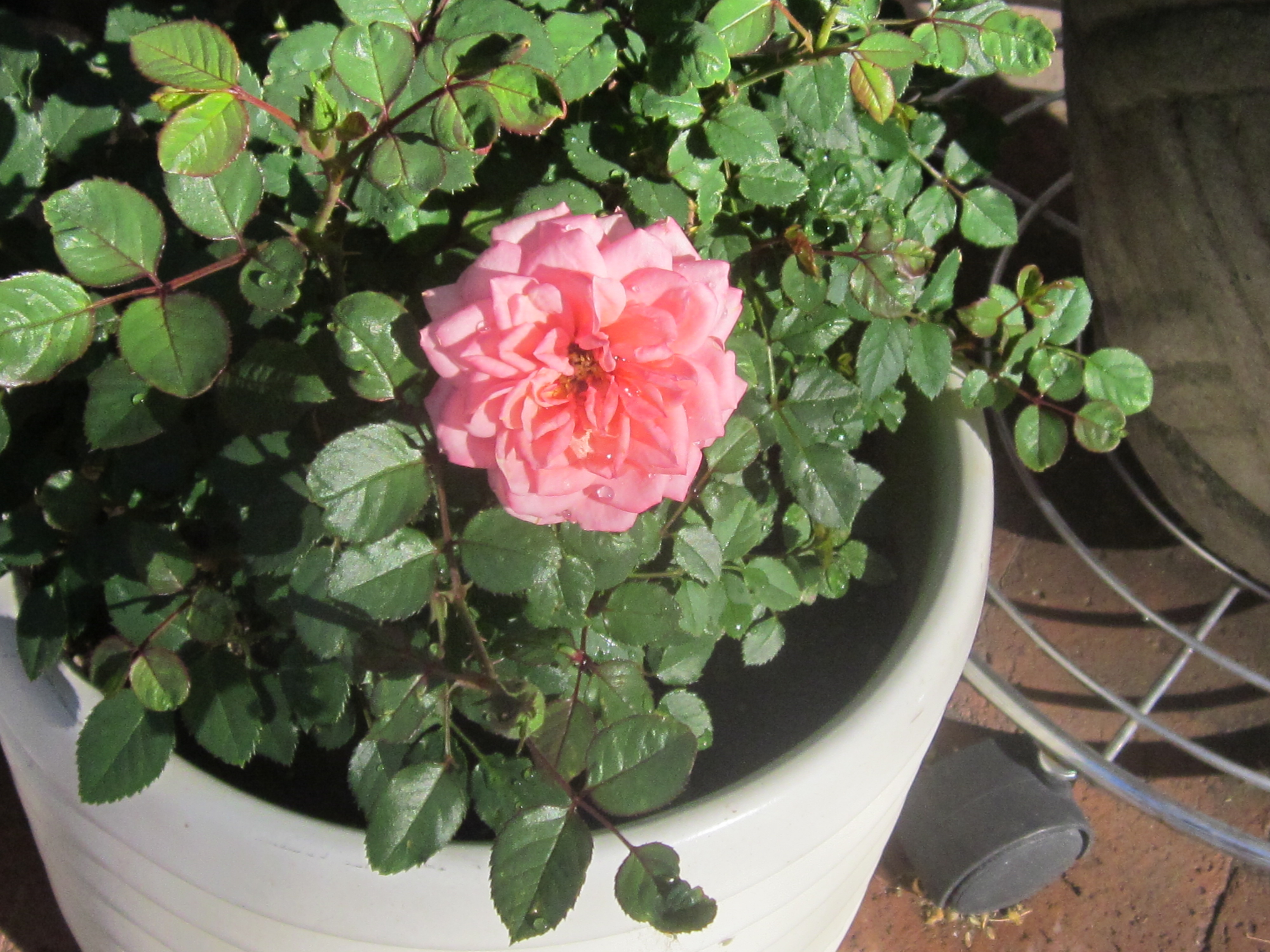
When I began gathering material for this post, I recalled a dish I made  years ago that involved sauteeing chicken with cinnamon and rose water and then finishing the dish with a sprinkle of small rose and marigold petals.  My friend Suzann and I served that at a wedding we catered for two naturalists.

Marigold

Marigold

Teacup rose

Teacup rose


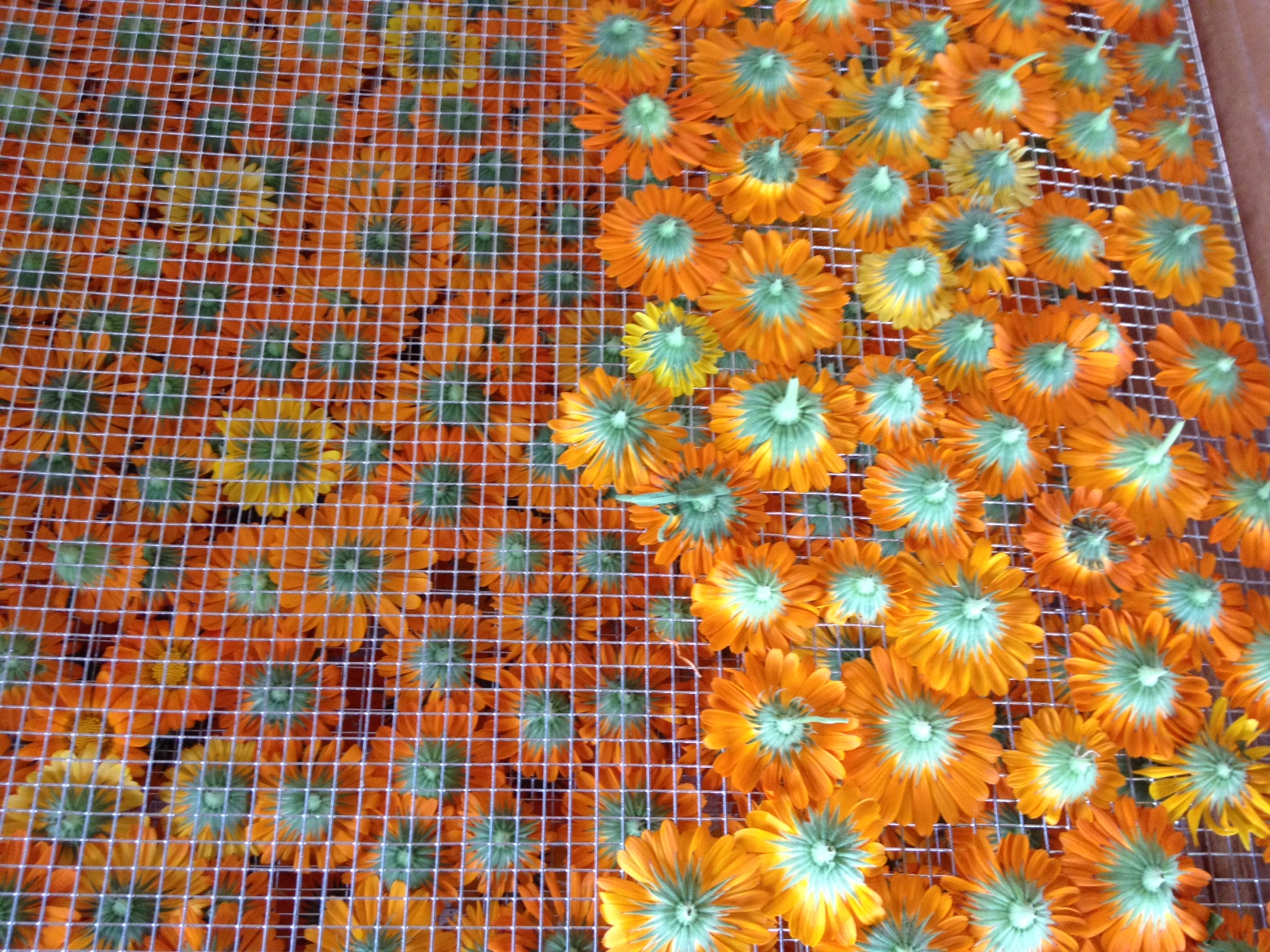
Dried edible flowers make wonderful and healthy teas. Tina Bartsch at Walking J Farm grows and dries calendula flowers for John Slattery  at Desert Tortoise Botanicals who uses them as one ingredient in his Desert Flower Tea. He combines them with desert willow flowers, ocotillo flowers, hollyhock flowers, and prickly pear flowers.  His website says that the tea is an anti-oxidant and good for tissue repair.  The tea is available at Native Seeds Search,  Tucson Community Acupuncture,  the Food Conspiracy. Calendula petals taste  tangy and peppery and add a golden hue to food. Calendula has been called “the poor man’s saffron.”

Calendula flowers drying

Calendula flowers drying


Desert Flower Tea

Desert Flower Tea


One of the most used flowers in cooking, particularly in Mexico, is the squash flower.  The male flowers will never develop into squash, so you can harvest some of them. When I was in Oaxaca a few summers ago, I took a cooking class from Chef Oscar Crespo and just had the best time.  One of the things we cooked was stuffed squash blossoms.  Here is the recipe.

Squash blossoms

Squash blossoms

FLORES DE CALABAZA RELLENAS DE QUESO
Cheese-filled Squash Flower Blossoms


12 squash flower blossoms, washed

½ cup (2.5 oz/80 g) fresh cheese, sliced into sticks

12 epazote leaves (optional)

1 cup all-purpose  flour

3/4 cup club soda

Oil for frying


Slice the cheese so that it fits in the blossoms. Remove the sepals and pistils (that’s the parts inside the petals), then cut the stem to 1¼ in . Fill the whole blossom with a slice of cheese and an epazote leaf. Push the cheese all the way in, and twist the petals to close.

Make a batter with the flour and club soda, starting with 1/2 cup of the club soda. Add more if necessary to make a thin batter like pancake batter.

Place the oil in a frying pan and bring to high heat, about 350 degrees. Dip the stuffed blossoms in the flour mixture. Fry them for 2 minutes or until golden brown, turning at least once. Remove from the oil and drain on absorbent paper.

These can be served accompanied with a red or green salsa or floated in a tomato  broth.

For more ideas on cooking squash blossoms, check here.  If you want more information on edible flowers, you can click here and here.

__________________________

Carolyn Niethammer writes books on the food and people of the Southwest.


Limoncillo

Savor Sister Jacqueline Soule posting today.

Chinchweed or limoncillo is known to scientists as Pectis papposa, a member of the Compositae family, now called the Asteraceae, and arguably the largest plant family out there.  If you aren’t “into” the Compositae, it is generally considered just another one of those DYC’s (Dratted Yellow Compositae).  (Well, we scientists don’t say “dratted” but we don’t want the parental controls to censor this blog.)

Pectis_papposa_flowers

Pectis papposa is just a “DYC” to some, but it can be so much more!

This sprightly summer blooming annual is found across the desert Southwest from New Mexico to California and northern Mexico (in the Sonoran and Chihuahuan Deserts) at elevations below 6000 feet.  With surprising promptness after the first summer rain, the desert floor is carpeted with the small yet bright yellow flowers – DYC’s.


Pectis_papposa_field

A carpet of Pectis papposa. Too lovely to trod upon!


Hopi, Zuni, and Havasupai all use the chinchweed plant as a condiment, especially to flavor meat.  There are also references to its use as a fresh green and potherb.  In Mexican markets, bundles of fresh or dried plants are sold as limoncillo and used as a culinary spice, generally to flavor meat. There are also references to its use as a dye plant.

Pectis_papposa_leaves

The leaves of limoncillo are dotted with a number of glands filled with flavorful oils.

Planting and Care.
Sow seeds of this charming summer annual anywhere in your yard you wish them.  Plants look especially lovely in a cactus garden, and appear to prefer well drained soil.  Since chinchweed is a summer annual, sow in the warmer months, from April onward.  Ideally have the seeds in the soil prior to the first monsoon rain, generally around San Juan’s Day or summer solstice.   This may be tough as seeds are generally not available in seed catalogs.  You may have to wild collect some of the herb this year, and while you are at it, collect seeds for your own next year.  Once you have some limoncillo your yard it seems to cheerfully find new places to tuck itself, including in areas of reflected light, which is often a tough site for plants to thrive in.


Pectis_papposa_habit

These tiny plants will find their way into unexplored corners of you yard. A weed only by common name, the seed is excellent food for native birds.


Harvesting and Use.
As a culinary spice, chinchweed may be used fresh or dried.  Simply chop up the fresh material or crumble the dried and sprinkle on meat.  If you like lemony chicken, then limoncillo is a great local herb to use!  Fresh cinchweed greens add a nice zing to stir fry, but I have not tried them cooked alone as a potherb (yet).  This will be part of my New Years resolution to grow and use all of the native plants in my Father Kino’s Herbs book (More on this at 30 minutes in on America’s Web Radio –  http://www.americaswebradio.com/podcasts/VeggieHourJan18.2014.mp3).  For dye, pluck the flower heads off and use them fresh or dried.  I could not find if there was a specific mordant.

Pectis_papposa_var_papposa_5_SS

Harvest the flower heads for dye and the leaves together with the flowers for culinary use.

Now I have thought of a new way to think of this DYC – it’s a Delightfully Yummy Compositae!  And I hope you will consider some for your yard.

Pectis_papposa_003

DYC stands for Delightfully Yummy Composite with Darling Yellow Crowns!

 [For another species of DYC flowering now, and some of its uses, please visit my blog on Native Plants & Wildlife Gardens – http://nativeplantwildlifegarden.com/brittle-bush-in-bloom/]

The information presented here is a sample of what appears in my book Father Kino’s Herbs, Growing and Using Them Today (Tierra del Sol Press, 2011).  Available through amazon.com.  Free public lectures on growing and using our wonderful native plants, at a number of branches of the Pima County Library.

Photos copyright free and courtesy of Wikimedia except where noted.  Article © 2014, Jacqueline Soule.  All rights reserved. I have received many requests to reprint my work. My policy is that you are free to use a very short excerpt which must give proper credit to the author, and must include a link back to the original post on our site. My photos may not be used.  Please use the contact me if you have any questions. JAS avatar

How Nopales Become Nopalitos

Pick prickly pear pads when they are the size of your hand.

Pick new prickly pear pads in the spring when they are the size of your hand.

Carolyn Niethammer with you this week. In our last post,  Martha Burgess wrote about how early cholla buds were appearing this year. I have seen pads beginning to form on the native prickly pear, but not yet on my Ficus Indica, the tall Mexican variety.  But they will be out soon, so let’s talk about how to prepare them for use in salads and casseroles.

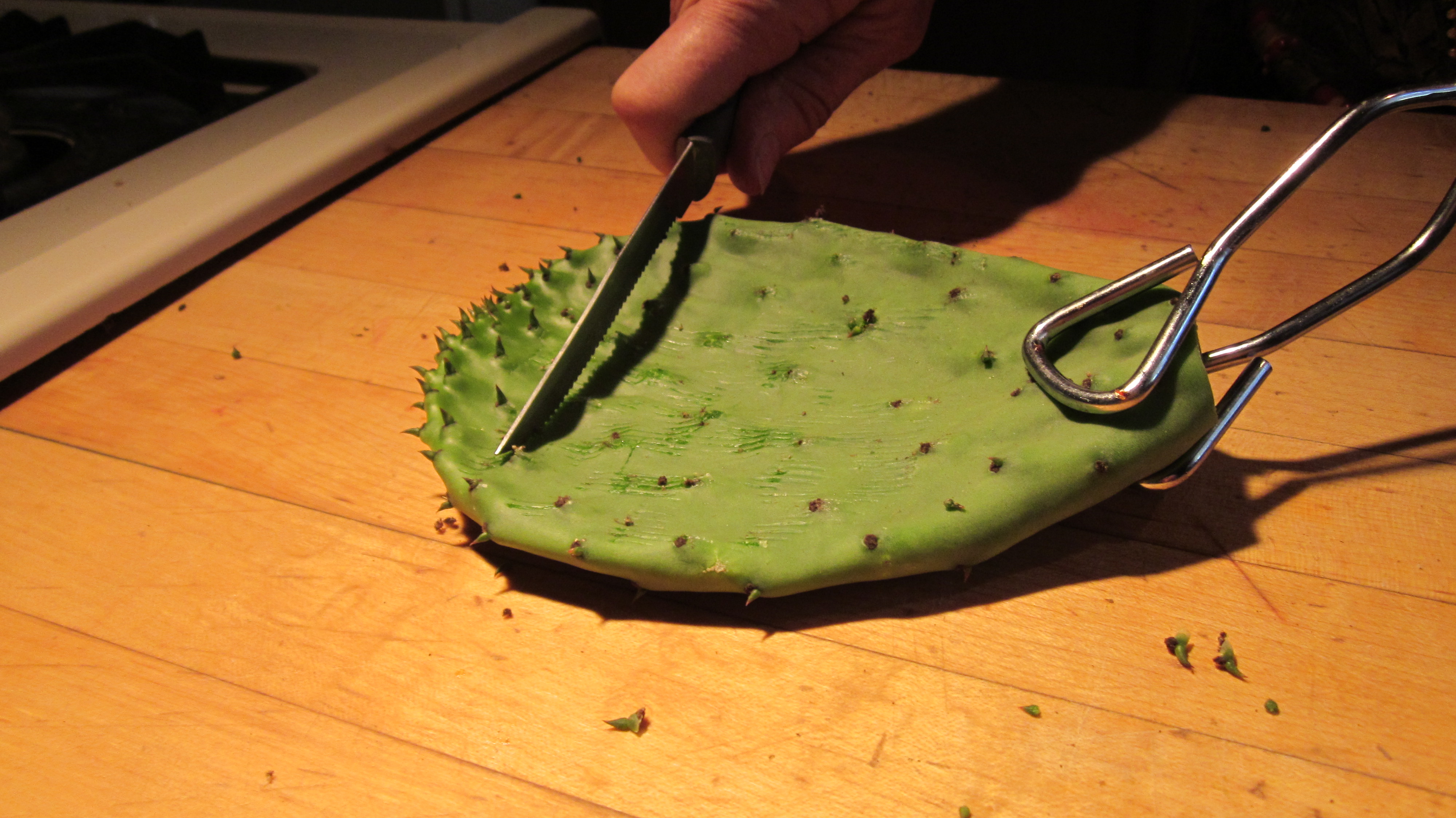
Scape off the stickers with a serrated steak knife.

Scape off the stickers with a serrated steak knife.

First thing is to don your rubber gloves. Even though these cactus pads don’t have large stickers, they do have the tiny glochids that can be awful to get out of your hands. Then using an old-fashioned steak knife with a serrated edge, go against the grain to scrape off the stickers. Keep a paper towel nearby to clean the knife and keep your working surface clean.

Trim off the edge.

Trim off the edge.

There are an abundance of stickers on the edge of the pad, so just trim it off and discard it.

The nopal becomes nopalitos.

The nopal becomes nopalitos.

At this point you can put the whole, cleaned  nopal on the grill next to  some chicken pieces or pork chops. Or you can chop the pad into smallish pieces. The Chicago restaurant owner, TV star and author Rick Bayless coats the pieces with oil, puts them on a cookie sheet and bakes until done.  You can also do it in a frying pan.  Cook until the color changes to a more olive hue. The slippery substance that is so healthy for your blood will dry up and become less noticeable.

Cook nopalitos until they turn olive colred and loose some of their moisture.

Cook nopalitos until they turn olive colred and loose some of their moisture.

I watched my friend Amy Valdez Schwemm do a nopal cooking demo at the Mercado last year. Her method is a little different. After cleaning the nopal, she cooks it whole and cuts it up later.  If you are cooking in a frying pan, this eliminates having to flip each piece individually.


Amy cooks the pads whole then cuts later.

Amy cooks the pads whole then cuts later.

At this point you can add to a salad (maybe picnic-style potato salad) or a casserole such as this one with lentils from my cookbook Cooking the Wild Southwest.

French Green Lentils with Nopalitos

French Green Lentils with Nopalitos

Although prickly pear is a New World plant, it has spread over the globe. The Spaniards originally took it back to Europe from Mexico. I was fascinated to learn that it has colonized in Ethiopia in a big way.  Some impoverished groups live on the prickly pear fruits for months when they are ripe. But people do not eat the pads there, although they feed them to their livestock.  Here are some photos my friend Seyoum took showing prickly pear and his family in Irob, Ethiopia.

A very large prickly pear plant in Irob, Ethiopia.

A very large prickly pear plant in Irob, Ethiopia.


Preparing nopales for the livestock.

Preparing nopales for the livestock.

All prickly pear pads are edible; it just depends on how much time you want to spend getting the stickers off. I usually wait until the Ficus Indica pads develop. Those with access to a Mexico grocery store can usually find them there, sometimes already cleaned. Once they are cleaned, they tend to deteriorate quickly, so buy just before you want to cook them. The very best tasting prickly pear pads I’ve ever eaten are grown on the foggy slopes of central California by John Dicus at Rivenrock Gardens. You can find him at http://www.rivenrock.com. He will go in the morning and pick you a boxful and it will be on your porch the next day. They are so fresh, they will last for many weeks in the refrigerator. He grows a variety he found in Maya country in Mexico and they are virtually spineless. And delicious!

________________________________________

Excited to try prickly pear?  I give you lots of recipes in The Prickly Pear Cookbook and Cooking the Wild Southwest.  Very helpful for controlling blood sugar and cholesterol.


Wondrous Weeds!

Tia Marta here to share ideas about our new neighbors—the weedy greens popping up all around us.  With those fall rains we had here in the low desert, there is a bloomin’ haze of green on the desert floor– not what you’d call a florid show—but wait—what is happening where November’s mud-puddles were collecting?  That may be real food lurking in your own backyard!  Now is prime time to take advantage of spontaneous tender mercies and phytonutrients.  Interesting tastes await us, to spice up our salads and bedeck our burritos.

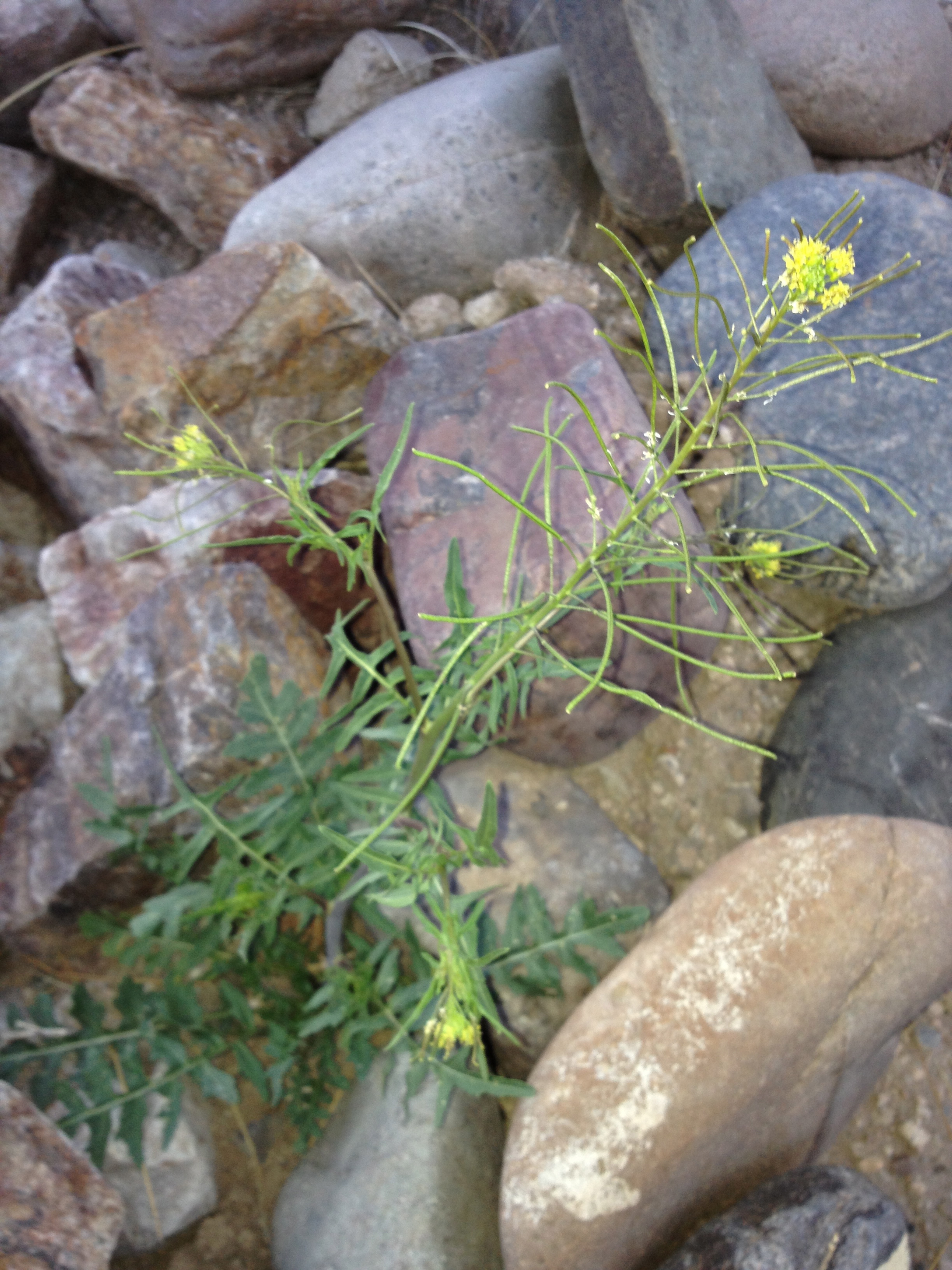
"Wild arugula” or London rocket (Sisymbrium irio) provides zesty greens, flower garnish, and later, mustard seeds when mature. (MABurgess photo)

“Wild arugula” or London rocket (Sisymbrium irio) provides zesty greens, flower garnish, and later, mustard seeds when mature. (MABurgess photo)

London rocket (read “wild arugula”) is everywhere, its greenery literally growing before our eyes in every low swale, rocky hillside, every ditch where water has run.  Sisymbrium irio is an introduced weed which we can enjoy with impunity—the more we eat of them the more we are removing competition for our beloved native plants.  So harvest away!  (A good rule of thumb is to collect at least 50’ from a road.  No need to ingest road dust and pollutants when there is so much to be found in friendly yards or out in the des.)

Prepare for a picante treat, sometimes a picante bite, from these wild mustards.  Toss a few wild arugula leaves with baby greens, or in a BLT to liven it up.  Try them steamed with your favorite garden greens or added to stir-fry.

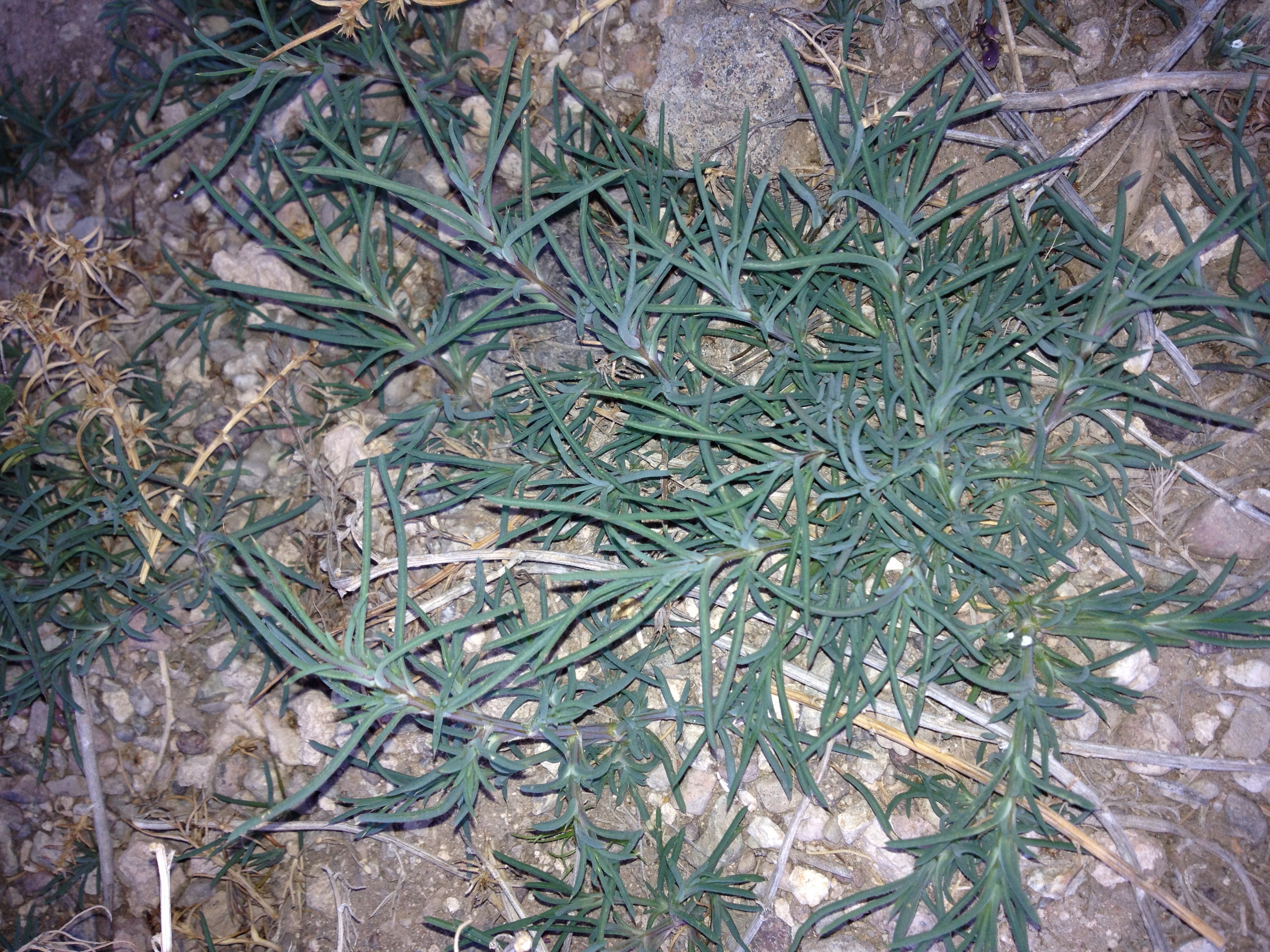
Hot February weather is telling our wild mustards, “Summer’s coming.  Better go ahead and bloom fast!”  Already we see tiny 4-petaled yellow flowers rising from the rosettes of deeply lobed leaves.  Small erect spikelets of seedpods (called siliques) stand out from the central stem.  Whole flower heads with seedpods are edible, and zingingly picante.  Sooner than we think, seedheads will mature and you can harvest their tiny mustard seeds for dressings or salad sprinkles.

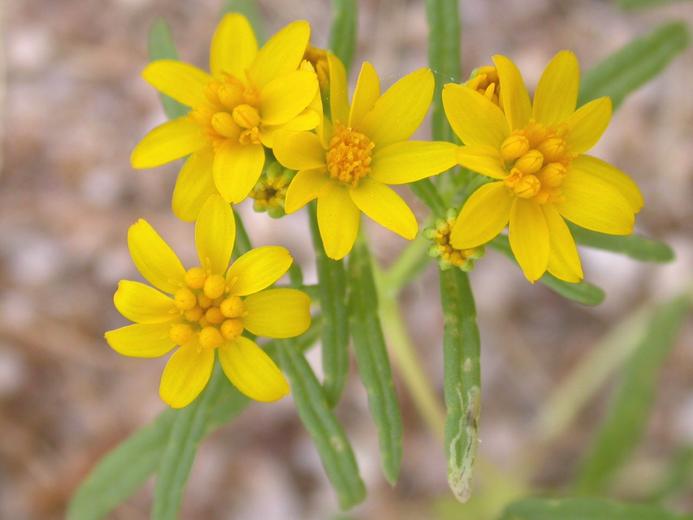
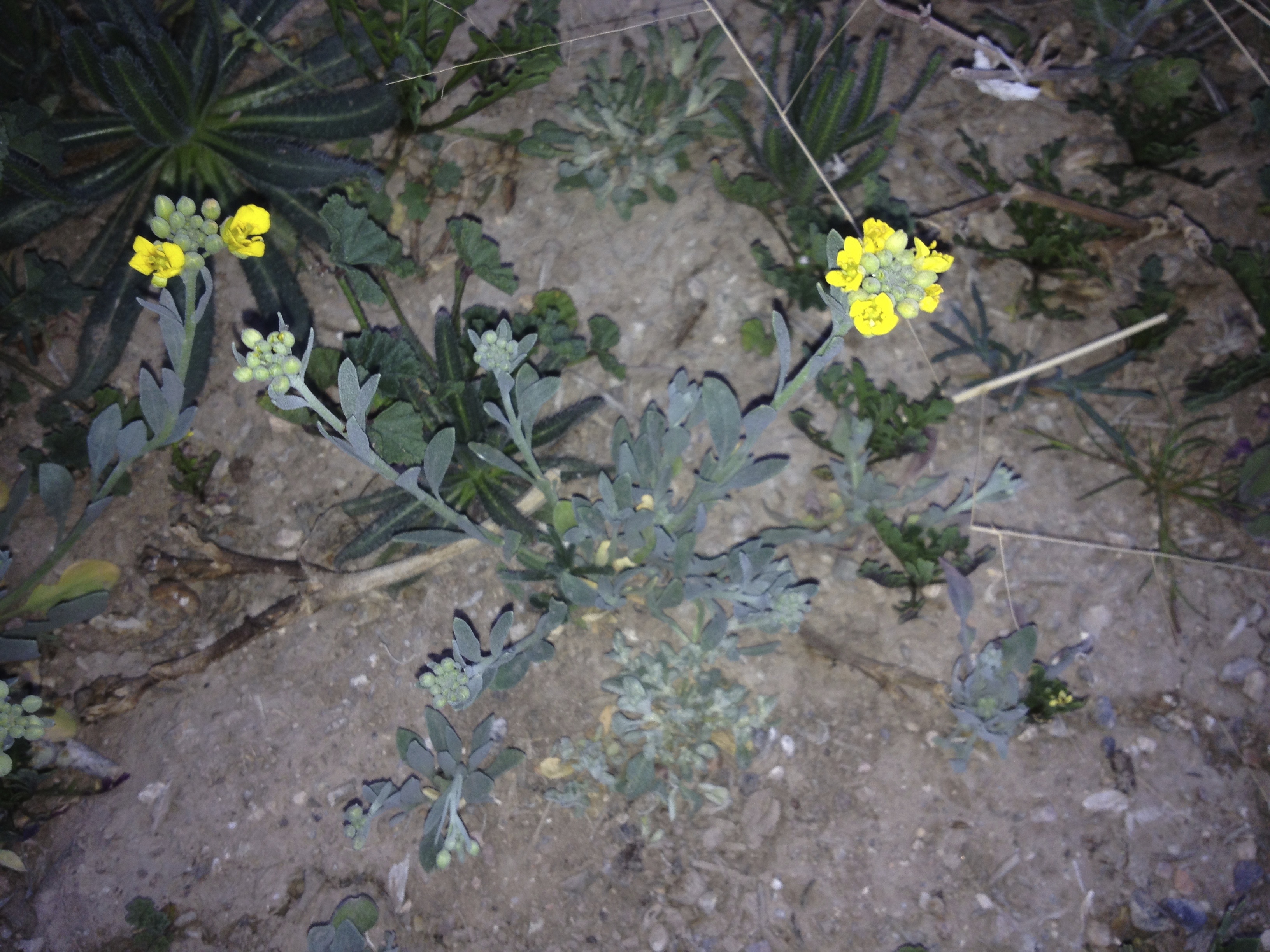
This year, if you spy Lesquerella gordoni (bladderpod), it will stand out like little yellow stars on the bare ground. (MABurgess photo)

This year, if you spy Lesquerella gordoni (bladderpod), it will stand out like little yellow stars on the bare ground. (MABurgess photo)

In some wet winters, a different native mustard known as bladderpod has made carpets of lemon-yellow flowers on the desert floor.  No such show this year.  Should you find a patch of blooming bladderpod, try a taste of its petals.  Their nice nip will add vivid color, nutrition, and excitement to any salad, garni, or burrito topping.

Better known as tumbleweed, Russian thistle (Salsola kali) is best harvested in this tender stage—and every rancher will thank you for your service! (MABurgess photo)

Better known as tumbleweed, Russian thistle (Salsola kali) is best harvested in this tender stage—and every rancher will thank you for your service! (MABurgess photo)

The most ubiquitous of weeds is the introduced Russian thistle which no one seems to notice until it dries, dislodges, tumbles across the road on a crosswind, and stacks up next to a fence or obstacle.  So now, while it is in its infancy, go out to that windbreak and find its progeny!  Have no compunction about snipping it at ground level while it is only inches high, young, and tender—before sharp stems develop making it unpalatable to humanoids.  You will be amazed at what it adds, snipped in short pieces fresh in a salad, steamed with butter and pepper, or stir-fried with other veggies.

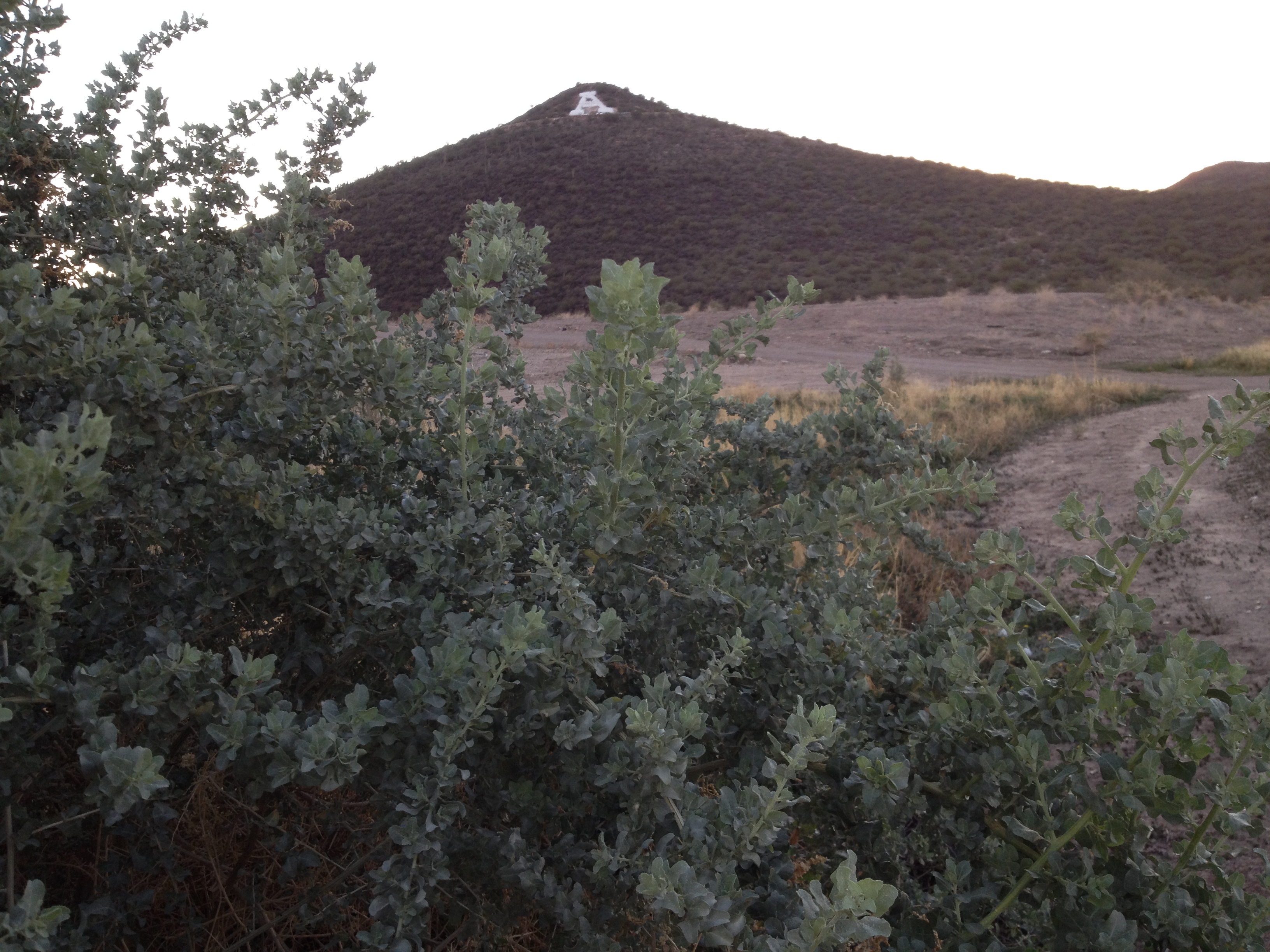
Our many species of saltbush (Atriplex spp.) are tender and ready for picking in late winter into spring. (MABurgess photo)

Our many species of saltbush (Atriplex spp.) are tender and ready for picking in late winter into spring. (MABurgess photo)

Find saltbush's gray greenery along the Santa Cruz floodplain--or plant it in your yard for wildlife habitat. (MABurgess photo)

Find saltbush’s gray greenery along the Santa Cruz floodplain–or plant it in your yard for wildlife habitat. (MABurgess photo)

Now is saltbush’s time to shine—in landscaping and in cuisine.  Here in Baja Arizona there are many species of Atriplex, and all are edible.  These tough shrubs are desert survivors for sure.  They tend to grow in “waste places” where hardly any other plants can make it.  The name saltbush indicates its habitat, where soil is salty,heavy, or full of caliche.  Quail and other creatures find refuge and forage in the dense shrubs.  If you want to attract birds into your yard, go to Desert Survivors Nursery, Tucson, and buy any saltbush to plant—then stand back.  We humans can join in the saltbush foraging guiltlessly, as saltbush is plentiful and our harvesting may even stimulate re- growth.

Nearly every Native nation in the Southwest has a tradition of using saltbush in multiple ways.   When its stiff salty leaves are youthful they can be picked for cooking with other greens, the style of traditional Akimel O’odham, the River Pima.  My Tohono O’odham teacher Juanita would steam saltbush with cholla buds, and told me how “the old people would roast their cholla buds in layered beds of ontk i:wagi [salt spinach].”  Hopi cooks make a kind of baking powder out of pulverized saltbush foliage.

Try young saltbush leaves cooked with heirloom cannelini beans or cranberry beans—for a flavorful variation on beans-and-greens.  You’ll find that the salts which the plants have sequestered from the soil will add a delicious desert flavoring.  Move over, Hawaiian sea-salt!  (After saltbushes have flowered, we will “talk seeds”—stay tuned….)

NativeSeeds/SEARCH (www.nativeseeds.org) and Mission Garden (www.tucsonsbirthplace.org) carry seed of a domestic relative of saltbush called “orache” which provides a purple-leafed “green” for a winter veggie garden.

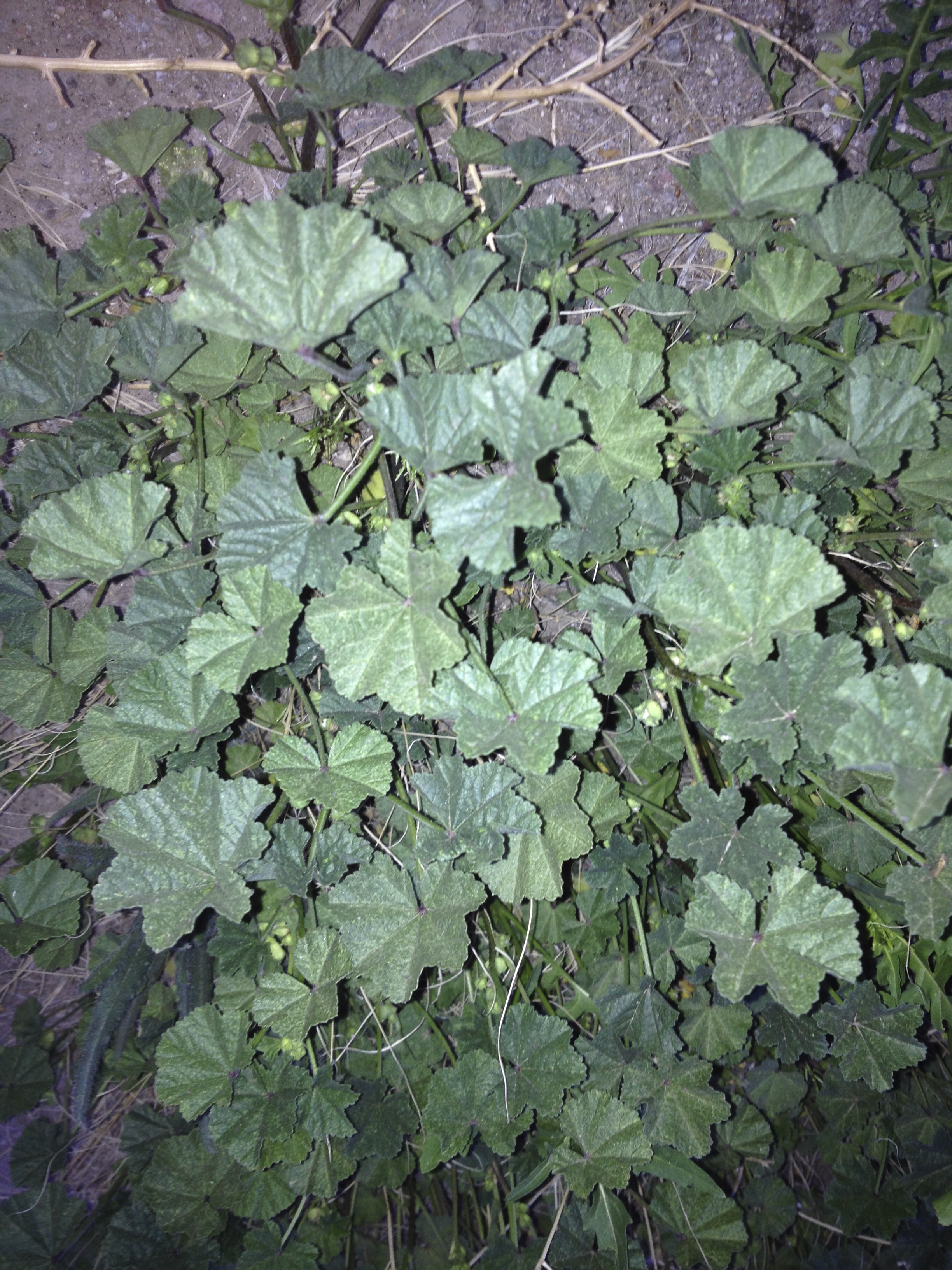
Did you ever contemplate cheeseweed thru the day? (Are you kidding?) Its palmate leaf is a sun-tracker!  I discovered these young Malva neglecta in late afternoon with each leaf bent westerly, cupped, facing the setting sun.(MABurgess photo)

Did you ever contemplate cheeseweed thru the day? (Are you kidding?) Its palmate leaf is a sun-tracker! I discovered these young Malva neglecta in late afternoon with each leaf bent westerly, cupped, facing the setting sun.(MABurgess photo)

Ah, cheeseweed—the “scourge” of gardeners, when it gets established.  Malva or cheeseweed, so called for its cheese-wheel shaped seed pod, is another one of those introduced weeds which tend to follow humans.  Only harvestable when young– get it while you can.  You’ll find it in disturbed flat areas where stock or off-roaders have churned up the natural soil, along fencelines or untended sidewalk margins.  Beware, cheeseweed seems to be sought-after by wandering dogs as a “marker plant” so wash your harvest well.

New Malva foliage can make a nutritious addition to steamed collards, kale, acelgas, or turnip tops; or stir-fried with peppers, onion, and slices of winter squash.  If you want to explore Malva’s medicinal qualities, try the foliage steeped as a tea for soothing tender digestive tract tissue or urinary tract.  It makes a healing topical poultice as well.

Life-giving weeds are all around us, especially now with their ju-ju rising.  Really no one need be hungry here.  We’d all be healthier if we were eating more of these spontaneous gifts brought by Nature and human mobility.  My respect for weeds and knowledge of their goodness outweighs my frustration as I pull them from my garden.  Here’s wishing you happy weed harvesting, a new way of enjoying the pulses of life in the desert!

If you are lucky enough to locate Carolyn Niethammer’s book Tumbleweed Gourmet, Univ. of AZ Press, 1987, grab it!  Find more info about traditional uses of saltbush in Food Plants of the Sonoran Desert by Wendy Hodgson, Univ. of AZ Press, 2001.  Find medicinal uses of Malva neglecta in Medicinal Plants of the Desert and Canyon West, Mus. of NewMexico Press, 1989.  Mission Garden is open on Saturday afternoons for guided tours, and NativeSeeds/SEARCH store at 3061 N Campbell Ave, Tucson, is open daily 10am-5pm.

Visit me, Tia Marta, for more weedy ideas and heirloom beans galore at the Flor de Mayo booth, St Phillips Farmers Market on Sundays 9am-1pm. (www.flordemayoarts.com).

Prickly Pear Sparkles in Holiday Cocktails

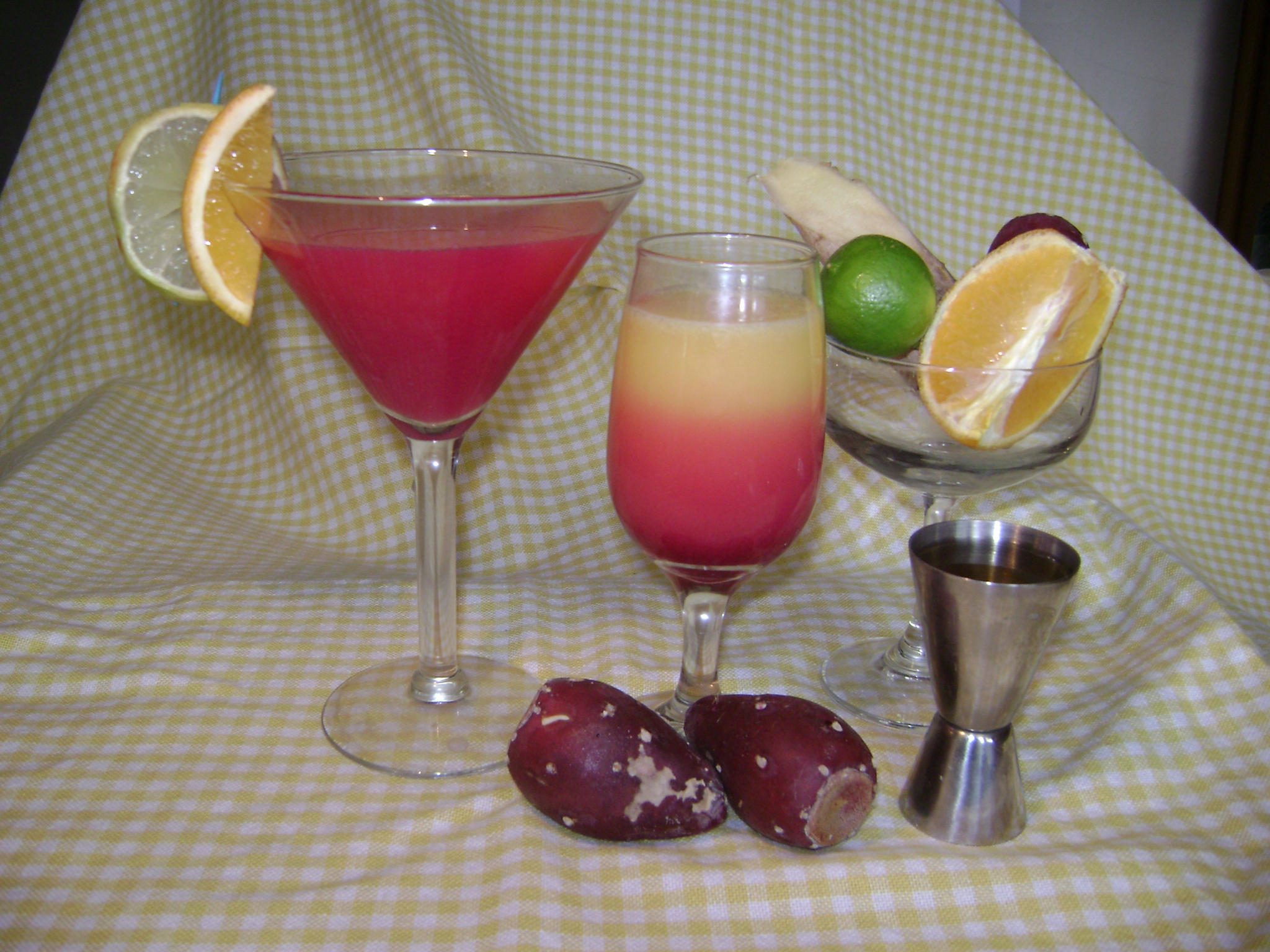
Welcome guests with tasty prickly pear cocktails.

Welcome guests with tasty prickly pear cocktails.

It’s Carolyn Niethammer here this week. First, I want to welcome all the new subscribers. I speak for my fellow bloggers when I say we are so happy to have you join this little community of food lovers. Please feel free to join in at any time with ideas and comments.

Today I want to talk about using prickly pear syrup in holiday cocktails. We all know and love prickly pear margaritas, but there is a world beyond that beloved beverage. And these cocktails don’t have to include alcohol. In fact it is nice to be able to offer your non-drinking guests something tasty and sophisticated way beyond diet coke and seltzer with lime.

There are several keys to delicious cocktails. One important ingredient is fresh juice. It makes a big difference and here in Arizona we have an easy abundance. Some of you need only walk as far as your backyard to grab a handful of oranges or tangelos.  If you are using alcohol, you can choose vodka, tequila or rum.

Make your prickly pear syrup.

Make your prickly pear syrup.

If you have stored some prickly pear juice in your freezer, make a syrup with 1 cup juice to 1 cup sugar.  Simmer gently to evaporate some of the liquid.  If you didn’t get around to storing any juice this year, there are several good commercial syrups made by local entrepreneurs.  You can find Cheri’s Desert Harvest products widely in stores or on-line and Jeau Allen is at farmer’s markets with her products and they are available on-line.

You can buy commerical syrup and a special prickly pear/lime blend.

You can buy commerical syrup and a special prickly pear/lime blend.

To elevate your cocktail with a more sophisticated flavor, you need to add a bitter or sharp flavor such as you get with ginger.  To make ginger syrup, I grate a 5-inch piece of fresh ginger and simmer for 30 minutes in a cup of water.  Strain out ginger and reduce liquid to a half cup.  Add a half cup sugar or agave syrup and cook a few minutes to dissolve sugar. You can also add a few drops of bitters. Angostera bitters is the most available brand and they hold their recipe closely, but bitters is usually a blend of herbs and spices.  You can find some recipes to make your own here and here.

As a final step, top each glass with a little flavored sparkling soda.

Here are some recipes to get you started. Then experiment.

Arizona Sunset

Fill glass with ice. Pour 3/4 full of fresh orange juice. Add a shot of tequila or rum and a tablespoon of ginger syrup. Add two tablespoons of prickly pear syrup. It will sink to the bottom and look like one of our gorgeous sunsets (see picture at top of blog).

Sombrero

1/2 cup pineapple juice

1 ounce rum

1/2 ounce Triple Sec

5 drops bitters

1 ounce prickly pear syrup

1/2 cup crushed ice

Combine all in a blender and serve in a glass with a swizzle stick speared onto a chunk of pineapple.

Carolyn’s Christmas Cocktail

2 ounces fresh orange juice

2 ounce fresh lime juice

1 ounce prickly pear syrup

1/2 ounce ginger syrup

2 ounces cranberry sparkling soda

Combine first four ingredients and pour over ice in large wine glass. Top with cranberry soda. Garnish with lime wedge or circle on glass edge.

________________________________

Want more prickly pear recipes?  Take at look at The Prickly Pear Cookbook.  Available at Native Seeds Search, The Tucson Botanical Gardens, your local bookstore  or on-line here. 
 

Seasonal Flavors and Scents of the Southwest Spice Up the Holidays

Wake Up Holiday Salads With Chiltepines!

Contributed by Tia Linda

Chiltepines add zip to holiday salads.

Chiltepines add zip to holiday salads.

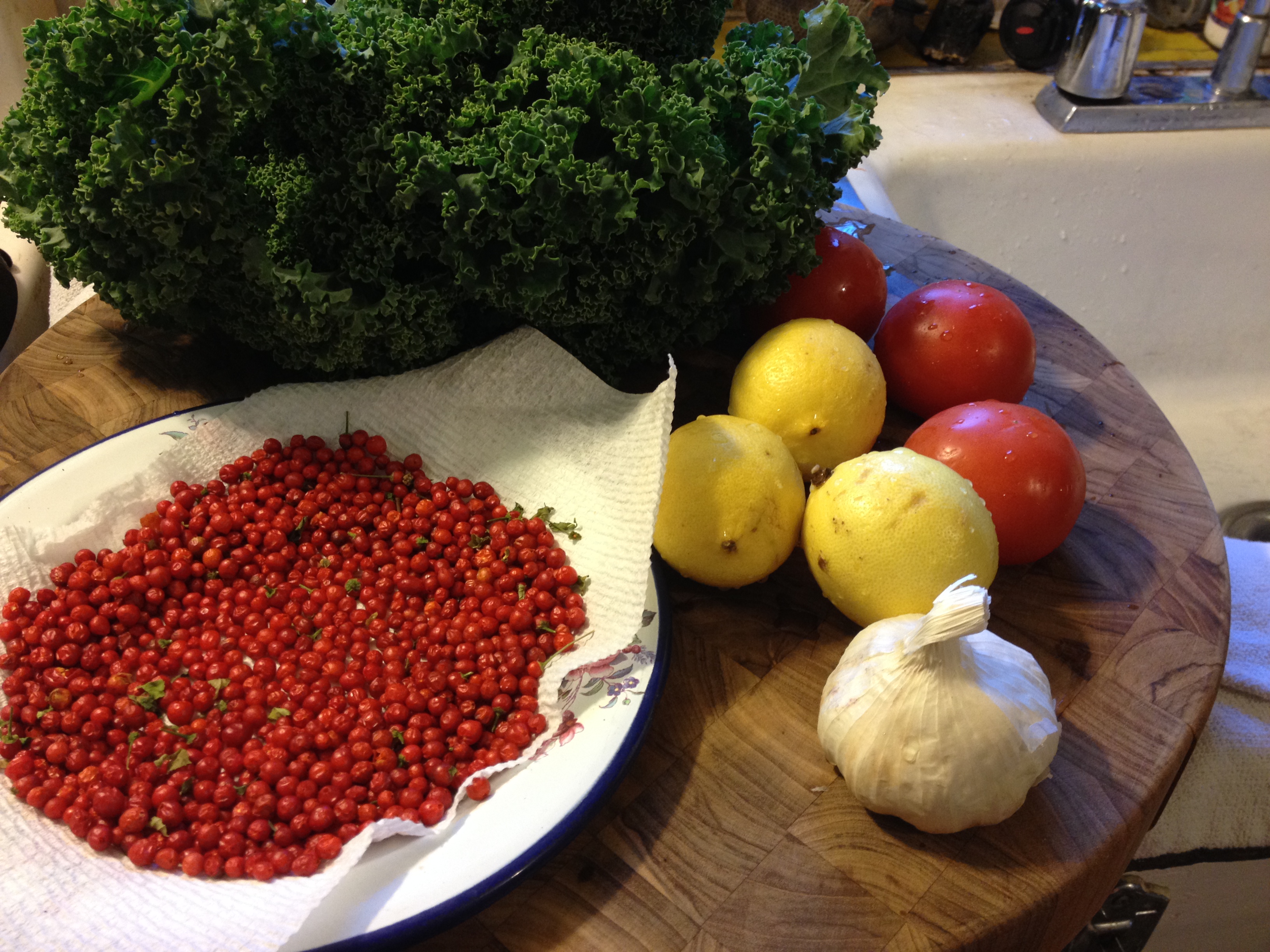
The red, round fruits of  the ancient chiltepin are making a comeback this year, after a rough bout with erratic weather patterns.  This is “their” time of year, as they mature between October and December, giving us just enough time to dry them for use throughout the holidays.  Marinated Kale Salad is easy to make, and offers a fresh, raw energy to the heavy-ish meals often served at the holidays. Prepare it the night before you wish to serve it, to give the juices of the lemon and tomatoes time to work their magic and soften the raw kale.

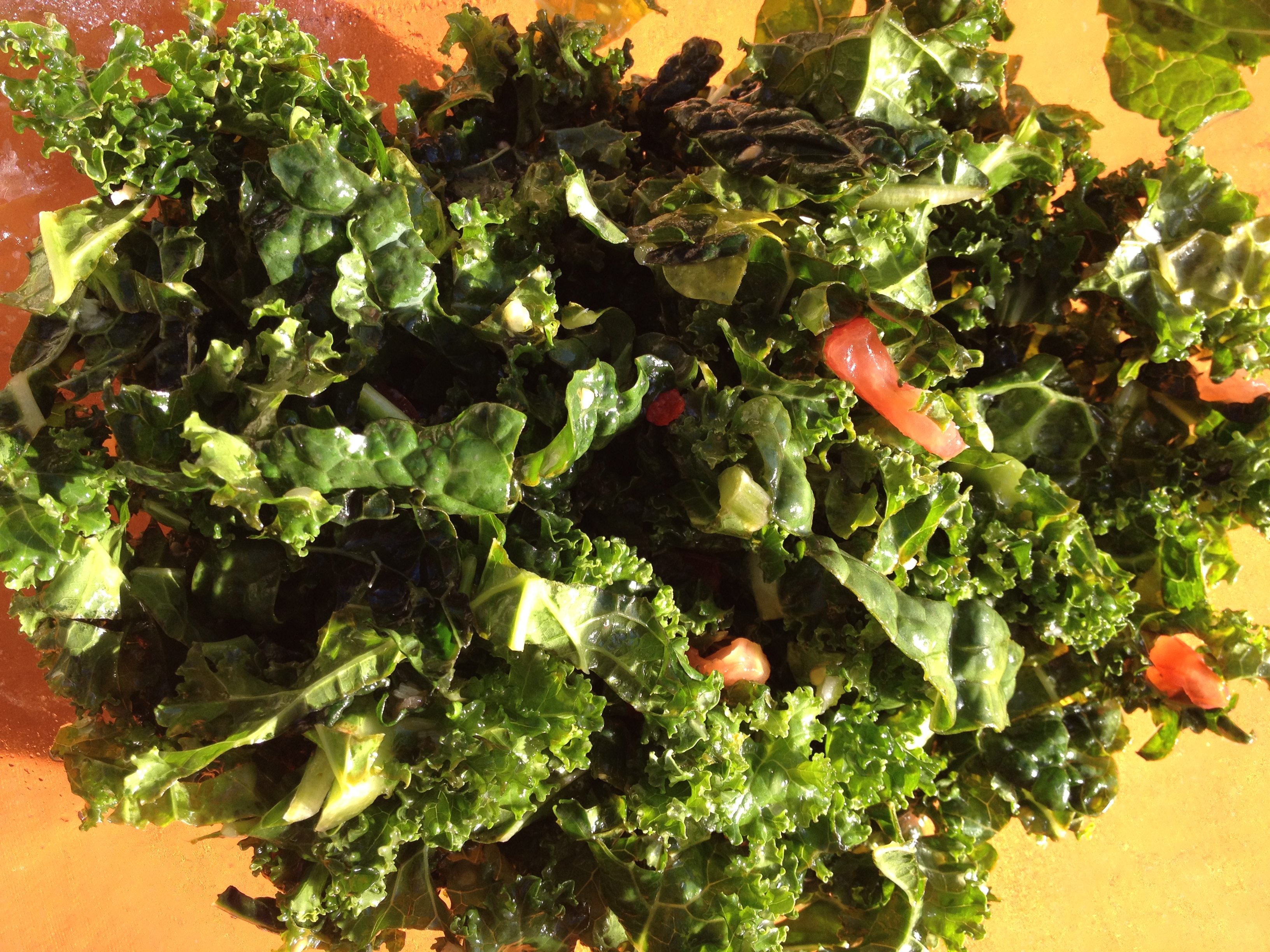
Here’s the recipe: In a bowl, combine 3 bright red chiltepin (crushed),  3 medium tomatoes (diced), the juice of 5 lemons,  about half a cup of olive oil, and salt to taste.  Then chop about 5 cups of raw Kale (also grows in your garden this time of year, here in the SW) as finely as you wish and add it to the mixture.  Place it in some kind of container with a tight fitting lid so that you can periodically shake the green mixture, allowing the juices that inevitably fall to the bottom of the container the chance to coat the kale above.

Kale salad lightens heavy holiday meals.

Kale salad lightens heavy holiday meals.

Make a Sonoran Scents Pomander

Contributed by Jacqueline Soule

Pomanders are used to add fragrance to stored clothing while they are said to also deter moths.  Pomanders have traditionally been made by sticking cloves into oranges, or mixing cinnamon and nutmeg with applesauce.  For those of you that love the scent of creosote bush, here is a Sonoran Pomander recipe I invented.

Dry creosote leaves until well dried.

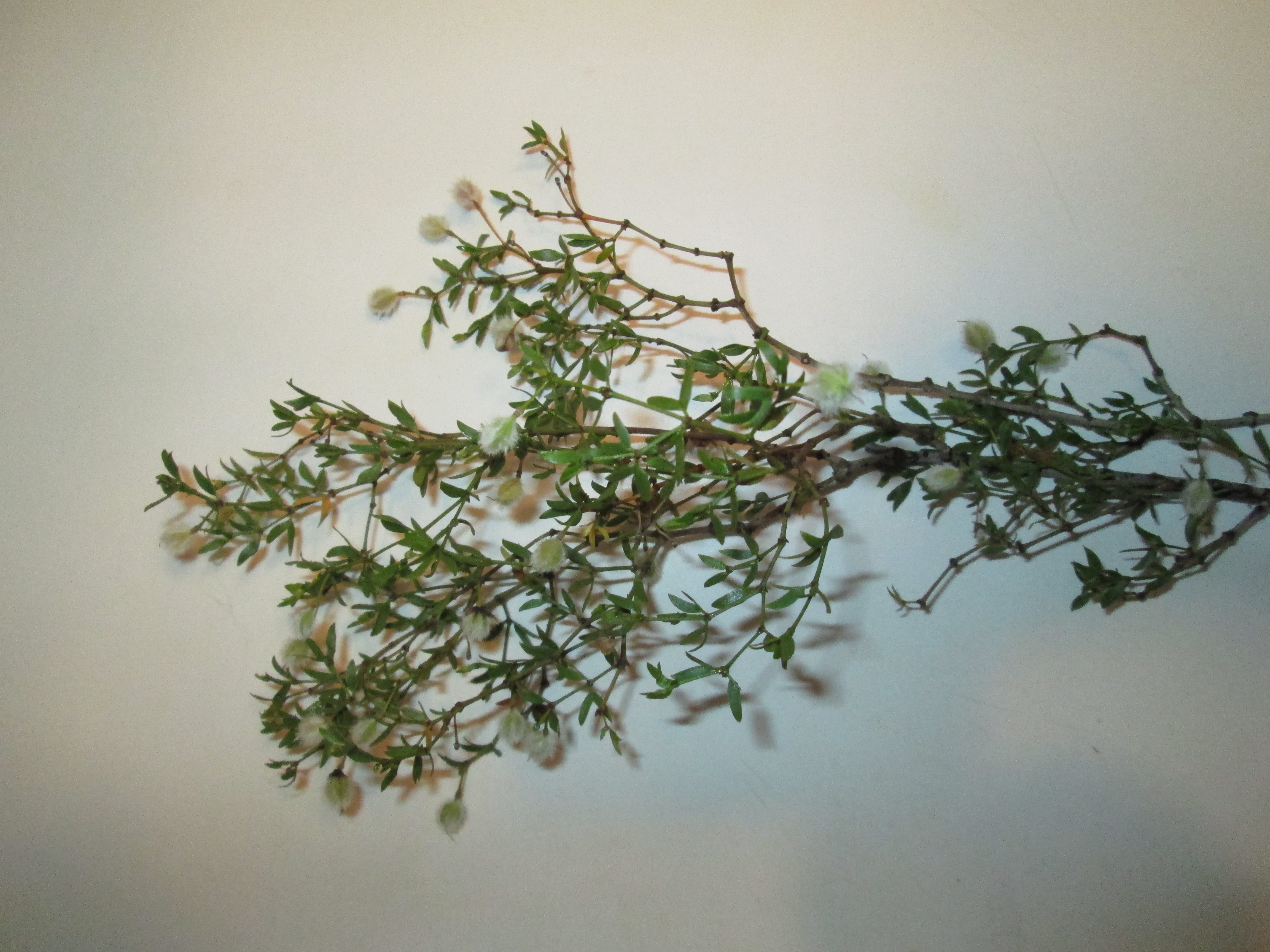
Dry leaves of creosote bush.  Collect more than you think you need!

Dry leaves of creosote bush. Collect more than you think you need!

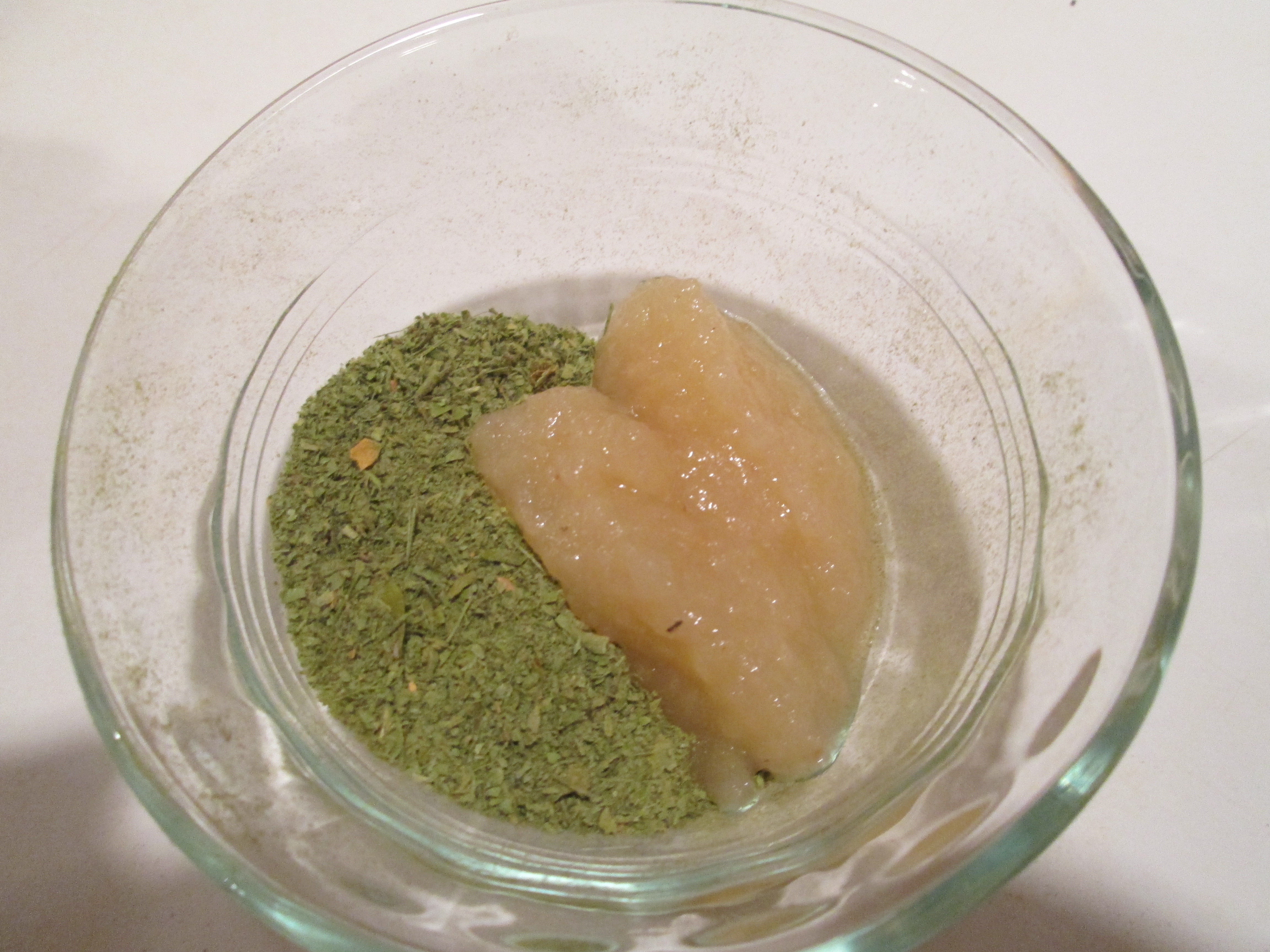
Turn them into leaf “powder” in a blender.  Mix three parts leaf powder to one part applesauce.

Mix powdered leaves with applesauce.

Mix powdered leaves with applesauce.

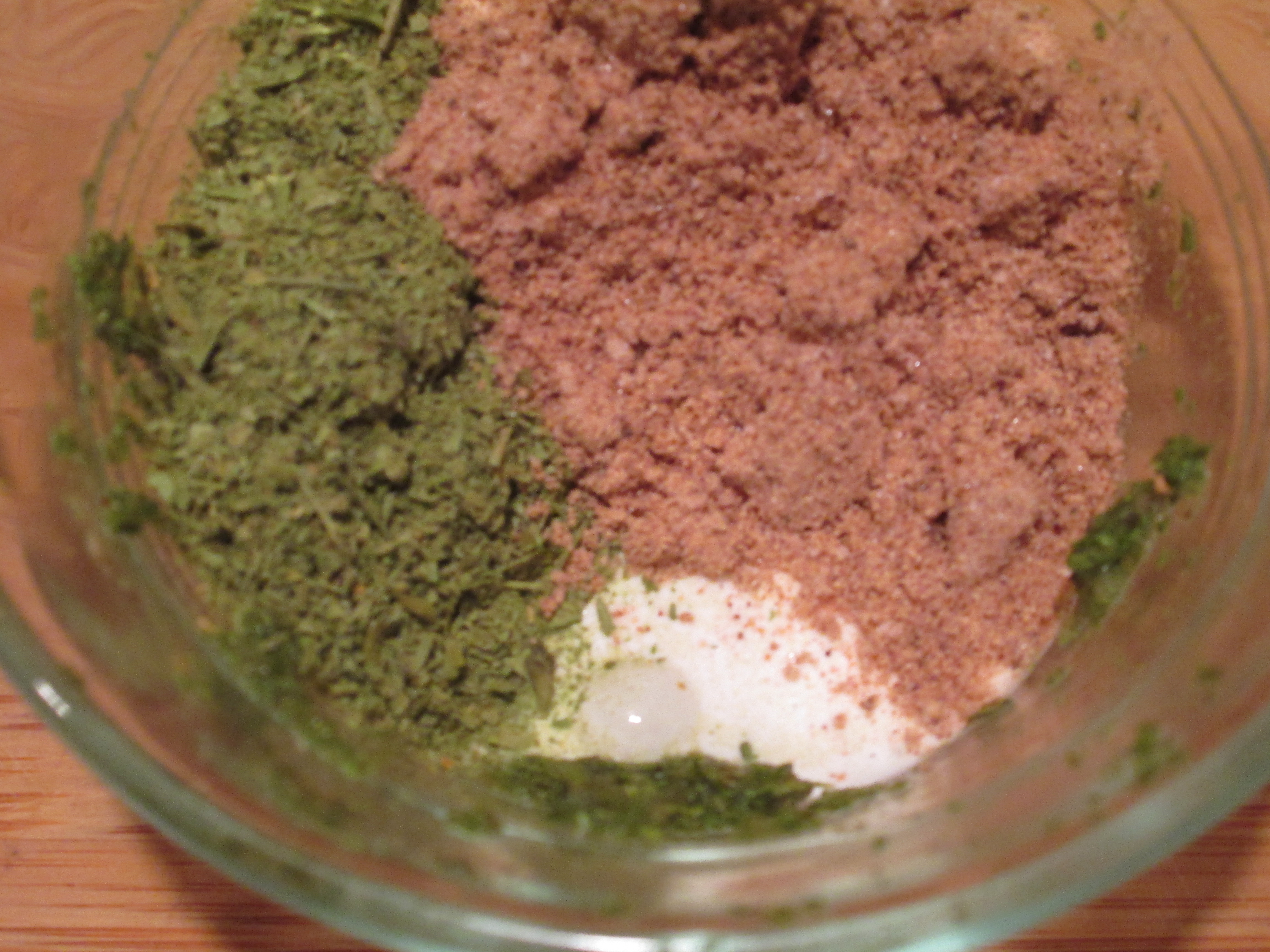
Form into walnut sized balls, or pat into thick disks.  If you get the mix too wet and have no more leaf powder, use a mild spice (like nutmeg) to add more “powder.”  Don’t use something moths eat, like flour or mesquite meal.

You can use nutmeg if you run out of powdered leaves.

You can use nutmeg if you run out of powdered leaves.

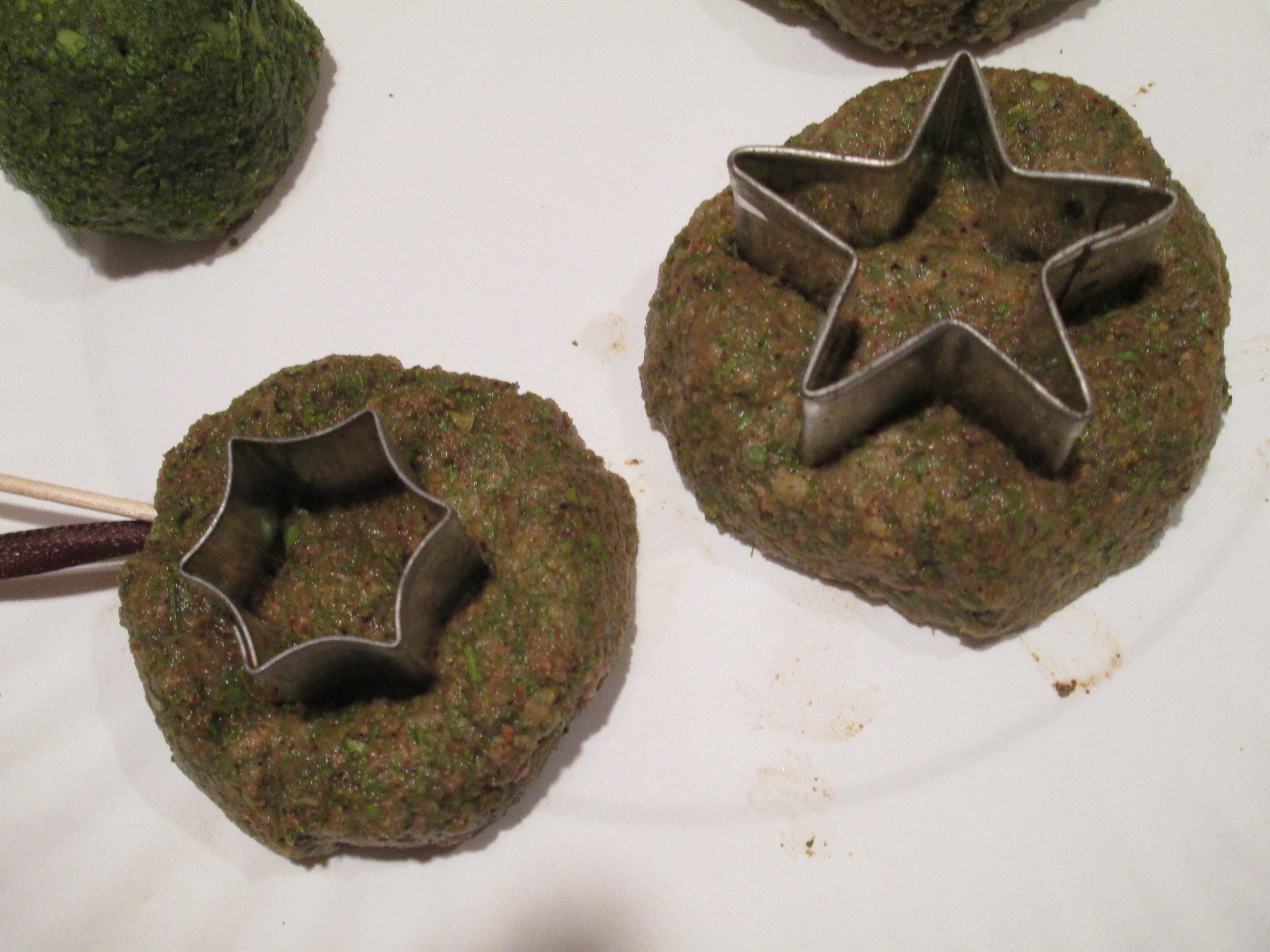
Use small cookie cutters to make impressions if you wish.

Use small cookie cutters to make impressions if you wish.

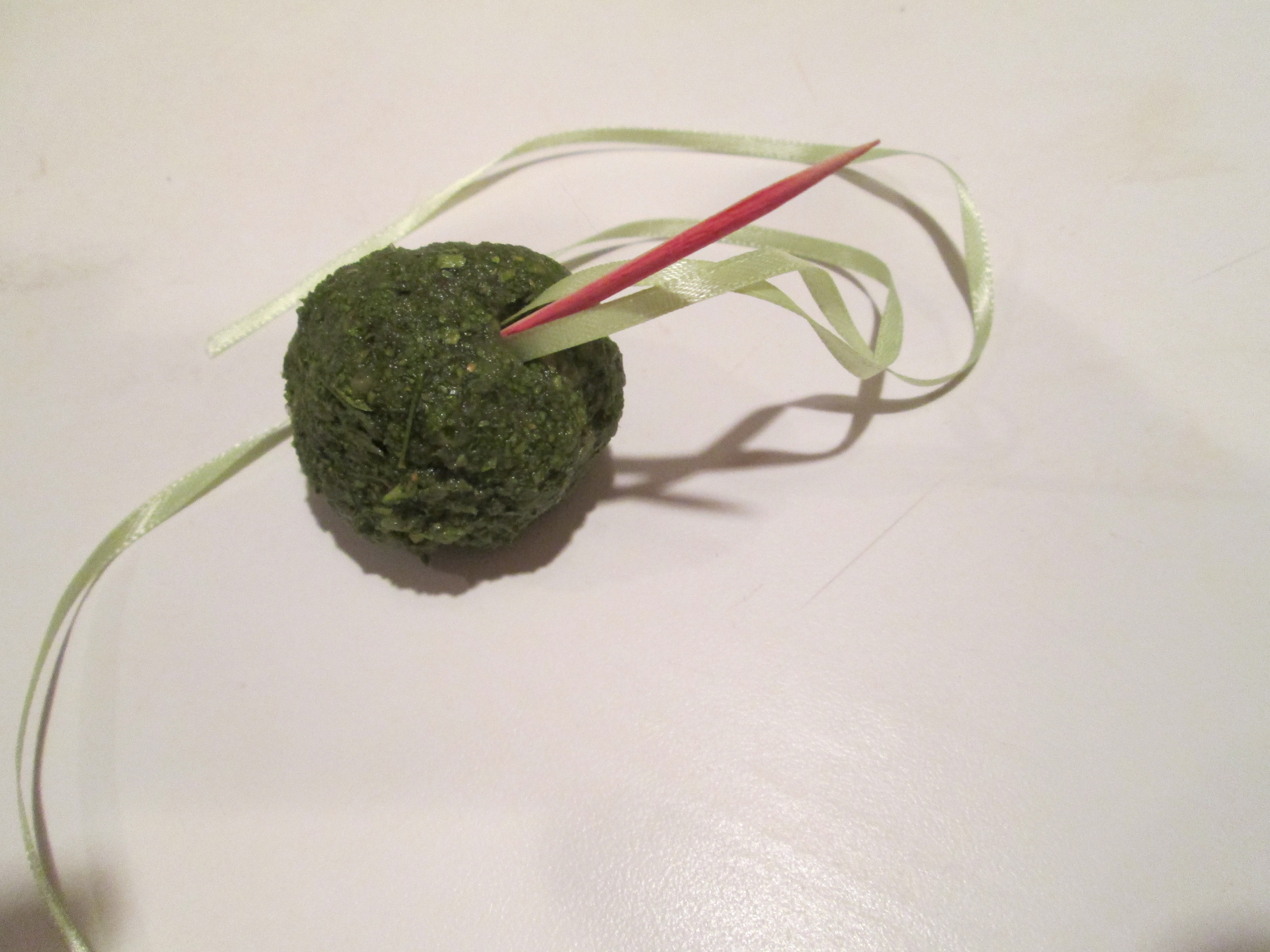
Add ribbon if you wish to hang them (later!).  Poke ribbon into the center with a toothpick.
Allow to dry for three to seven days.

Insert ribbon into still moist pomander with a toothpick.

Insert ribbon into still moist pomander with a toothpick.

Notes:
* Substitute white glue for some or all of the applesauce.
* Hang one of these in your car and carry the desert with you as you drive!

* To learn how to grow creosote in your yard, visit my other blog on creosote, available on http://nativeplantwildlifegarden.com/lovely-larrea/

* You can also read more about using creosote bush (and other native herbs) in my book Father Kino’s Herbs: Growing and Using them Today (available at amazon.com).

Pear and Mesquite: A Perfect Combo

Mesquite Ginger Pear Tart Ready for the oven.

Mesquite Ginger Pear Tart Ready for the oven.

Hello everyone.  This is Carolyn Niethammer and this is my week for the Savor the Southwest blog.

With mesquite millings happening all over Arizona, it’s time to plan for what you’ll make with your delicious mesquite meal.  Pancakes are fine for mornings at home, but when you are headed for a holiday potluck, something a little special is required to show how attuned you are to our desert foods. This Mesquite Ginger Pear Tart fills the bill.  I adapted the recipe from an old Joy of Cooking recipe for an apple cake. This is better! Ginger, a warm spice, always goes so well with mesquite.

I give you the recipe at the bottom, but here are the steps.  Works best if you have a springform pan so you can remove the sides of the pan from the finished cake without disturbing the topping. However if all you have is a regular cake pan, just carefully tip it over onto a plate, then flip it back.  You may have to reposition a few nuts, but it will taste great.

First make the batter.  Use your fingers to push it to the edges of the pan.

Spread the cake batter with your fingers.

Spread the cake batter with your fingers.

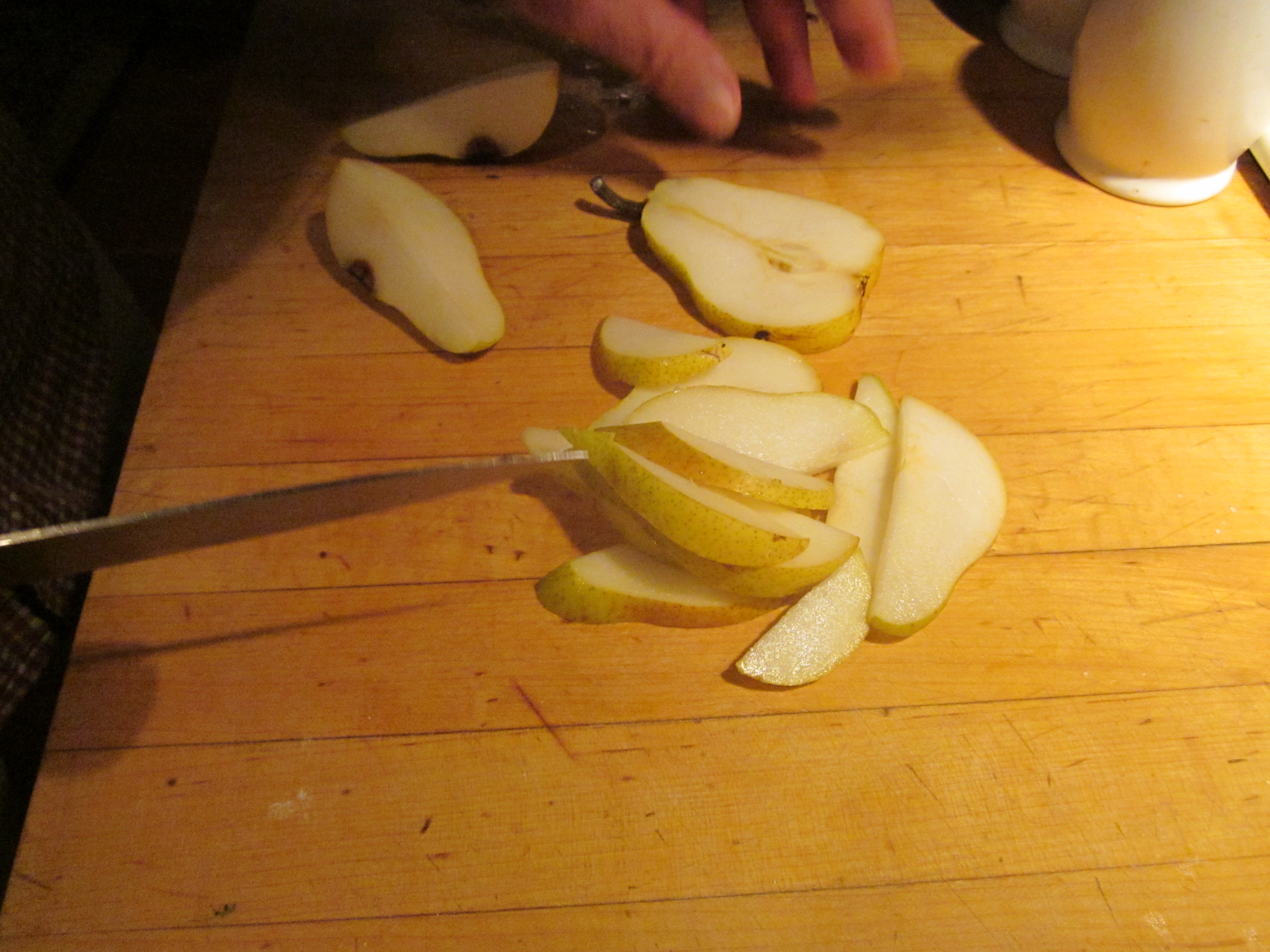
Cut a perfectly ripe pear into quarters, then into nice even slices.

IMG_0938

Arrange the pear slices on top of the batter.

Make a pretty pinwheel pattern with the pear slices.

Make a pretty pinwheel pattern with the pear slices.

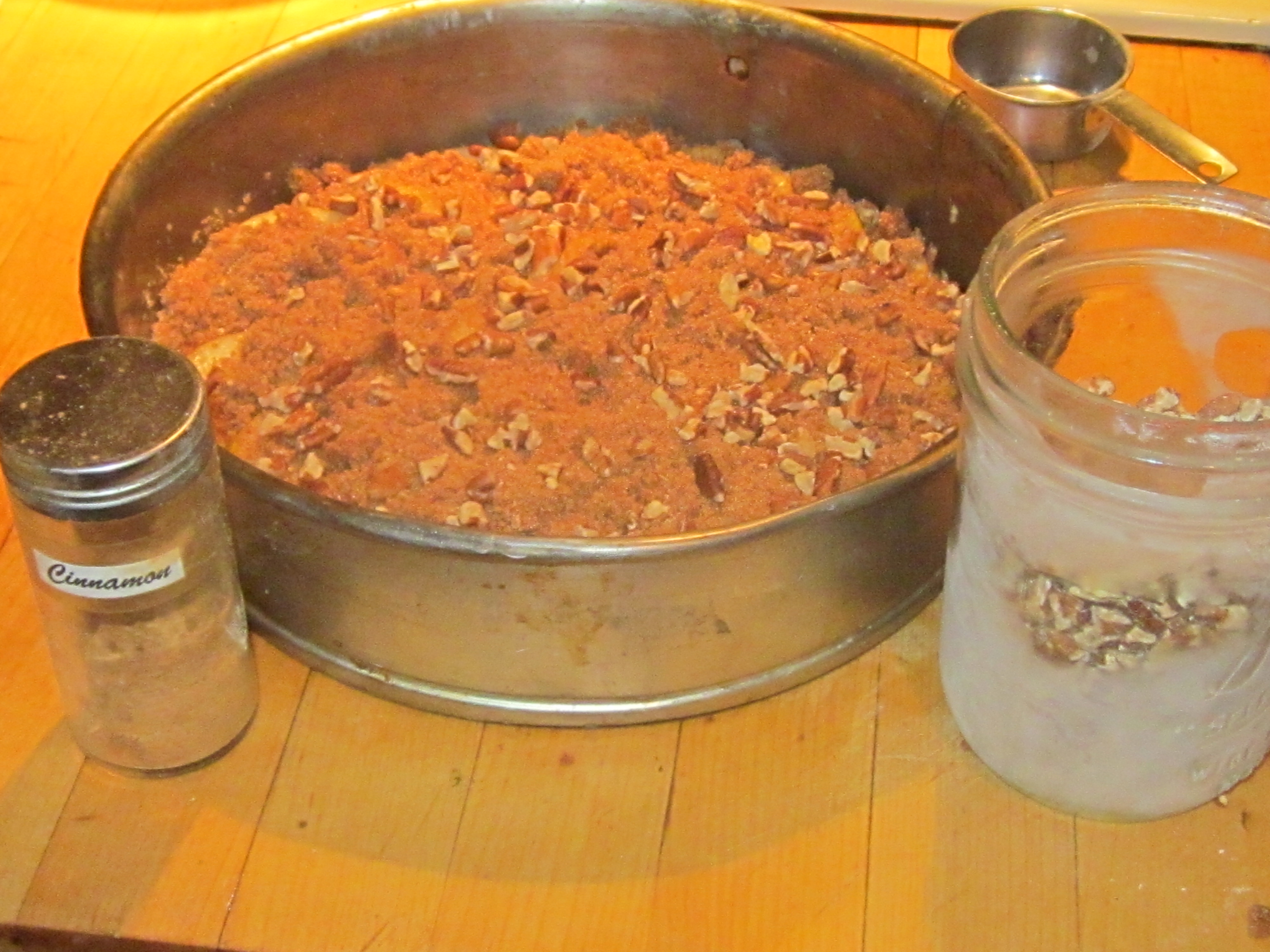
Mix the topping and sprinkle over the pear slices.

Crumbly topping will add sweetness and crunch to your cake.

Crumbly topping will add sweetness and crunch to your cake.

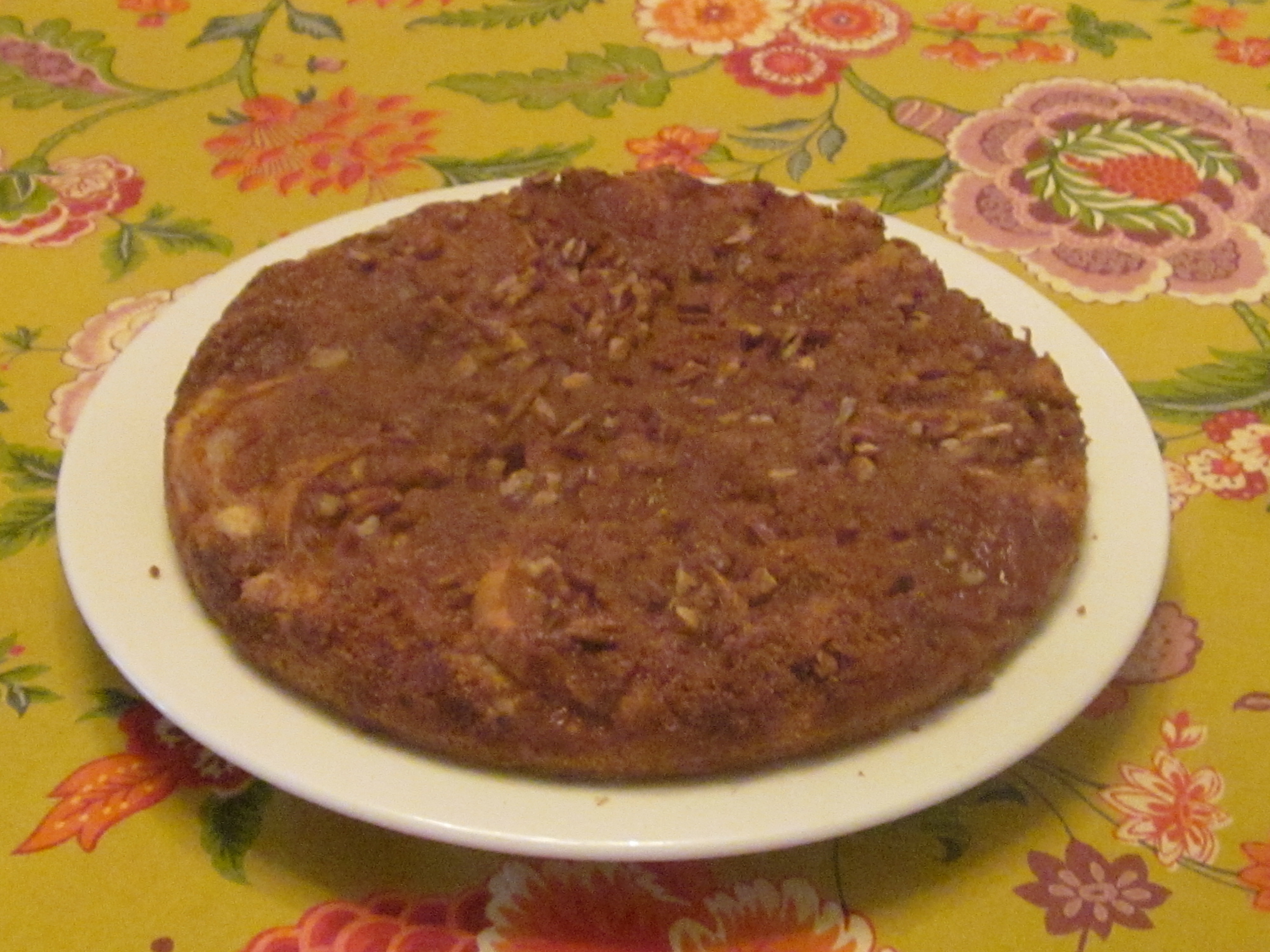
After baking, cool and remove from the springform pan.

Fragrant Mesquite Ginger Pear Cake.

Fragrant Mesquite Ginger Pear Cake.

Now that you know the method, here’s the recipe:

Mesquite-Ginger Pear Cake

1 cup flour

¼ cup mesquite meal

3/4 teaspoon ground ginger

¼ teaspoon salt

2 tablespoons sugar

3 tablespoons butter

1 egg

½ teaspoon vanilla

¼ cup milk

2 large pears, sliced

Topping:

½ cup sugar

¼ cup mesquite meal

3 tablespoons melted butter

¼ cup chopped pecans or walnuts

Prepare a 8- or 9-inch springform pan by lining with a buttered piece of paper cut to fit the pan. Preheat oven to 425 degrees F.

In a medium bowl, combine flour, mesquite meal, salt and sugar.  Fluff with a fork until well combined. Add the butter and rub with your fingers or cut with a pastry blender until butter is worked in.

In a glass measuring cup, put the ¼ cup milk and then beat in the egg and vanilla. Stir into the dry ingredients to make a stiff batter.  Press into the prepared pan with spatula or your dampened fingers. Arranged sliced pears in a circular pattern on top of batter.

In a small bowl, mix the ½ cup sugar, mesquite meal, and melted butter.  Sprinkle evenly over cake and pears. Top with chopped nuts. Bake in preheated oven for about 25 minutes. Remove sides of pan and cool. Serve with a dollop of whipped cream.

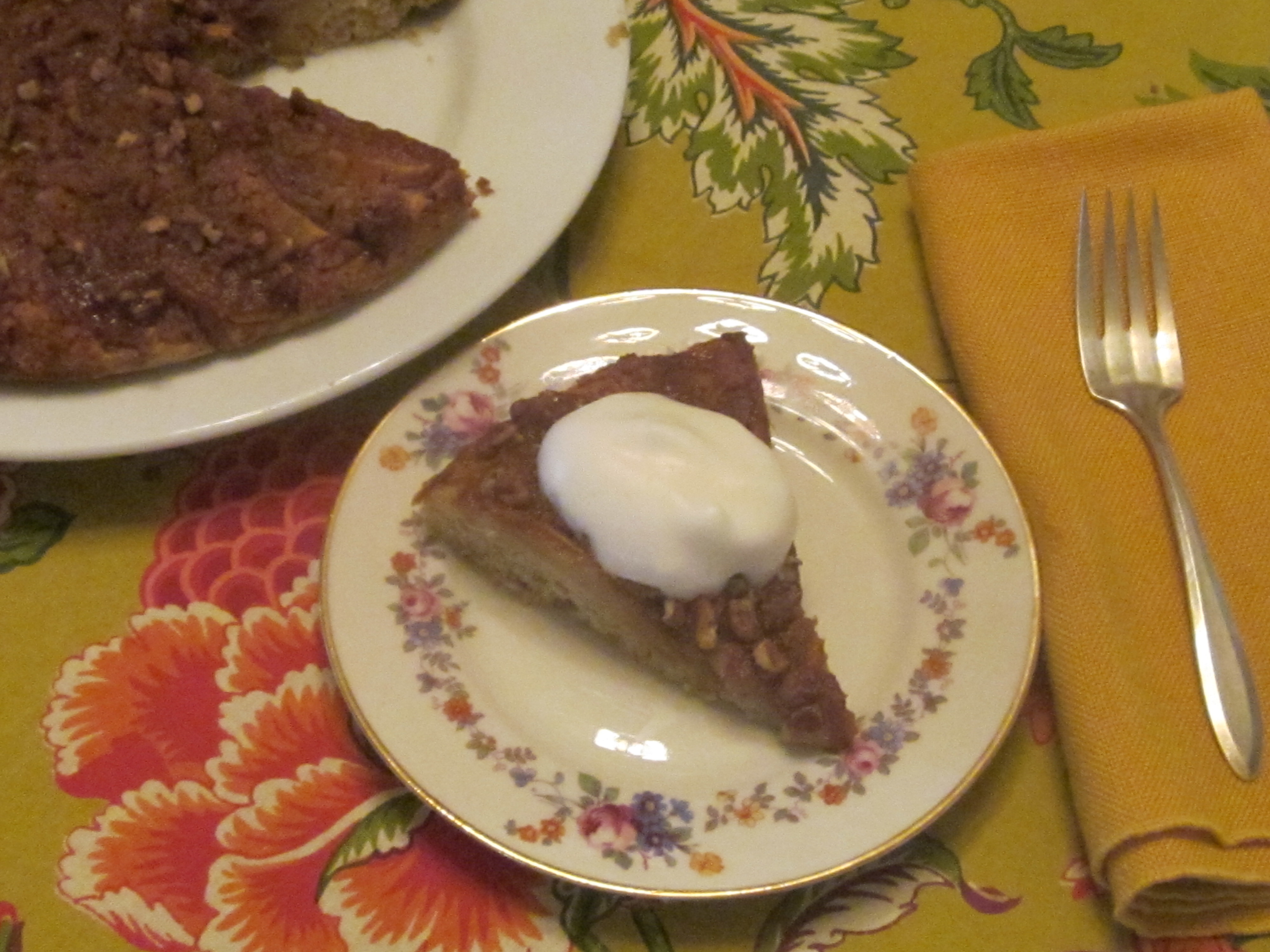
Delicious slice of Mesquite Ginger Pear Tart.

Delicious slice of Mesquite Ginger Pear Tart.

********************

Looking for more ideas to use your mesquite meal? Check out Cooking the Wild Southwest: Delicious Recipes for Desert Plants.  It includes recipes for 23 easily identified and gathered plants that grow all over the Southwest.