50 Years Exploring Wild Foods of the Southwest

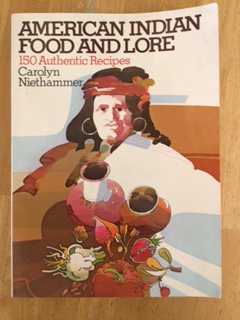
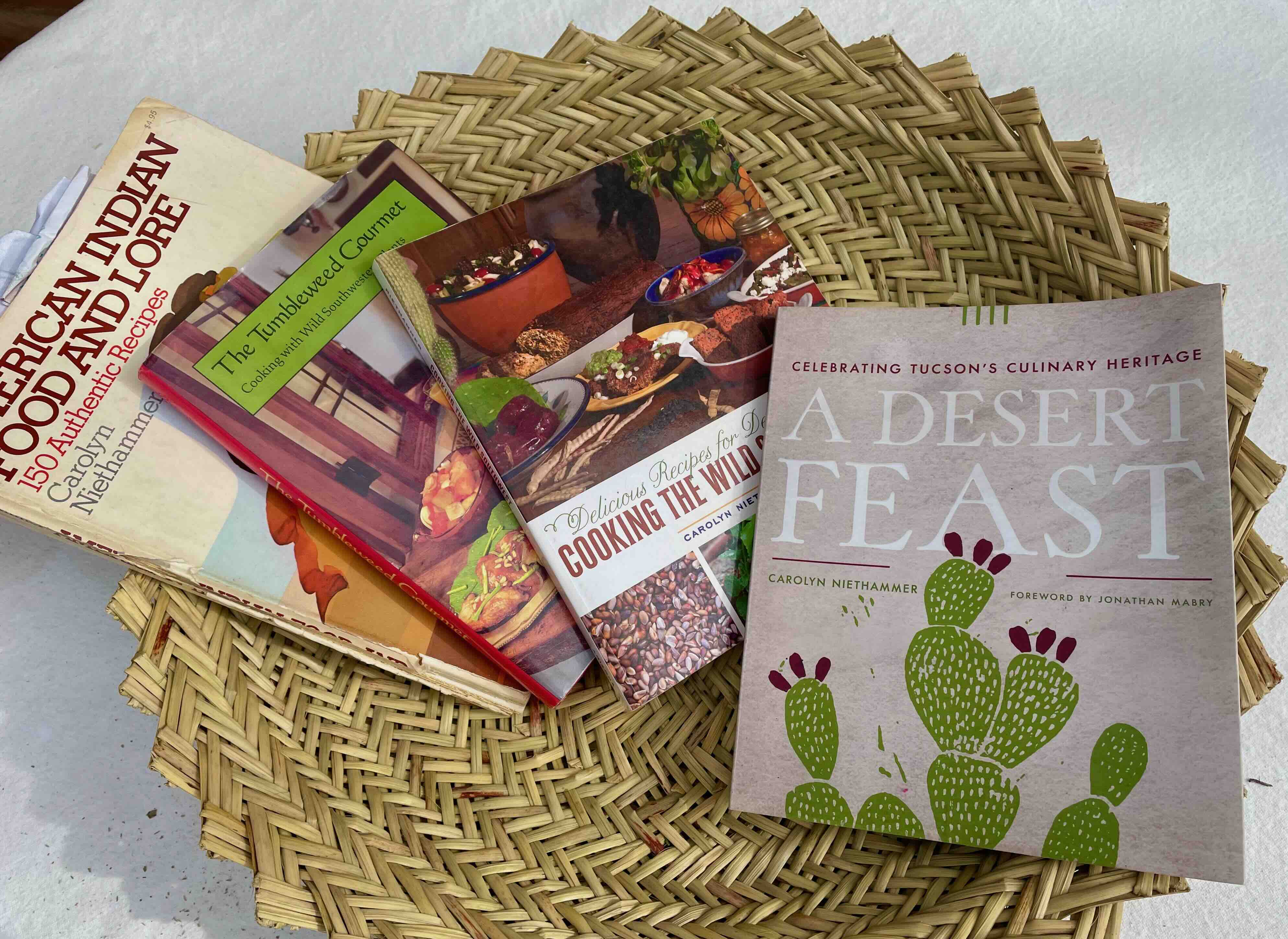
It’s Carolyn here today with a walk down memory lane. This year celebrates 50 years since the first publication of my first book American Indian Food and Lore, now republished as American Indian Cooking: Recipes from the Southwest. In 1970, I was a young out-of-work journalist and through an unlikely set of circumstances ended up with a contract for a book on Indian cooking with Macmillan, a major New York publisher. Preliminary research showed that traditional Native American food revolved around edible wild plants and corn, beans, and squash.

My college science was zoology so I had a lot to learn about edible plants. I began by reading every ethnobotany written about Southwestern plants. I found mentors to take me on plant walks, including the late renowned botanist Richard Felger. When I knew enough to ask intelligent questions, I headed out to talk to the experts, Native American women. My first teachers were two lovely Tohono O’odham women on the San Xavier section of the reservation who spent an afternoon teaching me to cook mesquite the way their mothers had. I put the leftovers in the backseat of my car and had a head-on collision on a narrow dirt road on the way home. Woke up in the hospital with mesquite mush in my hair.

Here I am in 1971 trying to learn to distinguish one little green plant from another.

Perhaps that was some sort of christening, so for $150 I bought a Chevy wagon and the summer of 1971, I headed to remote areas on the Hopi, Navajo, Zuni, Havasupai, and Pueblo reservations. Many very generous middle-aged Native women taught me about plants they had gathered with their grandmothers. I worked in an office that winter to gather some money and headed out again the summer of 1972.
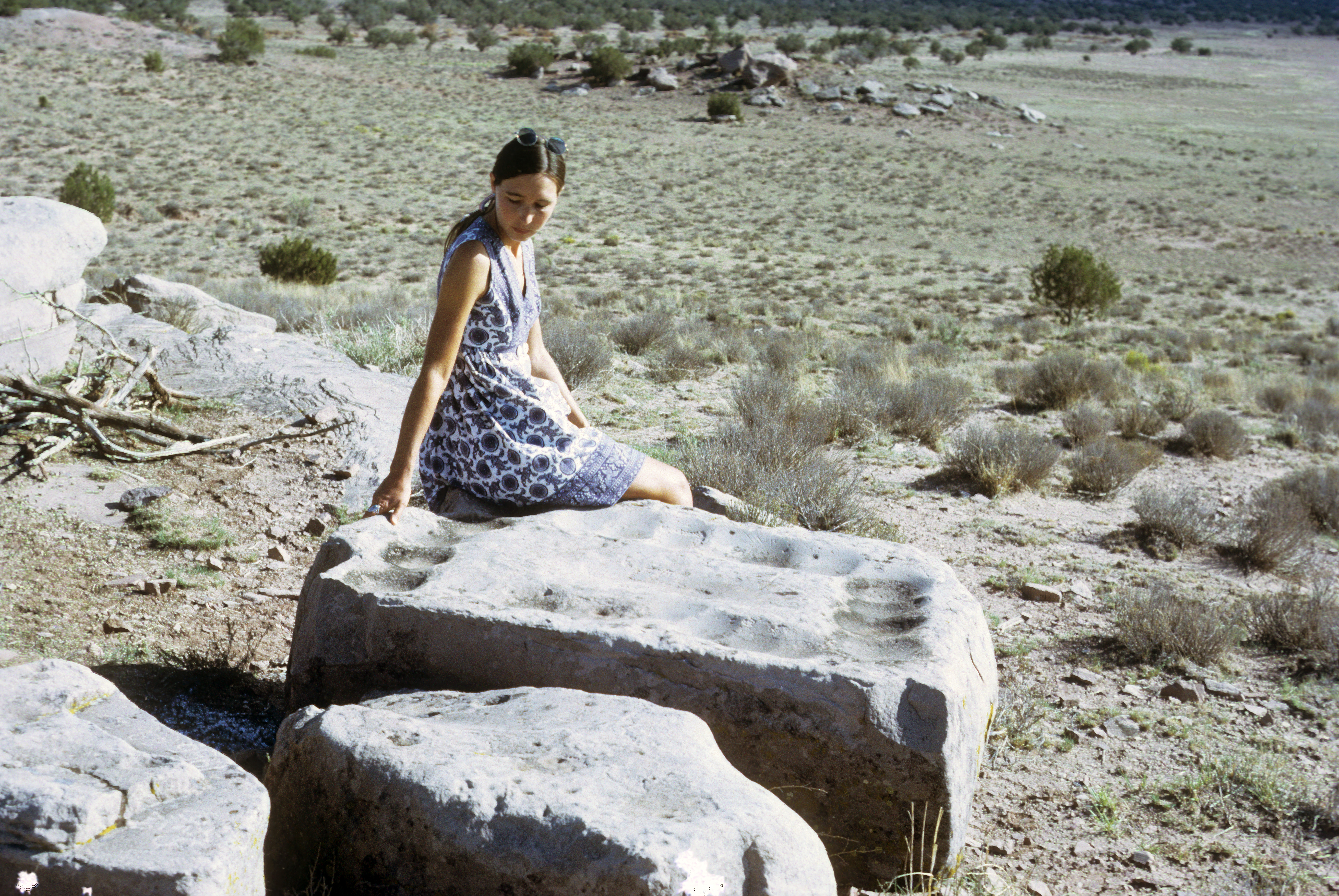
Finding a communal grinding stone at Hawikuh (founded c. 1400) near the Zuni Reservation. Imagine the women sitting around the stone doing food preparation.

Then it was time to test the recipes when I had them and develop recipes when necessary. A friend lent me an electric typewriter (such a luxury), and I wrote up what I had learned. A small grant allowed me to pay Jenean Thomson to do the gorgeous and accurate line drawings of the plants.

Jenean Thomson’s ocotillo illustration.

The book was “in press” for two years and was released by MacMillan in 1974. Euell Gibbons had published several well-known books on edible wild plants, but they were all Eastern species. American Indian Food and Lore joined a very few popular books on edible Western plants. Sunset Magazine even came and did an article on my wild food gathering class. Writer and ethnobotanist Gary Nabhan joined me, and one year we did a class we privately called Gary and Carri’s Thorny Foods Review.

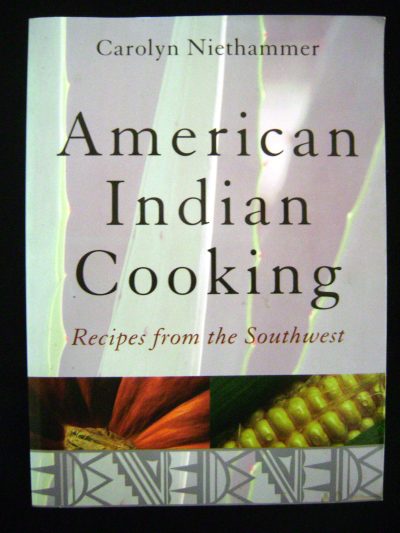
After two decades, with changes in ownership, Macmillan decided the book didn’t fit their line, but the University of Nebraska Press liked it. In 1999, they republished the book under their Bison Books line as American Indian Cooking: Recipes from the Southwest with a lovely new cover.

I have followed this title with four more books on Southwestern food, but my first foray into cookbooks with the all the memories I have doing the research remains a high point of my life.
Here is one of the original recipes taught to me by a Navajo cook.

Navajo Griddle Cakes

(Makes 14 4-inch cakes)

Although this calls for lamb’s-quarter seeds, you can substitute amaranth, quinoa, chia, or sunflower seeds.

¾ cup ground lamb’s-quarter seeds

¾ cup whole wheat flour

2 tablespoons sugar or honey

½ teaspoon salt

1 teaspoon baking powder

1 egg

2 cups milk

2 tablespoons oil or bacon drippings.

Combine dry ingredients in a bowl. In another bowl beat together egg, milk, and fat and add to dry ingredients. Heat the griddle and add a small amount of oil. Test the griddle by letting a few drops of cold water fall on it. If the water bounces and sputters, the griddle is ready to use. Bake the pancakes.

__________________________________

Note from SavorSisterTiaMarta:  If you want to find other fascinating, flavorful, and from-the-earth Indigenous recipes that were gifted to Carolyn 50 years ago and which she published in American Indian Food and Lore, you can chase down used book copies via Thriftbooks, Amazonbooks and other sites.  This first book is a treasure trove of totally useful, current ideas!
Camp cooking at home

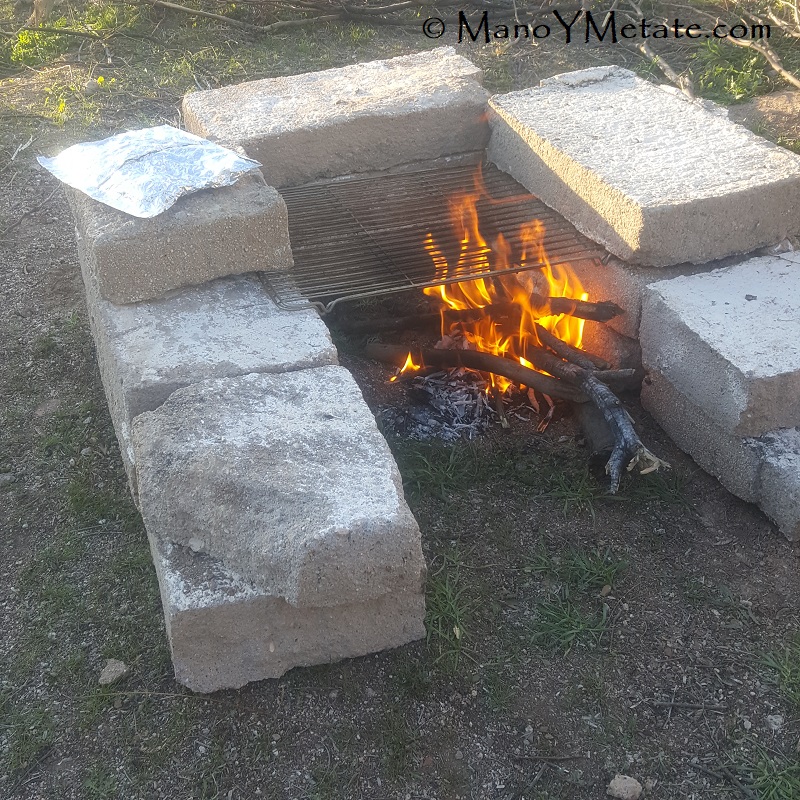
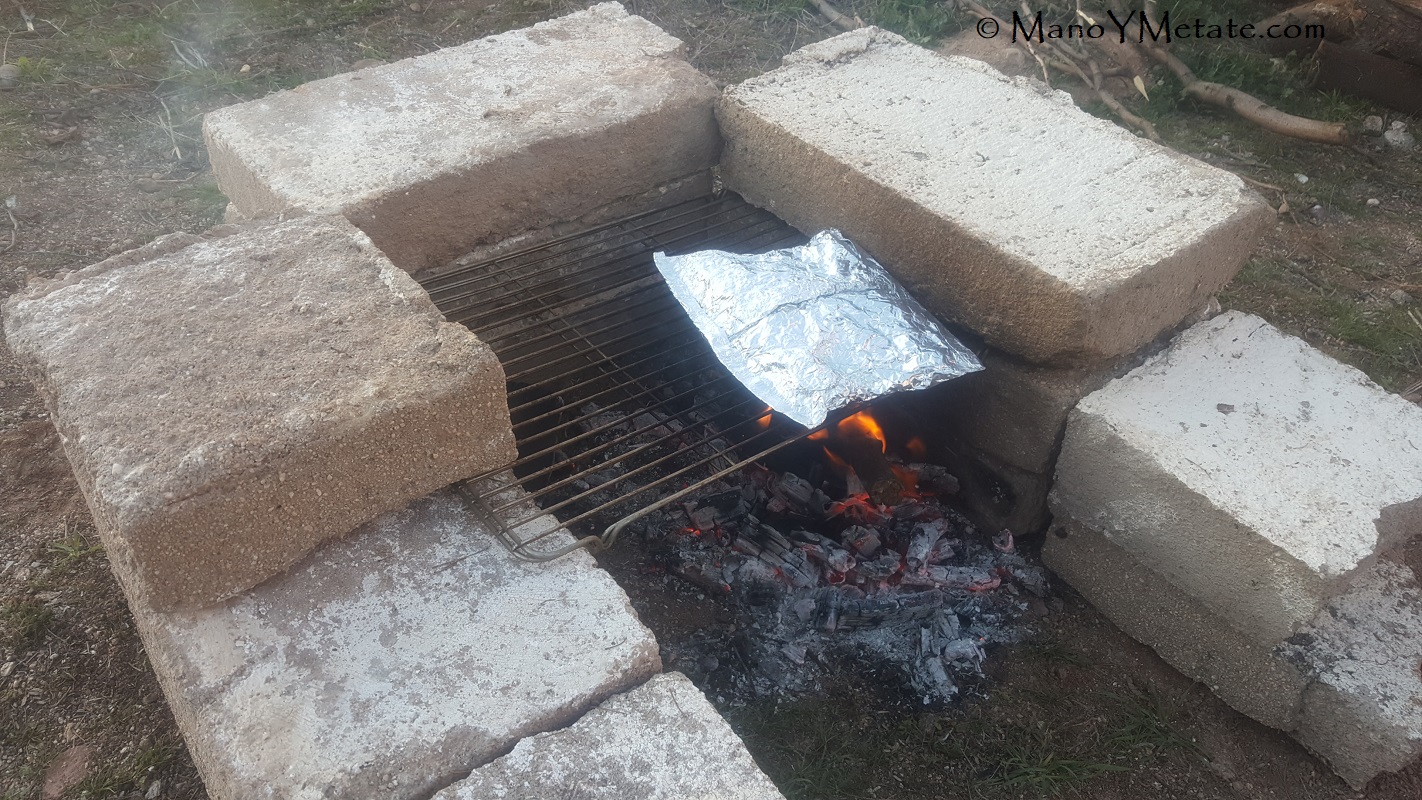
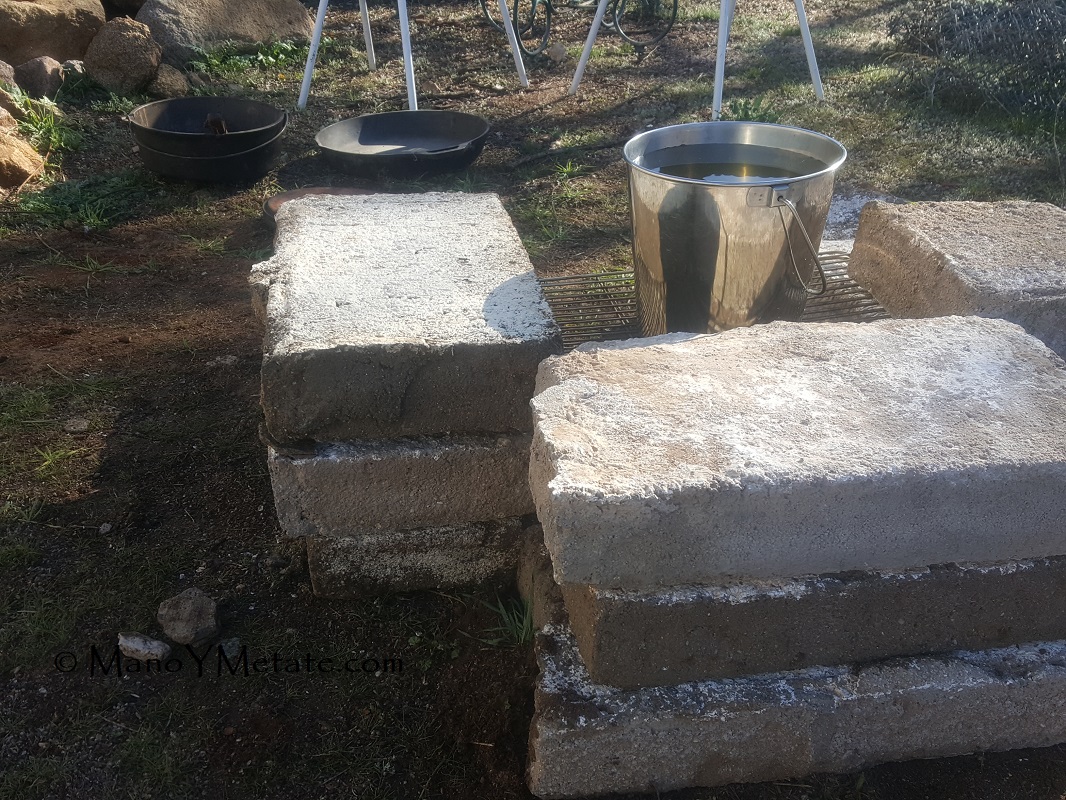
Hi all, Greetings from sunny Tucson! Amy here, at my new urban homestead. Taking out a wall left me a pile of old bricks to re-purpose, so I made a little outdoor hearth. This bucket of rainwater helped me level the cooking rack, sturdy enough for my over-sized, seldom used, cast iron cookware.

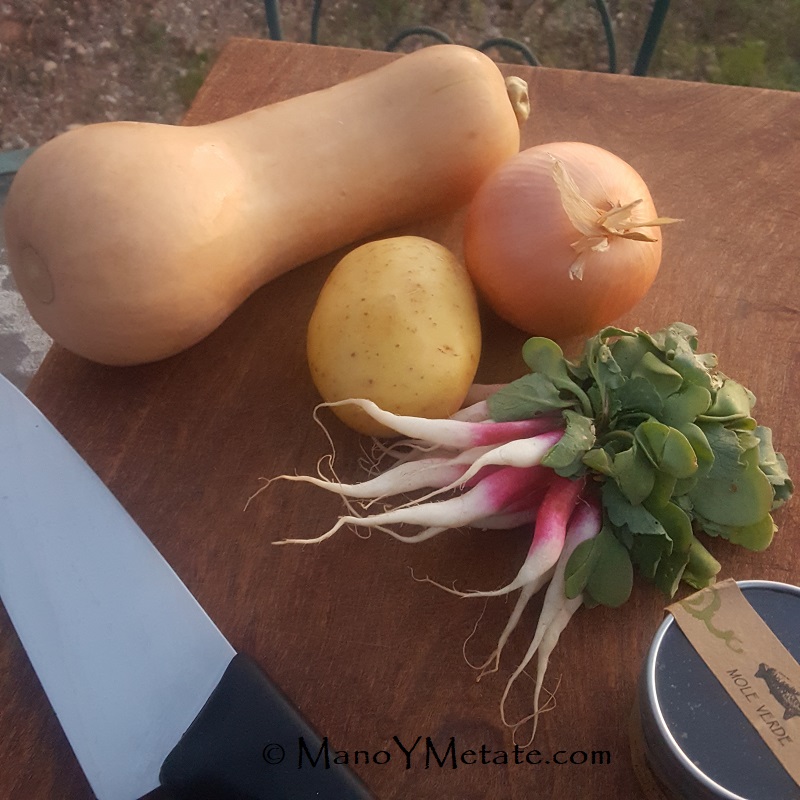
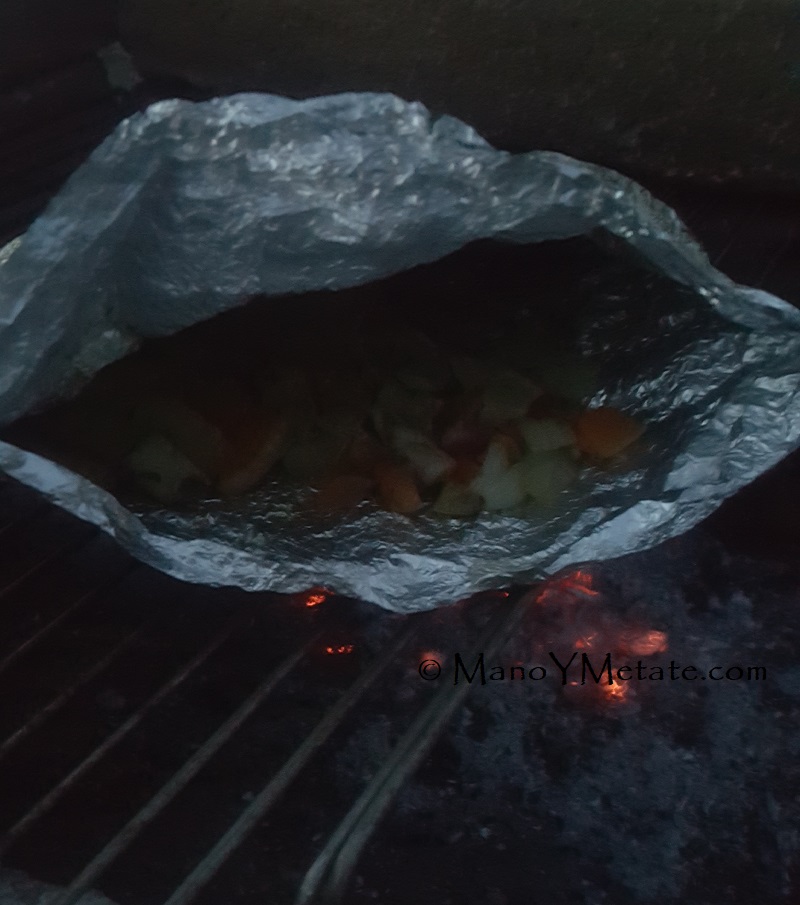
Making dinner for myself outside to admire the newly cleared yard, I cooked what was on hand from my Tucson CSA share: a butternut squash, Yukon gold potato, yellow onion, and French breakfast radishes. I decided to make a dish from my camping childhood, a foil meal cooked on the fire!

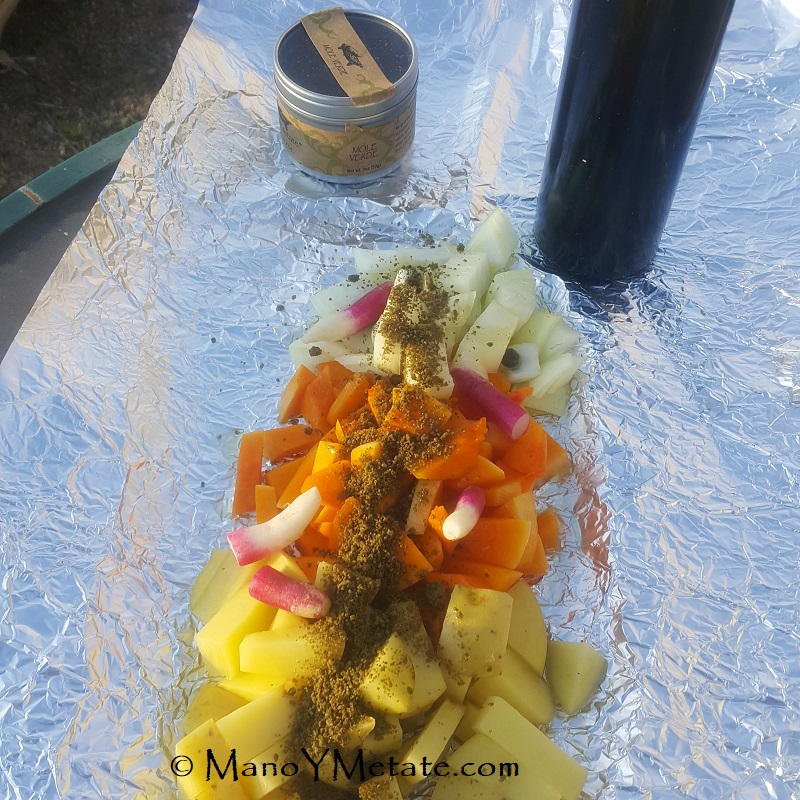
I cut the veggies into bite sized pieces, added a sprinkle of salt, and doused with olive oil and Mano Y Metate Mole Verde powder.

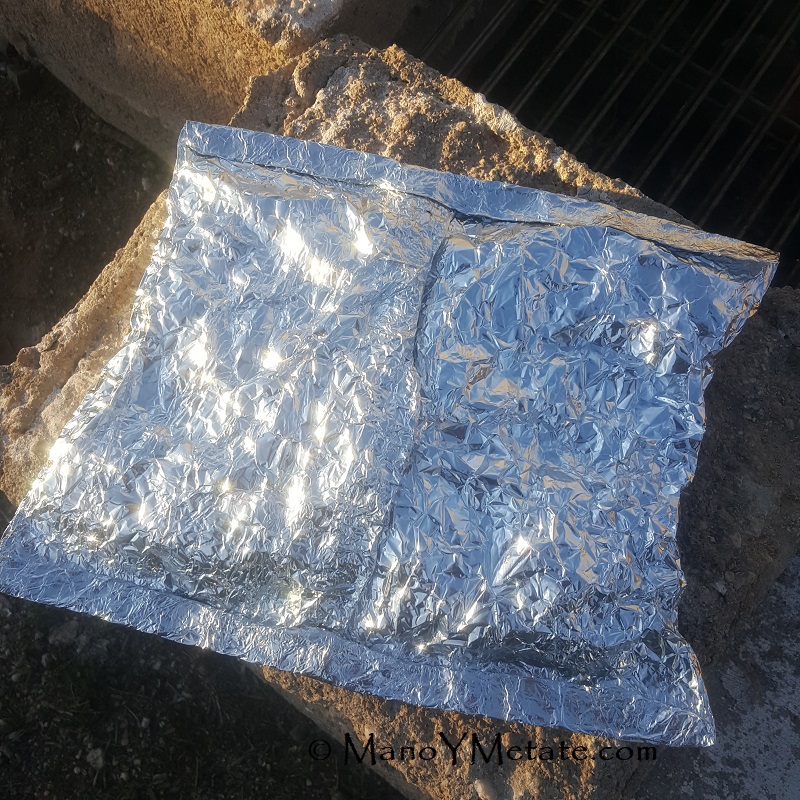
Then I sealed the foil seams very well and made a mesquite fire.

When the fire was almost down to coals, I put the sealed packet on the grill.

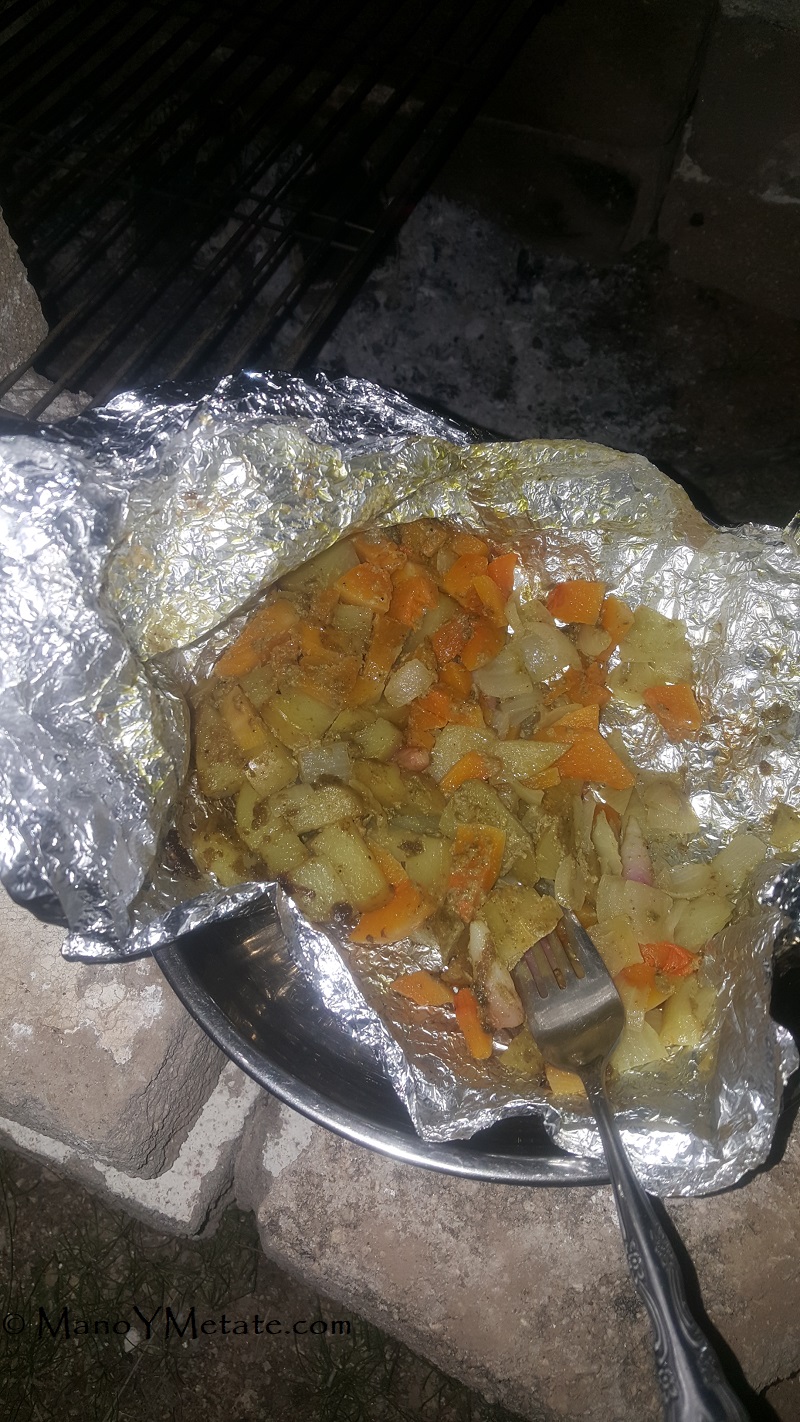
After about 45 minutes, the potatoes were perfectly tender and the embers glowing more dimly.

The steam from the veggies and the Mole Verde powder made a slight bit of sauce in the packet. It was mildly spicy and herbaceous from the cilantro, parsley and epazote in the mole powder. Of course, this would work with many other veggie and meat combinations, and any of the mole powder varieties.

I ate my dinner by the fire and dreamed of what might come next on this old urban lot.

Buenas noches, Amy


Easy Homemade Chorizo, Vegan Cauliflower or Traditional

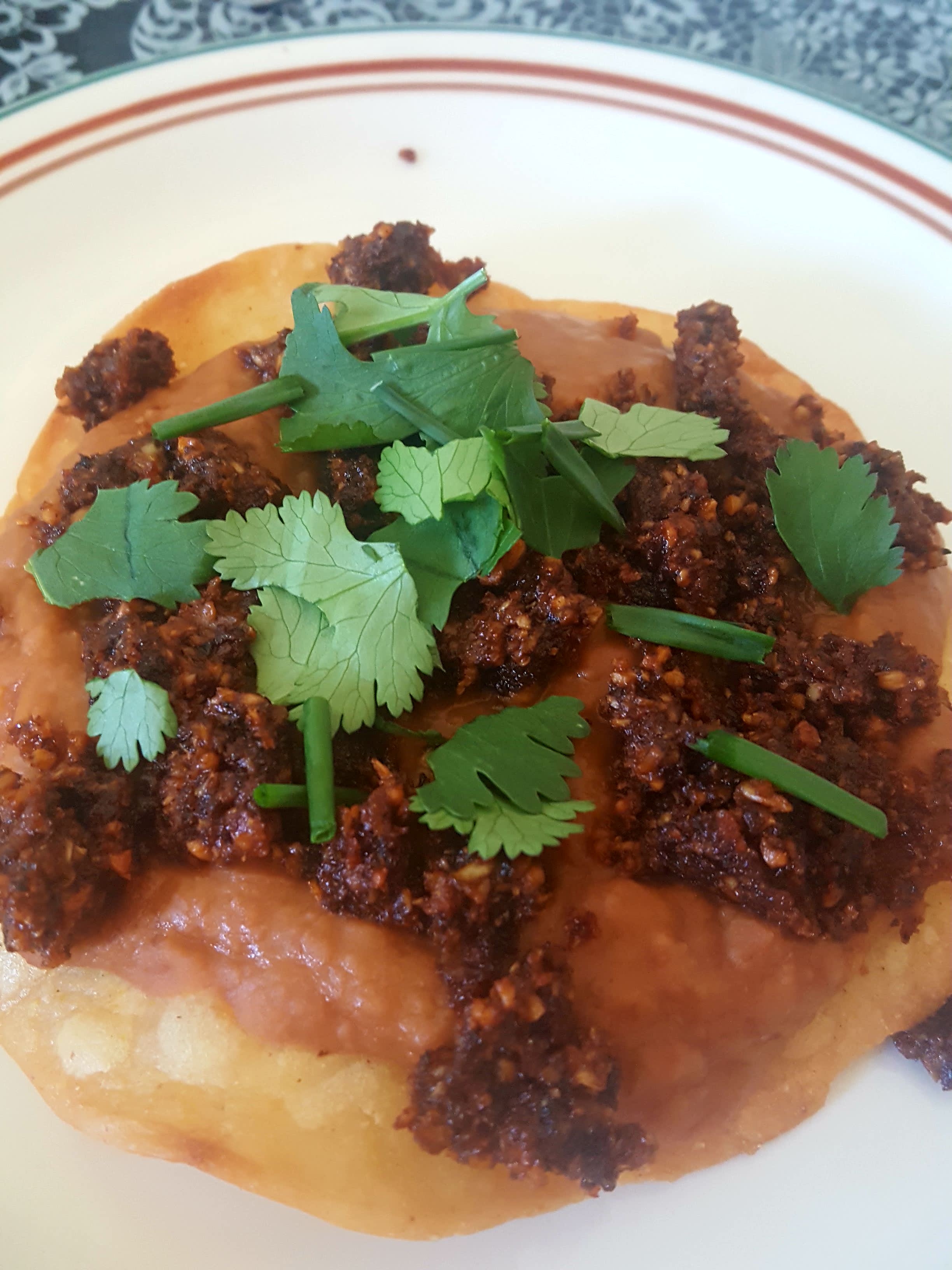
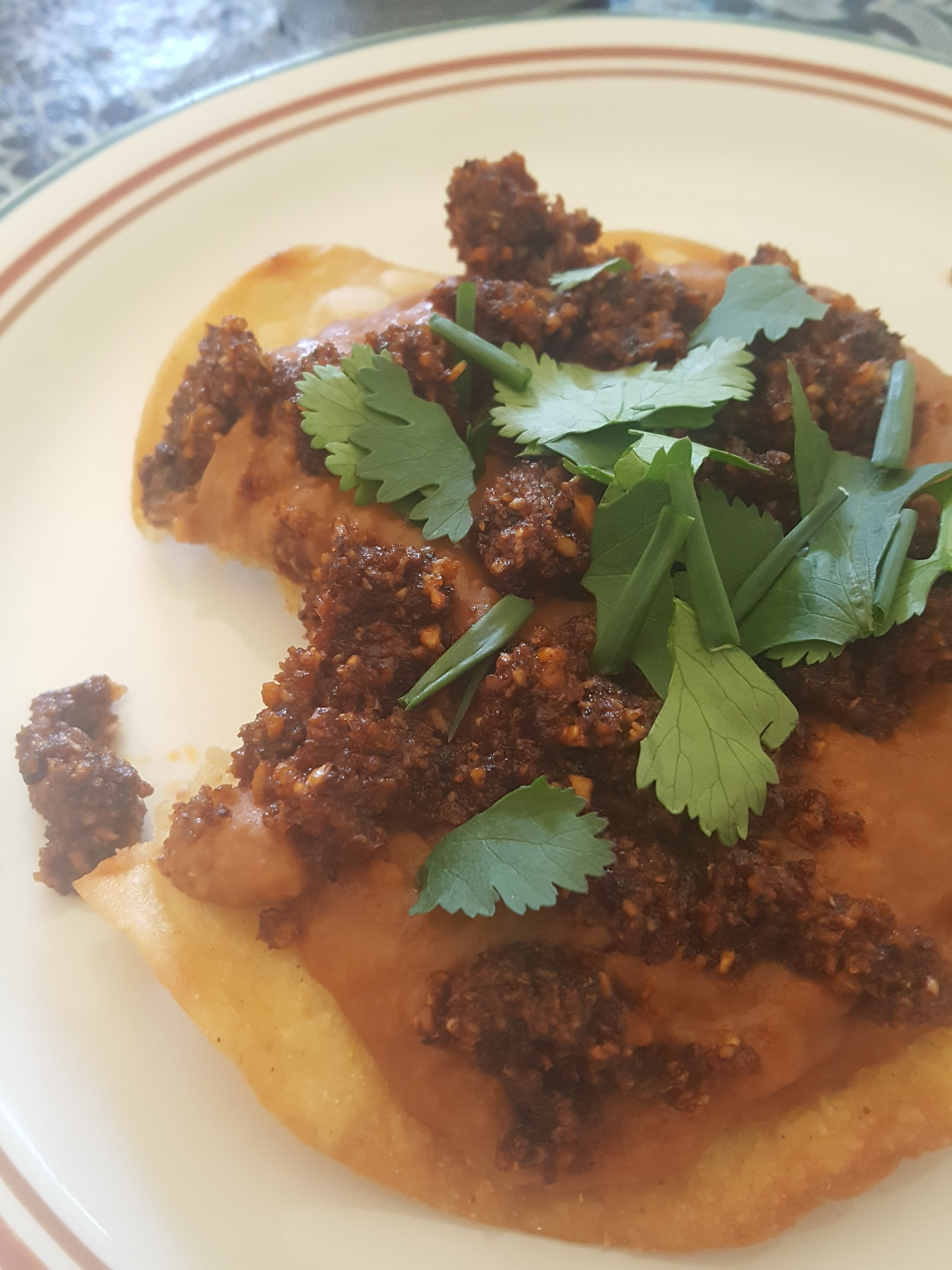
Cauliflower chorizo on bean tosdada

Hello, Amy here on a cold sunny day looking for spicy comfort food. I remember my grandfather made huge batches of great homemade chorizo, usually from beef, and froze it in half or quarter pound balls for use later. We had it for breakfast mixed into skillet fried potatoes like hash, or scrambled into eggs and wrapped in hot flour tortillas. Also, he would mix it into mashed pinto beans for tostadas.

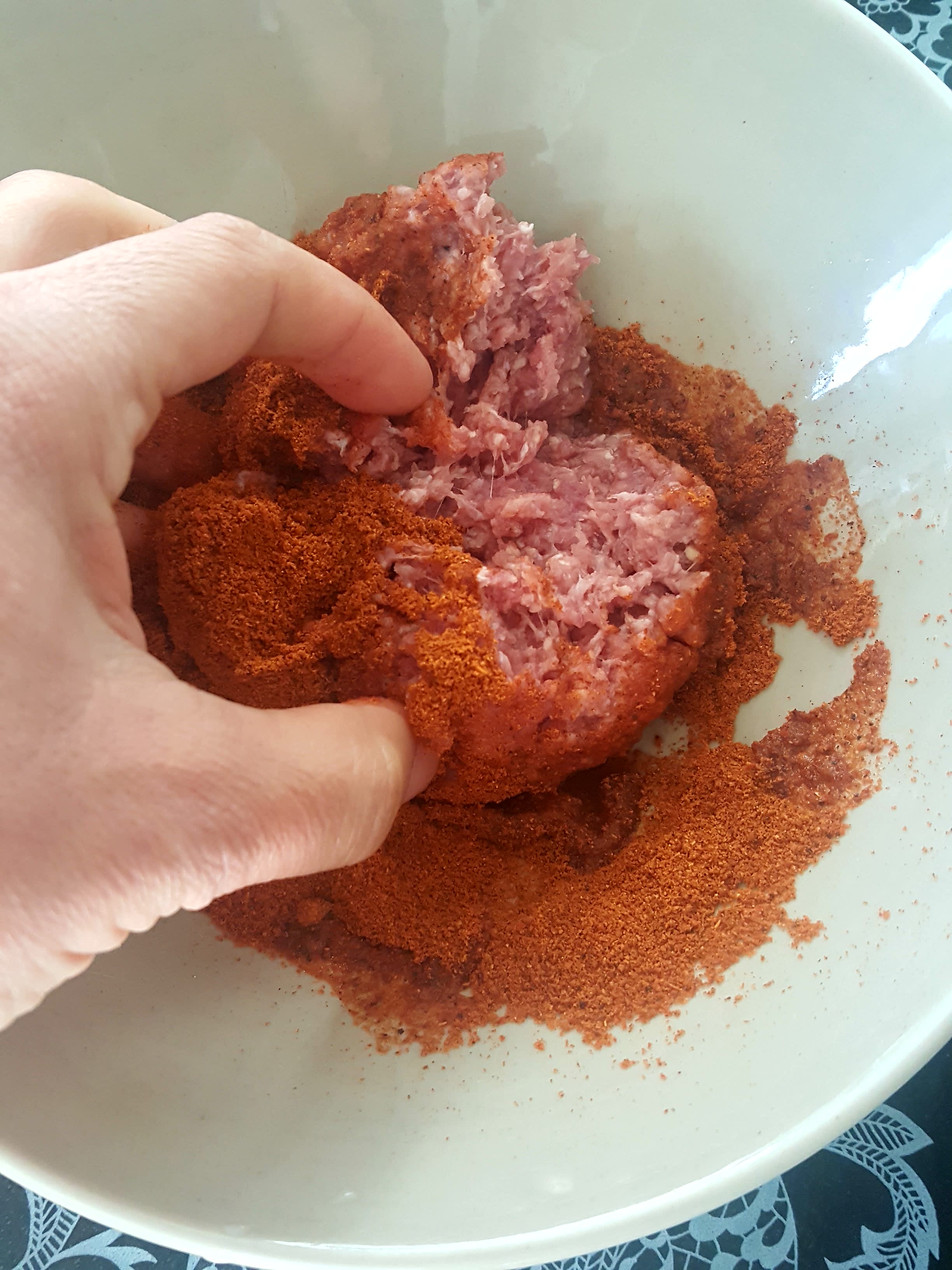
It turns out that Mano Y Metate Adobo powder is nearly all you need to season homemade chorizo. I’ve made it with beef, lamb, a mix of pork and beef, or tofu with great success. Extra firm non-silken tofu, squeezed of excess water, was surprisingly realistic when well fried and scrambled into eggs.

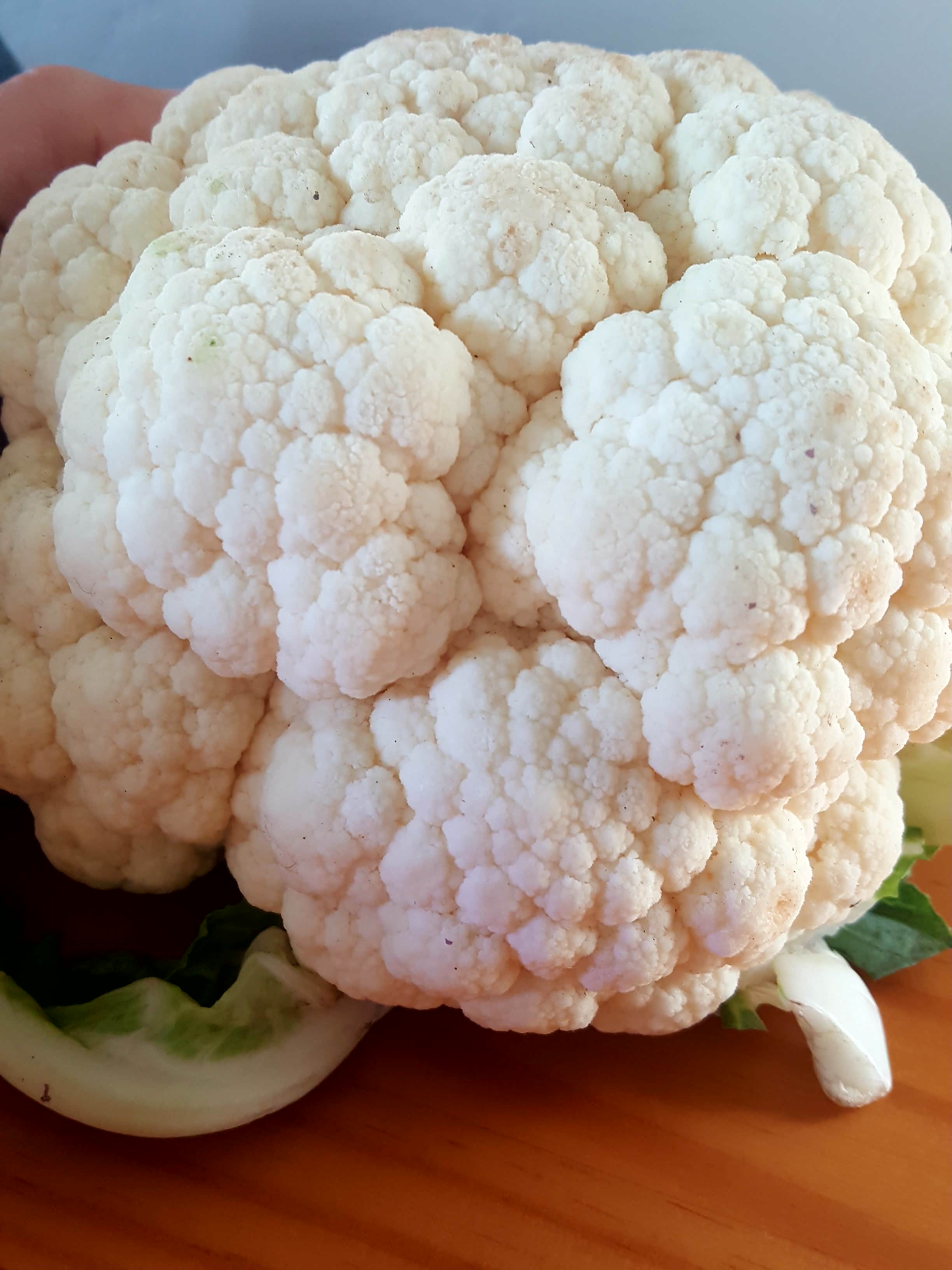
But I recently heard of someone making chorizo out of cauliflower, and sure enough, a quick internet search turned up plenty of variations. Cooks added all manner of creative ingredients with cauliflower to simulate a meaty taste and texture. I happened to have a huge beautiful head of cauliflower from Tucson CSA/Crooked Sky Farms, so I simply substituted cauliflower for raw meat to start. YUM! While searching, I also found a dozen places to substitute cauliflower for other traditional ingredients. Potatoes, wheat, rice, look out!

The following measurements are strictly to taste, and you can always spike with some crushed chiltepin or hot crushed red chile.

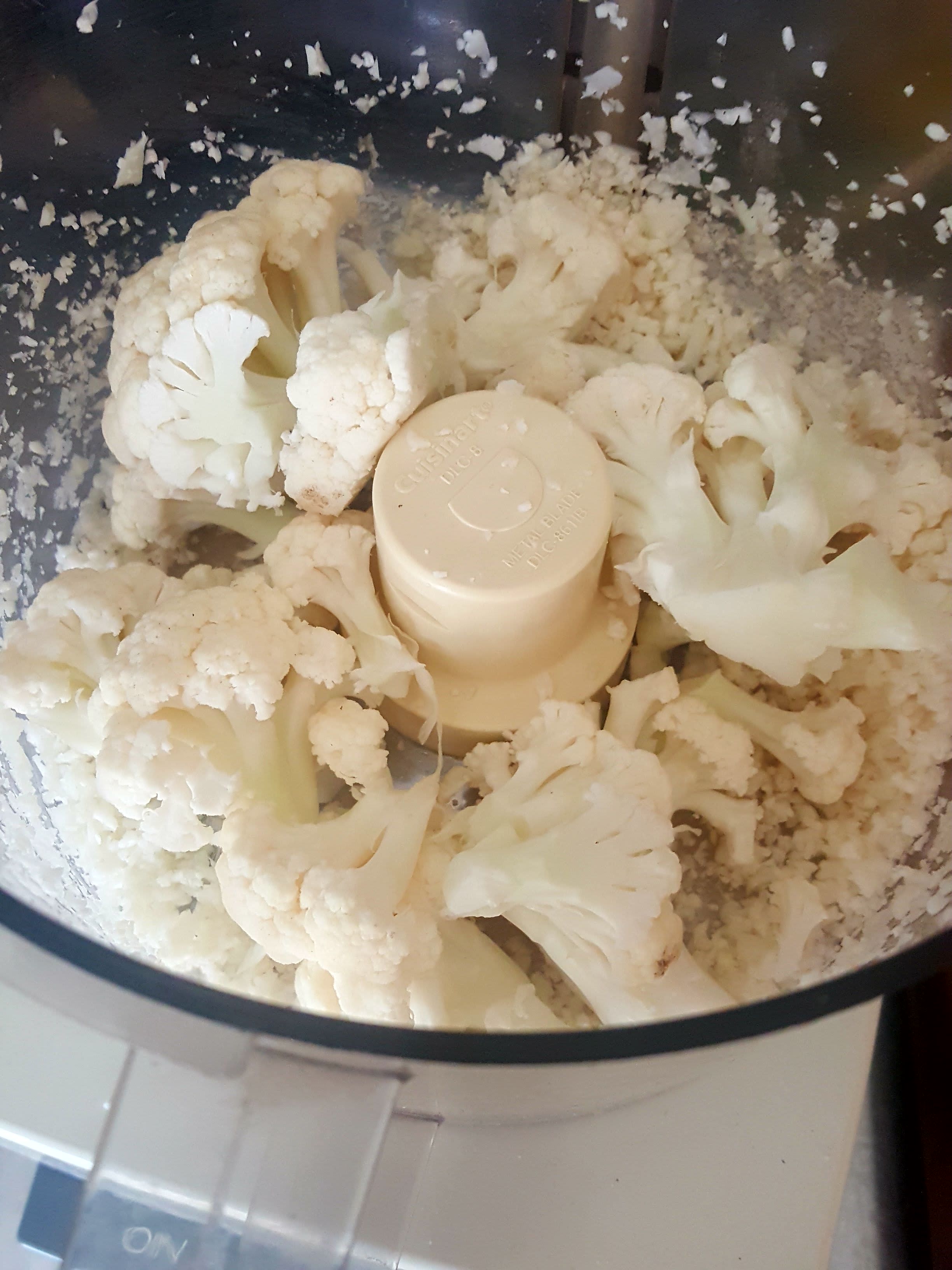
I put about half a pound of ground beef with a tin of Adobo powder and two teaspoons of vinegar. Yes, the whole tin. If you use less, it could be bland. I did the same with a cup of (packed) cauliflower I had minced in the food processor.

If possible, marinate in the refrigerator for a couple days.

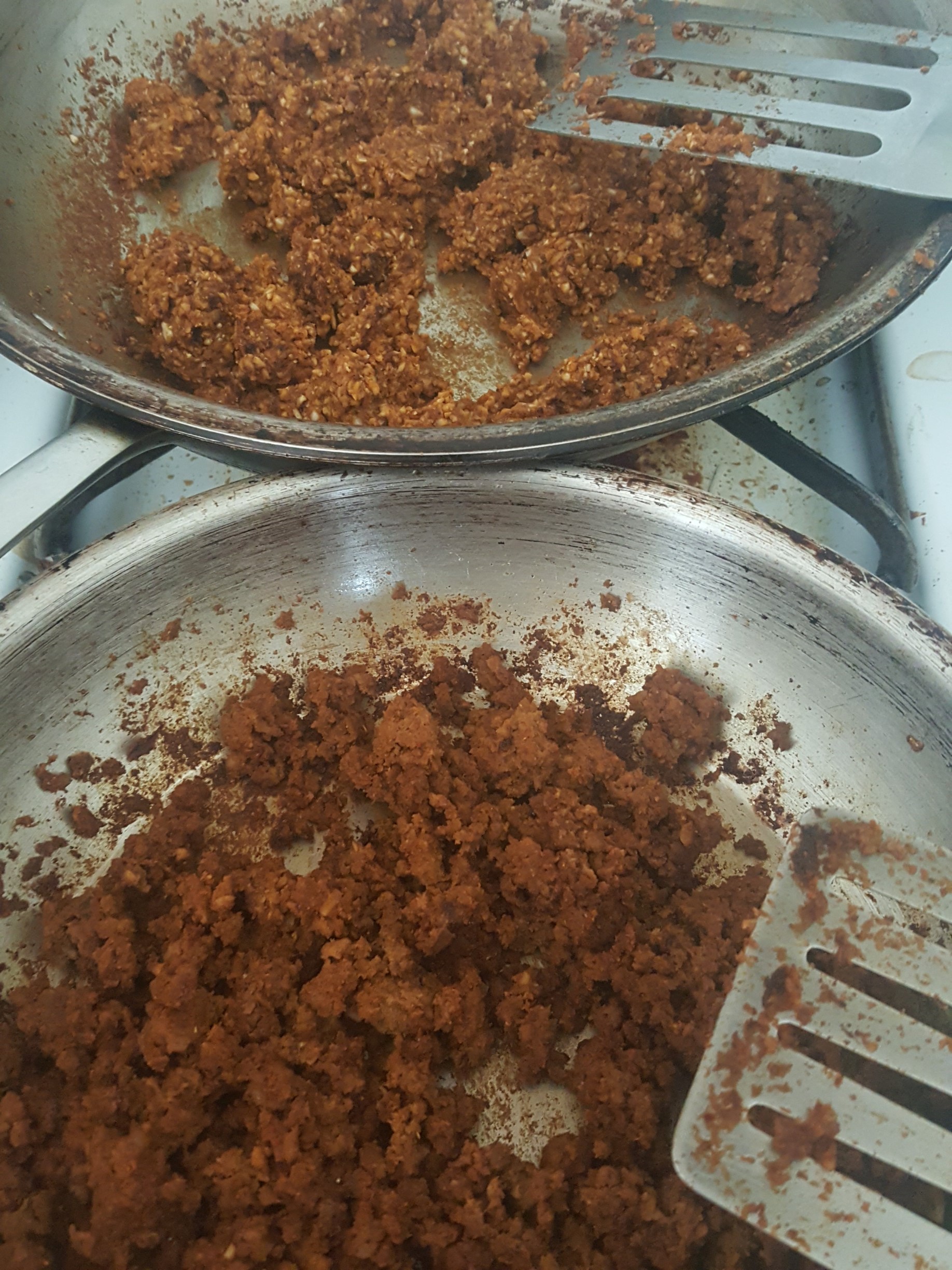
Then fry in a skillet until brown. The cauliflower needed quite a bit of oil to brown, the beef none. Salt to taste.

Then I heaped the cauliflower chorizo on a bean tostada, and garnished with cilantro and I’itois green onion. I’ll be serving that at a vegetarian potluck very soon!

For a Spicy Solstice….

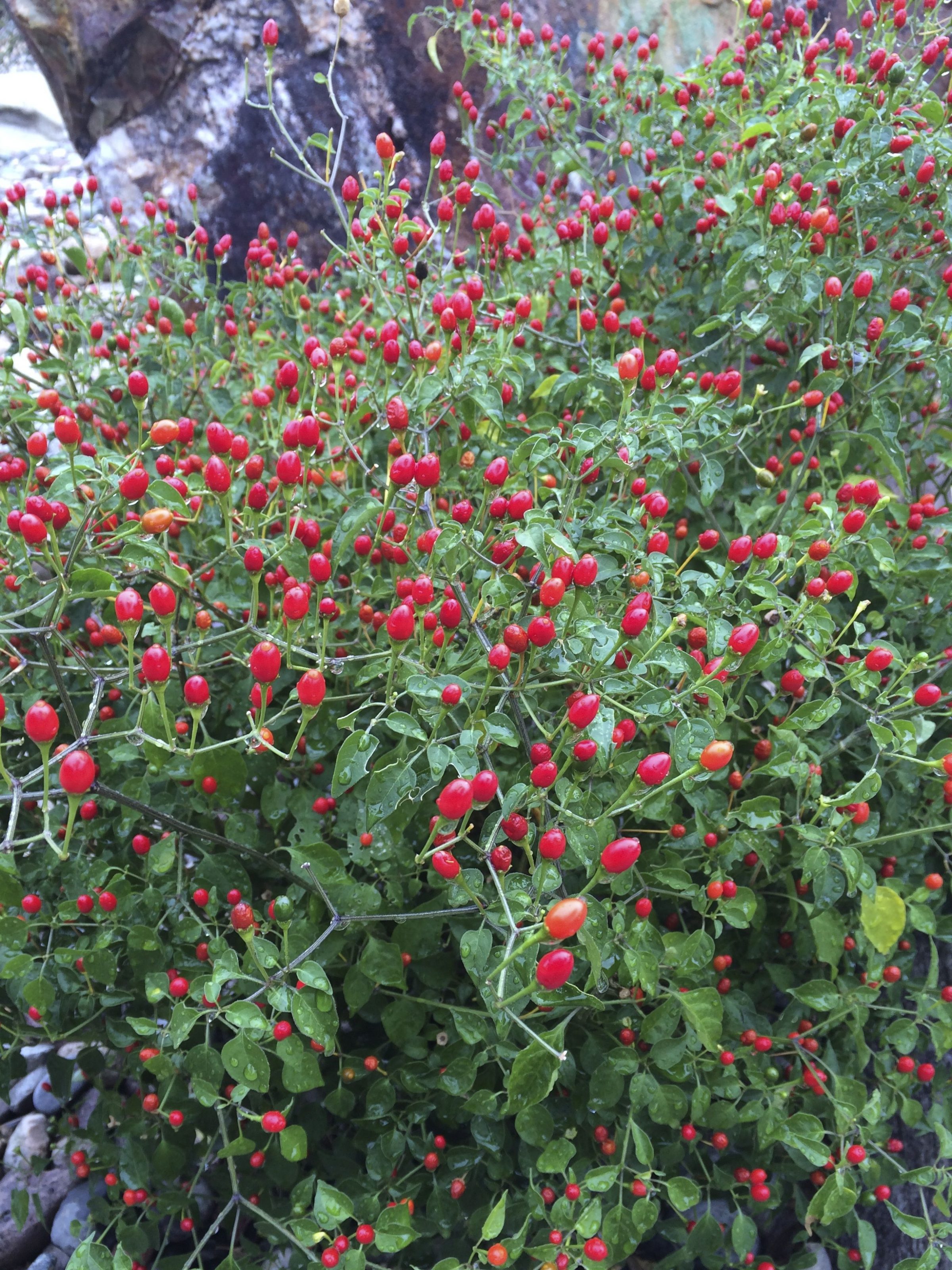
Chiltepin pepper from the wild, growing at Tohono Chul Park (Burgess photo)

Chiltepin pepper plant, originally from the wild, growing in the Tohono Chul Park landscape (Burgess photo)

It’s chile time in Baja Arizona!  The local goodness of our Sonoran Desert foods can assert itself tastefully—yea, vehemently!—into other imported cuisines. Tia Marta here to share a wonderful new wrinkle to celebrate this holiday season, by wedding the local “vehemence” of our chiltepin pepper with an imported tradition.

In decades since the 1940s, industrial ag and interstate grocery service have tried to make Baja Arizona into a food colony (but we are tastefully fighting back). Fossil fuels transport outside traditions to us that we do cherish and that help keep families together, like the many food traditions we celebrate at Tucson Meet Yourself in October each year.  At the top of the import list for Yuletide is one borrowed from East-coast First Nations. (See Renewing America’s Food Traditions by Gary Paul Nabhan, UA Press, for more.) This imported gift from Native People of Southern New England and coastal New Jersey bogs that I’m referring to for holiday feasts is naturally the cranberry. Thank Goodness for trade routes!

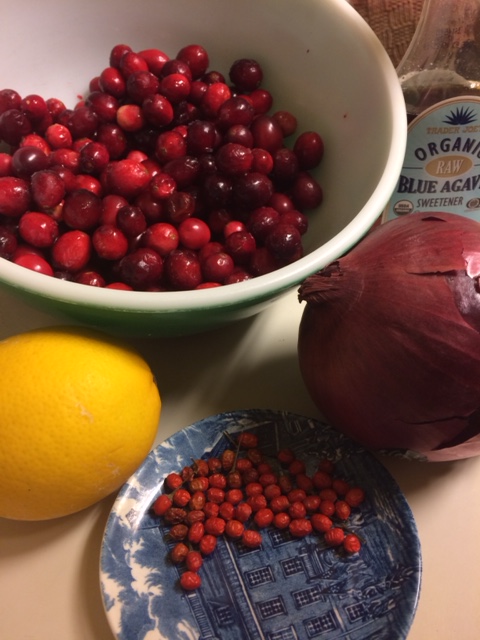
Ingredients for Chiltepin-Cranberry Relish--some local, some transported

Ingredients for Chiltepin-Cranberry Relish–my own Meyer lemon and chiltepines, plus transported cranberries, agave nectar, and red onion

Local and import come together sensationally in my recipe for a raw, vegan Chiltepin-Craberry Relish.
Yes, it is picante, sweet and tangy—and delicious! It was inspired by amazing cook and baker Cindy Burson of Country Harvest who won People’s Choice at a fair with her version. (Cindy’s Southwest treats can be enjoyed at Sunday’s Rillito Farmers Market and Wednesday’s Green Valley Farmers Market.)

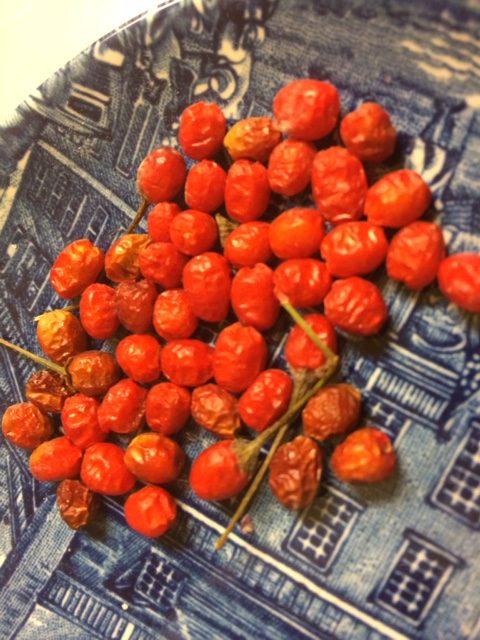
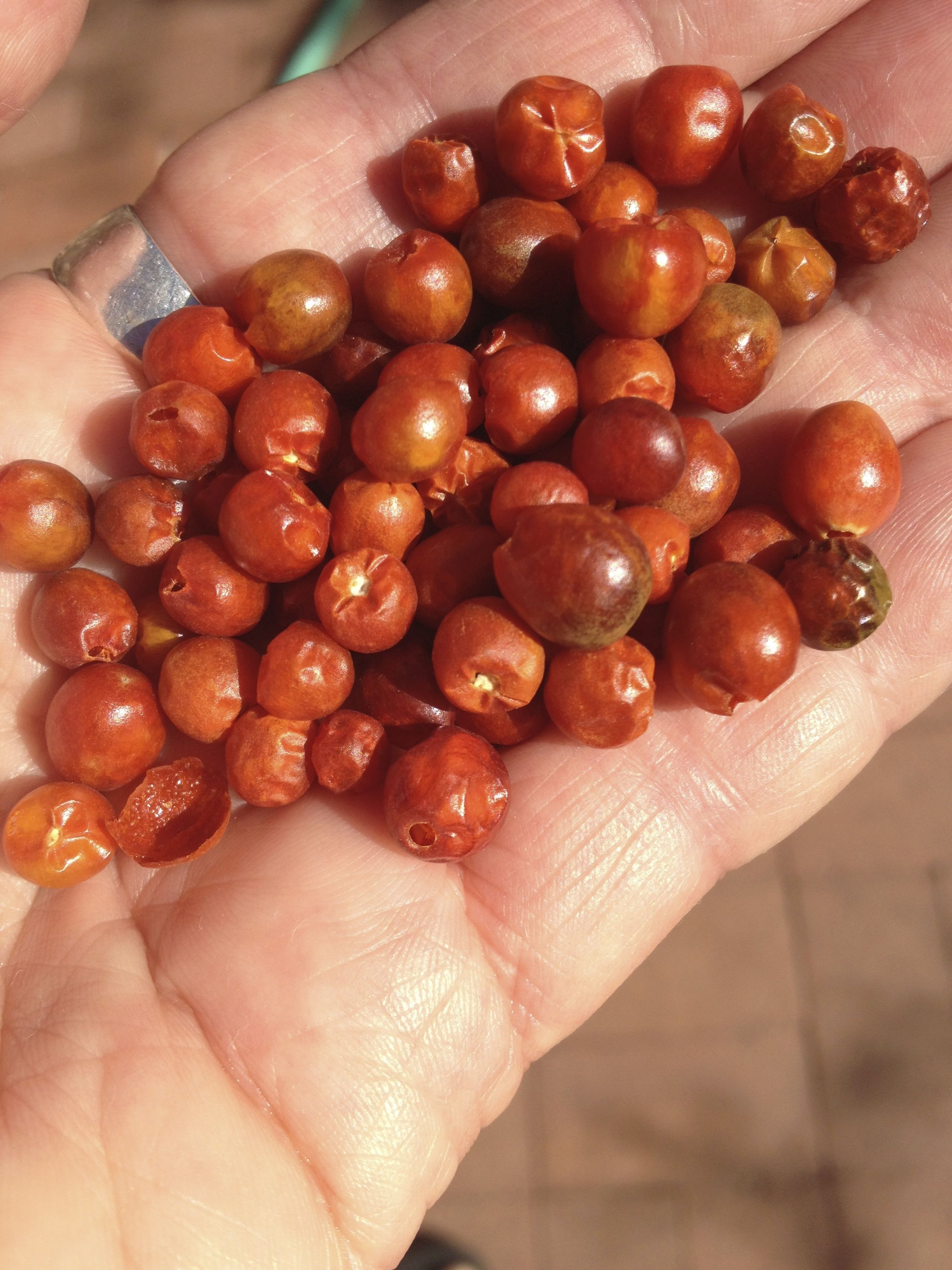
Dried chiltepines for the relish--They make a great snack, great flavoring for Tom's Mix SW Heirloom Beans, and super in any salsa

Dried chiltepines to use in the cranberry relish–They also make a great snack, great flavoring for Tom’s Mix SW Heirloom Beans, and super in any salsa.

Muff’s Fresh and Easy CHILTEPIN-CRANBERRY RELISH RECIPE

Ingredients:

3 cups fresh organic cranberries, washed

1/2 medium red onion, diced

8-12 dry chiltepin peppers for picante palettes, depending on “heat” desired (4-6 chiltepines for less picante).  Start with less, then add more later if higher “vehemence” is needed.

1/2 cup local raw honey or agave nectar

2 Tbsps lemon or lime juice

1-2 Tbsps tangerine rind or Meyer lemon rind, chopped

1/4 cup fresh cilantro, chopped (optional ingredient)

Directions:

In a food processor, pulse all the fresh ingredients and juice at least 6 to 8 times, keeping the texture coarse.

Chill in a covered bowl in refrigerator overnight or at least 8 hours, for time to meld the flavors.

Stir the mixture;  do a taste test.  Add more honey or agave nectar, or chiltepines as needed for the sweet toote or picante palette.

Spicy Chiltepin-Cranberry Relish can keep its freshness, flavor, and color in the frig for at least a week.

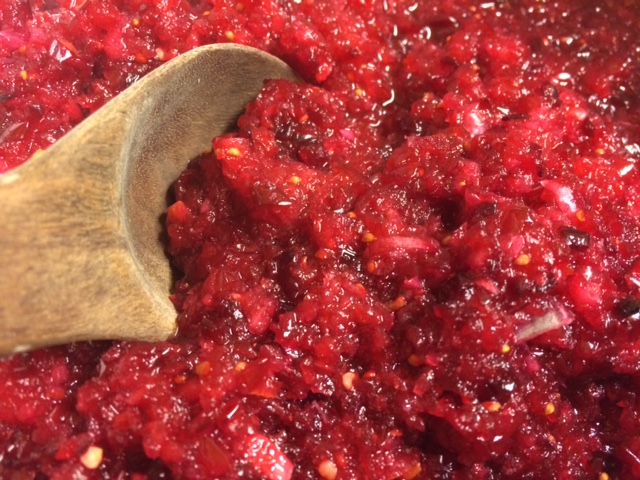
Note texture of fresh relish--not too fine. (Tarahumara and Mayo spoons like this for serving can be found at the NativeSeeds/SEARCH store)

Note texture of fresh relish–not too fine. (Tarahumara and Mayo spoons like this for serving can be found at the NativeSeeds/SEARCH store)

Even the conservative palette will relish this holiday condiment—perfect for Christmas dinner or festive smorgasbords. Chiltepin adds a glorious kick to the sweet tart of cranberries, with a non-lingering wave of excitement to the tastebuds! You will find Chiltepin-Cranberry Relish as a fine complement not only to turkey or ham. Try it with bagels and cream cheese. Use it as a savory side, or with a salad, on any holiday platter. It’s a celebration of East meeting Southwest—Enjoy!

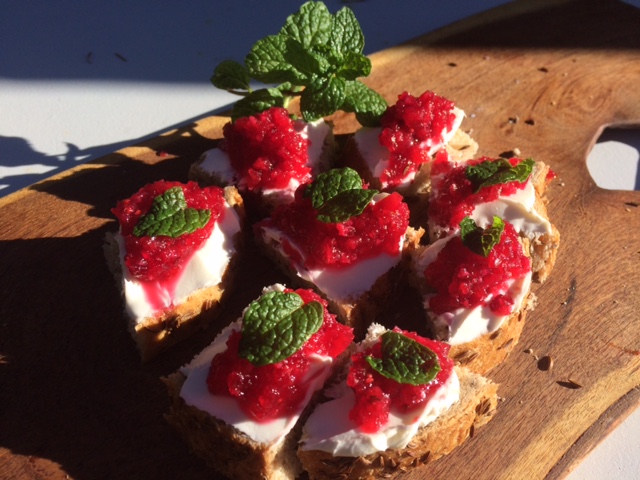
Here I've used Chiltepin-Cranberry Relish served with creamcheese-on-rye canapés

Here I’ve used Spicy Chiltepin-Cranberry Relish served as creamcheese-on-rye canapés

We harvest chiltepines one by one as we need them, from our own chiltepin plants. Birds appreciate our chiltepin bushes as much as we do! Some of our plants I propagated from wild chiltepines in Arispe, Sonora, and Baboquivari. Some, purchased at Tohono Chul Park’s Chiles and Chocolate event, were propagated by experts Charles DiConcini and blog sister Linda McKittrick from Sierra Madrean plants. To buy healthy, productive plants for your own garden, be sure to put the NativeSeeds/SEARCH Valentine’s Plant Sale on your calendar for February.

Fresh-picked mature chiltepin peppers--Caution: do not rub eyes after picking chiltepines!

Fresh-picked mature chiltepin peppers–Caution: do not rub eyes after picking chiltepines!

To source fresh dried chiltepin peppers for cooking and eating, visit the NativeSeeds/SEARCH store (3061 N Campbell Ave, Tucson or http://www.nativeseeds.org) or stop by Cindy’s Country Harvest booth at Rillito Farmers Market Sunday.  You can see live chiltepin plants in fruit at Tohono Chul Park and at Mission Garden in Tucson.

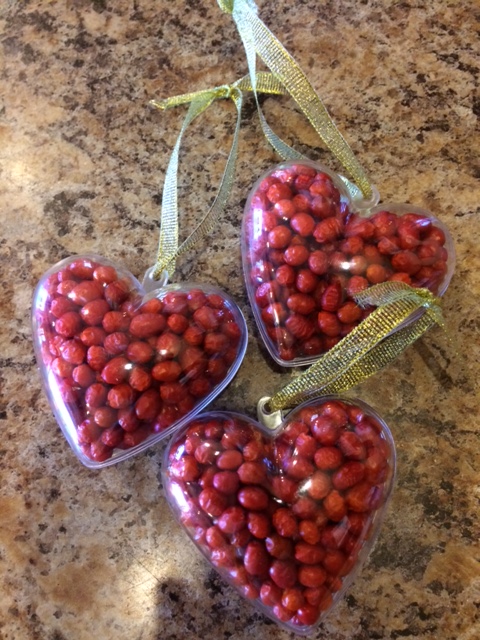
Chiltepin-filled Heart Ornaments available at NativeSeeds/SEARCH Store for holiday decor and spice into the New Year!

Chiltepin-filled Heart Ornaments are available at NativeSeeds/SEARCH Store for holiday decor and spice into the New Year!

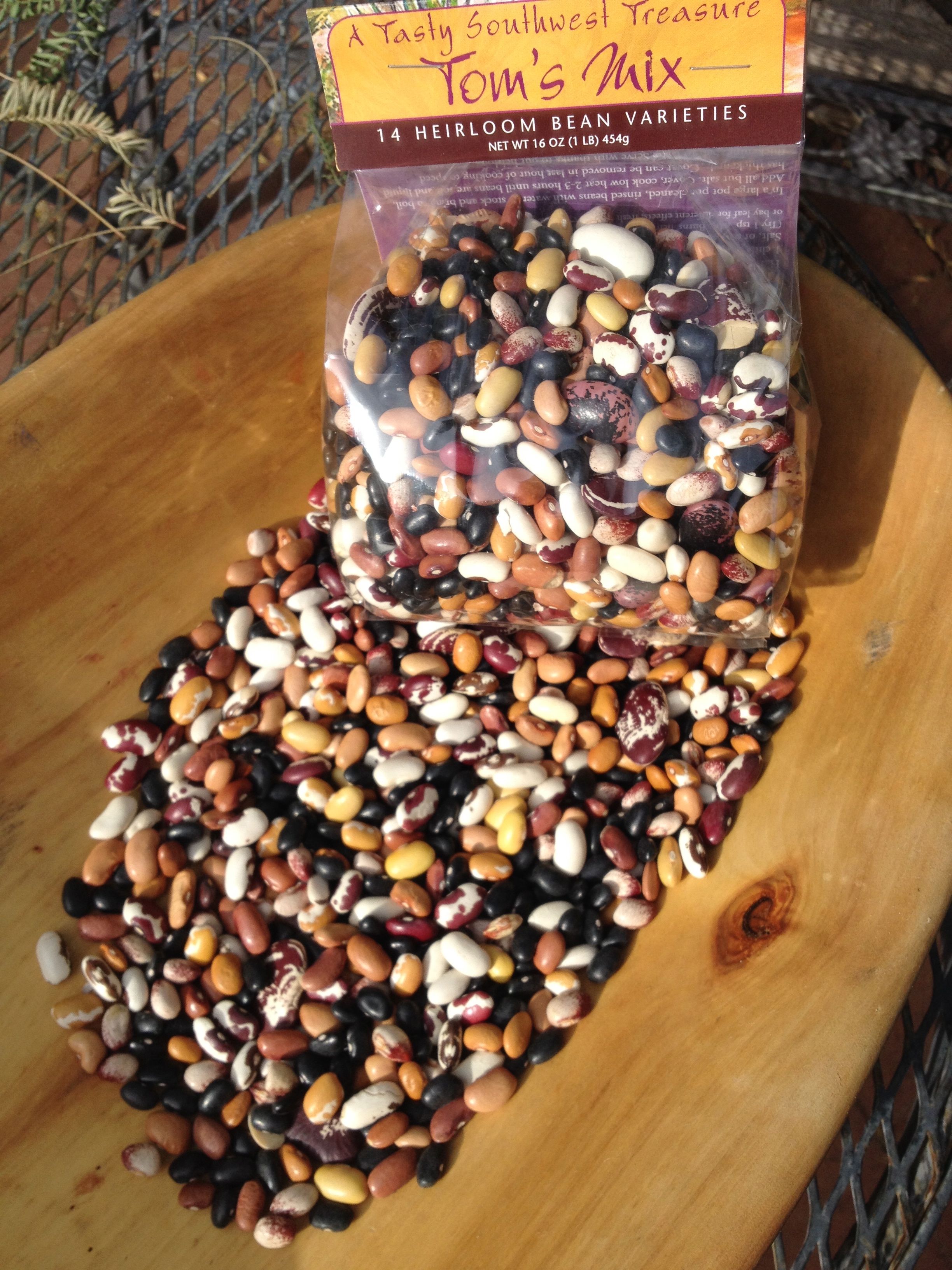
Another great idea:  A couple of chiltepines added to Southwest Heirloom Bean Tom’s Mix makes it a perfect potluck crowd-pleaser. You can find SW Heirloom Bean Tom’s Mix at NativeSeeds/SEARCH, or for online gifts at http://www.flordemayoarts.com.

Tom's Mix 14-Heirloom Bean Mix makes a perfect gift from the Southwest--made spicy with chiltepines! Find them at NativeSeeds/SEARCH store, Tohono Chul Museum Shop, Wiwpul Du'ag at San Xavier Plaza, and the UNICEF Store in Monterrey Village, Tucson; or online www.flordemayoarts.com

Tom’s Mix 14-Heirloom Bean Mix makes a perfect gift from the Southwest–made spicy with chiltepines! Find them at Rillito Sunday Farmers Market, NativeSeeds/SEARCH store, Tohono Chul Museum Shop, Wiwpul Du’ag at San Xavier Plaza, and the UNICEF Store in Monterrey Village, Tucson; or online http://www.flordemayoarts.com