An ARTISTIC Harvest of Desert Foods

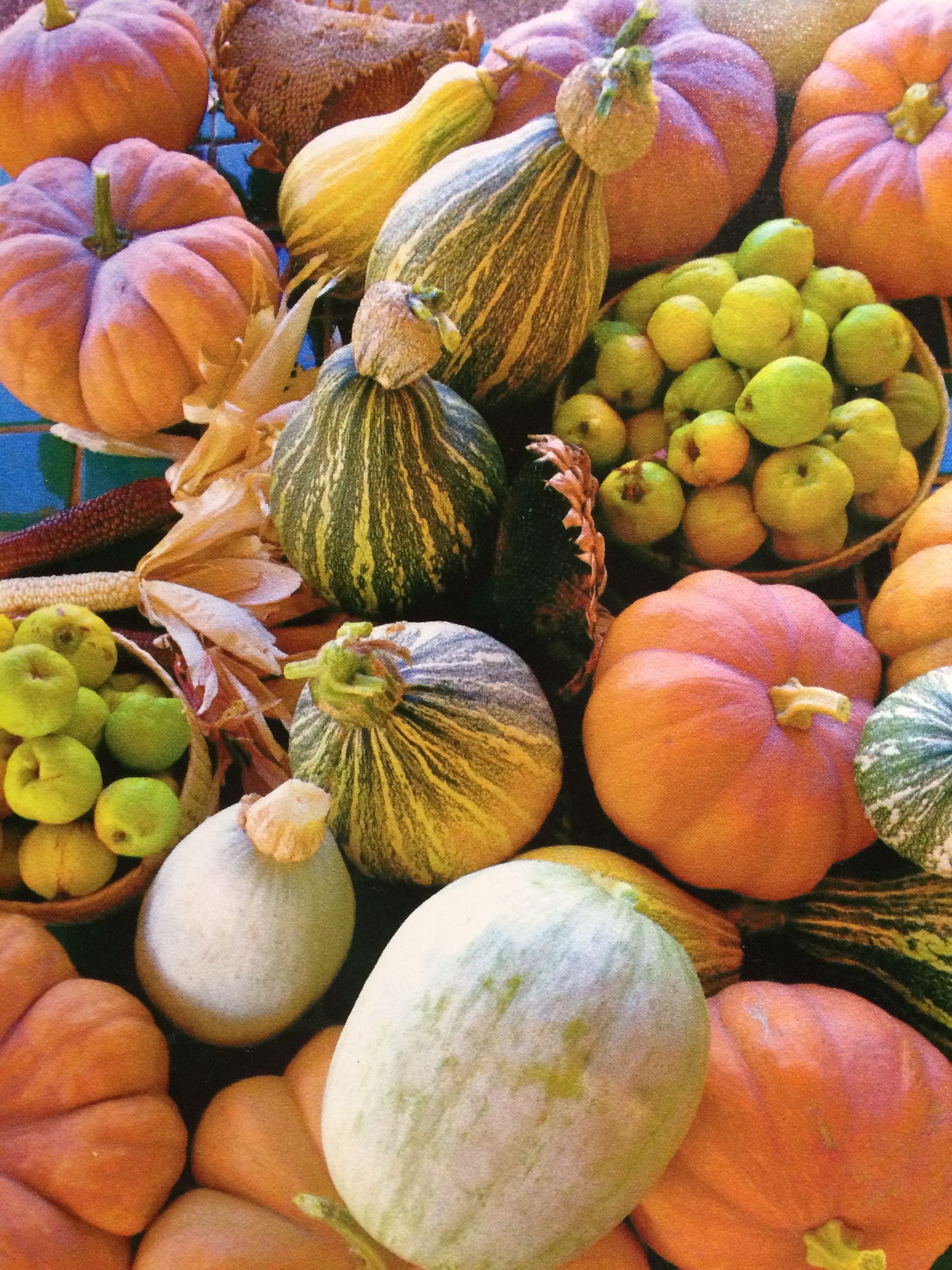
Living sculptures and a study in color–the fall harvest at Mission Garden, Tucson–Tohono O’odham Ha:l,   NSS Mayo Blusher, Magdalena Big Cheese pumpkin, membrillo fruit, T.O 60-day corn and chapalote corn (MissionGarden photo)

You salivate.  Or you catch your breath with it’s beauty!  Maybe the trigger is your taste-buds’ association with the truly GOOD foods from our Sonoran Desert… Or maybe the esthetic forms and colors of these foods clobber an “appreciation center” in our soul… We don’t even have to taste them–We react!

In Georgia O’Keefe-style, up close and intimate with heirloom beans–“Boyd’s Beauties” original watercolor by MABurgess
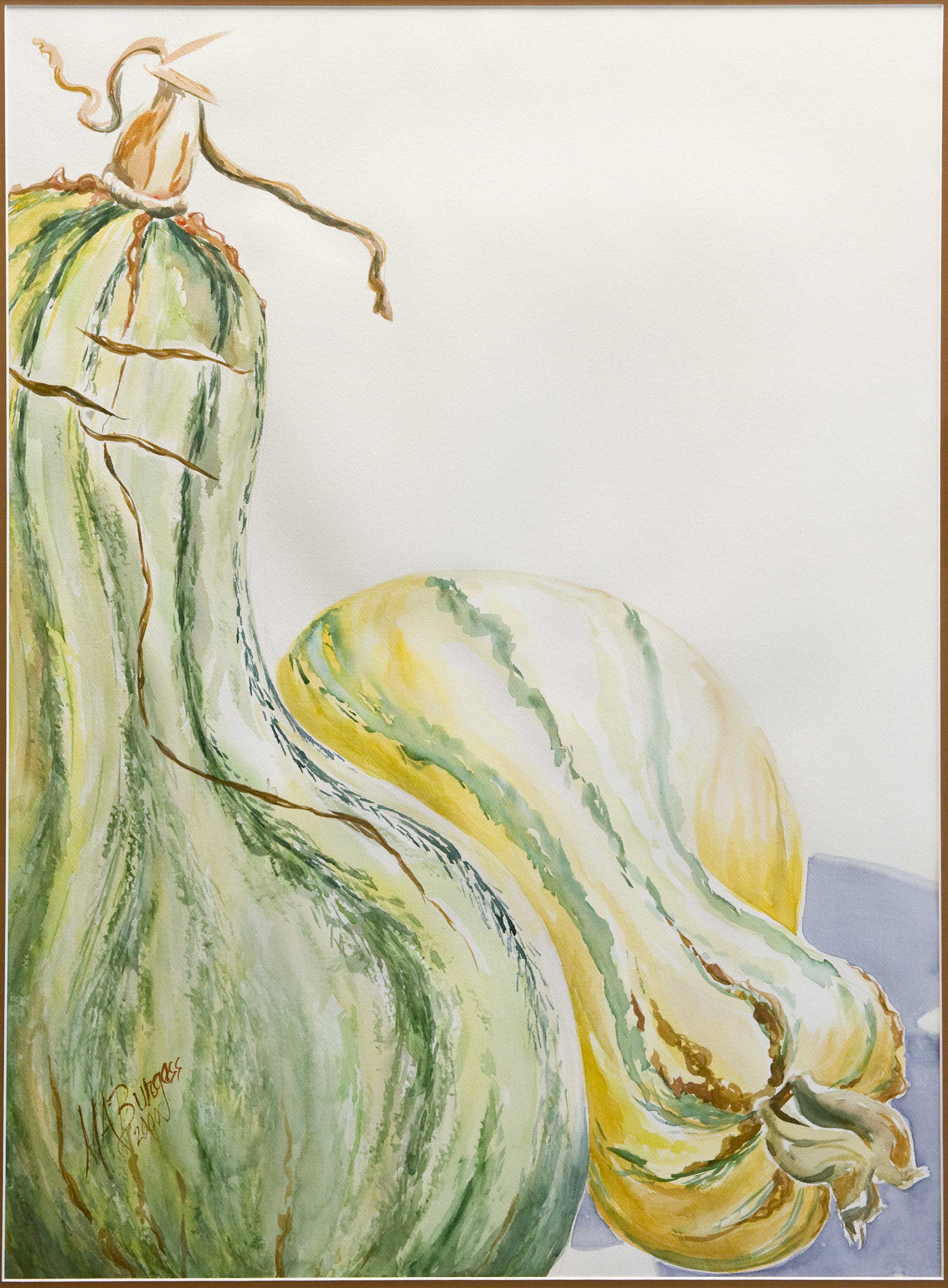
Shapely Dine Cushaw –a big-as-life watercolor by MA Burgess

For me,  just one look at a harvest of desert crops makes me want to PAINT it!  Over the years I’ve grown out many seeds for NativeSeeds/SEARCH (that admirable Southwest seed-conservation group saving our precious food-DNA for the future).  With each harvest–before I extract the seeds or eat the wonderful fruit–I’m always blown away by the sheer colors, patterns, sensuousness, or sculptural shape that each seedhead, each pumpkin, each pod, kernel, or juicy berry displays.  And the kicker is–they are oh-so-transient!  I am compelled to document each, capturing its esthetic essence pronto before it proceeds to its higher purpose, gastronomic and nutritional.

Tia Marta here, inviting you to come see some of my artistic creations depicting glorious desert foods and traditional cultural landscapes.   Next weekend–Saturday and Sunday, October 21-22, is Tucson’s WestSide ArtTrails OPEN STUDIO event!  You can see artworks in action (along with some inspiring fruits of the desert that inspire the art).  Check out http://www.ArtTrails.org and click on the artist’s name (Martha Burgess) for directions.  Join us 10am-4pm either day.
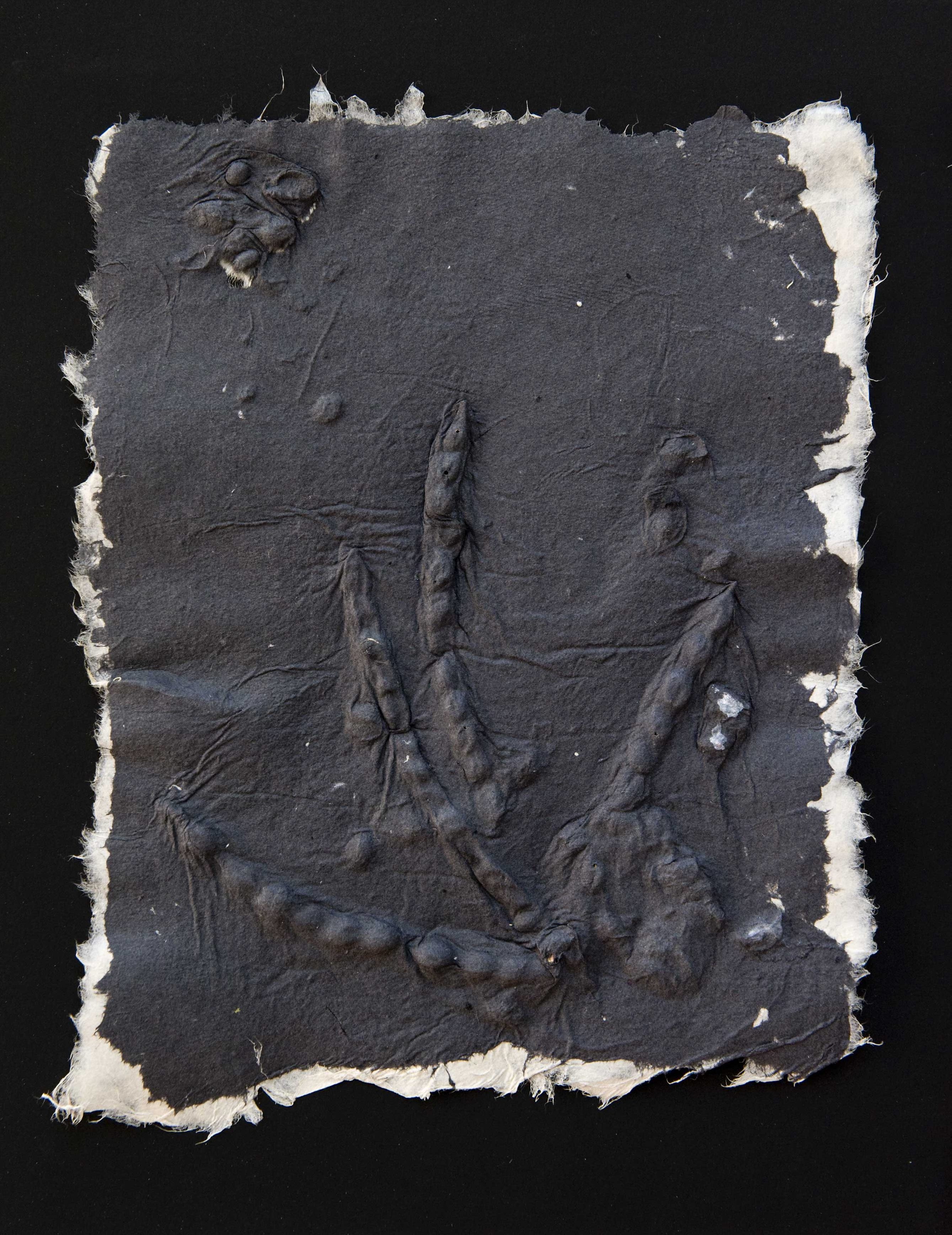
Velvet Mesquite’s Lasting Impressions–Imbedded handmade paper sculpture by MABurgess

In addition, at our OPEN STUDIO TOUR you will see a retrospective of Virginia Ames’ lifetime of diverse creative arts, including pastels, needlework, collographs and silkscreen, with her own interpretations of traditional foods and food-plants.
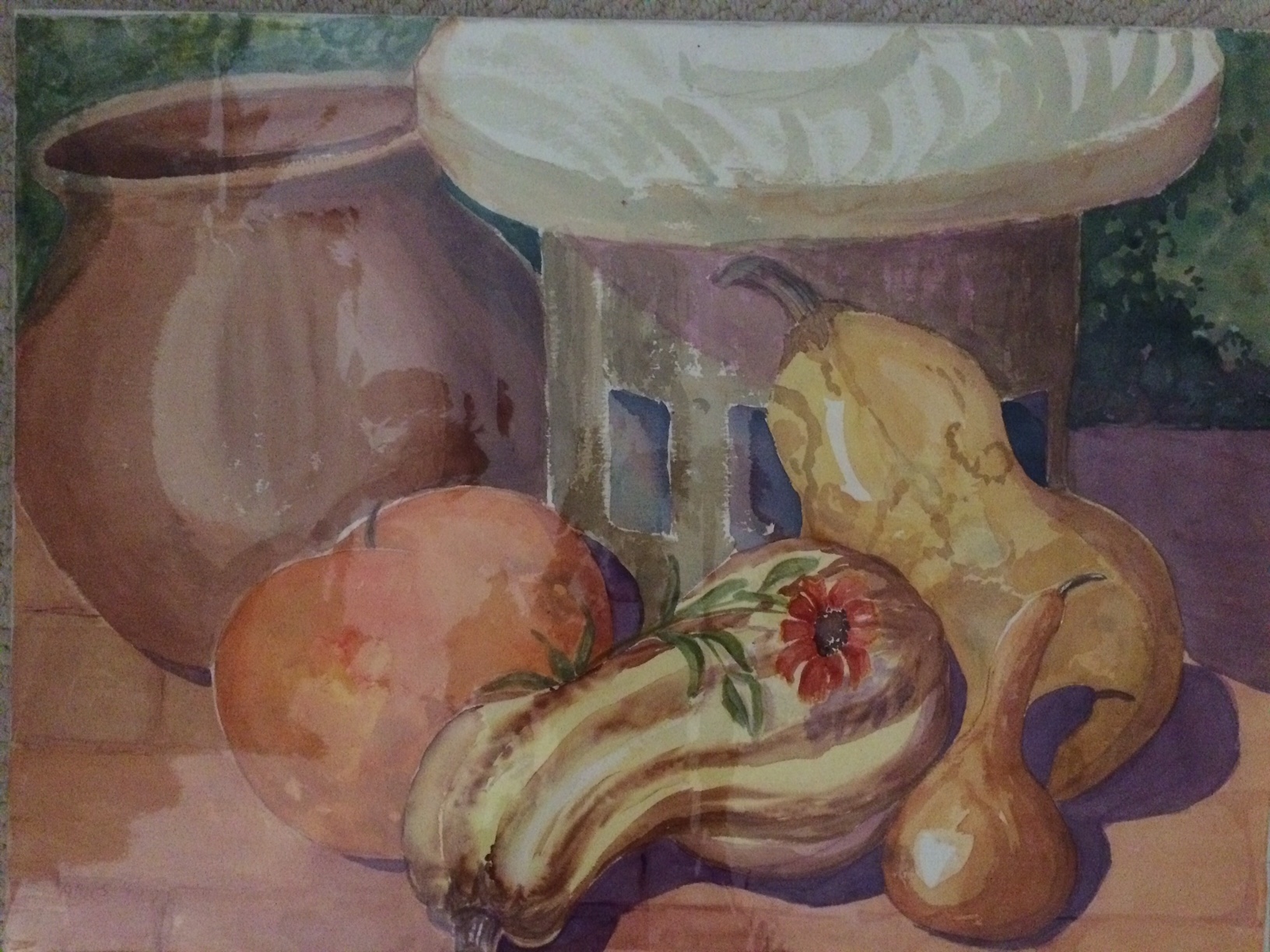
Tohono O’odham Autumn Harvest–large-scale watercolor by Virginia Ames
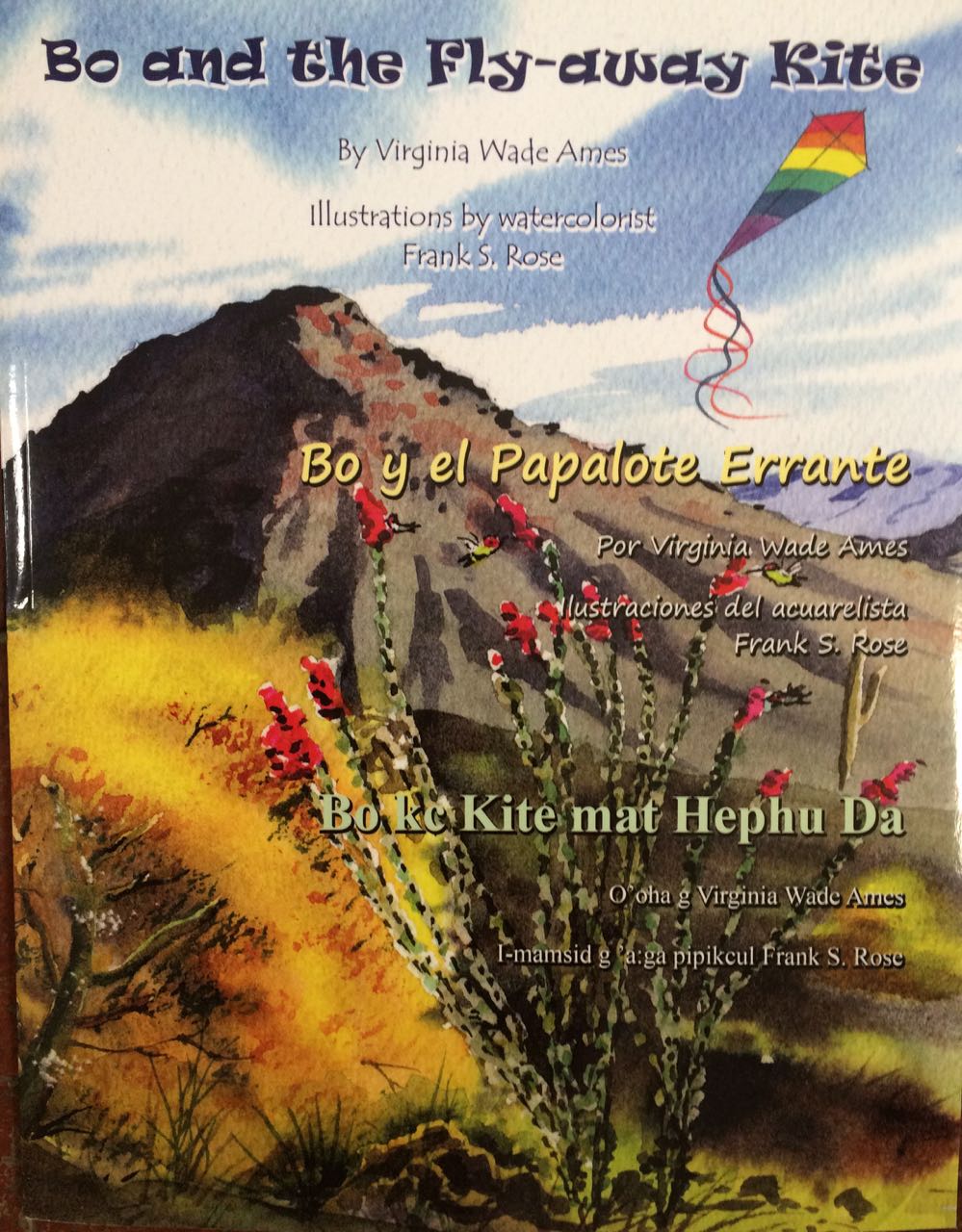
Cover of new children’s adventure picture-book of the Sonoran Desert Borderlands (in 3 languages); by Virginia Ames, illustrated by Frank S. Rose, and edited by Martha Burgess

Her children’s book about the saguaro in the Sonoran Desert Borderlands, entitled Bo and the Fly-away Kite will be available too.  It is illustrated by Tucson artist, plant aficionado and author Frank S. Rose, with the illustrator in person 1:30-4pm to sign copies and discuss desert plants.

Nature photography by J.Rod Mondt (WildDesertPhotography) will enhance our exhibit with his wildlife images, especially featuring our precious pollinators.
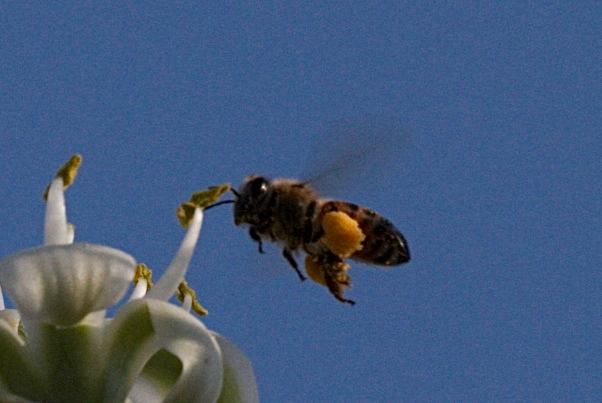
Honeybee heavy with pollen–photo by JRod Mondt

And only at the OPEN STUDIO of Martha Burgess, October 21 or 22 can you try tastes of the Native foods that you see in our artwork (from recipes you may find in earlier posts of this very blog).

Find more samples of our artwork at our website http://www.flordemayoarts.com, also at Tohono Chul Park Museum Shop and at the NativeSeeds/SEARCH Store (3061 N Campbell Ave, Tucson).  “NOW PLAYING” at the Tucson Jewish Community Center is an exhibit by the ArtTrails.org group of diverse WestSide artists–among them yours truly Tia Marta.  The public is invited to the reception at TJCC on Wednesday Oct.18, 6:30-8pm.  Virginia Wade Ames’ books can be found on Amazon.com searching by author.

Add to your fall-fun calendar:   Friday and Saturday, Oct.27-28–not to be missed- the wild and festive Chiles, Chocolate, and Day of the Dead celebration at Tohono Chul Park, 9-4 both days.  Flor de Mayo’s Native heirloom foods will be arrayed deliciously and artistically there for purchase.

Now–with 3 art events featuring my desert food images– first check out ArtTrails.org for details of our upcoming Open Studio Tour Oct 21-22, click on “Artists” and scroll to Martha Burgess for directions.  It will be truly a feast-for-the-eyes, a visual harvest a-plenty.  We’ll see you there!

Date Bars with Mesquite

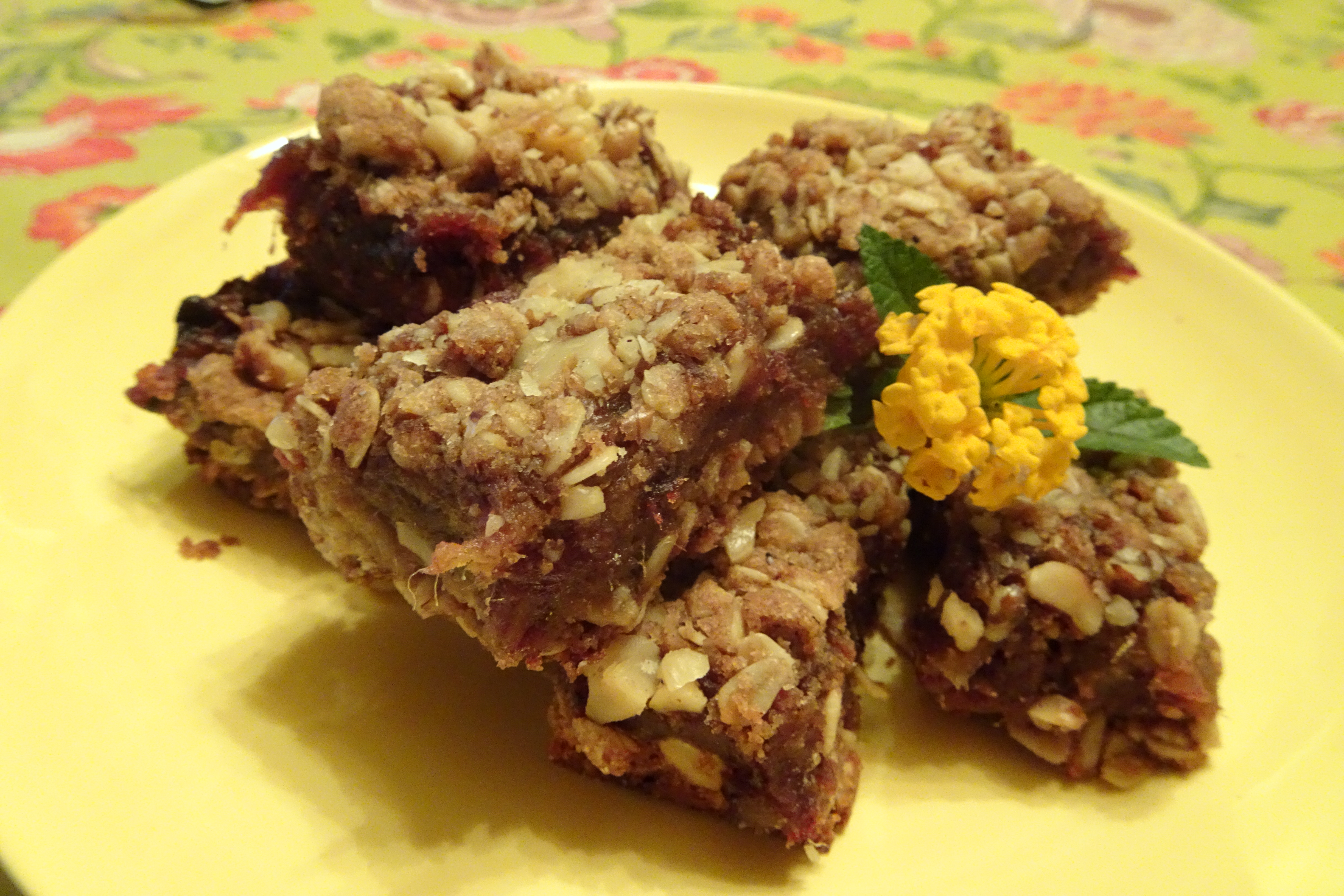
Mesquite meal, oats, and dates combine for a sweet and nutritious snack.

Now that the temperatures have dropped, we can once again turn on the oven to bake some goodies. Carolyn here today to talk about one of my favorite recipes. Because both dates and mesquite meal are quite sweet, you can cut way back on the sugar. My version cuts two-thirds of the sugar in the original recipe. Although you could actually completely leave out the sugar in the base, in baking at least a little sugar is needed to help with texture and browning. Adding the warming spices of fall make the bars special. I added some cardamom, because it is unusual in our culture, and a little cinnamon. If you happen to have some of Amy’s mole mixes, a tablespoon of one of those would add real punch.

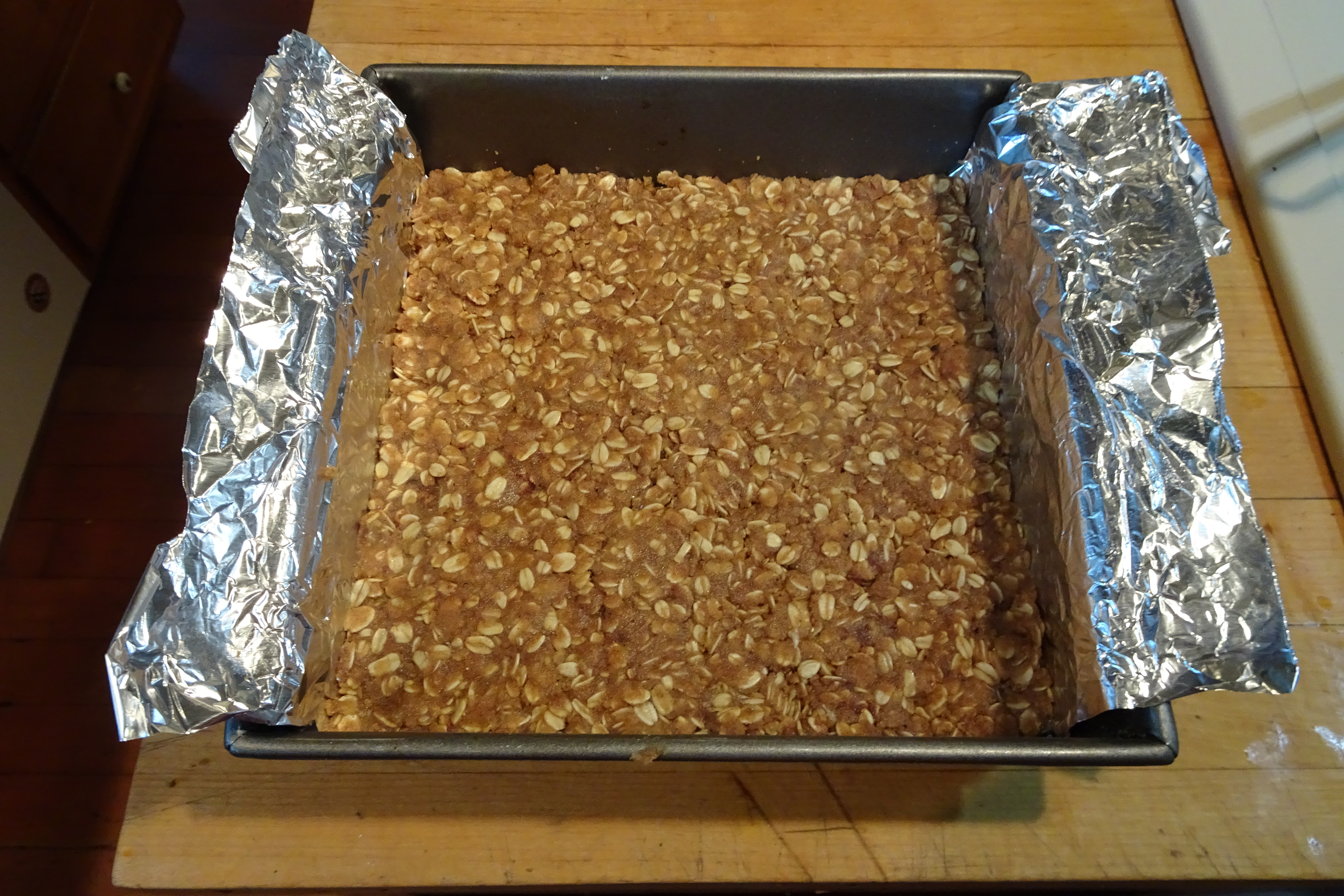
In order to make the finished date bars easy to remove from the pan, line the pan with foil or parchment paper with some wings on the sides to lift out the finished bars.  I hate it when I have to hack at bars to get them out of the pan.  Use a little more than half of the crumb mixture on the bottom; I figured I used about three-fifths.

Line the pan with paper or foil to help lift out the finished bars.

You will have plenty of time to cook the date filling while the base bakes. I was surprised how quickly the pieces of chopped dates softened into a smooth paste.

Dates and water cook quickly into a smooth paste.  Use low heat and stir frequently.


When you add the final layer of crumbs, you can add a sprinkling of nuts if your intended audience can eat them. Adjust the baking time by watching for the bars to brown around the edges. Let them cool

in the pan an hour or so before lifting them out with your paper or foil. I cut mine into 24 pieces. They could be even smaller.

Cut small pieces because the bars are quite rich.

I made these bars to take to a potluck. They would also be a good addition to a selection of Christmas cookies.


Ummm….delicious with a cup of coffee or tea.

Here’s the recipe:

Oatmeal date bars

1 1/2 cups rolled oats

1 cup whole wheat flour

½ cup mesquite meal

¾ teaspoon baking soda

¼ teaspoon salt

½ cup packed brown sugar

1 cup very soft butter

2 cups chopped dates (3/4 pound)

1 cup water

1 teaspoon lemon juice or 1 tablespoon orange juice concentrate

1 tablespoon grated lemon or orange rind (optional)

¼ cup chopped walnuts or pecans (optional)

Preheat oven to 350 degrees F (175 degrees C). Line a 9-inch baking pan with foil or parchment paper with an inch or two extending over the edge. Spray with cooking spray or spread a tiny bit of oil over the lining.

In a large bowl, combine oats, whole wheat flour, mesquite meal, salt, brown sugar, and baking soda. Add butter and mix until crumbly. Press a little more than half of the mixture into the bottom of a 9- inch square baking pan. Bake 15 minutes.

While the crust is baking combine dates and water in a small saucepan over medium heat.. Bring to a simmerl, and cook until thickened, probably around 5 minutes. Stir in lemon juice or orange juice concentrate, and remove from heat.

Remove crust from oven when it is beginning to brown at the edges, spread the filling over the base, and pat the remaining crumb mixture on top. Sprinkle with chopped nuts if using. Bake for 20 to 25 minutes in preheated oven, or until top is lightly toasted. Cool before lifting from the pan. Cut into small pieces (I did 24) as these are very rich.

_________________________________

Carolyn Niethammer writes about the foods of the Southwest, both wild and domesticated.  Find her books at her website, at Native Seeds/SEARCH, at at on-line booksellers.


Huevos Rancheros with Mole


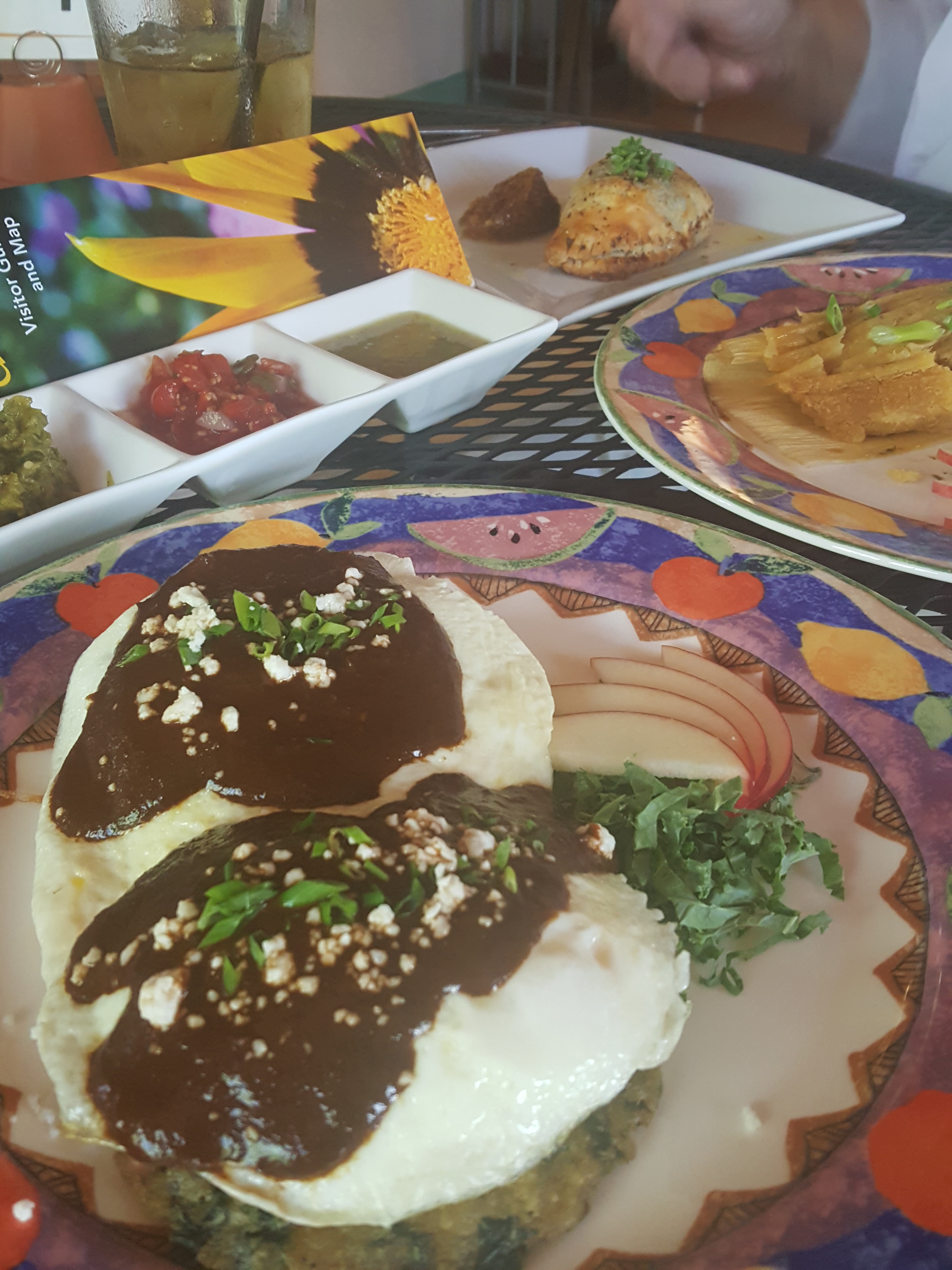
Hello, Amy here, full from a hardy brunch. Earlier this week my friend invited me to lunch at the Tucson Botanical Garden, where we enjoyed a lamb empanada, calabacitas tamal and huevos rancheros made with mole, black tepary beans and queso fresco. It was ALL soooo good, but I think you can guess my favorite!
Café Botanica is delicious, adorable (the old adobe Friends’ House, inside or on the patio) has really nice staff, and is open 8am-2pm daily. You do have to pay admission or be a member to get to the café, so we wandered, looking at plants in the shade and a gallery or two after our meal. Perfect afternoon.

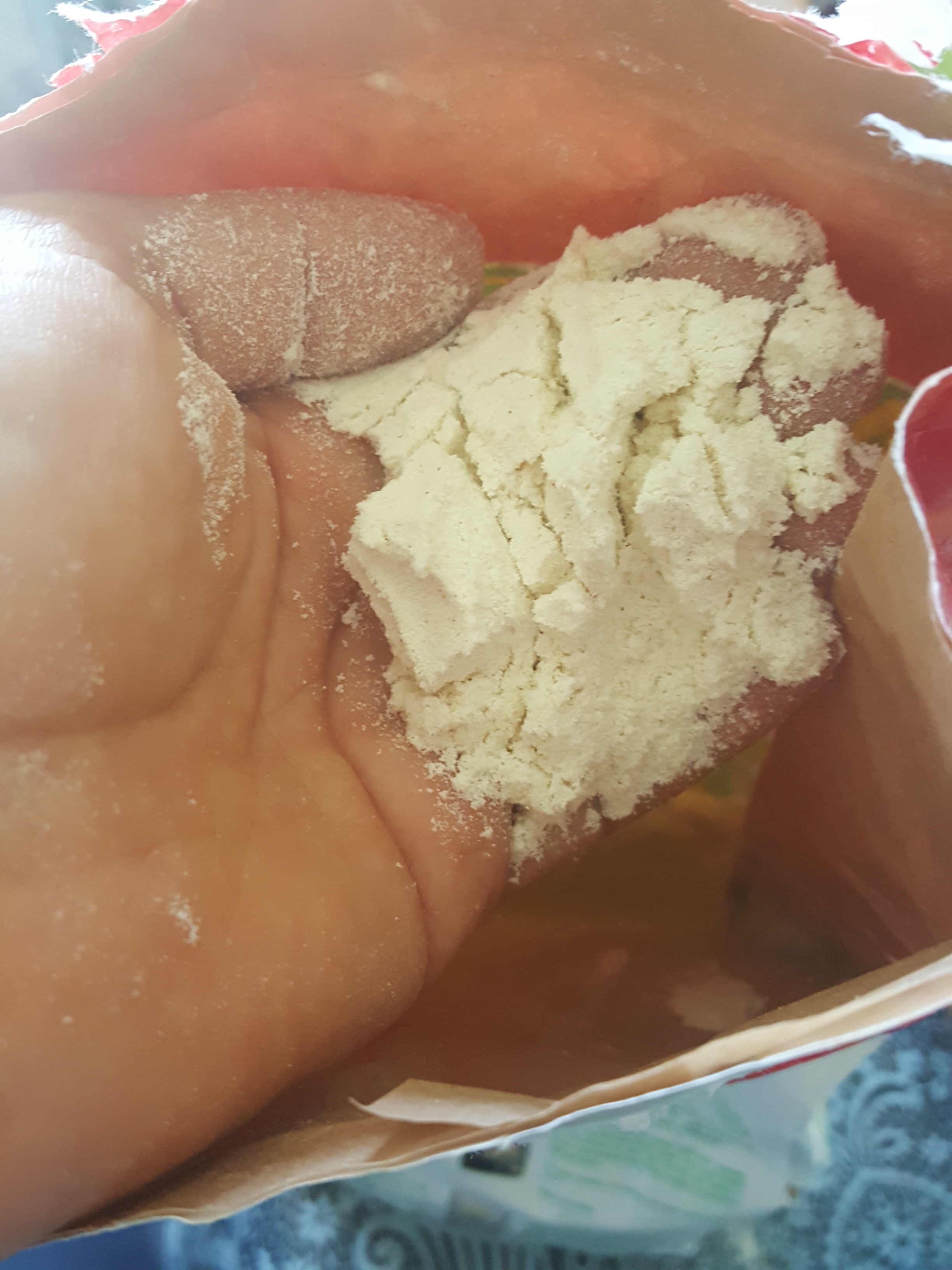
I had never heard of huevos rancheros with mole, and I had to make it at home, often! Since I was only making brunch for two, I used dry corn tortilla meal I had on hand instead of buying or making a batch of highly perishable fresh masa. Maseca is a common brand name in Tucson grocery stores, or online.
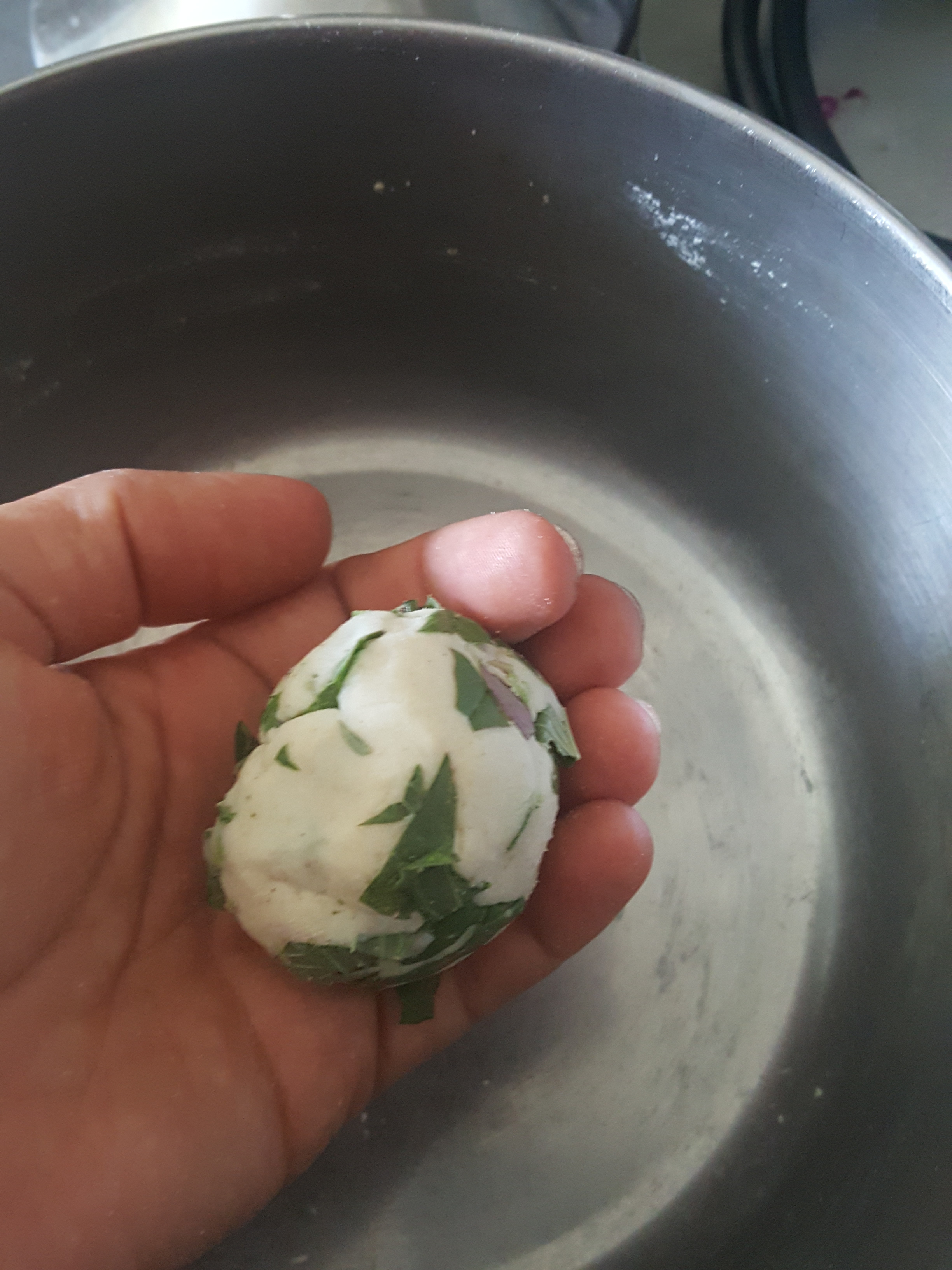
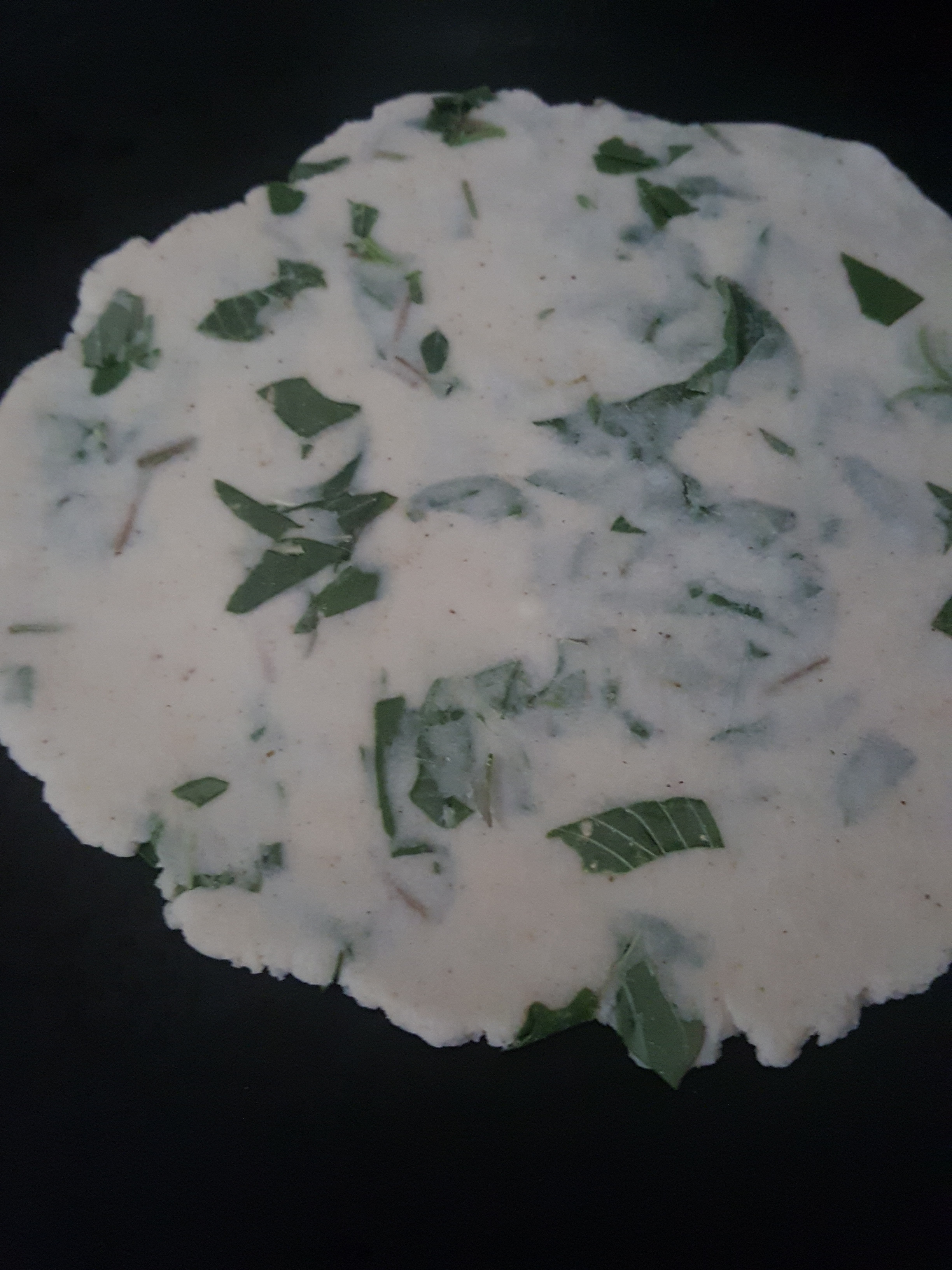
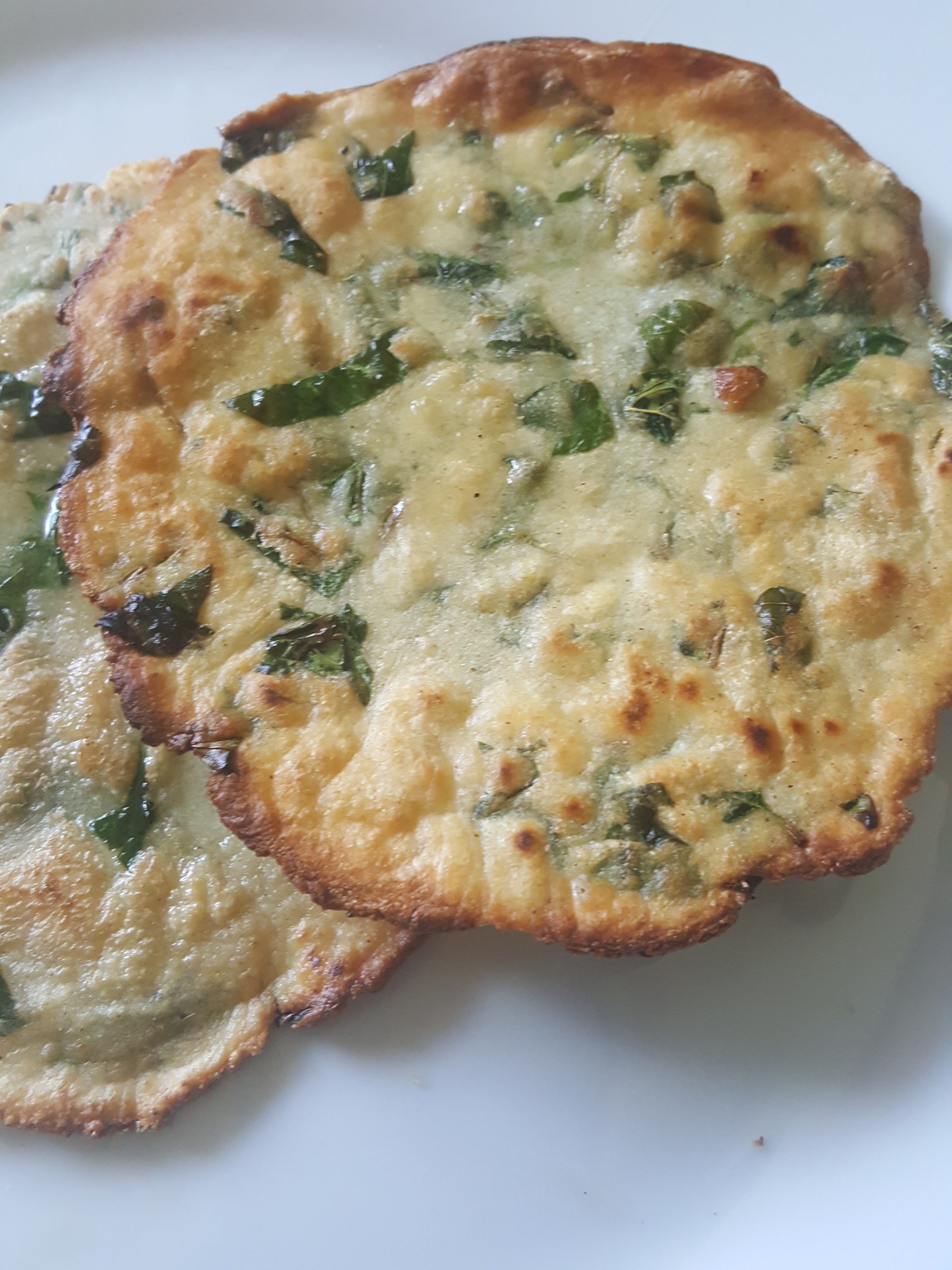
Café Botanica used parsley in their masa for flavor and color, so I chopped a few leaves of quelites (young amaranth greens) raw and mixed them into the masa. This of course is optional, but quelites are so prolific this year with our above average rainfall this summer. Recently Carolyn used amaranth seed her in corn tortillas.

Add enough water to make a soft dough. Mix about a quarter cup meal to a few tablespoons water and adjust as necessary. If it is too dry, it will crack. If it is too wet, it will stick to your hands. Form into two balls, cover, and let rest for a few minutes. Then reassess the moisture.

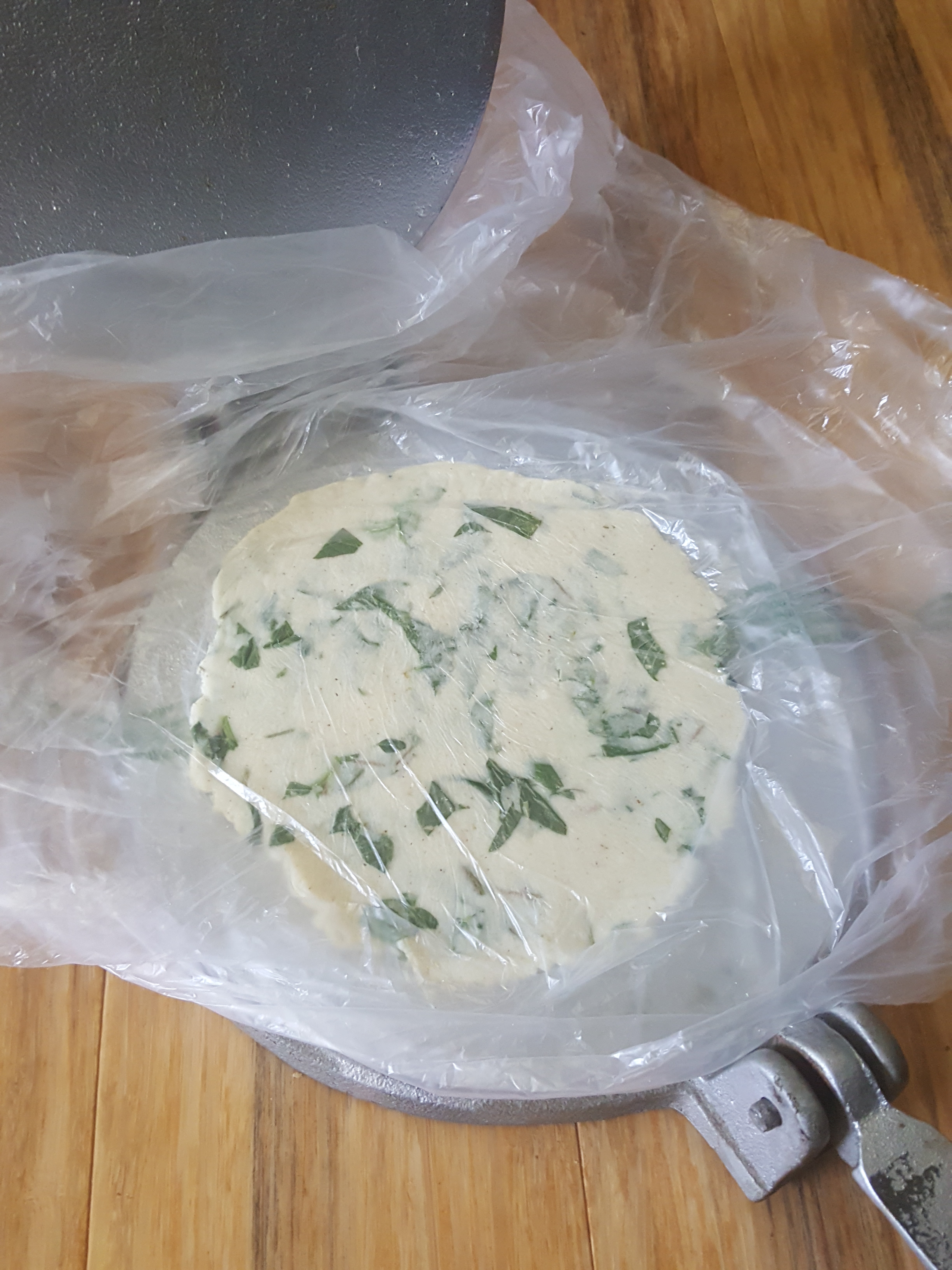
Place the ball in a plastic bag and flatten with a tortilla press, a dinner plate or a rolling pin.

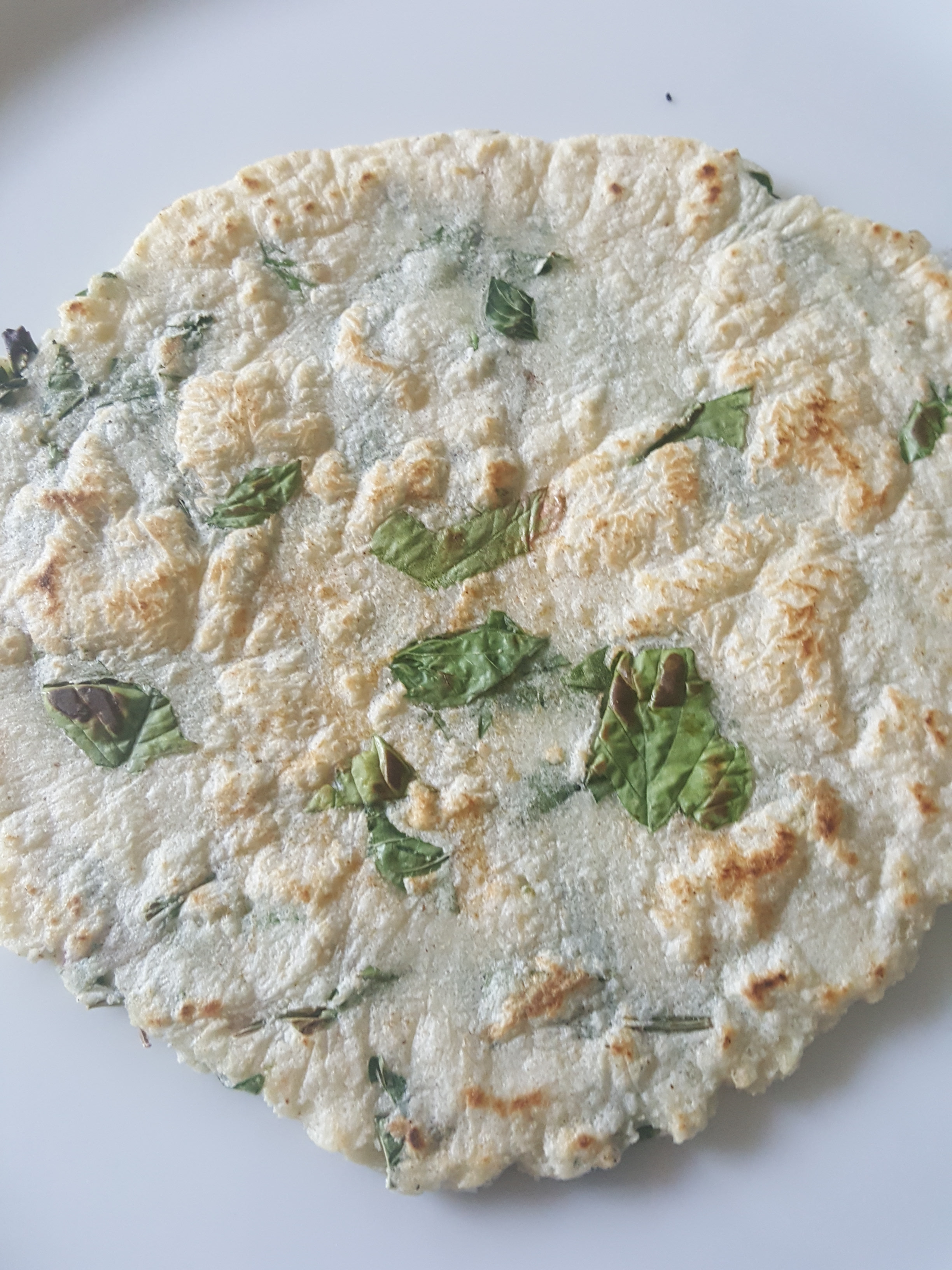
Thoroughly heat a comal (a dry cast iron griddle) over medium heat and put tortilla to cook. Flip a few times until both sides are covered with brown spots. No need to keep them hot, they’ll be fried!

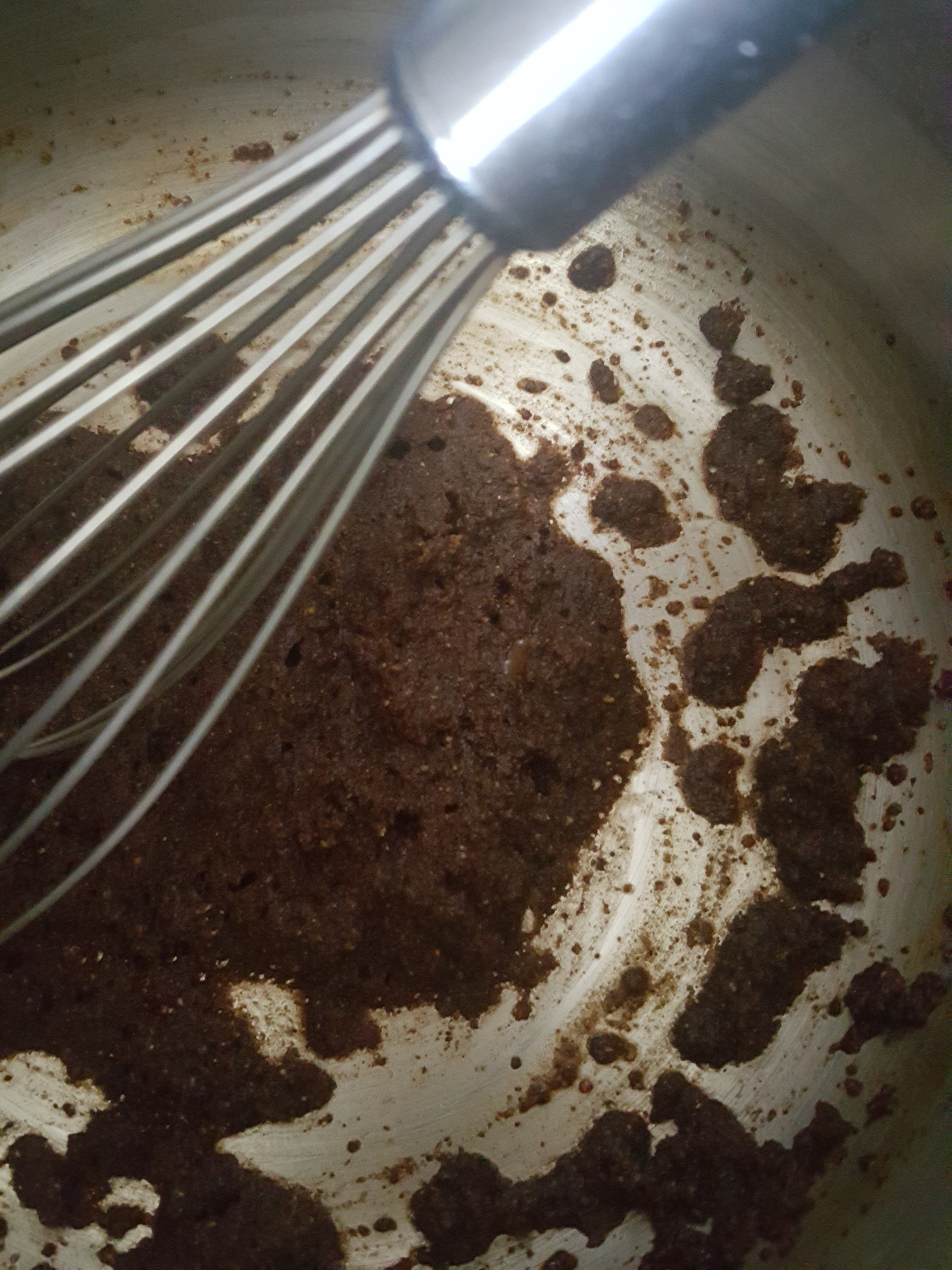
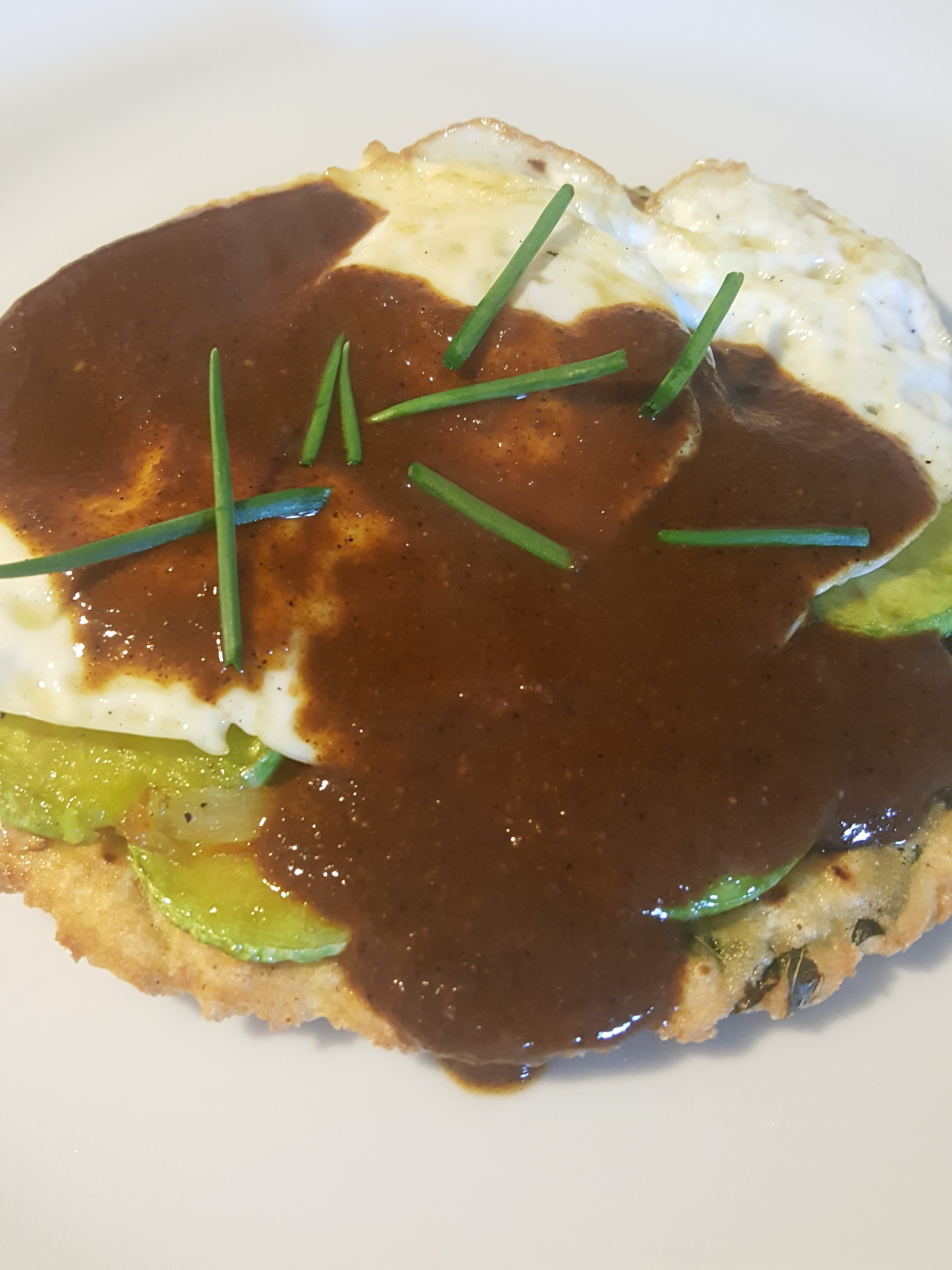
Next I made a small amount of Mano y Metate Mole Dulce with oil and veggie broth. Other varieties of mole would work, and any broth you like. Since the dish was vegetarian, I decided to keep with the theme.

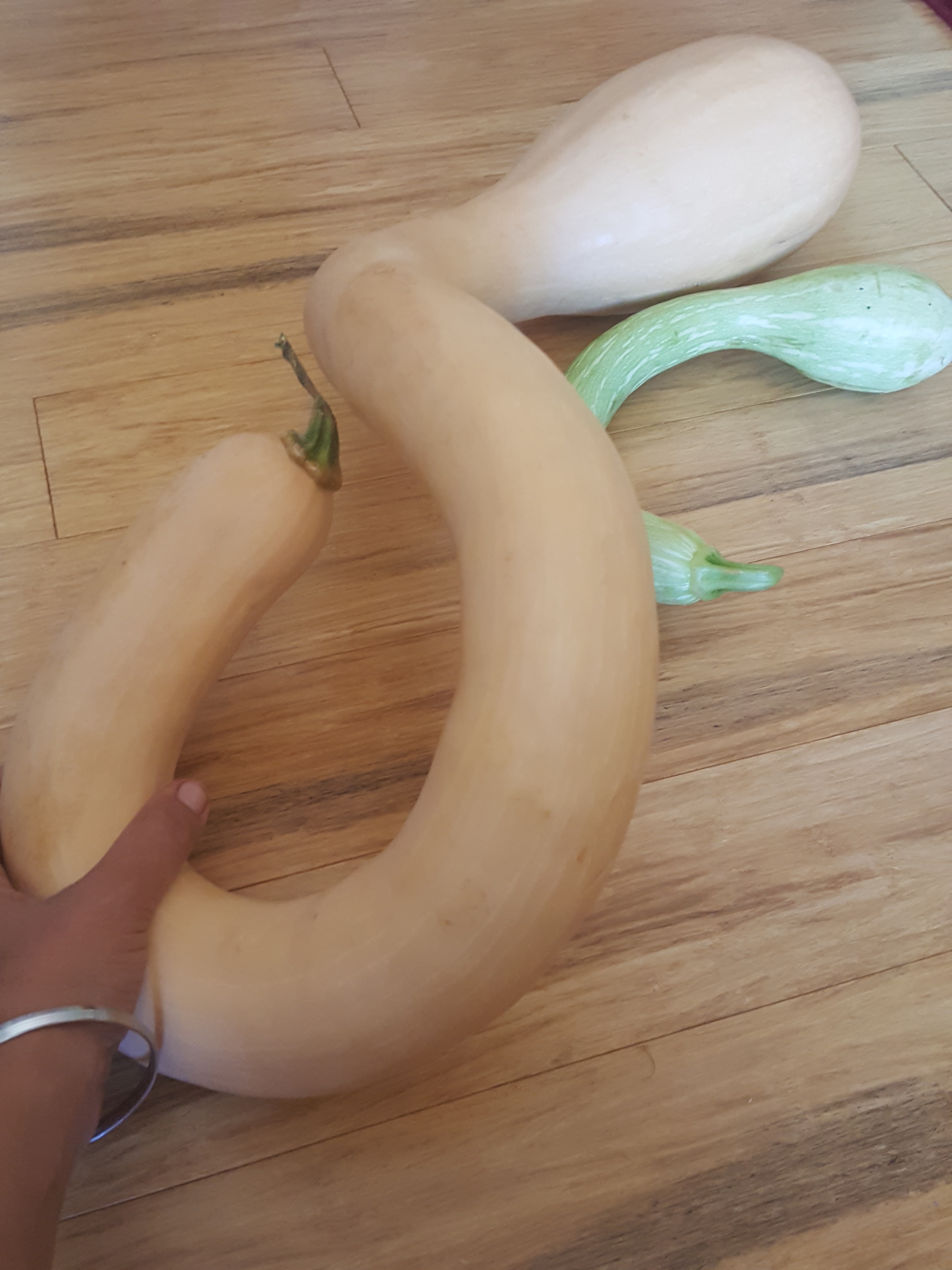
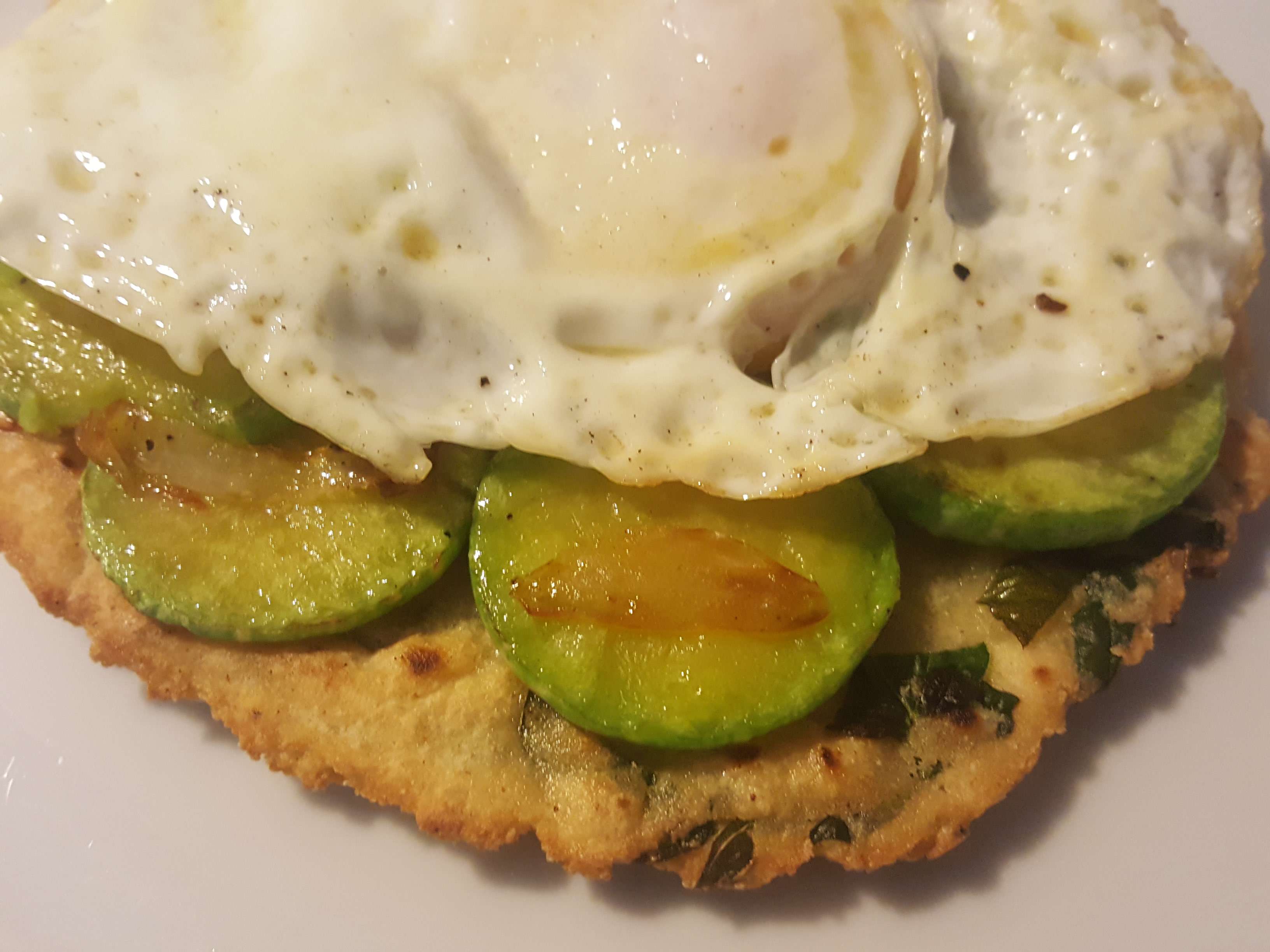
Café Botanica used black tepary beans, but I used a summer squash from the Tucson CSA. I had never heard of Tromboncino before this year, and we love the taste and its trombone shapes! As a mature, winter squash, it resembles its relative the butternut. Even as a baby, it is slightly yellow on the inside with tender skin and really nice flavor. I sautéed it with onion, salt and pepper.

Next fry the tortillas in a little bit of oil until beautiful brown and fragrant.

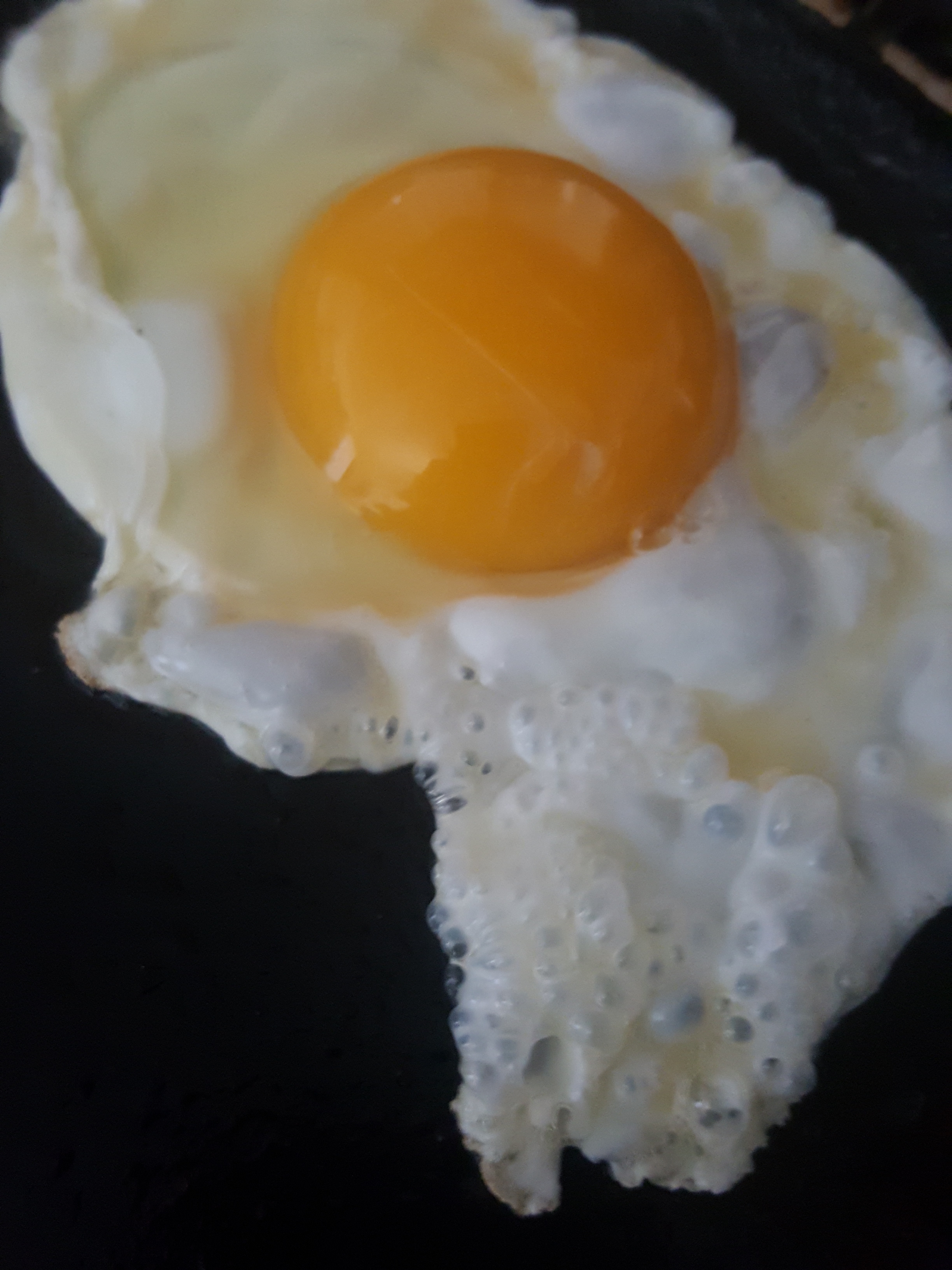
Fry eggs over medium, or to taste. These eggs were from a friend of a friend. The deep color of the yolk is due to the hen’s diet and I bet these birds eat plenty of fresh greenery and insects.

Assemble the dish: tortilla, squash, egg. You could melt some cheese over the tortilla if you want.

Finally, top with the Mole Dulce and I’itoi onion tops. My new favorite.

Blessed Monsoon Weeds!

Yikes–look what has happened all around us!

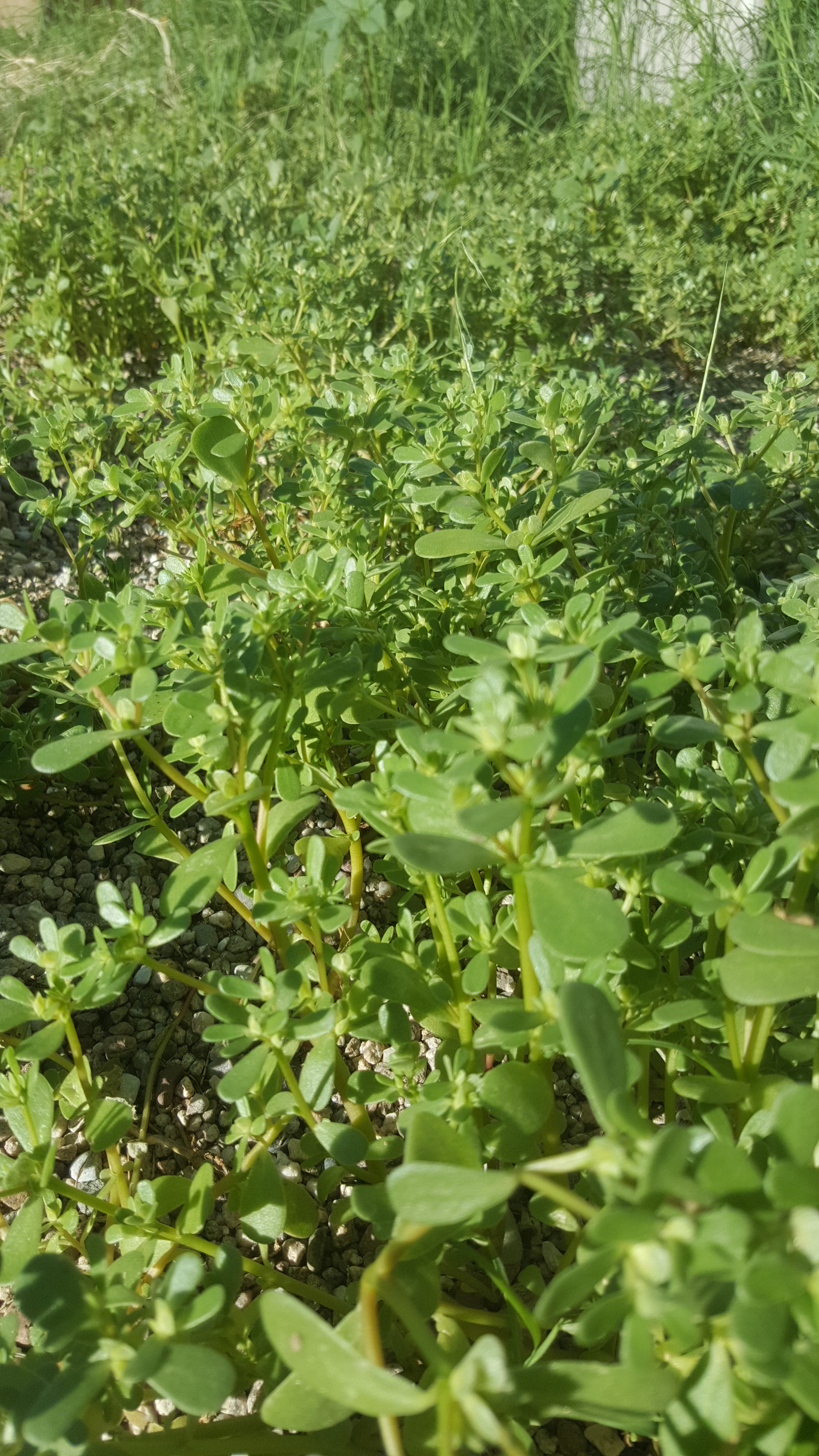
Verdulagas — purslane — exploding in the garden. (photo by ChadBorseth, NativeSeedsSEARCH store mgr.)

With our recent record-breaking rainfall in Baja Arizona, weeds continue to go rampant. Now, what to do with them? Tah-dah–Eat them before they eat up all your garden space!

Tia Marta here—admitting I actually don’t believe in weeds at all—Weeds are gifts to be used, relished gastronomically and nutritionally, admired as amazing strategists,… appreciated!  Weeds are much-maligned plants with a different way of surviving than our regular “garden variety” plant.  They know genetically how to hustle to “make hay while the sun shines.”  So if you need to deal with a bounty of weeds coming on like gang-busters in your garden or nearby in the desert, I’d like to share some fun ways to consume and internalize them.  If we are what we eat, perhaps their “energies” may be a form of speed on some ethereal plane.

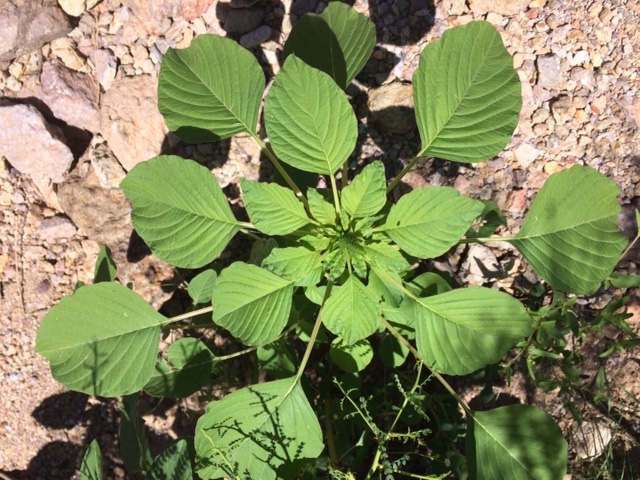
Fresh young quelites  (Amaranthus palmeri), aka pigweed and carelessweed, popping up with summer rains–ready to pick!  (MABurgess photo)

Quelite, weed of many names– careless weed, pigweed, Amaranthus palmeri, known as “rain spinach” or Juhukia i:wagi to the Tohono O’odham–is popping up in great green swaths wherever rainwater has pooled. It grows faster than one can imagine. The scourge of cotton farmers, it is, on the flip side, a positive boon to traditional harvesters—Native, Hispanic, African or Asian. As climate change digs its teeth into desert environments, our native Amaranth “weed” holds great potential as a rapid-responder “dry-land” crop for the future.

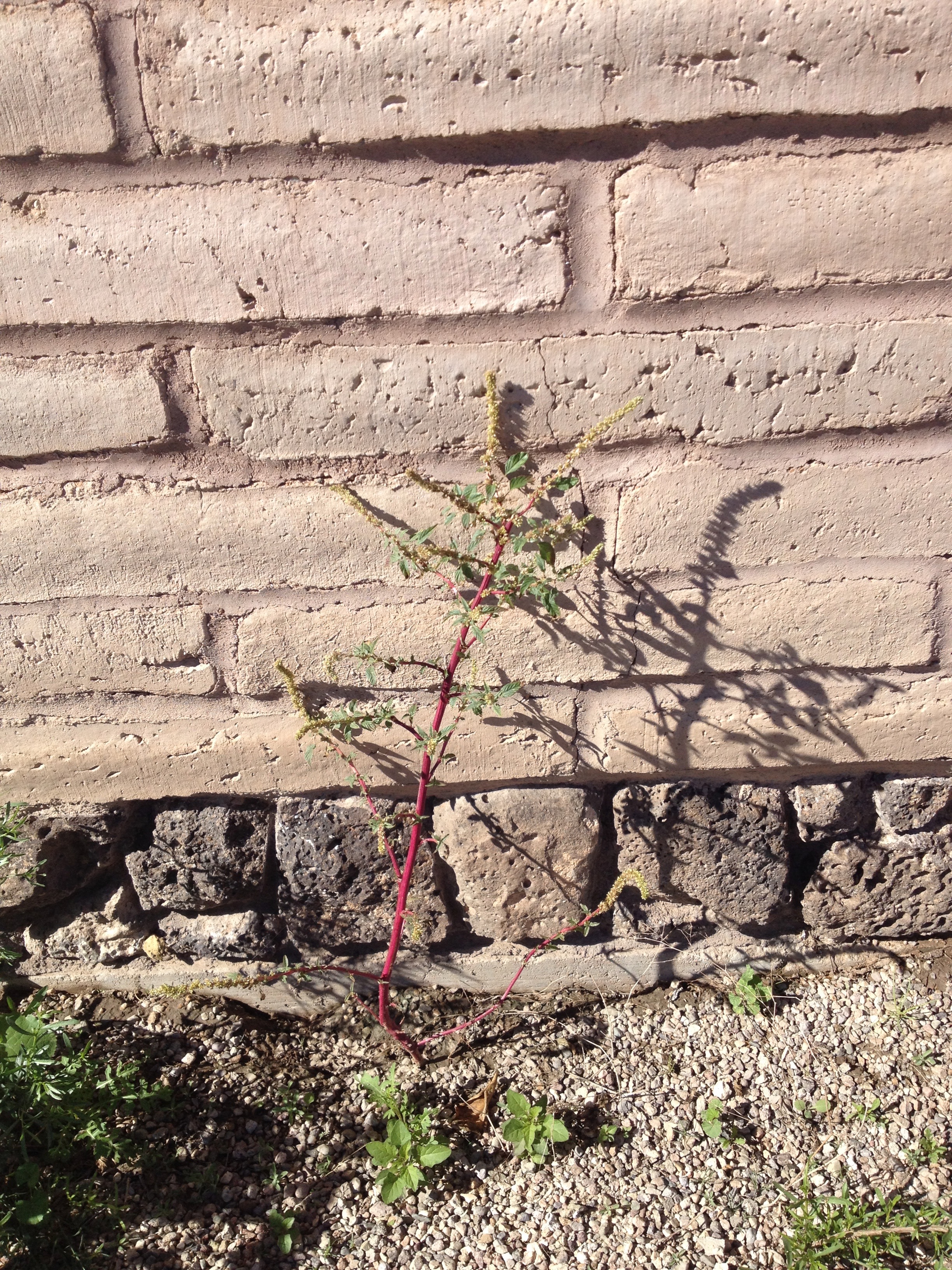
When flower stalks of Amaranthus palmeri emerge, leaves toughen. Be sure to harvest only the tender leaves. (MABurgess photo)

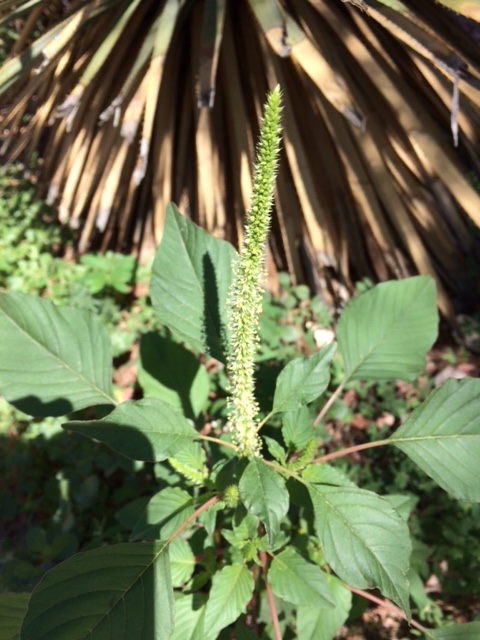
Mature, drying Amaranthus palmeri image taken at Mission Garden. The seedhead is spiny but contains nutritious seeds! (MABurgess photo)

The nutrition of Amaranth, our rain spinach, is way up at the top of the chart. Consider that 100g of young shoots provides 42 calories packed with 3-4 grams of protein, 3mg iron, and 4-11 mg of available calcium.

If your Amaranth patch matures faster than your harvesting schedule allows, don’t fret–all is not lost. As long as there are soft, non-fibrous leaves to pick, they are fair game for steaming or stir-frying as greens or quelites. Later, when the arching spike of spiny seed capsules matures and dries, you can harvest seeds (carefully with gloves) and winnow the tiny grains in the breeze. THEY are fabulously nutritious too. Amaranth seed is 15-18% protein—far higher than most cereals. They can be cooked as hot cereal or ground into flour– full of healthy, gluten-free carbs and fiber. Amaranth weed seed baked into bread adds a pleasing and healthy crunch. If you want quantity and lack patience to harvest wild carelessweed, the NativeSeedsSEARCH store, 3061 N Campbell Ave, Tucson, has grain-amaranth for cooking or milling, also popped amaranth for adding to baked goods or confections for Dia de Los Muertos. [More to come on that topic in early November.]

Caution:  Here’s a trick plant that may look like Amaranth but it is a perennial that leafs out with summer rains, especially in the Tucson Mtns area–Ambrosia cordifolia–not good for eating–better for soil stabilization. (MABurgess photo)

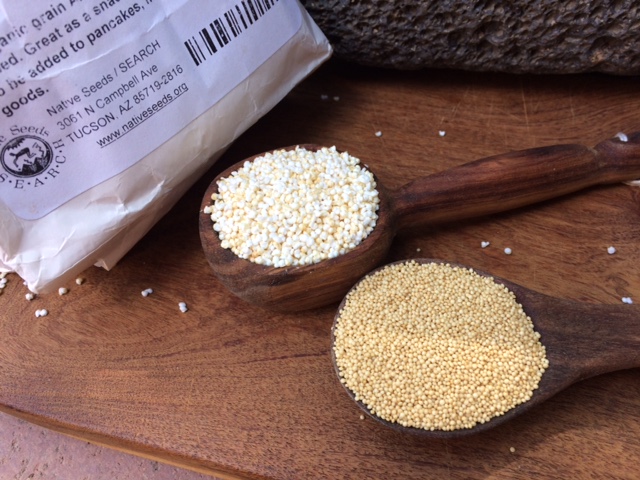
Delicious and healthy grain amaranth and popped amaranth, available at the NativeSeedsSEARCH store for cooking.

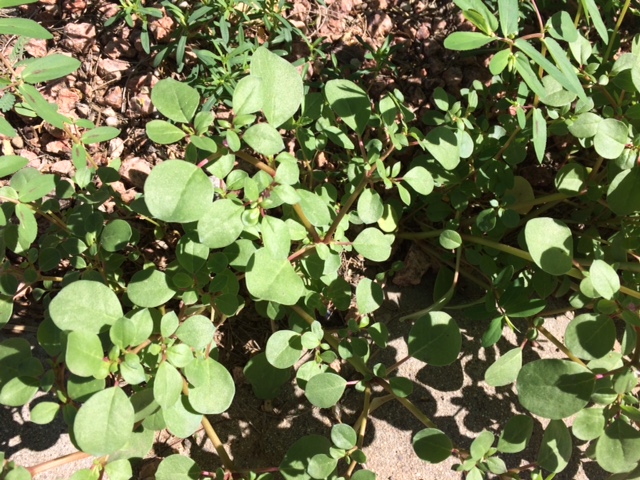
Another “weed” that is probably at this very minute creating mats of green in your garden is verdulaga. Traditional Tohono O’odham know it as ku’ukpulk, and some gardeners refer to the same puffy-leafed ground-sprawler as purslane (Portulaca oleracea). It can be added fresh to any salad for a juicy, succulent texture and tang. And check the nutrients, especially if your body needs available calcium. Every 100g (a little less than ½ cup) of verdulagas provides 0.3mg iron, 19mg calcium, high omega-3-fatty acids and lots of vitamins A&C. Rinse your verdulagas in a bowl of water, then toss the water back in the garden where the many teensy seeds that have dropped to the bottom can go for a “second round.”

Caution:  Another “trick plant” is this purslane- look-alike called “horse purslane”-Trianthema portulacastrum. It will taste a little soapy if you try it. (MABurgess photo)

Picked and washed true verdulaga/purslane, ready to make into pesto (MABurgess photo)

Here is an idea for Monsoon Pesto made with tasty weeds! Pestos of course can be made with almost any greens—e.g. with kale in the winter—so why not use what Nature provides locally and now?  Both amaranth or verdulaga can be used in your favorite pesto recipe for a healthy and tasty Southwest vacation from basil. [A word of caution: If you harvest from the wild, be sure to collect at least 50 feet from a roadway, or upstream from any road along an arroyo. Know your plants when harvesting!]


Here is a SUPER-NUTRITIOUS SONORAN DESERT MONSOON-WEED-PESTO RECIPE:

Ingredients:
2+ cups well-packed, fresh, washed Amaranth or Purslane greens
2-3 cloves heirloom garlic
¼ cup pinyones shelled (pine nuts), or any other fresh nutmeats, or soft seeds such as pepitas (pumpkin seeds)
2/3 cup cold-pressed extra-virgin olive oil
sea salt or ancient Utah salt, and ground pepper, to taste (all optional)
½ cup grated Parmesan or Pecorino cheese

Directions:
In a food processor, combine wild weed greens (Amaranth or verdulaga), garlic, and pinyones, and process on the  “pulse” setting until finely chopped.
With processor running, slowly drizzle in the olive oil until the texture is smooth and fine.
Add the cheese and pulse briefly just to combine ingredients.
Taste, then season with salt and pepper as needed. (It may not need any.) Give one last pulse after seasoning.
(Pesto can be stored in frig or freezer.)
Serve on crackers with cream-cheese, in pasta, on pizza made with local white Sonora wheat flour for another local twist, or simply spread on good bread for a fantastic snack, as seen below!

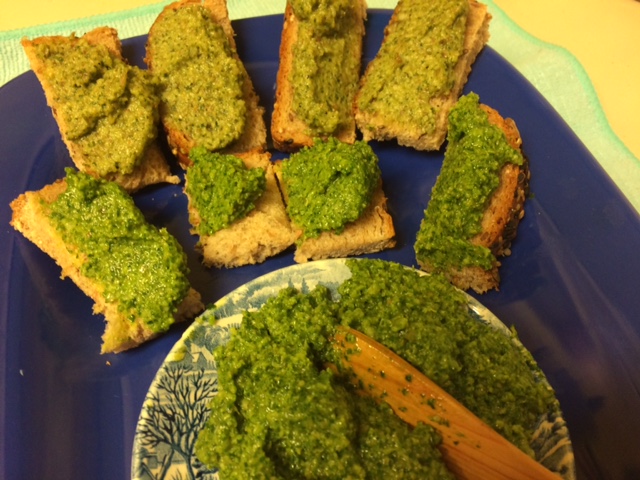
Monsoon Weed Pestos–The top row is Purslane Pesto with Pine Nuts. The darker green is “Pigweed & Pepita Pesto” made with pumpkin seeds–(here served on harvest seed bread squares)–Both Weed Pestos are SO delicious (MABurgess photo)

As you taste either of these nutritious weed pestos with eyes closed, you can SAVOR the wild Southwest bouncing back into its burgeoning monsoon mode and relish the desert’s rhythms. This is Tia Marta’s wish for you– Happy weeding and eating your way through monsoon season!

Amaranthus palmeri seedheads growing too tall for a selfie –but soon ready to harvest for seed

(You can read about Winter/Spring Weeds in my blog from February 14, 2014. Interestingly, the weeds that flourish with our Sonoran Desert summer rains in the heat are totally different from the species that sprout in winter with cool/wet conditions here. The metabolism of winter vs. summer weeds involves totally different biochemical strategies—tho’ they are all similarly nutritious.)


Fig Pecan Mole Dulce Chutney

Hello, Amy here excited about figs and sweet corn this steamy Tucson summer.

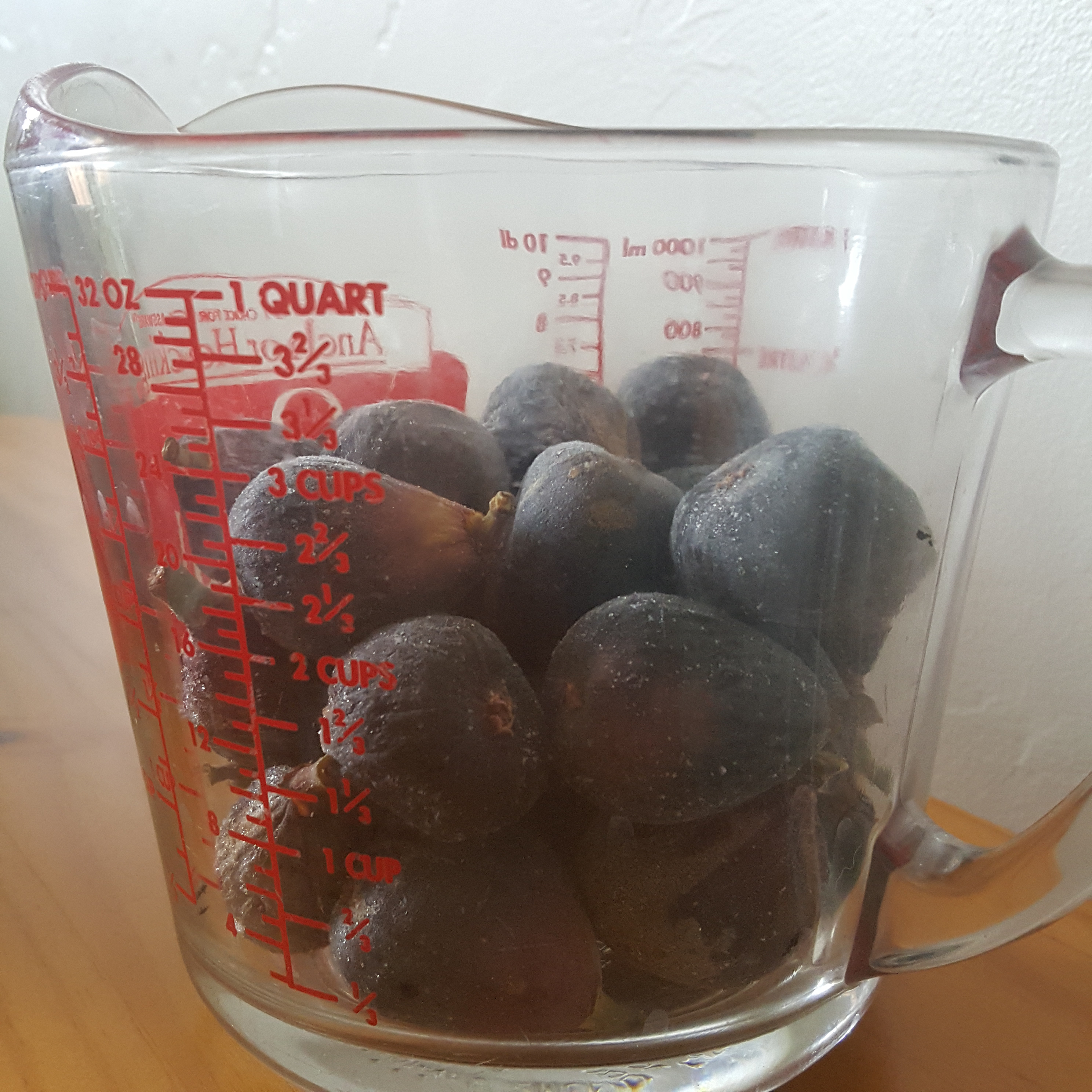
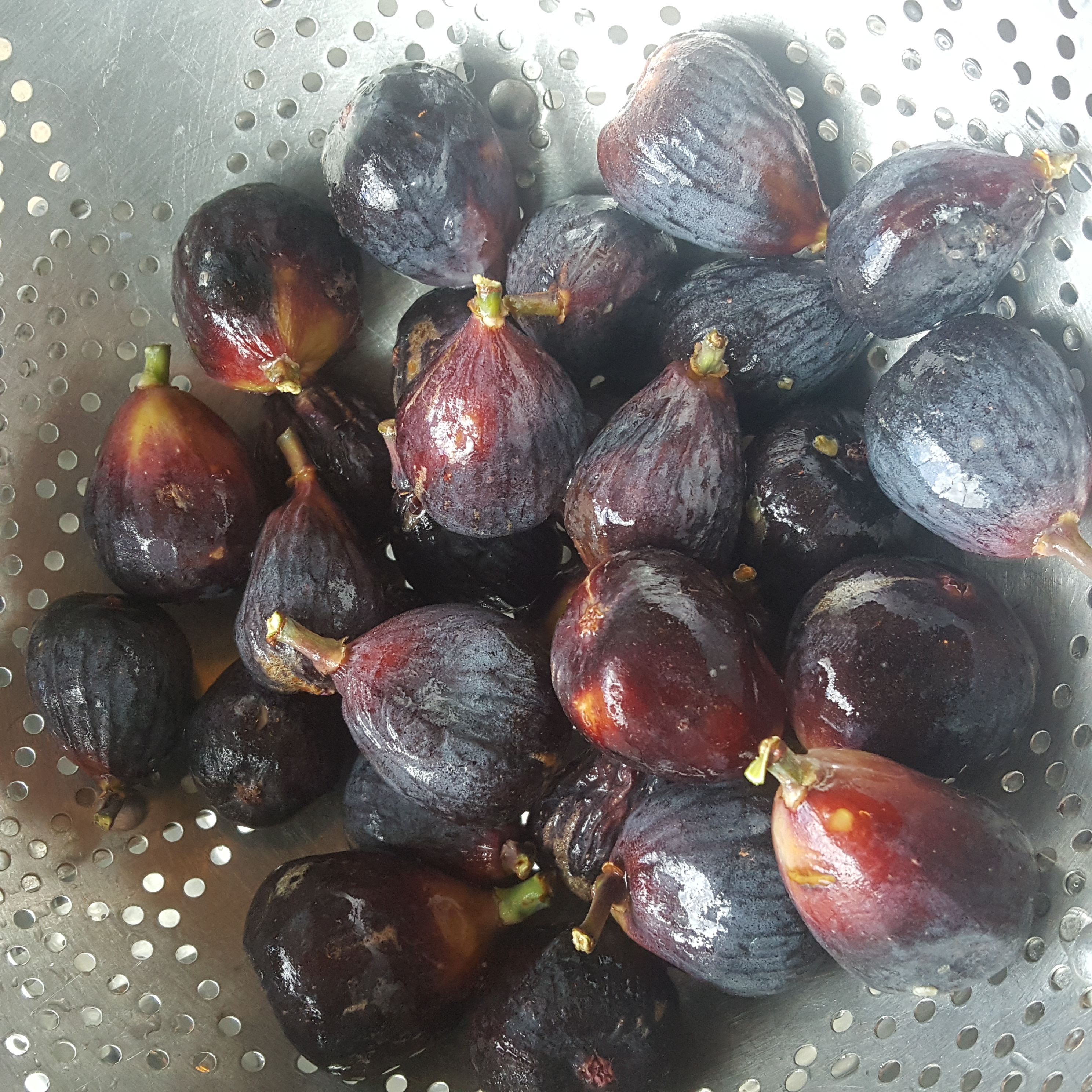
We’ve cooked figs before, and I’m going to make Carolyn’s fig bars next. But normally my preference is for savory food, so today I made a savory, sweet, sour, spicy chutney. I started with gooey ripe black mission figs from my Mom’s tree.

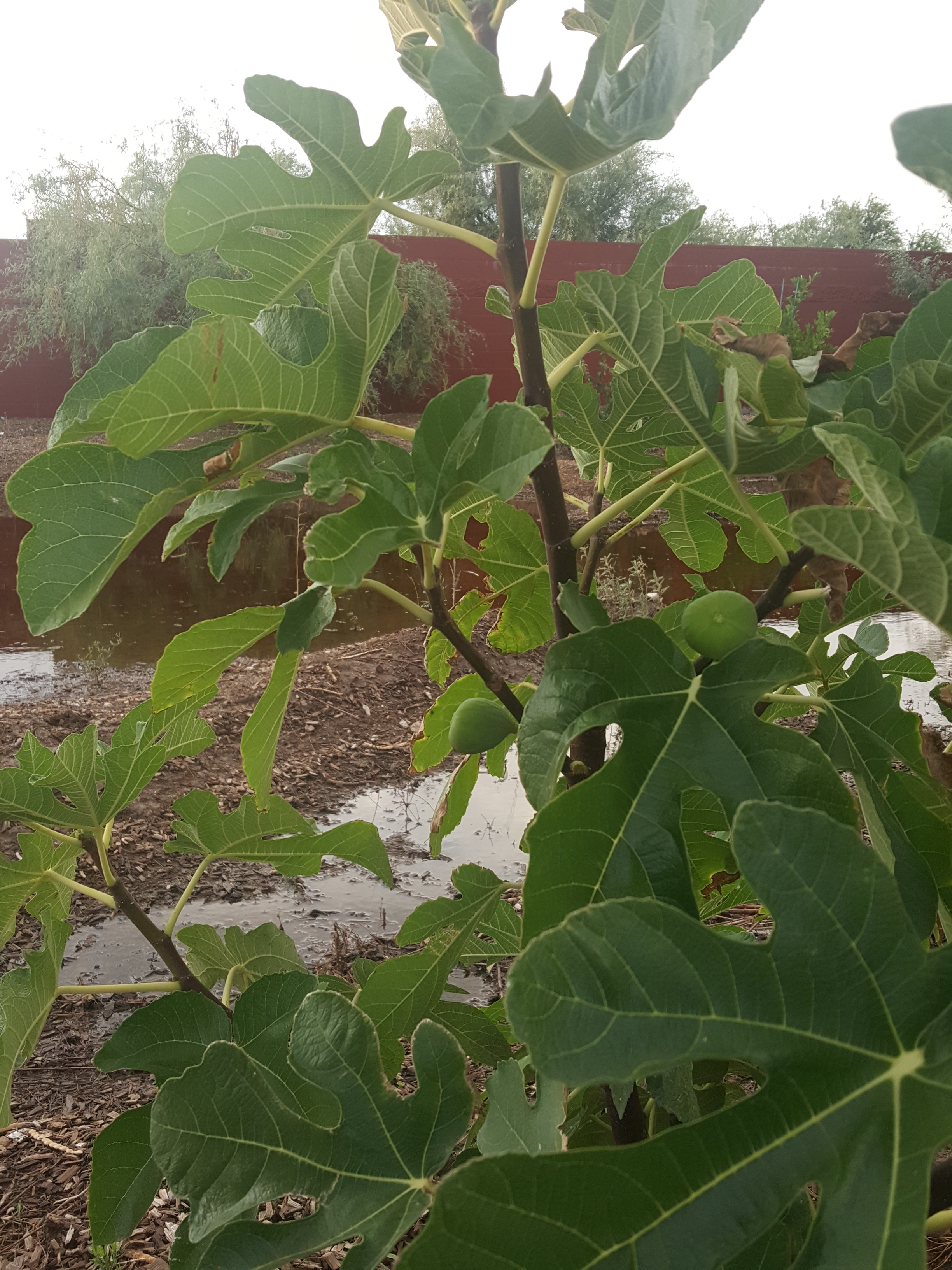
This young fig tree at the community garden is making fruit this year, but with the water harvesting earthworks you can see in the background of this photo, I can’t wait to see what it does next year…

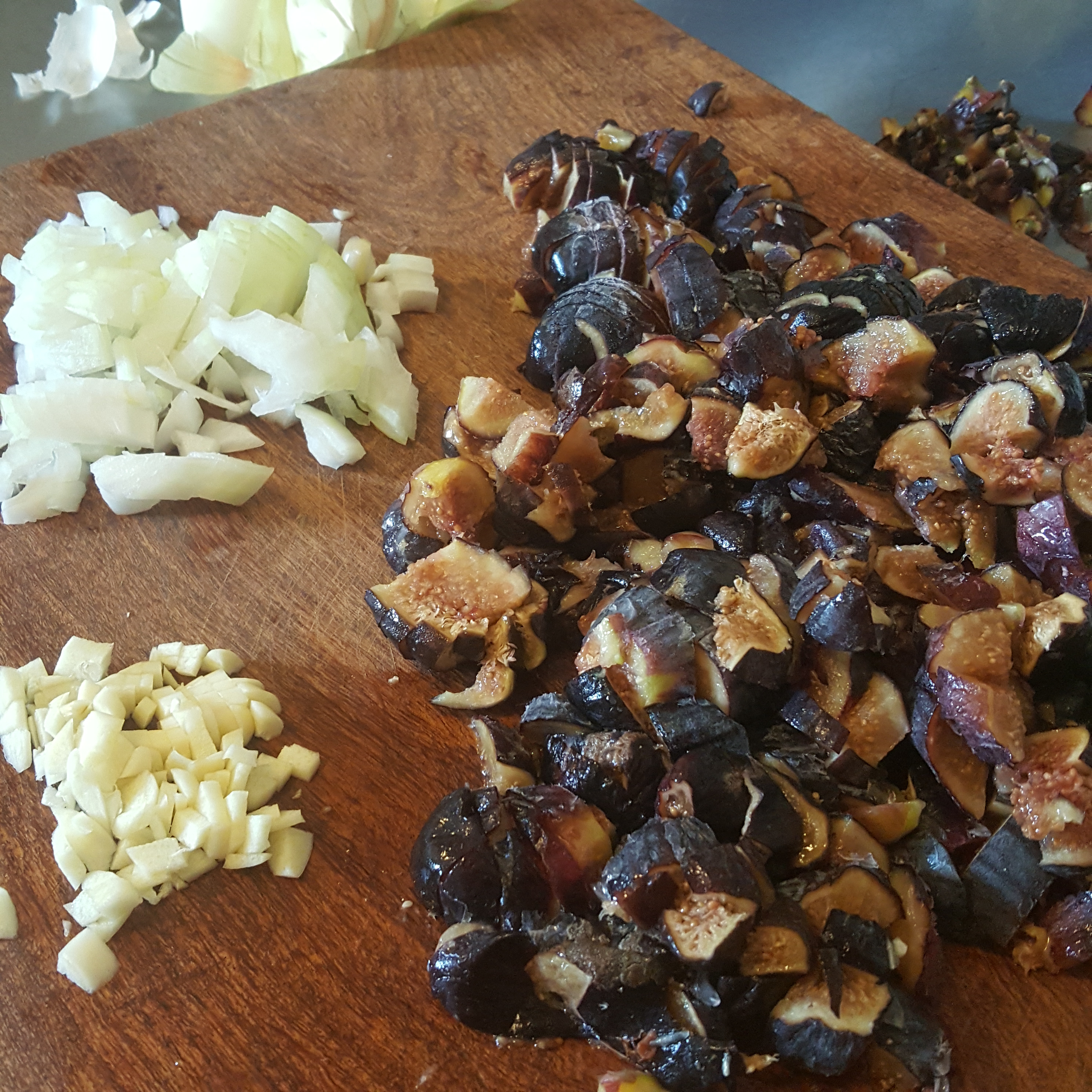
After a rinse, I trimmed the stems from the figs and chopped them. Then I chopped a bit of onion and garlic.

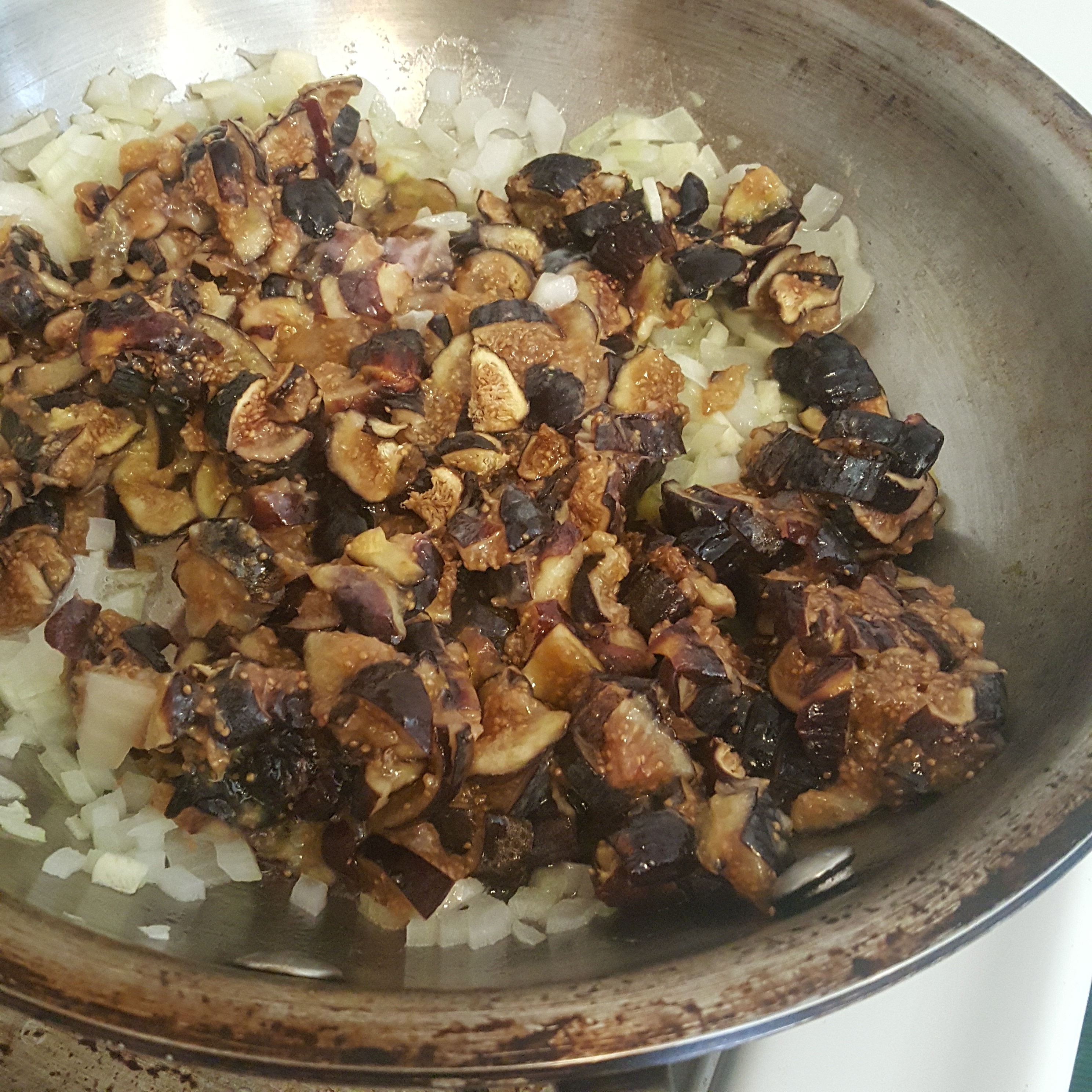
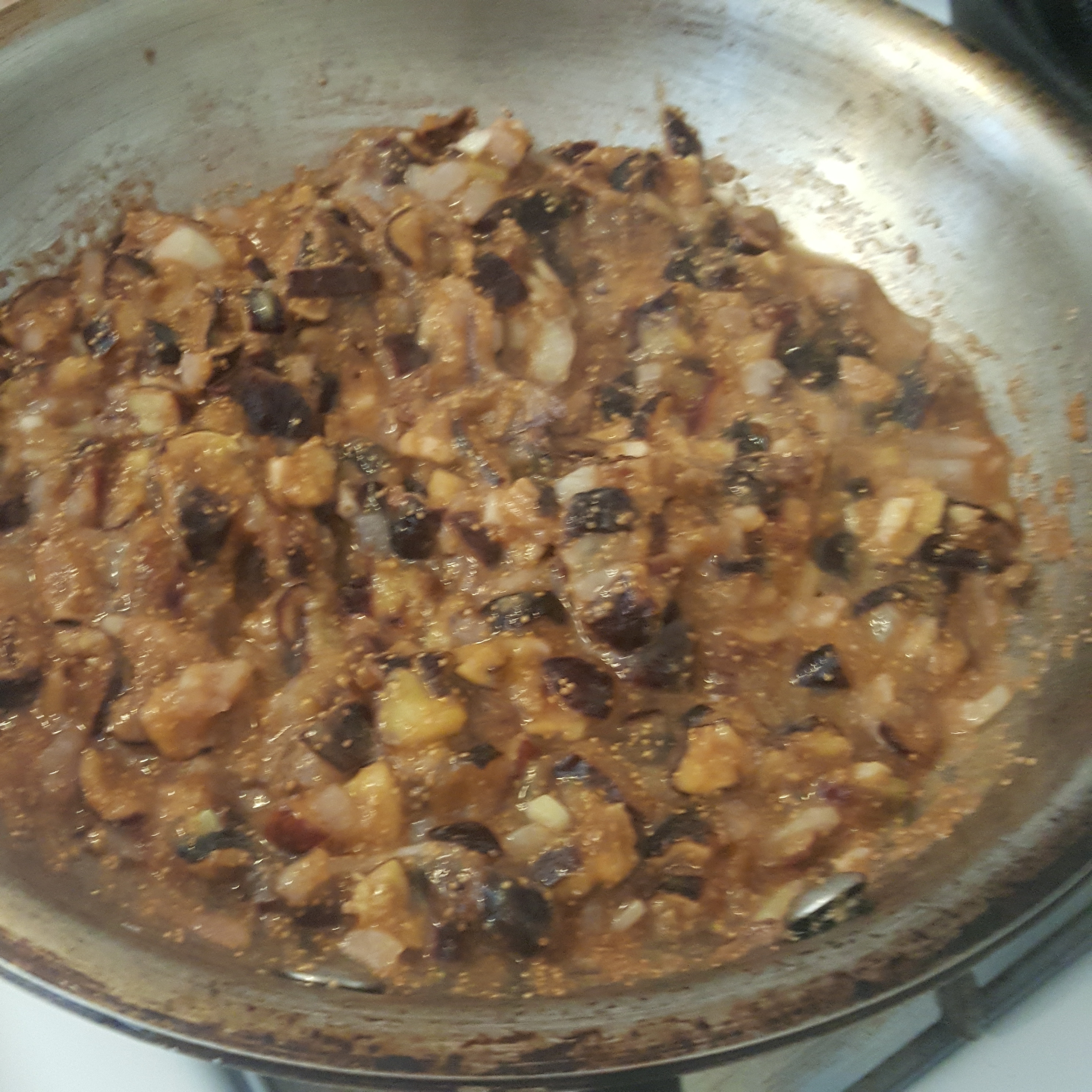
I softened the onion and garlic in butter, then added the figs and a splash of water only as needed to keep it from burning.

Apple cider vinegar and a dash of salt and black pepper wasn’t enough spice, so I added Mole Dulce powder.

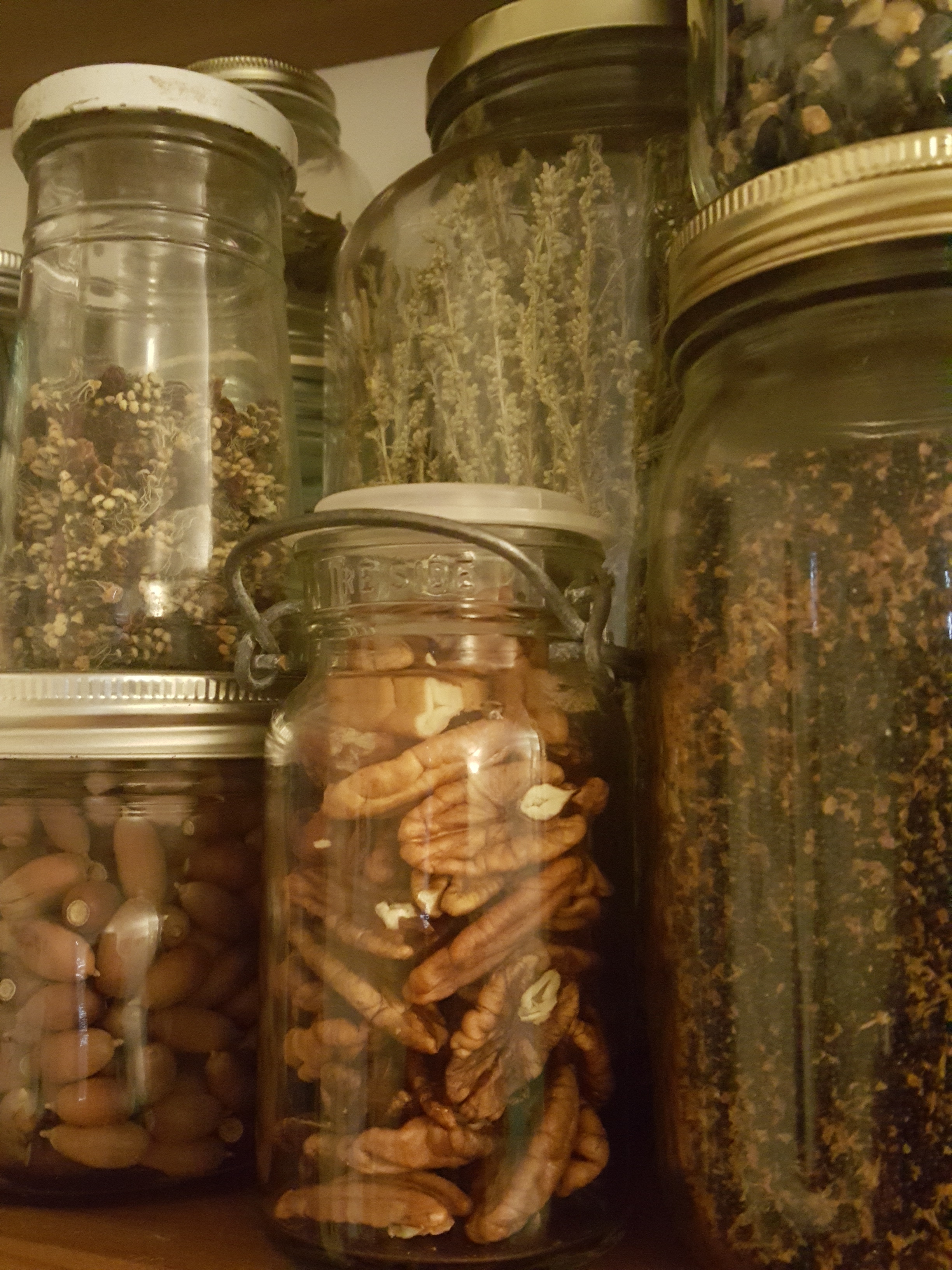
Staying indoors in the heat of the day, I’ve been organizing my pantry, removing the stems from dried herbs and shelling nuts.

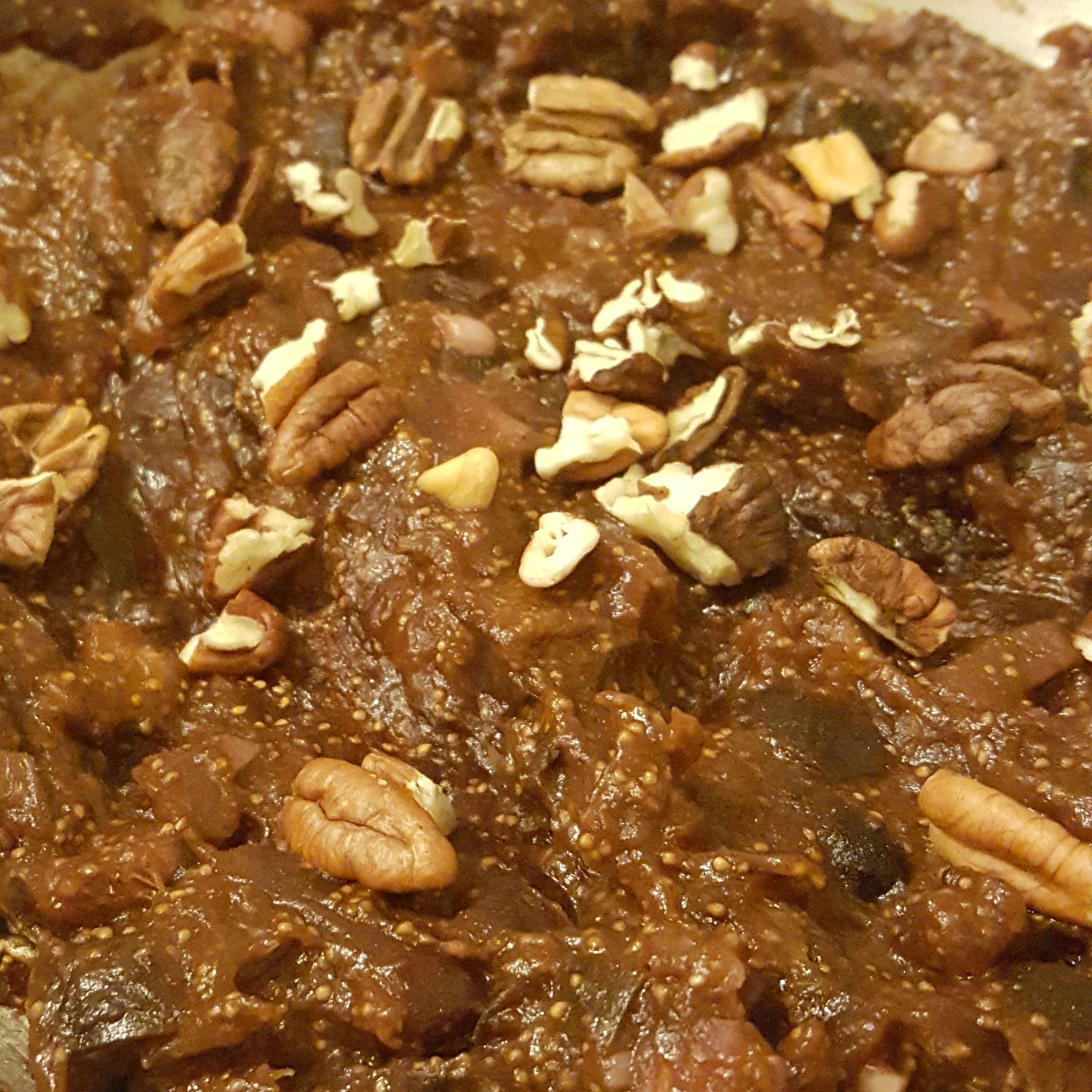
A sprinkle of pecans gave the chutney a contrasting texture. (By the way, it is gone by now. No need to process jars.)


Spicy Corn and Tomatoes

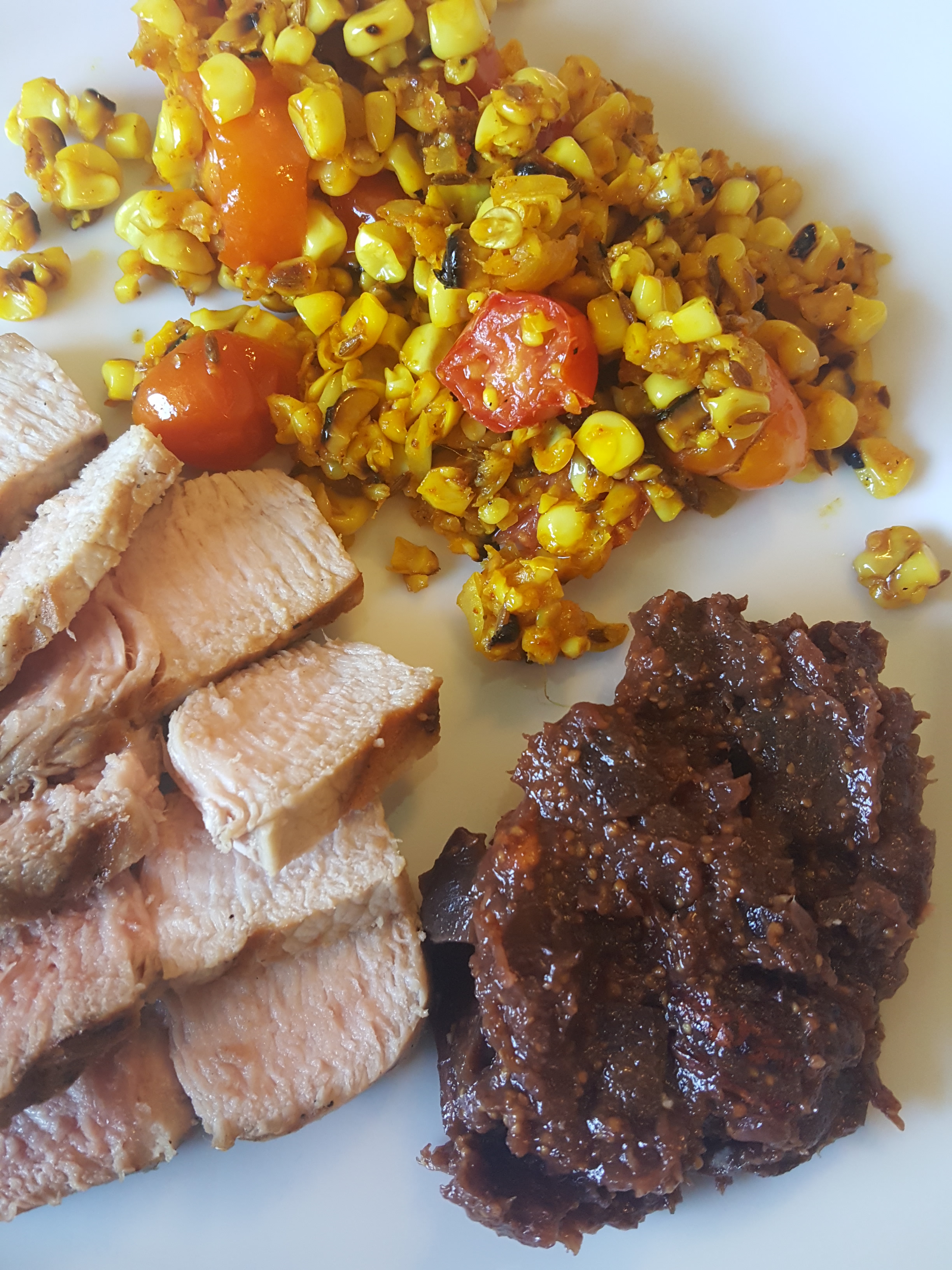
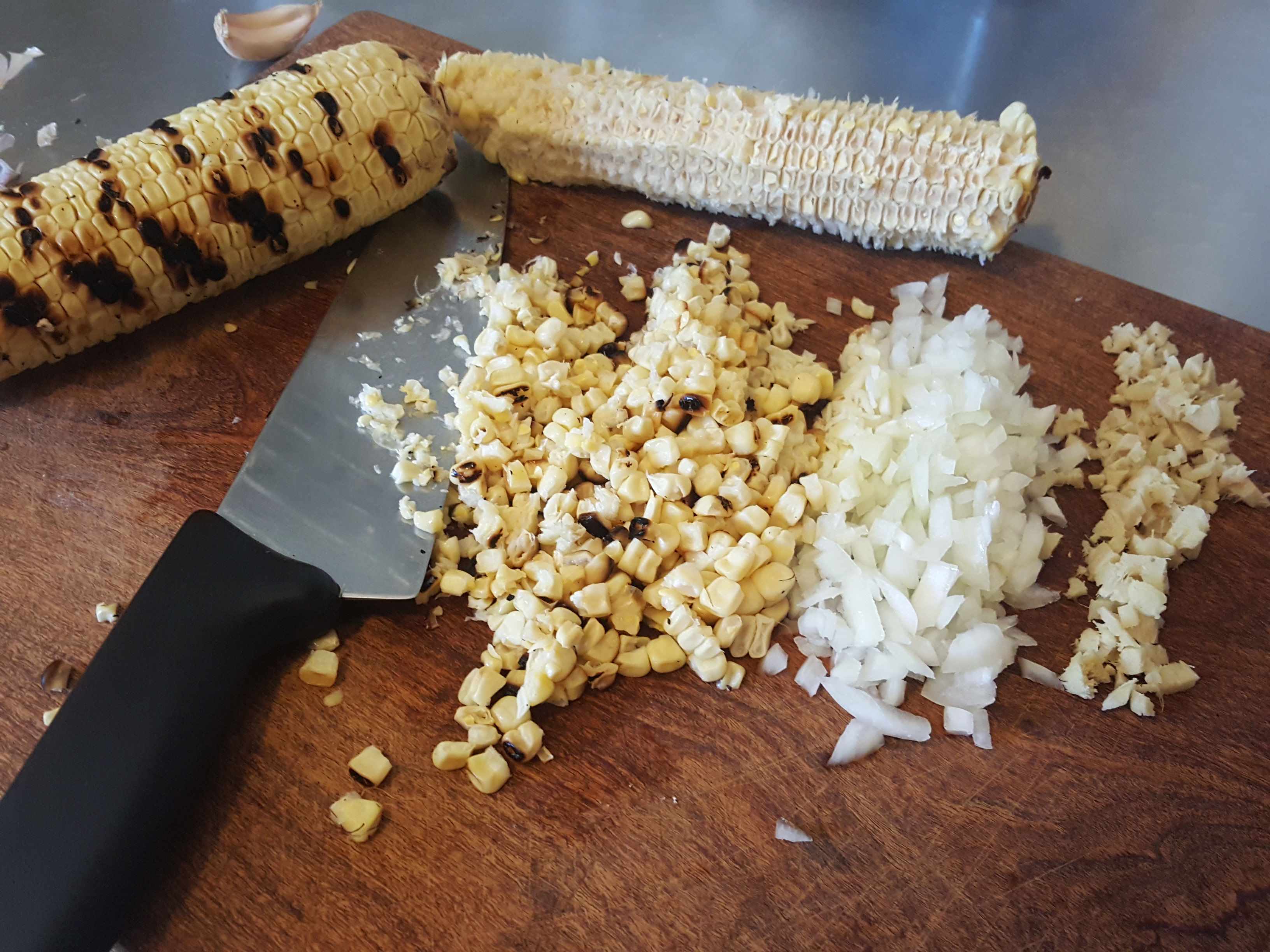
I had a few ears of sweet corn and a basket of cherry tomatoes from Tucson CSA/Crooked Sky Farms. First I grilled the shucked ears to give them a toasty flavor and color. On this rainy day, I used a cast iron grill pan on my indoor stove, but it would be better outside, of course. I cut the kernels from the cobs and froze the cobs for making soup stock.

In a frying pan, I sizzled up some cumin seeds in oil, followed by onion and garlic. Corn, halved tomatoes, turmeric, red chile and salt went in the pan and came together quickly over high heat. You can never go wrong with fried corn.

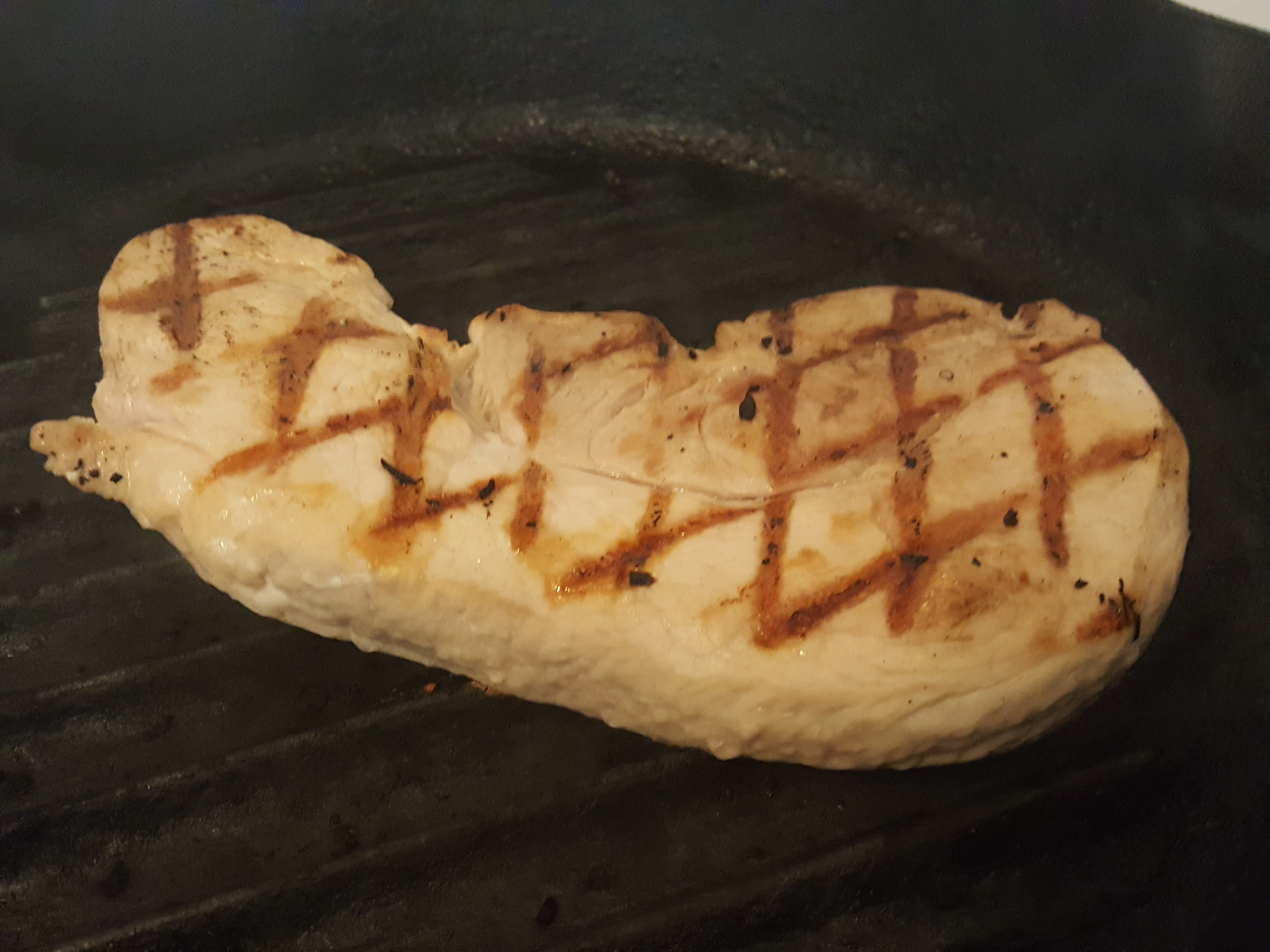
A pork chop in the grill pan completed the meal.

Fig Chutney with Pecans and Mole Dulce

1 cup (packed) chopped ripe figs

1/3 cup chopped onion

2 teaspoons minced garlic

1 tablespoon butter

Dash of salt

2 tablespoons apple cider vinegar

2 tablespoons Mano Y Metate Mole Dulce powder, available here

2 tablespoons pecans pieces

Soften the onion and garlic in butter. Add the figs and cook until softened, adding a tablespoon of water as needed to keep the mixture from sticking to the bottom of the pan. Season to taste with salt, vinegar and Mole Dulce. Finish with pecans.

Enjoy!

Monsoon Mesquite Bosque Butter

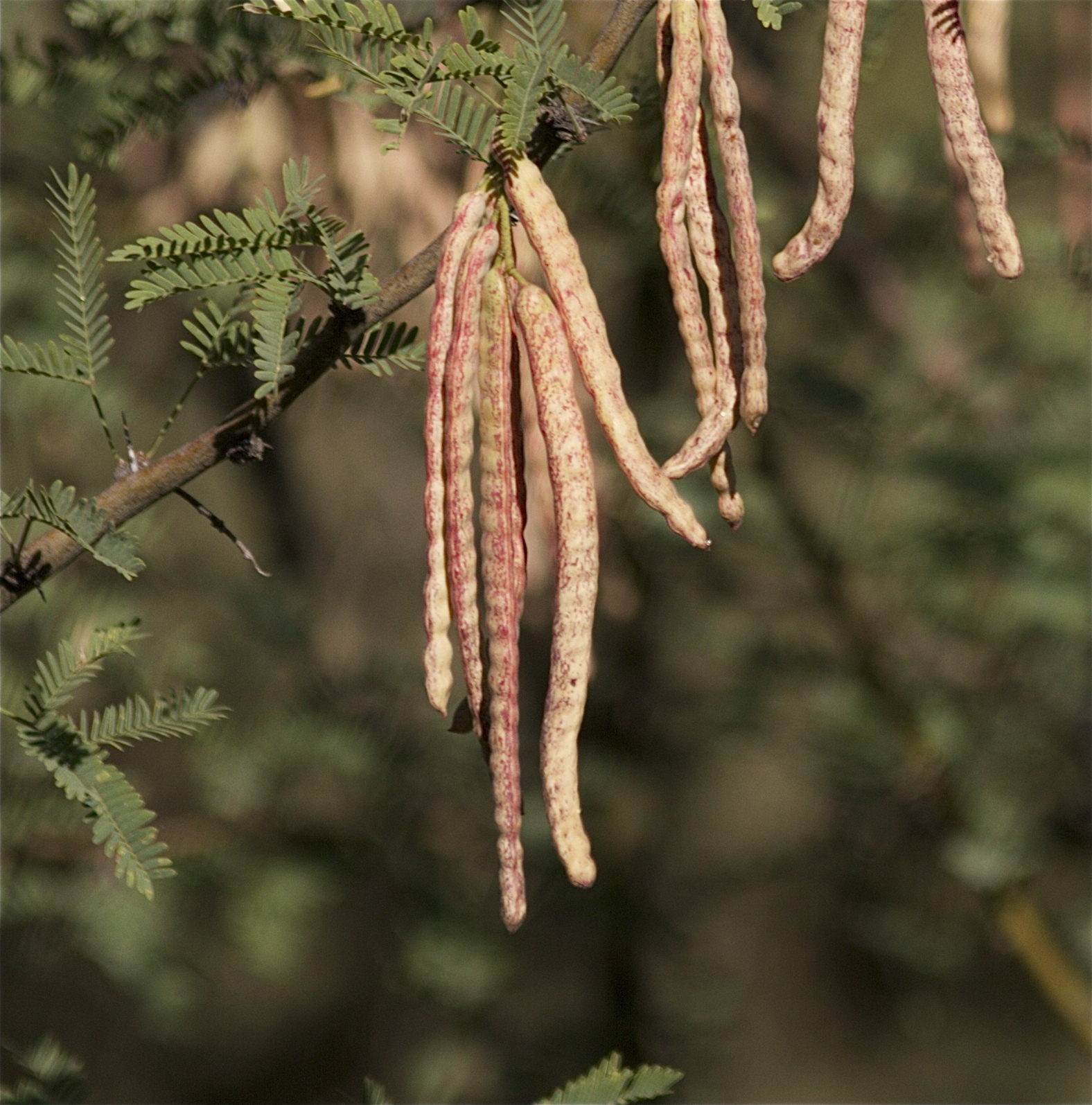
Mature pods of velvet mesquite–ready for monsoon planting  or eating!  (JRMondt photo)

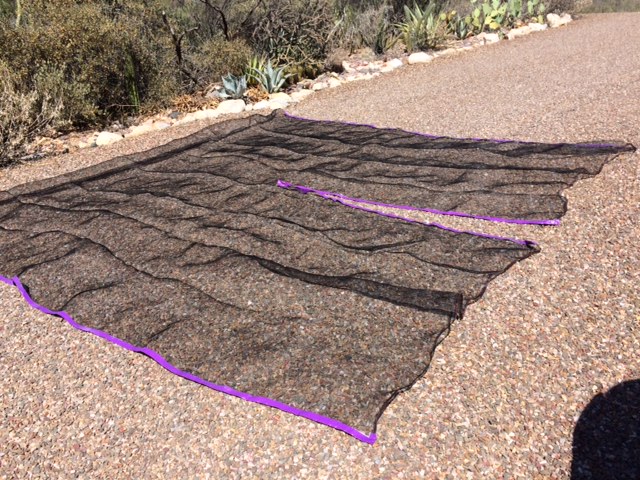
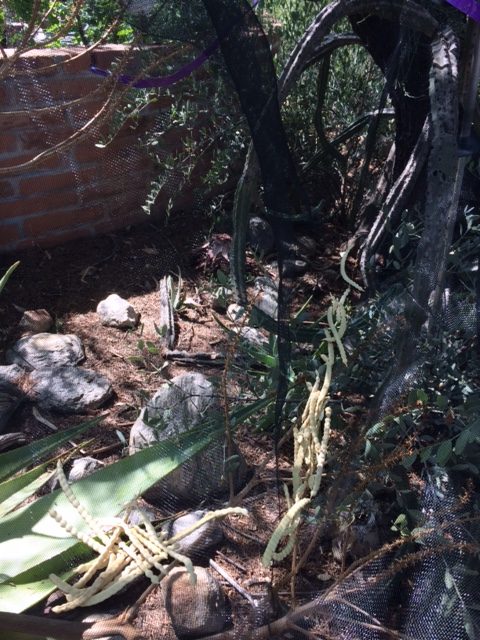
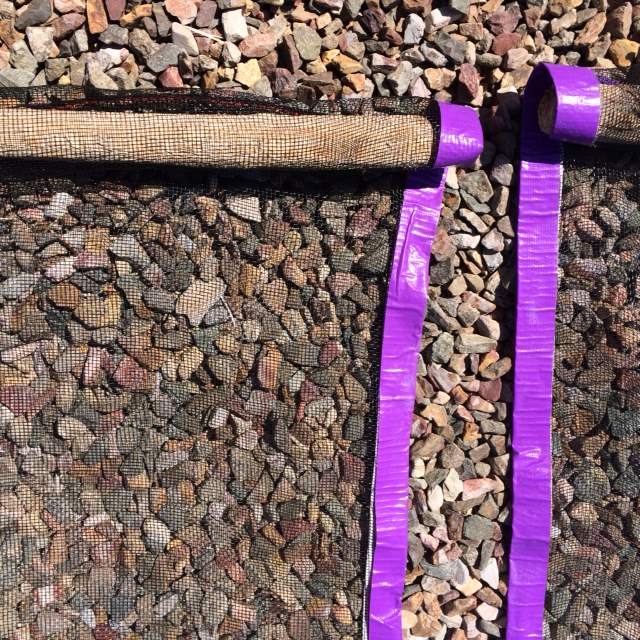
Tia Marta’s 12’x12″ pod net, slit into center on an imaginary radius to wrap around trunk and over understory plants, edged with duct tape on non-selvedge sides (MABurgess photos)

Mesquite pods shaken from tree onto harvesting net

I finished the split center edges of my pod-harvesting net with hems in which to optionally insert saguaro ribs or PVCpipe for easy set-up around a mesquite tree trunk

This past week, at the last hurrah before these wonderful monsoonal rains began, Tia Marta here was out with my handy dandy self-invented pod-harvesting net to bring in some of our Sonoran Desert’s bounty–just in time to avoid the aflatoxin hazard which comes with higher humidity.

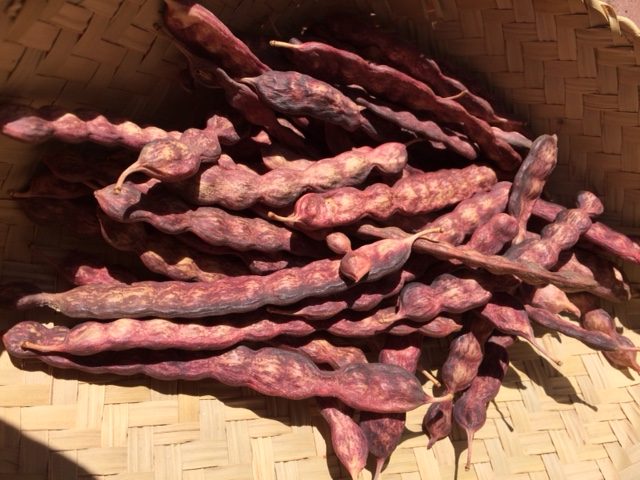
Some velvet mesquite (Prosopis velutina) have a rich raspberry color–Wish you could taste this one–We compete with the wildlife for them. (MABurgess photo)

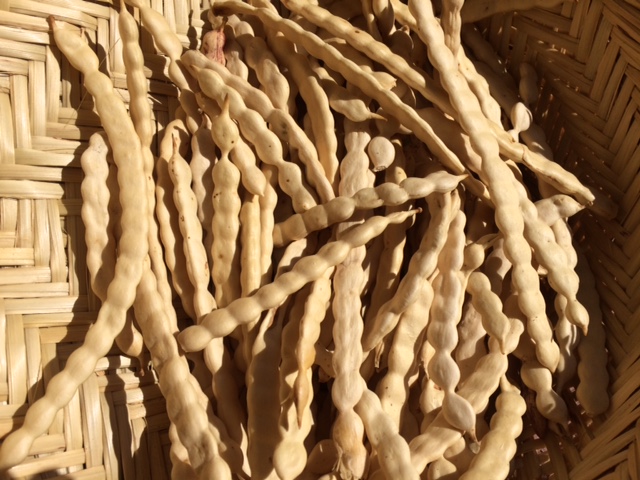
Plump pods of sweet velvet mesquite, full of pulp for making Bosque Butter. Every tree’s pods have different shapes and tastes.  Be choosy!–collect from the trees with the plumpest and sweetest pods. (MABurgess photo)


Mesquite orchardist, miller of primo mesquite flour, died June3, 2017


With a song of thanks for this desert super-food–and with thankful recollections of some amazing mesquite aficionados–I would like to share one of my favorite mesquite recipes.  This post about mesquite is a tribute to the “gotmesquite guy” Mark Moody who recently passed, and whose fabulous mesquite flour via farmers’ markets and NativeSeeds/SEARCH has fed many a happy desert-foods buff over the years.  (Check out my piece in the online EdibleBajaArizona for more about Mark.)

Mesquite “Bosque Butter” and “Bosque Sauce” a la Tia Marta

This delectable recipe for Mesquite Bosque (pronounced boss’kay) Butter was inspired by a crack team of Arizona-Sonora Desert Museum Docents in the 1970s -80s who assisted in our first Mesquite Harvesting Workshops, possibly the first ever done in English.  In particular I’m honoring the memories of docents Mike and Jean Mentus, Gerry Dennison, and Linda Stillman, who helped me invent this condiment and teach Museum members about it.

This recipe uses the whole dry pods freshly harvested–not milled meal (although you could enhance it with extra mesquite meal if you desire.)

RECIPE for Muff’s “MESQUITE BOSQUE BUTTER”:

You will need:  3 bowls(2 for straining, 1 for compostable fiber), 2 stirring spoons, tasting spoon, 1-2 colanders, 1 lg. saucepan for stovetop or solar oven, cheesecloth, electric mixer with pulse setting (Your grandmother’s osterizer is fine.)

Ingredients:

Approx. 2 qts mesquite pods, clean, mature, dry (preferably fresh off the tree)

Approx. 1 quart drinking water

2 pk sure-jell (or other fruit pectin, ca.3.5oz.)

¼ C sugar (or honey optional) [Sugar helps set the gel.]

½ C raw organic agave nectar

1-2 tsp ground cinnamon

1 T butter (optional)

juice of 4 Mexican limes (or 2 lemons)

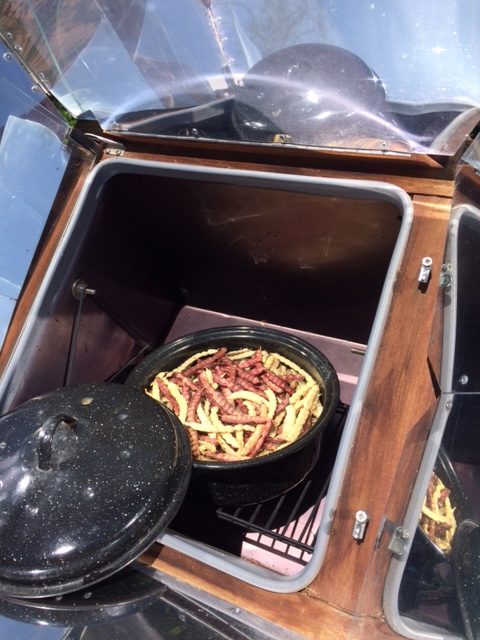
Washed pods, covered with drinking water, set in solar oven to cook (MABurgess photo)

Directions:

 1) Rinse mesquite pods until thoroughly clean of desert dust, and drain them.

2) Place pods in large saucepan with enough drinking water to cover. Add more water if 1qt is not enough to cover pods.

3) Simmer pods 30-40 minutes until fully softened. Softening time differs with dryness of pods.

4) Water will be sweet.  Through a colander over a bowl, drain pods, reserving ALL the liquid.

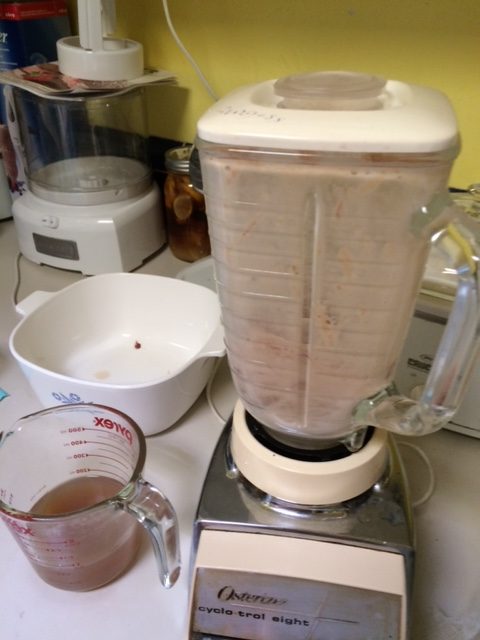
Cooked pods and reserved liquid being blendered

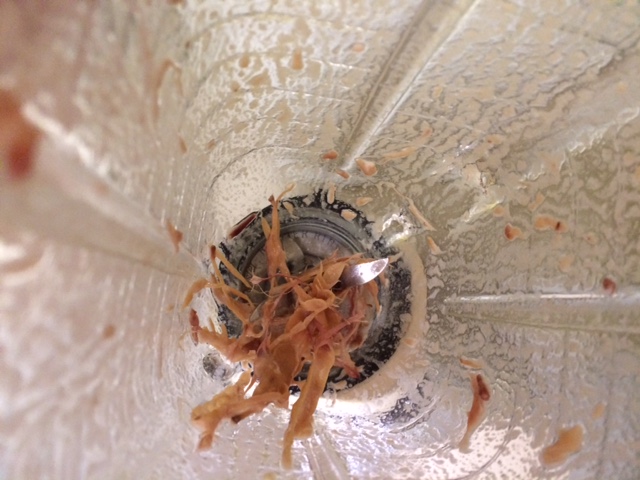
Check bottom of blender to remove all fiber from blade with each handful

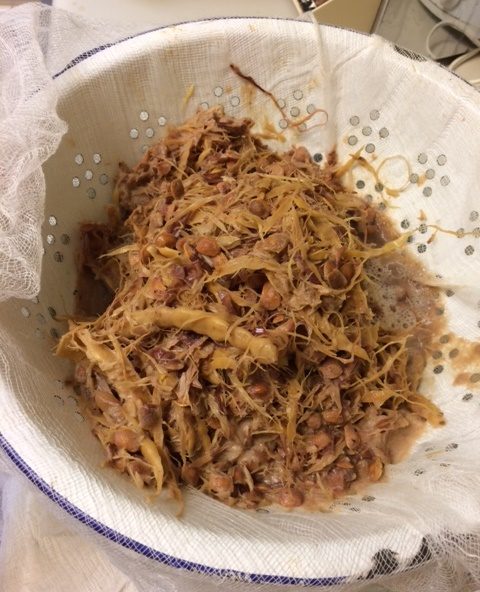
Cooked, blendered pods draining thru cheesecloth in colander

5) In blender, whirl softened pods–handful by handful, each handful with ¼ cup of the reserved liquid– with gentle pulses, 8-10 short pulses max for each handful of pods.

6) Into a cheesecloth-lined colander over a bowl, hand-remove the entire loosened juice, pulp, seed, and fiber mass after each handful.  Check blender blades each time to prevent burnout of motor, as pod fibers can easily bind up the works!

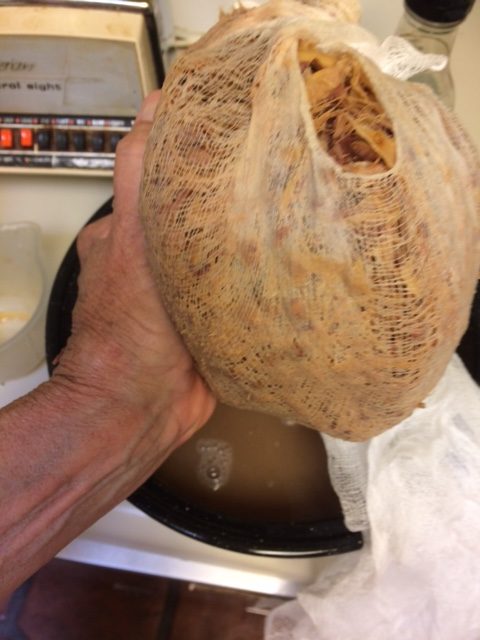
7) In the colander over the bowl, drain as much of the blendered pulpy liquid from the fiber as possible, pressing, squeezing, twisting it out with cheesecloth.  You might extract more if you squeeze the cheesecloth after each handful is poured from the blender.

Squeezing cooked, blendered pods thru cheesecloth to extract pulpy liquid

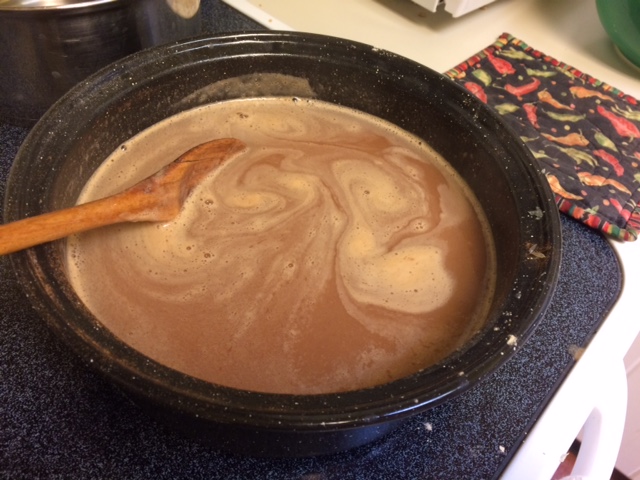
After adding all other ingredients,, boil the sweet pulpy liquid

8) Transfer the strained pulpy liquid to a saucepan.  Bring it to a boil.  Add lime/lemon juice, sugar, agave nectar, cinnamon, pectin, and butter, stirring all in smoothly.

9) The liquid mixture must be cooked down to concentrate it.  Simmer 30-45 minutes to desired texture or thickness.

10) Funnel the mixture into jars.  Cool down; refrigerate when cool.

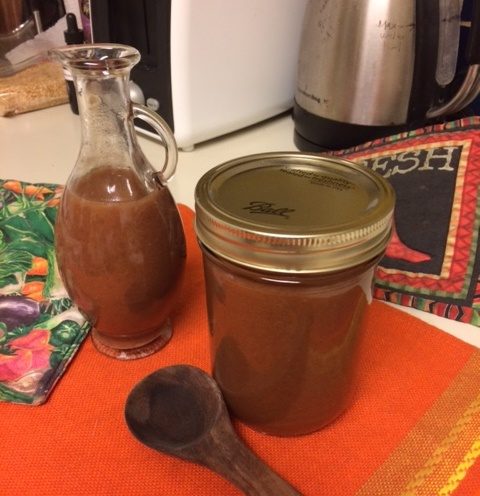
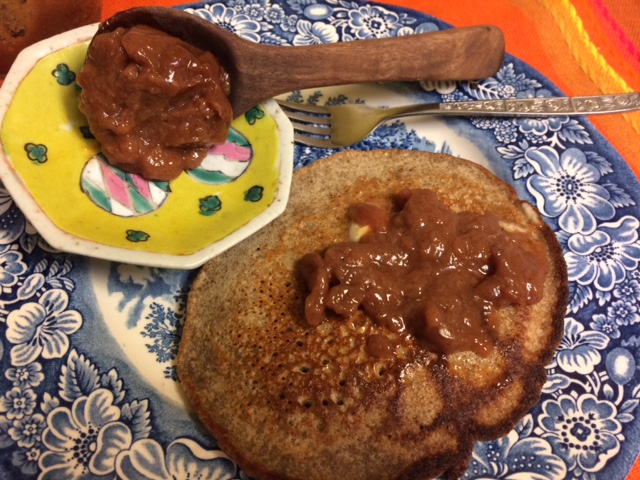
If it thickens it will be a delicious spread–like apple-butter.  If it does not gel it will be a fabulous mesquite syrup or sauce over pancakes, waffles, or ice cream!  If your mix has more liquid than pulp, when it thickens it can even be served as a very rich yummy pudding.

Mesquite Bosque Butter on buckwheat pancake–delish!

However it comes out, you will be enjoying the health benefits of mesquite’s complex carbohydrates and its unforgettable sweet and natural taste!  (Don’t forget to compost the leftover seeds and fiber—good nutrients for soil building.  Or, feed it to the birds in your “back forty.”)

Plan NOW and prep for future mesquite harvests!  Why not plant you own trees and enjoy their shade, their life-giving oxygen–and their nutritious food!  In the coolth of morning start digging a tree hole where you want future shade.  Monsoon time is a good time to plant, and there are Monsoon Plant Sales happening right now.  Three mesquite species are native to our Southwest region:  Velvet (Prosopis velutina), Honey mesquite (P. glandulosa), and Screwbean mesquite (P.pubescens).  All three make fabulous pod meal but the best for Bosque Butter are Velvet and Honey, as their pods can be plump and full of high-carb pulp.  For the most local varieties of mesquite visit Desert Survivors Nursery (desertsurvivors.org).   The Tohono Chul Park’s Monsoon Madness Plant Sale Friday-Saturday, July 28-29, 2017, will have several expert local growers represented (www.tohonochul.org).  NativeSeeds/SEARCH has mesquite meal in stock and expects the most recent local harvest to be available soon.  (NSS’s Monsoon Plant Sale is Fri-Sun, July 28-30, for monsoon gardening plants, http://www.nativeseeds.org).

Happy harvesting–happy tree-planting–y buen provecho! de Tia Marta.

Savor Homemade Corn Tortillas

Carolyn here today to expound on the glories and benefits of homemade corn tortillas. With inexpensive corn tortillas wrapped in plastic available everywhere, why bother to make your own? Same reason to make your own bread: flavor and nutrition. The fragrance and flavor of a tortilla right off the grill is is warm and homey and the perfect base for a simple meal.

Homemade tortillas over a fire at Linda’s ranch in Mexico. (photo by Linda McKittrick.)

Corn tortillas are made with masa harina, or corn that has gone through the nixtamal process with lime and is then dried and ground (or maybe ground and dried). If you want to start from scratch with the corn,  Savor blog sister Amy can lead you through it in a previous  post here. 

Back in April, public radio had an interesting piece on a Mexican cook who maintains that tortillas made from heritage corn are vastly superior to those made from commercial bagged masa. You can read the very interesting article here.

The problem is that corn alone, whatever corn you use,  isn’t all that nutritious, lacking protein and some other nutrients. As with all foods, combining ingredients can lead to more balanced nutrition.

Grated turmeric root adds nutrition and a lovely golden color to the tortillas.

I added both garbanzo flour and amaranth flour as well as some grated turmeric to the masa  for some tortillas I made recently and the results were delicious. (See recipe below). Amaranth is high in protein and the amino acid lysine. You could also use quinoa flour for more nutrition.


Once you have the dough, you need to shape it. In Tucson, traditional Mexican cooks pat out tortillas in perfect rounds. It’s an art. Further south, cooks use a tortilla press, either handsome wooden ones or the more utilitarian metal.

Hermina Serino uses a wooden tortilla press in her booth at the San Phillips Farmers Market in Tucson.

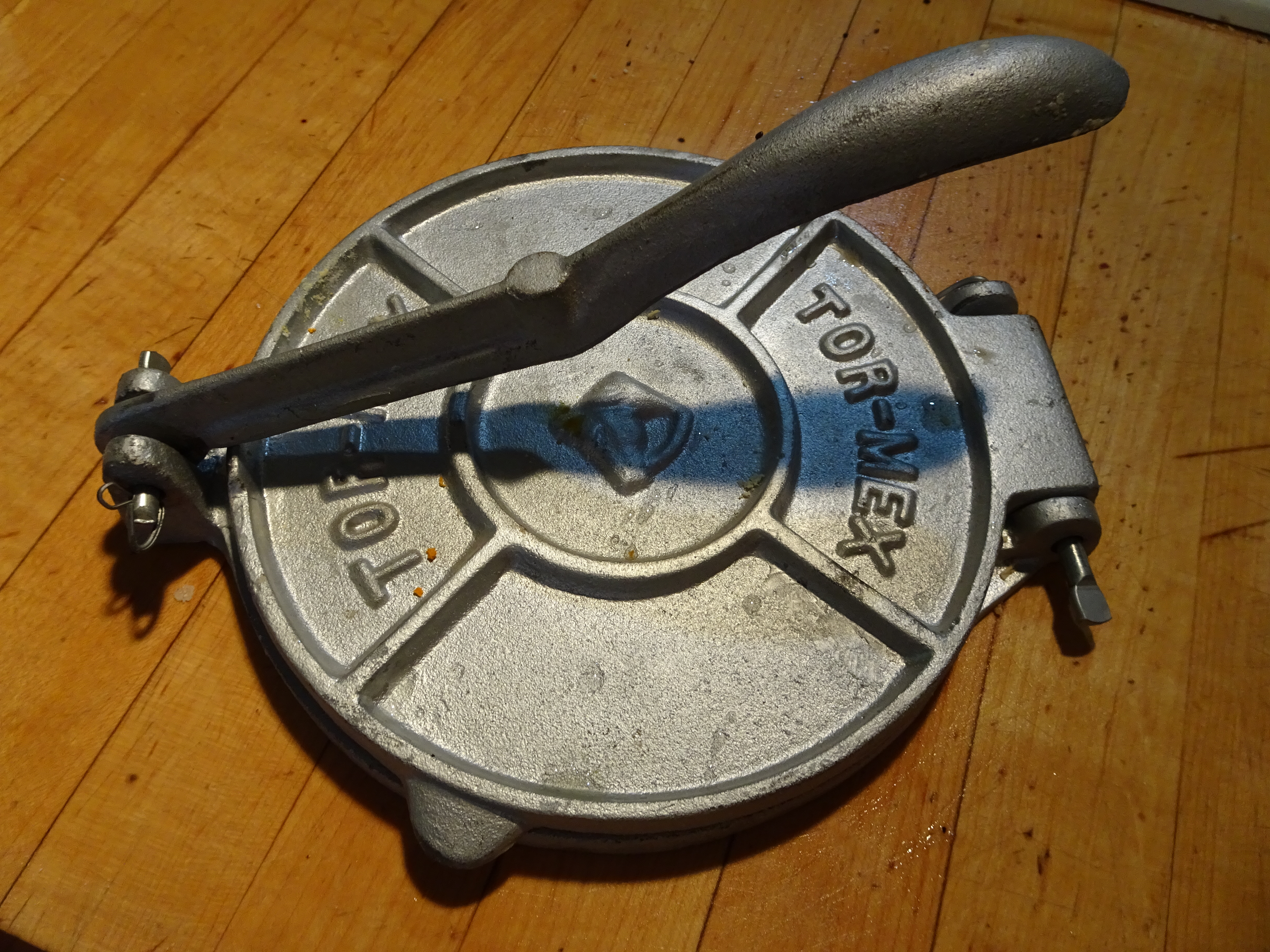
Plain metal tortilla press.

The trick to getting the dough off the press in one piece is to use pieces of plastic below and on top of the ball of dough. The other trick, which I learned in a cooking class in Oaxaca, it to peel the tortilla up from the hinge end, not the lever end. The hinge end is just enough thicker to help you peel it without tearing.  Once you have it in your hand, drop it directly onto a hot griddle or frying pan. Let it cook for a few seconds, then flip and do the other side.

Peel the tortilla up from the hinge end of the press.

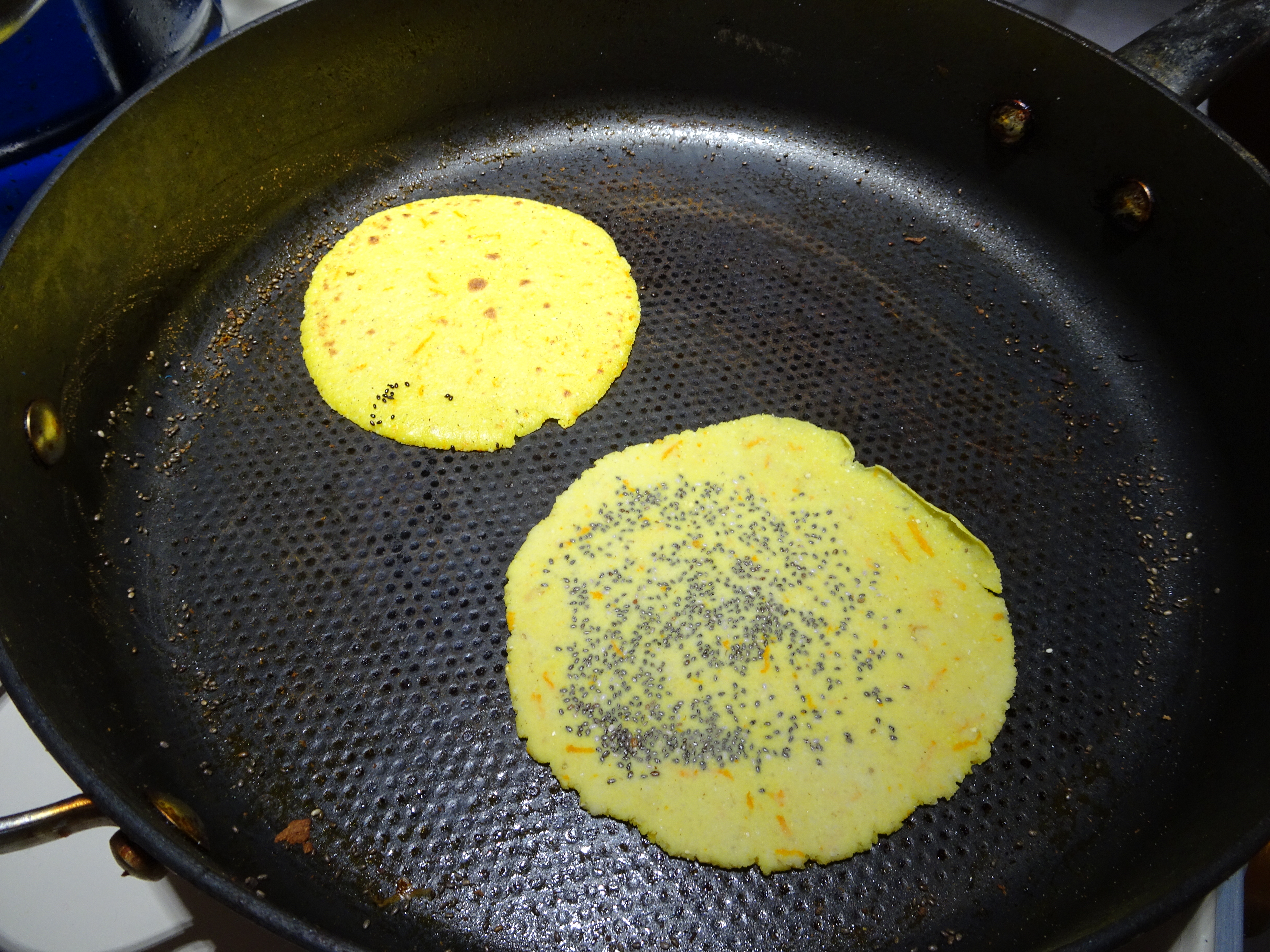
For even more nutrition, you can add a sprinkling of seeds (I tried both chia and barrel cactus) to the dough before pressing the tortillas.

Sprinkle some chia seeds on the tortilla dough before pressing.

Tortillas cook quickly on a well-seasoned griddle. You can see the gratings of turmeric in this picture

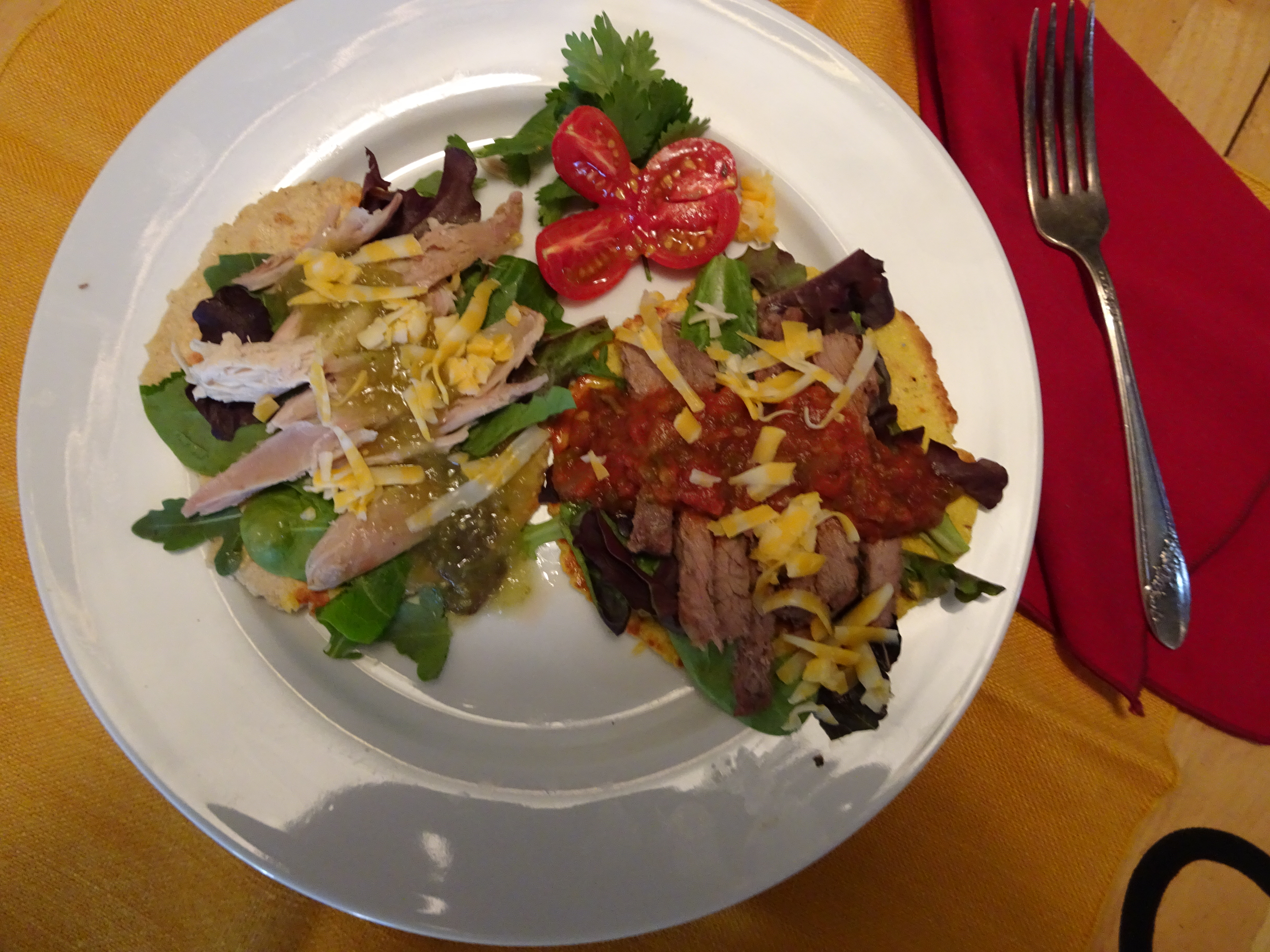
As you finish the tortillas, store them in a folded tea towel until ready to serve.  They are fine as they are, or if you wish to cook further, you can saute in a little bit of oil. Top with fillings of your choice: meat or vegetables and beans.

A simple meal includes one tortilla with chicken and green salsa and another with grilled beef with red salsa.

More Nutritious Tortillas

3/4 cup dried instant masa

1 tablespoon garbanzo flour*

1 tablespoon amaranth flour*

1/2 teaspoon salt

1 tablespoon grated fresh turmeric or dried turmeric (optional)

1/2 cup water (approximately)

First cut a plastic bag into two large squares to use on the tortilla press. Mix the flours and the salt in a medium bowl. Add half the water and mix. Add more water slowly until you get a dough that just sticks together. You don’t want it too soft. This takes a little practice. If you add too much water, just sprinkle in a little more masa. Roll the dough into balls of about 2 tablespoons each. Heat the well-seasoned frying pan or griddle. Press a tortilla and transfer to grill. Don’t worry if every one doesn’t turn out great. Just rebundle the dough and try again. Makes 6 to 8 tortillas.

(*Purchase these flours in health food stores or make your own by grinding the dry garbanzos, amarath or quinoa until fine in a coffee or spice grinder.)


Carolyn Niethammer writes about edible wild plants and Southwestern food. Read more at www.cniethammer.com.  Buy her books at the Native Seeds/SEARCH retail store or website or on Amazon.


Summer Solstice Celebrated with Saguaros

On Summer Solstice morning, a white-wing dove coos to the saguaro fruit to hasten its ripening, and takes its first taste. When red fruit opens, doves will dip in for a luscious meal and come up with red heads!  (photo JRMondt)

Have you seen it yet?–the rare red-headed white-wing dove of the desert?  “Red-headed Ok’ko-koi” is only around for a short while during the bahidaj.  He is the herald of saguaro fruit harvesting season.

These longest days of the year (and the hottest!!) are the Sonoran Desert New Year of the Tohono O’odham, the Desert People. It is the beginning of “action time” in the desert, tho’ it may look blistered and dead from inside an air-conditioned space.  Lots is happening.  Listen to sounds of quail and dove at dawn; watch scurrying lizards at noon; sense bats at night.  Desert life out there is pollinating flowers and dispersing seed in prep for monsoon moisture.

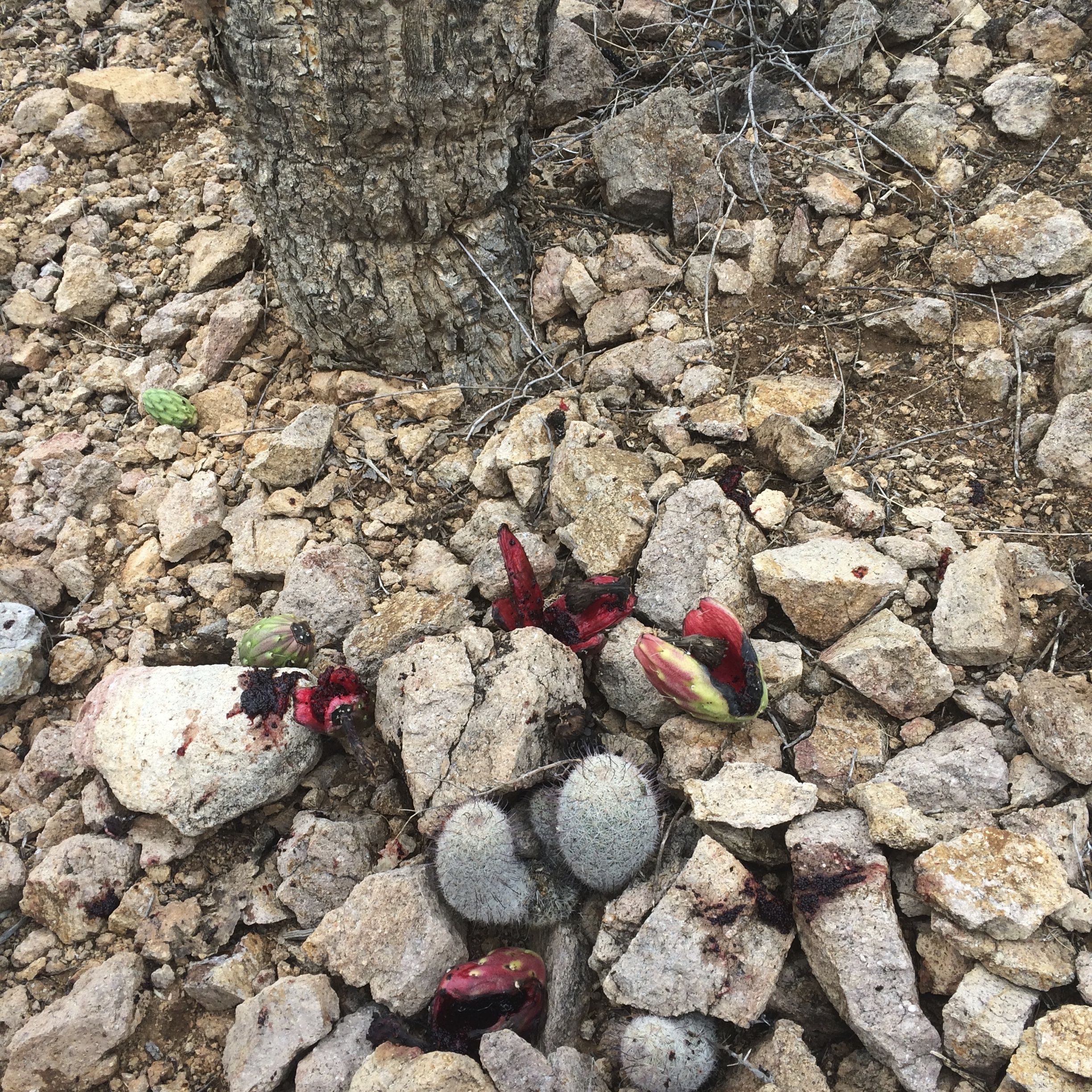
Fallen bahidaj on the rocks will be critter food.  For people, catch it before it falls. (MABurgess)

Tia Marta here to share ideas about the giant saguaro’s gifts of good food to its fellow desert helpers.  With San Juan’s Day celebrated June 24, I pause to also acknowledge the birthday of my dear friend and mentor, Juanita Ahil, who first led me into the desert on an early June morning to introduce me to some amazing desert treats, discussed in this post.

Pick the fruits that show a blush of rosy red on the top.  (MABurgess photo)

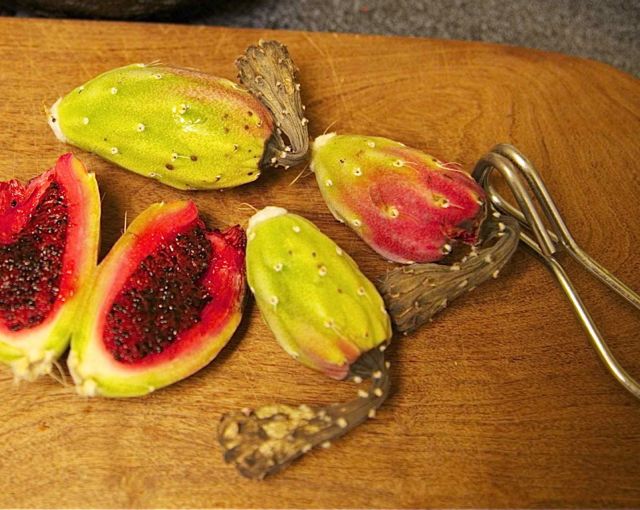
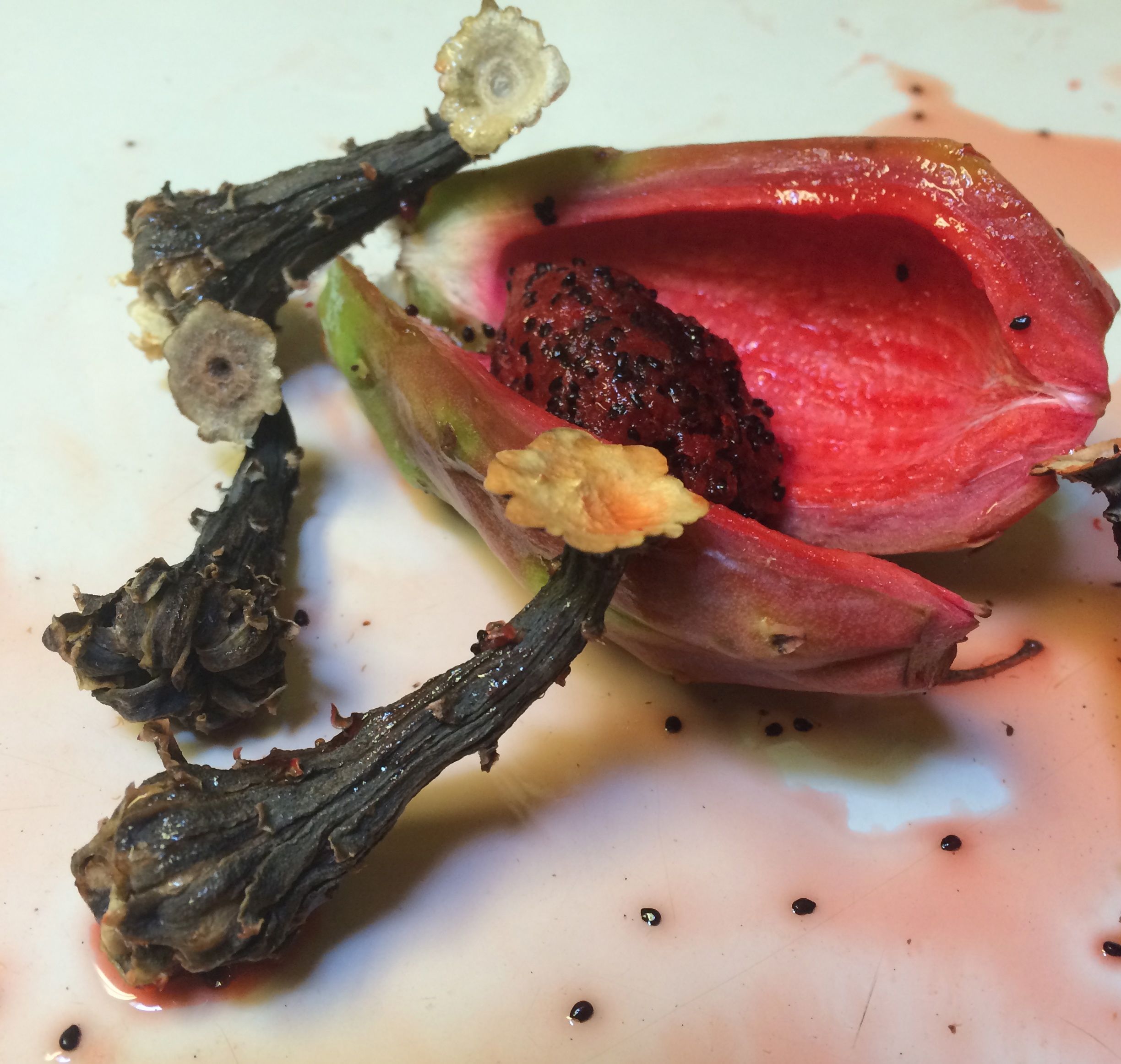
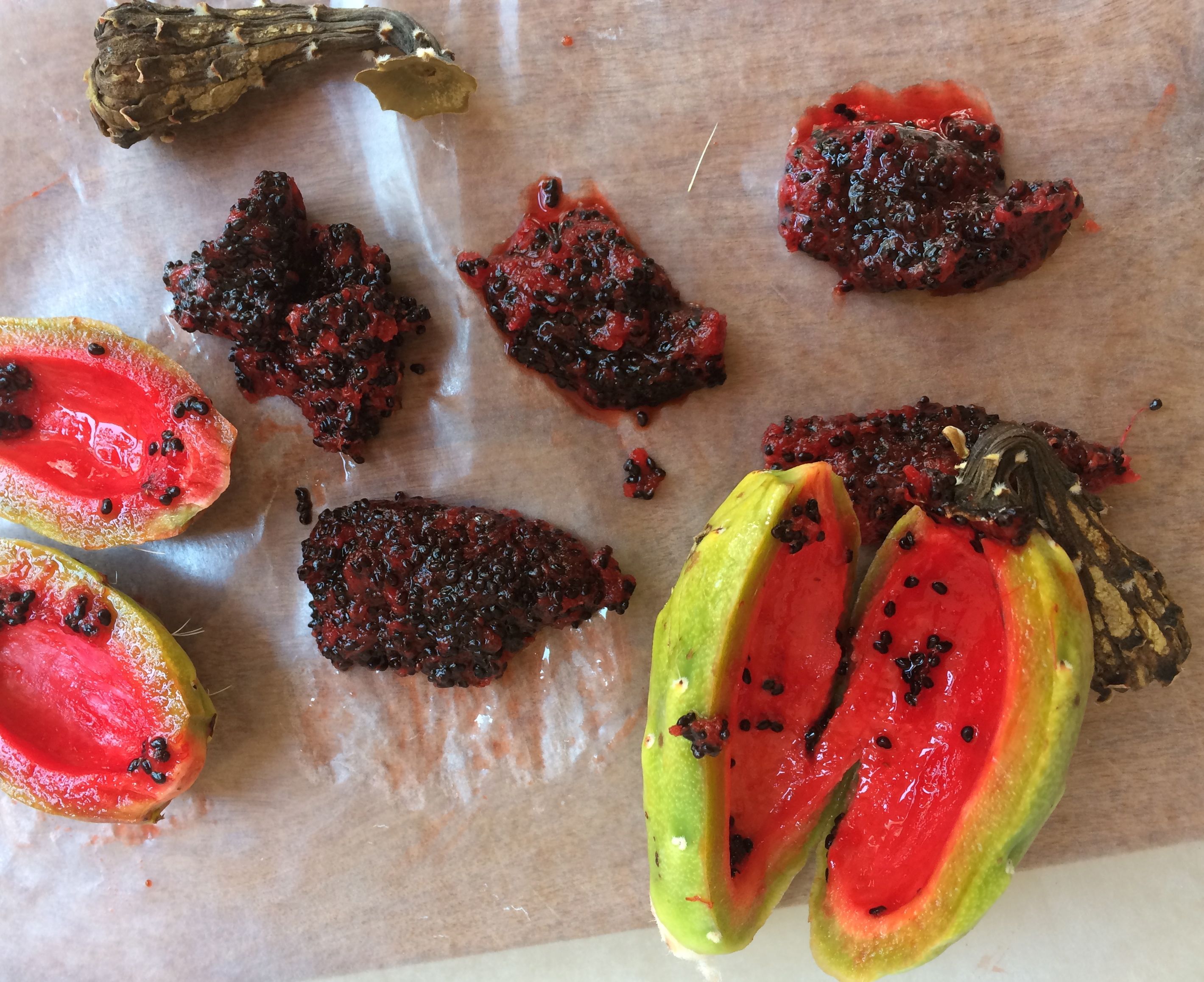
A saguaro fruit, opened with its sharp “pizza-cutter” calyx, is filled with sweet raspberry-red pulp and crunchy black seeds. (MABurgess photo)


Juanita would scoop out the nutritious pulp from thick fruit rinds–with thanks and blessings.  We’d take several juicy bites before filling buckets of bahidaj to make syrup.

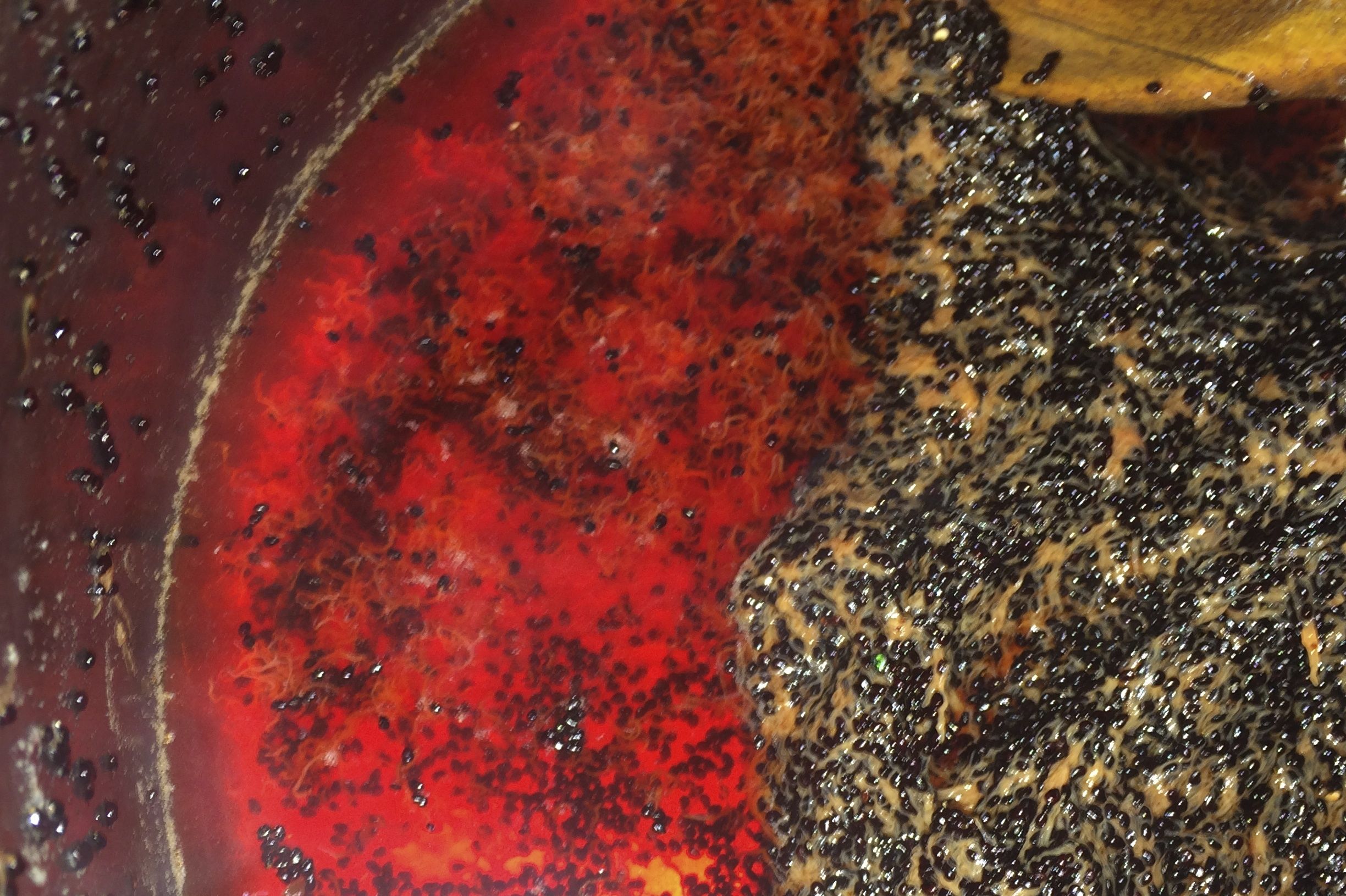
Juanita would add water to the pulpy fruit to loosen the mass, then strain out seeds before concentrating the sweet water to syrup. (MABurgess photo)


Over her open fire, she would stir a pot full of fruit and water until the water turned red, then strain the mass through a basket-sieve, saving the seed for other purposes. (See blog-sister Carolyn Niethammer’s post on “Black Beauty Wafers” of saguaro seed.)  After sieving, it was the long process of boiling down the sweet water to a dark syrup–like making maple syrup.  Don’t be surprised if you see Bahidaj Sitol selling for what looks like exorbitant prices; consider the time it takes to make!  Juanita would contribute a share of her hard-produced syrup to her Tohono O’odham Community for fermenting into wine for the rain-ceremony, with prayers for the desert’s rebirth.  Surplus syrup was so concentrated, it could be kept unrefrigerated, carrying summer’s sweetness into the winter.

Here are some delectable ideas for cool, super-simple desserts with saguaro syrup:


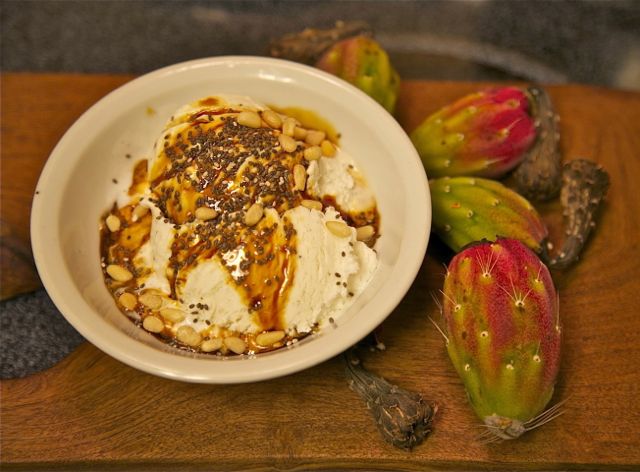
Muff’s “Sonoran Melba” topped with pine nuts and chia seed (JRMondt photo)

Directions for Muff’s SONORAN MELBA WITH PINE NUTS AND CHIA

Over a serving of vanilla or vanilla-bean ice cream, pour 1-3 tsp pure saguaro syrup (bahidaj sitol).  It doesn’t take much, as it is so rich!  Sprinkle top with 1/2 tsp chia seed and 1 Tbsp of pine nuts (shelled).   Taste and go nuts in ecstasy!

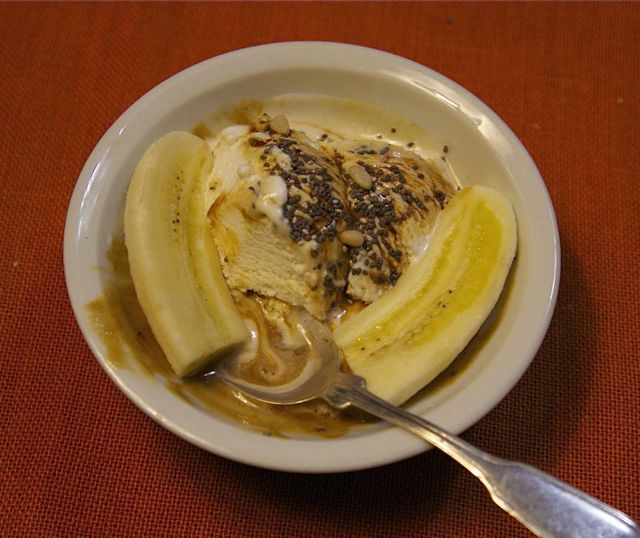
Rod’s “Saguaro Split”–topped with saguaro syrup, seeds and nuts (JRMondt photo)

Recipe for Rod’s SAGUARO SPLIT:

Divide a half banana in half longitudinally. Serve a big scoop of ice cream in between–any flavor– like chocolate chip or French vanilla.  Top with saguaro syrup, seeds and nuts of choice.  [Here the “lily is guilded” for sure.  Who needs a cherry on top when you have the rare treat of saguaro syrup?!]

Setting out fresh bahidaj pulp to dry on wax paper. (MABurgess)

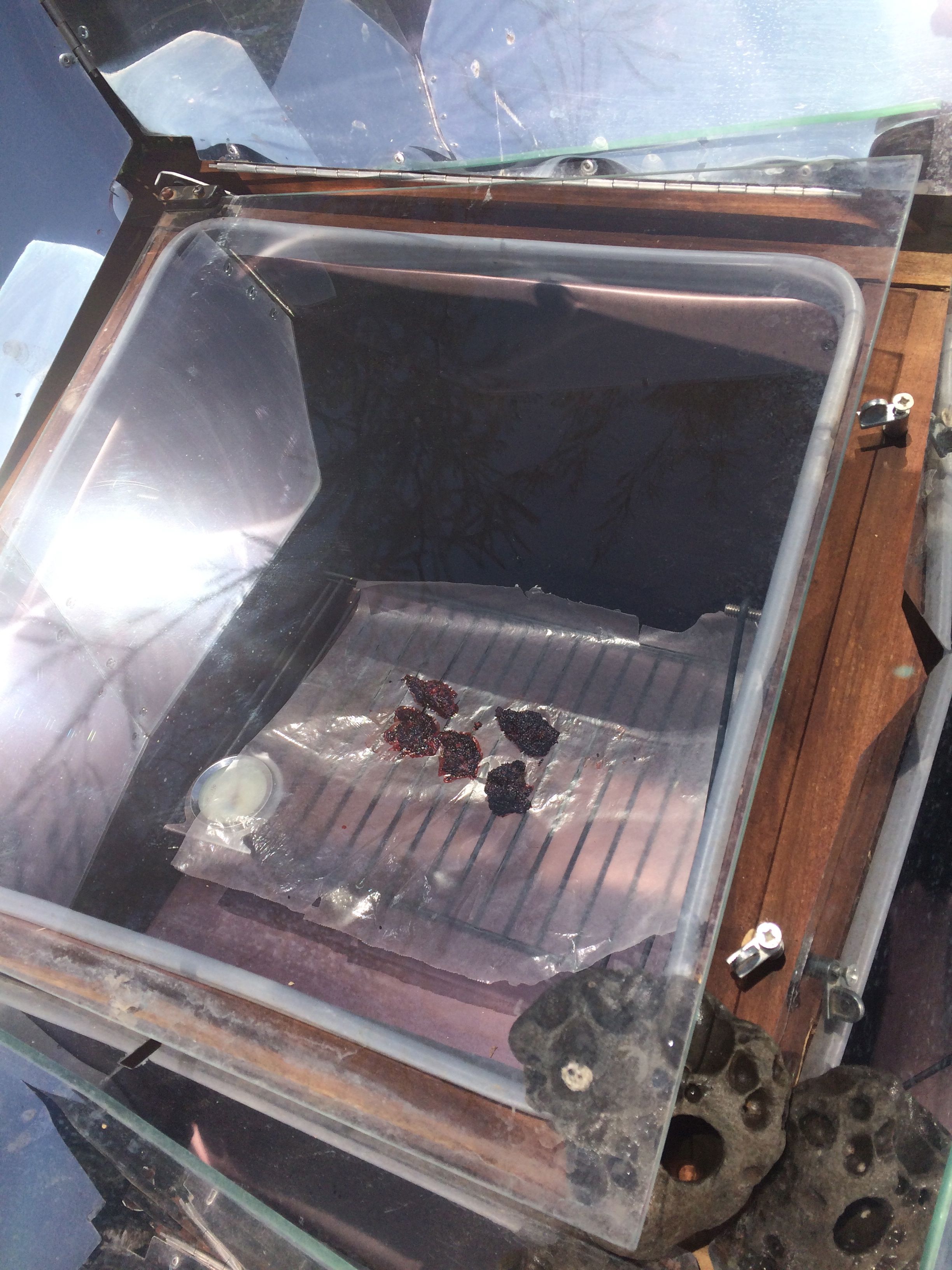
Try dehydrating saguaro fruit in a solar oven with the lid partially open to allow moisture to escape. It doesn’t take long. Note the rock holding the oven cover open.(MABurgess photo)

I also love to make chuñ–the dried bahidaj fruit which you can sometimes find hanging on the branches of a palo verde, the nurse tree next to the saguaro where fruit has fallen.  Scoop out the pulp from its rind, place blobs on wax paper, dry them outside under a screen or in your solar oven.  Eat and enjoy chuñ as a totally healthy snack; it is high in complex, slowly-digested sugars, vegetable protein and healthy oils in the seeds.   Or, get creative with chuñ–as in the following recipe:


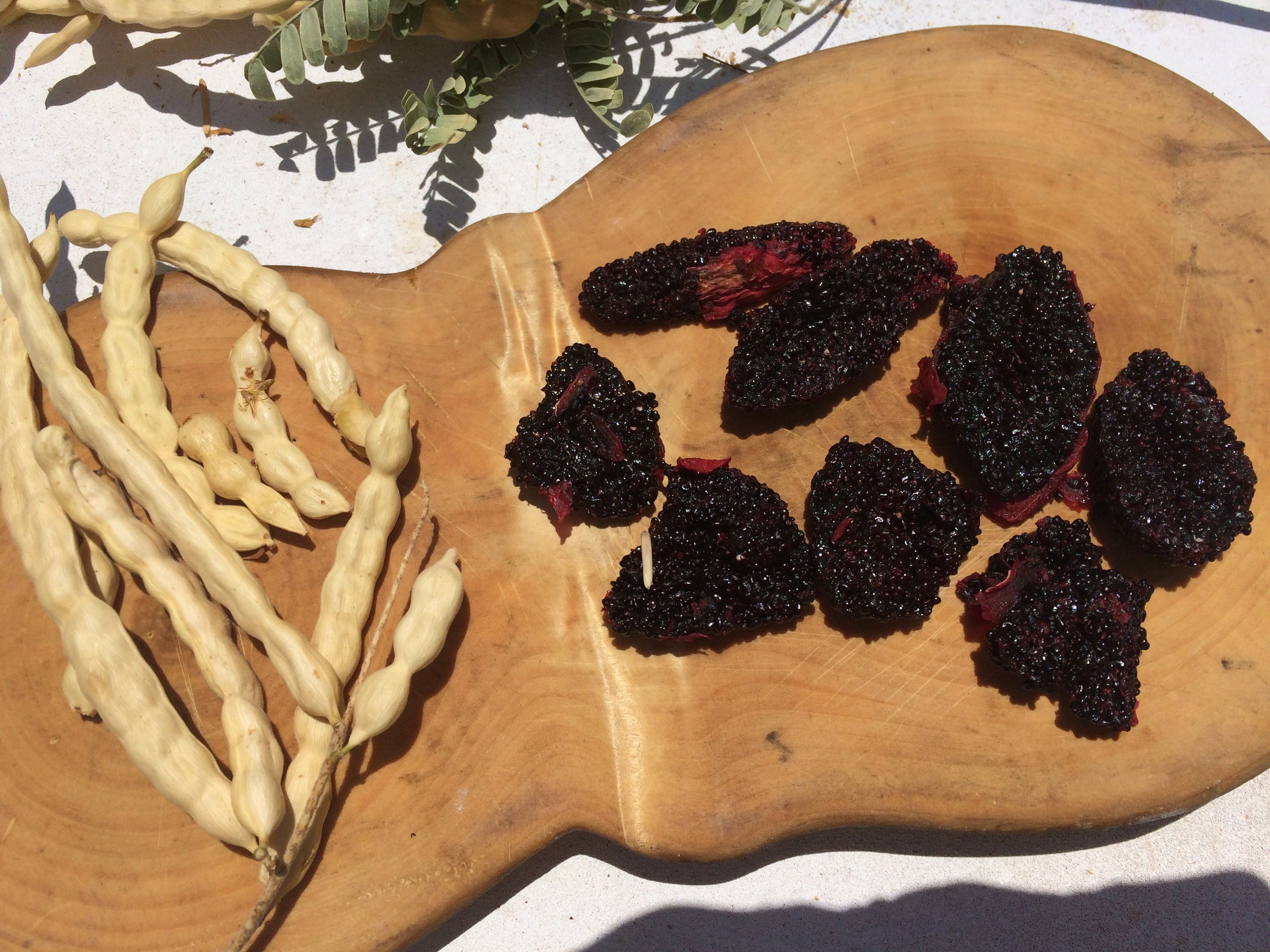
Sweet chun dried in the sun is even better than figs! (BTW–Now– in the dry heat of Solstice-time before the monsoons–is prime time to harvest mesquite pods too!  Check out desert harvesters.org for more info.)  (MABurgess photo)

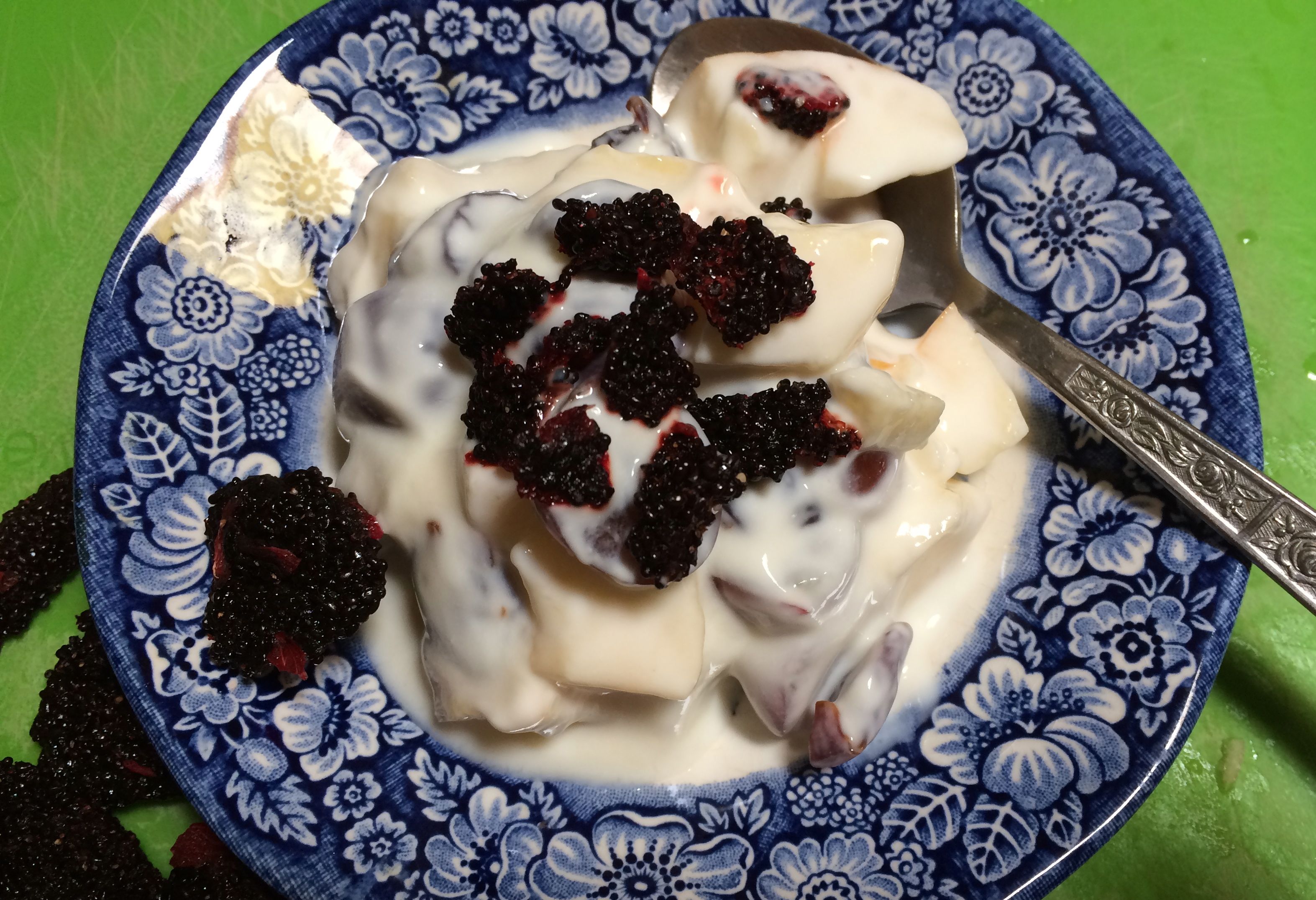
Recipe for Tia Marta’s JUNE CHUÑ healthy fruit salad:

1/2-3/4 cup diced apple (approx 1 small apple diced)

1/2 cup organic red grapes cut in half

3 Tbsp dried cherries, cranberries, or chopped dried apricots

1/2-2/3 cup organic plain lowfat yogurt

1-2 tsp agave nectar (optional, to taste)

1/4 cup chopped dried bahidaj chuñ

Mix all ingredients except chuñ ahead and chill.  Sprinkle some little chuñ chunks on each serving as topping. Serves 2 or 3.  This is fancy and sweet enough to be used as a dessert. Enjoy the natural complex carbs, sweet nutrition, and delightful crunch!

Cool “JUNE CHUN”–a fruity and crunchy salad or dessert (MABurgess)

So, Happy Desert New Year!  And happy harvesting in the coolth of early summer mornings, rejoicing in the gifts saguaro gives to its fellow desert-dwellers–from the white-wing doves and ants to us two-leggeds!

[If you are beyond the Sonoran Desert and want to try some of these desert delicacies, you can contact http://www.tocaonline.org (website of Tohono O’odham Community Action, Sells, AZ) or http://www.nativeseeds.org (NativeSeeds/SEARCH at 3061 N Campbell Ave, Tucson, AZ; or 520-622-5561) to order them.  Many other traditional desert foods are available at http://www.flordemayoarts.com.]

Braving the heat, inviting the monsoons and prepping for summer planting, NativeSeeds/SEARCH will be celebrating San Juan’s Day at the NSS Conservation Farm in Patagonia, AZ, this Saturday, June 24, 2017, 11am-3pm.  Bring a dish for the pot luck and a spray-bottle of water for blessings.  For info call 520-622-0830.


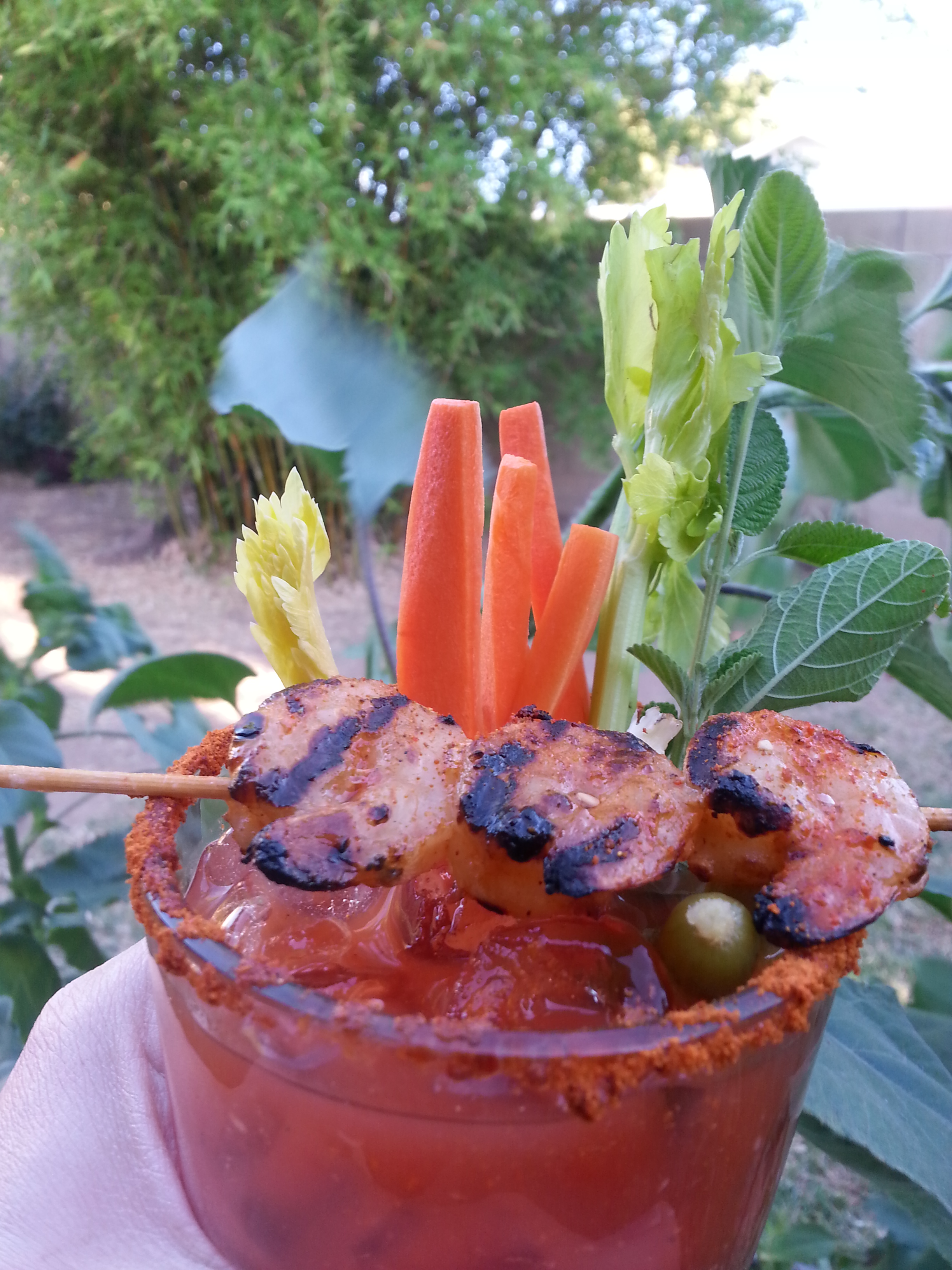
Bloody Mary with Grilled Pipián Mole Shrimp Skewers

Amy here, reporting a drink, or really a light summer meal, which turned into a backyard party. My sister Laura was so inspired, and we benefited. The photos and recipes are hers. Thank you!!!!!

We both love Pipián Picante, and so that’s the mole powder she used, but other Mano y Metate varieties would be great, so use what you have and what you like.

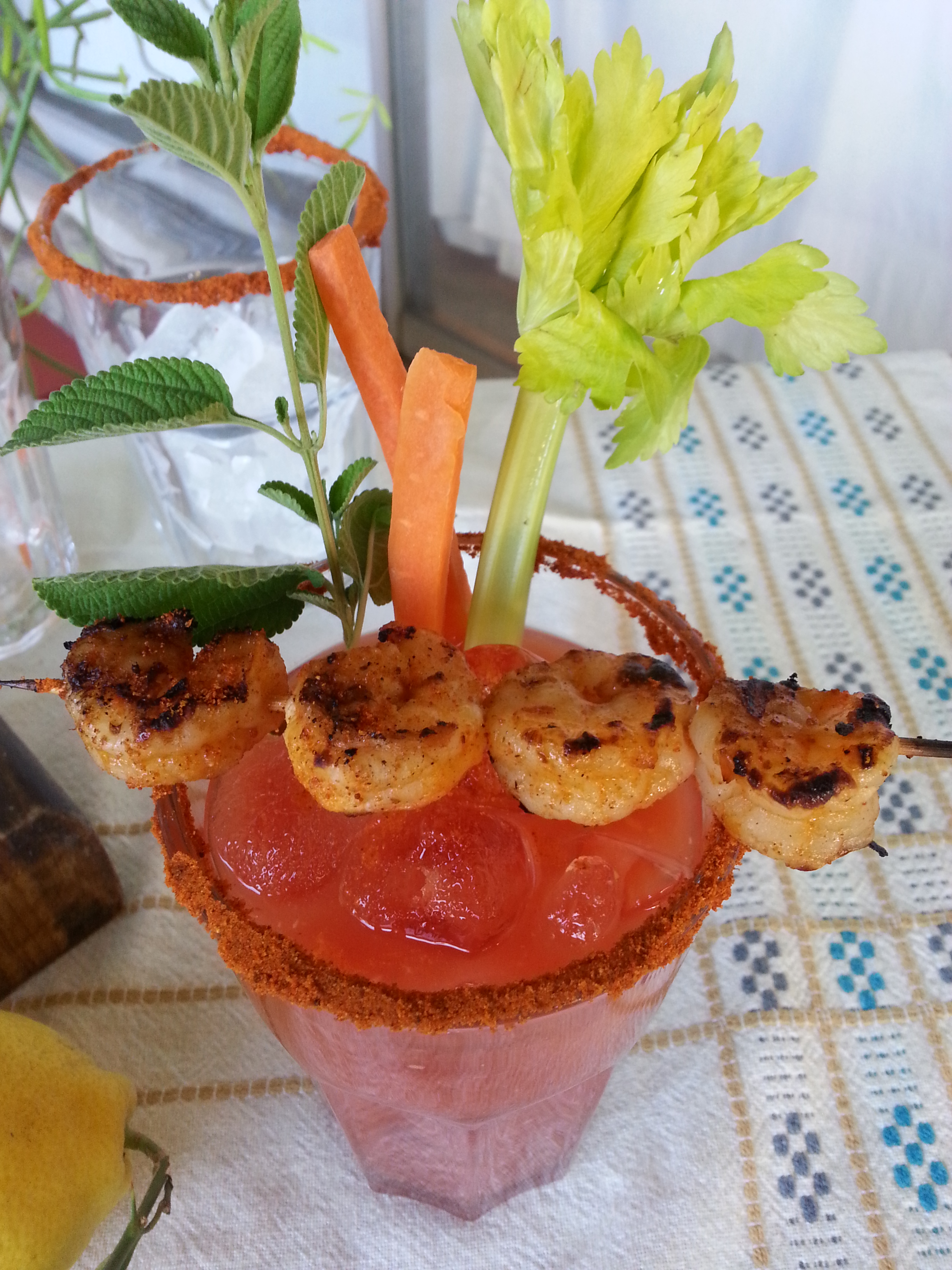
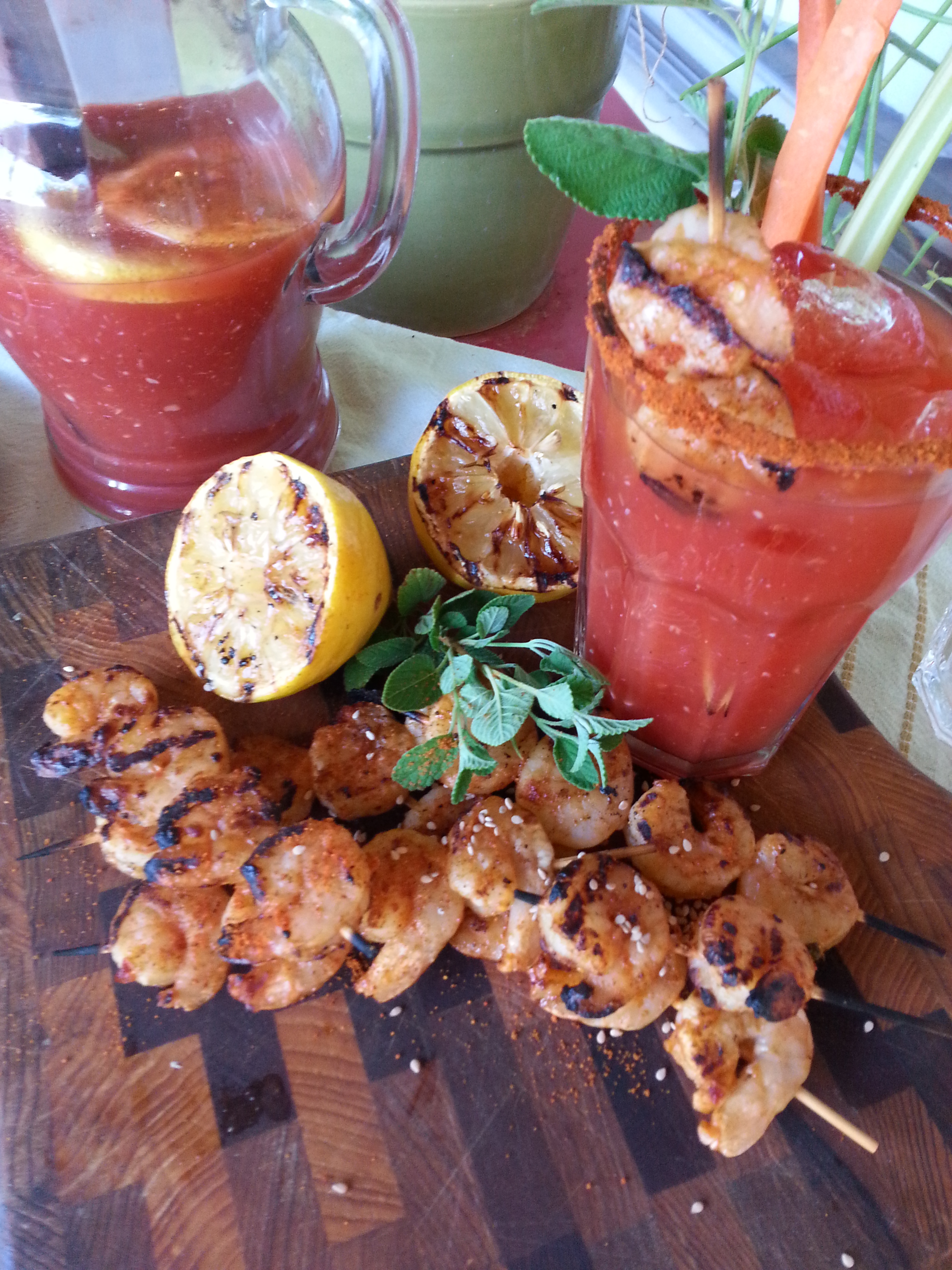
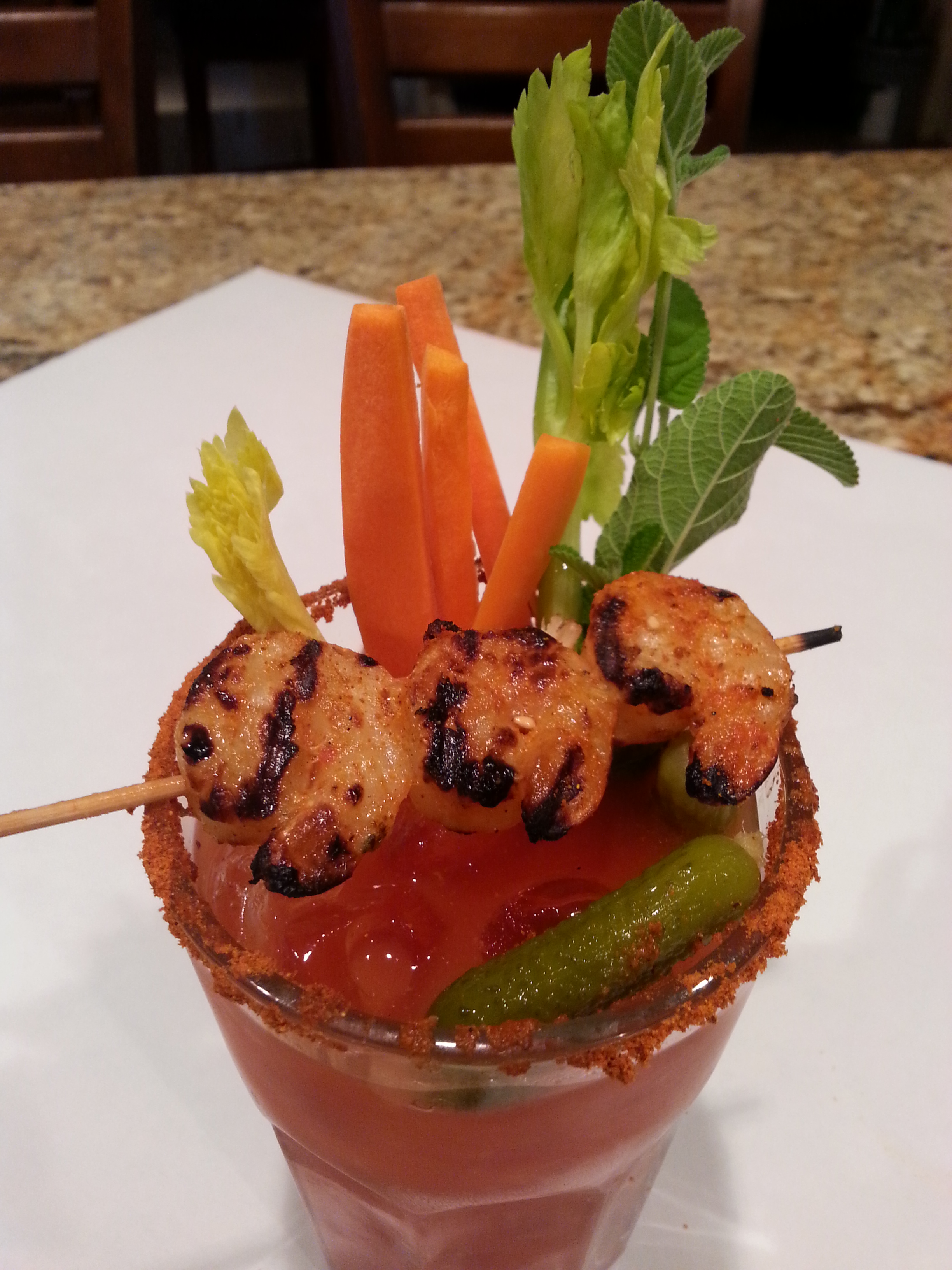
Add a pinch of mole powder to your favorite Bloody Mary (vodka) or Maria (tequila) recipe, with or without the alcohol. Laura’s recipe is at the bottom of this page. Then rim the glasses with the mole powder as well. Finally, garnish the drink with skewers of grilled shrimp, marinated with mole powder, crunchy veggies and a sprig of Mexican oregano.

This grilled shrimp cocktail serves four as an appetizer. For a light summer meal, serve more shrimp skewers per person and a salad.

Start by soaking bamboo skewers in water.

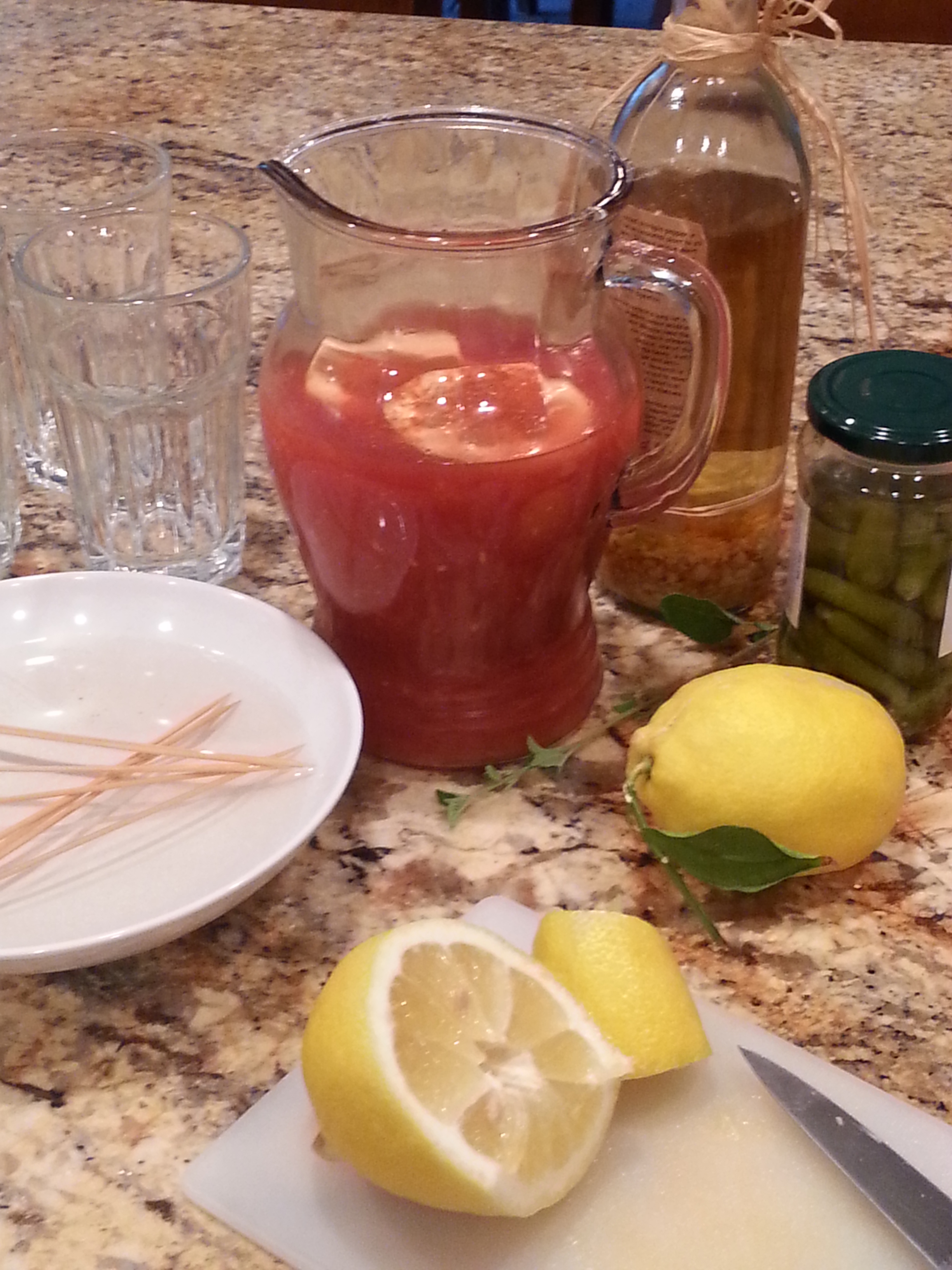
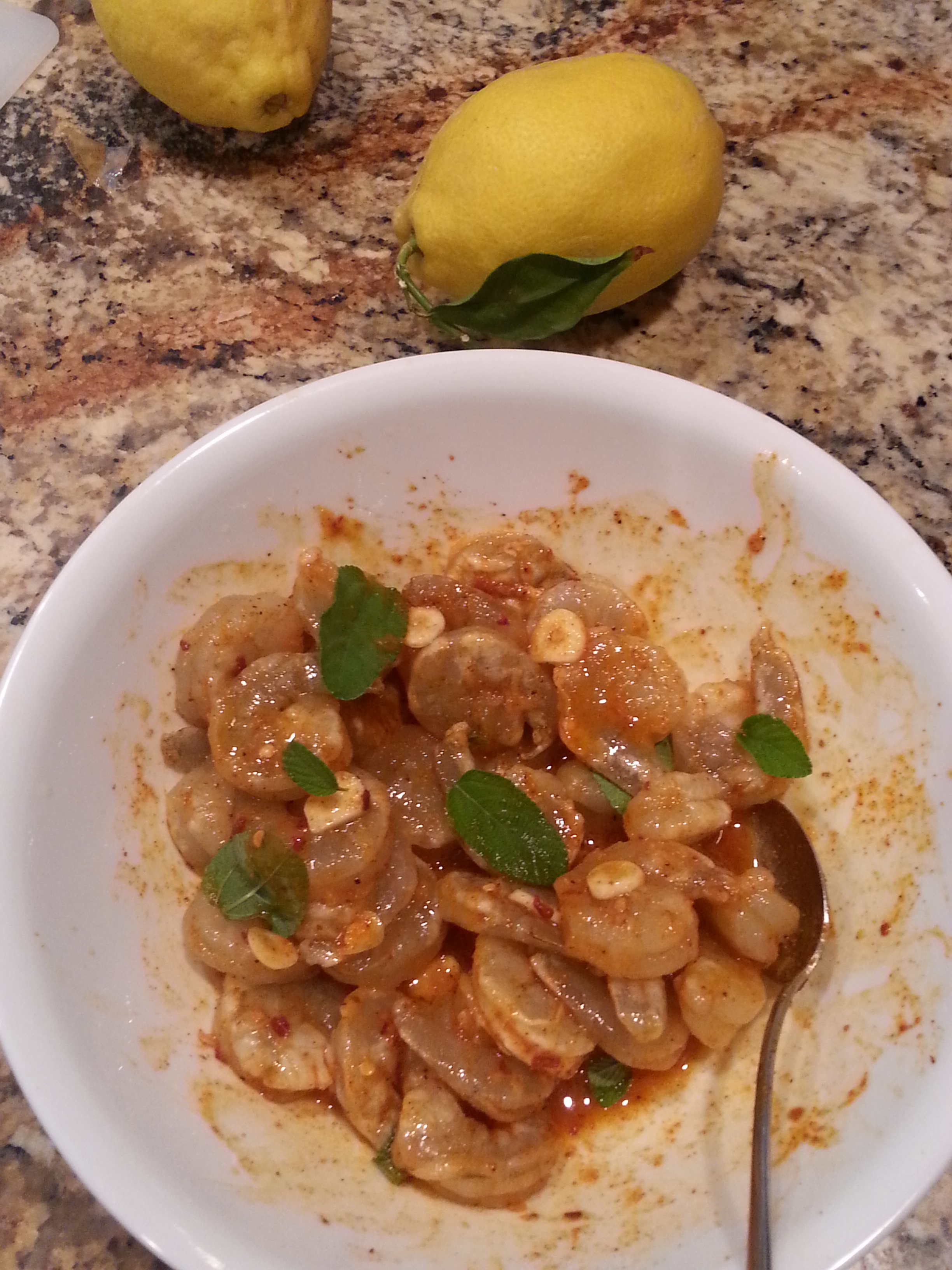
Marinate shrimp for at least 15 minutes. While the shrimp marinate, make bloody Mary mix.

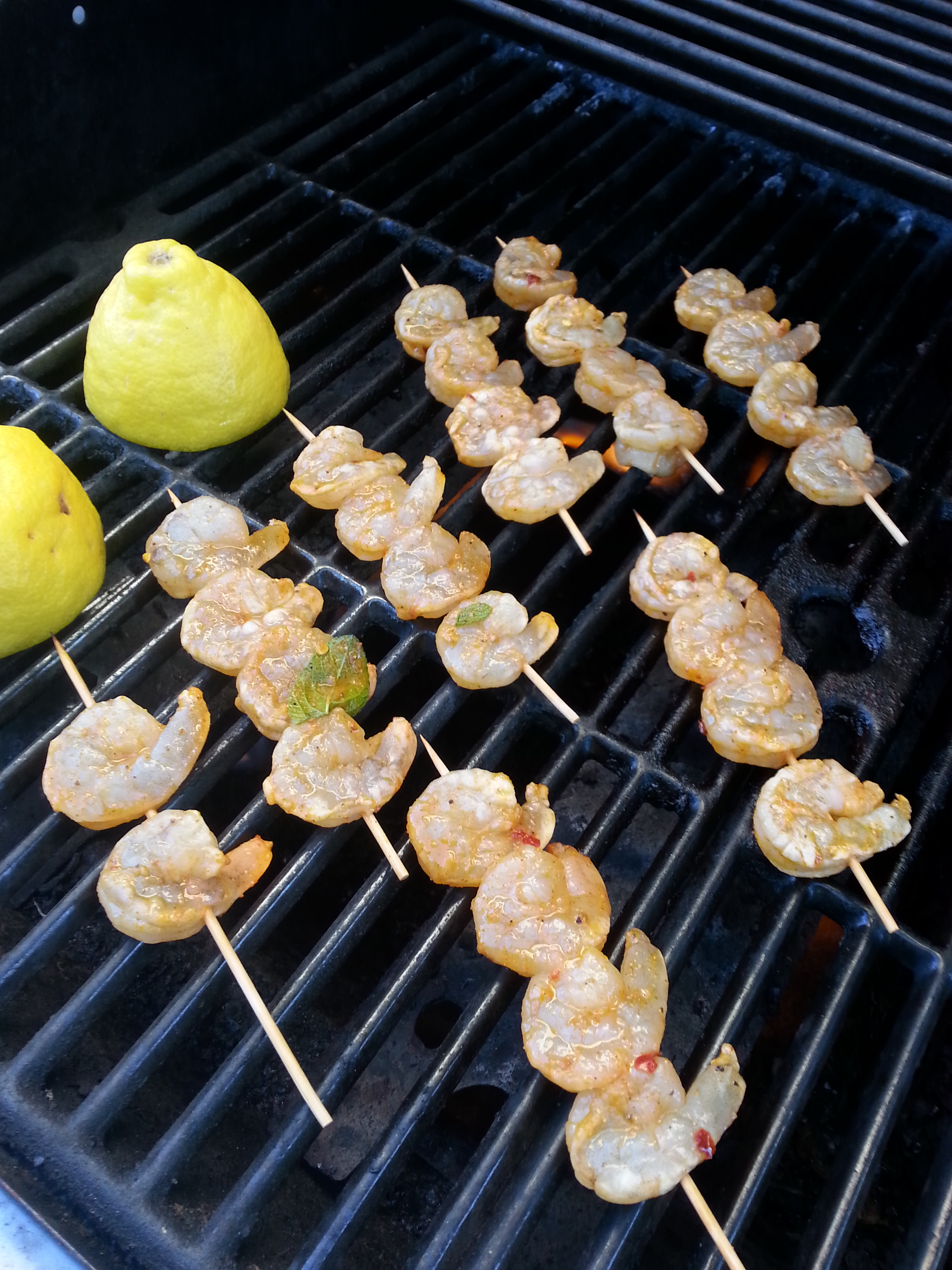
Start the grill and cook the shrimp and lemon.

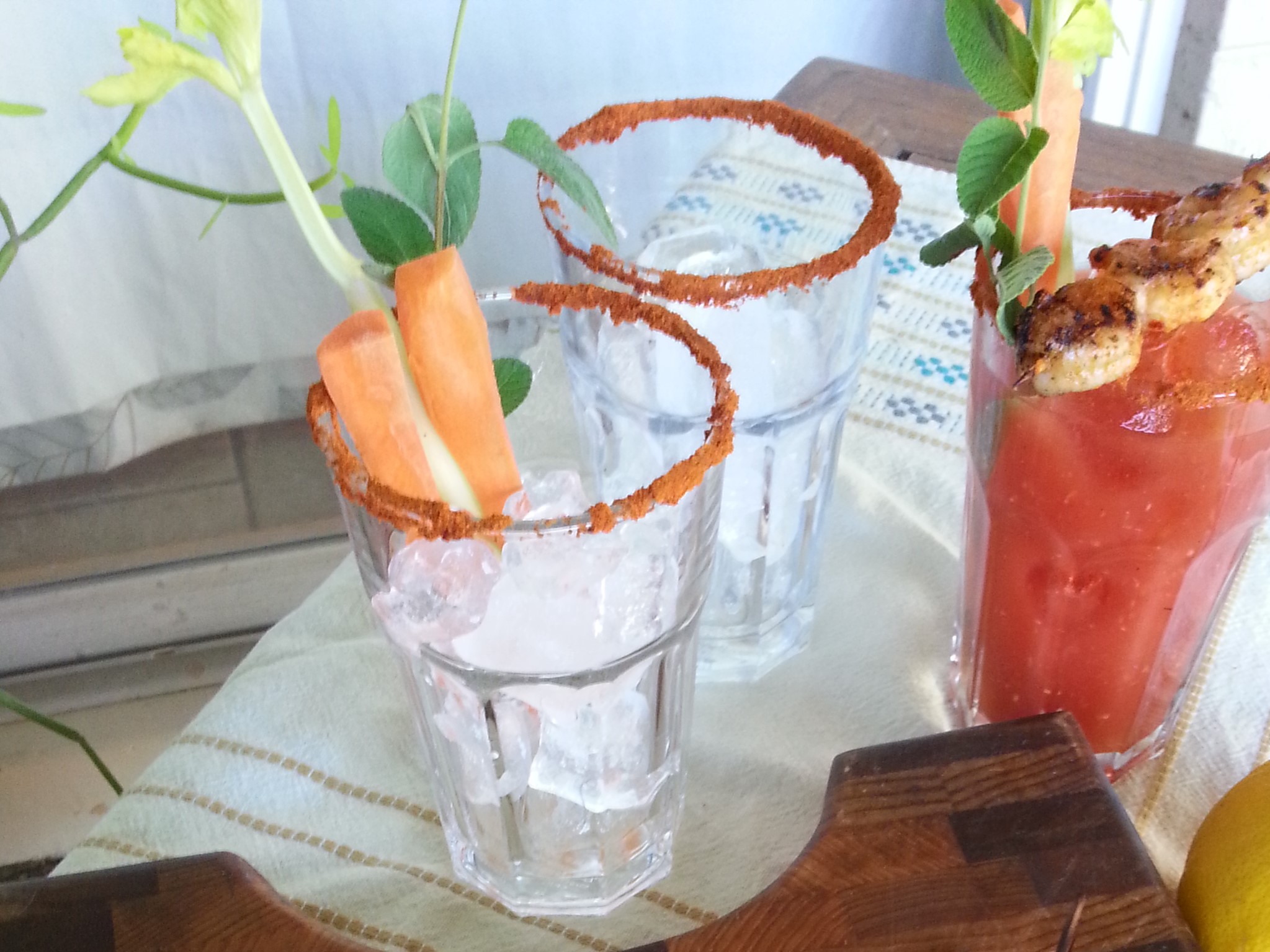
Next, wet the rims of the serving glasses with lemon juice, then dip into mole powder.

Top the grilled shrimp with a squeeze of the grilled lemon, another pinch of mole powder and sesame seeds. Assemble the drink, add garnishes, and top with shrimp skewers.

At sunset, take outside and enjoy!

Grilled Pipián Mole Shrimp Skewers

  • 3/4 oz. Mano Y Metate Pipián Picante Mole power (reserve some for garnish)
  • ½ pound raw/peeled and deveined shrimp (approx. 40 count per pound)
  • 1 large garlic clove, sliced
  • 2 tablespoons olive oil
  • 1 teaspoon agave syrup (to taste)
  • 1 sprig fresh Mexican oregano- leaves torn off stem
  • ½ lemon, juiced
  • 1 additional lemon, halved
  • Crushed red chile (pick your level of heat–I like chiltepin) or whole dried chile for less heat
  • Toasted sesame seeds for garnish
  • Salt and pepper

Place shrimp in bowl with oil, sliced garlic, oregano, mole powder, lemon juice, agave, crushed red chile, salt and pepper. Mix to evenly coat shrimp and chill. Marinate for a minimum of 15 minutes, but not longer than an hour or the shrimp turn opaque from the acid in the lemon juice. Place shrimp on skewers (3-4 per skewer) and grill turning once, for 3 minutes per side. Grill lemon halves along with shrimp. Once cooked, remove the shrimp from the grill, squeeze roasted lemons over the skewers and sprinkle with remaining mole powder and toasted sesame seeds.

Bloody Mary/Maria

  • 32 oz. tomato juice/tomato clam juice (I prefer the spicy version)
  • ½ tablespoon Mano Y Metate Pipián Picante mole powder (or more to taste)
  • ½ tablespoon prepared horseradish
  • a few dashes Worcestershire sauce
  • ½ lemon, juiced
  • 2 lemon slices
  • ½ teaspoon celery seed (not celery salt)
  • Salt and pepper
  • More mole powder (reserve some for finishing the top of the drink and to rim glasses)
  • Optional garnishes:
    • Any seasonal pickles- quick pickles or sours
    • Carrot spears
    • Cucumber spears
    • Celery stalk with the leaves (I like the bitter)
    • Olives
    • Fresh herb stalk- I like Mexican oregano, but any herb would work
  • Optional alcohol: Vodka or tequila
  • Optional: add a splash of pickle juice or brine

This mix gets better with time, and it is even better made the day before. You can also use your favorite pre-made mix and experiment with garnishes. Add all of the ingredients for the drink mix (reserving some mole powder and all of the optional garnishes for later) and chill. To prepare the glasses, place mole powder on a shallow plate. Wet the rim of the glass with either water or lemon juice, and dunk into the powder. Set aside. Once the drink mix is ready to serve, place ice into glass first (being careful not to knock off the mole powder from the rim). Fill the glass with the mix and add your favorite garnishes. Top the glass with a shrimp skewer and enjoy!

Tarte au Citron: Best Ever Lemon Pie


Spring in the desert means great citrus.

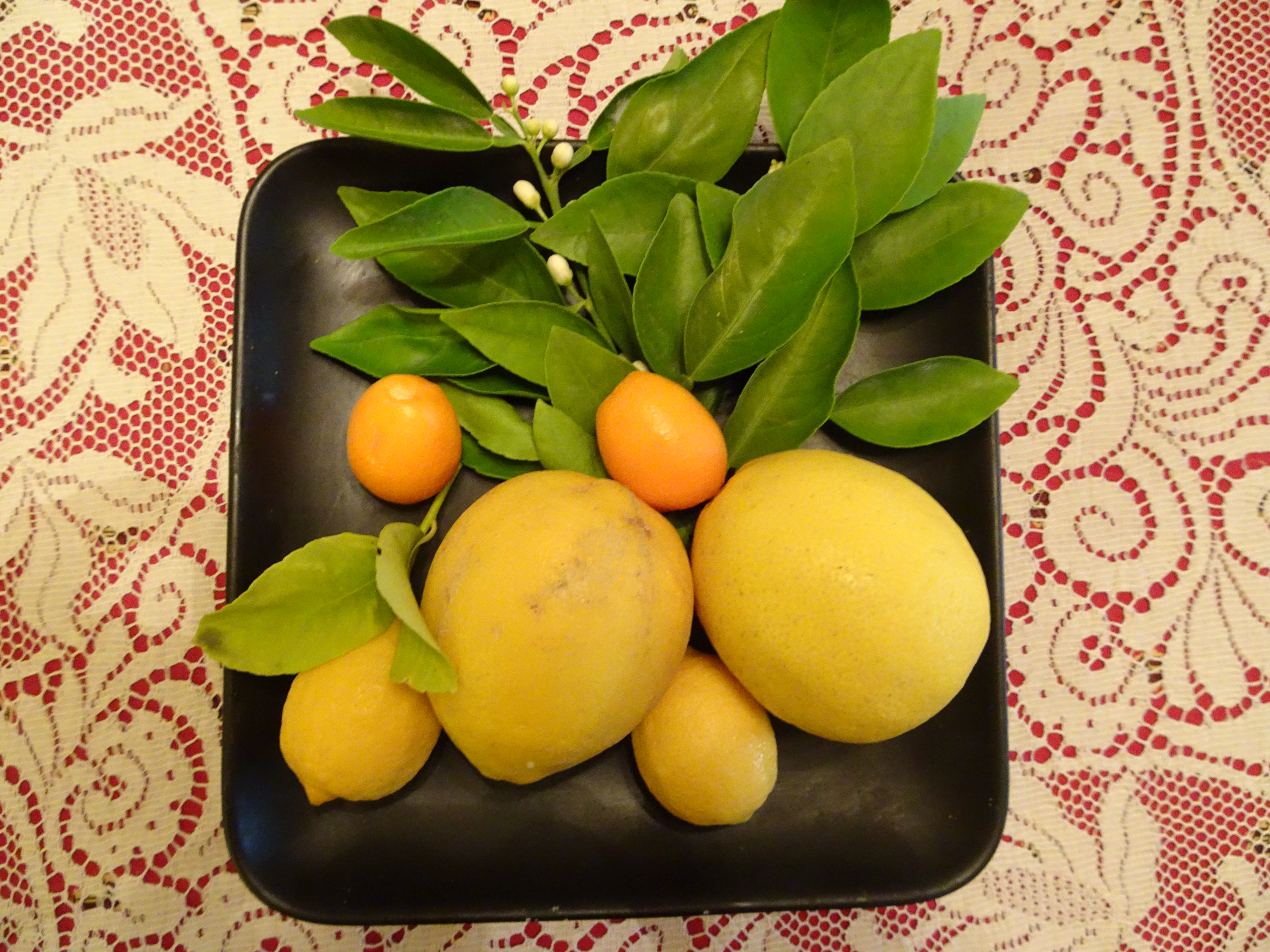
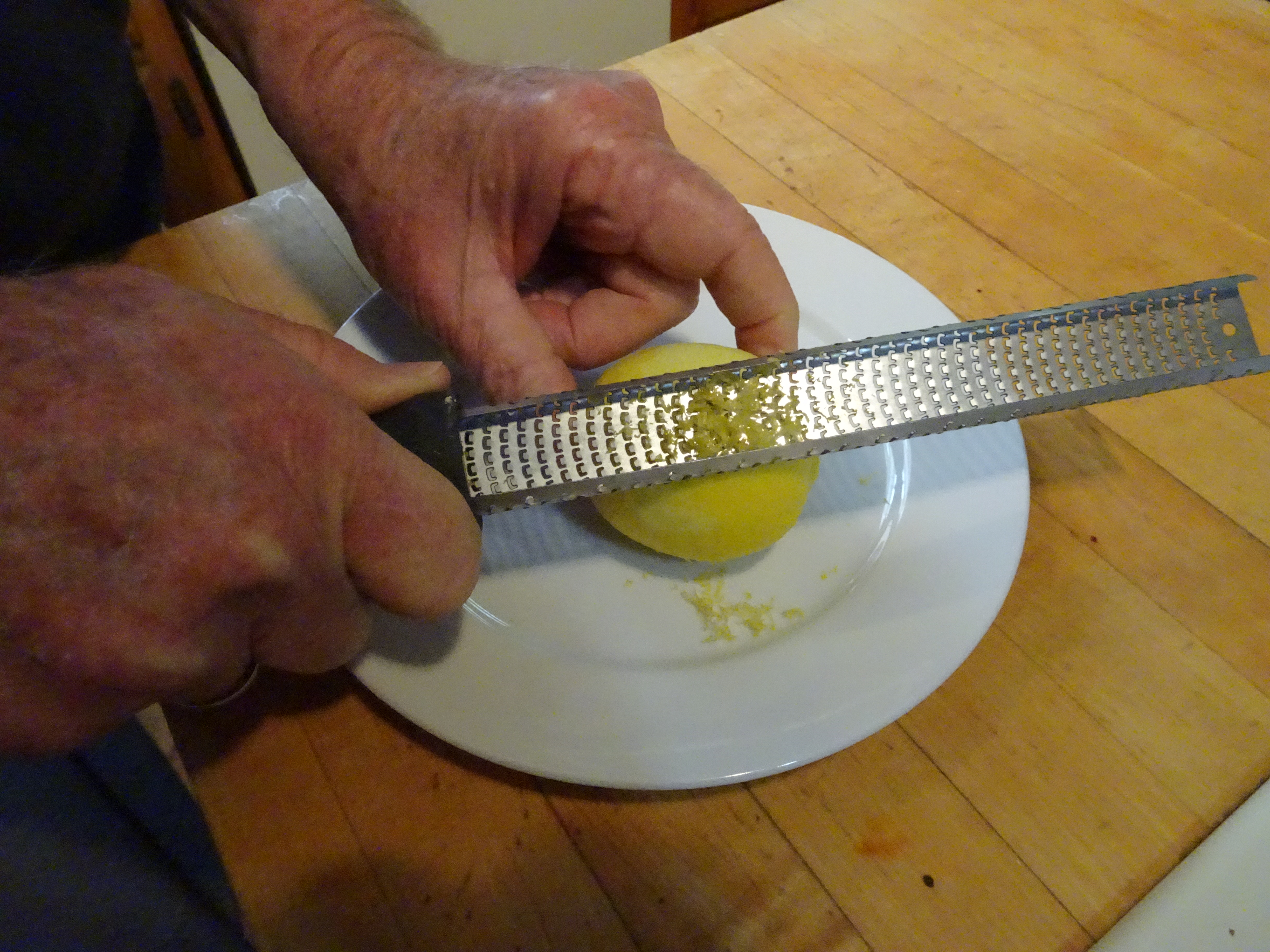
Carolyn here today with one of my favorite recipes, perfect for spring. Many people in the desert have lemon trees in their garden or have access to a neighbor’s bounty. Farmers markets also have lots of citrus in the spring. Making this recipe always reminds me of two dear friends. I begged the recipe several decades ago after eating at a dinner party hosted by Susie Morris and David Devine. I adored the pie, but dreaded making it because I always grated my knuckles along with the lemon zest. Then, a few years ago in repayment for a very minor favor, another friend, Margaret Pope, gave me a new type of zester. It is a miracle tool that makes zesting citrus peel quick and bloodless.

This zester makes producing citrus zest quick and easy.

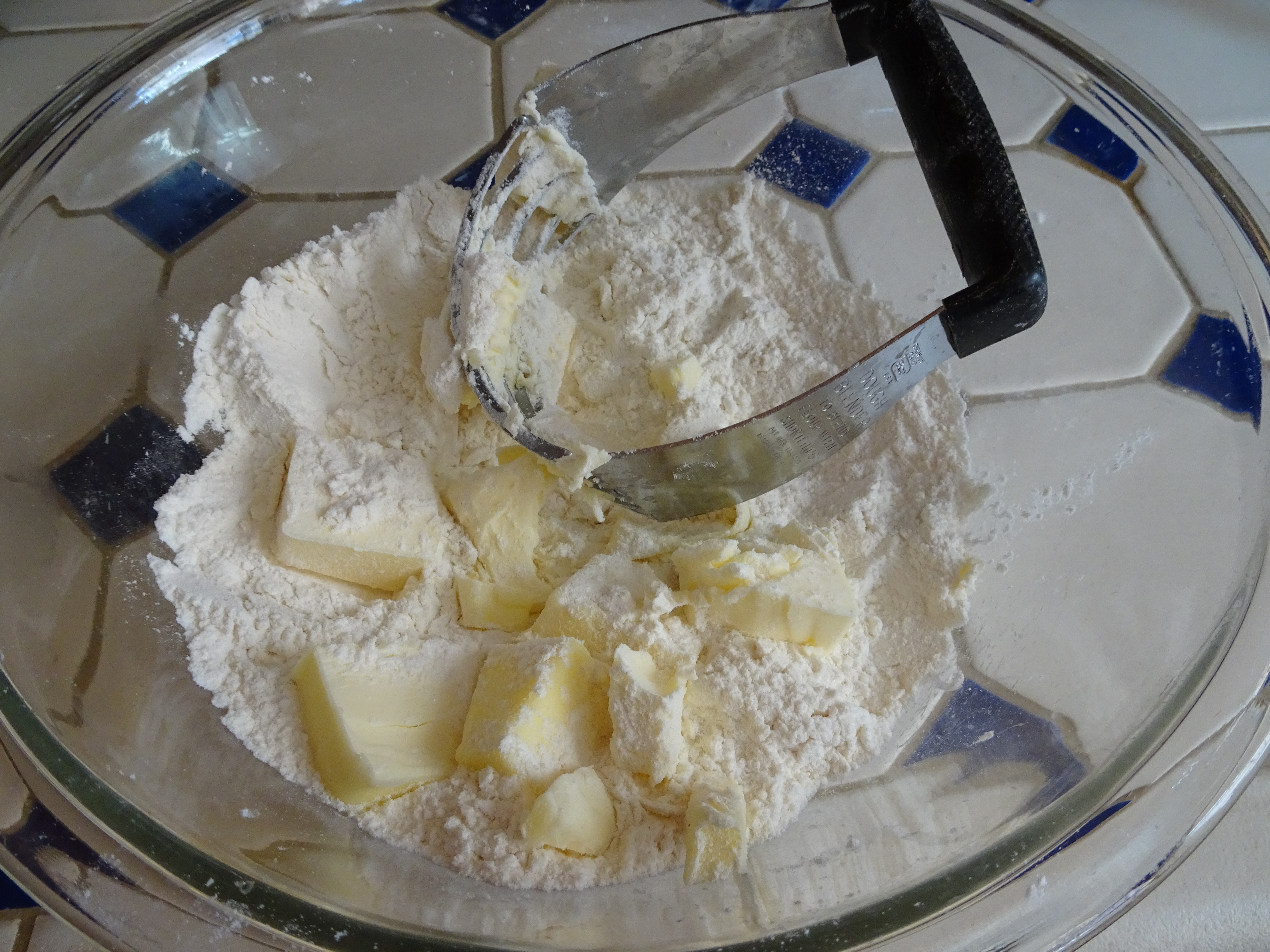
You can use a commercial pie crust or use the directions for a lemon-flavored crust below.  Some directions call for combining the flour and butter in a food processor, but I think that cuts the butter too small. It’s those larger pieces of butter between layers of flour that make your crust flaky. I use an old-fashioned  pastry cutting tool for this.

Cutting the butter into the flour for pie crust.

To make the filling, you need to separate the eggs. Even a little bit of yolk in the whites with inhibit the amount of volume when you beat them. The trick here is to have three bowls: one for the whites, one for the yolks and the working bowl. Crack the egg over the working bowl, catching the yolk in the shell and letting the white go into the bowl. If there is no yolk in the white, add it to the bowl for whites. If the yolk breaks, set the whole egg aside for scrambled eggs for breakfast and get another egg.

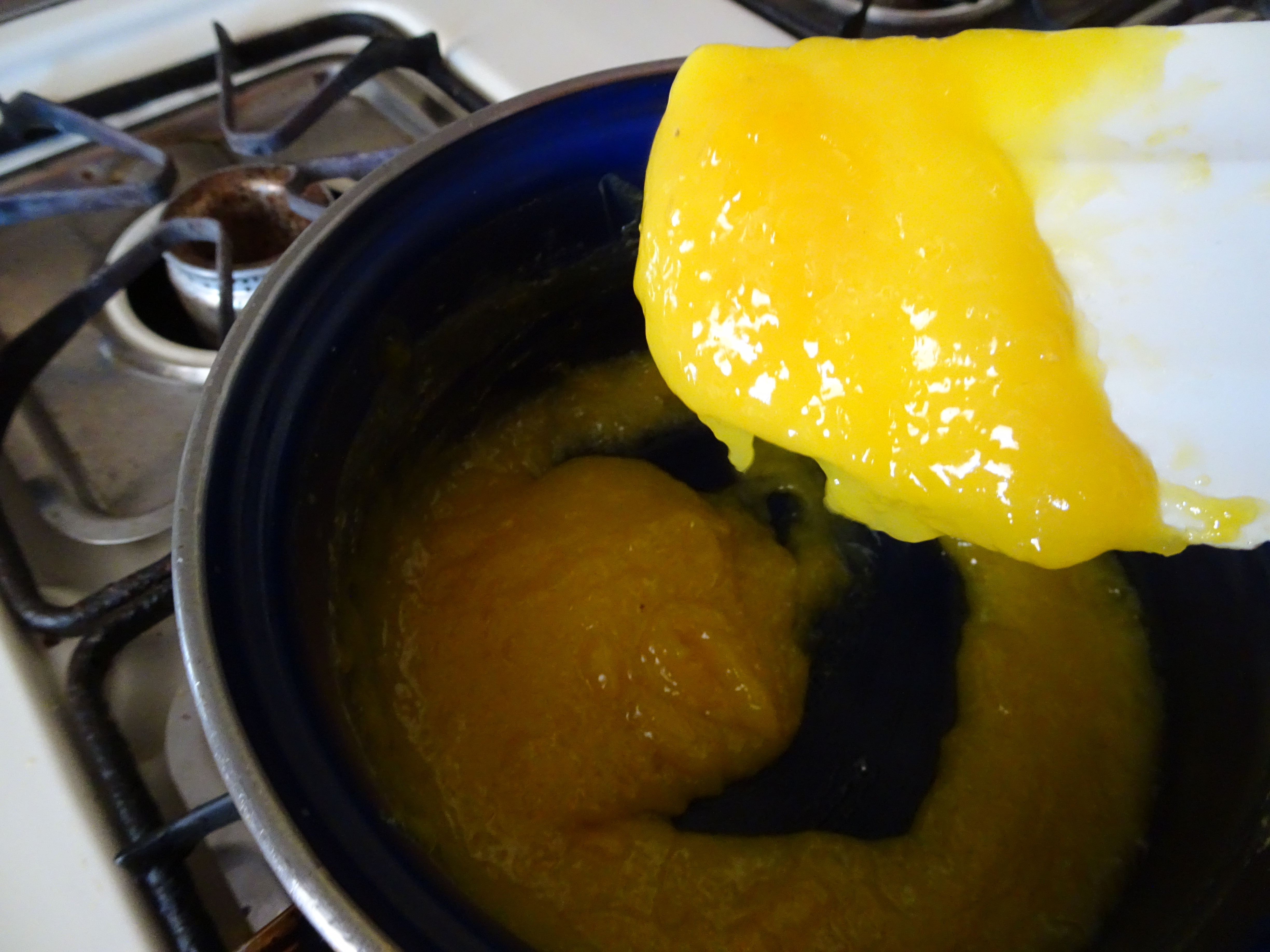
Use the yolks to make the lemon custard filling. It cooks rather quickly, so use low heat and stir and stir. Stop when it is the consistency of mayonnaise.

The custard should be the consistency of mayonnaise.

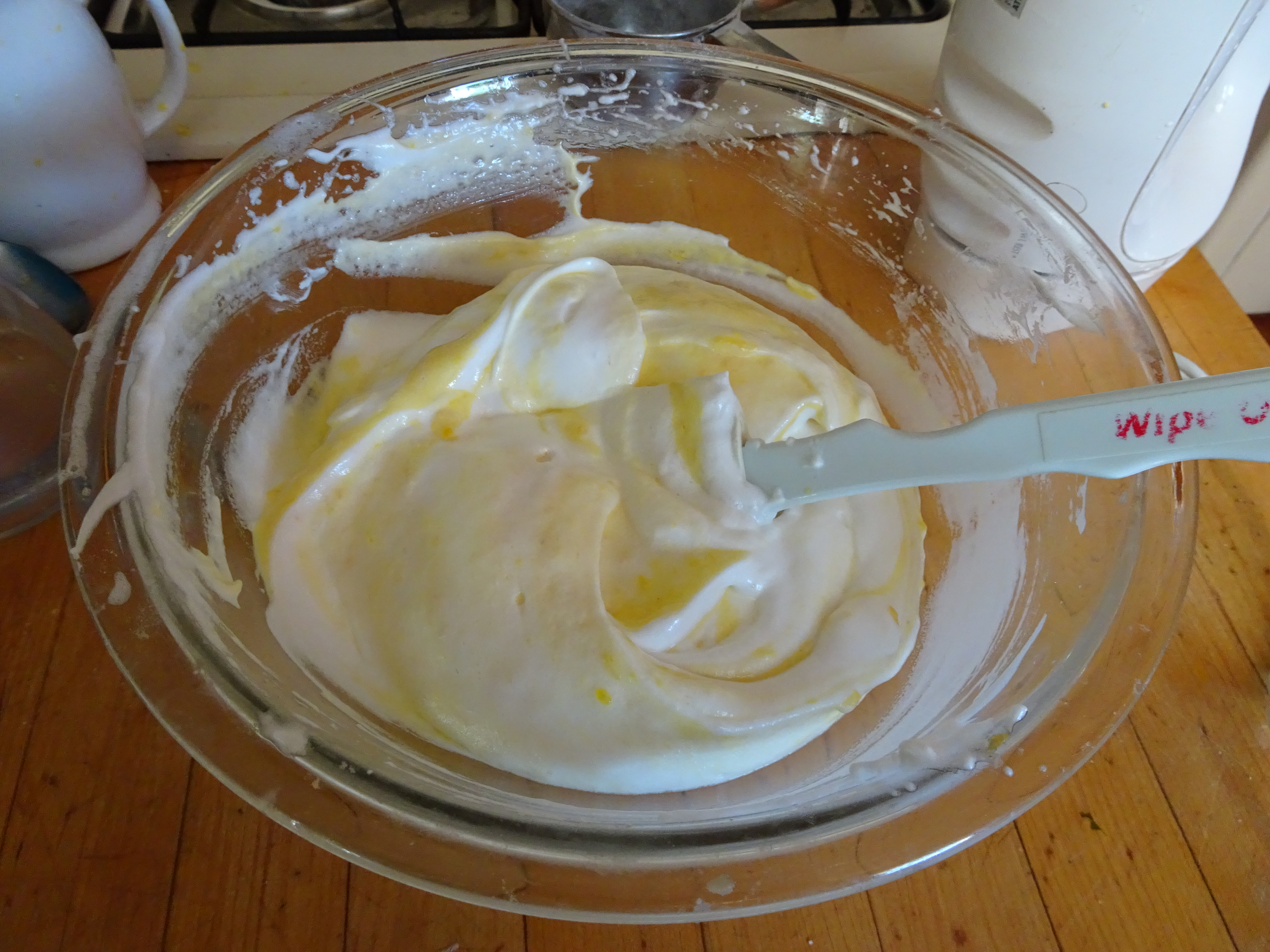
Next, you will beat your egg whites. The filling for the pie is similar to lemon meringue pie, but rather than the custard on the bottom and meringue on top, you fold together the egg whites and custard.

Gently fold the the custard into the beaten egg whites.

Tarte Au Citron

Pastry:

1 ¼ cups flour

2 tablespoons sugar

1 tablespoon ice water

½ cup butter

1 egg yolk

2 teaspoons lemon juice

1 tablespoon lemon zest

Filling:

4 eggs

¾ cup sugar

½ cup lemon juice

zest of two lemons

1 teaspoon cornstarch dissolved in 2 teaspoons water

pinch salt

Optional garnish: Whipped cream and mixed berries

Tarte shell: Heat oven to 400 degrees. Cut butter into the flour. Add  egg yolk, ice water and lemon juice. If you are in the desert, you might need to add more water as our flour has little moisture. Roll out and fit into a 8- or  9-inch tart pan. Bake 10 minutes at 400 degrees. (Use pie weights, beans or rice over a sheet of foil or parchment paper to keep pastry from puffing up).  Reduce heat to 350 degrees. Bake another 10 minutes until lightly golden. Set aside.(Can substitute own recipe for pastry but this is really good)

Filling: While the crust is baking, you can start the custard. Separate eggs. Beat yolks with half the sugar. Add lemon juice, zest and cornstarch. Transfer to saucepan and cook over low heat, stirring often, until consistency of mayonnaise, about 5 minutes.

Remove from heat and rest in bowl of ice water to cool completely. Again preheat oven to 400 degrees if it is cold. In a bowl, place egg whites and salt. Beat gradually, adding remaining sugar until stiff peaks form. Stir about a quarter of the whites into the yolk mixture to lighten it. Then gently fold in the remaining whites.

Spoon lemon mixture into the pastry shell. Bake until the crust is lightly browned and the filling is set, about 15 minutes. Serve alone or with whipped cream and berries.

Cool on wire rack. Serves 8 (or maybe 2).

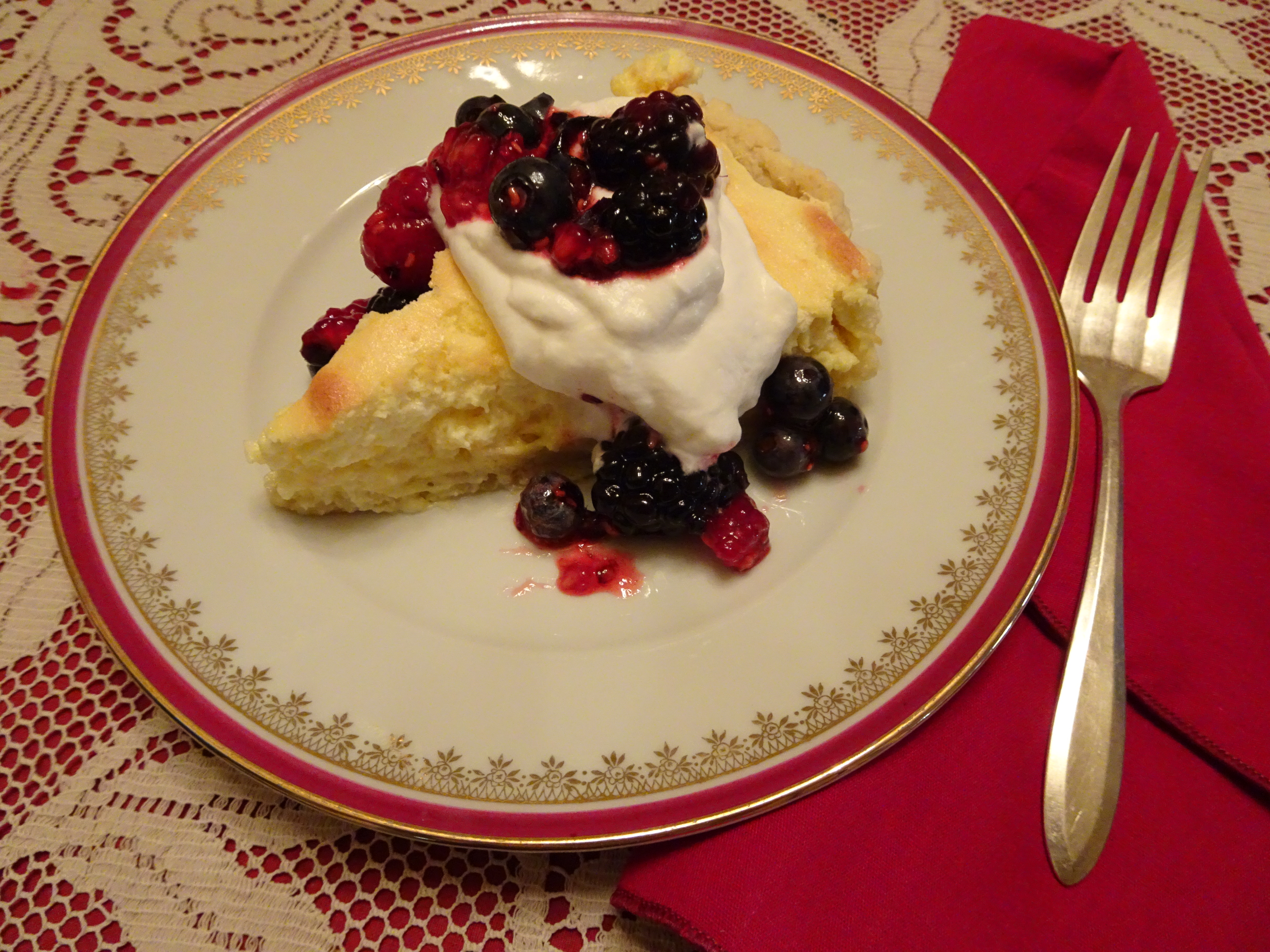
Whipped cream and berries are a luxury addition to a slice of Tarte au Citron.

_______________________________

Carolyn Niethammer is the author of five cookbooks on Southwest foods. You can see her books here.