Bluecorn Biscotti with Seasonal Saguaro Juñ

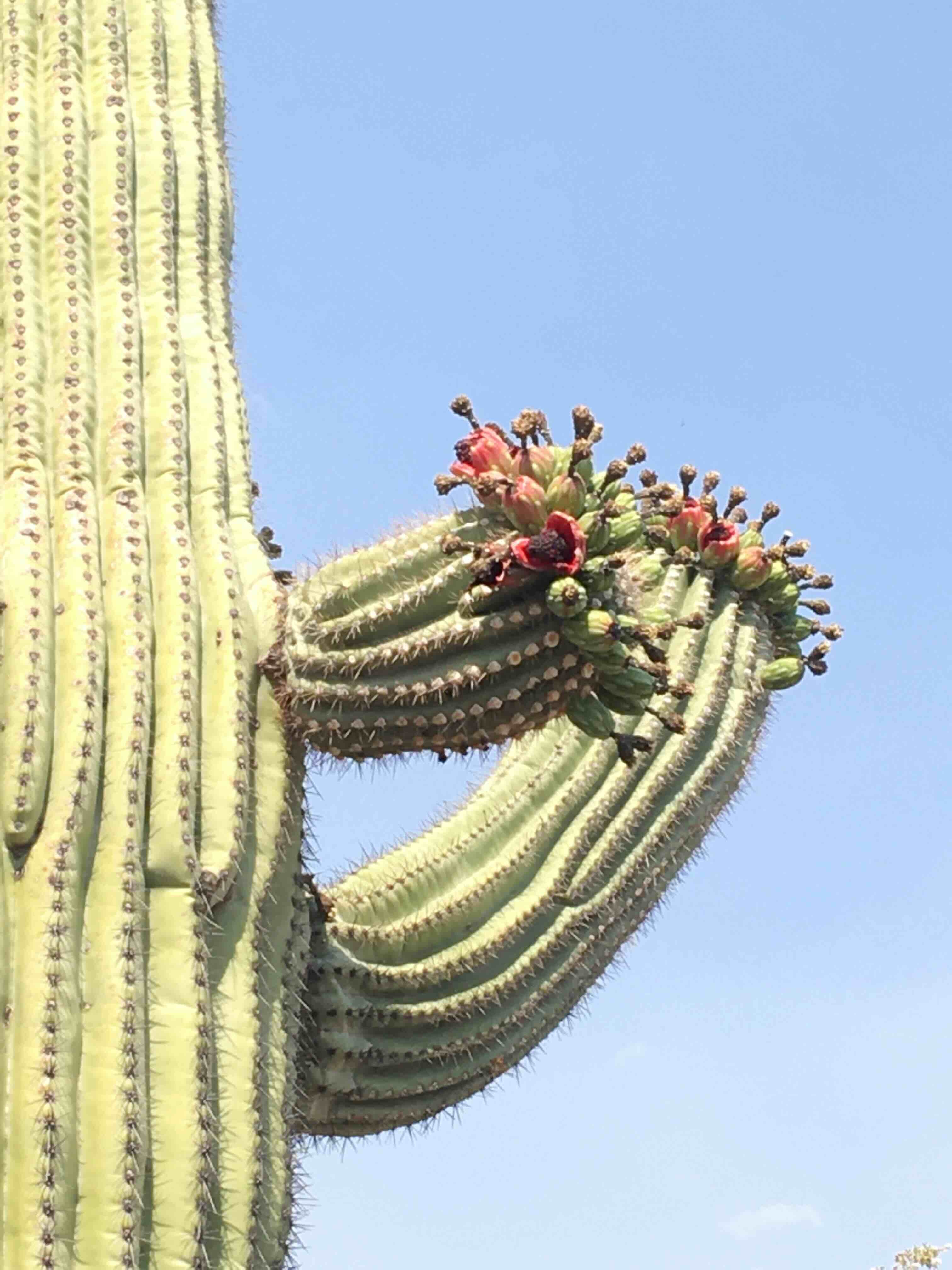
Cheers for New Years now in the Sonoran Desert as we celebrate harvest time for Saguaro fruit! This important harvest around the Solstice and San Juan’s Day marks the beginning of the Indigenous Tohono O’odham desert year.

Fruit timing this year seems off kilter: plants are marching to new, unprecedented “climatic drummers.” Saguaros bloomed and fruited early, then a spring rain spurred a second bloom. Now, in mid June we are seeing a second wave of maturing fruit. With luscious saguaro bahidaj ripening in the desert around us as I write, the sun beating down, and Father’s Day on the horizon, it’s Tia Marta here to share a fun idea for a healthy, locally-sourced Southwest confection for seasonal festivities. A recipe for a saguaro treat awaits….
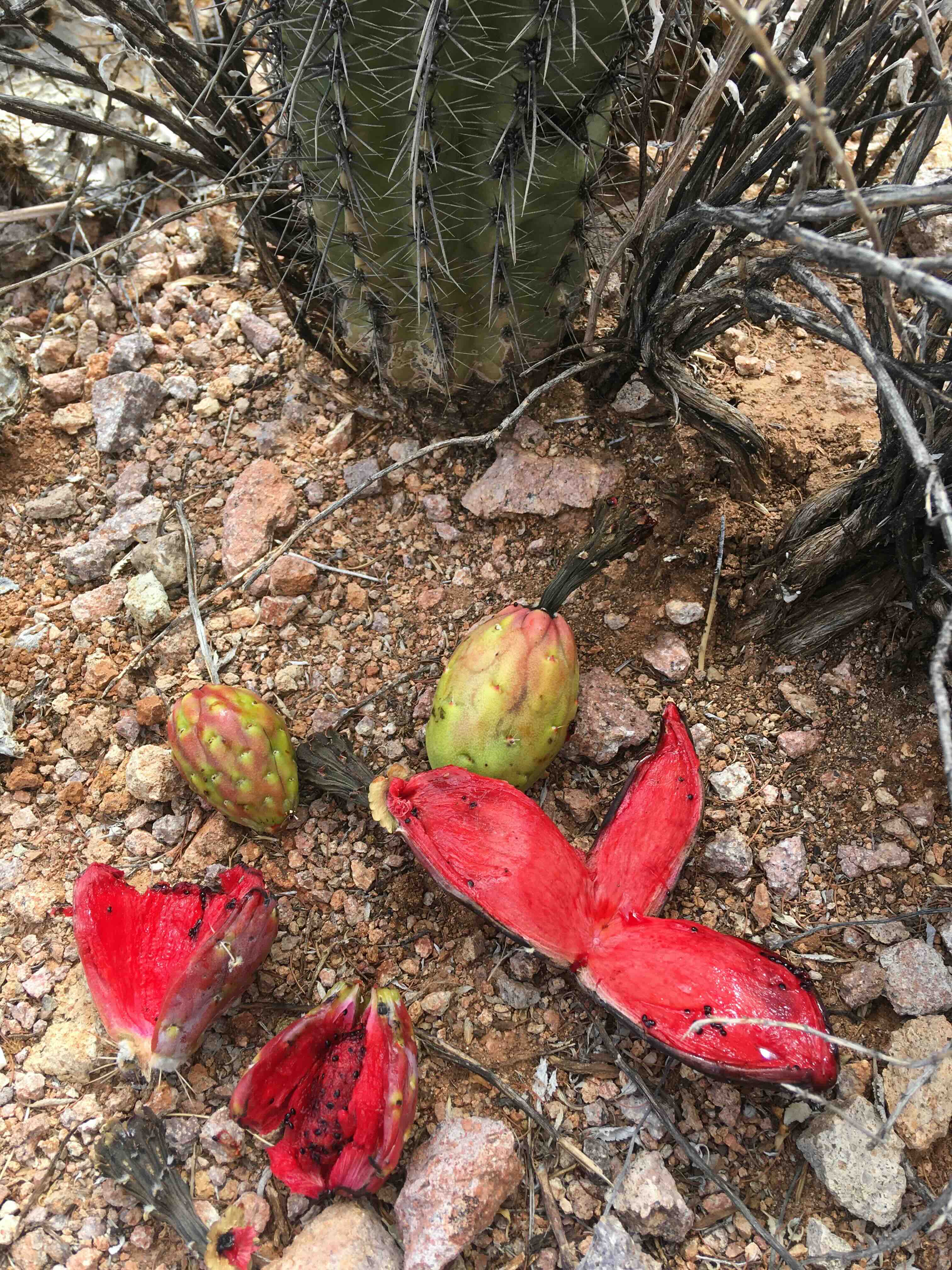
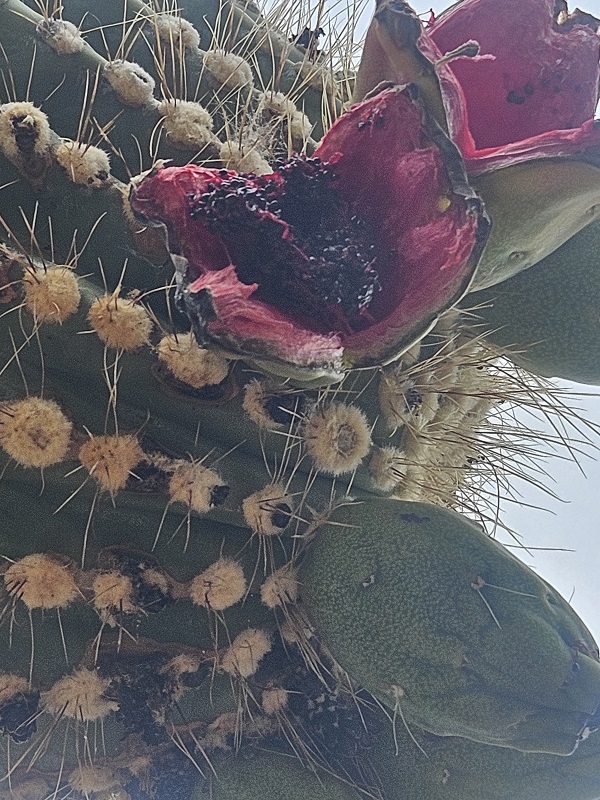
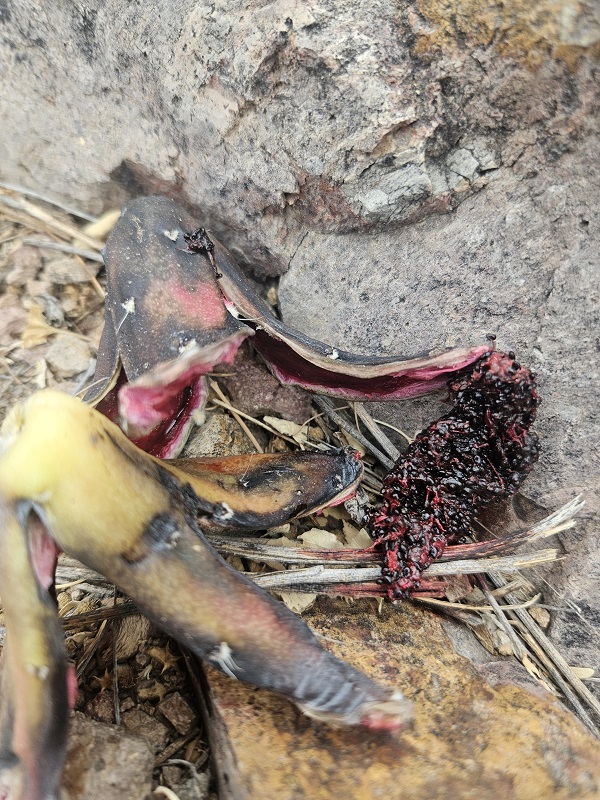
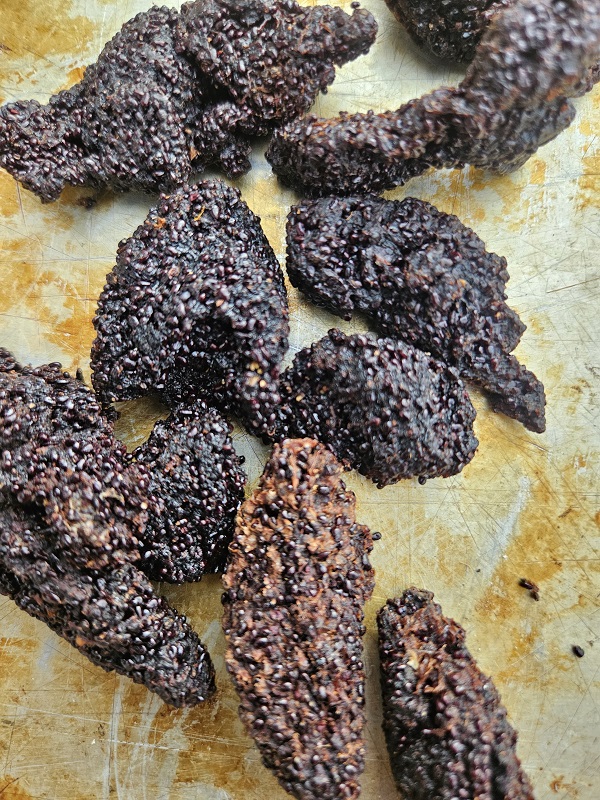
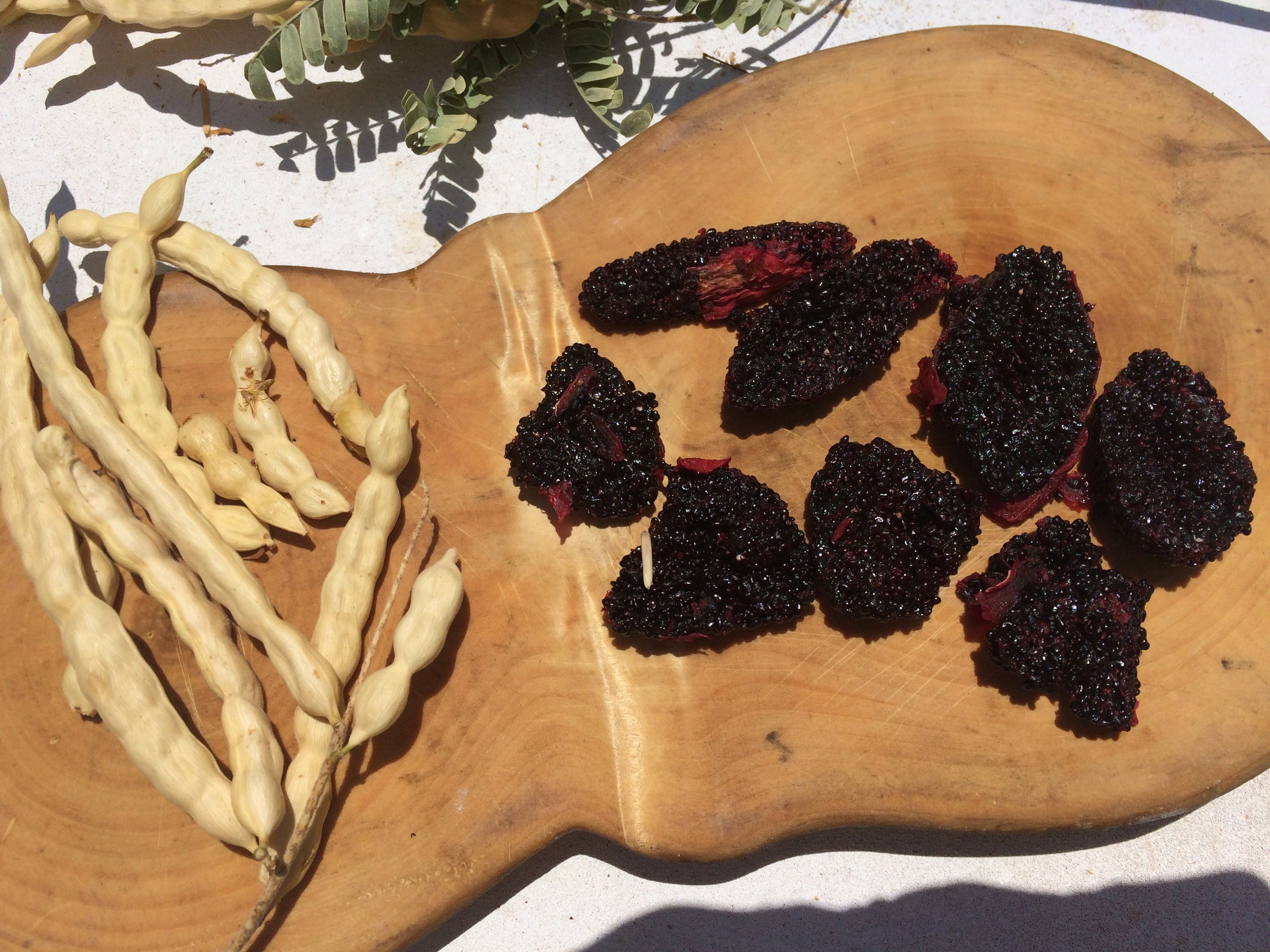
Saguaro fruit, ha:ṣañ bahidaj, is ripe when the outer husk gets a “blush” of red. Peel back the thick rind and inside is a sweet and crunchy treasure. When the moist pulp-seed mass dries it makes a natural fruit-leather called JUÑ pronounced JOONya or just JOON. Dried, it keeps a long time. With juñ you can dress up any salad or sweet–or just eat it joyfully plain, as a gift from Nature and Elder Brother.

We’re going to bake a precious bit of juñ into neat energy bars or biscotti….May this biscotto (literally a twice cooked confection) help you celebrate on many levels!
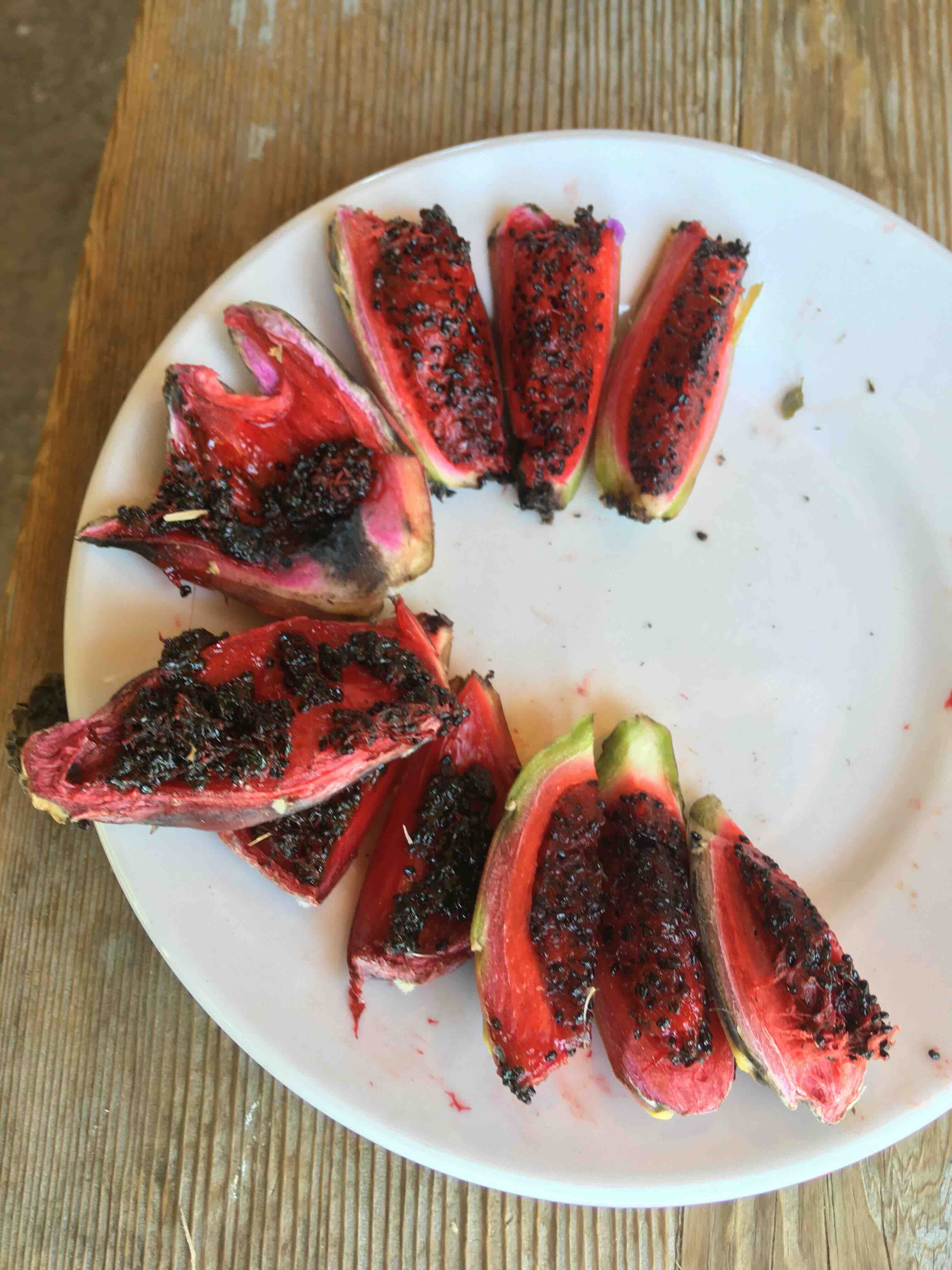
A few days ahead.. separate moist pulp/seed-mass from husk. Dry the pulp mass in hot sun either in screenbox or spread out on cookie sheets covered with cloth to protect from insects, or in a food drier–until crisp. This may take couple of days! When totally dry, work with hands, or with mortar and pestle, to loosen seeds and pulp.  You’ll use both seed and pulp in these biscotti.
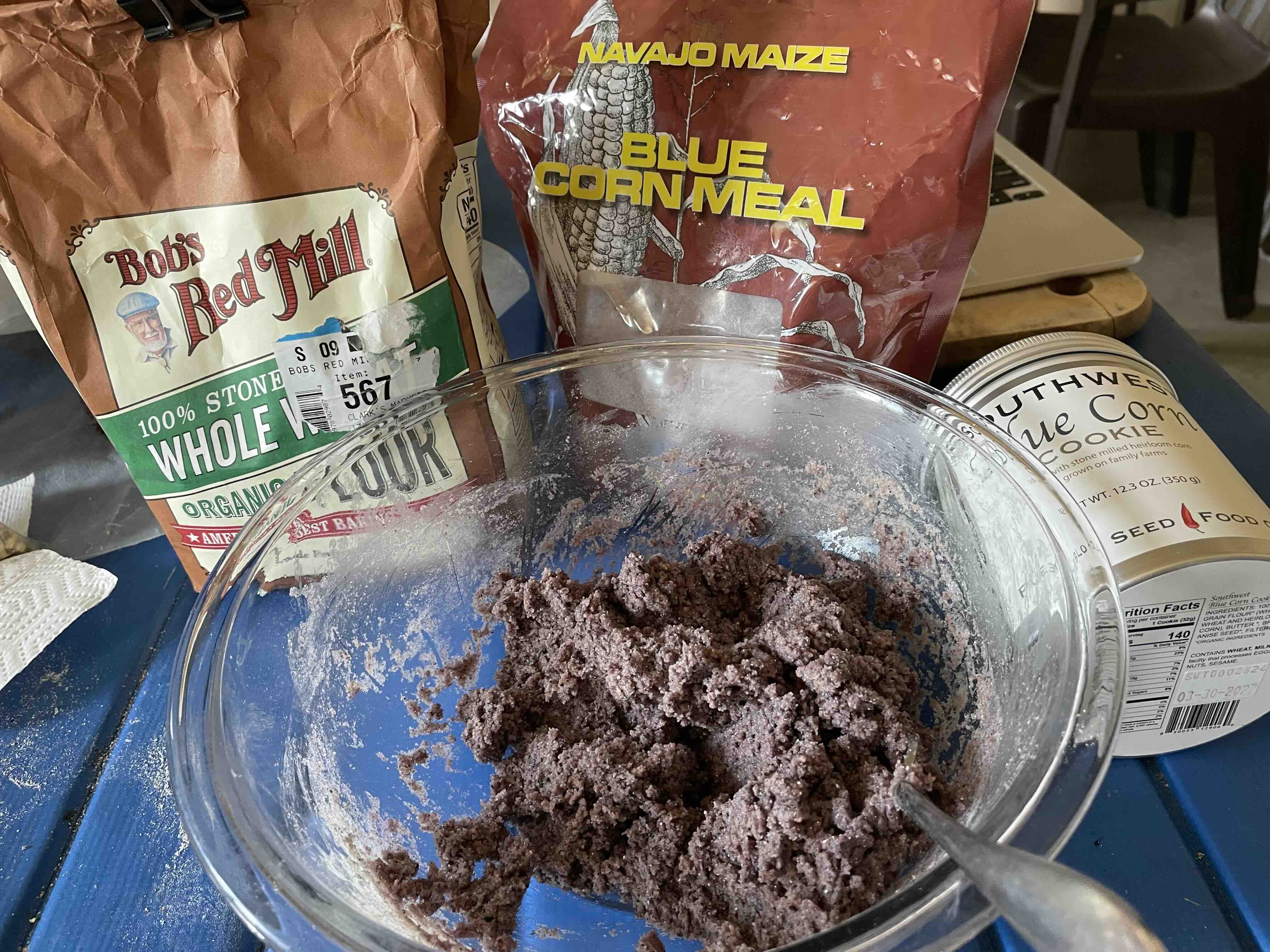
RECIPE: Bluecorn Biscotti with Saguaro Juñ

INGREDIENTS:

1/2 c. yogurt (non-fat plain yogurt, or butter) 1/2 c. sugar (or agave nectar) 1 egg (or egg substitute). 1 tsp vanilla. 1 c. whole grain flour   1 c. blue cornmeal (available online from NS/S). ¼ c. dried saguaro juñ, pulp and seeds loosened 1 tsp. baking powder. ½ tsp sea salt. (optional additions: 1/8c-1/4 c piñones or chia seed)
Cooking-day Directions: 

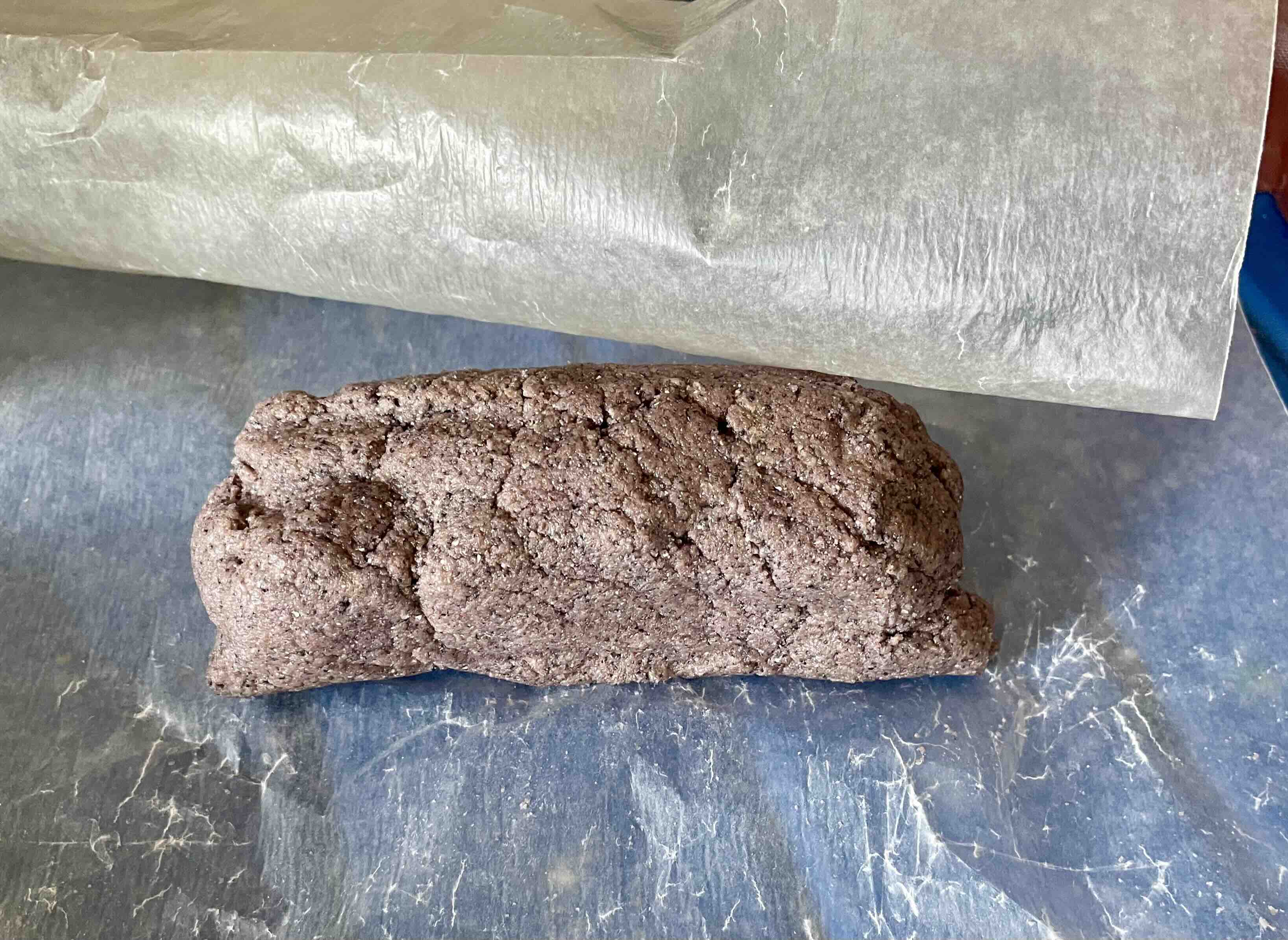
Beat yogurt and sugar until creamy. Beat in egg and vanilla. Sprinkle and mix the loosened Juñ into yogurt mixture.  In another bowl, sift together flour, cornmeal, baking powder, salt. Gradually add to yogurt mixture, stirring until completely blended. Dough should be shape-able.
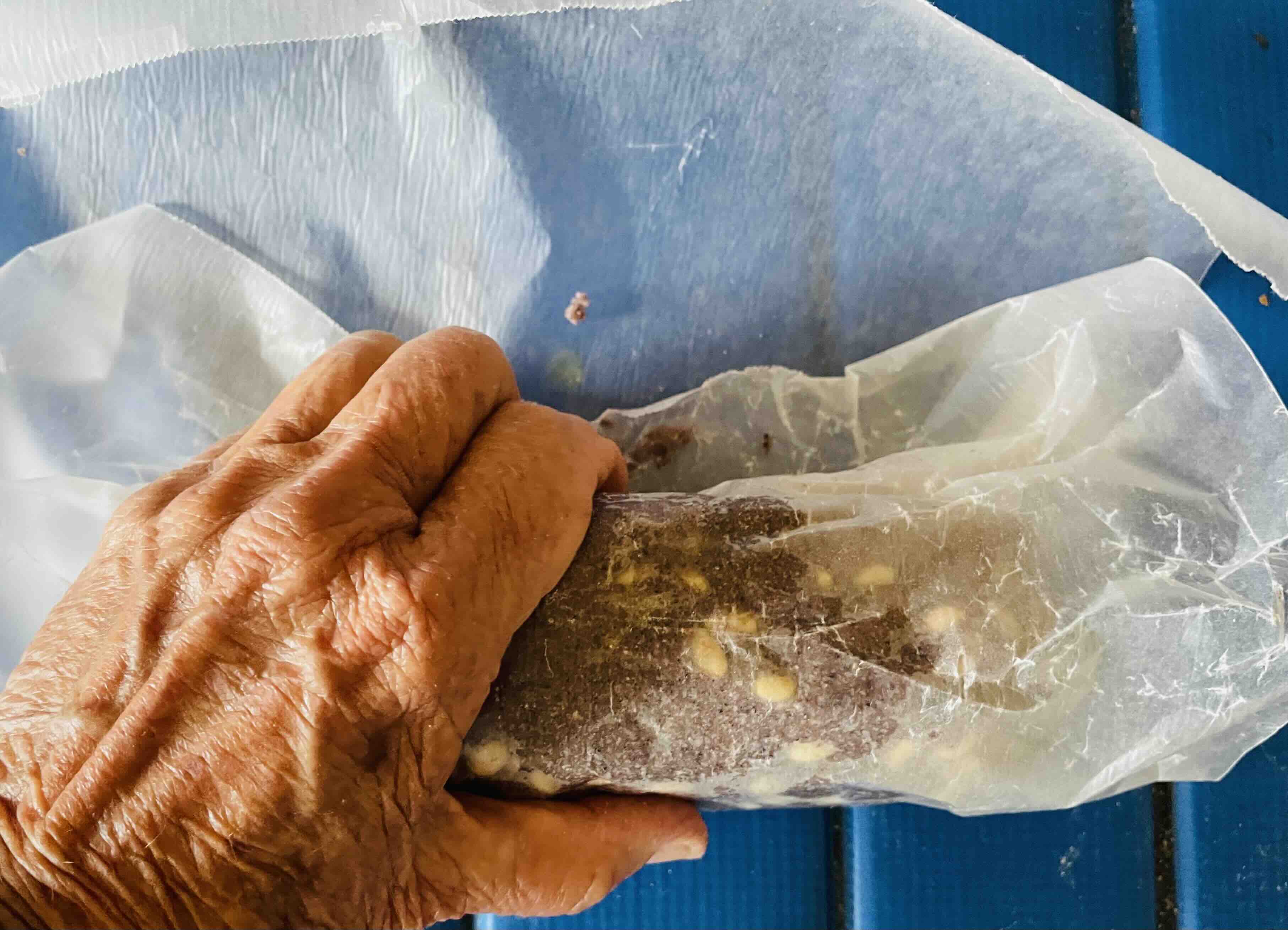
On waxed paper, shape dough into two separate “logs” about 2 inches in diameter. Wrap and chill until firm, at least 3 hours (or up to 3 days).

With my dough for the second “log” I added piñones (in place of usual almond biscotti).
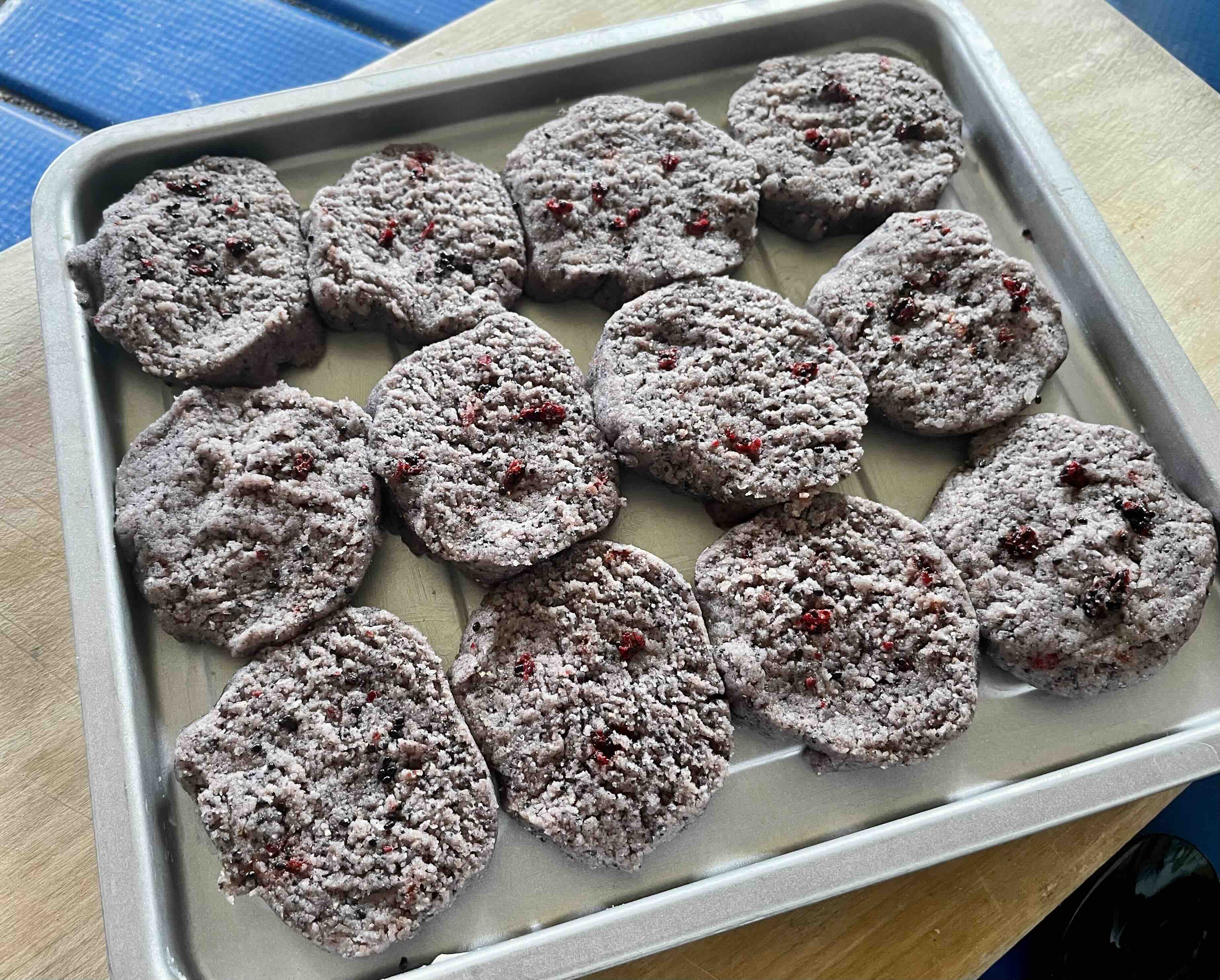
Preheat oven to 325 degrees. (To keep heat out of the kitchen, I love using a solar oven. Heat will be variable so monitoring for sun or clouds is needed.)

Unwrap dough. Using a sharp knife, cut into 1/4-inch slices. Place slices on greased baking sheets. (Or use parchment paper to avoid greasing.)
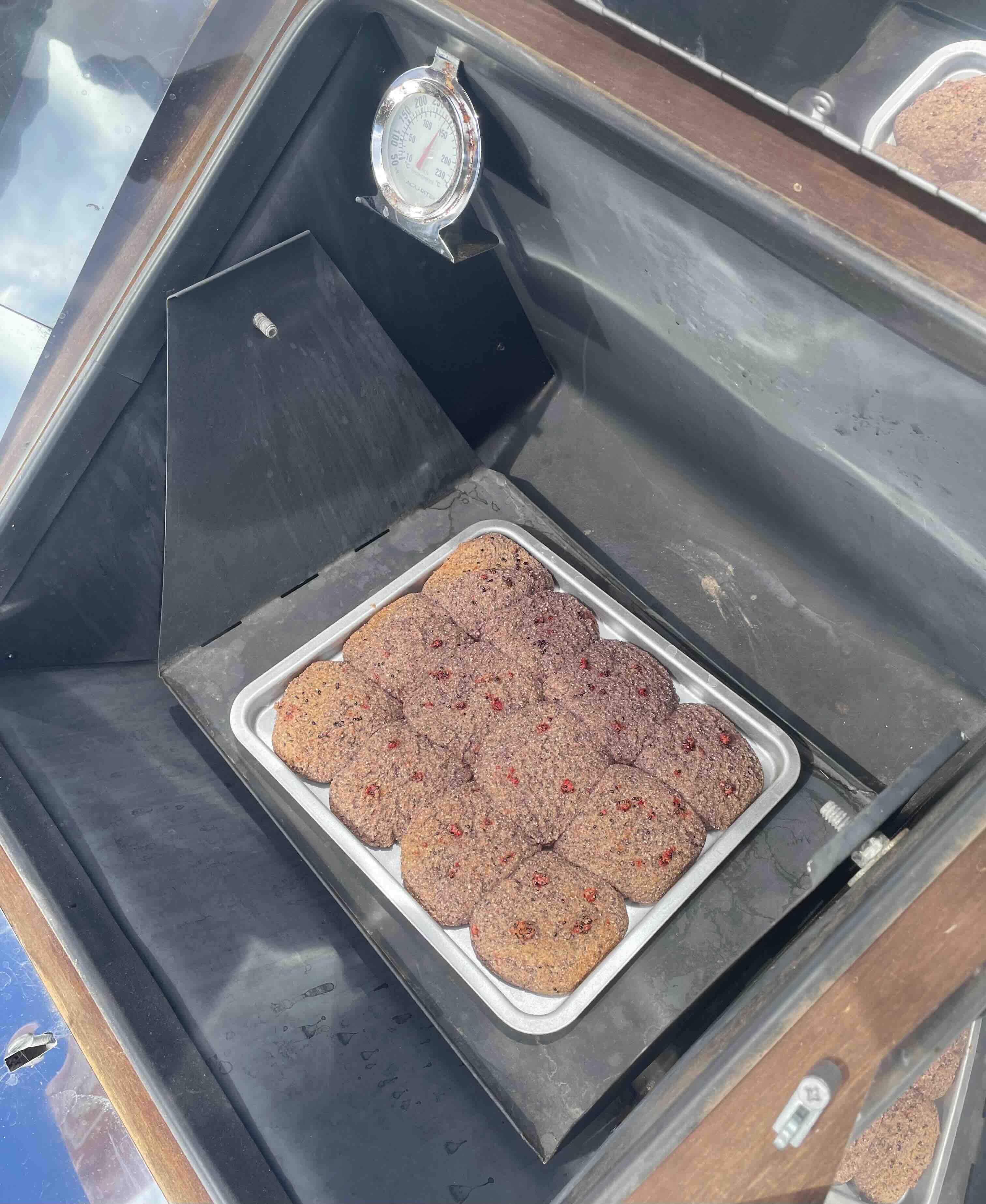
Bake at 325 degrees for 12-15 minutes until slightly brown. Add more time to make biscotti crisper.

Solar oven option:  Bake at about 300-325 degrees for 15-20 minutes watching for faint browning.  Depending on sun with monitoring it may take more time for desired crispness. Cool on wire racks. Makes about 2 dozen biscotti bars.
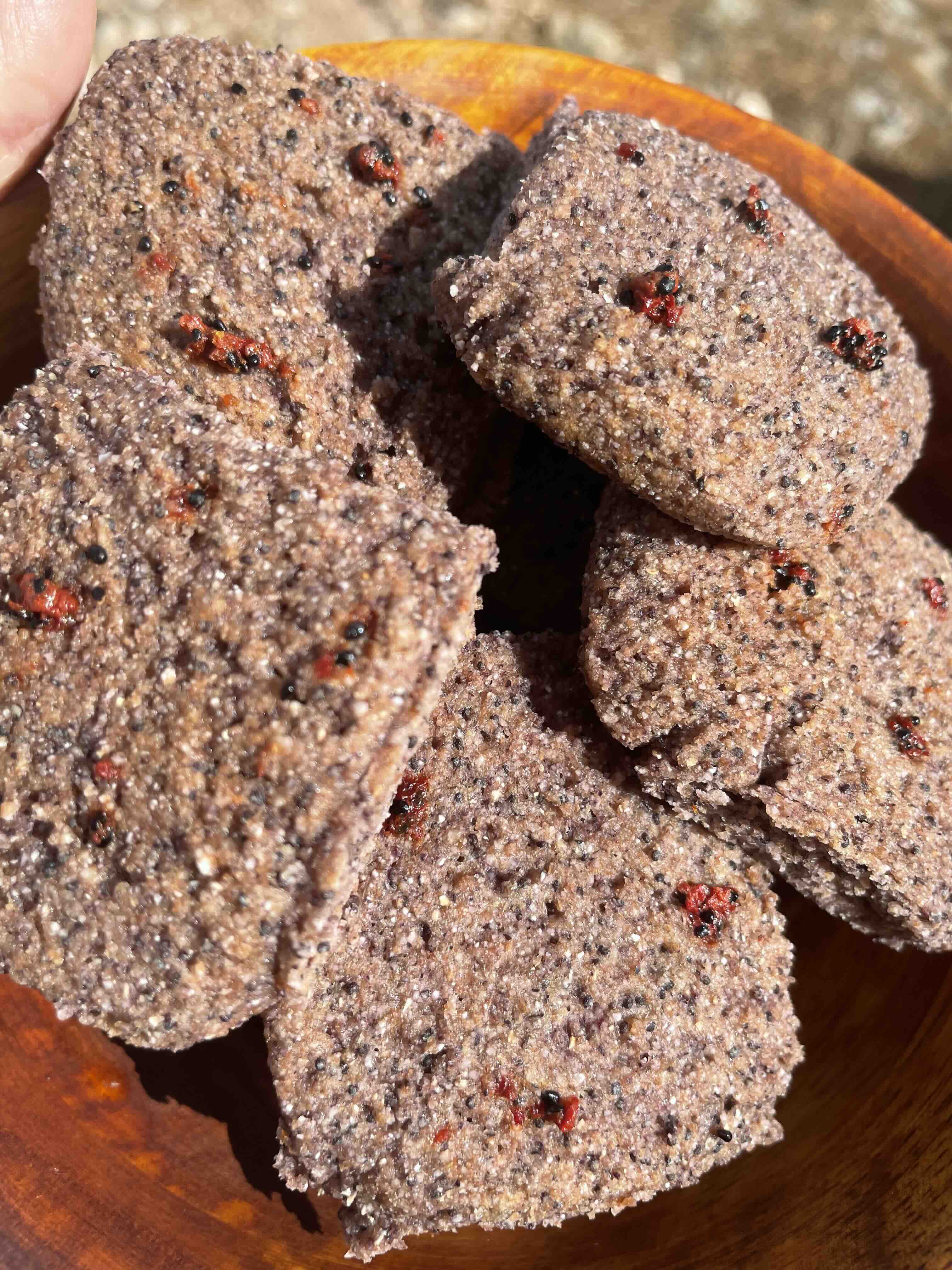
Bluecorn biscotti with Saguaro Juñ–ready to eat! Great for dippers into summertime ice coffee, or served with home-made vanilla sorbet!
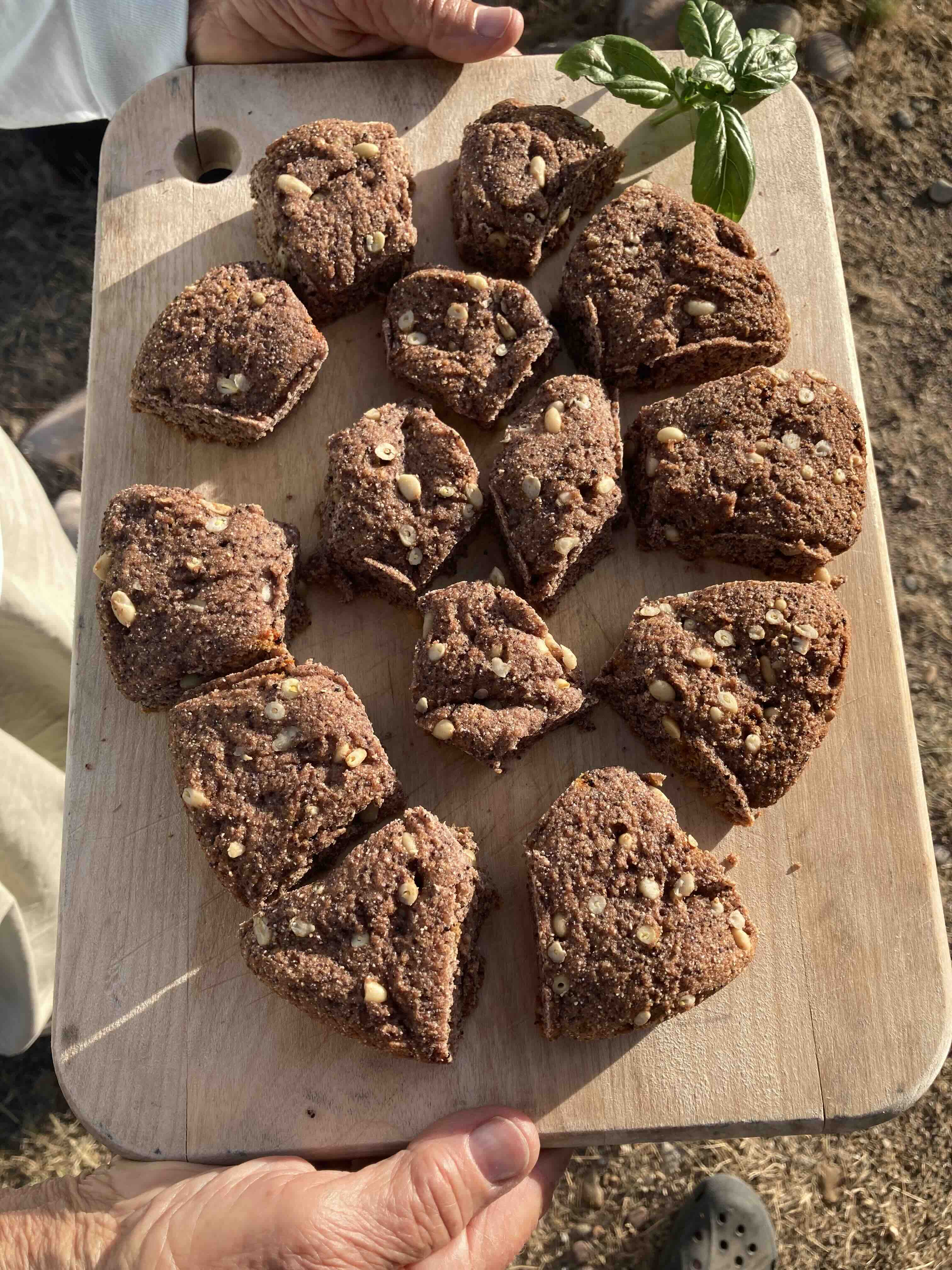
The pine nuts added a great new flavor and texture to these healthful Southwest biscotti. Next batch, I would like to try adding bellotas….

Another easier idea: Add ¼ cup saguaro juñ to NS/S Mesquite Cookie Mix or NS/S Mesquite Poppyseed Scone Mix, or to your favorite sugar cookie recipe

For more ideas with saguaro fruit visit SavortheSouthwest June 2020 blog post on Sonoran Power-Treats.

This saguaro juñ biscotti idea was inspired in part by Betsy Armstrong, infamous NativeSeedsSEARCH staff member and cooks-extraordinaires at NSS. Acknowledgement also to Pueblo Seed and Food Co in Cortez, Colorado (introduced to me by southwest foodie pal Robbie) where you can get fabulous Southwest Blue Corn Anise Cookies.  Their ideas sparked me to introduce nutritious low-desert seeds from the generous giant saguaro into this blue cornmeal treat. Here’s to your good health and desert enjoyment, with homage to the saguaros and maize plants as well, from Tia Marta!

No roll crackers

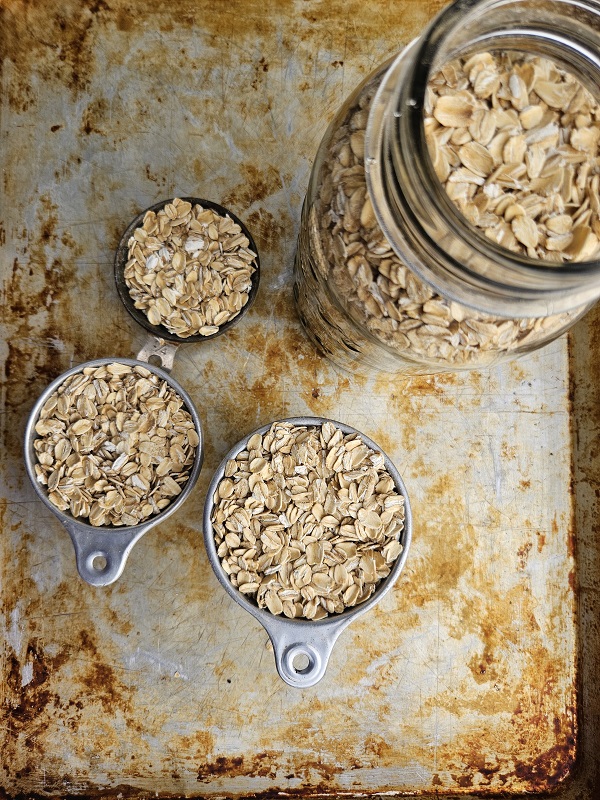
Hi friends, it’s true, crackers without the rolling. Amy here sharing this week’s iteration of this miracle recipe I found online. It all started with an abundance of oats…

A friend gifted me many pounds of organic rolled oats. Searching for inspiration to use them, I found Camilla’s Easy No-Roll Oat Crackers ( vegan, oil free, GF). It is a brilliant recipe that I’ve been making often these last few weeks since I discovered it. Besides oats, they contain seeds or mix of seeds. Sunflower makes particularly good crackers but branching out, I remembered Carolyn’s Black Beauty Wafers using saguaro seed. The seeds are strained out when making a syrup so those are a brilliant way to use the seed.

In June, the birds get the first feast of saguaro fruit. If there is more ripening fruit than the birds eat, it falls the ground, often sun dried and intensely concentrated, where I can easily harvest it without poking the plant. No need for a pole!
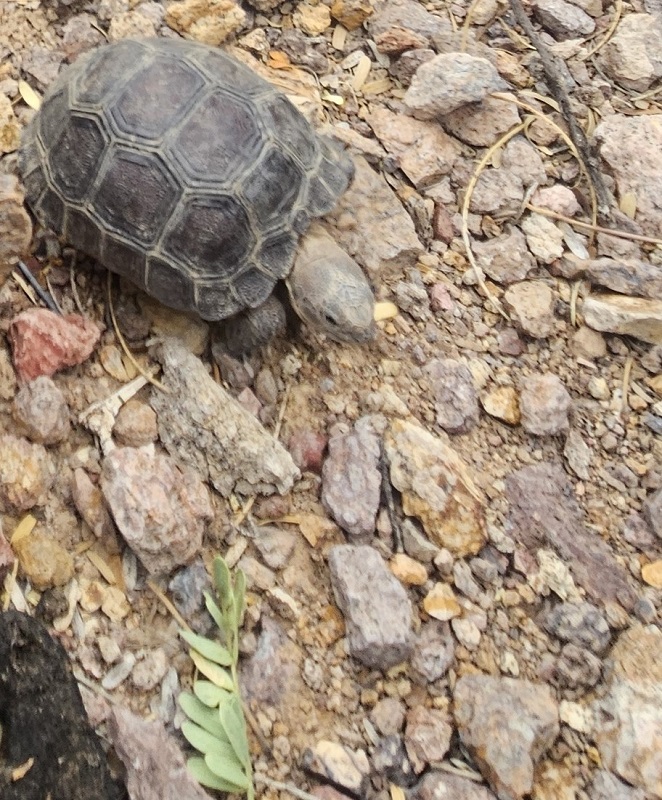
The ground animals get to feast first before the humans, of course, so we waited. But ripe fruit spoils in the rain, and I would never complain about glorious rain! So this year wasn’t the best saguaro fruit harvest for humans. (below, note the mesquite leaflets for scale)

I had some oooold fruit stored in the pantry so I decided to use the whole fruit instead of just the seeds.

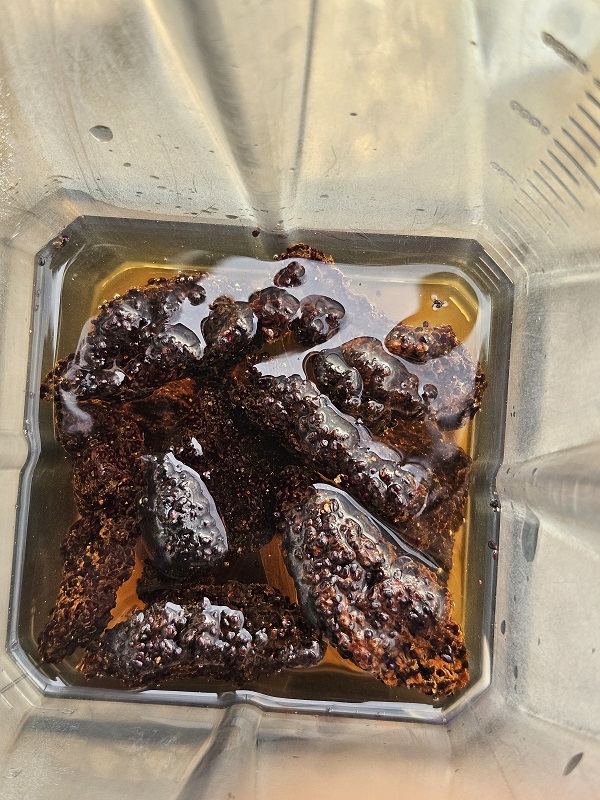
I soaked it in water to soften it.

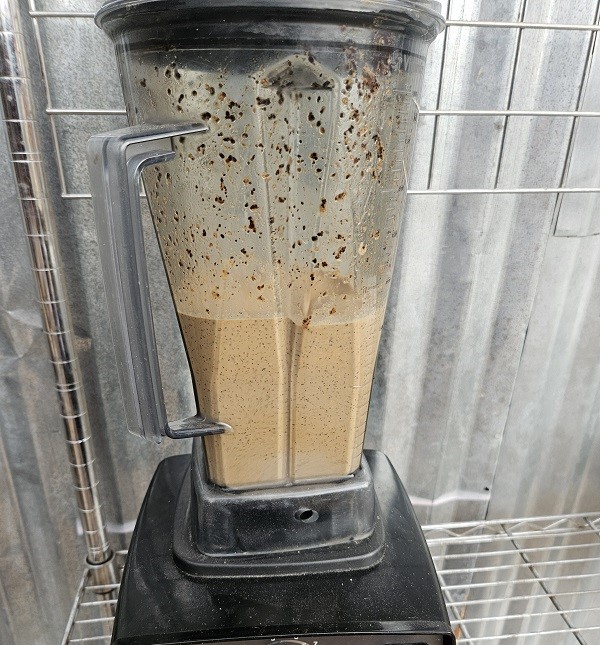
And blended it enough to grind the seeds. Then I added the oats, salt, baking powder and oil.

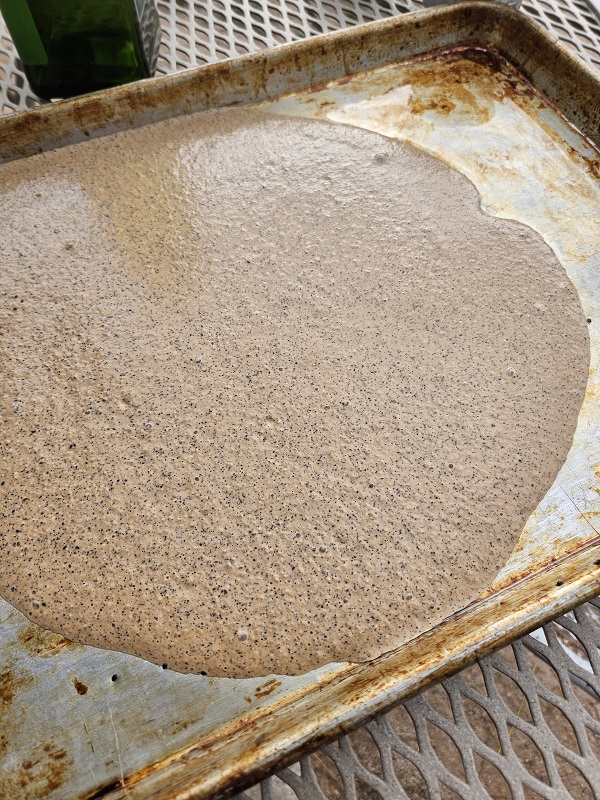
The batter is poured onto a greased half sheet pan (or even a bit larger pan to make crackers just a bit thinner).

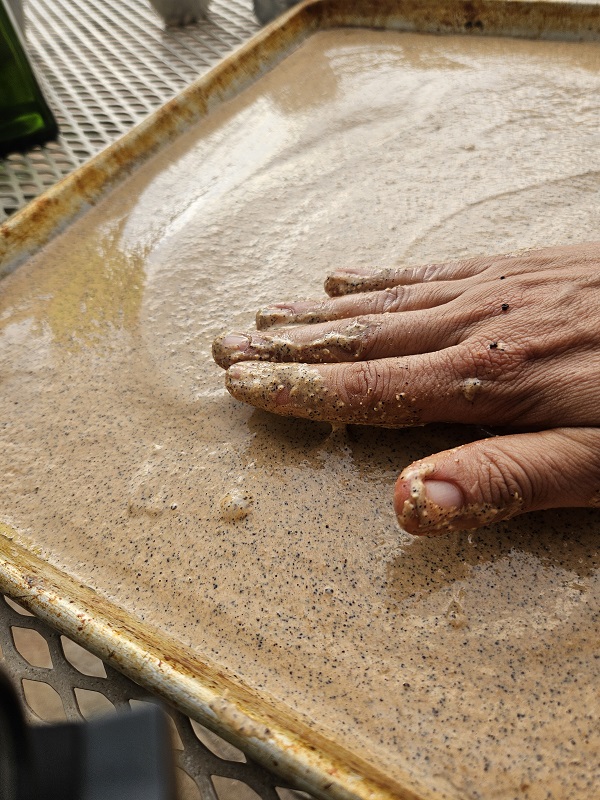
Instead of rolling the dough, it just needs to be smooth!

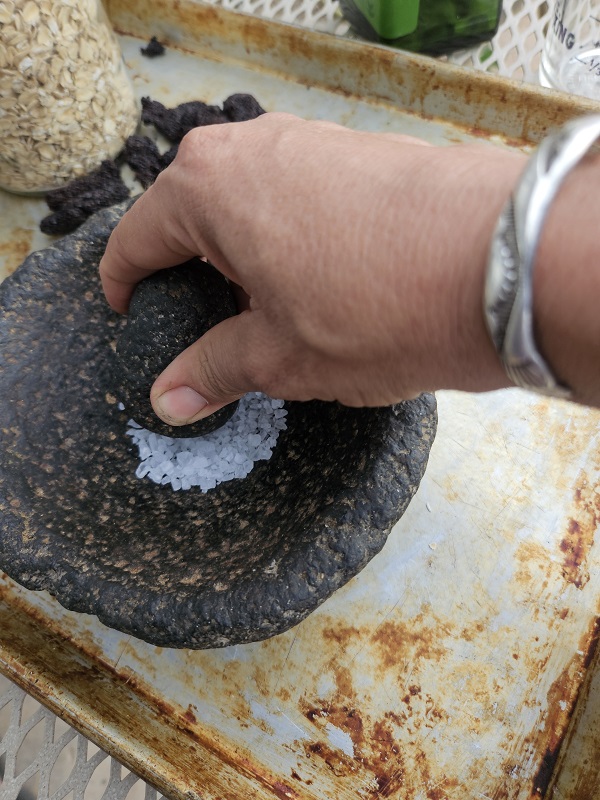
I prefer to add just a touch of salt to the batter so I can sprinkle a decent amount on top. I ground my best Mexican sea salt for this.

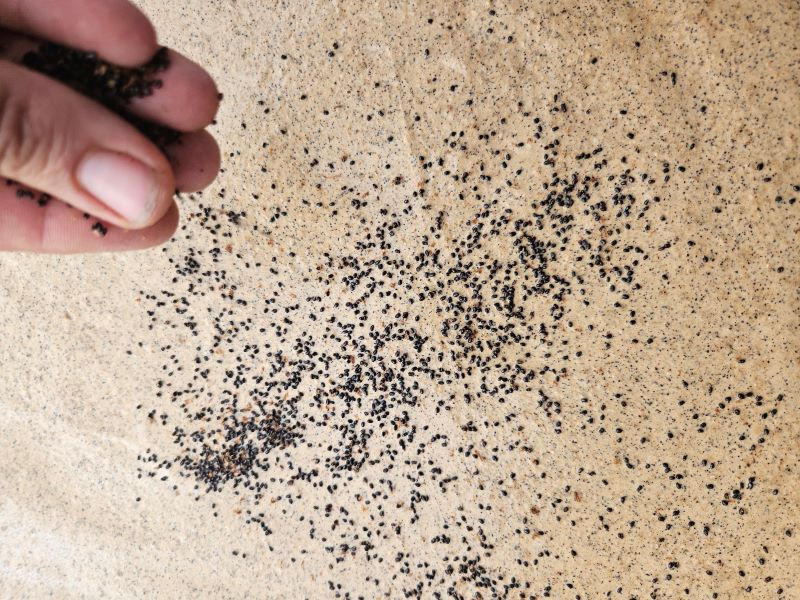
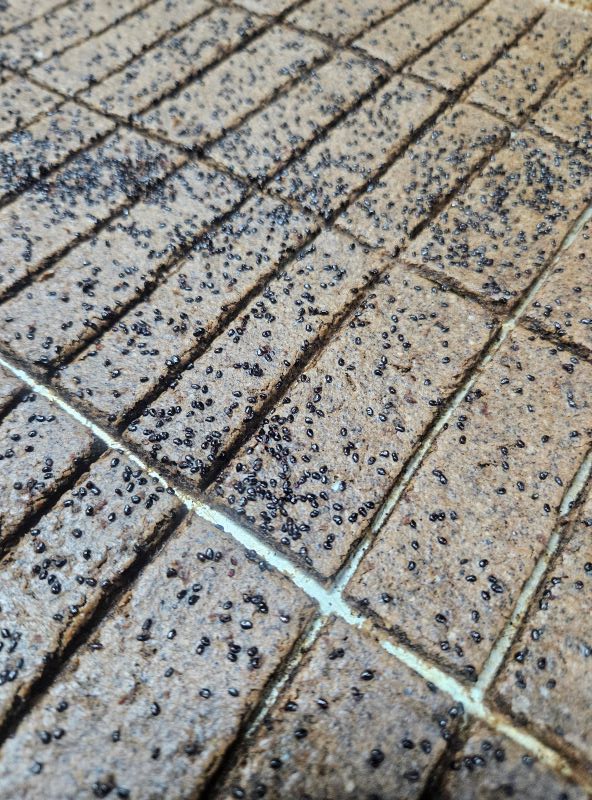
Then I sprinkled with saguaro seed.

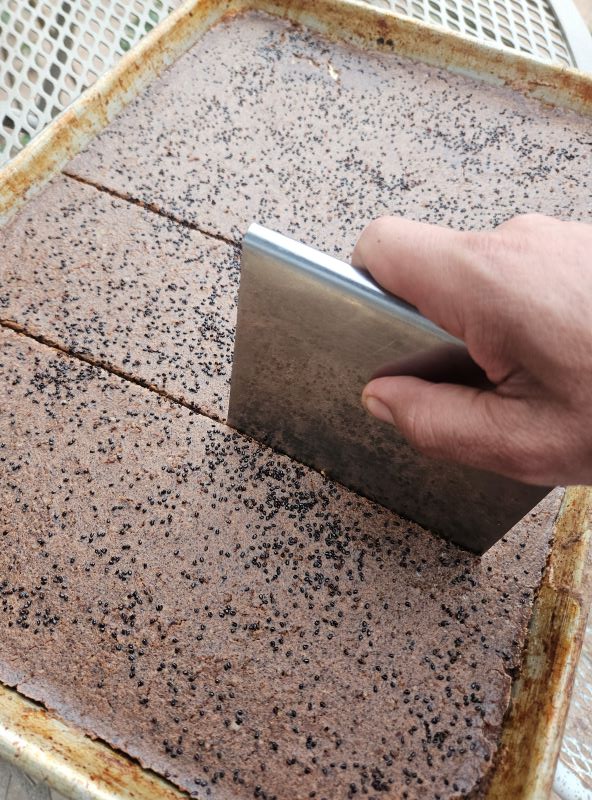
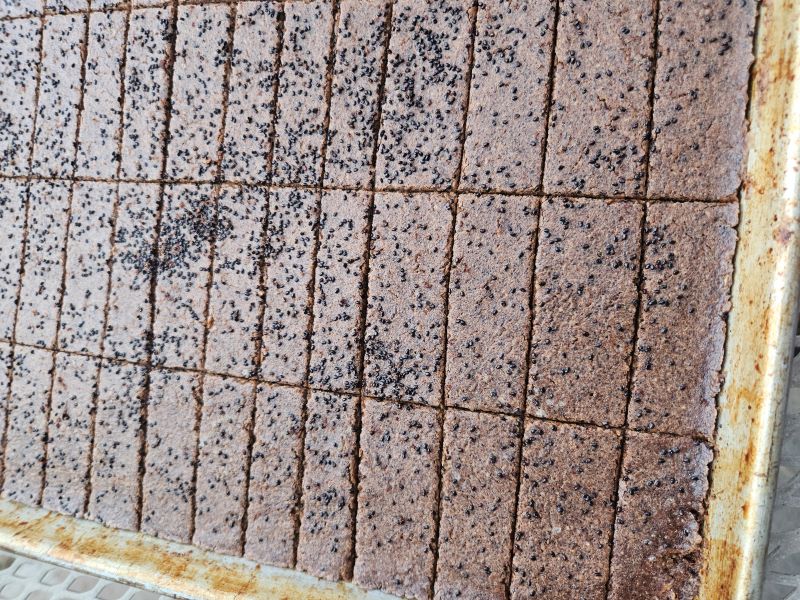
After baking for ten minutes, the crackers can be scored before returning to the oven to finish.

After baking with careful supervision, this batch got darker from the sugar in the saguaro fruit than other batches. A hit of sweetness and delicious! Next time I’ll use a slightly larger yet pan so they are a little thinner. The thinner ones are crispier and more delicate. But think or thin, they are easy to enjoy with spreads, alongside a salad or on their own as a trail snack. Enjoy!

For the recipe, see Camilla’s post on her blog powerhungry.com

Instead of seeds, I added the equivalent weight of dry saguaro fruit. I added a quarter cup of olive oil and reduced the water by that amount. I used approximately 1 teaspoon of coarse sea salt divided between the batter and sprinkled on top with the saguaro seeds. Experiment and have fun!

Sonoran Plant-Power Treats

Rosy, ripe Bahidaj — saguaro cactus fruit–is calling from the tops of giant saguaros all across the Sonoran Desert–attracting whitewing doves and venturesome, thankful harvesters…….(MABurgess photo)

Saguaro chuñ and chocolate pair nicely–especially when they are topping home-made mango ice-cream!

The bahidaj harvest heralds the Sonoran Desert New Year, a time of celebration and prayers for rain by the First People here–the Tohono O’odham who keep traditions actively benefitting all.

Tia Marta here to share ideas for bringing bahidaj from your own yard or desert landscape to your table and taste buds.

Wild desert fruit and seed harvests, when packed into these Sonoran Plant-Power Treat energy bars, harnesses their solar-powered nutrition into kinetic energy when you need a tasty boost!

Toward the end of the saguaro harvest season–before monsoon rains arrive–many fruits will drop from cactus tips and hang to dry in the branches of their palo verde nurse trees.  My mentor Tohono O’odham Elder Juanita Ahil called these sweet crunchy delicacies chuñ (pronounced choooñ.)  You can pick them right from the tree branches to eat as a snack like dried figs, or take them home for serving in desserts or–tah-dah– in Tia Marta’s Sonoran Plant-Power Treats!

Partnered with other high-energy desert seeds and fruits, we can store the bahidaj’s potential energy for future muscle-action.  Long ago my son got excited about my desert energy-bar inventions and wanted me to go into business, repeating Petey Mesquitey’s mantra, “We’re gonna be rich!”  Here–so YOU can be rich in your appreciation of desert gifts– are the steps for making my Sonoran Plant-Power Treats.  (Just remember when you start production and make your million, this is copyrighted):

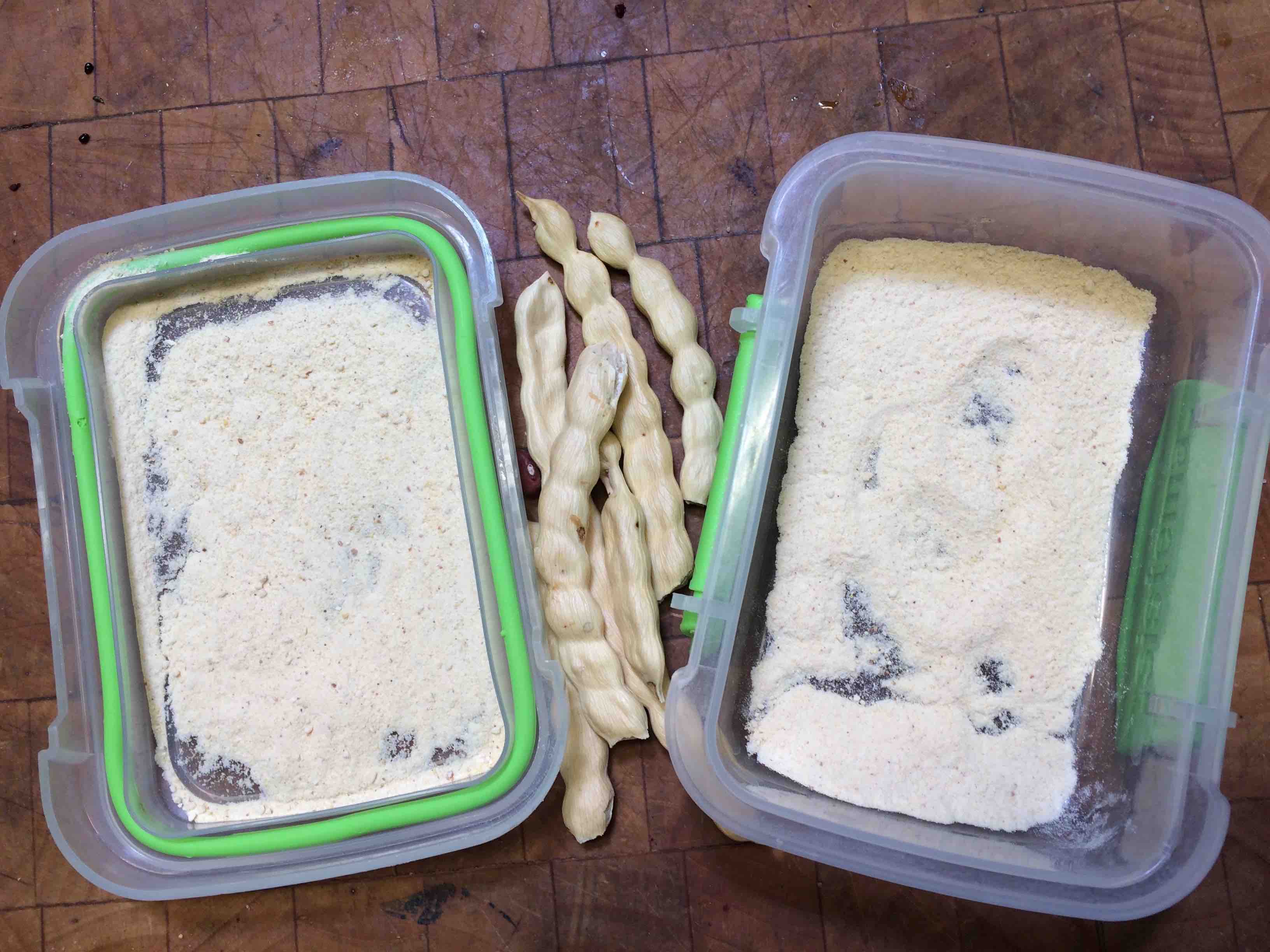
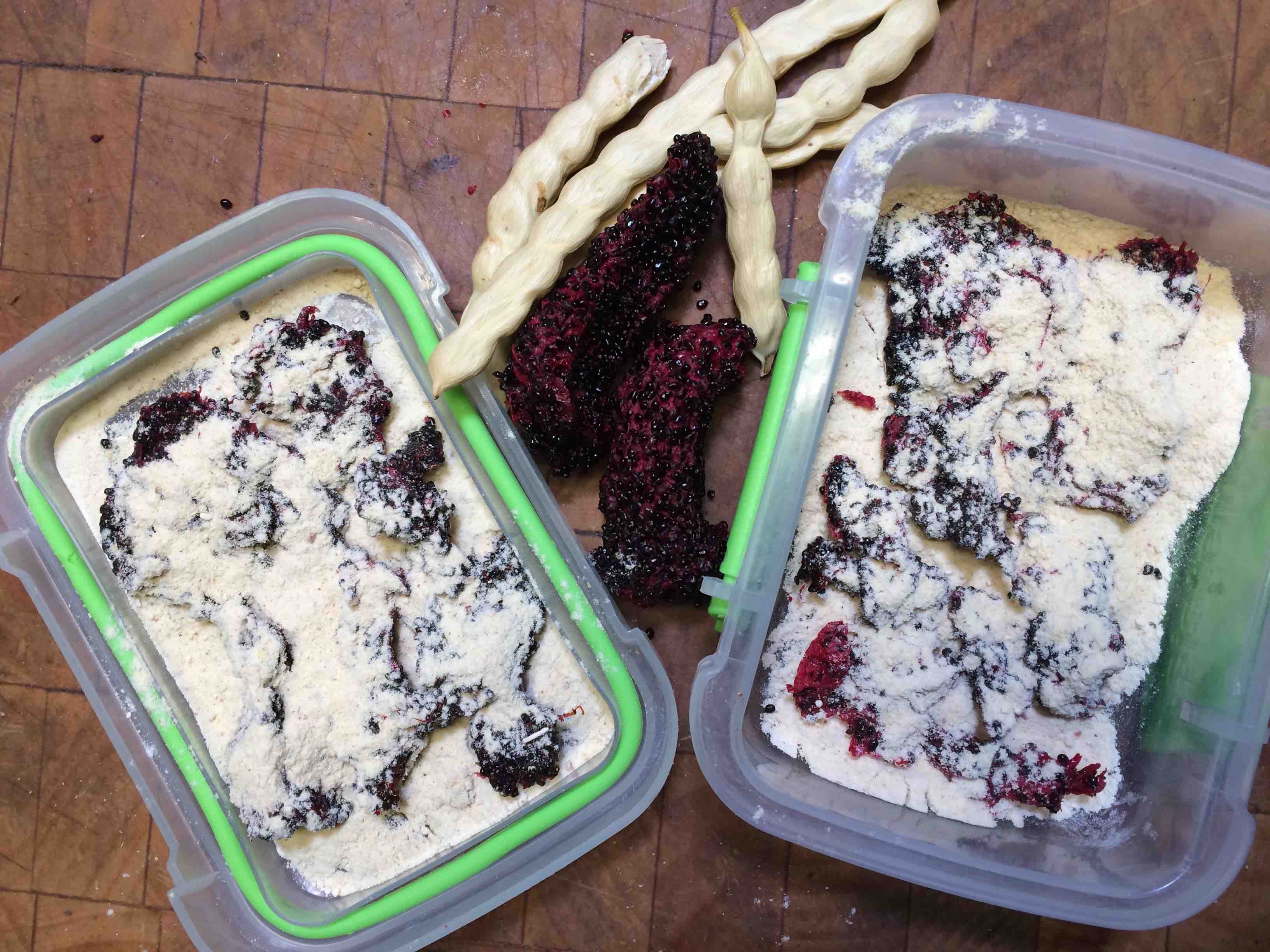
step 1–Dust the bottom of a food mold, or dish, or shallow pan with mesquite flour (available at www.nativeseeds.org).  Find out about milling your own mesquite pod harvest at www.desertharvesters.org.

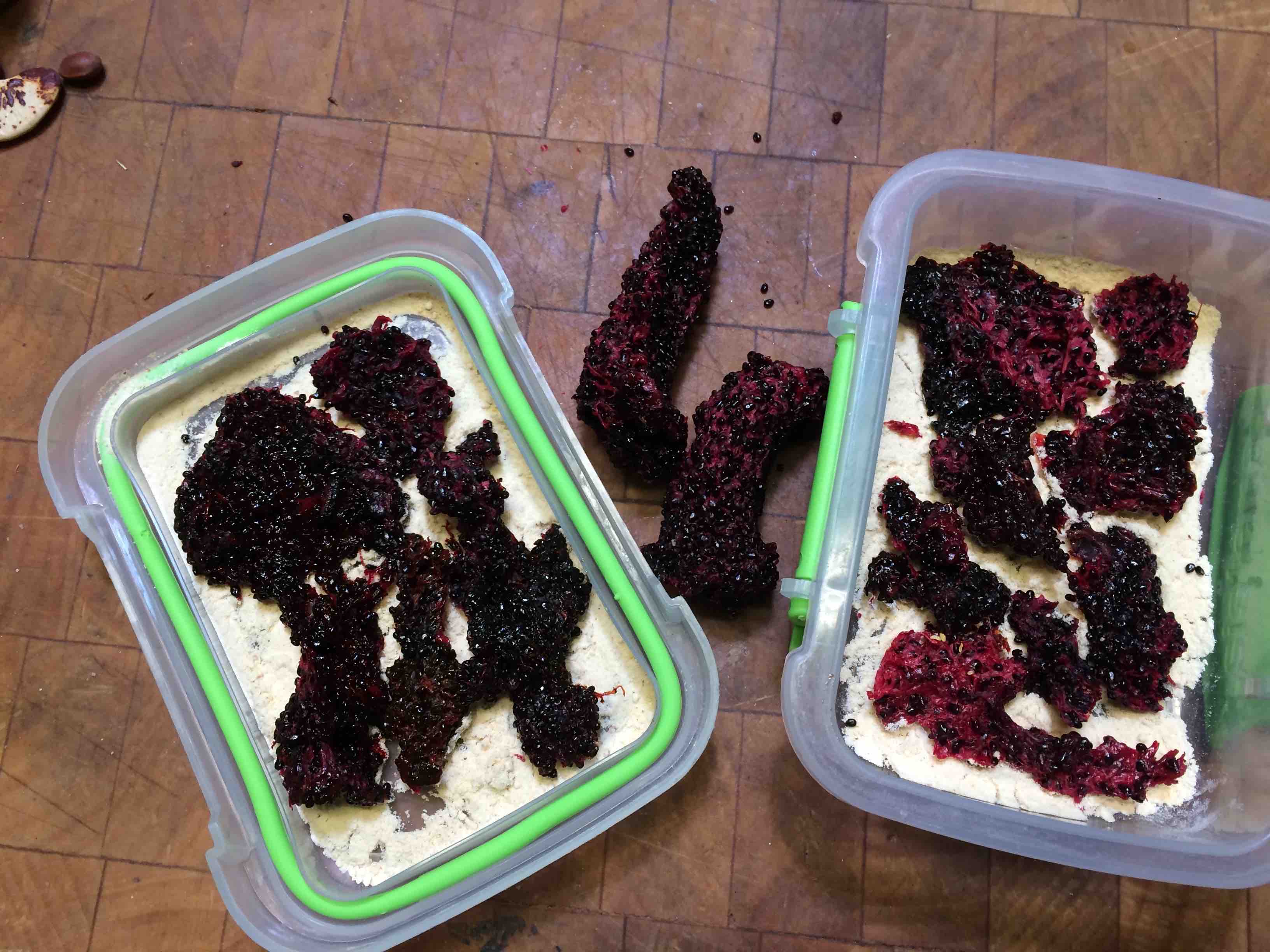
step 2–With your thumb, press dry or semi-dry chuñ into the mesquite flour and flatten it down.

step 3–Dust the flattened chuñ with more mesquite flour.

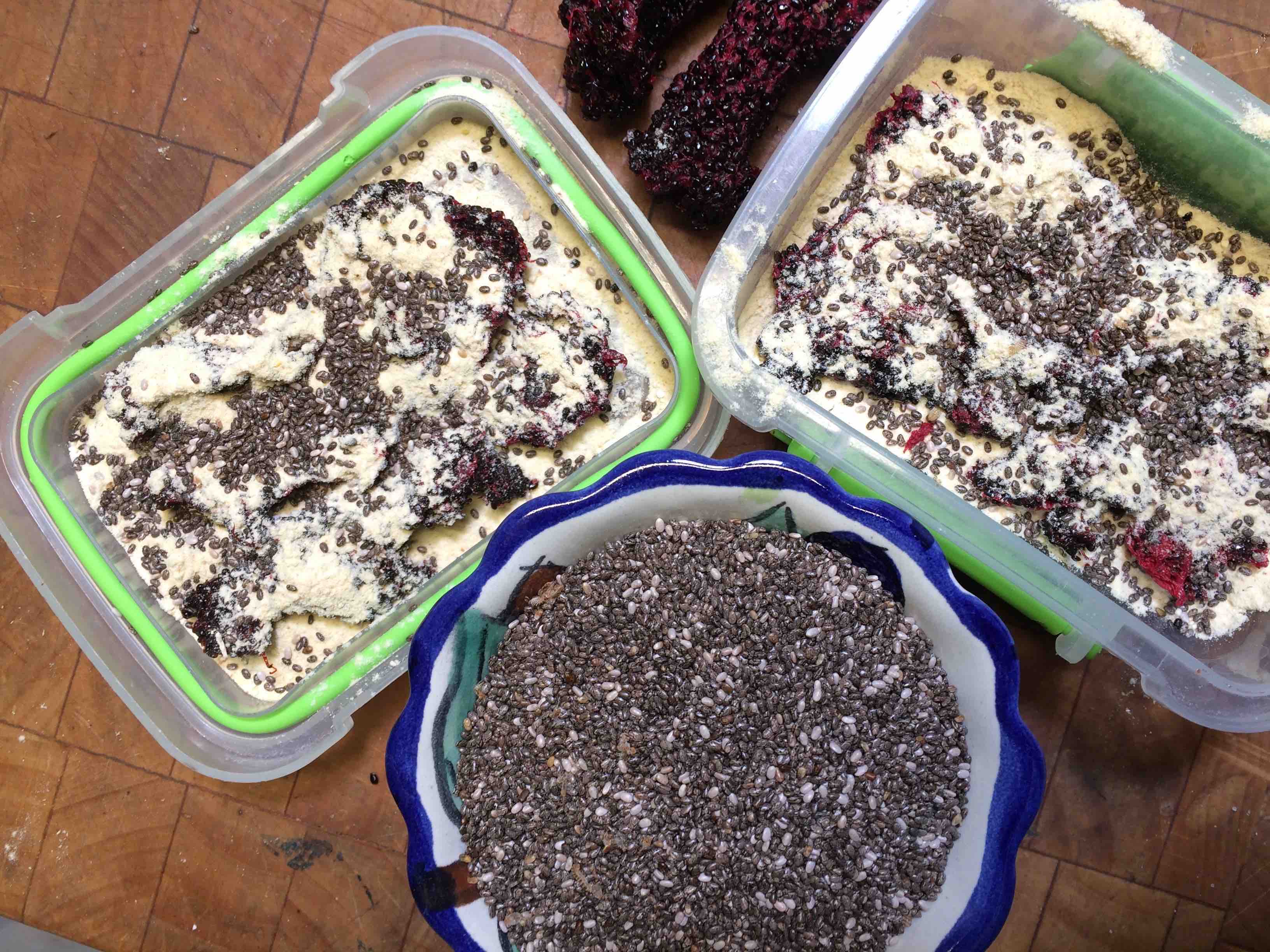
step 4–sprinkle with chia seed

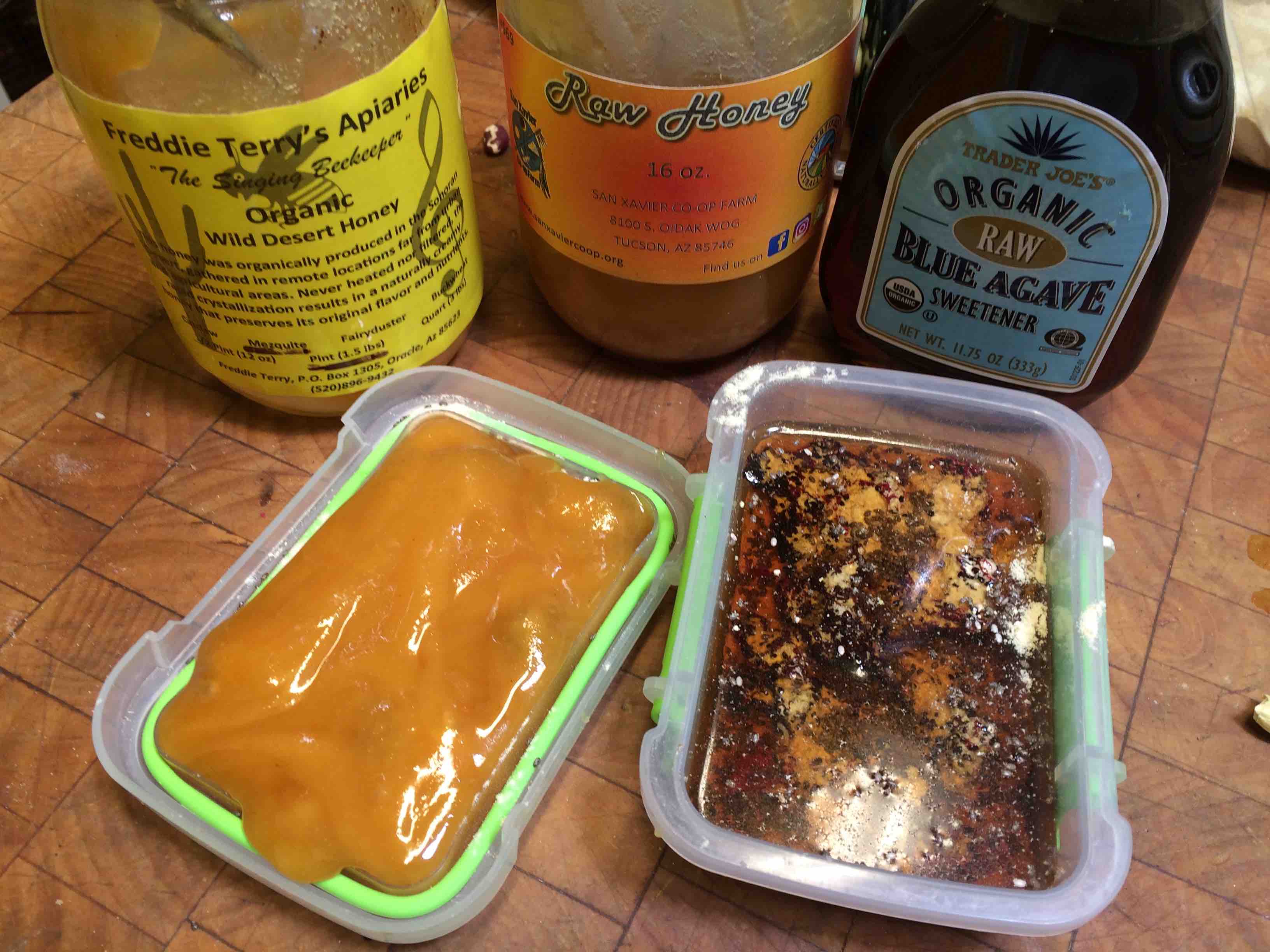
step 5–add local honey (from Freddie Terry or San Xavier Coop Assoc.) or agave nectar to cover (but don’t use as much as I did here)

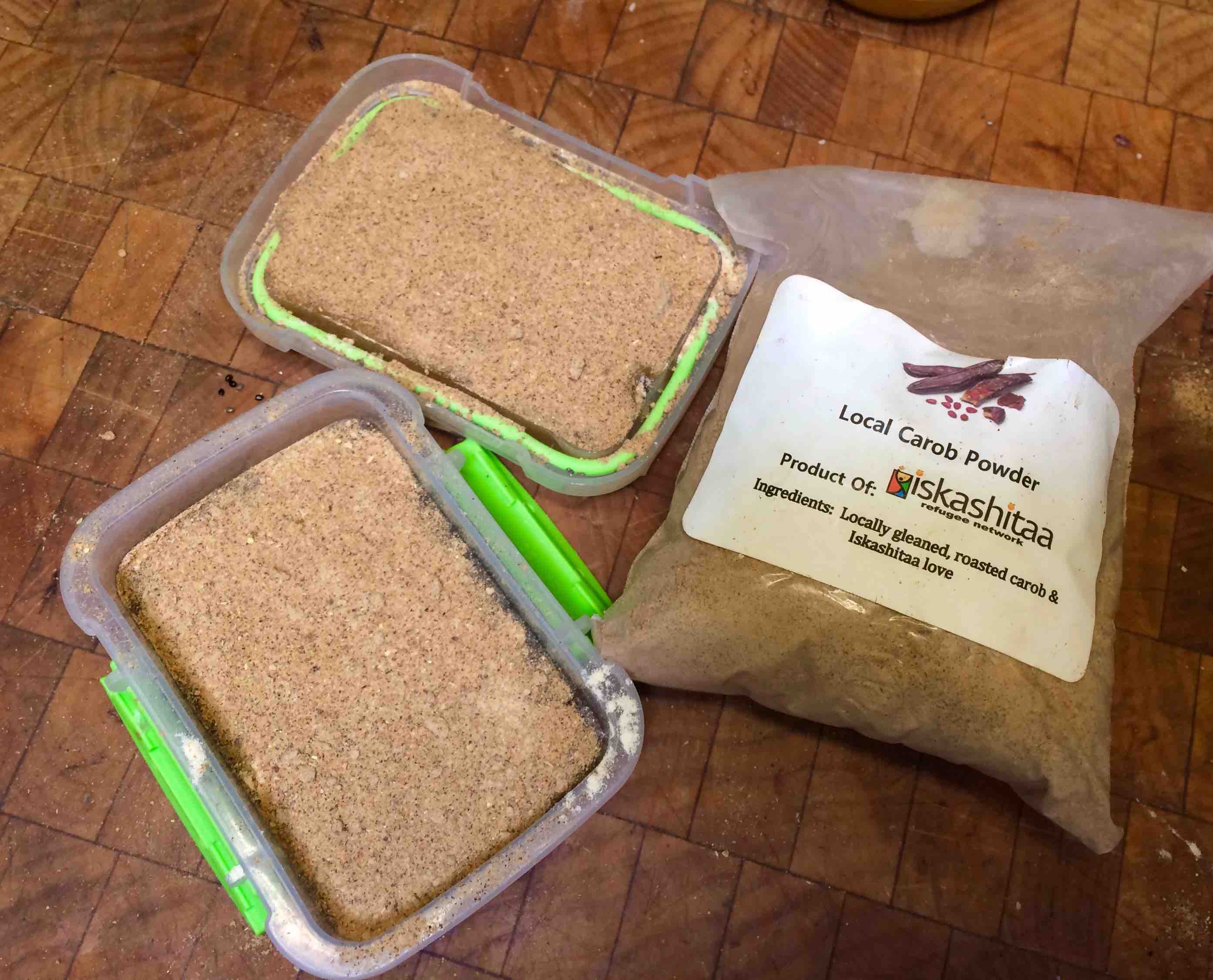
step 6–Cover with a dusting of local carob powder (available from Iskashitaa.org).

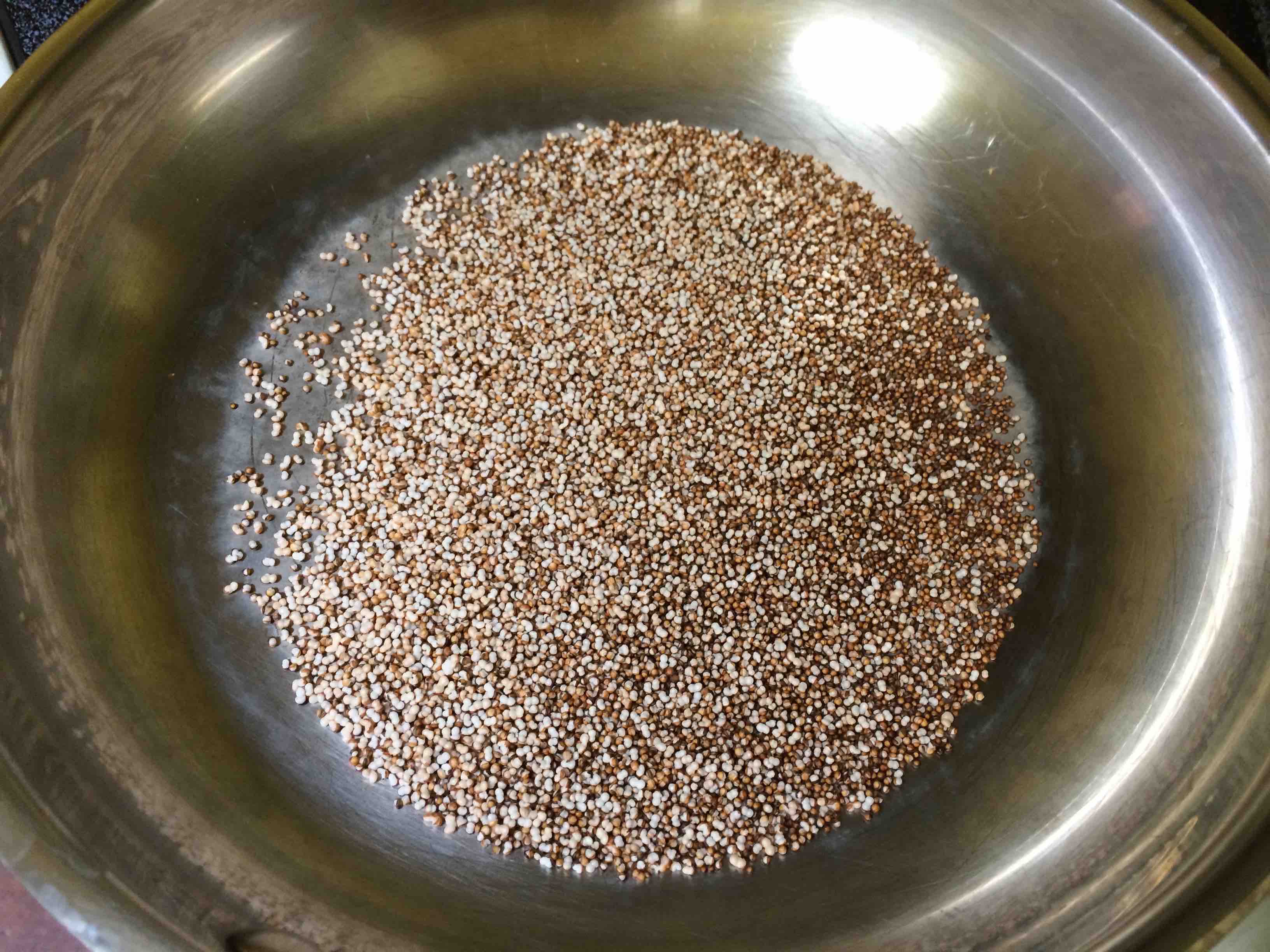
step 7a–Pop amaranth grain in a hot dry skillet (harvested wild or available at www.nativeseeds.org).

step 7b–Sprinkle popped or griddled amaranth seed

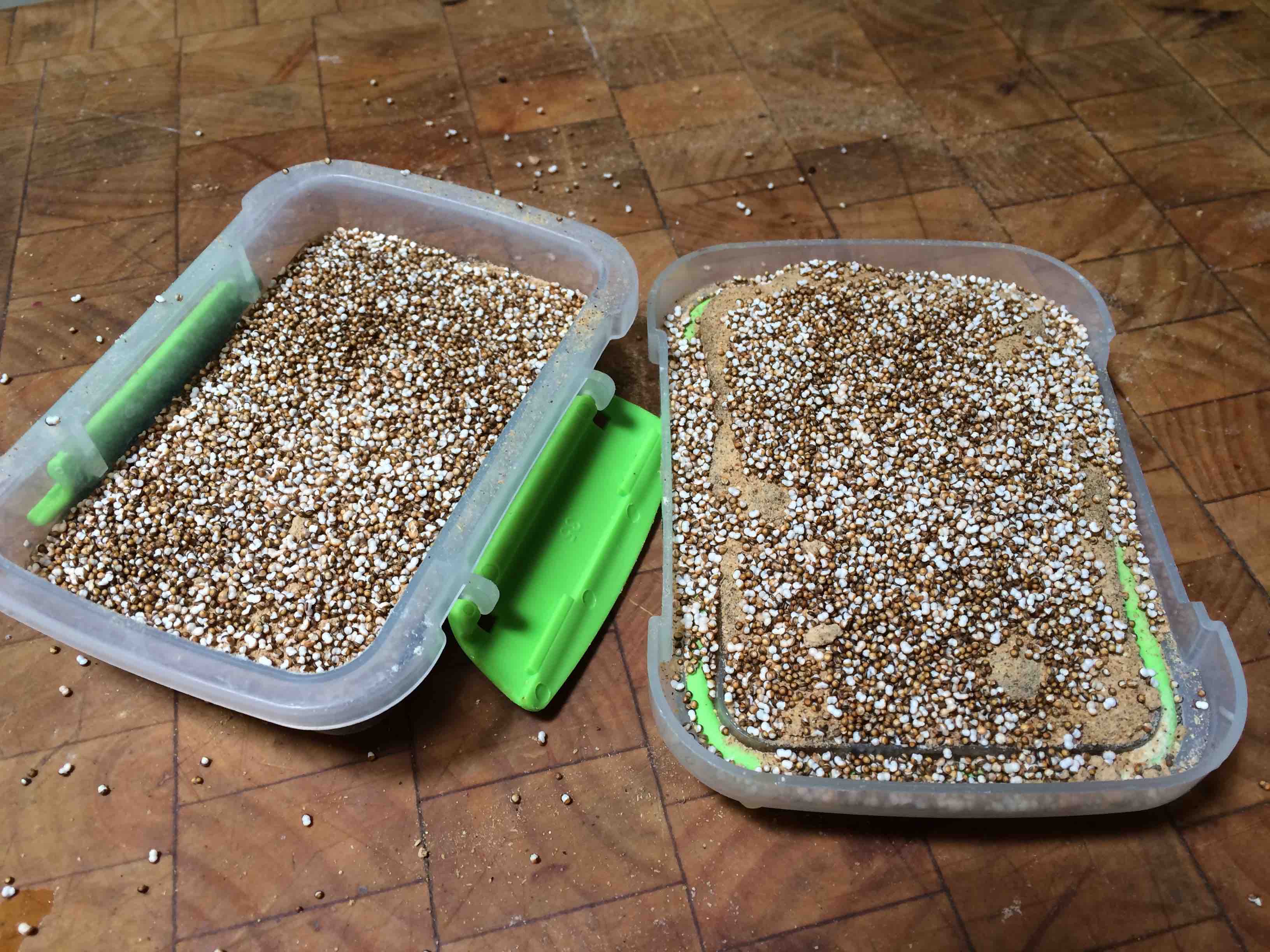
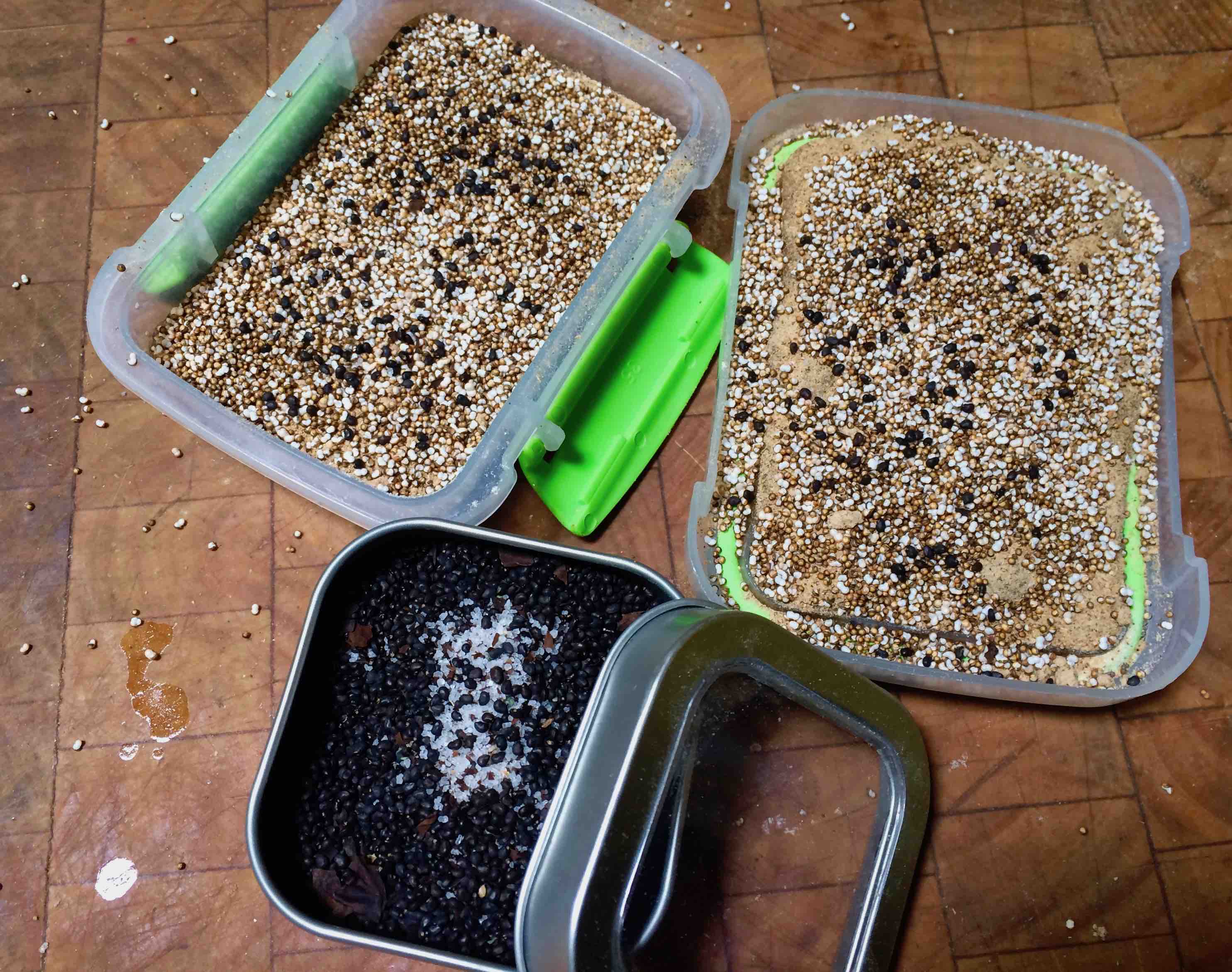
step 8–Sprinkle crunchy barrel cactus seed (wild harvestable) and sea salt (seed salt mix available from BeanTreeFarm) on top.

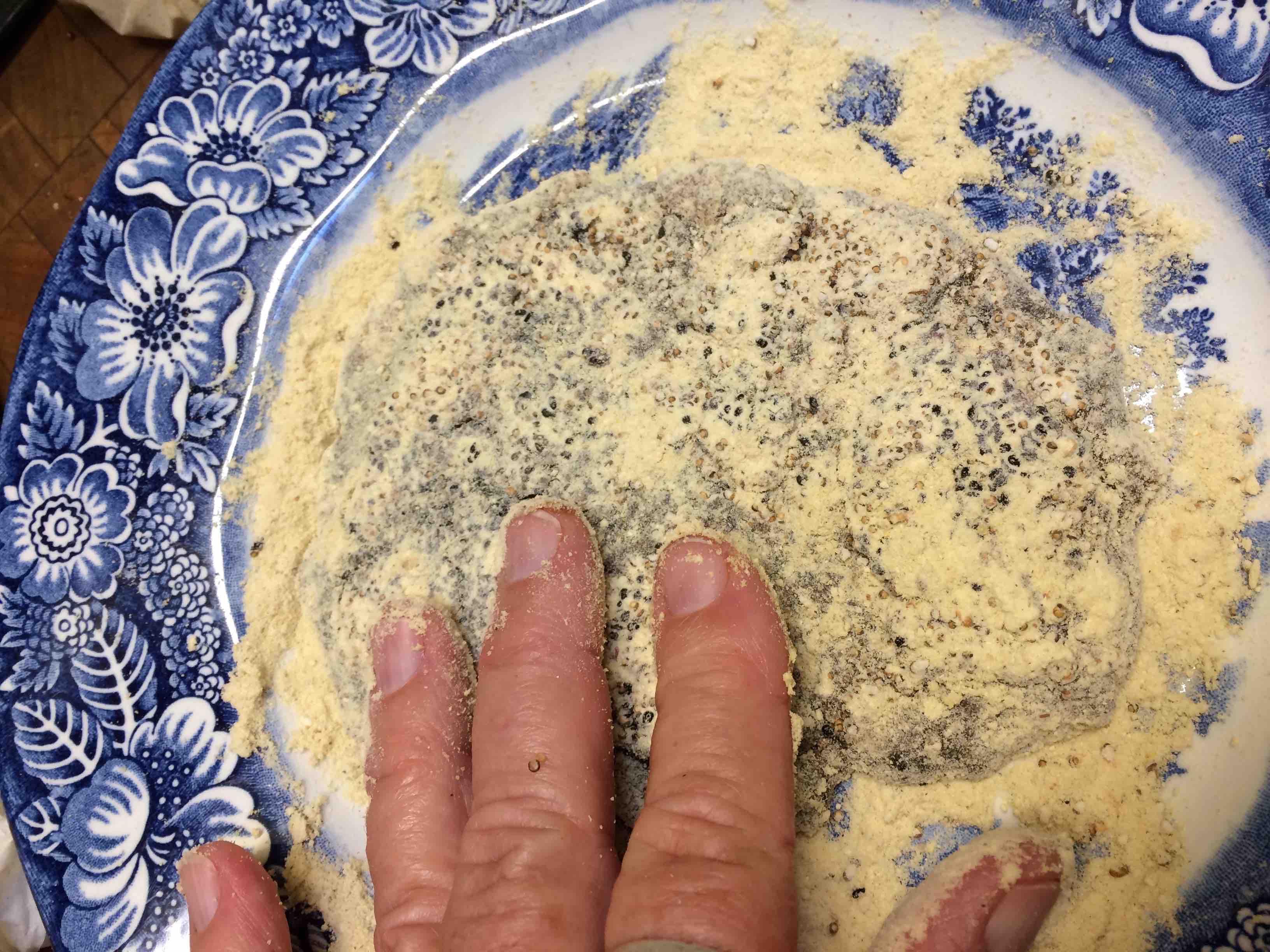
steps 9, 10, 11–Mix ingredients, set molds out to dry in the sun until mix is getting stiff, remove from mold. Pat out on mesquite- dusted board with fingers.

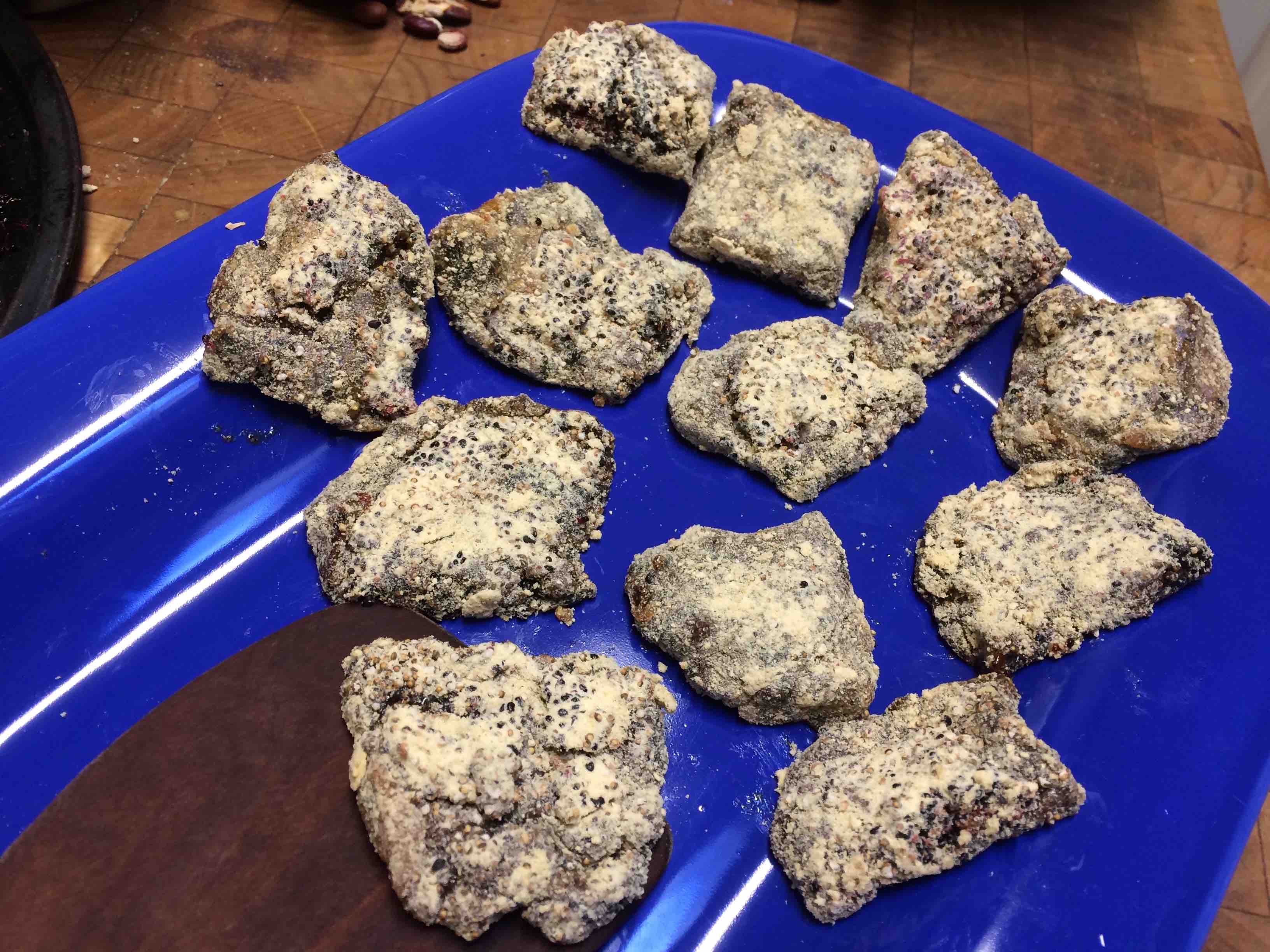
step 12–Cut into squares for additional drying in sun until firm. Enjoy the rich energy of Sonoran Plant-Power Treats in small bites!

Of course, to make your own Sonoran Plant-Power Treats, you can try any variation or combination of these delectable ingredients from the desert’s erratic bounty.  

As you add each one, name it with the grace of gratitude.  The plants need to hear our appreciation.


Cooking with the SUN!

A sleek fold-up All American sun oven is set up on my patio table.  I slightly rotate it and reposition the angle every hour or so to track the sun. (MABurgess photo)

June in Baja Arizona should officially be Solar Cookery Month– time to not add any more heat in the house.  Thanks to some fabulous Baja Arizona “solarizers,” namely Technicians for Sustainability (www.TFSsolar.com), our house is now blessed with a PV array–yet despite this “free” electricity we still don’t want any extra BTUs loose in the kitchen.

Tia Marta here encouraging you to take your cooking OUTSIDE!!  A great project to do with kids is to make your own solar oven with a cardboard box and lots of tinfoil.  (The internet has easy do-it-yourself plans.)  Or you can purchase a ready-made solar oven online.  Check my website http://www.flordemayoarts.com under the menu “Native Foods” to buy one of the most efficient and least expensive solar ovens you’ll find anywhere!

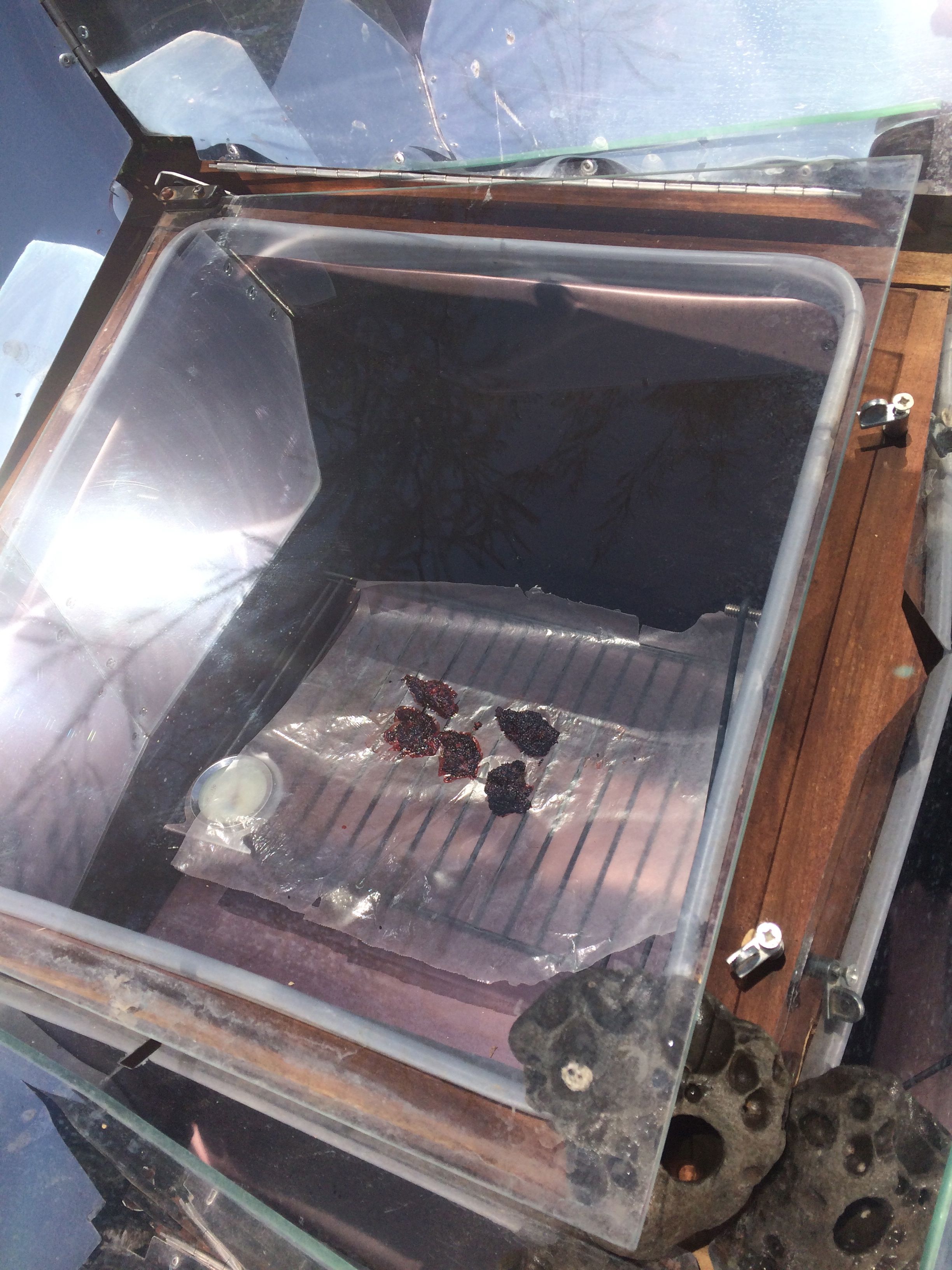
Try de-hydrating saguaro fruit in a solar oven with the lid partially open to allow moisture to escape. It doesn’t take long to dry sliced fruits or vegetables. (MABurgess)

Wild desert fruits and orchard fruits will be coming on aplenty, and when solar-dried, they make wonderful snacks and trail mix.  As seasonal veggies come available in your garden or at farmers markets, you can slice and solar dry them for winter soups and stews.

It’s almost time to harvest mesquite pods (kui wihog) and saguaro fruit (bahidaj), in the dry heat of Solstice-time before monsoon moisture arrives.  Here are solar-oven-dried mesquite pods, crispy and ready to mill into flour.  Solar drying of mesquite pods–oven door slightly open–allows bruchid beetles to escape.   Solar-dried aguaro fruit chun (pronounced choo’nya) is ready to store or eat as rare sweet snacks! (MABurgess photo)

Washed velvet mesquite pods, covered with drinking water, set in solar oven to simmer for making Tia Marta’s “Bosque Butter.” (MABurgess photo)

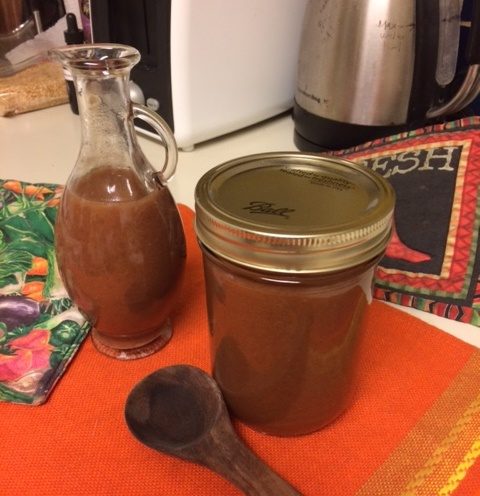
Mesquite “Bosque Butter” and “Bosque Syrup” a la Tia Marta–Scroll back to the July 15, 2017 Savor post for how-to directions for these delicious products, made from solar-oven-simmered mesquite pods. (MABurgess photo)

Pellet-sized fan-palm dates washed and ready to simmer for making “Datil Silvestre Syrup”–First they should be transferred with water to a dark pan with dark lid for placing in solar oven to absorb more heat.  Scroll to Jan.30,2015 post for recipe.

Concentrated Solar Fan Palm Syrup–nothing added–just water and fan palm fruit simmered in solar oven.  For easy directions search “More Ideas for Wild Dates” post for January 30,2015. (MABurgess)


Solar-oven-dried figs get even sweeter and more flavorful, and keep for a long time. These are heirloom mission figs harvested from my Padre Kino fig tree purchased from the Mission Garden’s and Jesus Garcia’s Kino Tree Project–the “Cordova House” varietal.  You swoon with their true sweetness.  (A caveat for any dried fruit or veggies:  be sure there is NO residual moisture before storing them in glass or plastic containers to prevent mold.)

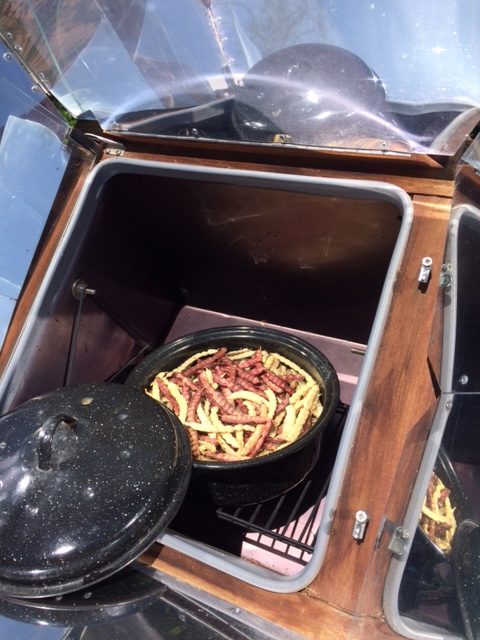
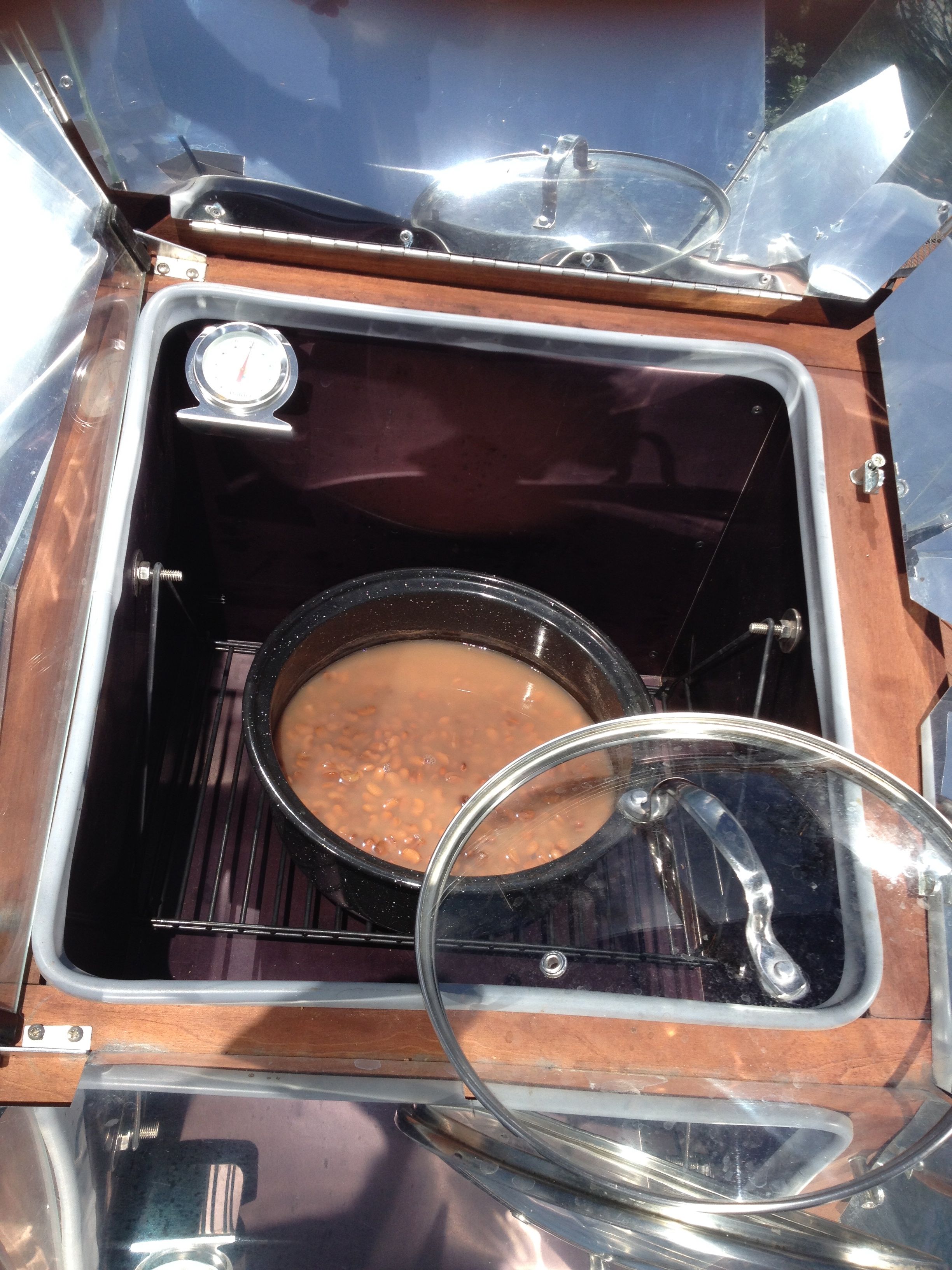
Tepary beans, presoaked overnight, into the solar oven by 10am and done by 2pm, avg temp 300 or better (see thermometer).  Note the suspension shelf to allow for no-spill when you change the oven angle to the sun.  This is a demo glass lid.  A black lid for a solar cooking pot will heat up faster absorbing sunlight.  (MABurgess photo)


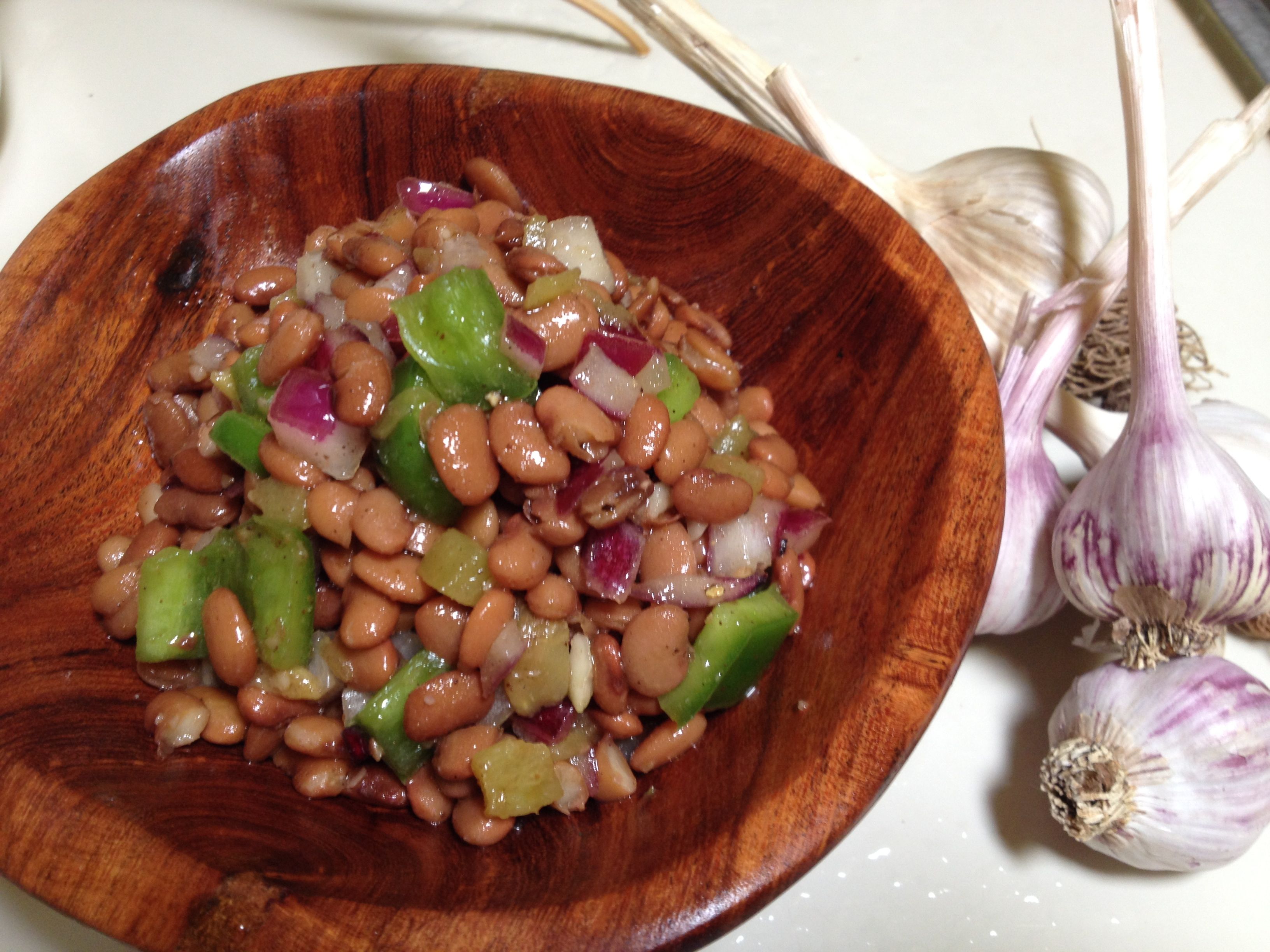
George Price’s “Sonoran Caviar”–Cooking pre-soaked tepary beans slowly in a solar oven or crockpot makes them tender while keeping their shape for delicious marinated salads.  Directions for making “Sonoran Caviar” are in the Aug.8,2014 post Cool Summer Dishes. (MABurgess photo)


We cook such a variety of great dishes–from the simple to the complex– out on our patio table.  I stuff and bake a whole chicken and set it in the solar oven after lunch.  By suppertime, mouth-watering aromas are wafting from the patio.

For fall harvest or winter dinners, I like to stuff an heirloom squash or Tohono O’odham pumpkin (Tohono O’odham ha:l) with cooked beans and heirloom wheat- berries to bake in the solar oven.  It makes a beautiful vegetarian feast.

A solar oven is a boon on a camping trip or in an RV on vacation for heating dishwater as well as for cooking.  It was a God-send for us when power went out.  Solar ovens in emergency situations can be used for making safe drinking water.  (Hurricane-prone areas– take heed!)


For one of my favorite hot-weather dishes–marinated White Sonora Wheat-berry Salad–the solar oven is a must.  On stove-top, wheat-berries take an unpleasant hour20minutes to fully plump up.  That’s alot of heat.  Outdoors in the solar oven they take about 2 hours while the house stays cool, keeping humidity low.  Hey–no brainer!


Muff’s Marinated White Sonora Wheat-berry Salad Recipe

1 cup washed heirloom wheat-berries (available from NativeSeeds/SEARCH, grown organically at BKWFarms in Marana)

4 cups drinking water

Simmer wheat-berries in solar oven until round, plump and softer than al dente, and have absorbed the water–approximately 2-2 1/2 hours depending on the sun.  Drain any excess water.

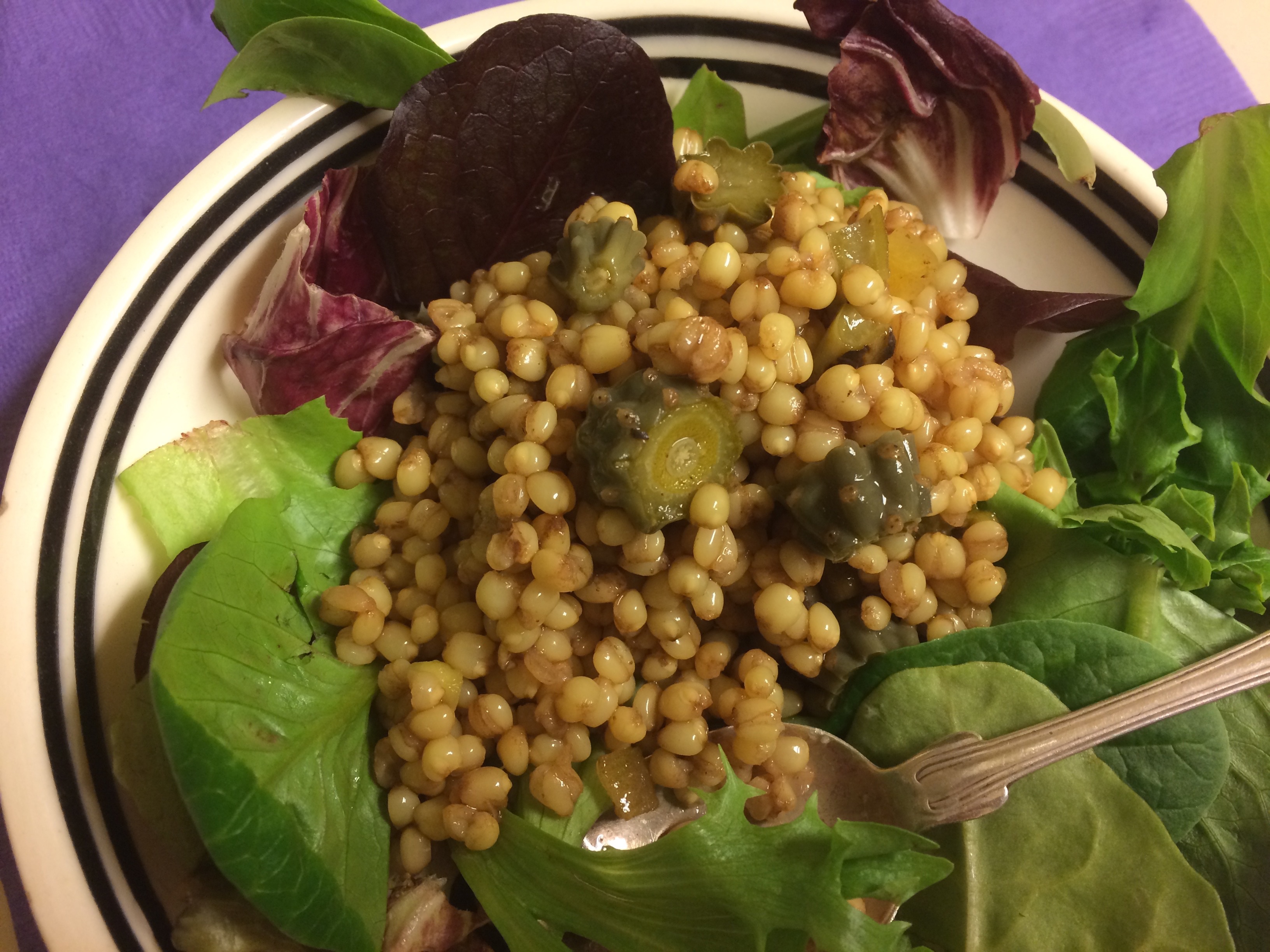
Chill in frig.  Marinate overnight with !/2 cup balsamic vinegar or your favorite citrus dressing.  Add any assorted chopped veggies (sweet peppers, I’itoi’s onions, celery, carrots, pinyon nuts, cholla buds, barrel cactus fruit, nopalitos….).  Toss and serve on a bed of lettuce.

Muff’s White Sonora Wheat-berry Salad laced with pickled cholla buds, roasted nopalitos and barrel cactus fruit nibbles. (MABurgess photo)

While cooking with a solar oven, it will help to “visit” your oven every 1/2 hour or hour to adjust the orientation to be perpendicular to the sun’s rays.  Think about it–You gotta get up that frequently anyway from that computer or device where you’ve been immobile–just for health and circulation’s sake!  Think of your solar oven as part of your wellness program.

A solar oven is so forgiving too.  If you need to run errands, just place the oven in a median position to the movement of the sun.  Cooking may take a little longer, but, you are freed up to take that class, get crazy on the internet, texting or whatever.  And if you should get detained, good old Mr. Sun will turn off your oven for you.  No dependency on digital timers.  Happy cooking with the sun this summer!