“Succulent” Events with Succulent Tastes–and Invitations….

It’s show time in the desert–S’oo’ahm masad or “yellow moon” for the Tohono O’odham–the month in which seemingly everything in the Sonoran Desert blooms a glorious yellow, arroyos lined with blooming blue palo verde and mesquite, hillsides covered with paper flower, palo verde and cactus blossoms.

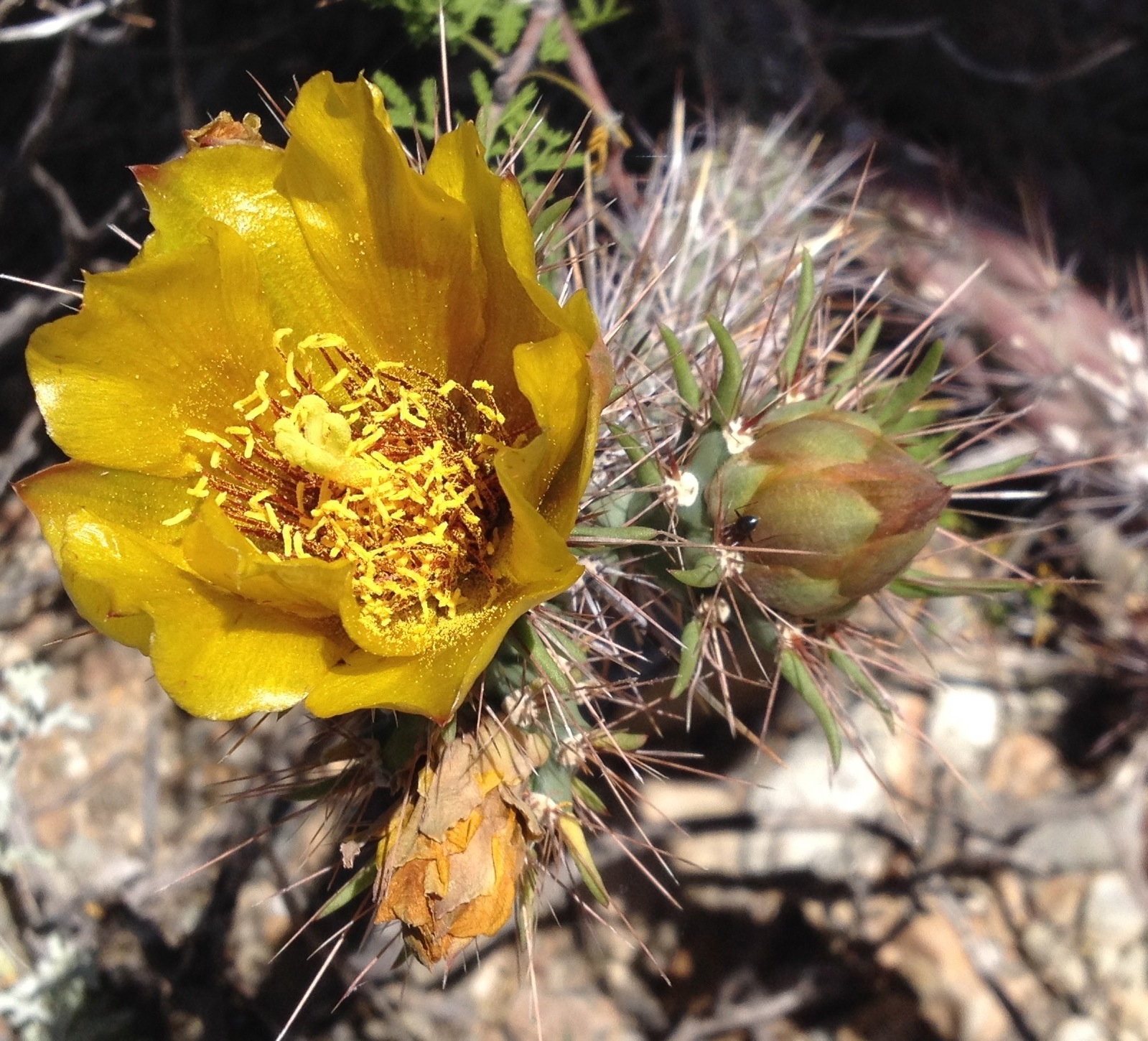
Staghorn cholla (Cylindropuntia versicolor) flower, bud and ant protector

Staghorn cholla (Cylindropuntia versicolor) flower, bud and ant-protector (MABurgess photo)

These spiny, possibly-threatening desert plants have amazing nutritious gifts to pollinators and other hungry creatures, including ants, packrats… and humans.

Tia Marta here with an invitation to learn lots more about our many species of Sonoran Desert chollas, how they fit into the fabric of desert life, and how they have been used by traditional people for generations.  Come join  Tucson Cactus and Succulent Society’s SONORA XI gathering next weekend Friday-Sunday, April 15-17, 2016, for a rich opportunity to enjoy demos, tastes, lectures, and exhibits.  You can learn more about this downtown Tucson event (held at HotelTucsonInnSuites) and register at http://www.tucsoncactus.org.  On Saturday, April 16, I invite you to attend one of my ethnobotany demonstrations at the open conference.  I’ll guide you through careful “hands-on experiences” with edible and useful succulents, complete with some surprising and yummy bites!

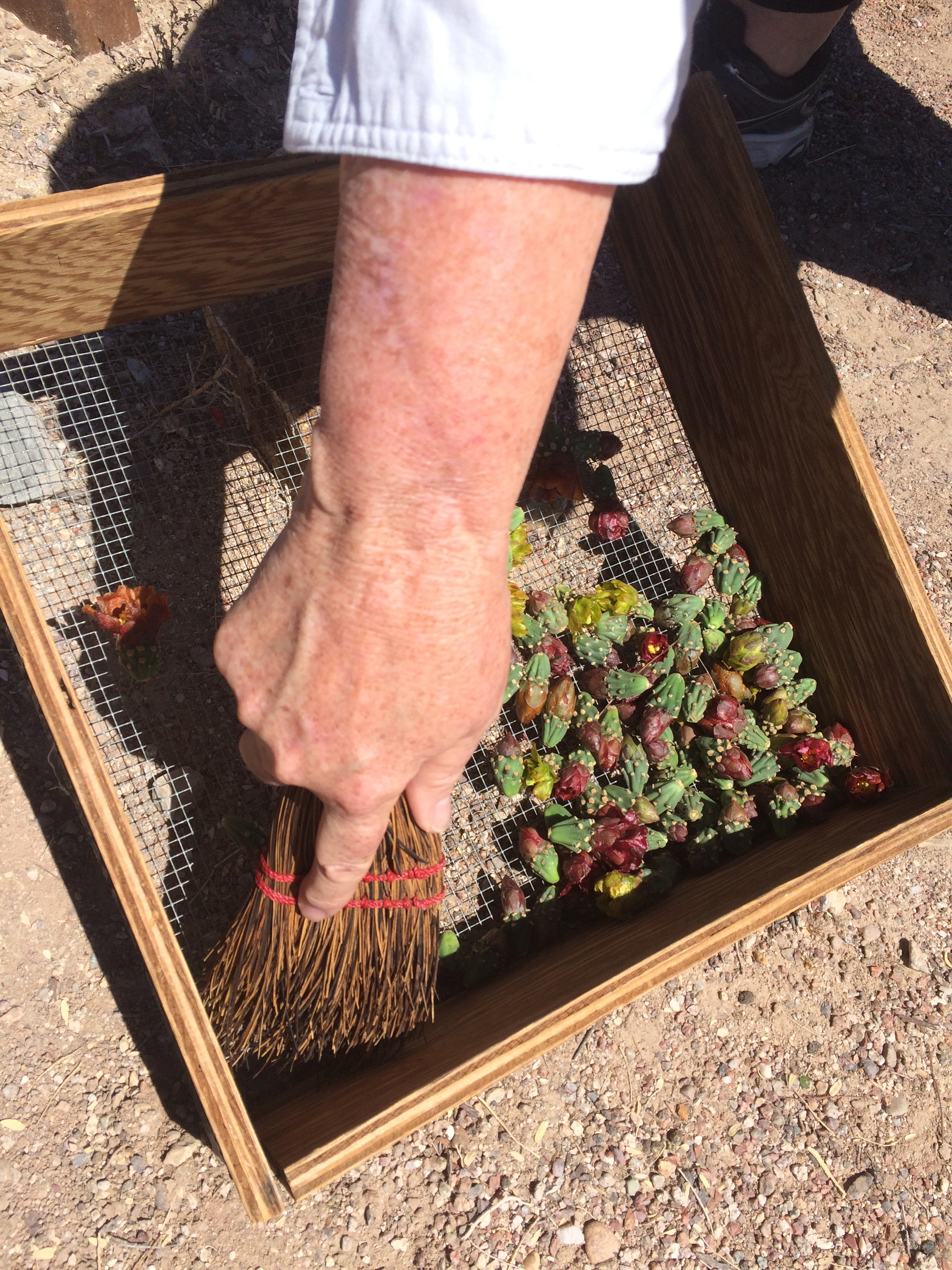
De-spining cholla buds at Mission Garden Workshop (MABurgess)

De-spining cholla buds at Mission Garden Workshop (MABurgess)

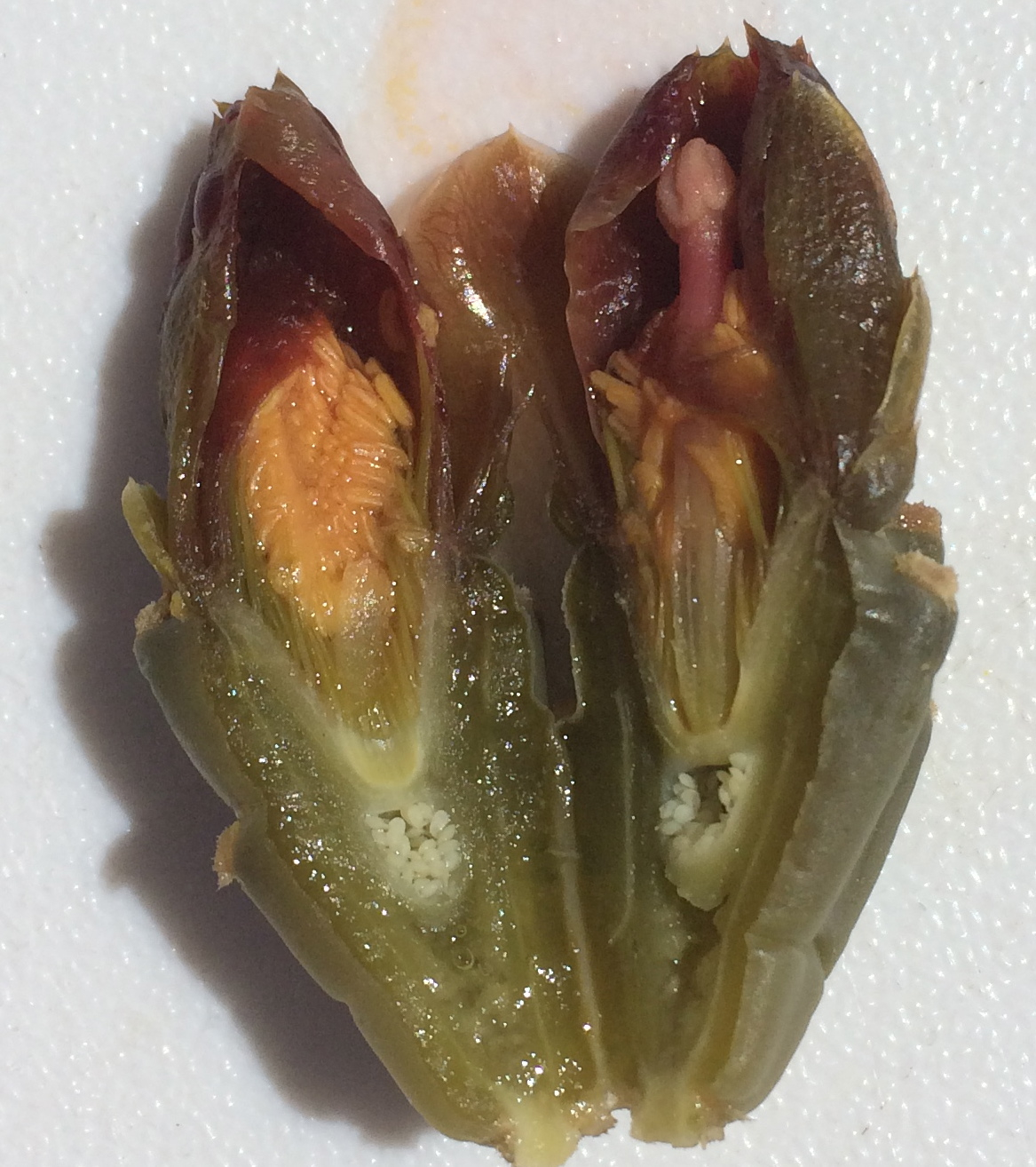
Cross-section of staghorn cholla flower bud showing stamens and ovules (MABurgess)

Cross-section of staghorn cholla flower bud showing stamens, stigma, and ovules (MABurgess)

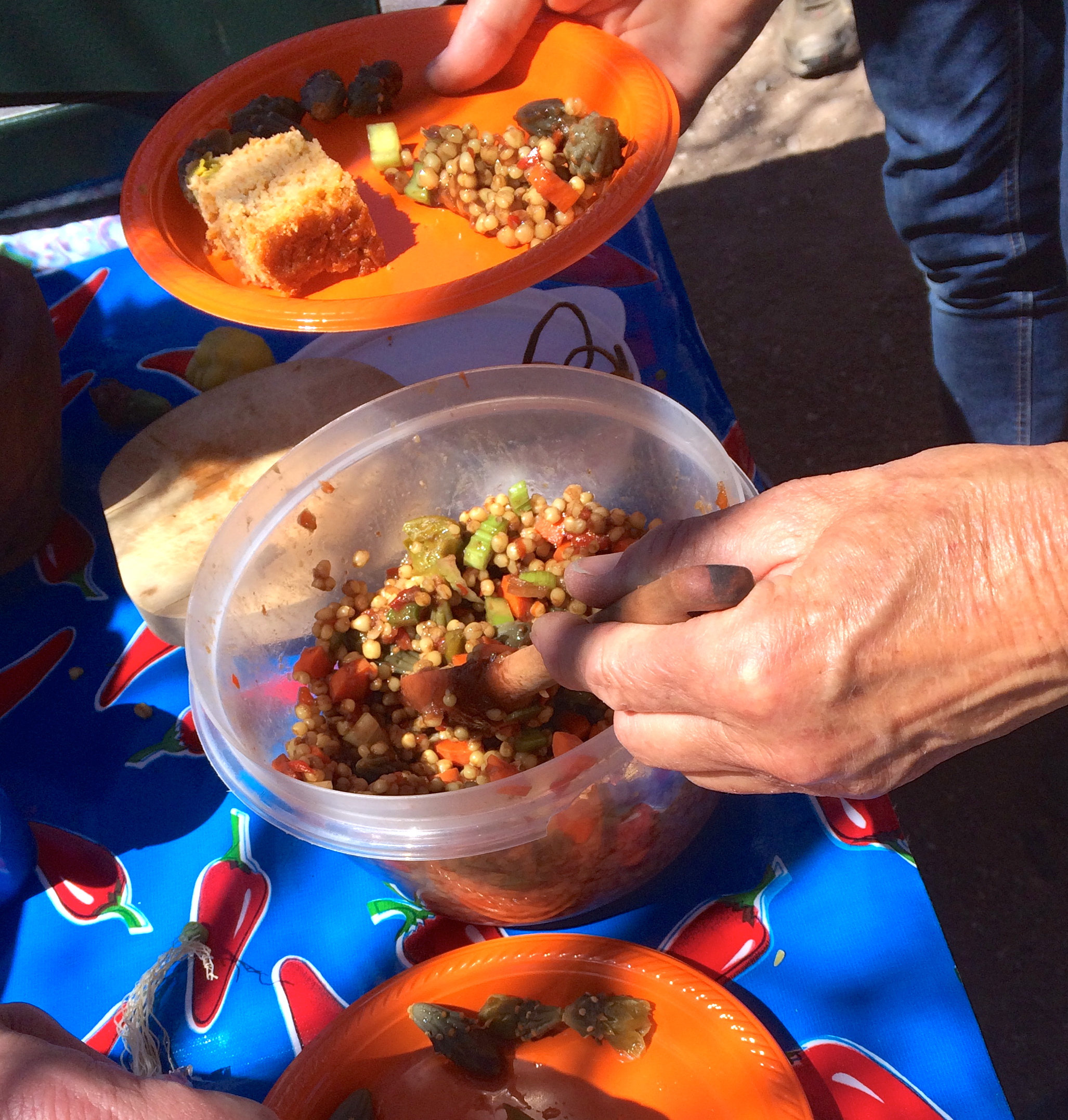
Delicious Marinated White Sonora Wheat-berry Salad with Cholla Buds at Mission Garden workshop (MABurgess)

Delicious Marinated White Sonora Wheat-berry Salad with Cholla Buds at Mission Garden workshop (MABurgess)


Last weekend we celebrated the beginning of the cholla harvest at Friends of Tucson’s Birthplace’s Mission Garden in a workshop led by Flor de Mayo’s Tia Marta (www.tucsonsbirthplace.org/archives).   We explored its ecology, taxonomy, traditional preparation, its culture and archaeological evidence.  The class was topped with a feast using cholla buds in several innovative and delectable dishes–one with heirloom White Sonora Wheat.  For great cholla recipe ideas, scroll back to an earlier Savor blog post   https://savorthesouthwest.wordpress.com/2015/03/13/heres-to-the-budding-desert/.   For additional interesting cholla information and dried cholla buds for purchase, check out  www.flordemayoarts.com.

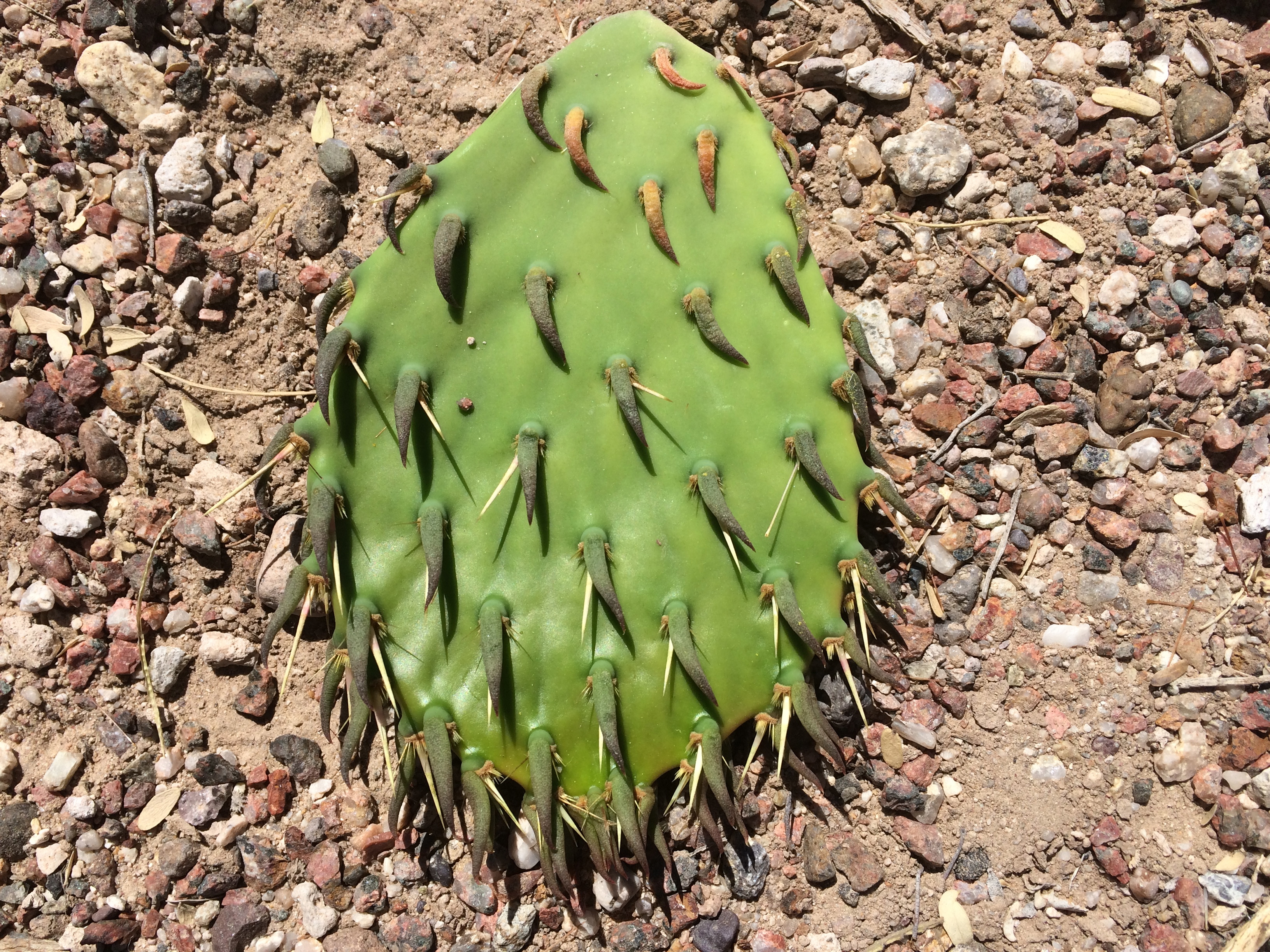
Young new-growth stem of prickly pear in leaf (Opuntia engelmannii) ready for harvesting (MABurgess)

Young new-growth stem of prickly pear in leaf (Opuntia engelmannii) ready for harvesting (MABurgess)

Another desert food staple–worthy of being considered a medicine as it is so effective in balancing bloodsugar–is our own   prickly pear.  With de-spining and preparation you can enjoy its tangy taste as nopalitos, pickled, stir-fried, or in salads.  Enjoy nopal dishes at some of Tucson’s favorite restaurants like Janos’ Downtown Kitchen or Teresa’s Mosaic.  Attend the demo nopal preparation and tastes at the SONORA XI Conference….(www.tucsoncactus.org).

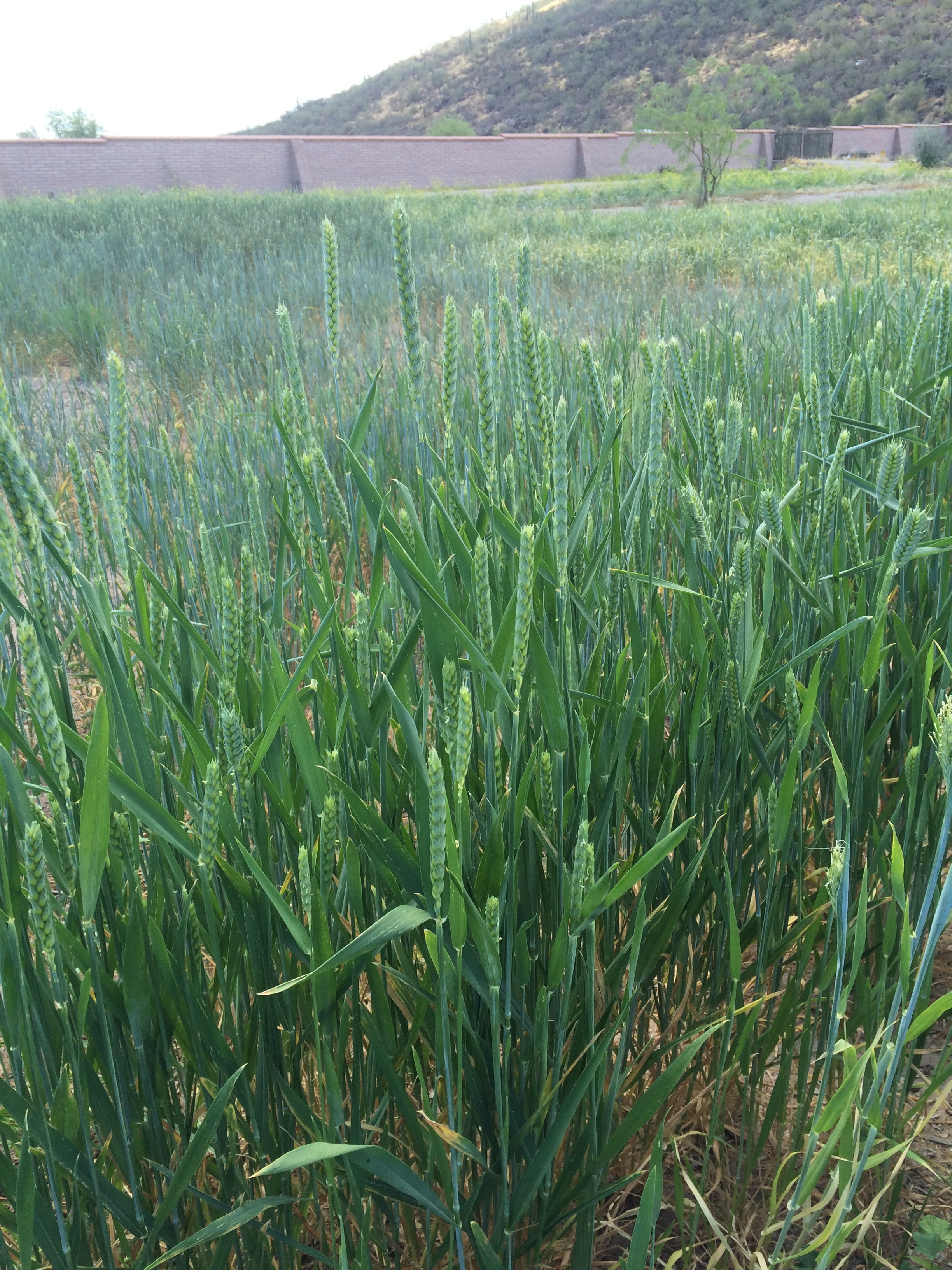
White Sonora Wheat with swelling seed heads at FOTB's Mission Garden (MABurgess)

White Sonora Wheat with swelling seed heads at FOTB’s Mission Garden–to mature in May (MABurgess)


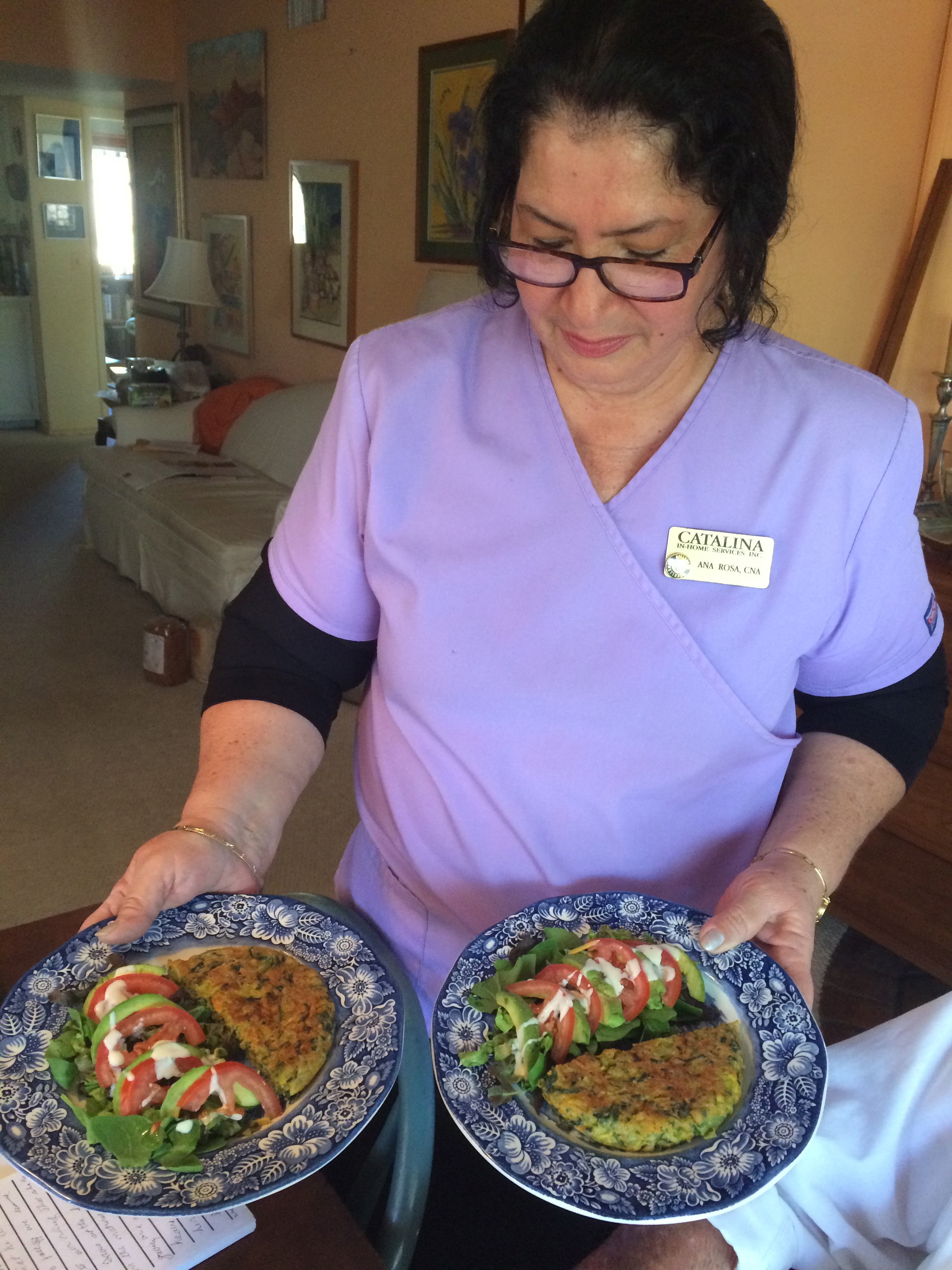
Seeing the heirloom winter White Sonora Wheat growing tall and green at Mission Garden, its swelling kernels in the “milk-stage,” I’m envisioning the harvest to come, and to plans for La Fiesta de San Ysidro Labrador, when the wheat, first introduced to S-chuk-Shon by Padre Kino, will be maturing and ready to thresh.  My mother’s wonderful caregiver Rosa has introduced us to a delectable recipe she created celebrating both White Sonora Wheat and the fresh vegetables currently available at farmers’ markets.  Her recipe for Market Veggie Omelette with White Sonora Wheat follows–light as a souflee.

Rosa serving her Market Veggie Omelette with White Sonora flour (MABurgess)

Rosa serving her Market Veggie Omelette with White Sonora flour (MABurgess)


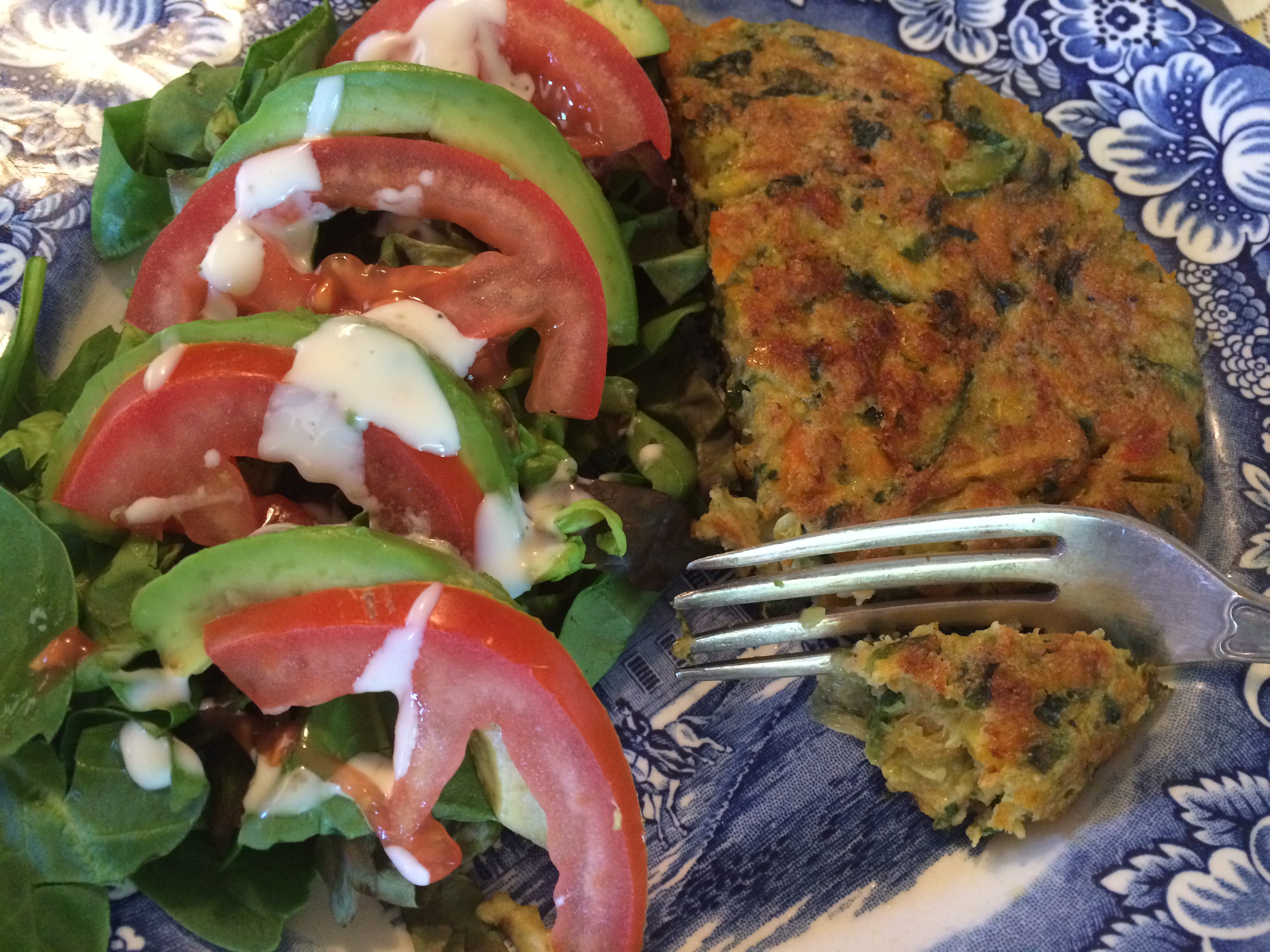
Rosa's delicious Market Veggie Omelette with White Sonora flour

Rosa’s delicious Market Veggie Omelette with White Sonora flour (MABurgess)

ROSA’S MARKET VEGGIE OMELETTE w/ WHITE SONORA WHEAT FLOUR

Ingredients:

2 Tbsp heirloom White Sonora Wheat flour

1 lg egg or 2 small eggs

1 cup market vegetables, sautéed in olive oil (shaved carrots, chopped fresh spinach, minced I’itoi’s onions bulb and tops…)

2+ Tbsp org. broth, veg or chicken

salt to taste; butter for curing skillet

Directions: 

Saute chopped vegetables in olive oil, then simmer with broth until soft.   Allow to cool. Beat eggs with White Sonora Wheat flour.  Mix with vegetables. Pre-heat small iron skillet, melt butter, pour in mixture.  Let omelette puff.  Turn when slightly brown on bottom, then gently brown on reverse.  Serve w/salsa fresca or sliced avocados. (Another wonderful variation on her omelette is to add prepared cholla buds!)

Find dry cholla buds at the Flor de Mayo booth at Sunday’s St Philips farmers’ market, at NativeSeeds/SEARCH store, at the San Xavier Farm Coop booth at Thursday’s Santa Cruz market at the Mercado, or at the Tucson Cactus&Succulent Society’s SONORA XI conference next weekend.  You can find the freshest greens for Rosa’s Veggie Omelette, including local baby spinach, onions, etc at our many Tucson farmers markets, especially at Tom’s Marana-farm booth at Sunday St Philips market (www.foodinroot.com), or at the Community Food Bank booth at Thursday’s Santa Cruz market at the Mercado.  Easily grow your own shallots for the omelette with NativeSeeds/SEARCH’s I’itoi’s onions–the snappy little spreading onion that keeps on giving.

Come witness ever-growing inspirations for your own garden by visiting Mission Garden at the foot of A-Mountain, Tucson–it’s a must!  There are wonderful docents there to guide you every Saturday morning now that the weather is warming.  In Mission Garden we see examples of cultivated food and native medicine plants that have fed and helped humans in this valley for over 4000 years!  With that track record for desert living, chances are these same plants can help support us into an unsure future of hotter and drier weather–with assurance and nurture.  We owe inexpressible thanks to those farmers and gardeners who have preceded us!

[For more info about succulent events, tours, happenings, and products, check out http://www.tucsoncactus.org; http://www.flordemayoarts.com; http://www.tucsonsbirthplace.org; http://www.nativeseeds.org, http://www.sanxaviercoop.org]

Harvest Time for I’itoi Onions

Big clump of iItoi onions. All this from just one little onion planted last October.

Big clump of  I’itoi onions. All this from just one little onion planted last October.

I had to put my vegetable garden to bed for the summer early this year since we were leaving for a month.  No use having the housesitter water for the weeks we were gone as the hot weather would overcome the vegetables about the time we got home anyhow. The plants were at the end of their season, but still pulling them up was almost as painful as putting down a beloved pet. I go through this mourning every year when one by one the winter crops reach the end of their production – first the peas, then the broccoli, then the last of the lettuce and spinach even in the shade. The kale was still so hearty I simply could not consign it to the compose bin. After freezing some for soup and making as many kale chips as we could handle, I dug up the plants and put them in a pot to transfer to a friend.

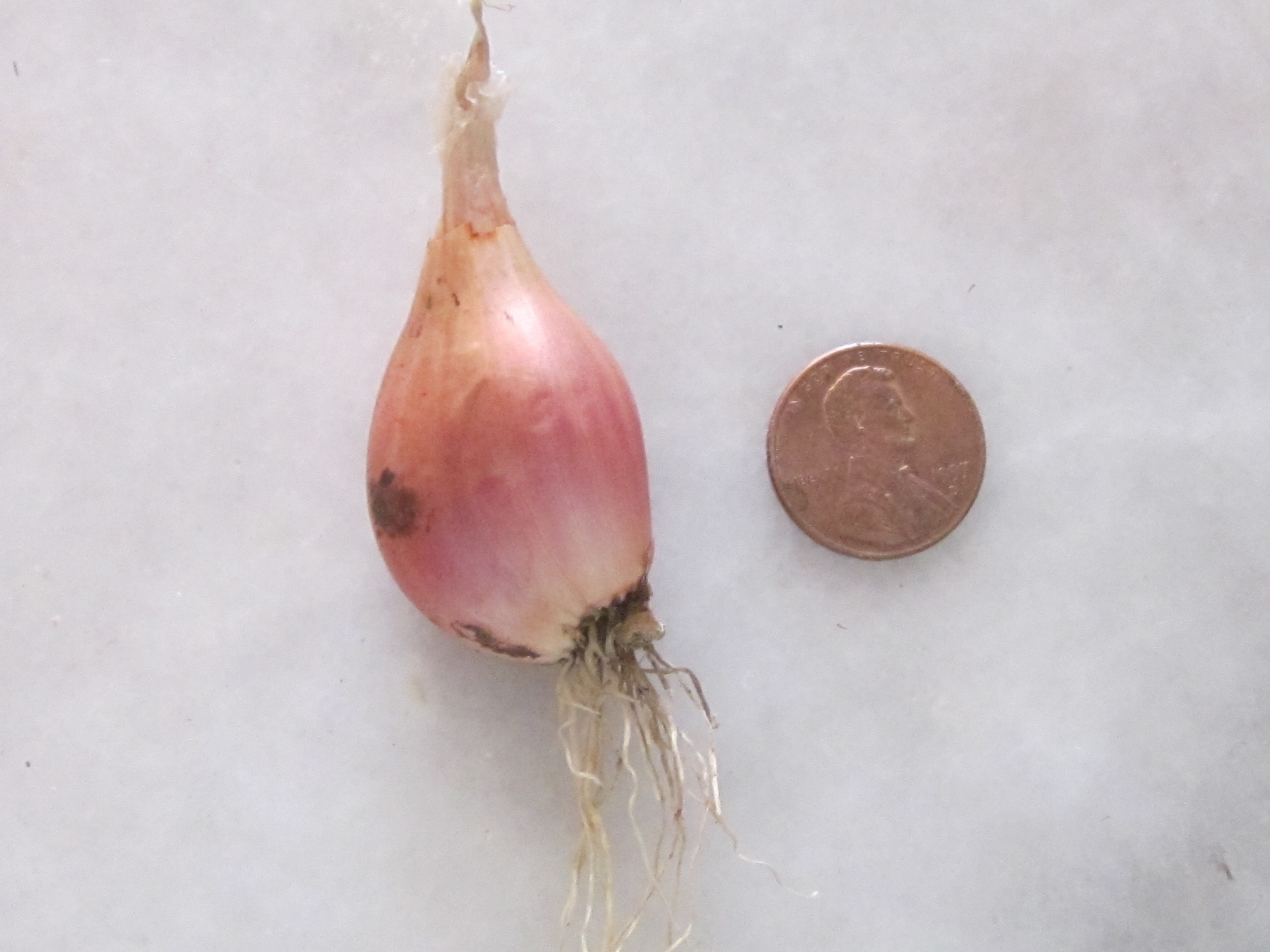
One chore involved pulling out the remaining I’itoi bunching (or multiplier) onions.  I’ve been using them all spring, but they are very prolific. One little onion that looks like this produced the bunch in my hands at the top of the page:

Lovely little iItoi onion with penny for size comparison.

Lovely little I’itoi onion with penny for size comparison.

I’itoi onions were brought to the Southwest in the 17th century by Spanish missionaries, but have become such a part of the Tohono O’odham biology that they are called by the name of their creation diety, Elder Brother, or I’itoi.  These little gems were beginning to die out when they were brought to Native Seeds SEARCH by a Tohono O’odham woman.  They are one of the plants in the Slow Food Ark of Taste. 

I’itoi onions (Allium cepa var. aggregatum) are easy to grow — in the fall, just plant each bulb about an inch below the surface and at least eight inches apart.  They will send up chive-like greens first that can be used until you decide they have multiplied enough and pull them up for use.  When you harvest the last clump in the summer,  put aside a dozen or so bulbs in a paper bag and set aside on a cool shelf to await fall.  (I find it amusing that the onions “know” when to start again — if I don’t get around to putting them back in the ground until later in September, I sometimes find that they have begun to sprout in anticipation.)

To prepare onions for cooking, first separate and clean off the dirt,  then peel.

Like most onions, these contain potassium, vitamin C, folic acid and vitamin B6. Onions contain substantially the same amount of vitamins and minerals when cooked.  I’itoi onions can be substituted for onions or shallots.  You can find them at farmers’ markets and from Crooked Sky Farms in Prescott and the Phoenix area and from Native Seeds SEARCH. Both of these places will ship to you as well.

A healthy row of iItoi onions.

A healthy row of iItoi onions.

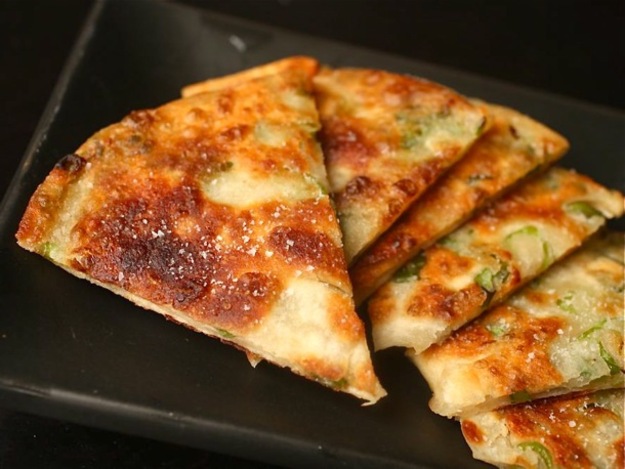
You’ll have a ratio of green tops to bulb of about 10:1 so you’ll have to find a use for all the green onion tops.   When you’ve used all you can fresh, freeze them to add to soup stock later. You can also make delicious Chinese Onion Pancakes.

Savory pancakes using onion tops.

Savory pancakes using onion tops. (Photo from Serious Eats)

It’s easy, but rather than recount the recipe here, go to this link. These are the best directions I’ve found for making this delicacy and the author also gives a wonderful tutorial on the difference between adding cold and hot water to flour.

If you’d like a recipe to show off your onion harvest, this one is easy and delicious.

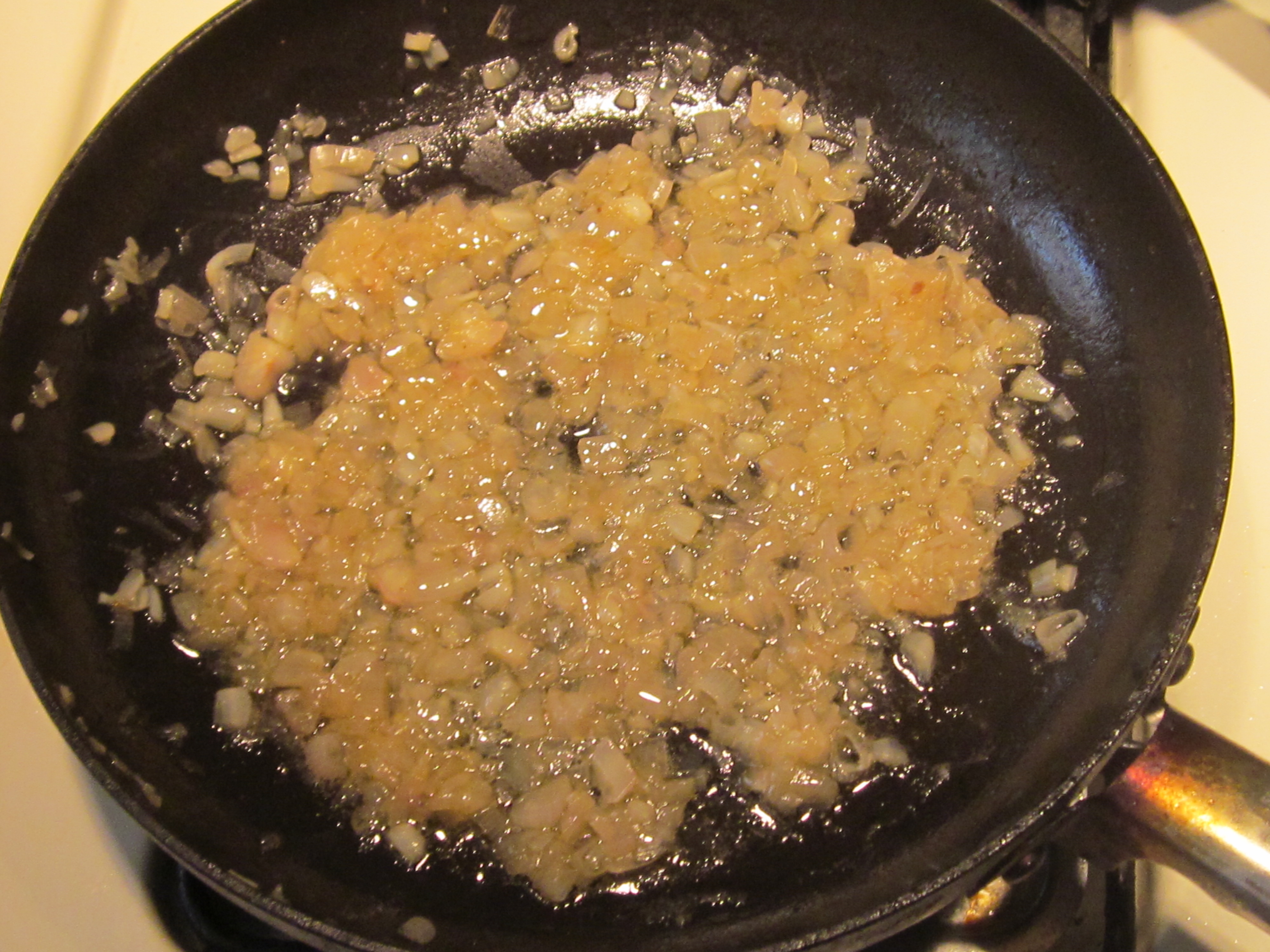
I'itoi onions cooking for Sweet and Sour sauce.

I’itoi onions cooking for Sweet and Sour sauce.

 Sweet and Sour I’itoi Onions

Here’s my recipe for sweet and sour I’itoi onions.  You can use red wine and red wine vinegar or white wine and white wine vinegar. Makes a great topping for grilled fish or chicken or mix it into steamed vegetables to add flavor.

1 cup cleaned and sliced I’itoi onions

1/2 cup water

2 tablespoons wine vinegar

2 tablespoons wine

1 tablespoon olive oil

1 teaspoon sugar or agave syrup

1/2 cup water (again)

In a large heavy frying pan, cook sliced I’itoi onions and water covered over very low heat for 10 minutes until soft.  Add wine, wine vinegar, olive oil and sugar or agave syrup.  Cook over very low heat for another 10 minutes.

My blog sister Jacqueline Soule wrote a column about I’itoi onions for the Explorer and finished with a recipe for I’itoi onion and goat cheese scones. You can see it here

**************************

If you are interested in wild and heritage foods of the Southwest, check out my cookbooks Cooking the Wild Southwest, Delicious Recipes for Desert Plants,   and the Prickly Pear Cookbook.  The books are also available through Native Seeds/SEARCH. For inspiration and directions on what wild plants are available in what season, watch a short video here.

April Brings Nopales

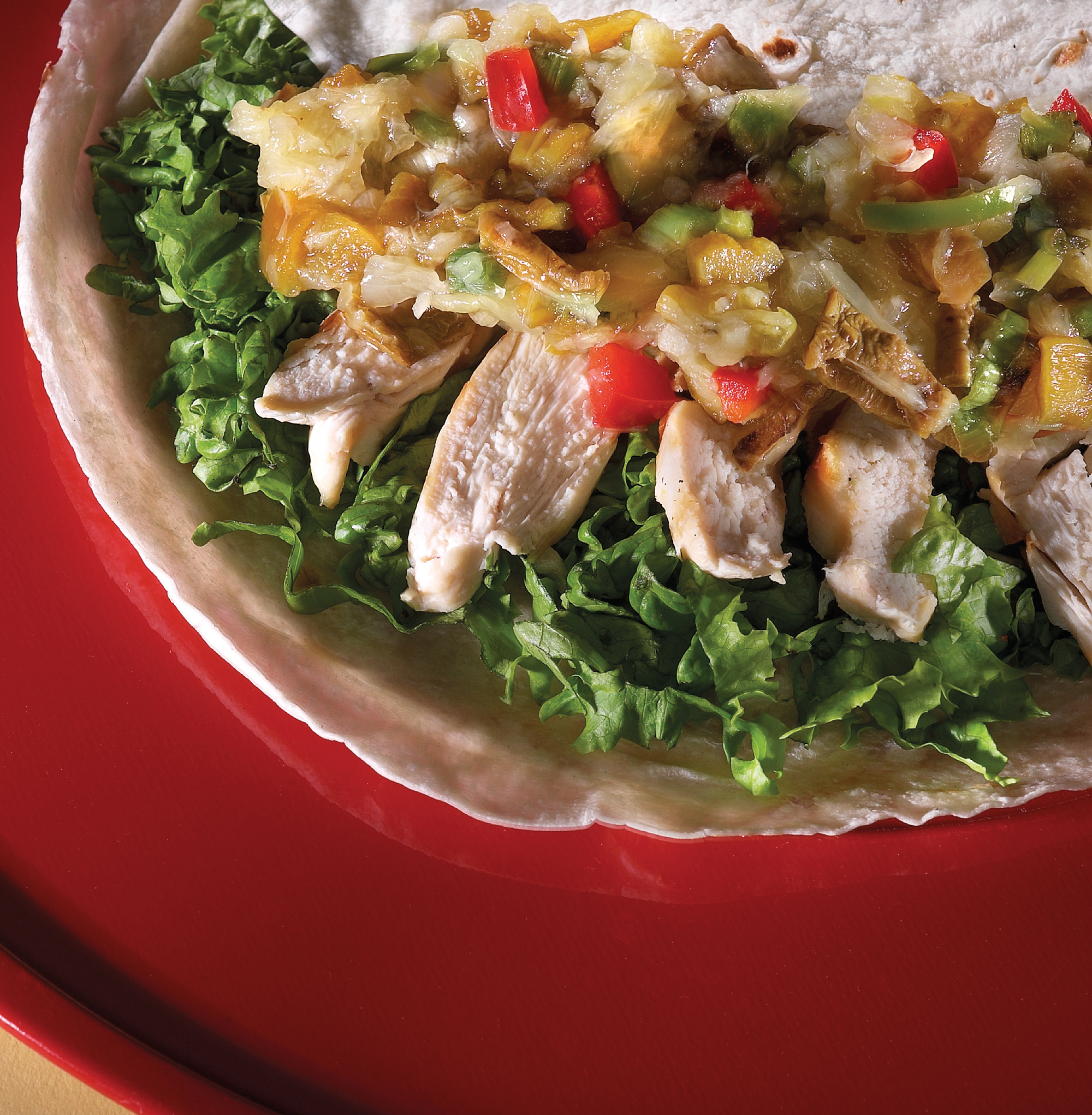
Grilled Chicken with Nopalito and Pineapple Salsa

Grilled Chicken with Nopalito and Pineapple Salsa (from The Prickly Pear Cookbook)

If it’s April, it’s time to gather nopales here on the Sonoran Desert. Carolyn here today tempting you to read further with this photo of a delicious salsa made with nopalitos. (Definition of nopalito: a nopal, or cactus pad, cut into little pieces).  At the bottom of the post, I’m going to give you the recipe and a video of how to turn a cactus pad into a yummy taco.

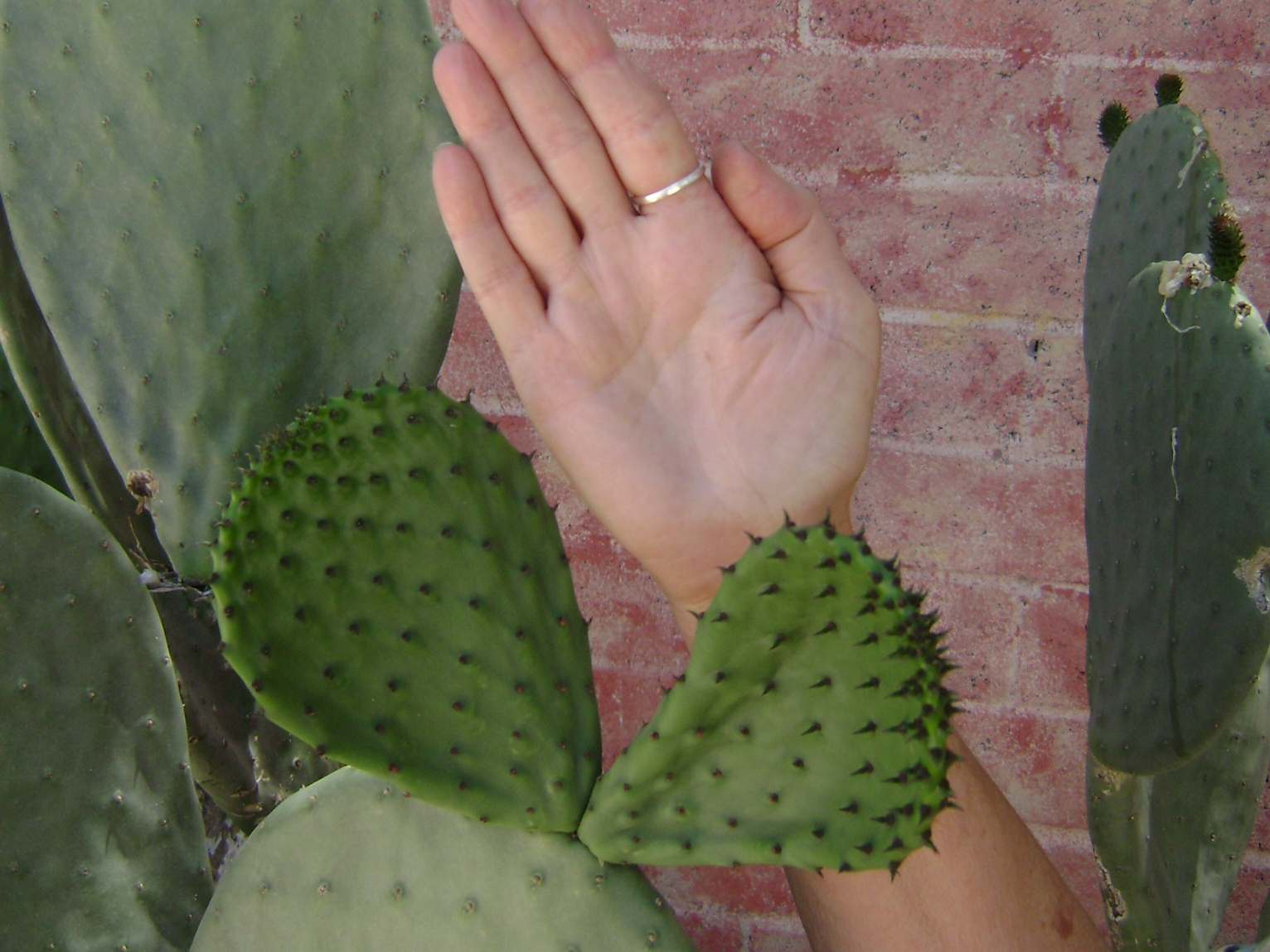
The many varieties of prickly pear put out their new growth when the spring warms up. All prickly pear pads are edible (meaning they not only won’t kill you but in this case are very nutritious), but they are only appropriate for food when they are new. After about six weeks, they develop a fibrous infrastructure. The easiest kind to prepare are the pads from the large Mexican variety of prickly pear that do not grow wild this far north. They are called Ficus indica or sometimes Burbank because Luther Burbank did some breeding work on them. The wild cactus pads are also delicious, but harder to prepare because of the abundance of spines.  You can do a rough estimate of when a pad is ready to pick if it is about the size of your hand. The nopales available in Mexican grocery stores are grown by farmers who know how to manipulate the plant to keep fresh pads coming year ’round.

Pick nopales in the spring when the size of your hand.

Pick nopales in the spring when the size of your hand.

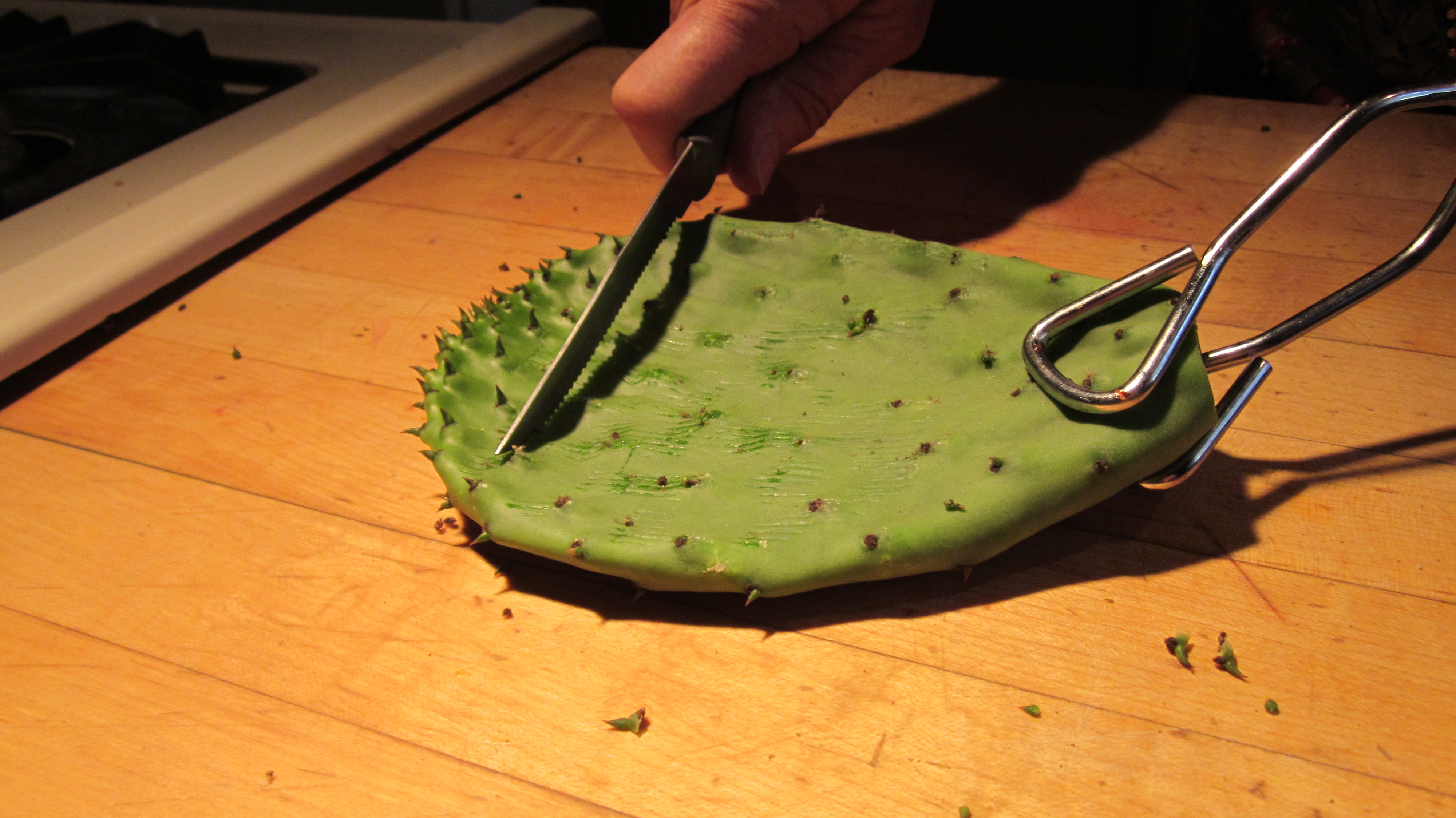
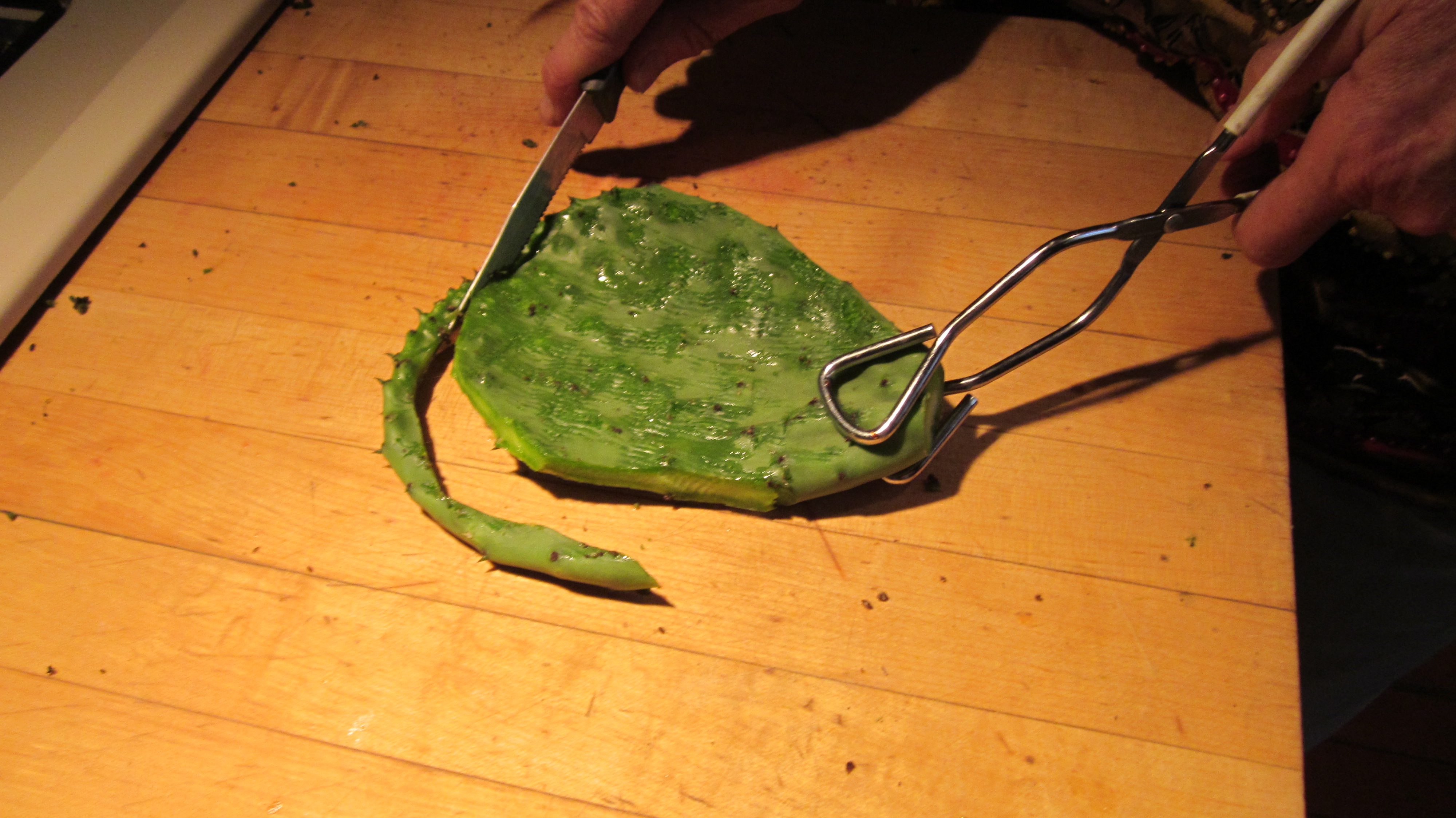
To prepare the nopales, you’ll use  tongs, of course, and then don rubber kitchen gloves to protect your hands as you get rid of the stickers. You don’t need industrial strength gloves, just good quality ones from the grocery store will do. Using a common steak knife, scrape vigorously against the growth (from outer edge to stem) to remove the stickers.

Scrape the thorns vigorously in the direction of the stem.

Scrape the thorns vigorously in the direction of the stem.

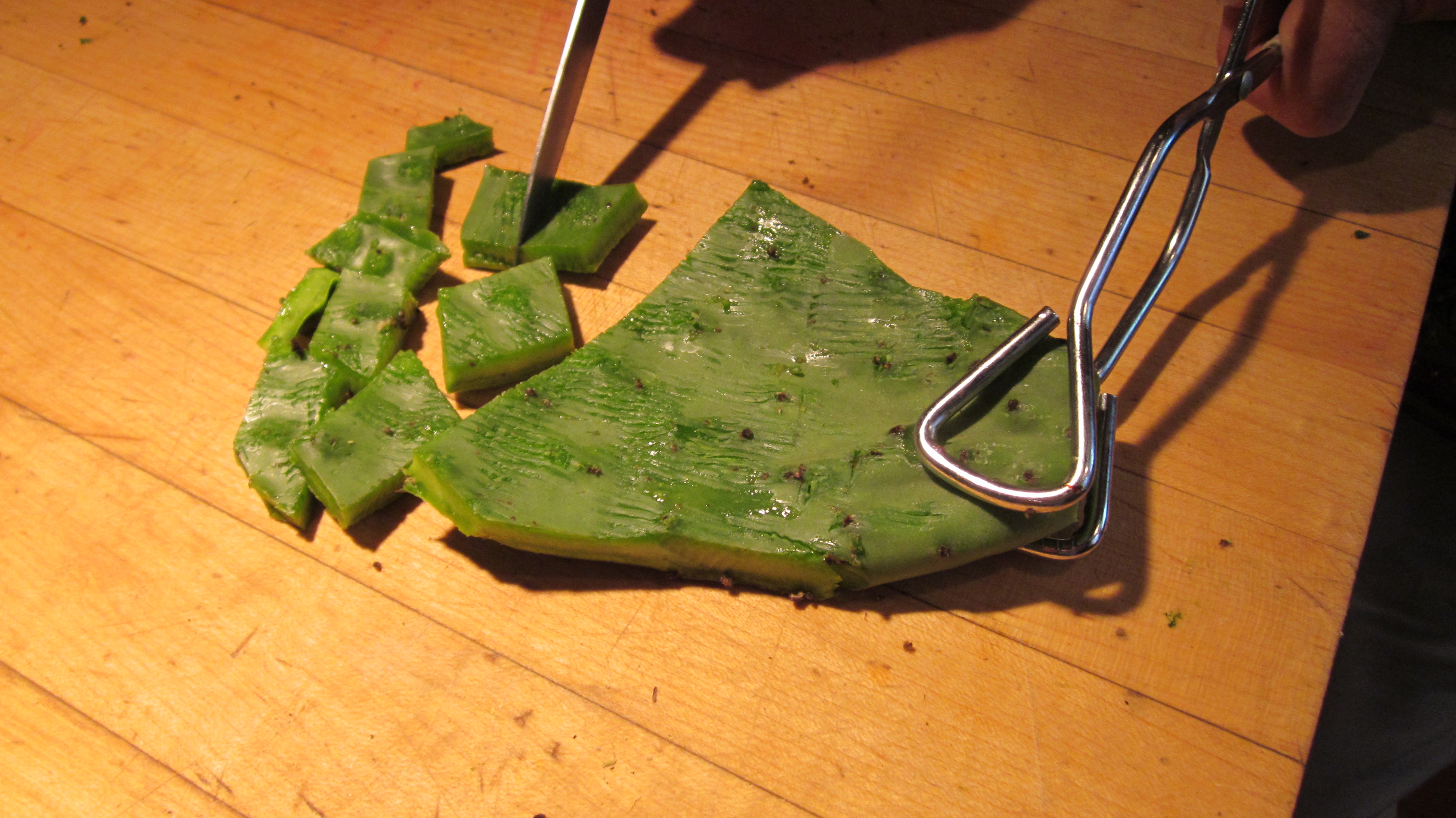
The edge has lots of stickers so just trim it off.

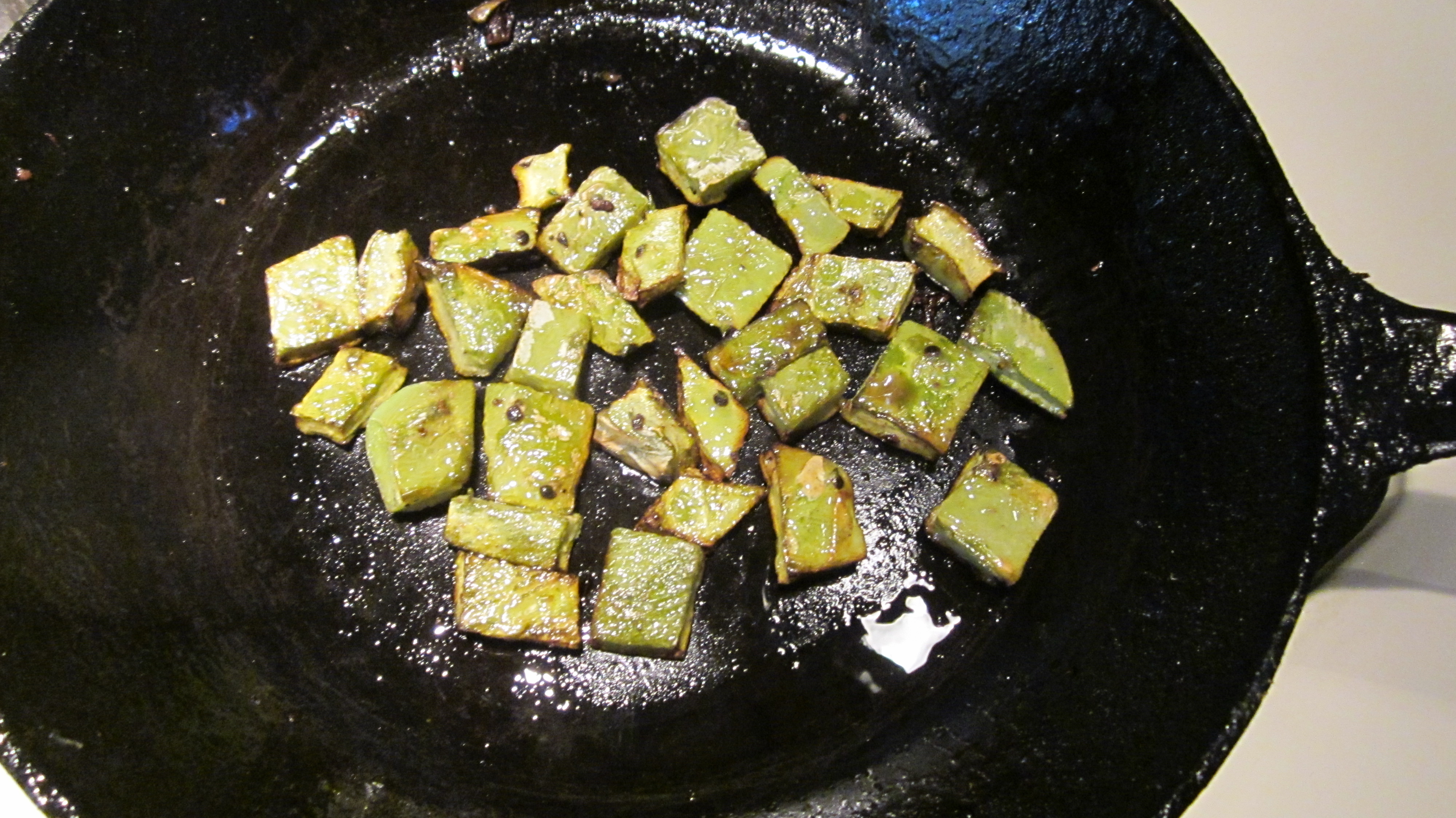
IMG_0196At this point, you can cut it into small pieces to cook or leave it whole and cut it up later. You can cook them in a frying pan filmed with oil, or use the Rick Bayless method (he of TV show fame) and toss them with a little oil, sprinkle with sale, put on a cookie sheet and roast in a 375 degree oven for 20 minutes.  In any case, you should check them and turn them over as they cook.

Cut into small pieces to cook.

Cut into small pieces to cook.

The nopales will turn from bright green to a more olive color as they cook. The gummy sap that some people find objectionable will dry up and become less noticeable.

The cooked nopalitos turn from bright green to olive.

The cooked nopalitos turn from bright green to olive.

You can also cook nopales on the barbecue alongside some chicken to make a delicious taco. This video ( find it at the bottom of the magazine article) shows you how to clean the nopal and grill it.  Take a look here.

Here’s the recipe for the sauce in the picture at the top of the blog:

Grilled Chicken  with Nopalito and Pineapple Salsa

(Makes 4 servings)

This is good to serve as a light entrée with rice and a vegetable.  It is also great as a stuffing for fresh flour tortillas topped with shredded lettuce.

1 raw, cleaned prickly pear pad

1 tablespoon vegetable oil

1 cup canned crushed pineapple packed in it’s own juice

¼ cup finely chopped red bell pepper

¼ cup thinly sliced green onions, including some tops

1 tablespoons canned green chiles

1 finely minced serrano chile (optional)

½ teaspoon finely minced garlic

2 tablespoons lime juice

¼ teaspoon salt

1 tablespoon finely minced cilantro (optional)

4 large boneless chicken breasts

Cut prickly pear pad in 1 ½ inch squares.  Film a heavy frying pan with the oil and add the prickly pear pads.  Cook over low heat, turning occasionally, until pieces have given up much of their juice and are slightly brown. Remove from pan, cool, and chop into pieces as wide as a matchstick and about ¼-inch long.

Transfer to medium bowl.  Add remaining ingredients, stir to combine and set aside for flavors to mingle.

Grill chicken breasts until done. Slice each one crosswise into five or six pieces and arrange each on a plate.  Put a portion of the salsa on top of  or beside the chicken.

______________________

Want more recipes for the bountiful crop of nopales we’ll have this year?  Check out The Prickly Pear Cookbook and Cooking the Wild Southwest.  You can flip through The Prickly Pear Cookbook here. Both books are available locally at Native Seeds/SEARCH on Campbell or from on-line booksellers.

Sweet Roasted Mesquite for a Happy Valentine’s

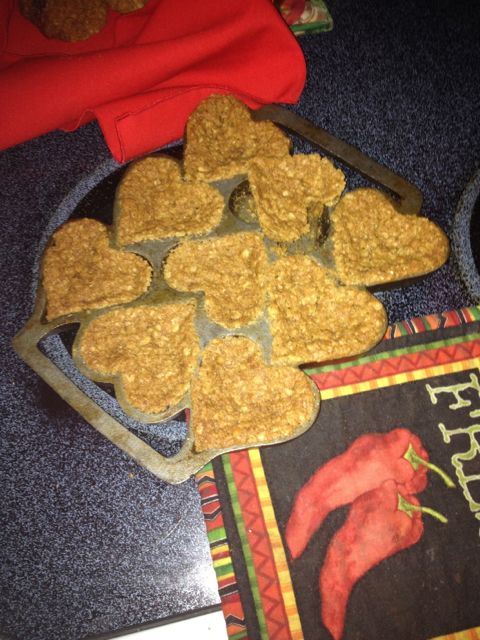
Valentine's Roasted Mesquite and Heirloom White Sonora Wheat Oatmeal Cookies

Valentine’s Roasted Mesquite and Heirloom White Sonora Wheat Oatmeal Cookies


[If only this were a scratch-and-sniff site….]

‘Tis the season for the sweetest, rarest, and heart-healthy mesquite treat of the whole year– Roasted Mesquite! During this relatively cool and occasionally soppy “wintery” weather, stored mesquite pods, which may have drawn in moisture from the humid air since harvesting last summer, can be roasted or toasted for ease of milling into a fine meal. The result is a transformation into something even sweeter than the already-yummy natural raw mesquite meal.


Tia Marta here to introduce you to Roasted Mesquite and to share some creative ideas for celebrating Valentine’s (and beyond).


When mesquite pods are roasted, their complex sugars burst with an almost chocolat-y bouquet. Roasted mesquite has hints of its “botanical cousin,” the carob, from the Near East (known as Saint John’s Bread in the Bible, as it fed St. John so well through his desert wilderness retreat). Those soluble complex carbohydrates that make mesquite such a heart-healthy food–giving sustained energy, helping with cholesterol, balancing blood sugar—come flavorfully to the fore when mesquite is roasted. Take note: all fitness fans, hypoglycemics, diabetic and gluten-free cooks! Roasted mesquite is a super booster-food especially for you. Its complex sweetness and its nutrition make it a gift for everyone you love.
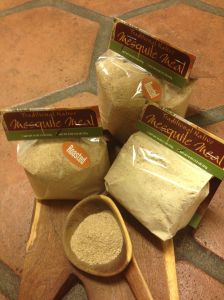
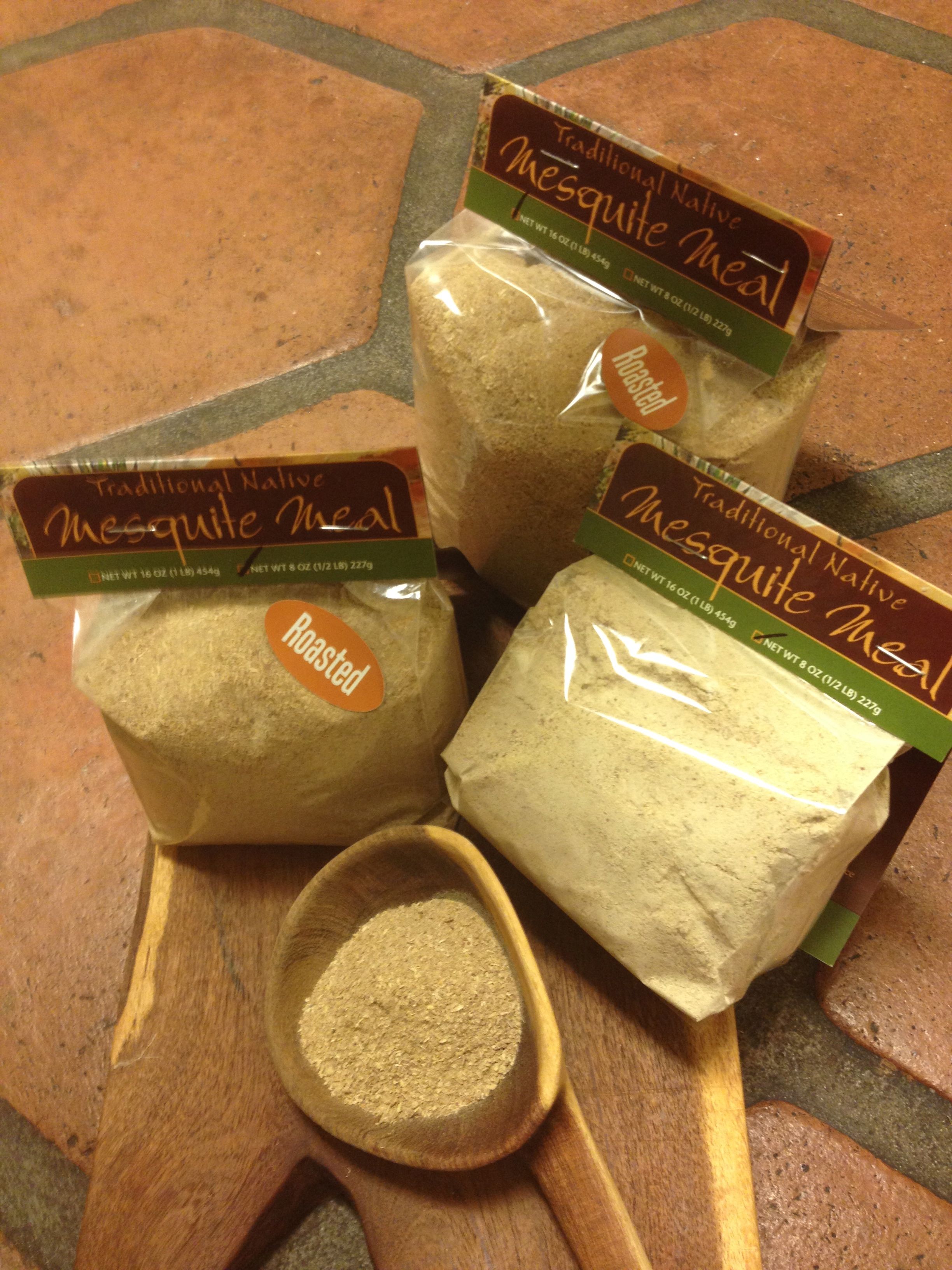
Comparing roasted mesquite flour and natural raw mesquite flour (MABurgess photo)

Comparing roasted mesquite flour and natural raw mesquite flour (MABurgess photo)

You can use roasted mesquite meal in so many ways. In addition to baking with it, the distinctive aroma and richness puts it into the category of seasoning or spice. Shake roasted mesquite through a big-holed spice shaker to jazz up bland dishes or for sprinkling atop coffeecakes, muffins, sundaes, custards, frapaccinos, salads….Yum, it is waiting for your inventions. I make a little mix of garlic powder, sea salt, and roasted mesquite meal, then put the combo in a shaker and keep it handy by the stove or on the table to sprinkle on about everything. Try it on your steamed greens or in quinoa. When corn-on-the-cob season rolls around, there isn’t anything better than my roasted mesquite salt dusted on it. (Mesquite orchardist and agriculturalist Mark Moody will have fresh corn with roasted mesquite at Flagstaff farmers markets this summer—don’t miss it.)

Add a tablespoon of roasted mesquite meal to any hot cereal. It does wonders for oatmeal. Mesquite is the tastiest of all nutritional supplements. Whatever you add it to, you know you are boosting flavor and nutrition—making hearts happier!
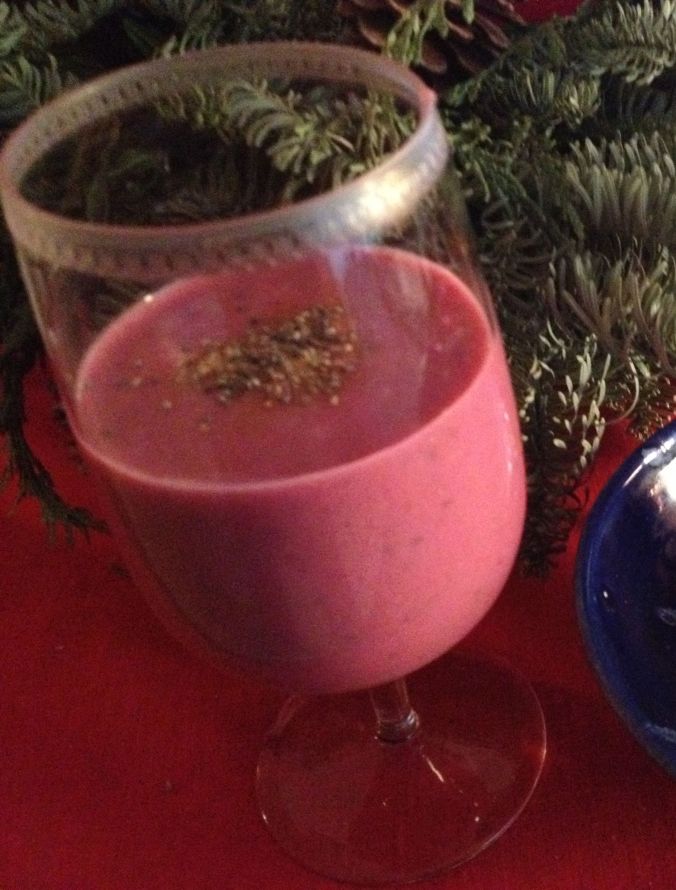
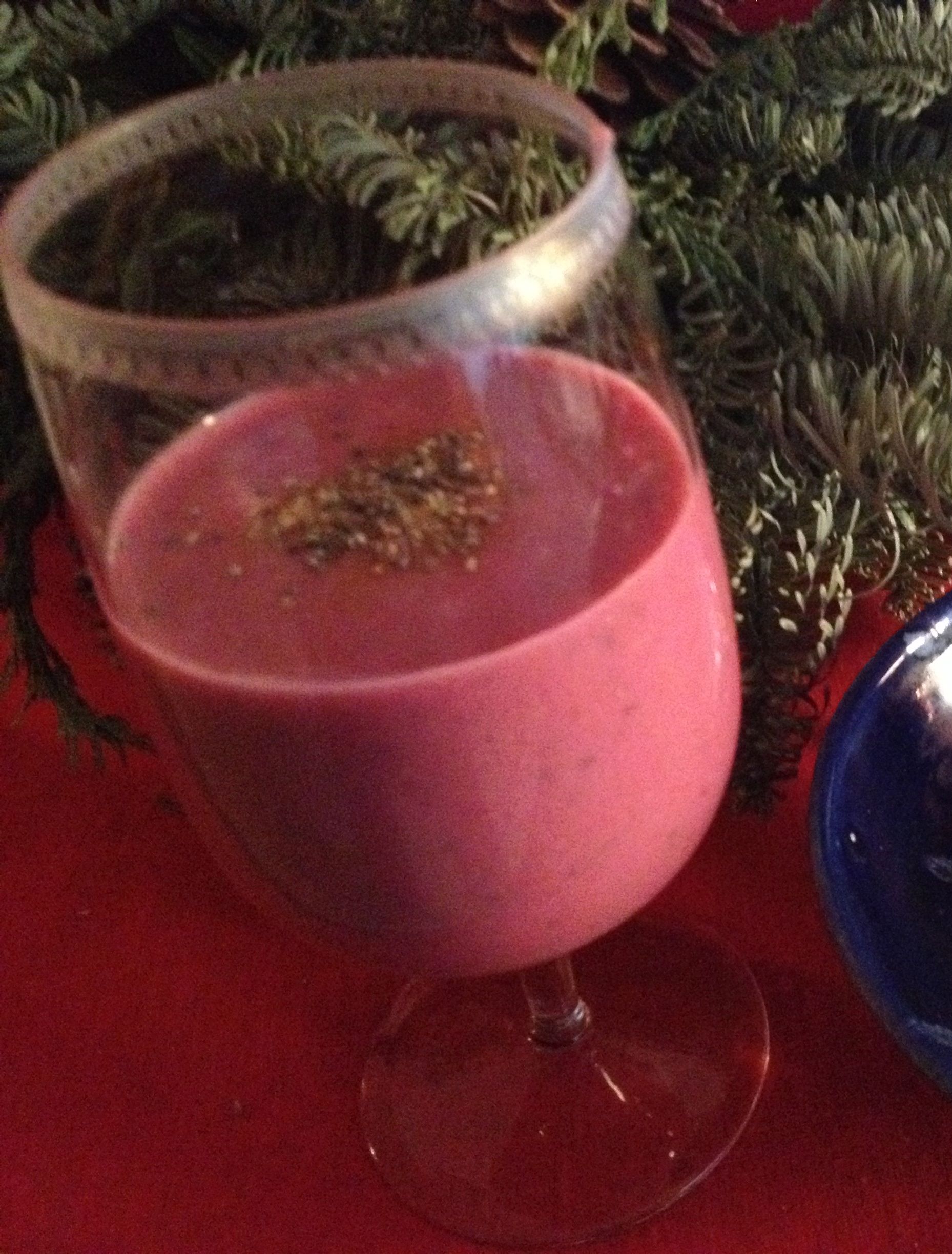
Taste the glorious nutrition of a roasted mesquite and berry smoothie! (MABurgess photo)

Taste the glorious nutrition of a roasted mesquite and red berry smoothie! (MABurgess photo)

Try this delectable and easy Desert Delight–Roasted Mesquite & Red Berry Smoothieso colorful it can make breakfast into a Valentine’s feast. So rich it can be a Valentine’s dessert served with a spoon. (You can double or triple this recipe for company):

Presoak: 1 Tablespoon chia seed in 1 Cup organic apple juice for a few minutes.

In a blender, mix:

1 cup organic plain or vanilla non-fat yogurt.

2 Tbsp. Roasted Velvet Mesquite Meal*

1 cup frozen raspberries or blueberries

2 Tbsp. prickly pear juice or nectar

your pre-soaked applejuice-chia mix

½ or whole ripe banana

1 Tbsp agave nectar (optional as desired for more sweetness)

A few ice cubes (optional as needed for chill or dilution)

Blend on medium ½ minute until smoothie is gloriously pink. Serve in parfait glass with a thin sprinkle of chia seed or pinch of roasted mesquite meal on top as a garni.
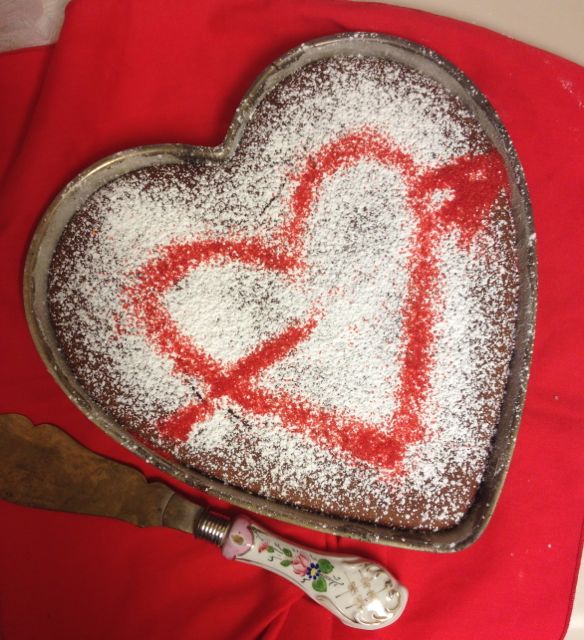
Valentine's gluten-free roasted mesquite/almond coffeecake (MABurgess photo)
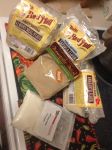
Valentine’s gluten-free roasted mesquite/almond coffeecake (MABurgess photo)

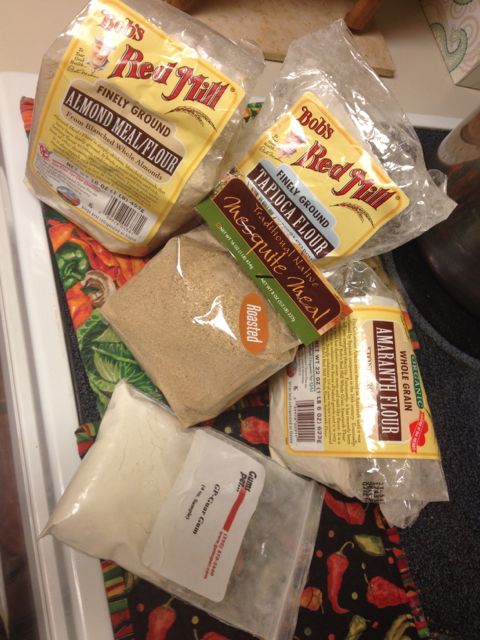
Ingredients for gluten-free roasted mesquite and almond coffeecake looks like an ad for Bob's Red Mill

Ingredients for gluten-free roasted mesquite and almond coffeecake looks like an ad for Bob’s Red Mill

And here’s a wonderful gluten-free recipe to share with wheat-sensitive friends:

Muff’s Gluten-Free Roasted Mesquite/Almond CoffeeCake:

(This is a heavier cake that sometimes turns out more like an energy bar when sliced.)

Preheat oven to 350 degrees. Lightly oil or butter an 8×8” pyrex baking dish and dust with rice flour.

Sift together:

½ cup Roasted Velvet Mesquite Meal*

¾ cup organic brown rice flour and/or amaranth flour

½ cup almond meal

¼ cup tapioca flour

2 tsp guar gum or locust bean gum (for leavening)

1 tsp baking powder

¼ tsp sea salt

Mix In:

¼ cup agave nectar

¼ cup canola or other cooking oil

¾ cup soy milk, rice milk, or almond milk

Beat separately then add in:

2 eggs

1 tsp vanilla extract

1 tsp almond extract

Pour into baking dish. Bake 25-35 minutes or more until cake tests done. Serve with thanks to the nutritious bean trees of the desert!
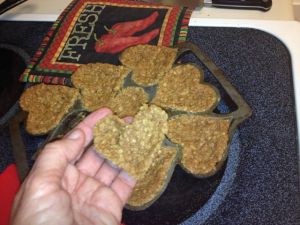
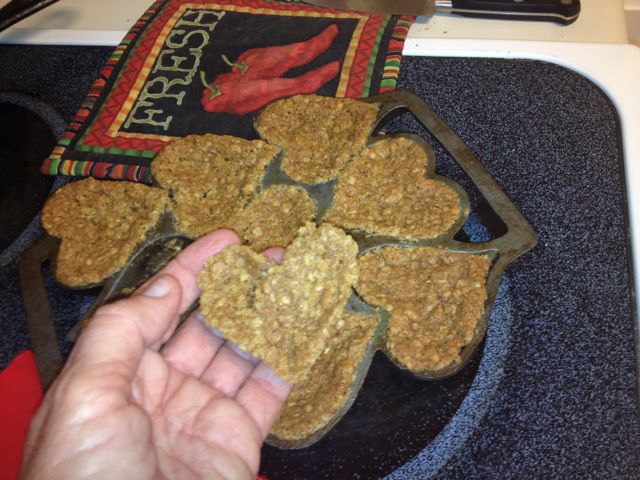
Roasted mesquite cookies in valentine iron pan
Roasted mesquite cookies in valentine iron pan

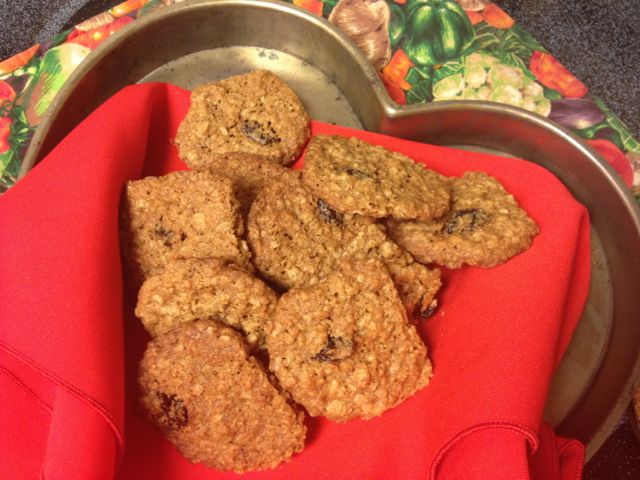
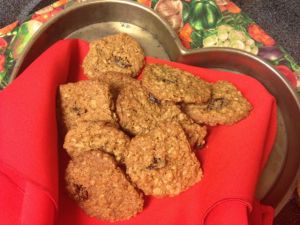
Roasted mesquite cherry oatmeal cookies

Roasted mesquite heirloom wheat & cherry oatmeal cookies

Now for a relatively “healthy” cookie try this celebration treat with roasted mesquite—

Muff’s Roasted Mesquite & White Sonora Wheat Valentine Oatmeal Cookies (with pinyones and dried red cherries to honor George Washington’s birthday too)—a great cookie for any time of year.

Preheat oven to 350 degrees.

Cream together: 1 cup (2 sticks) organic butter softened, ½ cup organic brown sugar firmly packed, and ½ cup organic white sugar

Beat in and mix until creamy: 2 eggs and 1 teaspoon vanilla

In a separate bowl, sift together: 1 tsp. baking soda, 1 tsp sea salt, 1 cup organic White Sonora Wheat flour**, and ½ cup Roasted native velvet Mesquite Meal*

Mix dry ingredients with moist ingredients until smooth.

Add, and mix in: 2-3 cups quick oatmeal (uncooked), ¼-1/2 cup pine nuts (pinyones) shelled, and ¾ cup dry cherries or dry cranberries.

Onto a well-greased cookie sheet, drop 1-tsp glops of cookie dough well-spaced. (You could use a heart-shaped mold or heart cookie cutter.) Press a dry cherry on top of each glop for décor.

Bake 10-12 minutes until barely golden brown, and enjoy the festive desert flavor of roasted mesquite with your Valentine!
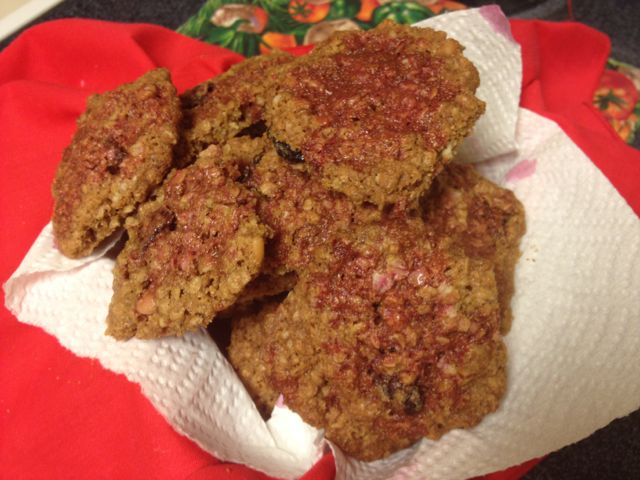
Roasted Mesquite and Heirloom White Sonora Wheat Oatmeal cookies droozled with prickly pear juice (MABurgess photo)

Roasted Mesquite and Heirloom White Sonora Wheat Oatmeal cookies droozled with prickly pear juice (MABurgess photo)

*For purchasing Roasted Mesquite Meal–seek and ye shall find. There are only a few places where you can source this seasonal culinary treasure, if you are not roasting and milling it yourself! Find it at the wonderful NativeSeeds/SEARCH store (3061 N. Campbell Ave, Tucson, www.nativeseeds.org). Our roasted mesquite is from native Arizona velvet mesquite, Prosopis velutina, grown and milled with the highest standards. For tastes, visit the Flor de Mayo booth on Sundays at St.Phillips Farmers Market (SE corner River Rd and Campbell Ave), or order at www.flordemayoarts.com via PayPal. It is also online at www.mesquiteflour.com and from the Prickly Pops booth at Thursday Santa Cruz Farmers Market.

**The special local ingredient for the cookie recipe above, heirloom White Sonora Wheat flour, is available at two Tucson locations. Several different grinds of Hayden Flour Mills’ heirloom flour is at the Native Seeds/SEARCH store. For super-fresh-milled “live” White Sonora flour, from local, certified organic whole grain grown by BKWFarms, you can contact Tia Marta by phone or email by the Friday before pick-up at Sunday’s St Phillips Farmers Market, along with the roasted mesquite meal.

For more ideas on how to cook with mesquite—roasted or natural–check out the recipe book Eat Mesquite! published by www.desertharvesters.org, and available at the NativeSeeds/SEARCH store. Visit www.bajaaz.org, the website of Baja Arizona Sustainable Agriculture, for more mesquite details.

Newcomers as well as confirmed “desert rats” can see the actual plants which produce the local ingredients of our Valentine Cookies—mesquite trees and heirloom White Sonora Wheat growing at our special Baja Arizona parks. See and appreciate them in their winter-spring glory at the Friends of Tucson’s Birthplace Mission Garden (base of A-Mountain, Saturdays), at the Arizona-Sonora Desert Museum, and in the ethnobotanical garden at Tohono Chul Park.

Enjoying roasted mesquite treats is indeed another way of rejoicing in the desert’s natural bounty, and of supporting appropriate, sustainable desert agriculture. Happy Valentine’s, and may your heart be happy cooking with roasted mesquite!—from Tia Marta and Rod at www.flordemayoarts.com.



Fermented salsas

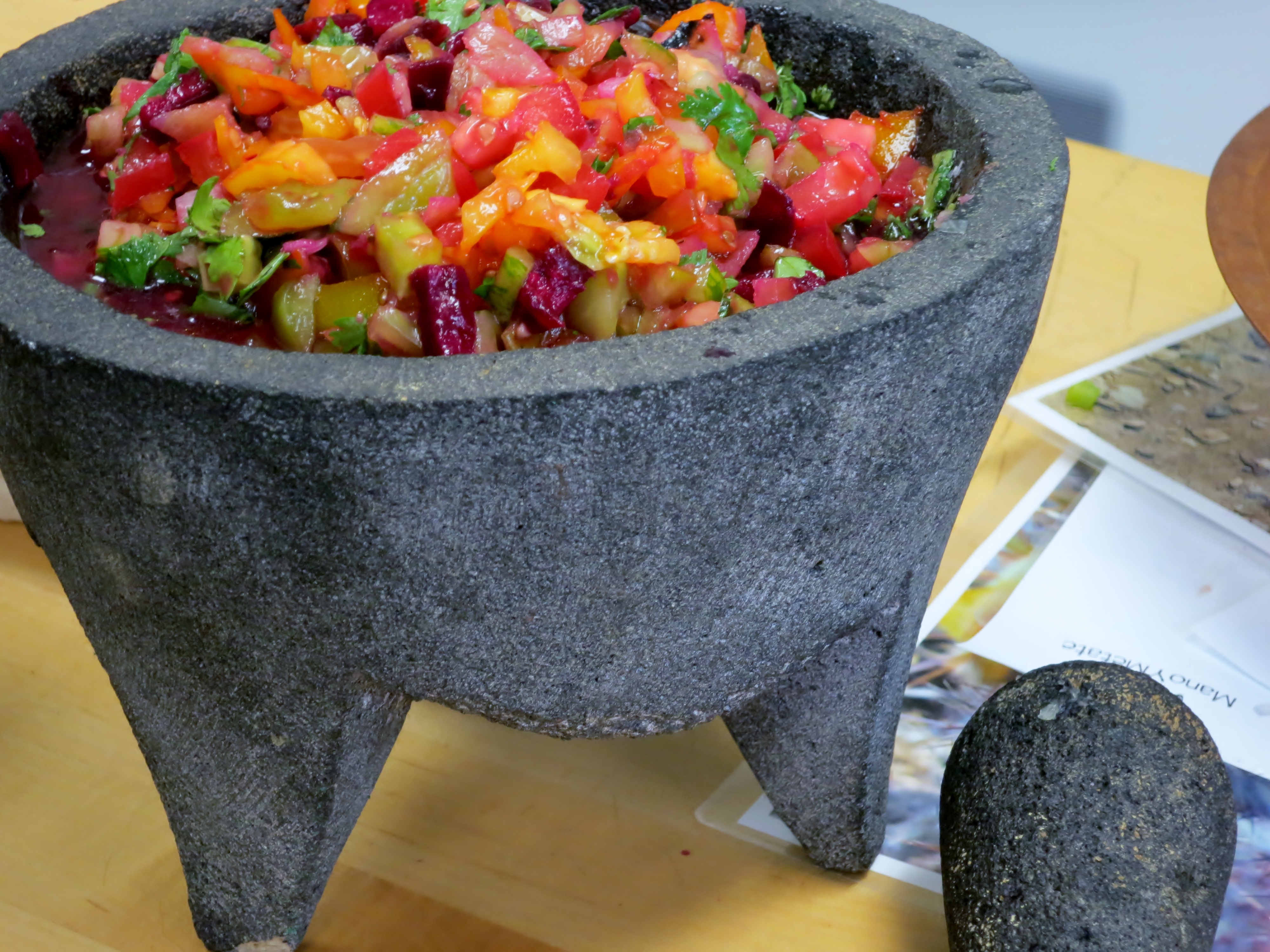
molcajete

fermented salsa,with fresh cilantro and tunas (prickly pear fruit) added before serving

Amy Valdés Schwemm

Amy Valdés Schwemm

Naturally fermenting salsa makes a richer and more complex flavor than simply adding vinegar or lime juice, but it does take a little patience. I love tart salsas and sour foods with a bite. Grandma and Grandpa Schwemm on my dad’s side passed on a tradition of sauerkraut, and my mom’s family loves chile. How could chiles fermented like kraut not be my favorite food?

Fermented salsa is a source of pro-biotic microorganisms, recently rediscovered as essential for the digestive system. Home fermented foods probably provide more active and diverse cultures than what comes in a capsule at great expense.

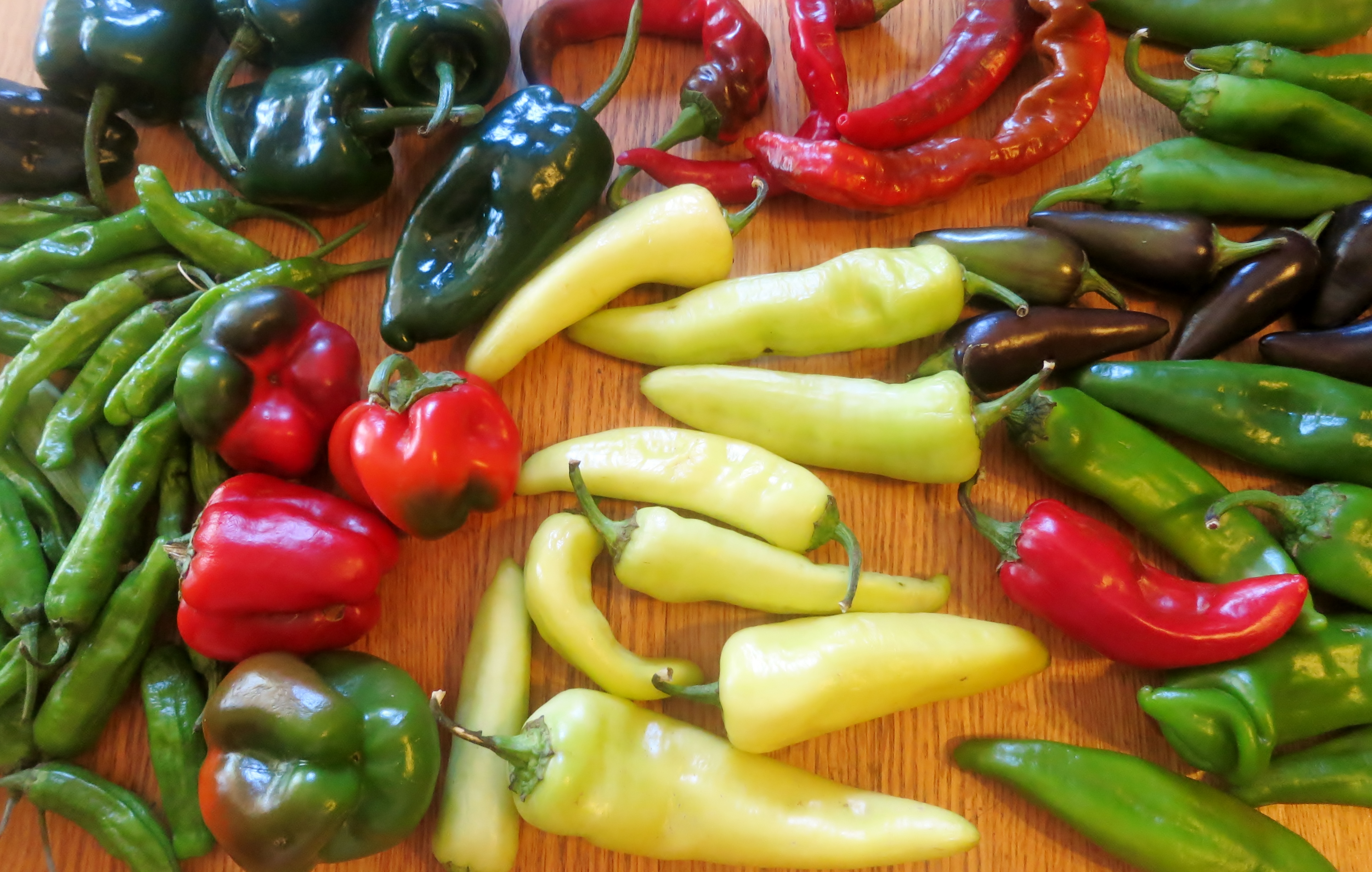
late summer is chile season at Tucson CSA, Walking J, Santa Cruz Farmers' Market Consignment

late summer is chile season at Tucson CSA, Walking J, Santa Cruz Farmers’ Market Consignment

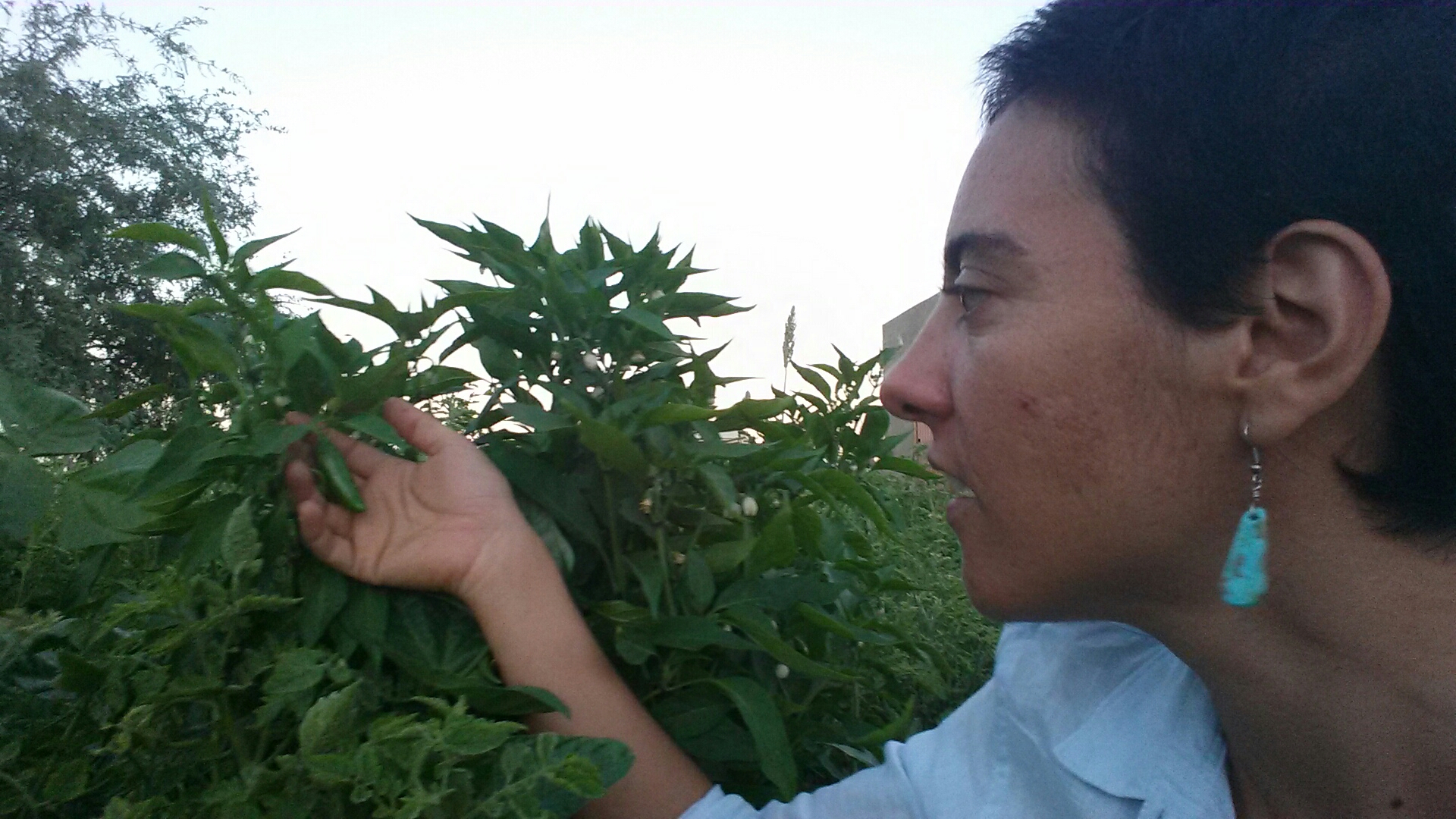
Chiles for this preparation can be fresh or roasted or even dried. I’ve used everything from dried chiltepines to fresh Big Jims and sweet peppers. Hot, fleshy chiles like Jalapeño, Serrano, Guero, Wenks Yellow Hot, and Sinahuisa are ideal.

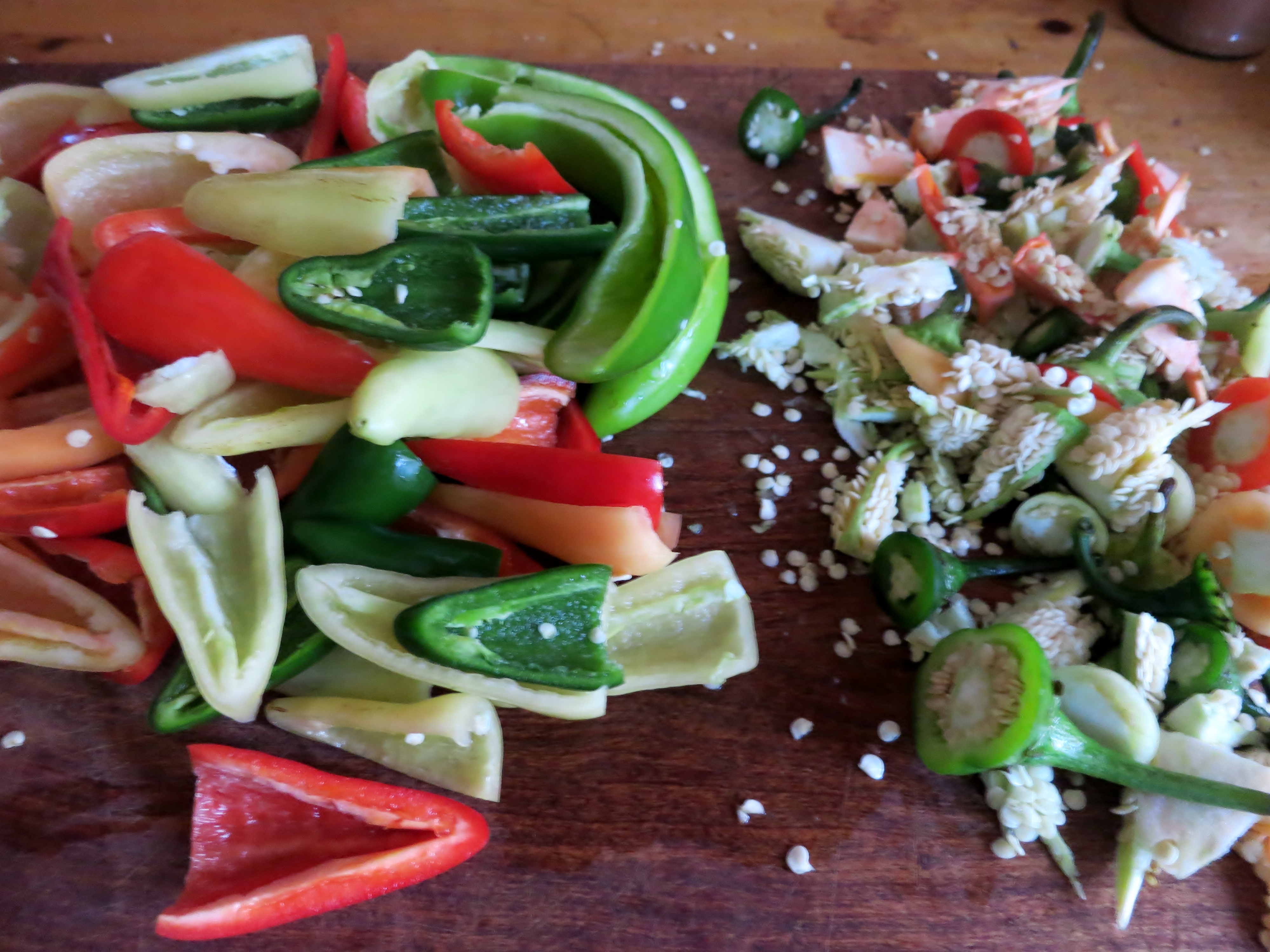
deseeding chiles

deseeding chiles

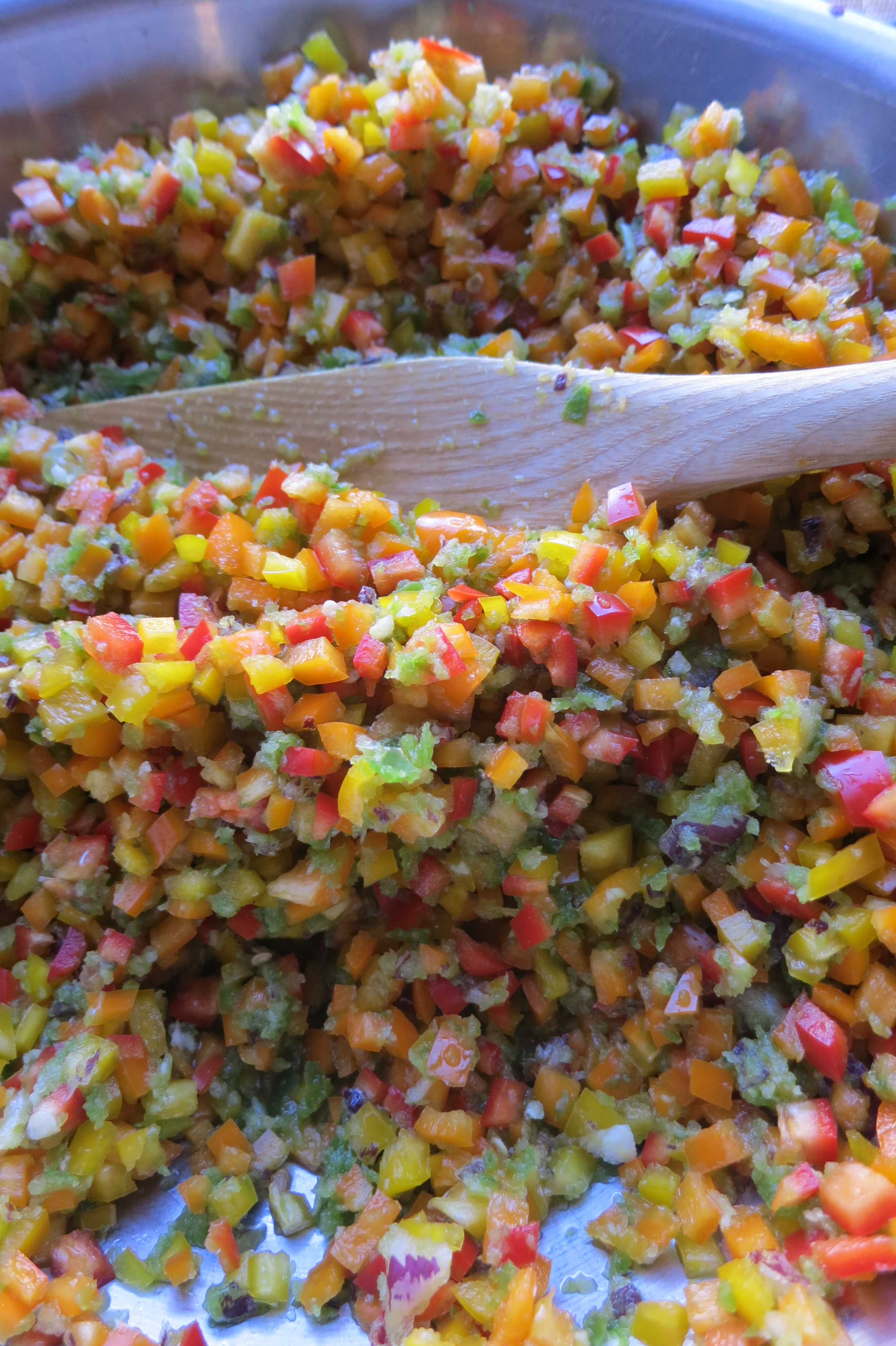
Sometimes I meticulously seed and dice the chiles, sometimes I only cut off the stems and coarsely chop in the food processor.

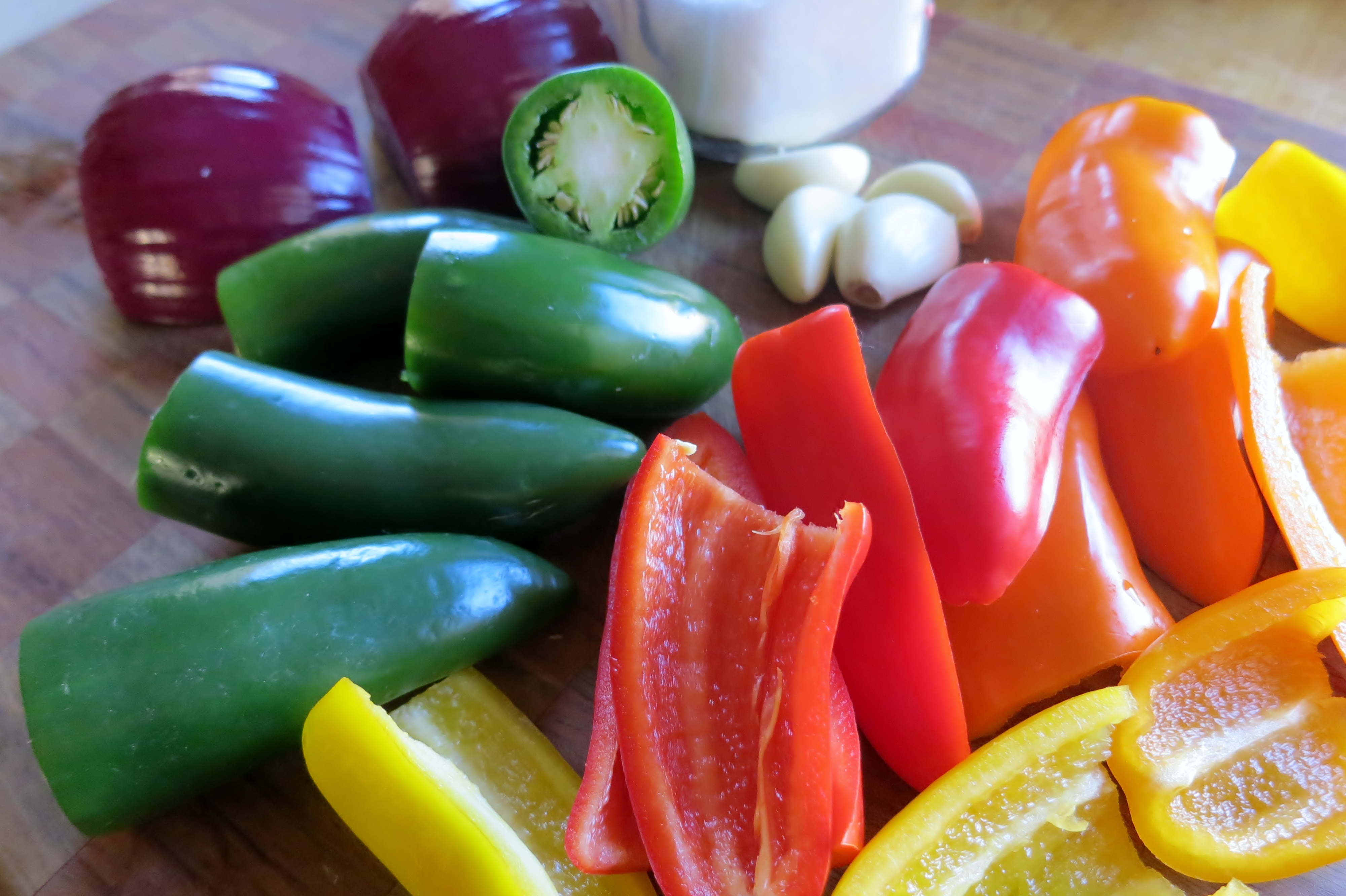
chiles, onion, garlic and salt

chiles, onion, garlic and salt

I usually add onion, garlic and herbs, as the season and whim direct.

chopping chiles reminds me of Uncle Bob and cousin Doug

chopping chiles reminds me of Uncle Bob and cousin Doug

Add salt to the salsa, 2% of vegetables’ weight. This is roughly 1 teaspoon non-iodized salt per cup of diced vegetables, more or less. Salt slows and directs biological activity to make the food more delicious. Lactobacilli thrive in salty environments where other organisms cannot, and the lactic acid they make further inhibit harmful bacteria. Since this is a condiment, I don’t mind it a little salty. There are enough beneficial bacteria on the fresh produce and in the air, so no starter culture is necessary.

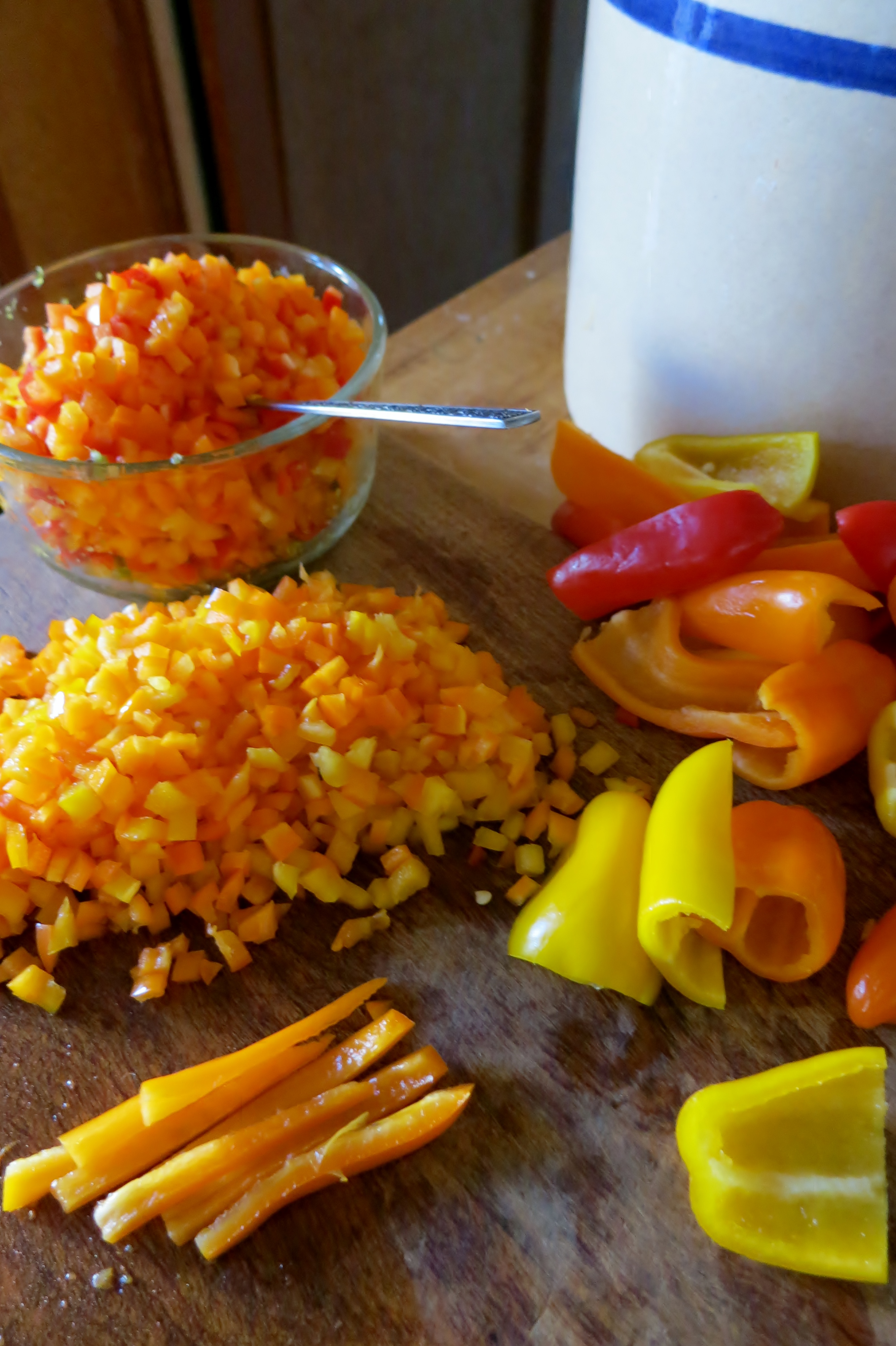
diced chiles

diced chiles

If the chiles are not very fleshy or I want a thinner sauce, I add a little brine made with 2 teaspoons salt per cup of water. Thinning the sauce is a good idea when the chiles are very hot!
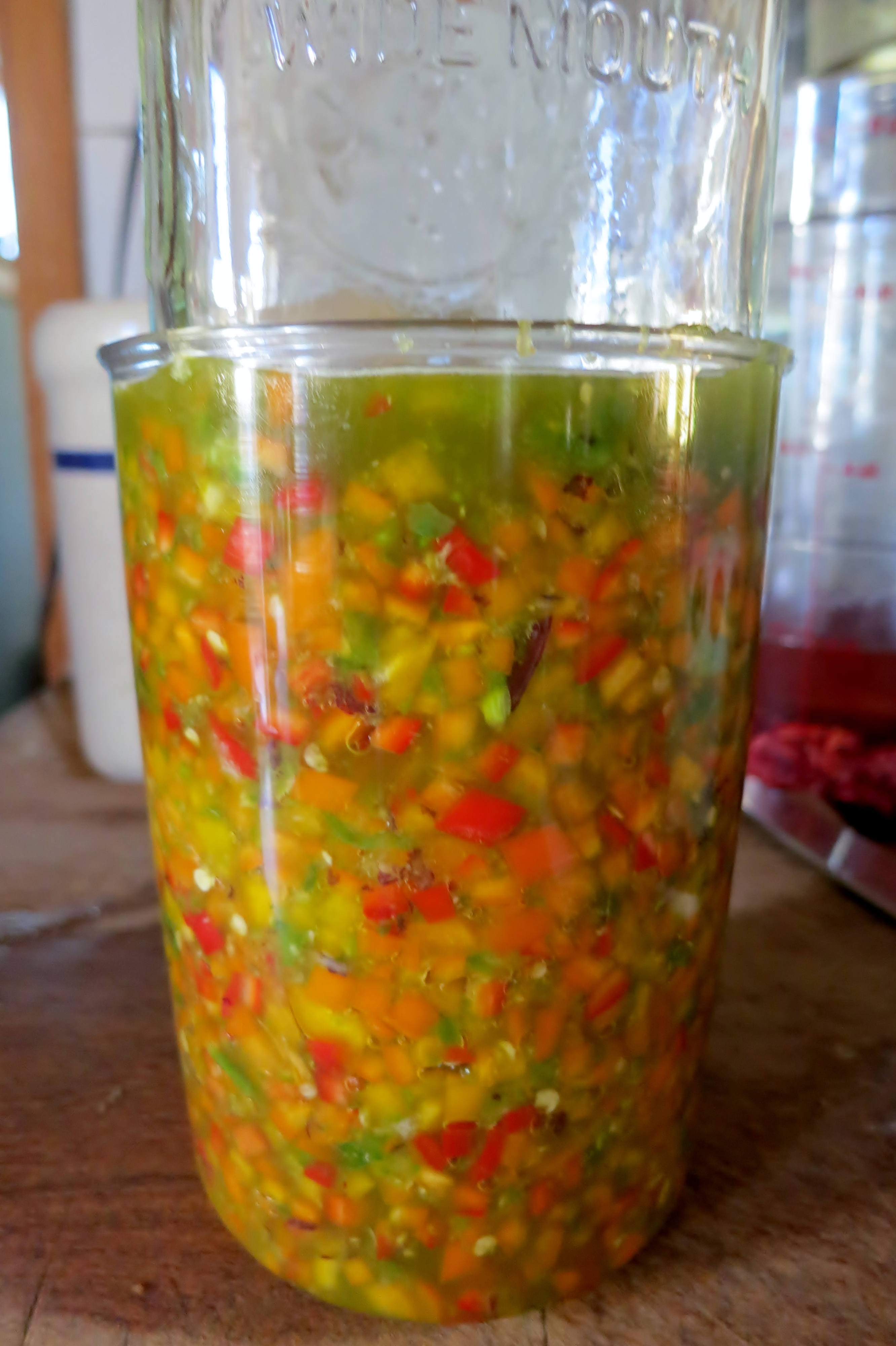
Put the salsa in a jar with a weight on top, keeping the pieces of chile submerged in exuded juice or brine. I use a smaller jar as a weight.

pureed jalapenos with  diced multicolor sweet peppers

pureed jalapenos with diced multicolor sweet peppers

Cover the tower with a tea towel to keep out dust and insects, and keep at room temperature.

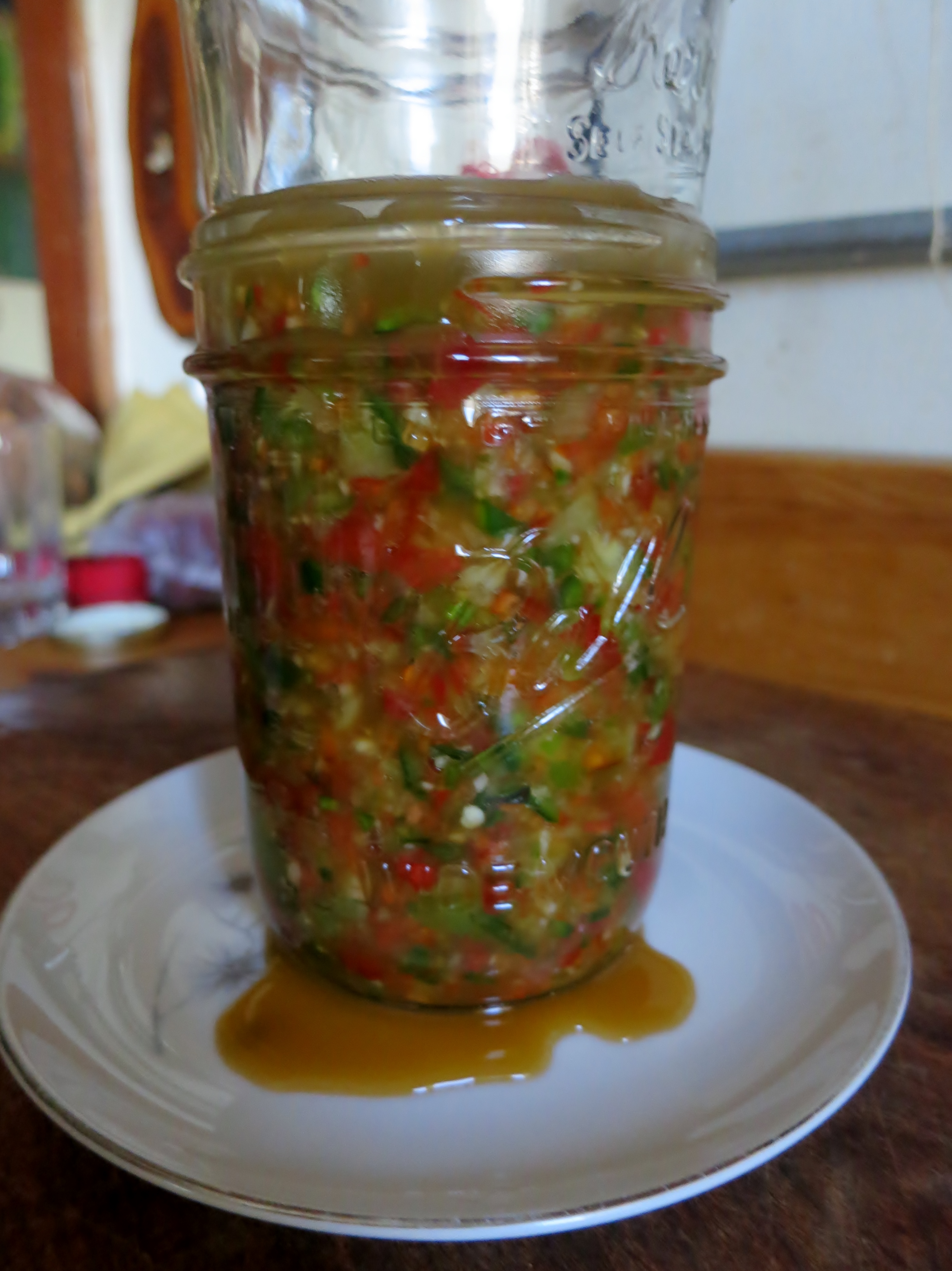
fermenting chiles can be messy

fermenting chiles can be messy

How long before it’s ready? Test daily in warm weather to see if it is sour enough for your taste. In winter, the process is slower, taking up to a couple weeks. If white mold forms on the surface, skim off the top. It is harmless. If the mold is any color other than white, or below the surface of the liquid, discard the whole batch. Better safe than sorry.
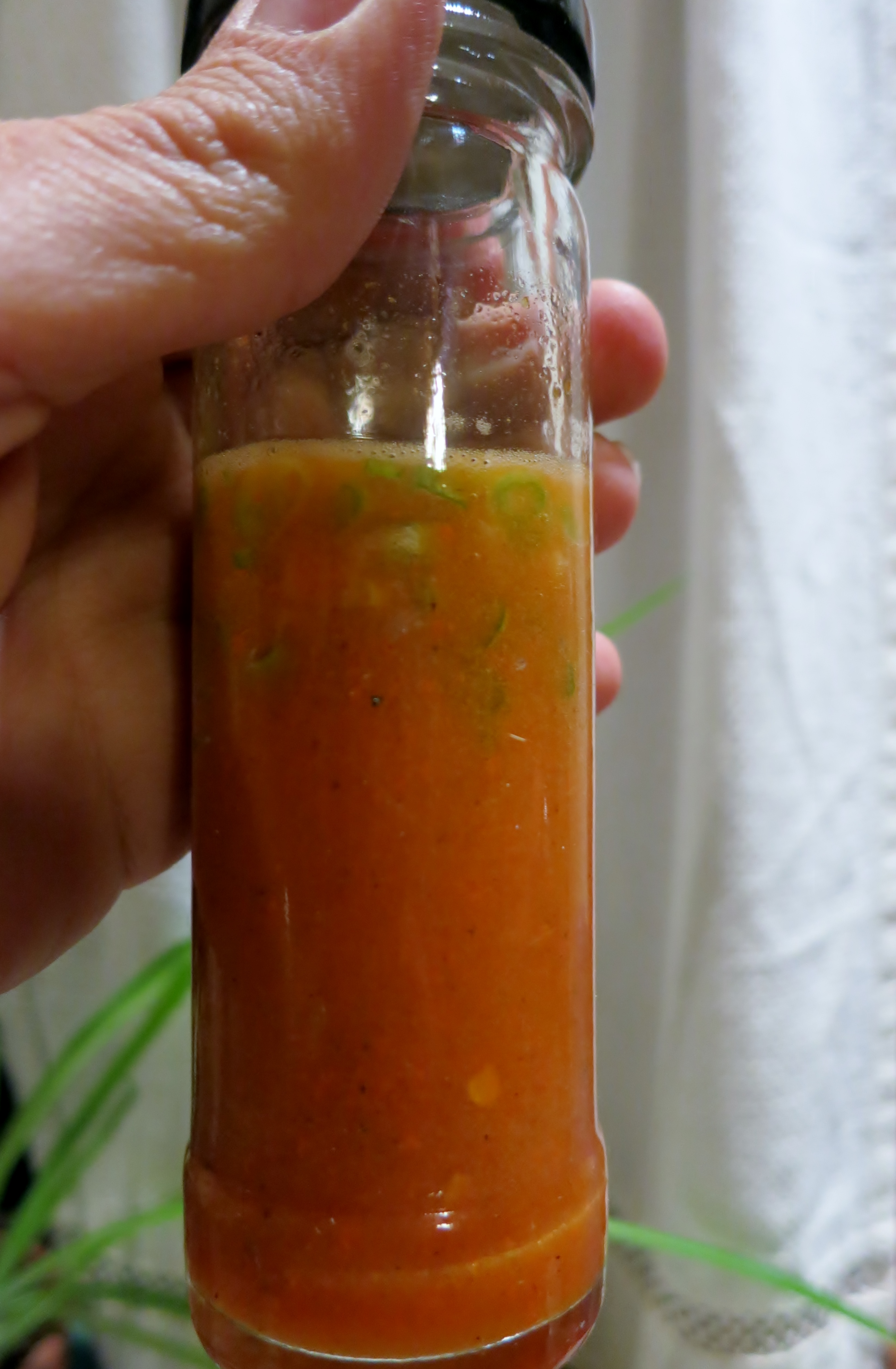
When the salsa is tart and delicious, it can be eaten as is or pureed. For a smooth salsa, it can be strained. Sometimes I add fresh herbs or minced I’itoi onion tops.

pureed salsa with diced I'itoi onion tops

pureed salsa with diced I’itoi onion tops

Store fermented salsa in the refrigerator with an airtight lid.
Chef Molly Beverly from Prescott, Arizona suggested fermenting a sauce from Mano Y Metate Pipian Rojo, so I have some of that going now. I can’t wait to taste it!
elote salsa
For more details about fermenting food, see Sandor Katz’s The Art of Fermentation. For an encouraging primer on safely fermenting food, find Wild Fermentation also by Katz. This is one of my all time favorite cookbooks.

Wild Greens and Mole Enchiladas

blog1Hello, this is Amy Valdés Schwem, and I’m honored to be here with such esteemed plant and cooking women!

I love harvesting wild greens, but my day job is making mole as Mano Y Metate. Today I’m going to make enchiladas made with Mole Dulce and fill them with wild greens and summer squash. It won’t heat up the house, if you take the toaster oven outside! Enchiladas made with tomato sauce instead of chile are called entomatados, and those made with mole are enmoladas. So the menu can read: Enmoladas de Mole Dulce con Quelites y Calabacitas.

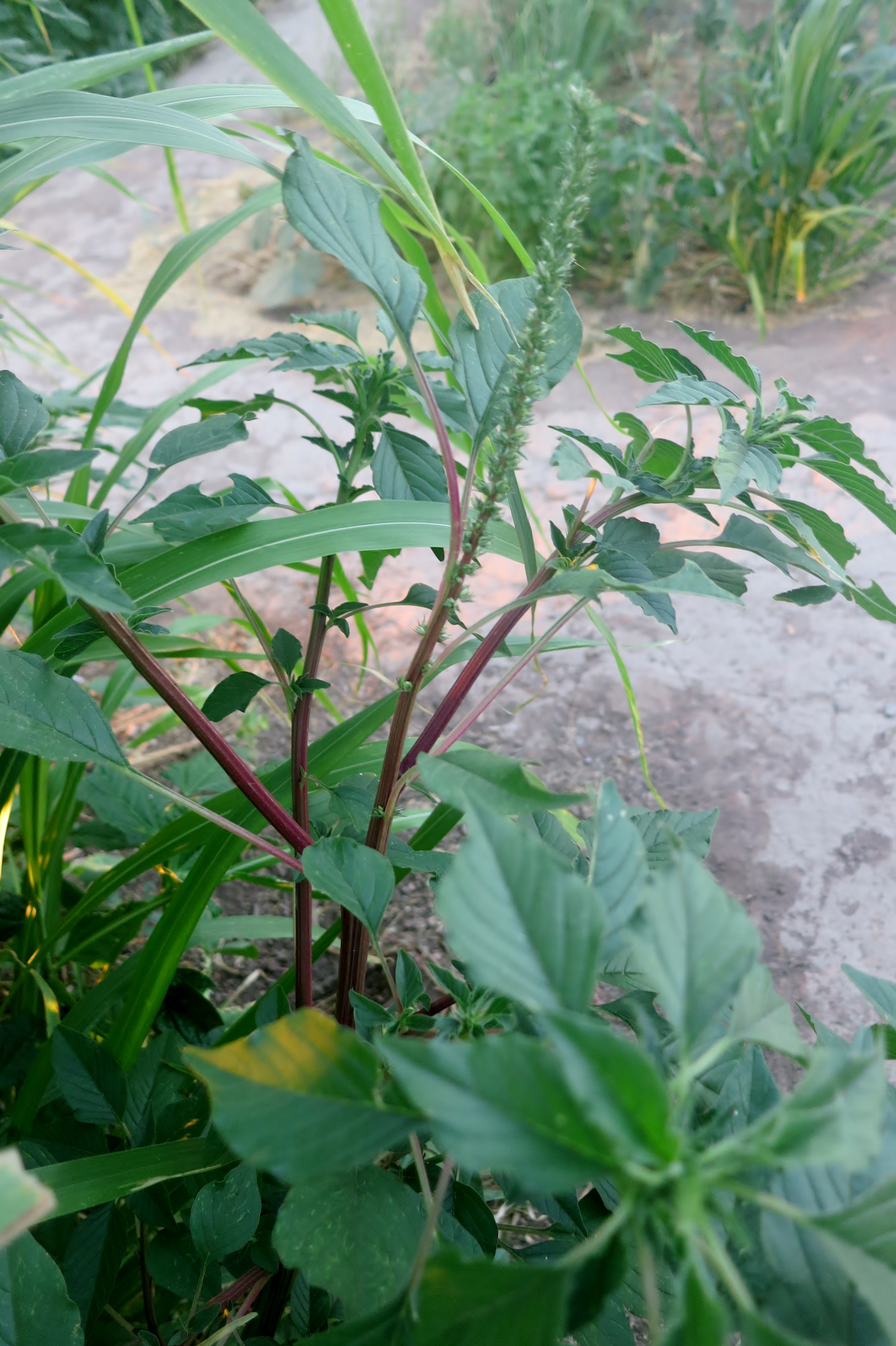
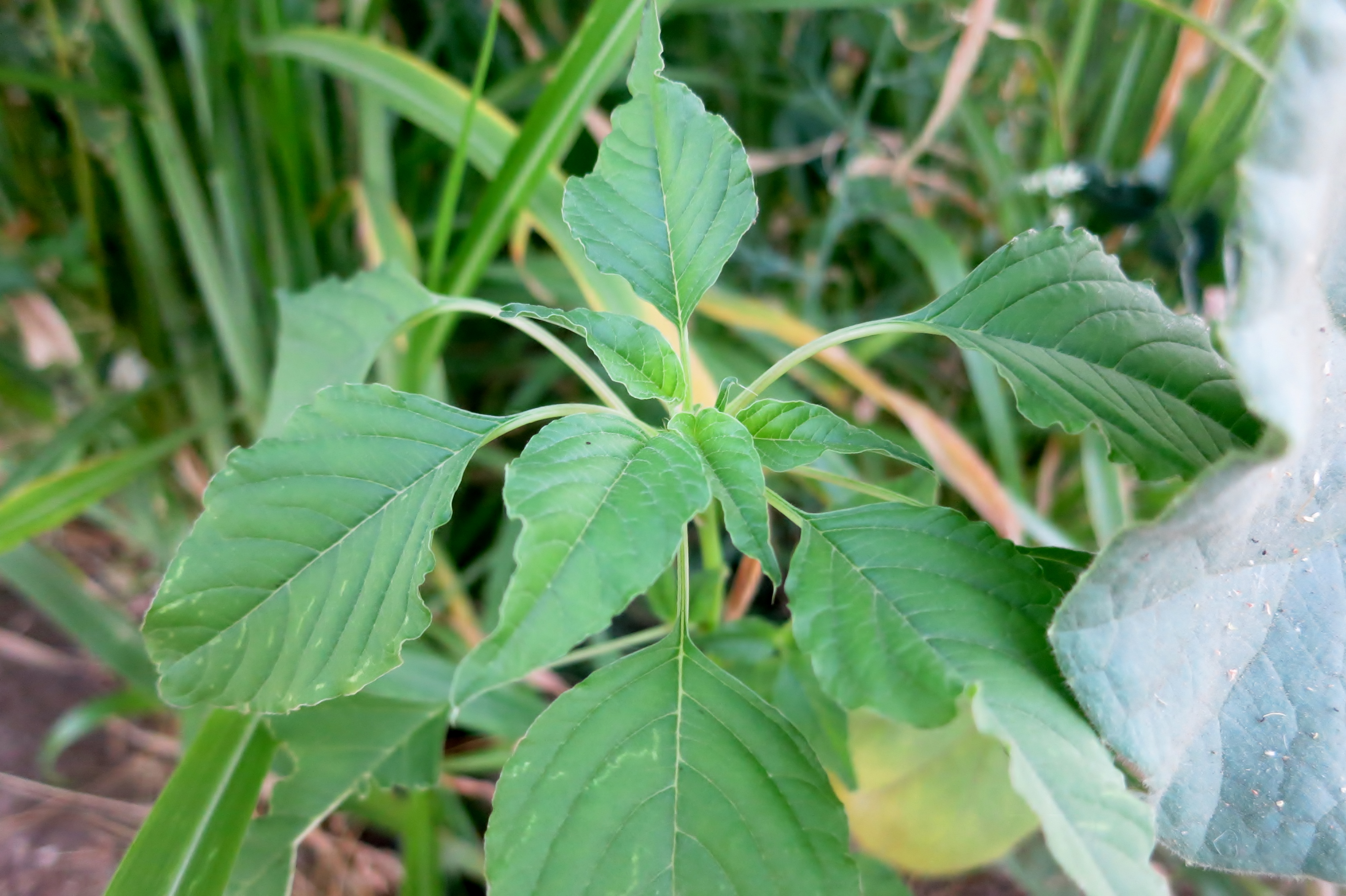
Quelites can refer to several unrelated wild greens, but to me they are wild amaranth greens, Amaranthus palmeri, also known as pigweed.

I grew up eating quelites with my maternal grandfather, and he knew no shame jumping fences to pick weeds. They make a few tiny black seeds, unlike its Mexican domesticated relatives that make enough blond seed to fill bulk bins at the health food store.

It is native to the southwest US and northwest Mexico, and its wild and domesticated relatives are enjoyed around the world both as a green and for its grain-like seed. It easily out-competes summer garden and field crops and is becoming resistant to glyposphate (Roundup). But you wouldn’t want to harvest from those over fertilized fields anyway, since it can absorb too much nitrate, making it unsafe for humans and animals. However, grown in native desert soil, they are safe and nutritious, high in vitamin A, vitamin C, and folate, among other vitamins and valuable minerals.

Some species and cultivars available at Native Seeds/SEARCH are used for dye and have red leaves, and some make a huge red inflorescence pretty enough to grow as an ornamental, even if the birds eat all the seed. I’ve never had much luck popping the seed I grew, but you can buy commercially popped seed, like miniature popped corn.

blog2 blog4

I just visited my closest community garden, Las Milpitas de Cottonwood, and found these beauties in the irrigated beds already in flower. If this was all I had, I would pick the smallest leaves from the stalks and use those.

blog5Hopefully you find quelites before flowering, shorter than a foot tall. I found a few plants in my yard where other things get watered. Many more will sprout with the summer rains.

blog7a


Last year I had so many from my Tucson Community Supported Agriculture share that I dried some, just like my great aunt Tia Lucy told me they used to do. I just plucked leaves from the stems and air dried them in the house. To use, I soaked in water overnight, then sauteed with the others. I’ll dry more this summer, for sure.

blog7b blog8


To prepare the fresh quelites, wash, chop tender stems and all, and saute with a little onion and garlic in oil. My grandfather always used bacon grease, so that’s what I did.

blog6


It’s also prime season for calabacitas, so use them if you don’t have any fresh or dried quelites. My grandfather also collected and cooked verdolagas for us, which would work here, too.


blog9a


Calabacitas, sauteed with onion and garlic. This filling with mushrooms and queso fresco, inside mole dulce enchiladas, is my brother’s signature dish. Well, one of his signature dishes.


blog9b blog9c


Now for the mole! For a half dozen enchiladas, to serve two people, I used about half of a tin of Mano Y Metate Mole Dulce powder, cooked in mild olive oil to make paste.

blog9d

Then I added about half a cup homemade chicken stock and a dash of salt, but veggie stock is great, too. Water doesn’t quite do it. Simmer until you have a nice sauce, adding more broth as necessary. There will be steam and good smells.


blog9f blog9g


The secret to enchiladas: start with thin corn tortillas and fry briefly in oil hot enough to sizzle, but not hot enough to make them crispy!!! DO NOT skip this step!

If the tortilla cooks too much, or if it breaks, just turn up the heat and make that one into a corn chip.

Dip the flexible tortilla in the mole dulce.

blog9h blog9i


Put quelites or calabacitas in the tortilla and roll.

blog9j blog9l


Top with homemade queso fresco and bake until heated though. My grandfather used the toaster oven outside on the patio in the summer to make enchiladas. No need to heat the house!

Depending on your oven, you may need to cover them with foil, but I didn’t. I like crispy edges. Serve with a cucumber, tomato salad dressed with a squeeze of lime, beans, and prickly pear grapefruit-ade.

Leftovers are best fried in a cast iron pan until crispy.

Mano Y Metate moles can be purchased from Martha Burgess of Flor de Mayo Arts at the Sunday Heirloom Farmers’ Market at St. Philip’s Plaza, Native Seeds/SEARCH, and ManoYMetate.com.
 

Savor the Southwest Portable Pies

Aunt Linda here….

Image

It is predawn in the Old Pueblo, summer constellations flicker overhead, the early morning mating songs of birds twirl their way to my ears. Right now the air cool and dry. In a matter of hours it will heat up to triple digits. Those who live in the desert a resilient sort. We live with significant temperatures swings all year long, fascinating animals (I saw a Gila Monster June 1st), and lots of spiny cacti, all of which we find beauty in.

I like my food to be resilient as well. Which makes me think of pie. It can be savory or sweet., or both. It can be served hot or cold. It is forgiving in what it allows the pie maker to do. It can be frivolous or serious; nutritious or not. Its flavors can reflect family and cultural identities and preferences. Pie does it all.

Which makes me curious about who the First Pie Maker might have been. The particular “who” remains a mystery. After reading up on pie, it seems to me that there were likely many many many First Pie Makers in nearly every culture known to cook and experiment with food. It is, after all, quite simple: the creating of dough, or pastry, and then filling it with regional, seasonal foods.

Image

“New World Resiliency Pie”   Being inspired by the prickly pear pads that radiate with that fresh spring green color, (photo) right now. I decided to make a pie, ancient and not from this continent, with a New World Flare. New World Pie Fillers:  nopalitos (fresh prickly pear pad), chiltepin, chocolate. (Talk about Resiliency, each of the foods above have survived centuries. One example: Coprolites (human droppings) found in caves reveal that humans have been the relatives of the chiltepin for thousands of years! )


The First Pie Maker was not a Southern American, despite many Americans strong cultural identity about pie. Read even a little bit about pie and you quickly find intensely personal accolades about it. For those who “get” pie, there is a love for it that is both reverential and sensuous. It includes a deep feeling of being “nurtured”, pie often being equated with Grandma’s Love. It is clear that human beings have been feeling nurtured by what we now refer to as pie, for a lot longer than the United States has been a country.

One first version of pie, came from Egypt, around 9500 B.C.  That surprised me.  It places the first pies all the way back to the Neolithic Period. The rustic pies were made from dough made from oat, rye, barley, and wheat – and then filled them with honey! The pies were then baked over hot coals. There is no doubt in my mind that their flavor was fabulous – what with the sweet of the honey and the smoky taste of having been naked in coals. By the time the Pharoh’s bakers got into the action (by 1300 BC-1200-something BC) nuts and fruits were added to the honey “pies”. Ramsey the II’s tomb shows etchings of this.   The beekeeper in me loves this! Remember that the Egyptians were prolific beekeepers, floating their hives up and down the Nile to follow the honey flows.

Image


“The Pharohs’ Honey Nut Pie” (add fruit of your choice)

As epochs continued, and cultures evolved the fillings included meats of all kind, as well fish, muscles, and oysters; dairy products became another beloved filler.   Human are creative and the number and variety of pies world wide is enormous. They include Indonesia’s “panada”;, Jamaica’s “patty” Malasia’s Keripap (curry puff), Nigeria’s “meat pie” and on and it goes. Throughout Latin America and Mexico you find the Empanada. Sweet meat emapanadas are made for Christmas in Mexican tradition.. At the ranch, we make Calabasa (squash) with Pilloncillo (a brown cane sugar) Calabasas.

As much as I value a good, slow cooked meal, it is just too hot in Tucson presently to  be near heat for very long. So I decided to try to create a version of pie that was smaller and thus quicker to bake. It is also more portable. And infinitely flexible: you can eat them warm or cool, pack them for a hike, lunch, bike or car trip, kids lunch. They can be fancy, humble, or decadent.  Create great tasting pies from foods you are most passionate about. Create them from leftovers. The two photos above show you how versatile the ingredients can be.

Savor the Southwest Portable Pies

INGREDIENTS: for 9 to 12 portable pies

All you need in the way of equipment for these joyous little pies is a standard 12 cup, muffin pan and some parchment cupcake-paper inserts for your muffin pan.

+++  Pie Dough or Pie Crust of your choice.

Make the favorite family recipe. Investigate a new one. There are a plethora of recipes available in these food savy days, vegan options, full fat ones, raw ones. I used a store bought crust for these tiny pies. While I have made crust in the past, and value making it, I needed something quicker this week. There are a number of buying options these days. I found one at my local health food store, whose ingredients I felt comfortable with.

I feel dough-headed (brain fog) and lethargic if I eat a lot of dough, so I minimized it in these recipes – but you can and should use as much or as little as your would like.  Fill the sides! Cover the tops (remember to slice air holes). Add decorations with the left over dough.  Remember resilience, and you can practice it in the act of making pies. I used the equivalent of 1, 9″ pie crust; but if you would like to have more pie crust to the pies, make enough for two 9″. Also, using the parchment is completely optional. I used it because I travel a lot and I thought the pies would travel better, too. I think the tiny pies might be more beautiful for your table if you don’t use the paper, and if you use dough for the whole pie, including sides and top. In that case, after unrolling your dough (you’ll do this whether you make it yourself or buy it), place it on a lightly flowered surface, and roll with a rolling pin, to about 1/8′. Using a biscuit or cookie cutter cut 12, 4” circles for the bottom of the pie and 12, 3″ circles for the top, or for as many pies as you would like to make.

+++  3 eggs

+++  Imagination and Play-full-ness as you select your Other Ingredients.  We humans can be a tad on the serious side. Too much seriousness undermines resiliency. A spirit of play help us strengthen resilience.  So allow your spark to guide you, as I did in the New World Pie above.

Image

Fresh egg yolks.


The Basic Recipe/How to:

Place the muffin parchment papers in the muffin tins, or gently handling the dough, press dough into the muffin cups. Break the 3 eggs into a small bowl (preferably one with a pouring spout) and beat with a fork until combined.

Divide your ingredients to the bottom crusts, and then pour about two tablespoons of the egg to the pie. Add the top crust, or weave a top crust. Once you have the pies filled, and topped with crust, refrigerate the muffin tin for 30 minutes. Preheat Your oven to 375 F – and when the small pies have sufficiently chilled, bake them for 20-30 minutes. The time will vary from oven to oven, and from the types of pies.

For the New World  Resiliency Pie, I added prickly pear, chilpetin cheese (see my January post for the recipe), and the 2 T of beaten egg.

Image

I then tried a New World Dessert Pie – and filled the pie with  Chocolate and  Chiltpein Cheese (like a French pastry, but with the chile cheese). Note there is crust just at the bottom.

Image

Then the 2 T of egg was added, and the crust on top. I did this with the Pharohs’ Honey Nut Pie. As well


Image

The “before” baking Portable Pies – you can see the pirckly pear pads peeking through. The “after” photo is at the top of this post.


I was surprised how VERY fun it was to think up names for pies!

Here are a few:

Bye Bye Mrs. Neolithic Pie

Pico de Gallo Pie (hmm there goes the rooster – rooster pie?)

Portable, Picante, Prickly Pear Pad Pies

New World Resilience Pies


Feel free and post some of your pie variations and names!

How Nopales Become Nopalitos

Pick prickly pear pads when they are the size of your hand.

Pick new prickly pear pads in the spring when they are the size of your hand.

Carolyn Niethammer with you this week. In our last post,  Martha Burgess wrote about how early cholla buds were appearing this year. I have seen pads beginning to form on the native prickly pear, but not yet on my Ficus Indica, the tall Mexican variety.  But they will be out soon, so let’s talk about how to prepare them for use in salads and casseroles.

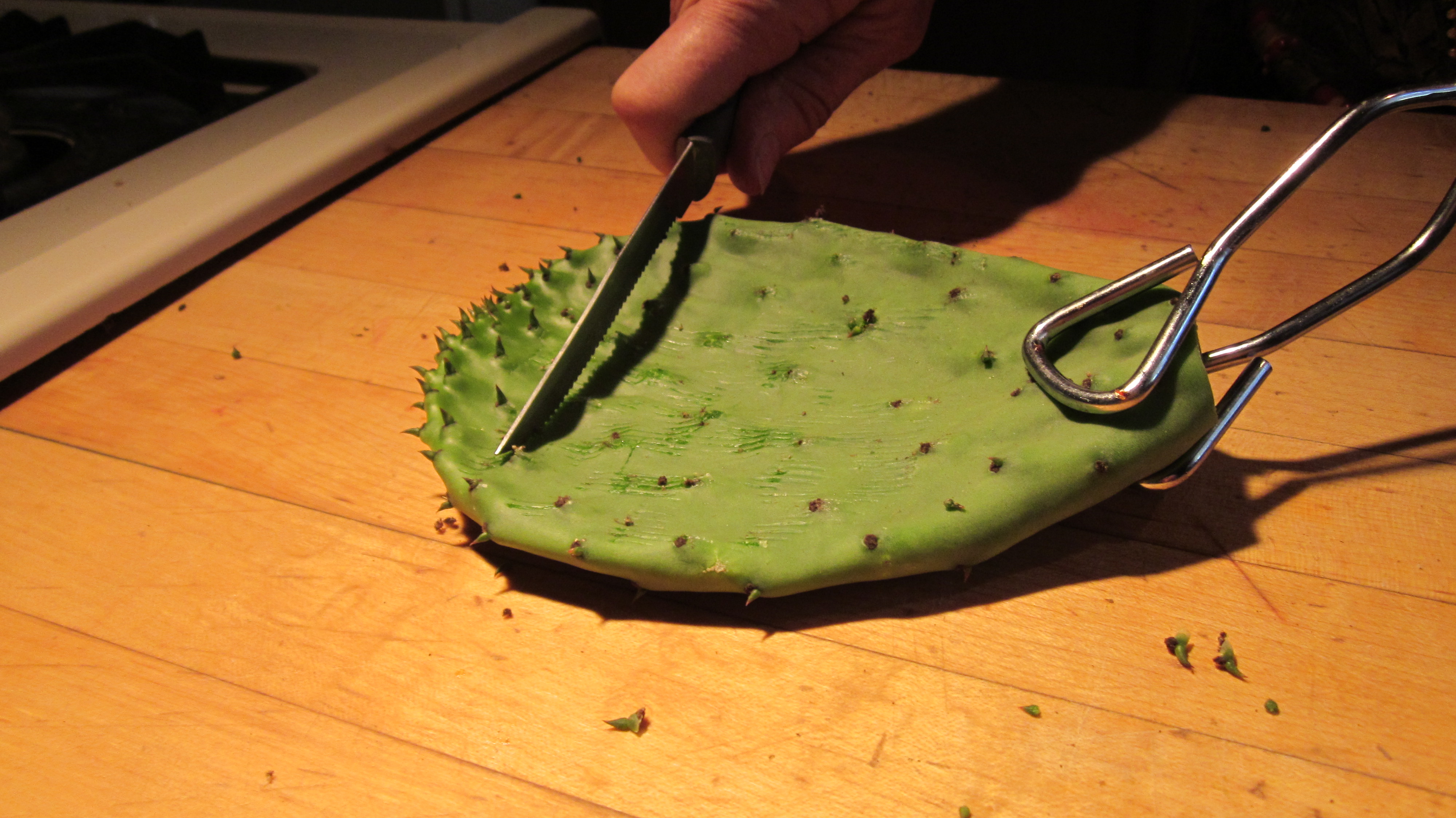
Scape off the stickers with a serrated steak knife.

Scape off the stickers with a serrated steak knife.

First thing is to don your rubber gloves. Even though these cactus pads don’t have large stickers, they do have the tiny glochids that can be awful to get out of your hands. Then using an old-fashioned steak knife with a serrated edge, go against the grain to scrape off the stickers. Keep a paper towel nearby to clean the knife and keep your working surface clean.

Trim off the edge.

Trim off the edge.

There are an abundance of stickers on the edge of the pad, so just trim it off and discard it.

The nopal becomes nopalitos.

The nopal becomes nopalitos.

At this point you can put the whole, cleaned  nopal on the grill next to  some chicken pieces or pork chops. Or you can chop the pad into smallish pieces. The Chicago restaurant owner, TV star and author Rick Bayless coats the pieces with oil, puts them on a cookie sheet and bakes until done.  You can also do it in a frying pan.  Cook until the color changes to a more olive hue. The slippery substance that is so healthy for your blood will dry up and become less noticeable.

Cook nopalitos until they turn olive colred and loose some of their moisture.

Cook nopalitos until they turn olive colred and loose some of their moisture.

I watched my friend Amy Valdez Schwemm do a nopal cooking demo at the Mercado last year. Her method is a little different. After cleaning the nopal, she cooks it whole and cuts it up later.  If you are cooking in a frying pan, this eliminates having to flip each piece individually.


Amy cooks the pads whole then cuts later.

Amy cooks the pads whole then cuts later.

At this point you can add to a salad (maybe picnic-style potato salad) or a casserole such as this one with lentils from my cookbook Cooking the Wild Southwest.

French Green Lentils with Nopalitos

French Green Lentils with Nopalitos

Although prickly pear is a New World plant, it has spread over the globe. The Spaniards originally took it back to Europe from Mexico. I was fascinated to learn that it has colonized in Ethiopia in a big way.  Some impoverished groups live on the prickly pear fruits for months when they are ripe. But people do not eat the pads there, although they feed them to their livestock.  Here are some photos my friend Seyoum took showing prickly pear and his family in Irob, Ethiopia.

A very large prickly pear plant in Irob, Ethiopia.

A very large prickly pear plant in Irob, Ethiopia.


Preparing nopales for the livestock.

Preparing nopales for the livestock.

All prickly pear pads are edible; it just depends on how much time you want to spend getting the stickers off. I usually wait until the Ficus Indica pads develop. Those with access to a Mexico grocery store can usually find them there, sometimes already cleaned. Once they are cleaned, they tend to deteriorate quickly, so buy just before you want to cook them. The very best tasting prickly pear pads I’ve ever eaten are grown on the foggy slopes of central California by John Dicus at Rivenrock Gardens. You can find him at http://www.rivenrock.com. He will go in the morning and pick you a boxful and it will be on your porch the next day. They are so fresh, they will last for many weeks in the refrigerator. He grows a variety he found in Maya country in Mexico and they are virtually spineless. And delicious!
________________________________________

Excited to try prickly pear?  I give you lots of recipes in The Prickly Pear Cookbook and Cooking the Wild Southwest.  Very helpful for controlling blood sugar and cholesterol.


Prickly Pear Sparkles in Holiday Cocktails

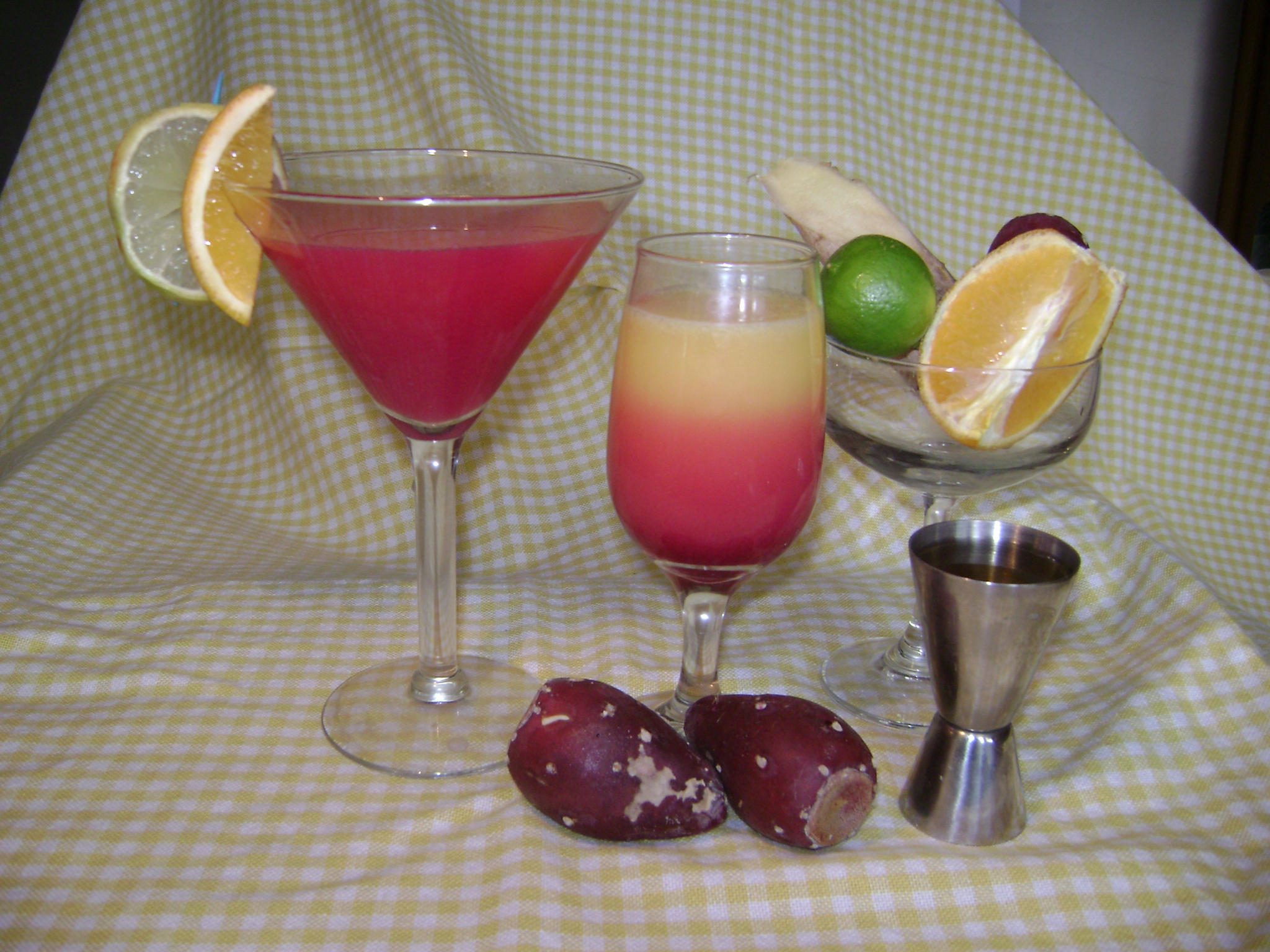
Welcome guests with tasty prickly pear cocktails.

Welcome guests with tasty prickly pear cocktails.

It’s Carolyn Niethammer here this week. First, I want to welcome all the new subscribers. I speak for my fellow bloggers when I say we are so happy to have you join this little community of food lovers. Please feel free to join in at any time with ideas and comments.

Today I want to talk about using prickly pear syrup in holiday cocktails. We all know and love prickly pear margaritas, but there is a world beyond that beloved beverage. And these cocktails don’t have to include alcohol. In fact it is nice to be able to offer your non-drinking guests something tasty and sophisticated way beyond diet coke and seltzer with lime.

There are several keys to delicious cocktails. One important ingredient is fresh juice. It makes a big difference and here in Arizona we have an easy abundance. Some of you need only walk as far as your backyard to grab a handful of oranges or tangelos.  If you are using alcohol, you can choose vodka, tequila or rum.
Make your prickly pear syrup.
Make your prickly pear syrup.

If you have stored some prickly pear juice in your freezer, make a syrup with 1 cup juice to 1 cup sugar.  Simmer gently to evaporate some of the liquid.  If you didn’t get around to storing any juice this year, there are several good commercial syrups made by local entrepreneurs.  You can find Cheri’s Desert Harvest products widely in stores or on-line and Jeau Allen is at farmer’s markets with her products and they are available on-line.

You can buy commerical syrup and a special prickly pear/lime blend.

You can buy commerical syrup and a special prickly pear/lime blend.

To elevate your cocktail with a more sophisticated flavor, you need to add a bitter or sharp flavor such as you get with ginger.  To make ginger syrup, I grate a 5-inch piece of fresh ginger and simmer for 30 minutes in a cup of water.  Strain out ginger and reduce liquid to a half cup.  Add a half cup sugar or agave syrup and cook a few minutes to dissolve sugar. You can also add a few drops of bitters. Angostera bitters is the most available brand and they hold their recipe closely, but bitters is usually a blend of herbs and spices.  You can find some recipes to make your own here and here.

As a final step, top each glass with a little flavored sparkling soda.

Here are some recipes to get you started. Then experiment.

Arizona Sunset

Fill glass with ice. Pour 3/4 full of fresh orange juice. Add a shot of tequila or rum and a tablespoon of ginger syrup. Add two tablespoons of prickly pear syrup. It will sink to the bottom and look like one of our gorgeous sunsets (see picture at top of blog).

Sombrero

1/2 cup pineapple juice

1 ounce rum

1/2 ounce Triple Sec

5 drops bitters

1 ounce prickly pear syrup

1/2 cup crushed ice

Combine all in a blender and serve in a glass with a swizzle stick speared onto a chunk of pineapple.

Carolyn’s Christmas Cocktail

2 ounces fresh orange juice

2 ounce fresh lime juice

1 ounce prickly pear syrup

1/2 ounce ginger syrup

2 ounces cranberry sparkling soda

Combine first four ingredients and pour over ice in large wine glass. Top with cranberry soda. Garnish with lime wedge or circle on glass edge.

________________________________

Want more prickly pear recipes?  Take at look at The Prickly Pear Cookbook.  Available at Native Seeds Search, The Tucson Botanical Gardens, your local bookstore  or on-line here.