
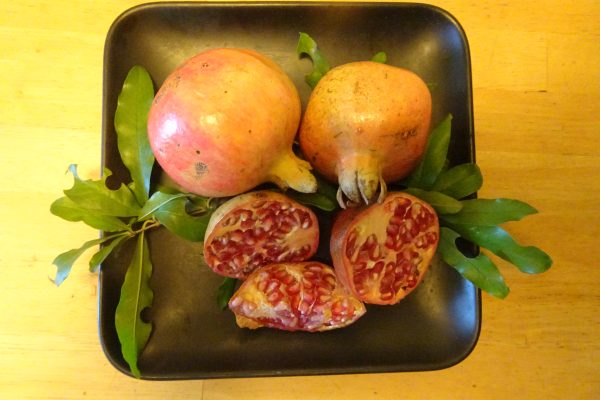
The pomegranate tree in my backyard produced five fruits this year.. The blemish on the top of the closest fruit was made by a leaf-footed bug. A small part of the interior will be bad, but the majority of the fruit will be usable.
I wrote about pomegranates at this time last year, but I’ve learned some new tricks to prepare them so it’s worth another post, especially since so many people find themselve intimidated by these gorgeous red fruits with the hard outer shell. It’s Carolyn today, and I learned these tricks at a teaching and tasting experience at Mission Garden in Tucson given by Emily Rockey, the plant whisperer responsible for the health of all the plants at the garden. Mission Garden is a living agricultural museum of Sonoran Desert-adapted heritage fruit trees, traditional local heirloom crops and edible native plants in the same location as the original garden of the San Augustin Mission in 1770s. Before that this land was farmed for a thousand years by Native American agriculturalists. Among its many varieties of fruit trees, Mission Garden grows eleven different cultivars of pomegranates, all sourced through cuttings from spots around Southern Arizona and Northern Sonora Mexico.
Pomegranate trees like the heat and sun and are drought tolerant, and although they love the desert climate, they are not native to the Sonoran Desert. The trees were brought to the New World by the Spanish. They originated in Persia and much of early Persian art features pomegranates. When it comes to eating pomegranates, the challenge is getting through the thick skin to access the seeds with their lovely juice.
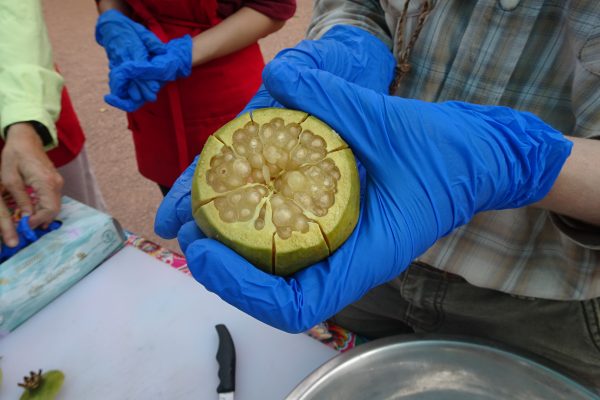
Cut along the sections.
Here’s an easy way to get into the sweet arils (the little flesh-covered seeds). First, cut a slice off the blossom end of the pomegranate. Inside you will see some definite sections. Cut on these sections and pull apart. This pomegranate in the photo is the White Sonoran Heritage pomegranate that has developed in the Sonoran Desert. Botanists aren’t sure why it’s lighter than the red or pink varieties. But it is sweet and the seeds are softer. We just chew them up. Then you can just carefully pry the fruit open and there will be wedges that are easy to eat.

Sections ready for eating or separating.
Another way to get the seeds is to cut the pomegranate from blossom end to stem end and twist the halves apart. Hold the half in your hand seed side down and pound hard with the back of a spoon. The seeds should drop out.
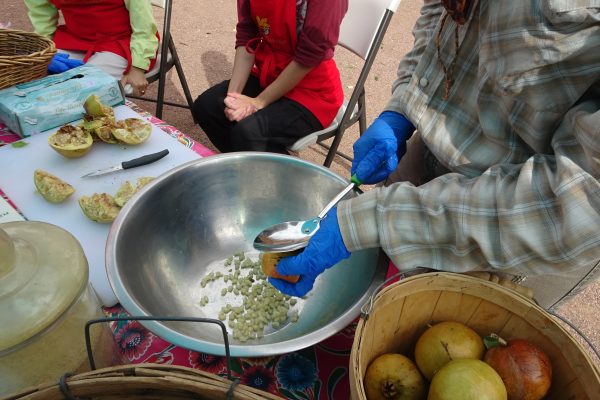
Just whack that pomegranate half with the spoon so the seeds release
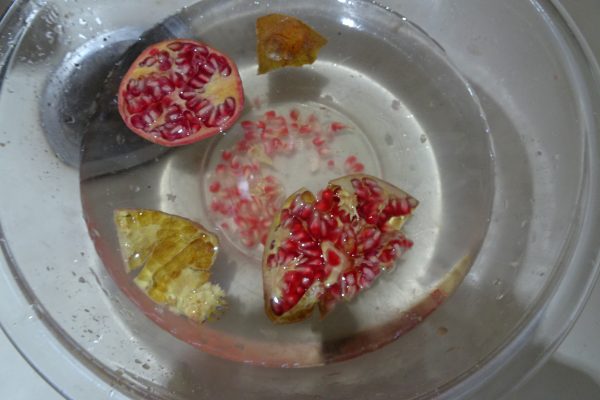
You’ll still have some of the inedible material surrounding the seeds. An easy way to get rid of it is to submerge the seeds in a small bowl of water and the connecting material will float to the top where you can skim it off.
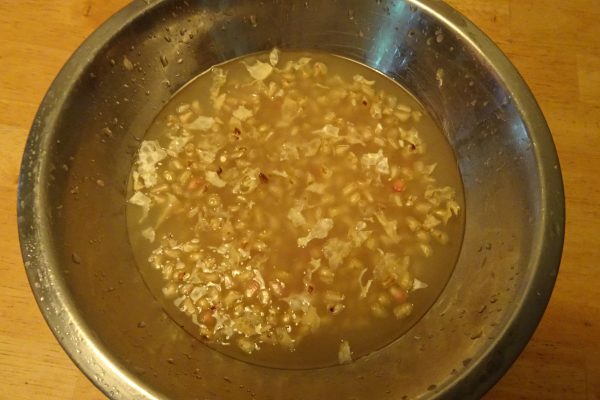
Submerge the arils in water and the seeds will sink and the inedible fiber will float to the top.
You can munch the seeds or add them to a salad or entree where their sweet flavor is welcome. To make juice, process in a food processor or blender in short pulses. You just want to break the seeds to release the juice, not pulverize them. Then strain. If you are using a blender, you might have to add a little water to get the process started.
The recipe below is a great way to use your pomegranate juice. The late caterer Sue Scheff was renowned for providing regional dishes for the parties she served. She offered Autumn Chicken as an entree using something like this Pomegranate Sauce. Saute your chicken parts until brown, spread in a oven-proof dish, then cover with this sauce and bake until chicken is done, about 25 minutes. Garnish with pomegranate seeds and fresh cilantro. Good for family but fancy enough for company. Sue’s complete recipe is in my book The New Southwest Cookbook which includes recipes from dozens of top professional chefs throughout the Southwest.
This sauce is very close to grenadine syrup, which is reduced pomegranate juice and sugar. If you ever had a Shirley Temple as a child or ordered one for your kids, grenadine syrup is what makes the drink pink.
Pomegranate Sauce
2 cups pomegranate juice
2 cups sugar
2 tablespoons lemon juice
1 tablespoon balsalmic vinegar
Combine all ingredients in a saucepan and bring to a simmer, stirring to make sure sugar is dissolved. Reduce by about a third to concentrate the flavors. Spread over the browned chicken parts. Or store in a jar and use to flavor drinks.
________________________________________

You can learn more about the history of food in Southern Arizona in my latest book A Desert Feast, the story of the last 4,000 years of food in the Sonoran Desert. Want more recipes using foods of the Southwest? You’d find ideas for collecting and using 23 easily recognized and gathered desert foods in Cooking the Wild Southwest: Delicious Recipes for Desert Foods. . Recipes from top Southwest chefs are collected in The New Southwest Cookbook. Just click on the titles for more information. You can learn more about me on my website.

 Savor the Southwest: