“Succulent” Events with Succulent Tastes–and Invitations….

It’s show time in the desert–S’oo’ahm masad or “yellow moon” for the Tohono O’odham–the month in which seemingly everything in the Sonoran Desert blooms a glorious yellow, arroyos lined with blooming blue palo verde and mesquite, hillsides covered with paper flower, palo verde and cactus blossoms.
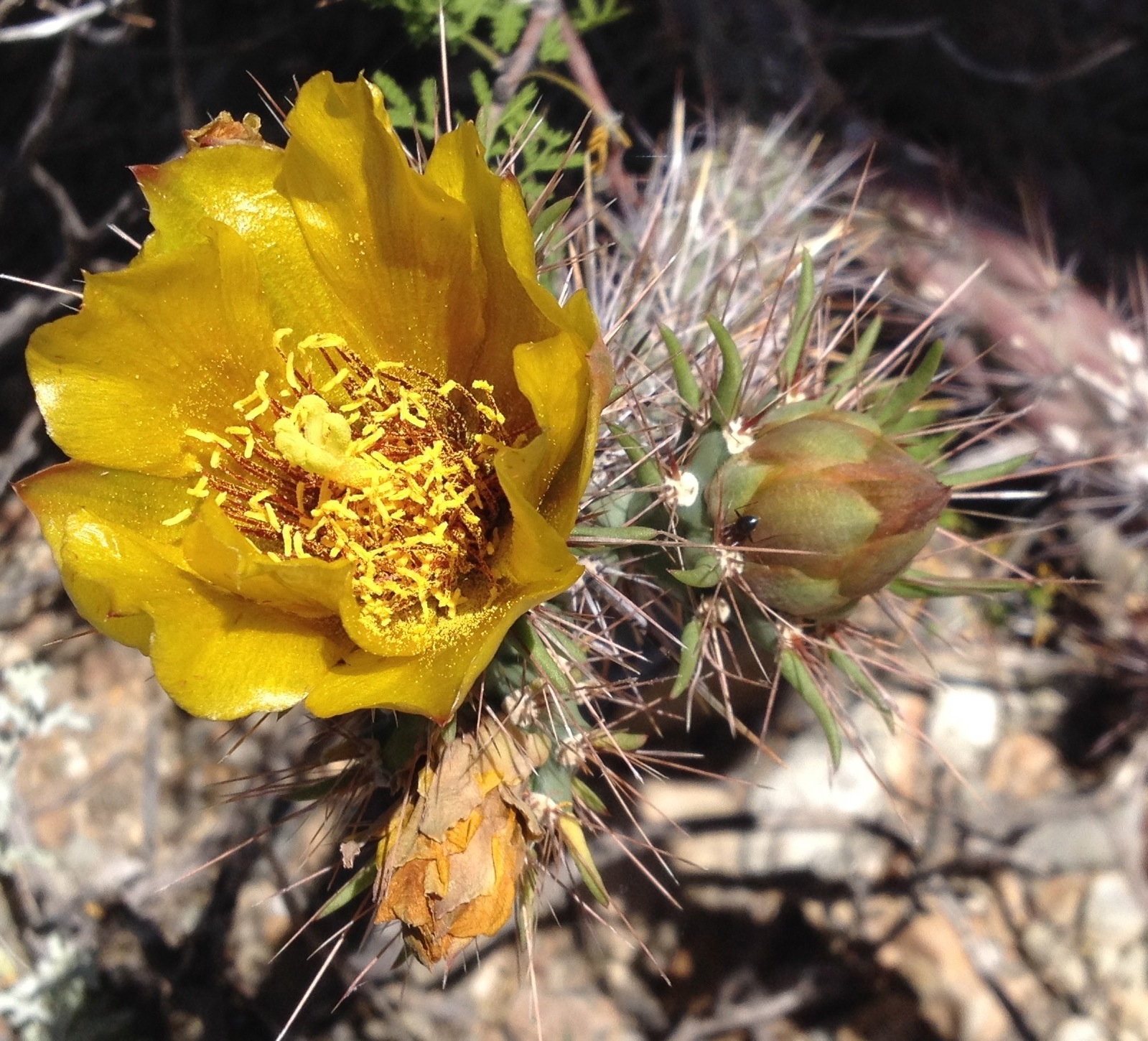
Staghorn cholla (Cylindropuntia versicolor) flower, bud and ant protector

Staghorn cholla (Cylindropuntia versicolor) flower, bud and ant-protector (MABurgess photo)

These spiny, possibly-threatening desert plants have amazing nutritious gifts to pollinators and other hungry creatures, including ants, packrats… and humans.

Tia Marta here with an invitation to learn lots more about our many species of Sonoran Desert chollas, how they fit into the fabric of desert life, and how they have been used by traditional people for generations.  Come join  Tucson Cactus and Succulent Society’s SONORA XI gathering next weekend Friday-Sunday, April 15-17, 2016, for a rich opportunity to enjoy demos, tastes, lectures, and exhibits.  You can learn more about this downtown Tucson event (held at HotelTucsonInnSuites) and register at http://www.tucsoncactus.org.  On Saturday, April 16, I invite you to attend one of my ethnobotany demonstrations at the open conference.  I’ll guide you through careful “hands-on experiences” with edible and useful succulents, complete with some surprising and yummy bites!
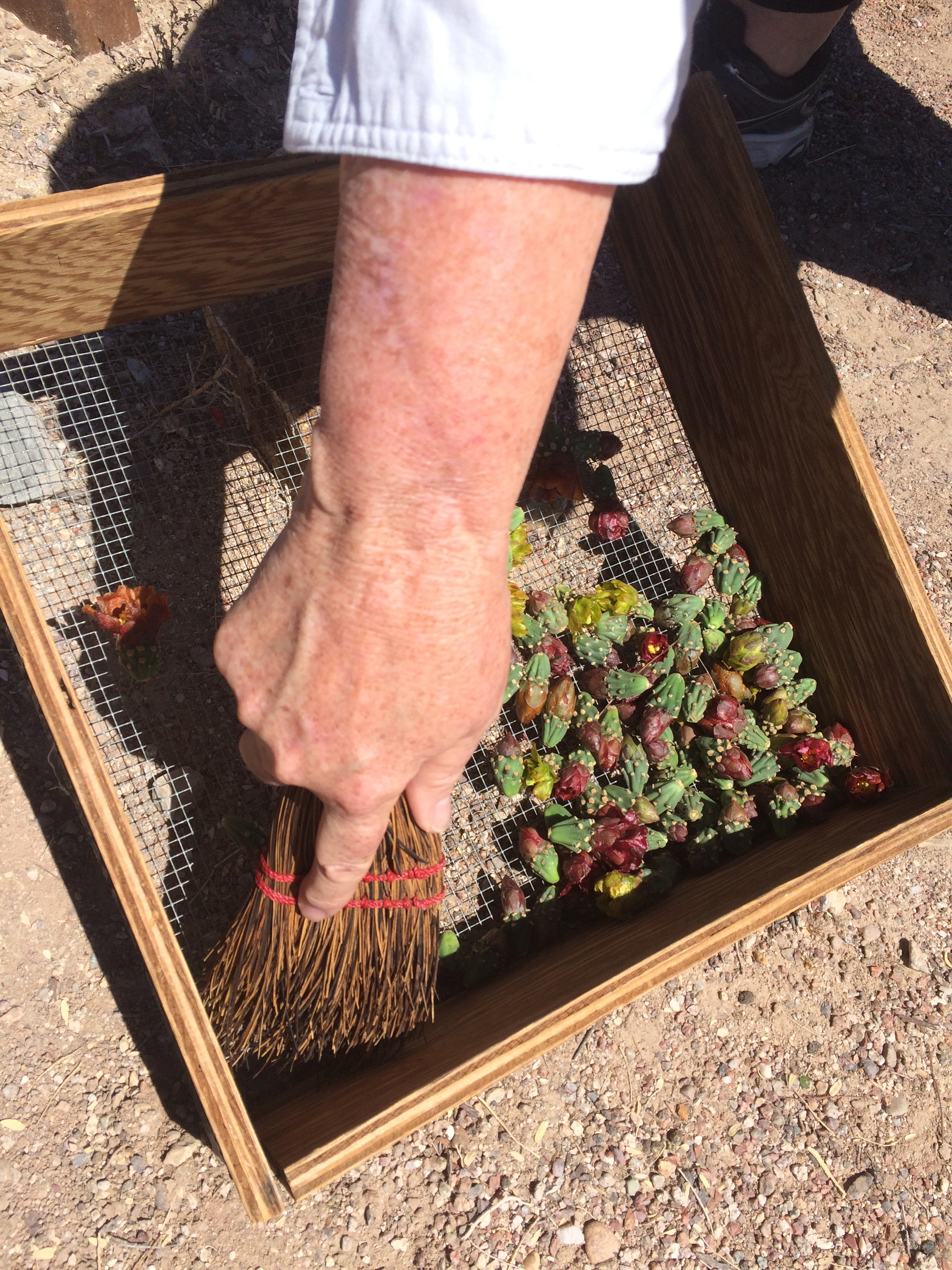
De-spining cholla buds at Mission Garden Workshop (MABurgess)
De-spining cholla buds at Mission Garden Workshop (MABurgess)

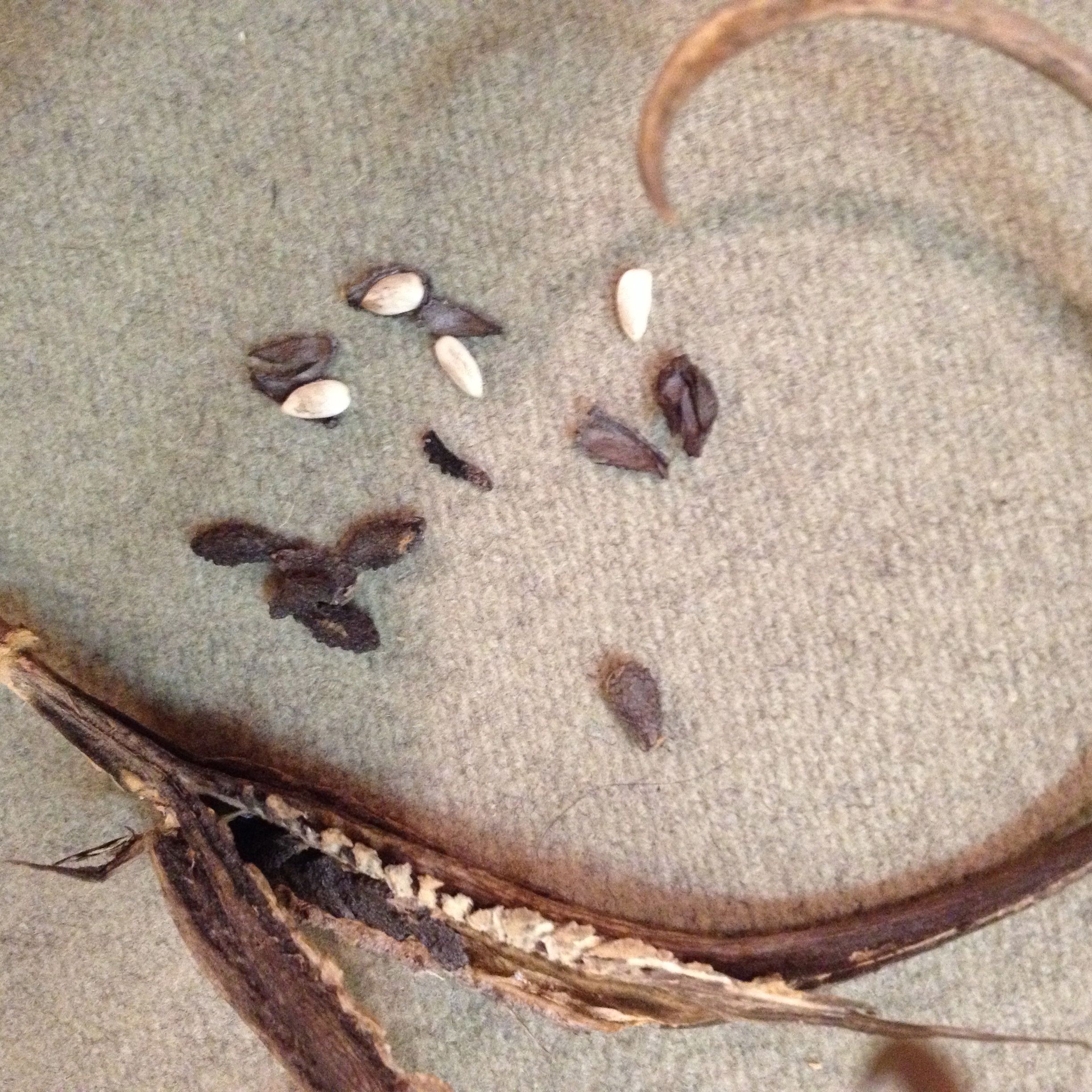
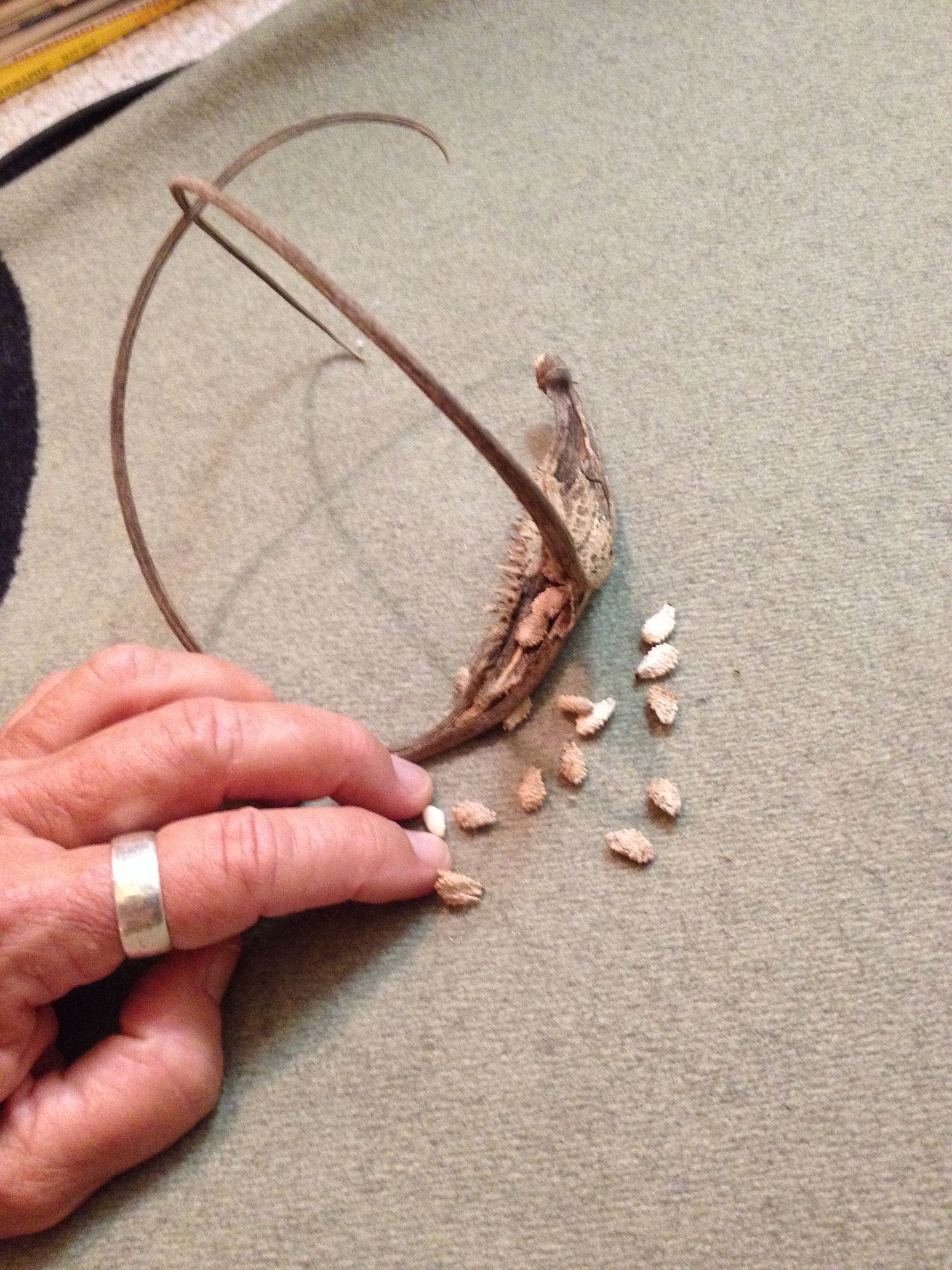
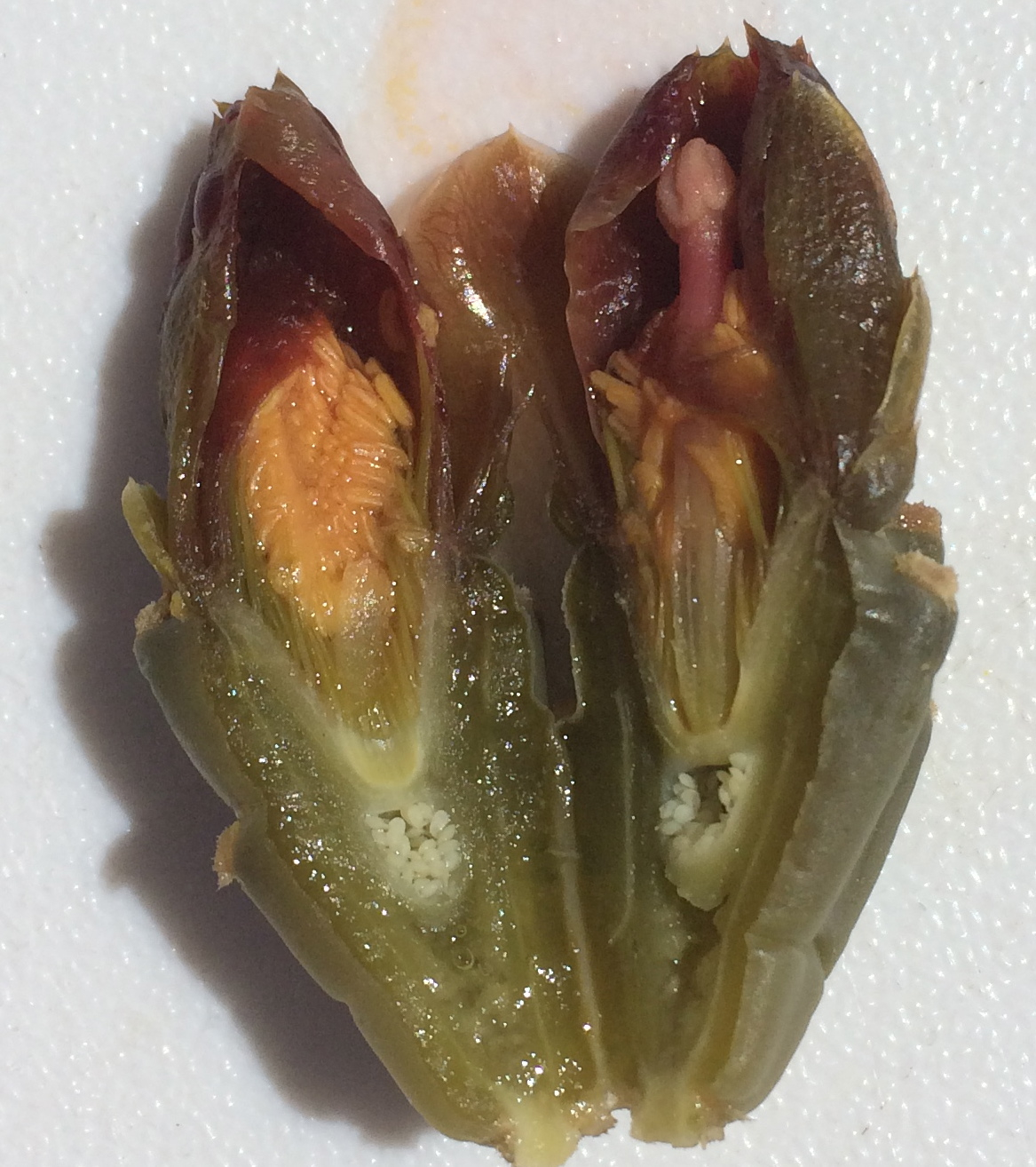
Cross-section of staghorn cholla flower bud showing stamens and ovules (MABurgess)

Cross-section of staghorn cholla flower bud showing stamens, stigma, and ovules (MABurgess)
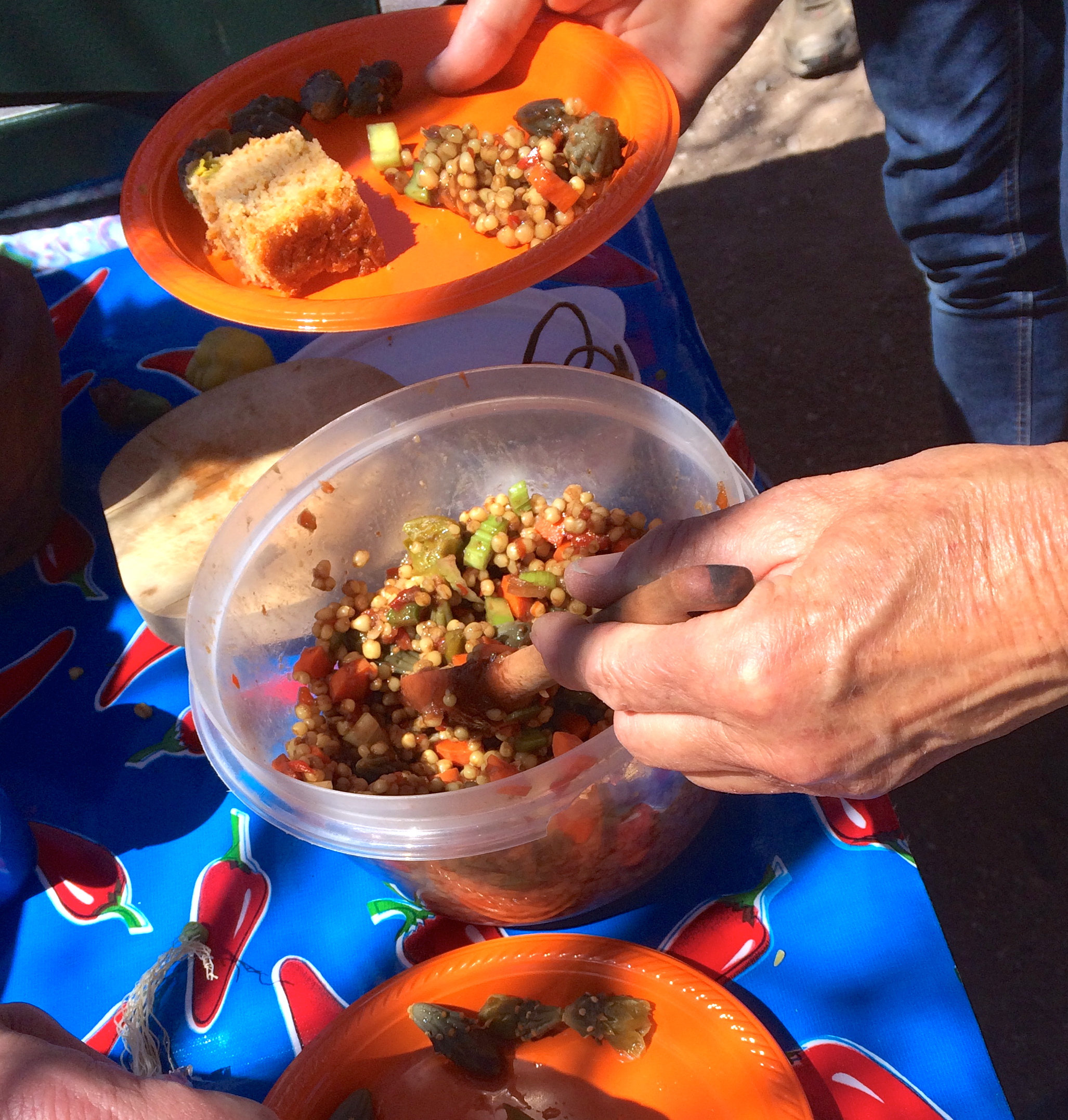
Delicious Marinated White Sonora Wheat-berry Salad with Cholla Buds at Mission Garden workshop (MABurgess)

Delicious Marinated White Sonora Wheat-berry Salad with Cholla Buds at Mission Garden workshop (MABurgess)


Last weekend we celebrated the beginning of the cholla harvest at Friends of Tucson’s Birthplace’s Mission Garden in a workshop led by Flor de Mayo’s Tia Marta (www.tucsonsbirthplace.org/archives).   We explored its ecology, taxonomy, traditional preparation, its culture and archaeological evidence.  The class was topped with a feast using cholla buds in several innovative and delectable dishes–one with heirloom White Sonora Wheat.  For great cholla recipe ideas, scroll back to an earlier Savor blog post   https://savorthesouthwest.wordpress.com/2015/03/13/heres-to-the-budding-desert/.   For additional interesting cholla information and dried cholla buds for purchase, check out  www.flordemayoarts.com.
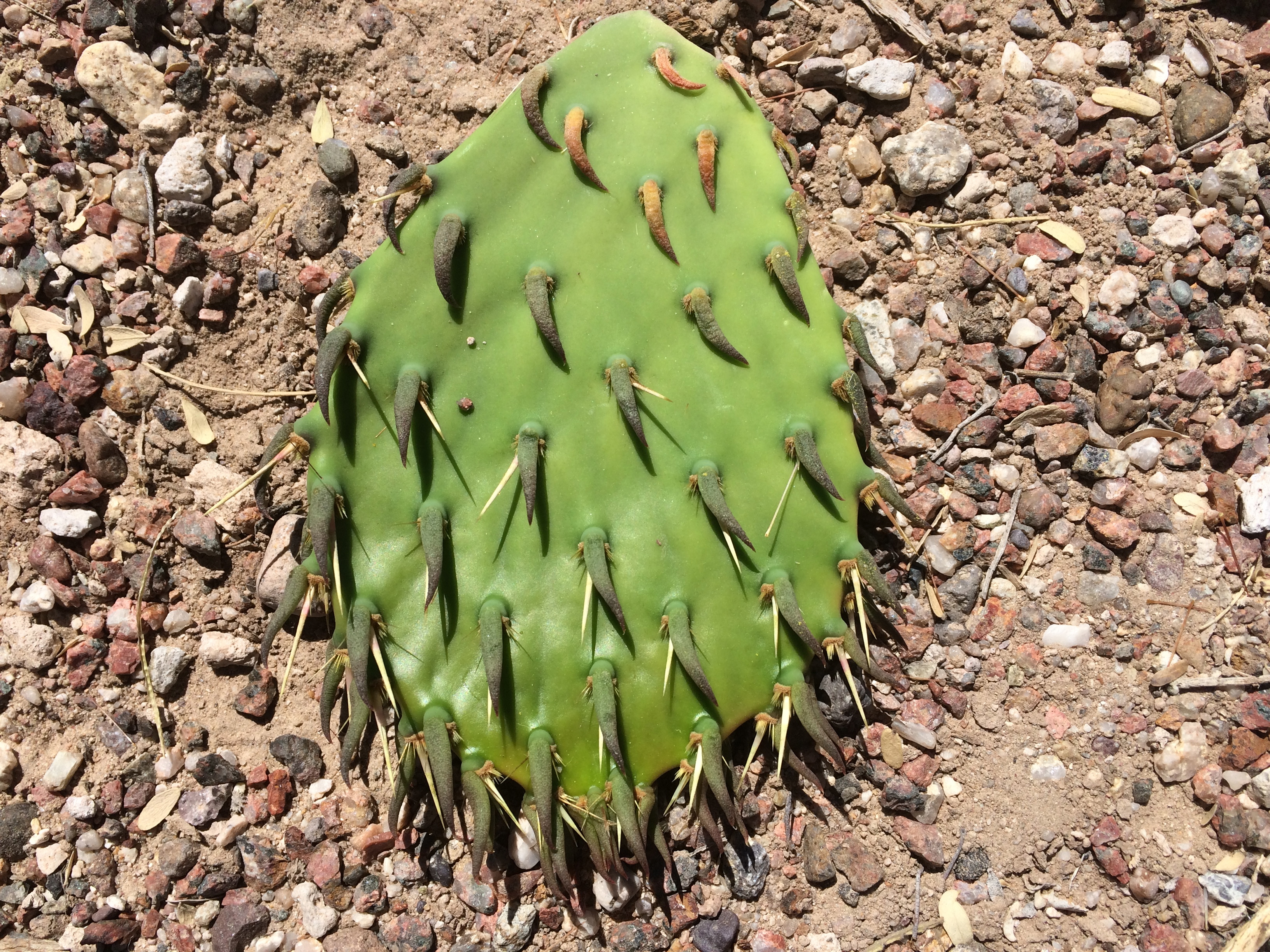
Young new-growth stem of prickly pear in leaf (Opuntia engelmannii) ready for harvesting (MABurgess)

Young new-growth stem of prickly pear in leaf (Opuntia engelmannii) ready for harvesting (MABurgess)

Another desert food staple–worthy of being considered a medicine as it is so effective in balancing bloodsugar–is our own   prickly pear.  With de-spining and preparation you can enjoy its tangy taste as nopalitos, pickled, stir-fried, or in salads.  Enjoy nopal dishes at some of Tucson’s favorite restaurants like Janos’ Downtown Kitchen or Teresa’s Mosaic.  Attend the demo nopal preparation and tastes at the SONORA XI Conference….(www.tucsoncactus.org).
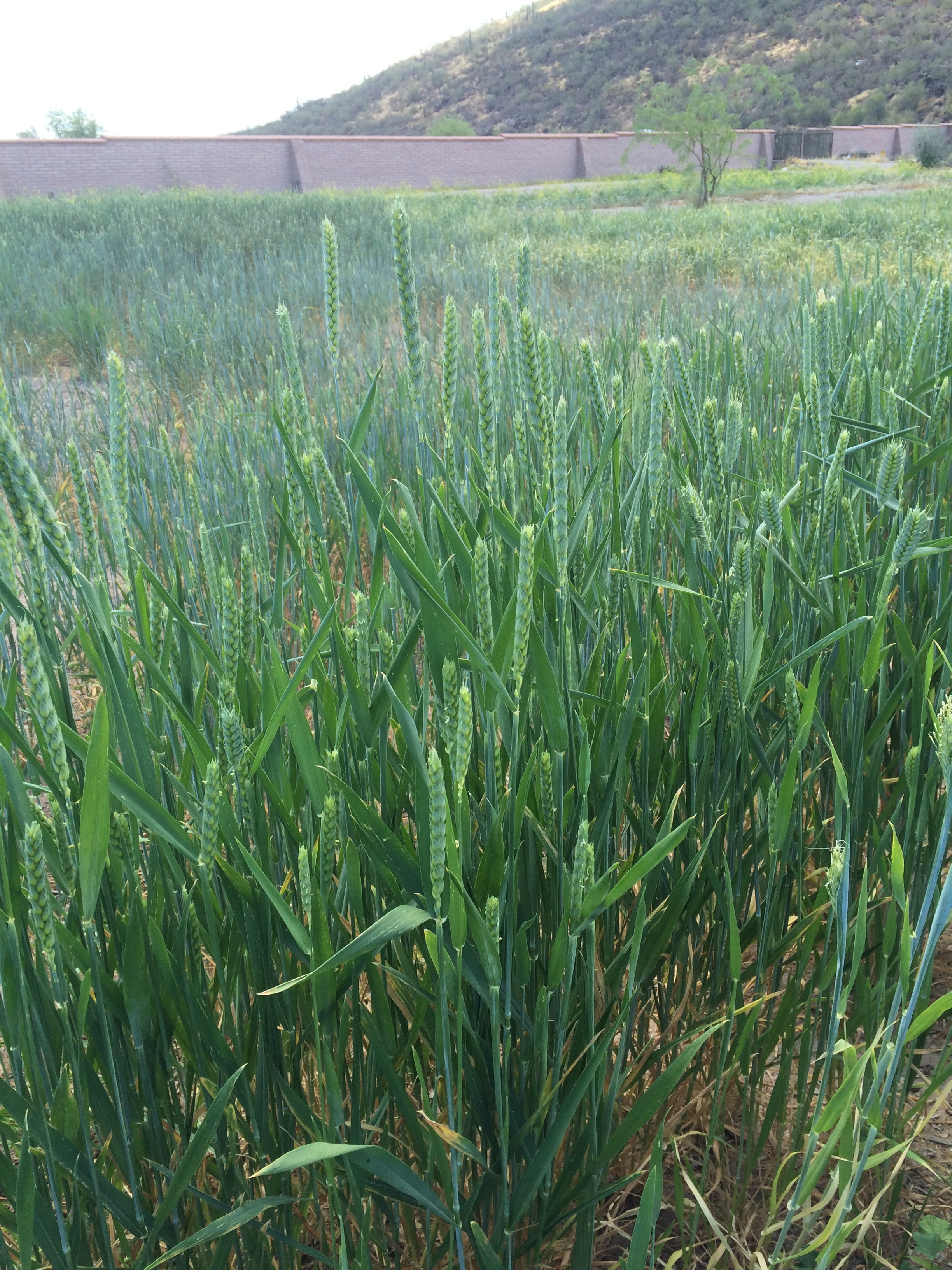
White Sonora Wheat with swelling seed heads at FOTB's Mission Garden (MABurgess)

White Sonora Wheat with swelling seed heads at FOTB’s Mission Garden–to mature in May (MABurgess)


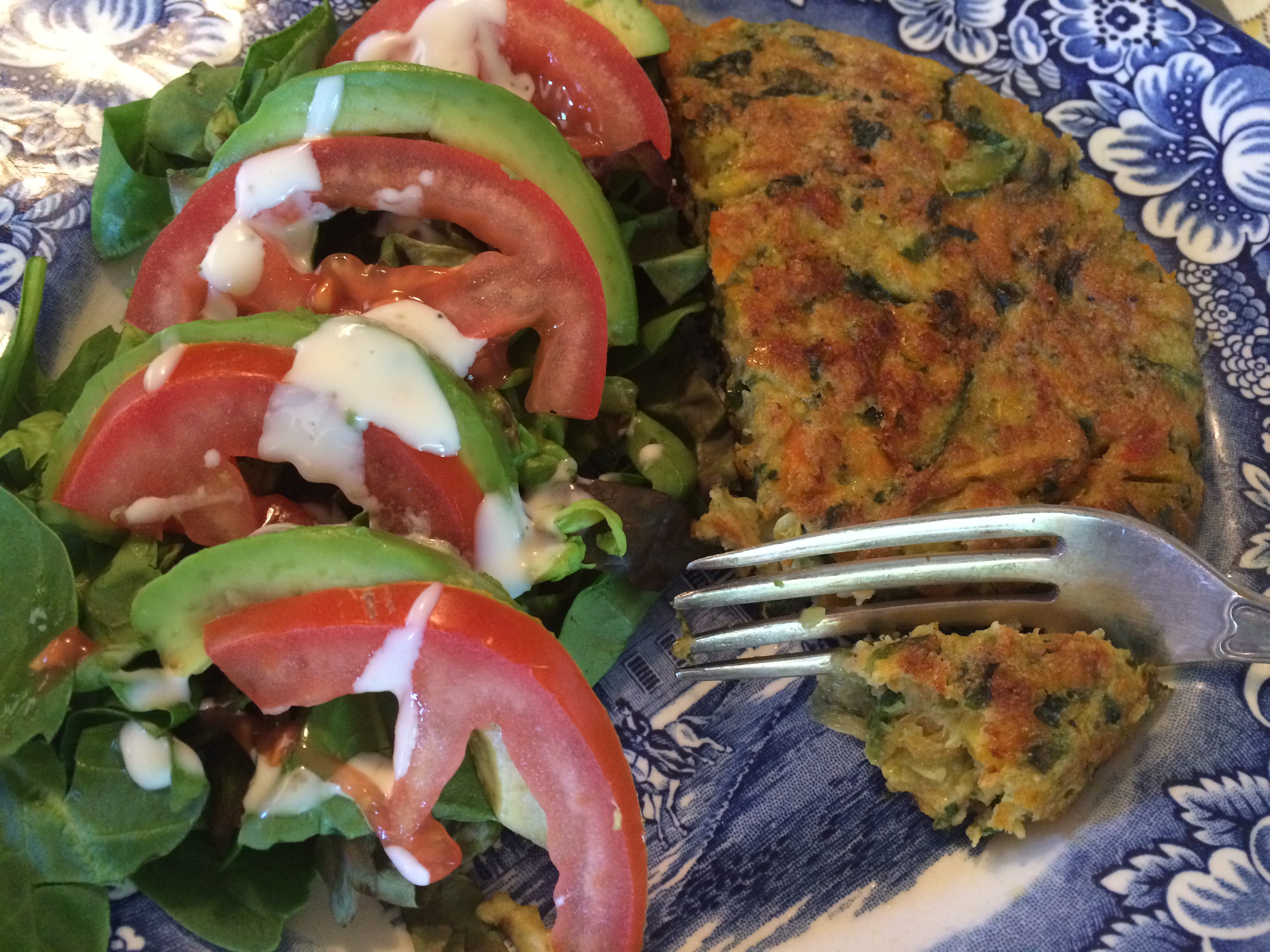
Seeing the heirloom winter White Sonora Wheat growing tall and green at Mission Garden, its swelling kernels in the “milk-stage,” I’m envisioning the harvest to come, and to plans for La Fiesta de San Ysidro Labrador, when the wheat, first introduced to S-chuk-Shon by Padre Kino, will be maturing and ready to thresh.  My mother’s wonderful caregiver Rosa has introduced us to a delectable recipe she created celebrating both White Sonora Wheat and the fresh vegetables currently available at farmers’ markets.  Her recipe for Market Veggie Omelette with White Sonora Wheat follows–light as a souflee.
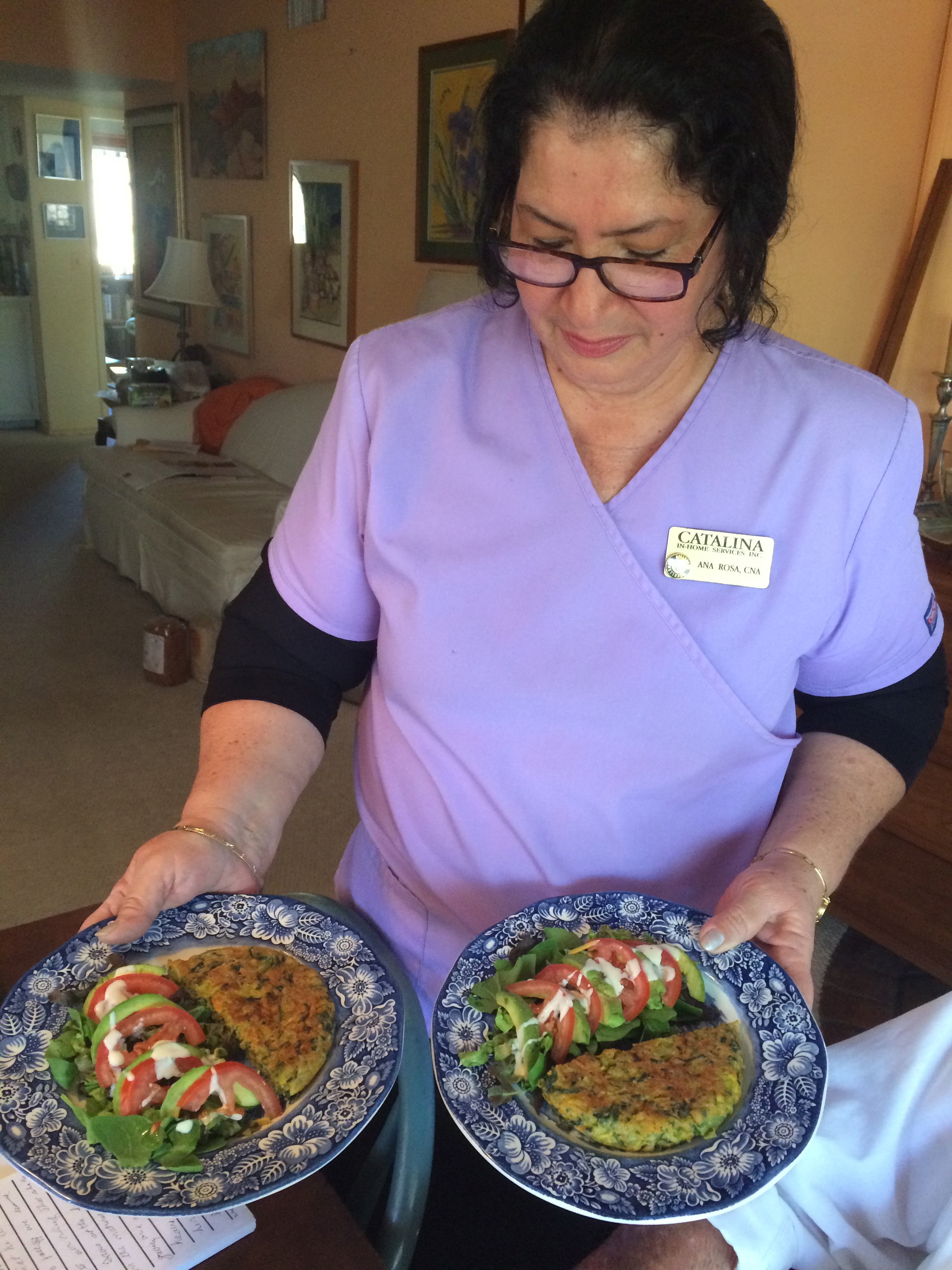
Rosa serving her Market Veggie Omelette with White Sonora flour (MABurgess)
Rosa serving her Market Veggie Omelette with White Sonora flour (MABurgess)


Rosa's delicious Market Veggie Omelette with White Sonora flour

Rosa’s delicious Market Veggie Omelette with White Sonora flour (MABurgess)

ROSA’S MARKET VEGGIE OMELETTE w/ WHITE SONORA WHEAT FLOUR

Ingredients:

2 Tbsp heirloom White Sonora Wheat flour

1 lg egg or 2 small eggs

1 cup market vegetables, sautéed in olive oil (shaved carrots, chopped fresh spinach, minced I’itoi’s onions bulb and tops…)

2+ Tbsp org. broth, veg or chicken

salt to taste; butter for curing skillet

Directions: 

Saute chopped vegetables in olive oil, then simmer with broth until soft.   Allow to cool. Beat eggs with White Sonora Wheat flour.  Mix with vegetables. Pre-heat small iron skillet, melt butter, pour in mixture.  Let omelette puff.  Turn when slightly brown on bottom, then gently brown on reverse.  Serve w/salsa fresca or sliced avocados. (Another wonderful variation on her omelette is to add prepared cholla buds!)

Find dry cholla buds at the Flor de Mayo booth at Sunday’s St Philips farmers’ market, at NativeSeeds/SEARCH store, at the San Xavier Farm Coop booth at Thursday’s Santa Cruz market at the Mercado, or at the Tucson Cactus&Succulent Society’s SONORA XI conference next weekend.  You can find the freshest greens for Rosa’s Veggie Omelette, including local baby spinach, onions, etc at our many Tucson farmers markets, especially at Tom’s Marana-farm booth at Sunday St Philips market (www.foodinroot.com), or at the Community Food Bank booth at Thursday’s Santa Cruz market at the Mercado.  Easily grow your own shallots for the omelette with NativeSeeds/SEARCH’s I’itoi’s onions–the snappy little spreading onion that keeps on giving.

Come witness ever-growing inspirations for your own garden by visiting Mission Garden at the foot of A-Mountain, Tucson–it’s a must!  There are wonderful docents there to guide you every Saturday morning now that the weather is warming.  In Mission Garden we see examples of cultivated food and native medicine plants that have fed and helped humans in this valley for over 4000 years!  With that track record for desert living, chances are these same plants can help support us into an unsure future of hotter and drier weather–with assurance and nurture.  We owe inexpressible thanks to those farmers and gardeners who have preceded us!

[For more info about succulent events, tours, happenings, and products, check out http://www.tucsoncactus.org; http://www.flordemayoarts.com; http://www.tucsonsbirthplace.org; http://www.nativeseeds.org, http://www.sanxaviercoop.org]
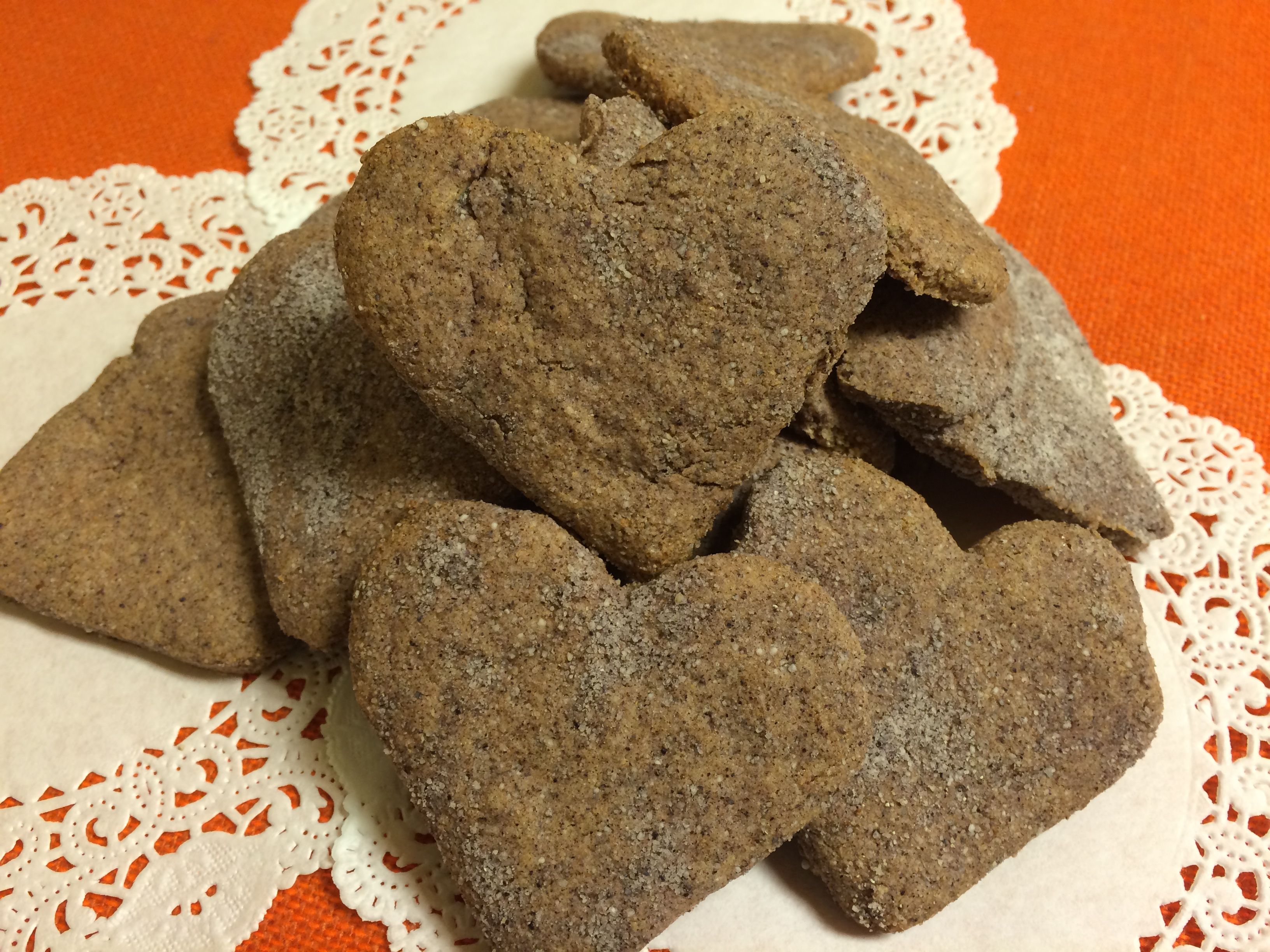
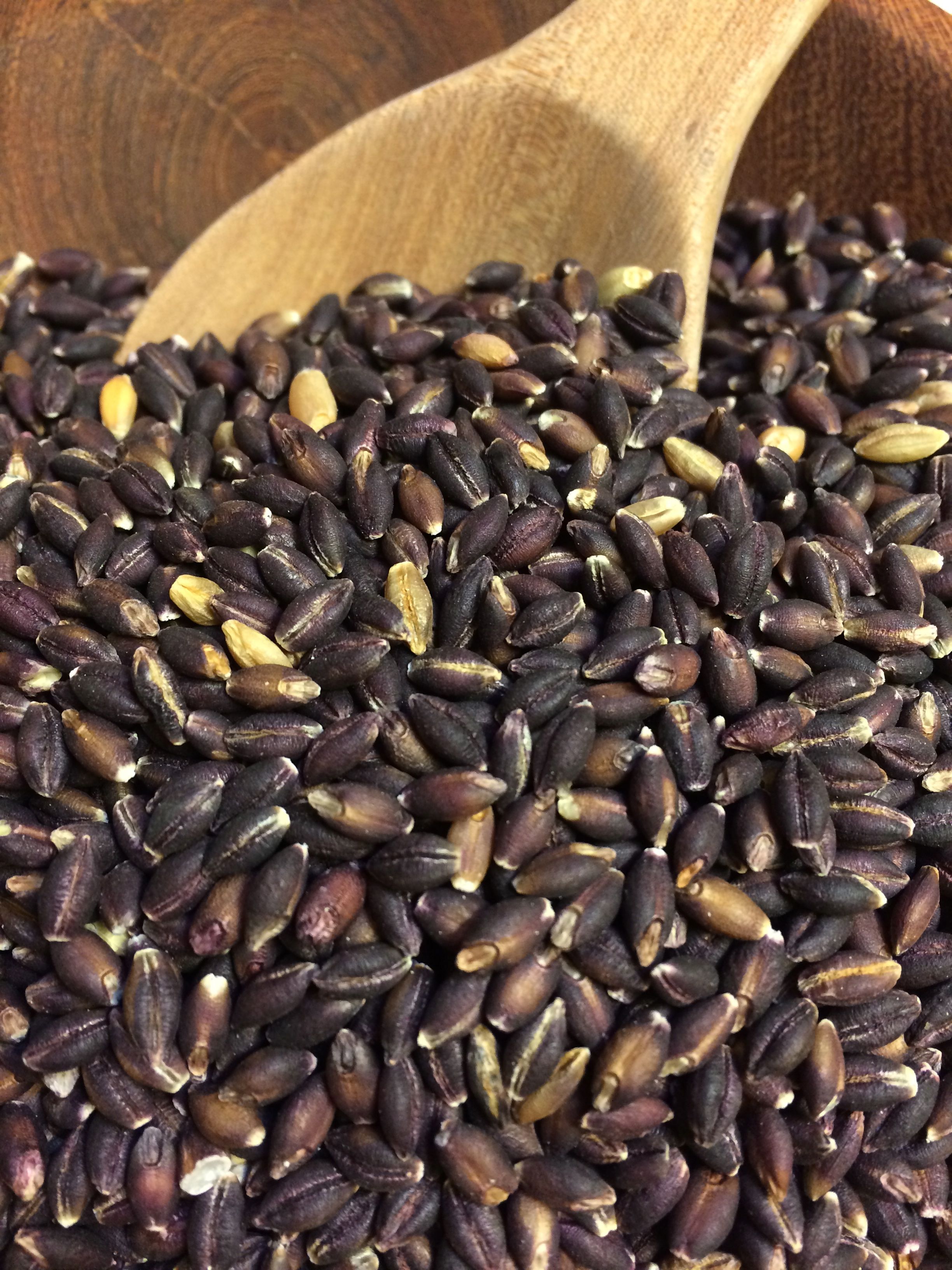
Sweet and Savory Valentines–with lovely local grains

Happy Valentine's expressed with the happiest of ingredients--heirloom barley, white Sonora wheat, organic hard red wheat and mesquite!

Happy Valentine’s expressed with the happiest of ingredients–heirloom purple barley, white Sonora wheat, organic hard red wheat and mesquite!

I admit it–I have a “thing” about barley. I’ll take it in any form–in stews, Scottish soups, marinated grain salads, mesquite/barley biscuits, barley banana bread…..and yes, my personal favorite, beeeer! (Your’s too? OK that will be another good post….)

Tia Marta here to share some fun recipes fit for a happy Valentine’s Day or beyond–made with heirloom grains including barley–one recipe with whole-kernel grain, one with milled whole grain flour.  These amazing grains are some of the reasons Tucson is now an International City of Gastronomy!

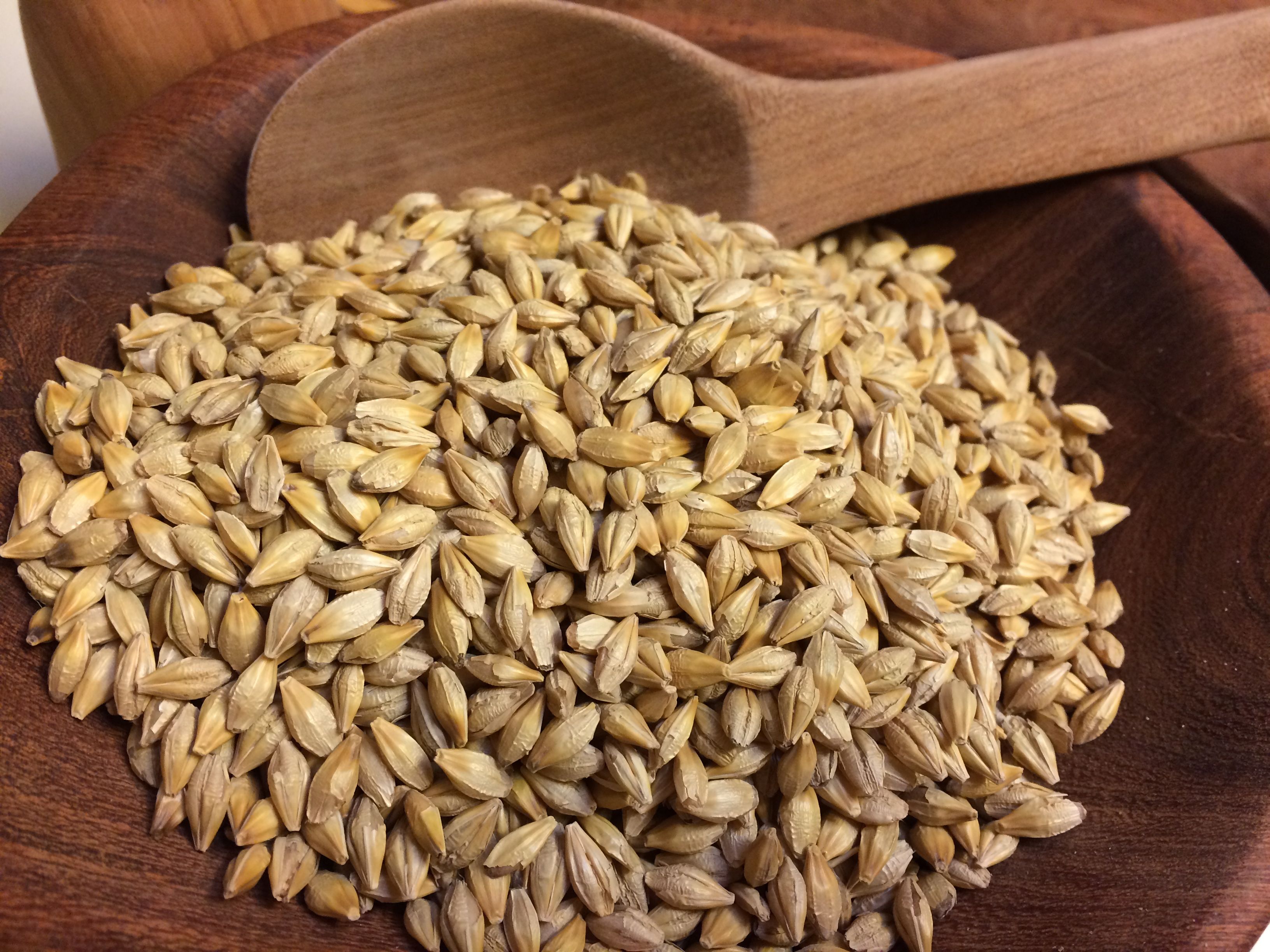
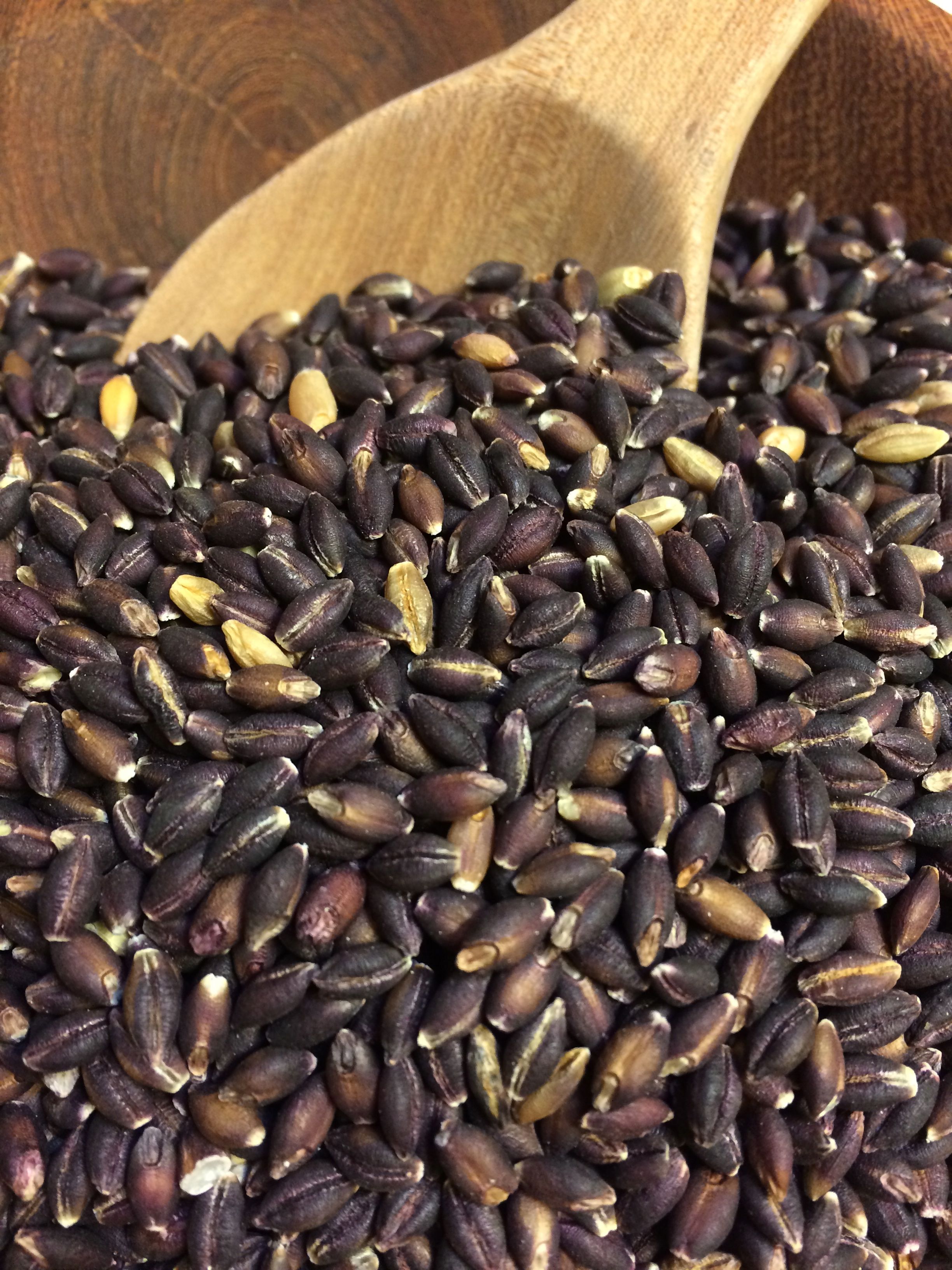
Arizona-grown heirloom Purple Prairie Barley grain in its healthy hulls

Arizona-grown heirloom Purple Prairie Barley grain with its healthy bran intact

It seems very few people in recent times know much about barley except perhaps as an ingredient in grape-nuts cereal or Campbell’s Scotch Broth. When you look into the nutrition of barley you find that it has the lowest glycemic index of all the grains, that is, it is the best of all for keeping blood-sugar in balance, especially when used in whole kernel form, either cooked whole, or milled from whole kernels.

There is an ancient barley now being grown in Arizona that has a delicious flavor, colorful nature, antioxidant properties, and versatility which have captivated me. It hails originally from Tibet (some say by way of the Nile) and is known as Purple Prairie Barley.


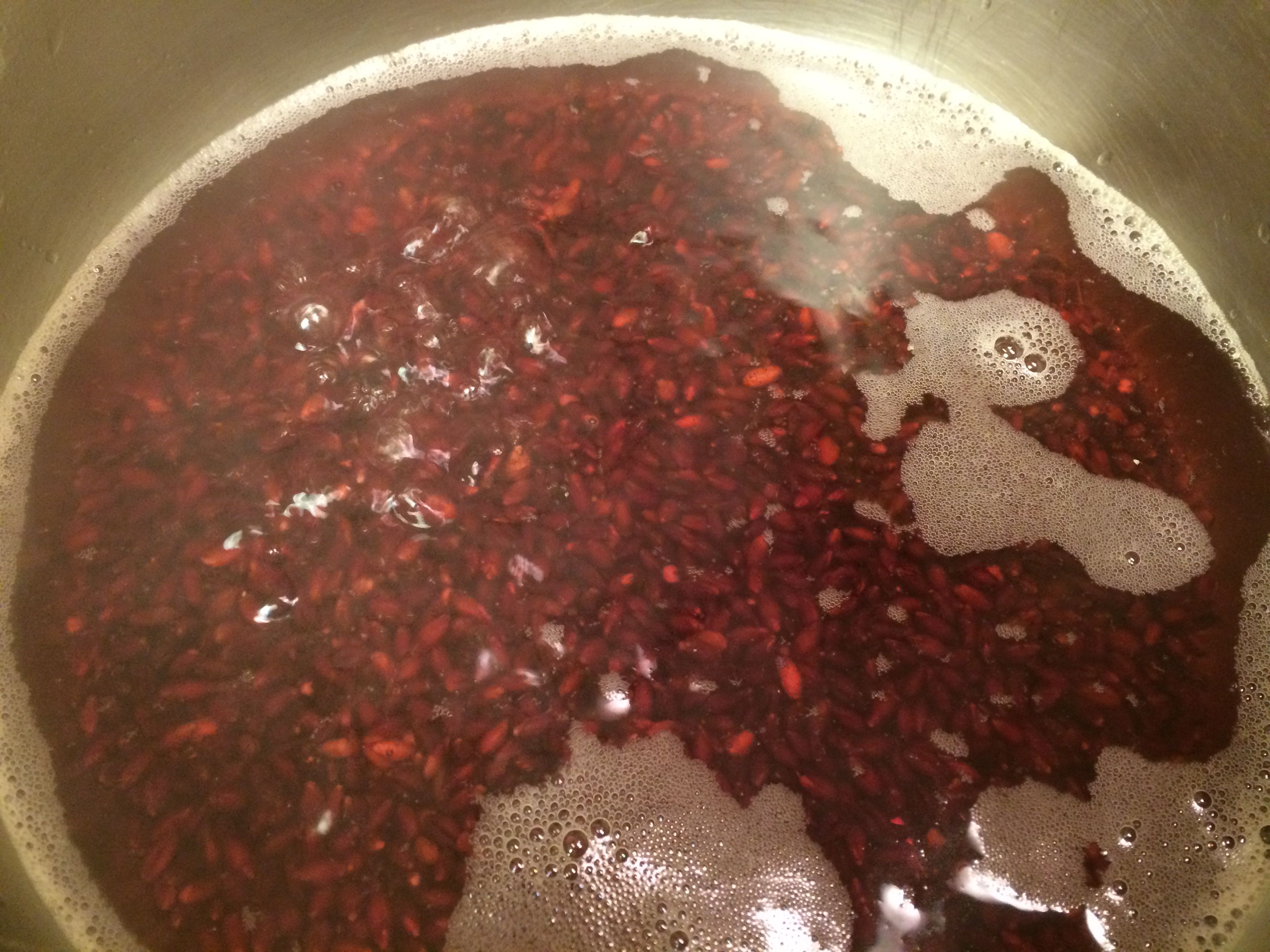
Keep the faith while cooking whole kernel purple prairie barley--Let the grains re-absorb all the liquid, 4:1 that is water:grain

Keep the faith while cooking whole kernel purple prairie barley–Let the grains re-absorb all the liquid,  water:grain ratio is 4:1.

Basic cooking for whole Purple Prairie Barley is super-simple.  It just takes a little time.  Once you have them cooked you can freeze them for future culinary creativity.  Stove-top method:  bring to boil 4 cups drinking water and 1 cup whole grain barley, and simmer until ALL the purple liquid is absorbed.  In a crockpot, the same process may take 3-5 hours–no watching necessary.  The glorious purple liquid which rises in the cooking water is chucky-jam-full of anthocyanins, those wondrous antioxidants, so don’t let a drop get away!

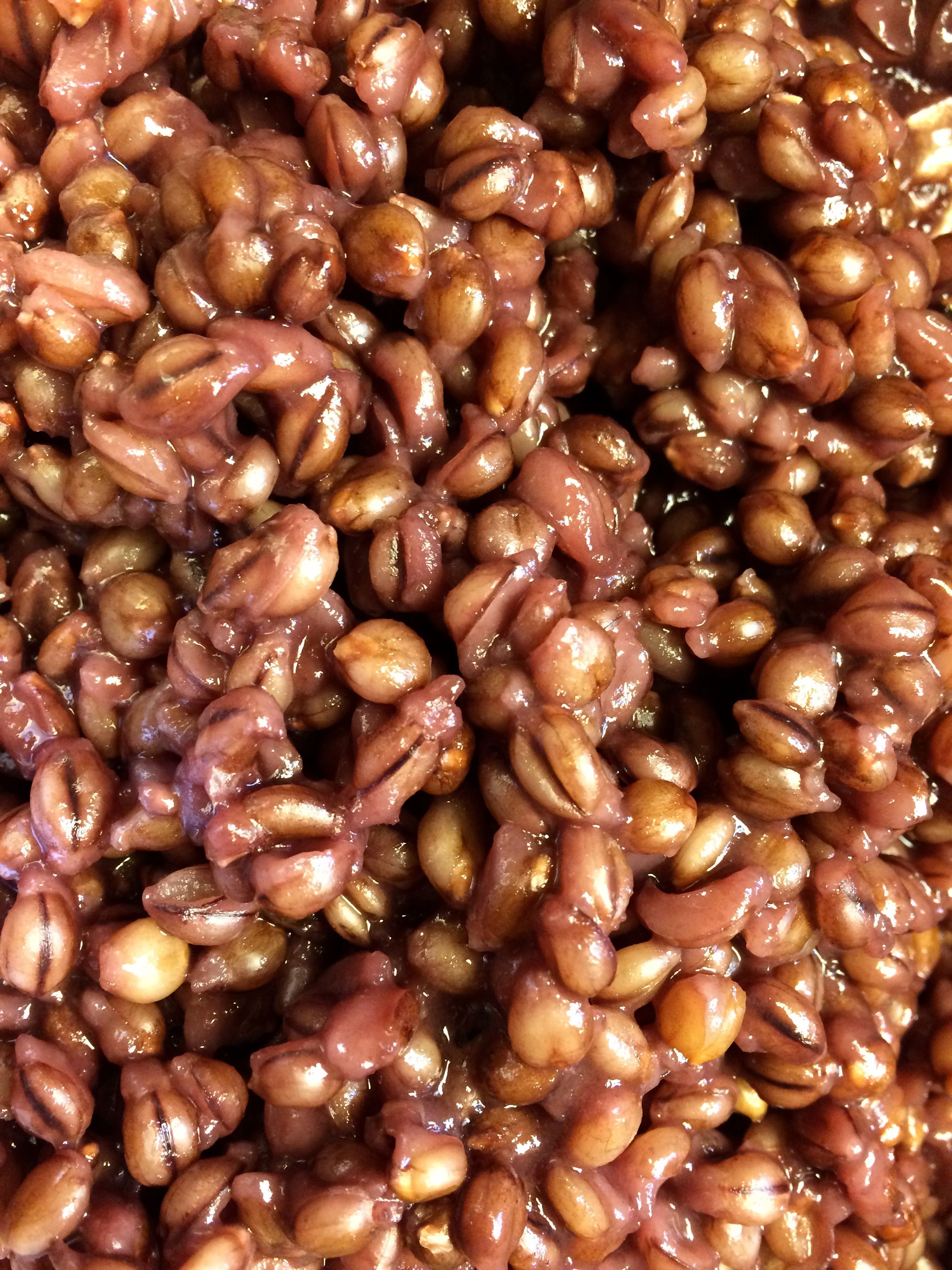
When fully cooked, purple prairie barley is plump, almost round, and still retains its lovely color.

When fully cooked, purple prairie barley is plump, almost round, and still retains its lovely color.


Hot, whole purple barley-berries taste great as a chewy cereal for a chilly morning, delicious with cream or yogurt and a dollop of agave nectar.  It also makes a delectable pilaf (see photo idea below) or marinated whole-kernel salad.  [You can substitute barley in recipes for White Sonora Wheat-berries–to find them enter “wheat” in this blog’s search box.]
 

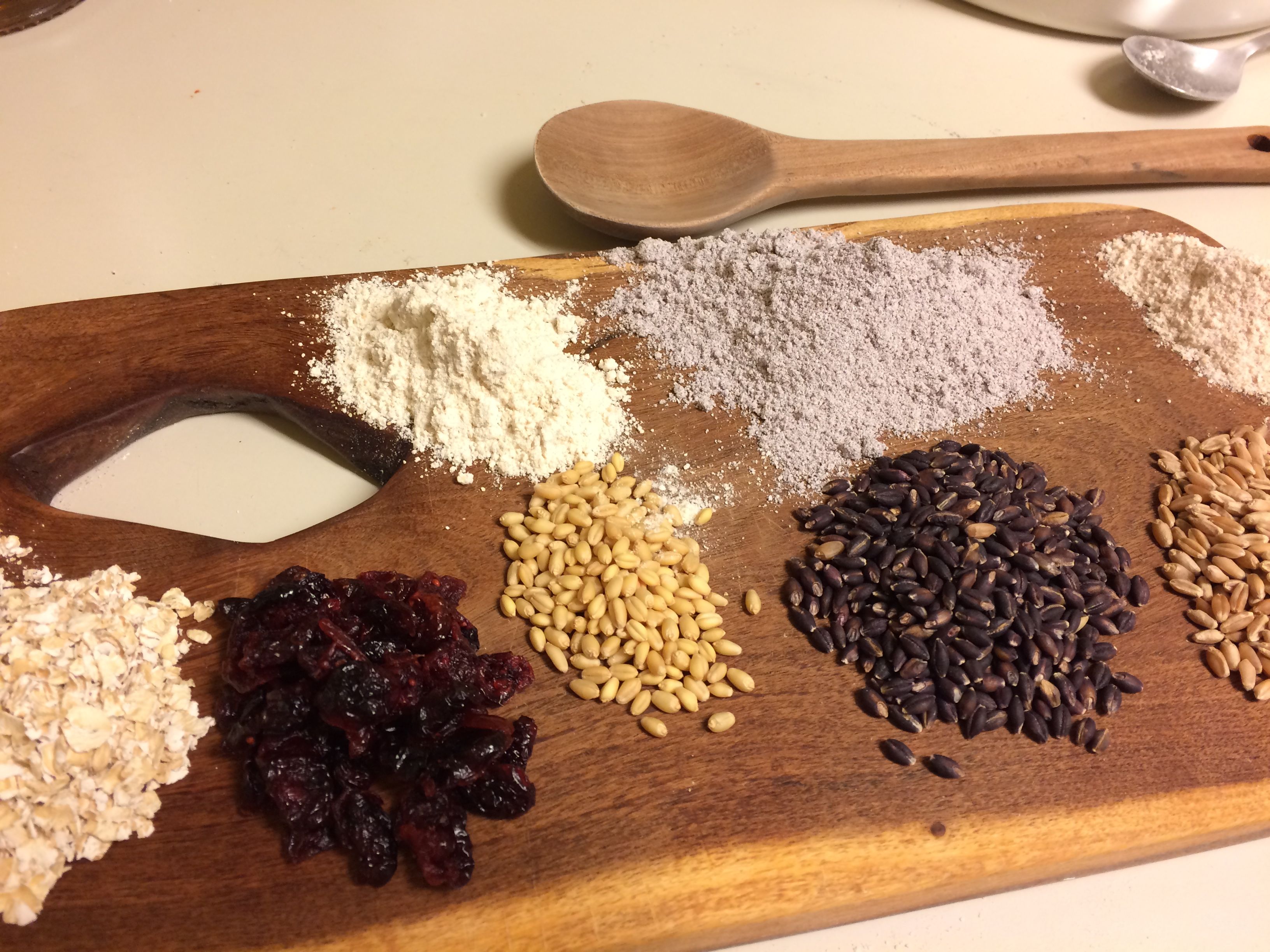
Ingredients for baking Valentine cookies--L to R rolled oats, dry cranberries, White Sonora wheat-berries and flour, Purple Prairie grain and lavender flour, local hard red wheat kernels and flour

Ingredients for baking Valentine cookies–L to R rolled oats, dry cranberries, White Sonora wheat-berries and its golden flour, Purple Prairie grain and its lavender flour, local hard-red wheat kernels paired with its beige flour

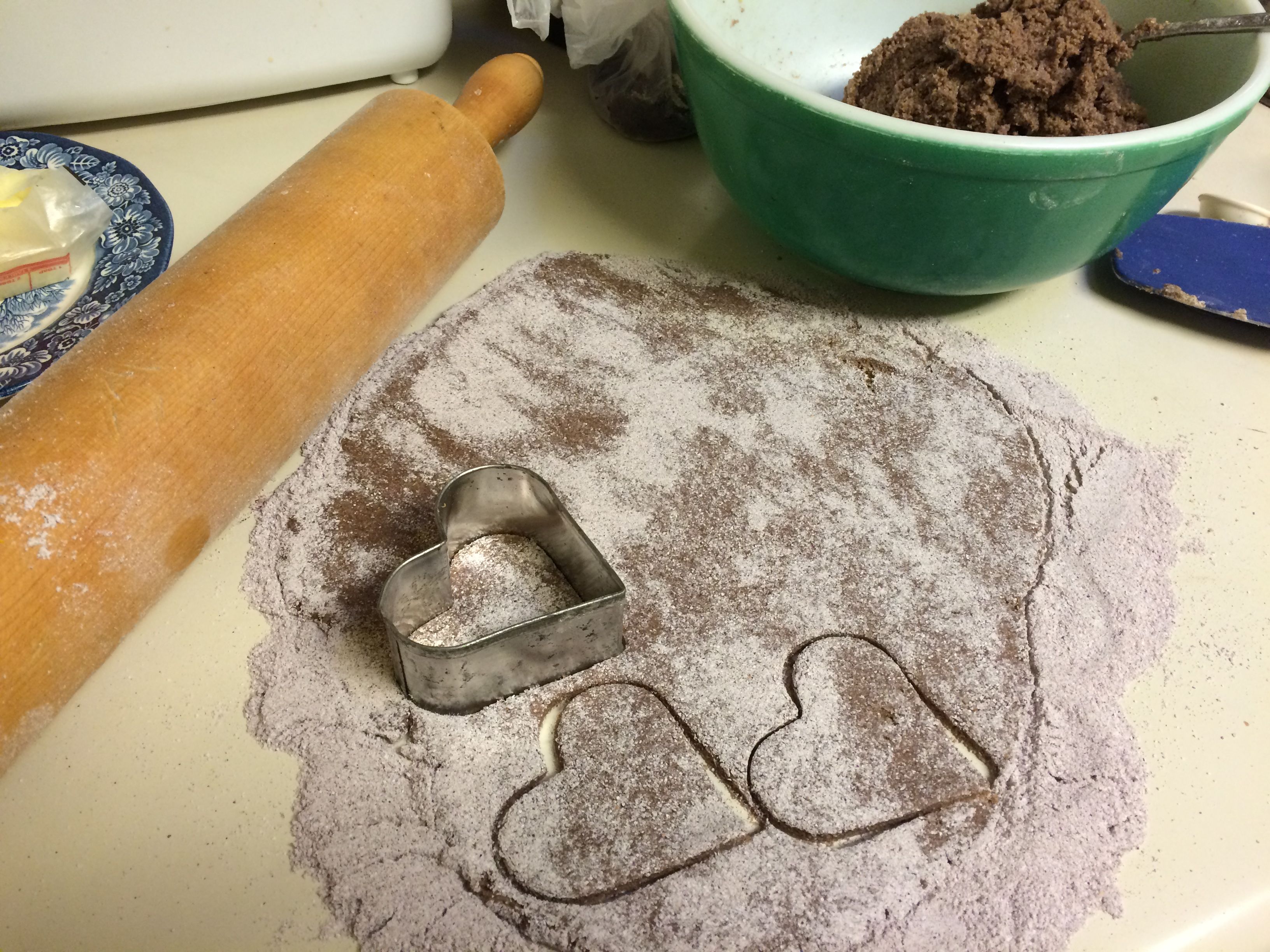
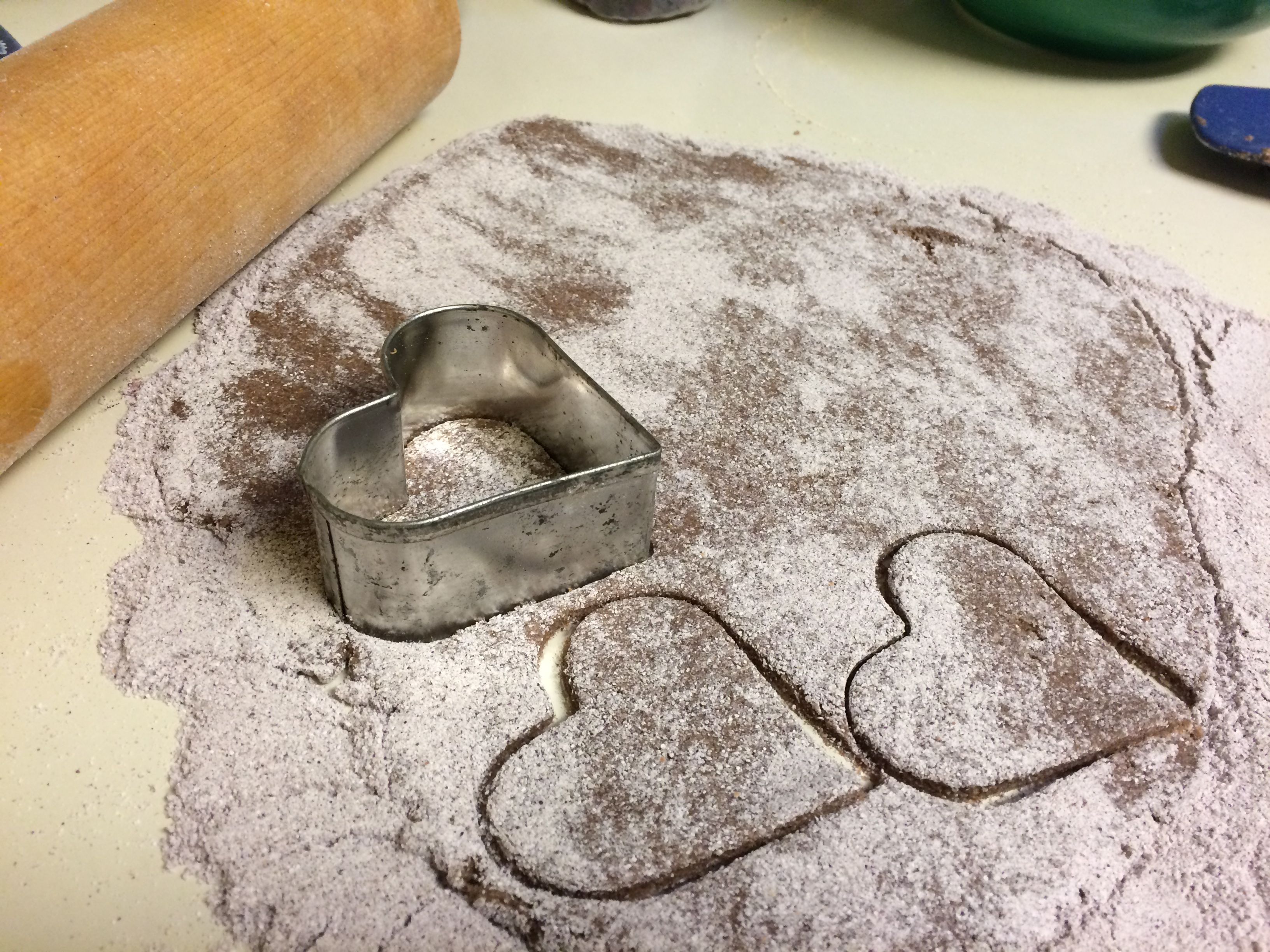
Rolling out dough for heirloom barley hearts--Valentine treats to celebrate Tucson's LIVING culinary history

Rolling out dough for heirloom barley hearts–Valentine treats to celebrate Tucson’s LIVING culinary history


This cookie recipe is really easy–two bowls, sifter, rolling pin or bottle, teaspoon measure, and only one half-cup measuring cup are needed.

Very Sonoran Valentine Cookies

Ingredients:
1 c purple prairie barley flour
1/2 c organic white Sonora wheat flour
1/2 c organic hard red wheat flour
1/2 c local mesquite flour
1/2 tsp sea salt or real salt
2 tsp baking powder
1/2 c (one stick) organic butter
1/2 c organic cane sugar
2 lg or 3 medium eggs
1 tsp vanilla
optional topping on cookie dough: dry cranberries or cherries
Directions: Preheat oven to 375degreesF. Sift all dry ingredients into one bowl. In a separate bowl, cream butter and sugar; stir in vanilla; beat in eggs.  Add dry ingredients into wet mixture, mixing thoroughly. Pat dough out on a board heavily dusted with more barley flour. Roll dough to a ca. 3/8 inch thickness–(consistent thickness is more important than an exact measure.) Cookie-cutter your favorite shapes out of the rolled dough and place on ungreased cookie sheet.  Bake 8-10 minutes or until barely browning. Crunchily enjoy the pinkness of your purple barley cookies!

Rolling out cookie dough for Purple Prairie Barley cookies

Cutting cookie dough for Purple Prairie Barley cookies


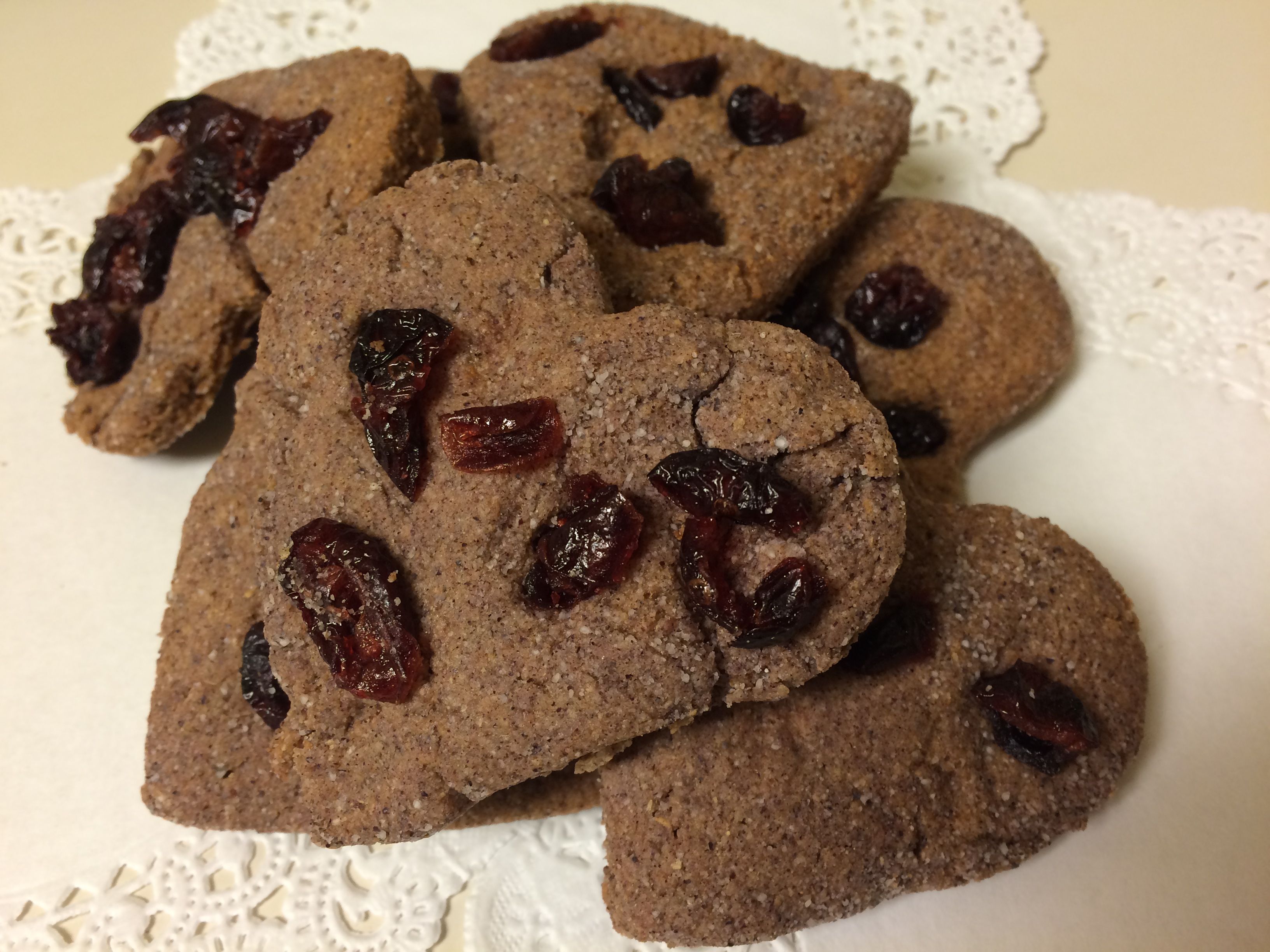
Purple barley Valentine cookies with cranberry decoration

Purple barley Valentine cookies with cranberry decoration– a pinky-purple hue, yummy flavor & crunch!

You can make delightful variations on these Purple Barley Cookies by substituting the above ingredients in an oatmeal cookie recipe or in a Scottish shortbread recipe.


Preparing heirloom purple prairie barley pilaf

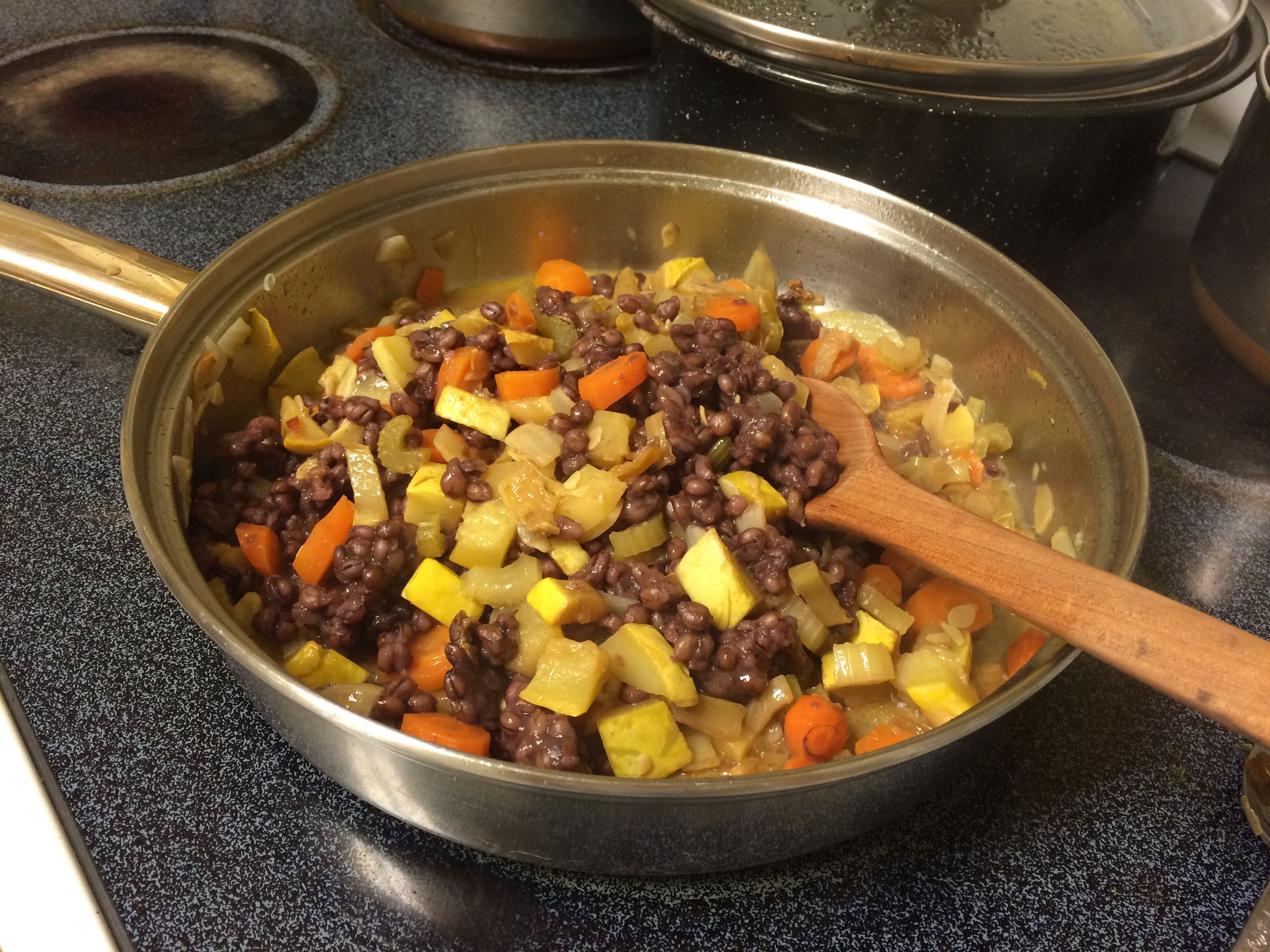
Preparing heirloom purple prairie barley pilaf

For a savory dish, try your cooked whole-grain purple barley in a delicious pilaf prepared in a way similar to a quinoa or rice pilaf.  Stir-fry an assortment of 2-3 cups of your favorite veggies in olive oil (try any chopped heirloom squash, scallions, carrots, colorful sweet peppers, mushrooms, kohlrabi, etc from local farmers’ markets).  Finish the stir-fry adding 1 cup of cooked purple prairie barley.  Season to taste with Asian sauce, spike or Cavender’s.  Pine nuts or cashews might add another flavor dimension.


Magdalena heirloom barley grown at Mission Garden, Tucson

Magdalena heirloom barley grown at Mission Garden, Tucson

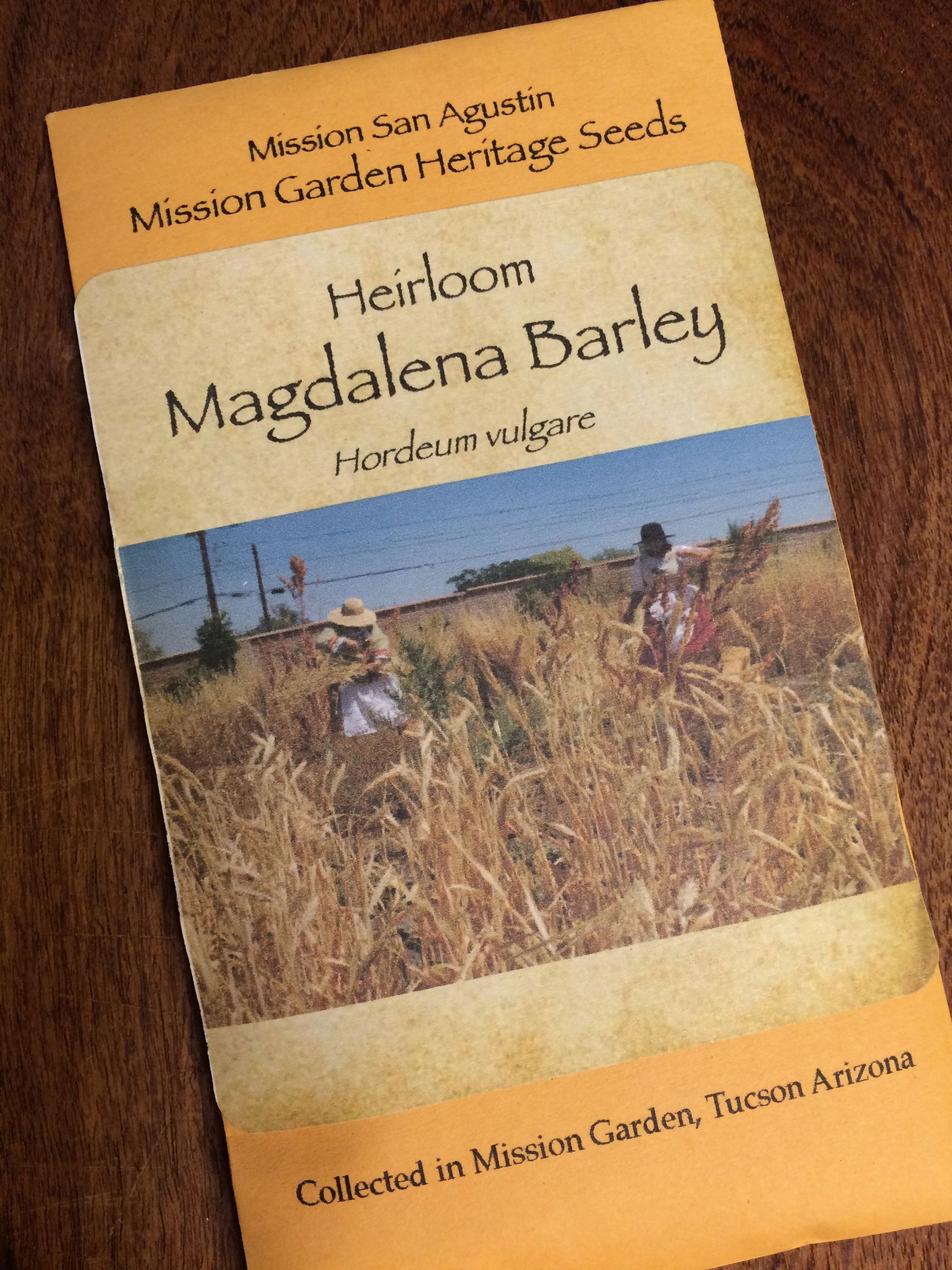
Packaged rare Magdalena Barley seed grown at Mission Garden--our own local treasure.

Packaged rare Magdalena Barley seed grown at Mission Garden–our own local treasure.


Want to find these heirlooms for cooking or to grow them?  Here are some local sources of whole-kernel grains–also, where you can get them freshly milled if you don’t have your own grinder.  Find several of these grains growing at the Friends of Tucson’s Birthplace’s Mission Garden living history gardens, open every Saturday for tours.  Hayden Flour Mills’ heirloom Purple Prairie Barley  is now available at our Flor de Mayo booth at Sunday’s St.Philips Farmers’ Market in various size packets ready to cook or mill.  The Wong family at BKWFarms Inc., now in their fifth generation of local farming in Marana, are the organic growers of Padre Kino’s heirloom White Sonora Wheat which NativeSeeds/SEARCH helped to resurrect from near-loss.  BKWFarms also produces organic hard red wheat-berries, which make a rich, higher gluten flour perfect for breads and cakes, and which I quite successfully used in the Valentine cookie recipe above.  Other heirloom wheat-berries grown by Ramona Farms and San Xavier Coop Association are available at the NativeSeeds/SEARCH store, 3061 N.Campbell Ave, Tucson.  Local mesquite flour for the Valentine cookie recipe is available at the NSS store and at our Flor de Mayo booth, St Philips Farmers’ Market.  Come visit us this Sunday for a little taste!  And, have us mill these organic grains fresh for you on-site!  Check out http://www.flordemayoarts.com for re-sourcing these grains online.  For a great grain brew, ask at Dragoon and our other local micro-breweries for their latest creation.  Here’s to your health–using our local, organic, heirloom grains!

I invite you also to join me, Tia Marta, next Saturday, February 20, at Tucson Presidio Museum’s community lecture at the Dusty Monk Salon and Saloon, Old Town Artisans downtown Tucson.  I’ll be speaking about the Presidio Period’s Edible Plants, and there just might be a few tastes of these heirloom grain treasures for accompaniment….

Heirloom Grains & Heirloom Fruits marry in a Holiday Pie

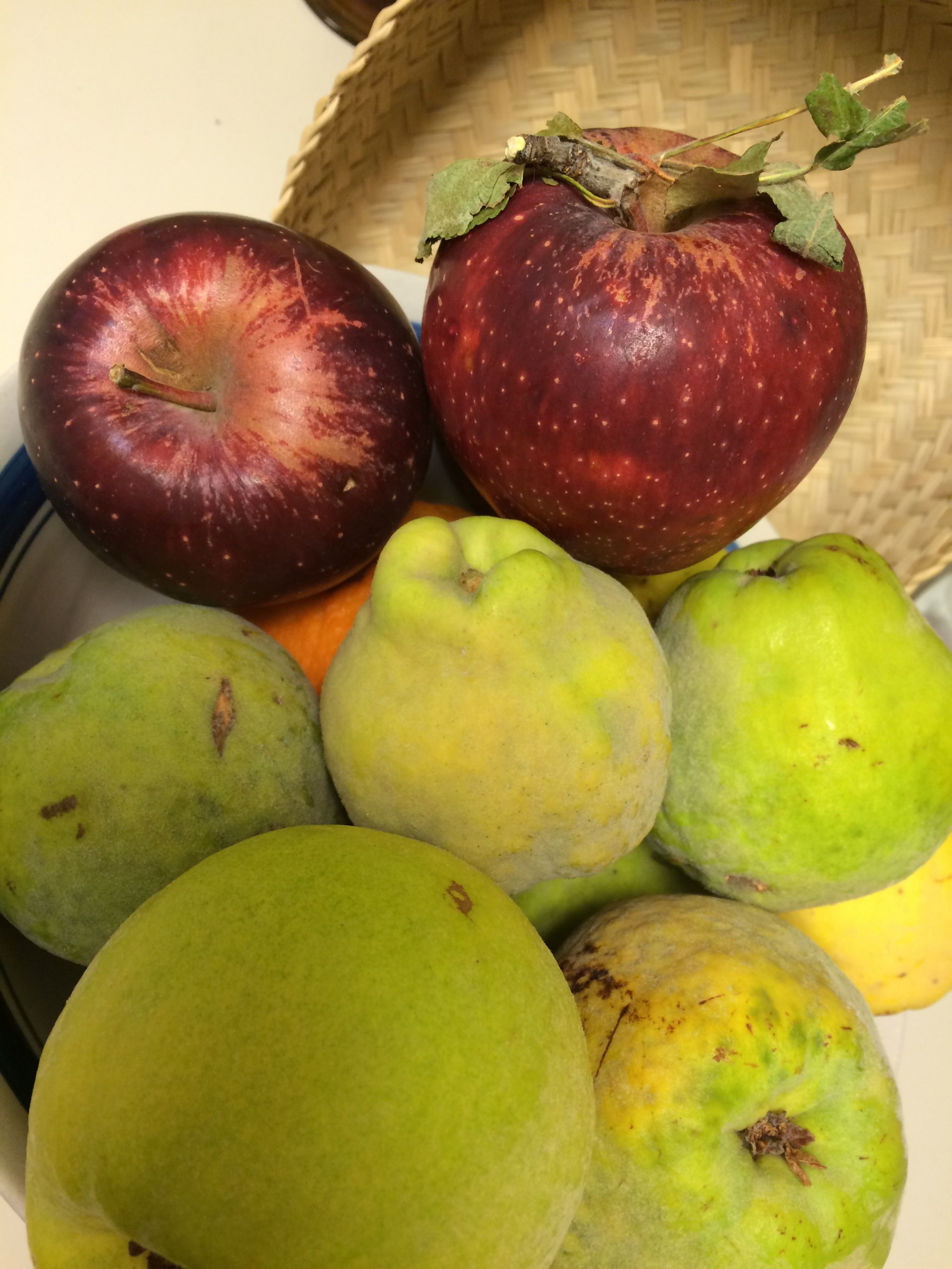
Padre Kino's Membrillo Fruit with Slide Rock Star King Old Fashioned Double Delicious Apples

An Heirloom Fruit Harvest:  Padre Kino’s Membrillo Fruit from my garden with Star King Old Fashioned Double Delicious Apples from Slide Rock State Park heirloom orchard (MABurgess photo)

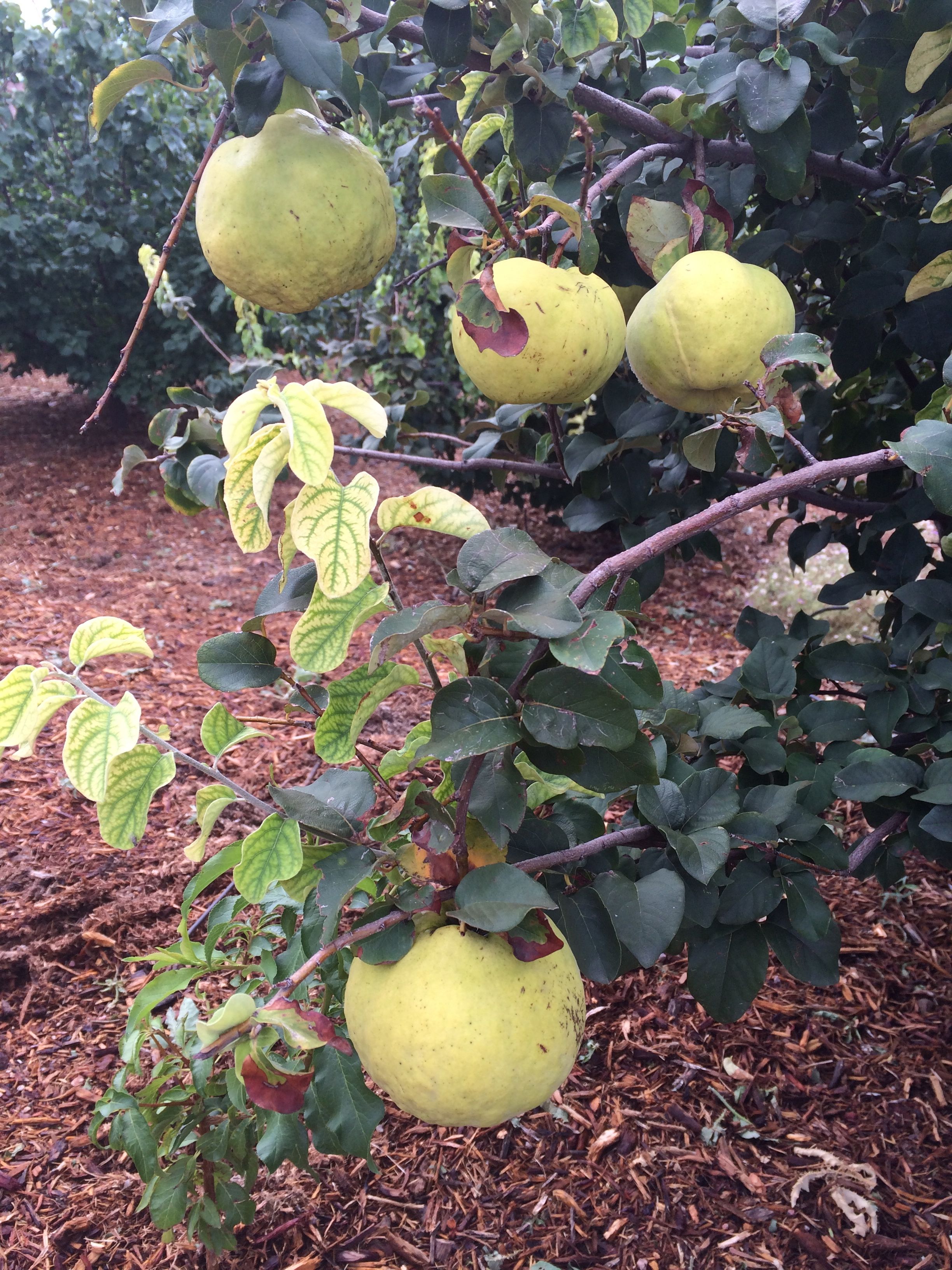
In both the low Sonoran Desert and in the higher Southwest, fruits are hanging on the trees ready for harvest.  At Mission Garden the quince trees, better known as membrillo, are bearing their last sturdy fruits.  Mission Garden was the site of a wonderful celebration of membrillo in October with talented cook Josefina demonstrating how to make cajeta de membrillo, our sweet autumn dessert delicacy.

Membrillo (Quince) trees heavy with fruit at Mission Garden Tucson, near A-Mountain

Membrillo (Quince) trees heavy with fruit at Mission Garden in Tucson, Arizona, near A-Mountain–Come visit any Saturday morning!

Membrillo is a perfect food-giving tree for low desert as it can can handle heat--great for a kitchen garden

Membrillo is a perfect food-giving tree for low desert as it can can handle heat–great for a kitchen garden

Tia Marta here to share what is happening in my kitchen these days, bringing together some of my most admired heirloom grain and fruit ingredients–both cultivated and wild–knowing that I have guests coming for the holidays who need a little taste of LOCAL!

It is pie time in our household.  And today it is Membrillo-Apple Pie with White Sonora Wheat-Mesquite pie crust!      I mean, how much more local can one get?

This was the year that our five-year-old quince tree, which we purchased from Desert Survivors Nursery Kino Fruit-tree Project, and which we planted a couple of years ago in our backyard, decided to flower and set fruit–just enough this time to make a couple of pies.  We look forward to the amazing productivity in future years that the Mission Garden quince trees are already showing.  Quince or membrillo fruits look like a cross between yellow apples and pears but are far more sturdy than either of those.    Before ripening they are covered with fuzz and, as they lose it and become shinier and more yellow, you know they are ripening.

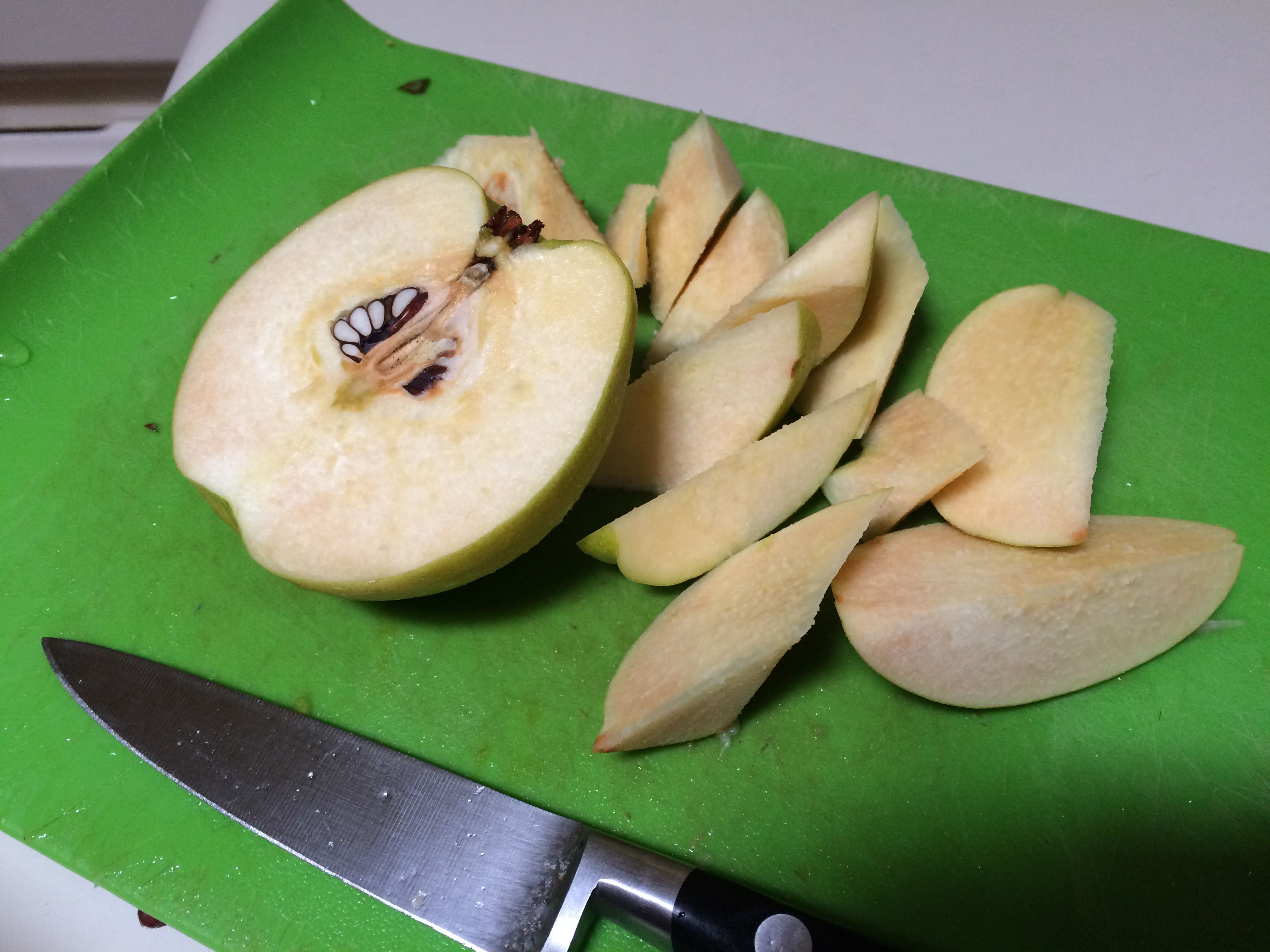
Because they are harder than other fruit, be sure to cut membrillo very carefully. Expect them to come out with not-so -symmetrical slices.

Because they are harder than other fruit, be sure to cut membrillo with extra care. Expect this to result in not-so -symmetrical slices–no problem inside a pie.

Even when this aromatic rose-family fruit is ripe, its somewhat sweet tissue never really softens.  They may feel and taste granular, similar to some pear varieties.  But they are substantial food, full of good potassium, vitamin C, dietary fiber, and iron.  In other regions, quince has been used with apples to make jellies as it aids the gelling process.  Since the time of the missionaries into Pimeria Alta, the traditional way of preparing membrillo here is to cook it down with raw sugarcane sugar to make the cajeta confection.  (A detailed report of cajeta de membrillo will make a neat separate post.)

I chose to mix membrillo with its sweet cousin, heirloom local apples, to create a Southwestern version of the all-American pie.  From the neat old Pendley Homestead at Slide Rock State Park in Oak Creek Canyon near Sedona, I obtained the deep maroon-skinned apples shown above from a 1912 orchard.  From the English Family Orchards at Willcox I added a few little galas.  Don’t ever be ashamed to ask orchardists at farmers’ markets if they have any “rejects” for sale.  Many a tasty apple gets tossed because it has a blemish or knick.  Such apples can become a rewarding gift in pies, apple-brown-betty, or applesauce.

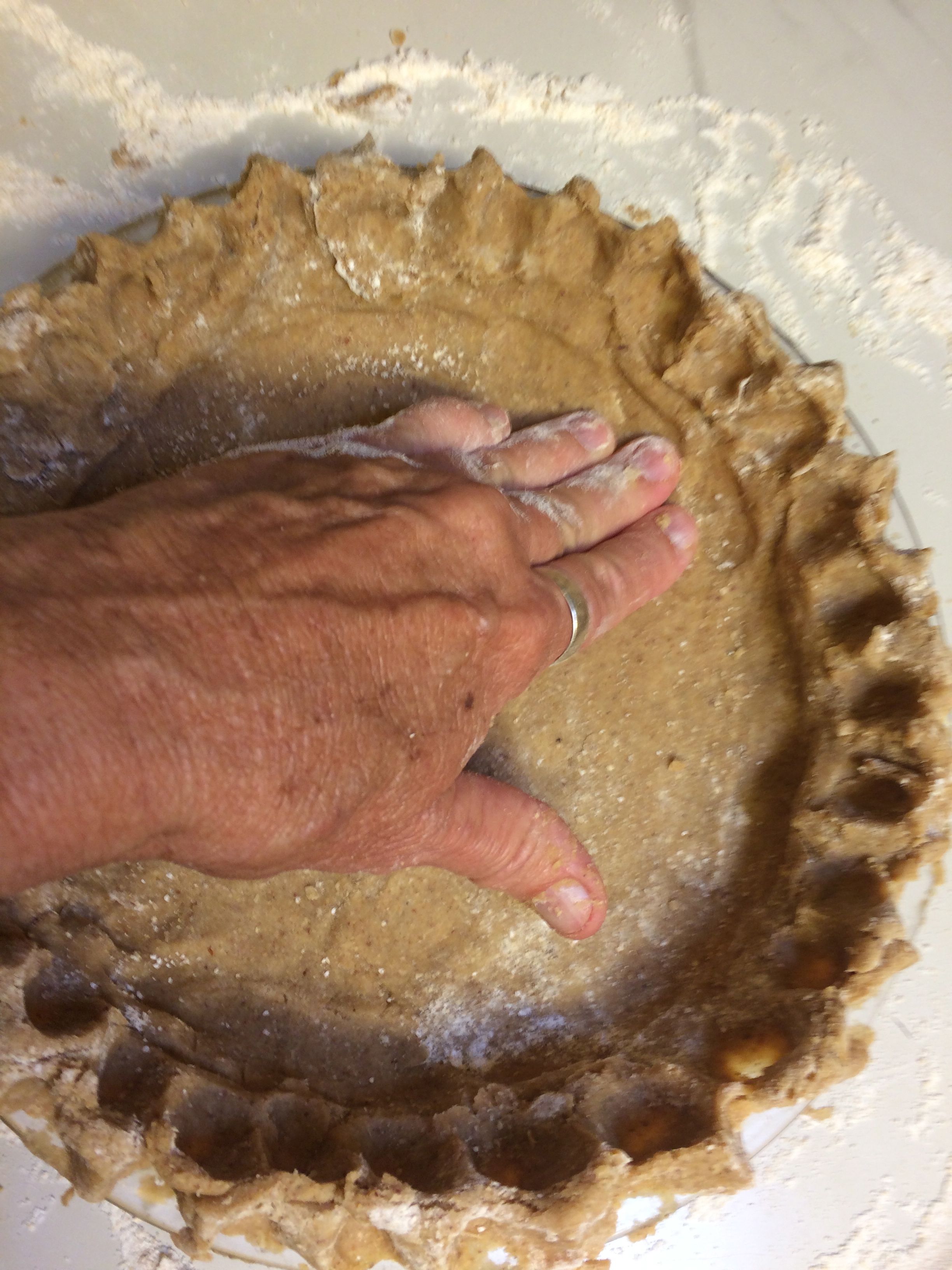
Pressing mesquite/whiteSonora wheat dough into pie pan

Pressing mesquite/whiteSonora wheat dough into pie pan

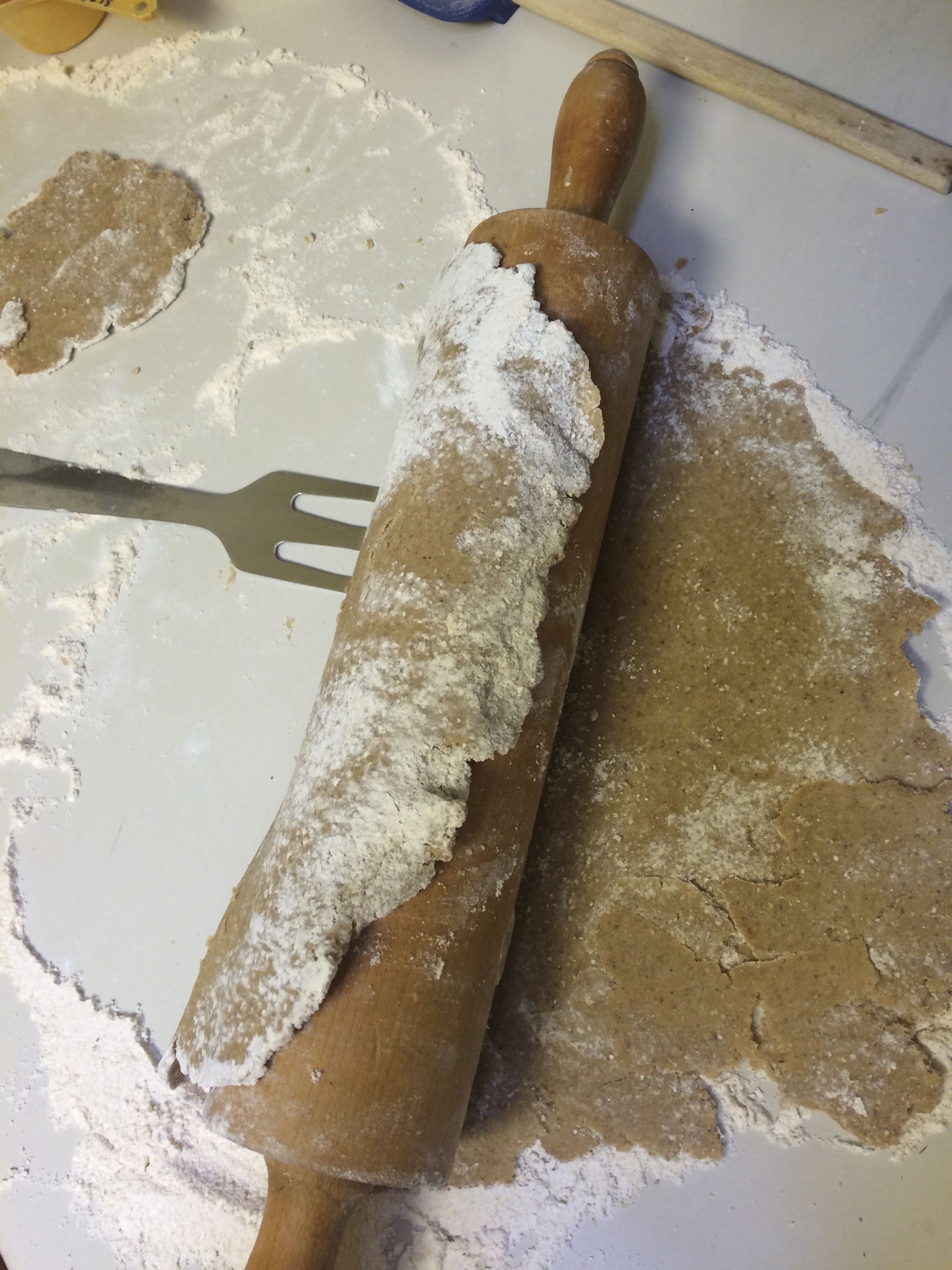
rolling mesquite white Son wheat pie dough

Mesquite meal and white Sonora wheat make a fabulous pie-crust! It is not as elastic as store-bought crusts so be careful in rolling it onto your pie pan. Shown here is a very flat spatula I use as an assist.

Next step, after growing, harvesting, slicing the heirloom fruits, is getting dusted by making my local heirloom Mesquite/White Sonora Wheat Pie Crust (recipe following):

[Kids, don’t try this culinary photographic technique at home.  Your one-handed iPhone will get really sticky.  Mine will never be the same.]


Ingredients for heirloom wheat pie crust:

1 1/2 cups freshly milled whole, organic White Sonora Wheat flour*

1/2 cup freshly milled local velvet mesquite meal**

1 tsp Real-salt or sea salt

2/3 cup shortening (I use organic butter)

5-7 Tbsp ice water

*Organic, fresh-milled white Sonora wheat flour is available for your holiday baking from our Flor de Mayo booth at Sunday St Philips Farmers Market, or by contacting us at info@flordemayoarts.com or  520-907-9471 to order it ahead.                                                                                                                                                                             **Freshly-milled velvet mesquite pod meal (flour) is available via the same Flor de Mayo contacts above.                                                                                                                                                                     Both kinds of heirloom flour are available at a special Heirloom Grains event this coming SATURDAY November 21 at the NativeSeeds/SEARCH store, 3061 N Campbell, Tucson–the public is invited 10am-2pm.

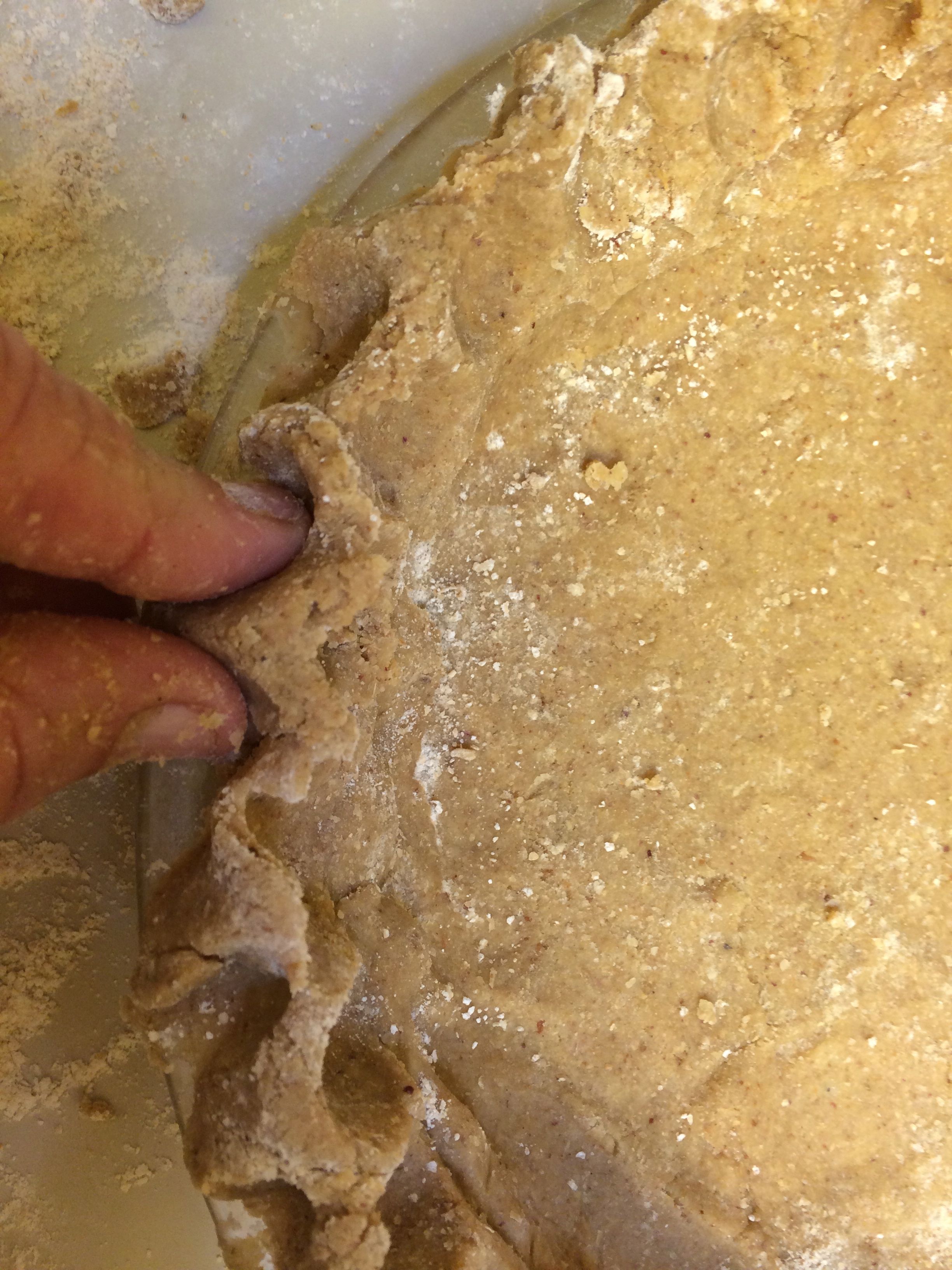
Pinching a tall edge of my mesquite/heirloom wheat pie crust

Pinching a tall scalloped edge of my mesquite/heirloom wheat pie crust–This provides a retaining wall so juicy filling will not overflow while cooking.

Directions for heirloom wheat pie crust (lattice top):

Sift dry ingredients.  Cut in shortening into small pea size lumps.  Sprinkle in tablespoons of ice water gradually, mixing with a fork.  Form 2 balls of dough. Dust each ball with more white Sonoran wheat flour. Flatten each out on a well floured board and roll with rolling pin or bottle.  Use rolling pin as in the illustration, to lift lower pie crust dough onto pie pan.  Press in with fingers.  Keep second ball of dough for working on after pie filling has filled the lower crust. [See recipe for Membrillo/Apple Pie Filling below.]

With second dough ball, roll out as before then cut in 1/2 inch wide strips to lay in basket-weave pattern atop the pie filling to allow filling to lower as it cooks.

Membrillo/Apple Pie Filling ingredients:

(Cook ahead slices and chunks of 4-5 membrillo fruits, washed, then cut with or without skin.  Boil in good drinking water for 20 minutes or until soft.  I am one of those crazies who thinks fruit skins are healthy and full of phytonutrients, so I leave the colorful fruit skins on.)

2 cups sliced membrillo fruit, pre-cooked  (reserve liquid for other gelled salads)

2 cups thinly sliced heirloom apples

1/2 cup organic cane sugar

1/2 cup organic brown sugar

2 Tbsp organic heirloom white Sonora Wheat flour

1/2-1 tsp ground cinnamon

dash sea salt

1-2 Tbsp organic butter

juice of one small heirloom sweet lime       (I got mine from the Friends of Tucson’s Birthplace Mission Garden booth at the Thursday Santa Cruz farmers market at the Mercado San Agustin, West Congress, Tucson)

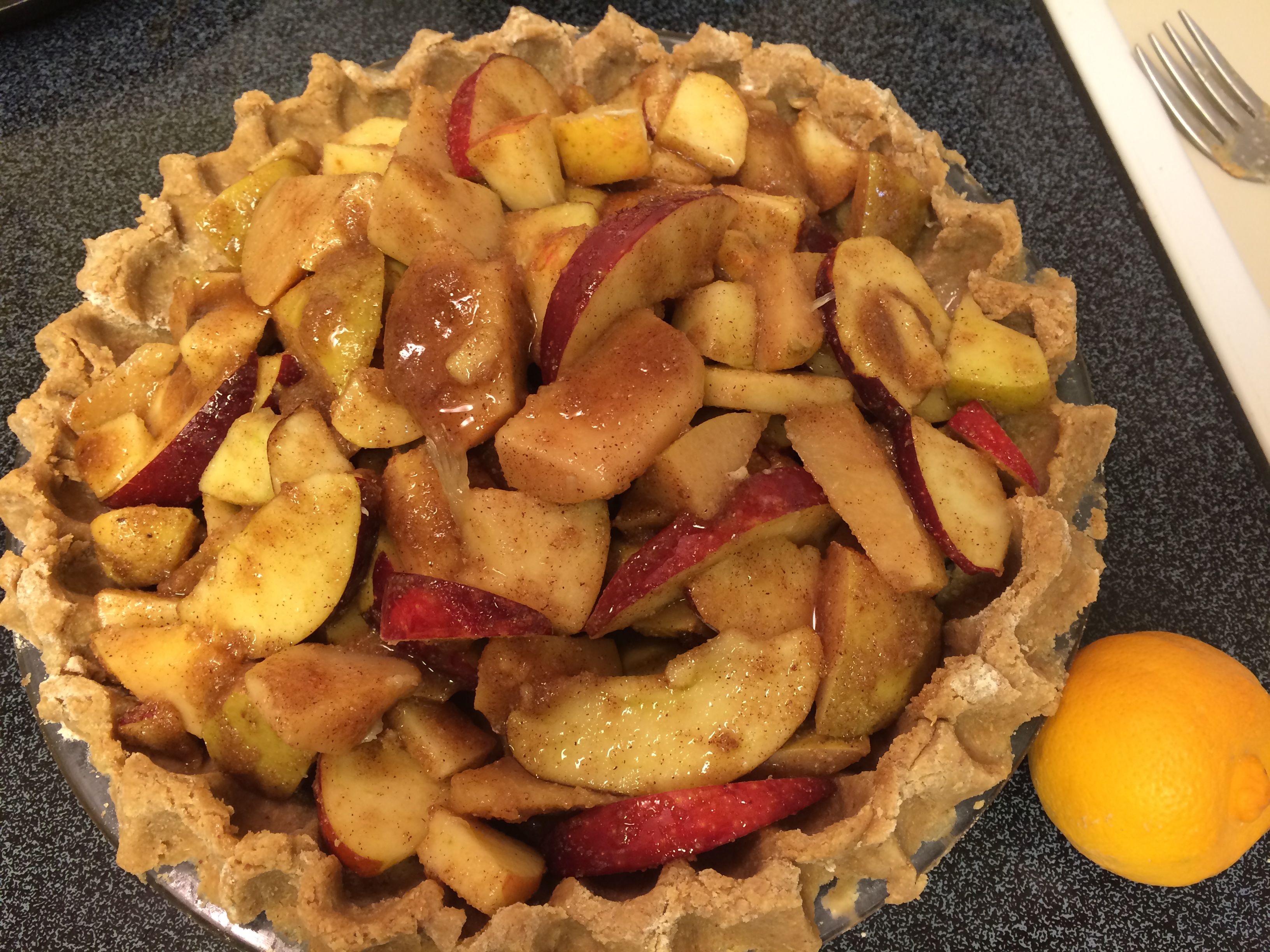
Membrillo/apple pie filling in shell ready to bake

Membrillo/apple pie filling in shell ready to bake. Check out the heirloom sweet lime adjacent–with the dimple–this one from Mission Garden.

Membrillo/Apple Pie-Filling Directions:       Preheat oven to 400 degrees.

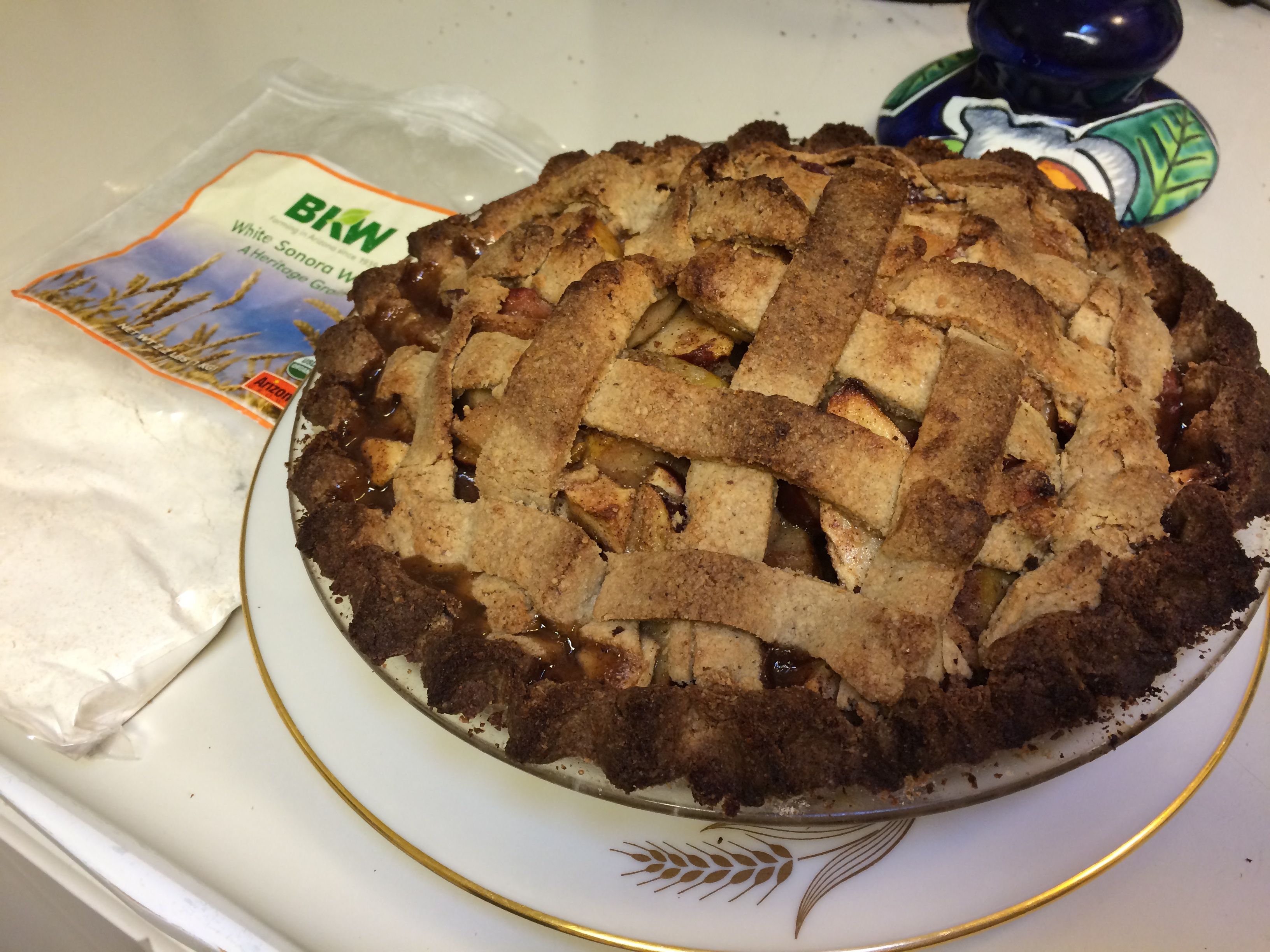
Combine sugars, flour, cinnamon, salt, then mix with the sliced apples.  Fill uncooked pastry crust (shell) with mixture.  Squeeze the sweet lime juice over the filling and place dollups of butter on top.  Place lattice strips of the mesquite/whiteSonorawheat dough across the top of the filling as in picture below.  BAKE for 40-50 minutes or until the crust looks golden brown.  Note:  mesquite meal has natural complex sugars which may caramelize or brown faster than white flour so keep an eye on it after 40 minutes.  The one in my photo got a little too done for my taste, but it will still be fabulous.

Membrillo/heirloom apple pie with mesquite/white Sonora wheat crust--hot and ready to serve

Membrillo/heirloom apple pie with lattice crust of mesquite/white Sonora wheat –hot and ready to serve–To the left in photo is flour milled from BKWFarms wheat-berries.

There will be several ancient grains available at our upcoming Celebration of Heirloom Grains this SATURDAY at the NativeSeeds/SEARCH Store.  Put it on your calendar and dig out your favorite recipes!

Heirloom purple prairie barley available at Flor de Mayo booth,St Philips Farmers Market and at the NSS Grain Event Saturday!

Heirloom purple prairie barley available at Flor de Mayo booth,St Philips Farmers Market and at the NSS Grain Event Saturday!

In addition to our native Mesquite Flour, there will be such fresh lovely grains as organic Hard Red Wheat grown by BKW Farms in Marana which is superb for breads.  Our organic white Sonora wheat is the best for pastries.   Also available will be the ancient Purple Prairie Barley originally from Afghanistan, now from Hayden Mills.

For the knowing baker, milling the whole grain fresh creates a totally different and wondrous effect to breads and pastries because the enzymes and other constituents in the grain remain “lively” for only a few days after milling.  Come enjoy the milling process right before your eyes and feel the vitality of the flour you can take home to bake with!

Our thanks go to the caring padres who first brought the grains to the desert Southwest, to the generations of farmers who continued to grow and save the grain, to NSS for “rediscovering” and conserving them so carefully for the future, and to new farmers like San Xavier Farm Coop, BKWFarmsInc, Ramona Farms, and Hayden Flour Mills for multiplying them for our nutrition, enjoyment, and sustainable desert living!

For more info please call NativeSeeds/SEARCH at 520-622-5561 or Flor de Mayo at 520-907-9471.  See you at the Milling and our Celebration of the Heirloom Grains!!

Magdalena heirloom barley grown at Mission Garden, Tucson

Magdalena heirloom barley grown at Mission Garden, Tucson

A savory pilaf made with heirloom purple prairie barley--watch for future recipes--Grain available at the Flor de Mayo booth, Sunday St Philips market

A savory pilaf made with heirloom purple prairie barley–watch for future recipes–Whole grain available at the Flor de Mayo booth, Sunday St Philips market, and at Saturday’s Heirloom Grain Celebration

Black Teparies Make a Come-Back!

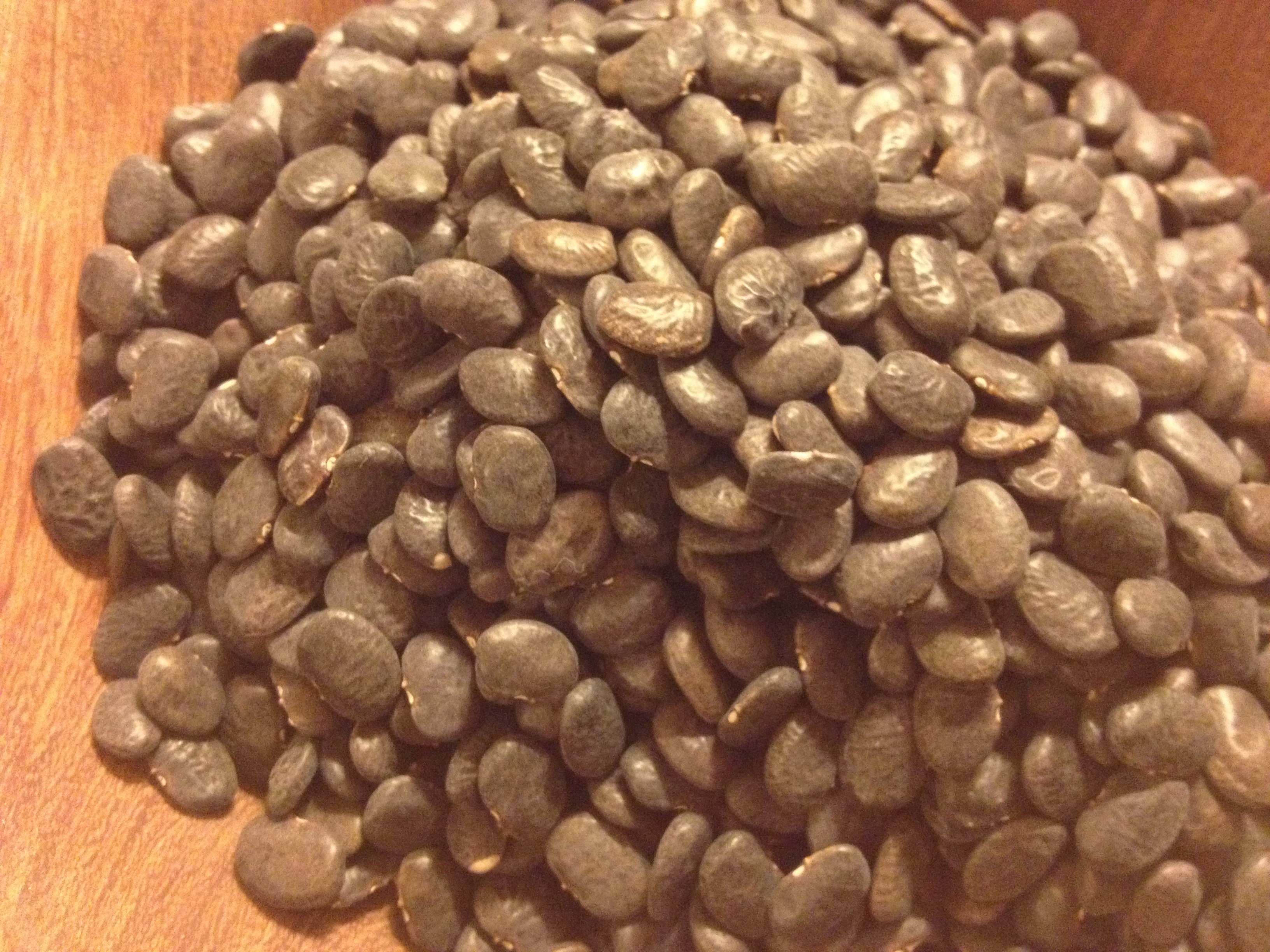
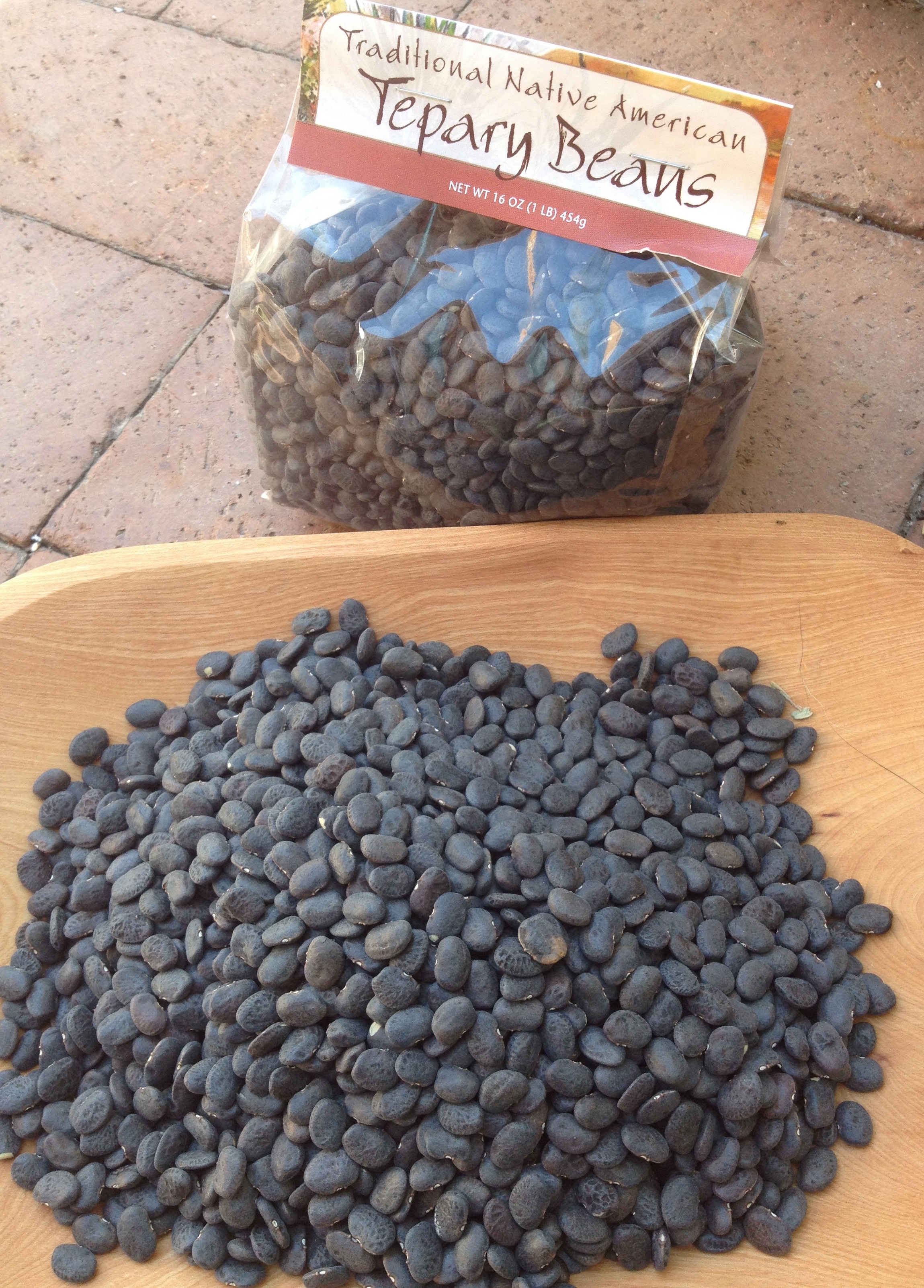
Rich black teary beans dried, ready to hydrate for cooking

Rich black tepary beans dried, ready to hydrate for cooking

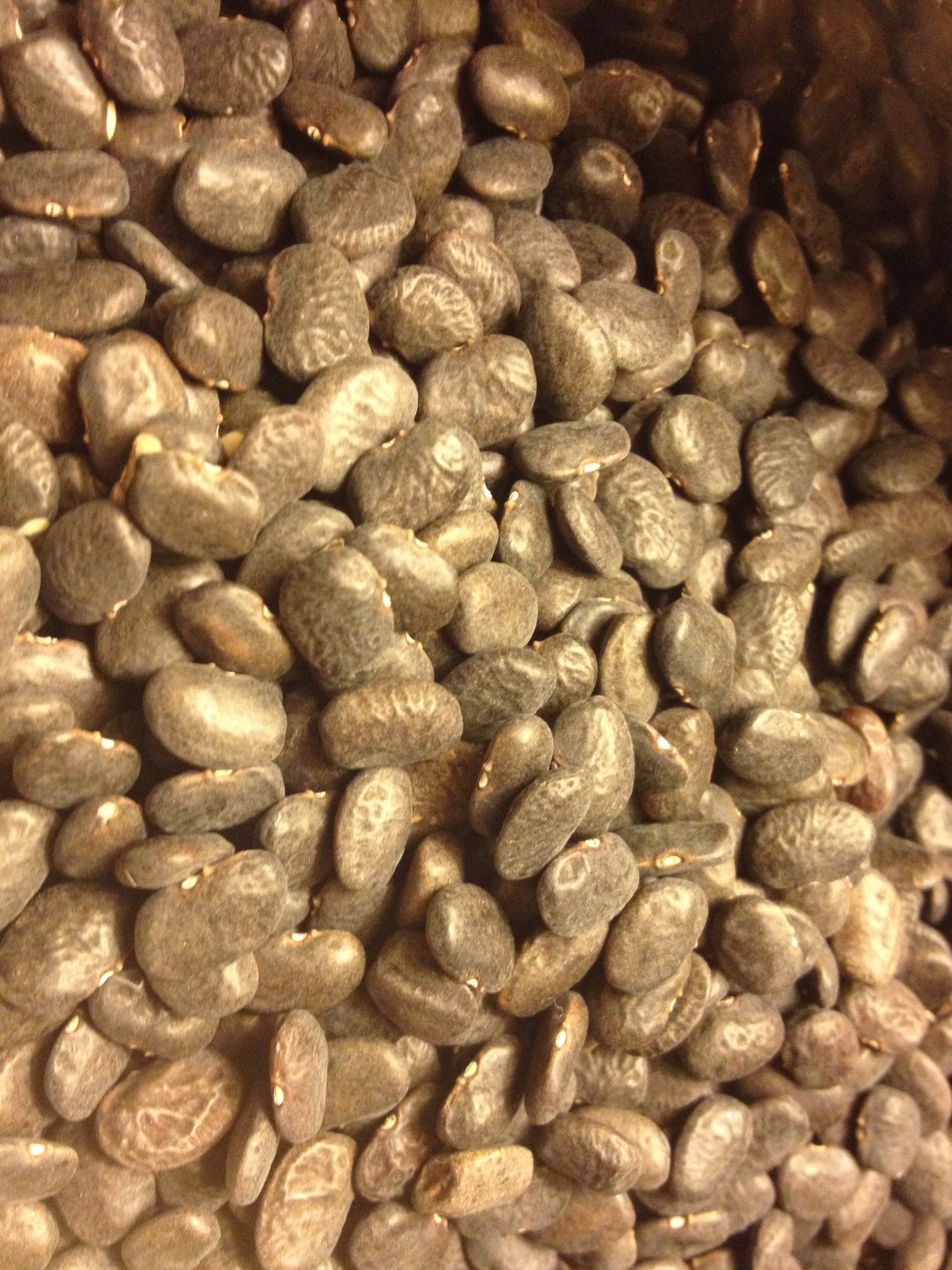
In some light they are a dull charcoal difficult to spot if the pods shatter onto the ground. Sometimes they appear shiny black or opalescent. Somehow black teparies appear to have an antiquity about them–mysteriously harking back to a time rich in prehistory. Tia Marta here to tell you a little about the black tepary bean’s odyssey back into cultivation and into the cooking pots of Southwesterners once again.

Shiny black teparies close up

Shiny black teparies close up

Back in 1912, before WWI and the rapid plunge the “remote” Southwest unavoidably took into East-Coast food fads, there was a crop survey done of the many types of tepary beans being grown and used by different Native American families and communities throughout the Borderlands. The diversity at that time was astounding—some 40+ different colors, forms, sizes, speckles, of tepary beans were reported. Within about a decade there remained only a couple of dominant tepary colors—“red” (an orangy-brown) and white. [For more history, check out Volume 5, No.1 of Desert Plants Journal published by the University of Arizona CALS. Specifically this issue is devoted to tepary beans, and includes an article by yours truly.]

The neat thing about cultivars that are still genetically close to their wild ancestors is that they still contain a diversity of genes that can “pop out” occasionally as visibly different seeds. In the case of the teparies, every so often in a harvest of white teparies, for example, there may turn up a few coral pink, or blue speckled, or even black beans. At the University of Arizona’s Maricopa Experimental Farm, an amazing crop researcher, Mike Sheedy, was, for several years growing teparies to isolate some of these genetic “sports”. He used assistance from his kids (In farming, child labor rules just can’t apply) to help pick out the odd-ball seeds from hundreds of pounds of harvested teparies. Over the years, he grew the separated colors in isolation from each other to preserve color purity. Before research funds ran out he had “re-created” an ancient lineage of black teparies—i.e. he has assisted the ancient genes to come again to the fore, to bring the “invisible” genotype back into the “visible” phenotypes. At termination of his research project he generously donated the black tepary collection to the traditional Pima farming family of Ramona and Terry Button.

Native Black Tepary Beans & Flor de Mayo 1-lb pkg

Native Black Tepary Beans & Flor de Mayo 1-lb pkg

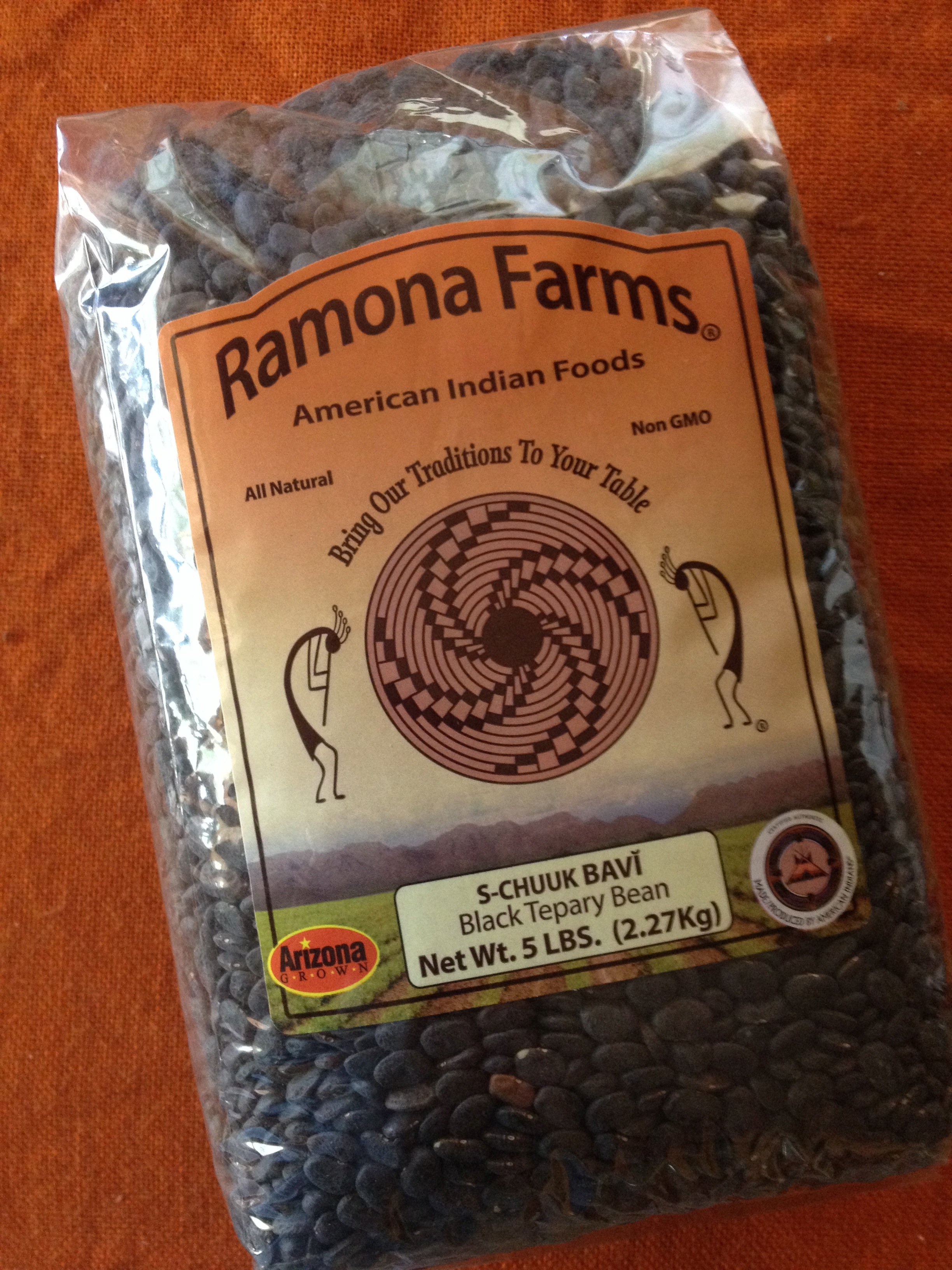
Now—tah-dah!—at last black teparies are in agricultural production on ancestral lands! The public can purchase these little food gems of antiquity now at the NativeSeeds/SEARCH store (3061 N Campbell Ave, Tucson) www.nativeseeds.org , at the Flor de Mayo booth at Sunday St Philips Farmers Market www.flordemayoarts.com , or online via www.ramonafarms.com.

S-Chuuk Bavi from Ramona Farms

Black teparies are very different in taste from the red or white teparies—although all teparies are much richer than their more distant cousins like the common bean, lima or black-eye pea. Black tepary, schkug ba:wĭ of the Tohono and Akimel O’odham, is the deepest, nuttiest of all, with an earthy bouquet and a slightly bitter after-note reminiscent of coffee. Well, you will just have to try your own taste buds on them!

The public will have an exciting opportunity to taste black teparies prepared by none other than our beloved Tucson Chef Janos Wilder (of Downtown Kitchen fame) at the upcoming Farm to Table Picnic feast at Mission Garden, Sunday afternoon, October 18, 4-6:30pm. Janos is not letting on what his special black tepary recipe will be, but we can be sure it’ll be sensational. [The picnic is by pre-registration only so buy your tickets soon! Online purchase is via the Friends of Tucson’s Birthplace site www.tucsonsbirthplace.org.]

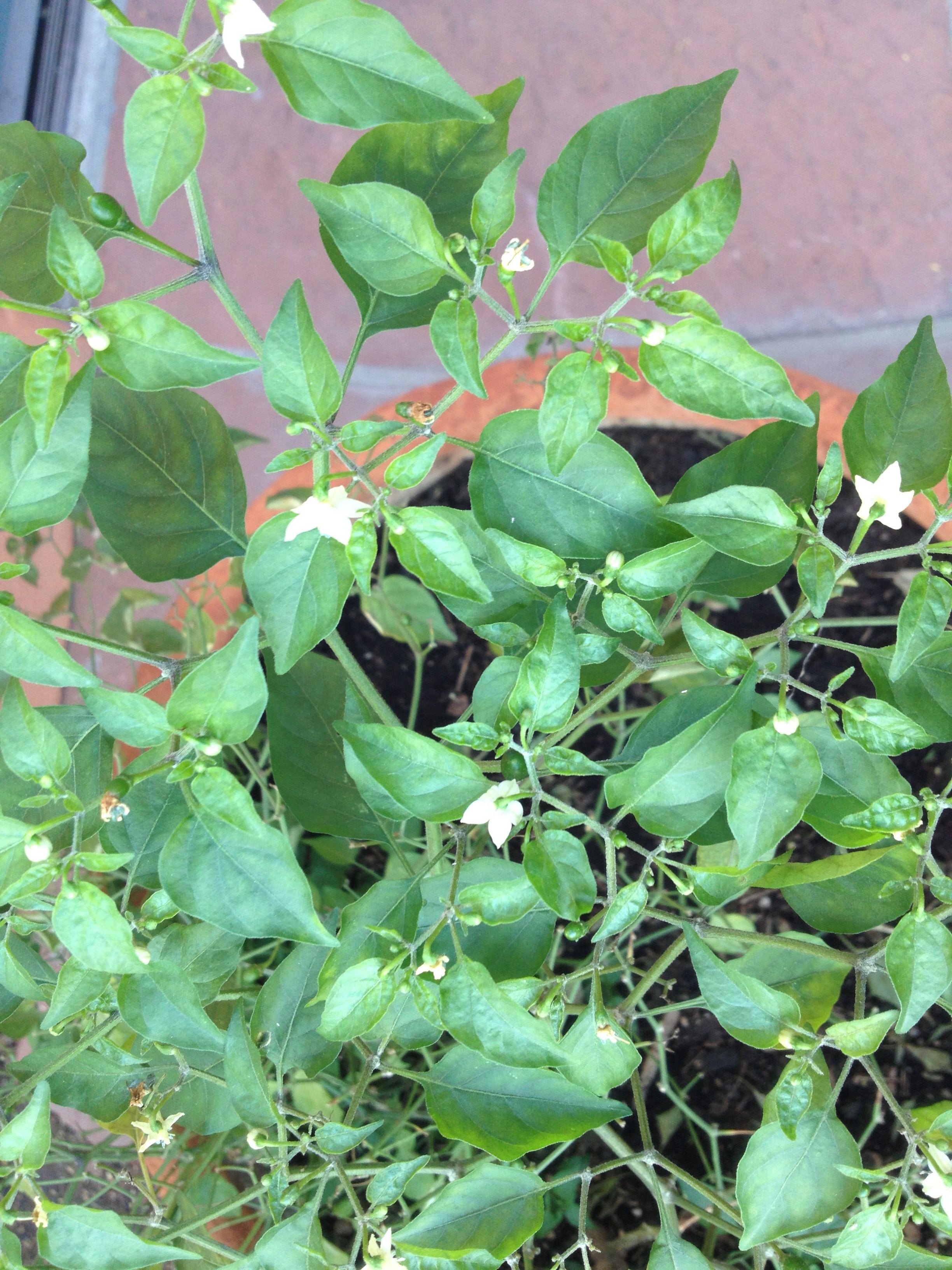
Potted blooming chiltepin plant for edible landscaping

Potted blooming chiltepin plant for edible landscaping

All of the heirloom foods served at the Farm to Table Picnic are being grown (even as I write) locally in Baja Arizona, either at the NativeSeeds/SEARCH Conservation Farm in Patagonia, or at the Mission Garden itself, or by sponsoring farmers and ranchers such as BKWFarmsInc, the 47-Ranch, and Ramona Farms. Some of Tucson’s best chefs are donating their skill and time to prepare different dishes for us. It will be a great opportunity to put the fun in fundraising for two worthy local non-profits, to share the delicious tastes of our heirloom foods of the Borderlands, and to share community joy in what we are able to produce together locally.

For adventuresome cooks, dessert addicts, and chocoholics, I would like to share two variations on brownies made with—yes, you guessed it—black tepary beans! You will not believe how yummy these are.

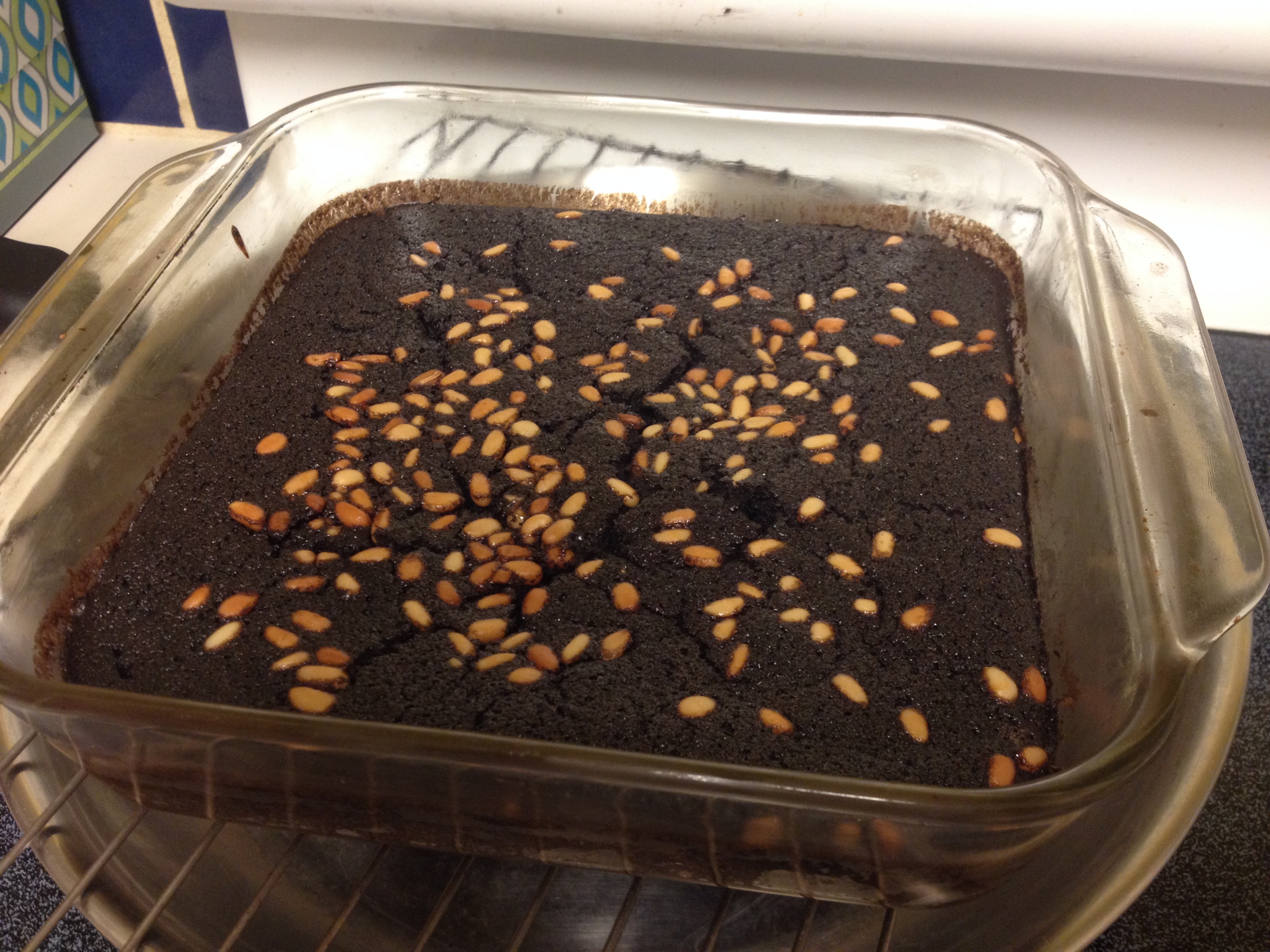
Gluten-free Black Tepary Brownie-Cockaigne on cooling rack

Gluten-free Black Tepary Brownie-Cockaigne on cooling rack


First, cooking black teparies (as with all teparies) takes some time—and premeditation.  The day before you want to use them, sort, wash, and pre-soak your black teparies. I hit them with a quick boil and let them sit overnight to hydrate slowly. Change the water the next day, adding fresh drinking water. Simmer until soft (it may take 2-3 hours on stovetop or 4-6 in crockpot). You want them beyond al dente in order to puree them in a blender or CuisinArt for the following recipes.


Muff’s Gluten-free Black Tepary Bean Brownies-Cockaigne

Ingredients:

1 cup cooked and pureed black tepary beans

1 stick butter= ¼ lb= ½ cup butter

5 Tbsp dark 100% cocoa powder, unsweetened (1 oz.)

¼ tsp sea salt

1 cup organic cane sugar

1 cup loose organic brown sugar

1 tsp vanilla extract

4 eggs well-beaten

¼- ½ cup nutmeats (I use pinyon nuts to keep the Southwest theme)

Directions for Muff’s Gluten-free Black Tepary Brownie-Cockaigne:

Preheat oven to 350 degrees F. Grease an 8×8” baking dish and place a wax paper cut to fit the bottom of pan. Melt butter (preferably in top of double boiler). Stir in thoroughly 5 Tbsp dark unsweetened cocoa powder. Let the mixture cool. Add sugars and sea salt to mixture and beat until creamy. Add vanilla. Beat 4 eggs and add to mixture stirring until uniform in color. Add 1 cup pureed black teparies and hand-mix. Pour batter into greased bake pan. Sprinkle top of batter with pinyones or other nutmeats. Bake 45-50 minutes until it tests done with toothpick.   Cool pan on a rack. Cut in small squares to serve because it is so rich and moist. Enjoy their delicious flavors AND the healthy qualities of high protein/high complex carb teparies, protein-rich eggs, and the benefits of dark chocolate!

Gluten-free black tepary brownie-cockaigne ready to eat

Gluten-free Black Tepary Brownie-Cockaigne ready to eat–wheat-free, light, nutritious and delicious!

My next black tepary brownie recipe was first inspired by food-writer and “Blog-sister” Carolyn Niethammer’s recipe found in her book Cooking the Wild Southwest (p.133)–a must-have in every SW cook’s kitchen shelf. Here I’ve made some interesting gastronomic additions…including the use of our fantastic local heirloom White Sonora Wheat flour, crushed wild chiltepines, and Mano y Metate’s fresh-ground Mole Dulce powder produced by our local Molera herself, Amy Valdes Schwemm.


“Hot-Dam”* Black Tepary Brownie Bars [*in the best sense of the expression]

Ingredients:

5 Tbsp unsweetened 100% cocoa powder

½ stick (1/4 cup) melted butter

¾ cup organic cane sugar

¾ cup org brown sugar, not-packed

2 eggs, beaten

2 tsp vanilla extract

¾ cup pureed cooked black teparies

¾ cup organic heirloom White Sonora Wheat flour**

3 or 4+ crushed wild chiltepin peppers*** (number depends on your desired picante level)

¼ tsp sea salt

1-2 Tbsp Mano y Metate ground Mole Dulce powder

2 Tbsp raw pinyon nutmeats

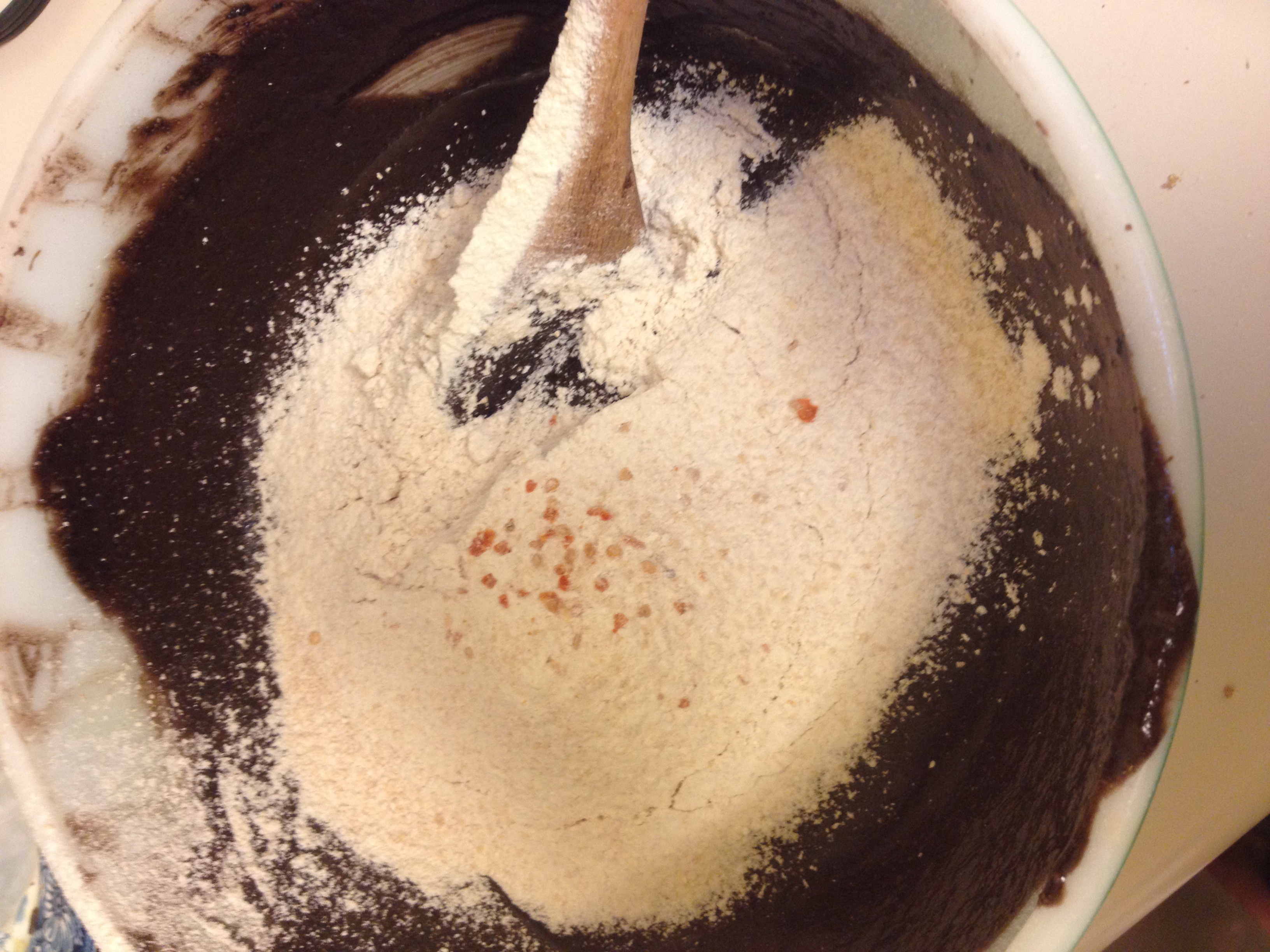
Adding White Sonora Wheat flour and crushed chiltepin to molten chocolate mixture

Adding White Sonora Wheat flour and crushed chiltepin to molten chocolate mixture

** Freshly milled White Sonora Wheat is available at our Flor de Mayo booth, Sunday’s St Philips farmers market (www.foodinroot.com). Call ahead for quantities larger than 1 kilo—520-907-9471.

***whole wild-harvested Chiltepines are available at the NSS Store, 3061 N Campbell, and at Flor de Mayo booth, Sunday St Philips farmers mkt. Chiltepin plants to grow can be purchased at NSS plant sales.

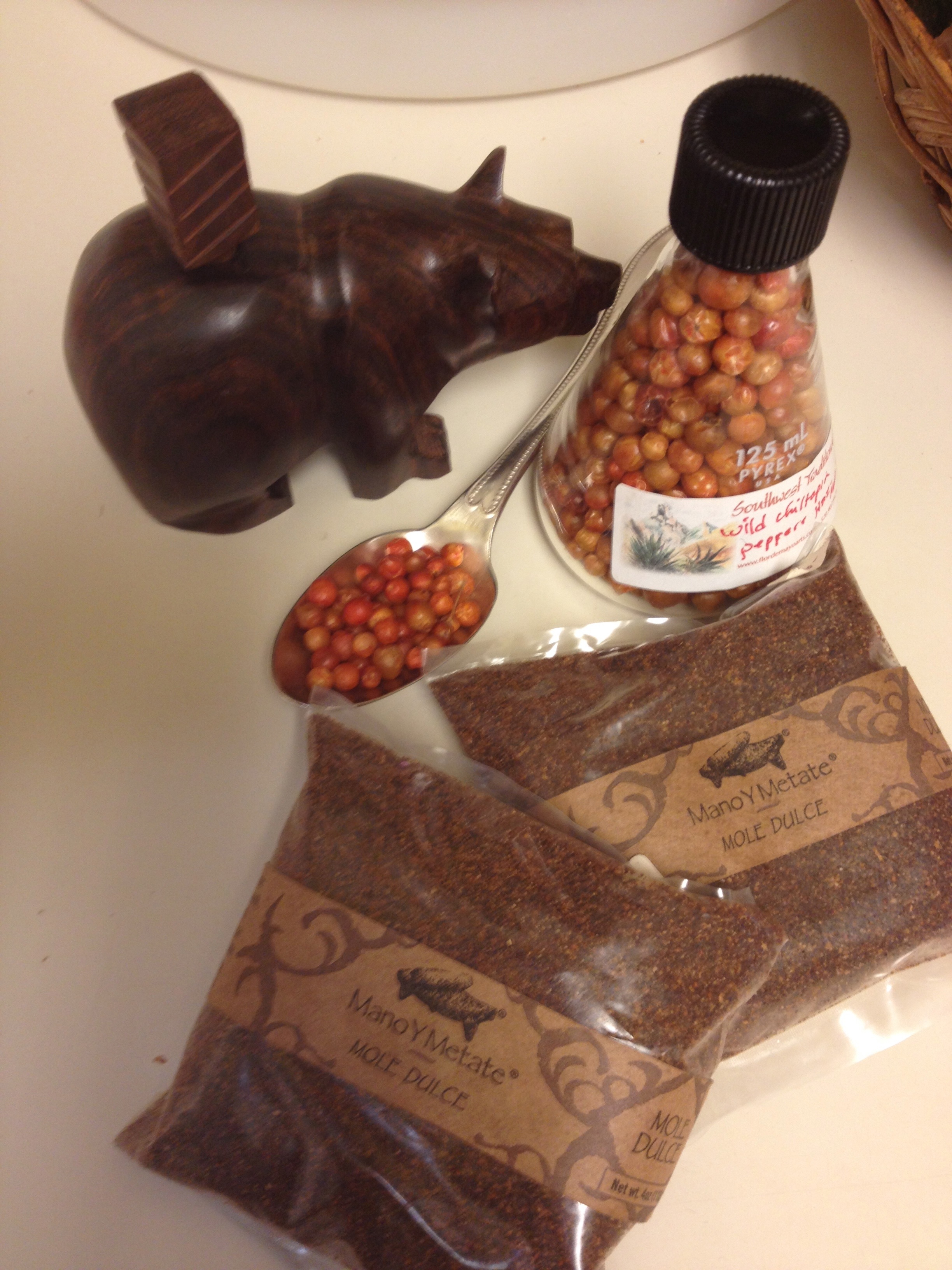
Flavors to guild the lily--Wild chiltepin peppers, ironwood bear molinillo grinder, and Mole Dulce powder

Flavors to guild the lily–Wild chiltepin peppers, ironwood bear molinillo chiltepin grinder, and Mole Dulce powder (all available at NSS store and Flor de Mayo at St Philips farmers market)


Directions for “Hot-dam” Black Tepary Brownie Bars:

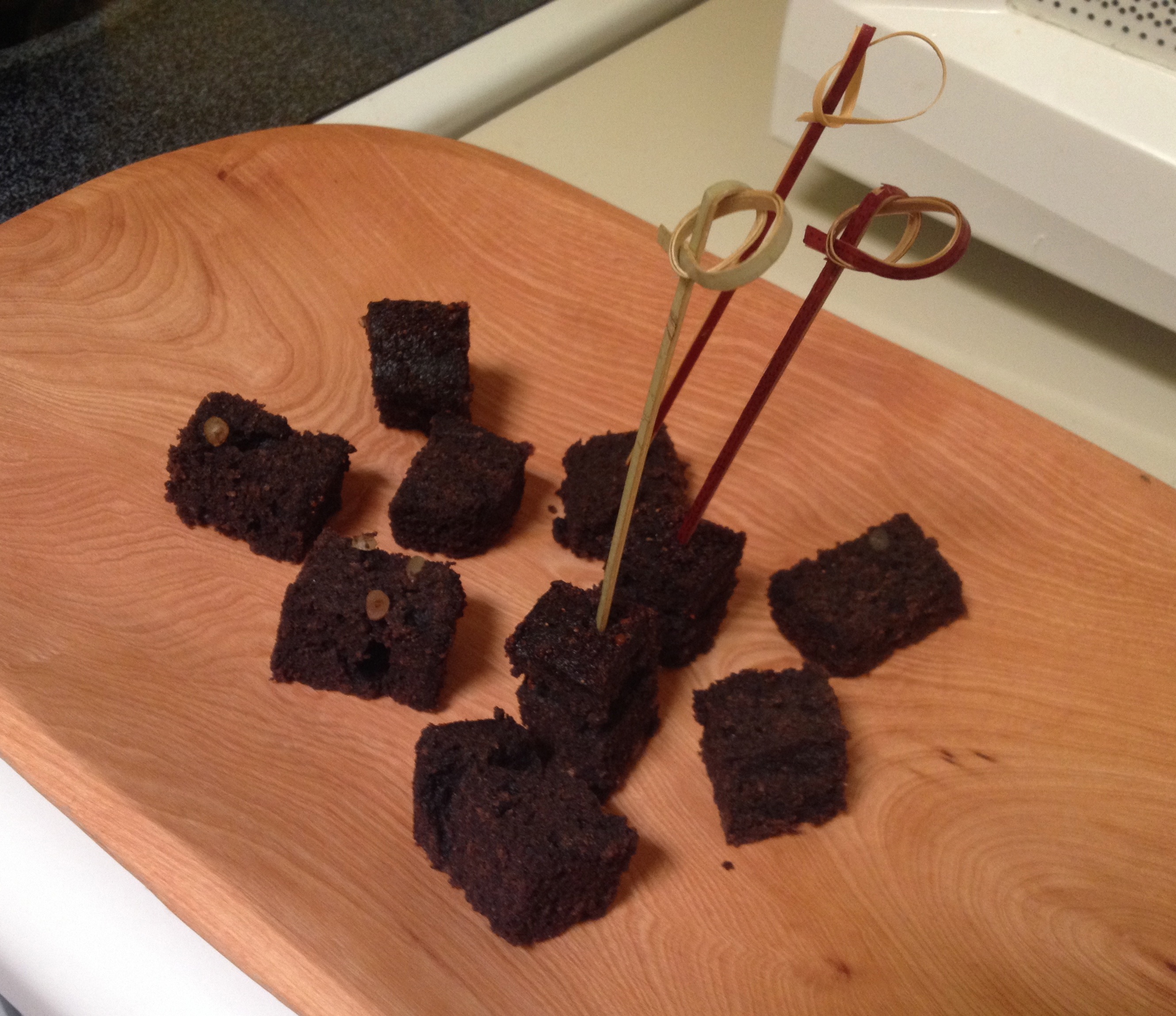
Pre-heat oven to 325F. Grease 8×8” baking pan with wax paper set in bottom. Melt butter and mix powdered cocoa in thoroughly. Add the brown sugar and organic white sugar and vanilla to the butter and cocoa, and beat. Beat 2 eggs and stir thoroughly into the choc/sugar mixture. Wisk in ¾ cup pureed black teparies. Sift together: ¾ C white Sonora wheat flour, ¼ tsp sea salt, and the well-crushed chiltepin peppers. Stir dry ingredients into liquid mixture. Add pinyon nutmeats. Pour batter into bake-pan. Sprinkle 1-2 Tbsp of Mole Dulce powder on top of the batter. Bake 25 minutes or until it tests done (when fingerprint pressed on top springs back). When cooled, cut into small bite-size squares to be served with hors d’oeuvre picks—you will see why…..(and don’t rub your eyes after eating.)

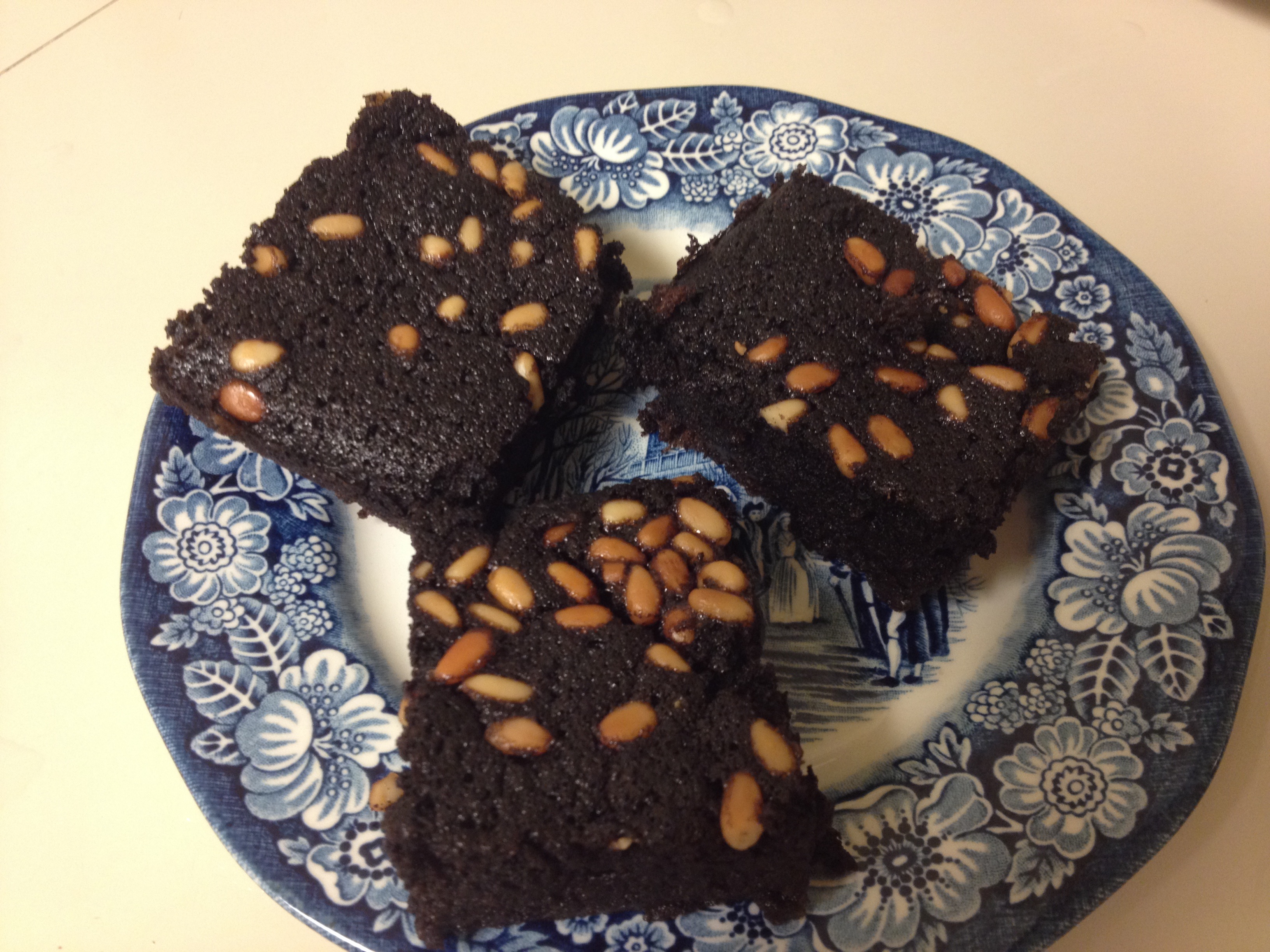
"Hot-dam" Black Tepary Brownies ready to enjoy!

“Hot-dam” Black Tepary Brownies ready to enjoy!


Tia Marta is hoping you enjoy these fruits and flavors of the Sonoran Desert assisted by fruits of tropical North America—a marriage made in dessert-Heaven! With every bite we should be thanking ancient tepary farmers, and the recent ones who have brought back the Black Tepary from near genetic-oblivion.


Coming this week to Tucson is a food event not to miss: the Farmer to Chef Connection, this Wednesday, September 16, at Tucson Community Center, 12:00noon-5:30pm, sponsored by LocalFirstArizona. Google their site for tickets and come enjoy a smorgasbord of local tastes.

Also be sure to mark your calendar for October 18 and join NativeSeeds/SEARCH and Friends of Tucson’s Birthplace at the very heart of Tucson’s Birthplace –the Mission Garden at the base of A-Mountain—for the first-ever outdoor Farm to Table Picnic. It will be a feast to remember. Make reservations now and we’ll see you there for fun, flavor, history and friendship!

Fig Jam Ready for Farm to Table Picnic

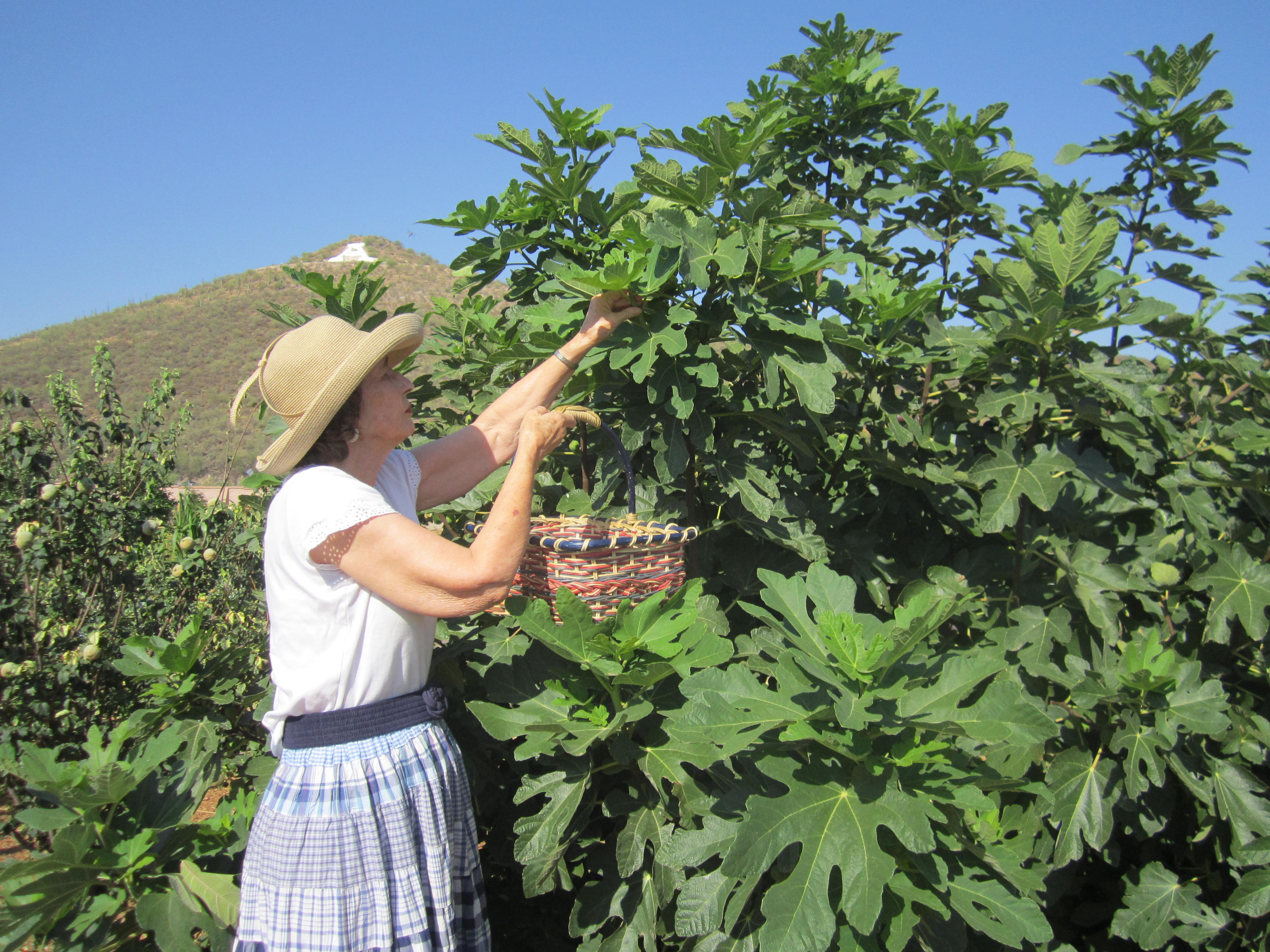
Picking figs at the Mission Garden.

Picking figs at the Mission Garden operated by Friends of Tucson’s Birthplace.

The hottest weather of summer brings Tucson one of its sweetest treats, figs. The figs at the Mission Garden operated by Friends of Tucson’s Birthplace, are ripening  now. Some of the trees have already produced and are beginning to  grow their second crop. This is Carolyn today, and that is me picking figs from one of the trees in the lush recreated historic garden near the Santa Cruz River.  The plan was to preserve the figs as jam to be used as an ingredient in cookies  for the Farm to Table Picnic being organized by the  Mission Garden and Native Seeds/ SEARCH.  On the late afternoon of October 18, dinners will be able to picnic on Southern Arizona’s agricultural  bounty at tables  spread through the Garden. (Ticket detals next month).

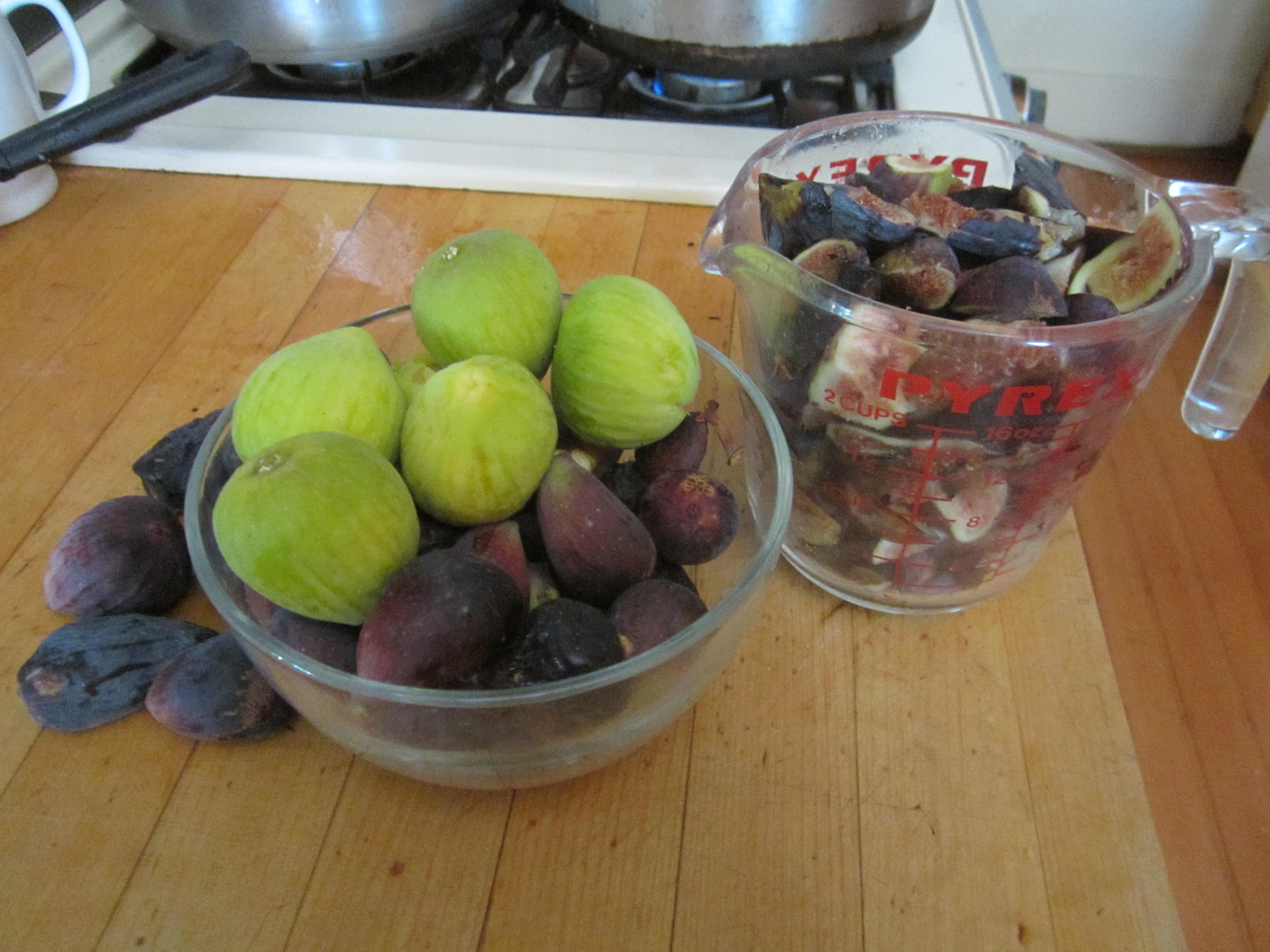
The brown figs at Mission Garden are living relics of trees brought to Southern Arizona by Father Kino. They were grown from twigs cut from plants behind the Sosa-Carrillo House. Historic records show that those trees came from cuttings of trees at San Xavier Mission. The green figs were grown from cuttings taken from trees at the  settlements near the Ruby and Oro Blanco mines.

Plump figs from Mission Garden. The green ones are called "white" and some people think they are sweeter.

Plump figs from Mission Garden. The green ones are called “white” and some people think they are sweeter.

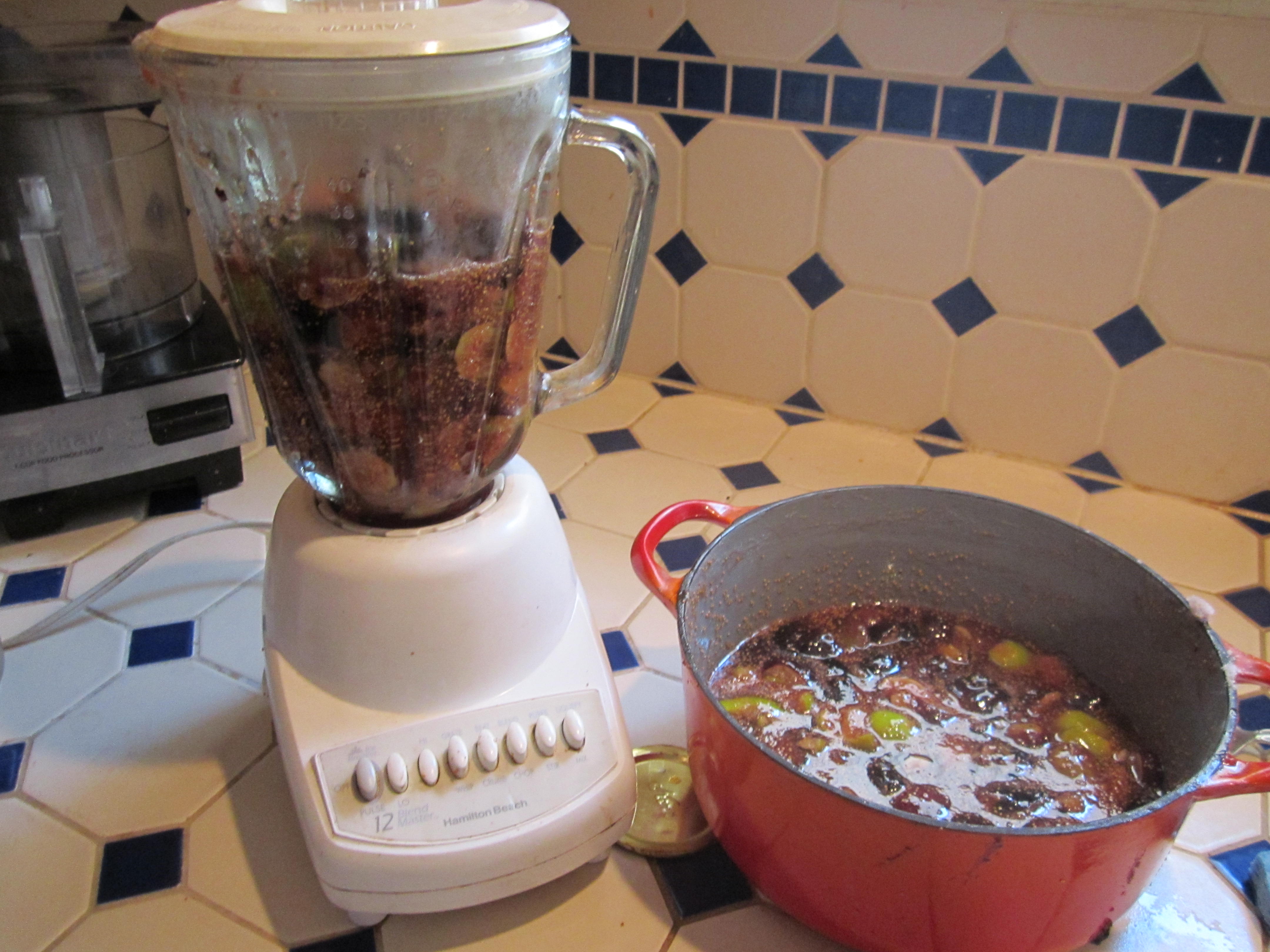
Generally in making jam the old-fashioned way without added commercial pectin, you measure an equal quantity of fruit and sugar and simmer until it is thick. Because these figs were incredibly sweet and because I plan to spread the jam over a base crust, I didn’t care if the jam set up like I would, say a plum or strawberry jam. So I thought it would be safe to use less sugar. Ultimately I used about 4 cups of sugar to 8 cups of chopped figs, about half the usual amount. Since I wanted a smooth product, I put the chopped figs through the blender.  I could have also used my food processor.

Blending the chopped figs for a smooth product.

Blending the chopped figs for a smooth product.

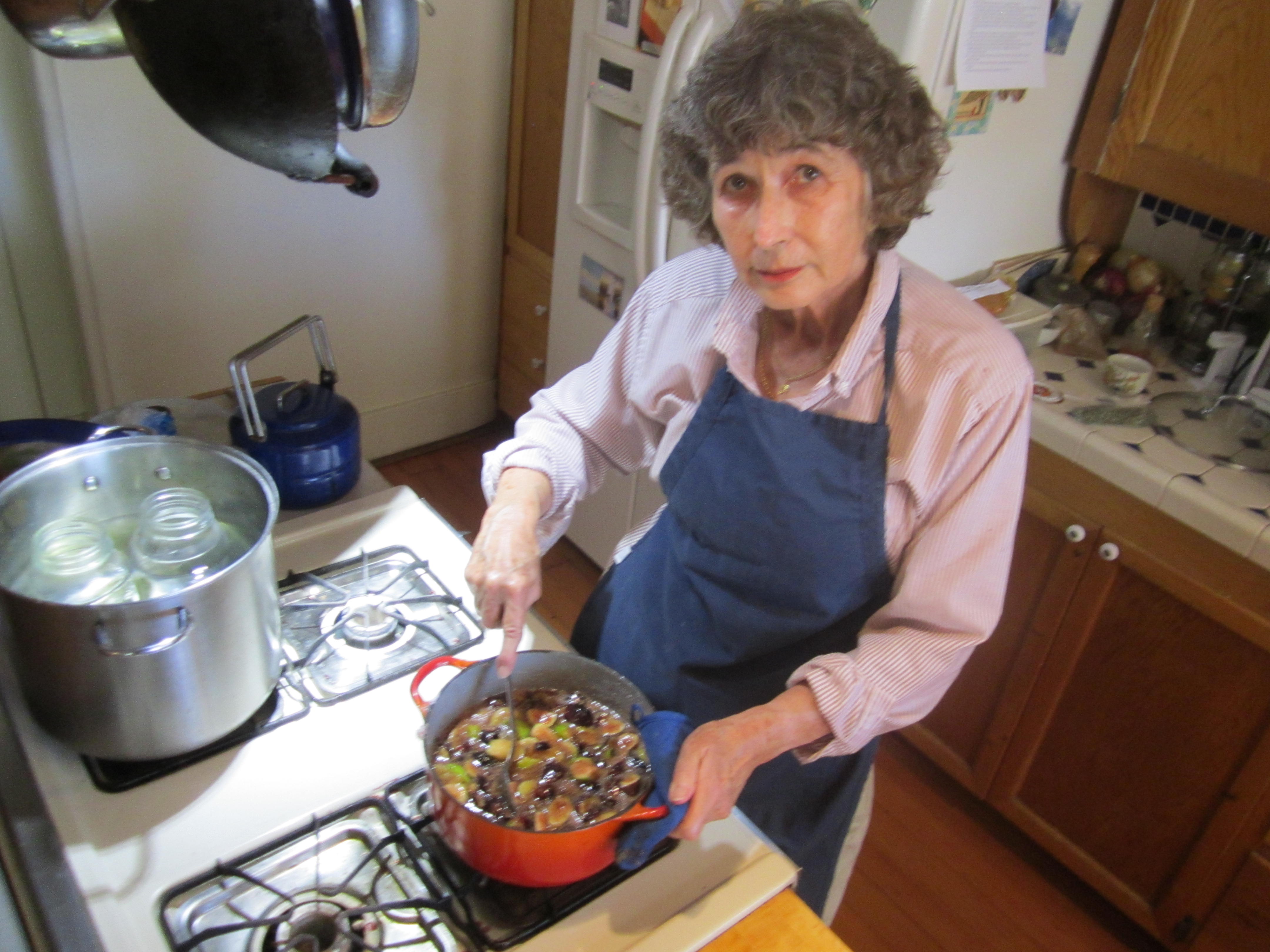
Next came the long slow cooking.  In the picture below, you can see the large pot on the left where I was boiling the storage  jars to sterilize them.

Cooking the jam.

Cooking the jam.

In any jam making, you need to simmer the fruit and sugar until it reaches about 220 degrees F. This takes both time and careful watching to get the jam to a point where it is not too runny and not too stiff.  In Tucson, because of our altitude, 218 degrees F usually gives a better product. Use too high a heat and the jam will burn on the bottom of the pot before it reaches the proper temperature.

To check the temperture,  I used to use a traditional candy thermometer that looks like this and works with a column of mercury:

Traditional candy thermometer.

Traditional candy thermometer.

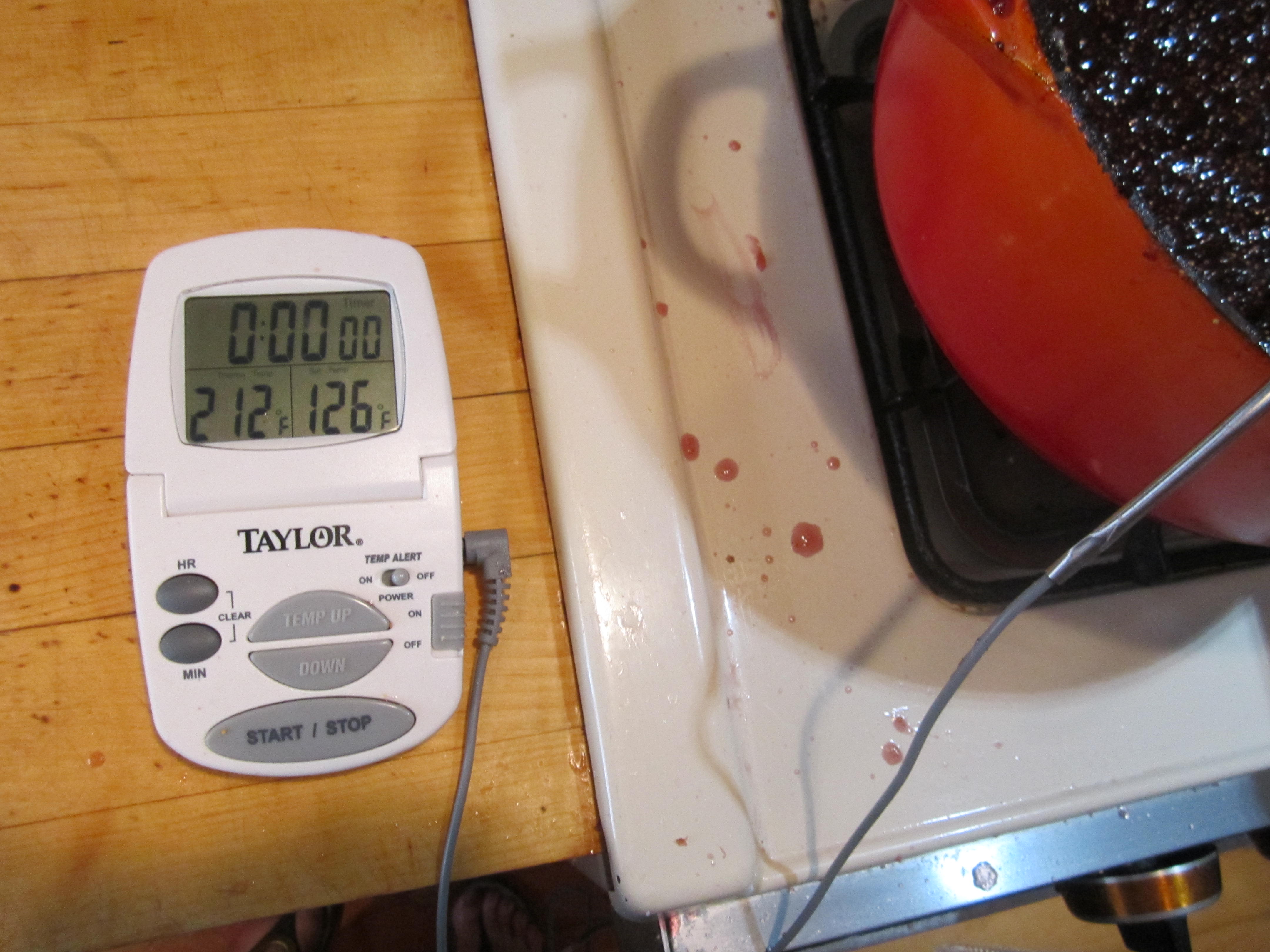
A couple of Christmases ago, however Santa brought me a digital thermometer that is good for roasting a turkey, cooking a thick steak and making jam. It has a probe that sticks in whatever you are cooking and gives you a readout.   See the photo below. You can see this one has reached 212 degrees F. and the jam is almost done.:

Battery-operated digital cooking thermometer.

Battery-operated digital cooking thermometer. The thin silver wire on the right is a probe that rested in the jam.

Once finished, the jam just needed to be ladled into the prepared jars, capped and processed for 10 minutes in a boiling water bath.  That’s a lot of jam, but I’ll be baking cookies for 200 ticket holders and a whole bunch of volunteers.

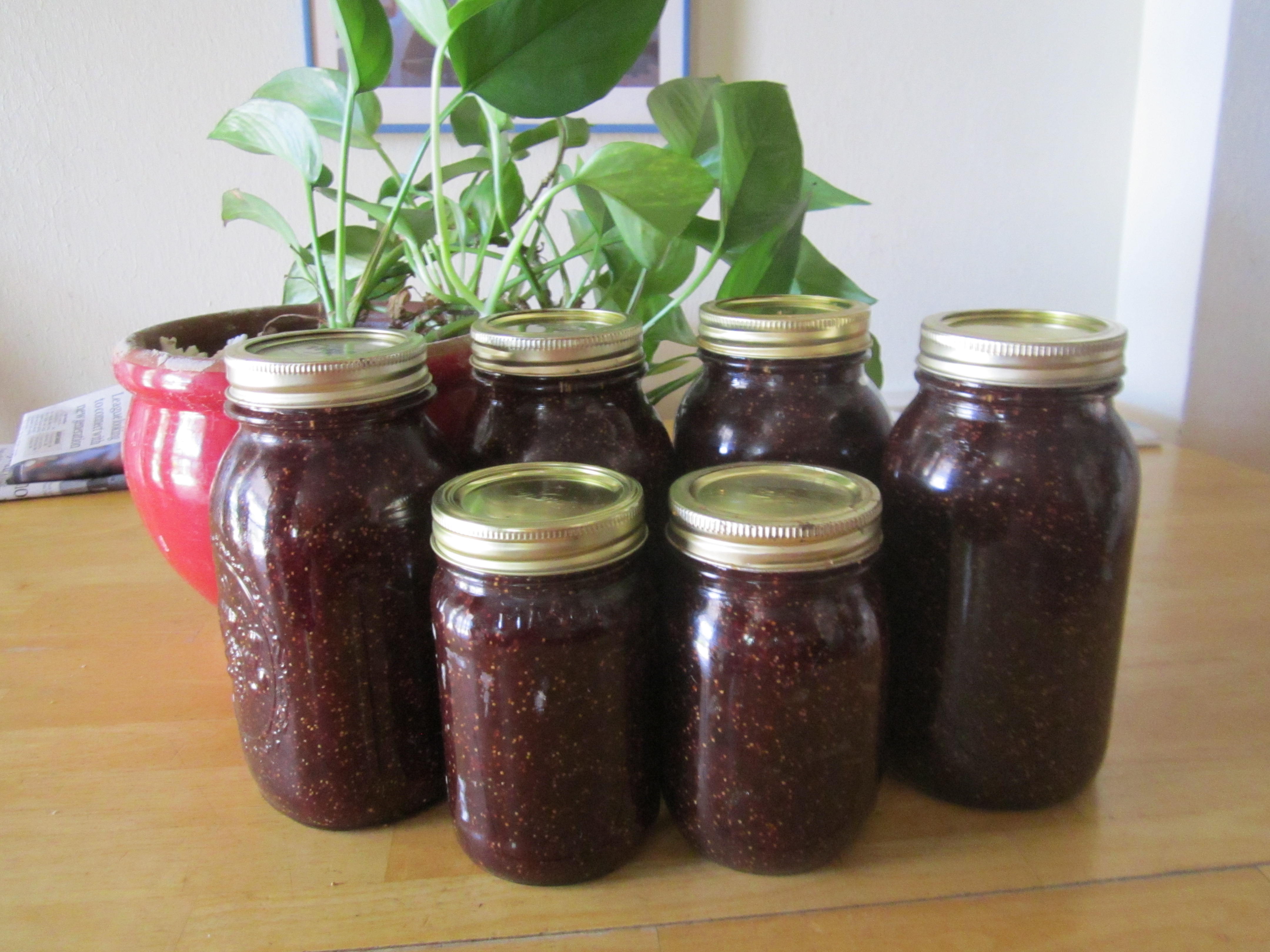
Five quarts of fig jam will wait until October to be made into fig bars for the Farm to Table Dinner.

Five quarts of fig jam will wait until October to be made into fig bars for the Farm to Table Dinner.

I can’t show you a picture of the fig bars, because I haven’t made them yet. But I have used this recipe previously and it is great. It is a modification of a recipe in Fruits of the Desert by the late food writer Sandal English.  If you have fresh figs and are looking for a way to showcase them, try this:

Layered Fig Bars

1 cup sifted flour

1/2 teaspoon baking soda

1/2 teaspoon salt

1 cup oatmeal, quick or old-fashioned

1 cup firmly packed brown sugar

1/2 cup butter, melted

1-1/2 to 2 cups fig jam

Preheat oven to 350 degrees F. and line an 8-inch square pan with foil or parchment paper, leaving some extending over two sides as flaps.

Sift together the flour, baking soda and salt in a large bowl. Mix in the oatmeal and sugar. Stir in the melted butter and mix until crumbly. Firmly press 2/3 of the mixture in the bottom of the prepared pan. Spread fig jam evenly over the base layer. Top with remaining crumb mixture. Gently pat the top layer down. Bake in preheated overn for about 30 minutes. Cool, lift from the pan using the paper flaps, and cut into 24 bars.

Note: If you are making this for your family and don’t care that the bars come out perfectly shaped, you can skip the step of lining the pan.

_________________________________________

Looking for ideas for how to use desert fruits and vegetables?  The Prickly Pear Cookbook has delicious recipes for both the fruit and pads and complete instructions for gathering and processing. Cooking the Wild Southwest gives directions for harvesting and cooking 23 easily gathered desert plants. Find both at the Native Seeds/SEARCH retail store on Campbell or at on-line sellers.

An Invitation to Celebrate El Dia de San Ysidro Labrador

With White Sonora Wheat waving its ripening seed heads in May’s wind, it’s time again to celebrate our local agriculture–our ability to feed ourselves locally.  Yea!.. harvest time now for our winter gardens’  bounty as it dries…

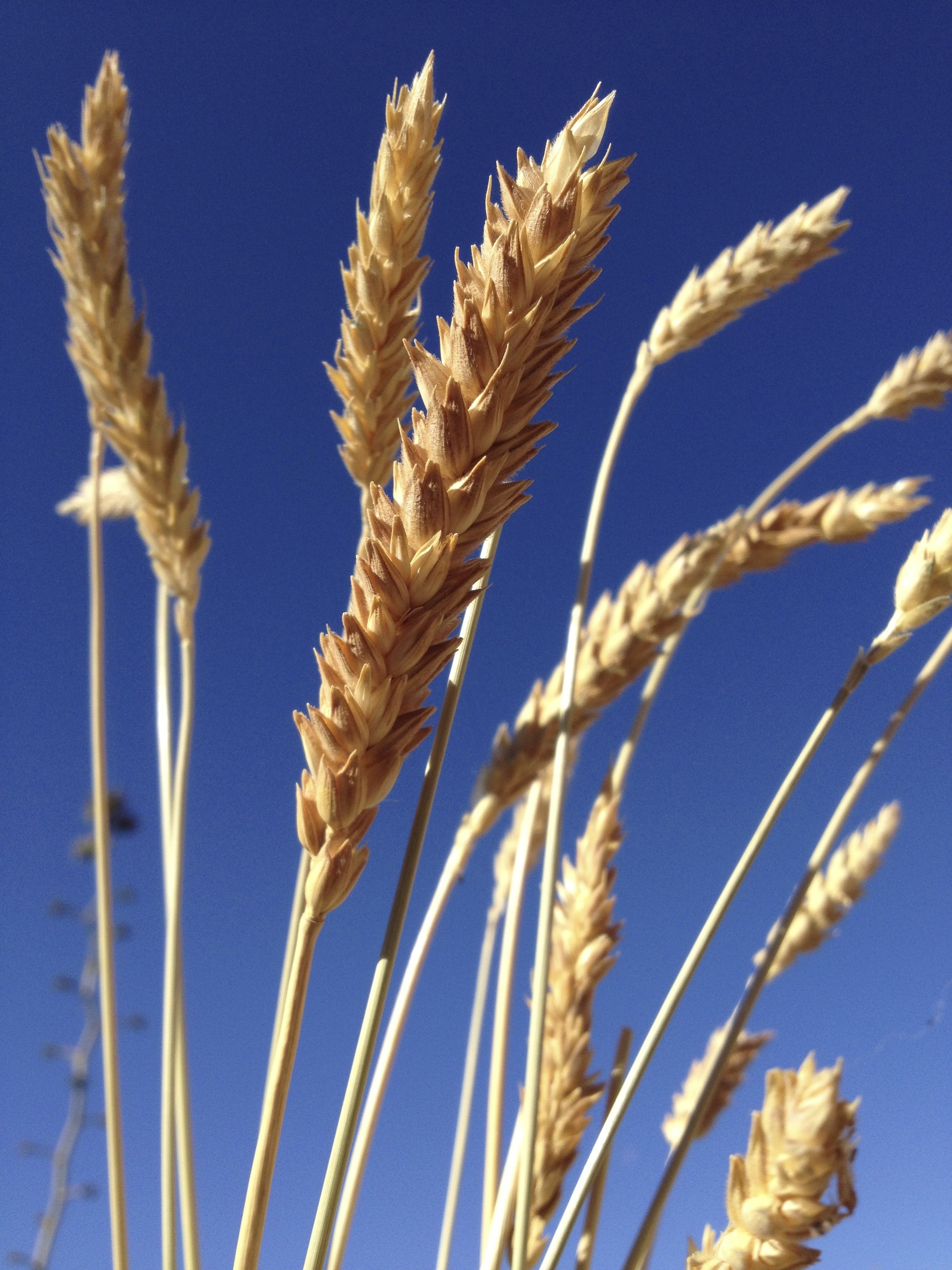
Ripened seed heads of organic heirloom White Sonora Wheat from BKWFarms in Marana (MABurgess photo)

Ripened seed heads of organic heirloom White Sonora Wheat from BKWFarms in Marana (MABurgess photo)

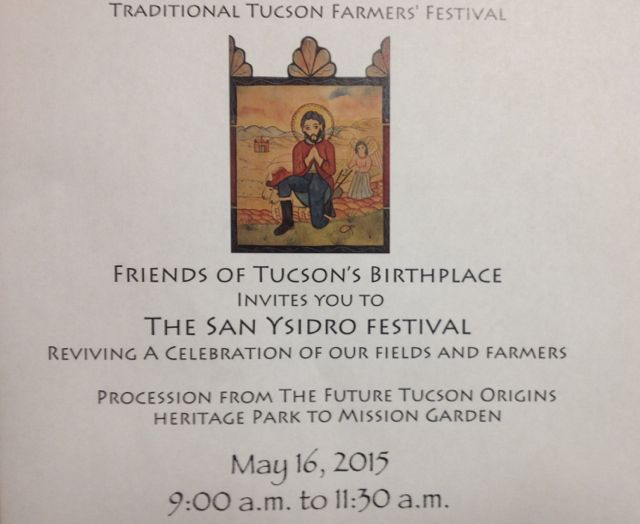
Tia Marta here inviting you to return to the hallowed soil of Schuk-shon–Tucson’s Birthplace “Black Spring”–at the foot of “A” Mountain, in the new Mission Garden, to the very site of the original garden supporting Mission San Augustin de Schuk-shon.  The Feast of San Ysidro Labrador is approaching.

May 15 is the traditional Dia de San Ysidro, Saint Isidor, patron saint of farmers and gardeners.

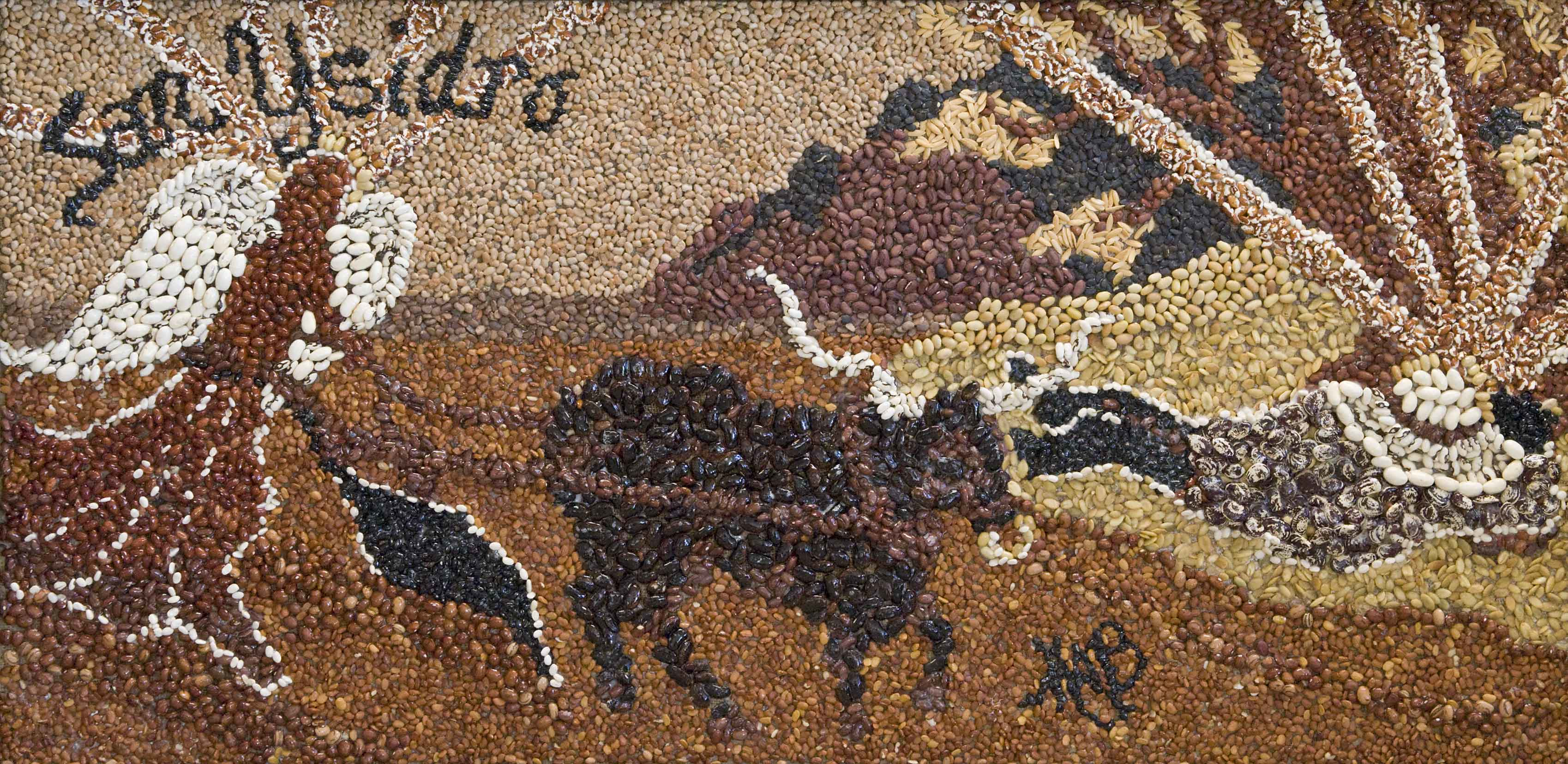
According to legend, San Ysidro Labrador was so hard-working and generous with his produce to all in need—people or animals–that angels would plow next to him to triple his crop. In my artistic interpretation, San Ysidro lies exhausted under a tree from working his field while an angel guides his ox to finish his plowing.

Heirloom bean mosaic of San Ysidro Labrador created by artist/ethnobotanist MABurgess

Heirloom bean mosaic of San Ysidro Labrador created by artist/ethnobotanist MABurgess

Here in my big-scale heirloom bean mosaic, the “medium is the message”–in part.   It was assembled using more than 21 colorful varieties of Southwestern heirloom beans and seeds, grown out from the Native Seeds/SEARCH Collection, in Tucson, Arizona.

The ancient seeds used to “paint” this image pay homage not only to San Ysidro but also to the generations of traditional farmers who have selected their seed and labored to grow the best for feeding family and community. Their seed-saving has provided us today with priceless heirlooms, fitting genes, and hope for a food-secure future.  (Notecards of my San Ysidro mosaic will be on sale at the fiesta as a fund-raiser for Mission Garden’s good work.)

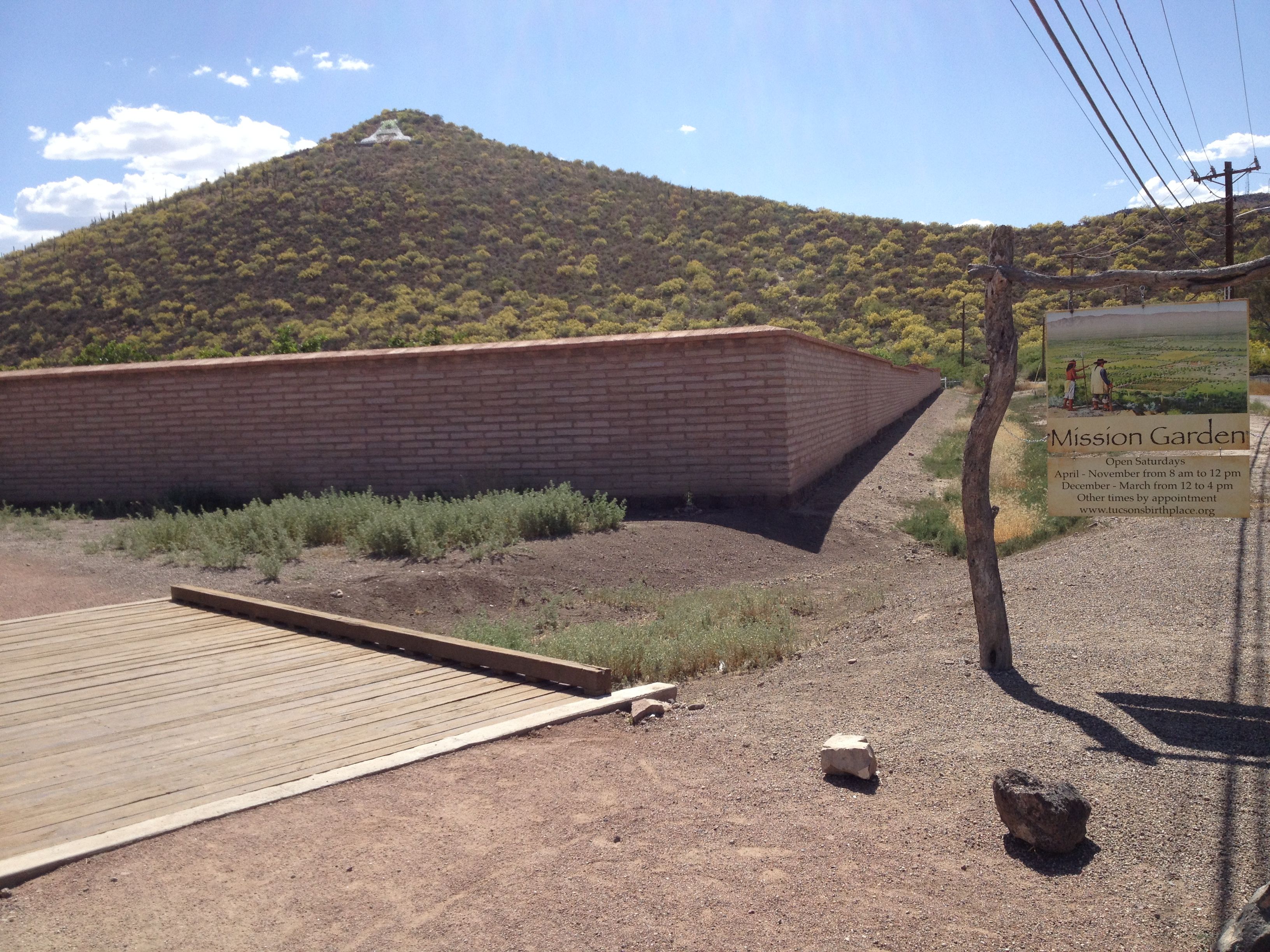
This year, our San Ysidro fiesta will be celebrated on Saturday, May 16, within the adobe-walled orchard of living agricultural history, Tucson’s newest “museum park” sponsored by the non-profit Friends of Tucson’s Birthplace.  Planted in this living museum are representative crops that have fed the sequence of Tucson residents over the last 4100 years.  Seeds of these ancient crops were blessedly conserved by the caring staff and volunteers of NativeSeeds/SEARCH over the past 34 years.

The new Mission Garden--living agricultural history

The new Mission Garden–living agricultural history


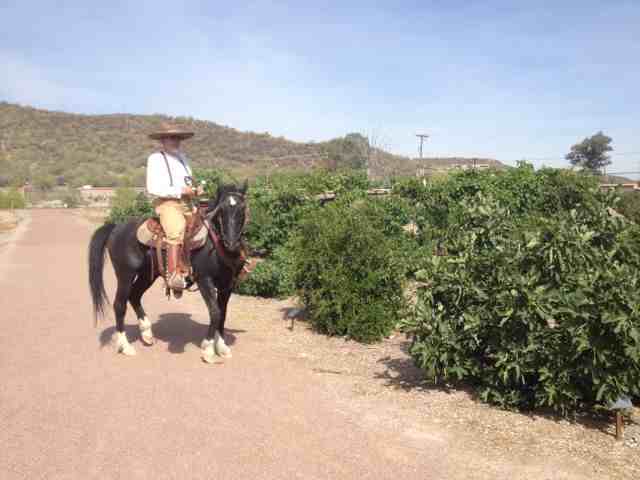
Vaquero in the Orchard of heirloom Mission Period fruit trees at San Ysidro Fiesta 2014 (MABurgess photo)

Vaquero in the Orchard of heirloom Mission Period fruit trees at San Ysidro Fiesta 2014 (MABurgess photo)


The Dia de San Ysidro celebration will officially begin at 9am with a procession from the future Tucson Origins Heritage Park next to the Santa Cruz “river” channel to Mission Garden’s east gate at 929 West Mission Lane, just east of  Grande (Mission Road.)  Festivities will include music by Mariachi Las Aguilitas from Davis Elementary, Alabanza with Bobby Benton, a presentation by historian/author Dr. Tom Sheridan, Native American four-direction prayers and blessing of the fields, food, and animals, and the Tohono O’odham Desert Indian Dancers from San Xavier.  Designs for the new cultural theme gardens (Chinese, Mexican, Afro-American, and Medicinal) will be unveiled.

Activities will culminate with a tasting of Pozole de Trigo, the traditional Sonoran stew for the feast-day prepared by talented volunteer cooks from Tucson’s Hispanic community.  For a fabulous recipe to try in your own kitchen, check out Bill Steen’s article for Sonoran Wheat Posole in Edible Baja Arizona–here’s the link to directions with his mouth-watering photos:

http://www.ediblebajaarizona.com/a-personal-posole

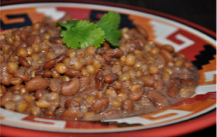
Or, for an even more local recipe, try this Akimel O’odham (Pima) recipe for Heirloom Wheat Posole with Tepary Beans:

Pima Posole Stew with Tepary Beans and White Sonora Wheat, served at Heard Museum

Pima Posole with Tepary Beans and White Sonora Wheat, served at Heard Museum

The combination of high protein Native Teparies and delicious low-gluten Heirloom Wheat Berries makes this a rich and nutritious stew.


Heirloom Wheat Posole with Tepary Beans—Pilt’kan ch Ba’bawi Posh’oldt

Ingredients:

2 cups dry tepary beans *

Water to more than cover the beans for initial soaking and cooking

1 large marrow bone (or beef broth as substitute for ½ the water when simmering, omit for vegetarian)

2 cups dry whole wheat berries (wheat kernels) **

3-4 cups drinking water or stock

Sea salt to taste (1-2 Tbsp.)

Black pepper or native chiltepine peppers***, to taste

Directions:

Carefully sort dry beans to remove stones. Wash, rinse, and cover with good water to soak overnight. Drain when plumped and ready to cook.

In big cooking pot, put beans, marrow bone, and drinking water to cover. Bring to a boil then simmer for 2+ hours.

Separately, rinse wheat berries and drain. Add wheat berries and salt to the cooking teparies. Add more water and/or stock. Bring to boil, then simmer an additional 1 ½ hours or until wheat berries are round and tender, and teparies are tender(not chewy).

Reserve excess water for later soup stock. Remove bone.  For serving, posole should be moist with broth. Add black pepper and sea salt to taste. If picante bite is desired, add one or two crushed chiltepine peppers.

Enjoy this traditional taste of the desert! ***********Here’s where to find these traditional ingredients (being grown anew in their home turf):

*Native tepary beans are available at www.nativeseeds.org or at www.ramonafarms.com .

** Organic White Sonora Wheatberries are available at Flor de Mayo tent at Sunday St Philips Farmers Market, Tucson, or at the NativeSeeds/SEARCH Store, 3061 N Campbell Ave, Tucson.

***whole wild-harvested chiltepine peppers are available at Flor de Mayo tent, Sunday St Philips Farmers Market, Tucson, or at the NativeSeeds/SEARCH Store, Tucson.

*****************************************************************************************

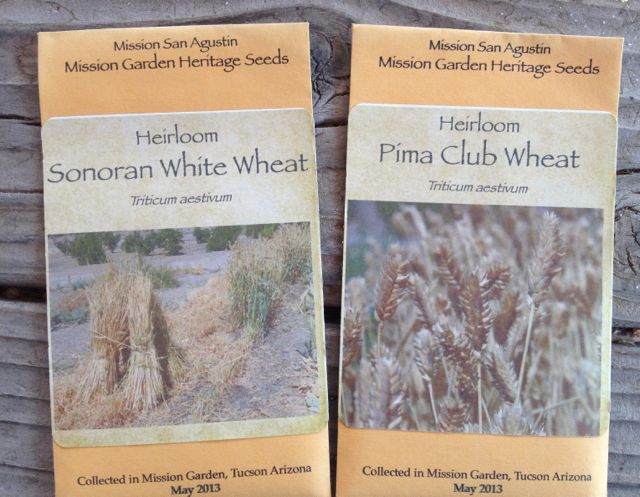
Seed packets of heirloom wheat varieties grown at Mission Garden

Seed packets of heirloom wheat varieties grown at Mission Garden, for sale to plant in your own winter garden.

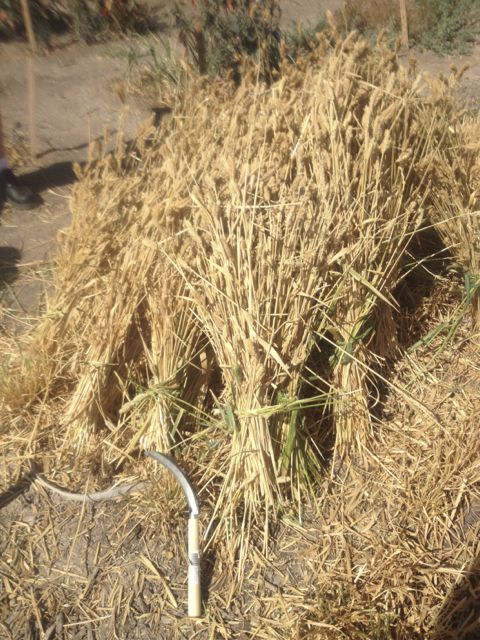
Sheaves of heirloom White Sonora Wheat hand-harvested at Mission Garden

Sheaves of heirloom White Sonora Wheat hand-harvested at Mission Garden

Because Dia de San Ysidro especially heralds the wheat harvest, the staple grain introduced by Padre Eusebio Kino and other missionaries over 300 years ago to the Native Tohono O’odham community living here, this year’s festivities will include a ceremonial wheat harvest, guided by expert plantsman and Desert Museum staff person Jesus Garcia, to take place around 8am, Saturday, May 16, before the procession.

Support organizations, such as NativeSeeds/SEARCH, San Xavier Coop Association, BKWFarmsInc, and Tucson Herbalist Collective will have booths with demonstration items, tastes of native foods, solar cooked White Sonoran Wheat berries, traditional food products packaged for sale, and resource people to talk with about desert gardening for real food.

Invitation to the 2015 San Ysidro Fiesta

Invitation to the 2015 San Ysidro Fiesta

The event is free with a donation requested.   Find out more details of the San Ysidro Festival at  www.tucsonsbirthplace.org.   Hope to see you there!

[For more great recipes and stories about White Sonora Wheat, you can search with the box above using those key words, thru the last 2 years of this blog.]

Sweet Roasted Mesquite for a Happy Valentine’s

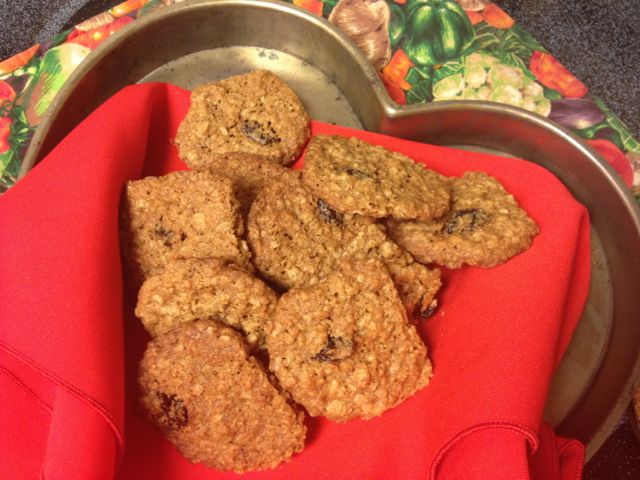
Valentine's Roasted Mesquite and Heirloom White Sonora Wheat Oatmeal Cookies

Valentine’s Roasted Mesquite and Heirloom White Sonora Wheat Oatmeal Cookies


[If only this were a scratch-and-sniff site….]

‘Tis the season for the sweetest, rarest, and heart-healthy mesquite treat of the whole year– Roasted Mesquite! During this relatively cool and occasionally soppy “wintery” weather, stored mesquite pods, which may have drawn in moisture from the humid air since harvesting last summer, can be roasted or toasted for ease of milling into a fine meal. The result is a transformation into something even sweeter than the already-yummy natural raw mesquite meal.


Tia Marta here to introduce you to Roasted Mesquite and to share some creative ideas for celebrating Valentine’s (and beyond).


When mesquite pods are roasted, their complex sugars burst with an almost chocolat-y bouquet. Roasted mesquite has hints of its “botanical cousin,” the carob, from the Near East (known as Saint John’s Bread in the Bible, as it fed St. John so well through his desert wilderness retreat). Those soluble complex carbohydrates that make mesquite such a heart-healthy food–giving sustained energy, helping with cholesterol, balancing blood sugar—come flavorfully to the fore when mesquite is roasted. Take note: all fitness fans, hypoglycemics, diabetic and gluten-free cooks! Roasted mesquite is a super booster-food especially for you. Its complex sweetness and its nutrition make it a gift for everyone you love.

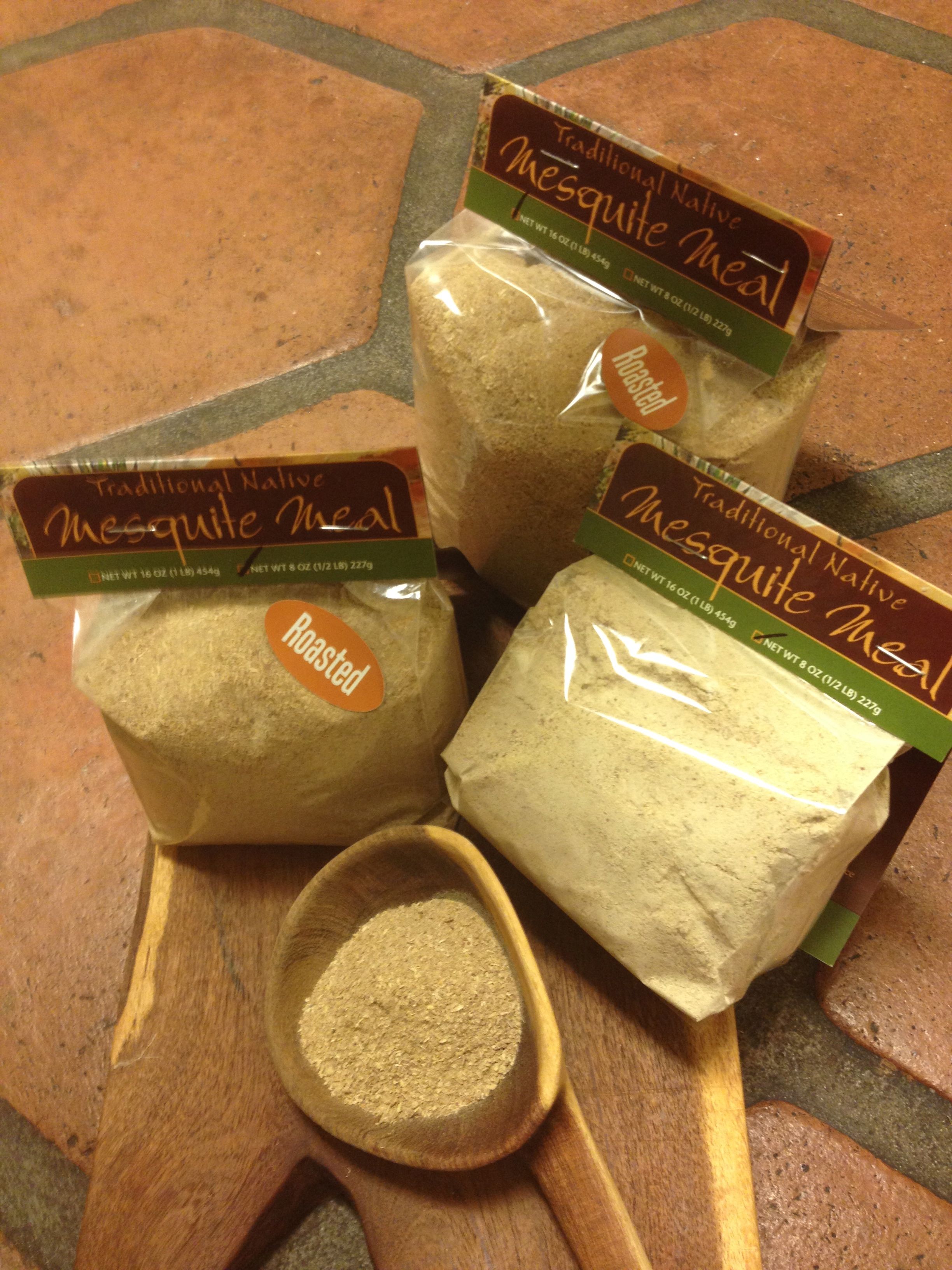
Comparing roasted mesquite flour and natural raw mesquite flour (MABurgess photo)

Comparing roasted mesquite flour and natural raw mesquite flour (MABurgess photo)

You can use roasted mesquite meal in so many ways. In addition to baking with it, the distinctive aroma and richness puts it into the category of seasoning or spice. Shake roasted mesquite through a big-holed spice shaker to jazz up bland dishes or for sprinkling atop coffeecakes, muffins, sundaes, custards, frapaccinos, salads….Yum, it is waiting for your inventions. I make a little mix of garlic powder, sea salt, and roasted mesquite meal, then put the combo in a shaker and keep it handy by the stove or on the table to sprinkle on about everything. Try it on your steamed greens or in quinoa. When corn-on-the-cob season rolls around, there isn’t anything better than my roasted mesquite salt dusted on it. (Mesquite orchardist and agriculturalist Mark Moody will have fresh corn with roasted mesquite at Flagstaff farmers markets this summer—don’t miss it.)

Add a tablespoon of roasted mesquite meal to any hot cereal. It does wonders for oatmeal. Mesquite is the tastiest of all nutritional supplements. Whatever you add it to, you know you are boosting flavor and nutrition—making hearts happier!

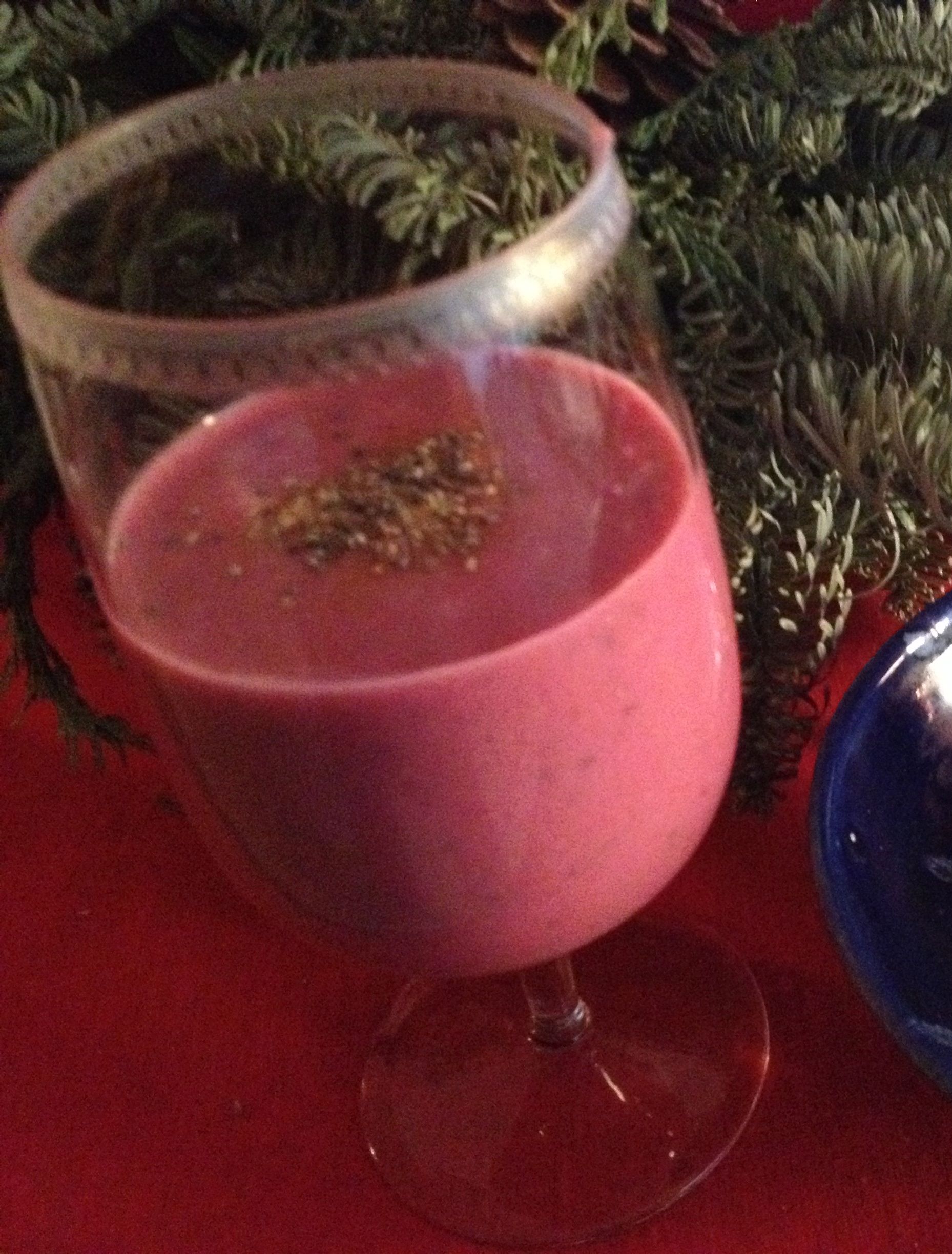
Taste the glorious nutrition of a roasted mesquite and berry smoothie! (MABurgess photo)

Taste the glorious nutrition of a roasted mesquite and red berry smoothie! (MABurgess photo)

Try this delectable and easy Desert Delight–Roasted Mesquite & Red Berry Smoothieso colorful it can make breakfast into a Valentine’s feast. So rich it can be a Valentine’s dessert served with a spoon. (You can double or triple this recipe for company):

Presoak: 1 Tablespoon chia seed in 1 Cup organic apple juice for a few minutes.

In a blender, mix:

1 cup organic plain or vanilla non-fat yogurt.

2 Tbsp. Roasted Velvet Mesquite Meal*

1 cup frozen raspberries or blueberries

2 Tbsp. prickly pear juice or nectar

your pre-soaked applejuice-chia mix

½ or whole ripe banana

1 Tbsp agave nectar (optional as desired for more sweetness)

A few ice cubes (optional as needed for chill or dilution)

Blend on medium ½ minute until smoothie is gloriously pink. Serve in parfait glass with a thin sprinkle of chia seed or pinch of roasted mesquite meal on top as a garni.

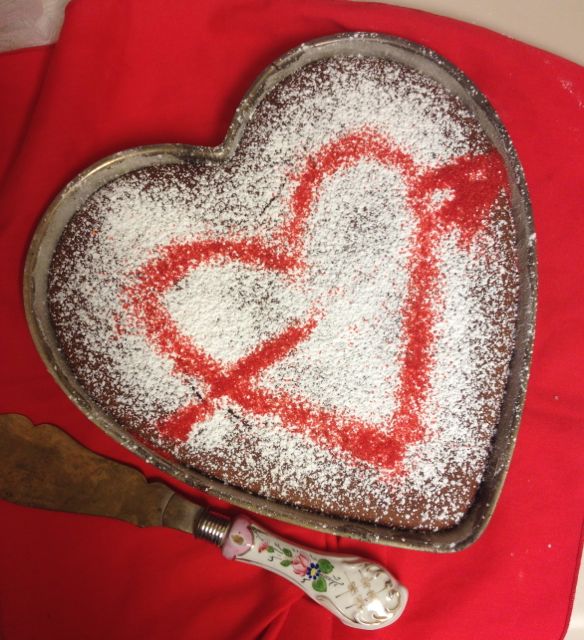
Valentine's gluten-free roasted mesquite/almond coffeecake (MABurgess photo)

Valentine’s gluten-free roasted mesquite/almond coffeecake (MABurgess photo)

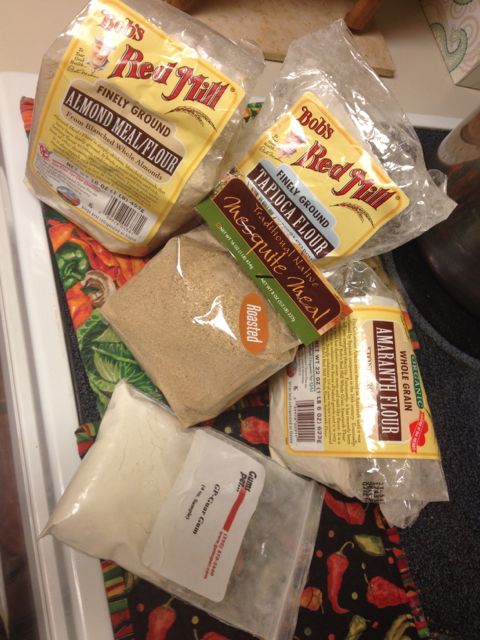
Ingredients for gluten-free roasted mesquite and almond coffeecake looks like an ad for Bob's Red Mill

Ingredients for gluten-free roasted mesquite and almond coffeecake looks like an ad for Bob’s Red Mill

And here’s a wonderful gluten-free recipe to share with wheat-sensitive friends:

Muff’s Gluten-Free Roasted Mesquite/Almond CoffeeCake:

(This is a heavier cake that sometimes turns out more like an energy bar when sliced.)

Preheat oven to 350 degrees. Lightly oil or butter an 8×8” pyrex baking dish and dust with rice flour.

Sift together:

½ cup Roasted Velvet Mesquite Meal*

¾ cup organic brown rice flour and/or amaranth flour

½ cup almond meal

¼ cup tapioca flour

2 tsp guar gum or locust bean gum (for leavening)

1 tsp baking powder

¼ tsp sea salt

Mix In:

¼ cup agave nectar

¼ cup canola or other cooking oil

¾ cup soy milk, rice milk, or almond milk

Beat separately then add in:

2 eggs

1 tsp vanilla extract

1 tsp almond extract

Pour into baking dish. Bake 25-35 minutes or more until cake tests done. Serve with thanks to the nutritious bean trees of the desert!

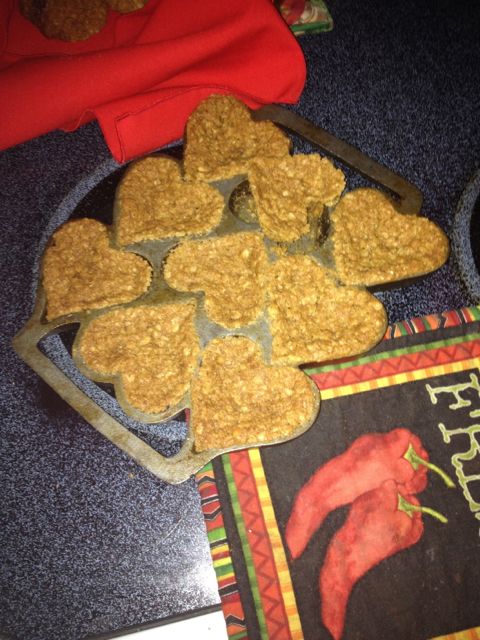
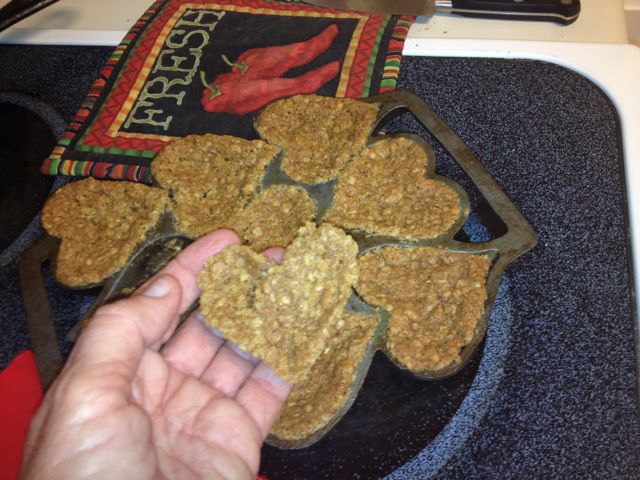
Roasted mesquite cookies in valentine iron pan

Roasted mesquite cookies in valentine iron pan

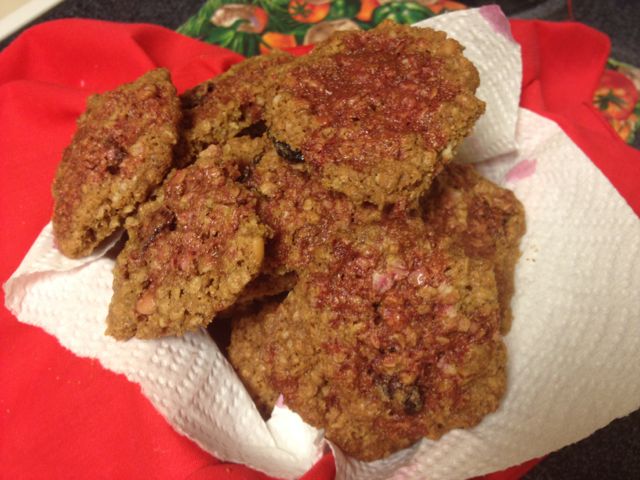
Roasted mesquite cherry oatmeal cookies

Roasted mesquite heirloom wheat & cherry oatmeal cookies

Now for a relatively “healthy” cookie try this celebration treat with roasted mesquite—

Muff’s Roasted Mesquite & White Sonora Wheat Valentine Oatmeal Cookies (with pinyones and dried red cherries to honor George Washington’s birthday too)—a great cookie for any time of year.

Preheat oven to 350 degrees.

Cream together: 1 cup (2 sticks) organic butter softened, ½ cup organic brown sugar firmly packed, and ½ cup organic white sugar

Beat in and mix until creamy: 2 eggs and 1 teaspoon vanilla

In a separate bowl, sift together: 1 tsp. baking soda, 1 tsp sea salt, 1 cup organic White Sonora Wheat flour**, and ½ cup Roasted native velvet Mesquite Meal*

Mix dry ingredients with moist ingredients until smooth.

Add, and mix in: 2-3 cups quick oatmeal (uncooked), ¼-1/2 cup pine nuts (pinyones) shelled, and ¾ cup dry cherries or dry cranberries.

Onto a well-greased cookie sheet, drop 1-tsp glops of cookie dough well-spaced. (You could use a heart-shaped mold or heart cookie cutter.) Press a dry cherry on top of each glop for décor.

Bake 10-12 minutes until barely golden brown, and enjoy the festive desert flavor of roasted mesquite with your Valentine!

Roasted Mesquite and Heirloom White Sonora Wheat Oatmeal cookies droozled with prickly pear juice (MABurgess photo)

Roasted Mesquite and Heirloom White Sonora Wheat Oatmeal cookies droozled with prickly pear juice (MABurgess photo)

*For purchasing Roasted Mesquite Meal–seek and ye shall find. There are only a few places where you can source this seasonal culinary treasure, if you are not roasting and milling it yourself! Find it at the wonderful NativeSeeds/SEARCH store (3061 N. Campbell Ave, Tucson, www.nativeseeds.org). Our roasted mesquite is from native Arizona velvet mesquite, Prosopis velutina, grown and milled with the highest standards. For tastes, visit the Flor de Mayo booth on Sundays at St.Phillips Farmers Market (SE corner River Rd and Campbell Ave), or order at www.flordemayoarts.com via PayPal. It is also online at www.mesquiteflour.com and from the Prickly Pops booth at Thursday Santa Cruz Farmers Market.

**The special local ingredient for the cookie recipe above, heirloom White Sonora Wheat flour, is available at two Tucson locations. Several different grinds of Hayden Flour Mills’ heirloom flour is at the Native Seeds/SEARCH store. For super-fresh-milled “live” White Sonora flour, from local, certified organic whole grain grown by BKWFarms, you can contact Tia Marta by phone or email by the Friday before pick-up at Sunday’s St Phillips Farmers Market, along with the roasted mesquite meal.

For more ideas on how to cook with mesquite—roasted or natural–check out the recipe book Eat Mesquite! published by www.desertharvesters.org, and available at the NativeSeeds/SEARCH store. Visit www.bajaaz.org, the website of Baja Arizona Sustainable Agriculture, for more mesquite details.

Newcomers as well as confirmed “desert rats” can see the actual plants which produce the local ingredients of our Valentine Cookies—mesquite trees and heirloom White Sonora Wheat growing at our special Baja Arizona parks. See and appreciate them in their winter-spring glory at the Friends of Tucson’s Birthplace Mission Garden (base of A-Mountain, Saturdays), at the Arizona-Sonora Desert Museum, and in the ethnobotanical garden at Tohono Chul Park.

Enjoying roasted mesquite treats is indeed another way of rejoicing in the desert’s natural bounty, and of supporting appropriate, sustainable desert agriculture. Happy Valentine’s, and may your heart be happy cooking with roasted mesquite!—from Tia Marta and Rod at www.flordemayoarts.com.


Celebrate the Solstice-tide with Heirloom Bean Treasures

Our ancestors did it—and we still do it today in many ritual ways—we await and call out to the returning light. Indeed in these holy-days of Solstice, Hanukkah, Shálako, Christ-mass, the Yule, we still hope and pray that the light will return to our hearts and our communities throughout our small planet!

Four Corners Gold beans in a Tarahumara madrone scoop

Four Corners Gold beans in a Tarahumara madrone scoop

Tia Marta here to share some ideas of foods that have assisted in traditional winter rites, and which can grace our  tables anew for these holy-days.

To me, sprouts, more than anything else, symbolize the return of longer light, the rebirth of life–on so many levels. Out of the darkness and dormancy a sprout brings new life, vitality, a tiny, fragile but hopeful future. Nutritionally, a sprout is a wave of exuberant phytonutrients surging with life-giving properties for itself–and for those who might consume it.

Four Corners Gold bean sprouts on the 2nd day just emerging from seed coat

Four Corners Gold bean sprouts on the 2nd day just emerging from seed coat

Ancient cultures of the Southwest have used sprouts in ceremony since time-immemorial, helping communities through rough times of transition, phases of seasons, new homes and life changes. My special favorite for sprouting is the beautiful Four Corners Gold bean, a bright mottled golden-yellow Jacob’s cattle bean, a genetic gift from Native Zuni farmers over the centuries. I sprout the beans by first soaking a ½ cup of dry beans overnight in a cup or bowl, then rinsing and draining them at least 2-3 times daily over a 3-5-day period. Watch life virtually explode out of those little packages of potential! I use the sprouts as a respected garnish or as a flavorful addition to salads or stir-fry. It is like a form of communion to eat sprouts–ingesting renewal.

Four Corners Gold beans up close--check out the difference with Yellow-eye--very different tastes--both wonderful

Four Corners Gold beans up close–check out the difference with Yellow-eye–very different tastes–both wonderful

These colorful dry Zuni beans cooked from scratch also make a hearty and nutritious soup or chile-bean dish for chilly wintry nights. On sunny winter days I like to cook the dry beans (pre-soaked the night before) in the solar oven and have them “at the ready” later in the frig. A pot of beans on the back burner during the holiday season can help make a party happen. Cooked beans are a wonderfully patient food you can have waiting to leap into culinary action when company pops in unexpectedly, or if teenage appetites require between-meal satisfaction.

Heirloom Scarlet Runner Beans washed and ready to soak for cooking

Heirloom Scarlet Runner Beans washed and ready to soak for cooking

Here’s a hearty Tia Marta recipe for enlivening a holiday season buffet:

BARBECUED Heirloom SCARLET RUNNER BEAN Dippers
These make the perfect vegetarian hors d’oeuvres to serve at a holiday buffet or to have ready to heat for drop-in company!

Start them the day before you want to serve them by soaking 1 cup of dry Scarlet Runner Beans.
Soak beans in plenty of water (3-4 cups) for at least 12-24 hours until fully plump and twice their original size.
Drain beans, and add 3-4 cups drinking water.
Simmer on low (stovetop or crockpot) for 3-4 hours until done through and pass the taste test, beyond al dente. The beans should keep their shape and integrity. This will produce extra beans to freeze for other recipes or for doubling the recipe. You will need about 8-10 oz or 1 generous cup of cooked beans for this barbeque recipe.

BBQed Scarlet Runner beans glazed and delicious after simmering in sauce

BBQed Scarlet Runner beans glazed and delicious after simmering in sauce

Ingredients:
1 large or 2 medium onions, diced                                                                                                                                                                                                                                                      1 Tbsp. olive oil                                                                                                                                                                                                                                                                                  3-4 Tbsp. butter                                                                                                                                                                                                                                                                                    1 tsp. sea salt
4 Tbsp. molasses
1-2 Tbsp. prepared mustard
1/2 cup mild chile salsa
1 Tbsp. cider vinegar
1-2 tsp. Worcestershire sauce
Dashes of Tabasco or Red Devil hot sauce to taste

To make the Barbeque sauce:
Saute onion in butter until clarified. Add all seasoning ingredients to sauteed onions, stir and simmer for 5 to 10 minutes or more.
Add in cooked, drained beans–8-10 oz cooked Heirloom Scarlet Runner beans (about 1 generous cup).  Simmer smothered beans and sauce 10 minutes or longer (the longer the better).  Making the BBQ scarlet runners ahead, you can refrigerate them at this point.  Heat before serving.
Serve smothered beans on a hot platter or in a chaffing dish with a fancy toothpick in each bean for a wonderful party surprise that is more satisfying than meat-balls.  Serves a gang of hungry party-ers.

(By doubling this sauce recipe you can use all your cooked beans in it.) Bon appetit! And happy holidays to you and your guests!

Barbequed Scarlet Runner beans as hors d'oeuvres--each one is a perfect tasty bite!

Barbequed Scarlet Runner beans as hors d’oeuvres–each one is a perfect tasty bite!

At New Year’s, our family tradition, with one branch hailing from the South, has always been Black-eye Peas. It is a joy to know that there are Native People here in Baja Arizona who adopted black-eye peas into their own traditional cuisine when European padres first brought them from the Old World. Locally-grown black-eye peas (u-us muñ) may still be available from a Pima farm at http://www.ramonafarms.com and sold through the Native Seeds/SEARCH store.

Heiloom Yellow-eye Bean--a delectable alternative to black-eye peas for New Years or great as baked beans anytime!

Heiloom Yellow-eye Bean–a delectable alternative to black-eye peas for New Years or great as baked beans anytime!

For those who want to break away one step from tradition, it is fun to try a delicious alternative New Year’s bean—the yellow-eye. Natives of New England introduced it to Colonists and it became the real Boston Baked Bean long before newer varieties like navy beans or great northerns ever came on the scene. Yellow-eye has a flavor like no other bean and is worth trying in different dishes. I especially like yellow-eyes spiced with freshly ground pipian rojo móle from our own local Mano y Metate (www.manoymetate.com).

We think of cranberries as a holiday fruit but have you tried cranberry beans for warming winter dish? There are many Italian recipes for cranberry bean. My stick-to-the-ribs favorite, which delectably uses winter’s plethora of fresh greens, is cranberry beans-and-greens. Tucson’s Mission Garden is producing bundles of the best acelgas greens ever—available at Thursday’s Santa Cruz farmers market at Mercado San Augustine. I invite you to scroll back to last December 2013’s savorthesouthwest.wordpress blog for more great holiday bean recipes.

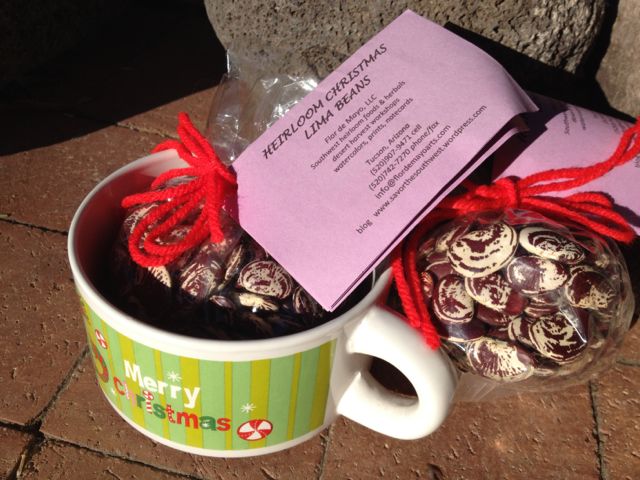
Heirloom Christmas Limas can lend themselves to our BBQ bean recipe as well

Heirloom Christmas Limas can lend themselves to our BBQ bean recipe as well

Until I was introduced by Dr Barney Burns (co-founder of Native Seeds/SEARCH) to the diversity of Southwestern heirloom beans, I was a beans-out-of-the-can cook. Indeed even now, with growing awareness of heirloom foods, there are many folks whom Rod and I meet at our farmers market booth who are daunted by the idea of cooking beans from scratch. Yes, dry beans do take time—but with simple low-tech tools like the crockpot or solar oven, multitasking is a breeze. Nothing could be simpler! Cooking one’s own beans opens up a whole new array of flavor possibilities. It’s a color and flavor rainbow of Native American, Hispanic, and pioneer traditional beans which we now have available (largely through the exploratory Southwest seed-saving by Native Seeds/SEARCH over the last 30+ years). All beans are not created equal. Each heirloom has its own unique flavor and bouquet well worth tasting, and its own adaptations to the Baja Arizona desert well worth planting in your garden. Scarlet runner, for example, is long season. Plant it under a mesquite and watch it vine up into the branches, blooming with red flowers for the hummingbirds—the best in edible landscaping! Harvest the giant pods in the fall for next year’s holiday feast.

For limited budgets, buying and cooking dry beans also saves money—big-time. One pound of dry beans when cooked will yield the equivalent of 4 to 6 cans of heat-and-serve beans. Nor will you find our rich SW variety of heirloom beans on any grocery shelf. The Native Seeds/SEARCH store at 3061 N.Campbell Ave, Tucson and the NSS website (www.nativeseeds.org), or the Flor de Mayo booth at Sunday’s St Phillips farmers market (www.flordemayoarts.com) are the very best places to experience that AH-HAH moment when you see 18-20 beautiful heirloom varieties spread out before your very eyes.  I look forward to your visit to our market booth!

Christmas limas with recipe ideas--a yummy stocking stuffer

Christmas limas with recipe ideas–a yummy stocking stuffer–at Flor de Mayo Sunday St Phillips market booth

When one thinks of the cultures, the farmers, the planting and harvesting knowledge, the years of patient selection that all this bean diversity represents, it can boggle the mind and can truly humble the best of cooks and gardeners.

Tia Marta and Rod of Flor de Mayo are sending our thanks to those traditional farmers and to the many young  innovative organic food growers.  May the light be born again in us as we share honorable heirloom foods graciously with our family and friends this Solstice-tide!

Pumpkin Time in Baja Arizona!

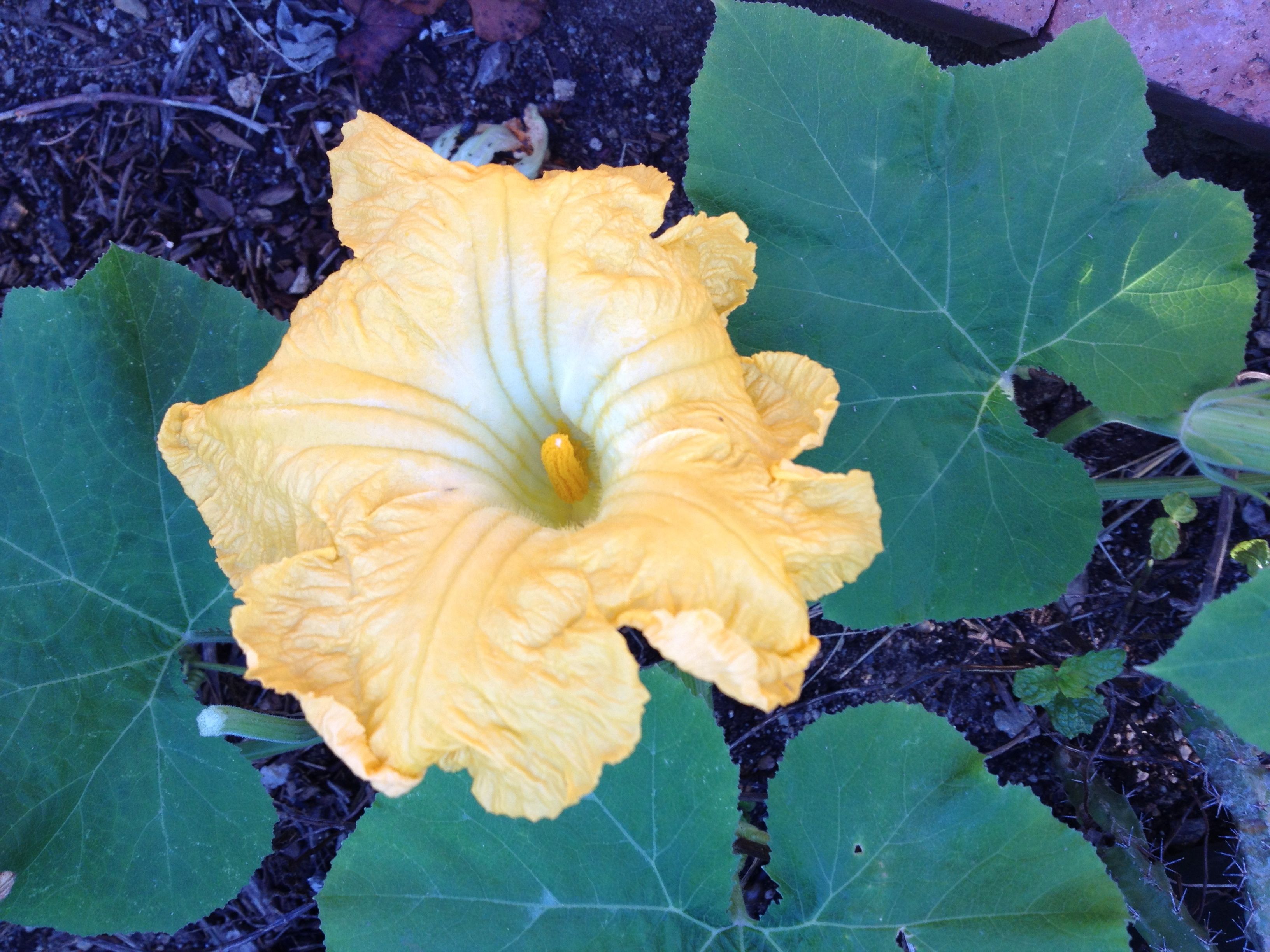
Male flower Magdalena Big Cheese squash (MAB photo)

Male flower Magdalena Big Cheese squash (MAB photo)

Tia Marta here to celebrate the pumpkins and squashes that are now plumping up in every garden and popping up in farmers markets. These sculptural fruits of the vine are our visual signal of autumn and herald cool weather cuisine. So many people ask, “What’s the difference between pumpkins and squashes?” Really there is not much difference, except that, to some ears, “pumpkin” sounds fun but is never eaten, while squash sounds like something your mother made you eat and you didn’t discover how good they are until you discovered Mexican food! (Yum, calabacitas.) Often pumpkins refer to the jack-o-lantern type squash—a Cucurbita pepo—but many squashes of other Cucurbita species are also called “pumpkin” so the term is not cut and dried.
While chubasco rains keep sprinkling our desert, my squash vines have continued to elongate and to flower into the fall. I’m hoping to have winter squashes coming on until the frost hits. Meanwhile, I can go out each morning to assist in pollinating any female flowers with the hefty stamens of the male flowers. Then, what a treat it is to take the plucked, spent male flower and sauté it with eggs for breakfast!

Tohono O'odham Ha:l and curry pumpkins at SanXavierCoop booth, SantaCruz Farmers Market (MABphoto)

Tohono O’odham Ha:l and curry pumpkins at SanXavierCoop booth, SantaCruz Farmers Market (MABphoto)

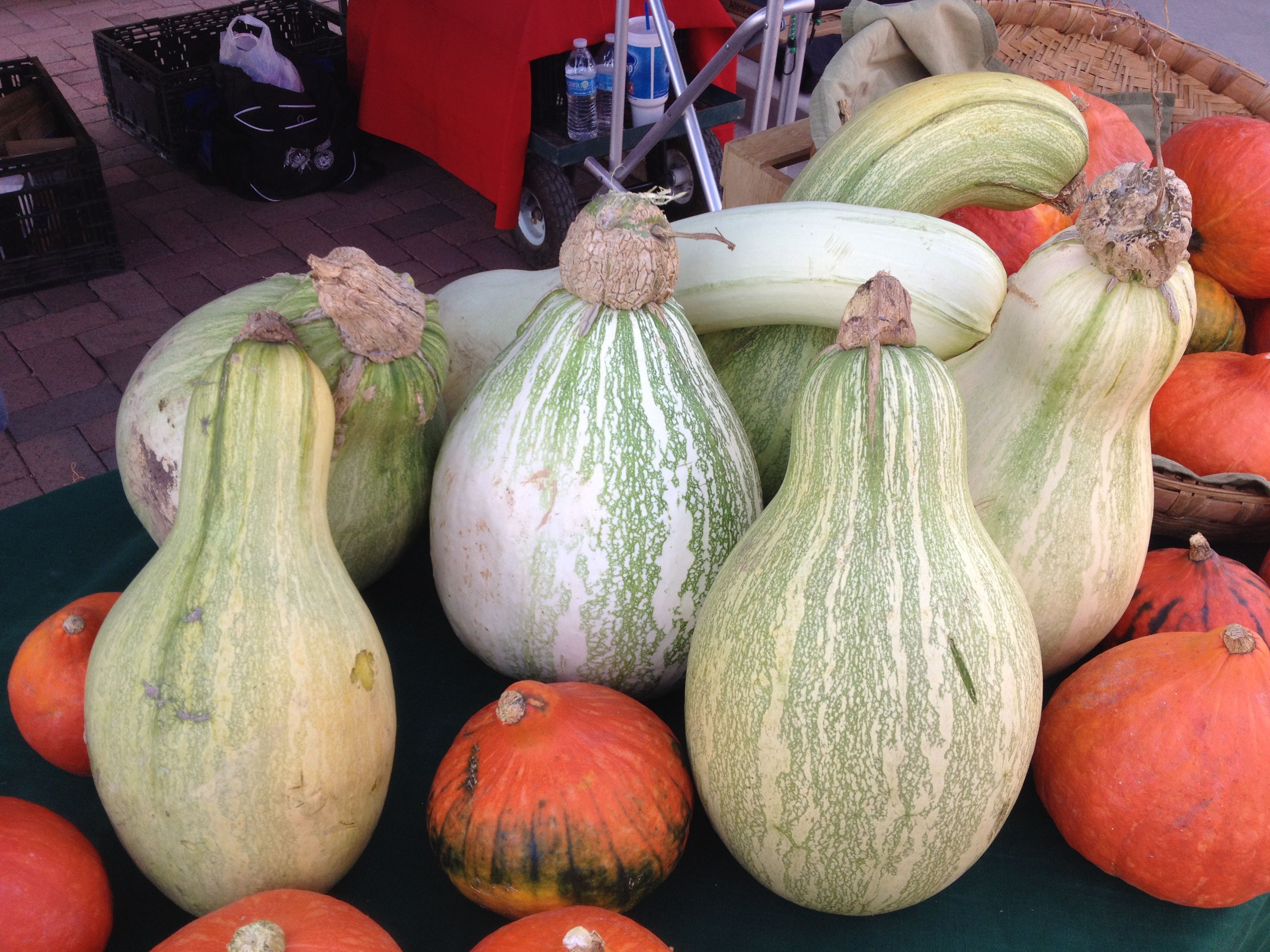
Native People domesticated several varieties of squash or pumpkin centuries before Europeans invaded North America. We all know the Pilgrims’ Thanksgiving story, but here in the Baja Arizona borderlands we should be giving a lot of thanks to the Tohono O’odham, the Yoreme, the Guarijio, and the Raramuri for the gifts of fabulous squashes they have given to all desert gardeners and farmers. From the Tohono O’odham comes the giant cushaw winter squash, known as Tohono O’odham Ha:l or “Papago Pumpkin,” (Cucurbita argyrosperma) with its bulbous pear shape and thick corky peduncle (its vine attachment.)

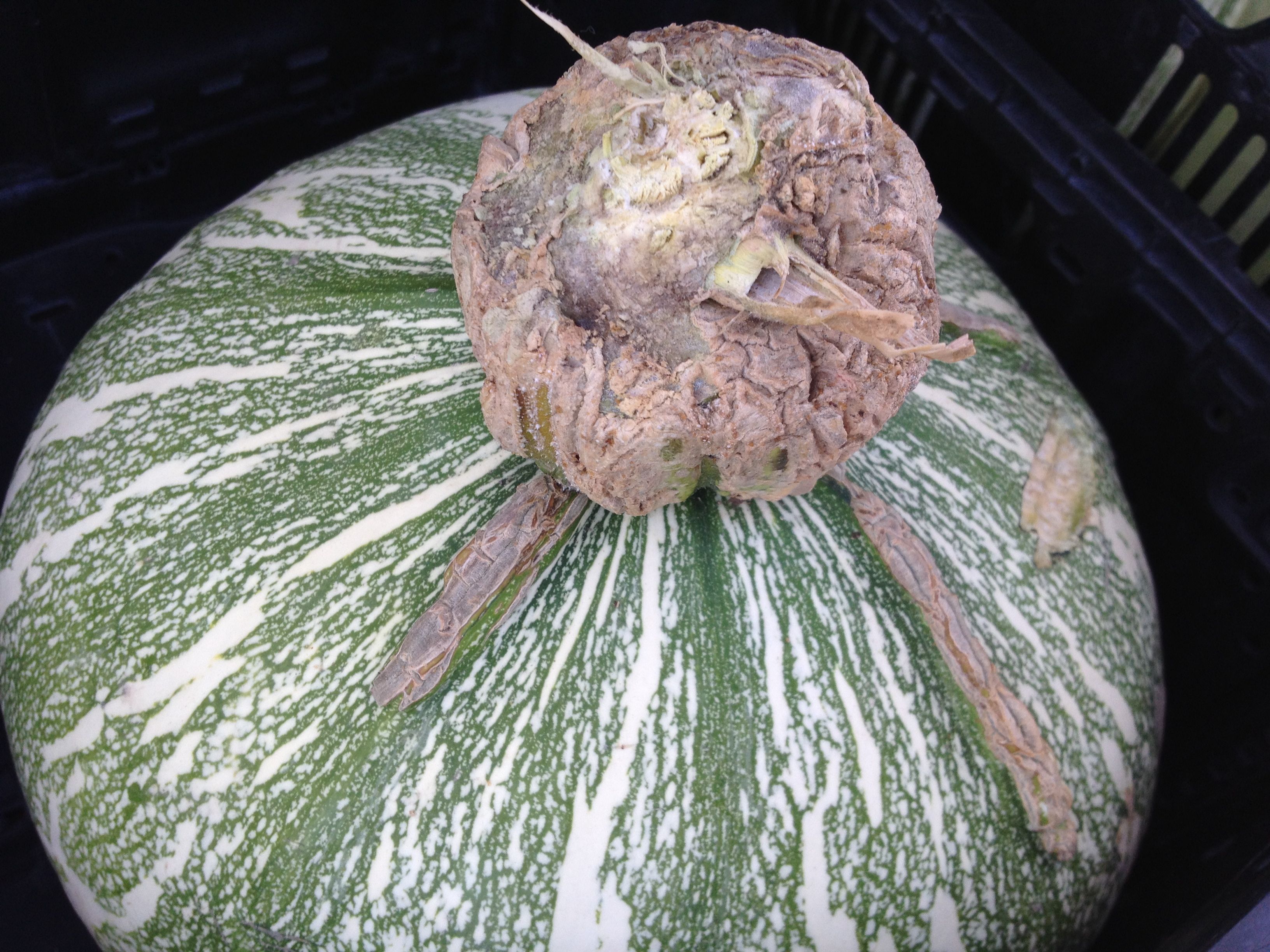
Tohono O'odham Ha:l "Papago Pumpkin" showing characteristic corky attachment and colorful stripes (MABphoto)

Tohono O’odham Ha:l “Papago Pumpkin” showing characteristic corky attachment and colorful stripes (MABphoto)

From the Yoreme or Mayo comes the round, oranged-fleshed Mayo blusher (Cucurbita maxima). From the Guarijio comes a grand segualca (Cucurbita moschata). And from the Raramuri or Tarahumara, comes the striped mini-pumpkin with sweet orange flesh (Cucurbita pepo). This last one is the pumpkin Native Seeds/SEARCH grew in plenty last year and returned to drought-stressed Tarahumara farmers in a cross-the-border sharing. Check out http://www.nativeseeds.org for images of each of these lovely squashes, or visit the Mission Garden at the base of A-Mountain to see maturing fruits from the monsoon planting. Then plan ahead for next year to plant some of each in your own monsoon garden for great winter cookery and for sharing with neighbors.

All of these Native pumpkins/squashes are the ultimate in desert adaptation. They grow well in the heat with monsoon rains, AND, they keep for long periods of time without refrigeration over the winter. Talk about an easy, low-tech way to preserve food! I have kept the hard-shelled Tohono O’odham Ha:l outside in the shade of my back porch from October’s harvest into May of the following year when temperatures soared. That’s what you call a keeper.

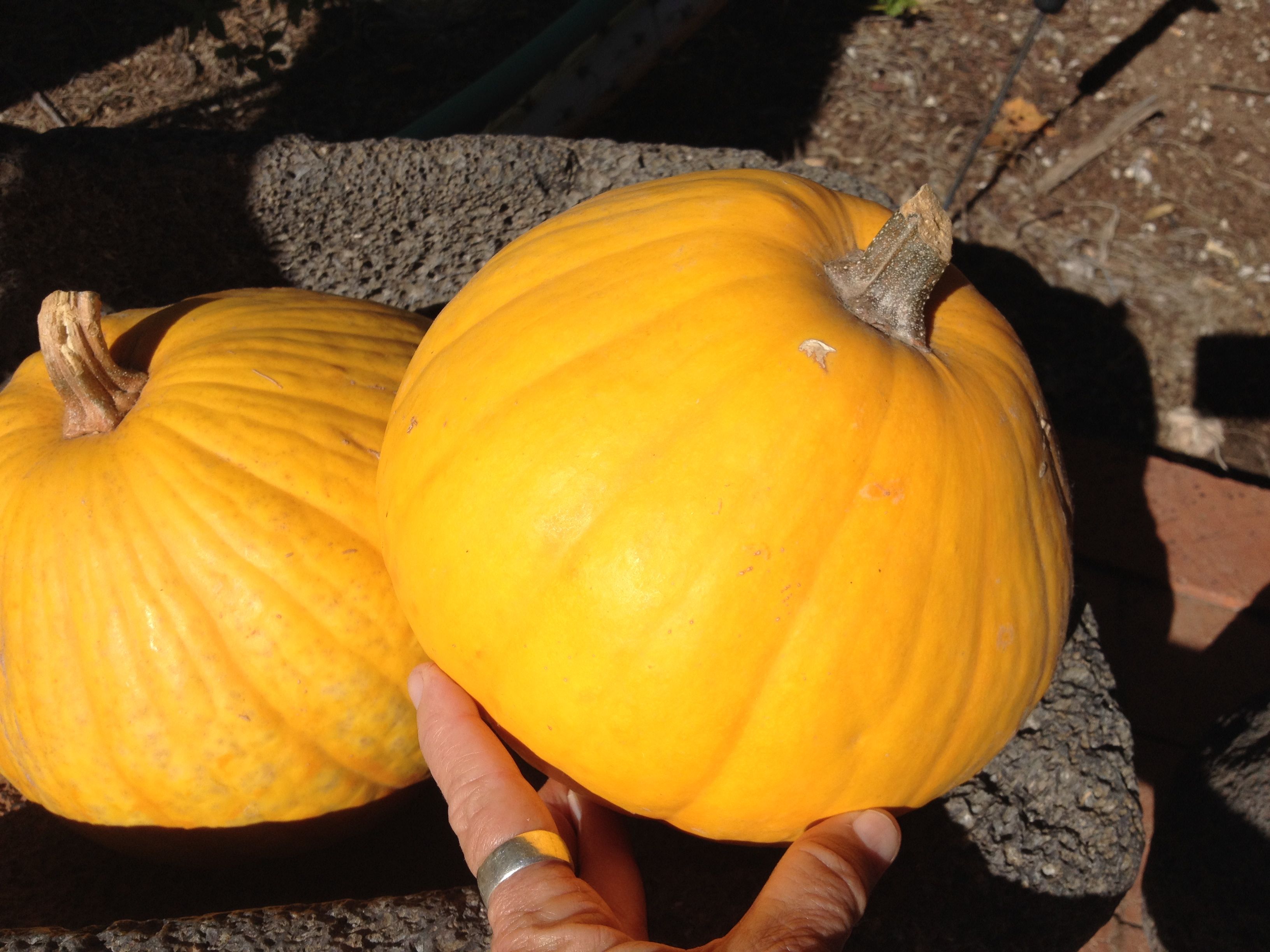
Tarahumara pumpkins Oct2014 from 2013 harvest (MABphoto)

Tarahumara pumpkins Oct2014 from 2013 harvest (MABphoto)

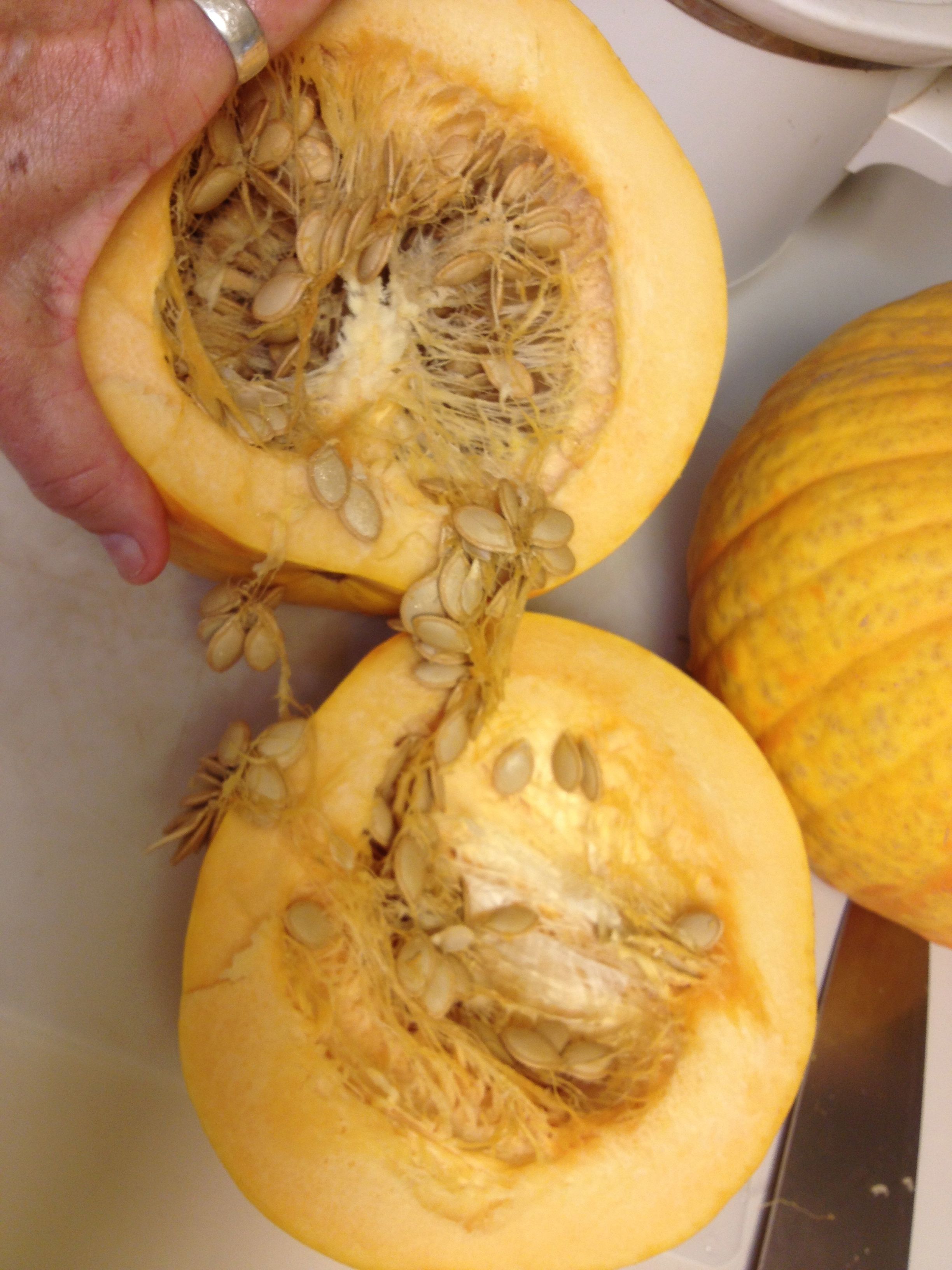
With last fall’s harvest of Tarahumara pumpkins, I started another experiment in non-refrigerated storage. I kept 2 medium-sized pumpkins inside on a tile floor out of direct sun. Over the summer they turned from green striped to bright yellow-orange on the outside. I had no idea this week what they would be like inside when I opened them at last for cooking. To my surprise and gladness the flesh was still firm and gorgeous—bright with beta-carotenes—and the seeds were plump and not-yet-sprouted.

Rich flesh and seed of Tarahumara pumpkin (MABphoto)

Rich flesh and seed of Tarahumara pumpkin (MABphoto)

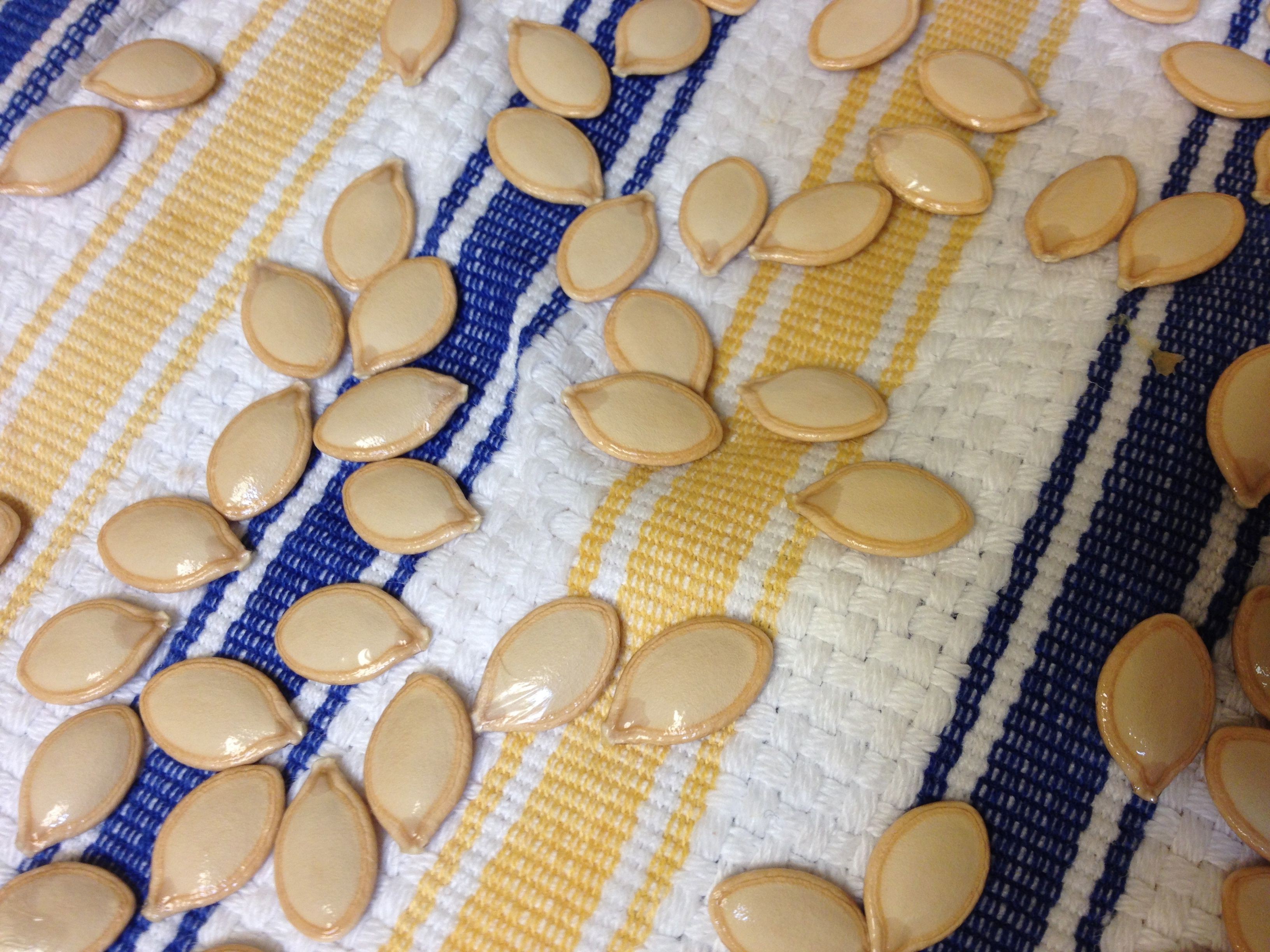
Pumpkin seeds cleaned to dry and save for next year's planting (MABphoto)

Pumpkin seeds cleaned to dry and save for next year’s planting (MABphoto)

With such luscious pumpkin seeds, some had to be saved for next summer’s garden and some had to become snacks. Here is what I did to them. Give it a try with your next opened pumpkin:

Spicy Sweet Pumpkin Seed Snacks
(Makes 1 cup)
1 cup of pumpkin seeds, cleaned
1/2 tablespoon of olive oil
1/2 tablespoon of honey
1/2 teaspoon of sea salt
¼ tsp of chile powder (choose mild, medium, or hot, depending on your palette)
Preheat oven to 375 degrees
(Some recipes call for boiling seeds first, for 10 minutes in 4 cups of water then draining before the next step. It helps to soften the hulls but may remove some nutrients. This step is optional–I don’t bother.) Transfer seeds to a bowl, toss with the honey, oil, and spice ingredients until fully covered, then spread them out evenly onto a baking sheet that has been coated lightly with cooking oil or non-stick spray.
Bake for about 12-15 minutes, tossing once, or until the seeds are crispy and lightly golden brown. Let them cool before serving — they will get even crispier. Pumpkin seeds contain zinc which is great for fall-weather immune fortifying. They also contain L-arginine which is especially good for guys. Enjoy this tasty Southwest snack!

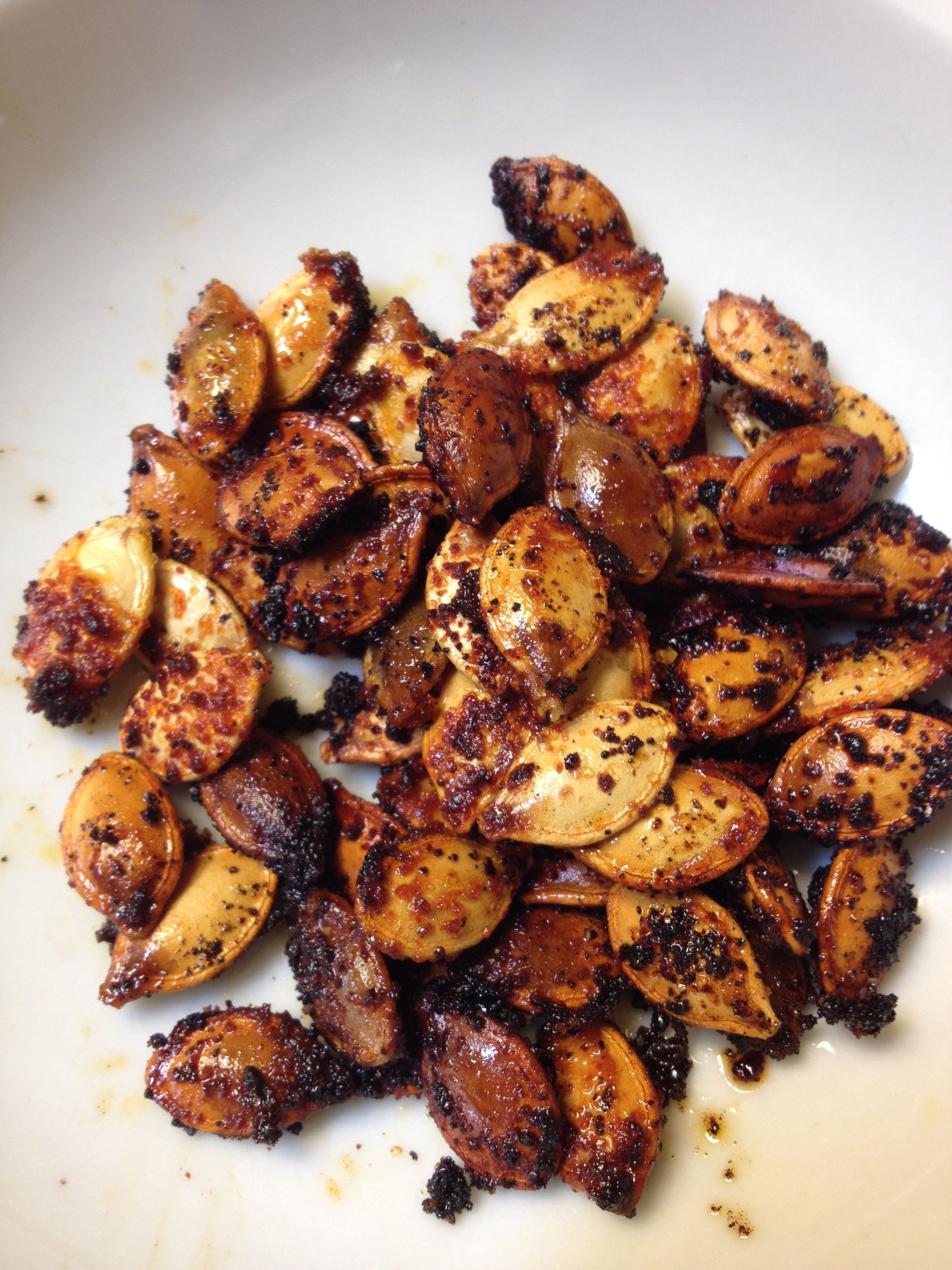
Chile-and-honey-roasted pumpkin seed snacks (MABphoto)

Chile-and-honey-roasted pumpkin seed snacks (MABphoto)

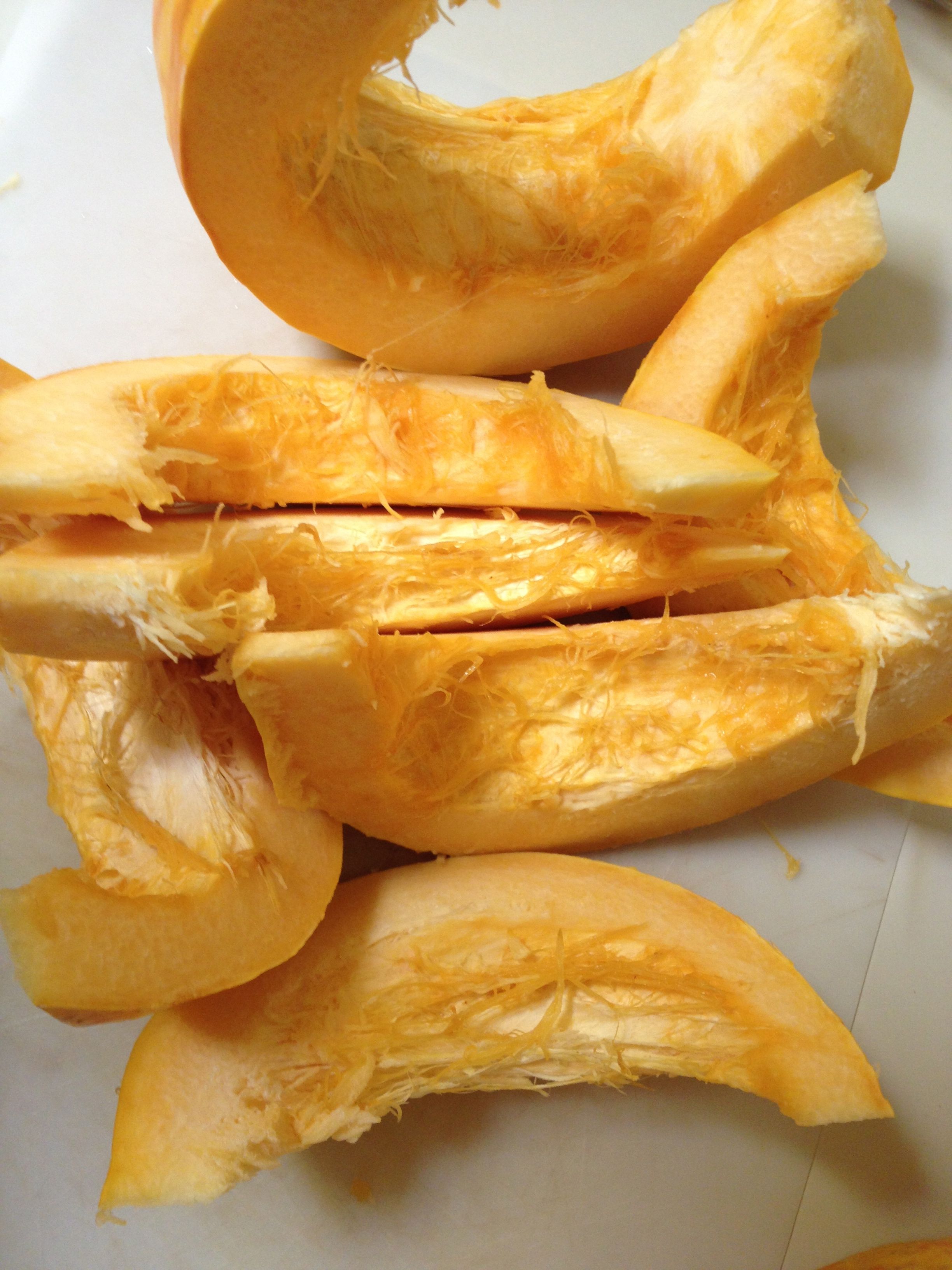
Next I prepared the Tarahumara pumpkin itself for a truly local autumn dessert. It takes a cleaver to carefully open a winter squash and to chunk it into segments small enough to fit into the saucepan. After you scoop out the seeds and fiber, you can boil, steam or bake the pumpkin chunks with skin or shell on. When softened and cooled, scoop out the pulp. Don’t hesitate–serve it with butter and sea salt as a hot vegetable right away. With the remainder, mash or puree it, storing it in freezer for later using in pies, empanaditas, or—as you’ll see below—in a fabulous Sonoran Pumpkin Cake!


Tarahumara pumpkin cleaned and chunked for cooking (MABphoto)

Tarahumara pumpkin cleaned and chunked for cooking (MABphoto)

SONORAN PUMPKIN CAKE with White Sonora Wheat and Mesquite
(inspired by NativeSeeds/SEARCH pot-luck favorite volunteer Ed Hackskyalo)
Recommended for Halloween, Thanksgiving, and other autumn occasions.

INGREDIENTS
Preheat oven to 350.
2 cups sugar (or alternative sweetener such as agave nectar or honey)
1 cup vegetable oil or softened butter (adjust less with liquid sweeteners)
4 large eggs
1 teaspoon vanilla extract
2 – 2 ½ cups heirloom White Sonora Wheat pastry flour (fresh-milled flour needs adjusting)**
¼ – 1/2 cup mesquite pod meal**
2 teaspoons baking soda
1 teaspoon baking powder
2 teaspoons ground cinnamon
1 teaspoon ground ginger
1/2 teaspoon sea salt
2 cups “Papago Pumpkin” or other native squash, cooked and pureed (or pumpkin puree)

Combine sugar, vegetable oil, and eggs in a large mixing bowl; mix well. Sift dry
ingredients into a separate bowl; stir into liquid mixture, beating well. Stir in pumpkin puree.
Pour batter into two greased and floured 9 inch cake pans. Bake at 350 degrees for
35 to 40 minutes. Turn out onto racks to cool.

CREAM CHEESE FROSTING and FILLING
l package (8 ounces) reduced fat cream cheese, room temperature
2 cups confectioners’ sugar, measure then sift (use less to taste, as less sweet is nice contrast to cake)
½ – 1 teaspoons vanilla extract (as needed for smoothing)
Combine all ingredients in a large mixing bowl; beat well until smooth. Makes enough
for a 2-layer pumpkin cake. Frost pumpkin cake with cream-cheese frosting and sprinkle with chopped pecans or pine nuts for extra decor.

**Organic heirloom White Sonora Wheat-berries and flour, and local mesquite pod meal ,are available from Flor de Mayo at St Phillips farmers market on Sundays, or http://www.flordemayoarts.com or 520-907-9471. Whole grain organic White Sonora Wheat-berries for home-milling and mesquite meal are also available at NativeSeeds/SEARCH, 3061 N Campbell Ave, Tucson, or online http://www.nativeseeds.org.

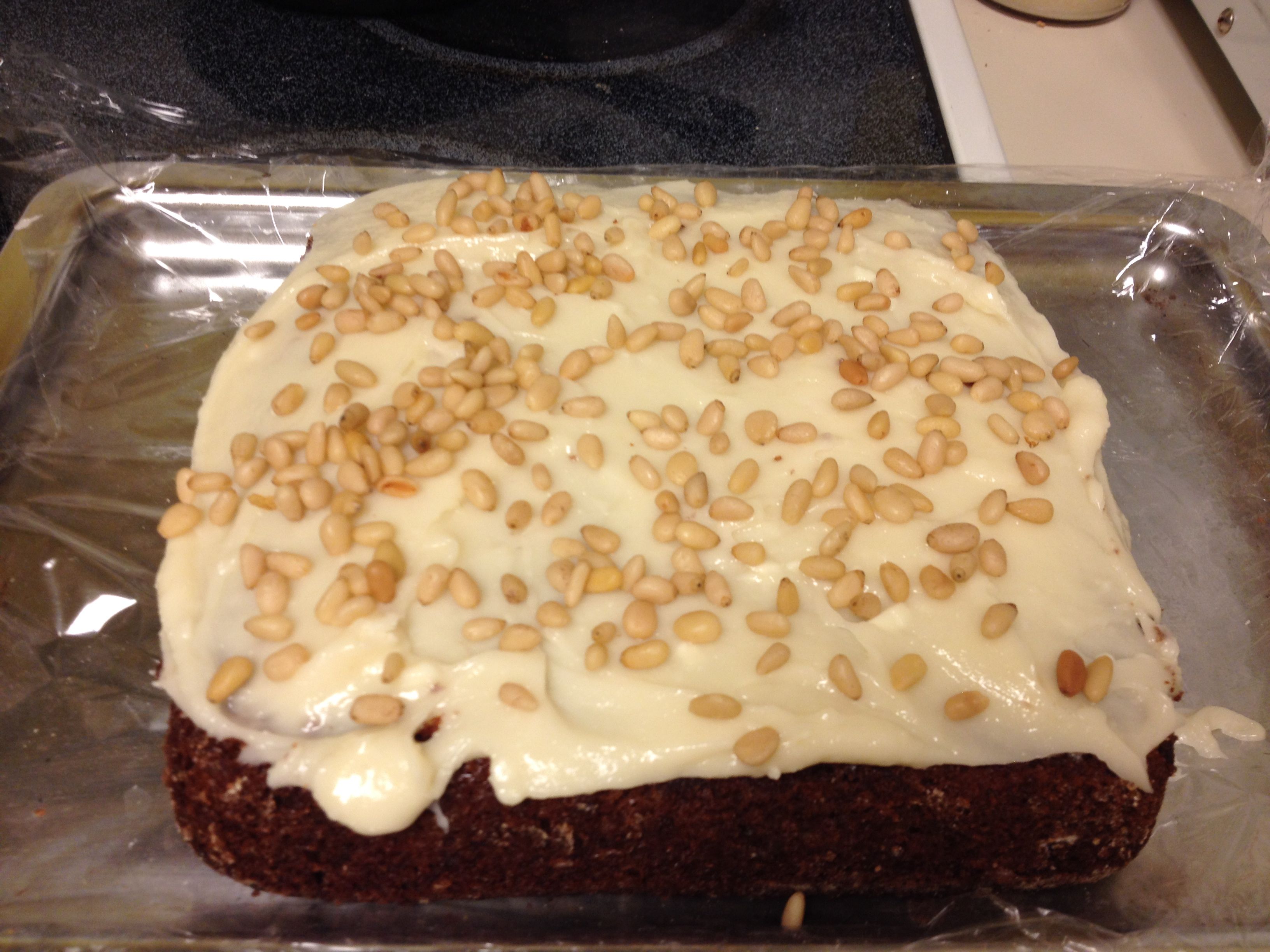
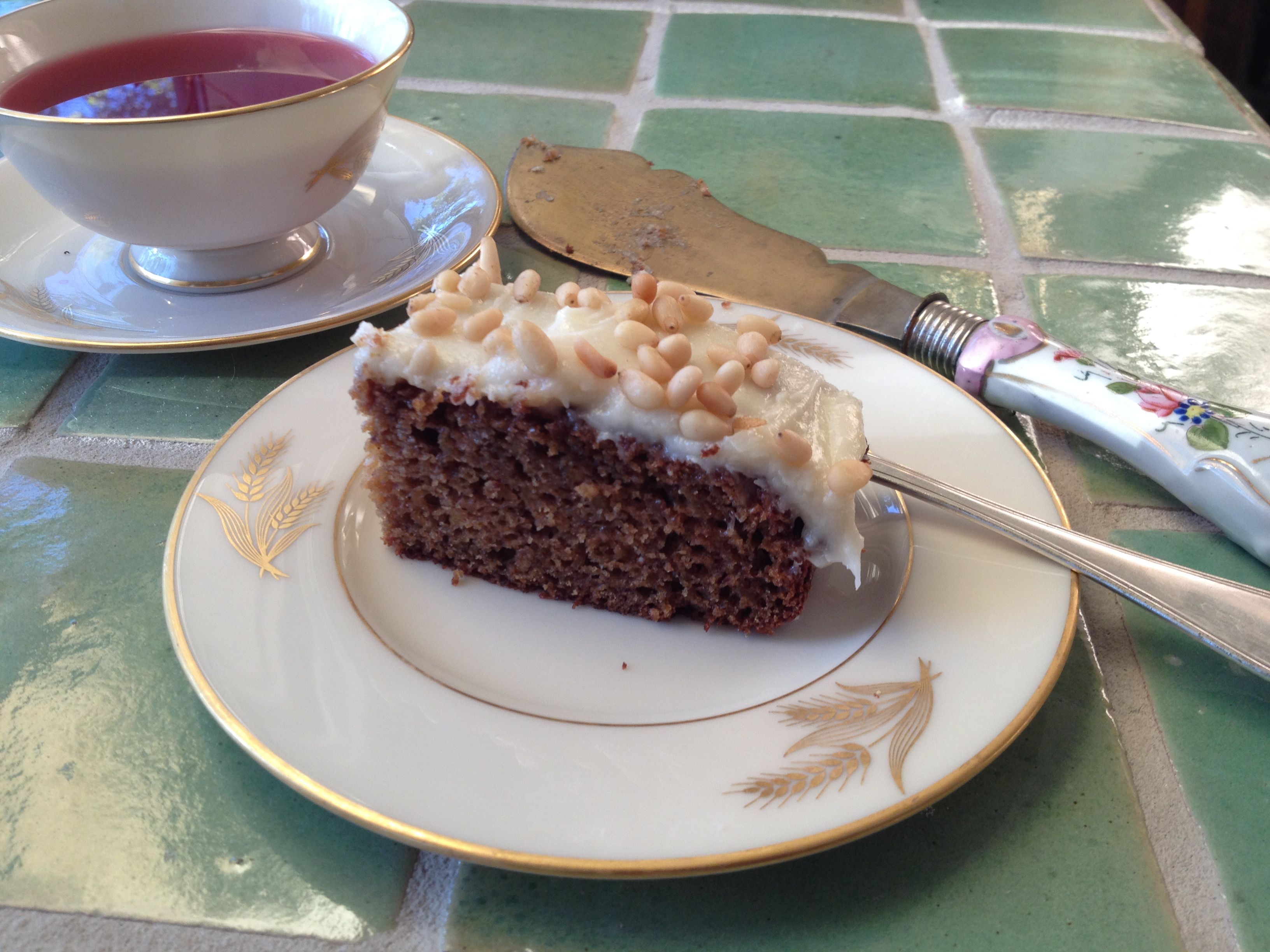
Sonoran Pumpkin Cake made with organic heirloom White Sonora Wheat and mesquite  (MABphoto)

Sonoran Pumpkin Cake made with organic heirloom White Sonora Wheat and mesquite (MABphoto)

Sonoran Pumpkin Cake tea time on wheat china to honor the Wong Family farmers who are helping to save the ancient white Sonora wheat (MABphoto)

Sonoran Pumpkin Cake tea time on wheat china to honor the Wong Family farmers who are helping to save the ancient white Sonora wheat (MABphoto)

Now in their fifth generation of farming, the Wong Family of BKWFarms in Marana, have taken a rare heirloom wheat–the White Sonora Wheat that Padre Kino introduced into the Sonoran Desert over 300 years ago and “saved” by Native Seeds/SEARCH seed conservationists–and have made it a certified organic and sustainable crop again for the Southwest.  Bravo to the Wongs for making this low-gluten food treasure available to us!

Organic Wheat Farmer Ron Wong, Big Jim Griffith, and Karen Dotson of BKWFarms at Tucson Meet Yourself 2014 (MABphoto)

Organic Wheat Farmer Ron Wong, Big Jim Griffith, and Karen Dotson of BKWFarms at Tucson Meet Yourself 2014 (MABphoto)

BKWFarms and Flor de Mayo gave out samples of White Sonora Wheat-berry sprouts and a fabulous Sonoran Shortbread made with the White Sonora Wheat flour at the recent Tucson Meet Yourself festivities.  Coming up….Come try samples at the Flor de Mayo table this next weekend at the Chiles Chocolate and Salsa Event, Tohono Chul Park, Oct 25-26.   Every Sunday at St Phillips Farmers Market you can find taste surprises made with White Sonora Wheat-berries or mesquite at the Flor de Mayo booth–Stop by and visit Tia Marta and Rod!  And tell your friends in Phoenix not to miss our Flor de Mayo display at the Dia de los Muertos celebration, Desert Botanical Garden Nov 1-2.

Gifts from September Gardens–intentional and otherwise

Tia Marta here to share some culinary ideas happening now in Baja Arizona herb gardens, and to extend an invitation to visit el jardinito de hierbas at Tucson’s Mission Garden to experience the herbs in action!

Estafiate--all purpose Artemisia ludoviciana--in the herb plot, Mission Garden (MABurgess photo)

Estafiate–all purpose Artemisia ludoviciana–and Mexican arnica beyond (close-up of flower below), in the herb plot, Mission Garden (MABurgess photos)

Heterotheca--Mexican arnica flower (MABurgess photo)

Of all the herbs in our Southwest summer gardens—presently rejoicing in monsoon humidity and in the soppy tail of Hurricane Norbert—I think the most exuberant has gotta be Mrs Burns’ Famous Lemon Basil……..

Mrs Burns' Famous Lemon Basil, at Mission Garden (MABurgess photo)

Mrs Burns’ Famous Lemon Basil, at Mission Garden (MABurgess photo)

In its versatility, Mrs Burns’ lemon basil provides many possibilities for the kitchen and the cosmetic chest, the first being olfactory delight. Brush its foliage lightly with your hands and you get an instant rush of enlivening yet calming lemon bouquet. Like Monarda or lavender, this lemon basil is definitely one to plant in a “moon garden” for nighttime enjoyment, or along a narrow walkway where you have to pleasantly brush up against it, getting a hit en route, always a reminder that life is good.

I wish this blog could be “scratch-and-sniff” so you could sense the sweet lemony aroma of this heirloom right now. Maybe technology can do that for us someday, but meanwhile, find a Native Seeds/SEARCH aficionado who has planted it and get yourself a sprig to sniff.   On any Saturday morning, come visit and whiff this desert-adapted basil at Mission Garden (the living history exhibit at the base of “A”-Mountain created by Friends of Tucson’s Birthplace). There, among Padre Kino’s heirloom fruit trees, in the monsoon Huerta vegetable plot, a group of herbalists known as Tucson Herbalist Collective (usually referred to as THC—like far out, righteous herbs, man, whatever) has planted a patch of traditional Mission-period medicinal and culinary herbs within reach of the fence. Lean over and touch Mrs Burns’ lemon basil for a real treat. At present (mid-September) “her” basil is a mound of dense smallish leaves and is sending up a zillion flower stalks sporting tiny white flowers. High time to snip the tops to encourage more foliage. Snippings can be used to zest a salad, to bedeck a platter of lamb chops, or to dry for a long-lasting potpourri.

Close-up view of Mrs Burns' Famous Lemon Basil flowers and foliage (MAB)

Close-up view of Mrs Burns’ Famous Lemon Basil flowers and foliage (MAB)

Mrs Burns’ lemon basil—not your typical, soft, floppy-leafed basil—is bred for desert living, with smaller, sturdier foliage. Yes, it does need water, but it can take the desert’s heat and sun. This heirloom’s history is worthy of note and relating it honors the Burns family. The person who put “Famous” into the name Mrs Burns’ Famous Lemon Basil was Dr. Barney T. Burns, one of the founders of the seed conservation organization NativeSeeds/SEARCH and an amazing seed-saver himself, whose recent passing we mourn and whose life we gratefully rejoice in. It was his mother, Janet Burns, transplanted from Canada to Carlsbad, NM, who, with a neighbor over several decades, continued to grow and select surviving, desert-hardy seed in Southwestern heat. Barney contributed her basil seed as one of the first arid heirlooms to become part of the NSS collection. Interestingly, these tiny seeds have since traveled around the globe. One year Johnny’s Seeds picked it up, grew it out for their catalog, and sent NSS a check for $600 in royalties, having profited considerably from its sale.

You can use Mrs Burns’ Famous Lemon Basil leaf in many marvelous dishes. Layer fresh leaves with slices of farmers’ market tomatoes and thin slices of feta or fontina cheese and droozle with flavored olive oil. (I like Queen Creek Olive Mill blood-orange.) And OMG—this basil makes phenomenal pesto. Include this lemon basil with roast chicken for the best lemon-chicken ever. Dry it and put it in stuffing. Add a few fresh leaves to salad for a taste surprise. Or, add a sprig to soups to add a tang. You can even bedeck a glass of V-8 or your Bloody Mary with a lemon basil sprig to fancy up your presentation.


Handmade soap with Mrs Burns' Lemon Basil-infused jojoba oil (MABurgess photo)

Handmade soap with Mrs Burns’ Lemon Basil-infused jojoba oil (MABurgess photo)

Once when I enthusiastically grew a 50-foot row of Mrs Burns’ basil, it produced for me bags of dried herb, inspiring some fragrant projects. I distilled the aroma-rich herb to make a gentle hydrosol spray which, I feel, carries medicinal/psychological qualities of soothing, pacifying refreshment. By first infusing this marvelous herb in jojoba oil, I create beauty bars—with Mrs Burns’ Famous Lemon Basil as the exfoliant in the soap—available at the NativeSeeds/SEARCH store, the Flor de Mayo booth at St Phillips Farmers Market, or at http://www.flordemayoarts.com.

In my mass planting of lemon basil, I observed bees going totally ecstatic over the profuse flowers and so wished that I had had bee boxes close-by. If any desert bee-keepers want to try a new gift to their bees and to us consumers of honey, I recommend they plant this one. Can’t think of anything finer than Mrs Burns’ Famous Lemon Basil honey!

Brush leaves of devilsclaw for a cooling sensation (MABurgess)

Brush leaves of devilsclaw for a cooling sensation (MABurgess)

Here in culinarily-exciting Baja Arizona, as we promote the uniqueness of Tucson as an International City of Gastronomy, it is fun to consider another of our unique local food plants, a wild and unlikely weed which pops up with monsoon rains in low places, including at Mission Garden and is respectfully spared there. Known as i:hug by the Tohono O’odham (pronounced eee’hook), devilsclaw or unicorn-plant by Anglos, and Proboscidea spp by taxonomists, ours is not to be confused with the herb devilsclaw of commerce, Harpagophytum procumbens native to South Africa. Our native i:hug (of which there are a few species, some yellow-flowered, some pink) is a weed of many uses.

Tohono O'odham coiled basket by Juanita Ahil with domestic long-clawed i:hug (MABurgess photo)

Tohono O’odham coiled basket by Juanita Ahil with domestic long-clawed i:hug (MABurgess photo)

It is primarily known as the fiber used by Tohono O’odham, Akimel O’odham, and N’de weavers to create the striking black designs in their coiled basketry. Otis Tufton Mason’s tome Aboriginal American Indian Basketry, first published by Smithsonian Institution in 1904, shows beautiful specimens of unicorn-plant weaving, and mentions its use by many desert people including Panamint basket-makers of Death Valley.

I have a feeling that the devilsclaws that are volunteering now at Mission Garden are the children of plants that have been grown by Native People in that very place along the Santa Cruz for many centuries.

Devilsclaw (Proboscidea) flower close-up (MABurgess photo)

Devilsclaw (Proboscidea) flower close-up (MABurgess photo)

As an ornamental, unicorn-plant or devilsclaw can be a welcome surprise of greenery in late summer into fall, making a mound of large leaves sometimes 2’ high and 3’ wide. Tucked among its spreading fuzzy branches, under velvety maple-leaf-shaped foliage, will appear tubular flowers edged in pink. Should you need a cooling touch on a hot day, just lightly brush one of its big leaves and you are instantly refreshed. The velvety look of devilsclaw foliage is actually one of the plant’s defenses against water-loss. Each leaf is covered with fine hairs. At each hair tip is a gland containing a microscopic bead of moisture. Hair causes wind-drag, slowing evaporation from the leaf surface. What evaporates from the glands acts to cools the leaf—what remains can also cool our skin, should we touch it.

Young, harvestable devilsclaw pods (MABurgess photo)

Young, harvestable devilsclaw pods (MABurgess photo)

Most interesting of all are the foods that our native devilsclaw can provide. After pollination of the flower, a small green curved pod emerges like a curled, fuzzy okra. When young, that is, under about 2 ½” long, and before the pod develops woody tissue inside, these small green unicorns can be steamed as a hot vegetable, stir-fried with onion, green chile or nopalitos, or pickled for a Baja Arizona snack.

Maturing green devilsclaw pods beyond the food stage (MABurgess)

Maturing green devilsclaw pods beyond the food stage (MABurgess)

Tangled wild devilsclaw dry pods ready to split for basketry and seed harvesting (MABurgess)

Tangled wild devilsclaw dry pods ready to split for basketry and seed harvesting (MABurgess)

When the long green pods of devilsclaw ripen, the skin will dry and slough off leaving a tough, black, woody seed-pod that splits with very sharp tips. (Beware how they can grab—they were “designed” to hitch a ride on a desert critter’s hoof or fur and thus spread the seed.) With care, and sometimes the need for pliers, open the pod and out will come little rough-surfaced seeds. If your incisors are accurate, and if you have lots of time to get into meditations on i:hug, you can peel off the rough outer seed skin. Inside is a yummy, oil-rich and fiber-rich seed that looks like an overgrown sesame seed. (In fact, scientists at one point had classified Proboscidea in the same taxonomic family as sesame but it now stands in its own.)

Black seeds of wild devilsclaw from split pod.  White inner seeds delish after peeling (MABurgess photo)

Black seeds of wild devilsclaw from split pod. White inner seeds are delish after peeling. (MABurgess photo)

White-seeded domestic devilsclaw has slightly larger seeds like giant sesames (MABurgess photo)

White-seeded domestic devilsclaw has slightly larger seeds like giant sesames.  Peeled inner seed between fingers is ready to eat. (MABurgess photo)

When I see cutesy figurines of roadrunners or Christmas ornaments made with devilsclaw pods, my first thought is, wow, what a waste of a good treat, but then gladly, I realize that this unique plant produces more than enough fresh pods and mature pods to satisfy all the purposes of Nature or hungry and/or creative humans. Give i:hug a try!