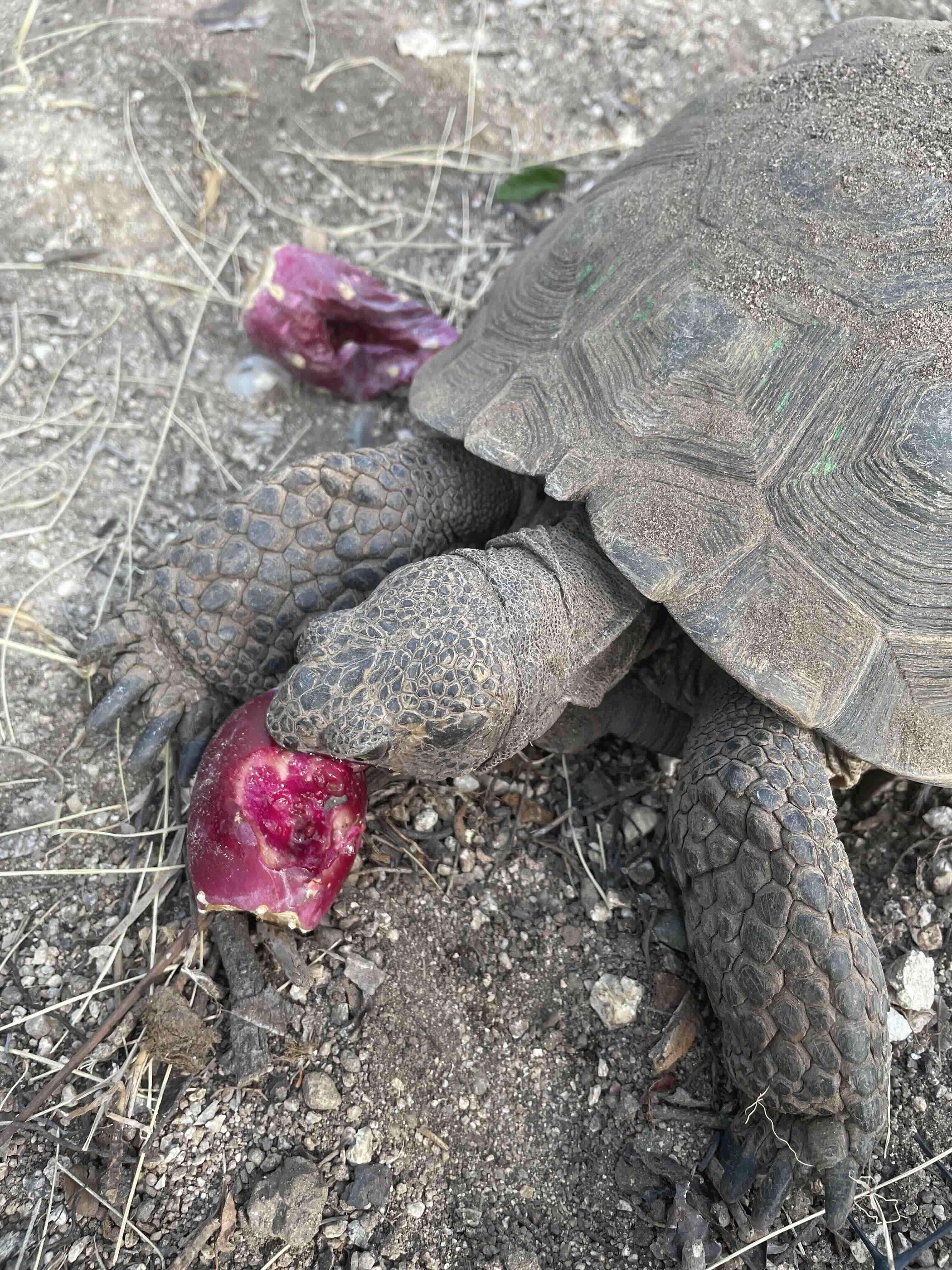
We aren’t alone. Living through this extended drought and awesome heat in the Sonoran Desert is a major feat for any creature out there–plant or animal–no matter how desert-adapted it may be! We are all feeling it. Difficult to imagine how creatures, like the long-lived desert tortoise, manage through the kind of intense drought we are experiencing.
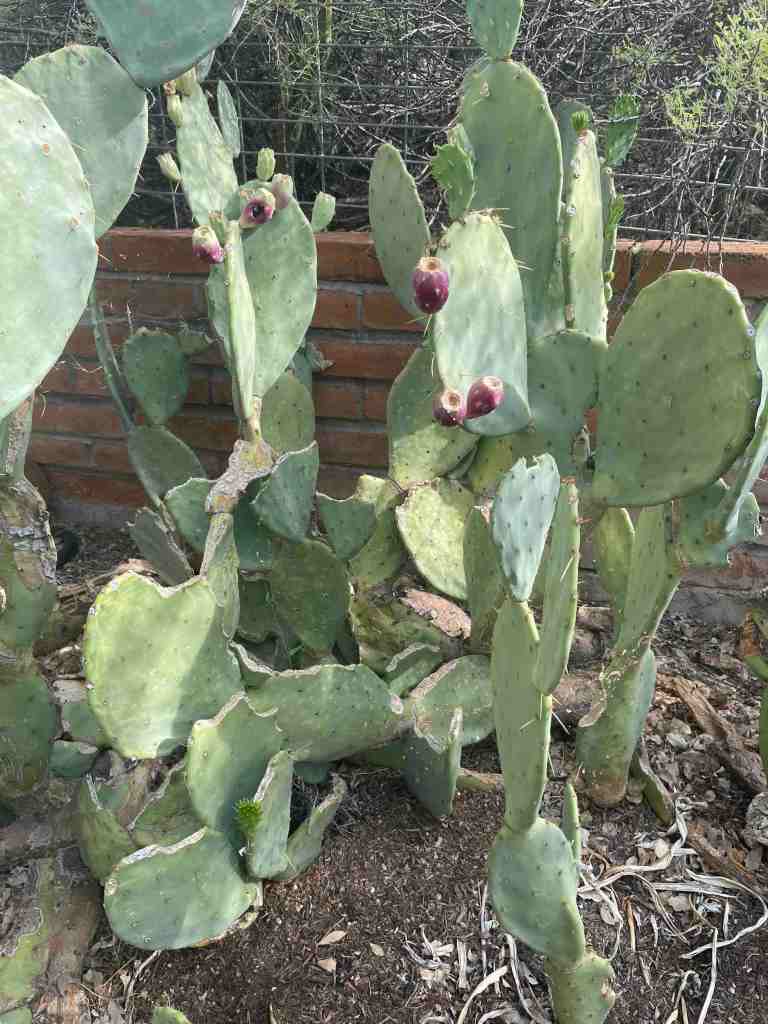
Even in my back yard, my tended prickly pear, covered in buds and tender nopales last April, is ending this summer with tunas dropping before mature or devoured by cactus wrens, and pads chomped by packrats or ground squirrels.
Tia Marta here to share some thoughts about us humans harvesting from the wild. As I learned from my Tohono O’odham mentor, in earlier times Indigenous people had to suffer through lean times using the desert foods they’d stored from times of plenty. They knew sporatic seasonal productivity is the name of the game in the desert. Wise cultural tradition dictates that you harvest abundance when it happens, share your plenty, and store as much as possible against the expected lean times.
Very few native prickly pears have produced fruit this year in the Sonoran Desert, so as human desert harvesters I feel we must refrain this year, and consider the needs of our wild neighbors, the deer, javalina, cottontails, rodents, birds, etc who need what forage remains– far more than we do.
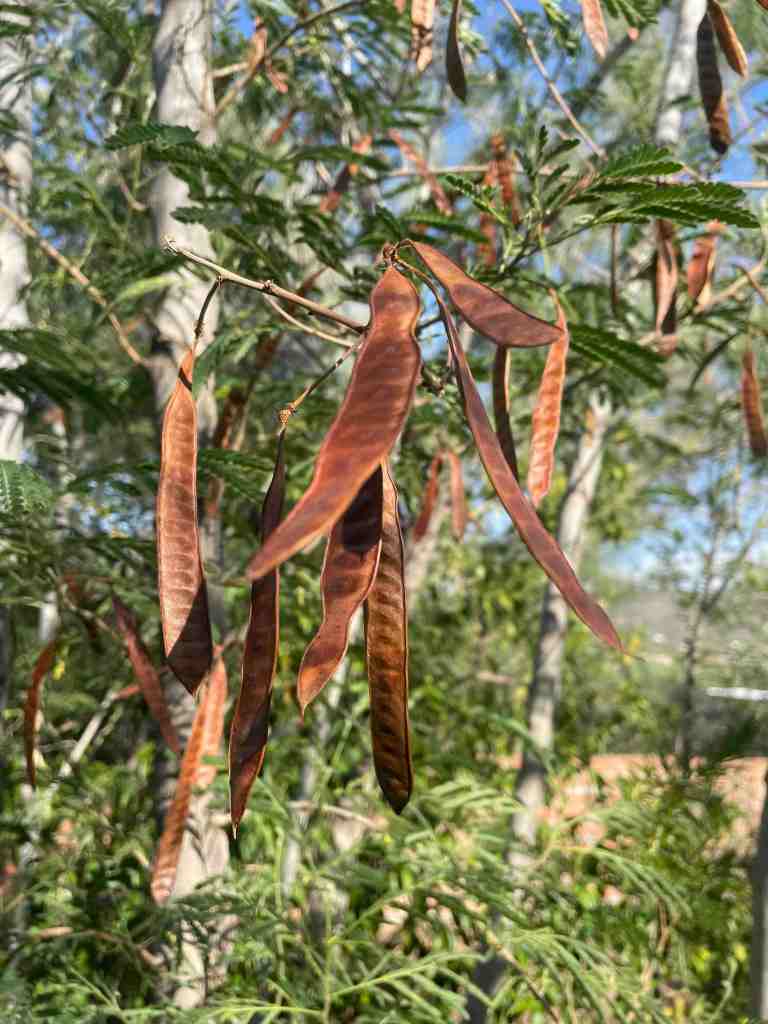
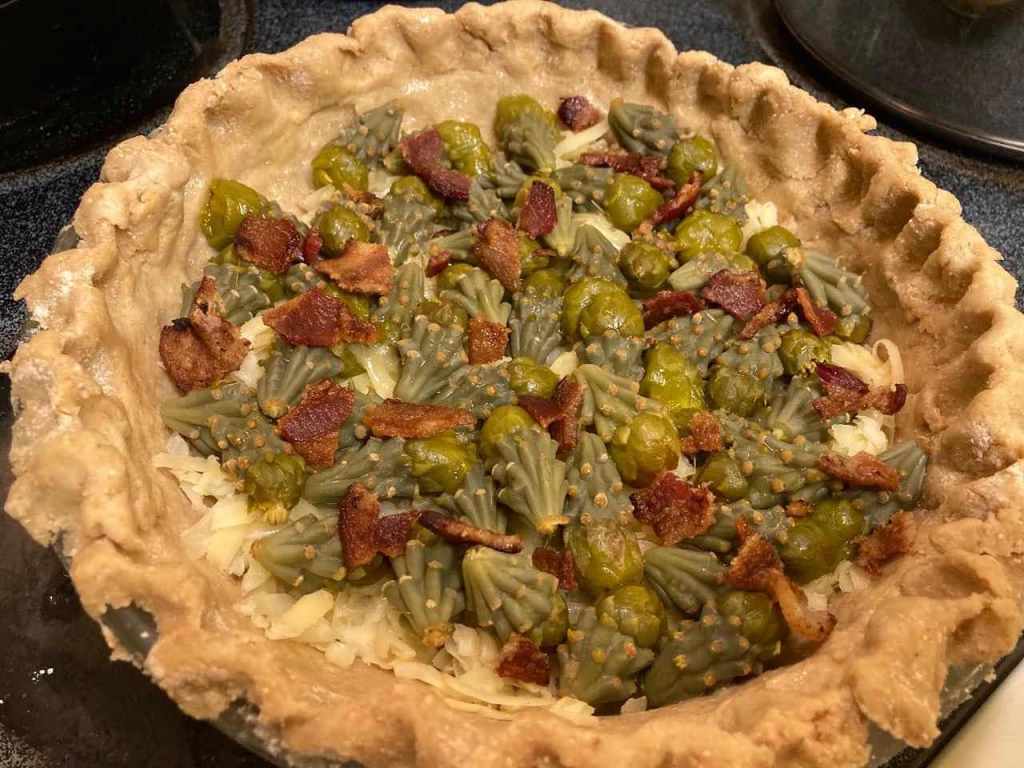
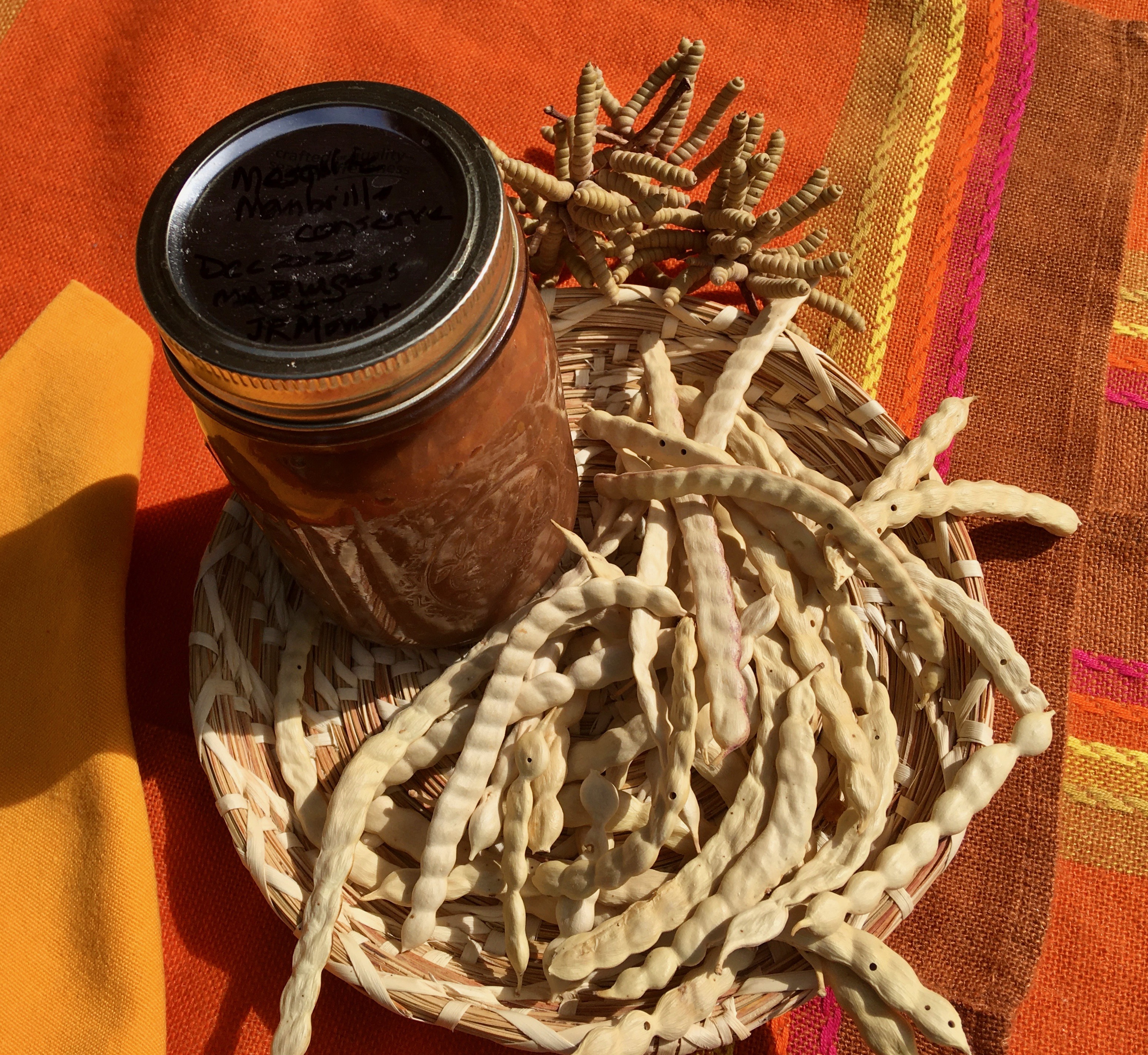
Instead, I suggest we go for an invasive! How about eating from the white lead tree, known as guaje in Mexico, huaxin by the Aztec in its region of origin? Its presence as an invader into the Sonoran Desert generates interesting controversy. The seeds contain an amino acid mimocine toxic for us mammals who have no rumen for digestion. However Guaje‘s young pods, when green, can be cooked in soups or in tacos, as cooking removes the toxicity. This small fast-growing tree has other positive attributes: It is used as great cattle fodder, provides stovewood fuel, erosion remediation, herbal medicine, and it adds soil nitrogen. Its profuse and often continued flowering makes it a good pollinator support. Caution: it IS an invasive species and, if let loose in our desert, could compromise our precious natives..
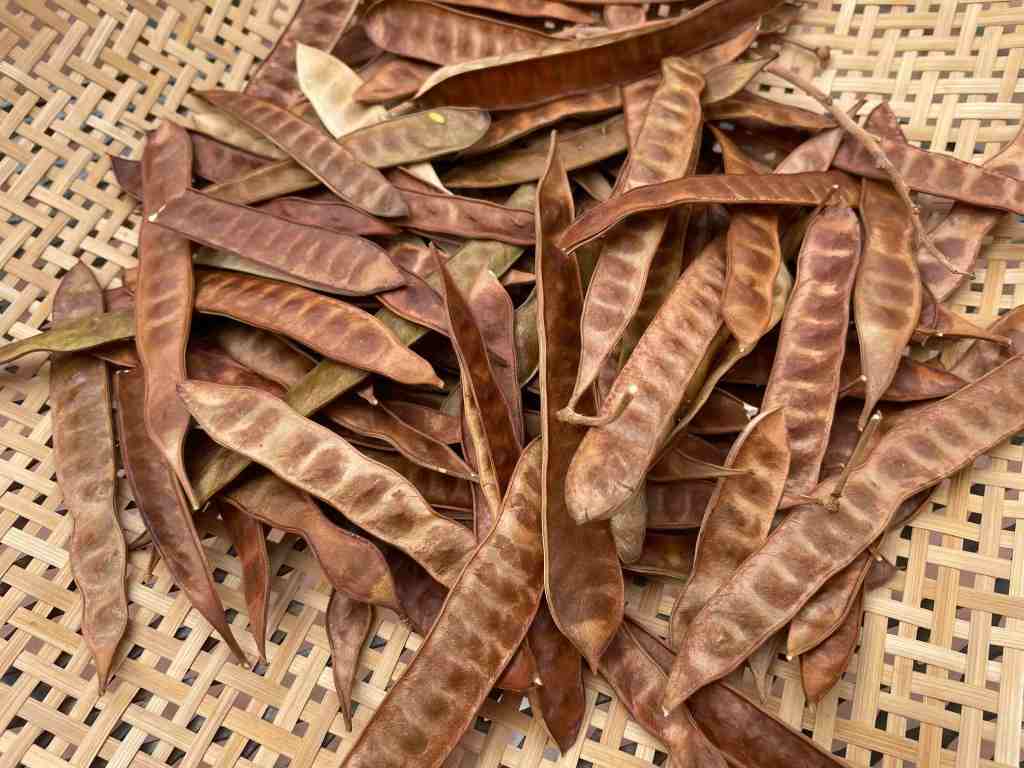
Guajes (Leucaena leucocephala) have been known and appreciated in Sonora, Mexico, for decades if not centuries. It is planted on the University of Arizona campus (see UA Arboretum) and is being researched as a potential future food plant for climate change by horticulturists at Mission Garden. I’m glad guaje volunteered in our yard from soil in a potted plant. It created a little grove of blessed shade for us, and bees have been abuzz over its puffs of cream-white flowers every spring.

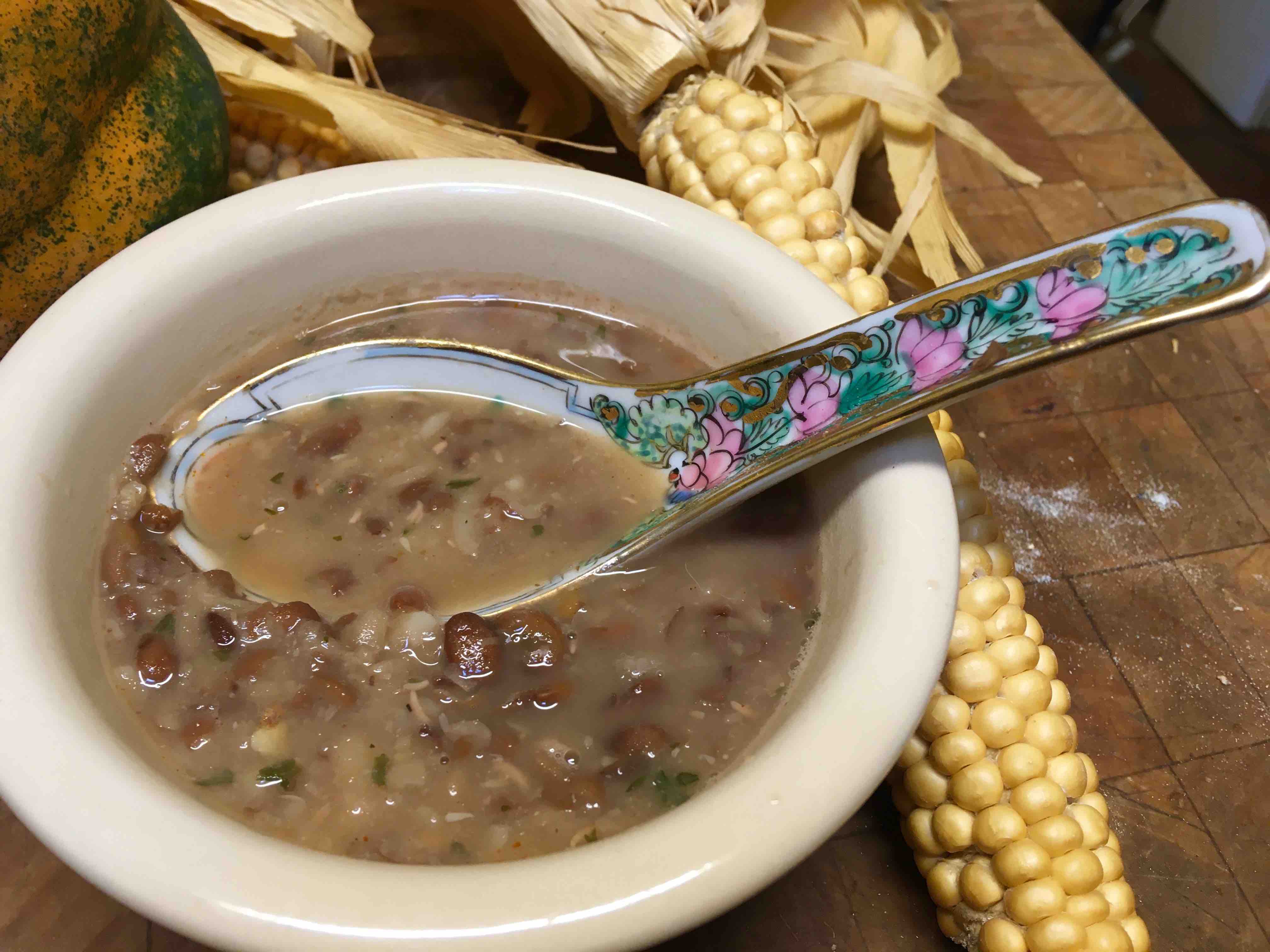
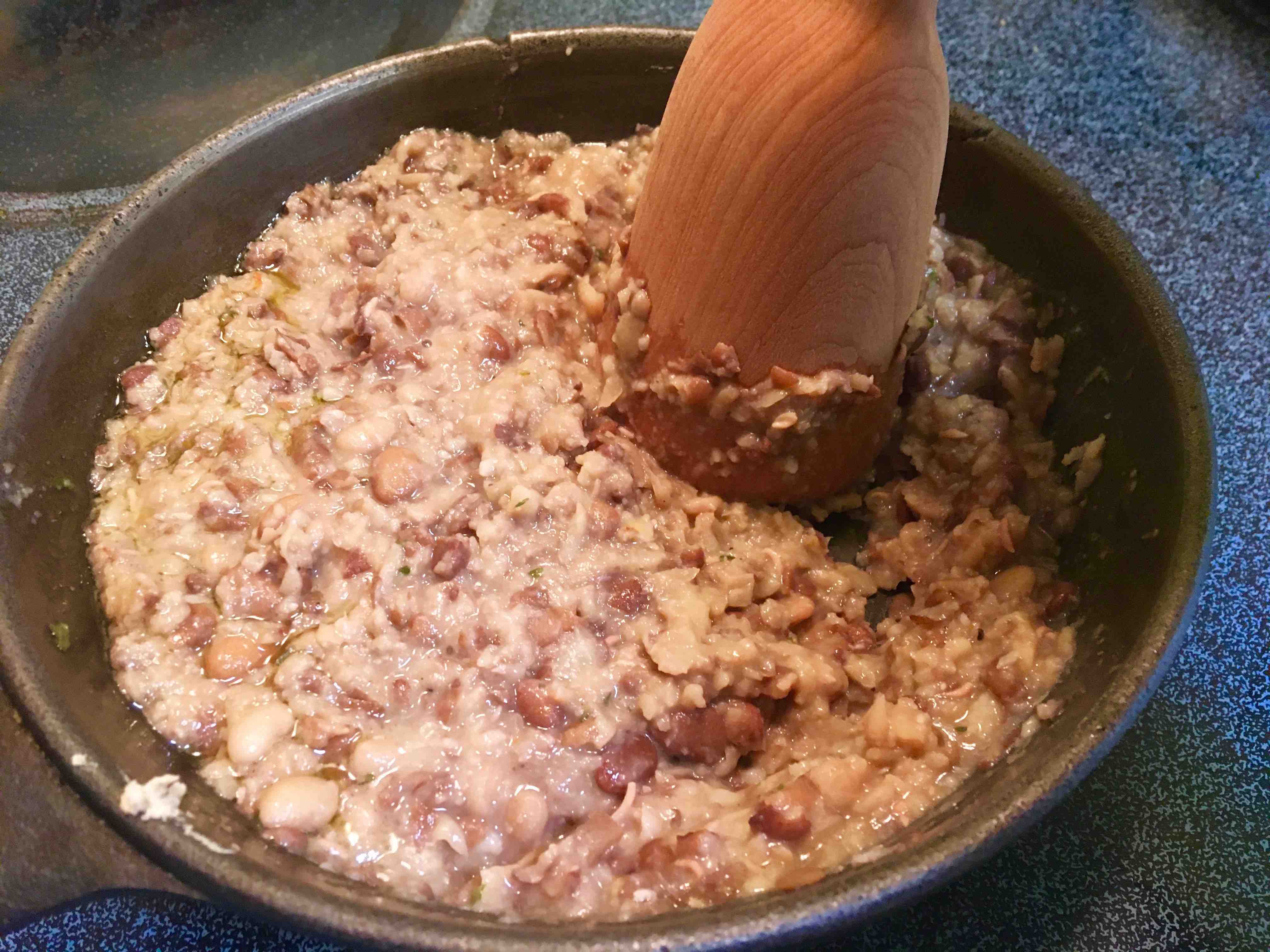
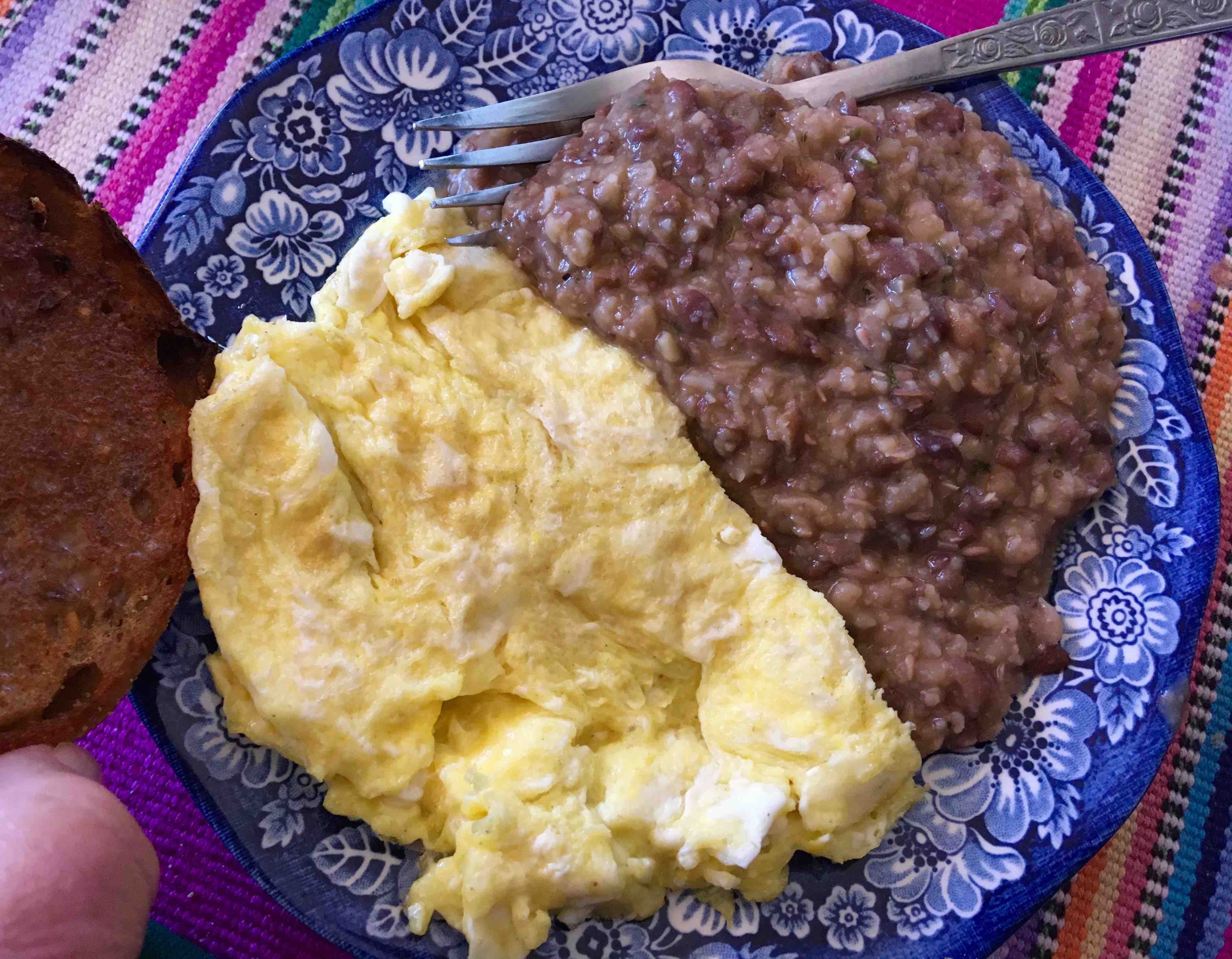
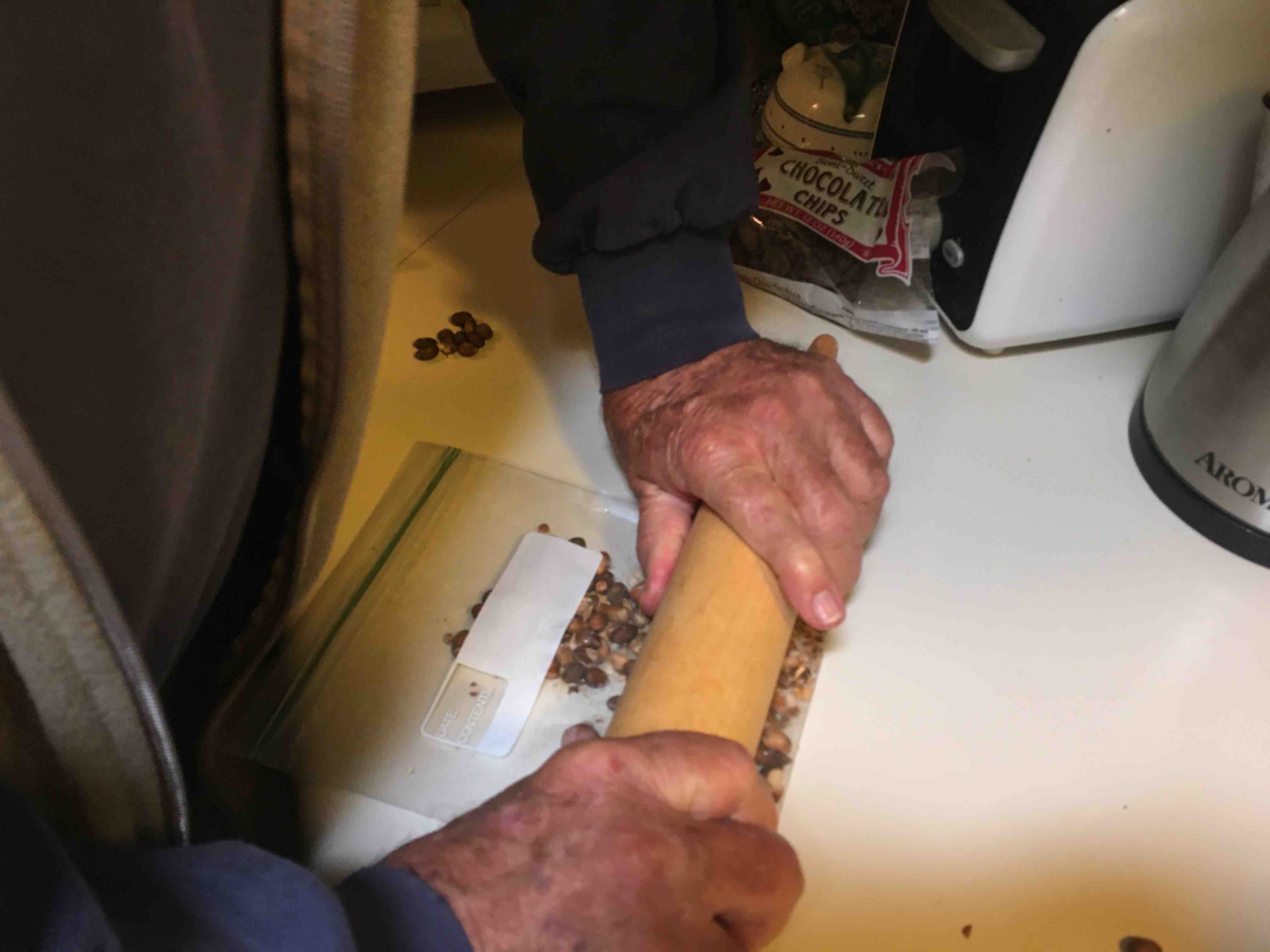
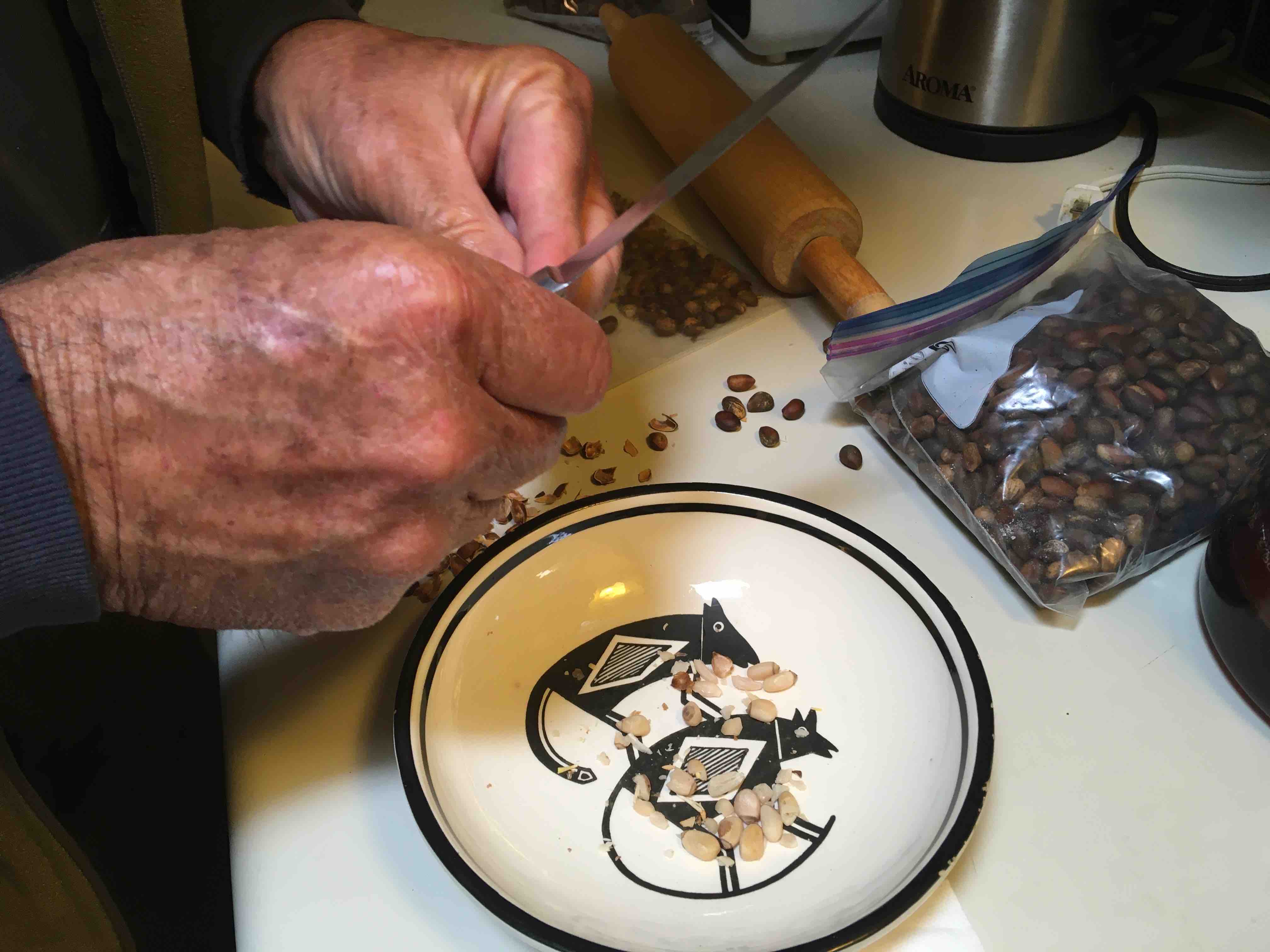
I recently gathered a gallon bag of dry pods which yielded only 1/8 cup of small seed. They resemble flax seed. I soaked them to see if any were viable. About 1/3 of them swelled. When cooked for 15 minutes to remove mimosine, and drained, they proved nut-like and tasty. I’m adding them to my home-made bean dip. As a legume they will provide good protein in addition to texture and new flavor.
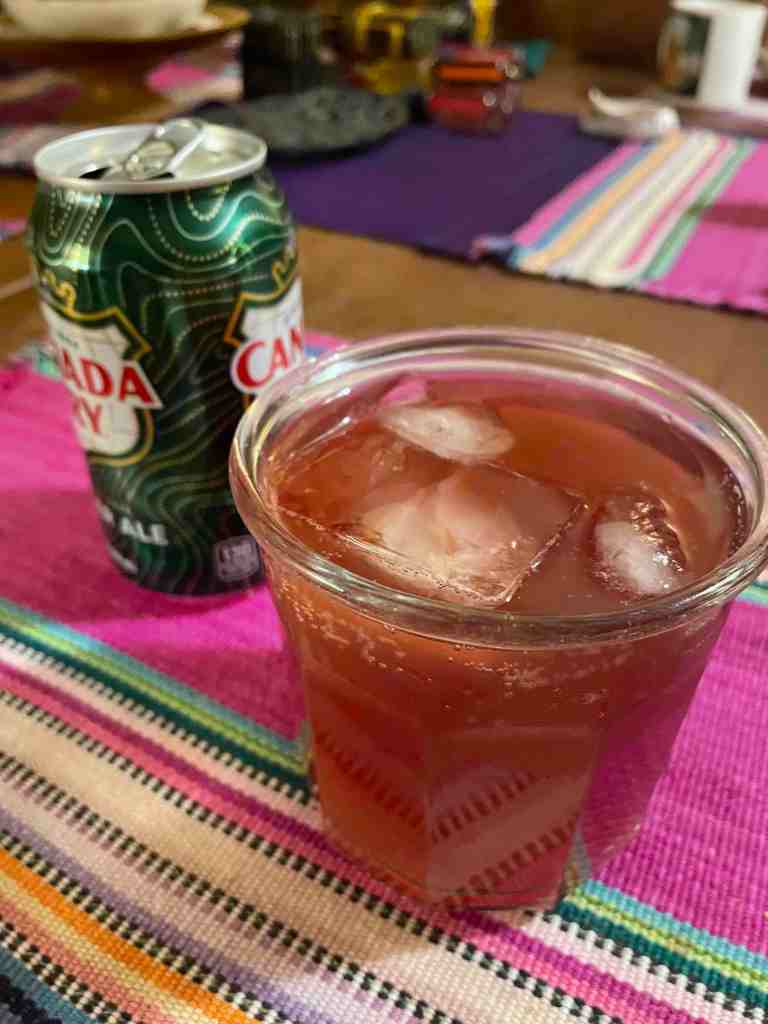
To go with the dip, I’m using a scant amount (a tablespoon per 8oz) of my conserved prickly pear juice, harvested and frozen August last year, with flavored fizzy, gingerale and a splash of mescal. With this dressed up punch, we’re sending a toast to all desert creatures out there! We hope they are benefitting from any prickly pear tunas that may be ripening in our hot, dry desert!
May we be conscious of all the plants and animals around us during these weather-stress times! For more ideas on local “famine foods” see SavorSister Carolyn’s post and Tia Marta’s post. For ideas of what we can grow in prep for more climate extremes, check out Ethnobotanist Gary Paul Nabhan’s inspirational book Growing Food in a Hotter, Drier Land: Lessons from Desert Farmers on Adapting to Climate Uncertainty.
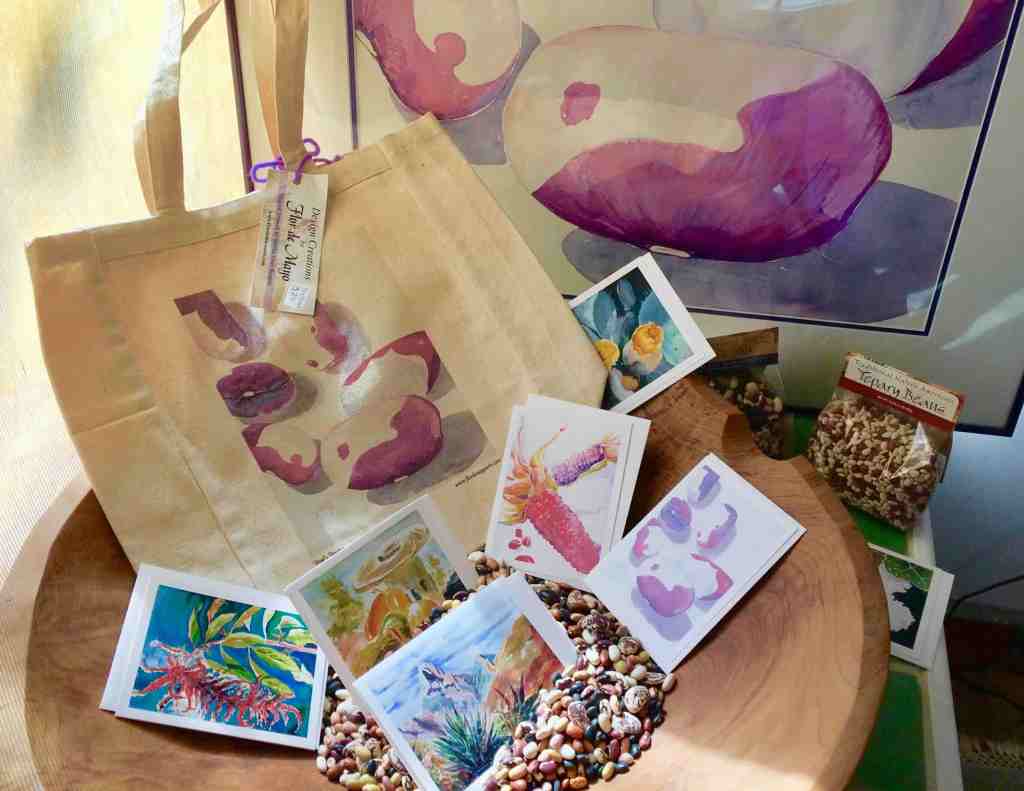
A colorful assortment of Tia Marta’s watercolor art-notecards depicting Southwest Native American heirloom foods can be found at the Mission Garden shop, or online at NativeSeeds/SEARCH.


















 Savor the Southwest: