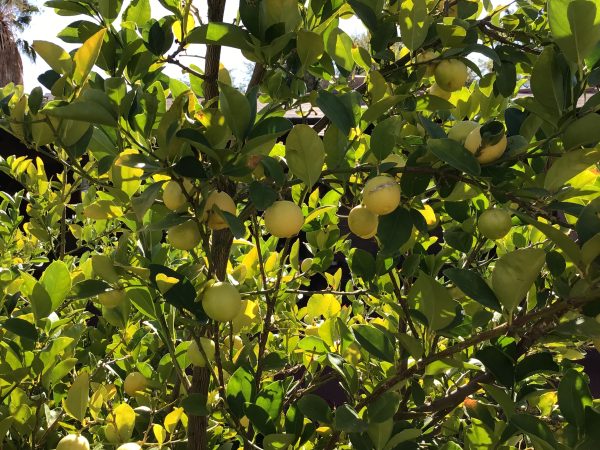
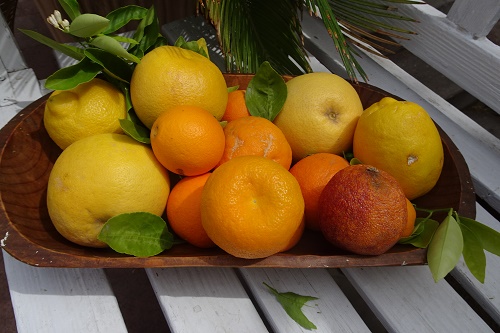
This is the season for small Mexican limes. Trees are usually very prolific and owners are happy to share the harvest. They are also available in produce sections of some store, particularly in the Southwest.
I live a five-hour drive from some glorious Mexican beaches along the Gulf of California. When I was younger, we often headed there on camping trips. As soon as we crossed the border, we’d buy a bag of Mexican limones from kids hawking them on the street and a bottle of tequila. A few sucks on the limes and a few swigs of the tequila and our vacation had begun. It’s Carolyn with you today. My days of crashing on the beach in a sleeping bag are over, but the love of the flavors that evoke our earlier adventures remains. Today I’ll show you how to combine those flavors into an adults-only marmalade.
This is the best season for the small limes called limones in Mexico or Mexican or Key limes elsewhere. If you live in a warm climate and have a friend with a tree, they will probably be happy to give you some. They are also widely available in grocery stores. Spike them with tequila or mescal and maybe jalapeño and you’ve got a treat made for gift giving. But keep some for yourself. This is an adaptation of a recipe from the 1965 version of “Joy of Cooking” that I have used for all my citrus marmalades for decades.
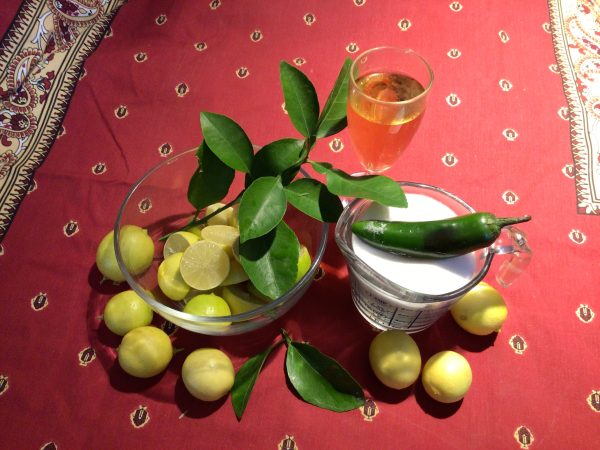
This is all you need to make a delicious lime marmalade: limes, sugar, some tequila or mescal, and a jalapeno
While tequila will work just fine, I prefer mescal for the smoky distinctive flavor. The soaking steps are to make sure the the rinds are very soft and almost melt into the rest of the marmalade.
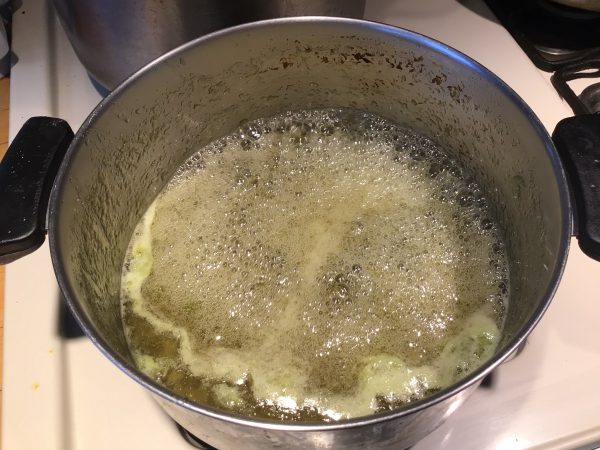
Here’s the marmalade happily boiling and getting thick.

The thermometer registered 220 degrees but had risen another degree in the time it took me to focus the camera. Moves fast at this point.
Boozy Spicy Lime Marmalade
(Makes 3 cups)
1 cup ground Mexican limes (11-12)
3 cups water
3 cups sugar
1 small jalapeño (optional)
1/4 -1/2 cup tequila or mescal
Quarter the limes and remove any seeds. Slit the jalapeno lengthwise and remove seeds and ribs. If you are using a food processor, add the quartered limes and jalapeno and process until all pieces are very fine. If you are using a blender, add the quartered limes and jalapeno and one cup of the water. Whirl until all rind pieces are fine.
Add fruit mixture to a large pot and add three cups of water or just two if you already used one cup in the blender. If any larger pieces of rind made it through, take them out and chop or slice finely. Let this sit for at least 12 hours. This softens the rind. (No, don’t get up at 2 a.m. if this is when the 12 hours are up. Proceed when convenient.) Bring the mixture to a boil and let sit for at least another six hours.
During the wait time, you can collect your jars. You will need enough jars for 3 cups. Sterilize them by covering with water and bringing to a boil or run them through a hot dishwasher cycle. If you use standard jars with two-part lids, they will seal. If you use recycled jars that don’t seal, you will need to store the marmalade in the refrigerator. Place the clean jars on clean newspaper or a kitchen towel.
When ready to proceed, add the sugar to the fruit, stir to combine, and bring the mixture to a slow simmer. Cook until it registers 220 degrees on a thermometer. This will take about 30 minutes. If you don’t have a cooking thermometer, take out a little and put it on a saucer in the freezer. (Turn the heat off under the marmalade while doing this.) If it firms up after 5 minutes, it’s done. If not, keep cooking. Watch closely. Once the temperature is reached, pour in the tequila or mescal. It will bubble furiously while the alcohol burns off. You’ll have to cook a little while longer to bring the temperature back up. At the end the temperature goes up quickly. Stir, scraping the bottom, very frequently to keep it from sticking and burning.
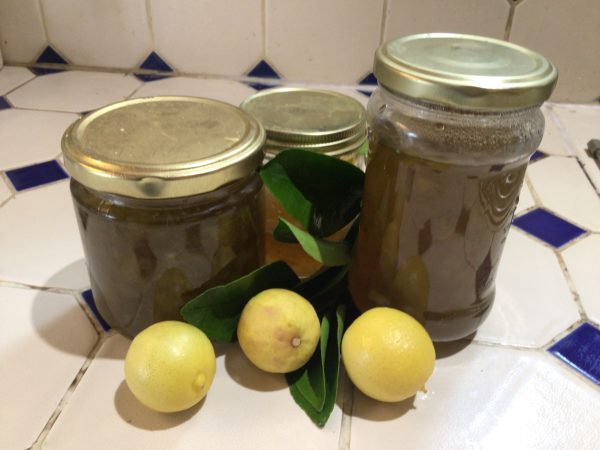
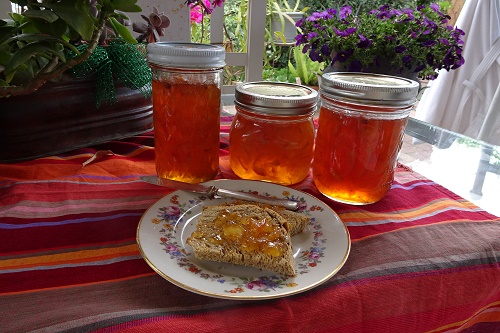
Ladle into jars. The marmalade will firm up as it cools over the next day.
(Note: If you’d like to make this quite spicy, add either more jalapeno or a small serrano chile.)
_________________________________________
_____________________________________________________________________
Carolyn Niethammer is a cookbook writer and cooking teacher. Find more Southwestern recipes in The New Southwest Cookbook and Cooking the Wild Southwest on-line or ask your favorite bookstore to order for you. Discover why Tucson was named a UNESCO City of Gastronomy in her book A Desert Feast: Celebrating Tucson’s Culinary Heritage.
 Savor the Southwest: