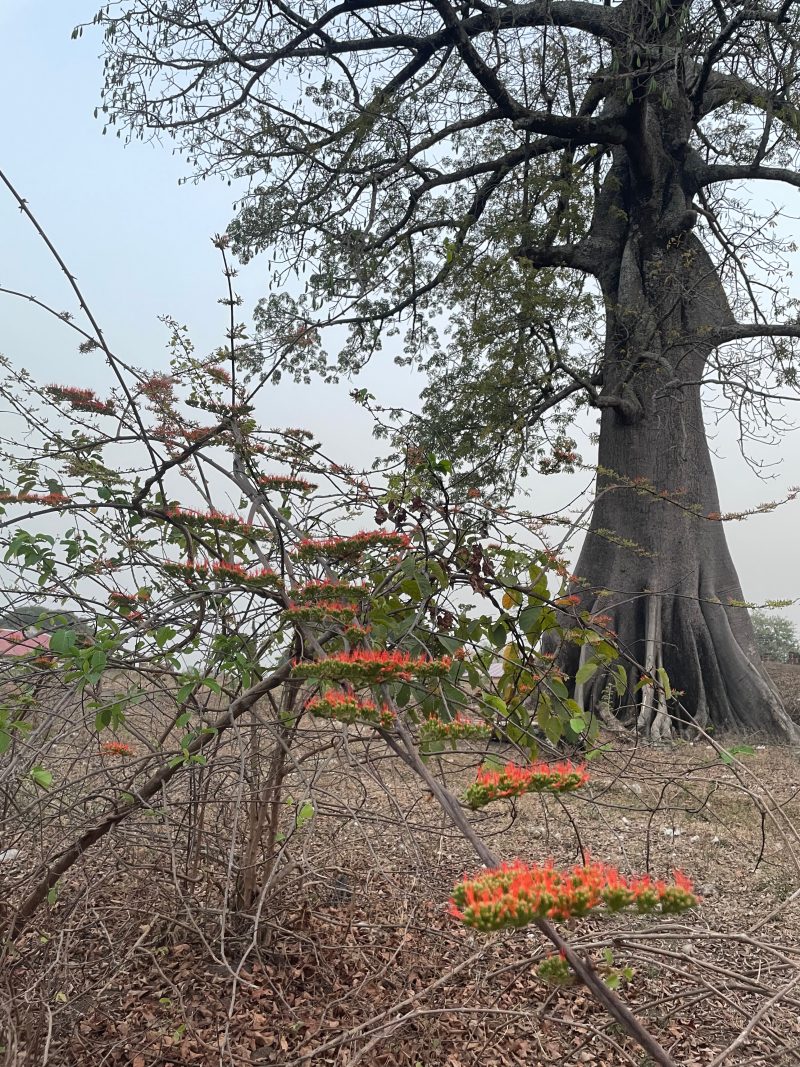
This special post of Savor the Southwest is ‘one from the road’, where we enjoy a recipe from Ghana that is reminiscent of tamales so beloved in the Southwest…
Towering, buttressed cotton trees are treasured in the landscape of the Northern Region, Ghana, West Africa.
World travel is a favorite, beautiful thing…we learn so much that is new to us while meeting new people and cultures. It’s Savor Sister Emily here, departing a bit from my typical posts to share about my recent travels to Ghana, West Africa. I first visited in March 2025 as an intern for World Institute of African Culture & Tradition (WIACT), an amazing native-led nonprofit working to uncover and restore traditional knowledge in their community, throughout Ghana, and beyond. I returned in January 2026, and hope to visit again soon – I love it so much there!
I fell in love with the community, the place and setting, the culture, and the food. I learned how to make a traditional dish called tibani with a group of friends. Our host Madame Ubeidata is the headmistress of Nasoyiri Junior High School. Overseeing the native tree nursery at the school is Mr. Seidu, who guides students in caring for and learning about the (sometimes forgotten) uses of native plants. Rashid Abubakar Iddrisu founded WIACT, and the organization sponsors several schools with this kind of programming. All three of them (plus Ubeidata’s daughter Azmet, and neighbors and children) shared their knowledge about tibani.
I couldn’t help but notice some similarities between tibani of Ghana, and the tamales (made from corn masa) in Mexico and Latin America which we relish in Tucson and throughout the Southwestern US. They are variations of a delectable starchy dough wrapped in Gbate leaves and steamed in a pot, served with a little sauce or salsa. (Tibani even reminds me a bit of gnocci or malfatti from Italy, made with wheat and/or potato flour!)
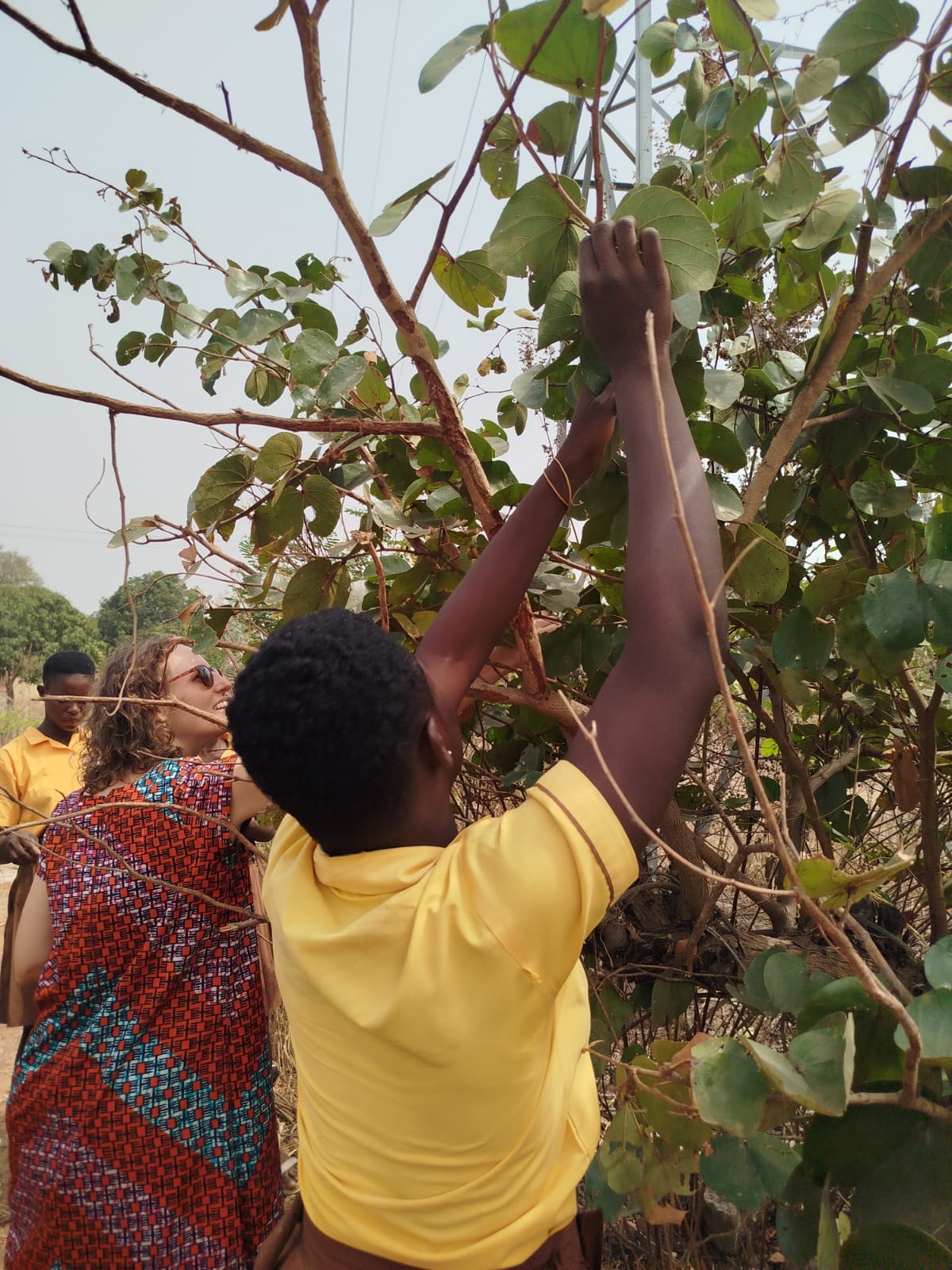
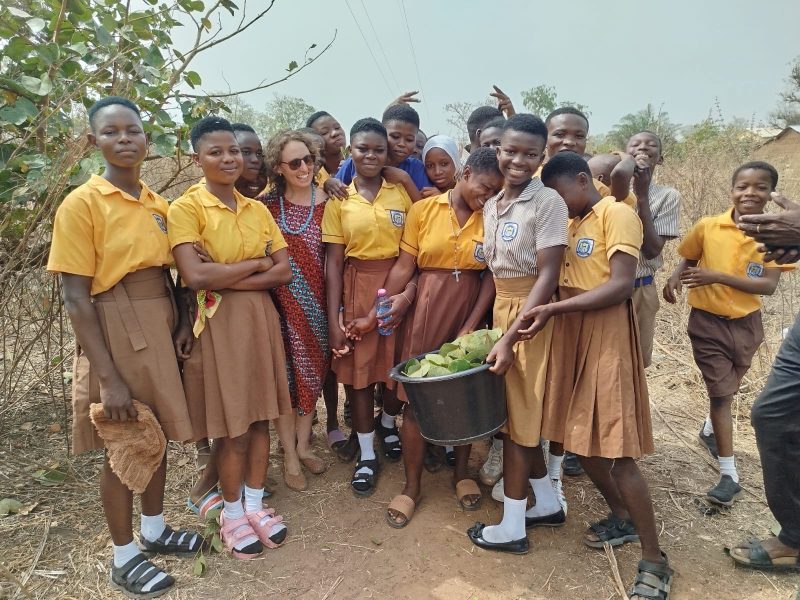
I have not yet been able to verify the species name of the Gbate shrub, but it looks so similar to a plant I know in cultivation from home in the US. See below, Bauhinia variegata in Northern Mexico:
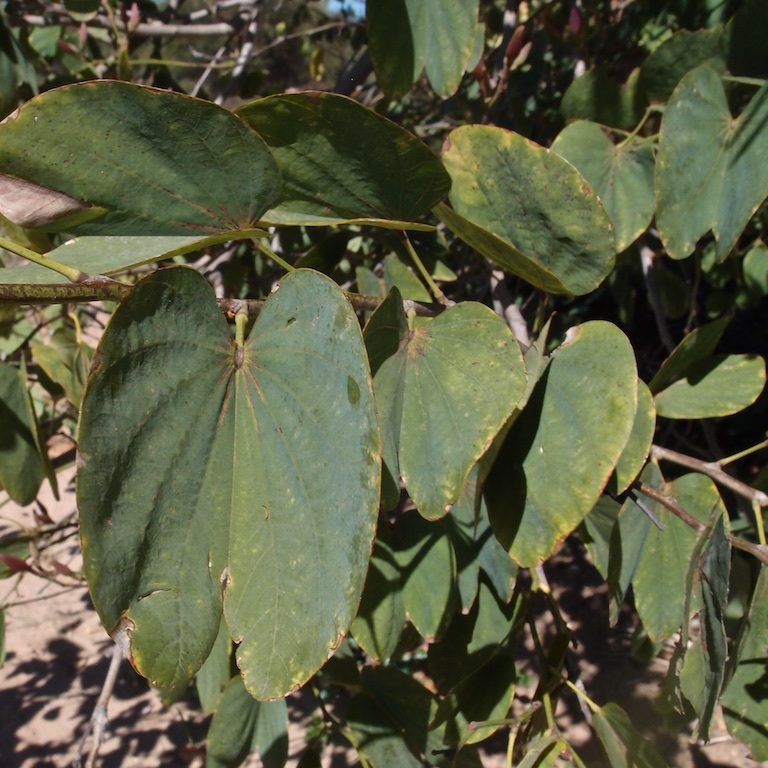
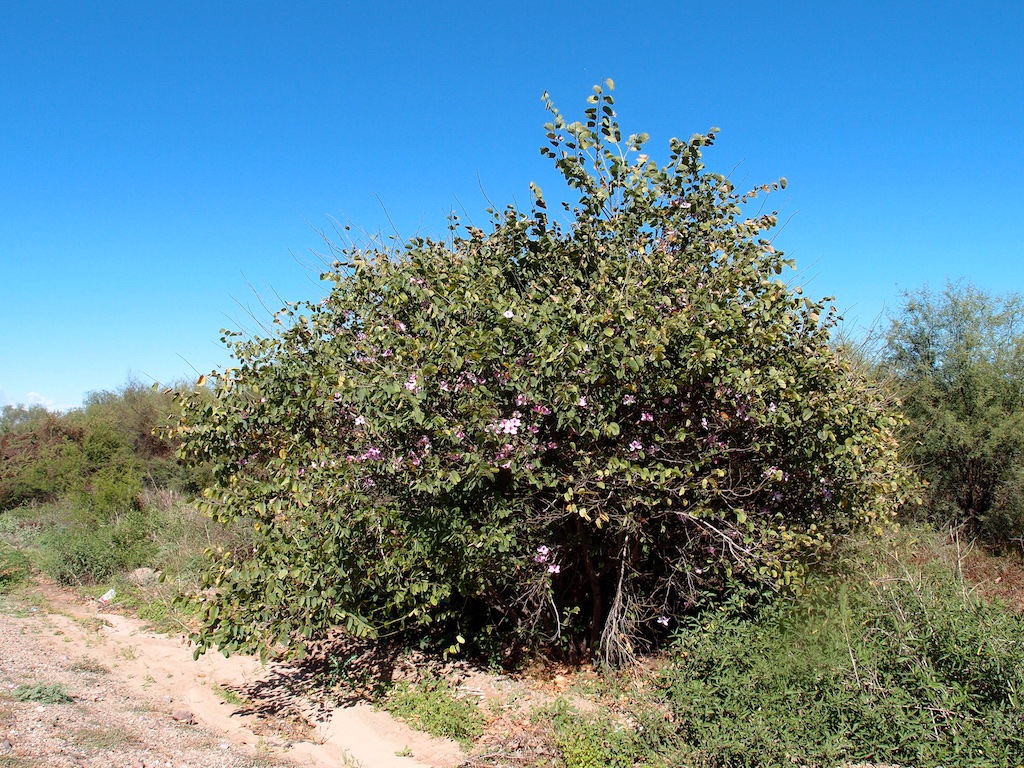
Bauhinia variegata, Naturalized non-native south of Hermosillo, Sonora, Mexico. (Family: Fabaceae) Photos: Sue Carnahan (SEINet.org)
Tibani Recipe
Ingredients for Tibani
White cowpeas or cowpea flour (Referred to as “white beans” but are technically cowpeas, Vigna unguiculata versus Phaseolus vulgaris). To make the flour, Ghanaians soak the dry cowpeas, dry again, then mill into a fine flour. Another option for this recipe is to soak and cook the cowpeas, then puree until very smooth.
You could substitute any bean flour (check African or specialty markets), or try online sources for cowpea flour.
Cassava flour
Saltpetre*. This is a naturally occurring ‘cooking salt’ in West Africa, and it can be omitted (it’s just helpful to soften vegetables and reduce cooking time), or just add a little teaspoon of baking soda instead.
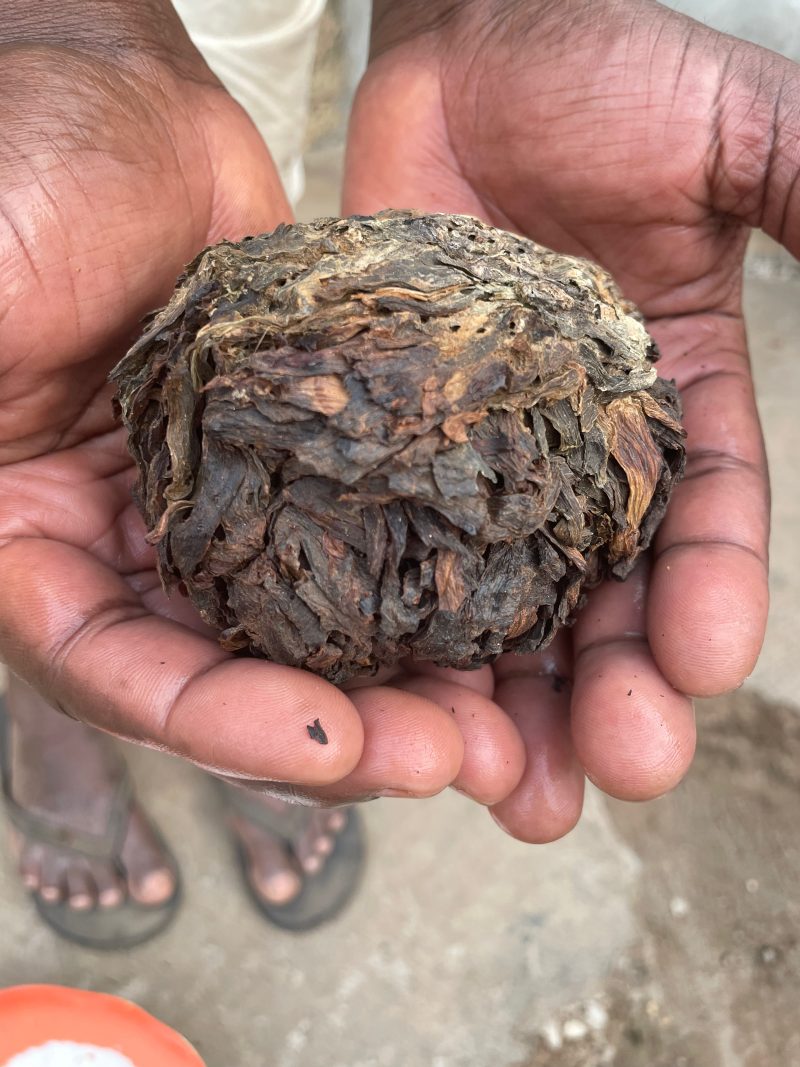
Leaves of Gbate shrub, native to Ghana. To substitute, banana leaves or parchment paper can be used. Or definitely corn husks!
Ingredients for sauce:
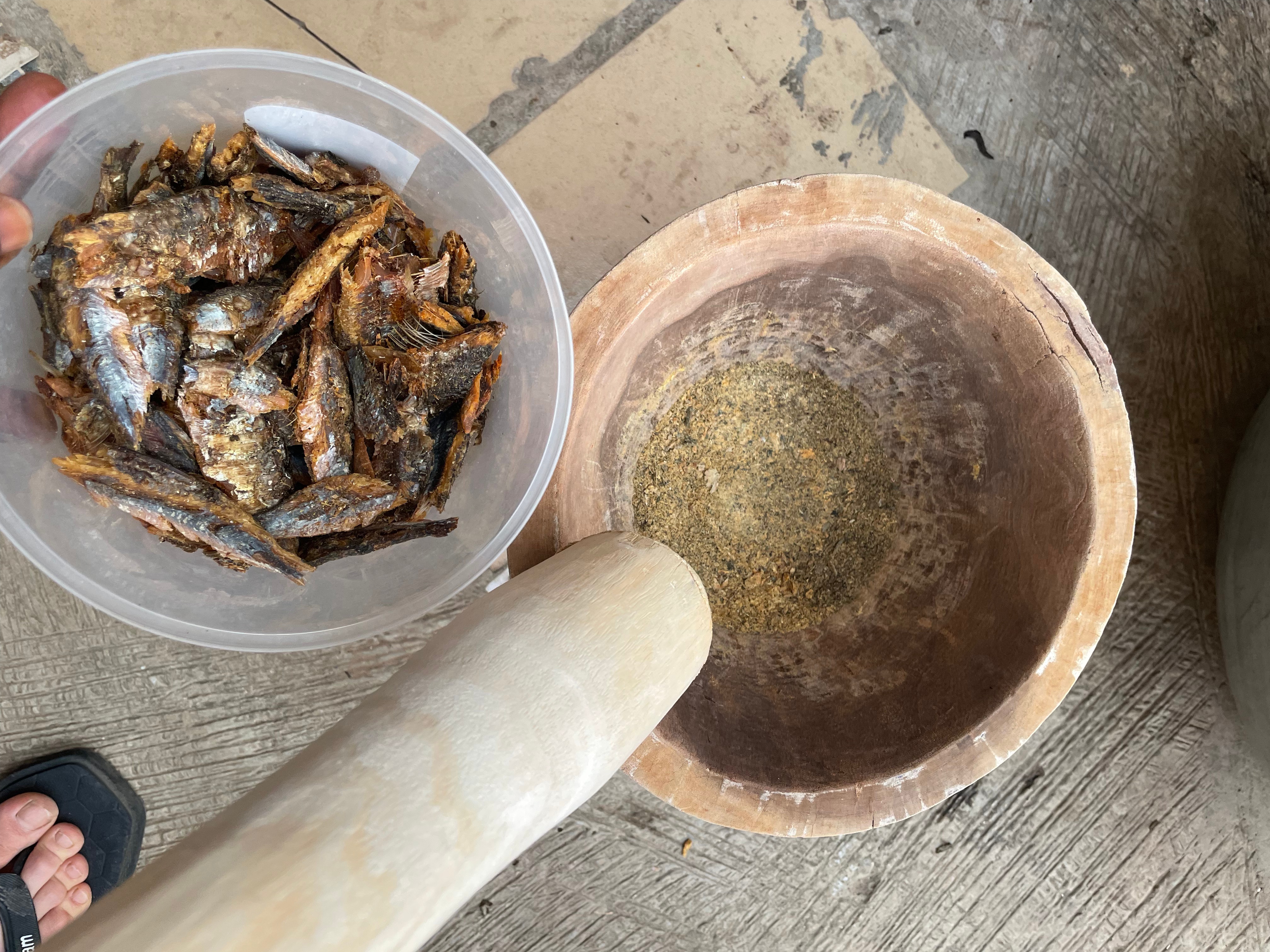
Small dried fish –
Dried onion, pounded into a powder (or onion powder)
Small red onion
Fresh tomatoes (Roma is fine)
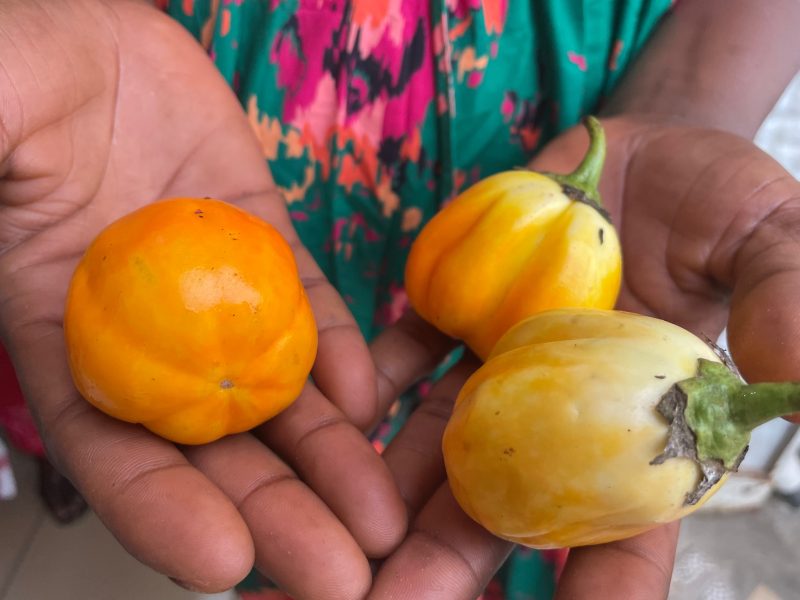
African eggplant (small, white) – check your local African store or farmers market. In Tucson, a few African refugees bring them to market!
Salt
Preparation of Tibani with Stew
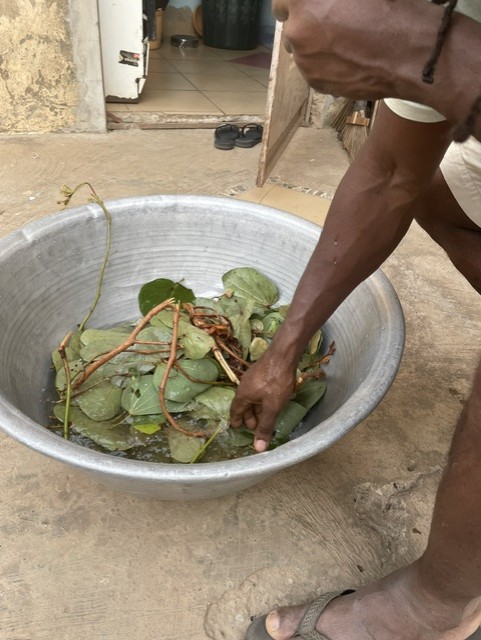
Wash Gbate leaves, selecting those that are about the size of the palm of your hand.
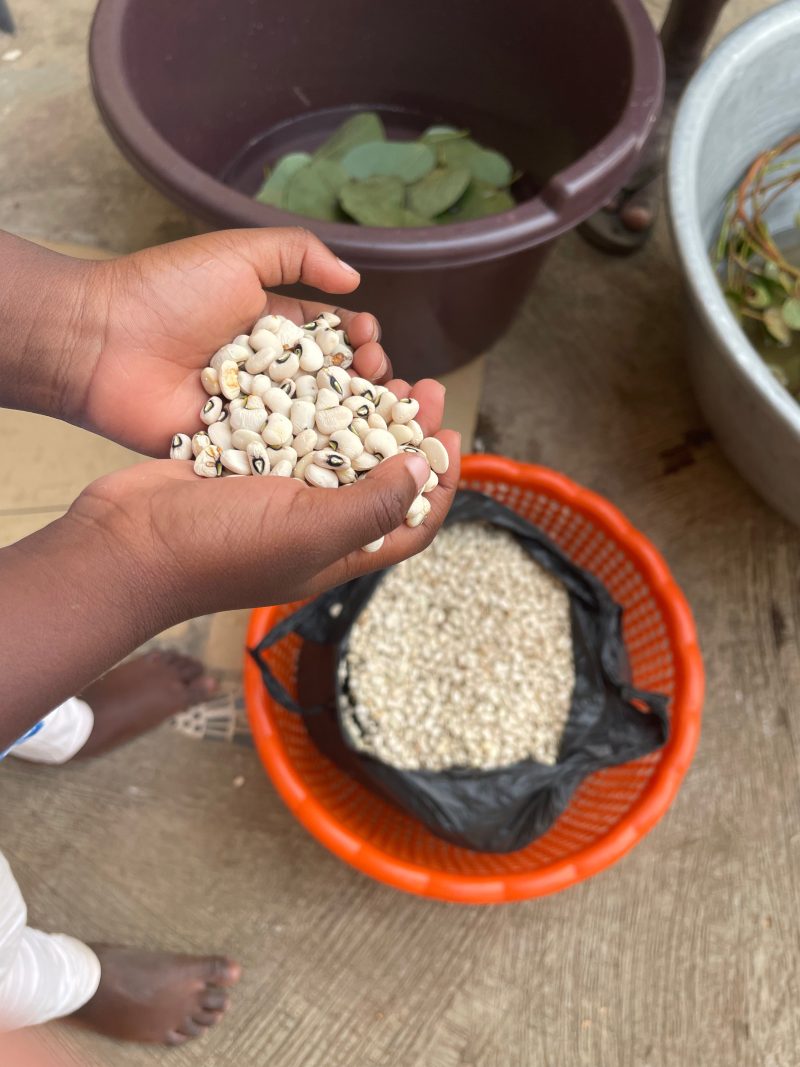
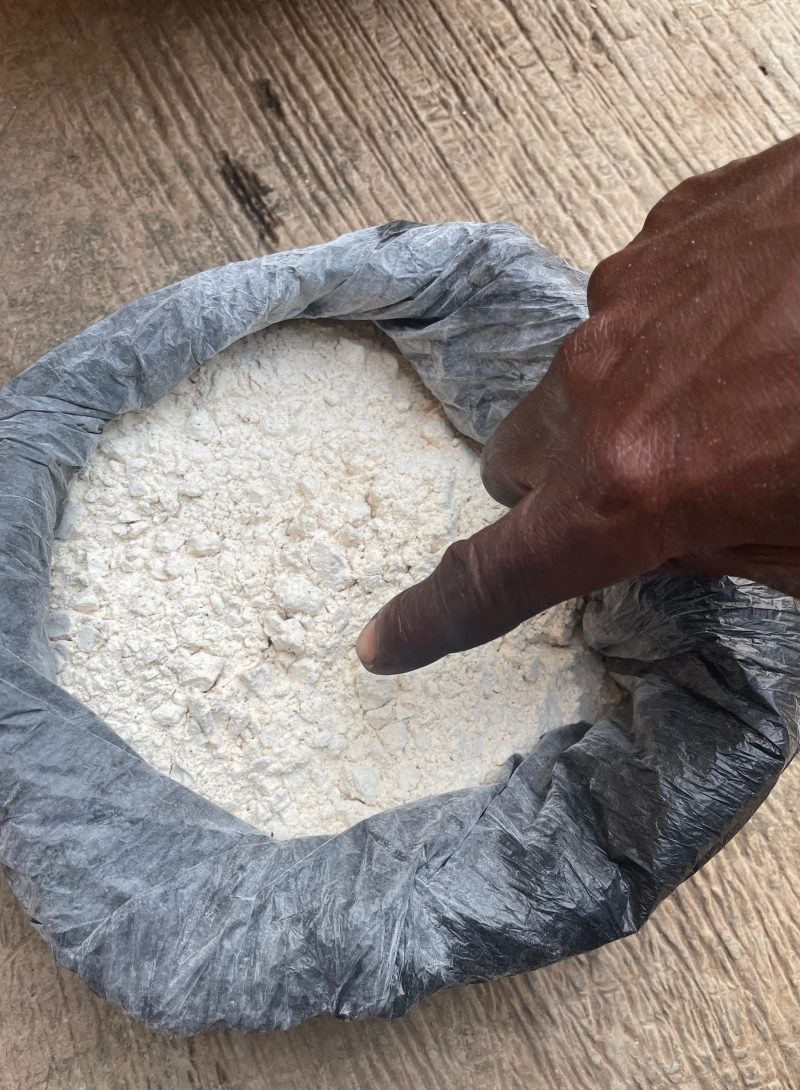
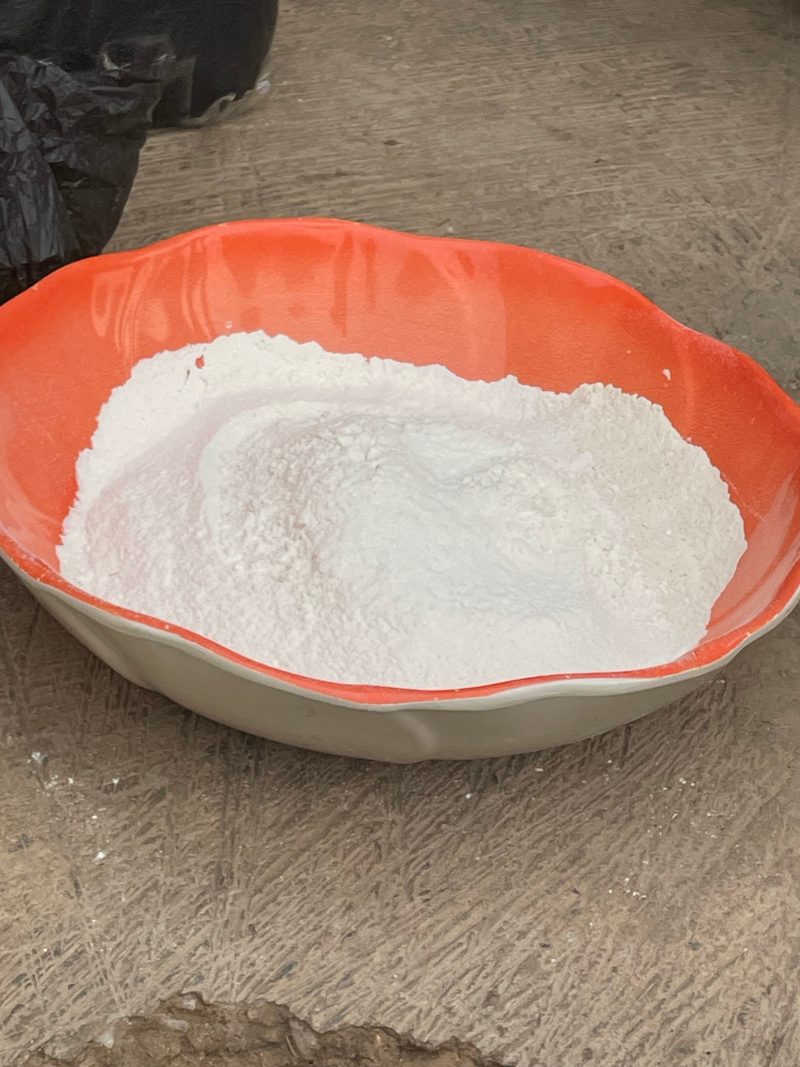
Prepare cassava flour by sifting.
Mix the cassava flour and cowpea flour in a ratio of 2:1, cassava to bean.
Add a large pinch of salt
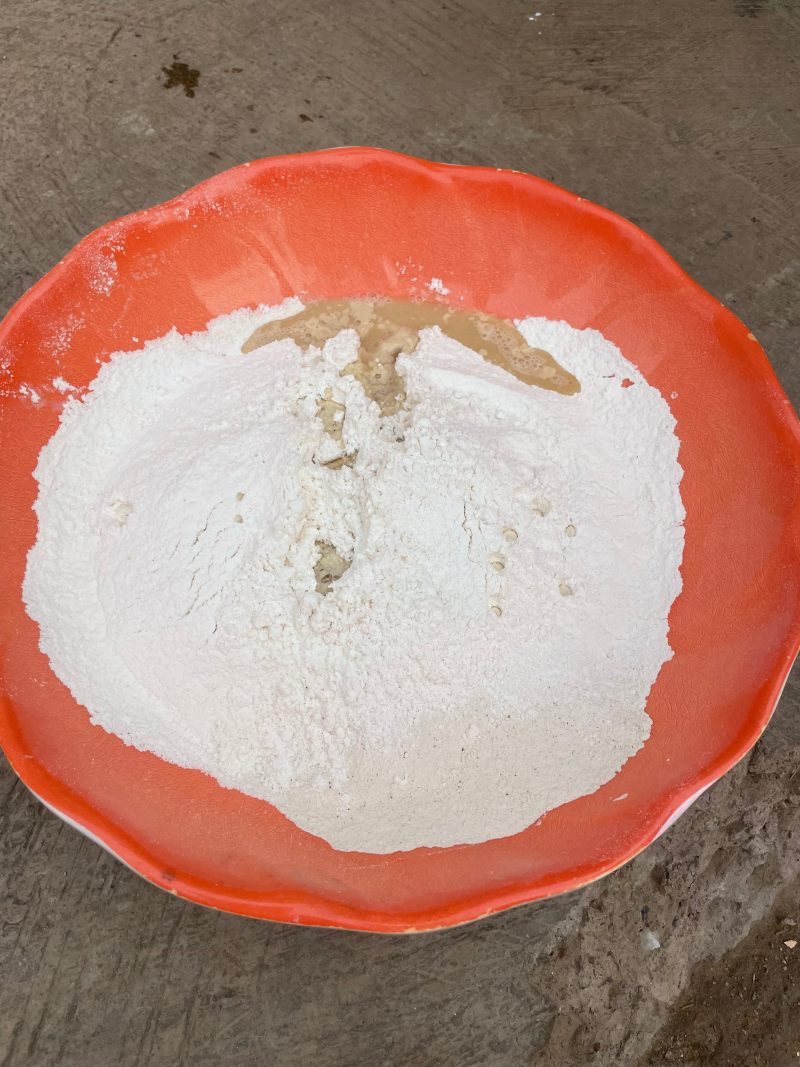
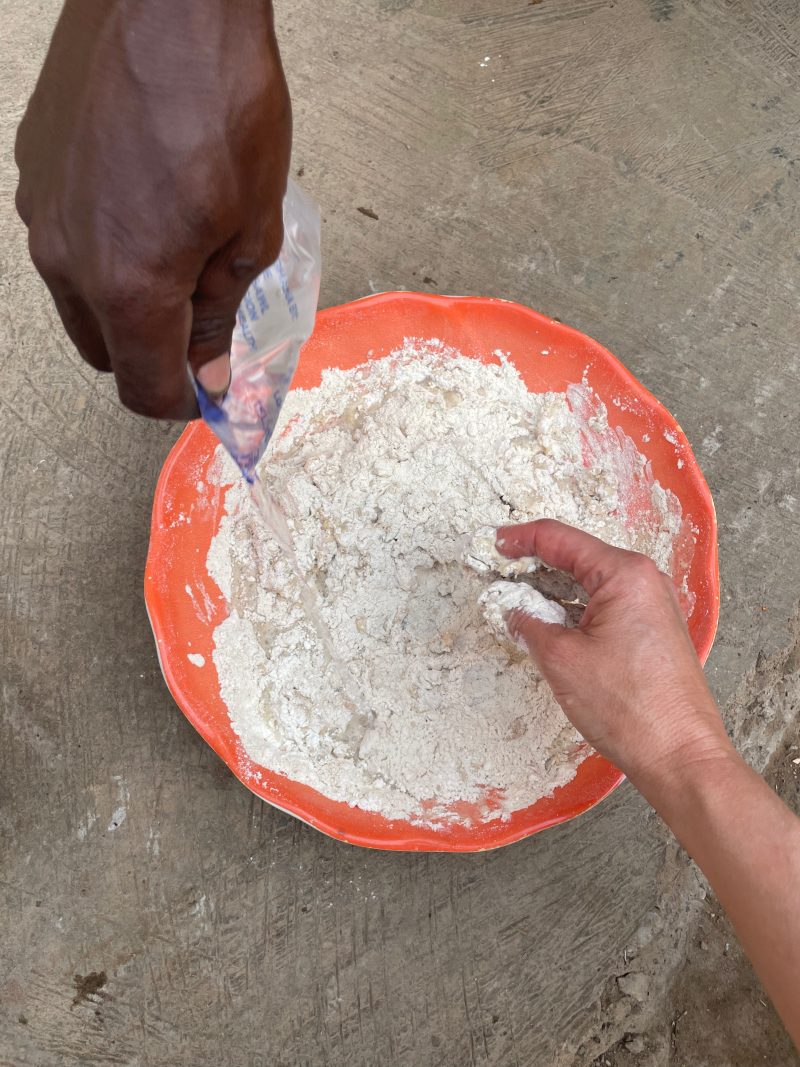
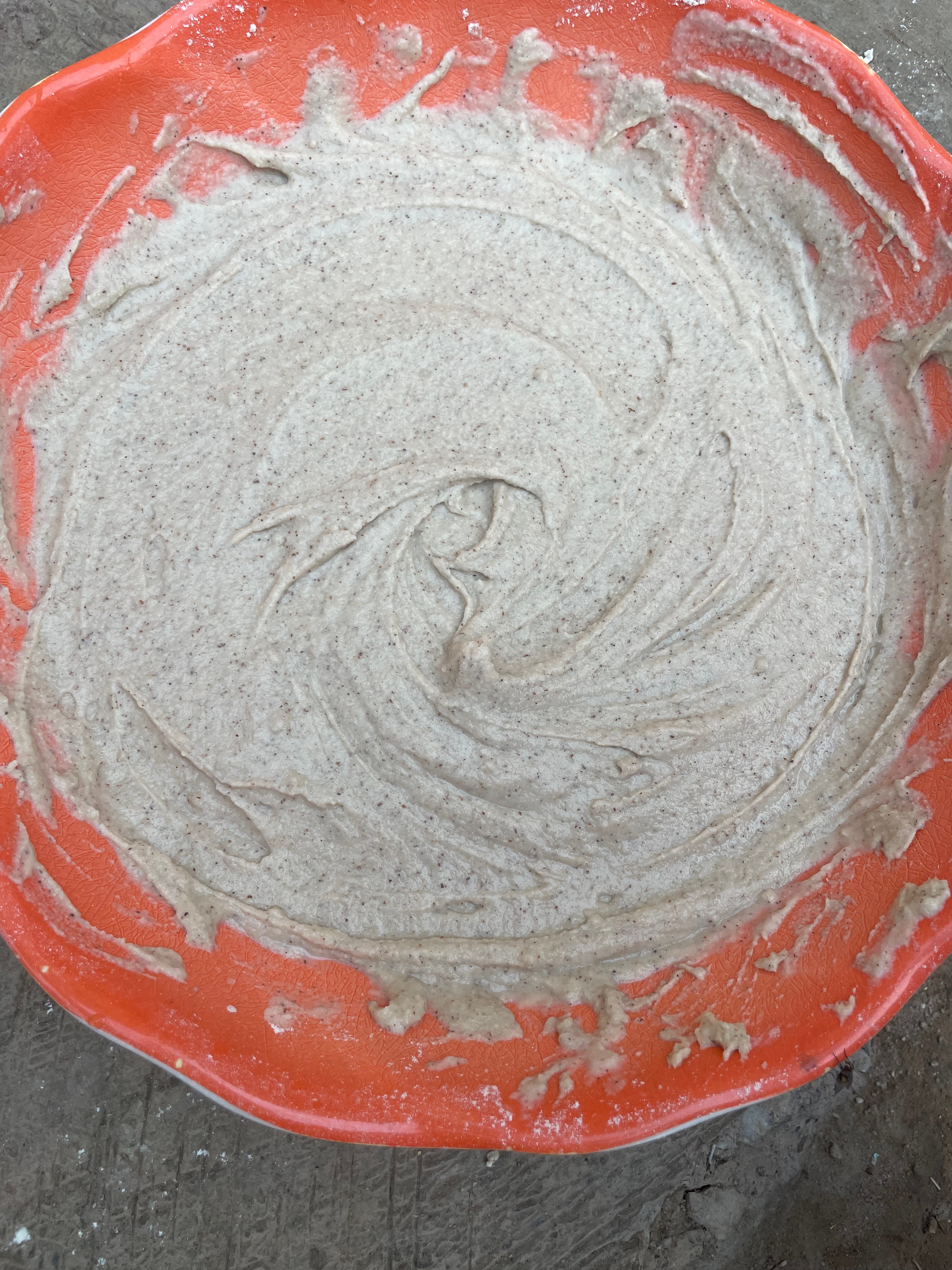
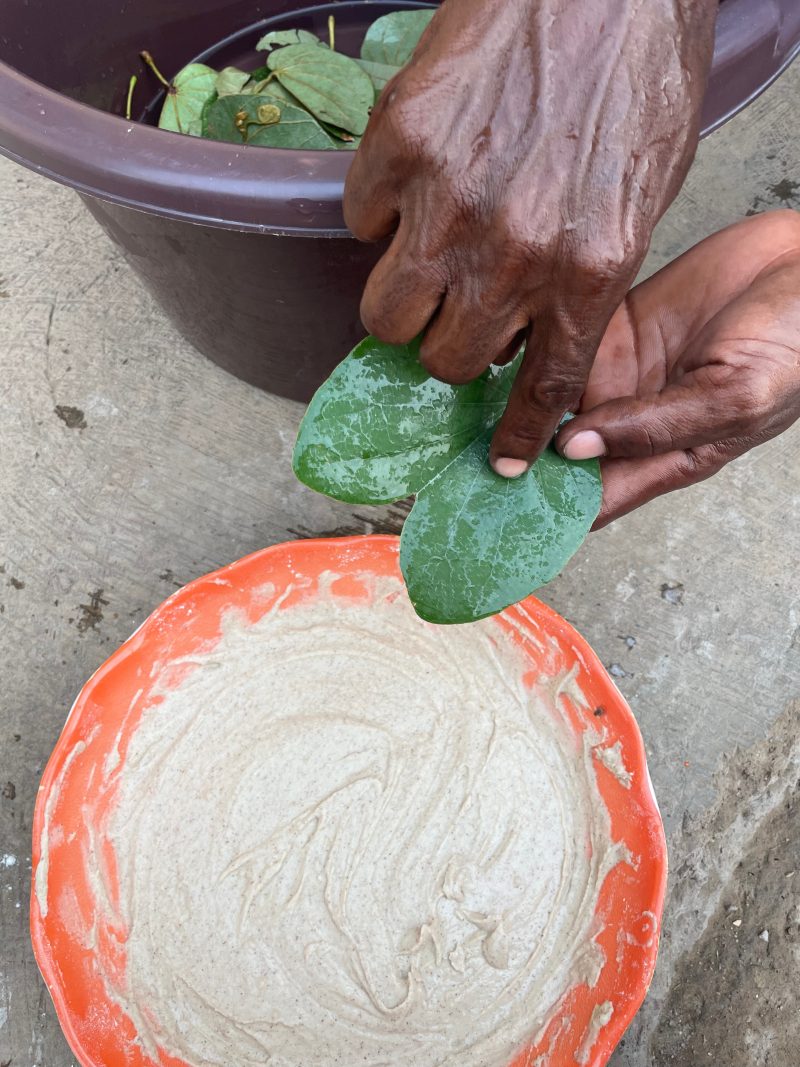
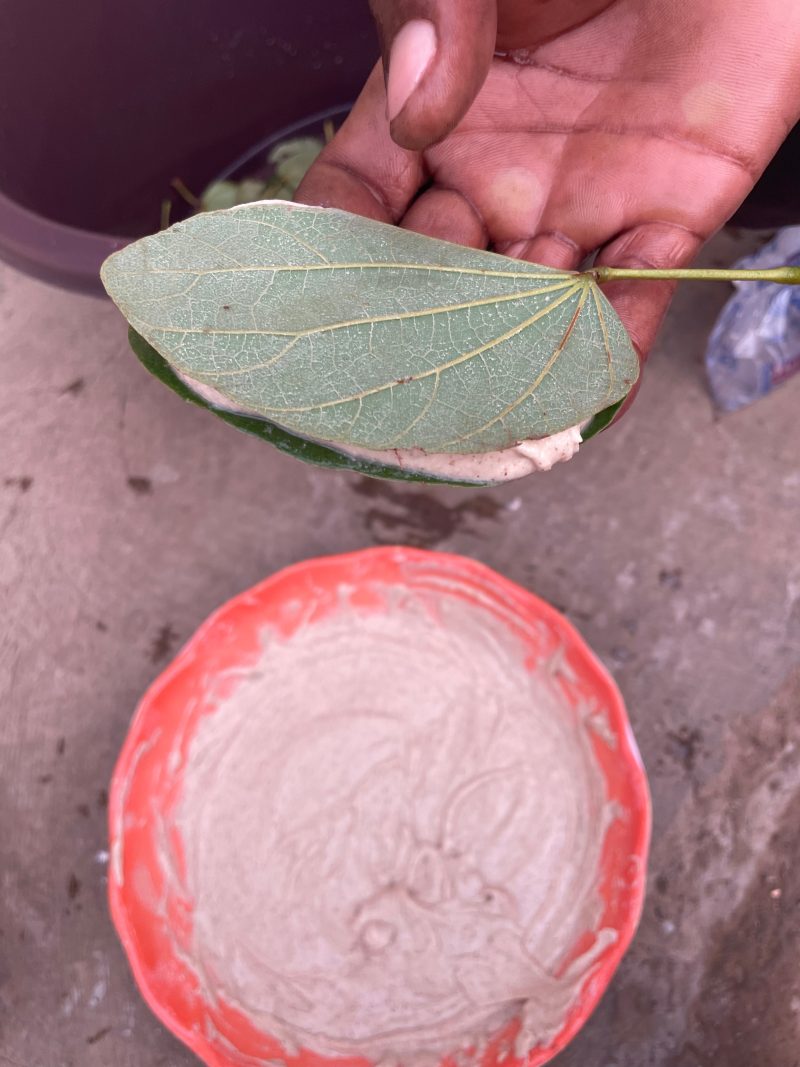
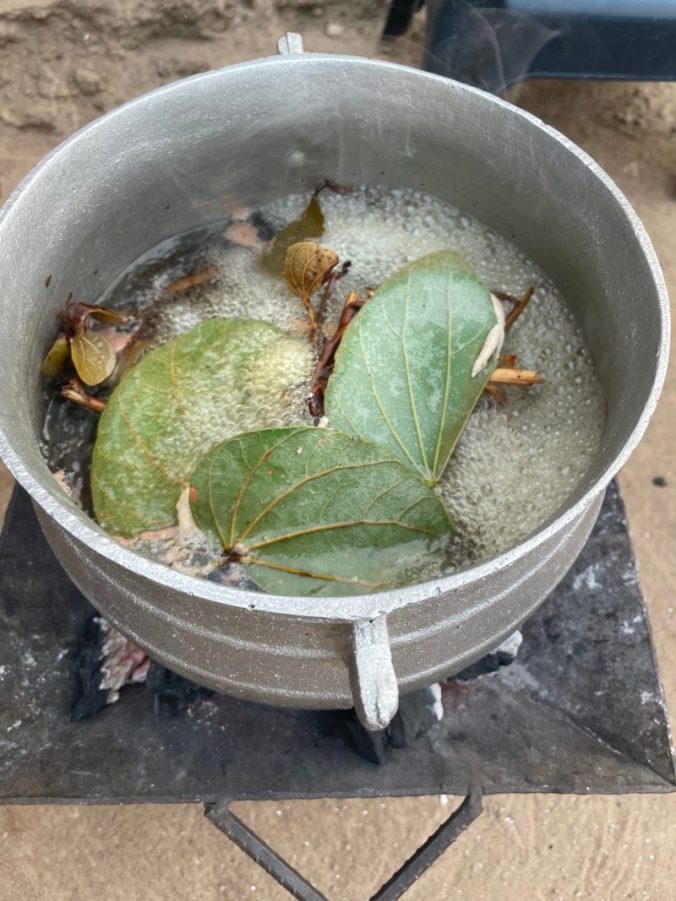
Boil the cooking pot over the fire or stove, approximately half full of water. Coil the flexible branches of the Gbate shrub to make a supportive framework upon which to place the tibani.
Carefully place the prepared tibani one by one into the pot, lay them flat so they are evenly distributed in the pot.
Cover and simmer approximately 45 minutes, checking occasionally for doneness.
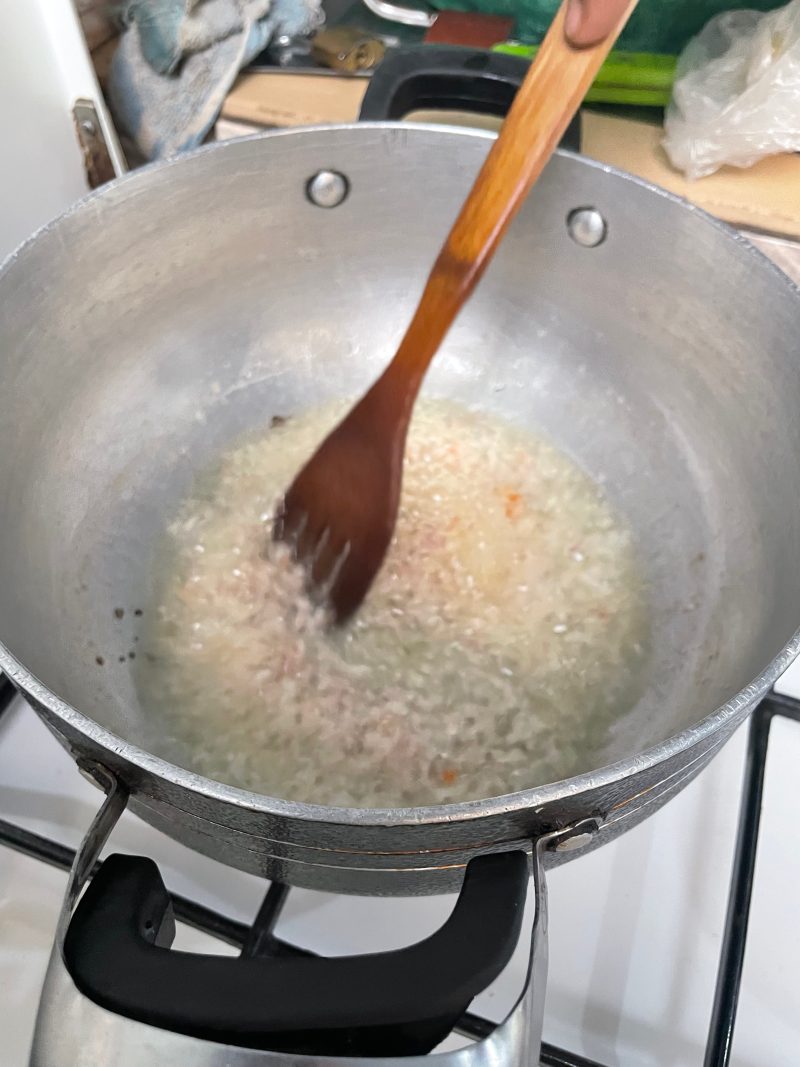
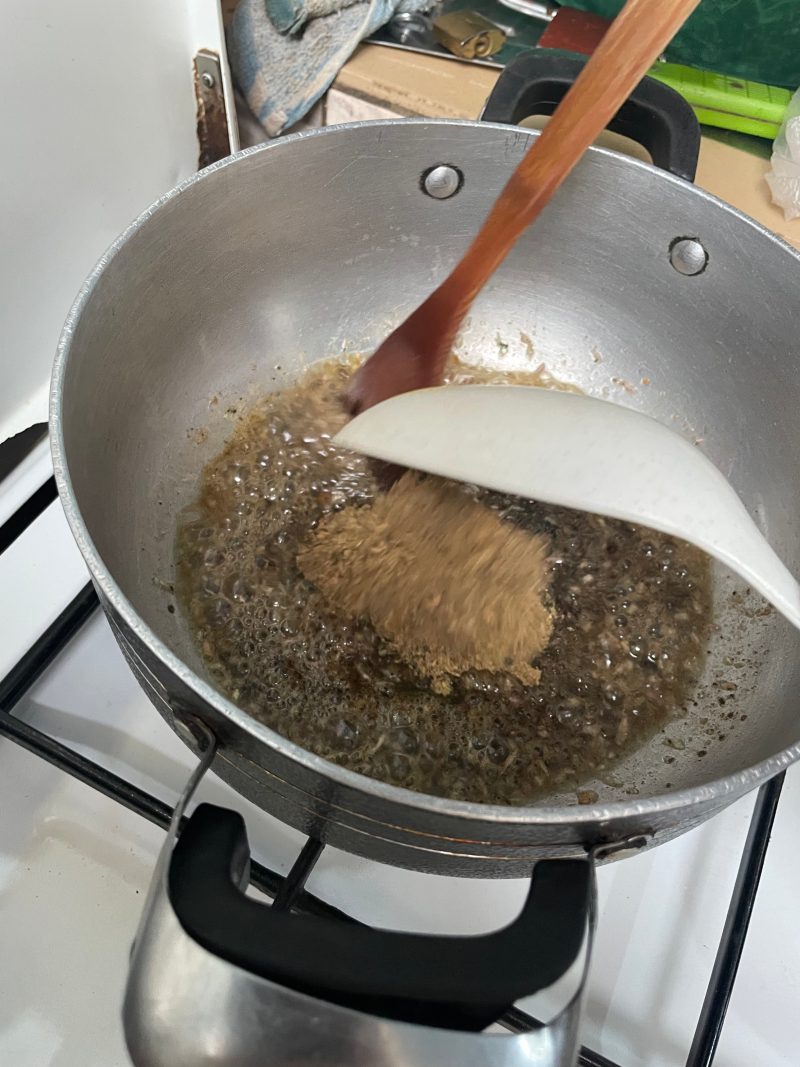
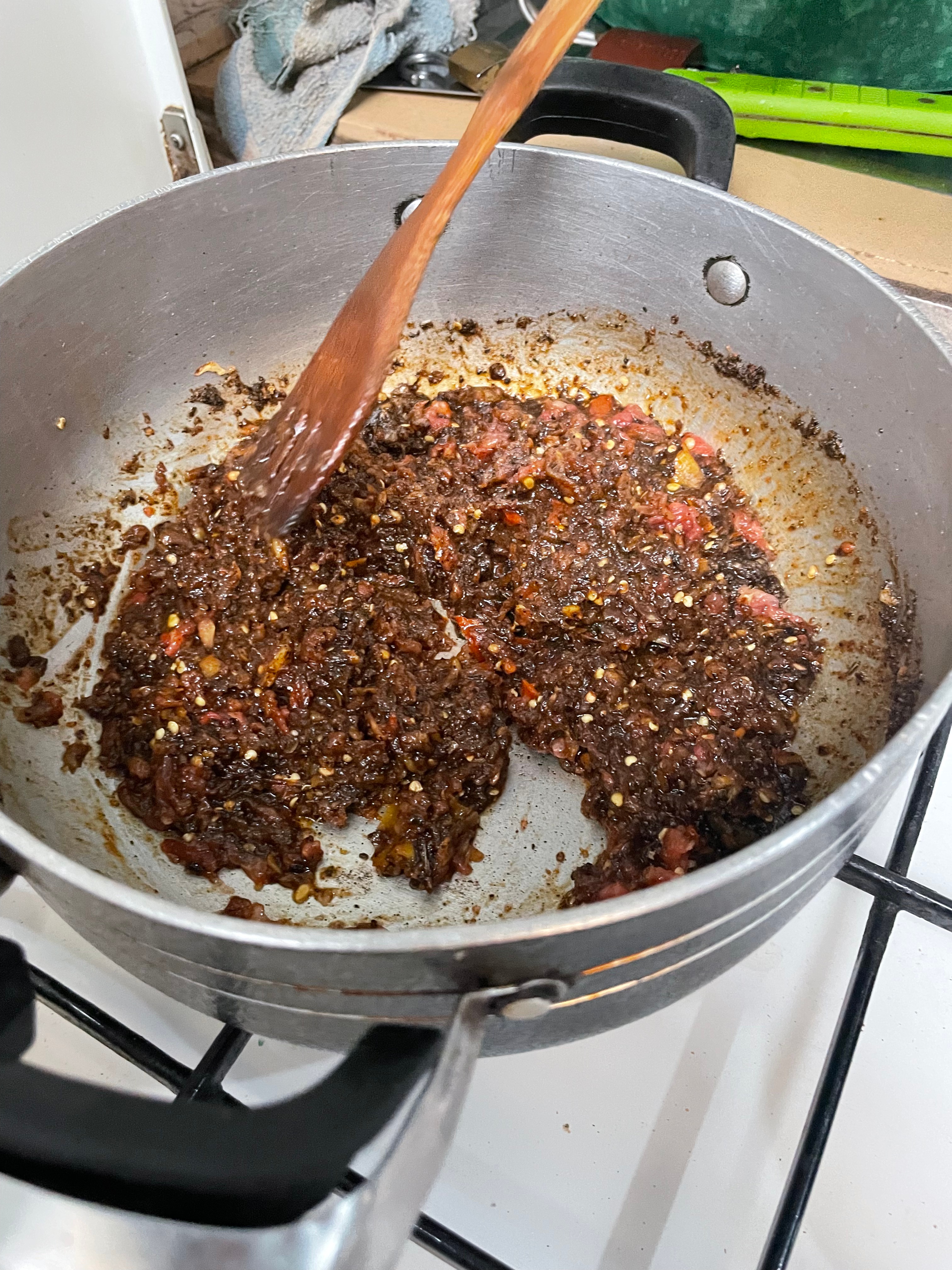
While the tibani are cooking, prepare the stew:
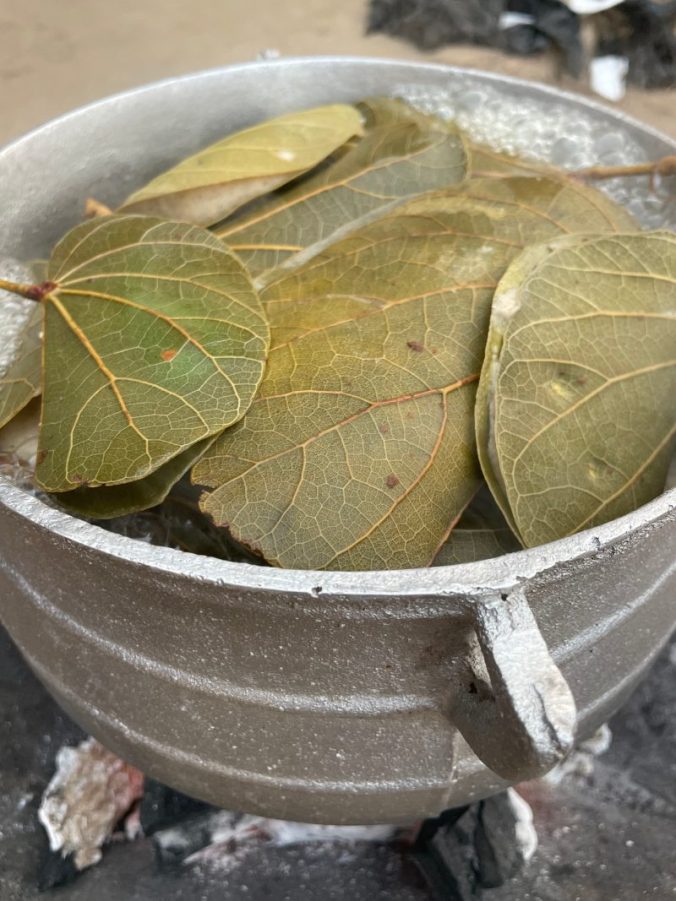
The tibani are done when the batter is firm and no longer sticky (like the texture of a cooked tamale!), approximately 45 minutes.
Remove pot from the fire.
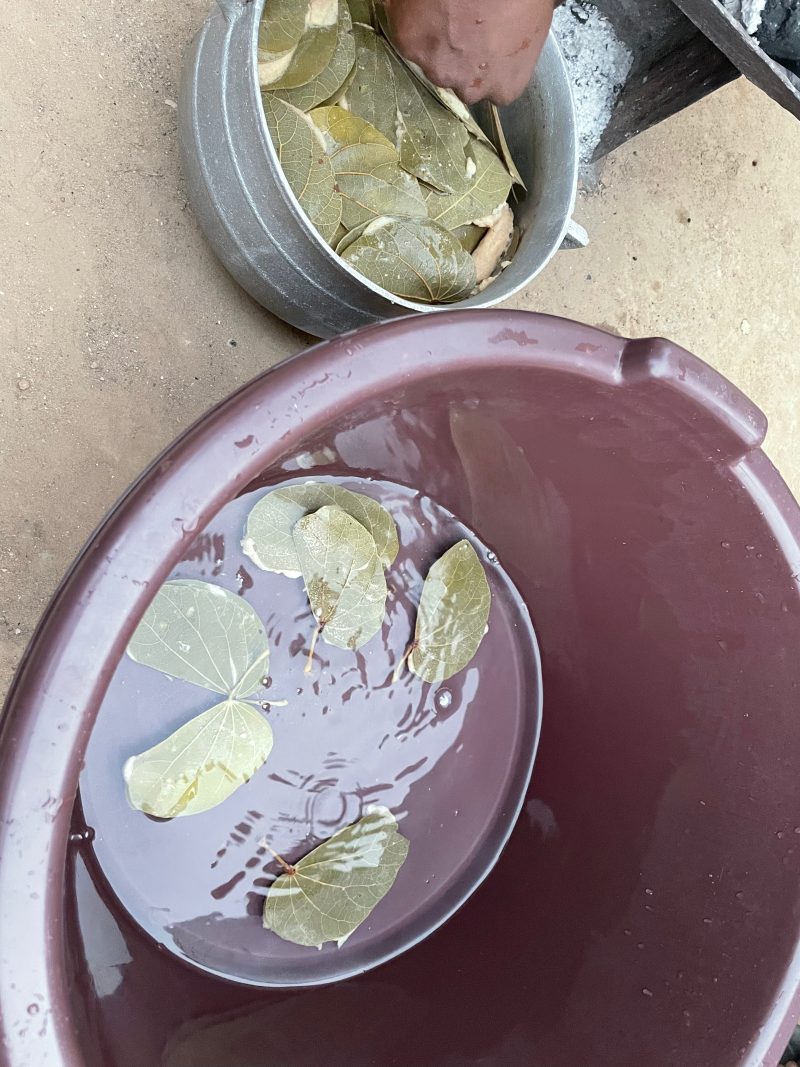
Drop the cooked tibani in some cool water to stop the cooking, and to make it easier to unwrap them. Gently peel back the leaves and dish up the tibani (compost the leaves).
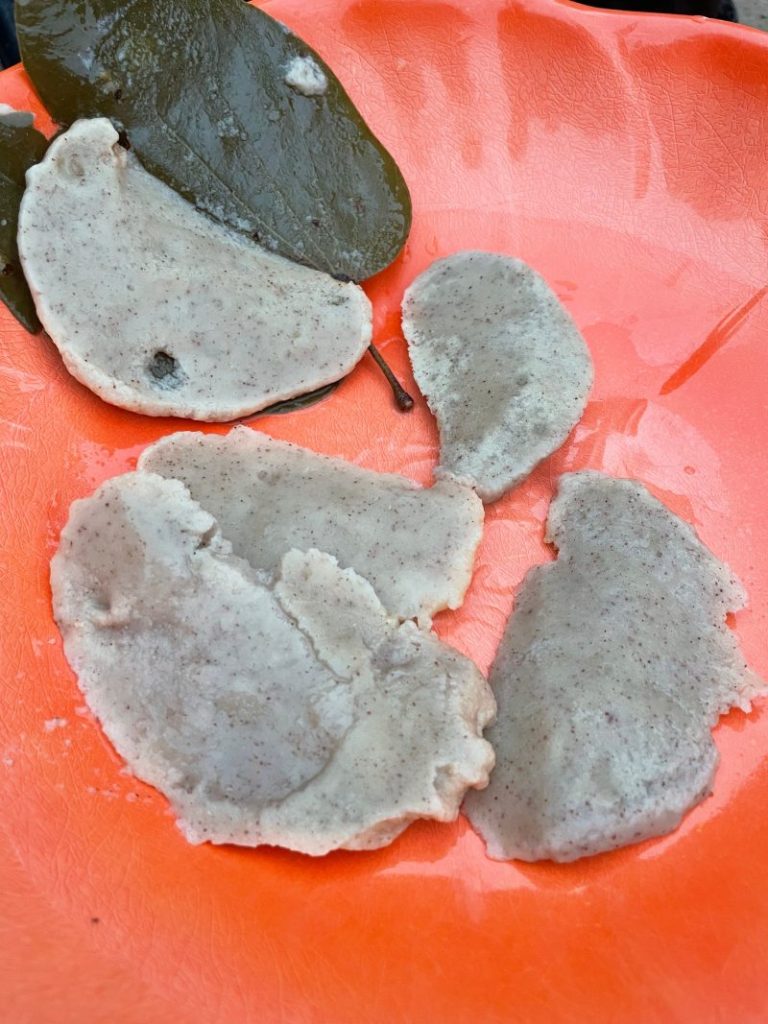
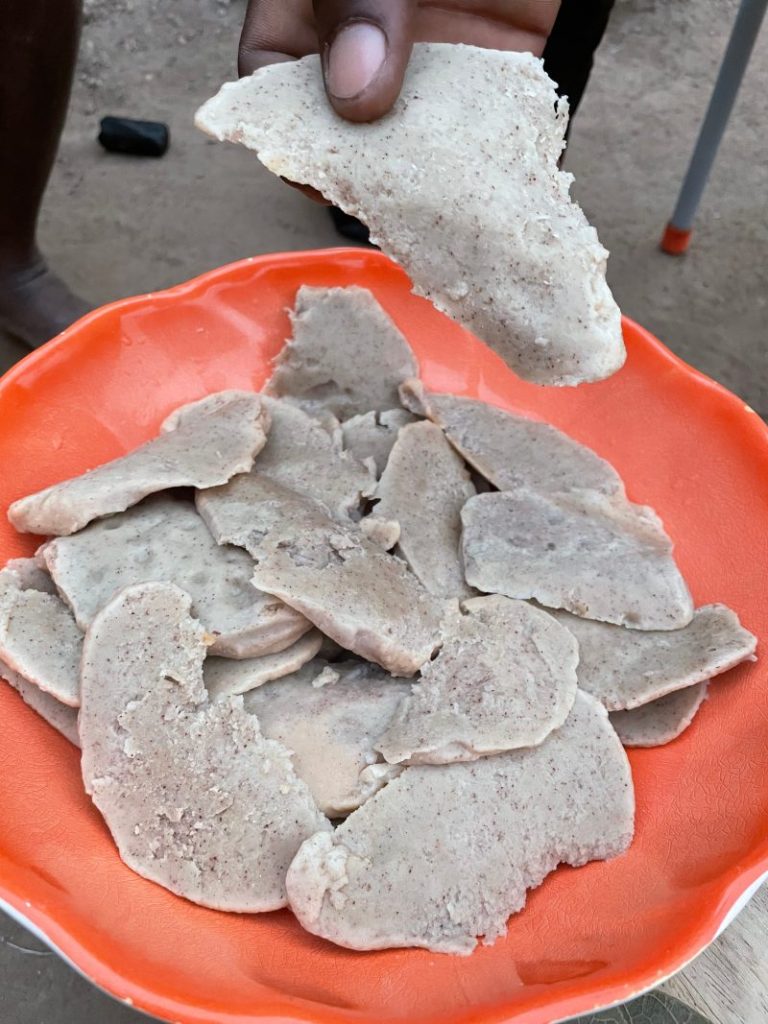
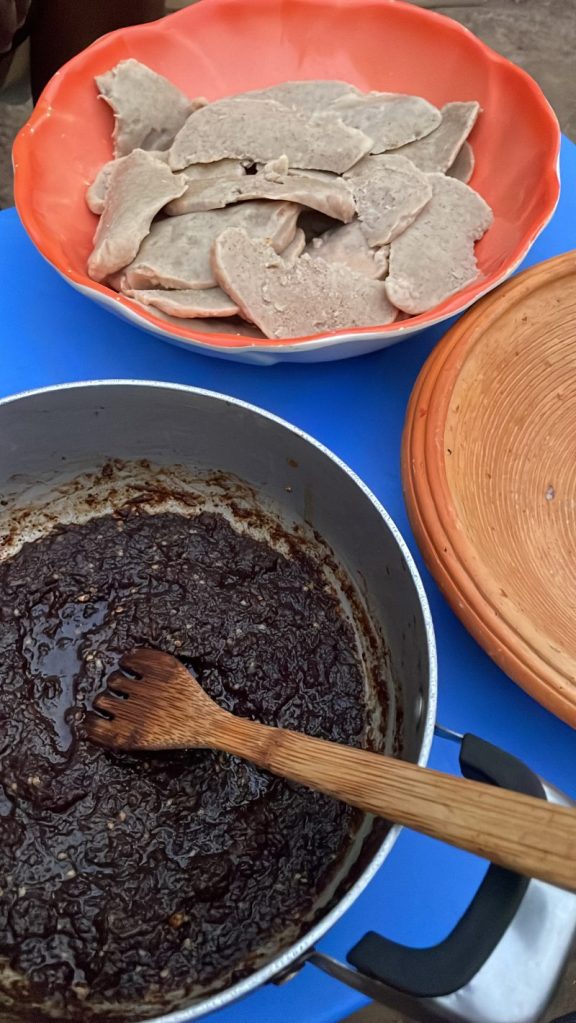
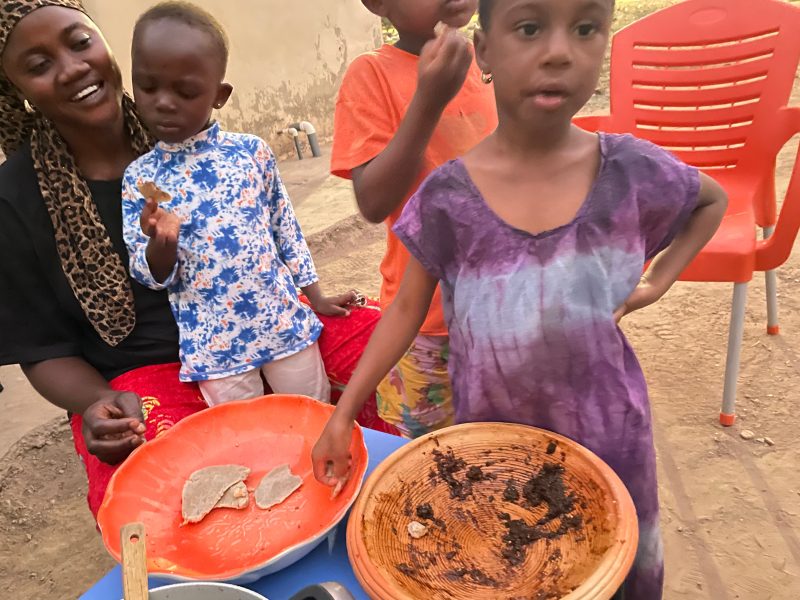
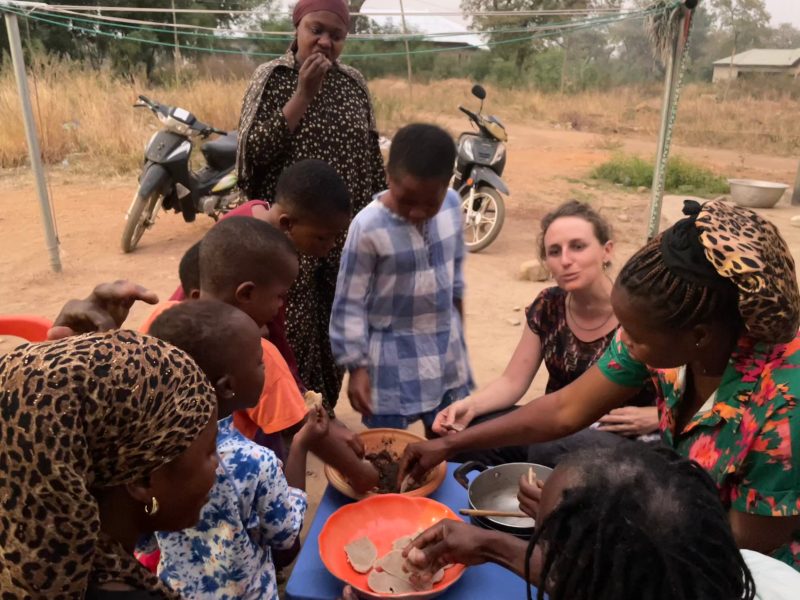
The texture of the tibani is similar to that of Mexican tamales, and has a mild sweetness. It’s so pleasant with the rich stew of onion, tomato, fish, and eggplant. Eating together from the same dish is a symbol of unity and kinship, and I certainly felt that way every time I enjoyed a meal in Ghana.
At my home in Tucson, Arizona, I have enjoyed being part of tamaladas, or tamale-making parties (especially around Christmastime in the Southwest). It is also a friends-and-family event, to come together and talk, sharing stories and laughs, and of course enjoy eating from the same tamale pot together…
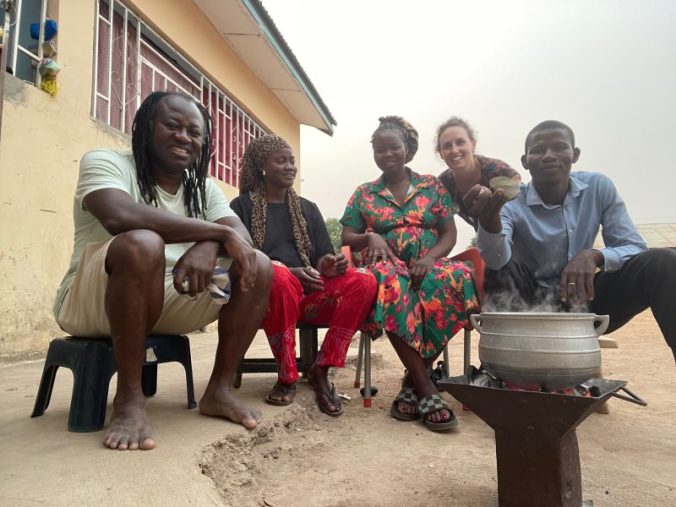
It was so beautiful and delightful to gather as friends to celebrate a traditional dish made with native and local ingredients in Ghana!
To learn more, visit WIACTghana.org
Thank you for sharing your comments, and let us know if you try making the tibani!
Or, share a story of a dish you enjoyed somewhere in the world that reminded you of a traditional dish from your home.
Asan k’ba (Thank you in Gonja)
Gracias (Thank you in Spanish)
–Savor Sister Emily Rockey
__________________________________________________________
*In the ‘Seasoned Advice’ blog, member “Athanasius” did amazing research about saltpetre!
https://cooking.stackexchange.com/a/128896

