My mentor and guide Juanita-baḍ warned us there will be times like this. Now awesome drought is upon us! She said if we need food from the desert, we must know famine-food-plants for the dry times. Tia Marta here to share some of her advice for desert harvesters in a drought.
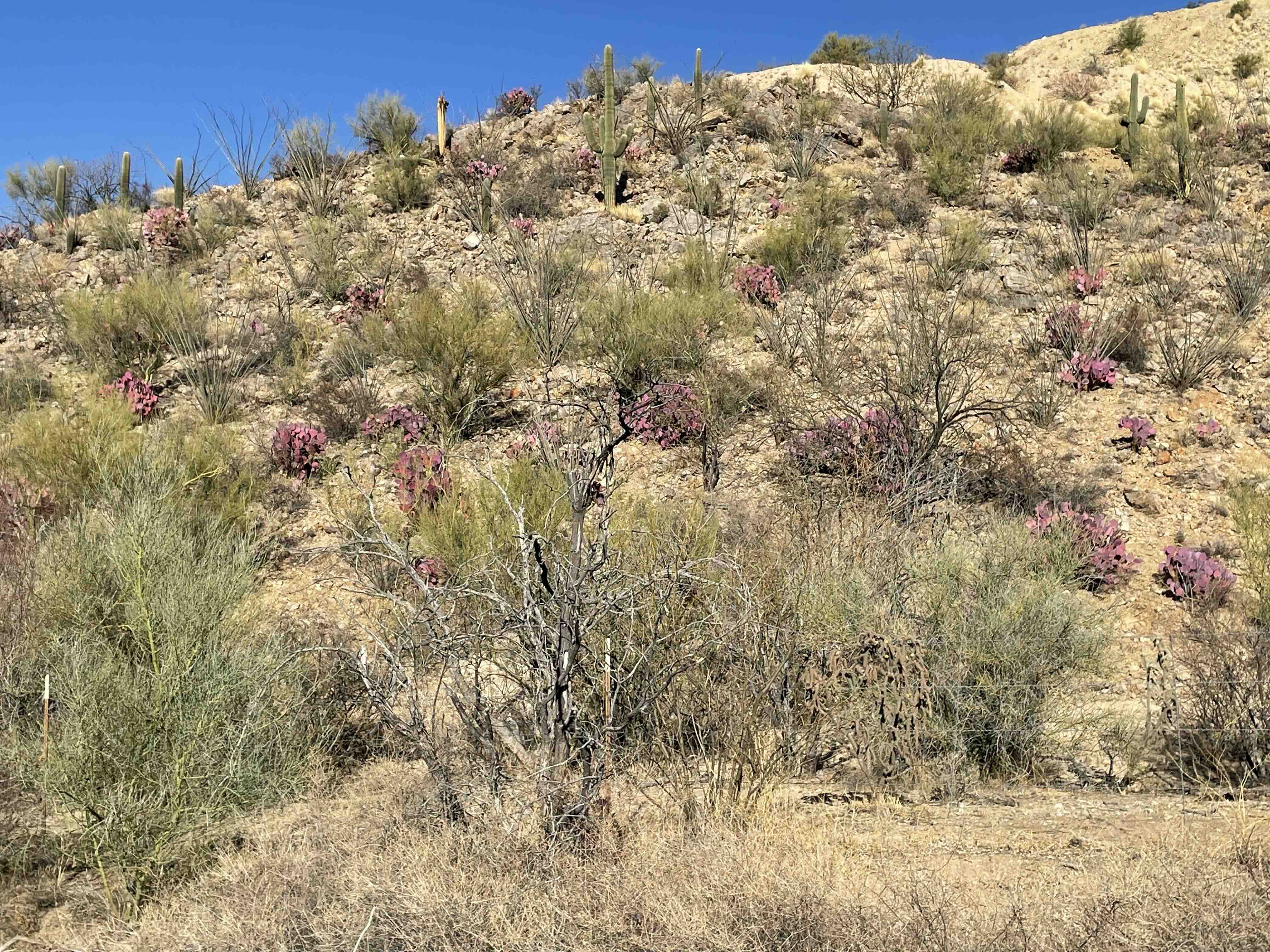
When the beautiful Santa Rita prickly pear around town turns a wild purple or lavender, it’s vividly screeming “thirsty“–a visual pop-out in the dry landscape, as in this photo taken along the old Helmet Peak road south of Tucson. According to Watershed Management Group, the last 6 months have been the driest on record for Tucson, Arizona. We’re in the midst of the acid test for what’s to come.
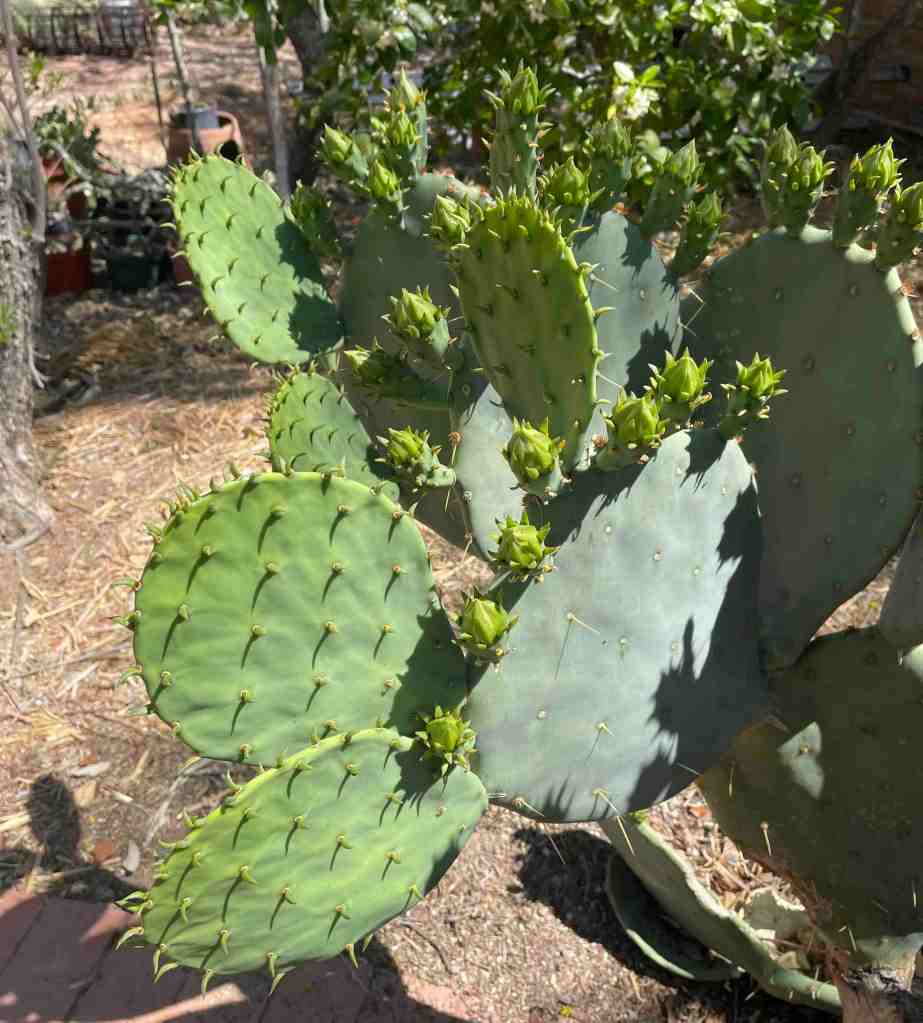
In a well-watered garden this drought year, a prickly pear will be full of new-growth pads and flower buds. Find SavorSisterCarri’s ideas for making nopalitos with the young pads on her recent post.
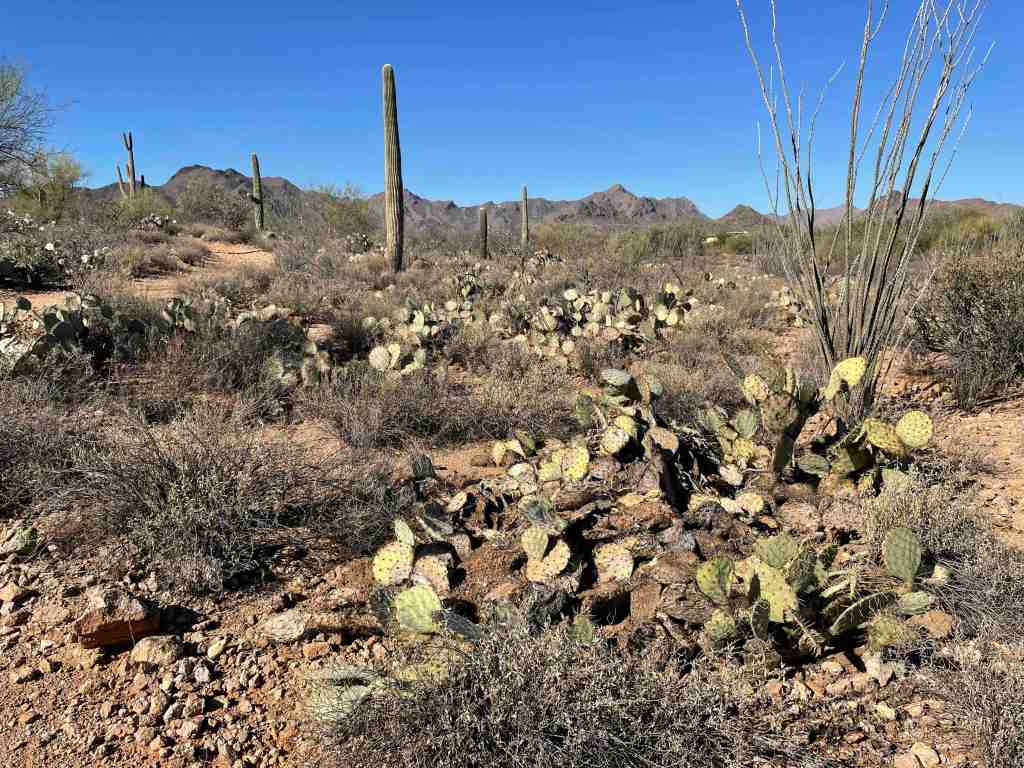
April is known as Oam Maṣaḍ (Yellow Moon), but there won’t be many yellow prickly pear flowers this year out in the des, with no rain since October’s minimal drops. In this photo at Feliz Paseos Park, prickly pears are sadly damaged with drought. Over my 50 years of harvesting ciolim (cholla cactus flower buds), I’ve never known them to be “on hold” as they are this spring (2025), saving their resources for a better-bet year. Juanita-baḍ said there are always a few, but ciolim may now be telling us of a new phase….
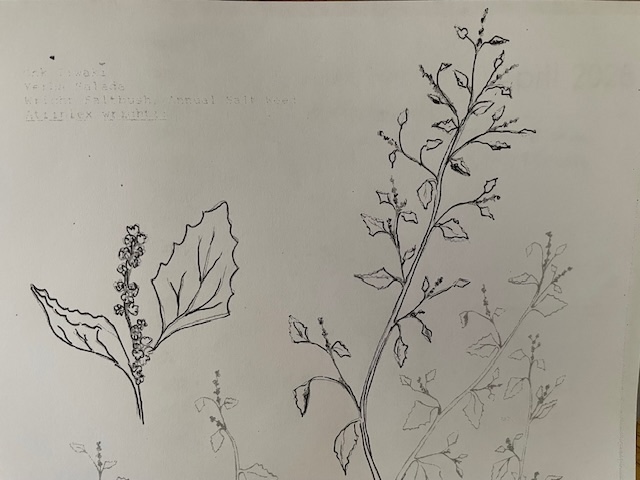
According to Juanita-baḍ, we should know where to look for onk i:wagĭ (Wright’s saltbush Atriplex wrightii pictured above) in poor, salty soils. (The O’odham name is also used for A. polycarpa & A.elegans). It grows as an annual and can provide satisfactory “greens” over the warm and hot seasons when nothing else is available.
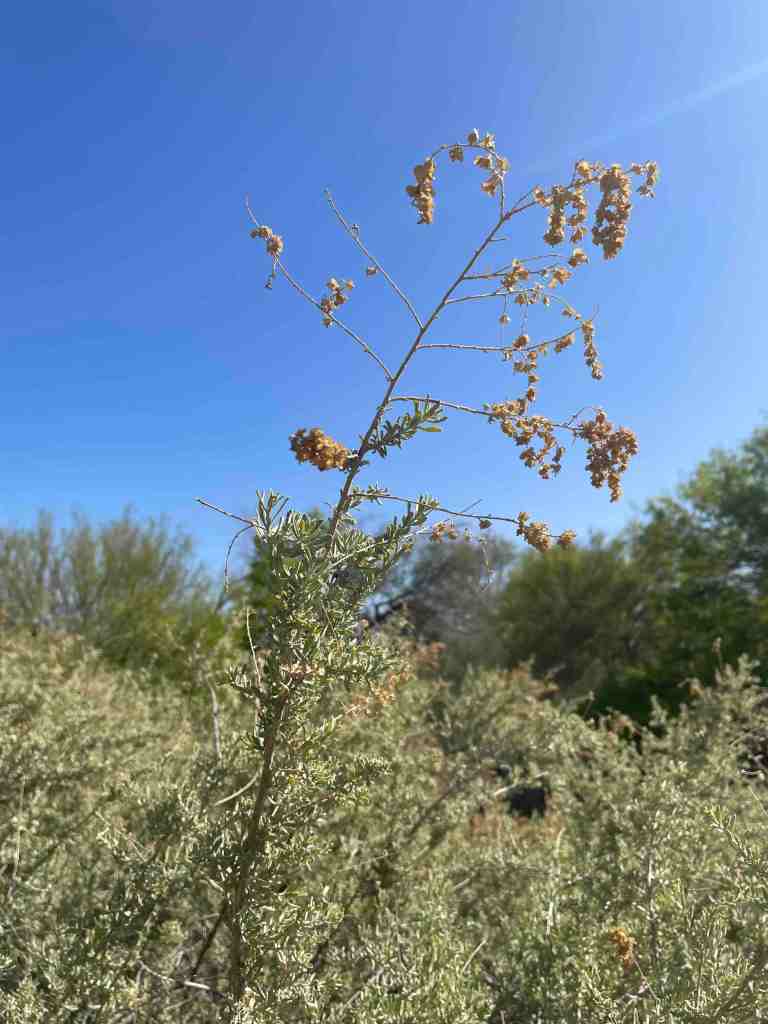
There are several “salt bushes” in the Sonoran Desert. Don’t be fooled by 2 different types of “seedheads” especially on our perennial four-wing saltbush (Atriplex canescens)! It is dioecious. Pictured here is the dried male flower. The (female) seed has “wings.” Foliage on both sexes is high in calcium, iron and potassium, high in salt, good for animals, but there isn’t a record of Indigenous people using it for food.
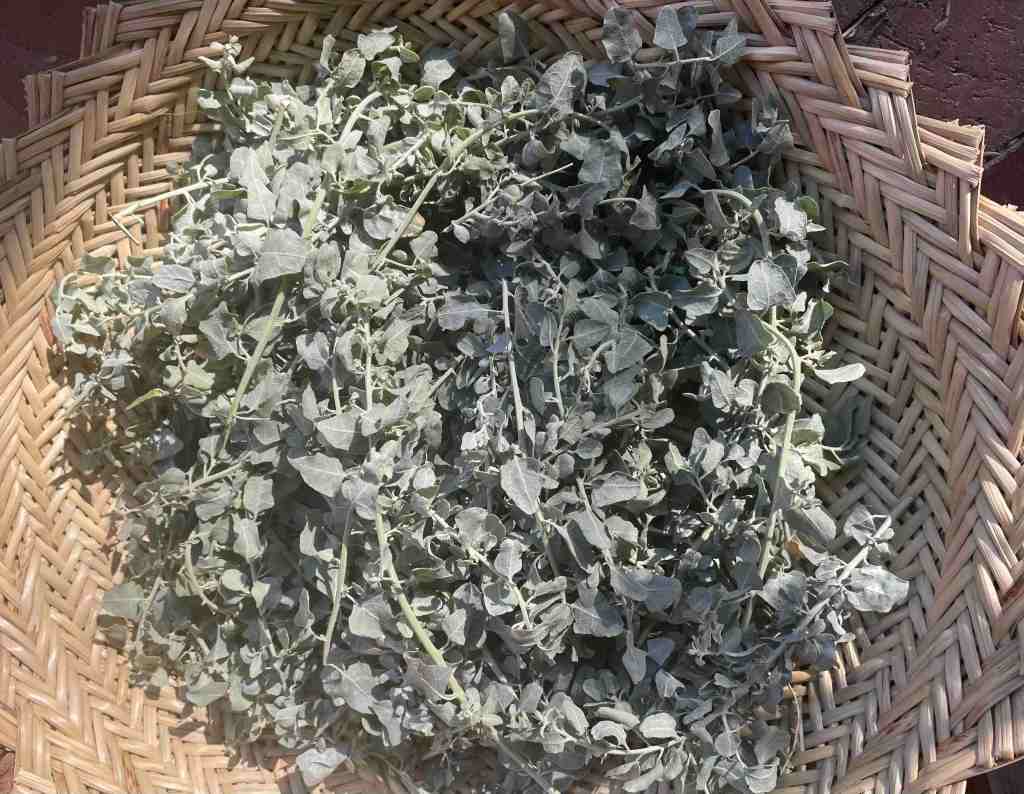
A perennial cousin of Onk I:wagĭ is Oedam or quailbush (Atriplex lentiformis) whose edible seeds are harvestable even in dry years. Many different Southwest Indigenous peoples have used its nutritious seeds to roast for flour and bread. Quailbush is a good landscape addition as a water-hardy hedge screen and bird habitat, as well as emergency food. See Food Plants of the Sonoran Desert by Wendy Hodgson, UA Press, 2001.
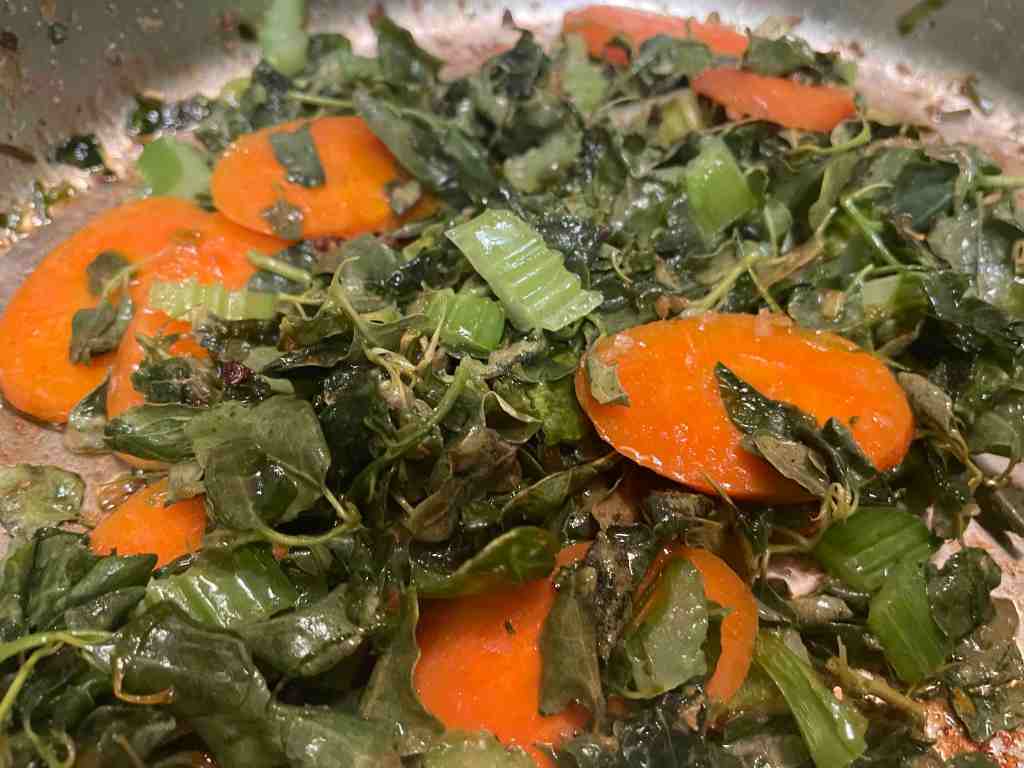
I tried stir-frying Oedam foliage with I’itoi’s onions, London rocket weed, carrots & celery, but –alert–I don’t recommend this! Tasty at first, the very salty greens became tough and bitter. I’ll stick to eating its seeds–and using its foliage in a dye bath.
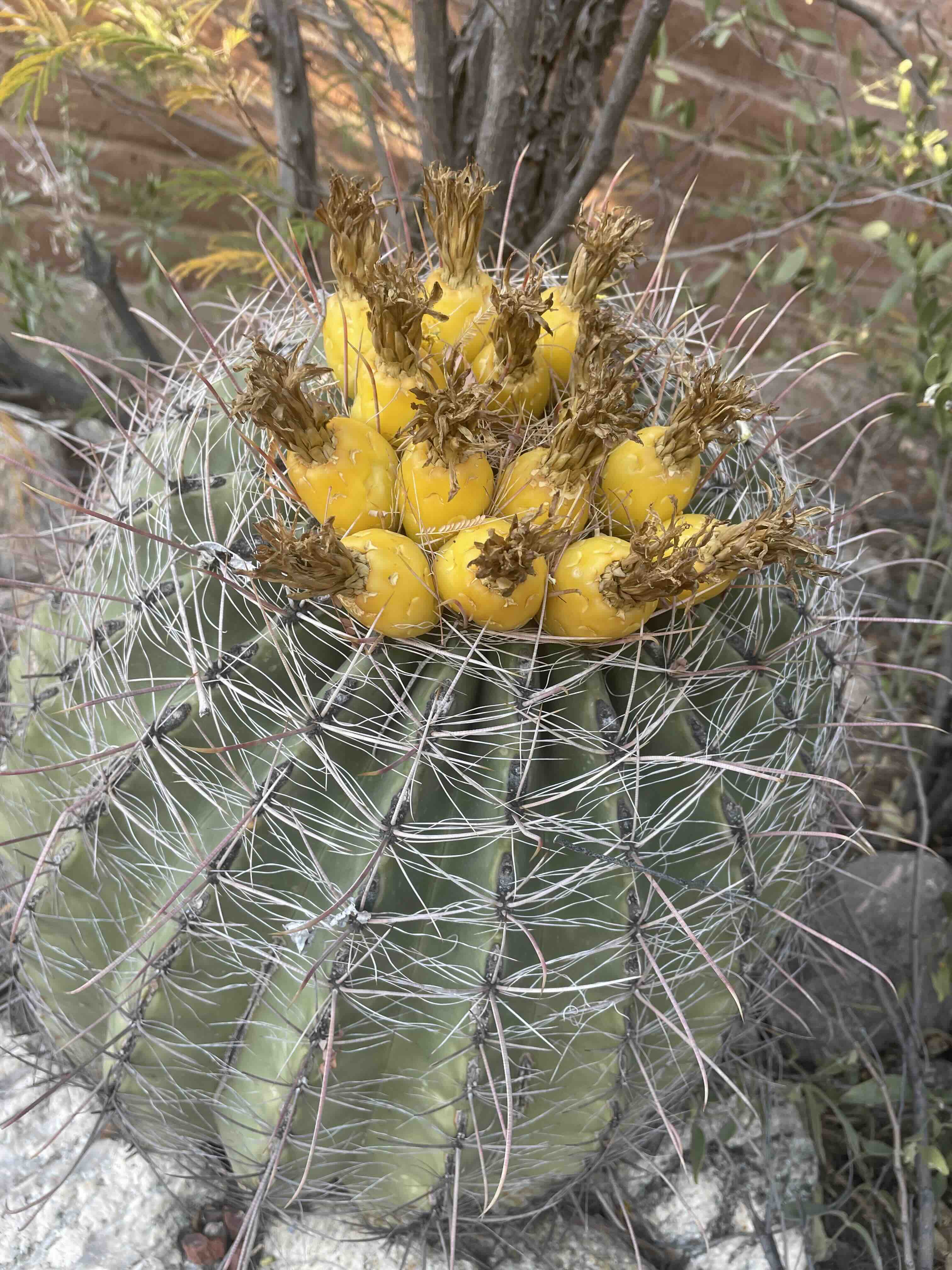
Advice from Juanita-baḍ about barrel cactus was to wait patiently to harvest their fruit until you have nothing left to eat–that is, let it stay on the plant all winter until you have used up all your other stored food. As a yellow crown atop the barrel, its fruit is right there waiting when you need–unless a hungry roundtail ground squirrel beats you to it. She knew their tangy vitamins and crunchy protein would be a nutritional lift for famine times.
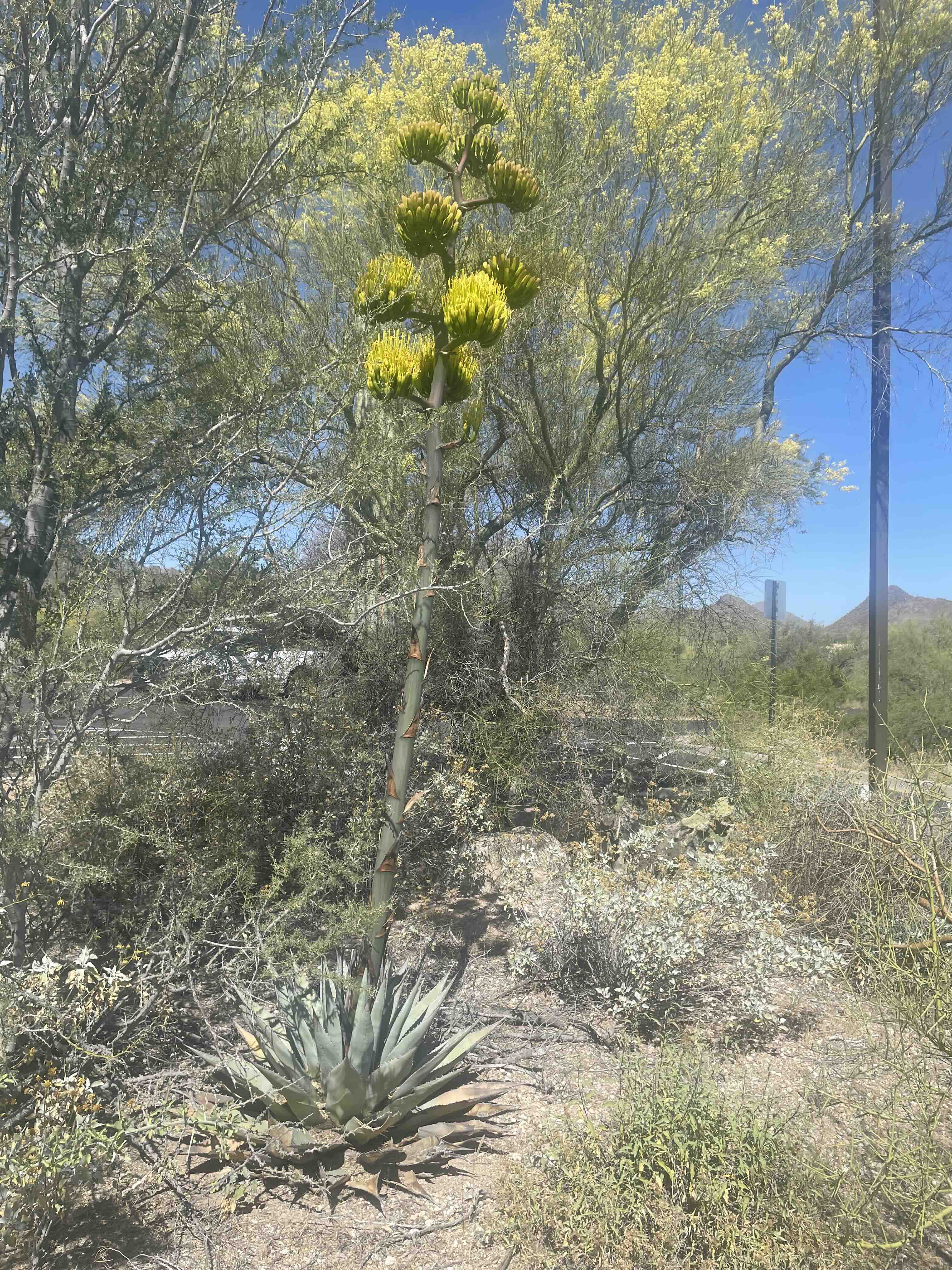
One of the few reliable desert spring foods–and one of her favorites, drought or not–is the sweet heart of a’ut from several species of Agave in the Sonoran Desert. Come celebrate this important, nutritious food at Tucson’s Agave Heritage Festival happening right now (April 10-13, 2025) all over town, with special events at Mission Garden! Hope to see you there!
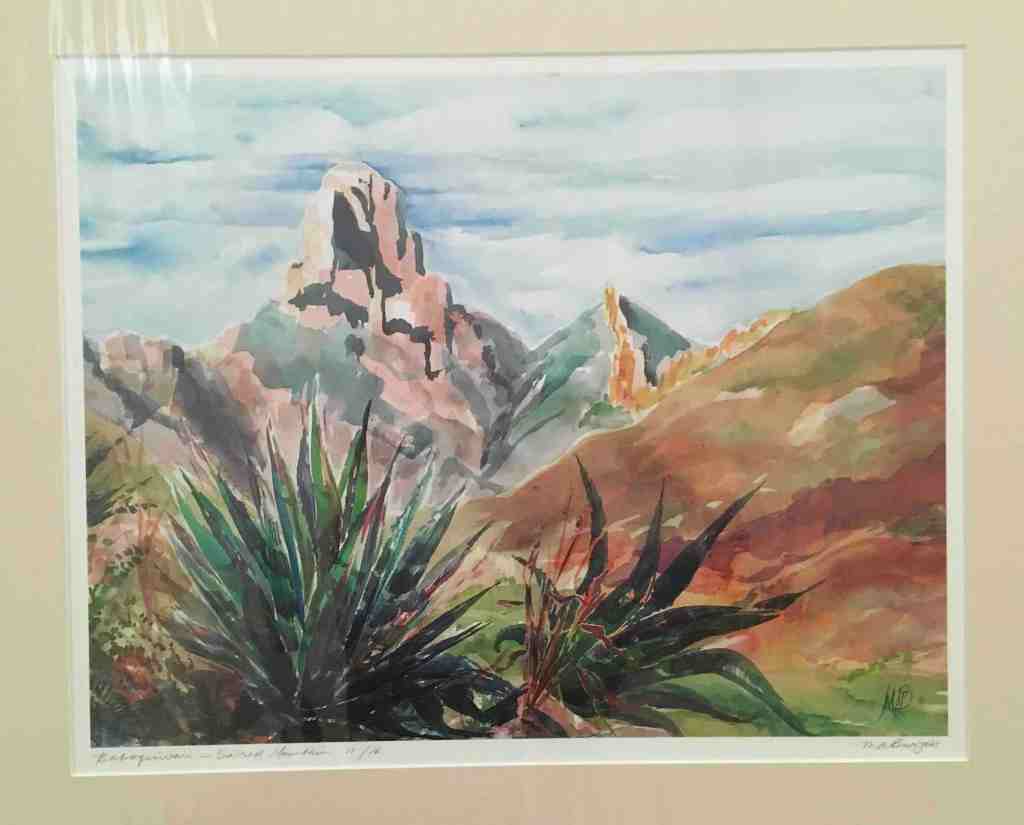
At Mission Garden’s gift shop and at the Coyote Kitchen & Gift Shop at San Xavier Plaza, you can find Tia Marta’s Southwest Native Foods artwork and notecards, including this image of sacred Waw Giwulk (Baboquivari Peak) and its resident Agaves!
For more good info on stress-time foods, check out SavorSisterCarolyn’s post from an earlier year in this unprecedented drought, and find the book Famine Foods: Plants we Eat to Survive by Paul Minnis, UArizona Press, 2021, which she reviews so timely. It will be a good reference to use as these conditions become the “new normal.”





 Savor the Southwest: