Time for Some Thyme

Thymus_vulgaris_branch crop

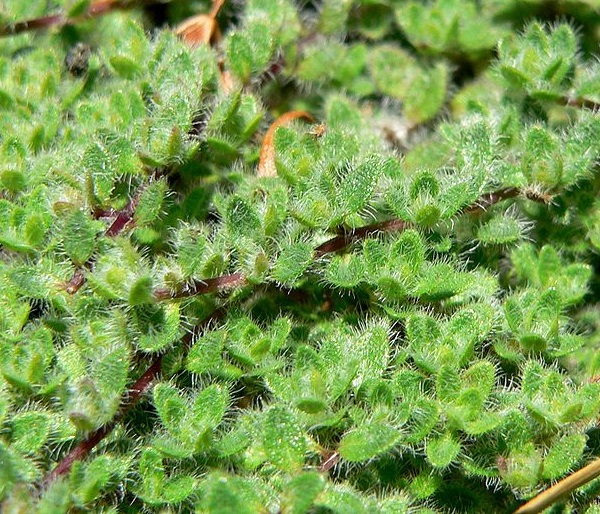
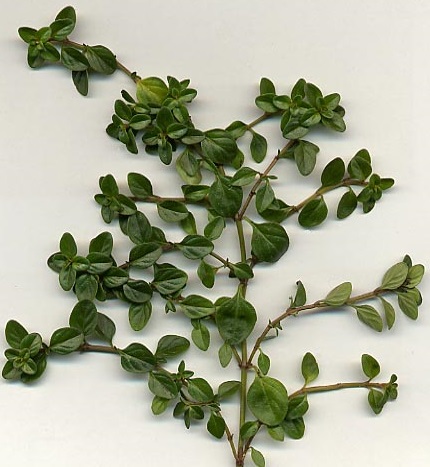
Common thyme (Thymus vulgaris)  is best grown with a dappled noon-time shade in the summer in the southwest.

Special for Savor the Southwest  February 2015
by Dr. Jacqueline A. Soule

Spring is springing out in my garden – and the little thyme cutting I got from Savor Sister Muffin Burgess back in at our anniversary party in November is finally starting to take off.  November was a terrible time to take cuttings of this warm climate herb – but the great thing about herbs is that humans have been mistreating them for 7000 years or so, and the weak ones have mostly died out.

Thymus_(zaatar)_Jerusalem_BG crop

There are many species of thyme, like this species in the Jerusalem Botanical Garden, used for the herb blend za’atar.

Thyme is a large and very popular genus, with over 350 species and countless cultivars grown around the world. Aside from looking lovely in the landscape, thyme is a strong herb used in cooking, and has some proven medicinal properties as well. It can also be grown indoors in bright, indirect light.

Thymus_vulgaris_habitat_003 crop

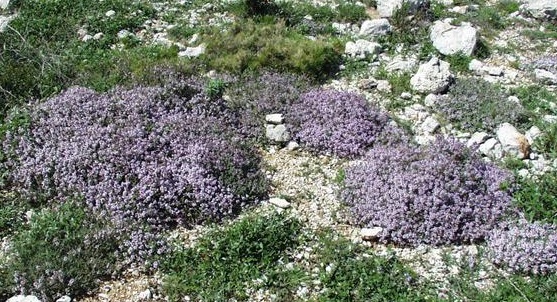
Many herbs that do in the Southwest are originally from a similar climate – like this Thymus vulgaris growing wild on the rocky hillsides of the Galilee.

This lovely, fragrant, tasty, and healthful herb in native to the rocky slopes of the mountains of the eastern Mediterranean region, in the area that is now mostly Greece. Since they are pre-adapted to low water conditions, most species of thyme can be grown here. I grow my thyme plants where they get roof run-off, thus I rarely need to water them; and yet they offer a lush look to my entryway with their glossy green leaves.

Thymus_vulgaris_bloom_001 crop

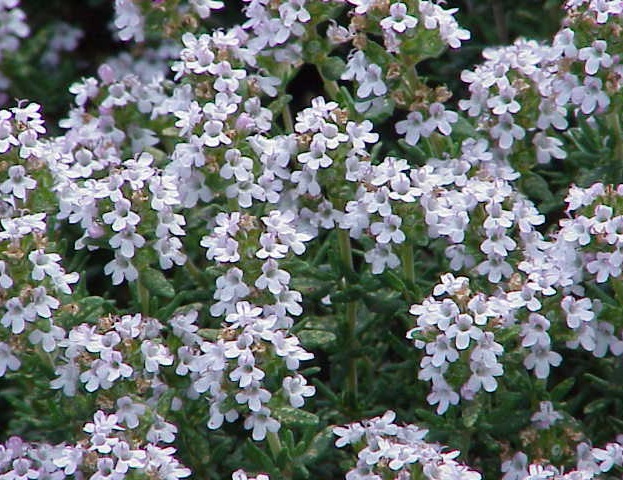
Not just tasty, thyme is also another pretty face in the garden! For peak flavor, it is best to harvest this (and most culinary herbs) just before they bloom.

Make sure you grow your thyme in well-drained soil. You may have to add some sand to your soil. I killed several thyme plants until I had finally added enough sand to their bed.

There are many thymes to choose from, but here are the species most commonly found in the nursery.

Common or culinary thyme (Thymus vulgaris) is a low woody plant barely reaching a foot tall. It quickly becomes leggy with bare wood showing so harvest and use or dry your thyme often. (You can give friends jars of your dried herbs as truly personal and unique gifts.)

Creeping thyme (Thymus praecox) makes an attractive and useful groundcover. It is culinary too! Harvest as needed.

Thymus_praecox crop

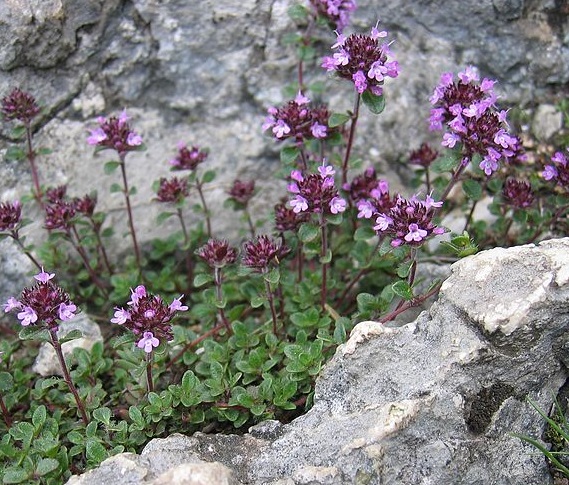
Creeping thyme, with tiny leaves and charming purple flowers, is perfect for a fairy garden.

Lemon thyme (Thymus X citriodorus) is a delicious and fragrant low-growing variety with glossy green leaves, and goes wonderfully with fish dishes.

Thymus_citriodorus_variegata_crop

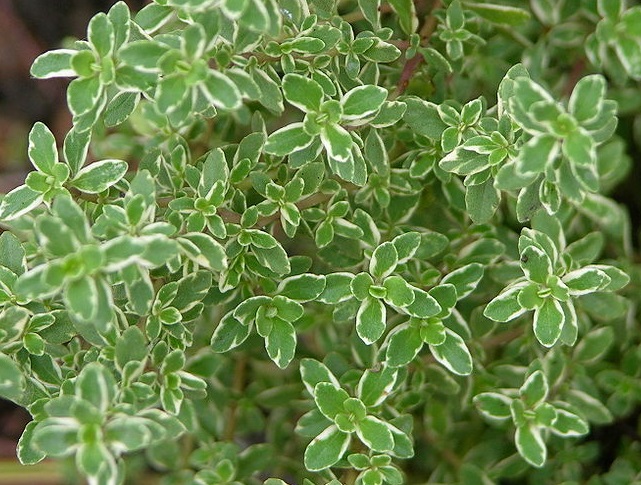
Lemon thyme is great for flavoring fish dishes – two flavors for the price of one!

Equally fragrant and delicious is the golden lemon thyme (Thymus X citriodorus ‘Aureus’). With wonderfully variegated leaves, it looks good in the landscape.

Not generally used as culinary herbs, two popular species of creeping thyme are useful in the landscape. Mother-of-thyme (Thymus serpyllum) and woolly thyme (Thymus pseudolanginosis) both grow well between shady flagstones, and smell great when stepped on.

Thymus_pseudolanuginosus_crop

Add some fragrance to your landscape – plant this heat tolerant woolly thyme between the flagstones of your path.

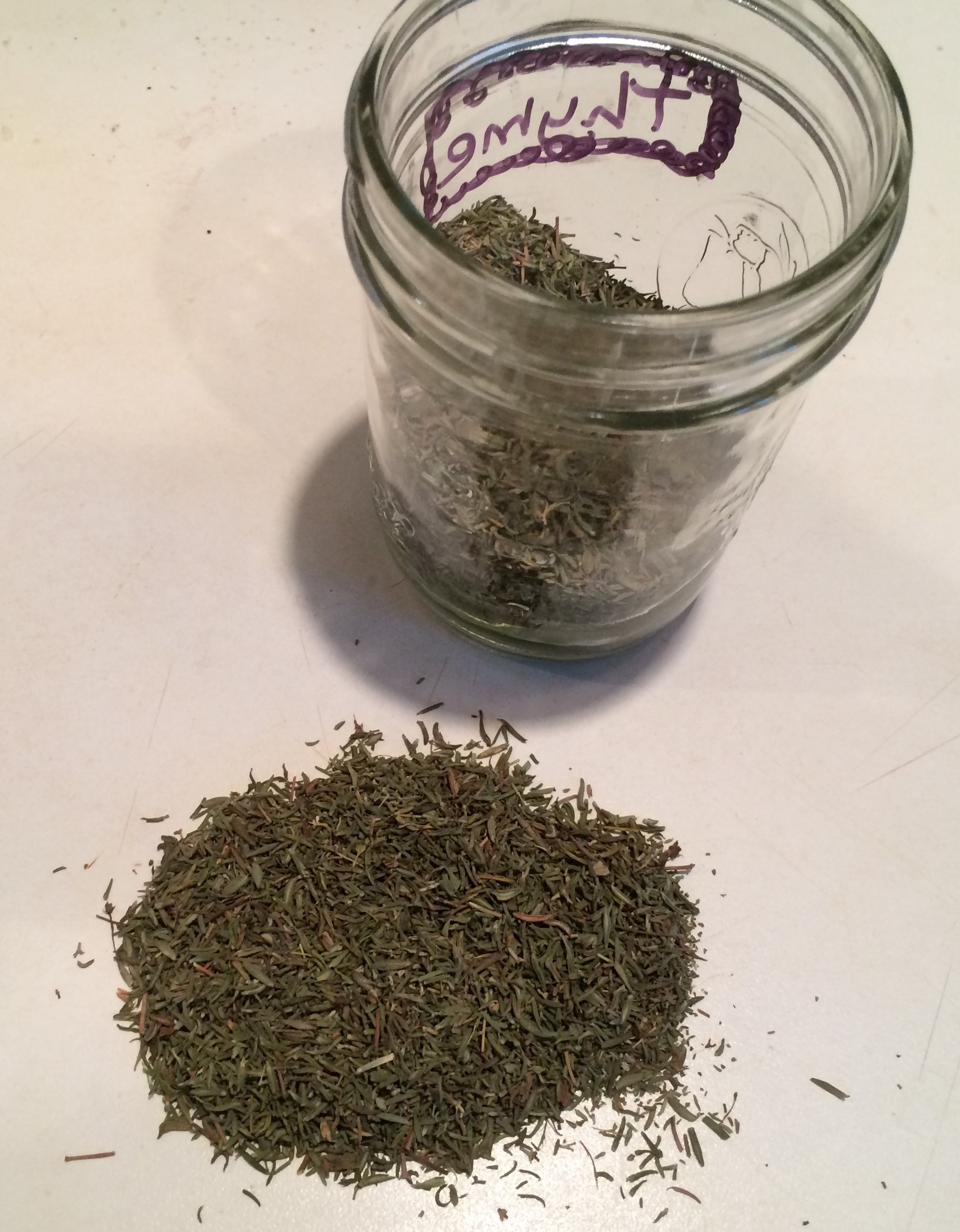
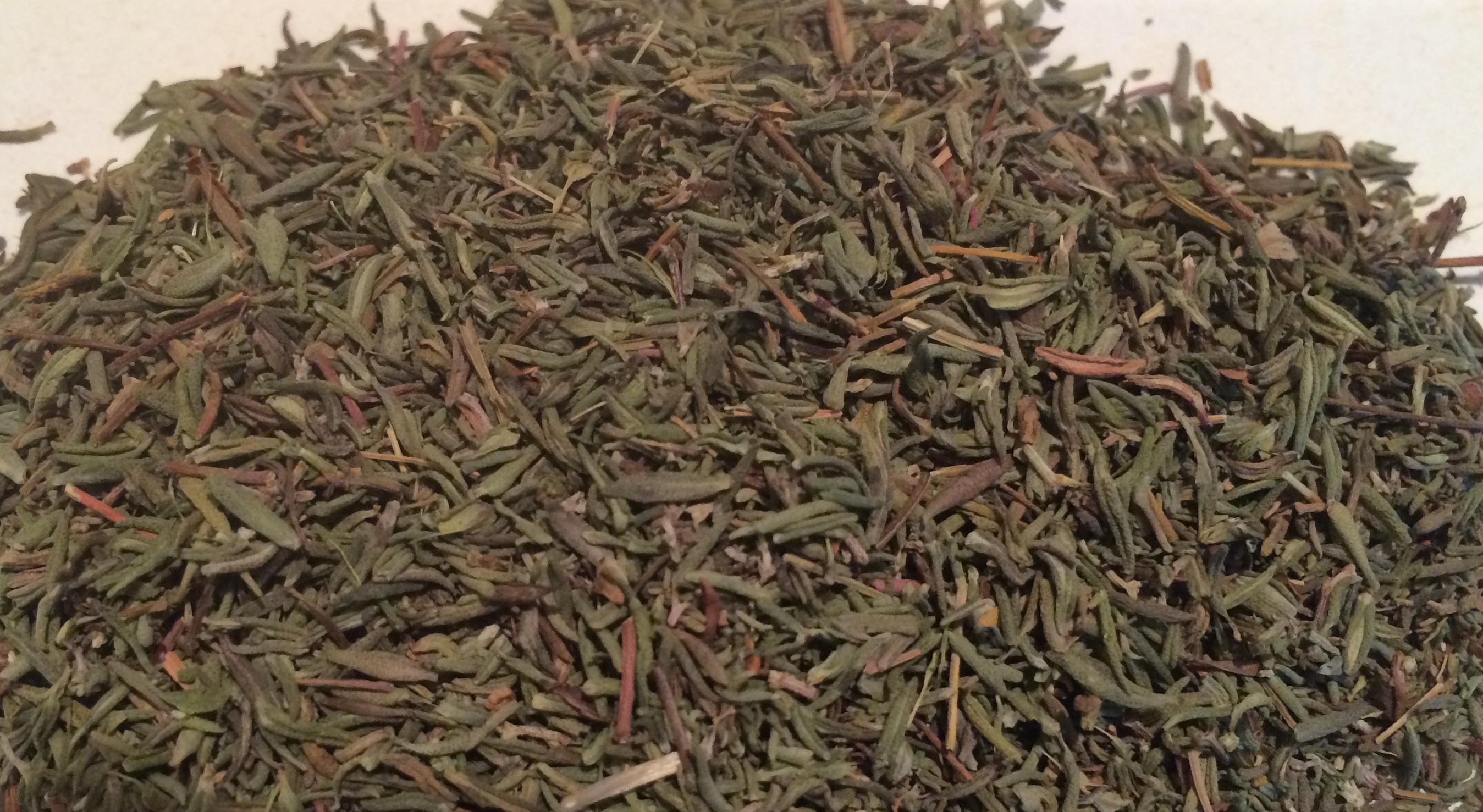
Sprinkle thyme (either fresh or dried) in soups, salads, on meat dishes or use in herb breads. Use an ample number of sprigs in herbal vinegars and oils for an intense and refreshing flavor.

thyme IMG_2655 crop

We use ample thyme in our cooking. This 8 ounce jar gets refilled several times a year.

For a quick meal at the end of a long day make Sopa de Farigola, or Thyme Soup, a dish popular in the Catalonia region of northeastern Spain, and thus part of our Sonoran heritage as well.  Fresh eggs and day-old bread are topped with a boiling broth made from water, sprigs of thyme and some olive oil. Great for replacing electrolytes after a day working in the garden!

More about thyme in my books which I will be selling and signing at the Tucson Festival of Books March 14 & 15 this year – Southwest Fruit & Vegetable Gardening (Cool Springs Press 2014, $23), and Father Kino’s Herbs: Growing & Using Them Today (Tierra del Sol Press 2011, $15) also available at Tucson area bookstores, nurseries, botanical gardens, and state parks.

JAS avatar  © 2015, Jacqueline Soule. All rights reserved. I have received many requests to reprint my work. My policy is that you are free to use a very short excerpt which must give proper credit to the author, and must include a link back to the original post on our site. Please use the contact me if you have any questions.

thyme IMG_2657 crop

Pumpkin Time in Baja Arizona!

Male flower Magdalena Big Cheese squash (MAB photo)

Male flower Magdalena Big Cheese squash (MAB photo)

Tia Marta here to celebrate the pumpkins and squashes that are now plumping up in every garden and popping up in farmers markets. These sculptural fruits of the vine are our visual signal of autumn and herald cool weather cuisine. So many people ask, “What’s the difference between pumpkins and squashes?” Really there is not much difference, except that, to some ears, “pumpkin” sounds fun but is never eaten, while squash sounds like something your mother made you eat and you didn’t discover how good they are until you discovered Mexican food! (Yum, calabacitas.) Often pumpkins refer to the jack-o-lantern type squash—a Cucurbita pepo—but many squashes of other Cucurbita species are also called “pumpkin” so the term is not cut and dried.
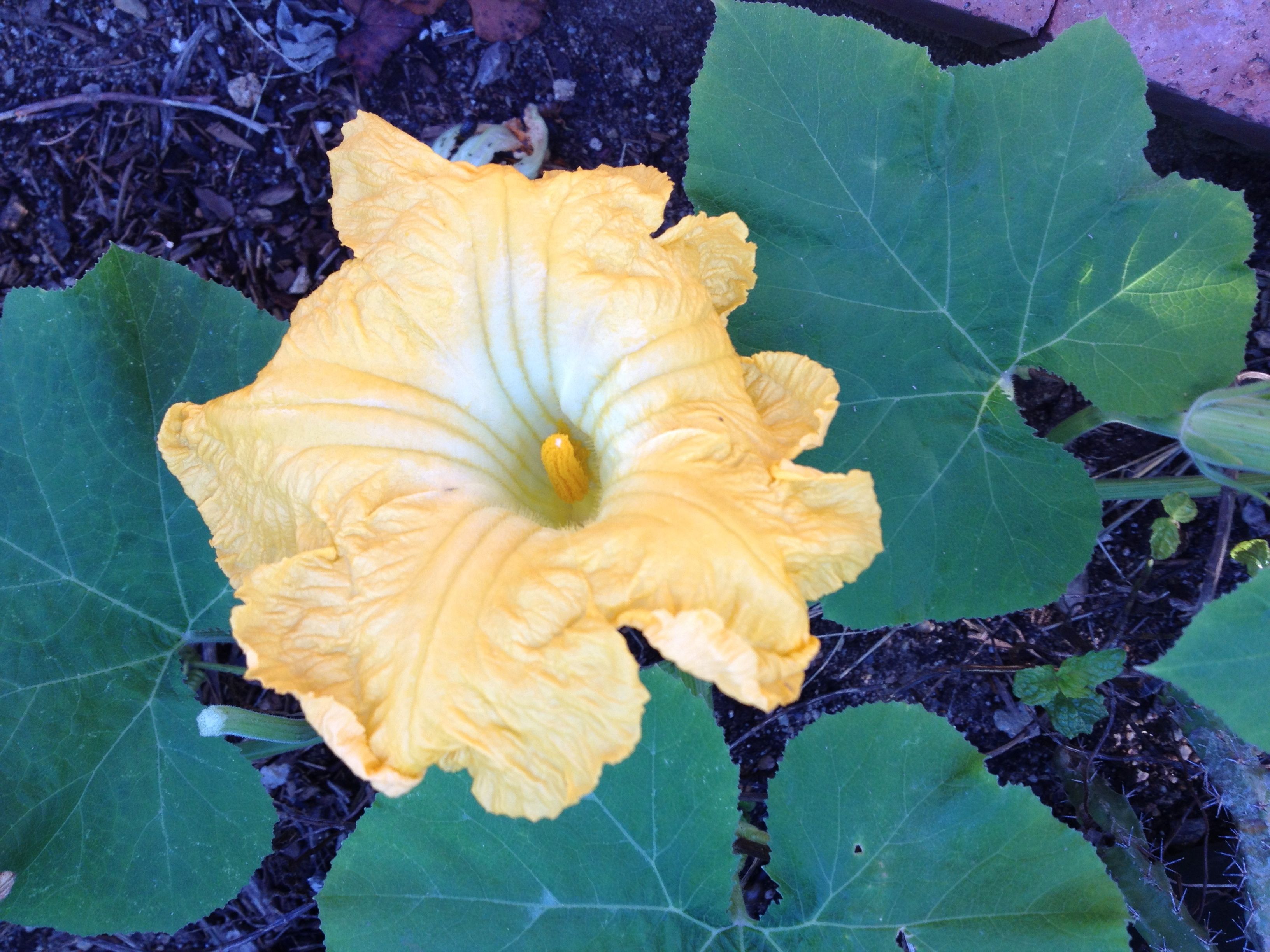
While chubasco rains keep sprinkling our desert, my squash vines have continued to elongate and to flower into the fall. I’m hoping to have winter squashes coming on until the frost hits. Meanwhile, I can go out each morning to assist in pollinating any female flowers with the hefty stamens of the male flowers. Then, what a treat it is to take the plucked, spent male flower and sauté it with eggs for breakfast!

Tohono O'odham Ha:l and curry pumpkins at SanXavierCoop booth, SantaCruz Farmers Market (MABphoto)

Tohono O’odham Ha:l and curry pumpkins at SanXavierCoop booth, SantaCruz Farmers Market (MABphoto)

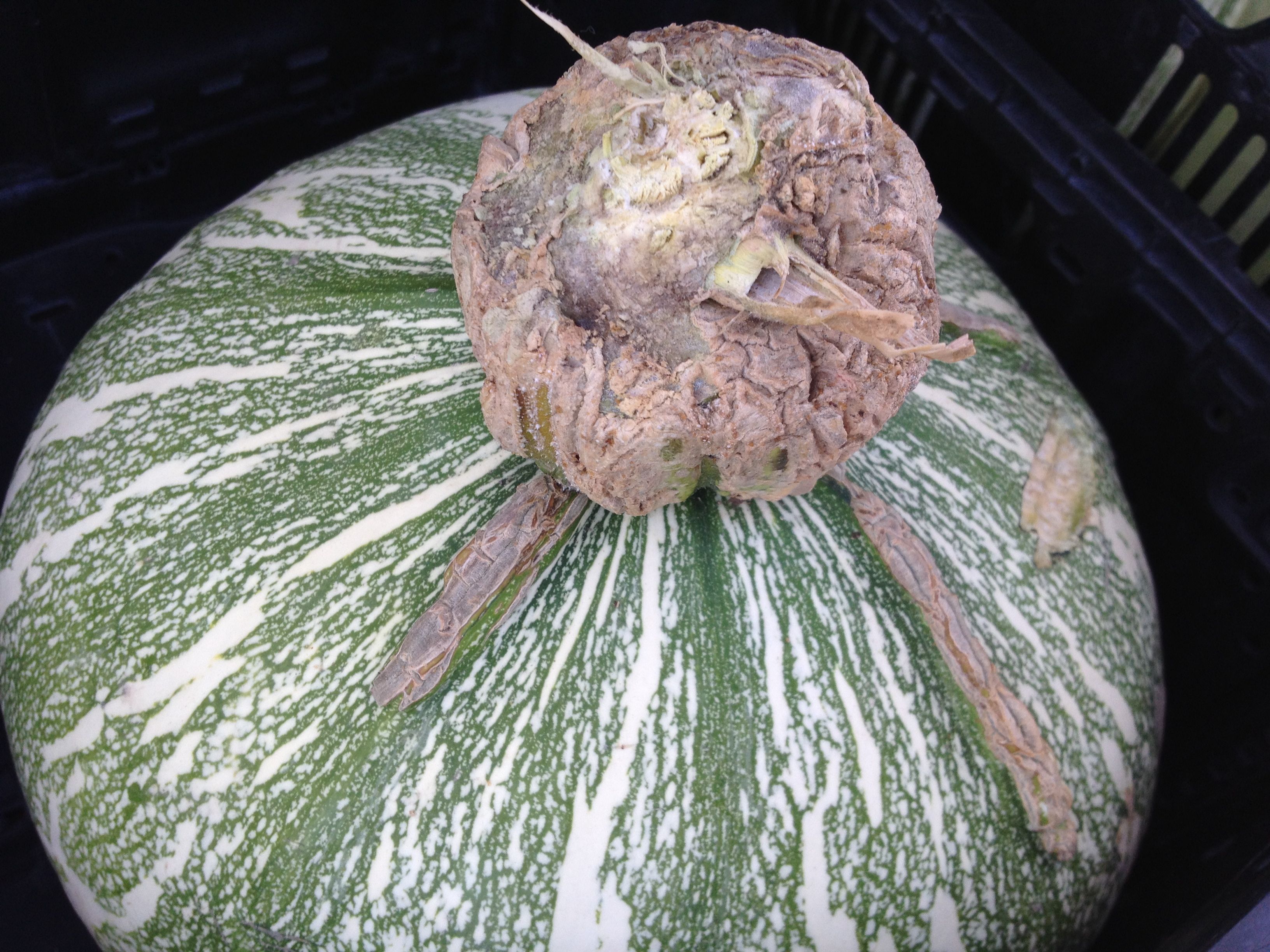
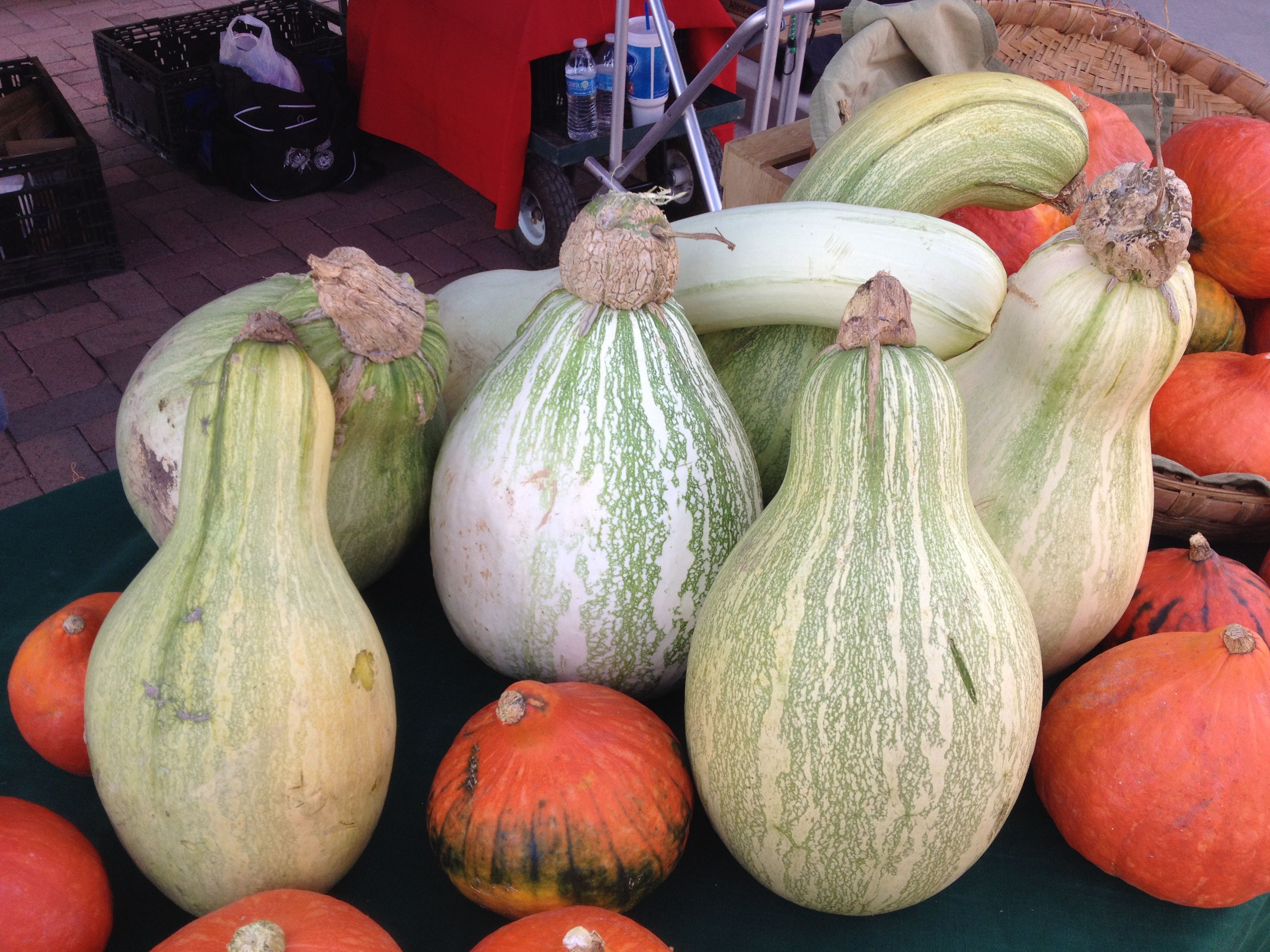
Native People domesticated several varieties of squash or pumpkin centuries before Europeans invaded North America. We all know the Pilgrims’ Thanksgiving story, but here in the Baja Arizona borderlands we should be giving a lot of thanks to the Tohono O’odham, the Yoreme, the Guarijio, and the Raramuri for the gifts of fabulous squashes they have given to all desert gardeners and farmers. From the Tohono O’odham comes the giant cushaw winter squash, known as Tohono O’odham Ha:l or “Papago Pumpkin,” (Cucurbita argyrosperma) with its bulbous pear shape and thick corky peduncle (its vine attachment.)

Tohono O'odham Ha:l "Papago Pumpkin" showing characteristic corky attachment and colorful stripes (MABphoto)

Tohono O’odham Ha:l “Papago Pumpkin” showing characteristic corky attachment and colorful stripes (MABphoto)

From the Yoreme or Mayo comes the round, oranged-fleshed Mayo blusher (Cucurbita maxima). From the Guarijio comes a grand segualca (Cucurbita moschata). And from the Raramuri or Tarahumara, comes the striped mini-pumpkin with sweet orange flesh (Cucurbita pepo). This last one is the pumpkin Native Seeds/SEARCH grew in plenty last year and returned to drought-stressed Tarahumara farmers in a cross-the-border sharing. Check out http://www.nativeseeds.org for images of each of these lovely squashes, or visit the Mission Garden at the base of A-Mountain to see maturing fruits from the monsoon planting. Then plan ahead for next year to plant some of each in your own monsoon garden for great winter cookery and for sharing with neighbors.

All of these Native pumpkins/squashes are the ultimate in desert adaptation. They grow well in the heat with monsoon rains, AND, they keep for long periods of time without refrigeration over the winter. Talk about an easy, low-tech way to preserve food! I have kept the hard-shelled Tohono O’odham Ha:l outside in the shade of my back porch from October’s harvest into May of the following year when temperatures soared. That’s what you call a keeper.

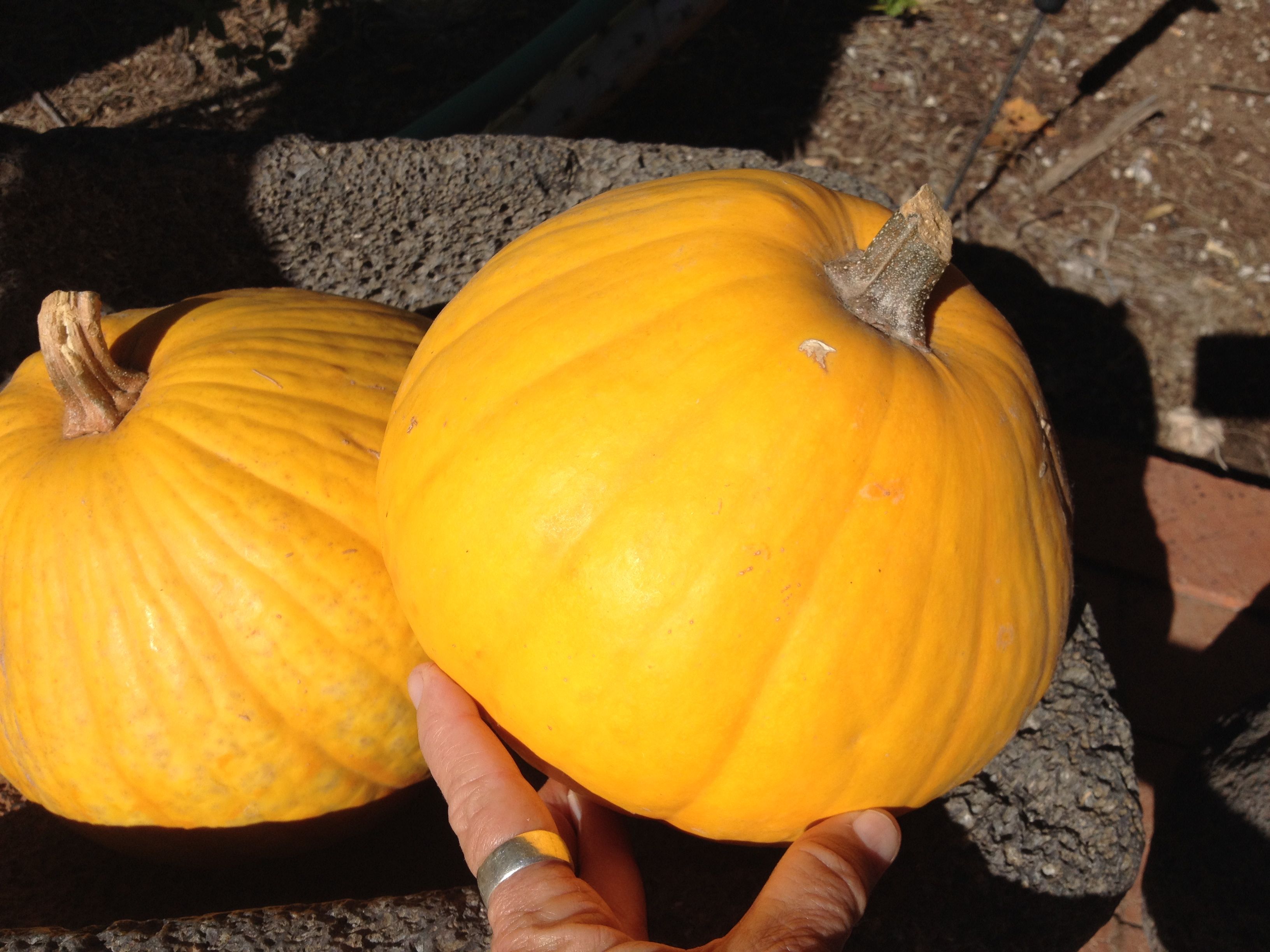
Tarahumara pumpkins Oct2014 from 2013 harvest (MABphoto)

Tarahumara pumpkins Oct2014 from 2013 harvest (MABphoto)

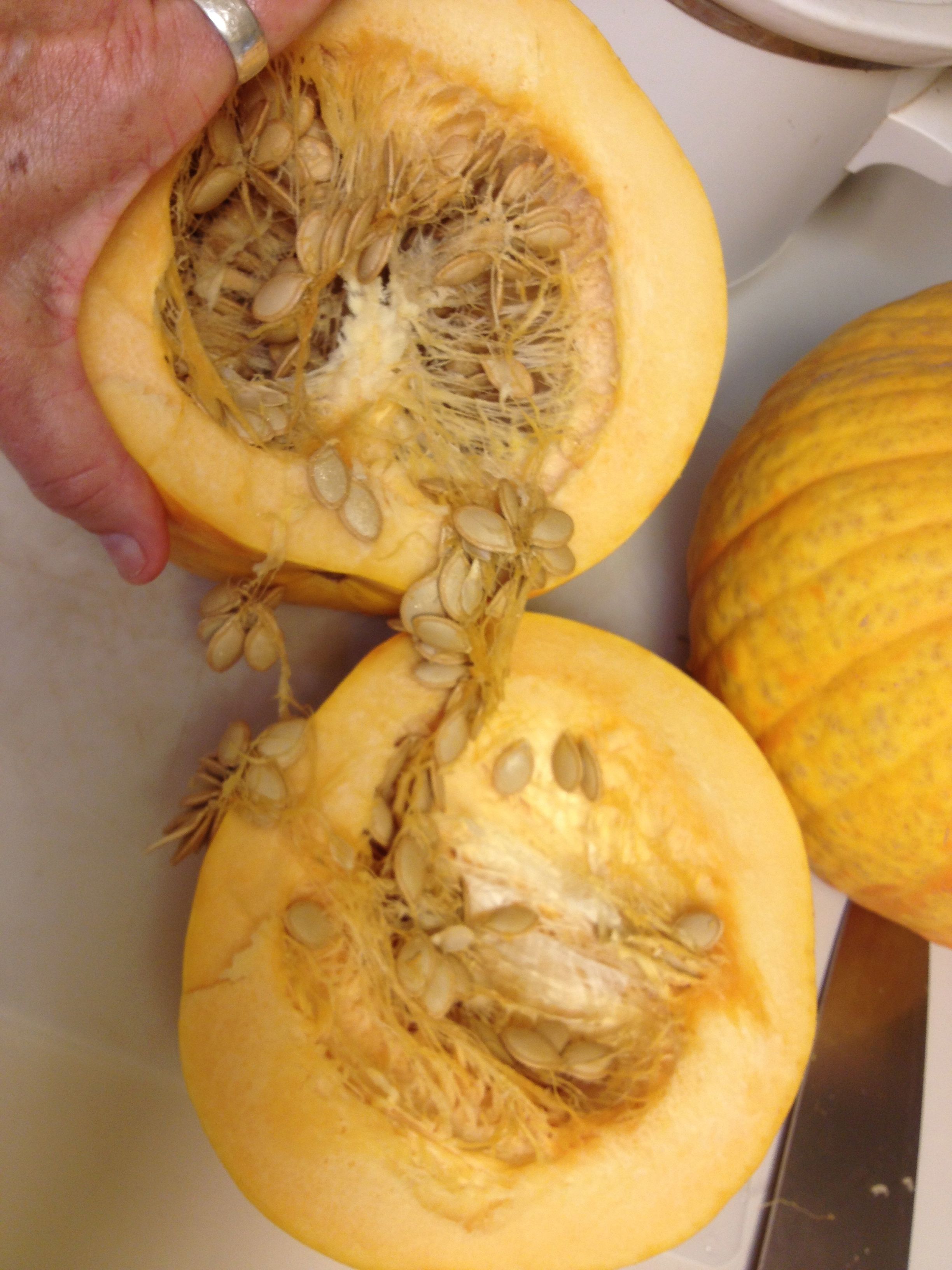
With last fall’s harvest of Tarahumara pumpkins, I started another experiment in non-refrigerated storage. I kept 2 medium-sized pumpkins inside on a tile floor out of direct sun. Over the summer they turned from green striped to bright yellow-orange on the outside. I had no idea this week what they would be like inside when I opened them at last for cooking. To my surprise and gladness the flesh was still firm and gorgeous—bright with beta-carotenes—and the seeds were plump and not-yet-sprouted.

Rich flesh and seed of Tarahumara pumpkin (MABphoto)

Rich flesh and seed of Tarahumara pumpkin (MABphoto)

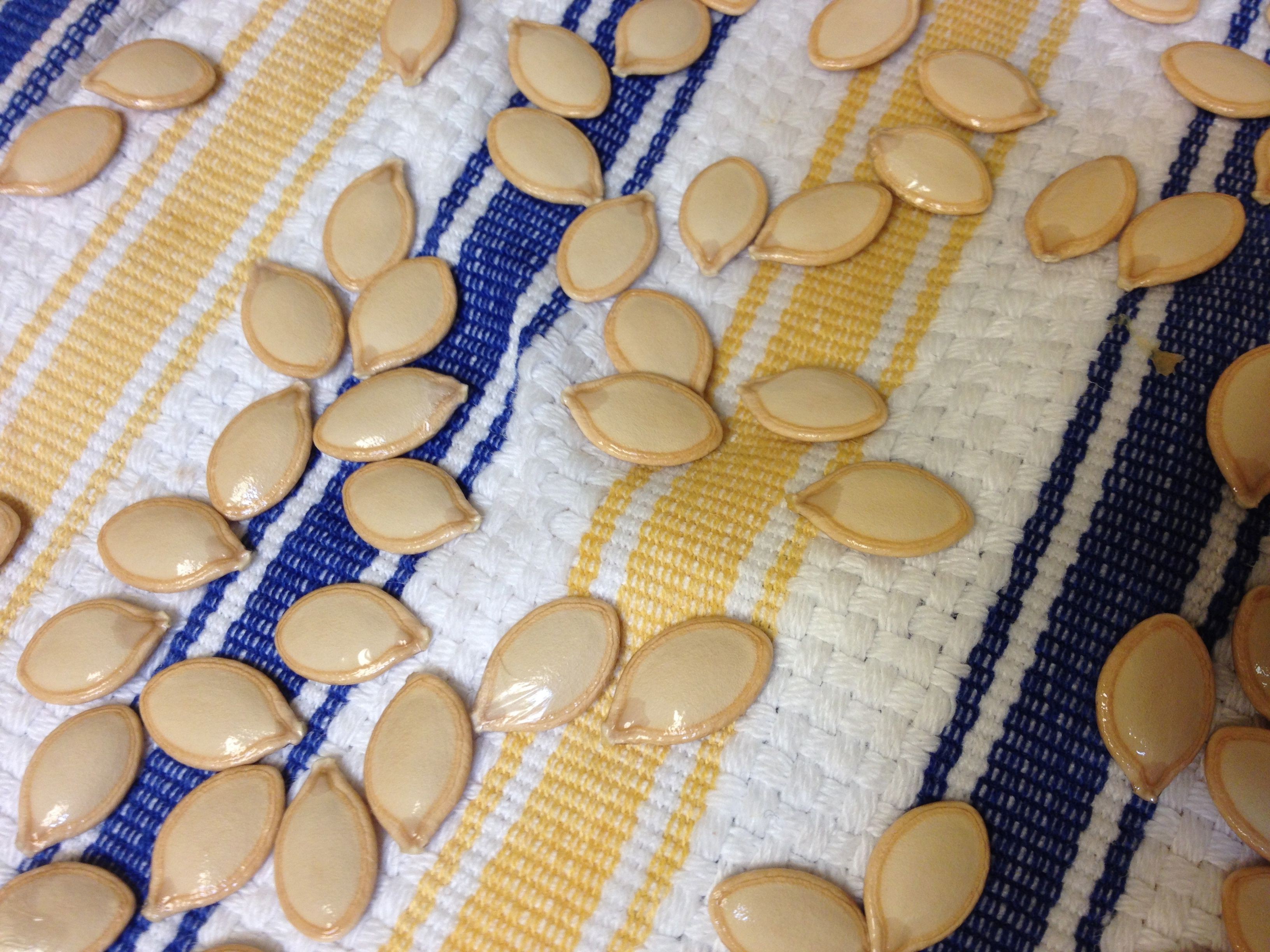
Pumpkin seeds cleaned to dry and save for next year's planting (MABphoto)

Pumpkin seeds cleaned to dry and save for next year’s planting (MABphoto)

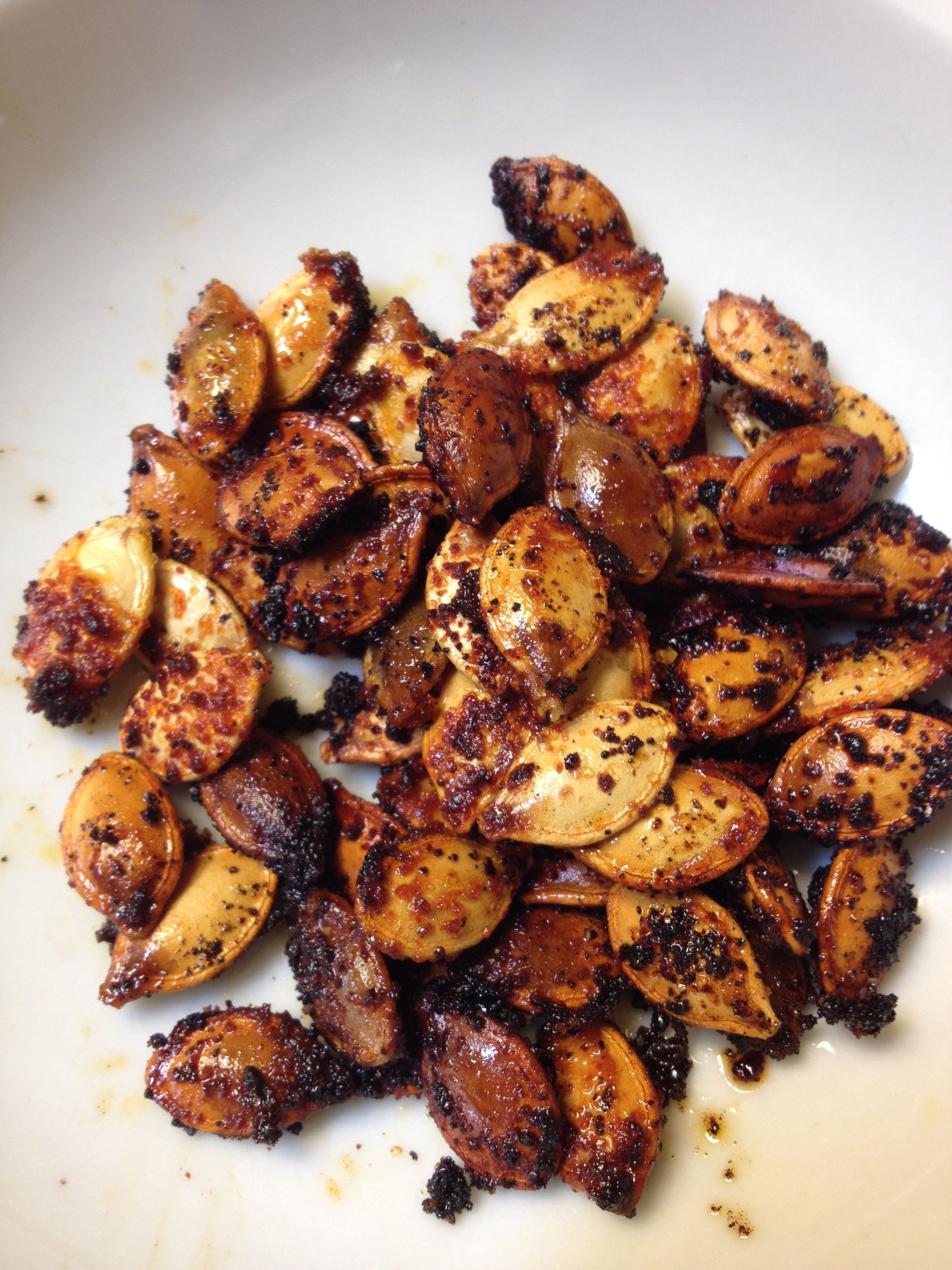
With such luscious pumpkin seeds, some had to be saved for next summer’s garden and some had to become snacks. Here is what I did to them. Give it a try with your next opened pumpkin:

Spicy Sweet Pumpkin Seed Snacks
(Makes 1 cup)
1 cup of pumpkin seeds, cleaned
1/2 tablespoon of olive oil
1/2 tablespoon of honey
1/2 teaspoon of sea salt
¼ tsp of chile powder (choose mild, medium, or hot, depending on your palette)
Preheat oven to 375 degrees
(Some recipes call for boiling seeds first, for 10 minutes in 4 cups of water then draining before the next step. It helps to soften the hulls but may remove some nutrients. This step is optional–I don’t bother.) Transfer seeds to a bowl, toss with the honey, oil, and spice ingredients until fully covered, then spread them out evenly onto a baking sheet that has been coated lightly with cooking oil or non-stick spray.
Bake for about 12-15 minutes, tossing once, or until the seeds are crispy and lightly golden brown. Let them cool before serving — they will get even crispier. Pumpkin seeds contain zinc which is great for fall-weather immune fortifying. They also contain L-arginine which is especially good for guys. Enjoy this tasty Southwest snack!

Chile-and-honey-roasted pumpkin seed snacks (MABphoto)

Chile-and-honey-roasted pumpkin seed snacks (MABphoto)

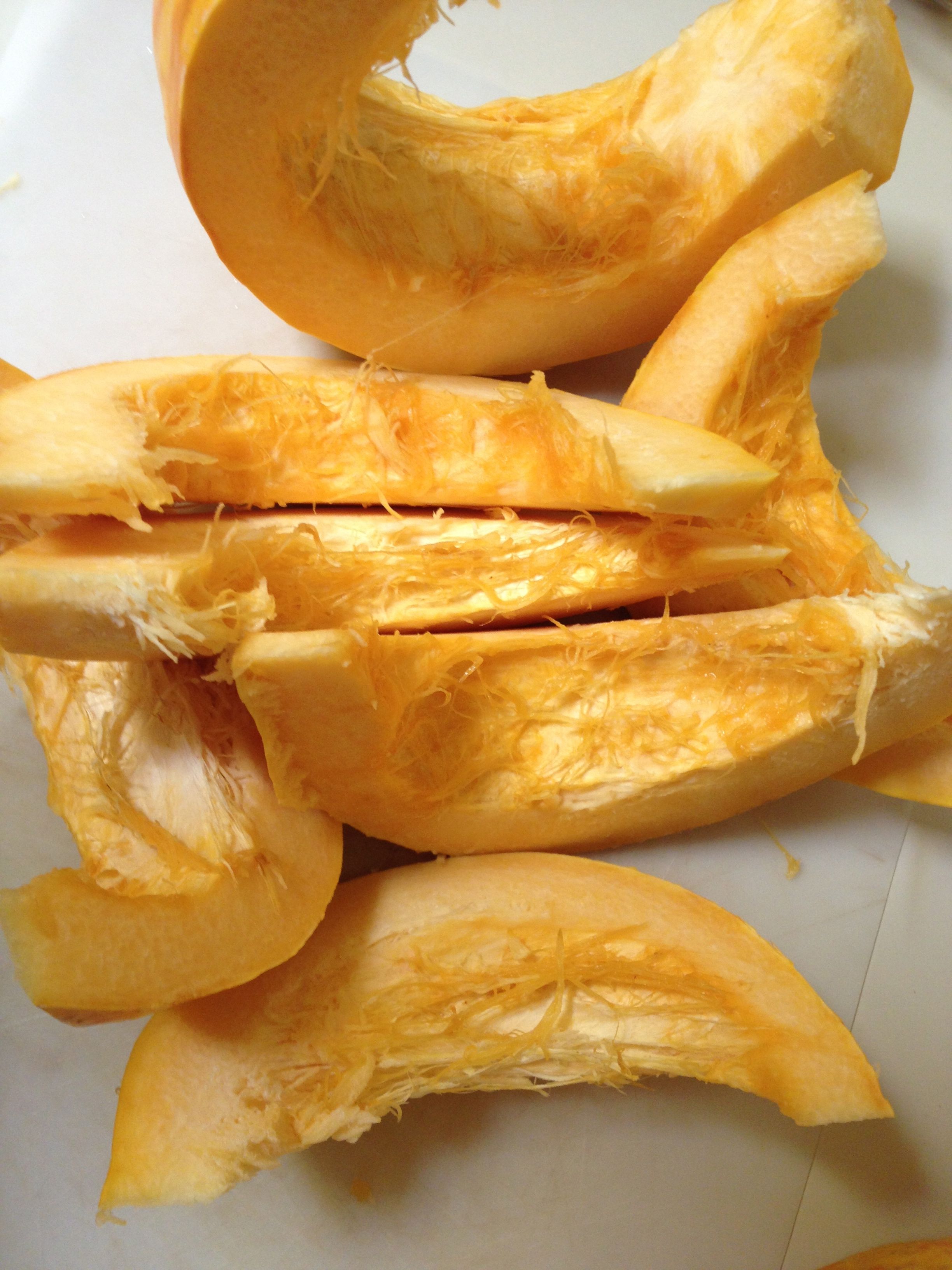
Next I prepared the Tarahumara pumpkin itself for a truly local autumn dessert. It takes a cleaver to carefully open a winter squash and to chunk it into segments small enough to fit into the saucepan. After you scoop out the seeds and fiber, you can boil, steam or bake the pumpkin chunks with skin or shell on. When softened and cooled, scoop out the pulp. Don’t hesitate–serve it with butter and sea salt as a hot vegetable right away. With the remainder, mash or puree it, storing it in freezer for later using in pies, empanaditas, or—as you’ll see below—in a fabulous Sonoran Pumpkin Cake!


Tarahumara pumpkin cleaned and chunked for cooking (MABphoto)

Tarahumara pumpkin cleaned and chunked for cooking (MABphoto)

SONORAN PUMPKIN CAKE with White Sonora Wheat and Mesquite
(inspired by NativeSeeds/SEARCH pot-luck favorite volunteer Ed Hackskyalo)
Recommended for Halloween, Thanksgiving, and other autumn occasions.

INGREDIENTS
Preheat oven to 350.
2 cups sugar (or alternative sweetener such as agave nectar or honey)
1 cup vegetable oil or softened butter (adjust less with liquid sweeteners)
4 large eggs
1 teaspoon vanilla extract
2 – 2 ½ cups heirloom White Sonora Wheat pastry flour (fresh-milled flour needs adjusting)**
¼ – 1/2 cup mesquite pod meal**
2 teaspoons baking soda
1 teaspoon baking powder
2 teaspoons ground cinnamon
1 teaspoon ground ginger
1/2 teaspoon sea salt
2 cups “Papago Pumpkin” or other native squash, cooked and pureed (or pumpkin puree)

Combine sugar, vegetable oil, and eggs in a large mixing bowl; mix well. Sift dry
ingredients into a separate bowl; stir into liquid mixture, beating well. Stir in pumpkin puree.
Pour batter into two greased and floured 9 inch cake pans. Bake at 350 degrees for
35 to 40 minutes. Turn out onto racks to cool.

CREAM CHEESE FROSTING and FILLING
l package (8 ounces) reduced fat cream cheese, room temperature
2 cups confectioners’ sugar, measure then sift (use less to taste, as less sweet is nice contrast to cake)
½ – 1 teaspoons vanilla extract (as needed for smoothing)
Combine all ingredients in a large mixing bowl; beat well until smooth. Makes enough
for a 2-layer pumpkin cake. Frost pumpkin cake with cream-cheese frosting and sprinkle with chopped pecans or pine nuts for extra decor.

**Organic heirloom White Sonora Wheat-berries and flour, and local mesquite pod meal ,are available from Flor de Mayo at St Phillips farmers market on Sundays, or http://www.flordemayoarts.com or 520-907-9471. Whole grain organic White Sonora Wheat-berries for home-milling and mesquite meal are also available at NativeSeeds/SEARCH, 3061 N Campbell Ave, Tucson, or online http://www.nativeseeds.org.

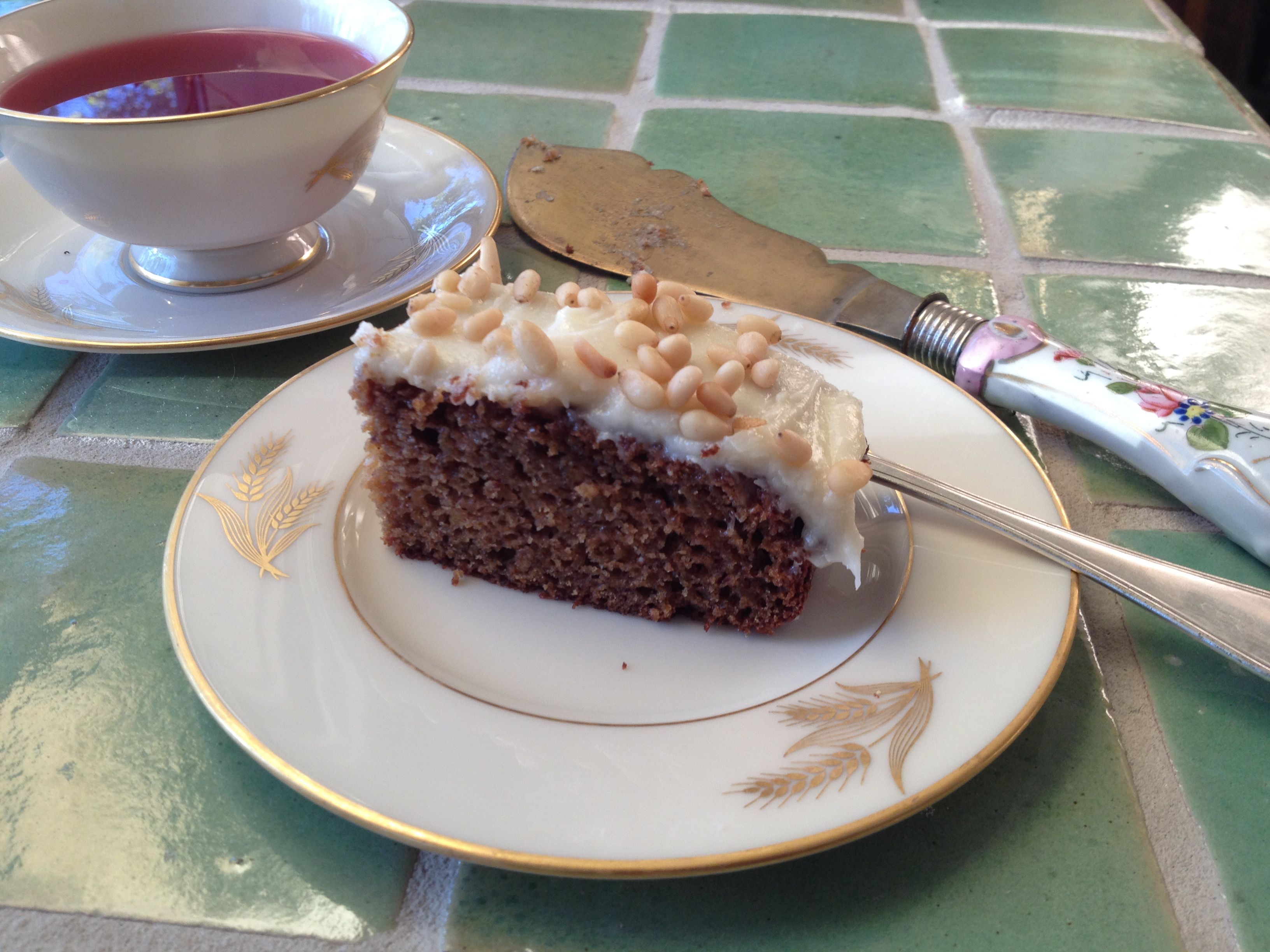
Sonoran Pumpkin Cake made with organic heirloom White Sonora Wheat and mesquite  (MABphoto)

Sonoran Pumpkin Cake made with organic heirloom White Sonora Wheat and mesquite (MABphoto)

Sonoran Pumpkin Cake tea time on wheat china to honor the Wong Family farmers who are helping to save the ancient white Sonora wheat (MABphoto)

Sonoran Pumpkin Cake tea time on wheat china to honor the Wong Family farmers who are helping to save the ancient white Sonora wheat (MABphoto)

Now in their fifth generation of farming, the Wong Family of BKWFarms in Marana, have taken a rare heirloom wheat–the White Sonora Wheat that Padre Kino introduced into the Sonoran Desert over 300 years ago and “saved” by Native Seeds/SEARCH seed conservationists–and have made it a certified organic and sustainable crop again for the Southwest.  Bravo to the Wongs for making this low-gluten food treasure available to us!

Organic Wheat Farmer Ron Wong, Big Jim Griffith, and Karen Dotson of BKWFarms at Tucson Meet Yourself 2014 (MABphoto)

Organic Wheat Farmer Ron Wong, Big Jim Griffith, and Karen Dotson of BKWFarms at Tucson Meet Yourself 2014 (MABphoto)

BKWFarms and Flor de Mayo gave out samples of White Sonora Wheat-berry sprouts and a fabulous Sonoran Shortbread made with the White Sonora Wheat flour at the recent Tucson Meet Yourself festivities.  Coming up….Come try samples at the Flor de Mayo table this next weekend at the Chiles Chocolate and Salsa Event, Tohono Chul Park, Oct 25-26.   Every Sunday at St Phillips Farmers Market you can find taste surprises made with White Sonora Wheat-berries or mesquite at the Flor de Mayo booth–Stop by and visit Tia Marta and Rod!  And tell your friends in Phoenix not to miss our Flor de Mayo display at the Dia de los Muertos celebration, Desert Botanical Garden Nov 1-2.

Gifts from September Gardens–intentional and otherwise

Tia Marta here to share some culinary ideas happening now in Baja Arizona herb gardens, and to extend an invitation to visit el jardinito de hierbas at Tucson’s Mission Garden to experience the herbs in action!
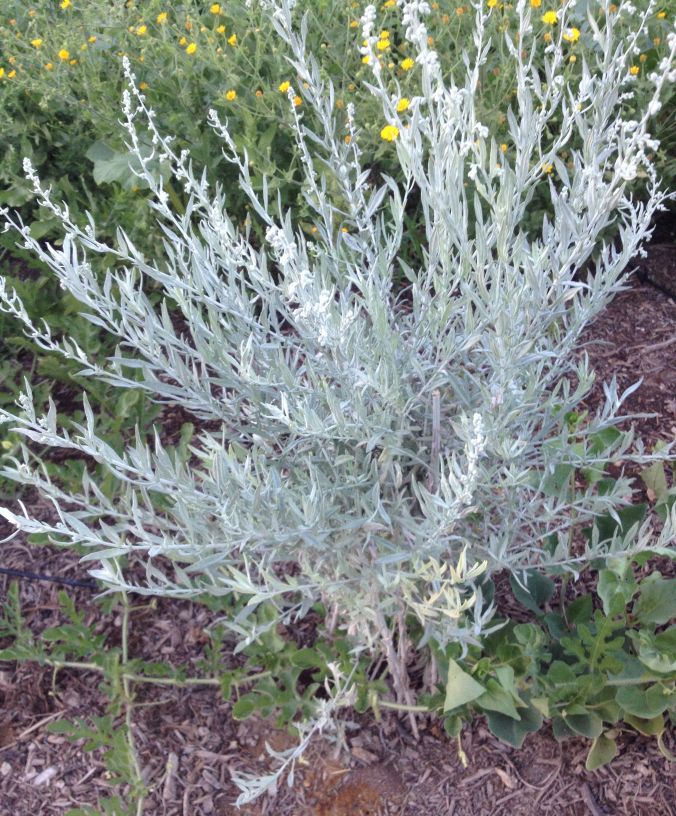
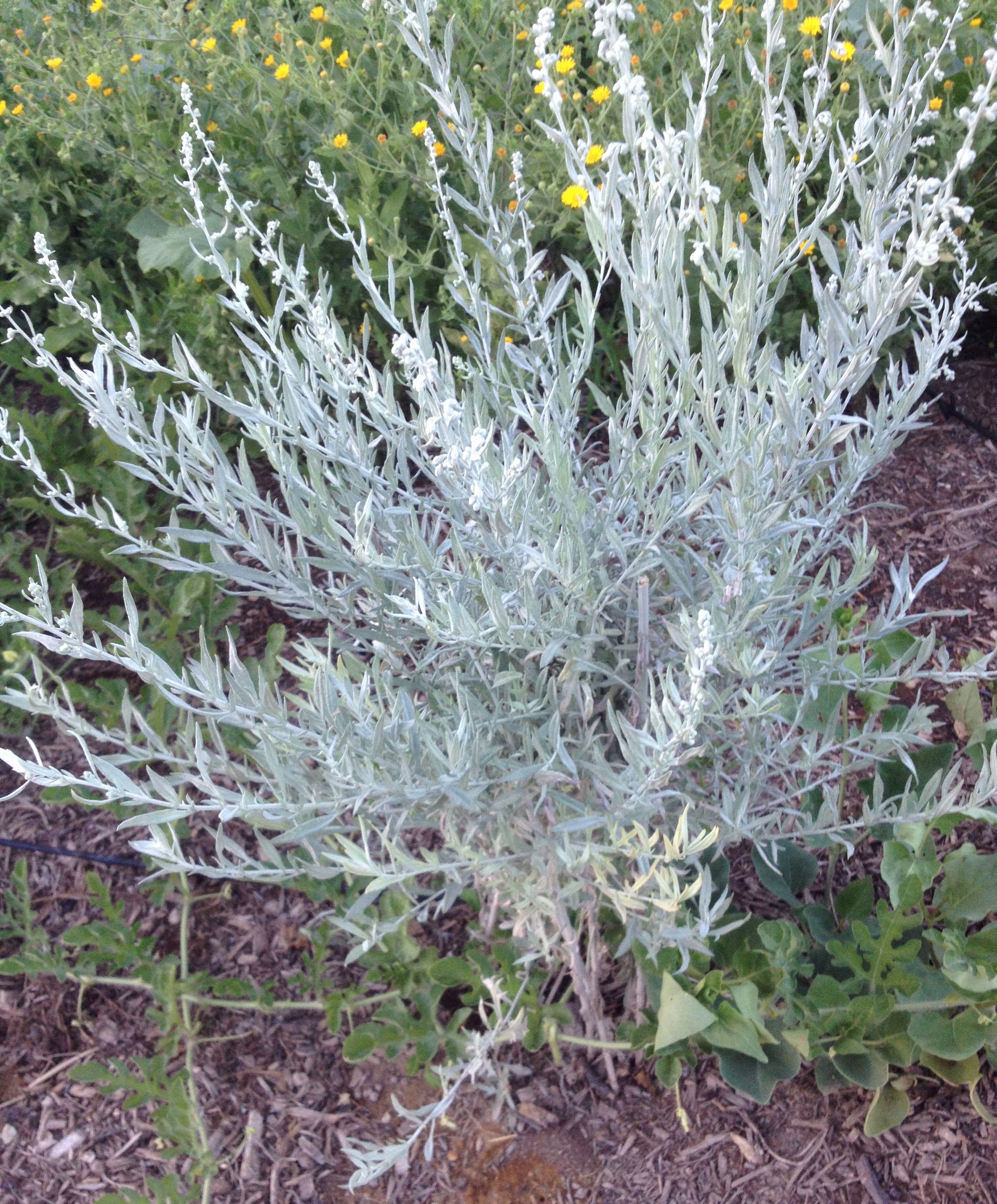
Estafiate--all purpose Artemisia ludoviciana--in the herb plot, Mission Garden (MABurgess photo)

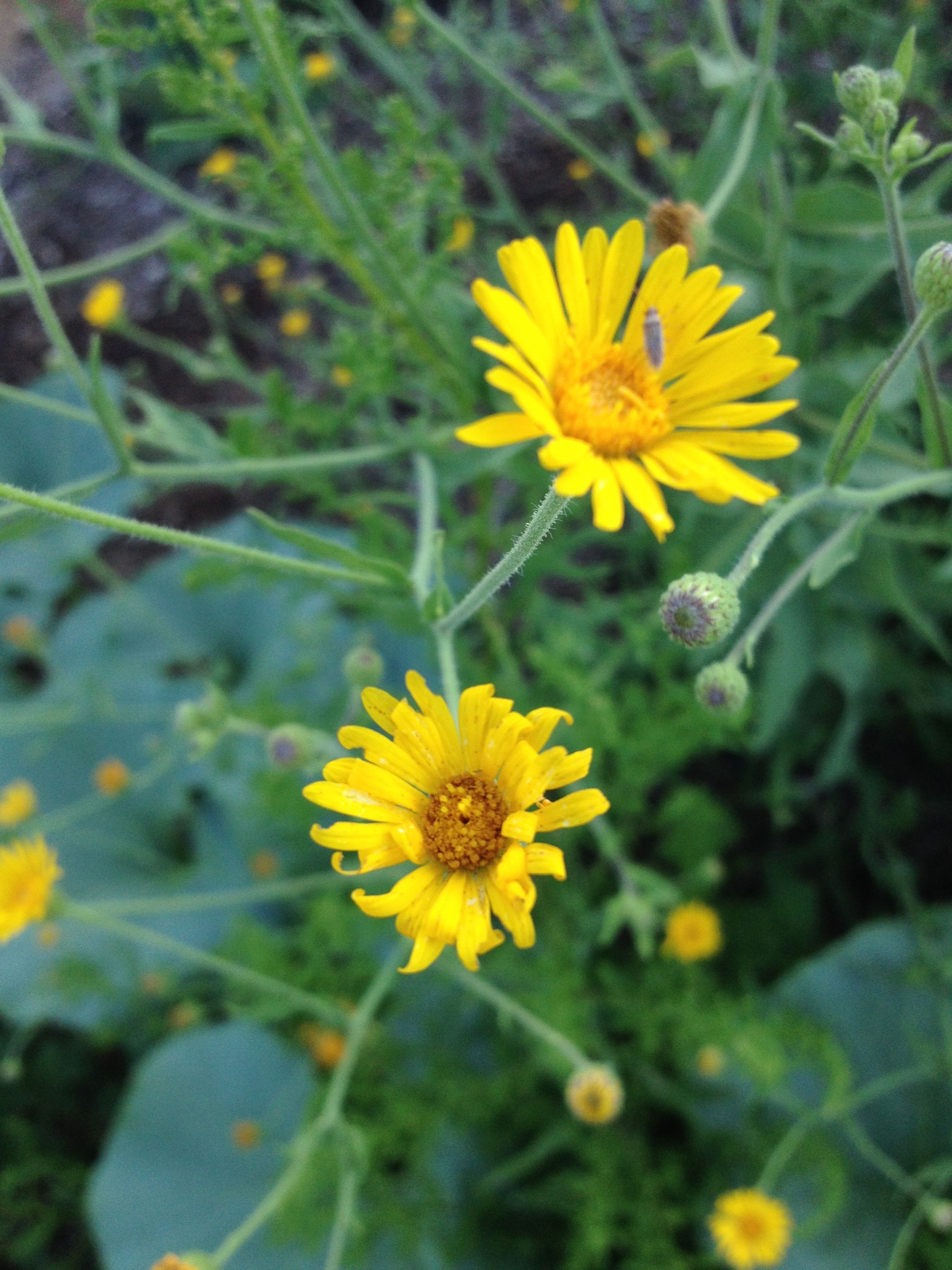
Estafiate–all purpose Artemisia ludoviciana–and Mexican arnica beyond (close-up of flower below), in the herb plot, Mission Garden (MABurgess photos)
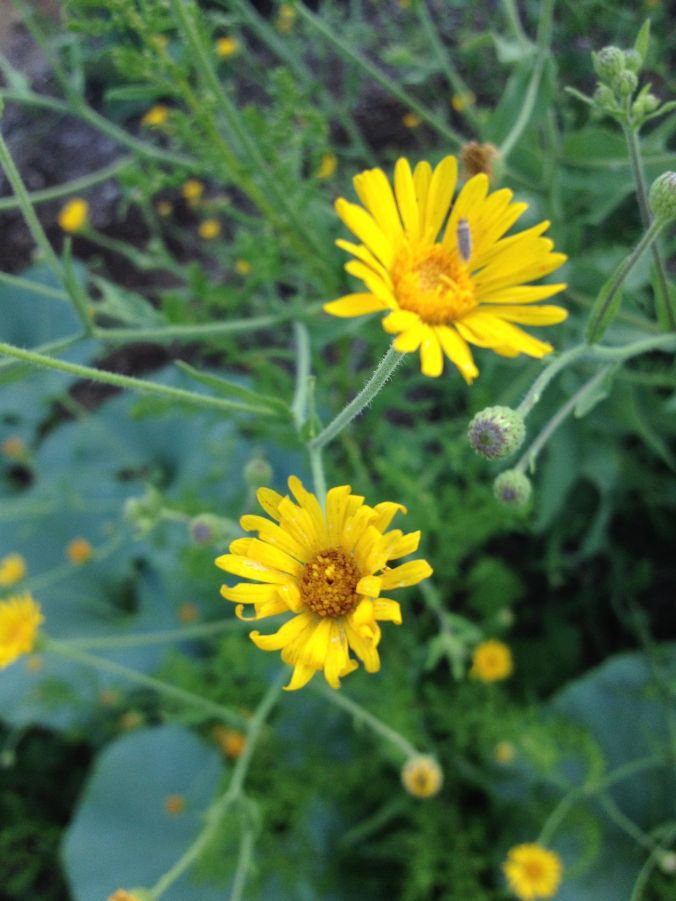
Heterotheca--Mexican arnica flower (MABurgess photo)

Of all the herbs in our Southwest summer gardens—presently rejoicing in monsoon humidity and in the soppy tail of Hurricane Norbert—I think the most exuberant has gotta be Mrs Burns’ Famous Lemon Basil……..
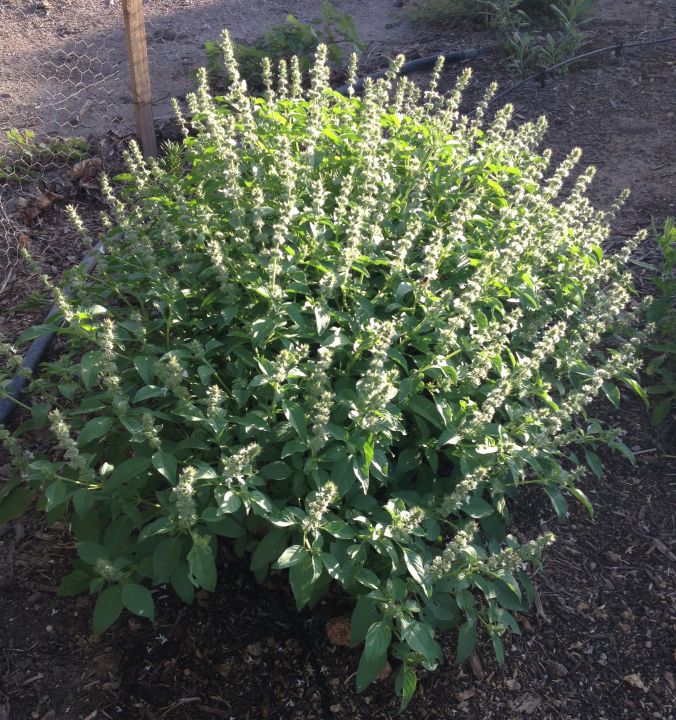
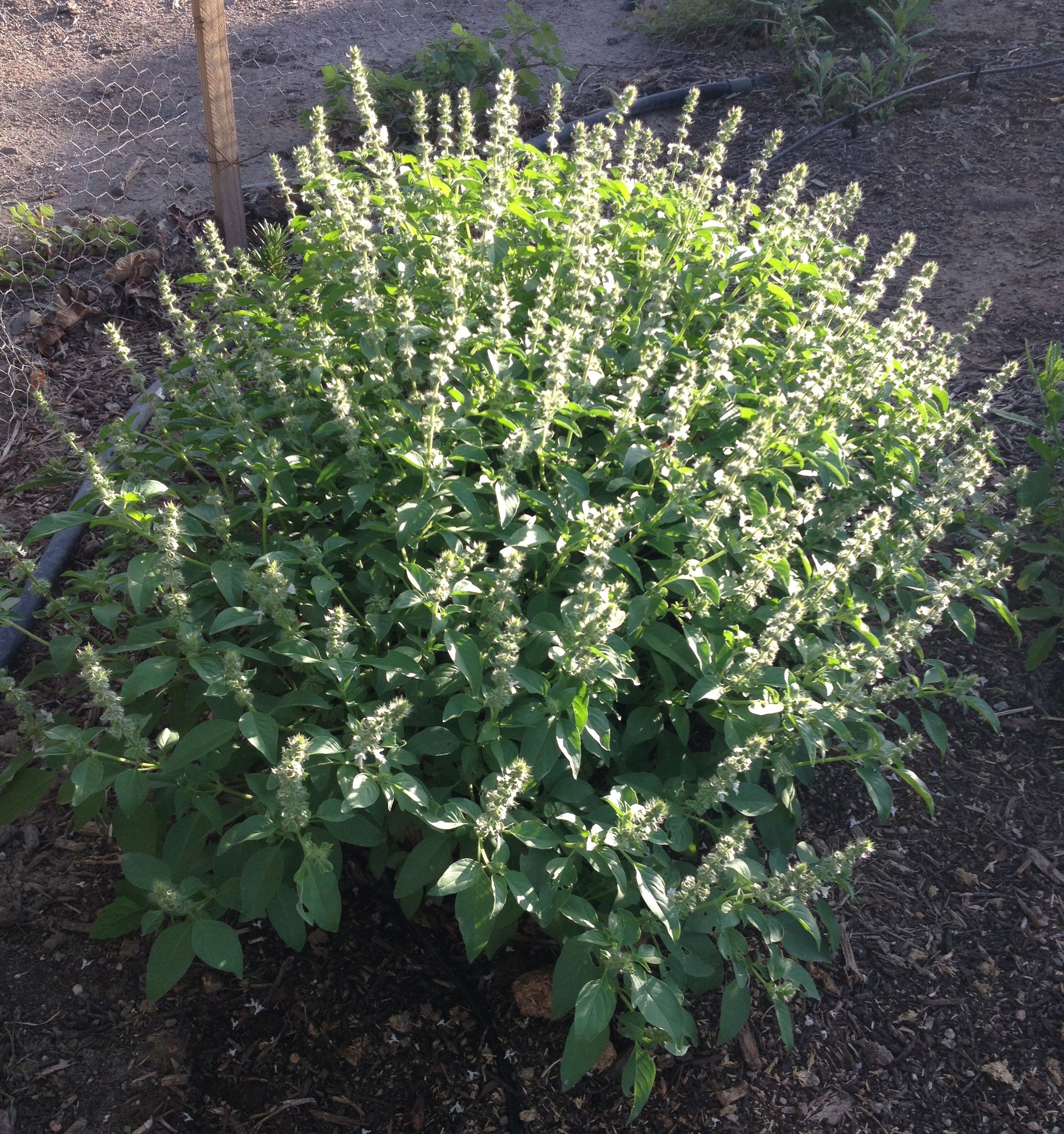
Mrs Burns' Famous Lemon Basil, at Mission Garden (MABurgess photo)

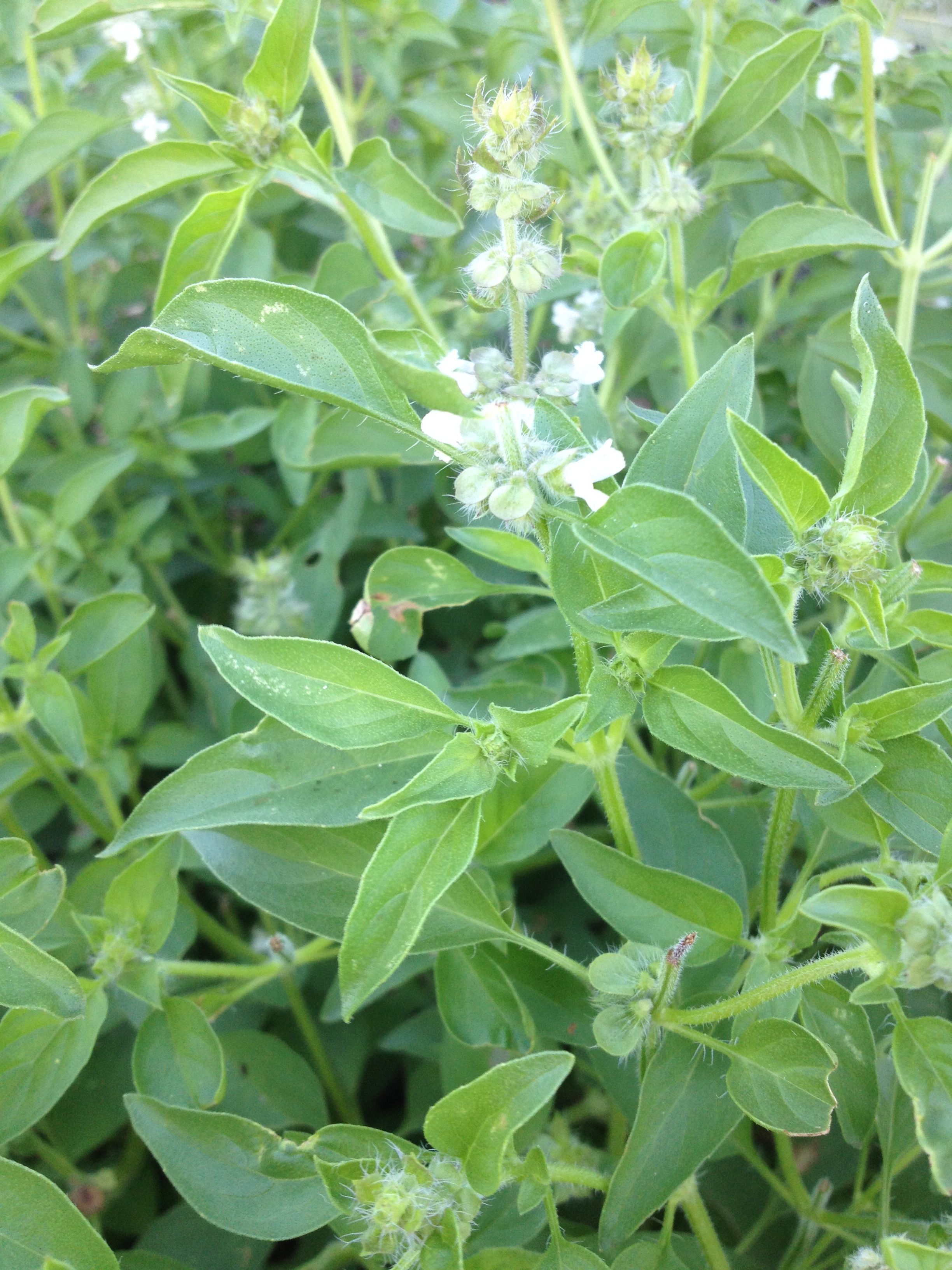
Mrs Burns’ Famous Lemon Basil, at Mission Garden (MABurgess photo)

In its versatility, Mrs Burns’ lemon basil provides many possibilities for the kitchen and the cosmetic chest, the first being olfactory delight. Brush its foliage lightly with your hands and you get an instant rush of enlivening yet calming lemon bouquet. Like Monarda or lavender, this lemon basil is definitely one to plant in a “moon garden” for nighttime enjoyment, or along a narrow walkway where you have to pleasantly brush up against it, getting a hit en route, always a reminder that life is good.

I wish this blog could be “scratch-and-sniff” so you could sense the sweet lemony aroma of this heirloom right now. Maybe technology can do that for us someday, but meanwhile, find a Native Seeds/SEARCH aficionado who has planted it and get yourself a sprig to sniff.   On any Saturday morning, come visit and whiff this desert-adapted basil at Mission Garden (the living history exhibit at the base of “A”-Mountain created by Friends of Tucson’s Birthplace). There, among Padre Kino’s heirloom fruit trees, in the monsoon Huerta vegetable plot, a group of herbalists known as Tucson Herbalist Collective (usually referred to as THC—like far out, righteous herbs, man, whatever) has planted a patch of traditional Mission-period medicinal and culinary herbs within reach of the fence. Lean over and touch Mrs Burns’ lemon basil for a real treat. At present (mid-September) “her” basil is a mound of dense smallish leaves and is sending up a zillion flower stalks sporting tiny white flowers. High time to snip the tops to encourage more foliage. Snippings can be used to zest a salad, to bedeck a platter of lamb chops, or to dry for a long-lasting potpourri.
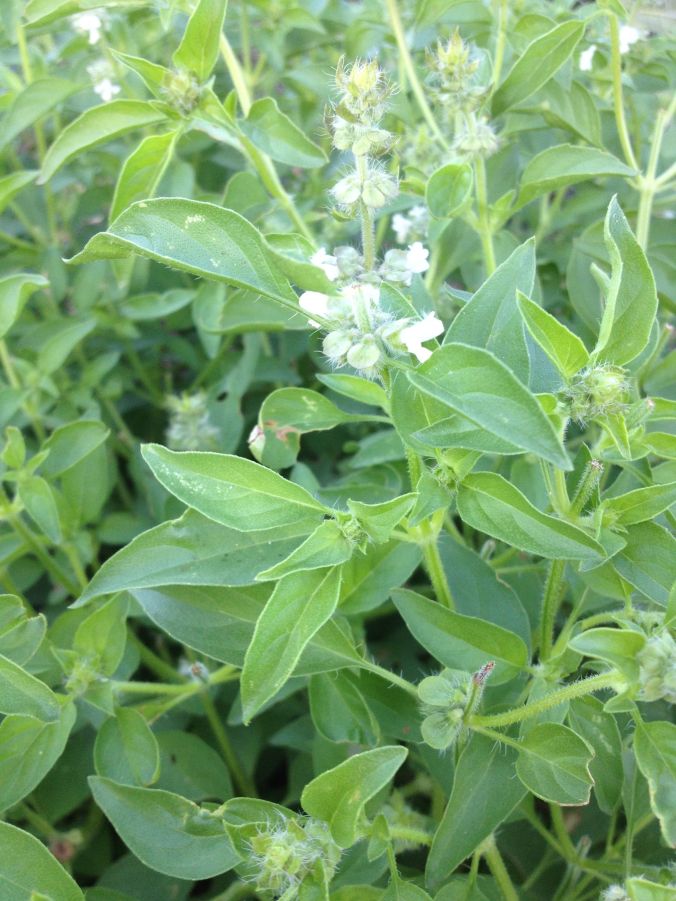
Close-up view of Mrs Burns' Famous Lemon Basil flowers and foliage (MAB)

Close-up view of Mrs Burns’ Famous Lemon Basil flowers and foliage (MAB)

Mrs Burns’ lemon basil—not your typical, soft, floppy-leafed basil—is bred for desert living, with smaller, sturdier foliage. Yes, it does need water, but it can take the desert’s heat and sun. This heirloom’s history is worthy of note and relating it honors the Burns family. The person who put “Famous” into the name Mrs Burns’ Famous Lemon Basil was Dr. Barney T. Burns, one of the founders of the seed conservation organization NativeSeeds/SEARCH and an amazing seed-saver himself, whose recent passing we mourn and whose life we gratefully rejoice in. It was his mother, Janet Burns, transplanted from Canada to Carlsbad, NM, who, with a neighbor over several decades, continued to grow and select surviving, desert-hardy seed in Southwestern heat. Barney contributed her basil seed as one of the first arid heirlooms to become part of the NSS collection. Interestingly, these tiny seeds have since traveled around the globe. One year Johnny’s Seeds picked it up, grew it out for their catalog, and sent NSS a check for $600 in royalties, having profited considerably from its sale.

You can use Mrs Burns’ Famous Lemon Basil leaf in many marvelous dishes. Layer fresh leaves with slices of farmers’ market tomatoes and thin slices of feta or fontina cheese and droozle with flavored olive oil. (I like Queen Creek Olive Mill blood-orange.) And OMG—this basil makes phenomenal pesto. Include this lemon basil with roast chicken for the best lemon-chicken ever. Dry it and put it in stuffing. Add a few fresh leaves to salad for a taste surprise. Or, add a sprig to soups to add a tang. You can even bedeck a glass of V-8 or your Bloody Mary with a lemon basil sprig to fancy up your presentation.
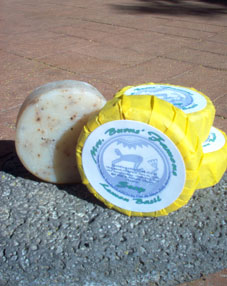
 

Handmade soap with Mrs Burns' Lemon Basil-infused jojoba oil (MABurgess photo)

Handmade soap with Mrs Burns’ Lemon Basil-infused jojoba oil (MABurgess photo)

Once when I enthusiastically grew a 50-foot row of Mrs Burns’ basil, it produced for me bags of dried herb, inspiring some fragrant projects. I distilled the aroma-rich herb to make a gentle hydrosol spray which, I feel, carries medicinal/psychological qualities of soothing, pacifying refreshment. By first infusing this marvelous herb in jojoba oil, I create beauty bars—with Mrs Burns’ Famous Lemon Basil as the exfoliant in the soap—available at the NativeSeeds/SEARCH store, the Flor de Mayo booth at St Phillips Farmers Market, or at http://www.flordemayoarts.com.

In my mass planting of lemon basil, I observed bees going totally ecstatic over the profuse flowers and so wished that I had had bee boxes close-by. If any desert bee-keepers want to try a new gift to their bees and to us consumers of honey, I recommend they plant this one. Can’t think of anything finer than Mrs Burns’ Famous Lemon Basil honey!
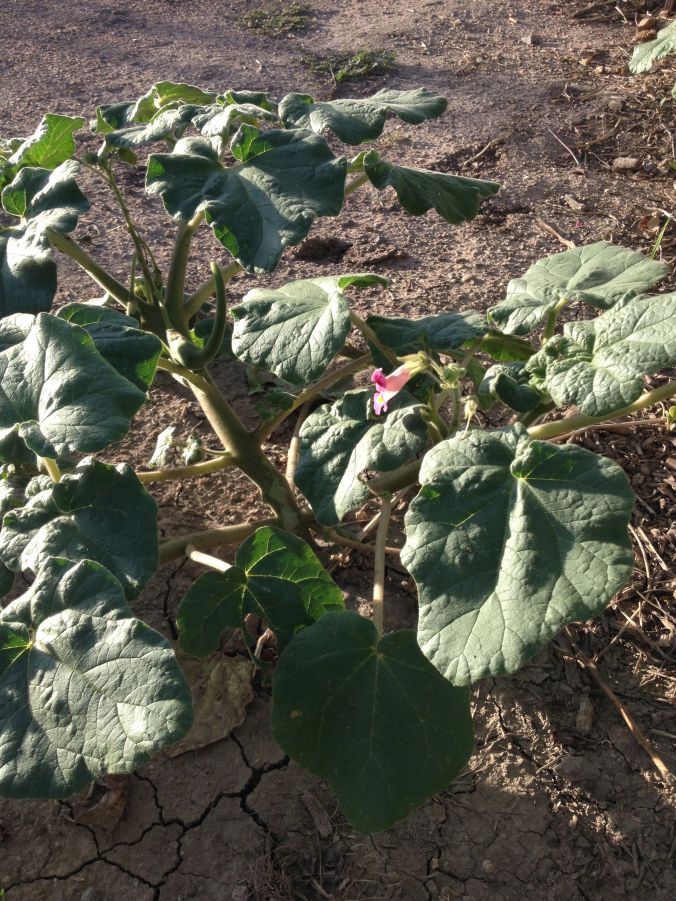
Brush leaves of devilsclaw for a cooling sensation (MABurgess)

Brush leaves of devilsclaw for a cooling sensation (MABurgess)

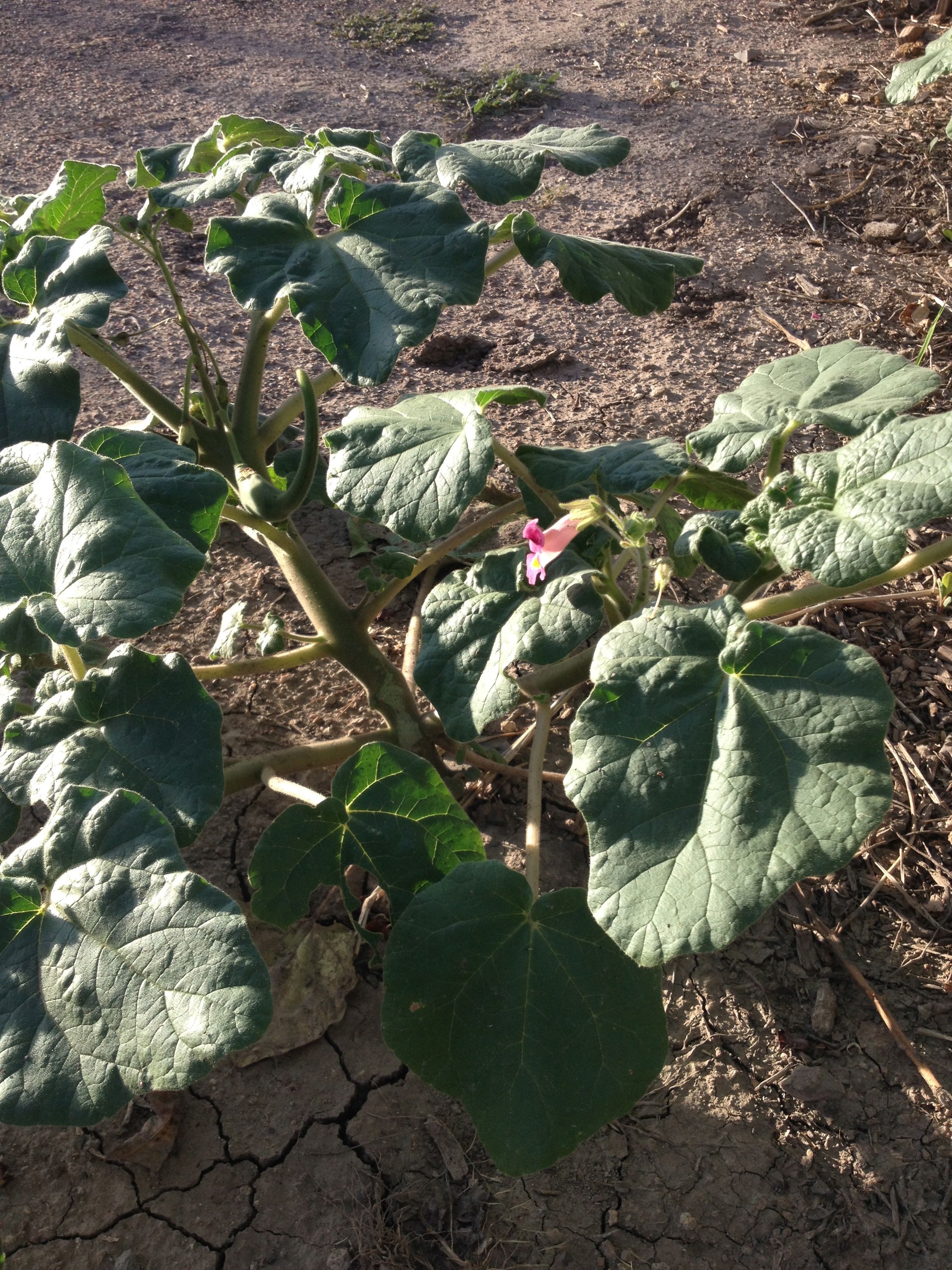
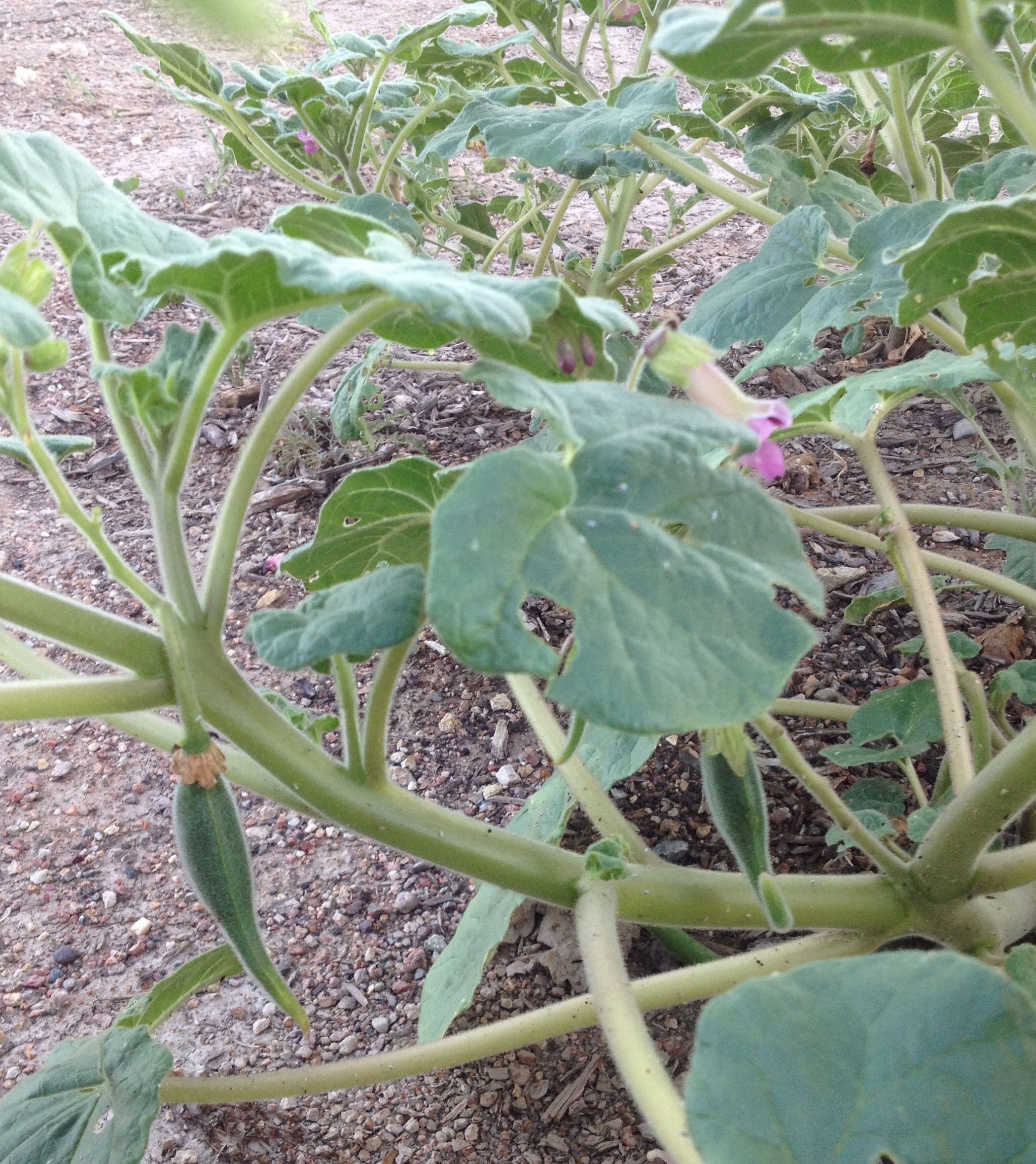
Here in culinarily-exciting Baja Arizona, as we promote the uniqueness of Tucson as an International City of Gastronomy, it is fun to consider another of our unique local food plants, a wild and unlikely weed which pops up with monsoon rains in low places, including at Mission Garden and is respectfully spared there. Known as i:hug by the Tohono O’odham (pronounced eee’hook), devilsclaw or unicorn-plant by Anglos, and Proboscidea spp by taxonomists, ours is not to be confused with the herb devilsclaw of commerce, Harpagophytum procumbens native to South Africa. Our native i:hug (of which there are a few species, some yellow-flowered, some pink) is a weed of many uses.
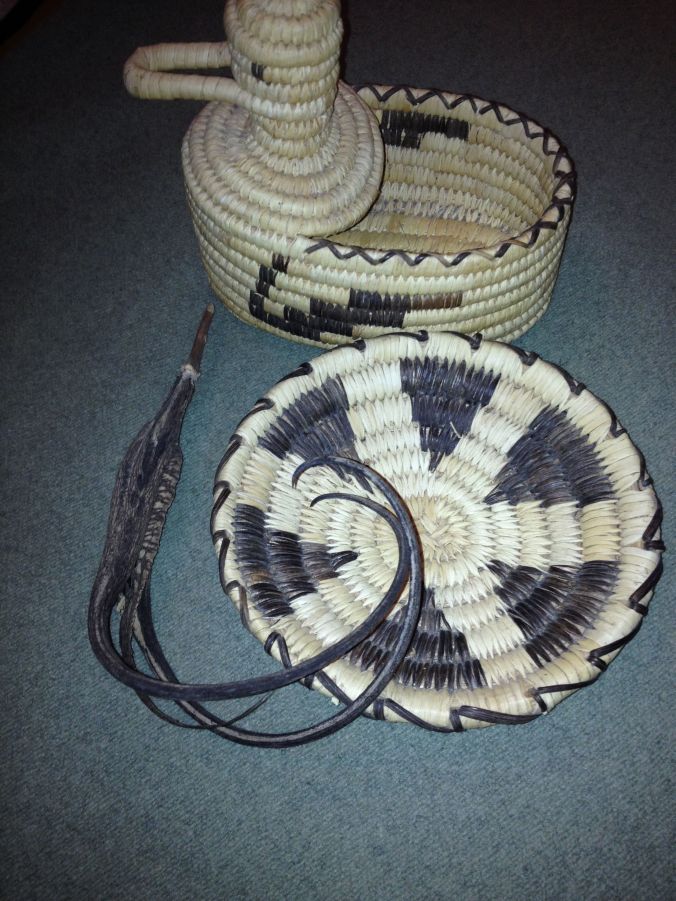
Tohono O'odham coiled basket by Juanita Ahil with domestic long-clawed i:hug (MABurgess photo)

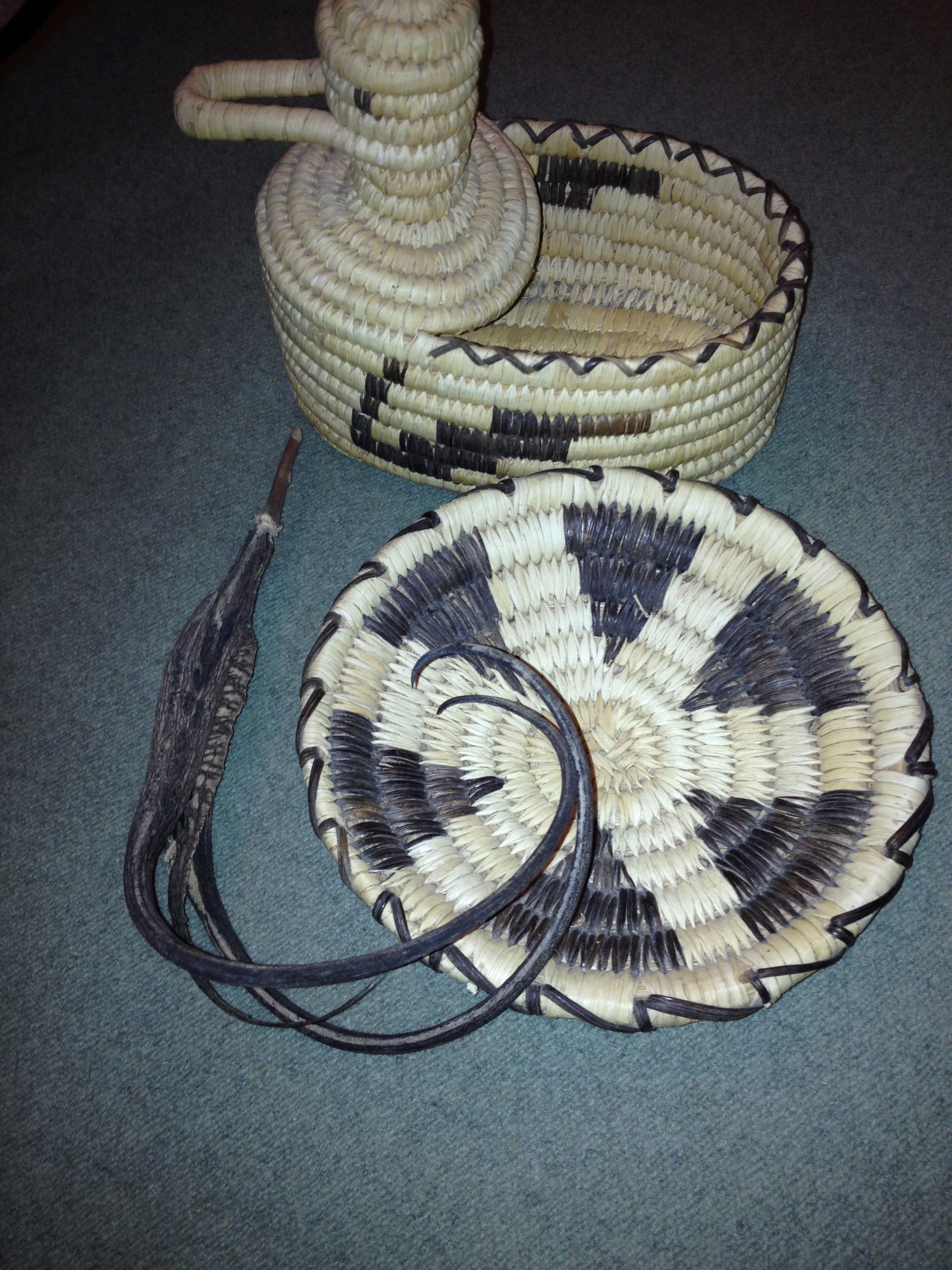
Tohono O’odham coiled basket by Juanita Ahil with domestic long-clawed i:hug (MABurgess photo)

It is primarily known as the fiber used by Tohono O’odham, Akimel O’odham, and N’de weavers to create the striking black designs in their coiled basketry. Otis Tufton Mason’s tome Aboriginal American Indian Basketry, first published by Smithsonian Institution in 1904, shows beautiful specimens of unicorn-plant weaving, and mentions its use by many desert people including Panamint basket-makers of Death Valley.

I have a feeling that the devilsclaws that are volunteering now at Mission Garden are the children of plants that have been grown by Native People in that very place along the Santa Cruz for many centuries.
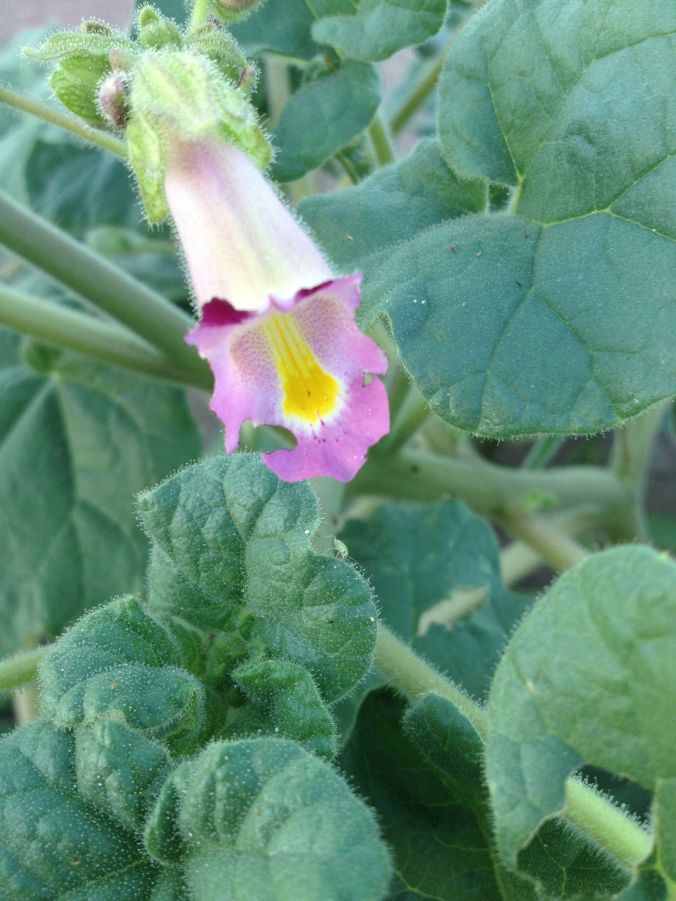
Devilsclaw (Proboscidea) flower close-up (MABurgess photo)

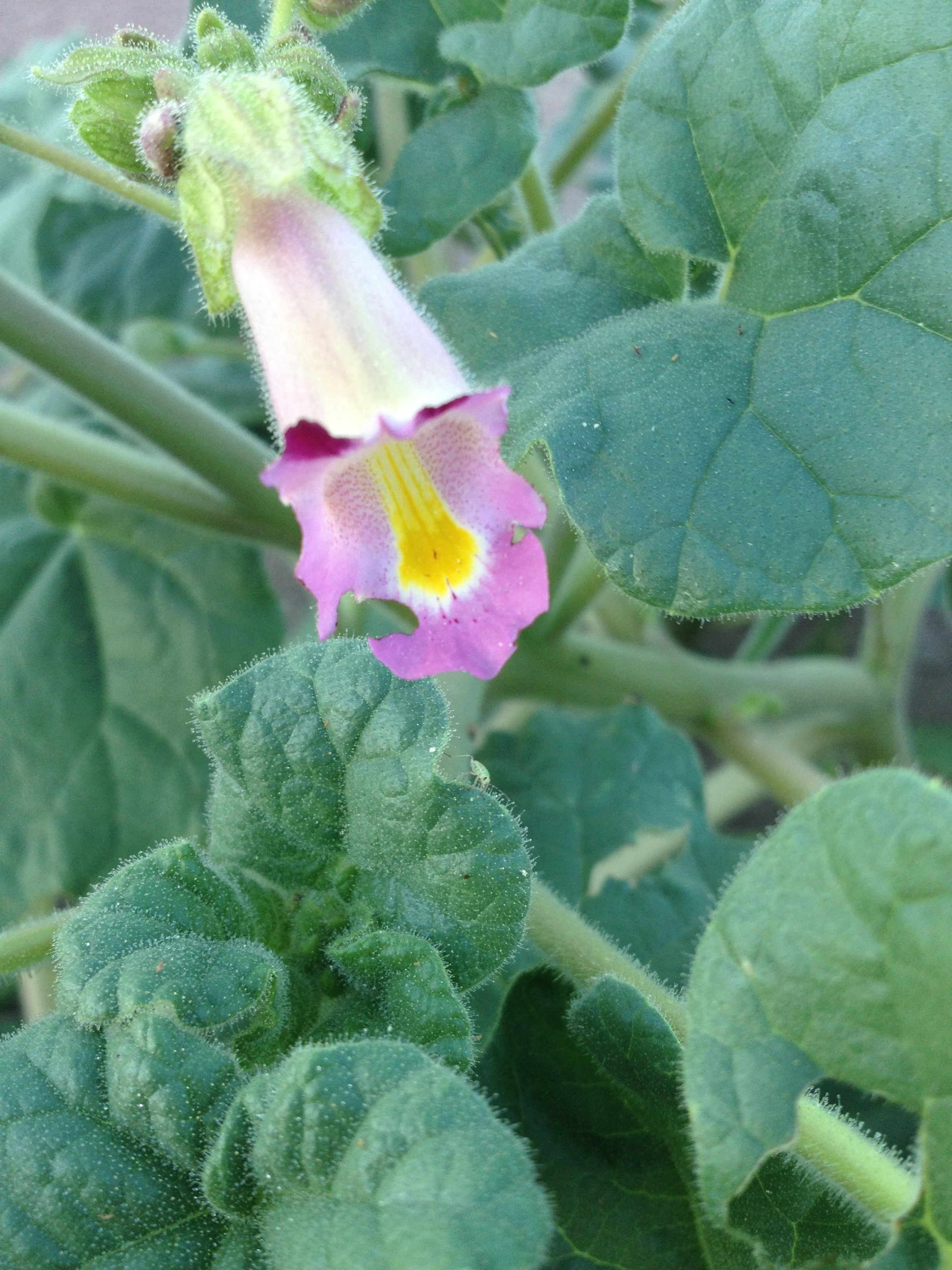
Devilsclaw (Proboscidea) flower close-up (MABurgess photo)

As an ornamental, unicorn-plant or devilsclaw can be a welcome surprise of greenery in late summer into fall, making a mound of large leaves sometimes 2’ high and 3’ wide. Tucked among its spreading fuzzy branches, under velvety maple-leaf-shaped foliage, will appear tubular flowers edged in pink. Should you need a cooling touch on a hot day, just lightly brush one of its big leaves and you are instantly refreshed. The velvety look of devilsclaw foliage is actually one of the plant’s defenses against water-loss. Each leaf is covered with fine hairs. At each hair tip is a gland containing a microscopic bead of moisture. Hair causes wind-drag, slowing evaporation from the leaf surface. What evaporates from the glands acts to cools the leaf—what remains can also cool our skin, should we touch it.
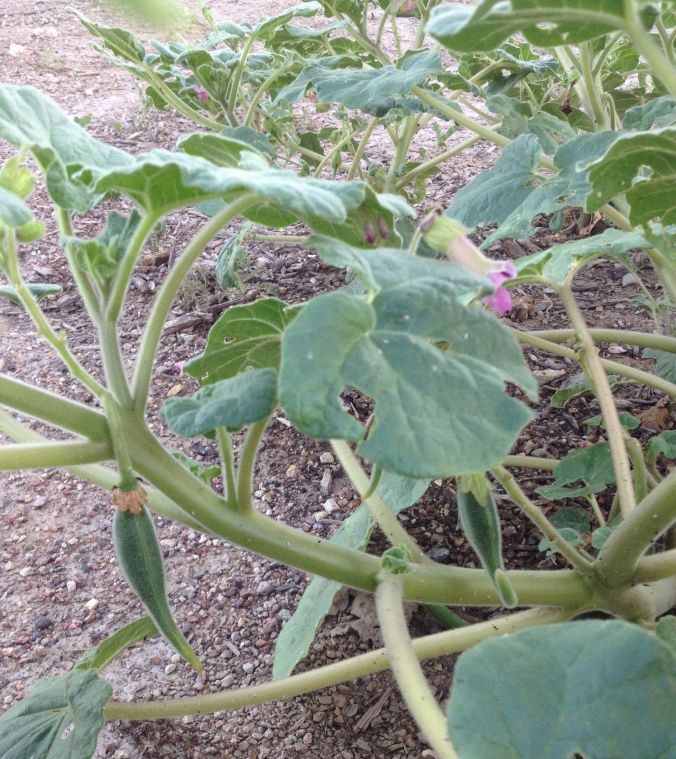
Young, harvestable devilsclaw pods (MABurgess photo)

Young, harvestable devilsclaw pods (MABurgess photo)

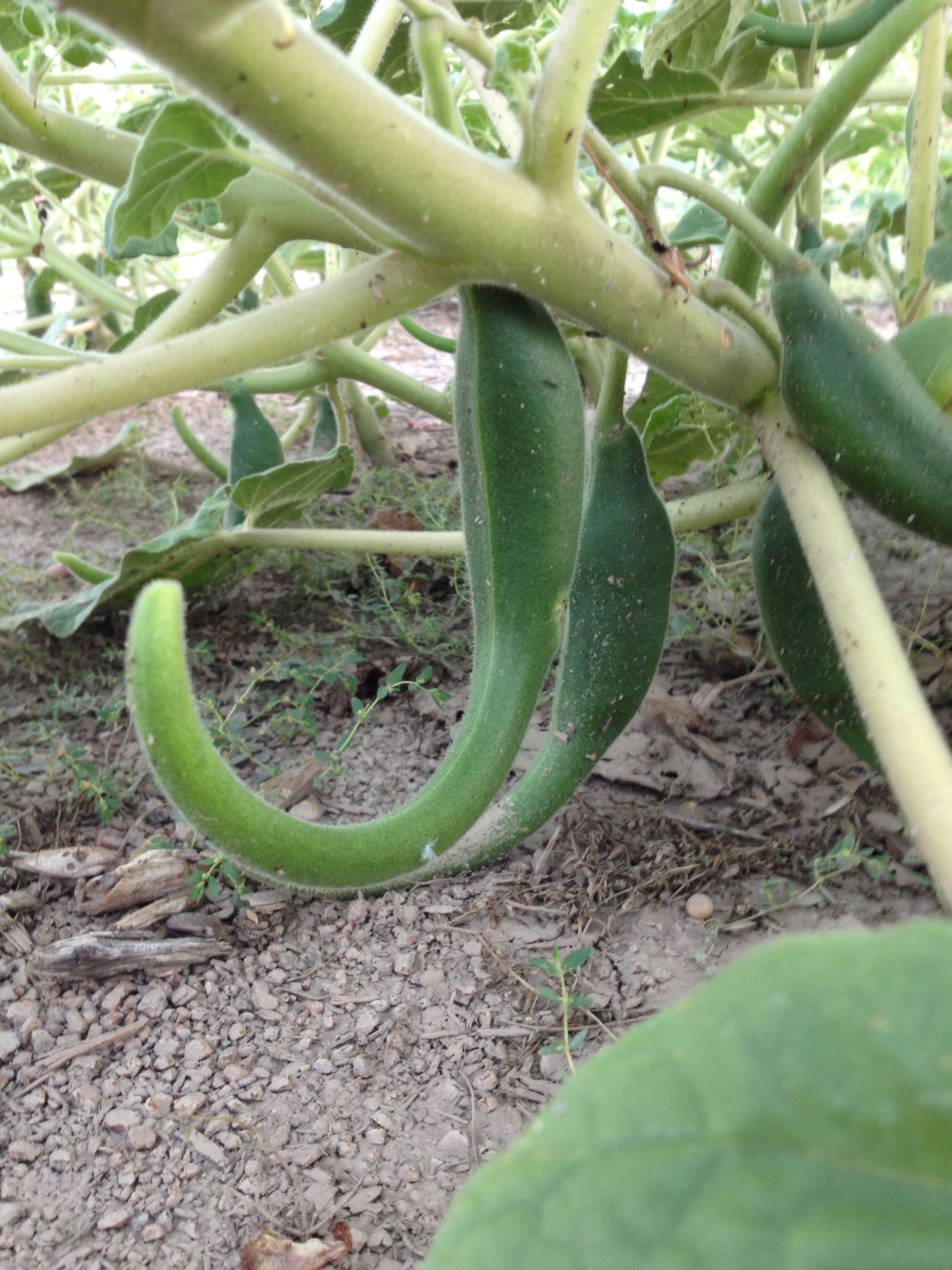
Most interesting of all are the foods that our native devilsclaw can provide. After pollination of the flower, a small green curved pod emerges like a curled, fuzzy okra. When young, that is, under about 2 ½” long, and before the pod develops woody tissue inside, these small green unicorns can be steamed as a hot vegetable, stir-fried with onion, green chile or nopalitos, or pickled for a Baja Arizona snack.
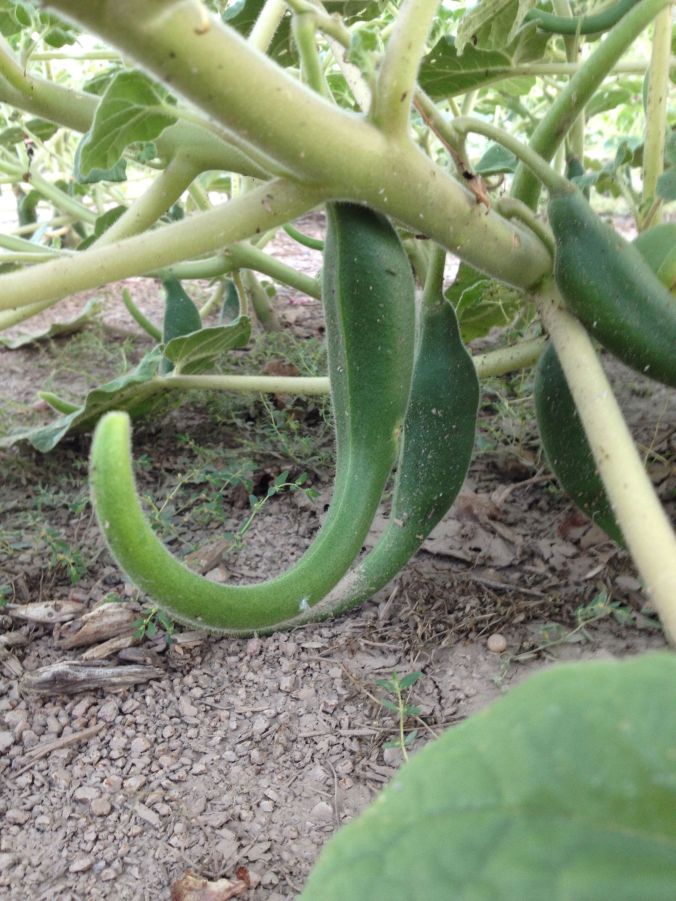
Maturing green devilsclaw pods beyond the food stage (MABurgess)
Maturing green devilsclaw pods beyond the food stage (MABurgess)

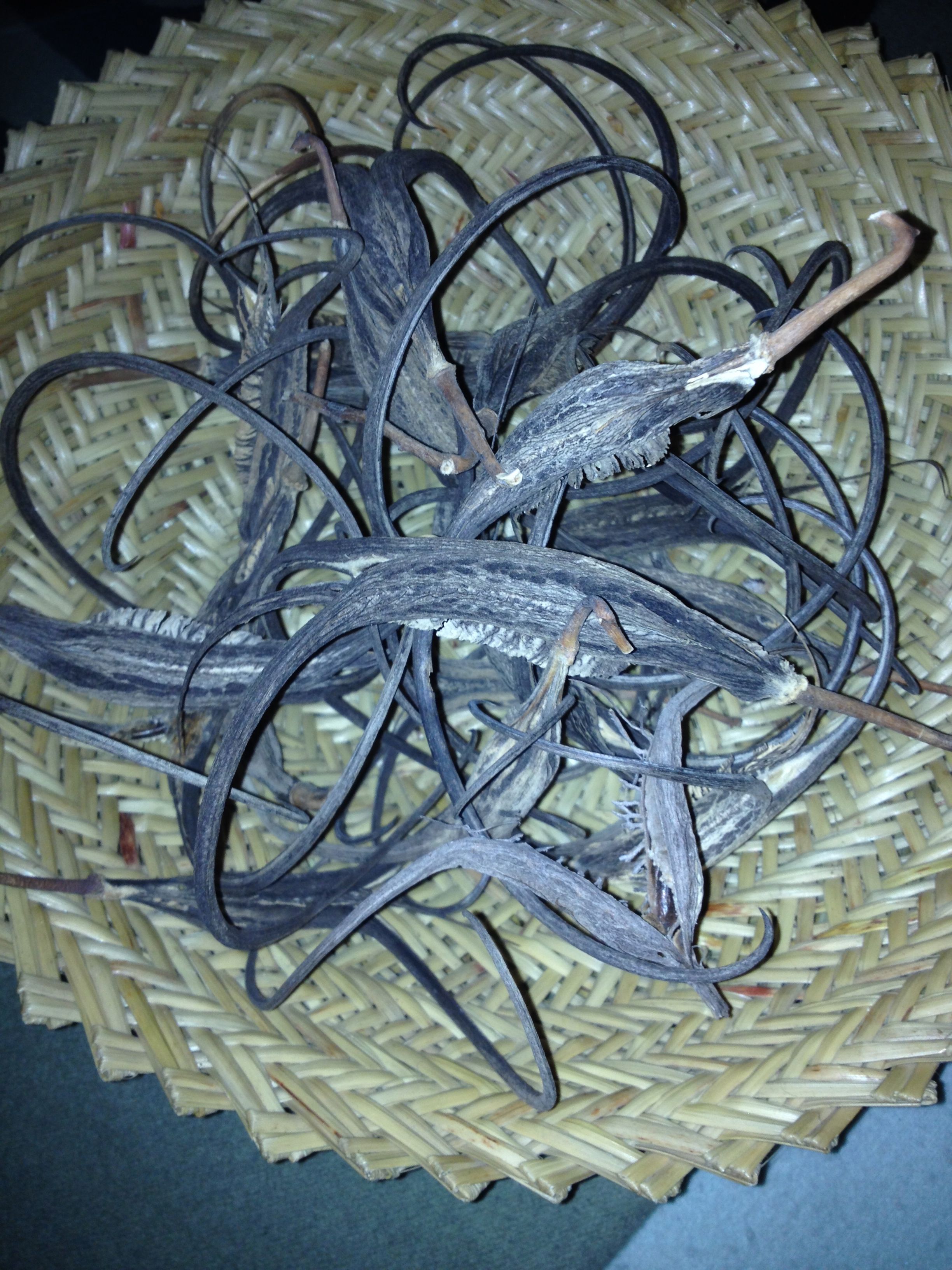
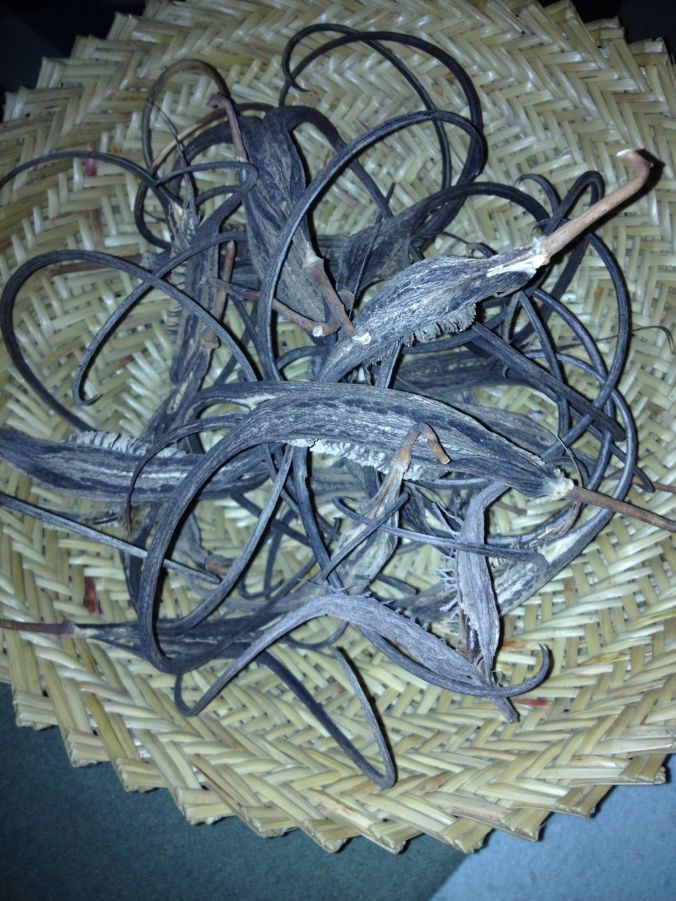
Tangled wild devilsclaw dry pods ready to split for basketry and seed harvesting (MABurgess)

Tangled wild devilsclaw dry pods ready to split for basketry and seed harvesting (MABurgess)

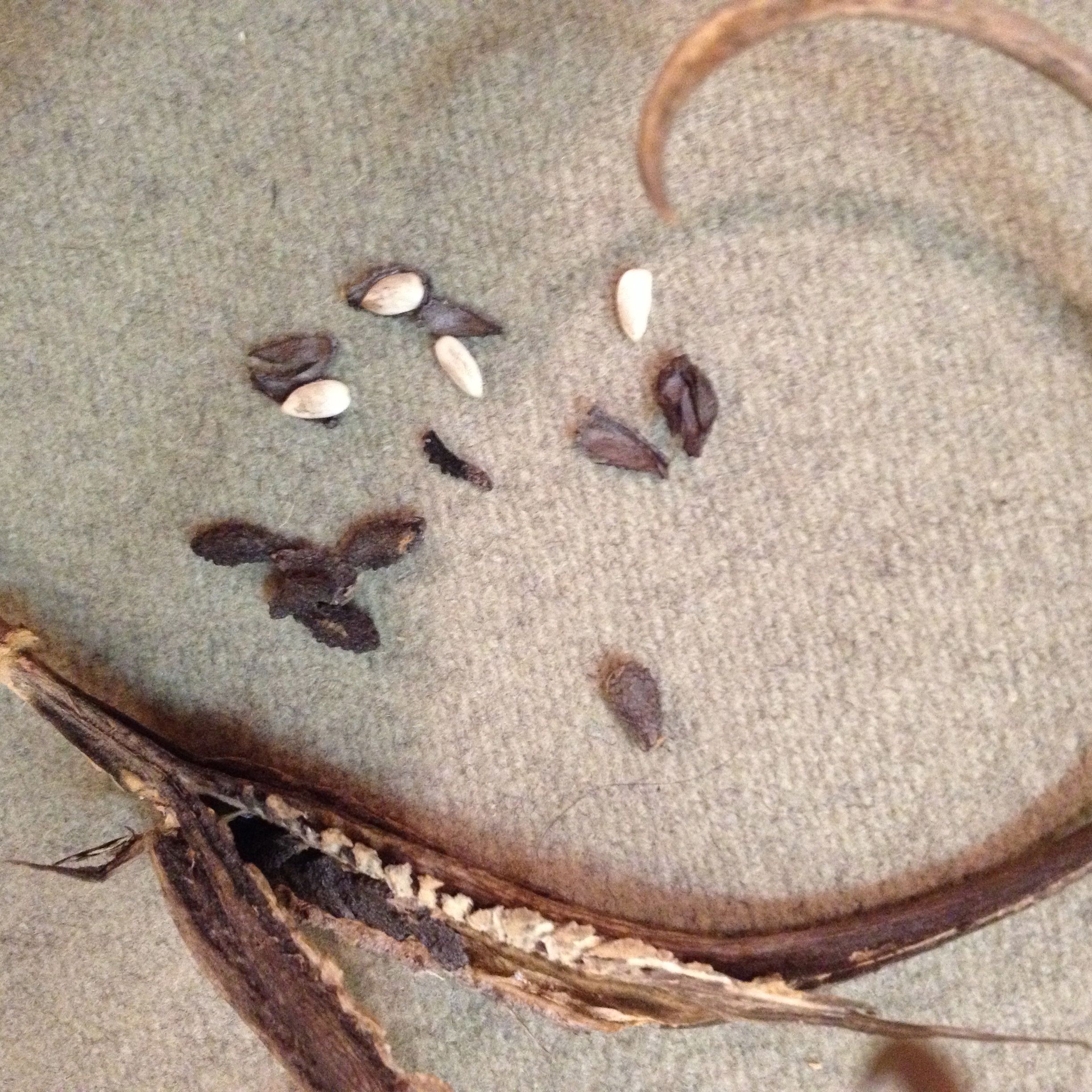
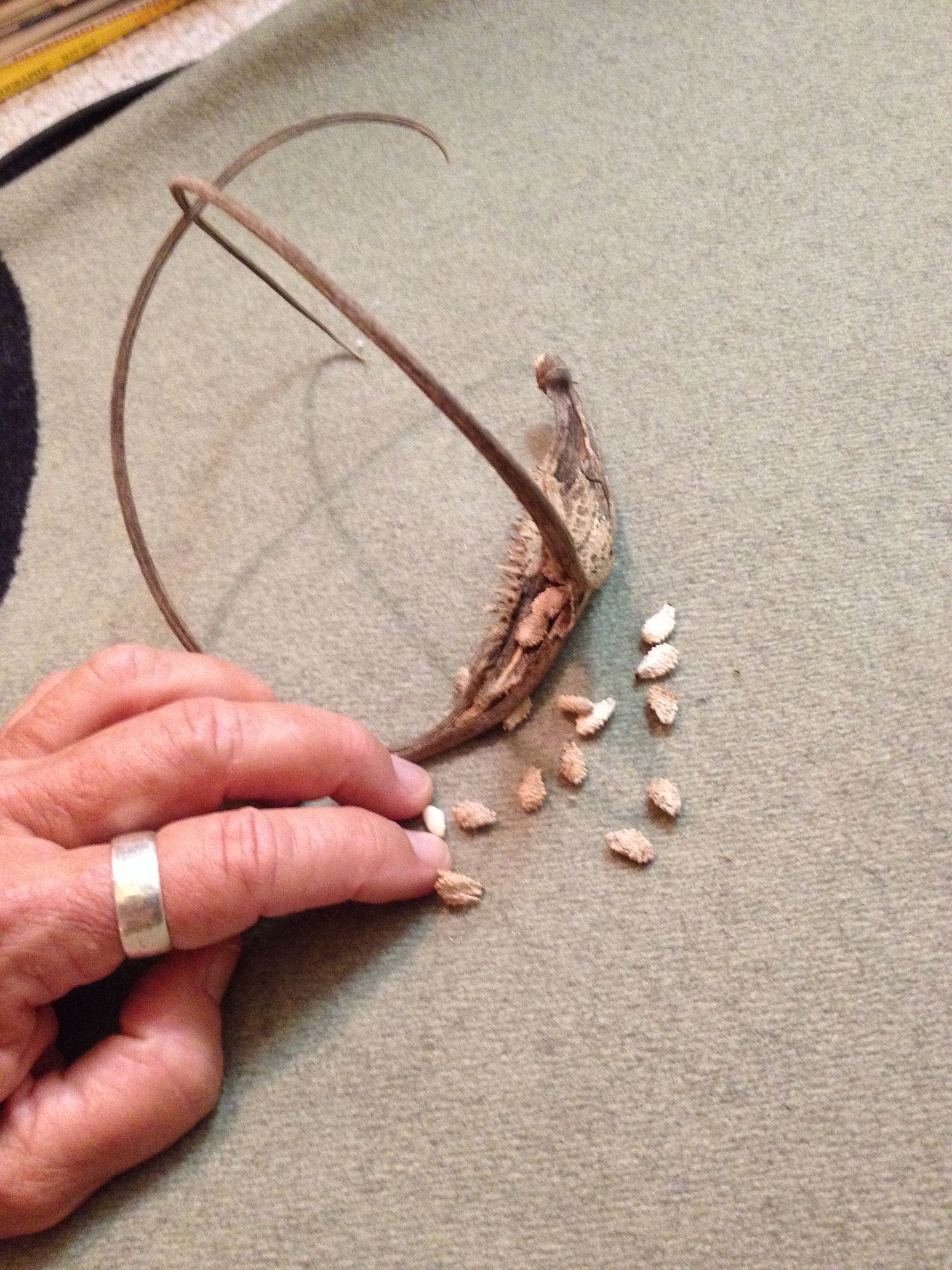
When the long green pods of devilsclaw ripen, the skin will dry and slough off leaving a tough, black, woody seed-pod that splits with very sharp tips. (Beware how they can grab—they were “designed” to hitch a ride on a desert critter’s hoof or fur and thus spread the seed.) With care, and sometimes the need for pliers, open the pod and out will come little rough-surfaced seeds. If your incisors are accurate, and if you have lots of time to get into meditations on i:hug, you can peel off the rough outer seed skin. Inside is a yummy, oil-rich and fiber-rich seed that looks like an overgrown sesame seed. (In fact, scientists at one point had classified Proboscidea in the same taxonomic family as sesame but it now stands in its own.)
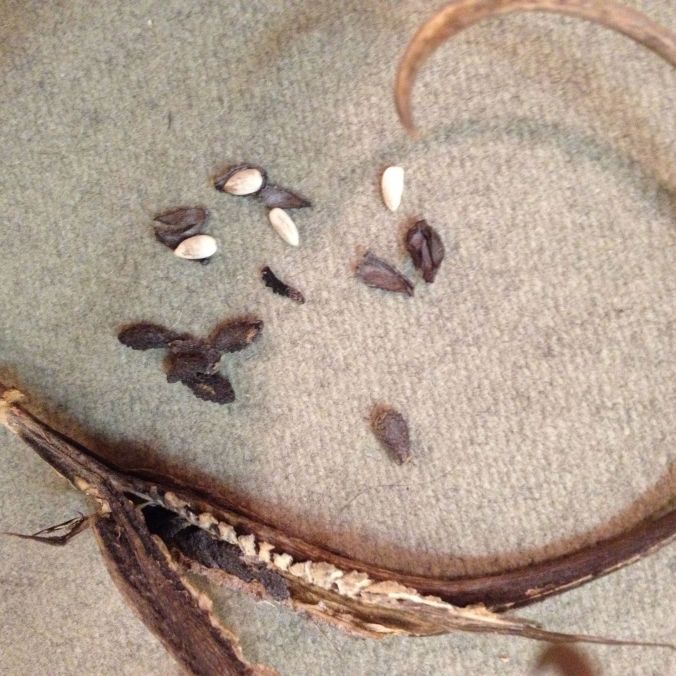
Black seeds of wild devilsclaw from split pod.  White inner seeds delish after peeling (MABurgess photo)

Black seeds of wild devilsclaw from split pod. White inner seeds are delish after peeling. (MABurgess photo)
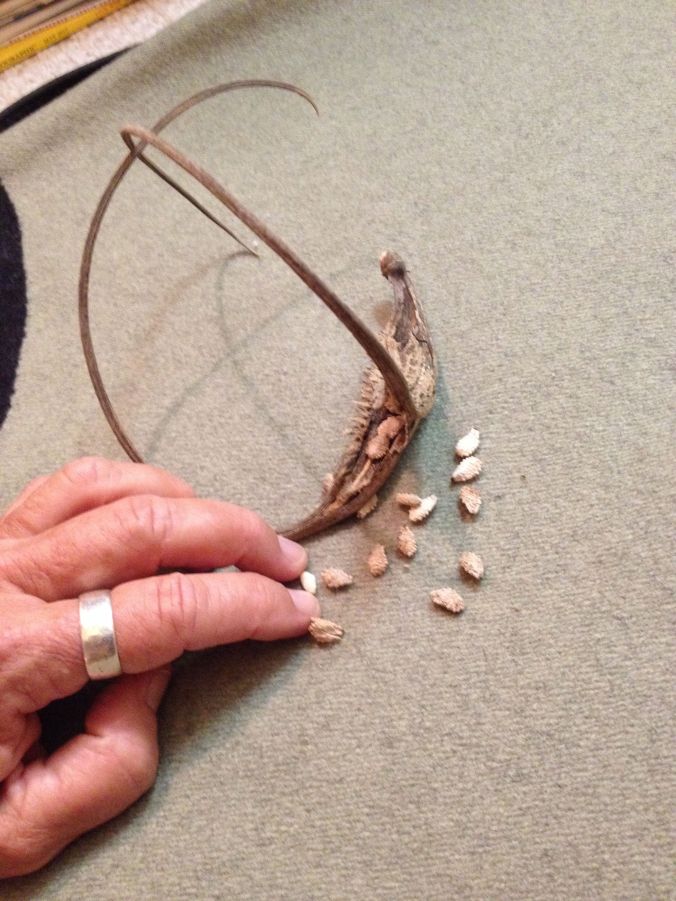
White-seeded domestic devilsclaw has slightly larger seeds like giant sesames (MABurgess photo)

White-seeded domestic devilsclaw has slightly larger seeds like giant sesames.  Peeled inner seed between fingers is ready to eat. (MABurgess photo)

When I see cutesy figurines of roadrunners or Christmas ornaments made with devilsclaw pods, my first thought is, wow, what a waste of a good treat, but then gladly, I realize that this unique plant produces more than enough fresh pods and mature pods to satisfy all the purposes of Nature or hungry and/or creative humans. Give i:hug a try!
Hearty Jojoba

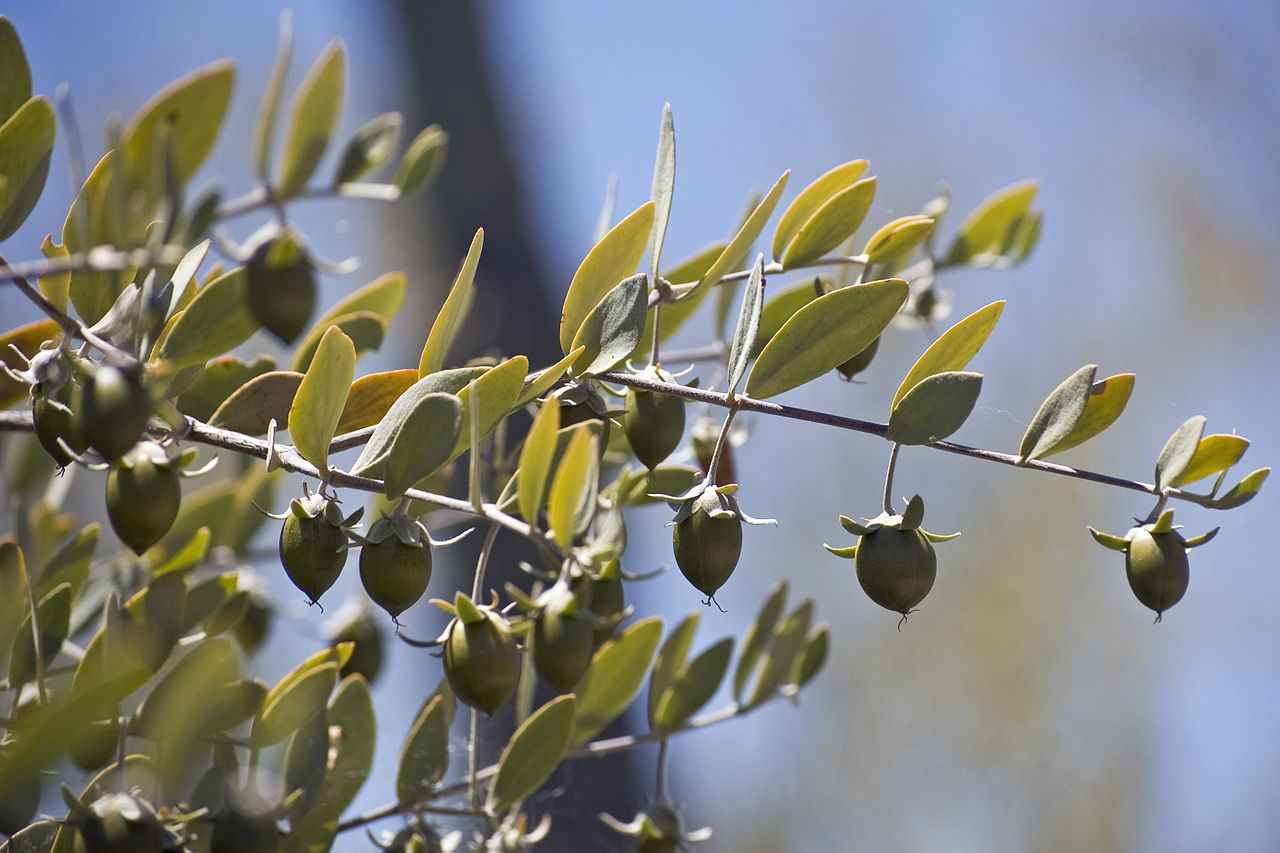
jojoba green fruit

Green jojoba fruit dangle below the branches, slowly ripening in the desert sun.

posted by Jacqueline A. Soule

If you know how I title most of my blogs, you now have a hint on how to pronounce jojoba – it’s pronounced ho-ho-ba. (The “j” is an “h” sound in Spanish. Which reminds me of the time at the busy health clinic when “Hakalina” did not recognize her name called out by the nurse – but that’s another story.)

Jojoba is the O’odham name for the plant (Simmondsia chinensis) and it came into Spanish via the work of Father Kino. Indeed, Father Kino wrote in his journals about the plant. In Bolton’s 1919 translation of Kino’s journals, Kino writes of a visit with “Pima Indians” (pg. 93) and states that, among other items “. . . they also have bezoar, the medicinal fruit called jojoba, blankets, cotton fabrics, curious and very showy baskets or pitchers, macaws . . . and other conveniences.” Later, Kino describes the fruit as “. . . like the almond, and with a very salutary and effective remedy for different kinds of sickness.”

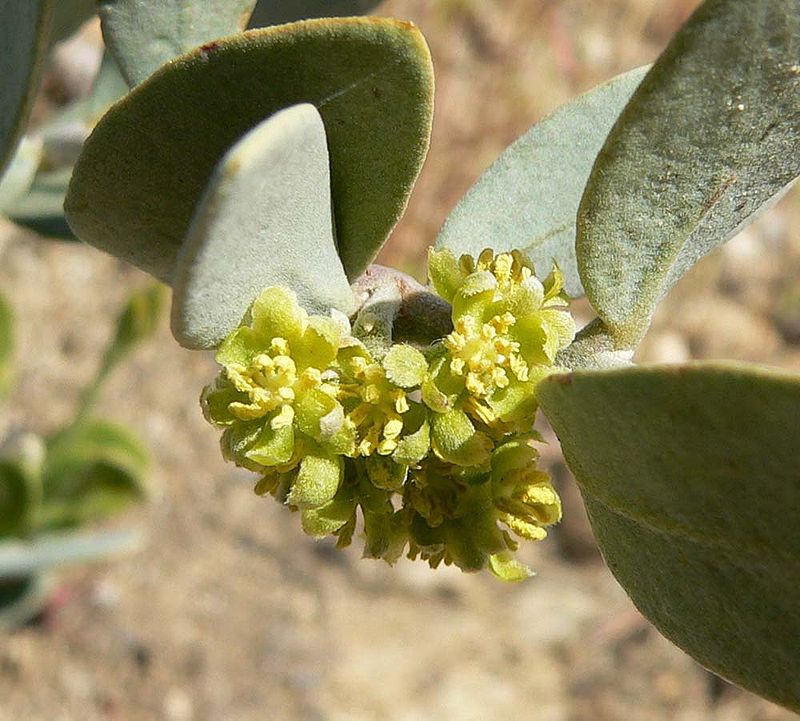
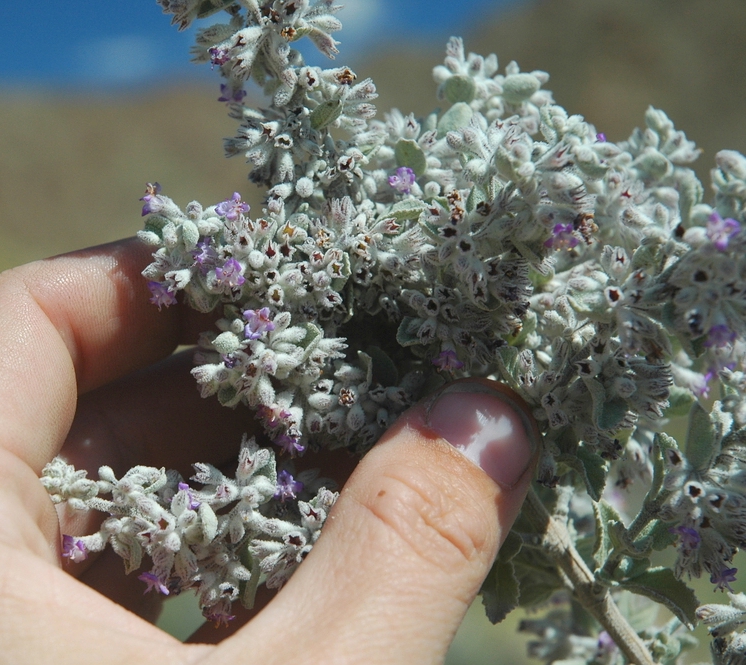
Simmondsia_chinensis_male_flower

Jojoba shrubs are either male or female. Here a male shrub offers it’s pollen filled flowers to passing pollinators.

Other common names for the plant include goat nut, deer nut, pignut, wild hazel, quinine nut, coffeeberry, and gray box bush. Although there are references to jojoba as nuts, they are, botanically speaking, a seed.

Jojoba was used in most areas where it is native. The uses varied with tribe. O’odham would crush the seeds to yield an oily paste useful for dry cracked skin, chapped lips, cuts, scrapes, and burns. Seeds were ground and pressed into cakes, and small portions were eaten in moderation as food. Too much jojoba has a laxative action. Seri used seeds as an emergency food, but more commonly as part of a shampoo process. Seeds can also be made into necklaces.

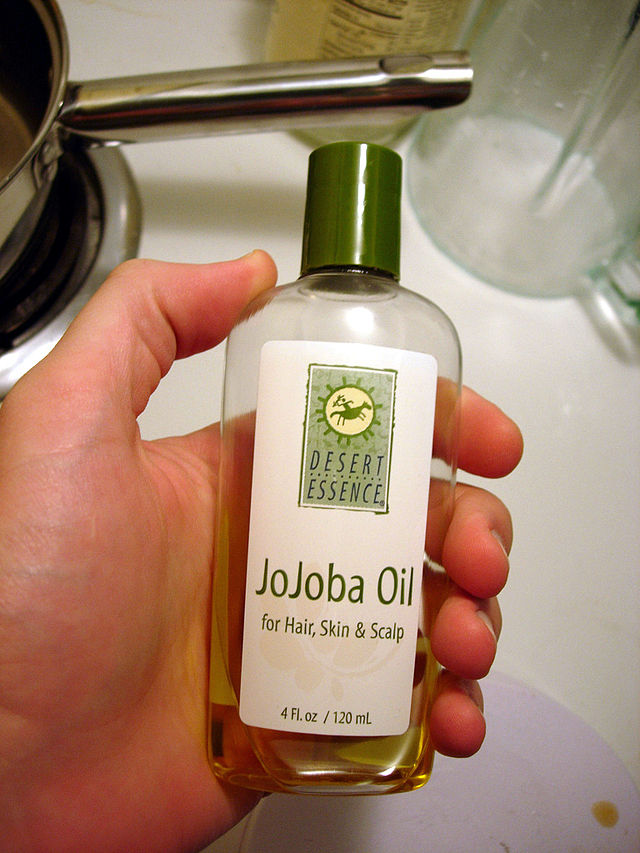
Jojoba-oil

You can purchase pressed jojoba “oil” in many stores. I use the oil in making lotion.


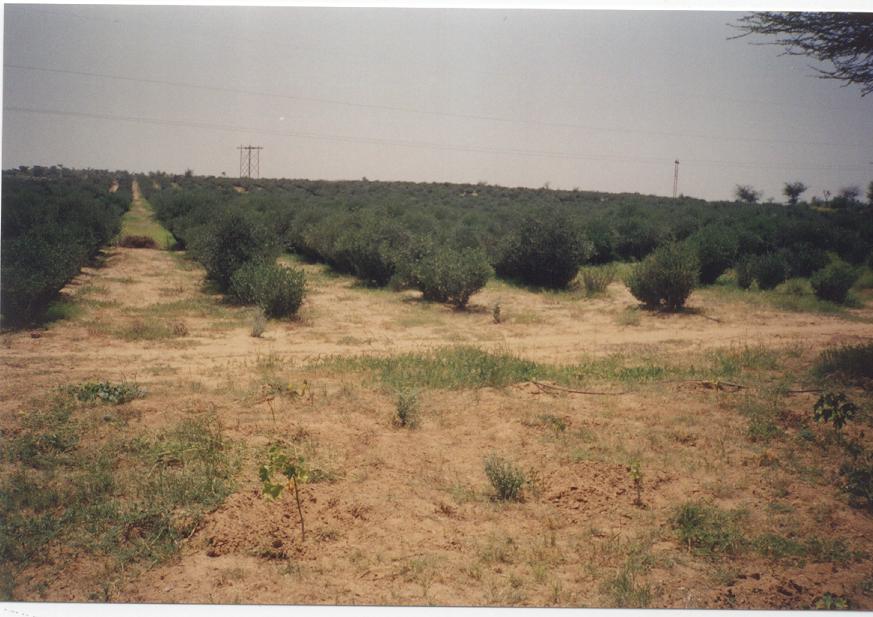
Currently, jojoba is grown commercially for its “oil,” in reality a liquid wax ester, expressed from the seed. This oil is rare in nature. Technically it is an extremely long straight-chain wax ester and not a triglyceride, making jojoba and its derivative jojoba esters more similar to human sebum (body oil) and sperm whale oil than to vegetable oils. Jojoba oil is easily refined to be odorless, colorless and oxidatively stable, and is often used in cosmetics as a moisturizer and as a carrier oil for specialty fragrances. It also has potential use as both a biodiesel fuel for cars and trucks, as well as a biodegradable lubricant. Plantations of jojoba have been established in a number of desert and semi-desert areas.


jojoba plantation in India

Jojoba plantation in one of the semi-arid areas of India.

Jojoba is currently the Sonoran Desert’s second most economically valuable native plant (overshadowed only by the Washingtonia palms used in ornamental horticulture). Plant breeders are doing selective breeding to develop plants that produce more seeds, seeds with higher oil content, and characteristics that will facilitate mechanical harvesting.

A few interesting taxonomic notes. Jojoba is the only species in its plant family, making it quite unique among flowering plants. While there are around 400 monotypic genera, this is the only monotypic flowering plant family. The scientific name, Simmondsia chinensis, is an example of the need for good penmanship. Jojoba does not originate in China! Johann Link, the botanist naming the species, misread Nuttall’s collection label “Calif” as “China.”

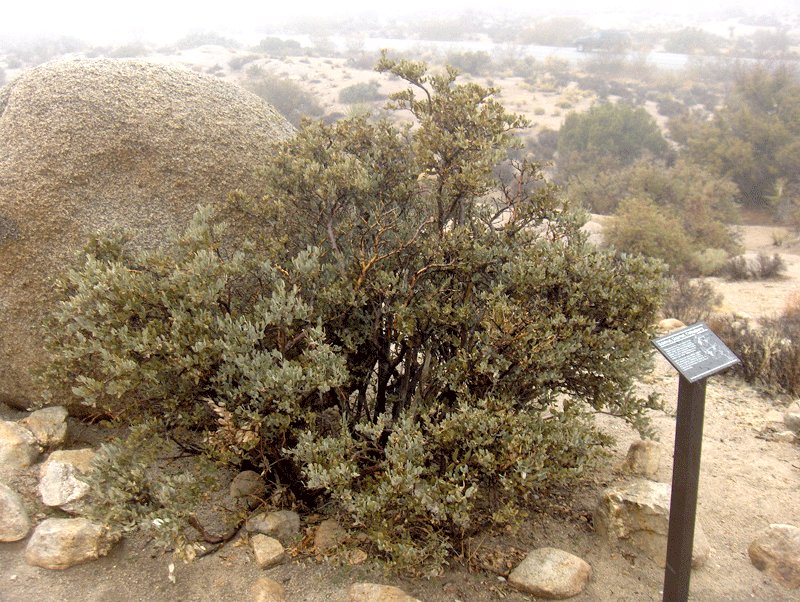
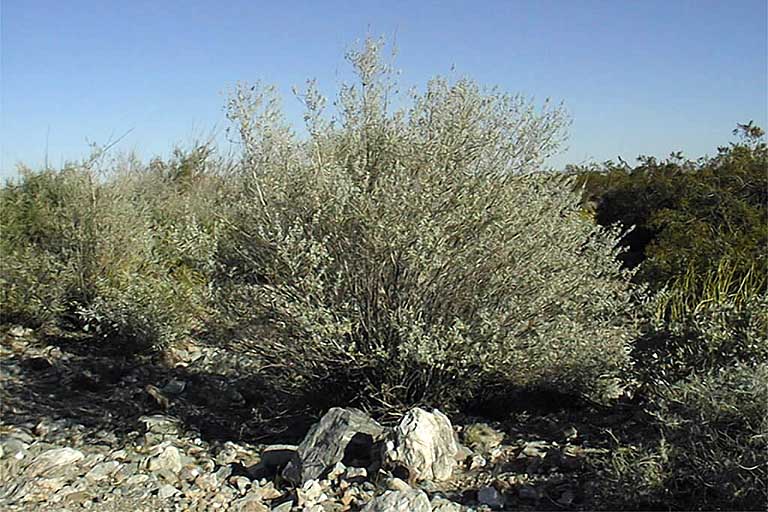
Jojoba habit

Jojoba shrubs live well in the desert.

Harvesting and Use.
Jojoba seed on a single bush will ripen slowly over several months. This is one of the traits breeders are seeking to change. Seed is ready to be harvested when the hulls easily fall off and a slight tug releases it into your hand. If it resists, it isn’t ripe.

Store harvested seed in jars or even in the freezer. Grind jojoba seeds in a mortar and pestle for topical use. Alternatively toast the seeds and munch as an occasional snack.

If you have the technology, you can harvest seeds and press them for the oil. Or simply plant them in your native landscape and let the native wildlife use the seed.

Planting and Care will be covered in a future blog.


To learn more about jojoba and other native plants used as herbs, please come to my free presentation “Father Kino’s Native Herbs” at the Main Library on Saturday Sept 13 at 1:30. More at http://www.library.pima.gov/calendar/?ID=26635

Some of the information in this article is excerpted from my book “Father Kino’s Herbs: Growing and Using Them Today” (2011, Tierra del Sol Press, $15). I hope you will consider purchasing a copy locally at Antigone Books, Arizona Experience Store, Magic Garden, Mostly Books, or Rillito Nursery.

© 2014, Jacqueline Soule.  All rights reserved. I have received many requests to reprint my work. My policy is that you are free to use a very short excerpt which must give proper credit to the author, and must include a link back to the original post on our site. Please use the contact me if you have any questions. JAS avatar
Desert Lavender

posted by Jacqueline A. Soule

In the days before indoor plumbing, daily showers, and sanitation in general, the clean fresh fragrance of lavender was highly welcome. The name lavender is derived from the Latin “lavare,” meaning to wash. Leaves and flowers have been used for several millennia to do just that, wash. Fragrant baths, hair rinses, to cleanse and treat skin ailments, and, in the past, to help eliminate lice and bedbugs from the household. Tea made from leaves and flowers has been used to treat sleeplessness, restlessness, headache, flatulence, and nervous stomach.


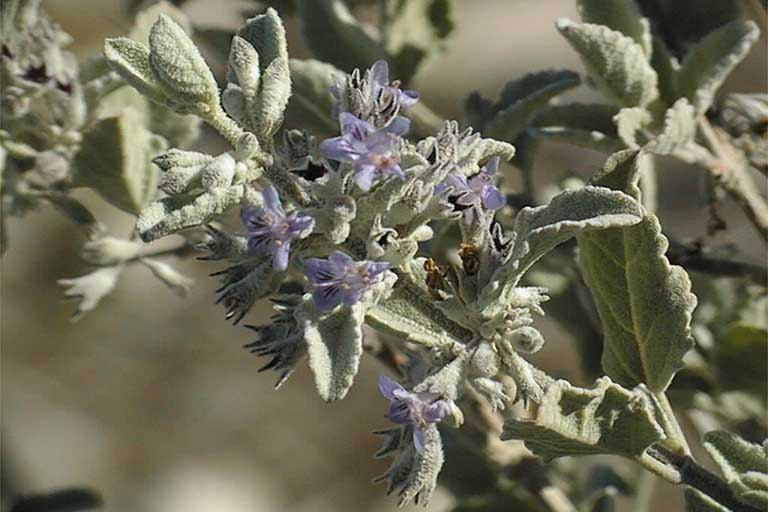
Hyptis_emoryi_flowers_002


Hyptis_emoryi_habit


Imagine the delight the Europeans experienced when first encountering this fragrant desert plant in our area. Here they were, after an arduous sea voyage, months of horseback travel along dusty deer trails, riding into progressively odder lands – strange towering saguaros, bulging barrel cactus, pungent creosote bush – to come across a gentle evocative fragrance of their childhood home, the sweet scent of lavender. Some, like Father Kino, may have seen it as a sign from God that their journey was blessed.


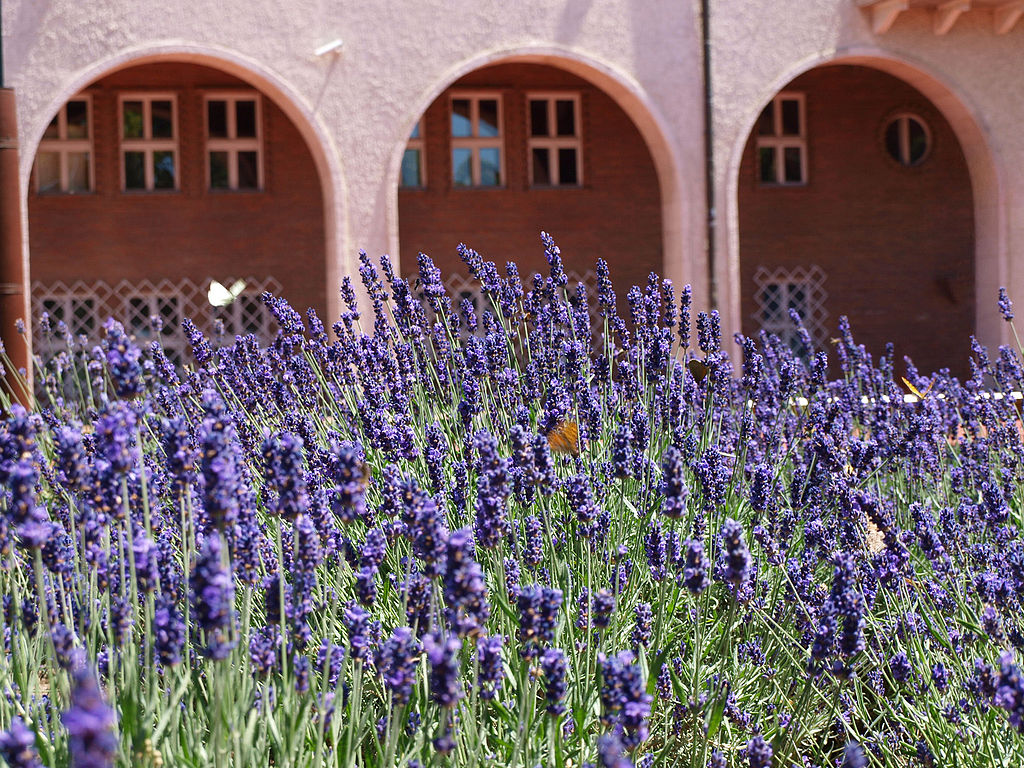
lavendula in Hungary


Hyptis_emoryi_flowers_001


Native Seri use a tea of desert lavender (Hyptis emoryi) to help treat a cold. The Franciscans (who came to the area well after Padre Kino) were known to have harvested and used the leaves and flowers in the sick room, to soothe the ill with the fragrance and to bathe fevered foreheads.

Harvesting and Use.
Harvest stalks of desert lavender as the lower-most flowers open. This gives you buds with optimum fragrance. Dry these, like all herbs, out of direct sunlight. I have used desert lavender in all the same external applications European lavender is used for with no observed ill effects. Here are three ways you can use desert lavender.


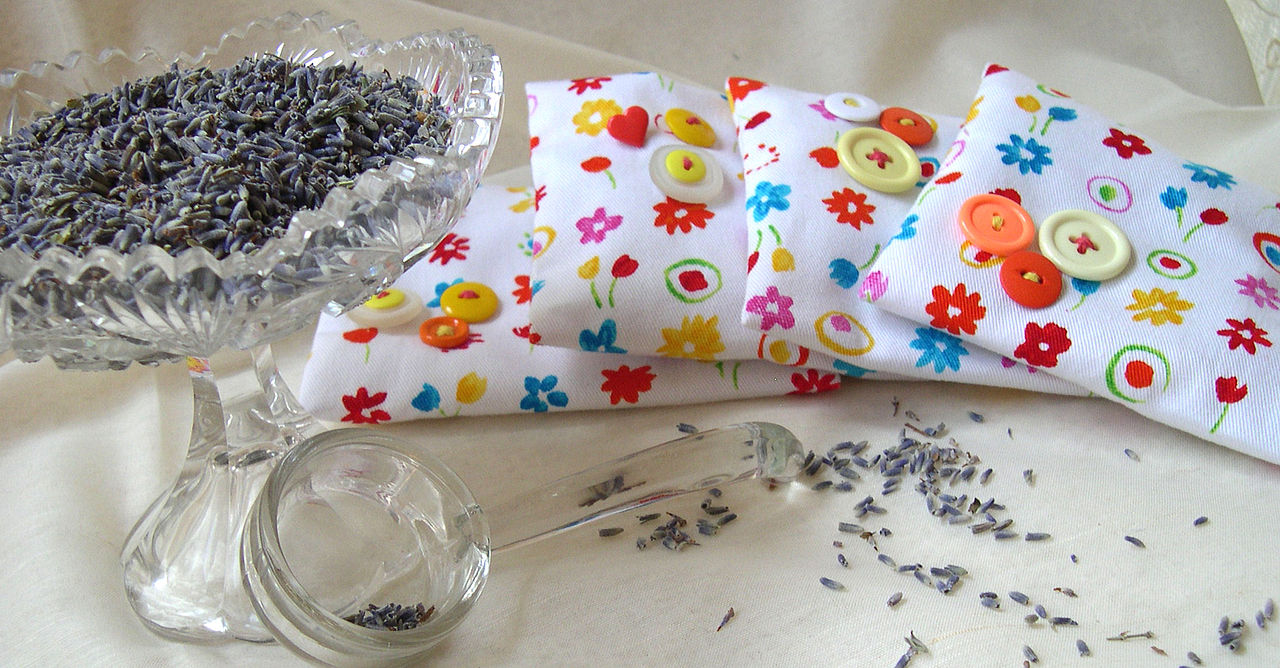
Herbal sachets can be made with desert lavender.

Lavender_Sachets


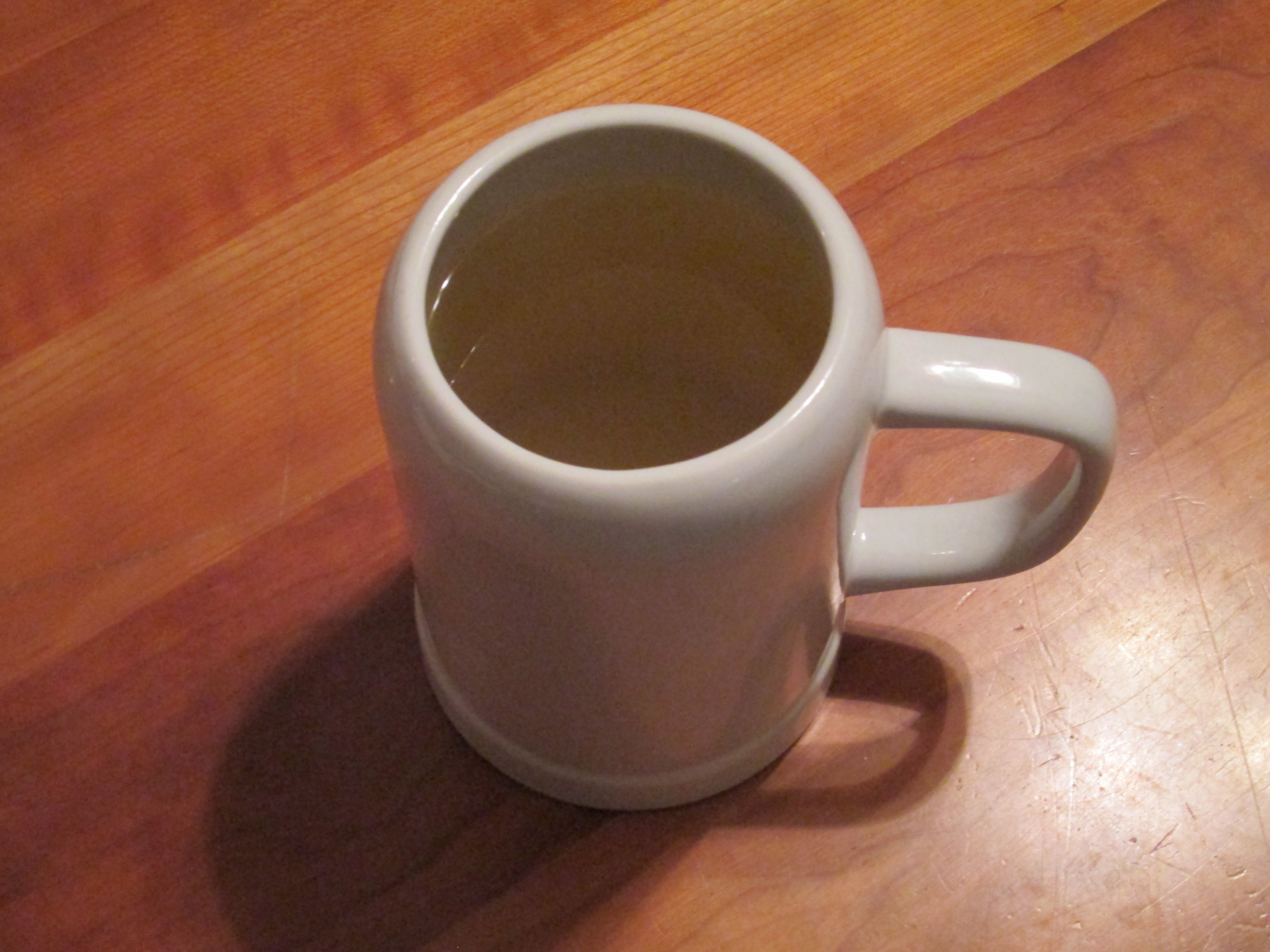
Herbal Tisane
“Tisane” is the general term for a herbal tea not consumed as a medicinal tea.
1 tablespoons dried herbs or 2 tablespoons fresh herbs
1 cup boiling water
Pour boiling water over the herbs and steep for 3 to 5 minutes. Strain. Sweeten to taste. Serve warm or chilled. Serves 1.

herb_tea_JAS_004


Floral Water
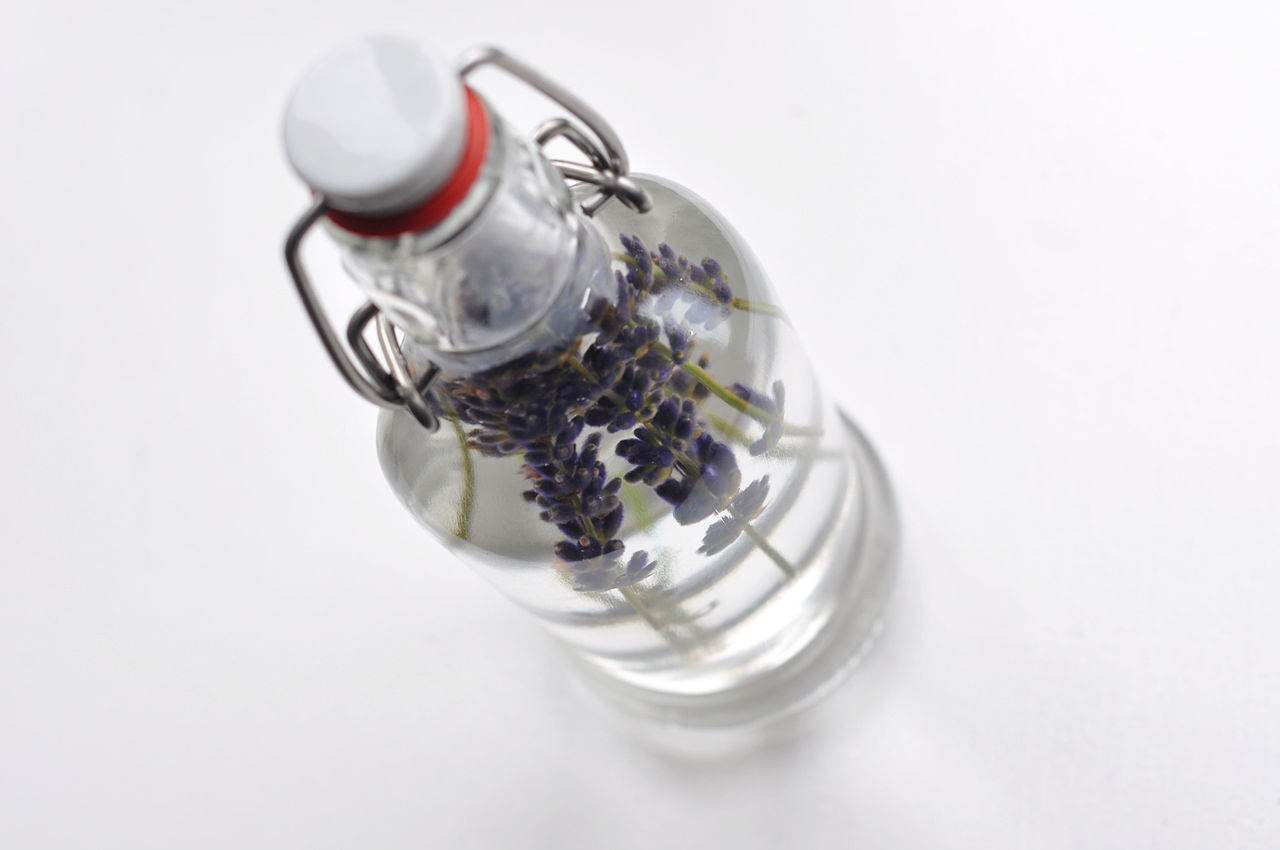
In the Victorian age, floral waters became popular. Floral waters are made by steeping leaves and flowers in water until it becomes fragrant. The water can then be used in tea, pudding, cake, and pastries. There are a number of commercially available floral waters, such as rose water and orange water (made with orange blossoms).

Lavendula in vodkaelsnaps_(4917058844).jp


Herb Syrup
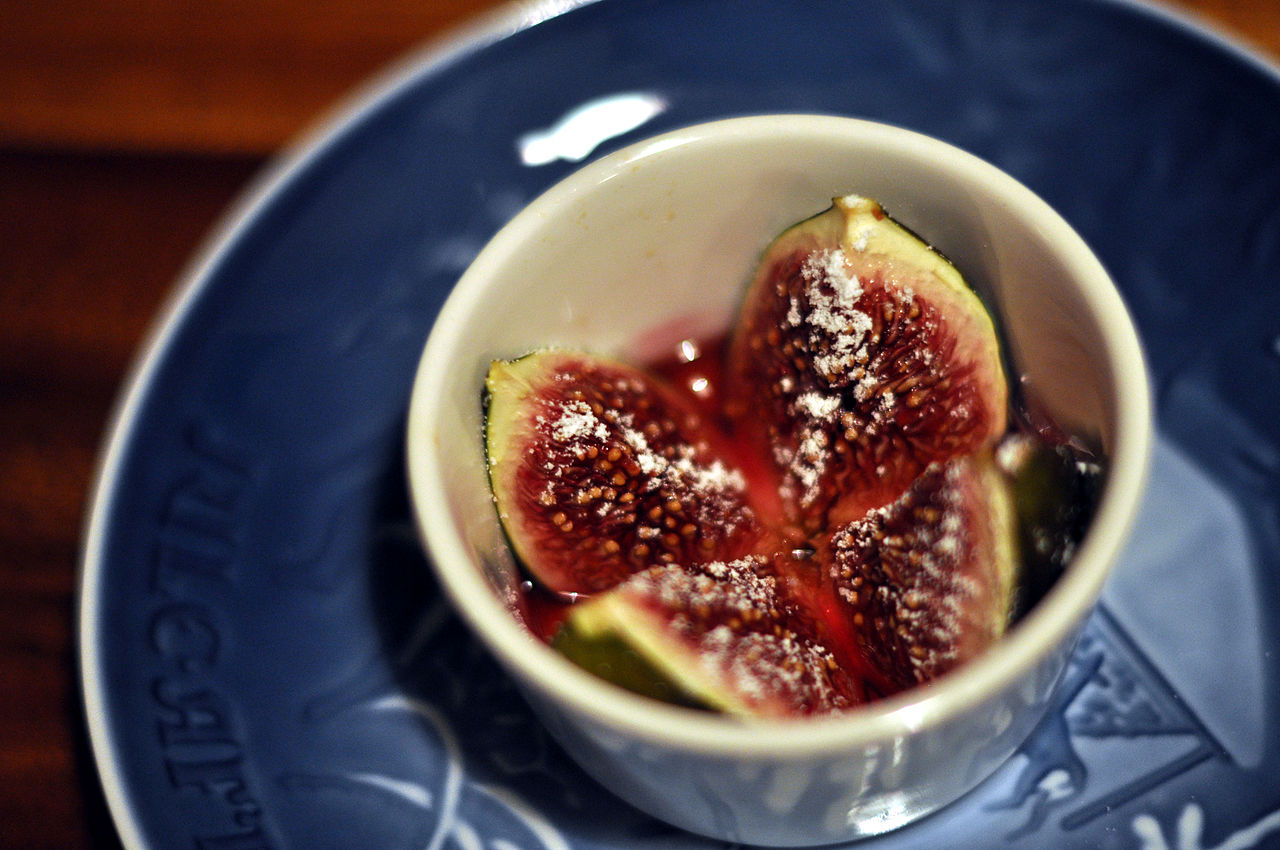
One of the more famous herb syrups is the mint syrup used in making mint juleps. But herb syrups can be used in many other ways, like topping cakes, ice cream, fruit, pancakes, waffles, or as a base in preparing other foods, like sorbet. In general herb syrups can be used to sweeten anything, including tea. Some herb syrups are used medicinally, like elderberry syrup. Desert lavender syrup makes a nice topping over poached pears, fresh figs or perhaps canned fruit for a quick yet elegant dessert.

1 cup water
3 cups sugar
1 cup chopped fresh herbs
or 1/2 cup crumbled dry herbs

Boil all ingredients together for 10 minutes, or until thickened into a syrup. Strain into a clean glass jar. Store in refrigerator for up to two weeks or preserve by canning.

lavendula syrup over figs


Planting and Care of this Sonoran native will be covered on August 17 in my blog on the Native Plants and Wildlife Gardens site.  The Sonoran butterflies that appreciate this shrub will be discussed in my blog on Beautiful  Wildlife Gardens site on August 5.  I will return to this site to post the links, or follow you can the thread on my Facebook page, Gardening With Soule.

Note:   This topic is covered more extensively in my book “Father Kino’s Herbs: Growing and Using Them Today” (2011, Tierra del Sol Press, $15).  If you live in Tucson, I hope you will consider purchasing a copy locally at Antigone Books, Arizona Experience Store, Magic Garden, Mostly Books, or Rillito Nursery.


© 2014, Jacqueline Soule.  All rights reserved. I have received many requests to reprint my work. My policy is that you are free to use a very short excerpt which must give proper credit to the author, and must include a link back to the original post on our site. Please use the contact me if you have any questions. JAS avatar
Limoncillo

Savor Sister Jacqueline Soule posting today.

Chinchweed or limoncillo is known to scientists as Pectis papposa, a member of the Compositae family, now called the Asteraceae, and arguably the largest plant family out there.  If you aren’t “into” the Compositae, it is generally considered just another one of those DYC’s (Dratted Yellow Compositae).  (Well, we scientists don’t say “dratted” but we don’t want the parental controls to censor this blog.)

Pectis_papposa_flowers

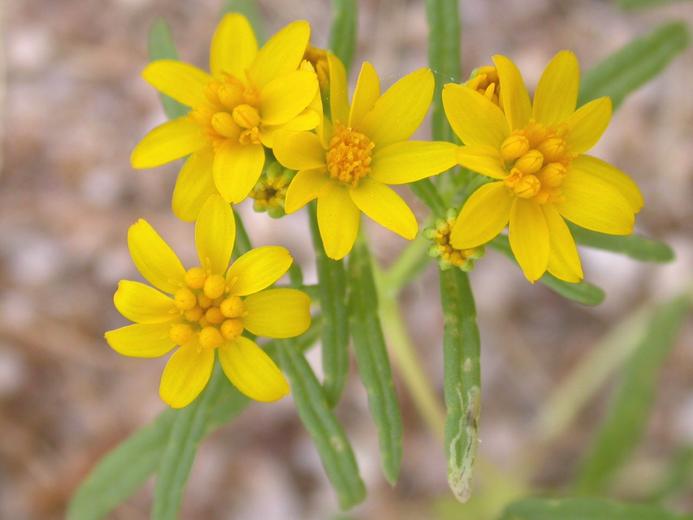
Pectis papposa is just a “DYC” to some, but it can be so much more!

This sprightly summer blooming annual is found across the desert Southwest from New Mexico to California and northern Mexico (in the Sonoran and Chihuahuan Deserts) at elevations below 6000 feet.  With surprising promptness after the first summer rain, the desert floor is carpeted with the small yet bright yellow flowers – DYC’s.


Pectis_papposa_field

A carpet of Pectis papposa. Too lovely to trod upon!


Hopi, Zuni, and Havasupai all use the chinchweed plant as a condiment, especially to flavor meat.  There are also references to its use as a fresh green and potherb.  In Mexican markets, bundles of fresh or dried plants are sold as limoncillo and used as a culinary spice, generally to flavor meat. There are also references to its use as a dye plant.

Pectis_papposa_leaves

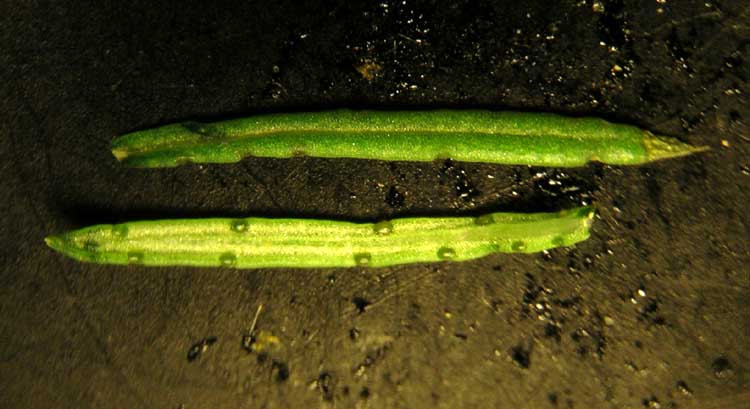
The leaves of limoncillo are dotted with a number of glands filled with flavorful oils.

Planting and Care.
Sow seeds of this charming summer annual anywhere in your yard you wish them.  Plants look especially lovely in a cactus garden, and appear to prefer well drained soil.  Since chinchweed is a summer annual, sow in the warmer months, from April onward.  Ideally have the seeds in the soil prior to the first monsoon rain, generally around San Juan’s Day or summer solstice.   This may be tough as seeds are generally not available in seed catalogs.  You may have to wild collect some of the herb this year, and while you are at it, collect seeds for your own next year.  Once you have some limoncillo your yard it seems to cheerfully find new places to tuck itself, including in areas of reflected light, which is often a tough site for plants to thrive in.


Pectis_papposa_habit

These tiny plants will find their way into unexplored corners of you yard. A weed only by common name, the seed is excellent food for native birds.


Harvesting and Use.
As a culinary spice, chinchweed may be used fresh or dried.  Simply chop up the fresh material or crumble the dried and sprinkle on meat.  If you like lemony chicken, then limoncillo is a great local herb to use!  Fresh cinchweed greens add a nice zing to stir fry, but I have not tried them cooked alone as a potherb (yet).  This will be part of my New Years resolution to grow and use all of the native plants in my Father Kino’s Herbs book (More on this at 30 minutes in on America’s Web Radio –  http://www.americaswebradio.com/podcasts/VeggieHourJan18.2014.mp3).  For dye, pluck the flower heads off and use them fresh or dried.  I could not find if there was a specific mordant.

Pectis_papposa_var_papposa_5_SS

Harvest the flower heads for dye and the leaves together with the flowers for culinary use.

Now I have thought of a new way to think of this DYC – it’s a Delightfully Yummy Compositae!  And I hope you will consider some for your yard.

Pectis_papposa_003

DYC stands for Delightfully Yummy Composite with Darling Yellow Crowns!

 [For another species of DYC flowering now, and some of its uses, please visit my blog on Native Plants & Wildlife Gardens – http://nativeplantwildlifegarden.com/brittle-bush-in-bloom/]

The information presented here is a sample of what appears in my book Father Kino’s Herbs, Growing and Using Them Today (Tierra del Sol Press, 2011).  Available through amazon.com.  Free public lectures on growing and using our wonderful native plants, at a number of branches of the Pima County Library.

Photos copyright free and courtesy of Wikimedia except where noted.  Article © 2014, Jacqueline Soule.  All rights reserved. I have received many requests to reprint my work. My policy is that you are free to use a very short excerpt which must give proper credit to the author, and must include a link back to the original post on our site. My photos may not be used.  Please use the contact me if you have any questions. JAS avatar