Cool Summer Bean Dishes….with Heirlooms

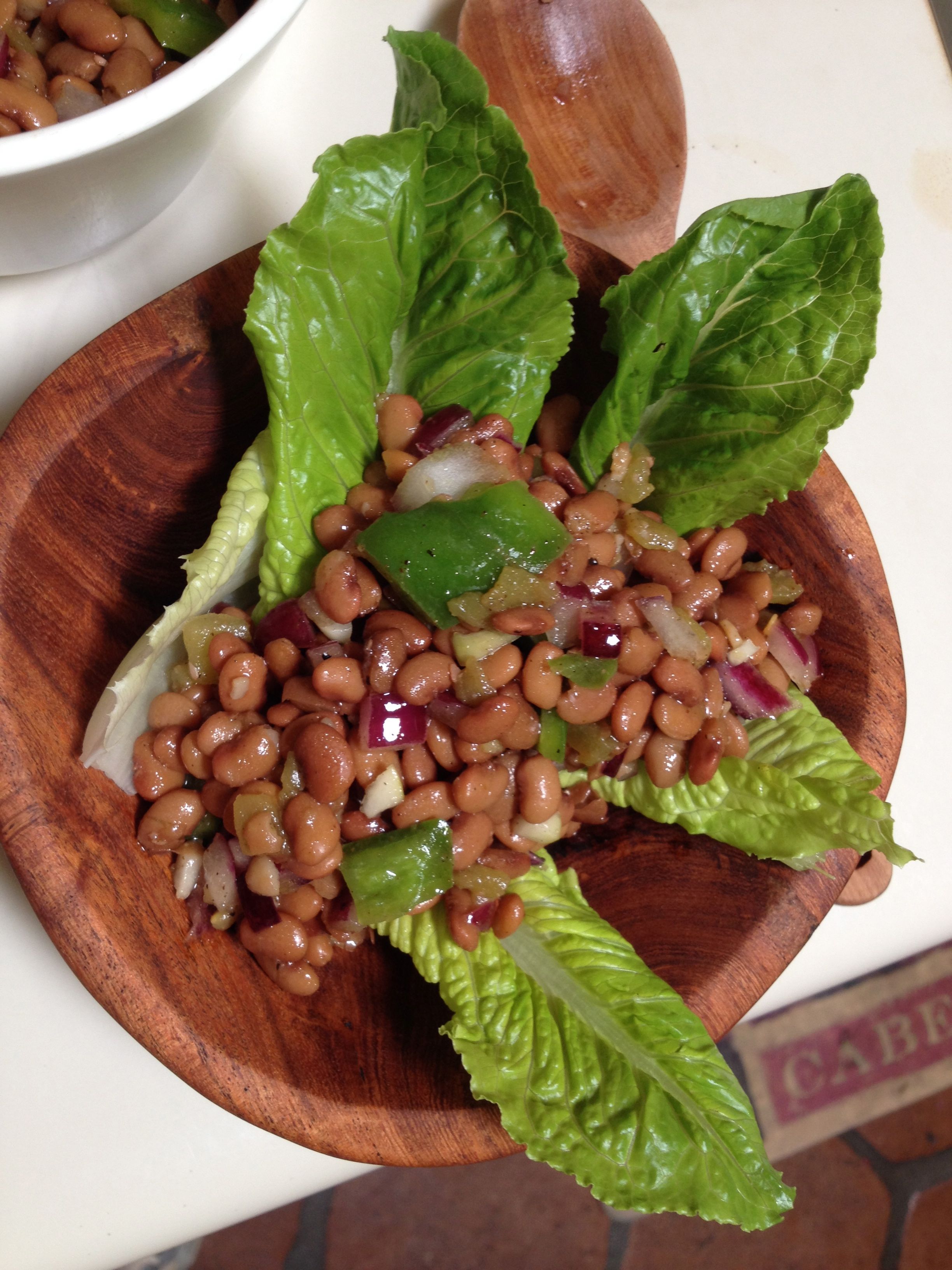
Sonoran Caviar in Mayo mesquite bowl (MABurgess photo)

Sonoran Caviar in Mayo mesquite bowl (MABurgess photo)

For picnics, barbeques or simple pick-me-ups, here are some fun ideas to bring a variety of heirloom beans into your summer fare.  We usually think of beans as winter food, but in the heat of August these tasty bean treats will help chill you out with gusto.

Tia Marta here to share ways of bringing the original “fast food” into your summertime menus.  Fast–that is, cook ’em first and have them “at the ready” for dressing them to suit any mood or occasion.  I am a founding member of the Heirloom Bean Fan Club, always amazed by the array of bean possibilities we have in the Southwest available to us.  Here in Baja Arizona we are blessed with inherited gifts of delectable, nutritious, desert-adapted beans from Native farmers, traditional Hispanic families, Black, Chinese, Anglo and other newcomers.  They grow well in our backyard gardens, bedecking our tables with colorful goodness.

All American sun oven set up on patio table-available thru Flor de Mayo (MABurgess photo)

All American sun oven set up on patio table-available thru Flor de Mayo (MABurgess photo)

When the summer sun fully hits our porch about 10am, out comes our sun-oven to help us pull the heat of preparation out of the kitchen.  Unfolding its reflector “wings,” I place a saucepan of pre-soaked Native tepary beans–the ones the Tohono O’odham call s-wepegi ba:wi or red tepary–covered by plenty of drinking water, nothing else necessary.  About every half hour or hour (you don’t have to be too regimented if you don’t feel like it), I go out and re-adjust the orientation of the sun-oven, vertically and horizontally, to keep it as close to perpendicular to the sun as possible.  The teps will be smelling good and testing done about 2pm if the sky has remained relatively bright.
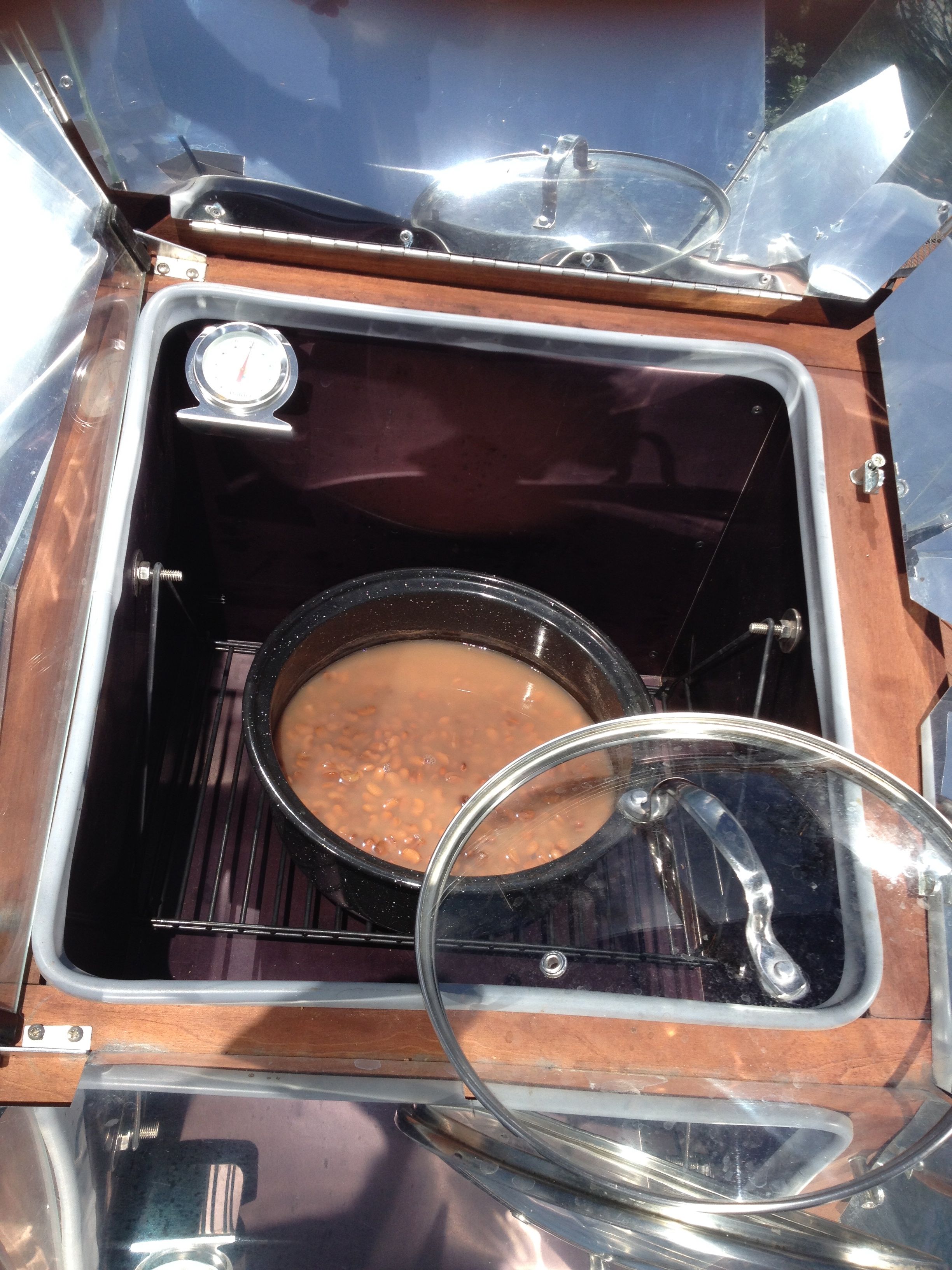
Tepary beans, done by 2pm in solar oven, temp 300 (MABurgess photo)

Tepary beans, done by 2pm in solar oven, temp 300 (MABurgess photo)

Now, with my well-cooked teparies, if I’m not ready for kitchen cookery action I let them cool down then store them labeled in the frig or freezer.  If I am in cook mode, I drain them, reserving the liquid for soup, and let them cool while I chop veggies.  My plan–“Sonoran Caviar”–the best salad ever invented for desert rats in need of a pinch of picante.  This is the culinary creation of desert survival instructor, raconteur, and one-of-a-kind character George Price, and my thanks go to him for bringing even more excitement out of teparies!  Give it a try.
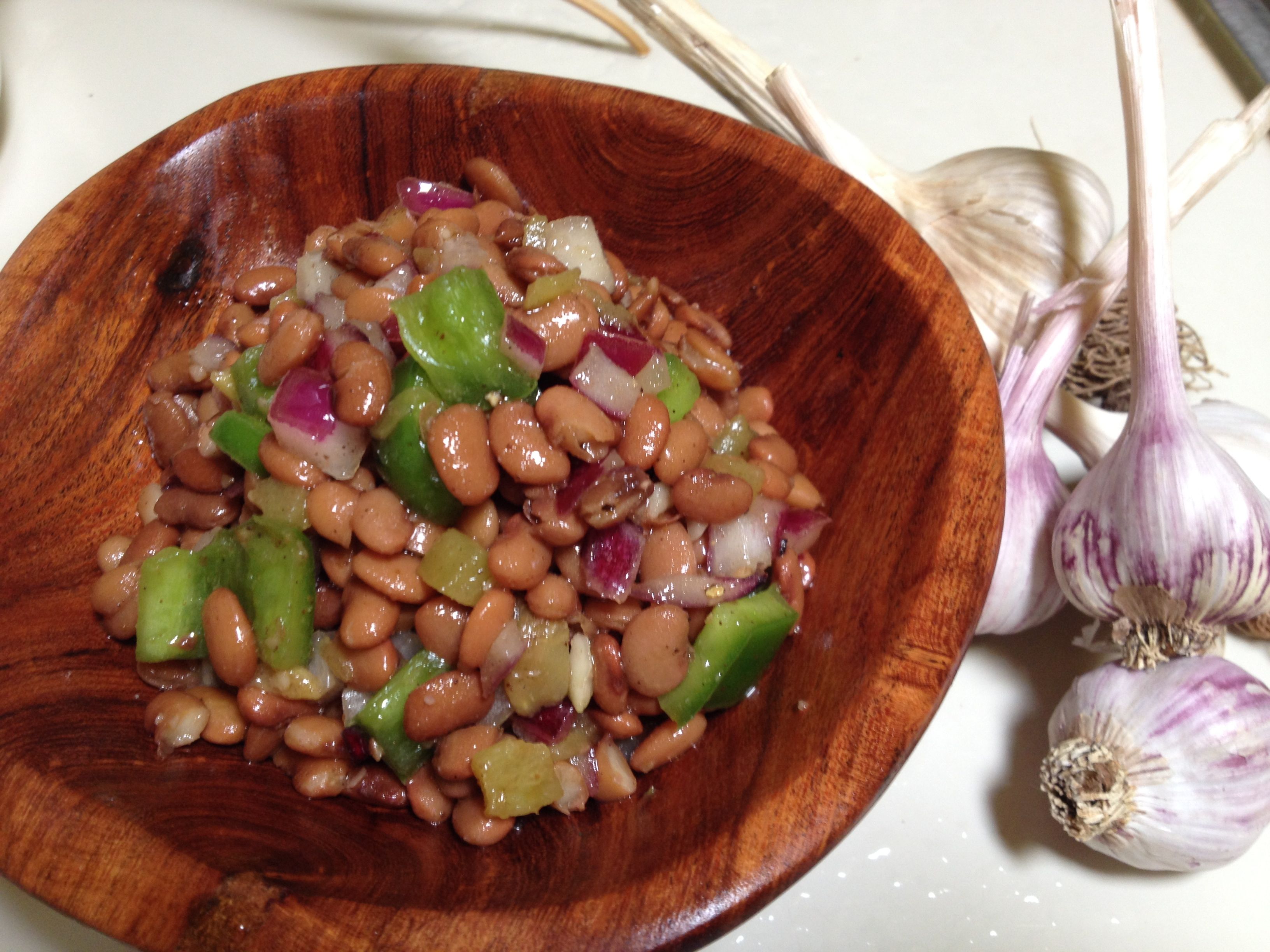
George's Sonoran Caviar--teparies with NSS heirloom garlic (both available at St Phillips Sunday farmers market)

George’s Sonoran Caviar–teparies with NSS heirloom garlic (both available at St Phillips Sunday farmers market)

Sonoran Caviar recipe:

Ingredients:

4 cups cooked brown tepary beans, drained and cooled (from less than 1 lb dry beans)

1 cup diced red onion

1 red bell pepper, diced

2 crisp Anaheim Chiles, diced, skinned, and de-seeded

1 Tbsp crushed garlic

1 Tbsp Tony Chacere’s Original Creole Seasoning (to taste)

1/3 cup olive oil

1/3 cup red wine vinegar

1 tsp black pepper ground

Mix all ingredients thoroughly in a large bowl.  Chill in refrigerator for 24 hours, stirring occasionally.  Stir again before serving.  Buen provecho, George (Be advised that this one serves 6 hungry folks including teenage boys.)

[His Sonoran Caviar will get rave reviews at any pot luck or picnic.]
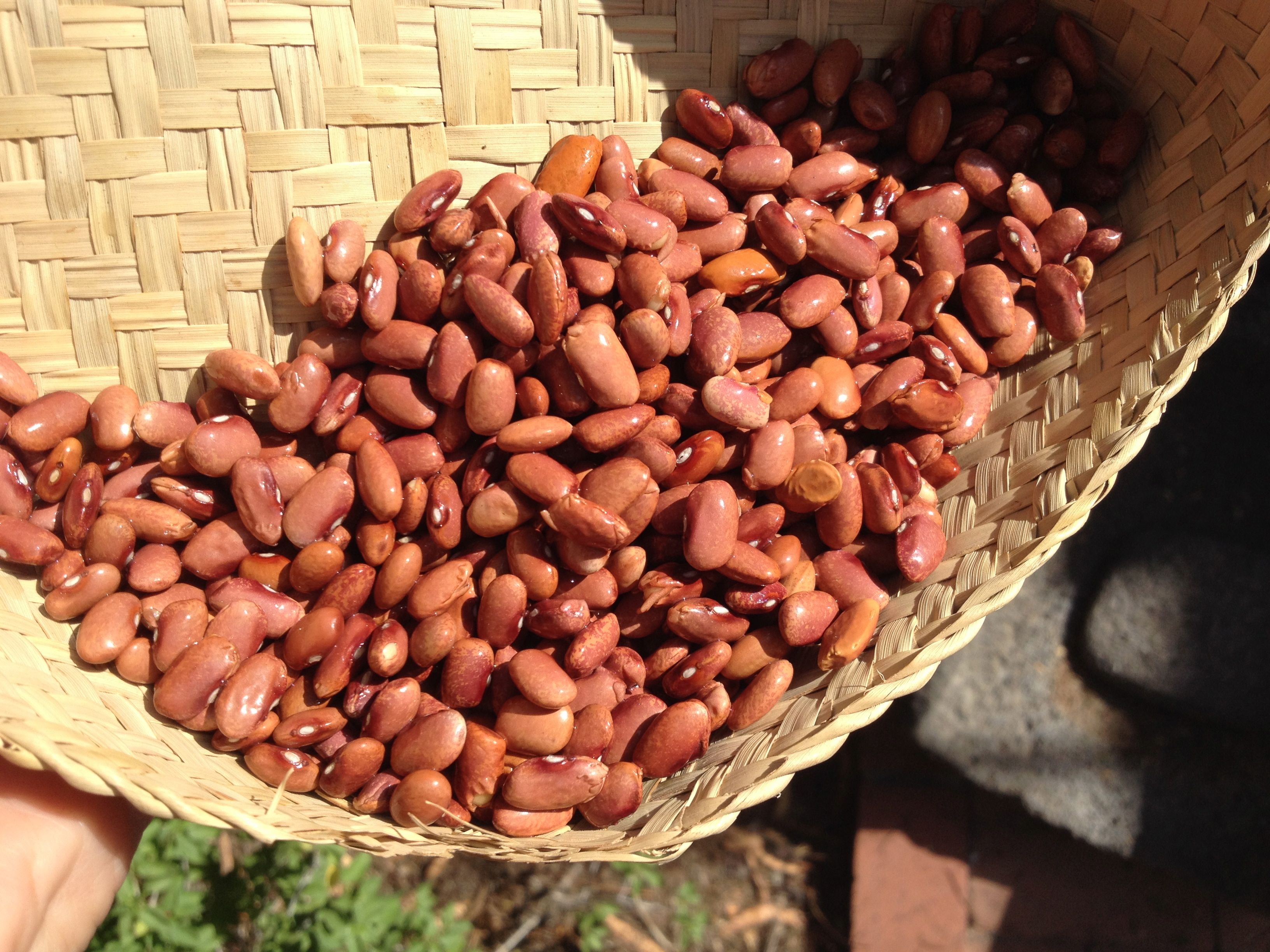
Flor de Mayo beans in Mayo palm basket (beans and baskets from Sunday St Phillips market)

Flor de Mayo beans in Mayo palm basket (beans and baskets from Sunday St Phillips market)

In the realm of cool summer dishes, I can always count on Heirloom Flor de Mayo Mixed Bean Salad (my namesake!).  When I was in college, Mother sent me a little book by Barbara Goodfellow, Make it Now Bake it Later from the ’60s.  It has inspired my hostessing ever since, especially my adaptation for this sweet recipe which delights in everything from your garden:
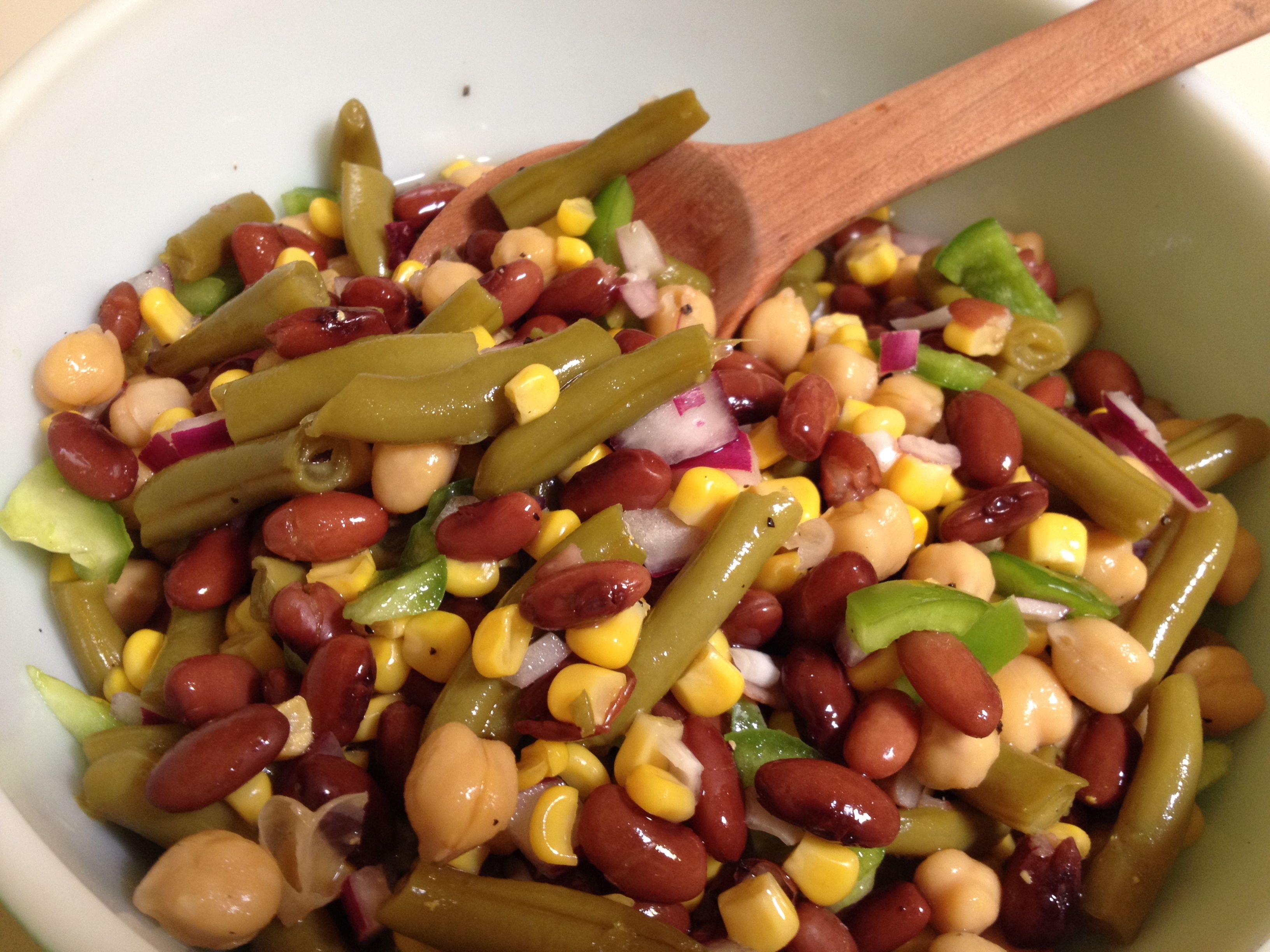
Marinated Mixed Bean Salad with Flor de Mayo heirlooms (MABurgess photo)

Marinated Mixed Bean Salad with Flor de Mayo heirlooms (MABurgess photo)

Heirloom Flor de Mayo Mixed Bean Salad Recipe:

(Fool-proof for picnics and barbeques–and it keeps well for days in the frig)

1 cup (or more) cooked heirloom Flor de Mayo beans for bright color (or another SW heirloom such as Ojo de Cabra, Rio Zape, Bolita, Cannellini–all taste wonderful in this marinated salad)

1 cup cooked green beans or snap beans from your garden (or organic canned)

1 cup cooked garbanzo beans (organic canned garbanzos/chickpeas) from your winter garden

1 cup cooked GMO-free corn kernels (off the cob or canned)

1/2 cup chopped green pepper

1 Tbsp chopped shallots, chives,  sweet onion, or I’itoi’s onion from the garden

1/2 cup organic sugar or agave nectar

1 cup organic cider vinegar

1/2 cup extra virgin olive oil

1 tsp sea salt

Drain cooked beans.  In mixing bowl dissolve sweetener and spices in liquid.  Add beans, chopped green pepper and onion, then mix.  Let stand in refrigerator overnight, mix again.  When serving, reserve liquid for other marinades.  Serves 6 generously.
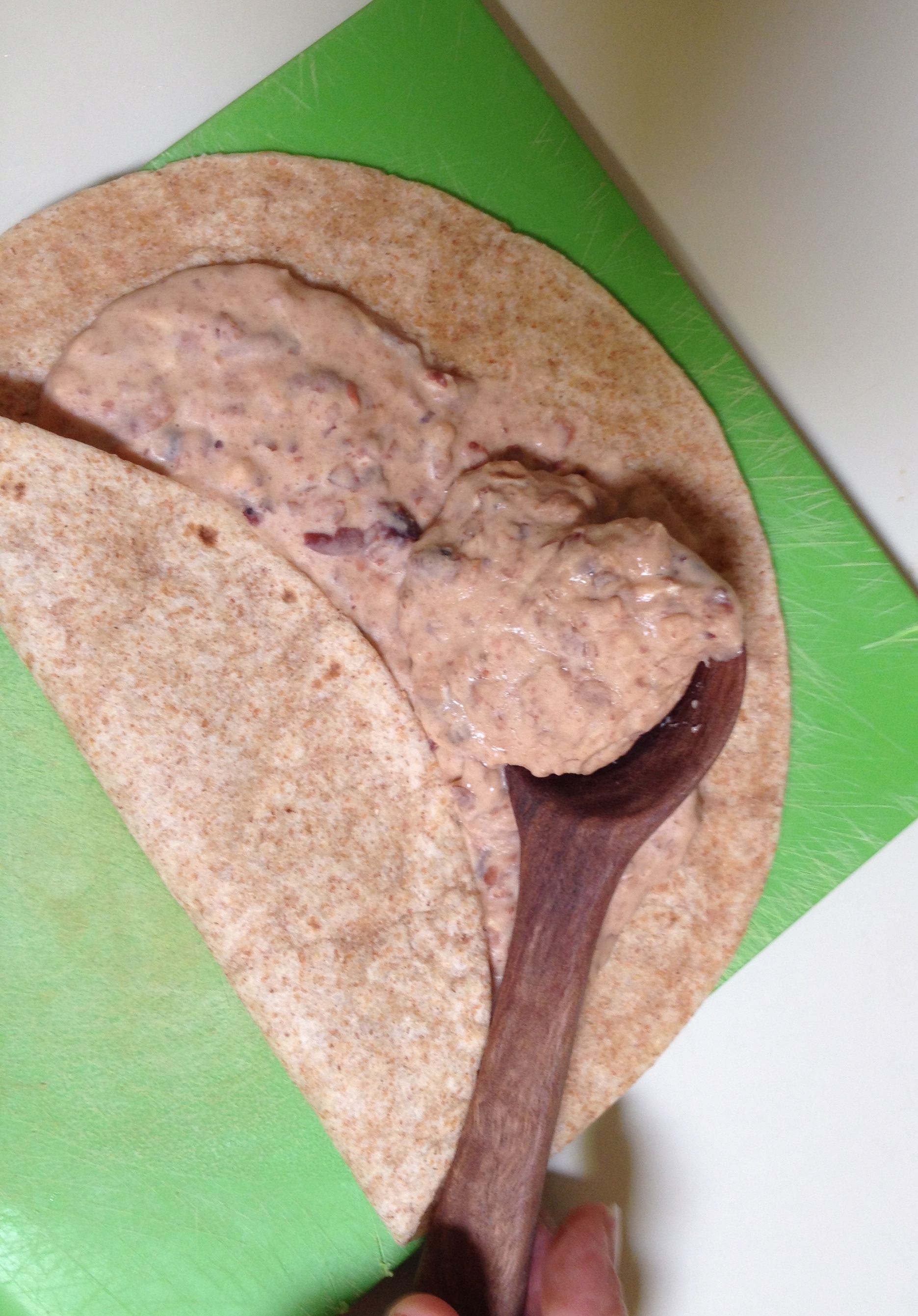
Mortgage Lifter burrito in whole wheat tortilla--first step for making heirloom bean roll-up appetizers

Anasazi Bean burrito in whole wheat tortilla–preliminary for making heirloom bean roll-up appetizers

Another fun way to get your complex carbs and vegetable protein is to make heirloom bean dips– then to get fancier using the dip, the next step is Easy Heirloom Bean Roll-ups.  For the fastest, most crowd-pleasing bean-spread, I use either Mortgage Lifter beans or Anasazi beans–both great.  Mortgage Lifter is a giant white runner bean, also known as Aztec white runner or Bordal.  Grown in your garden, it will vine over itself and its neighbor plants with big white flowers that attract hummingbirds.

Easy Heirloom Bean Roll-up Appetizers Recipe:

Ingredients:

2 cups cooked Mortgage Lifter beans, or purple & white Anasazi beans

4 oz low-fat cream cheese (1/2 block of neuchatel)

1 Tbsp Red Devil hot sauce

1 tsp ground cumin seed

pinches of sea salt, to taste

3 or 4 medium whole wheat tortillas

Drain cooked beans (reserving liquid if you need to make a thinner texture after mashing).  Mash beans and cream cheese together with pastry cutter or bean masher.  Mash in all other ingredients. [You can sometimes find traditional Tarahumara madrone-wood bean mashers at NativeSeeds/SEARCH or at Flor de Mayo.]  At this point you have the best dip ever, and also the filling for instant burritos ready to feed to drop-in visitors.  Read on for further Roll-up directions…..
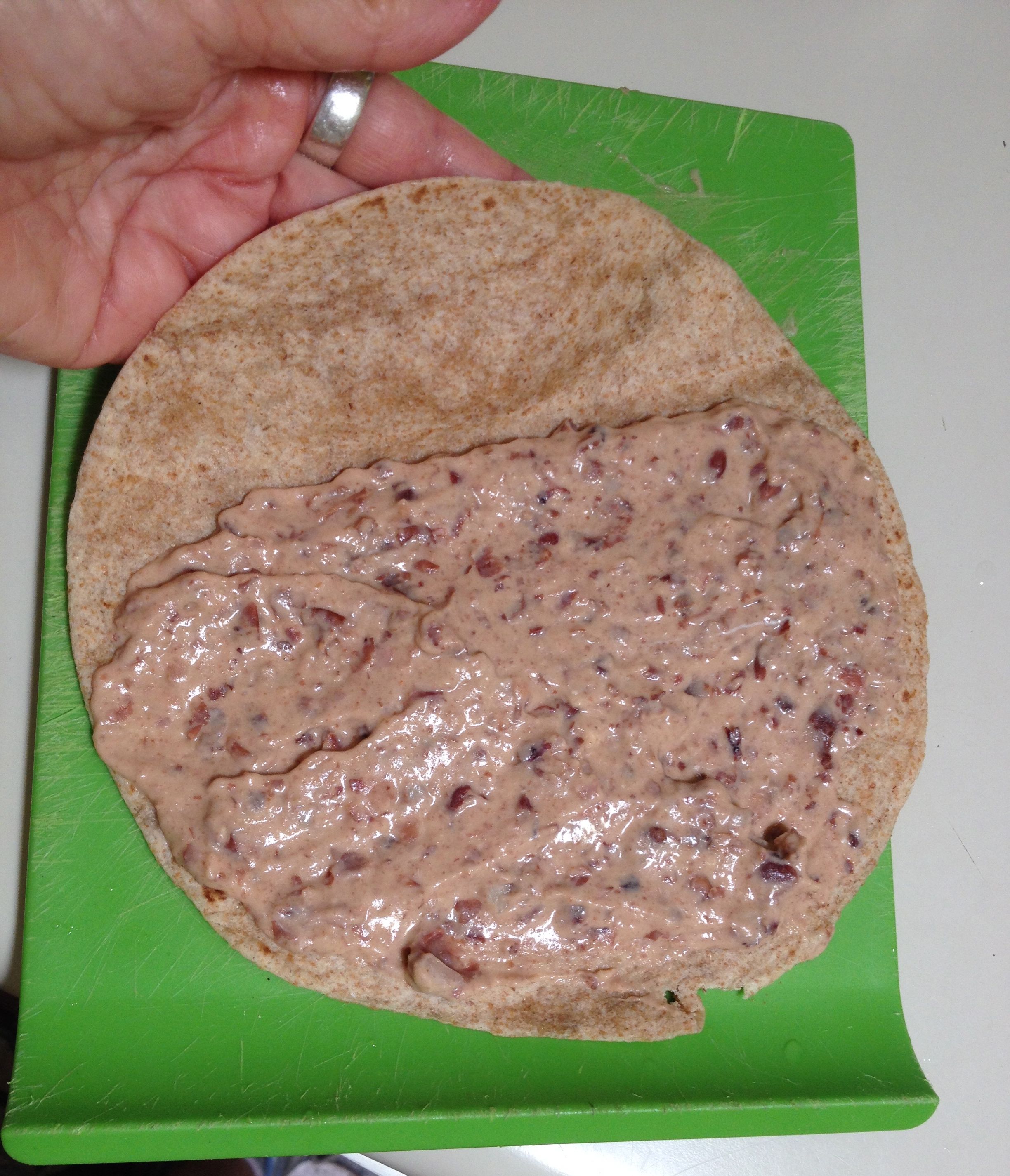
Heirloom bean "roll-ups" Step 1--with Anasazi beans

Heirloom bean “roll-ups” Step 1–with Anasazi beans
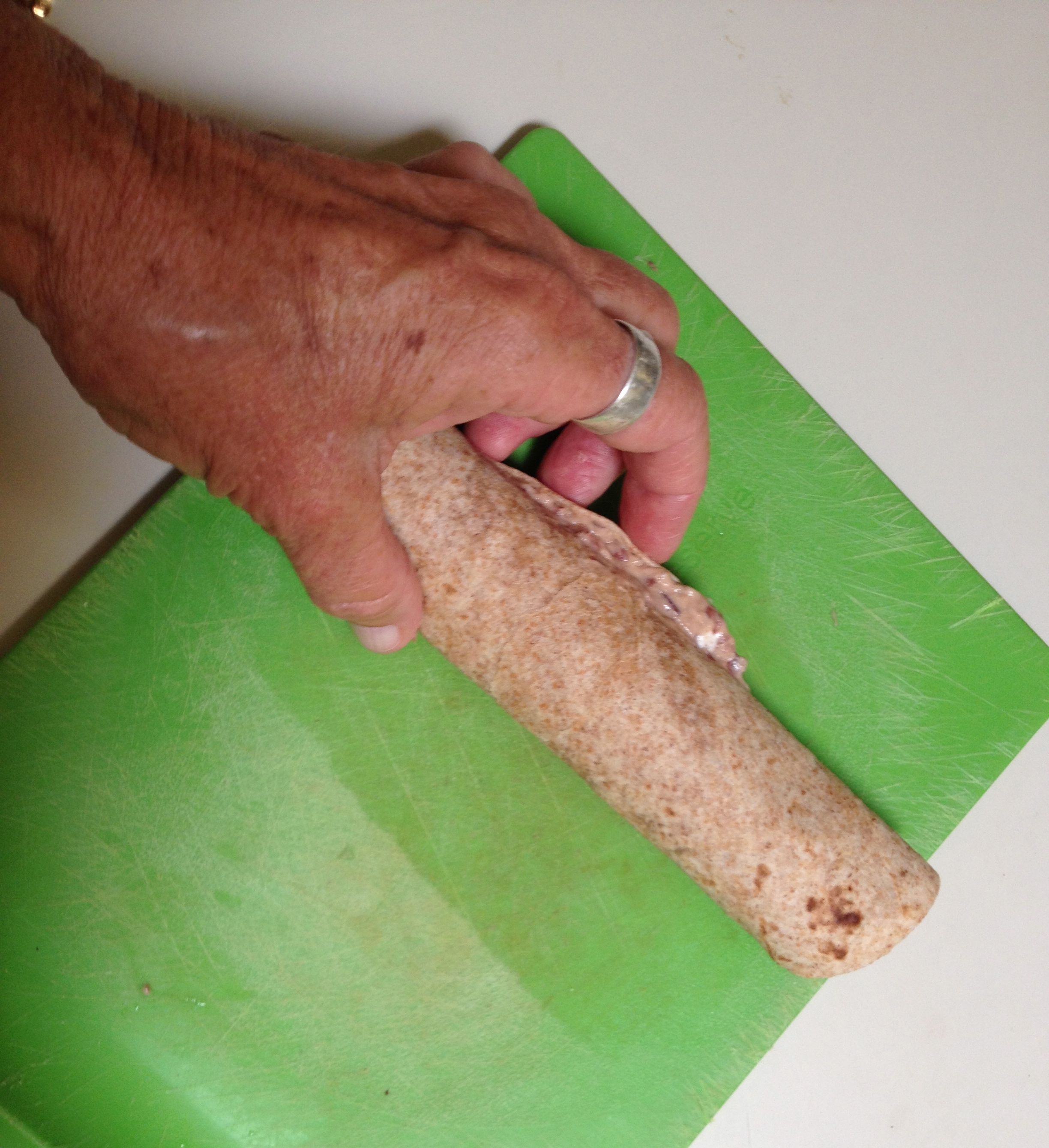
Rolling up heirloom bean hors d'oeuvres--Step 2 before cutting

Rolling up heirloom bean hors d’oeuvres–Step 2 before cutting

To finish these festive heirloom bean appetizers…spread the bean mixture onto 3/4 of one tortilla leaving a chord of the circle uncovered.  You will see why when you roll it up.  Begin rolling the tortilla tightly from the bean-covered edge and continue to roll snugly.  The bean spread will squeeze toward the unrolled edge, filling it.  The rolled tortilla will be held together by the bean spread.  Repeat with remaining tortillas and dip.

Place tortilla rolls on wax paper and chill in freezer or frig long enough to become firm for cutting.  Place chilled rolled tortillas on cutting board one at a time.  Slice in 1/2-inch rounds and place the disc-shaped spirals on a serving tray.  Chill until served.  Bedeck each Heirloom Bean Roll-up with a sprinkle of paprika or a cilantro leaf.  Each tortilla should produce about 6-8 roll-ups.  (With any leftover bean mixture, enjoy it as dip or in a burrito.)  These appetizers are a tasty celebration–and a tacit bow to Southwestern farming traditions.
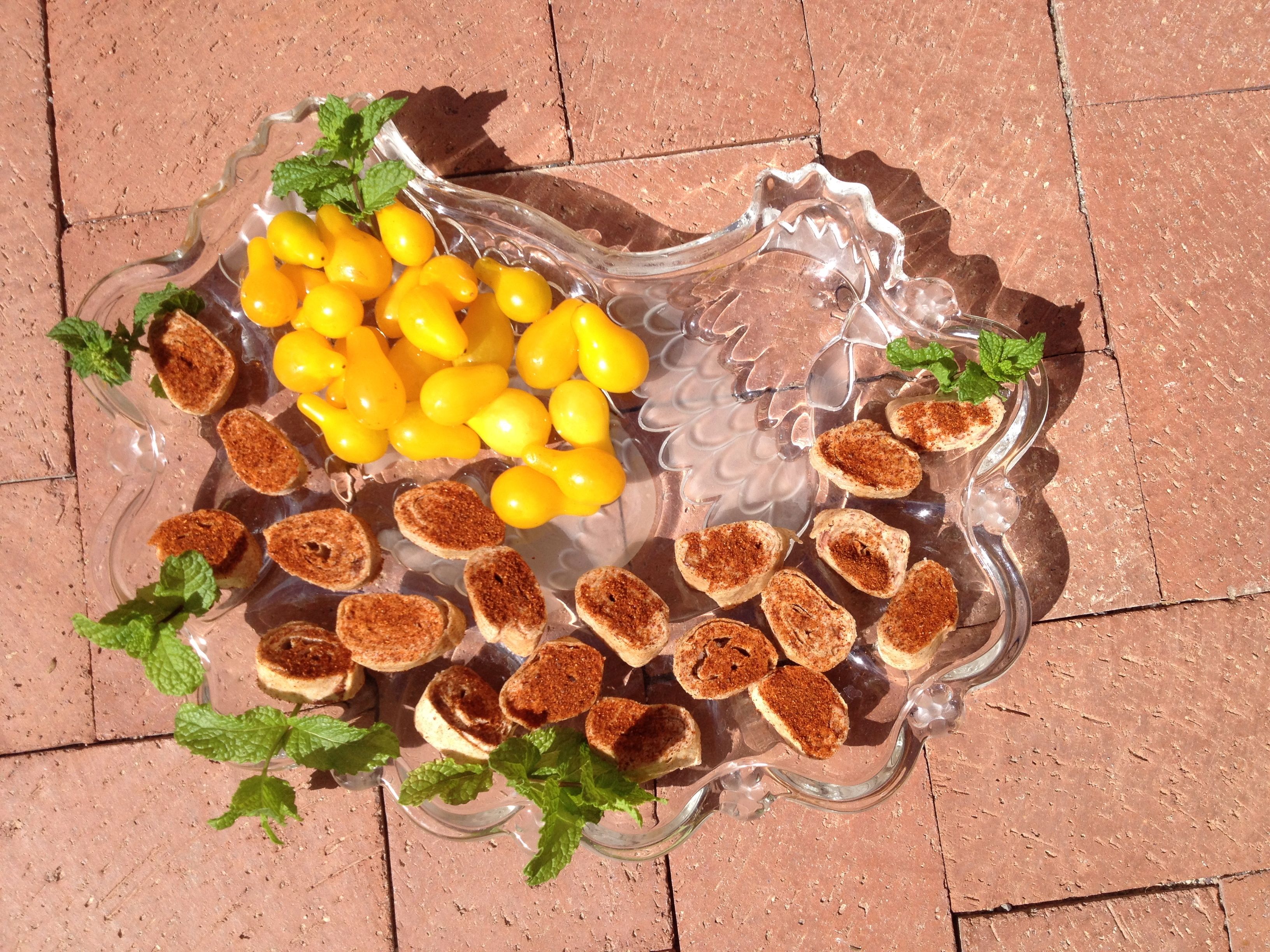
Heirloom Bean Roll-up Appetizers and yellow pear tomatoes in chicken hors d'oeuvre tray (MABurgess photo)

Heirloom Bean Roll-up Appetizers and yellow pear tomatoes in chicken hors d’oeuvre tray (MABurgess photo)

By the way, you can find all of the wonderful Southwest heirloom beans to use in these recipes either at the NativeSeeds/SEARCH store, 3061 N Campbell Ave, Tucson, or at our Flor de Mayo booth at the charming St Phillips farmers market on Sundays in the shade of spreading sycamores and mesquites.
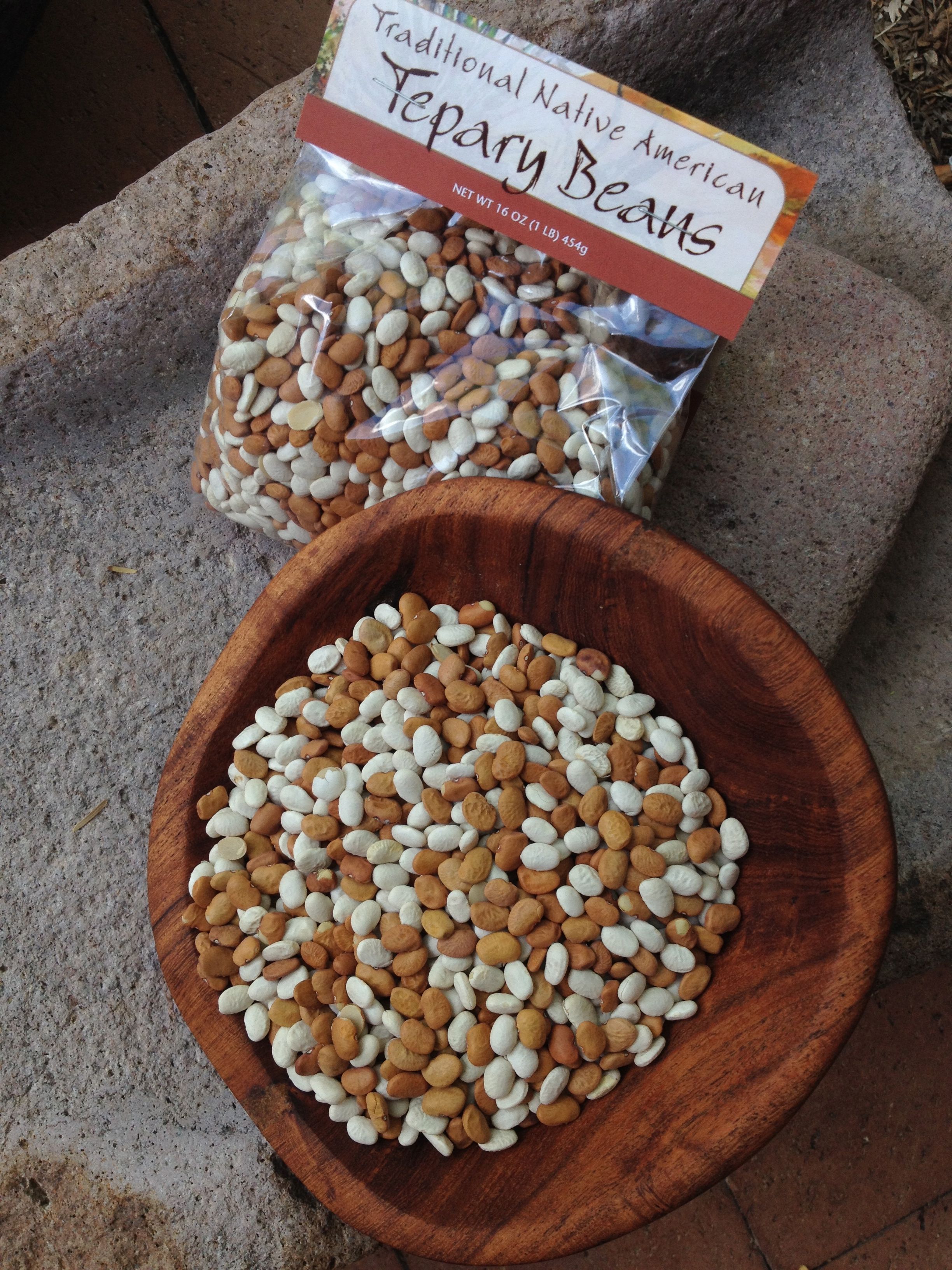
Traditional Native tepary beans--colorful mix available at Tohono Chul Park gift shop, NativeSeeds/SEARCH and Flor de Mayo booth at farmers market

Traditional Native tepary beans–colorful mix available at Tohono Chul Park gift shop, NativeSeeds/SEARCH and Flor de Mayo booth at farmers market

For the experienced or the novice desert gardener, now is the time to do the last planting in your monsoon garden.  One of my Tohono O’odham mentors taught me that the second week in August is really the last opportunity to put bean, corn, melon, or squash seed in the ground.  Even better to give your garden a jump-start by planting starts!  Right now at the NativeSeeds/SEARCH store you will find a variety of healthy seedlings hungry to be in the soil–and on sale.  Come give them a future–and a delectable future for your palette in the months to come….
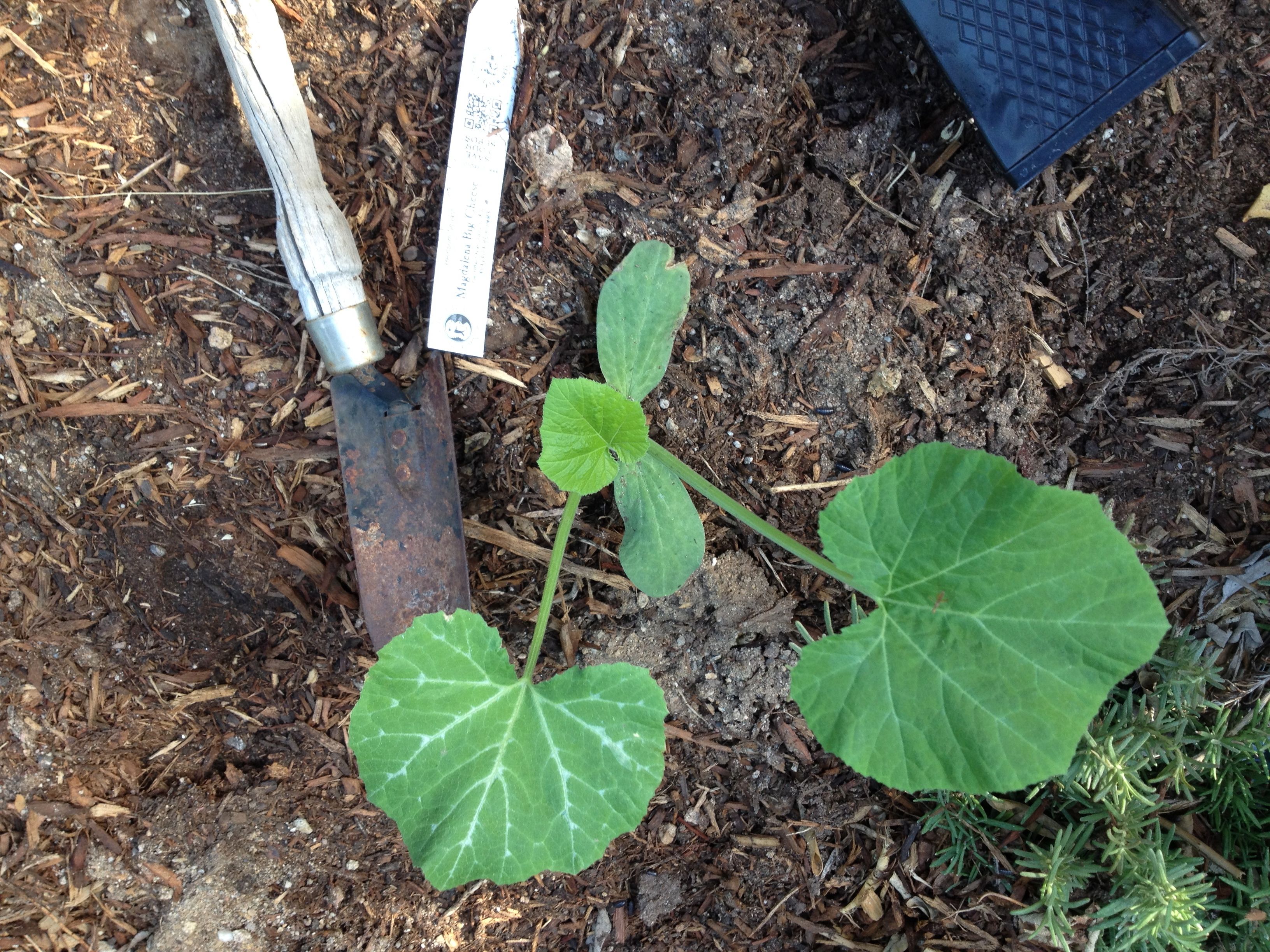
Happily planted--seedling Magdalena Big Cheese Squash seedling from NativeSeeds/SEARCH monsoon plant sale still on!

Happily planted–Magdalena Big Cheese Squash seedling from NativeSeeds/SEARCH monsoon plant sale (still going)

Happy gardening–and healthy eating to you from Tia Marta!
Where Monsoon Melons Reign….


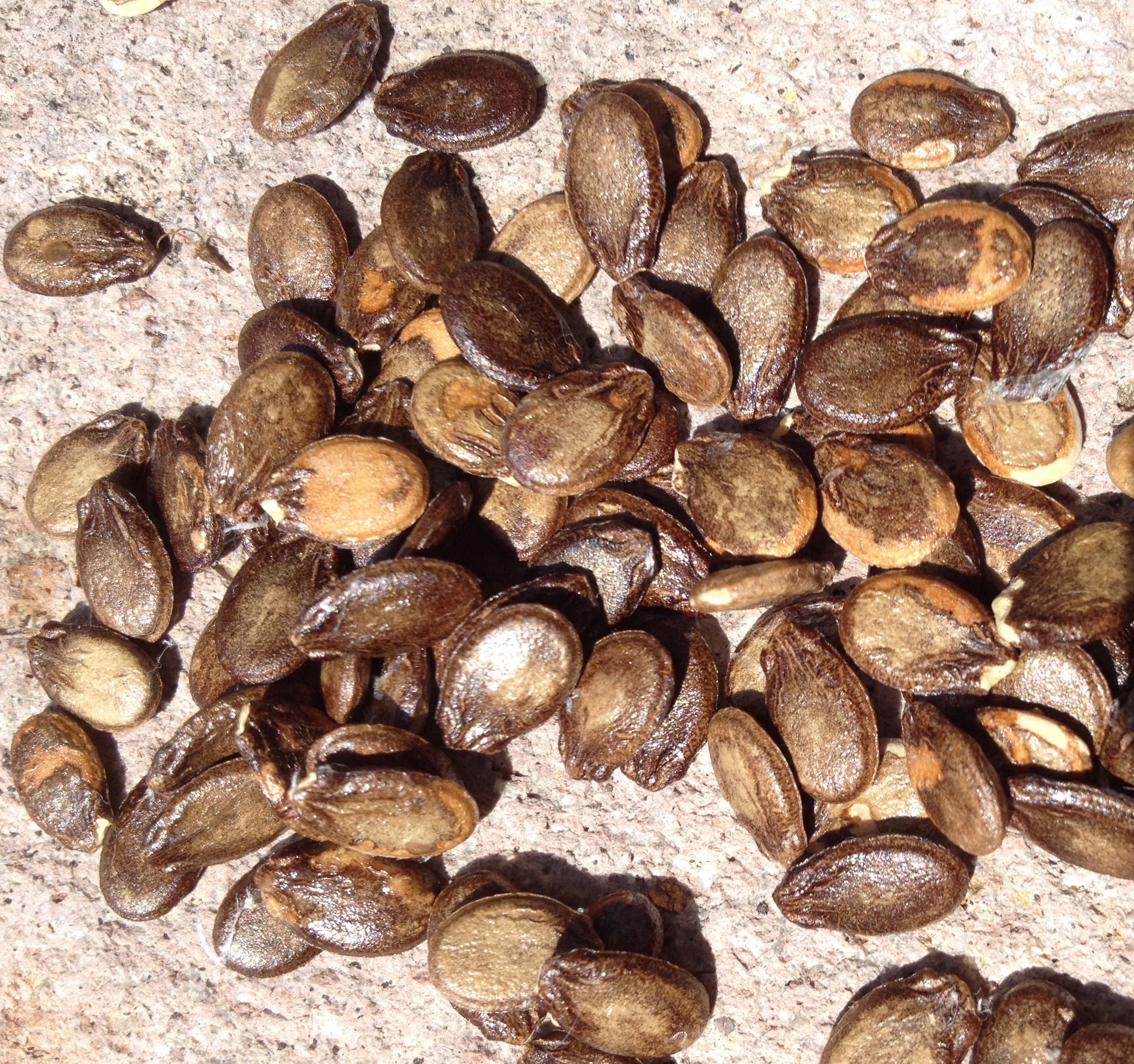
Native Mayo watermelon from the hot coastal plains of Sonora (seed from NativeSeeds/SEARCH)

Native Mayo watermelon from the hot coastal plains of Sonora (seed from NativeSeeds/SEARCH)

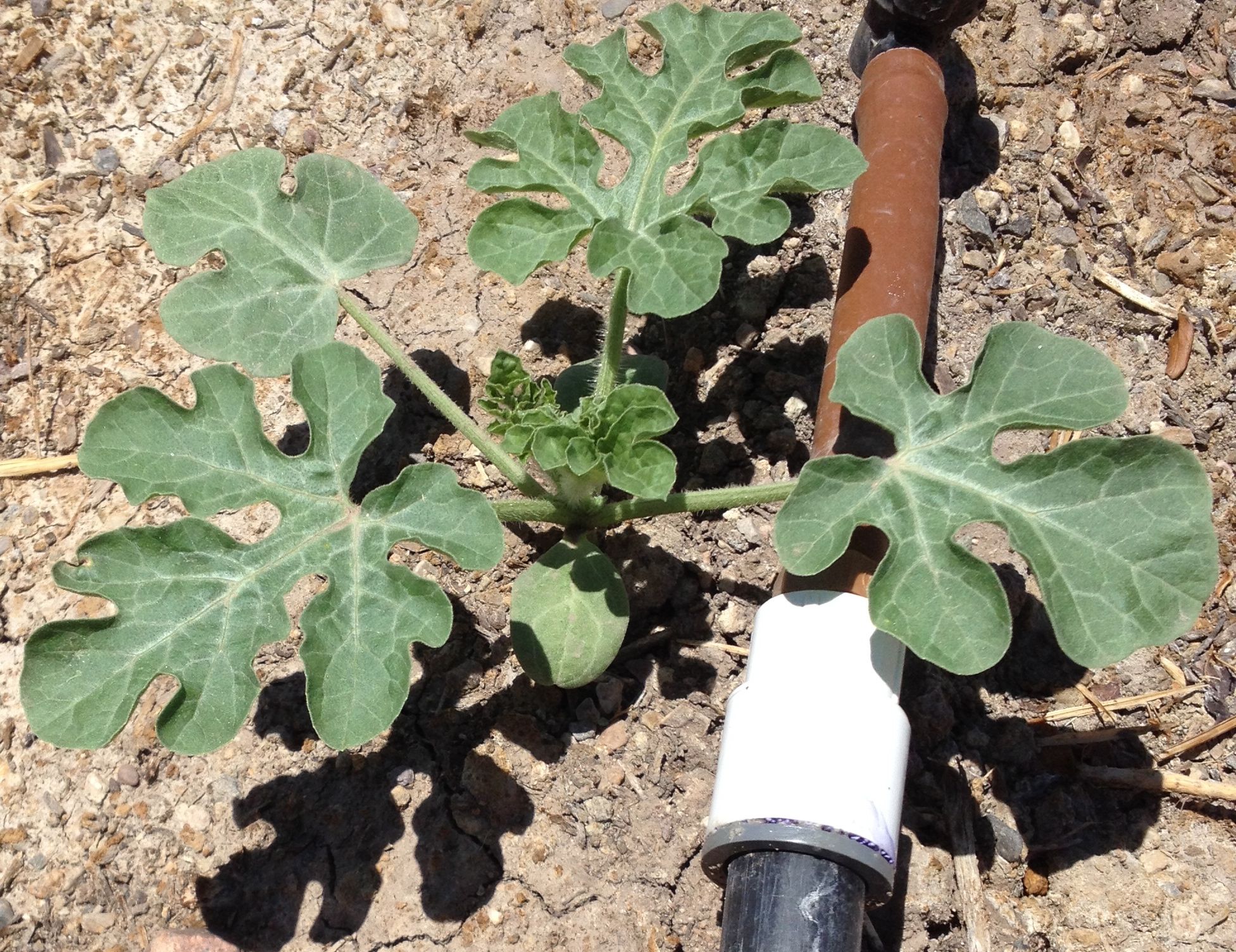
I see them peeking up out of the moist soil and spreading their many-fingered leaves out, inviting sunlight……there in the secluded orchard behind adobe walls at the base of A-Mountain. Hooray, the Tohono O’odham watermelons are rising again in the living history huerta at Mission Garden!…….

Seedling Tohono O'odham watermelon emerges with a water-assist

Seedling Tohono O’odham watermelon emerges with a water-assist

Ah, these monsoon rains have made it happen again—they thrill soul and body, triggering seeds to sprout and bringing the desert to life all around us. I can hear all the little stomates letting out their, “Whoopee! Whoopee at last! We didn’t know if we could hang in there much longer!”

Tia Marta here, wishing you joy with the renewing humidity and moisture blessing the earth—mat o sha ju:–when it rains. It seems all people know deep in their hearts that we need to, and want to, be singing in the rain. In the poetry of wordsmith Ofelia Zepeda, “Wa nt o m-ne’i g ju:kĭ ne’i. I would sing for you rain songs….” What higher compliment or loving expression could one hear in the desert than that? [For more tastes of her poetry, find Zepeda’s book Ocean Power (1995) and other works at University of Arizona Press.]

One of my most admired traditional Tohono O’odham gardening mentors, Laura Kerman, used to watch the southeastern sky as the clouds were building. When she knew rain was close and her skin was getting softer, that meant it was planting time again. To gardeners steeped in more temperate biomes, it’s a different yet palpable signal for planting time, the feeling of the sap rising. Here in the desert it is the reconstituting of our very integumen that we feel—then we know…(and yes some of us truly feel it in our bones too.) It brings a deep urge to plant seed in the ground, an urge imbedded in our physical being, deep in our psyche, somehow in our genetic memory.

At this very moment I can sense that the seed racks at every hardware store are getting lighter. The Native Seeds/SEARCH store and webstore are restocking seed packets at a fast pace to keep up with the monsoon pulse of gardeners.

My tastebuds think ahead as I scan the racks and webcatalogs. What flavorful squashes will I try this season? What fragrant and refreshing melons? What healthier grain, heirloom bean, ancient corn variety? Delicious and appropriate ideas are sprouting at the Mission Garden living history orchard. You can plan a tour any Saturday morning to inspire your own gardening bug. [www.tucsonsbirthplace.org]

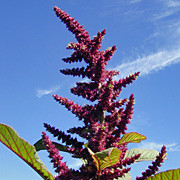
Guarijio Grain Amaranth for greens, high protein grain, and glorious summer color!

Guarijio Grain Amaranth for greens, high protein grain, and glorious summer color!

I think the plant that loves rain most is Amaranth.  (Such an insult to call our wild native amaranth a “careless weed” or “pigweed”! Better, the Tohono O’odham moniker which translates “rain spinach,” ju:hukia i:wagi. Within a week after a rain the tender young greens that pop up uninvited in your garden can be plucked to make a most healthy dish.)   For planting delightful color and beta-carotene-rich greens, try Guarijio Grain Amaranth, originally from the little-known tribe from southern Sonora and saved by Native Seeds/SEARCHers (Amaranthus hypochondriachus x A.hybridus or “guegui” in the Mayo and Guarijio tongue).  Guegui gives extra bonuses beyond greens: after showy red flower plumes grace your garden, you can bag seedheads to retrieve a plentiful grain that is 15-18% protein. Cooked amaranth seeds make a fine pilaf or rich hot cereal. Try popping amaranth seed in a hot dry skillet then add them to salads or to lighten up biscuit dough.

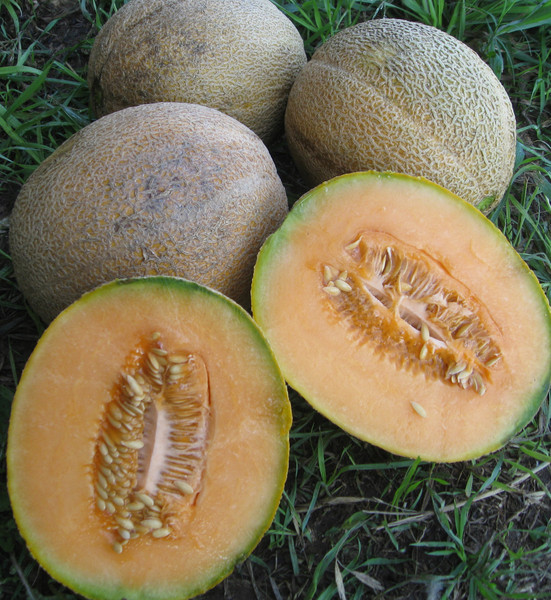
Delicious and well adapted, this Mayo Minol grande is perfect for Baja Arizona

Delicious and well adapted, this Mayo Minol grande is perfect for Baja Arizona

As I plant melon seeds I am thinking of the delectable future they promise.  Native Mayo People of coastal Sonora and Sinaloa have perfected Mayo Minol Grande , a canteloup-like melon adapted to the heat that can perform well in Baja Arizona gardens. It makes a beautiful breakfast complement or a summer dessert served à la mode on a generous wedge of the orange fruit.

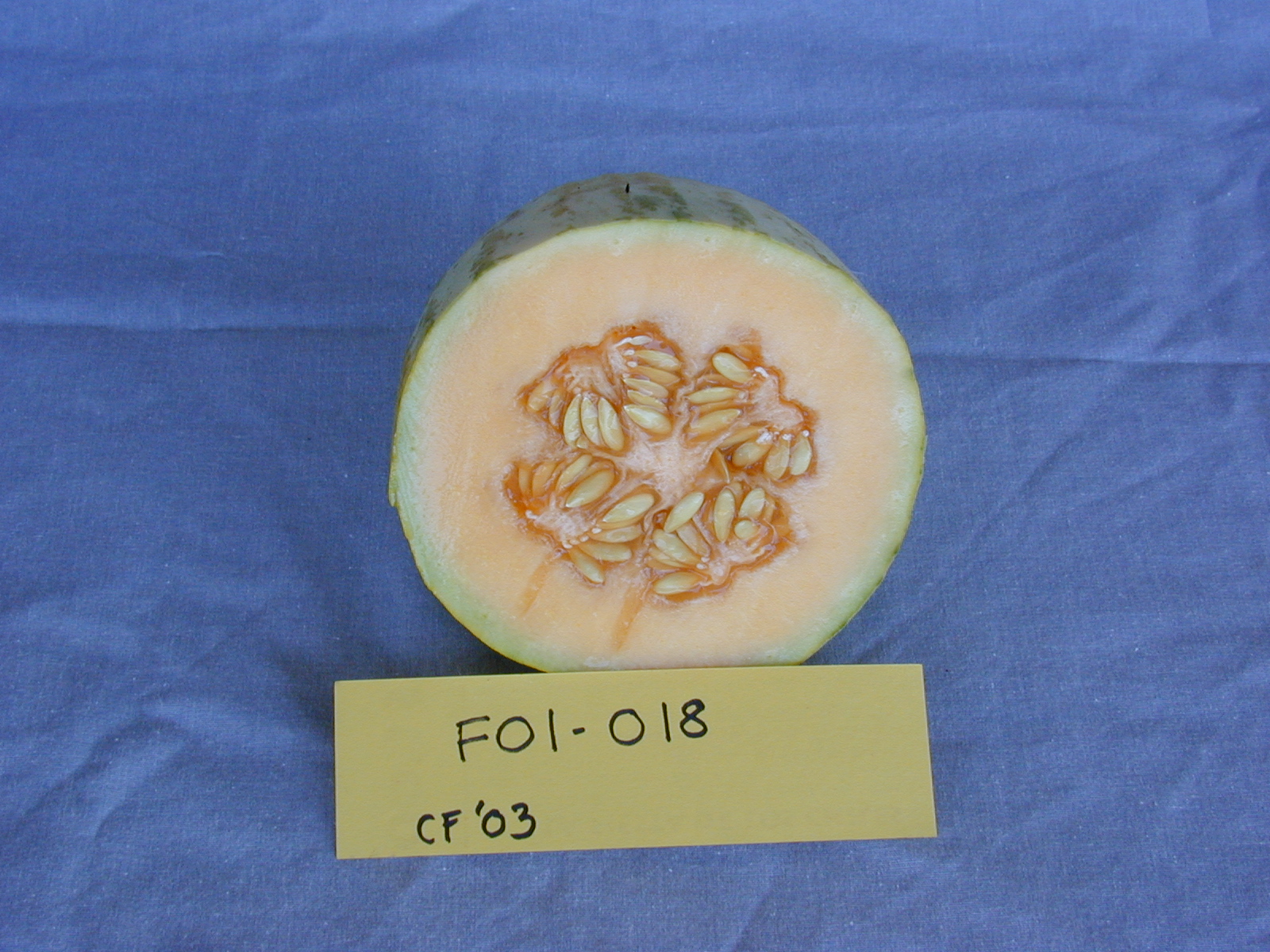
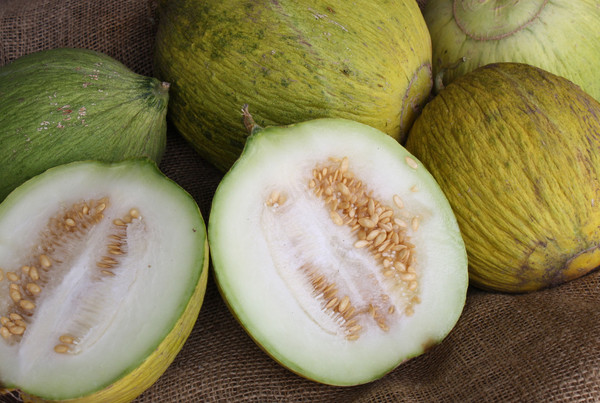
Melon de Castille from NativeSeeds/SEARCH--another summer treat

Melon de Castille from NativeSeeds/SEARCH–another summer treat

Similar in color to Mayo Minol but with smoother outer skin is the Melon de Castille which grew successfully in last summer’s Mission Garden. [Seeds of all of these can be found at the Native Seeds/SEARCH store or in the online catalog http://www.nativeseeds.org.]

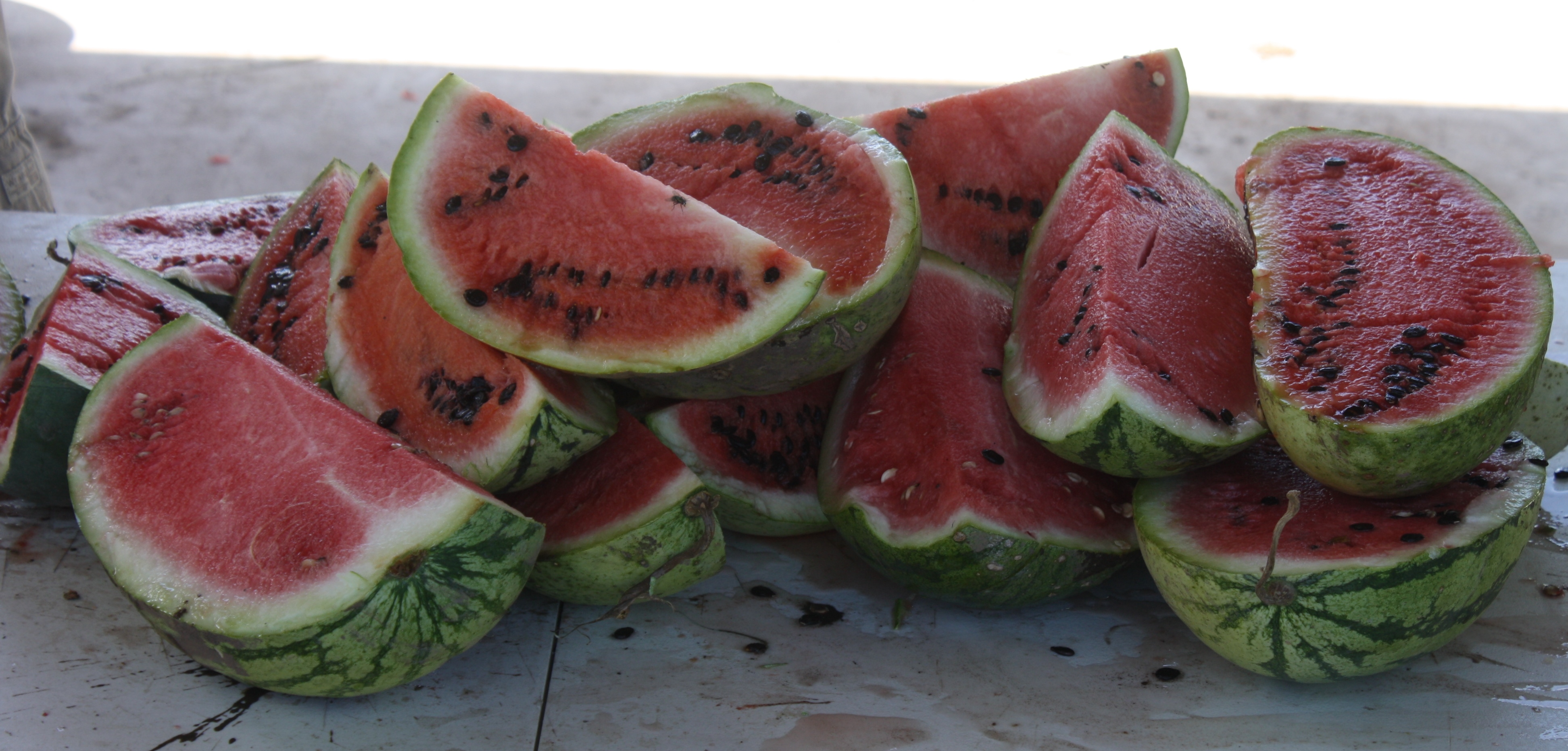
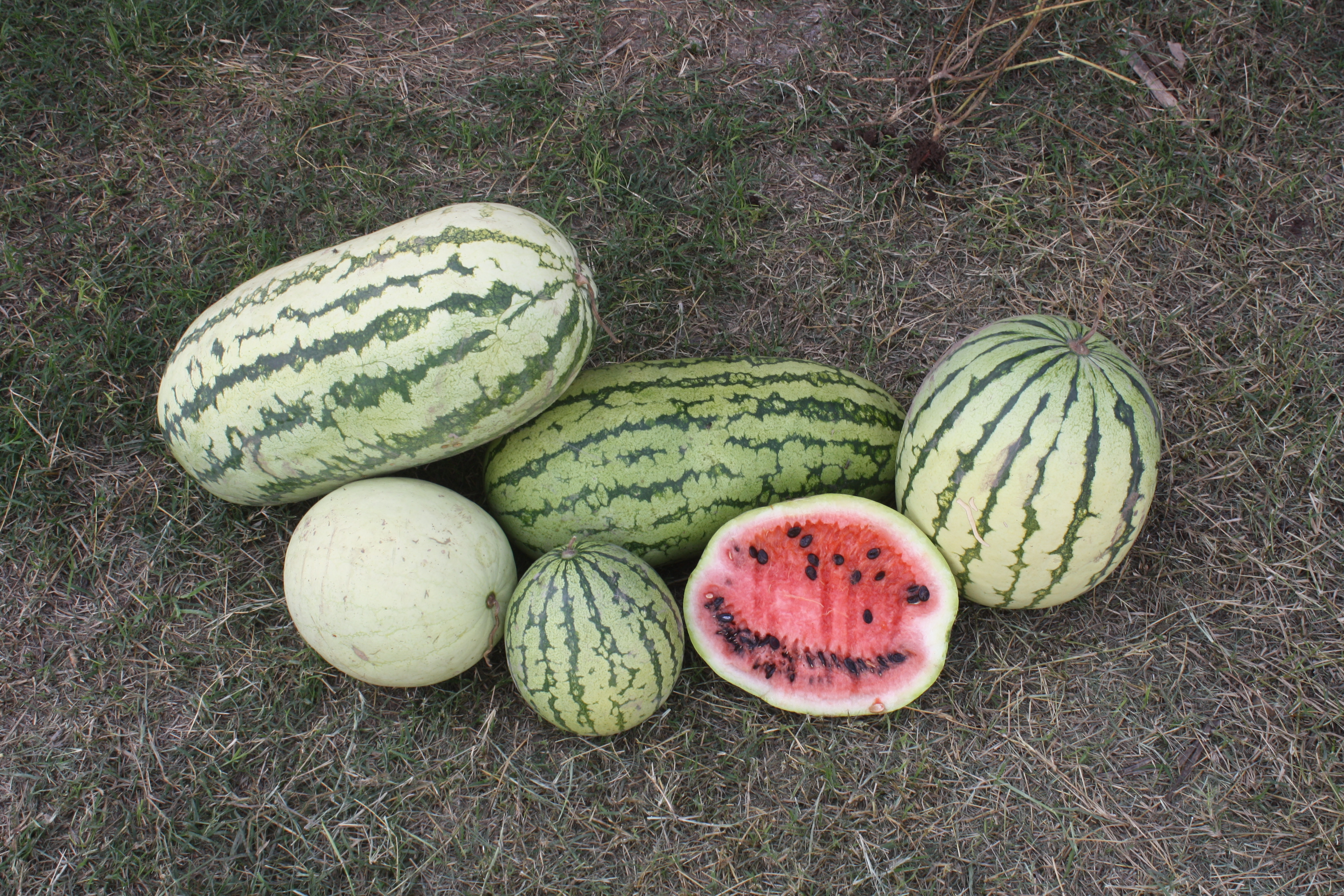
Refreshing and prolific are Mayo Indian watermelon (photo from Mission Garden)

Refreshing and prolific are Mayo Indian watermelon (photo from Mission Garden)

At harvest time last summer, Mission Garden volunteers enjoyed an orgy when the rich red-fleshed Mayo watermelons were ripe, in an effort to save seeds to return to NSS. Good duty—such a forward thinking and benevolent activity is seed saving—and someone’s gotta do it.
Melons in your garden will indeed need water so plan on a reliable drip system and some form of water-harvesting berms to direct any rainfall runoff. Plant your melon seeds at the lowest part of your garden where water tends to accumulate. Give the vines room to sprawl out, even over not-so-good ground, so long as the roots are in rich soil.

Tohono O'odham keli ba:so--by any name, a success for Baja Arizona gardens

Tohono O’odham keli ba:so–by any name, a success for Baja Arizona gardens

Traditions of Desert People—the Tohono O’odham—provide a model of truly sustainable living in the Sonoran Desert. From them we have been given seeds of two of the best-adapted and tasty melons of all: a honeydew-like cushaw melon known as keli ba:so (pronounced gurli-bahsho), and the Tohono O’odham yellow-meated watermelon.  Open up a keli ba:so for a sweet treat to use in a refreshing liquado or smoothie, or in a melon-ball salad perhaps laced with mint-agave nectar sauce. Translating the name keli ba:so opens up another dimension—the wonderful humor of the Desert People. The name (used especially by women) refers to the super-wrinkly texture of the outer melon skin and means “old man’s chest.” In retaliation, men have a different name for the same melon, “ohks tohn.” You might guess where this is going—it translates “old lady’s knees.”

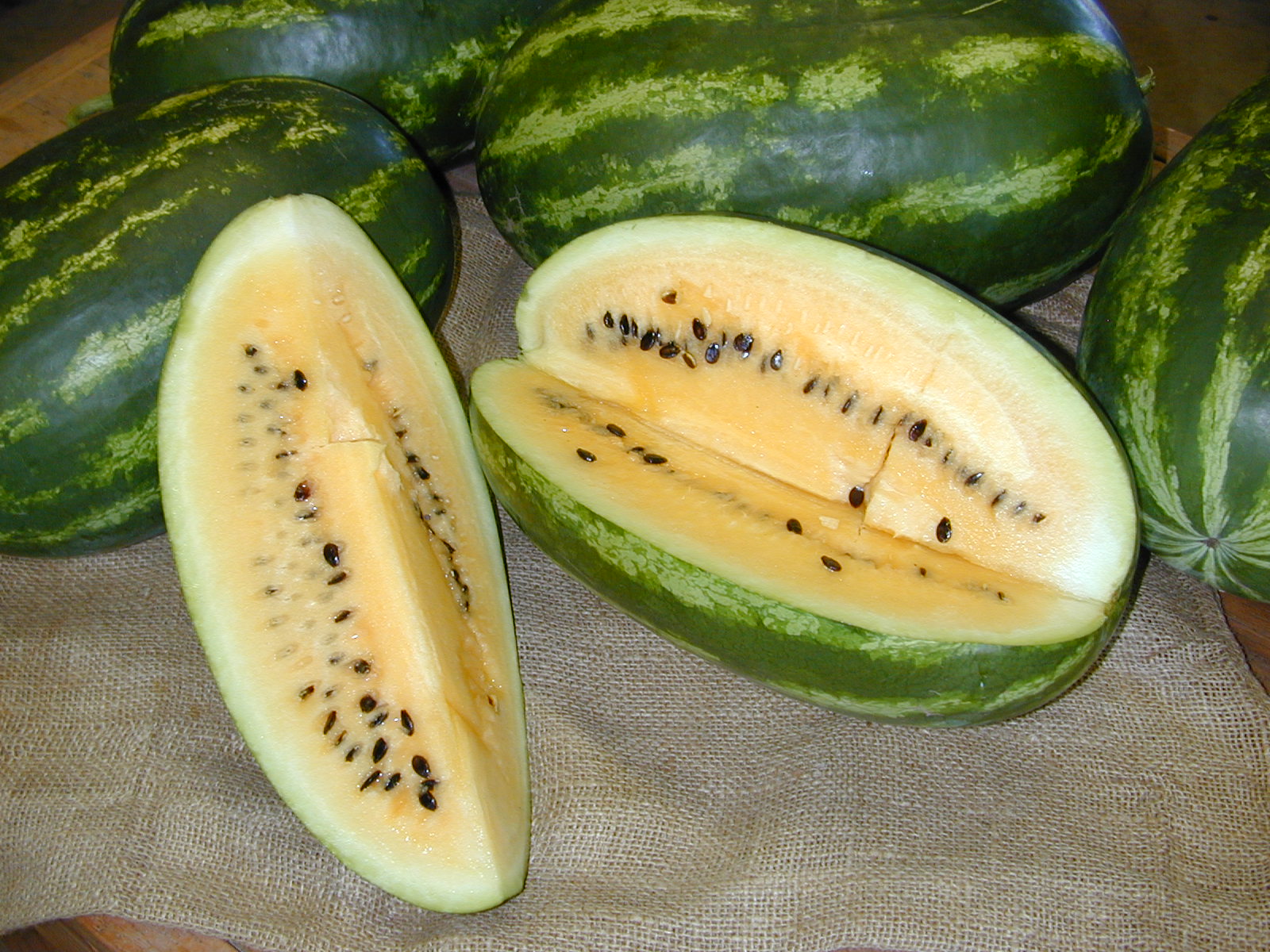
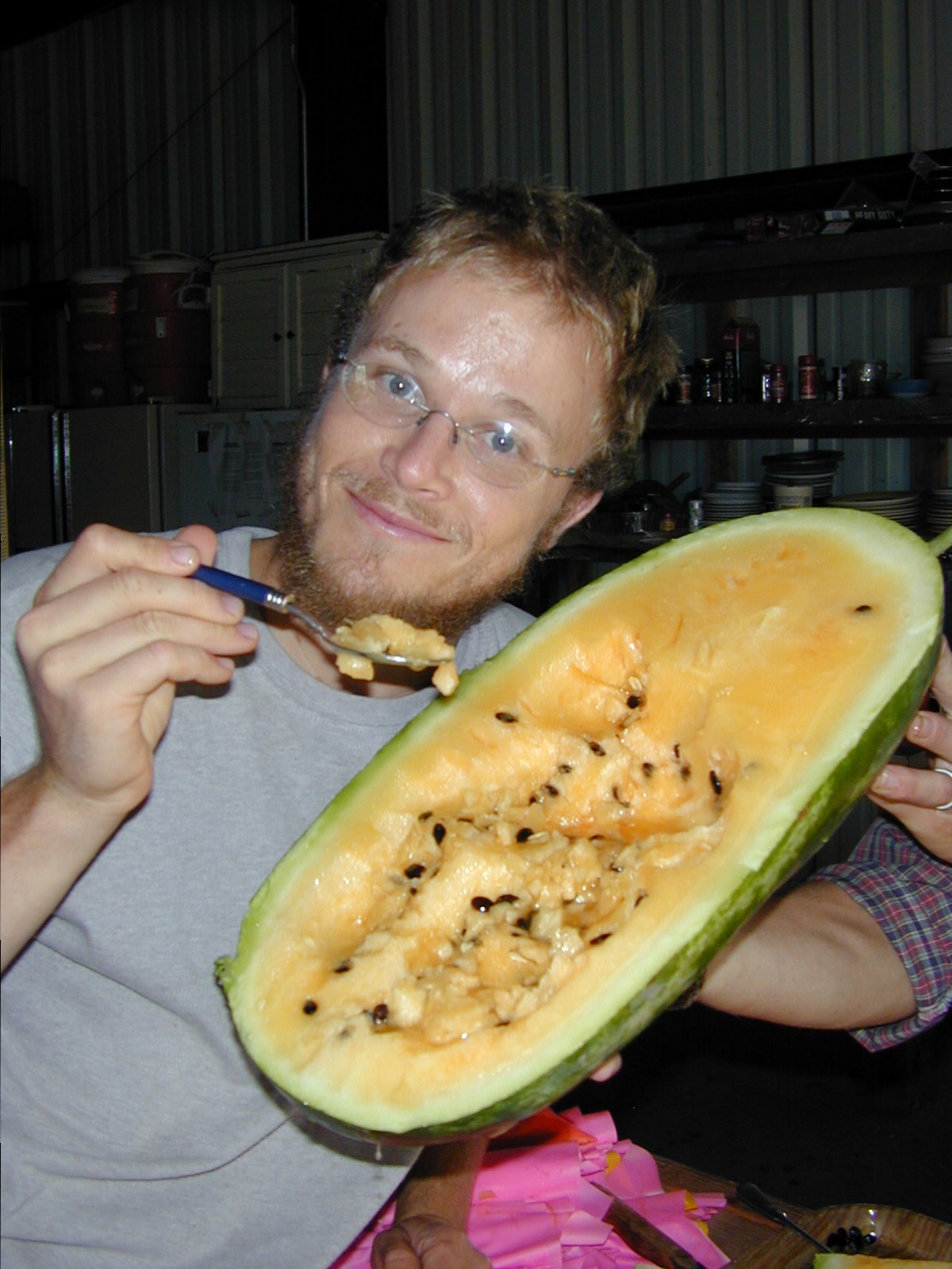
Unique rich flavor, color, and hot-weather-hardy--that's Tohono O'odham yellow watermelon

Unique rich flavor, color, and hot-weather-hardy–that’s Tohono O’odham yellow watermelon

Watermelons must have had an exciting ride to the New World some 400 years ago, arriving in what is now central Mexico from Africa with the first Europeans. Apparently the flavor and plant-ability of watermelon, and indeed its transport-ability, were so appealing to Native Peoples of Mexico that the fruit spread from its introductory source like wildfire. By the time the Spanish explorer Alarçon arrived at the northern end of El Mar de Cortes meeting Yuman people for the first time at the Colorado River’s mouth, watermelon was already part of their agriculture and diet! This fact stumped historians and ethnobotanists for years—(like how could the same watermelon have been cultivated in both hemispheres?)—until they finally figured out the speed with which a favored food can migrate. Watermelon–the original fast food.

Tohono O'odham yellow-meated watermelon from NativeSeeds/SEARCH is a color and taste delight

Tohono O’odham yellow-meated watermelon from NativeSeeds/SEARCH is a color and taste delight

Prepare yourself for a whole new flavor experience with Tohono O’odham yellow-meated watermelon. Its sweetness is non-cloying and gentle with an almost musky rich bouquet—a different taste realm from any red watermelon you’ve ever tasted. Put slices of this luscious watermelon on an hors d’oeuvres tray, or slice it alternating with red watermelon for a colorful picnic buffet. Joining orange Mayo Minol, cubes of lime-green keli ba:ṣo, red Mayo watermelon, and T.O. yellow watermelon completes a rainbow of color and flavor to create the ultimate Southwest fruit salad.
Happy monsoon planting and gardening to you as you practice sustainable agriculture in your own backyard! With the term introduced by Wendall Berry, may your “slow knowledge” grow as you tend your melon vines and cheer on the pollinators in anticipation of summer’s sweet and nutritious bounty of melons and amaranths!
As the monsoon season progresses, watch for the San Xavier Coop Association’s T.O. yellow watermelons for sale at the Thursday Santa Cruz farmers’ market at Mercado San Augustin. For more ideas, advice and seeds for monsoon garden heirlooms, visit the NSS store on North Campbell Ave.  Also, come by our Flor de Mayo booth at the new St Phillips Sunday farmers’ market in its charming, refreshing oasis setting. Rod and Tia Marta of Flor de Mayo have experience, recommendations, and stories to share, and perfect monsoon seeds for the season. See you Sunday at St. Phillips!

The seeds are READY to put in the ground!  All they need is a little help!

The seeds are READY to put in the ground! All they need is a little help!


Food Security in the Desert

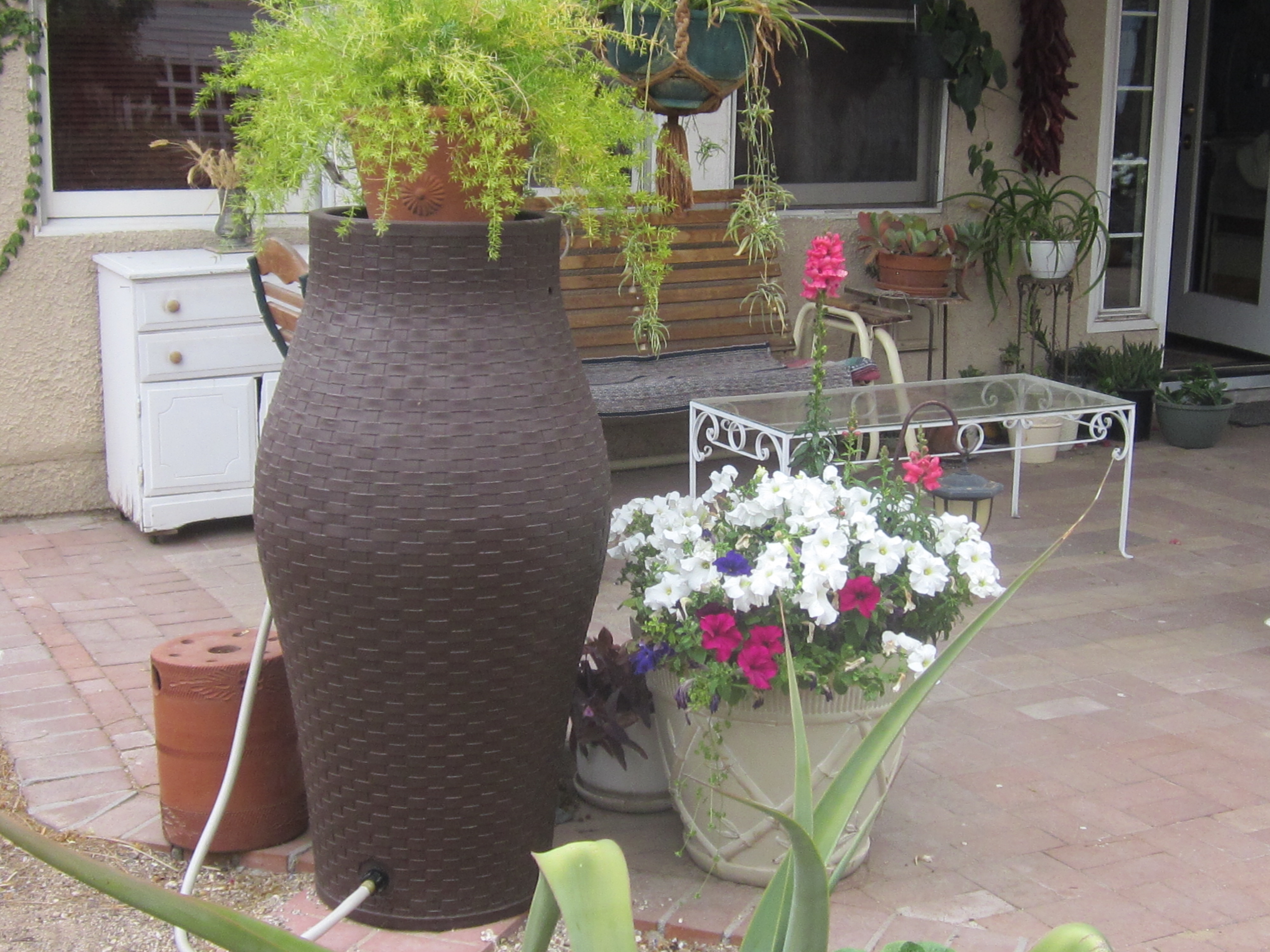
A small water-harvesting tank from Home Depot.

A small water-harvesting tank from Home Depot.

Carolyn here. This is an extra mid-week post regarding not only harvesting food in the desert, but growing it as well.  The issue, of course, is water.  Tucson community activist Tres English is prodding Tucsonans to look to their food future and consider how we can become secure by growing more of our own food. A hundred years ago this would not be a novel idea but family business as usual.  We are moving in the right direction as a communty. Tucson already has 44 community gardens, thousands of fruit trees,  and over 100 experimental aquaponics systems. Nearby farms are keeping are farmers’ markets well stocked. But still, the vast majority of  our food is imported from far away.

Because I get deep satisfaction from gardening, my husband and I have installed three rain water tanks on our property. In a really good rain, I should be able to catch about a thousand gallons. I have watered most of my winter veggies this year with rain water from our first tank.  Unfortunately, it hasn’t rained much since we installed the last two tanks, but when (if??) it does rain, I should be able to take care of the flowers as well, leaving only the trees  and the house on city water.

Our biggest tank drains water from roof of guest house and provided water for my winter vegetable garden.

Our biggest tank drains water from roof of guest house and provided water for my winter vegetable garden.

We need to pull more people into growing their own food. Whether you catch the rain in big tanks, 55 gallon drums, or 5 gallon paint buckets (like I did until recently), you can water your garden at least partially with rain water. You can read what Tres has put together on his website FeedingTucson.org, but here are some of the points:

We have vast, untapped resources

Every square foot of Tucson receives an average of over 6.5 gallons of rain every year (that’s before Global Climate Change), or about 175 million gallons per square mile.  That’s 80,000 gallons of harvestable rain per person.

We have about 40 square miles of rooftops in metro Tucson and over 80 square miles of paving. If we harvest (and use) water very near where it falls, we could potentially have over 50,000 acre-feet of “new” water that isn’t currently being used for any productive purpose.

When combined with directly used rain and net natural recharge from mountain fronts and river beds, our maximum potential renewable, harvestable, local water supply is close to 260,000 acre-feet per year — compared to 192,000 AF used by all municipalities.

Tres English says: “We are not alone in developing local food systems, so we don’t have to start from scratch.  What are some of the most innovative approaches in the world to creating all elements of a complete food system?  What will it take adapt them for our needs?”  These are the answers he will seek but he needs a little money to do it.  To that end, he has set up a crowd-funding site at StartSomeGood.org/FeedingTucson.    Or you can also donate on the FeedingTucson.org website. If you want to see all Tucsonans have access to fresh, local food, go to the site and chip in a few bucks.


Cholla Bud Workshops.

If you enjoyed Martha Burgess’s post on cholla harvesting, perhaps you’d like to go gathering with her.  Sign up through Native Seeds SEARCH. It’s been unseasonably warm here in Tucson, and the chollas are budding a bit early.  Choose one of two dates: Saturday, April 12 and Friday, April 25 8 – 11 am $30 – NS/S Members $40 – Non-members