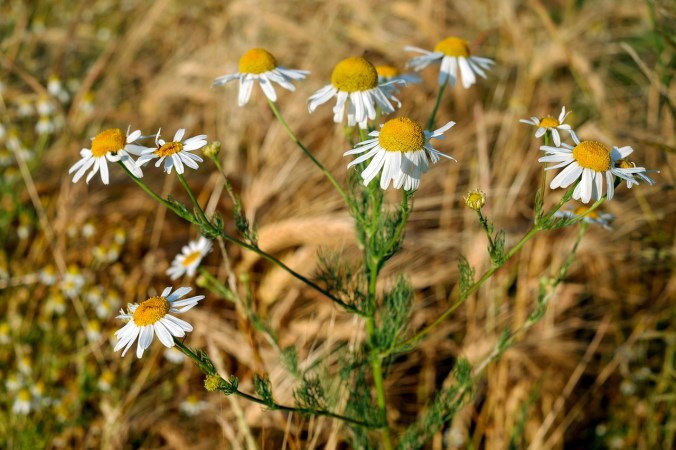
Cozy Chamomile


chamomile 3489847_1280Jacqueline Soule this week to discuss a pretty, plus pretty useful, herb to plant in your winter garden.  And, if you plant seedlings now, you should be able to harvest some within a month!  As cooler weather comes along, it is nice to curl up with a cup of chamomile tea – and here is how to have your own.

The herb known to most Americans as chamomile comes from two different species of plants. German chamomile comes from an annual plant (Matricaria rectita), while Roman chamomile comes from perennial plant (Chamaemelum nobile). They both have many of the same plant compounds in them, and work much the same way, the difference is in how you grow them. The French “chamomile” is a related plant (Achillea millefolium) but with different compounds and actions. In English, that last one is known as yarrow.

European people have used chamomile, in one form or another, to treat just about every sort of affliction, from hemorrhoids to hay fever, sleeplessness to sores, and tummy aches to tooth aches. In almost every case chamomile is used as a tea (infusion) to either drink or bathe tissues. For tooth ache folks used chamomile wrapped in muslin and placed on the afflicted tooth. Peter Rabbit’s mom gave him a cup of chamomile tea after his adventures, to soothe his stomach and calm his nerves.


herb_tea_JAS_001The flavinoid apigenin found in chamomile tea is thought to be responsible for its anti-inflammatory ability. Apogenin combined with another phytochemical called bisabolol are thought to work in concert to calm gastrointestinal spasms. Apogenin has been proven to bind to the same brain receptor sites that the drug Valium binds to, and are believed to exert a calming influence in much the same manner.

With recent scientific investigation, a number of uses have been validated. Chamomile is recommended by Commission E for the treatment of gastrointestinal tract inflammation, gastrointestinal spasm, irritations of the mucous membrane, skin injury or irritation, as a gargle or mouthwash to alleviate oral or pharyngeal inflammation, and to treat anxiety disorders. (Peter Rabbit’s mom was right on track!)

German chamomile can be grown very easily in the cooler months of winter, while the Roman chamomile is best planted in spring. Both need six to eight hours of sunlight per day. Like many herbs, they do best in well drained soil. Thus if you have caliche soils , consider growing them in pots with a cactus soil mix. The German chamomile will die in the heat, so replant some next year.

chamomile 774818_1280Harvest chamomile flowers and dry before use. This allows some of the more bitter tasting compounds to evaporate. The active ingredients are predominately in the oils and are not lost by drying.

Chamomile is green to grow in our area, even though it uses more water than native plants. It does reduce your carbon footprint by reducing the need to import chamomile. It can also help reduce your reliance on manufactured drugs. Headache? Take a cup of chamomile tea and lay down for a half hour rest. Far better for the environment than aspirin. Just remember that moderation is key in this and all herbs.

chamomile 2442331_1280

Note: the information in this article is for your reference, and is not intended to be used as a substitute for qualified medical attention.

JAS avatarIf you live in Southeastern Arizona, please come to one of my lectures. Look for me at your local Pima County Library branch, Steam Pump Ranch, Tumacacori, Tucson Festival of Books and other venues. After each event I will be signing copies of my books, including the latest, “Southwest Fruit and Vegetable Gardening,” written for Arizona, Nevada and New Mexico (Cool Springs Press, $23).
Text is copyright © 2015, Jacqueline A. Soule. All rights reserved. I receive many requests to reprint my work. My policy is that you may use a short excerpt but you must give proper credit to the author, and must include a link back to the original post on our site.

# # # # #

Black Teparies Make a Come-Back!

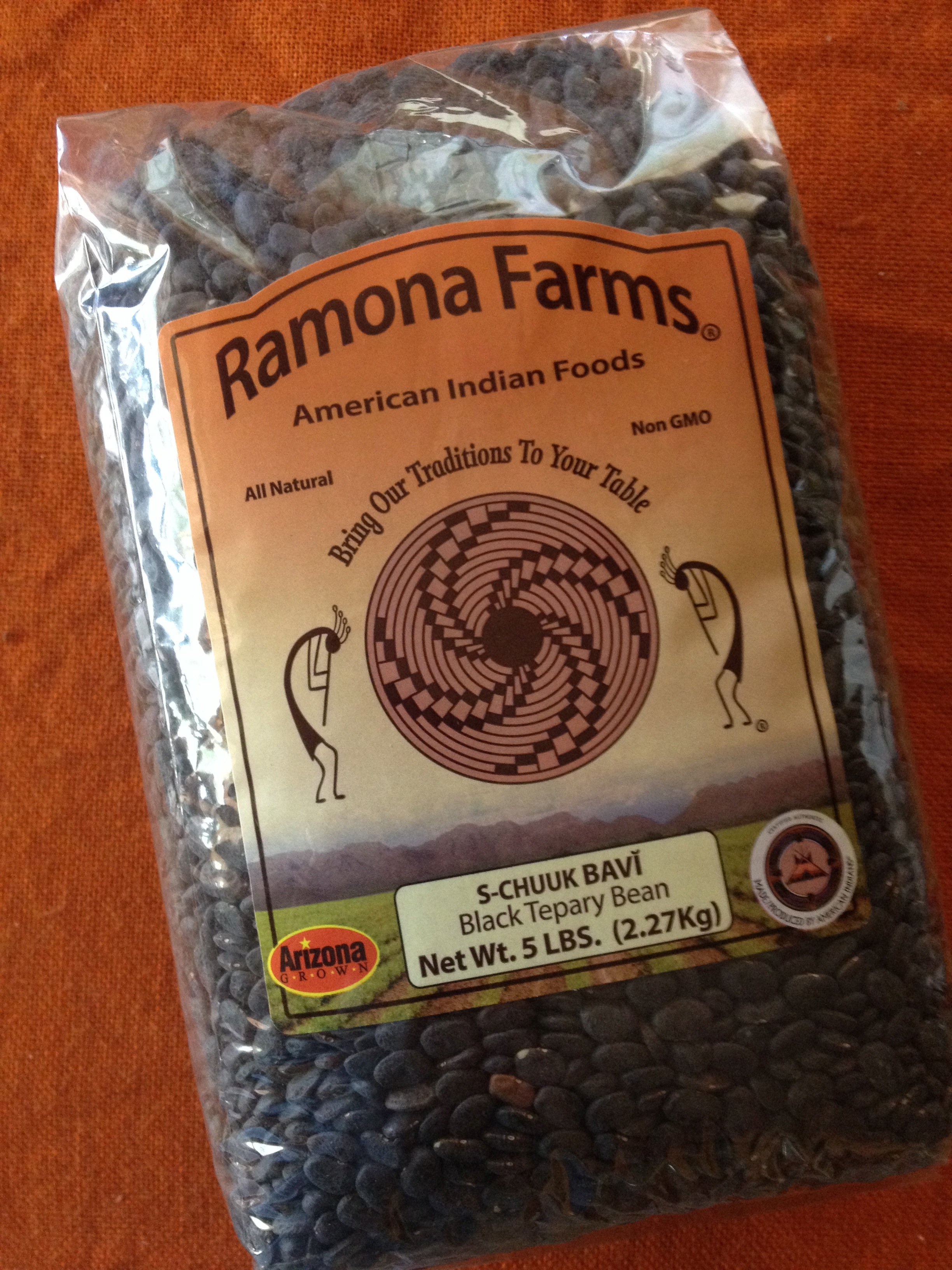
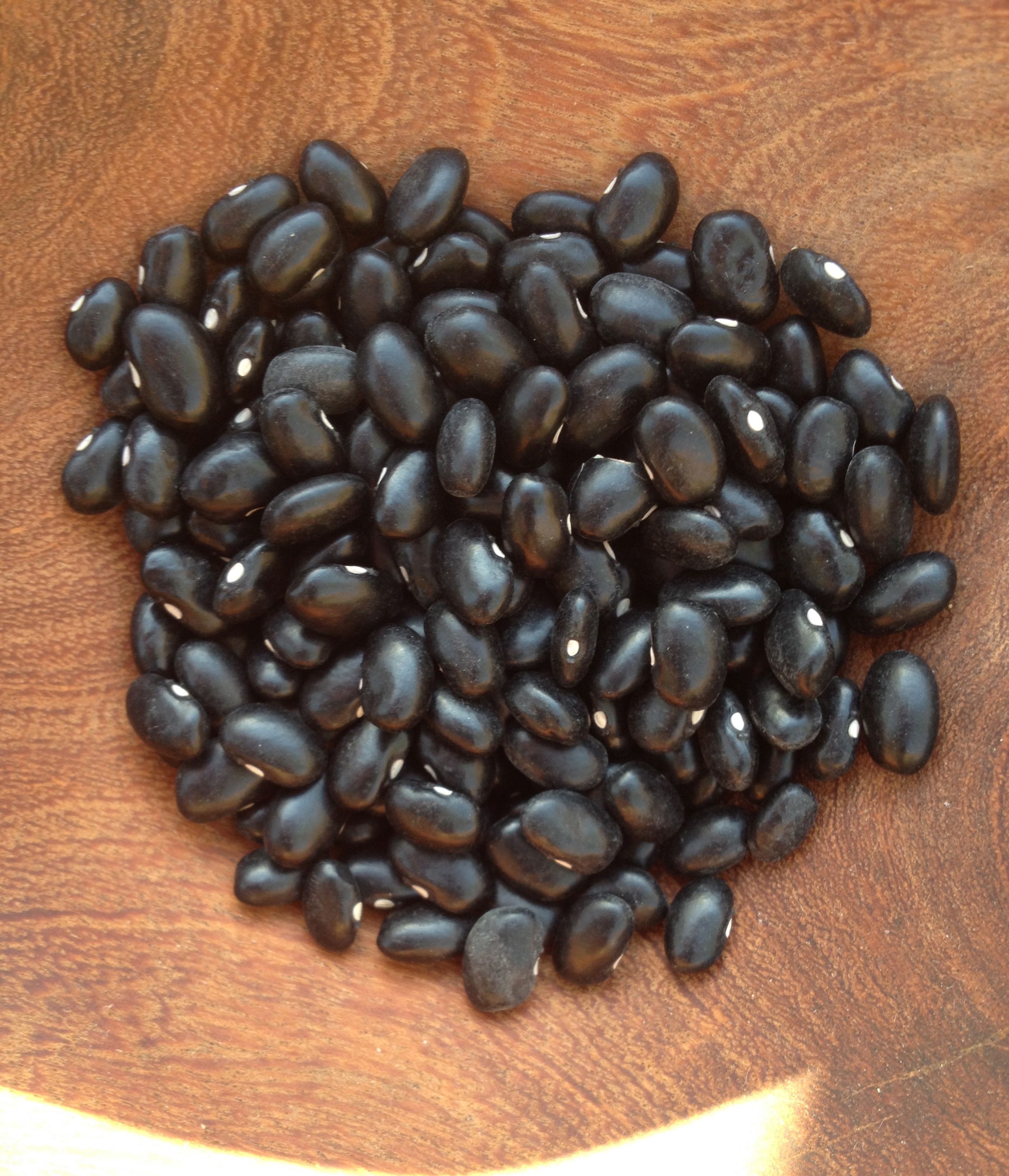
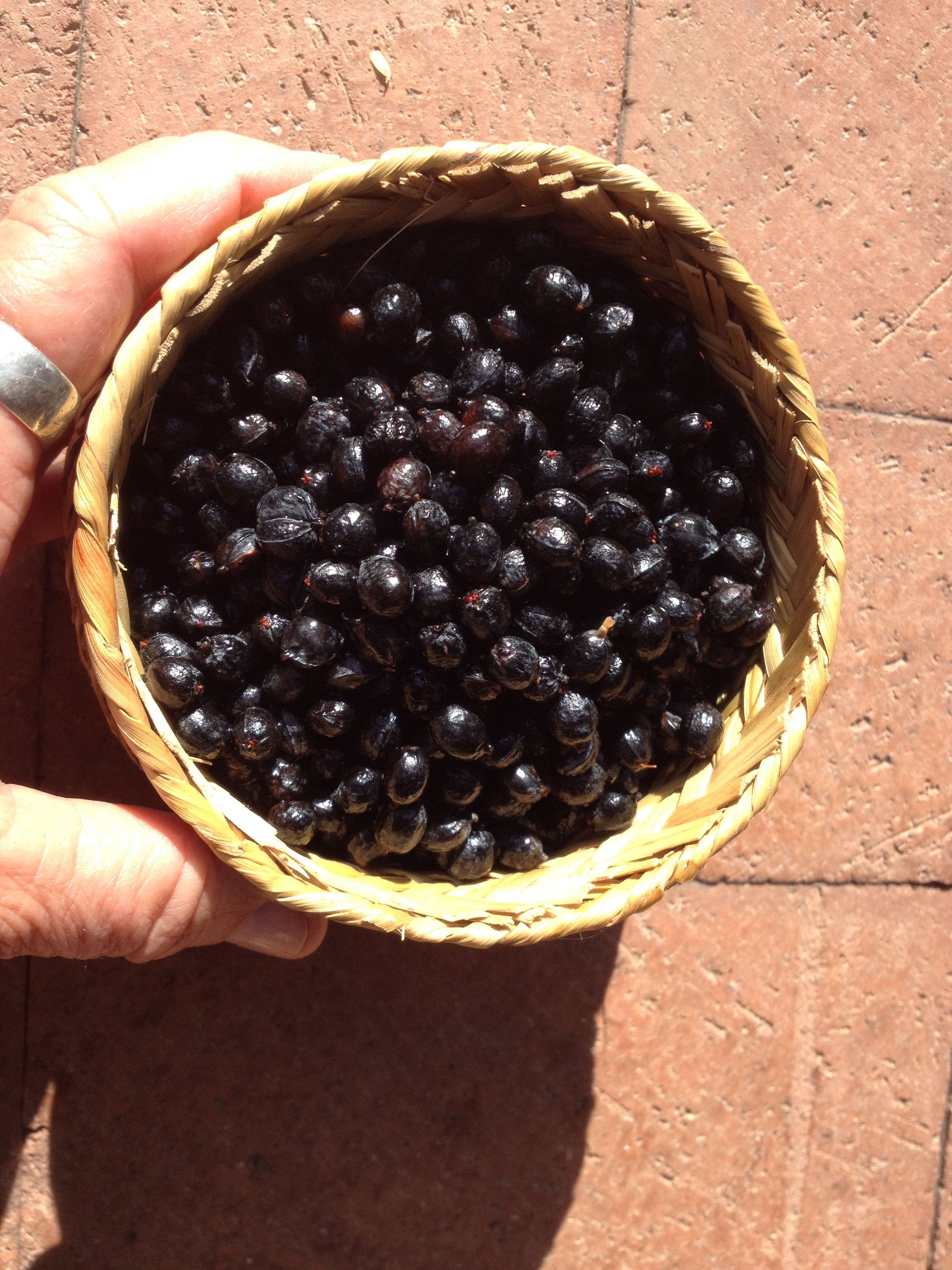
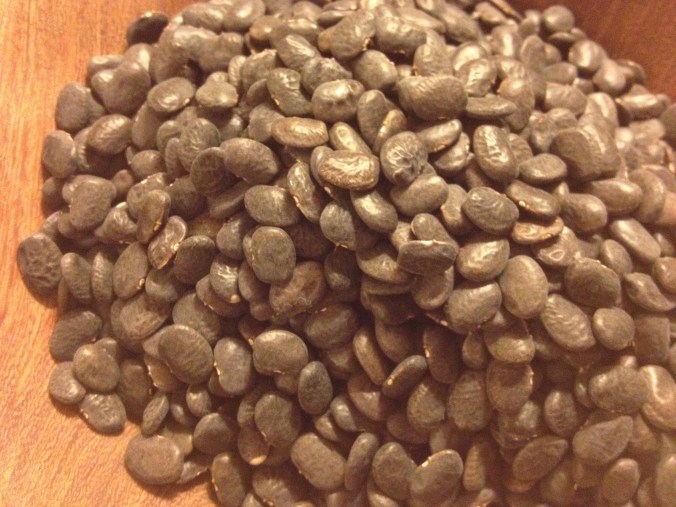
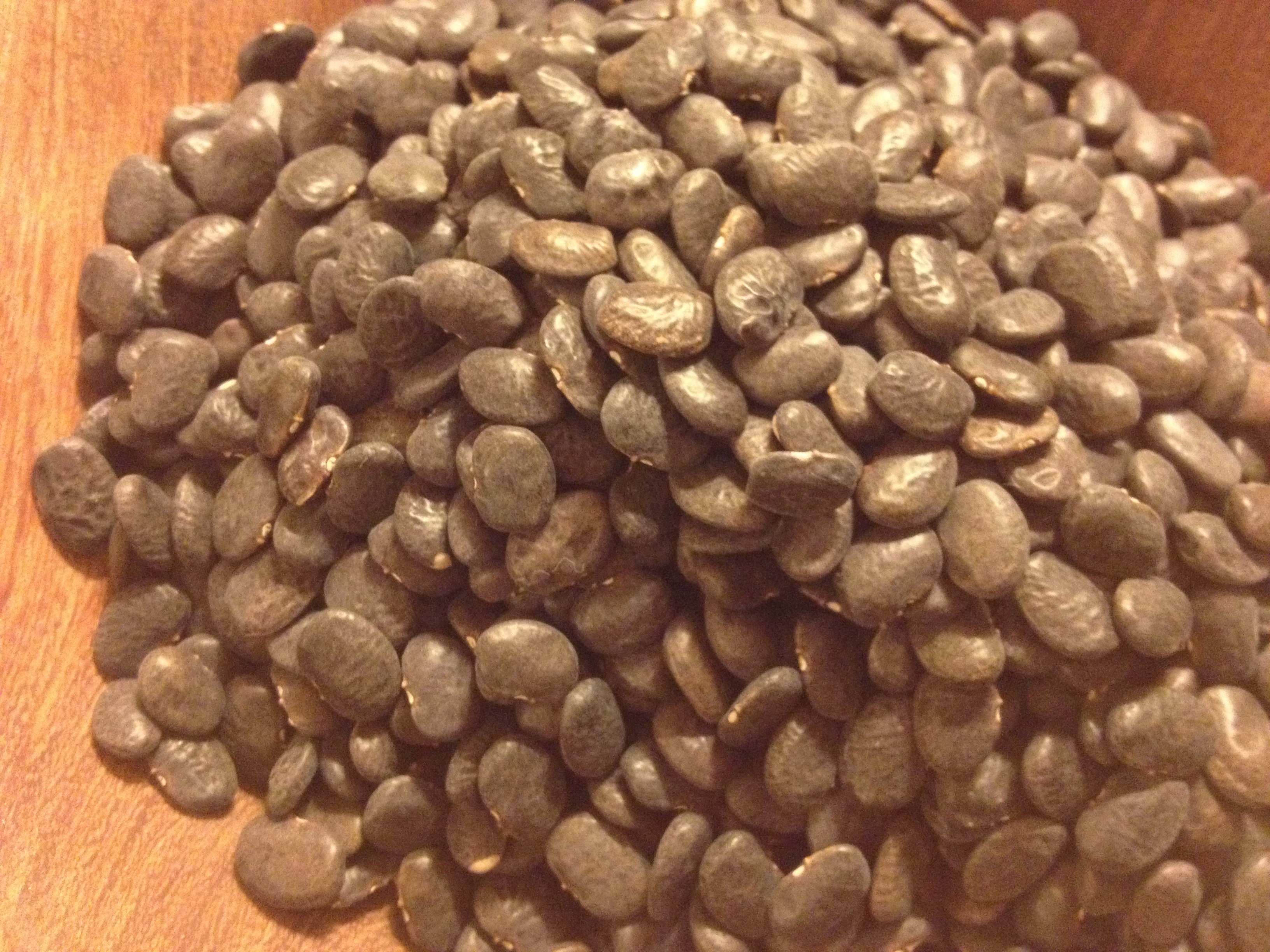
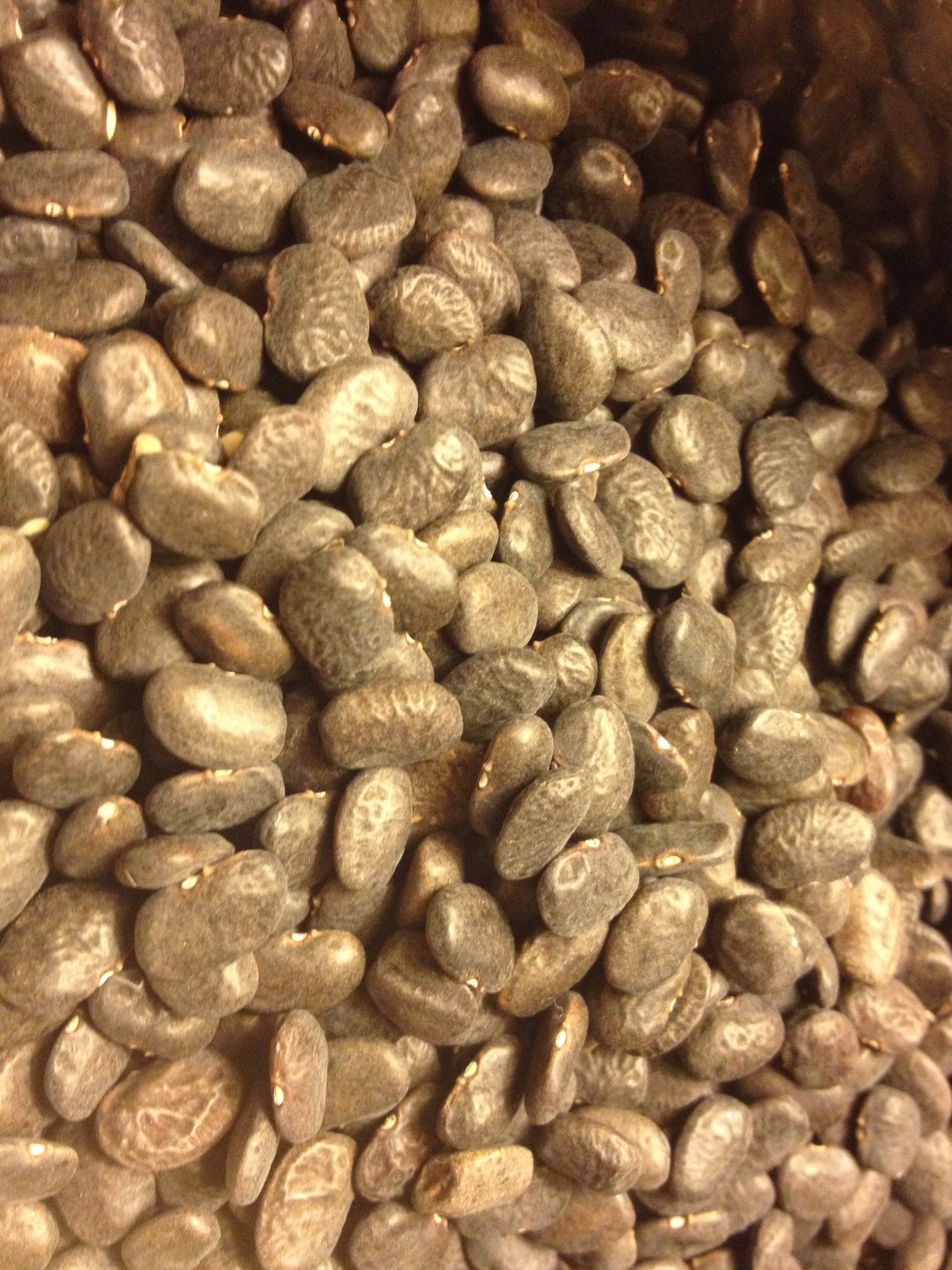
Rich black teary beans dried, ready to hydrate for cooking

Rich black tepary beans dried, ready to hydrate for cooking

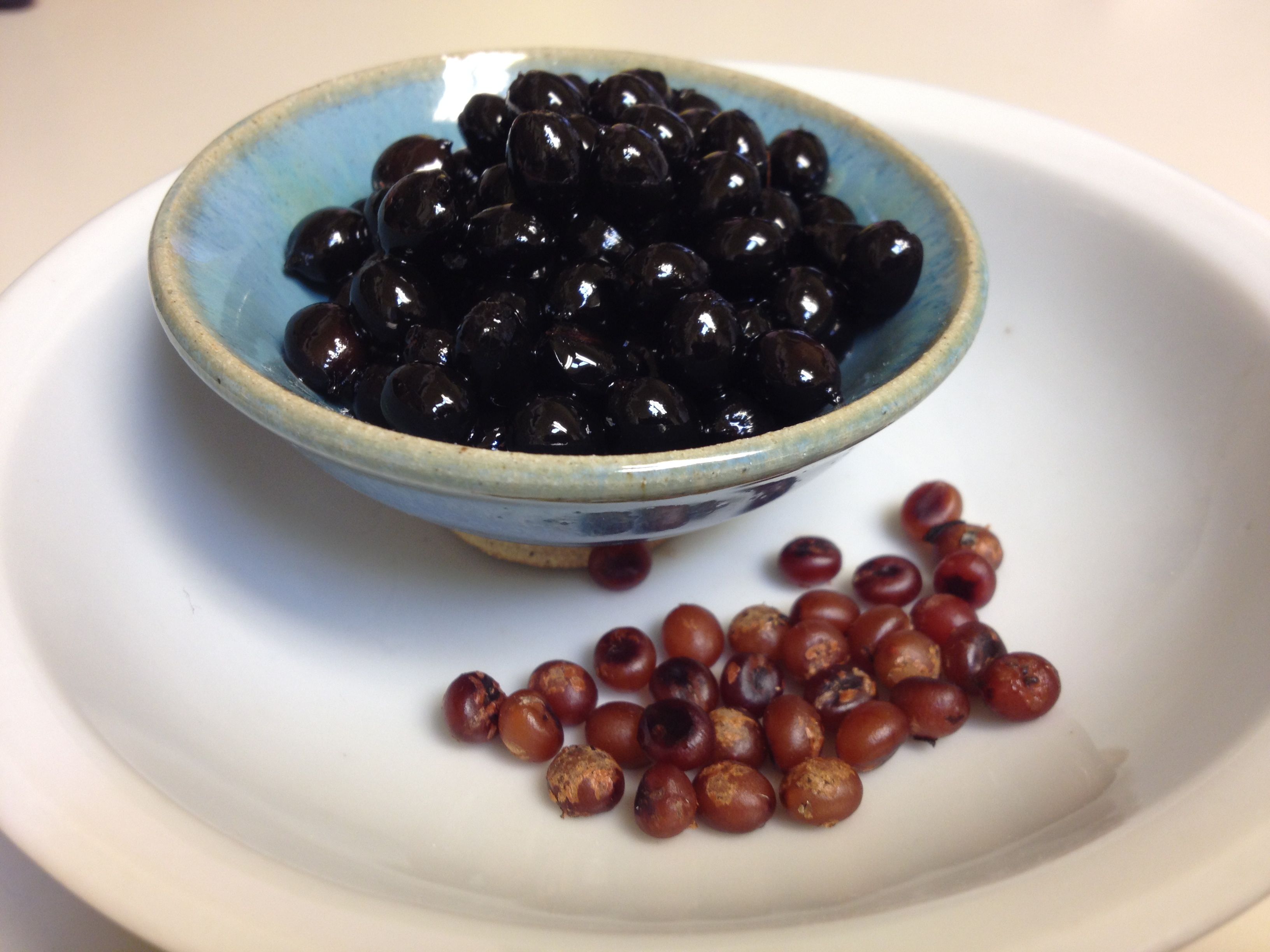
In some light they are a dull charcoal difficult to spot if the pods shatter onto the ground. Sometimes they appear shiny black or opalescent. Somehow black teparies appear to have an antiquity about them–mysteriously harking back to a time rich in prehistory. Tia Marta here to tell you a little about the black tepary bean’s odyssey back into cultivation and into the cooking pots of Southwesterners once again.
Shiny black teparies close up

Shiny black teparies close up

Back in 1912, before WWI and the rapid plunge the “remote” Southwest unavoidably took into East-Coast food fads, there was a crop survey done of the many types of tepary beans being grown and used by different Native American families and communities throughout the Borderlands. The diversity at that time was astounding—some 40+ different colors, forms, sizes, speckles, of tepary beans were reported. Within about a decade there remained only a couple of dominant tepary colors—“red” (an orangy-brown) and white. [For more history, check out Volume 5, No.1 of Desert Plants Journal published by the University of Arizona CALS. Specifically this issue is devoted to tepary beans, and includes an article by yours truly.]

The neat thing about cultivars that are still genetically close to their wild ancestors is that they still contain a diversity of genes that can “pop out” occasionally as visibly different seeds. In the case of the teparies, every so often in a harvest of white teparies, for example, there may turn up a few coral pink, or blue speckled, or even black beans. At the University of Arizona’s Maricopa Experimental Farm, an amazing crop researcher, Mike Sheedy, was, for several years growing teparies to isolate some of these genetic “sports”. He used assistance from his kids (In farming, child labor rules just can’t apply) to help pick out the odd-ball seeds from hundreds of pounds of harvested teparies. Over the years, he grew the separated colors in isolation from each other to preserve color purity. Before research funds ran out he had “re-created” an ancient lineage of black teparies—i.e. he has assisted the ancient genes to come again to the fore, to bring the “invisible” genotype back into the “visible” phenotypes. At termination of his research project he generously donated the black tepary collection to the traditional Pima farming family of Ramona and Terry Button.
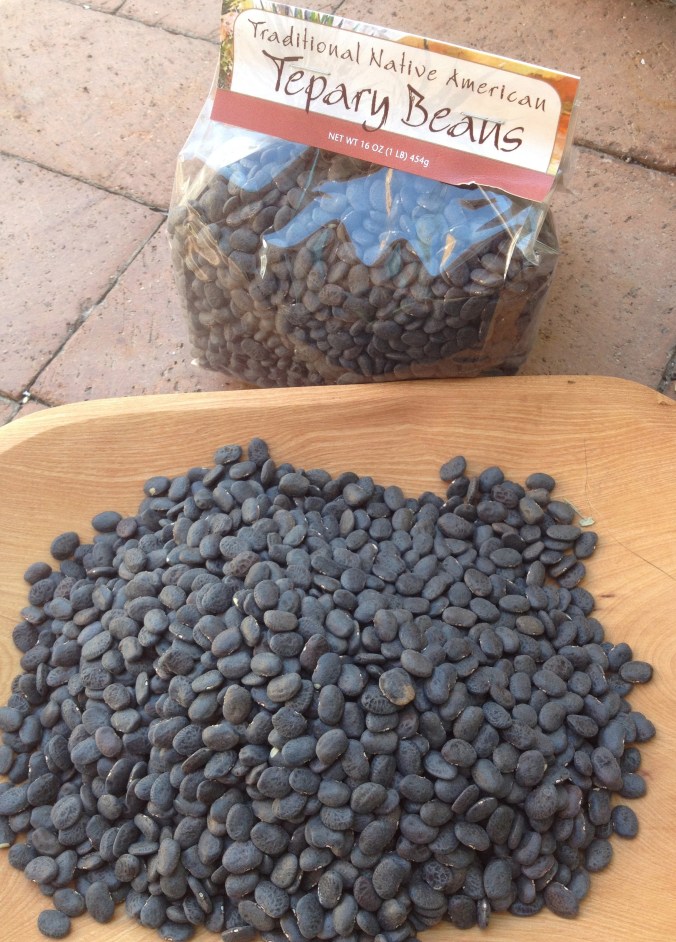
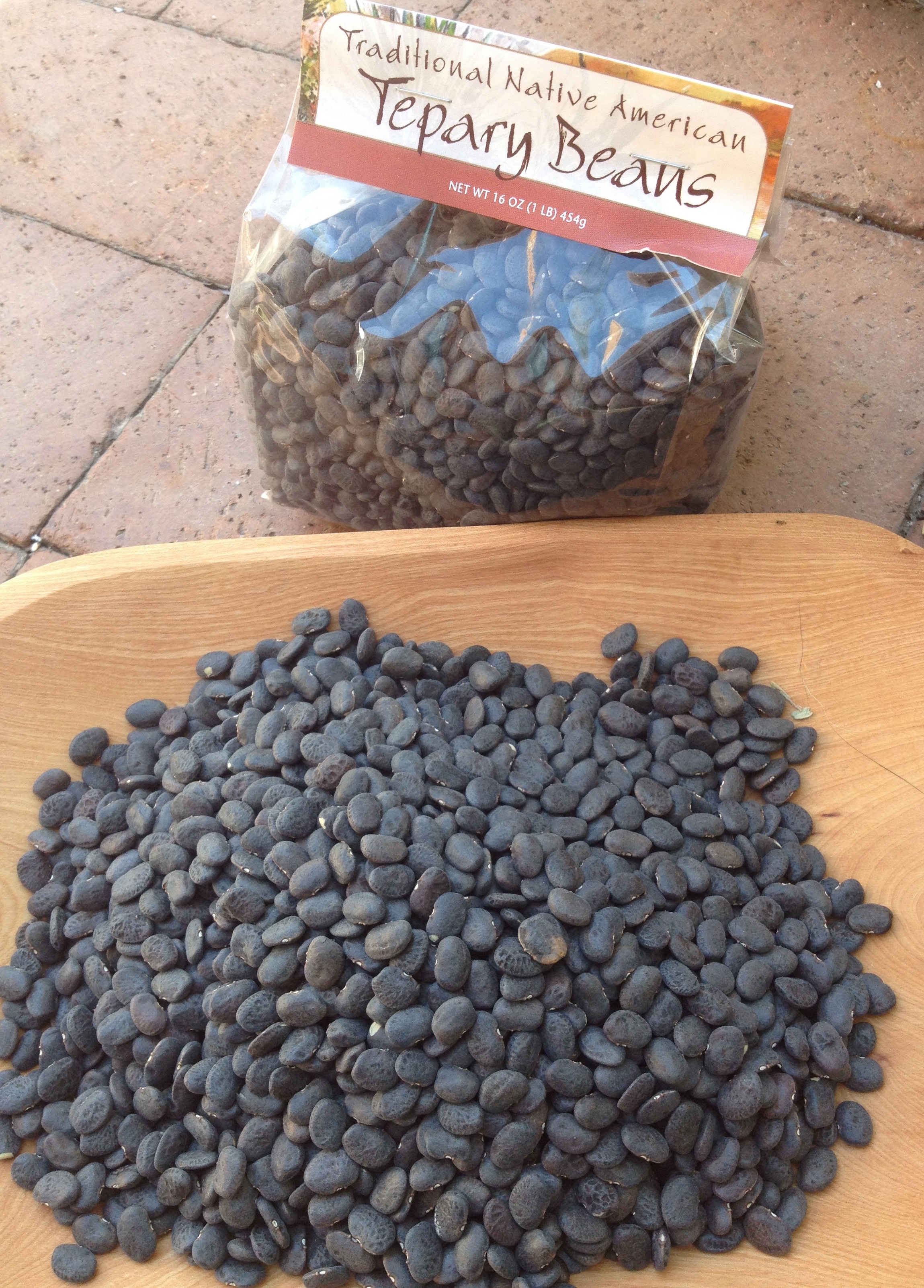
Native Black Tepary Beans & Flor de Mayo 1-lb pkg

Native Black Tepary Beans & Flor de Mayo 1-lb pkg

Now—tah-dah!—at last black teparies are in agricultural production on ancestral lands! The public can purchase these little food gems of antiquity now at the NativeSeeds/SEARCH store (3061 N Campbell Ave, Tucson) www.nativeseeds.org , at the Flor de Mayo booth at Sunday St Philips Farmers Market www.flordemayoarts.com , or online via www.ramonafarms.com.
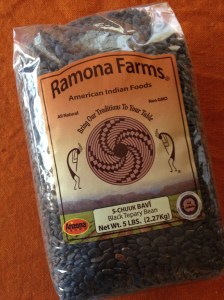
S-Chuuk Bavi from Ramona Farms

Black teparies are very different in taste from the red or white teparies—although all teparies are much richer than their more distant cousins like the common bean, lima or black-eye pea. Black tepary, schkug ba:wĭ of the Tohono and Akimel O’odham, is the deepest, nuttiest of all, with an earthy bouquet and a slightly bitter after-note reminiscent of coffee. Well, you will just have to try your own taste buds on them!

The public will have an exciting opportunity to taste black teparies prepared by none other than our beloved Tucson Chef Janos Wilder (of Downtown Kitchen fame) at the upcoming Farm to Table Picnic feast at Mission Garden, Sunday afternoon, October 18, 4-6:30pm. Janos is not letting on what his special black tepary recipe will be, but we can be sure it’ll be sensational. [The picnic is by pre-registration only so buy your tickets soon! Online purchase is via the Friends of Tucson’s Birthplace site www.tucsonsbirthplace.org.]
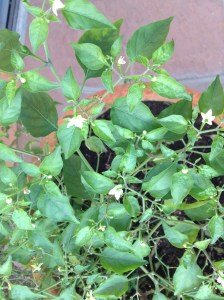
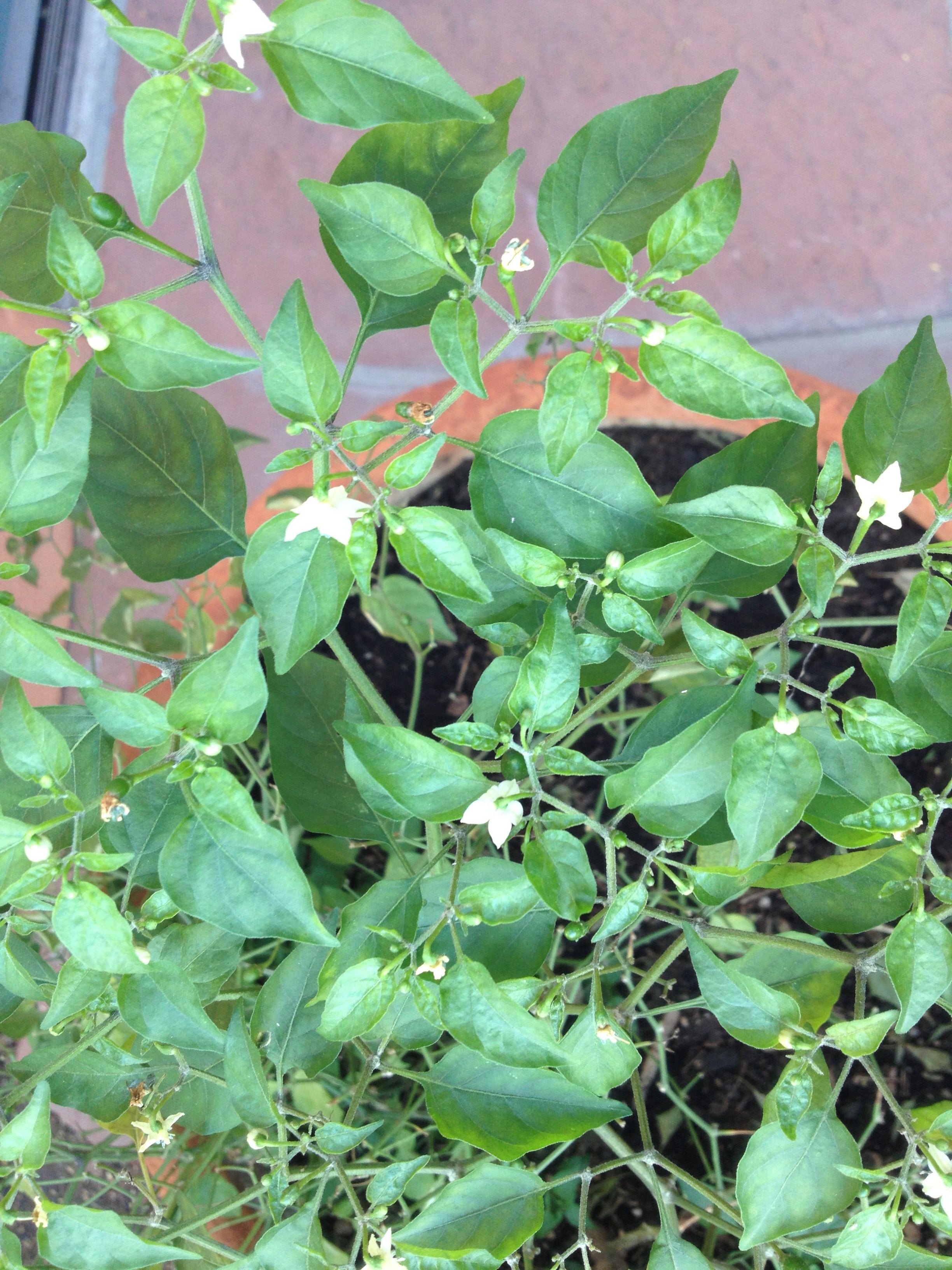
Potted blooming chiltepin plant for edible landscaping

Potted blooming chiltepin plant for edible landscaping

All of the heirloom foods served at the Farm to Table Picnic are being grown (even as I write) locally in Baja Arizona, either at the NativeSeeds/SEARCH Conservation Farm in Patagonia, or at the Mission Garden itself, or by sponsoring farmers and ranchers such as BKWFarmsInc, the 47-Ranch, and Ramona Farms. Some of Tucson’s best chefs are donating their skill and time to prepare different dishes for us. It will be a great opportunity to put the fun in fundraising for two worthy local non-profits, to share the delicious tastes of our heirloom foods of the Borderlands, and to share community joy in what we are able to produce together locally.

For adventuresome cooks, dessert addicts, and chocoholics, I would like to share two variations on brownies made with—yes, you guessed it—black tepary beans! You will not believe how yummy these are.
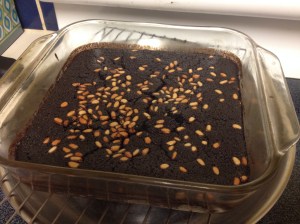
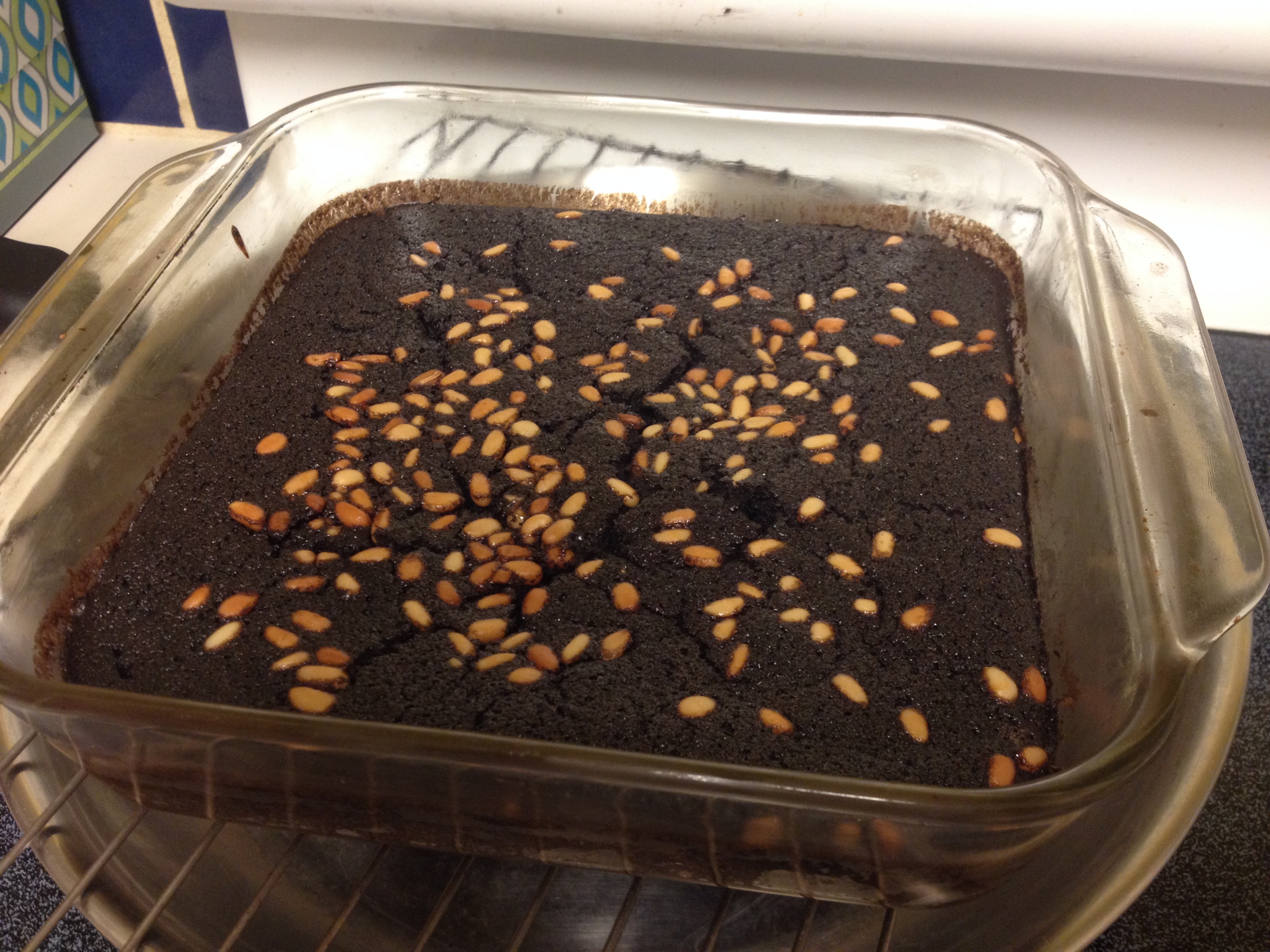
Gluten-free Black Tepary Brownie-Cockaigne on cooling rack

Gluten-free Black Tepary Brownie-Cockaigne on cooling rack


First, cooking black teparies (as with all teparies) takes some time—and premeditation.  The day before you want to use them, sort, wash, and pre-soak your black teparies. I hit them with a quick boil and let them sit overnight to hydrate slowly. Change the water the next day, adding fresh drinking water. Simmer until soft (it may take 2-3 hours on stovetop or 4-6 in crockpot). You want them beyond al dente in order to puree them in a blender or CuisinArt for the following recipes.


Muff’s Gluten-free Black Tepary Bean Brownies-Cockaigne

Ingredients:

1 cup cooked and pureed black tepary beans

1 stick butter= ¼ lb= ½ cup butter

5 Tbsp dark 100% cocoa powder, unsweetened (1 oz.)

¼ tsp sea salt

1 cup organic cane sugar

1 cup loose organic brown sugar

1 tsp vanilla extract

4 eggs well-beaten

¼- ½ cup nutmeats (I use pinyon nuts to keep the Southwest theme)

Directions for Muff’s Gluten-free Black Tepary Brownie-Cockaigne:

Preheat oven to 350 degrees F. Grease an 8×8” baking dish and place a wax paper cut to fit the bottom of pan. Melt butter (preferably in top of double boiler). Stir in thoroughly 5 Tbsp dark unsweetened cocoa powder. Let the mixture cool. Add sugars and sea salt to mixture and beat until creamy. Add vanilla. Beat 4 eggs and add to mixture stirring until uniform in color. Add 1 cup pureed black teparies and hand-mix. Pour batter into greased bake pan. Sprinkle top of batter with pinyones or other nutmeats. Bake 45-50 minutes until it tests done with toothpick.   Cool pan on a rack. Cut in small squares to serve because it is so rich and moist. Enjoy their delicious flavors AND the healthy qualities of high protein/high complex carb teparies, protein-rich eggs, and the benefits of dark chocolate!
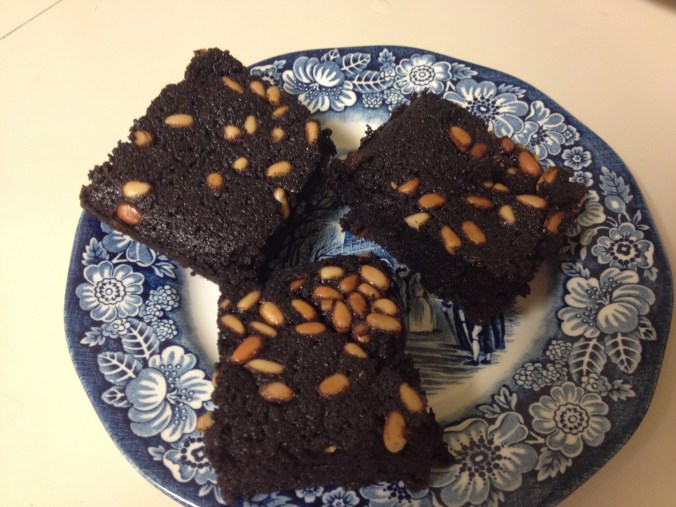
Gluten-free black tepary brownie-cockaigne ready to eat

Gluten-free Black Tepary Brownie-Cockaigne ready to eat–wheat-free, light, nutritious and delicious!

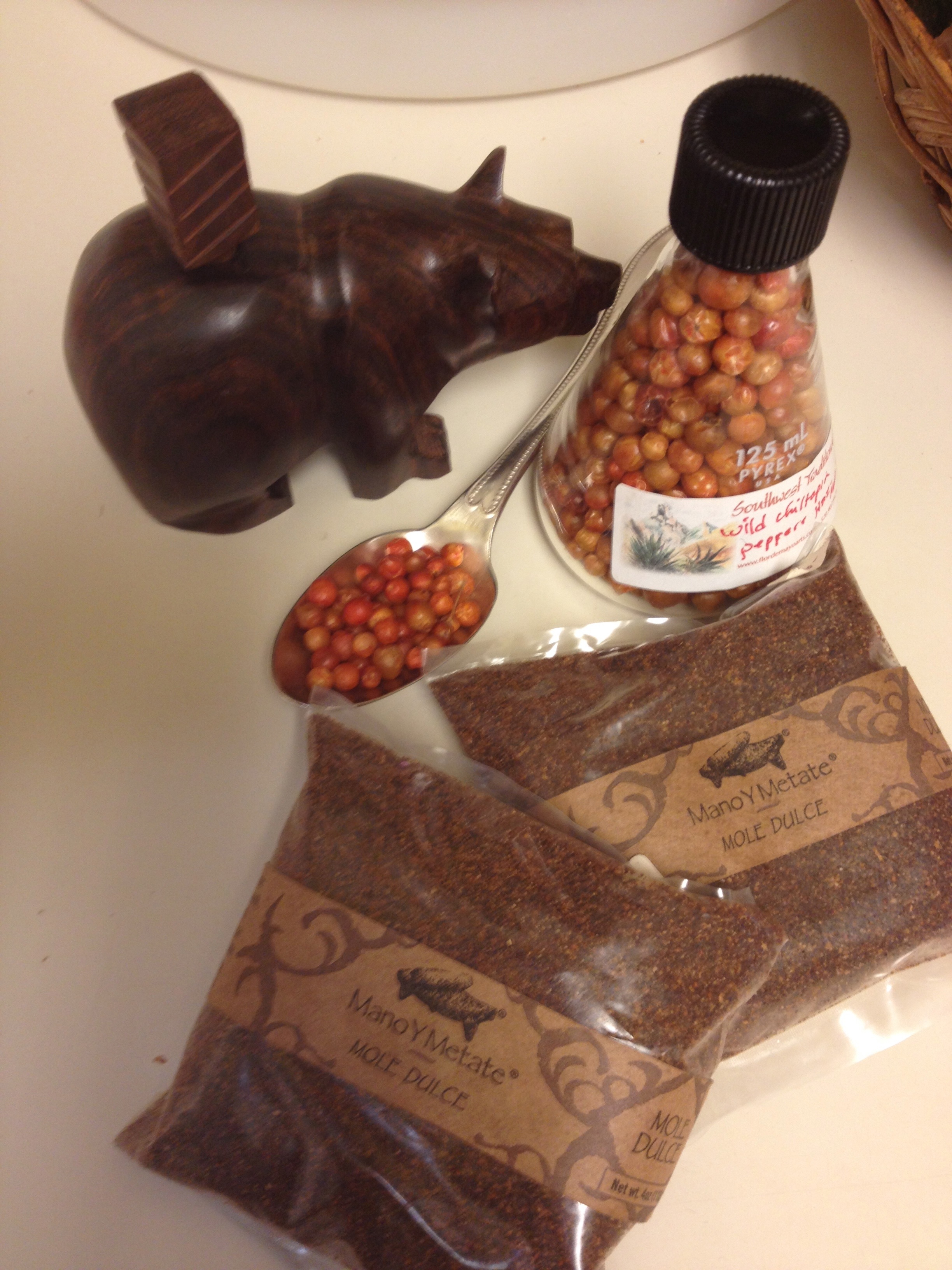
My next black tepary brownie recipe was first inspired by food-writer and “Blog-sister” Carolyn Niethammer’s recipe found in her book Cooking the Wild Southwest (p.133)–a must-have in every SW cook’s kitchen shelf. Here I’ve made some interesting gastronomic additions…including the use of our fantastic local heirloom White Sonora Wheat flour, crushed wild chiltepines, and Mano y Metate’s fresh-ground Mole Dulce powder produced by our local Molera herself, Amy Valdes Schwemm.


“Hot-Dam”* Black Tepary Brownie Bars [*in the best sense of the expression]

Ingredients:

5 Tbsp unsweetened 100% cocoa powder

½ stick (1/4 cup) melted butter

¾ cup organic cane sugar

¾ cup org brown sugar, not-packed

2 eggs, beaten

2 tsp vanilla extract

¾ cup pureed cooked black teparies

¾ cup organic heirloom White Sonora Wheat flour**

3 or 4+ crushed wild chiltepin peppers*** (number depends on your desired picante level)

¼ tsp sea salt

1-2 Tbsp Mano y Metate ground Mole Dulce powder

2 Tbsp raw pinyon nutmeats
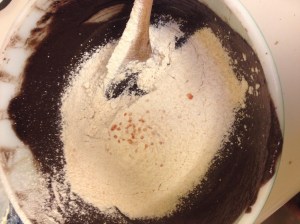
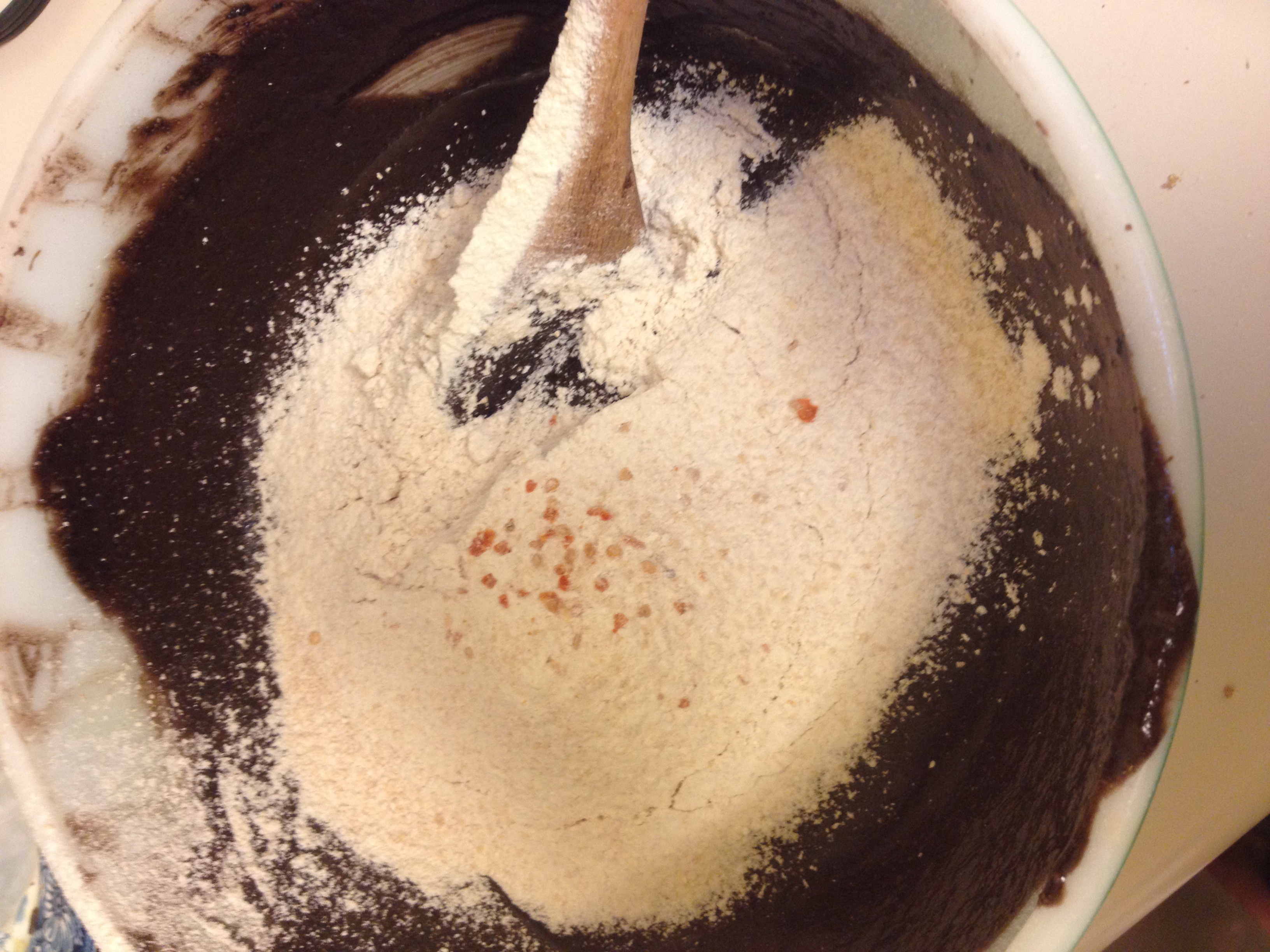
Adding White Sonora Wheat flour and crushed chiltepin to molten chocolate mixture

Adding White Sonora Wheat flour and crushed chiltepin to molten chocolate mixture

** Freshly milled White Sonora Wheat is available at our Flor de Mayo booth, Sunday’s St Philips farmers market (www.foodinroot.com). Call ahead for quantities larger than 1 kilo—520-907-9471.

***whole wild-harvested Chiltepines are available at the NSS Store, 3061 N Campbell, and at Flor de Mayo booth, Sunday St Philips farmers mkt. Chiltepin plants to grow can be purchased at NSS plant sales.
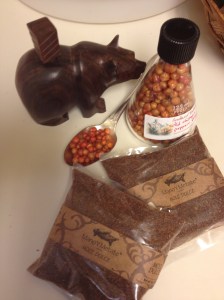
Flavors to guild the lily--Wild chiltepin peppers, ironwood bear molinillo grinder, and Mole Dulce powder

Flavors to guild the lily–Wild chiltepin peppers, ironwood bear molinillo chiltepin grinder, and Mole Dulce powder (all available at NSS store and Flor de Mayo at St Philips farmers market)


Directions for “Hot-dam” Black Tepary Brownie Bars:

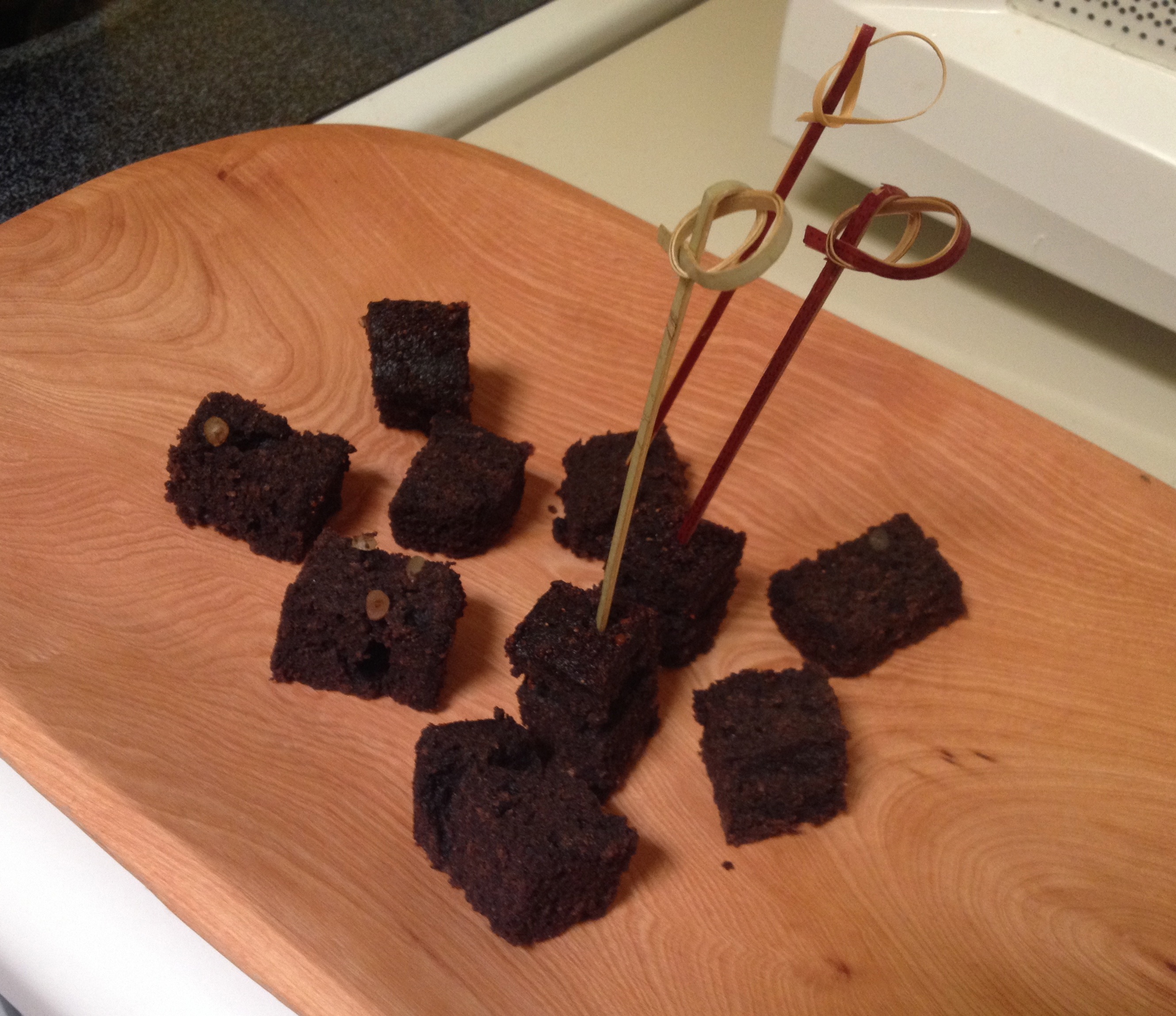
Pre-heat oven to 325F. Grease 8×8” baking pan with wax paper set in bottom. Melt butter and mix powdered cocoa in thoroughly. Add the brown sugar and organic white sugar and vanilla to the butter and cocoa, and beat. Beat 2 eggs and stir thoroughly into the choc/sugar mixture. Wisk in ¾ cup pureed black teparies. Sift together: ¾ C white Sonora wheat flour, ¼ tsp sea salt, and the well-crushed chiltepin peppers. Stir dry ingredients into liquid mixture. Add pinyon nutmeats. Pour batter into bake-pan. Sprinkle 1-2 Tbsp of Mole Dulce powder on top of the batter. Bake 25 minutes or until it tests done (when fingerprint pressed on top springs back). When cooled, cut into small bite-size squares to be served with hors d’oeuvre picks—you will see why…..(and don’t rub your eyes after eating.)
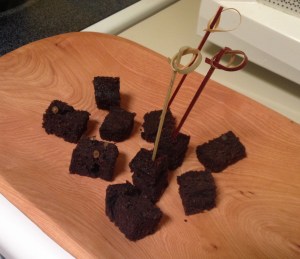
"Hot-dam" Black Tepary Brownies ready to enjoy!

“Hot-dam” Black Tepary Brownies ready to enjoy!


Tia Marta is hoping you enjoy these fruits and flavors of the Sonoran Desert assisted by fruits of tropical North America—a marriage made in dessert-Heaven! With every bite we should be thanking ancient tepary farmers, and the recent ones who have brought back the Black Tepary from near genetic-oblivion.


Coming this week to Tucson is a food event not to miss: the Farmer to Chef Connection, this Wednesday, September 16, at Tucson Community Center, 12:00noon-5:30pm, sponsored by LocalFirstArizona. Google their site for tickets and come enjoy a smorgasbord of local tastes.

Also be sure to mark your calendar for October 18 and join NativeSeeds/SEARCH and Friends of Tucson’s Birthplace at the very heart of Tucson’s Birthplace –the Mission Garden at the base of A-Mountain—for the first-ever outdoor Farm to Table Picnic. It will be a feast to remember. Make reservations now and we’ll see you there for fun, flavor, history and friendship!

Joy of the Mountains in Tucson

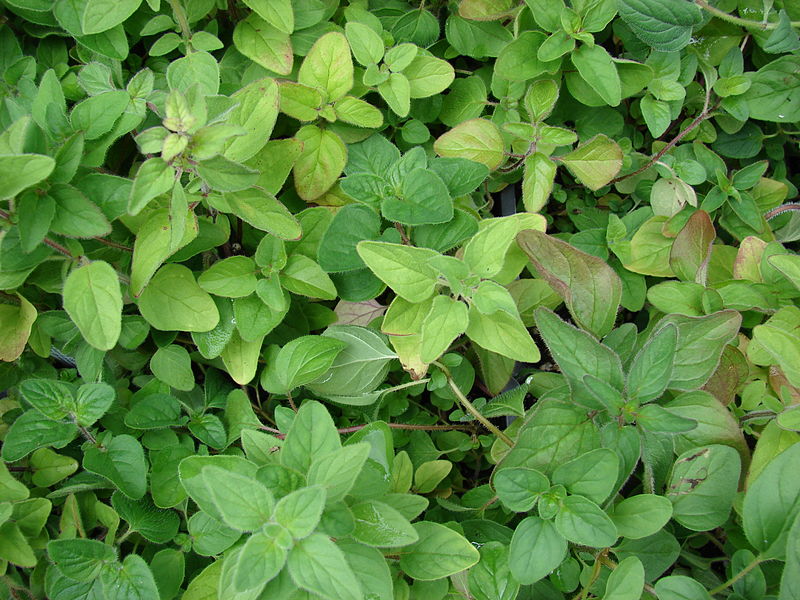
Jacqueline A. Soule here to tell you of a wonderful perennial herb to plant in your garden or landscape this coming month.  Oregano comes to us from the arid mountains of the eastern Mediterranean, including present day Greece and Turkey.  Oregano grows well here in the Old Pueblo forming a lovely low mounding landscape plant with a little added water.

Origanum_majoricum_prostrate_001

In shady sites of our Southwestern yards, oregano can grow quite green and lush.

The name, oregano is translated from the Greek as joy of the mountain. (oros = mountain, ganos = joy) so imagine the rocky Greek mountains as you plant your oregano. Rocky or sandy soil (not clay) works well. Some afternoon shade in summer is best for healthy plants.

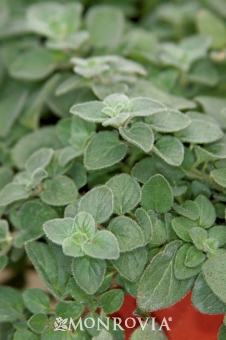
Origanum vulgare 'Hot & Spicy'

Origanum vulgare ‘Hot & Spicy’ likes the heat and has very strong flavor. Like most herbs, it does best in well drained soil and does not thrive if overwatered. Photo courtesy of Monrovia Growers.

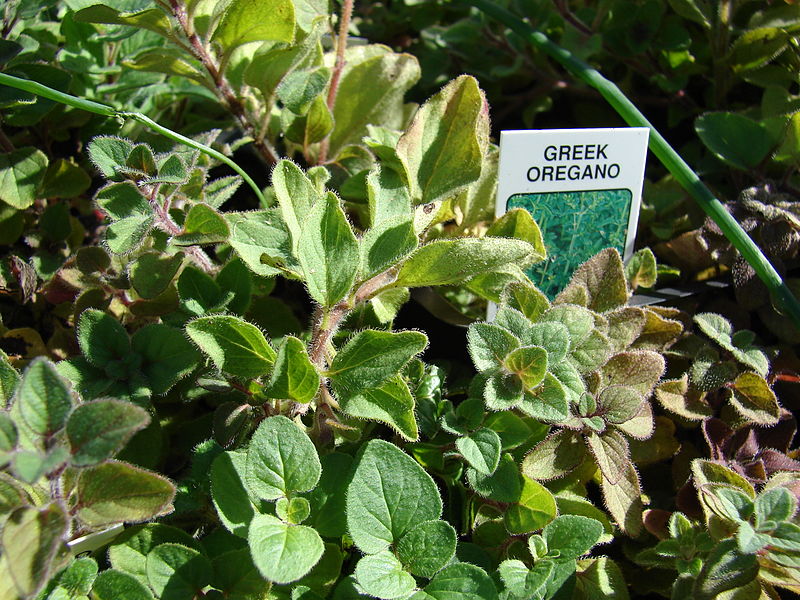
Oregano comes in many species, subspecies and varieties. For the best type able to grow here in the Old Pueblo, go with the true Greek oregano, Origanum vulgare subspecies hirtum. Since many nurseries do not label with correct scientific names, look at the leaves. The one you want will have smallish leaves with silvery hairs on them. When you rub a leaf between your fingers, it should release a strong fragrance of oregano. Avoid the oreganos that are mildly scented, musky scented, or have larger, not very hairy leaves. Indeed, you may run across marjoram (Origanum majorana) or even Italian oregano (Origanum X majoricum). These have their place in the kitchen and in the garden, but don’t plant them next to Greek oregano. The more vigorous Greek oregano will over run the others.

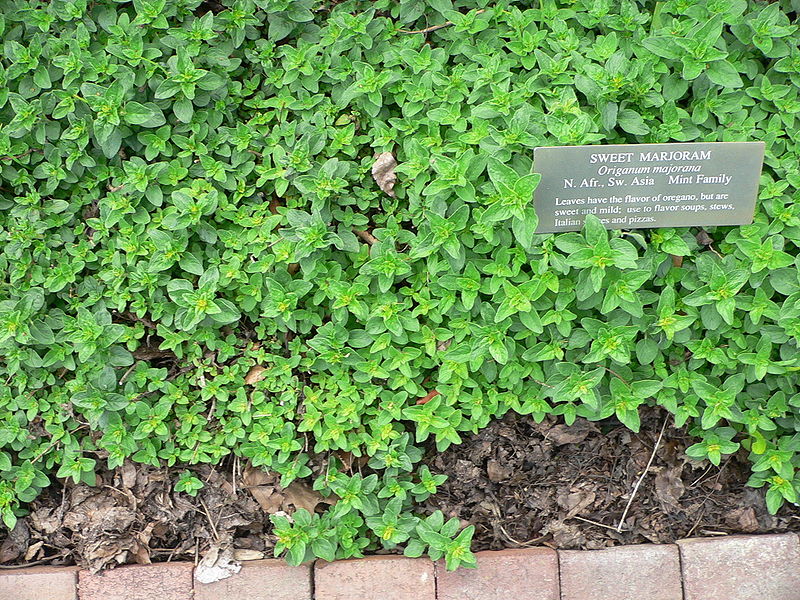
Origanum_majorana_habit

Majoram is closely related to oregano. It also grows well here.

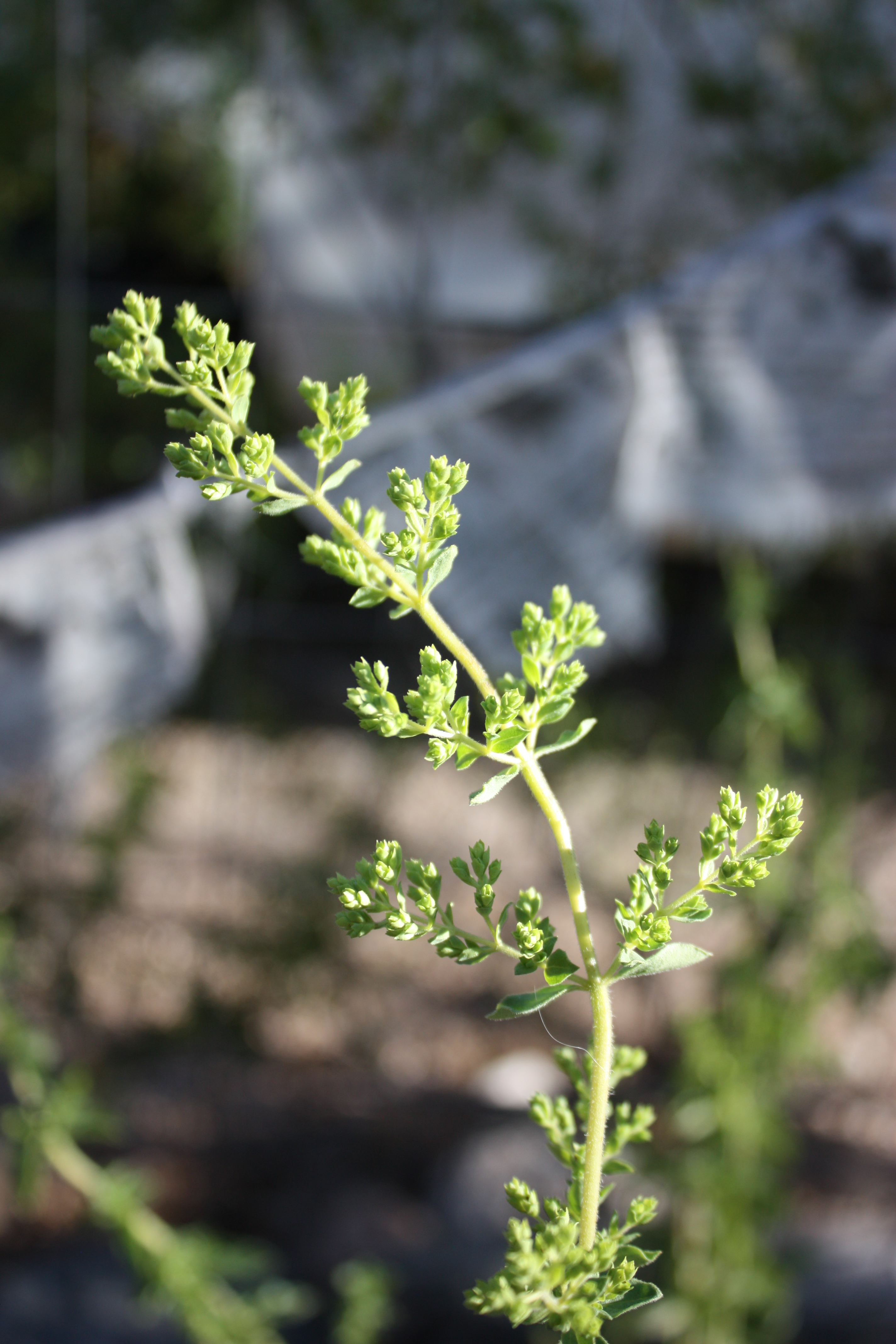
Like many herbs, the best time to harvest oregano is just before it blooms. Many herbs increase their production of essential oils as they go into bloom since it is a time when they really need to protect themselves from pests. When you first start growing oregano, harvest may mean pinching a few stalks back with your fingers. Once your patch gets larger, trim it with strong kitchen scissors to about two inches high, so it forms a low mat of leaves. Don’t worry, it will get tall again.

Origanum AMP_6655

Ideally farvest any oregano you wish to use before it flowers. Once it begins to flower, I like to leave the blooms for the pollinators.

Dry all herbs out of direct sunlight. I spread the cut stems on top of folded paper bags placed on top of the bookshelves. A ceiling fan running during the day helps dry them quickly. The quicker the drying, the less breakdown of the chemical compounds inside the leaves, and thus the sweeter the oregano flavor and less bitter the background notes.

Origanum_majorana_seedling

In the nursery look for the oreganos with very hairy leaves. It is one sign og a true Greek oregano.

Besides its culinary uses, oregano is used medicinally as an antiviral, antibacterial, antifungal, and antiparasitic. The oil of oregano is reported to destroy organisms that contribute to skin infections and digestive problems, strengthen the immune system, increase joint and muscle flexibility, and improve respiratory health. The medicinal properties or oregano appear to be from high concentrations of thymol and carvacrol. Caution is needed since carvacrol appears to reduce the body’s ability to absorb iron. Moderation is, as always, important.

Origanum layering AMP_6648

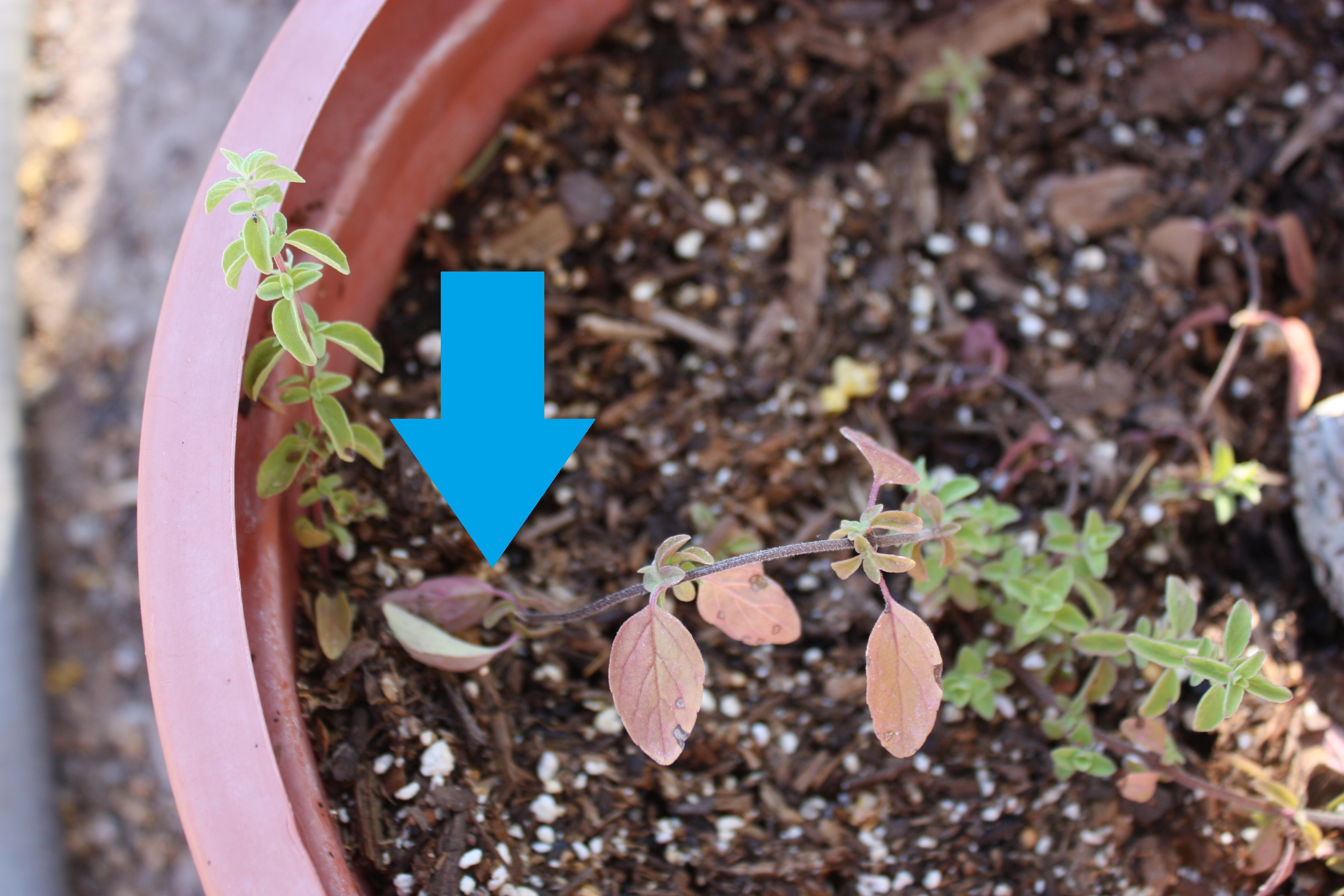
Spread out the branches of your oregano and bury all but the tip. The branch will root where buried (blue arrow). This is called layering and is and easy way to propagate your herbs.

Please do tell me your favorite way to use oregano in the comment section below.  We Savor Sisters love to hear from our readers!

Origanum AMP_6652

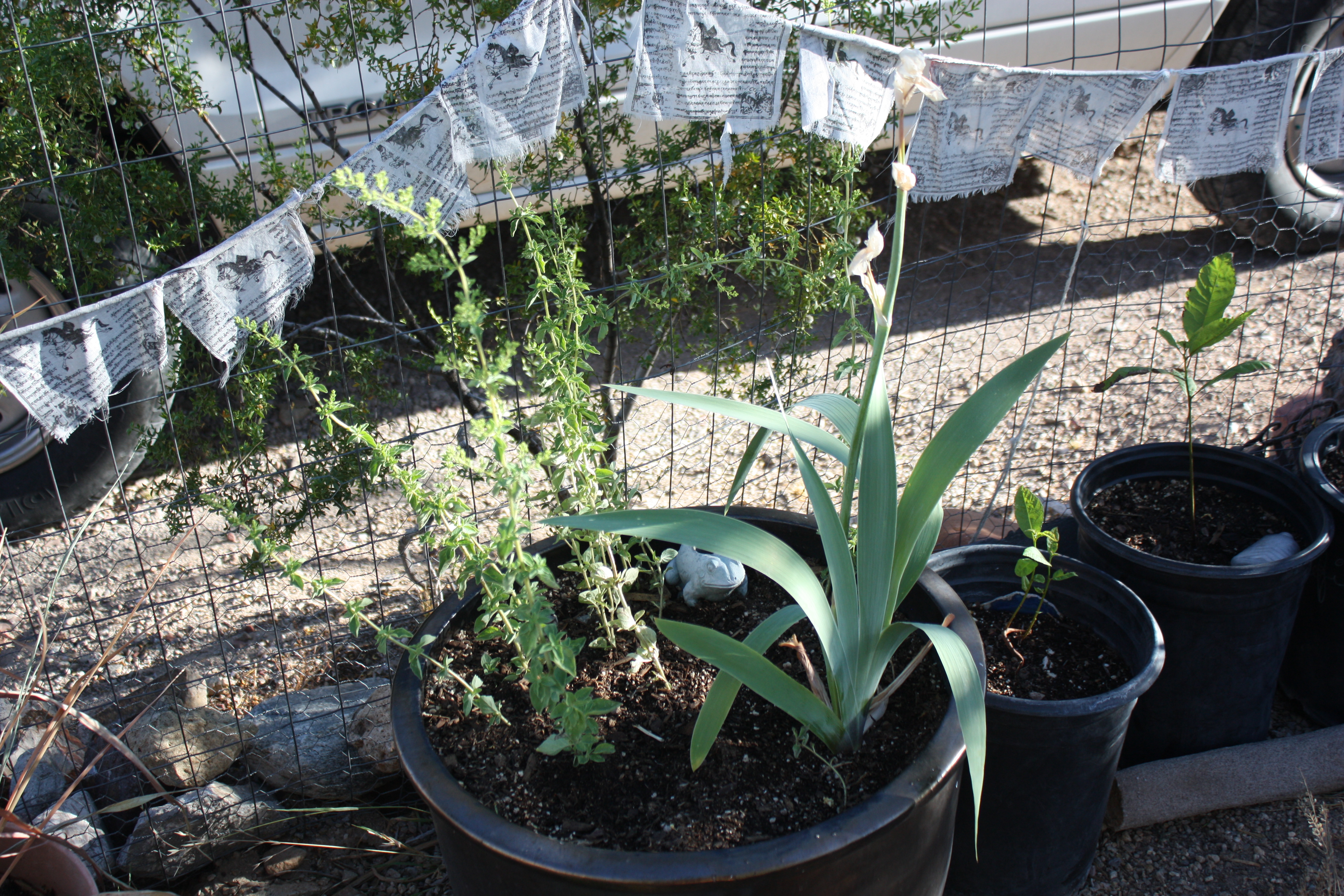
As well as in the ground, oregano can be grown in pots. Normally one doesn’t mix iris and oregano but I needed a spot to put the iris, and then it was about to bloom,,, and if you are a gardener, you know how it goes.

JAS avatarIf you live in Southeastern Arizona, please come to one of my lectures. Look for me at your local Pima County Library branch, Steam Pump Ranch, Tumacacori National Historical Park (National Park Service Cenntenial this year!), Tucson Festival of Books and more. After each event I will be signing copies of my books, including the latest, “Southwest Fruit and Vegetable Gardening,” written for Arizona, Nevada and New Mexico (Cool Springs Press, $23).
All photos (except where noted) and all text are copyright © 2015, Jacqueline A. Soule. All rights reserved. I receive many requests to reprint my work. My policy is that you may use a short excerpt but you must give proper credit to the author, and must include a link back to the original post on our site. Photos may not be used.

# # # # #

Harvest Time for I’itoi Onions

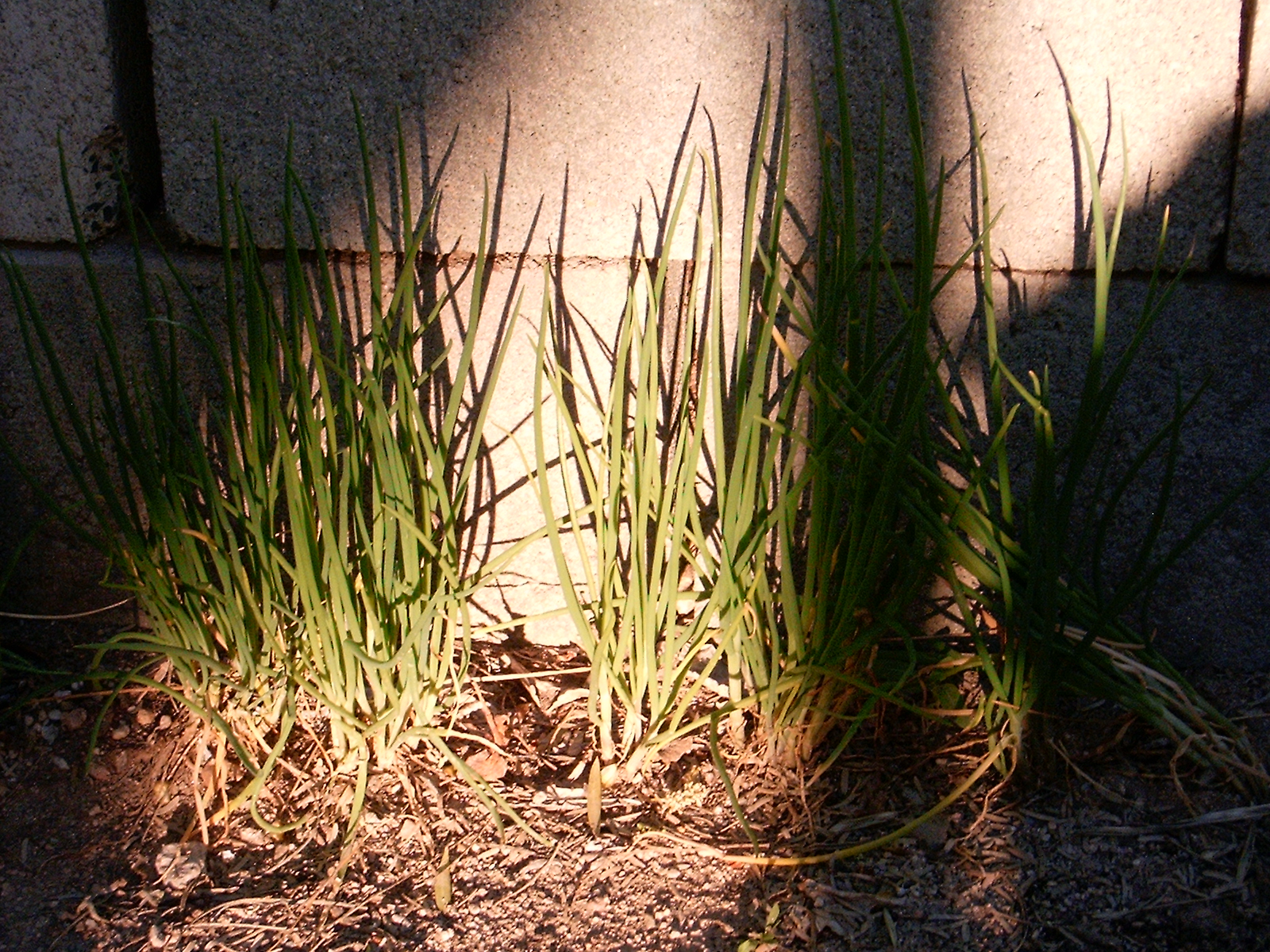
Big clump of iItoi onions. All this from just one little onion planted last October.

Big clump of  I’itoi onions. All this from just one little onion planted last October.

I had to put my vegetable garden to bed for the summer early this year since we were leaving for a month.  No use having the housesitter water for the weeks we were gone as the hot weather would overcome the vegetables about the time we got home anyhow. The plants were at the end of their season, but still pulling them up was almost as painful as putting down a beloved pet. I go through this mourning every year when one by one the winter crops reach the end of their production – first the peas, then the broccoli, then the last of the lettuce and spinach even in the shade. The kale was still so hearty I simply could not consign it to the compose bin. After freezing some for soup and making as many kale chips as we could handle, I dug up the plants and put them in a pot to transfer to a friend.

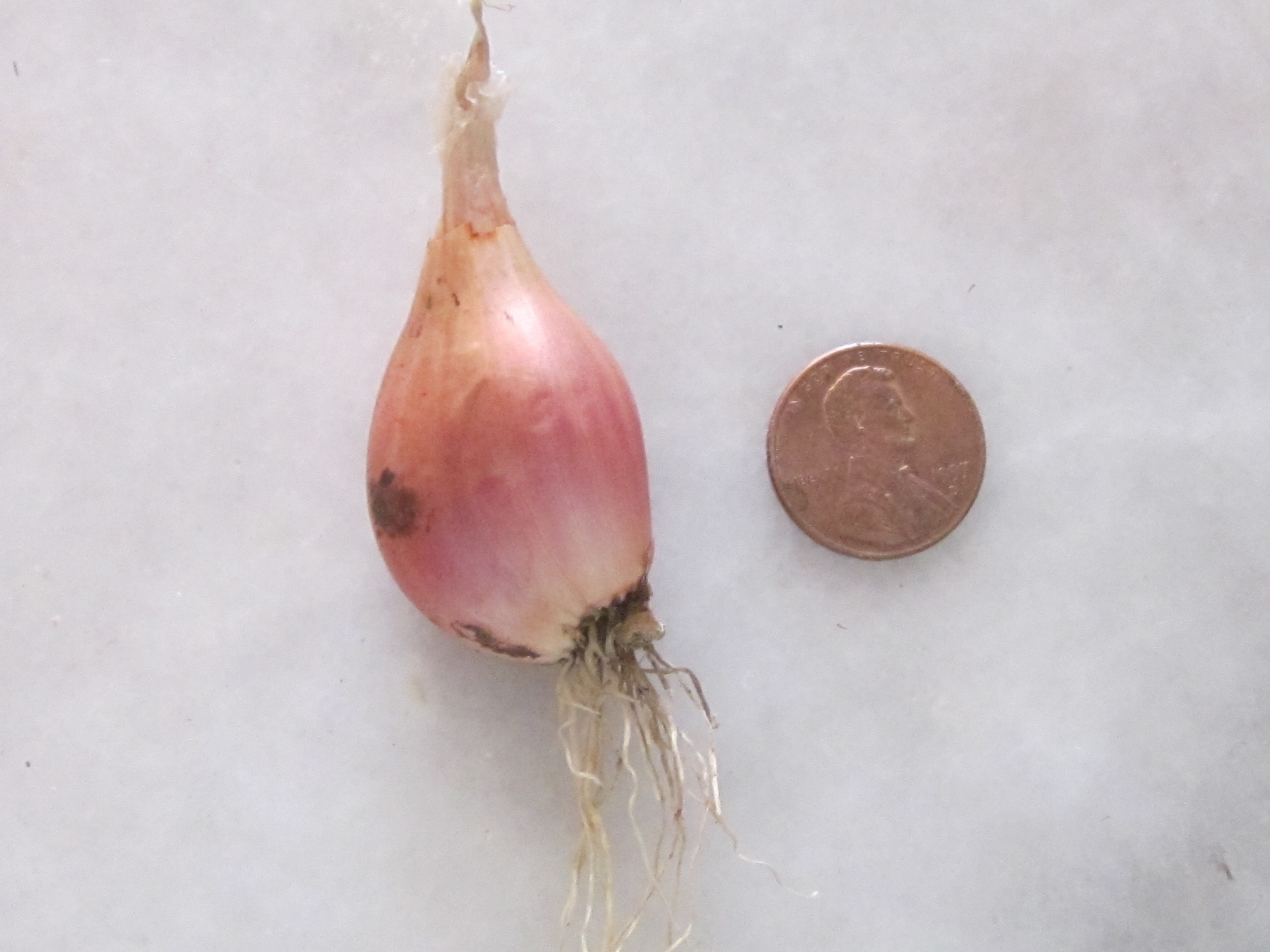
One chore involved pulling out the remaining I’itoi bunching (or multiplier) onions.  I’ve been using them all spring, but they are very prolific. One little onion that looks like this produced the bunch in my hands at the top of the page:

Lovely little iItoi onion with penny for size comparison.

Lovely little I’itoi onion with penny for size comparison.

I’itoi onions were brought to the Southwest in the 17th century by Spanish missionaries, but have become such a part of the Tohono O’odham biology that they are called by the name of their creation diety, Elder Brother, or I’itoi.  These little gems were beginning to die out when they were brought to Native Seeds SEARCH by a Tohono O’odham woman.  They are one of the plants in the Slow Food Ark of Taste. 

I’itoi onions (Allium cepa var. aggregatum) are easy to grow — in the fall, just plant each bulb about an inch below the surface and at least eight inches apart.  They will send up chive-like greens first that can be used until you decide they have multiplied enough and pull them up for use.  When you harvest the last clump in the summer,  put aside a dozen or so bulbs in a paper bag and set aside on a cool shelf to await fall.  (I find it amusing that the onions “know” when to start again — if I don’t get around to putting them back in the ground until later in September, I sometimes find that they have begun to sprout in anticipation.)

To prepare onions for cooking, first separate and clean off the dirt,  then peel.

Like most onions, these contain potassium, vitamin C, folic acid and vitamin B6. Onions contain substantially the same amount of vitamins and minerals when cooked.  I’itoi onions can be substituted for onions or shallots.  You can find them at farmers’ markets and from Crooked Sky Farms in Prescott and the Phoenix area and from Native Seeds SEARCH. Both of these places will ship to you as well.

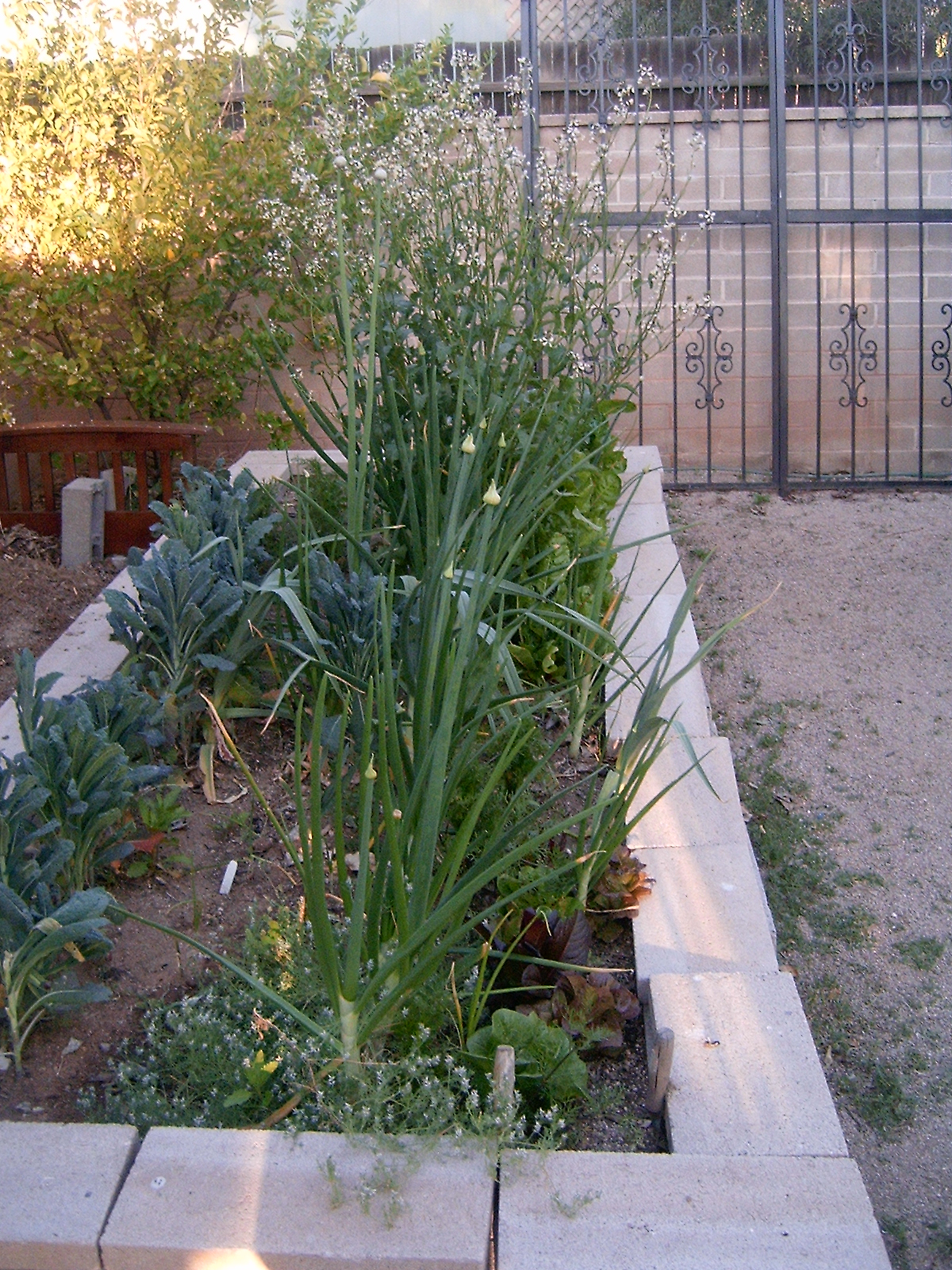
A healthy row of iItoi onions.

A healthy row of iItoi onions.

You’ll have a ratio of green tops to bulb of about 10:1 so you’ll have to find a use for all the green onion tops.   When you’ve used all you can fresh, freeze them to add to soup stock later. You can also make delicious Chinese Onion Pancakes.

Savory pancakes using onion tops.

Savory pancakes using onion tops. (Photo from Serious Eats)

It’s easy, but rather than recount the recipe here, go to this link. These are the best directions I’ve found for making this delicacy and the author also gives a wonderful tutorial on the difference between adding cold and hot water to flour.

If you’d like a recipe to show off your onion harvest, this one is easy and delicious.

I'itoi onions cooking for Sweet and Sour sauce.

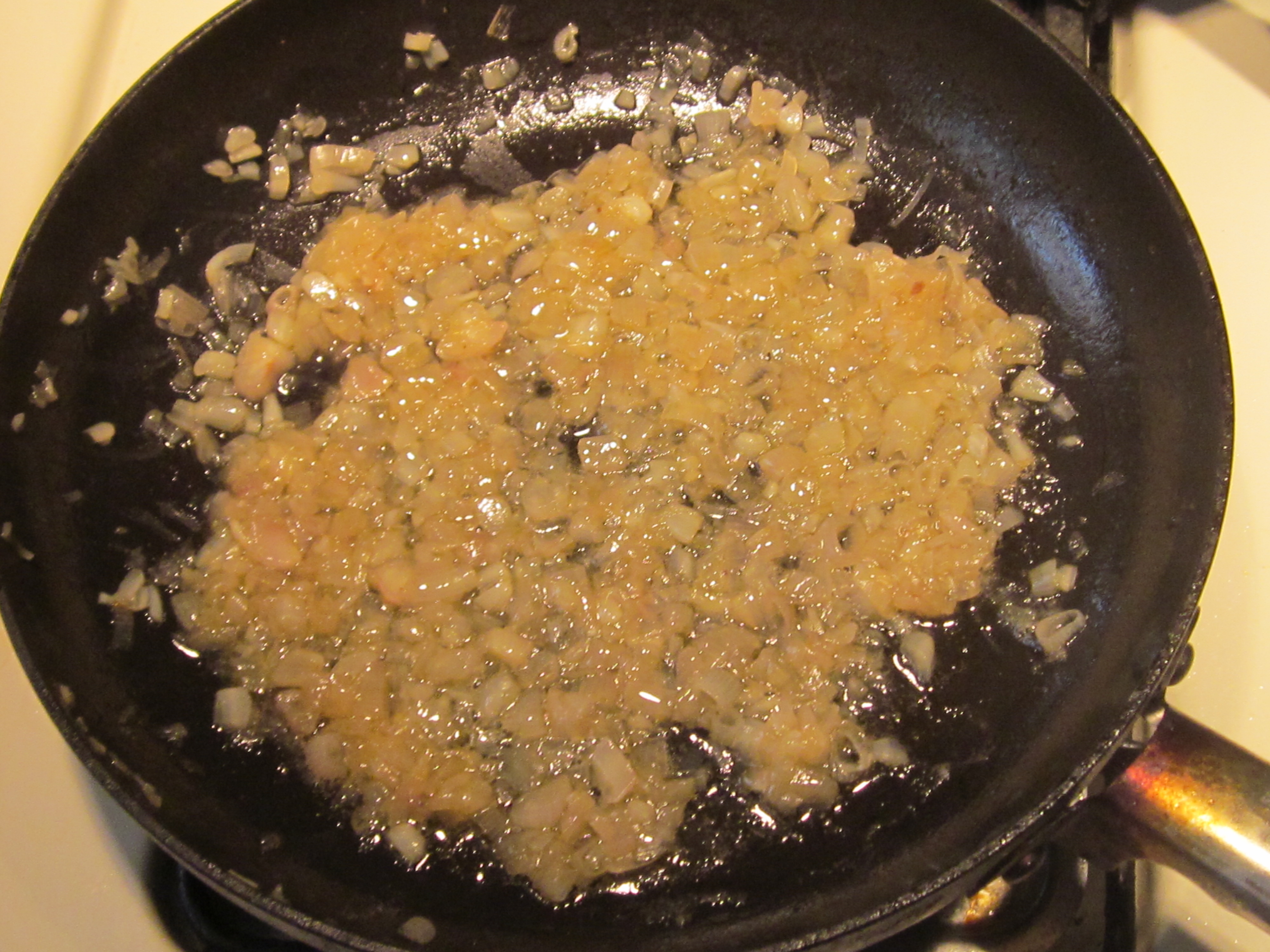
I’itoi onions cooking for Sweet and Sour sauce.

 Sweet and Sour I’itoi Onions

Here’s my recipe for sweet and sour I’itoi onions.  You can use red wine and red wine vinegar or white wine and white wine vinegar. Makes a great topping for grilled fish or chicken or mix it into steamed vegetables to add flavor.

1 cup cleaned and sliced I’itoi onions

1/2 cup water

2 tablespoons wine vinegar

2 tablespoons wine

1 tablespoon olive oil

1 teaspoon sugar or agave syrup

1/2 cup water (again)

In a large heavy frying pan, cook sliced I’itoi onions and water covered over very low heat for 10 minutes until soft.  Add wine, wine vinegar, olive oil and sugar or agave syrup.  Cook over very low heat for another 10 minutes.

My blog sister Jacqueline Soule wrote a column about I’itoi onions for the Explorer and finished with a recipe for I’itoi onion and goat cheese scones. You can see it here

**************************

If you are interested in wild and heritage foods of the Southwest, check out my cookbooks Cooking the Wild Southwest, Delicious Recipes for Desert Plants,   and the Prickly Pear Cookbook.  The books are also available through Native Seeds/SEARCH. For inspiration and directions on what wild plants are available in what season, watch a short video here.

An Invitation to Celebrate El Dia de San Ysidro Labrador

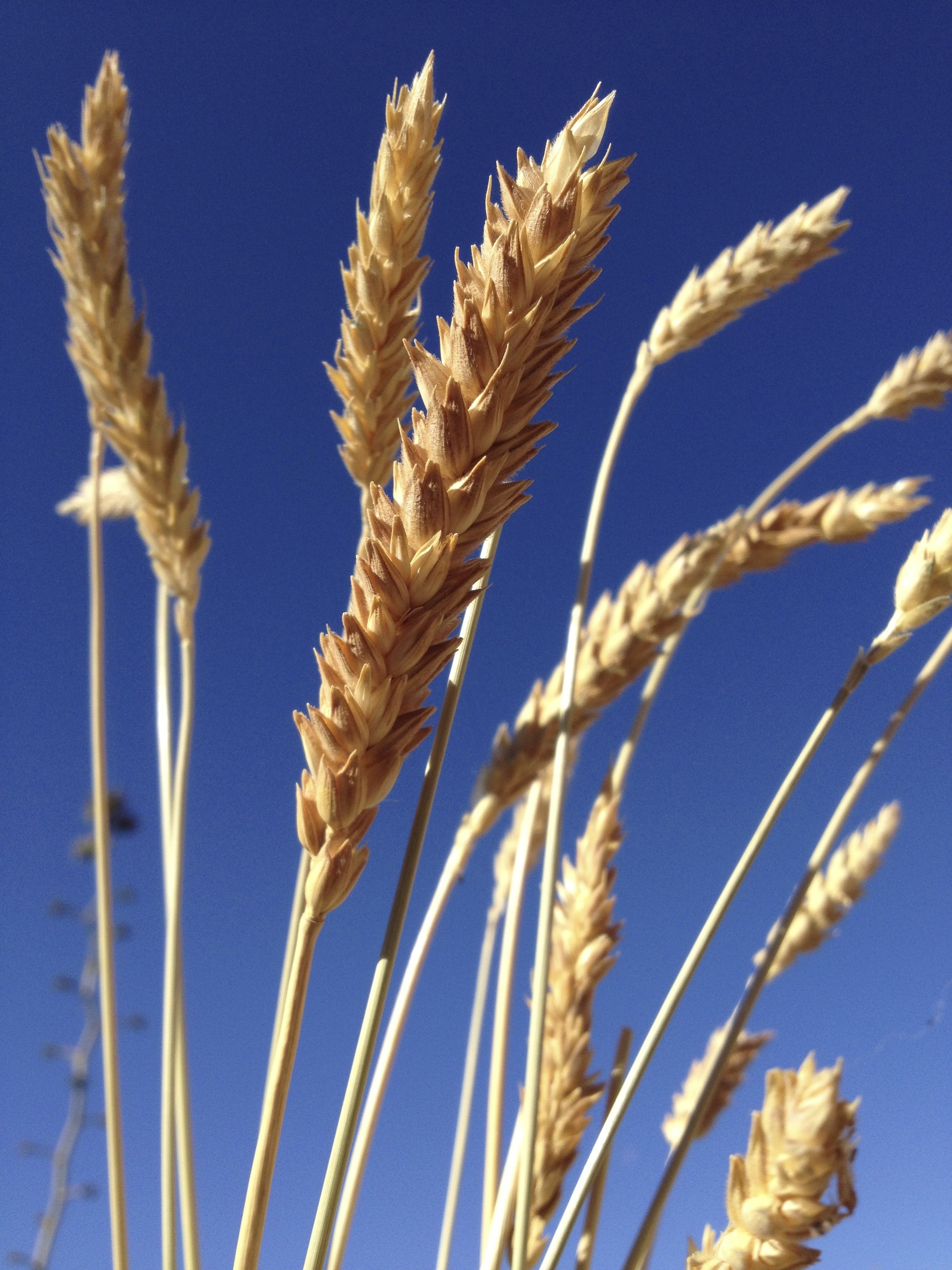
With White Sonora Wheat waving its ripening seed heads in May’s wind, it’s time again to celebrate our local agriculture–our ability to feed ourselves locally.  Yea!.. harvest time now for our winter gardens’  bounty as it dries…

Ripened seed heads of organic heirloom White Sonora Wheat from BKWFarms in Marana (MABurgess photo)

Ripened seed heads of organic heirloom White Sonora Wheat from BKWFarms in Marana (MABurgess photo)

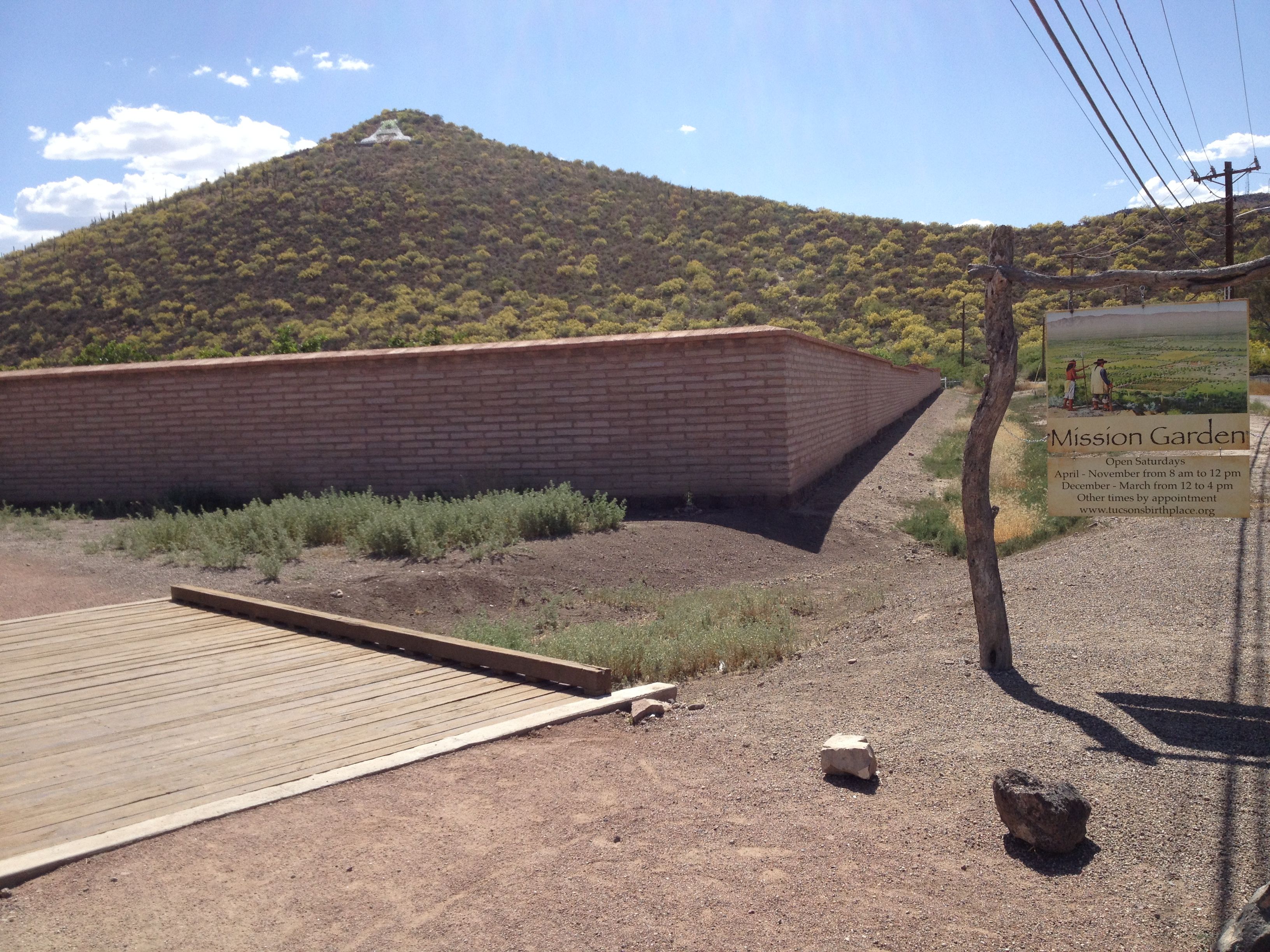
Tia Marta here inviting you to return to the hallowed soil of Schuk-shon–Tucson’s Birthplace “Black Spring”–at the foot of “A” Mountain, in the new Mission Garden, to the very site of the original garden supporting Mission San Augustin de Schuk-shon.  The Feast of San Ysidro Labrador is approaching.

May 15 is the traditional Dia de San Ysidro, Saint Isidor, patron saint of farmers and gardeners.

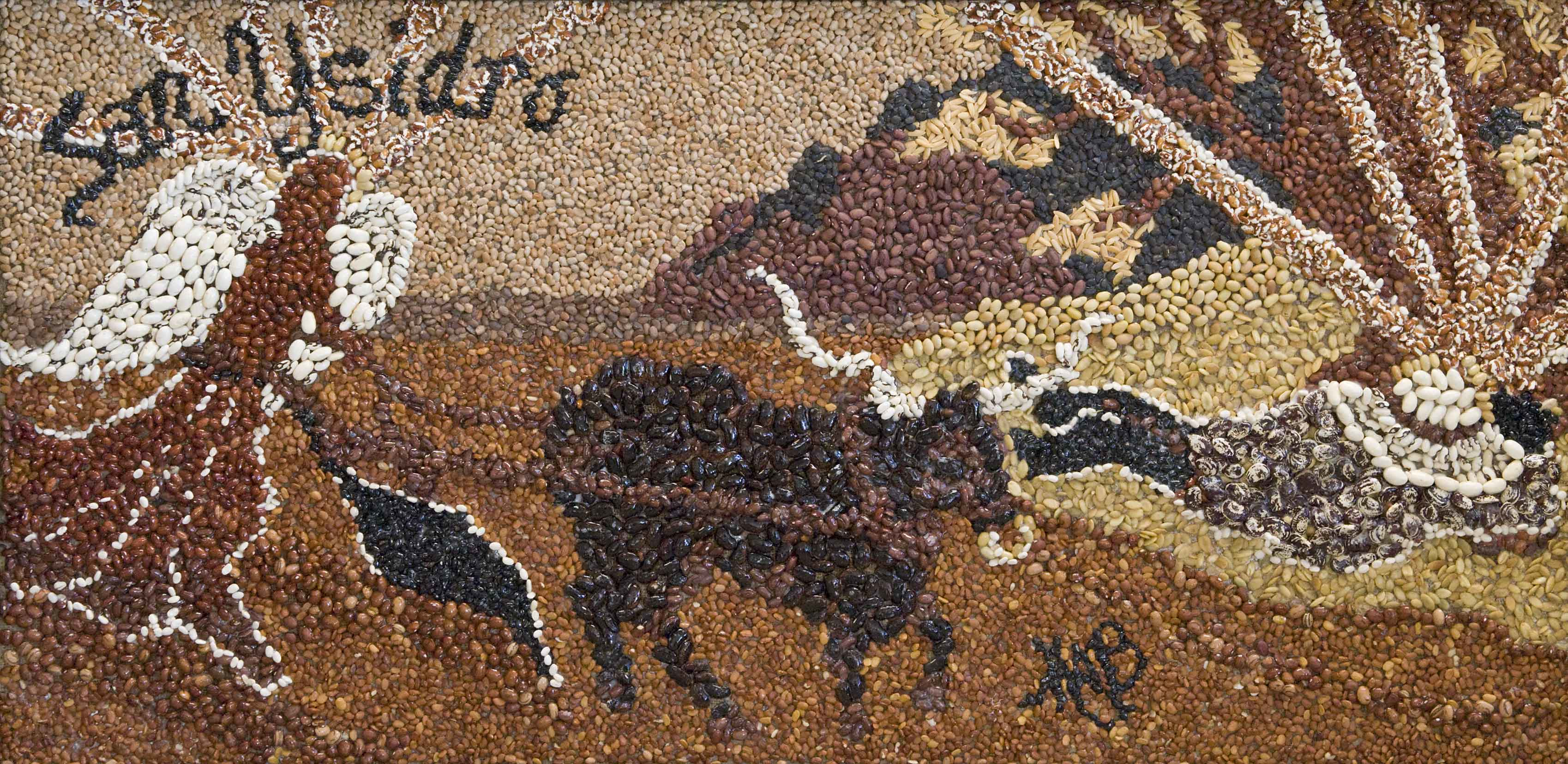
According to legend, San Ysidro Labrador was so hard-working and generous with his produce to all in need—people or animals–that angels would plow next to him to triple his crop. In my artistic interpretation, San Ysidro lies exhausted under a tree from working his field while an angel guides his ox to finish his plowing.

Heirloom bean mosaic of San Ysidro Labrador created by artist/ethnobotanist MABurgess

Heirloom bean mosaic of San Ysidro Labrador created by artist/ethnobotanist MABurgess

Here in my big-scale heirloom bean mosaic, the “medium is the message”–in part.   It was assembled using more than 21 colorful varieties of Southwestern heirloom beans and seeds, grown out from the Native Seeds/SEARCH Collection, in Tucson, Arizona.

The ancient seeds used to “paint” this image pay homage not only to San Ysidro but also to the generations of traditional farmers who have selected their seed and labored to grow the best for feeding family and community. Their seed-saving has provided us today with priceless heirlooms, fitting genes, and hope for a food-secure future.  (Notecards of my San Ysidro mosaic will be on sale at the fiesta as a fund-raiser for Mission Garden’s good work.)

This year, our San Ysidro fiesta will be celebrated on Saturday, May 16, within the adobe-walled orchard of living agricultural history, Tucson’s newest “museum park” sponsored by the non-profit Friends of Tucson’s Birthplace.  Planted in this living museum are representative crops that have fed the sequence of Tucson residents over the last 4100 years.  Seeds of these ancient crops were blessedly conserved by the caring staff and volunteers of NativeSeeds/SEARCH over the past 34 years.

The new Mission Garden--living agricultural history

The new Mission Garden–living agricultural history


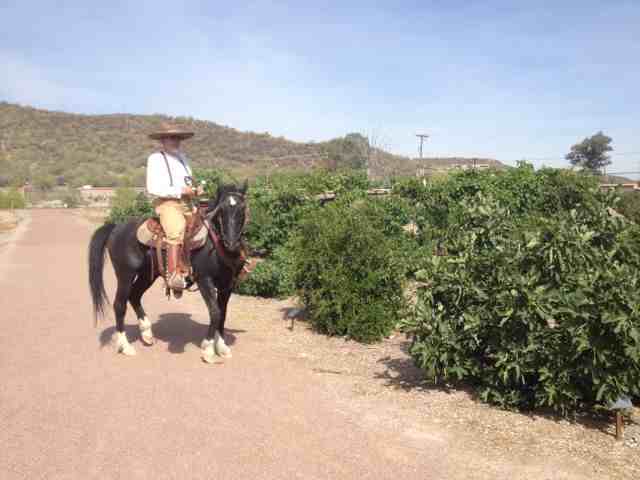
Vaquero in the Orchard of heirloom Mission Period fruit trees at San Ysidro Fiesta 2014 (MABurgess photo)

Vaquero in the Orchard of heirloom Mission Period fruit trees at San Ysidro Fiesta 2014 (MABurgess photo)


The Dia de San Ysidro celebration will officially begin at 9am with a procession from the future Tucson Origins Heritage Park next to the Santa Cruz “river” channel to Mission Garden’s east gate at 929 West Mission Lane, just east of  Grande (Mission Road.)  Festivities will include music by Mariachi Las Aguilitas from Davis Elementary, Alabanza with Bobby Benton, a presentation by historian/author Dr. Tom Sheridan, Native American four-direction prayers and blessing of the fields, food, and animals, and the Tohono O’odham Desert Indian Dancers from San Xavier.  Designs for the new cultural theme gardens (Chinese, Mexican, Afro-American, and Medicinal) will be unveiled.

Activities will culminate with a tasting of Pozole de Trigo, the traditional Sonoran stew for the feast-day prepared by talented volunteer cooks from Tucson’s Hispanic community.  For a fabulous recipe to try in your own kitchen, check out Bill Steen’s article for Sonoran Wheat Posole in Edible Baja Arizona–here’s the link to directions with his mouth-watering photos:

http://www.ediblebajaarizona.com/a-personal-posole

Or, for an even more local recipe, try this Akimel O’odham (Pima) recipe for Heirloom Wheat Posole with Tepary Beans:

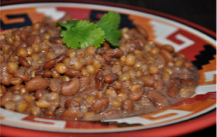
Pima Posole Stew with Tepary Beans and White Sonora Wheat, served at Heard Museum

Pima Posole with Tepary Beans and White Sonora Wheat, served at Heard Museum

The combination of high protein Native Teparies and delicious low-gluten Heirloom Wheat Berries makes this a rich and nutritious stew.


Heirloom Wheat Posole with Tepary Beans—Pilt’kan ch Ba’bawi Posh’oldt

Ingredients:

2 cups dry tepary beans *

Water to more than cover the beans for initial soaking and cooking

1 large marrow bone (or beef broth as substitute for ½ the water when simmering, omit for vegetarian)

2 cups dry whole wheat berries (wheat kernels) **

3-4 cups drinking water or stock

Sea salt to taste (1-2 Tbsp.)

Black pepper or native chiltepine peppers***, to taste

Directions:

Carefully sort dry beans to remove stones. Wash, rinse, and cover with good water to soak overnight. Drain when plumped and ready to cook.

In big cooking pot, put beans, marrow bone, and drinking water to cover. Bring to a boil then simmer for 2+ hours.

Separately, rinse wheat berries and drain. Add wheat berries and salt to the cooking teparies. Add more water and/or stock. Bring to boil, then simmer an additional 1 ½ hours or until wheat berries are round and tender, and teparies are tender(not chewy).

Reserve excess water for later soup stock. Remove bone.  For serving, posole should be moist with broth. Add black pepper and sea salt to taste. If picante bite is desired, add one or two crushed chiltepine peppers.

Enjoy this traditional taste of the desert! ***********Here’s where to find these traditional ingredients (being grown anew in their home turf):

*Native tepary beans are available at www.nativeseeds.org or at www.ramonafarms.com .

** Organic White Sonora Wheatberries are available at Flor de Mayo tent at Sunday St Philips Farmers Market, Tucson, or at the NativeSeeds/SEARCH Store, 3061 N Campbell Ave, Tucson.

***whole wild-harvested chiltepine peppers are available at Flor de Mayo tent, Sunday St Philips Farmers Market, Tucson, or at the NativeSeeds/SEARCH Store, Tucson.

*****************************************************************************************

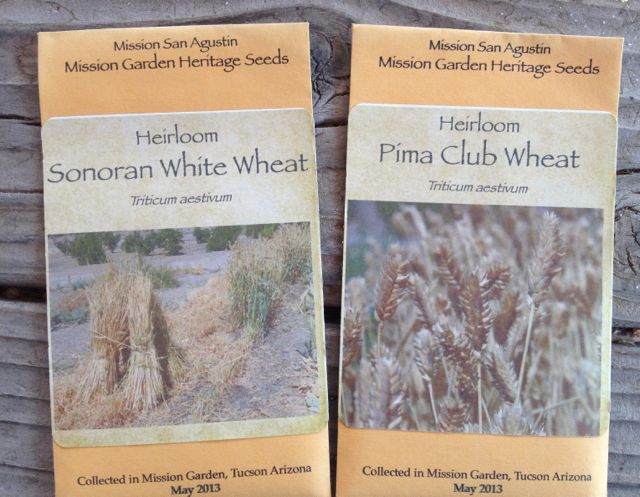
Seed packets of heirloom wheat varieties grown at Mission Garden

Seed packets of heirloom wheat varieties grown at Mission Garden, for sale to plant in your own winter garden.

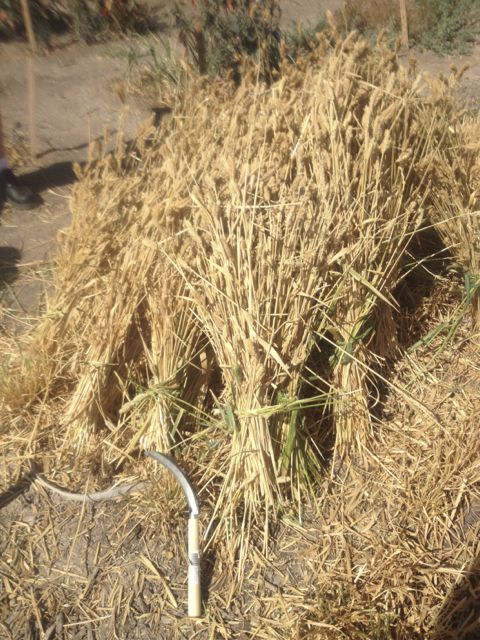
Sheaves of heirloom White Sonora Wheat hand-harvested at Mission Garden

Sheaves of heirloom White Sonora Wheat hand-harvested at Mission Garden

Because Dia de San Ysidro especially heralds the wheat harvest, the staple grain introduced by Padre Eusebio Kino and other missionaries over 300 years ago to the Native Tohono O’odham community living here, this year’s festivities will include a ceremonial wheat harvest, guided by expert plantsman and Desert Museum staff person Jesus Garcia, to take place around 8am, Saturday, May 16, before the procession.

Support organizations, such as NativeSeeds/SEARCH, San Xavier Coop Association, BKWFarmsInc, and Tucson Herbalist Collective will have booths with demonstration items, tastes of native foods, solar cooked White Sonoran Wheat berries, traditional food products packaged for sale, and resource people to talk with about desert gardening for real food.

Invitation to the 2015 San Ysidro Fiesta

Invitation to the 2015 San Ysidro Fiesta

The event is free with a donation requested.   Find out more details of the San Ysidro Festival at  www.tucsonsbirthplace.org.   Hope to see you there!

[For more great recipes and stories about White Sonora Wheat, you can search with the box above using those key words, thru the last 2 years of this blog.]

Glorious Diversity–A Palette of Heirloom Legumes

The desert this spring is exploding with color, its rainbow shades reminding us of the amazing diversity of life, of species, of varieties of plants in this rich Sonoran Desert! Cholla flowers themselves are a veritable palette of genetic diversity within a species and between species.

Tia Marta here to talk about the rich diversity of beans selected and cultivated over the centuries by smart Native farmers in what is now the southwest borderlands…..

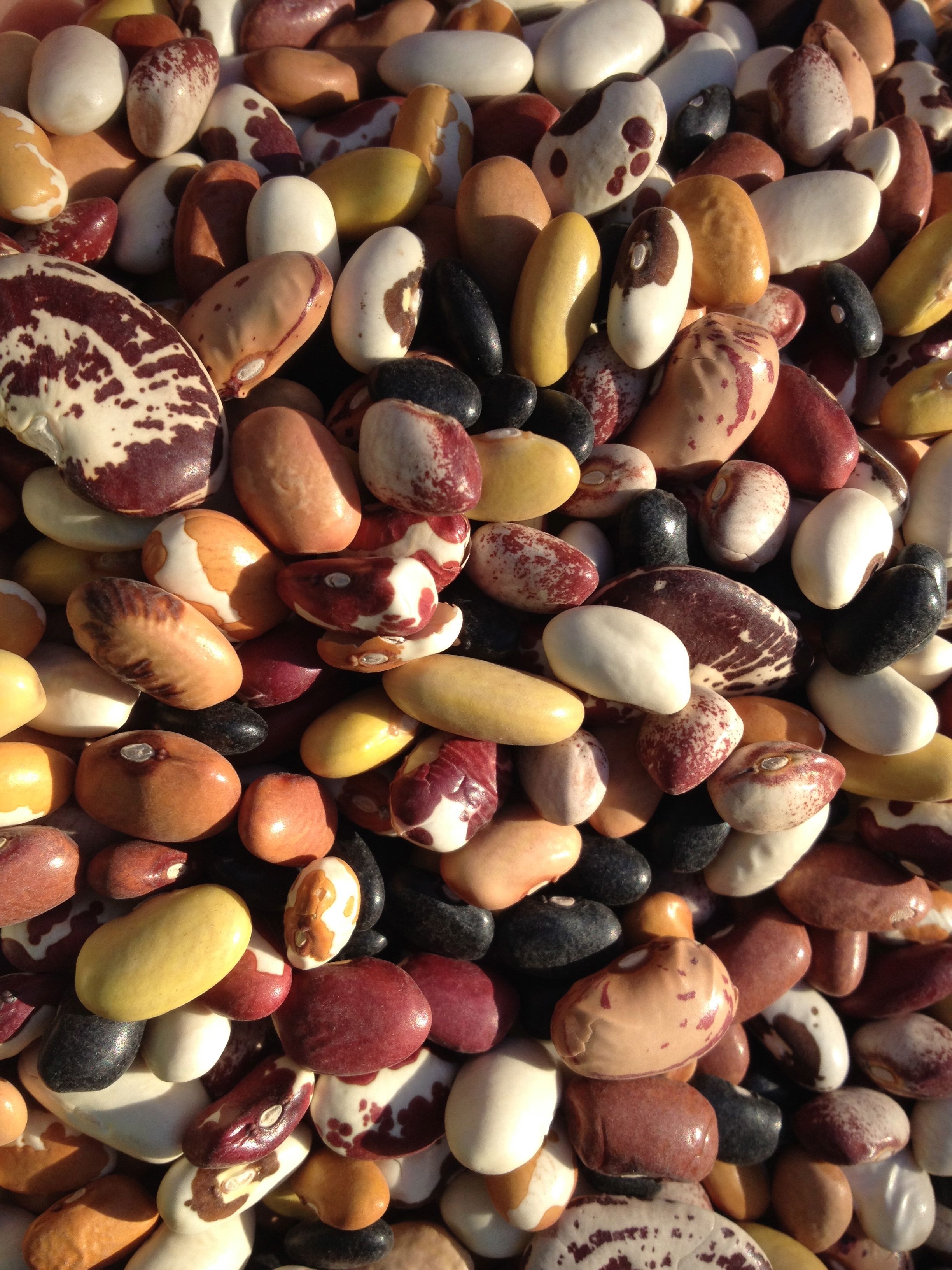
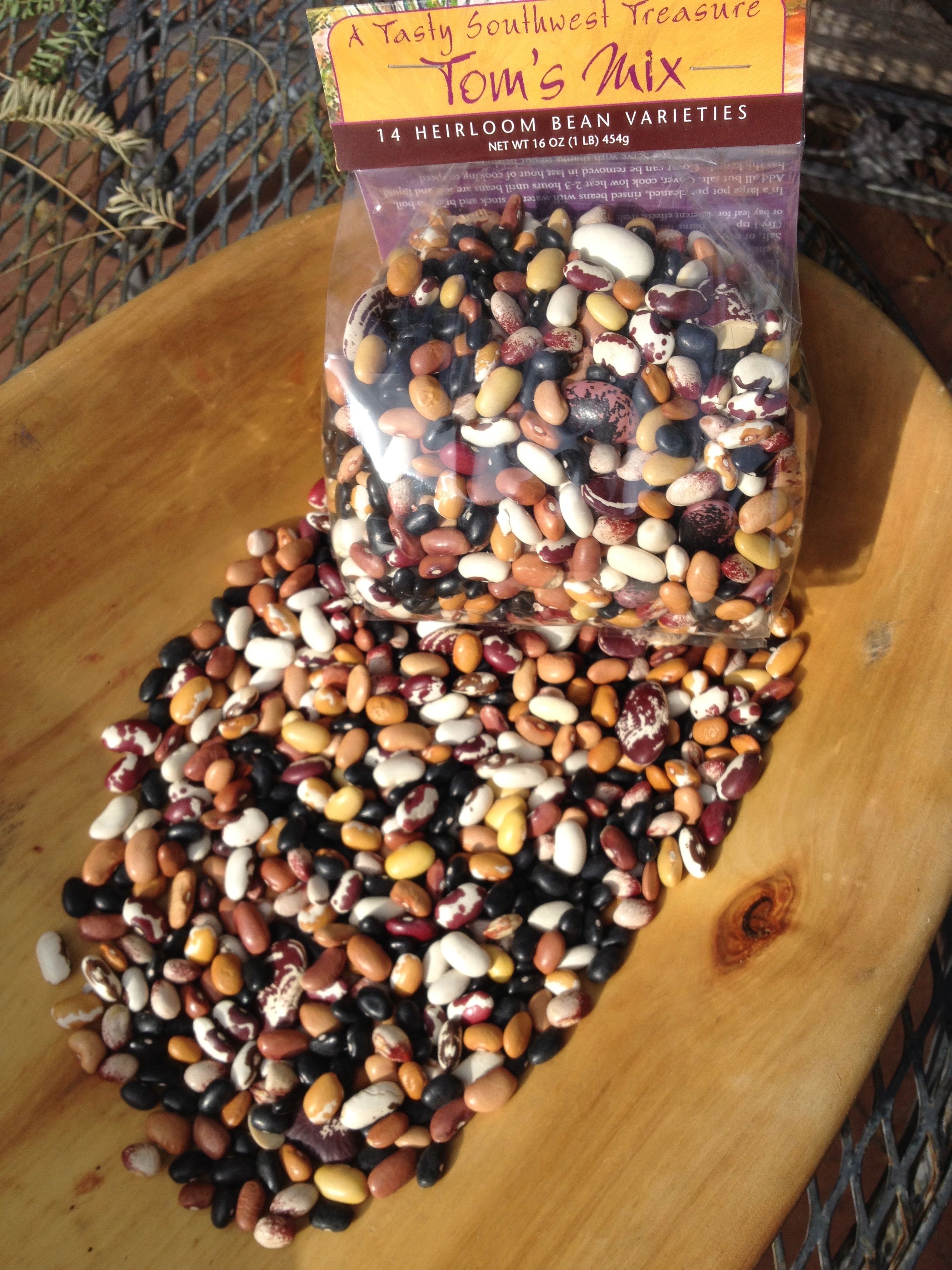
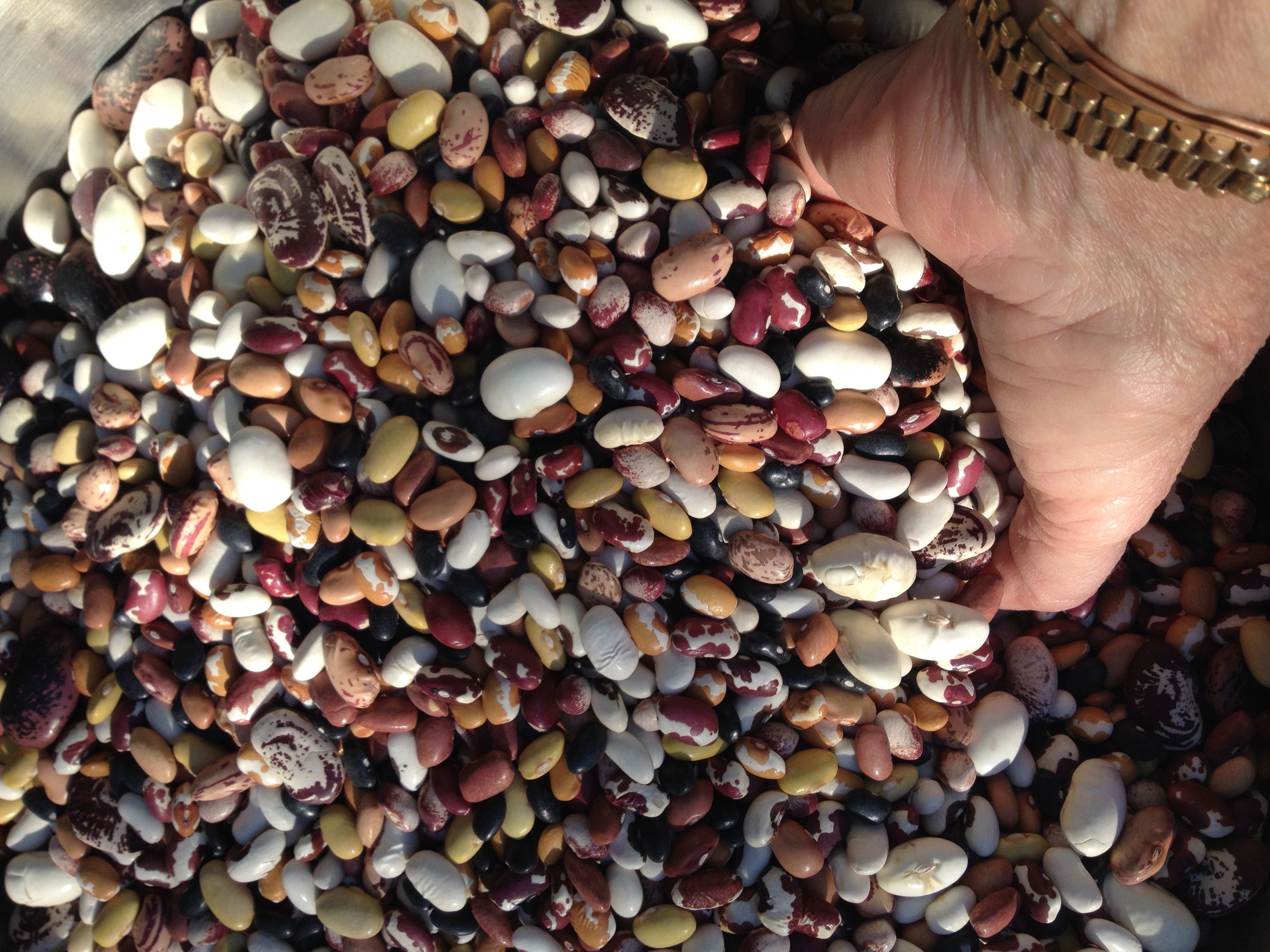
Tom's Mix is a rainbow of color, flavor, nutrition, and genetic adaptations to the desert Southwest! (MABurgess photo)

Tom’s Mix is a rainbow of color, flavor, nutrition, and genetic adaptations to the desert Southwest! (MABurgess photo)

In the genetic treasure trove of the NativeSeeds/SEARCH Seed Bank, there are hundreds of varieties and landraces of common bean, runner bean, and limas that can dazzle both our eyes, tastebuds–and our souls. Their colors, theirs shapes, sizes, sculpture are miniature works of art. And inside each little bean, each variety carries a complex of genes shaped over time to fit a specific local rainfall regime, soil, daylength, temperature range, and human habits. Their genetic potential may provide us some nutritional lifeboats into the uncharted waters of climate change.  (We are in this together.)

Delectable Tom's Mix available online at NativeSeeds.org and FlordeMayoArts.com.

Delectable Tom’s Mix available online at NativeSeeds.org and FlordeMayoArts.com.

Long ago, my gardening pal and mentor Tom Swain “invented” a mix of 14 different beautiful Southwestern heirloom beans garnered from the NativeSeeds/SEARCH collection. Of course we had to call it “Tom’s Mix” (ok–“oldsters” get it). It is the most beautiful set of genetic as well as flavor jewels—truly a treasure to behold and to eat.

Many people at our Flor de Mayo booth at Sunday St Phillips Farmers Market have asked how to identify each bean in the mix. To sort them, ID each variety, and come to know them is a fun challenge.  I’d like to create a game for kids (and adults) to teach taxonomy in a cool way using them.


So, head for the NativeSeeds store or Sunday’s St Phillips market, pick up a bag of Tom’s Mix, and take the BEAN CHALLENGE!

Herewith is your KEY to unlocking some the of mystery beans of our beautiful desert region.  (They each carry stories with them–come learn more from Tia Marta at the Sunday market… see, buy, taste each beautiful bean, see which one is cooking in the solar oven, and press her to finish her bean book!)  Until then, you can feast on these gorgeous visual hints—first a feast for the eye, later for the palette–with this photographic key to the makings of Tom’s Mix:

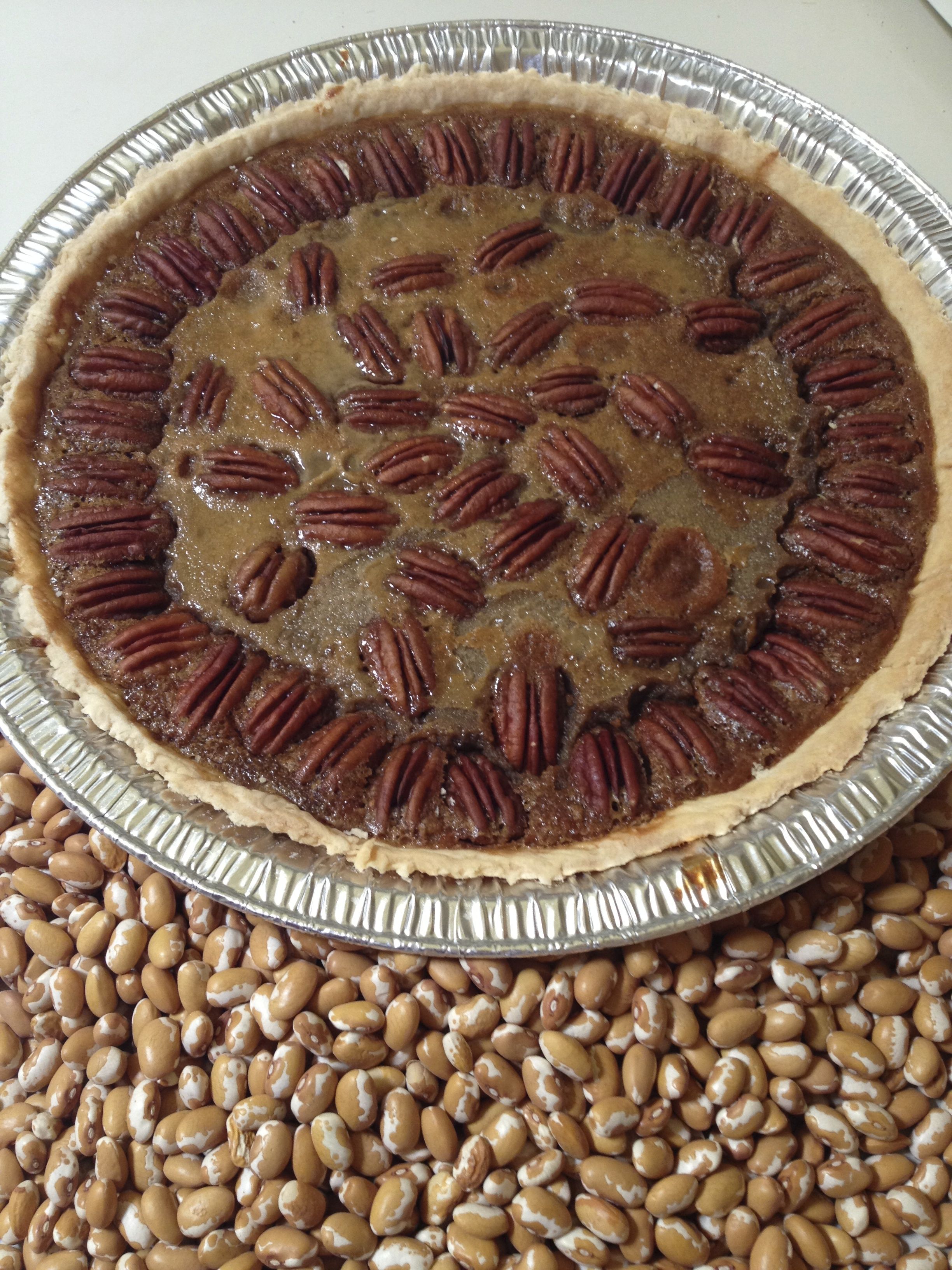
Ed's perfect pecan pie made with Zuni beans--a healthy dessert!.

Ed’s perfect pecan pie made with Zuni beans–a healthy dessert!.

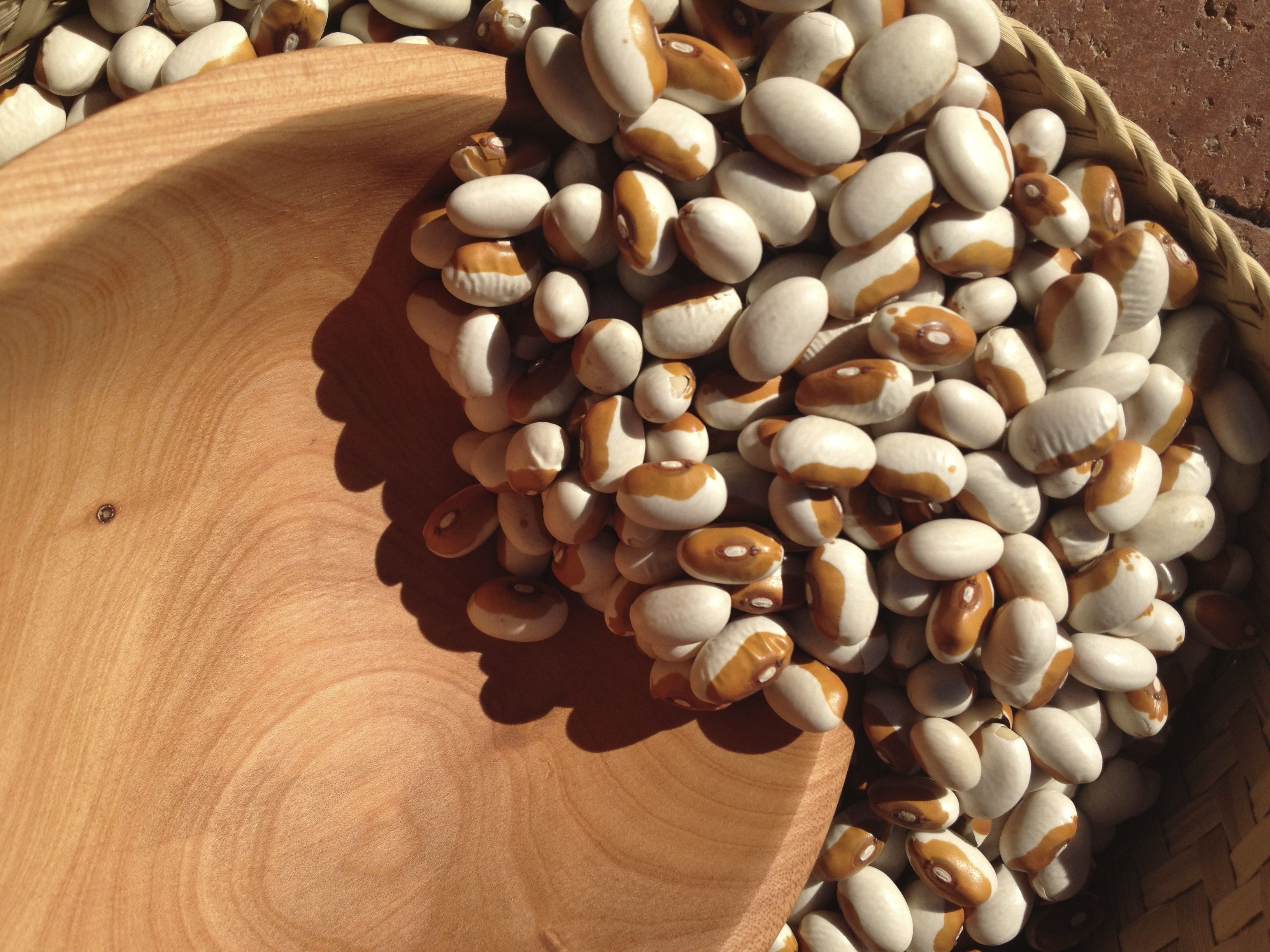
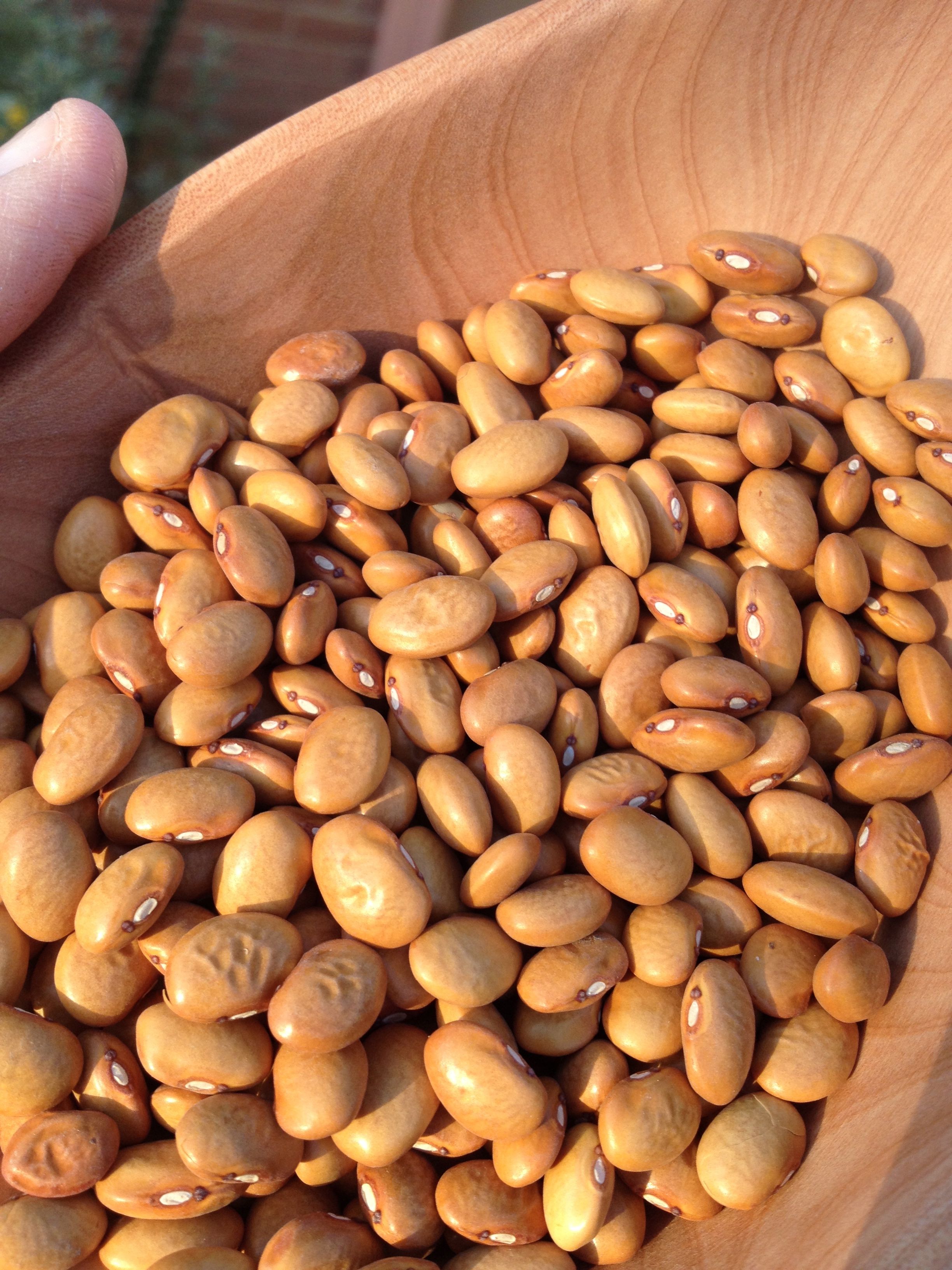
“Zuni Gold” (aka “Four Corners Gold”) was originally from the Native Zuni people of NW New Mexico, a flavor gift to the world.

“Zuni Gold” (aka “Four Corners Gold”) was originally from the Native Zuni people of NW New Mexico, a flavor gift to the world.


"Yellow-eye bean" (not related to black-eye pea) similar to Zuni Gold but with a distinctively different flavor.  It was the original Boston baked bean before coming west.  So rare it is not often used in the mix.

“Yellow-eye bean” (not related to black-eye pea) similar to Zuni Gold but with a distinctively different flavor. It was the original Boston baked bean before coming west. So rare it is not often used in the mix.


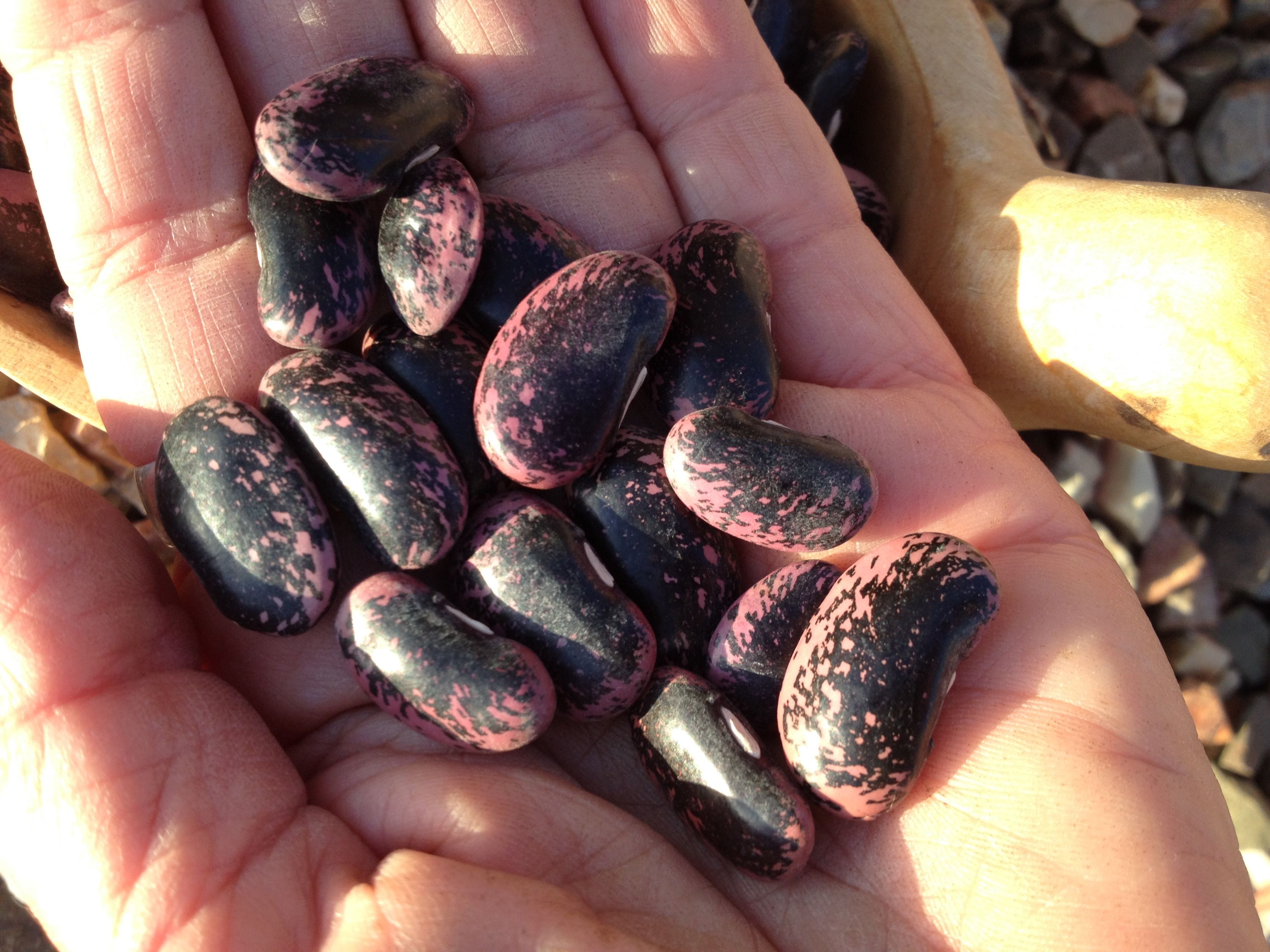
“Scarlet Runner” is a vining bean with brilliant red flowers that attract hummingbirds.  It is a large purplish speckled bean not to be confused with lima.

“Scarlet Runner” is a vining bean with brilliant red flowers that attract hummingbirds. It is a large purplish speckled bean not to be confused with lima. (MABurgess photo)

Runner beans (Phaseolus coccineus) are larger than so-called “common” beans (Phaseolus vulgaris–an insulting name for such wonderful food plants!)  Runner beans, as the name implies, are climbers as compared with bush-beans.  Their flowers are bigger and they bear huge pods.  Runner beans make a great addition to soups and stews.

Related to scarlet runner is “Aztec White Runner” or “Bordal” (aka “Mortgage Lifter”) is another vining bean with a big white flower.  It is large, plump and a little sweet.

Related to scarlet runner is “Aztec White Runner” or “Bordal” (aka “Mortgage Lifter”) is another vining bean with a big white flower. It is large, plump and a little sweet.  (MABurgess photo)


“Yellow Indian Woman” is the only bean in the mix not from the SW.  As legend has it, Swedes brought this bean to Native people of the northern plains.

“Yellow Indian Woman” is the only bean in the mix not from the SW. As legend has it, Swedes brought this bean to Native people of the northern plains.

“Flor de Mayo”  (Mayflower) is a favorite of traditional people from Chihuahua and Texas to southern Sonora.

“Flor de Mayo” (Mayflower) is a favorite of traditional people from Chihuahua and Texas to southern Sonora.

“Bolita” or “little bullet” is a champion of flavor and makes a delish burrito or refried bean.

“Bolita” or “little bullet” is a champion of flavor and makes a delish burrito or refried bean.


These three beans are of similar shape and color–though different in flavors.  It is neat to try them separately, to enjoy their individual attributes.  Watch for announcements when Native Seeds/SEARCH sponsors its Great Bean Tasting Events.


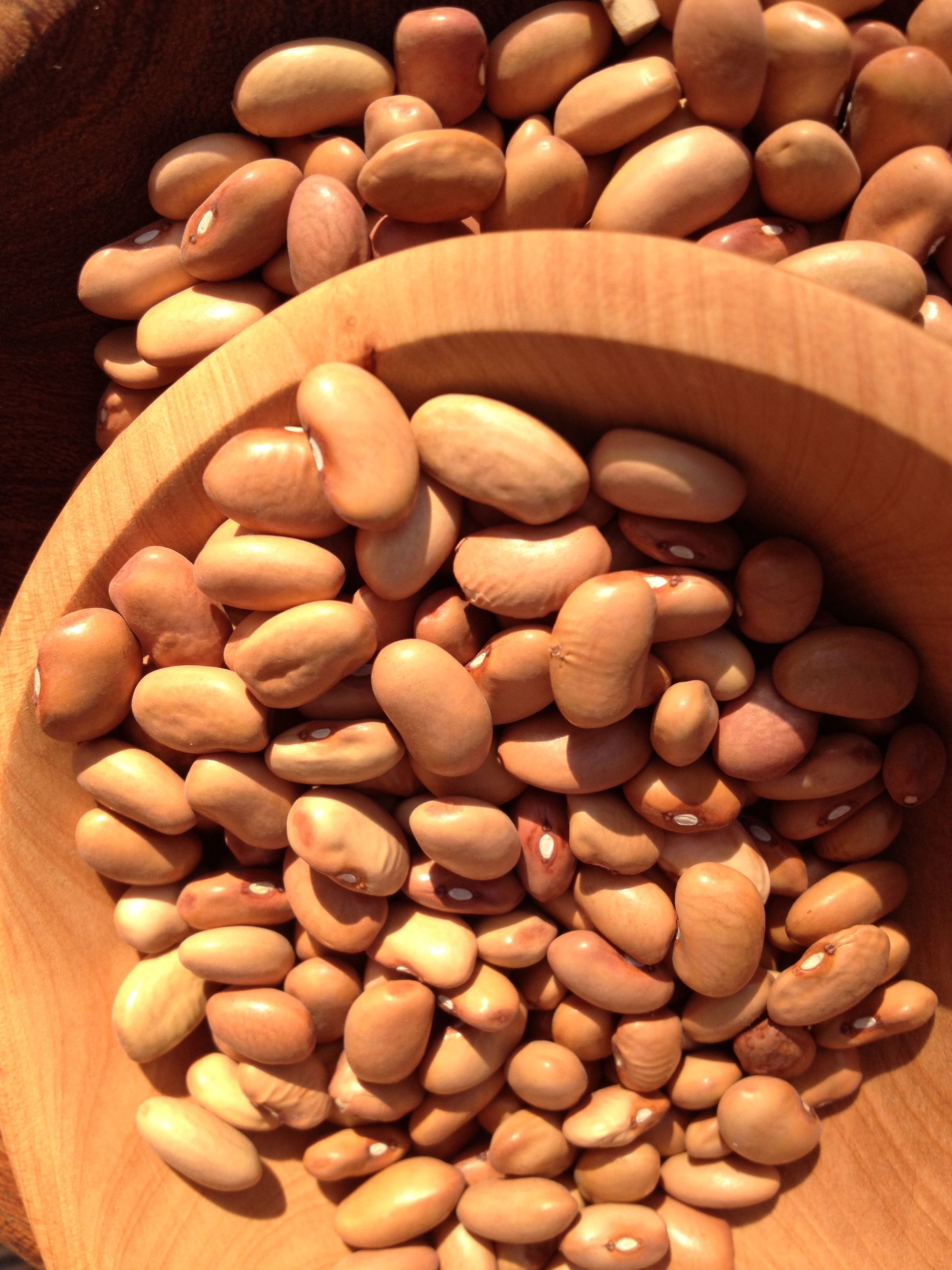
“Moon Bean” (also known in Colorado as “pinkeye bean”)  is a mild, tasty, versatile bean.

“Moon Bean” (also known in Colorado as “pinkeye bean”) is a mild, tasty, versatile bean.

In Tucson our culinary hero Chef Janos Wilder of the Downtown Kitchen has created the most delectable casserole using Moon Beans, chicken, and other surprise veggies.  Try this one out also in marinated salads with white Sonora wheat berries.

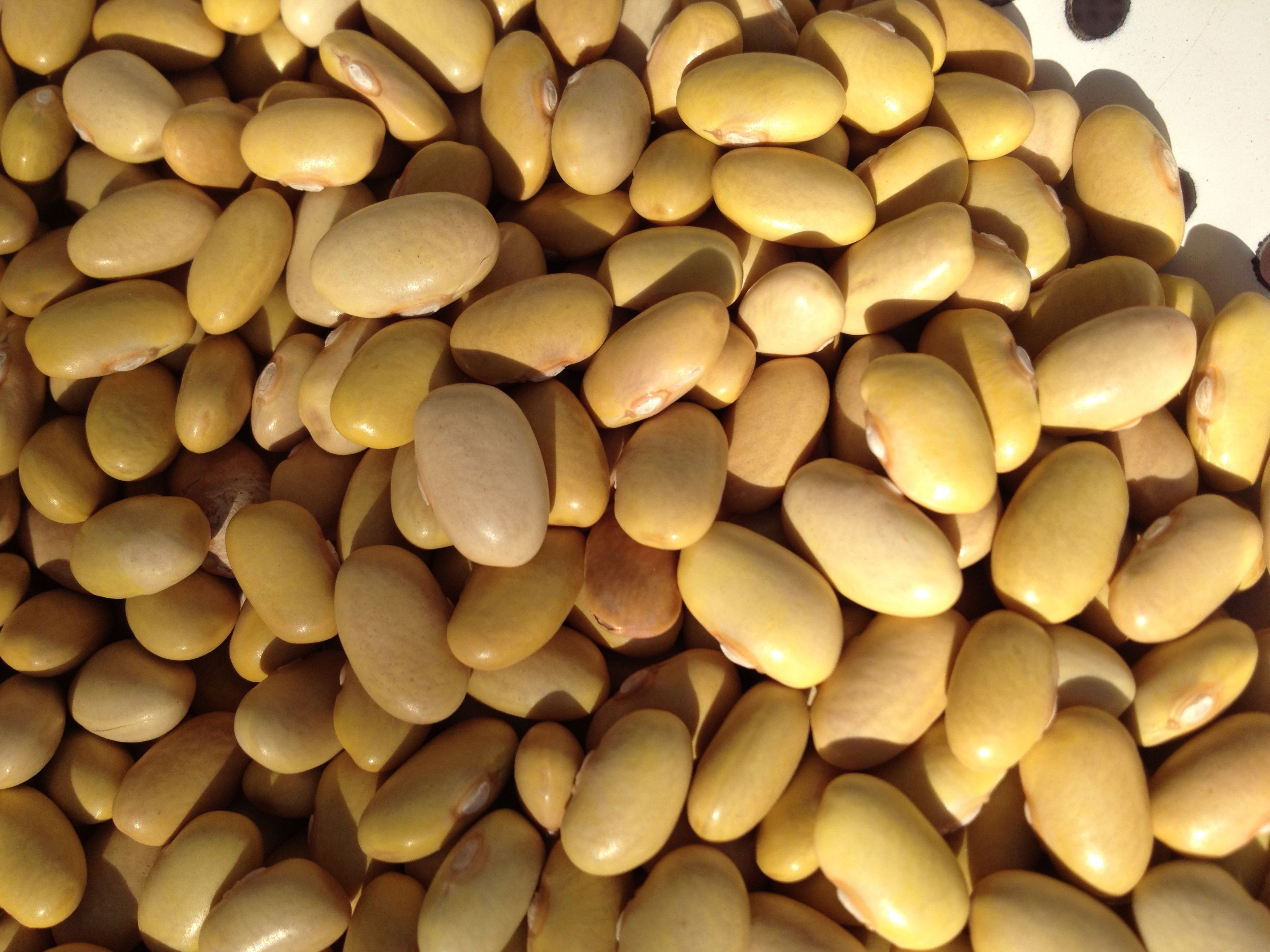
“Maicoba”  is named for the Pima Bajo village in Sonora where it originated.  This yellow bean goes by many monikers—sulfur bean, azufrado, canario, peruano.

“Maicoba” is named for the Pima Bajo village in Sonora where it originated. This yellow bean goes by many monikers—sulfur bean, azufrado, canario, peruano.

The versatile Maicoba makes a fabulous refried bean, a great dip, or burrito.

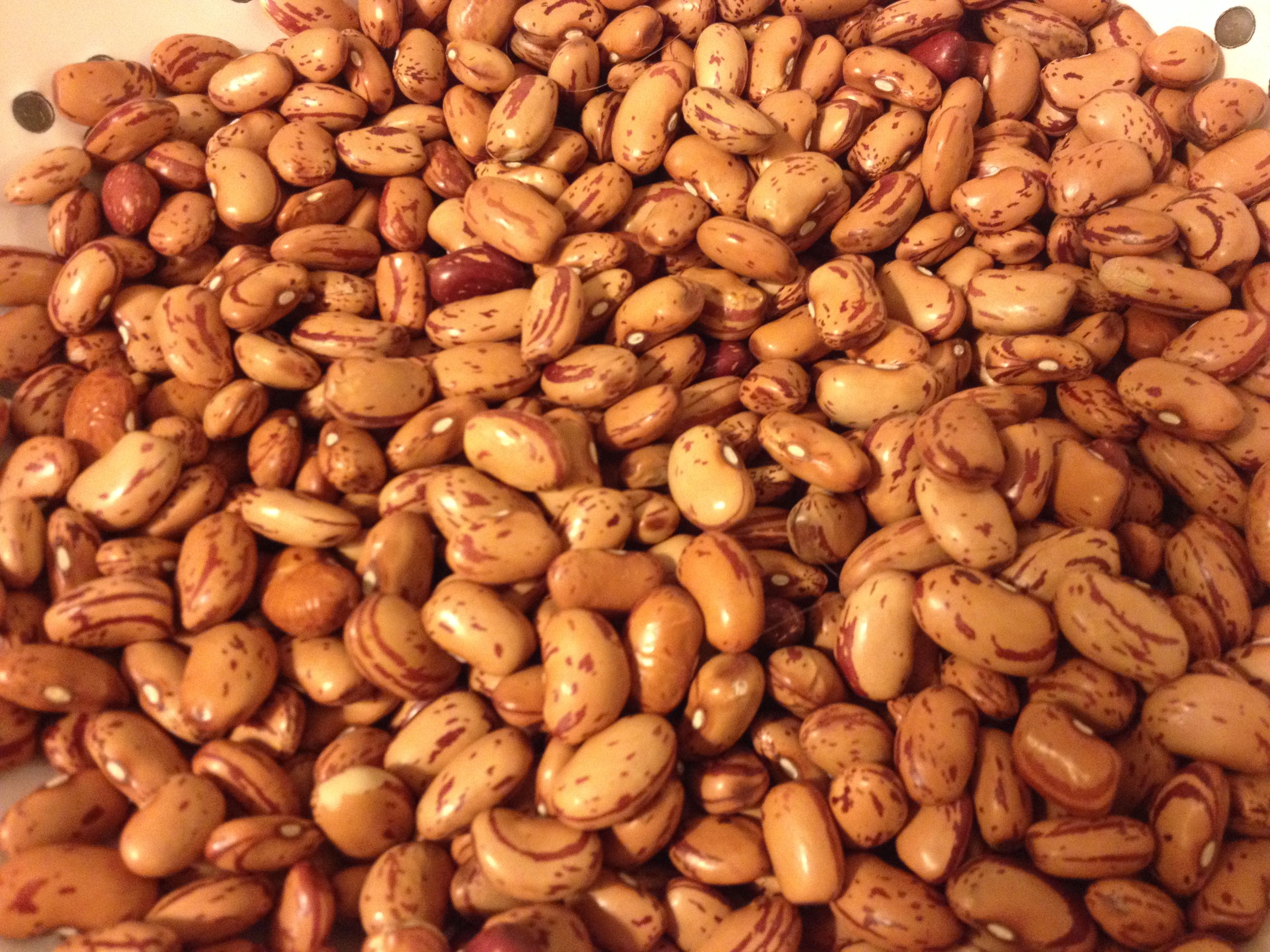
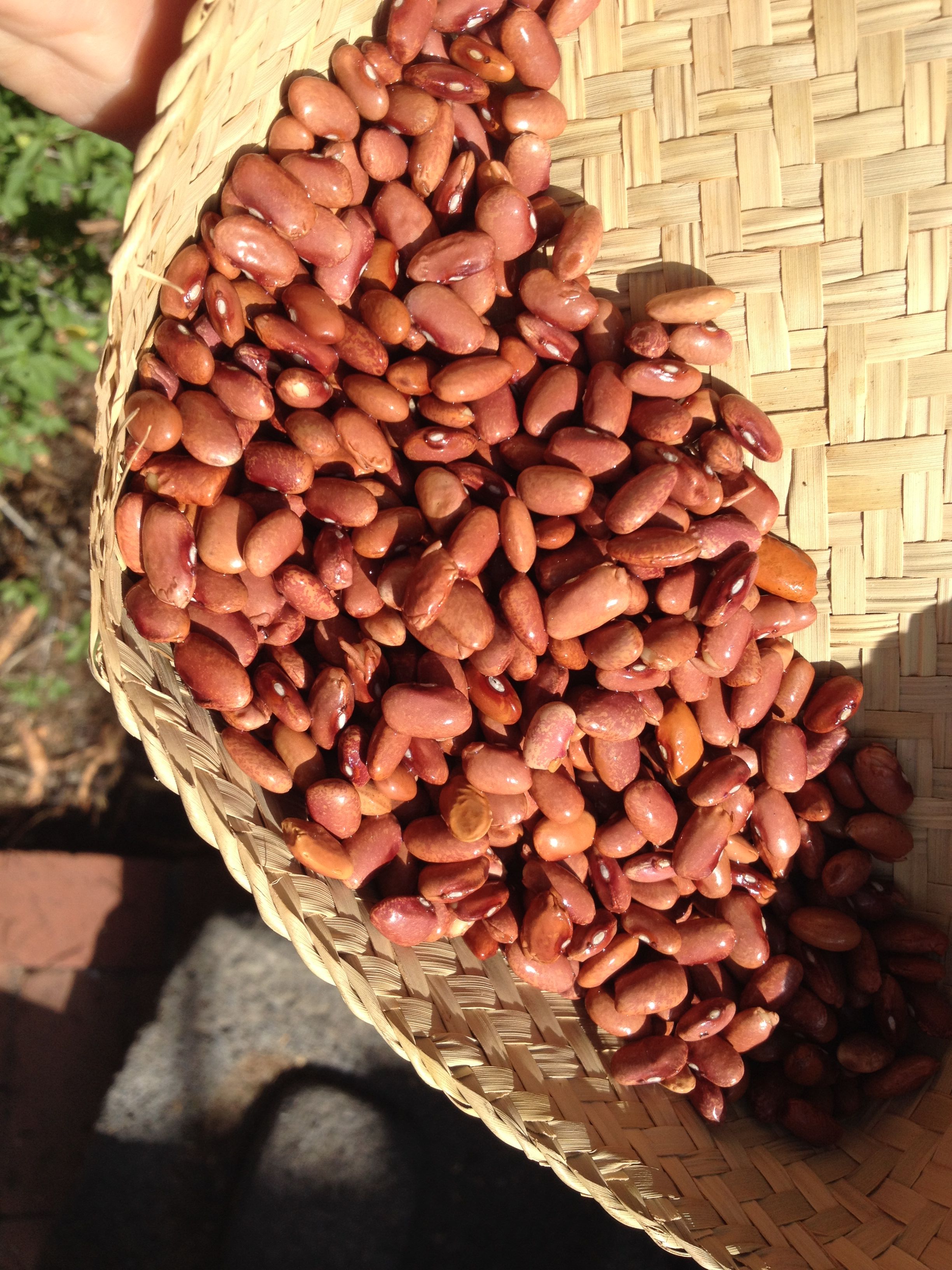
“Cranberry bean” refers to the flecks and strips of dark maroon or cranberry coloration on beige, not to its flavor.

“Cranberry bean” refers to the flecks and strips of dark maroon or cranberry coloration on beige, not to its flavor.

You will often see Italian recipes calling for cranberry bean.  This year’s crop of cranberry was for some weather reason a bust; let’s hope that next year it comes back strong again.  To participate, plant some locally.

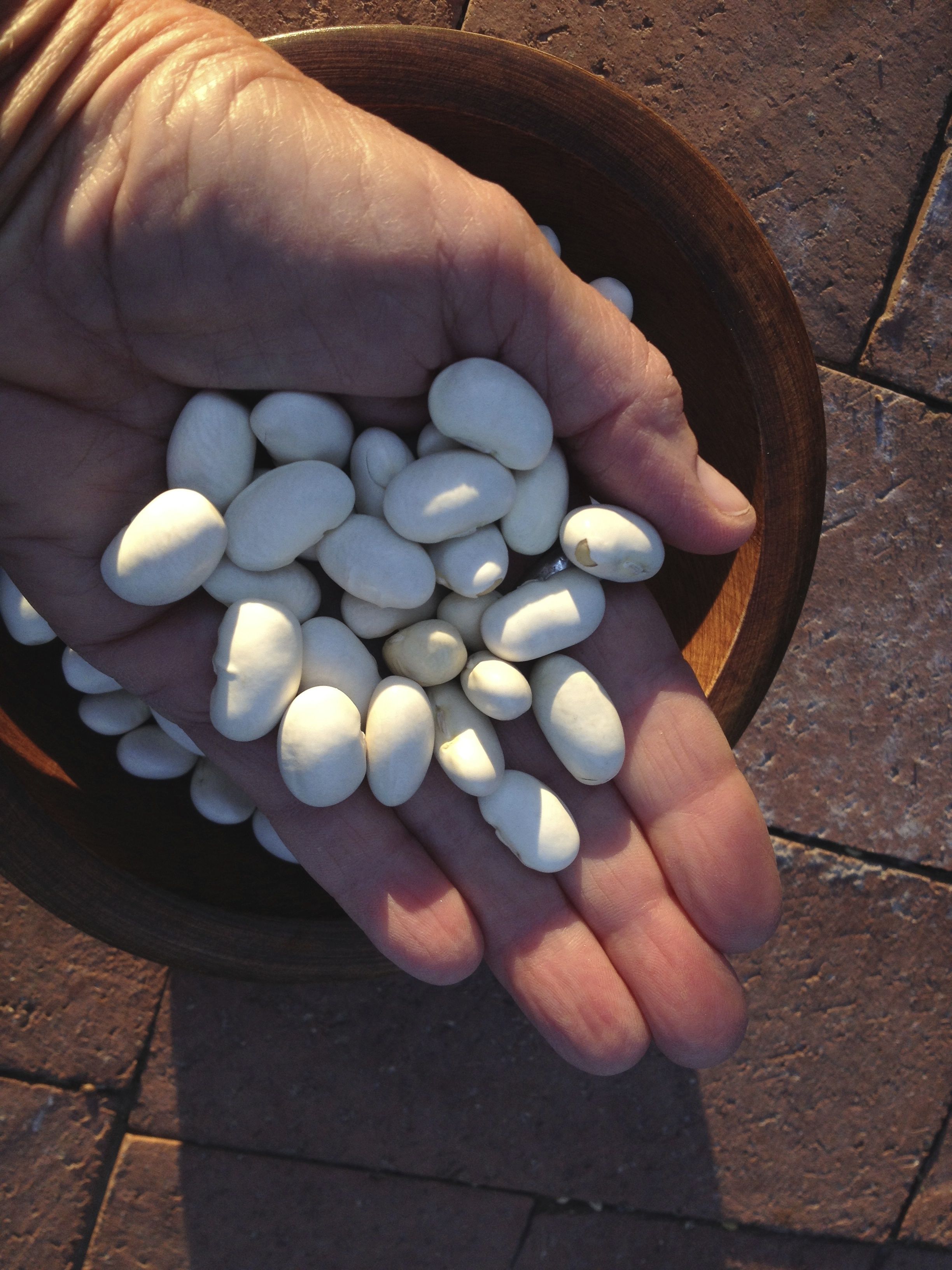
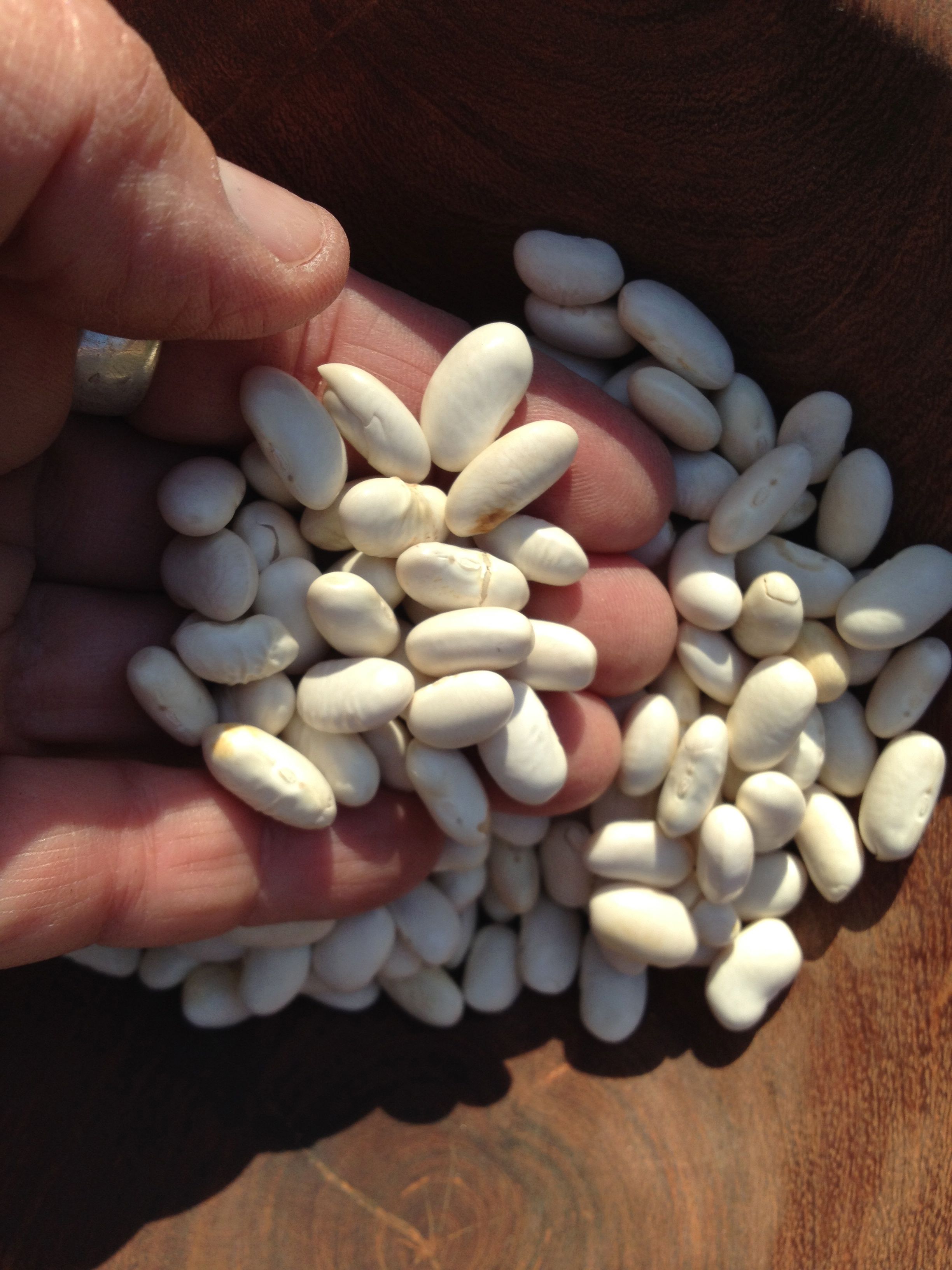
“Cannellini” is an elongated white bean grown in the Four Corners for years, brought there by immigrants.

“Cannellini” is an elongated white bean grown in the Four Corners for years, brought there by immigrants.

Cannellini makes a fabulous addition to minestrone, or becomes the center of a yummy Mediterranean marinated bean salad.  A smaller, creamier bean is the “Colorado River Bean” which resembles the Mayflower bean from SeedSavers catalog.

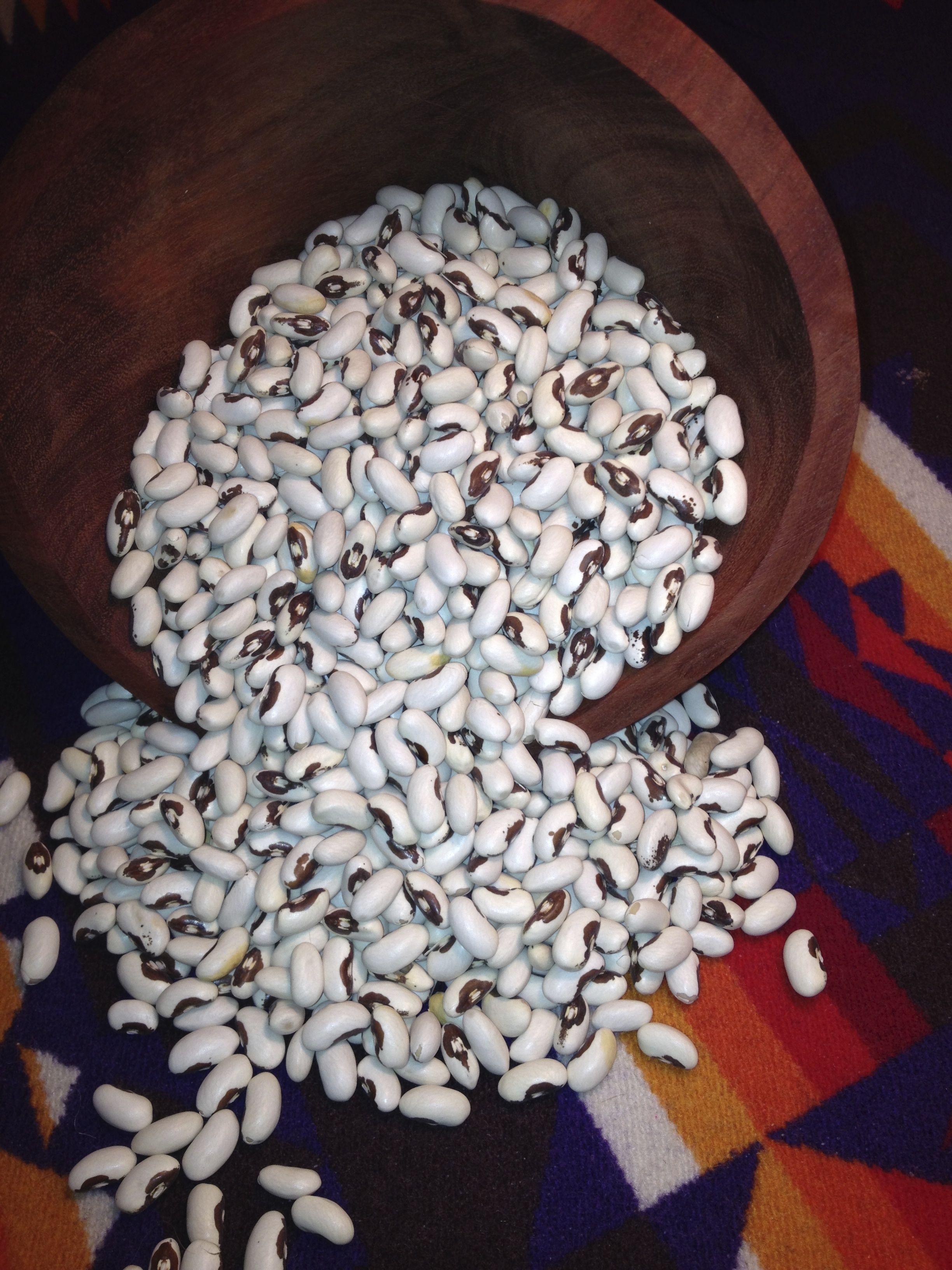
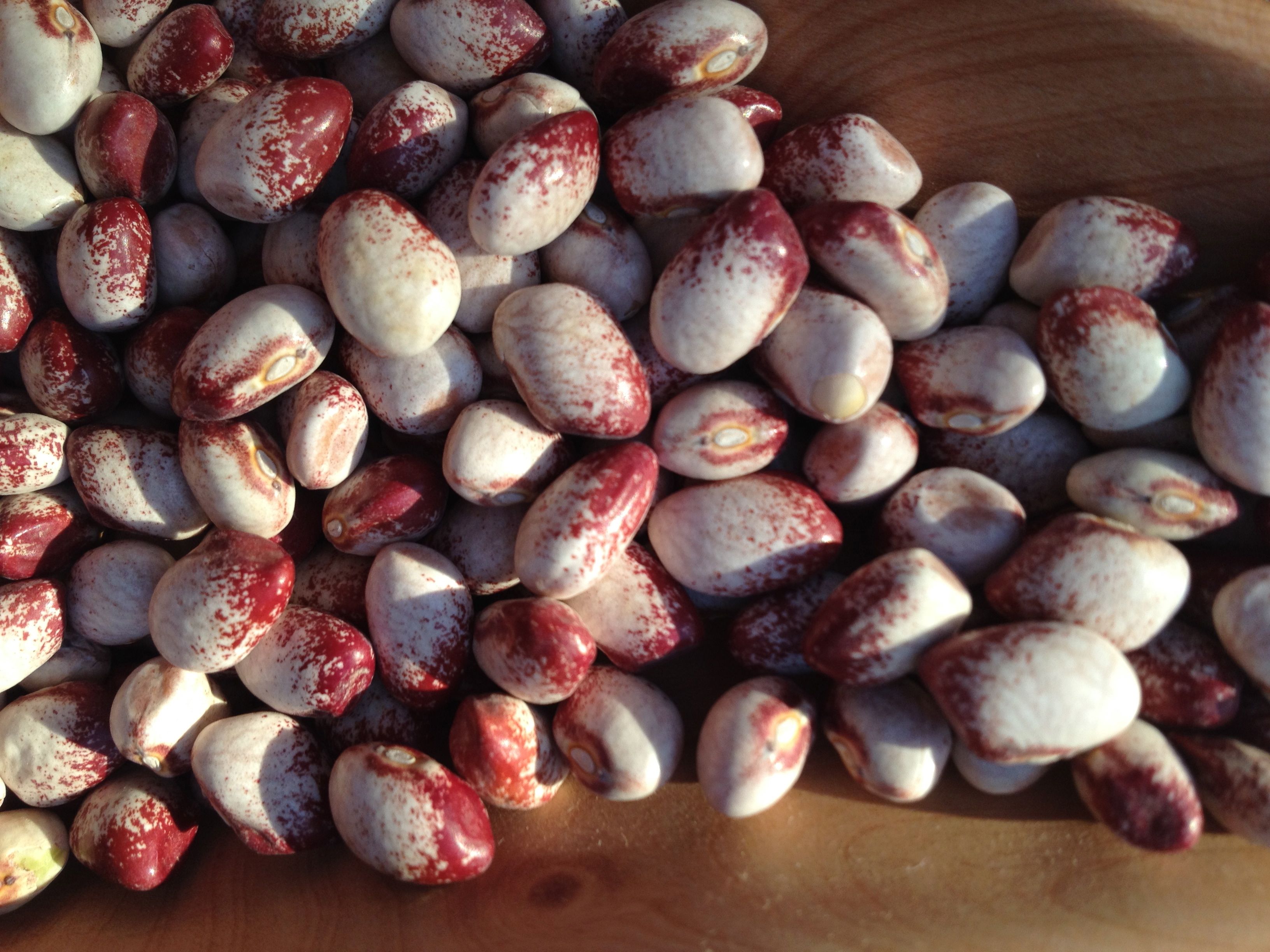
“Colorado River bean” takes its name from the Colorado Plateau where it is grown.  This small speckled bean makes a wonderfully creamy soup.

“Colorado River bean” takes its name from the Colorado Plateau where it is grown. This small speckled bean makes a wonderfully creamy soup.

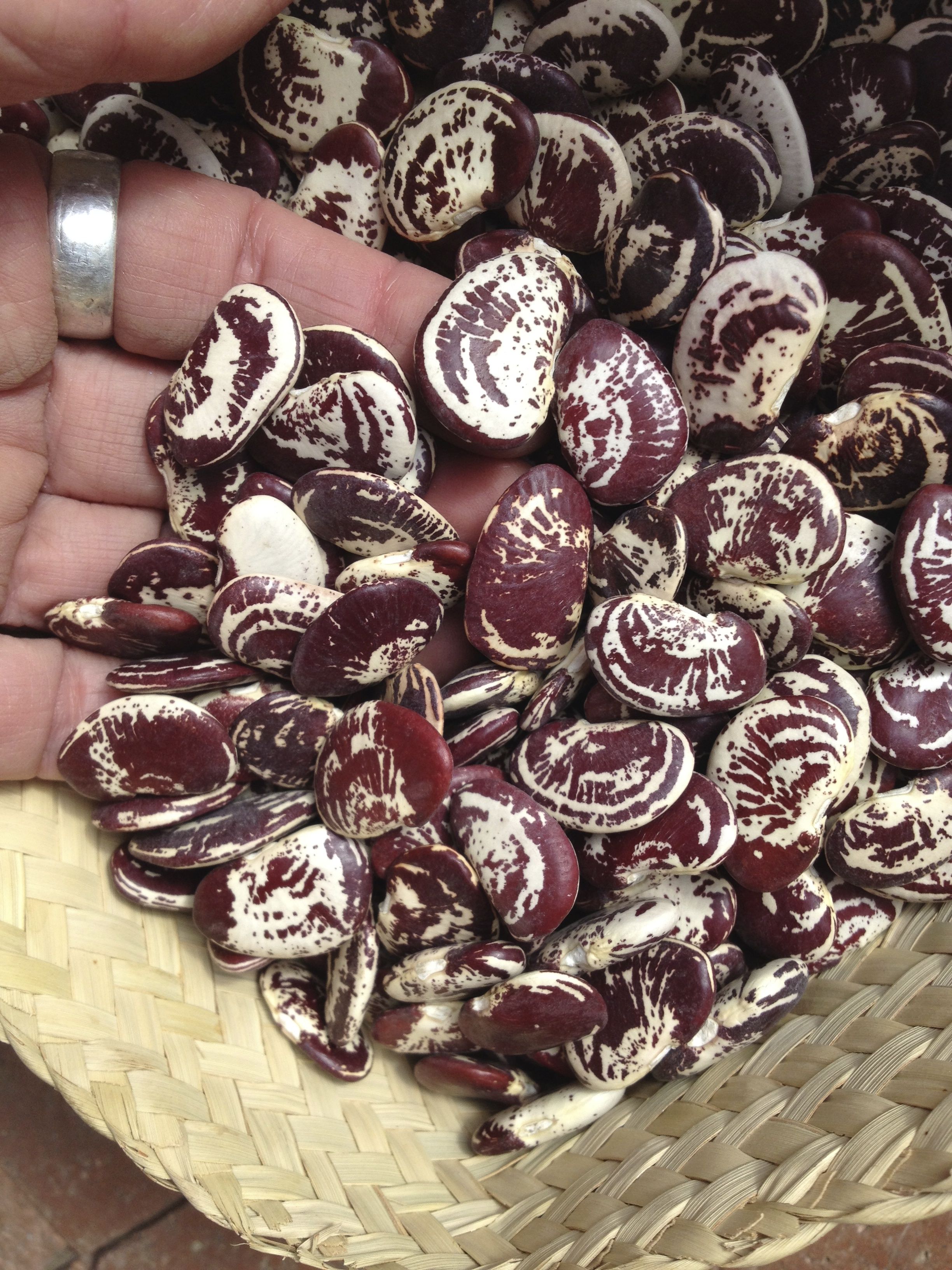
Worlds apart in flavor and size is the Christmas lima–a true lima bean (Phaseolus lunatus–like a moon).  This one is not like your average butter bean.  It is massive as beans go, rich and almost meaty–great for a vegetarian centerpiece dish.

“Christmas lima” or “Chestnut lima” is a true lima bean Phaseolus lunatus, large, flat, purple mottled, and hearty flavored.

“Christmas lima” or “Chestnut lima” is a true lima bean, large, flat, purple mottled, and hearty flavored.


“Aztec Black Bean” or “Black Turtle” is the traditional bean of the Nahuatl or central Mexico.

“Aztec Black Bean” or “Black Turtle” is the traditional bean of the Nahuatl or central Mexico.


“Anasazi Bean” is the only trademarked bean in the mix.  Original seeds of this fast-cooking bean were actually found in an ancestral Puebloan ruin in the Four Corners.

“Anasazi Bean” is the only trademarked bean in the mix. Original seeds of this fast-cooking bean were actually found in an ancestral Puebloan ruin in the Four Corners.

These two beautiful beans, Black Turtle and “Anasazi bean,” bind up the full complement of flavors in Tom’s Mix.  As individual beans, each is hard to beat flavor-wise and texture-wise.  Together, combined in our Tom’s Mix, they are a culinary delight.

Black beans are the staple of many traditional diets, from Meso-America to northern New Mexico.

The “Anasazi” is the fastest cooking and least distressing to digestion of any bean I know of.

So now are you feeling enriched by these visual legume wonders?  I hope so!  Now to come try your hand at identifying them firsthand, and to treating your taste-buds at our Flor de Mayo tent at Sunday farmers market.

Identified or not, these precious heirloom beans in Tom’s Mix make a fabulous soup that our market and online customers rave about. You can ship out this Southwest gift to all corners of the globe via paypal at http://www.flordemayoarts.com.

Tom’s Mix is so versatile—try them as a dip or as a most colorful marinated bean salad when the weather heats up. If you are inspired to assist the bean genes into the future, try your hand at growing some of the Tom’s Mix varieties this summer in your own garden.  You can learn lots more at our Seed Libraries (Pima County Public Library) and at the upcoming International Seed Library Conference to be held in Tucson in early May.

Diversity of Southwestern heirlooms in Tom's Mix

Diversity of Southwestern heirlooms in Tom’s Mix

See you Sunday at St Phillips Plaza or at the NSS Store, 3061 N Campbell. We look forward to talking heirloom beans with you!

[As for the diversity of those cholla flowers mentioned at the start….. Tia Marta will be exploring our diverse cholla flora at upcoming cholla bud harvesting workshops: Sat April 11 sponsored by NativeSeeds/SEARCH and Sat April 18 sponsored by Tohono Chul Park. Contact each for more info: http://www.nativeseeds.org and http://www.tohonochulpark.org, or call Flor de Mayo at 520-907-9471.]

Lovely Lavender

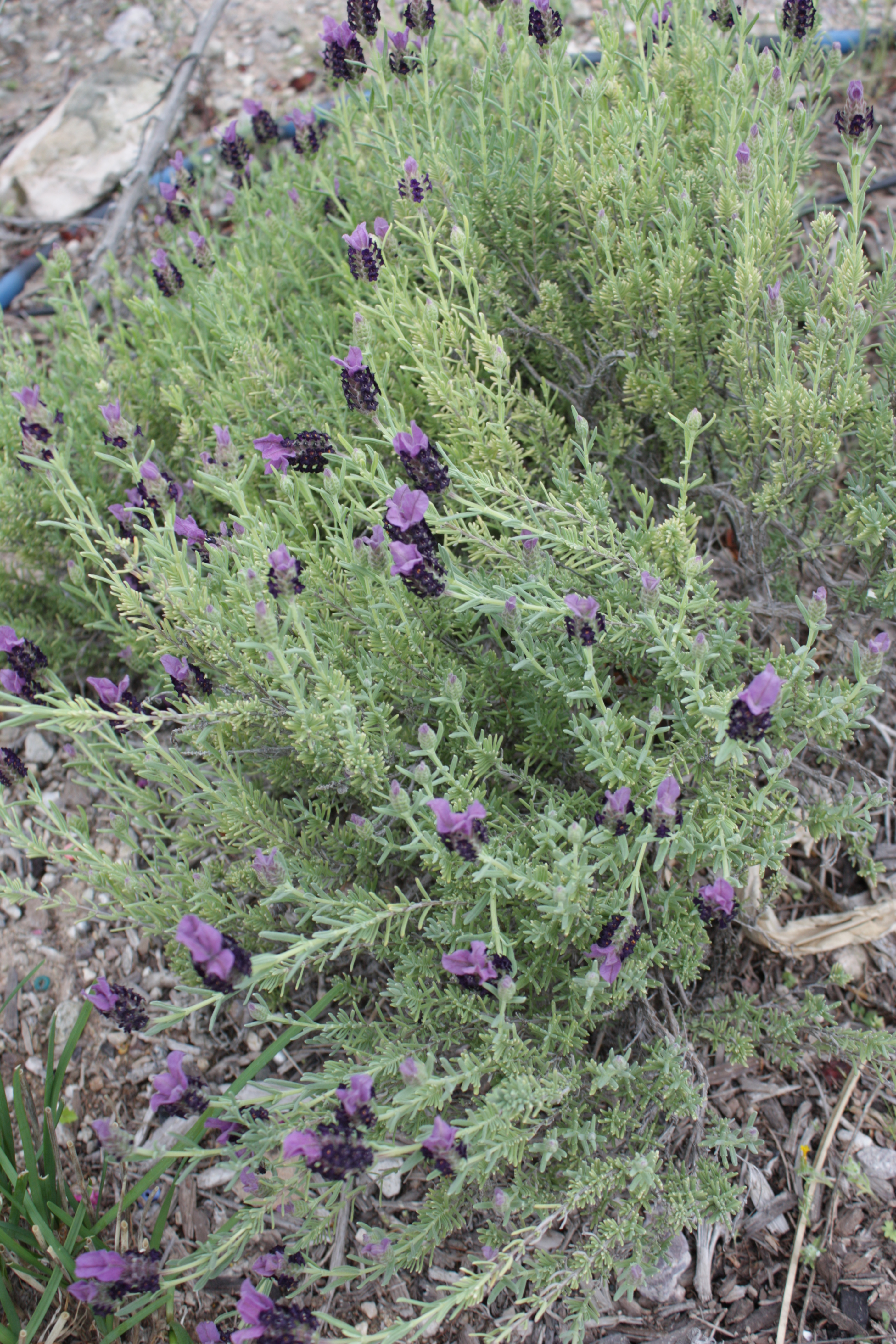
lavandula _5487

by Jacqueline A. Soule, Ph.D.

If you want to grow and use your own herbs, or if you simply desire an attractive plant for the landscape, you can’t beat lavender. Cultivated for centuries, this charming low growing perennial has wonderfully fragrant flowers and leaves.

lavandula _5175

Lavender is forms a fragrant mound and can bloom for months with some added water.

Lavender Uses

The name of the plant is derived from the Latin “lavare,” meaning to wash. Leaves and flowers have been used for several millennia to do just that, wash. Fragrant baths, hair rinses, to cleanse and treat skin ailments, and, in the past, to help eliminate lice and bedbugs from the household. Lavender essential oil is popular in aromatherapy. Tea made from leaves and flowers has been used to treat sleeplessness, restlessness, headache, flatulence, and nervous stomach. At this time, Commission E, a German-based group which scientifically studied herbal medicines, recommends using lavender for insomnia and circulatory and gastrointestinal disorders.

lavandula _5331

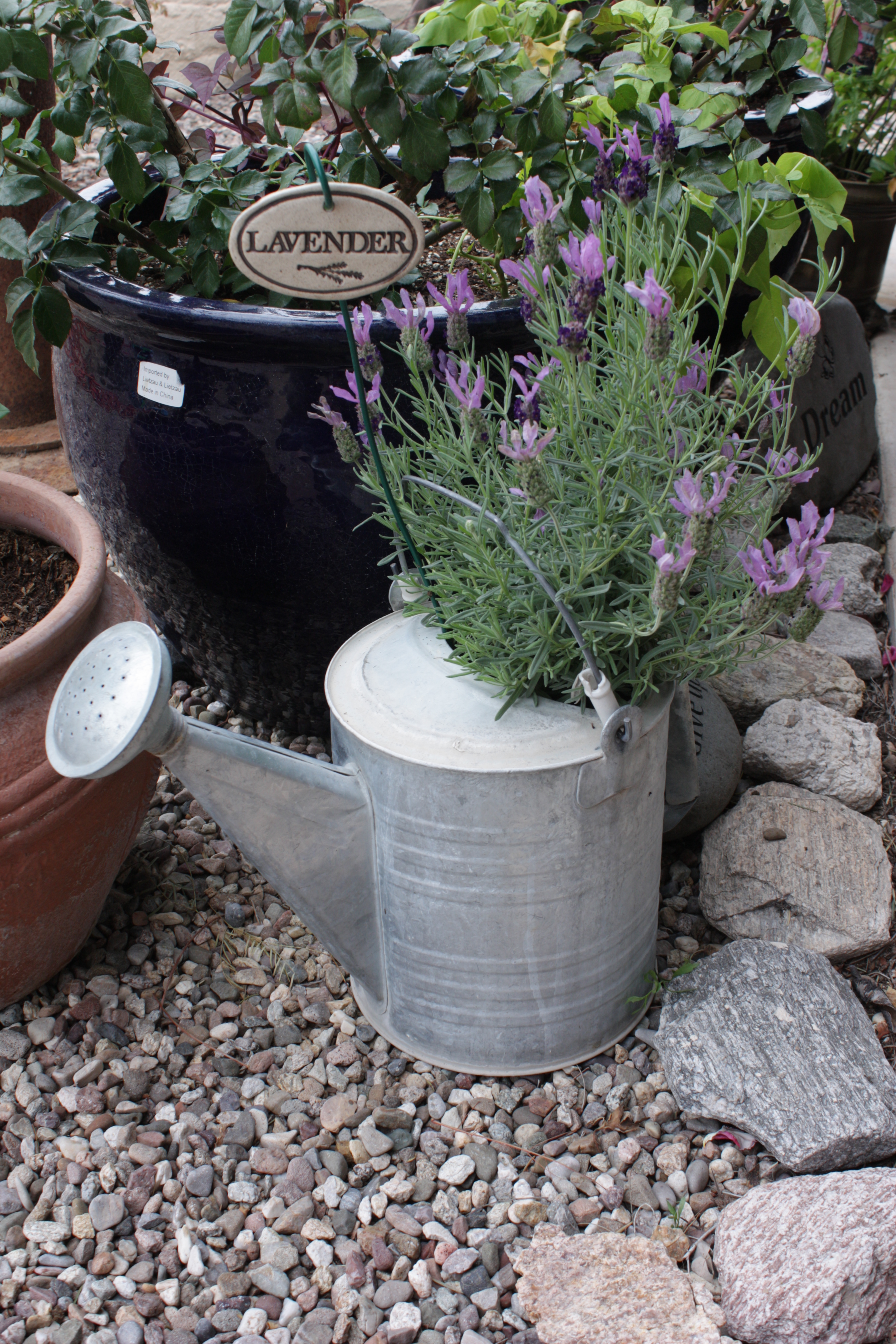
Lavender also grows well in containers, but unlike many herbs, is fussy about being moved.

Growing Lavender

Lavender is easy to grow in our area. There are a number to choose from. English lavender (Lavandula angustifolia) and Spanish lavender (Lavandula stoechas) both tend to be stressed by our summers, but grow well in a garden that gets only morning sun. The French or toothed lavender (Lavandula dentata) does best in my yard in full sun with some noon-time summer shade. Perhaps the fuzziness of the leaves helps reflect sunlight and reduce water loss.

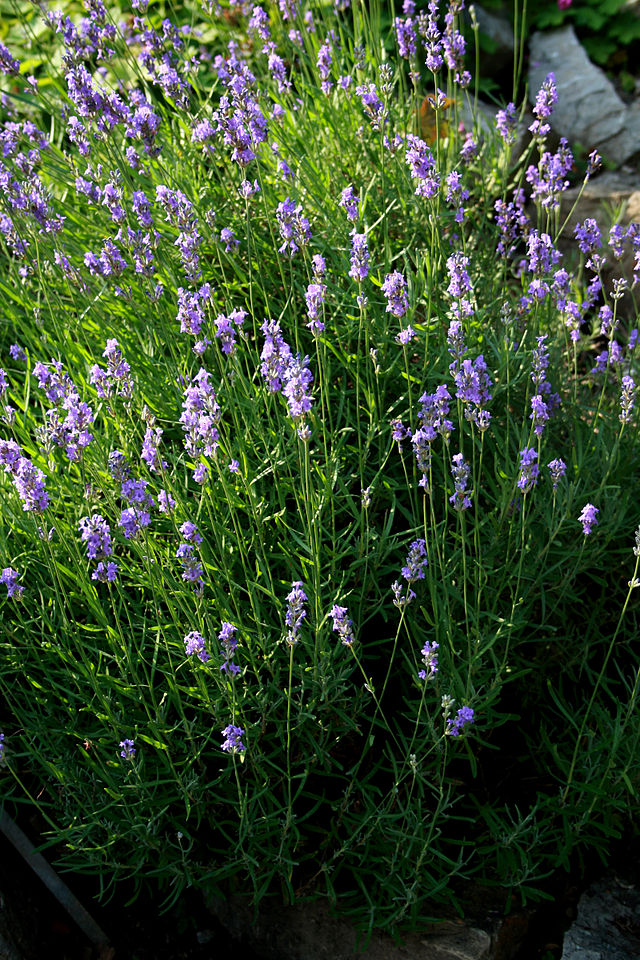
Lavandula_angustifolia_prg_1

English lavender has difficulty surviving the Southwest summer. Photo by Karelj

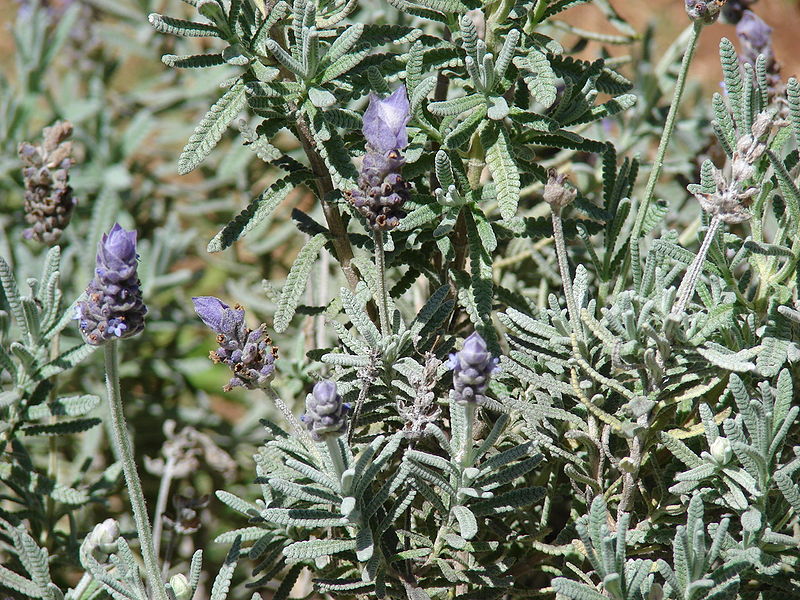
Lavandula_dentata_plant

French lavender is more tolerant of the heat than its’ English cousin.

Like most herbs, all of these lavenders do best in well drained soil. They will need watering during the dryer months, but can often survive on rainfall during monsoon or winter months. Fertilize in moderation or not at all to encourage greater production of the fragrant oils. Harvest and prune often. Like most herbs, lavender should be trimmed two to three times per year to control rampant growth and keep the plant producing quality blooms.

Native Lavender

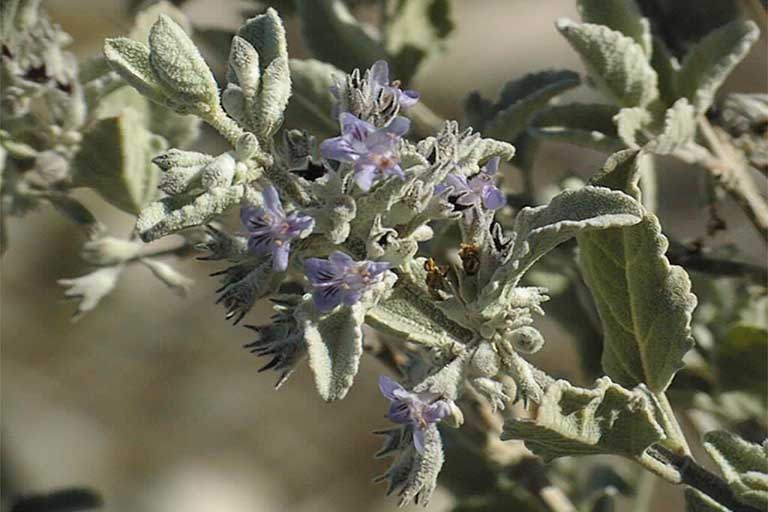
Ideally however, plant the native desert lavender (Hyptis emoryi), a shrub often found growing along area washes. Desert lavender is a shrub reaching 4 to 6 feet high and covered with fragrant gray green leaves. Summer brings spikes of fragrant purple flowers that butterflies adore.

Hyptis emoryi_flowers_001

The native desert lavender is more of a shrub than its’ European cousins.


Harvest Lavender

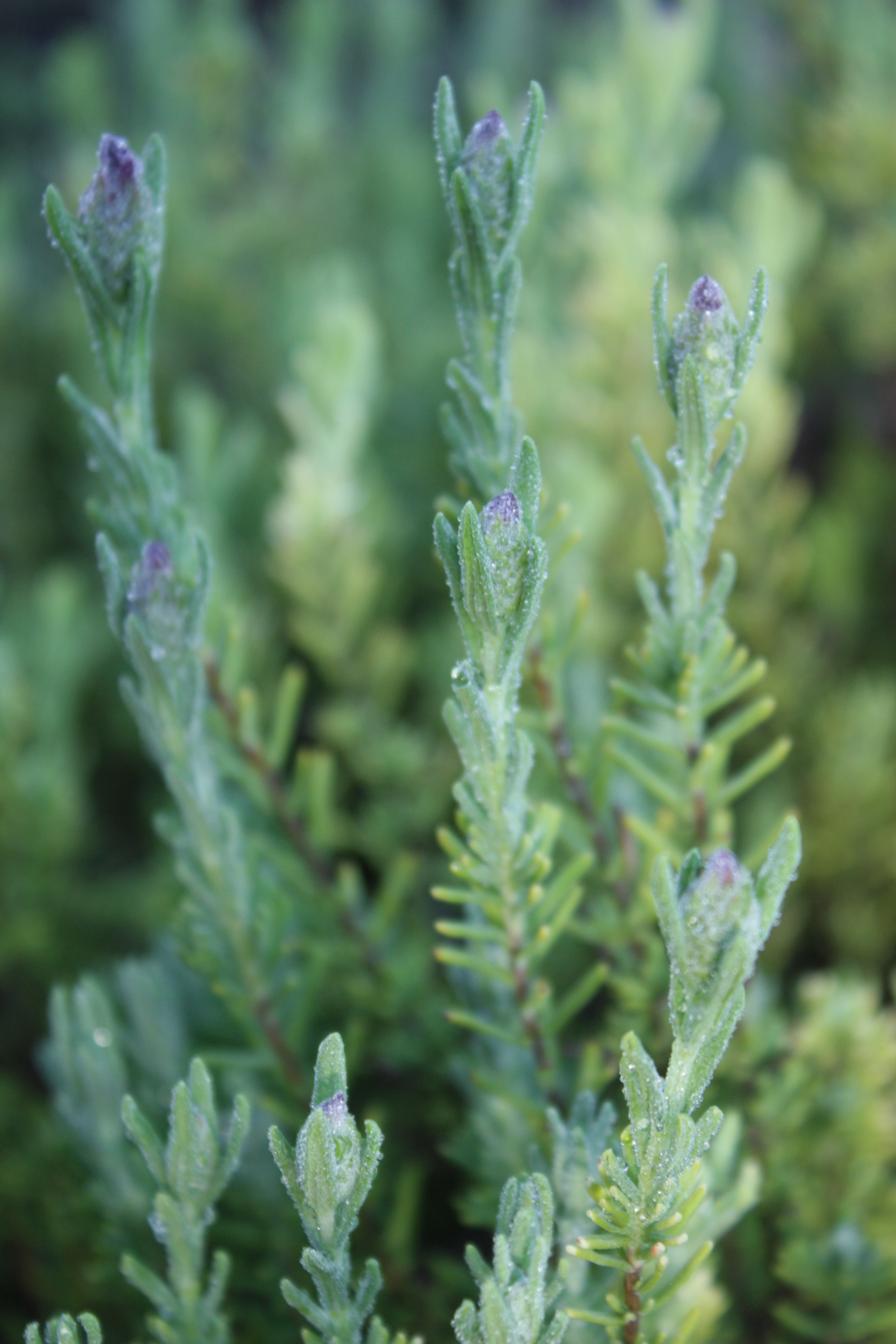
Harvest stalks of lavender blooms as the lower-most flowers open. This gives you buds with optimum fragrance.

Dry your lavender, like all herbs, out of direct sunlight.

lavandula_2015_5108

It is delightful

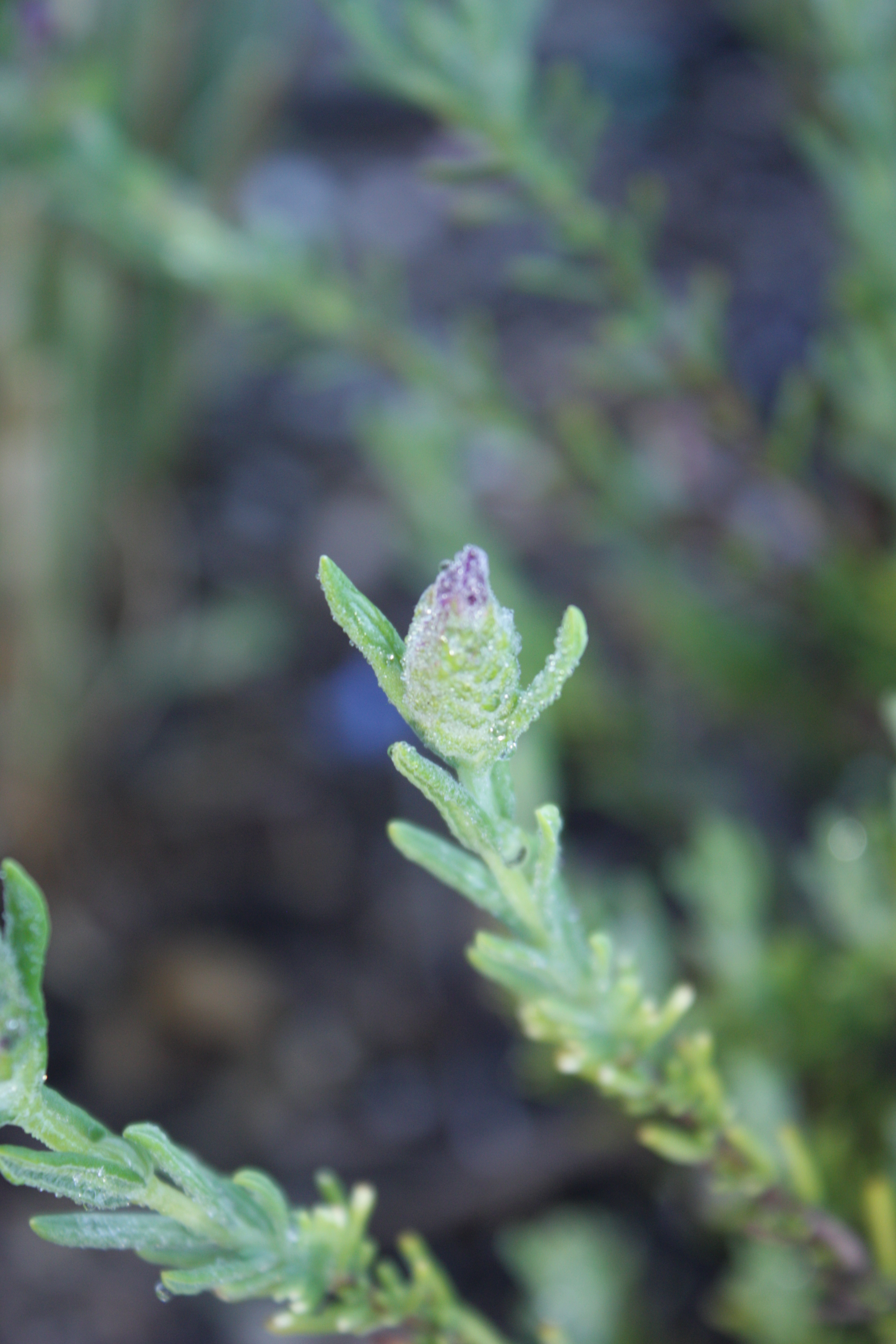
lavandula_2015_5106

to watch over time

lavandula _5487

as the flowers unfurl.

Live Green

No matter what species of lavender you plant, you’ll be living green. Growing your own lavender reduces lavender imported from half a globe away, usually southeastern Europe. Growing your own also insures that you have a good source of quality organic lavender. For those exploring the energetics (chi) of products, growing your own lavender and harvesting as needed offers the many benefits of strong chi.

Native desert lavender or European species, lavender adds refreshing fragrance to your living spaces, both indoors and out.

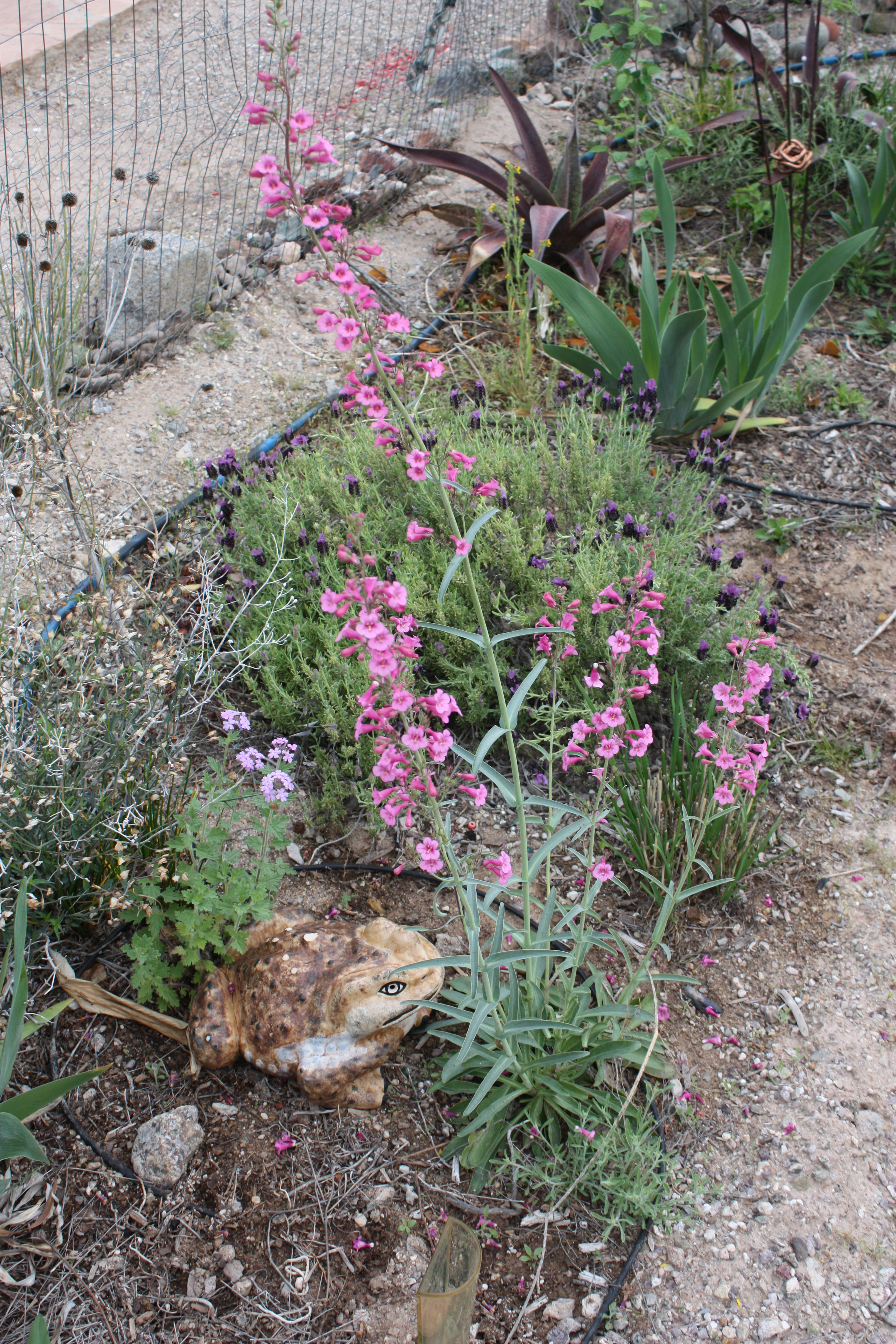
lavandula and penstemon_5174

Lavender and Parry’s penstemon grow well beside one another and attract many native pollinators to the garden.


Special Book Signing:

Eastside Costco, Saturday April 4, from 12 noon to 3 pm

Northwest Costco, Saturday April 11, from 12 noon to 3 pm

If you live in Southeastern Arizona, please come to one of my lectures. Look for me at your local Pima County Library branch, Steam Pump Ranch, Tubac Presidio, Tucson Festival of Books and more. After each event I will be signing copies of my books, including the latest, “Southwest Fruit and Vegetable Gardening,” written for Arizona, Nevada and New Mexico (Cool Springs Press, $23).

JAS avatar

All photos (except where noted) and all text are copyright © 2015, Jacqueline A. Soule.

All rights reserved. I receive many requests to reprint my work. My policy is that you may use a short excerpt but you must give proper credit to the author, and must include a link back to the original post on our site. Photos may not be used.

Time for Some Thyme

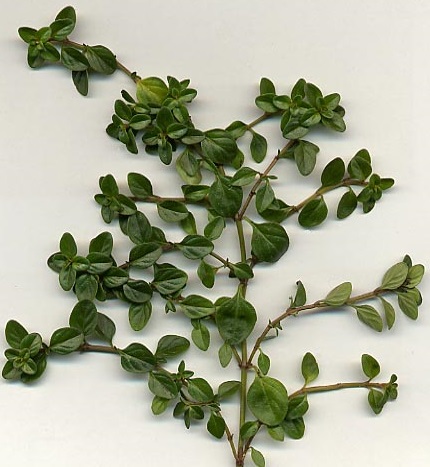
Thymus_vulgaris_branch crop

Common thyme (Thymus vulgaris)  is best grown with a dappled noon-time shade in the summer in the southwest.

Special for Savor the Southwest  February 2015
by Dr. Jacqueline A. Soule

Spring is springing out in my garden – and the little thyme cutting I got from Savor Sister Muffin Burgess back in at our anniversary party in November is finally starting to take off.  November was a terrible time to take cuttings of this warm climate herb – but the great thing about herbs is that humans have been mistreating them for 7000 years or so, and the weak ones have mostly died out.

Thymus_(zaatar)_Jerusalem_BG crop

There are many species of thyme, like this species in the Jerusalem Botanical Garden, used for the herb blend za’atar.

Thyme is a large and very popular genus, with over 350 species and countless cultivars grown around the world. Aside from looking lovely in the landscape, thyme is a strong herb used in cooking, and has some proven medicinal properties as well. It can also be grown indoors in bright, indirect light.

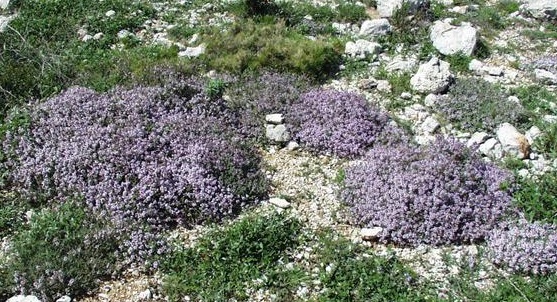
Thymus_vulgaris_habitat_003 crop

Many herbs that do in the Southwest are originally from a similar climate – like this Thymus vulgaris growing wild on the rocky hillsides of the Galilee.

This lovely, fragrant, tasty, and healthful herb in native to the rocky slopes of the mountains of the eastern Mediterranean region, in the area that is now mostly Greece. Since they are pre-adapted to low water conditions, most species of thyme can be grown here. I grow my thyme plants where they get roof run-off, thus I rarely need to water them; and yet they offer a lush look to my entryway with their glossy green leaves.

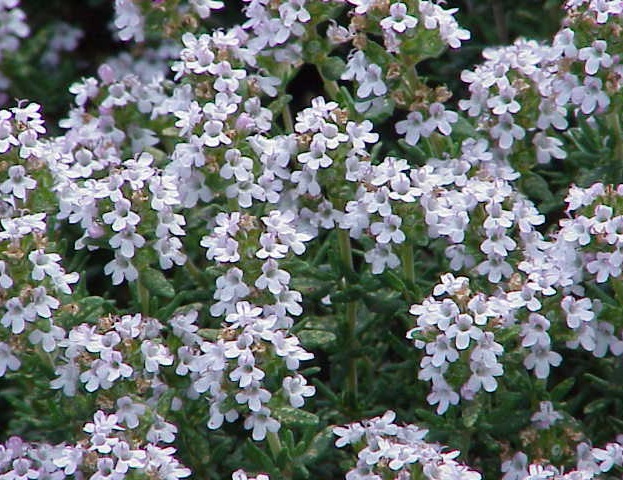
Thymus_vulgaris_bloom_001 crop

Not just tasty, thyme is also another pretty face in the garden! For peak flavor, it is best to harvest this (and most culinary herbs) just before they bloom.

Make sure you grow your thyme in well-drained soil. You may have to add some sand to your soil. I killed several thyme plants until I had finally added enough sand to their bed.

There are many thymes to choose from, but here are the species most commonly found in the nursery.

Common or culinary thyme (Thymus vulgaris) is a low woody plant barely reaching a foot tall. It quickly becomes leggy with bare wood showing so harvest and use or dry your thyme often. (You can give friends jars of your dried herbs as truly personal and unique gifts.)

Creeping thyme (Thymus praecox) makes an attractive and useful groundcover. It is culinary too! Harvest as needed.

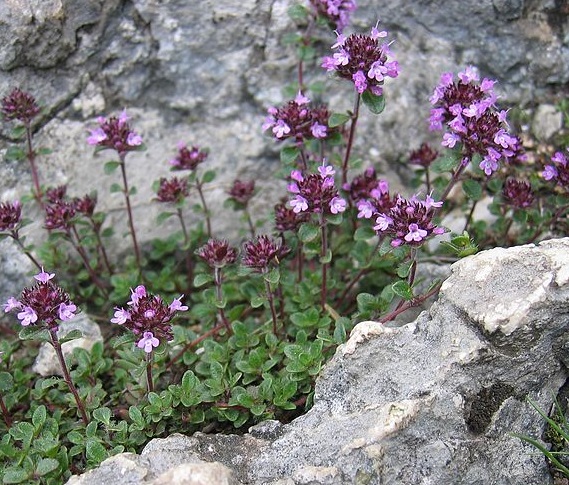
Thymus_praecox crop

Creeping thyme, with tiny leaves and charming purple flowers, is perfect for a fairy garden.

Lemon thyme (Thymus X citriodorus) is a delicious and fragrant low-growing variety with glossy green leaves, and goes wonderfully with fish dishes.

Thymus_citriodorus_variegata_crop

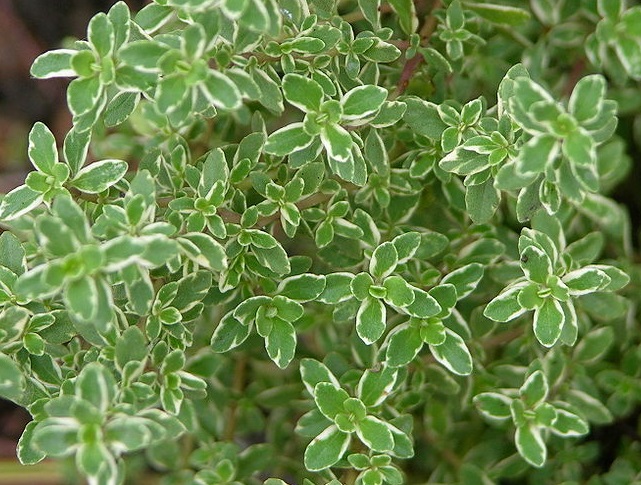
Lemon thyme is great for flavoring fish dishes – two flavors for the price of one!

Equally fragrant and delicious is the golden lemon thyme (Thymus X citriodorus ‘Aureus’). With wonderfully variegated leaves, it looks good in the landscape.
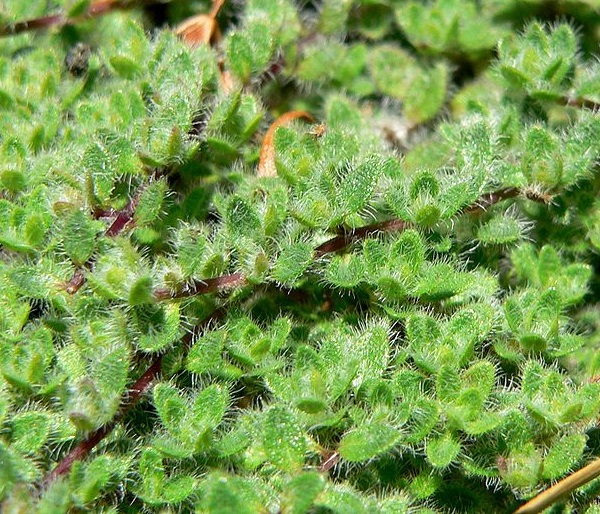
Not generally used as culinary herbs, two popular species of creeping thyme are useful in the landscape. Mother-of-thyme (Thymus serpyllum) and woolly thyme (Thymus pseudolanginosis) both grow well between shady flagstones, and smell great when stepped on.

Thymus_pseudolanuginosus_crop

Add some fragrance to your landscape – plant this heat tolerant woolly thyme between the flagstones of your path.

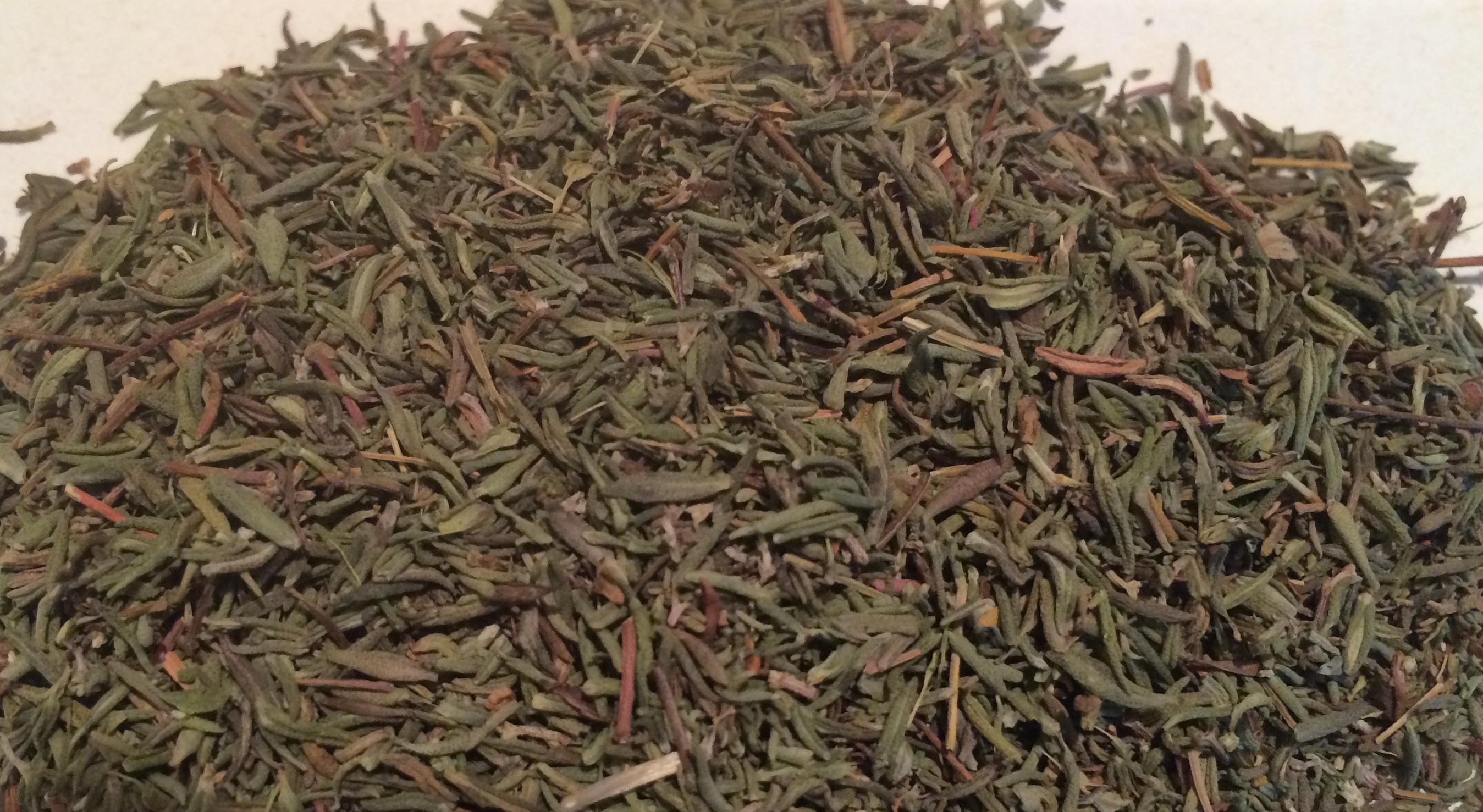
Sprinkle thyme (either fresh or dried) in soups, salads, on meat dishes or use in herb breads. Use an ample number of sprigs in herbal vinegars and oils for an intense and refreshing flavor.

thyme IMG_2655 crop

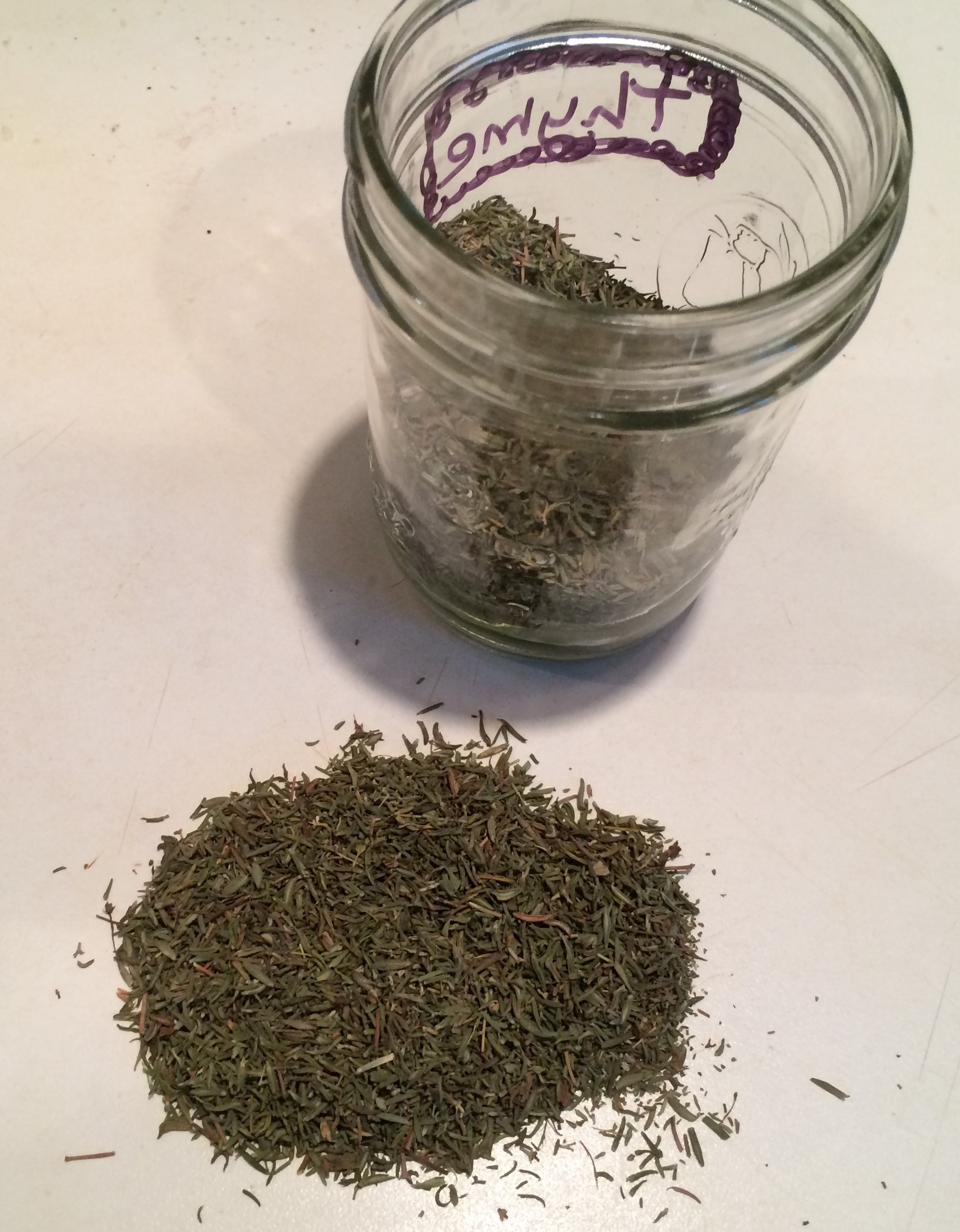
We use ample thyme in our cooking. This 8 ounce jar gets refilled several times a year.

For a quick meal at the end of a long day make Sopa de Farigola, or Thyme Soup, a dish popular in the Catalonia region of northeastern Spain, and thus part of our Sonoran heritage as well.  Fresh eggs and day-old bread are topped with a boiling broth made from water, sprigs of thyme and some olive oil. Great for replacing electrolytes after a day working in the garden!

More about thyme in my books which I will be selling and signing at the Tucson Festival of Books March 14 & 15 this year – Southwest Fruit & Vegetable Gardening (Cool Springs Press 2014, $23), and Father Kino’s Herbs: Growing & Using Them Today (Tierra del Sol Press 2011, $15) also available at Tucson area bookstores, nurseries, botanical gardens, and state parks.

JAS avatar  © 2015, Jacqueline Soule. All rights reserved. I have received many requests to reprint my work. My policy is that you are free to use a very short excerpt which must give proper credit to the author, and must include a link back to the original post on our site. Please use the contact me if you have any questions.

thyme IMG_2657 crop

More Ideas for Wild Dates in Borderlands Towns

Washingtonia filifera near UA main gate (R.Mondt photo)

Our native fan palm, Washingtonia filifera, near UA main gate.  Original seed from Arizona’s KOFA Mountains.   (R.Mondt photo)

Yes, we can delight in the most fabulous wild dates right here in Baja Arizona. We don’t have to put out lots of energy into finding these tasty little morsels because they are now all over the urban landscape. Once, in olden times, they were confined to oases, but now they line every old neighborhood street in low-desert towns. Harvest at the right time and enjoy their bounty.

Our Native Fan Palm Washingtonia filifera, UA photo (Note the stout trunk)

Our Native Fan Palm Washingtonia filifera, UA photo (Note the stout trunk)

Tia Marta here to continue our culinary explorations of native fan palm fruit. Our street sentinels are more than vertical shade.  They bear other surprising gifts. Our so called California fan palms (“palma taco”) offer tiny sweet and plentiful fruits (the size of a plump pea), and were harvested and relished by Native People of the Sonoran and Mojave deserts long before Hispanics brought date palms (the pinnate-leafed palms) from the Old World.

Washingtonia robusta in a S.Tucson landscape

Washingtonia robusta planted in a S.Tucson landscape

When ripe in summer into fall, zillions of fruits hang from pendulous stalks of Washingtonia filifera, with 20 pounds or more of the little buggers in one cluster—talk about prolific! As mentioned in my blog-sister’s post two weeks ago, Carolyn and I were challenged by renowned ethnobotanist Dr Richard Felger to try our hands at creating some “contemporary” recipes for this ancient and well-adapted desert food—which is now disregarded as nothing more than a columnar street planting. We know from ethnographic accounts (see them summarized in Wendy Hodgson’s Food Plants of the Sonoran Desert, UA Press, 2001) that for the Native Cahuilla of Southern California, the fan palm meant survival—a staple in their diet, used both fresh or dried and ground, hard seeds and all, into a flour for cooking or griddling. Another ethnobiologist friend Dr. Amadeo Rea (1997) documented Pima children collecting fan palm fruits as snacks. Dr. Felger intends now to bring this native palm back into new, appropriate use as a sustainable desert food crop.

Fruits newly harvested from the California fan palm Washingtonia filifera (MABurgess photo)

Fruits newly harvested from the California fan palm Washingtonia filifera (MABurgess photo)

Washingtonia fruit is mostly seed, but the small amount of pulp has a group impact (MABurgess photo)

Washingtonia fruit is mostly seed, but the small amount of pulp has an impact in numbers (MABurgess photo)

Harvesting the high hanging fruit clusters proves challenging. Native harvesters used a lasso. More recently some harvesters fit a sharp can lid to the end of a pole to cut off the entire fruit stalk. A Tohono O’odham saguaro harvesting kuipaD might suffice—or a long-poled tree-trimmer—both worth a try.


In addition to their success as hot-desert food producers, both fan palms native to southwest North America, Washingtonia filifera (the stout, shorter one) and W.robusta (the super-tall, spindlier one), provide excellent nutrition. It has been estimated that one fan palm’s fruit could sustain one human’s nutritional needs for more than 200 days! Get a load of these figures from James W. Cornett (Principles Jour.Internat.PalmSociety,1987):  Protein 3.1%, Carbs 77.7%, Fiber 10.4%, Calcium 110 mg per 100g, VitaminA(Carotenes) 180mg per 100g.  Comparing these wild date nutritional figures with the commercial date palm (Phoenix dactylifera), our wild fan palm is way ahead on all counts except carbs (carbs 94.1% in standard dates).

Washed and drained fruits of Washingtonia filifera ready for snacking! (MABurgess photo)

Washed and drained fruits of Washingtonia filifera in Tarahumara sifting basket, ready for snacking! (MABurgess photo)

Since the fruits of W.robusta (the tall one) are even tinier than W.filifera, I chose to do my foodie experiments with the latter one’s “bigger” datelets–both small.  Fruits of both are mostly seed, a stony seed surrounded by a thin layer of sweet skin and dry, date-like pulp. Here are two fun ideas I’ve come up with for using fan palm fruits, which can be done easily in any kitchen or patio. These ideas also might present interesting potential for commercial-scale food production. (I hope our wonderful local companies like Cheri’s Desert Harvest are listening to the significance herein!)                 So, here’s my first idea–really in three delicious parts:

Simmering fan palm fruits

Simmering fan palm fruitsSolar Fan Palm Syrup, Datil Molasses, or Datil Candy

SOLAR FAN PALM SYRUP

Directions:

Wash thoroughly and drain 4 cups desert fan palm fruits. Place in a saucepan with 8 cups drinking water to cover fruit well. On stove-top, gently simmer the fruits for at least 30 minutes, (if using solar oven, make it 1 hour). Add more drinking water to keep fruits covered. Let cool and stand in refrig for 1-3 days. This process is bringing out the complex sugars into solution. Again, when you have a little time, bring back to simmer 15-20 minutes. Taste the liquid. It should be deliciously sweet with a rich, almost smokey bouquet—but still thin. With a sieve, decant the sweet liquid from the cooked fruits, saving the fruits aside.

After sieving out the simmered fruit, the liquid is being concentrated in a solar oven with oven cover slightly open to release moisture (MABurgess photo)

After sieving out the simmered fruit, the liquid is being concentrated in a solar oven with oven cover slightly open to release moisture (MABurgess photo

[Here is where my experience reducing thin saguaro fruit juice kicked in. I knew that this thin, sweet liquid from the fan palm dates had to be cooked down slowly.]

Pour the juice into a solar-oven-worthy pan and put in preheated solar oven—without a lid on the pan. Let the glass cover of the oven be slightly open to allow steam/moisture to escape. Check after 15 minutes. If syrup is desired, check for correct syrup consistency.  Keep heating until thickened to pourable syrup.  Then, try this wonderful and healthful solar syrup over mesquite pancakes for the ultimate Southwestern breakfast!

Concentrated Solar Fan Palm Syrup--nothing added--just water and fan palm fruit!  (MABurgess)

Concentrated Solar Fan Palm Syrup–nothing added–just water and fan palm fruit!  Come taste it at the StPhil’s farmers market!(MABurgess)


“DATIL SYLVESTRE” MOLASSES

With more time and further moisture reduction, there are more delicious options….. Here’s one:  For the best, richest “Datil Molasses” you ever tasted, let the liquid cook down for another 45 minutes or an hour (depending on sun intensity).  Be careful not to overcook, which might leave a sweet glue on the bottom of your pan. (The same reduction of liquid can be done of course on the stove-top or over a fire, like reducing maple sap, but hey, this is a desert product. We’ve got our fuel overhead! Let’s use it.)

“DULCES DE DATIL SYLVESTRE”

Carrying the process of concentrating the syrup yet another step further…If an even more chewy candy is desired, you might use the concentrated sweet molasses in a candy mold or for gelling like a fan-palm gummy bear.

Here’s another totally delightsome, exotic yet simple idea for maximum pleasure from fan palm fruits…..

DESERT OASIS CORDIAL

Wild Fan Palm Liqueur (MABurgess photo)

Wild Fan Palm Cordial (MABurgess photo)“Desert Oasis Cordial”

It takes about 4-5 weeks to make this rich cordial liqueur, so plan ahead. With a fall harvest of wild dates you could start making your Desert Oasis Cordial by Thanksgiving and have it ready for Christmas-time celebrations. But don’t wait—when the fruits are ripe, go for it.

This is how I did it:

Wash, wash, wash and drain at least 2 cups of ripe native fan palm fruitlets (W.filifera), enough to pack firmly into a mason jar.  Into the packed jar, pour vodka of your choice, filling all the space between the little fruits to the brim to cover them. (You could use tequila or EverClear for differing degrees of delight.)  Screw on lid and place jar in a cool dark corner of your kitchen, where you can be reminded to agitate it. After a week, open it and add more vodka to cover fruits, as the fruit tissue will have absorbed some of the alcohol. Shake and turn over the closed jar every week.  For the herbalists among us, you will recognize this process is basically tincturing the wild dates. After 4-5 weeks, decant (i.e. separate) the liquid from the fruit. The decanted liquid will be a rich dark chocolate brown color like Godiva liqueur only translucent. Taste it and serve sparingly in small cordial glasses. Store any remaining liqueur in a closed decanter for the next festive occasion.

W.filifera fruit AFTER tincturing and decanting makes a fabulous alcoholic treat (seeds to be discarded)

W.filifera fruit AFTER tincturing and decanting makes a fabulous alcoholic treat (seeds to be discarded) (MABurgess)

Decanting the marinated fan palm fruits from the liqueur (MABurgess)

Decanting the marinated fan palm fruits from the liqueur (MABurgess)

After both your Fan-Palm Syrup-making and your Desert Oasis Cordial-making, you will have delicious fruits left over in the straining or decanting process.

Don’t forget the simple joy of snacking on little fruits, doing the pulp-from-seed separation maneuver with your tongue and teeth. Move over, sunflower seeds!  The boiled fruits after syrup-making are still tasty.  Better still–the vodka-soaked wild dates give an extra kick, so don’t overindulge.

Both can be briefly quick-whirled or mashed in a blender, meat grinder, or CuisinArt to begin the process of separating the remaining pulp from the hard seeds.

After decanting the cordial, remaining fruit is whirled and put thru colander to separate pulp from seeds

After decanting the cordial, remaining fruit is whirled and put thru colander to separate pulp from seeds

[If someone has a good idea of how best to separate seeds from pulp easily, please share it!] Fruit leathers, energy bars, jams, “datil newtons”, spreads, supplements—there are SO many ways the remaining fruit pulp could be used, so that none of the nutrients and fiber need go to waste. Even the hard seeds could be parched and ground into a nutritious flour—as Native People did in earlier times, to their advantage.


"Desert Oasis Cordial" from wild fan palm fruits (MABurgess photo)

“Desert Oasis Cordial” from wild fan palm fruits (MABurgess photo)

BTW, after snacking on Washingtonia fruitlets, be sure to check your smile in the mirror for black flecks of the yummy pulp between your incisors.  I can see it now—the next fad question after “Got milk?” will be “Got datil?”  That could make for a wild date experience. Enjoy!

For a taste of the native fan palm fruits, come by our Flor de Mayo booth at Sunday’s St Phillips farmers market, 9am-1pm. There we also have a demo of solar-oven cookery in action.  The cleverly designed solar ovens are for sale from us with a discount and no shipping costs. We’d like to see every household in Baja Arizona equipped with a solar oven for emergencies as well as for sustainable living.

You can find the perfect makings for the pancakes to eat with your Solar FanPalm Syrup for that Southwestern breakfast–mesquite flour and heirloom White Sonora Wheat flour— at the Native Seeds/SEARCH store (3061 N Campbell, Tucson) and at Flor de Mayo’s booth at St Phillips farmers market.  See you on Sunday! Have your taste-buds ready for a wild date.

Onion Planting Time!

allium BUR HPIM0665

The Southwest is ideal for gardening all year long.

Jacqueline Soule with you here to share some timely planting tips.  Speaking as a gardener – one of the best things about living here in the Southwest is that every month is the month to plant something! Right now, in these cool months with short days and long nights, it is time to plant onions.

If you have never before had a vegetable garden, onions are a great way to start. Of all the garden vegetables, they are tolerant of abuse and forgiving of mistakes. In the ground, in large or small pots, under the shrubs in the front yard of your HOA home (the weed-police are mollified by “bulbs”), wherever you have a little space you can plant some onions. As long as we get rain every ten days, you may not even need to water them. Onions fresh out of the ground have so much more flavor you owe it to yourself to try them.

allium I'itoi BUR HPIM0664

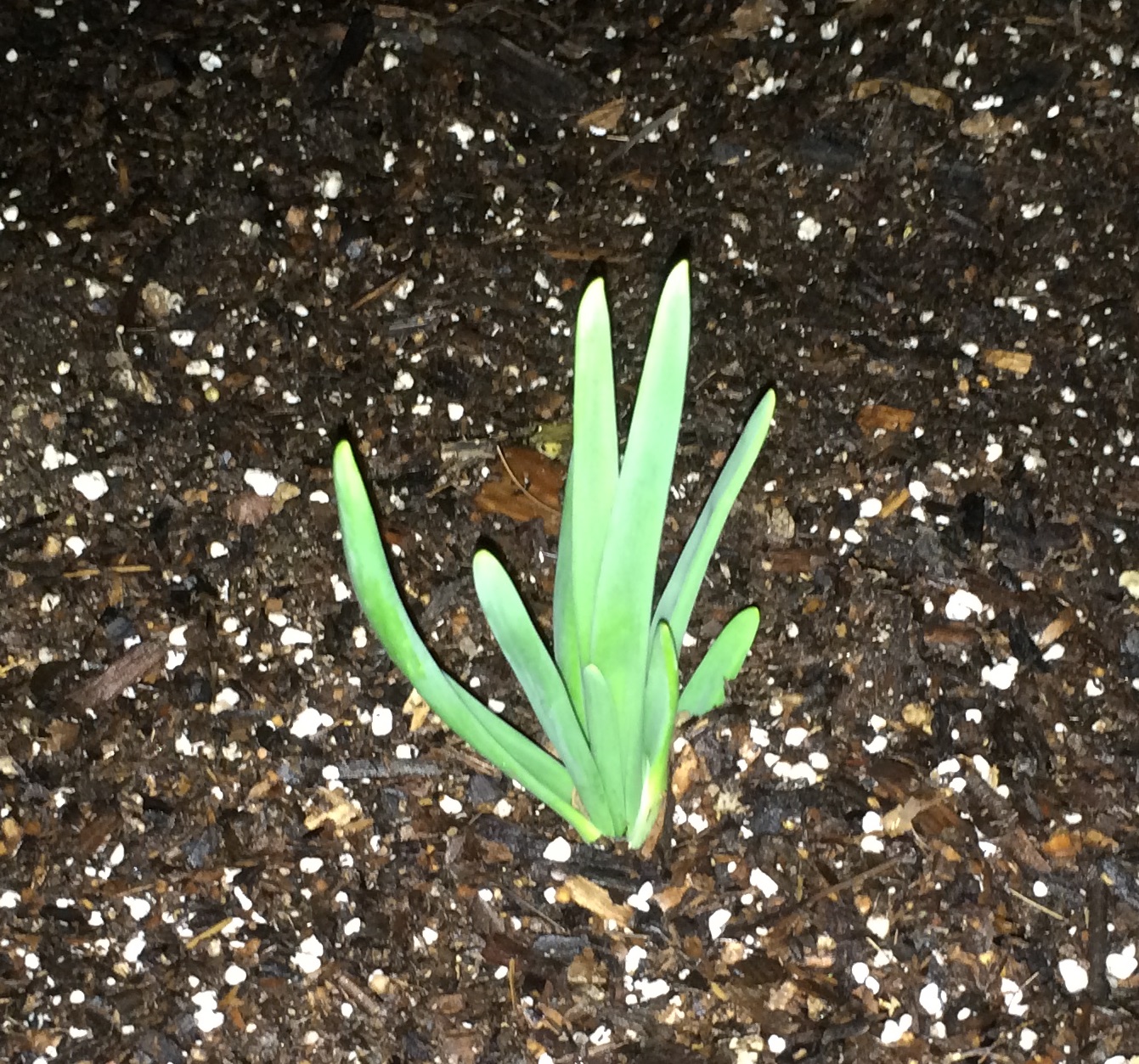
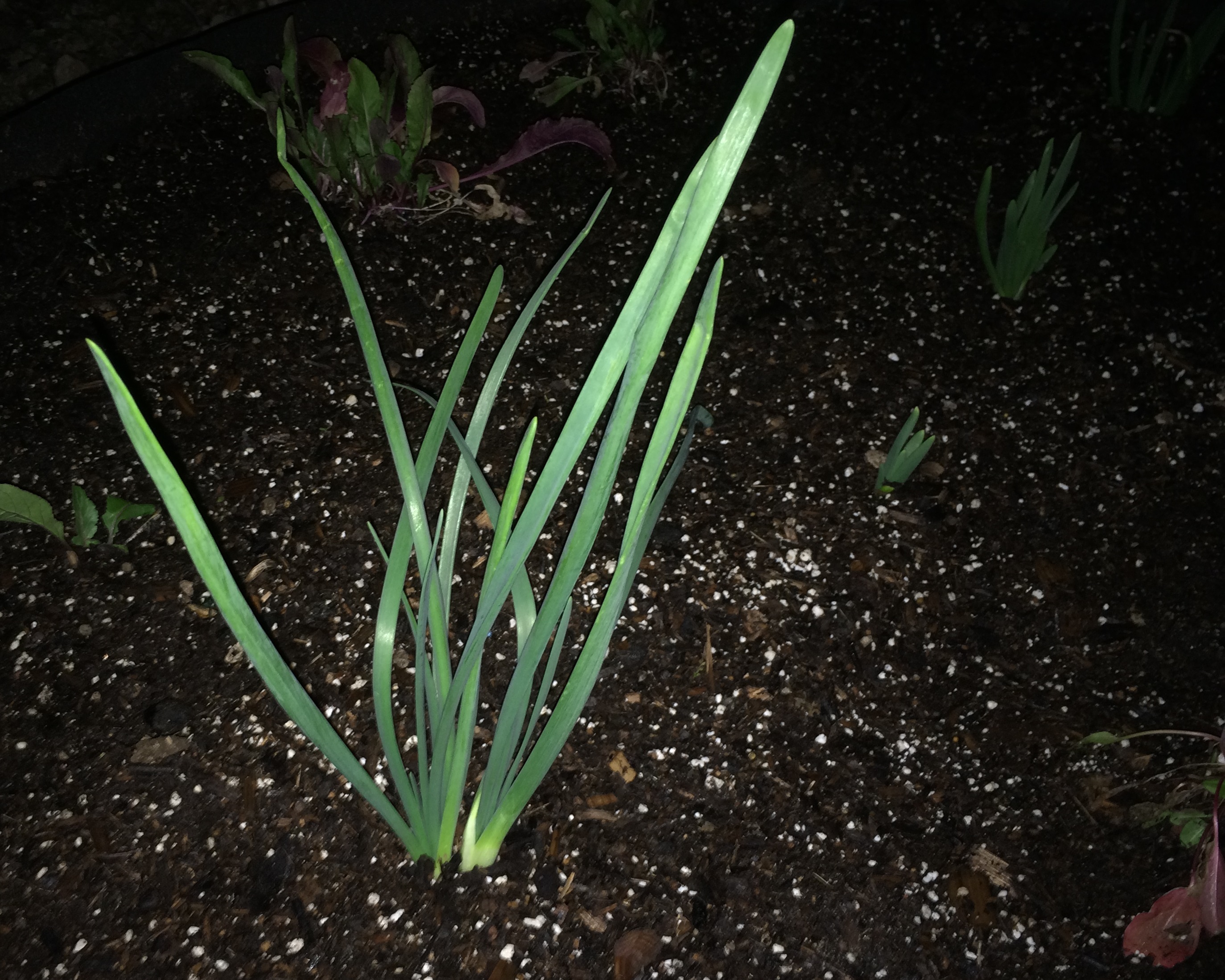
Onions can be tucked into almost any space in the yard. These I’itoi onions stay small.

Which ones? There are more varieties of onions than you can shake a stick at, a number of different types with conflicting names (bunching, bulbing, multiplier) and technically a few different species, but rather than start a discourse on all of that, lets just key into the fact that the days are short, thus you need to plant “short day” varieties.

allium AMP set 001

Onion sets can be planted in pots with potting soil.

Now? In the coldest time of year? Yes! But you will plant “sets” not seeds. Sets are already started from seed onions, or, in the case of multiplier onions and garlics, they are divisions off a larger bulb.

How to plant sets? Just set them into the soil. (Sometimes gardening terminology makes sense.)  Plant with the green side up, the bulb entirely below the soil.

allium AMP set 002

Look in the background in this shot. Some varieties will grow faster than others.

Most of our local nurseries know that now is the time for onions and have a selection of sets to choose from. Big box stores don’t – just another reason to shop local. In past years some of the Farmer’s Market vendors also offered onion sets.

A general planting guide follows.

Light.  Remember the whole “short day” thing?  The short days of winter will mean that the onions will need as much as you can give them.

Soil is not as critical as with most vegetables. But for best overall health, plus full flavor and good final size of your crop, an improved garden soil is recommended. Or plain potting soil if you grow them in containers.

Water is needed on a regular basis for nice fat bulbs and succulent leaves. In general this means two or three times per week, but maybe more if the onions are in pots.

Fertilizer is not much needed by onions. If you want to, use one for root crops, high in nitrogen and potassium. Avoid fertilizer for flowers, like a rose or tomato food. Flowering takes energy away from creating succulent bulbs.

Allium_onion_flowers_J001

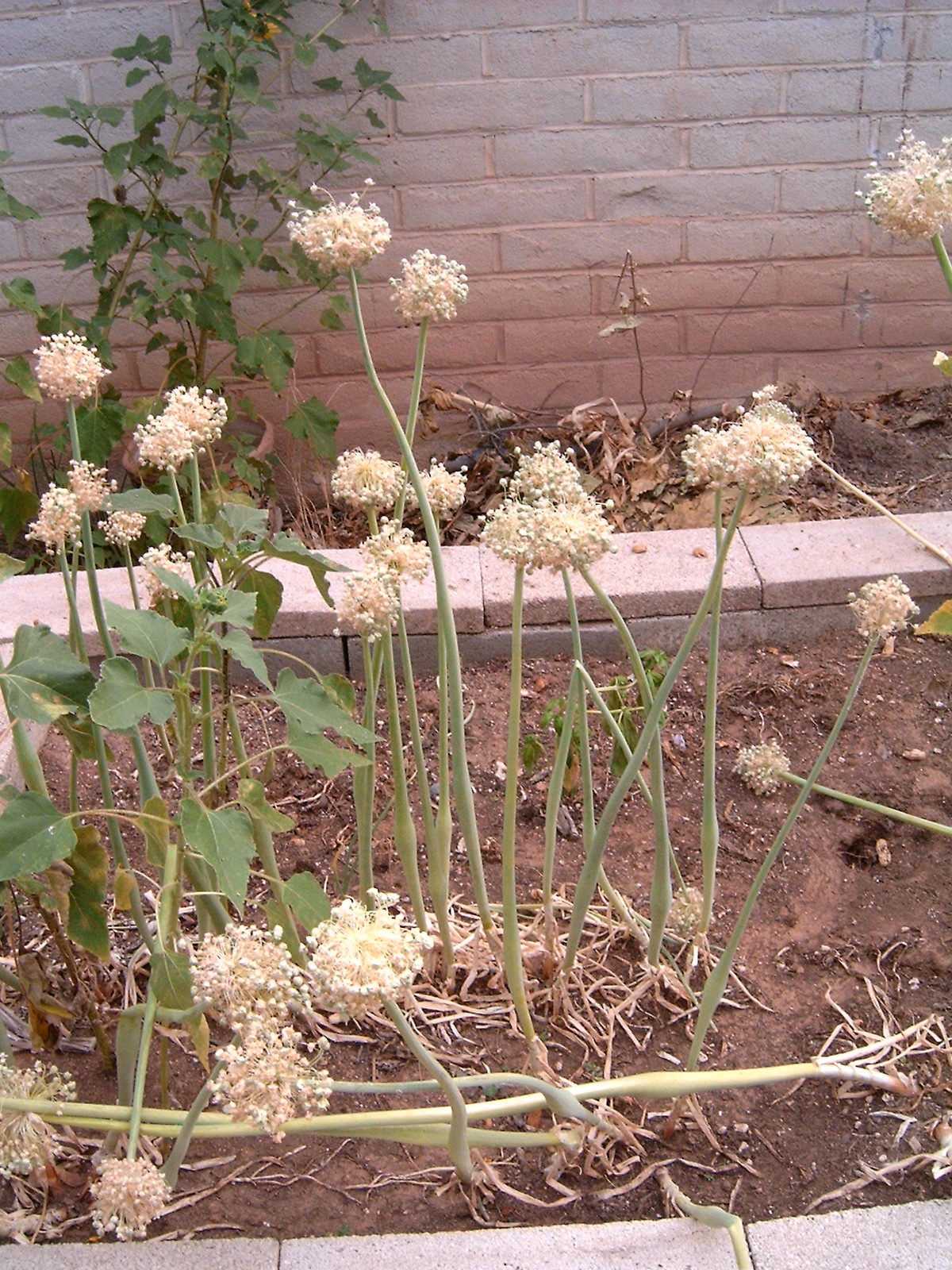
These onions got too much flowering fertilizer. Rather than develop good bulbs, they spent their energy producing flowers and seeds.

Harvest – once the tops die down and start to turn brown (usually in late May into June).  For long term storage the garden books from “back east” tell you to dry your onions in the sun – but don’t do that here!! – they will get sun scald and taste yucky. Dry onions in a cool dark place that does have good air flow. I put mine on screens in the laundry room and leave the ceiling fan on low for about three days. Once they have dried onions will store without rotting.

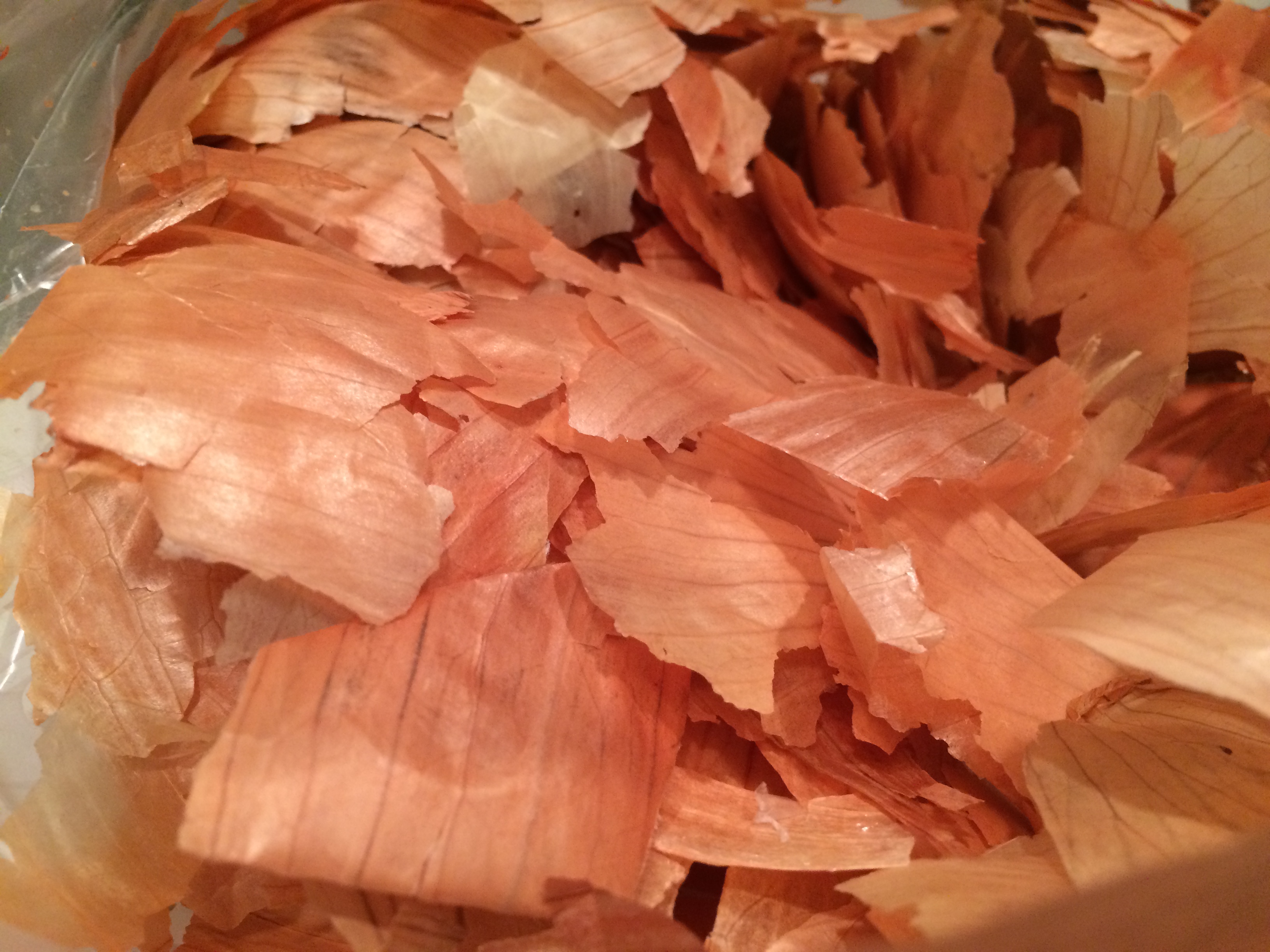
Storage & Use. Some varieties of onions store better than others. Plan on about four months maximum for best flavor and texture. (Ours are eaten so fast this is not an issue.) Don’t forget to save your onion skins to make a great natural dye for Easter eggs and textiles.

onion skin IMG_2348

I keep a bag to add my onion skins to every time I cook.

onion skin IMG_2349

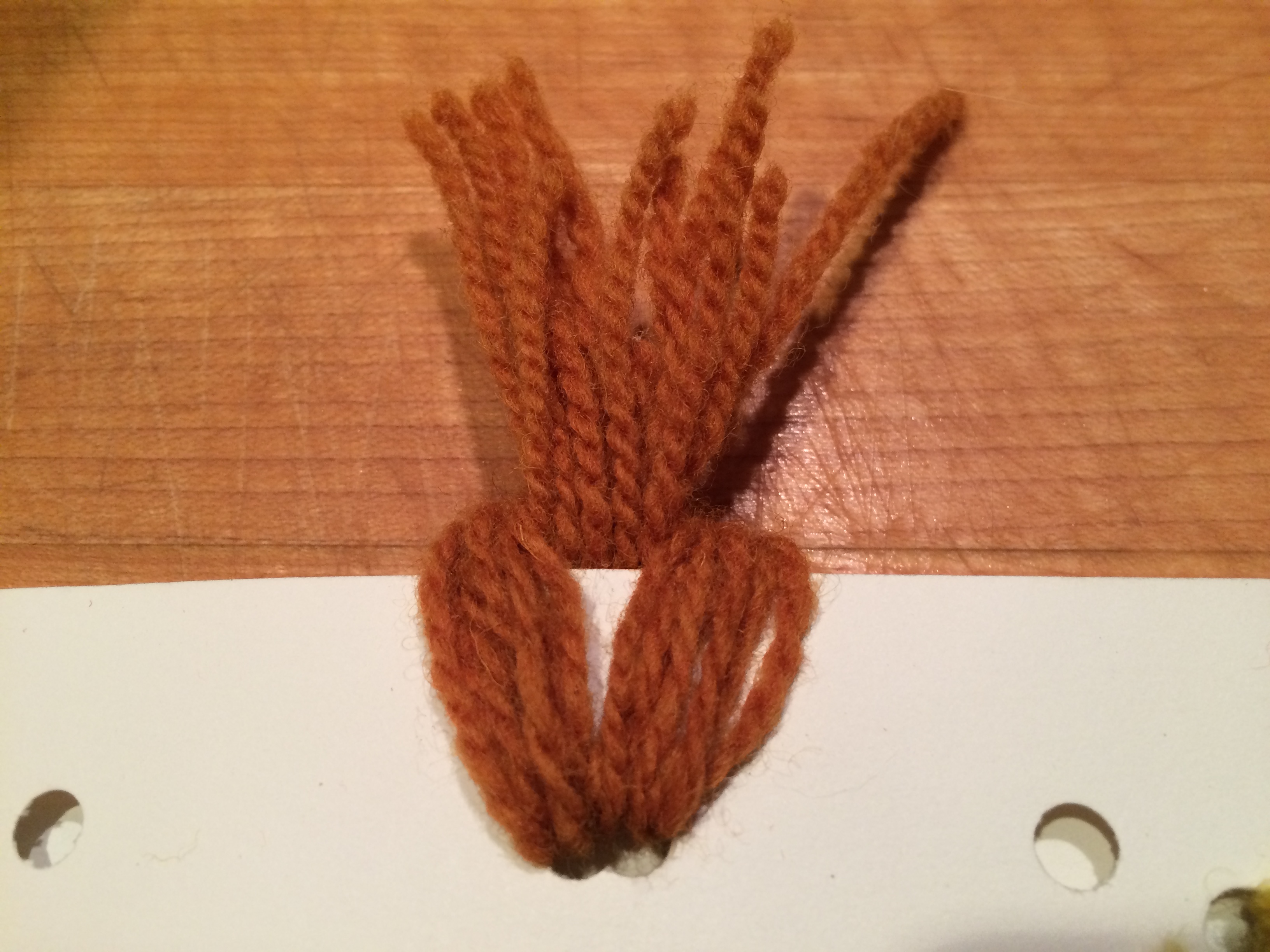
Onion skins produce a warm brown dye.


For more about onions and other vegetables and fruits that will thrive in your Southwestern garden, please consider my book Southwest Fruit and Vegetable Gardening (Cool Springs Press 2014), available at Antigone, Arizona Experience Store, local botanical gardens, state parks, and nurseries.

© 2015, Jacqueline Soule.  All rights reserved. I have received many requests to reprint my work. My policy is that you are free to use a very short excerpt which must give proper credit to the author, and must include a link back to the original post on our site. Please use the contact me if you have any questions. JAS avatar