Election Bread—Savoring an old Recipe

No matter who your candidate was this momentous month, by fixing this festive treat called “Election Bread,” we can at least toast the democratic process AND local heirloom foods all in one delicious slice!
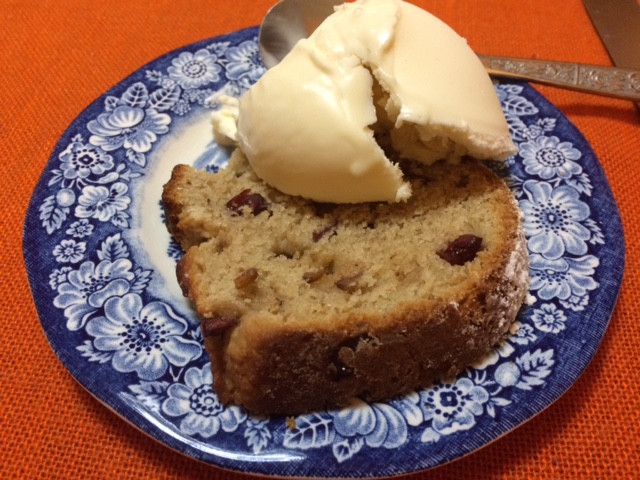
Ames Family Election Bread served joyously as a dessert

Ames family traditional Election Bread served joyously as a dessert topped with natural vanilla ice cream

Tia Marta here to share an Election Bread recipe inspired from my own family tradition served around election time each November. On the internet you might find historical variations of it with the moniker “Election Cake.” Technically it is a fruity yeast bread—probably one of the precursors of holiday fruit cake, reminiscent of Italian panettone–a nice addition as weather cools and fruits ripen. In the “old days” they say this Election Bread was baked to attract people to the polls on Election Day and fortify them for the trip home.

I gleaned our Ames Family Election Bread recipe from a cherished little cook’s notebook which my 80-year-old great Aunt Rina wrote for me when I was just learning to cook—yikes, some decades ago. My new adaptation of it reflects our home turf in the flavor-filled Sonoran Desert.
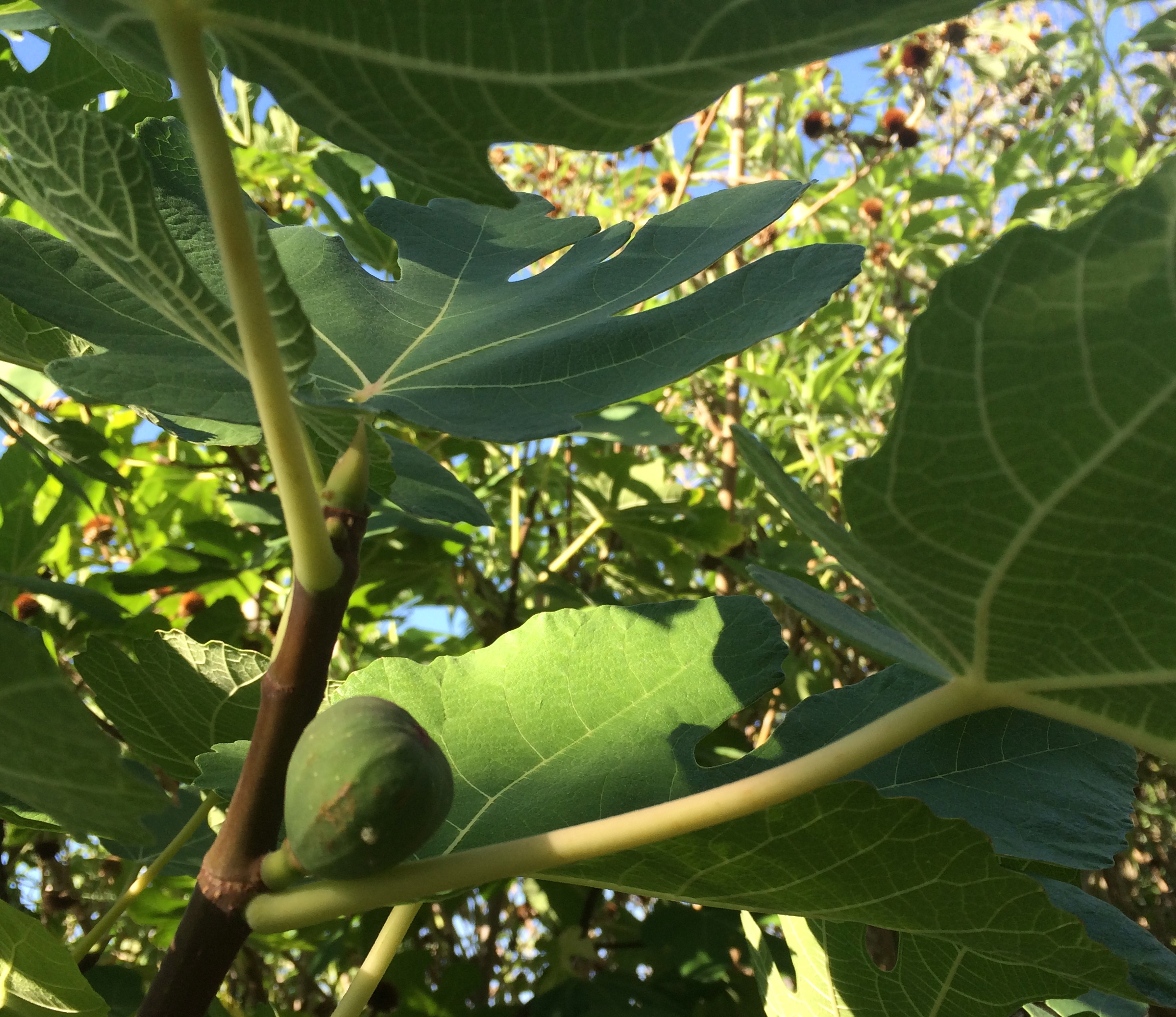
Heirloom Sosa-Carrillo fig (a Padre Kino introduction) from Mission Garden now producing in my yard (MABurgess photo)
Heirloom Sosa-Carrillo fig (a Padre Kino introduction) from Mission Garden now producing in my yard (MABurgess photo)

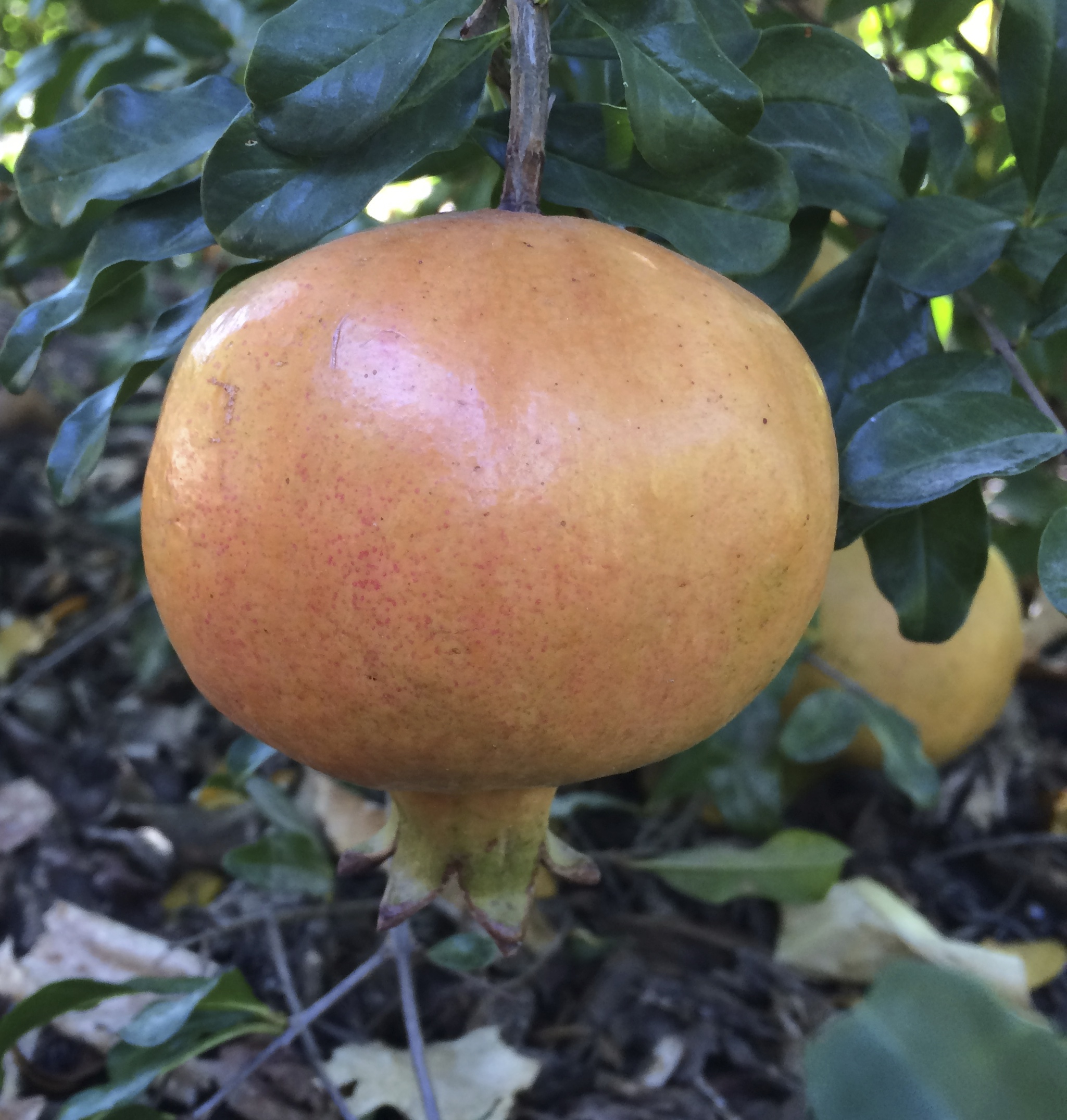
Heirloom pomegranate from Mission Garden, Tucson (MABurgess photo)

Heirloom pomegranate from Mission Garden, Tucson (MABurgess photo)

But here in Baja Arizona, instead of waiting for fall, I had to begin prep a few months ago by harvesting ripe heirloom figs, pomegranates and apricots as they ripened.  Father Kino’s figs grace my yard and the other two yummy fruits, grown at Tucson’s Mission Garden at the base of A-Mountain, were purchased at the Thursday Santa Cruz farmers’ market.

Preserving them for later use, I dried the fruits in my solar oven with the lid slightly opened, allowing humid air to escape.
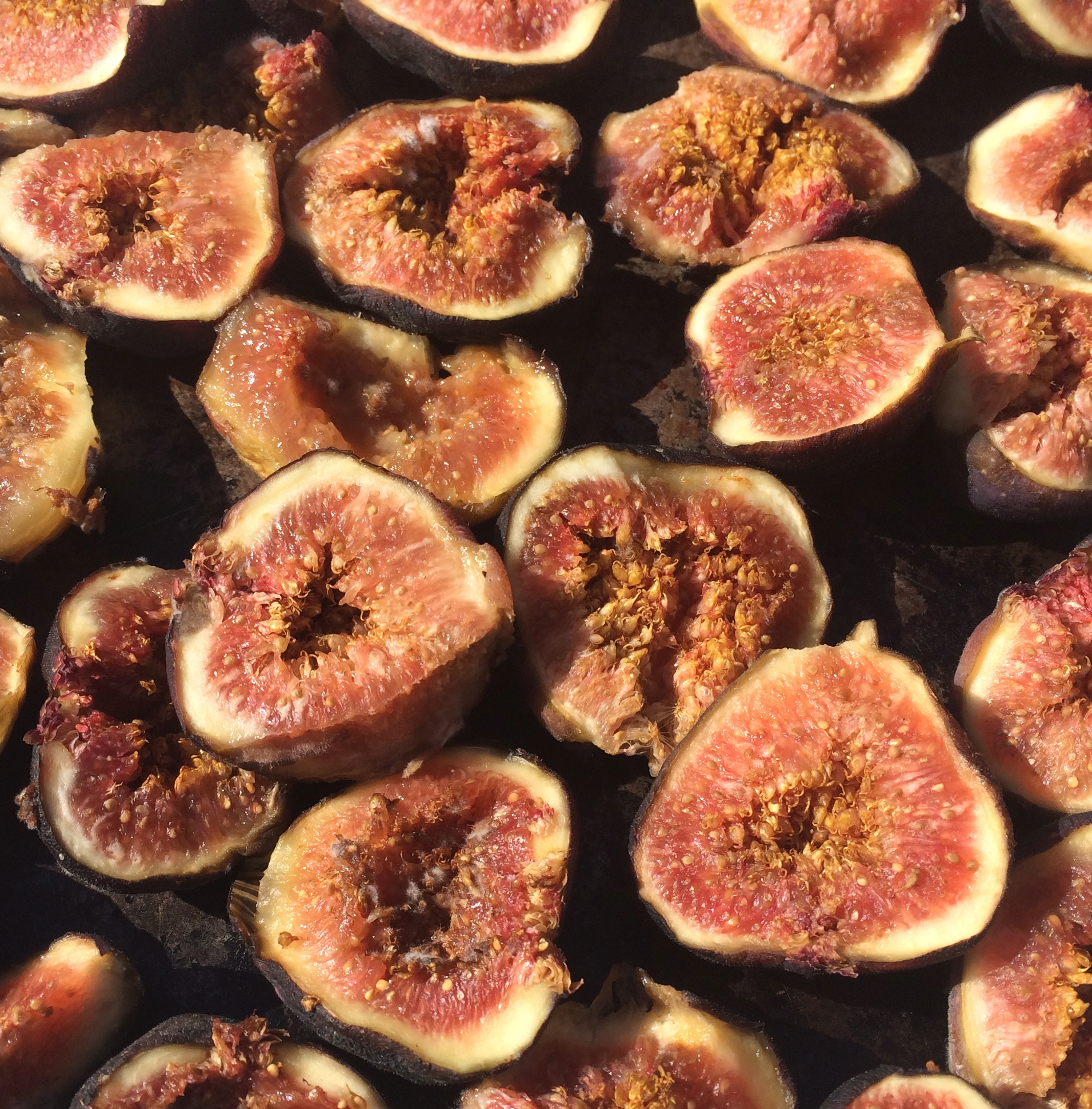
 

Fresh Mission figs cut ready for drying in the solar oven

Fresh Mission figs cut ready for drying in the solar oven

Sun-dried figs get even sweeter and more flavorful than when they are fresh!

Sun-dried figs get even sweeter and more flavorful than when they are fresh!

Celebrating our International City of Gastronomy, I rejoice in using flours grown and milled locally by BKWFarms in Marana, Arizona, to bake this rich bread.  Other ingredients I sourced close to home as well — Tucson’s precious mesquite-smoked Hamilton whiskey, homegrown heirloom fruit propagated at Mission Garden, agave nectar in place of sorghum molasses — from the bounty of Baja Arizona’s foodscape, its green thumbs, and its creative local “food-artists.”
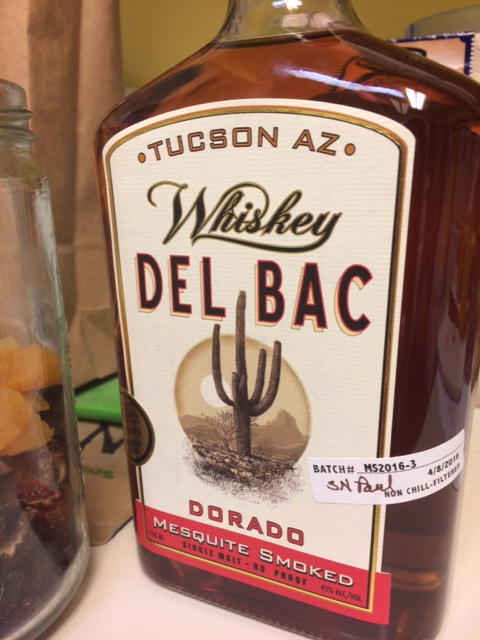
Tucson's best whiskey from Hamilton Distillers--made with organic local malted grain dried using local mesquite.

Tucson’s best whiskey from Hamilton Distillers–made with organic local malted grain dried using local mesquite.

Bread teaches us patience.  It is a beautiful meditation so take time to enjoy the process. There are tasks for this recipe to be done on two consecutive days.  At the very least, in between texts and emails, radio news and phone calls, take time out to go to the kitchen, check the status of your “rehydrating” fruit, or check your yeast sponge, take a nip, etc.  Bread is a living gift and this Election Bread in particular brings many quite lively foods together.  Be not daunted–become one with the yeasts!

If you are already into sourdough baking and have live starter, take method A.  If you are beginning with dry yeast, take method B.  Both will give olfactory pleasure from the git-go.


RECIPE FOR AMES FAMILY ELECTION BREAD

Day 1—Making the Pre-ferment –method A–Using Sourdough Starter
1 cup whole milk, warmed to ~ 70º F
¼ cup active starter — fully hydrated
2 ¼ cups all-purpose or whole wheat pastry flour *

OR Day 1 — Making the Pre-ferment — method B– Using Yeast
1 1/8 cup milk, warmed to ~70º F
1 tsp instant dry yeast
2 ¼ cups plus 2 Tbsp organic all-purpose or whole wheat pastry flour *

Pre-ferment Instructions:  In a bowl, combine milk and sourdough starter or yeast. Mix thoroughly until starter or yeast is well dispersed in the milk mixture. Add flour and mix vigorously until the yeast mixture is smooth. Scrape the sides of your bowl to use all yeast. Cover the bowl with a damp towel or plastic wrap. Allow your sponge to rest and ferment 8-12 hours at room temperature. When ready to use, your pre-ferment will have bubbles covering the surface.

Also Day 1–Pre-Soaking Dried Fruits

1 cup dried fruits, coarsely diced in 3/8-inch or ½-inch pieces **
1-1 ½ cup whiskey, bourbon, brandy, or non-alcoholic fruit juice ***

Instructions for Pre-soaking Dried Fruit:  To prepare dried fruits for your bread, soak them overnight, or for several days beforehand, in a lidded jar. Measure your dried fruit then cover with liquor or liquid of choice. (To speed up the soaking process put diced fruit in a small sauce pan, warm over low heat for a few minutes, remove from the heat, and allow fruit to soak, covered, for several hours.) Until the fruit is totally softened, you may need to add more liquid to keep fruit submerged.

Before adding fruit to your dough, strain the liquid off of the fruit. Use this fruity liquid as a cordial, or to make a simple glaze after bread is baked.

Freshly mixed dough in greased and floured bunt pan
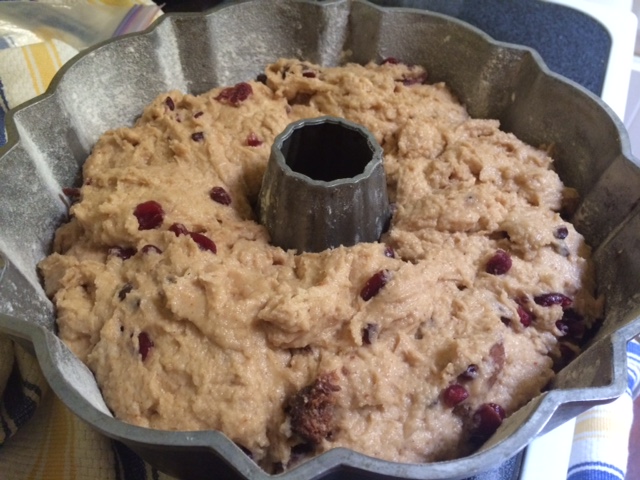
Freshly mixed dough in greased and floured bunt pan

Proofing Election Bread dough--after covering and allowing dough to rise to almost double size--fruit bites visible

Proofing Election Bread dough–after covering and allowing dough to rise to almost double size–fruit bites visible

*** My secret to this “fruit marinade” is the smokey flavor of local Whiskey del Bac!  Using spirits results in a fabulous liqueur “biproduct” to enjoy later.  But, remember the words to that song “Oh we never eat fruitcake because it has rum, and one little bite turns a man to a bum……..”  For the tea- totaler, any fruit juices will work for re-hydrating the dried fruit chunks:  try apple cider, prickly pear, pomegranate juice, cranberry.  Then save the liquid after decanting as it will have delicious new flavors added.


Day 2 –Preparing Dough, Proofing, Baking Election Bread

Ingredients:  
1 cup unsalted butter
¾ cup unrefined organic sugar
2 eggs
1/3 cup whole-milk yogurt
¼ cup sorghum molasses, agave nectar, or honey
Your Pre-ferment –yeast mixture or sourdough mixture from Day 1
2 ¼ cups all-purpose or whole wheat pastry flour combination *
1-2 Tbsp mixed spice blend—your choice cinnamon, allspice, nutmeg, mace blend
¼ tsp ground coriander –optional
¼ tsp ground black pepper –optional
1-2 tsp salt
2 Tbsp sherry or another spirit- optional
2 cups rehydrated local fruit from dried/preserved fruits, decanted

* Create your own combination of pastry flours. My Southwest pastry flour mix to total 2 ¼ cups is:
½ cup organic all-purpose flour
¼ cup mesquite pod milling dust
1 cup organic BKWFarms’ hard red wheat flour                                                                                                                                          ½ cup organic heirloom BKWFarms’ White Sonora Wheat flour  (heirloom flours available at NativeSeeds/SEARCH and http://www.flordemayoarts.com)

** My Election Bread fruit mix honors the Kino Heritage Fruit Tree Project. You can purchase heirloom fruit seasonally at Santa Cruz Farmers’ Market. For this recipe I used:
1/3 cup diced dry figs
1/3 cup diced dry apricots
1/6 cup dry pomegranate “arils”
1/6 cup dry cranberries (a bow to East Coast food)
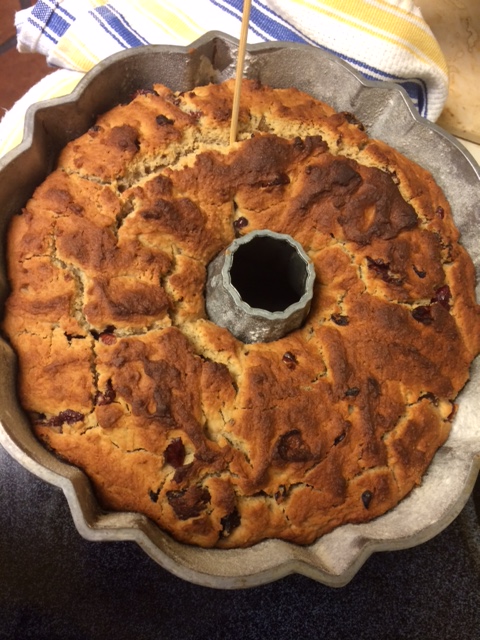
You can test to see if dough is done thru using a wooden kabob skewer or cake tester. Listen to hear if bubbles are still popping in the dough.

You can test to see if dough is done through by using a wooden kabob skewer or cake tester. Listen to hear if bubbles are still popping in the dough.

Day 2–Instructions for Election Day Bread Baking

a) Cream the butter well; add sugar, mixing until light and fluffy. Add the eggs one at a time with mixer (or spoon) on medium speed. Mix in the sorghum/honey and yogurt. If you have a dough hook mixer you can use it or good old elbow grease. Add the pre-ferment (starter or sponge) and mix slightly.
b) In a separate bowl, sift together all of the dry ingredients. Mix as you add dry ingredients into liquid ingredients, being careful not to over-mix.
c) Gently fold in the rehydrated fruit (then optional sherry).
d) Grease (with butter) and flour a bundt pan or round cake pan. Divide the dough evenly into the cake pan. Proof (i.e. let the dough rise) covered in a warm place for 2-4 hours, until the dough has risen by about ⅓ of its volume.
e) Preheat oven to 375F. Bake at 375° F (190° C) for 10 minutes. Reduce oven temperature to 350° F (177° C) and continue baking for about 25-35 minutes, or until a tester comes out clean. Let cake cool completely before cutting and eating.         Enjoy this sweet bread either plain or topped with a simple glaze.

If you are new to yeast bread baking, it would be fun to connect with a friend to chop fruit or get hands gooey together, or to have one person read directions while the other mixes. We always do it as a family and it’s so much more fun to add humor and gossip to the mix–or even a little political emoting.
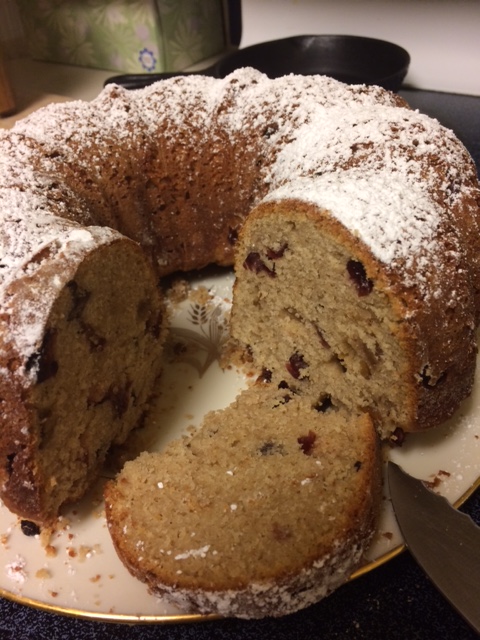
Sonoran Desert style Election Bread with local grains and local fruits--Ah the aromas!

Sonoran Desert style Election Bread with local grains and local fruits–Ahhhh, the aromas and rich history of Baja Arizona in a single slice!

During the coming holidays, you could try this easy bread for a great party treat, for breakfast, or for a colorful dessert topped with whipped cream or ice cream.
And feel free to play with the recipe, adding your own tastes, honoring your own family’s food culture and history and your own sense of place!
Buen provecho from Tia Marta!

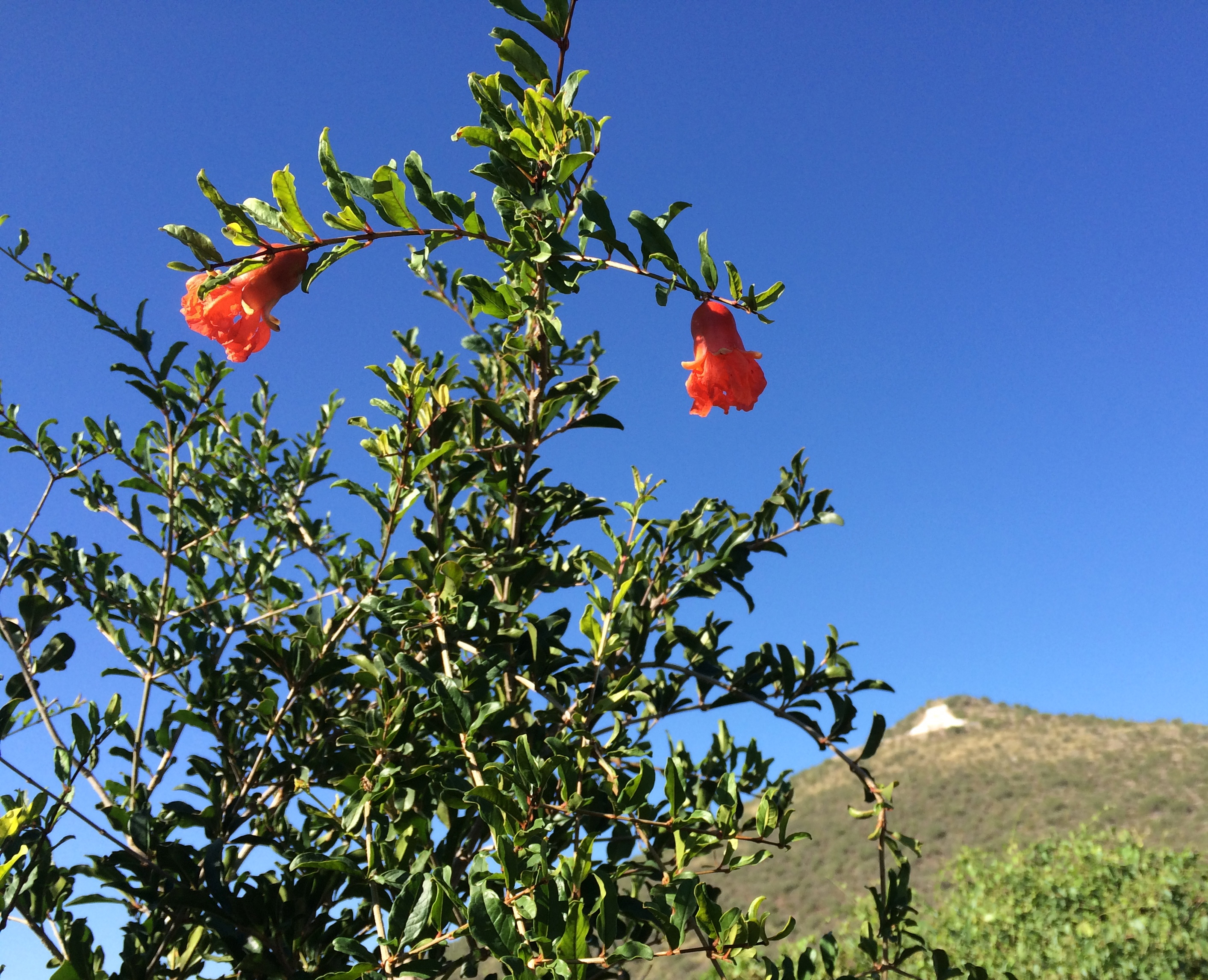
Our Living Giving Heirloom Pomegranate

Brought by the Padres to Baja Arizona during the Mission Period, this desert-adapted Sonoran White Pomegranate can continue to feed us visually, nutritionally, esthetically (photo MABurgess)

Brought by the Padres to Baja Arizona during the Mission Period over 350 years ago, this desert-adapted Sonoran White Pomegranate can continue to feed us visually, nutritionally, sustainably  (photo MABurgess)

It is thought that the so-called “apple,” the fruit of knowledge of good and evil which Eve shared with Adam in the Garden of Eden, was actually a pomegranate.   Now, thankfully, since Eden, we are all “fallen” and can enjoy pomegranates with no guilt!   Tia Marta here, inspired deeply by the recent article in Edible Baja Arizona by Dena Cowan about the comeback of heirloom Sonora White Pomegranate being celebrated at Tucson’s Mission Garden.  (This is a must-read:  http://ediblebajaarizona.com/sonoran-white-pomegranate .)

Heirloom Sonora white pomegranate blooms and fruits all summer at Tucson' Mission Garden (photoMABurgess)

Heirloom Sonora white pomegranate blooms and fruits all summer at Tucson’ Mission Garden at the base of   “A”-Mountain (photoMABurgess)

One of the first joys of pomegranates is esthetic, making pomegranate (particularly our local heirloom Sonoran White) a primo candidate for edible landscaping.  Its rich green foliage is cooling to eyes and spirit.  Its glorious, shiny red flowers decorate the trees all summer, followed by sensuous round beige fruits that become rosy as they ripen like Christmas ornaments hanging on the tree.

Sensational flower of Sonoran White Pomegranate--an extra bonus for edible landscapers (MABurgess photo)

Sensational flower of Sonoran White Pomegranate–an extra bonus for edible landscapers .  (Check out the shape of pomegranate flowers to see the design influence in Spanish silver work which in turn inspired Dine/Navajo  “squash blossom” jewelry.) (MABurgess photo)

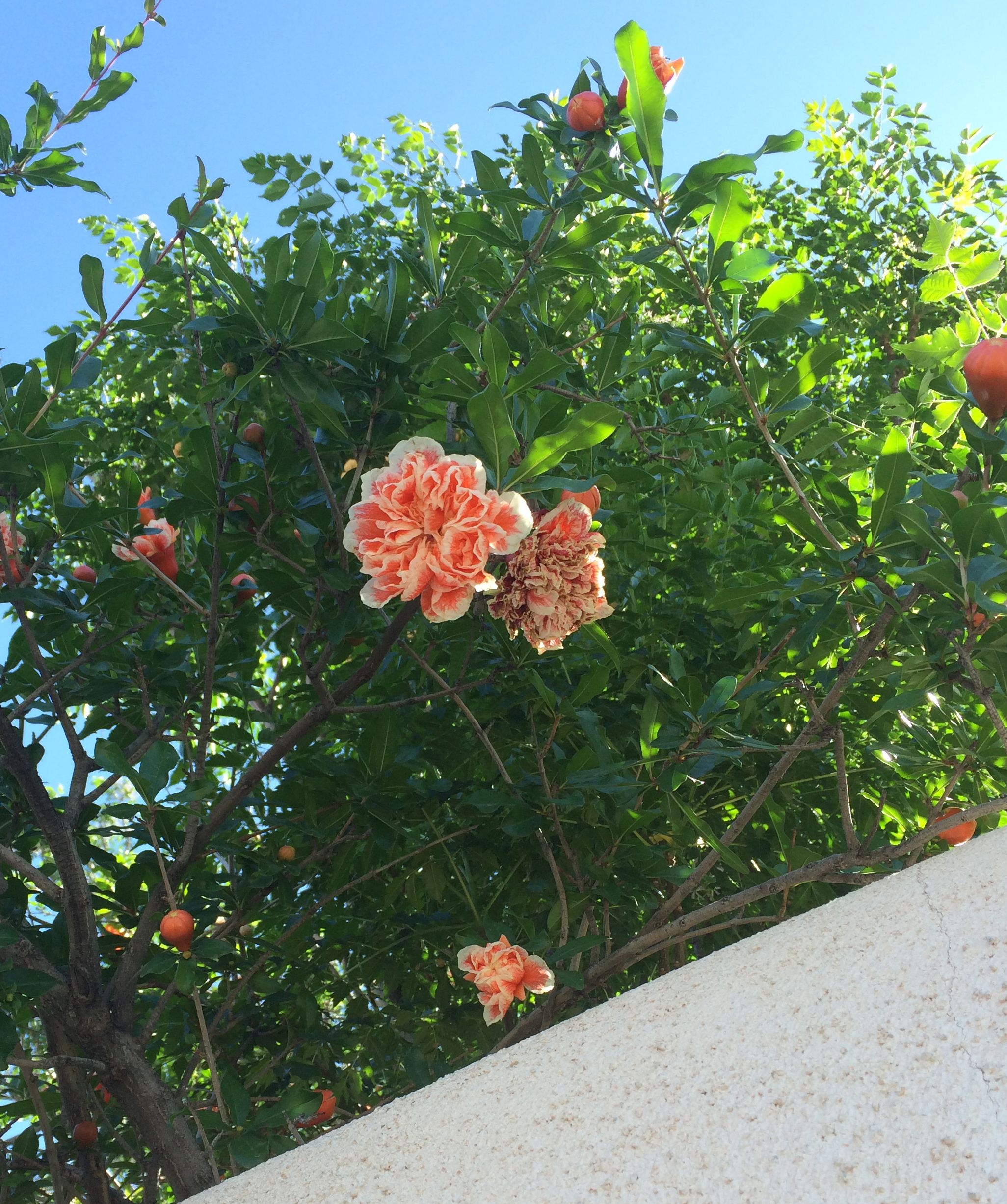
Peeking over the wall of Cordoba House in Tucson's historic neighborhood is a double flowered pomegranate (MABurgess photo)

Peeking over the wall of Cordoba House in Tucson’s historic Presidio Neighborhood is a double flowered pomegranate (MABurgess photo)

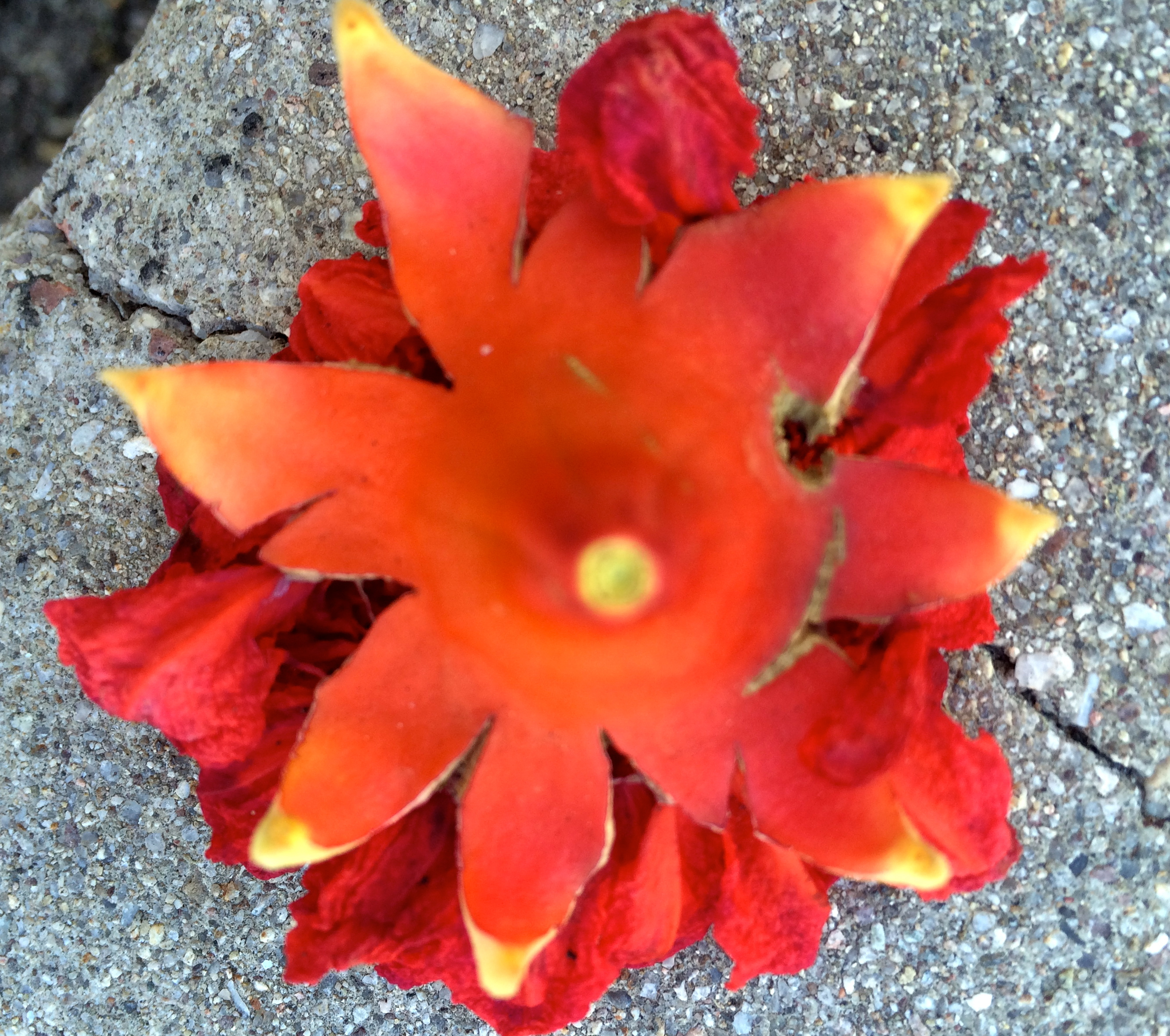
A "fallen star" --a pomegranate flower on the pavement continues as a radiant bouquet (MABurgess photo)

A “fallen star” –a pomegranate flower on the pavement continues as a radiant bouquet (MABurgess photo)


Prepare to share your plentiful crop of Sonoran White Pomegranate with other frugivorous creatures. True bugs can be pests. No prob--damage is limited. (MABurgess photo)

Prepare to share your plentiful crop of Sonoran White Pomegranate with other frugivorous creatures. True bugs like these leaf-legged bugs (Coreidae) can be pests. No prob–damage is usually limited. (MABurgess photo)

The structure of pomegranate fruits, with its separate juicy cells or arils, normally prevents insect damage from destroying an entire fruit.  Just cut off the effected area and the remaining arils still will be perfect for eating.

Traditional Sonoran style for opening an heirloom Sonoran White pomegranate (MABurgess photo)

Traditional Sonoran style for opening an heirloom Sonoran White pomegranate (MABurgess photo)

Jesus Garcia, founder of the Kino Heritage Tree Program at Arizona-Sonora Desert Museum and Mission Garden (and traditional knowledge-keeper of important Sonoran folkways), teaches how to cut the top off of a pomegranate to clearly see the septa or membranes that separate the five or six groupings of juice cells (arils), each containing a seed.  In most modern cultivated pomegranates, there is a hard bitter seed that must be “discarded,” making eating less than perfect.  Amazingly, the Sonoran White has small, tender seeds that present no problem–just eat the arils whole and enjoy!  (No spitting necessary.)

Traditional way of opening the Sonoran White Pomegranate for happy access to arils (MABurgess photo)

Subdivide the fruit along its easy membranes.  This is Garcias’ traditional way of opening the Sonoran White Pomegranate for happy access to “arils” –the juicy beads or sarcotestas (MABurgess photo)

I always thought that pomme -grenade was named for the city of Granada, but actually it is the other way ’round.  The Spanish city was re-named Granada when the Moors brought the fruit there from the MiddleEast and it made a big splash.

Technically the pomegranate  (Punica granatum) does not have many familiar relatives to us in its family of loosestrifes (Lythraceae).  It is so different from other plants that some taxonomists place it in its own family Punicaceae.  Pomegranate fruit is a berry, with each seed surrounded by sweet juice in little discrete cases called sarcotestas.  (There must be a better name for these delicious little beads of bliss!)

Nutritionally pomegranate has sweet advantages, providing antioxidants,  folate, vitamins C and K, plus manganese, phosphorus and potassium.

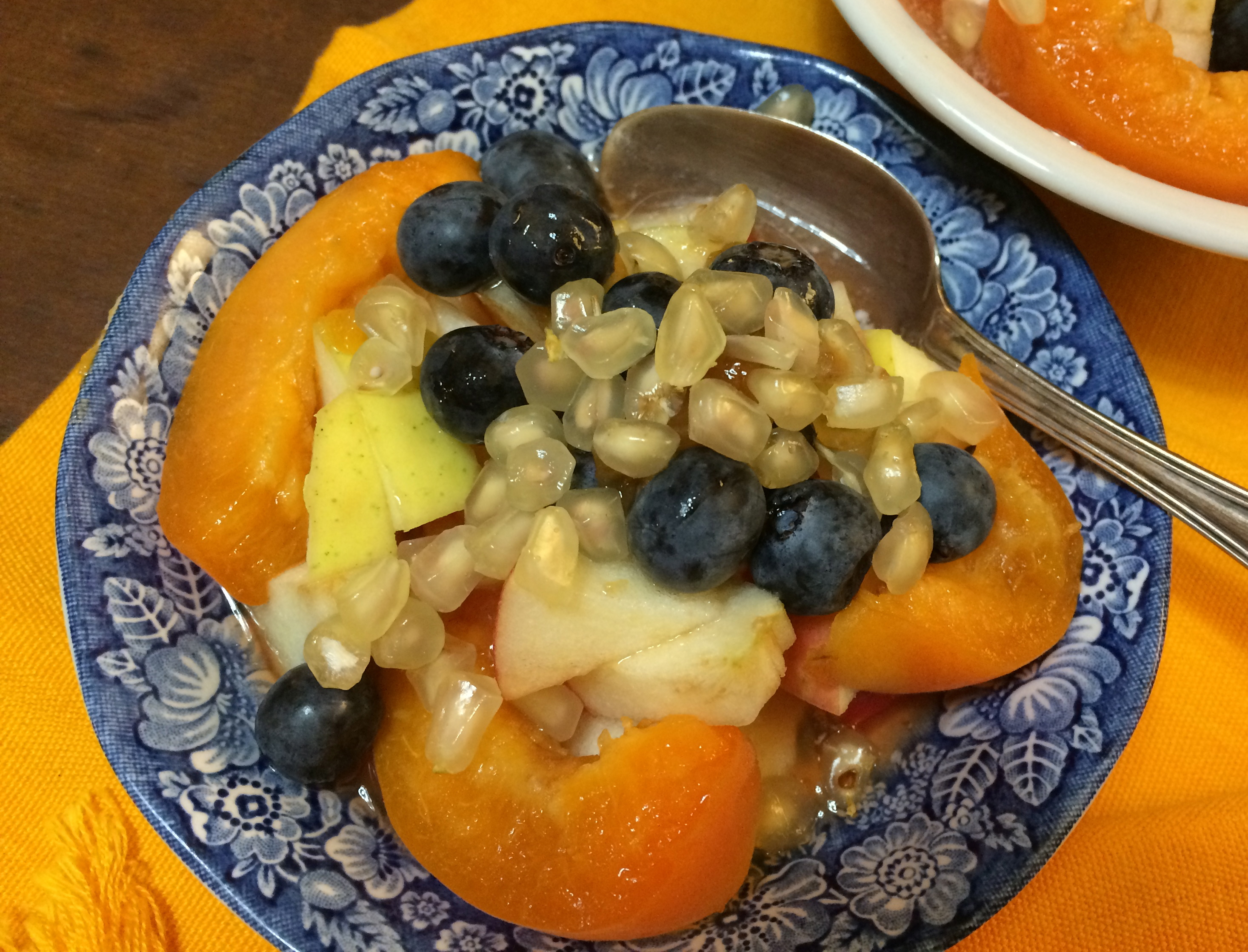
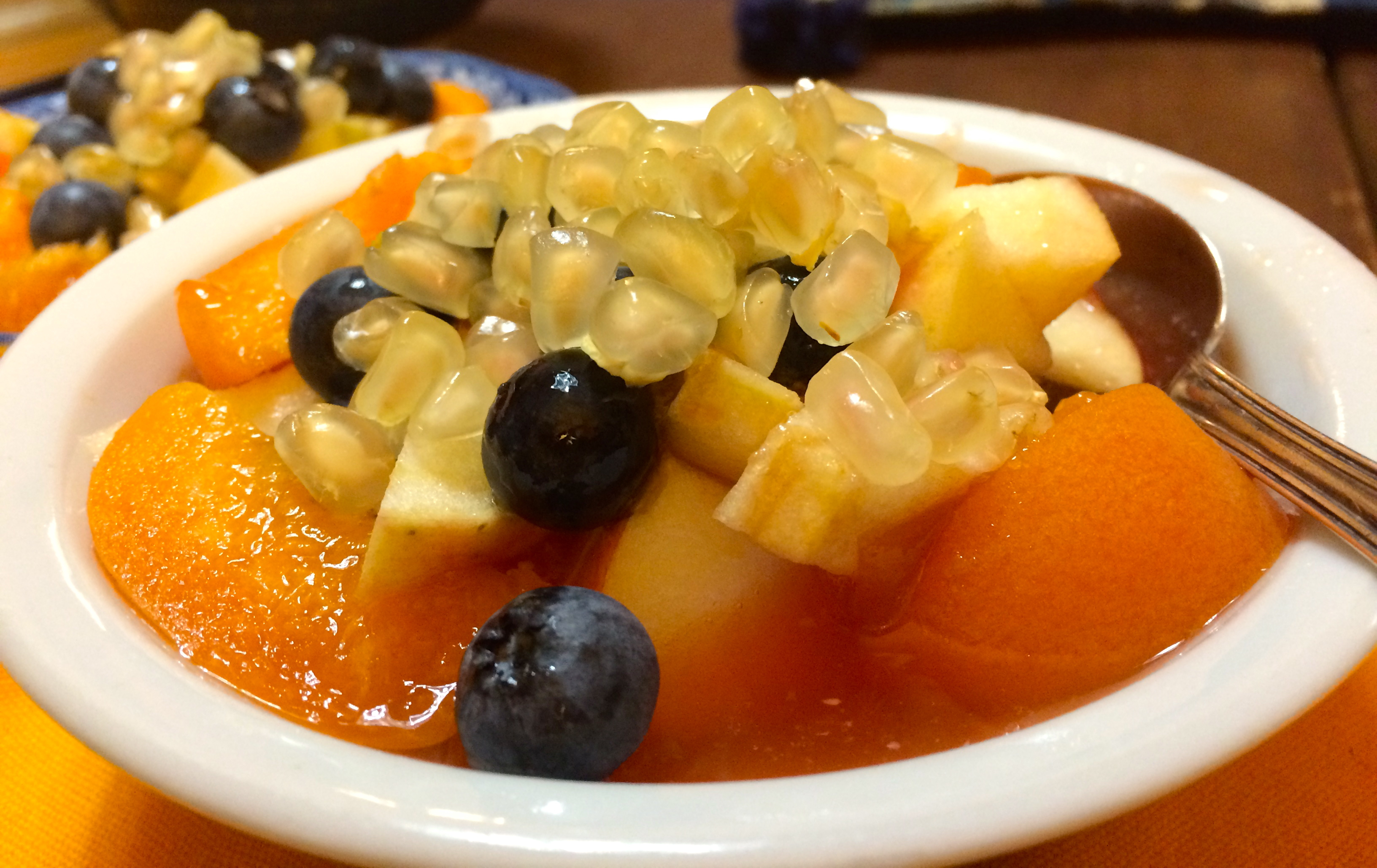
Fruity dessert topped with juicy clear Sonoran White Pomegranate seed-cells (MABurgess photo)

Fruity dessert topped with juicy clear Sonoran White Pomegranate seed-cells (MABurgess photo)

Sonoran White Pomegranate can be juiced to drink straight or add to other drinks. (Talk about a nutritious addition to margaritas!) The simplest, most delightful way of enjoying our clear Sonoran White seed-cells is simply snacking by the handful.

I make a luscious dessert with vanilla yogurt topped with slices of fresh apricot, local apple, and blueberries, and crowned by the sweet seed-cells of Sonoran White Pomegranate.  Rejoice in this ancient gift brought by the Missionaries to Baja Arizona–a desert survivor, well-adapted to carrying us into climate change in arid lands!

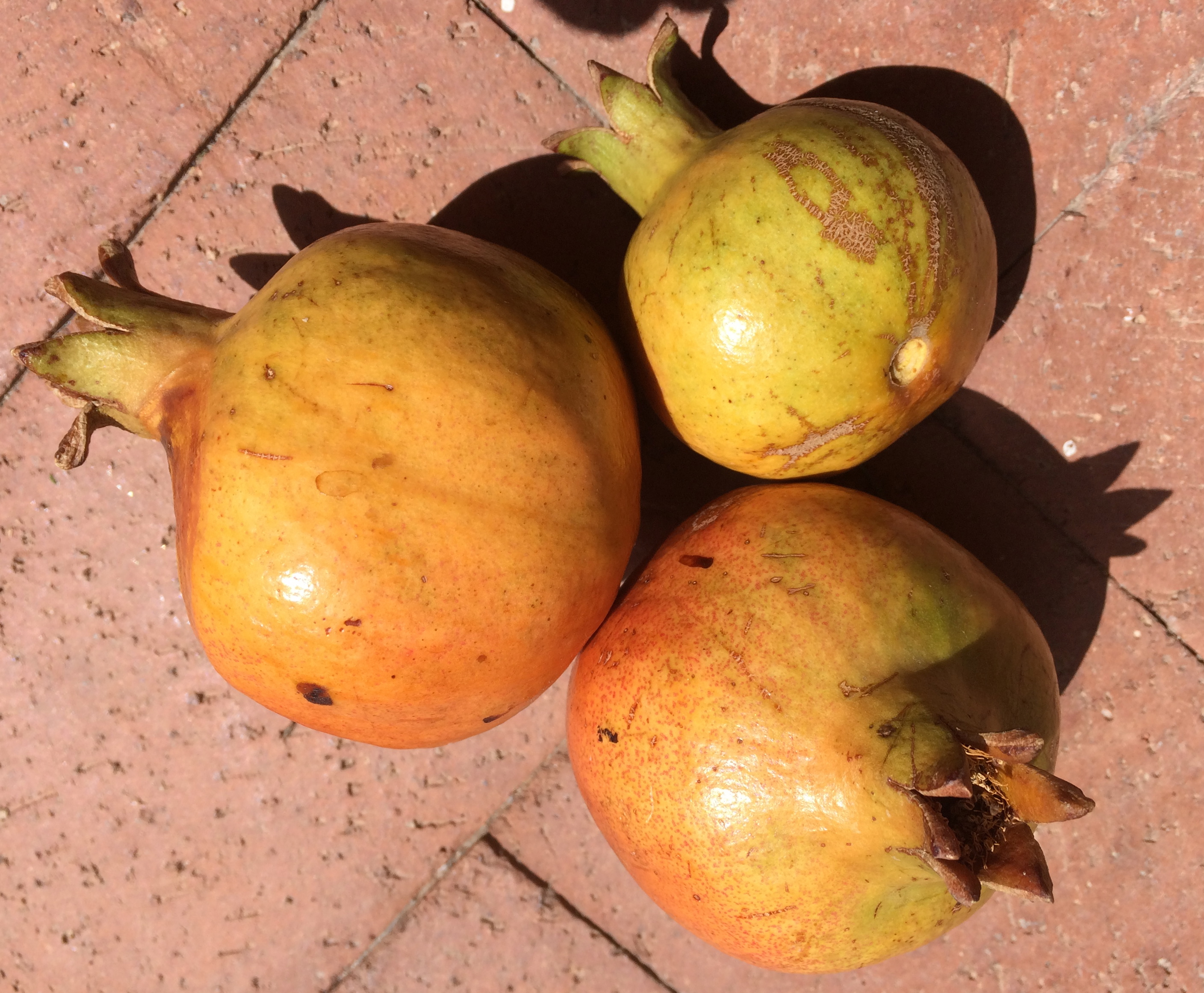
Let your Sonoran White Pomegranate fruits remain on the tree until you see a rosy blush--then you know they are getting sweeter!

Let your Sonoran White Pomegranate fruits remain on the tree until you see a rosy blush–then you know they are getting sweetest! (MABurgess photo)

Sonoran White Pomegranate tops this southwestern dessert (MABurgess photo)

Sonoran White Pomegranate tops this southwestern dessert (MABurgess photo)

Friends of Tucson’s Birthplace will be sponsoring a Pomegranate event this month–September 24, 2016– at the Mission Garden.  Come learn all about our local heirloom treasure, the Sonoran White Pomegranate, how to grow it in our own gardens, and how to prepare it in zillion delectable ways.  For details call 520.777.9270 or email missiongarden.tucson@gmail.com (www.tucsonsbirthplace.org.)  Let’s keep this living and giving food-heirloom alive and well in our gardens into the future!


Promise, Preparedness, Present Fulfillment–with Fruits of the Desert

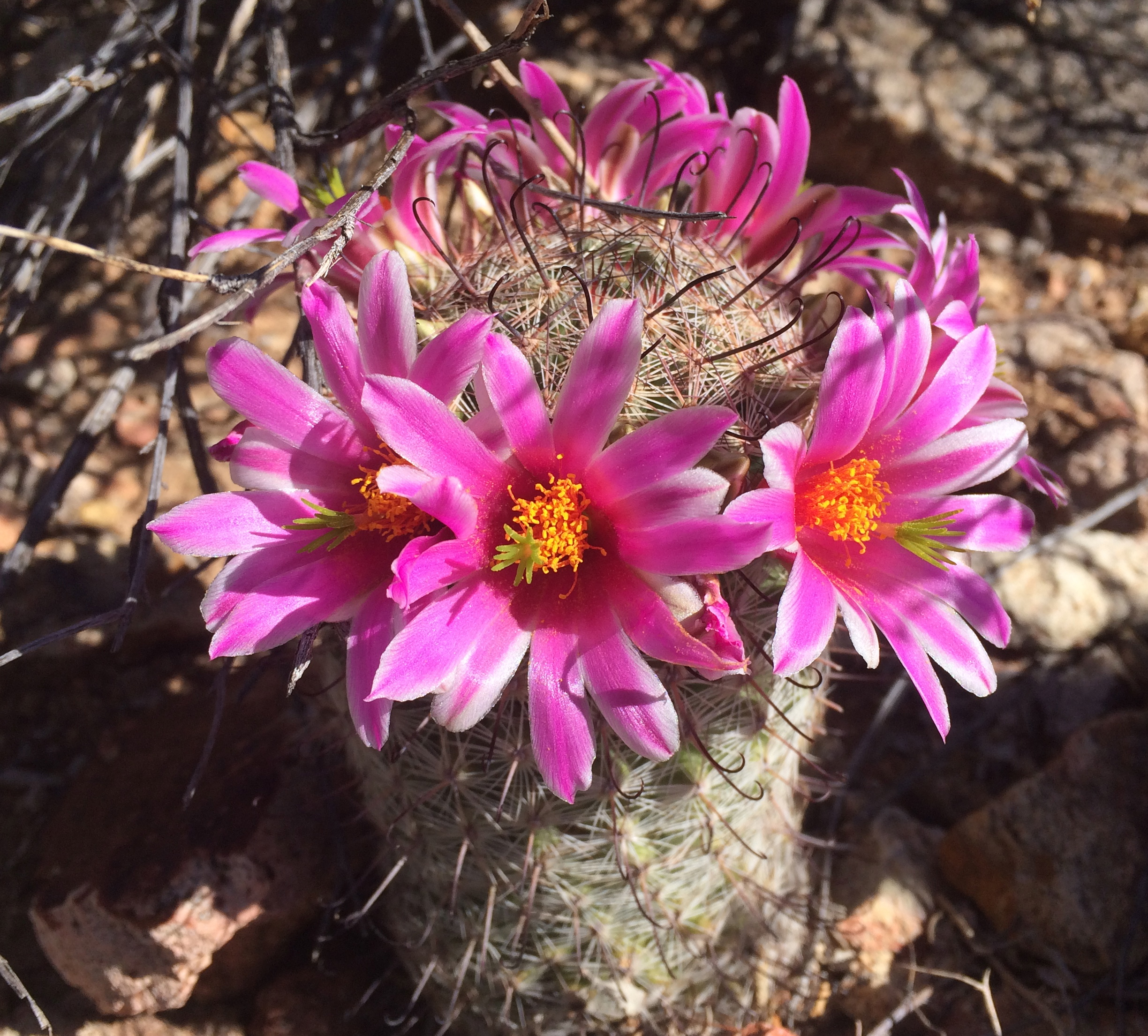
small fishhook Mammillaria microcarpa celebration the monsoon with a promise of future fruitlets (MABurgess photo)

Fishhook Mammillaria microcarpa celebrating the monsoon with a promise of future fruitlets (MABurgess photo)

Crowns of Mammillaria flowers make pink arches like miniature 4th of July fireworks now suddenly visible among desert rocks and under greening bursage.  They are rain celebrations–the PROMISES of fruits to come!  In a few weeks the little fishhook pincushions will sport a crown of shiny red fruitlets.  Keep watch for them.  Known in Sonora as pitayita de raton (little mouse’s pitaya), each long red droplet will give you a sweet tangy zing– like a mini-organpipe-cactus fruit.  Tia Marta here to share ways of enjoying the cornucopia that is beginning to spill out flavorfully all around us in town and out in the desert in this monsoon time.

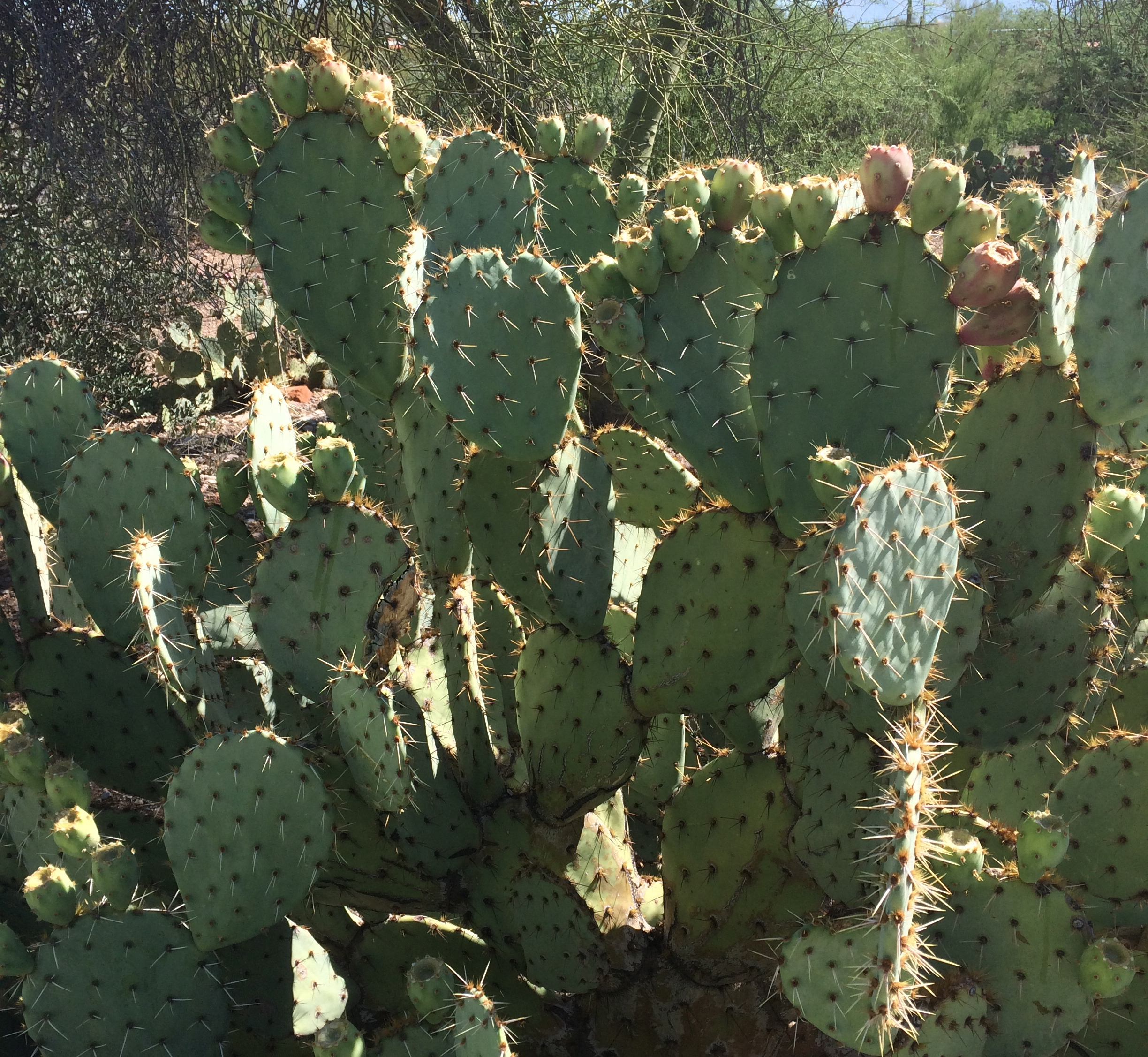
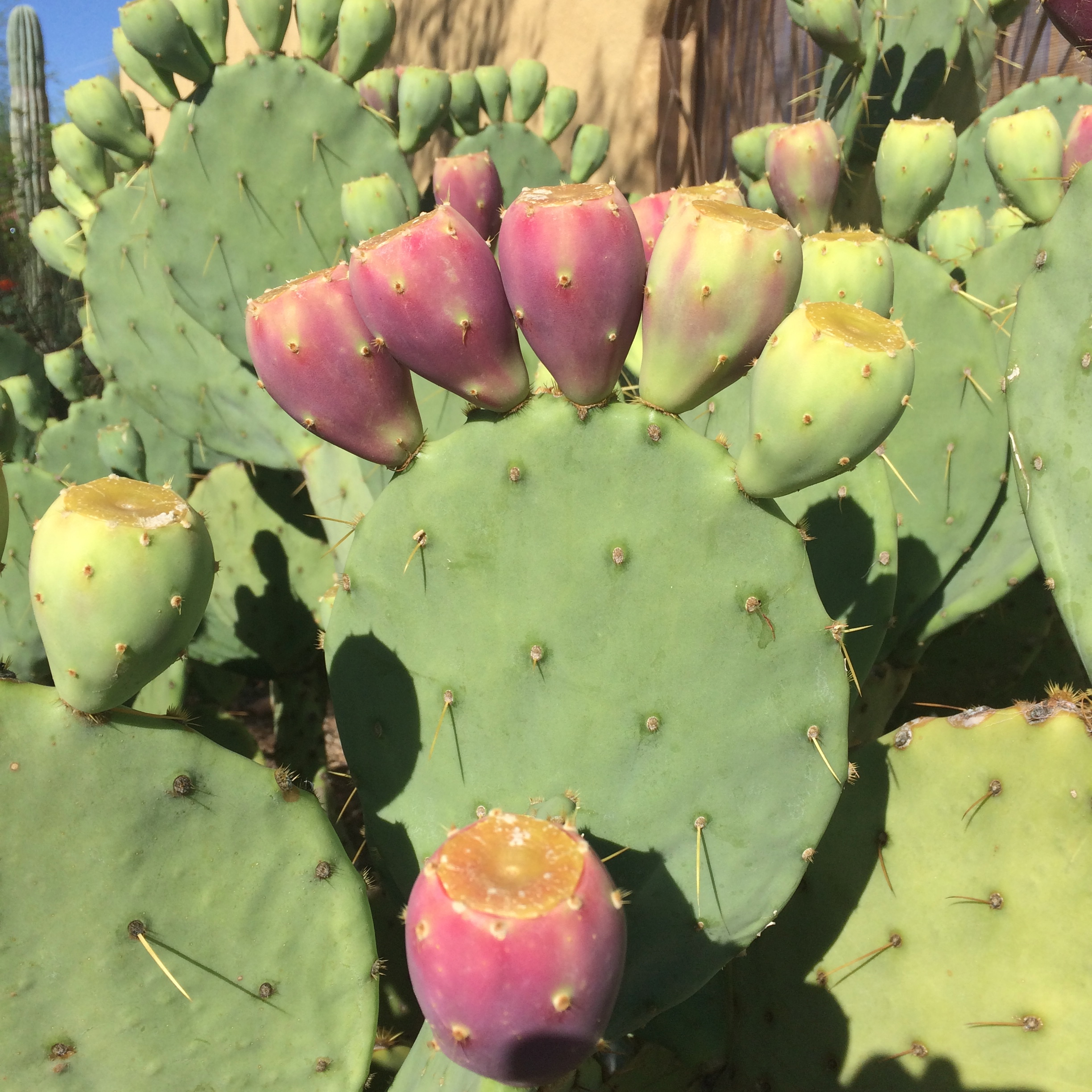
Late fruiting prickly pear--still green and full of promise

Late fruiting prickly pear–unripe green but full of promise this week (July 8)

Opuntia lendheimeri alba barely turning pink--more promises...

Opuntia lindheimeri alba barely turning pink this week–more promises…(July 8)

Opuntia engelmannii in first stages of ripening...

Opuntia engelmannii in first stages of ripening…not yet (week of July 8)

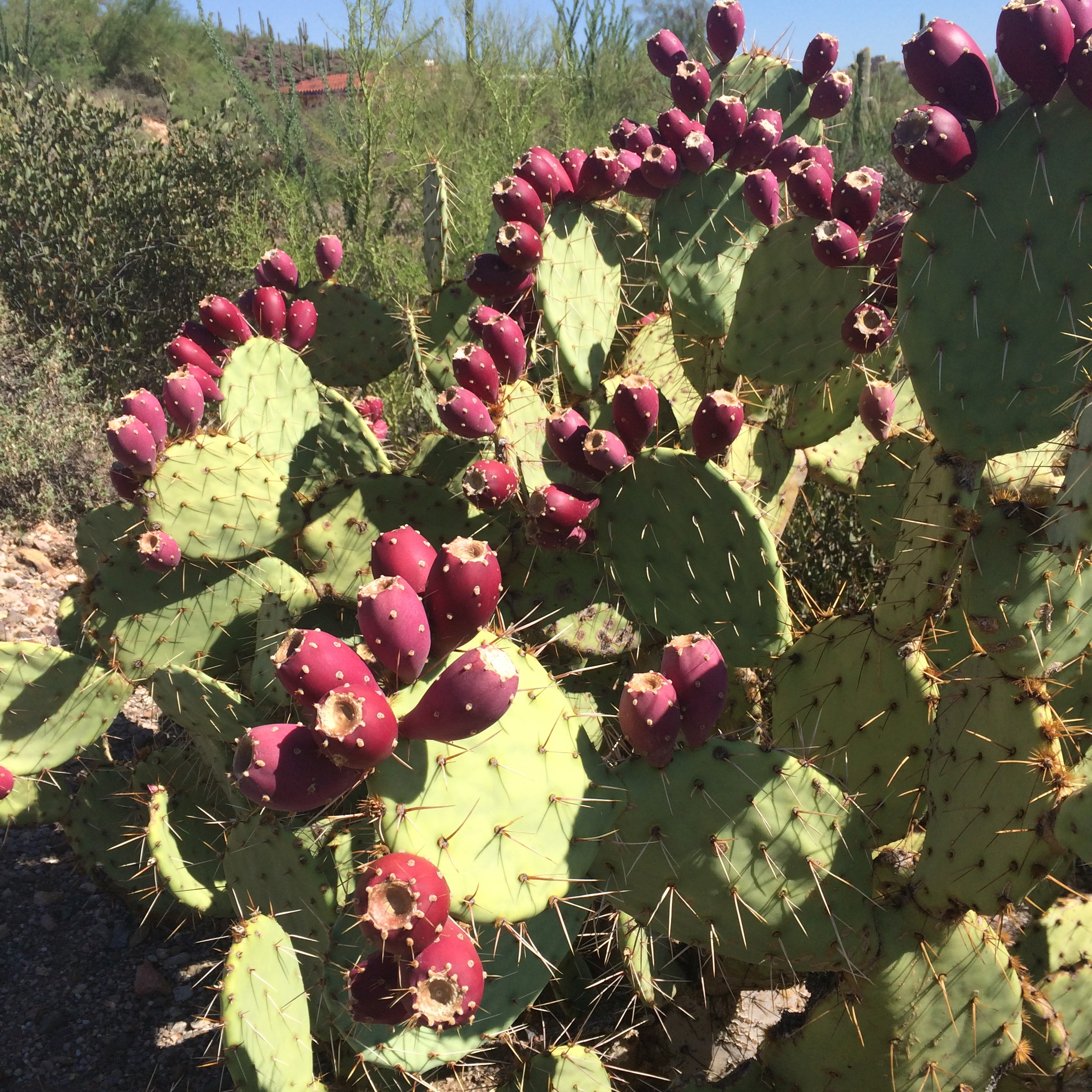
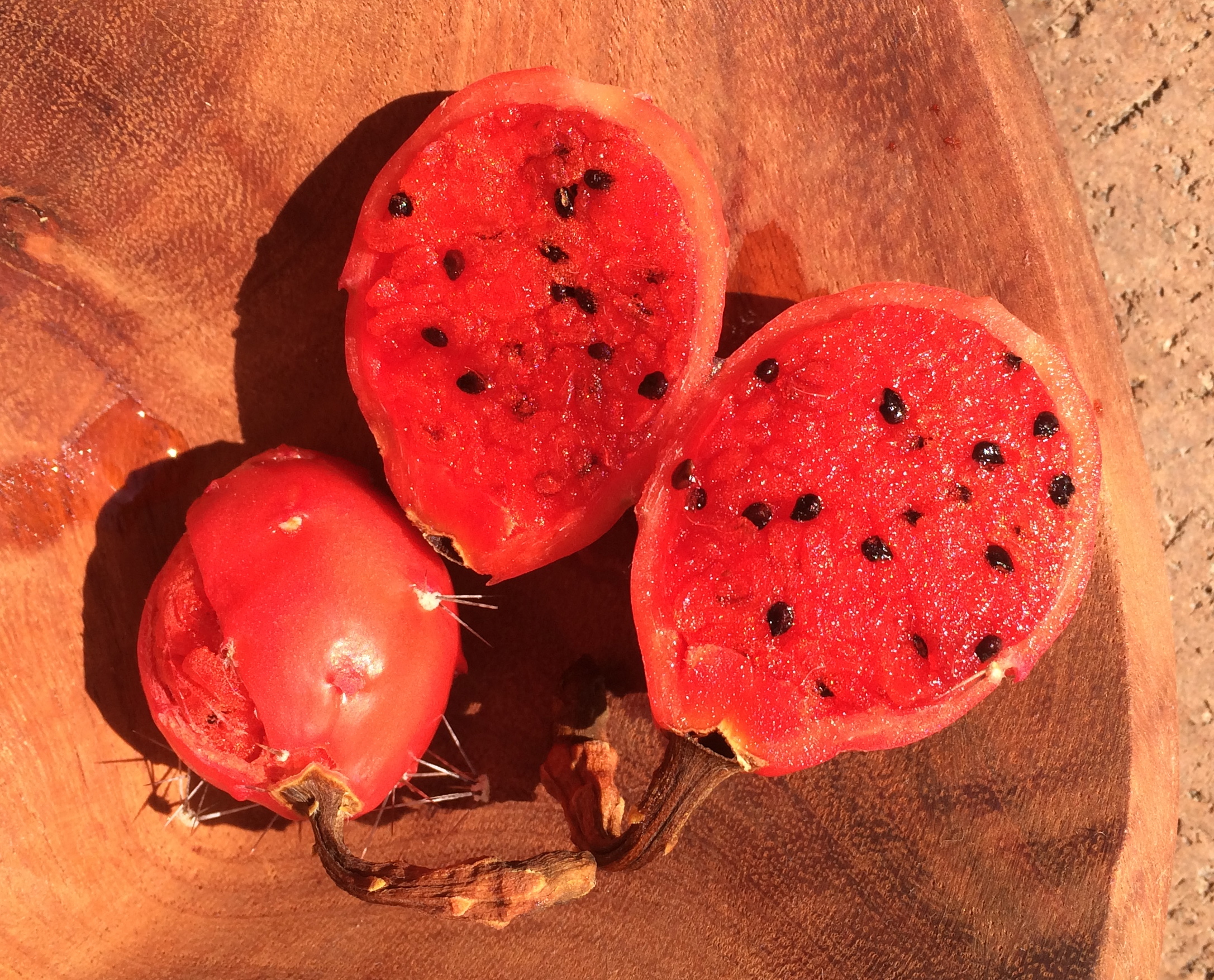
All around the desert and through every neighborhood, I see the promise of a good prickly pear harvest, inspired by our elongated spring and nurtured by good monsoon rain.  Each prickly pear seems to march to a different drummer.  Right now you can see every shade of color–unripe to ripening tunas–very green, to rosy, to deepening red.  These are PROMISES so don’t jump the gun!  They are not ready quite yet–but this is the signal to get your kitchen PREPARED.  Stay tuned–There will be more blog posts to detail prickly pear ideas in coming weeks.  Make space now in your freezer, and make time on your calendar for the August TUNA HARVEST.


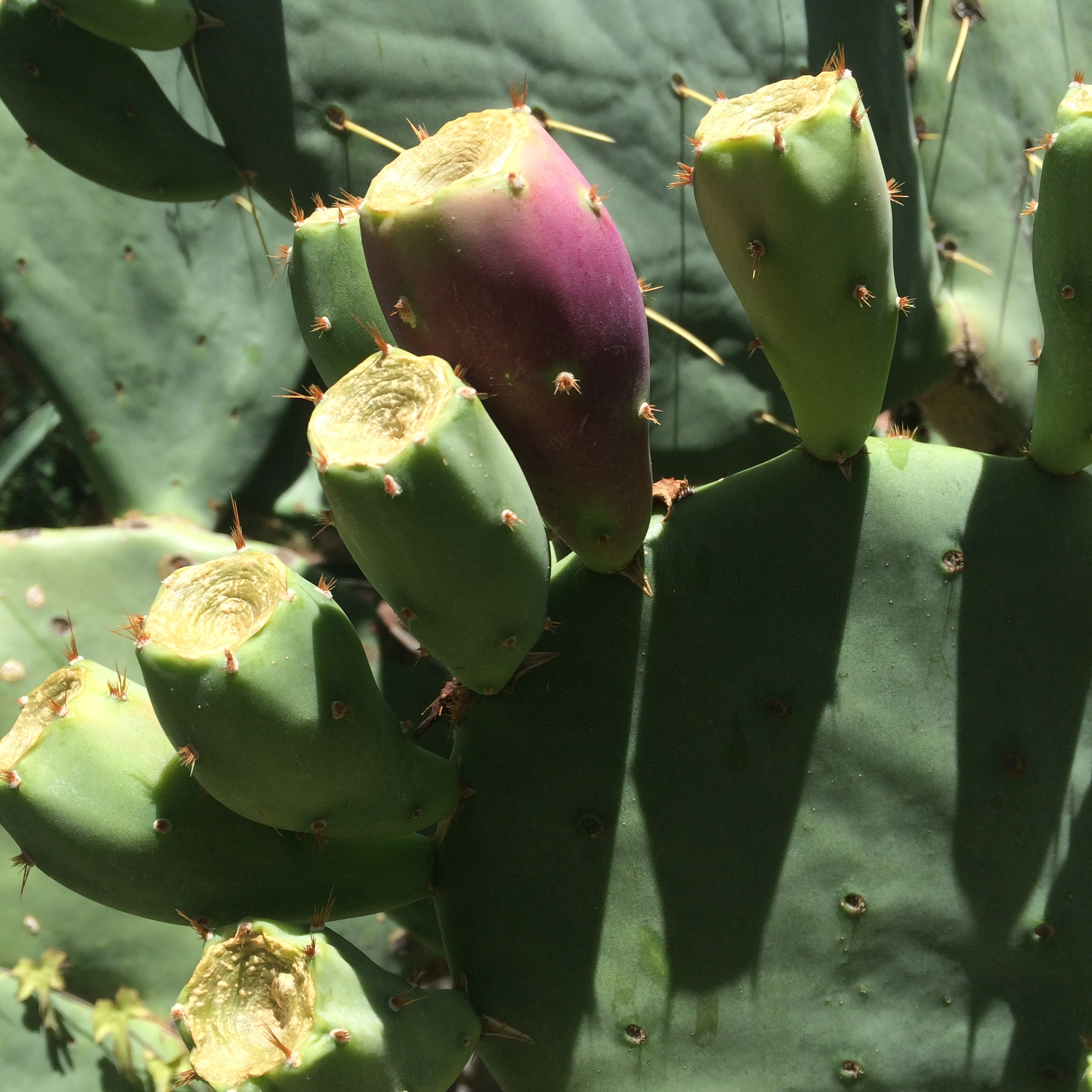
Opuntia engelmannii in full ripening fruit--but not ready yet!

Opuntia engelmannii full of ripening fruit–But don’t salivate yet (week of July 8)!  Wait for a dark maroon color to extend all the way to the bottom attachment of the tuna AND through the tuna‘s entire interior before they are fully ripe and ready to eat or cook.

What a glorious monsoon our Sonoran Desert has enjoyed over the last couple of weeks!  The explosion of life in such a short time is astounding on the heels of record-breaking heat and drought.  This is when the desert shows its tropical heritage with a surge of energy, fecundity, productivity.  Isn’t it interesting that the “outsider’s” view of the desert is of hazardous scarcity?  More interesting instead is to understand and appreciate the waves of nutritious plenty that can erupt suddenly here in the Sonoran Desert.  Native People know how to rally, to harvest in the times of plenty and to store short-lived fruits of the desert against lean times–lessons worth exercising.   Plentiful foothills palo verde seeds (Parkinsonia microphylla) are a case in point.

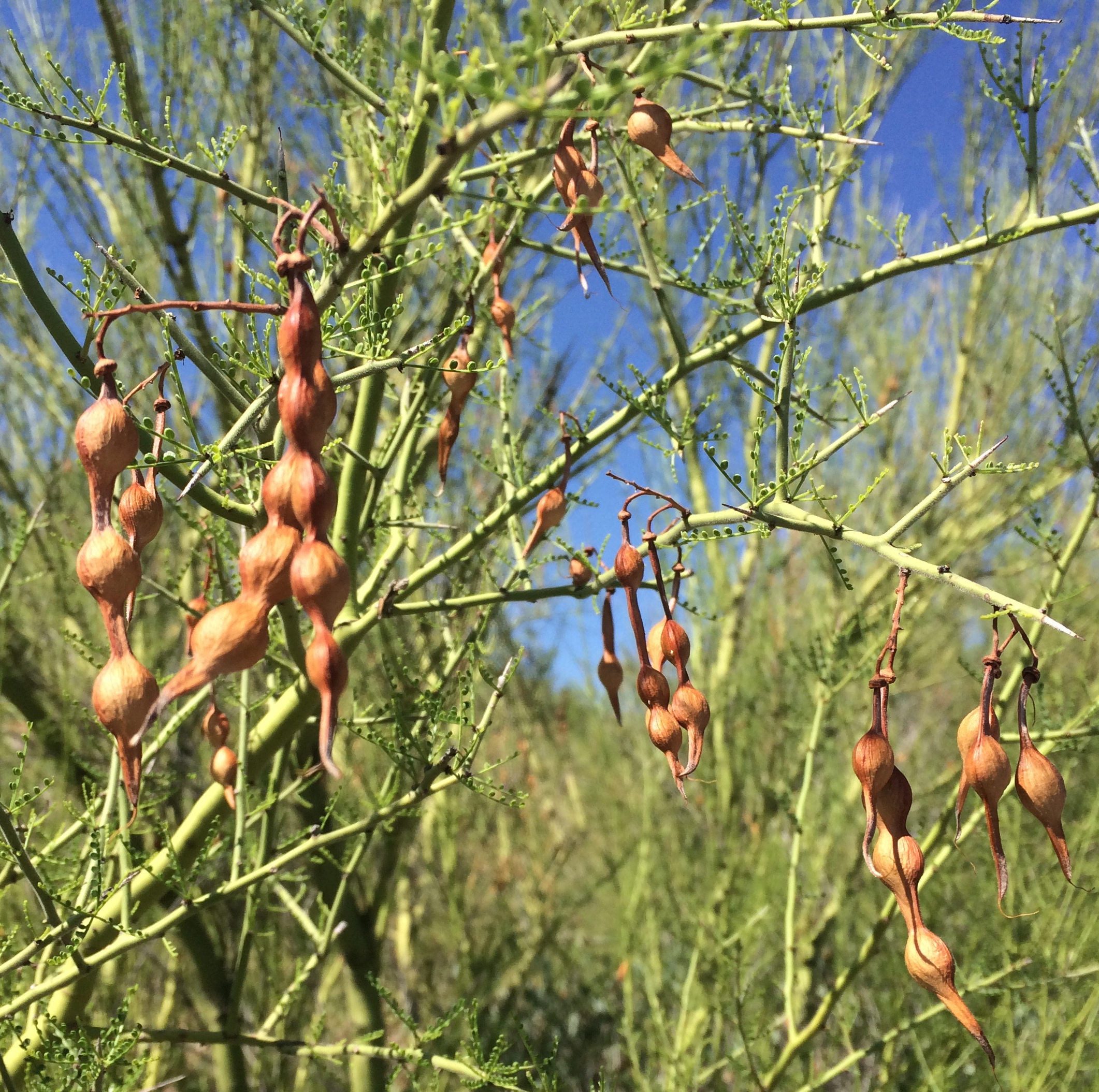
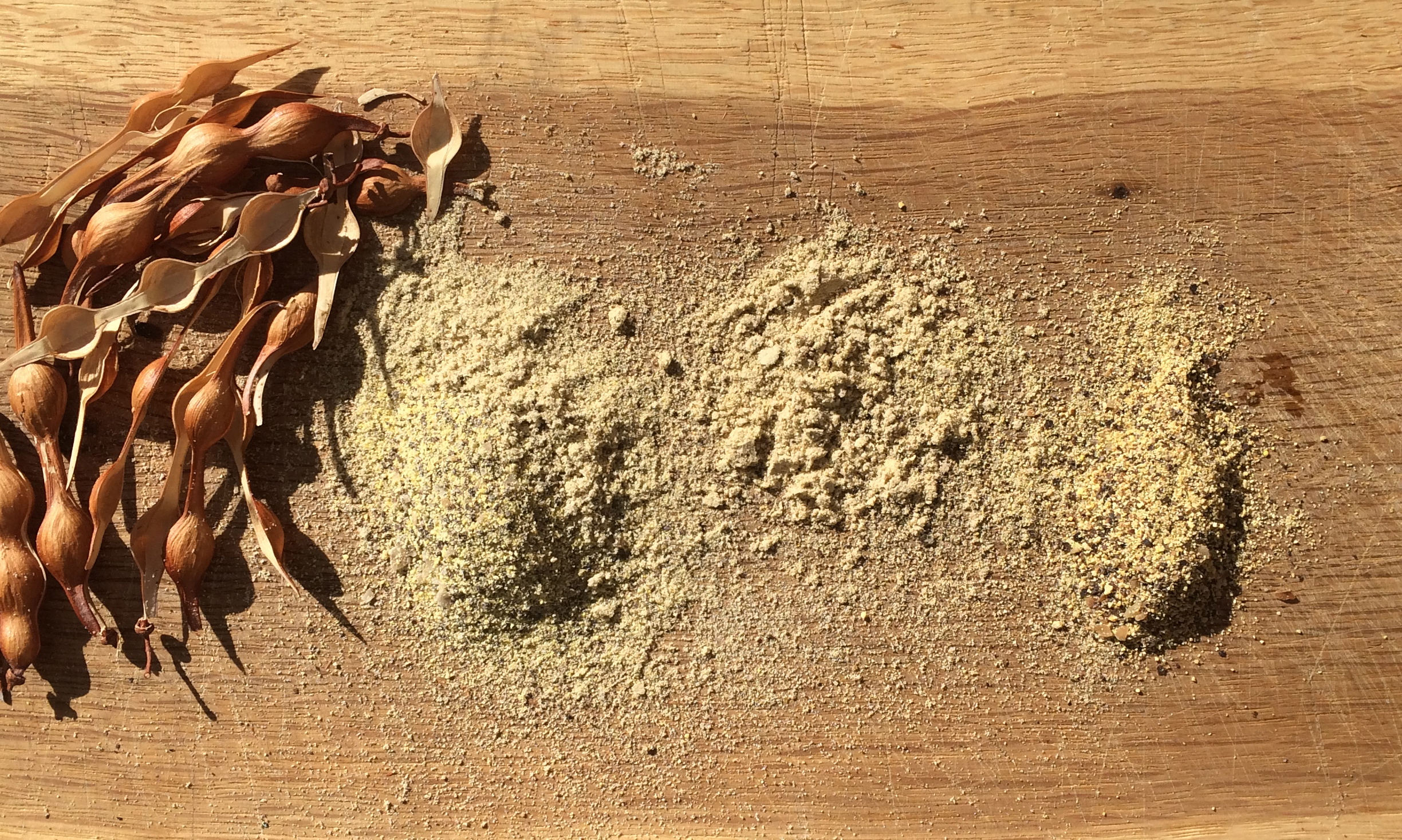
Mature dry pods of foothills paloverde--They have potential for making flour!

Mature dry pods of foothills paloverde–with potential for making nutritious flour!

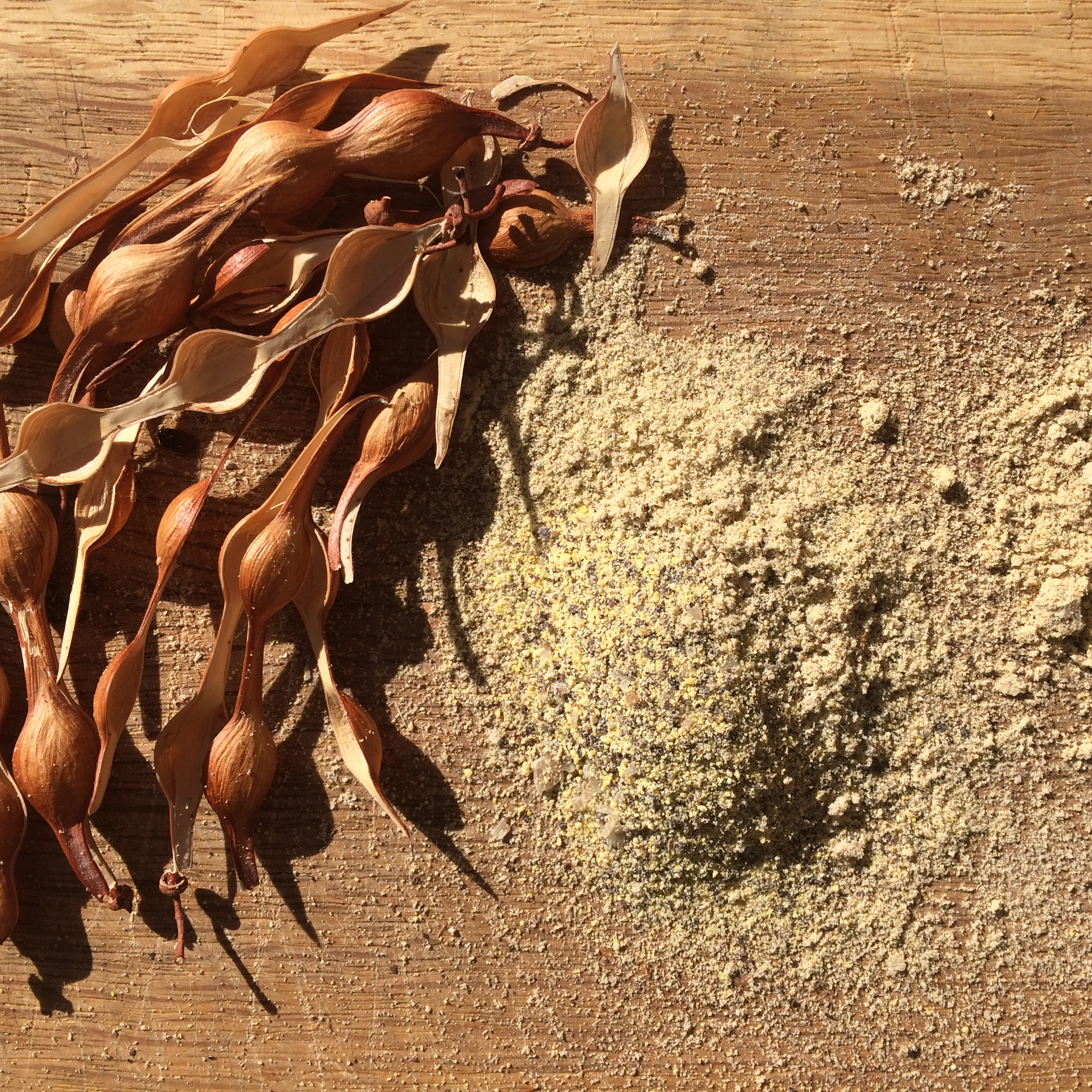
Foothills palo verde seed milled raw for baking

Foothills palo verde seed milled raw for baking

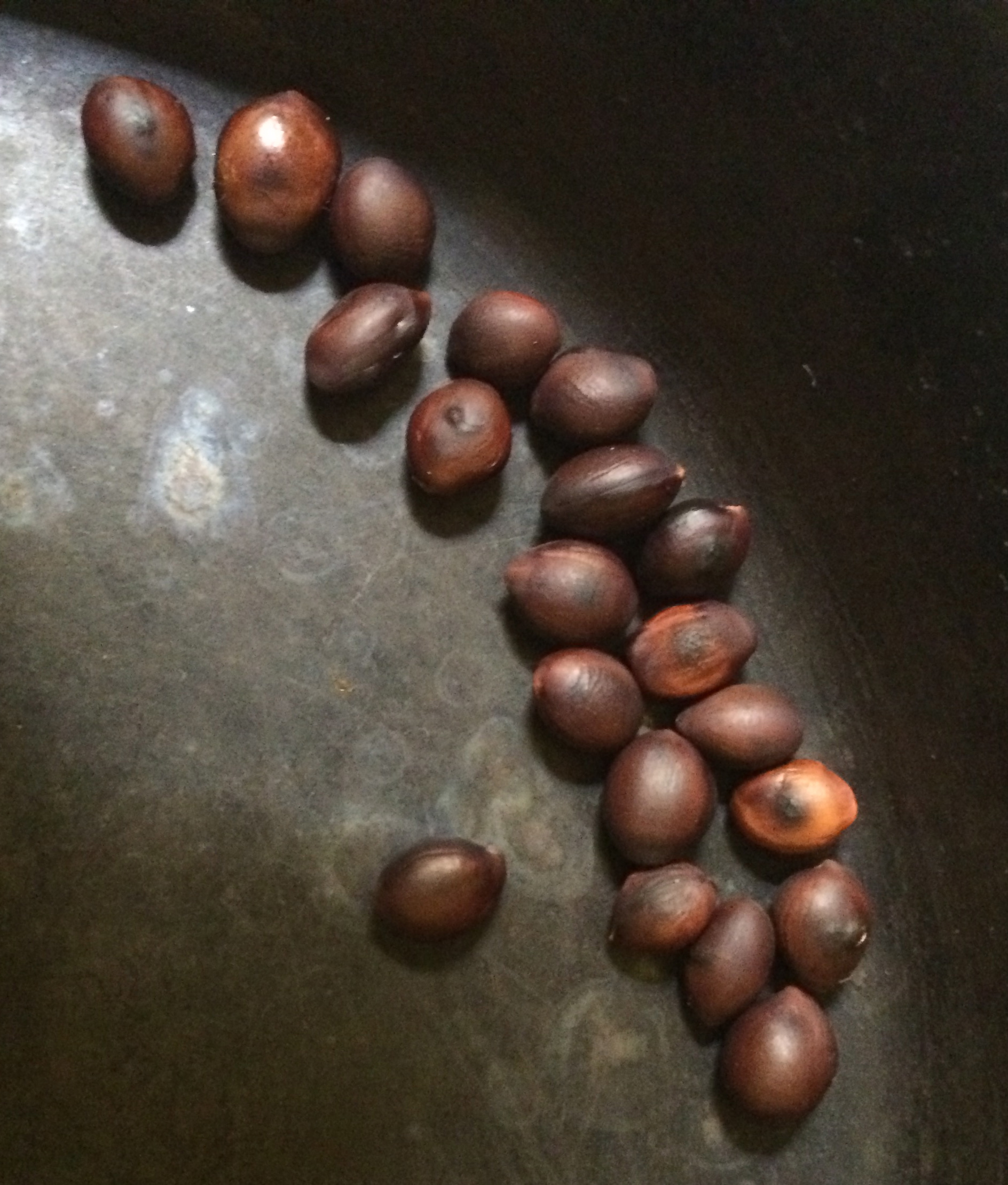
Seeds of foothills palo verde dry and hard as little stones

Seeds of foothills palo verde– dry and hard as little stones


At PRESENT, lasting perhaps through July, there are copious “fruits-of-the-desert” hanging on foothills palo verde trees (aka little-leaf paloverde) covering desert hillsides.  In early June, palo verde pods were offering soft sweetpeas for fresh picking (described in the June13,2015 Savor blog on this site).   Now in July, palo verde pods are rattling with shrunken stone-hard seeds.  When ground, or when toasted and milled, these little dry seeds can produce two fabulous gluten-free flours for adding to baked goods, hot cereal, gravies etc.

Dry foothills palo verde seed milled raw on L, toasted and milled fine in center, toasted coarse-milled on R

Dry foothills palo verde seeds:  milled raw-Left; toasted and milled fine-Center; toasted & coarse-milled-Right

Foothills palo verde seed toasting in a dry iron skillet

Foothills palo verde seed toasting in a dry iron skillet

Oh how I wish that technology could keep up with our needs for scratch, sniff, and taste in this blog!!  The distinctly different flavors and textures of these two flours are so pleasant.  Desert People traditionally parched and ground these seeds in bedrock mortars.  I used a coffee mill to grind them.  The raw flour has a wonderful bean-i-ness bouquet coming through.  Then I toasted (parched) a separate batch of seeds in an un-greased skillet before milling, and WOW the roasty aroma of this gluten-free flour is rich.  I am using it to add flavor –not to mention high protein and complex carbs–to multigrain breads and biscuits.  So FULFILLING!  A friend who tried these different preparations for palo verde flour even wants to use it as a spice or seasoning!

With the monsoon (and with the help of many hummingbird pollinators) has come another edible surprise to my desert garden–octopus cactus fruit–that I just have to share with you:

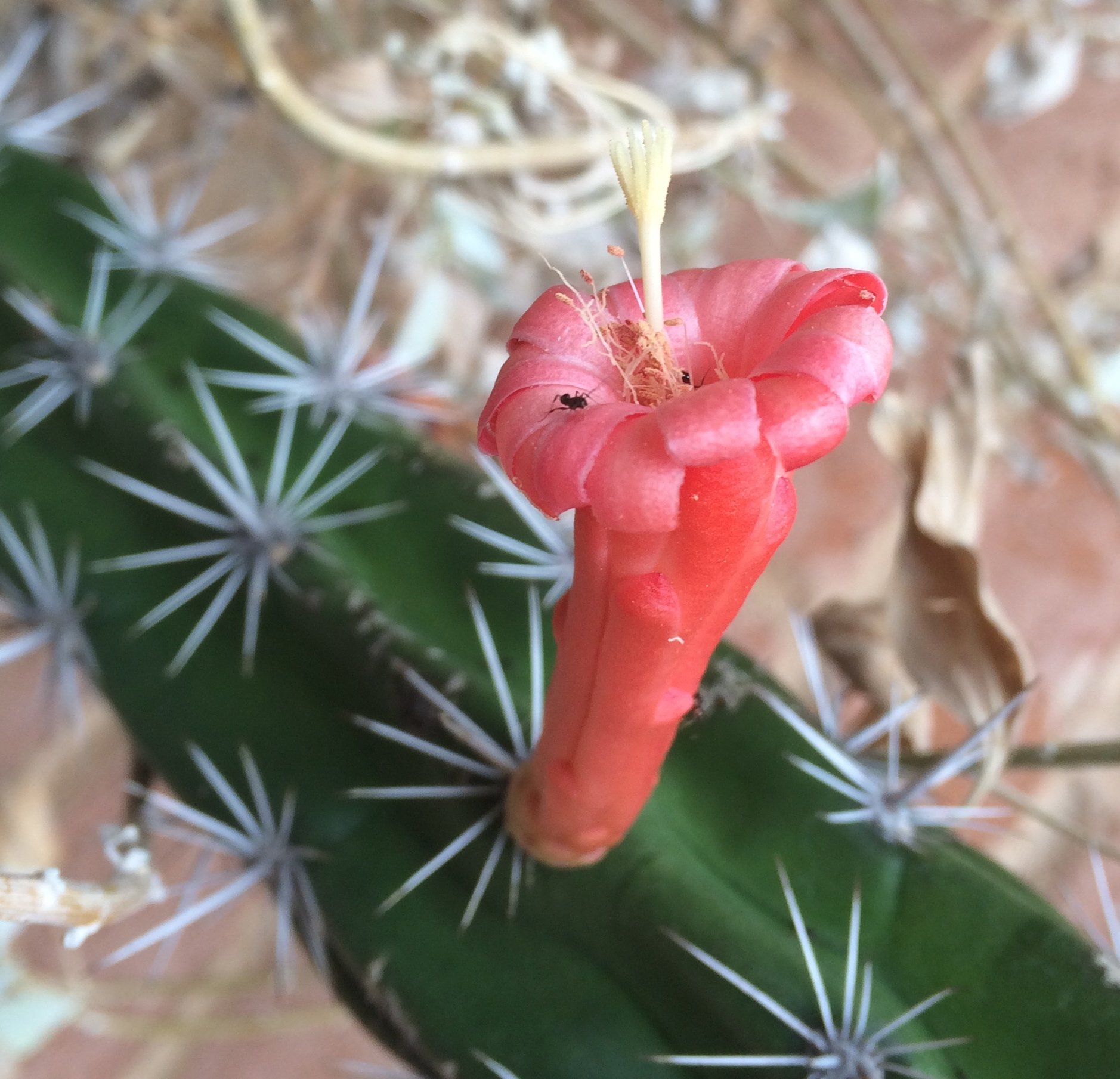
Stenocereus alamosensis with hummer- and perhaps ant-pollinated flower, June26,2016 (MABurgess photo)

Stenocereus alamosensis with hummer- and perhaps ant-pollinated flower, June26,2016.  Note happy ant on petal.  (MABurgess photo)

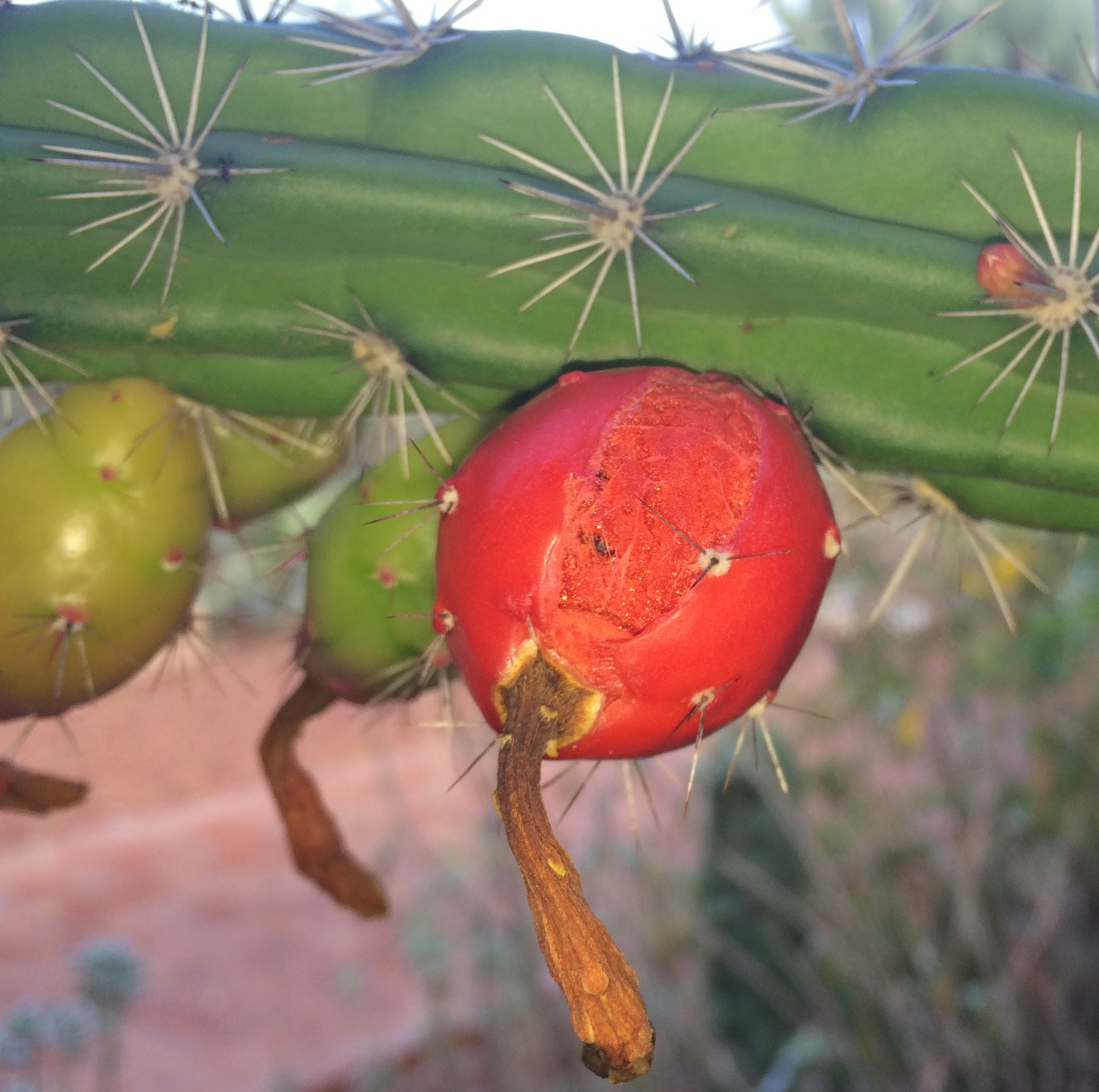
Fruit of octopus cactus Stenocereus alamosensis, ripe and splitting July 4, 2016

Fruit of octopus cactus Stenocereus alamosensis, ripe and splitting July 4, 2016 (MABurgess photo)

Sliced octopus cactus fruit on palo chino bowl (MABurgess photo)

Juicy sliced octopus cactus fruit (Stenocereus alamosensis) on palo chino bowl (MABurgess photo)

Years ago I collected seed for it near Alamos, Sonora, and grew it out in Tucson.  Surviving frosty winters, and flowering in previous years, it never bore fruit before.  This year, fertilization happened at last, and voila–there are sensational, gently sweet delicacies to eat right off the cactus.  The fruit’s fresh crispy texture is like watermelon and its seeds are tiny protein crunches.  [Light bulb idea]–With climate change, this flavorful cactus fruit–and others like it–could become an appropriate specialty food to grow locally.

Keep your eyes peeled and prepare for more harvests from the latest new “promises” blooming for multiple times this season in the desert…..Check out these potential edibles:

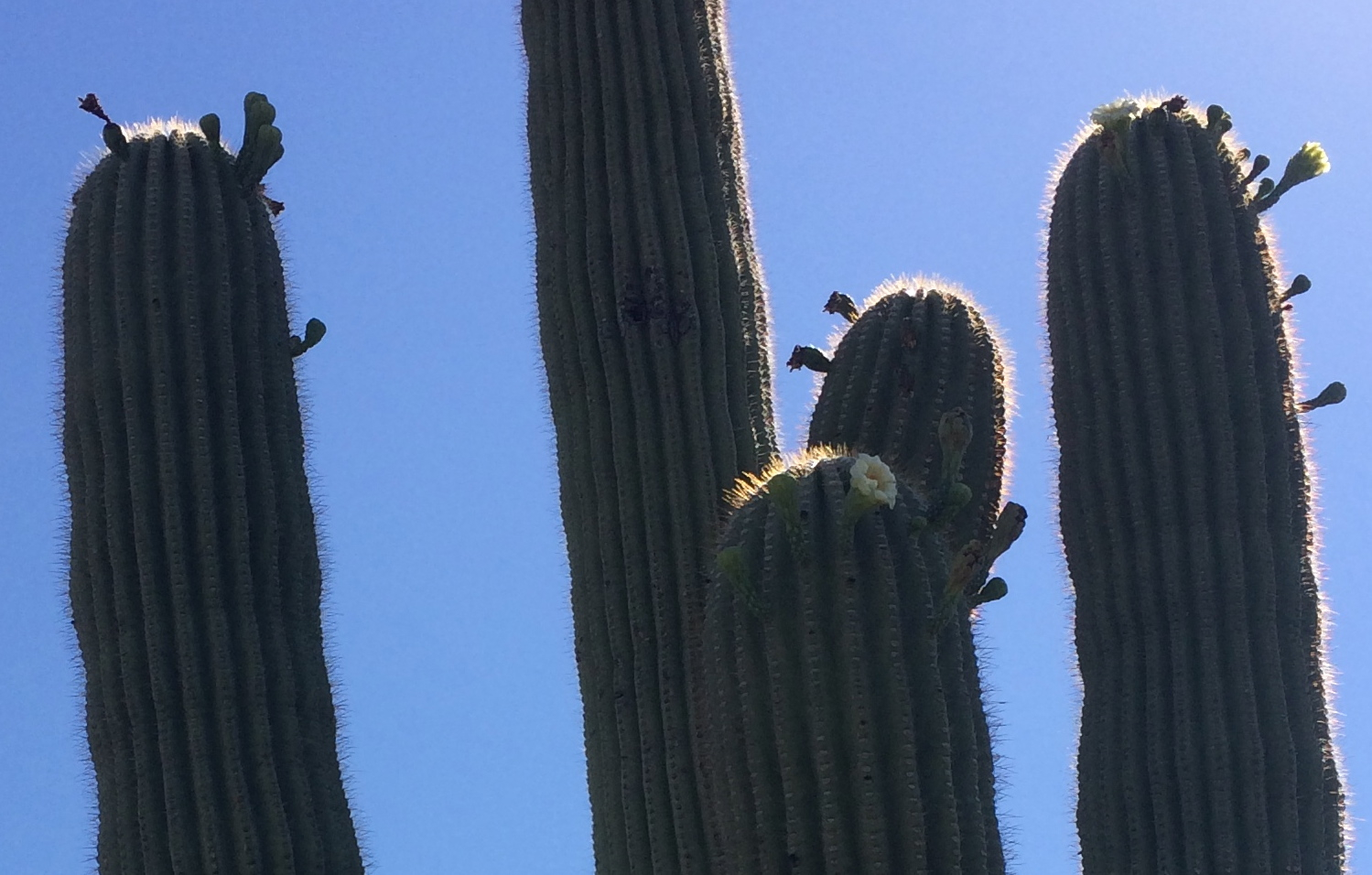
This is the third bloom of saguaros this season--with pollination may give another fruit harvest

This is the third bloom of saguaros this season–if  pollinated may give yet another fruit harvest

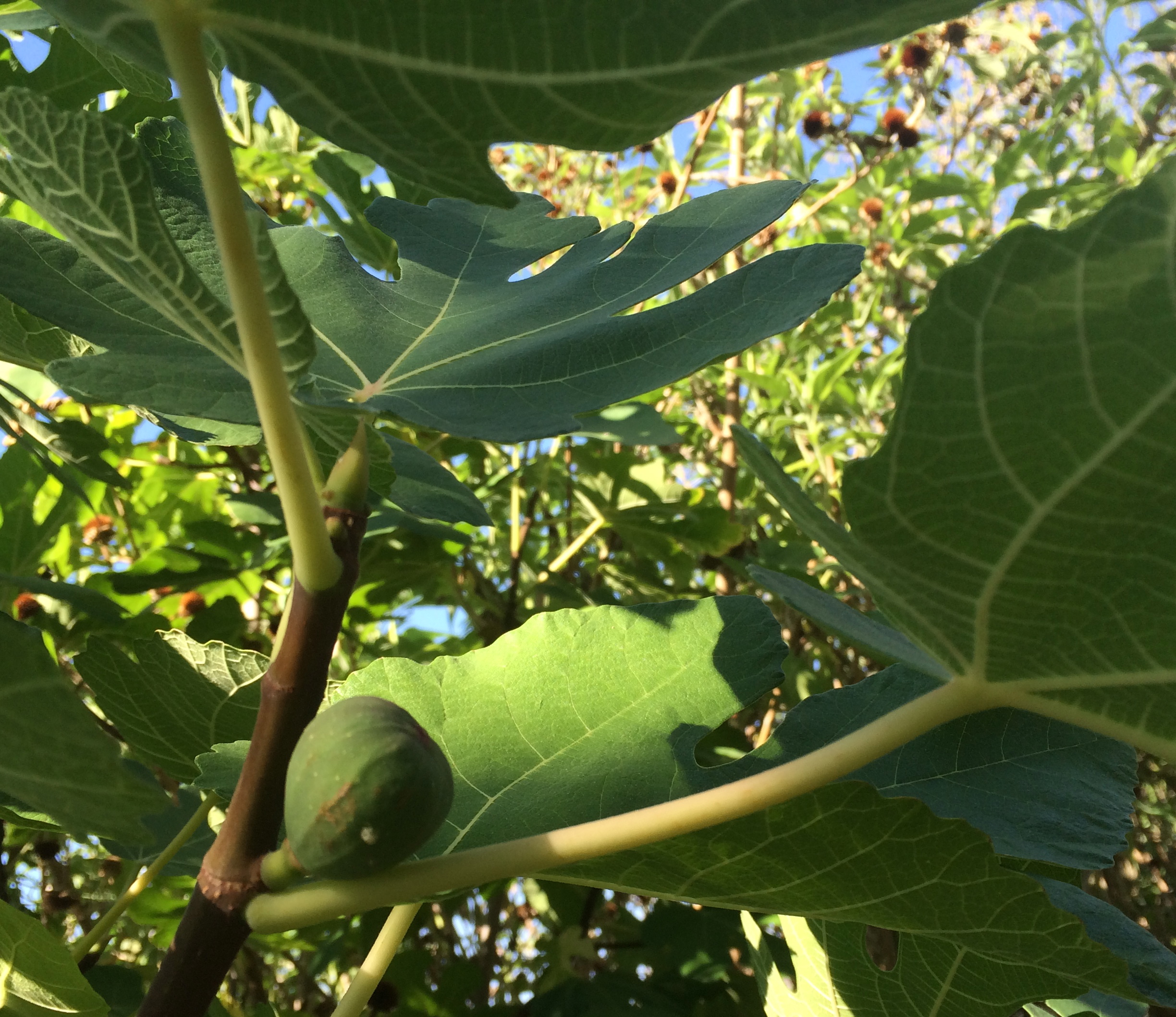
Green swelling Padre Kino fig--watch for preparing heirloom fruit ideas next month….

Green swelling Padre Kino fig–Young trees are available next week at the NSS plant sale!

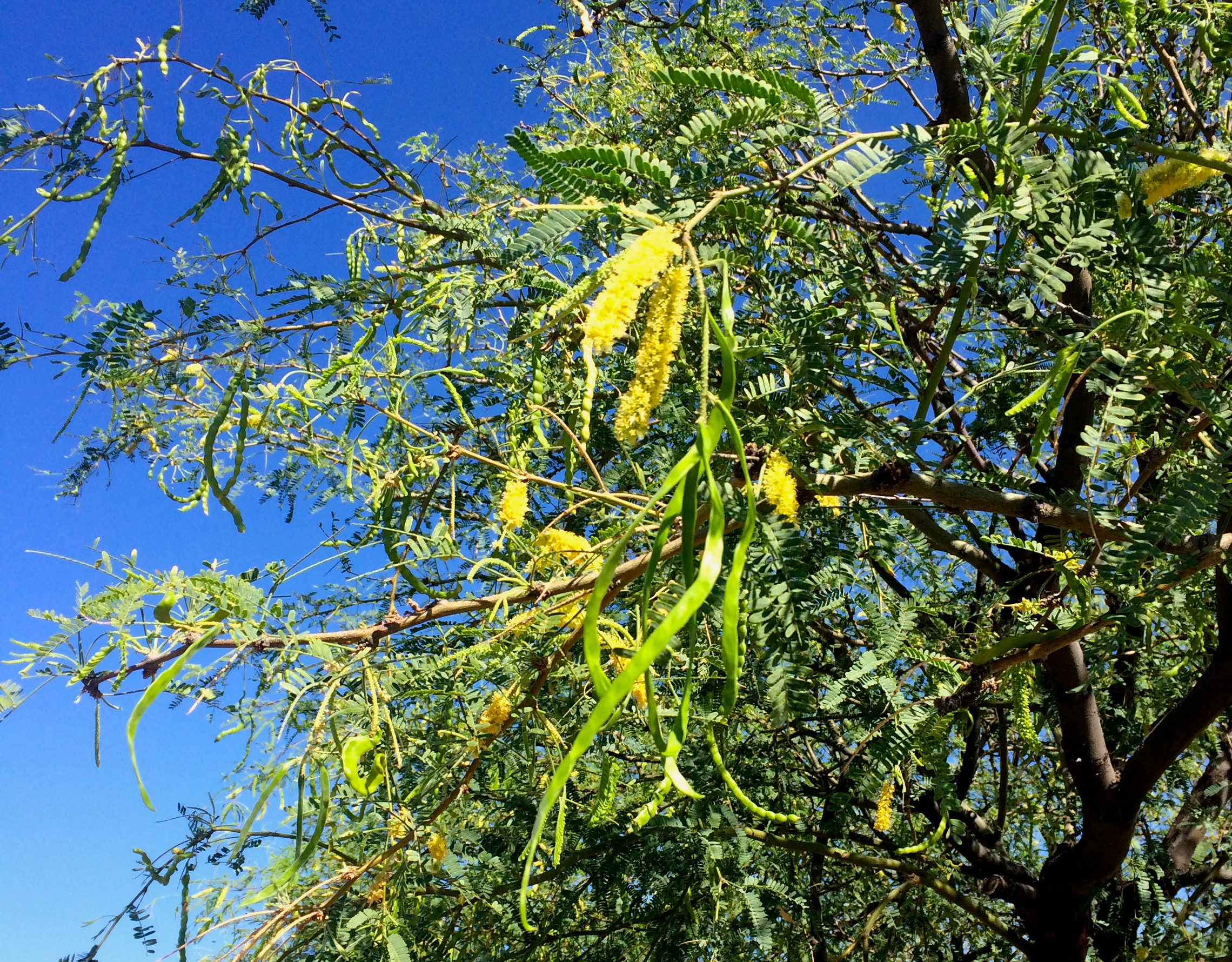
A new wave of mesquite flowers and green pods promise a second harvest this season.

A new wave of mesquite flowers and green pods promise a second harvest this season.

Don’t miss the NativeSeeds/SEARCH Monsoon Plant Sale this next weekend, Friday-Sunday, July 15-17, 2016!  For your own garden-to-table promises and preparations, check out the many starts of NSS heirloom summer vegetables and monsoon wildflowers.  There will be tomatillo plants, heirloom chile varieties, cucumber, many squash and melon varieties to give your garden a jump-start.  A few 5-gallon  Father Kino fig trees propagated at Mission Garden will be available for sale, so come early.

For well-seasoned ideas for desert cookery, two fabulously useful books continue to inspire:    Tucsonan Sandal English’s cookbook from the 1970’s Fruits of the Desert published by the Arizona Daily Star, and desert-foods aficionado (& Blog-Sister) Carolyn Niethammer’s book Cooking the Wild Southwest published by University of Arizona Press.  Borrow or buy, and use them with joy.

I wish you happy harvesting as the desert’s present promises become a cornucopia of fulfilling plenty!

[For anyone seeking heirloom foods and products made with wild foods, check out http://www.flordemayoarts.com and http://www.nativeseeds.org, or visit the Baggesen Family booth at Sunday St Philips farmers market.]


Desert Harvesters June Events

010Though newcomers to the Sonoran Desert sometimes miss the abundant fruits, berries, mushrooms, and greens of wetter forests, one Tucson organization wants you to know the desert is full of food: You just have to know where to look for it. Desert Harvesters is a nonprofit grassroots group that promotes the harvest of native, wild, and cultivated desert foods and also advocates for the planting of indigenous, food-bearing shade trees (such as the Velvet mesquite) and understory plantings within rainwater harvesting “gardens” in the landscapes where we live, work, and play. Funds raised at these events support the group’s educational efforts in the community, including demonstrations, publications, and tasting events.
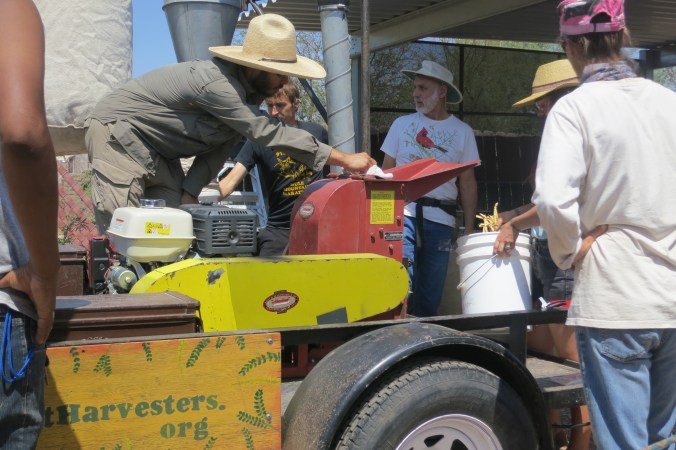
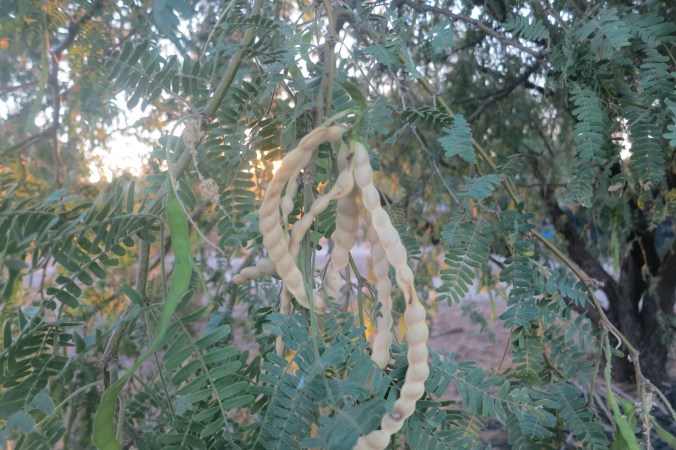
The group announces its summer season of harvesting workshops and activities, which aim to help the public learn how to plant, harvest, process, and prepare wild, native, and local food items, including mesquite pods, ironwood & palo verde seeds, and saguaro fruit. Currently the group is raising funds to support the publication of a revised and expanded version of its 2010 cookbook Eat Mesquite! This new cookbook will include recipes for mesquite and other desert foods, as well as information about how to grow, harvest, and prepare native and local foods. Desert Harvesters is also seeking volunteers to help with (and learn from) these and other events.

041

June 18 & 19, 2016

Workshops on Mesquite Pod Tasting, Inspection, and Ticketing and Hammermill Operation for those who want to become Desert Harvesters volunteers or staff, or others wishing to expand their mesquite-related skill sets. Visit http://www.DesertHarvesters.org or email volunteer@DesertHarvesters.org to learn more.


June 23, 2016

DESERT HARVESTERS’ 14th ANNUAL MESQUITE MILLING & WILD FOODS & DRINKS FIESTA Santa Cruz River Farmers’ Market at Mercado San Agustín, 100 S Avenida del Convento, Tucson

Bring your clean & sorted mesquite pods to be milled with our hammermill (fee applies) and taste an array of wild foods.

Harvesters can have their milled mesquite flour tested for aflatoxins (see below) at our 14th Annual Mesquite Milling on June 23, 2016, in Tucson. The cost per test will be a special subsidized fee of only $5.

We will also be serving craft beers (Smoked Mesquite Apple beer as well as a beer finished with creosote flowers) from Iron John Brewing Co. with proceeds going to Desert Harvesters.


June 24, 2016

Desert Harvesters’ Happy Hour at Tap & Bottle

403 N 6th Ave #135, Tucson

5–8 pm

Enjoy great regional brews, some infused with locally sourced native wild ingredients. A percentage of all happy-hour sales goes to Desert Harvesters! A local food truck will also be on site with delicious offerings including native wild ingredients.

IMG_2000

BE IN SYNC WITH THE SONORAN DESERT’S NATURAL PATTERNS

To encourage harvesting before the monsoons, and to be more in sync with the Sonoran Desert ecology’s natural patterns, Desert Harvesters has shifted its annual harvesting and milling trainings, along with its mesquite millings and fiesta, to the month of June—BEFORE the summer rains. This is also when our native bean trees (mesquite, desert ironwood, palo verde) are ready to harvest (they produce before the rains so their seed is on the ground ready to germinate when the rains arrive). Regularly check our Calendar of Events for more such event info.


FOOD SAFETY: Aflatoxin and how to avoid it

Aflatoxin is a toxic natural compound produced by certain molds; it can cause liver damage and cancer. Aflatoxin is found in many common foods, but only in small quantities is considered safe (U.S. ≤ 20 parts per billion (ppb), Europe ≤ 2 ppb). We at Desert Harvesters are specifically concerned with the invisible mold (Aspergillus flavus) that can produce aflatoxin B1 on mesquite pods, as well as on other food crops (legumes, corn, etc) that have been exposed to moisture.

HARVEST MESQUITE PODS BEFORE THE RAINS (at higher elevations, harvesting in dry autumn weather may be an option)

Desert Harvesters is now recommending that, as much as possible, harvesters collect mesquite pods BEFORE the monsoon rains. (This can be more difficult at higher altitudes due to later ripening. In these areas the best practice may be to only harvest in dry autumn weather.) The reason for pre-rain/dry-season harvesting is to reduce the pods’ exposure to moisture, and thus the risk of the development of an invisible mold (Aspergillus flavus) and the aflatoxin it can produce. Aflatoxin poisoning can have serious health consequences over the long term, so we want to harvest in a SAFE manner. To further avoid moisture issues with the pods we recommend you do NOT rinse or wash pods.

In the small number of batches of mesquite flour we have tested thus far…ALL mesquite pods we tested which were harvested BEFORE the rains have tested SAFE.

In other words, NO mesquite pods harvested BEFORE the rains had results with unsafe levels of aflatoxin. The U.S.-designated safe limit of aflatoxin is 20 parts per billion (ppb), so safe test results will be 20 or fewer ppb.

However, all test batches of mesquite pods that DID have results with unsafe levels of aflatoxin were harvested AFTER the onset of the rains. Again, in the U.S., safe aflatoxin levels of 20 or fewer parts per billion (ppb) are considered safe. However, many other batches harvested AFTER the onset of the rains tested SAFE.


We hope to continue to share more studies and best harvesting practices.


What to do with mesquite flour?

Sonoran Cookies

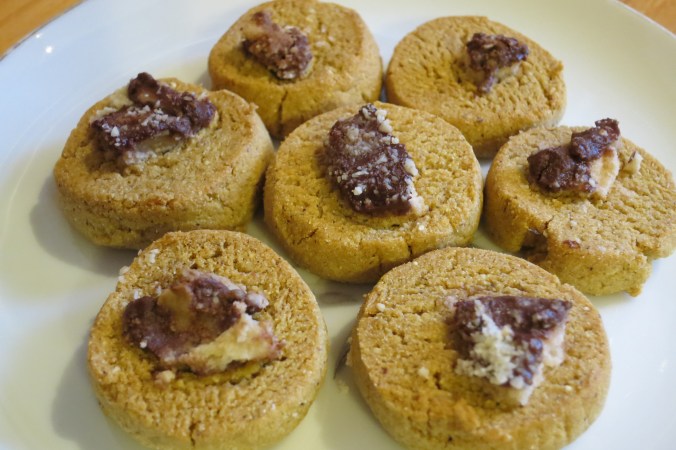
Here’s a truly classic recipe from the first EAT Mesquite! Cookbook.We’ve made hundreds of these cookies. The author of the original recipe is unknown. The ones in the photo below are topped with mesquite toffee.

mesq cookies toffee

.25 lb (one stick) butter

1 cup sugar (can be reduced to .75 cup sugar, plus .25 cup mesquite)

1 egg

2 teaspoon vanilla (or local lemon extract)

2 cup corn tortilla meal (or whole wheat flour)

1 cup mesquite meal

2 teaspoons baking powder

2 teaspoons baking soda

.5 cup pecans, finely chopped (optional)

Cream softened butter.  Mix in sugar, egg and extract.  Sift dry ingredients and add to the first mixture.  Add nuts (optional) and beat until smooth.  Roll dough into 2 inch balls and press onto ungreased cookie sheet.  Or, roll dough into thin logs, wrap in waxed paper, and refrigerate or freeze.  Slice cold logs into rounds and place on cookie sheet.  (Doubled cookie sheets or Airbake prevent bottoms from browning too fast.)  Place in preheated 375 F oven and bake 12 minutes or until golden.  Cool on racks until crisp, or eat warm and soft.  Makes up to 200 tiny (.75 inch) cookies.


Castor for Sonoran Summers

Riccinus in NC 8088

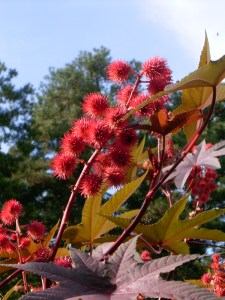
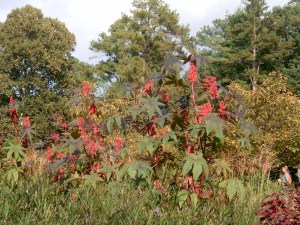
Developing seedpods on a castor plant are striking.

Jacqueline Soule here today to talk about a great plant for the summer herb garden, castor bean (Ricinus communis).  It is called ricio or higuerilla in Spanish, and called “blech” by small children dosed with it’s oil.  It is a member of the Euphorbiaceae, the spurge or poinsettia family, which is widely considered a plant family to avoid consuming, so who first figured the oil was a good laxative and spring tonic?!  Not only for internal use, but the oil was popular 3000 years ago for body lotion, hair dressing, and for lamp oil.

Riccinus in NC 8090

Yes, some highly effective medicines, insecticides, and uses of the oil come from the castor seeds (they are not botanically beans), but it is not a plant for home remedies.  All parts of the plant contain both useful and highly toxic compounds.  I mention the plant today because it was used in the Southwest starting in Father Kino’s time, indeed was planted in his mission gardens, plus it is a lovely ornamental plant.  I like to grow castor in my modern day garden as a link to such ancestral gardens.

Riccinus communis AMAP IMG_4616

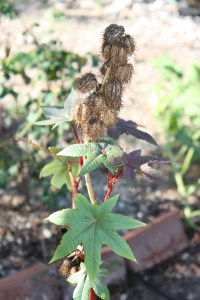
The seed pods dry to brown and easily release the seed.

Castor beans are toxic due to ricin, a chemical present in the flesh of the seeds, but not present in the oil.  Although the lethal dose in adults is considered to be four to eight seeds, reports of human poisoning are rare as the seed coat is quite durable and can pass intact through the human digestive system.  Poisoning occurs when animals ingest broken seeds or break the seed by chewing.

Planting and Care.

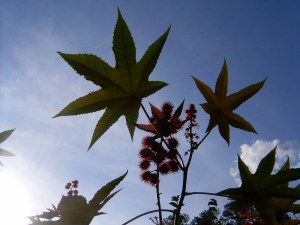
Castor plants are striking ornamentals.  They can vary greatly in growth habit and appearance. The variability has been increased by breeders who have selected a range of cultivars for leaf and flower colors, including scarlet, bronze, or maroon leaves, topped by large, decorative seed pods in shades of red, orange, or maroon.  Plants make an excellent temporary screen or exotic backdrop for the back of the border.

Riccinus in NC 8086

In this North Carolina garden, the castor plants provide a backdrop to the annual beds.

Intolerant of frost, castor plants can be started indoors and planted out once the soils warm, or planted directly in the soil in spring.  For best results, soak seeds in water for 24 hours before planting. The large seeds should be buried about one inch deep. Castor plants prefer full sun and should be kept evenly moist to get growing.

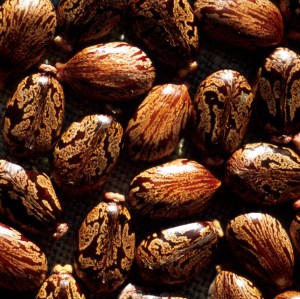
Ricinus communis seeds

Harvesting and Use.

It is not recommended to attempt processing of castor oil at home.  But do save some seed of your plants, as there is some effort to outlaw their sale.

kino festival 2016

The 19th Annual Festival of Kino will be held throughout the town of Magdalena, in Sonora Mexico,  18 to 22 of May.  This year the celebration commemorates 50 years since finding Padre Kino’s bones.

JAS avatarIf you live in Southeastern Arizona, please come to one of my lectures. Look for me at your local Pima County Library branch, Steam Pump Ranch, Tumacacori Mission (founded by Father Kino), Tucson Festival of Books and other venues. After each event I will be signing copies of my books, including the latest, “Southwest Fruit and Vegetable Gardening,” written for Arizona, Nevada and New Mexico (Cool Springs Press, $23).
© This article and photos are copyright by Jacqueline A. Soule. All rights reserved. Republishing an entire blog post or article is prohibited without permission. I receive many requests to reprint my work. My policy is that you may use a short excerpt but you must give proper credit to the author, and must include a link back to the original post on our site. Photos may not be used.

Spring Salad

cholla 2016

Amy collecting cholla buds

Some years, spring seems to last about a week in the desert, going from winter to summer too fast. When the weather is beautiful, we know to celebrate these days outside!!!!

blog 20160415_100732

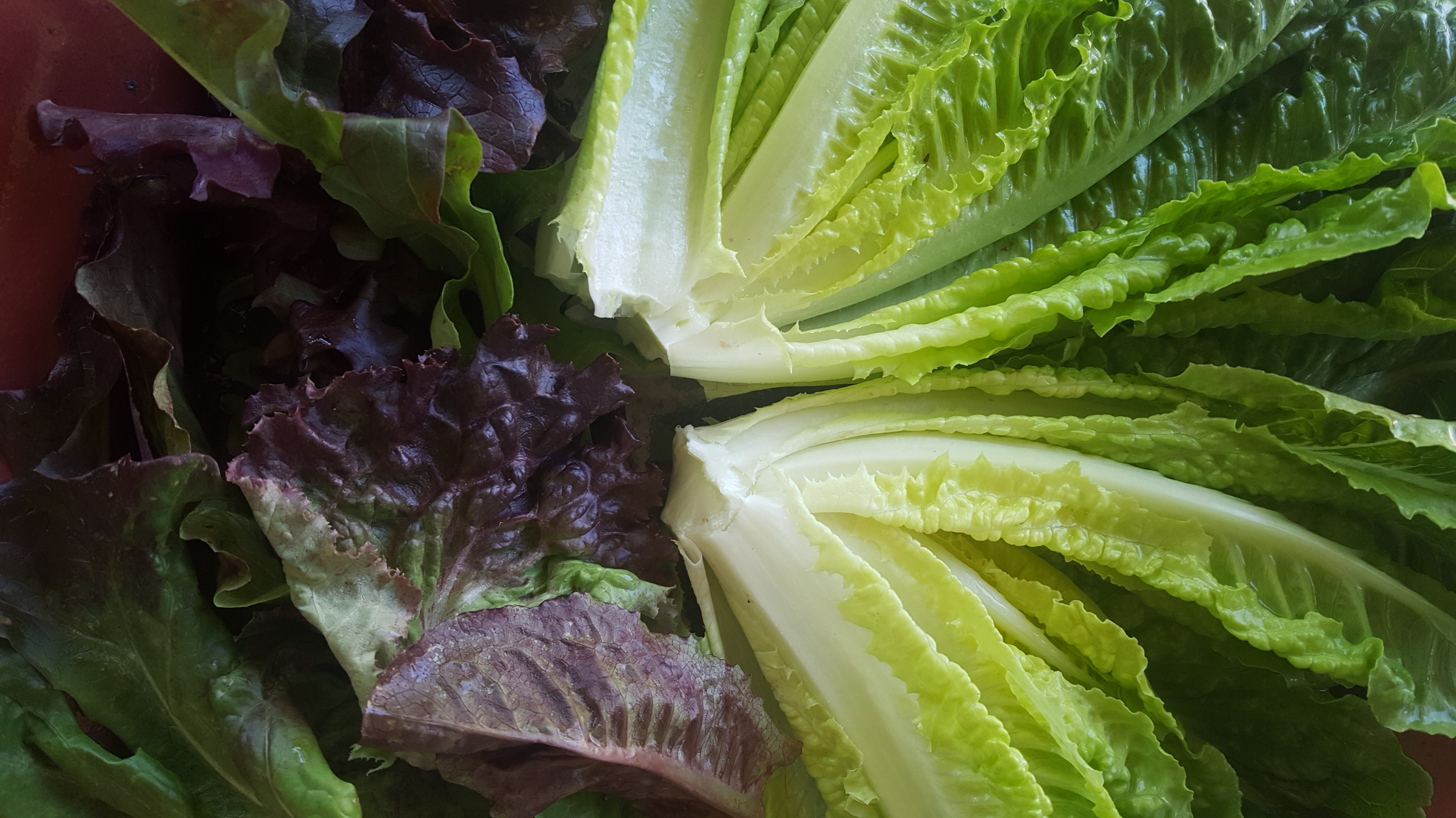
Romaine hearts and assorted red lettuces

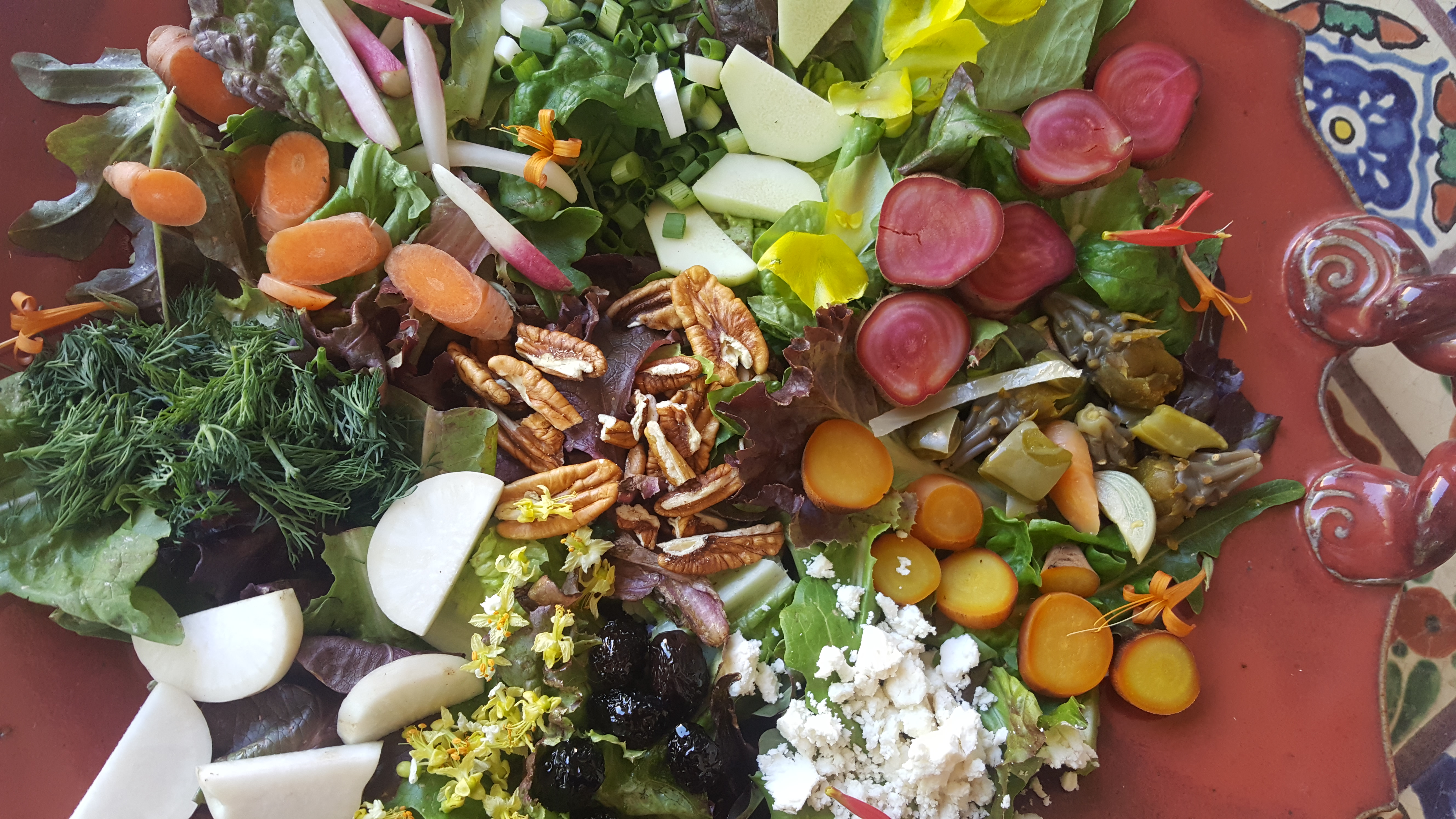
Winter lettuces are still around for a short time more, and the weather is finally warm enough that I feel like eating a salad. Here is a salad made with ingredients I had on hand. I traded for most items, the exceptions being the items I made. I hope this serves as an inspiration to go to a farmers’ market, use little bits of what you have in the refrigerator, go into the desert near your home, and forage in your yard.

blog 20160415_093007

Hakurei turnips, Chioggia and Golden beets, Carrots, Kholrabi, , and French Breakfast Radishes.

Hakurei “salad turnips” are so sweet and tender, they can win over stubborn turnip haters, and are a treat raw for turnip lovers.

I steamed and sliced the beets, peeled and sliced the kholrabi, and simply sliced the turnips, carrots and radishes.

I'itoi onions and dill.

I’itoi onions and dill.

For fresh herbs, I used dill and I’itoi onions. I like the green tops as much as the white parts.

Crusts of Small Planet Bakery Cottage Wheat make excellent croutons. Just chop, drizzle with olive oil, salt, and garlic powder (my guilty pleasure), then toast in a skillet until crunchy.

blog 20160415_104817

Heels of Cottage Wheat.

blog 20160415_104958

Cast iron skillet croutons.


blog 20160415_085613

Brined goat feta.

20150910_120612

Mango Salsa.

Last fall, I goat/house sat for a friend, and this is the feta I made from the milk. Mango the goat has mellowed over the years since I first learned to milk and she first learned to be milked.

IMG_3508

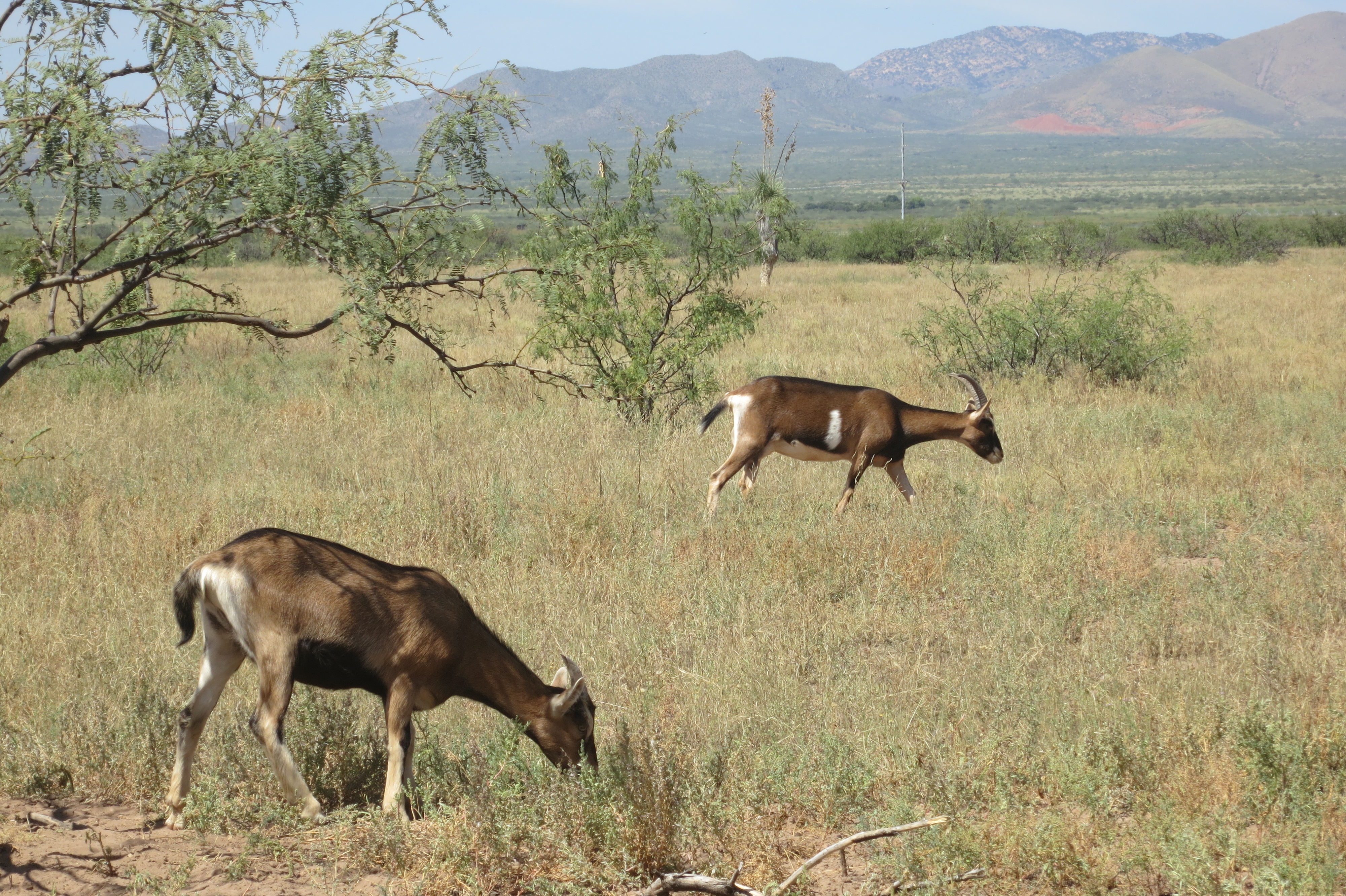
The heard on the grassland.


IMG_3517

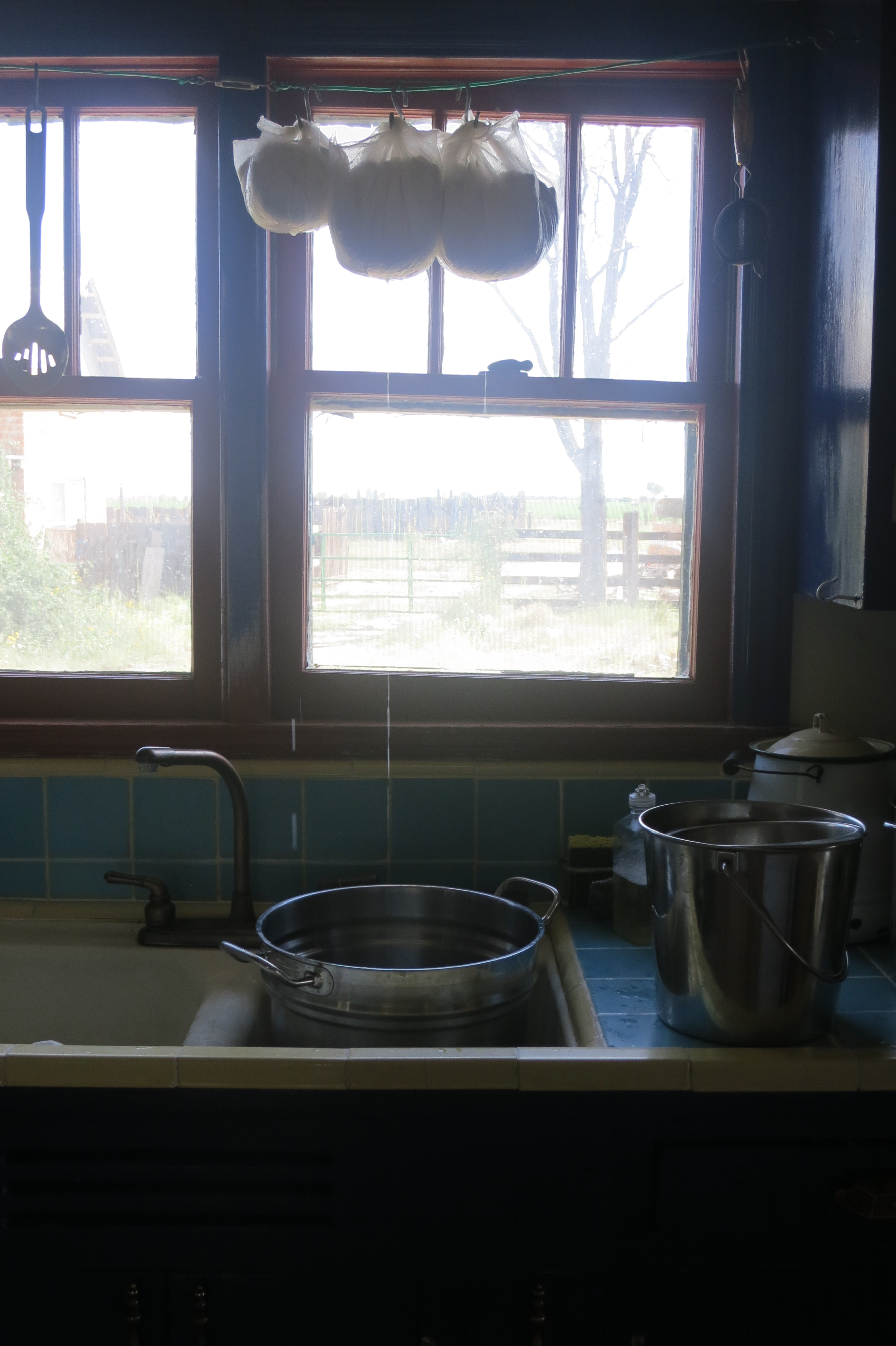
Fresh cheese curds draining whey.

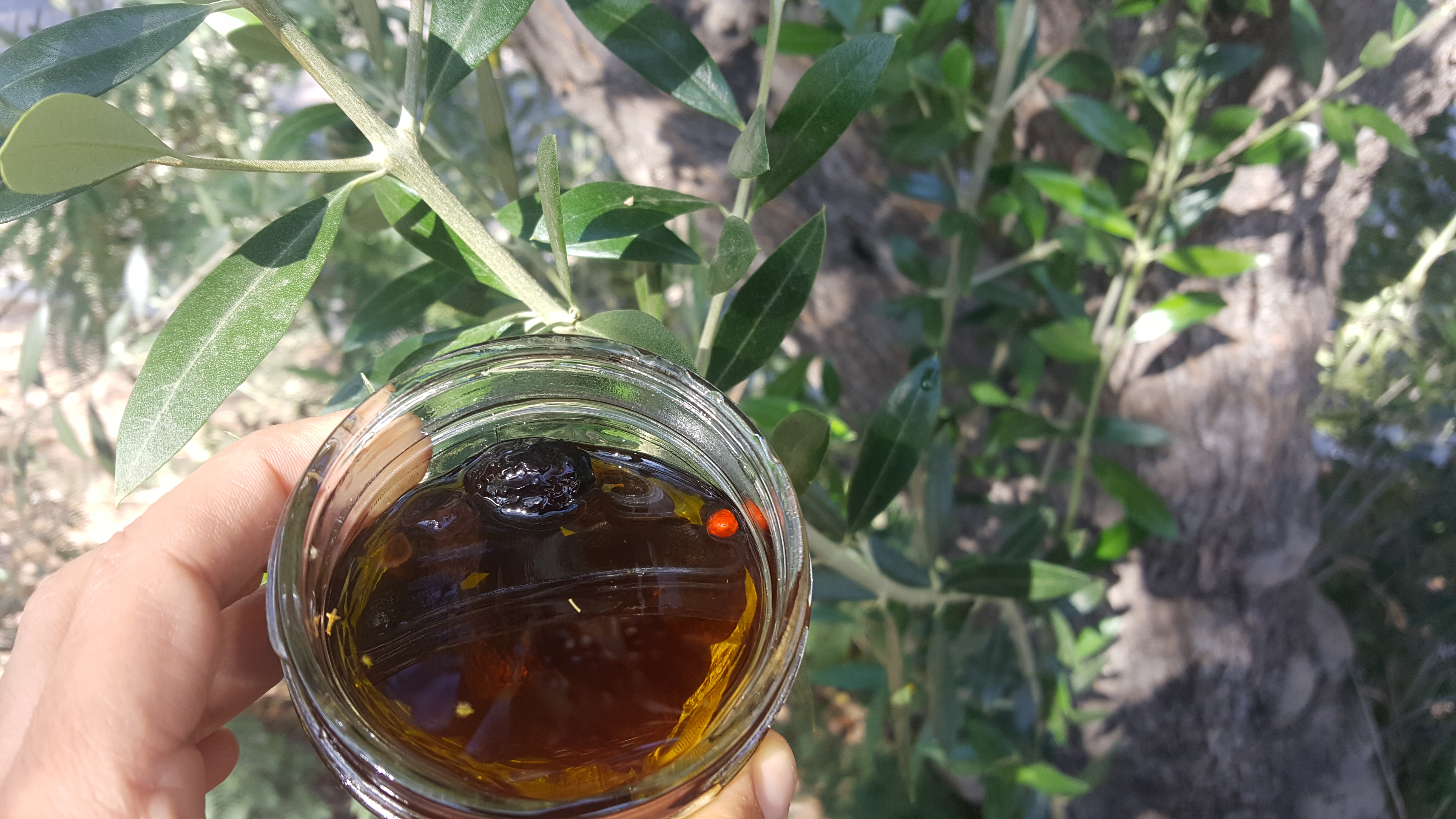
Solar cured olives from Bean Tree Farm.

Solar cured olives from Bean Tree Farm.

Pickles! Cholla buds and nopalitos en escabeche.

Pickles! Cholla buds and nopalitos en escabeche.

blog 20160415_103012

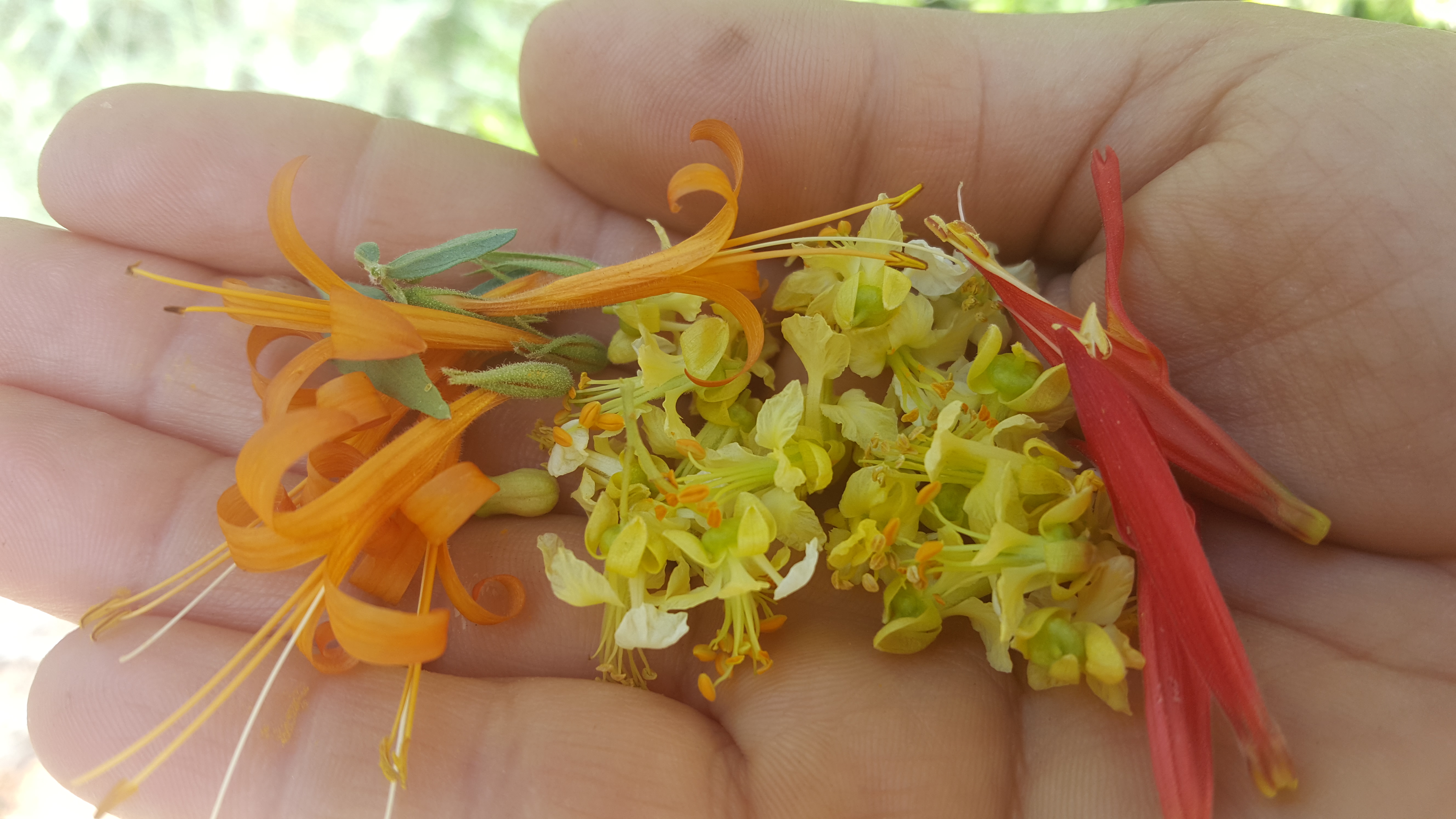
Fresh flowers for garnish.


blog 20160415_090830

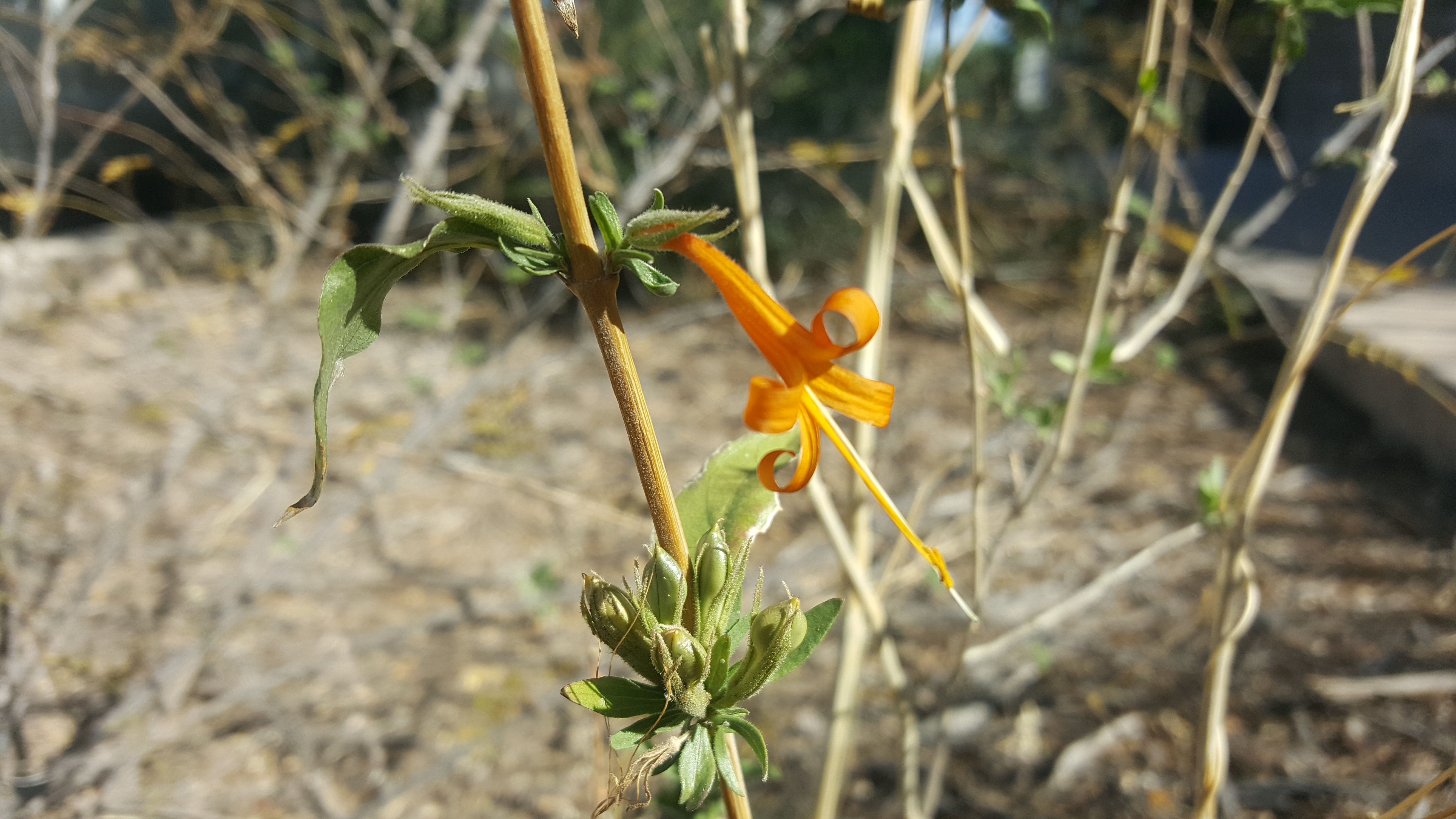
Desert Honeysuckle, Anisacanthus thurberi.

blog 20160415_104348

Foothills Palo Verde, Parkinsonia microphylla.

blog 20160415_091001

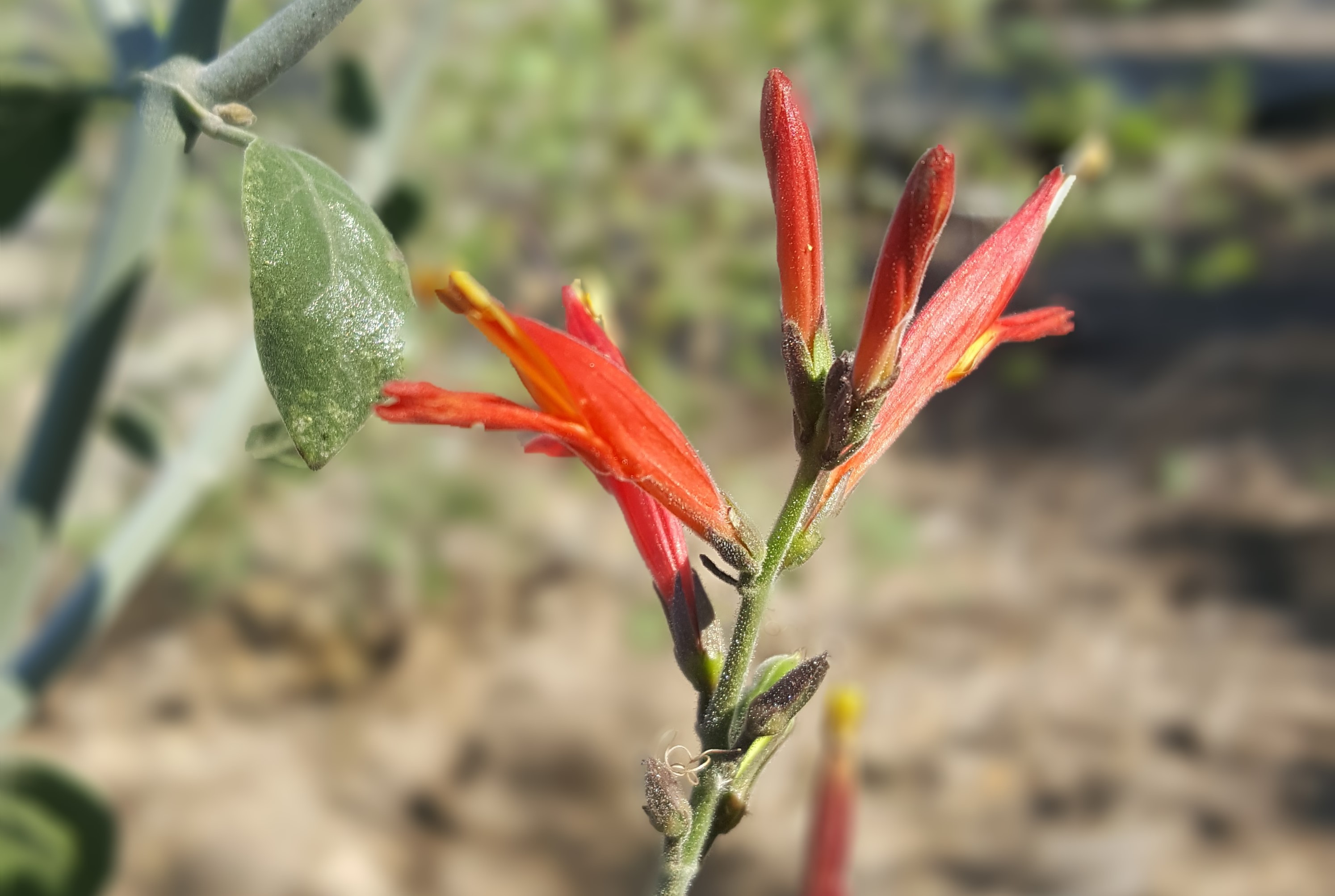
Chuparosa, Justicia californica.

Prickly Pear Cactus flowers are a fleshy, vegetal garnish. Opuntia engelmannii

Prickly Pear Cactus flowers are a fleshy, vegetal garnish. Opuntia engelmannii

blog 20160415_103501

Dress with olive oil and lemon juice. Enjoy!


“Succulent” Events with Succulent Tastes–and Invitations….

It’s show time in the desert–S’oo’ahm masad or “yellow moon” for the Tohono O’odham–the month in which seemingly everything in the Sonoran Desert blooms a glorious yellow, arroyos lined with blooming blue palo verde and mesquite, hillsides covered with paper flower, palo verde and cactus blossoms.

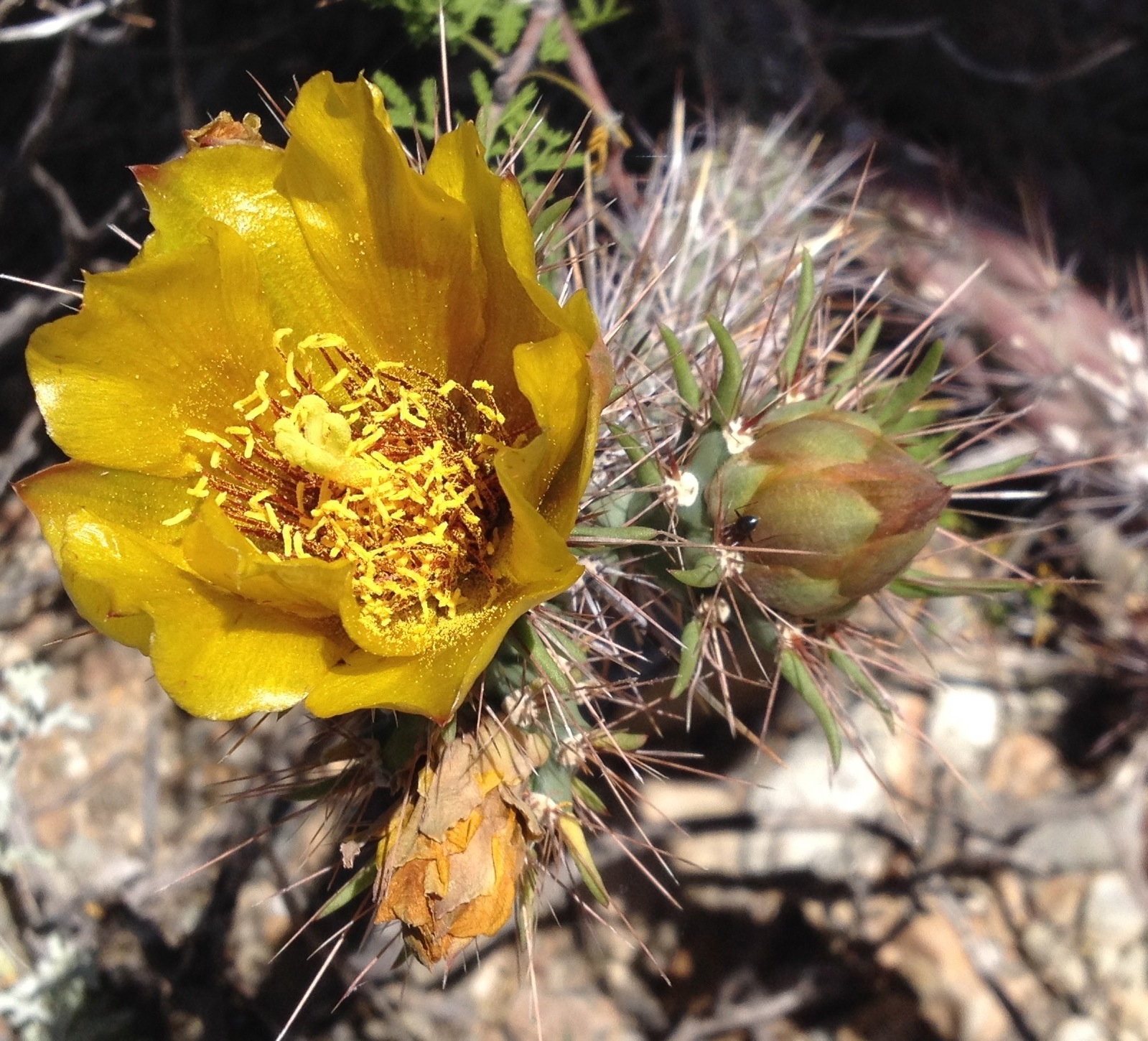
Staghorn cholla (Cylindropuntia versicolor) flower, bud and ant protector

Staghorn cholla (Cylindropuntia versicolor) flower, bud and ant-protector (MABurgess photo)

These spiny, possibly-threatening desert plants have amazing nutritious gifts to pollinators and other hungry creatures, including ants, packrats… and humans.

Tia Marta here with an invitation to learn lots more about our many species of Sonoran Desert chollas, how they fit into the fabric of desert life, and how they have been used by traditional people for generations.  Come join  Tucson Cactus and Succulent Society’s SONORA XI gathering next weekend Friday-Sunday, April 15-17, 2016, for a rich opportunity to enjoy demos, tastes, lectures, and exhibits.  You can learn more about this downtown Tucson event (held at HotelTucsonInnSuites) and register at http://www.tucsoncactus.org.  On Saturday, April 16, I invite you to attend one of my ethnobotany demonstrations at the open conference.  I’ll guide you through careful “hands-on experiences” with edible and useful succulents, complete with some surprising and yummy bites!

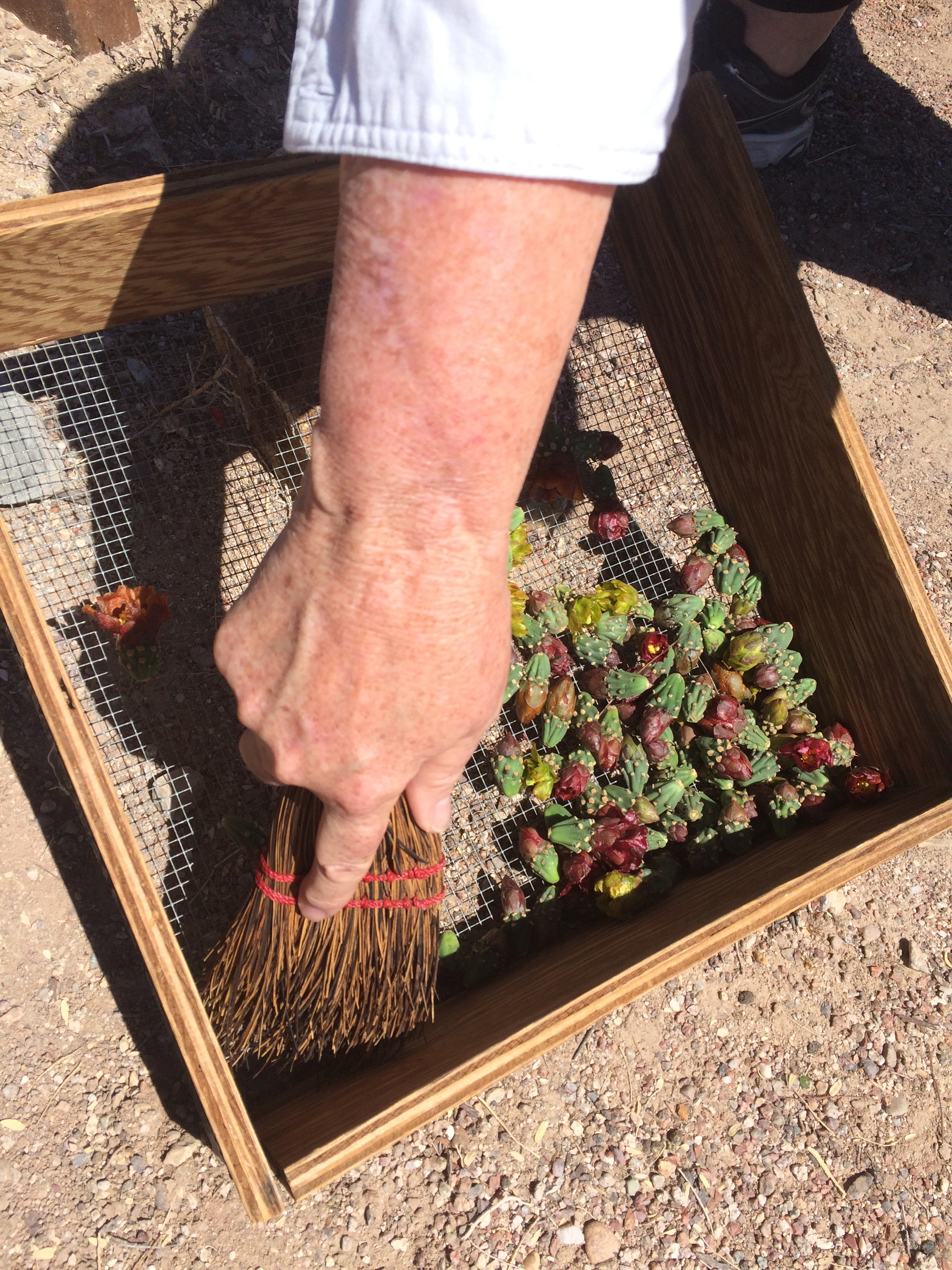
De-spining cholla buds at Mission Garden Workshop (MABurgess)

De-spining cholla buds at Mission Garden Workshop (MABurgess)

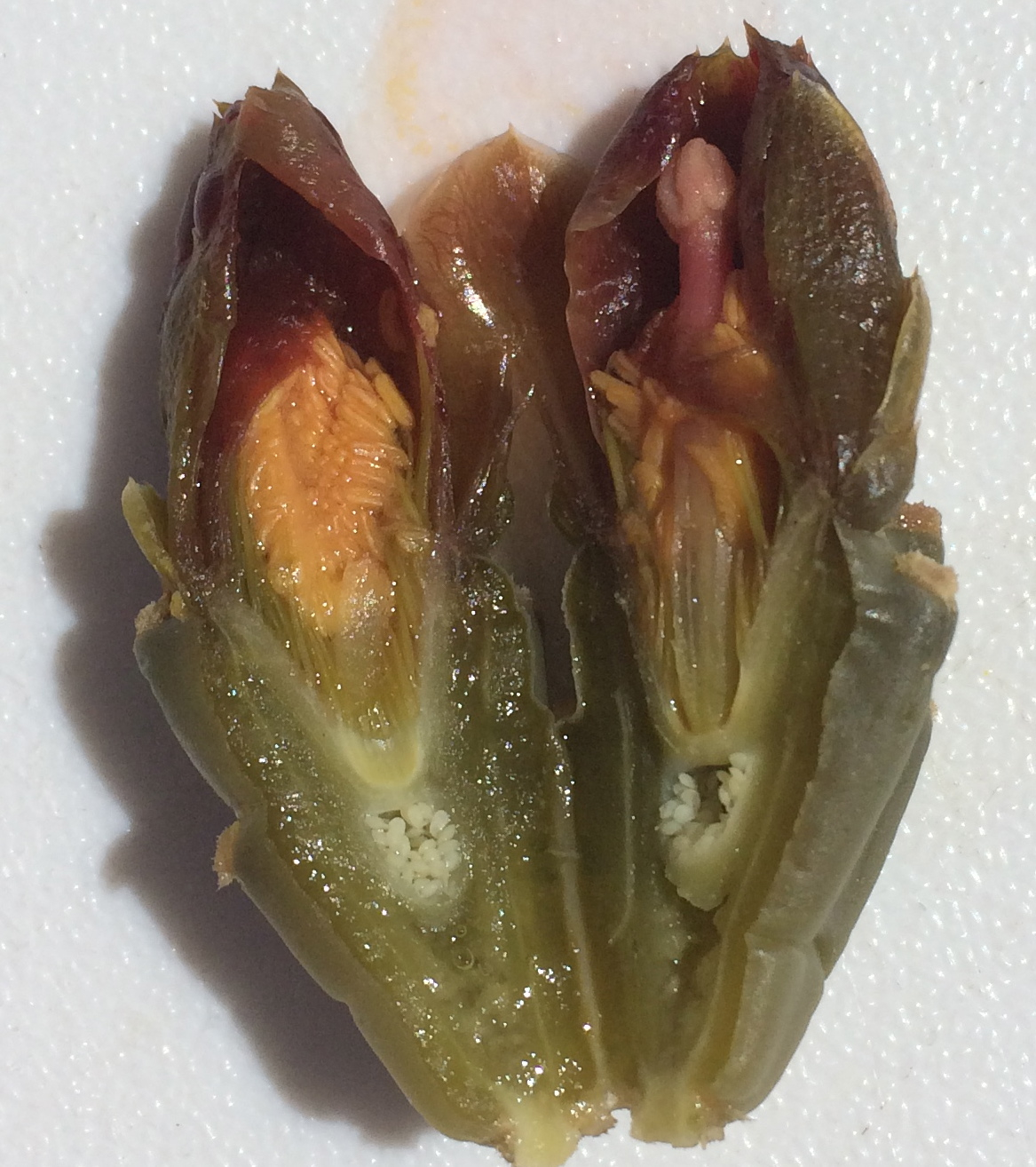
Cross-section of staghorn cholla flower bud showing stamens and ovules (MABurgess)

Cross-section of staghorn cholla flower bud showing stamens, stigma, and ovules (MABurgess)

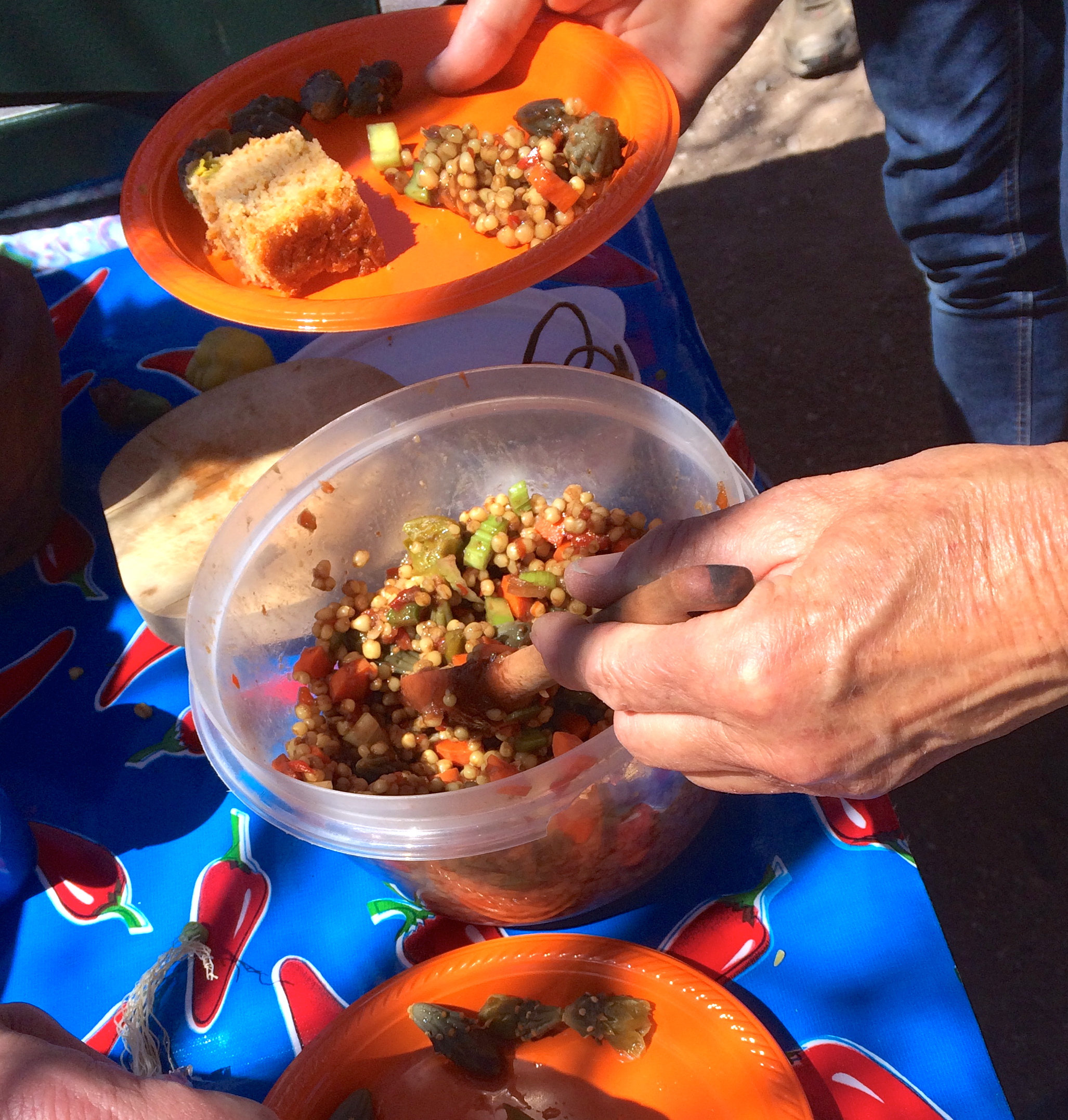
Delicious Marinated White Sonora Wheat-berry Salad with Cholla Buds at Mission Garden workshop (MABurgess)

Delicious Marinated White Sonora Wheat-berry Salad with Cholla Buds at Mission Garden workshop (MABurgess)


Last weekend we celebrated the beginning of the cholla harvest at Friends of Tucson’s Birthplace’s Mission Garden in a workshop led by Flor de Mayo’s Tia Marta (www.tucsonsbirthplace.org/archives).   We explored its ecology, taxonomy, traditional preparation, its culture and archaeological evidence.  The class was topped with a feast using cholla buds in several innovative and delectable dishes–one with heirloom White Sonora Wheat.  For great cholla recipe ideas, scroll back to an earlier Savor blog post   https://savorthesouthwest.wordpress.com/2015/03/13/heres-to-the-budding-desert/.   For additional interesting cholla information and dried cholla buds for purchase, check out  www.flordemayoarts.com.

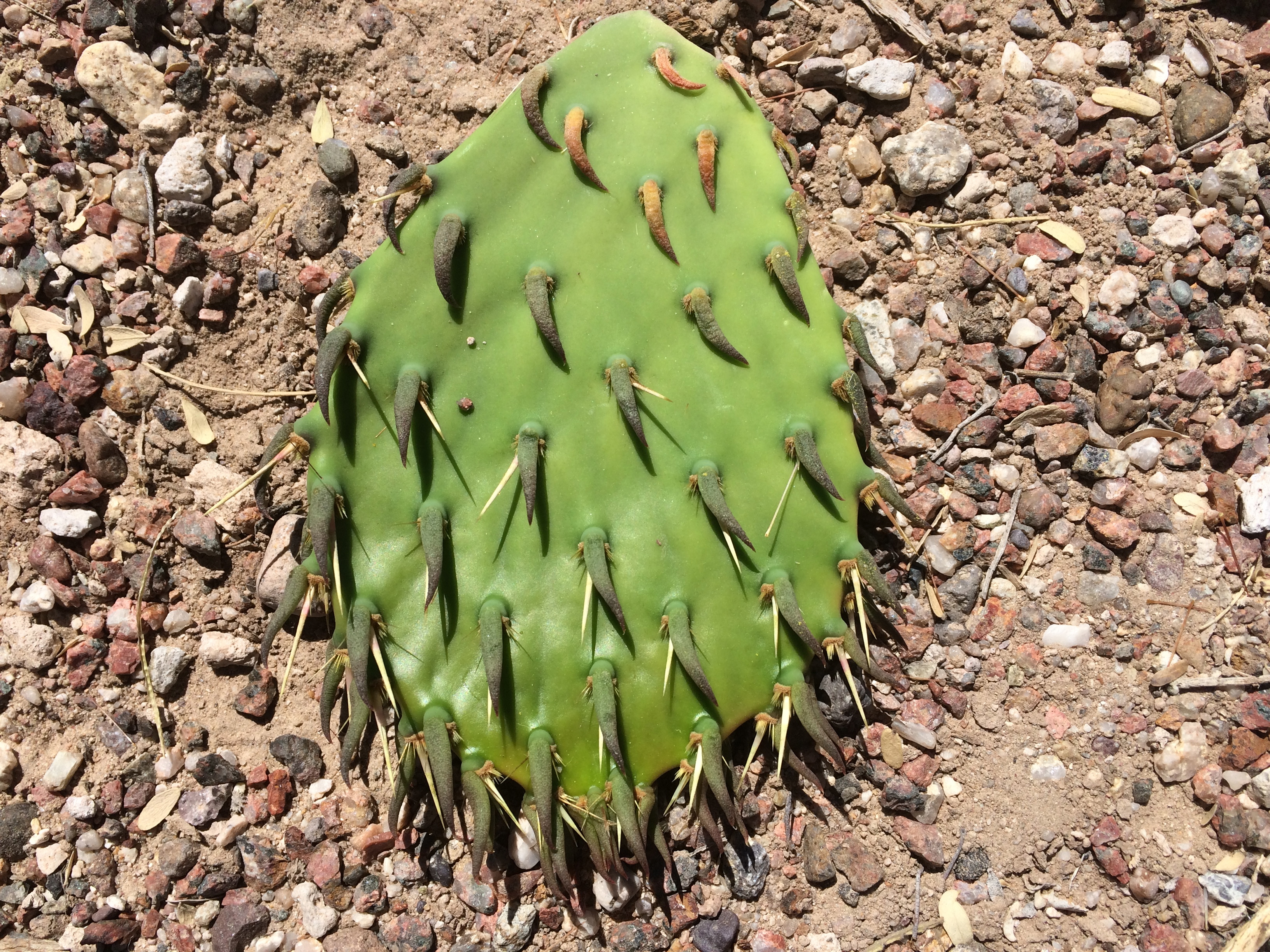
Young new-growth stem of prickly pear in leaf (Opuntia engelmannii) ready for harvesting (MABurgess)

Young new-growth stem of prickly pear in leaf (Opuntia engelmannii) ready for harvesting (MABurgess)

Another desert food staple–worthy of being considered a medicine as it is so effective in balancing bloodsugar–is our own   prickly pear.  With de-spining and preparation you can enjoy its tangy taste as nopalitos, pickled, stir-fried, or in salads.  Enjoy nopal dishes at some of Tucson’s favorite restaurants like Janos’ Downtown Kitchen or Teresa’s Mosaic.  Attend the demo nopal preparation and tastes at the SONORA XI Conference….(www.tucsoncactus.org).

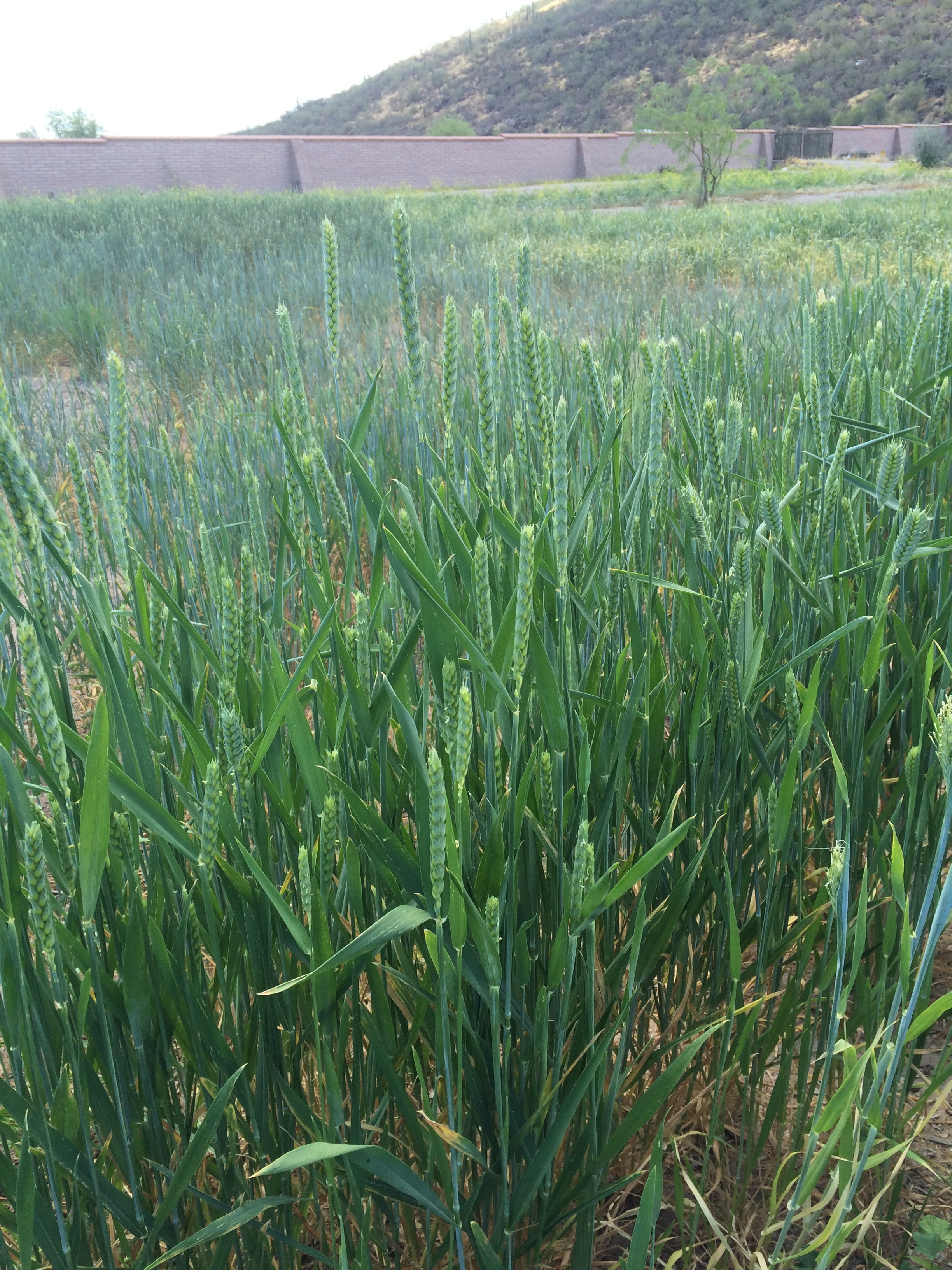
White Sonora Wheat with swelling seed heads at FOTB's Mission Garden (MABurgess)

White Sonora Wheat with swelling seed heads at FOTB’s Mission Garden–to mature in May (MABurgess)


Seeing the heirloom winter White Sonora Wheat growing tall and green at Mission Garden, its swelling kernels in the “milk-stage,” I’m envisioning the harvest to come, and to plans for La Fiesta de San Ysidro Labrador, when the wheat, first introduced to S-chuk-Shon by Padre Kino, will be maturing and ready to thresh.  My mother’s wonderful caregiver Rosa has introduced us to a delectable recipe she created celebrating both White Sonora Wheat and the fresh vegetables currently available at farmers’ markets.  Her recipe for Market Veggie Omelette with White Sonora Wheat follows–light as a souflee.

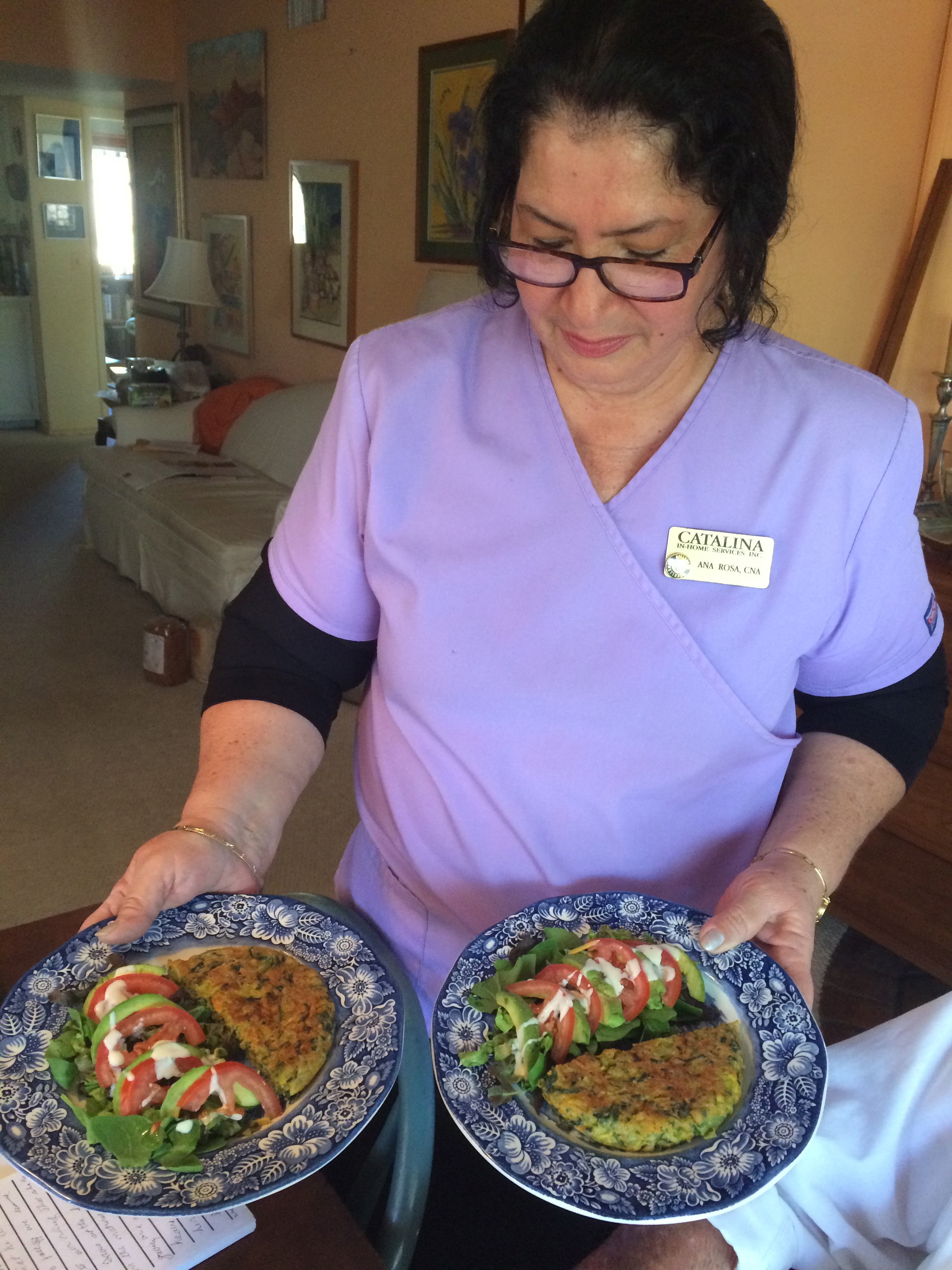
Rosa serving her Market Veggie Omelette with White Sonora flour (MABurgess)

Rosa serving her Market Veggie Omelette with White Sonora flour (MABurgess)


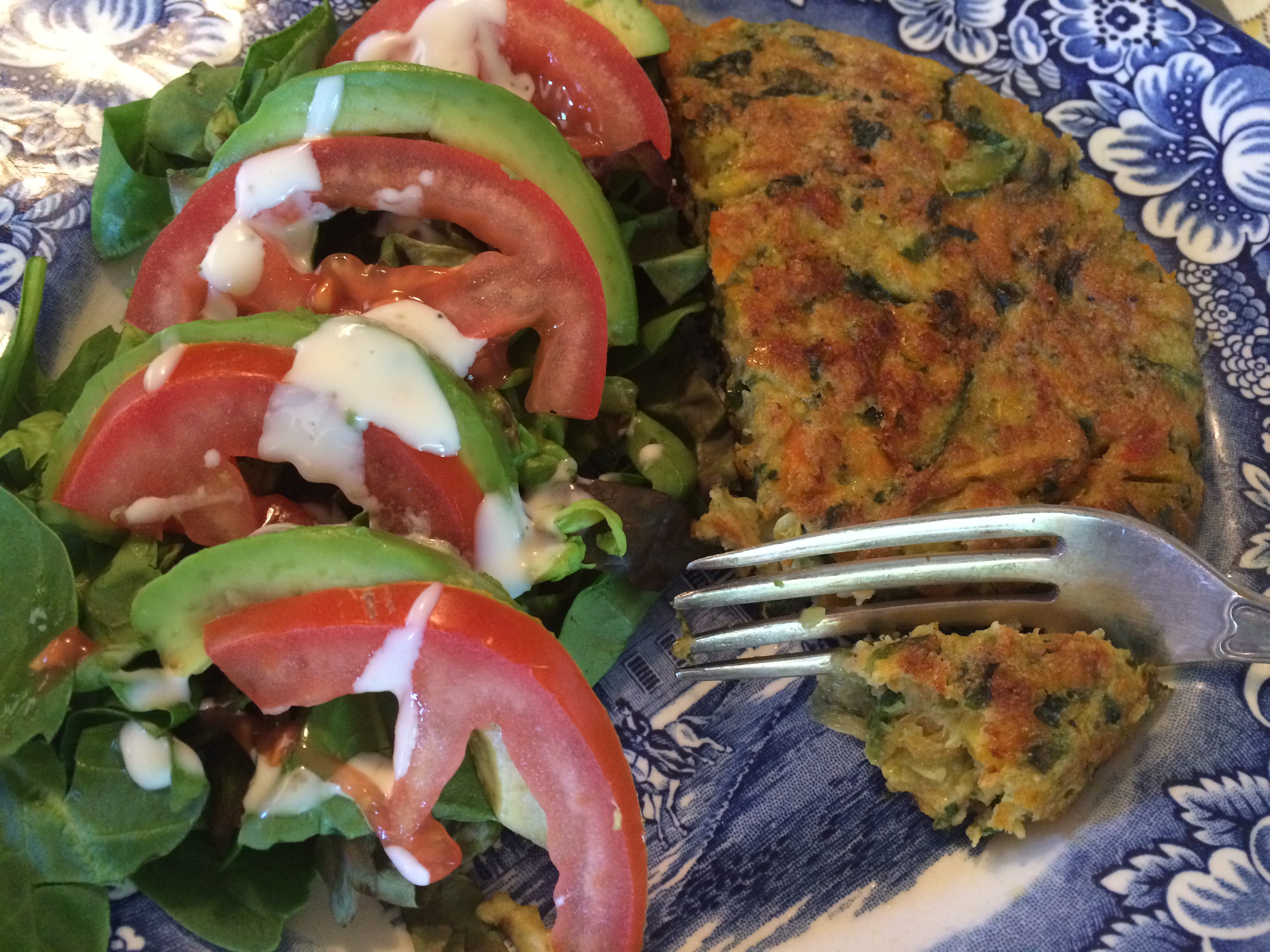
Rosa's delicious Market Veggie Omelette with White Sonora flour

Rosa’s delicious Market Veggie Omelette with White Sonora flour (MABurgess)

ROSA’S MARKET VEGGIE OMELETTE w/ WHITE SONORA WHEAT FLOUR

Ingredients:

2 Tbsp heirloom White Sonora Wheat flour

1 lg egg or 2 small eggs

1 cup market vegetables, sautéed in olive oil (shaved carrots, chopped fresh spinach, minced I’itoi’s onions bulb and tops…)

2+ Tbsp org. broth, veg or chicken

salt to taste; butter for curing skillet

Directions: 

Saute chopped vegetables in olive oil, then simmer with broth until soft.   Allow to cool. Beat eggs with White Sonora Wheat flour.  Mix with vegetables. Pre-heat small iron skillet, melt butter, pour in mixture.  Let omelette puff.  Turn when slightly brown on bottom, then gently brown on reverse.  Serve w/salsa fresca or sliced avocados. (Another wonderful variation on her omelette is to add prepared cholla buds!)

Find dry cholla buds at the Flor de Mayo booth at Sunday’s St Philips farmers’ market, at NativeSeeds/SEARCH store, at the San Xavier Farm Coop booth at Thursday’s Santa Cruz market at the Mercado, or at the Tucson Cactus&Succulent Society’s SONORA XI conference next weekend.  You can find the freshest greens for Rosa’s Veggie Omelette, including local baby spinach, onions, etc at our many Tucson farmers markets, especially at Tom’s Marana-farm booth at Sunday St Philips market (www.foodinroot.com), or at the Community Food Bank booth at Thursday’s Santa Cruz market at the Mercado.  Easily grow your own shallots for the omelette with NativeSeeds/SEARCH’s I’itoi’s onions–the snappy little spreading onion that keeps on giving.

Come witness ever-growing inspirations for your own garden by visiting Mission Garden at the foot of A-Mountain, Tucson–it’s a must!  There are wonderful docents there to guide you every Saturday morning now that the weather is warming.  In Mission Garden we see examples of cultivated food and native medicine plants that have fed and helped humans in this valley for over 4000 years!  With that track record for desert living, chances are these same plants can help support us into an unsure future of hotter and drier weather–with assurance and nurture.  We owe inexpressible thanks to those farmers and gardeners who have preceded us!

[For more info about succulent events, tours, happenings, and products, check out http://www.tucsoncactus.org; http://www.flordemayoarts.com; http://www.tucsonsbirthplace.org; http://www.nativeseeds.org, http://www.sanxaviercoop.org]

The Charm of Desert Chia

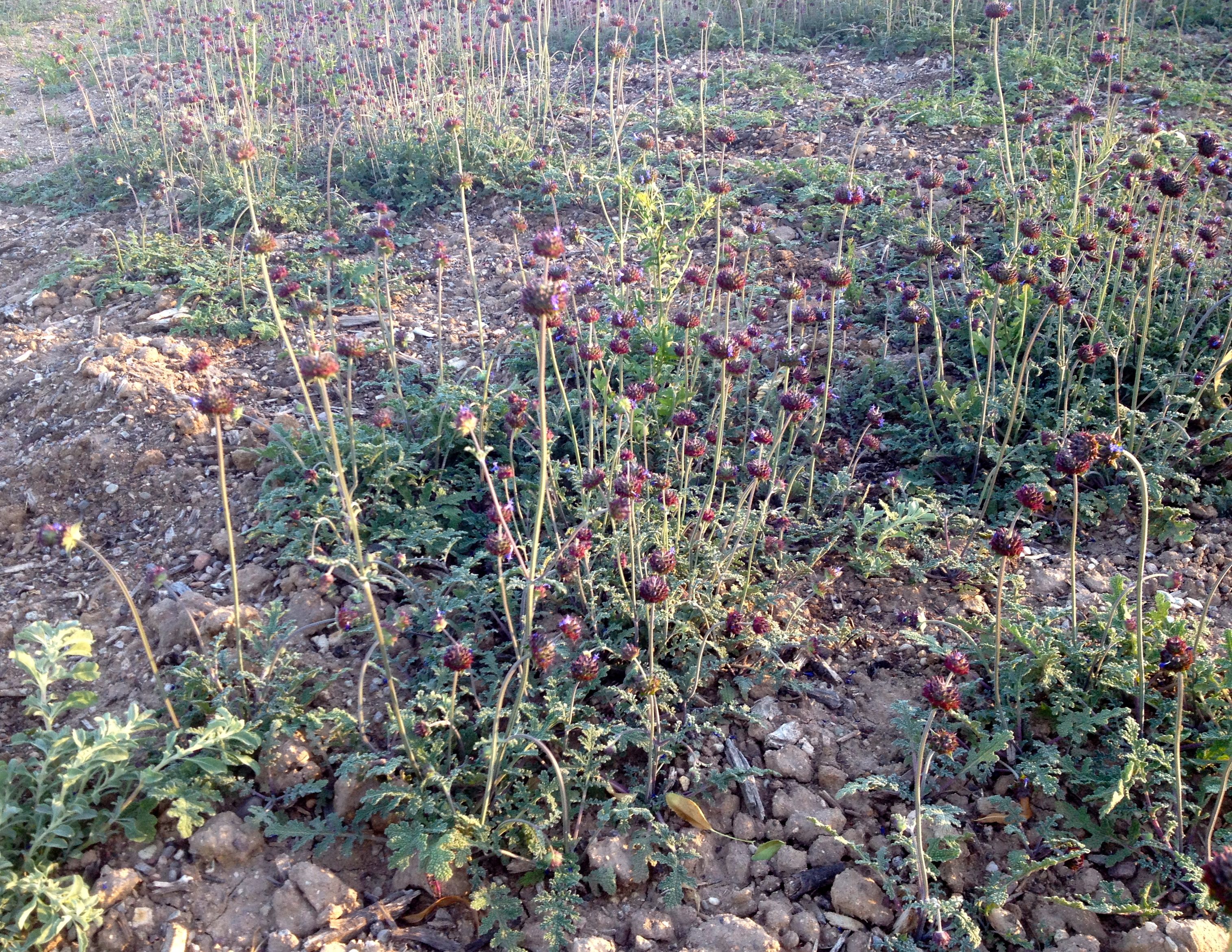
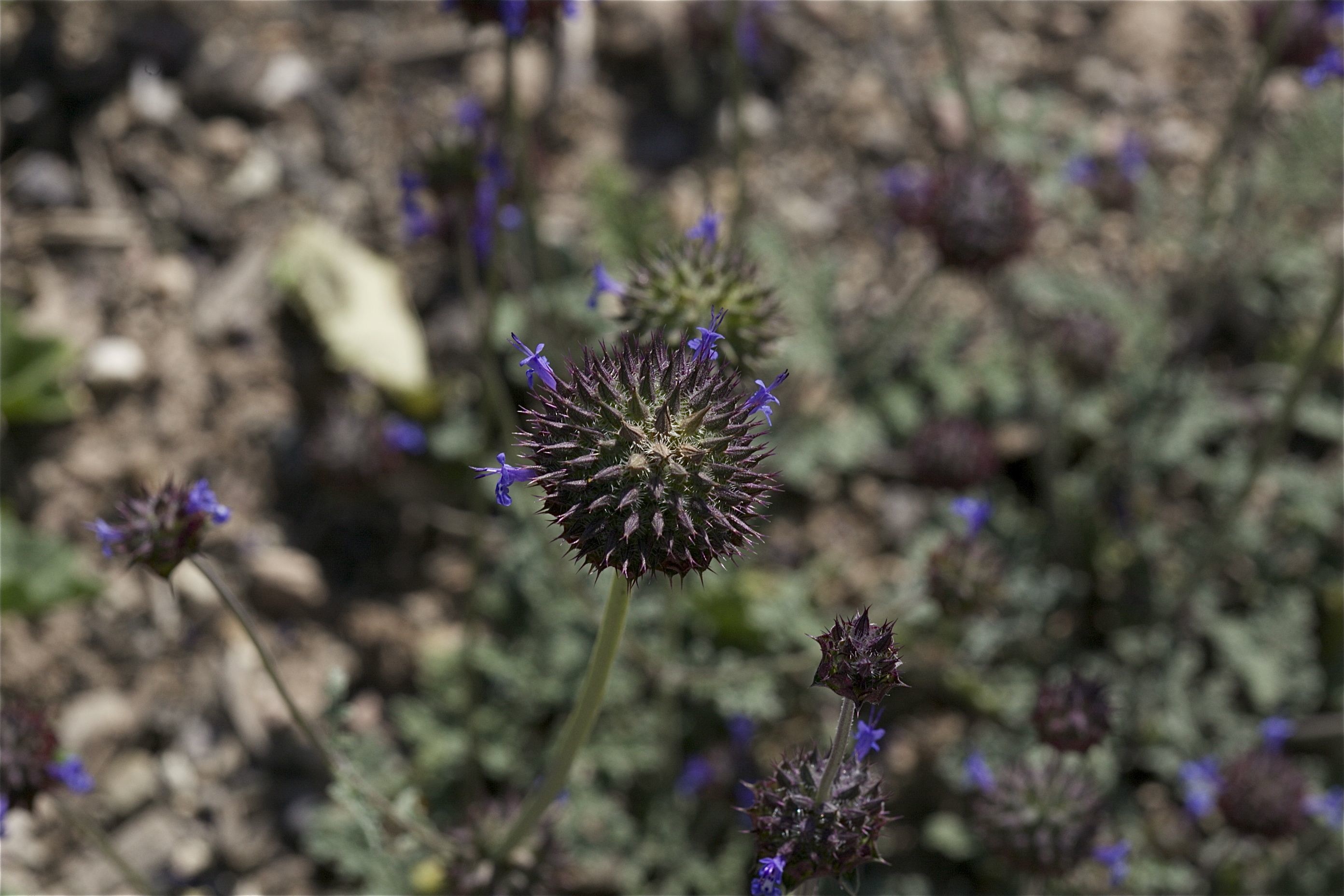
A patch of desert chia (Salvia columbariae) inviting pollinators….

A patch of desert chia (Salvia columbariae) inviting pollinators….(MABurgess photo)

It is happening right now in desert gardens and up desert arroyo beds–the visual surprise of desert chia! But you have to look twice, as they can be elusive.

Tia Marta here to share some thoughts about a very important little desert ephemeral.  Salvia columbariae, brought on by winter rains, is spreading its lovely ground-hugging rosettes and beginning to send up its wand-like square flower stalks to greet pollinators with spherical clusters of deep blue flowerlets–almost appearing “ultraviolet” to our eyes.

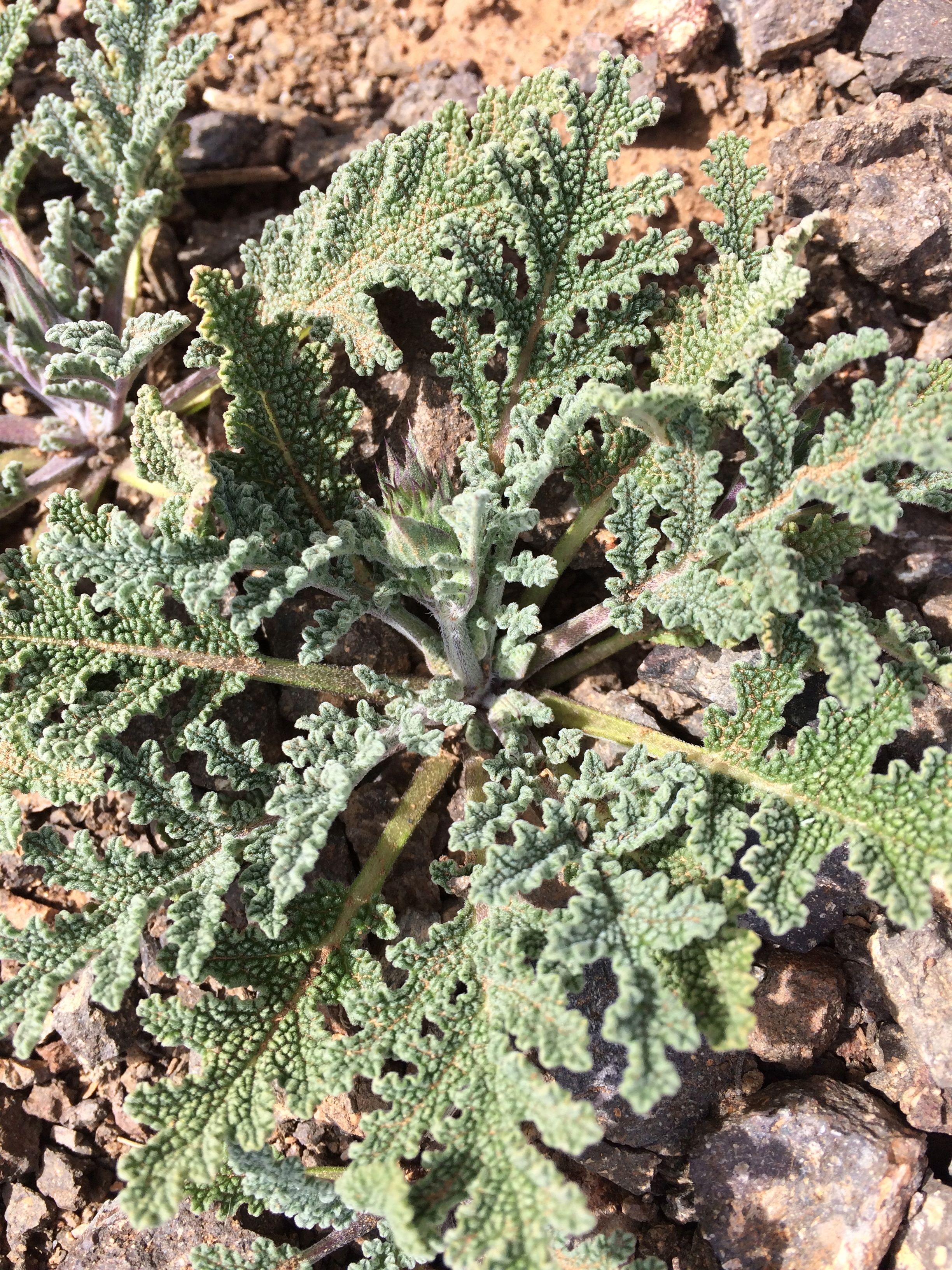
Chia’s foliage itself is a wonder.  If you get down on hands and knees with a magnifier, you’ll see a most knobby green terrain-of-a-leaf.  Pinch the leaf and a luscious bouquet arises.  Oh if we could capture that scent!  It would make a lovely lotion.

A rosette of beautiful desert chia with its scented, intaglio foliage--Wishing this were a squeeze-and-sniff photo!

A rosette of beautiful desert chia with its scented, intaglio foliage–Wishing this were a squeeze-and-sniff photo! (MABurgess photo)

Humans are funny in that when we see wildflowers emerge in the spring, as they are now, we HAVE TO HAVE THEM in our gardens!  Well, if we want them now, we should have planted the seeds last fall!  Put it on your calendar right away–on the October page–to buy those chia seeds and plant them at the beginning of October when the nights turn cool.  Or, if you are into instant gratification, if you need a quick wildflower fix, there just might be a plant sale this weekend somewhere in Tucson, AZ, where they will have potted chia starts ready to put in the ground–to give you a show, and a harvest, before hot weather sets in.  If you like to gamble, you could rake in some seeds this month and chances are the seeds (which have built-in DNA smarts) will wait until fall rains come to germinate, as their germination-triggers are attuned to cool/wet conditions; amazingly, hot summer rains  won’t tempt them out of seed dormancy.

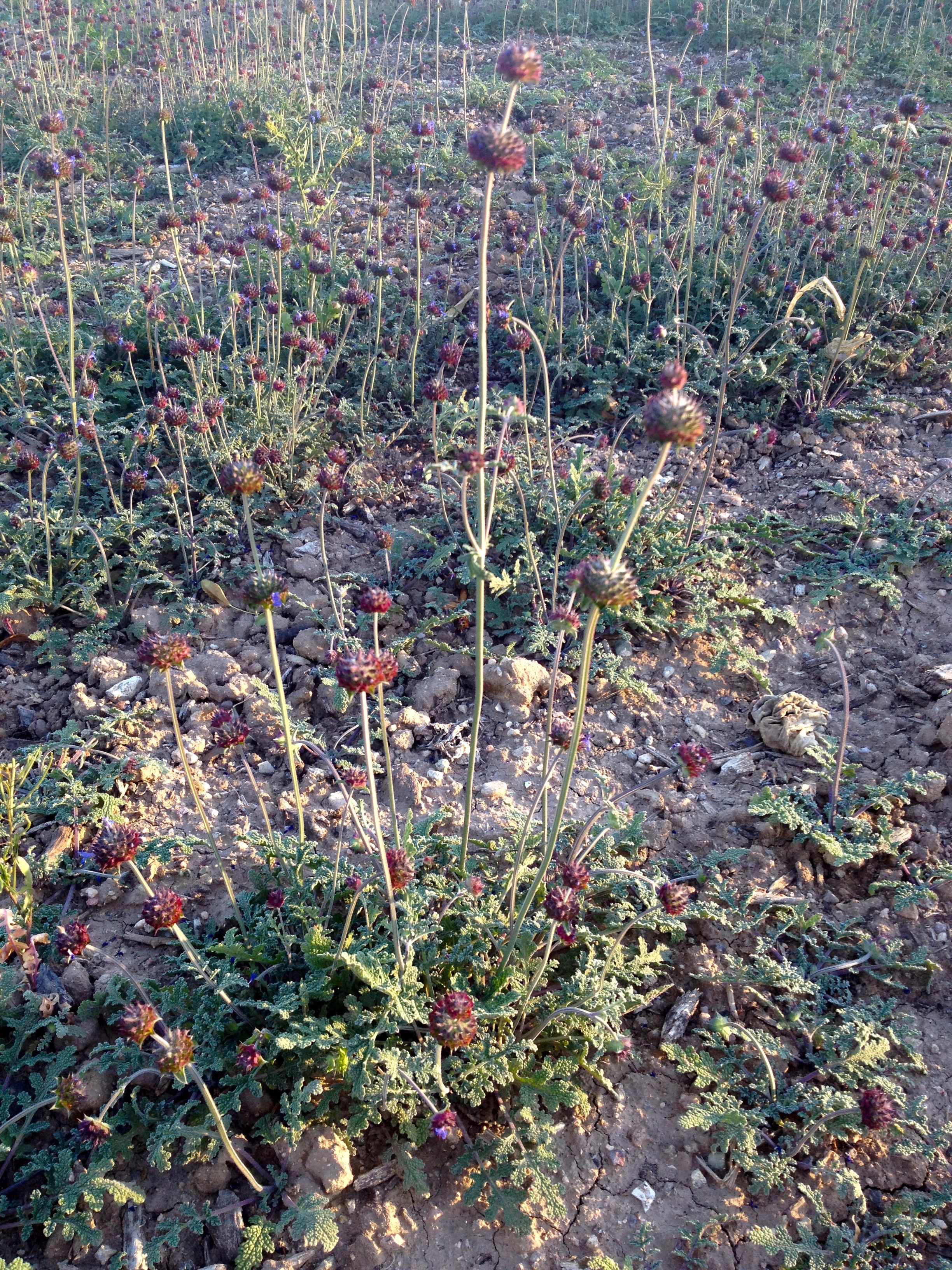
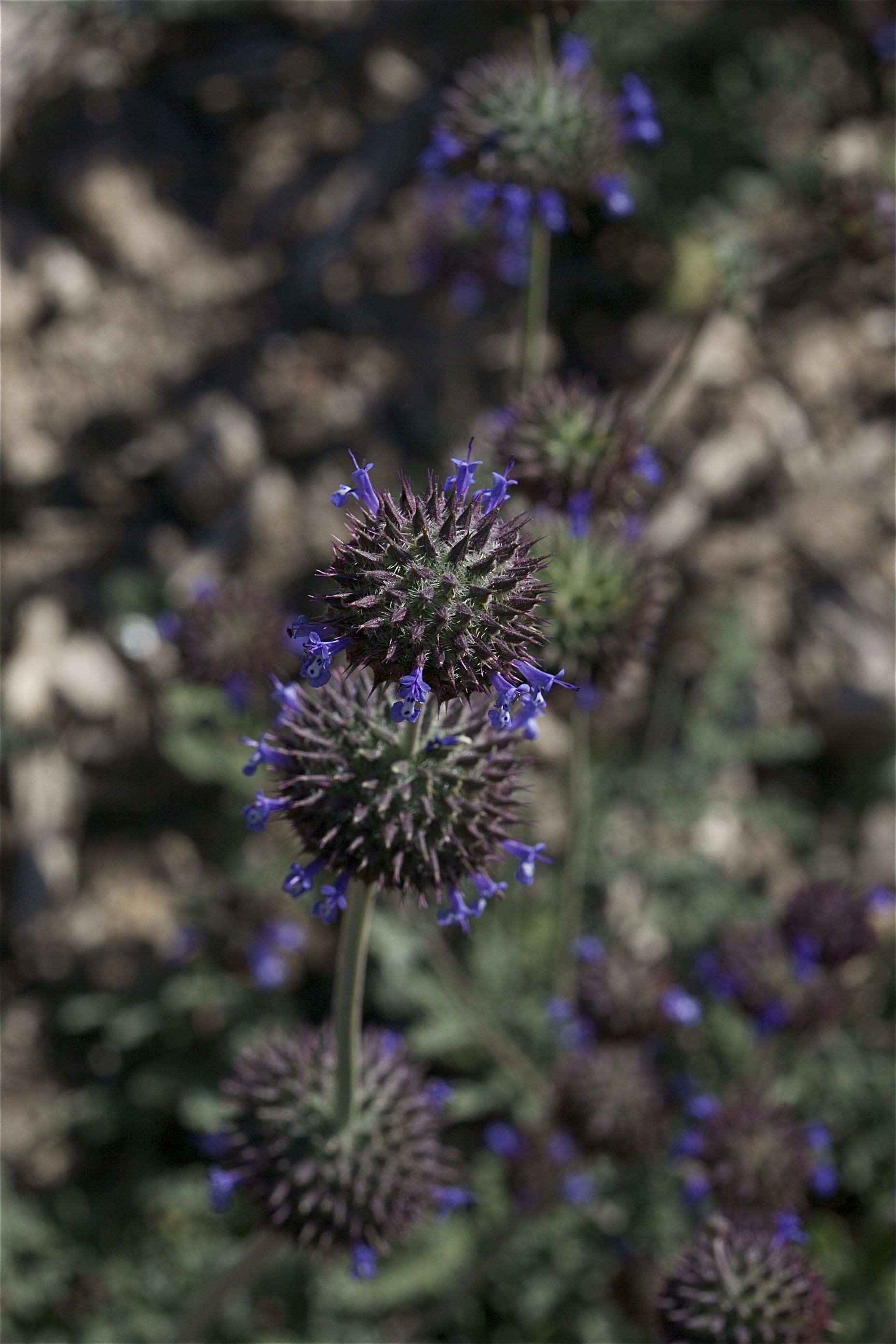
Balls of spiny seedheads climb the square stems of these mint-family wonders, as long as moisture lasts.

Balls of spiny seedheads climb the square stems of these mint-family wonders, as long as cool moisture lasts. (MABurgess photo)


Close-up of desert chia in flower--note the sphere of tiny flowers (JRMondt photo)

Close-up of desert chia in flower–note the sphere of tiny flowers (JRMondt photo)

Check out the Plant Sale THIS WEEKEND–March 11-13–at the NativeSeeds/SEARCH store, 3061 N Campbell Ave, Tucson, for starts of several spring ephemerals–maybe even chia.  There is still time to get them planted to enjoy their color and later their seeds.

And, take a walk up any arroyo–Yetman Trail or King Canyon in the Tucson Mountains, Pima Canyon or Finger Rock Canyon into the Catalinas, or trails in Catalina State Park–for a chance to see a patch of desert chia in bloom.

Double desert chia seedhead (JRMondt photo)

Double desert chia seedhead (JRMondt photo)

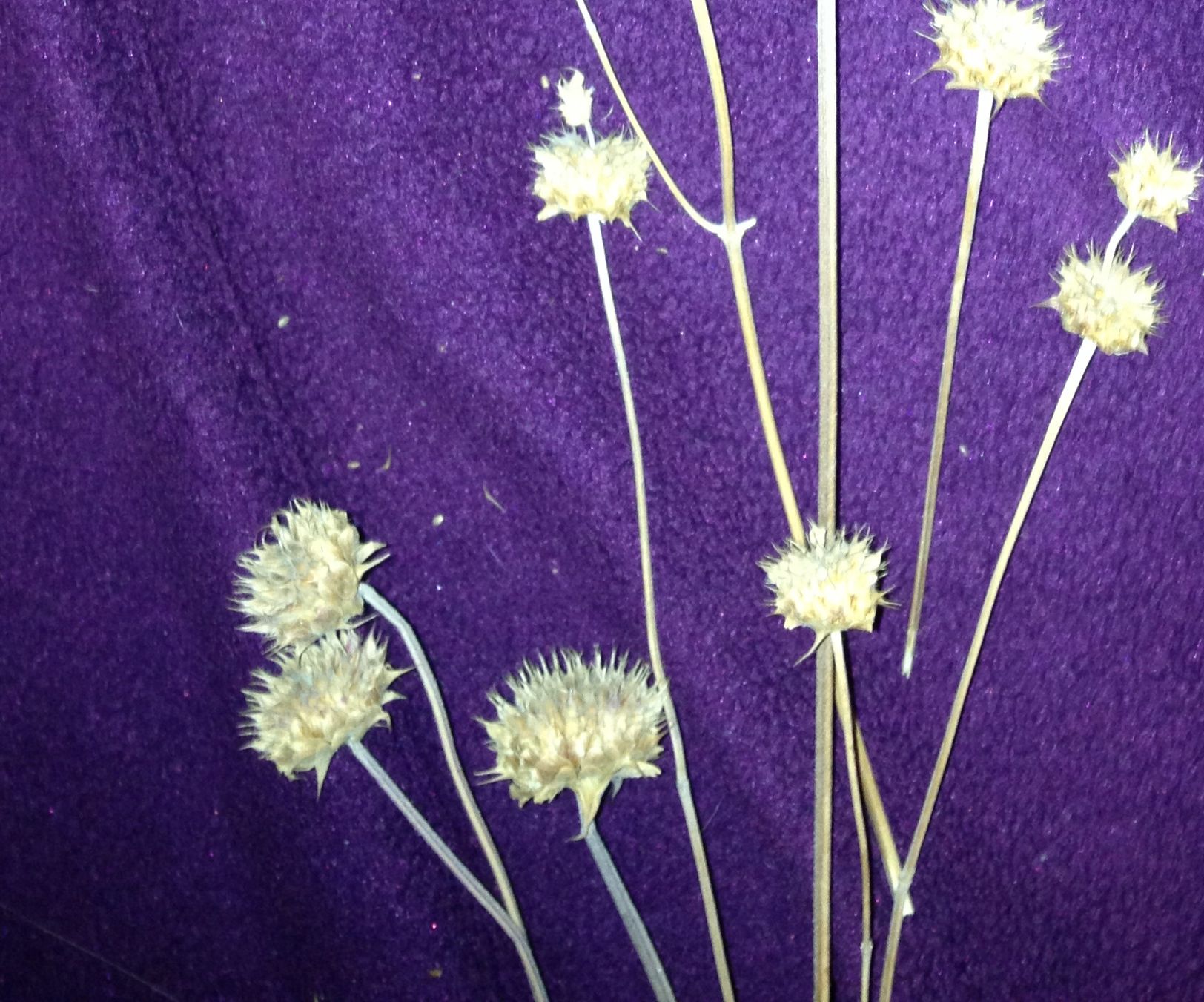
About April and May, when the days are getting hot and dry, return to your patch of chia to find straw-colored spiny balls dancing on slender dry stalks, usually calf-high, sometimes knee-high, or, after a wet winter/spring, perhaps thigh-high.  Try to find them just after they dry before the breeze has battered them and scattered their seed.  With a strong paper sack (or a canvas bag that you can wash later to soften the spiny bracts that will get stuck in the fabric), gather the seedheads and crush them.  Bare hands or soft-gloved hands BEWARE!  Best to use leather gloves for gathering seedheads.


Dry stalks and spiny seed heads of desert chia (MABurgess photo)

Dry stalks and spiny seedheads of desert chia (MABurgess photo)

In earlier times, Native Peoples may have used baskets shaped like combs to pass through patches of chia seedheads to gather many at a time.  There are records of Cocopa and Chemehuevi people of the Colorado Desert storing large ollas full of chia seed.  When you see how tiny the seeds are and realize how much work it is to harvest an olla of chia seed, the time and effort must have been astounding–but they KNEW how important this food is!  When chia was ready, the whole village had to be out there gathering, making the most of the short window of opportunity.

The nutrition of chia–both our native desert chia and the Aztec chia, Salvia hispanicum–is way up there among the super-foods.  Packed in the tiny seeds is a big percentage of omega-3 fatty acids.  In addition, chia contains complex carbs which give lots of sustained energy, like slow-release fertilizer–a great food for athletes.  These same carbs balance blood sugar, providing a gift to hypoglycemics or diabetics.

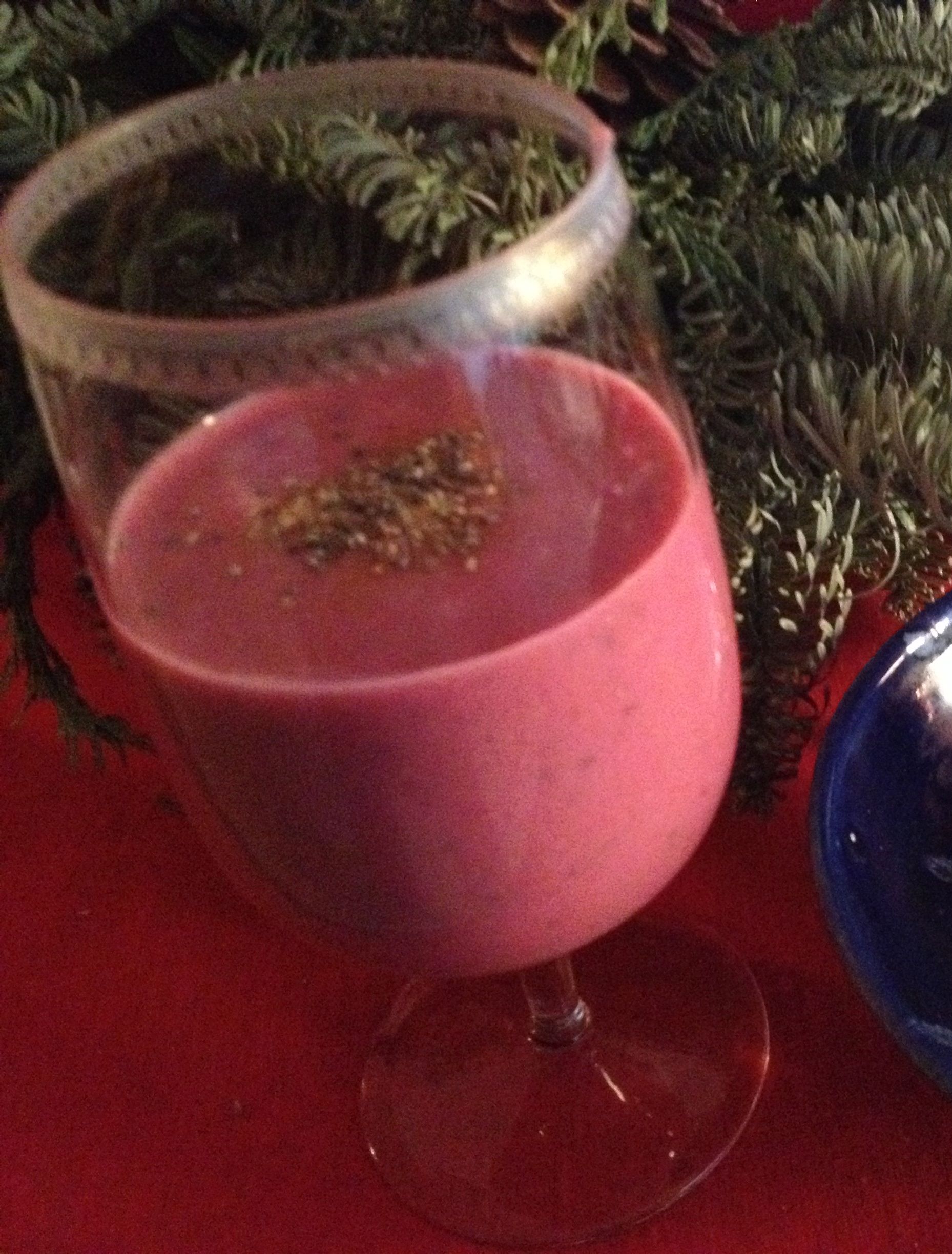
Taste the glorious nutrition of a chia-mesquite-berry smoothie! (MABurgess photo)

Taste the glorious nutrition of a chia-mesquite-berry smoothie! (MABurgess photo)

Chia Mesquite Berry Smoothie Recipe

1 Tbsp chia seed, and a pinch for garnish

1 cup apple or cranberry juice

2 tsp mesquite meal (optional, and delicious)

1 cup frozen blueberries or raspberries (or other favorite berry)

1 cup vanilla yogurt (or 1 cup plain yogurt and 2 tsp agave nectar)

ice optional

Soak 1 T chia seed in a cup of apple juice or other fruit juice for 5-10 minutes.  Then combine all other ingredients in a blender.  Pulse until all ingredients are mixed. Pour into 2 big glasses, sprinkle top with a pinch of chia seed, and enjoy with a pal!


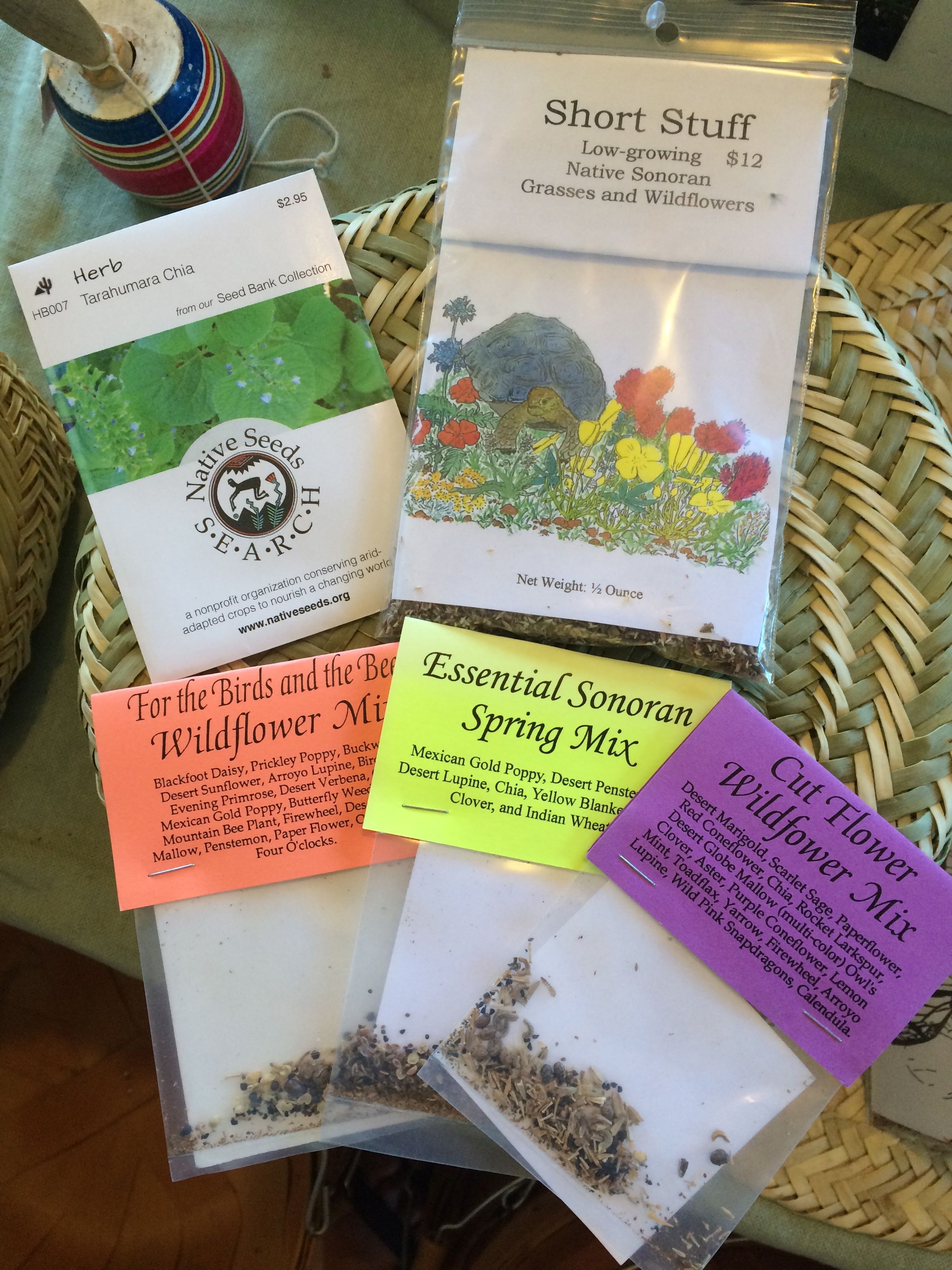
Tarahumara Chia and Desert Chia are available in seed packets and seed mixtures from NativeSeeds/SEARCH.

Tarahumara Chia and Desert Chia are available in seed packets and seed mixtures from NativeSeeds/SEARCH.

You can visit the NativeSeeds/SEARCH online catalog or visit the one-of-a-kind store on North Campbell Avenue to find the right seeds for your garden.  They have Tarahumara chia, the one made famous by the Raramuri native runners of the Sierra Madre.  NSS also has every wildflower mix containing desert chia, for spring garden showiness or benefits to wildlife.  Come by the Flor de Mayo booth at StPhilips Farmers Market for ideas for using chia and a pinch to try for yourself.  For learning more about seed saving, try a class at NativeSeeds/SEARCH.

The gifts of chia–from the visual and olfactory, to the culinary and the medicinal–are many, and even magical.  We can participate in spreading their wealth of beauty and benefit by planting and harvesting, saving their seeds and passing them along with hope and intent….

Glorious Garlic Chives

MICHO Mts near Uruzpan 6 Aug 90 050

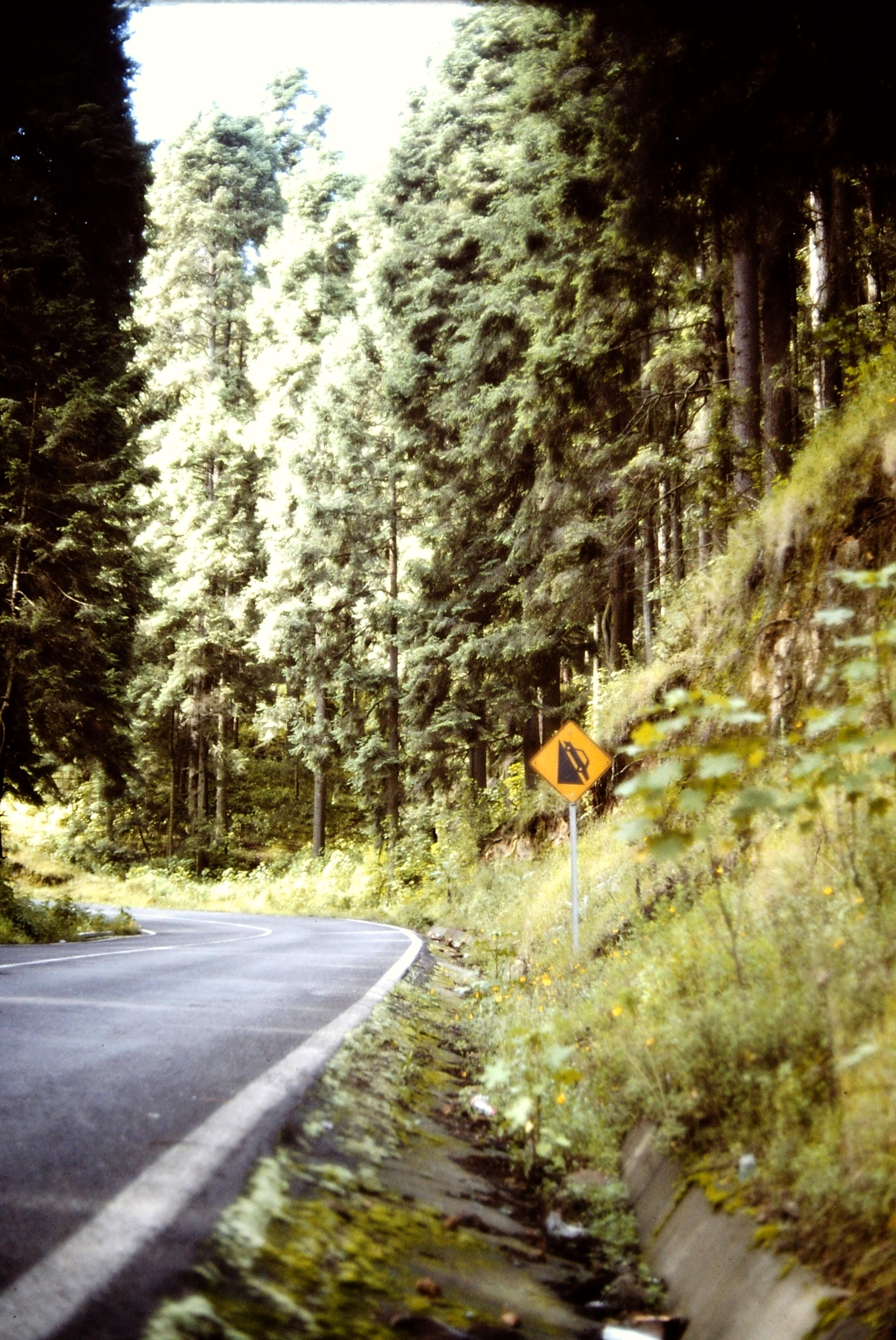
The mountains of Michoacan in 1990. That road sign is only a slight exaggeration.

Jacqueline Soule this week with a charming and easy-to-grow herb – garlic chives.  This herb offers a dish the hint of garlic and the fresh crispness of scallions. 

The first time I ate garlic chives that I know of was chopped and sprinkled on my soft tacos at a little roadside food stop in a forgotten town in Michoacan. The woman serving us was so taken with my questions about the plant that she sent her son scurrying home to dig up some bulbs to give me. Since I was on a plant collecting trip I had all the permits I needed to legally bring the bulbs back to the USA with me.  These tough perennials have been surviving in my gardens in various USDA zones and even indoors in pots for the next 30 plus years.

Allium tuberosum AMAP IMG_4640

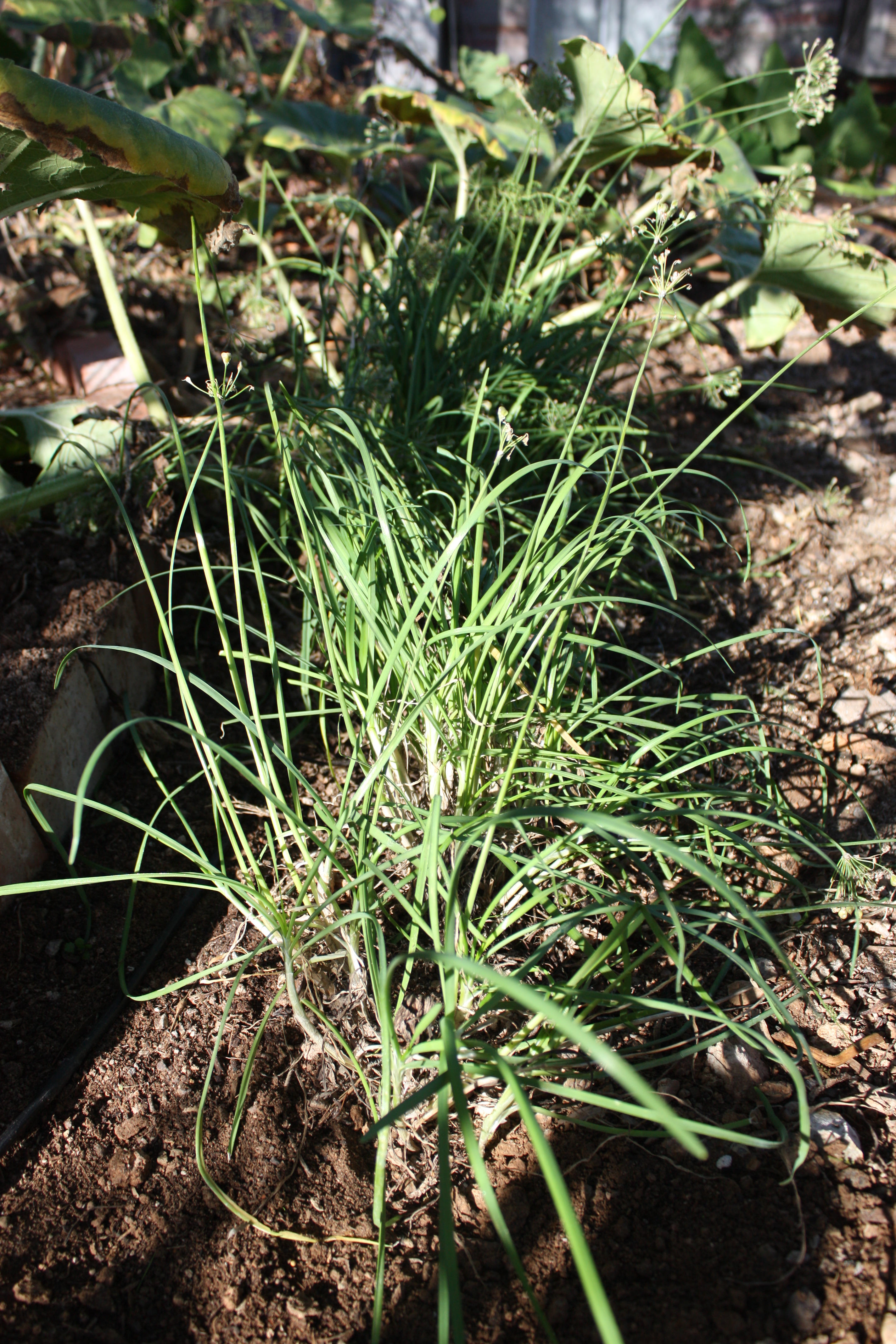
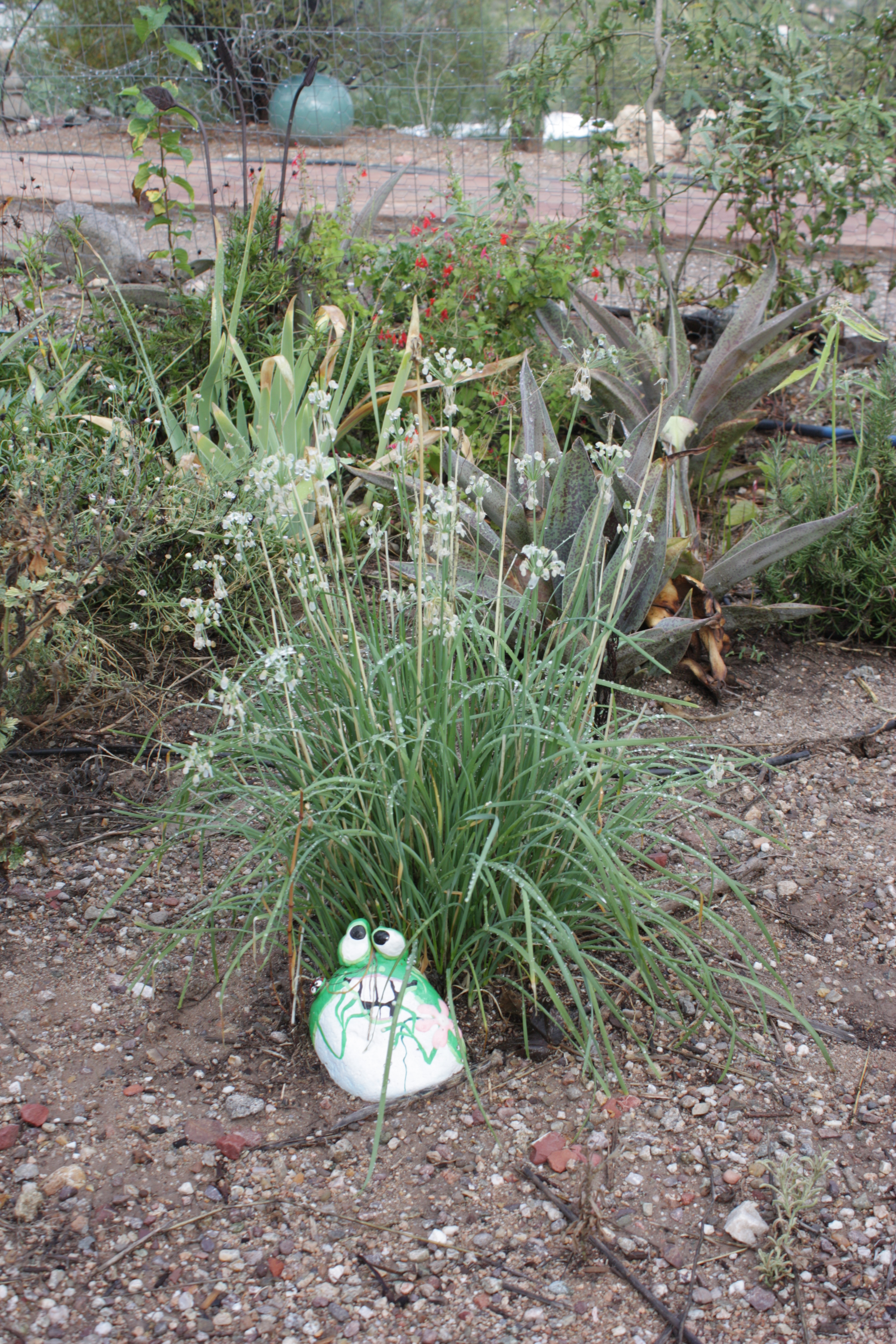
Garlic chives are tough plants that survive with little extra water and taste great.

Garlic chives (Allium tuberosum) make a graceful green statement in the landscape, are low water users, and bloom in September and October with a fireworks-like burst of white bloom on a tall stalk held above the grassy green leaves.

Allium tuberosum AMAP c_4763

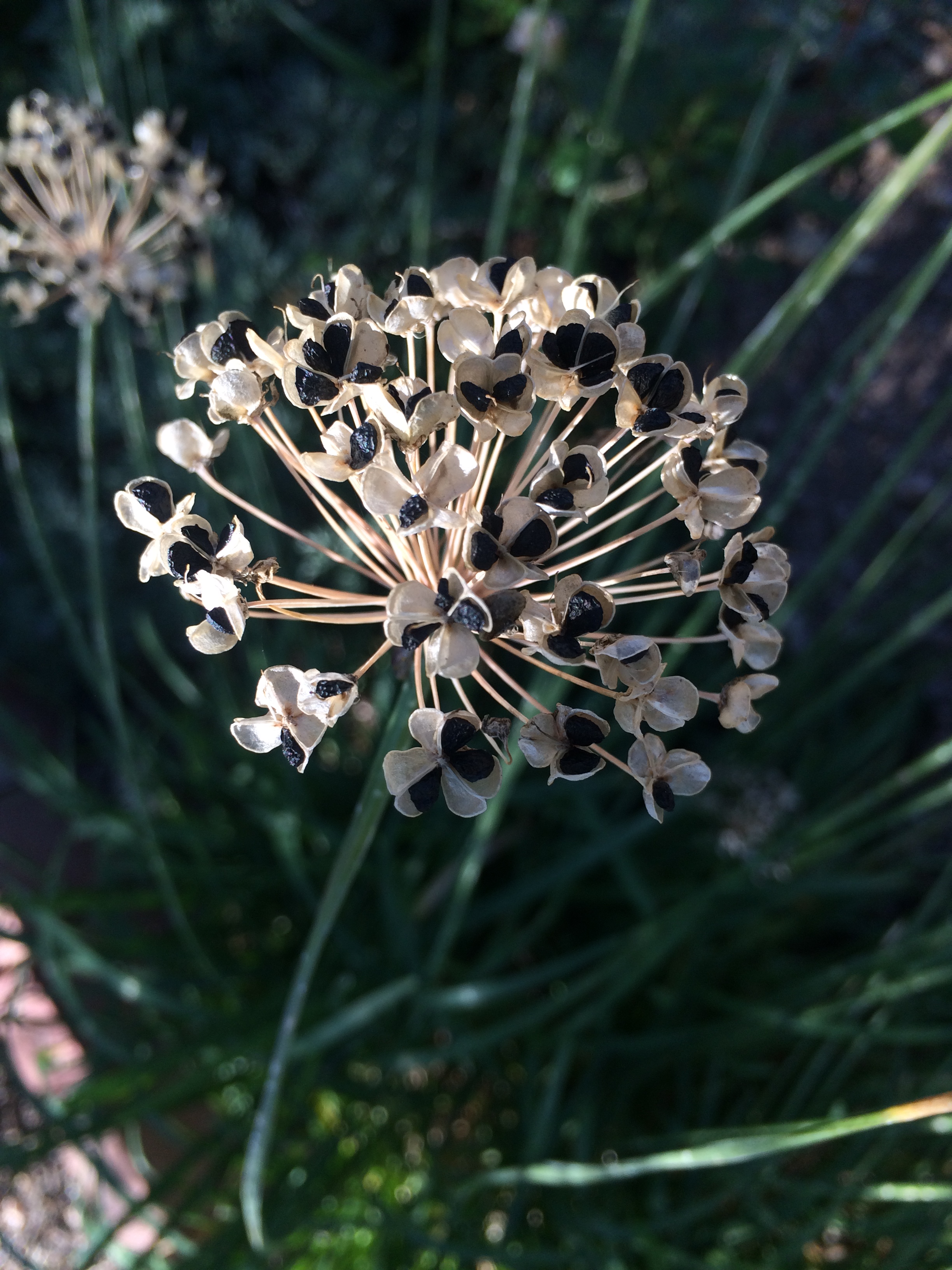
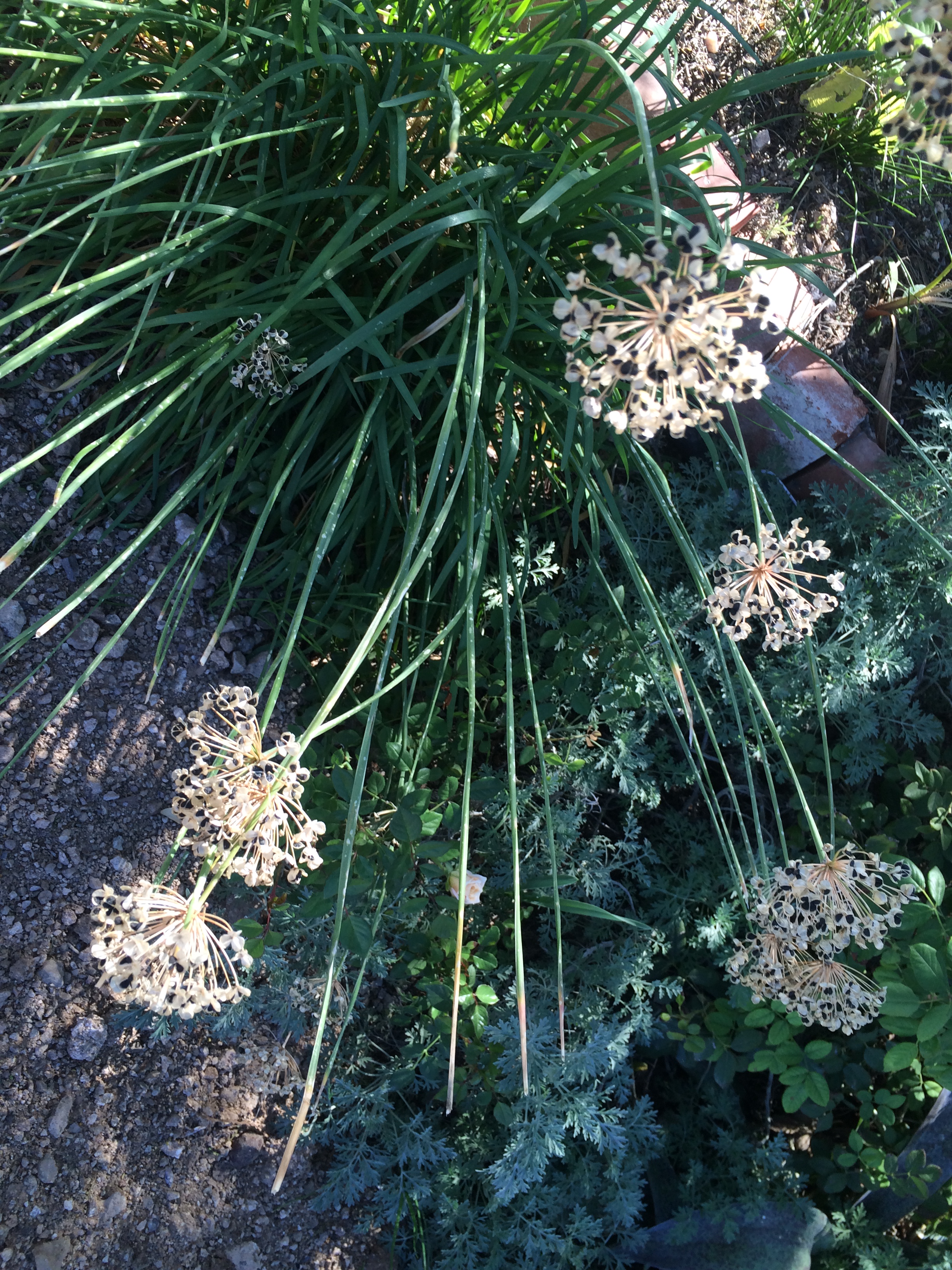
Blooms are white, followed by easy to harvest seed heads.

Originally from the Mongolian steppes, plants tolerate our alkaline soils and thrive in zones 10 to 4. Despite the tuberous name, the part you eat are the leaves. Harvest anytime to add raw or cooked to any dish where you desire a mild garlic flavor.

Allium tuberosum AMAP c_4761

Garlic chives are equally edible when vegetative, in bloom or in seed – quite unlike many other herbs.

Use garlic chive leaves how you would use scallions. We like them in stir-fry and omelets, or just a few to give zing to salad. They are also great in soup, even in simple soup made to hydrate and warm on a cool winter day.

Plant grow readily from seed, and can spread through the garden, appearing in watered areas. It is easily removed if it comes up where you don’t want it. If you are trying to eat only plants that are in season, these are always in season! Garlic chives great addition to the garden, even if you never plan to eat any.

Allium tuberosum AMAP IMG_4590

No matter what your garden style, garlic chives can fit right in.

JAS avatarIf you wish tips on gardening in the Southwest, please visit my facebook page Gardening With Soule.  If you live in Southeastern Arizona, please come to one of my lectures. Look for me at your local Pima County Library branch, Tumacacori (Fruits & Herbs of the Old Missions, 12:30, Thursday February 4th, 2016), Steam Pump Ranch, Tubac Presidio, Tucson Festival of Books and other venues. After each event I will be signing copies of my books, including the latest, “Southwest Fruit and Vegetable Gardening,” written for Arizona, Nevada and New Mexico (Cool Springs Press, $23).

© This article and these photos are copyright by Jacqueline A. Soule. All rights reserved. Republishing an entire blog post or article is prohibited without permission. I receive many requests to reprint my work. My policy is that you may use a short excerpt but you must give proper credit to the author, and must include a link back to the original post on our site. Photos may not be used.

Farmers’ Market Sources for Warming Body and Soul, Baking and Gifting

Autumn harvest from the NativeSeeds/ SEARCH Conservation Farm in Patagonia, AZ-heirloom Navajo banana squash

Autumn harvest from the NativeSeeds/ SEARCH Conservation Farm in Patagonia, AZ–heirloom Navajo banana squash (MABurgess photo)

What makes Tucson an International City of Gastronomy?  It is not only that we are blessed with amazingly creative chefs–like the ones showcased at the Mission Garden Picnic feast.  It’s also the availability of rare and wonderful heirloom foods that are adapted to our particular Baja Arizona climate, soil, and cultures!  Few other places have the flavorful and nutritious diversity of crops that have been part of our Baja Arizona agricultural landscape for about 4000 years. 

Tia Marta here to share ideas for finding the raw materials for some great slow-food feasting this Winter Solstice season.

OPEN NSS NAVAJO BANANA SQUASH FOR AN EXPLOSION OF BETA-CAROTENES!

OPEN NSS NAVAJO BANANA SQUASH FOR AN EXPLOSION OF BETA-CAROTENES!

Ignored, more than maligned, by present-day dominant cultures, the squash is a gift to menu-inventors.  It can be prepared as a savory dish with good old salt/pepper/butter, or fancied up with moles.  Or it can be made into fabulous desserts.  Use it in place of sweet potato for a genteel variation.  My favorite is to make it into a festive “Kentucky Pudding”.

Muff’s “Kentucky Pudding” Dessert Recipe

4 cups steamed or baked heirloom Navajo banana squash (or other heirloom) mashed or pureed

2-4 Tbsp mesquite honey or agave nectar (to taste)

2-3 Tbsp chopped crystallized ginger root (I found it at Trader Joe’s)

1/2 cup chopped walnuts or pecans or pine nuts

1/4 cup good bourbon whiskey

Steam or bake squash ahead.  (You can freeze it for using later in a variety of recipes–it’s so convenient!0  In a saucepan, heat mashed squash on medium.  Add honey, ginger, nutmeats.  When hot and steamy, stir in the bourbon quickly and serve with a flair.  You could even try flambé. Serves 4-6.

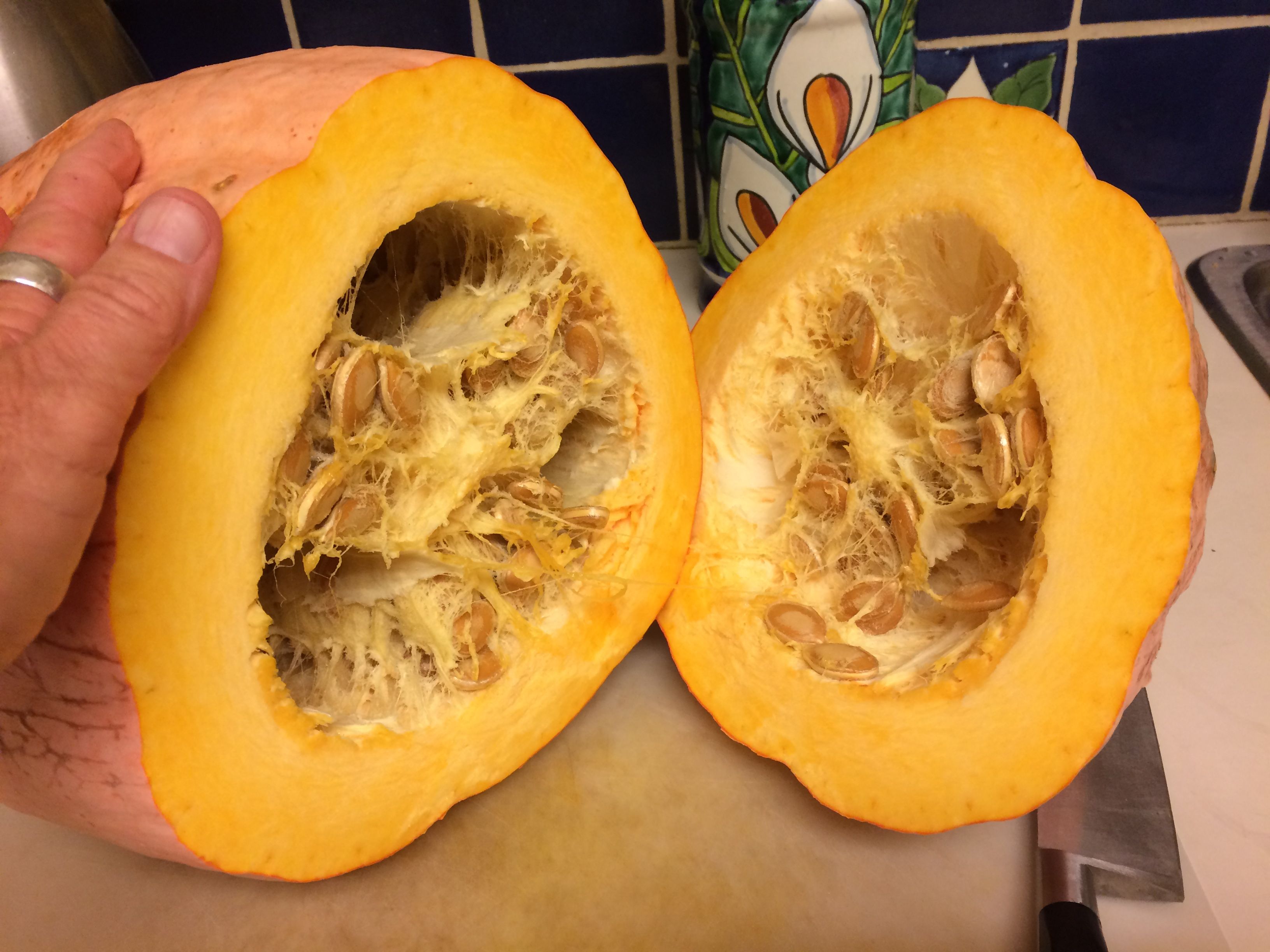
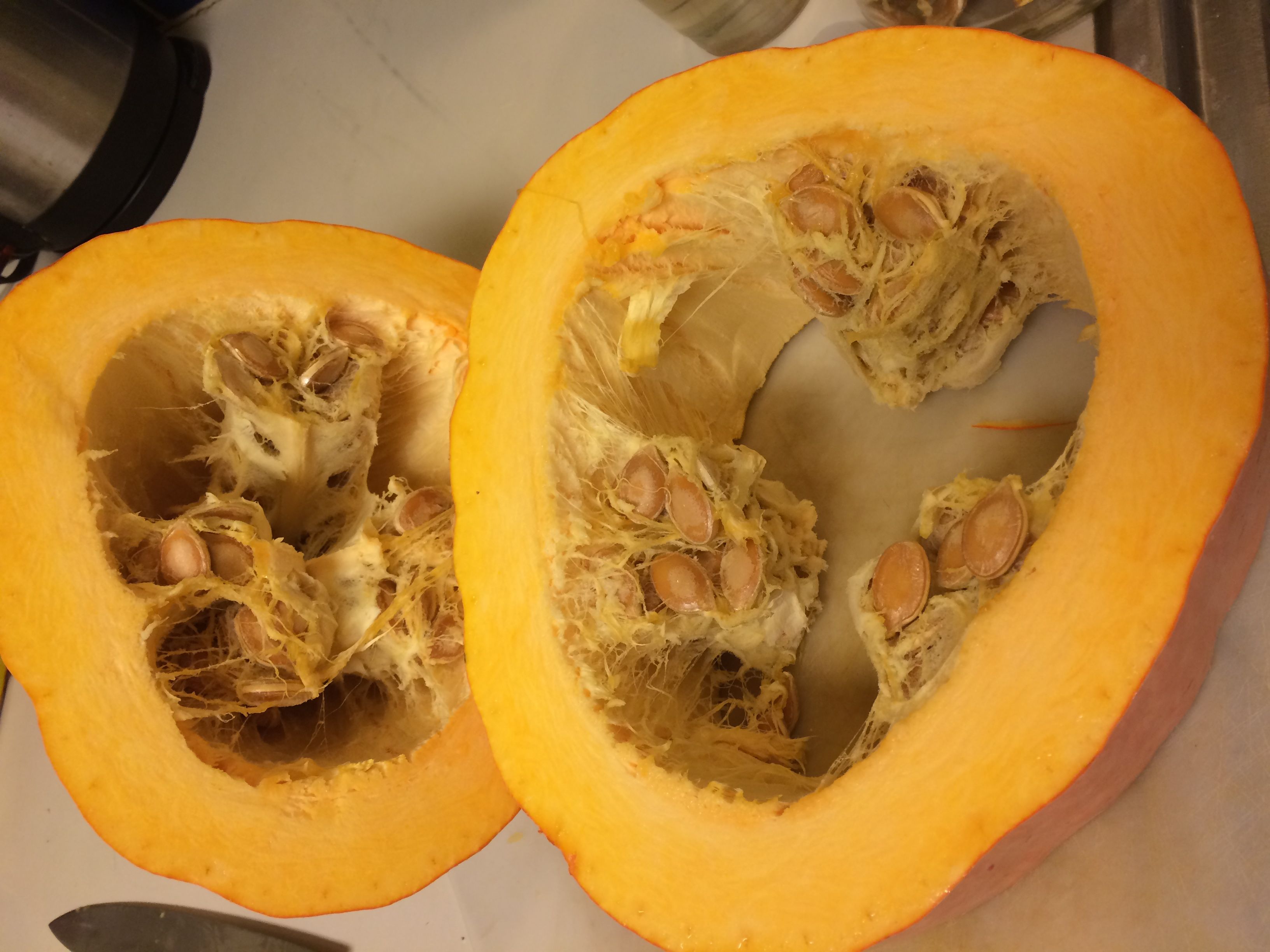
Navajo banana squash showing its interesting pattern of seeds inside

Navajo banana squash showing its interesting pattern of seeds inside

These luscious heirloom squashes, grown at NativeSeeds/SEARCH’s Seed Conservation Farm in Patagonia, are available now at our Flor de Mayo booth at Sunday’s St Philips Farmers’ Market.  Come see the size of them–one of them could feed the whole extended family or a small tribe!  We will be selling them by the smaller family-sized chunk as well.  Start salivating…  If you are seeking Vitamin A in glorious beta-carotenes, this is the food to find.

And don’t forget those giant seeds inside!  They can be roasted easily with a little olive oil and sea salt and voila you have a healthy snack full of zinc to ward off colds in this chilly season.  You can save a handful of those seeds to plant next summer in your garden and keep the gift growing.

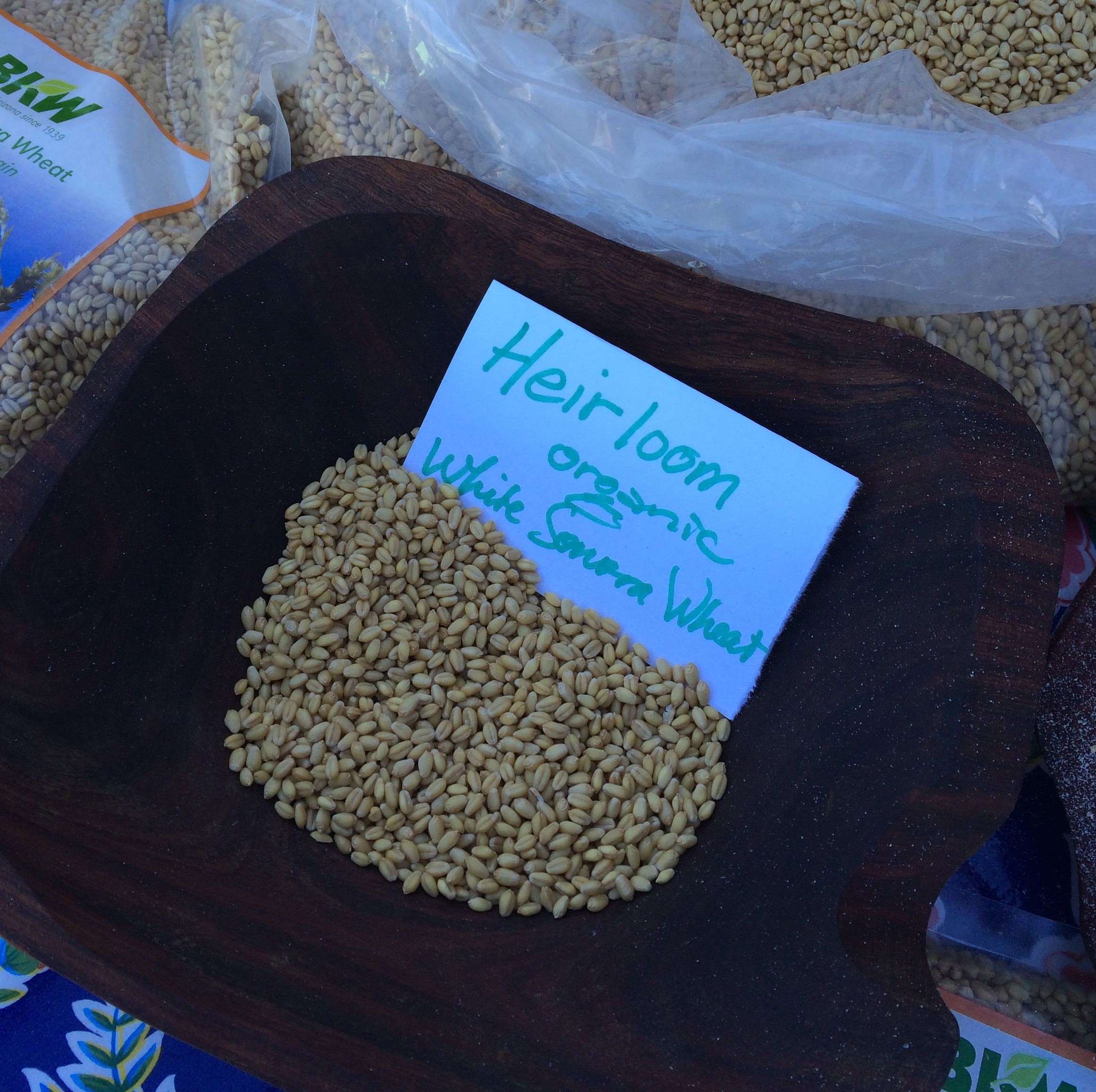
Heirloom organic locally grown White Sonora Wheat-berries

Heirloom organic locally grown White Sonora Wheat-berries

And here are some ideas about baking with local heirloom grains….  Get out your VitaMix or your hand-mill and get ready for a real treat–home-baked goodies made with fresh-milled flour from whole heirloom grains.  Find these precious ancient grains at the NativeSeeds/SEARCH Store (3061 N Campbell near Prep and Pastry) and at the Flor de Mayo booth–Sunday St Philips Food-In-Root Market.

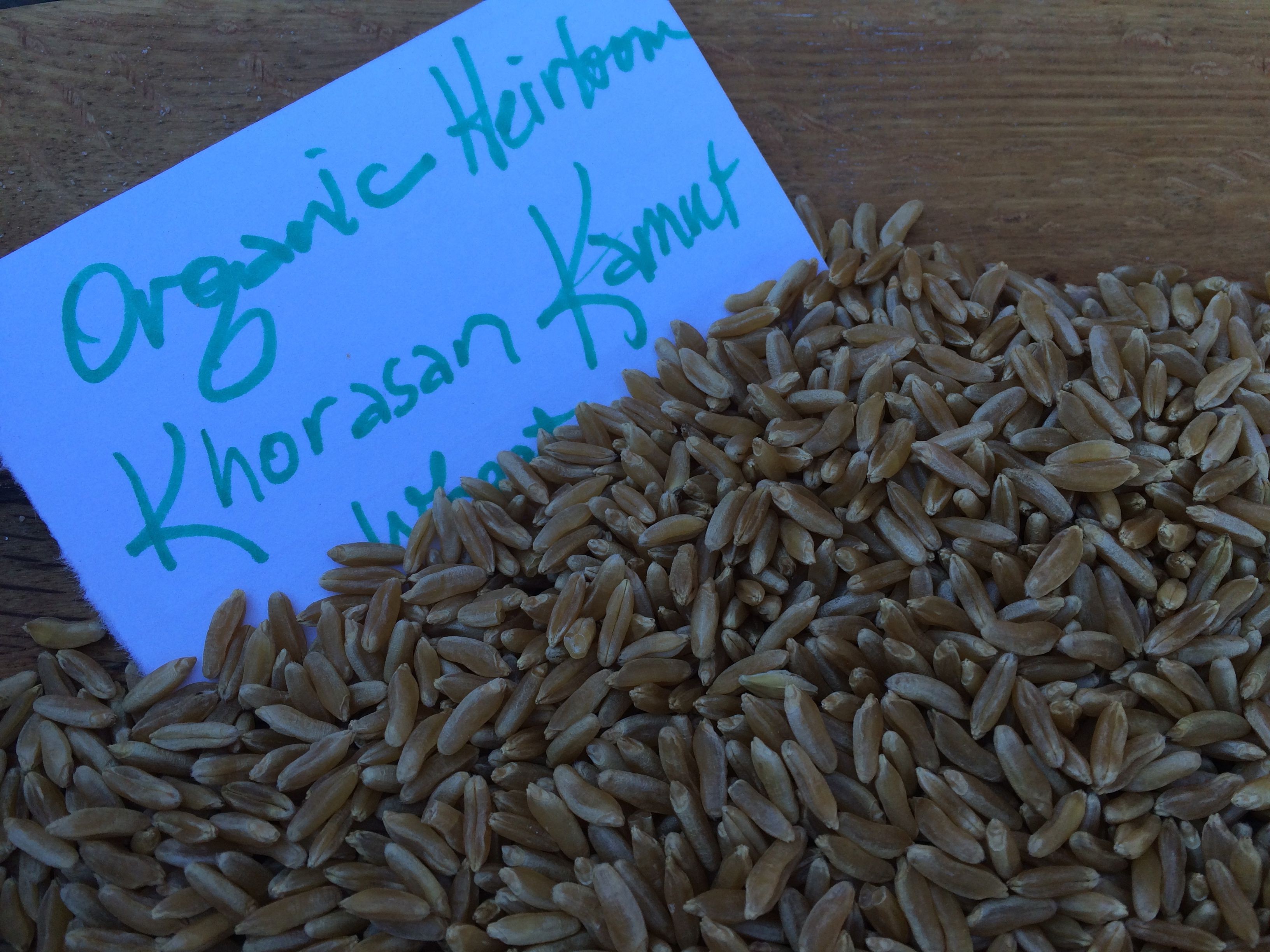
Organic Khorasan Kamut wheat--great for bread baking

Organic Khorasan Kamut wheat–great for bread baking

If you don’t want to take the time, or if you don’t have milling equipment, no problem!  Just come by our Flor de Mayo farmers market booth and see your special grain being fresh-milled before your very eyes.  It is especially neat for kids to see where flour comes from.  Surprisingly, many an adult has difficulty making the connection with grain and flour.  The beauty and significance of keeping the grain whole until milling is that the grain is ALIVE!  When used fresh-milled within a few days of milling, the beneficial enzymes–the “life force” in the whole kernel–are still active in the flour.  And the taste of freshly-milled flour is a whole new flavor-ballgame.

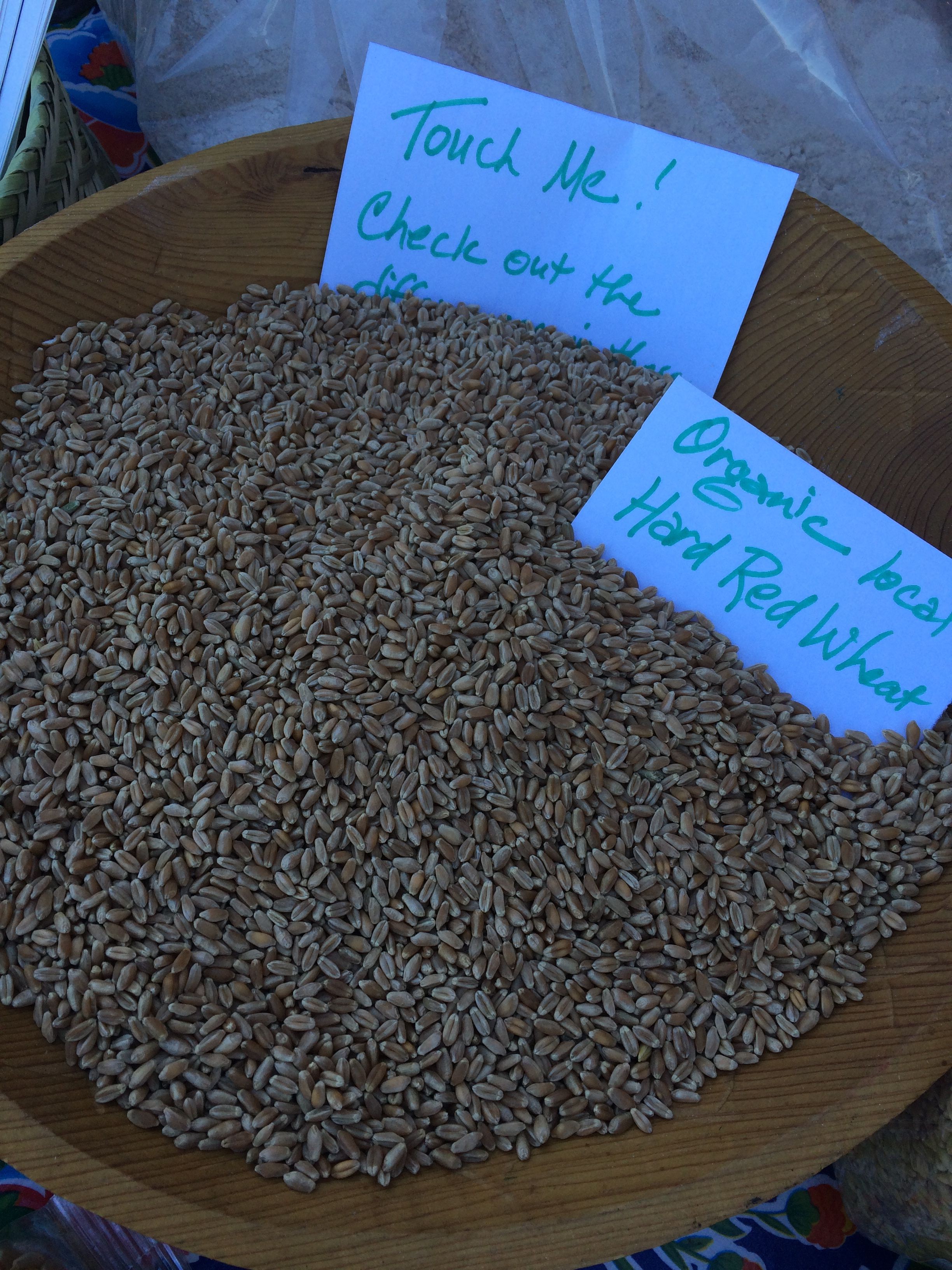
Organic hard red wheat--perfect for Christmas cookies and cakes

Organic hard red wheat–perfect for Christmas cookies and cakes

Come actually touch our good organic grains!   Feel their liveliness.  We have recipe ideas to share, like our Baja Arizona White Sonora Wheat flour and Mesquite pie crust.  In addition we can recommend lots delicious whole wheat-berry recipes for Padre Kino’s white Sonora wheat grown locally by BKWFarms or the Pima club wheat grown by San Xavier Farm Coop and Ramona Farms.

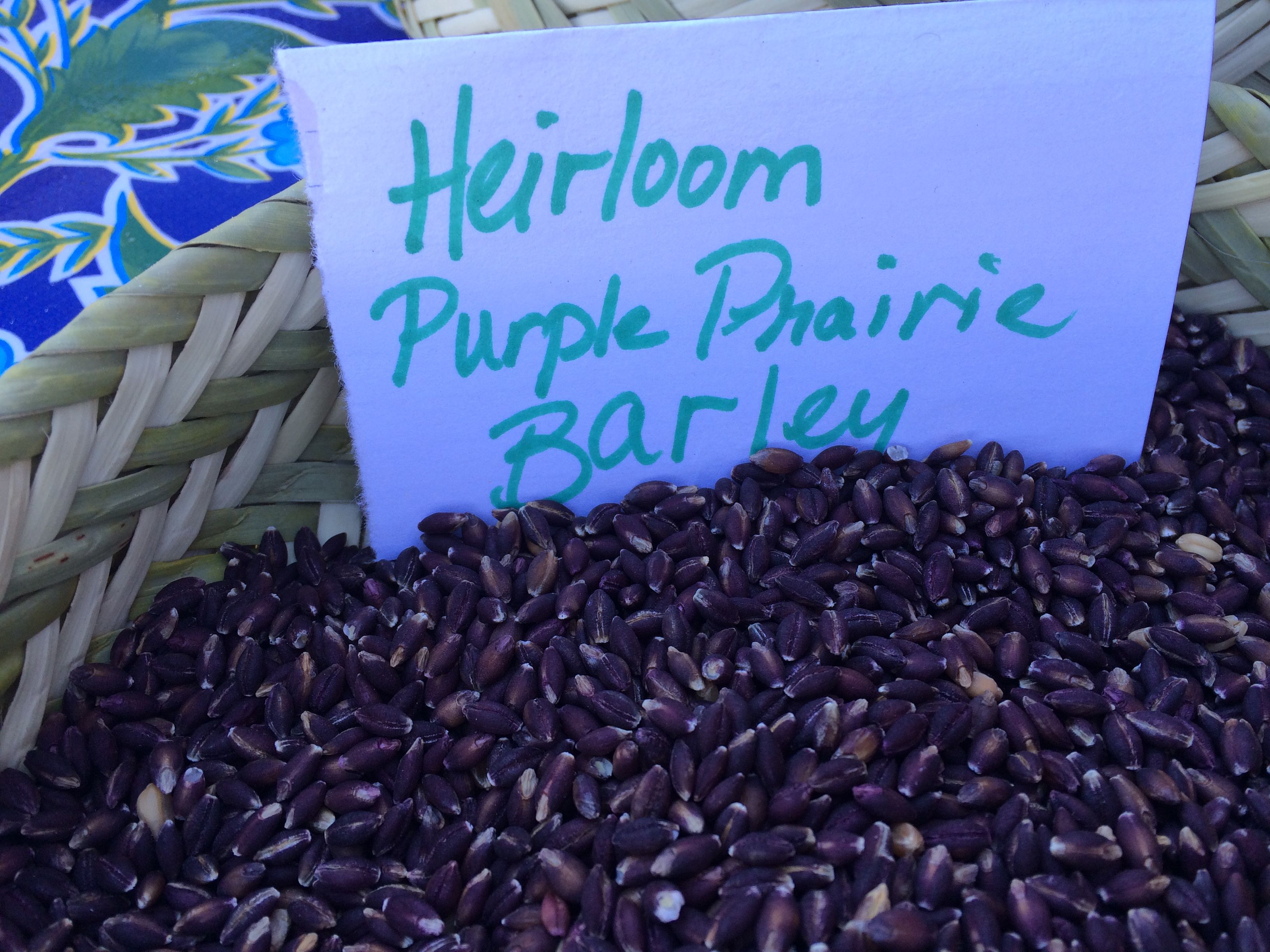
For a completely new experience, try baking with a purple grain!–our heirloom Purple Prairie Barley.  Barley flour has the lowest glycemic index of all the grain flours hence helping to balance blood sugar.  It has a rich flavor that can enhance any bread or biscuit recipe.  The purple color indicates a high anthocyanin content– an important antioxidant.  When you cook the purple barley as a whole grain, you can use it in pilafs and marinated grain salads the way you might use rice or quinoa.  Combined with rice it makes a colorful high-contrast pilaf.  (I’d be happy to elaborate in another post.)

Beautiful purple prairie barley--an heirloom originally from Tibet

Beautiful purple prairie barley–an heirloom originally from Tibet–full of the healthful flavonoid anthocyanin

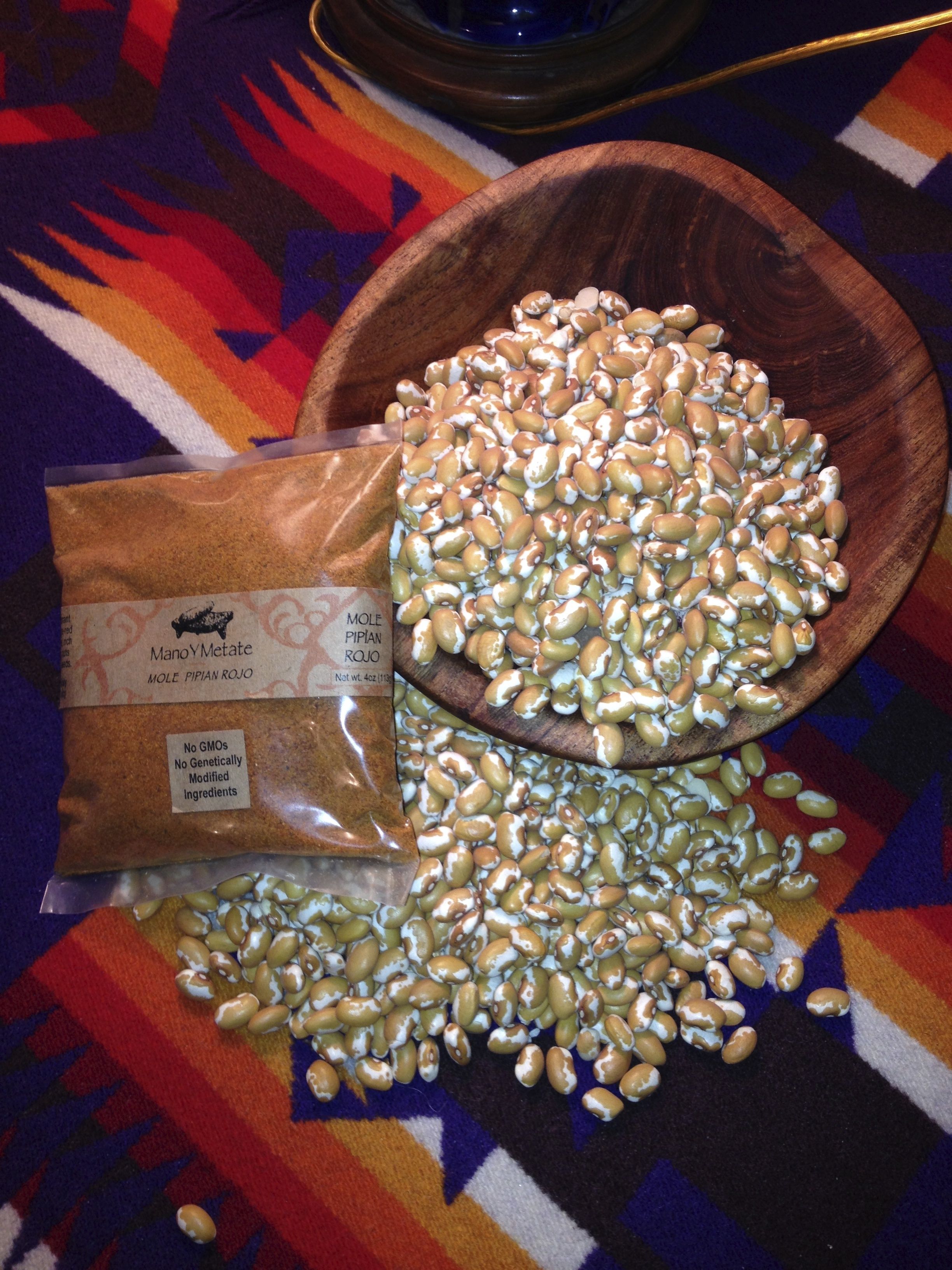
Try using Mano y Metate's Pipian Rojo Mole as a vegetarian spice for these Zuni Gold beans!

Try using Mano y Metate’s Pipian Rojo Mole as a vegetarian spice for these Zuni Gold beans!

Tis the season also to rejoice in the indigenous beans that have supported Native cultures for unknown centuries.

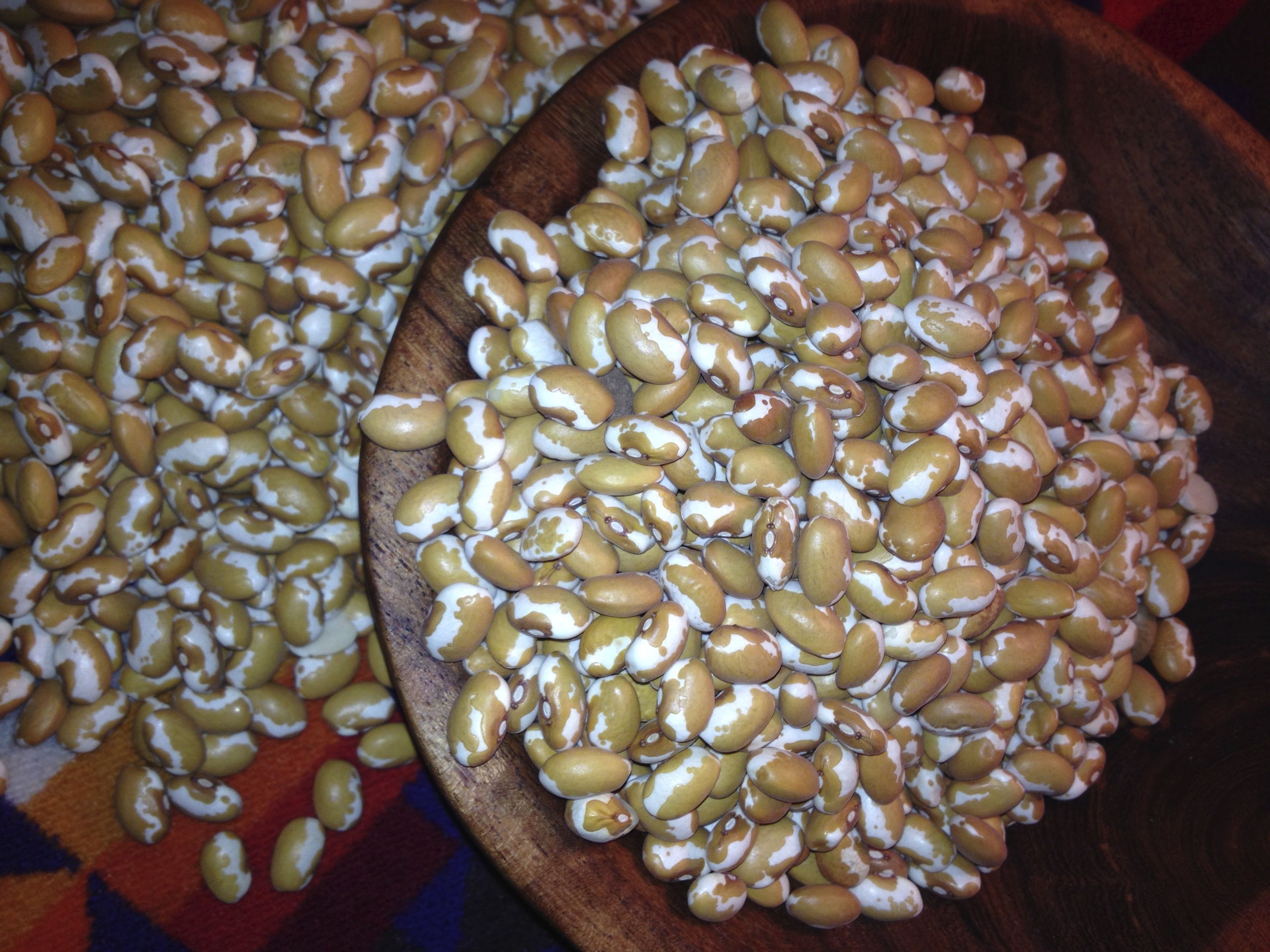
Beautiful Zuni Gold beans--used traditionally in the Winter Solstice celebration

Beautiful Zuni Gold beans–used traditionally in the Winter Solstice celebration

Heirloom beans are full of protein, full of flavor, and so versatile.  I like to cook up a big pot of these golden Solstice beans and then freeze them in serving sizes to prepare later in a variety of fun ways–as chile beans, as dips, in burritos, as hummus, and of course heart-warming bean soup–the list goes on… Come get inspired at our Flor de Mayo table when you see the biodiversity of beans spread before you!

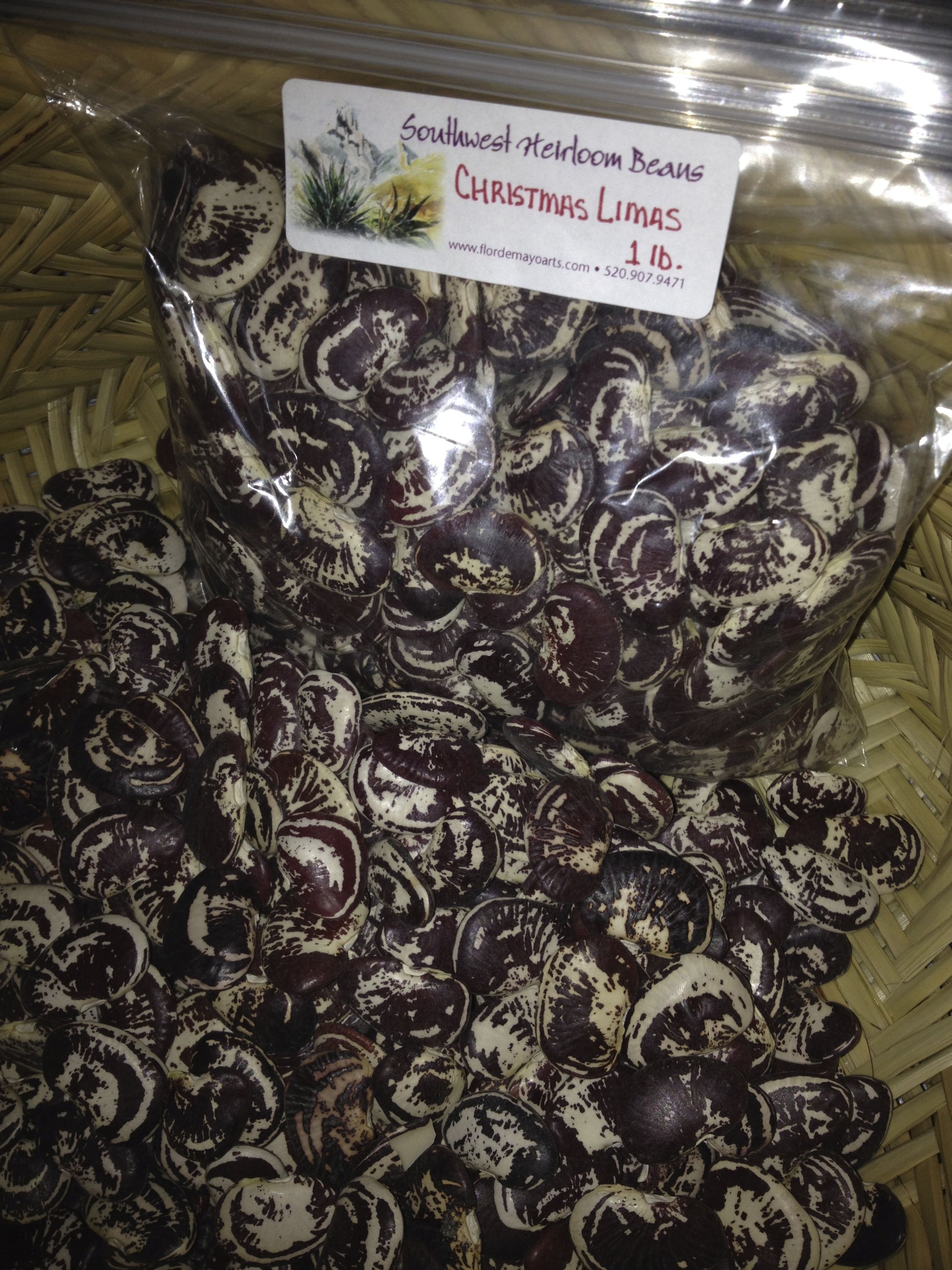
Delectable Christmas Limas can be prepared as vegetarian centerpiece dishes to honor the season!

Delectable Christmas Limas can be prepared as vegetarian centerpiece dishes to honor the season!

The most festive heirloom bean of the holiday season is the colorful Christmas Lima (AKA Chestnut Lima) so called because of the timing when it is harvested.  (Check out past blog posts for some great recipes.)  We have even had jewelry-makers buy this bean to string as fetish-style necklaces.

Calling creative gift-givers!  Join us at the Sunday St Philips Farmers Market for some meaningful, local, healthful and tasty gifts that say “Baja Arizona” in the most delightful way.

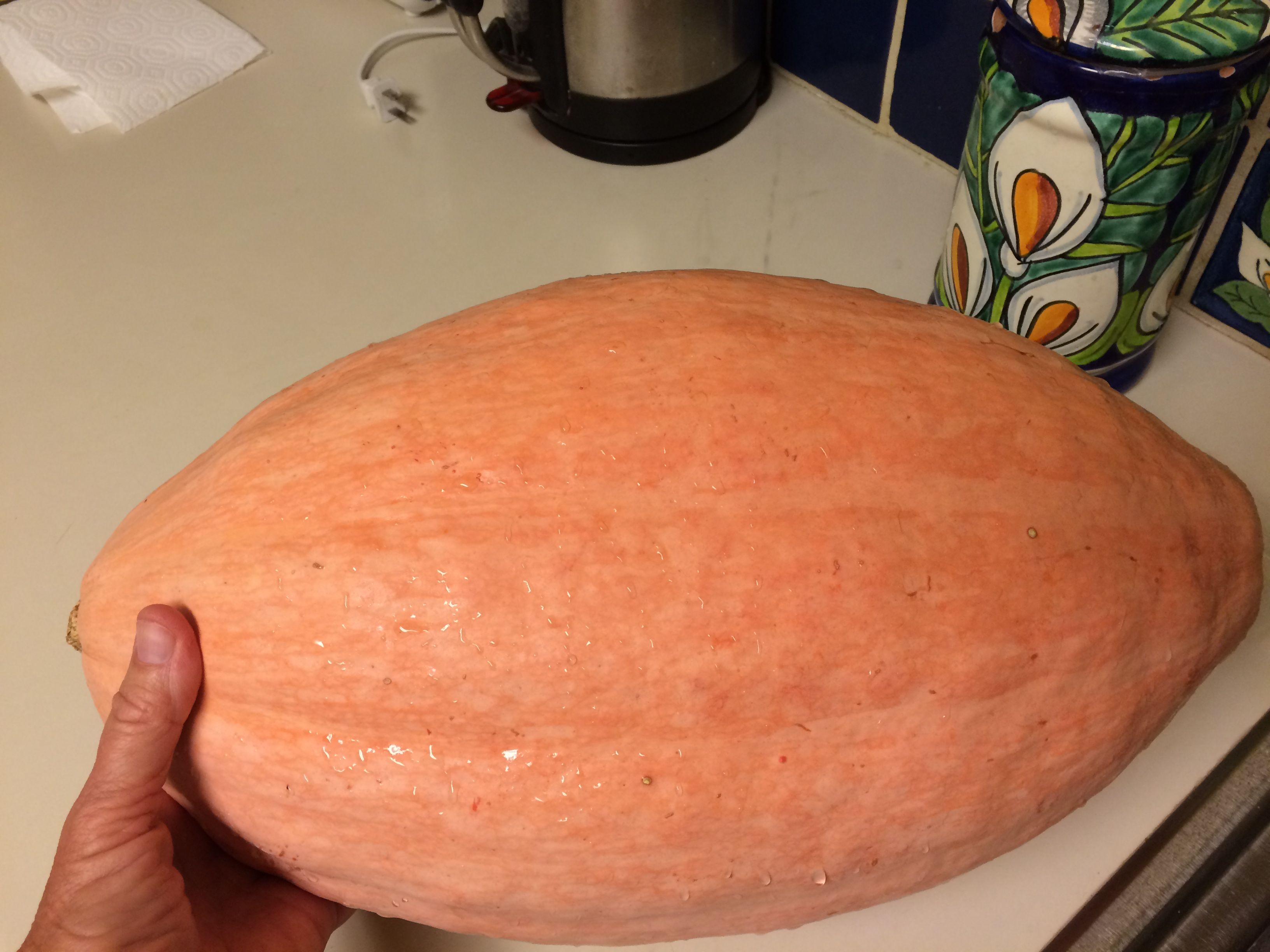
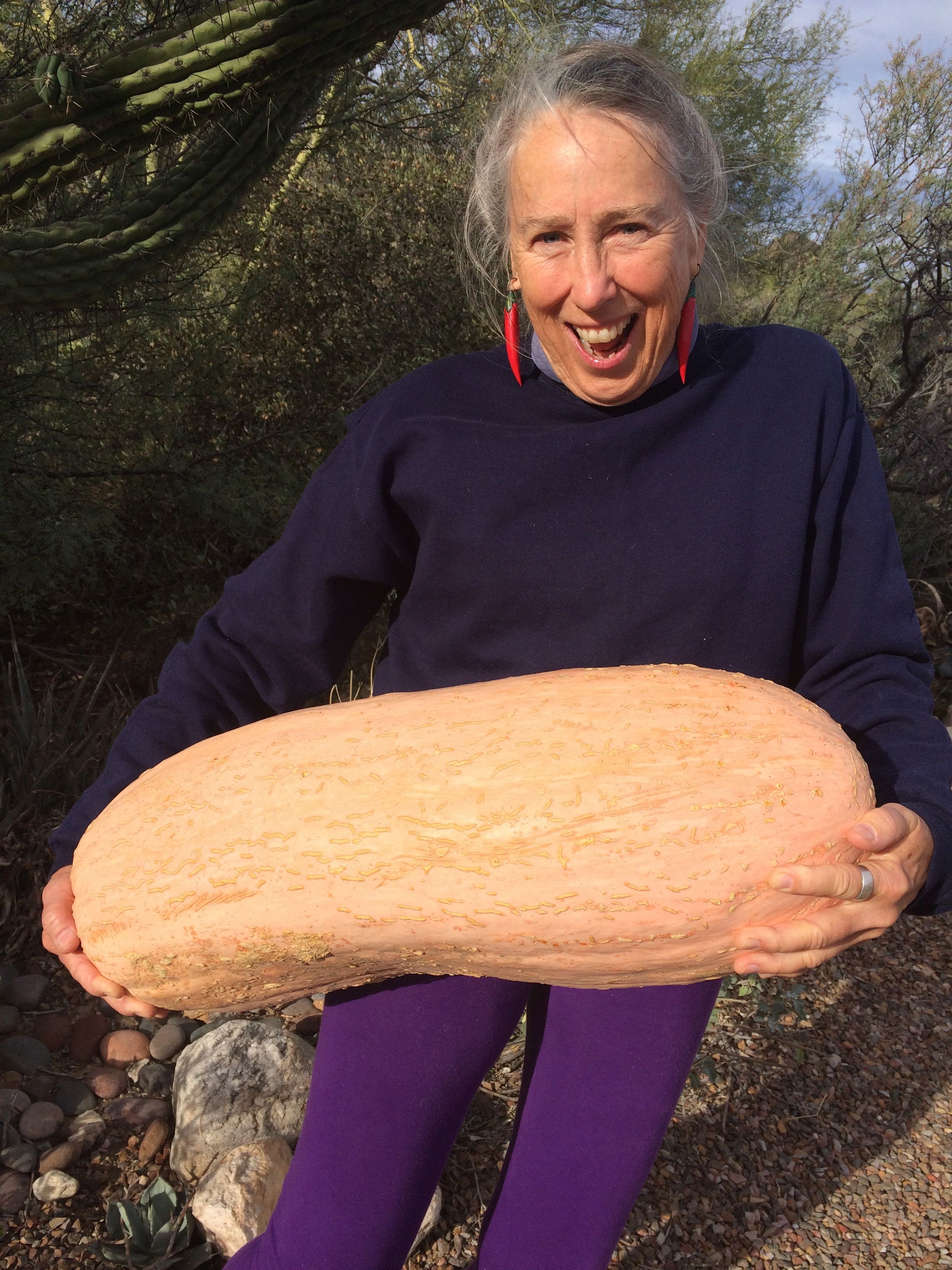
Just for scale, Tia Mart hefts this heirloom Navajo squash. Who needs a workout center if you are a gardener or farmer?

Just for scale, Tia Marta hefts this heirloom Navajo squash. Who needs a workout center if you are a gardener or farmer?

May you have happiness, health, peace in your hearts, and good cheer this holiday season –greetings from Rod and Tia Marta at Flor de Mayo!