Sonoran Summer Tacos with Nopales and Verdolagas

It’s Carolyn today and I’m out in my garden to pick some delicious and healthy vegetables to bring you a season-spanning recipe. If your Ficus Indica prickly pear (the Mexican tall kind) sent out its leaves a little late this spring, you probably have a few smaller pads that are still tender enough to cook. Combine those with the purslane in your summer garden for a delicious vegetable side dish or taco filling.  If you don’t have your own cactus. you can always pick up some nopal pads at any Mexican grocery store. If you buy the kind already cleaned, you’ll need to use them right away as once they are scraped, they go bad quickly. We have previously discussed how to clean prickly pear pads here. 

We’ve also discussed purslane previously in this blog here, but I’ll copy the nutritional information because it is so important:

It’s sad but true that right now people are out in their yards pulling these plants out and tossing them in the garbage (or compost for the more enlightened). They should be tossing them in the wok  or frying pan (see recipe below.) Purslane provides six times more vitamin E than spinach and seven times more beta carotene than carrots. It’s also rich in vitamin C, magnesium, riboflavin, potassium and phosphorus. One cup of cooked purslane has 25 milligrams (20 percent of the recommended daily intake) of vitamin C.

Especially important to those of us eating a modern diet, purslane is very high in an essential omega-3 fatty acid called alpha-linolenic acid (ALA). Omega-3s are a class of polyunsaturated essential fatty acids. Your body cannot manufacture essential fatty acids, so you must get them from food. Certain fibers also help in controlling blood sugar.

If your aren’t familiar with purslane or verdolagas, here’s a closeup photo:

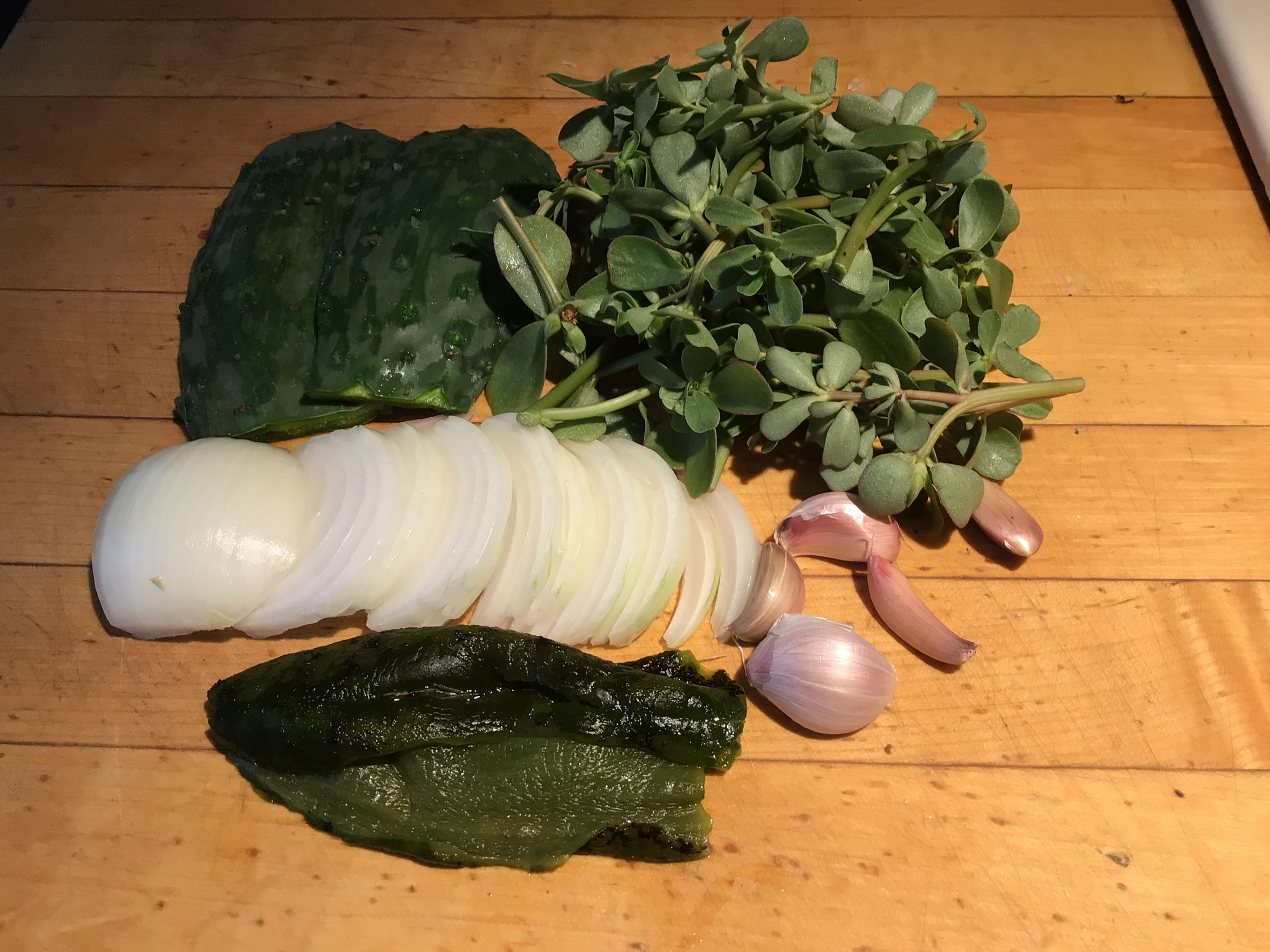
Here are all your ingredients for the tacos: (top) prickly pear leaves and purslane, (bottom) onion slices, garlic and poblano chile.
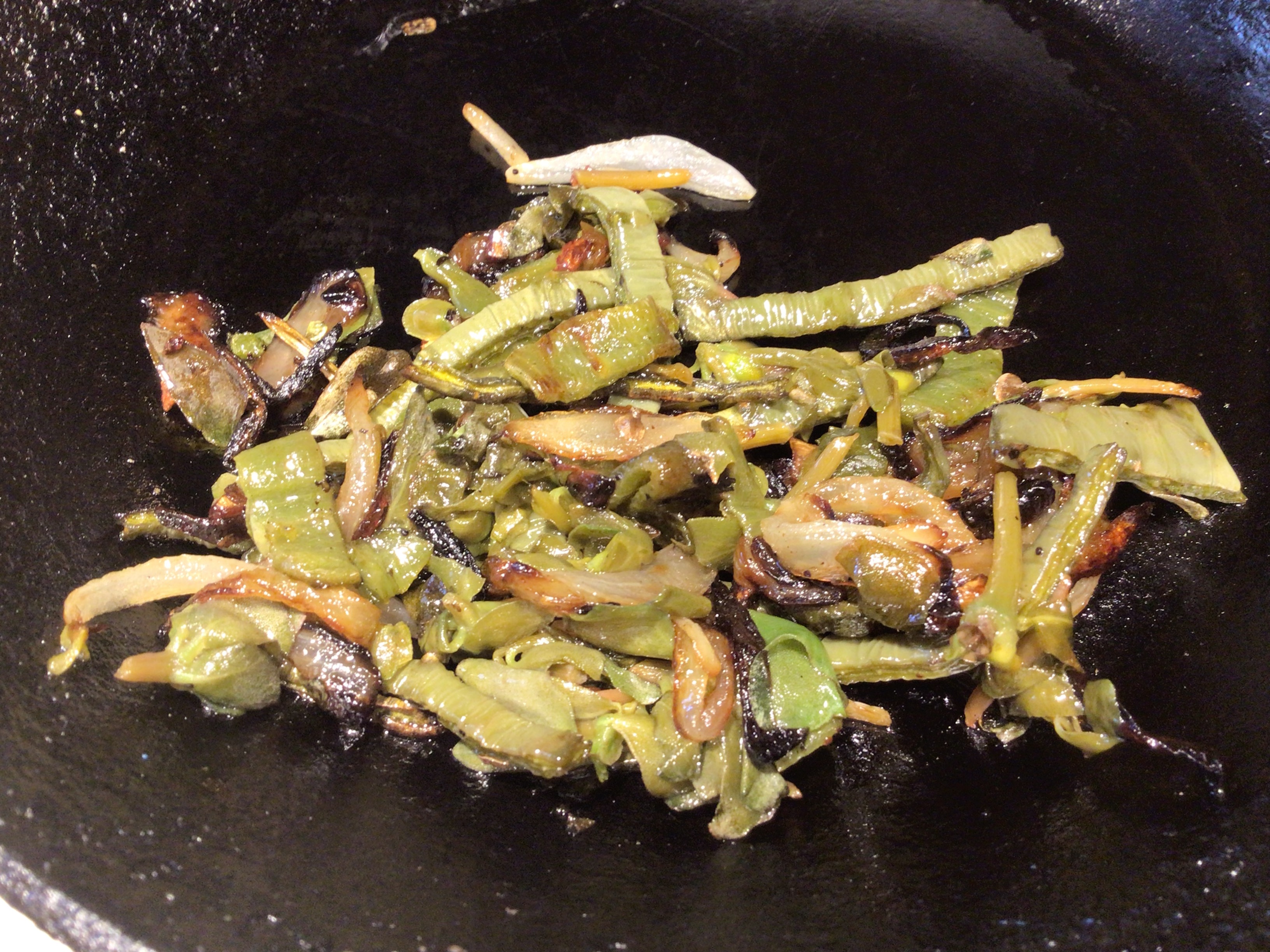

This is what the ingredients will look like cooked.

Sonoran Summer Tacos

2  2×4-inch prickly pear pads or equivalent

½ white or yellow onion

2 cloves garlic, minced (1 teaspoon)

2 tablespoons neutral vegetable oil

1 cup verdolaga (purslane), packed

1 roasted, peeled, cleaned Anaheim or poblano chile, cut into pieces

      (or 2 tablespoons chopped canned green chiles)

4 corn tortillas or small flour tortillas

2-4 tablespoons crumbled cotija cheese or cheese of choice

Using rubber gloves, clean the stickers from the prickly pear pads. Rinse and cut into pieces 2 inches by 1/8 inch (roughly the size of a wood matchstick.) Set aside.

Cut the onion into thin strands by cutting from the root to the stem (not crosswise). Add the oil to a heavy frying pan and begin sautéing the onion over low medium heat. You want it to cook slowly until soft and light brown. After about 10 minutes, add the garlic. While that is happening, you can prep the rest of the ingredients.

Cut the fresh chile into pieces about 1 inch by 1/8 inch. Chop the verdolagas (purslane) roughly. After 10-15 minutes when the onions are ready, stir in the greens and chile and continue to cook.

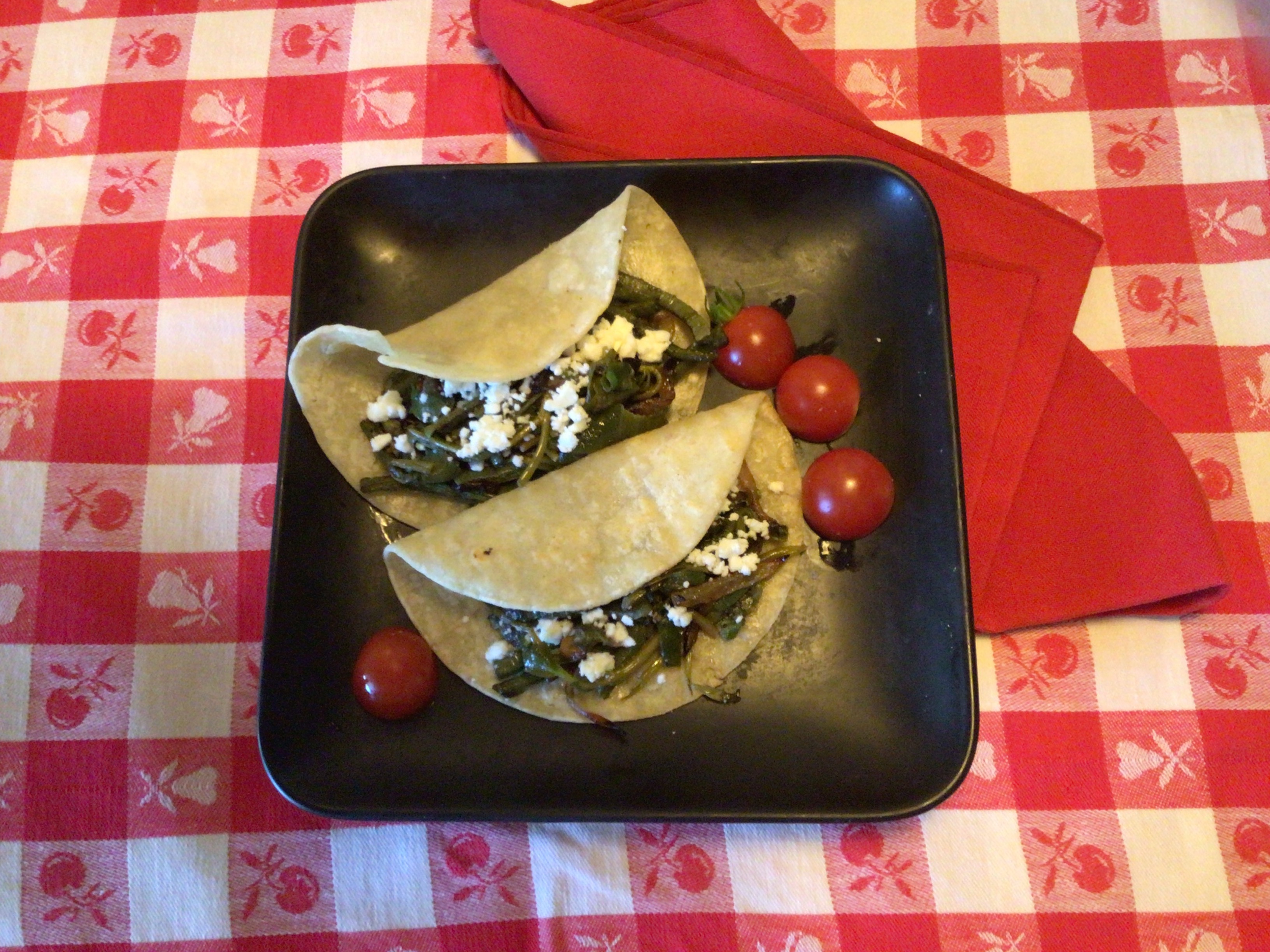
Coat a heavy frying pan with a light spray of oil and soften the tortillas. Divide the vegetables among the tortillas. Sprinkle with cheese and fold over.
Every recipe writer whether for a blog or cookbook, needs a taste tester. Is it good? Would you eat it again? Here is my taste tester who has eaten his way through five cookbooks and dozens of these blog posts over forty years.
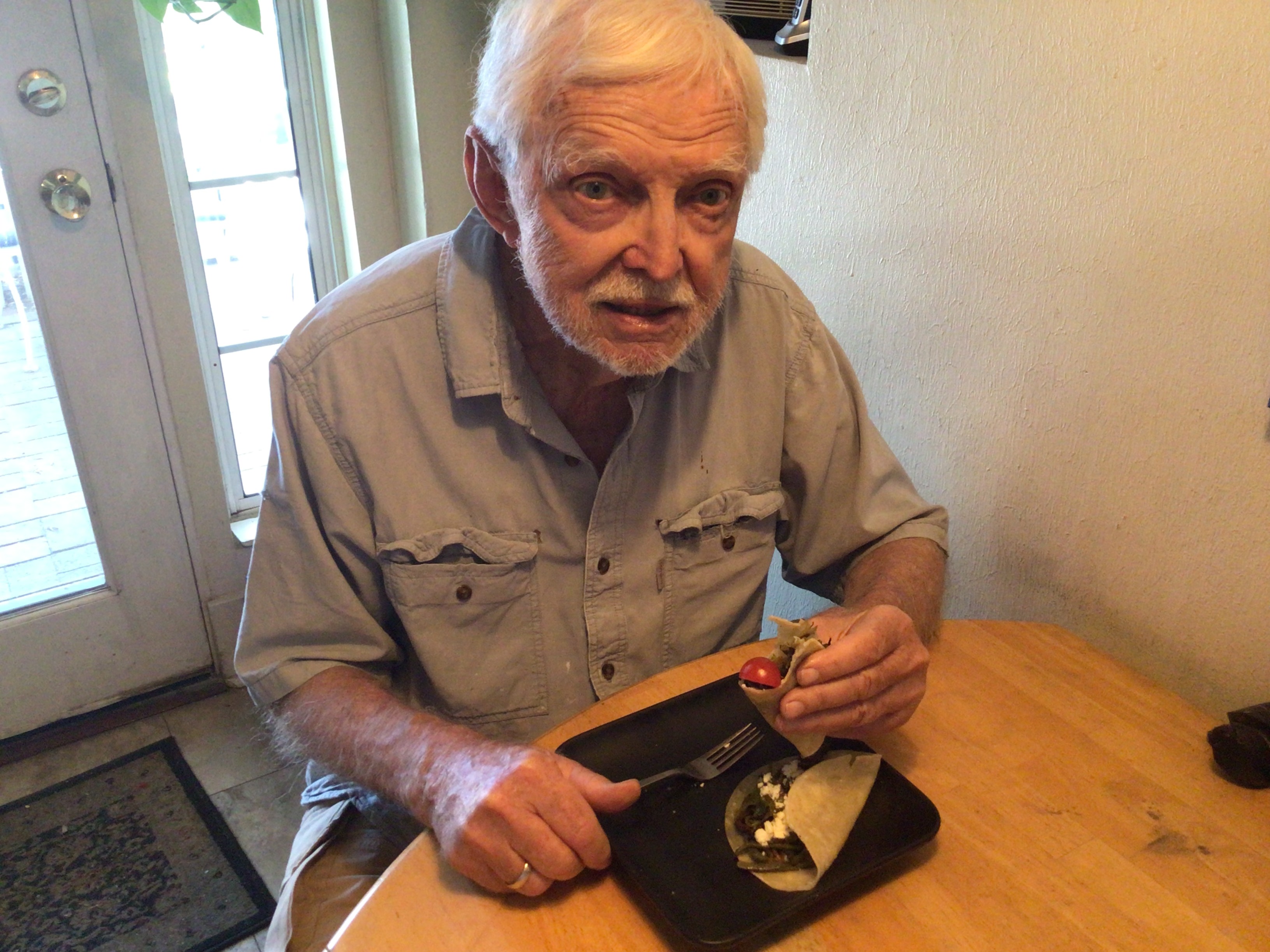
Chief taste tester Ford Burkhart works his way through the Sonoran Summer Tacos for lunch. He gave them the thumbs up. 

____________________________________
You can learn more about the history of food in Southern Arizona in my latest book A Desert Feast, the story of the last 4,000 years of food in the Sonoran Desert. Want more recipes using  foods of the Southwest? You’d find ideas for collecting and using 23 easily recognized and gathered desert foods in Cooking the Wild Southwest: Delicious Recipes for Desert Foods.  . Recipes from top Southwest chefs are collected in The New Southwest Cookbook. Just click on the titles for more information. You can learn more about me on my website.

On Fire

IMG_0658
A (Controlled) Fire


Happy New Year. Aunt Linda here this January 1st, to celebrate transformational fire.

When do you cook or bake with fire?  Like so much in life we can take fire, and it’s transformative power, for granted.

A recent National Geographic article, A Brief History of Cooking With Fire,  is thought provoking. In it Rebecca Rupp, introduces us to Harvard anthropologist and primatologist Richard Wrangham, whose 2009 book Catching Fire; How cooking Made Us Human, suggests that the control of fire and the discovery of cooking may account for the dramatic changes in our ancestors physiology (reduction of large gut to a smaller one, and an increase in brain size). I encourage you to explore this on your own and come to your own conclusions. My personal  recommendation is Michael Pollan’s 2013 book, COOKED for a thorough and insightful perspective.

It is clear that fire was of critical importance to our ancestors. Rupp, in her article ) link below for full article,  writes:  ” Otzi, the 5000-year-old Iceman discovered in 1991 by hikers in the Italian Alps, cautiously carried his fire along with him, in the form of embers wrapped in maple leaves and stored in a birchbark box. As back-up, he was also equipped with a fire-starting kit, consisting of iron pyrites, flint, and tinder fungus. The Neolithic technique seems to have involved grinding the fungus until it was fine and fluffy, then piling it in a mollusk shell, and striking sparks with the flint and pyrite until the tinder ignited.” SEE: http://theplate.nationalgeographic.com/2015/09/02/a-brief-history-of-cooking-with-fire/

To return from our 5000 year old Otzi,  (who you can meet yourself in a small museum in the Alps; he is not the sole property of science, but available to all of us. I know this because I have seen him),  to January 1st, 2016, I encourage you to see fire with fresh eyes.

IMG_0882 (1)

Cooking empanadas with fire/embers above and below

IMG_0871

This humble way of cooking requires a very sophisticated understanding of fire , embers, and heat. How cold or warm the ambient temperature around the oven is, affects the baking of the holiday cookies and empanadas.

IMG_0876

Baking with fire also requires heat tolerance. The smoke imparts a flavor that I adore. It warms twice, once upon baking, then upon eating.

IMG_0931

We cooked/baked into the night. As the temperature drops outside, the embers kept us warm.

IMG_0933

IMG_1511

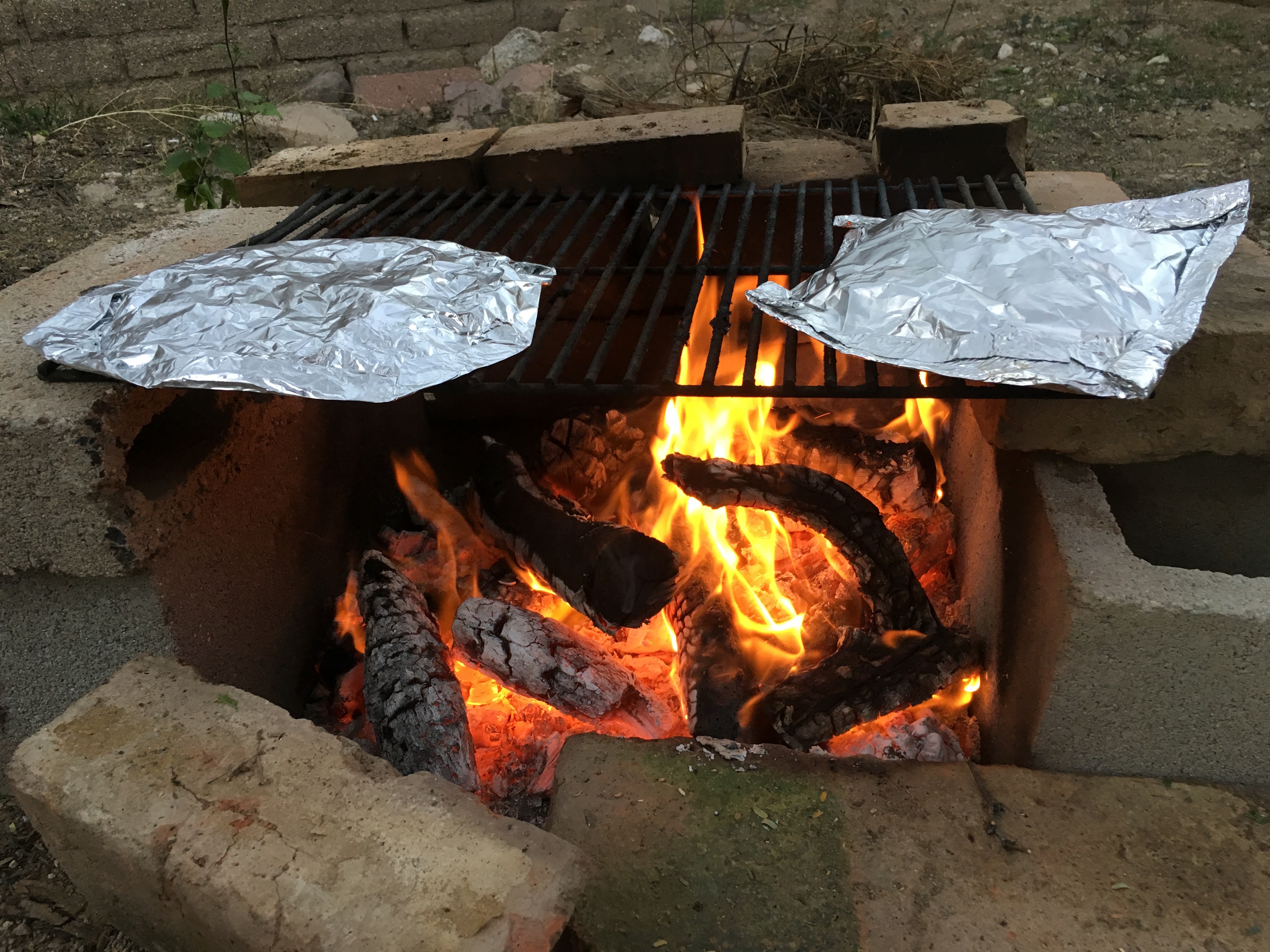
We built this simple grill with a grate and some brick in the back yard. Marinated zucchini is steaming in the foil.


IMG_1519

This is the same grill as the photo above, you can see that works well for vegetarians, meat eaters, or the general omnivore.

IMG_1521

You do not need a hearth or grill like the ones above. You can use a fireplace to roast  marsh mellow for smores, or hot dogs (meat or vegan) or even wrap potatoes in foil and bake in the embers.

IMG_1156

If you explore more about the nutrition of cooked food, youmay be surprised at how nutritious it is. One example: 90% of a cooked egg is digested; only 65% of a raw egg is digested. See footnote page 61, of COOKED.


This was sent by T who posted a comment but could not post the fire photo that she was “ignited” by – so here it is. (I could not figure out how to get it larger). Taken January 2nd, 2016. Thanks for your enthusiasm T!

IMG_3014

Thank you!


++++++++++++++++

Note: Last night, at New Years Eve dinner, the ceramicists at the table reminded me that clay needs fire to bake, as well. Good point! The making of pots, whether ancient or modern, functional or decorative, requires fires’ transformative quality to go from a raw to fired state.

There is a beautiful 20 minute video of Maria Martinez, of San Ildefonso Pueblo, NM which includes her building a firing mound/kiln. It was shot in 1972, when Maria was in her mid 80’s.  I include it here, though I know most modern folk wont have the patience for it. The reverence it shows, is an inspiration for me personally. Continue reading

Desert Lavender

posted by Jacqueline A. Soule

In the days before indoor plumbing, daily showers, and sanitation in general, the clean fresh fragrance of lavender was highly welcome. The name lavender is derived from the Latin “lavare,” meaning to wash. Leaves and flowers have been used for several millennia to do just that, wash. Fragrant baths, hair rinses, to cleanse and treat skin ailments, and, in the past, to help eliminate lice and bedbugs from the household. Tea made from leaves and flowers has been used to treat sleeplessness, restlessness, headache, flatulence, and nervous stomach.


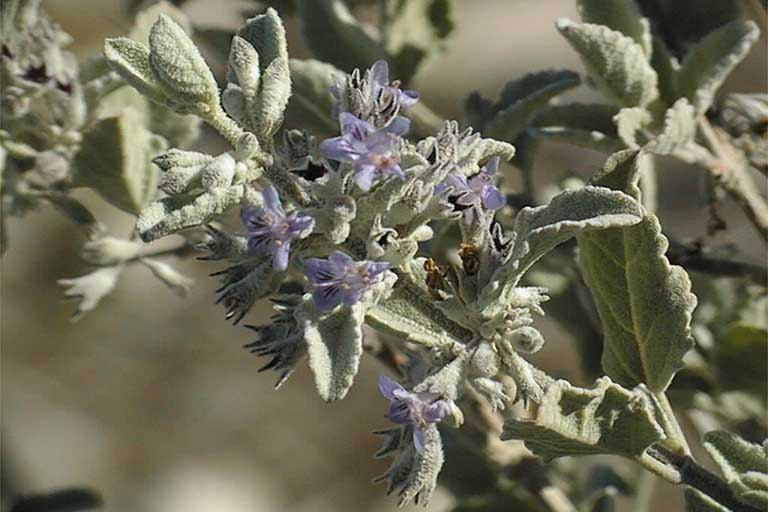
Hyptis_emoryi_flowers_002


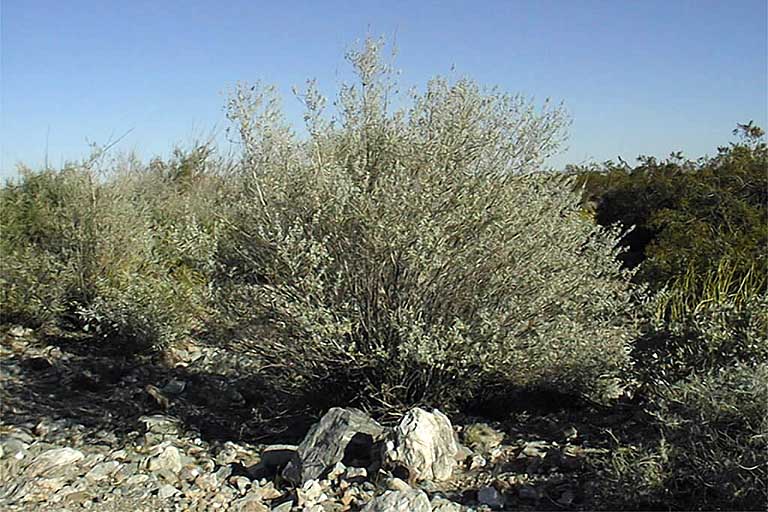
Hyptis_emoryi_habit


Imagine the delight the Europeans experienced when first encountering this fragrant desert plant in our area. Here they were, after an arduous sea voyage, months of horseback travel along dusty deer trails, riding into progressively odder lands – strange towering saguaros, bulging barrel cactus, pungent creosote bush – to come across a gentle evocative fragrance of their childhood home, the sweet scent of lavender. Some, like Father Kino, may have seen it as a sign from God that their journey was blessed.


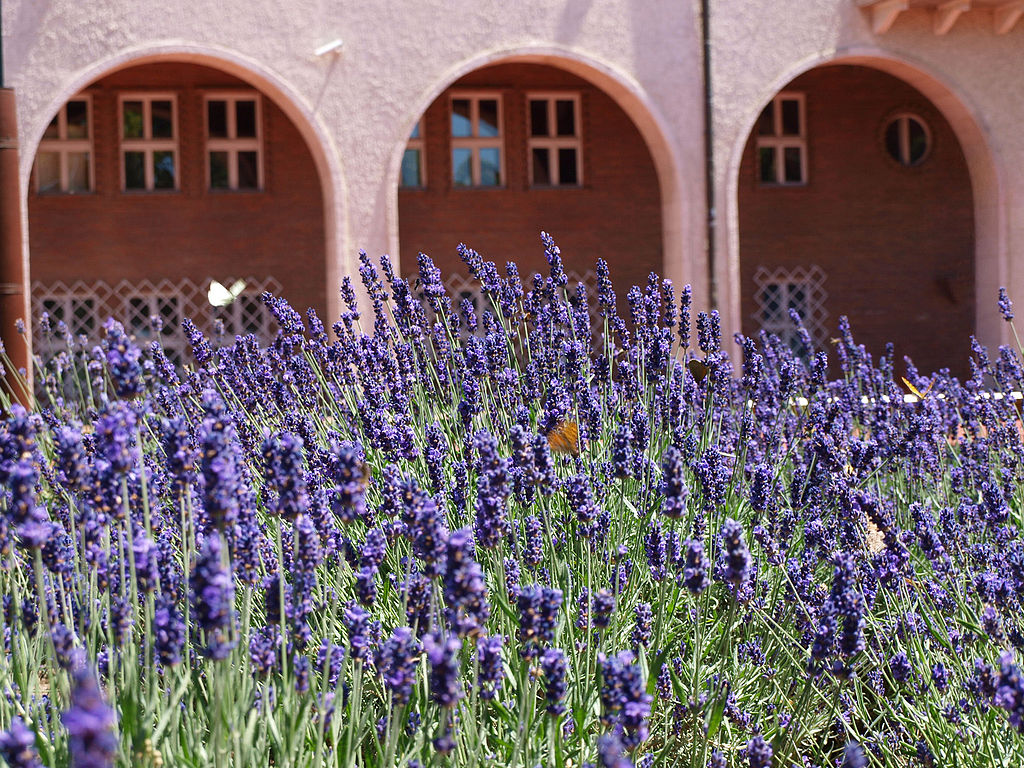
lavendula in Hungary


Hyptis_emoryi_flowers_001


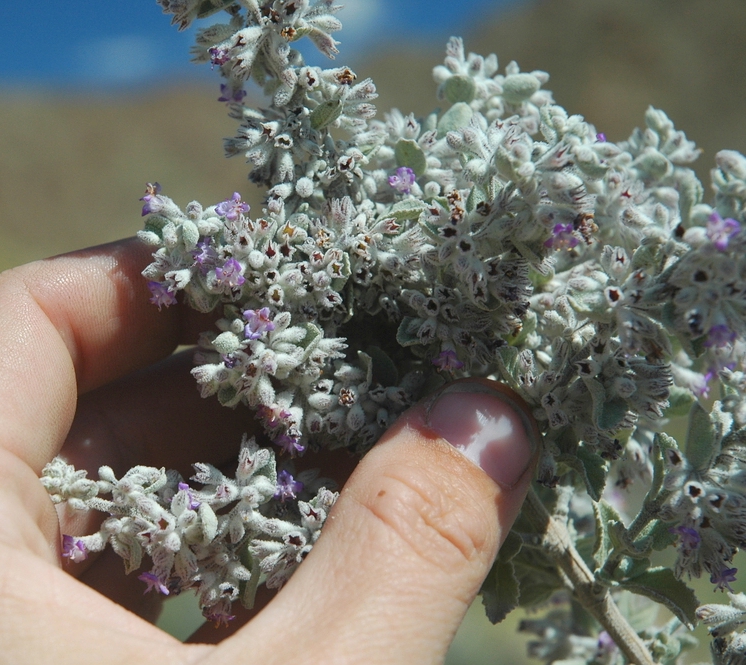
Native Seri use a tea of desert lavender (Hyptis emoryi) to help treat a cold. The Franciscans (who came to the area well after Padre Kino) were known to have harvested and used the leaves and flowers in the sick room, to soothe the ill with the fragrance and to bathe fevered foreheads.

Harvesting and Use.
Harvest stalks of desert lavender as the lower-most flowers open. This gives you buds with optimum fragrance. Dry these, like all herbs, out of direct sunlight. I have used desert lavender in all the same external applications European lavender is used for with no observed ill effects. Here are three ways you can use desert lavender.


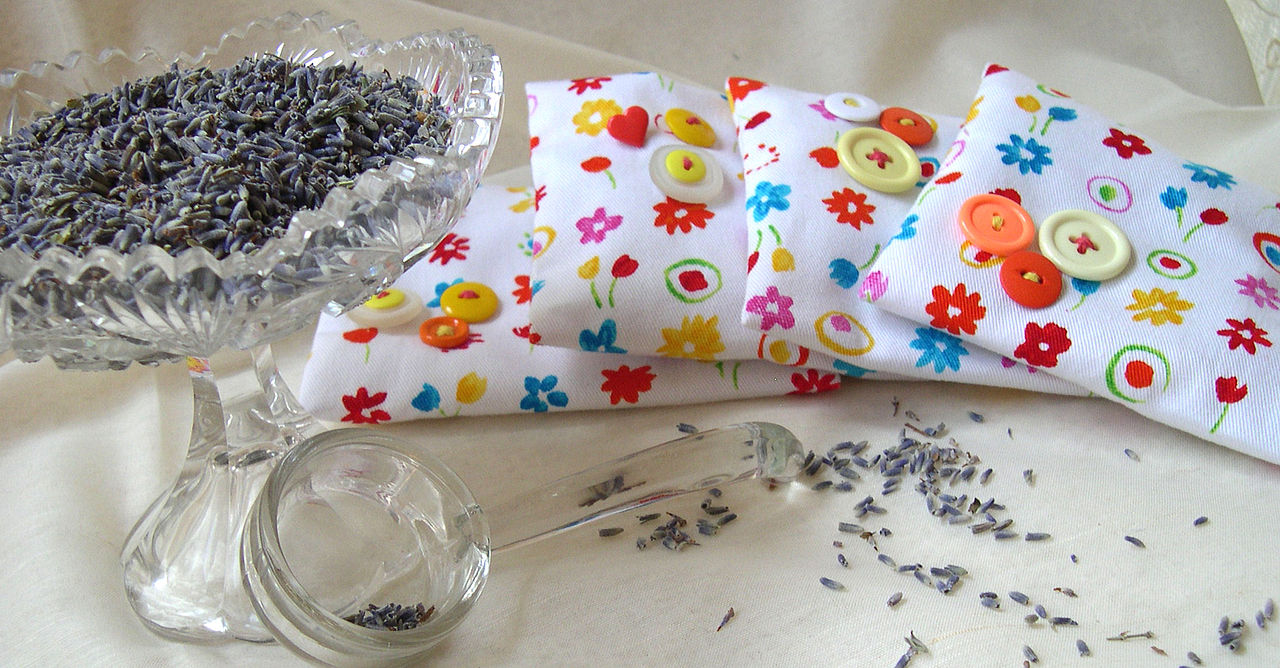
Herbal sachets can be made with desert lavender.

Lavender_Sachets


Herbal Tisane
“Tisane” is the general term for a herbal tea not consumed as a medicinal tea.
1 tablespoons dried herbs or 2 tablespoons fresh herbs
1 cup boiling water
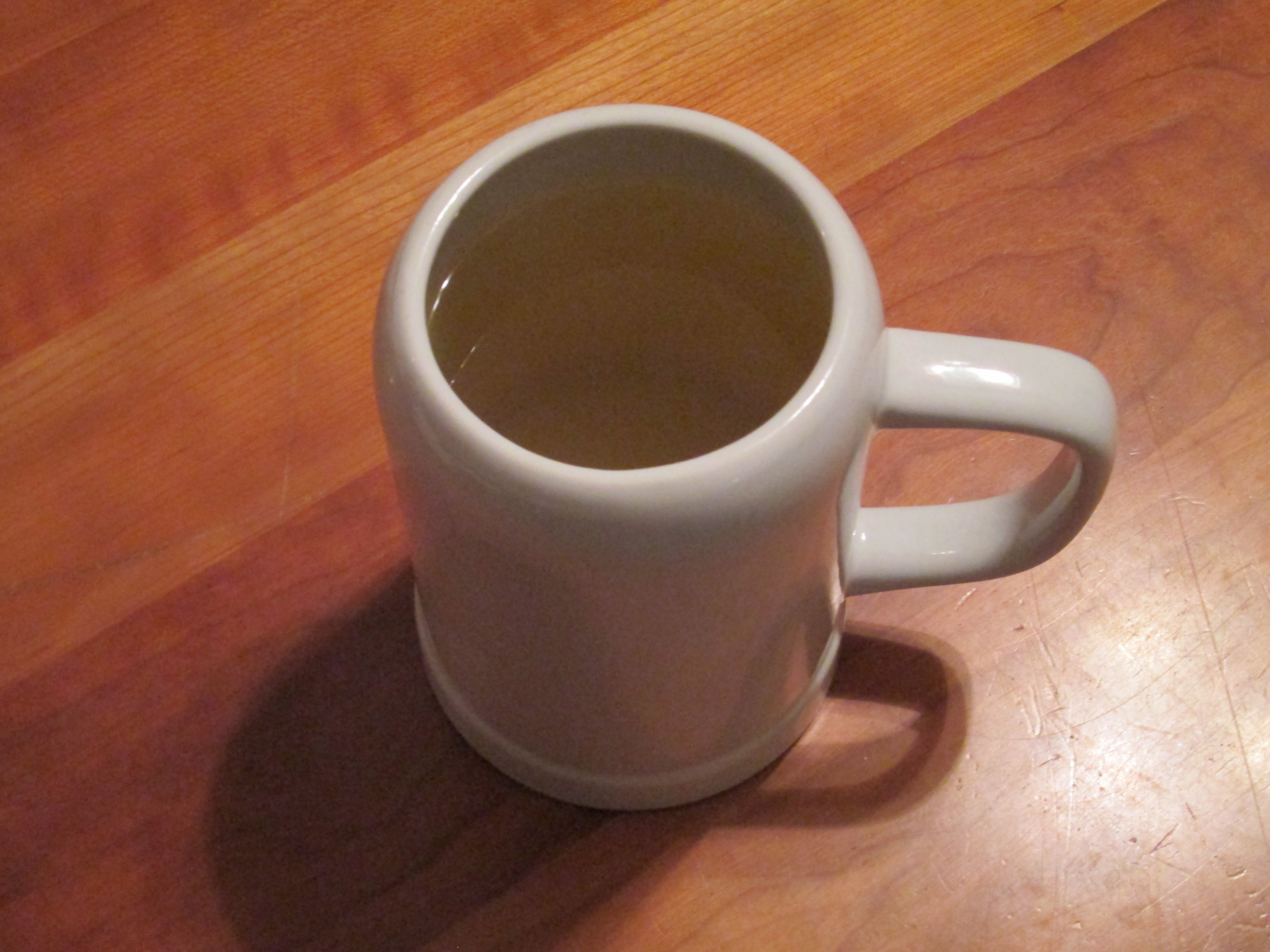
Pour boiling water over the herbs and steep for 3 to 5 minutes. Strain. Sweeten to taste. Serve warm or chilled. Serves 1.

herb_tea_JAS_004


Floral Water
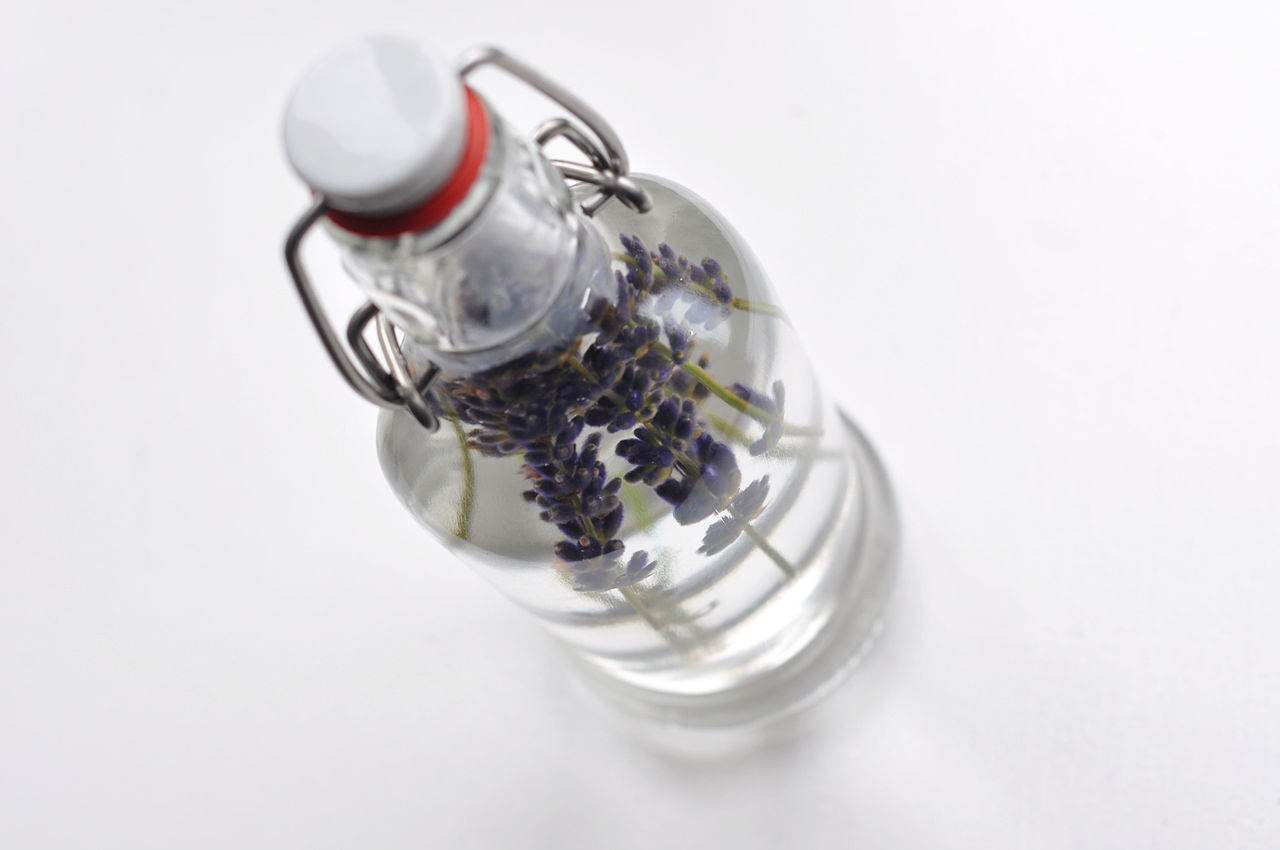
In the Victorian age, floral waters became popular. Floral waters are made by steeping leaves and flowers in water until it becomes fragrant. The water can then be used in tea, pudding, cake, and pastries. There are a number of commercially available floral waters, such as rose water and orange water (made with orange blossoms).

Lavendula in vodkaelsnaps_(4917058844).jp


Herb Syrup
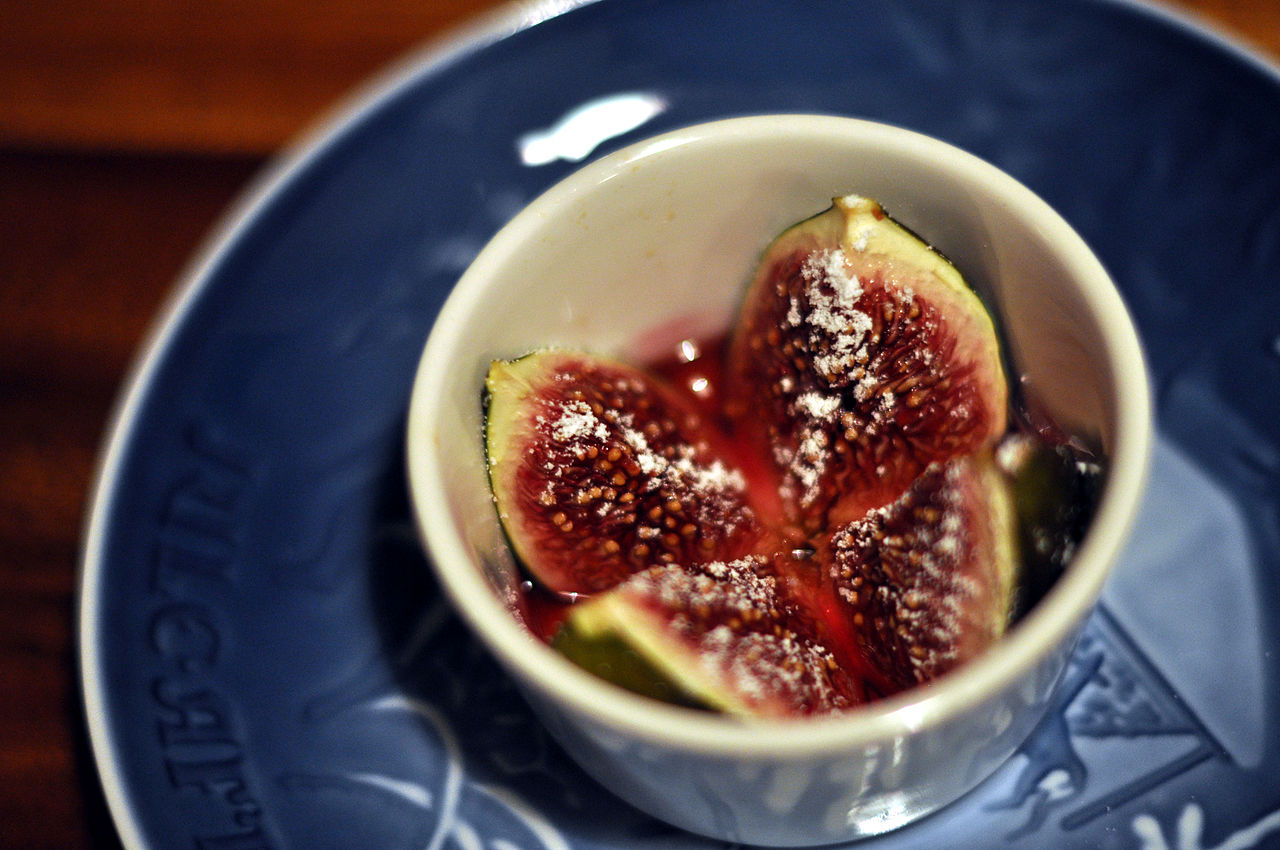
One of the more famous herb syrups is the mint syrup used in making mint juleps. But herb syrups can be used in many other ways, like topping cakes, ice cream, fruit, pancakes, waffles, or as a base in preparing other foods, like sorbet. In general herb syrups can be used to sweeten anything, including tea. Some herb syrups are used medicinally, like elderberry syrup. Desert lavender syrup makes a nice topping over poached pears, fresh figs or perhaps canned fruit for a quick yet elegant dessert.

1 cup water
3 cups sugar
1 cup chopped fresh herbs
or 1/2 cup crumbled dry herbs

Boil all ingredients together for 10 minutes, or until thickened into a syrup. Strain into a clean glass jar. Store in refrigerator for up to two weeks or preserve by canning.

lavendula syrup over figs


Planting and Care of this Sonoran native will be covered on August 17 in my blog on the Native Plants and Wildlife Gardens site.  The Sonoran butterflies that appreciate this shrub will be discussed in my blog on Beautiful  Wildlife Gardens site on August 5.  I will return to this site to post the links, or follow you can the thread on my Facebook page, Gardening With Soule.

Note:   This topic is covered more extensively in my book “Father Kino’s Herbs: Growing and Using Them Today” (2011, Tierra del Sol Press, $15).  If you live in Tucson, I hope you will consider purchasing a copy locally at Antigone Books, Arizona Experience Store, Magic Garden, Mostly Books, or Rillito Nursery.


© 2014, Jacqueline Soule.  All rights reserved. I have received many requests to reprint my work. My policy is that you are free to use a very short excerpt which must give proper credit to the author, and must include a link back to the original post on our site. Please use the contact me if you have any questions. JAS avatar