Broiled figs in peach sauce and Plum almond cake

9-figs-fin-peach-sauce

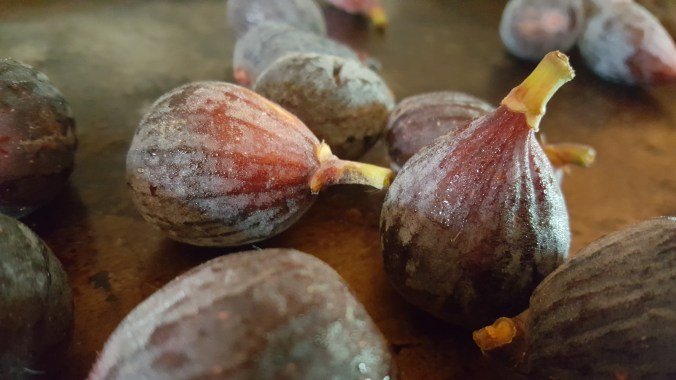
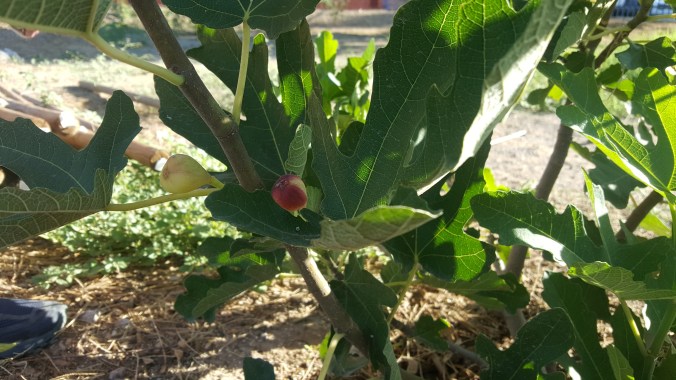
Hello, Amy here playing with the last of the summer fruits. My mom’s Black Mission Fig tree, planted by my grandfather so many years ago, yields two crops a year, early and late summer. The flowers open and are self pollinated inside the developing fruit. This baby fig tree had its first two fruits this year.

1-fig-tree

We mostly eat them fresh, the entire fruit with skin, seeds and all, leaving only the stem. They dry beautifully on screens outside, or in a hot car.

2-fresh-whole-figs

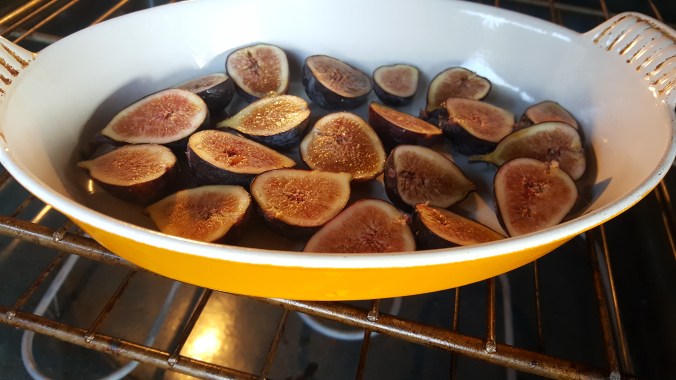
I wanted to do something special with the figs, so I consulted Sweet Simplicity: Jaques Pépin’s Fruit Desserts. Broil the figs!

4-figs-in-oven

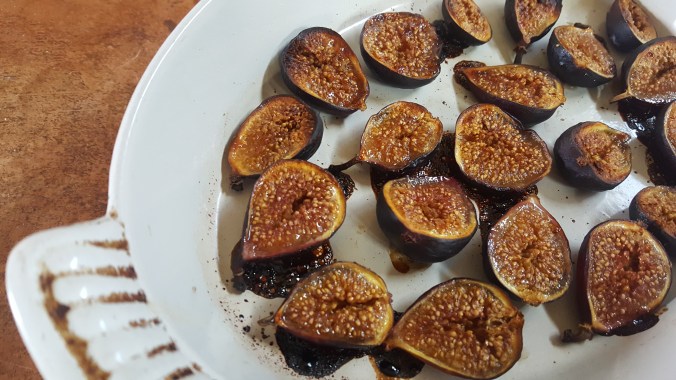
I halved the fruit and decided that they were plenty sweet. If they weren’t, I would have sprinkled with sugar as suggested. After a few minutes under the broiler, they were even sweeter and the flavor concentrated, but still moist and easier to eat than dried.

5-broiled-figs

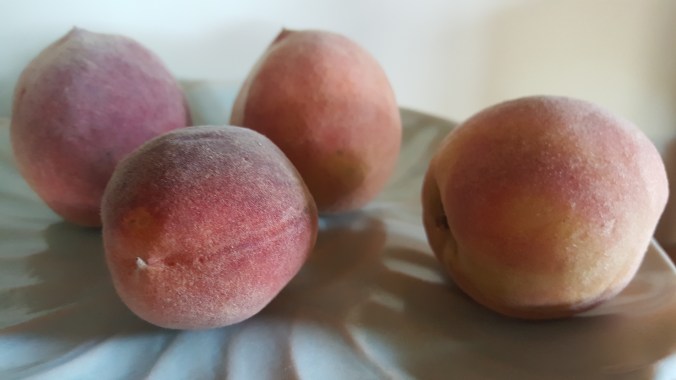
Jacques made a sauce with strained peach preserves, but I had a few tiny fresh peaches from higher elevation southern Arizona.

6-whole-peaches

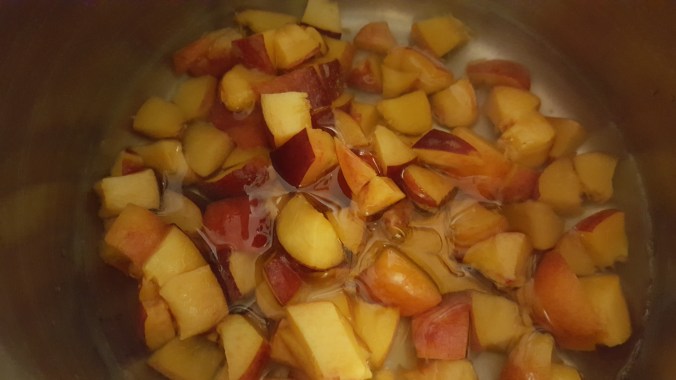
I seeded and chopped the peaches, skins included. So much color, nutrition and fiber is in the skin. Plus I like varied textures.

8-sliced-peaches

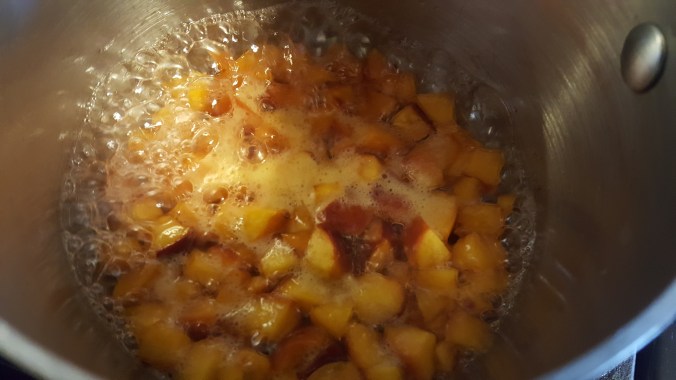
The peaches simmered with a tiny bit of water for a few minutes, until soft.

7-boiling-peaches

I pureed the peaches and seasoned with a squeeze of lemon and a splash of rum.

9-figs-fin-peach-sauce

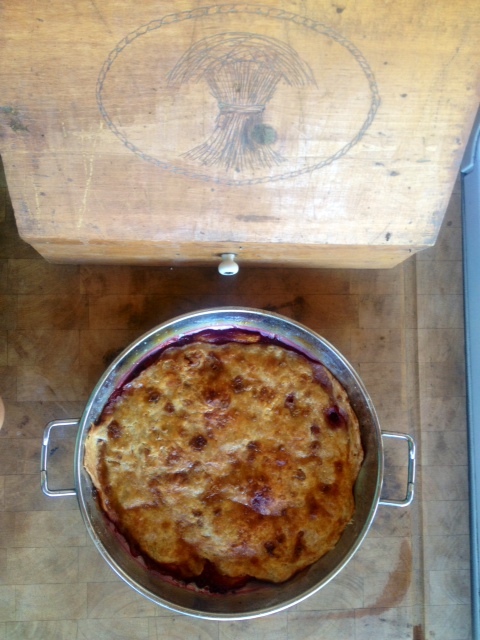
That worked! So when someone gave me a handful of little plums, I immediately consulted the same book to show off the little treasures.

10-plum-cake

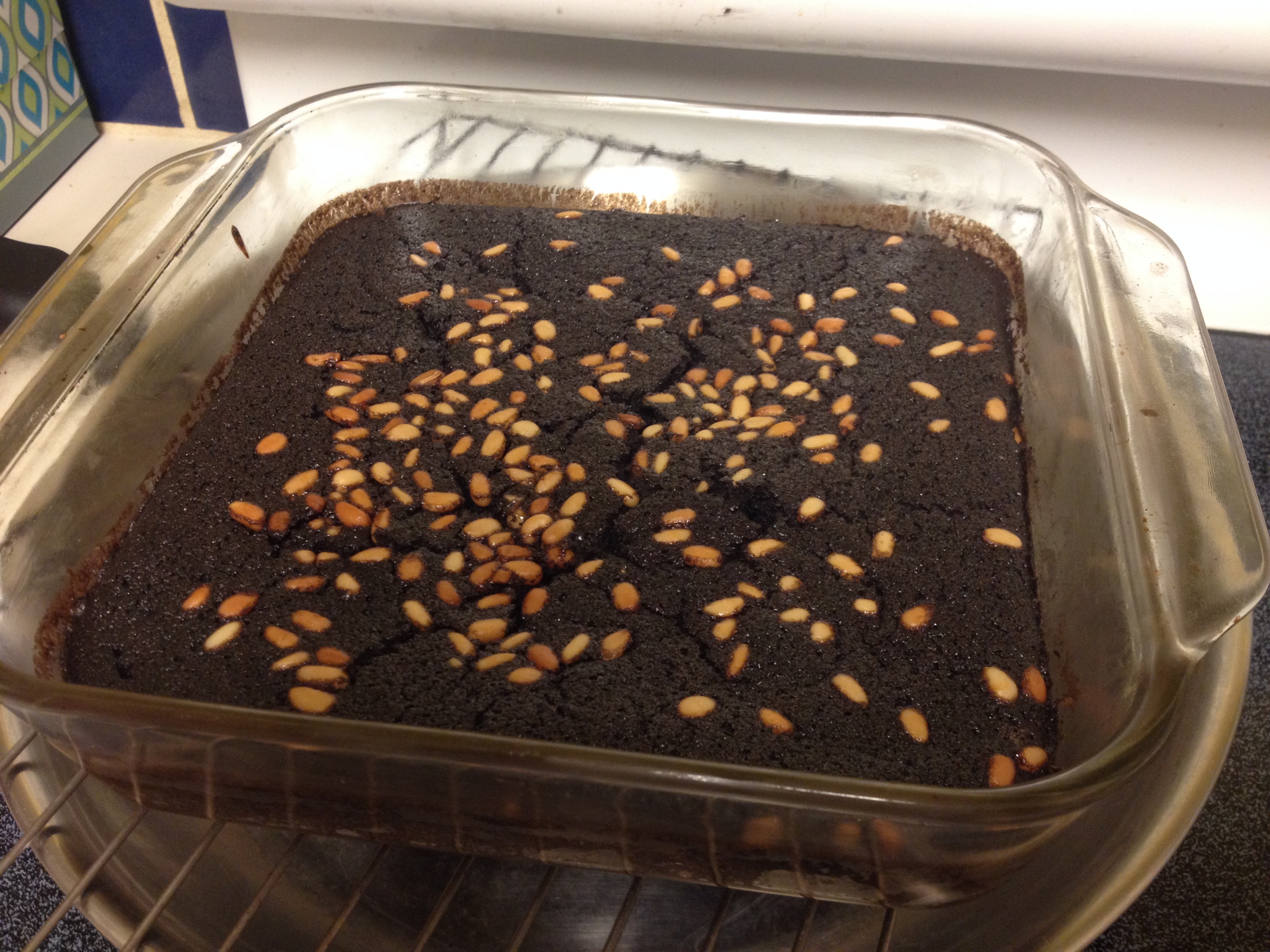
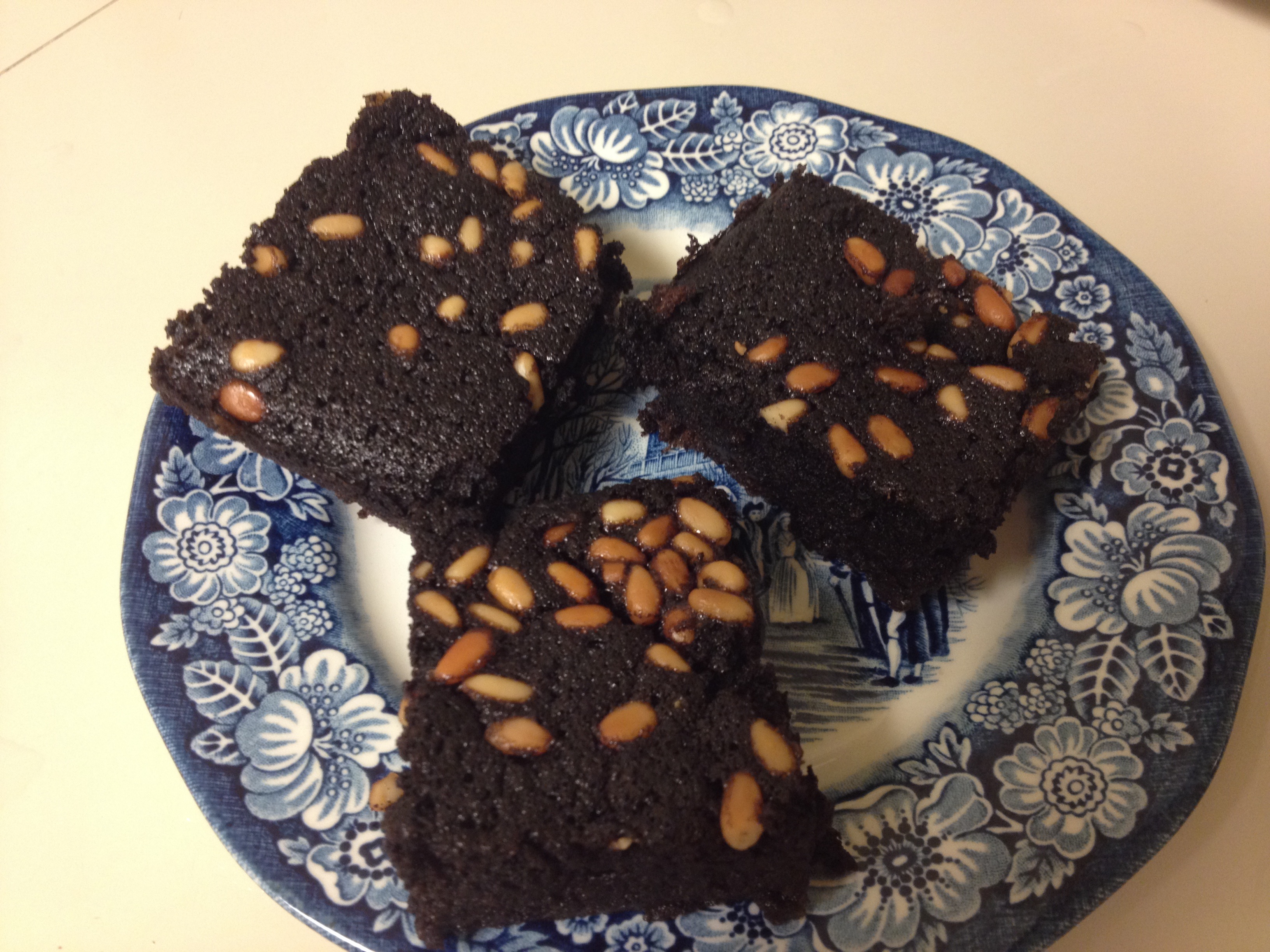
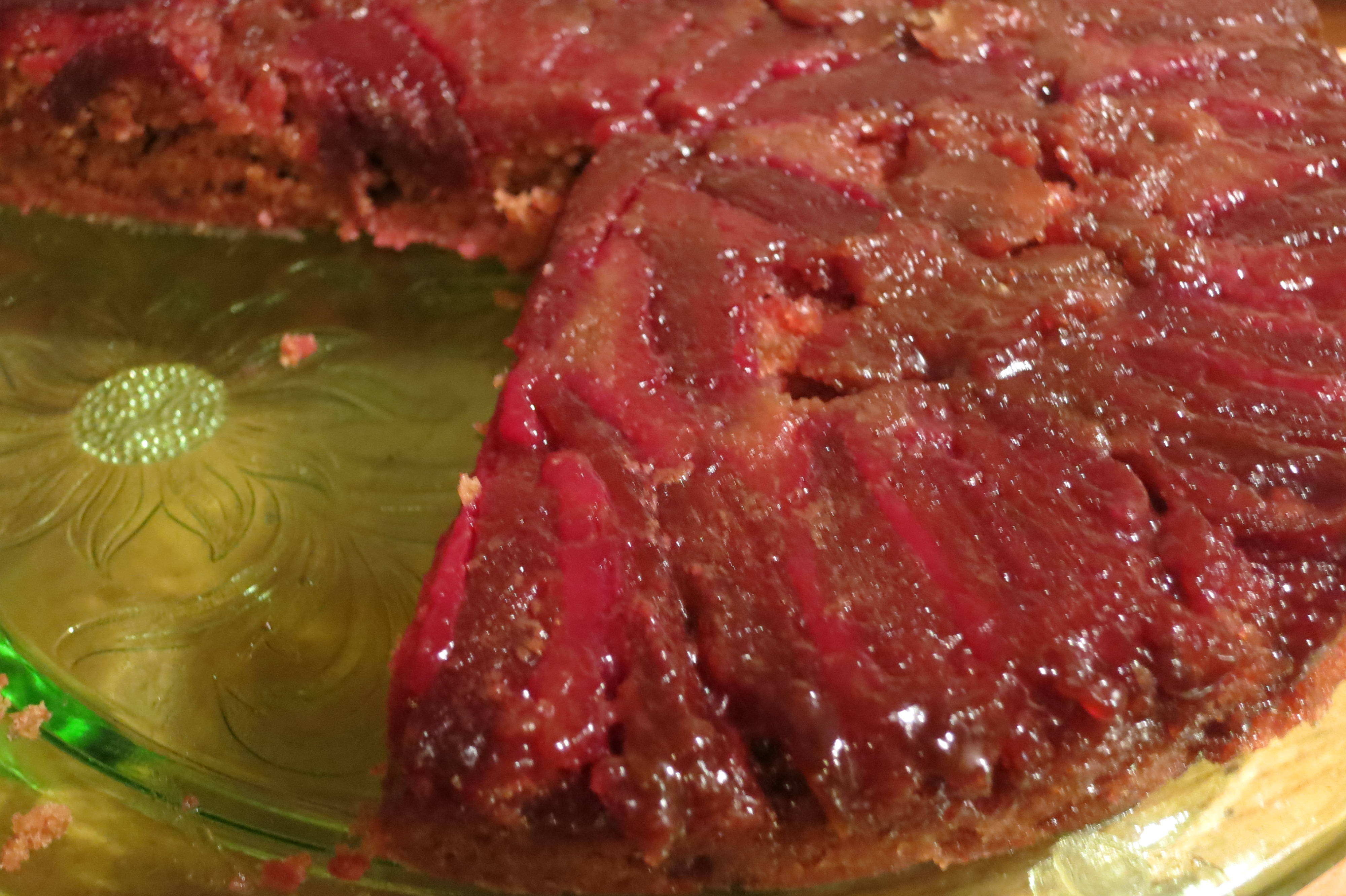
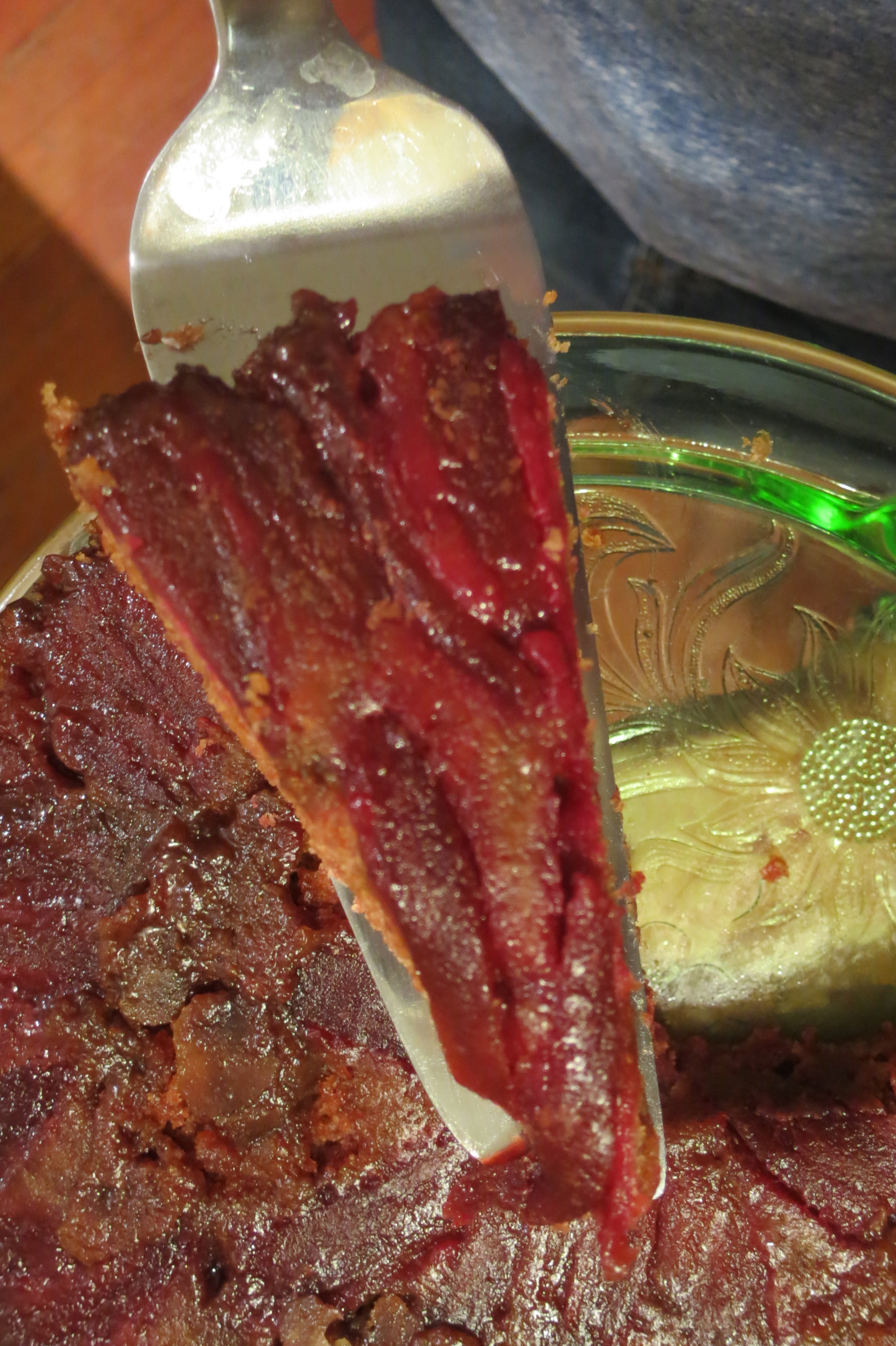
Here is my version of the Plum and Almond Cake

1 cup all purpose flour

1 cup almonds

2/3 cup sugar

1 teaspoon baking powder

1 teaspoon vanilla

6 tablespoons butter, softened

2 eggs

1/3 cup heavy cream

Garnish:

14 little plums

1/4 cup apricot jam

2 teaspoons hazelnut liqueur

Preheat oven to 350 degrees F. Grease an 8×8 inch or similar size baking dish. Grind almonds in a food processor until powdered. Add the rest of dry ingredients and process. Add the wet ingredients and pulse into a batter. Spread batter into prepared dish and nestle in the whole fruit. Bake for 55 minutes or until the cake is browned. Mix the jam and liqueur and brush on top of the cake. Warn the eaters of the pits and enjoy!

Mole Negro Grilled Burgers and Veggies

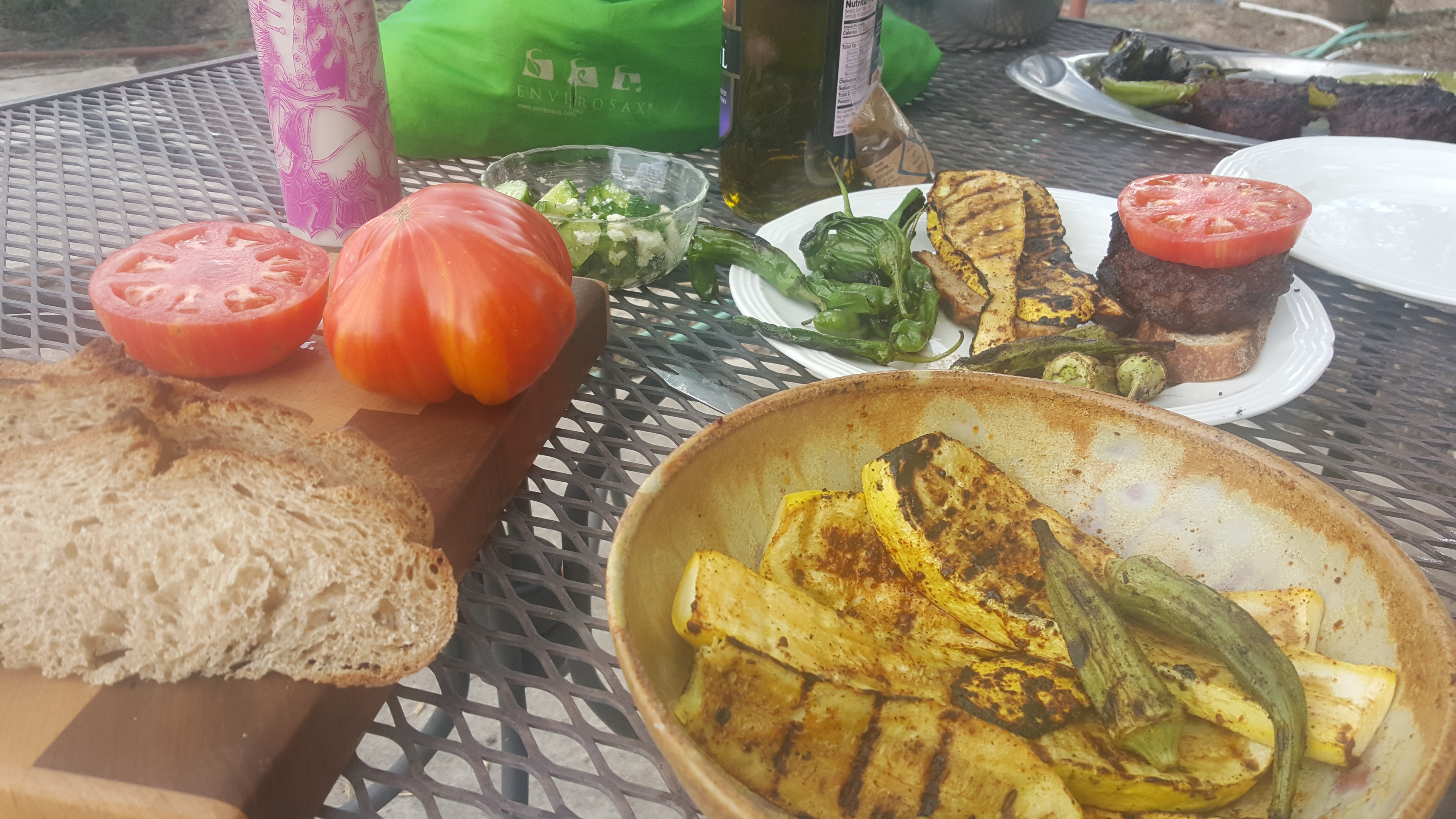
mealAmy here on a cloudy monsoon afternoon with a bounty of summer produce like long green chiles, Shishito peppers, okra, yellow squash and great tomatoes. It makes me want to grill and eat outside.

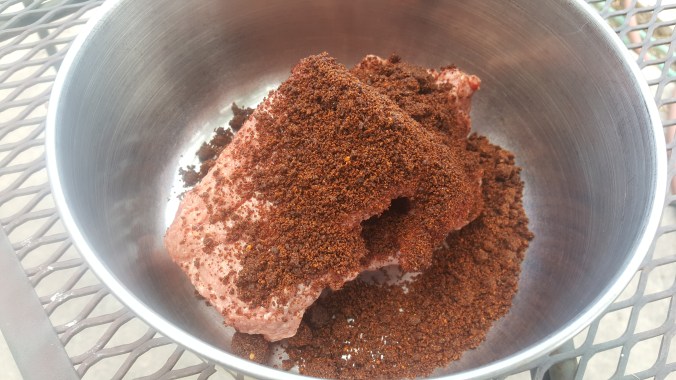
But my new friends want to try Mano Y Metate Mole, and the last thing I want is to make a formal meal. I wondered if burgers seasoned with mole powder would work…meat mix

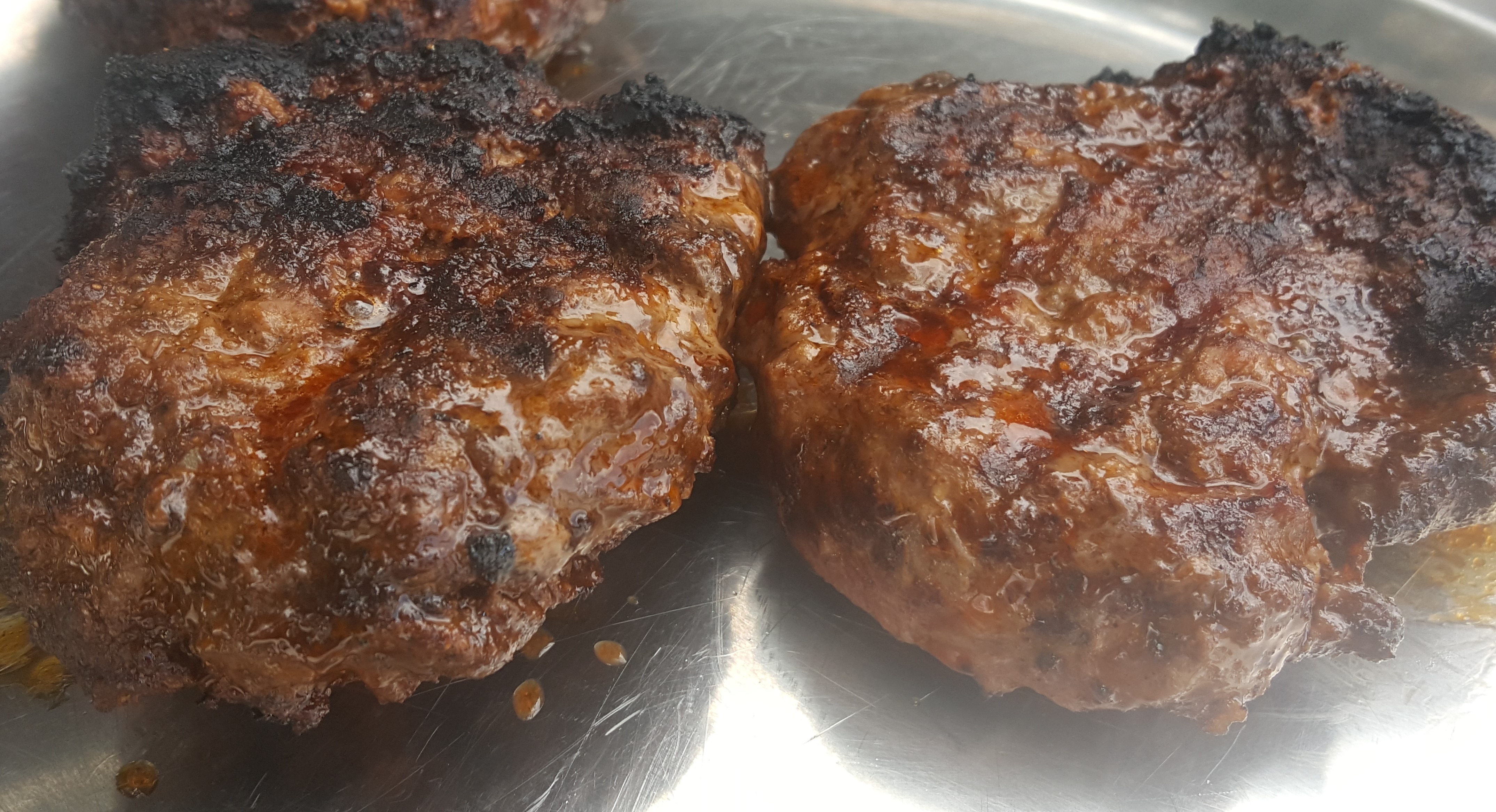
Local pastured beef pairs well with the smoky, spicy, bold flavors Mole Negro in other forms, so that’s what I chose. I mixed the mole powder with not too lean meat and sent to the grill.

grilling burgers

cooked burgers

The juices from the cooked meat were infused with Mole Negro flavors. It exceeded my expectations.

tomatoes

I was thinking of a nice leaf lettuce to top burger, but that’s definitely not in season. Oh, tomatoes!

complete burger

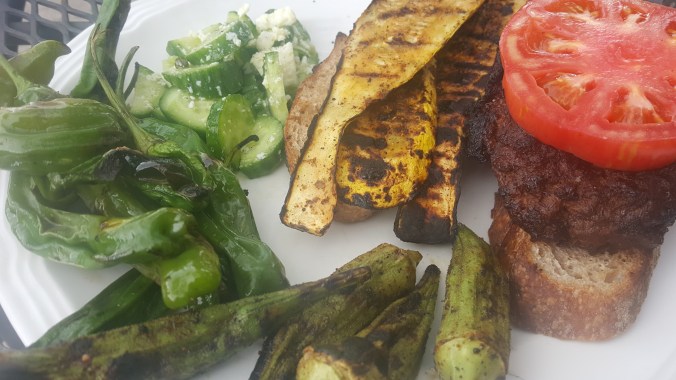
Charred spicy meat, tomato, and a slice of sourdough whole wheat from Barrio Bread. Salt on tomato.

Without lettuce, I wanted something green in the meal. Wait, August means green chile!!!!!!

long green

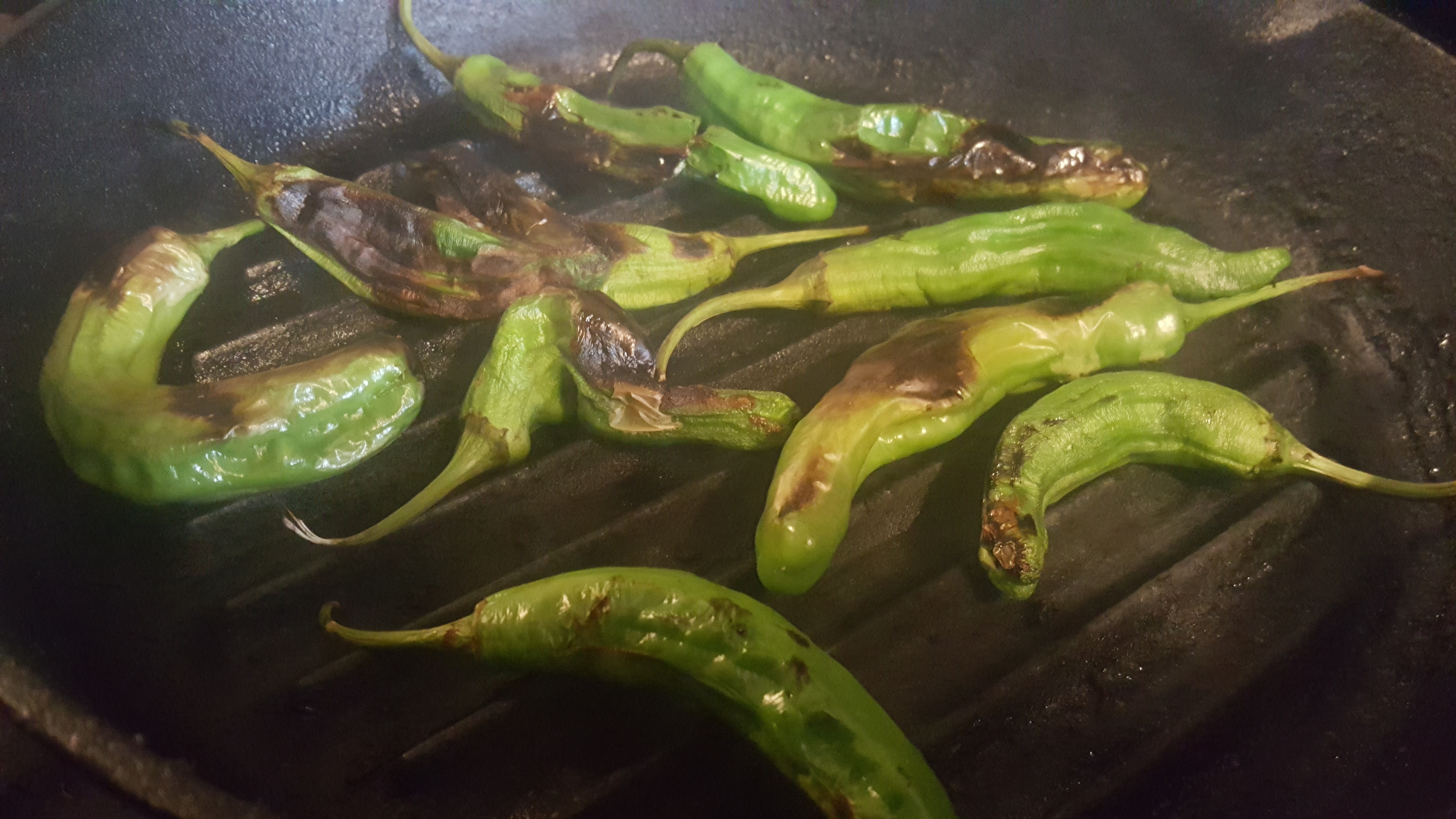
And Shishito peppers, too small for the grill but great in a grill pan. Most are completely mild, but about one in 20, surprise! The skin is so thin no need to peel, and the seeds so small no need to clean. Too easy and great flavor.

shishitoes

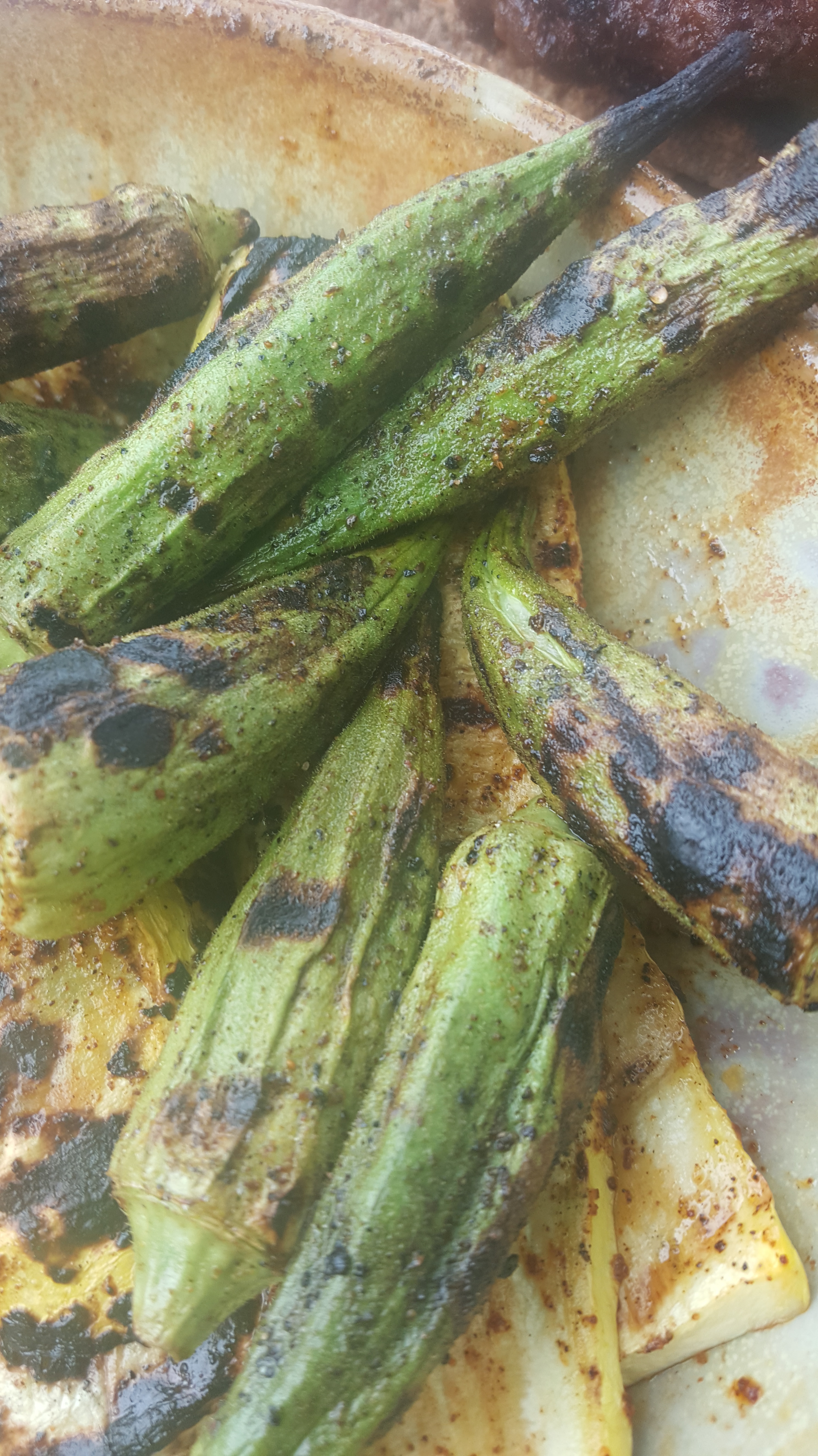
Also, I rolled some beautiful fresh okra in a splash of olive oil and Mole Negro powder.

grilling okra

cooked okra


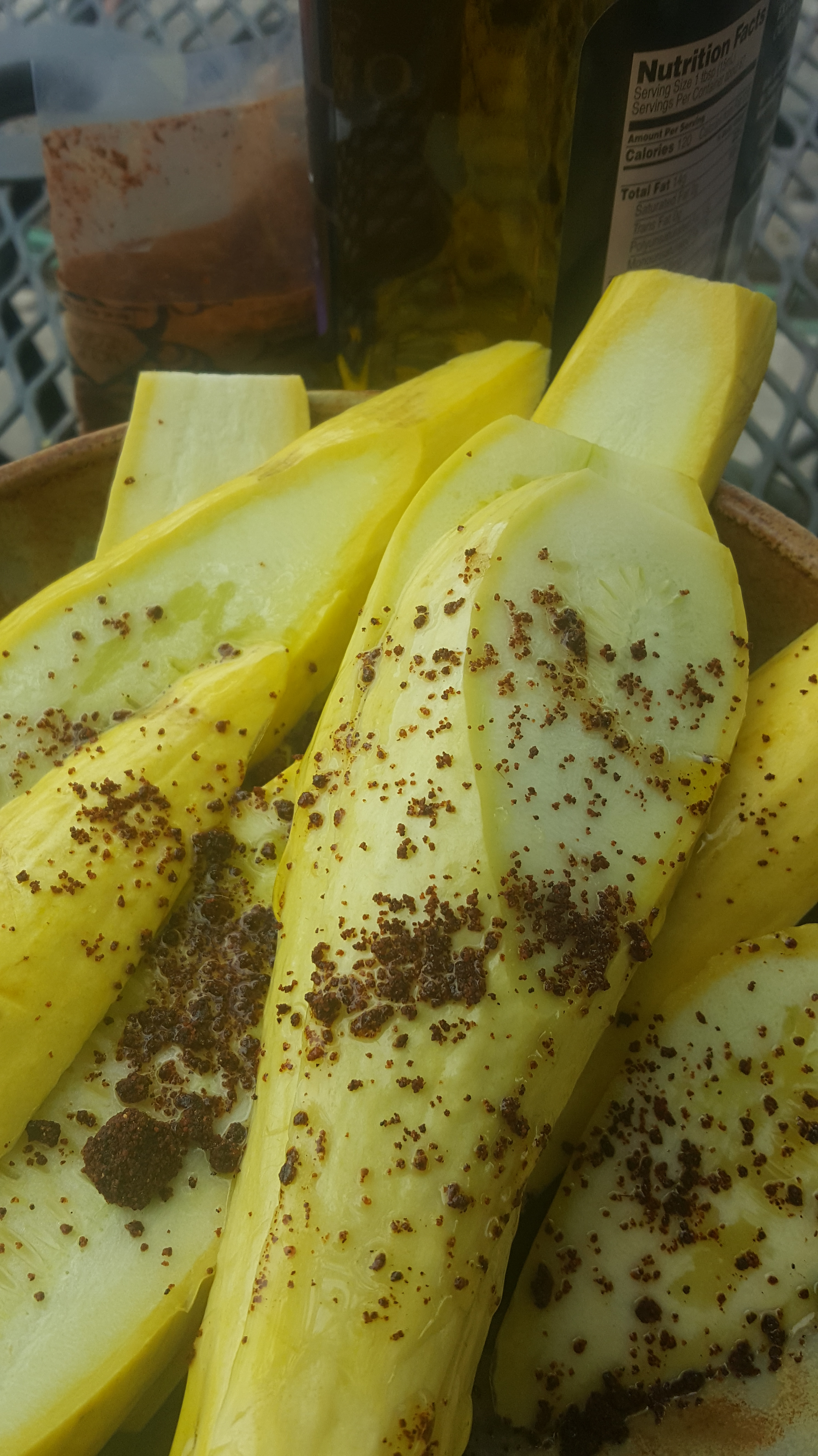
Grilled squash is one of my favorite foods in the whole world. I can’t grill without making some. First time with Mole Negro powder, though. It worked really well. Just toss with a splash of olive oil and sprinkle on mole powder to taste.

raw squash

grilling squashgriled squash2


cuke salad

For raw contrast, a quick cucumber salad with goat queso fresco, olive oil, black pepper and fresh basil.

Enjoy with prickly pear lemonade. Happy picnicking!

table

Desert Harvesters June Events

010Though newcomers to the Sonoran Desert sometimes miss the abundant fruits, berries, mushrooms, and greens of wetter forests, one Tucson organization wants you to know the desert is full of food: You just have to know where to look for it. Desert Harvesters is a nonprofit grassroots group that promotes the harvest of native, wild, and cultivated desert foods and also advocates for the planting of indigenous, food-bearing shade trees (such as the Velvet mesquite) and understory plantings within rainwater harvesting “gardens” in the landscapes where we live, work, and play. Funds raised at these events support the group’s educational efforts in the community, including demonstrations, publications, and tasting events.

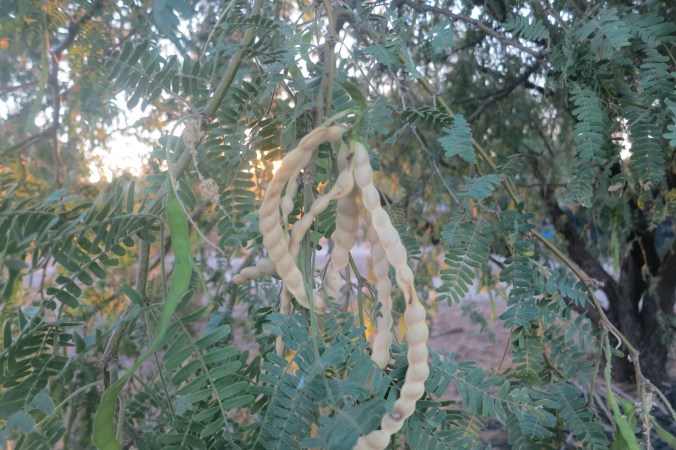
The group announces its summer season of harvesting workshops and activities, which aim to help the public learn how to plant, harvest, process, and prepare wild, native, and local food items, including mesquite pods, ironwood & palo verde seeds, and saguaro fruit. Currently the group is raising funds to support the publication of a revised and expanded version of its 2010 cookbook Eat Mesquite! This new cookbook will include recipes for mesquite and other desert foods, as well as information about how to grow, harvest, and prepare native and local foods. Desert Harvesters is also seeking volunteers to help with (and learn from) these and other events.

041

June 18 & 19, 2016

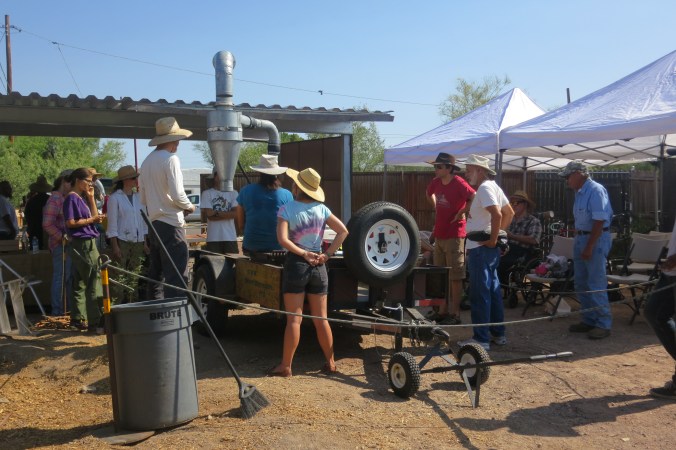
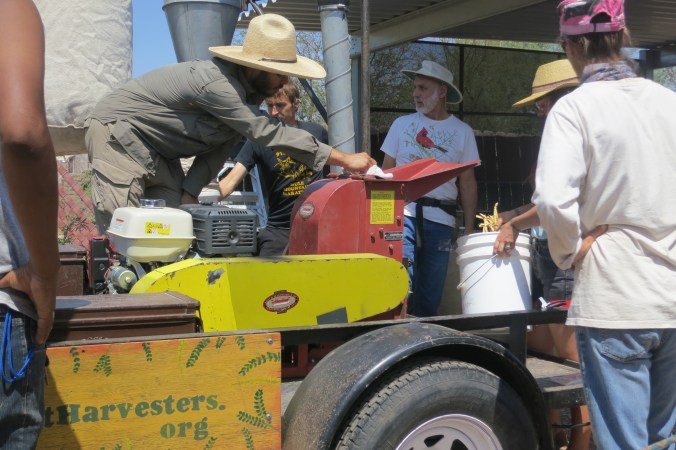
Workshops on Mesquite Pod Tasting, Inspection, and Ticketing and Hammermill Operation for those who want to become Desert Harvesters volunteers or staff, or others wishing to expand their mesquite-related skill sets. Visit http://www.DesertHarvesters.org or email volunteer@DesertHarvesters.org to learn more.


June 23, 2016

DESERT HARVESTERS’ 14th ANNUAL MESQUITE MILLING & WILD FOODS & DRINKS FIESTA Santa Cruz River Farmers’ Market at Mercado San Agustín, 100 S Avenida del Convento, Tucson

Bring your clean & sorted mesquite pods to be milled with our hammermill (fee applies) and taste an array of wild foods.

Harvesters can have their milled mesquite flour tested for aflatoxins (see below) at our 14th Annual Mesquite Milling on June 23, 2016, in Tucson. The cost per test will be a special subsidized fee of only $5.

We will also be serving craft beers (Smoked Mesquite Apple beer as well as a beer finished with creosote flowers) from Iron John Brewing Co. with proceeds going to Desert Harvesters.


June 24, 2016

Desert Harvesters’ Happy Hour at Tap & Bottle

403 N 6th Ave #135, Tucson

5–8 pm

Enjoy great regional brews, some infused with locally sourced native wild ingredients. A percentage of all happy-hour sales goes to Desert Harvesters! A local food truck will also be on site with delicious offerings including native wild ingredients.

IMG_2000

BE IN SYNC WITH THE SONORAN DESERT’S NATURAL PATTERNS

To encourage harvesting before the monsoons, and to be more in sync with the Sonoran Desert ecology’s natural patterns, Desert Harvesters has shifted its annual harvesting and milling trainings, along with its mesquite millings and fiesta, to the month of June—BEFORE the summer rains. This is also when our native bean trees (mesquite, desert ironwood, palo verde) are ready to harvest (they produce before the rains so their seed is on the ground ready to germinate when the rains arrive). Regularly check our Calendar of Events for more such event info.


FOOD SAFETY: Aflatoxin and how to avoid it

Aflatoxin is a toxic natural compound produced by certain molds; it can cause liver damage and cancer. Aflatoxin is found in many common foods, but only in small quantities is considered safe (U.S. ≤ 20 parts per billion (ppb), Europe ≤ 2 ppb). We at Desert Harvesters are specifically concerned with the invisible mold (Aspergillus flavus) that can produce aflatoxin B1 on mesquite pods, as well as on other food crops (legumes, corn, etc) that have been exposed to moisture.

HARVEST MESQUITE PODS BEFORE THE RAINS (at higher elevations, harvesting in dry autumn weather may be an option)

Desert Harvesters is now recommending that, as much as possible, harvesters collect mesquite pods BEFORE the monsoon rains. (This can be more difficult at higher altitudes due to later ripening. In these areas the best practice may be to only harvest in dry autumn weather.) The reason for pre-rain/dry-season harvesting is to reduce the pods’ exposure to moisture, and thus the risk of the development of an invisible mold (Aspergillus flavus) and the aflatoxin it can produce. Aflatoxin poisoning can have serious health consequences over the long term, so we want to harvest in a SAFE manner. To further avoid moisture issues with the pods we recommend you do NOT rinse or wash pods.

In the small number of batches of mesquite flour we have tested thus far…ALL mesquite pods we tested which were harvested BEFORE the rains have tested SAFE.

In other words, NO mesquite pods harvested BEFORE the rains had results with unsafe levels of aflatoxin. The U.S.-designated safe limit of aflatoxin is 20 parts per billion (ppb), so safe test results will be 20 or fewer ppb.

However, all test batches of mesquite pods that DID have results with unsafe levels of aflatoxin were harvested AFTER the onset of the rains. Again, in the U.S., safe aflatoxin levels of 20 or fewer parts per billion (ppb) are considered safe. However, many other batches harvested AFTER the onset of the rains tested SAFE.


We hope to continue to share more studies and best harvesting practices.


What to do with mesquite flour?

Sonoran Cookies

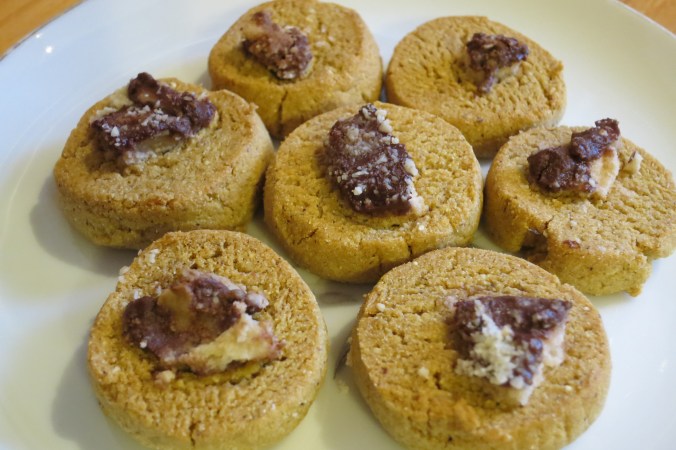
Here’s a truly classic recipe from the first EAT Mesquite! Cookbook.We’ve made hundreds of these cookies. The author of the original recipe is unknown. The ones in the photo below are topped with mesquite toffee.

mesq cookies toffee

.25 lb (one stick) butter

1 cup sugar (can be reduced to .75 cup sugar, plus .25 cup mesquite)

1 egg

2 teaspoon vanilla (or local lemon extract)

2 cup corn tortilla meal (or whole wheat flour)

1 cup mesquite meal

2 teaspoons baking powder

2 teaspoons baking soda

.5 cup pecans, finely chopped (optional)

Cream softened butter.  Mix in sugar, egg and extract.  Sift dry ingredients and add to the first mixture.  Add nuts (optional) and beat until smooth.  Roll dough into 2 inch balls and press onto ungreased cookie sheet.  Or, roll dough into thin logs, wrap in waxed paper, and refrigerate or freeze.  Slice cold logs into rounds and place on cookie sheet.  (Doubled cookie sheets or Airbake prevent bottoms from browning too fast.)  Place in preheated 375 F oven and bake 12 minutes or until golden.  Cool on racks until crisp, or eat warm and soft.  Makes up to 200 tiny (.75 inch) cookies.


Spring Salad

cholla 2016

Amy collecting cholla buds

Some years, spring seems to last about a week in the desert, going from winter to summer too fast. When the weather is beautiful, we know to celebrate these days outside!!!!

blog 20160415_100732

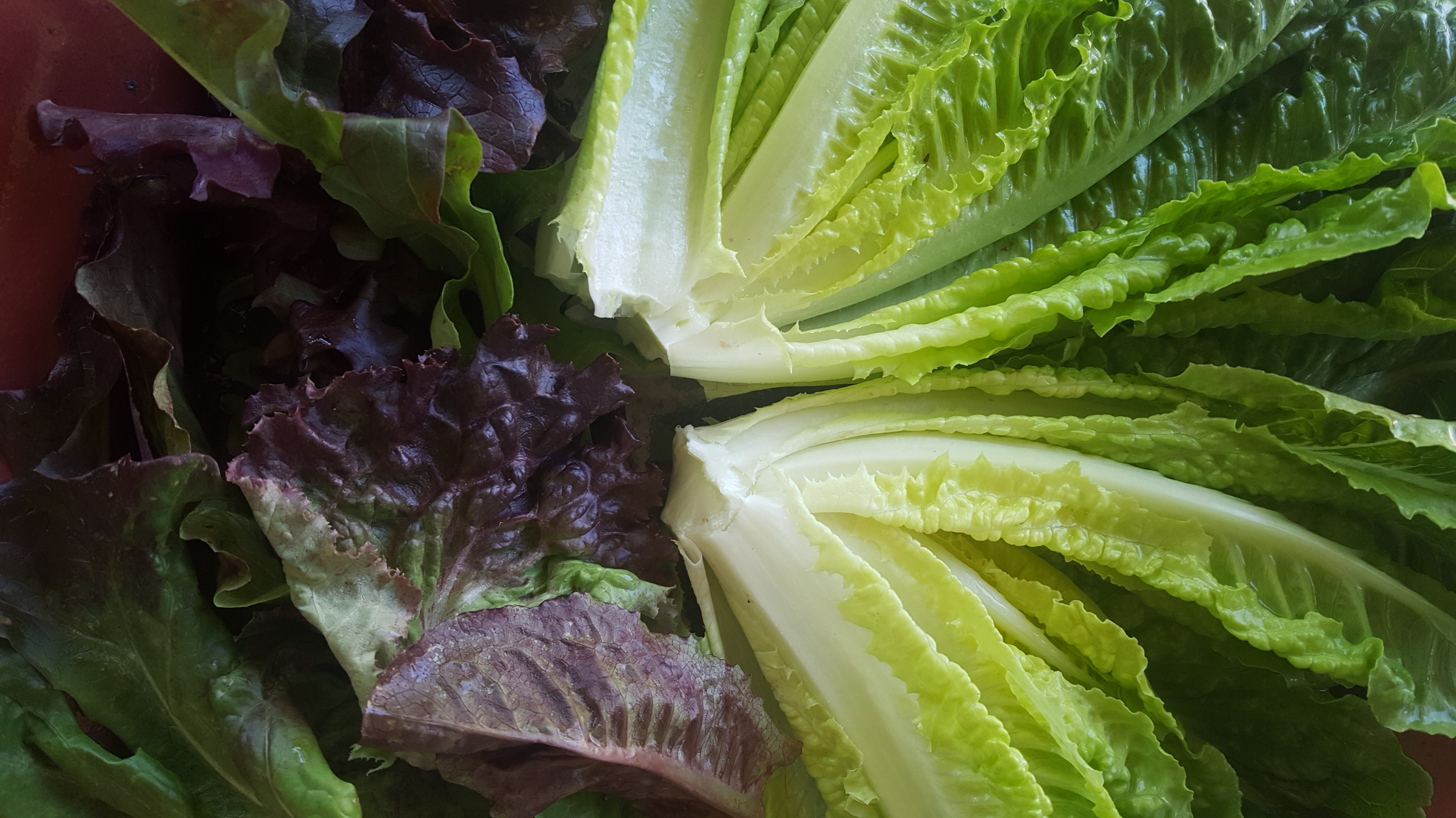
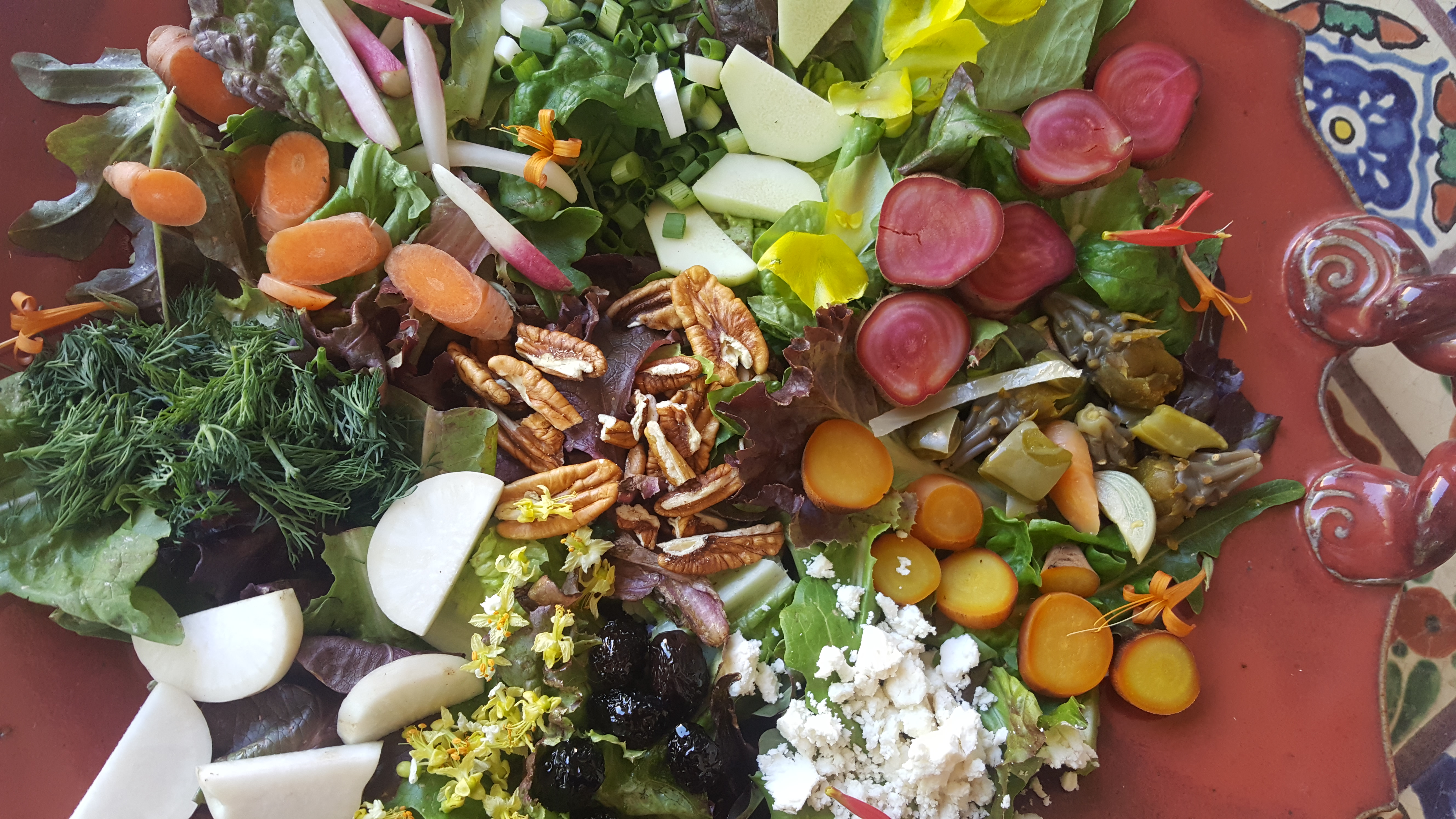
Romaine hearts and assorted red lettuces

Winter lettuces are still around for a short time more, and the weather is finally warm enough that I feel like eating a salad. Here is a salad made with ingredients I had on hand. I traded for most items, the exceptions being the items I made. I hope this serves as an inspiration to go to a farmers’ market, use little bits of what you have in the refrigerator, go into the desert near your home, and forage in your yard.

blog 20160415_093007

Hakurei turnips, Chioggia and Golden beets, Carrots, Kholrabi, , and French Breakfast Radishes.

Hakurei “salad turnips” are so sweet and tender, they can win over stubborn turnip haters, and are a treat raw for turnip lovers.

I steamed and sliced the beets, peeled and sliced the kholrabi, and simply sliced the turnips, carrots and radishes.

I'itoi onions and dill.

I’itoi onions and dill.

For fresh herbs, I used dill and I’itoi onions. I like the green tops as much as the white parts.

Crusts of Small Planet Bakery Cottage Wheat make excellent croutons. Just chop, drizzle with olive oil, salt, and garlic powder (my guilty pleasure), then toast in a skillet until crunchy.

blog 20160415_104817

Heels of Cottage Wheat.

blog 20160415_104958

Cast iron skillet croutons.


blog 20160415_085613

Brined goat feta.

20150910_120612

Mango Salsa.

Last fall, I goat/house sat for a friend, and this is the feta I made from the milk. Mango the goat has mellowed over the years since I first learned to milk and she first learned to be milked.

IMG_3508

The heard on the grassland.


IMG_3517

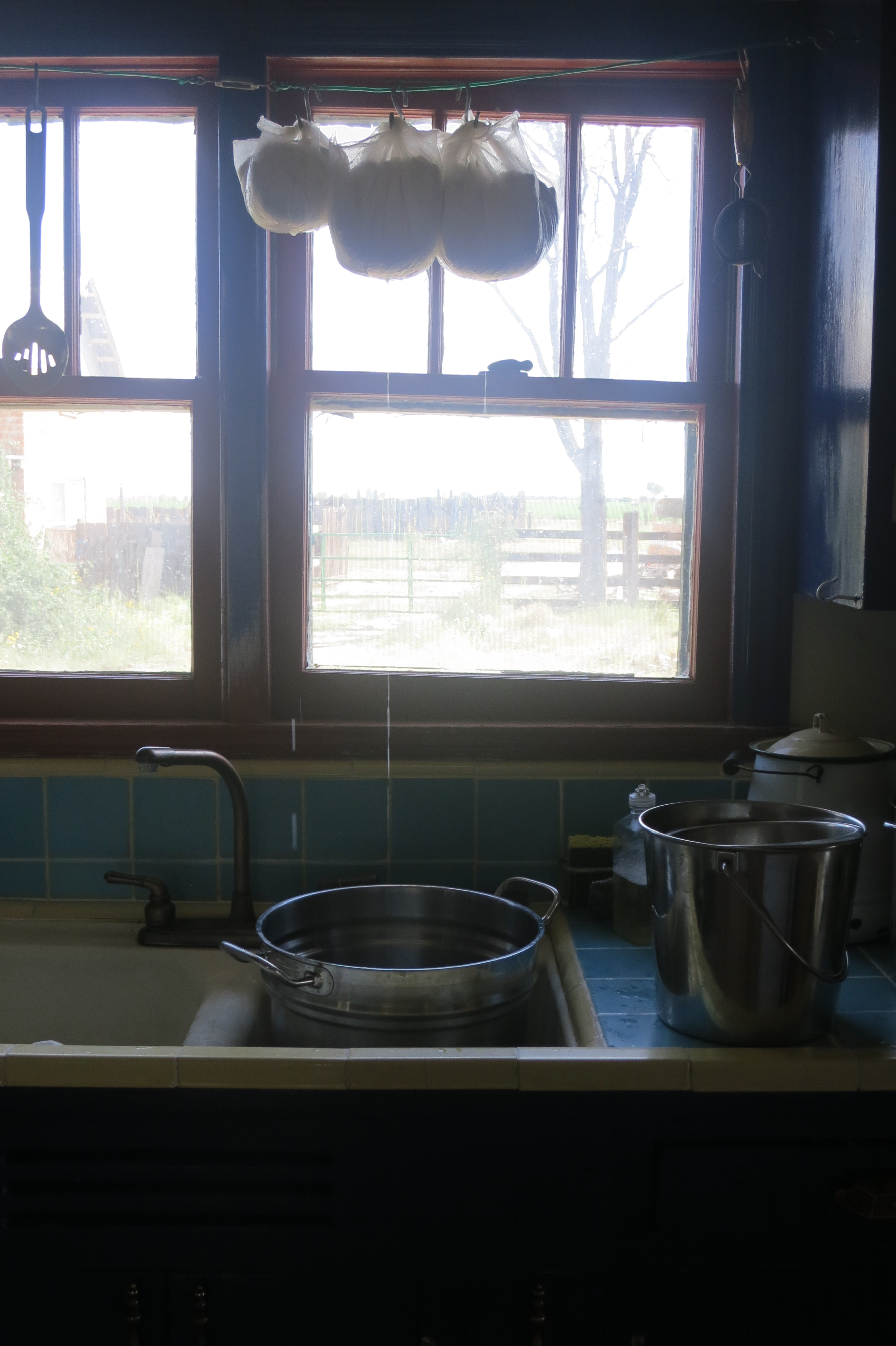
Fresh cheese curds draining whey.

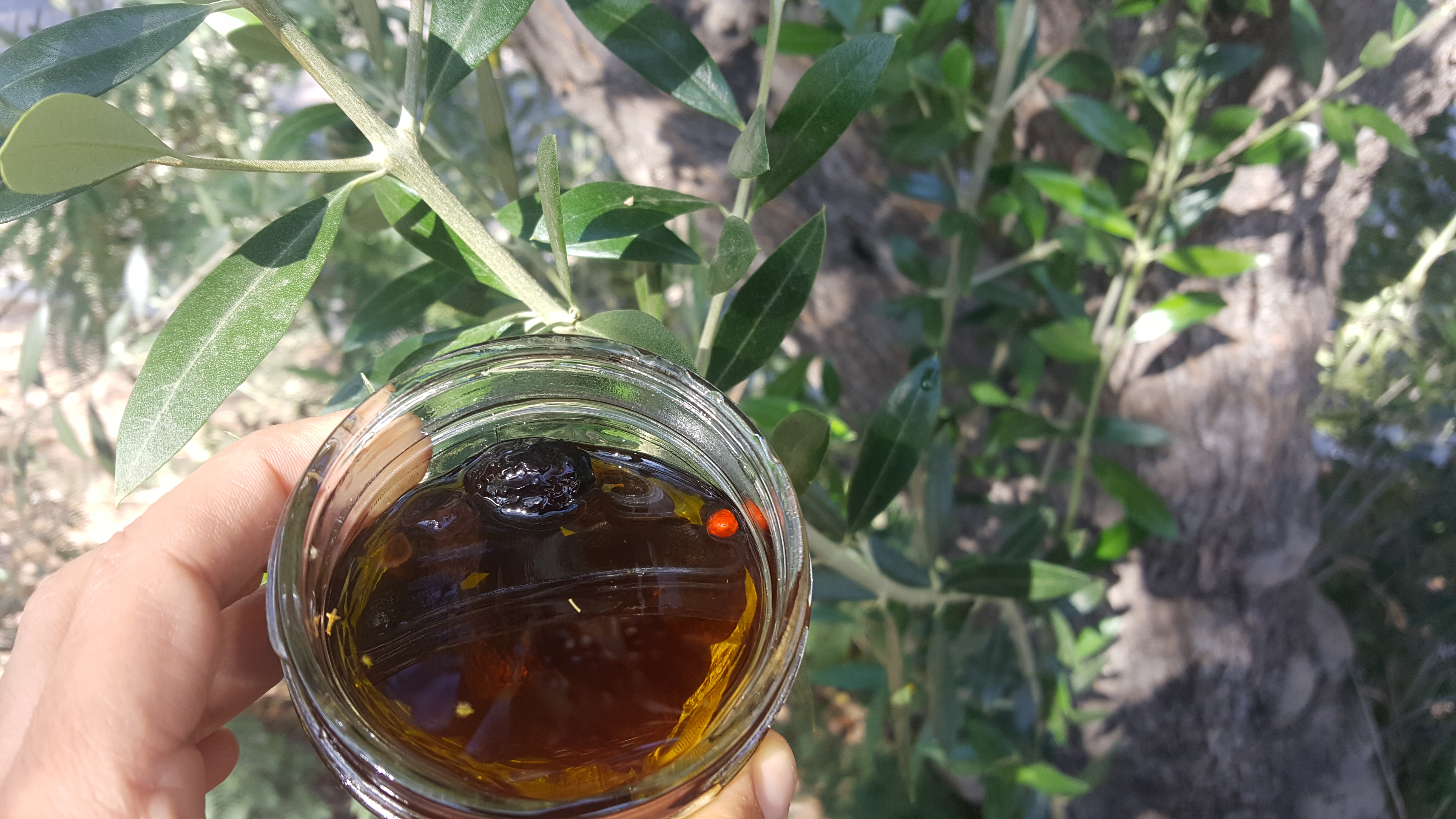
Solar cured olives from Bean Tree Farm.

Solar cured olives from Bean Tree Farm.

Pickles! Cholla buds and nopalitos en escabeche.

Pickles! Cholla buds and nopalitos en escabeche.

blog 20160415_103012

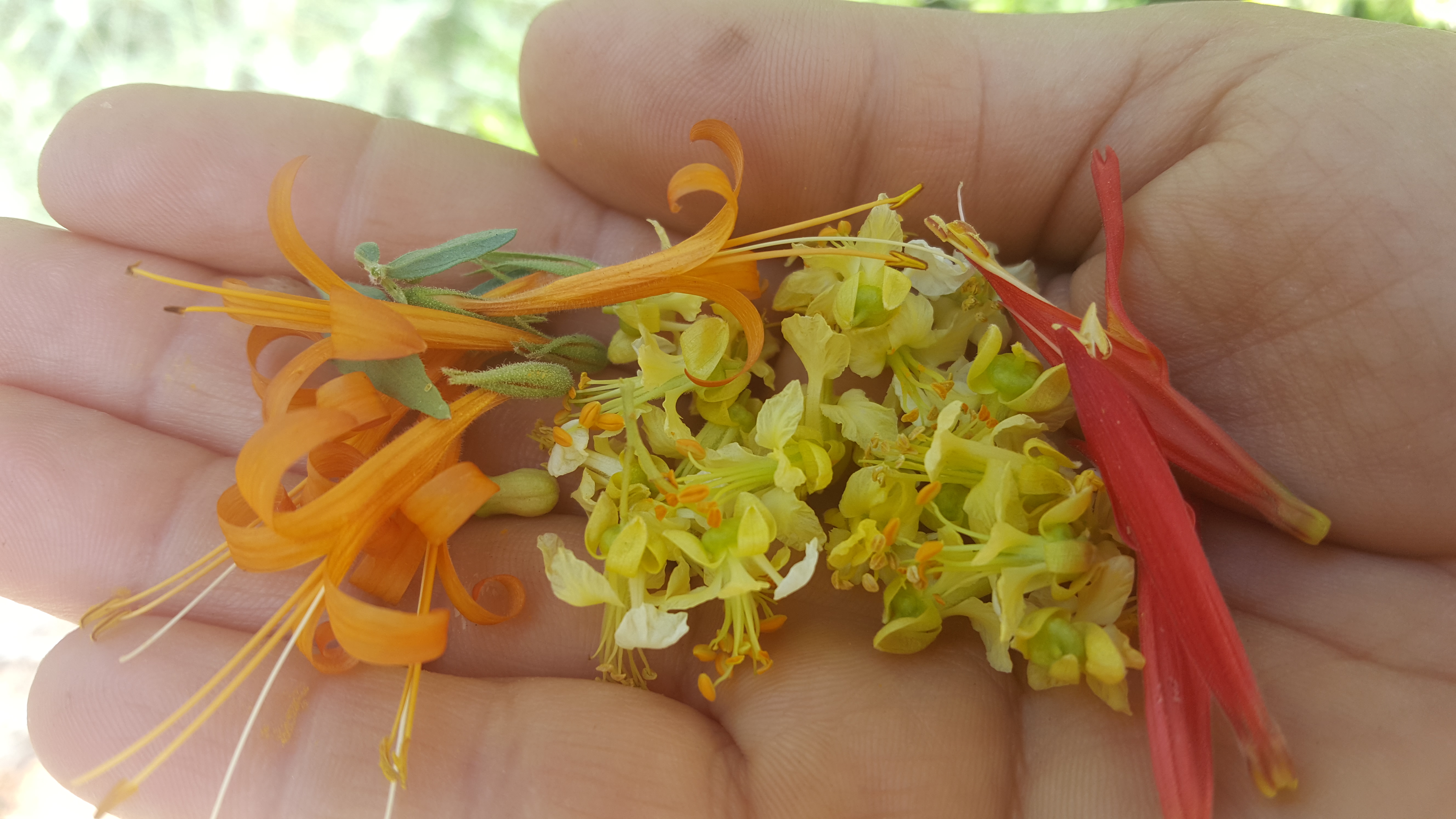
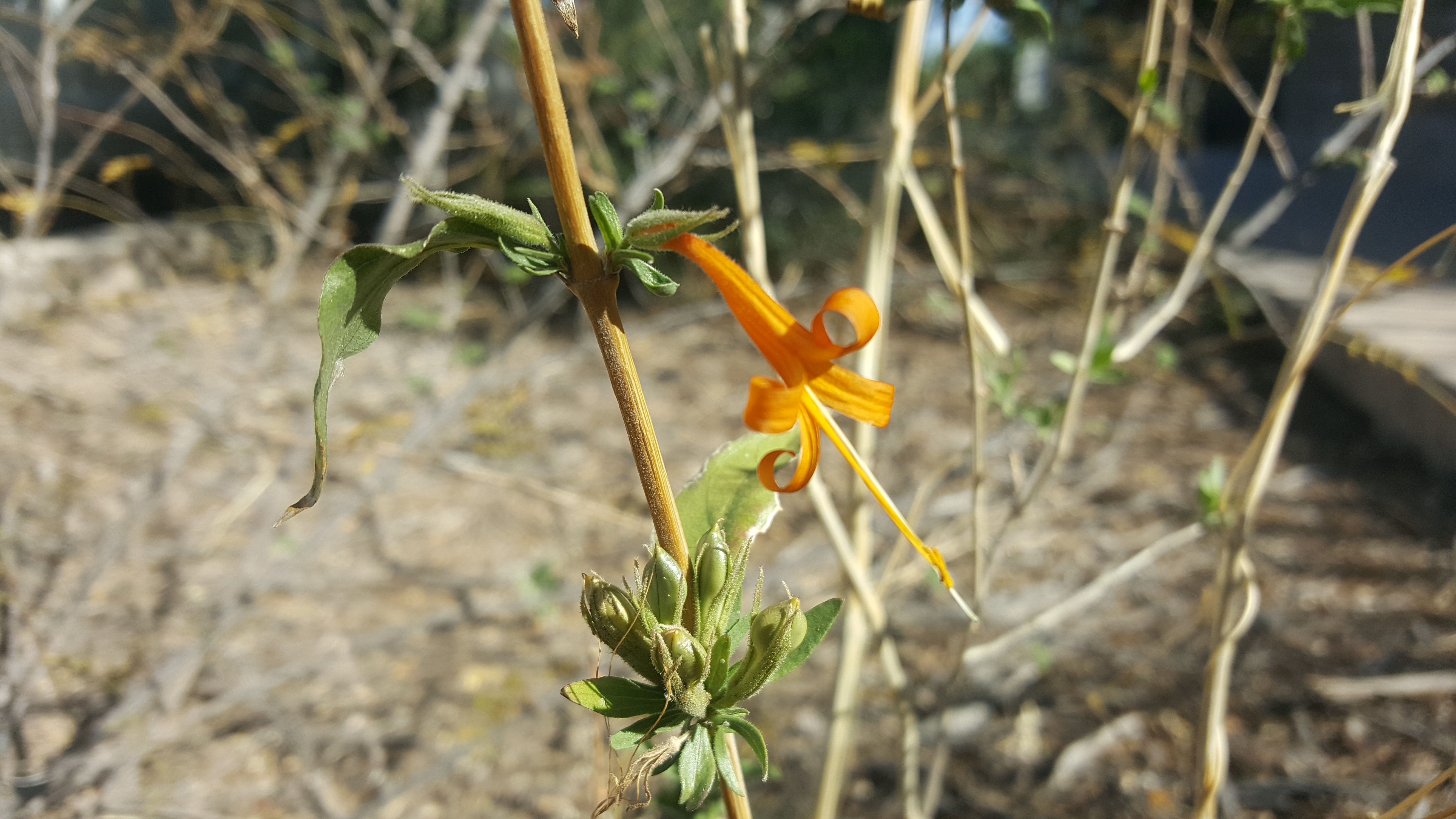
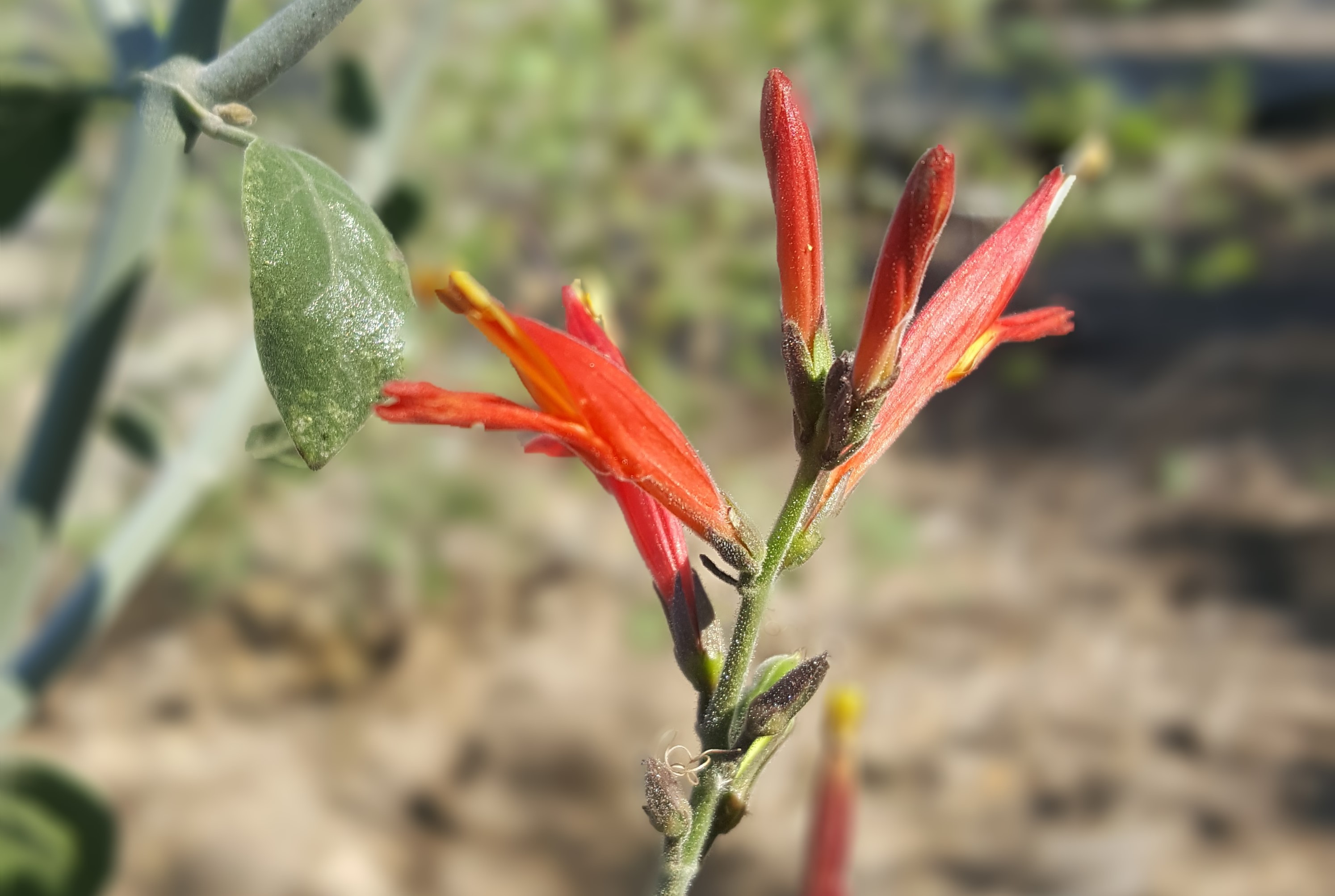
Fresh flowers for garnish.


blog 20160415_090830

Desert Honeysuckle, Anisacanthus thurberi.

blog 20160415_104348

Foothills Palo Verde, Parkinsonia microphylla.

blog 20160415_091001

Chuparosa, Justicia californica.

Prickly Pear Cactus flowers are a fleshy, vegetal garnish. Opuntia engelmannii

Prickly Pear Cactus flowers are a fleshy, vegetal garnish. Opuntia engelmannii

blog 20160415_103501

Dress with olive oil and lemon juice. Enjoy!


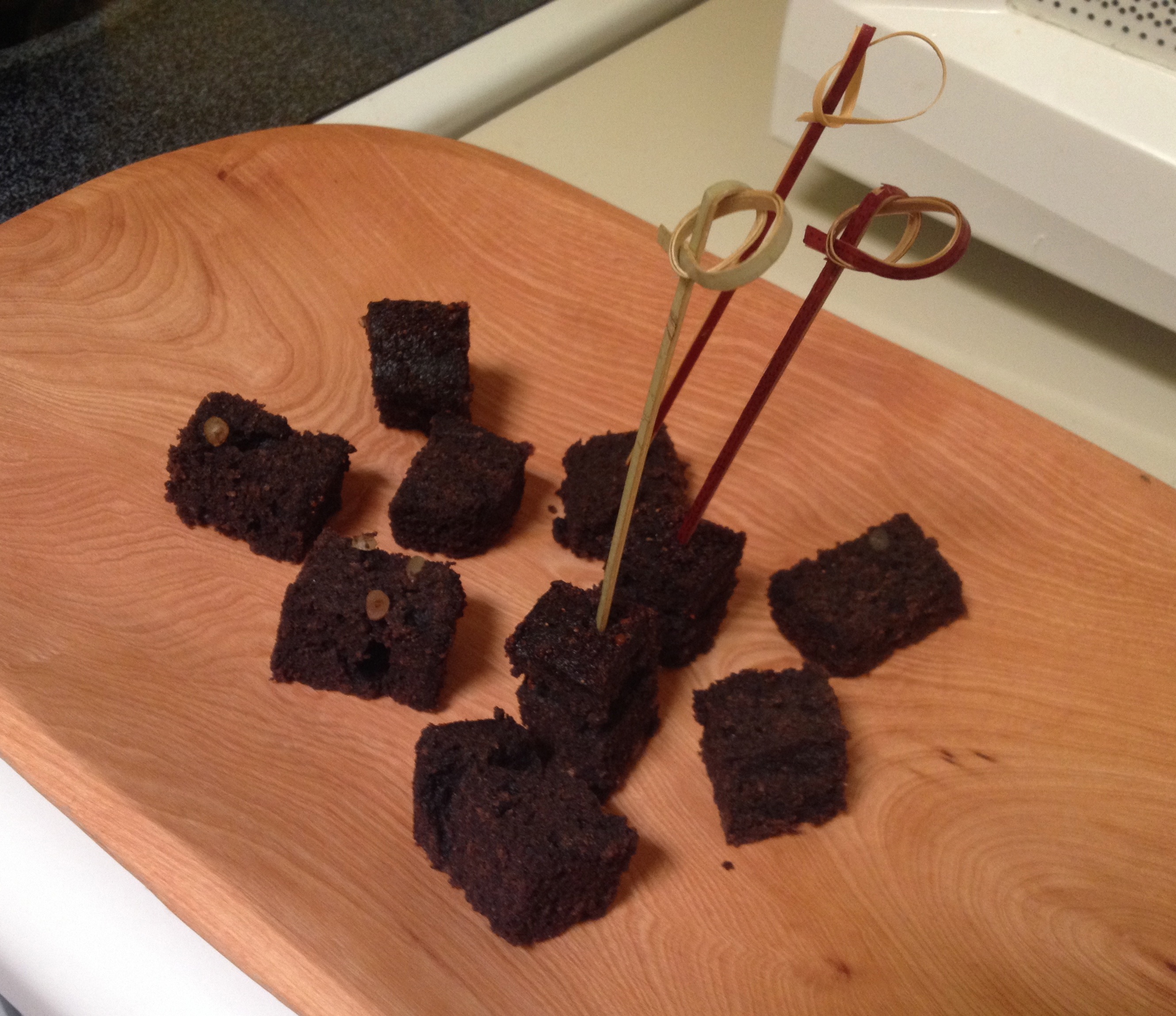
Mole Dulce Brownies

mole brownies 002

Amy here, running, needing something for a cookie trade! Recipe below.

Mole Dulce is perfect in desserts and sweet treats, like in EXO Roast Co‘s Mole Latte. My friend Amy there is always asking for more mole. I developed a Mole Dulce variation without the graham cracker, so the drink would be wheat free. Someday I’ll get to making a label for that, so people can buy it on the shelf.

mole latte

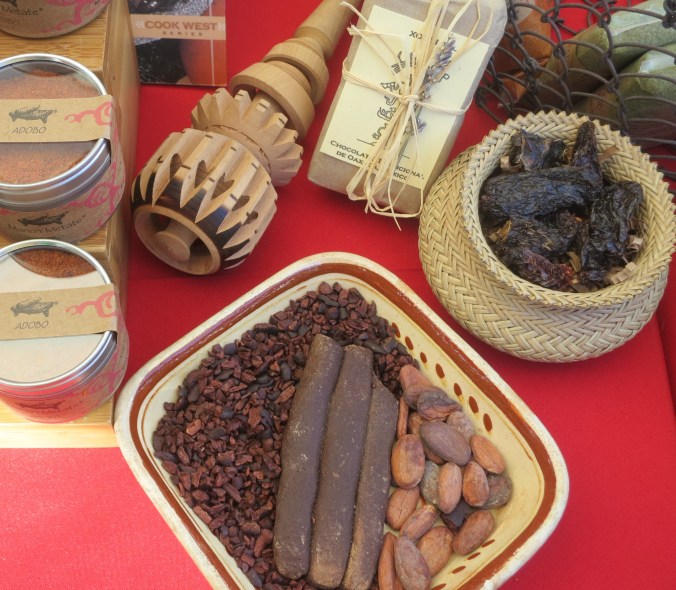
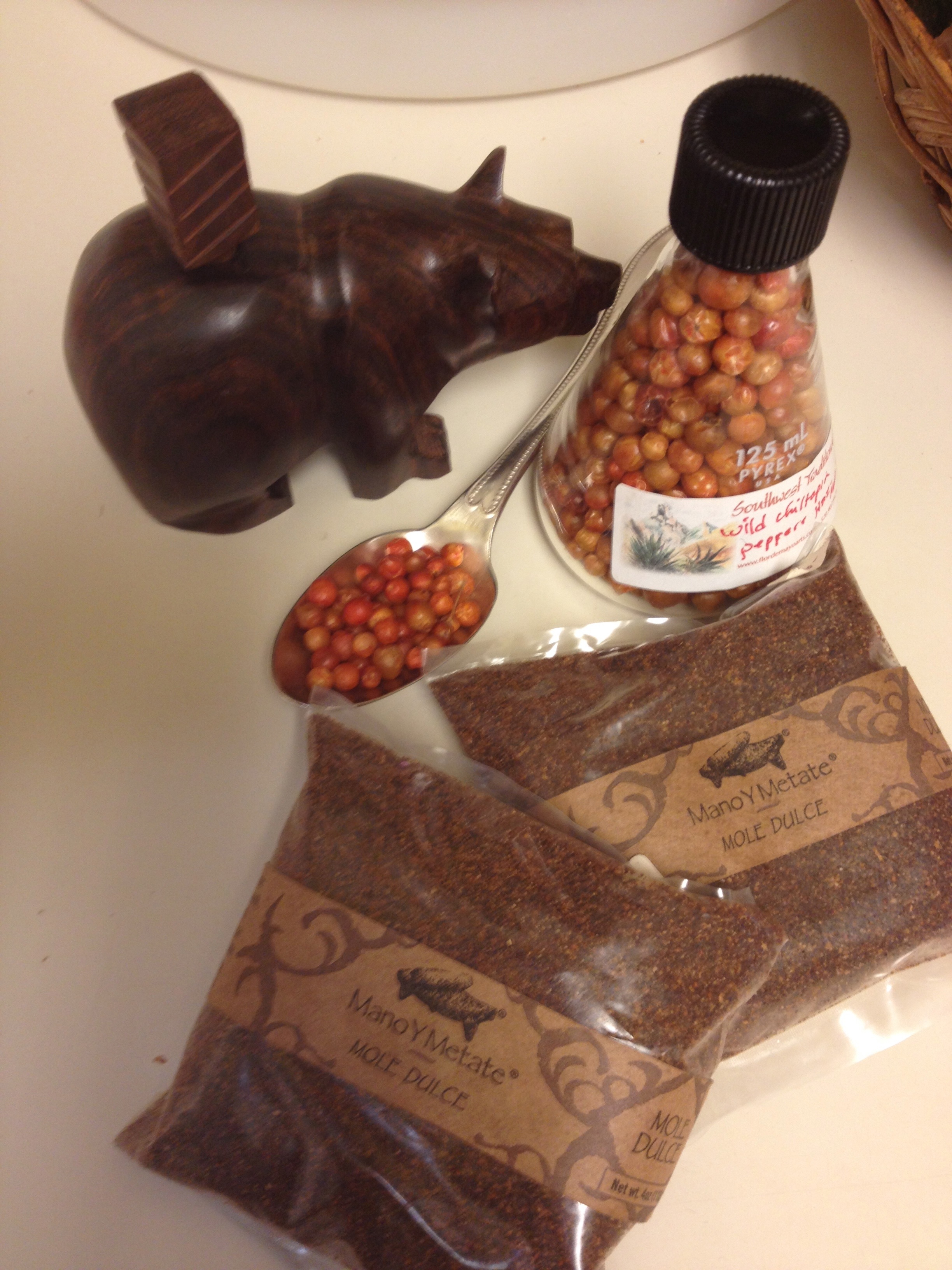
Savory, salty, spicy Mole Dulce gets its sweetness from raisins and Xocolatl, very fine Oaxacan drinking chocolate imported by my friends Yissel and Dave. The beautiful brown paper wrap with dried lavender protects the hand formed sticks.

034

The chocolate contains cacao, cane sugar, almonds and cinnamon. The Mole Dulce powder contains additional almonds, giving body and flavor to the sauce. Or in this case, BROWNIES!

Mano Y Metate Mole Dulce Brownies

4 eggs (room temperature)
2 cups sugar
2 sticks softened butter (8 ounces)
1 1/4 cup cocoa powder
1 teaspoon vanilla
1/2 cup flour
1/4 teaspoon salt
3 tablespoons Mole Dulce powder (www.manoYmetate.com)
Mole Dulce powder for topping, 5 tablespoons or so, to taste
Preheat the oven to 300 degrees F. Line a 9” x13” baking pan (or 2 pans, each 8”x8”) with parchment paper.

With an electric mixer, beat the eggs just until fluffy. Beat in sugar. Add remaining ingredients and beat. Pour batter into pan(s) and spread to level. Push Mole Dulce powder though a wire strainer to evenly distribute over the batter as a topping. Bake for 35 minutes, or until a toothpick inserted comes out with crumbs instead of batter on it.

I like them thinner, so there’s more spicy, chocolaty topping per bite. Feel free to take it out sooner or bake them in a smaller pan if you like them gooey, but the edges of the pan always seem to go first around here.

Now, off to the cookie trade. And to grind more mole.

Love, light and peace to all! Amy

Bean and Corn Cakes with Mole

IMG_3597

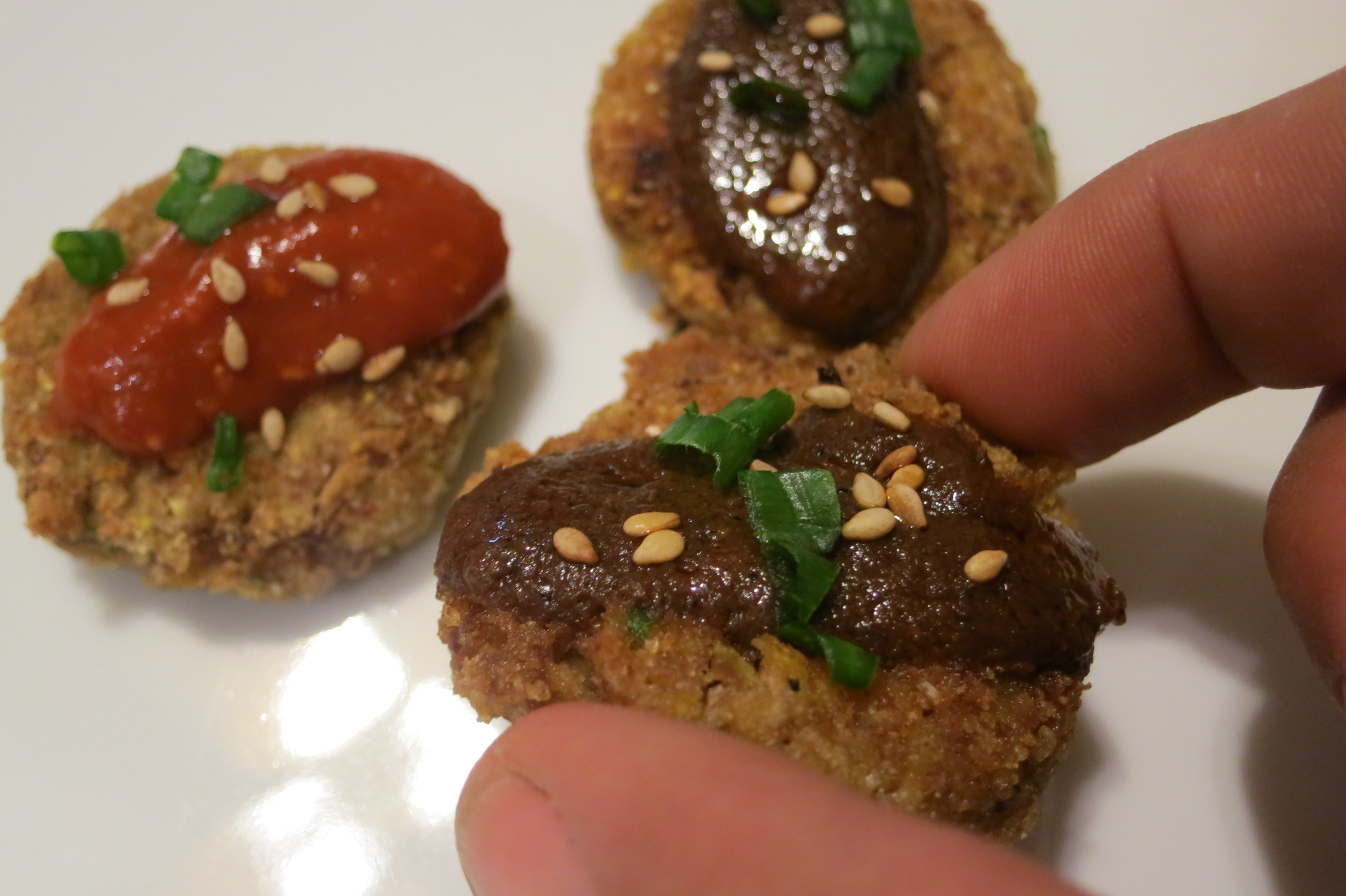
Hello, Amy Valdés Schwemm here. When I want to offer people several varieties of mole to taste, I make small batches of each sauce and serve them in mini electric crocs. Guests can spoon mole over servings of turkey or these bean and corn cakes. They make a perfect vegetarian main course or a hearty side.

011

If you want a taste, meet me at The Food Conspiracy Co-op Saturday, November 21, 4-7pm. There will be other samples, including wine, and everyone (not just members) gets 10% off everything.

The recipe for Bean and Chicos Dinner Cakes was published in Furrow to Fire: Recipes from the Native Seeds/SEARCH Community, its author unknown to the editors. Chicos are New Mexican corn kernels roasted when still fresh, then dried. Sometimes they have a smokey taste that can almost be a seasoning if you cook a handful with a pot of beans. I often substitute Tohono O’odham gai’iwsa or Mexican posole. Using a bean with a creamy texture helps to hold the patties together. I’ve made it countless times, sometimes substituting ingredients wildly. They hold in a warm oven perfectly until ready to serve.

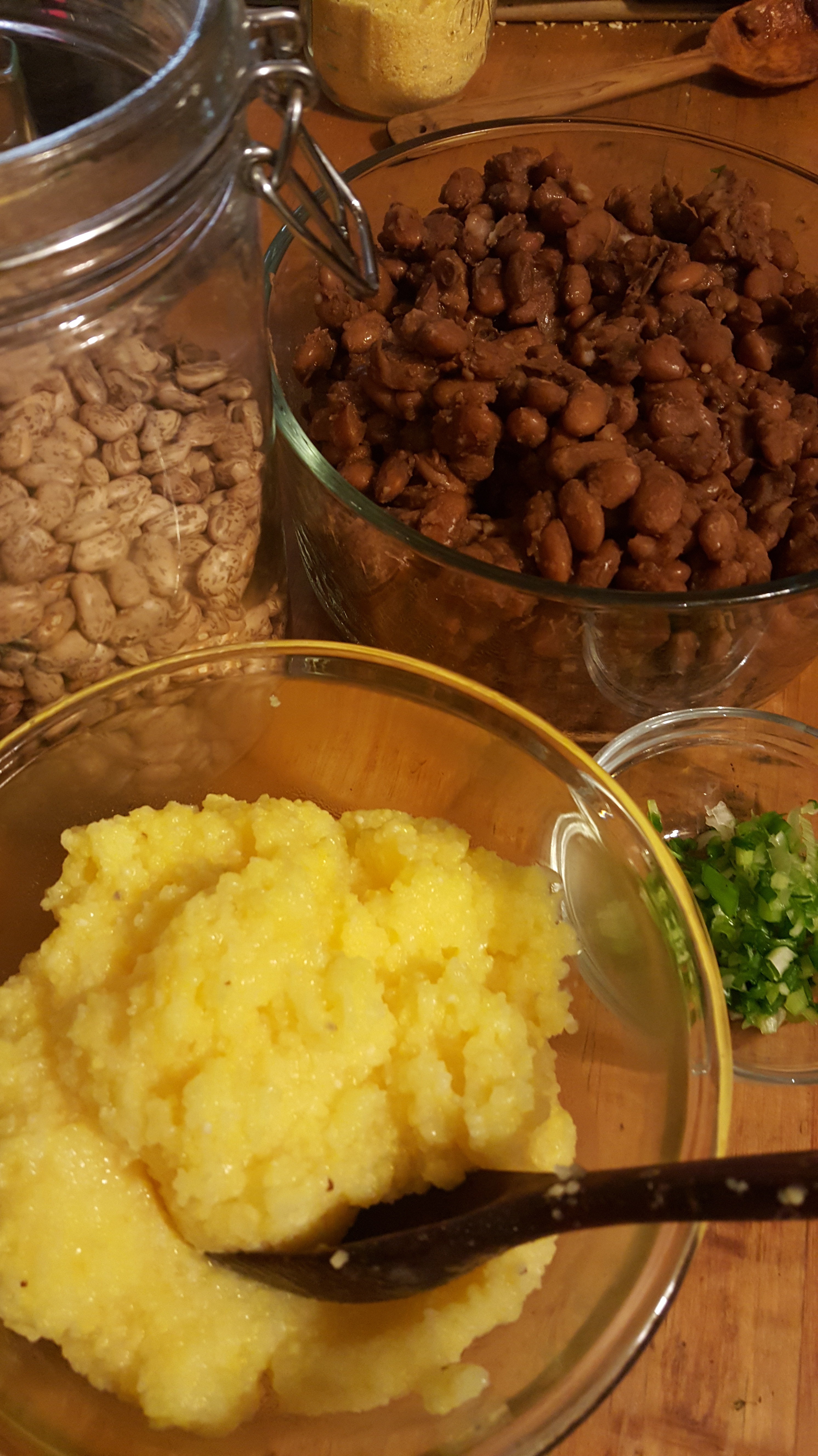
The photo above used lots of white posole and some canario beans. For tomorrow’s tasting, I’m using plenty of pintos and a little yellow polenta. No need to measure or time the polenta, as this recipe is so forgiving. Kneading in dry cornmeal when forming the patties (instead of just mixing it in) will fix the mixture at the perfect consistency.

20151120_205304

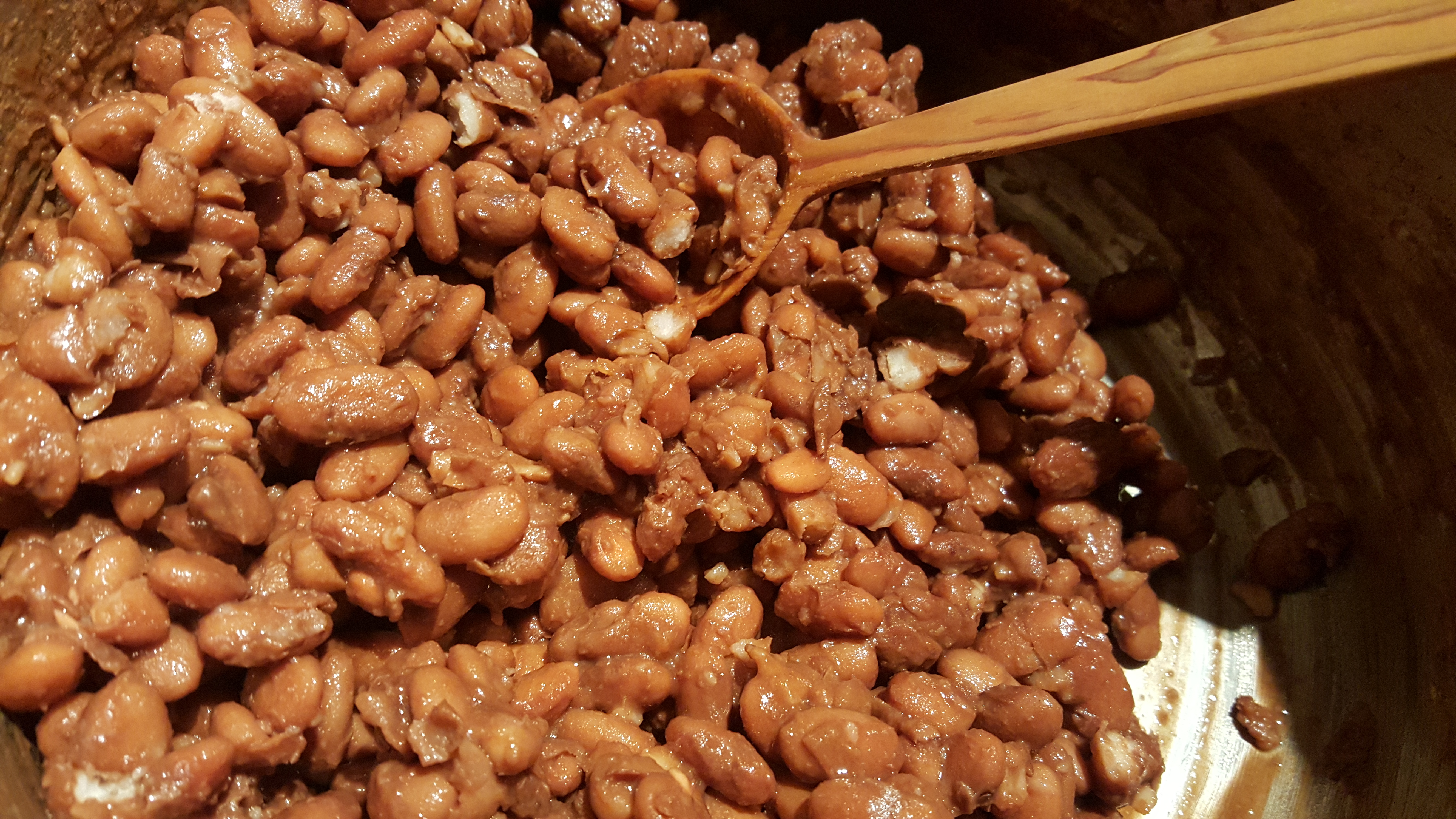
I like to carefully reduce the bean cooking liquid, affectionately referred to as bean juice in our family, because I can’t imagine draining it.

20151120_202041

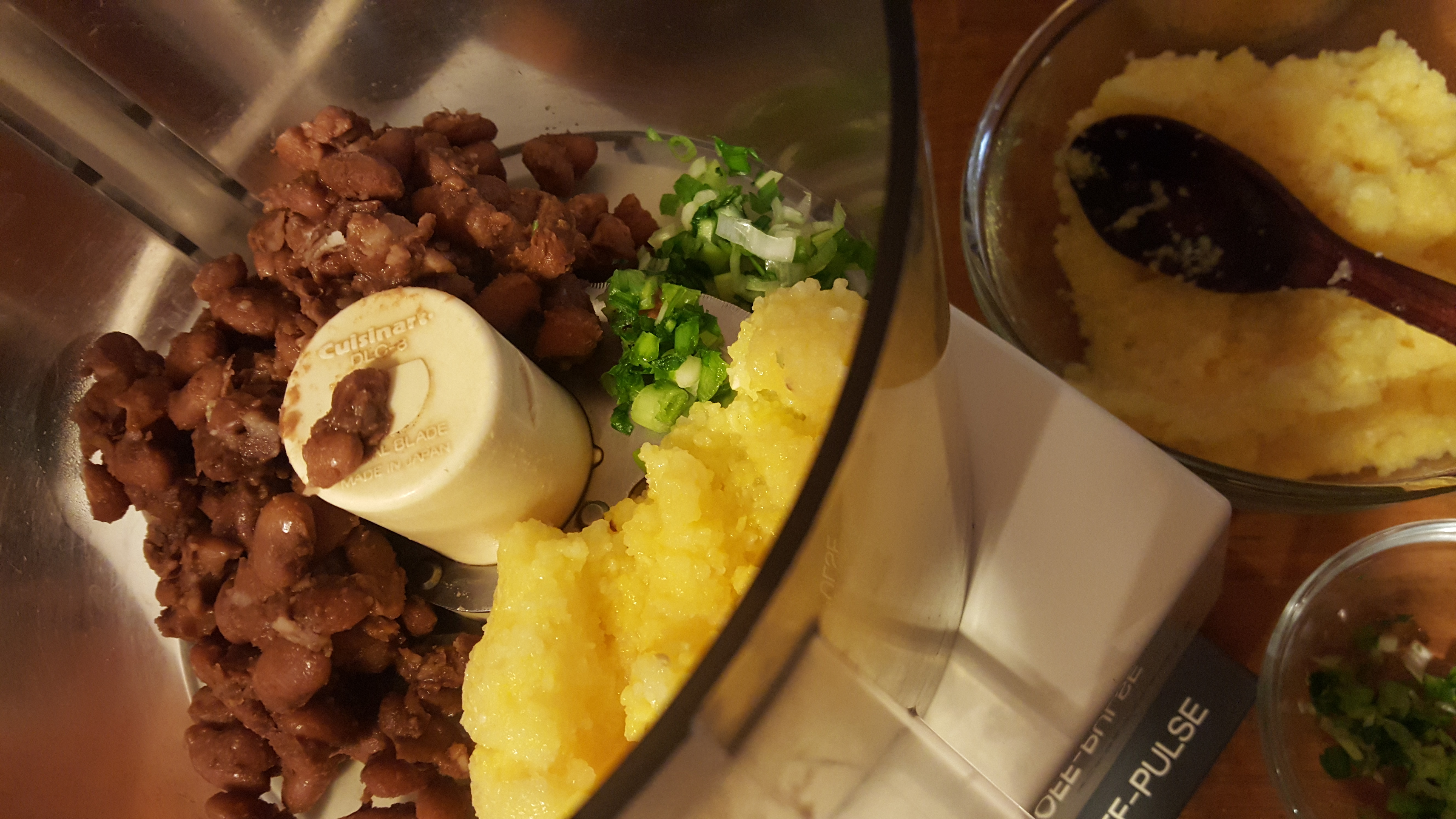
Pulse everything in the food processor or mash by hand, and season to taste. Make big or small cakes to suit the occasion.

20151120_210134_001(1)


1/2 cup chicos

1 cup beans, cooked and drained

2 tablespoons cornmeal

1 I’itoi or green onion, minced

salt to taste

Options:

1/4 teaspoon Mexican oregano

1 teaspoon chile powder (or substitute Mano Y Metate Adobo powder)

Place chicos and enough water to cover in a medium saucepan and bring to a boil. Reduce heat to a simmer and cook for about one hour, until chicos are fairly soft. Cool slightly, then drain and coarsely chop. Set aside.

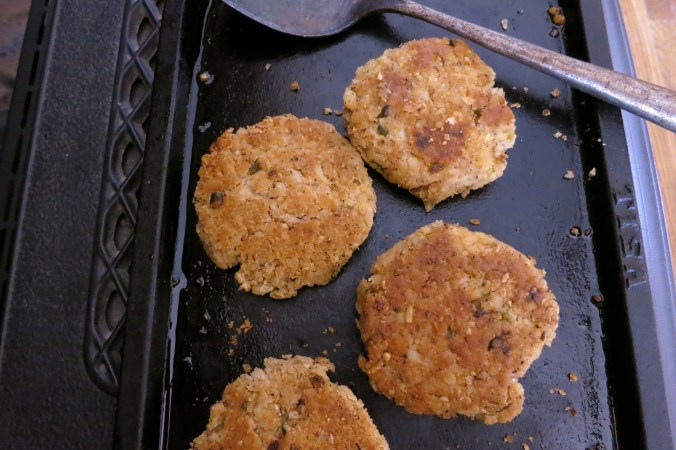
Combine beans, cornmeal, onion and chile powder and either mash by hand or whirl briefly in a food processor. Combine with the chicos, adding salt and adjusting seasoning to taste. Shape into about 1/3 inch thick patties.

In a lightly oiled skillet over medium heat, brown dinner cakes on each side. Serve with mole, pipián, or salsa.


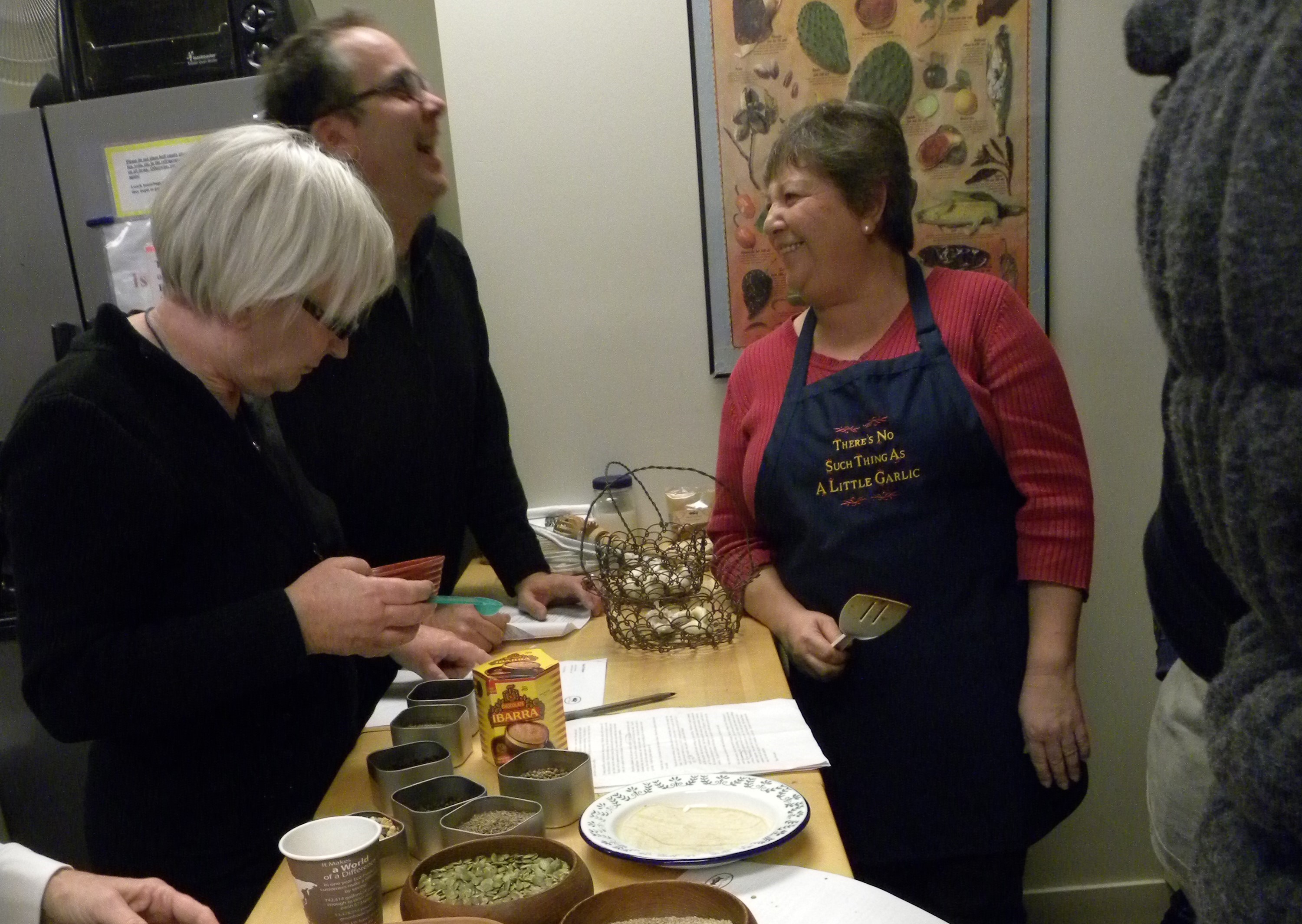
My Aunt Bertie has shaped and browned lots of these little things with me. Here she is taking a break from flipping during a cooking class my family taught. We love to cook together!

bertie cooking dbg 11


Black Teparies Make a Come-Back!

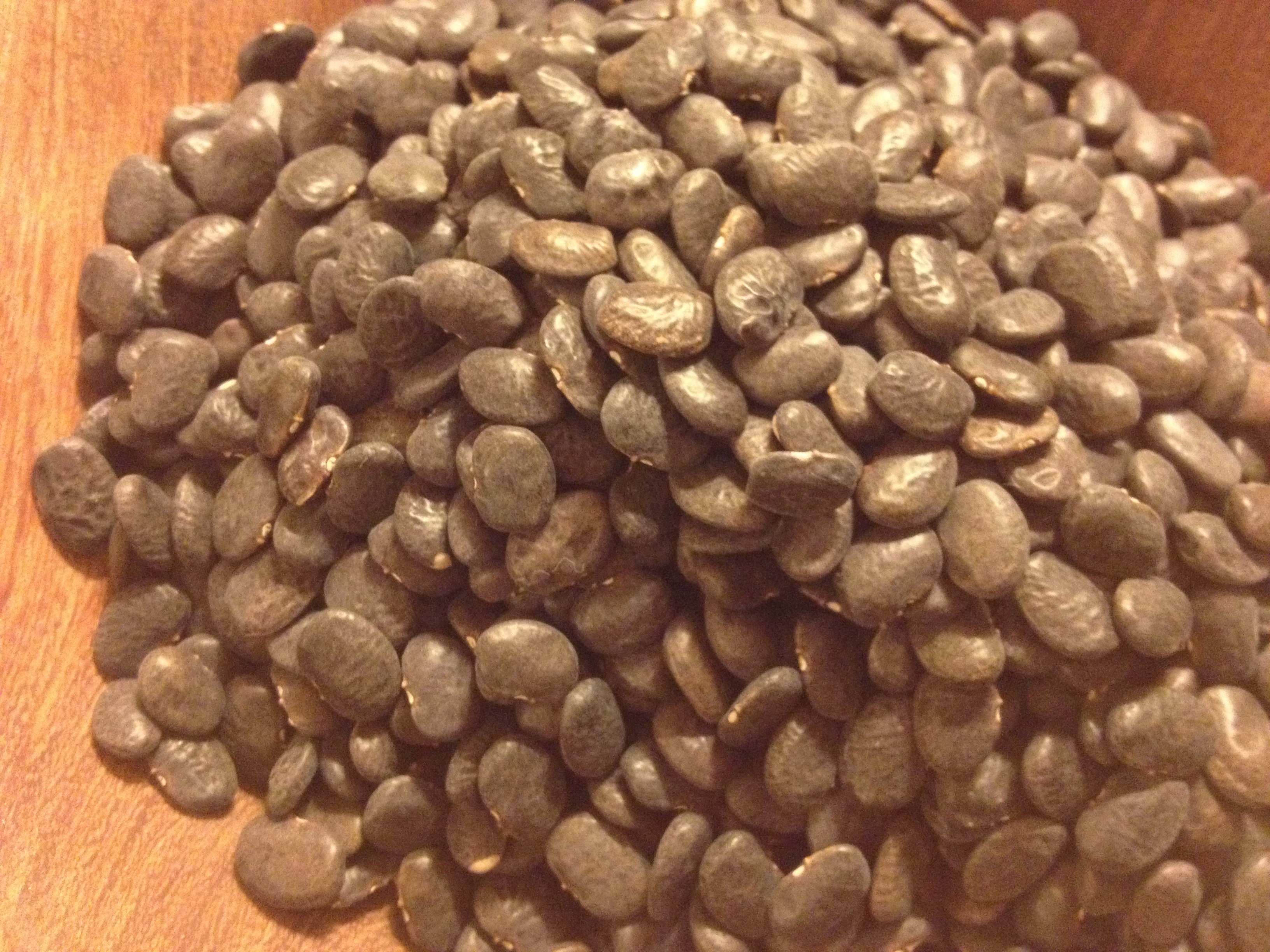
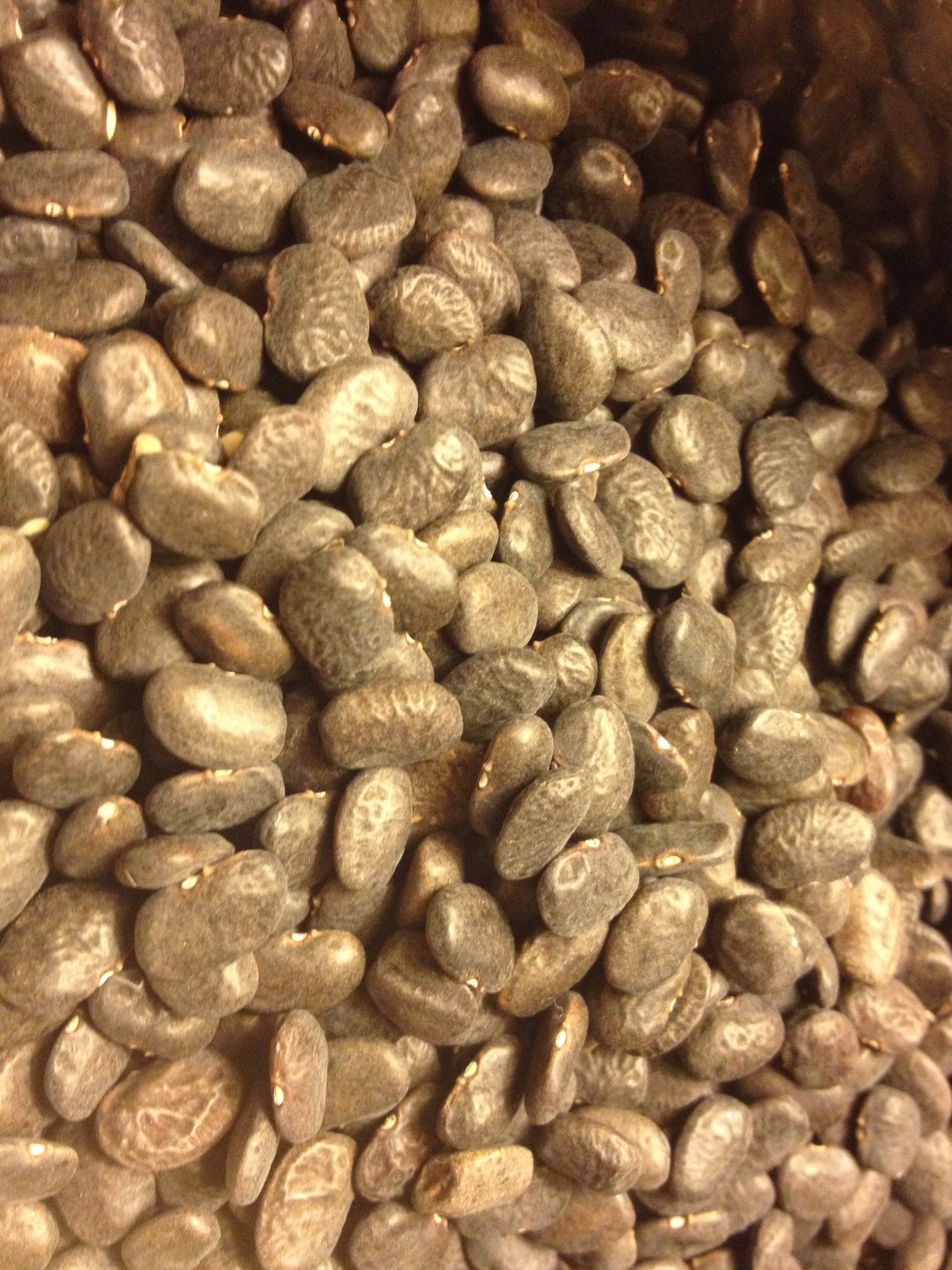
Rich black teary beans dried, ready to hydrate for cooking

Rich black tepary beans dried, ready to hydrate for cooking

In some light they are a dull charcoal difficult to spot if the pods shatter onto the ground. Sometimes they appear shiny black or opalescent. Somehow black teparies appear to have an antiquity about them–mysteriously harking back to a time rich in prehistory. Tia Marta here to tell you a little about the black tepary bean’s odyssey back into cultivation and into the cooking pots of Southwesterners once again.
Shiny black teparies close up

Shiny black teparies close up

Back in 1912, before WWI and the rapid plunge the “remote” Southwest unavoidably took into East-Coast food fads, there was a crop survey done of the many types of tepary beans being grown and used by different Native American families and communities throughout the Borderlands. The diversity at that time was astounding—some 40+ different colors, forms, sizes, speckles, of tepary beans were reported. Within about a decade there remained only a couple of dominant tepary colors—“red” (an orangy-brown) and white. [For more history, check out Volume 5, No.1 of Desert Plants Journal published by the University of Arizona CALS. Specifically this issue is devoted to tepary beans, and includes an article by yours truly.]

The neat thing about cultivars that are still genetically close to their wild ancestors is that they still contain a diversity of genes that can “pop out” occasionally as visibly different seeds. In the case of the teparies, every so often in a harvest of white teparies, for example, there may turn up a few coral pink, or blue speckled, or even black beans. At the University of Arizona’s Maricopa Experimental Farm, an amazing crop researcher, Mike Sheedy, was, for several years growing teparies to isolate some of these genetic “sports”. He used assistance from his kids (In farming, child labor rules just can’t apply) to help pick out the odd-ball seeds from hundreds of pounds of harvested teparies. Over the years, he grew the separated colors in isolation from each other to preserve color purity. Before research funds ran out he had “re-created” an ancient lineage of black teparies—i.e. he has assisted the ancient genes to come again to the fore, to bring the “invisible” genotype back into the “visible” phenotypes. At termination of his research project he generously donated the black tepary collection to the traditional Pima farming family of Ramona and Terry Button.
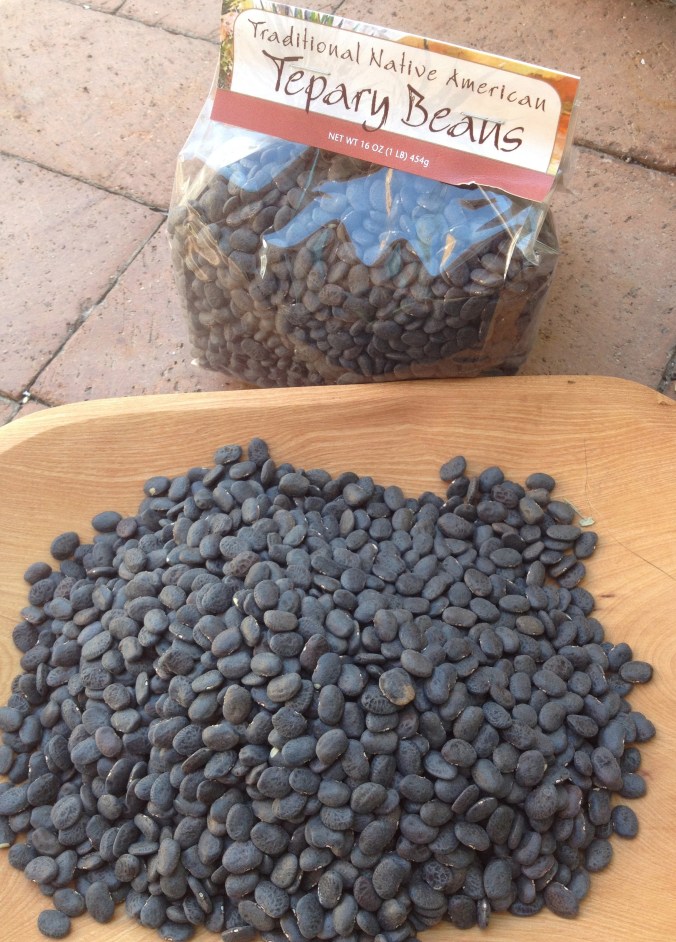
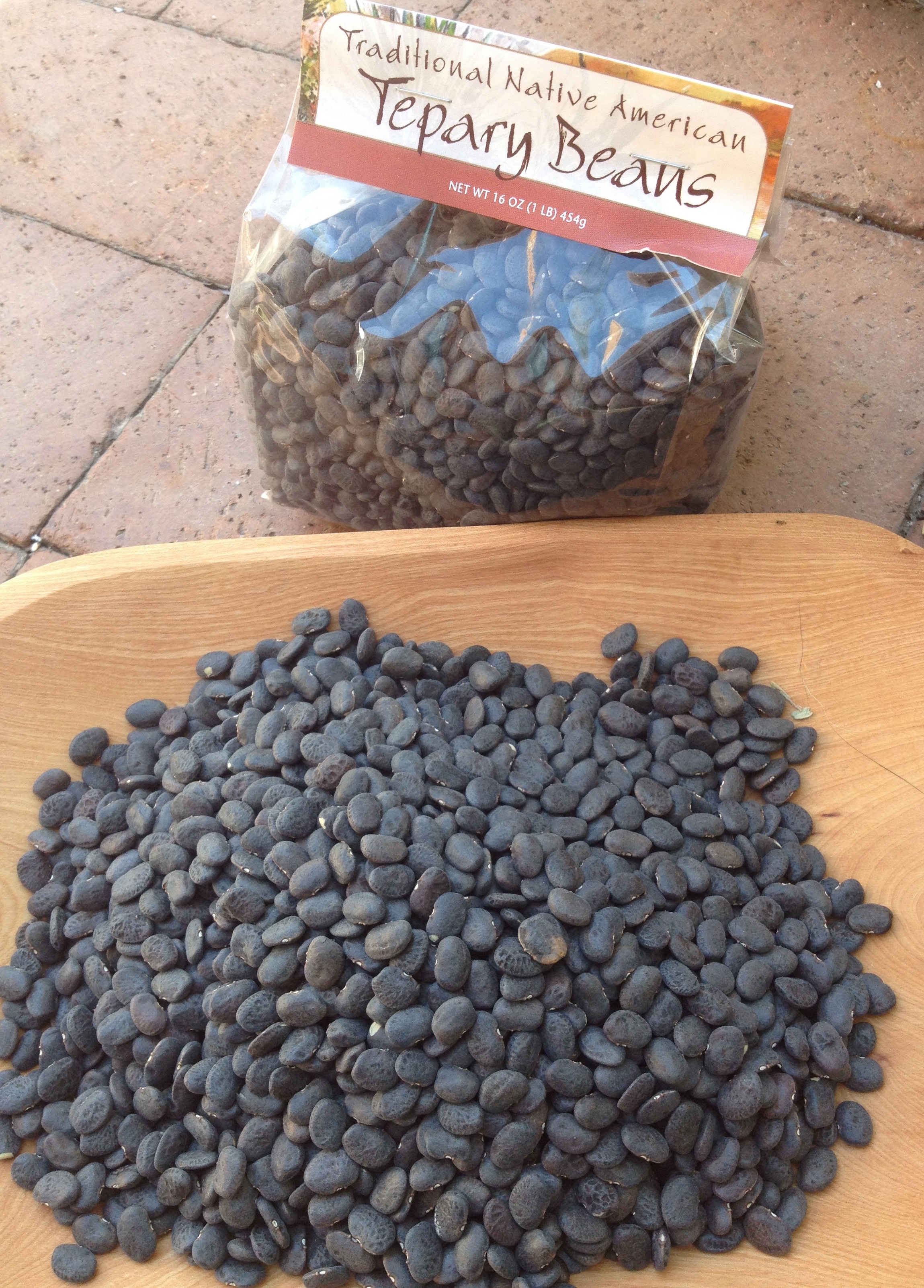
Native Black Tepary Beans & Flor de Mayo 1-lb pkg

Native Black Tepary Beans & Flor de Mayo 1-lb pkg

Now—tah-dah!—at last black teparies are in agricultural production on ancestral lands! The public can purchase these little food gems of antiquity now at the NativeSeeds/SEARCH store (3061 N Campbell Ave, Tucson) www.nativeseeds.org , at the Flor de Mayo booth at Sunday St Philips Farmers Market www.flordemayoarts.com , or online via www.ramonafarms.com.
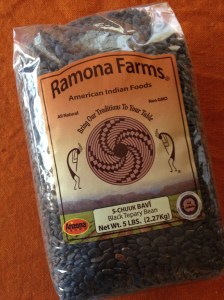
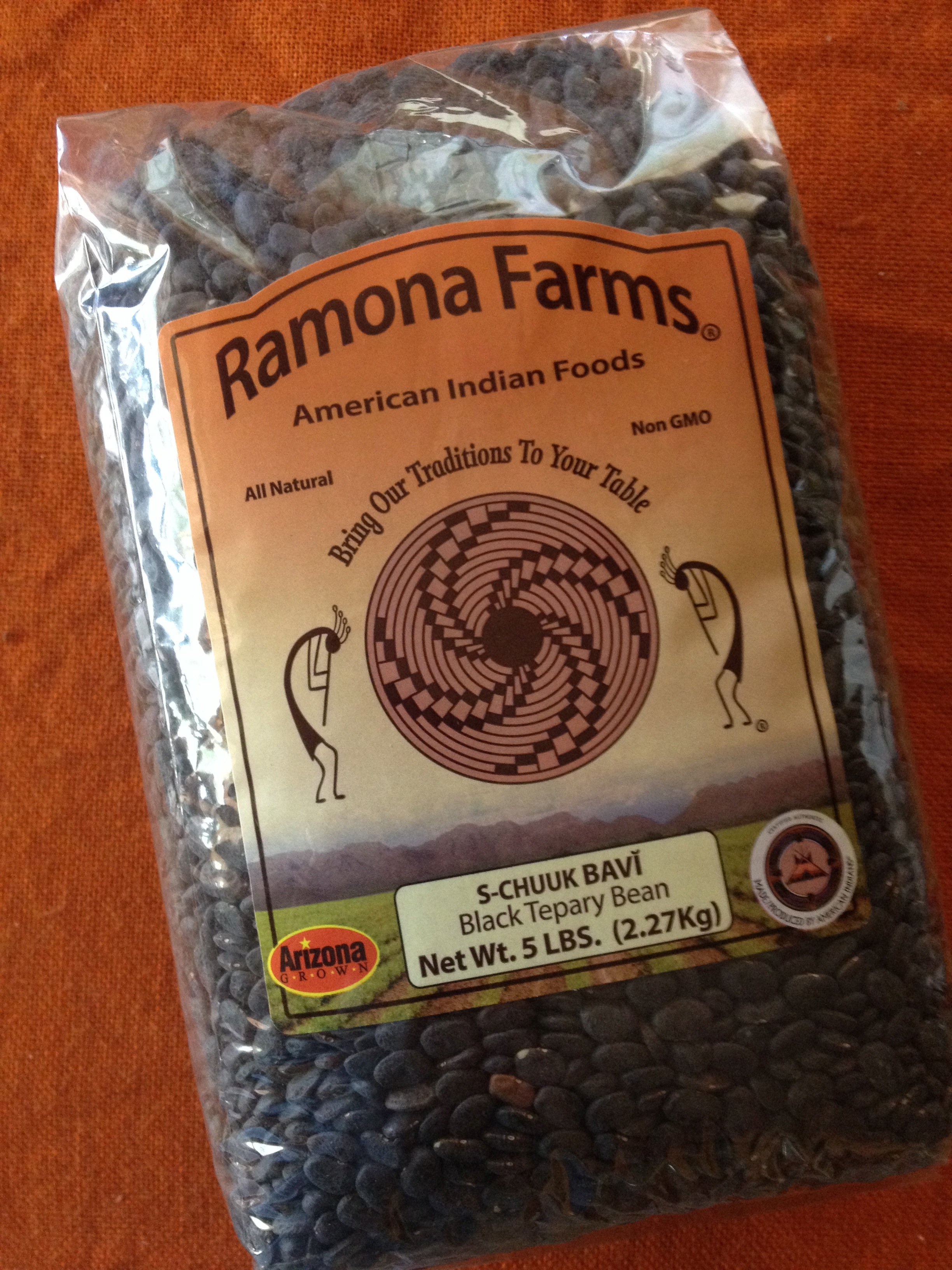
S-Chuuk Bavi from Ramona Farms

Black teparies are very different in taste from the red or white teparies—although all teparies are much richer than their more distant cousins like the common bean, lima or black-eye pea. Black tepary, schkug ba:wĭ of the Tohono and Akimel O’odham, is the deepest, nuttiest of all, with an earthy bouquet and a slightly bitter after-note reminiscent of coffee. Well, you will just have to try your own taste buds on them!

The public will have an exciting opportunity to taste black teparies prepared by none other than our beloved Tucson Chef Janos Wilder (of Downtown Kitchen fame) at the upcoming Farm to Table Picnic feast at Mission Garden, Sunday afternoon, October 18, 4-6:30pm. Janos is not letting on what his special black tepary recipe will be, but we can be sure it’ll be sensational. [The picnic is by pre-registration only so buy your tickets soon! Online purchase is via the Friends of Tucson’s Birthplace site www.tucsonsbirthplace.org.]
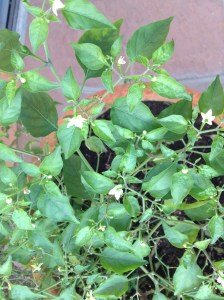
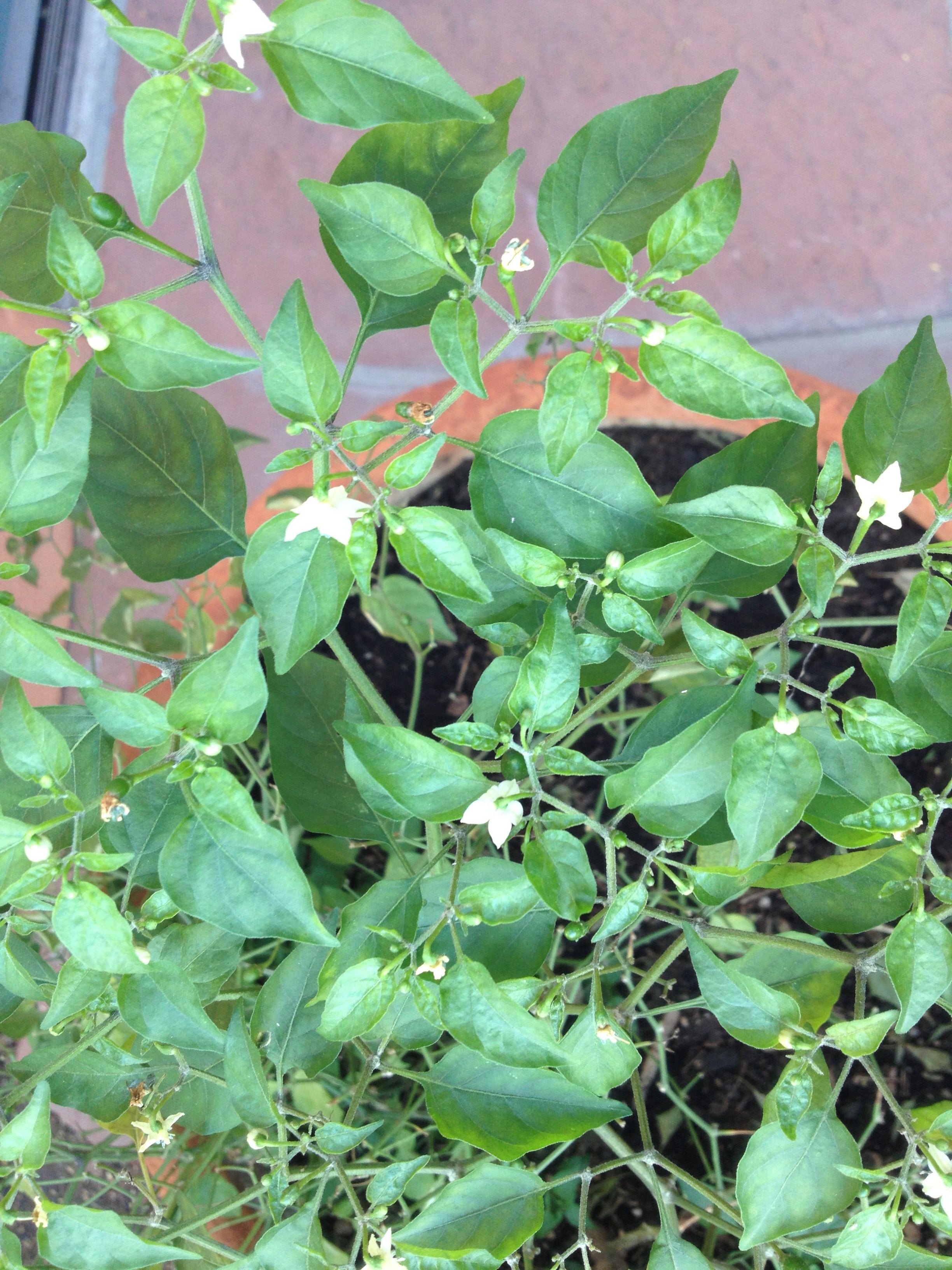
Potted blooming chiltepin plant for edible landscaping

Potted blooming chiltepin plant for edible landscaping

All of the heirloom foods served at the Farm to Table Picnic are being grown (even as I write) locally in Baja Arizona, either at the NativeSeeds/SEARCH Conservation Farm in Patagonia, or at the Mission Garden itself, or by sponsoring farmers and ranchers such as BKWFarmsInc, the 47-Ranch, and Ramona Farms. Some of Tucson’s best chefs are donating their skill and time to prepare different dishes for us. It will be a great opportunity to put the fun in fundraising for two worthy local non-profits, to share the delicious tastes of our heirloom foods of the Borderlands, and to share community joy in what we are able to produce together locally.

For adventuresome cooks, dessert addicts, and chocoholics, I would like to share two variations on brownies made with—yes, you guessed it—black tepary beans! You will not believe how yummy these are.
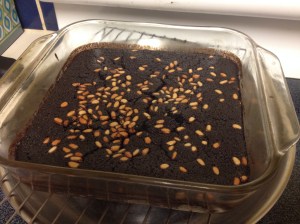
Gluten-free Black Tepary Brownie-Cockaigne on cooling rack

Gluten-free Black Tepary Brownie-Cockaigne on cooling rack


First, cooking black teparies (as with all teparies) takes some time—and premeditation.  The day before you want to use them, sort, wash, and pre-soak your black teparies. I hit them with a quick boil and let them sit overnight to hydrate slowly. Change the water the next day, adding fresh drinking water. Simmer until soft (it may take 2-3 hours on stovetop or 4-6 in crockpot). You want them beyond al dente in order to puree them in a blender or CuisinArt for the following recipes.


Muff’s Gluten-free Black Tepary Bean Brownies-Cockaigne

Ingredients:

1 cup cooked and pureed black tepary beans

1 stick butter= ¼ lb= ½ cup butter

5 Tbsp dark 100% cocoa powder, unsweetened (1 oz.)

¼ tsp sea salt

1 cup organic cane sugar

1 cup loose organic brown sugar

1 tsp vanilla extract

4 eggs well-beaten

¼- ½ cup nutmeats (I use pinyon nuts to keep the Southwest theme)

Directions for Muff’s Gluten-free Black Tepary Brownie-Cockaigne:

Preheat oven to 350 degrees F. Grease an 8×8” baking dish and place a wax paper cut to fit the bottom of pan. Melt butter (preferably in top of double boiler). Stir in thoroughly 5 Tbsp dark unsweetened cocoa powder. Let the mixture cool. Add sugars and sea salt to mixture and beat until creamy. Add vanilla. Beat 4 eggs and add to mixture stirring until uniform in color. Add 1 cup pureed black teparies and hand-mix. Pour batter into greased bake pan. Sprinkle top of batter with pinyones or other nutmeats. Bake 45-50 minutes until it tests done with toothpick.   Cool pan on a rack. Cut in small squares to serve because it is so rich and moist. Enjoy their delicious flavors AND the healthy qualities of high protein/high complex carb teparies, protein-rich eggs, and the benefits of dark chocolate!
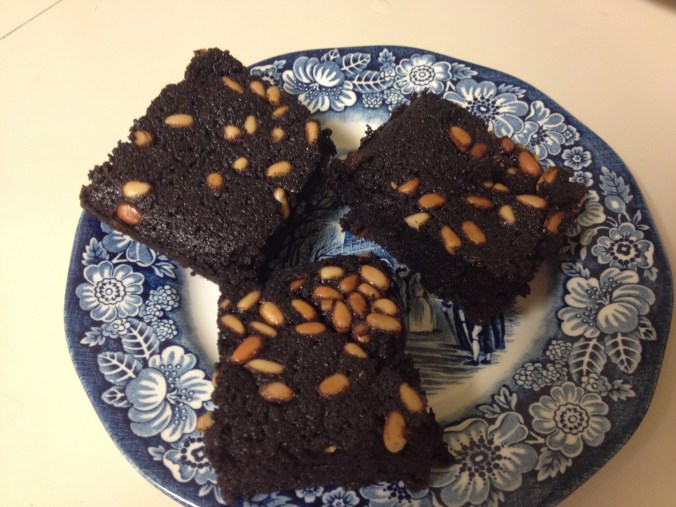
Gluten-free black tepary brownie-cockaigne ready to eat

Gluten-free Black Tepary Brownie-Cockaigne ready to eat–wheat-free, light, nutritious and delicious!

My next black tepary brownie recipe was first inspired by food-writer and “Blog-sister” Carolyn Niethammer’s recipe found in her book Cooking the Wild Southwest (p.133)–a must-have in every SW cook’s kitchen shelf. Here I’ve made some interesting gastronomic additions…including the use of our fantastic local heirloom White Sonora Wheat flour, crushed wild chiltepines, and Mano y Metate’s fresh-ground Mole Dulce powder produced by our local Molera herself, Amy Valdes Schwemm.


“Hot-Dam”* Black Tepary Brownie Bars [*in the best sense of the expression]

Ingredients:

5 Tbsp unsweetened 100% cocoa powder

½ stick (1/4 cup) melted butter

¾ cup organic cane sugar

¾ cup org brown sugar, not-packed

2 eggs, beaten

2 tsp vanilla extract

¾ cup pureed cooked black teparies

¾ cup organic heirloom White Sonora Wheat flour**

3 or 4+ crushed wild chiltepin peppers*** (number depends on your desired picante level)

¼ tsp sea salt

1-2 Tbsp Mano y Metate ground Mole Dulce powder

2 Tbsp raw pinyon nutmeats
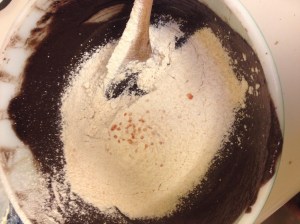
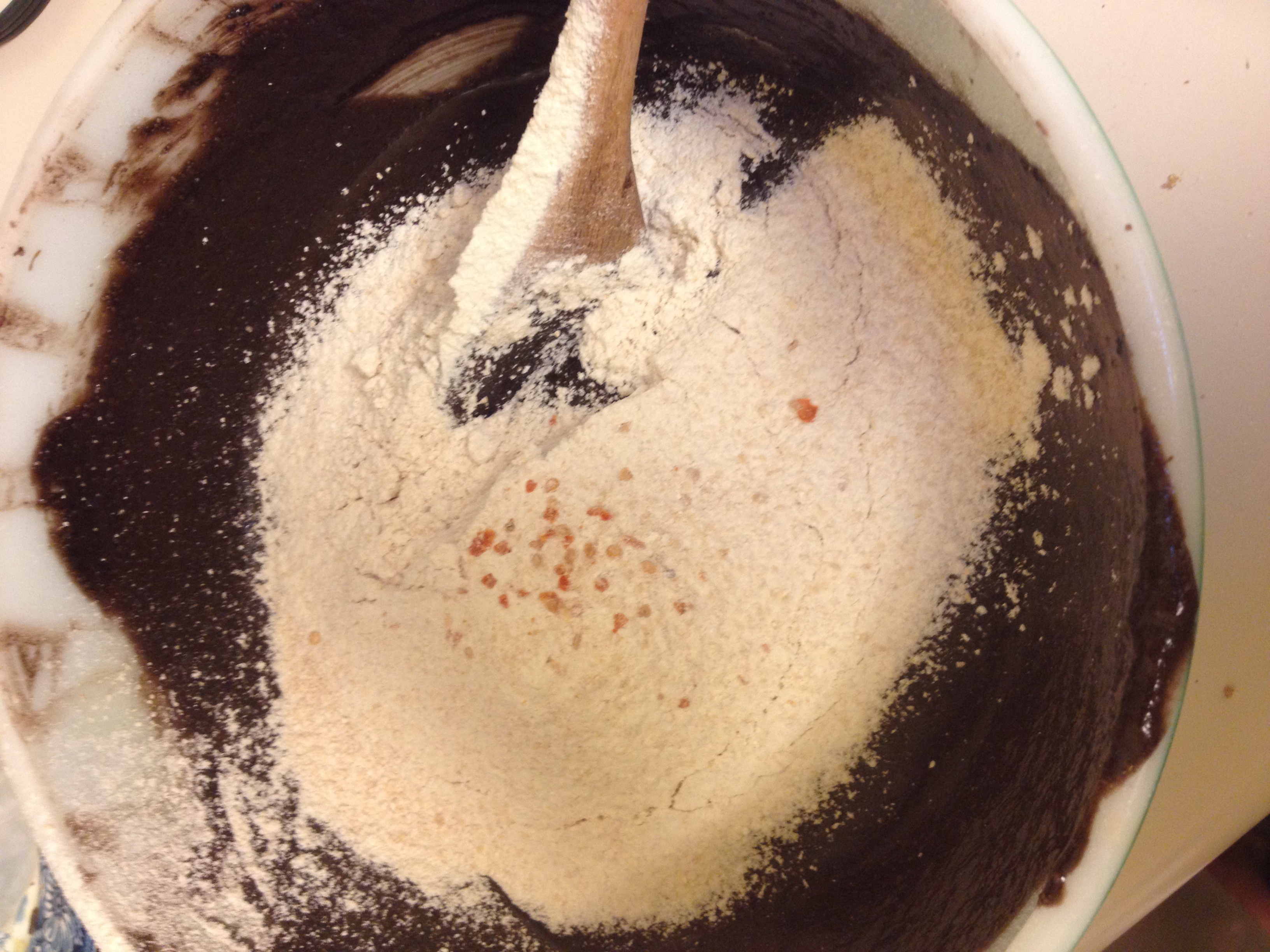
Adding White Sonora Wheat flour and crushed chiltepin to molten chocolate mixture

Adding White Sonora Wheat flour and crushed chiltepin to molten chocolate mixture

** Freshly milled White Sonora Wheat is available at our Flor de Mayo booth, Sunday’s St Philips farmers market (www.foodinroot.com). Call ahead for quantities larger than 1 kilo—520-907-9471.

***whole wild-harvested Chiltepines are available at the NSS Store, 3061 N Campbell, and at Flor de Mayo booth, Sunday St Philips farmers mkt. Chiltepin plants to grow can be purchased at NSS plant sales.
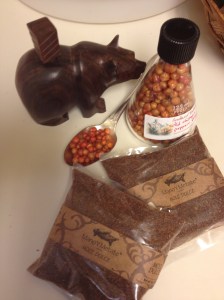
Flavors to guild the lily--Wild chiltepin peppers, ironwood bear molinillo grinder, and Mole Dulce powder

Flavors to guild the lily–Wild chiltepin peppers, ironwood bear molinillo chiltepin grinder, and Mole Dulce powder (all available at NSS store and Flor de Mayo at St Philips farmers market)


Directions for “Hot-dam” Black Tepary Brownie Bars:

Pre-heat oven to 325F. Grease 8×8” baking pan with wax paper set in bottom. Melt butter and mix powdered cocoa in thoroughly. Add the brown sugar and organic white sugar and vanilla to the butter and cocoa, and beat. Beat 2 eggs and stir thoroughly into the choc/sugar mixture. Wisk in ¾ cup pureed black teparies. Sift together: ¾ C white Sonora wheat flour, ¼ tsp sea salt, and the well-crushed chiltepin peppers. Stir dry ingredients into liquid mixture. Add pinyon nutmeats. Pour batter into bake-pan. Sprinkle 1-2 Tbsp of Mole Dulce powder on top of the batter. Bake 25 minutes or until it tests done (when fingerprint pressed on top springs back). When cooled, cut into small bite-size squares to be served with hors d’oeuvre picks—you will see why…..(and don’t rub your eyes after eating.)
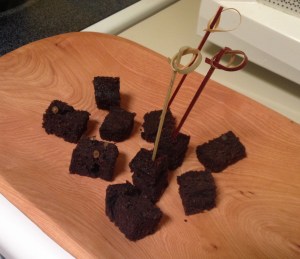
"Hot-dam" Black Tepary Brownies ready to enjoy!

“Hot-dam” Black Tepary Brownies ready to enjoy!


Tia Marta is hoping you enjoy these fruits and flavors of the Sonoran Desert assisted by fruits of tropical North America—a marriage made in dessert-Heaven! With every bite we should be thanking ancient tepary farmers, and the recent ones who have brought back the Black Tepary from near genetic-oblivion.


Coming this week to Tucson is a food event not to miss: the Farmer to Chef Connection, this Wednesday, September 16, at Tucson Community Center, 12:00noon-5:30pm, sponsored by LocalFirstArizona. Google their site for tickets and come enjoy a smorgasbord of local tastes.

Also be sure to mark your calendar for October 18 and join NativeSeeds/SEARCH and Friends of Tucson’s Birthplace at the very heart of Tucson’s Birthplace –the Mission Garden at the base of A-Mountain—for the first-ever outdoor Farm to Table Picnic. It will be a feast to remember. Make reservations now and we’ll see you there for fun, flavor, history and friendship!
Prickly Pear Upside-down Cake, Summer in Tucson

20150730_185022

Amy Valdes Schwemm here today, with glochids in my hands.
20150811_111746

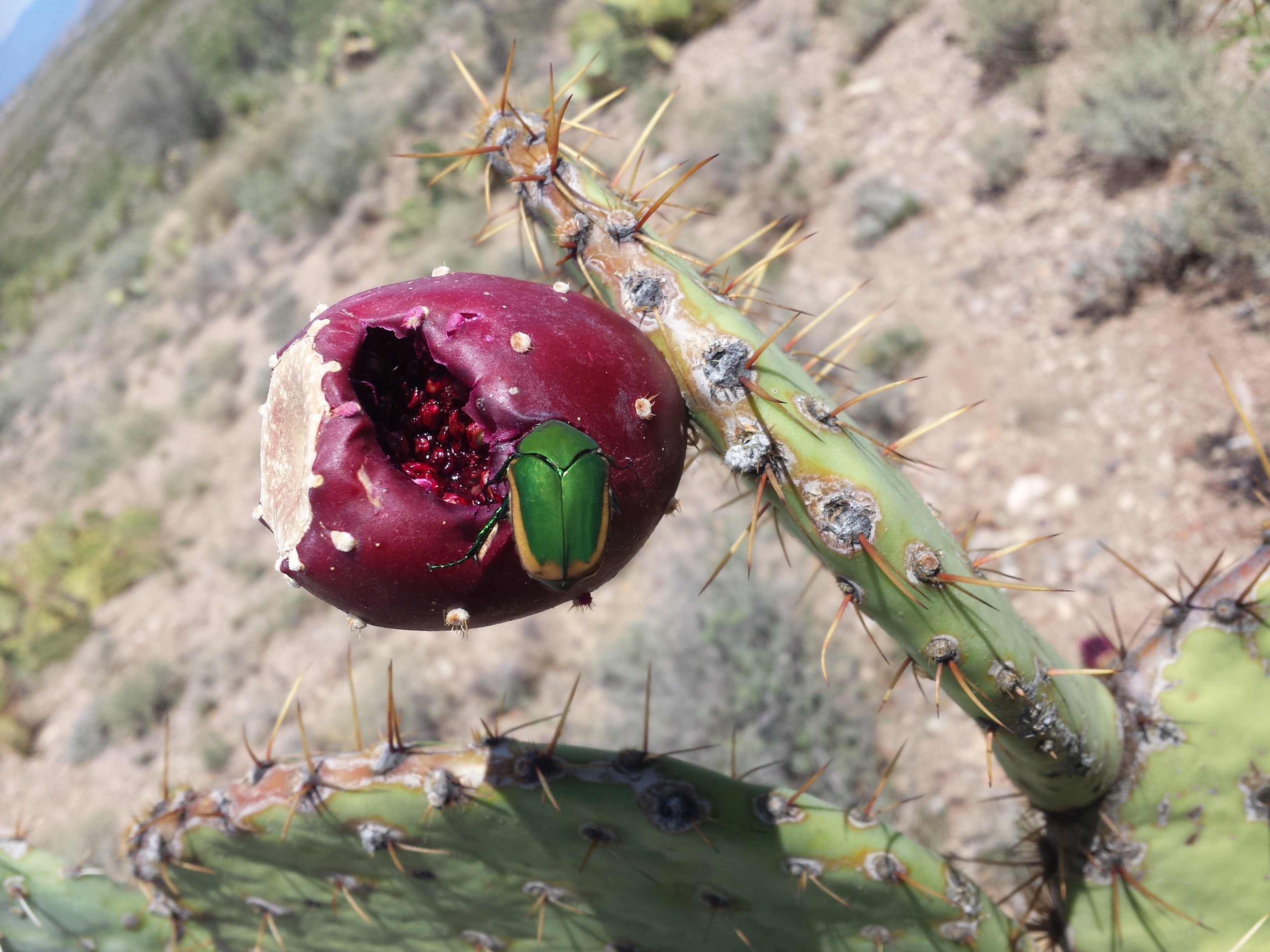
Figeater beetle, Cotinis mutablilis

20150813_185004

Santa Cruz River Farmers’ Market Workshop

20150813_184946

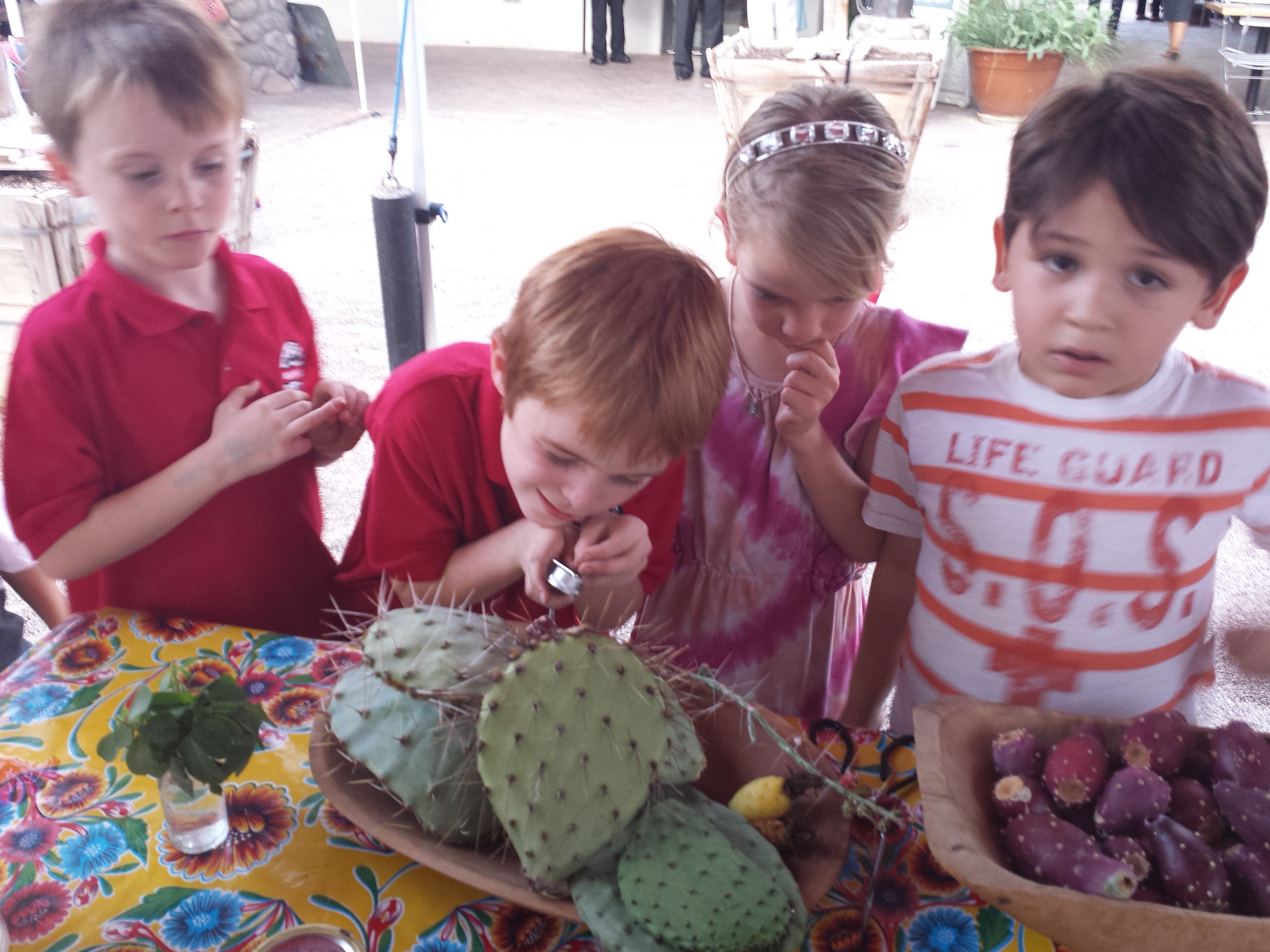
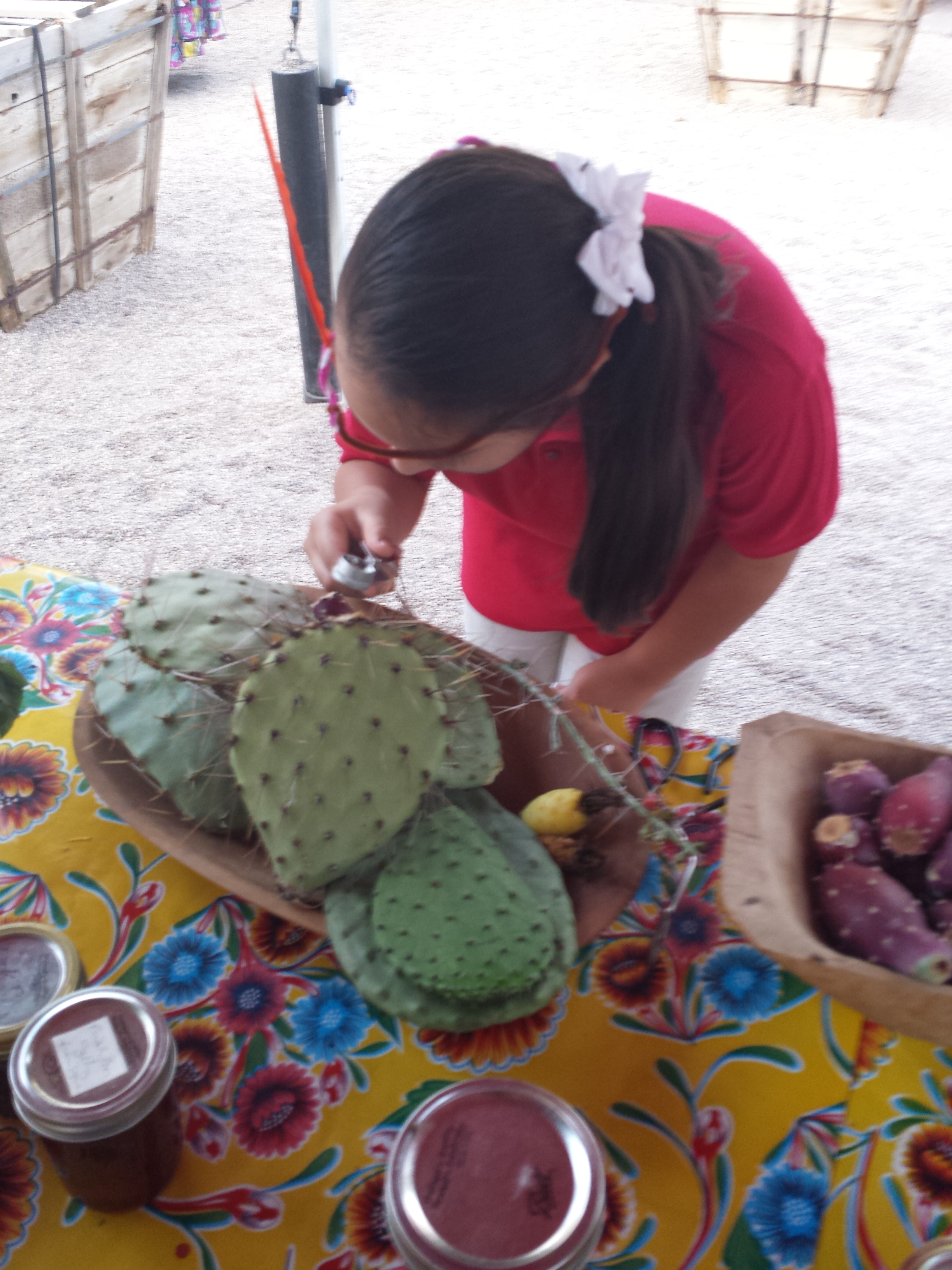
“I want to be a scientist!” she said.
20150814_145703

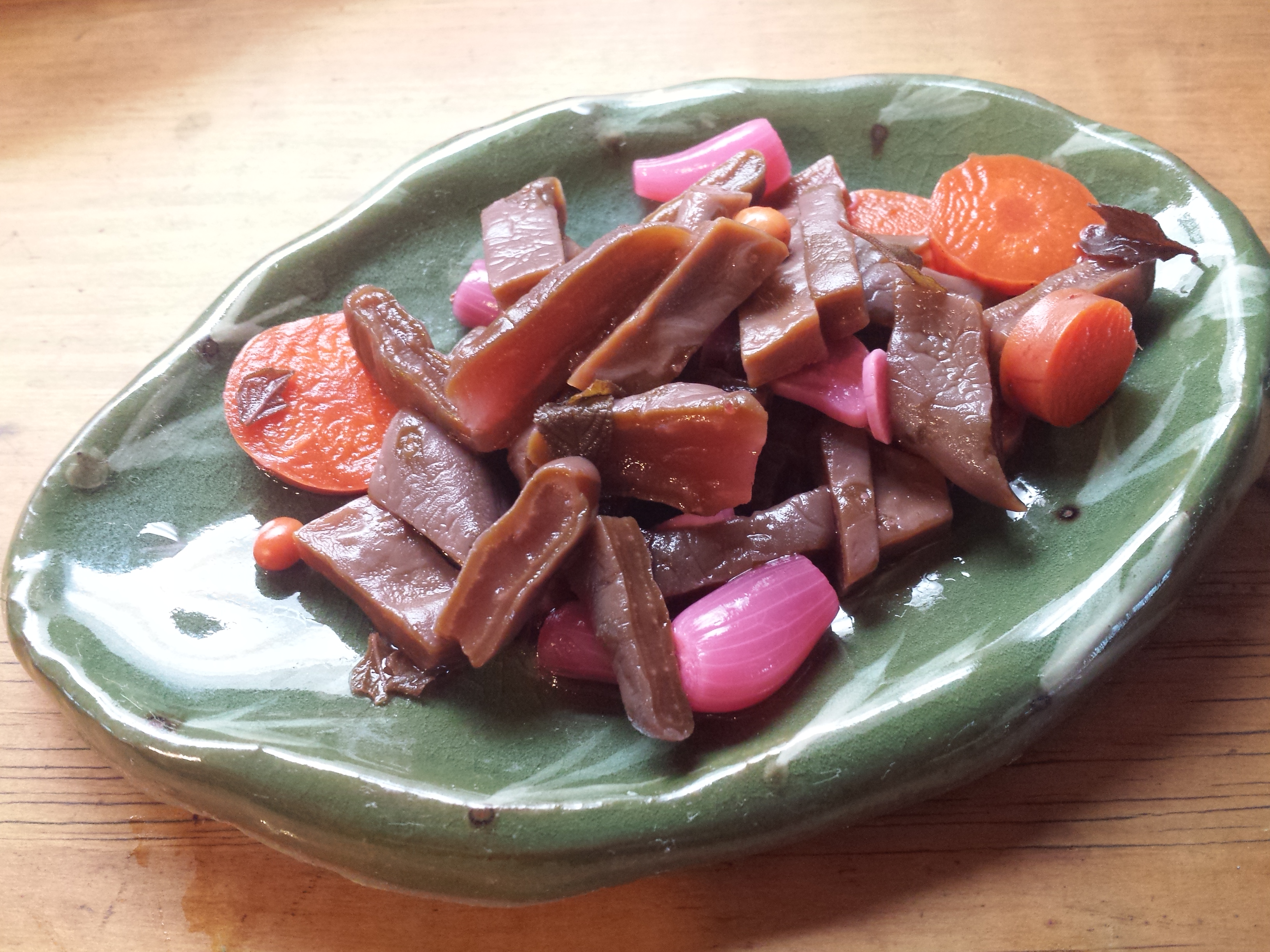
Nopalitos en escabeche (pickled cactus pads with carrots, garlic, I’itoi onion, chiltepin, Mexican oregano)

20150814_103012

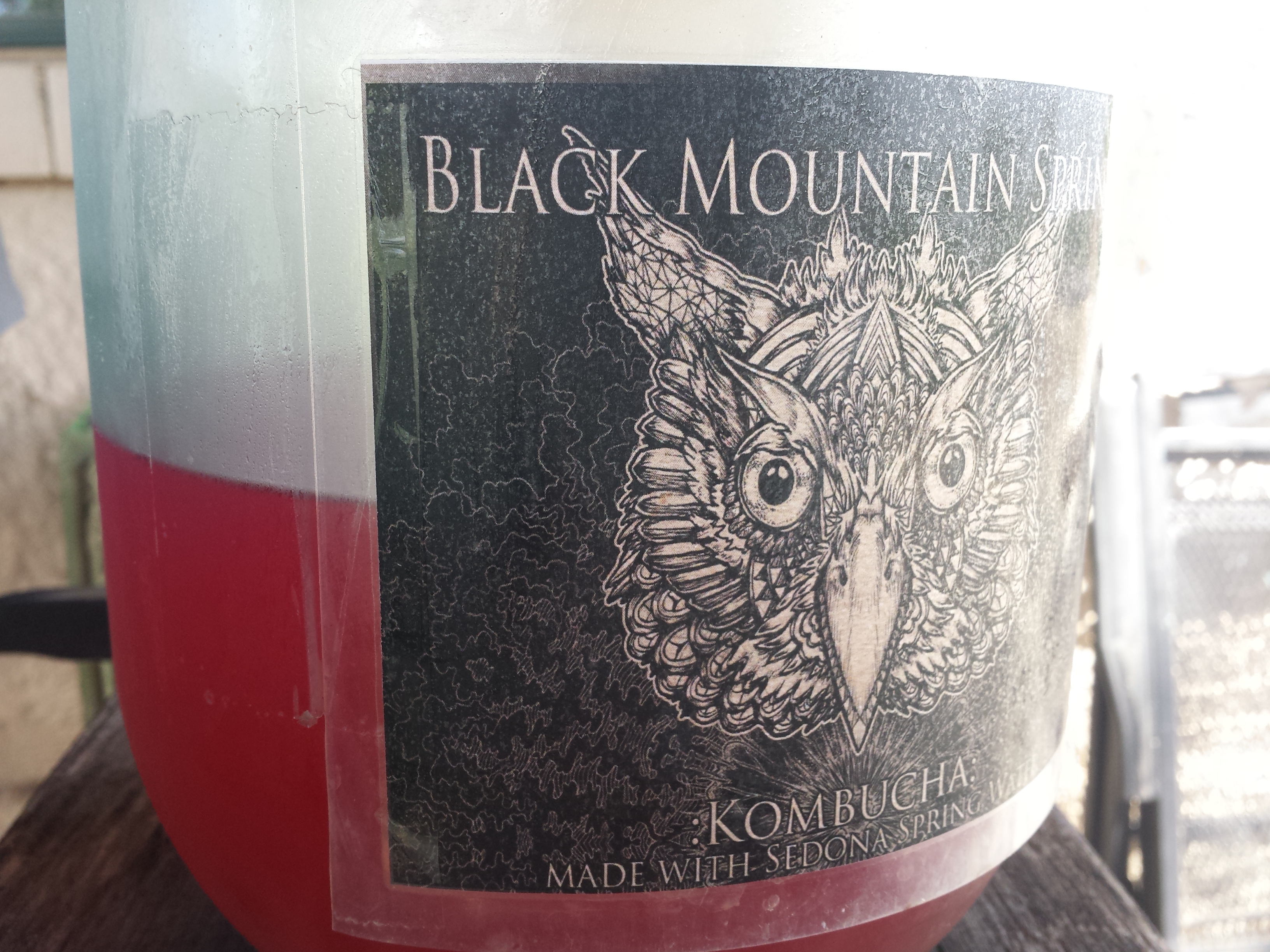
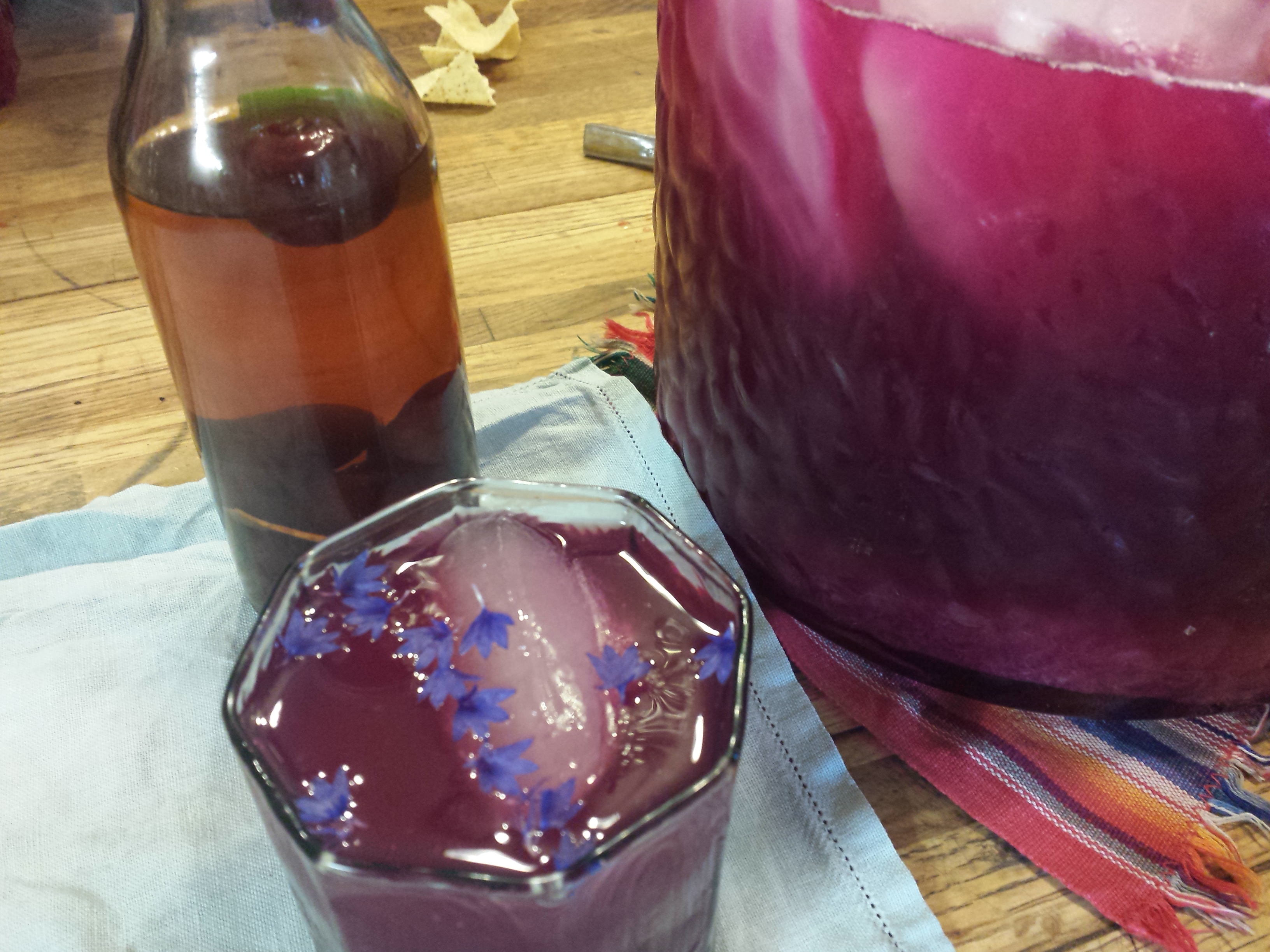
Prickly pear kombucha

Harvest party at Bean Tree Farm. Classic Barbara Rose cocktail with too many ingredients to list!

Harvest party at Bean Tree Farm. Fancy cocktail by Barbara Rose!

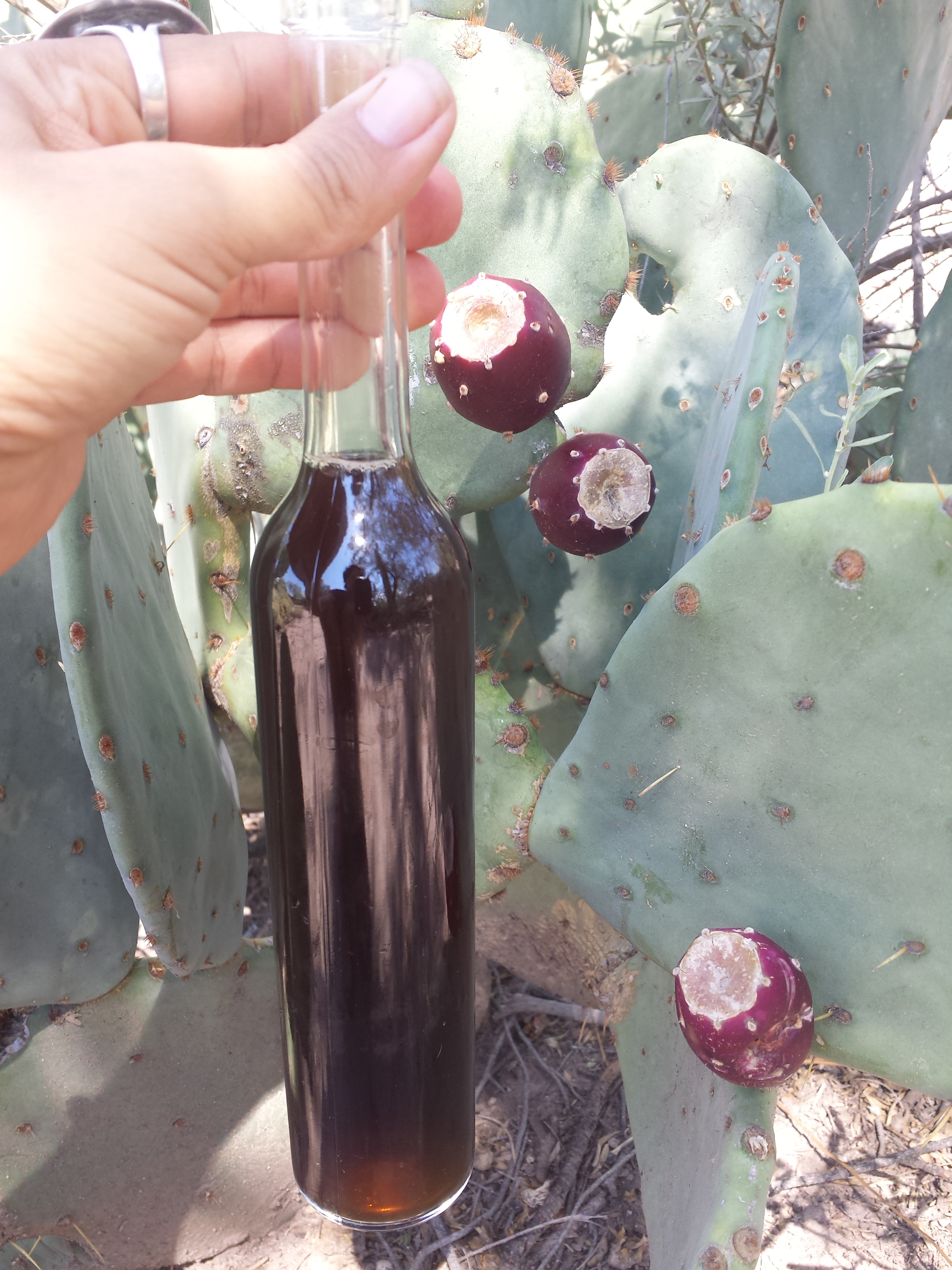
Prickly pear vinegar

Prickly pear vinegar

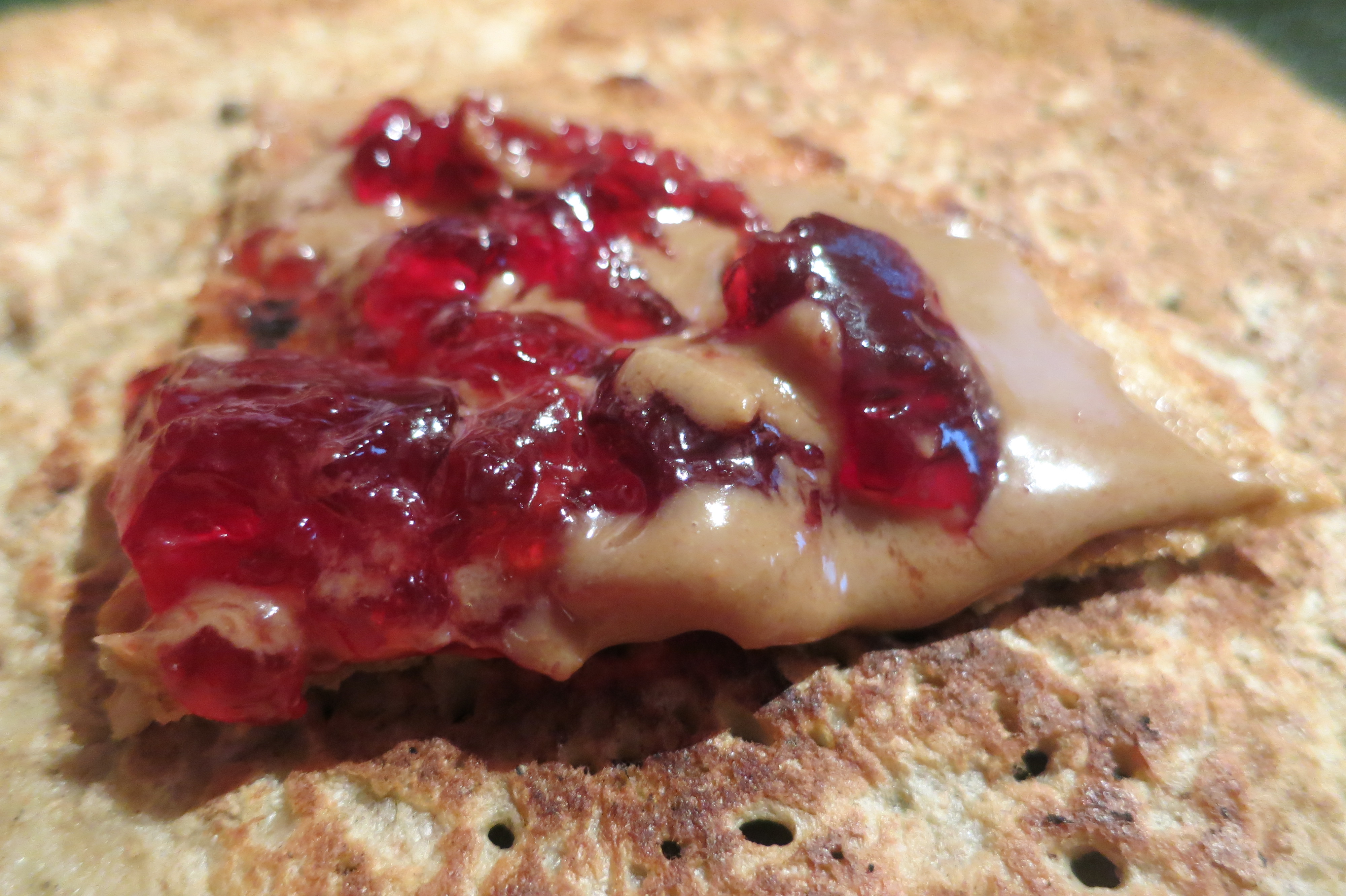
Prickly pear jelly on Sourdough Sonoran Wheat, Barley, Almond crepe

Prickly pear jelly and nut butter on sourdough Sonoran wheat, barley, almond crepe

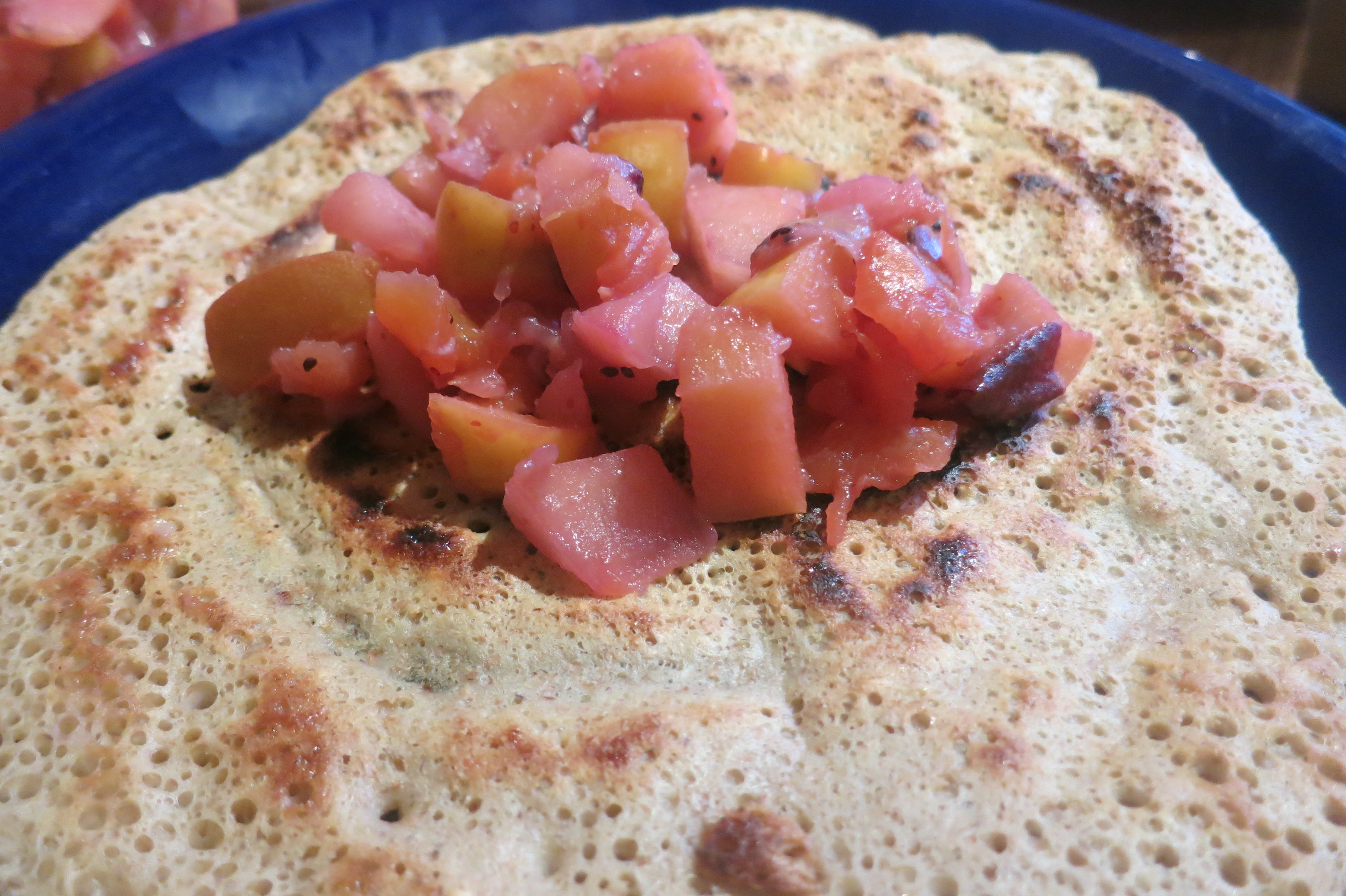
Apple, prickly pear and friends compote

Apple, prickly pear and friends compote

Peach prickly pear cobbler

Peach, raspberry, prickly pear cobbler

Prickly pear upside down cake

Prickly pear upside down cake

Prickly Pear Upside-down Cake

1/4 cup butter

1/2 cup brown sugar

3/4 cup whole wheat flour

3/4 cup unbleached all purpose flour

3/4 cup sugar

1 teaspoon baking powder

1/4 teaspoon salt

3/4 cup prickly pear juice

1/2 cup butter, melted

1 teaspoon vanilla

6 prickly pear fruit, glochids singed over fire, peeled, seeded and sliced

Preheat oven to 325 degrees F. In a 9 inch springform pan, put 1/4 cup butter. Put pan in the oven just until butter is melted. Sprinkle with brown sugar and arrange prickly pear fruit on top. Mix flours, sugar, baking powder and salt. Separately, mix prickly pear juice, 1/2 cup melted butter and vanilla. Combine the two mixtures and pour into prepared pan. Bake for 3o minutes or until a toothpick inserted in cake comes out clean. I like the cake to have some brown edges. Cool, invert on to a serving plate and enjoy. IMG_3286

Pescado en Mole Verde, Spring Roots with Spicy Creamy Dip

053

Hello, Amy Valdés Schwemm here, celebrating spring with two recipes using Mano Y Metate Mole Verde.

Spring root vegetables are on the table now! Carrots and purple diakon from Tucson CSA/Crooked Sky Farms, baby onions, and Cylindra beets from the Breckenfelds are very tender. The purple daikon is so mild and the baby beets and carrots sweet, and all prettiest when fresh. I’m sure we’ll have humongous taproots later in the season that will need roasting or pureeing.

023029

I love creamy dips with crisp, raw veggies. My sister makes a spicy and creamy dip from Mole Verde powder and sour cream. Just mix the two ingredients to taste and refrigerate to let the flavors blend.

thanksgiving 2012 (2)

Common sour cream works beautifully for this dish, but I had milk to use up, so I made homemade cultured ricotta to use as the base.

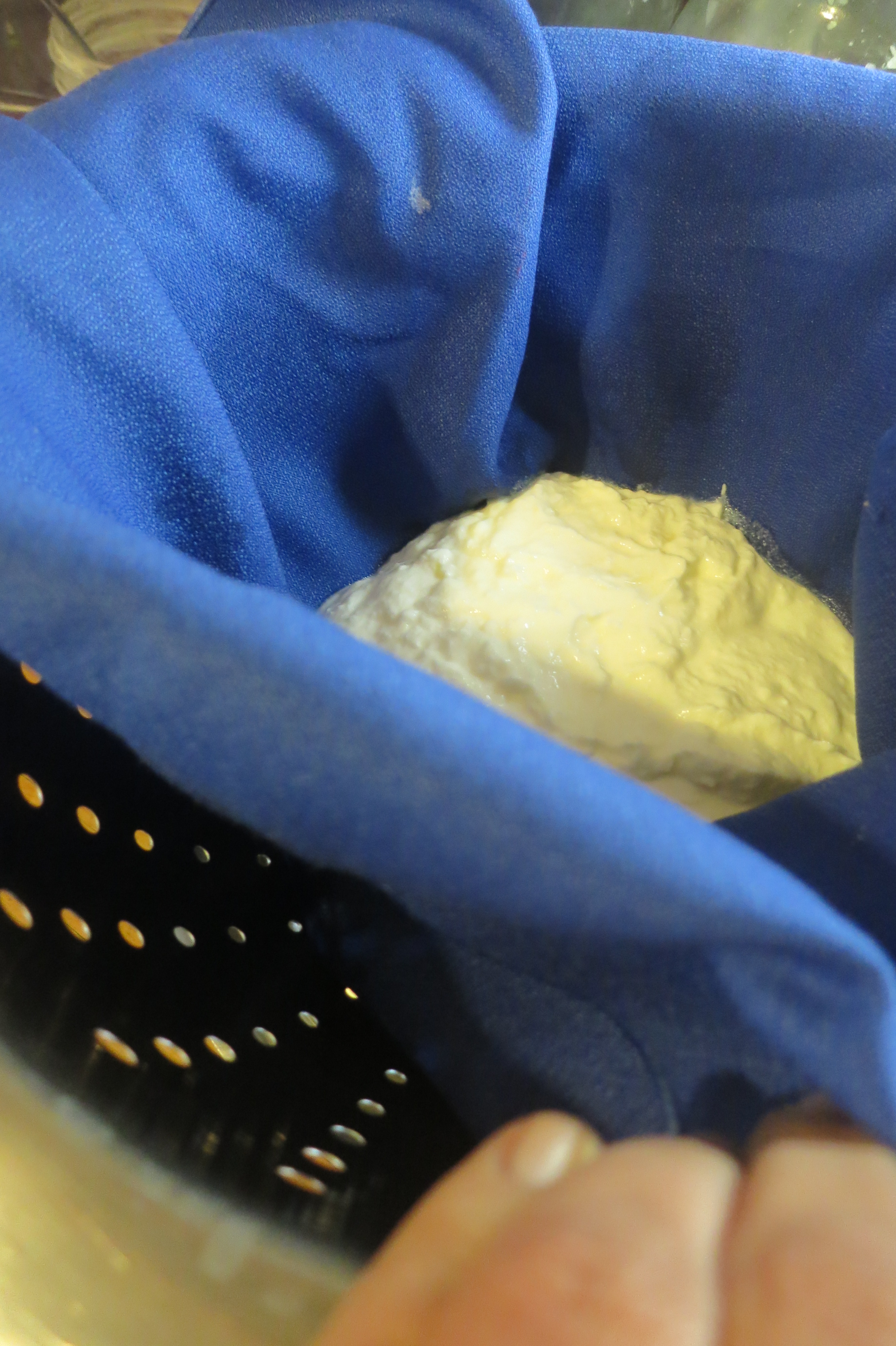
021To make, gently heat any milk in a pot directly on the stove to almost boiling, add strained lemon juice a spoonful at a time, then stir and watch the tiny curds form and the whey turn translucent. (My milk was raw and apparently soured enough to form curds when heated without added acid.) Allow to cool to room temperature, add an envelope of “Bob and Ricki’s Sour Cream Culture” available in Tucson from Brew Your Own Brew.

Strain though a cloth napkin, incubate at room temperature for 24 hours (either hanging in the tied up cloth or in a covered dish). For a smooth texture, whip in a blender or food processor. Salt to taste and refrigerate.

When you add the Mole Verde powder to taste, it can be as spicy or mild as you like. Delicious on tacos or any savory dish where you would use Mexican crema.


Pescado en Mole Verde/Fish with Mole Verde

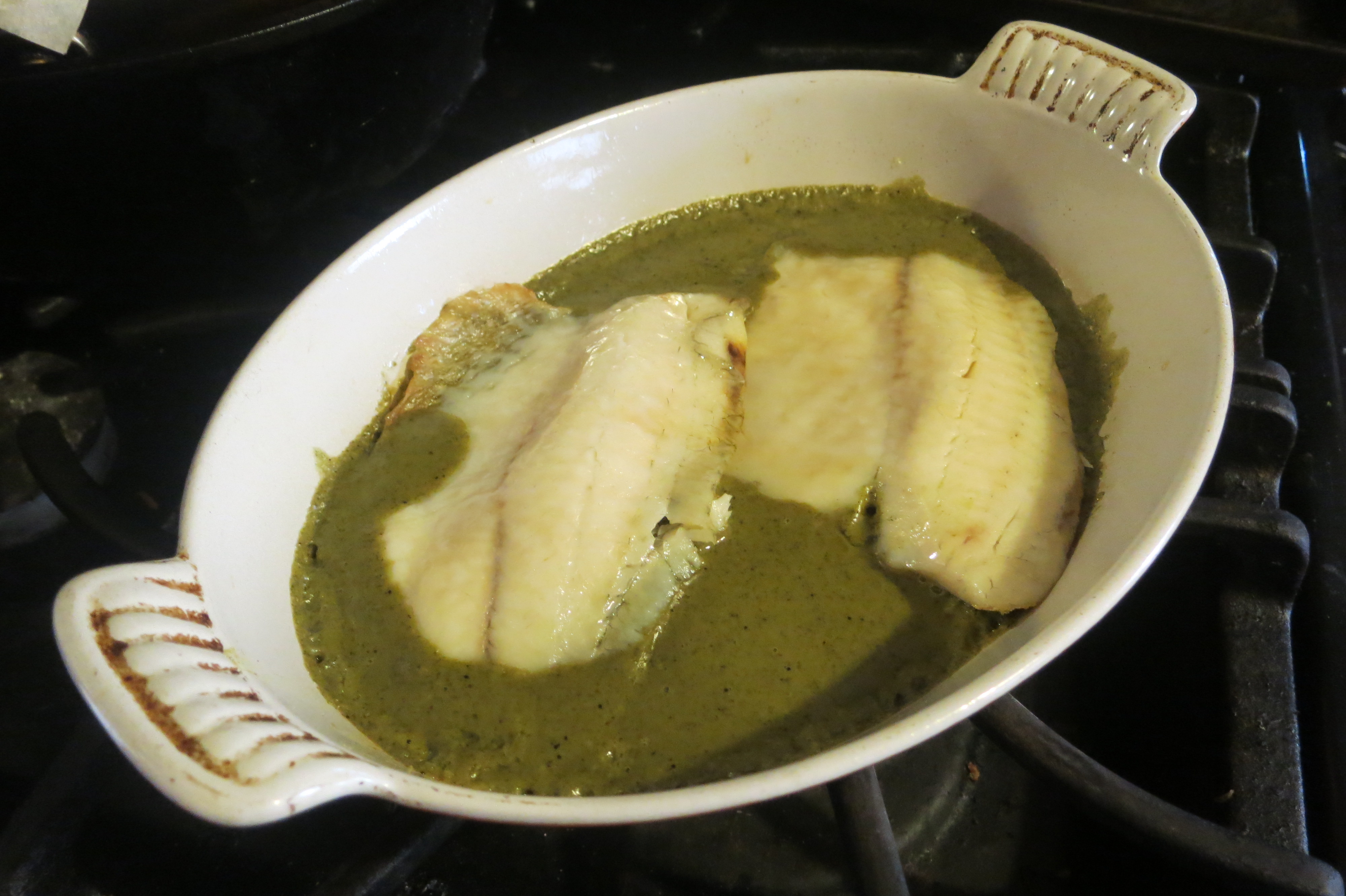
I’m waiting patiently for the tilapia to grow to harvestable size at a local school’s aquaponic system, so in the meantime, I purchase filets from the market. Simply oil both sides and bake for about 15 minutes at 400 degrees F. To make the sauce, put a couple tablespoons of chicken fat and one tin of Mole Verde powder in a saucepan, and stir until the paste is sizzling and fragrant. Add a cup of chicken broth and simmer until it thickens. (Any mild oil and broth can be used.) Pour over fish and return to the oven to keep warm.

001025
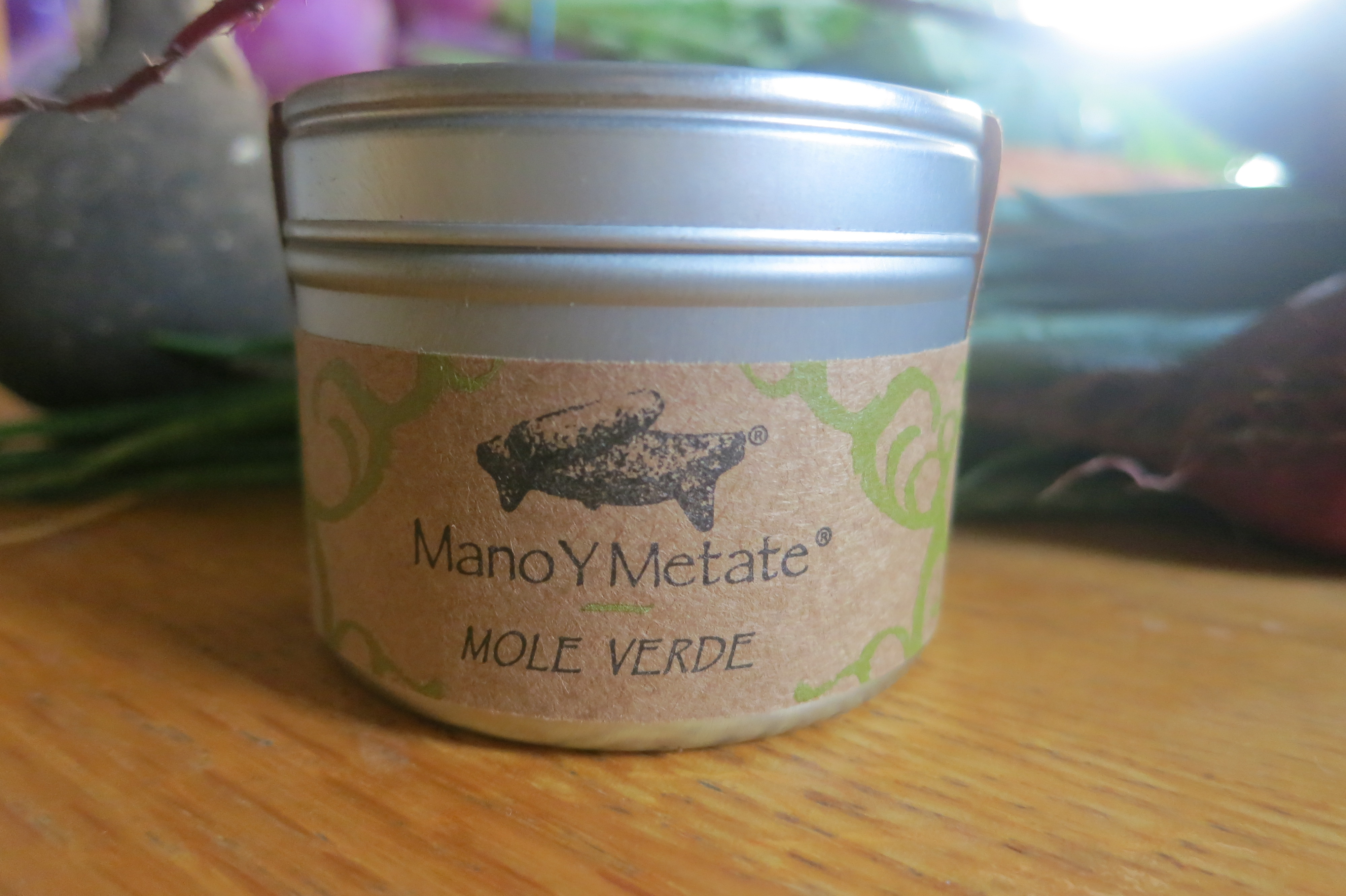
Mano Y Metate Mole Verde powder is only thickened with pumpkin seeds and sesame, where the other mole powders are thickened with organic corn tortilla meal and/or organic graham cracker in addition to other nuts and seeds. So Mole Verde makes a lighter sauce than the other moles, perfect for spring. It is spicy from roasted green Hatch chiles and jalapeno. The herbal notes are from parsley, cilantro and epazote. See Jacqueline’s excellent posts about each of those herbs.

014

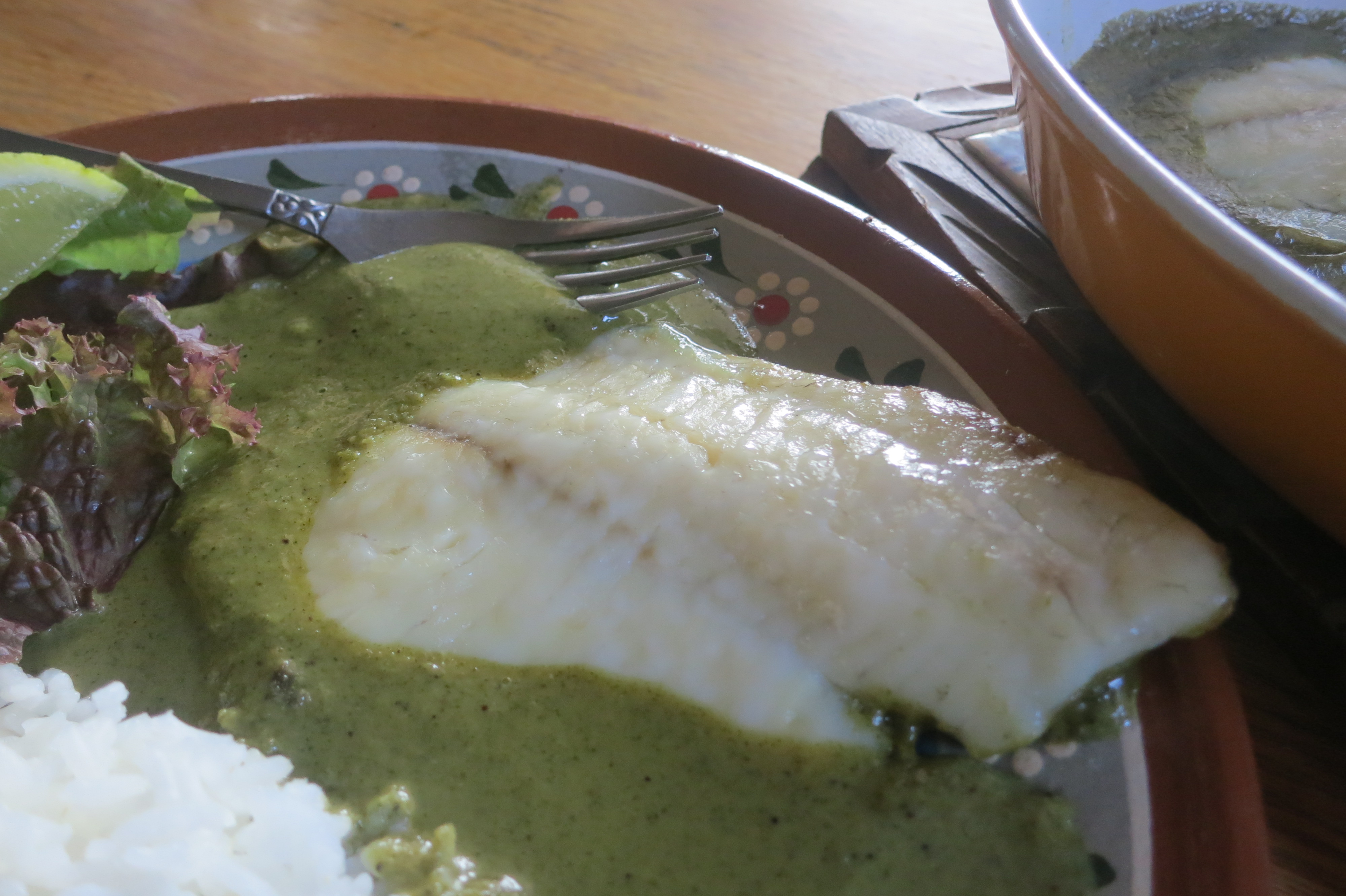
Serve with plain rice, corn tortillas, and lettuce drizzled with lime juice. I had an anxious tester that doesn’t eat dairy, but I sometimes I add creama and a melty cheese to the sauce, reminiscent of Mariscos Chihuahua’s famous Filete Culichi.

krik

Have a good spring and enjoy the weather and wildflowers, and I’ll be back here in May.

Amy

ManoYMetate.com


Soup Weather: Adobo Mixed Veggie Stew

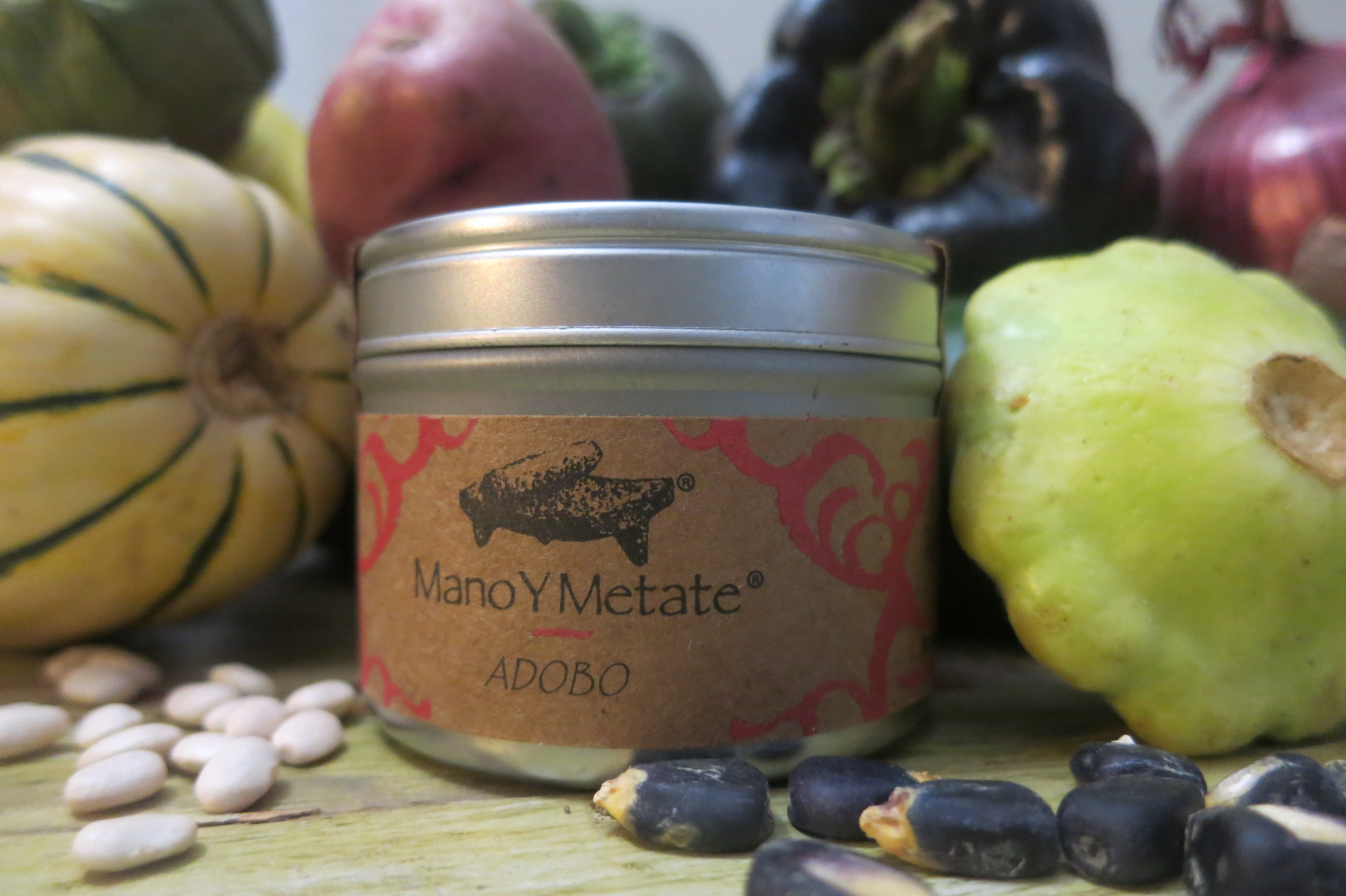
013 Hello, this is Amy. I always love a bowl of hot soup, but especially when evenings are cool. We’ve been camping in the yard this week with our new dog, Leila and eating lots of soup. I have many basic templates and here is one of the easiest. Adobo powder really brings together the disparate characters in the veggie drawer. The entire CSA share in one big pot!A1 tin

Adobo refers to many different things around the world. It comes from the word adobar, to marinate. Made into a sauce (especially with vinegar) or used dry, it does make an excellent marinade. Mano Y Metate Adobo is made with Santa Cruz Chili, hot. This is very special chile from Tumacacori, Arizona. That bright red color! I pair that with a little chile ancho for depth. Sesame seed and organic corn tortilla meal give the finished soup or sauce some body. Cumin and Mexican oregano are two of the standout spices, with cloves and Mexican cinnamon in the background. Five flavors: spicy chile, the little bit of ancho has a hint of bitter, plenty of salt and evaporated cane juice for balance. All that’s missing is sour from a lime wedge squeezed into the bowl.

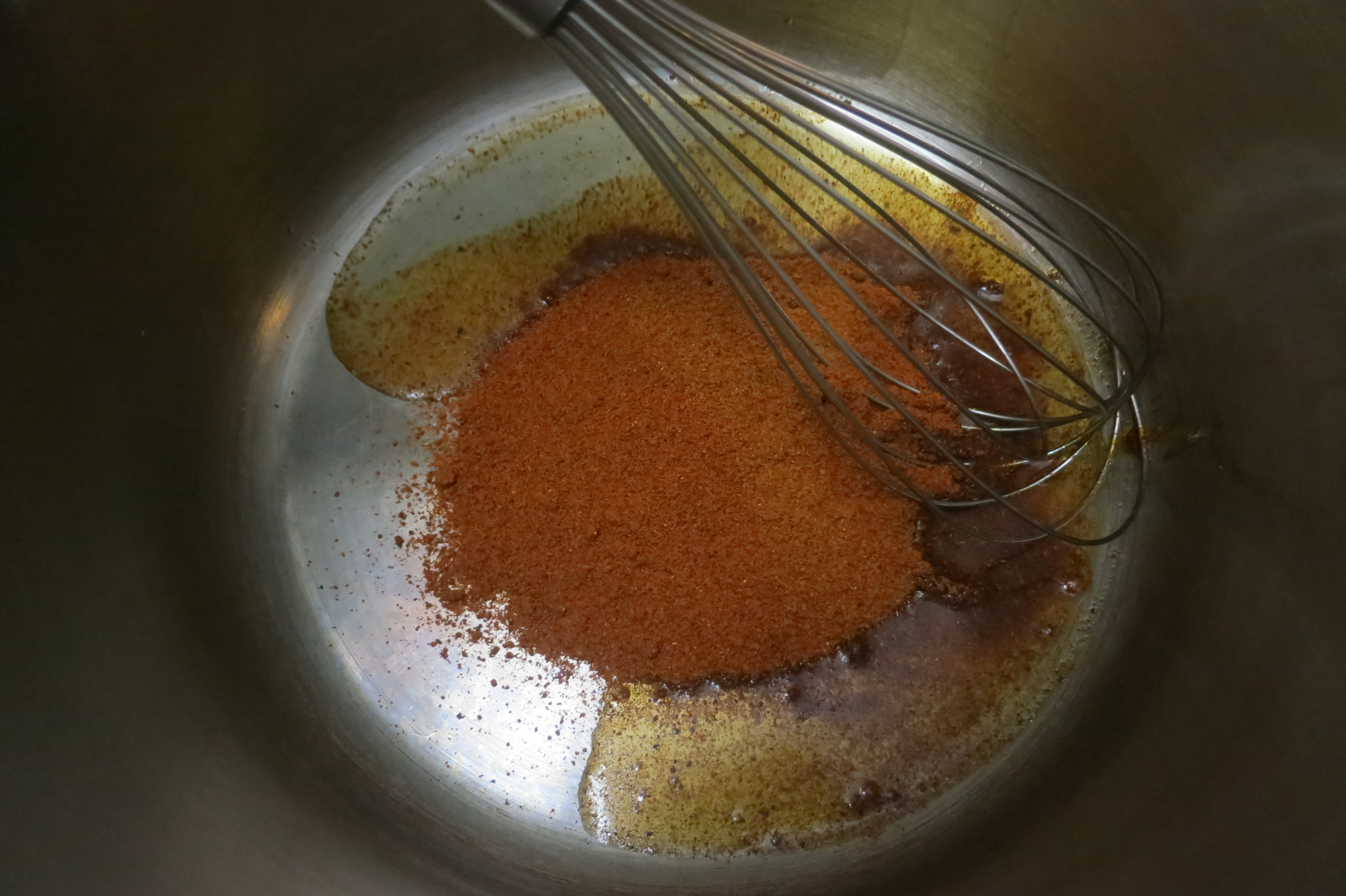
A2 pdr

To make a soup, put a tin of Adobo powder and a few tablespoons of oil in a soup pot.

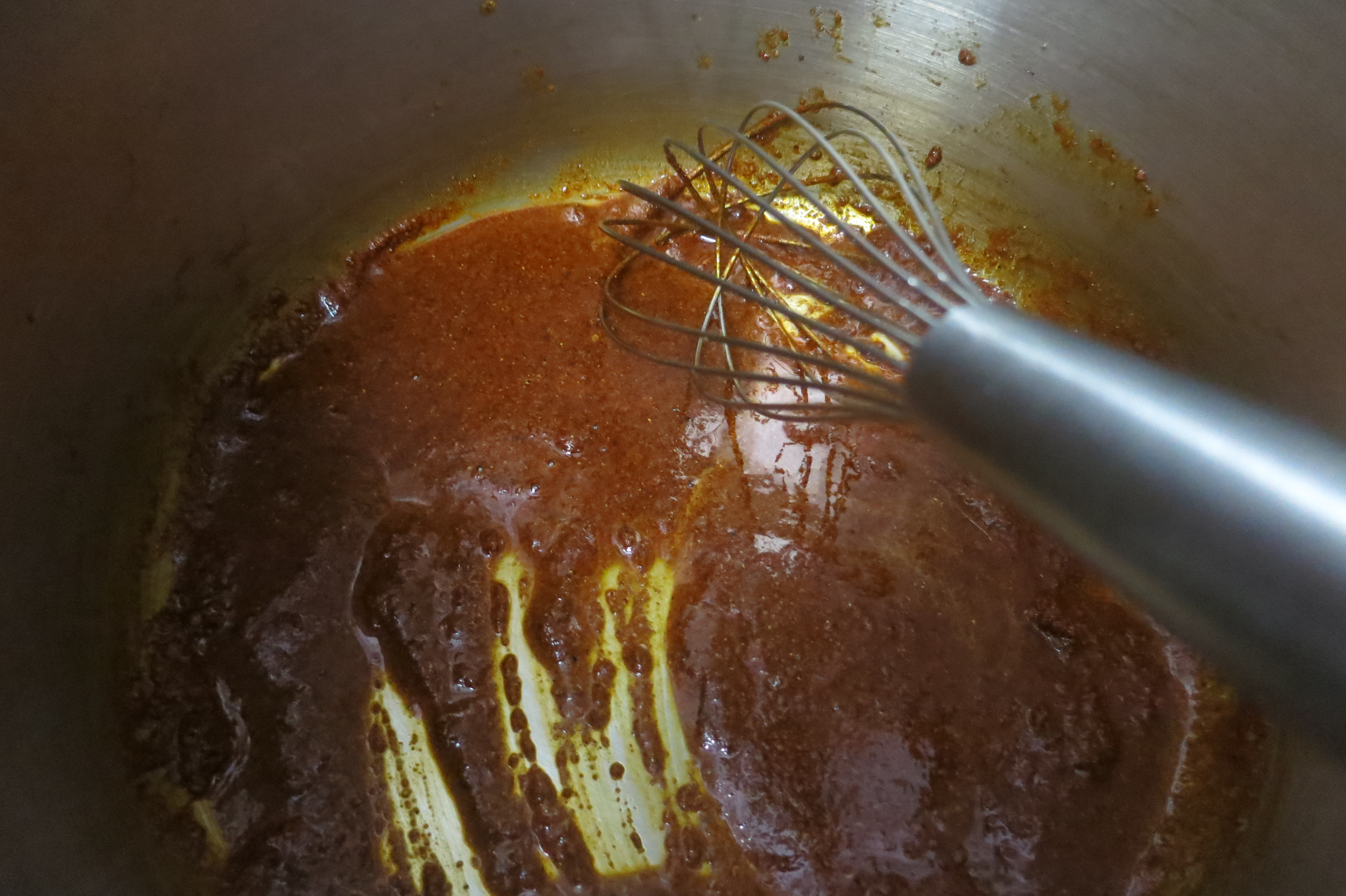
A3 paste

Cook over medium heat until it turns a shade darker in color and smells fragrant.

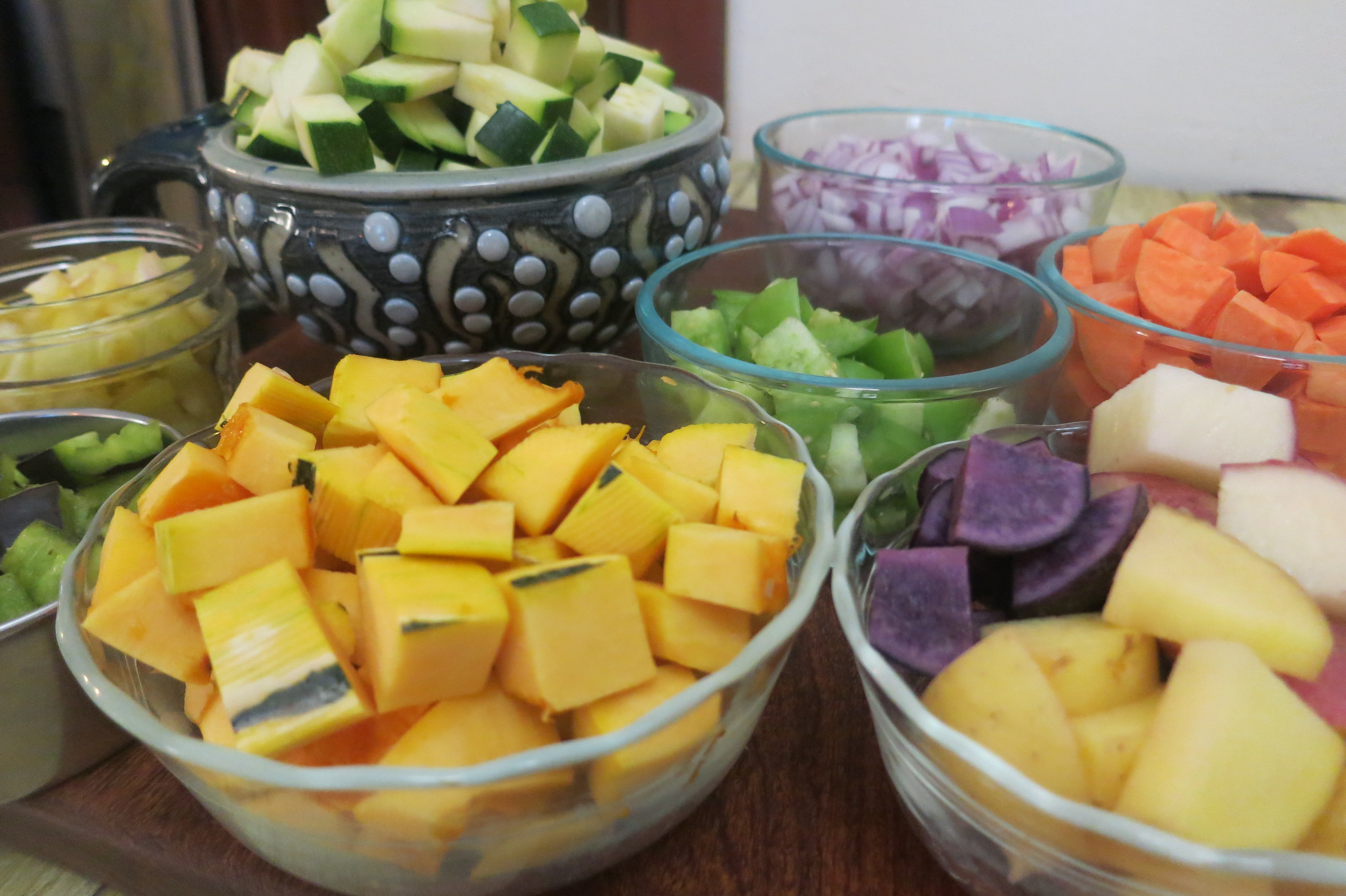
a4diced veg

I have listed below some of the specific vegetables I used simply because I love them. Use what you have and love. Fresh or leftover meat is a great addition. Every single ingredient in this recipe is optional.

a5add veggies

Add the longer cooking veggies and stir to prevent sticking. Before it burns, add a quart of water or broth. When making Adobo into a sauce, I insist upon using broth. However, for this soup water works fine.

a6blue posole

Add the quicker cooking veggies as inspired, including precooked posole or beans, if using. I cook the posole and beans separately to ensure that they cook thoroughly but not at the expense of overcooking the tender veggies.

a7 soup cooking

When everything is tender, salt to taste. Garnish with lime wedges, avocado, thinly sliced white or green onion and cilantro.

Ingredients:

Mano Y Metate Adobo Powder
Cooking oil, like mild olive
Water or broth
Summer squash (zucchini, patty pan)
Winter squash (Delicata)
Potatoes (Red LaSoda, Yukon Gold, Purple)
Sweet Potato (Beauregard)
Sweet peppers (various colors and shapes)
Chiles (roasted and peeled, or diced and sautéed in oil first)
Tomatillo
Onion (red)
Garlic
Blue posole (heirloom dry posole available from NS/S or Flor de Mayo. The Savor Sisters promise at least one post soon about traditional posole.)
White Tepary Beans
Salt
Lime wedges, green onion, avocado and cilantro for garnish

Mac and Leila

Mac and Leila