It’s Saguaro Season

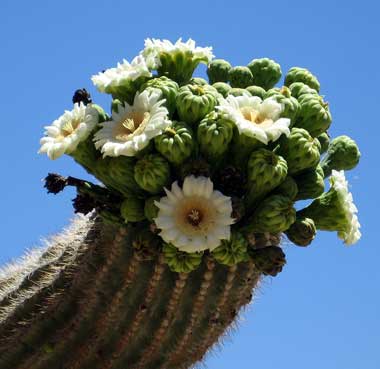
Saguaro flowers and unripe fruit. Photo by Rael B.

Saguaro flowers and unripe fruit. Photo by Rael B.

Our fire has burned and the sun has gone down;

Our fire has burned and the sun has gone down.

Come together, following our ancient custom.

Sing for the liquor,

Delightfully sing.

This was the song that called the people of the Tohono O’odham villages together for the saguaro wine ceremony that followed the  harvest. During the ceremony, they people invoked the intercession of a deity far away in a “rainhouse” full of wind, water and seeds in the hopes of hastening the storms.

This and many other songs were collected and translated by Ruth Murray Underhill, an early anthropologist who lived among what were then called the Papago in 1938. They appear in her book Singing for Power.

When I go saguaro gathering, I get up around 4:30 a.m. and aim to be out among the saguaros just at dawn.  I am always joined by doves and other birds looking for their breakfast. Alone on the desert, I occasionally find myself talking to the saguaros. “So what have you got for me?” I ask. I might worry about my sanity, but I know others have felt the same way. The late desert chronicler Edward Abbey agreed, calling saguaros “planted people.”

Dove getting breakfast

Dove getting breakfast

My harvest

My harvest


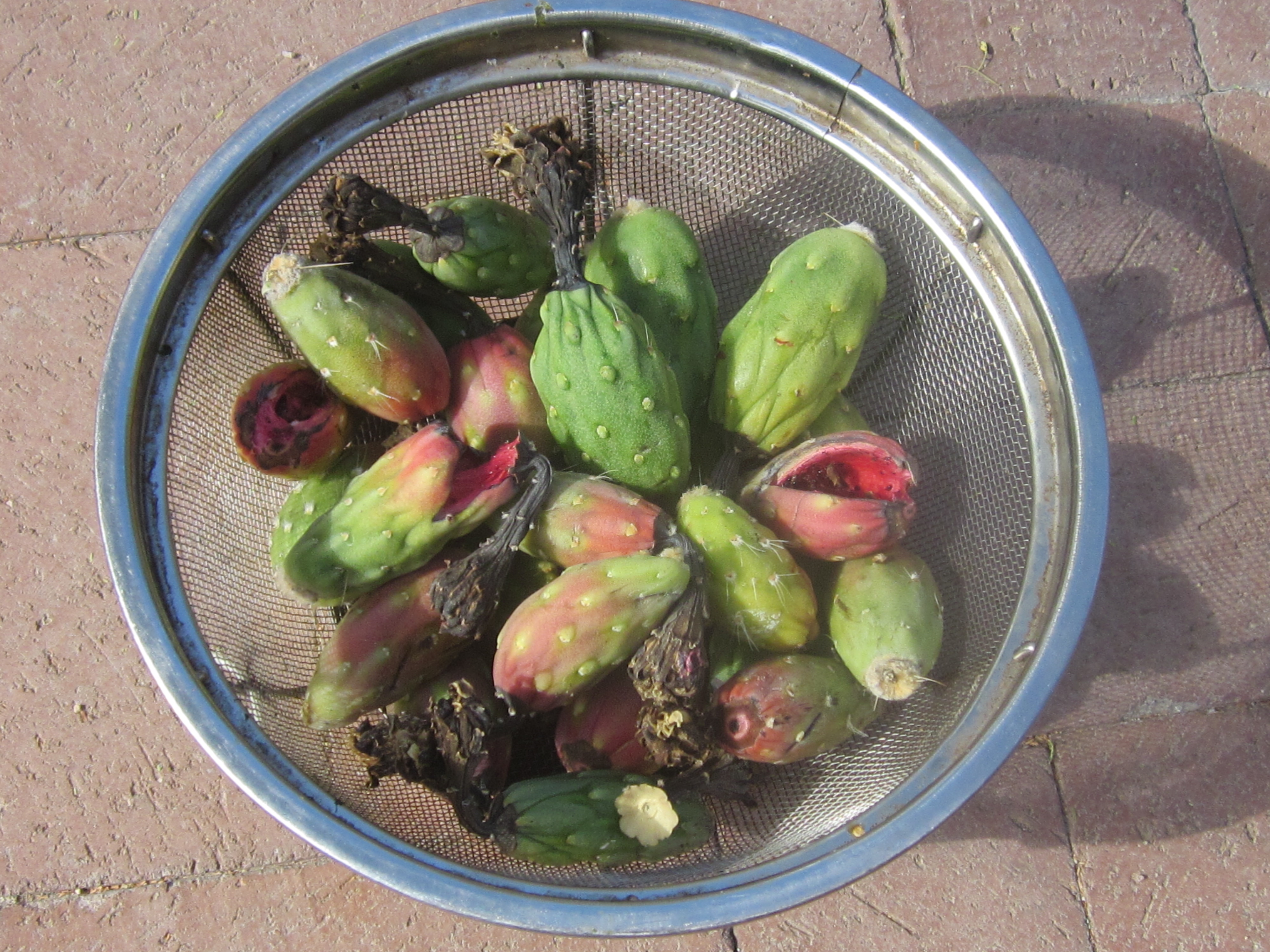
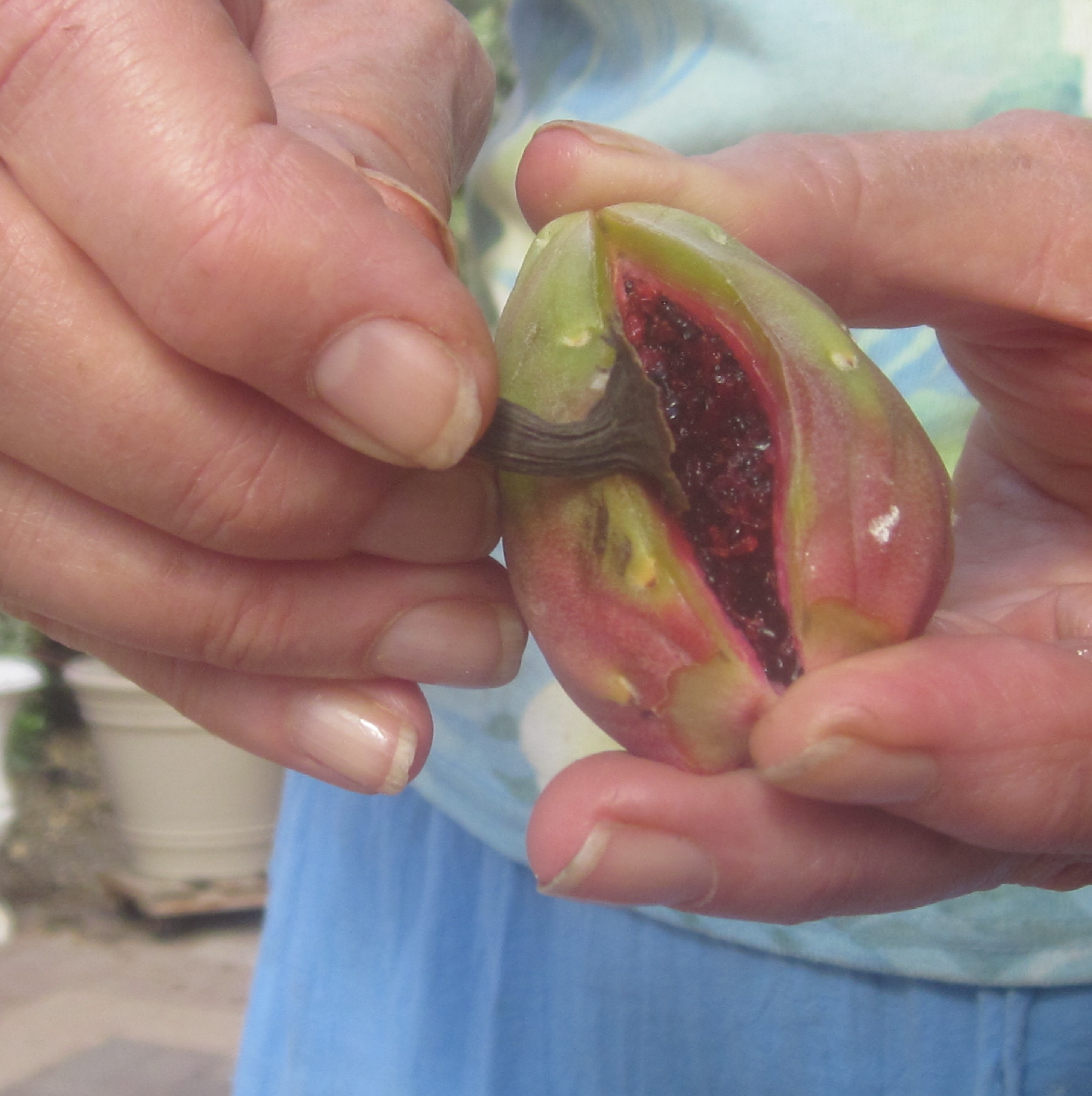
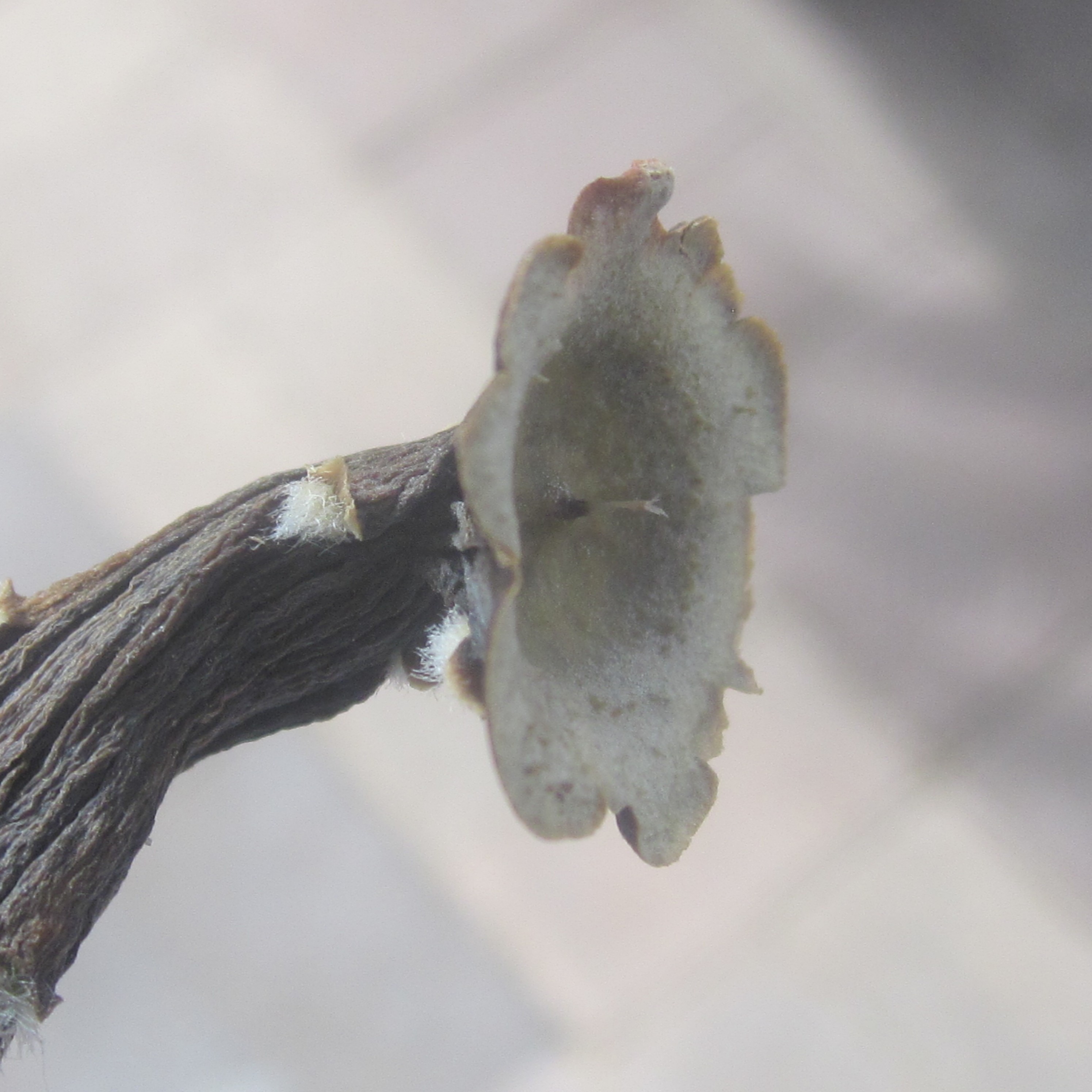
The orginal desert dwellers used a dead saguaro rib to push the fruits off the cactus. If you can’t find one, any long pole or a fruit picker will do. You can separate the fruit from the rind in the field or bring it home to clean. Each fruit comes with its own sharp-edged knife, like a natural can opener.


Opening a fruit with the calyx on the blossom end.

Opening a fruit with the calyx on the blossom end.


Sharp edge of the calyx can be used as a knife.

Sharp edge of the calyx can be used as a knife.


Once you have extracted the fruit, you can either dry it whole or separate it into the seeds and juice. This is a simple process. To your pan or bucket, add as much water as you have fruit. Let it sit, covered loosely for six to eight hours. Then plunge your hands in and break up the fruit. Strain off the juice. Boil to concentrate.  If you want to make syrup from the concentrated juice, add half as much sugar as you have juice and boil until clear. Store in a clean glass jar in the refrigerator. It will usually keep for months.

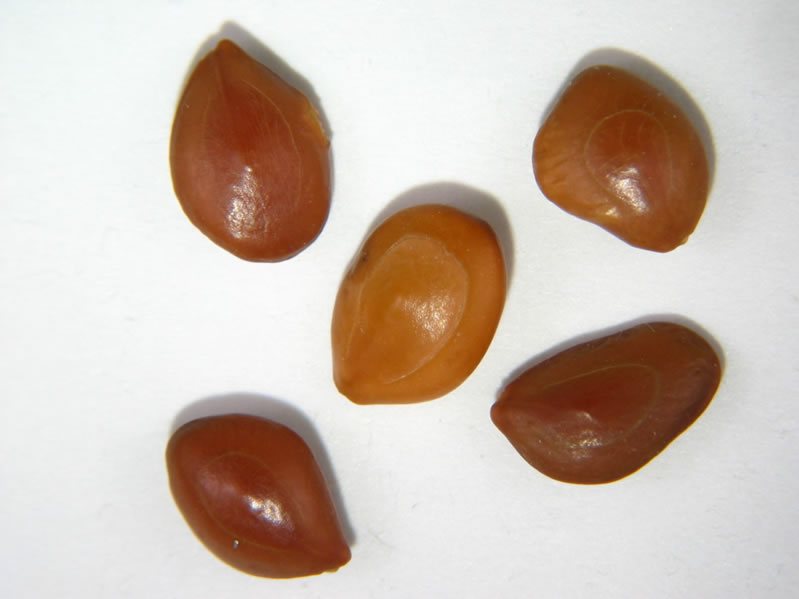
So what are the options for the seeds. You can put them in any baked good, make pilaf or porridge or cookie filling. But an easy use is homemade crackers. Spread the wet seeds on a cookie sheet in the sun. There will be some white material left from the juice, but either blow it off or ignore it.  I made these crackers in around a half hour. We are accustomed to eating commercial crackers that are very sweet and salty. So if you want a familiar flavor, use the higher amounts of salt and sugar.

Black Beauty Wafers

1/4 cup saguaro seeds

1 cup whole wheat flour

1/4 teaspoon baking powder

1/4 to 3/4 teaspoon salt

1-2 teasp0ons sugar

1/4 cup water

1 tablespooncider vinegar

1/4 cup vegetable oil

8 teaspoons whole saguaro seeds

Preheat oven to 400 degrees. Grind the 1/4 cup saguaro seeds in a blender or coffee grinder. In a large bowl, combine seeds, flour, baking powder, salt and sugar. Add water, vinegar and oil and mix, stirring and kneading until a stiff dough forms.

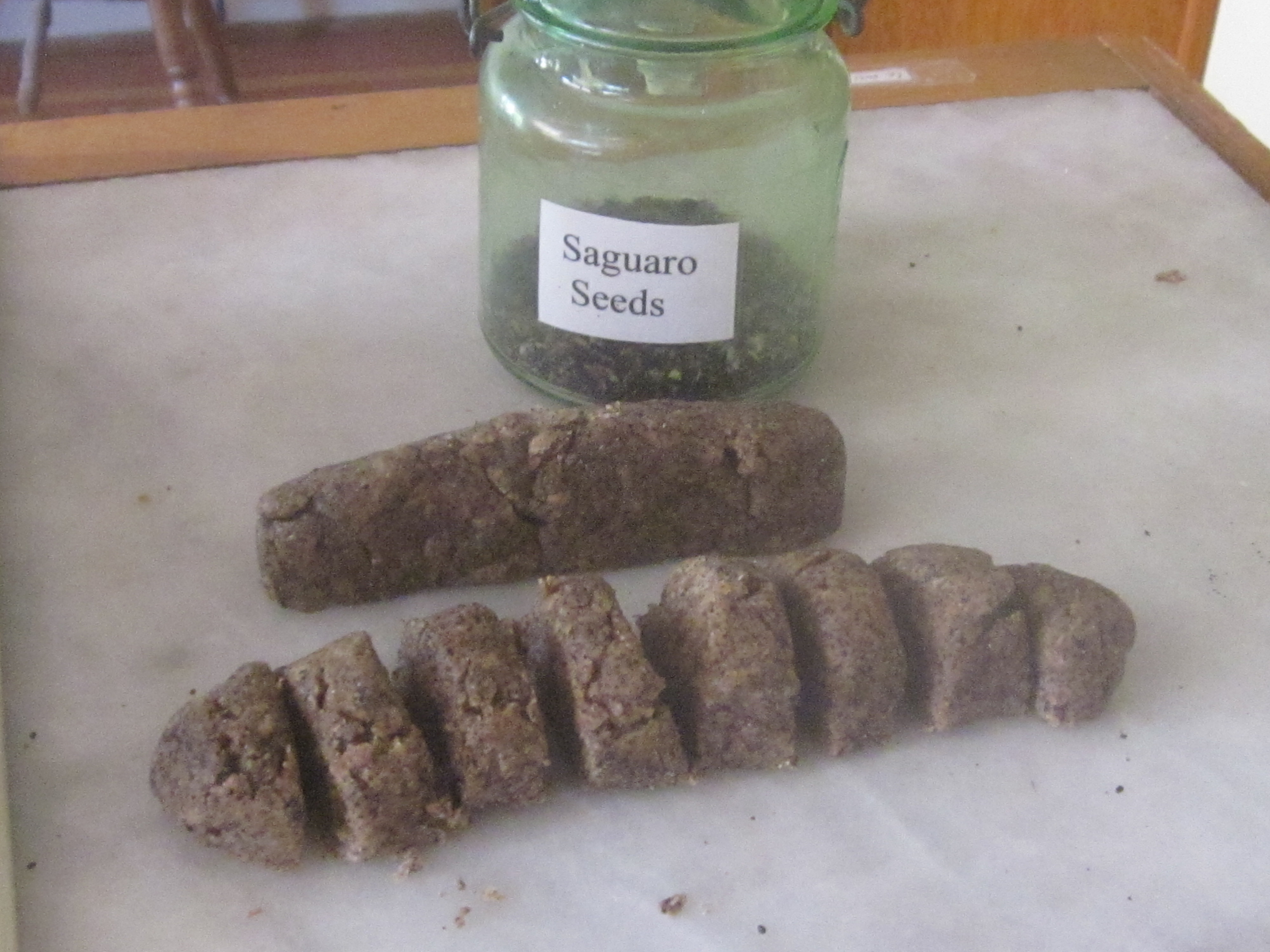
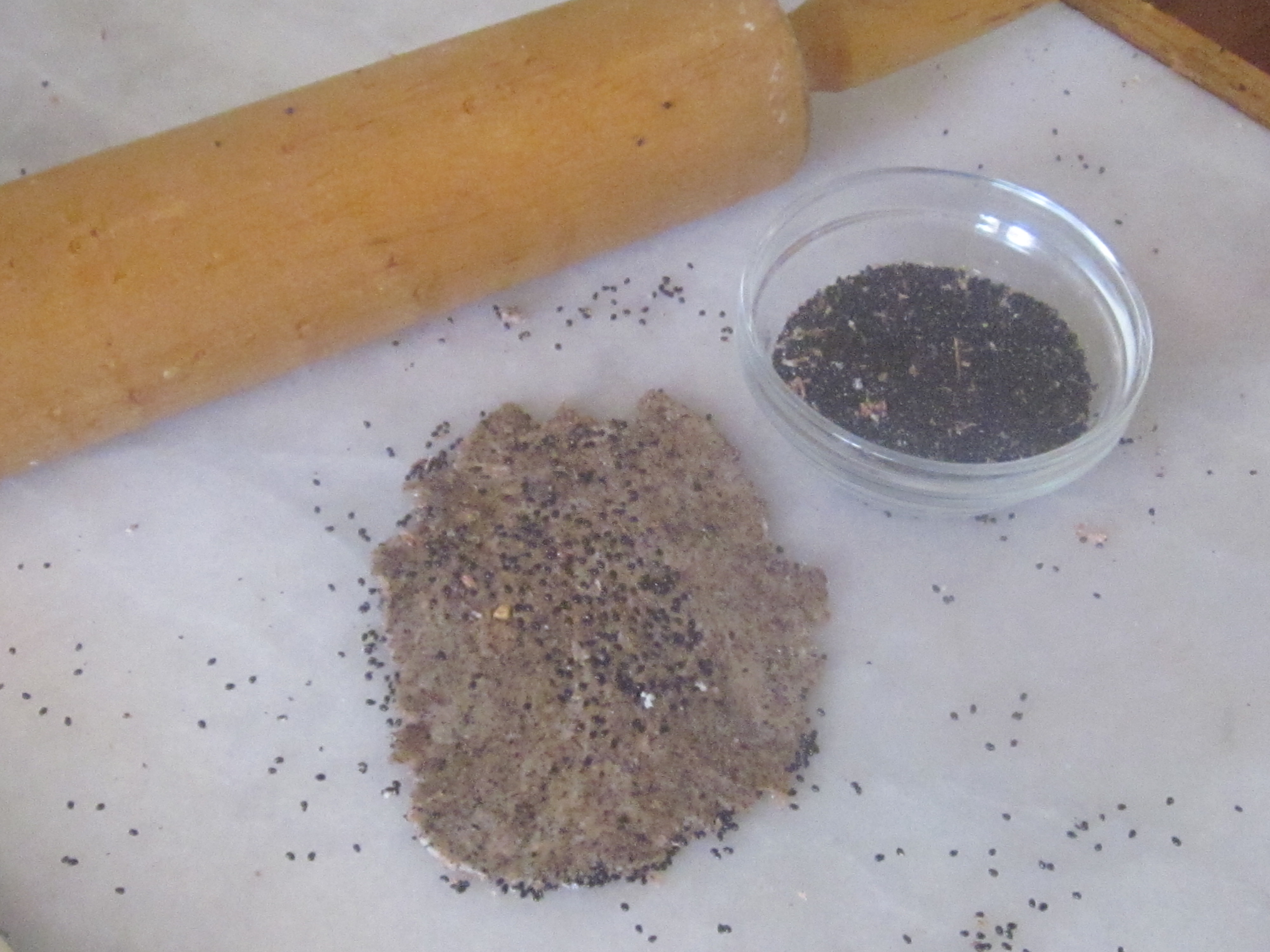
Shape dough into two rolls, 6 inches long and 1 inch in diameter. Then slice each roll into eight wafers.  Sprinkle some seeds on a flat surface, place one disk of dough on it, sprinkle some more seeds on top and roll with a rolling pin as thinly as you can. The thinner the cracker, the crisper they will be.  The shapes will be irregular.

Form dough into log and divide into eight portions.

Form dough into log and divide into eight portions.


Roll out each portion of dough.

Roll out each portion of dough.

Transfer the crackers to an ungreased nonstick cookie sheet. If you have a regular metal pan, use a sheet of parchment paper. Bake in the preheated oven for just 5 to 7 minutes. Watch closely to ensure they do not burn.

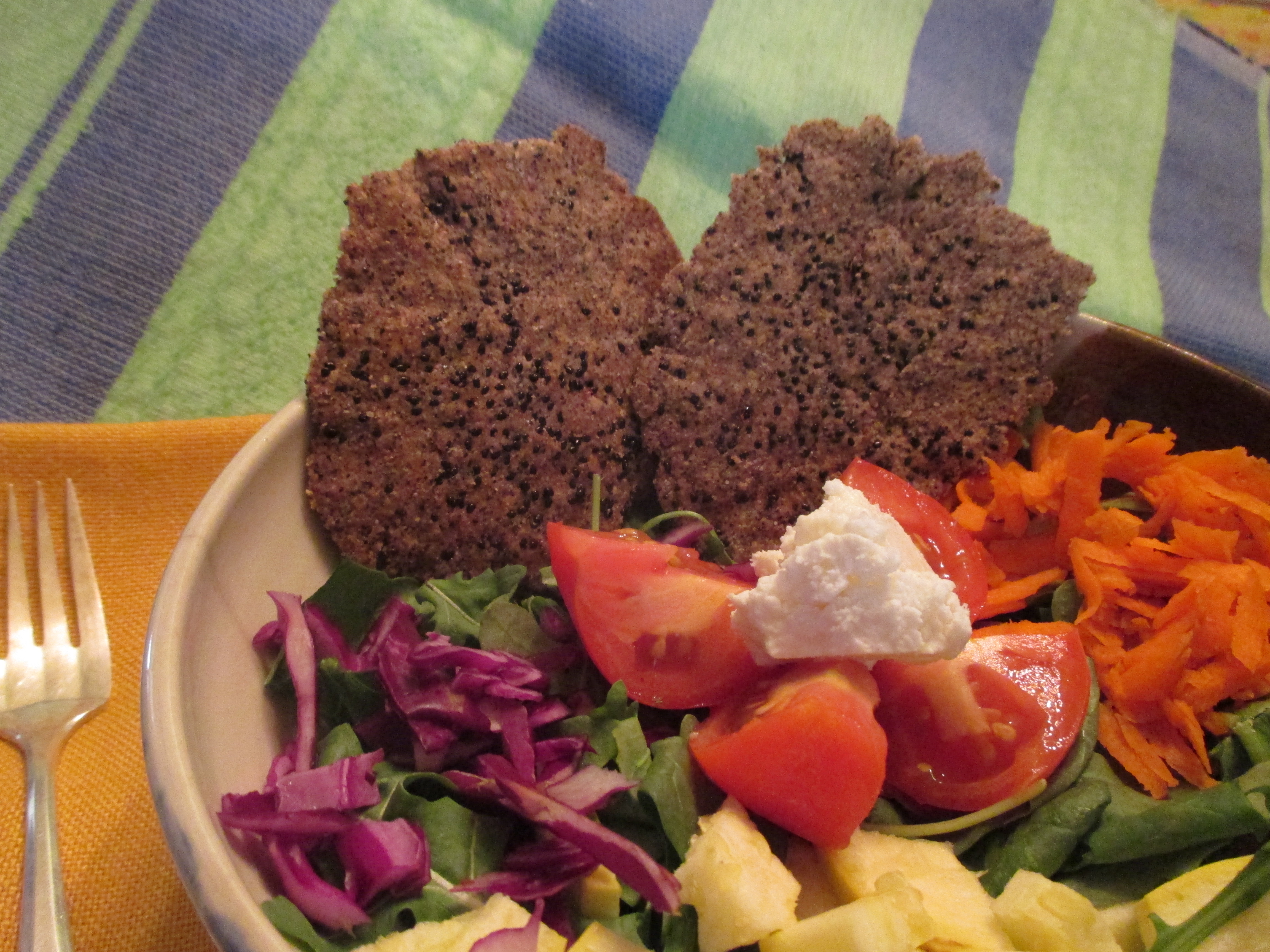
You can serve with soup or salad. Or spread with a soft cheese.


Serve your Black Beauty Wafers with a crisp salad.

Serve your Black Beauty Wafers with a crisp salad.


And when you eat your saguaro syrup or enjoy your Black Beauty Wafers, remember the words an elderly Tohono O’odham woman said to Ruth Underhill back in 1938:

“To you Whites, Elder brother gave wheat and peaches and grapes. To us, he gave the wild seeds and the cactus. Those are the good foods.”


____________________

For more recipes using both saguaro fruit and seeds, consult Cooking the Wild Southwest: Delicious Recipes for Desert Plants.  You can find a copy at Native Seeds SEARCH or order online here.


Wild Greens and Mole Enchiladas

blog1Hello, this is Amy Valdés Schwem, and I’m honored to be here with such esteemed plant and cooking women!

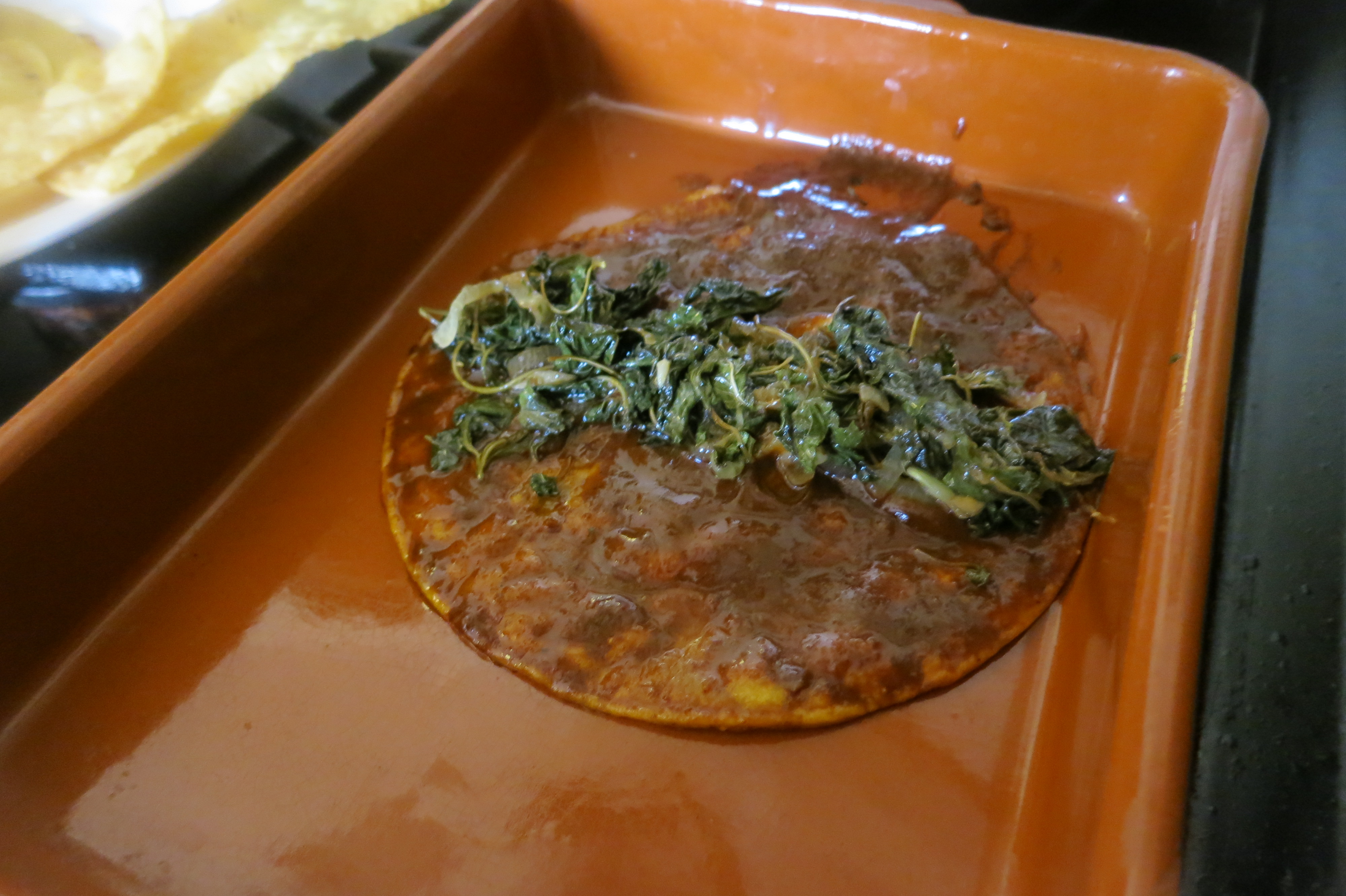
I love harvesting wild greens, but my day job is making mole as Mano Y Metate. Today I’m going to make enchiladas made with Mole Dulce and fill them with wild greens and summer squash. It won’t heat up the house, if you take the toaster oven outside! Enchiladas made with tomato sauce instead of chile are called entomatados, and those made with mole are enmoladas. So the menu can read: Enmoladas de Mole Dulce con Quelites y Calabacitas.

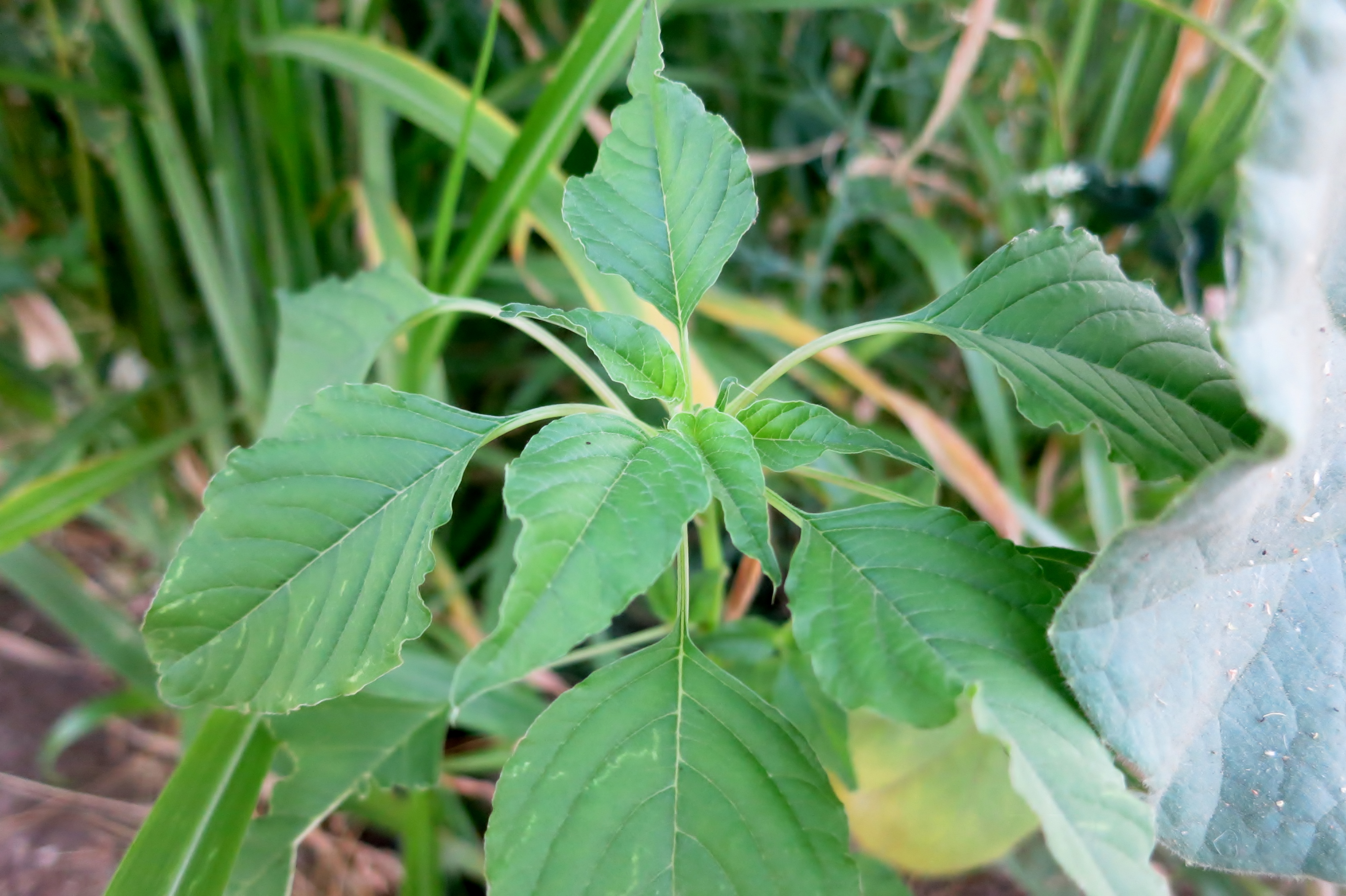
Quelites can refer to several unrelated wild greens, but to me they are wild amaranth greens, Amaranthus palmeri, also known as pigweed.

I grew up eating quelites with my maternal grandfather, and he knew no shame jumping fences to pick weeds. They make a few tiny black seeds, unlike its Mexican domesticated relatives that make enough blond seed to fill bulk bins at the health food store.

It is native to the southwest US and northwest Mexico, and its wild and domesticated relatives are enjoyed around the world both as a green and for its grain-like seed. It easily out-competes summer garden and field crops and is becoming resistant to glyposphate (Roundup). But you wouldn’t want to harvest from those over fertilized fields anyway, since it can absorb too much nitrate, making it unsafe for humans and animals. However, grown in native desert soil, they are safe and nutritious, high in vitamin A, vitamin C, and folate, among other vitamins and valuable minerals.

Some species and cultivars available at Native Seeds/SEARCH are used for dye and have red leaves, and some make a huge red inflorescence pretty enough to grow as an ornamental, even if the birds eat all the seed. I’ve never had much luck popping the seed I grew, but you can buy commercially popped seed, like miniature popped corn.

blog2 blog4

I just visited my closest community garden, Las Milpitas de Cottonwood, and found these beauties in the irrigated beds already in flower. If this was all I had, I would pick the smallest leaves from the stalks and use those.

blog5Hopefully you find quelites before flowering, shorter than a foot tall. I found a few plants in my yard where other things get watered. Many more will sprout with the summer rains.

blog7a


Last year I had so many from my Tucson Community Supported Agriculture share that I dried some, just like my great aunt Tia Lucy told me they used to do. I just plucked leaves from the stems and air dried them in the house. To use, I soaked in water overnight, then sauteed with the others. I’ll dry more this summer, for sure.

blog7b blog8


To prepare the fresh quelites, wash, chop tender stems and all, and saute with a little onion and garlic in oil. My grandfather always used bacon grease, so that’s what I did.

blog6


It’s also prime season for calabacitas, so use them if you don’t have any fresh or dried quelites. My grandfather also collected and cooked verdolagas for us, which would work here, too.


blog9a


Calabacitas, sauteed with onion and garlic. This filling with mushrooms and queso fresco, inside mole dulce enchiladas, is my brother’s signature dish. Well, one of his signature dishes.


blog9b blog9c


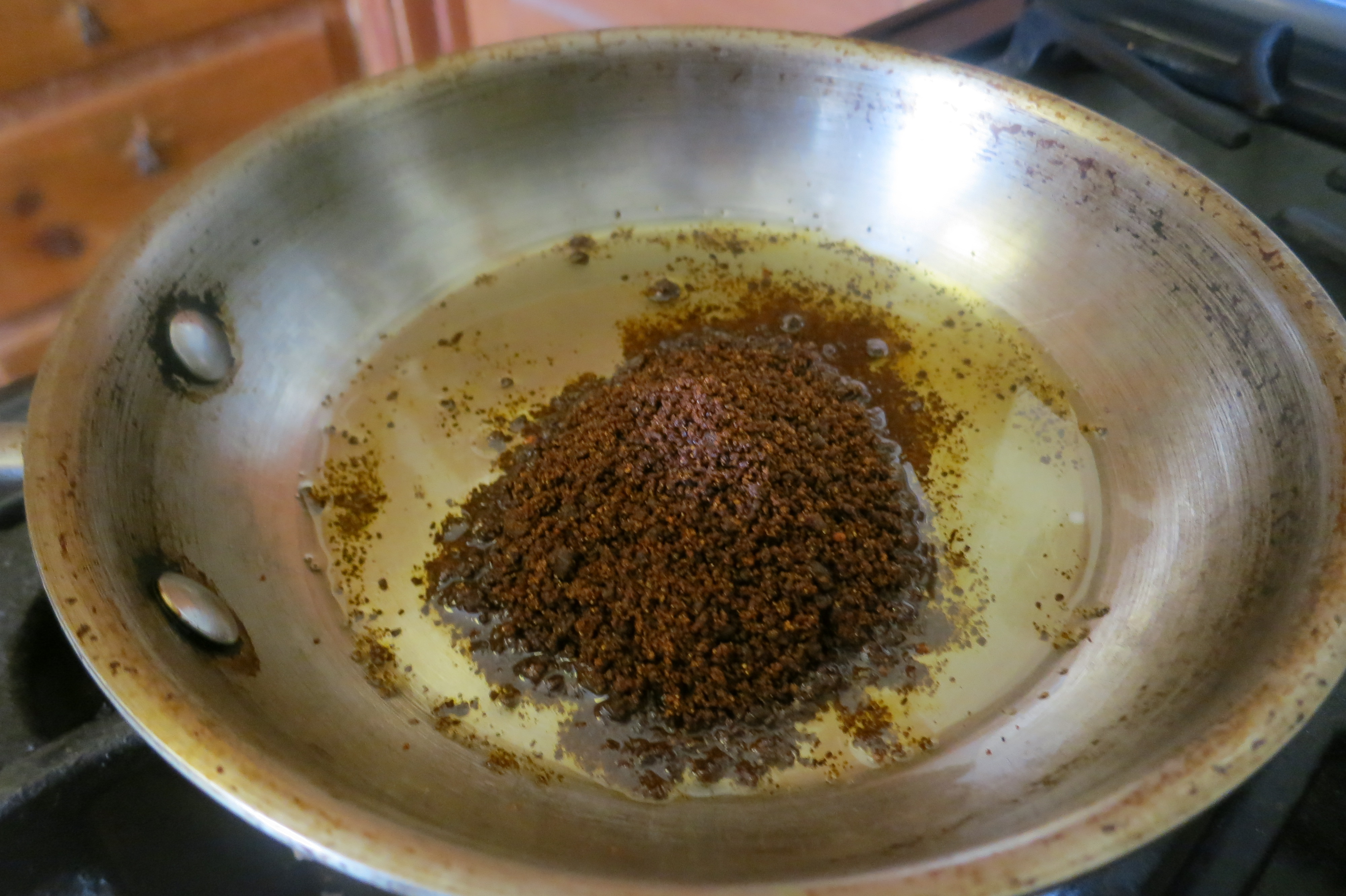
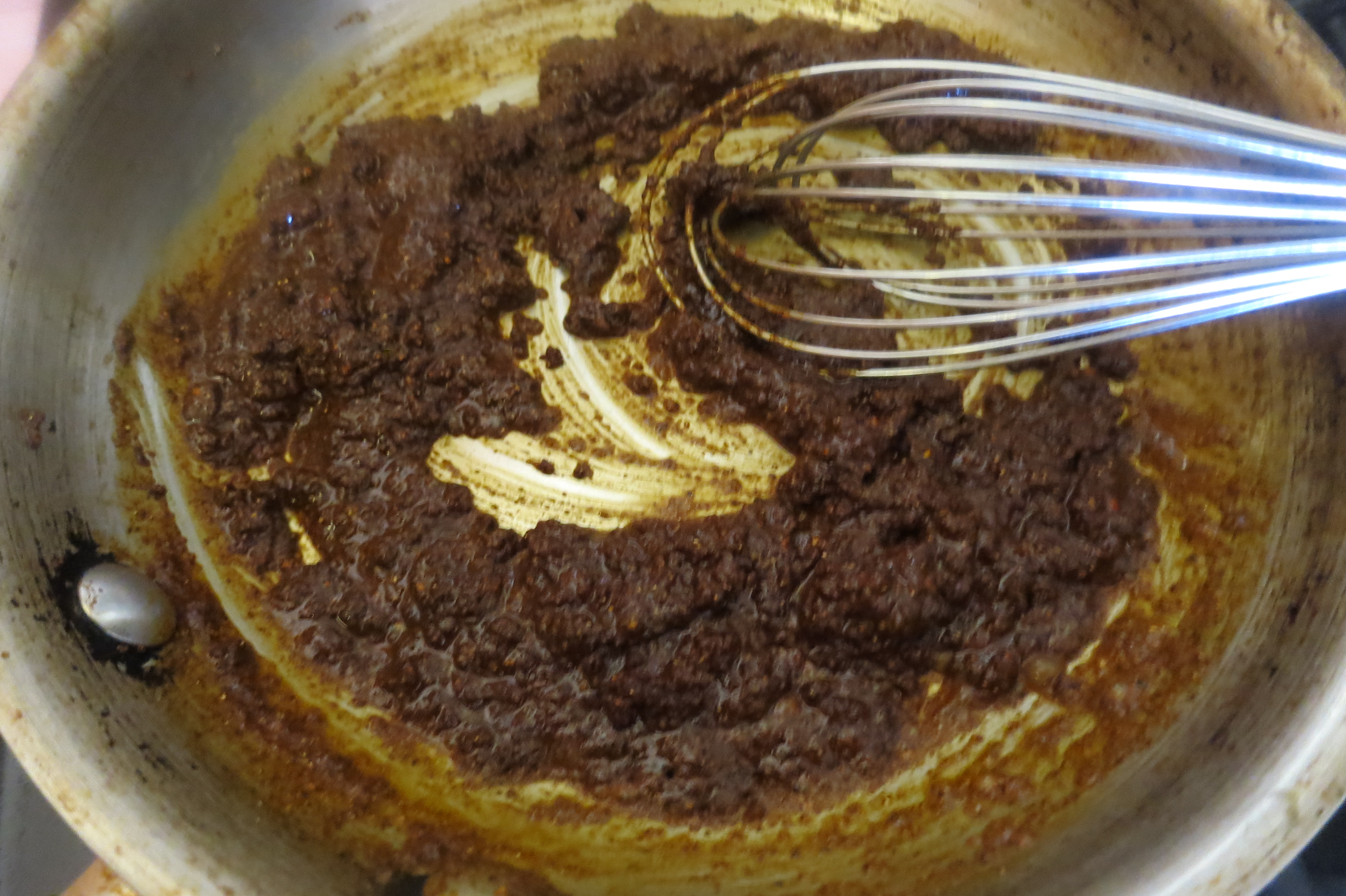
Now for the mole! For a half dozen enchiladas, to serve two people, I used about half of a tin of Mano Y Metate Mole Dulce powder, cooked in mild olive oil to make paste.

blog9d

Then I added about half a cup homemade chicken stock and a dash of salt, but veggie stock is great, too. Water doesn’t quite do it. Simmer until you have a nice sauce, adding more broth as necessary. There will be steam and good smells.


blog9f blog9g


The secret to enchiladas: start with thin corn tortillas and fry briefly in oil hot enough to sizzle, but not hot enough to make them crispy!!! DO NOT skip this step!

If the tortilla cooks too much, or if it breaks, just turn up the heat and make that one into a corn chip.

Dip the flexible tortilla in the mole dulce.

blog9h blog9i


Put quelites or calabacitas in the tortilla and roll.

blog9j blog9l


Top with homemade queso fresco and bake until heated though. My grandfather used the toaster oven outside on the patio in the summer to make enchiladas. No need to heat the house!

Depending on your oven, you may need to cover them with foil, but I didn’t. I like crispy edges. Serve with a cucumber, tomato salad dressed with a squeeze of lime, beans, and prickly pear grapefruit-ade.

Leftovers are best fried in a cast iron pan until crispy.

Mano Y Metate moles can be purchased from Martha Burgess of Flor de Mayo Arts at the Sunday Heirloom Farmers’ Market at St. Philip’s Plaza, Native Seeds/SEARCH, and ManoYMetate.com.


Savor the Southwest Portable Pies

Aunt Linda here….

Image

It is predawn in the Old Pueblo, summer constellations flicker overhead, the early morning mating songs of birds twirl their way to my ears. Right now the air cool and dry. In a matter of hours it will heat up to triple digits. Those who live in the desert a resilient sort. We live with significant temperatures swings all year long, fascinating animals (I saw a Gila Monster June 1st), and lots of spiny cacti, all of which we find beauty in.

I like my food to be resilient as well. Which makes me think of pie. It can be savory or sweet., or both. It can be served hot or cold. It is forgiving in what it allows the pie maker to do. It can be frivolous or serious; nutritious or not. Its flavors can reflect family and cultural identities and preferences. Pie does it all.

Which makes me curious about who the First Pie Maker might have been. The particular “who” remains a mystery. After reading up on pie, it seems to me that there were likely many many many First Pie Makers in nearly every culture known to cook and experiment with food. It is, after all, quite simple: the creating of dough, or pastry, and then filling it with regional, seasonal foods.

Image

“New World Resiliency Pie”   Being inspired by the prickly pear pads that radiate with that fresh spring green color, (photo) right now. I decided to make a pie, ancient and not from this continent, with a New World Flare. New World Pie Fillers:  nopalitos (fresh prickly pear pad), chiltepin, chocolate. (Talk about Resiliency, each of the foods above have survived centuries. One example: Coprolites (human droppings) found in caves reveal that humans have been the relatives of the chiltepin for thousands of years! )


The First Pie Maker was not a Southern American, despite many Americans strong cultural identity about pie. Read even a little bit about pie and you quickly find intensely personal accolades about it. For those who “get” pie, there is a love for it that is both reverential and sensuous. It includes a deep feeling of being “nurtured”, pie often being equated with Grandma’s Love. It is clear that human beings have been feeling nurtured by what we now refer to as pie, for a lot longer than the United States has been a country.

One first version of pie, came from Egypt, around 9500 B.C.  That surprised me.  It places the first pies all the way back to the Neolithic Period. The rustic pies were made from dough made from oat, rye, barley, and wheat – and then filled them with honey! The pies were then baked over hot coals. There is no doubt in my mind that their flavor was fabulous – what with the sweet of the honey and the smoky taste of having been naked in coals. By the time the Pharoh’s bakers got into the action (by 1300 BC-1200-something BC) nuts and fruits were added to the honey “pies”. Ramsey the II’s tomb shows etchings of this.   The beekeeper in me loves this! Remember that the Egyptians were prolific beekeepers, floating their hives up and down the Nile to follow the honey flows.

Image


“The Pharohs’ Honey Nut Pie” (add fruit of your choice)

As epochs continued, and cultures evolved the fillings included meats of all kind, as well fish, muscles, and oysters; dairy products became another beloved filler.   Human are creative and the number and variety of pies world wide is enormous. They include Indonesia’s “panada”;, Jamaica’s “patty” Malasia’s Keripap (curry puff), Nigeria’s “meat pie” and on and it goes. Throughout Latin America and Mexico you find the Empanada. Sweet meat emapanadas are made for Christmas in Mexican tradition.. At the ranch, we make Calabasa (squash) with Pilloncillo (a brown cane sugar) Calabasas.

As much as I value a good, slow cooked meal, it is just too hot in Tucson presently to  be near heat for very long. So I decided to try to create a version of pie that was smaller and thus quicker to bake. It is also more portable. And infinitely flexible: you can eat them warm or cool, pack them for a hike, lunch, bike or car trip, kids lunch. They can be fancy, humble, or decadent.  Create great tasting pies from foods you are most passionate about. Create them from leftovers. The two photos above show you how versatile the ingredients can be.

Savor the Southwest Portable Pies

INGREDIENTS: for 9 to 12 portable pies

All you need in the way of equipment for these joyous little pies is a standard 12 cup, muffin pan and some parchment cupcake-paper inserts for your muffin pan.

+++  Pie Dough or Pie Crust of your choice.

Make the favorite family recipe. Investigate a new one. There are a plethora of recipes available in these food savy days, vegan options, full fat ones, raw ones. I used a store bought crust for these tiny pies. While I have made crust in the past, and value making it, I needed something quicker this week. There are a number of buying options these days. I found one at my local health food store, whose ingredients I felt comfortable with.

I feel dough-headed (brain fog) and lethargic if I eat a lot of dough, so I minimized it in these recipes – but you can and should use as much or as little as your would like.  Fill the sides! Cover the tops (remember to slice air holes). Add decorations with the left over dough.  Remember resilience, and you can practice it in the act of making pies. I used the equivalent of 1, 9″ pie crust; but if you would like to have more pie crust to the pies, make enough for two 9″. Also, using the parchment is completely optional. I used it because I travel a lot and I thought the pies would travel better, too. I think the tiny pies might be more beautiful for your table if you don’t use the paper, and if you use dough for the whole pie, including sides and top. In that case, after unrolling your dough (you’ll do this whether you make it yourself or buy it), place it on a lightly flowered surface, and roll with a rolling pin, to about 1/8′. Using a biscuit or cookie cutter cut 12, 4” circles for the bottom of the pie and 12, 3″ circles for the top, or for as many pies as you would like to make.

+++  3 eggs

+++  Imagination and Play-full-ness as you select your Other Ingredients.  We humans can be a tad on the serious side. Too much seriousness undermines resiliency. A spirit of play help us strengthen resilience.  So allow your spark to guide you, as I did in the New World Pie above.

Image

Fresh egg yolks.


The Basic Recipe/How to:

Place the muffin parchment papers in the muffin tins, or gently handling the dough, press dough into the muffin cups. Break the 3 eggs into a small bowl (preferably one with a pouring spout) and beat with a fork until combined.

Divide your ingredients to the bottom crusts, and then pour about two tablespoons of the egg to the pie. Add the top crust, or weave a top crust. Once you have the pies filled, and topped with crust, refrigerate the muffin tin for 30 minutes. Preheat Your oven to 375 F – and when the small pies have sufficiently chilled, bake them for 20-30 minutes. The time will vary from oven to oven, and from the types of pies.

For the New World  Resiliency Pie, I added prickly pear, chilpetin cheese (see my January post for the recipe), and the 2 T of beaten egg.

Image

I then tried a New World Dessert Pie – and filled the pie with  Chocolate and  Chiltpein Cheese (like a French pastry, but with the chile cheese). Note there is crust just at the bottom.

Image

Then the 2 T of egg was added, and the crust on top. I did this with the Pharohs’ Honey Nut Pie. As well


Image

The “before” baking Portable Pies – you can see the pirckly pear pads peeking through. The “after” photo is at the top of this post.


I was surprised how VERY fun it was to think up names for pies!

Here are a few:

Bye Bye Mrs. Neolithic Pie

Pico de Gallo Pie (hmm there goes the rooster – rooster pie?)

Portable, Picante, Prickly Pear Pad Pies

New World Resilience Pies


Feel free and post some of your pie variations and names!

Mesquite–Ancient Food for the Future

Yes, we gotta admit it—Tucson and ALL OF BAJA ARIZONA is a FOOD-COLONY!  To feed ourselves here, we currently import over 96% of our foods from out of state or out of country. If there were to be a transportation stoppage or disaster (perish the thought), we have less than 4 days’ food supply in local groceries. (info from Fry’s managers and Pima Co Emergency Mgmt.) This is a scary and sobering reality, and we need to remedy it for the good of all.
When it comes to food security in the Desert Southwest, if we are smart we’d best turn to those whose ancestors not only survived but thrived here, before European food fads invaded, and long before bio-technology pretended to save us–Let us listen to Native People!  If we look to traditional O’odham cuisine, and to that of all low-desert Traditional People in the Southwest, we learn that one of their most important and consistent staple foods was MESQUITE. Meal ground from the whole, ripe, dry pods was prepared in diverse ways by every tribal group, and stored safely against lean times, providing them amazingly tasty nutrition.

Now….its up to “newer arrivals” to the desert to expand our cultural tastes–and enjoy lessons from local tradition….

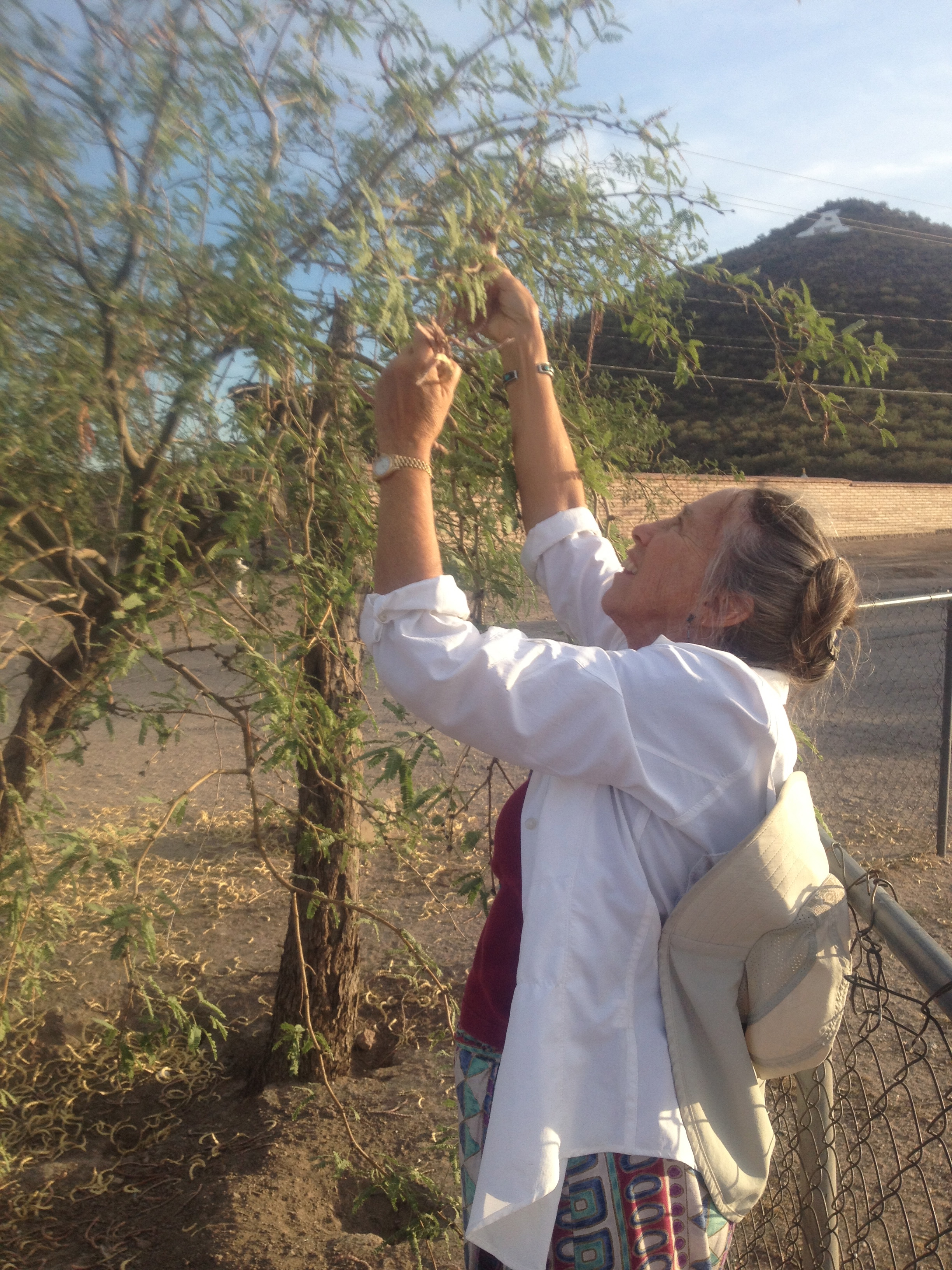
Harvesting ripe velvet mesquite pods--an old Chuk-shon tradition (RodMondt photo)

Harvesting ripe velvet mesquite pods–an old Chuk-shon tradition (RodMondt photo)

Everyone enjoys mesquite’s shade, its smokey flavoring and fuelwood in BBQs. But what about mesquite as food and food-security? Sweet and yummy are first.  Culinary versatility is up there.  Nutrition is paramount.  Recent nutritional analyses show what Native People have ALWAYS known intuitively, that mesquite’s sweetness is healthy (complex) sugars, and that it gives sustained energy (from slow-release complex carbs.)

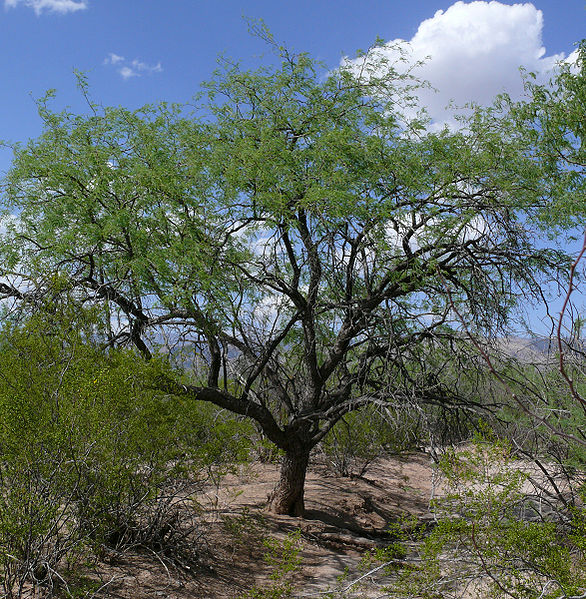
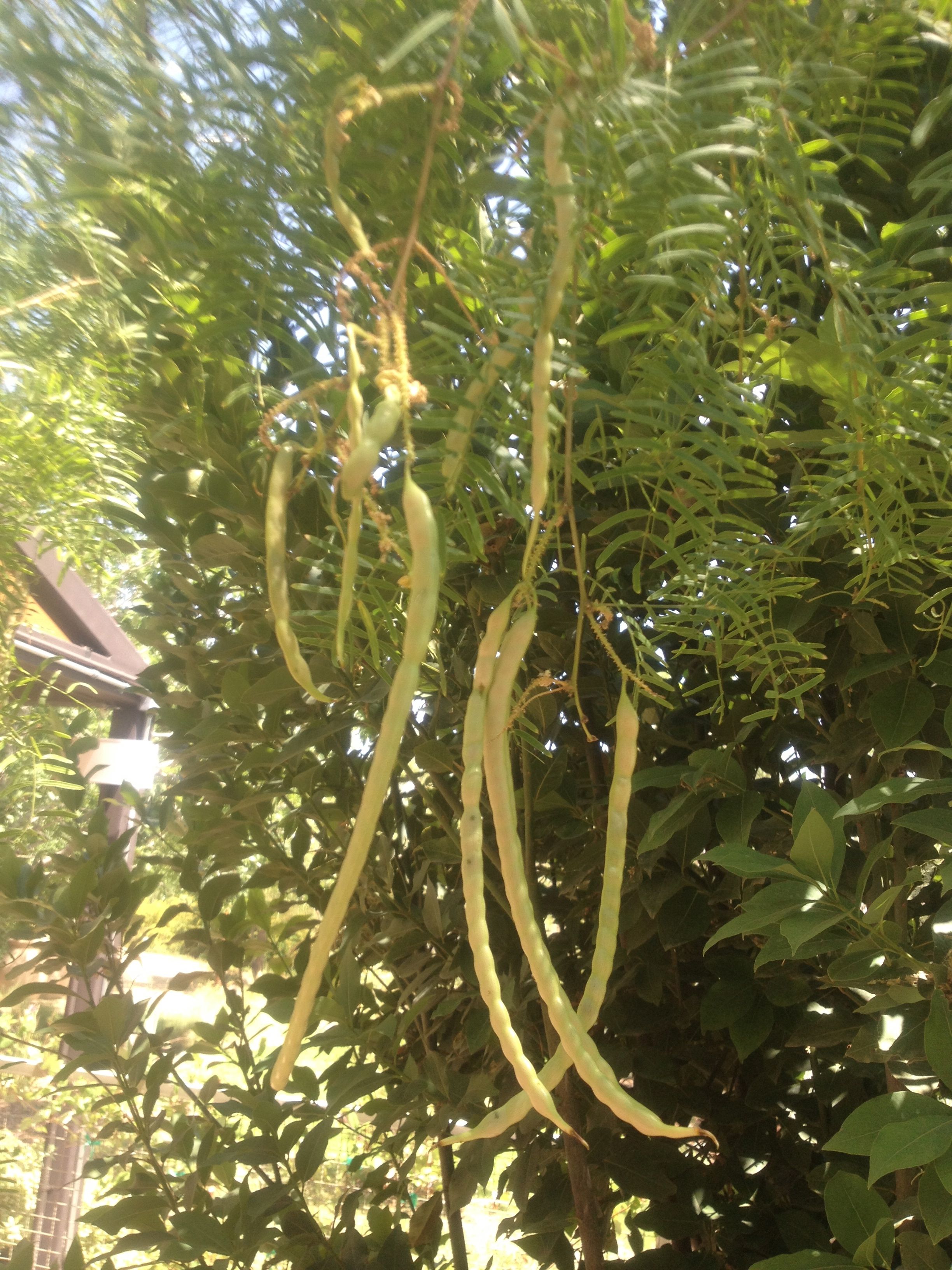
A major plus for arid-lands food-security is that mesquite trees grow plentifully in the desert WITHOUT ANY HELP from humans. Having evolved with large Pleistocene herbivores, mesquite’s survival strategy is to over-produce quantities of tasty pods to entice mammoths or (extinct) ungulates to eat them and spread their seeds, scarified and delivered in ready-made fertilizer packages. In more recent centuries, cattle have provided a similar service to spread mesquite.  Hungry bi-peds can benefit too from mesquite’s plentiful productivity. With global climate change and the promise of expanding deserts, mesquite offers us a healthy staple food and a fitting dry-lands crop for our stressed Planet.

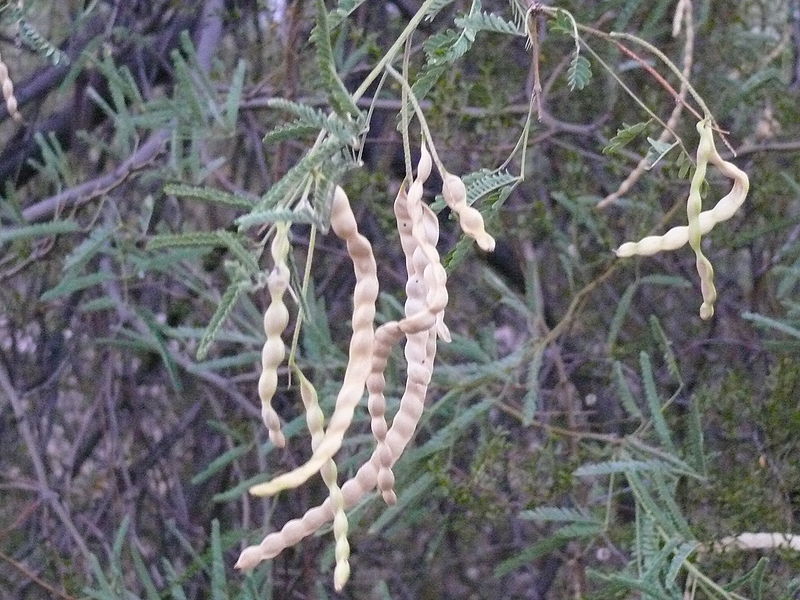
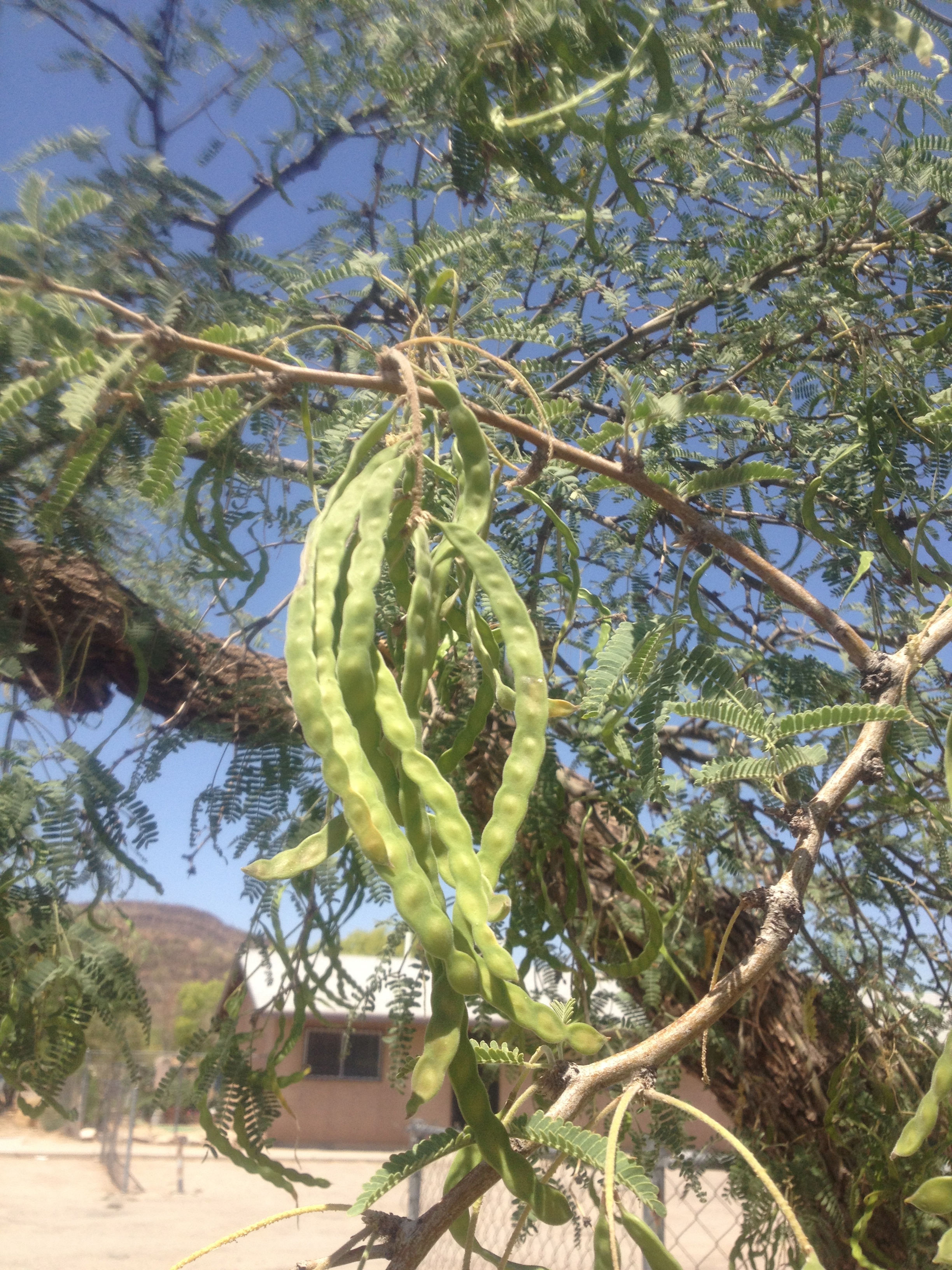
Velvet mesquite pods (Prosopis velutina) in green phase (maburgess photo)

Velvet mesquite pods (Prosopis velutina) in green phase (maburgess photo)

[Mesquite pods are ripening as I write–so heads-up!]

A most timely gathering of mesquite experts—both traditional and innovative—is about to happen at  a MESQUITE CONFERENCE open to the public and not to be missed………Attention–Novice mesquite-harvesters, cooks and culinary artists, bakers and chefs, nutritionists and clinicians, ranchers, farmers, gardeners, athletes and fitness fans, survivalists, nature buffs, climate-change planners…. this conference is for you.

MESQUITE: NEW AGRICULTURAL TRADITIONS FOR AN ANCIENT FOOD  will be held in Benson, Arizona, all day Friday, June 13, 2014, at the Cochise College Campus, 8:30am-4pm.
There will be talks by leading Mesquiteros, including traditional Tohono O’odham harvester Clifford Pablo, new crops innovator Dr. Richard Felger, the one and only mesquite agronomist Mark Moody, wild-harvester Amy Valdes Schwemm, creative desert rancher Dennis Moroney, animal feed expert Dr. Howard Frederick, desert foods ethnobotanist Martha Ames Burgess, and Cooperative Extension outreach educator Mark Apel.

In addition, generously sharing their knowledge, techniques and recipes will be demonstrators, including desert foods writer Carolyn Niethammer, wild-food teacher Barbara Rose, solar cooking expert Valerie McCaffrey, mesquite millers from San Xavier Farm Coop and Tohono O’odham Community College, and children’s book author Laurie Melrood. This is the place to contact producers of mesquite meal for your home cooking, for nouvelle local-source eateries, and breweries. Get your tastebuds ready for samples of delectable new culinary mesquite delights!

Sponsored by Baja Arizona Sustainable Agriculture and University of Arizona Cooperative Extension, with extra support from USDA Western SARE, we have been able to keep the registration fees to a minimum– accessible to anyone. $30 covers the whole day conference including luncheon ($20 for students or members of BASA). Space is limited so register soon. Registration is online via the BASA website http://www.bajaaz.org. For further info call 520-331-9821.
Once registered, please group your travel plans in carpools. For carpooling ideas check out the Native Seeds/SEARCH or BASA facebook sites. Let’s not let anyone miss this conference who needs to be there!


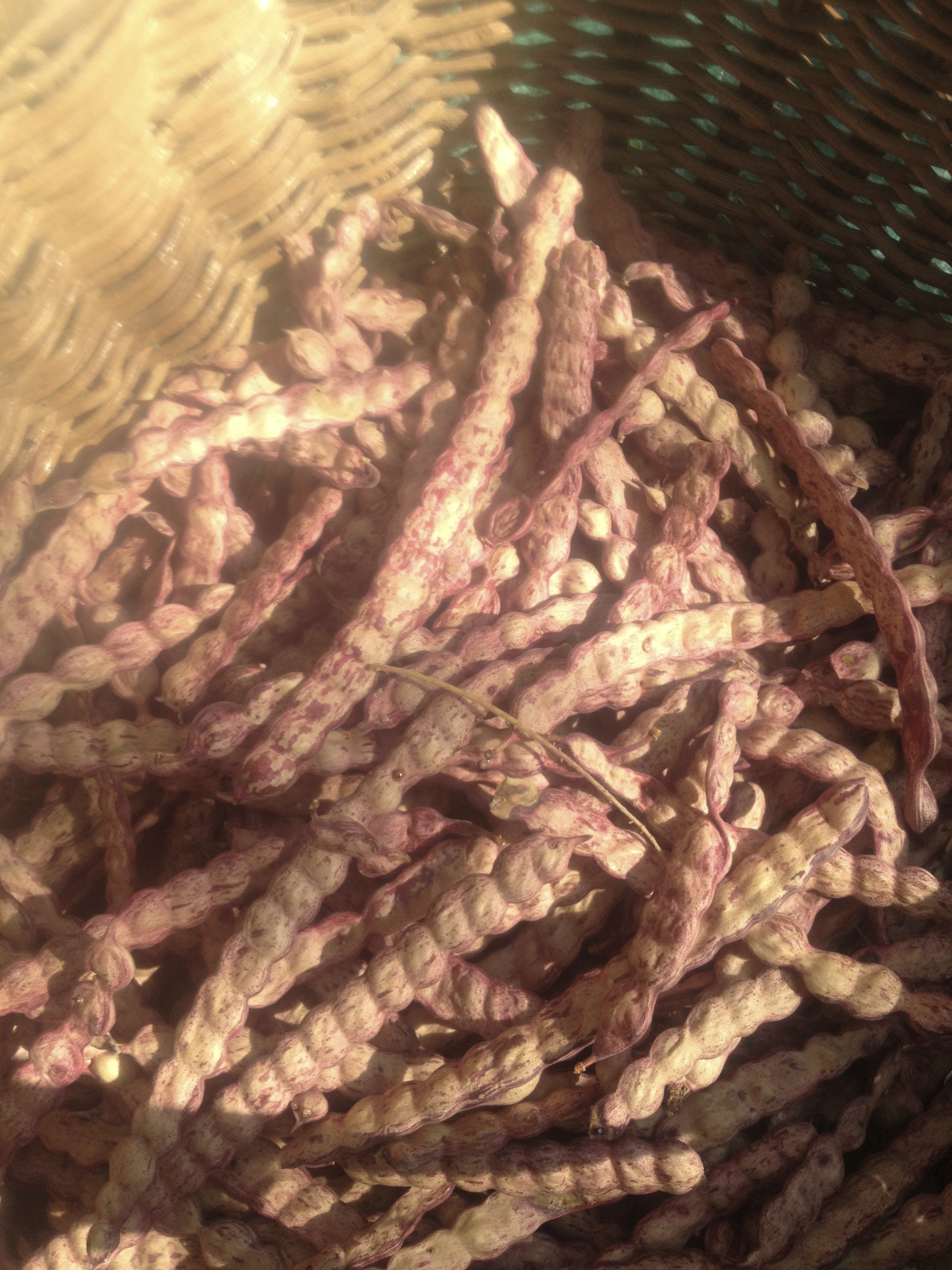
Select sweet velvet mesquite pods dry and ready to grind (maburgess photo)

Select sweet velvet mesquite pods dry and ready to grind (maburgess photo)


Delicious honey mesquite (Prosopis glandulosa) with ripening pods.

Delicious honey mesquite (Prosopis glandulosa) with ripening pods.

ADDITIONAL MESQUITE HAPPENINGS–Plan to Harvest, Plant, and Celebrate Native Bean-Tree Abundance Before the Rains…

DESERT HARVESTERS is organizing events to help people dramatically enhance the quality of their mesquite pod harvests, what to make with them, and how to better sync with the Sonoran Desert’s seasonal cycles in a way that enhances our shared biome.
We are teaming up with local culinary businesses to increase offerings of native foods in their cuisine, and to encourage landscaping with native food plants in water-harvest earthworks beside their buildings.

Mark your calendar for Thursday June 19, 2014!

Guided Mesquite Harvests and Plantings
Hosted at the Santa Cruz River Farmers’ Market
100 S. Avenida del Convento, Tucson, AZ

5pm harvest on foot, 6pm harvest by bicycle
Led by Desert Harvesters including Amy Valdés Schwemm and Brad Lancaster
$5 to $10 per person (sliding scale)

These hands-on harvest tours show you how to:
• Identify and sample the best-tasting mesquite trees
Every tree is different, but some varieties are consistently much better than others. Taste the differences. (We will also likely harvest from desert ironwood and palo verde.)
• How to harvest safely, ethically, and responsibly
Harvesting pre-rains is best practice to avoid invisible toxic mold. Harvesting from the tree avoids fecal or fungal ground contamination. Check out http://www.ediblebajaarizona.com/calling-all-mesquiteros/ for more on why pre-rain harvests are the traditional practice, and so important.
• Use cool tricks such as the harvest cane.
• How and when to plant the best bean trees
Participants are encouraged to bring sun protection, reusable water bottle, and carry-bags for harvested pods.

Iskashitaa, an organization that helps resettled refugees integrate into the Tucson community, will be offering their beautiful hand-made harvest bags and fresh-squeezed juice from fruit they’ve gleaned. Also there will be AravaipaHeirlooms’ prickly pear pops and chiltepine-infused cold brews from Exo Roast Co.

Bean-Tree Processing Demonstrations
Before and/or after the Guided Harvests and Plantings
4pm to 7pm–FREE
Taught by Barbara Rose, desert foods farmer/fermenter/cook extraordinaire of Bean Tree Farm (see their website for more awesome workshops), will show you how to turn milled or whole desert ironwood seeds, palo verde seeds, and mesquite pods into tasty dishes. Native foods such as mesquite flour, cactus fruit pops, drinks, syrup, and cholla buds will be available for sale, along with seeds and seedlings of the best-tasting native bean-trees and chiltepines.

AND THEN DON’T MISS Sunday, June 22, 2014!

Pre-Monsoon Mesquite Milling
Sunday, June 22, (alert–in the event of rain, it will be moved to Sunday, June 29)
6am to 10am
Bring Your Own Pods!
Pods for milling must be clean, dry, and free of mold/fungus, stones, leaves, bugs and other debris. Cost: $3/gallon of whole pods, with a minimum of $10.

Also at the milling event:
• A native wild foods demonstration – highlighting what’s in the wild-harvest season now
• Exo’s mesquite-, mole-, and chiltepin-infused coffees
• Mesquite baked goods and cactus fruit popsicles
• Seeds and seedlings of select native bean trees and chiltepines — so you can plant yours in time for the rains.

Our thanks to hosts Exo Roast Co. and Tap & Bottle,
403 N. 6th Ave.,Tucson, AZ
Harvesters’ Happy Hour at Tap & Bottle
Come join fellow harvesters in fermented merriment. Tap & Bottle will have local brews on-hand, some infused with local native ingredients. And they will donate a percentage of all the sales to Desert Harvesters. Learn more online at: http://www.DesertHarvesters.org


Mesquite can help us into a food-secure future– fittingly, sustainably, healthily, and sweetly– as we face heating and drying of our desert home.  What a gift mesquite is, as we begin to declare our independence from being a FOOD-COLONY!

Desert Mistletoe for Food and Fun

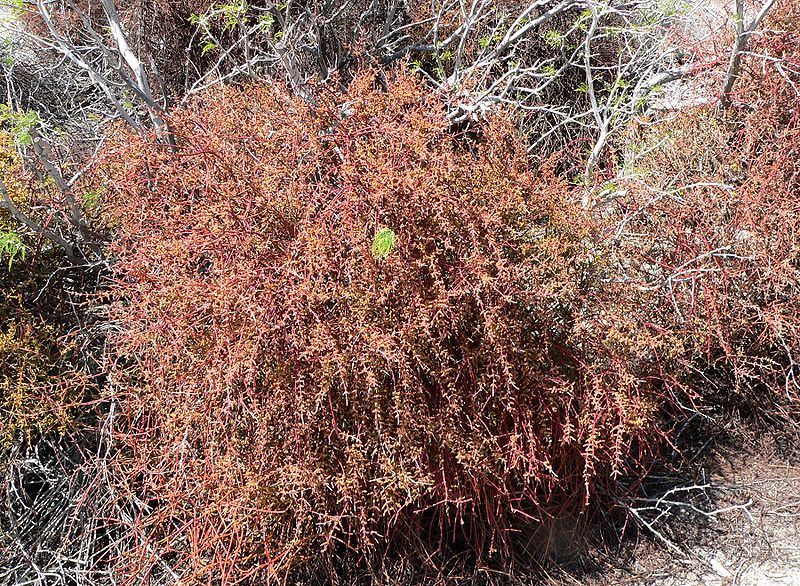
Jacqueline Soule here today to discuss a edible “weed.”  Most people associate mistletoe it with kisses and winter holidays. Sad to say, here in the desert southwest, many homeowners think of our local mistletoe as a weed to be eliminated from their trees. In reality, they should be thinking of it as a crop to be harvested!

Phoradendron_californicum_6 by Stan Shebs

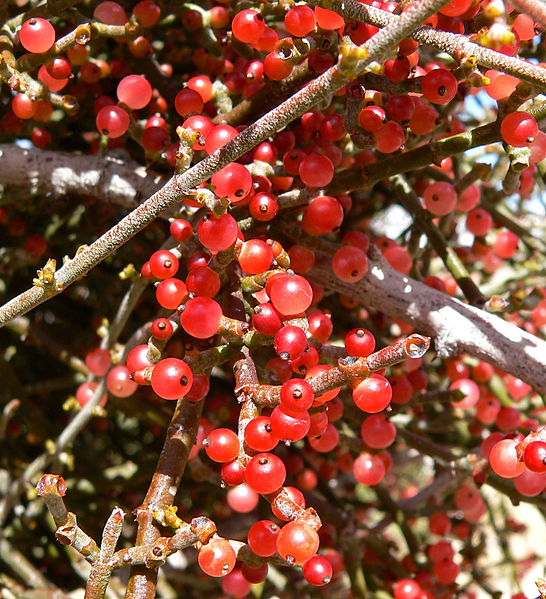
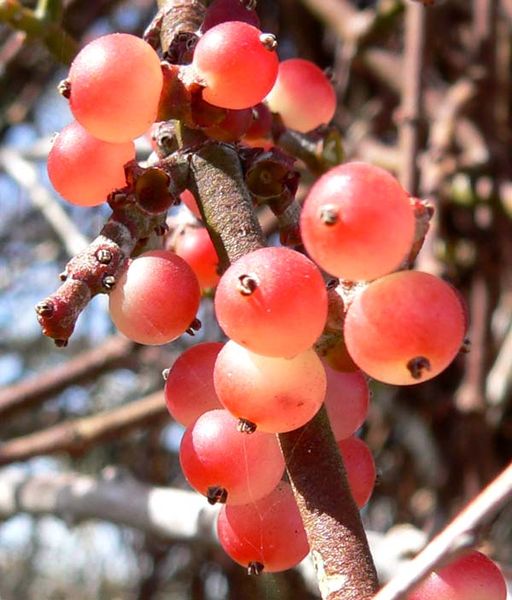
Desert mistletoe fruit is the only mistletoe fruit that is edible. Photo by S. Shebs.


There are many species of mistletoes around the world. The mistletoe plants themselves are all toxic. The berries of most species are toxic. The one exception is our local desert mistletoe, Phoradendron californicum, bearing not only edible but highly palatable white to reddish translucent berries. Native peoples ate only the fruits of mistletoes growing on mesquite, ironwood or catclaw acacia. Found growing on palo verdes or Condalia (desert buckthorn) the fruits are considered inedible.


Phoradendron_californicum_1 by Stan Shebs

Plants of desert mistletoe can become quite large and offer a bountiful harvest of berries. Photo by S. Shebs.


According to literature, the Seri consider mistletoe fruit ripe and harvestable once it turns translucent. Harvest is done by spreading a blanket below the plant and hitting it with sticks to release the fruit. Seri consumed the fruit raw. The Tohono O’odham also consumed the fruit raw. River Pima ate the fruit boiled and mashed, which made it the consistency of a pudding. The Cahilla gathered the fruits November through April and boiled them into a paste with a sprinkle of wood ash added to the pot.  (Bibliography at the end of this article.)

Some desert mistletoe are more red and less translucent.  This is just normal variation within the species.  Photo by S. Shebs.

Some desert mistletoe are more red and less translucent. This is just normal variation within the species. Photo by S. Shebs.


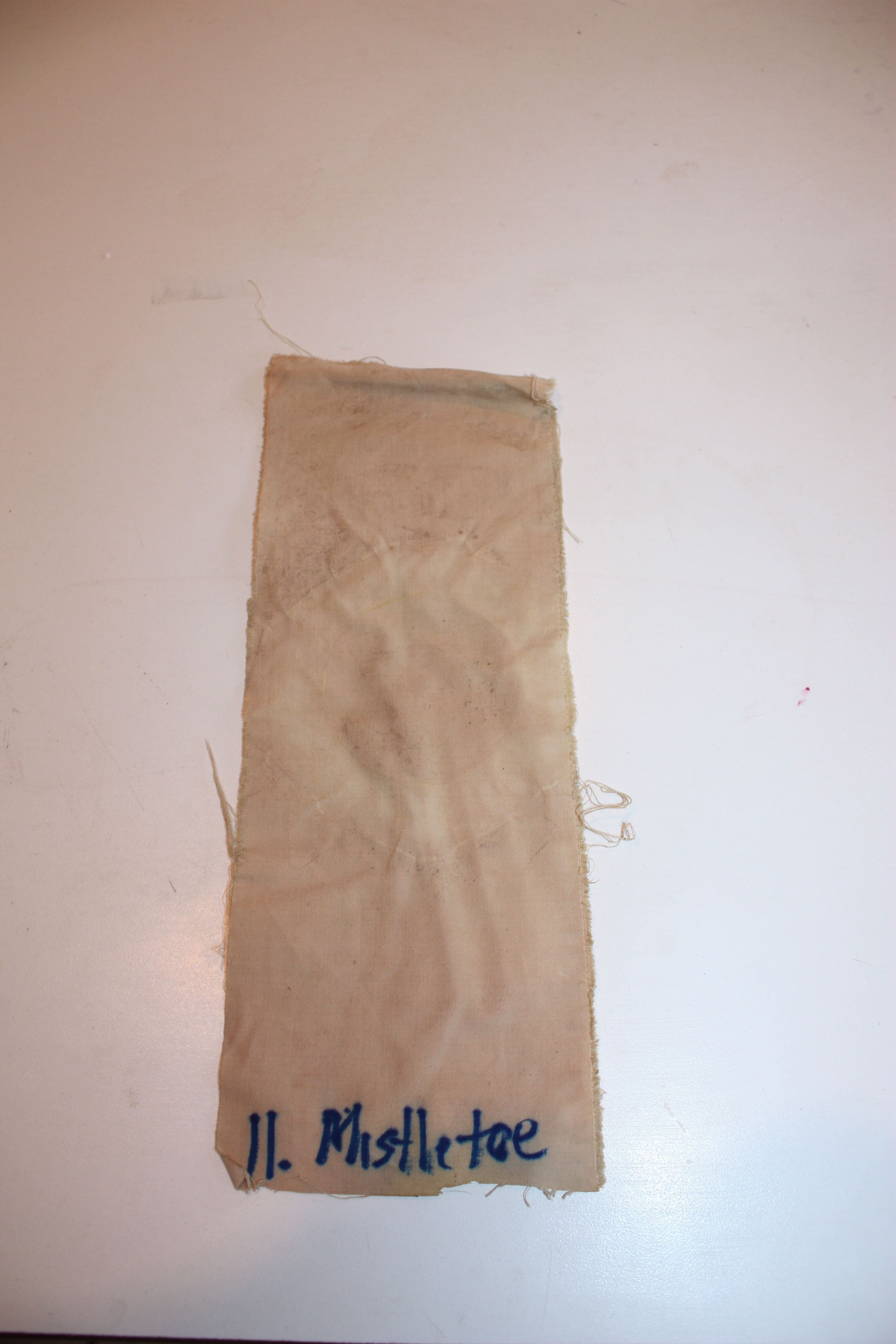
By the way, desert mistletoe plants (not the fruit) contain phoratoxins which can easily lead to death via slowed heart rate, increased blood pressure, convulsions, or cardiac collapse. Some of these compounds can cause hallucinations, but there is no way to judge dosage. People seeking a “high” from mistletoe still turn up in morgues each year. Native peoples used plants other than mistletoe to seek visions, and if one desires visions, one would be wise to follow their example. Although toxic, if used in a well-ventilated place, the foliage of desert mistletoe can be used in crafts and as a dye, producing a pale beige to dark sienna.

Mistletoe dye on cotton

Mistletoe dye on cotton. Photo by J. A. Soule


Harvesting and Use.

Mistletoe berries are ripe once they turn translucent and you can generally see the red seed inside. They also become soft and squishy, losing their hardness. Watch the phainopeplas, when they start devouring berries, then the fruit is ripe! I have only eaten the berries fresh, and find them reminiscent of elderberry in flavor. I was going to experiment with making a jelly this year, but missed my window of opportunity.

When ripe, the berries turn translucent and fall off the plant easily. Photo by S. Shebs.

When ripe, the berries turn translucent and fall off the plant easily. Photo by S. Shebs.


As a dye, mistletoe plants themselves are used. They can be fresh or dried. Place the herbage in the pot, cover with water, bring to a boil, strain. Add an alkalizing agent (ammonia) to intensify the color. You can dye both protein fibers (wool, silk) and plant fibers (cotton) with this solution. Ideally mordant with alum prior to dyeing, but post-mordant baths also work.

paper with desert plants 004

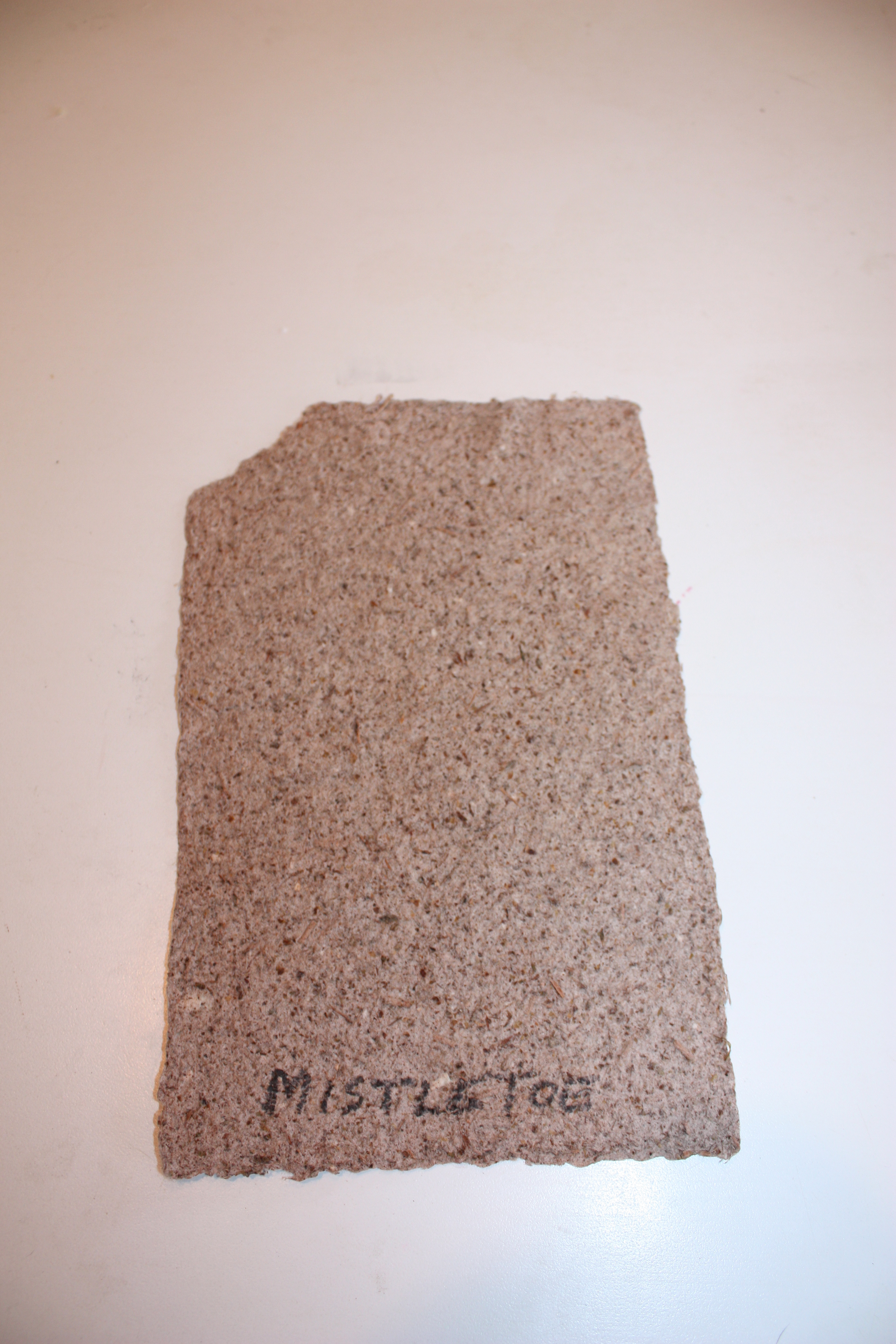
A blend of half paper pulp and half mistletoe plant material yields a nicely textured craft paper. Photo by J. A. Soule.


paper with desert plants 002

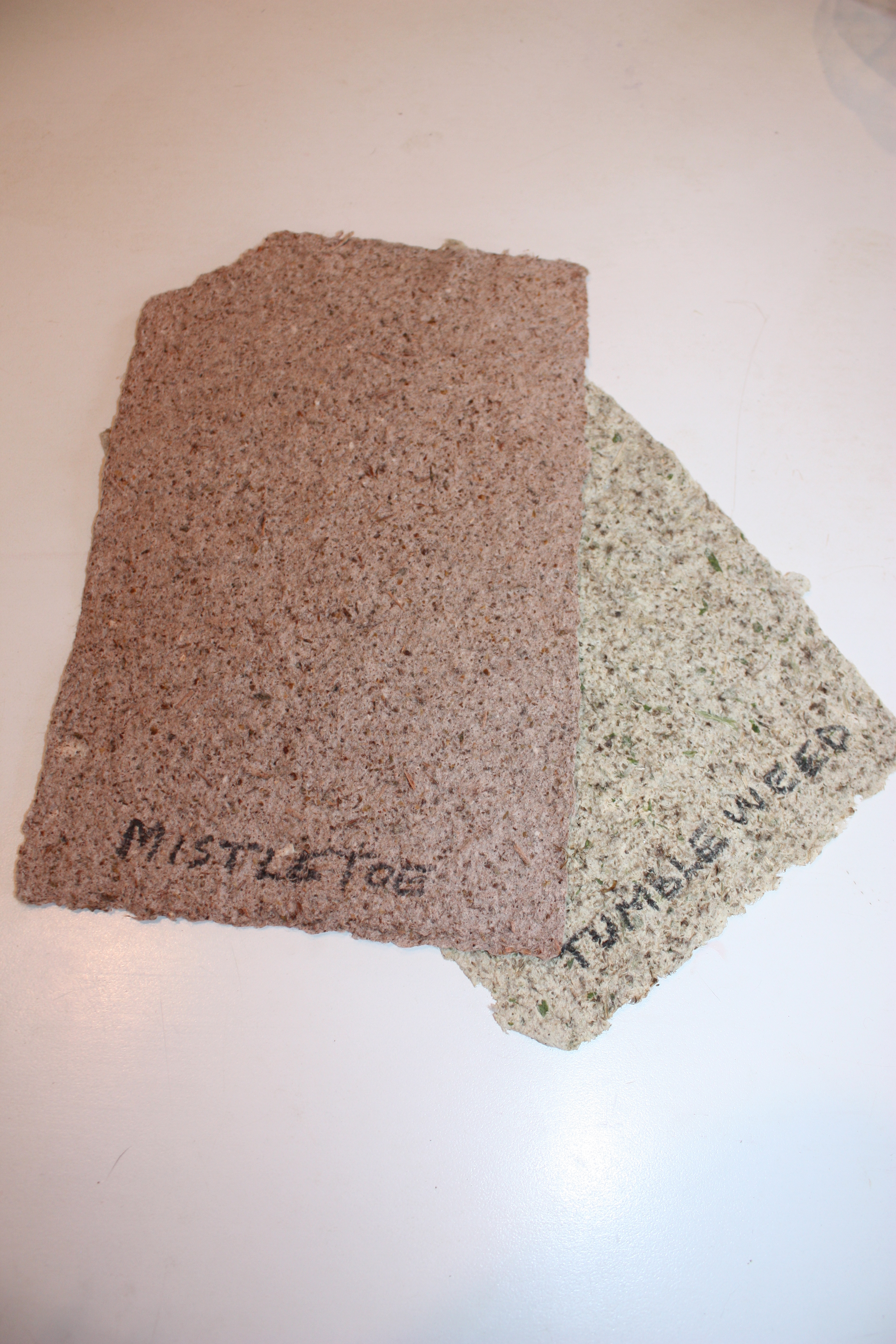
All manner of desert plants can be used in papermaking. Photo by J. A. Soule


Rather than discarding the spent mistletoe herbage from making dye, I have frozen it for later use in papermaking. Grind the cooked mistletoe in a blender and mix it half and half with paper pulp to create a lovely, rough-textured, craft paper with a warm brown hue.


Note: This month I have been looking at desert mistletoe in some of my other online articles.

Desert mistletoe and human use is presented here, the third in a series on the topic.
Desert mistletoe and wildlife can be read at: http://www.beautifulwildlifegarden.com/?s=mistletoe
Desert mistletoe as part of a native garden caan be read at: http://nativeplantwildlifegarden.com/?s=mistletoe

This article copyright Jacqueline A. Soule, 2014. The topic is covered more extensively in my book “Father Kino’s Herbs: Growing and Using Them Today” (2011, Tierra del Sol Press, $15). If you live in Tucson, I hope you will consider purchasing a copy locally at Antigone Books, Arizona Experience Store, Magic Garden, Mostly Books, or Rillito Nursery.


For the last eight months, Savor the Southwest has been brought to you every week by four Savor Sisters, me (Jacqueline), Tia Marta, Aunt Linda and Carolyn. Look for our fifth Savor sister, Amy Valdes Schwemm will make her first appearance in June, otherwise she will return to post whenever a month has five Fridays.


Bibliography for this article
Felger, R. S. and M. B. Moser. 1985. People of the Desert and Sea. University of Arizona Press, Tucson, AZ.

Hodgson, W. C. 2001. Food Plants of the Sonoran Desert. University of Arizona Press, Tucson, AZ.
Kearny T. H. and Peebles R. H., et al. 1960. Arizona Flora. University of California Press, Berkeley, CA.

Rea, A. M. 1997. At the Desert’s Green Edge. University of Arizona Press, Tucson, AZ.

Tohono O’odham Nation (s.d.). When Everything Was Real: An Introduction to Papago Desert Foods. Tohono O’odham Nation, Sells, AZ.


© 2014, Jacqueline Soule.  All rights reserved. I have received many requests to reprint my work. My policy is that you are free to use a very short excerpt which must give proper credit to the author, and must include a link back to the original post on our site. Please use the contact me if you have any questions. JAS avatar

Celebrating la Fiesta de San Ysidro Labrador

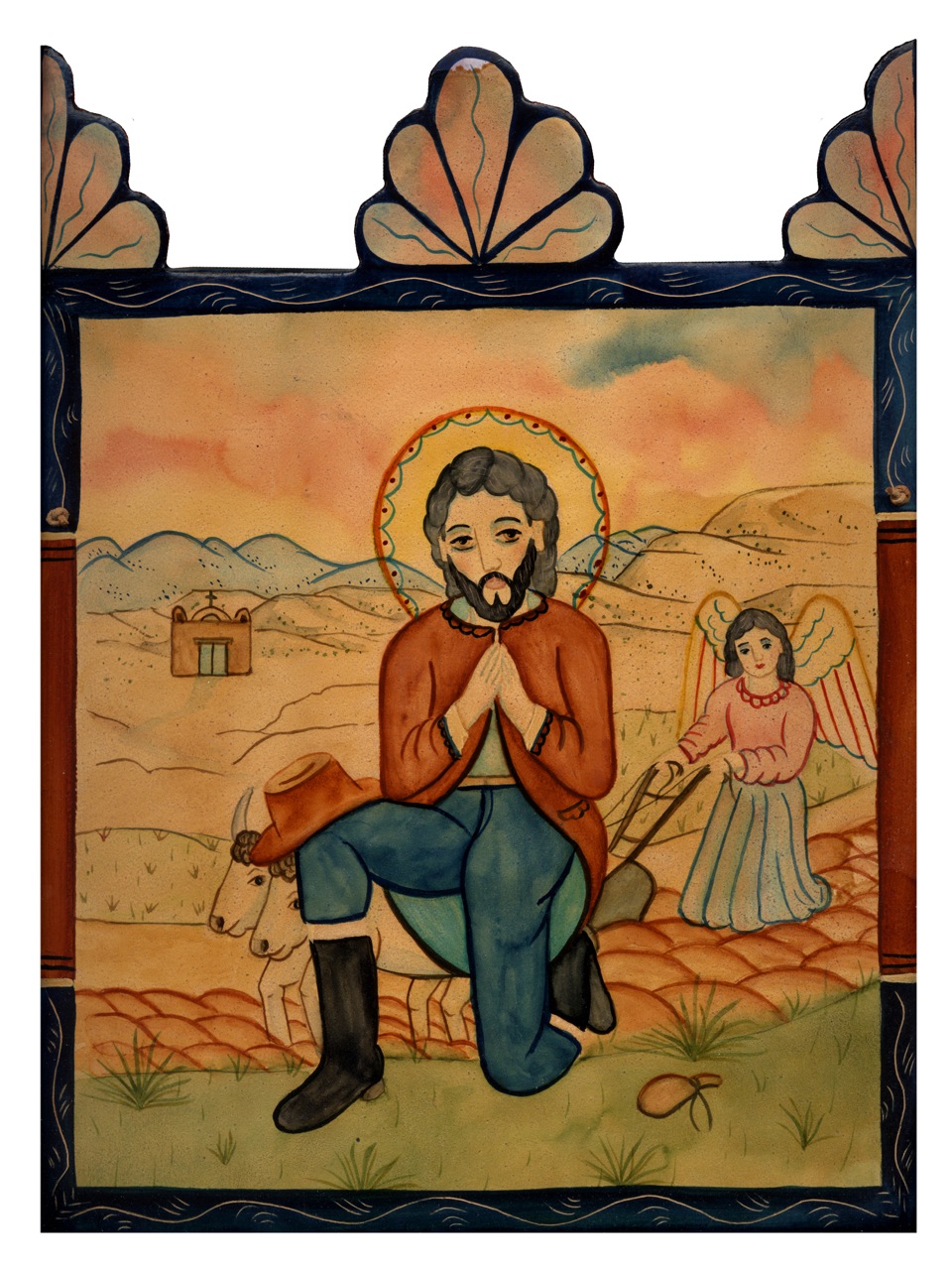
Tia Marta here to tell you about a beautiful and legendary soul, San Ysidro Labrador, Saint Isidore the Farmer, Patron Saint of Farmers and Laborers – whose feast day is May 15. A major celebration is planned in his honor this Saturday, May 17, in Tucson.

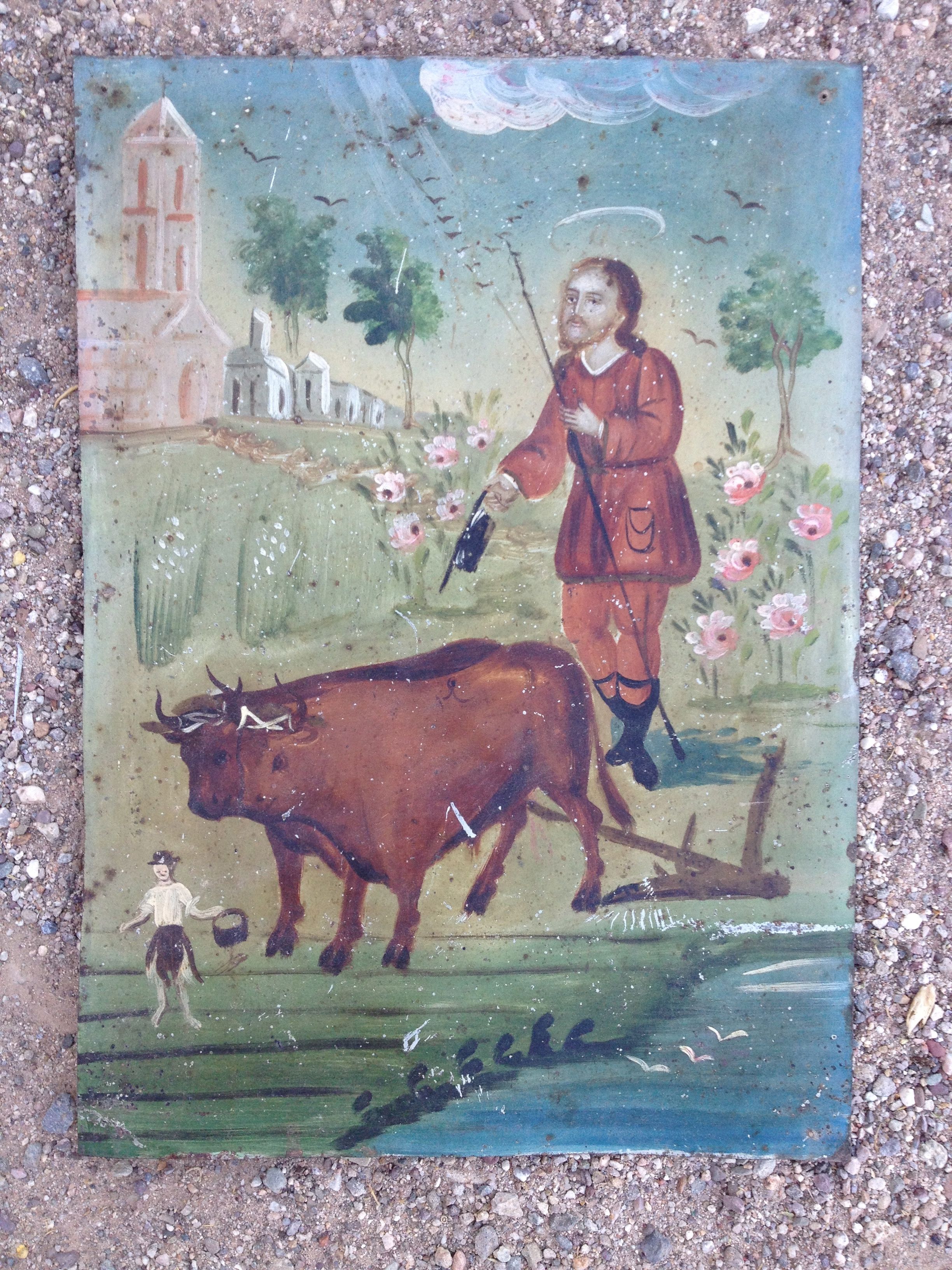
Retablo, painting on metal of San Ysidro plowing with angel, in style of traditional New Mexico folk arts.  From Burns/Drees Collection (Photo MABurgess)

Retablo, painting on metal of San Ysidro plowing with angel, in style of traditional New Mexico folk arts. From Burns/Drees Collection (Photo MABurgess)

San Ysidro (a poor Spanish peasant farmer who lived from around AD1070 to 1130) is revered traditionally, along with his good wife Santa Maria Torribia, for generously sharing bounty from their fields and hearth to those in need—hungry animals and fellow peasants. Legend tells us that San Ysidro, at prayer every morning, was often late to labor in his master’s fields, but the angels, seeing his devotion, would already be plowing for him. Another legend records him with an angel plowing on both sides his oxen so that his labor yielded three times that of his neighbors. Yet another tells how, as he carried corn to be milled, he took pity on poor birds in the snow and gave them half his grain; when his leftover corn was ground, it yielded twice what he had brought. His generosity produced miracles.

San Ysidro retablo art, courtesy of Friends of Tucson's Birthplace

San Ysidro retablo art, courtesy of Friends of Tucson’s Birthplace

Residents of Madrid, Spain, go all out in celebrating San Ysidro’s feast day, as he is the city’s patron saint. In Tucson, it is customary in traditional Hispanic families to celebrate San Ysidro with prayers for rain as his day falls usually in our most arid fore-summer. According to Jim Griffith’s Saints of the Southwest, images of San Ysidro were taken from the church to observe the fields or even buried in the fields until rains came.  Here he has become patron of ranchers and crops–even gardeners. Dia de San Ysidro Labrador is a perfect occasion for us to become mindfully aware of where our food really comes from—the Earth, the soil—and also to fully appreciate the labor, the human care, human energy and other forms of energy that all go into bringing good food to our mouths and bodies. (I guess now we shouldn’t say “food to our tables” anymore, as that is unfortunately kinda passé. I hope some families still sit together at table to eat. We do and it is always a joy. Gosh imagine, we learn so much when we actually prepare and sit over a good meal and converse with each other!) So San Isidro Labrador reminds us of what is critically important with food—its origins in good earth and honorable labor!

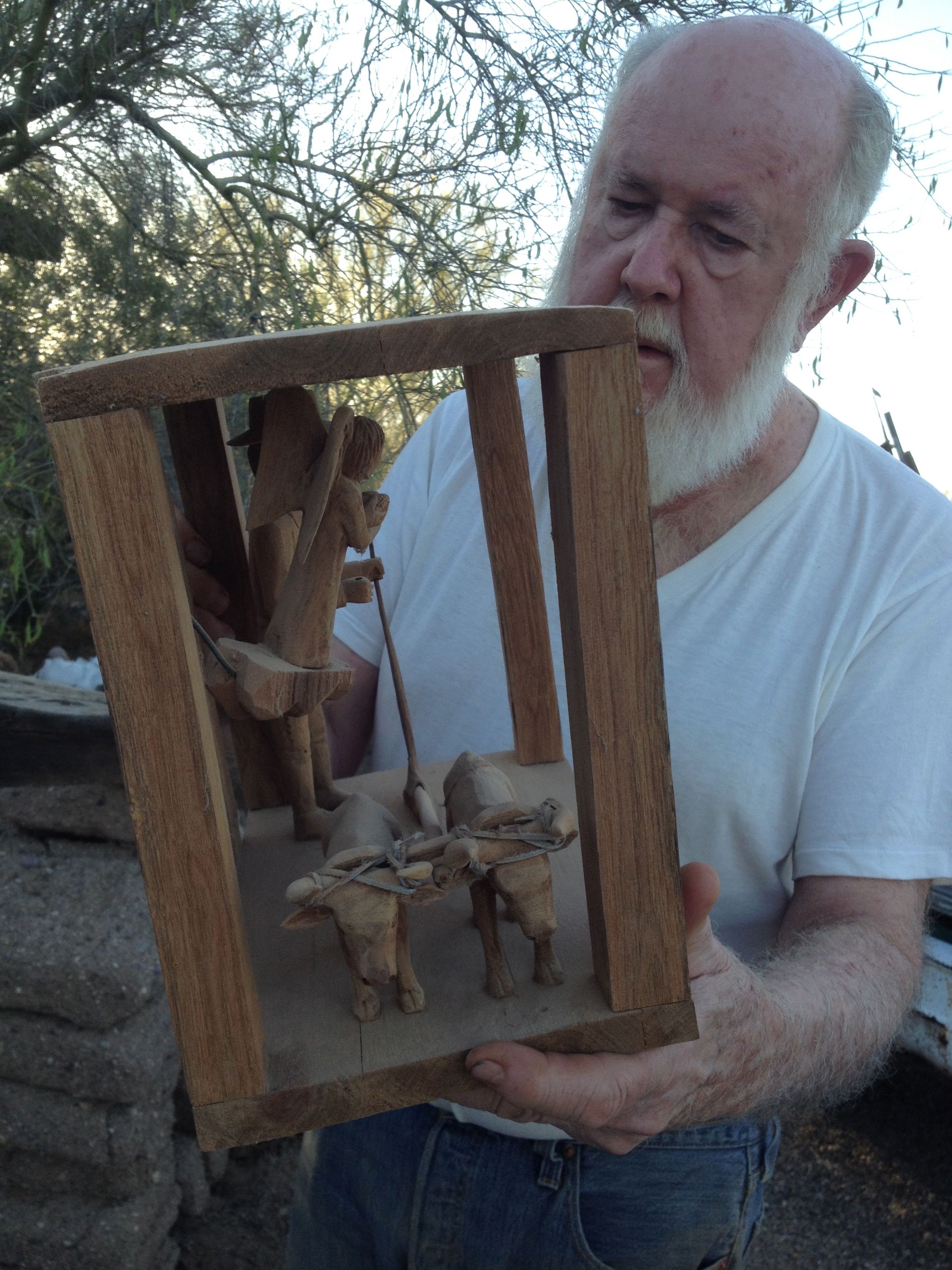
NW Mexico craft-arts collector and expert Dr.Barney T.Burns with santo of SanYsidro showing the oxen and angels.

NW Mexico craft-arts collector and expert Dr.Barney T.Burns with santo of SanYsidro showing the oxen and angels. (photo MABurgess)


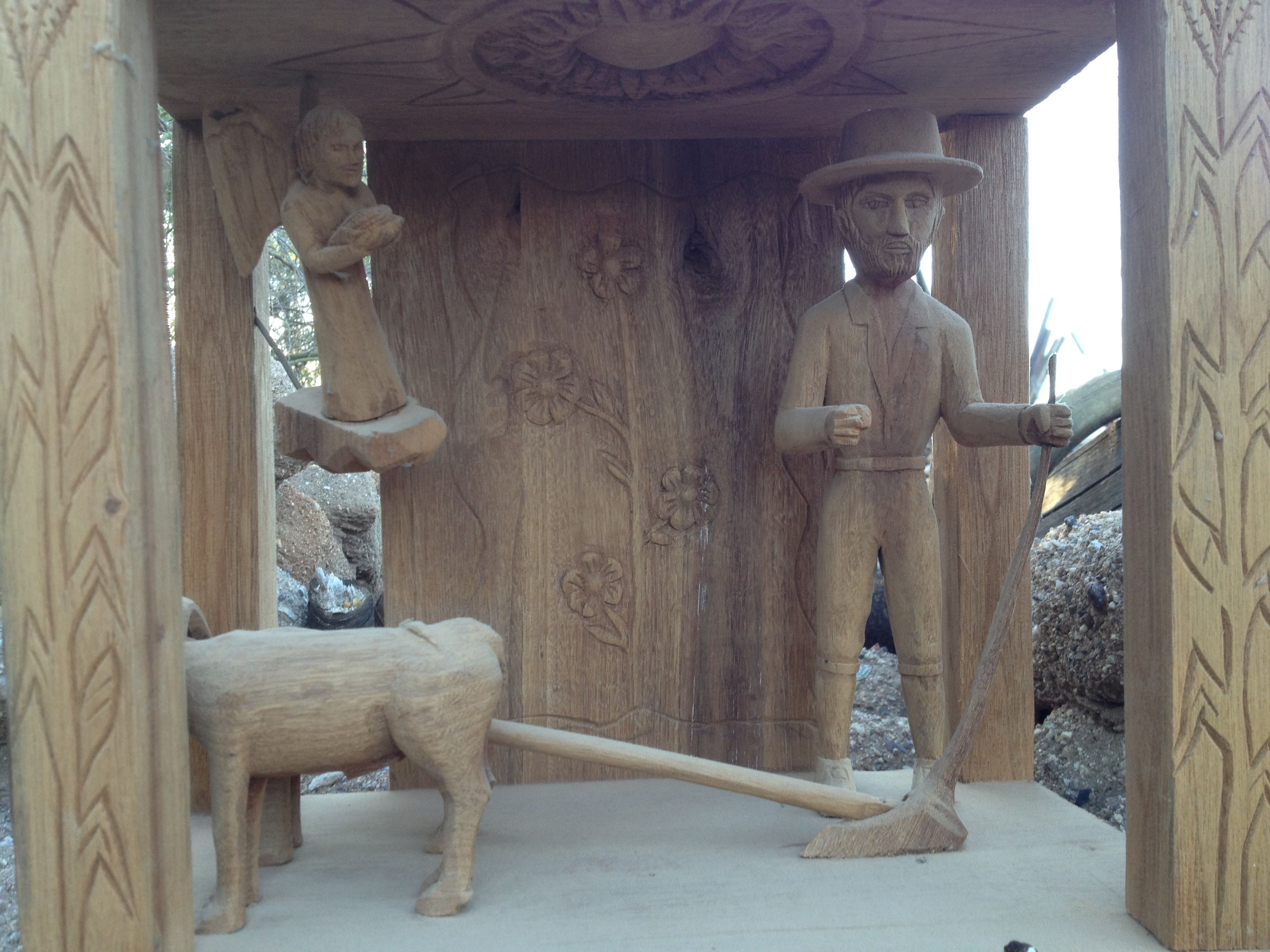
Cottonwood root carving by Mayo Indian, Sinaloa, Mexico, depicting San Ysidro with ox, plow, corn motif, and angel watching him.  From Burns...Drees Collection (photo MABurgess)

Cottonwood root carving by Mayo Indian, Sinaloa, Mexico, depicting San Ysidro with ox, plow, corn motif, and angel watching him. From Burns…Drees Collection (photo MABurgess)

This year the Friends of Tucson’s Birthplace has arranged a public celebration of San Ysidro not to be missed, where this tradition is revived in a most appropriate setting—in the new Mission Garden, a living history orchard and garden on the very site of Padre Kino’s original Mission San Augustin de Cukson, at the base of Sentinel Peak. Plan to get there early— procession starts from the Santa Cruz River at 9:00am (May 17) going west to enter the adobe-walled Mission Garden. There, near the living orchard of Mission Period fruit trees and the productive winter vegetable garden coming to fruition, will first be the blessings. A Native American spiritual guide will bless in the four directions, followed by a Christian blessing of the fields, food and animals. Heirloom White Sonora Wheat grown in this living-history vegetable garden is getting ripe and will be ceremonially harvested. There will be tastes of Pozole de San Ysidro, the traditional pozole de trigo. Mariachi music by Las Aguilitas from Davis Elementary will fill the air; the Desert Indian Dancers from San Xavier will bless the earth; and Hispanic historian Bobby Benton will sing. A highlight will be a talk by none other than “Big Jim” Griffith reminding us of our roots in Tucson traditions of San Ysidro. Info tents will have volunteers on hand to answer questions. Native Seeds/SEARCH has donated varieties of heirloom seeds known from the Mission Period and earlier, planted in vegetable and timeline gardens to demo the prehistory of plants used by ancient people of the Tucson area. NSS volunteers will provide info for contemporary gardens. Tucson Herbalist Collective shares medicinal plant knowledge for Mission Garden and will have volunteers available for herbal questions. Baja Arizona Sustainable Agriculture will be selling heirloom White Sonora Wheat (grown organically by BKWFarms in Marana) and demonstrating how to cook the delicious ancient grain in a modern solar oven! (Great recipes for White Sonora Wheat are available by scrolling back in this blog.) It will be hot– come prepared with hat, sun protection, and water. The celebration is over at 11:30am. What a wonderful way to rejoice in local food, local tradition, and neighbors to share it, on this little piece of floodplain where agriculture has been happening for over 4100 years!

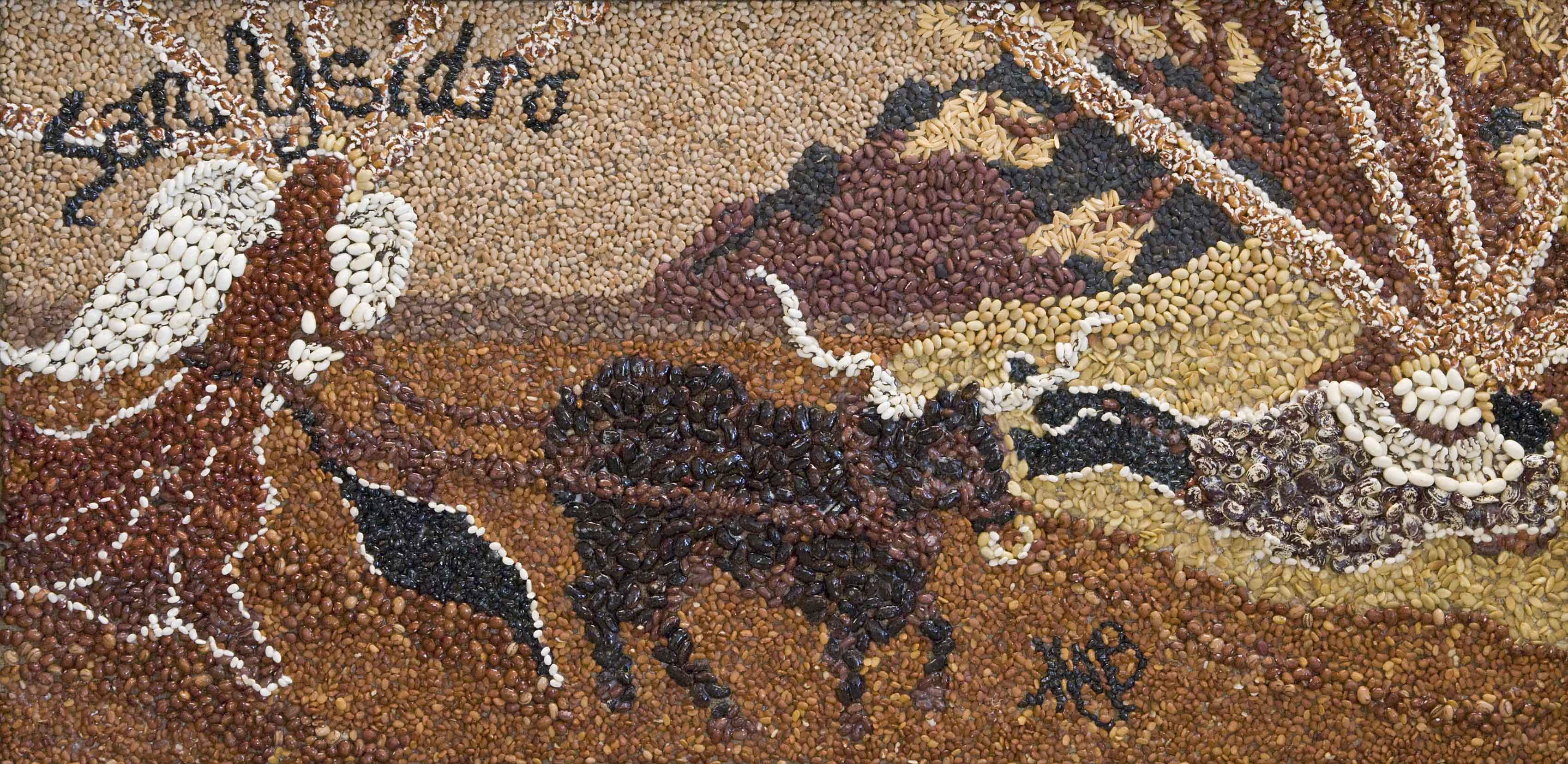
A mosaic of 21 heirloom beans and seeds by artist MABurgess, depicting the angel plowing for San Ysidro Labrador. (photo PeterKresanPhotography.com)  Notecards available at NativeSeeds/SEARCH and www.flordemayoarts.com

A mosaic of 21 heirloom beans and seeds by artist MABurgess, depicting the angel plowing for San Ysidro Labrador. (photo PeterKresanPhotography.com) Notecards available at NativeSeeds/SEARCH and http://www.flordemayoarts.com

Inspired by San Ysidro, I spent several months composing this mosaic of heirloom seeds, depicting an exhausted San Ysidro asleep under a tree while the angel finishes his plowing. See if you can identify any varieties. You can purchase the heirloom beans–and notecards of this image now printed handsomely by Spectrum–at Native Seeds/SEARCH store or at the Flor de Mayo table at Sunday St Phiillips Farmers Market.

San Ysidro is helping us find our way back to connection with the land that can feed us again!

Follow up photos For Housekeeping and the Hive: Removing the dead.


Good morning all, as promised, here are a few follow up photos of the “housekeeping” task of removing the dead from two differnt hives, taken a tad after dawn this morning. 

Hive #1, below:

Image

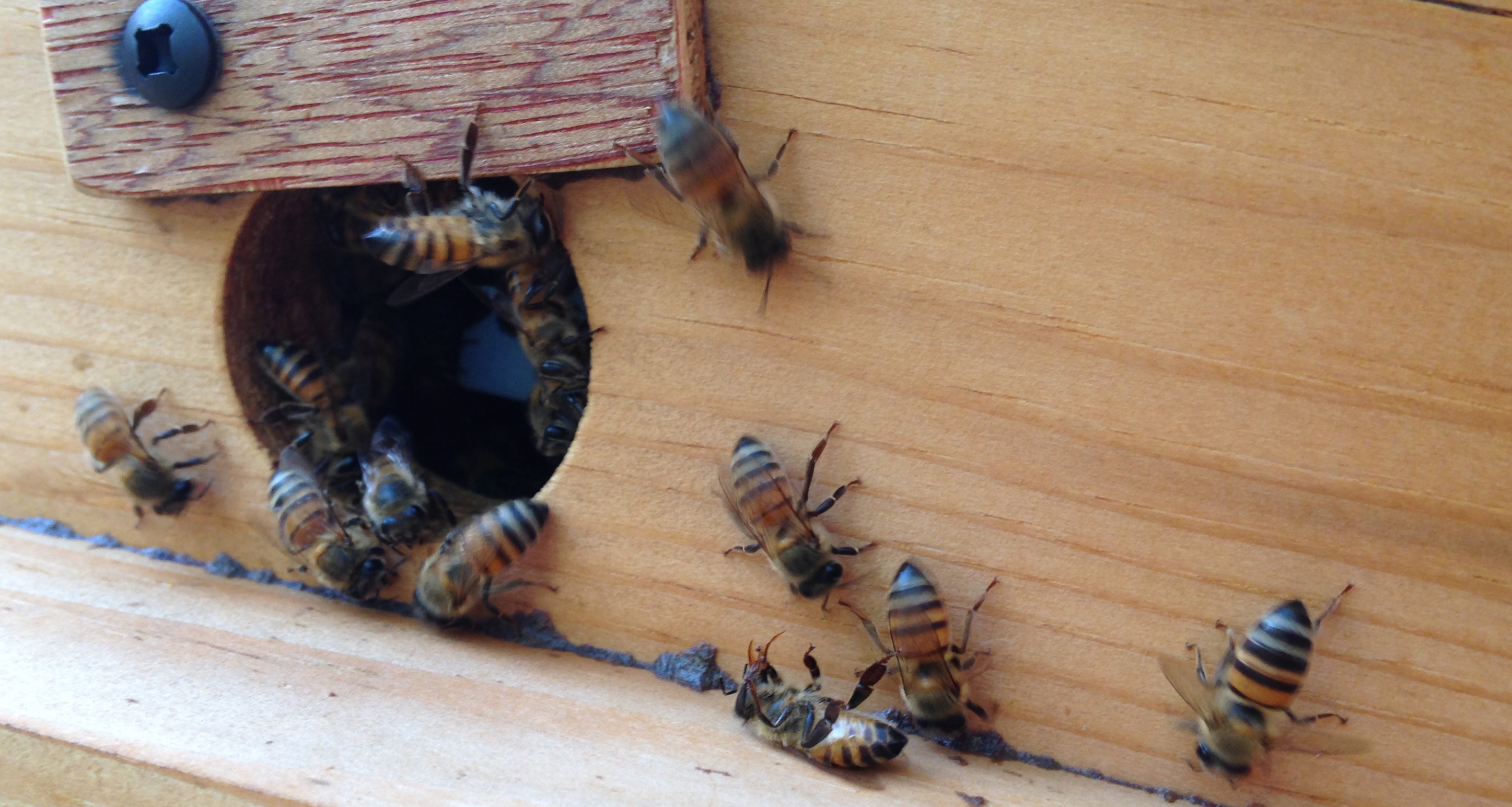
In the photo above, you can see the dead honey bee outside the hive entrance, tongue in the air.

The bee above her seems poised to carry her further away. 


Image

Within a few minutes, (above) she is moved to the side of the entrance, and then is removed completely.

Hive # 2 – below:

Image

Similarly, ( I love this hive and its gorgeous propolis entrance), the honey bee corpse is seen at the hive entrance.

awaiting further action from the hive.

Image

The alive bee above appears to have her eye trained upon the corpse, and is, perhaps, gathering her strength 

to carry the dead honey bee further from the hive. The photos I had of the “carrying” were blurry as the dawn light 

was dimmer than appears in these photos, and any movement captured in a photo was not at all in focus.


Image


Here you can see the hive entrance is cleared, and a forager bee is just returning to the hive with pollen packed

on her back legs. Removing the dead appears to be a practical matter for the honeybee, and the as we explored last post, 

is in the service of the life and health of the hive.

Image

Where do dead honeybees end up?  Returned to the earth, as we all shall be. But, as they are not encased and 

embalmed, they can actually nourish the ground upon which they lay. 

Housekeeping and the Hive – – HoneyBee Ice Cream

Housekeeping in the Hive:  And Honeybee Ice Cream

Aunt Linda here:

Honeybees and Housekeeping. These may not be two words that we naturally put together. Yet, to enter the hive and meet a day-old worker bee, it is surprising to see first hand that her first tasks involve housekeeping.

Bees don’t wait for the springtime urge to purge; their system is employed year round. Genetic testing of honeybees preserved in amber reveal that bees have changed remarkably little over 60 million years. Nature selects “what works”, and hives with strong “housekeeping” and hygiene habits are more resistant to disease, and thus more able to put their energies into filling their pantries and nurseries, and do not waste precious energy battling diseases and infections.

In the brood nest of the hive, we see that immediately after a baby worker bee emerges from her cell, she grooms herself — and then feasts mightily on pollen and honey. Her very next task is to clean out the cell from which she has just emerged. In fact, between her first and third day of life, baby workers clean, and even polish, cells so that those cells are ready to receive either a new egg that the queen will lay or to store freshly gathered nectar and/or pollen. The photos below are from my hives, taken yesterday.

Image

Note in the photo above that the newly emerged bee is a bit lighter and fuzzier than the slightly older bees. This flat capped part of the hive is the worker nursery and the fuzzy bee has just emerged. You can see that slightly older house bees are adding nectar to the cells; which they will transform into honey.

In the bottom portion of the photo below at least three young workers are “working” in the cells, their little bee butts protruding upward, their heads tucked into the cells. In the upper left of the photo two holes (one small, one large) in the capped cells show bees which are just emerging, The open cells nearby have nectar. The open cells in the upper right of the photo look to me as if they are being readied for more eggs/brood.

Image

During the next few weeks of her life, (up until about her day 16 or so) she and other young workers remove dead bees. They carry the corpses as far away from the hive as is possible. Watching them efficiently struggle in this task always amazes me; I attempted to take a photo of a bee corpse being carried out of the hive, but the fates didn’t align with a wanted photo opportunity. If I come across one in the next few weeks, I will post it.

Bees use propolis ( a substance made from plant resins, which has remarkable antimicrobial/disinfectant qualities) to varnish the hives walls, reinforce and stiffen comb, to seal up holes and spaces they feel are too big. Fascinatingly, they also used it to seal up the corpses of invaders, such as mice or larger insects, that are stung to death, but are too big to remove. The propolis essentially mummifies the creature, thus reducing significantly the chances of illness or infection to the hive. A hive that is a bit hard for a beekeeper to open because it is sealed with propolis usually indicates a thriving hive.  In the photo below, the bees have created a smaller entrance for protection from marauding bees. I added this photo so you can imagine how bees might “seal” a mouse.

(The bee you see at the entrance may be a guard bee; age of bee is between 18-21 days).

Image


I like to take bees on their own terms, and not romanticize them, demonize them, nor to project values onto them. I will admit, however, to feeling inspired by them. Personally, I am not a very skilled housekeeper. I am, however, startled by how remarkably good it feels to remove “dead” energy, let’s call it Clutter, from the hive I call home. As I do this, I find my energy freed up. Often, after some deep culling, new ideas arise; fresh insights beckon, solutions present themselves.

Today, let’s be like that freshly emerged worker bee. After grooming ourselves, we’ll feast on honey and pollen (recipe below) to fortify ourselves for our own version of housekeeping.

Honeybee Ice Cream – (the basic) recipe:

Prep the ice cream maker of your choice; I love the old style hand crank kind, using ice and rock salt – but you may use the lighter, more user friendly ones – where you freeze the container ahead of time.

2 cups organic milk

2/3 cups honey – as local as you can get

½ teaspoon sea salt

2 large eggs

2 cups heavy cream

1 tablespoon vanilla

Over medium to low heat, and being careful not to scald it, heat the milk in a stainless steel pan, about five minutes, whisking in the honey and salt as the milk warms.

Beat the eggs in a small bowl, and add ½ of the milky mixture above, and whisk it – slowly – into the eggs. Stir this milk/egg mixture back into the milk in the pan and heat again over the med-low heat for another 5 minutes, stirring consistently so that you don’t scorch it.

Remove from heat – pour mixture into a glass/ceramic bowl and let it cool completely. Once cooled; whisk in the heavy cream, vanilla. And process in the manner you prefer (by simply freezing it, milling it in one of those cold -ice cream machines, or the old fashioned “arm crank” method)

Beyond the basic recipe: Considering the 60 million year old dance between flowers and honeybees, why not consider adding a few of the edible flowers that Carolyn wrote about this month. Below are some Elderberry flowers (with a few scented geranium, in purple) that I added to my ice cream.

Image

You might also sprinkle pollen on top, or even put it into the mixture of ice cream itself. There is honey already in the this ice cream, but drizzling some on top in place of caramel or chocolate might be sweet.

Note: Conventional thinking is that raw honey may not be healthy for infants under one year, pregnant women, or breastfeeding mothers/babies. It is worth talking with your health care practitioner about. And though uncommon, some people find that they have a reaction to pollen, so start with small quantities.


Enjoy Beans with Epazote

Chenopodium_Dysphania_ambrosioides_08_by H ZellEpazote (formerly Chenopodium ambrosoides, now renamed Dysphania ambrosioides) came to our area from Mayan lands. The name is the same in Nahuatl, Spanish, and English. Who says you are not multilingual?!

Epazote is a summer annual herb popular for culinary and medicinal uses. By the time of Contact, epazote had been cultivated for well over a thousand years in southern and southeast coastal Mexico. It was, and still is, a principle flavoring for a large number of Yucatan and Veracruz dishes, and is indispensable for cooking black beans.

Chenopodium Dysphania ambrosioides by iamtexture

Epazote, like the Old World herbs of cumin and ginger, has the unique ability to help break down hard-to-digest vegetable proteins. These difficult proteins are found most often in beans, peas, and members of the cabbage family. A few leaves of epazote cooked in the pot with the potential offender help break down these offending proteins while alo providing a delightfully piquant flavor to the dish.

This strongly scented herb is reported as a deer repellent. I can report that javalina, jackrabbits, cottontails and quail all avoid eating the plants. Medicinally, epazote has been used in an infusion as a vermifuge (against intestinal parasites), and in a decoction to help induce labor. These uses lead to one of it’s common names, wormseed.

Chenopodium Dysphania_ambrosioides_9061 by t voekler

Planting and Care. Plant epazote from seed in spring once night temperatures rise above the low 50’s. Seeds can take as long as four weeks to germinate. Plants will thrive through the warm season and freeze to the ground at 35 degrees, but often regrow from the roots.

Seed Sources. Check the Pima County Seed Library.  No need to drive there, go online to check for seed availability then reserve some sent to your local branch.  I have also found seed through Renee’s Garden Seed and Botanical Interests.

Soil. Epazote tolerates poor, even clay soil, but plants grow best in average, well-drained soil. Can be grown in containers that are at least eight  inches deep.

Chenopodium_Dysphania_ambrosioides  by S Doronenko

Location. Full sun is ok in the Southwest, but afternoon shade is appreciated by this tropical herb.

Water. Moderate.

Fertilize. Not necessary, but once a month with general purpose fertilizer will help make bushy plants. To really keep the plants bushy, you will need to pinch often. This is a technical term, really! (see “Care”).

Habit & Care. Epazote can reach 5 feet, but will be scraggly. Pinch or clip off the growing tips often to keep it around 2 to 3 feet tall, compact, leafy, and looking attractive in the garden. Usually a single plant provides enough for the household. Epazote reseeds readily, remove the flowering stalks, or be ready to weed excess plants next year. Seed heads turn an attractive bronze in autumn, and finches enjoy the seeds.

Chenopodium_ambrosioides_9059

Harvest and Use. Epazote is used fresh for culinary purposes, and loses “digestive” properties when dried. Chop or mince leaves and add early to dishes that require long cooking, like beans, roasts, soups, or stews. Use one tablespoon minced leaves per cup of beans or to a two pound roast. Not used as a garnish, due to bitter taste. If you want to save epazote for winter use, chop up fresh leaves and freeze them.

Chenopodium_Dysphania_ambrosioides_courtesy of UDSA_01

Go Green. Use epazote to avoid using manufactured bean-digestive compounds. Having the plants in your yard saves packaging, shipping, and all the associated waste of resources inherent in manufactured goods. Even greener, epazote plants provide food for birds, a way to capture carbon, plus a lovely low green plant for your yard.

This article is exerpeted from my book “Father Kino’s Herbs: Growing and Using Them Today” (2011, Tierra del Sol Press, $15). I hope you will consider purchasing a copy locally at Antigone Books, Arizona Experience Store, Magic Garden, Mostly Books, or Rillito Nursery. You can visit my booth at the Arizona Feeds Country Store Spring Expo, Sat. May 3 (10-3), 4743 N. Highway Dr.

Edible Flowers of Spring

Ocotillo blossoms

Ocotillo blossoms

It’s Carolyn today. Two months ago Tia Marta wrote about gathering and preparing delicious cholla buds, but that is only the barest beginning of the edible flowers that can add fun and interest to our meals. Spring is the best time to find the biggest bounty of  beautiful munchibles.  Gather a bowlful of ocotillo blossoms, add water, and let it stand overnight. You’ll have a delicate juice. The flowers must be open for the nectar to leach into the water.  I wrote about the early Native American uses to ocotillo as a medicinal herb in American Indian Cooking: Recipes from the Southwest. 

Ford at Empire 015

Blossoms on elderberry bush.

This is also the season for elderberry bushes to flower.  Sometimes called elderblow, the flowers make delicious fritters.  I have given full directions in my earlier blog Carolyn’s Southwest Kitchen and you can see it here.

Moving from the desert to your own garden, you’ll find many edible flowers. Many of them make delicious additions to salads.  Among them are nasturtium flowers, which have bright, peppery flavor.

Two colors of nasturtium flowers on a fresh garden salad.

Two colors of nasturtium flowers on a  garden salad.

Arugula tends to bolt early and especially did so on this very hot spring on the Sonoron Desert.  But the flowers, though small, taste lovely, not quite as intense as the the leaves.

Arugula flowers

Arugula flowers


Other delicious salad additions are pansies and violas, their smaller cousins.

Pansies

Pansies

When I began gathering material for this post, I recalled a dish I made  years ago that involved sauteeing chicken with cinnamon and rose water and then finishing the dish with a sprinkle of small rose and marigold petals.  My friend Suzann and I served that at a wedding we catered for two naturalists.

Marigold

Marigold

Teacup rose

Teacup rose


Dried edible flowers make wonderful and healthy teas. Tina Bartsch at Walking J Farm grows and dries calendula flowers for John Slattery  at Desert Tortoise Botanicals who uses them as one ingredient in his Desert Flower Tea. He combines them with desert willow flowers, ocotillo flowers, hollyhock flowers, and prickly pear flowers.  His website says that the tea is an anti-oxidant and good for tissue repair.  The tea is available at Native Seeds Search,  Tucson Community Acupuncture,  the Food Conspiracy. Calendula petals taste  tangy and peppery and add a golden hue to food. Calendula has been called “the poor man’s saffron.”

Calendula flowers drying

Calendula flowers drying


Desert Flower Tea

Desert Flower Tea


One of the most used flowers in cooking, particularly in Mexico, is the squash flower.  The male flowers will never develop into squash, so you can harvest some of them. When I was in Oaxaca a few summers ago, I took a cooking class from Chef Oscar Crespo and just had the best time.  One of the things we cooked was stuffed squash blossoms.  Here is the recipe.

Squash blossoms

Squash blossoms

FLORES DE CALABAZA RELLENAS DE QUESO
Cheese-filled Squash Flower Blossoms


12 squash flower blossoms, washed

½ cup (2.5 oz/80 g) fresh cheese, sliced into sticks

12 epazote leaves (optional)

1 cup all-purpose  flour

3/4 cup club soda

Oil for frying


Slice the cheese so that it fits in the blossoms. Remove the sepals and pistils (that’s the parts inside the petals), then cut the stem to 1¼ in . Fill the whole blossom with a slice of cheese and an epazote leaf. Push the cheese all the way in, and twist the petals to close.

Make a batter with the flour and club soda, starting with 1/2 cup of the club soda. Add more if necessary to make a thin batter like pancake batter.

Place the oil in a frying pan and bring to high heat, about 350 degrees. Dip the stuffed blossoms in the flour mixture. Fry them for 2 minutes or until golden brown, turning at least once. Remove from the oil and drain on absorbent paper.

These can be served accompanied with a red or green salsa or floated in a tomato  broth.

For more ideas on cooking squash blossoms, check here.  If you want more information on edible flowers, you can click here and here.

__________________________

Carolyn Niethammer writes books on the food and people of the Southwest.