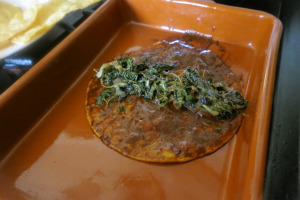
Cozy Chamomile


chamomile 3489847_1280Jacqueline Soule this week to discuss a pretty, plus pretty useful, herb to plant in your winter garden.  And, if you plant seedlings now, you should be able to harvest some within a month!  As cooler weather comes along, it is nice to curl up with a cup of chamomile tea – and here is how to have your own.

The herb known to most Americans as chamomile comes from two different species of plants. German chamomile comes from an annual plant (Matricaria rectita), while Roman chamomile comes from perennial plant (Chamaemelum nobile). They both have many of the same plant compounds in them, and work much the same way, the difference is in how you grow them. The French “chamomile” is a related plant (Achillea millefolium) but with different compounds and actions. In English, that last one is known as yarrow.

European people have used chamomile, in one form or another, to treat just about every sort of affliction, from hemorrhoids to hay fever, sleeplessness to sores, and tummy aches to tooth aches. In almost every case chamomile is used as a tea (infusion) to either drink or bathe tissues. For tooth ache folks used chamomile wrapped in muslin and placed on the afflicted tooth. Peter Rabbit’s mom gave him a cup of chamomile tea after his adventures, to soothe his stomach and calm his nerves.


herb_tea_JAS_001The flavinoid apigenin found in chamomile tea is thought to be responsible for its anti-inflammatory ability. Apogenin combined with another phytochemical called bisabolol are thought to work in concert to calm gastrointestinal spasms. Apogenin has been proven to bind to the same brain receptor sites that the drug Valium binds to, and are believed to exert a calming influence in much the same manner.
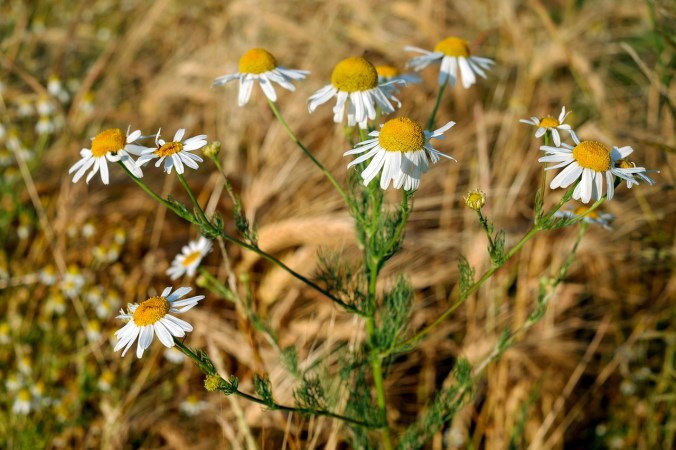
With recent scientific investigation, a number of uses have been validated. Chamomile is recommended by Commission E for the treatment of gastrointestinal tract inflammation, gastrointestinal spasm, irritations of the mucous membrane, skin injury or irritation, as a gargle or mouthwash to alleviate oral or pharyngeal inflammation, and to treat anxiety disorders. (Peter Rabbit’s mom was right on track!)

German chamomile can be grown very easily in the cooler months of winter, while the Roman chamomile is best planted in spring. Both need six to eight hours of sunlight per day. Like many herbs, they do best in well drained soil. Thus if you have caliche soils , consider growing them in pots with a cactus soil mix. The German chamomile will die in the heat, so replant some next year.

chamomile 774818_1280Harvest chamomile flowers and dry before use. This allows some of the more bitter tasting compounds to evaporate. The active ingredients are predominately in the oils and are not lost by drying.

Chamomile is green to grow in our area, even though it uses more water than native plants. It does reduce your carbon footprint by reducing the need to import chamomile. It can also help reduce your reliance on manufactured drugs. Headache? Take a cup of chamomile tea and lay down for a half hour rest. Far better for the environment than aspirin. Just remember that moderation is key in this and all herbs.

chamomile 2442331_1280

Note: the information in this article is for your reference, and is not intended to be used as a substitute for qualified medical attention.

JAS avatarIf you live in Southeastern Arizona, please come to one of my lectures. Look for me at your local Pima County Library branch, Steam Pump Ranch, Tumacacori, Tucson Festival of Books and other venues. After each event I will be signing copies of my books, including the latest, “Southwest Fruit and Vegetable Gardening,” written for Arizona, Nevada and New Mexico (Cool Springs Press, $23).
Text is copyright © 2015, Jacqueline A. Soule. All rights reserved. I receive many requests to reprint my work. My policy is that you may use a short excerpt but you must give proper credit to the author, and must include a link back to the original post on our site.

# # # # #

Taste Buds Ready to “Rejoice in Local”–at Mission Garden!

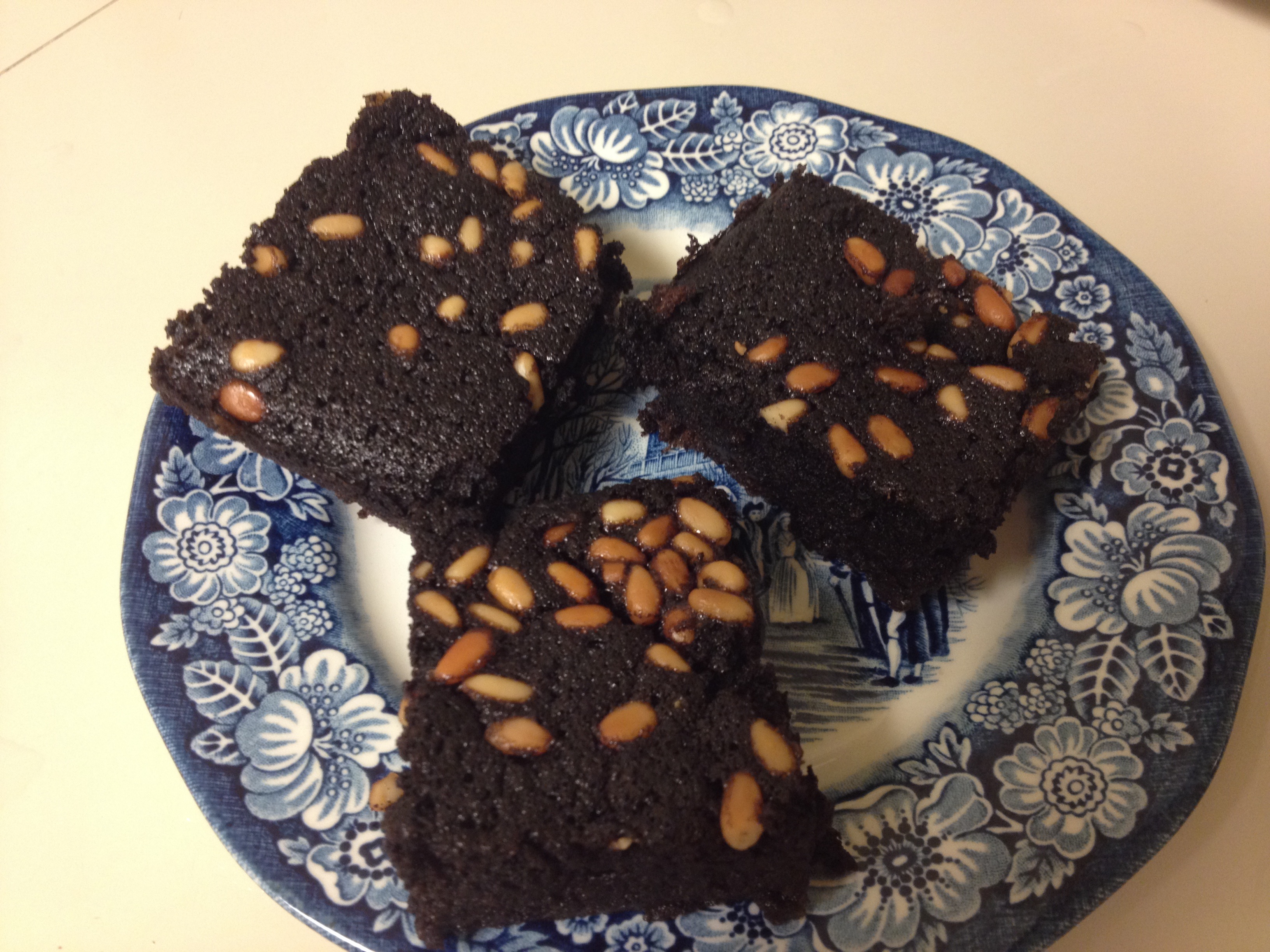
Gluten-free black tepary brownie-cockaigne for a desert dessert!

Yum!–Gluten-free Akimel O’odham Black Tepary Bean brownies with pinyones — a truly desert dessert served at the Farm-to-Table Picnic Feast at Mission Garden

Indeed, there is no doubt Tucson should be given the designation as an International City of Gastronomy!  Where else in the world could we enjoy a finer, more diverse, perfectly indigenous, more delectable and nutritious PICNIC-FEAST than here in Tucson?  Delicious dishes were the pieces de resistance by some of Tucson’s most renowned chefs for……the first-ever Farm-to-Table Picnic at Tucson’s Mission Garden.

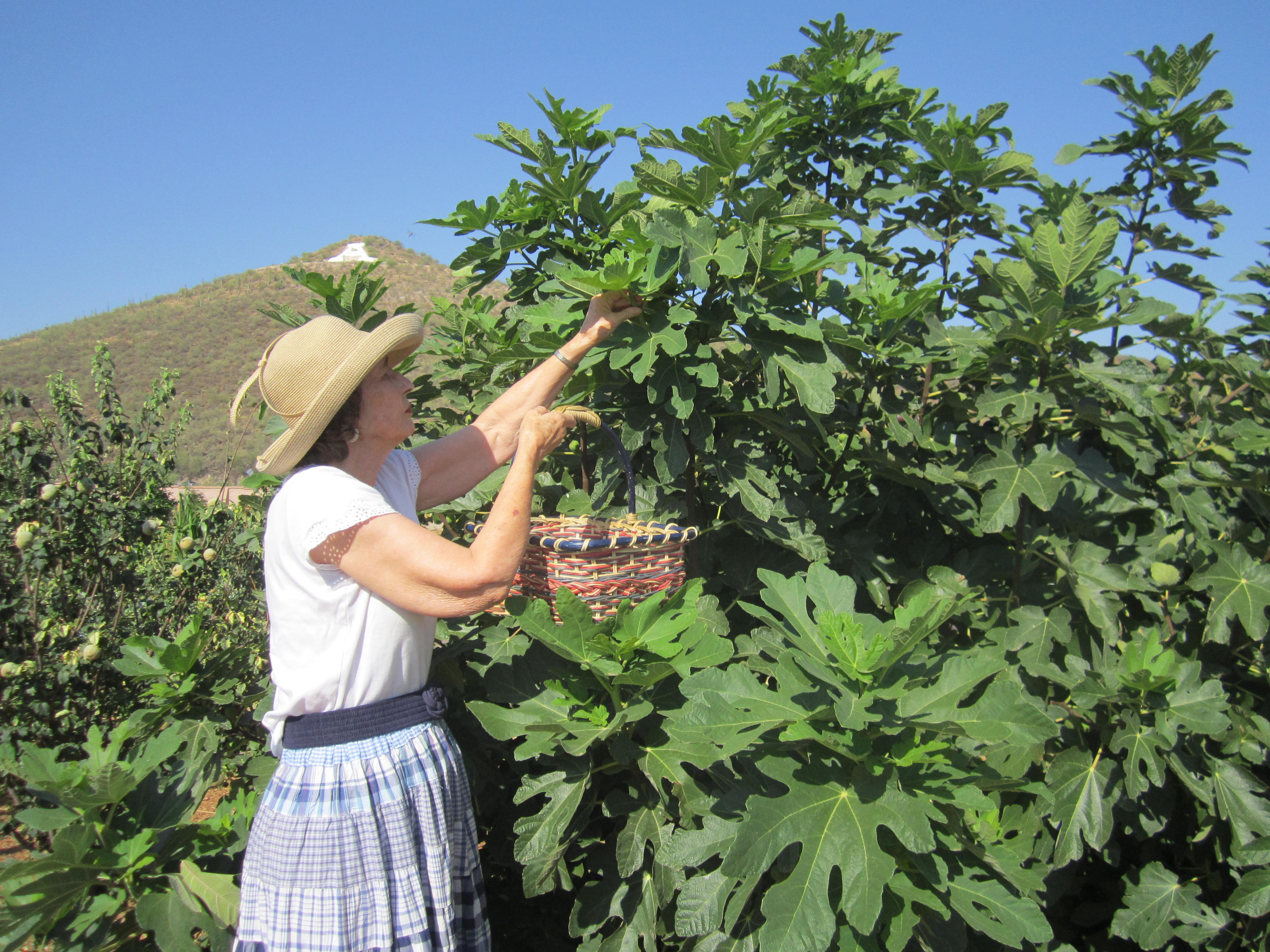
Picking heirloom figs at the Mission Garden for the Farm to Table Feast.

Native-foods cook and author Carolyn Niethammer picking heirloom figs at the Mission Garden for the Farm to Table Feast for her gone-to-heaven fig-bar postre.

At the base of our landmark A-Mountain–the very birthplace of Schuuck-shon–set in a scene of verdant orchard trees heavy with fruit, and heirloom vegetables bearing their colorful autumn harvest, we feasted this past Sunday, October 18, on the tried and true fruits of our desert land.    The community registered for this edible fundraiser via the two hosts of the Farm-to-Table Picnic Feast–our Tucson-born-and-bred organizations– Friends of Tucson’s Birthplace and NativeSeeds/SEARCH.   The cost of $75 covered a magnificent repast–not just a dainty little taste of hors d’oeuvres but a sumptuous serving of at least 7 gourmet entrees, plus a variety of hand-made desserts and some locally fermented beverages!  Either website can guide you to ways of supporting or volunteering for these worthy outfits–http://www.tucsonsbirthplace.org or http://www.nativeseeds.org.

At our special outdoor feast, we learned and appreciated where every single bite comes from!  Every ingredient was LOCAL–grown on our own Baja Arizona soil, bathed by our own Arizona sun, watered by our own Pleistocene aquifer, tended by our own neighbors’ hands not to mention those of Mission Garden and NSS volunteers and staff.

To recognize them from the source….the beautiful Native Tohono O’odham Ha:l squashes, grown at the NativeSeeds/SEARCH Conservation Farm, in combo with I’itoi’s Onions and other heirloom veggies, morphed into betacarotene-rich chile with Loew’s Ventana Canyon‘s Chef Ken Harvey’s magic.   Mission Garden’s heirloom pumpkins and greens transformed by Chef Doug Levy at Feast Tucson to a superb salad-supreme.

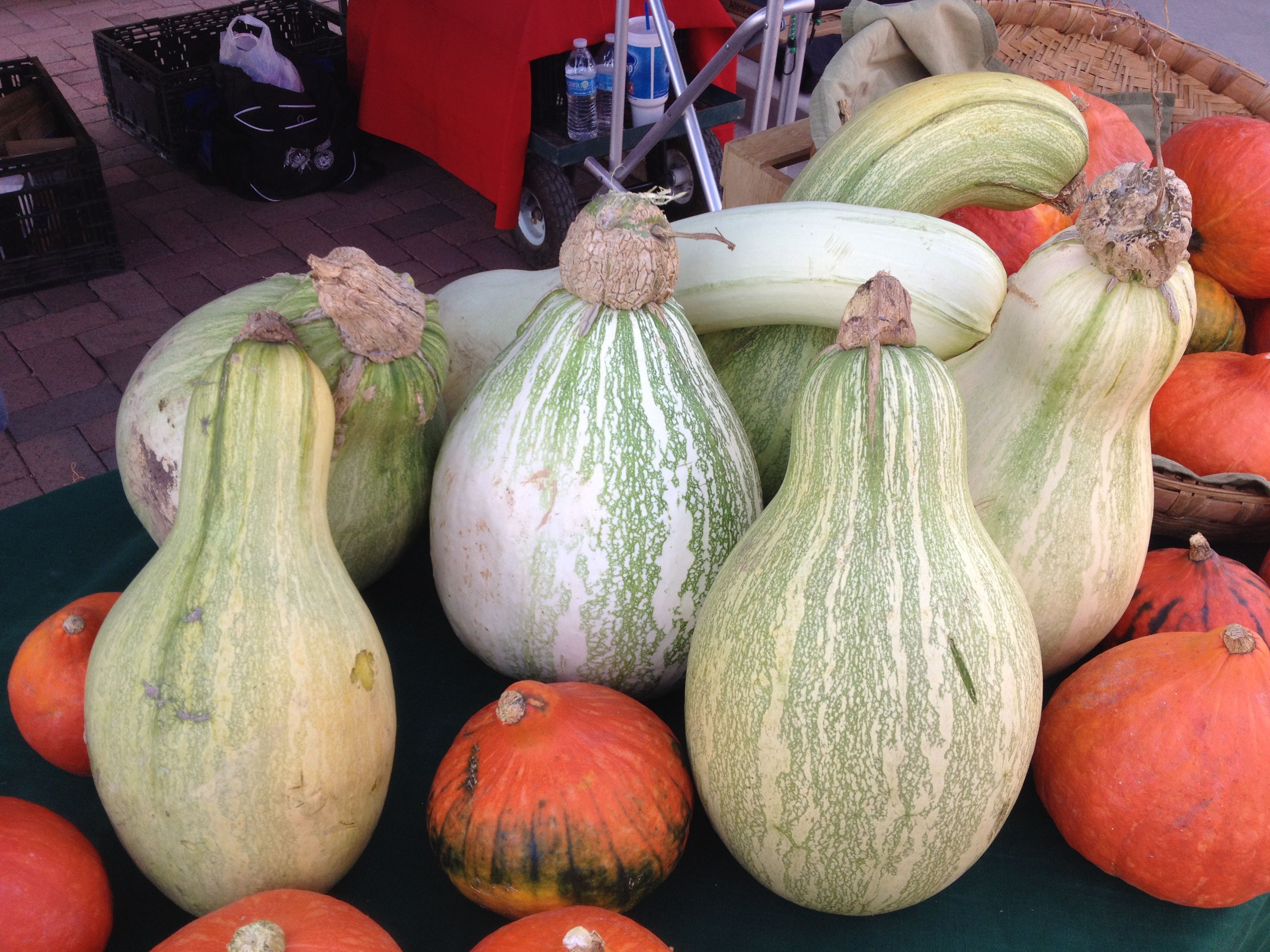
Traditional and delicious--Tohono O'odham Ha:l winter squash with magic inside--and curry pumpkins (MABphoto)

Traditional and delicious–Tohono O’odham Ha:l winter squash with magic inside of them–with curry pumpkins (MABphoto)

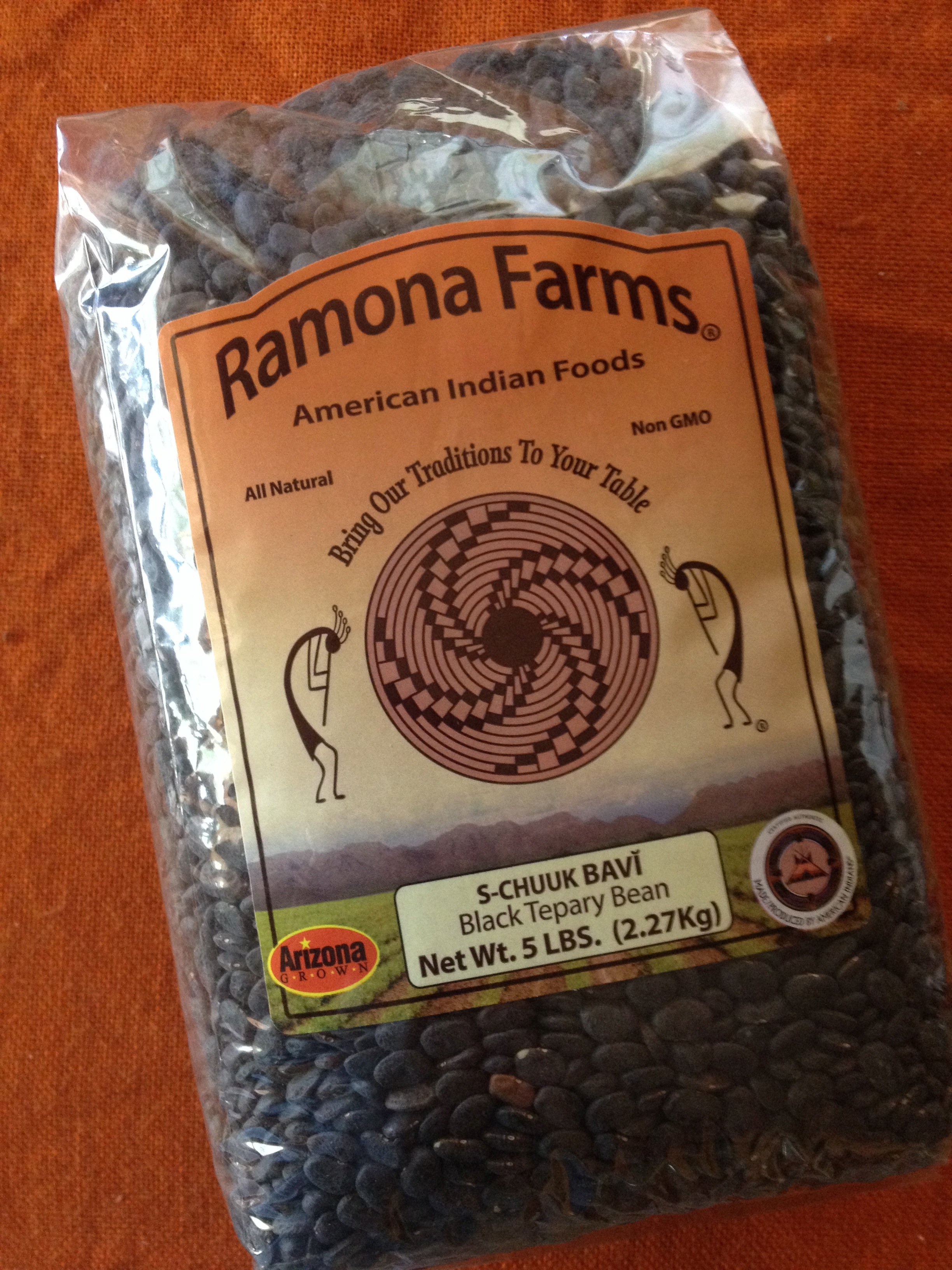
Akimel O’odham pearly black teparies from Pima farmer Ramona Button‘s fields  and locally-harvested cholla buds transformed with culinary sorcery by Chef Janos Wilder’s Downtown Kitchen into the most gourmet vegetarian delight.

S-Chuuk Bavi from Ramona Farms

Padre Kino’s White Sonora Wheat from BKWFarms‘ organic fields became the most flavorful and delicately marinated wheat-berry salad by the hand of Chef Rebecca Ramey at Blue Willow Restaurant.  And speaking of transformation, BKWFarms’ organic white Sonora wheat, with the magic of friendly microbes at Dragoon Brewery, became a festive brew with an amazing back-story to delight all samplers.

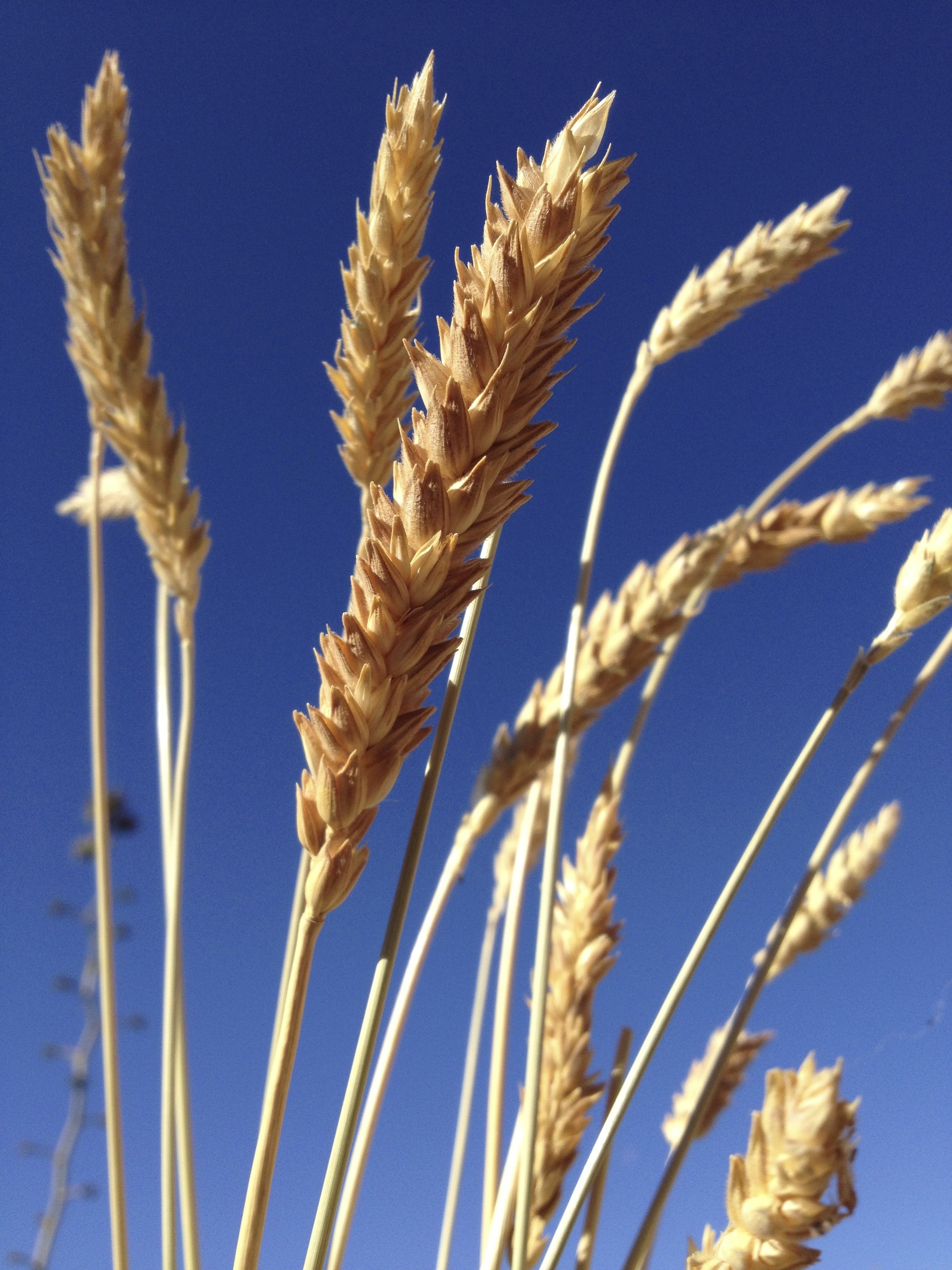
Ripened seed heads of organic heirloom Padre Kino White Sonora Wheat from BKWFarms in Marana (MABurgess photo)

Ripened seed heads of organic heirloom Padre Kino White Sonora Wheat from BKWFarms in Marana (MABurgess photo)


Farmer Frank’s Crooked Sky Farms‘ GMO-free fresh corn expressed itself in a fresh-from-the garden casserole by Proper’s Chef Kris Vrolijk.    Tohono O’odham traditional melon with other fresh corn and tomato, evolved into a gourmet gazpacho created by the Chef at Desert Diamond Casino, our major event sponsor.


Tia Marta here thanking ALL who came to the Table–the Farm-to-Table outdoor Picnic Feast at Mission Garden–to enjoy this enriching experience of Tucson’s traditional foods, cultivated with love in our own “desert terroir.”*  THANKS TO ALL our local–yet world-famous–culinary talent who prepared these sacred foods with care and dedication!  THANKS ALSO to the supporters and volunteers who made this event such a success!   Was it a sign of its significance at that moving moment culminating the feast when the heavens blessed us with a glorious sunset?

The public is invited to visit the ever-changing setting of this feast–the very garden and orchard where many of the heirloom foods are still hanging on fruit-tree boughs or ripening on the vine.  The Mission Garden is open for tours every Saturday with knowledgeable guides to take you through this special desert oasis–a living agricultural history museum.  (For info see http://www.tucsonsbirthplace.org).

For your own table, you too can source the heirloom foods served at the Picnic Feast, at the NativeSeeds/SEARCH Store, 3061 N Campbell, Tucson, http://www.nativeseeds.org, or at the Flor de Mayo booth (online at http://www.flordemayoarts.com) and other farm booths at Sunday’s St Philips Farmers’ Market (www.foodinroot.com).

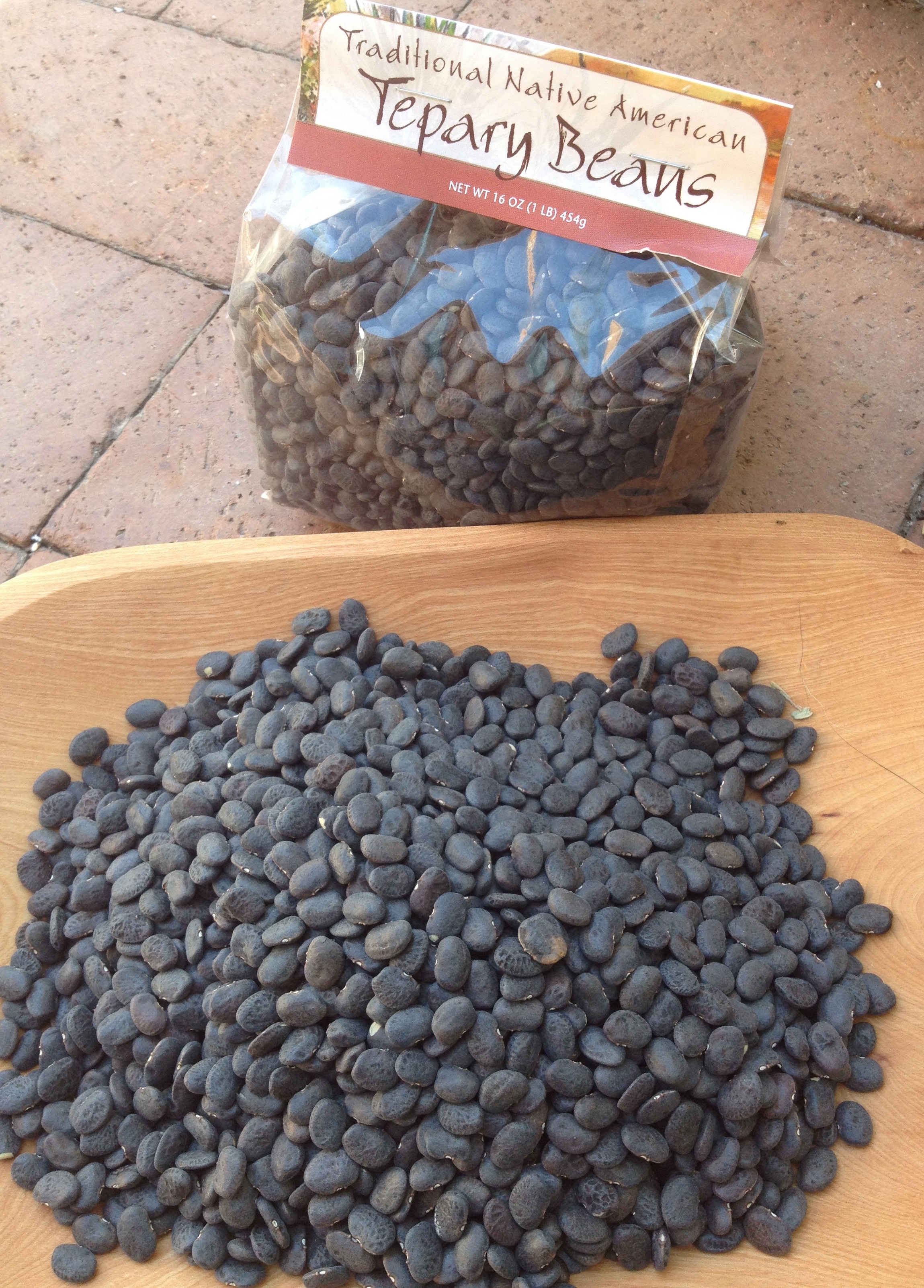
Native Black Tepary Beans from Flor de Mayo at St Philips farmers market Sundays

Native Black Tepary Beans from Flor de Mayo at St Philips farmers market Sundays

Join NativeSeeds/SEARCH as a member and stay in touch with seed-savers, gardeners, and cooks as we keep these desert-adapted foods alive and well into an unknown future.

Yours truly, Tia Marta, have also honored these heirloom foods artistically by documenting them from my garden in their harvest splendor as watercolor images.  I invite you to view them firsthand at two upcoming OPEN STUDIO eventsART TRAILS on Saturday, Oct 24, and the TPAC OPEN STUDIO weekend Nov.14-15 at Carolyn Leigh Studio.  Search by my studio name, Flor de Mayo Studio, or by artist’s name, Martha Ames Burgess, at  http://www.ArtTrails.org , and at http://www.tucsonpimaopenstudiotour.org  for directions, and do come by for a visit.  You can also check out some of my Southwest Native heirloom food images on my website gallery http://www.flordemayoarts.com — enjoy!

NativeSeeds/SEARCH heirloom Navajo Cushaw Squash watercolor by artist Martha Ames Burgess

NativeSeeds/SEARCH heirloom Navajo Cushaw watercolor by artist Martha Ames Burgess


What will Tucson's top chefs cook for the Heritage Picnic?

Tucson’s top chefs cook for the Farm-to-Table Heritage Foods Picnic Feast


*Desert Terroir,  by renowned author and co-founder of NativeSeeds/SEARCH, available at the NSS store, is a great read about the deep significance of LOCAL.  We can “internalize” his messages by shopping at farmers’ markets,  growing our own, and honoring long-successful desert traditions, seeds, and foods.

Stella and Alice’s Potent Potato Rosemary Recipe; to Start Your Day

Aunt Linda here: In the Old Pueblo a half moon hangs overhead. Venus, Jupiter, Mars, and Mercury are rising in the eastern sky. This pre-dawn, 2nd of October sky is just one week past the autumnal equinox; today’s simple, treasure of a recipe may come in handy in the colder months around the corner.

A few weeks ago, in casual conversation, I asked our 90 year old Aunt Alice (born and raised in the Tirol) what fats her mother used to cook with. Without a pause in her response, she replied: “Lard and olive oil” Of course we had our own pigs, so we made our own lard. OH!!! My mom used to make the BEST potato recipe ….”  So I spent a lovely afternoon last week learning how to make this favorite meal of hers.

IMG_0778

Like a needle and thread connecting bits of fabric, this recipe comes to you, from the Tirol, via aunt Alice.  It comes via Mother Stella, to her daughter Alice (now 90years old), to me, and now to you. What a magic needle, to pierce through the generations and find it’s way through the internet, (Stella lived a full life and died never having had one inkling of “The Internet”) all the way to your eyes.  And hopefully, to your hands and kitchen. Their Tirol home, by the way, built of stone, had no heat,  Alice says she would wake up to water frozen solid, inside the house,  after a cold night. No wonder they needed something this nourishing, including the home rendered animal fat,  to get them started.

It turns out that potatoes are more nourishing than I had known. I’ll admit they never held much interest for me.  Michael Pollan in The Botany of Desire uncovers many mysteries of the potato, and opened my mind a bit.  His research surprised me. In addition to their carbs, potatoes supply “considerable amounts of protein and vitamins B and C”. Combined with the vitamin A in milk, they make for a “nutritionally complete” diet.  According to Pollan, “the spud would eventually put an end to scurvy in Europe.  If I wax on and on about the potato, you won’t have time to make the recipe, so let me tantalize you into reading The Botany of Desire!  It may change your whole experience of slicing into a potato: the ancestors of the Incas, and of course their descendants, grew potatoes in microclimates from their wild potato ancestors … they grew  red potatoes,  pink. blue, yellow, orange, … They grew bitter potatoes, buttery and starchy ones.  So here we find that needle’s thread anchored back in time and place …. how they got to the Tirol and to Tucson …. that is another story.

It turns our that lard may have, dare I say it, some health benefits. The re-freshed thinking about lard is that it contains 54% less saturated fat than butter and some other plant derived fats).  It is also downright flavorful.   There is so much new research on fats. I encourage you to explore it.

Before we get started, if you are not open to lard, try this with butter or olive oil …coconut or avocado oils … the photo below shows the home rendered lard (see Savor the Southwest July 3rd post).   Note how pure white it is.   Remember that we infused one batch of lard with chiltepin. I learned this week, that at least in the Tirol of Alice’s youth, the fat was also smoked along with other meats, to impart a smokey flavor to the lard once it was ready to render. (Smokey lard – stay tuned … we may explore that in the future)

The hands that you see in action are Aunt Alice’s, passing the needle and thread,  to you.

Remember to Render! Not all lards are equal. Home rendered lard is easy and can be made in small batches.

Remember to Render!
Not all lards are equal. Home rendered lard is easy and can be made in small batches.

The Ingredients: 

2 Tablespoons home rendered lard

2 medium sized potatoes of your choice

2-3 sprigs of fresh rosemary (or sage)

Salt and pepper to taste

2 fresh eggs (to cook as eggs and eat atop the rosemary potatoes)

ice for the potato slices

How To: 

First, Peel the potatoes ….

IMG_0740

Slice potatoes thinly, however you prefer. We used an old  “madonlina” from Italy.IMG_0754 (1)

IMG_0744

Soak the slices in ice water – this takes out some of the starches, and helps them cook without disintegrating in the pan.

IMG_0764

Add two tablespoons of lard to the pan, and start heat on medium heat. Remember the oils you choose to eat are yours to decide. If you are anti-lard by all means use another oil. Choose what is best for your health and preferences.

IMG_0749

Place the potatoes in a thin-ish layer, and place rosemary spring in the pan. Start on medium heat, then lower heat.

Cook slowly, on low, giving the potatoes time to soften.

IMG_0774

Eat with a fresh fried or poached egg (or two) atop the potato medley … great for breakfast. Great for anytime.

IMG_0781

Cool Time for the Carrot Family

season fall at TBG 5791

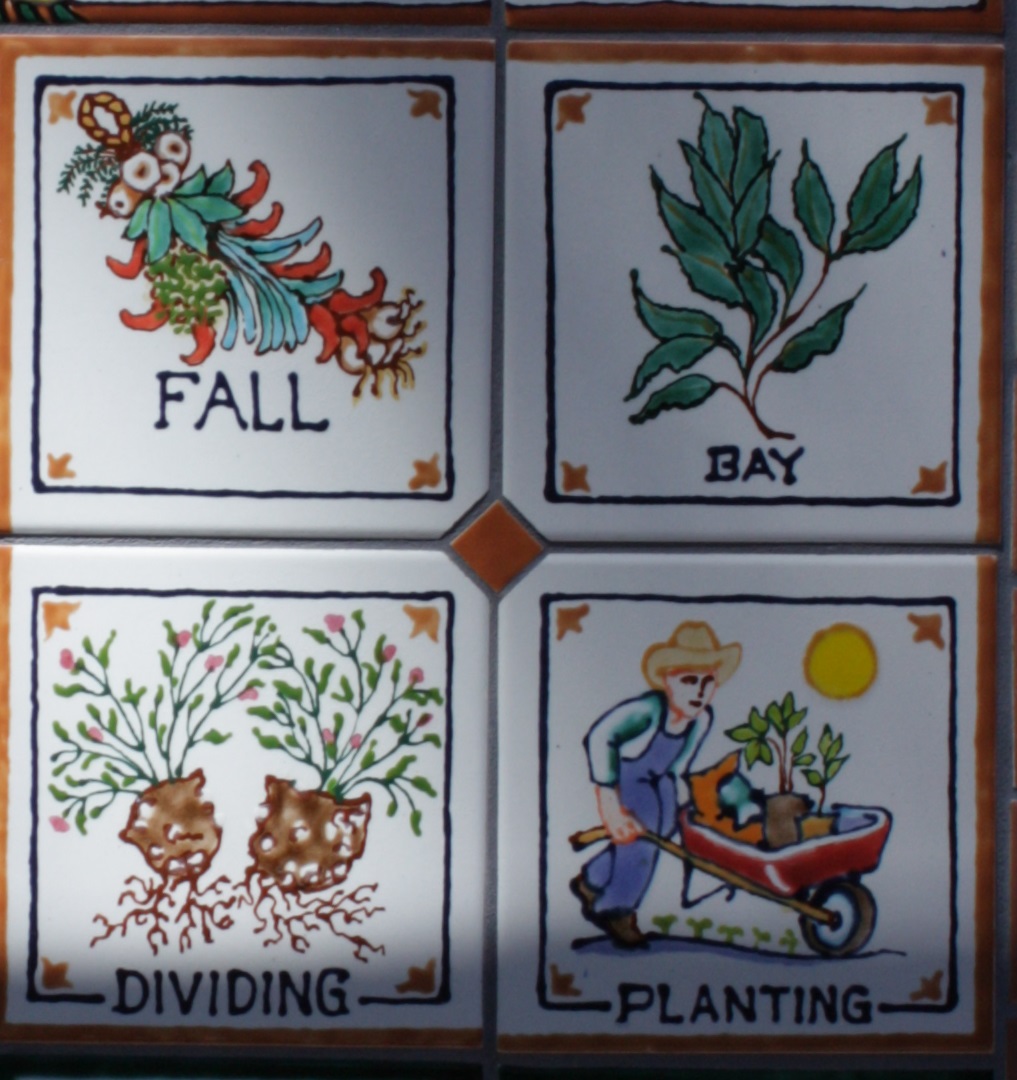
Fall is for planting! (From a mosaic in the Herb Garden at the Tucson Botanic Gardens)

Jacqueline Soule here to discuss some herbs to grow now that the Autumn Equinox has come and gone. Days are cooler and shorter, and that means it is time to plant the plants that will thrive in the cool season garden. This means a wide variety of leaf and root crops, most of them imported from the cooler areas of the Old World. Today let us look at a north temperate plant family that loves our winters – the Carrot Family.

caraway_fruit

Caraway seeds for rye bread, sure, but have you tried them in a marinade for chicken? Yummy.

The Apiaceae or Umbelliferae, commonly known as the celery, carrot or parsley family, is a family of mostly aromatic plants with hollow stems.  The family is large, with more than 3,700 species spread across 434 genera; it is the 16th largest family of flowering plants. Included in this family are the well-known plants: angelica, anise, asafoetida, caraway, carrot, celery, chervil, sweet cicely, coriander (cilantro), culantro, cumin, dill, fennel, hemlock (used to kill Socrates), lovage, cow parsley, parsley, parsnip, cow parsnip, sea holly, and giant hogweed.  Note that some of these are also deadly poison so this is one family you should only collect in the wild if you know what you are doing.

carrot seed_4342

The Pima County Library has a seed library where you can check out seeds of many cool season vegetables. 5 varieties per month per library card.


Plants. All members of the Carrot Family are a tad fussy about growing conditions. They do not transplant well so either seed them in place or be very careful to not disturb their roots as you plant.

dill_4335

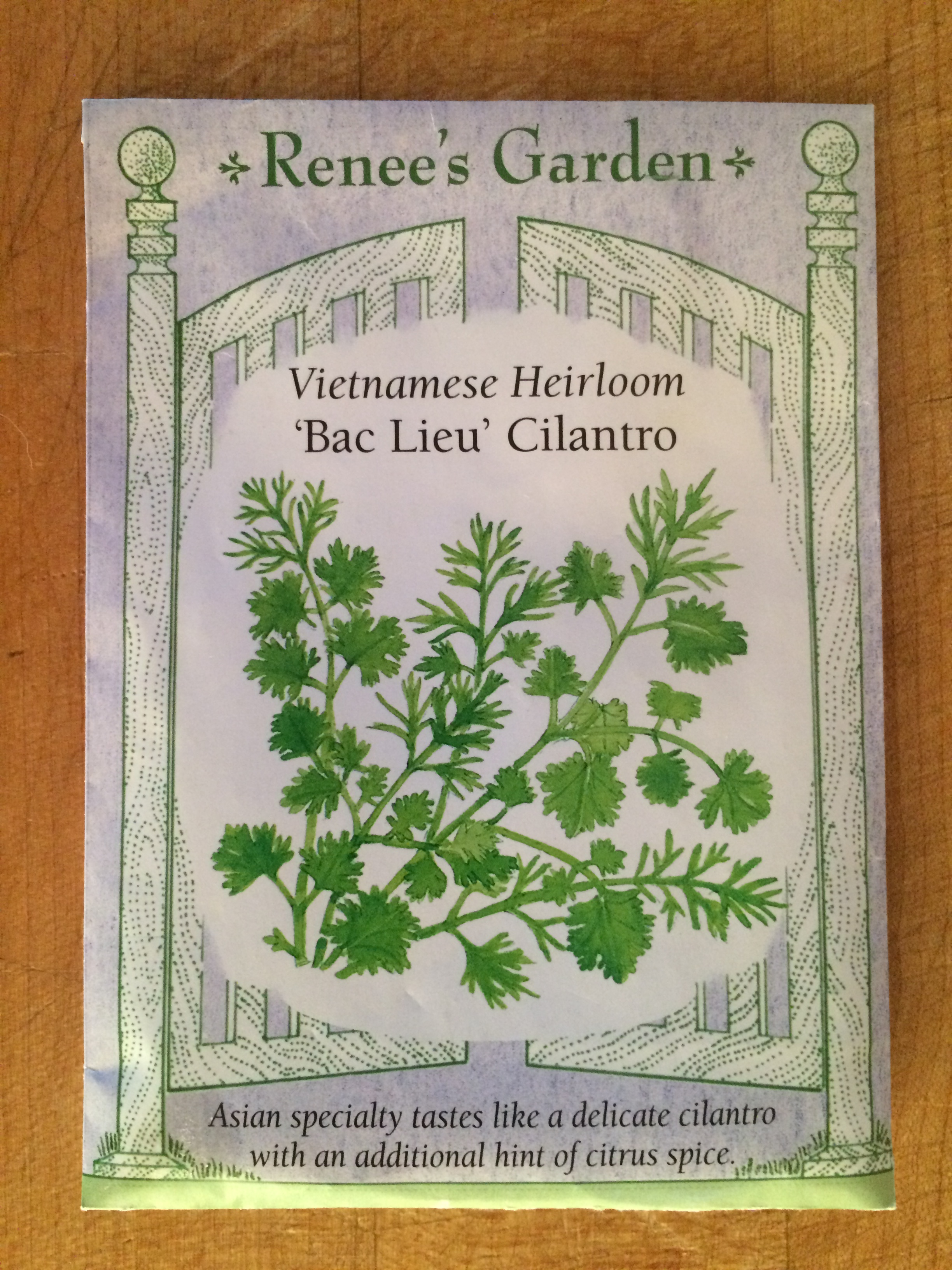
Just when you think you know plants, seed people like Renee’s Garden come out with a new variety to try!

Soil. All carrot kin grow best in a well-drained, sandy, slightly acidic soil, rich in organic matter. That makes them best grown in containers in our area. Use a pot one and a half feet deep. Potting soil with some added sand makes a good growing media.

Coriandrum_sativum_foliage

Seedlings from the nursery are also an option for many of the carrot family herbs. Just be careful not to harm the roots.

Light. Six or more hours of winter sun is needed to do well.

Water. Keep the soil relatively moist during establishment. You can let all of these dry a little more between water once the plants get larger. Some people believe this makes their flavors stronger.

cilantro_4336

Another “new” Heirloom variety to try.

Fertilizer. These plants will get very lush and full with some fertilizer. However, if you amended your soil at the start you don’t need to purchase fertilizer. Plus, avoid fertilizing anything when frosts are a possibility. Come late February you could apply a half-strength general-purpose fertilizer.

Harvest and Storage. Carrots and parsnips are best harvested on based on the days to maturity on the seed package. Most of the herbs taste best when fresh but lose much flavor when dried. Freezing the leaves retains more flavor. Select healthy leaves, rinse, pat dry but leave some moisture. Chop into roughly quarter inch squares and freeze in a labeled plastic bag or yogurt container. This can be used directly from the freezer.

Seed is harvested after the plants “bolt” or flower in spring as it heats up and the days get longer. Pull up the entire plant once seeds start to dry and put it upside down in a paper bag in the shed or garage. They should be dry enough to store after 2 weeks.

Coriander_fruit_001

Cilantro seeds are the herb we call coriander. They ripen in plenty of time to use for making pickles this summer.


JAS avatarIf you live in Southeastern Arizona, please come to one of my lectures. Look for me at your local Pima County Library branch, Steam Pump Ranch, Tubac Presidio, Tucson Festival of Books and more. After each event I will be signing copies of my books, including the latest, “Southwest Fruit and Vegetable Gardening,” written for Arizona, Nevada and New Mexico (Cool Springs Press, $23).

All photos (except where noted) and all text are copyright © 2015, Jacqueline A. Soule. All rights reserved. I receive many requests to reprint my work. My policy is that you may use a short excerpt but you must give proper credit to the author, and must include a link back to the original post on our site. Photos may not be used.

Black Teparies Make a Come-Back!

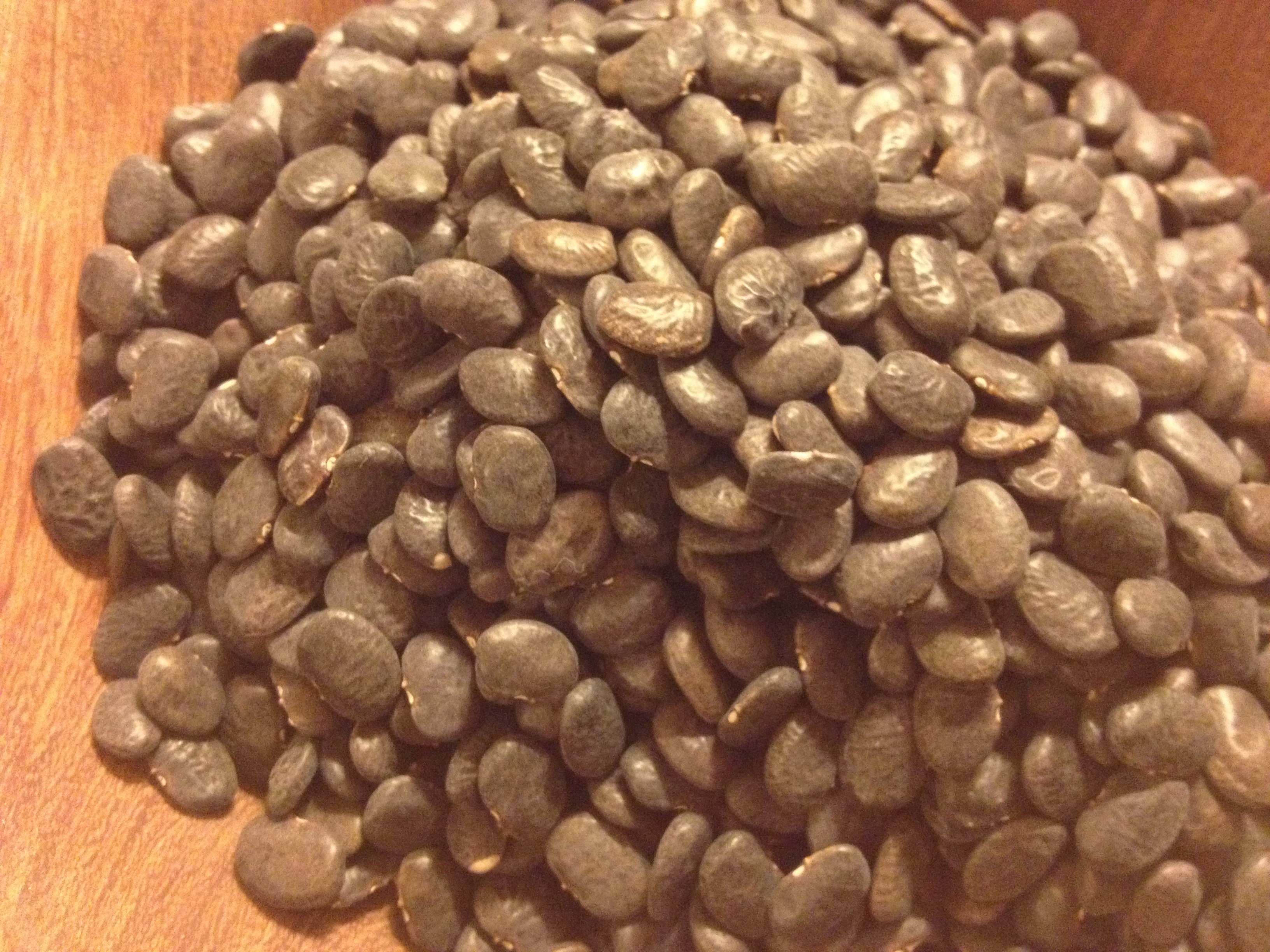
Rich black teary beans dried, ready to hydrate for cooking

Rich black tepary beans dried, ready to hydrate for cooking

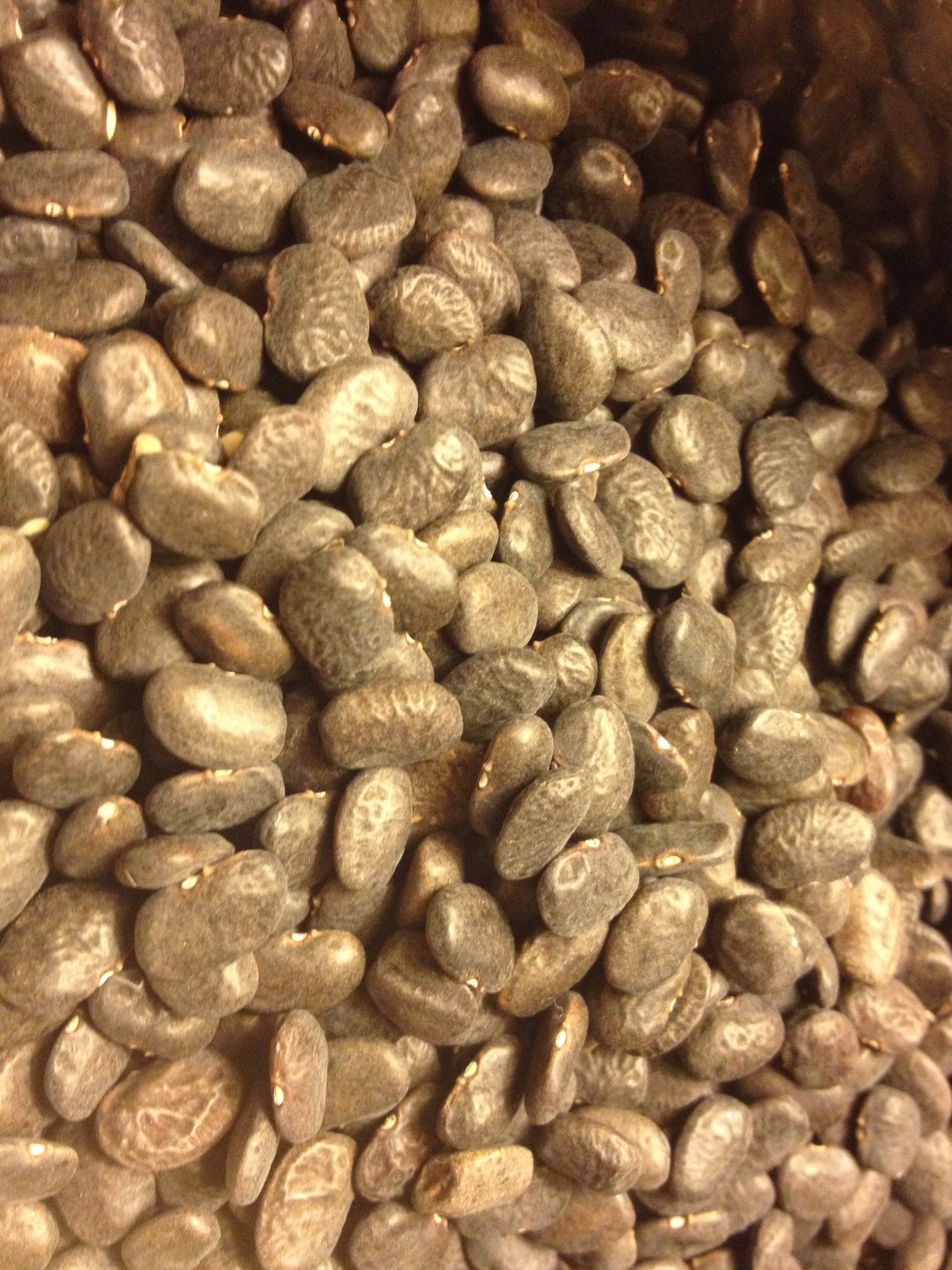
In some light they are a dull charcoal difficult to spot if the pods shatter onto the ground. Sometimes they appear shiny black or opalescent. Somehow black teparies appear to have an antiquity about them–mysteriously harking back to a time rich in prehistory. Tia Marta here to tell you a little about the black tepary bean’s odyssey back into cultivation and into the cooking pots of Southwesterners once again.

Shiny black teparies close up

Shiny black teparies close up

Back in 1912, before WWI and the rapid plunge the “remote” Southwest unavoidably took into East-Coast food fads, there was a crop survey done of the many types of tepary beans being grown and used by different Native American families and communities throughout the Borderlands. The diversity at that time was astounding—some 40+ different colors, forms, sizes, speckles, of tepary beans were reported. Within about a decade there remained only a couple of dominant tepary colors—“red” (an orangy-brown) and white. [For more history, check out Volume 5, No.1 of Desert Plants Journal published by the University of Arizona CALS. Specifically this issue is devoted to tepary beans, and includes an article by yours truly.]

The neat thing about cultivars that are still genetically close to their wild ancestors is that they still contain a diversity of genes that can “pop out” occasionally as visibly different seeds. In the case of the teparies, every so often in a harvest of white teparies, for example, there may turn up a few coral pink, or blue speckled, or even black beans. At the University of Arizona’s Maricopa Experimental Farm, an amazing crop researcher, Mike Sheedy, was, for several years growing teparies to isolate some of these genetic “sports”. He used assistance from his kids (In farming, child labor rules just can’t apply) to help pick out the odd-ball seeds from hundreds of pounds of harvested teparies. Over the years, he grew the separated colors in isolation from each other to preserve color purity. Before research funds ran out he had “re-created” an ancient lineage of black teparies—i.e. he has assisted the ancient genes to come again to the fore, to bring the “invisible” genotype back into the “visible” phenotypes. At termination of his research project he generously donated the black tepary collection to the traditional Pima farming family of Ramona and Terry Button.

Native Black Tepary Beans & Flor de Mayo 1-lb pkg

Native Black Tepary Beans & Flor de Mayo 1-lb pkg

Now—tah-dah!—at last black teparies are in agricultural production on ancestral lands! The public can purchase these little food gems of antiquity now at the NativeSeeds/SEARCH store (3061 N Campbell Ave, Tucson) www.nativeseeds.org , at the Flor de Mayo booth at Sunday St Philips Farmers Market www.flordemayoarts.com , or online via www.ramonafarms.com.

S-Chuuk Bavi from Ramona Farms

Black teparies are very different in taste from the red or white teparies—although all teparies are much richer than their more distant cousins like the common bean, lima or black-eye pea. Black tepary, schkug ba:wĭ of the Tohono and Akimel O’odham, is the deepest, nuttiest of all, with an earthy bouquet and a slightly bitter after-note reminiscent of coffee. Well, you will just have to try your own taste buds on them!

The public will have an exciting opportunity to taste black teparies prepared by none other than our beloved Tucson Chef Janos Wilder (of Downtown Kitchen fame) at the upcoming Farm to Table Picnic feast at Mission Garden, Sunday afternoon, October 18, 4-6:30pm. Janos is not letting on what his special black tepary recipe will be, but we can be sure it’ll be sensational. [The picnic is by pre-registration only so buy your tickets soon! Online purchase is via the Friends of Tucson’s Birthplace site www.tucsonsbirthplace.org.]

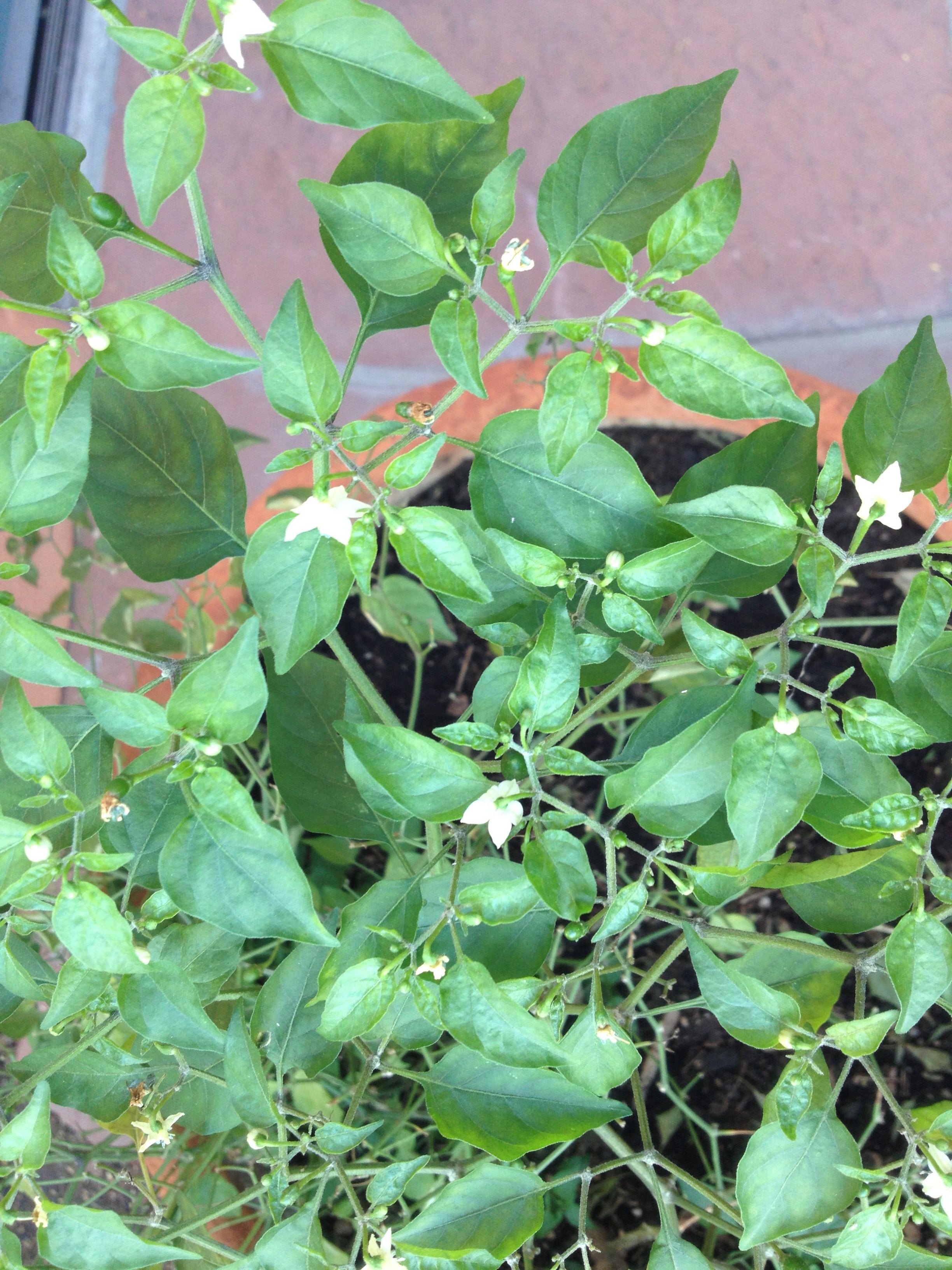
Potted blooming chiltepin plant for edible landscaping

Potted blooming chiltepin plant for edible landscaping

All of the heirloom foods served at the Farm to Table Picnic are being grown (even as I write) locally in Baja Arizona, either at the NativeSeeds/SEARCH Conservation Farm in Patagonia, or at the Mission Garden itself, or by sponsoring farmers and ranchers such as BKWFarmsInc, the 47-Ranch, and Ramona Farms. Some of Tucson’s best chefs are donating their skill and time to prepare different dishes for us. It will be a great opportunity to put the fun in fundraising for two worthy local non-profits, to share the delicious tastes of our heirloom foods of the Borderlands, and to share community joy in what we are able to produce together locally.

For adventuresome cooks, dessert addicts, and chocoholics, I would like to share two variations on brownies made with—yes, you guessed it—black tepary beans! You will not believe how yummy these are.

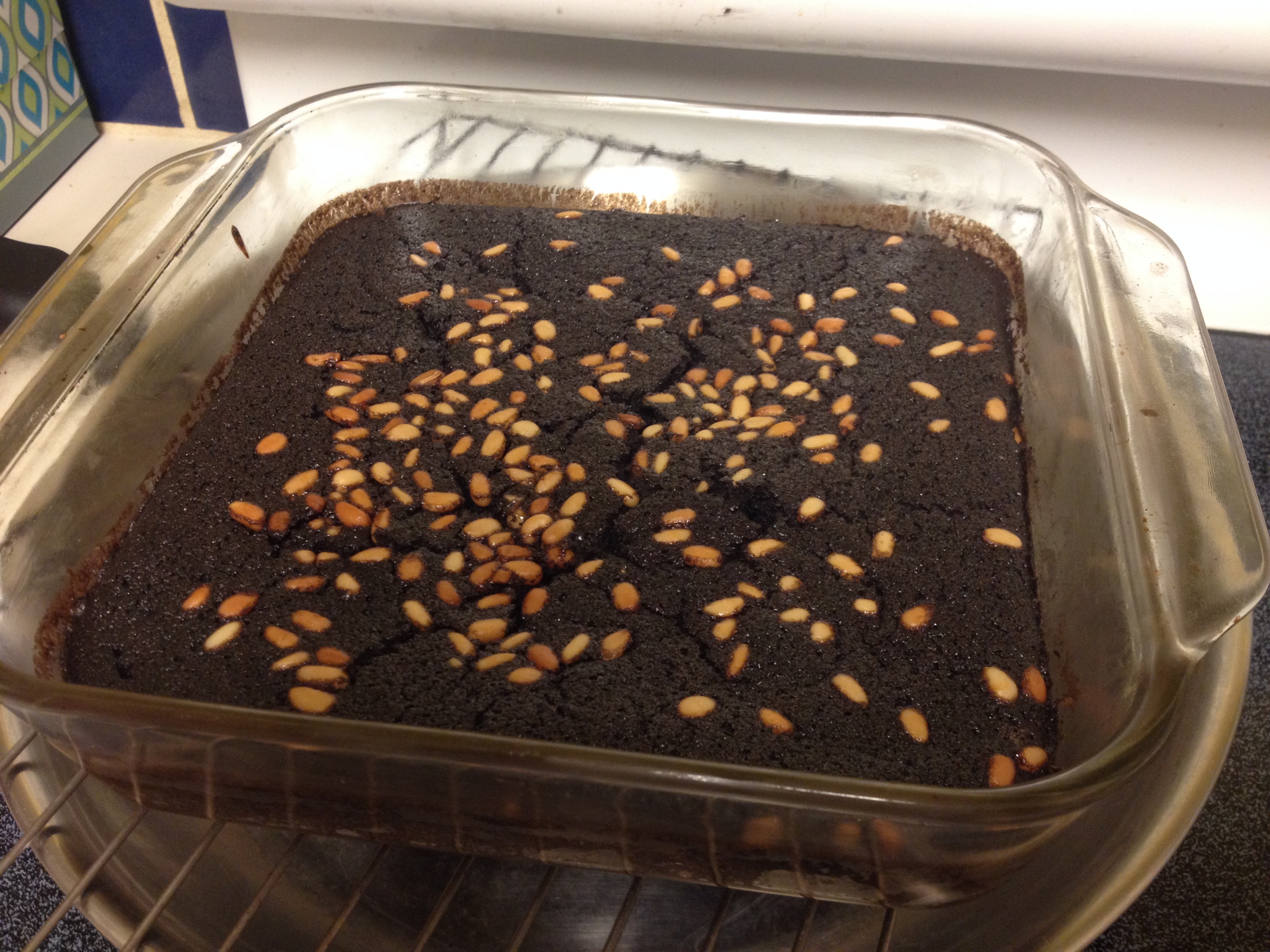
Gluten-free Black Tepary Brownie-Cockaigne on cooling rack

Gluten-free Black Tepary Brownie-Cockaigne on cooling rack


First, cooking black teparies (as with all teparies) takes some time—and premeditation.  The day before you want to use them, sort, wash, and pre-soak your black teparies. I hit them with a quick boil and let them sit overnight to hydrate slowly. Change the water the next day, adding fresh drinking water. Simmer until soft (it may take 2-3 hours on stovetop or 4-6 in crockpot). You want them beyond al dente in order to puree them in a blender or CuisinArt for the following recipes.


Muff’s Gluten-free Black Tepary Bean Brownies-Cockaigne

Ingredients:

1 cup cooked and pureed black tepary beans

1 stick butter= ¼ lb= ½ cup butter

5 Tbsp dark 100% cocoa powder, unsweetened (1 oz.)

¼ tsp sea salt

1 cup organic cane sugar

1 cup loose organic brown sugar

1 tsp vanilla extract

4 eggs well-beaten

¼- ½ cup nutmeats (I use pinyon nuts to keep the Southwest theme)

Directions for Muff’s Gluten-free Black Tepary Brownie-Cockaigne:

Preheat oven to 350 degrees F. Grease an 8×8” baking dish and place a wax paper cut to fit the bottom of pan. Melt butter (preferably in top of double boiler). Stir in thoroughly 5 Tbsp dark unsweetened cocoa powder. Let the mixture cool. Add sugars and sea salt to mixture and beat until creamy. Add vanilla. Beat 4 eggs and add to mixture stirring until uniform in color. Add 1 cup pureed black teparies and hand-mix. Pour batter into greased bake pan. Sprinkle top of batter with pinyones or other nutmeats. Bake 45-50 minutes until it tests done with toothpick.   Cool pan on a rack. Cut in small squares to serve because it is so rich and moist. Enjoy their delicious flavors AND the healthy qualities of high protein/high complex carb teparies, protein-rich eggs, and the benefits of dark chocolate!

Gluten-free black tepary brownie-cockaigne ready to eat

Gluten-free Black Tepary Brownie-Cockaigne ready to eat–wheat-free, light, nutritious and delicious!

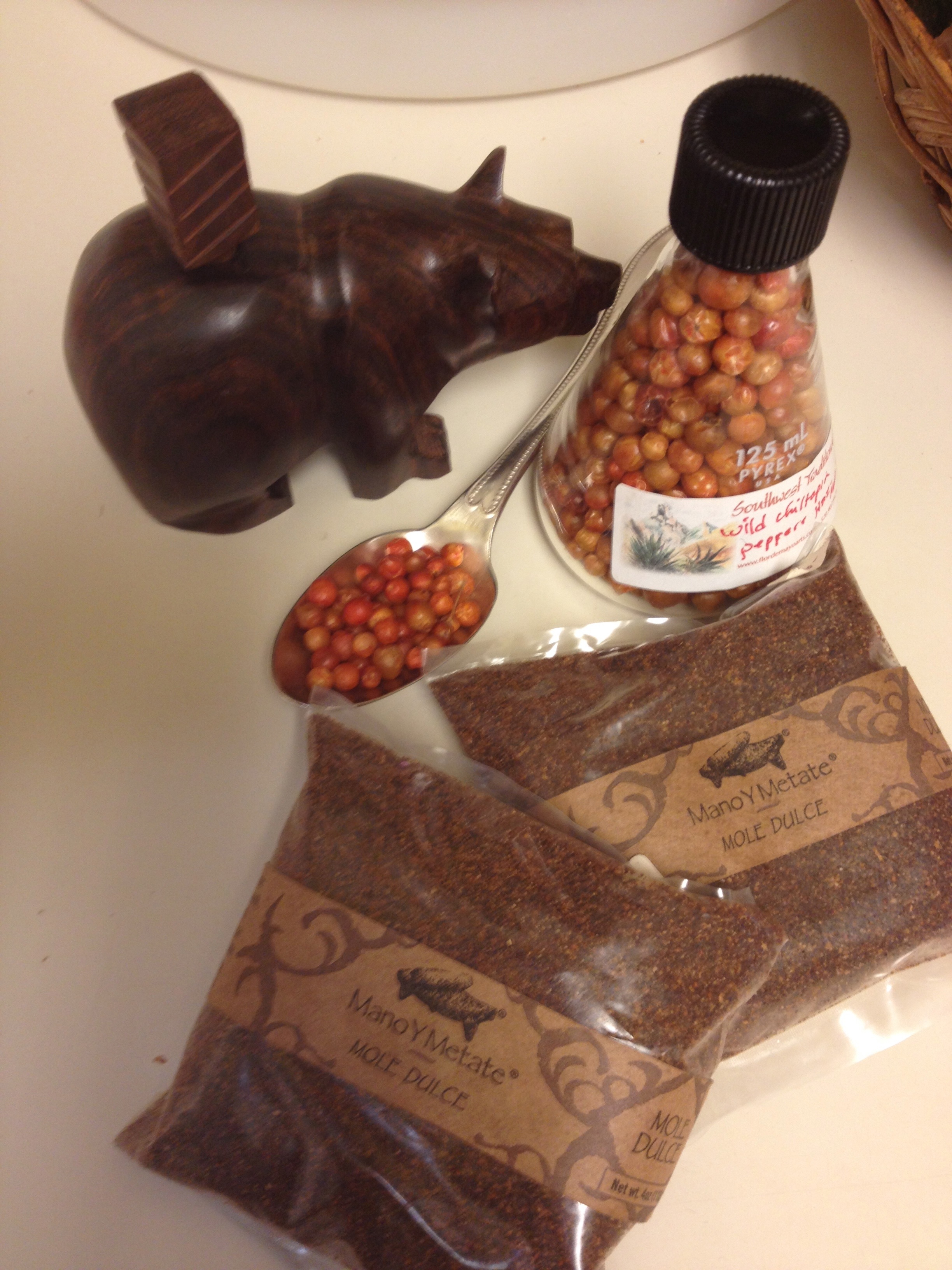
My next black tepary brownie recipe was first inspired by food-writer and “Blog-sister” Carolyn Niethammer’s recipe found in her book Cooking the Wild Southwest (p.133)–a must-have in every SW cook’s kitchen shelf. Here I’ve made some interesting gastronomic additions…including the use of our fantastic local heirloom White Sonora Wheat flour, crushed wild chiltepines, and Mano y Metate’s fresh-ground Mole Dulce powder produced by our local Molera herself, Amy Valdes Schwemm.


“Hot-Dam”* Black Tepary Brownie Bars [*in the best sense of the expression]

Ingredients:

5 Tbsp unsweetened 100% cocoa powder

½ stick (1/4 cup) melted butter

¾ cup organic cane sugar

¾ cup org brown sugar, not-packed

2 eggs, beaten

2 tsp vanilla extract

¾ cup pureed cooked black teparies

¾ cup organic heirloom White Sonora Wheat flour**

3 or 4+ crushed wild chiltepin peppers*** (number depends on your desired picante level)

¼ tsp sea salt

1-2 Tbsp Mano y Metate ground Mole Dulce powder

2 Tbsp raw pinyon nutmeats

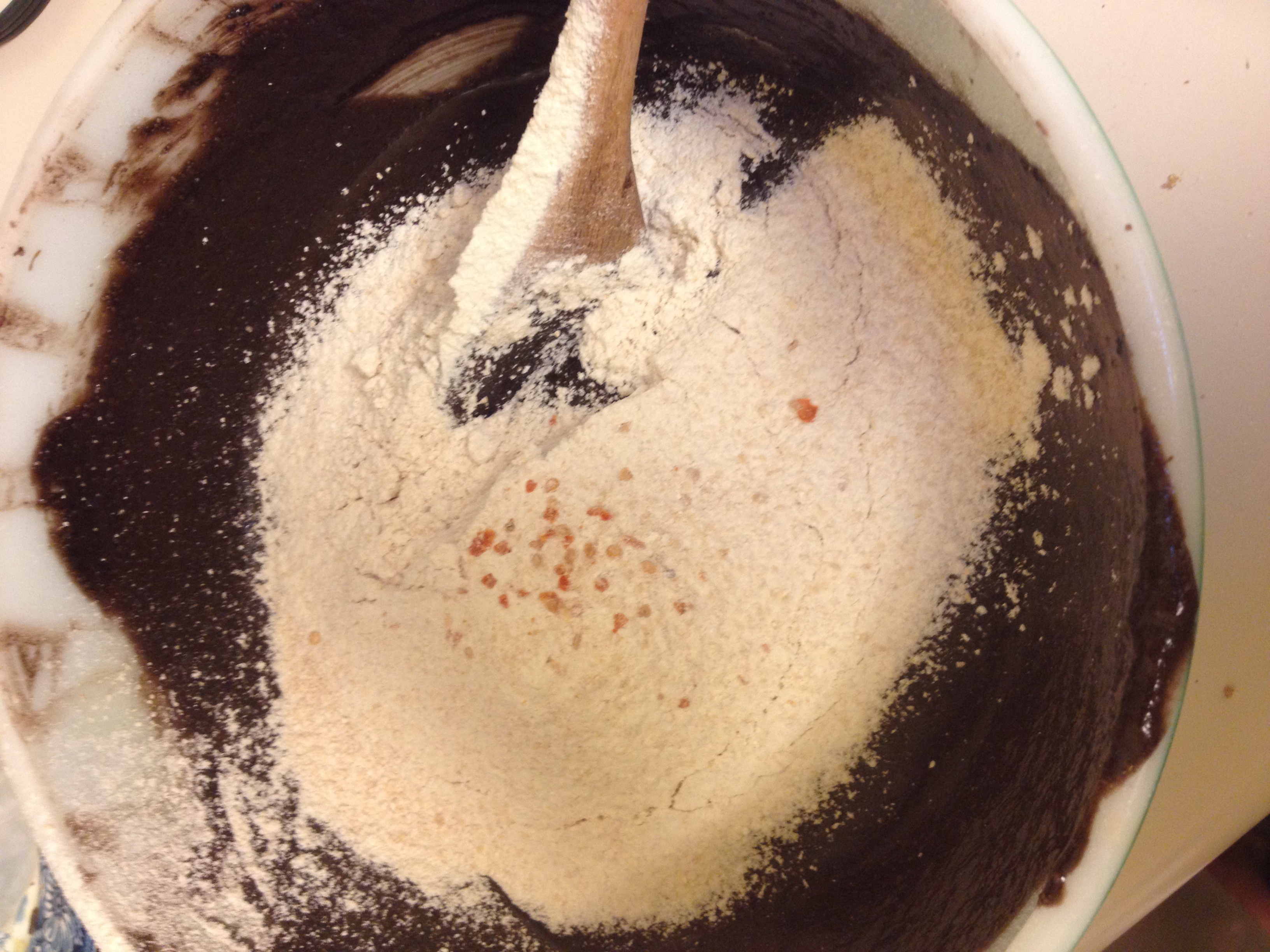
Adding White Sonora Wheat flour and crushed chiltepin to molten chocolate mixture

Adding White Sonora Wheat flour and crushed chiltepin to molten chocolate mixture

** Freshly milled White Sonora Wheat is available at our Flor de Mayo booth, Sunday’s St Philips farmers market (www.foodinroot.com). Call ahead for quantities larger than 1 kilo—520-907-9471.

***whole wild-harvested Chiltepines are available at the NSS Store, 3061 N Campbell, and at Flor de Mayo booth, Sunday St Philips farmers mkt. Chiltepin plants to grow can be purchased at NSS plant sales.

Flavors to guild the lily--Wild chiltepin peppers, ironwood bear molinillo grinder, and Mole Dulce powder

Flavors to guild the lily–Wild chiltepin peppers, ironwood bear molinillo chiltepin grinder, and Mole Dulce powder (all available at NSS store and Flor de Mayo at St Philips farmers market)


Directions for “Hot-dam” Black Tepary Brownie Bars:

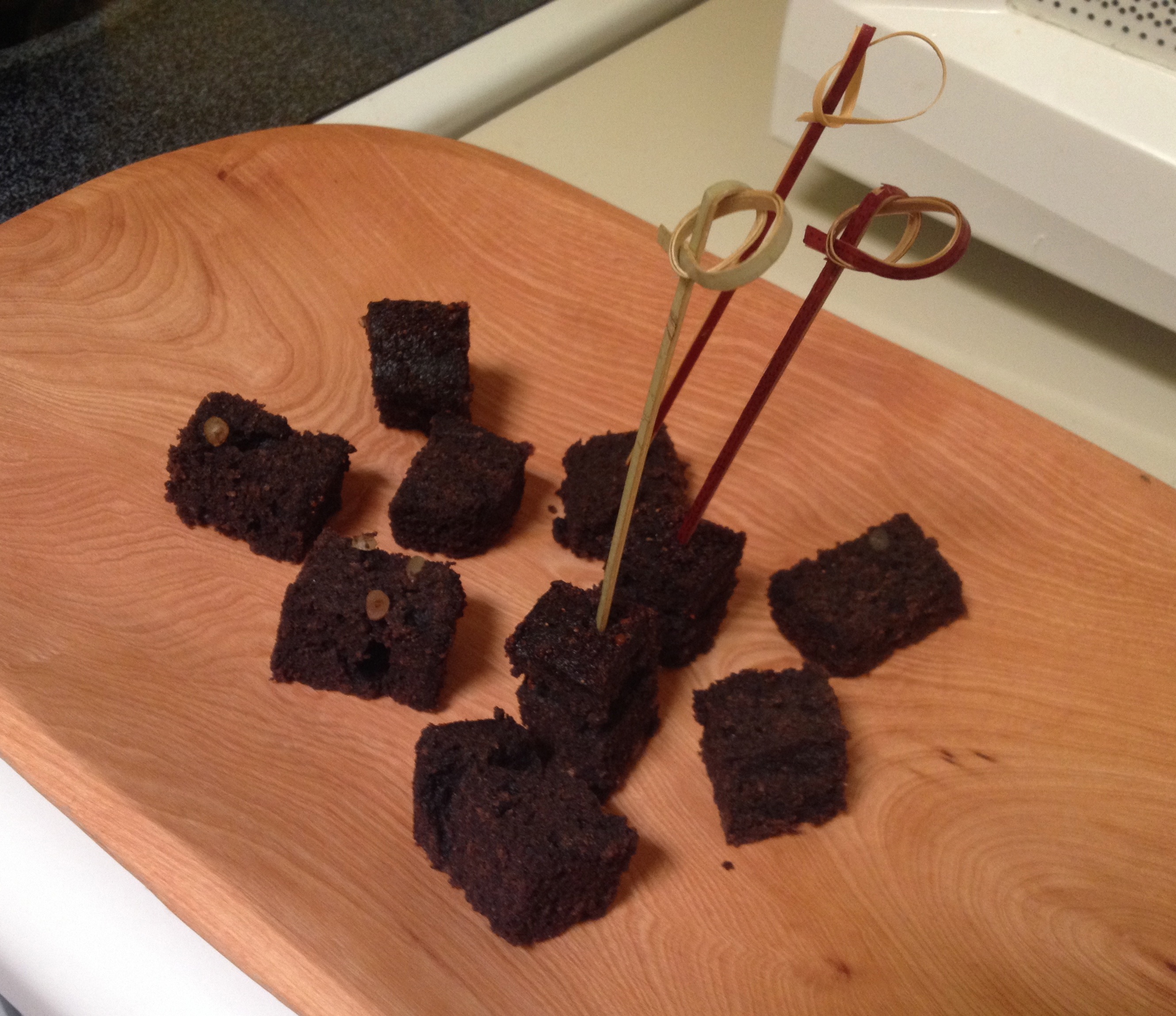
Pre-heat oven to 325F. Grease 8×8” baking pan with wax paper set in bottom. Melt butter and mix powdered cocoa in thoroughly. Add the brown sugar and organic white sugar and vanilla to the butter and cocoa, and beat. Beat 2 eggs and stir thoroughly into the choc/sugar mixture. Wisk in ¾ cup pureed black teparies. Sift together: ¾ C white Sonora wheat flour, ¼ tsp sea salt, and the well-crushed chiltepin peppers. Stir dry ingredients into liquid mixture. Add pinyon nutmeats. Pour batter into bake-pan. Sprinkle 1-2 Tbsp of Mole Dulce powder on top of the batter. Bake 25 minutes or until it tests done (when fingerprint pressed on top springs back). When cooled, cut into small bite-size squares to be served with hors d’oeuvre picks—you will see why…..(and don’t rub your eyes after eating.)

"Hot-dam" Black Tepary Brownies ready to enjoy!

“Hot-dam” Black Tepary Brownies ready to enjoy!


Tia Marta is hoping you enjoy these fruits and flavors of the Sonoran Desert assisted by fruits of tropical North America—a marriage made in dessert-Heaven! With every bite we should be thanking ancient tepary farmers, and the recent ones who have brought back the Black Tepary from near genetic-oblivion.


Coming this week to Tucson is a food event not to miss: the Farmer to Chef Connection, this Wednesday, September 16, at Tucson Community Center, 12:00noon-5:30pm, sponsored by LocalFirstArizona. Google their site for tickets and come enjoy a smorgasbord of local tastes.

Also be sure to mark your calendar for October 18 and join NativeSeeds/SEARCH and Friends of Tucson’s Birthplace at the very heart of Tucson’s Birthplace –the Mission Garden at the base of A-Mountain—for the first-ever outdoor Farm to Table Picnic. It will be a feast to remember. Make reservations now and we’ll see you there for fun, flavor, history and friendship!

Mixing Up Senses; Chocolate-Chiltepin-Tequila-Medley

Aunt Linda here on an exceptionally moist dawn in the Old Pueblo. All of us desert dwellers,  whether made of skin, feather, fur, or scale,  are feeling our sensory pores wide open.   The “normal” dry, desert, air simply does not hold smells or sounds the way a post monsoon moist morning does. Even the bird calls resonate differently.

IMG_7654

Inspired by an Article, Sounds of the Hive, in this month’s American Bee Journal (September 2015, Volume 155, NO. 9), I found myself thinking about Senses. And about how other creatures sense and navigate the earth, air, and water in different ways than humans do.

So I pose a question to ponder:  Do bees have ears? Can they hear?

For years it was thought that honeybees were deaf. Quoting briefly  M.E.A. McNeil from the article cited above, (which I HIGHLY encourage you to read), “Evidence for the notion that bees are deaf was partly based on the observation that they have no ears. But, in fact they do; they just aren’t called ears and don’t quite look like ours. While a human detects sound through movement of the ear drum, a honey bee has a collection of sensory cells in the antennae ….” (p987)  These sensory cells are found in the second segment of the antennae … it gets technical and fascinating, but basically they “convert mechanical vibrations into nerve impulses” which are then “relayed to the brain.”

No ears, as we think of ears,  needed.  I expanded my musings beyond bees …. how do other life forms sense the world?

In keeping with hearing: Frogs have eardrums – or tympanic membranes – but on the OUTSIDE of the body, behind their eye.

What about taste? Bees and butterflies have chemoreceptors (or taste receptors) on their on their feet; earthworms have them on their entire body.   And octopus: have chemoreceptors on the suckers of their tentacles. They “taste” with their tentacles.

How about sight?  A buteo Hawk has 1 million photo receptors per millimeter in it’s retina; flies have 3,000 lenses in each eye, penguins have flat cornea that allows them to see clearly even while under water. They also can see into the untraviolet range. Honeybees see polarized light.  If you had asked me, before today,  if a scallop could see, I would have flat out assumed NO. In fact, they have 100 eyes around the edges of their shells, enabling them to detect shadows of predators.  Bats and dolphins navigate so skillfully, not using their eyes, but Echolocation.

Mixing Up the Senses Chocolate-Chiltepin Tequila Medley

IMG_0426

I can’t guarantee you that this medley will help you hear with your antennae, but metaphorically, it just might.

(Warning, if you make it too strong, you may need to learn how to use echolocation to find your way home)

Basic Recipe: 

Blend/mix:

1-1/2 oz of your favorite (mixing) tequila.

1-1/2 oz Chocolate Liqueur (I used “Meletti, Cioccolato”)

Add chocolate nibs and one crushed chiltepin to top of drink.

Ice cubes or crushed ice as desired.

IMG_0431

IMG_0430 (1) IMG_0382

Dessert Version: (photo below) Add  4 oz of Unsweetened Chocolate Almond Milk to the recipe above. It softens the drink, and smooths it our somehow.  This was my favorite version. It is chocolaty, sweet, and spicy – all at once.  Plus, it is fun to crunch the nibs and chiltepin in your mouth while the sweet, almost desert-like chocolate plays on your tongue.

IMG_0438

And for a Very Spicy Concoction Option: substitute 1 1/2 oz of Patron’s XO Café INCENDIO for the chocolate liqueur.

Photo (below) of what Incendio looks like. This version has quite a kick to it, and is not for everyone.

IMG_0379

Joy of the Mountains in Tucson

Jacqueline A. Soule here to tell you of a wonderful perennial herb to plant in your garden or landscape this coming month.  Oregano comes to us from the arid mountains of the eastern Mediterranean, including present day Greece and Turkey.  Oregano grows well here in the Old Pueblo forming a lovely low mounding landscape plant with a little added water.

Origanum_majoricum_prostrate_001

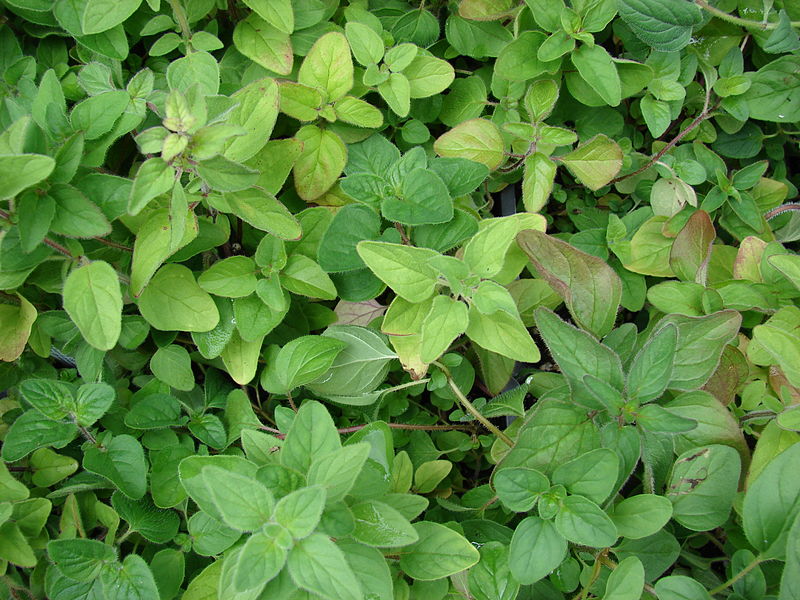
In shady sites of our Southwestern yards, oregano can grow quite green and lush.

The name, oregano is translated from the Greek as joy of the mountain. (oros = mountain, ganos = joy) so imagine the rocky Greek mountains as you plant your oregano. Rocky or sandy soil (not clay) works well. Some afternoon shade in summer is best for healthy plants.

Origanum vulgare 'Hot & Spicy'

Origanum vulgare ‘Hot & Spicy’ likes the heat and has very strong flavor. Like most herbs, it does best in well drained soil and does not thrive if overwatered. Photo courtesy of Monrovia Growers.

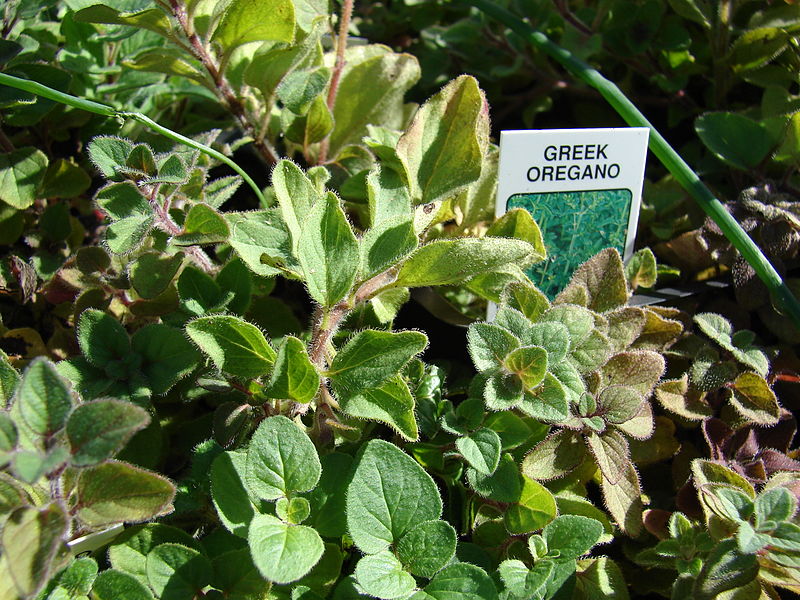
Oregano comes in many species, subspecies and varieties. For the best type able to grow here in the Old Pueblo, go with the true Greek oregano, Origanum vulgare subspecies hirtum. Since many nurseries do not label with correct scientific names, look at the leaves. The one you want will have smallish leaves with silvery hairs on them. When you rub a leaf between your fingers, it should release a strong fragrance of oregano. Avoid the oreganos that are mildly scented, musky scented, or have larger, not very hairy leaves. Indeed, you may run across marjoram (Origanum majorana) or even Italian oregano (Origanum X majoricum). These have their place in the kitchen and in the garden, but don’t plant them next to Greek oregano. The more vigorous Greek oregano will over run the others.

Origanum_majorana_habit

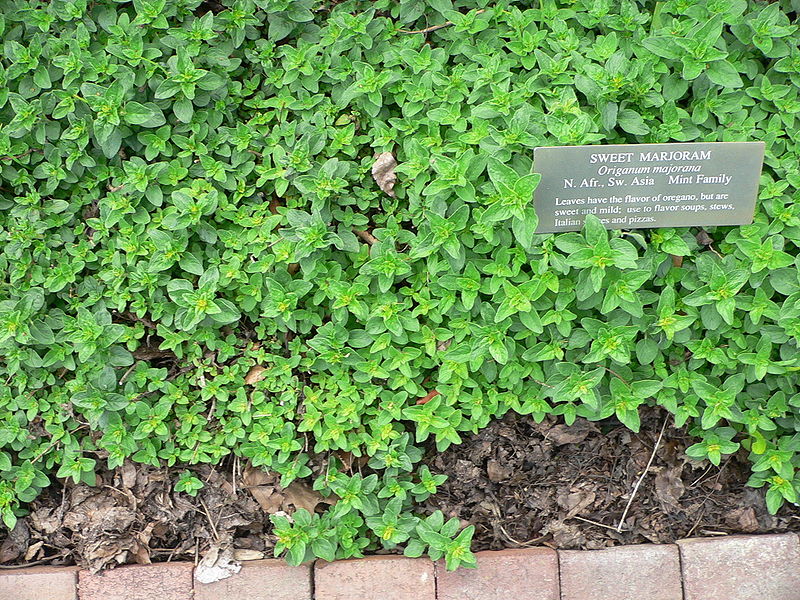
Majoram is closely related to oregano. It also grows well here.

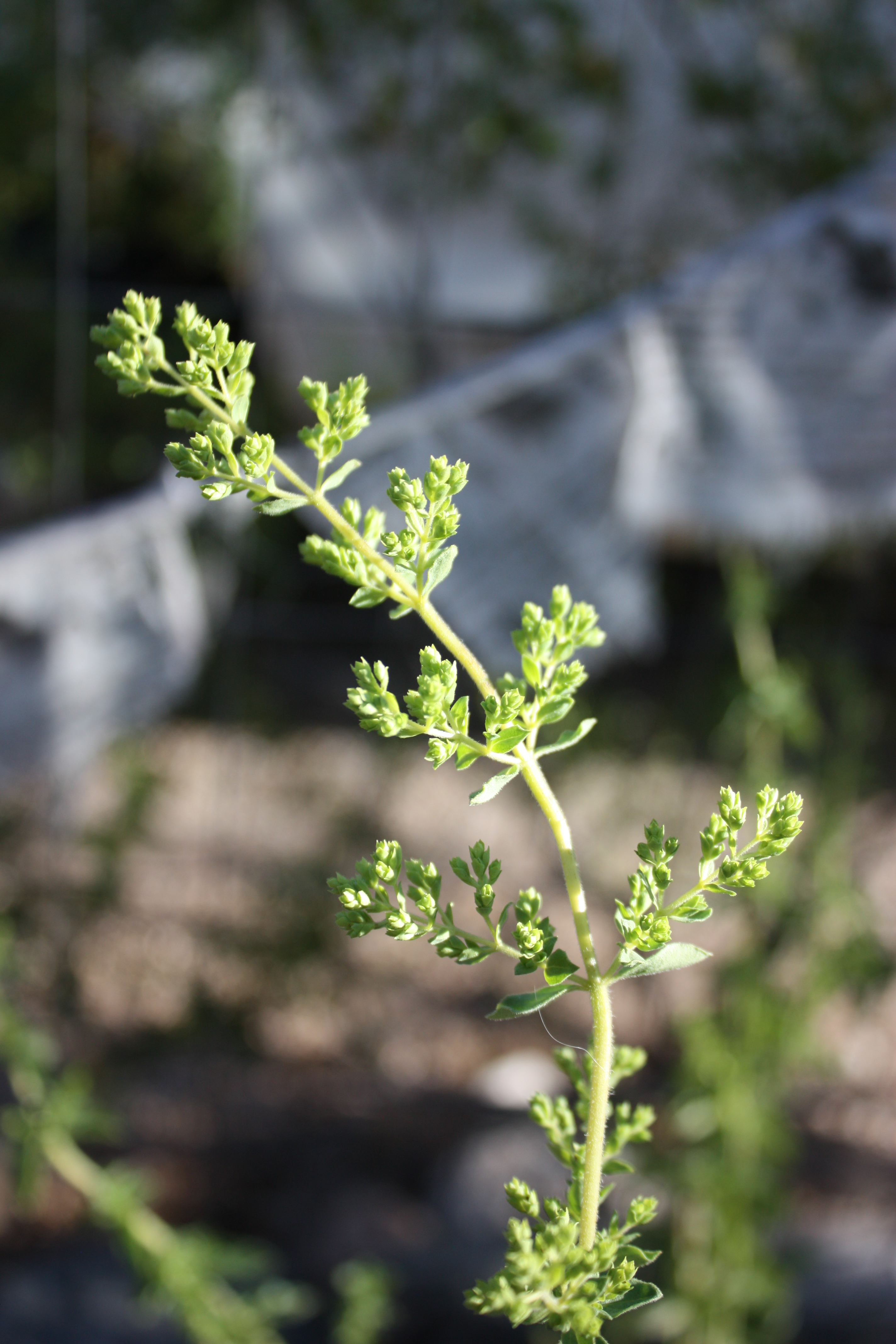
Like many herbs, the best time to harvest oregano is just before it blooms. Many herbs increase their production of essential oils as they go into bloom since it is a time when they really need to protect themselves from pests. When you first start growing oregano, harvest may mean pinching a few stalks back with your fingers. Once your patch gets larger, trim it with strong kitchen scissors to about two inches high, so it forms a low mat of leaves. Don’t worry, it will get tall again.

Origanum AMP_6655

Ideally farvest any oregano you wish to use before it flowers. Once it begins to flower, I like to leave the blooms for the pollinators.

Dry all herbs out of direct sunlight. I spread the cut stems on top of folded paper bags placed on top of the bookshelves. A ceiling fan running during the day helps dry them quickly. The quicker the drying, the less breakdown of the chemical compounds inside the leaves, and thus the sweeter the oregano flavor and less bitter the background notes.

Origanum_majorana_seedling

In the nursery look for the oreganos with very hairy leaves. It is one sign og a true Greek oregano.

Besides its culinary uses, oregano is used medicinally as an antiviral, antibacterial, antifungal, and antiparasitic. The oil of oregano is reported to destroy organisms that contribute to skin infections and digestive problems, strengthen the immune system, increase joint and muscle flexibility, and improve respiratory health. The medicinal properties or oregano appear to be from high concentrations of thymol and carvacrol. Caution is needed since carvacrol appears to reduce the body’s ability to absorb iron. Moderation is, as always, important.

Origanum layering AMP_6648

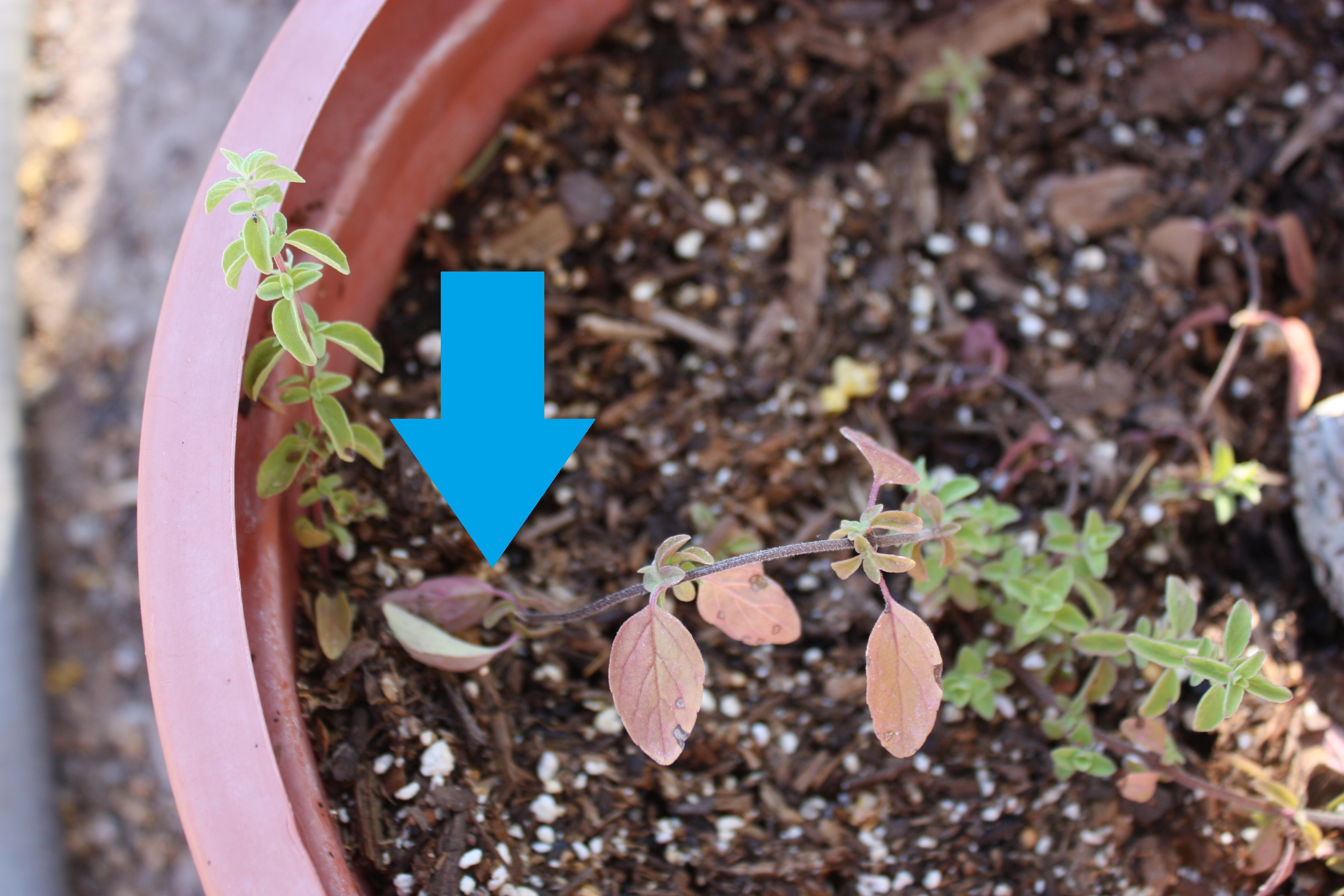
Spread out the branches of your oregano and bury all but the tip. The branch will root where buried (blue arrow). This is called layering and is and easy way to propagate your herbs.

Please do tell me your favorite way to use oregano in the comment section below.  We Savor Sisters love to hear from our readers!

Origanum AMP_6652

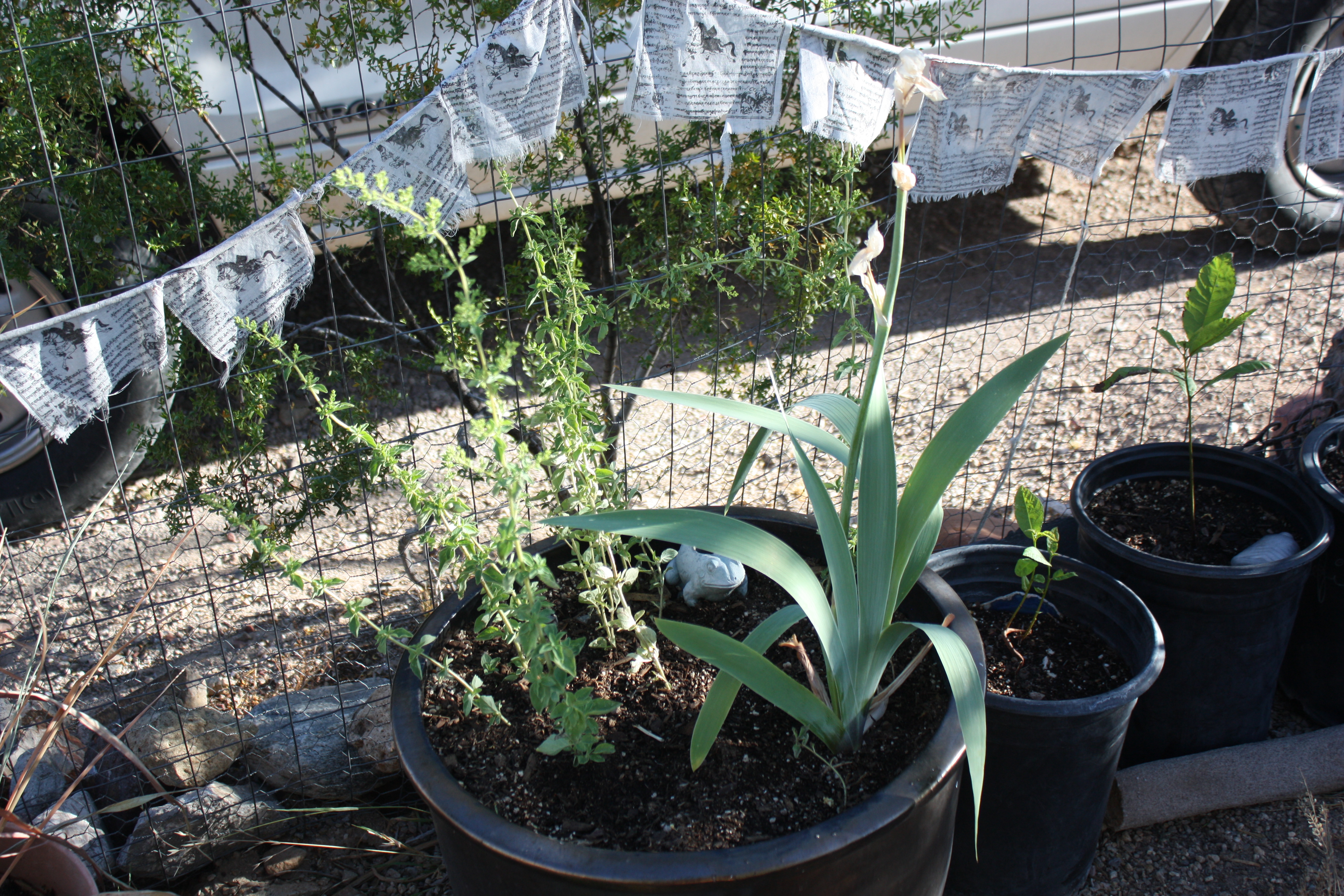
As well as in the ground, oregano can be grown in pots. Normally one doesn’t mix iris and oregano but I needed a spot to put the iris, and then it was about to bloom,,, and if you are a gardener, you know how it goes.

JAS avatarIf you live in Southeastern Arizona, please come to one of my lectures. Look for me at your local Pima County Library branch, Steam Pump Ranch, Tumacacori National Historical Park (National Park Service Cenntenial this year!), Tucson Festival of Books and more. After each event I will be signing copies of my books, including the latest, “Southwest Fruit and Vegetable Gardening,” written for Arizona, Nevada and New Mexico (Cool Springs Press, $23).
All photos (except where noted) and all text are copyright © 2015, Jacqueline A. Soule. All rights reserved. I receive many requests to reprint my work. My policy is that you may use a short excerpt but you must give proper credit to the author, and must include a link back to the original post on our site. Photos may not be used.

# # # # #

You Say Purslane, I Say Verdolagas

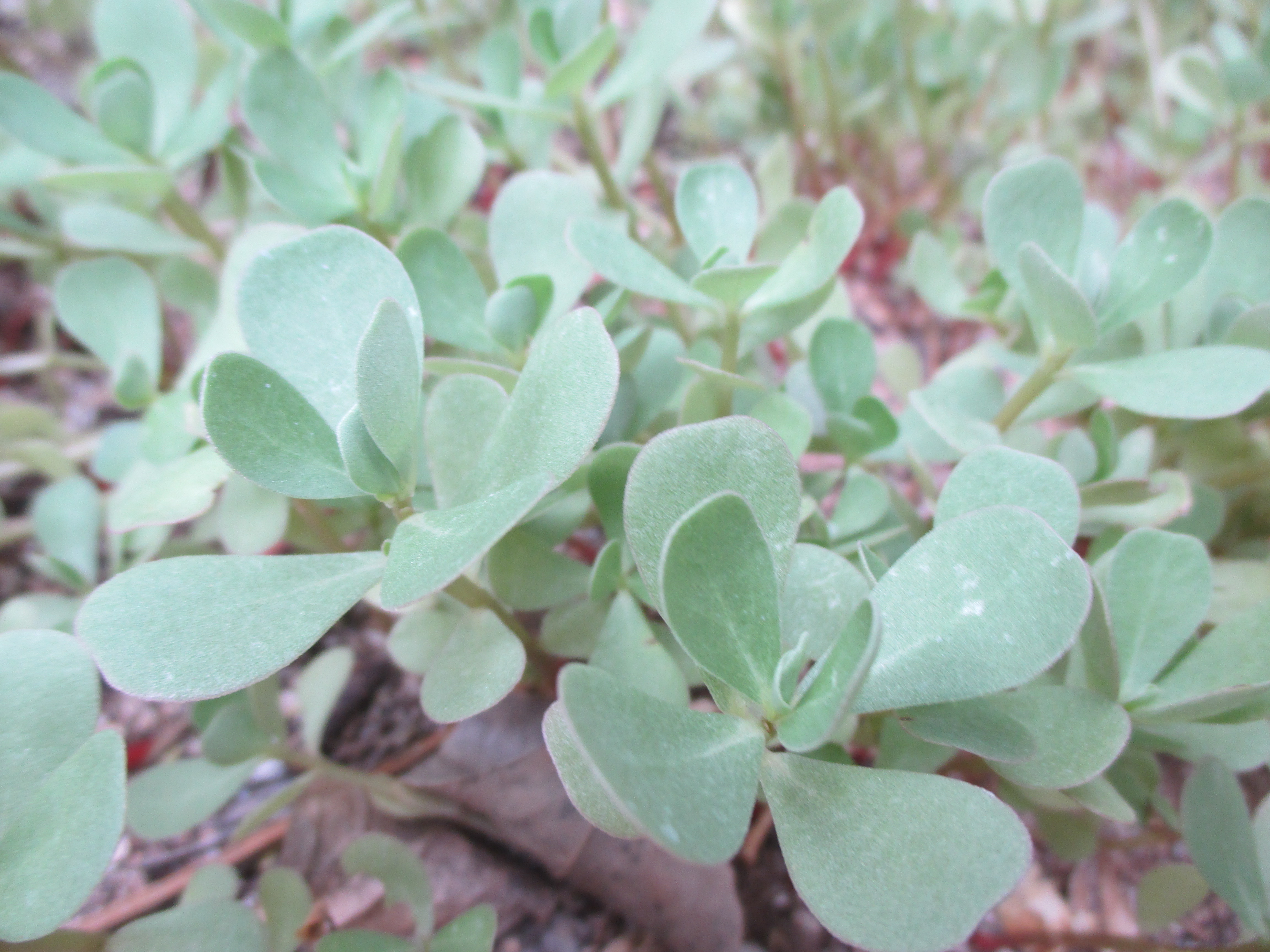
Purslane just sprigs so far due to late rains at my house.

Purslane is  just sprigs so far this year due to late rains at my house.

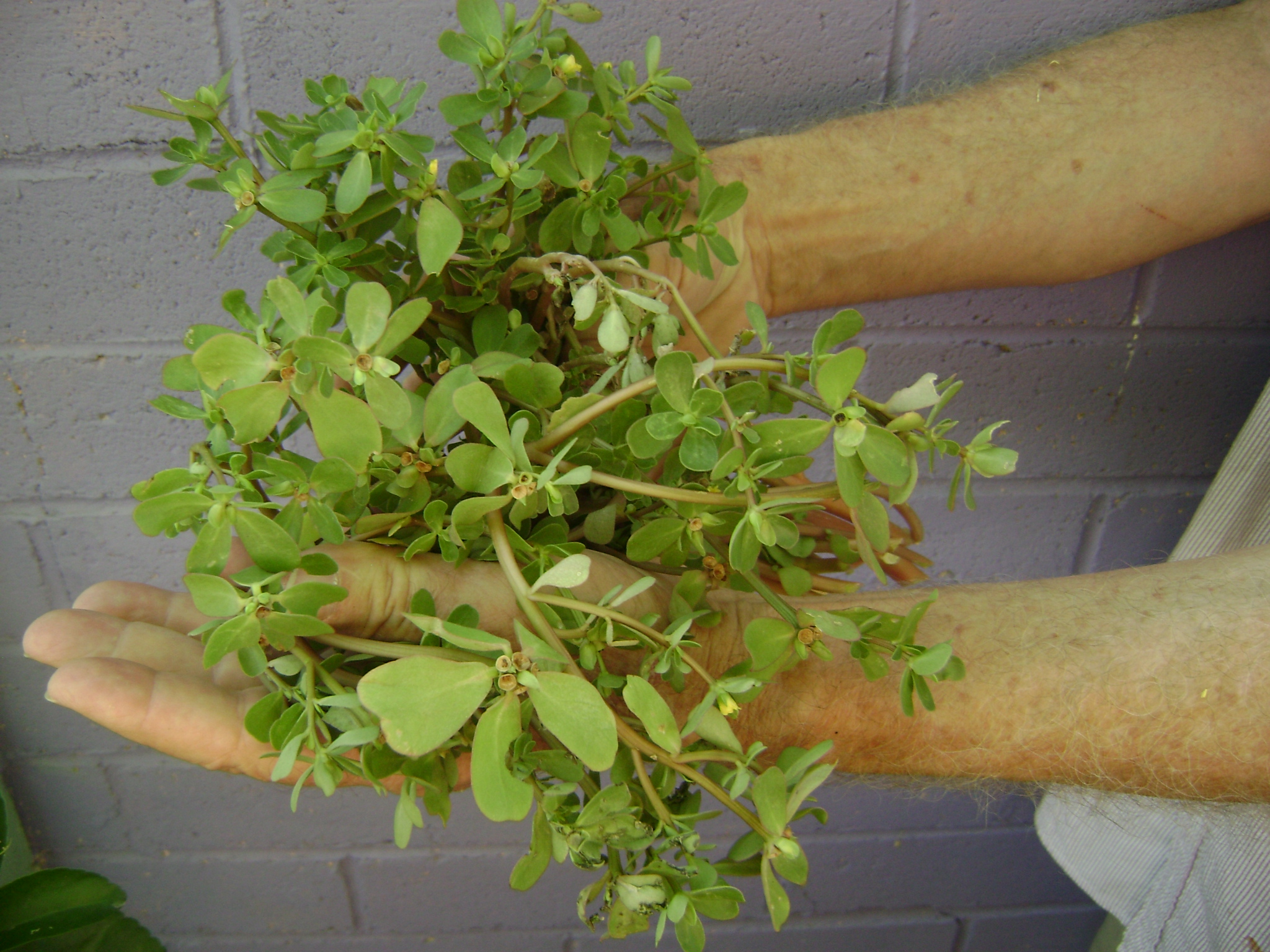
Here's how it should look once we get some more rain.

Here’s how it should look once we get some more rain.

If you’ve had any decent monsoon rain by now, you may have a vitamin powerhouse coming up in your yard.  Purslane, also called verdolagas, grows in many Southwest backyards in the summer.  It prefers rich, recently turned soils so look for it under your rose bushes or in a flower garden. It has small fleshly leaves about the size of a fingernail, pinkish stems, and grows close to the ground.  I have only a small patch this year where a small rain barrel spilled over. There should be more, but rains have been skimpy in our part of downtown Tucson.

It’s sad but true that right now people are out in their yards pulling these plants out and tossing them in the garbage (or compost for the more enlightened). They should be tossing them in the wok (see recipe below.) Purslane provides six times more vitamin E than spinach and seven times more beta carotene than carrots. It’s also rich in vitamin C, magnesium, riboflavin, potassium and phosphorus. One cup of cooked purslane has 25 milligrams (20 percent of the recommended daily intake) of vitamin C.

Especially important to those of us eating a modern diet, purslane is very high in an essential omega-3 fatty acid called alpha-linolenic acid (ALA). Omega-3s are a class of polyunsaturated essential fatty acids. Your body cannot manufacture essential fatty acids, so you must get them from food. Certain fibers also help in controlling blood sugar.

Sometimes all this talk of nutrition can turn people off  — you might be saying “OK, but what does it taste like?” Delicious, actually. There are lots of ways to use purslane. The mild lemony flavor goes with everything. Purslane can be eaten raw chopped in salads or sautéed . Add it to a stew.   Or toss it in the blender when making a green smoothie and it will add body as well as vitamins.

There’s something else, too. Something beyond just the vitamins that come from eating plants from your own yard. It’s a connection to the land you live on, the seasonal treat that Mother Nature has provided. By eating with the season, you become more than a mere spectator to life’s cycle. You think about these tiny seeds that wait for the rain, then manage to live as the sun beats down with 100-degree fury. And there’s the connection to past generations of people who lived here and ate these plants–a connection that broccoli will never give you.

My friend Roni Rivera-Ashford taught me to put a bowl under the colander and catch the water you use to rinse the purslane. You will find lots of very tiny black seeds in the water.  Botanists tell us that a single purslane plant can produce up to 200,000 seeds. Pour that water with the seeds on a potted plant and you’ll have purslane next year.

Since it’s free and (usually) abundant, why not try some?  Here’s the classic prepartion cooked up in Mexican kitchens every summer.

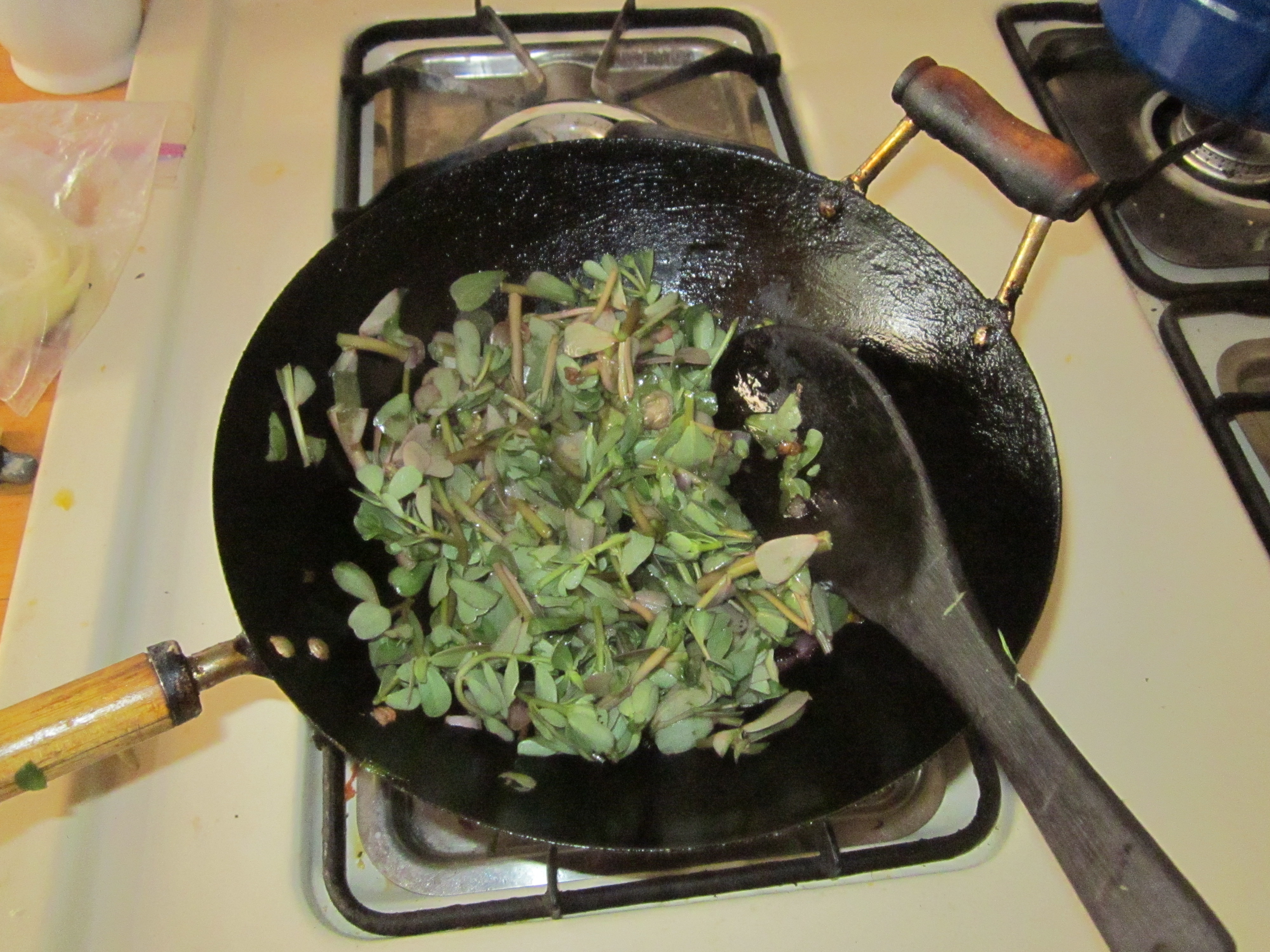
To prepare the purslane, first chop and sauté  some onion and garlic in a little oil.  When the onion is translucent, add the purslane.

IMG_0880

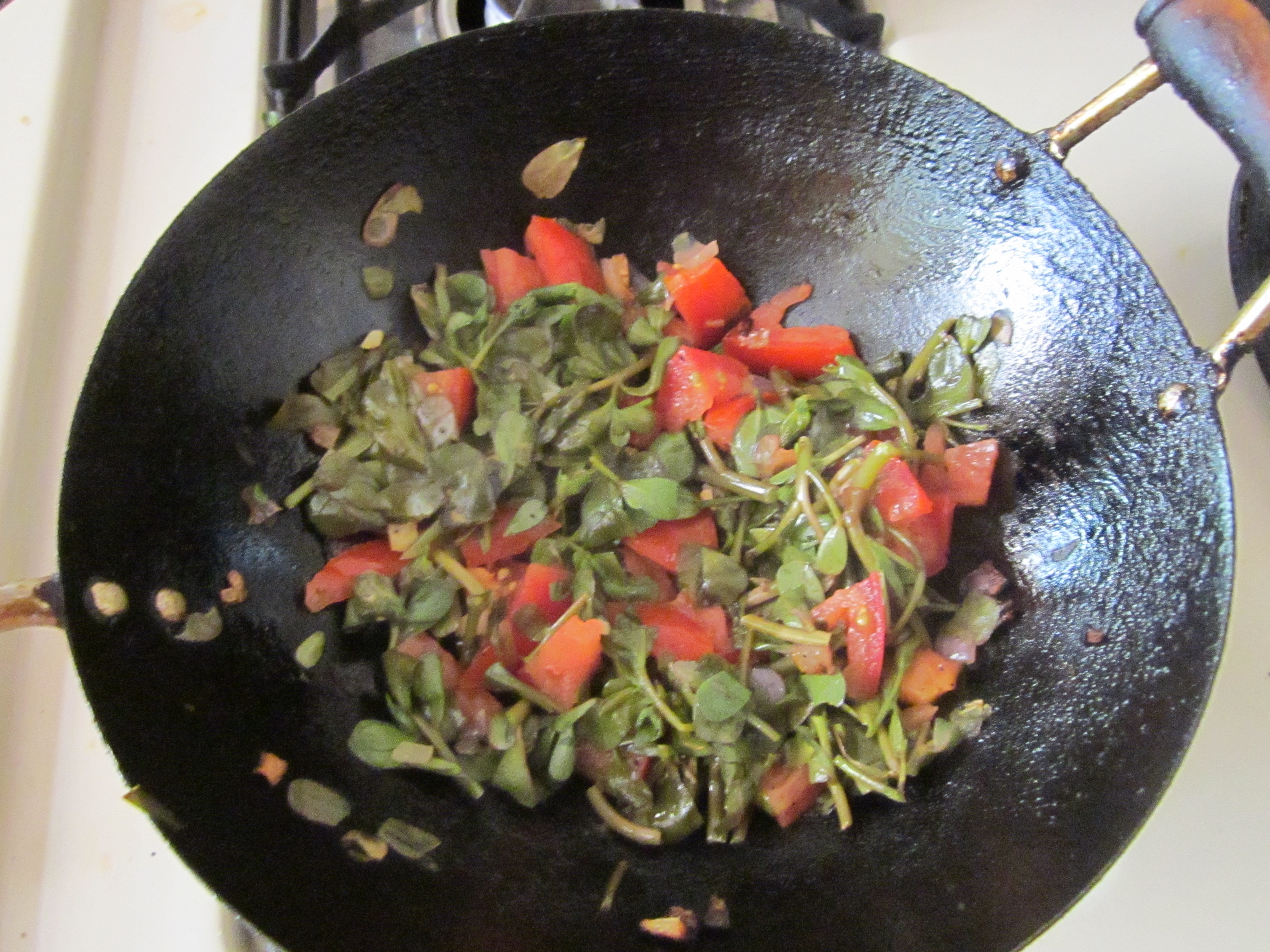
Next, toss in some chopped fresh tomatoes.

IMG_0881At this point you can eat it, maybe with a little cheese on top. Or to make a heartier meal, saute some small bits of chicken. Now you’ve got a great side dish. Or how about filling for some enchiladas.

Dip the tortilla in chile sauce, add some purslane and roll.

Dip the tortilla in chile sauce, add some purslane and roll.

My favorite is tostadas. Yum!

IMG_0884

_________________________________________

Interested in more ideas for using the wild foods of the Southwest?  Check out my books Cooking the Wild Southwest  where you’ll find recipes for 23 delicious wild plants, and The Prickly Pear Cookbook with lots of recipes for both the prickly pear fruit and pads.   Here’s a little video with ideas for other local wild plants to add novelty and nutrition to your diet.

Prickly Pear Upside-down Cake, Summer in Tucson

20150730_185022

Amy Valdes Schwemm here today, with glochids in my hands.

20150811_111746

Figeater beetle, Cotinis mutablilis

20150813_185004

Santa Cruz River Farmers’ Market Workshop

20150813_184946

“I want to be a scientist!” she said.

20150814_145703

Nopalitos en escabeche (pickled cactus pads with carrots, garlic, I’itoi onion, chiltepin, Mexican oregano)

20150814_103012

Prickly pear kombucha

Harvest party at Bean Tree Farm. Classic Barbara Rose cocktail with too many ingredients to list!

Harvest party at Bean Tree Farm. Fancy cocktail by Barbara Rose!

Prickly pear vinegar

Prickly pear vinegar

Prickly pear jelly on Sourdough Sonoran Wheat, Barley, Almond crepe

Prickly pear jelly and nut butter on sourdough Sonoran wheat, barley, almond crepe

Apple, prickly pear and friends compote

Apple, prickly pear and friends compote

Peach prickly pear cobbler

Peach, raspberry, prickly pear cobbler

Prickly pear upside down cake

Prickly pear upside down cake

Prickly Pear Upside-down Cake

1/4 cup butter

1/2 cup brown sugar

3/4 cup whole wheat flour

3/4 cup unbleached all purpose flour

3/4 cup sugar

1 teaspoon baking powder

1/4 teaspoon salt

3/4 cup prickly pear juice

1/2 cup butter, melted

1 teaspoon vanilla

6 prickly pear fruit, glochids singed over fire, peeled, seeded and sliced

Preheat oven to 325 degrees F. In a 9 inch springform pan, put 1/4 cup butter. Put pan in the oven just until butter is melted. Sprinkle with brown sugar and arrange prickly pear fruit on top. Mix flours, sugar, baking powder and salt. Separately, mix prickly pear juice, 1/2 cup melted butter and vanilla. Combine the two mixtures and pour into prepared pan. Bake for 3o minutes or until a toothpick inserted in cake comes out clean. I like the cake to have some brown edges. Cool, invert on to a serving plate and enjoy. IMG_3286

Poet’s Late Summer Smoothie – Savory or Sweet

There is so much poetry in nature.  It is a poetry that speaks without words.

Here’s some poetry I came across this morning while doing chores.

  • While collecting eggs – A muted colored, still moist snakeskin. Recently shed, it had unhinged itself from it’s serpentine owner with the help of friction (as it passed underneath the white enamel tub that the duck/hens use for bathing and drinking). I was more mindful collecting eggs in the dim pre-dawn light, lest it’s new skin version had found its way into the nesting boxes. No words written on the skin, but it spoke of a form now too small for its serpentine body.
  • While tending the garden – I found poetry in pollen grains hitching a ride on bees; and in bees acting as the legs of plants. No words uttered as they go about their work, but they complete a reproductive act that many plants cannot do on their own. Poetry.  (Below: the poetry of bees at work on the ingredients we’ll use in the Poet’s Recipe: Mint, Strawberries, Pomegranate)
IMG_5968

Honeybee on a mint flower

IMG_9633

From my garden: white strawberry flower and a strawberry fruit forming just below it. This plant is still producing in August!

IMG_9416

Honeybee at work on a strawberry flower; you can see her pollen sacks (on back legs) are being filled with strawberry pollen!

IMG_6456

Side by Side – tow different stages: fruit and flower.

IMG_5525

Two honeybees at work on a pomegranate flower; here in the yard.

IMG_5523

Another view of a honeybee on pomegranate flower; the darker shape behind the large right petal is a pomegranate fruit beginning.

IMG_5534

Here you can see the flower to the left and a young pomegranate fruit beginning to mature, to the right

  • Why talk of poetry? 1) Because poetry is, in part, about being Present. And present to the world right in front of us. And  2) Poetry is also, often, about Associations.  The natural world gives us many many examples of associations  (interconnections),  like spiderwebs and hummingbird nests (see March 2015).  And even bees and ice cream.
  •  Which leads us right into this weeks recipe, and invites us all to be poets –  both Present to what is in front of us, and more aware of the Associations/connections in front of our eye; and on our tongues.  What do bees and the ice cream (or yogurt) you hold in your hand  have to do with each other?  I am so glad you asked. The milk that came from the cow (or goat or sheep) for your ice cream means that the grasses that the cow ate were pollinated. Whether your cloven hoofed bovine (cow) ate range grasses and shrubs, or field grown grasses like alfalfa, chances are a bee pollinated those grasses.
IMG_1016

I guess you could call this grass fed milk

IMG_9040

                                                  RECIPE: POET’S LATE SUMMER SMOOTHIE

IMG_0026

Garnish your Poet’s smoothie with mint leaves (the left leaf is a pomegranate leaf that I placed just for fun; you do not want to eat it) and fruit of your choosing.

Savory Version: (Below)

IMG_0017

In a blender combine:

2 cups of Plain Yogurt (I used goat, but that is strong for many people

1/4 cup pomegranate seeds.

2 Tablespoons each of mint mint, cucumber.

Add milk if you like a thinner version.

Sweet Version (Below)

IMG_0028

2 cups Ice cream or Sweetened Yogurt,

1 cup fruit and berries of your choice. I added pomegranate, strawberries, and blueberries.

Honey to taste.

Milk if you like a thinner treat; the consistency seems to vary depending on how much juice is in the berries and whether or not you use yogurt or ice cream.

blend

Vegan Version:

2 cups Coconut Milk Ice Cream  – and blend with the flavors you like.

Note that the berries in the photos are not pristine nor perect – perfect for this kind of a snack so you can use up the berries/fruit  you have,