Savor Homemade Corn Tortillas

Carolyn here today to expound on the glories and benefits of homemade corn tortillas. With inexpensive corn tortillas wrapped in plastic available everywhere, why bother to make your own? Same reason to make your own bread: flavor and nutrition. The fragrance and flavor of a tortilla right off the grill is is warm and homey and the perfect base for a simple meal.

Homemade tortillas over a fire at Linda’s ranch in Mexico. (photo by Linda McKittrick.)

Corn tortillas are made with masa harina, or corn that has gone through the nixtamal process with lime and is then dried and ground (or maybe ground and dried). If you want to start from scratch with the corn,  Savor blog sister Amy can lead you through it in a previous  post here. 

Back in April, public radio had an interesting piece on a Mexican cook who maintains that tortillas made from heritage corn are vastly superior to those made from commercial bagged masa. You can read the very interesting article here.

The problem is that corn alone, whatever corn you use,  isn’t all that nutritious, lacking protein and some other nutrients. As with all foods, combining ingredients can lead to more balanced nutrition.

Grated turmeric root adds nutrition and a lovely golden color to the tortillas.

I added both garbanzo flour and amaranth flour as well as some grated turmeric to the masa  for some tortillas I made recently and the results were delicious. (See recipe below). Amaranth is high in protein and the amino acid lysine. You could also use quinoa flour for more nutrition.


Once you have the dough, you need to shape it. In Tucson, traditional Mexican cooks pat out tortillas in perfect rounds. It’s an art. Further south, cooks use a tortilla press, either handsome wooden ones or the more utilitarian metal.

Hermina Serino uses a wooden tortilla press in her booth at the San Phillips Farmers Market in Tucson.

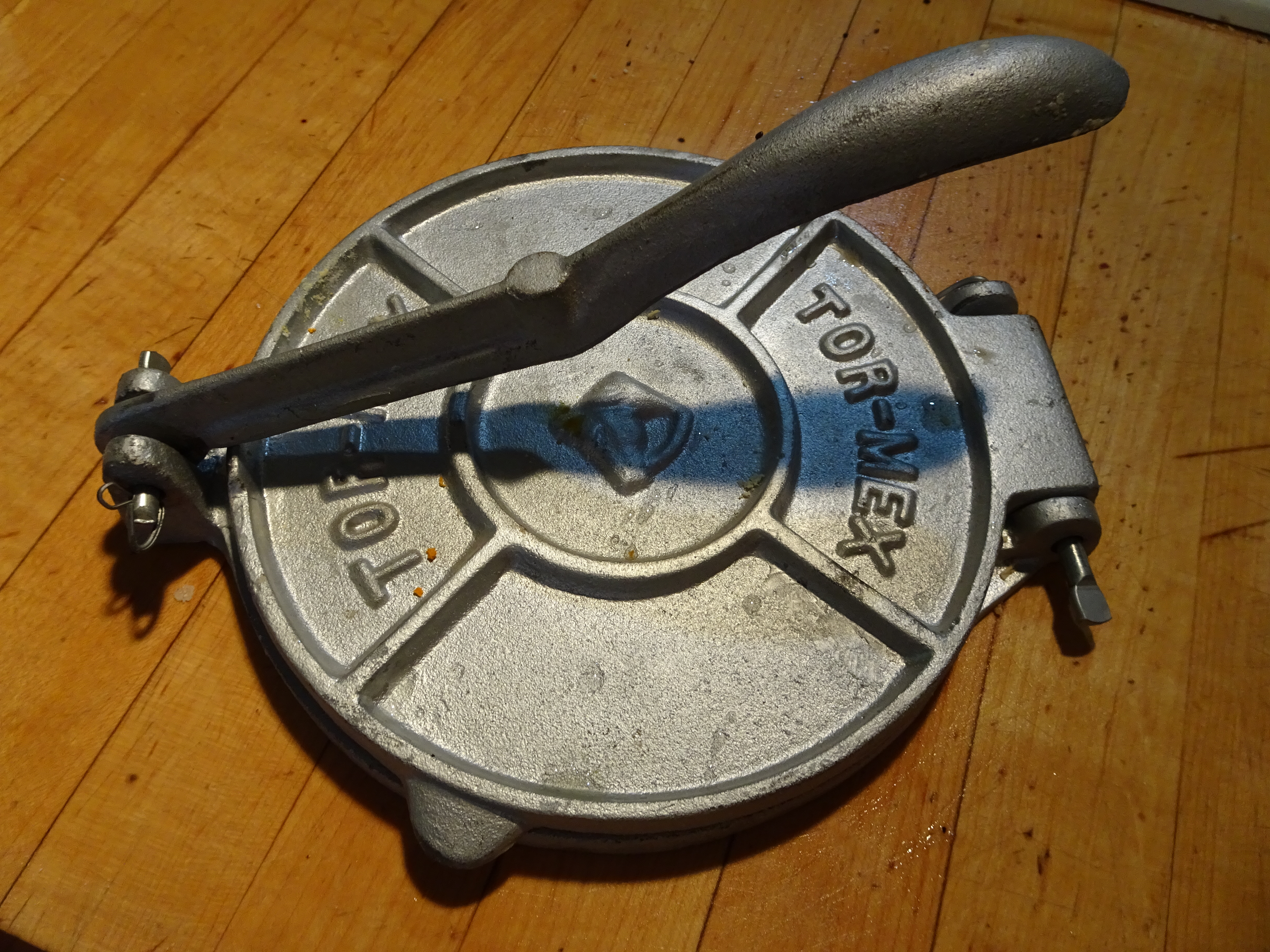
Plain metal tortilla press.

The trick to getting the dough off the press in one piece is to use pieces of plastic below and on top of the ball of dough. The other trick, which I learned in a cooking class in Oaxaca, it to peel the tortilla up from the hinge end, not the lever end. The hinge end is just enough thicker to help you peel it without tearing.  Once you have it in your hand, drop it directly onto a hot griddle or frying pan. Let it cook for a few seconds, then flip and do the other side.

Peel the tortilla up from the hinge end of the press.

For even more nutrition, you can add a sprinkling of seeds (I tried both chia and barrel cactus) to the dough before pressing the tortillas.

Sprinkle some chia seeds on the tortilla dough before pressing.

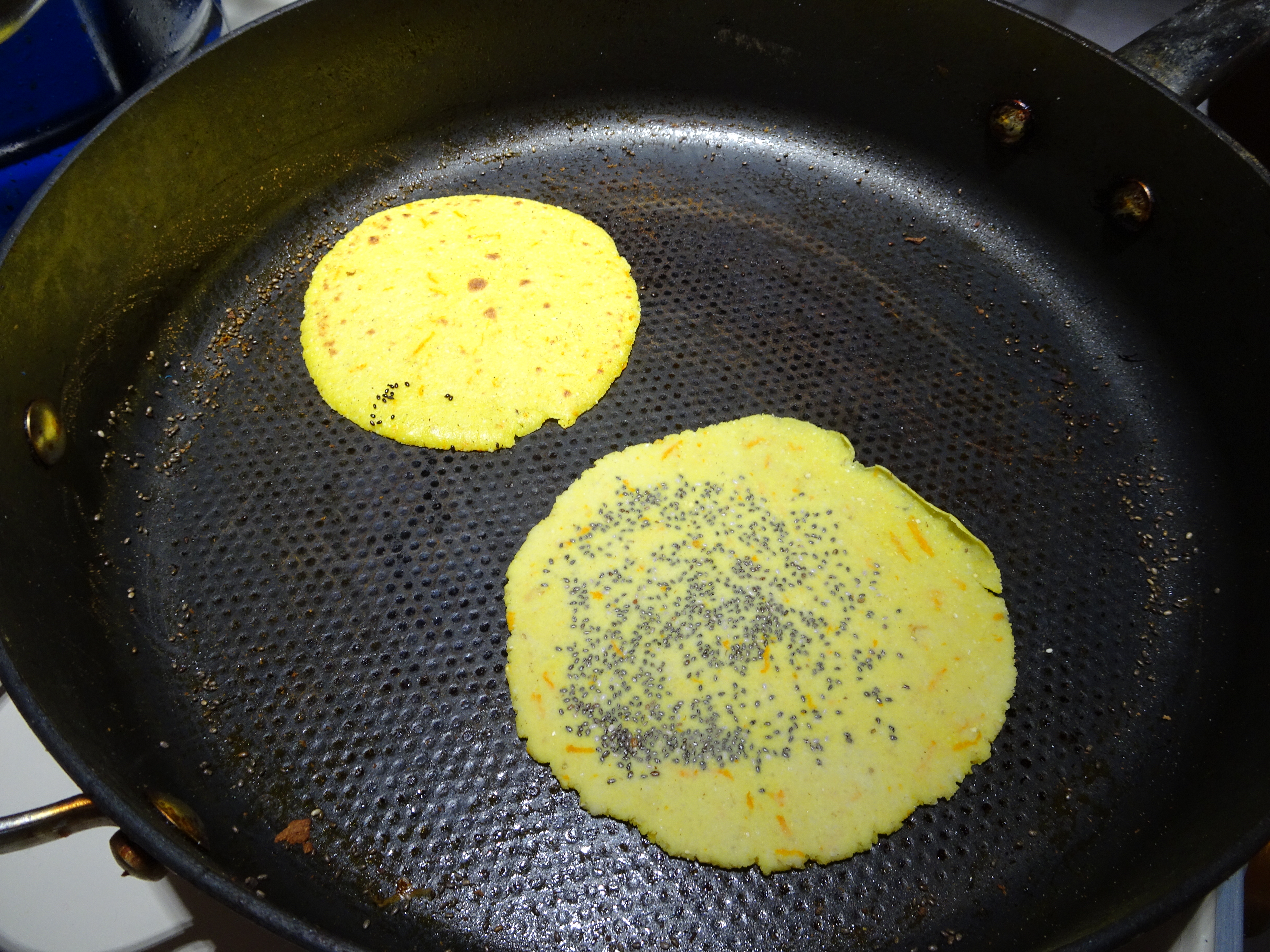
Tortillas cook quickly on a well-seasoned griddle. You can see the gratings of turmeric in this picture

As you finish the tortillas, store them in a folded tea towel until ready to serve.  They are fine as they are, or if you wish to cook further, you can saute in a little bit of oil. Top with fillings of your choice: meat or vegetables and beans.

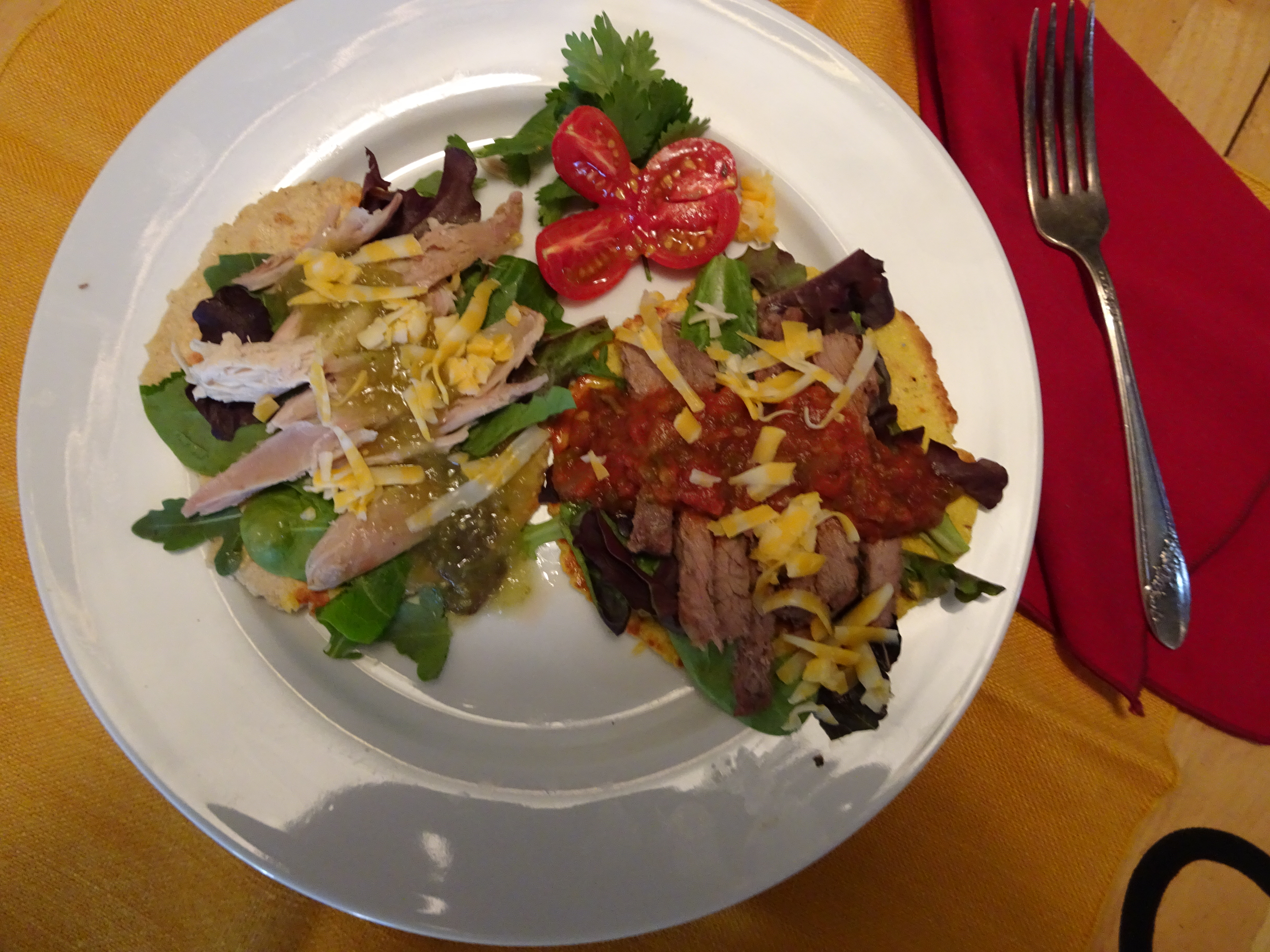
A simple meal includes one tortilla with chicken and green salsa and another with grilled beef with red salsa.

More Nutritious Tortillas

3/4 cup dried instant masa

1 tablespoon garbanzo flour*

1 tablespoon amaranth flour*

1/2 teaspoon salt

1 tablespoon grated fresh turmeric or dried turmeric (optional)

1/2 cup water (approximately)

First cut a plastic bag into two large squares to use on the tortilla press. Mix the flours and the salt in a medium bowl. Add half the water and mix. Add more water slowly until you get a dough that just sticks together. You don’t want it too soft. This takes a little practice. If you add too much water, just sprinkle in a little more masa. Roll the dough into balls of about 2 tablespoons each. Heat the well-seasoned frying pan or griddle. Press a tortilla and transfer to grill. Don’t worry if every one doesn’t turn out great. Just rebundle the dough and try again. Makes 6 to 8 tortillas.

(*Purchase these flours in health food stores or make your own by grinding the dry garbanzos, amarath or quinoa until fine in a coffee or spice grinder.)


Carolyn Niethammer writes about edible wild plants and Southwestern food. Read more at www.cniethammer.com.  Buy her books at the Native Seeds/SEARCH retail store or website or on Amazon.


Summer Solstice Celebrated with Saguaros

On Summer Solstice morning, a white-wing dove coos to the saguaro fruit to hasten its ripening, and takes its first taste. When red fruit opens, doves will dip in for a luscious meal and come up with red heads!  (photo JRMondt)

Have you seen it yet?–the rare red-headed white-wing dove of the desert?  “Red-headed Ok’ko-koi” is only around for a short while during the bahidaj.  He is the herald of saguaro fruit harvesting season.

These longest days of the year (and the hottest!!) are the Sonoran Desert New Year of the Tohono O’odham, the Desert People. It is the beginning of “action time” in the desert, tho’ it may look blistered and dead from inside an air-conditioned space.  Lots is happening.  Listen to sounds of quail and dove at dawn; watch scurrying lizards at noon; sense bats at night.  Desert life out there is pollinating flowers and dispersing seed in prep for monsoon moisture.

Fallen bahidaj on the rocks will be critter food.  For people, catch it before it falls. (MABurgess)

Tia Marta here to share ideas about the giant saguaro’s gifts of good food to its fellow desert helpers.  With San Juan’s Day celebrated June 24, I pause to also acknowledge the birthday of my dear friend and mentor, Juanita Ahil, who first led me into the desert on an early June morning to introduce me to some amazing desert treats, discussed in this post.

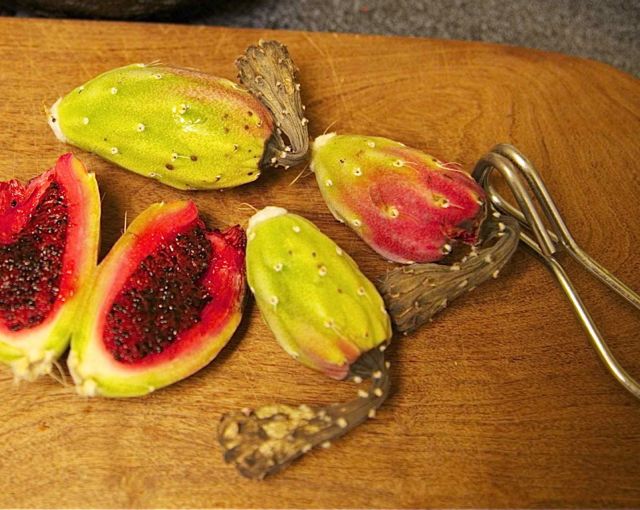
Pick the fruits that show a blush of rosy red on the top.  (MABurgess photo)

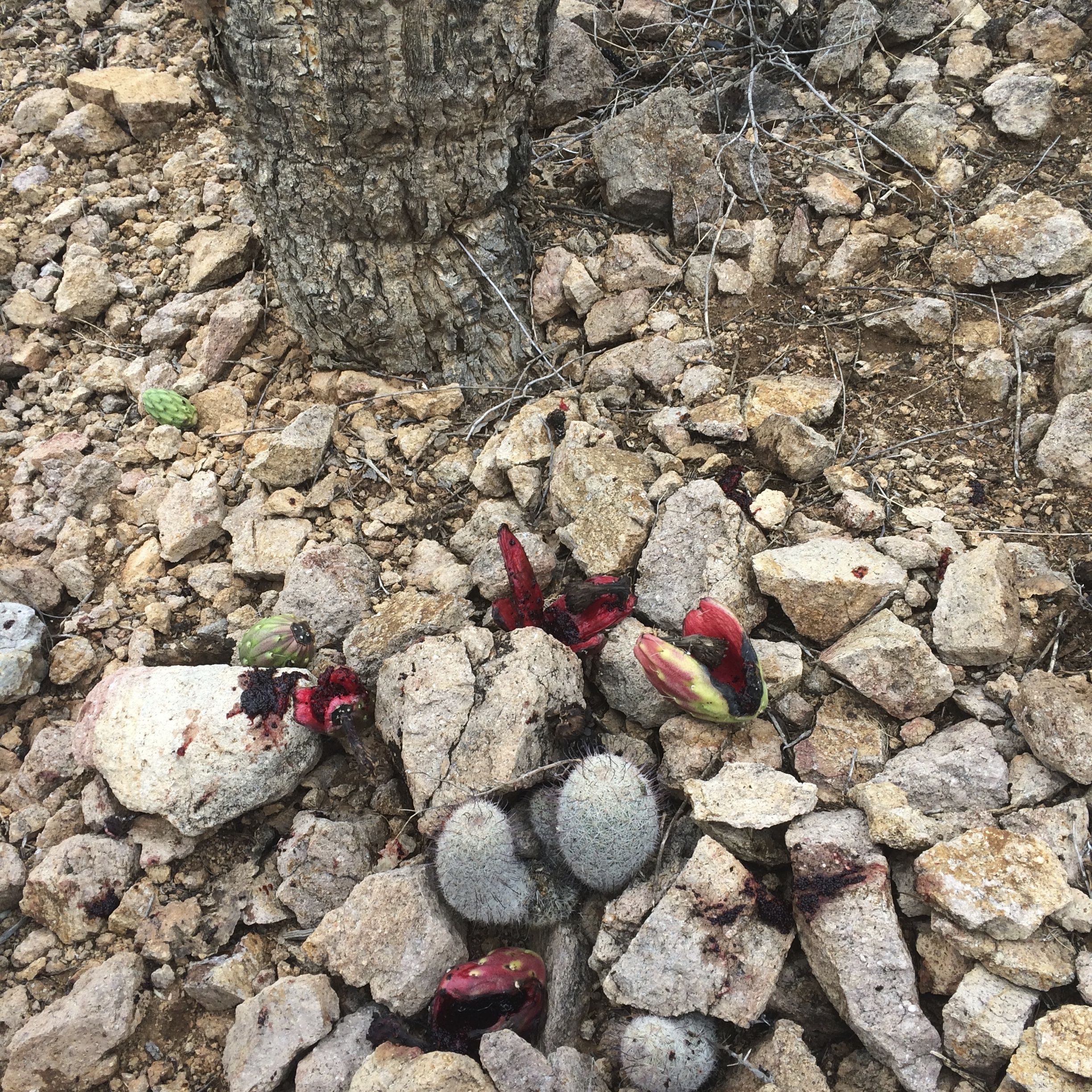
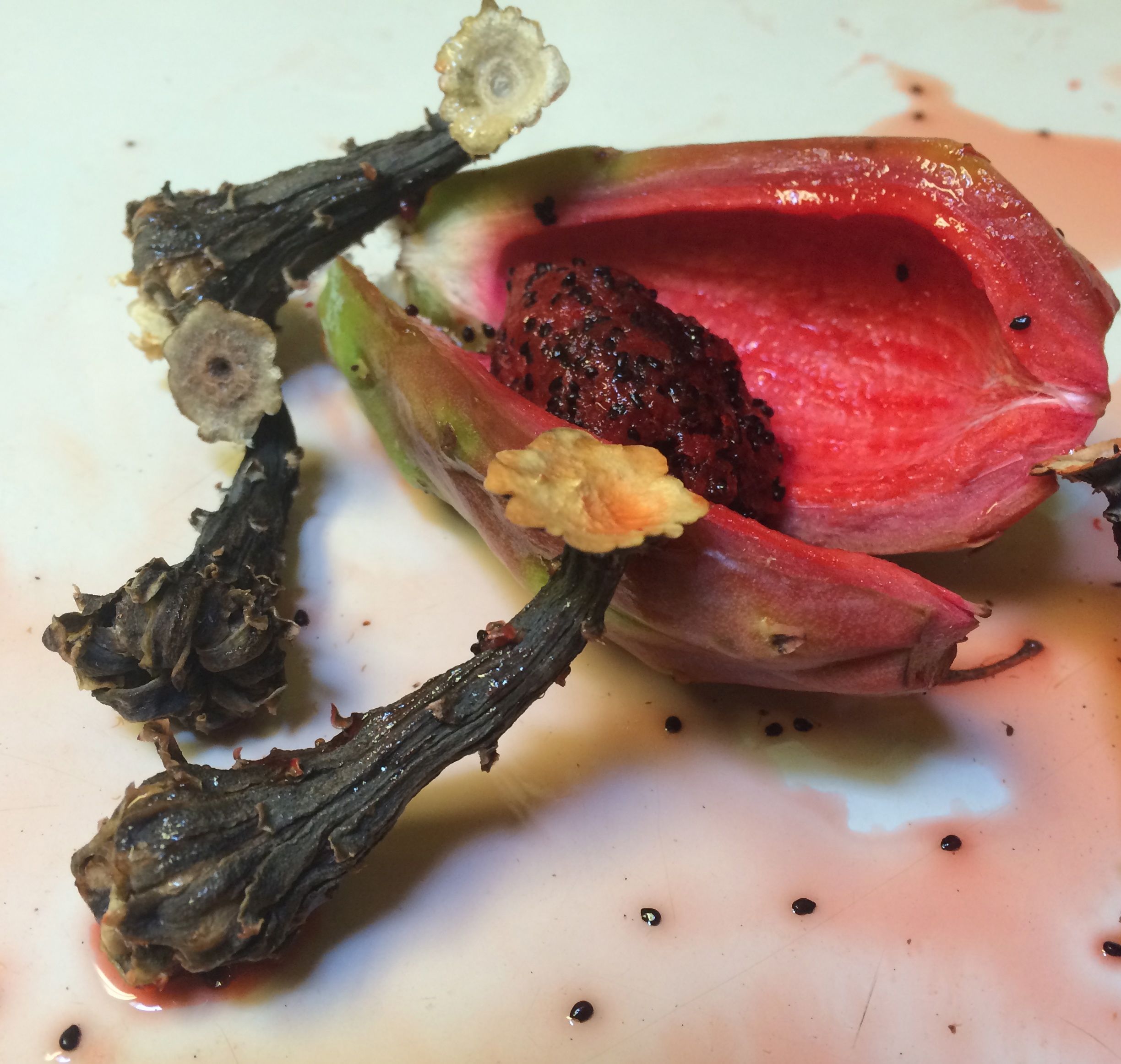
A saguaro fruit, opened with its sharp “pizza-cutter” calyx, is filled with sweet raspberry-red pulp and crunchy black seeds. (MABurgess photo)


Juanita would scoop out the nutritious pulp from thick fruit rinds–with thanks and blessings.  We’d take several juicy bites before filling buckets of bahidaj to make syrup.

Juanita would add water to the pulpy fruit to loosen the mass, then strain out seeds before concentrating the sweet water to syrup. (MABurgess photo)


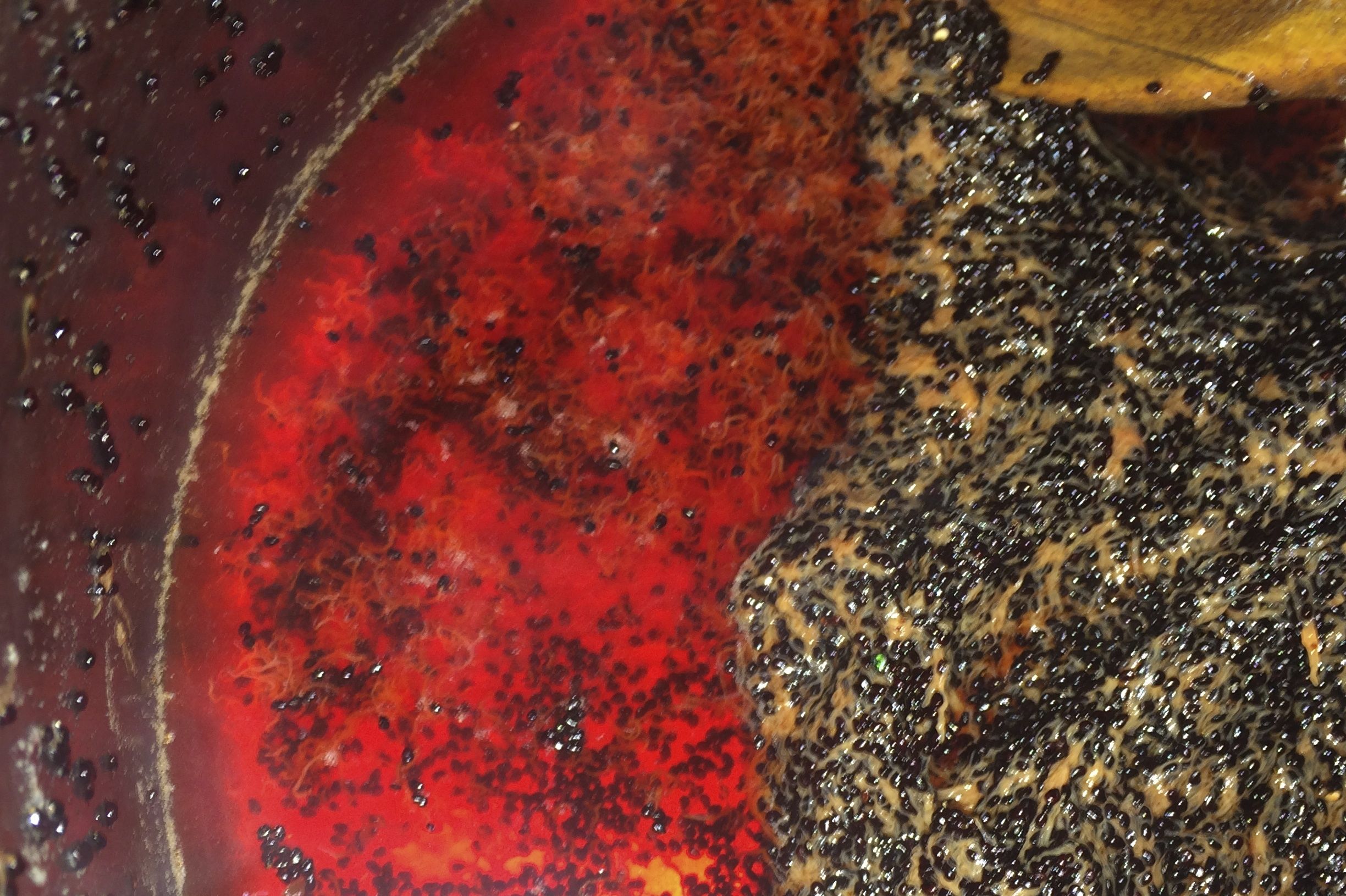
Over her open fire, she would stir a pot full of fruit and water until the water turned red, then strain the mass through a basket-sieve, saving the seed for other purposes. (See blog-sister Carolyn Niethammer’s post on “Black Beauty Wafers” of saguaro seed.)  After sieving, it was the long process of boiling down the sweet water to a dark syrup–like making maple syrup.  Don’t be surprised if you see Bahidaj Sitol selling for what looks like exorbitant prices; consider the time it takes to make!  Juanita would contribute a share of her hard-produced syrup to her Tohono O’odham Community for fermenting into wine for the rain-ceremony, with prayers for the desert’s rebirth.  Surplus syrup was so concentrated, it could be kept unrefrigerated, carrying summer’s sweetness into the winter.

Here are some delectable ideas for cool, super-simple desserts with saguaro syrup:


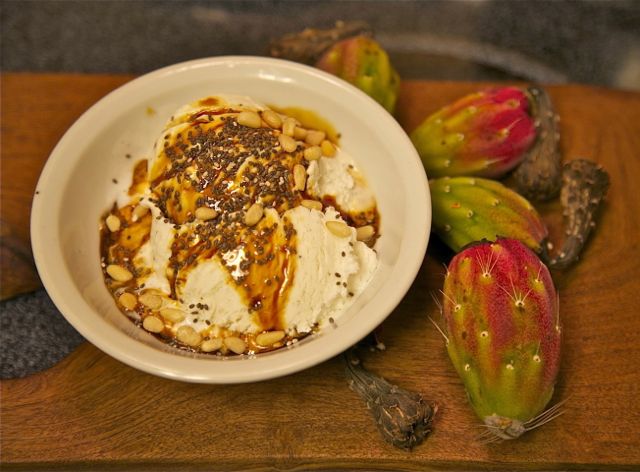
Muff’s “Sonoran Melba” topped with pine nuts and chia seed (JRMondt photo)

Directions for Muff’s SONORAN MELBA WITH PINE NUTS AND CHIA

Over a serving of vanilla or vanilla-bean ice cream, pour 1-3 tsp pure saguaro syrup (bahidaj sitol).  It doesn’t take much, as it is so rich!  Sprinkle top with 1/2 tsp chia seed and 1 Tbsp of pine nuts (shelled).   Taste and go nuts in ecstasy!

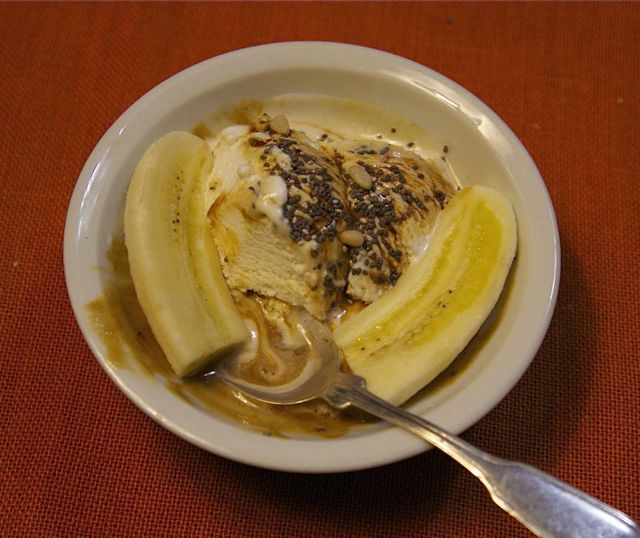
Rod’s “Saguaro Split”–topped with saguaro syrup, seeds and nuts (JRMondt photo)

Recipe for Rod’s SAGUARO SPLIT:

Divide a half banana in half longitudinally. Serve a big scoop of ice cream in between–any flavor– like chocolate chip or French vanilla.  Top with saguaro syrup, seeds and nuts of choice.  [Here the “lily is guilded” for sure.  Who needs a cherry on top when you have the rare treat of saguaro syrup?!]

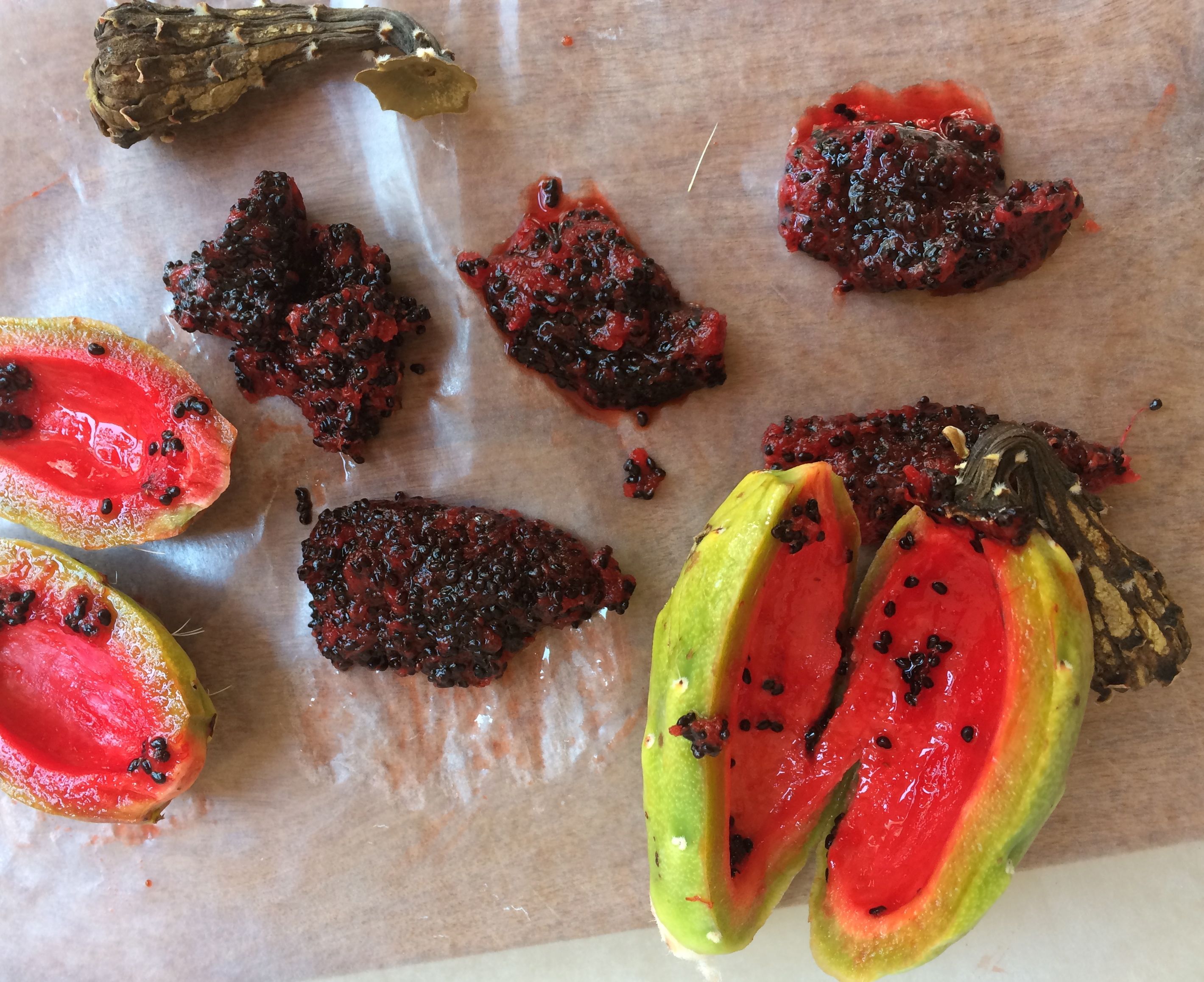
Setting out fresh bahidaj pulp to dry on wax paper. (MABurgess)

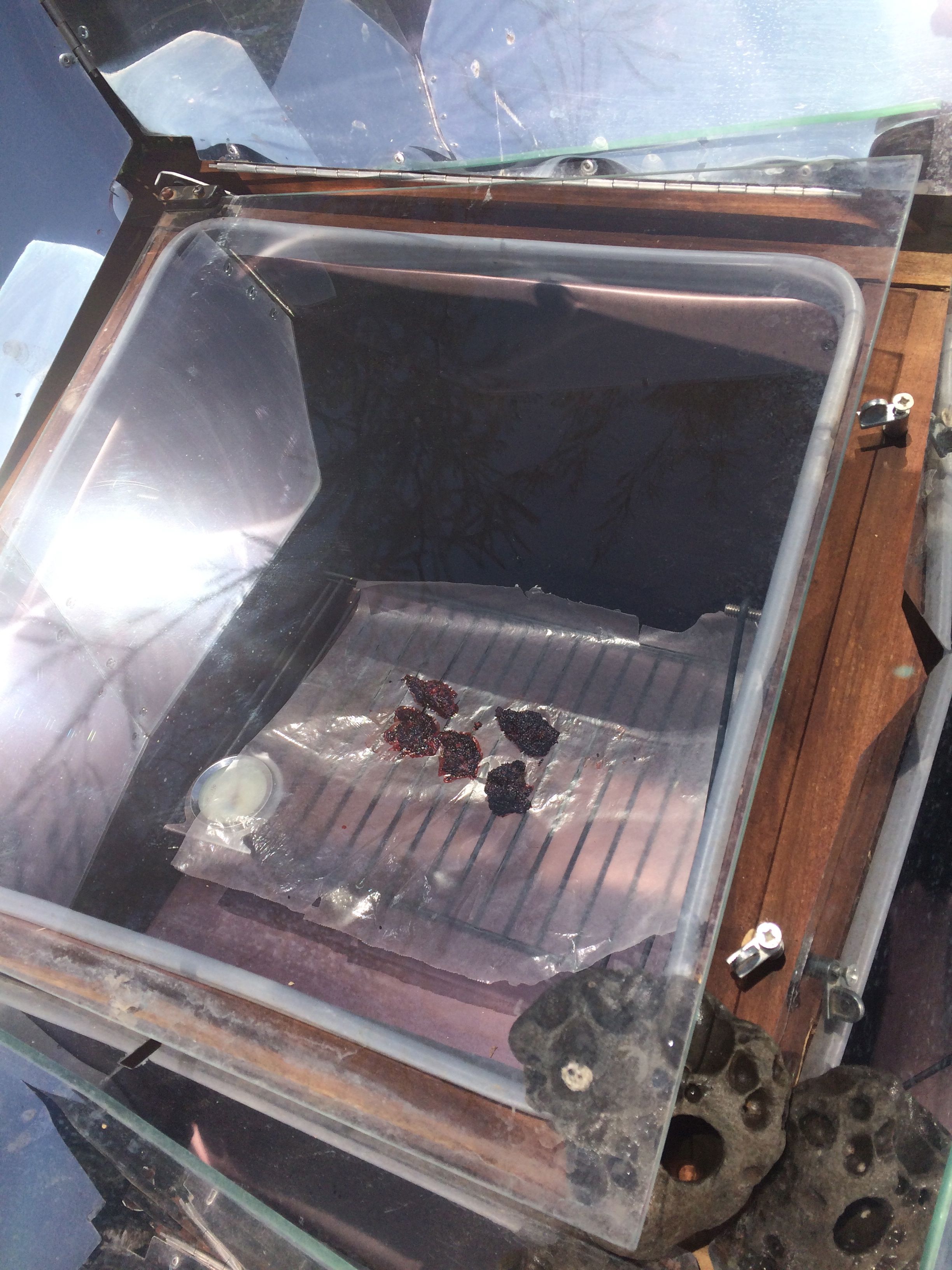
Try dehydrating saguaro fruit in a solar oven with the lid partially open to allow moisture to escape. It doesn’t take long. Note the rock holding the oven cover open.(MABurgess photo)

I also love to make chuñ–the dried bahidaj fruit which you can sometimes find hanging on the branches of a palo verde, the nurse tree next to the saguaro where fruit has fallen.  Scoop out the pulp from its rind, place blobs on wax paper, dry them outside under a screen or in your solar oven.  Eat and enjoy chuñ as a totally healthy snack; it is high in complex, slowly-digested sugars, vegetable protein and healthy oils in the seeds.   Or, get creative with chuñ–as in the following recipe:


Sweet chun dried in the sun is even better than figs! (BTW–Now– in the dry heat of Solstice-time before the monsoons–is prime time to harvest mesquite pods too!  Check out desert harvesters.org for more info.)  (MABurgess photo)

Recipe for Tia Marta’s JUNE CHUÑ healthy fruit salad:

1/2-3/4 cup diced apple (approx 1 small apple diced)

1/2 cup organic red grapes cut in half

3 Tbsp dried cherries, cranberries, or chopped dried apricots

1/2-2/3 cup organic plain lowfat yogurt

1-2 tsp agave nectar (optional, to taste)

1/4 cup chopped dried bahidaj chuñ

Mix all ingredients except chuñ ahead and chill.  Sprinkle some little chuñ chunks on each serving as topping. Serves 2 or 3.  This is fancy and sweet enough to be used as a dessert. Enjoy the natural complex carbs, sweet nutrition, and delightful crunch!

Cool “JUNE CHUN”–a fruity and crunchy salad or dessert (MABurgess)

So, Happy Desert New Year!  And happy harvesting in the coolth of early summer mornings, rejoicing in the gifts saguaro gives to its fellow desert-dwellers–from the white-wing doves and ants to us two-leggeds!

[If you are beyond the Sonoran Desert and want to try some of these desert delicacies, you can contact http://www.tocaonline.org (website of Tohono O’odham Community Action, Sells, AZ) or http://www.nativeseeds.org (NativeSeeds/SEARCH at 3061 N Campbell Ave, Tucson, AZ; or 520-622-5561) to order them.  Many other traditional desert foods are available at http://www.flordemayoarts.com.]

Braving the heat, inviting the monsoons and prepping for summer planting, NativeSeeds/SEARCH will be celebrating San Juan’s Day at the NSS Conservation Farm in Patagonia, AZ, this Saturday, June 24, 2017, 11am-3pm.  Bring a dish for the pot luck and a spray-bottle of water for blessings.  For info call 520-622-0830.


Fu Yung with Local Veggies


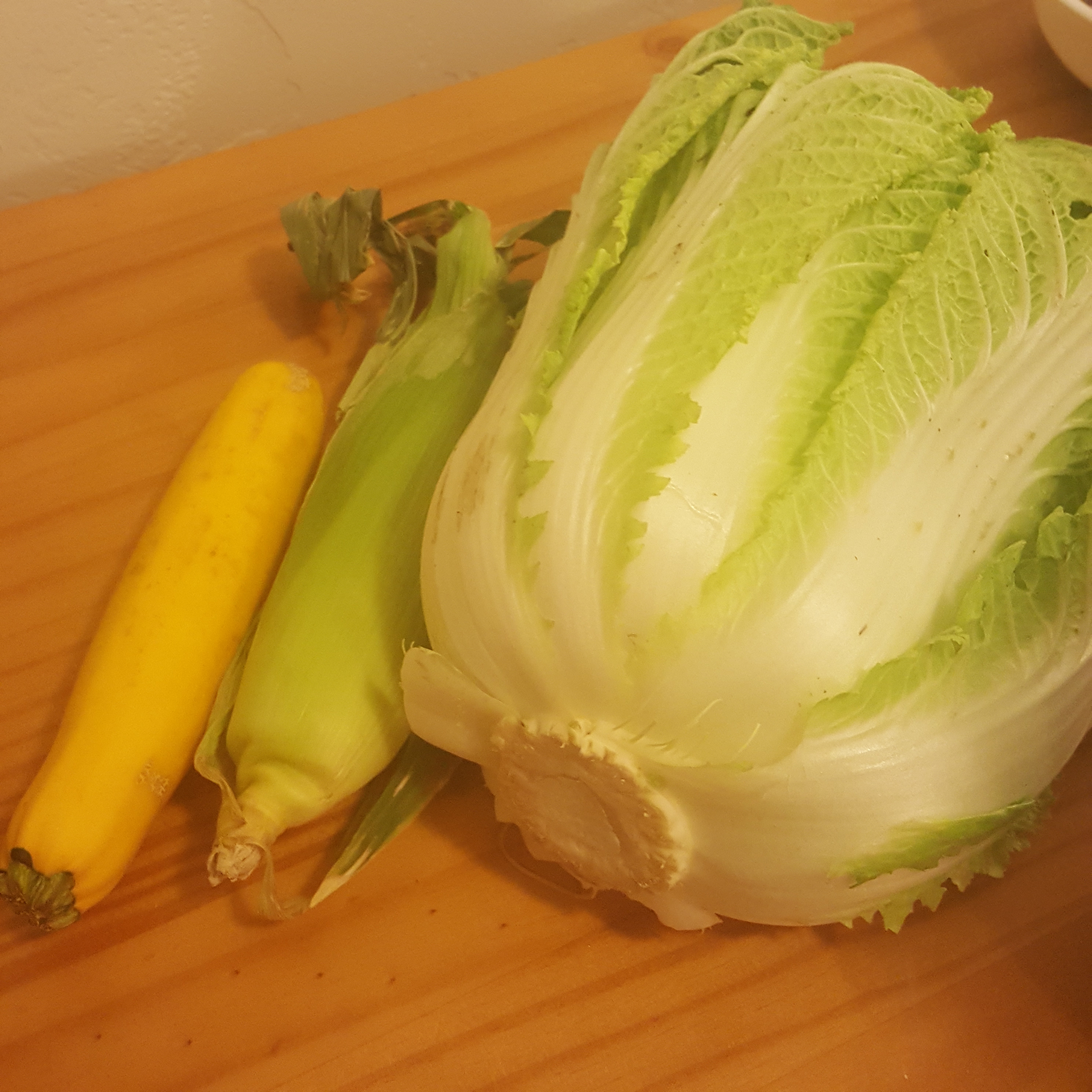
No matter how beautiful local veggies are, dreaming up something new and exciting to make with the same characters over and over again can be a challenge. Amy here with my latest attempt to use beautiful Tucson CSA napa cabbage (Sleeping Frog Farm) and summer squash (Crooked Sky Farm). And what to do when you have only ONE tiny ear of sweet corn? I also had ripe serrano chiles from a friend and a handful of blanched tender Foothills Palo Verde seeds. See Martha’s post for more on desert legumes.

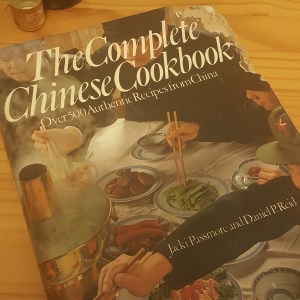
This week’s inspiration came from my mom, who remembered the Fu Yung we used to make in our family Chinese feasts. Aunts, uncles and cousins would cook all day to make complicated meals from many world cuisines. I’ve been attempting recipes in this book since I was in high school. Following and diverting from this and a handful of other recipes is how I learned to cook.

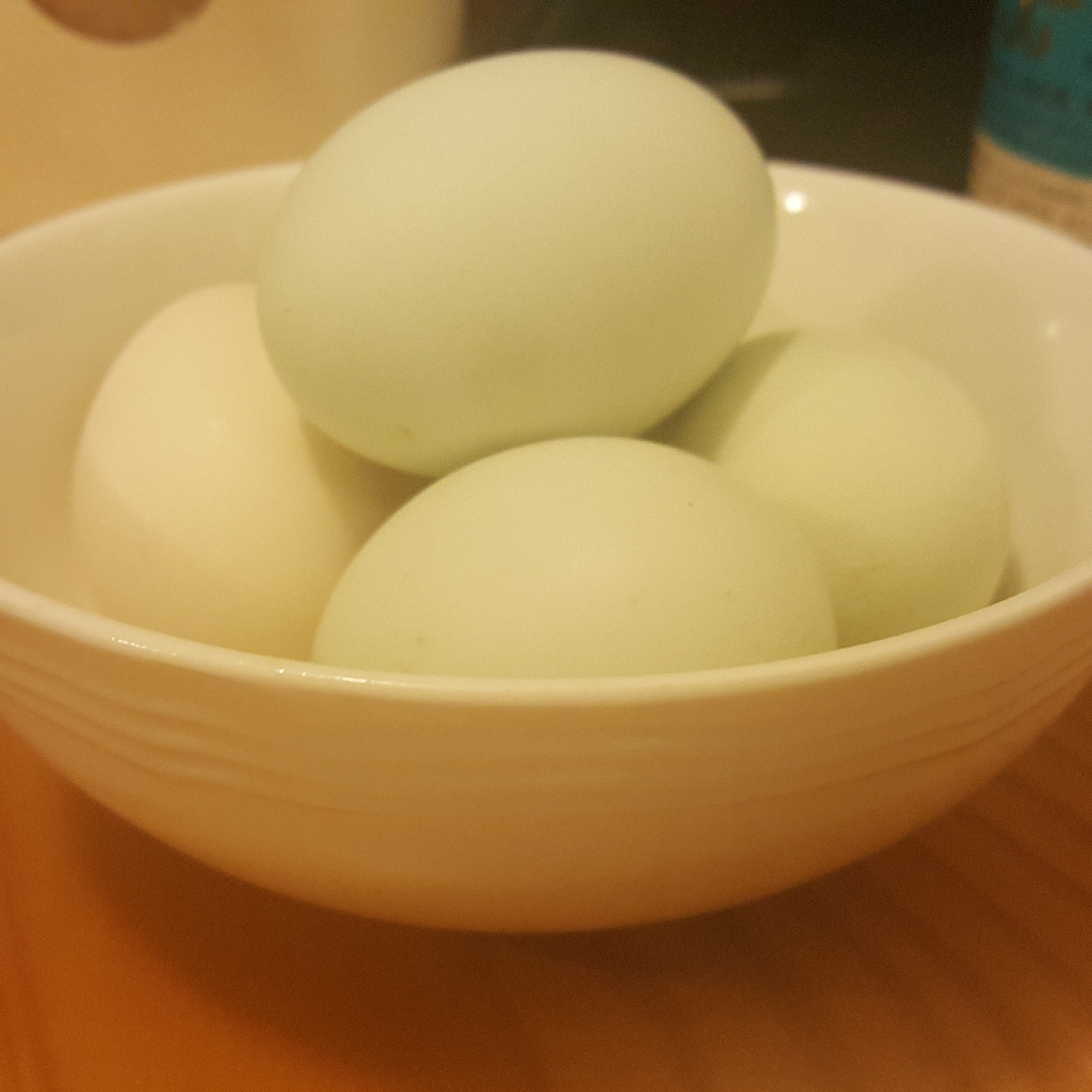
I also had lots of eggs from watching the neighbor’s chickens. Perfect!

The first step to not skip in this recipe is to marinate thinly sliced meat in soy sauce, rice wine and cornstarch for at least 15 minutes. It calls for beef but I used half that amount of pork.

Instead of meat, strongly flavored dried Chinese mushrooms are excellent. Just soak in water, cut in tiny strips and add them with the rest of the veggies. Save the mushroom soaking liquid to make the sauce. Yum!

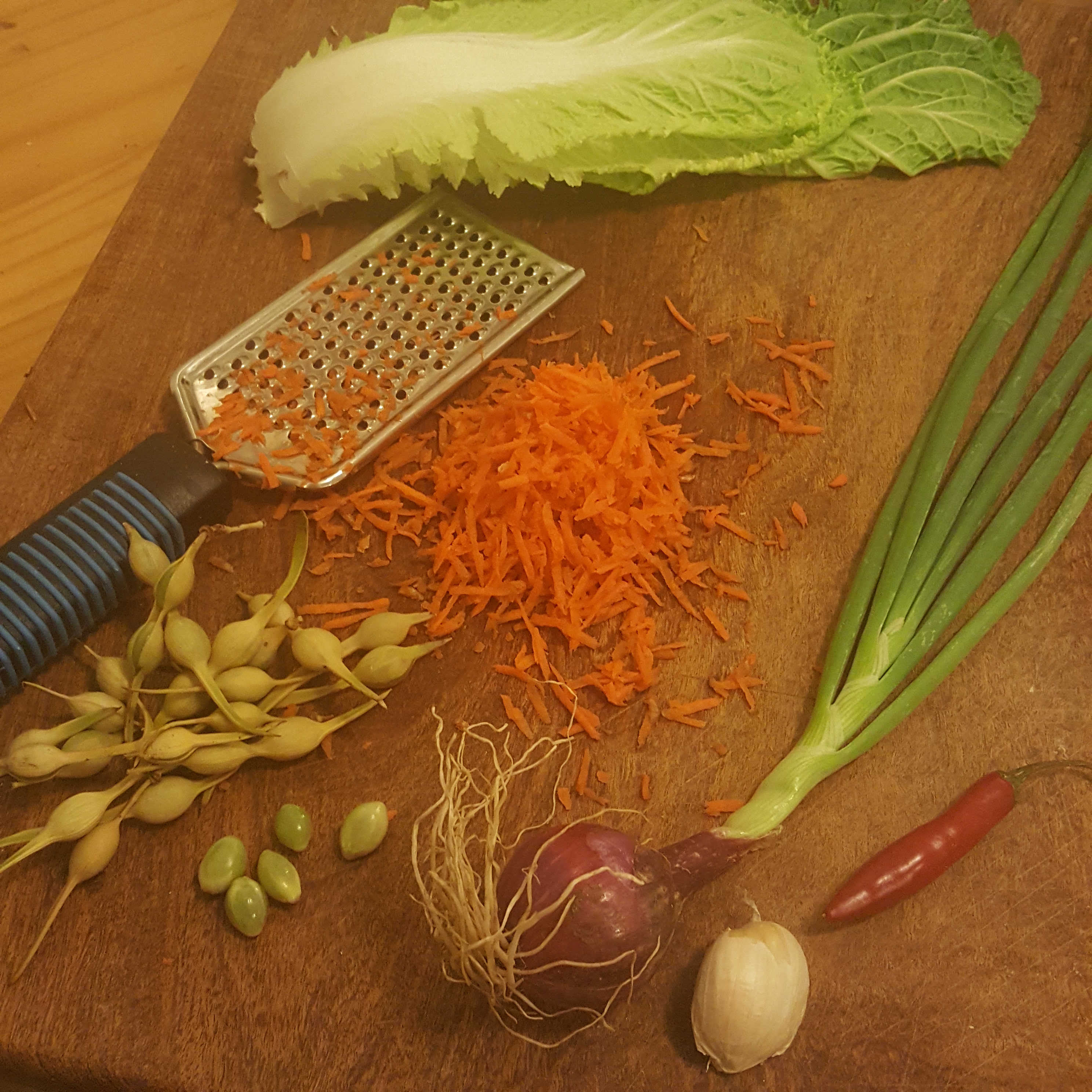
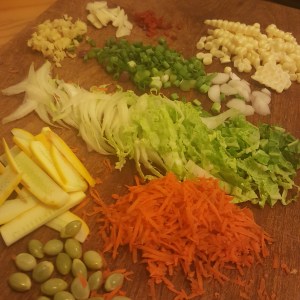
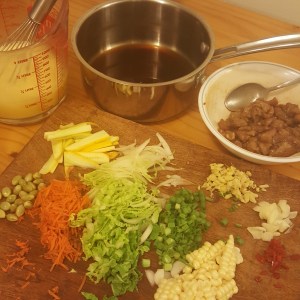
Cut all the veggies. This is not the dish to start cooking the longer cooking items before you cut the others. The original recipe called for spring onion and a little fresh ginger. I used carrot, cabbage, golden zucchini, young onion tops and bottoms, sweet corn and tender blanched palo verde seeds. For spice, I used garlic, ripe serrano and lots of ginger.

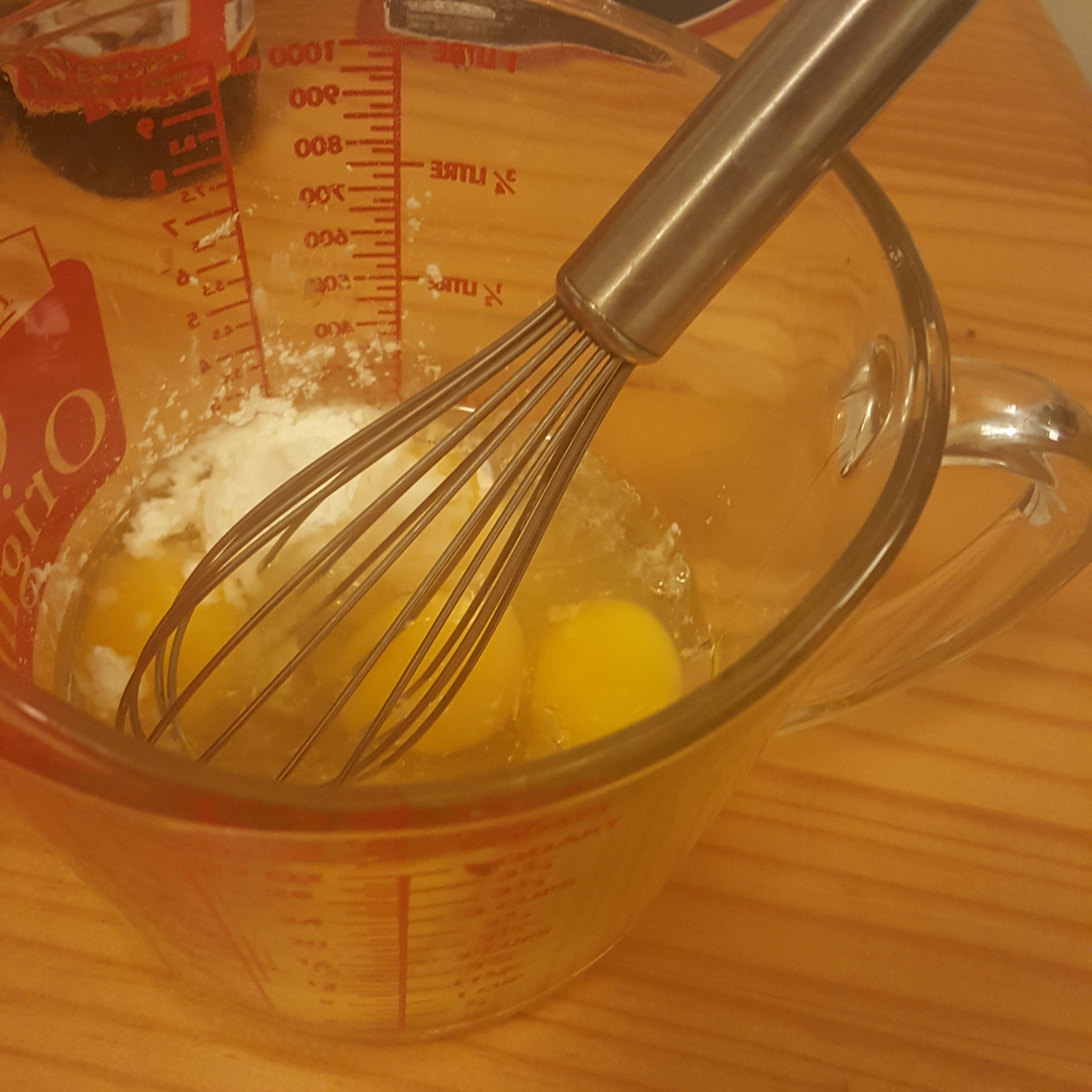
Then beat eggs, cornstarch and a splash of water. Next time I’ll mix the cornstarch and water before the eggs to prevent difficult to remove lumps.

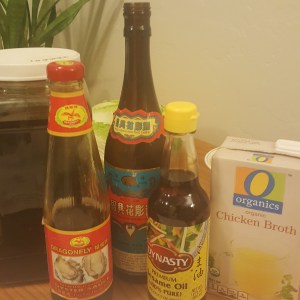
In a small saucepan, measure all the sauce ingredients and set aside: chicken or mushroom broth, oyster sauce (or mushroom sauce), rice wine, sesame oil and cornstarch.

Bring everything close to the stove.

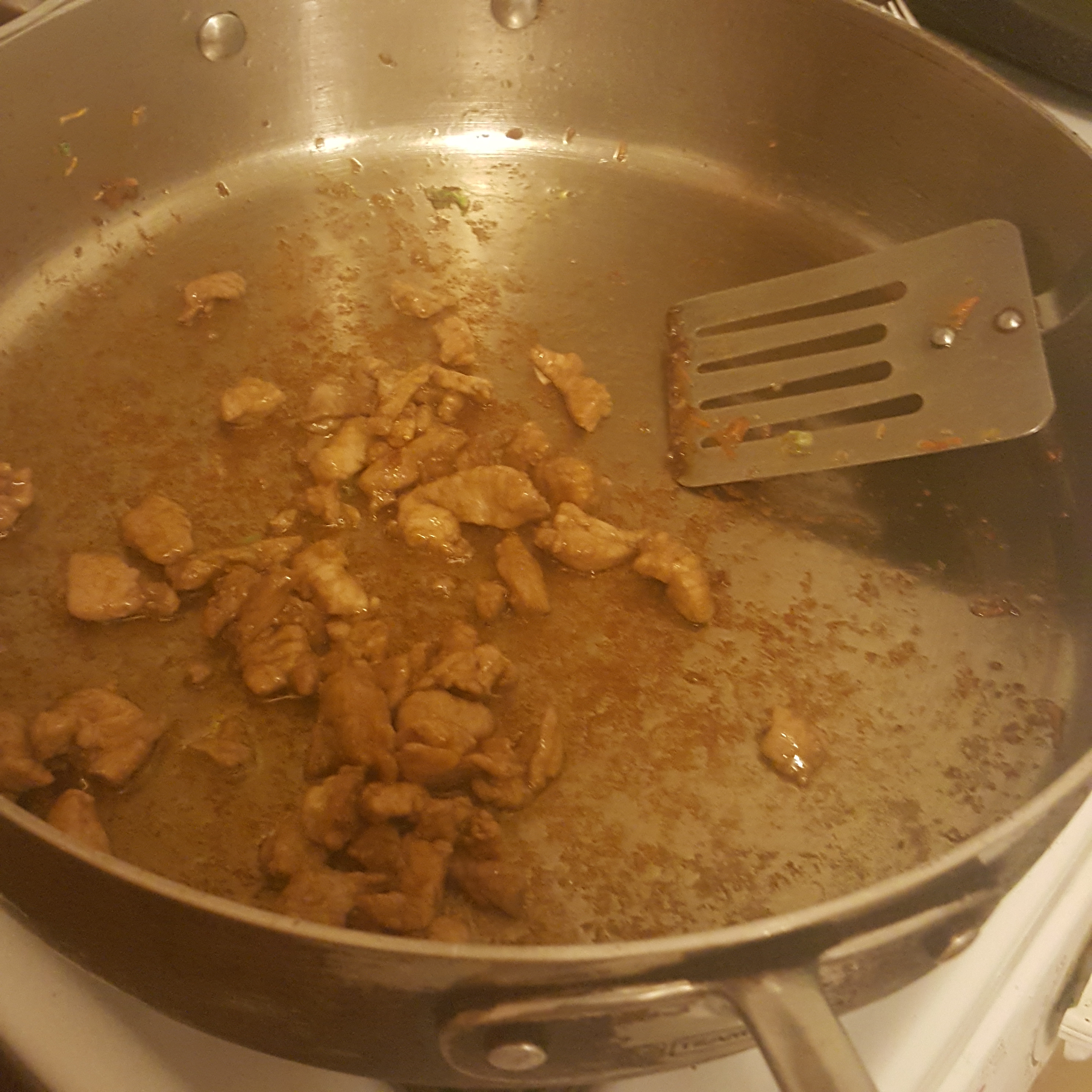
In place of a wok, I use a very large skillet on high to cook the meat in a little oil. When browned but not necessarily cooked through, remove from the pan and set aside.

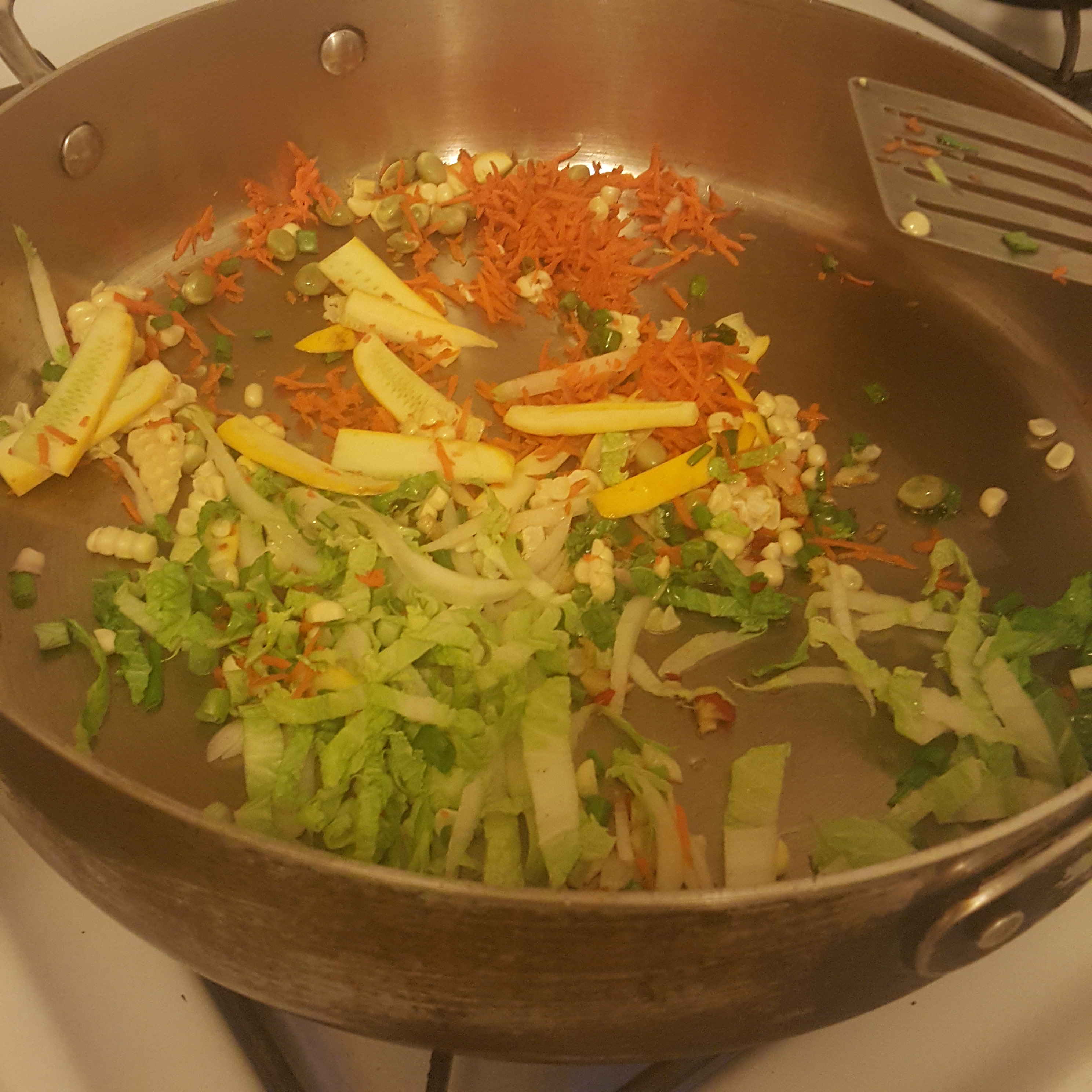
Add a little more oil and cook the garlic, ginger and chile. Add the veggies and stir fry for just a minute!

Gently heat a well seasoned cast iron or nonstick pan with low or rounded sides. Splash on a bit of cooking oil and toasted sesame oil. Add the meat and veggies in an even layer and pour the eggs over all. Cook gently until almost set and browning on the bottom. Slide onto a plate. Cover with a another plate and invert. Slide back onto the pan and cook through. If there are more veggies than the eggs can hold together, it will be messy. The book suggests cutting in wedges and flipping each, but it is not as pretty.

Serve the prettiest side up, you decide. Sometime while waiting for the eggs to set, heat the sauce while whisking, until thick. Keep warm.

Cut in wedges with a pizza cutter and serve with the sauce. Of course it is best right away, but it makes a great cold breakfast or lunch. Enjoy!

Veggie and Pork (or Chinese Mushroom) Fu Yung


1 1/2 oz thinly sliced pork or dried, soaked Chinese mushrooms


Marinate for at least 15 minutes in:

2 teaspoons light soy sauce

1 teaspoon rice wine or dry sherry

1 1/2 teaspoons corn starch


Veggies:

Your choice! About 1 cup after stir frying

Fresh ginger, garlic and green onion to taste


Egg mixture:

5 large eggs

2 teaspoons cornstarch

1 tablespoon water


Sauce:

1/4 cup chicken broth or mushroom soaking liquid from above

2 teaspoons light soy sauce

1 tablespoon oyster (or mushroom) sauce

1 teaspoon rice wine or dry sherry

1/4 teaspoon sugar

1 teaspoon toasted sesame oil

1/2 teaspoon cornstarch


For frying:

Mild cooking oil, like canola or peanut

Toasted sesame oil


The New Chiltepin-Citrus “Whoa-Nelita-Margarita”

Savor Sister Linda here today celebrating all things chiltepin. In the mood for both chiletpin and a margarita last weekend, I opened my mind up W I D E  and came up with this. Because of the heat of the chiltepin I  playfully refer to it as the Whoa-Nellie/Nelita Mararita, But is could be renamed the Margarita of Lots of Vitamin-C , not a very interesting name, but a true one, as chiltepin and Citrus-Juice have so much Vitamin-C.

IMG_7934.jpeg

THE SECRET Ingredient in this surprising Margarita, are the make-ahead-of-time fresh lime juice or orange juice (or any juice you like) ice cubes.

Squeeze fresh lime juice, or any fresh fruit juice, directly into ice cube trays and freeze. Once frozen take them out and put them in a container of zip locks so flavor is maintained and no taste of the freezer ends up in your margarita. These ice cubes are visually beautiful as well as flavorful and are great with Oh-So-Good Just Plain Water in the summer. Or add to fun drinks for kids while you are enjoying your adult cocktails.
I make these glass by glass,

1) add 1-2 crushed chiltepin to the bottom of your glass.

2) fill the glass with lime and Orange ice cubes.

IMG_7931.JPG

3) depending on how big your glass is and the “strength” you want add:

one Tablespoon or one shot of Patron Citron Orange Liqueur

two Tablespoons or two shots of your favorite tequila

This is the version that I like, as it is not too sweet.  But, if you are someone who likes your margaritas on the sweeter side, add honey to taste (start with at teaspoon and increase if you desire) remembering to stir well. A sprig of mint might delight your tongue as well as your eyes.

Stir Well.

IMG_7924.JPG

Drink on a hot summer evening. As the lime and orange ice cubes melt, the flavors of the chiltepin,  liqueur ,and tequila both deepen and widen. This is a margarita that just might help you hear the chiltepin actually speak.  

Try drinking this with summer evening guacamole and quesadillas.

I will soon be announcing my new Time Capsule Kitchen website that is dedicated to the noble chiltepin!  Stay tuned to hear those chiles speak!!!


Pleasing Poreleaf

porophyllum gracile calflora 1803Savor Sister Jacqueline Soule here today with native plant that is lovely in the landscape, never needs water, and can be used as an herb for cooking.  Can it get better than this?  Well yes, our native solitary bees use this as a food source in that time when spring wildflowers and cacti are done blooming and not much else is in flower.
porophyllum gracile calflora 1710
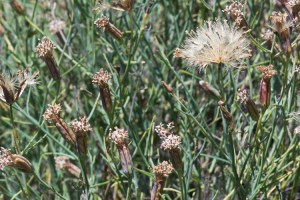
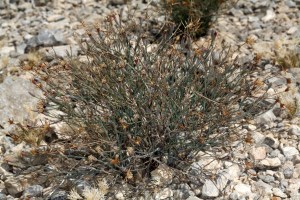
Slender poreleaf, also called hierba del venado, odora, (Spanish), xtisil (Seri), bears the scientific name of Porophyllum gracile.  If you like word origins you can just look at this scientific name and learn something about the plant.  The word gracile has the same root as graceful, poro tells us it has pores, and the one you may not know phyllum refers to leaves, but enough Latin for now.
porophyllum gracile calflora 1801
Slender poreleaf is a member of the Compositae or sunflower family and is good for culinary, medicinal, and ornamental purposes.  A native, hardy, blue-green evergreen perennial, it grows 1 to 2 feet high and 1 to 2 feet wide.  It can take full sun and even reflected sun, and also grows well in part shade.  It needs the alkaline desert soils, and does not tolerate over-watering.
salsa pixabay 2303112
Use.
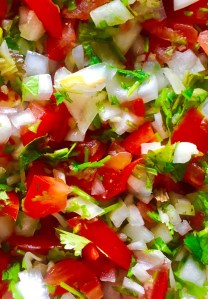
First, the taste is somewhere between arugula, cilantro and rue. I like it in salsa. I also crush the dried leaves and add them to hamburger.  Careful!  A little goes a long way.

burgers pixabay 1131717
The Seri use a tea made from the stems of this native plant as a remedy for colds.   Roots are macerated and used to treat toothache.  In some Mexican markets fresh and dried material is available for sale.  People crumble dried leaves together with salt and rub it on meat for flavor and to help make it last in the absence of refrigeration.

These medicinal uses may have scientific validity since many related species in the Tageteae tribe contain thiophenes, sulfur compounds with proven bactericidal properties, good as cold remedies.  The thiophenes may also help preserve the meat while the other secondary compounds flavor the meat.
deer white tail yearling pixabay 1604701
Slender poreleaf appears to be unpalatable to rabbit, javalina, rodents, and deer.  Since it is distasteful to deer it is puzzling why it is called “hierba del venado” which translates as “herb of the deer.”  Perhaps because it is found in remote areas where deer roam, or perhaps it is good for field dressing deer meat.

Planting and Care.
You won’t find this delicate fragrant perennial blue green shrub in nurseries, but if you find seed while you are out hiking, bring some back and plant it about a quarter inch deep in an unused corner of your yard.  Protect it from seed eating birds, and with a little water and you will be rewarded with a durable desert plant that needs no care and produces lovely white to pinkish flowers with attractive red highlights.

Porophyllum gracile Benth., "odora" -9
If you are not a hiker, head over to the Pima County Seed Library – online or in any branch library.  I donated a bag of seed to them, and smaller packets should be available for check out.  All they ask is that you return some seed to them in coming seasons.
seed library pima
Harvesting and Use.
Harvest fresh material of the slender poreleaf as needed for salads and salsas, or harvest and dry for use later.
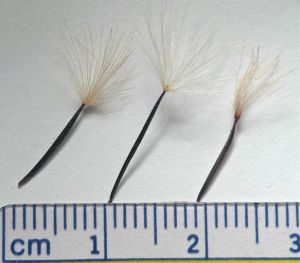
porophyllum ruderale glands wiki free
Sister Species.
Porophyllum ruderale is commonly grown throughout the New World and used as a condiment, especially in salsas.  Since it is used by many cultures, common names, include Bolivian coriander, quillquiña, yerba porosa, killi, pápalo, tepegua, mampuritu, and pápaloquelite.  It needs more water than our native species, and shade in summer, but taste is much the same.

porophyllum ruderale calflora 2535

JAS avatarIf you live in Southeastern Arizona, please come to one of my lectures. Look for me at your local Pima County Library branch, Steam Pump Ranch, Tubac Presidio, Tucson Festival of Books and other venues. After each event I will be signing copies of my books, including the latest, Month-by-Month Garden Guide for Arizona, Nevada, and New Mexico (Cool Springs Press, $26).
© Article copyright by Jacqueline A. Soule. All rights reserved. Republishing an entire blog post or article is prohibited without permission. I receive many requests to reprint my work. My policy is that you may use a short excerpt but you must give proper credit to the author, and must include a link back to the original post on our site. Photos © Jacqueline A. Soule where marked and they may not be used.

Bloody Mary with Grilled Pipián Mole Shrimp Skewers

Amy here, reporting a drink, or really a light summer meal, which turned into a backyard party. My sister Laura was so inspired, and we benefited. The photos and recipes are hers. Thank you!!!!!

We both love Pipián Picante, and so that’s the mole powder she used, but other Mano y Metate varieties would be great, so use what you have and what you like.

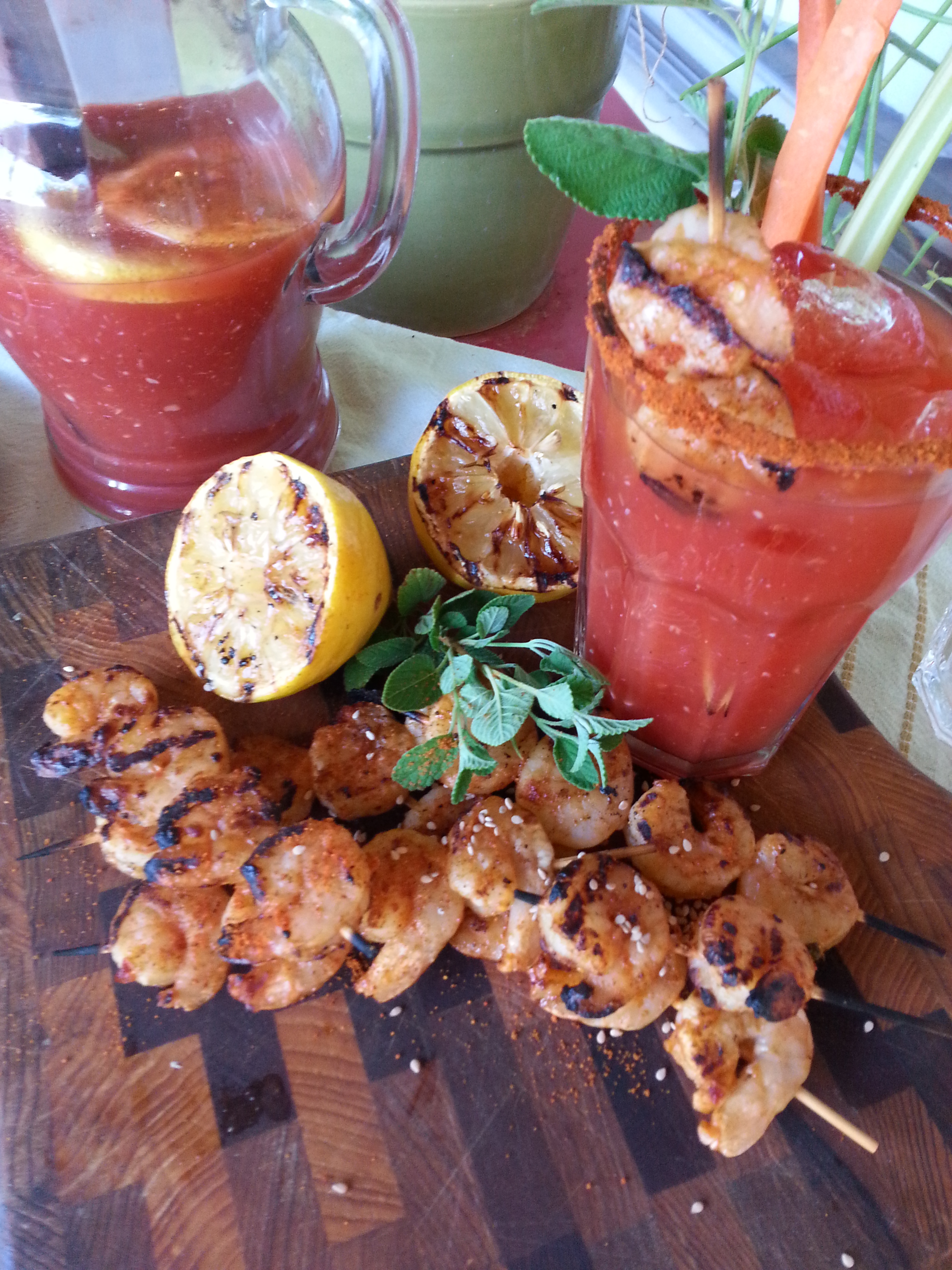
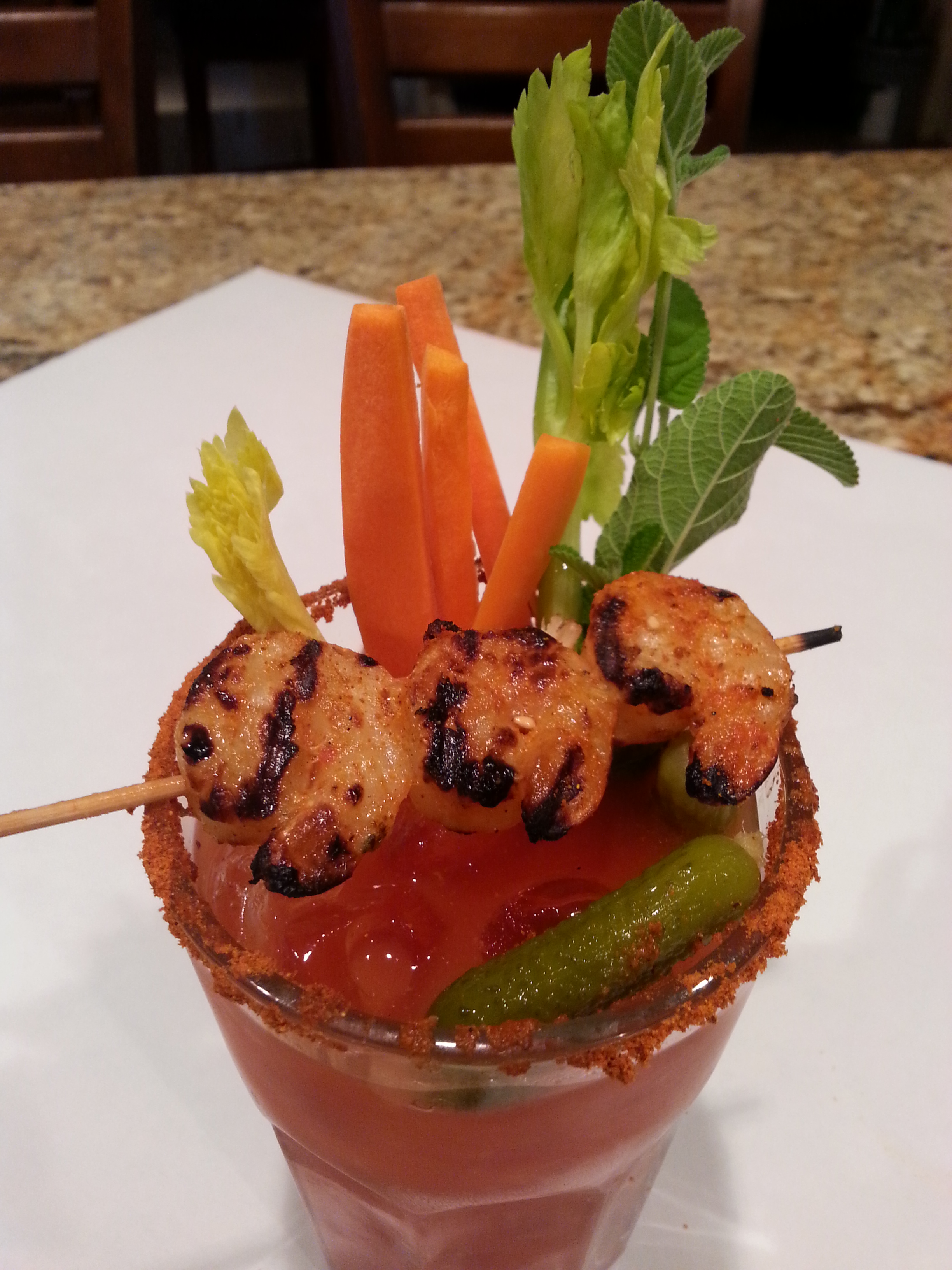
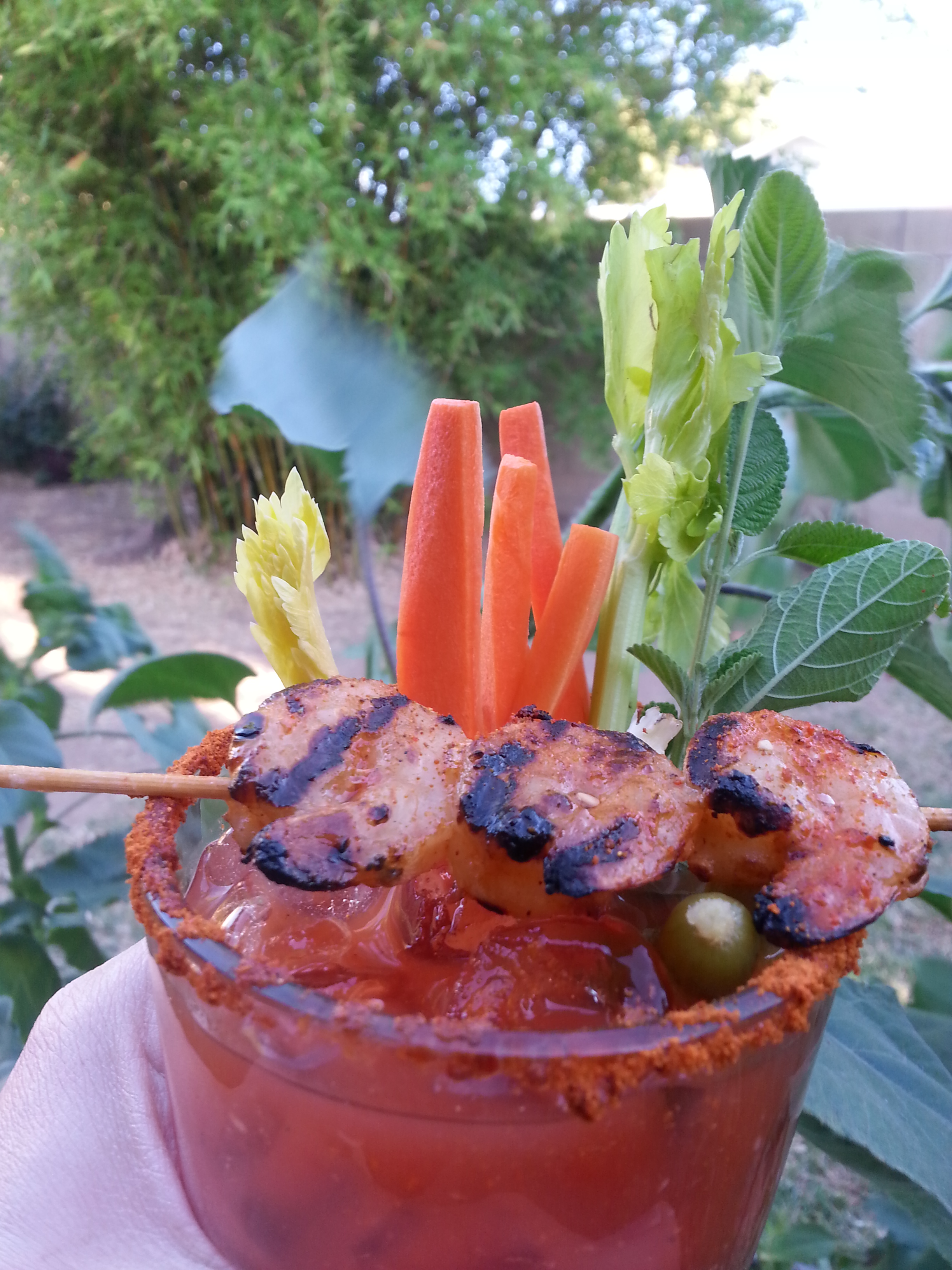
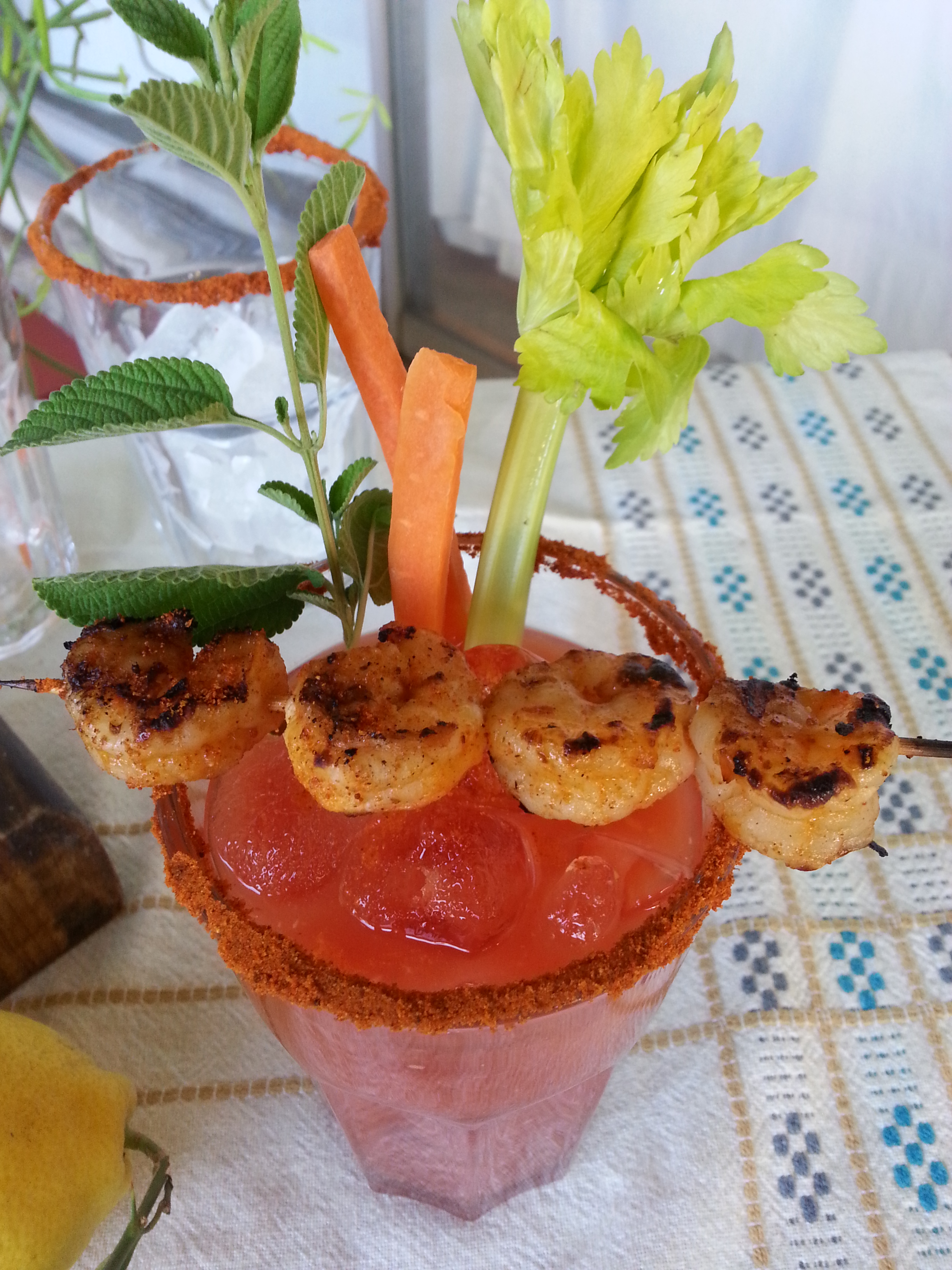
Add a pinch of mole powder to your favorite Bloody Mary (vodka) or Maria (tequila) recipe, with or without the alcohol. Laura’s recipe is at the bottom of this page. Then rim the glasses with the mole powder as well. Finally, garnish the drink with skewers of grilled shrimp, marinated with mole powder, crunchy veggies and a sprig of Mexican oregano.

This grilled shrimp cocktail serves four as an appetizer. For a light summer meal, serve more shrimp skewers per person and a salad.

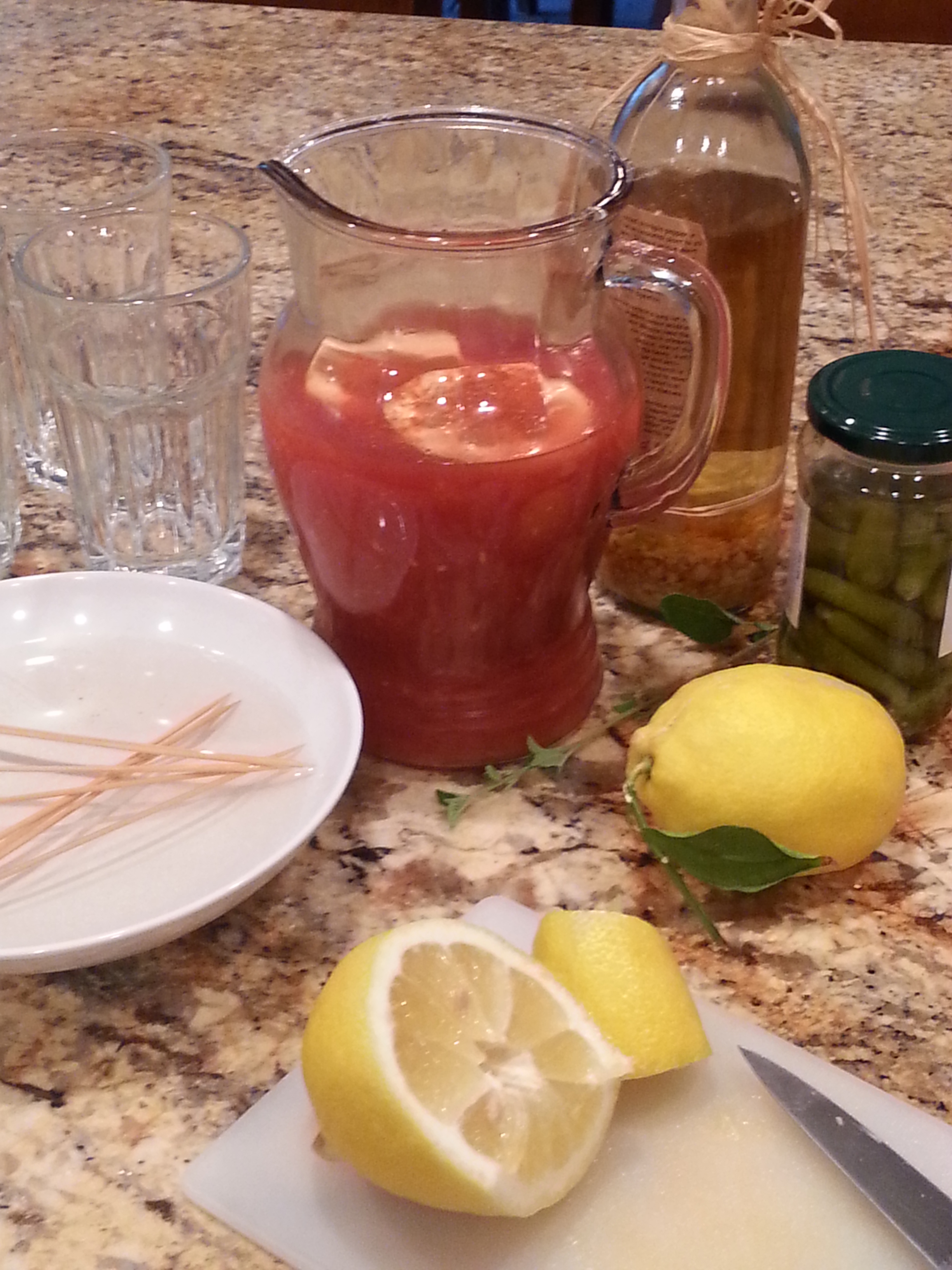
Start by soaking bamboo skewers in water.

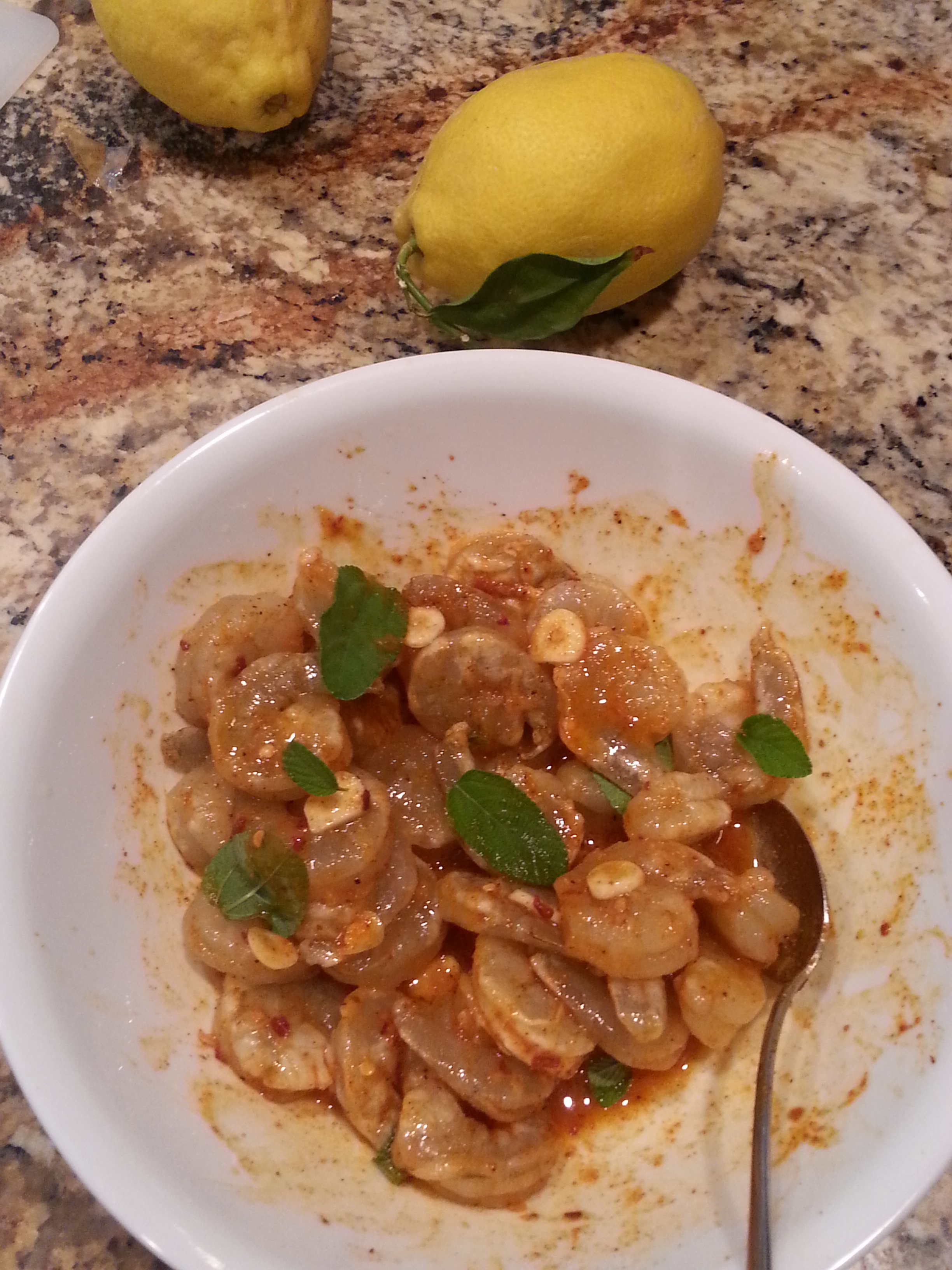
Marinate shrimp for at least 15 minutes. While the shrimp marinate, make bloody Mary mix.

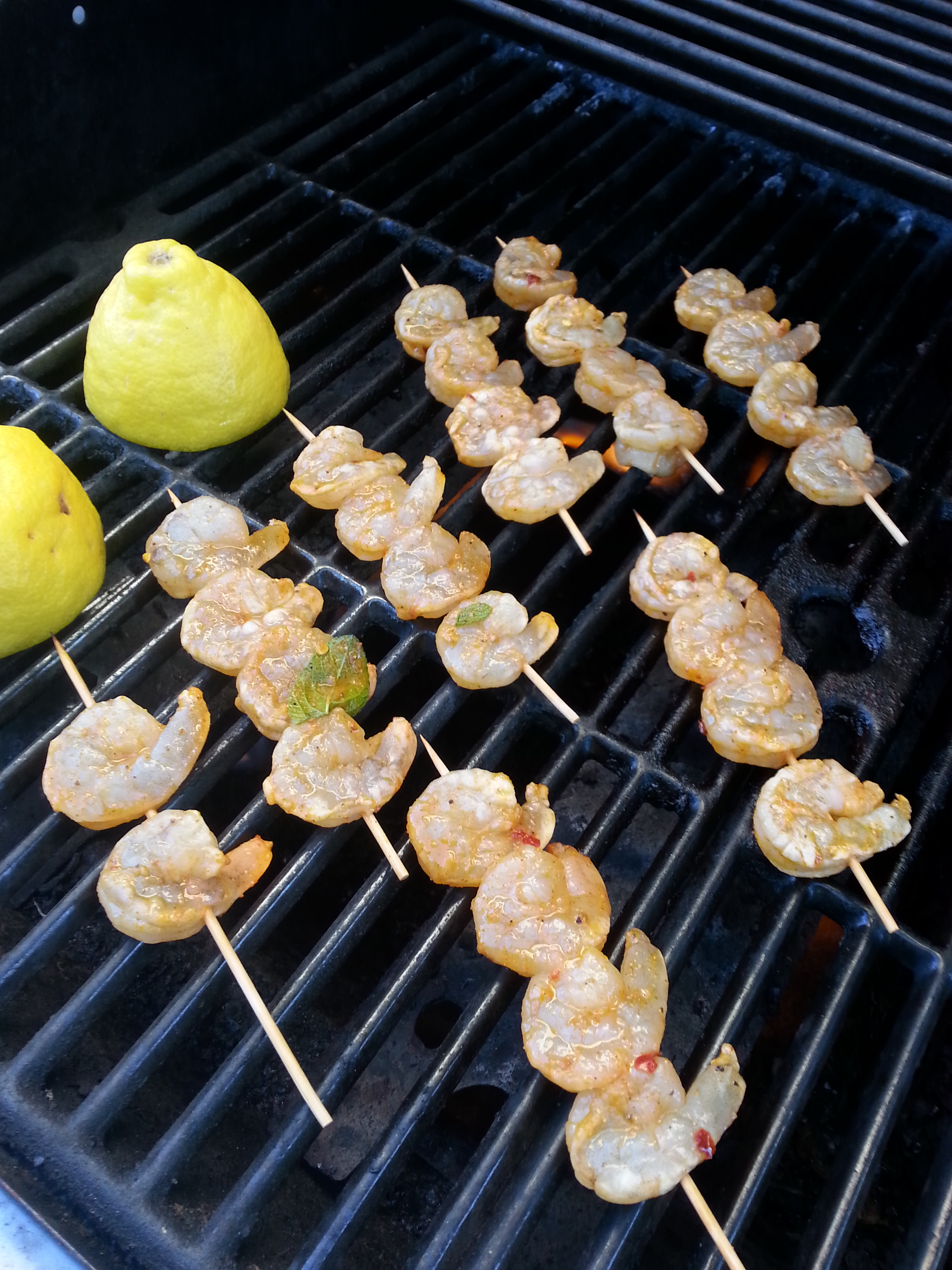
Start the grill and cook the shrimp and lemon.

Next, wet the rims of the serving glasses with lemon juice, then dip into mole powder.

Top the grilled shrimp with a squeeze of the grilled lemon, another pinch of mole powder and sesame seeds. Assemble the drink, add garnishes, and top with shrimp skewers.

At sunset, take outside and enjoy!

Grilled Pipián Mole Shrimp Skewers

  • 3/4 oz. Mano Y Metate Pipián Picante Mole power (reserve some for garnish)
  • ½ pound raw/peeled and deveined shrimp (approx. 40 count per pound)
  • 1 large garlic clove, sliced
  • 2 tablespoons olive oil
  • 1 teaspoon agave syrup (to taste)
  • 1 sprig fresh Mexican oregano- leaves torn off stem
  • ½ lemon, juiced
  • 1 additional lemon, halved
  • Crushed red chile (pick your level of heat–I like chiltepin) or whole dried chile for less heat
  • Toasted sesame seeds for garnish
  • Salt and pepper

Place shrimp in bowl with oil, sliced garlic, oregano, mole powder, lemon juice, agave, crushed red chile, salt and pepper. Mix to evenly coat shrimp and chill. Marinate for a minimum of 15 minutes, but not longer than an hour or the shrimp turn opaque from the acid in the lemon juice. Place shrimp on skewers (3-4 per skewer) and grill turning once, for 3 minutes per side. Grill lemon halves along with shrimp. Once cooked, remove the shrimp from the grill, squeeze roasted lemons over the skewers and sprinkle with remaining mole powder and toasted sesame seeds.

Bloody Mary/Maria

  • 32 oz. tomato juice/tomato clam juice (I prefer the spicy version)
  • ½ tablespoon Mano Y Metate Pipián Picante mole powder (or more to taste)
  • ½ tablespoon prepared horseradish
  • a few dashes Worcestershire sauce
  • ½ lemon, juiced
  • 2 lemon slices
  • ½ teaspoon celery seed (not celery salt)
  • Salt and pepper
  • More mole powder (reserve some for finishing the top of the drink and to rim glasses)
  • Optional garnishes:
    • Any seasonal pickles- quick pickles or sours
    • Carrot spears
    • Cucumber spears
    • Celery stalk with the leaves (I like the bitter)
    • Olives
    • Fresh herb stalk- I like Mexican oregano, but any herb would work
  • Optional alcohol: Vodka or tequila
  • Optional: add a splash of pickle juice or brine

This mix gets better with time, and it is even better made the day before. You can also use your favorite pre-made mix and experiment with garnishes. Add all of the ingredients for the drink mix (reserving some mole powder and all of the optional garnishes for later) and chill. To prepare the glasses, place mole powder on a shallow plate. Wet the rim of the glass with either water or lemon juice, and dunk into the powder. Set aside. Once the drink mix is ready to serve, place ice into glass first (being careful not to knock off the mole powder from the rim). Fill the glass with the mix and add your favorite garnishes. Top the glass with a shrimp skewer and enjoy!

Roasted Dandelion Root, Chicory, & Chiltepin Drink for Dry Dusty Days

Savor Sister Linda here with you fresh out of the saddle. We are into our hot/dry season here in the desert southwest. The region where we ranch didn’t get the rain we need, so the grasses and range are thin, and the water sources even thinner. This means a lot of managing resources, and a lot of hours in the saddle working.

IMG_7474.JPG

On long, hot days I crave bitter drinks, but coffee doesn’t quite do it for me. I need something that satisfies my body without adding acid to my stomach, or send my flying with caffeine like a cold brew coffee (which has more caffeine than hot coffee, regardless of whether you use caffeinated or decaffeinated beans). So I came up with a bitter drink with a kick.  I drink it both hot and cold – in the ranching world we love to use over our resources well, and this drink lends itself to that.  If you have some left over from your first infusion, you can stick it in the fridge and drink it later on cold over ice.

It is simple to make and has just four ingredients (I count water as an ingredient) – five if you add to it the milk you like.

HOW TO:  In a French Press combine 2 Tablespoons of Roasted Dandelion Root with 1 Tablespoon of Chicory root, with 1 chiltepin.

Pour in boiling water just like you would coffee, and infuse it for at least 5 minutes. 10 minutes or more is  even better. I let it sit and adding more water as I drink it; unlike coffee you can get more than one respectable infusion. The chile taste will become more intense with time.

These roots are medicinals as well as being tasty, so you might find that your liver and digestion benefit from drinking them – but as with anything what is one mans elixir can be another mans poison so please check them out for yourself first. The chiltepin is a chile that is known to actually help with digestion – I know it has helped my own. Other types of chilies can be irritating to the stomach, but for me, this tiny chile with it’s big punch can actually help. Again, try it out for yourself and see.

In the photos below the lighter coarser root is the dandelion and the darker smaller is the chicory. The red is the chilie, and one really is enough, especially as it

IMG_7663.jpg

Combine 2 Tablespoons of Roasted Dandelion Root with 1 Tablespoon Chickory root.

IMG_7664.jpg

Add 1 Chiltepin

IMG_7666.jpg

Pour boiling water over the ingredients; play around with the infusion time depending on whether you like it strong or not. The longer the infusion the stronger the chile flavor.

IMG_7668.jpg

IMG_6952.JPG

ENJOY


We are all  “in the saddle”.  Whether you work literally on a horse or mule, or more metaphorically in a city, we are all managing our own particular set of conditions and resources.  Try this drink for a caffein free drink option that helps you get the work done.

IMG_7545.JPG

We reduced some of the pressure on our range and grasses by selling cattle this week.  To do this we move the cattle from the ranch to the corrals. in town.  It is easier on the animals if you get an early start, as the sun is intense and it takes several hours to get to town.

IMG_4426.jpg

All this dust is a sign of dry conditions and drought.


Bean Flower Soup

palo verde flowers 1702783
Jacqueline Soule here today to share a savory way to use the flowers of palo verde.
In case you wondered, palo verde flowers are slightly sweet and taste mildly like young garden peas.

In a handout I got back in the 1970’s, I learned that the O’odham name for this April-ish month is Uam Masad which roughly translates to “the yellow month.”  On the slopes of the the Tucson Mountains yellow is certainly the case – with palo verde, brittle bush, paperflower, and desert marigold all combining to cover the slopes in a cloak of glowing yellow.  On a still day, the sound of the various species of native bees working their way through this bounty is a many toned symphony of delight to my ears.
palo verde flowers 1702858
The common name “palo verde” can refer to a number of species, including
Mexican paloverde (Parkinsonia aculeata)
blue palo verde (Parkinsonia florida)
foothill palo verde (Parkinsonia microphylla)
palo brea (Parkinsonia praecox)
Texas palo verde (Parkinsonia texana), and the
Desert Museum hybrid paloverde (Parkinsonia X ‘Desert Museum’).

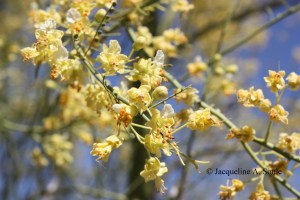
I told you that so I could tell you this.  All of these New World species of palo verde have edible flowers.  The palatability of the flowers varies though – depending on species and on growing conditions.  Sample before harvest.  Some are tough and stringy, some are large and flavorful.  The flowers on the trees in the leach field were especially large and palatable.  After the initial sample thou, I left them for the busy digger bees (Centris species) moving among the blooms.

palo verde flowers 1702869

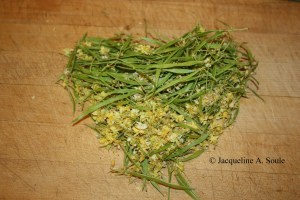
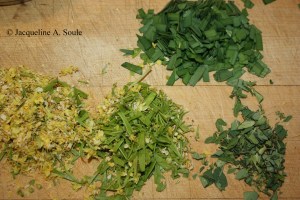
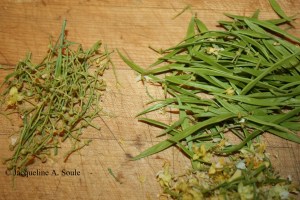
Chop up herbs and flowers to an easily edible size.

Since palo verde flowers are relatively small, compared to other edible flowers like pansy and chrysanthemums, I wanted to find dishes where I could harvest many flowers in a single swipe along the branch then use them en mass.  With a big basket full of flowers, I started experimenting.
palo verde flowers 1702855
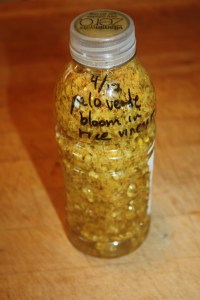
The results – palo verde flowers are fine in salads.  They are good in a pancake-like fritters.  Lightly sauté the flowers with chard and I’itoi onions then pour eggs over them for scrambled breakfast – good.  The floral vinegar will have to wait about a month for my report.  But meanwhile there is my new favorite – bean flower soup.  Bean flower soup is especially good late in the season as flowers are intermixed with young developing palo verde beans.

palo verde flowers 1702863

Remove bitter tasting petioles.

Many Americans are not used to the concept of soup before a meal, but it makes sense for three main reasons – even in summer.  Such home-made soups are high in trace minerals, helping replace the electrolytes lost to perspiration during the day (especially in our climate).  The American Institute of Health estimates that 1 out of 5 Americans is clinically dehydrated, in other words, dehydrated enough to interfere with our body’s ability to function properly.  Lastly, for folks trying to lose weight, the hormones signaling hunger take about 20 minutes to become canceled out by eating.  Soup first means that your hormones have more of a chance to tell you that you’ve had enough without overeating.

Palo Verde Flower Soup
1 cup fresh palo verde flowers
1 quart liquid of choice (water, vegetable stock, chicken stock)
1 tablespoon oil of choice (helps better develop the flavor)
herbs to taste (use mild to not overpower the delicate flower flavor)
sea salt to taste
palo verde flowers 1702880
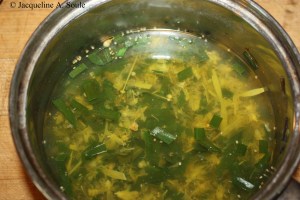
If it is late in the season, and you harvest beans with petioles, remove the tough and bitter petioles.  Give everything a good dicing to help release the flavor and make any potentially fibrous bits small and edible.  Optionally, sauté the herbs in the oil first to develop the flavor but avoid over-heating the flowers, they can become bitter. Add one quart liquid.  Bring to a boil and turn off and remove from the heat.  Let sit for 10 minutes to meld flavors together and finish cooking the soup.  Serve.  Enjoy!

Disclaimer: The authors of this blog have researched the edibility of the materials we discuss, however, humans vary in their ability to tolerate different foods.  Individuals consuming flowers, plants, animals or derivatives mentioned in this blog do so entirely at their own risk. The authors on this site cannot be held responsible for any adverse reaction.  In case of doubt please consult your doctor.

JAS avatarIf you live in Southeastern Arizona, please come to one of my lectures. Look for me at your local Pima County Library branch, Steam Pump Ranch, Tubac Presidio, Tucson Festival of Books and other venues. After each event I will be signing copies of my books, including the latest, Month-by-Month Garden Guide for Arizona, Nevada, and New Mexico (Cool Springs Press, $26).
© Article copyright by Jacqueline A. Soule.  All rights reserved.  Republishing an entire blog post or article is prohibited without permission.  I receive many requests to reprint my work.  My policy is that you may use a short excerpt but you must give proper credit to the author, and must include a link back to the original post on our site.  Photos © Jacqueline A. Soule and they may not be used.

Cholla Crepes with Hollandaise and Mulberry Compote Yogurt Crepes


20170420_160134

Spring in Tucson means cholla buds and mulberries! Amy here with two of our perennial favorites, wrapped in crepes.

20170420_090508

A found a budding Pencil Cholla Cactus in a friend’s yard, and I could pick in exchange for a harvesting lesson. See Tia Marta’s Cholla bud post to learn how to collect and process this favorite desert food. This wasn’t a stellar year in the wild, so I was glad to harvest from a few plants thriving with a bit of care. Pencil chollas, hard to find in the wild, have few spines for the size of the bud and fall off easily when brushed.

Mulberries are another cultivated cousin of a wild desert riparian food, and my grandfather planed a beautiful tree many years ago that produces enough fruit for birds, dogs and people, too.

20170421_184021

I cooked a bowlful of mulberries with a splash of rum and a squeeze of lemon. I added a bit of water while cooking, just to keep it from sticking.

Brainstorming how to show off these little treasures, I remembered crepes! My mom and aunt taught my family to make crepes with a special electric skillet designed to dunk into a wide shallow bowl of batter, making a delicate skin and browning it delicately.

Lacking the very wide, very shallow bowl and the electric crepe maker, I have been making them lately on a cast iron griddle. Start by whirling one cup flour (I used half whole wheat and half all purpose), one and a half cups half and half (milk or milk substitute works fine), 3 tablespoons butter melted completely (or oil), four eggs, and a dash of salt in the blender. Transfer to a quart jar or measuring cup for easy pouring.

20170420_154347

Heat a cast iron pan to medium, swirl the pan before the very first crepe with a small pat of butter, and take a relaxing breath. With one hand, pour batter on the griddle while quickly rotating the pan until the batter reaches the pan’s edges. Hopefully most of the batter is set by then, but if not, just use a little less batter next time and cook this crepe a little longer. If the batter gets too thick, thin with water so it is easier to swirl on the griddle.

20170420_154359

When the edges are papery and the bottom spotted with brown, flip the crepe with your fingertips and brown briefly on the other side.

20170420_154420

Stack the cooked crepes on a plate directly on top of each other. This batch of batter made about a dozen for me.

Cholla Bud in Crepes with Hollandaise

20170420_133519

Boil the de-spined cholla buds in water for 10 minutes, then drain. Heat a bit of olive oil, add a clove of minced garlic, a dash of salt and the buds.

20170420_155137

To make hollandaise, put one egg yolk, a tablespoon butter, a squeeze of lemon and a dash of salt in a double boiler. Whisk until creamy, adding a splash of hot water if necessary to thin the sauce. Incorporate one more tablespoon of butter and keep warm. The sauce can easily be doubled or quadrupled as necessary. Assemble, roll and enjoy!

20170420_155738

For Mulberry Crepes, you can add a pinch of sugar to the batter if you want. Spread a hot crepe with mulberry compote and a spoon of plain yogurt.

20170420_160424

Fold in quarters and garnish with pansies.

20170420_160552

Enjoy the last days of spring, and I’ll be back in summer. Love, Amy


20170420_093731

The Call of the Small

IMG_6588.jpg

“Savor Sister” Linda here with you today, celebrating small things.

There is a Hummingbird nest in the yard.  It is magic. The nest is small, the eggs are small. “Big” has its place in nature for sure.  But it can be overly admired.

I am in the mood these days to scale things back a bit – so it is the Call of the Small that I hear most loudly.

Small things speak in a different language.  Peer into a hummingbird nest.  Stand at the lip of a flower. Or hang out at the entrance of a bee hive. And take it all in. I feel a vast freedom as I get interested in what is in front of my nose. Other than my phone I mean.

Here are a few visuals of just some such “small” things this week. Then we’ll jump right into a fun, flourless, cookie recipe that features the tiny mighty chiltepin.

IMG_6747.JPG

To help with scale …. a dime above …

IMG_6763.jpg

… and coffee beans ….

IMG_6645 4.jpg

Standing at the lip of Mallow Flowers is always a treat for the native bee lover in me; there are two bees in this flower. Some bees even nap in Mallow flowers. Truly. Google it if you don’t believe me.

IMG_6679.jpg

… here you can see the under and over achievers in the pollen gathering tasks of a hive ….

IMG_6688.jpg

I’ll take this girl on my pollen gathering team for sure.

IMG_6681.jpg

This photo shows a different color of pollen from a differing pollen source.

Call of the Small (flourless) Cookie Recipe – featuring chiltepin

IMG_6730.JPG

Chiltepin may be tiny but they deliver a STRONG punch of heat directly to your tongue. Unlike most other chilies, these tiny wild chiles have a heat that flares hot and immediate on the tongue. It is not a subtle sensation. And the heat dies quickly.  (Most domesticated chiles run the opposite direction: the heat builds more slowly to a peak).

I remember the first time I tried one. It was a hot October day in the foot hills of the Sierra Madres, and I  was “set up” to be the butt of the chiltepin joke amongst a group of men.  A fresh, bright red chile was picked directly from the plant and handed to me.

I popped it in my mouth.  A good time was had by all as I coughed, sputtered and generally turned red. Now hardly a day goes by without me eating one. I even travel with them because I miss them. Their small size makes them super portable.

IMG_0913.JPG

It was on just such a chiltepin plant that I was “set up” ….

IMG_0822.JPG

chiltepin in various stages of drying

INGREDIENTS AND HOW TO: 

IMG_6708.JPG

I cup Sunflower Seed Butter

IMG_6712.JPG

1/3 Cup “as local as you can get it” Honey

IMG_6721.JPG

1 fresh egg – I used one turkey egg because they are known for being great in baking

1 teaspoon Vanilla

1/2 teaspoon baking soda

1/2 teaspoon salt

COMBINE ALL THE ABOVE AND MAKE SURE BATTER IS SMOOTH

ADD  chocolate chips and  3-5 ground chiltepin seeds and all.  (I also added chia seeds, pepitas, and cranberries).

IMG_6728.JPG

Bake in preheated 350 degree oven until brown. Makes about a dozen cookies. 

Let me know what small things call to you. And how you like the bite of chile in this cookie.

IMG_6725.JPG

The small unglamorous moments never get their moment in the sun – so here are the recipe tools getting washed.