Food & Fingertips

IMG_0400


Savor Sister Linda here celebrating fall.   Now that the summer rains have rejuvenated the parched land, we feel free to milk again.  With that milk we make make cheese  and enjoy fresh milk for coffee.

We’re out just before dawn every morning.  Bats, who are nocturnal pollinators, are still out and about – and sometimes fly so close you can feel the breezes their wings make  on your skin as they swoop by.   I adore the feeling of  being in a Liminal (in between) Zone.  No longer night. Not yet day. All the categorizing that can limit our experience of living falls away.  Bats abound as milking begins.  Birdsongs are in full swing as we walk back to the ranch house with fresh warm milk.

So what does all this talk of liminal zones have to do with a food blog? Waking up to our Senses, that’s what.

It is enlivening to be intimate with your own food. It awakens the senses. Until I’d begun ranching some 20 years ago, I had forgotten how sensual the whole affair is.  I’ll bet you may have, too. A cows’ udder and teats are warm. And slippery. And each teat is a little different – sometimes on the same cow. Your left hand reaches for one warm teat, and your right for another. One may be smaller. One rougher in your hand.  One smoother.

IMG_0167

The milk comes streaming out the tip of each teat, hitting the metal pale held between your knees with it’s own music. I’ve noticed that the sound varies depending on whose doing the milking.  The more seasoned and competent milkers have a wonderful rhythm to their work. And a deeper sound. Us novice milkers … well … the sound is more erratic. Meanwhile,  the milk streams out and is warm – the body temperature of the cow. The aroma of fresh milk hits your nostrils.As the milk fills the pale, the cool metal warms between your knees. I mention the feel of the milk because most people today associate milk as being cold, which it is when buying it at the store.

My Uncle recently shared with me that when his father, born in 1906,  was a small boy in Minnesota they would milk daily. He was the son of a minister and he and his brothers  would get up early, before school, and milk the cows.  The metal containers were then loaded onto the back of the wagon.  The milk was warm enough to warm the metal and  my grandfather would huddle next to the milk containers to stay warm on the way to school.  (At least at first it was warm enough to warm a small boy. With the passage of time en route to school the milk froze. We’re talking Minnesota.)

IMG_7550

You may or may not have access to a cow, or goat or sheep to milk. But you can enjoy food at your own fingertips. Try roasting your own nuts or seeds. Experiment with seasoning them. Nuts are  great fall fare and are great on yogurt. I love them in salads. Or use with warm pumpkin soups. Or just as a snack in and of themselves.

IMG_0473

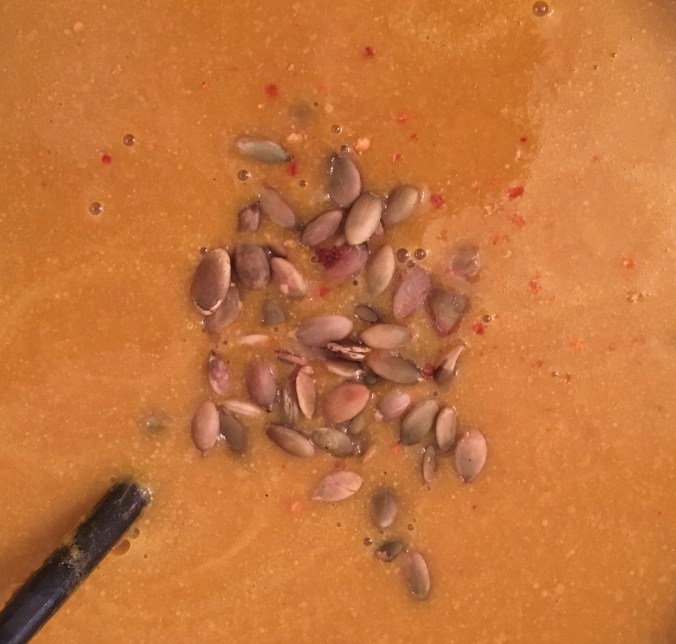
Preheat the oven to a low temperature – 175 degrees or so. I like to roast “low and slow’ as it keeps the oils in the nuts good and healthy, the nuts don’t burn, and the flavor is (to my tongue)  richer.  On a pan, spread out the seeds/nuts of your choice. I used pumpkin seeds (Pepita’s) here. Sprinkle a little salt and some chiltepin to taste, and roast until they smell and taste great.  Every oven is different, but this takes me about 10-20 minutes. You could also roast them on the stove top on caste iron. Make sure you tend to the roasting and move the nuts/seeds about every so often so that they roast evenly.

Sprinkle on your butternut or pumpkin soup as in the photo below!

IMG_0488.jpg

Date Bars with Mesquite

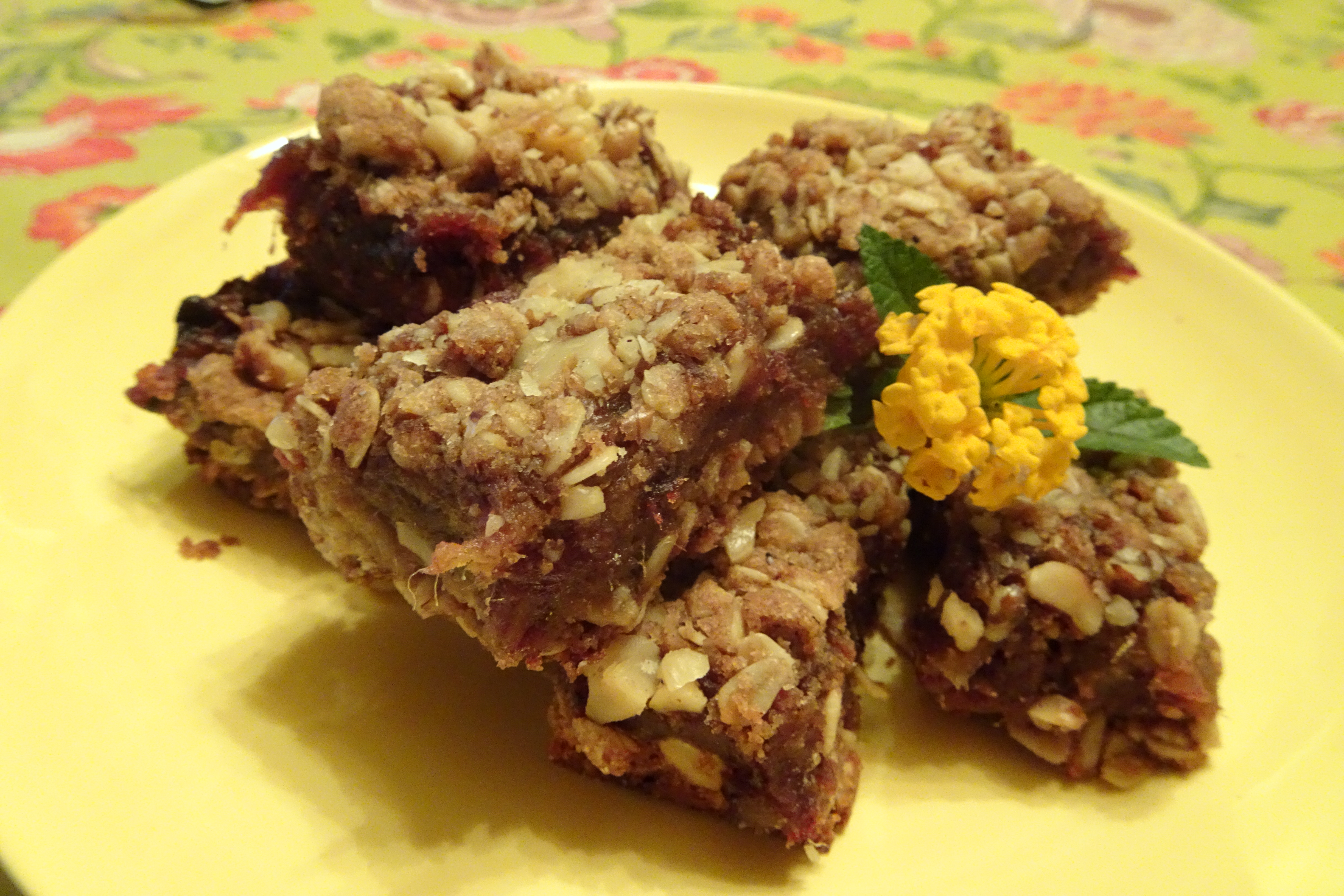
Mesquite meal, oats, and dates combine for a sweet and nutritious snack.

Now that the temperatures have dropped, we can once again turn on the oven to bake some goodies. Carolyn here today to talk about one of my favorite recipes. Because both dates and mesquite meal are quite sweet, you can cut way back on the sugar. My version cuts two-thirds of the sugar in the original recipe. Although you could actually completely leave out the sugar in the base, in baking at least a little sugar is needed to help with texture and browning. Adding the warming spices of fall make the bars special. I added some cardamom, because it is unusual in our culture, and a little cinnamon. If you happen to have some of Amy’s mole mixes, a tablespoon of one of those would add real punch.

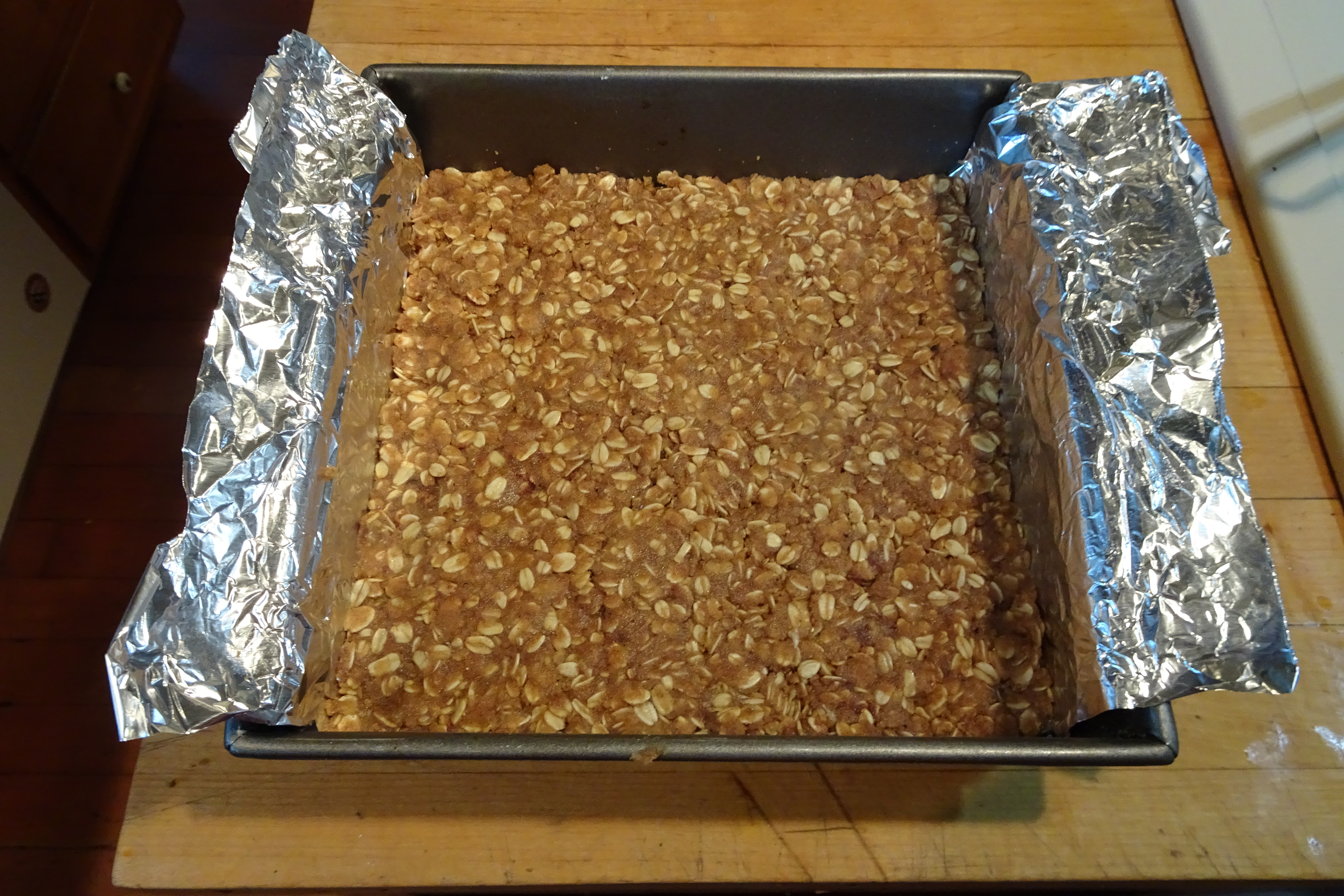
In order to make the finished date bars easy to remove from the pan, line the pan with foil or parchment paper with some wings on the sides to lift out the finished bars.  I hate it when I have to hack at bars to get them out of the pan.  Use a little more than half of the crumb mixture on the bottom; I figured I used about three-fifths.

Line the pan with paper or foil to help lift out the finished bars.

You will have plenty of time to cook the date filling while the base bakes. I was surprised how quickly the pieces of chopped dates softened into a smooth paste.

Dates and water cook quickly into a smooth paste.  Use low heat and stir frequently.


When you add the final layer of crumbs, you can add a sprinkling of nuts if your intended audience can eat them. Adjust the baking time by watching for the bars to brown around the edges. Let them cool

in the pan an hour or so before lifting them out with your paper or foil. I cut mine into 24 pieces. They could be even smaller.

Cut small pieces because the bars are quite rich.

I made these bars to take to a potluck. They would also be a good addition to a selection of Christmas cookies.


Ummm….delicious with a cup of coffee or tea.

Here’s the recipe:

Oatmeal date bars

1 1/2 cups rolled oats

1 cup whole wheat flour

½ cup mesquite meal

¾ teaspoon baking soda

¼ teaspoon salt

½ cup packed brown sugar

1 cup very soft butter

2 cups chopped dates (3/4 pound)

1 cup water

1 teaspoon lemon juice or 1 tablespoon orange juice concentrate

1 tablespoon grated lemon or orange rind (optional)

¼ cup chopped walnuts or pecans (optional)

Preheat oven to 350 degrees F (175 degrees C). Line a 9-inch baking pan with foil or parchment paper with an inch or two extending over the edge. Spray with cooking spray or spread a tiny bit of oil over the lining.

In a large bowl, combine oats, whole wheat flour, mesquite meal, salt, brown sugar, and baking soda. Add butter and mix until crumbly. Press a little more than half of the mixture into the bottom of a 9- inch square baking pan. Bake 15 minutes.

While the crust is baking combine dates and water in a small saucepan over medium heat.. Bring to a simmerl, and cook until thickened, probably around 5 minutes. Stir in lemon juice or orange juice concentrate, and remove from heat.

Remove crust from oven when it is beginning to brown at the edges, spread the filling over the base, and pat the remaining crumb mixture on top. Sprinkle with chopped nuts if using. Bake for 20 to 25 minutes in preheated oven, or until top is lightly toasted. Cool before lifting from the pan. Cut into small pieces (I did 24) as these are very rich.

_________________________________

Carolyn Niethammer writes about the foods of the Southwest, both wild and domesticated.  Find her books at her website, at Native Seeds/SEARCH, at at on-line booksellers.


Glorious Germander

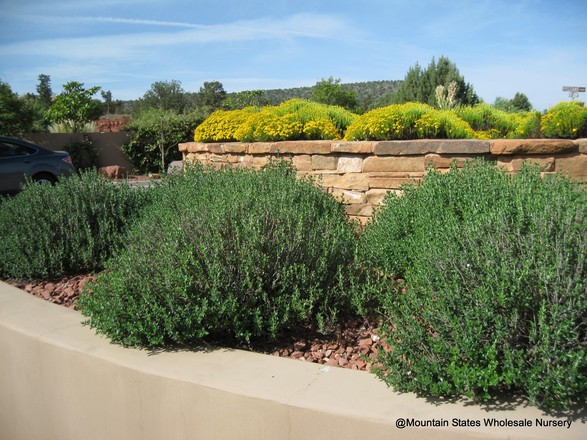
Teucrium chamaedrys 008Believe it or not, autumn has officially arrived.  Once it no longer gets into the triple digits, it is time to think about planting perennial plants.  Get them in the ground in fall – and then they will have a fighting chance to become well established before the heat of next summer hits.

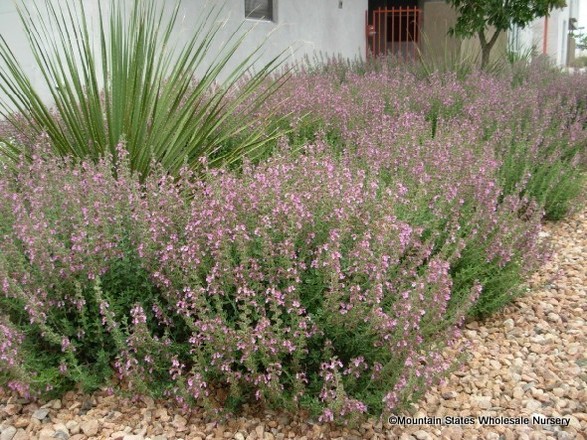
Teucrium chamaedrys and Chrysactinia mexicanaA list of landscape herbs can go on extensively, but I do want to mention one that is often overlooked – germander.  Originally brought here in Father Kino’s time, germander was originally used as a medicinal, but it can also be used in cooking.  Like so many other herbs that come to us from the eastern edge of the Mediterranean (along with bay laurel, sage, rosemary, thyme, and more).  On their native rocky hillsides of Greece and Turkey, these herbs receive rain only in the winter, and are thus excellently drought adapted for our region.


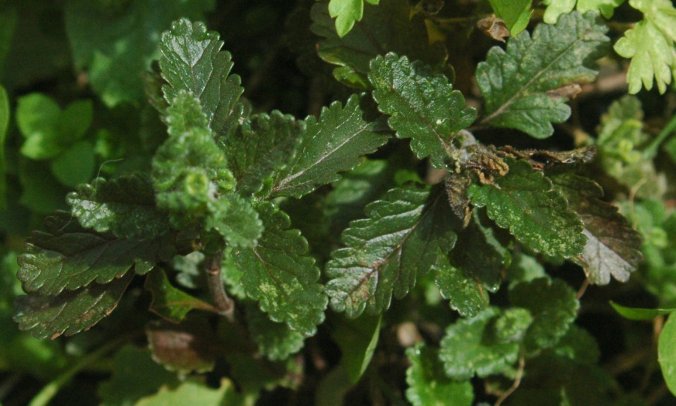
There are around 100 species of germander, but most commonly used is the wall germander (Teucrium chamaedrys).  This species has tiny, bright green, rounded leaves. The creeping germander is the same species, but has been selected over time to be a low ground cover (Teucrium chamaedrys var. prostratum).

Teucrium chamaedris wiki 003

When it comes to landscaping, I favor germander over rosemary because it does add a graceful note of bright, foresty kind of green while rosemary (Rosmarinus officinalis) has bluish green and needle-like leaves.  When it comes to fragrance – I appreciate both species.  Both germander and rosemary have many oil glands in their leaves.

Teucrium chamaedrys calflora 0079

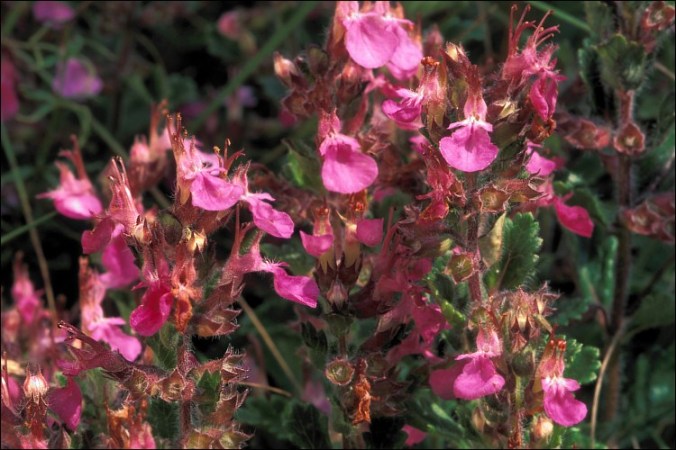
But then there are the flowers!  Germander flowers are far more fragrant, almost honey scented, like sweet alyssium.  And yes they are bee pollinated, by both European honey bees and by our native solitary bees.

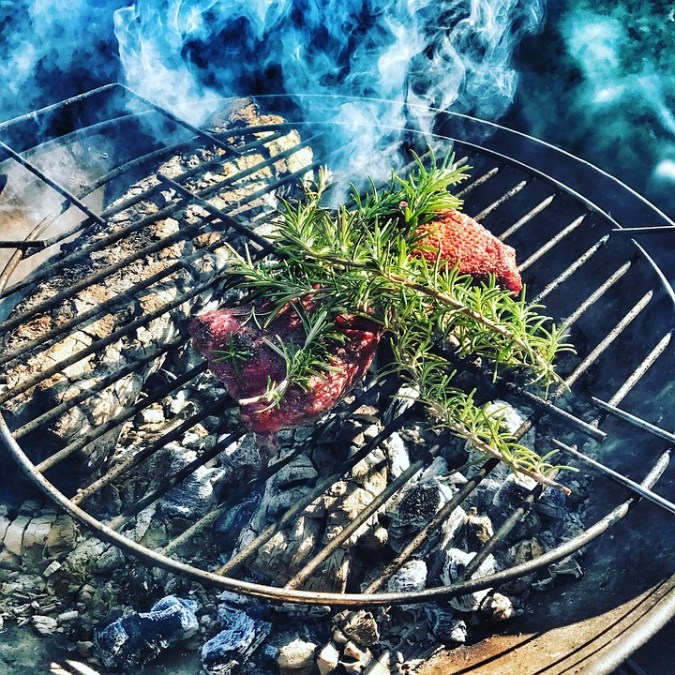
Both rosemary and germander can be used in roasting potatoes or to add flavor to meat dishes.  I use either one to scrub down the grill prior to cooking – depends on which needs pruning.  In ancient Greece, hunters would field dress their meat with germander, often found growing wild in the hills.  (It may have anti-microbial properties.)  Germander is often found in abundance in the wild since, like most herbs, the essential oils render it unpalatable to wildlife.  I won’t promise it is rabbit proof, but those “wascally wabbits” don’t bother mine.

rosemary barbecue pixa 2585704

There are many herbs that can be used to create a beautiful, low-water-using, edible, Southwest landscape.  Stay tuned to Savor the Southwest and I will keep discussing them here.  I hope to have my own blog up and running soon as well.

JAS avatarIf you live in Southeastern Arizona, please come to one of my lectures. Look for me at your local Pima County Library branch, Steam Pump Ranch, Tubac Presidio, Tucson Festival of Books and other venues. After each event I will be signing copies of my books, including the latest, “Month by Month Guide to Gardening in Arizona, Nevada, and New Mexico,” (Cool Springs Press, $26).

© This article is copyright by Jacqueline A. Soule. All rights reserved. Republishing an entire blog post or article is prohibited without permission. I receive many requests to reprint my work. My policy is that you may use a short excerpt but you must give proper credit to the author, and must include a link back to the original post on our site. Photos are courtesy of Mountain States Wholesale Nursery, Calflora, and Pixabay, and may not be used.


Mole Roasted Garbanzos

Hello, Amy here, sharing an EASY, tasty and very satisfying recipe. My sister Laura made and photographed these, so THANK YOU to her!

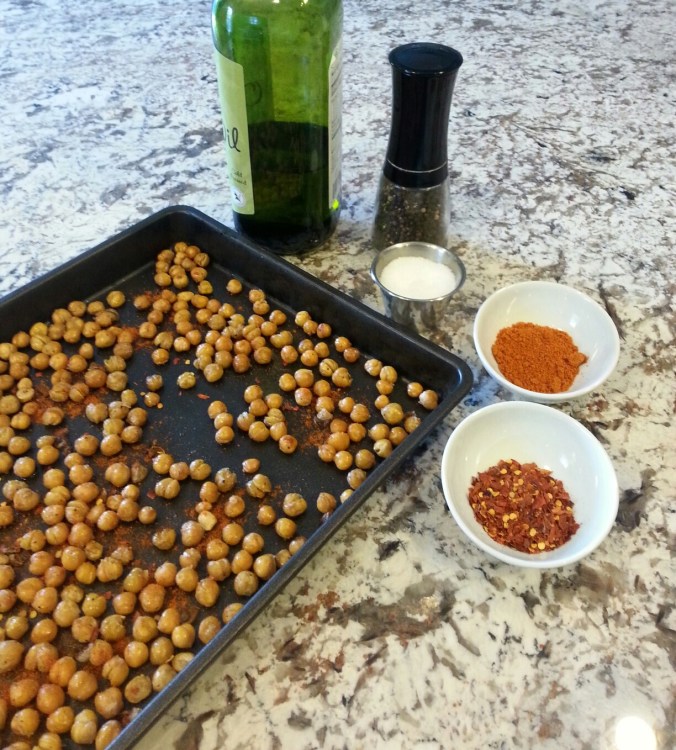
Garbanzos have always been a favorite. They are a fun plant in the winter garden in the low desert. Tucson CSA occasionally has them in the shares as well. To start this recipe from dried garbanzos, just soak and cook as normal in the slow cooker, pressure cooker, solar oven or on the stove. However, my sister started with canned beans. So easy! Just rinse and drain thoroughly.

18096

Laura put the garbanzos on a cookie sheet with a splash of olive oil. Then she sprinkled them liberally with Mano Y Metate Pipian Picante and a dash of salt. Because she likes heat, she also used black pepper and crushed red chile!

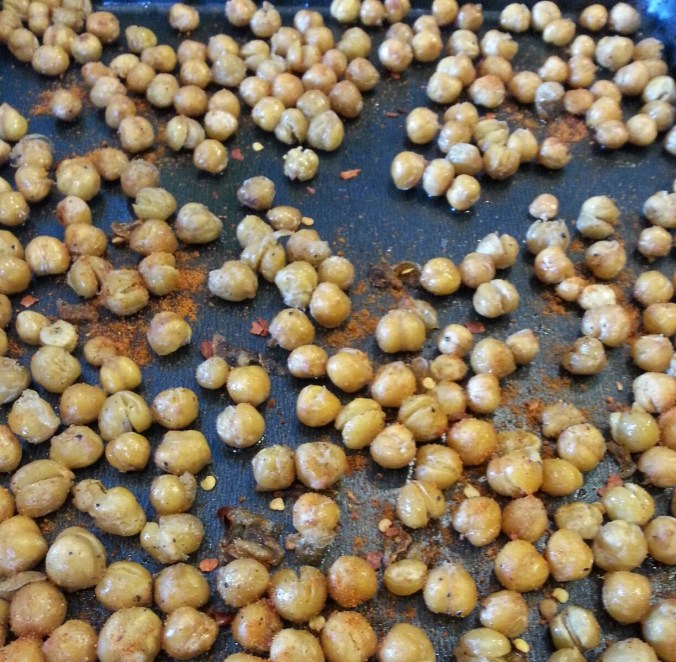
18098

She put the cookie sheet in a screaming hot oven, like 450 degrees! and watched them very carefully so the spices did not burn.

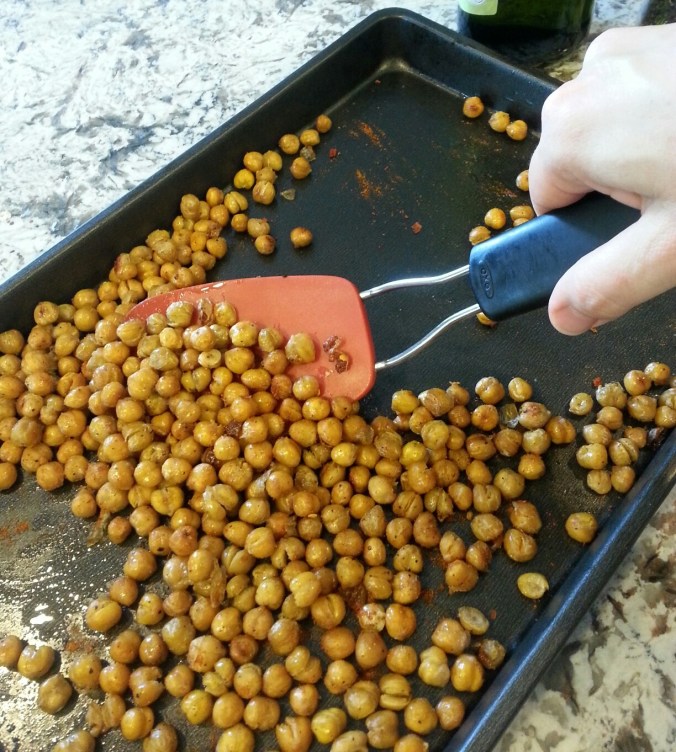
18100.jpeg

When they’re crunchy, they’re done!

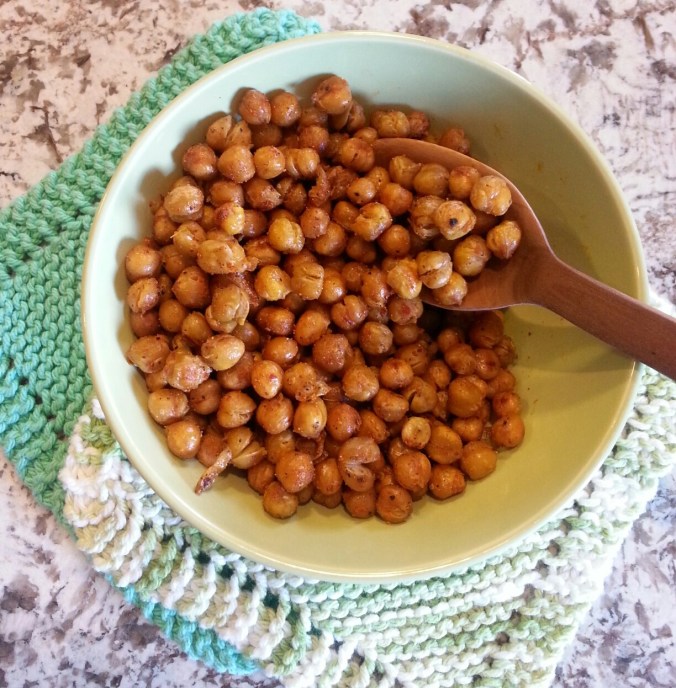
18103.jpeg

They do not keep their crunch the next day, so eat soon after they are cool. Sprinkle on a salad or nibble them plain as a snack. Enjoy!

Wild Satisfaction: A Simple Sandia (Watermelon)-Pomegranate Margarita; (and for the Intrepid Sipper, Chiltepin)


IMG_0026.JPG

Savor Sister Linda here on this beautiful, lightly drizzling, evening in the Old Pueblo. It is nearly time for the Wild Chile harvest in the mountains in Sonora. The rains have brought life back to the very parched land. I have to admit that I had begun to loose faith that it would ever rain, even though I am generally friendly with cycles in life and seasons.  It is so hard to watch the land get so dry that even it shows it’s ribs;  and not just the hoofed creatures that depend upon it.  Now,  because of all the reconditioning and regenerating brought by the rains, we’ll soon be harvesting chiltepin.  I’ll be be musing and meandering in this blog about the rare Wild Chiles,  and how they are harvested, dried, and used – and likely about how darned transformative it is to simply be in their midst. Today I am in the mood for something simple and satisfying to kick off the season. I look around my kitchen at the red, ripe fruits of late summer/early fall and have decided to craft an adult beverage. And because I always have chiltepin on hand, I added it to the mix of ingredients as well.

I am not at all sure how smart it is to write after sampling a few versions of this Sandia Margarita, but here goes. This Recipe is for 2 people and served in smallish glasses. It takes about five minutes to prepare.

Combine the follow ingredients:
1 cup fresh watermelon
2 Tablespoons fresh pomegranates
Juice of one fresh lime – or two if you like lime flavor.
1.5 OZ Tequila Silver (this amount is a starter amount – wax and wane as you desire. Use good quality tequila, you’ll feel better in the morning)
1 chiltepin
Blend, and blend it well.  Otherwise you’ll have glumps of sandia/watermelon which is distracting; and the seeds of pomegranate will stick in your teeth. Instead: blend it all until satisfyingly smooth. 
Put into beautiful glass and garnish as you would like. I garnished one glass with just pomegranate seeds. Another with Pomegranate and one crushed chiltepin on top.
IMG_9932.jpg

Natures Beauty ….


IMG_9778.JPG

Scoop put one cups worth of watermelon …

IMG_9996.JPG

…. place watermelon in blender.

IMG_9997.JPG

Add 2 Tablespoons of pomegranate seeds and juice of one fresh lime.

IMG_0001.JPG

1.5 Silver Tequila. 


IMG_0010.JPG

Blend and Garnish as you would like; pomegranate seeds add color and a nice crunch.

IMG_0020.JPG

Add one crushed chiltepin for a surprisingly satisfying “heat”  that  balances out the cooling property of the watermelon.


Huevos Rancheros with Mole


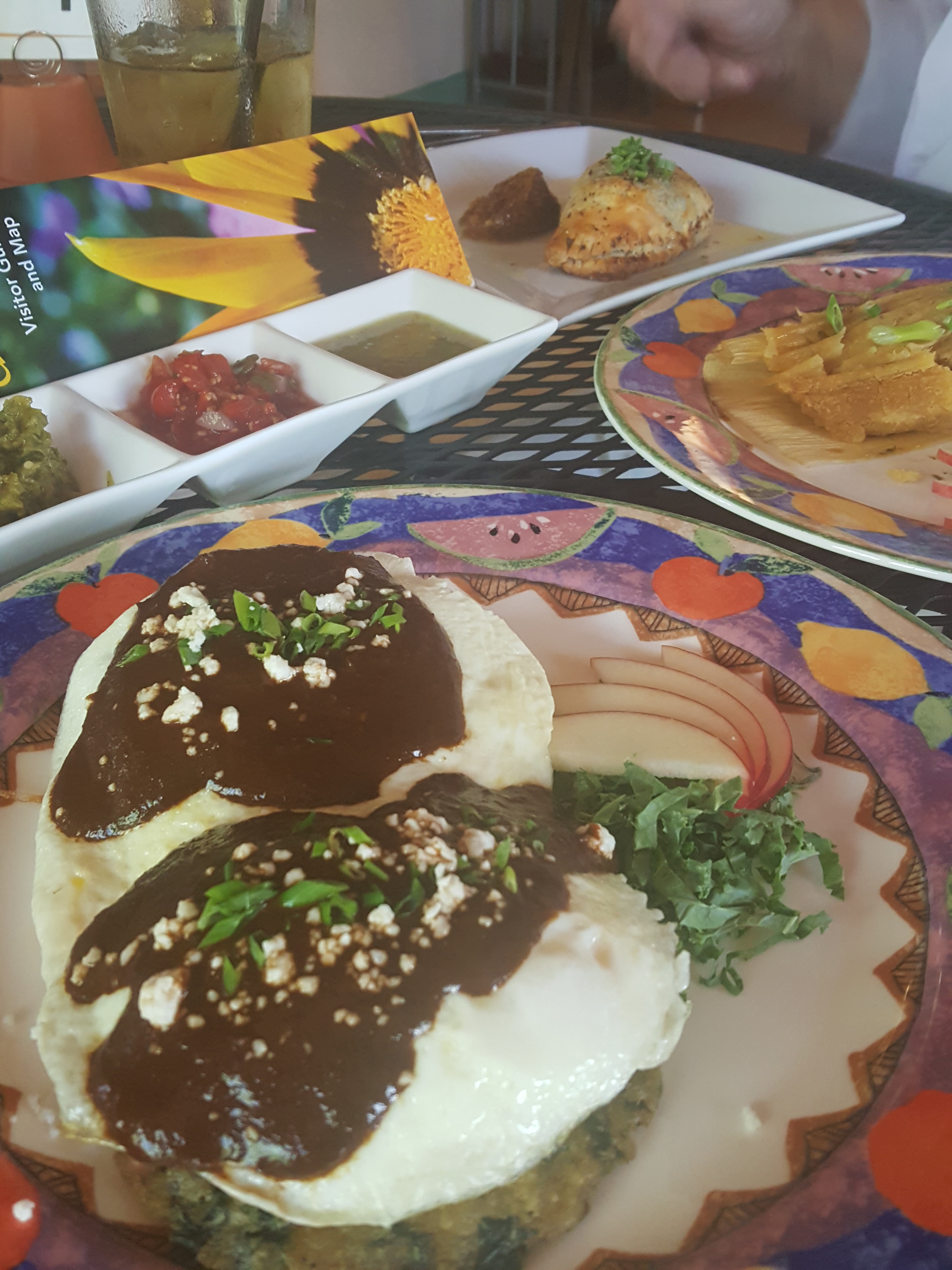
Hello, Amy here, full from a hardy brunch. Earlier this week my friend invited me to lunch at the Tucson Botanical Garden, where we enjoyed a lamb empanada, calabacitas tamal and huevos rancheros made with mole, black tepary beans and queso fresco. It was ALL soooo good, but I think you can guess my favorite!

Café Botanica is delicious, adorable (the old adobe Friends’ House, inside or on the patio) has really nice staff, and is open 8am-2pm daily. You do have to pay admission or be a member to get to the café, so we wandered, looking at plants in the shade and a gallery or two after our meal. Perfect afternoon.

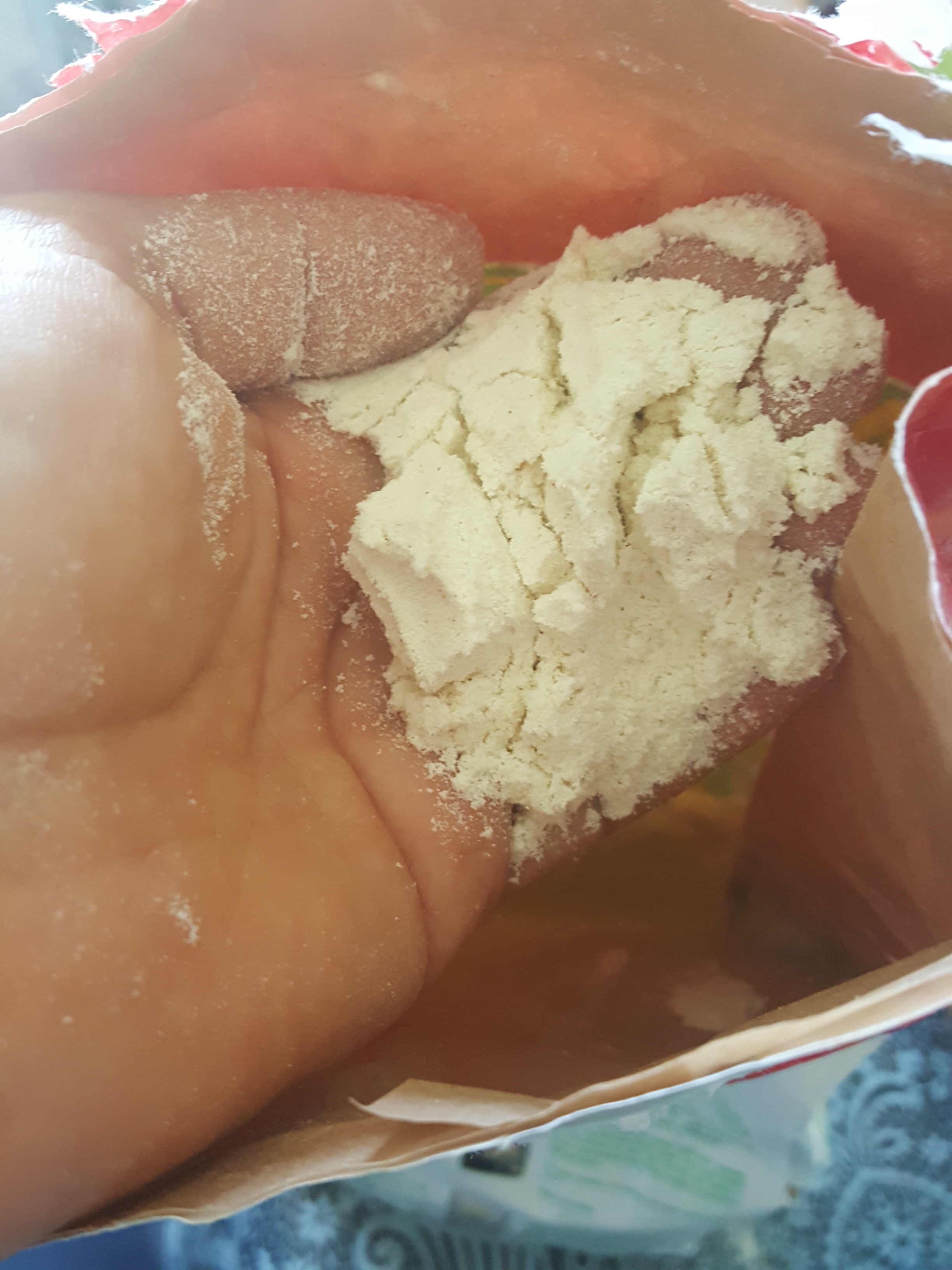
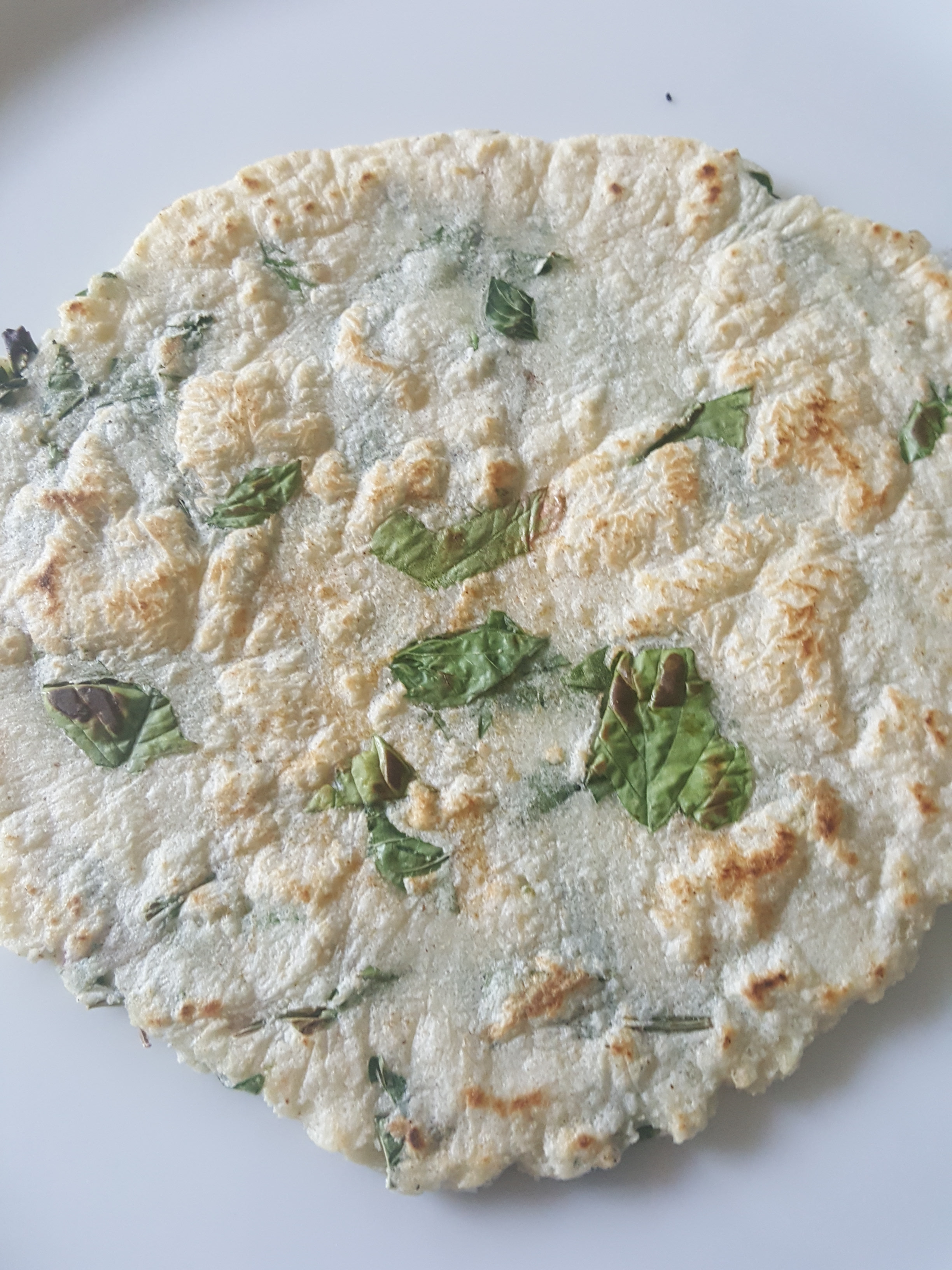
I had never heard of huevos rancheros with mole, and I had to make it at home, often! Since I was only making brunch for two, I used dry corn tortilla meal I had on hand instead of buying or making a batch of highly perishable fresh masa. Maseca is a common brand name in Tucson grocery stores, or online.

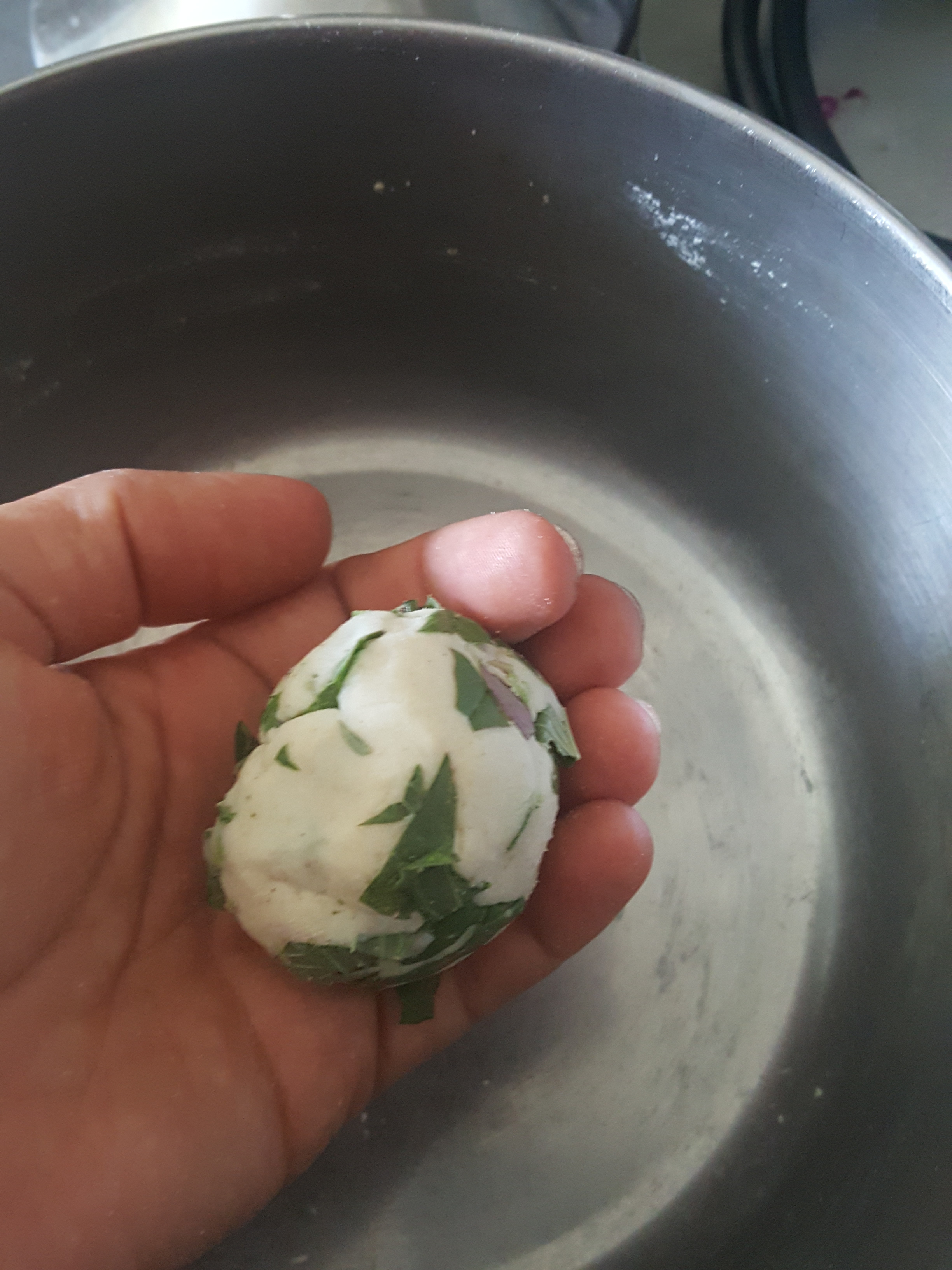
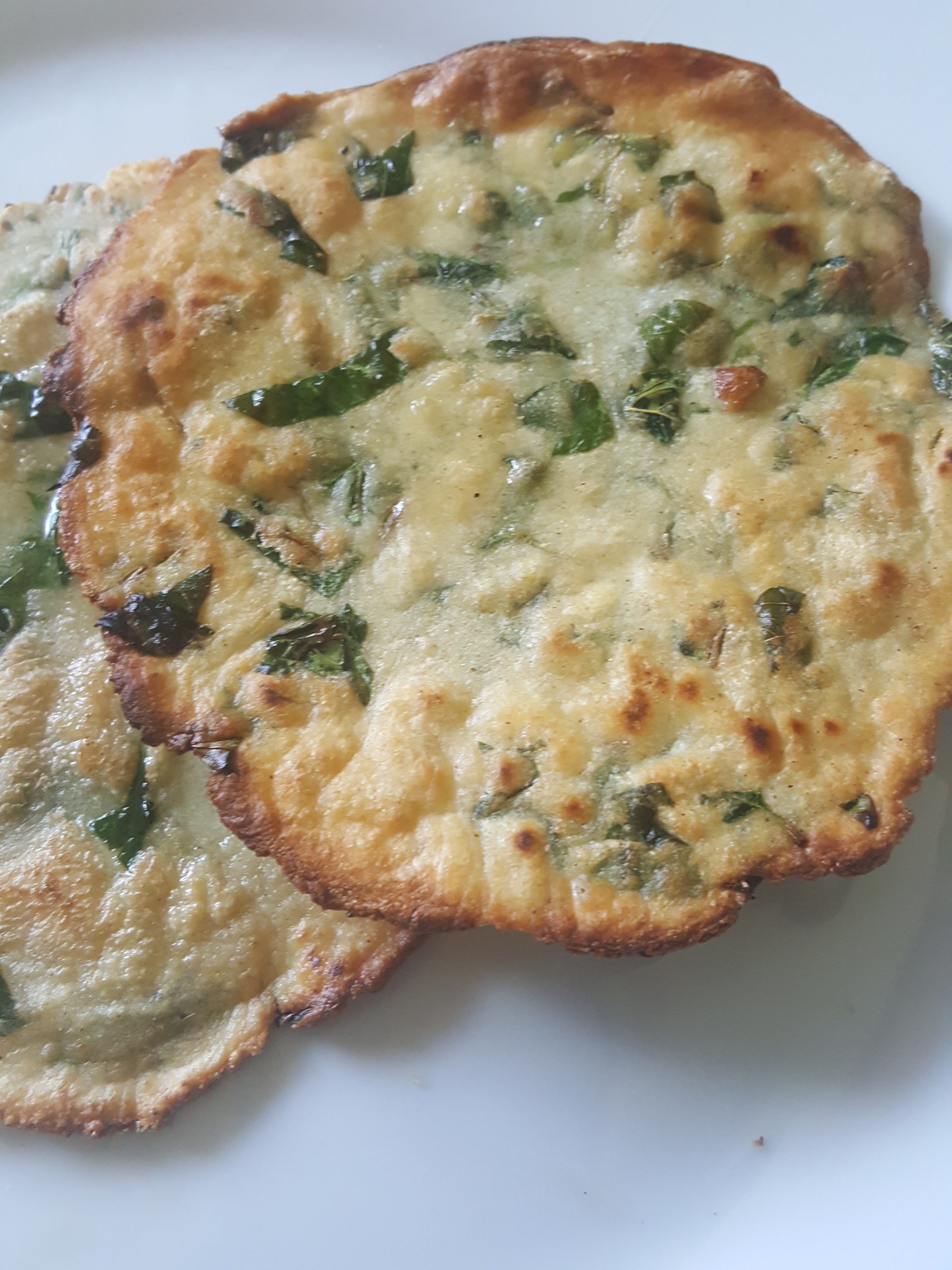
Café Botanica used parsley in their masa for flavor and color, so I chopped a few leaves of quelites (young amaranth greens) raw and mixed them into the masa. This of course is optional, but quelites are so prolific this year with our above average rainfall this summer. Recently Carolyn used amaranth seed her in corn tortillas.

Add enough water to make a soft dough. Mix about a quarter cup meal to a few tablespoons water and adjust as necessary. If it is too dry, it will crack. If it is too wet, it will stick to your hands. Form into two balls, cover, and let rest for a few minutes. Then reassess the moisture.

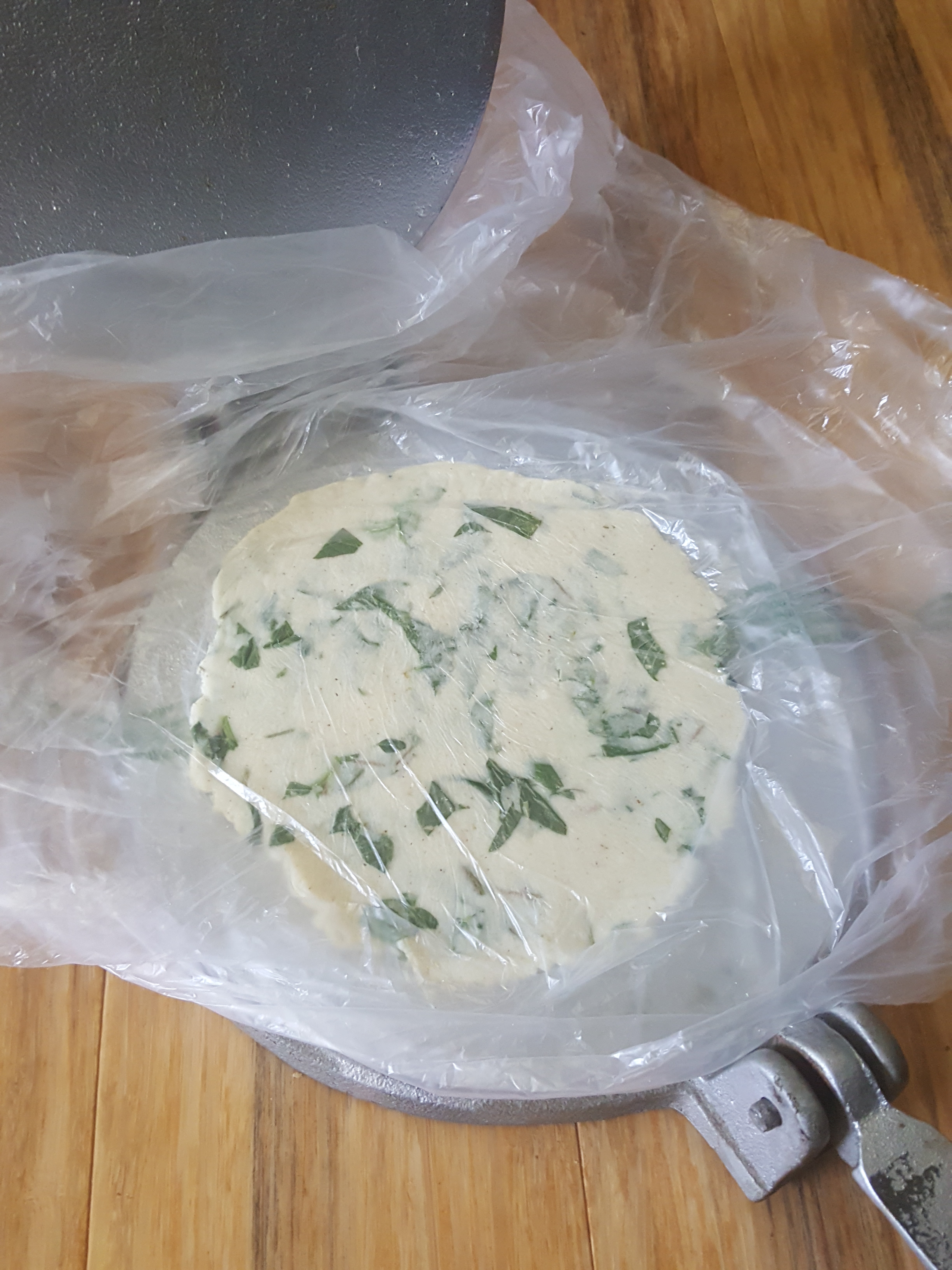
Place the ball in a plastic bag and flatten with a tortilla press, a dinner plate or a rolling pin.

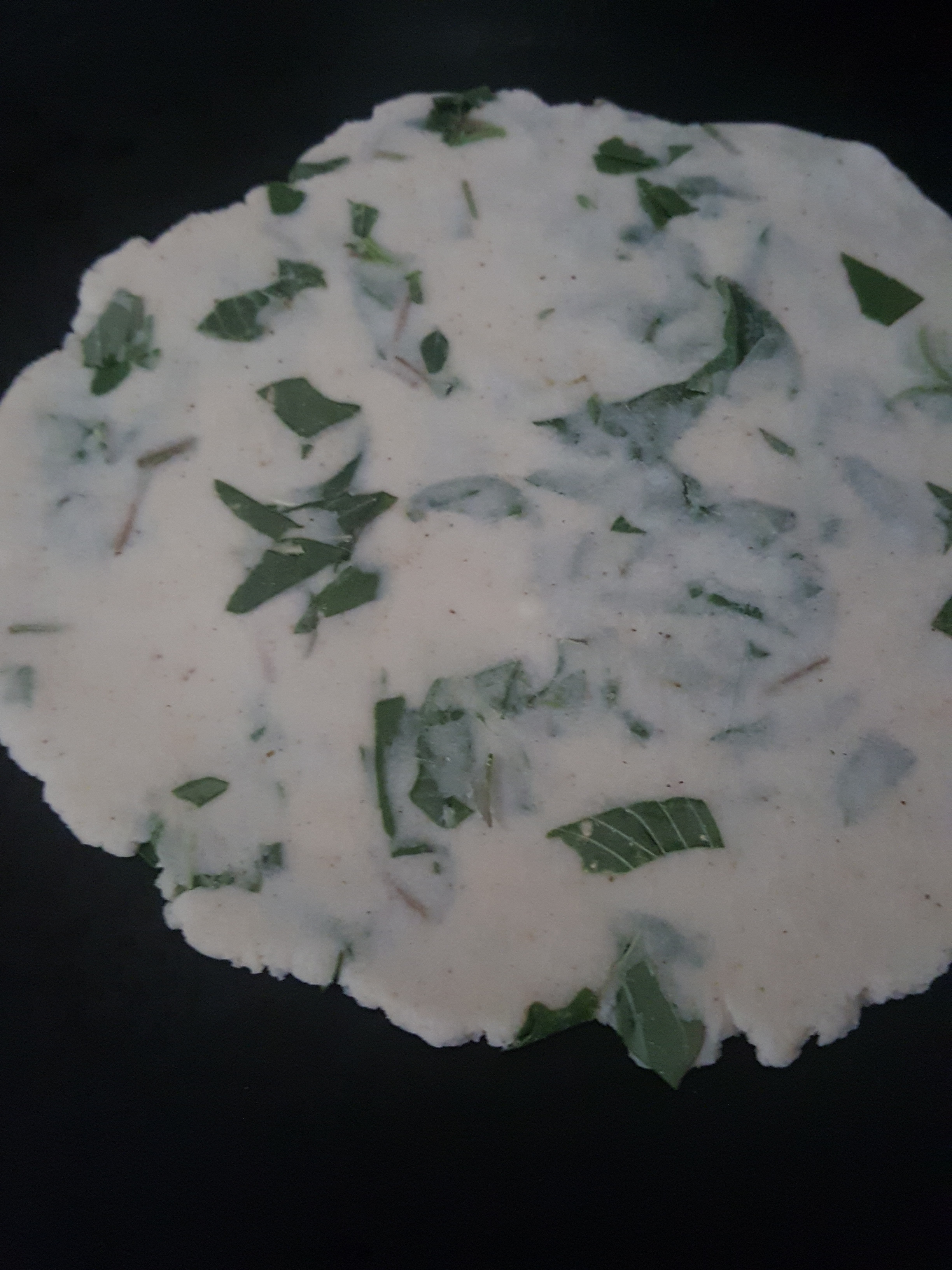
Thoroughly heat a comal (a dry cast iron griddle) over medium heat and put tortilla to cook. Flip a few times until both sides are covered with brown spots. No need to keep them hot, they’ll be fried!

Next I made a small amount of Mano y Metate Mole Dulce with oil and veggie broth. Other varieties of mole would work, and any broth you like. Since the dish was vegetarian, I decided to keep with the theme.

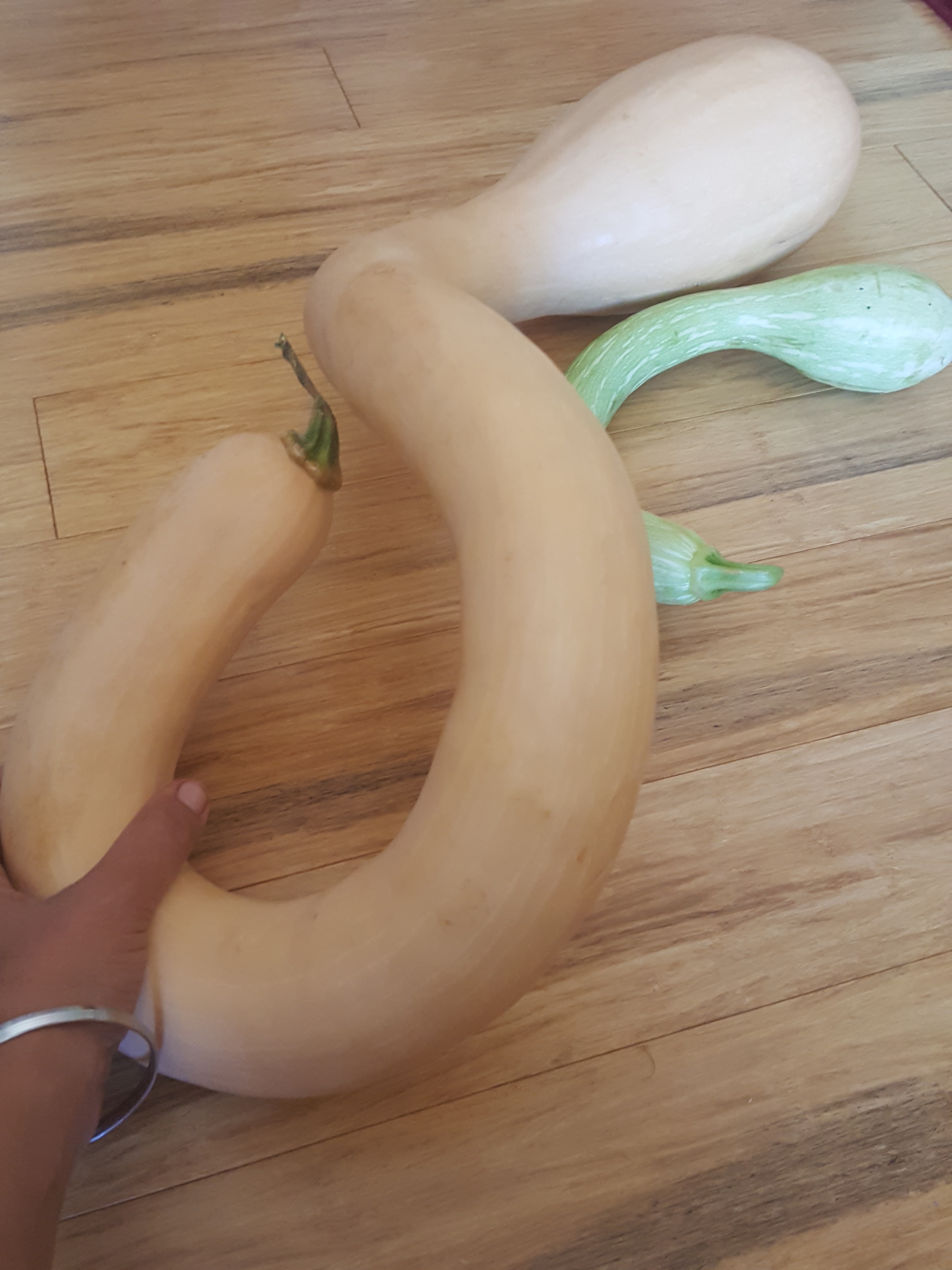
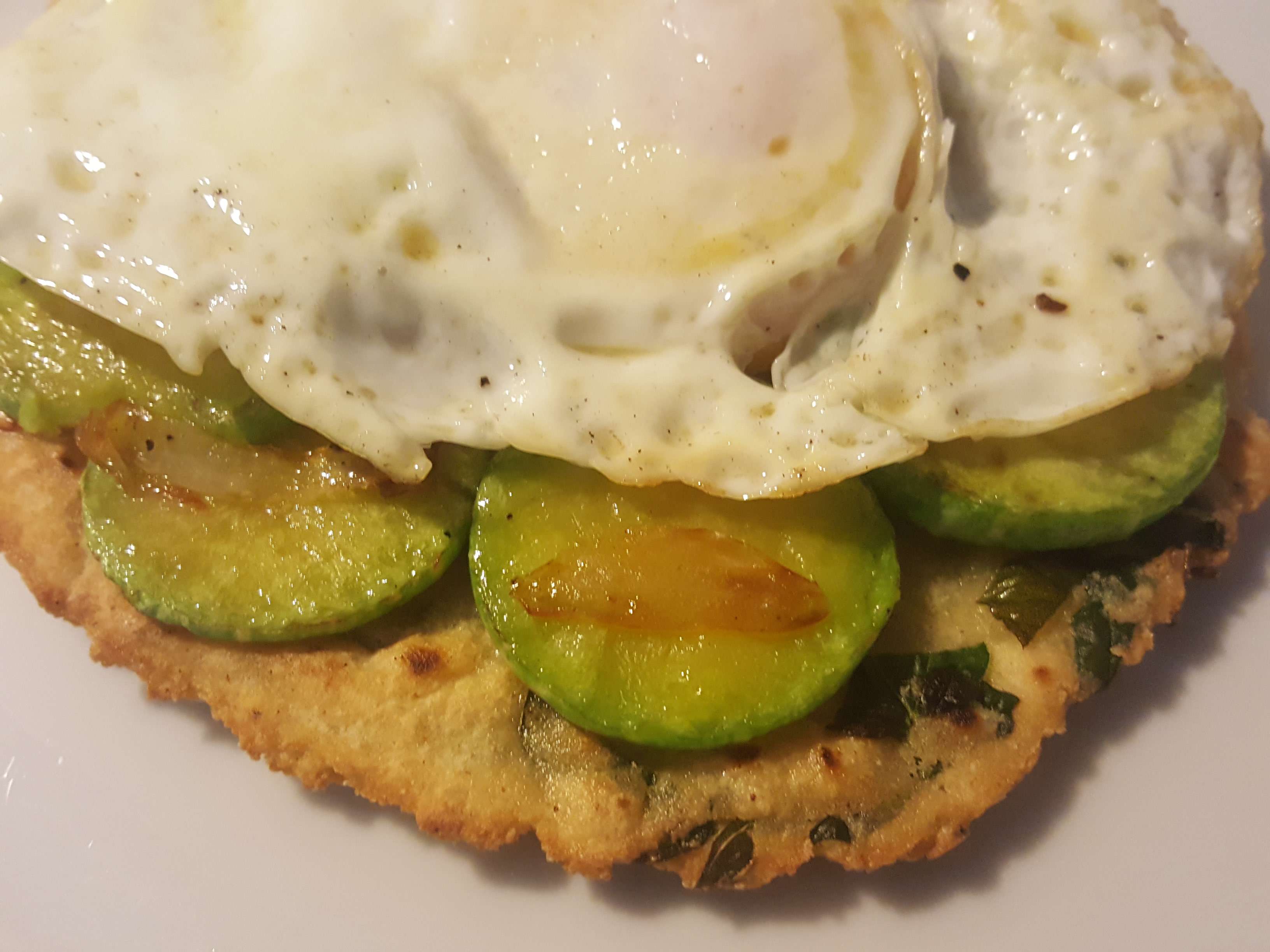
Café Botanica used black tepary beans, but I used a summer squash from the Tucson CSA. I had never heard of Tromboncino before this year, and we love the taste and its trombone shapes! As a mature, winter squash, it resembles its relative the butternut. Even as a baby, it is slightly yellow on the inside with tender skin and really nice flavor. I sautéed it with onion, salt and pepper.

Next fry the tortillas in a little bit of oil until beautiful brown and fragrant.

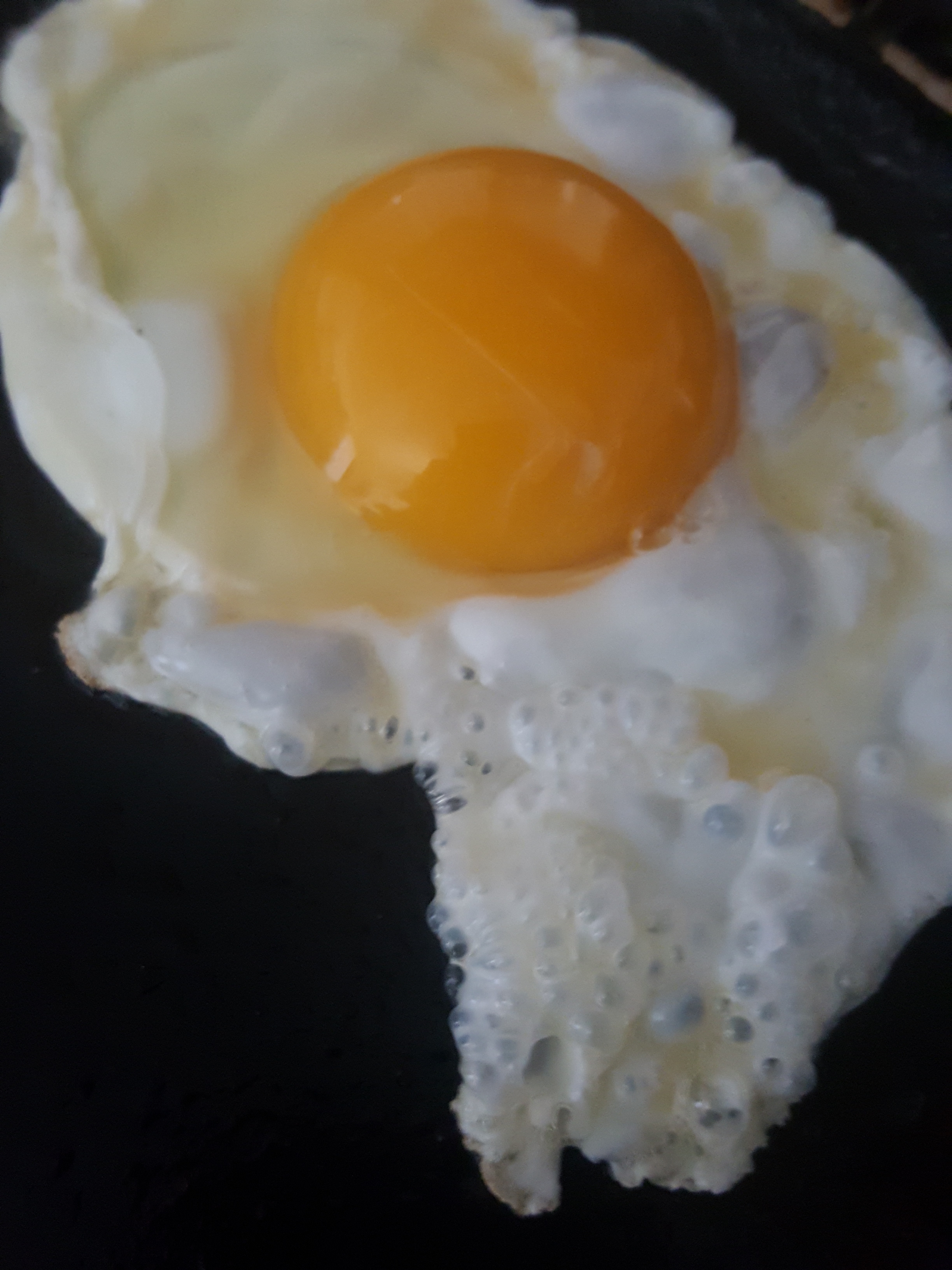
Fry eggs over medium, or to taste. These eggs were from a friend of a friend. The deep color of the yolk is due to the hen’s diet and I bet these birds eat plenty of fresh greenery and insects.

Assemble the dish: tortilla, squash, egg. You could melt some cheese over the tortilla if you want.

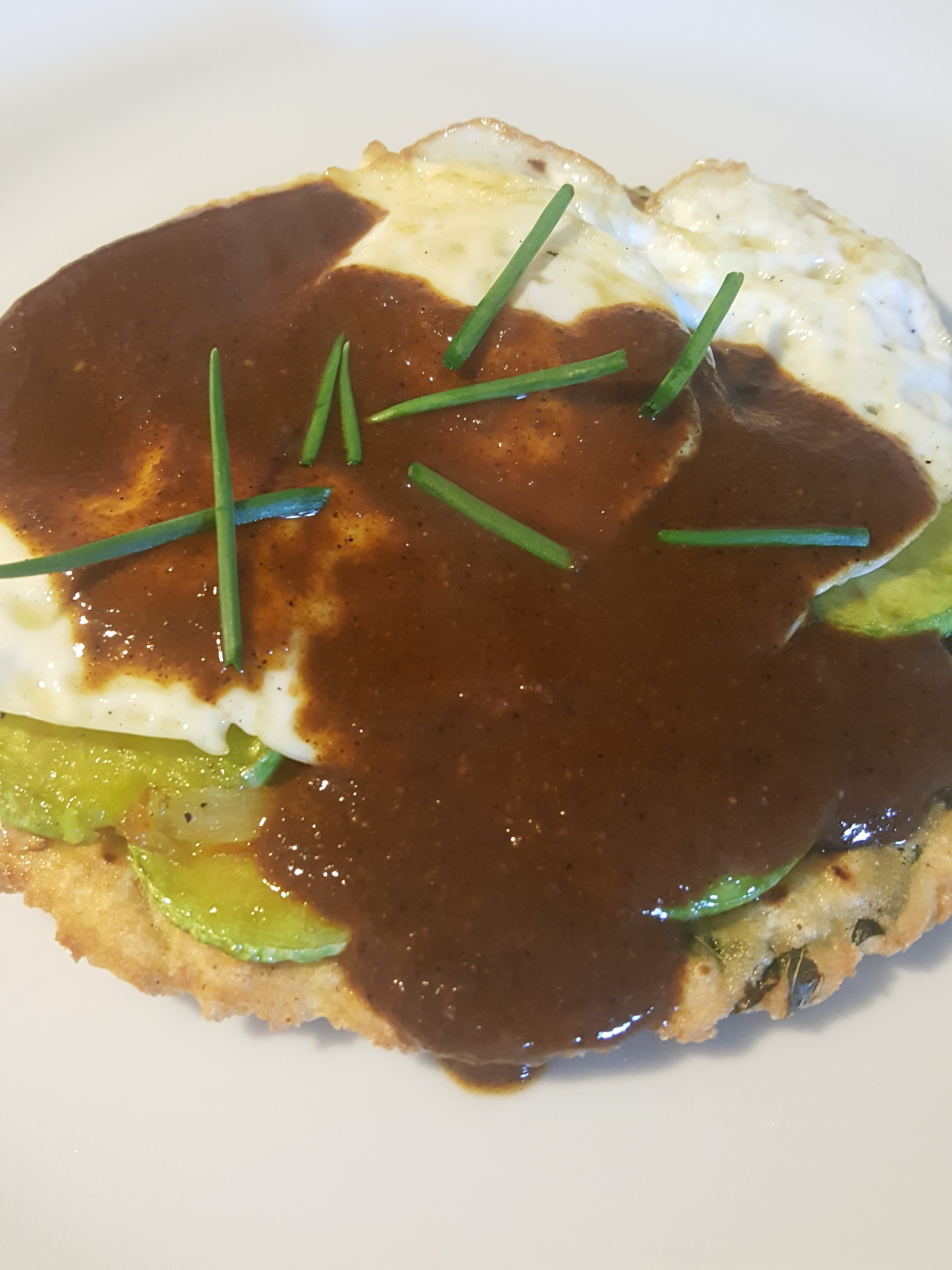
Finally, top with the Mole Dulce and I’itoi onion tops. My new favorite.

Blessed Monsoon Weeds!

Yikes–look what has happened all around us!
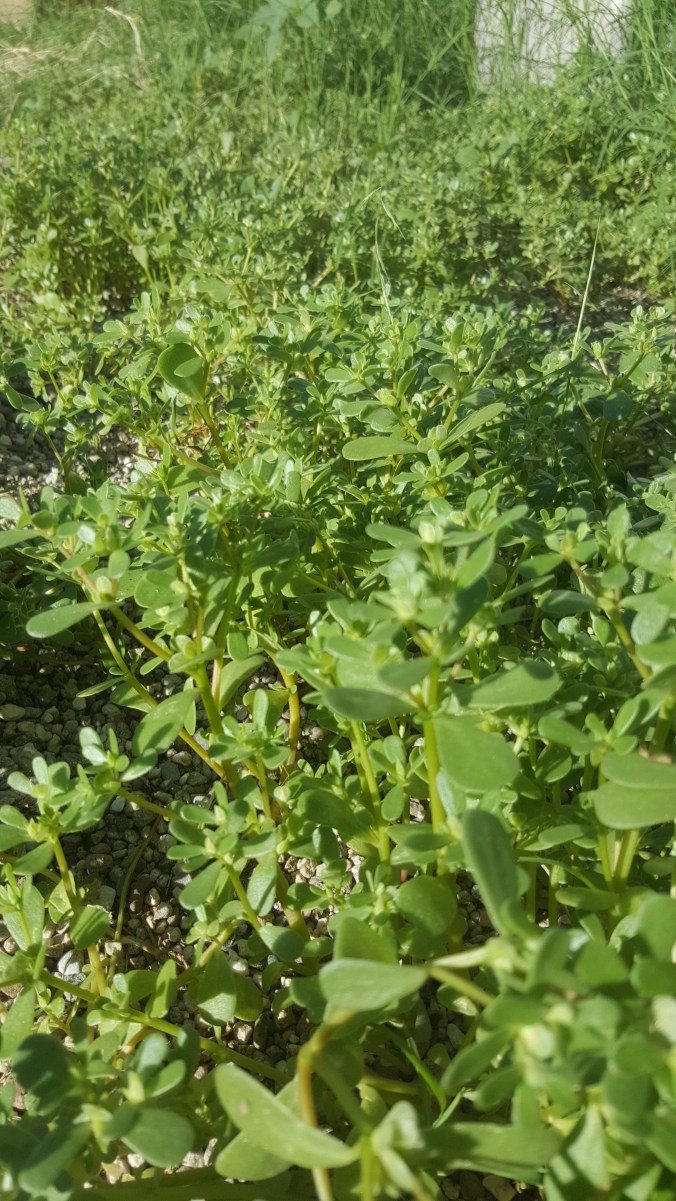
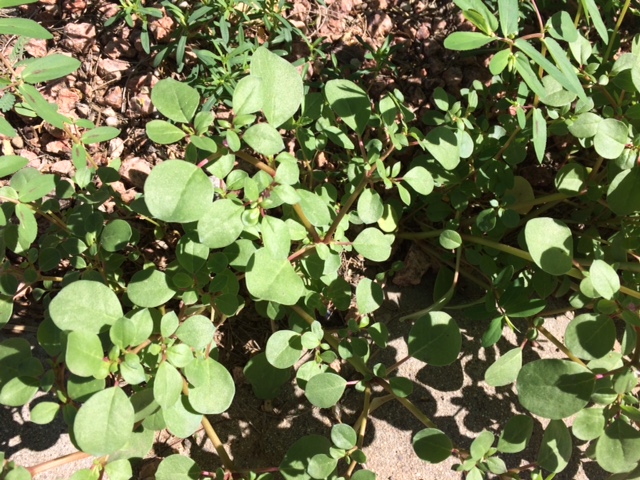
Verdulagas — purslane — exploding in the garden. (photo by ChadBorseth, NativeSeedsSEARCH store mgr.)

With our recent record-breaking rainfall in Baja Arizona, weeds continue to go rampant. Now, what to do with them? Tah-dah–Eat them before they eat up all your garden space!

Tia Marta here—admitting I actually don’t believe in weeds at all—Weeds are gifts to be used, relished gastronomically and nutritionally, admired as amazing strategists,… appreciated!  Weeds are much-maligned plants with a different way of surviving than our regular “garden variety” plant.  They know genetically how to hustle to “make hay while the sun shines.”  So if you need to deal with a bounty of weeds coming on like gang-busters in your garden or nearby in the desert, I’d like to share some fun ways to consume and internalize them.  If we are what we eat, perhaps their “energies” may be a form of speed on some ethereal plane.
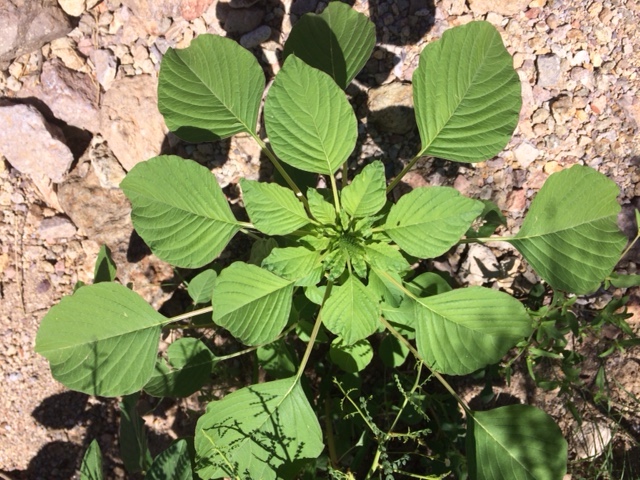
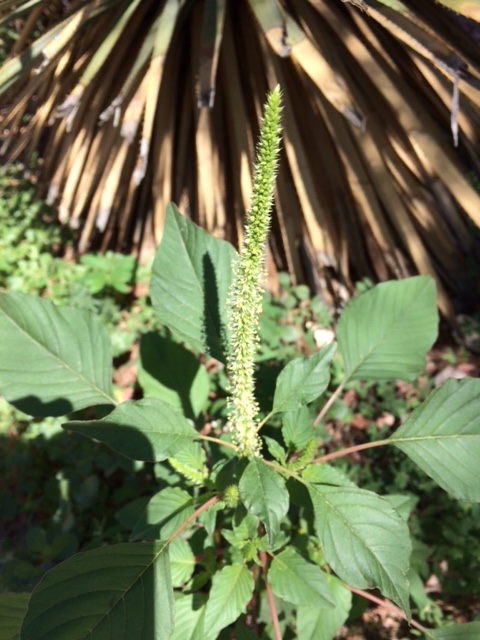
Fresh young quelites  (Amaranthus palmeri), aka pigweed and carelessweed, popping up with summer rains–ready to pick!  (MABurgess photo)

Quelite, weed of many names– careless weed, pigweed, Amaranthus palmeri, known as “rain spinach” or Juhukia i:wagi to the Tohono O’odham–is popping up in great green swaths wherever rainwater has pooled. It grows faster than one can imagine. The scourge of cotton farmers, it is, on the flip side, a positive boon to traditional harvesters—Native, Hispanic, African or Asian. As climate change digs its teeth into desert environments, our native Amaranth “weed” holds great potential as a rapid-responder “dry-land” crop for the future.
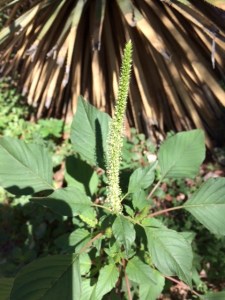
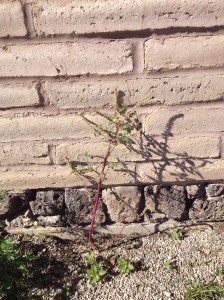
When flower stalks of Amaranthus palmeri emerge, leaves toughen. Be sure to harvest only the tender leaves. (MABurgess photo)
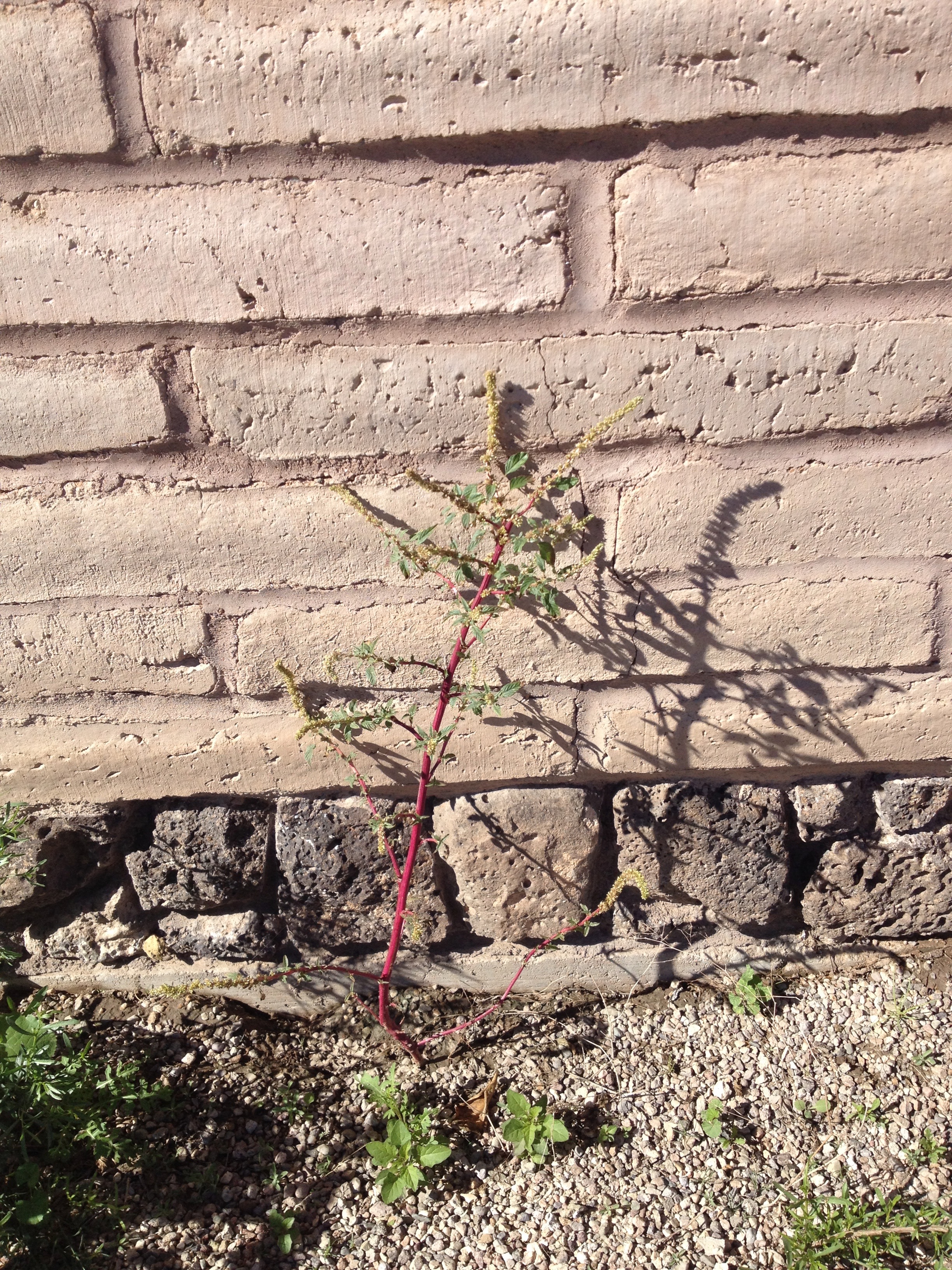
Mature, drying Amaranthus palmeri image taken at Mission Garden. The seedhead is spiny but contains nutritious seeds! (MABurgess photo)

The nutrition of Amaranth, our rain spinach, is way up at the top of the chart. Consider that 100g of young shoots provides 42 calories packed with 3-4 grams of protein, 3mg iron, and 4-11 mg of available calcium.

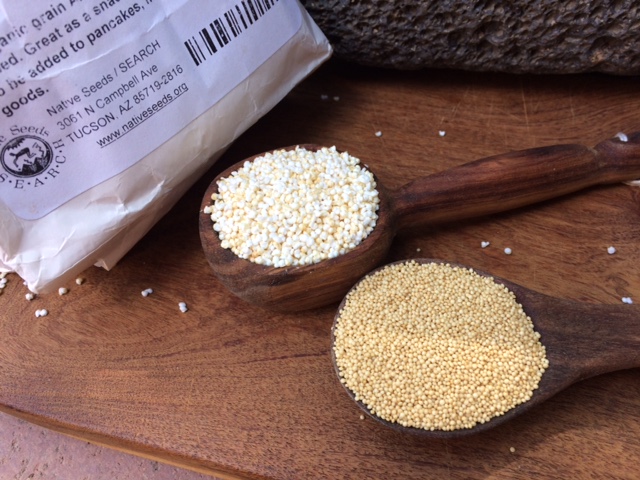
If your Amaranth patch matures faster than your harvesting schedule allows, don’t fret–all is not lost. As long as there are soft, non-fibrous leaves to pick, they are fair game for steaming or stir-frying as greens or quelites. Later, when the arching spike of spiny seed capsules matures and dries, you can harvest seeds (carefully with gloves) and winnow the tiny grains in the breeze. THEY are fabulously nutritious too. Amaranth seed is 15-18% protein—far higher than most cereals. They can be cooked as hot cereal or ground into flour– full of healthy, gluten-free carbs and fiber. Amaranth weed seed baked into bread adds a pleasing and healthy crunch. If you want quantity and lack patience to harvest wild carelessweed, the NativeSeedsSEARCH store, 3061 N Campbell Ave, Tucson, has grain-amaranth for cooking or milling, also popped amaranth for adding to baked goods or confections for Dia de Los Muertos. [More to come on that topic in early November.]
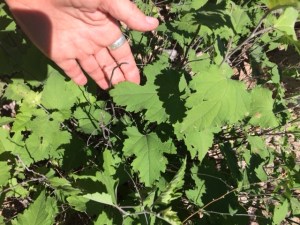
Caution:  Here’s a trick plant that may look like Amaranth but it is a perennial that leafs out with summer rains, especially in the Tucson Mtns area–Ambrosia cordifolia–not good for eating–better for soil stabilization. (MABurgess photo)
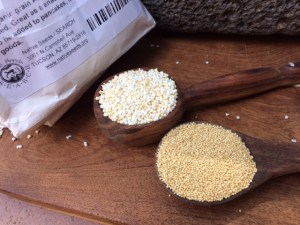
Delicious and healthy grain amaranth and popped amaranth, available at the NativeSeedsSEARCH store for cooking.

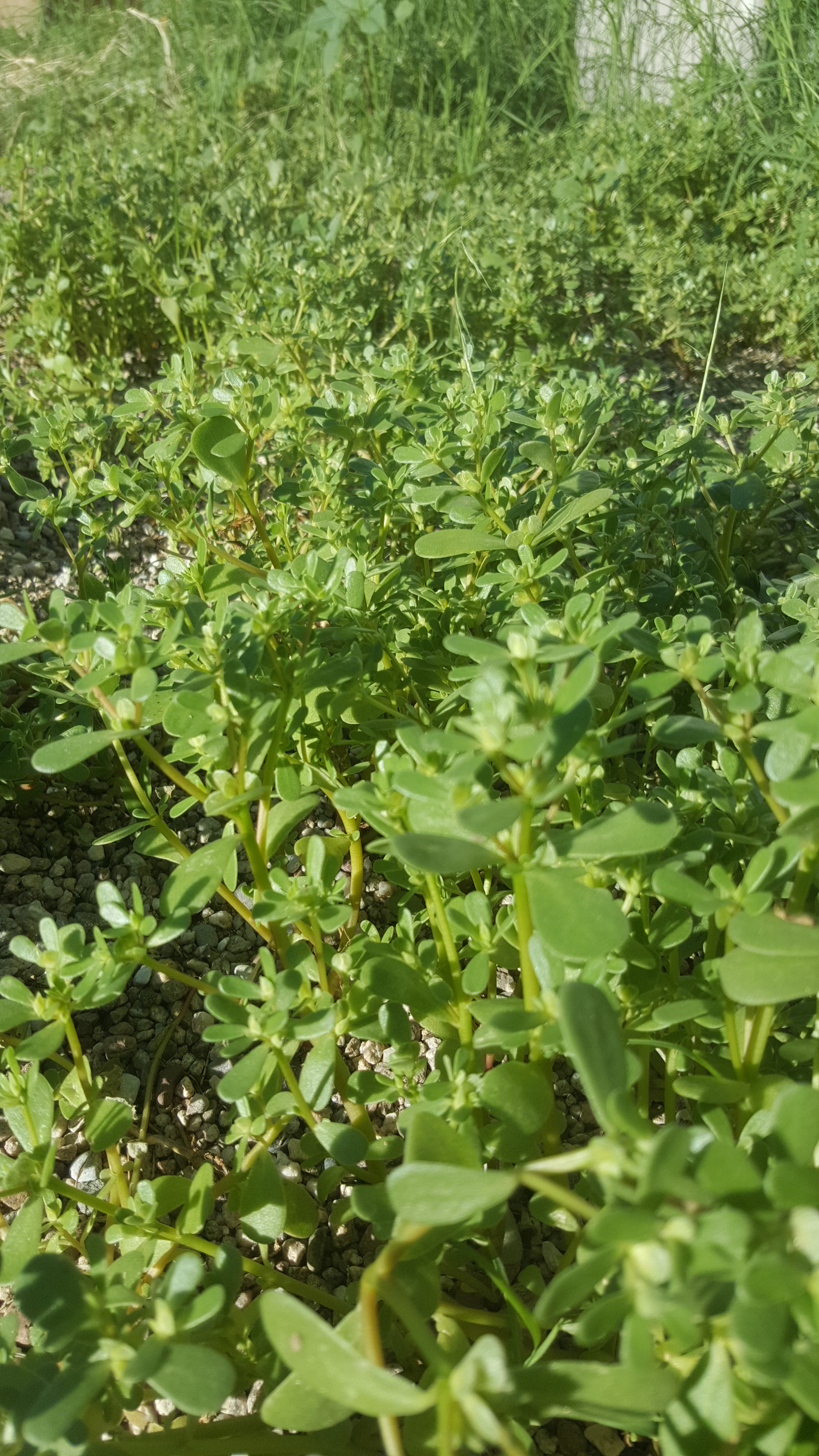
Another “weed” that is probably at this very minute creating mats of green in your garden is verdulaga. Traditional Tohono O’odham know it as ku’ukpulk, and some gardeners refer to the same puffy-leafed ground-sprawler as purslane (Portulaca oleracea). It can be added fresh to any salad for a juicy, succulent texture and tang. And check the nutrients, especially if your body needs available calcium. Every 100g (a little less than ½ cup) of verdulagas provides 0.3mg iron, 19mg calcium, high omega-3-fatty acids and lots of vitamins A&C. Rinse your verdulagas in a bowl of water, then toss the water back in the garden where the many teensy seeds that have dropped to the bottom can go for a “second round.”
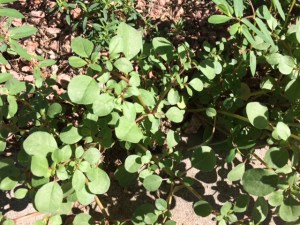
Caution:  Another “trick plant” is this purslane- look-alike called “horse purslane”-Trianthema portulacastrum. It will taste a little soapy if you try it. (MABurgess photo)
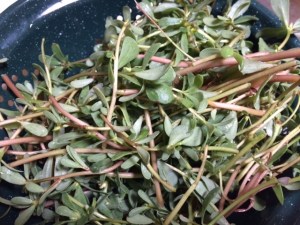
Picked and washed true verdulaga/purslane, ready to make into pesto (MABurgess photo)

Here is an idea for Monsoon Pesto made with tasty weeds! Pestos of course can be made with almost any greens—e.g. with kale in the winter—so why not use what Nature provides locally and now?  Both amaranth or verdulaga can be used in your favorite pesto recipe for a healthy and tasty Southwest vacation from basil. [A word of caution: If you harvest from the wild, be sure to collect at least 50 feet from a roadway, or upstream from any road along an arroyo. Know your plants when harvesting!]


Here is a SUPER-NUTRITIOUS SONORAN DESERT MONSOON-WEED-PESTO RECIPE:

Ingredients:
2+ cups well-packed, fresh, washed Amaranth or Purslane greens
2-3 cloves heirloom garlic
¼ cup pinyones shelled (pine nuts), or any other fresh nutmeats, or soft seeds such as pepitas (pumpkin seeds)
2/3 cup cold-pressed extra-virgin olive oil
sea salt or ancient Utah salt, and ground pepper, to taste (all optional)
½ cup grated Parmesan or Pecorino cheese

Directions:
In a food processor, combine wild weed greens (Amaranth or verdulaga), garlic, and pinyones, and process on the  “pulse” setting until finely chopped.
With processor running, slowly drizzle in the olive oil until the texture is smooth and fine.
Add the cheese and pulse briefly just to combine ingredients.
Taste, then season with salt and pepper as needed. (It may not need any.) Give one last pulse after seasoning.
(Pesto can be stored in frig or freezer.)
Serve on crackers with cream-cheese, in pasta, on pizza made with local white Sonora wheat flour for another local twist, or simply spread on good bread for a fantastic snack, as seen below!
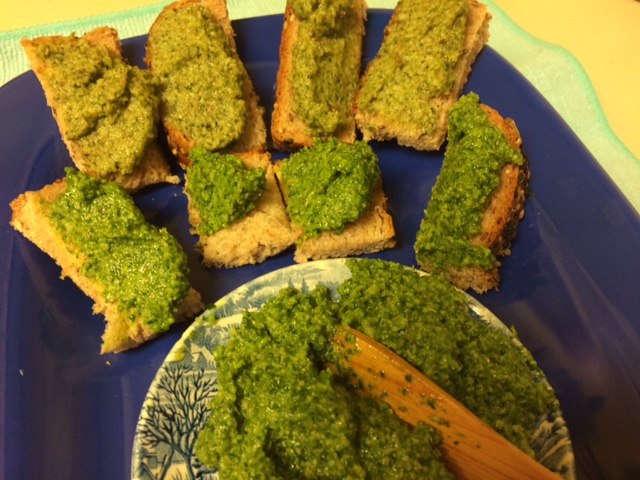
Monsoon Weed Pestos–The top row is Purslane Pesto with Pine Nuts. The darker green is “Pigweed & Pepita Pesto” made with pumpkin seeds–(here served on harvest seed bread squares)–Both Weed Pestos are SO delicious (MABurgess photo)

As you taste either of these nutritious weed pestos with eyes closed, you can SAVOR the wild Southwest bouncing back into its burgeoning monsoon mode and relish the desert’s rhythms. This is Tia Marta’s wish for you– Happy weeding and eating your way through monsoon season!
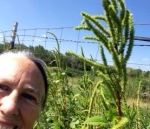
Amaranthus palmeri seedheads growing too tall for a selfie –but soon ready to harvest for seed

(You can read about Winter/Spring Weeds in my blog from February 14, 2014. Interestingly, the weeds that flourish with our Sonoran Desert summer rains in the heat are totally different from the species that sprout in winter with cool/wet conditions here. The metabolism of winter vs. summer weeds involves totally different biochemical strategies—tho’ they are all similarly nutritious.)


Hot Chile. Cold Brew.

IMG_8676.JPG

Exactly like in nature, Mesquite Cold Brew & Chiltepin Cold Brew rub up against each other.

Linda here with a Shout Out to Doug and Amy at EXO COFFEE – http://www.EXOCOFFEE.com- here in the Old Pueblo.  Cold Brews work like magic medicine on the hot days of summer – and every day of the year.  But to make a cold brew with the rare and wild chiltepin, and its nurse plant of choice, the Mesquite tree, takes the flavor experience to a whole new level.

The rare tiny chiles that they use in their brew come from plants on and around our ranch in the foothills of the Sierra Madres, so we feel especially connected to this brew, but so should you.  After all, chiltepin is The Mother of all chiles, and so has likely touched your palate and life one way or the other. And it’s bright green leaves, white flowers, and bright red fruit have thrived for 8000 years because it benefits from the shade and protection of legume trees like the Mesquite. And at EXO COFFEE you can sip these two desert miracles side by side.
I was inspired to create a similar Chiltepin Cold Brew in my own kitchen. I asked Doug if I could share what I came up with, and he was gracious and said yes. He shared that the recipe is apparently already in the Food Conspiracy Cookbook.
IMG_7309

Coffee and Chile is a delightful pairing. 

IMG_7314.JPG

Place 3/4 a cup of roughly ground coffee – like  you would use in a french press in a one gallon container. I used a large ball jar.


IMG_7318.jpg

Add three dried, red, wild harvested chiltepin peppers. 

IMG_7322.JPG

Crush them and pout the chile-coffee mixture into the ball jar.


IMG_7289

Pour (non-boiled) water into the jar, and let it sit at room temperature for 24 hours. .  (I used EXO Coffee from Mexico, wild harvested chiltepin).


IMG_7333.JPG

At the 24 hour mark, strain into another bottle, using a clean cloth or filter. Chill in teh fridge, and add milk of your choice. NOTE: Cold brews have more caffeine than hot processed coffee.

IMG_7334 2.jpg

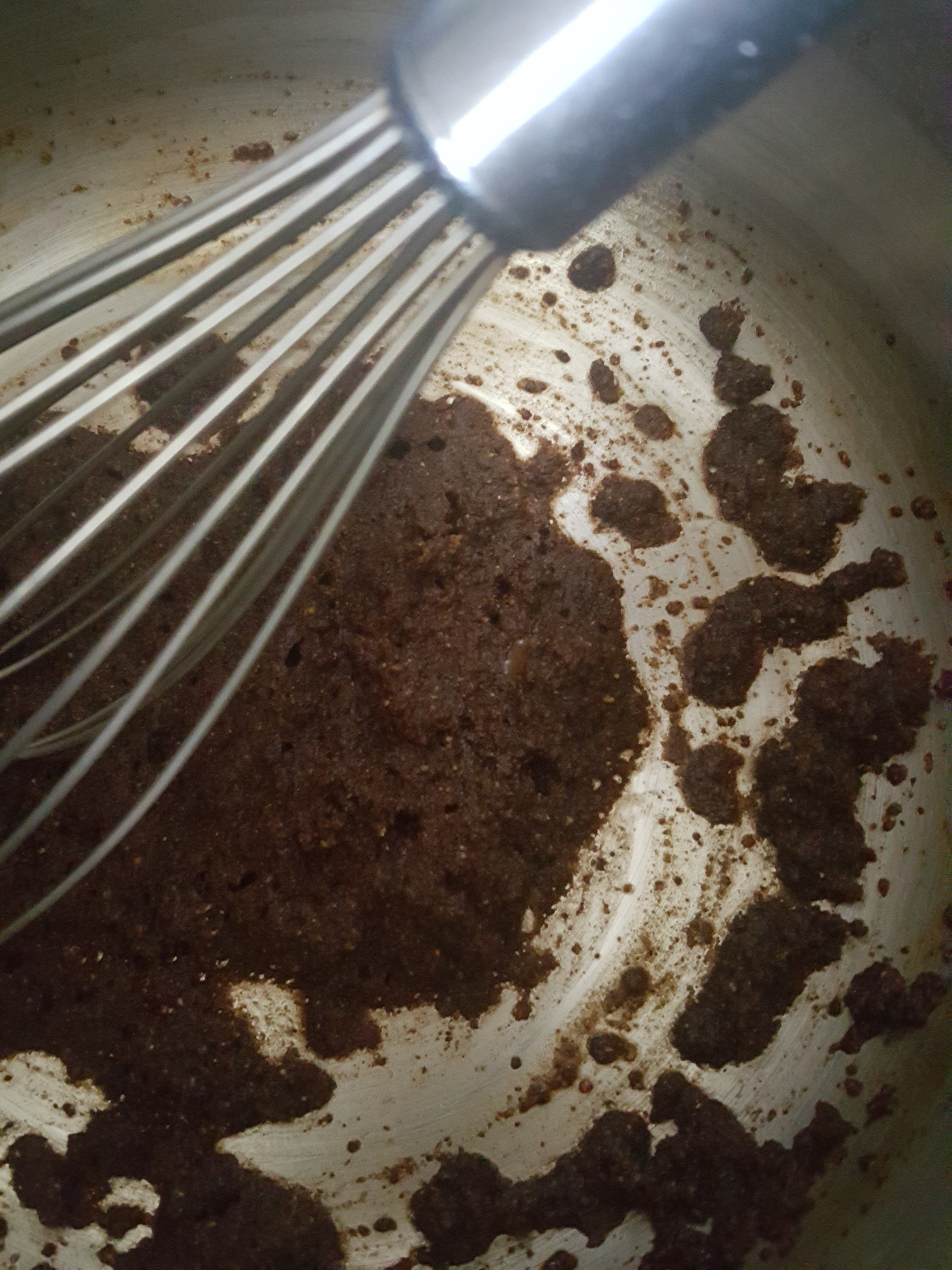
This is what the coffee grounds and chiltepin look like. You could compost this. 


Flowers of the Sun

My niece, who gets married this week, chose the sunflower as her wedding flower.  I decided this is a great topic for a Savor the Southwest article, because in our corner of the world, monsoon season is a great time to plant sunflowers.

Helianthus pixabay 004


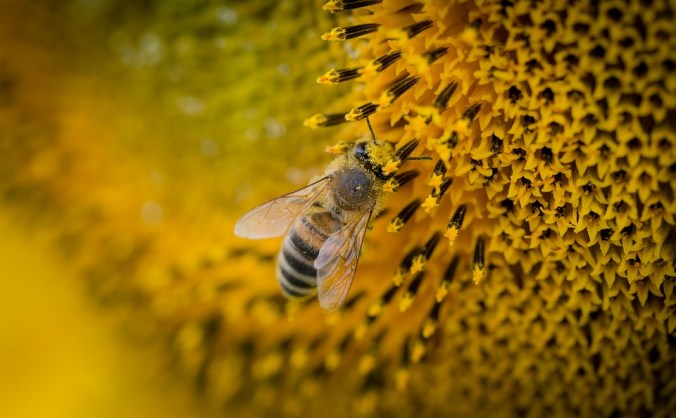
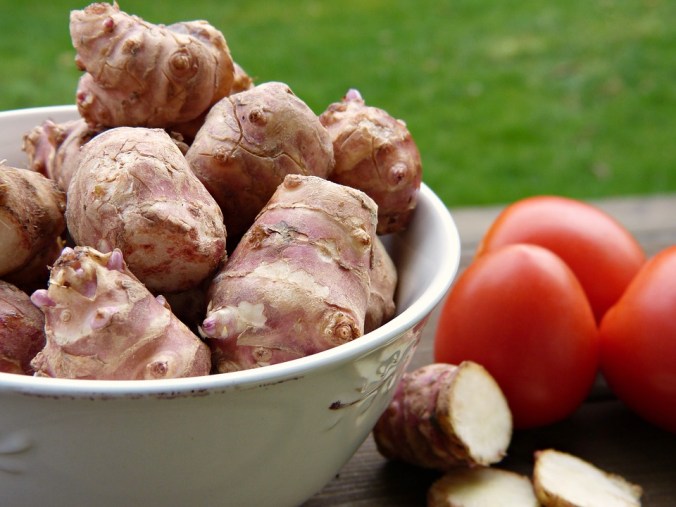
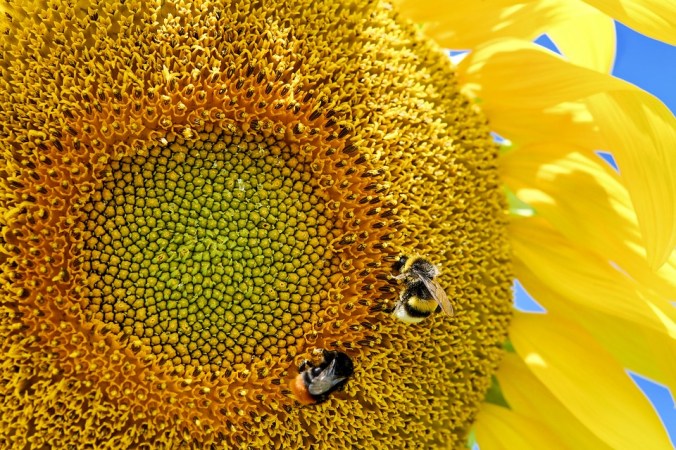
Sunflowers are all-American. Seriously, they first occurred only in the New World, but once “discovered” were rapidly spread by humans and planted around the world. There are over 70 different species of sunflower (Helianthus) – and while the annual garden sunflower is best known, the number of perennial species (such as the “Jerusalem” artichoke or sunchoke) far outnumber the annuals.

Helianthus tuberosus 2192048

Interestingly, the perennials appear to be one of the first semi-domesticated plants on this continent. Early tribes in North America were hunter-gatherers and had regular migration routes. Roots of the perennial sunflowers were dug for food as the clan hiked along, and smaller rootlets were replanted further along the path, helping ensure that there would be food to harvest next year. (Women are fairly smart that way.)


Helianthus pixabay 005


Natives didn’t ignore the annual species, especially once they started cultivating other crops, such as corn, beans, and squash. Sunflower isn’t one of these Three Sisters because unlike corn, sunflower doesn’t like beans climbing its tall stalks, and it makes a tad too much shade for squash to grow around its base. Guess you could say it doesn’t play well with others, although it does grow quite well with other sunflowers.

Helianthus pixabay 007

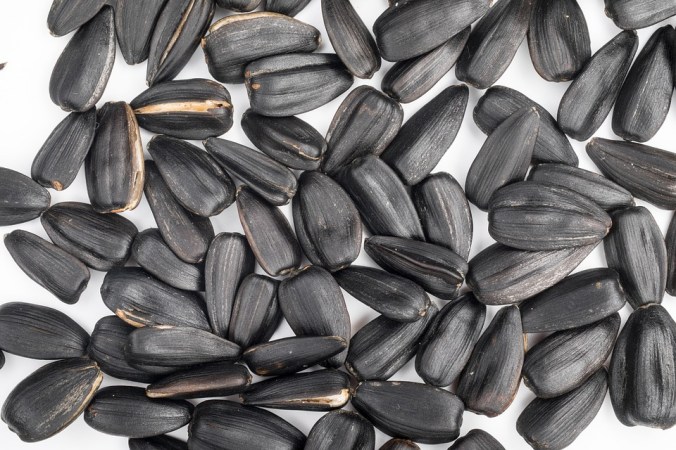
Sunflower seeds rich in protein and contain roughly 30 percent oil, a substance once hard to come by in Native diets, thus their popularity. The Hopi prized tceqa – a variety they selected over time for a striking blue-black hull color. This coloring was used as a dye for baskets and later wool. The Tarahumara cultivate a variety with all white hulls. The Havasupai sunflower has black seeds that are much smaller than most other sunflowers, but it has many flowers per plant.

Helianthus pixabay 008

Grow Annual Sunflowers

Plant seeds of the annuals (Helanthus annus) in the spring or with the summer rains. Plant them1 inch deep and 12 inches apart. Plants can grow 6 to 8 feet tall so if you live in a windy area, plan on staking them. I favor planting in large blocks rather than single rows. Site them in full sun to afternoon shade. Keep seeds moist while sprouting, but encourage deep roots by deep, infrequent watering once they have 6 to 10 true leaves.

Helianthus pixabay 001

Harvest
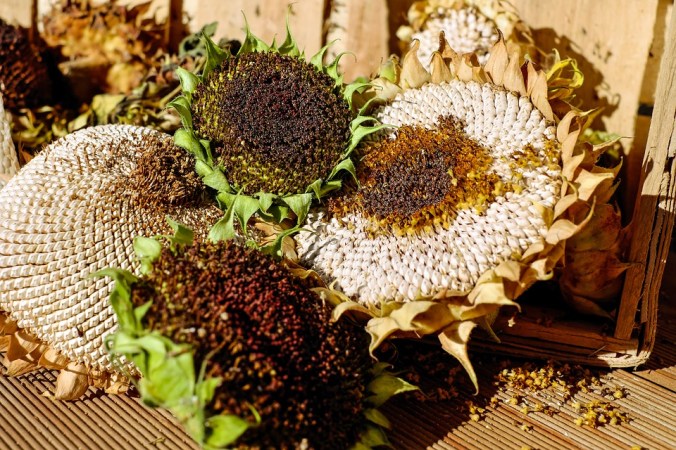
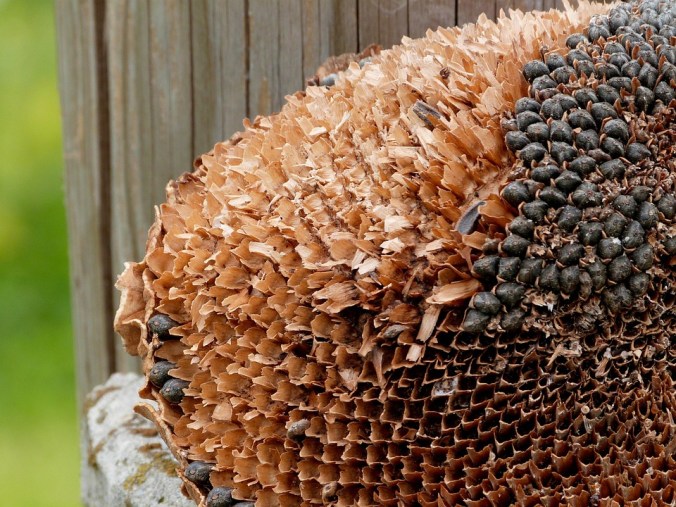
It’s best to allow seeds to dry in the flower heads. Cut the heads off the plants and bring them inside to dry (out of reach of the birds). Once dry, rub out seeds and winnow off chaff.

Helianthus seed head pixabay 020

Enjoy
Seeds can be eaten raw or roasted. I enjoy them on long drives, cracking them in my teeth and spitting the hulls into a handy “hull cup” carried for the purpose. The hulls are a bit tough for my compost, but gradually become detritus when placed under shrubs in the landscape.

Helianthus bread pixabay 021

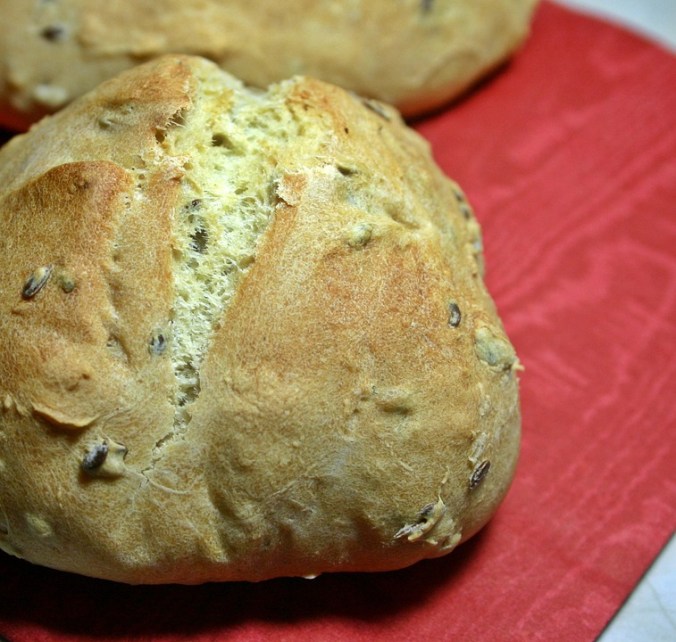
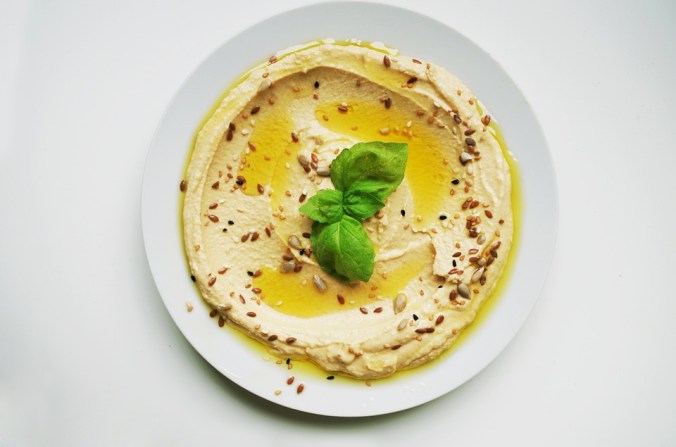
Seeds (sans hulls) are wonderful ground and mixed with chickpeas for a sunflower humus. (Incidentally the Pima County Seed Library is featuring chickpeas as their seed of the year. Look for several Savor Sister presentations at your local library this fall.) Seeds can also be mixed into various cookie and bread recipes. Due to their high oil content, sunflower seeds do not make a good “flour.”

humus with sunflower seeds pixabay 017

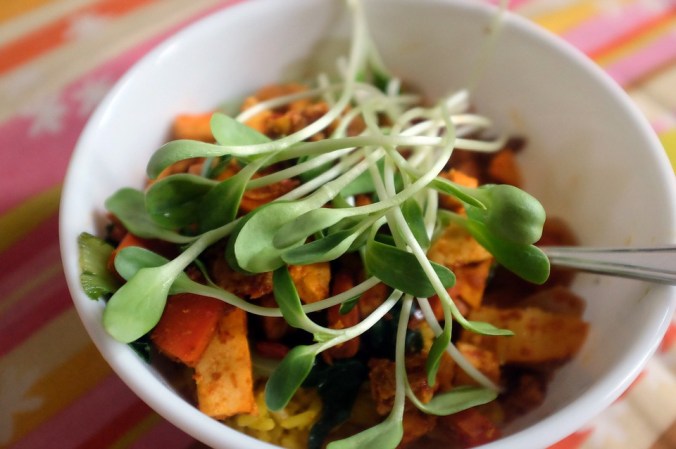
Seeds make delicious and nutritious sunflower sprouts that can be used in salads, especially welcome when greens are in short supply in the garden.

Helianthus sprouts pixabay 015

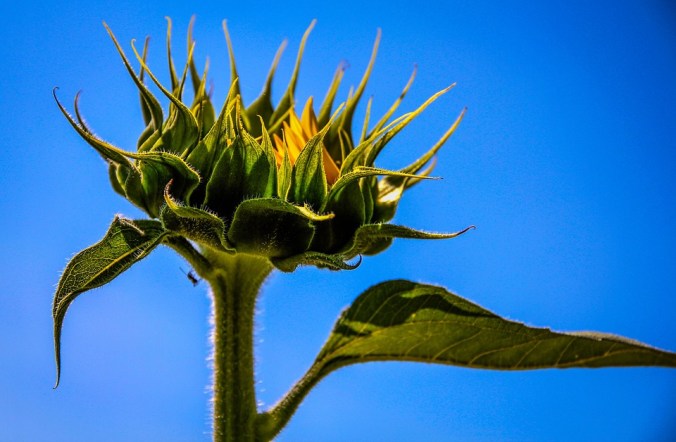
Some more about the name (because I love playing with words). Helianthus is from the Greek helios or sun. The Spanish common name, mirasol, comes from their habit of following the sun with their massive shining flowers (the better to entice pollinators to visit). And finally, in case you didn’t know, Soule is pronounced like sol, which is why I adopted “Gardening with Soule, in the land of El Sol” as my motto – honoring that powerful orb in the sky we rely on for life.

Helianthus pixabay 012


JAS avatarIf you live in Southeastern Arizona, please come to one of my lectures. Look for me at your local Pima County Library branch, Steam Pump Ranch, Tubac Presidio, Tucson Festival of Books and other venues. After each event I will be signing copies of my books, including the latest, Month-by-Month Garden Guide for Arizona, Nevada, and New Mexico (Cool Springs Press, $26).
© Article copyright by Jacqueline A. Soule. All rights reserved. Republishing an entire blog post or article is prohibited without permission. I receive many requests to reprint my work. My policy is that you may use a short excerpt but you must give proper credit to the author, and must include a link back to the original post on our site. Photos in this article courtesy of Pixabay.

Fig Pecan Mole Dulce Chutney

Hello, Amy here excited about figs and sweet corn this steamy Tucson summer.

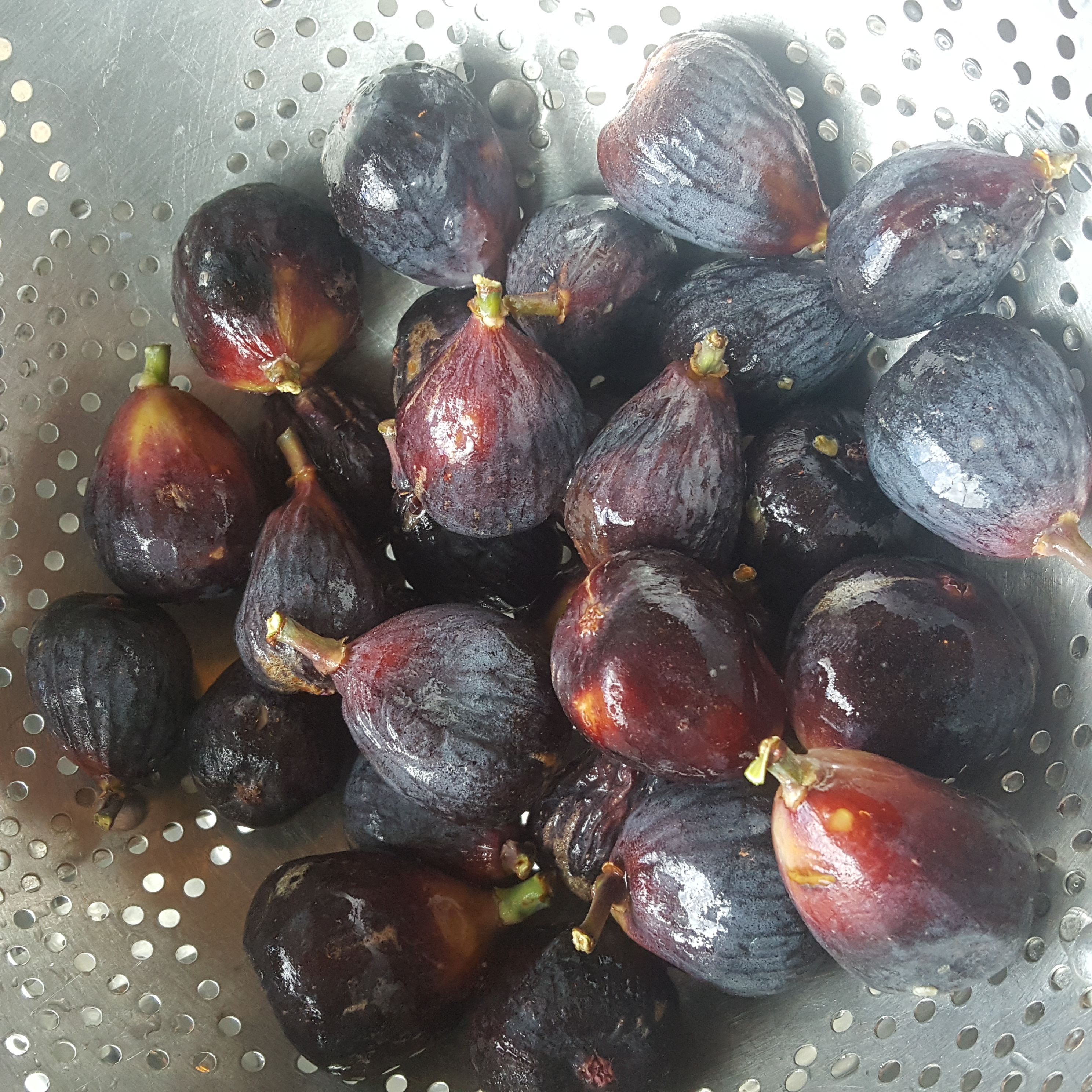
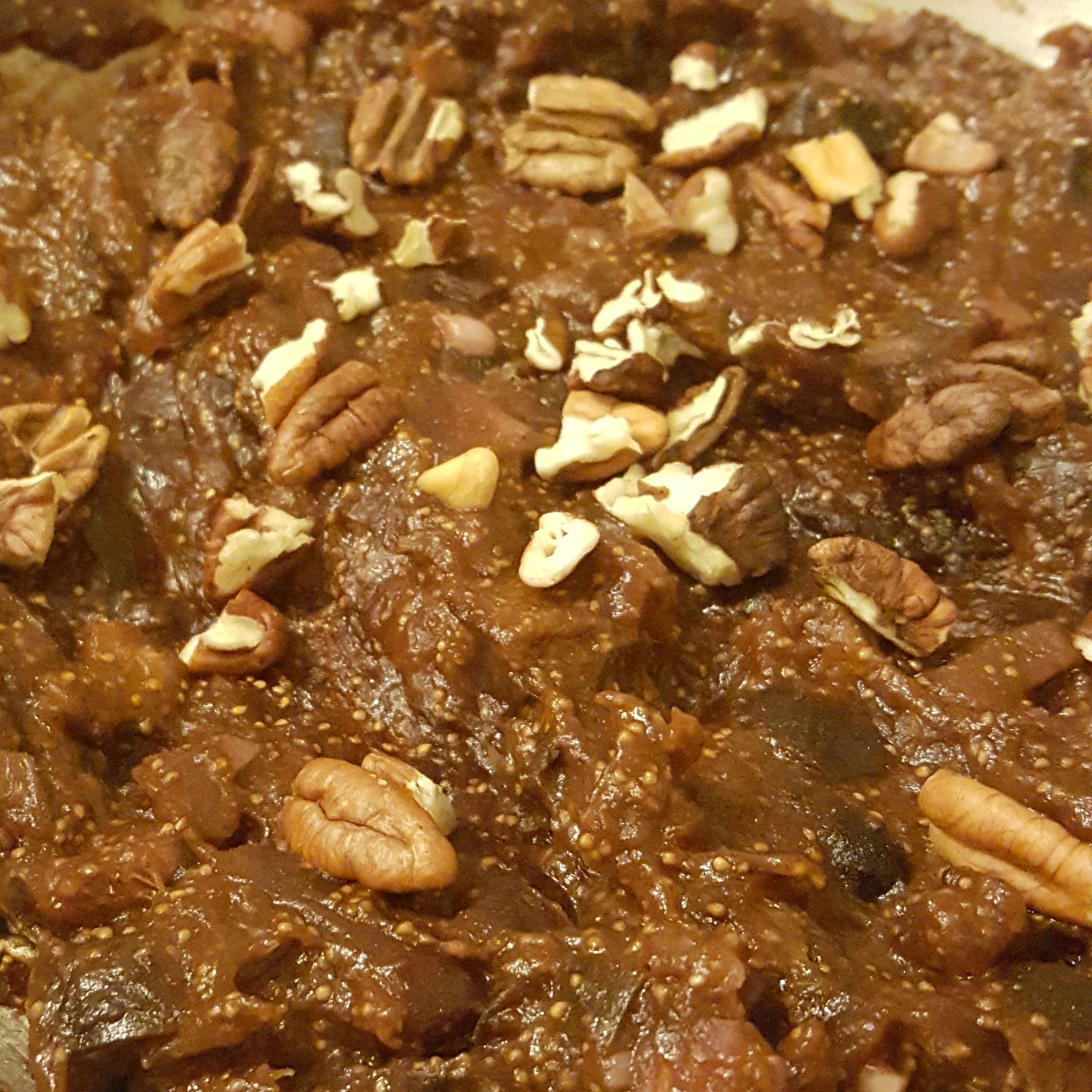
We’ve cooked figs before, and I’m going to make Carolyn’s fig bars next. But normally my preference is for savory food, so today I made a savory, sweet, sour, spicy chutney. I started with gooey ripe black mission figs from my Mom’s tree.

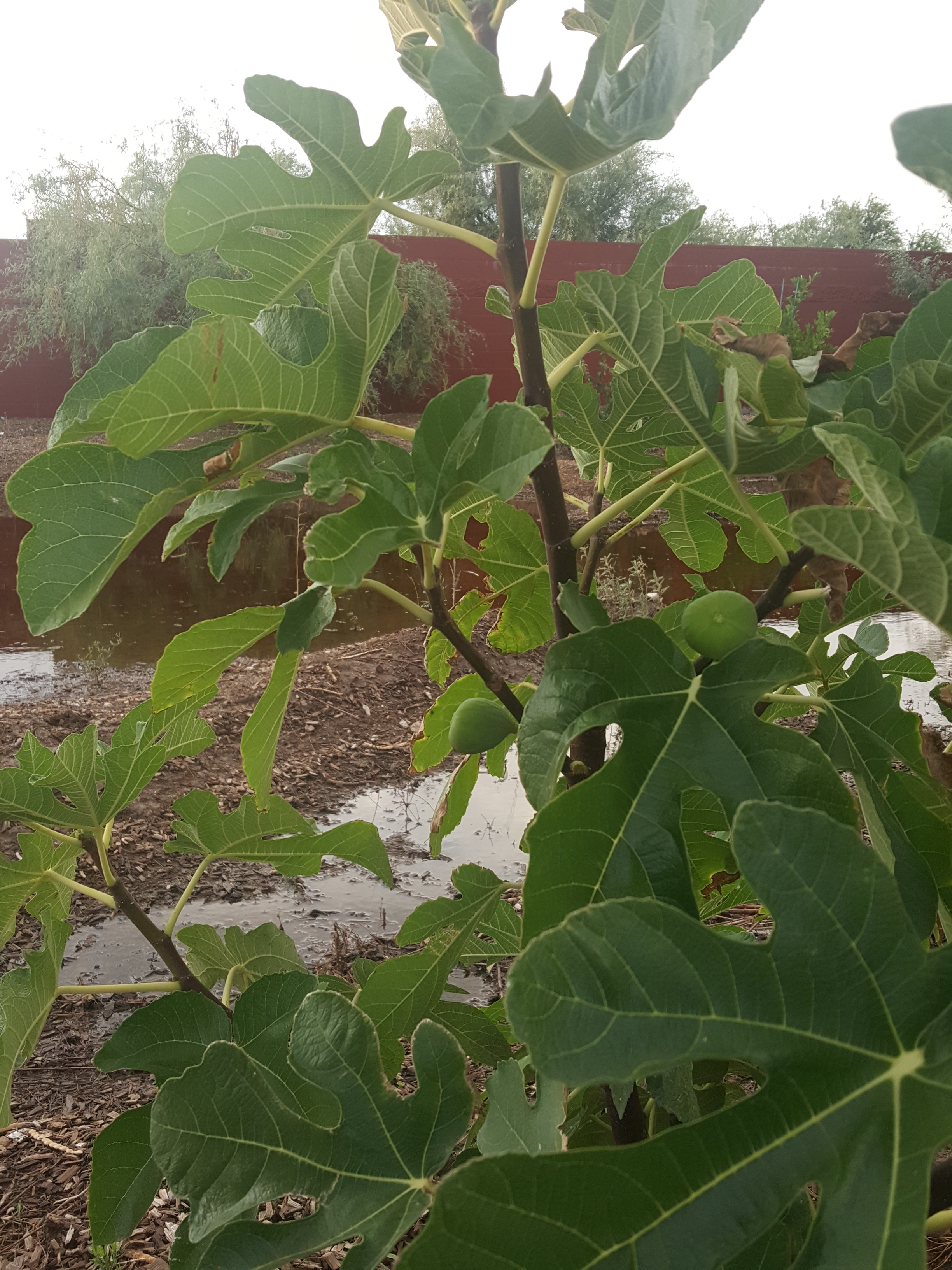
This young fig tree at the community garden is making fruit this year, but with the water harvesting earthworks you can see in the background of this photo, I can’t wait to see what it does next year…

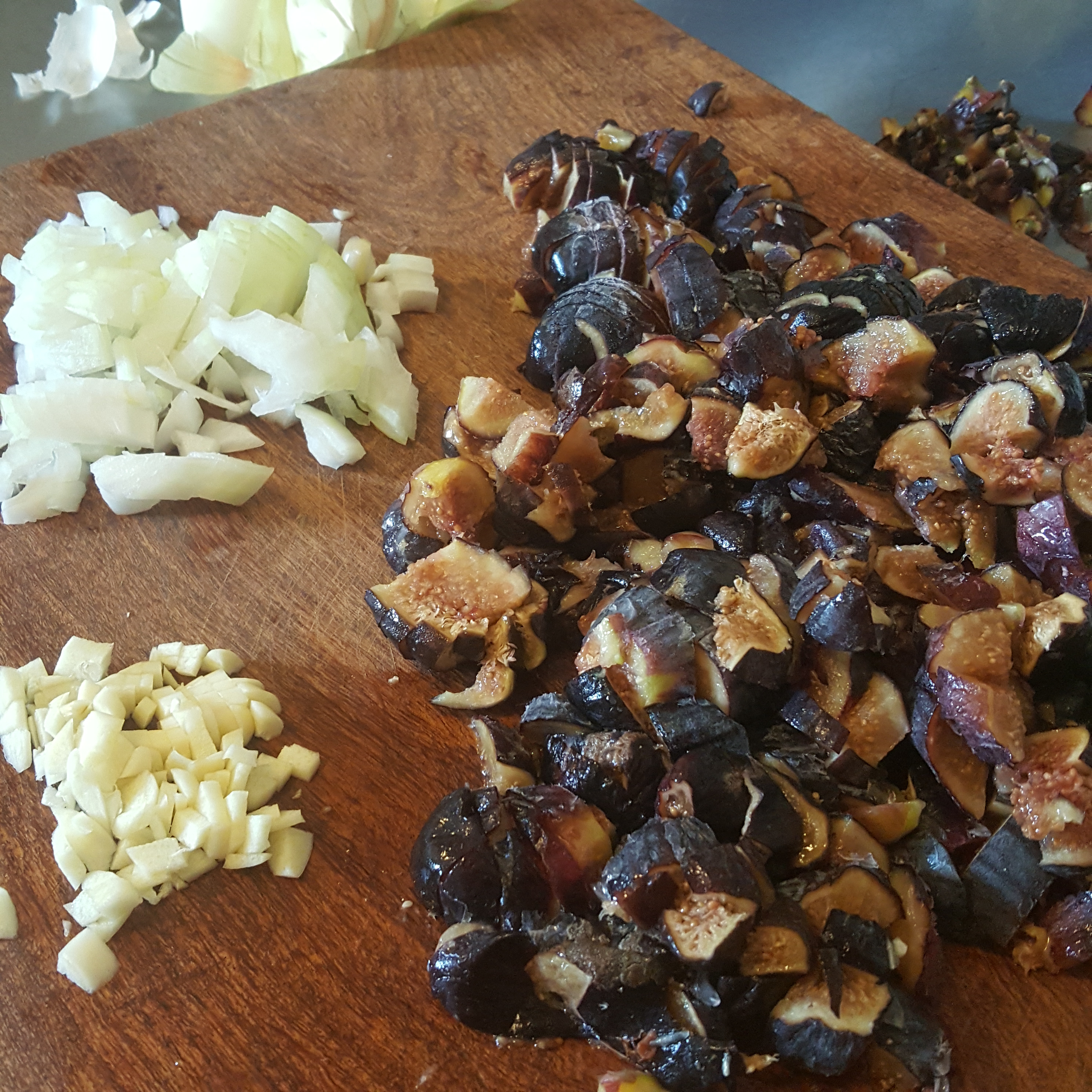
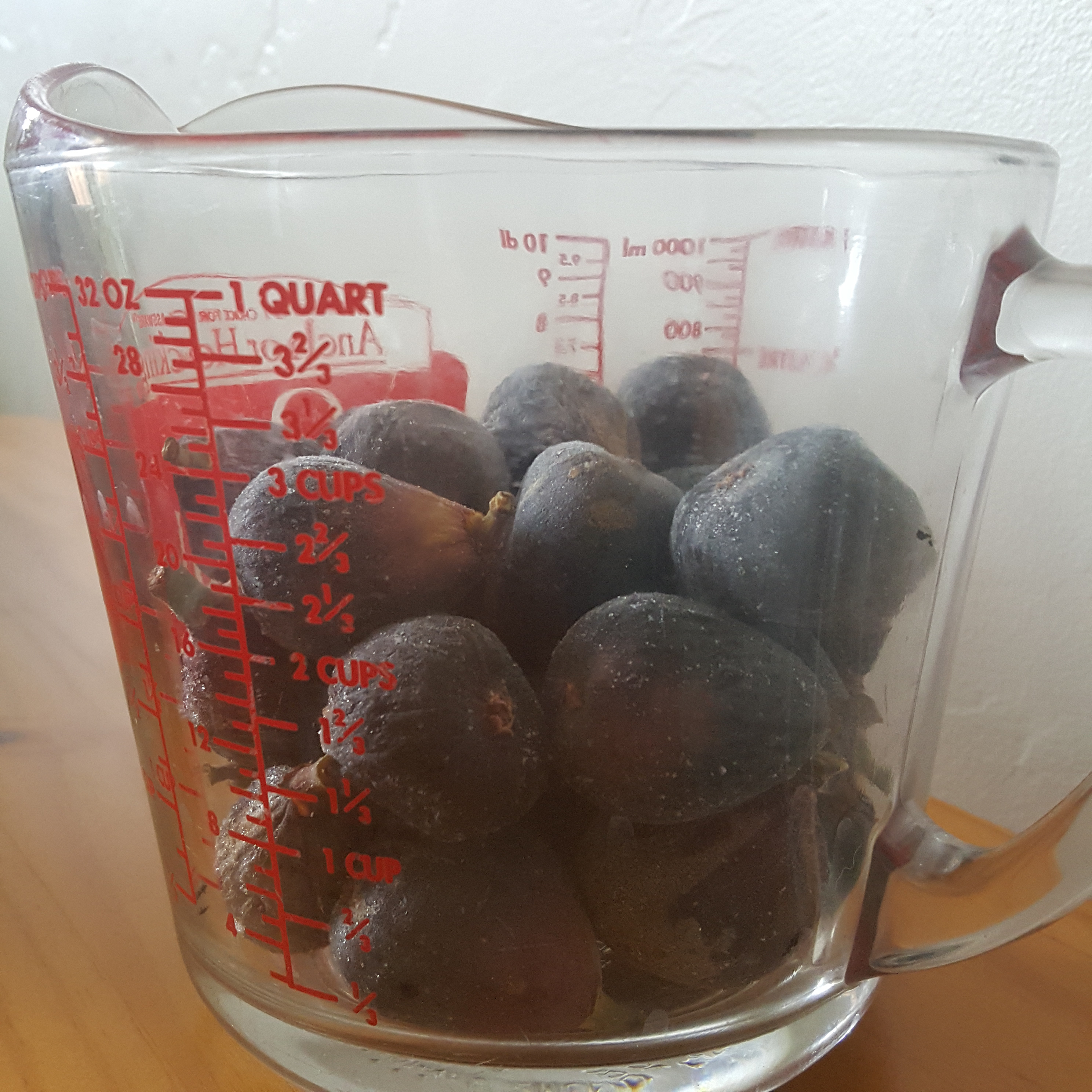
After a rinse, I trimmed the stems from the figs and chopped them. Then I chopped a bit of onion and garlic.

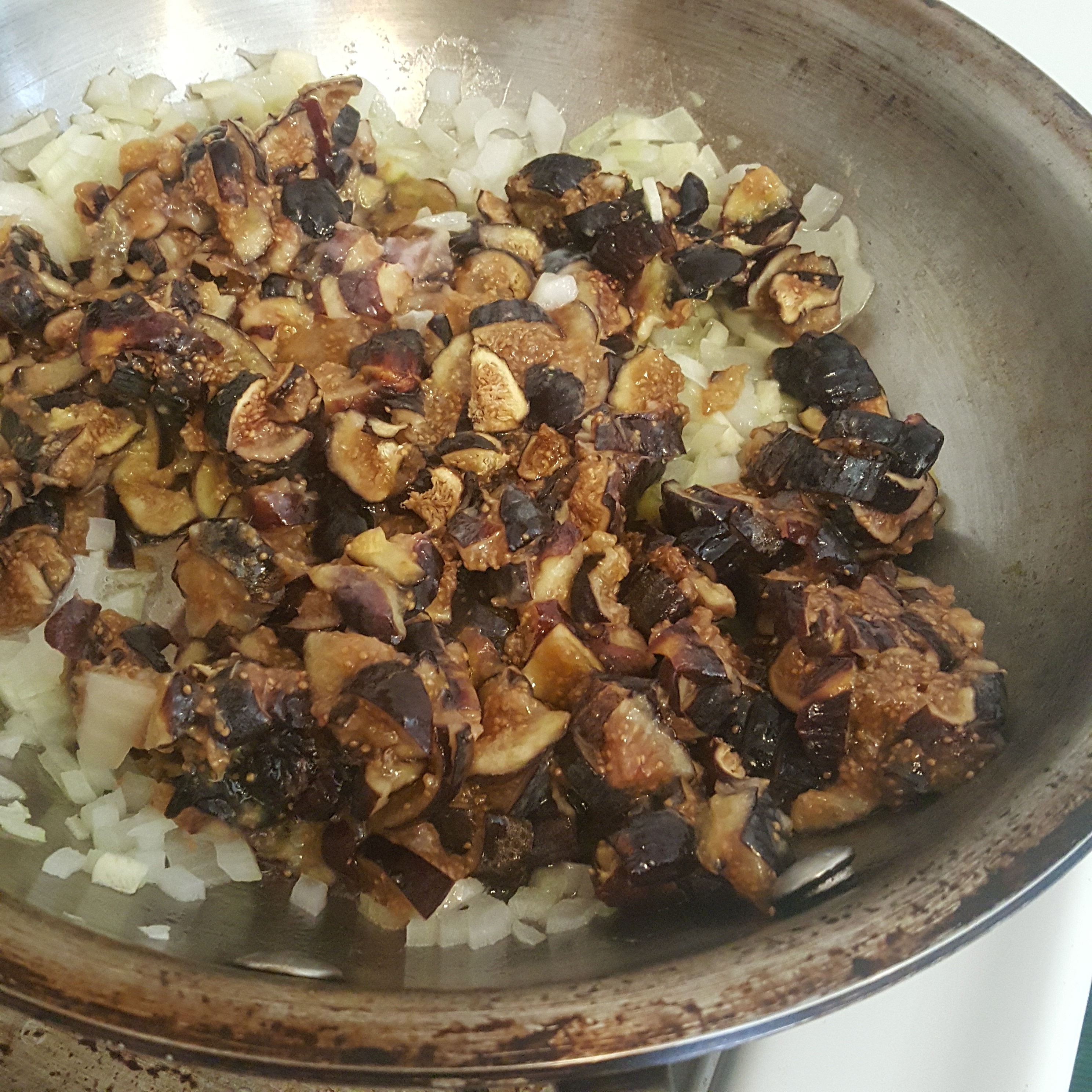
I softened the onion and garlic in butter, then added the figs and a splash of water only as needed to keep it from burning.

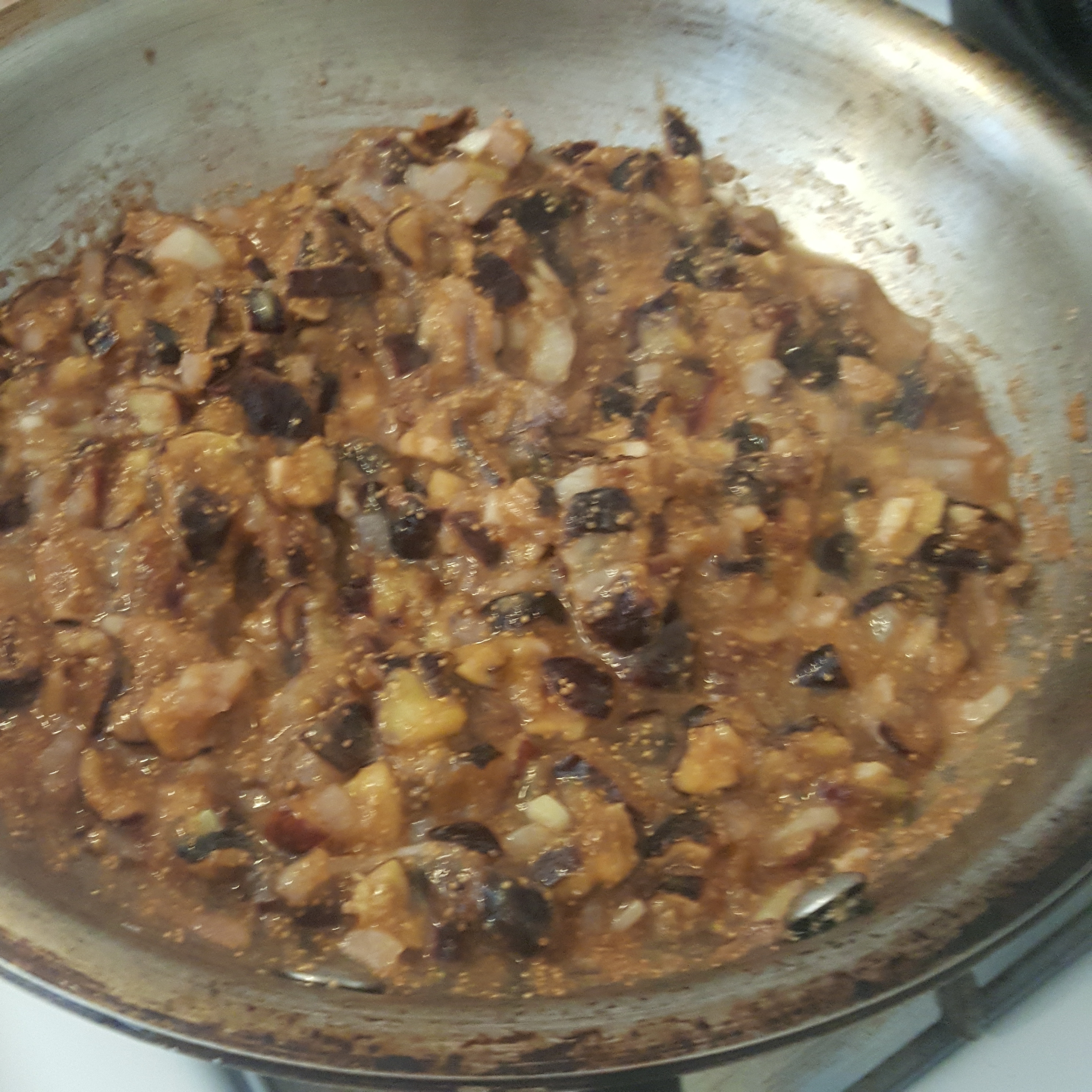
Apple cider vinegar and a dash of salt and black pepper wasn’t enough spice, so I added Mole Dulce powder.

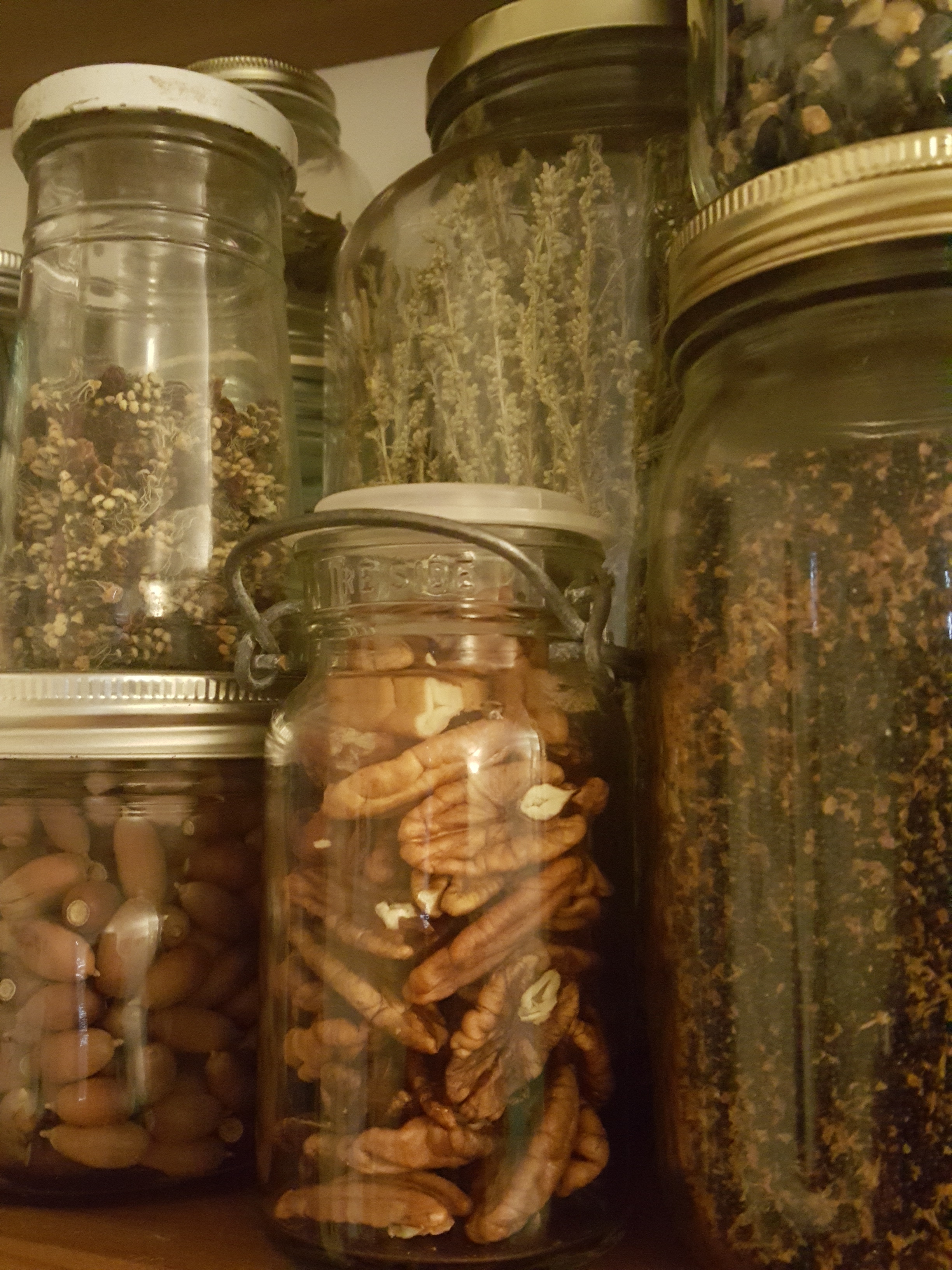
Staying indoors in the heat of the day, I’ve been organizing my pantry, removing the stems from dried herbs and shelling nuts.

A sprinkle of pecans gave the chutney a contrasting texture. (By the way, it is gone by now. No need to process jars.)


Spicy Corn and Tomatoes

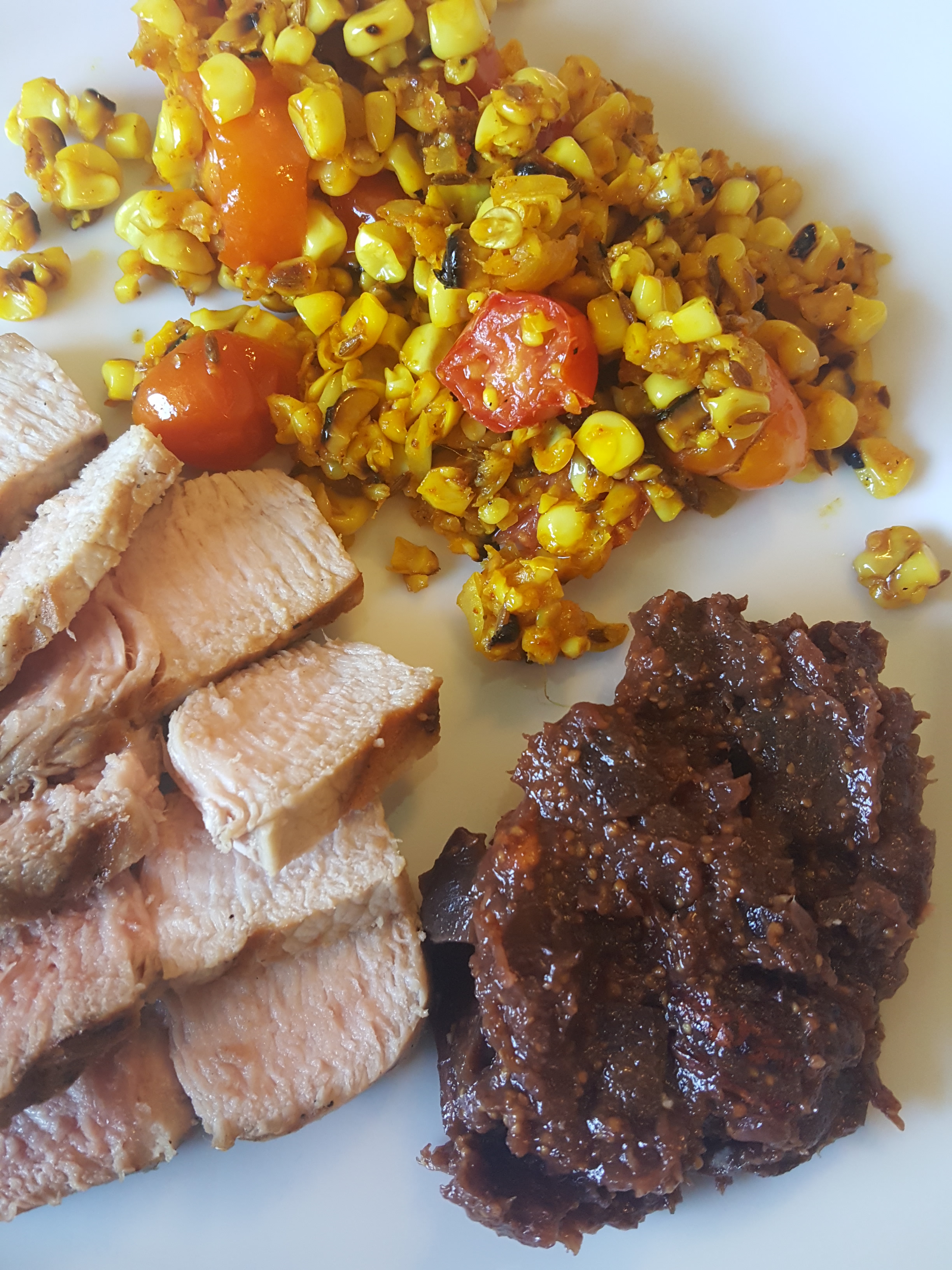
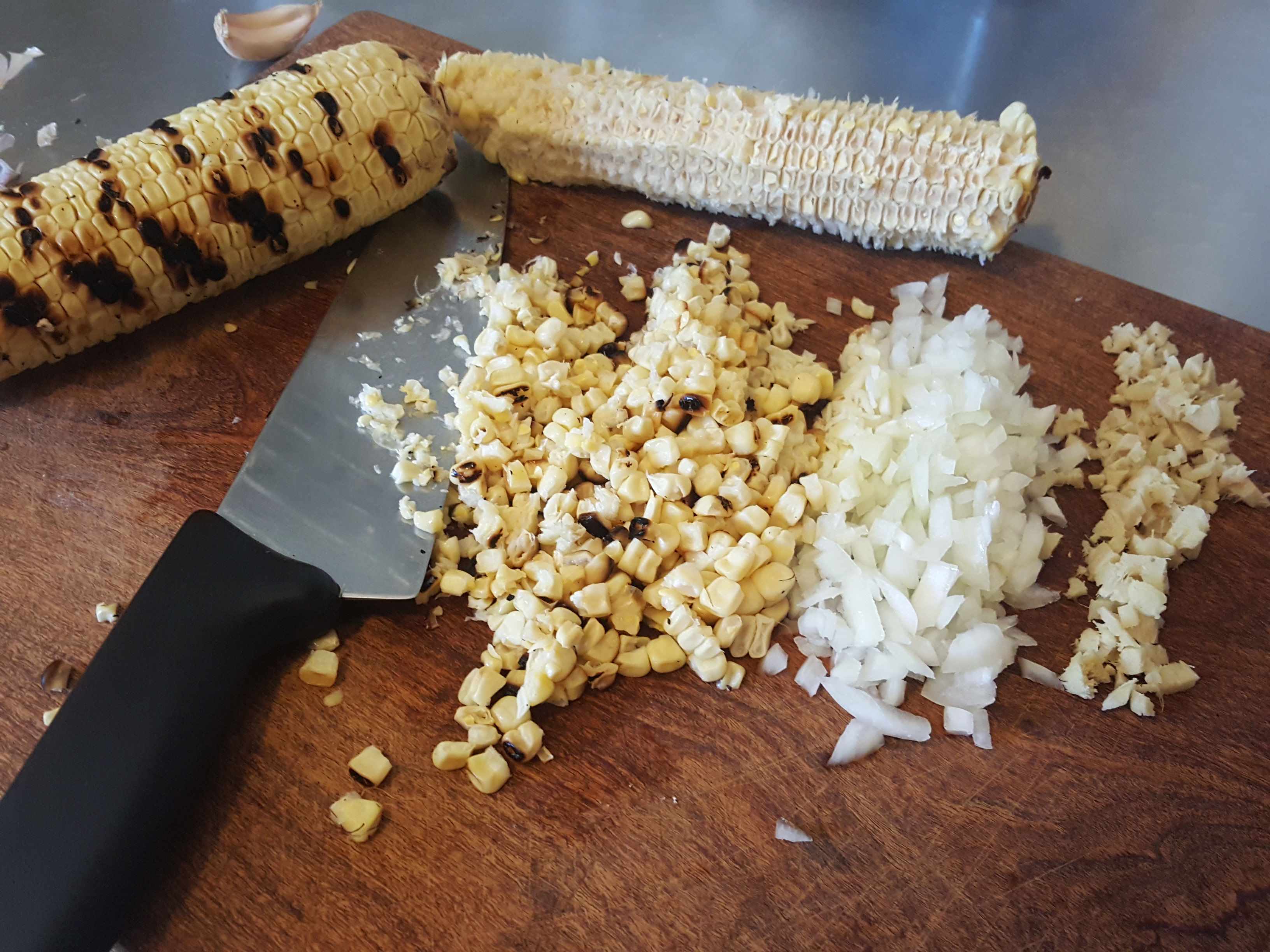
I had a few ears of sweet corn and a basket of cherry tomatoes from Tucson CSA/Crooked Sky Farms. First I grilled the shucked ears to give them a toasty flavor and color. On this rainy day, I used a cast iron grill pan on my indoor stove, but it would be better outside, of course. I cut the kernels from the cobs and froze the cobs for making soup stock.

In a frying pan, I sizzled up some cumin seeds in oil, followed by onion and garlic. Corn, halved tomatoes, turmeric, red chile and salt went in the pan and came together quickly over high heat. You can never go wrong with fried corn.

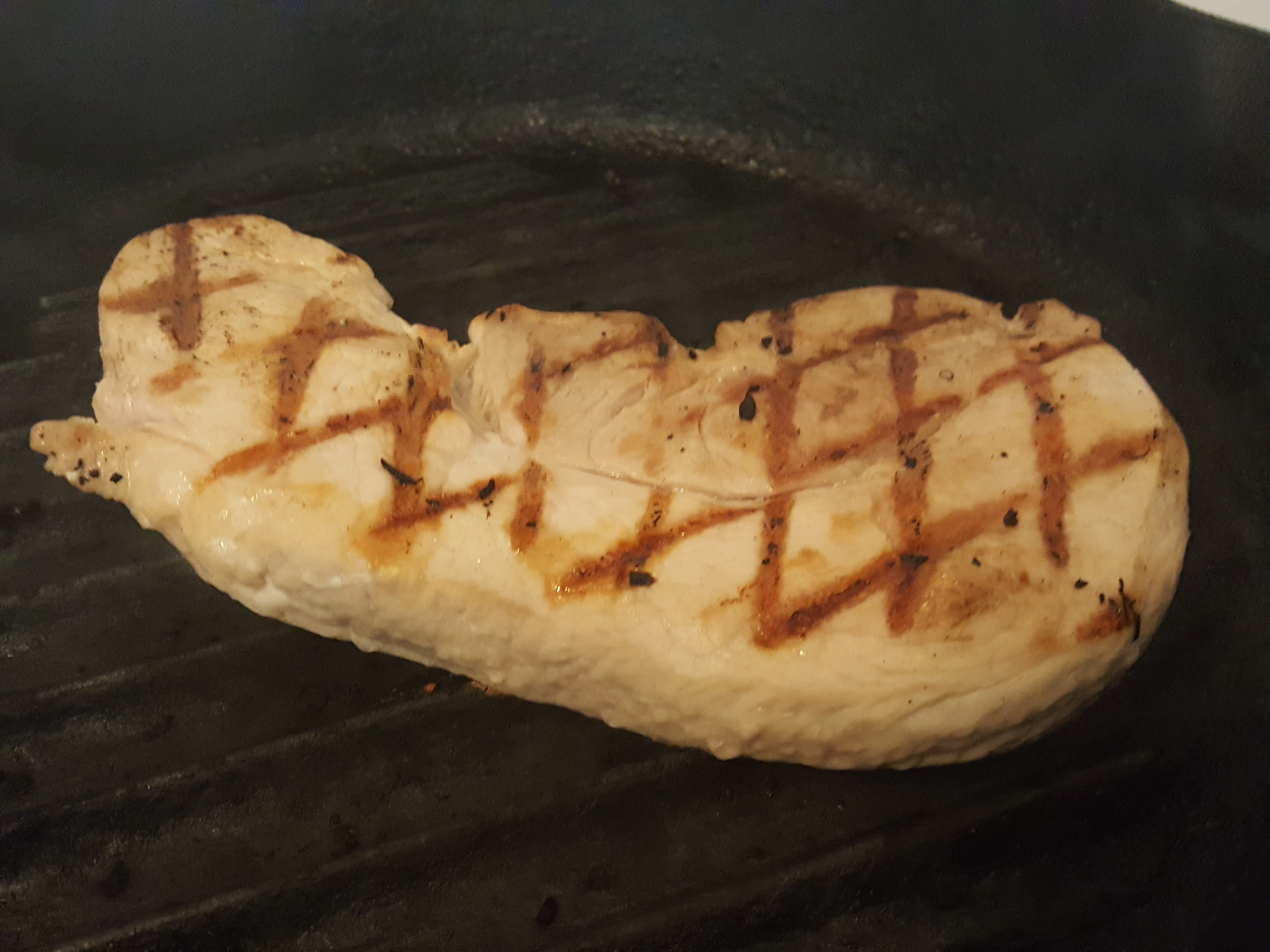
A pork chop in the grill pan completed the meal.

Fig Chutney with Pecans and Mole Dulce

1 cup (packed) chopped ripe figs

1/3 cup chopped onion

2 teaspoons minced garlic

1 tablespoon butter

Dash of salt

2 tablespoons apple cider vinegar

2 tablespoons Mano Y Metate Mole Dulce powder, available here

2 tablespoons pecans pieces

Soften the onion and garlic in butter. Add the figs and cook until softened, adding a tablespoon of water as needed to keep the mixture from sticking to the bottom of the pan. Season to taste with salt, vinegar and Mole Dulce. Finish with pecans.

Enjoy!